New Volkswagen ID. 2all Previews Polo-Sized EV

The new Volkswagen ID. 2all concept has been revealed, previewing a production electric vehicle the German brand promises “will be as spacious as a Golf and as inexpensive as a Polo”…

The wraps have come off the new Volkswagen ID. 2all, a concept car that gives us a foretaste of an upcoming electric vehicle (EV) the Wolfsburg-based firm promises “will be as spacious as a Golf and as inexpensive as a Polo”.

VW says the production version of the ID. 2all will be based on the group’s so-called “MEB Entry” platform and presented to European markets in 2025 with a targeted starting price of “less than €25 000” (so, under around R490 000, at the current exchange rate). It will be one of 10 new electric models Volkswagen plans to launch by 2026.

Of course, the Kariega-built Polo hatchback is potentially facing the axe in Europe thanks to ever-tightening emissions regulations in that part of the world. Should the Polo be pulled from the Old Continent, the production version of the ID. 2all may well serve to fill the gap, along with another EV positioned below it (ID.1, anyone?).

Will we see the production version of the ID. 2all here in South Africa? Well, there’s no confirmation for the moment, though battery-powered models are indeed on the way, with VWSA head of passenger cars, Steffen Knapp, recently telling Cars.co.za the ID.4 would be the brand’s first EV to launch locally.

Thomas Schäfer, CEO Volkswagen Brand, poses with the new ID. 2all concept.

The front-wheel-drive ID. 2all concept uses a 166 kW electric motor and boasts a calculated single-charge range of up to 450 km (based on the WLTP cycle). Though VW has yet to officially announce the battery-capacity details (reports suggest 38 kWh and 56 kWh packs will be available), it does say DC quick-charging stations will allow replenishing from 10 to 80% in 20 minutes. The German manufacturer furthermore claims a 0-100 kph sprint time of under 7.0 seconds, with the top speed set at 160 kph.

Measuring 4 050 mm long, the VW ID. 2all concept is a mere 24 mm shorter from bow to stern than the Polo hatch. However, thanks to its MEB Entry underpinnings, the show car scores a 2 600 mm wheelbase, or an extra 48 mm between its axles compared with the popular hatchback. At 1 530 mm, the battery-powered concept furthermore stands 79 mm taller than its combustion-engined sibling.

Volkswagen says the interior is “characterised by a high-quality appearance”, while the “self-explanatory” 12.9-inch infotainment system employs a physical volume control and a separate air-conditioning block. Luggage capacity is a claimed 490 litres, a figure that is expandable to 1 330 litres with the seats dropped flat (yes, that’s appreciably more than a Golf 8).

And the exterior design? Well, VW says the ID. 2all also serves to preview the brand’s new design language, which is based on 3 pillars: “stability, likeability and enthusiasm”. The automaker believes it was important to lend the concept a “friendly face”, as well as a “good portion of dynamics and timeless elegance”. In addition, the German firm points out the concept’s new interpretation of a C-pillar design signature that harks back to the Mk1 Golf.

Claimed luggage- and utility-space figures eclipse even those of the Golf 8.

The ID. 2all concept was designed by Andreas Mindt, who took over as the new Head of Volkswagen Design at the start of February 2023. Mindt – who also spent time at VW Group brands Audi and Bentley – was responsible for designs that include the original Tiguan and the 7th-generation Golf. “We are transferring the DNA of our icons into the future. The ID. 2all is therefore also an homage to the Beetle, Golf and Polo,” said Mindt.

Thomas Schäfer, CEO of Volkswagen Passenger Cars and former head of Volkswagen Group South Africa, promised the production model would bring electric mobility “to the masses”.

“We are transforming the company rapidly and fundamentally – with the clear objective of making Volkswagen a genuine ‘Love Brand’. The ID. 2all shows where we want to take the brand. We want to be close to the customer and offer top technology in combination with fantastic design. We are implementing the transformation at pace to bring electric mobility to the masses,” said Schäfer.

Before the production version of the Volkswagen ID. 2all debuts, the automaker will introduce the new ID.3, a long-wheelbase version of the ID. Buzz and the ID.7, all in 2023. These models are expected to be followed by a “compact electric SUV” by 2026 and, “in spite of all the challenges”, Volkswagen says it is also working on an electric car “at a price of less than €20 000”, which will surely wear the ID. 1 badge…

Related content

Volkswagen SA’s Electric Car Plan for 2023/2024

SA-Built Volkswagen Polo Faces Axe in Europe

3 Cars That Leapfrogged VW’s Polo in SA in 2022

Fuel Price April 2023: Petrol up, diesel down

The Automobile Association of SA has shared some insights on potential increases and decreases in fuel prices as we head into April 2023.

For the official April fuel price please see the update on March 31 here

Based on the unaudited fuel price data from the Central Energy Fund (CEF), the Automobile Association (AA) says SA motorists should prepare for an increase of around 25 cents/litre in the price of petrol, however it’s not all bad news, as diesel should drop by 20 cents/litre. The price of illuminating paraffin is also expected to drop by around 68 cents/litre.

“The weaker Rand to US Dollar exchange rate is contributing to the increases in petrol and clawing back some of the decreases to diesel and illuminating paraffin, with lower international oil prices having the reverse impact. However, in the case of diesel and illuminating paraffin, the weaker Rand is not resulting in increases,” notes the Association.

As a reminder, these numbers are not confirmed and are based on the data right now in the middle of March 2023 and a lot can happen between now and the end of March. “Firstly, this data is mid-month, so the numbers should change positively before the official adjustment is made by the Department of Mineral Resources and Energy at month end. The second factor is that the Rand appears to be steadying against the US Dollar, which should bring further relief in specifically the petrol prices,” says the AA.

Interestingly, the fuel levies will not be increasing in April 2023 which helps ease the pain on South African motorists. “Fuel levies are traditionally increased in April, but the Minister of Finance heeded calls by the AA and in his February Budget Speech indicated that this will not happen this year. Although not a saving as such, any increases would have added additional pressure to fuel prices, and we again welcome his decision not to increase these rates for 2023.” said the AA.

Fuel Price Forecast for April 2023 in South Africa

Fuel Type March 23
Inland
March 23 CoastApril 23 (projected) InlandApril 23 (Projected) Coast
Petrol Unleaded 93R22.60R21.95R22.85R22.20
Petrol Unleaded 95R22.90R22.25R23.15R22.50
Diesel 0.05% (wholesale)R21.60R21.95R21.40R21.75
Diesel 0.005% (wholesale)R21.70R21.06R21.50R20.86
Fuel price data courtesy of the department of mineral resources and energy

Related Content 

Most Fuel Efficient Budget Cars in SA

10 Fuel Efficient Used Compact SUVs under R300k

10 Fuel Efficient Used Cars Under R200k in SA

10 Fuel Efficient Used Family SUVs Under R400k 

5 Fuel Efficient Used Double Cab Bakkies Under R500k

Is it time for South Africa to Switch to EVs? 

5 Ways to Beat the Fuel Price Hike

8th-Gen BMW 5 Series due in October 2023

Some details about the all-new 8th-gen BMW 5 Series were announced at BMW Group’s Annual Conference.

This teaser image is the new 8th-Gen BMW 5 Series which will be revealed in just a few months time. At the BMW Group Annual Conference 2023, Oliver Zipse, Chairman of the Board of Management of BMW AG shared some insights into the luxury sedan.

The 8th-gen BMW 5 Series is said to be “more dynamic and more comfortable than ever’, and will feature the new operating system 8.5 with the trendy curved display. For the first time, there will be a purely electricity-powered BMW 5 Series, which will adopt the i5 name.

A preview of the new operating system in the BMW 5 Series

The platform which will underpin the 8th-Gen BMW 5 Series features powertrain flexibility, meaning you can expect petrol, diesel, plug-in hybrid and all-electric engines. For the performance fans, the next bit of news might have mixed results.

“The all-electric BMW i4 M50 shows how BMW blends dynamic performance and electric mobility to perfection,” said Zipse. “It was the best-selling BMW M model worldwide in 2022. A fully electric performance version from BMW M GmbH will also be included in the new BMW 5 Series Sedan line-up.”

More: Latest BMW 5 Series current lineup, specs and prices

Hmm, so does that mean the new BMW 5 Series performance flagship will be all-electric? A battery-powered BMW M5? At this stage nothing is confirmed, but it could be badged in a similar style to that of the iX, with the M60i badge indicating performance status.

The brand-new BMW 5 Series will be built exclusively at BMW Group Plant Dingolfing, which is BMW Group’s largest manufacturing site in Europe. The worldwide launch of the new BMW 5 Series Sedan will get underway in October 2023. The BMW 5 Series is rivalled by the Audi A6, Mercedes-Benz E-Class and Lexus GS, to name but a few.

Further Reading

Want to buy a new or used BMW 5 Series? Browse stock for sale here

BMW M5 CS: Bavaria’s fastest-ever production car

Renault Kwid vs Suzuki S-Presso – Drag Race!

Round 2 of our budget car showdown sees the Renault Kwid take on the recently-updated Suzuki S-Presso in a quarter-mile drag race.

It’s the budget battle you’ve been waiting for as the Renault Kwid takes on the Suzuki S-Presso. Both of these cars sell in large numbers and are popular in South Africa, but what if you wanted to settle that age-old argument: which one is faster? It’s the Suzuki S-Presso versus the Renault Kwid in a proper quarter-mile drag race! 

Loaded with around 50 kW and 90 Nm the two budget machines are nearly identical in the power stakes with only a slight weight difference to the advantage of the Renault Kwid.

Watch our first drag race between the Datsun Go and the Renault Kwid here.

Read a review of the Kwid here

Read a review of the S-Presso here

Search for a used Kwid here

Search for a used S-Presso here

Mercedes-Benz S-Class (2023) Review

The new Mercedes-Benz S-Class, which was unveiled in 2020 and presented to the media in mid-2022, took a while to join our test fleet. So, does the W223-gen sedan still “lead the way” for the Three-pointed Star? We review the S500 L 4Matic!

We like: Interior blend of luxury and tech, comfort, stretch-out space in the back

We don’t like: Some controls feel “cheap” to the touch, doesn’t feel quite as “special” as the new BMW 7 Series, fiddly steering-wheel-mounted controls

FAST FACTS

  • Model: Mercedes-Benz S500 L 4Matic
  • Price: R2 735 064 (Mar 2023, before options)
  • Engine: 3.0-litre inline-6 turbopetrol + E-boost
  • Power/Torque: 336 kW/520 Nm
  • Transmission: 9-speed automatic 
  • 0-100kph: 4.9 sec (claimed)
  • Fuel consumption: 8.1 L/100 km (claimed)
  • Luggage/Utility space: 500 litres

Serious about buying/selling?

View Mercedes-Benz S-Class Specs & Prices in South Africa

Some dealerships regularly offer great deals. See our New Car Specials!

Looking to sell your car? Sell it on Cars.co.za for free
W223 Mercedes-Benz S-Class front three-quarter view.
Whereas BMW’s new 7 Series is unapologetically bold, the W223 Mercedes-Benz S-Class exudes elegance and restraint.

Where does the new Mercedes-Benz S-Class fit in?

In the not-so-distant past, the question posed by the heading of this section was quite easy to answer… The S-Class or “Sonderklasse” was the undisputed flagship of the Mercedes-Benz range – its state-of-the-art model and one for which the marque spared no time, effort or budget. It’s no longer that simple.

While the S-Class still sits atop Mercedes-Benz’s sedan pile, you can choose more luxurious (Maybach) or sportier (AMG) derivatives. What’s more, can the limousine still be regarded as Mercedes-Benz’s tech leader when the new, all-electric EQS is, for all intents and purposes, the “S-Class of the Future”? And let’s not even get started on the trend of luxury car buyers preferring SUVs over traditional sedans…

W223 Mercedes-Benz S-Class rear three-quarter view.
Neat and subtle detailing, short overhangs and a stretched wheelbase disguise the S-Class’ expansive dimensions.

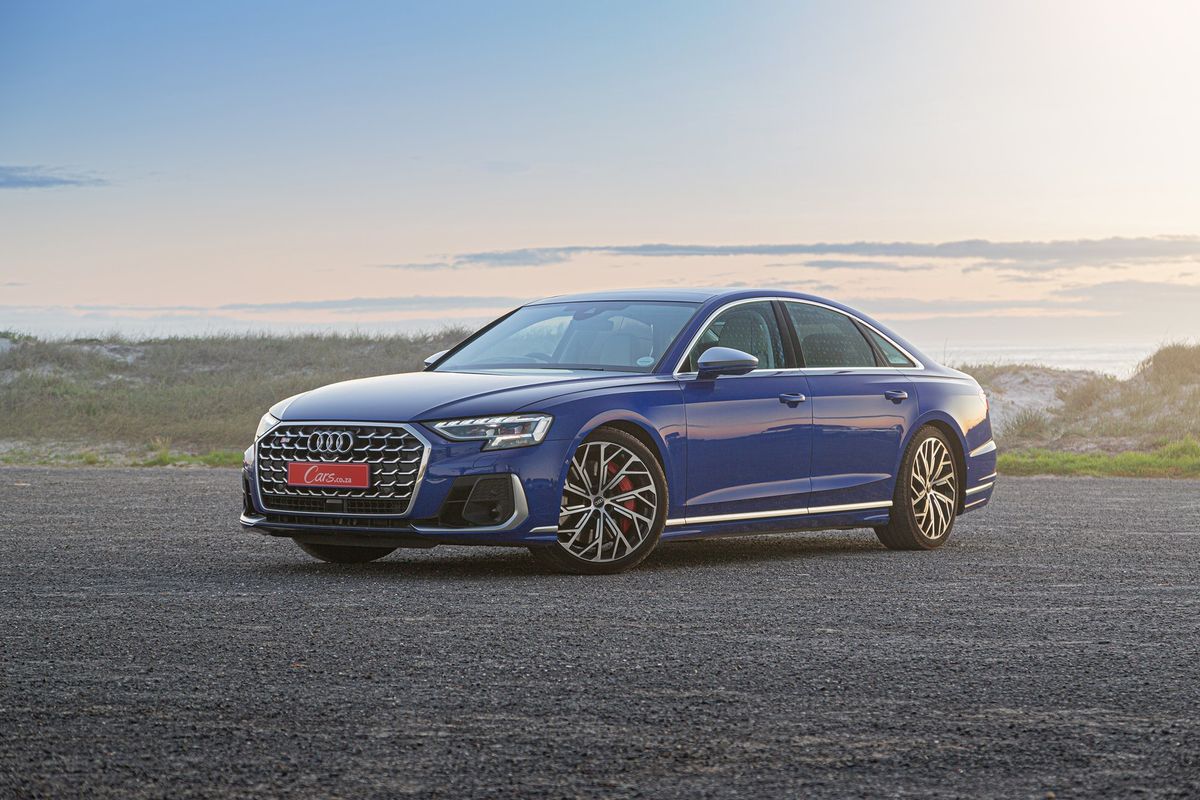
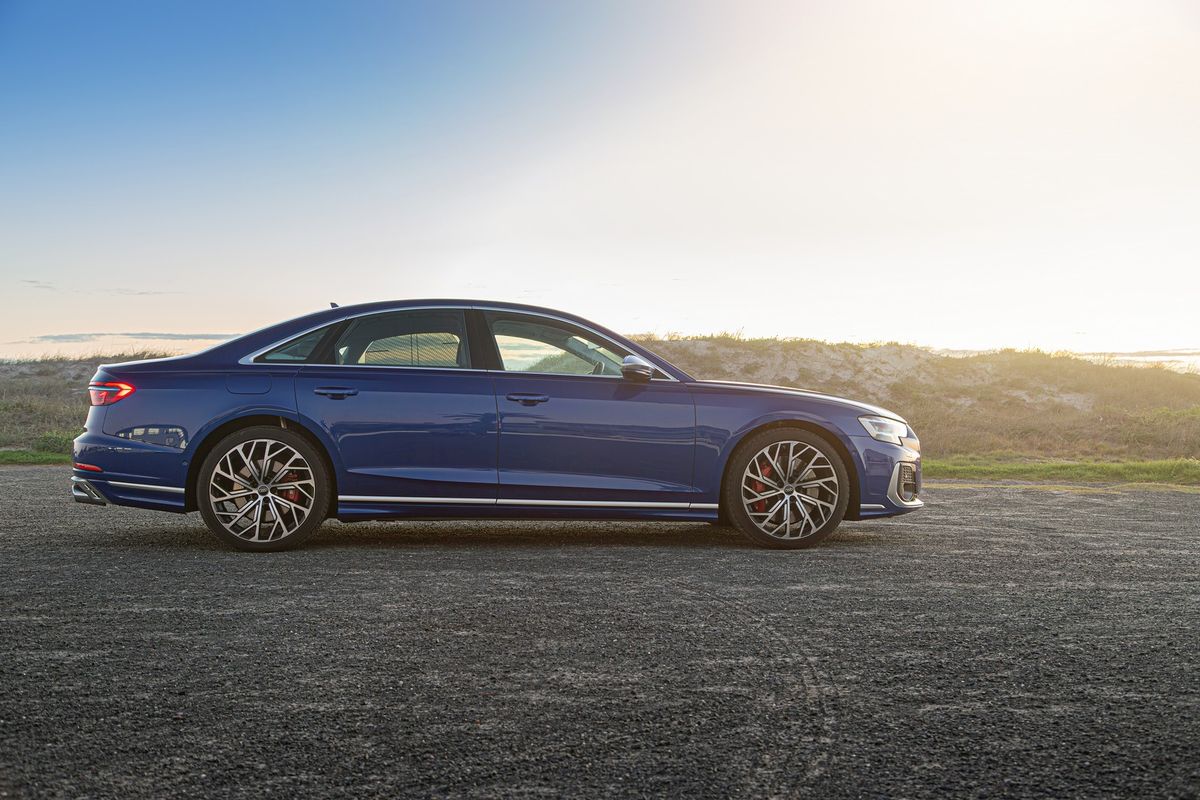
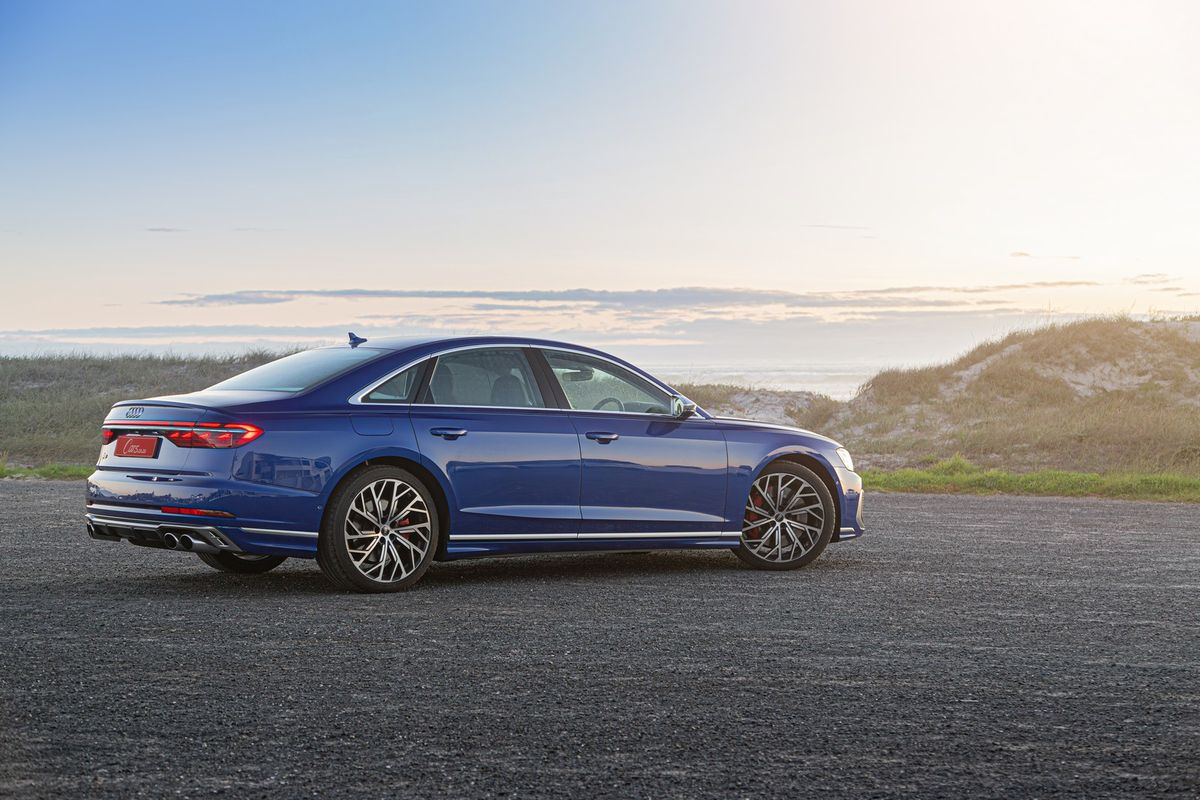
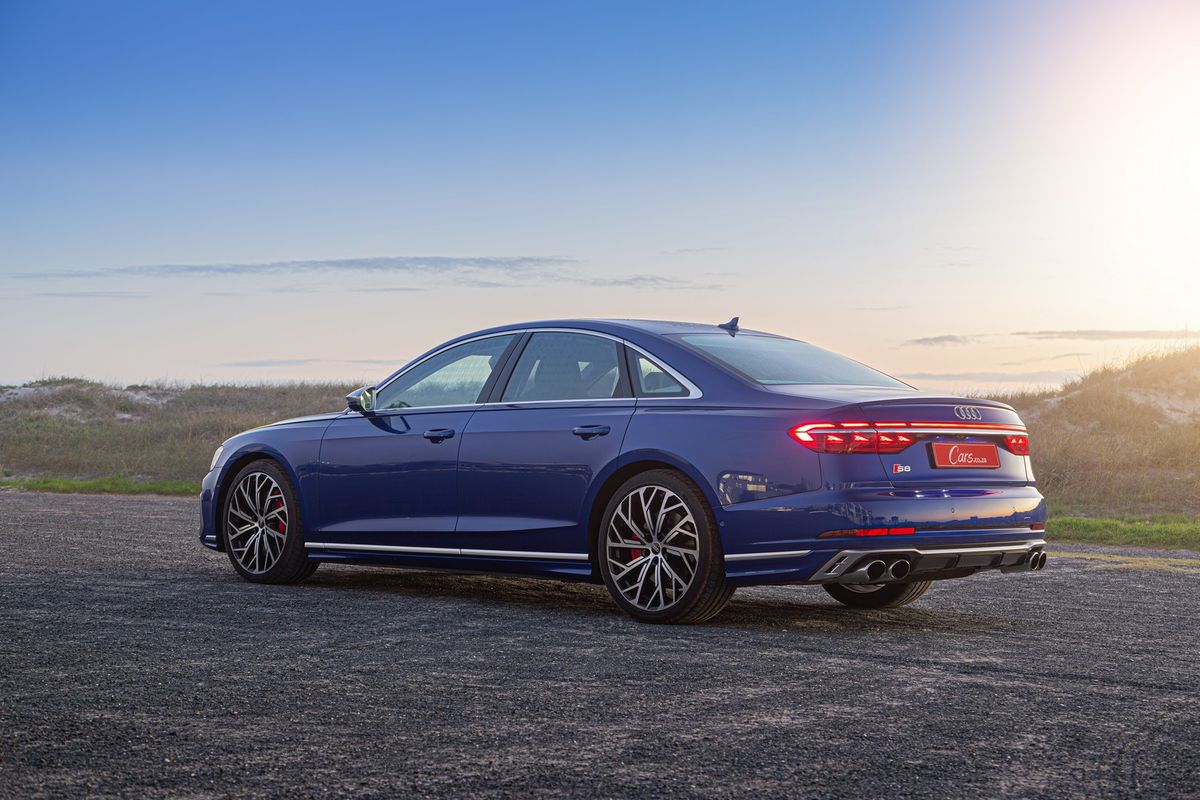
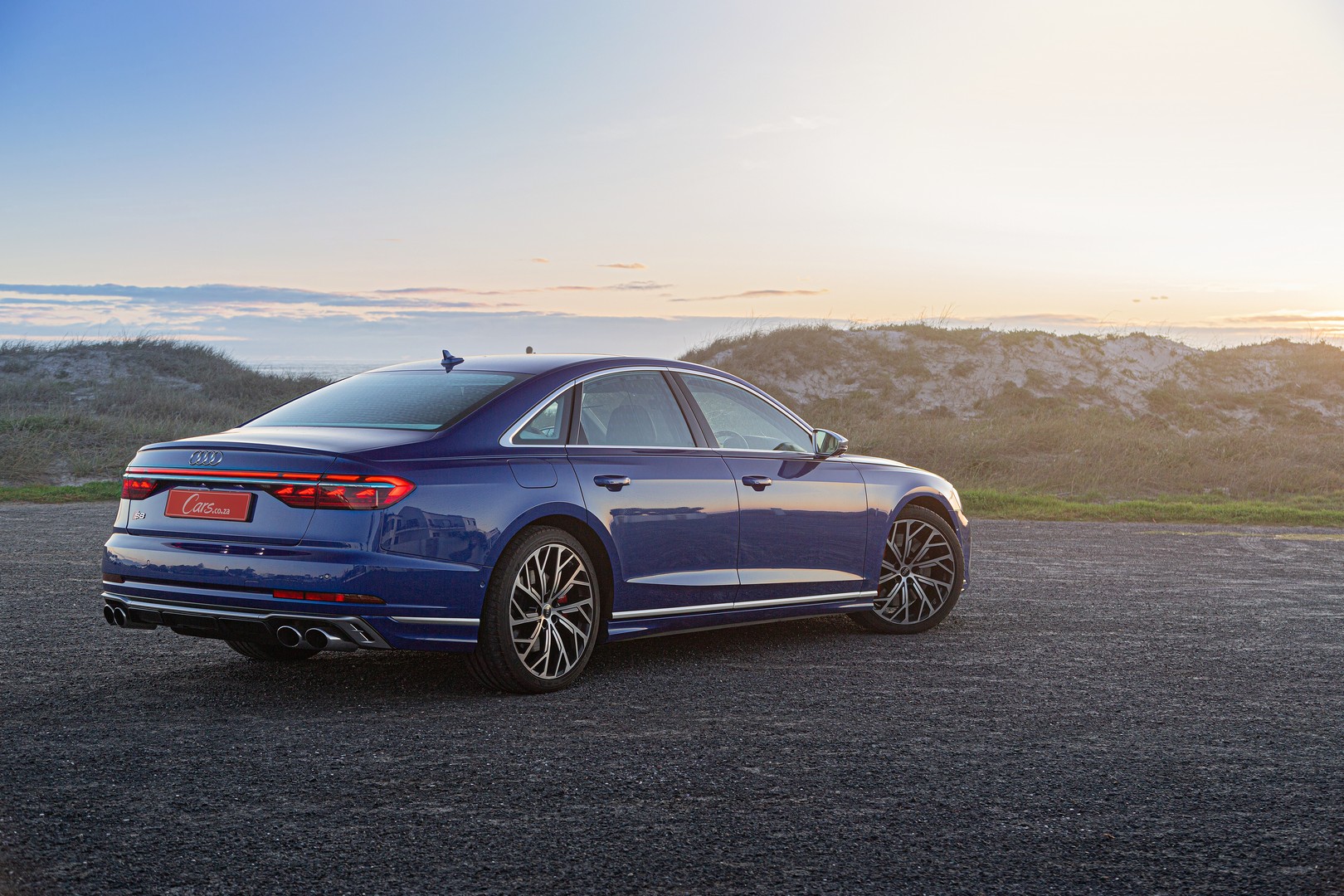
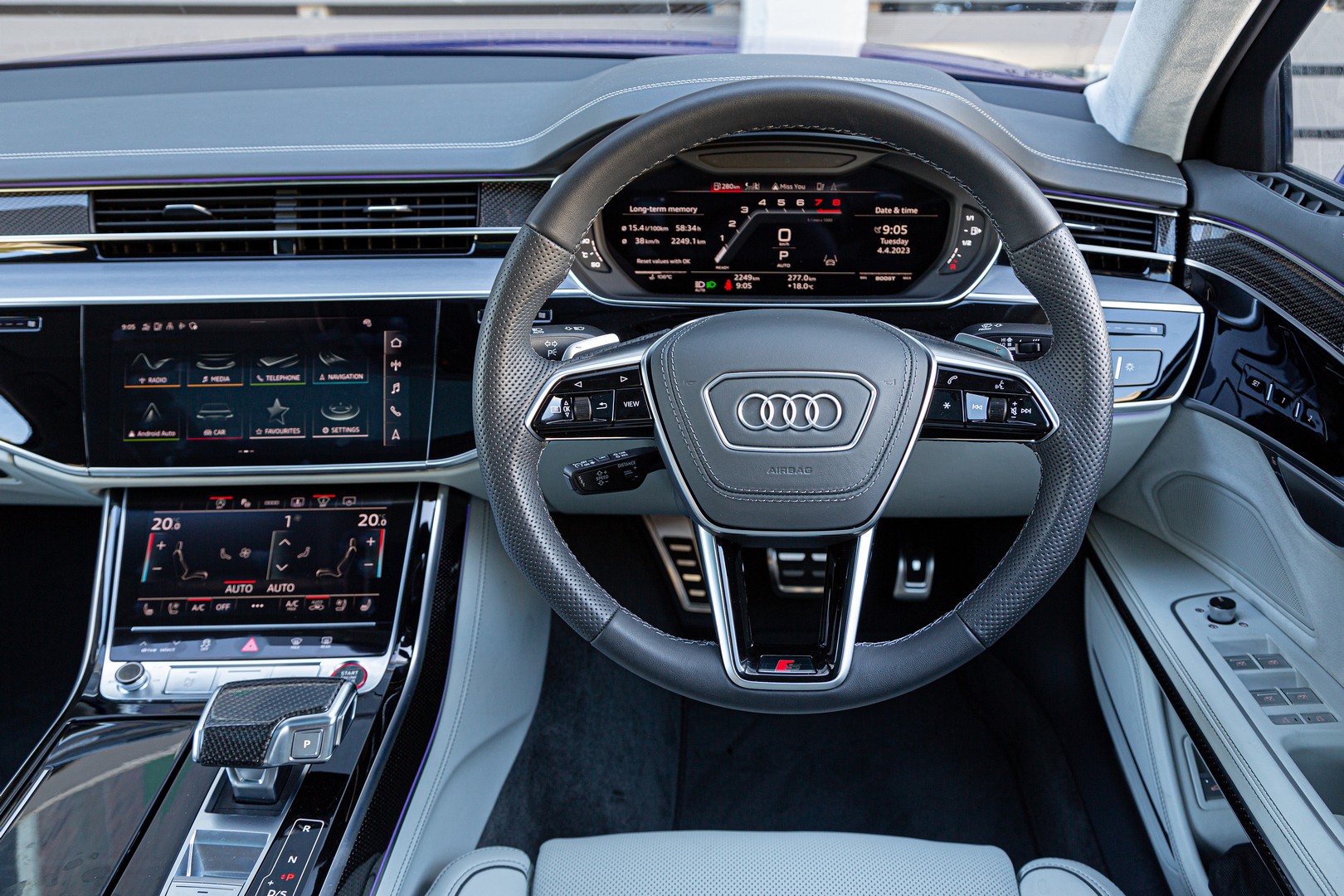
Nevertheless, the W223-generation Mercedes-Benz S-Class is here to battle the recently released – and extremely divisively styled, but otherwise super impressive – BMW 7 Series, as well as the Audi A8 (now only offered in S8 guise in South Africa) and the long-serving Lexus LS.

In South Africa, only 2 S-Class derivatives are offered (excluding the Maybach variants), and on test here is the most powerful of the pair – the S500 L 4Matic. Local buyers can’t choose between a standard and a long-wheelbase version, because the latter is standard (with 4Matic all-wheel drive). So, the new S-Class appears to be a careful evolution of its predecessor, in a segment that has been shaken to its core by BMW’s new Seven, plus battery electric- or SUV alternatives. Does the limousine’s appeal endure?

Compare prices and specs of the Mercedes-Benz S500 L 4Matic with the BMW 740i and Audi S8.

How the 2023 Mercedes-Benz S-Class fares in terms of…

W223 Mercedes-Benz S-Class side profile.
Mercedes-Benz South Africa offers the W223 S-Class exclusively in long-wheelbase guise.

Design and Packaging

Finished in optional Manufaktur diamond white bright paint (R29 700) and riding on optional 20-inch multi-spoke wheels (R28 000), the W223 Mercedes-Benz S-Class cuts an elegant figure in a world where ostentatiousness seems to be the new standard. 

The sedan’s head- and tail lamps are slim, and while the enlarged grille is relatively upright, it’s modestly sized compared with the 7 Series’ flagrantly oversized “double-kidney” treatment. The W223-gen sedan almost looks smaller than the outgoing model, but it isn’t – the short overhangs and stretched wheelbase disguise the ‘Benz’s dimensions well. That said, it is notably shorter and lower than the BMW 7 Series.

W223 Mercedes-Benz S-Class cabin fascia.
Whereas dark wood trim, piano black inserts and satin finishes hit the mark, the multifunction steering wheel’s controls are too fussy.

Some of the nice touches include flush-fitted door handles that pop out when you approach the car (when the car’s key fob is in your pocket) and disappear back into the door once the vehicle is in motion. The spellbinding Digital Light package – a R40 000 option – automatically adjusts the lighting depending on the W223’s surroundings and other road users in its proximity. When you unlock the car at night, they also perform a neat LED light show that never ceases to amaze those who witness it for the first time. 

When you slide into the plush, but suitably supportive, driver’s seat, there’s an awful lot to take in. The cabin design strikes a superb balance between traditional luxury and high-tech features.

W223 Mercedes-Benz S-Class digital instrument cluster.
There are various display modes to choose from. This elegant scheme includes an EQ-Boost readout in the rev counter.

Our test unit featured pin-striped, dark matte wood trim, lots of satin silver accenting and, of course, acres of piano black inserts. However, your eyes will undoubtedly be drawn to the large digital instrument cluster first; the 12.3-inch screen can be configured to display different “styles” and different packages of information. This test car further featured the Safety and Technology Package (R76 400), which includes a 3D driver’s display – it adds notable depth to the graphics for a very cool visual experience. 

Fittingly, the S500 L 4Matic’s fascia is also dominated by a massive OLED display with crystal-clear graphics. Through this 12.8-inch touchscreen, the driver (or front passenger) can access the various MBUX menus and systems, including the climate control settings, which admittedly require some familiarisation. Thankfully, a strip of buttons (for some of the major controls) sits below the screen, and once you get the hang of it, the voice control system actually works very well. 

W223 Mercedes-Benz S-Class portrait-style infotainment touchscreen.
The sizeable portrait-oriented touchscreen features a plethora of menus, but there is a strip of physical buttons below it.

There are, however, a few minor points of criticism. Firstly, the steering-wheel-mounted controls are fiddly to use and some surfaces feel cheap to the touch, particularly the outer armrests and door pulls. The door-mounted controls to adjust the seating position no longer move much in the direction they’re being pushed, which is less satisfying (in terms of “feel”) than before. 

Move to the back and the extra space is immediately evident. This S500 L 4Matic is set up for two rear passengers only, with a fat centre “armrest” that turns out to be a fantastic box of tricks – it houses a removable tablet, the aft dual-climate control panel, cupholders, as well as fold-out tray tables. Mounted between the rear seatbacks of our test unit was a refrigerated champagne bottle/glasses compartment – how very old school! It does, however, eat significantly into the claimed boot space (500 litres).

Airline-like leather seats with electric adjustment buttons, trimmed centre console and infotainment system of the W223 Mercedes-Benz S-Class.
Rear occupants are afforded generous legroom, a wide range of electric-seat adjustments and myriad creature comforts.

Furthermore, by just pressing a few buttons, the left rear passenger can recline almost as much as they would in a fully utilised business-class airline seat. In its most extreme setting, the front passenger seat is moved (electrically, of course) to its most forward position, so as to allow stretch-out space (replete with a footrest) for the person seated in the rear.

Ultimately, however, much of the S-Class’s interior ambience and added “drama” appear at night with a staggering number of LED lighting options to choose from… Occupants appear to be surrounded by a continuous band of light, provided by no fewer than 250 LEDs. 

W223 Mercedes-Benz S-Class portrait-style infotainment touchscreen.
The infotainment menu encompasses numerous settings, including those that pertain to occupant comfort and cabin decoration.

Performance and Efficiency

Traditionalists may scoff at this, but the S500 L badge no longer signals the presence of a V8 petrol engine under the Mercedes-Benz S-Class’ bonnet. Instead, there is a twin-turbocharged 3.0-litre inline-6 motor, which, with a little bit of EQ-Boost assistance, delivers an impressive 336 kW and 520 Nm of torque. Power is directed to all four of the ‘Benz’s wheels via a slick 9-speed automatic transmission.

Of course, there are various drive modes to choose from, but in its sportiest setting the S500L can blast from 0 to 100 kph in 4.9 sec (in fact, we recorded a 5.08-sec time on a sweltering day, which was very impressive). What’s more, the full whack of torque is available from 1 800 rpm up to 5 800 rpm, which is why the 9-speed ‘box rarely finds it difficult to transmit immediate urge to the asphalt. The result is a car that always feels like it has power in reserve, and which responds with a steady, undramatic surge.

W223 Mercedes-Benz S-Class portrait-style infotainment touchscreen.
This menu allows the driver to fine-tune the settings of the instrumentation, as well as driver- and parking assistance systems.

The reason for ditching the V8 for a smaller capacity engine is, of course, driven by the quest for optimal fuel efficiency. Mercedes-Benz claims an average fuel consumption figure of 8.1 L/100 km which, as you can imagine, won’t be easy to achieve. A more realistic figure is about 10 L/100 km which, although high by contemporary standards, is a superior return to what a V8 would average in similar driving conditions.

Comfort and Features

Given the vast number of options to choose from, it is highly unlikely that any two W223s sold in South Africa will turn out to be identically specced. There are, for example no fewer than 10 different leather options (our test unit’s Exclusive Black leather was a no-cost option). If you want black Nappa leather trim, however, that’ll cost you an additional R40 000… 

W223 Mercedes-Benz S-Class inner door trim, showing electric seat adjustment and heating and cooling functions, plus electric window and side mirror switches.
While the Burmester surround system is sublime (bottom left), the “stiff” electric seat adjustment buttons are a trifle disappointing.

Front and rear seat memory packages are no-cost features, but if you want the “First-Class rear compartment” (as fitted to this unit, with its fold-out trays, drinks fridge etc), you will have to fork out an extra R29 000, which, somehow, seems reasonable within the context of a first-class sedan!

A more practical option may be the Chauffeur Package, which at least makes it possible to accommodate a 3rd rear passenger. 

W223 Mercedes-Benz S-Class portrait-style infotainment touchscreen.
The plush front seats’ massage functions can be tweaked to suit the respective occupants’ individual preferences.

With numerous other comfort-oriented features (including massaging, and heating, which even extends into the armrests), let’s just say that you’ll feel relaxed, whether you’re driving or are dozing away in the back on soft pillows (also offered). 

In terms of tech, the 2023 Mercedes-Benz S-Class is bang up-to-date, too. Apple CarPlay and Android Auto are supported (of course), plus there are numerous USB-C outlets dotted around the cabin. A nice-to-have optional feature is the MBUX augmented reality head-up display (R65 000), which just elevates navigation prompts to a new, futuristic level. 

W223 Mercedes-Benz S-Class rear centre console, with separate climate control console and drink holders.
The rear occupants’ dual-zone climate control panel (plus a pair of drink holders) are built into the console between the seats.

A Burmester surround sound system is standard, complete with 15 high-performance speakers and a total output of 710W. For an extra R148 900, you can have the flagship Burmester 4D surround sound system that is said to add a “new dimension courtesy of speaker-like exciters featuring sound massage.” Essentially, the exciters (or structure-borne sound transducers) vibrate and pulsate in sync with rhythms.

The W223 Mercedes-Benz S-Class offers aircraft-style fold-out tables.
Need to have lunch (or answer emails) en route to your destination? The S-Class offers aircraft-style fold-out tables.

Needless to say, even a stock-standard S500 L 4Matic is a luxurious machine loaded with the latest tech, and several features are no-cost options, or bundled into no-cost optional packages. The Mercedes-Benz configurator will help you to specify the S-Class of your dreams in no time at all!

W223 Mercedes-Benz S-Class with optional 20-inch alloy wheels.
The optional multi-spoke 20-inch wheels (shod with skinnier tyres) look great, but they make the ride quality harsher.

Ride and Handling

Weighing in at 2 100 kg and equipped with adaptive air suspension as standard, the Mercedes-Benz S-Class is a relaxed, supple cruiser – at least, most of the time. Our test unit came fitted with the larger (20-inch) wheels and, unfortunately, we noticed sudden and sharp road imperfections disturbed the serenity of the cabin with too much regularity. 

Similarly, while the cabin is quiet, it does not, subjectively speaking, represent a big step up from its predecessor. Perhaps the newer BMW 7 Series has reset the benchmarks in this segment (we tested the new S-Class soon after we put an example of the 7th Seven through its paces), but saying that, you’re unlikely to be disappointed by the big Benz’s ability to soothe away the office stress on the way home.

W223 Mercedes-Benz S-Class portrait-style infotainment touchscreen.
The S-Class’ drive modes can be selected via the touchscreen menu OR by the buttons on the satin-trimmed strip below it.

When you engage Sport mode, the Mercedes-Benz’s S-Class’ ride firms up and its handling sharpens, while the transmission mapping hangs on to the twin-turbo engine’s revs, which results in livelier throttle responses. Look, the S500 L 4Matic is no thundering AMG that likes to spin up its rear wheels; think of it instead as just a neat and tidy handler when the roads require it, or when you’re in a particular hurry! 

Price and After-Sales Support

The Mercedes-Benz S500 L 4Matic costs R2 735 064 (March 2023, before options), which makes it significantly pricier than the BMW 740i, and similarly priced to the Audi S8. A 2-year/unlimited km warranty and a 5-year/100 000 km maintenance plan are included. 

W223 Mercedes-Benz S-Class front three-quarter view.
The W223-generation Mercedes-Benz S-Class is a sublime first-class sedan, but it doesn’t move the goalposts in its segment.

Verdict

We thoroughly enjoyed the time spent with the 2023 Mercedes-Benz S500 L 4Matic. It’s an elegant, classy car with a lovely blend of old-school luxury and modern technology. Considered in isolation, the ‘Benz is really hard to fault, particularly if you don’t want to “flash” your wealth. But at over R2.7 million, it seems pricey compared with the new BMW 7 Series. And, it has to be said that, as much as most of us are not fans of the new Seven’s exterior design, its interior has moved the game several steps forward – frankly, beyond what the current S-Class can offer. In conclusion, then, the W223-generation Mercedes-Benz S-Class will continue to appeal to previous S-Class owners, but to buyers who are more open-minded to alternatives, it may no longer be an automatic inclusion on their new-luxury-car shortlists.

Related content:

Mercedes-Benz S-Class (2022) Launch Review

Mercedes-AMG S 63 E Performance Revealed with 590 kW!

BMW 7 Series (2023) Launch Review

BMW 7 Series (2022) International Launch Review

Audi S8 (2021) Review

New Kia EV9 7-Seater Electric SUV Fully Revealed

Meet the production version of the new Kia EV9, the South Korean firm’s box-fresh 7-seater electric flagship SUV…

The Kia EV9 has finally been fully revealed in production form, arriving as the South Korean brand’s new 7-seater electric flagship SUV. And, yes, it looks hardly any different to the concept version unveiled back in late-2021.

Kia describes the new EV9 as a “pivotal step forward” in the automaker’s journey towards becoming a “sustainable mobility solutions provider”, adding the vehicle “paves new paths for future electric SUV design”.

“The Kia EV9 breaks new ground, aiming to redefine standards for design, connectivity, usability and environmental responsibility,” said Karim Habib, Executive Vice President and Head of Kia Global Design Center. “The Kia EV9 offers customers an exceptionally high-quality proposition and a fresh EV perspective in the family SUV sector. This new vehicle typology provides instinctive experiences and excellent comfort for not just the driver, but all occupants, through innovative use of space, technology and design.”

Unfortunately, the automaker has yet to release any official details on the EV9’s electric powertrain (so, battery capacity, power output and range claims are all unconfirmed), while dimensions have also not yet been announced. For the record, though, the concept version measured 4 928 mm long, 2 057mm wide and 1 778 mm tall, with a wheelbase of 3 099 mm.

Kia EV9
The 2nd-row seats are able to swivel up to 180 degrees.

One of the defining features of the EV9’s front end is the vertically arranged headlamp design, with clusters of small “cube lamps” within the bodywork adjacent to each headlamp. Expect this lighting signature to feature on the brand’s next EV models, too. In profile, you’ll notice the EV9’s flush door handles, while the rear end features slim taillights mirroring the design of those at the front.

And inside? Well, Kia says its designers prioritised “space, comfort and technology” for all passengers. Built on Kia’s E-GMP platform, the EV9 benefits from a long wheelbase, a low beltline and a completely flat floor. The result, according to the brand, is “lounge-style comfort” for all 3 rows of seats. While the 7-seat version will likely be the most popular, Kia also plans to offer a derivative with 6 pews.

Occupants in the first- and 2nd-row seats are able to simultaneously recline their seats when the EV9 is charging. In addition, the chairs in the 2nd row can be swivelled up to 180 degrees to allow their occupants to interact with those sitting in the final row. The latter furthermore offers cup holders and charging points for mobile devices.

Up front, you’ll find a pair of 12.3-inch touchscreens integrated with a 5-inch segment display (Kia says it has ensured “physical buttons are kept to a minimum”), along with a centre console equipped with “ample” storage options. Beneath the main screen, there’s an array of “hidden type-touch buttons” to control functions like heating, ventilation and air conditioning.

No word yet whether we’ll see the new EV9 in South Africa, though the EV6 is scheduled to hit local roads in “limited numbers” at some point.

Related content

Kia EV6 Coming to SA in Limited Numbers

It’s Official: Kia Rio to Exit South Africa at End of 2023

Kia’s V6 Diesel Bakkie Could Redefine Double Cabs

Spy Shots: Ineos Grenadier Bakkie

It’s taken some time, but the Ineos Grenadier Bakkie looks to be nearly ready for a production reveal. Here’s what we know so far.

Picture credit: S. Baldauf/SB-Medien. We have paid for these photos and at the photographer’s request, have watermarked them.

These spy shots show the Ineos Grenadier Bakkie undergoing final testing in Europe. As a reminder, the Ineos Grenadier is inspired by the original Land Rover Defender. Chemical giant Ineos’ founder Jim Ratcliffe initially tried to buy the rights/plans for the Defender, but naturally Jaguar Land Rover fought tooth and nail to protect one of its most iconic nameplates.

So, Ratcliffe decided to create his own version. Given how the market has moved away from the hardcore offroad and semi-military applications and there are just a handful of models playing in this space (think of your non-AMG Mercedes-Benz G-Class and Toyota Land Cruisers), Ratcliffe and Ineos reckon they’re onto something. Impressively, BMW is the engine supplier and the Grenadier will be powered by Munich’s petrol and diesel 3.0 straight-6 engines.

The best part? The Ineos Grenadier is confirmed for a South African market introduction and will be sold through selected BMW dealerships in SA.

MORE: Read about the Ineos Grenadier SA dealership plans

So, what do we have here then? This is the Ineos Grenadier Bakkie prototype which was spotted in Scandinavia, completing its winter testing. Its arrival is not exactly a closely-guarded secret as Ineos did say it would be offering multiple body styles right from the very beginning of the project. There’s no spec or tech data, but from the images, that load bay looks fairly large and practical.

The Ineos Grenadier bakkie will be the brand’s second model in the line up, after the 4-door SUV, and we understand that a single cab version will also be launched, along with an alternative fuel-powered derivative which could be electric or hydrogen.

Further Reading

Ineos Grenadier Price and Specs

Ineos Grenadier Prototype Drive, at G-Class territory!

Ineos Grenadier Production Begins

Nissan Qashqai (2007-2014) Buyer’s Guide

In the market for an original Nissan Qashqai? Let’s take a look at this popular small crossover’s history in South Africa, as well as its strengths and weaknesses as a used vehicle, plus which variant you should consider buying.

Automakers often make bold – sometimes even wildly mistaken – claims, usually all in the name of marketing. Nissan, for instance, has declared on more than one occasion it “created the crossover segment” with the unveiling of the original Qashqai back in 2006.

History would suggest otherwise, since the J10-generation Nissan Qashqai was preceded by a number of contenders that straddled more than one vehicle class (though perhaps not with quite such an urban edge). Still, the Qashqai certainly was a pioneer for the modern crossover, sparking the development of similar vehicles from virtually every other mainstream brand, playing the role of segment benchmark and ultimately popularising what has since become the fastest-growing sector in the industry. Yes, it rewrote the playbook, at the very least.

Nissan Qashqai
The Qashqai was created to take on C-segment hatchbacks like the VW Golf.

Pronounced “Kash-Kai”, Nissan’s prototypical crossover was named after a semi-nomadic tribe in southern Iran but interestingly wore the Dualis badge in its domestic market of Japan, as well as in Australia (the latter seemingly over concerns it would be dubbed – not entirely inaccurately, it must be said – Nissan’s “cash cow”).

Fascinatingly, the Qashqai was conceived as an indirect replacement to the N16-generation Almera C-segment hatchback that was never offered here in South Africa (but was struggling against the likes of the Volkswagen Golf and Ford Focus in Europe). Styled by Nissan’s design office on the Old Continent, the Qashqai was positioned as a “robust alternative to the more generic hatchbacks in the segment”. It was a brave move from Nissan but one that paid dividends remarkably quickly, with the model going on to sell up an absolute storm all over the world.

Nissan Qashqai model line-up

Nissan Qashqai concept
The production version of the original Qashqai was previewed by this concept.

Codenamed P32L, the Mk1 Qashqai was previewed in concept form at the 2004 running of the Geneva International Motor Show. The reveal of the production version followed in September 2006 in Paris, shortly before the first units began rolling off the assembly line at Nissan’s Sunderland factory in the United Kingdom.

Just a month after its global unveiling, the Qashqai was displayed at Auto Africa 2006 in Johannesburg. The local launch, meanwhile, took place around a year later (in September 2007), when the newcomer slotted neatly into Nissan’s line-up below the X-Trail.

At the time, Nissan SA declared it had mere “solid expectations” of the Qashqai in terms of local sales. Hindsight suggests the Japanese firm’s local division could have been far more bullish (it later admitted the vehicle had “exceeded all expectations”), as South Africans took a swift liking to the newcomer. When all was said and done, well in excess of 20 000 units had been registered across the country over a period of six years.

Nissan Qashqai
Nissan’s bold move to launch the Qashqai quickly paid off, including in South Africa.

At launch, the Nissan Qashqai was available in three flavours, with a mix of two naturally aspirated, 4-cylinder petrol engine choices, two gearbox options and a pair of trim levels (Visia and Acenta). The following variants – each front-wheel-driven – were offered at market launch:

  • 1.6 Visia (81 kW/154 Nm) 5-speed manual
  • 1.6 Acenta (81 kW/154 Nm) 5-speed manual
  • 2.0 Acenta (102 kW/198 Nm) 6-speed manual

In July 2008, the local Qashqai range expanded with the arrival of a turbodiesel engine and the option of 4×4. Developed by Renault and Nissan, the 2.0-litre dCi unit generated 110 kW and 320 Nm, and was linked to a 6-speed manual gearbox. In Acenta guise (with either cloth or leather upholstery), the oil-burner drove the front wheels, while the Tekna flagship gained Nissan’s so-called “All Mode 4×4” system.

Nissan Qashqai
A diesel engine (plus the option of 4×4) was added to the local range towards the middle of 2008.

The limited-edition N-Tec derivative arrived in October 2009, employing the familiar 2.0-litre petrol powertrain. Just 200 units were set aside for South Africa, each boasting extra items such as 18-inch alloy wheels, tinted rear windows and chrome trim for the grille, roof rails and exterior door handles.

By April 2010, with more than 5 500 units having been sold locally, Nissan introduced the facelifted Qashqai. The most significant styling changes came up front, where the crossover gained a new bonnet, front bumper, wings, grille and headlamp arrangement. A continuously variable transmission (CVT) was also added to the range, available exclusively in conjunction with the 2.0-litre petrol motor.

Nissan Qashqai
The somewhat more modern front end of the facelifted Qashqai.

Just a month later, the Qashqai+2 body style arrived, offered in 1.6 Visia and 2.0 Acenta form, and growing the line-up to eight derivatives. Exactly as its name suggested, the NJ10 model added a third row of two chairs, transforming the crossover into a 7-seater (Nissan’s official specification sheet actually listed it as an “MPV”). Compared with the 5-seater, the Qashqai+2 scored an extra 135 mm between its axles and measured 211 mm longer from nose to tail. The roofline was furthermore re-profiled, improving headroom all round.

In July 2011, the N-Tec special-edition nameplate made a return to the local market, this time limited to 648 units and available in both 1.6 Acenta and 2.0 Acenta guise (the latter with or without a new glass roof option). Perhaps more significant, though, was the arrival of a new, more affordable oil-burning engine later that year. The 1.5 dCi was available only in Acenta trim, sending 78 kW and 240 Nm to the front axle through a 6-speed manual gearbox. Claimed combined fuel economy came in at 5.1 L/100 km.

Nissan Qashqai+2
The Qashqai+2 boasted a longer wheelbase, longer body and a pair of extra seats.

With more than 16 000 units sold in South Africa, a quartet of fresh Nissan Qashqai variants wearing the unimaginative “Limited Edition” badge touched down in April 2013. Production was limited to 12 months, with the models available in Limited Edition form being the 1.6 Acenta, 1.5 dCi Acenta, 1.5 dCi Acenta (with glass roof) and 2.0 Acenta.

The Limited Edition package included 18-inch diamond-cut black alloy wheels, gloss-black roof rails, gloss-black side-mirror caps and privacy glass. Inside, these models boasted cloth-and-leather combination seats with white stitching, a treatment that was also extended to the interior door panels and gear lever trim.

Finally, the second-generation Qashqai hit the global stage late in 2013, before arriving in South Africa in mid-2014 and bringing to an end local sales of the J10-generation model.

Product strengths

Nissan Qashqai+2 rear quarters
The Qashqai+2 was the more versatile body style of the two.

Practicality: One of the Mk1 Qashqai’s key selling points was its practicality. In 5-seater form, the luggage compartment could swallow 410 litres, a figure expandable to 1 104 litres with the rear bench folded down. Though the third row of perches in the Qashqai+2 was better suited to children than adults, the 7-seater model offered even more versatility. Its luggage compartment could be varied from 130 to 450 to 1 520 litres, depending on the configuration of the pews, while the second row could handily slide fore and aft. The facelifted Qashqai also gained various added oddments storage areas in its cabin.

Comfort: In terms of comfort, the driver benefited from a steering column that adjusted for both rake and reach, while the ride quality was close to plush (particularly on 16-inch wheels with plump tyres), thanks in part to the adoption of a relatively sophisticated multilink rear suspension. Ground clearance came in at 200 mm, allowing for some light gravel-road travel. However, be warned that derivatives fitted with the larger (18-inch) alloy wheels suffer from a hard ride quality owing to their low-profile rubber.

Nissan Qashqai pre-facelift cabin
Even the pre-facelift Qashqai came with tilt-and-telescopic adjustment for the steering column. 

Safety: Though local specifications may have differed slightly, it’s worth noting the Nissan Qashqai scored the maximum 5-star safety rating from Euro NCAP back in 2007. In fact, the crossover was awarded 36.83 points out of 37, the highest rating ever dished out by the safety organisation at that time.

Locally, all Qashqai derivatives shipped standard with driver, passenger, side and curtain airbags (for a total of six), along with ABS with EBD and brake assist, plus Isofix child-seat anchors. Still, be aware only the 2.0-litre petrol and 2.0-litre dCi models came standard with stability control, meaning the 1.6-litre petrol and 1.5-litre dCi derivatives did without this safety feature.

Product weaknesses

Nissan Qashqai
Early models may suffer from fast-wearing dampers at the rear.

Flimsy tailgate handle: The tiny plastic clips moulded on the inside of the Qashqai’s broad tailgate handle are unfortunately prone to snapping. Once this happens, it becomes tricky to open the tailgate.

The solution? Either attempt to repair the clips (a fiddly exercise) or purchase a replacement handle and have it colour coded to the vehicle’s paint (an expensive exercise). Make sure to closely examine this area on any potential buy.

Fast-wearing rear shocks: Some early versions of the J10-generation Qashqai suffered from fast-wearing rear shock absorbers. During your test drive, make sure to listen closely for any rattles or knocks coming from the rear of the vehicle. Also take note of the vehicle’s damping behaviour, particularly over less-than-perfect tarmac.

J10 Nissan Qashqai instrument cluster
The 2.0 dCi engine has been known to suffer from the occasional clogged DPF. 

Defective steering wheels: Back in September 2012, Nissan South Africa issued a recall for around 500 examples of the Qashqai (both 5- and 7-seater variants) after a defective batch of steering wheels was used at the Sunderland factory. The remedial action was sparked by a (no doubt shocked) Finnish driver’s experience of the steering wheel coming off in his hands during a routine parking manoeuvre. At the time, Nissan SA contacted affected customers directly, but it’s still worth closely examining the tiller.

Miscellaneous issues: Another thing to look out for when shopping for a used oil-burning Mk1 Qashqai is a clogged diesel particulate filter (DPF). Locally, this seems to be specific to the 2.0 dCi engine; as we understand it, the early SA-spec 1.5 dCi units did without a DPF (though the next-gen version certainly gained one). The latter engine, however, does require a timing belt change every five years. Though less common, we have also heard complaints of ignition-barrel failures and water leaks around the windscreen due to failed seals (check under the front carpets for dampness).

What to pay?

Nissan Qashqai post-facelift cabin
The cabin of the facelifted Qashqai, here featuring the CVT option.

As always, give preference to vehicles that come with a full (preferably verifiable) service history. Since all J10-generation Qashqai models sold in South Africa shipped with a 3-year/90 000 km service plan (as well as a 3-year/100 000 km warranty), pay particularly close attention to the recorded maintenance history from three years after registration.

Of the used first-generation Qashqai models listed on Cars.co.za at the time of writing, nearly 75% were petrol-powered examples, with the 2.0-litre unit being the most common. Illustrating the buying public’s apparent aversion to CVTs (back in the early 2010s, at least), a whopping 99% of all listed models employed a manual gearbox, while not even 2% featured the 4×4 option. We found one example with more than 300 000 km on the clock and a further 16 showing north of 200 000 km (a group interesting containing all four engine options). 

  • Below R100 000: We discovered just 10% of all stock was priced below this mark. Unsurprisingly, the majority of models here featured high mileage and early model years. Unless you’re looking for a project car (and we’re not sure such a description would often apply to a Qashqai), we’d steer clear.
  • From R100 000 to R125 000: This price bracket contained a little more variety, from high-mileage 2014 1.6 Acenta (so, base-spec) models through to lower-mileage, earlier model-year turbodiesel variants and even a handful of Qashqai+2 examples. Search wisely here and you might just unearth a bargain.
  • From R125 000 to R150 000: Still plenty of powertrain variety in this section, with all four engine options represented. Most units listed here had more than 150 000 km on the odometer, though there was one particularly low mileage example.
  • From R150 000 to R200 000: More than half of all first-gen Qashqai listings were nestled between these final pricing bookends, including a fair few units of the 1.5 dCi (though both petrol engines were again more plentiful). We also found a handful of limited-edition models here, plus a couple more 7-seater derivatives, CVT-equipped models and the only 4×4 models on offer. No first-gen Qashqai units were priced above R200 000.

Pick of the range?

Nissan Qashqai
It pays to narrow your search to the refreshed version of the J10-generation Qashqai.

So, which derivative should you consider? Well, we’d recommend focusing your search on a facelifted model, which benefits from somewhat more modern styling up front as well as additional in-cabin storage space, improved refinement levels (thanks largely to extra insulation and the fitment of an acoustic windscreen) and the option of a 7-seater body style. This approach makes even more sense once you consider around three-quarters of all local J10-generation sales were post-facelift models.

When it comes to engine choices, the 2.0-litre petrol is obviously the thirstiest, but is also the only mill available with a self-shifting transmission (in the form of a CVT, since no conventional torque-converter automatic was offered in this generation) and the most common on the used market. There’s certainly an argument to be made for the likewise naturally aspirated 1.6-litre petrol unit as a long-term ownership prospect, as it’s generally cheaper to purchase than the other engine derivatives and will furthermore appeal to owners who’ve experienced expensive turbo headaches with other cars. However, take note it does without stability control.

The far-less-common 2.0 dCi offers the highest torque figure of the bunch, but like the petrol model of the same capacity, shipped standard in facelift form on large 18-inch alloy wheels (detracting somewhat from the ride quality). That leaves diesel lovers with the 1.5 dCi, which is arguably the best all-rounder in the range, offering a pleasing mix of low-down punch and wallet-friendly fuel consumption. As with the 1.6-litre petrol model, the only real fly in the ointment with the 1.5 dCi is its lack of stability control.

Verdict

Nissan Qashqai N-Tec
The N-Tec badge returned to the local Qashqai range in mid-2011.

Though the first-generation Qashqai was largely responsible for popularising a slightly raised driving position (something that resonates even more strongly with modern buyers), alternatives nevertheless include traditional C-segment hatchbacks such as the VW Golf 6 and Ford Focus (Mk2 and Mk3). More conventional higher-riding rivals come in the form of crossovers such as the Hyundai ix35 and 3rd-gen Kia Sportage, while an early model-year 4th-gen Toyota RAV4 would make for a compelling substitute.

While the original Qashqai paved the way for the modern crossover all those years ago, it remains an attractive option today for buyers searching for a relatively inexpensive middle ground between a compact hatchback and a full-size SUV. Since many shoppers would likely instead spring for the fresher J11-generation model, there’s plenty of value to be found in the older subject of this buyer’s guide.

Looking for a Nissan Qashqai to buy?

Find one on Cars.co.za here.

Or sell your car here, for free.

New Mercedes-Benz GLC Coupe Revealed 

While we wait in anticipation for the new Mercedes-Benz GLC to reach South Africa, the German firm has now lifted the covers off the sporty GLC Coupe. Herewith the key details!

The new Mercedes-Benz GLC is mere weeks away from its local arrival in South Africa but for those who prefer a sportier execution of Merc’s luxury SUV formula, enter the new GLC Coupe!

What powertrains will be offered for the new GLC Coupe? 

Mercedes-Benz GLC Coupe
The GLC Coupe will be powered by both mild-hybrid and PHEV powertrains.

The big news for the new-generation GLC Coupe is that mild-hybrid technology incorporating a second-generation integrated starter generator (ISG) and 48-volt on-board electrical system is now available in conjunction with 2.0-litre petrol and diesel engine derivatives mated with 9-speed automatic transmissions. More so, the GLC Coupe will also be offered in PHEV guise, (Plug-In Hybrid Electric Vehicle), in certain markets. 

The range starts with the GLC 200 4Matic which offers 150 kW and 320 Nm of torque with fuel consumption claimed at between 7.1-8.0 L/100km. The more powerful petrol GLC 300 4Matic raises the bar to 190 kW and 400 Nm with fuel efficiency claimed at between 7.3-8.2 L/100km.

The diesel-powered range starts with the GLC 220d 4Matic with 145 kW and 440 Nm of torque and a notable fuel efficiency claim of between 5.1-5.8 L/100km. Finally, the powerful GLC 300d 4Matic offers a heady 198 kW and 550 Nm of torque with fuel consumption claimed at between 5.5-6.1L/100km. 

The GLC Coupe PHEV derivatives include the 230 kW/500 Nm GLC 300 e 4Matic (0.5-06L/100km), the 280 kW/650  Nm GLC 400 e 4Matic (0.5-0.6 L/100km) and finally the 245 kW/750 Nm diesel GLC 300 de 4Matic (0.4-0.5 L/100km). All GLC Coupe PHEV derivatives are equipped with a 31.2 kWh battery with an electric range estimated at between 119-131 km for the petrol PHEVs while the diesel PHEV claims an electric driving range of 113-130 km. 

The new GLC Coupe will also be offered with the optional Tech Package which will include AirMatic air suspension (for enhanced ride comfort) and active rear-axle steering with a 4.5° steering angle (for enhanced agility and handling ability).     

The new GLC Coupe will be offered in either Avantgarde guise with 18-inch light alloy wheels and chrome package fitted as standard while the sportier GLC Coupe AMG Line gains either 19-inch or 20-inch mixed profile tyres with wheel arch liners in body colour. Customers will also be able to fit optional extras such as running boards and a Night Package. 

Note that the range and specification for South Africa has yet to be confirmed.
What’s the new GLC Coupe’s interior like? 

Mercedes-Benz GLC Interior
The GLC Coupe’s interior appears to be more advanced and better equipped as standard over its predecessor.

The GLC Coupe’s interior design follows on from its SUV sibling with the fitment of a large 12.3-inch digital instrument cluster and an 11.9-inch central display that’s slightly angled toward the driver. The infotainment runs Merc’s latest MBUX operating system while providing all the smartphone and telephonic support (including voice control) that you’d expect. Mercedes-Benz has also bolstered the standard equipment list with heated seats, smartphone integration and wireless smartphone charging while also rationalising equipment packages for the sake of streamlining the customer experience. As always, you will be able to choose from a variety of interior trims and finishes to meet your taste. 

In terms of practicality, the new GLC Coupe stands 31 mm longer and 5 mm higher than its predecessor. Rear storage space is claimed at 545 litres (45 litres more than before) expanding to 1 490 litres (45 litres more than before) with the rear seats folded down. Comparatively, the GLC Coupe PHEV offers 390 litres expanding to 1 335 litres. An electronic Easy-Pack tailgate is standard. 
When will the new Mercedes-Benz GLC Coupe come to South Africa? 

Mercedes-Benz South Africa (MBSA) has confirmed that the GLC Coupe will arrive in South Africa in Q4 of 2023. Pricing will be confirmed closer to the launch. 
Buy a Mercedes-Benz GLC Coupe on Cars.co.za

Related Content 

2024 Mercedes-Benz GLE Revealed

Mercedes-AMG GLE53 Coupé (2023) Price & Specs

Hyundai Venue Cargo (2023) Price & Specs

The Hyundai Venue Cargo is now on sale in South Africa! Take a look specification and pricing details of this new business-orientated crossover.

Over the past few years, online shopping and delivery services have grown exponentially. With local shopping apps like Takealot and soon-to-be-launched Amazon, the market is going to require more and more vehicles to get goods to your destination. Scooters just aren’t going to be adequate.

Enter the Hyundai Venue Cargo, Hyundai SA’s entry into the last-mile delivery ecosystem. Essentially, Hyundai takes a standard base-spec Venue, removes the rear seating bench and installs a partition and voila, you now have a commercial cargo crossover! This division will help secure packages and stop cargo from moving about in the event of sudden braking.

Hyundai SA claims the Venue Cargo has a licensing mass of just 990 kg and a payload of 500 kg, which we think is impressive. As far as rivals are concerned, Hyundai is benchmarking the Volkswagen Caddy and while the latter is priced quite a bit higher, it does come with a stronger engine and more space.

Hyundai will be classifying this vehicle as a light commercial, and it will be sold alongside the Korean brand’s Atos and Grand i10 Cargo offerings.

MORE: The latest prices and specs from Hyundai

Engine and Transmission

The Venue Cargo comes with a 1.2-litre 4-cylinder naturally-aspirated petrol engine delivering 61 kW and 115 Nm. Power goes to the front wheels via a 5-speed manual gearbox. There’s a 45-litre fuel tank and Hyundai claims a consumption figure of 6.5 L/100 km.

Key Interior Features

The Venue Cargo has a load capacity of 1 296 litres with the cargo compartment measuring 1 200 mm in length, 1 200 mm wide and 900 mm high.

The driver has access to an 8.0-inch infotainment display with Android Auto and Apple Carplay as well as a rearview camera.

Safety features include dual front airbags, ABS with EBD and brake assist.

How much does the Hyundai Venue Cargo cost in South Africa?

The Venue Cargo is sold with a 7-year / 200 000 km warranty, 3-year / 45 000 km service plan and 7-year/150 000km roadside assistance.

  • Venue 1.2 Motion Cargo MT – R329 900

Further Reading

Browse new or used Hyundai stock for sale here