Volkswagen is preparing to unleash a 245 kW Golf R 333 Limited Edition. The full reveal is expected at the end of May 2023.
The long-awaited Volkswagen Golf 8 R recently arrived in South Africa and local fans can finally unleash its 235 kW / 400 Nm 2.0-litre turbopetrol engine on local roads.
However, Volkswagen is preparing to unleash a more powerful, Limited Edition Golf R 333 at the end of the month which is expected to offer no less than 245 kW and 420 Nm, the same as the 2022 VW Golf R 20 Years.
Apart from the modest power bump and as seen in the teaser video above, the incoming Golf R 333 Limited Edition will be dressed in yellow body paint and fitted with an Akrapovic exhaust system as standard (which is a R73 000 option on the standard Golf 8 R).
Other notable features include 333 decals, black mirror housings, black 19-inch wheels, blue brake callipers and blue R badges. The interior is also expected to feature unique elements but the extent of the interior changes remains to be seen.
The full reveal of the VW Golf R 333 Limited Edition is due to take place on 31 May 2023 and it’s not yet clear whether the Golf R 333 will see the light of day in South Africa.
The Kia Sportage range has gained a trio of 1.6-litre turbodiesel derivatives. We drove a Kia Sportage diesel in Cape Town recently and these are our initial impressions…
The timing couldn’t have been better. As Kia South Africa was launching diesel versions of the Sportage, local motorists were facing dramatic fuel-price changes: petrol was set for a big increase, while diesel was set to come down substantially. A good time to promote a new diesel-powered family SUV, then.
We’ve made no secret of the fact that we rate the Kia Sportage highly. Not only does it look fresh and modern, but its lineup ticks many boxes. Launched locally in September 2022, the Sportage had one minor shortcoming: there was just one engine/gearbox combo. “Worry not”, said Kia SA, who promised that a diesel-powered Sportage would be touching down in Mzansi Africa soon enough. And here it is!
When it comes to turbodiesel-engined family SUVs, there aren’t that many to choose from these days. The Toyota RAV4 is no longer offered in diesel guise, a Volkswagen Tiguan 2.0TDI was recently launched and Hyundai offers a Tucson 2.0D Elite (with an all-wheel-drive N-Line version waiting in the wings).
Meanwhile, the Mazda CX-5 2.2DE AWD Akera is soldiering on and, if you want an all-new model from a premium brand (and are willing to compromise on cabin space), consider BMW’s X1 sDrive18d M Sport.
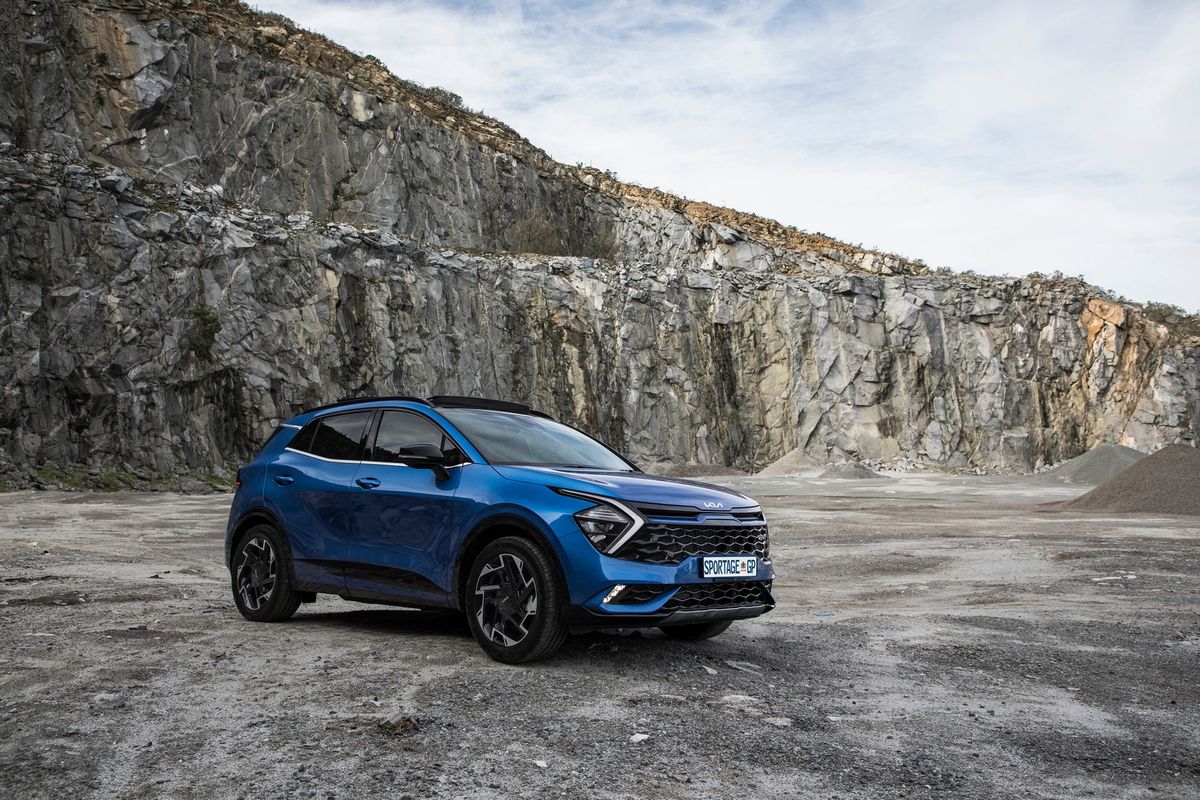
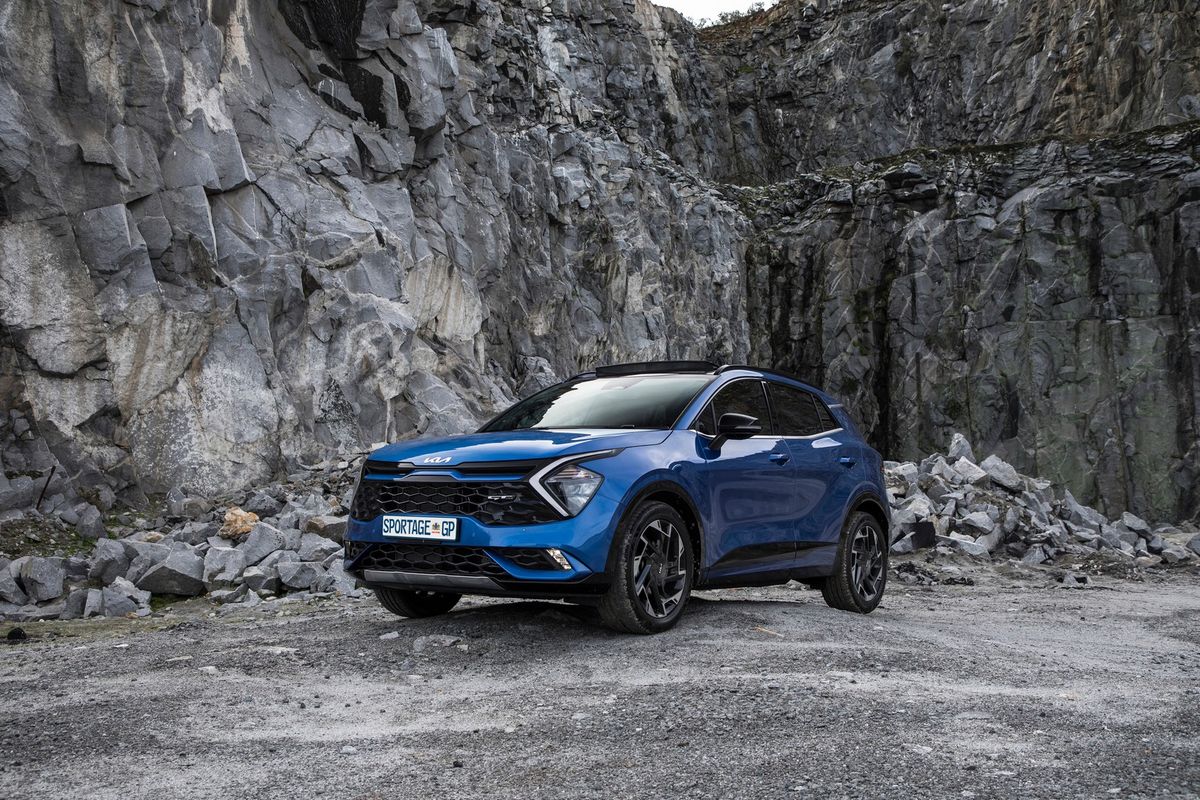
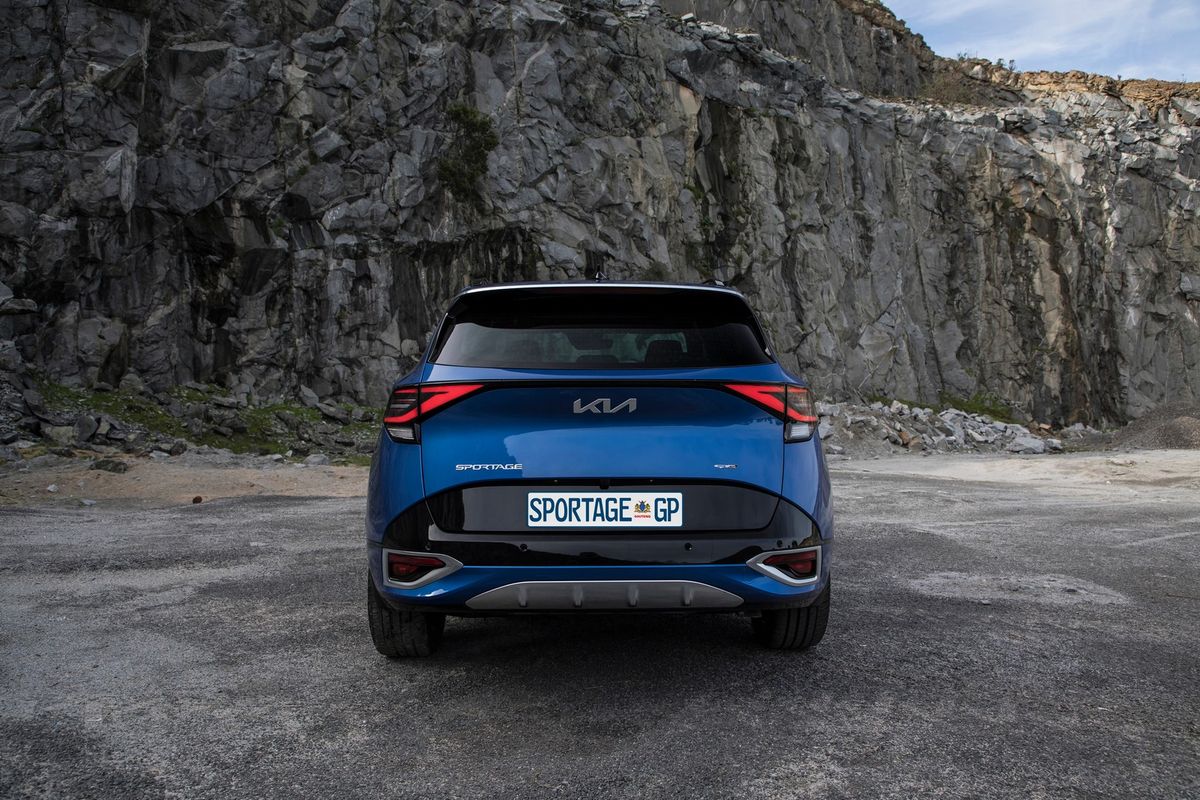
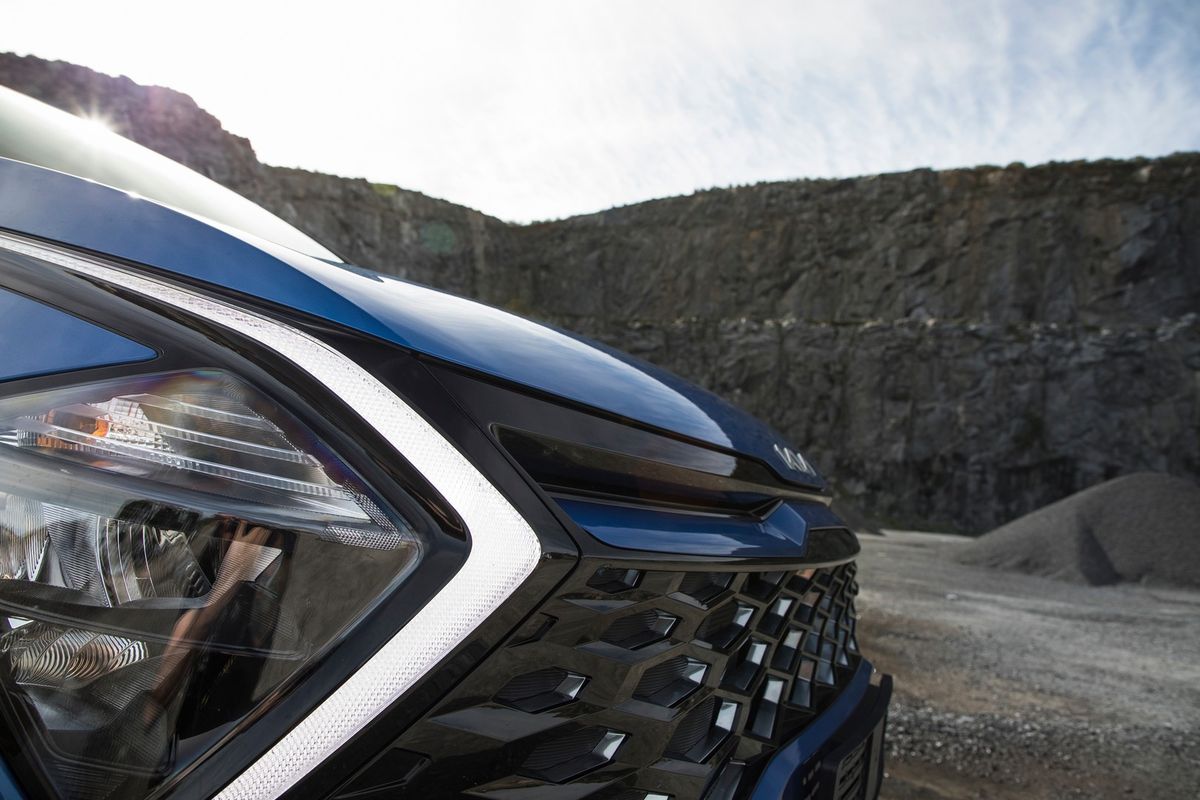
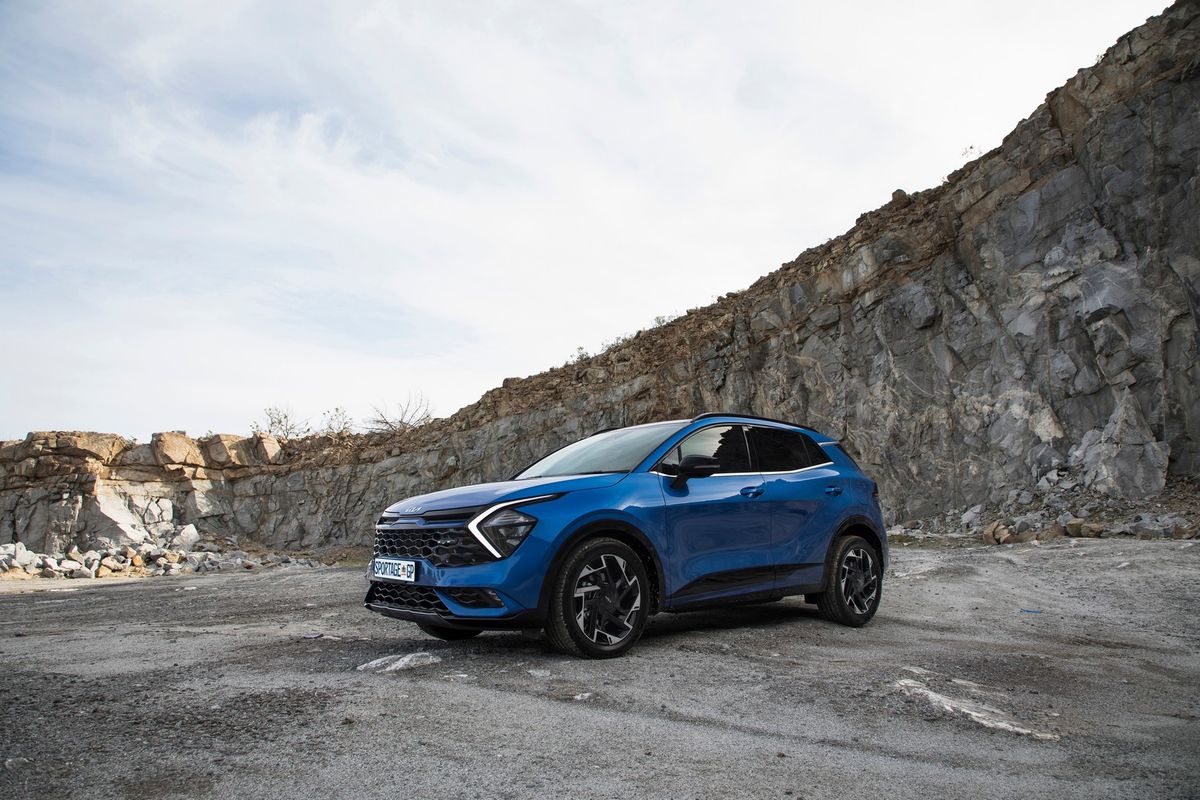
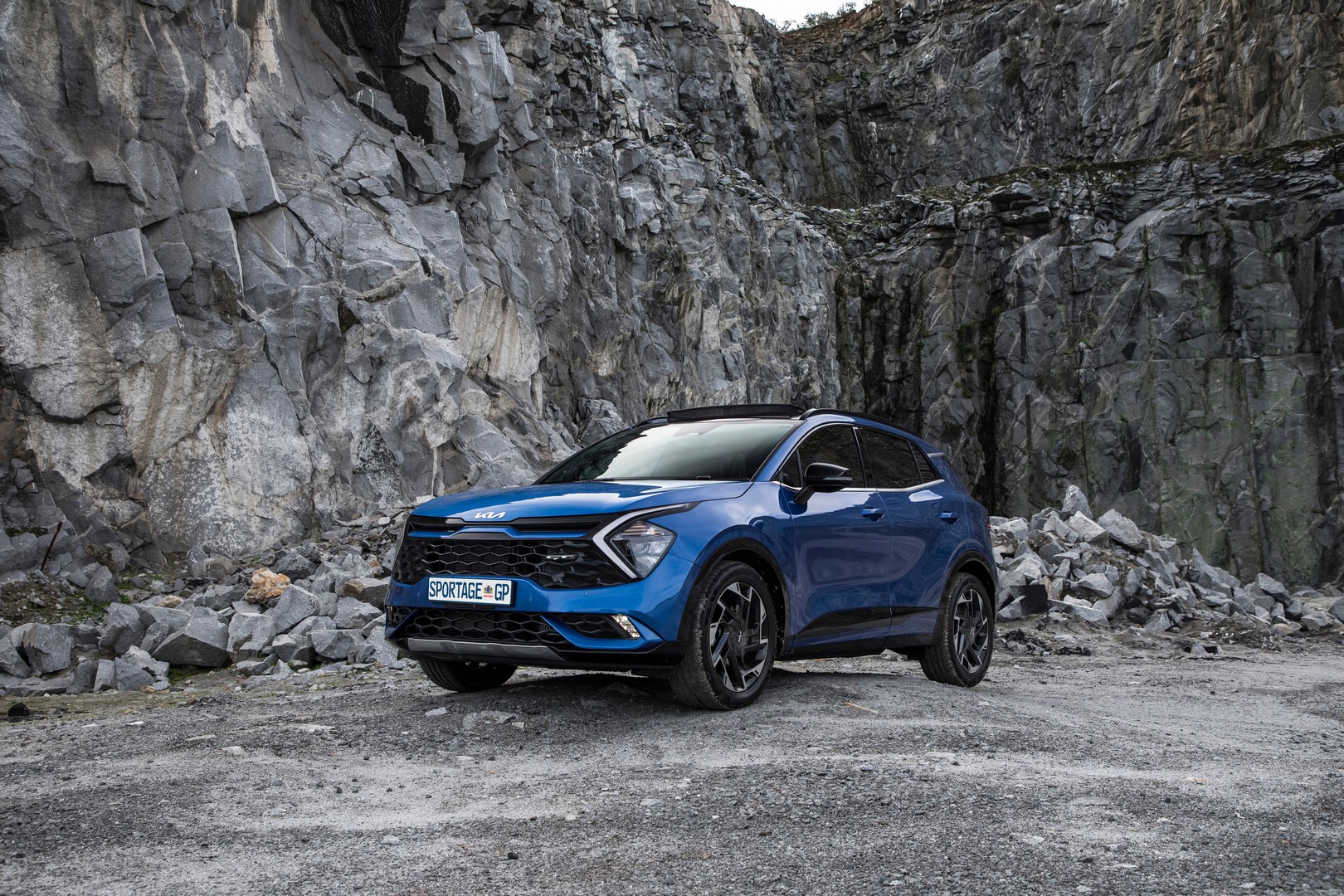
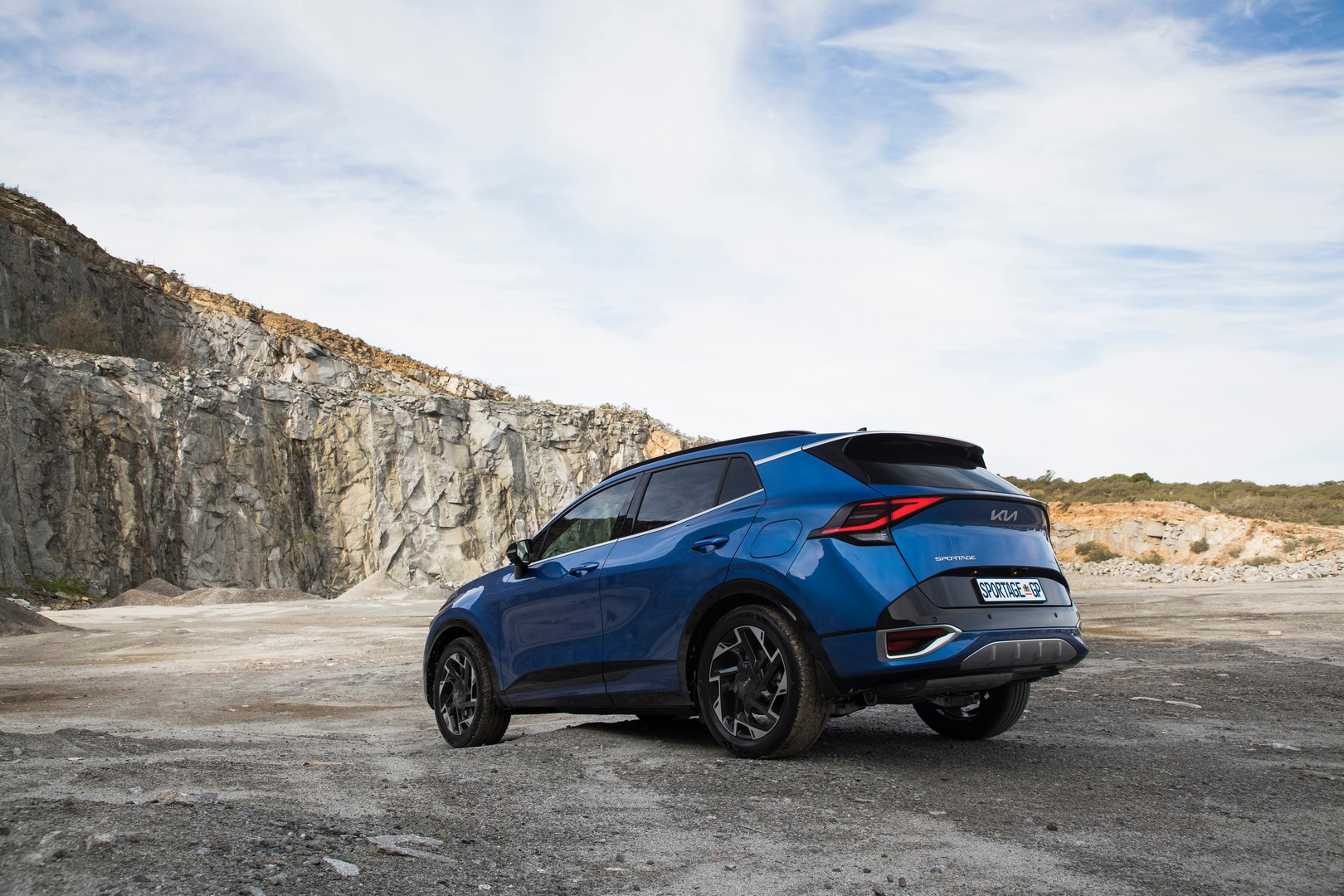
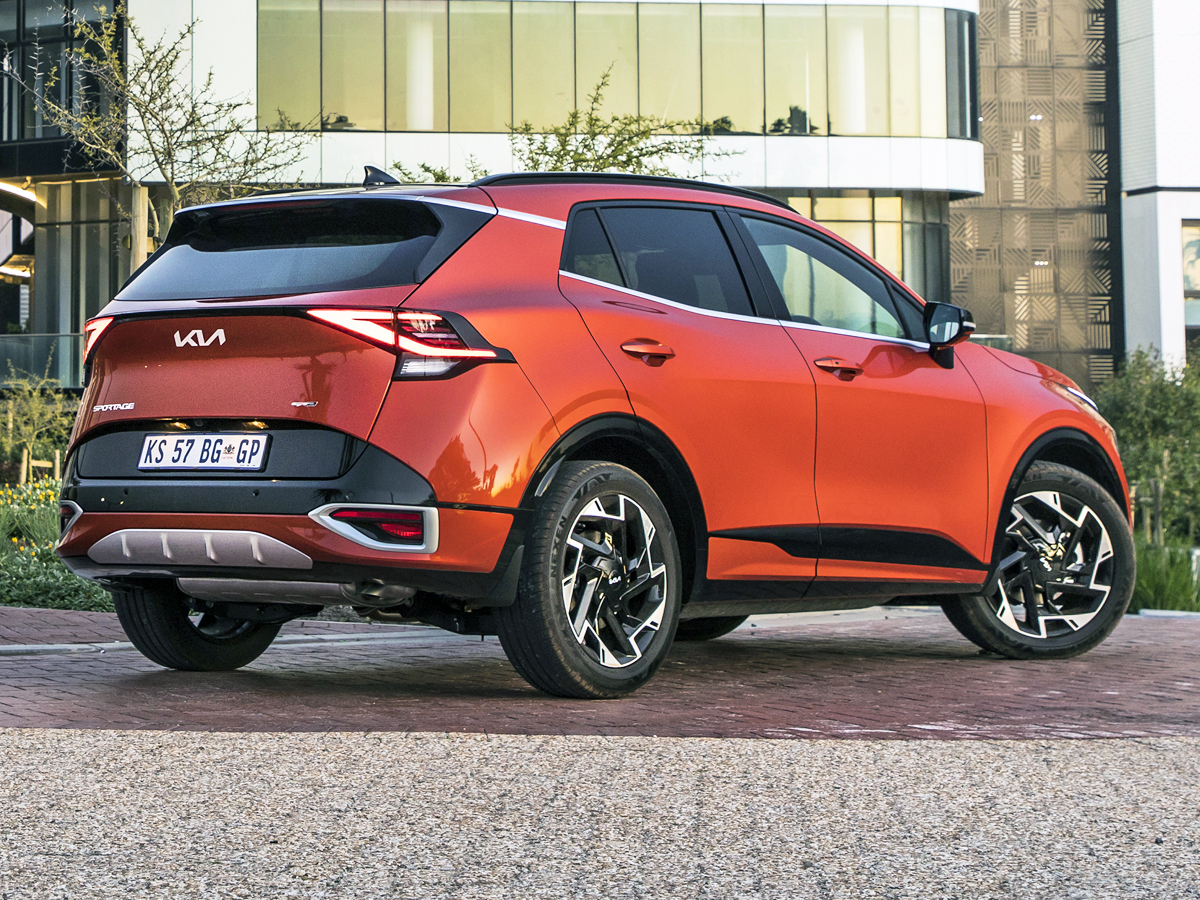
1.6 CRDi versions of the Kia Sportage range look identical to their petrol-powered siblings.
What’s on offer?
The Kia Sportage diesel derivatives slot neatly between their petrol-powered siblings, and they are available in 3 trim levels. The engine is a 100 kW/320 Nm turbocharged 1.6-litre 4-cylinder unit that drives the South Korean family car’s front wheels via a 7-speed dual-clutch automatic transmission.
If the engine configuration sounds familiar, that’s because it’s an updated version of the motor that served in the discontinued Kia Soul. As far as performance is concerned, Kia says the diesel-powered Sportage can sprint from 0 to 100 kph in 11.4 seconds. Given the claimed fuel consumption of 4.9 L/100 km and the Sportage’s 54-litre fuel capacity, Kia reckons a tank range of around 1 100 km is possible.
The diesel-powered Sportages’ trim levels are near-identical to those of their petrol-powered siblings, with even the base LX offering an impressive level of standard kit – it’s anything but “entry-level”!
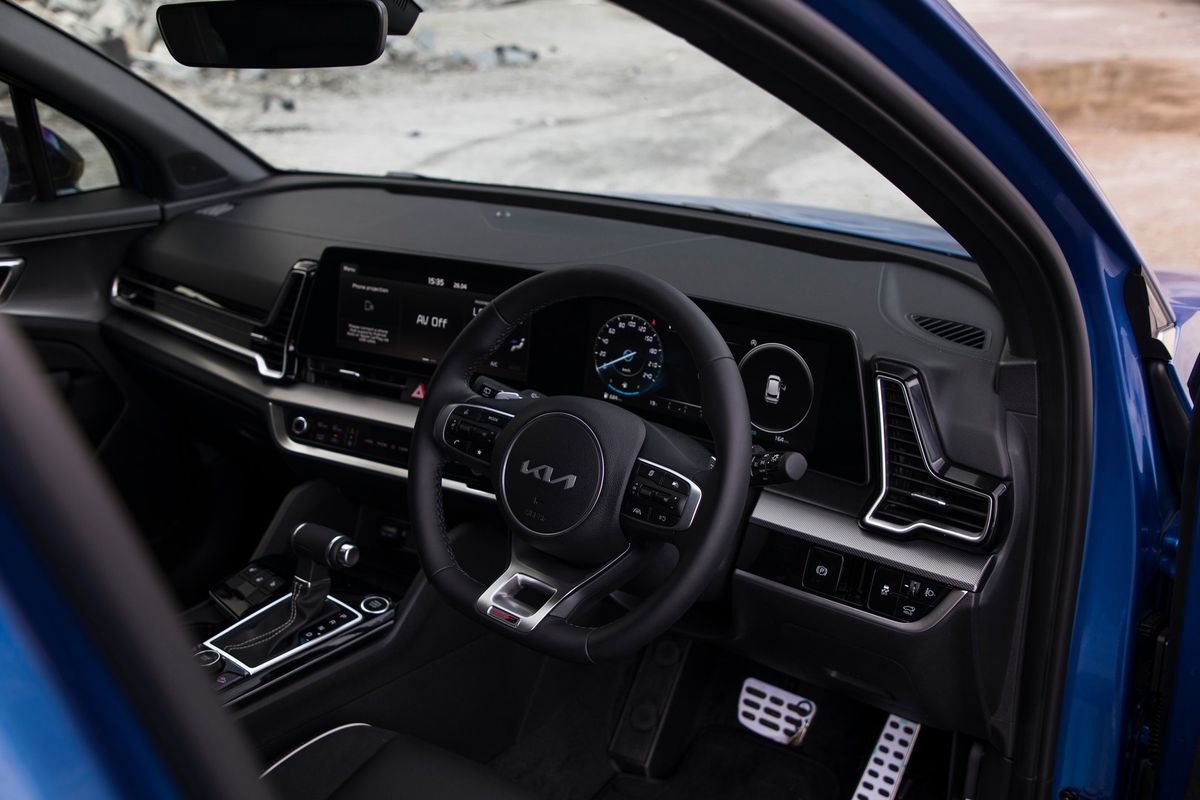
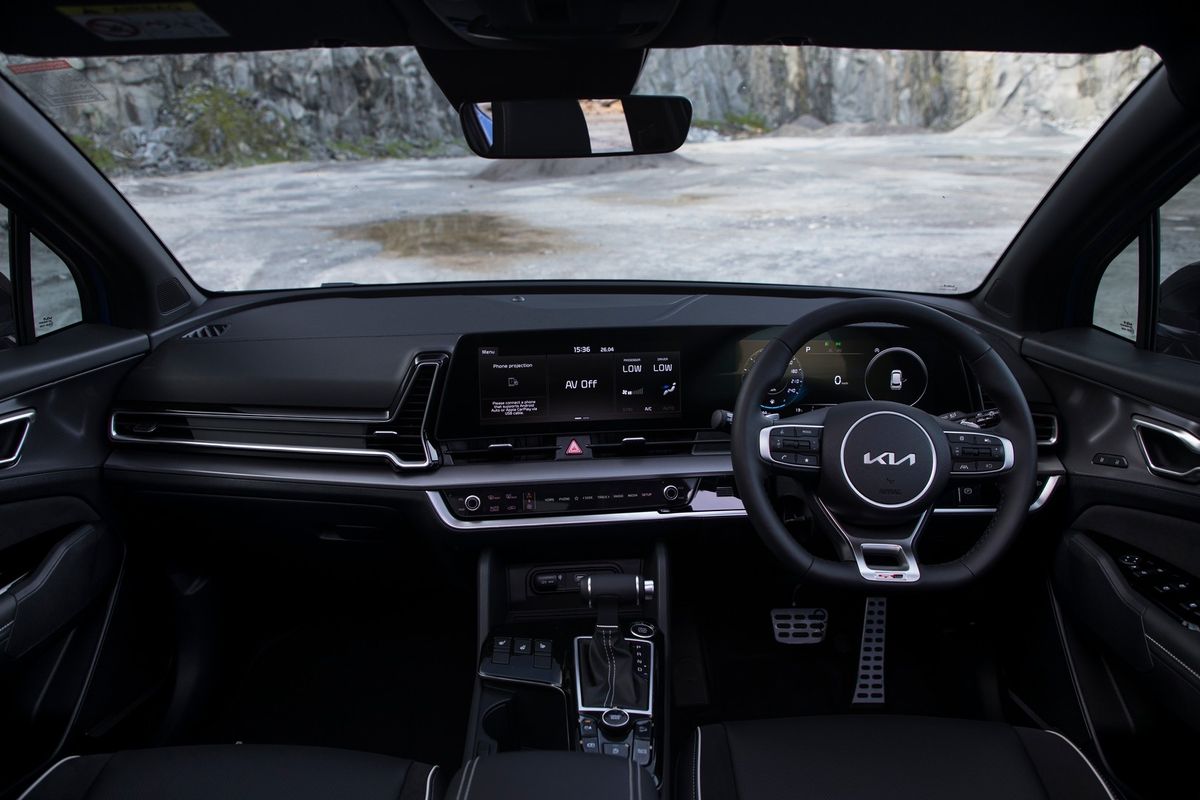
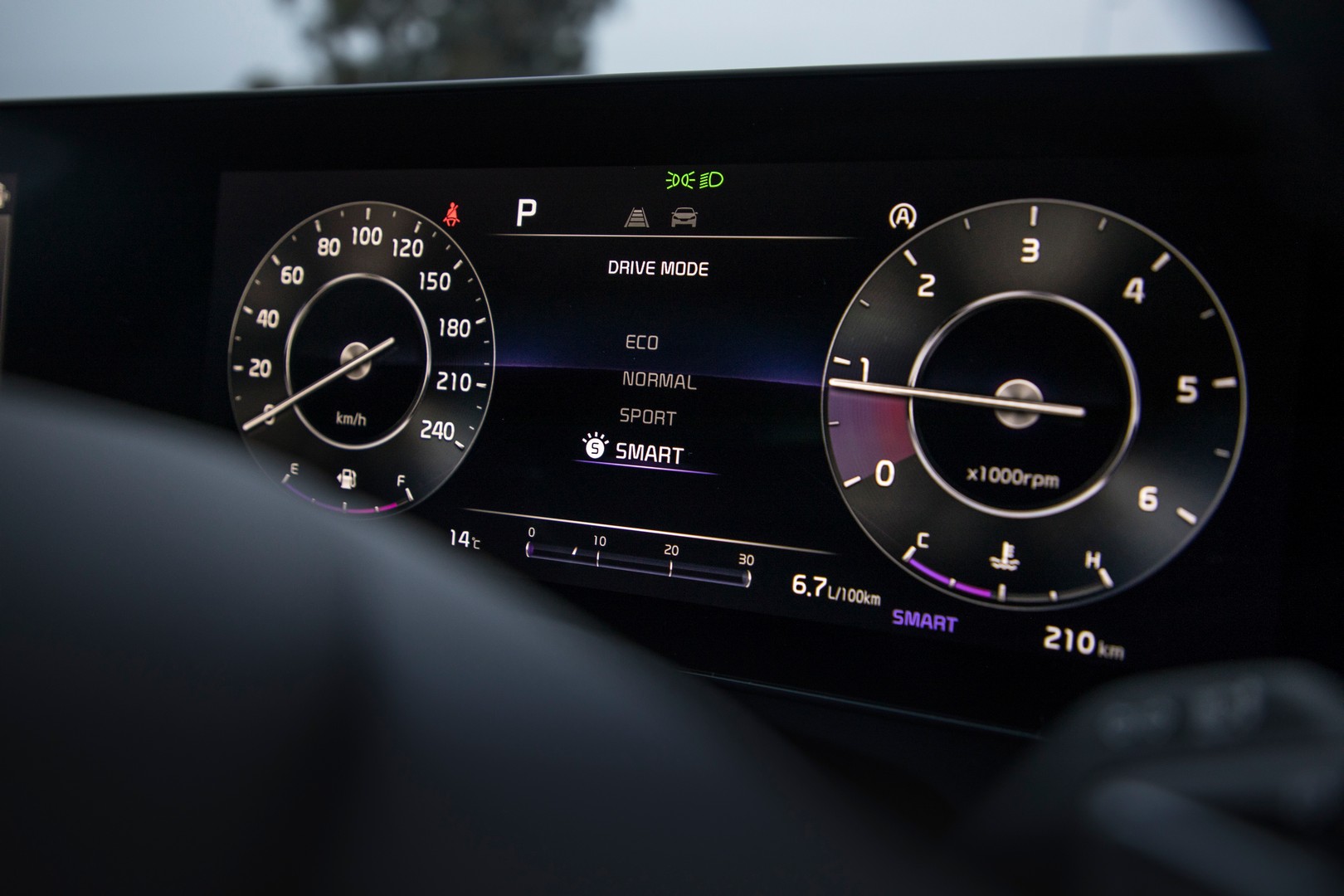
A driver can toggle between the various drive modes on the Sportage’s digital instrument cluster.
Sportage diesel LX
LED Headlights, daytime running lights, front fog lights, taillights
17-inch alloy wheels
Drive modes (Eco, normal, sport, smart)
Cloth upholstery
Leather-wrapped steering wheel and gear shifter
40:20:40 split-folding rear seats
Dual automatic temperature control
Curved 12.3-inch touchscreen infotainment screen
Reverse camera / rear parking sensors
Apple CarPlay / Android Auto / Bluetooth with voice recognition
2x USB-C rear charging points, front USB charging points
6x airbags, ABS, EBD, ESC, Hill Start, Trailer stability assist, downhill brake control
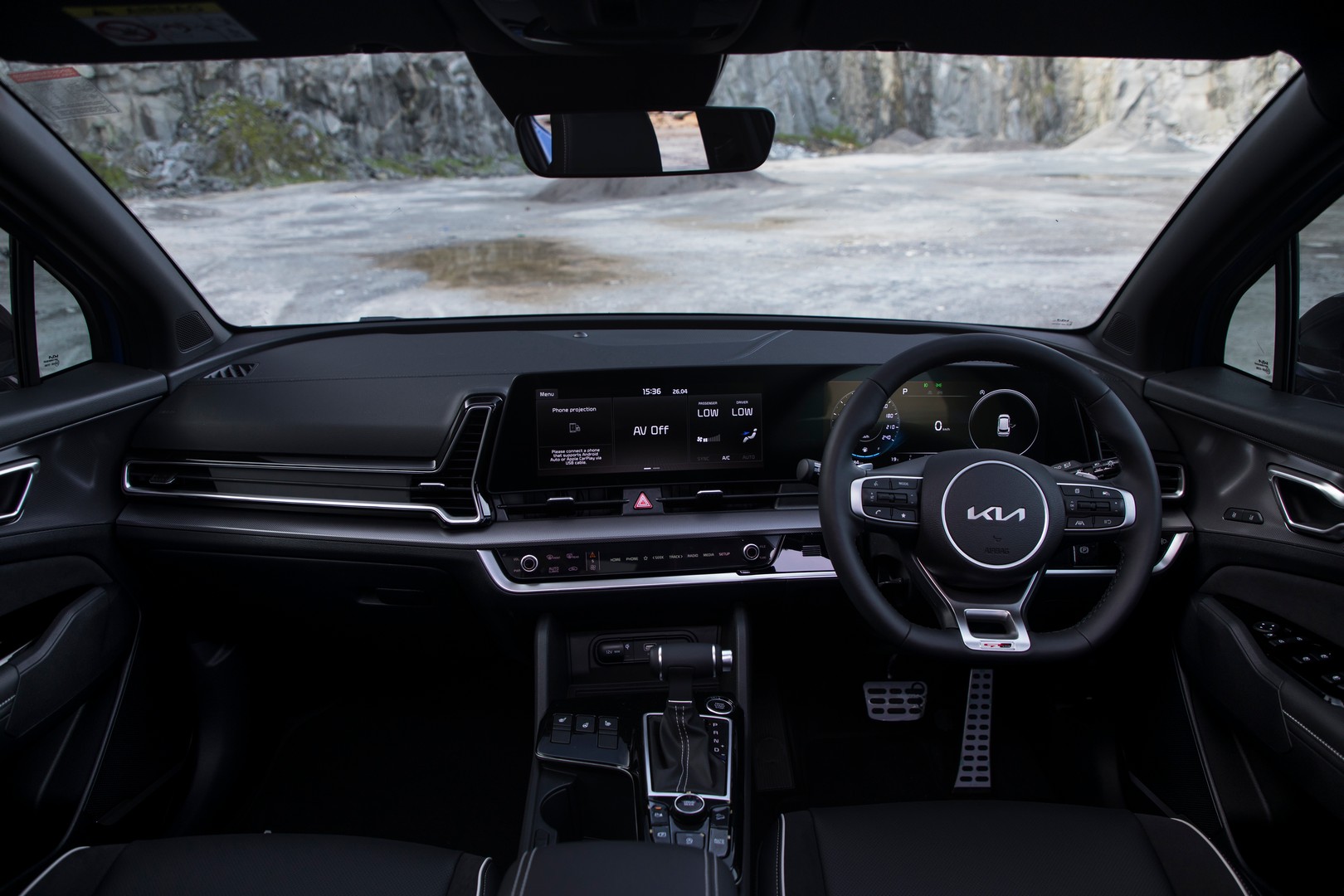
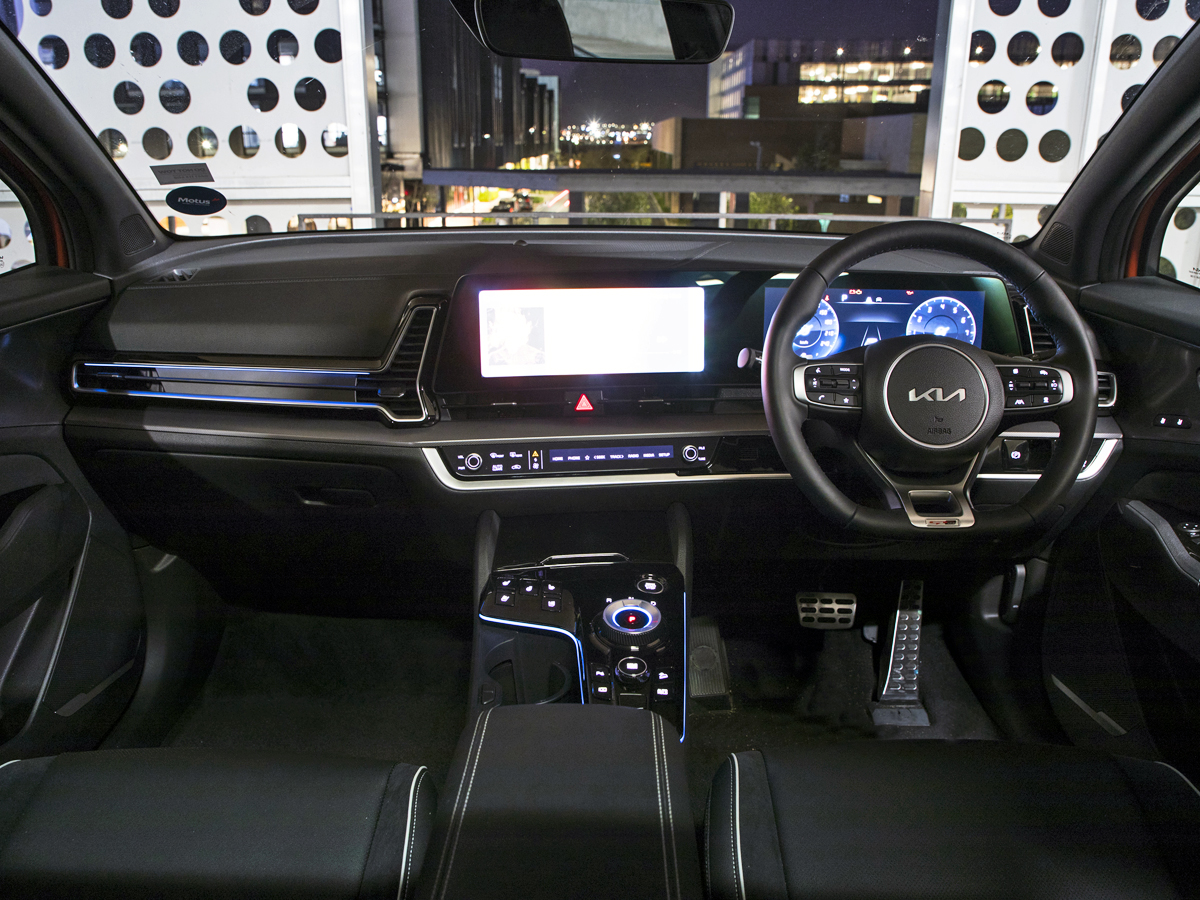
The Sportage’s cabin feels thoroughly modern and well-made, with numerous upmarket finishes.
What is it like to drive?
You cannot tell a diesel-engined Sportage apart from its petrol-powered equivalent based on its exterior execution – they look identical. It’s only when you start the engine, which emits a muted clatter at start-up, that you’ll realise that there’s a turbodiesel under the Kia’s bonnet. The powerplant’s relatively gentle idle speaks volumes of the Smartstream motor’s refinement and the model’s excellent noise insulation.
For the record, Sportage diesels are the only derivatives in the range to feature auto start/stop tech.
The majority of our test-drive route comprised open-road driving, with minimal interruptions. The 1.6 CRDi’s engine and transmission work well together; the gear shifts are well-calibrated and smooth.
Contrary to expectation, the “small-capacity turbodiesel” does not seem to labour in the 1.5-tonne Sportage; the engine delivers a nice dollop of torque from quite low down in the rev range (2 000 rpm).
If you need to summon brisk overtaking acceleration, there’s no need to apply full throttle or engage the Sport drive mode – even in its default drive mode, the 1.6 CRDi is sufficiently responsive. There’s minimal hesitation; it just picks up pace fairly rapidly… certainly more rapidly than its on-paper outputs suggest.
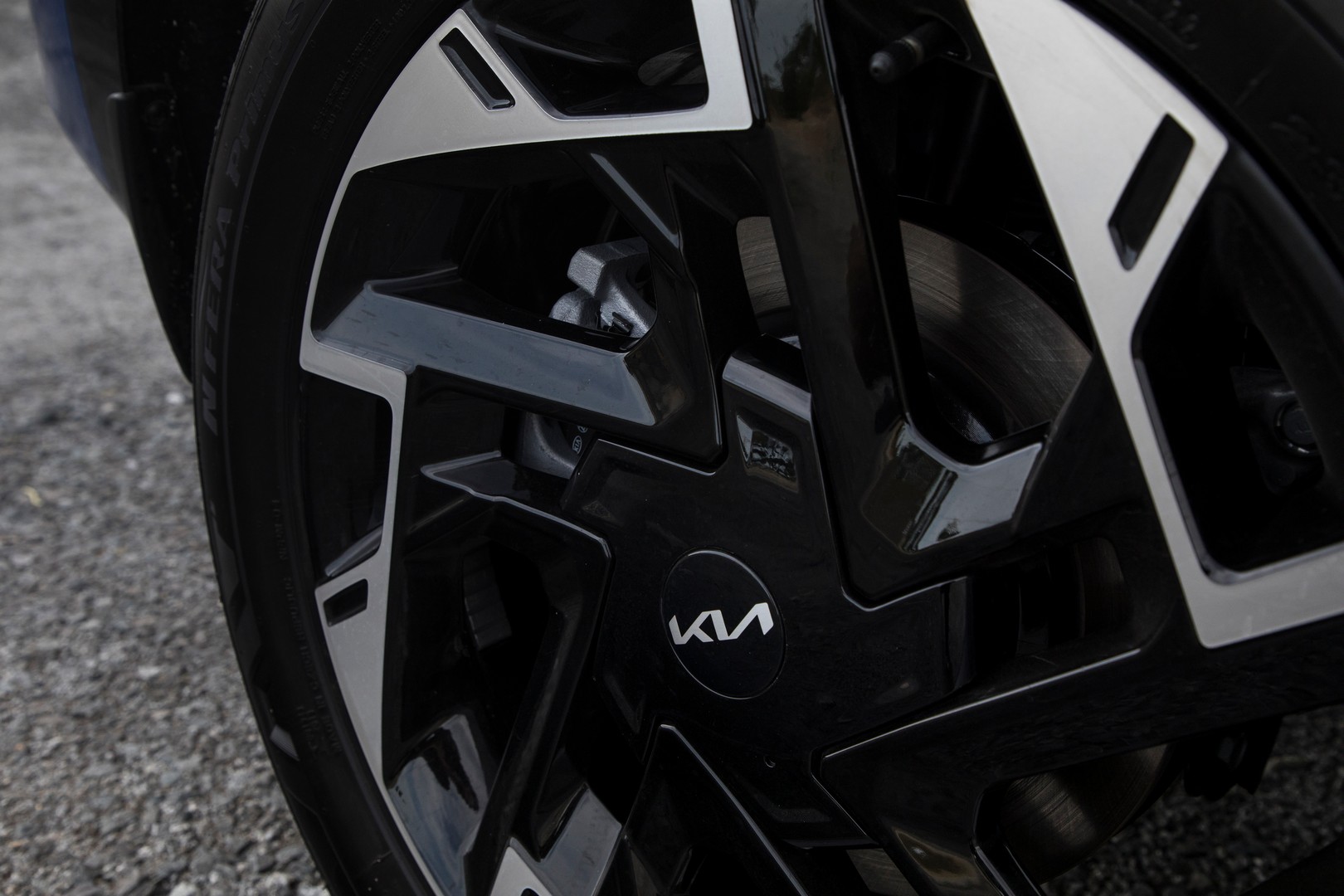
The Sportage’s alloys are very eye-catching, but the ride quality remains on the firm side of pliant.
As far as the diesel-powered Sportage’s ride quality and steering setup were concerned, they’re much the same as we experienced with its petrol-engined counterpart. As we said in our review of the 1.6 T-GDi GT-Line S, the Kia’s suspension feels tuned for smooth road surfaces (the ride’s a bit firmer than expected). However, the EX’s 18-inch alloys probably strike the best blend between comfort and style.
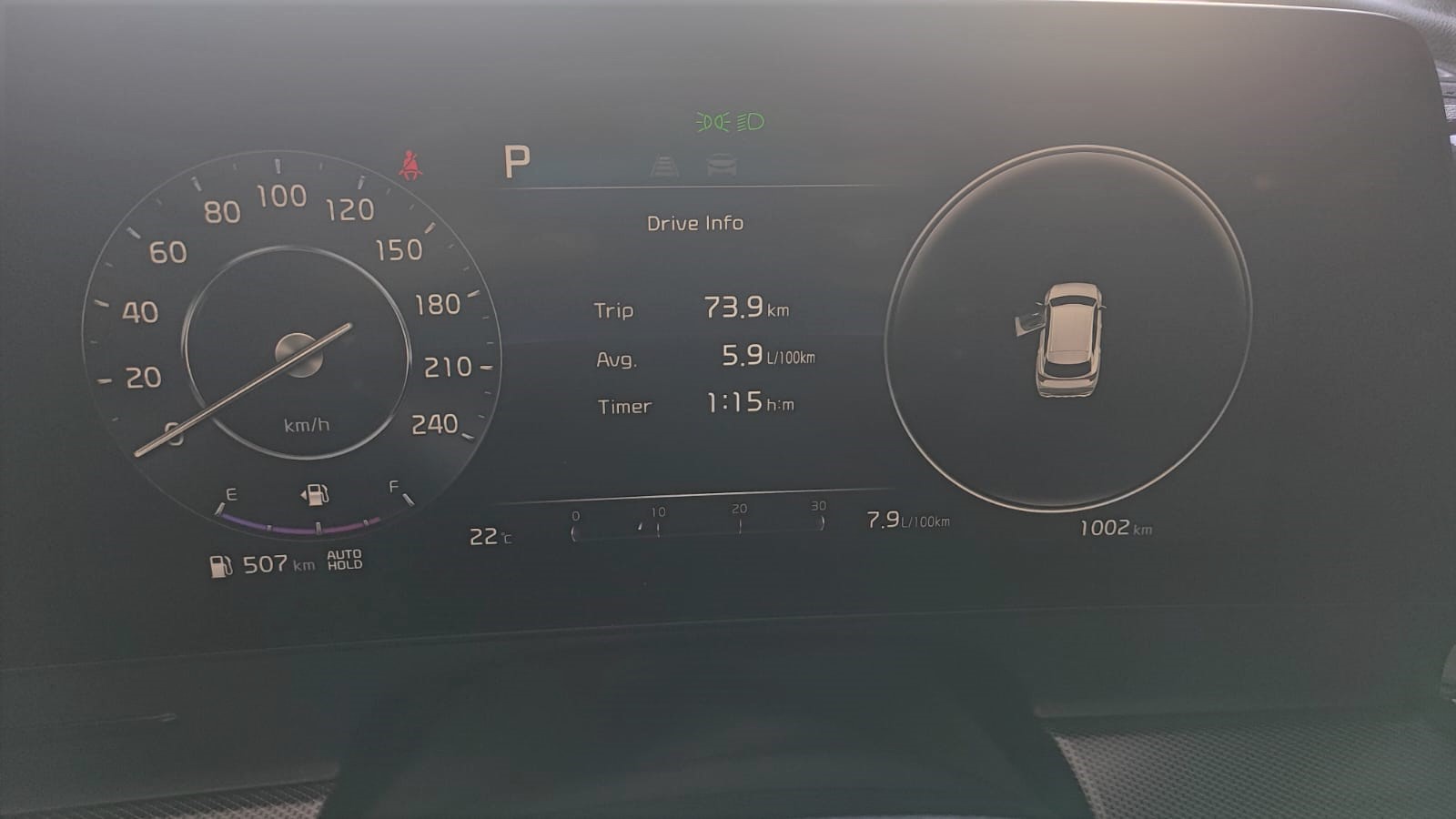
Occupant comfort levels are high; this generation of Sportage has always created the impression that it can cover long trips with ease and now, with its diesel engine, it may consume even less fuel when doing so. We executed many overtaking manoeuvres on the 74-km launch route, but by the end of the trip, the Sportage indicated a fuel consumption figure of just 5.9 L/100 km. With a more considered driving style (and the use of Eco mode), we reckon one could come close to achieving that claimed 4.9 L/100 km.
We achieved a 5.9 L/100 km consumption figure without needing to drive all that conservatively.
How much does the Kia Sportage diesel cost in South Africa?
All Sportage derivatives are sold with a 5-year/unlimited kilometre warranty, with roadside assistance. A 6-year/90 000 km service plan is included.
The introduction of a turbodiesel engine only sweetens the Sportage package further.
Summary
While our test drive of the Kia Sportage diesel was brief, it was illuminating nonetheless. While there’s no denying that the petrol-powered Sportages are accomplished, the turbodiesel powertrain offers plenty of in-gear punch, which should (in theory) be matched with excellent fuel economy over longer distances.
Thanks to this product expansion, the Kia Sportage range now offers a derivative to suit virtually every new family-car buyer’s needs and budget. We’re keen on spending more time with the new diesel engine in a wider variety of scenarios, such as congested city traffic, to assess the powertrain’s smoothness.
Some may question why Kia South Africa would launch 1.6 CRDi derivatives of the Sportage at a time when diesel-powered passenger cars are being phased out in Europe, but consider this: Until the SA Government can implement a well-considered strategy to facilitate (or, better yet, incentivise) the uptake of electric or electrified vehicles, all-electric-, hybrid- or plug-in hybrid versions of models such as the Sportage simply won’t be viable in our market. If they were to be sold right now, the lofty taxes/duties levied on such vehicles would inflate their asking prices; therefore, they’d be prohibitively expensive.
Ranger pips Hilux! SA’s best-selling vehicles in April 2023
South Africa’s new-vehicle sales fell slightly year on year in April 2023, with the industry total coming in at 37 107 units. Here’s a look at the country’s best-selling vehicles, most popular brands and more…
In April 2023, South Africa’s new-vehicle industry registered a slight year-on-year drop of 0.2% to 37 107 units, resulting in the 2nd consecutive month of market decline. Of course, the month-on-month fall was a far more significant 26%, since March 2023’s effort stood at a hefty 50 157 units.
So, what’s behind the drop? Well, Naamsa noted “continued constraints as a result of ongoing subdued economic conditions” had again impacted the industry last month. We should, of course, also point out April is traditionally a relatively slow month for the local market, with sales often softened by a raft of public holidays (this year, there were just 17 trading days in the month).
Anyway, let’s drill down into the figures. Out of the total reported industry sales of 37 107 vehicles, Naamsa says an estimated 33 492 units (or 90.3%) came courtesy of the dealer channel, with 5.2% representing sales to the rental industry, 2.8% to industry corporate fleets and 1.7% to government.
The new passenger-vehicle market came in at 24 174 units, registering a decline of 6.1% compared with April 2022’s figure. Meanwhile, domestic sales of new light-commercial vehicles, bakkies and mini-buses grew 11% year on year to 10 611 units. And export sales? Well, April 2023’s tally increased 13.4% to 30 756 units, taking the year-to-date vehicle export number to 115 567 units.
Meanwhile, WesBank said the potential for new-vehicle sales remained “throttled by general economic uncertainty, rising interest rates and inflationary pressures that are increasing the burden of household budgets”.
“Applications for new-vehicle finance at WesBank increased over 9% year-on-year, yet market sales remained flat during April,” said Lebo Gaoaketse, Head of Marketing and Communication at WesBank. “Given there was 1 more selling day in the month – interrupted by public holidays and long weekends – than the similarly disrupted April last year, the performance is even more lacklustre,” Gaoaketse added.
Mark Dommisse, Chairperson of the National Automobile Dealers’ Association (NADA), was noticeably more upbeat, saying April’s effort “turned out better than anticipated”, adding the fact a large percentage of sales went through the retail channel was “good news for the industry”.
“All in all, the sales performance in April reflected the ongoing resilience of the dealer network to perform well under very stressful circumstances, such as fewer trading days, higher interest rates, higher vehicle prices and the ongoing energy crisis,” said Dommisse.
New vehicle sales summary for April 2023
Aggregate new-vehicle sales of 37 107 units decreased by 0.2% (-88 units) compared to April 2022.
New passenger-vehicle sales of 24 174 units decreased by 6.1% (-1 561 units) compared to April 2022.
New light-commercial vehicle sales of 10 611 units increased by 11.0% (1 049 units) compared to April 2022.
Export sales of 30 756 units increased by 13.4% (3 639 units) compared to April 2022.
10 best-selling car brands in South Africa for April 2023
Despite shedding nearly 4 000 units month on month, Toyota remained way out in front in April 2023, recording 9 423 registrations or 25.3% of the total market. The Volkswagen Group (4 644 units) likewise stayed firmly in 2nd, with Suzuki again completing the podium, attracting 3 620 sales over the month.
Though Ford (2 804 units) sold fewer vehicles in April than in March, the Blue Oval brand climbed 2 positions to 4th, pushing Hyundai (2 371 units) down a spot to 5th and Nissan (1 681 units) down a place to 6th. Meanwhile, Kia (1 546 units) clambered up 3 positions to 7th and Isuzu (1 433 units) fell a spot to 8th. Finally, Haval and Renault shared 9th, with the brands registering 1 367 sales apiece.
So, which automakers finished just outside the top 10? Well, Chinese firm Chery (1 179 units) found itself in 11th yet again, slotting in well ahead of BMW (with a Naamsa estimate of 966 units), Mahindra (809 units) and Mercedes-Benz (with a Naamsa estimate of 556 sales).
1. Toyota – 9 423 units
2. Volkswagen Group – 4 644 units
3. Suzuki – 3 620 units
4. Ford – 2 804 units
5. Hyundai – 2 371 units
6. Nissan – 1 681 units
7. Kia – 1 546 units
8. Isuzu – 1 433 units
9=. Haval – 1 367 units
9=. Renault – 1 367 units
10 best-selling vehicles in South Africa for April 2023
Suzuki’s Indian-built Swift hatchback was SA’s best-selling imported model in April 2023.
Well, that’s not something you see very often. The Toyota Hilux (2 187 units) was relegated to 2nd place in April 2023, with the new Ford Ranger (2 201 units) narrowly taking the top spot, finishing a mere 14 units ahead of its Japanese rival (see the full list of SA’s best-selling bakkies here). The Blue Oval brand’s bakkie achieved 1st despite the Silverton facility experiencing production interruptions in April owing to vandalised electricity pylons around Pretoria.
The last time the Ranger outsold the Hilux was in July 2022, when Toyota’s Prospecton factory was still recovering from the devastating KwaZulu-Natal floods of April 2022. There was plenty of other movement on the list as well, with the likewise locally produced Volkswagen Polo Vivo (1 510 units), Toyota Corolla Cross (1 281 units) and Toyota Hi-Ace (1 267 units) each climbing a place, to 3rd, 4th and 5th respectively.
The Suzuki Swift – the highest-ranked imported model in April 2023 with 1 216 registrations – was up 4 positions to 6th, while the Isuzu D-Max (1 183 units) plummeted 5 places to 7th. The Toyota Starlet (1 098 units) gained a spot to finish 8th and the Nissan NP200 (910 units) lost a position to end 9th, while the Hyundai Grand i10 (807 units) returned to the table to snaffle the final place.
What about the models that just failed to make it into the top 10 in April 2023? Well, yet again the Volkswagen Polo hatch (777 units) had to make do with 11th, ahead of the Chery Tiggo 4 Pro (708 units), Toyota Fortuner (695 units, down markedly from 1 409 units in March), Haval Jolion (677 units) and Renault Kiger (625 units).
Top 9 vehicles exported from South Africa in April 2023
More than 8 000 SA-built Polo hatchbacks were exported from Kariega in April 2023.
There was no stopping the Volkswagen Polo hatchback on the export charts, with 8 257 examples of the B-segment contender shipped overseas from the German firm’s Kariega facility in April 2023. The Prospecton-built Toyota Hilux moved up to 2nd, with its export tally of 6 918 units almost double its effort from the preceding month (perhaps Toyota prioritised the export market in April?). The Ford Ranger (2 951 units), meanwhile, dropped a place to 3rd.
As usual, the Isuzu D-Max, Toyota Corolla Cross, Nissan Navara, Toyota Fortuner, Nissan NP200 and Toyota Corolla Quest made up the export numbers. We should, as always, point out BMW and Mercedes-Benz did not submit detailed figures, so it’s not clear how many new X3 and C-Class sedan units were exported during the month (for the record, though, Naamsa’s estimates for April 2023 stand at 4 400 units and 6 515 units, respectively).
1. Volkswagen Polo (hatch) – 8 257 units
2. Toyota Hilux – 6 918 units
3. Ford Ranger – 2 951 units
4. Isuzu D-Max – 603 units
5. Toyota Corolla Cross – 503 units
6. Nissan Navara – 302 units
7. Toyota Fortuner – 106 units
8. Nissan NP200 – 21 units
9. Toyota Corolla Quest – 8 units
Sales outlook for the rest of 2023
So, what does the future hold for South Africa’s new-vehicle market? Well, Naamsa points to the fact the International Monetary Fund (IMF) recently announced that SA’s real GDP growth is expected to decelerate sharply to 0.1% for 2023, citing load-shedding and “other related supply shocks”.
“These observed economic turbulences and the record high headline inflation are likely to trigger a further SARB Monetary Policy Committee interest-rate hike in May 2023. For this reason, Naamsa expects the domestic vehicle market to remain reserved for the greater part of 2023,” explains the industry representative body.
WesBank’s Gaoaketse is similarly cautious, saying “with a further interest-rate hike expected during May in an effort to curb high inflation, the impacts that are throttling the market should be expected to continue for some time”.
“Consumers should be carefully considering their vehicle requirements within their affordability to manage their budgets – and responsibly limit their indebtedness,” he warns.
NADA’s Dommisse, meanwhile, points to the decline in bank approvals during April as “a discouraging factor”, adding this downward trend can be partially ascribed to the amplified cost of instalments, brought about by the recent spate of interest-rate hikes.
“Supply remains sporadic, but this is limited to certain segments only. There is also another significant increase in the price of petrol in May. With the possibility of a further interest-rate hike announcement at the end of the month, we trust the proven track record of the motor industry will prevail and future sales may not be as badly affected as some people are forecasting,” concludes Dommisse.
Fuel price data points to a significant petrol price increase for May 2023. The good news is that the price of diesel is expected to decrease!
South African motorists must brace for another petrol price increase this month.
A generally weak Rand-Dollar exchange rate during April 2023 and increasing international oil prices are the main contributing factors for the expected petrol price increase.
Month-end (April) fuel price data suggests that the price of ULP95 petrol will increase by about 52 c/litre while the price of ULP93 could increase by about 56 c/l. The price of paraffin could see reductions of 32 c/l/
Diesel vehicle owners are likely to pay less at the pumps in May 2023 with the data reflecting a potential decrease of 57 c/l for 0.05% diesel and an 31 c/l decrease for 0.005% diesel.
The AA commented, ““The decrease to diesel and paraffin prices is certainly good news, especially as the country enters colder months. But the increases to the petrol prices will add more strain to already stretched budgets, and consumers are advised to revise their budgets accordingly. There is no doubt these are difficult times, and petrol price increases will come as bad news for many who will have to dig even deeper in their pockets to keep mobile.”
“The silver lining, though, are the expected diesel price reductions. Diesel is a big input cost in major sectors such as agriculture, mining and manufacturing and an increase here often contributes to increased prices of basic commodities. The current increase in the consumer price index (cpi) to 7.1% in March and food inflation hitting a 14-year high of 14.4%, plus an increase in diesel prices would have resulted in very unfavourable conditions for consumers,” the AA concludes.
We will communicate the official fuel price adjustments as soon as they are announced.
Fuel Price Forecast for May 2023 in South Africa
Fuel Type
April 23 Inland
April 23 Coast
May 23 (projected) Inland
May 23 (Projected) Coast
Petrol Unleaded 93
R22.64
R21.92
R23.20
R22.48
Petrol Unleaded 95
R22.97
R22.25
R23.49
R22.77
Diesel 0.05% (wholesale)
R20.88
R20.16
R20.31
R19.59
Diesel 0.005% (wholesale)
R20.97
R20.26
R20.66
R19.95
Fuel price data courtesy of the Automobile Association of South Africa (AA)
Kia Motors South Africa has expanded its Sportage range, adding 3 turbodiesel derivatives. Here’s how much the fresh CRDi variants cost…
The Kia Sportage range in South Africa has grown, gaining a trio of turbodiesel derivatives.
That pushes the local line-up to 8 variants, up from the 5 turbopetrol derivatives that comprised the range when NQ5-generation Sportage touched down in September 2022. As a reminder, the petrol-powered models all use a turbocharged 1.6-litre, 4-cylinder mill generating 132 kW and 265 Nm.
What about the new oil-burning engine? Well, this 1.6-litre turbodiesel motor makes 100 kW and 320 Nm, peak outputs that are delivered to the front axle via a 7-speed dual-clutch transmission (the same gearbox configuration offered in the petrol models).
The South Korean firm claims a combined economy figure of just 4.9 litres per 100 km. Fitted with a 54-litre fuel tank, that results in a theoretical range in excess of 1 100 km. The 1.6 CRDi engine facilitates a 0-100 kph sprint in a claimed 11.4 seconds, with top speed pegged at 180 kph.
The new-to-the-range 1.6 CRDi powertrain is available in 3 trim levels: LX, EX and GT Line Plus. Thanks to duoporta.com, we know the Sportage 1.6 CRDi LX starts at R597 995, while the Sportage 1.6 CRDi EX comes in at R651 995 and the Sportage 1.6 CRDi GT Line Plus at R735 995.
We expect the equipment levels to match those of the petrol models, which means the LX should ship standard with items such as automatic LED headlamps, LED daytime running lights, LED foglamps, 17-inch alloy wheels, cloth upholstery, dual automatic temperature control, a 12.3-inch touchscreen infotainment system (with Apple CarPlay and Android Auto), 6 airbags and blind-spot collision warning.
The mid-tier EX grade adds items like a gloss-black grille, front parking sensors, 18-inch alloys, cloth-and-artificial-leather upholstery, front-seat electric adjustment, seat heating (all round), a heated steering wheel, remote-folding rear seats and rear privacy glass.
Finally, the GT Line Plus equipment level boasts gloss-black exterior trim, special scuff plates, alloy pedals, an electric tailgate, paddle gear shifters, artificial-leather-and-suede upholstery, a raft of extra driver-assistance systems, LED interior lamps, a panoramic glass sunroof and 19-inch alloy wheels.
How much does the Kia Sportage cost in South Africa?
Kia Sportage 1.6T-GDi LX – R567 995
Kia Sportage 1.6 CRDi LX – R597 995
Kia Sportage 1.6T-GDi EX – R621 995
Kia Sportage 1.6 CRDi EX – R651 995
Kia Sportage 1.6T-GDi GT Line – R677 995
Kia Sportage 1.6T-GDi GT Line Plus – R705 995
Kia Sportage 1.6 CRDi GT Line Plus – R735 995
Kia Sportage 1.6T-GDi GT Line S – R762 995
The prices above include a 5-year/unlimited km warranty and a 6-year/90 000 km service plan.
Land Rover Defender 130 Outbound (2023) Price & Specs
Heads up, overlanders! The new Land Rover Defender 130 Outbound has been revealed and confirmed for South Africa, along with other updates to the range…
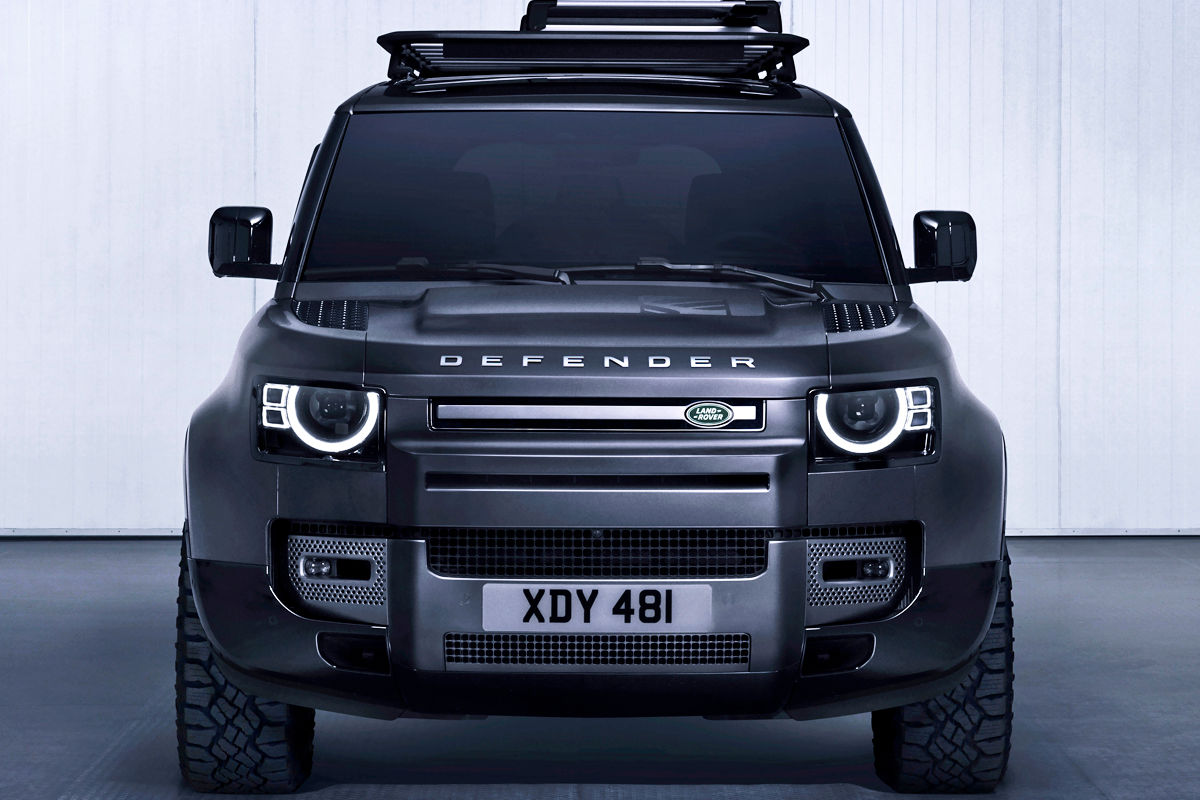
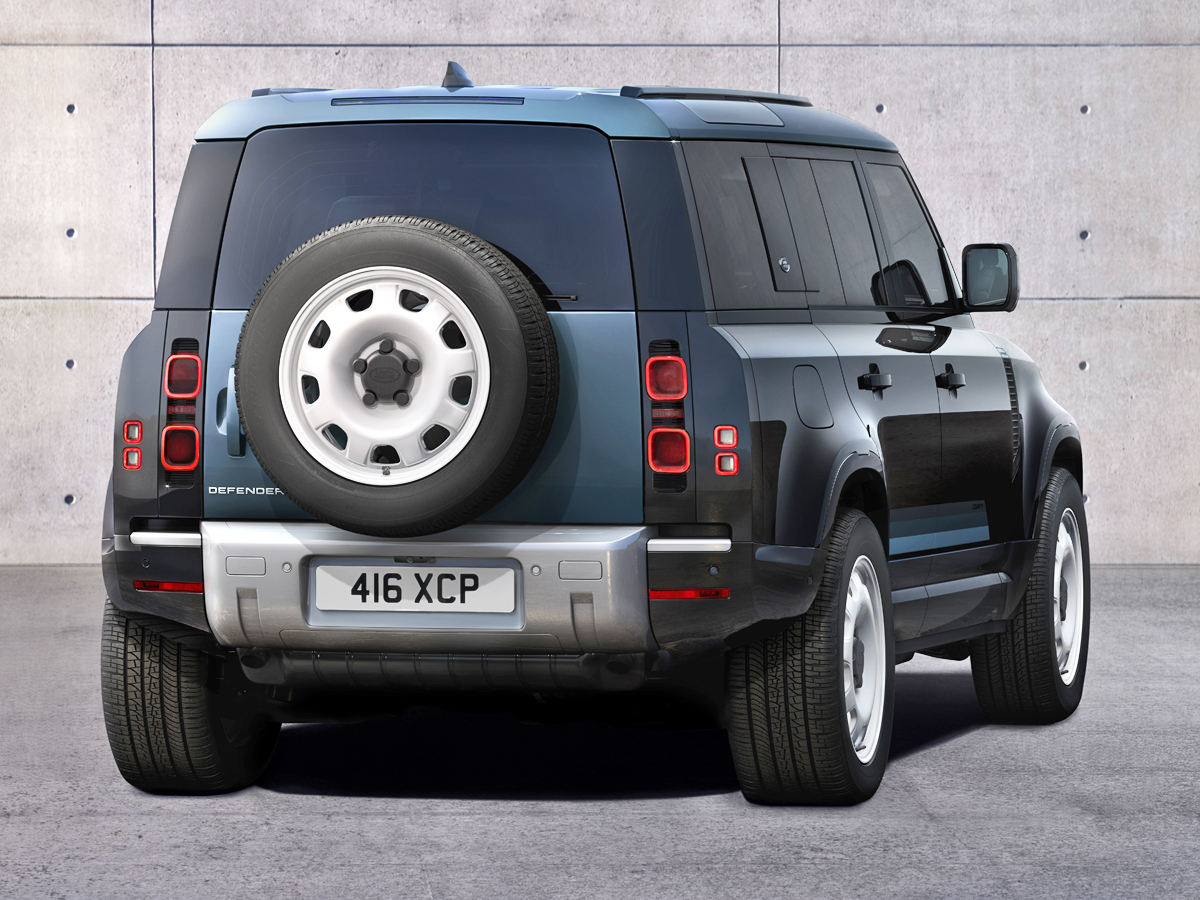
Land Rover has whipped the wraps off the Defender 130 Outbound, confirming the newcomer is expected to arrive in South Africa towards the end of 2023.
[UPDATE: Land Rover South Africa has released local pricing for both the new Defender 130 Outbound and the Defender 130 V8. You’ll find pricing at the bottom of this article.]
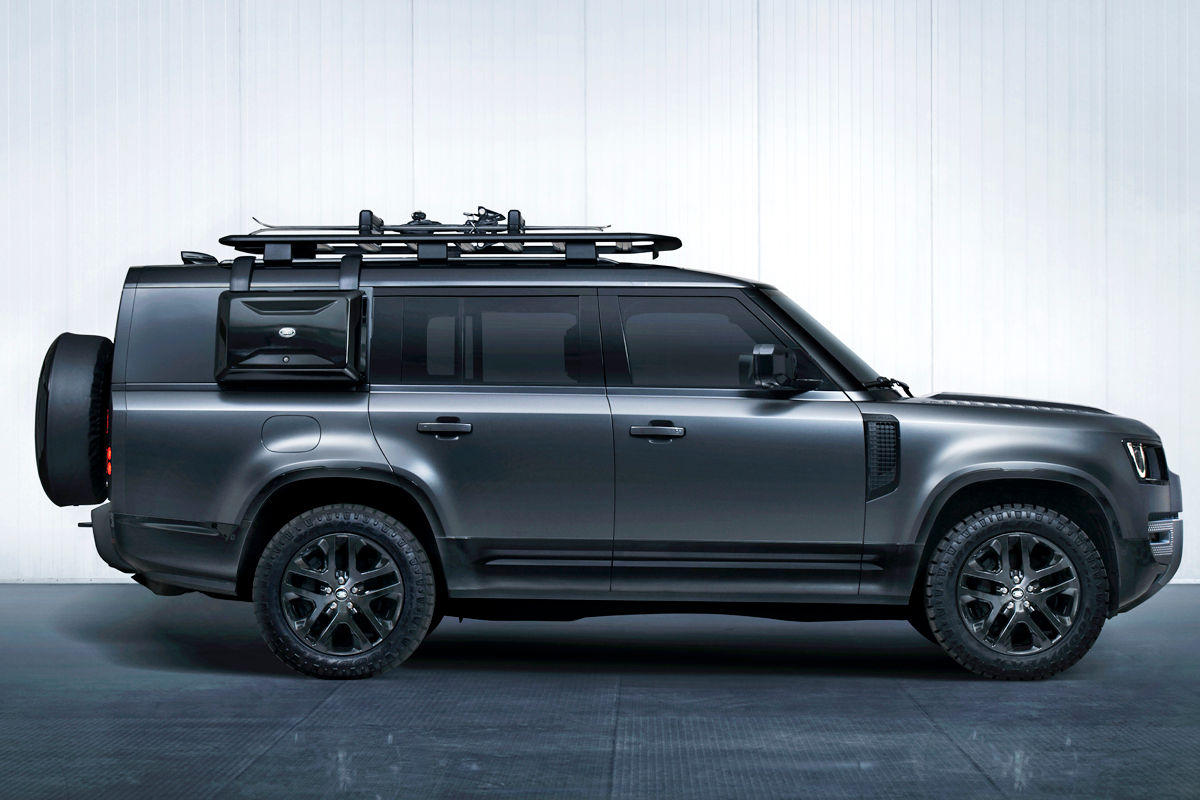
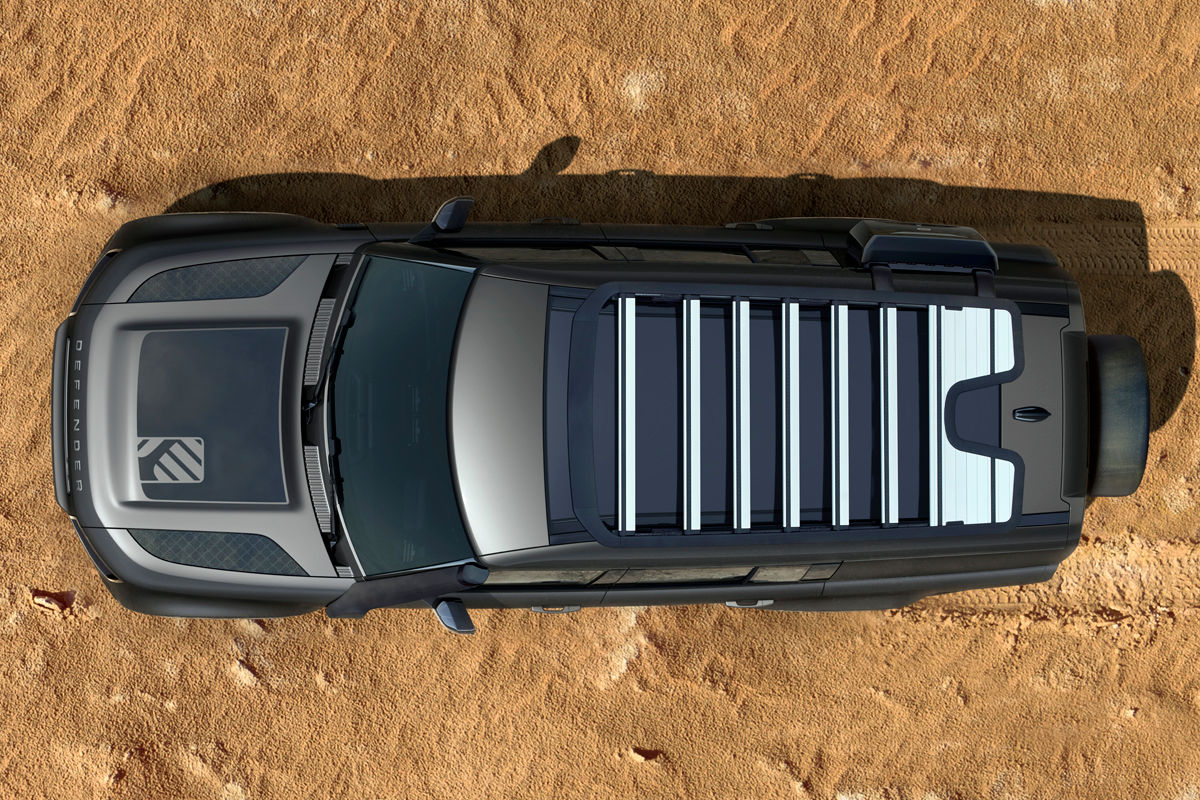
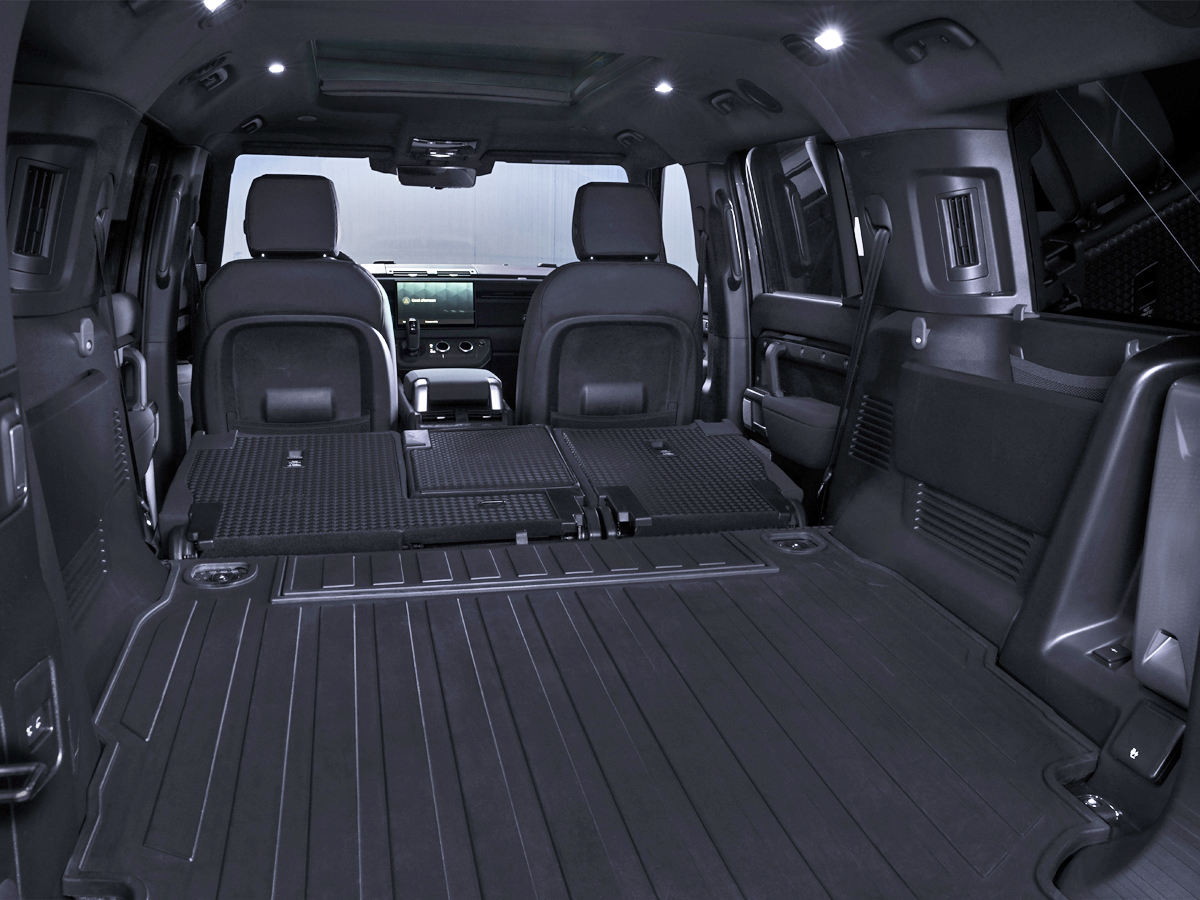
Billed as the “ultimate luxury explorer” for the brand’s “most adventurous clients”, the Defender 130 Outbound is pitched at overlanders who require extra load space. While the standard 130 series is also available in 8-seater guise, the Outbound derivative will be offered exclusively with 5 seats.
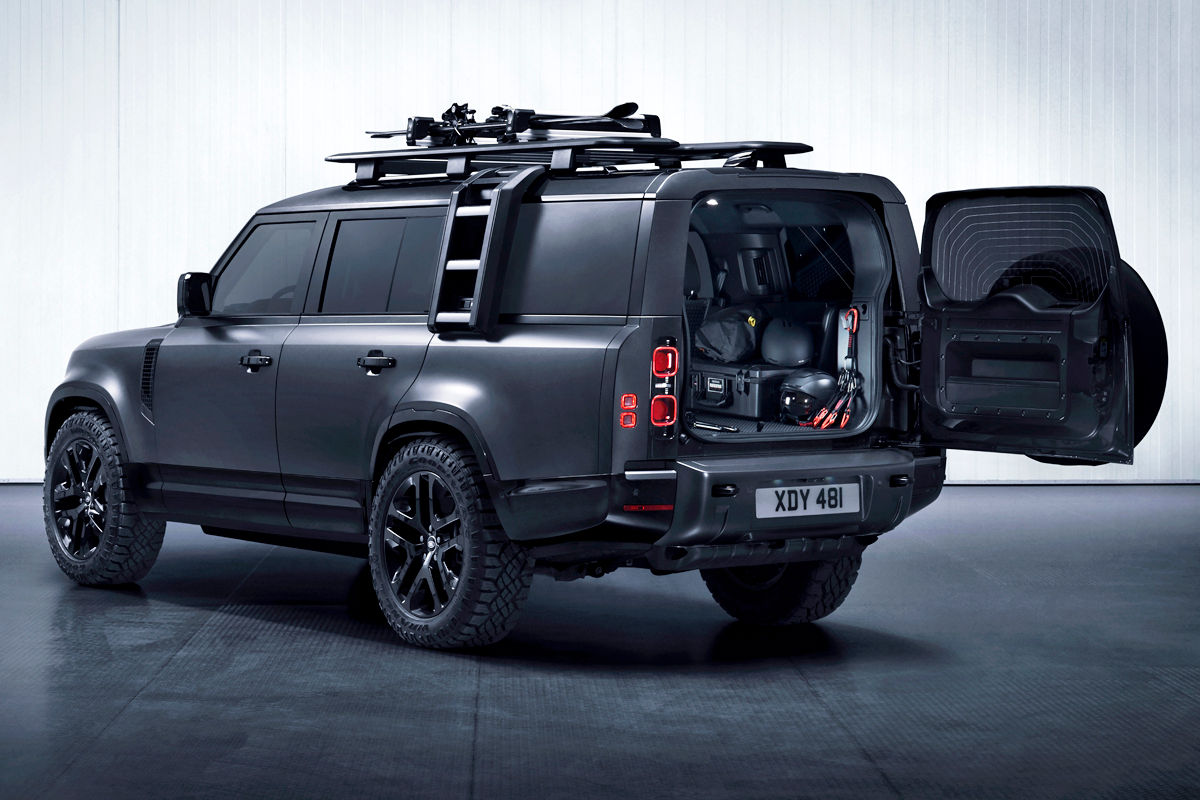
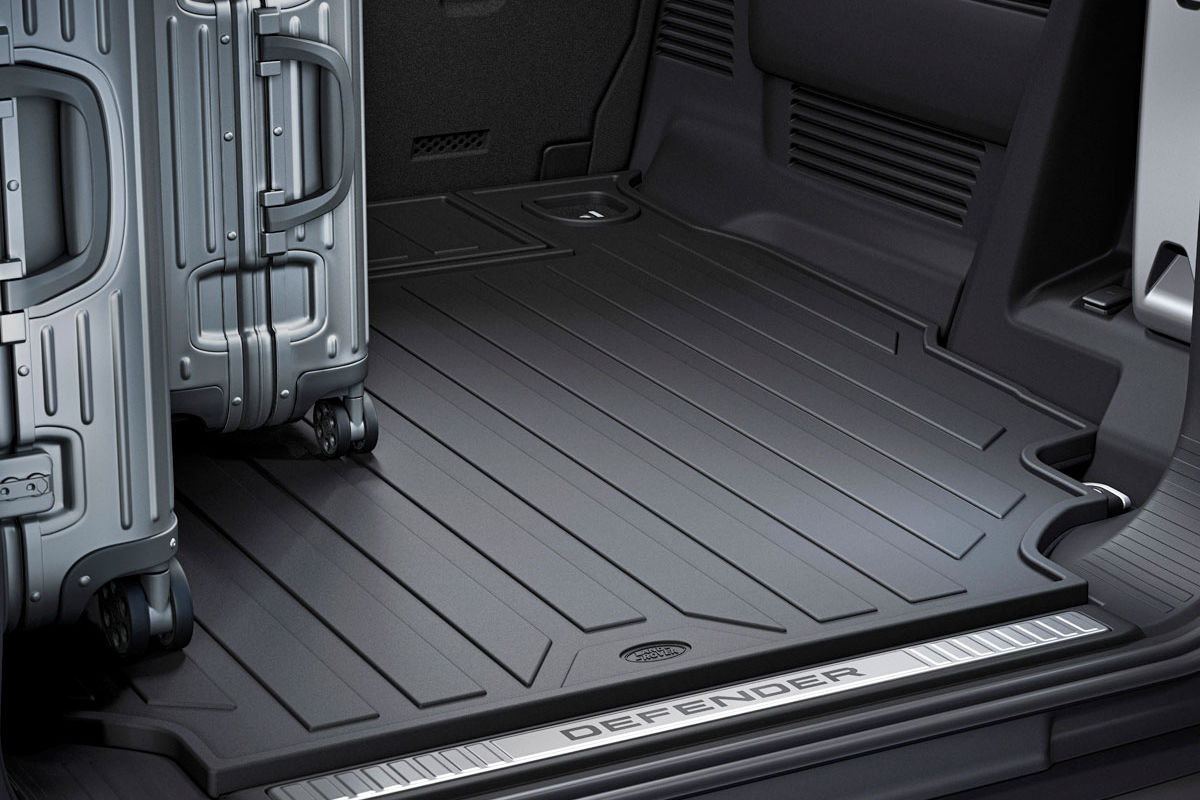
As a result, this version of the long-wheelbase Defender boasts a heady 1 329 litres of luggage space (with the “near-flat” boot floor measuring a handy 1.27 metres long), a figure that balloons to a claimed 2 516 litres when the 2nd row of seats is folded down.
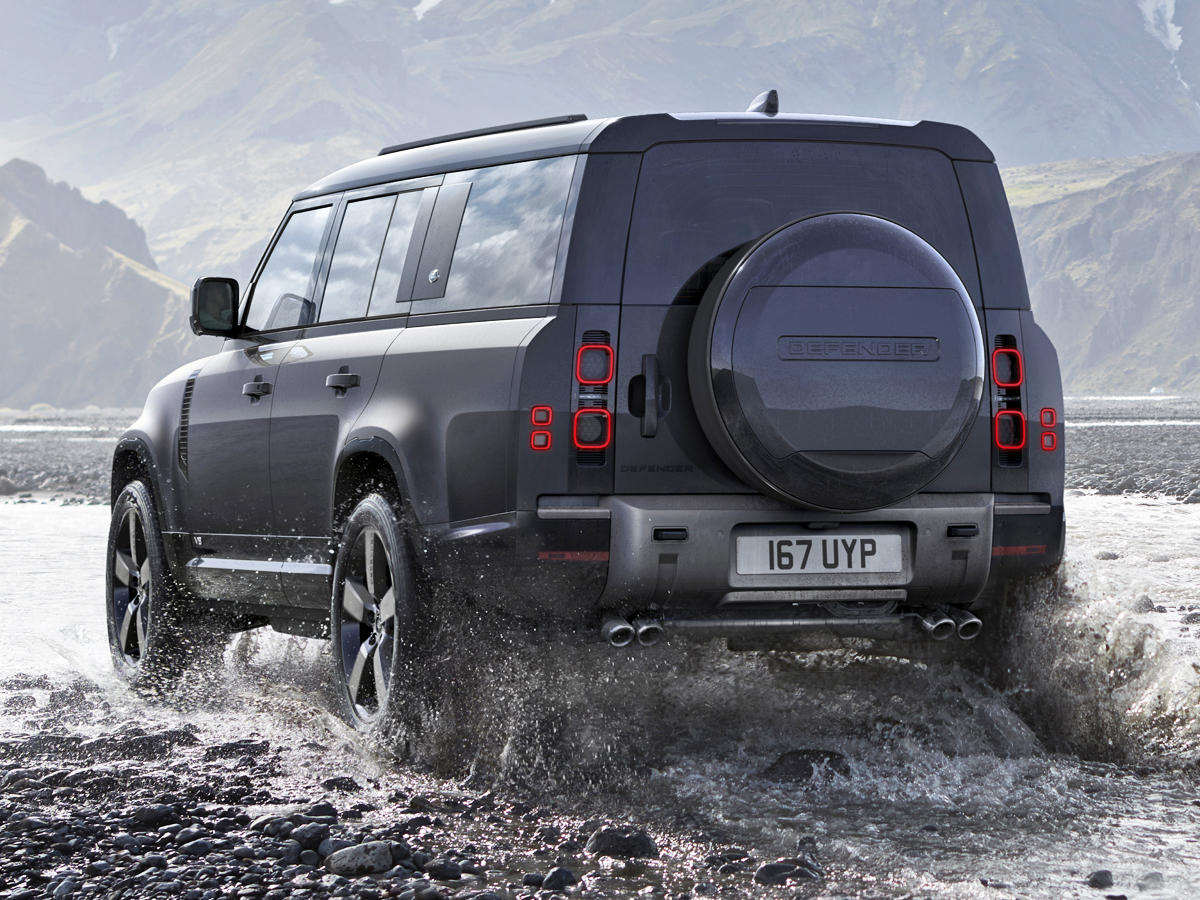
There’ll be no mistaking this variant for anything else should you see an example out on the road, as the Defender 130 Outbound ships with a Shadow Atlas matte finish for the bumpers and grille insert, as well as side vents finished in an anthracite hue. In addition, 20-inch alloy wheels finished in gloss black and 22-inch items in the aforementioned Shadow Atlas matte colour will be available.
Paint colour choices will include Fuji White, Santorini Black, Carpathian Grey and Eiger Grey, while body-coloured rear signature panels and D-pillar finishers will complete the exterior upgrade. Satin protective film will also be offered to improve the vehicle’s scratch resistance, though not in conjunction with the Fuji White paint.
Inside, there will be a choice of full Windsor leather or durable Resist fabric, both finished in Ebony and offset by an Ebony Morzine headliner, Robustec veneer and the Defender’s signature cross-vehicle beam in a Satin Black powdercoat brushed finish. The Defender 130 Outbound furthermore gains rubber floor matting that be folded down to protect the bumper when loading bulky equipment as well as extra lashing points and a new cargo net.
Features such as the Terrain Response 2 system, adaptive dynamics and electronic air suspension are fitted as standard, with the latter allowing up to 430 mm of articulation and 900 mm of wading. Meanwhile, braked towing capacity comes in at 3 000 kg.
In South Africa, the new Defender 130 Outbound will be offered with the British firm’s turbocharged 3.0-litre straight-6 petrol engine (so, badged as the P400), which will send 294 kW and 550 Nm to all 4 corners via an 8-speed automatic transmission.
Land Rover Defender 130 family gains V8 power
At the same time, Land Rover has extended the option of its supercharged 5.0-litre V8 petrol engine to the broader Defender 130 family, alongside the 6-cylinder P400 and D300 powertrains. As a reminder, the V8 generates 368 kW and 610 Nm, which the Whitley-based automaker says it enough to power the Defender 130 from 0-100 kph in just 5.7 seconds.
The Defender 130 V8 will be offered exclusively in Carpathian Grey or Santorini Black, and further set apart by quad outboard-mounted exhausts, a sliding panoramic roof (with a black contrast finish), V8 badging, Matrix LED headlights, darkened taillamps, privacy glass and 22-inch Satin Dark Grey alloy wheels.
Inside, the 8-cylinder version of the 130 will score 14-way heated and ventilated electrically adjustable seats finished in Ebony Windsor Leather with Dinamica suedecloth and Robustec fabric. Other features include a suedecloth-trimmed heated steering wheel, Ebony Morzine headlining and a Satin Black cross-vehicle beam. The Defender 130 V8 will also boast 4-zone climate control, climatised 2nd-row seats, heated 3rd-row seats, a Meridian sound system and a head-up display.
New County exterior pack for Land Rover Defender 110
Another update to the Defender range is the option of a new “County” exterior pack for the 110 models. Inspired by the original Defender County, it features various model-specific exterior elements.
In South Africa, the County exterior pack will be available only for the Defender 110 SE derivative, which will gain “County” graphics along the doors and flanks, along with illuminated treadplates and 20-inch alloys available in two finishes, including Gloss White.
Various paint colour combinations will be offered, while a range of interior hue and material combinations will be available. Cabin detailing is set to include Robustec veneer, while the cross-vehicle beam will come in either light grey or white.
In addition, short-wheelbase Defender 90 and long-wheelbase Defender 130 (8-seater) models are set to gain a new loadspace floor tray that includes internal storage and enables a “near-flat” loading space. The new accessory will also be available to existing Defender 90 and Defender 130 8-seater owners via their local dealership from late in 2023.
Finally, for the Defender 90, access to the 2nd row of seats has been “enhanced” thanks to the fitment of a new “parachute grab handle”, a quick fold-and-slide front passenger seat and the introduction of a 40:20:40 folding function for the rear bench, with centre armrests.
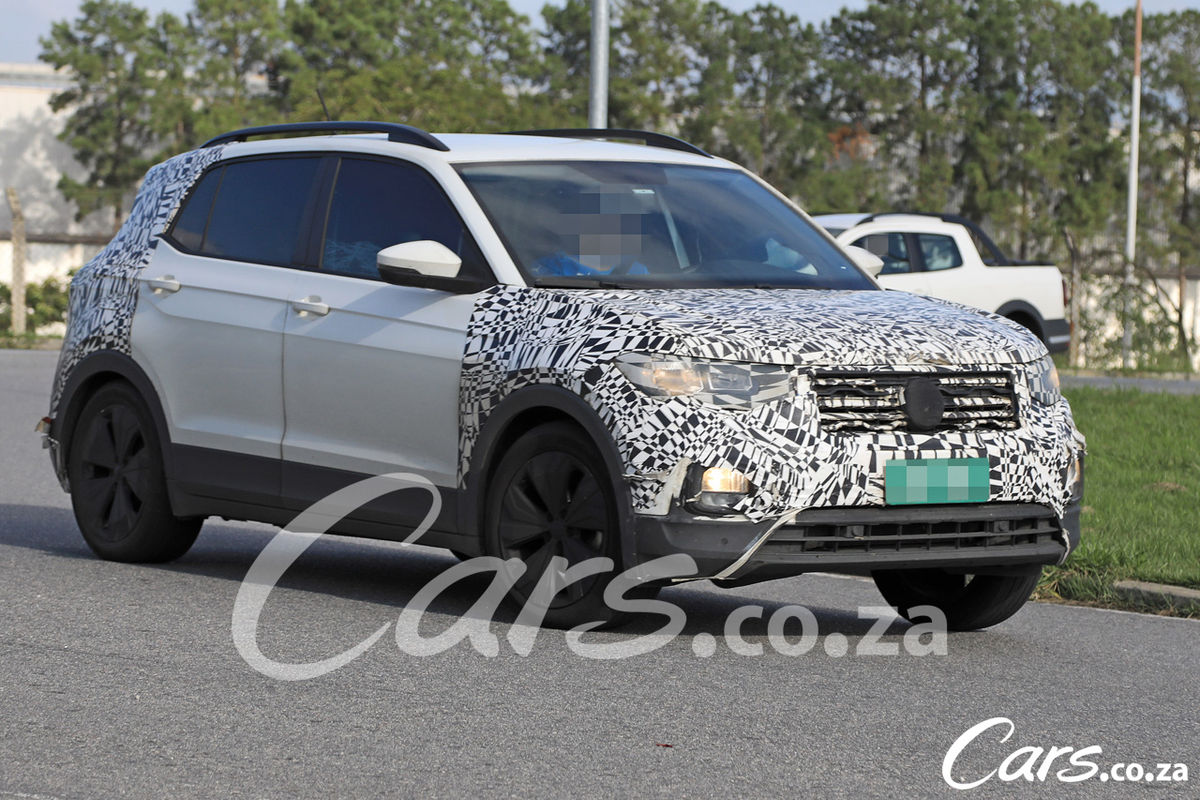
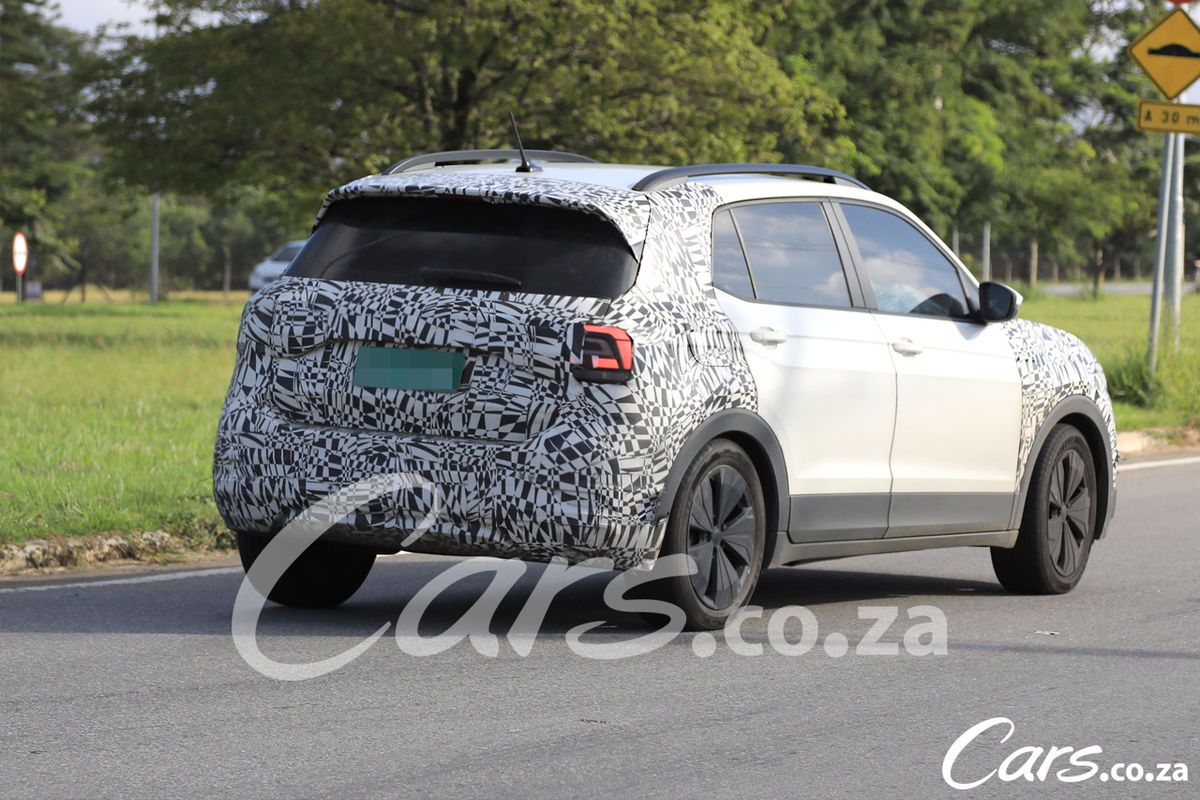
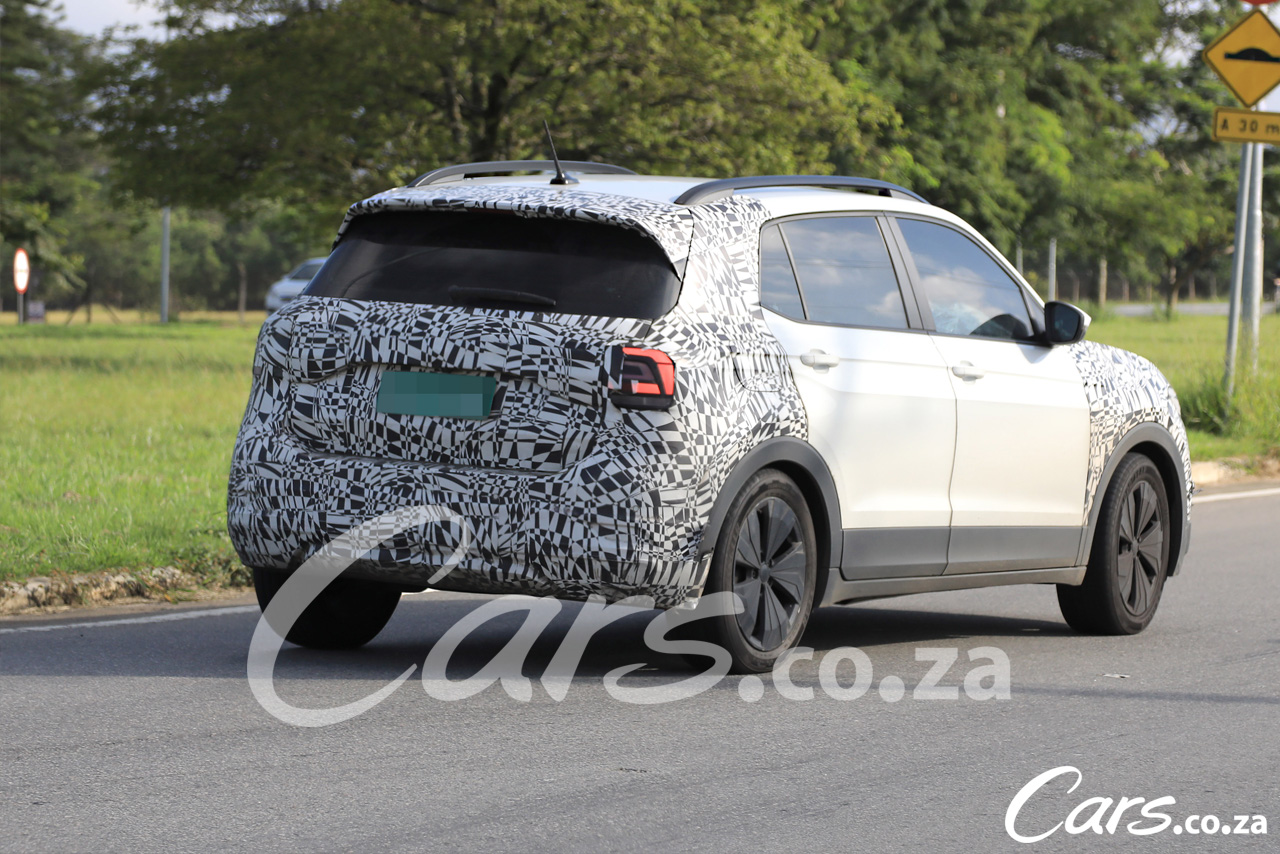
The updated 2024 Volkswagen T-Cross was spotted testing in South America. Here’s what we know so far ahead of its reveal.
Picture credit: S. Baldauf/SB-Medien. We have paid for these photos and at the photographer’s request, have watermarked them.
The 2024 Volkswagen T-Cross facelift will likely be revealed towards the end of 2023, and go on sale in 2024. What you see here is a camouflaged prototype being tested in Brazil, South America.
The camouflage is substantial, but it covers critical parts like the front and rear bumper, partial coverings on the head- and taillights as well as radiator grille. We’re not expecting major mechanical changes, but rather cosmetic upgrades to bring the 2024 Volkswagen T-Cross Facelift inline with the rest of the Volkswagen range.
Think of products like the Tiguan, T-Roc and Polo, with the lightbar that links the front headlights together. We’re expecting that feature to make an appearance, as well as revisions to the interior. Whether the controversial touchpads in the T-Roc and Tiguan make their way into the cabin remains to be see. Volkswagen has already confirmed they’ll be phased out due to negative feedback.
The engine range is expected to continue, with the 1.0-litre turbocharged 3-cylinder petrol and 1.5-litre turbocharged 4-cylinder petrol spearheading the lineup. A diesel 1.6-litre is offered in other markets, but its highly unlikely to be made available in South Africa.
The Volkswagen T-Cross is one of VWSA’s bread-and-butter models, and is a perfect example of how consumers are ditching B- and C-segment hatchbacks in favour of a raised driving experience.
We’re confident the 2024 Volkswagen T-Cross Facelift will be sold in South Africa, with an expected arrival in the first quarter of 2024.
Toyota Urban Cruiser Vs Suzuki Grand Vitara: Which is the better buy?
Hot on the heels of the local arrival of the new Suzuki Grand Vitara, Toyota SA has launched that model’s cousin – the new Urban Cruiser. What’s the difference between these budget crossovers and which one of them should you most consider buying?
The small crossover/compact SUV segment is hugely popular in South Africa and it recently gained 2 new products in the forms of the new Suzuki Grand Vitara and the new Toyota Urban Cruiser.
The Urban Cruiser is based on the Grand Vitara, both of which are built in India (in their respective brand production facilities) as part of the Suzuki-Toyota global product share agreement, which has spawned products such as the Baleno and Starlet, Ertiga and Rumion, Celerio and Vitz and the outgoing Vitara Brezza and previous-gen Urban Cruiser.
However, as a consumer looking to buy either the new Urban Cruiser or Grand Vitara, you may wonder: “What are the differences between these products?” Well, this article intends to answer that question.
The main aim of this article is to help you, the consumer, make an informed buying decision. To help you do this, we will provide you with the need-to-know information and insight based on available vehicle information and our experience with the cars in question.
This article will cover key aspects including Exterior Styling, Engine Performance and Efficiency, Interior Features & Safety, Dimensions & Practicality and Pricing and Warranty details.
If, at the end of this article, you are still undecided as to what to buy, you are more than welcome to reach out to us for advice via Twitter, Facebook or Instagram. Our experienced test team will gladly assist you.
Toyota Urban Cruiser vs Suzuki Grand Vitara: What’s the Difference?
Exterior Styling
If you consider that the dimensions of the new Grand Vitara and Urban Cruiser are near-identical (see the dimension table below), their exterior appearances differ only in terms of minor cosmetic variations.
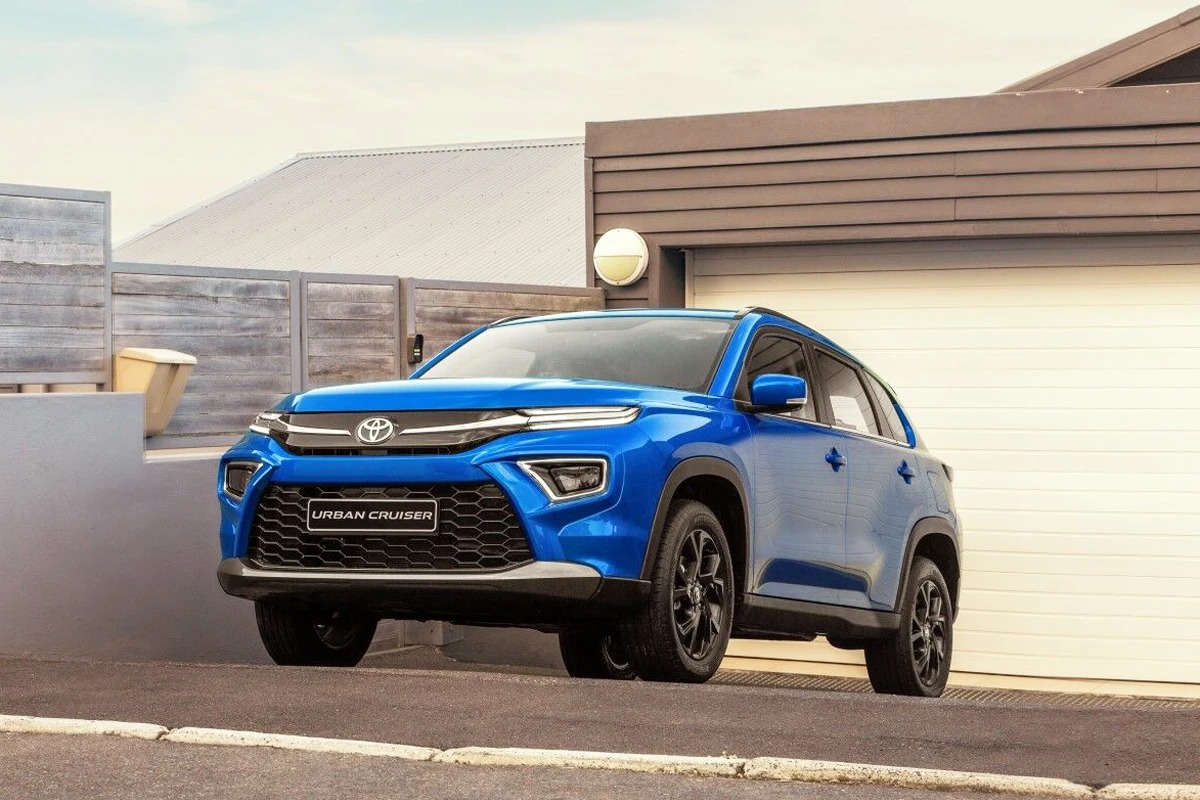
A side-by-side comparison highlights a clear difference in the grille and lower bumper design. The Urban Cruiser wears a larger lower grille section and uniquely styled fog lamp housings with chrome surrounds. Note the slim 2-tier LED Daytime Running Lights (DRLs) seen in the headlight units (not LED), as well as the gloss black / chrome combination used on the upper grille section.
Other notable features on the Toyota include black roof rails and black plastic cladding all around, the latter of which is also found on the new Grand Vitara.
By comparison, the Grand Vitara’s bold grille is more centrally positioned and generously embellished with chrome trim. The slim LED headlights feature a 3-block DRL design and the foglamp housings have black surrounds. The Suzuki also features chrome roof rails and the rear end is defined by a wide taillight strip (but without the chrome wing that’s fitted to the Toyota). Both models ride on 17-inch wheels.
As styling is subjective, you can decide for yourself which of these cars has the better styling execution!
Engine Performance, Efficiency and Ride Quality
For the purpose of this comparison, we will compare the range-topping automatic derivatives from each model range (excluding the Grand Vitara’s flagship Grand 1.5 Hybrid GLX AllGrip derivative, which has an electrically-assisted engine). Note that 5-speed manual transmissions are available for both models.
Sadly, neither of these models delivers punchy performance. They share the same naturally-aspirated 1.5-litre 4-cylinder petrol engine that offers 77 kW of power and a middling torque output of 138 Nm.
From our experience with both cars, they lack outright punch (due to a lack of torque), which is to say that open-road overtaking ability is limited in the higher gears/at freeway speeds. As a result, drivers will have to plan their overtaking manoeuvres carefully, especially when the vehicles are fully loaded with occupants and baggage. It’s also worth mentioning that our test drives were conducted at sea level (the engines’ performance will be reduced by between 10 and 15% at higher altitudes, such as in Gauteng).
Nonetheless, both of these cars are perfectly suited for urban driving situations and most prospective buyers are likely to discover that the models perform their primary function, commuting, very well.
Despite the distinct lack of punch, the 4-speed automatic does a fair job of “swopping cogs” on behalf of the driver and, based on our initial experience in the Toyota Urban Cruiser, we found the automatic derivative to be marginally more fuel efficient than its manual counterpart. While you’re unlikely to see the claimed consumption of 6–6.1 L/100km, real-world returns of between 7.5-8 L/100km are feasible.
Riding on 17-wheels with high-profile rubber, both models offer good on-road manners with a comfortable and pliant ride quality expected for cars which will mostly be used in an urban setting. With a ground clearance of 210 mm, both the Grand Vitara and Urban Cruiser can also tackle the odd dirt road with some confidence.
6 airbags, ABS with EBD, brake assist, electronic stability control with traction control, hill assist control
6 airbags, ABS with EBD, brake assist, electronic stability control with traction control, hill assist control
The new Urban Cruiser and Grand Vitara share the same cabin architecture and the perceived build quality of both cabins can be considered fair… to quite good, considering the interiors of other models offered at this price point. Both vehicles’ cabins adequately suppress noise, vibration and harshness.
The interior materials used include a combination of hard, durable plastics and soft-touch surfaces and, while the interior execution can’t be described as luxurious, it’s certainly fit-for-purpose which is to say that the cabin construction is robust and should withstand the rigours of everyday family commuting.
As highlighted in the feature table above, the interior specifications for these 2 models are almost identical. However, the Suzuki pips the Urban Cruiser with additional features such as LED Projector headlights, a leather-wrapped steering wheel and a rear window wiper. The Suzuki Grand Vitara GL automatic is also R10k cheaper than the equivalent Toyota Urban Cruiser (see pricing and warranty table below).
Note that Suzuki offers a top-spec Grand Vitara GLX in manual and automatic guise which includes additional features such as a Head-Up-Display, 360-degree camera system, larger 9-inch infotainment system, panoramic sunroof, artificial leather upholstery and wireless charging.
Dimensions and Practicality
Toyota Urban Cruiser
Suzuki Grand Vitara
Length
4 365 mm
4 345 mm
Width
1 795 mm
1 795 mm
Height
1 635 mm
1 645 mm
Wheelbase
2 600 mm
2 600 mm
Ground Clearance
210 mm
210 mm
Rear Seating Configuration
60:40 split
60:40 split
Load Capacity (claimed)
353 litres
310 litres
As indicated in the above table, the new Urban Cruiser and Grand Vitara are just about identical as far as dimensions are concerned. That 2 600-mm wheelbase is 100 mm longer than that of the outgoing Urban Cruiser/Vitara Brezza, which translates into improved rear occupant space, particularly in terms of leg- and knee room (yes, adults of average height can sit comfortably at the back). In addition to the rear armrest and 2 cupholders offered, the Grand Vitara has a rear USB port (but the Urban Cruiser doesn’t).
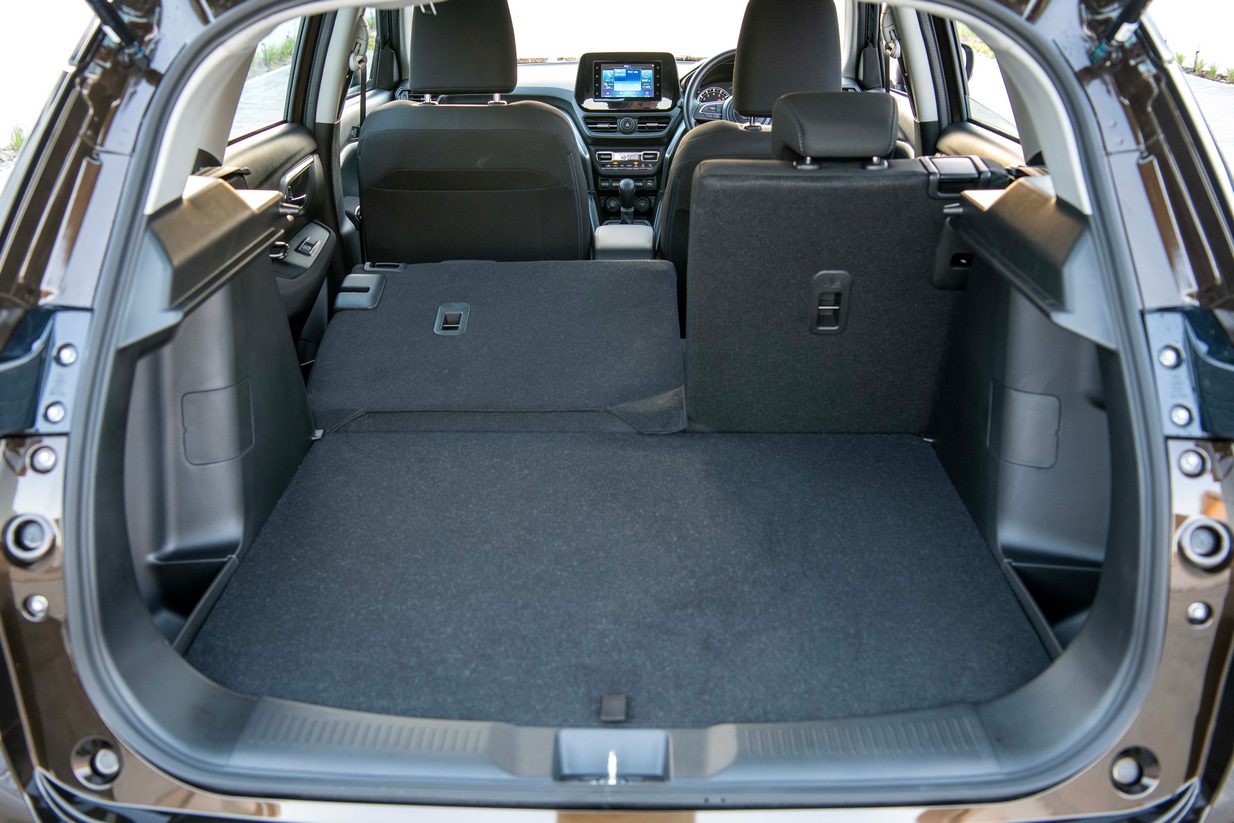
Both models have a 60:40-split rear seat configuration, but there appears to be an unusual discrepancy between the 2 crossovers’ claimed load-bay capacities. Toyota claims a larger load capacity (353 litres), which is some 25 litres larger than the outgoing Urban Cruiser, while the Grand Vitara is said to hold 310 litres. According to specs we got from a source in India (where the cars are built), both models’ load bays should be able to hold “373 litres”. We think it is likely that the brands’ local subsidiaries’ claimed figures are simply based on different measurement methods; both vehicles have full-sized spare wheels.
Toyota Urban Cruiser or Suzuki Grand Vitara: Which one should you buy?
As the various sections of this comparison show, the Toyota Urban Cruiser and Suzuki Grand Vitara are closely-related products that offer virtually identical performance – if underwhelming performance, due to the low torque of the non-turbo 1.5-litre engine. Nonetheless, very few would-be buyers will be much concerned with outright performance – budget crossovers are all about practicality and value for money.
Rest assured that either of these products will meet your basic family car needs with aplomb, but you will have to decide how important features such as a sunroof, wireless charging, surround-view camera, head-up display and larger infotainment screen are to you. The 1.5 GLX auto, which is the second-from-the-top Grand Vitara derivative, comes with all of those goodies, while the range-topping Urban Cruiser 1.5 XR auto doesn’t, but the latter costs significantly less (R48 000) than its Suzuki counterpart.
In this segment, a purchasing price of around R350k is likely to be the sweet spot for many buyers shopping for a small crossover/compact SUV and the Suzuki Grand Vitara 1.5 GL Automatic makes a compelling buying proposition with its keen pricing and superior standard specification over its Toyota-badged equivalent.
As has been proven in the past, badge appeal counts for a lot (the previous-gen Urban Cruiser eclipsed its Vitara Brezza cousin in terms of sales) and it will be interesting to see how well these products are received by the local market in the months to come. We suspect that, despite its more modest spec, the Urban Cruiser will again outsell the more generously equipped Grand Vitara, but only time will tell…
After-sales support is very important too (there are more than mere specification differences between the models). Bear in mind the Suzuki has a superior warranty (by 2 years/100 000 km) and service plan (by 2 years/30 000 km) than the Toyota. How long you intend on keeping your new purchase, combined with your personal feature preferences and budget, will determine which brand will get your business.
We hope that this article has clarified the differences between the new Toyota Urban Cruiser and Suzuki Grand Vitara. If you seek further advice, please feel free to reach out to us and we will gladly assist you.
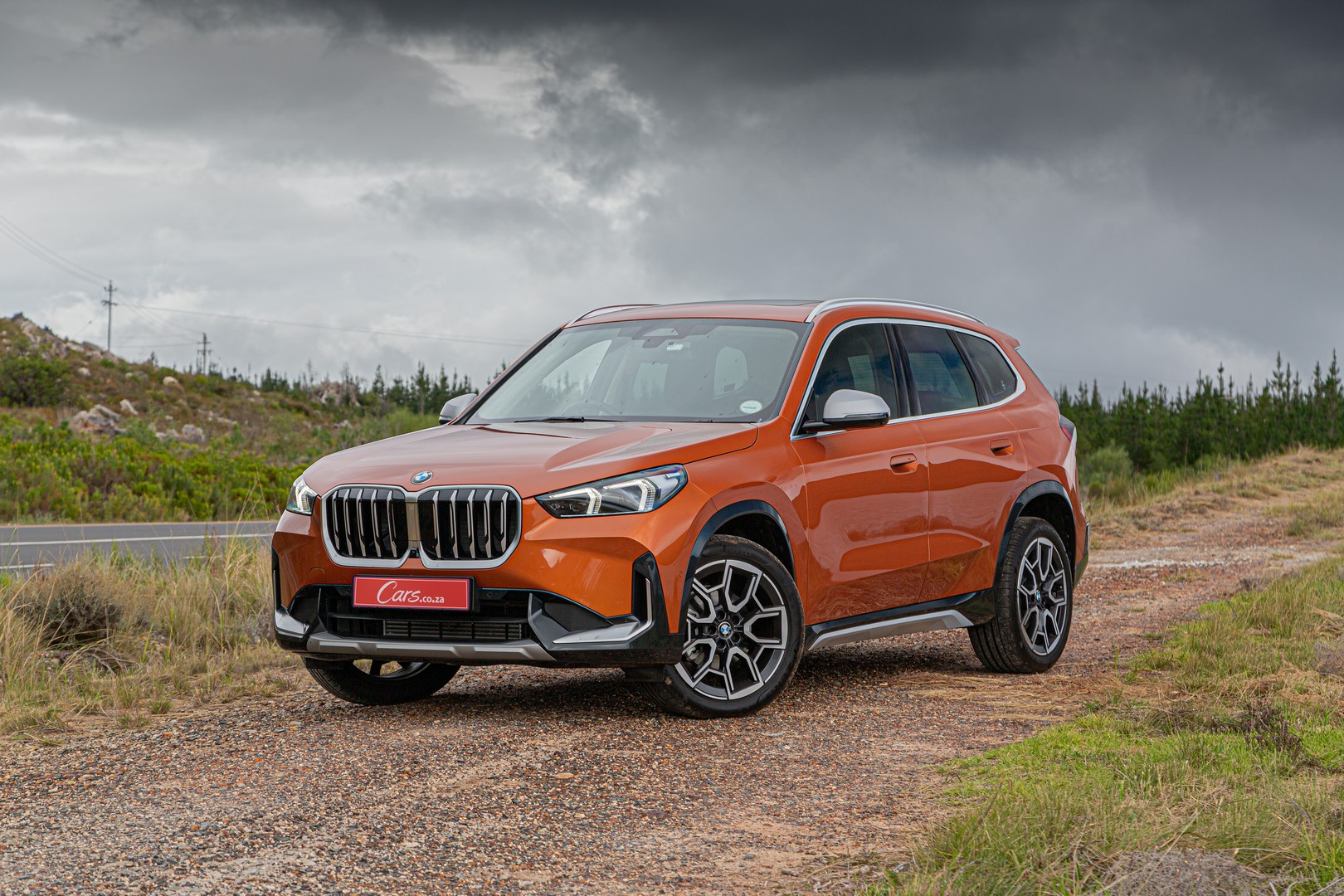
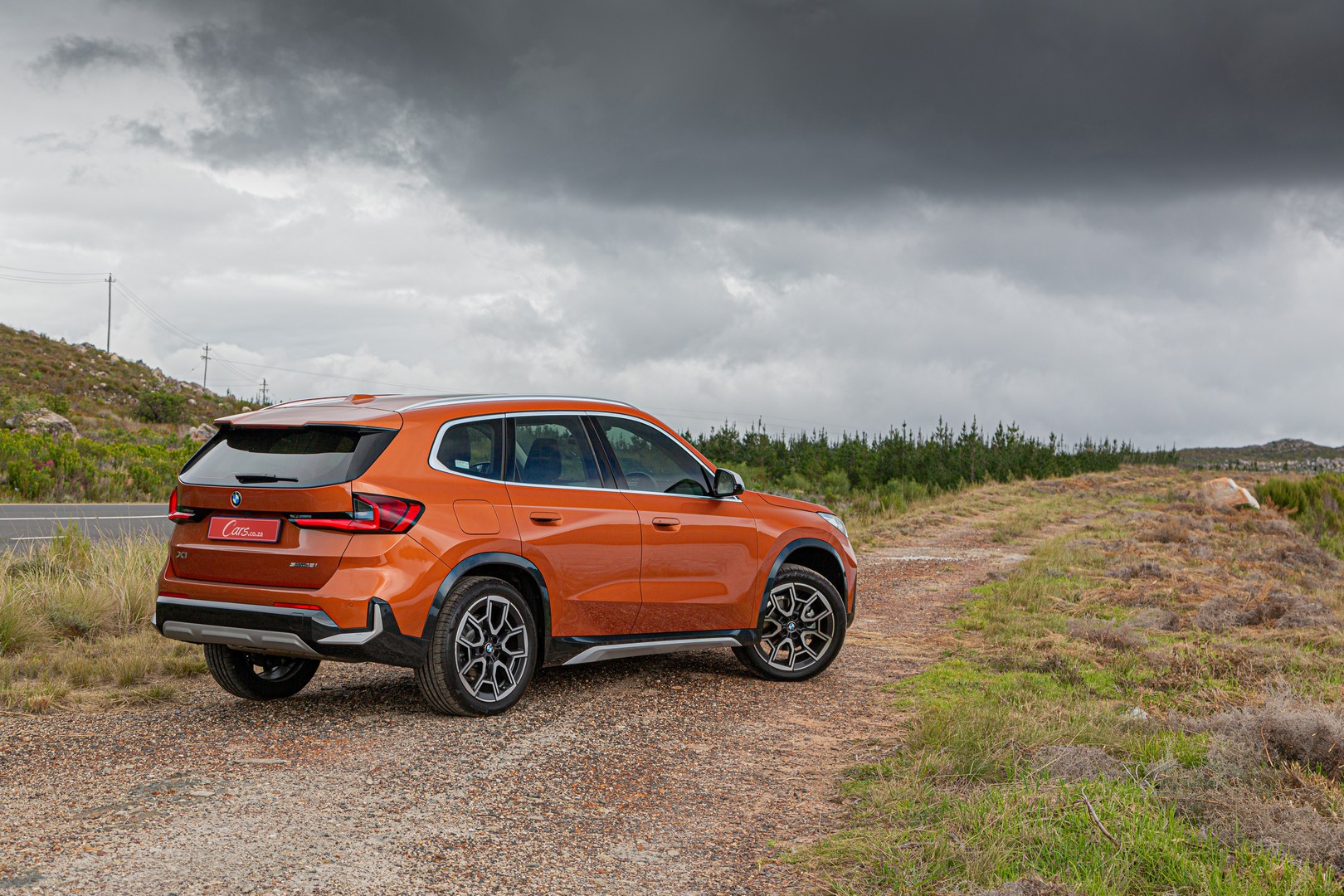
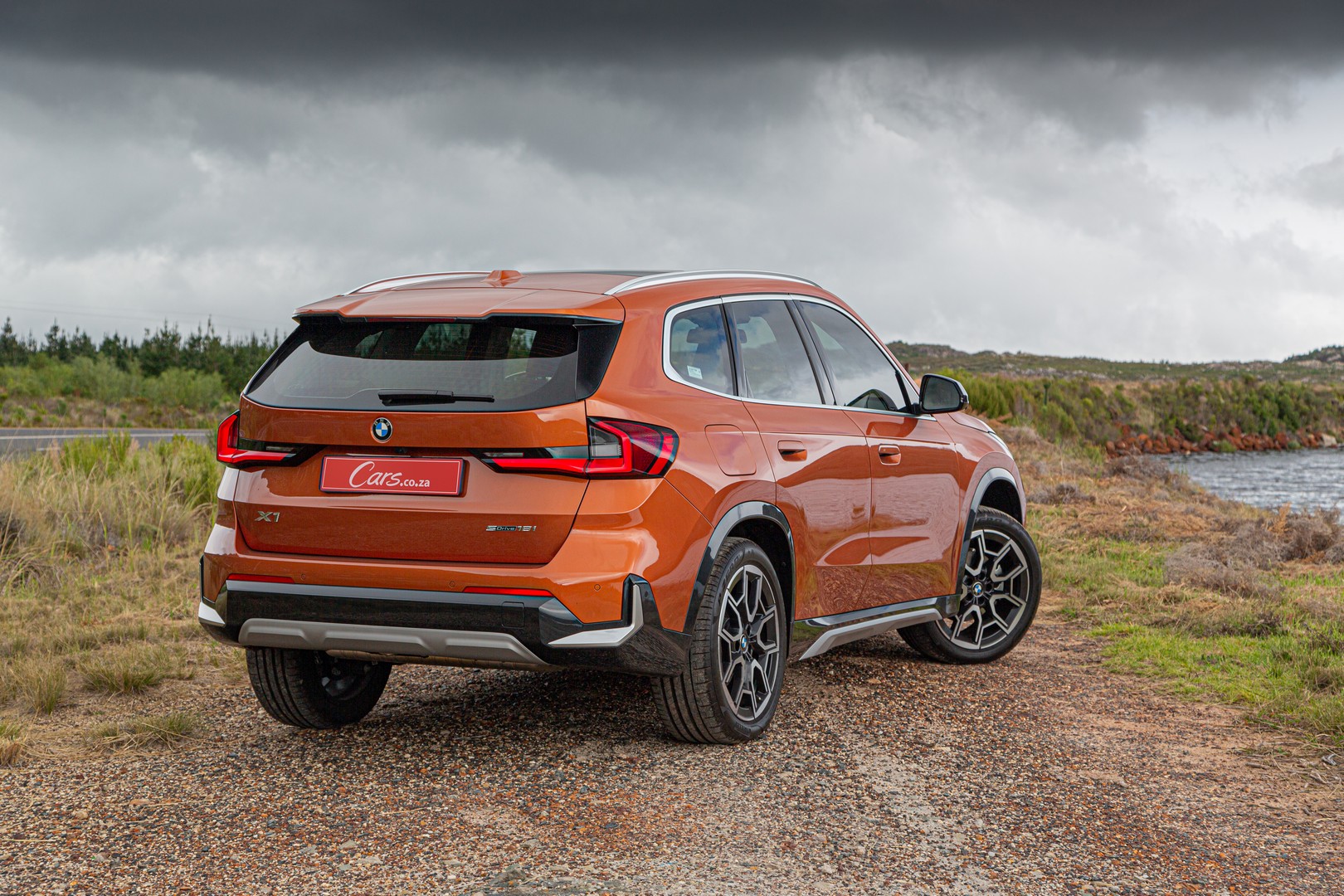
The all-new BMW X1, which was a finalist for the 2023 World Car of the Year title, has been launched in South Africa. We review the base sDrive18i xLine derivative of the model that many (if not most) consumers consider the entry point to the BMW brand.
We like: Improved packaging and space, minimalist driver interface, comfort and refinement.
We don’t like: Interior technology may be too radical for some, where’s the iDrive controller?
The new X1 seems ideally positioned to snap up buyers who can no longer afford an X3.
Ever-increasing new vehicle prices have seen sales of German premium marques’ traditional bread-and-butter models (such as the BMW 3 Series) dwindle in our market and that, combined with consumer preferences shifting from hatchbacks and sedans to crossovers and SUVs, means that the X1 – not the 1 Series, for example – is arguably the BMW model most South African new-car buyers hope to purchase.
The “entry model” description has some slightly negative connotations (it may evoke images of tinny, low-specced vehicles), but rest assured, German luxury carmakers have made these products look, feel, and drive as well as their higher-priced siblings. These are the new bread-and-butter models, after all.
This is the all-new 3rd-gen BMW X1 and the Munich-based brand is well aware that the model, which it codenamed the “U11”, needs to well and truly hit the mark. The changes are substantial: the new model has grown in size (it’s longer, taller and wider, and critically, the wheelbase has been extended), which means it’s more spacious than before. This X1 is closer in size to the current X3 than the 1st-gen X1!
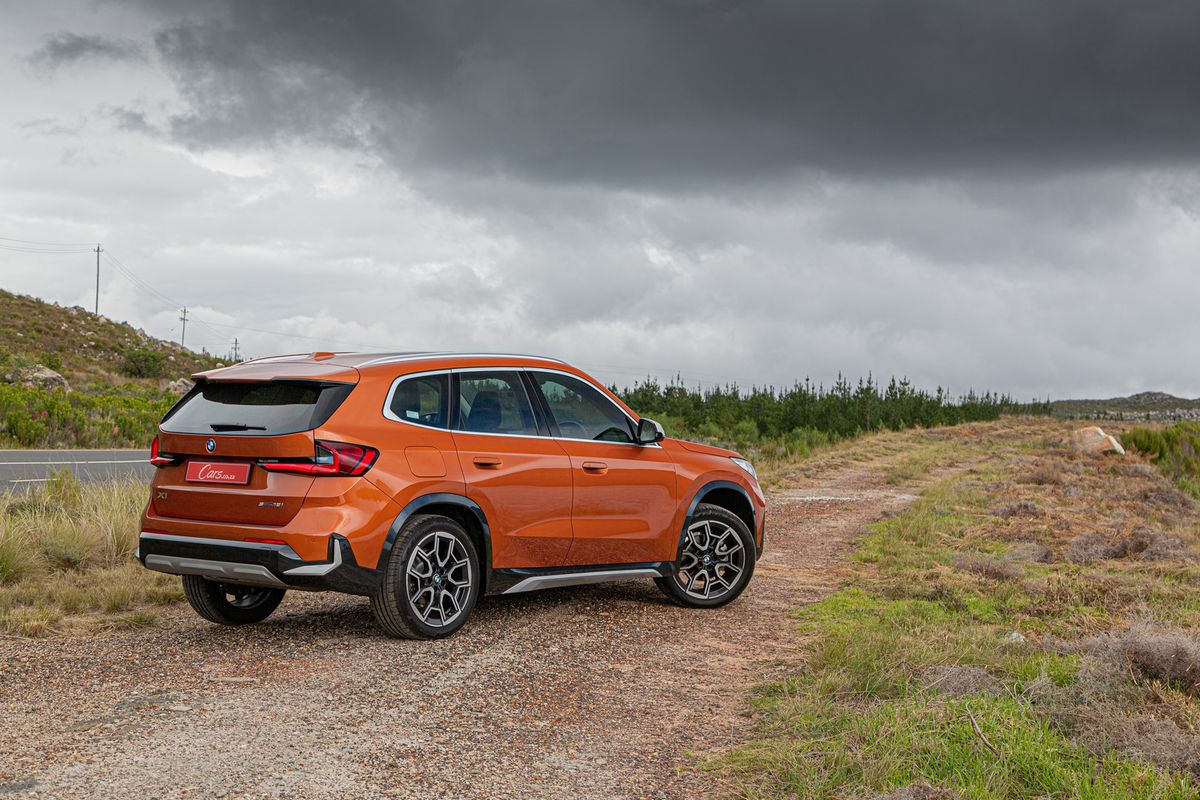
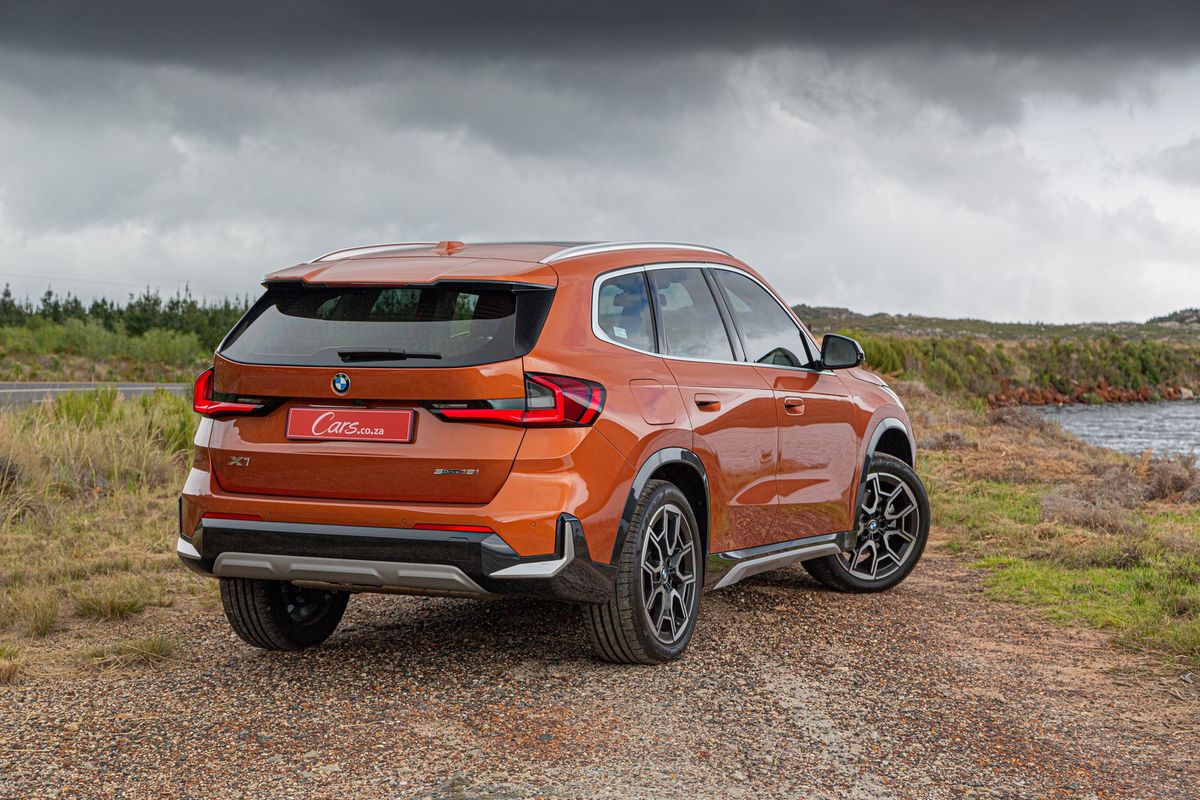
Whereas the previous X1 looked like “a hatchback on stilts”, the U11-gen model has a more resolved SUV-like look.
Another interesting change is that the wheels have been pushed further toward the corners of the vehicle to facilitate a “more planted” driving experience. The X1’s cabin feels relatively spacious, with shapelier front seats, BMW’s new iDrive operating system (with a revised interface and graphics), plus the load bay is only 10 litres smaller than that of its X3 sibling (with the rear seats in upright position).
The 2023 BMW X1 line-up includes 1.5-litre 3-cylinder turbopetrol, 2.0-litre 4-cylinder turbodiesel and all-electric powerplants (the latter in the all-wheel-drive iX1). The petrol engine is not an all-new motor, but rather an enhanced/upgraded version of the 1.5-litre 3-pot (or triple) that’s been put to work in an assortment of BMW and Mini models throughout the years. While it may seem a trifle underpowered in something like a 1.5-tonne X1, rest assured there’s adequate grunt on tap (courtesy of 115 kW/230 Nm).
The X1 may have grown “in all directions”, but its 1.5-litre 3-cylinder still delivers sufficient oomph.
First things first, 3-cylinder engines usually produce a distinct offbeat soundtrack (accompanied by a slight vibration) due to their layout and operation. In more entry-level cars, this “thrum” is pronounced, but it appears BMW’s done an admirable job of reducing noise, vibration and harshness in the X1’s cabin.
The rorty engine note only becomes glaringly apparent when full acceleration is needed, such as when we tested the X1’s in-gear performance… We recorded a 9.42-second 0-to-100 kph run (only 0.42 sec slower than BMW’s claim) and, on our fuel-economy route, the X1 returned a respectable 7.7 L/100 km.
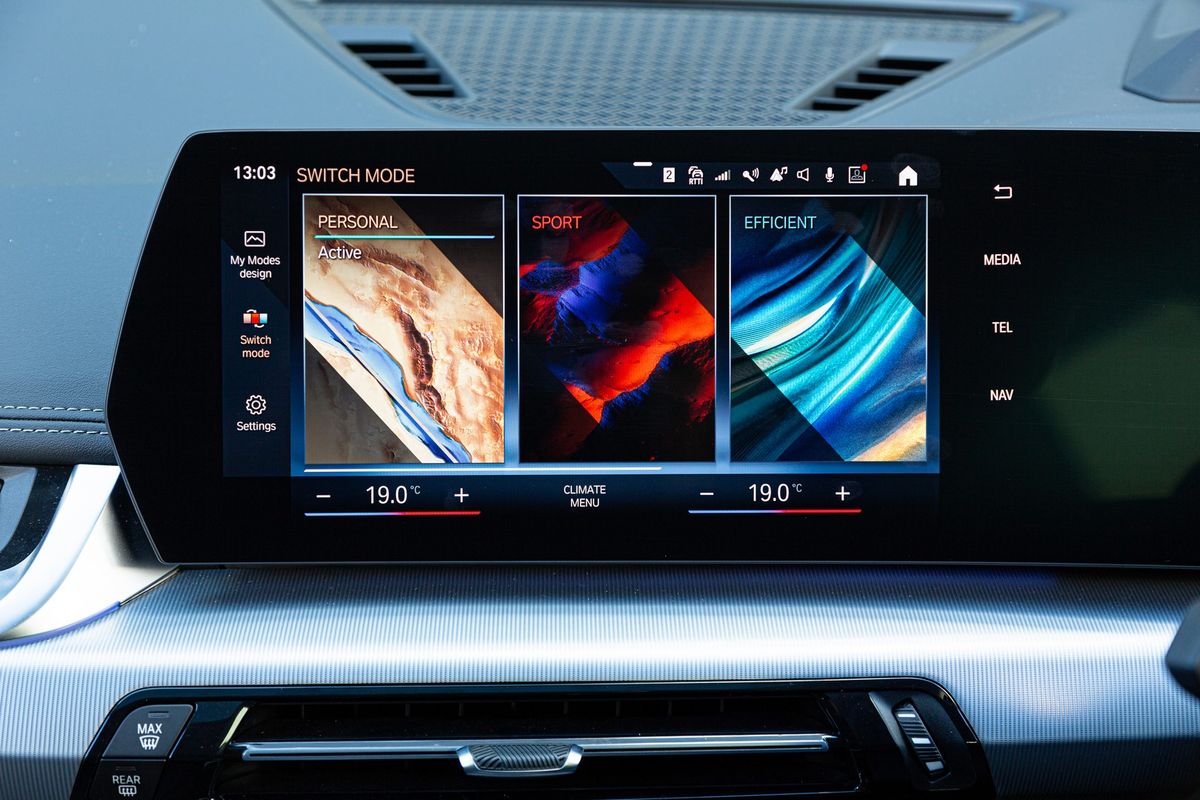
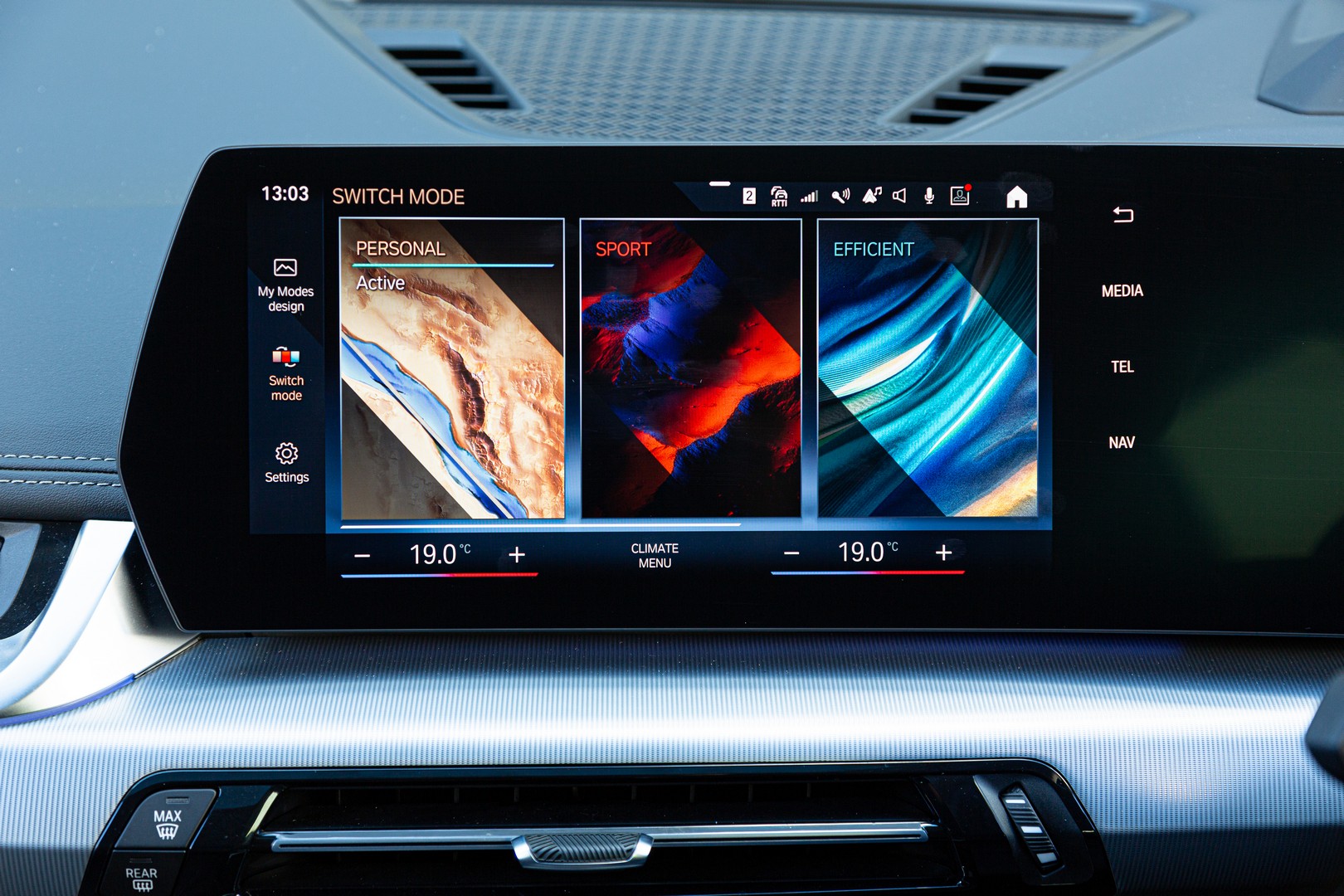
X1 drivers can switch between the various drive modes via the iDrive menu.
Beyond the selectable Sport and Efficient drive modes (which, by now, need no explanation), drivers can also personalise individual aspects of the sDrive18 xLine’s drivetrain. Each drive mode is accompanied by a specific theme on the infotainment screen and instrument cluster. For example, when you engage Sport, the cluster gets a red glow and a rev counter (by default, the X1 displays a power-usage meter).
One of our test-team members noted that in its default mode, the X1’s accelerator pedal is not the most responsive and the brake pedal travel is long, but those traits arguably suit an “urban-based family car”.
When you engage Sport, the X1’s digital instrument cluster and infotainment screen adopt a red theme.
Indeed, the 1.5-litre turbopetrol engine is a willing performer; it’s aided by a quick-shifting 7-speed dual-clutch automatic transmission that is sufficiently responsive and operates smoothly… well, once the X1 is travelling at the prescribed city or freeway speeds. Unfortunately, it tends to hesitate at low speeds.
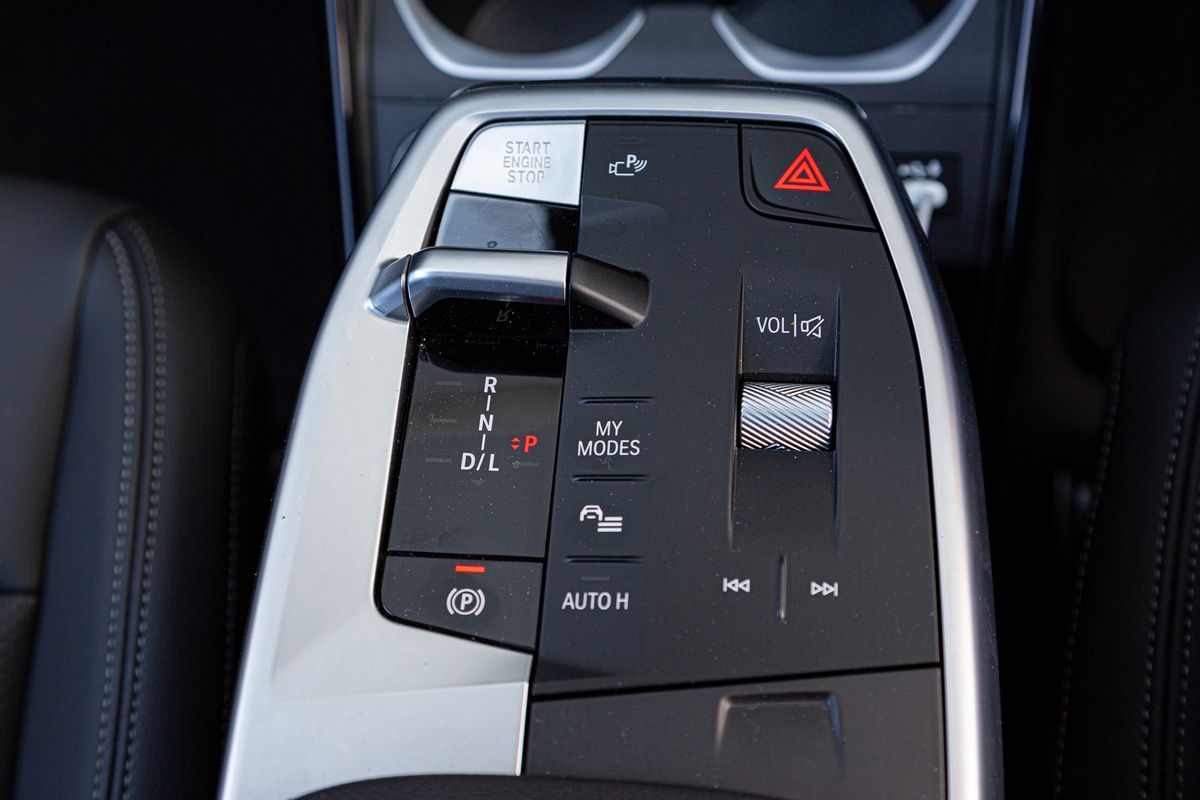
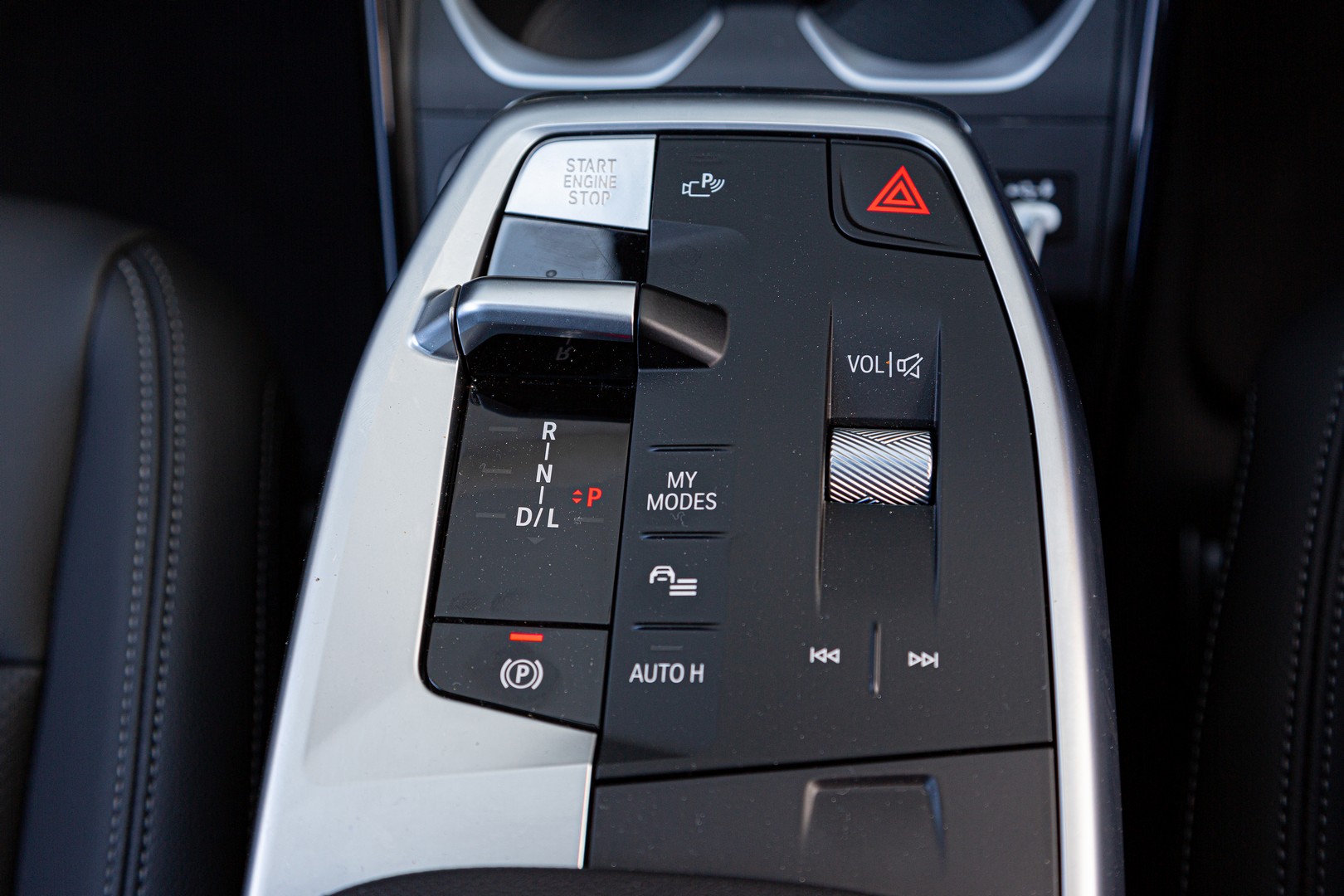
Frustratingly, ‘shift paddles are only available if you opt for the M Sport trim line. So, if you want to force the vehicle to stay in one particular gear (like when you’re driving up a steep gravel slope), you have to push L mode on the transmission switch. Yes, you read that correctly: the traditional transmission lever has been replaced – the X1 has joined the growing club of vehicles that have minimalist gear switches.
There is no more transmission lever – in the 2023 BMW X1, an electronic switch serves that purpose.
Ride and Handling
BMW prides itself on its time-honoured tagline of “Sheer Driving Pleasure” and the 2023 BMW X1 mostly delivers on that “brand promise”. It’s important to remember this is a premium family car – it would be a trifle unfair to expect heightened driver engagement from a front-wheel-drive compact crossover.
Having said that, the X1 proved quite entertaining to steer through tight corners at higher-than-usual speeds, plus it exhibited surprisingly little body roll. There was plenty of road holding and good body control, so it’s easy to understand why BMW is working on an all-wheel-drive 35i M Sport derivative!
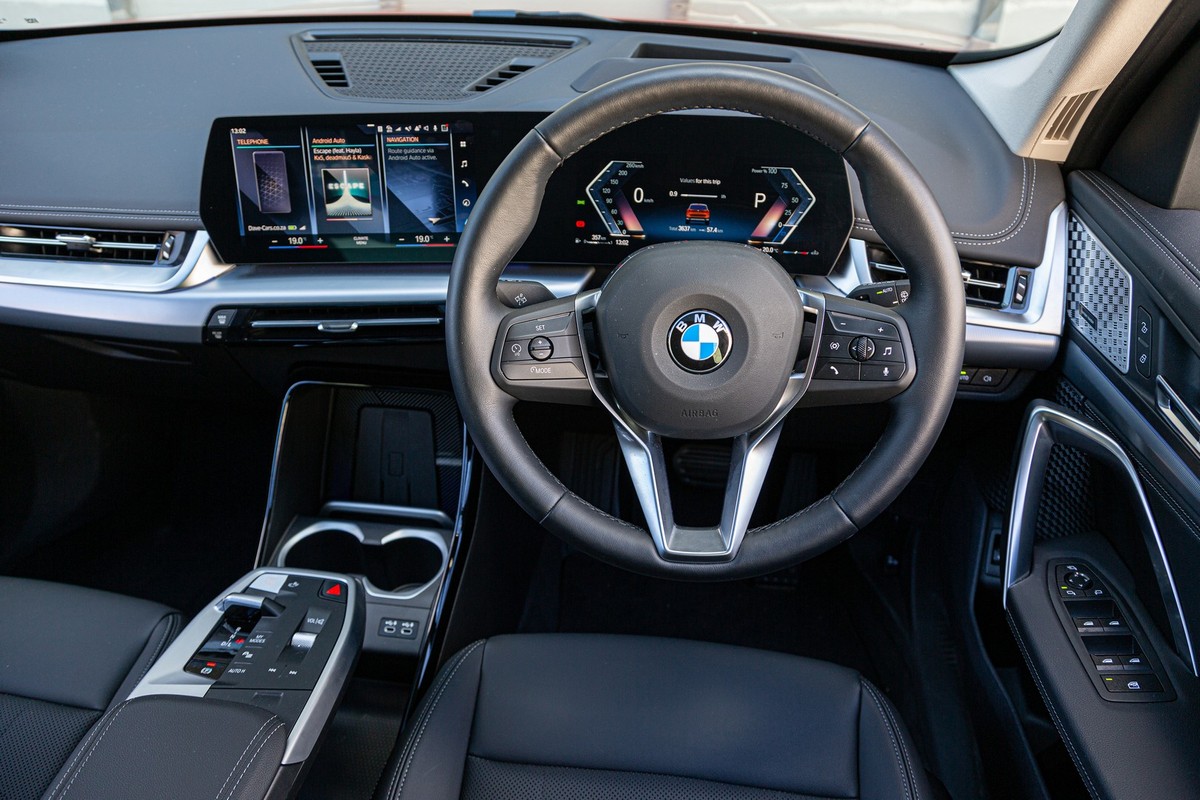
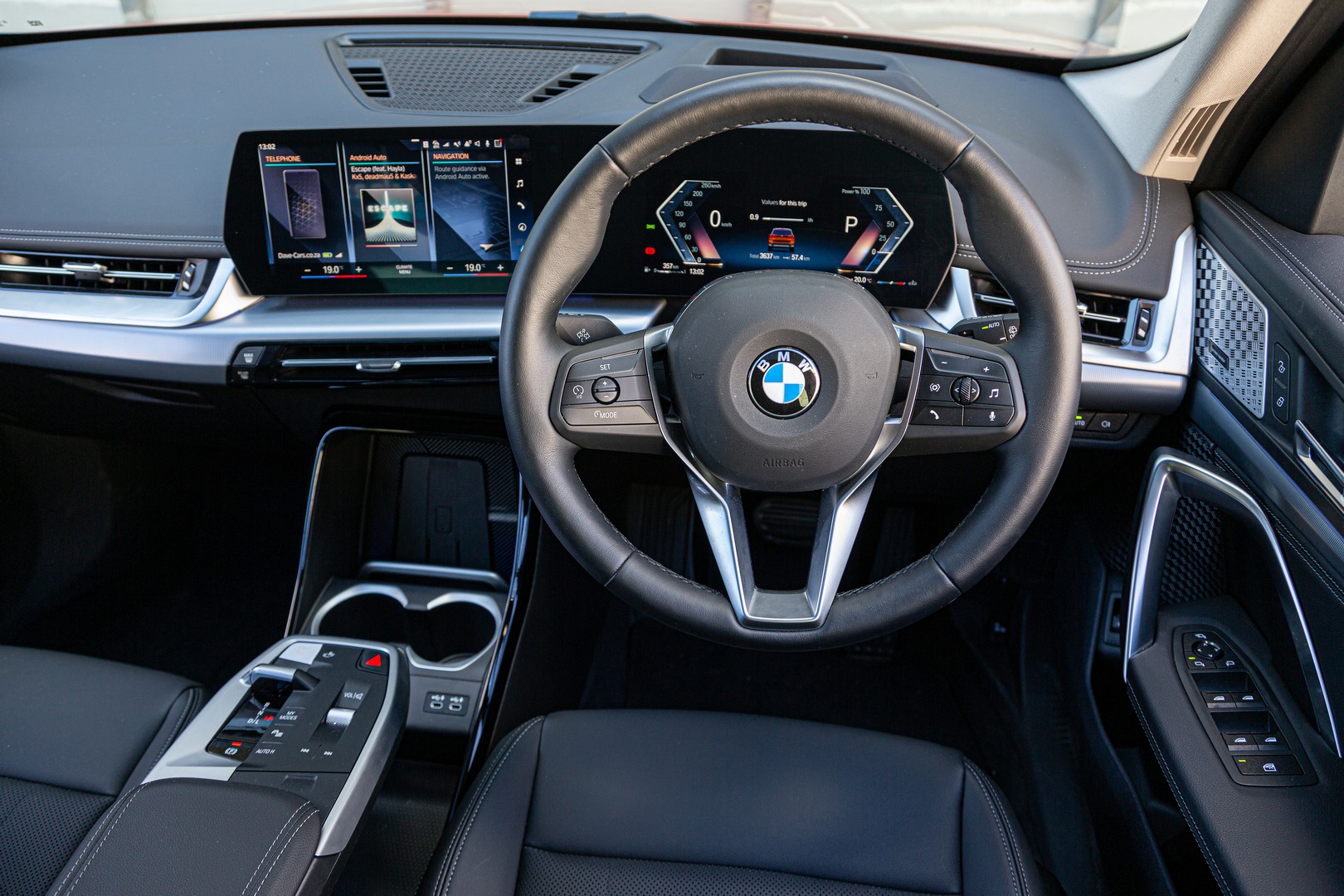
BMW adopted a minimalist approach to the design of the front of the cabin.
The seating position is good (it affords excellent all-round visibility) and so is the ride quality, all things considered… While the test unit didn’t have the M Sport package (with a firmer setup), it was fitted with optional larger wheels. The 19-inch alloys really look the part, but the standard 18-inch units are wrapped in higher-profile rubber, which will improve the ride quality while being more resilient to pothole impacts.
If you plan to drive on gravel roads from time to time, bear in mind that most BMW X1 derivatives are front-wheel driven (only the iX1 benefits from all-wheel drive). Still, with a ground clearance of 205 mm, you should be able to avoid most of the road protrusions that may damage the crossover’s underbody.
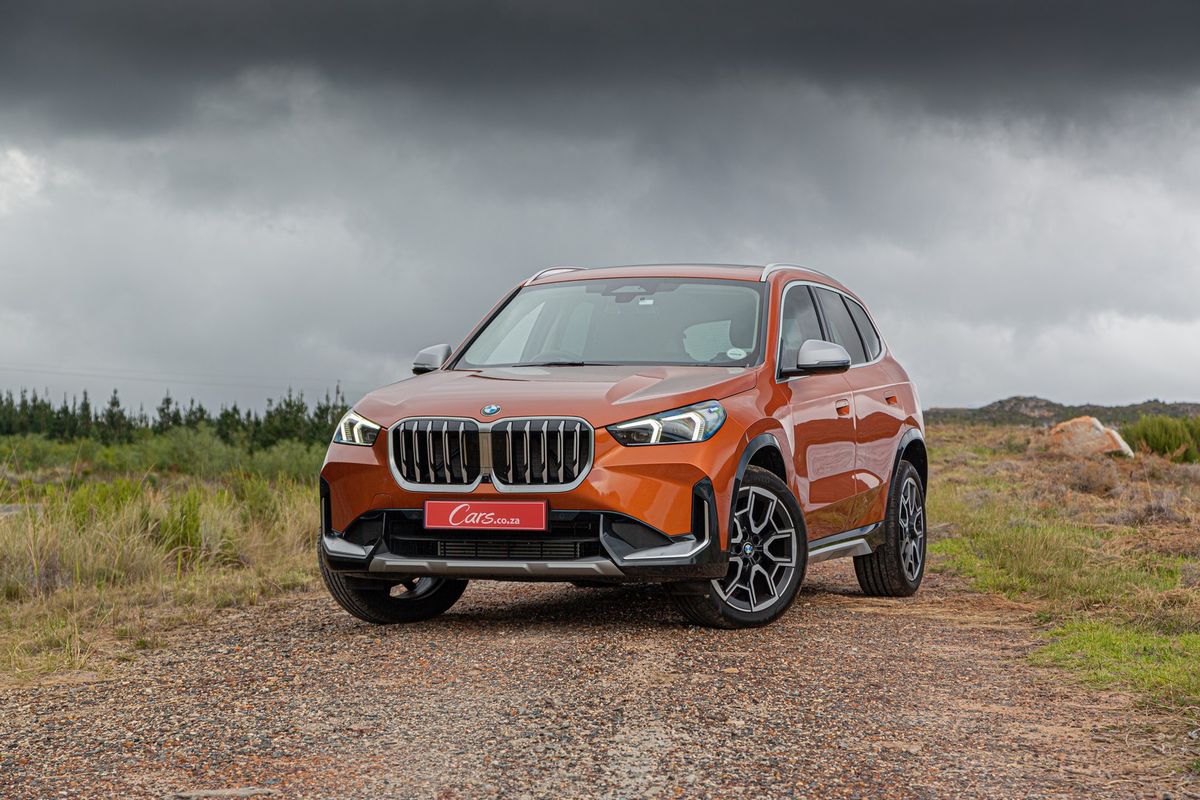
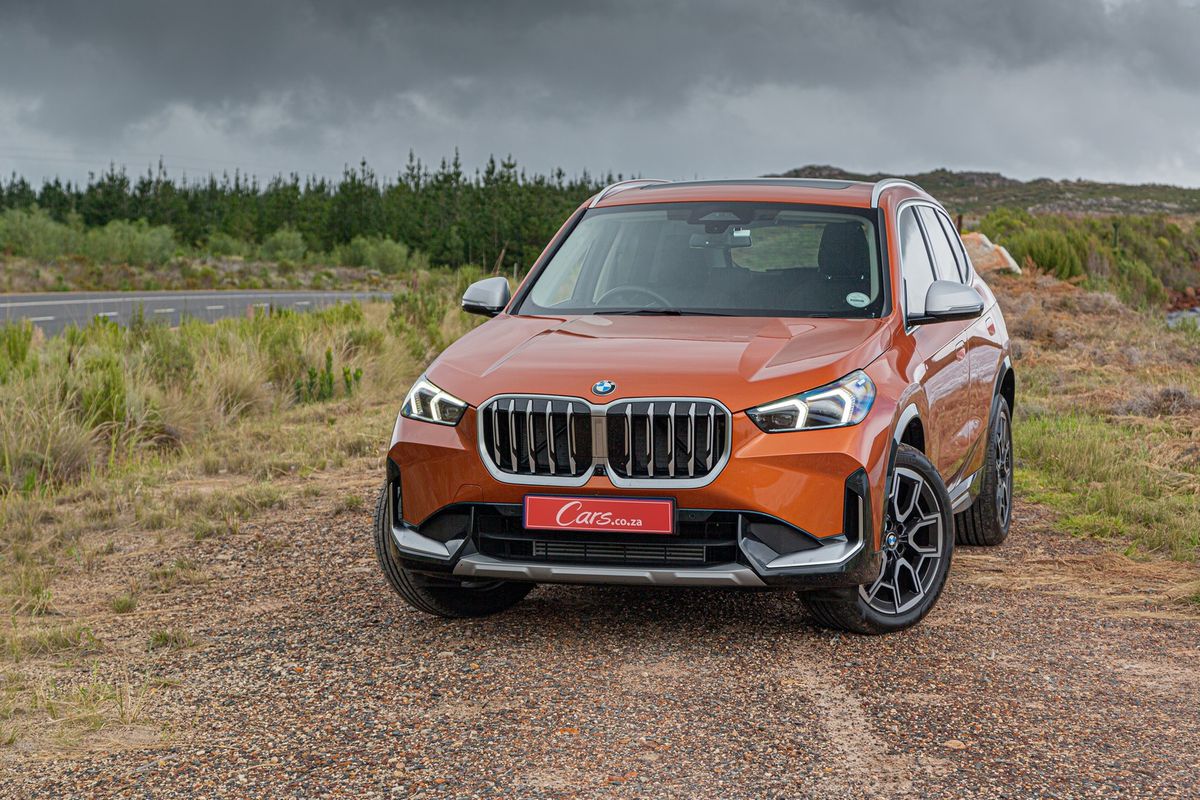
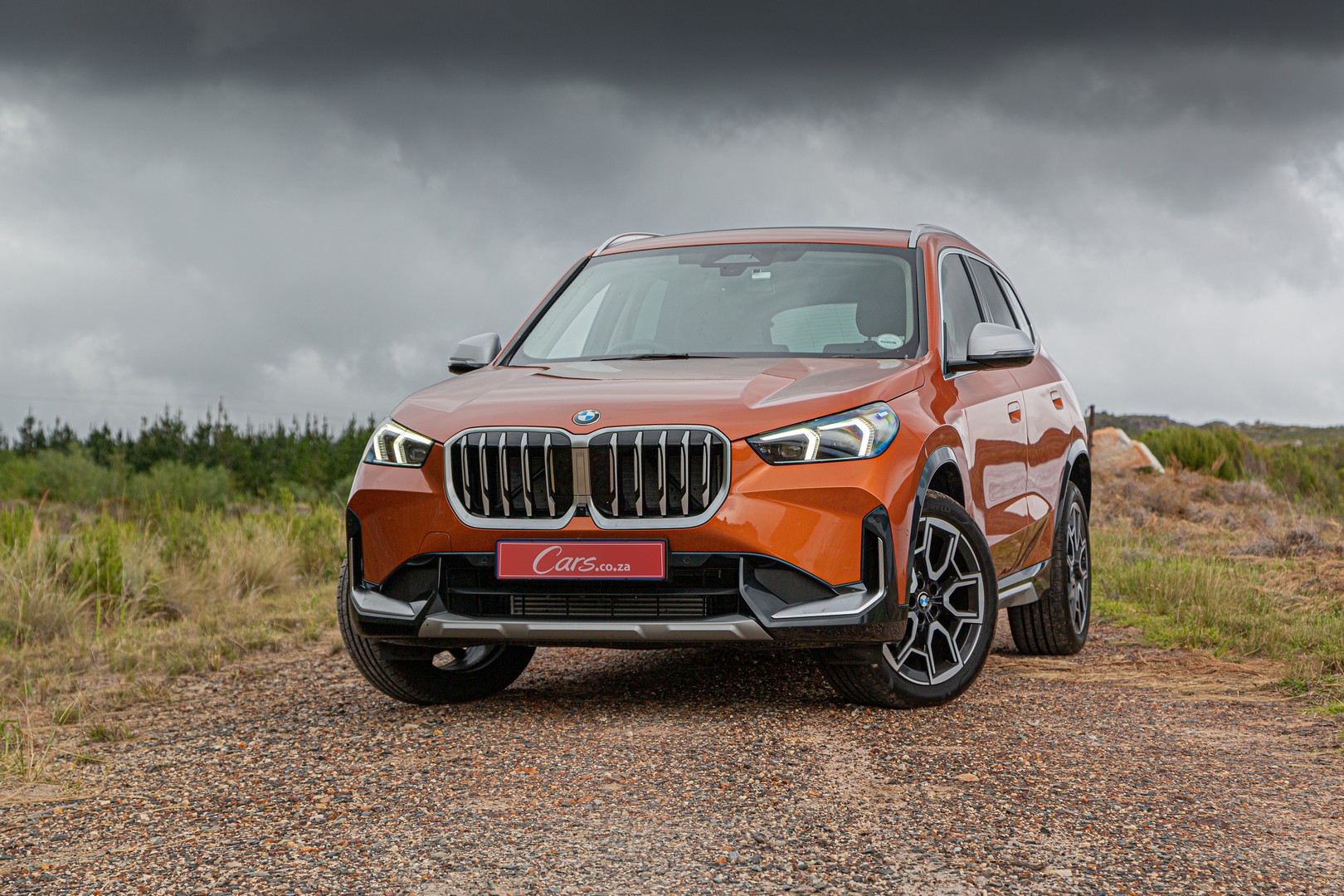
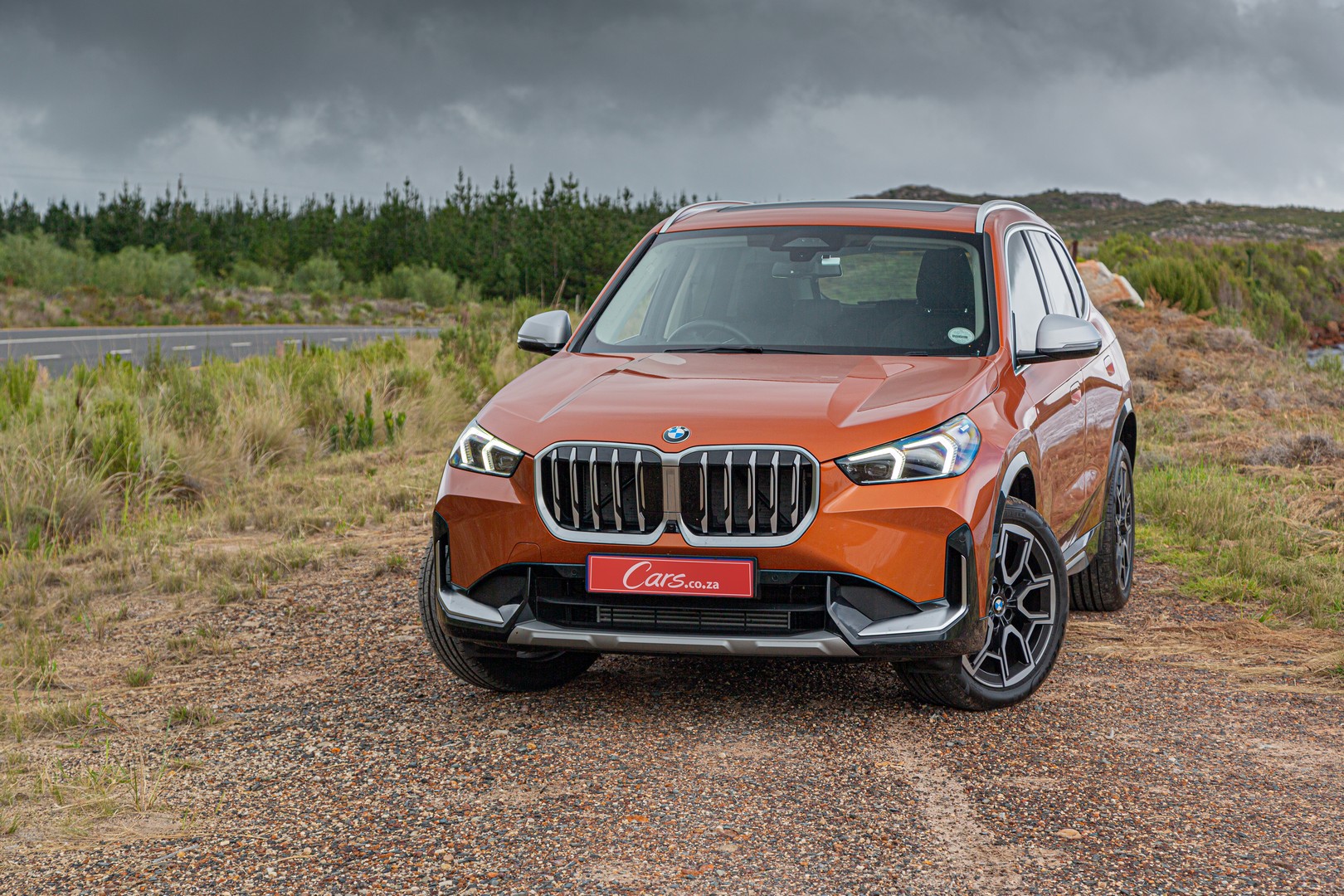
X models were the first in the BMW line-up to adopt large double-kidney grilles, but the proportions are better on the “U11”.
Design and Packaging
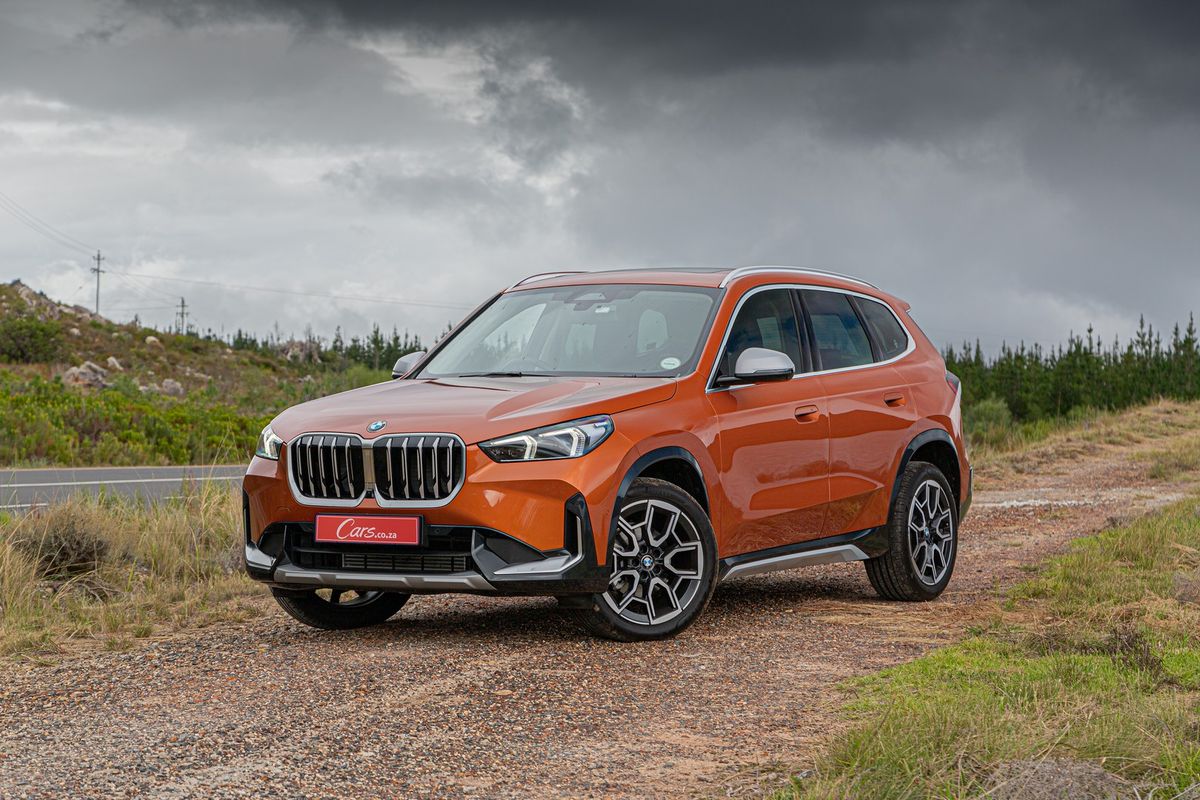
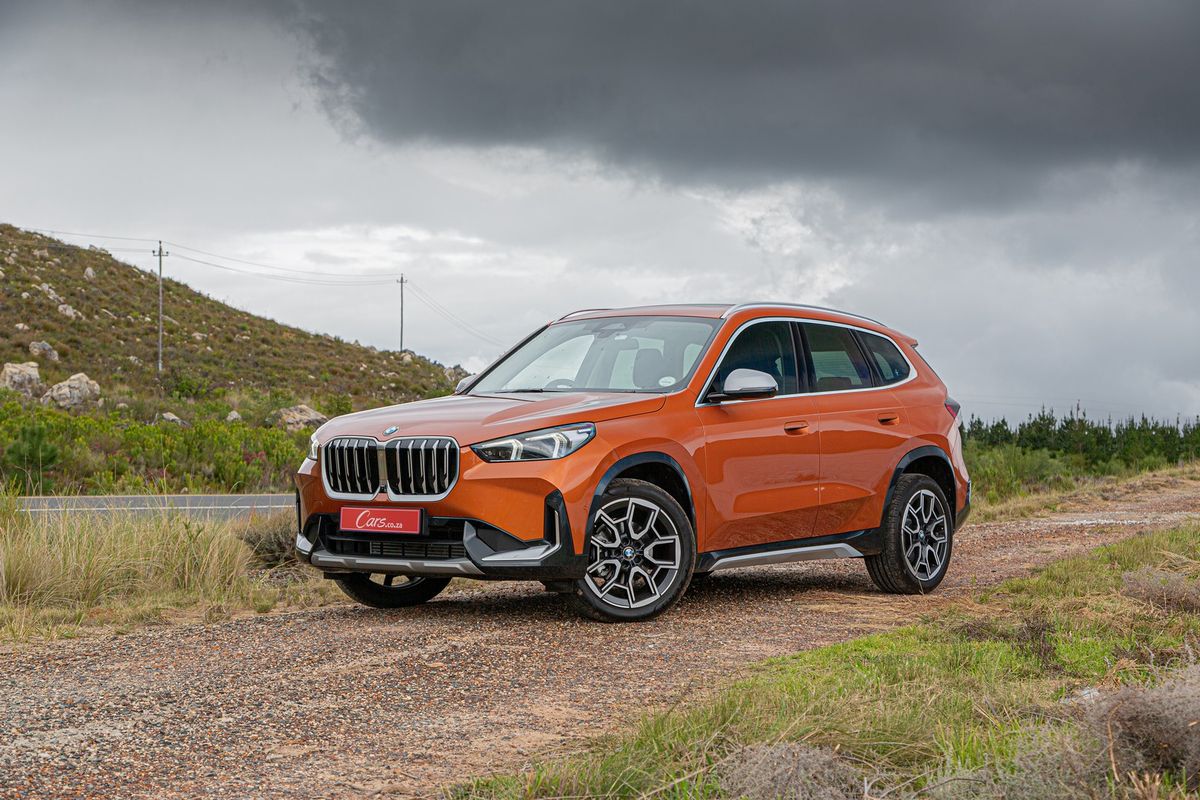
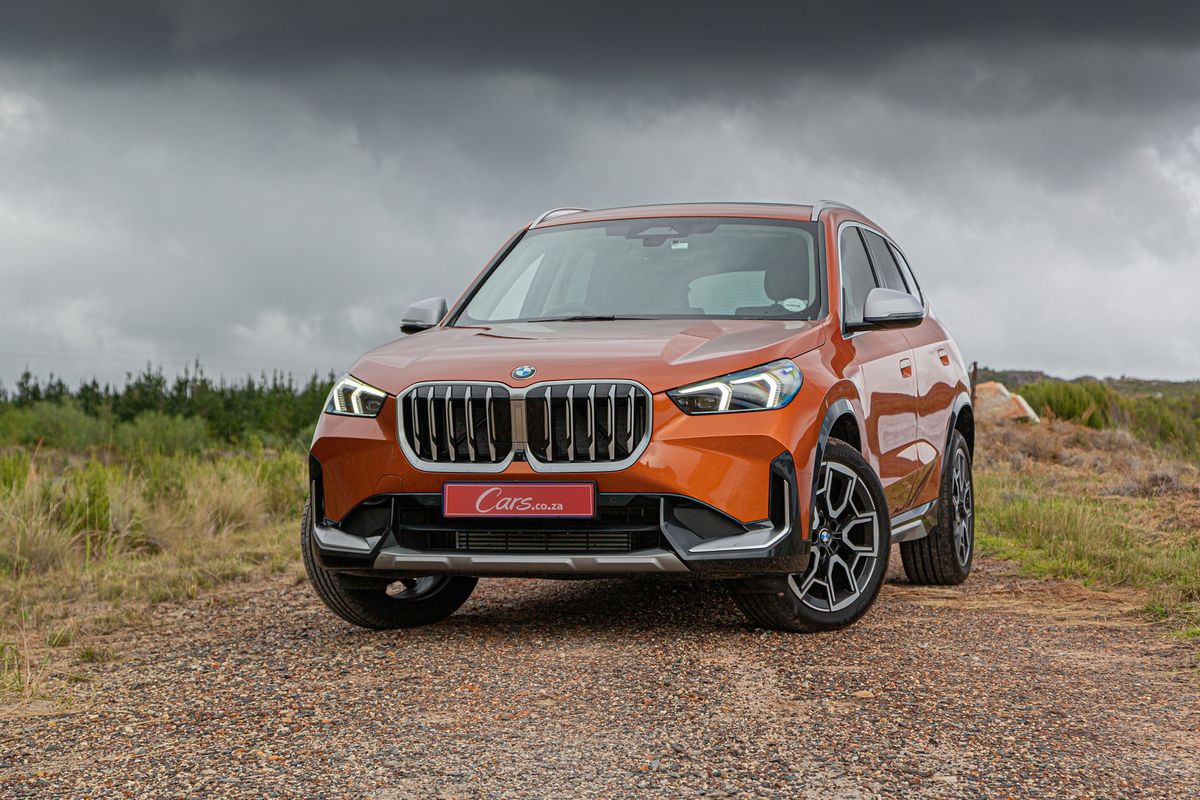
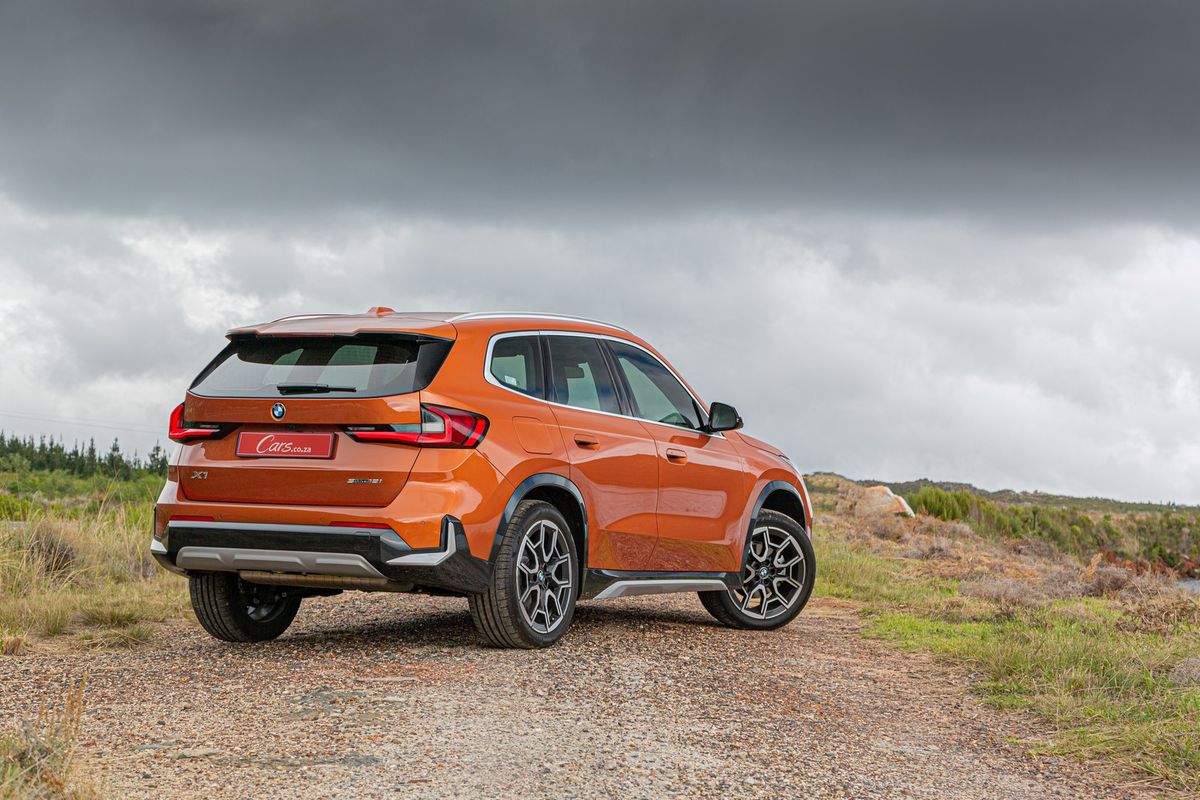
Unlike other controversially styled BMW models (we’re looking at you, the 7 Series and XM), the U11-generation X1 has a much more conventional design. It’s unmistakably a BMW, yet it deftly balances on a tightrope between fresh and conservative. Our test unit’s Utah Orange finish is a no-cost colour option.
We were truly impressed with the cabin’s smart look, build quality and upmarket finishes. The X1 is likely to be the top-selling new BMW in some markets, so the brand had to ensure it exuded a “high-end feel”.
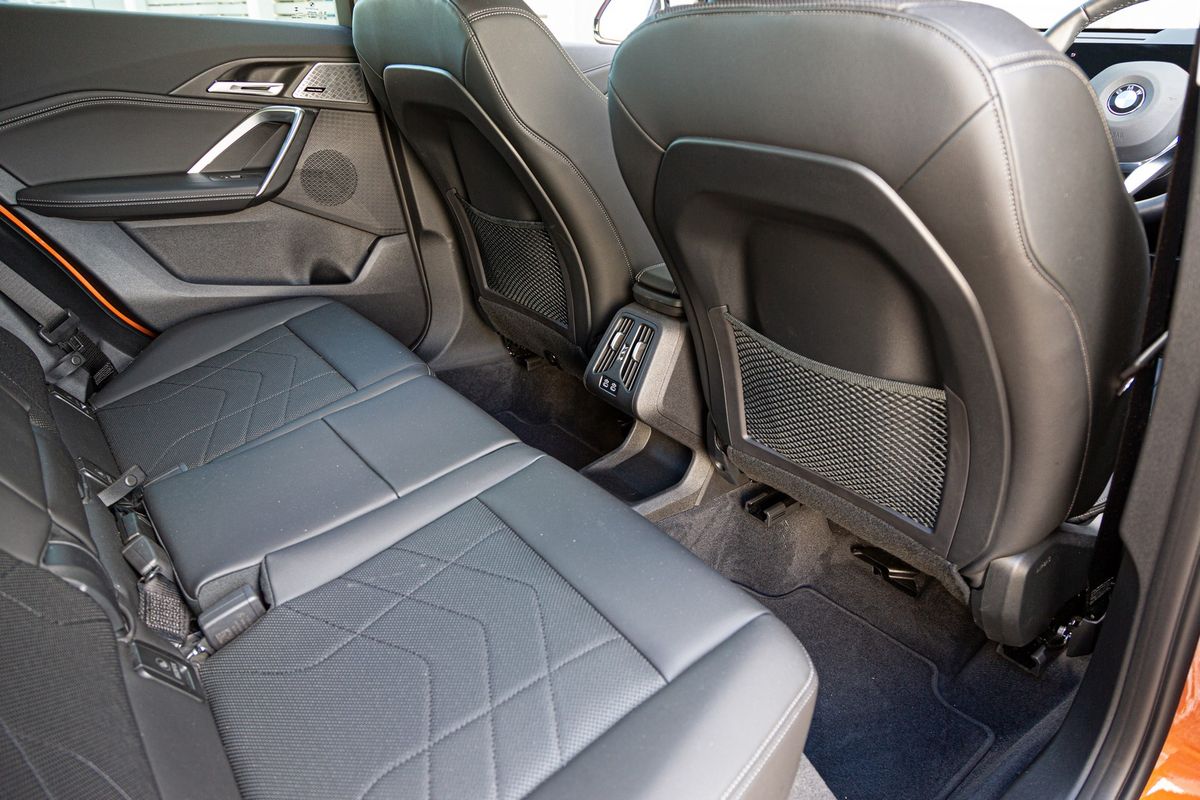
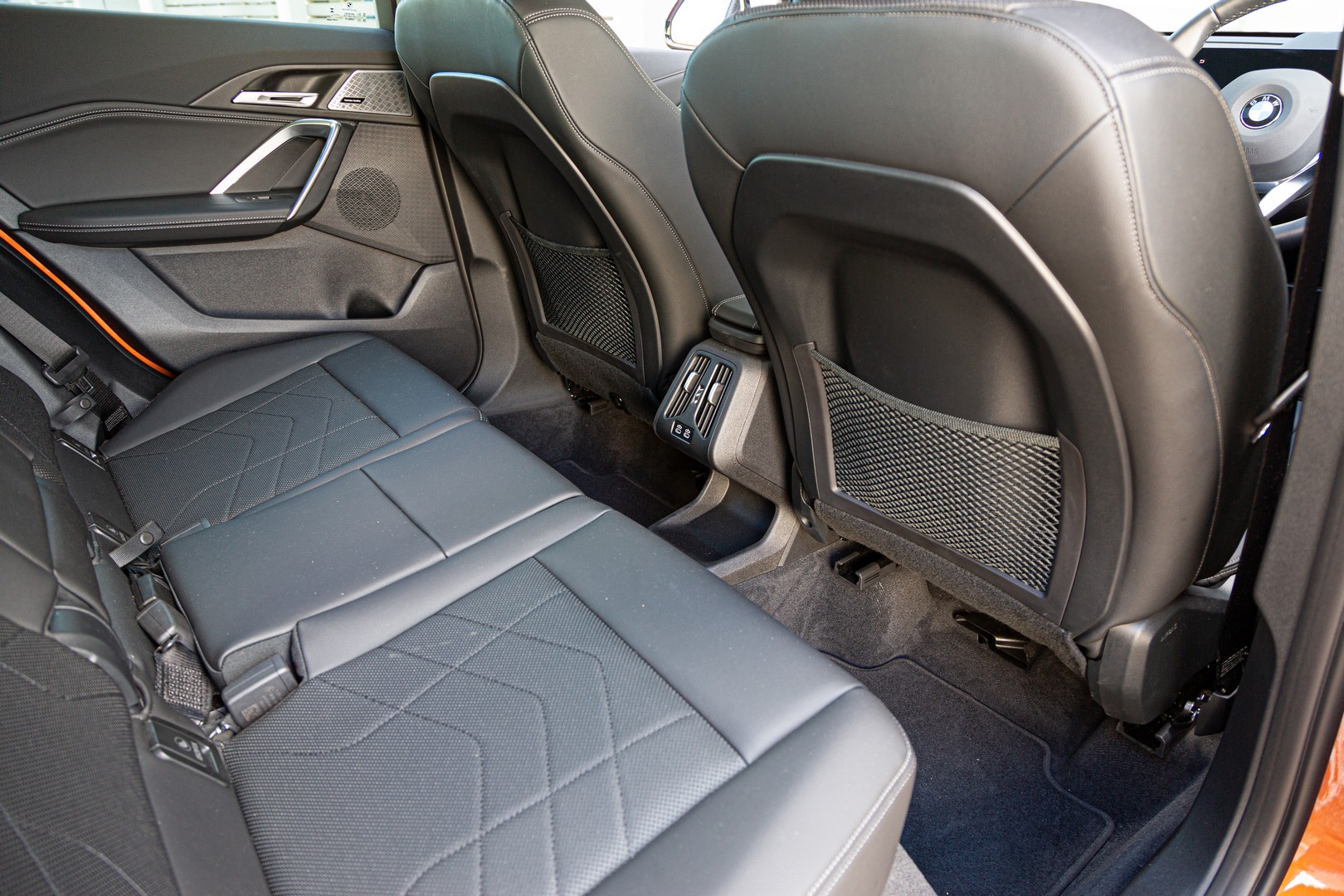
The rear legroom is excellent and passengers get their own vents and USB charging ports.
In terms of load-bay capacity, BMW claims the new X1’s available luggage space has increased (by 50 litres) to 540 litres and, when you fold the seats down, there is 1 600 litres of utility space. Is that good? Yes, the X1’s bay is almost the biggest in its class; only the Q3 Sportback narrowly beats the Bimmer.
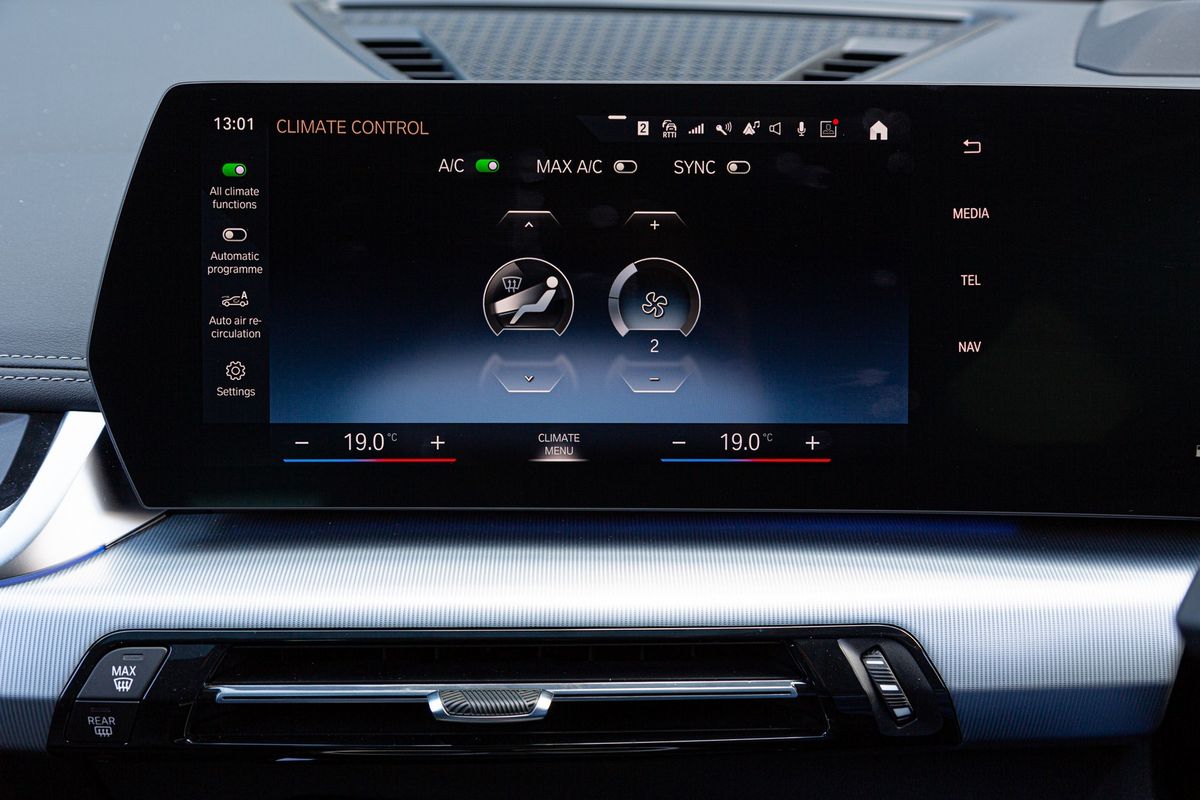
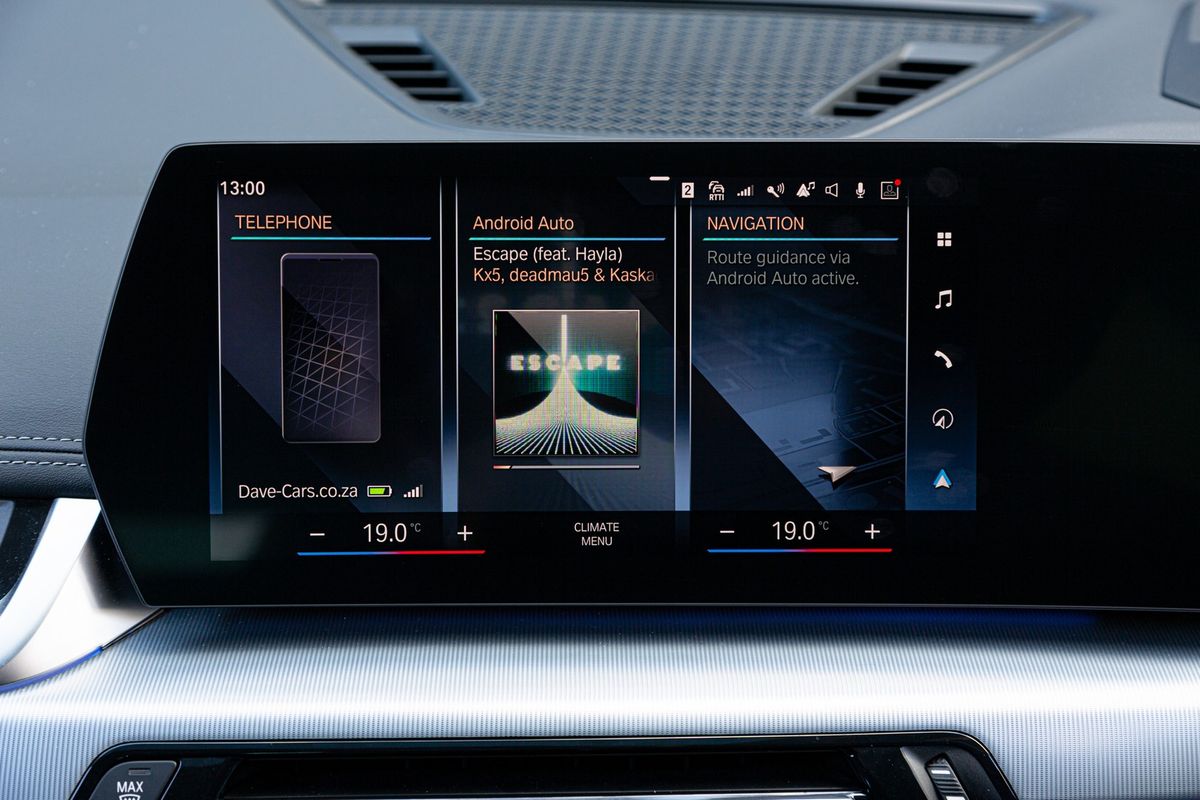
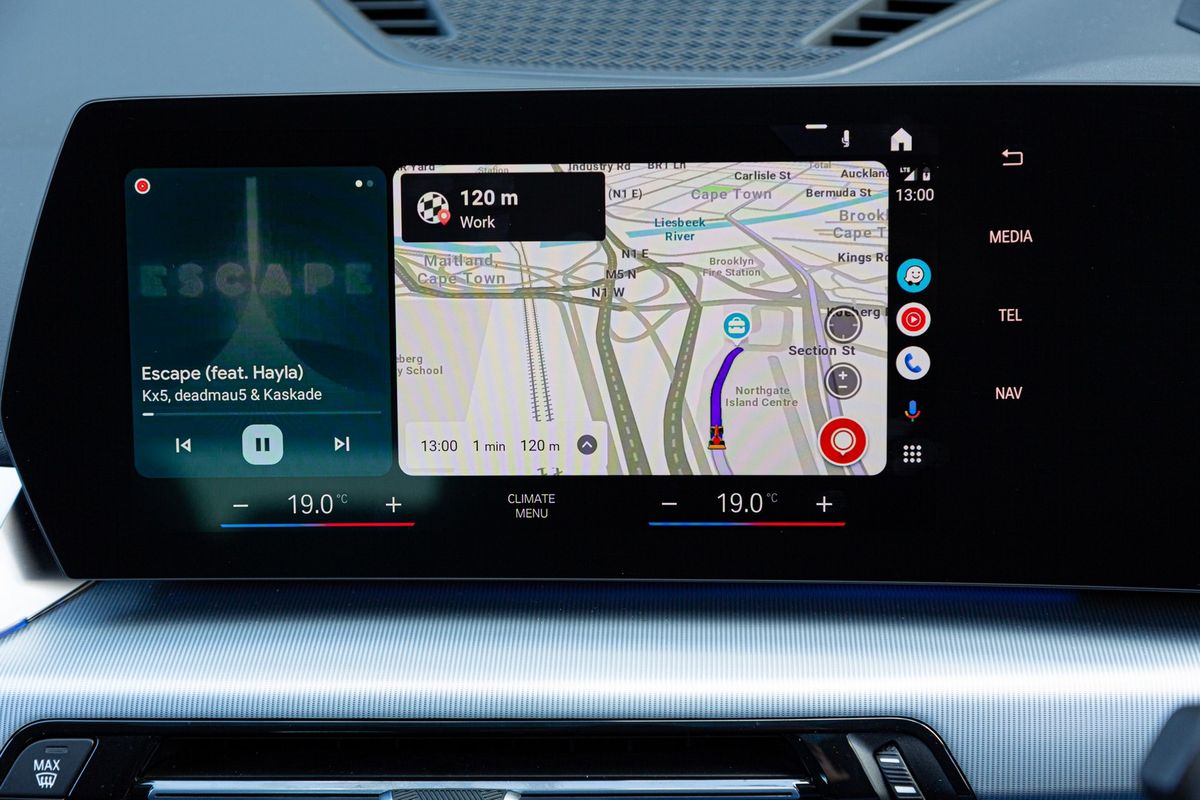
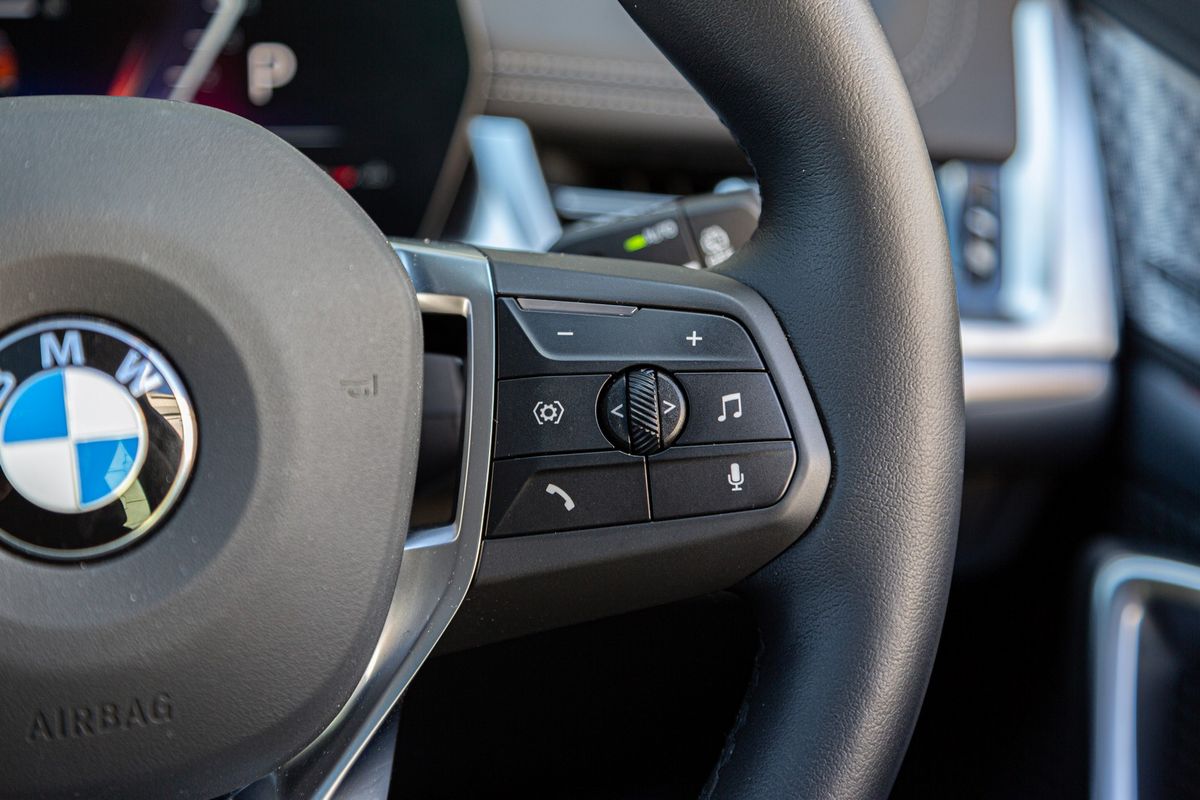
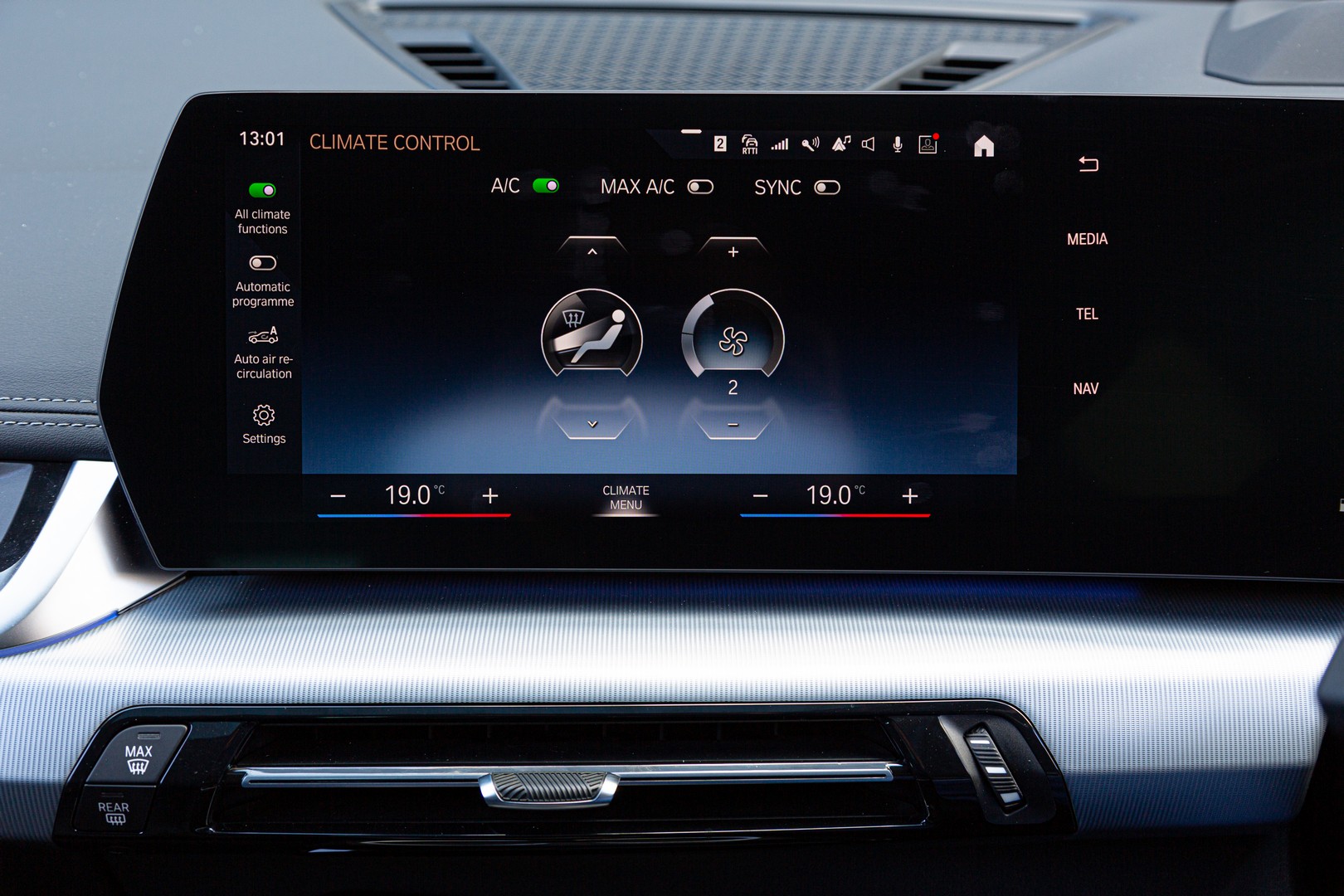
The new cabin is a huge talking point, because while it looks and feels great, it presents challenges from a usability (ergonomic) point of view. Why? Because there are no quick-access buttons for the climate control system (or auto start/stop deactivation, for that matter). Instead, if you want to access and/or adjust those systems, you need to wade through the menu of the new Operating System 8 on the BMW Curved Display. There’s no denying that it’s a visual treat, but its interface does require familiarisation.
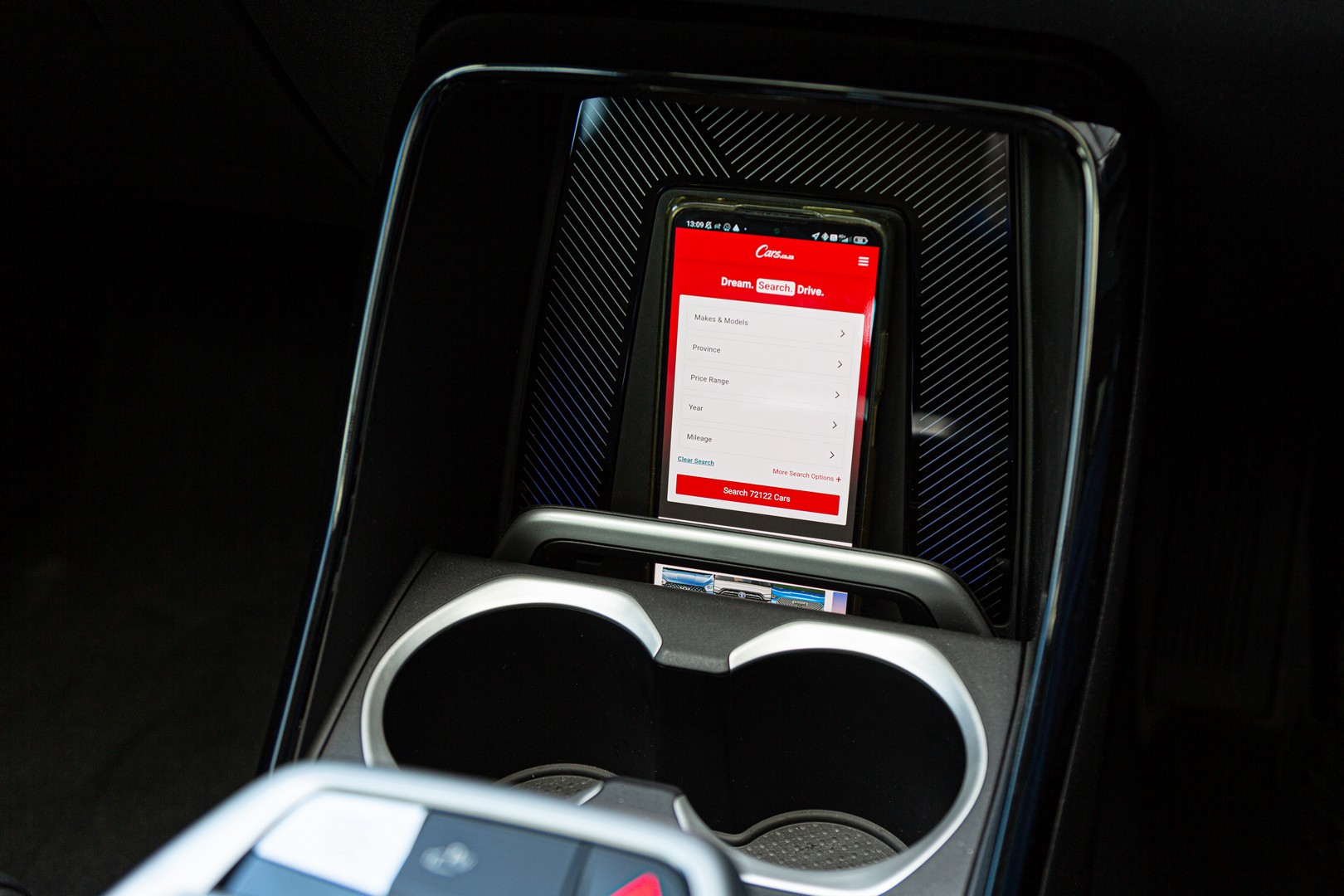
The optional wireless charging cradle
The first thing that you’ll notice is that there’s no transmission tunnel (well, in the traditional sense). Instead, the X1 has a new floating centre console which houses the start/stop-, parking camera access- and hazard light buttons, an electronic transmission switch, drive mode-, hazard lights-, handbrake and auto-hold buttons, as well as an audio volume control barrel with a tactile knurled-metallic finish.
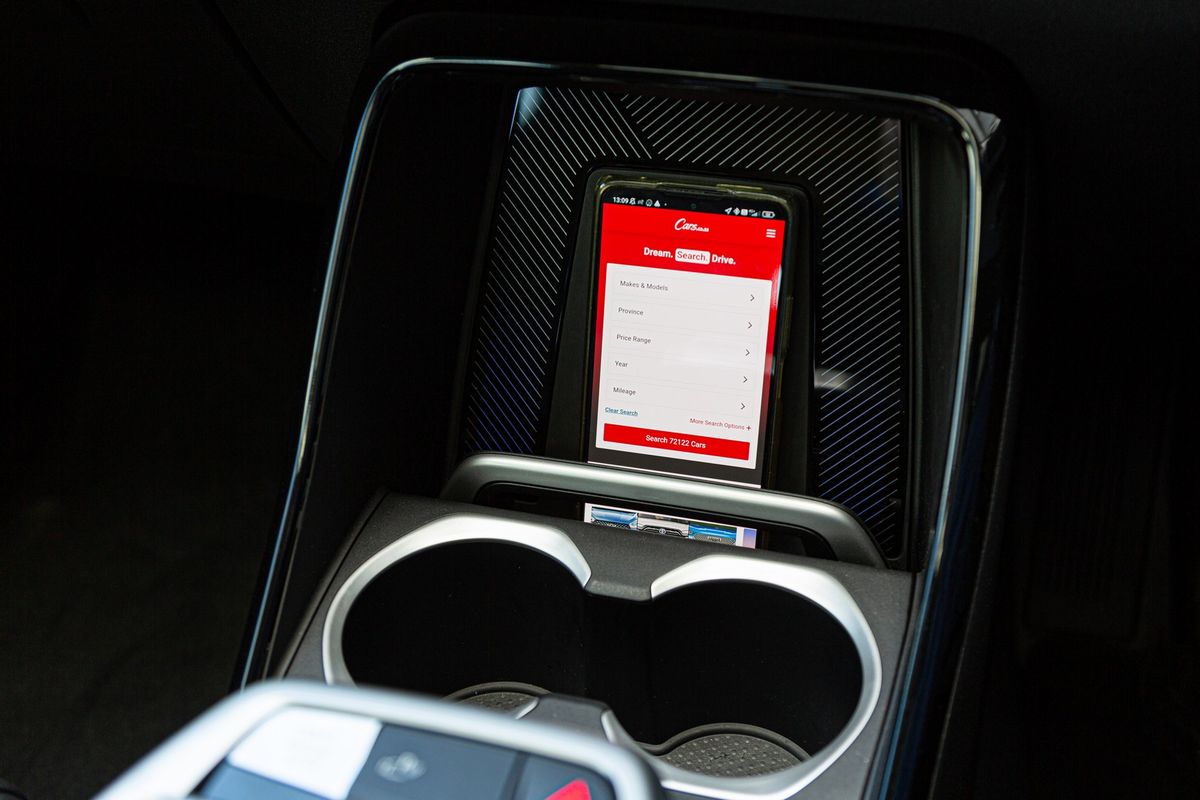
Our test unit featured the optional (and, may we say, cute) wireless phone charging cradle, but it’s orientated in such a fashion that it will only distract motorists when it lights up for a notification.
The BMW X1’s cabin brims with tech. To reiterate, it would be nice to still have some physical buttons for often-accessed functions – what happened to the brilliant iDrive controller knob? If all else fails, just say “Hey BMW, I want…” and, most of the time, the vehicle will obey your commands. It’s handy when you’re driving on a freeway and want to adjust the temperature without moving your left hand from the ‘wheel.
A fussy climate control menu. Where’s a simple button?
The new infotainment system looks very slick – and suitably expensive – plus it includes wireless Apple CarPlay and Android Auto connectivity, both of which integrate nicely with the vehicle’s digital interface.
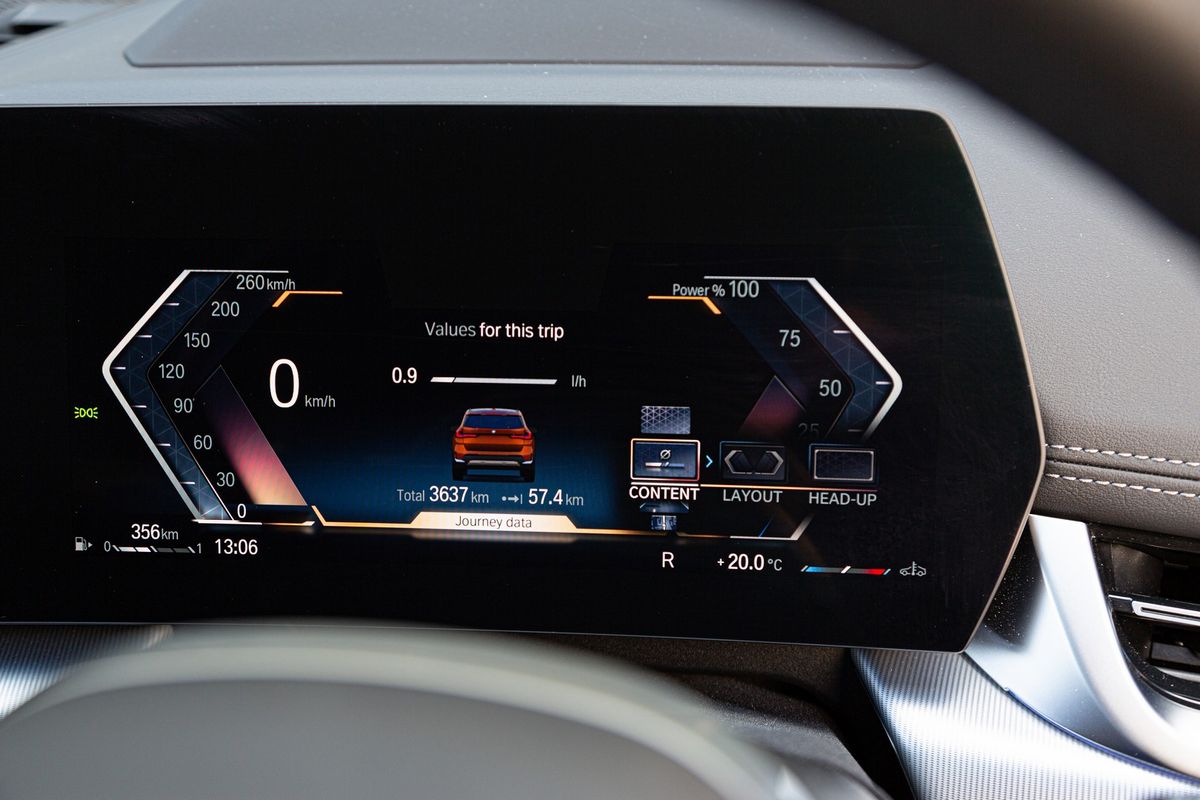
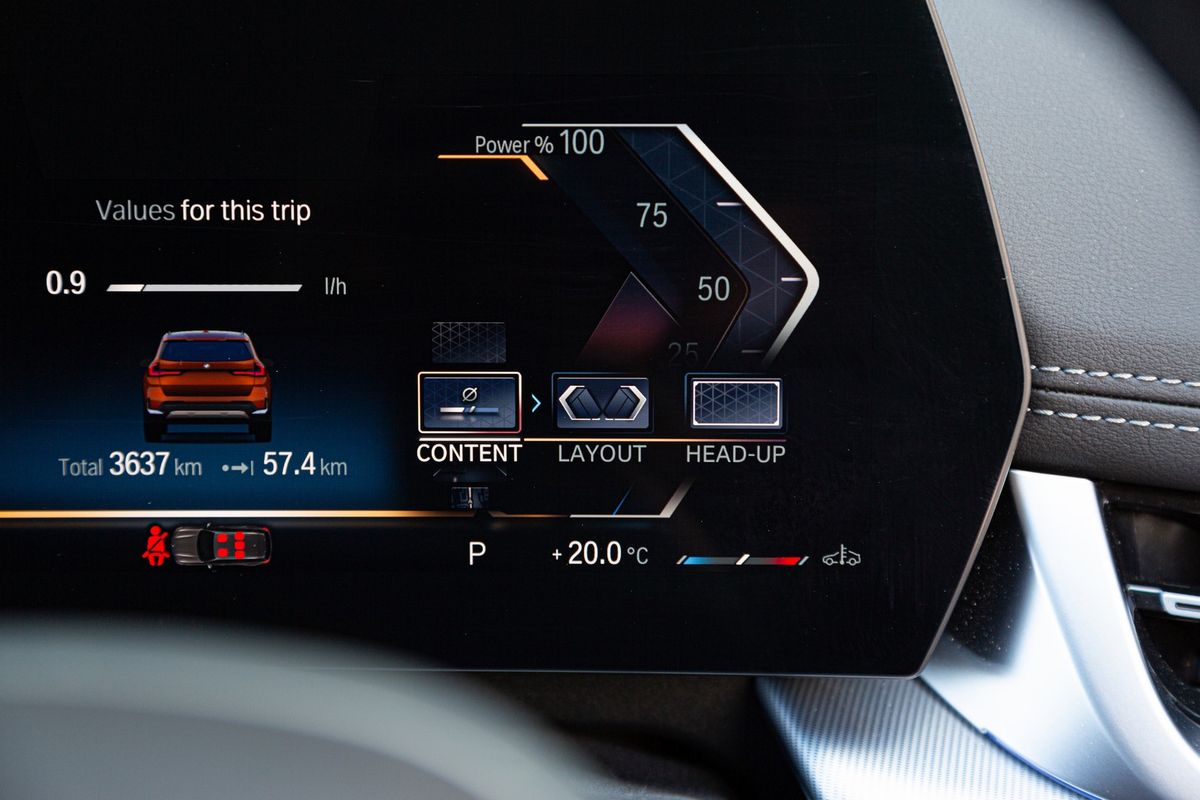
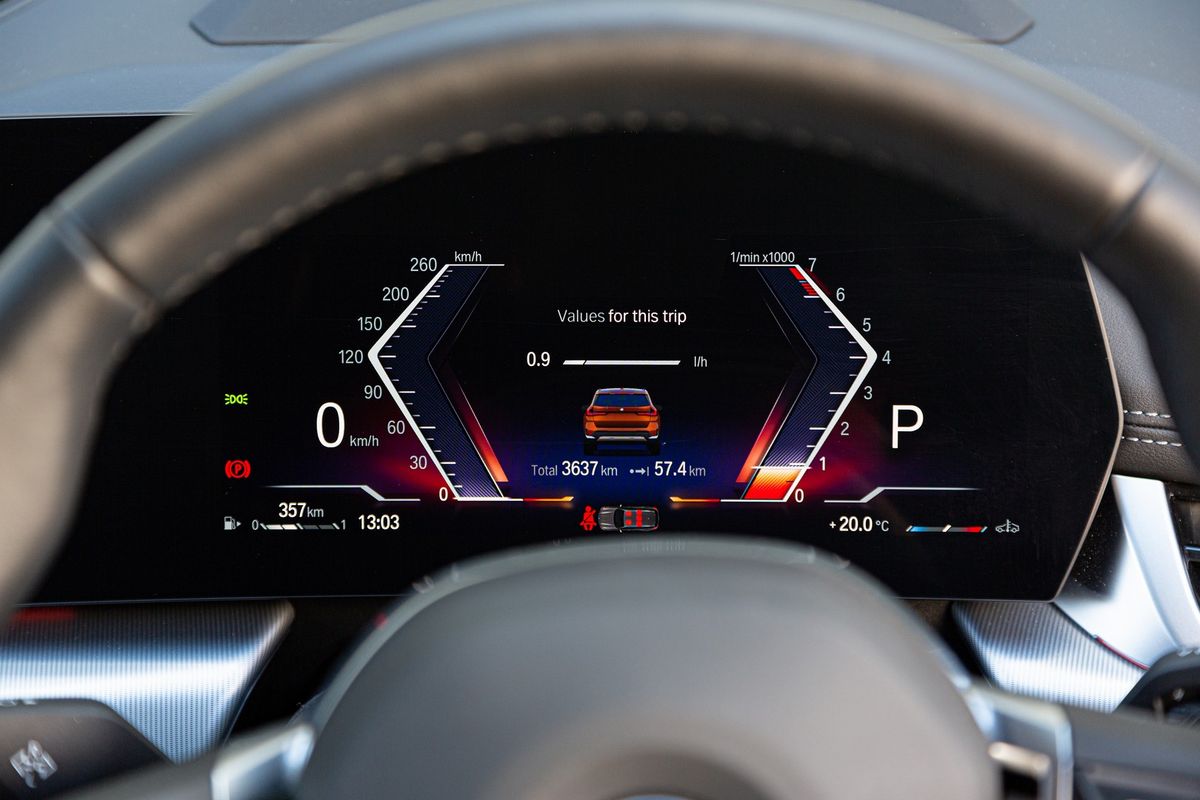
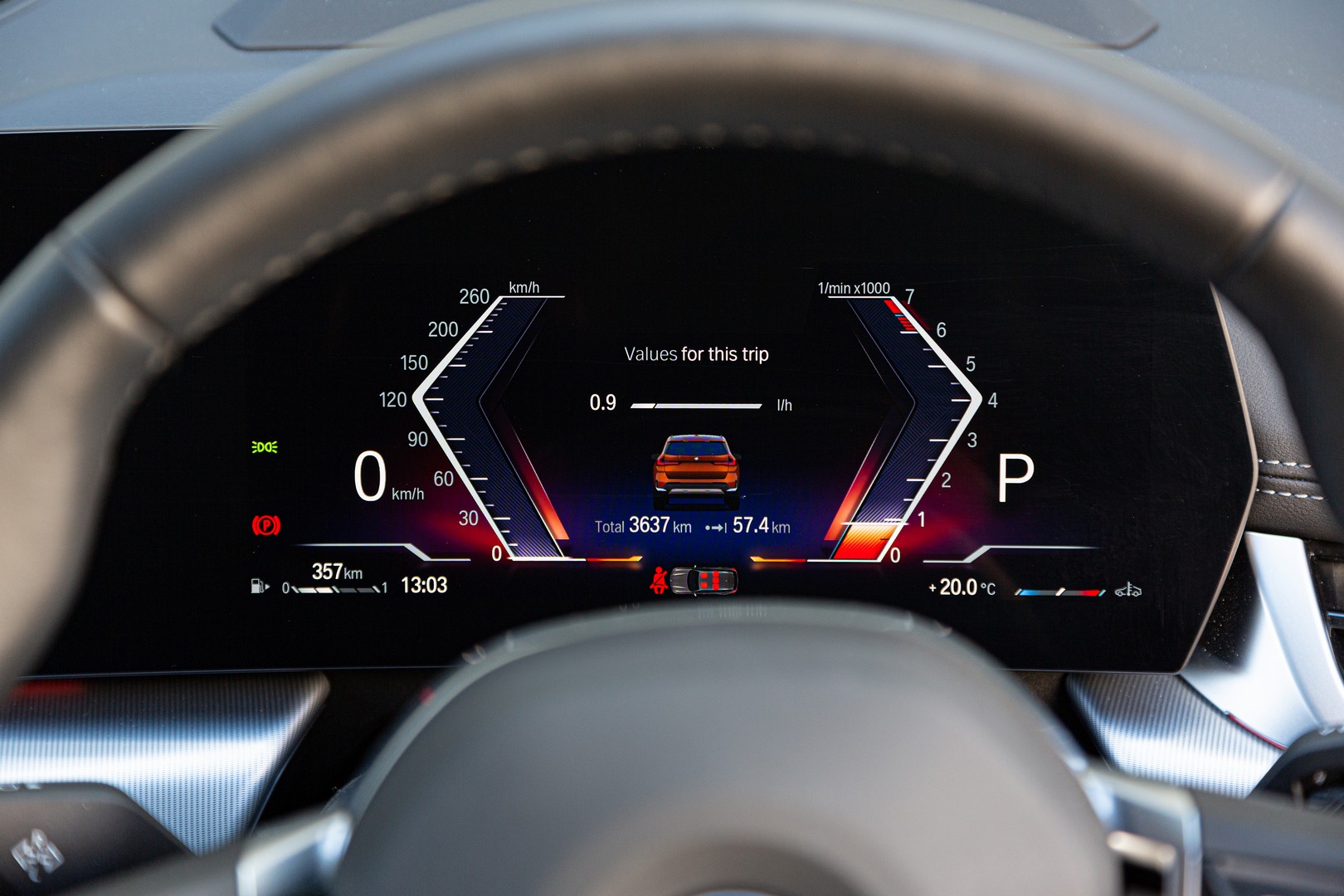
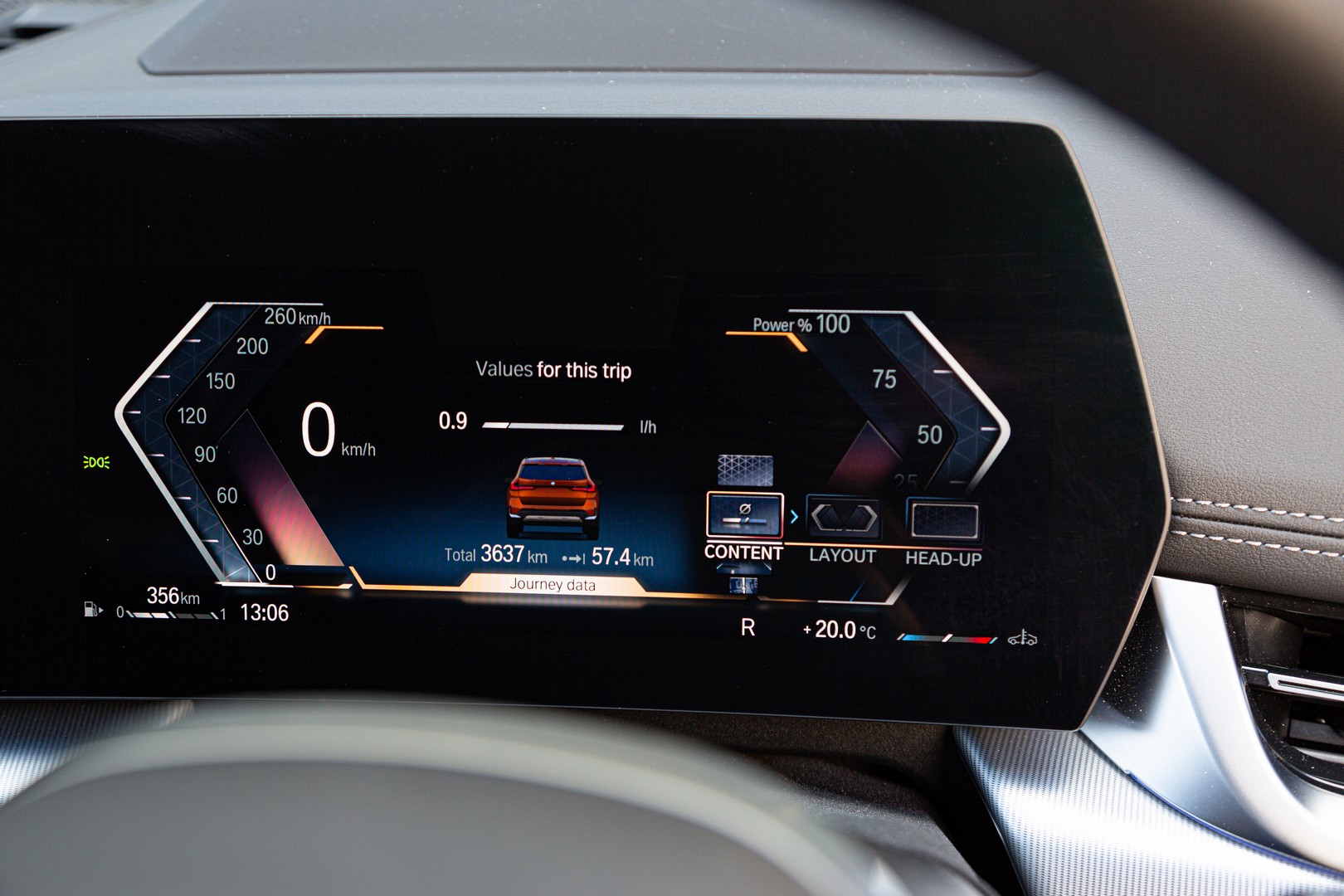
The new digital instrument cluster, however, is rather quirky. Its layout simply looks too busy, in a quasi-futuristic kind of way. There’s no traditional layout with circular dials, but you can customise the display.
No dials here, just these digital chevron displays
As far as optional extras are concerned, our X1 sDrive18i xLine test unit came generously equipped. BMW SA has configured a few choice packages that group the best of the optional features together.
The Equipment package (R24 500) adds the hardware for a heated steering wheel and seats (activated via a subscription service), adaptive LED headlights, comfort access and the wireless charging cradle.
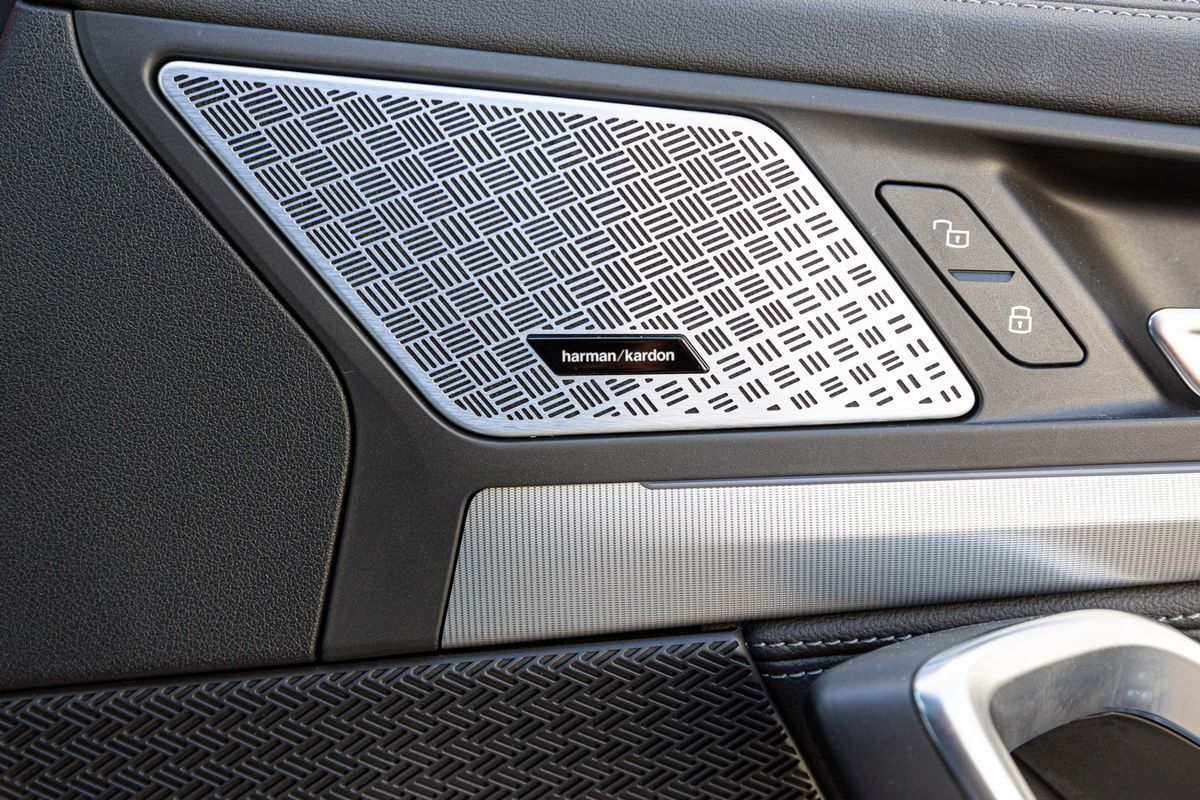
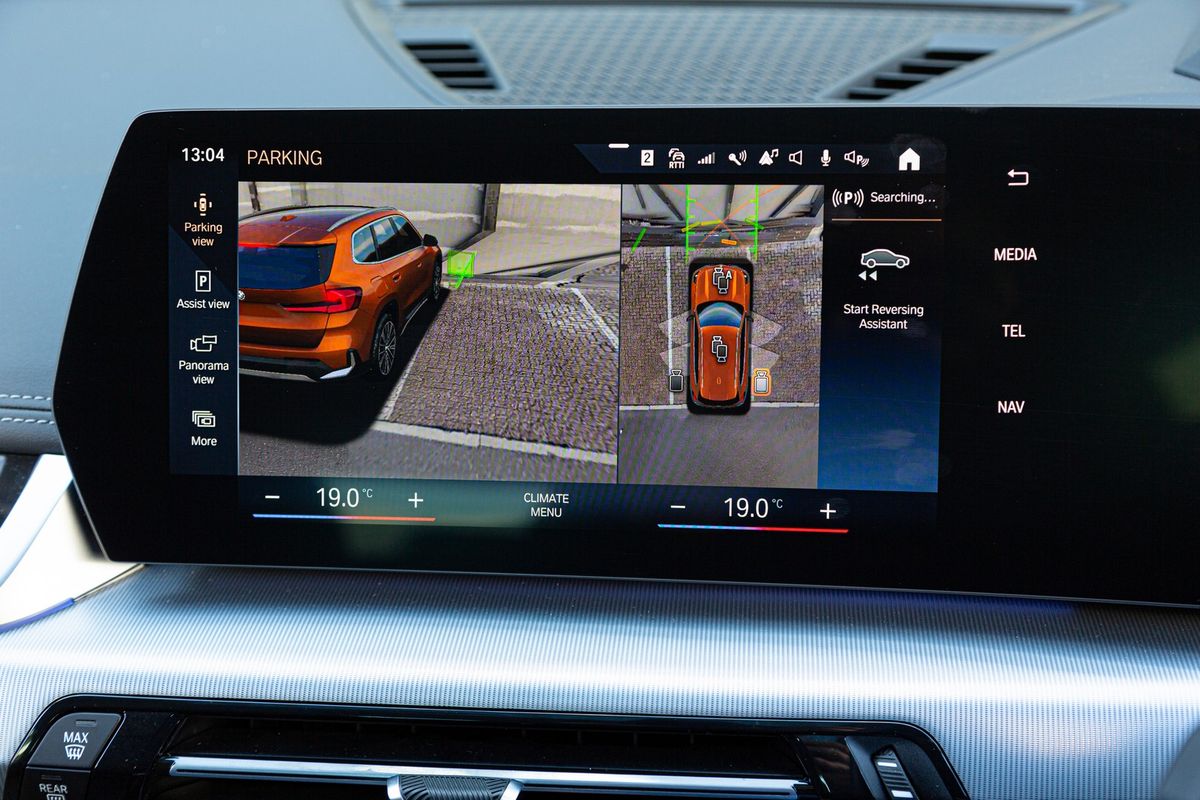
The Deluxe package (R40 000), in turn, adds the high-end Harman Kardon audio system, panoramic sunroof and electrically operated tow bar. Finally, Equipment package Professional (R43 500) includes most of the above features plus BMW Live Cockpit, head-up display, and 360-degree parking cameras.
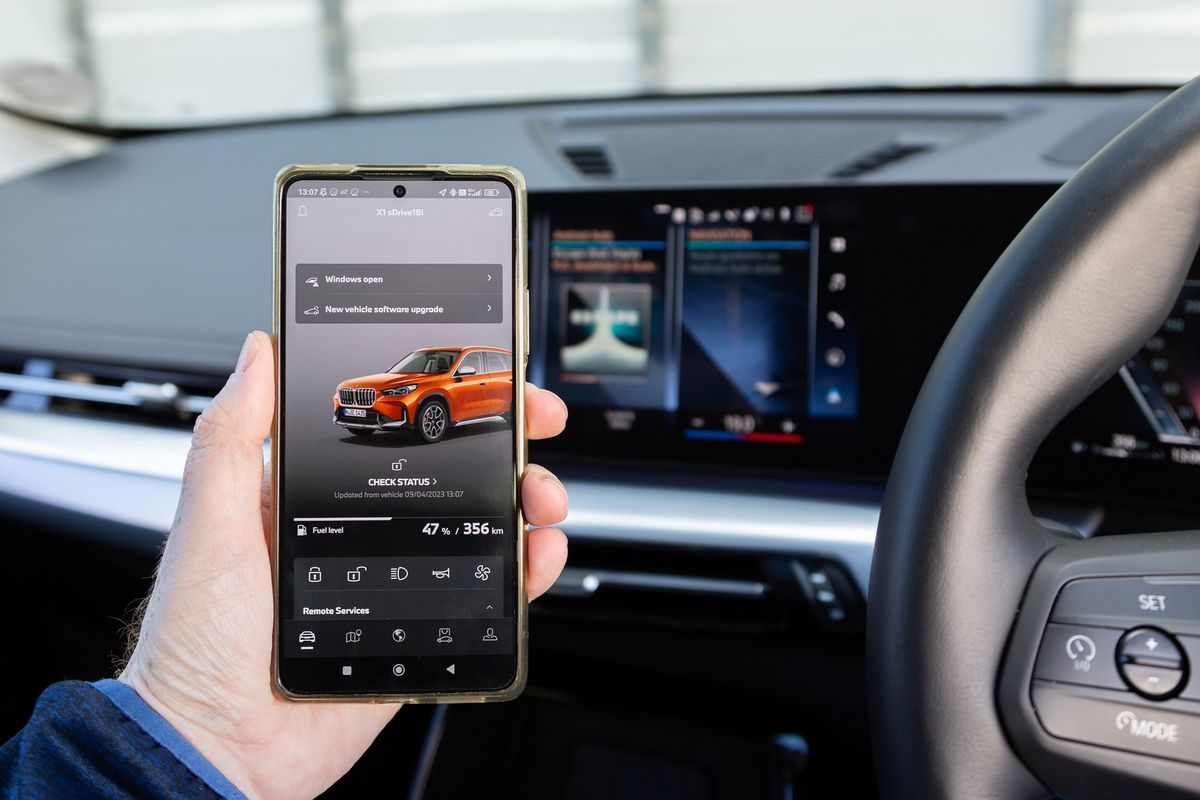
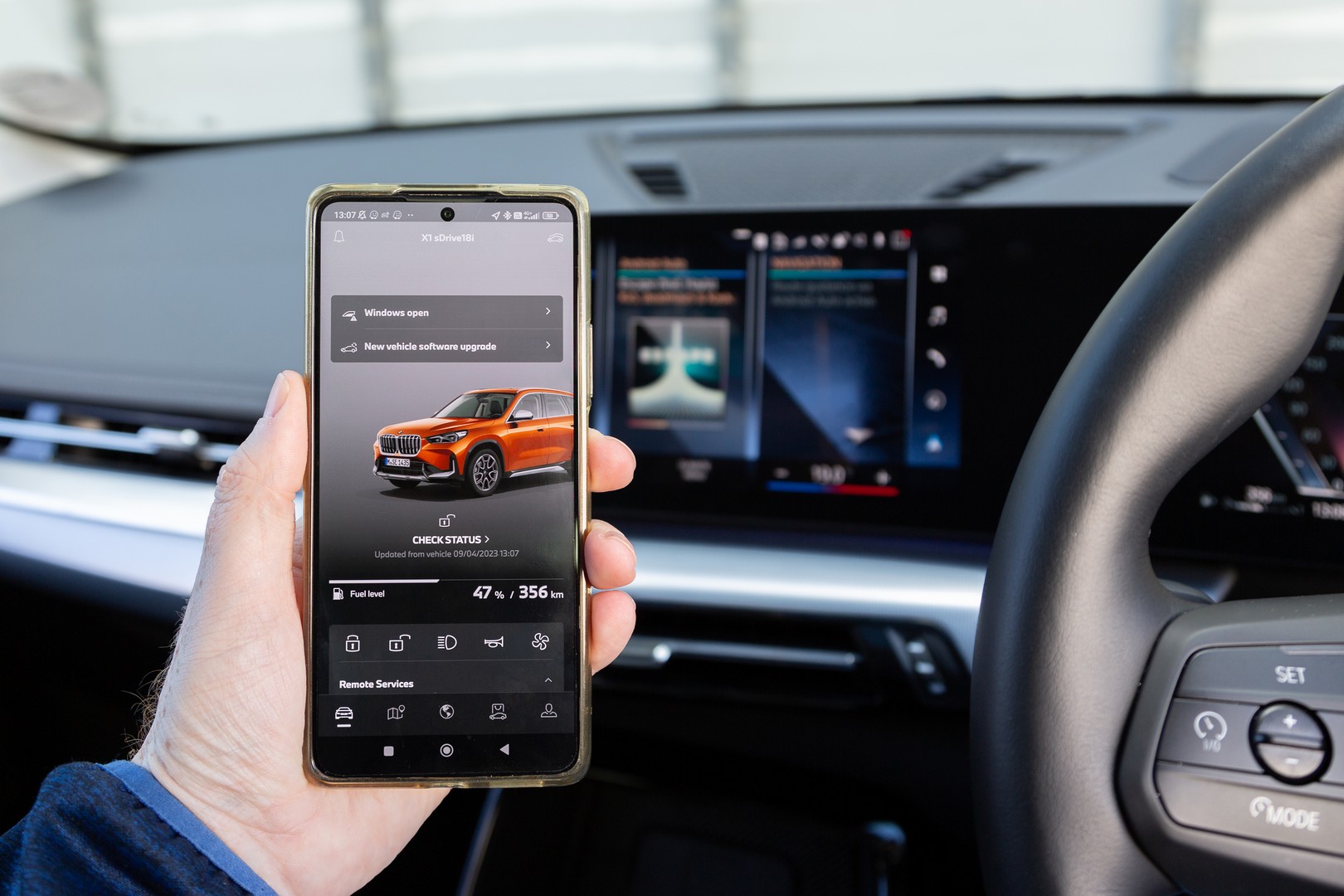
As is the case with nearly all contemporary BMW models, mobile phone app support (shown below) is included. The MyBMW app allows you to lock/unlock your car remotely, view error messages and more.
For tech-savvy customers, the MyBMW app is very useful (also when you forgot where you parked your car).
Price & After-sales Support
The BMW X1 sDrive18i xLine costs R768 045 (April 2022); we worked out our test unit was specced to about R866 000. The list price includes a 2-year warranty and a 5-year/100 000 km maintenance plan.
Verdict
The BMW X1 seems a big step ahead of its rivals (in an albeit tiny niche of the market).
The 3rd-generation BMW X1 incorporates several significant improvements over its predecessor and the range’s line-up is diverse. The U11-generation model’s driving dynamics, packaging and refinement are generally good, and while some of the in-car technology (in particular, the highly digital user interface) takes some time to get used to, there’s denying that the new BMW X1 is a very accomplished product.
Not only does the new X1 set benchmarks in its own niche segment (although, to be fair, apart from the Alfa Romeo Tonale, the Bimmer’s rivals have been around for a while) – it throws a lifeline to the current BMW X-model or sedan owners who need to “buy down” and would otherwise have left the brand.
Here’s a first look at the updated 2024 Mercedes-Benz E-Class which has just been revealed. The changes are considerable, check it out.
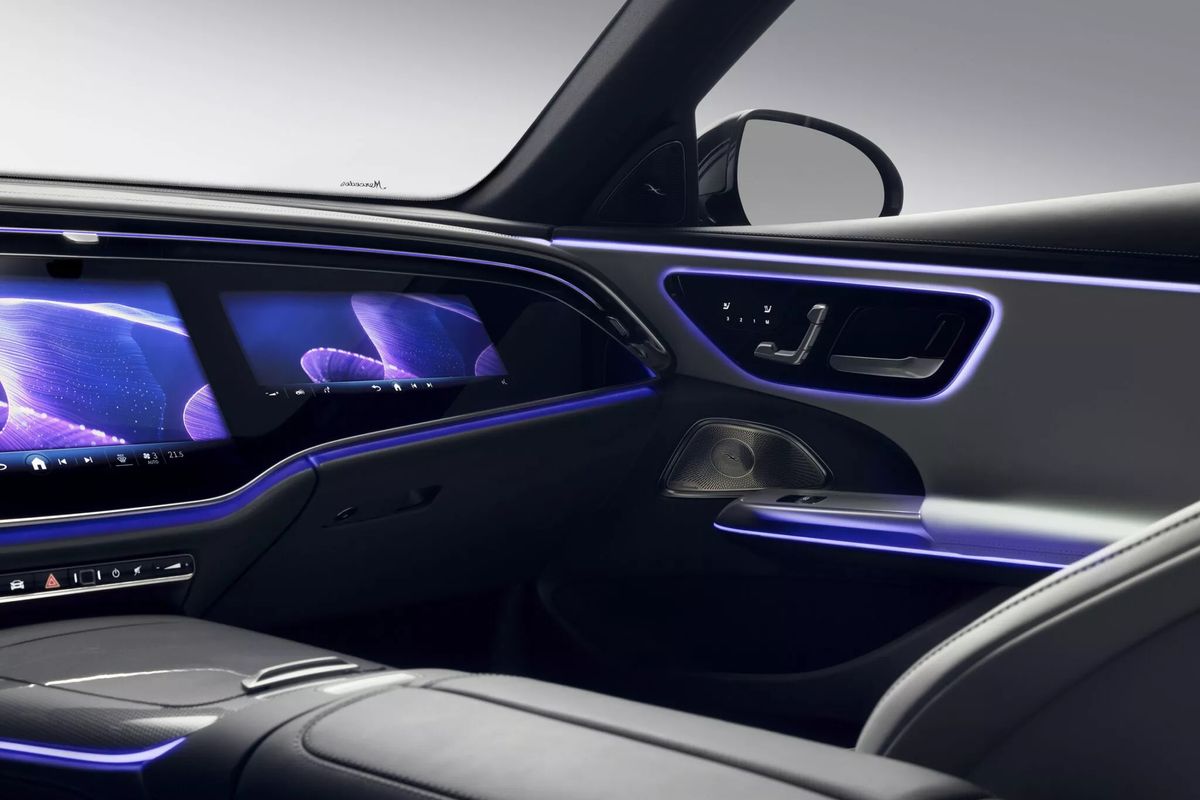
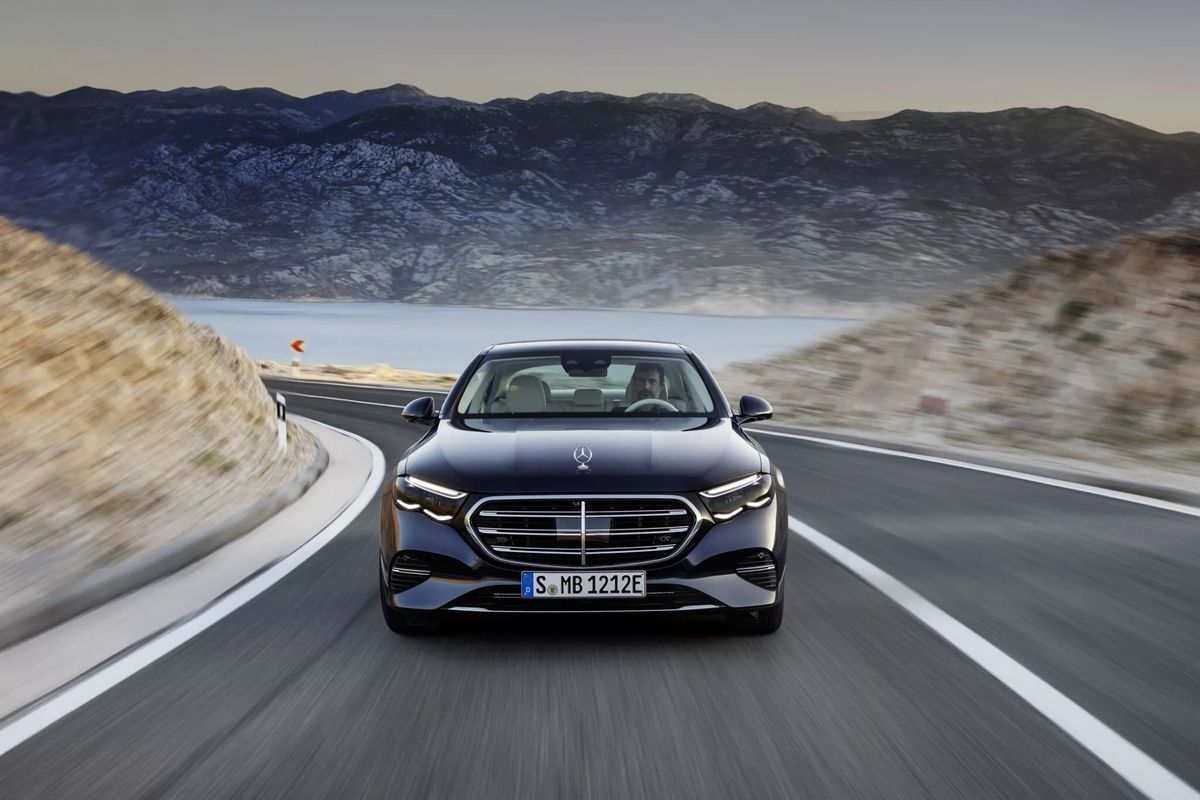
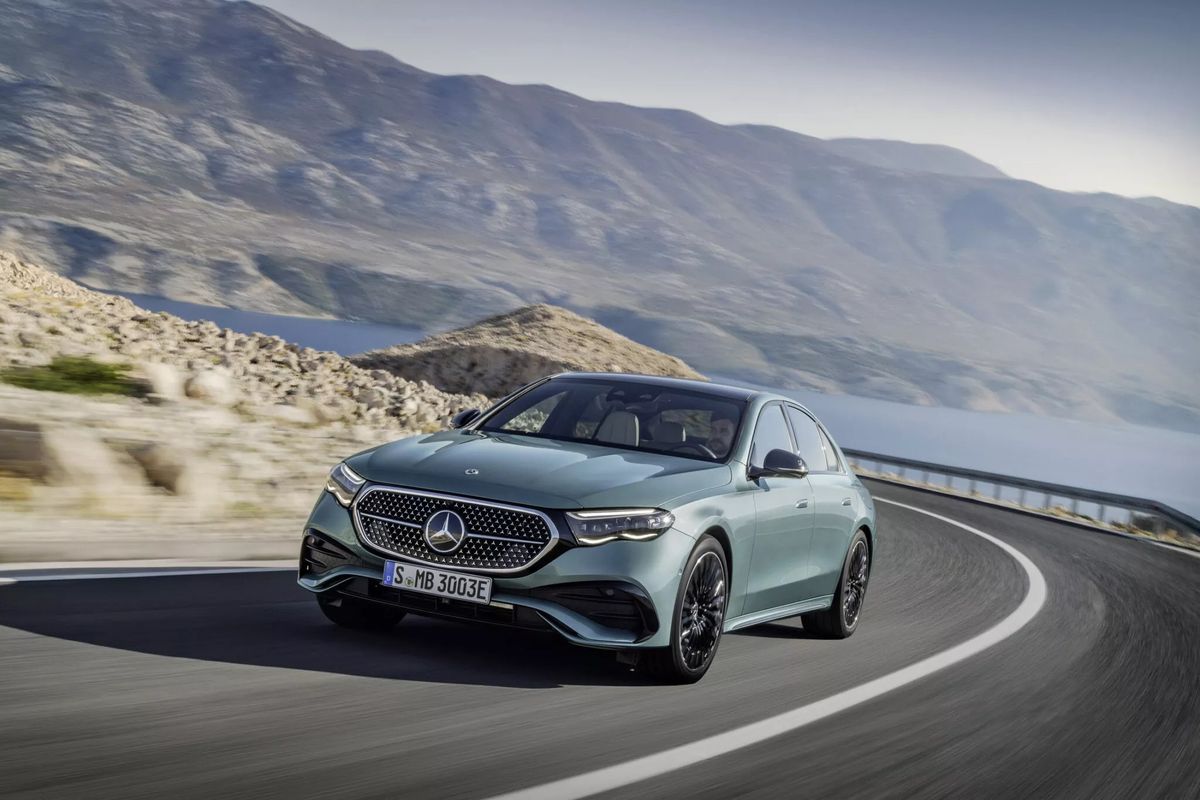
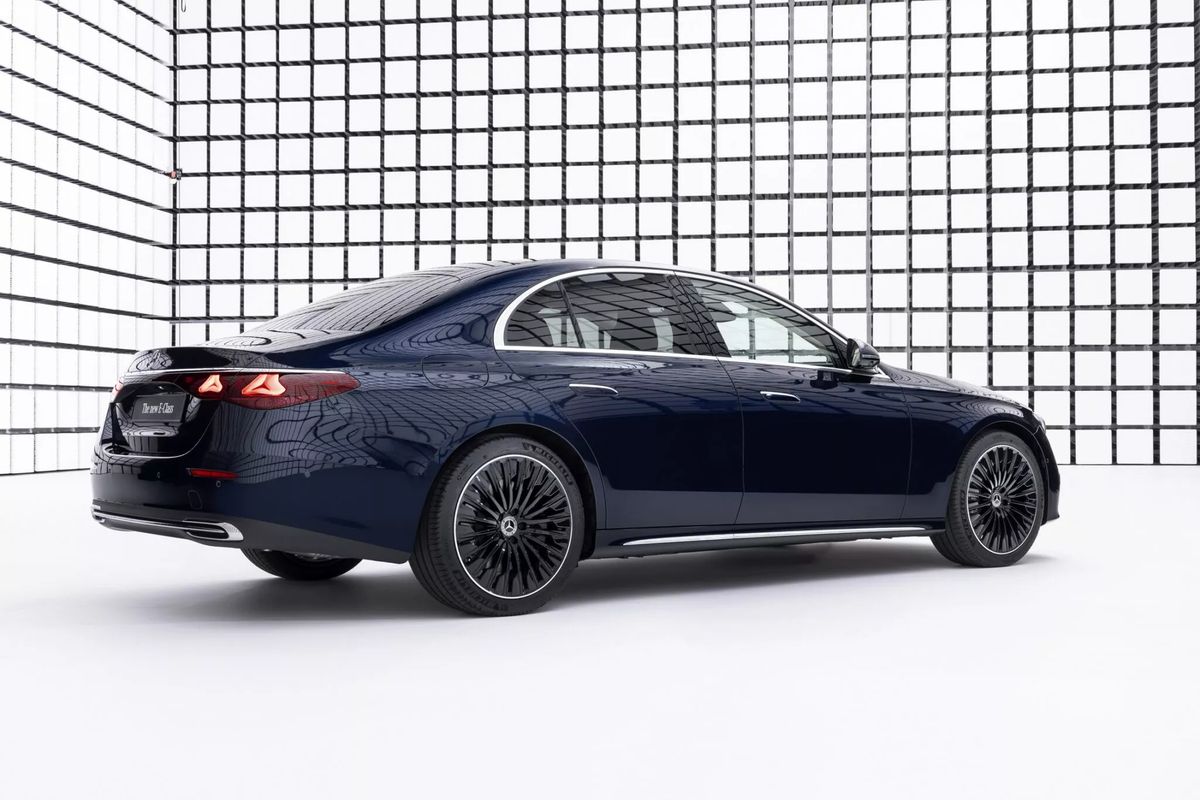
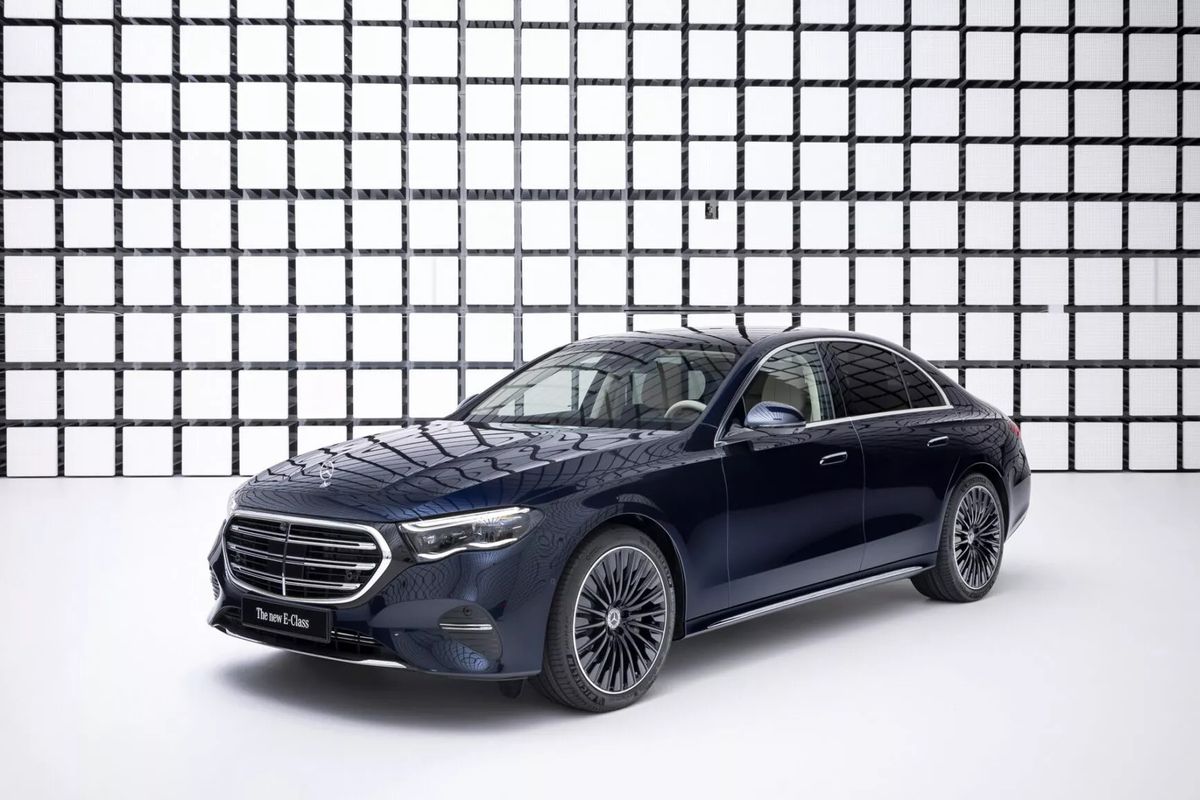
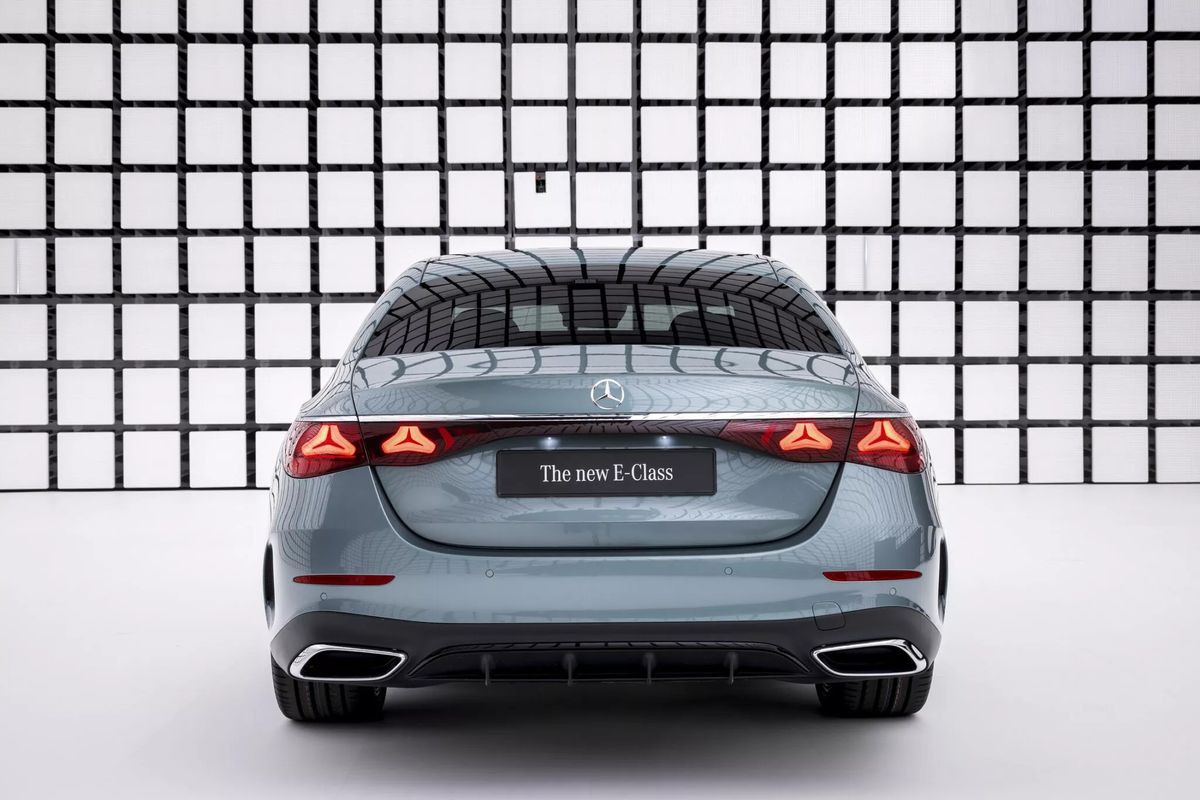
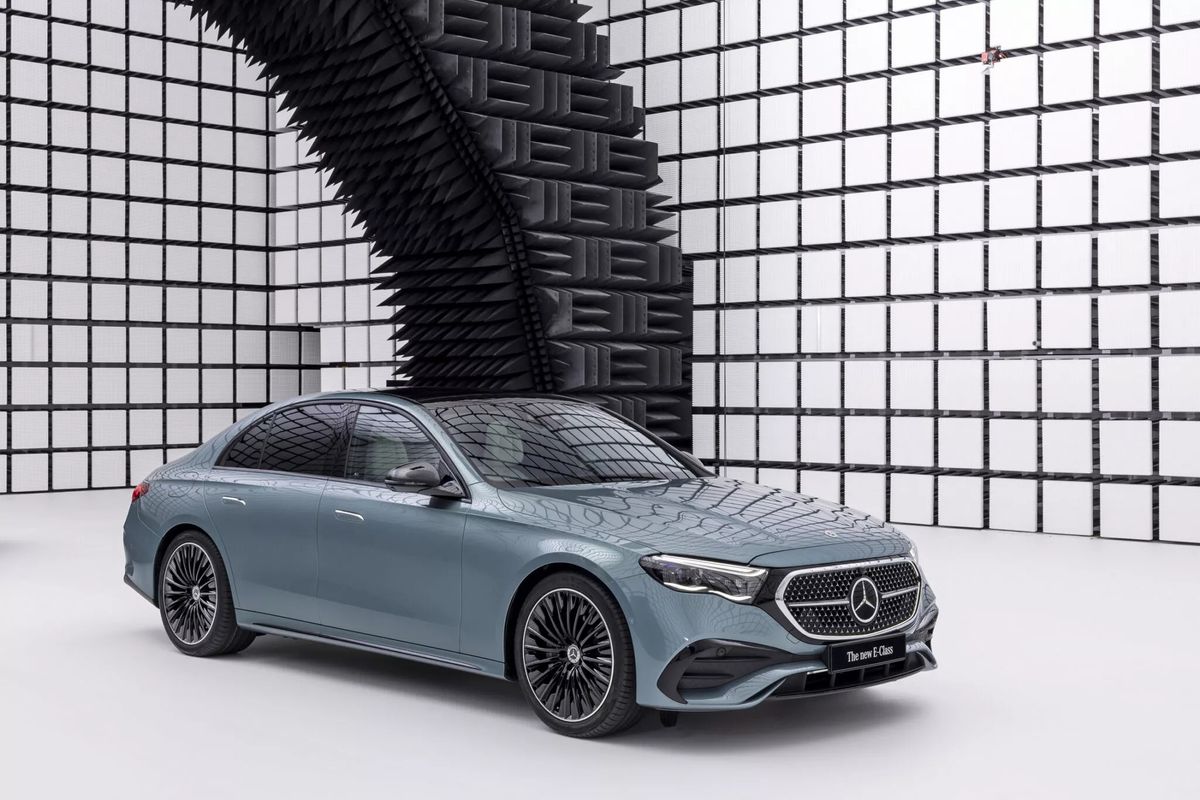
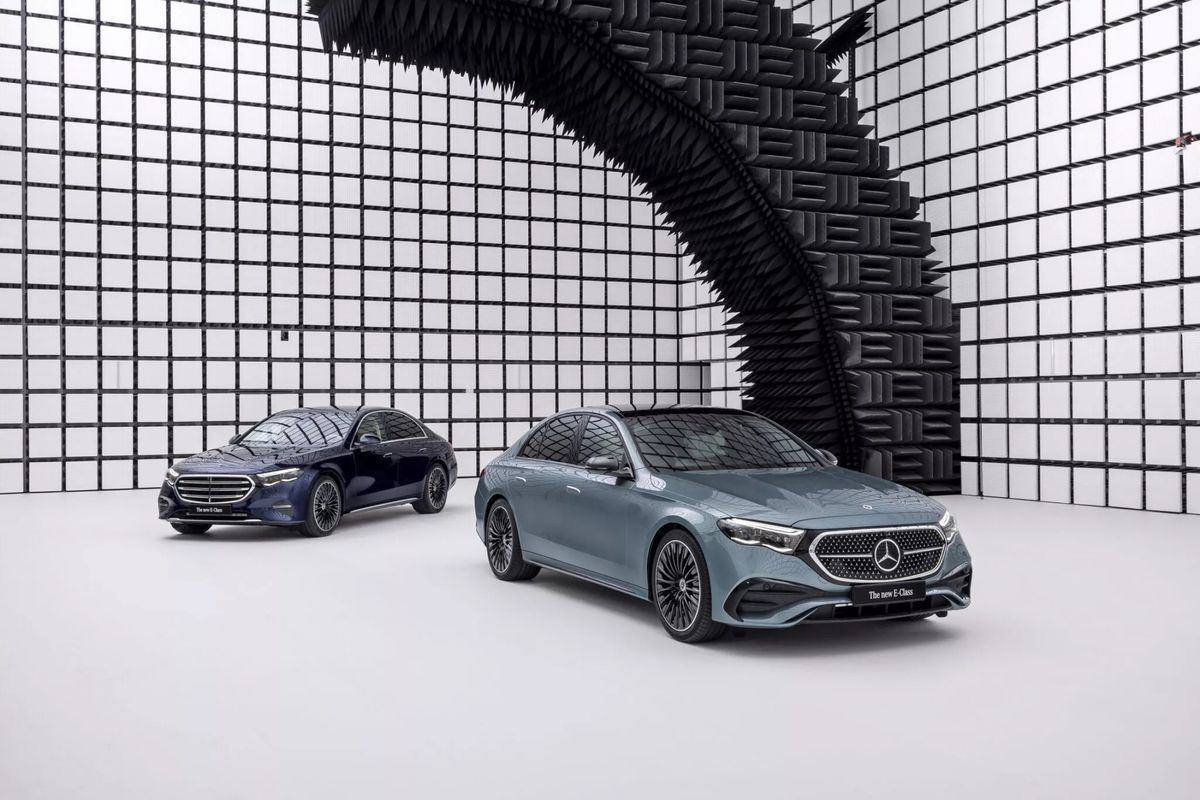
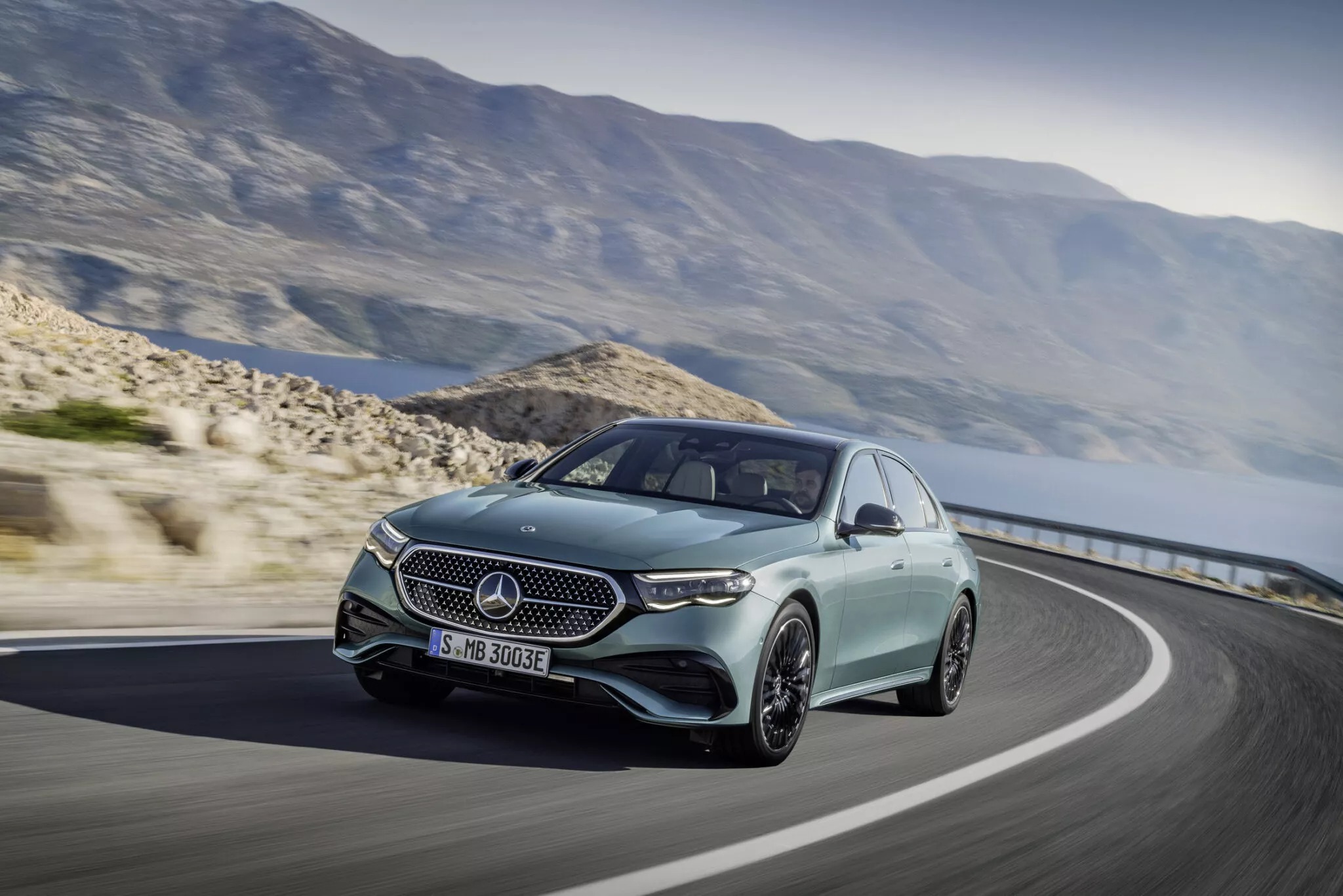
After an extensive teaser campaign, the updated 2024 Mercedes-Benz E-Class. Borrowing some styling elements from the flagship Mercedes-Benz S-Class, the new E-Class still retains some unique individual elements to separate it from the S and the lesser C-Class, like the unique headlights and tail lamps.
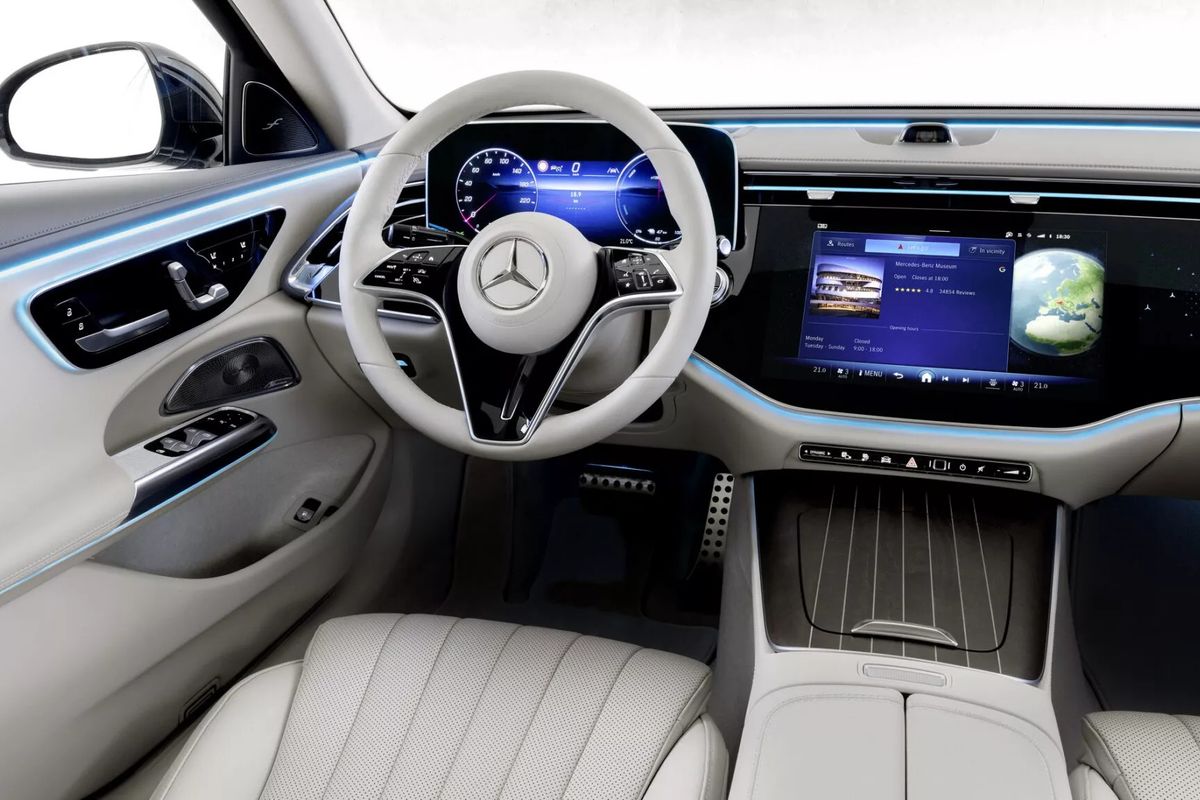
What you see here are two trim levels of the updated 2024 Mercedes-Benz E-Class; Progressive AMG Line and Classic Exclusive. Progressive’s grille features plenty of tiny stars while the Classic is your standard conservative slatted grille.
Under the skin, the E-Class wheelbase has grown by 22 mm to further increase cabin space, with the Stuttgart-based brand claiming legroom, kneeroom and elbowroom have grown. Overall, the 2024 Mercedes-Benz E-Class is oh-so-close to being 5 metres in length.
Cabin and technology
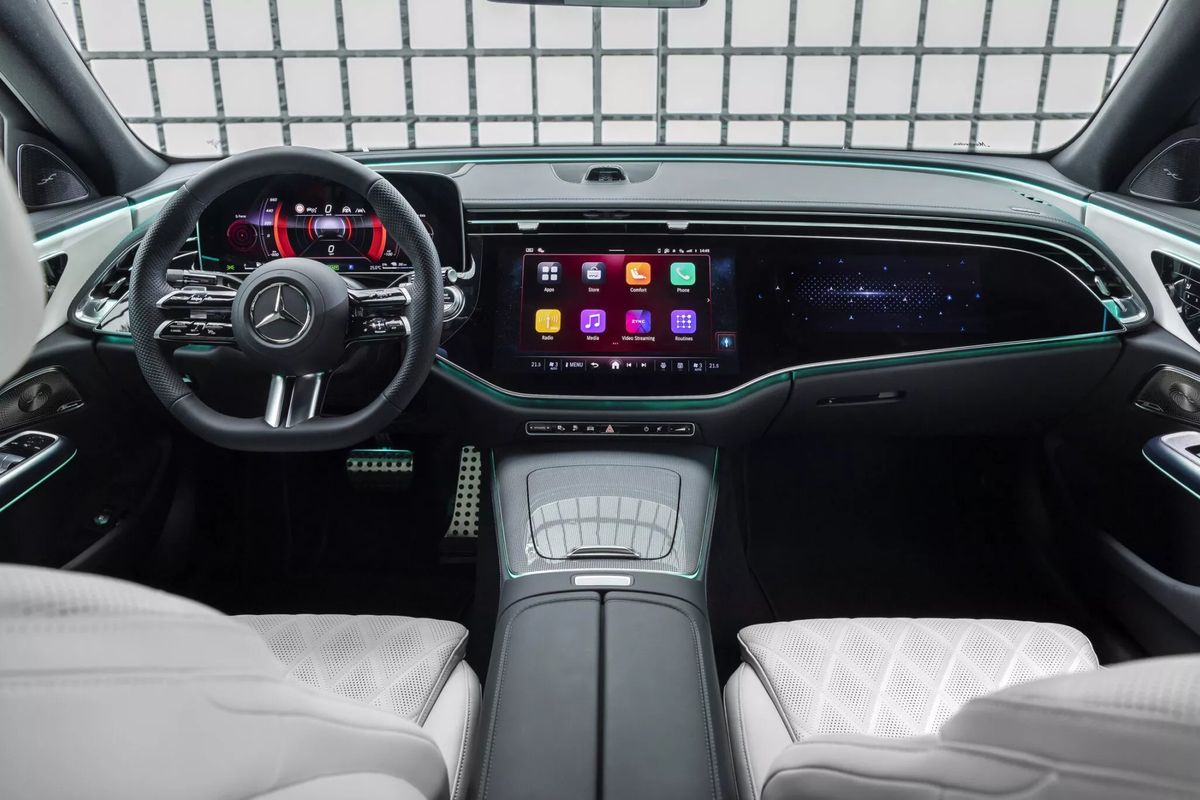
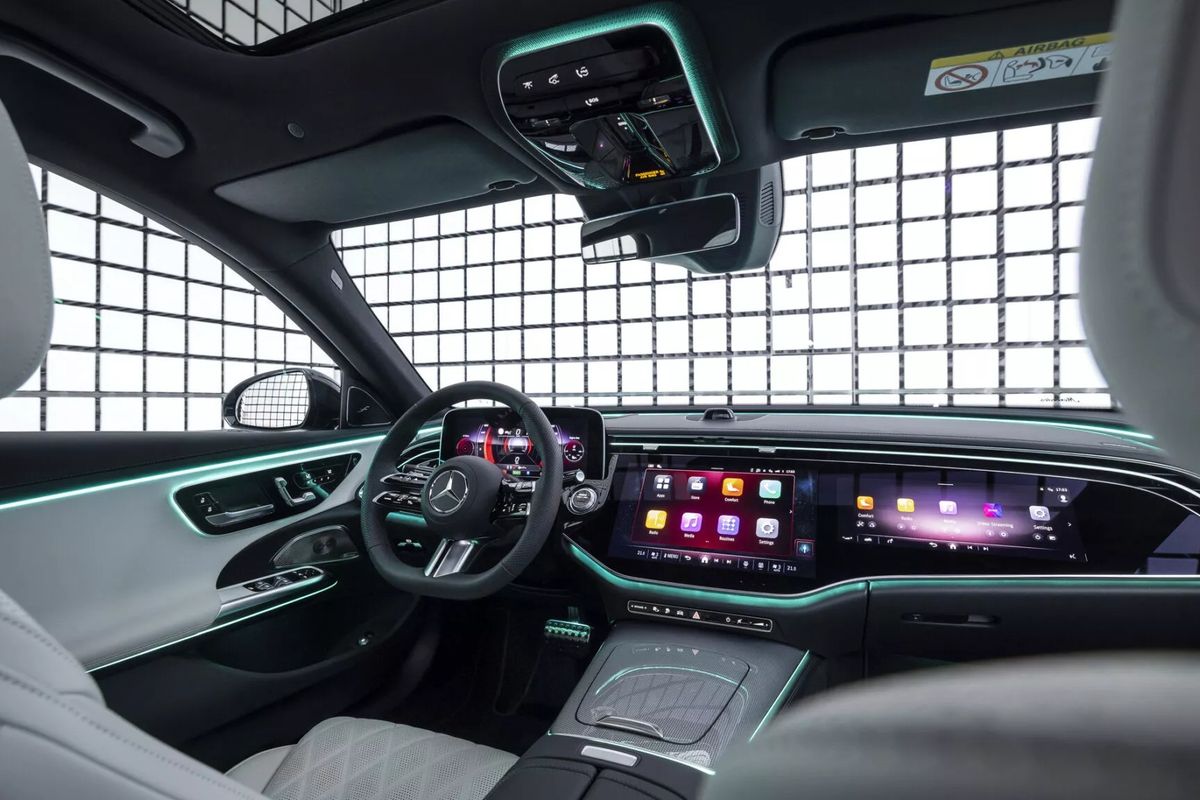
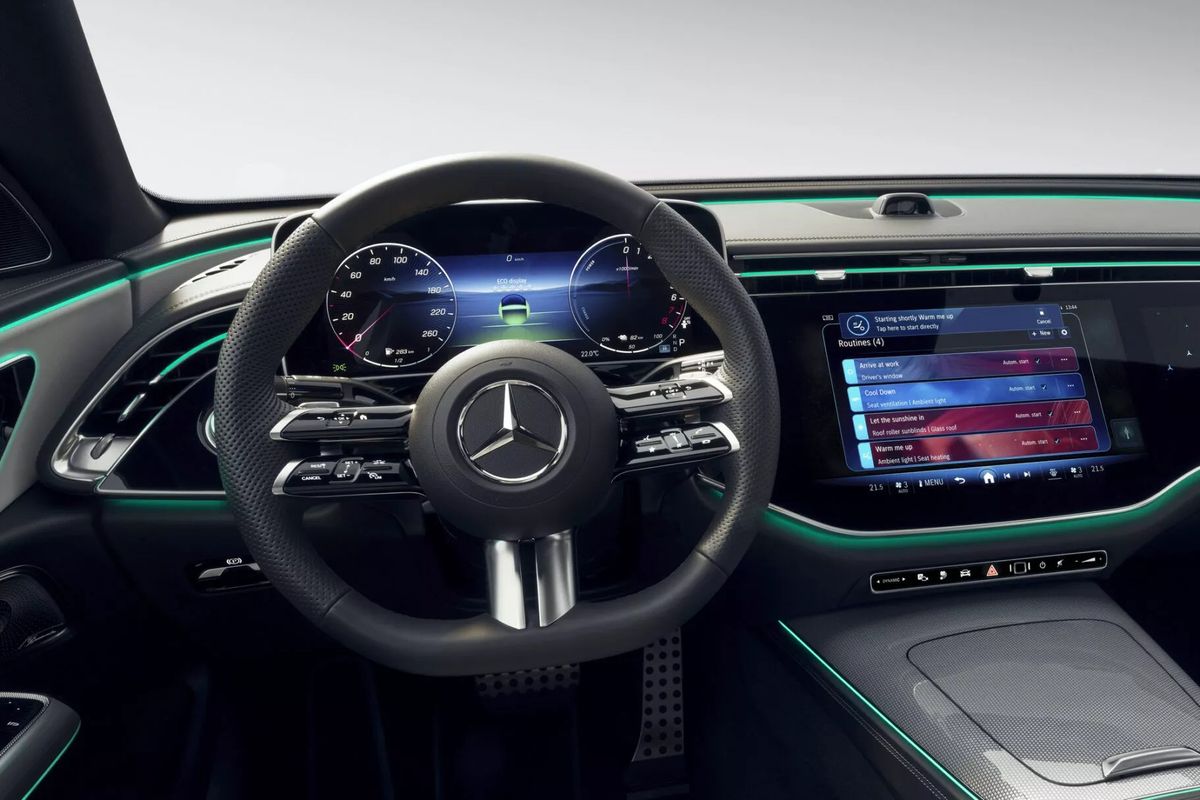
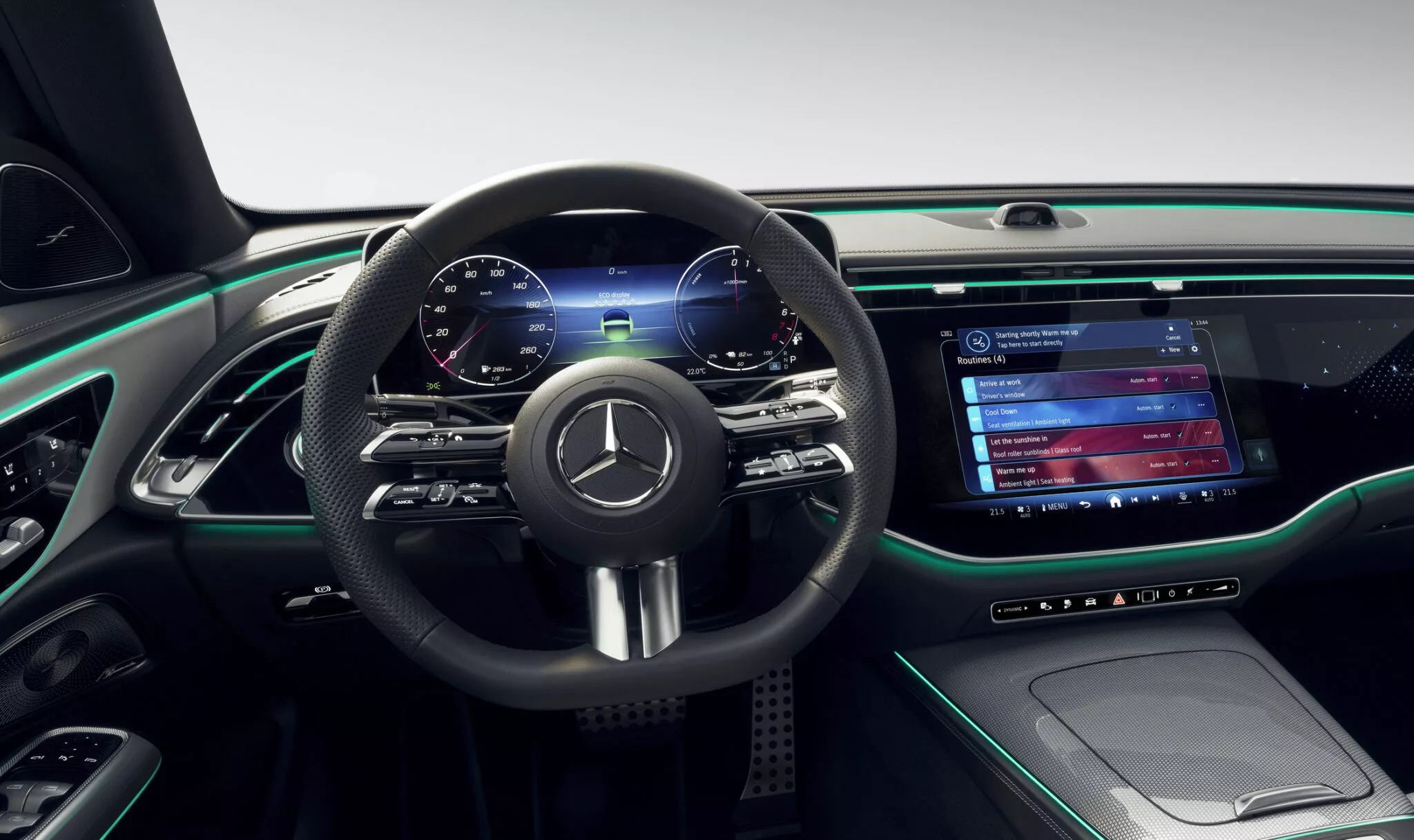
Climb in and the cabin is reminiscent of the flagship S-Class with a full arsenal of tech and digitalisation. The new model features a digital instrument cluster and an MBUX central infotainment screen, but as you can see that system can be expanded into a passenger display located above the glove compartment.
Merc is a firm believer in connectivity and claims that streaming content and social media is the next big thing for cars. The new E-Class features a selfie camera and is able to access platforms like TikTok and play games like Angry Birds. The new E-Class has a face monitoring system and will deactivate the content if it thinks the driver is not looking at the road.
2024 Mercedes-Benz E-Class Engines
For the European market, the Mercedes-Benz E-Class range is electrified, but not fully electric. If you’re wanting the latter, check out the Mercedes-Benz EQE. Every internally-powered combustion engine has 48V hybrid technology and some are plug-in hybrids.
The entry point is the rear-wheel-driven E200 petrol (150 kW), followed by the diesel E200d (145 kW) which is available in either rear-wheel drive or 4Matic all-wheel drive. All have a claimed 0-100 kph time of around 7.8 seconds.
If you go the plug-in hybrid route, the 2.0-litre 4-cylinder petrol engines are paired to 95 kW electric motors that provided up to 100 km of pure electric range. They’re badged as the E300e and E300e 4Matic and have 230 kW. For those wanting more, the E400e has 280 kW and is good for a 0-100 kph in just 5.3 seconds.
The American market is different and still leans towards big capacity motors. Kicking off that range is the 4-cylinder E350 with 190 kW and 400 Nm, while the 6-cylinder E450 features 280 kW and 500 Nm.
At this stage, it’s too early to see what Mercedes-AMG has in-store with the mighty E63 and E53.
The updated Mercedes-Benz E-Class is due to land in South Africa towards the end of 2023 or early 2024.