The VW Golf is one of the world’s most popular nameplates but its future appears to be hanging precariously in the balance as the automotive landscape continues to change and evolve at a rapid pace. Will we see a Golf 9 come to market? Maybe not…
Back in 2020, regular Cars.co.za contributor, Lance Branquinho, penned an excellent opinion piece entitled, Last Round of Golf?, which then highlighted the potential demise of the beloved Golf as the firm presses firmly towards an electrified future. If you haven’t read it, please do.
Less than a year later, in March 2021, Volkswagen announced its Accelerate strategy and therein, models such as the Golf, T-Roc, Tiguan, Passat and Tayron were all pegged to receive successors, albeit with increased electrification.
One of the key takeaways from the Accelerate strategy was that VW’s combustion engine fleet would continue to be developed in parallel to the firm’s significant Electric Vehicle (EV) ambitions.
Fast forward to the present and a change in sentiment is afoot in Wolfsburg. Volkswagen’s new CEO, Thomas Schäfer, in an interview with German publication, Welt, highlights that a decision on the future of the Golf has yet to be taken and that the fate of the popular model will be decided within the next 12 months.
More stringent Euro 7 emissions regulations are due in 2025 which is expected to hike prices for Internal Combustion Engine (ICE) vehicles as development costs increase in an effort to make combustion engines comply with the incoming regulations. These increasing costs may very well spell the end for Golf and other combustion-engined models in Europe. More so, Schäfer comments that it’s “extremely expensive” to develop a new Euro 7 compliant ICE vehicle. Many brands have already committed themselves to electrification and pressing on with ICE development for some brands is more than likely to be unprofitable going forward.
The European Union (EU) plans to ban the sale ICE vehicles by 2035, which means that we may not see next-generation Golf 9 come to fruition as Europe and indeed the world shift to electric mobility.
It’s also worth noting that profit margins on small vehicles are less palatable when the cost to develop them reaches breaking point. It’s for this very reason that some brands are wielding the axe on their smaller models — the Audi A1 and Q2 crossover and the Mercedes-Benz A-Class are good examples of this and more widespread product culling can be expected in coming months and years.
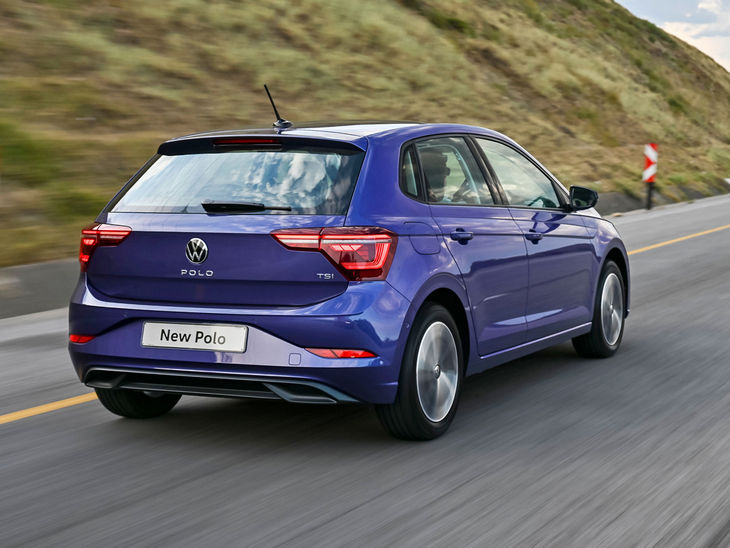
With that said, it’s not only the future of the Golf that’s hanging precariously in the balance but perhaps the locally-assembled Polo too…
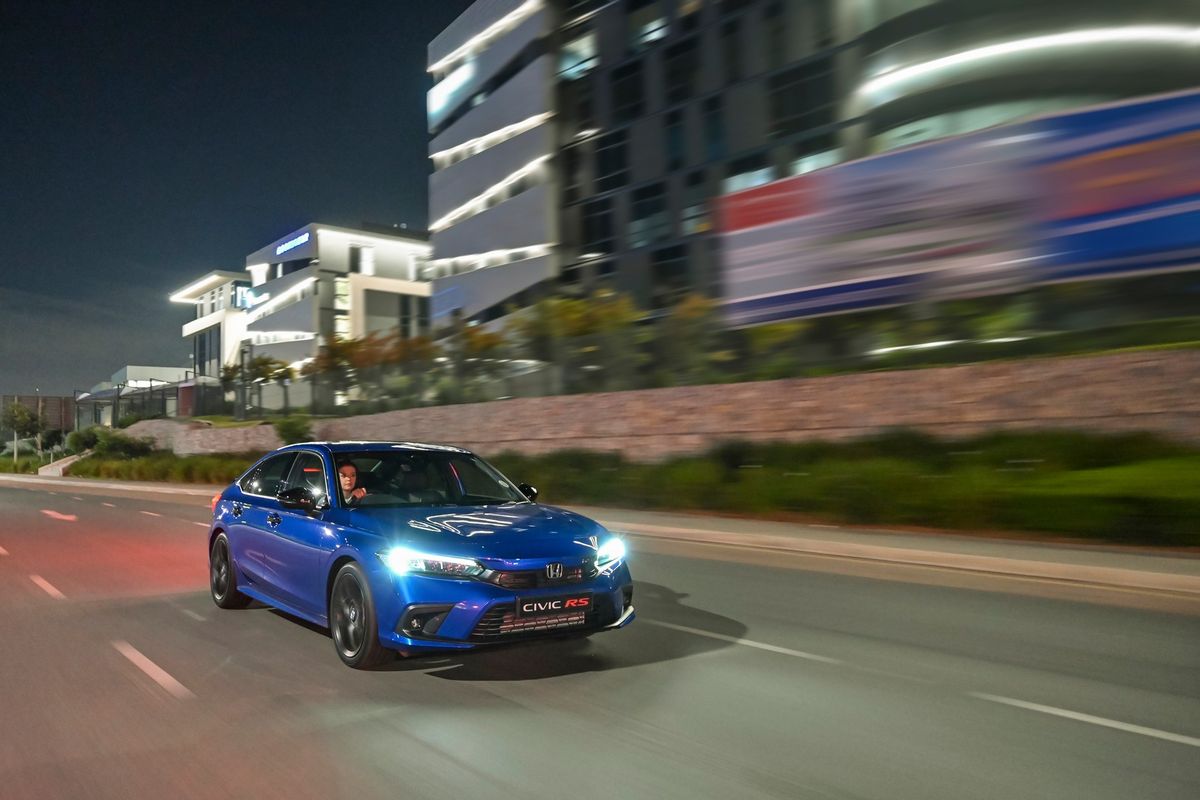
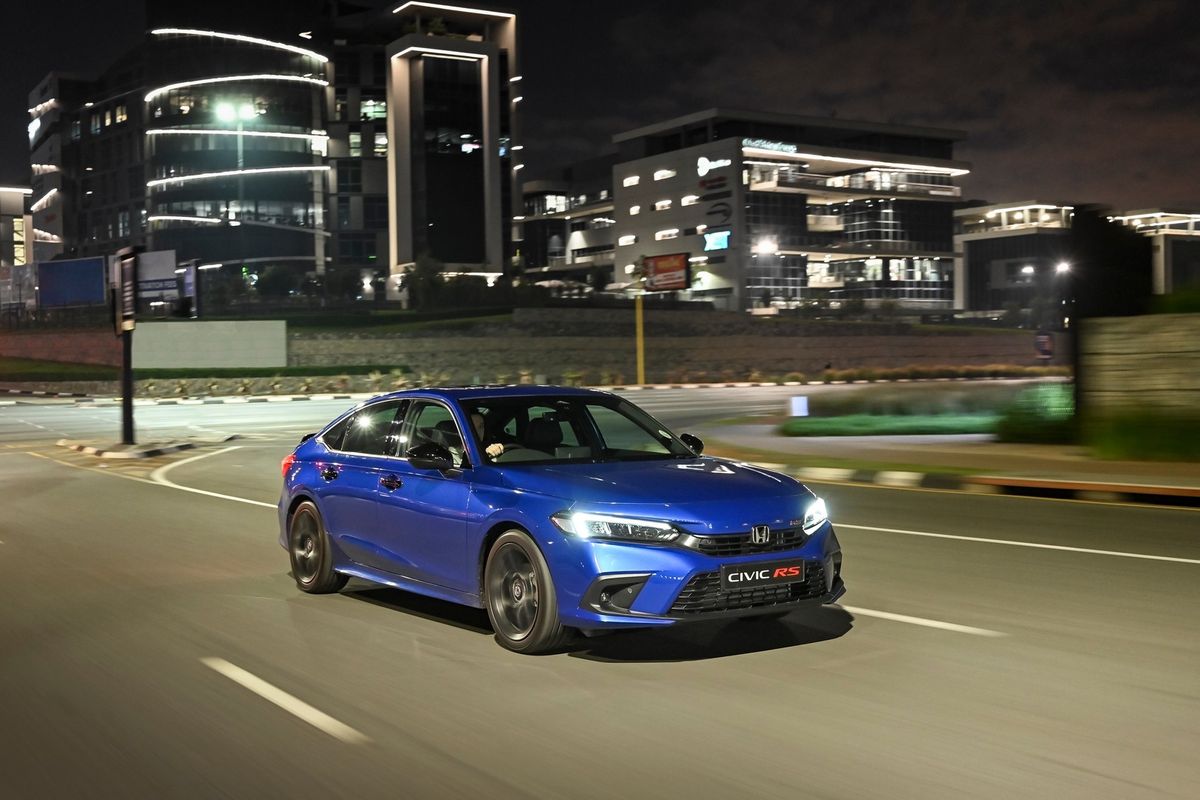
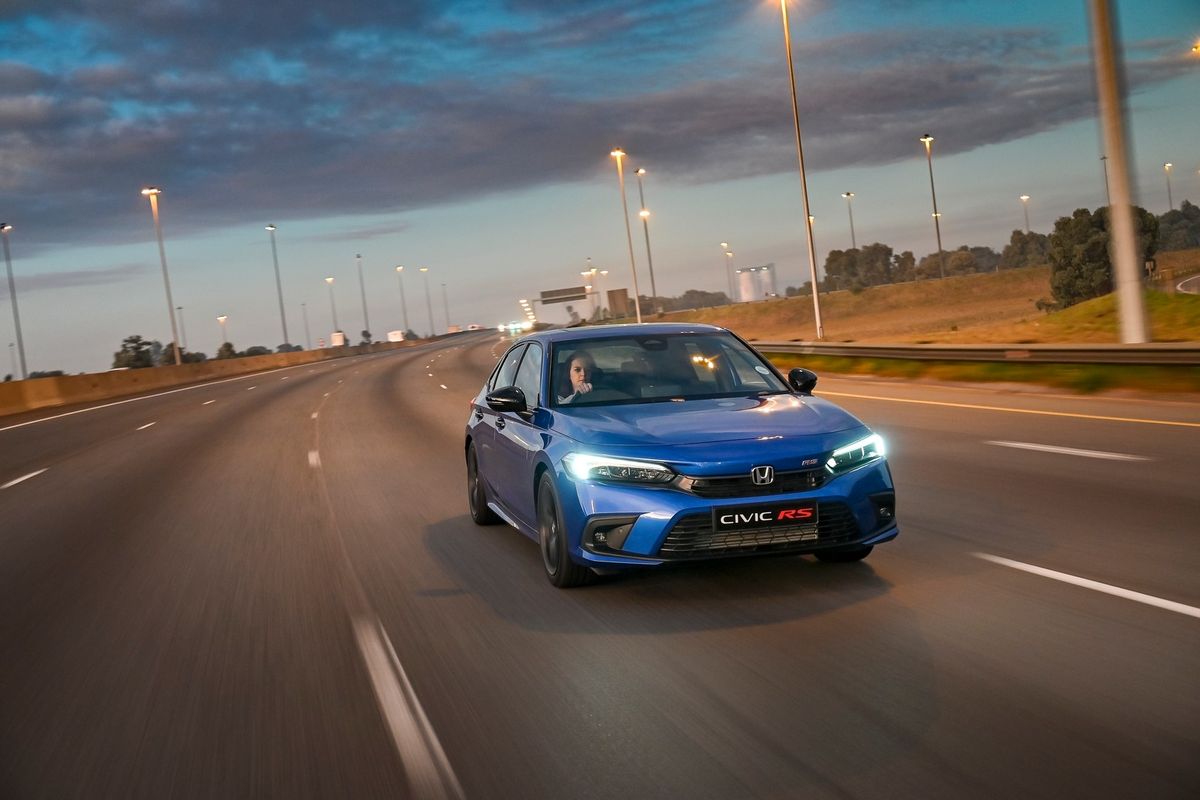
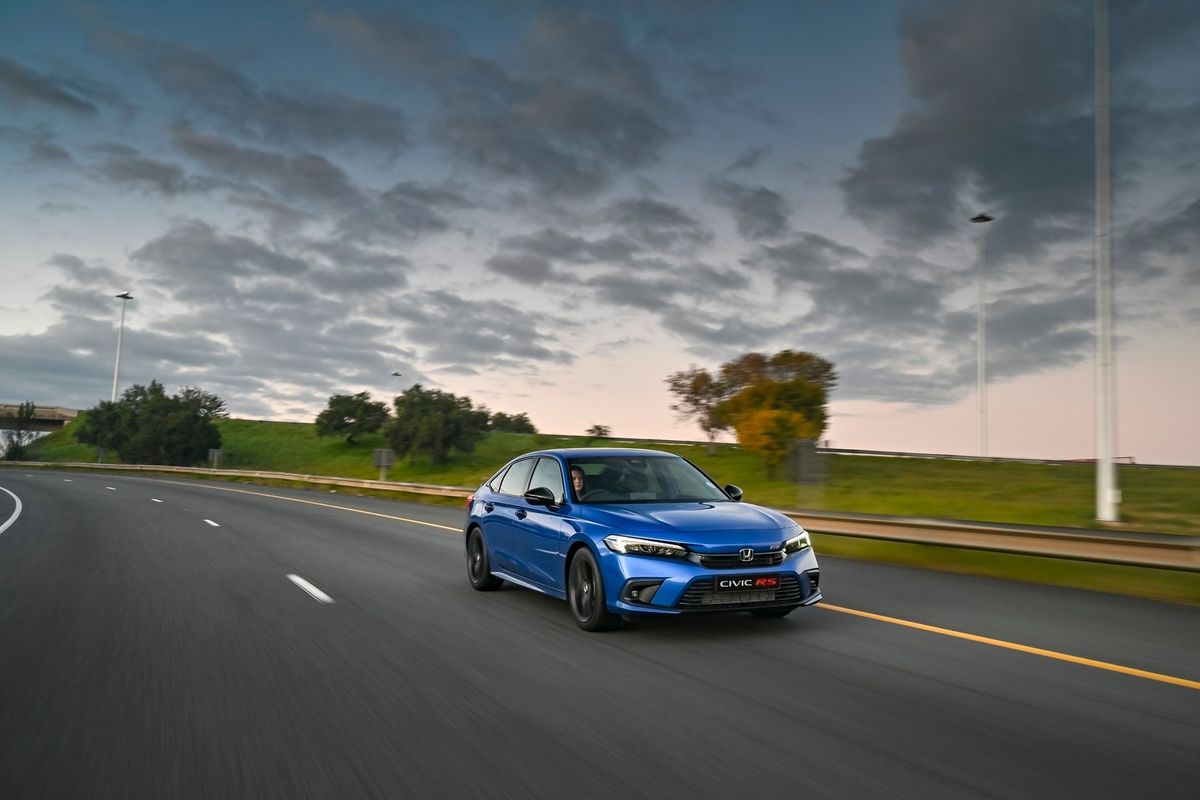
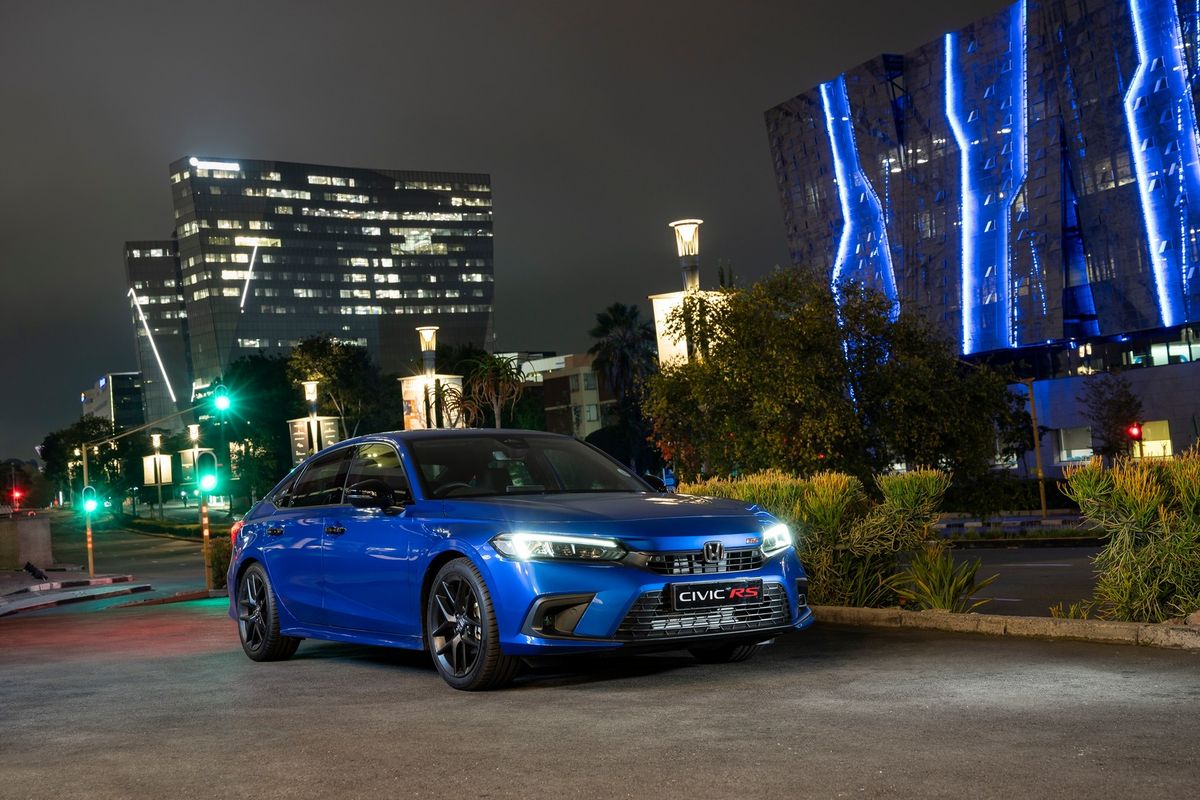
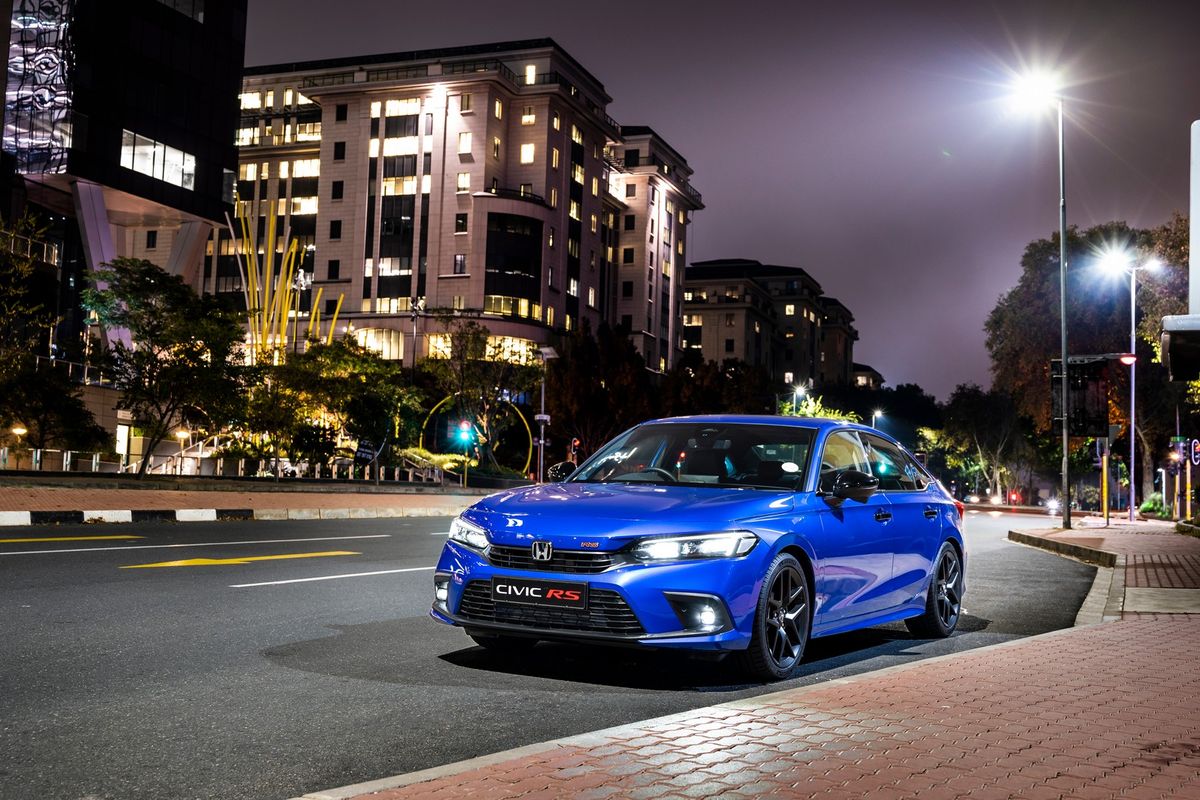
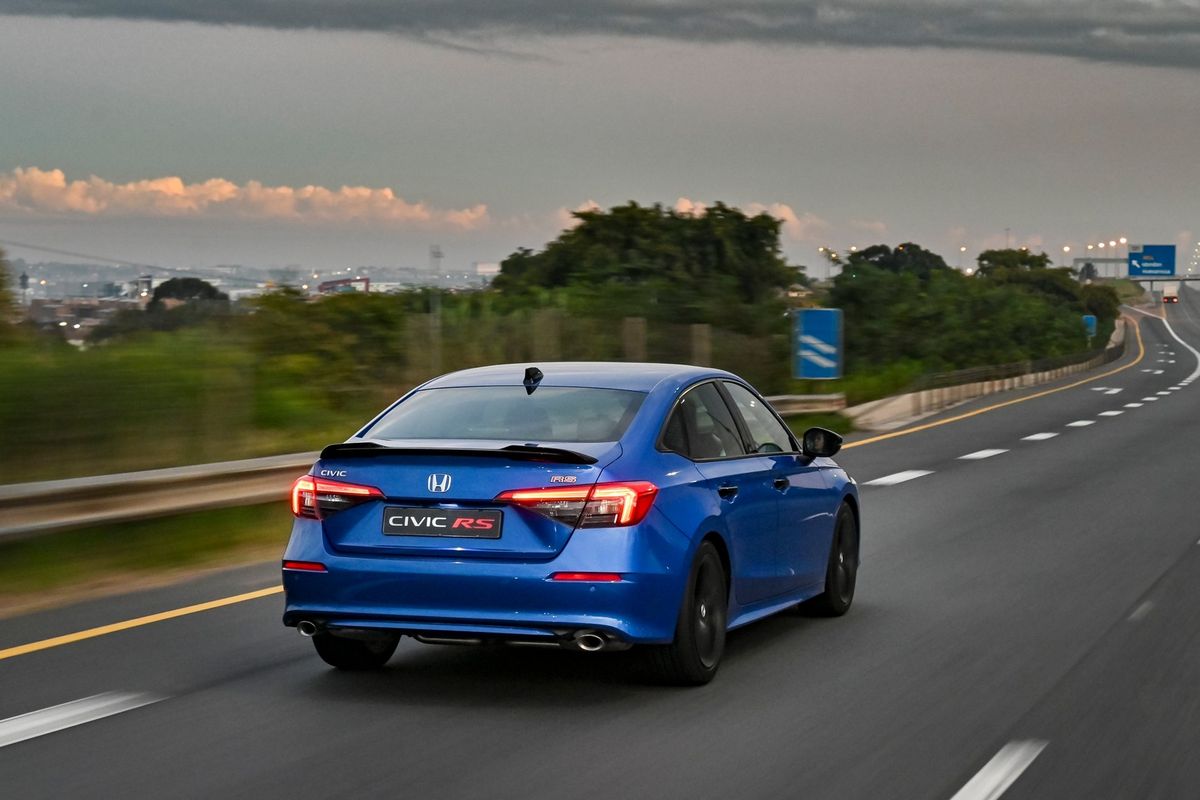
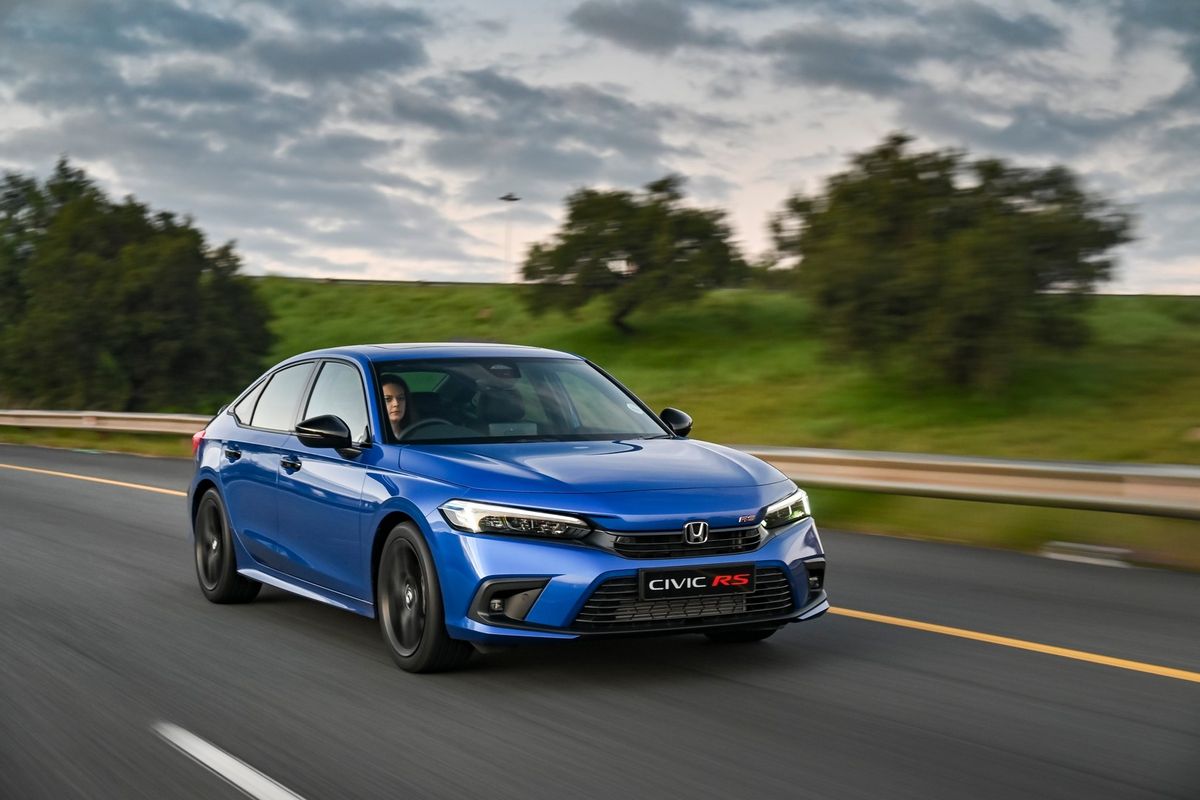
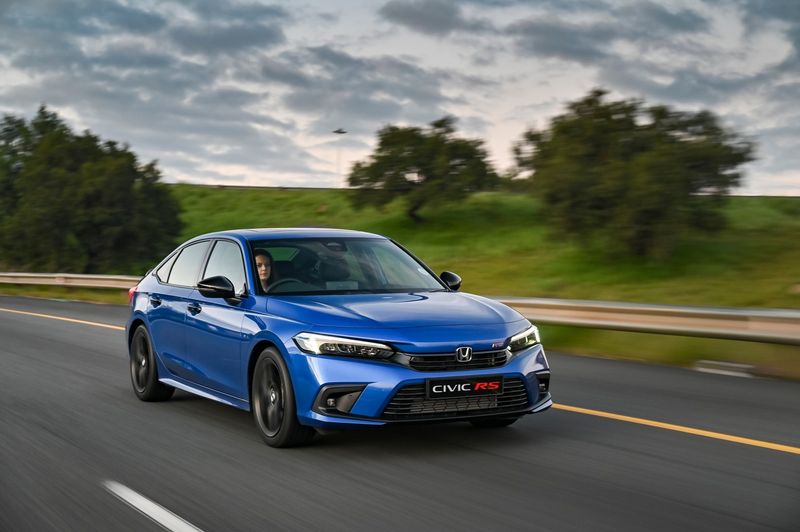
The new, 11th-generation Honda Civic has been launched in SA. With a history spanning 50 years, the new model has a lot to live up to. We headed to Johannesburg to drive it.
Throughout the past 50 years, 10 generations of the Honda Civic have notched up more than 26 million sales in 170-plus countries. Those are some staggering figures for a single product. How many other nameplates that existed half a century ago are still around today? Suffice to say most of those products (Ford Mustang, Toyota Corolla and VW Kombi, to name just a few obvious ones), have achieved legendary status and Honda’s compact car is no exception.
What’s on offer?
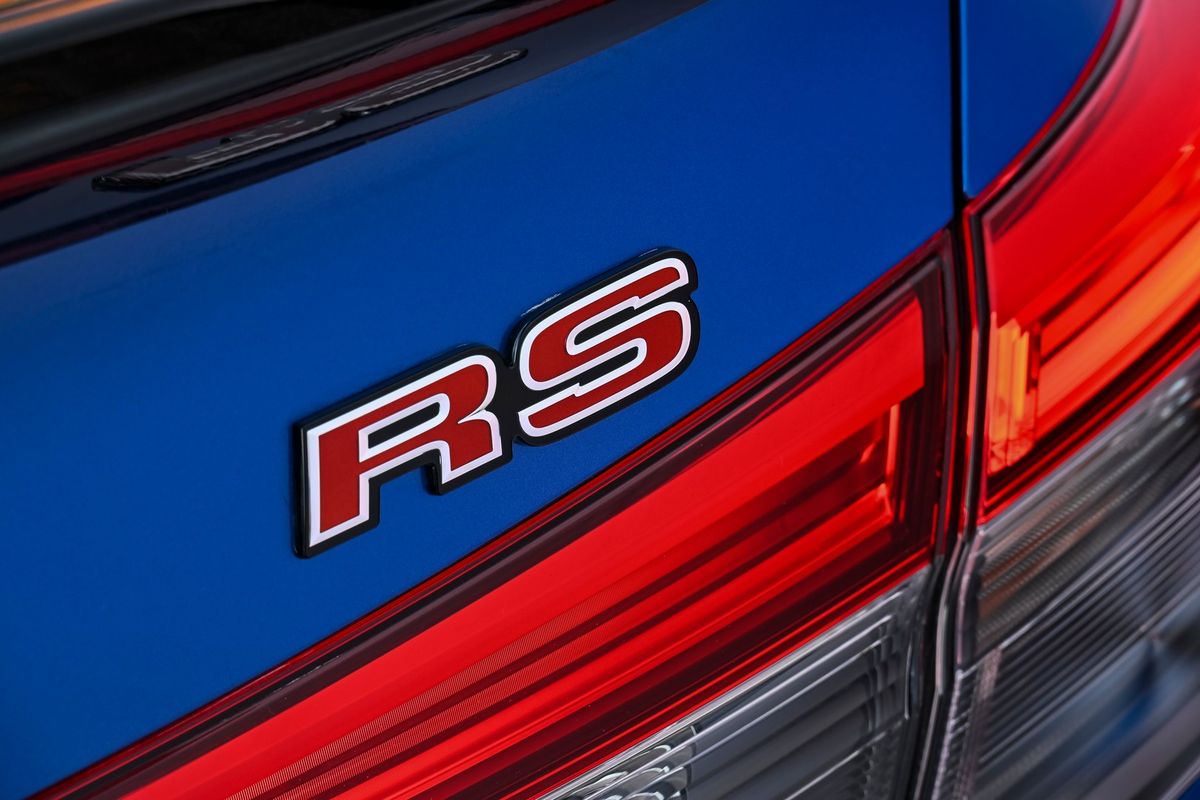
This new 11th-generation Honda Civic arrives in Mzansi replete with a fresh look, a comprehensive list of standard features and a turbopetrol engine. Right now, there’s just a single derivative available – the Honda Civic 1.5T RS CVT, which is essentially a sportier version of the standard car – it will plug the gap until the mighty Civic Type R lands to take on the established hot hatch players such as the Hyundai i30 N and Volkswagen Golf GTI in the 1st quarter of 2023.
The model’s wheelbase has been extended by 35 mm (the overall length has gone up by 25 mm), the rear track widened by 12 mm and its overall height is lower. Honda has also focused on reducing the noise, vibration and harshness levels.
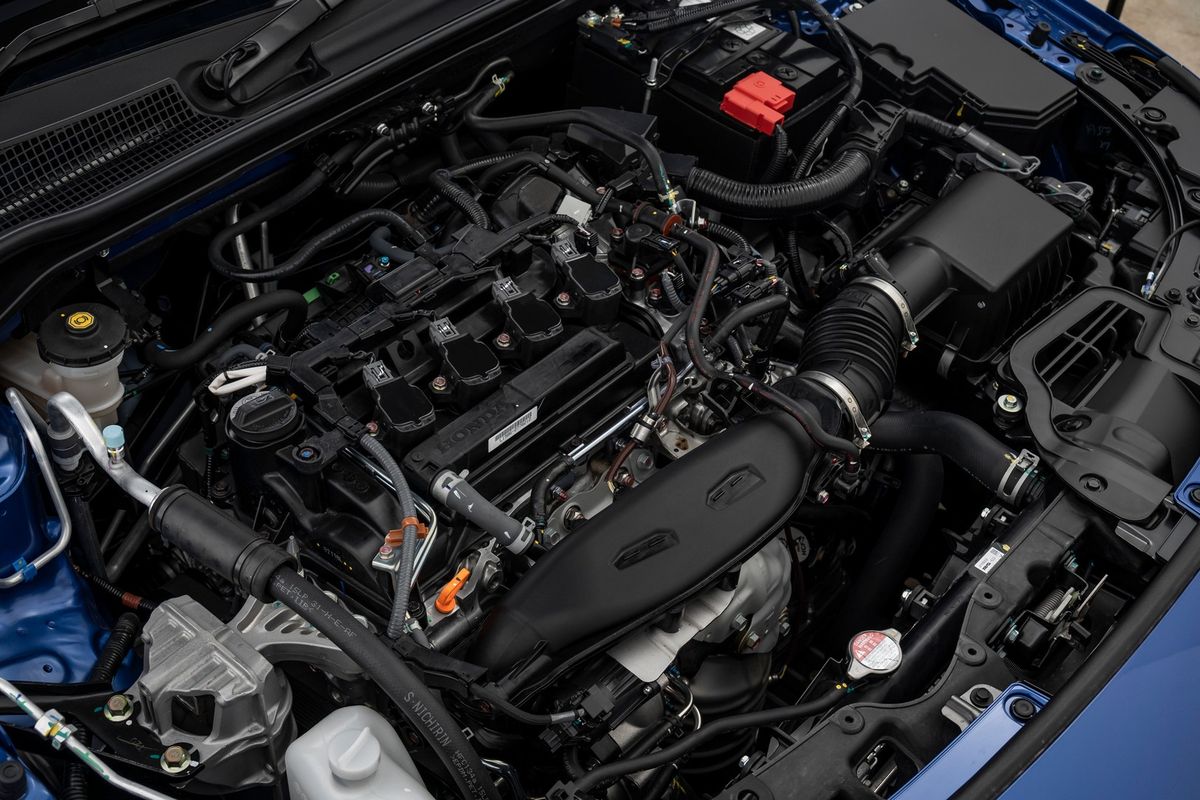
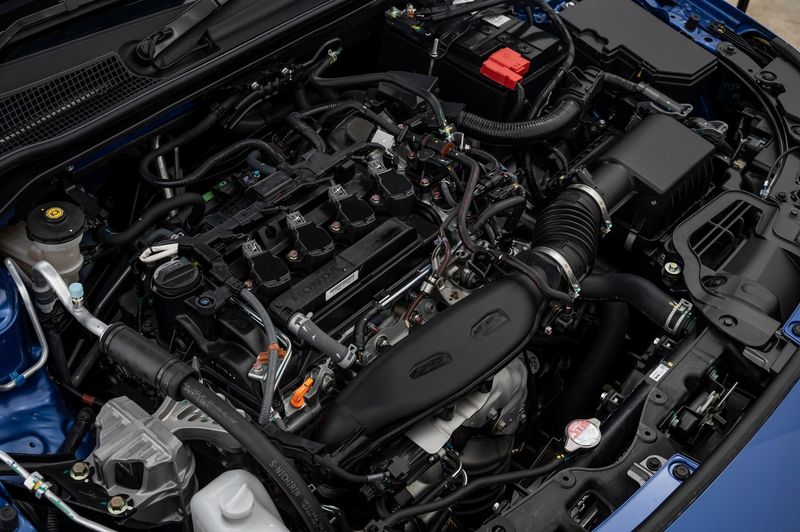
Just as the Civic’s platform is carried over (with revisions, mind you), the engine is an updated version of the outgoing model’s 1.5-litre 4-cylinder turbopetrol mill. With peak outputs of 131 kW and 240 Nm (+4 kW and 20 Nm compared with the older-spec motor), it’s a far cry from the workmanlike naturally-aspirated 1.5-litre that does service in other recent Honda products, such as the new HR-V. The claimed fuel economy figure is 6.2 L/100 km.
Power is directed to the sedan’s front wheels via what Honda says is an updated version of its continuously variable automatic transmission (CVT). The new Honda Civic RS is assembled in Thailand.
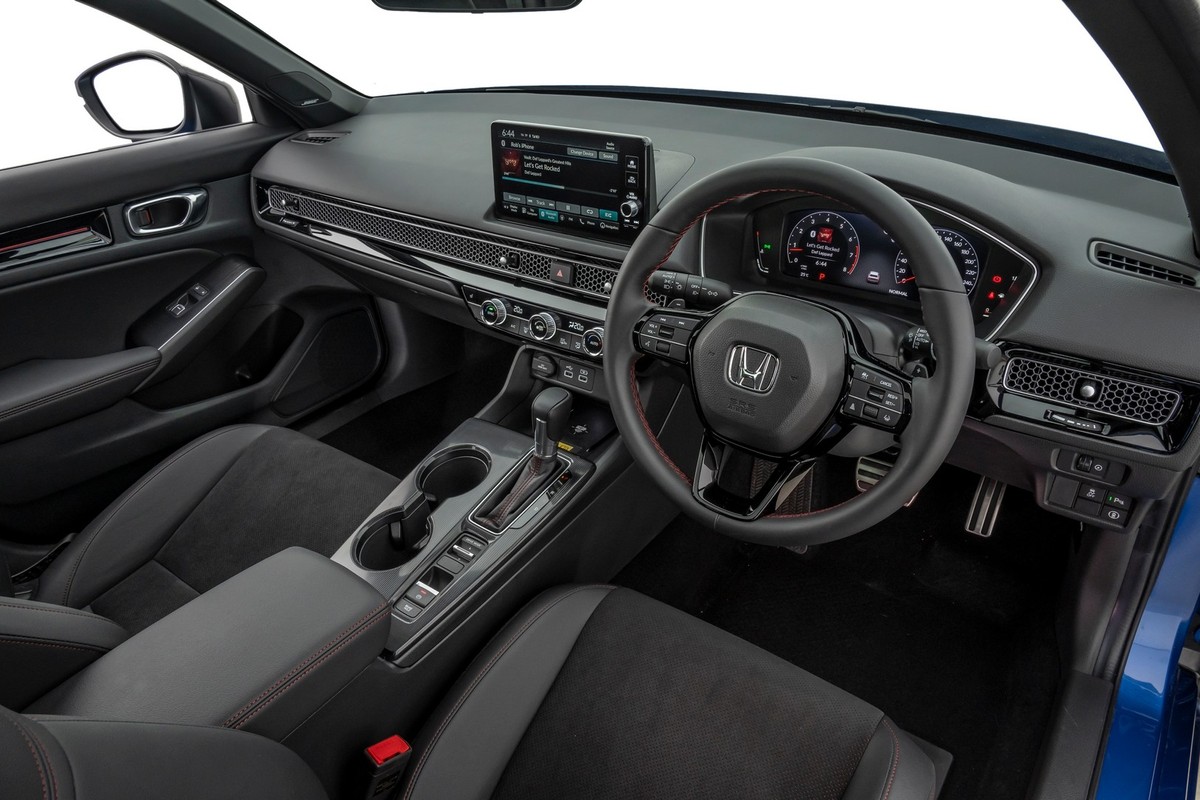
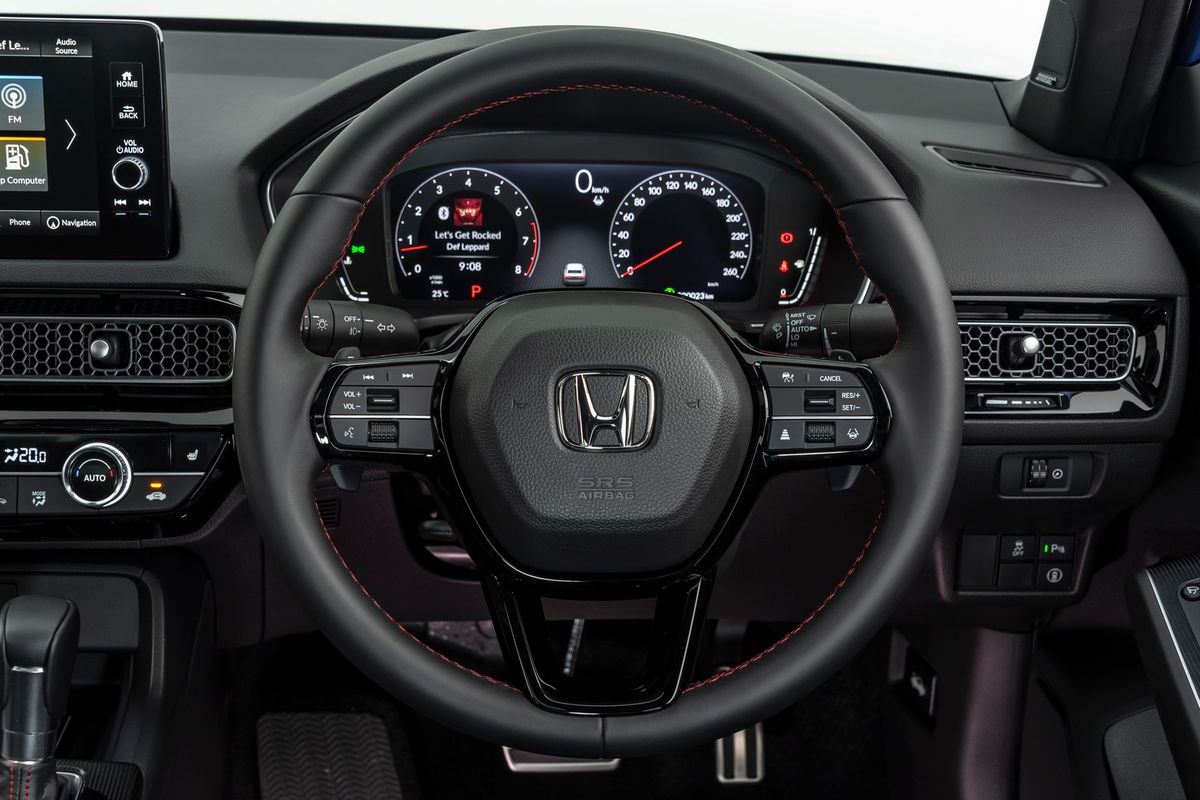
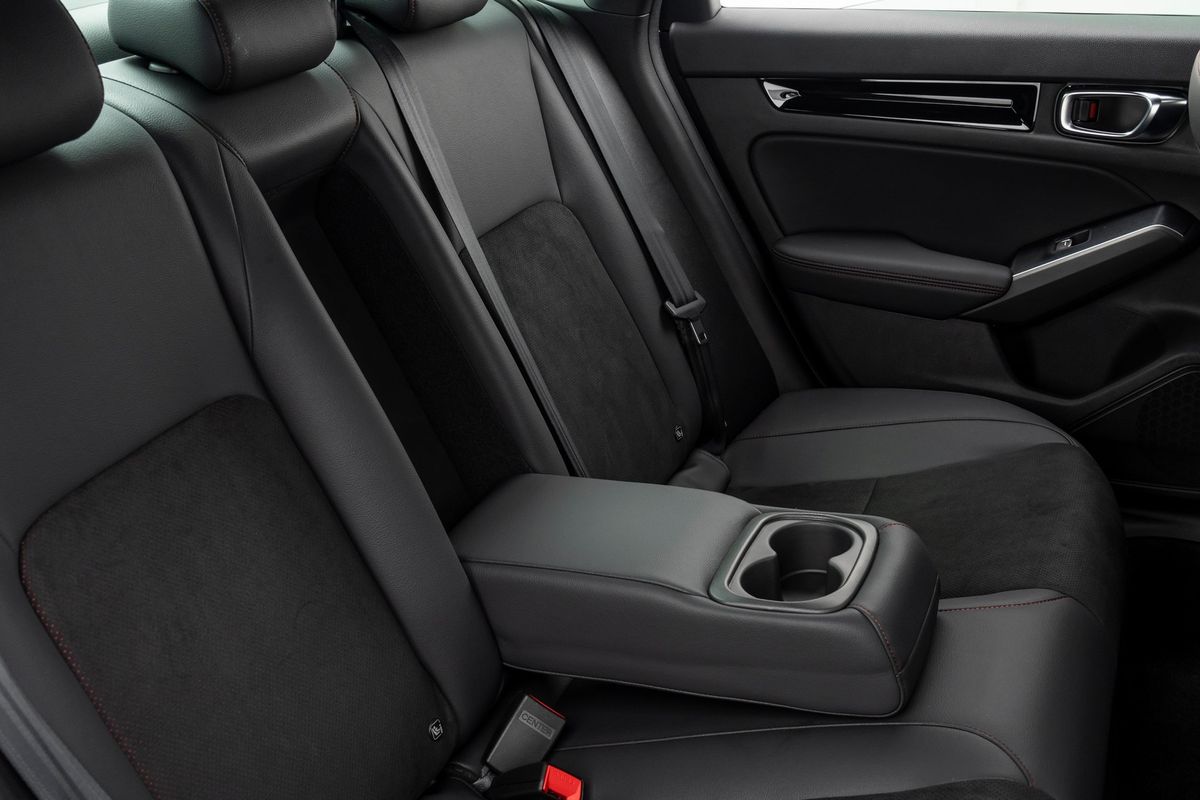
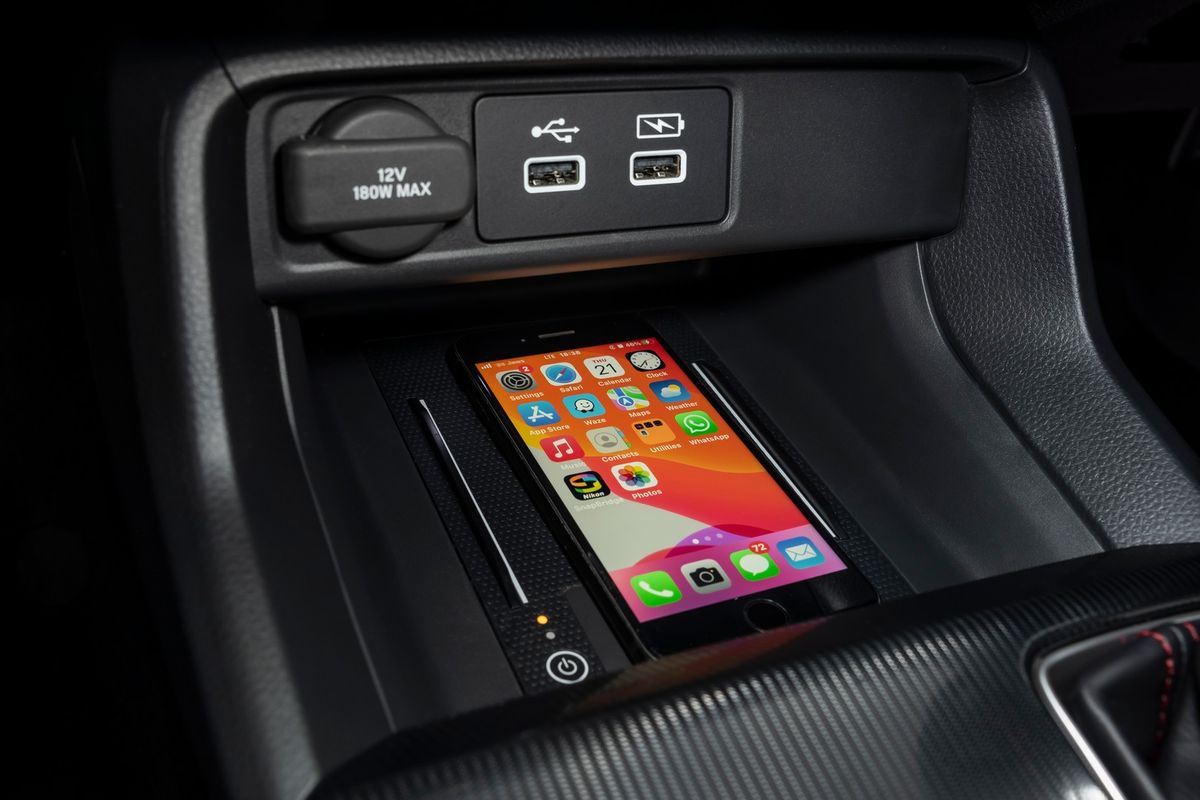
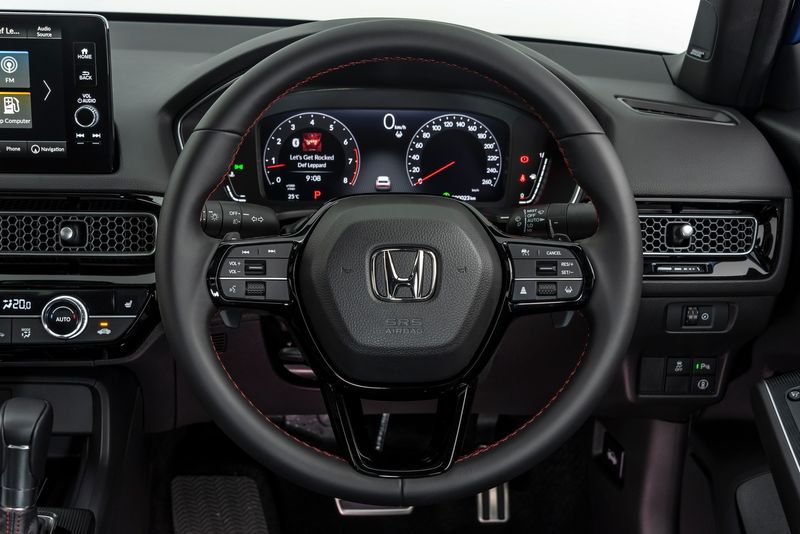
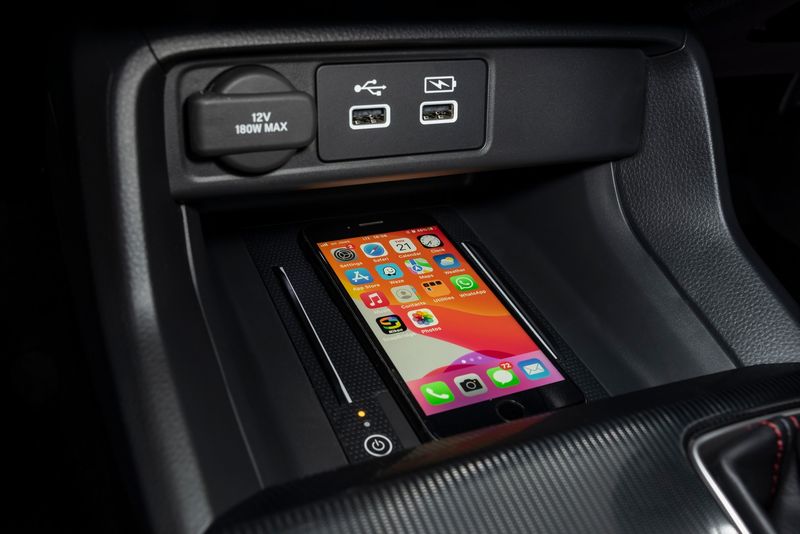
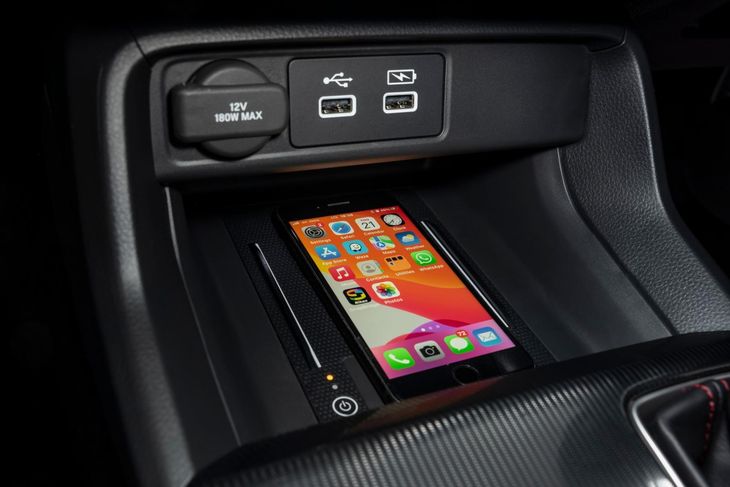
We’ve already mentioned that the spec level of the new Civic is comprehensive and some of the luxuries are worth a quick mention; they include a 12-speaker Bose audio system, leather/suede heated seats, digital instrument cluster, wireless charging pad, sunroof and a raft of semi-autonomous driving tech. View the full specification here.
Inside, this new Civic RS feels considerably more upmarket than any of its predecessors. In fact, there’s enough “premiumness” to the fit-and-finish for us to call the newcomer an Accord-lite (it reminds us of the Civic’s discontinued – in South Africa – larger, D-segment sibling). The feature-packed Civic is certainly a rival to the Toyota Corolla, although it costs about R180k more than the latter’s 2.0 XR flagship derivative; to put the Japanese model in a better context in terms of its price positioning, in slots in between the 35TFSI S line and 40TFSI S line derivatives of the Audi A3 sedan range and is in the ballpark of the BMW 218i Gran Coupe and Mercedes-Benz A200 hatch Progressive.
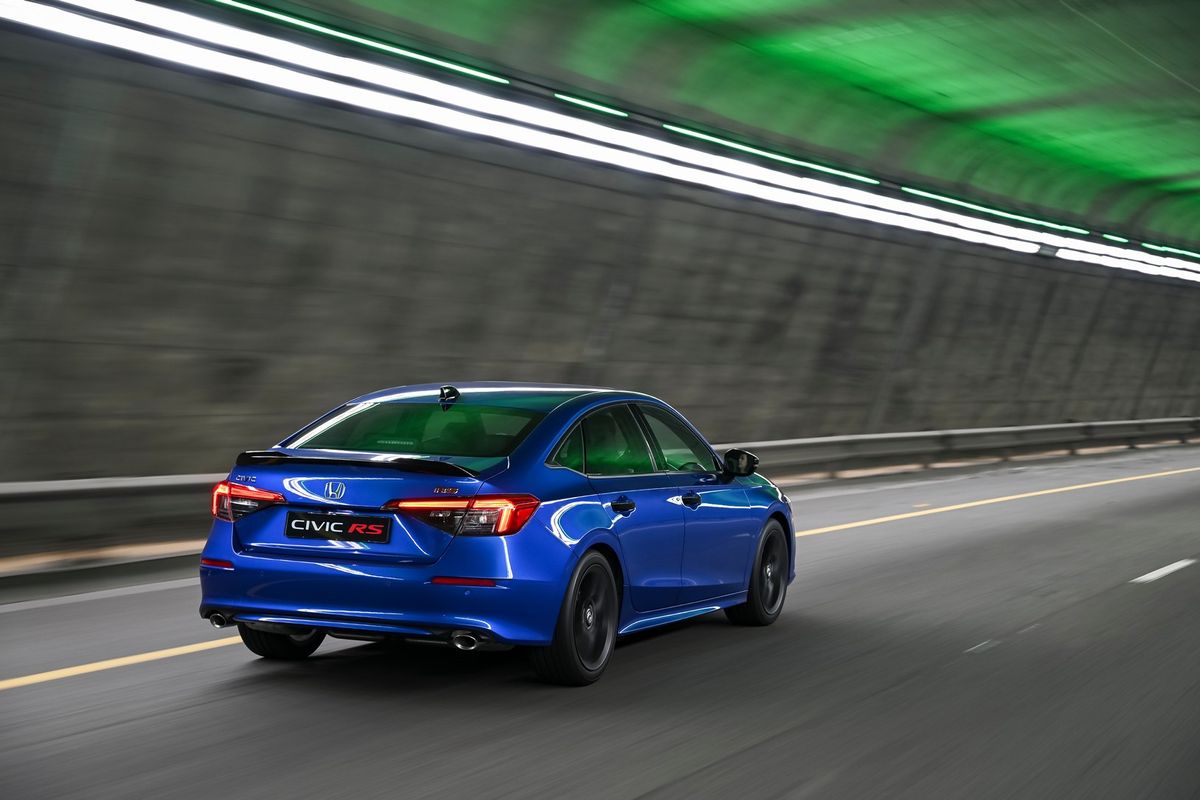
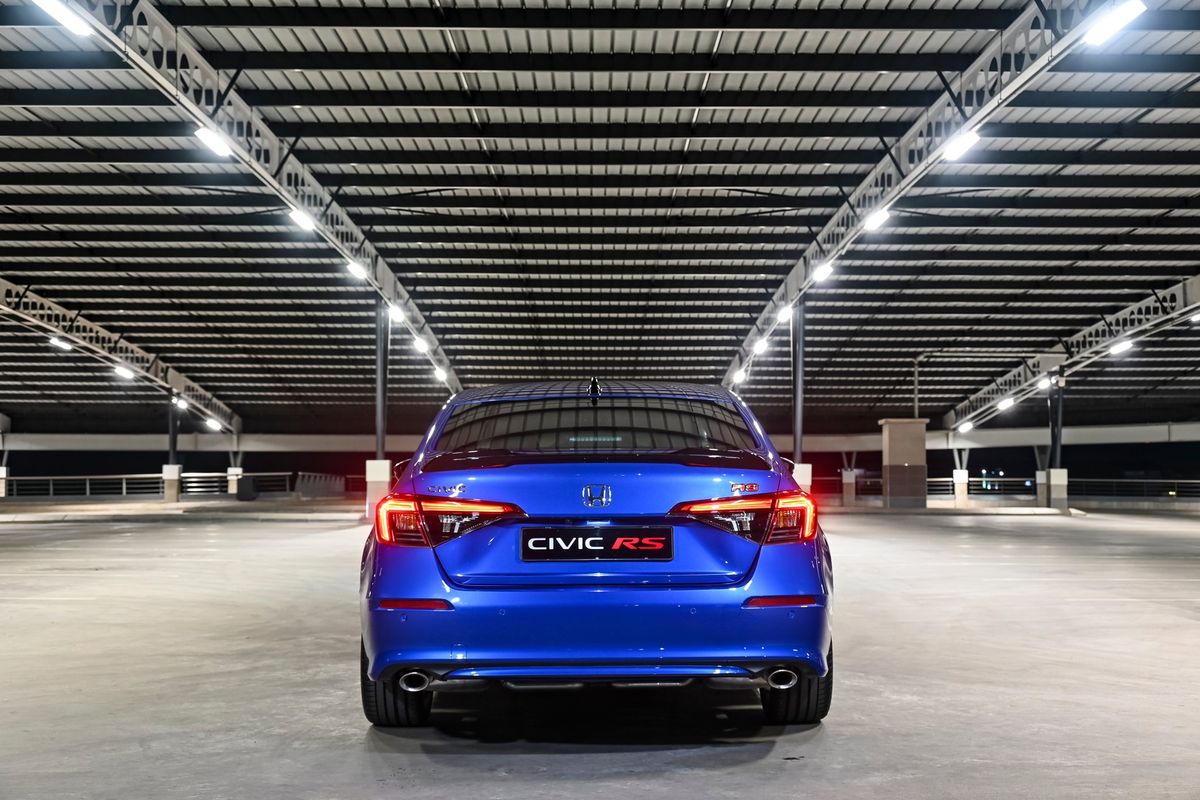
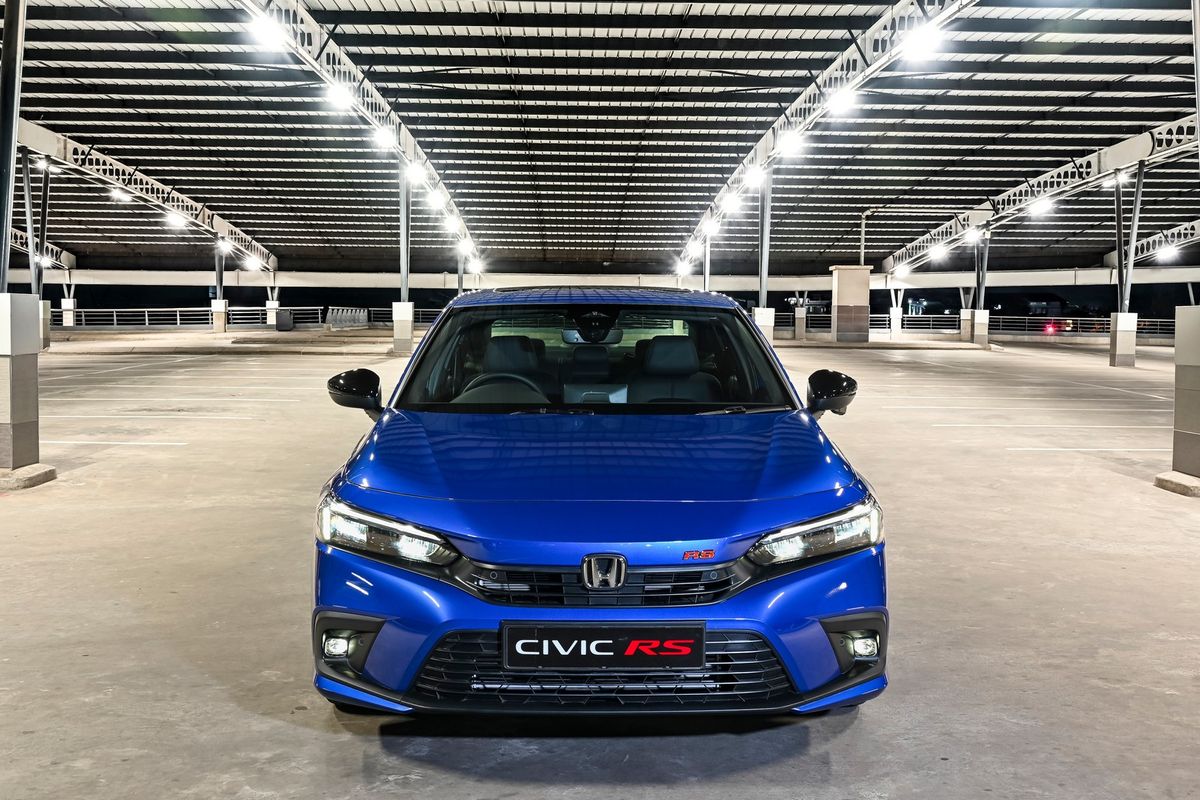
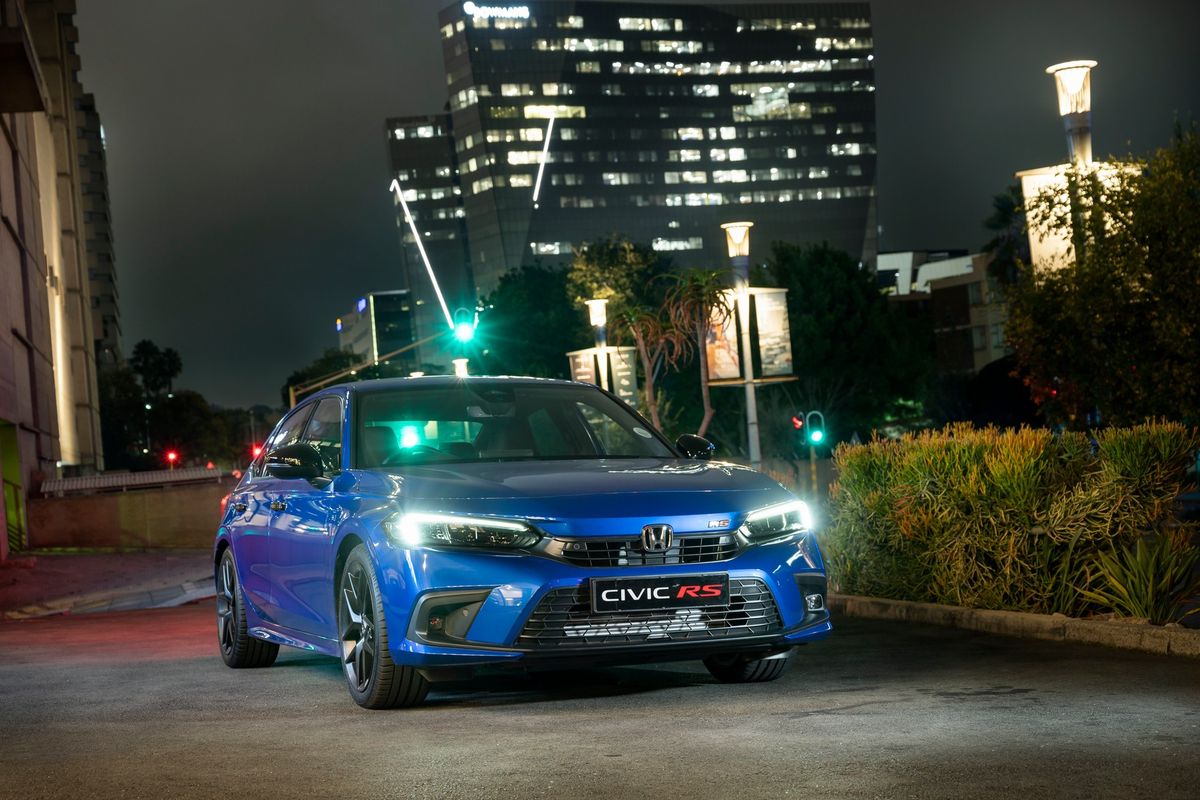
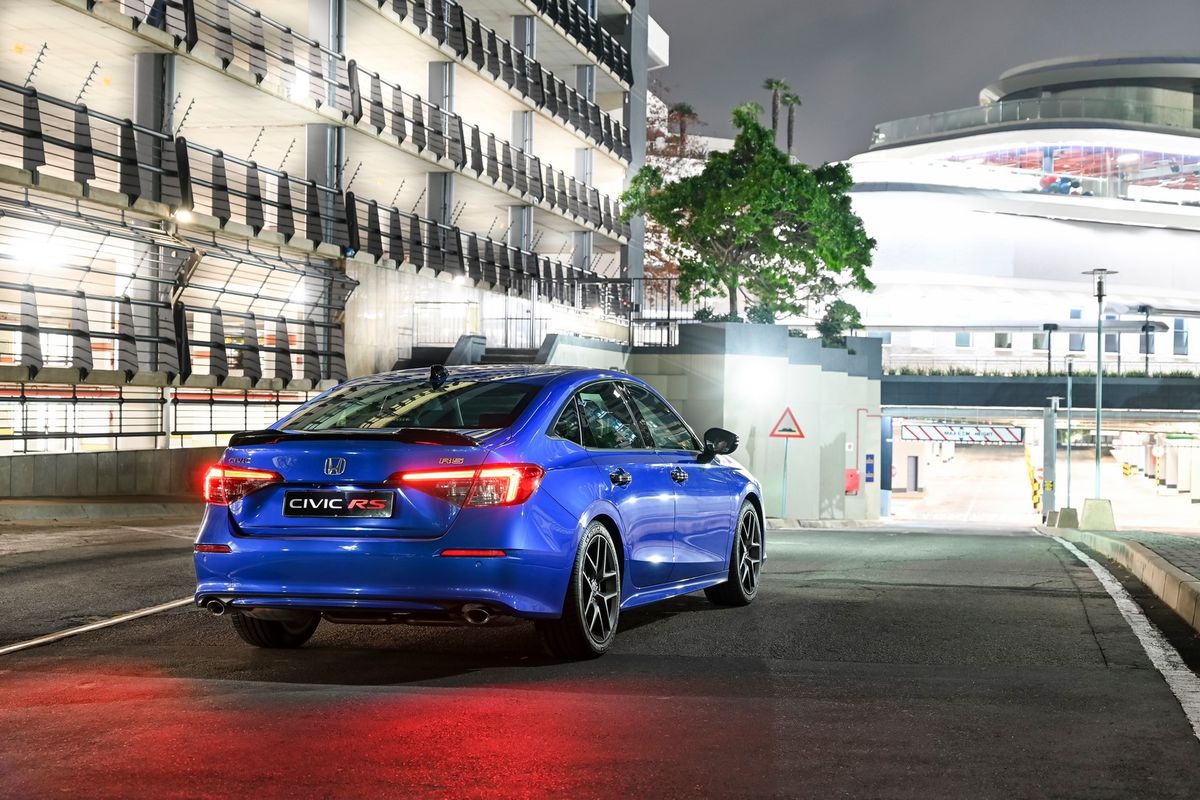
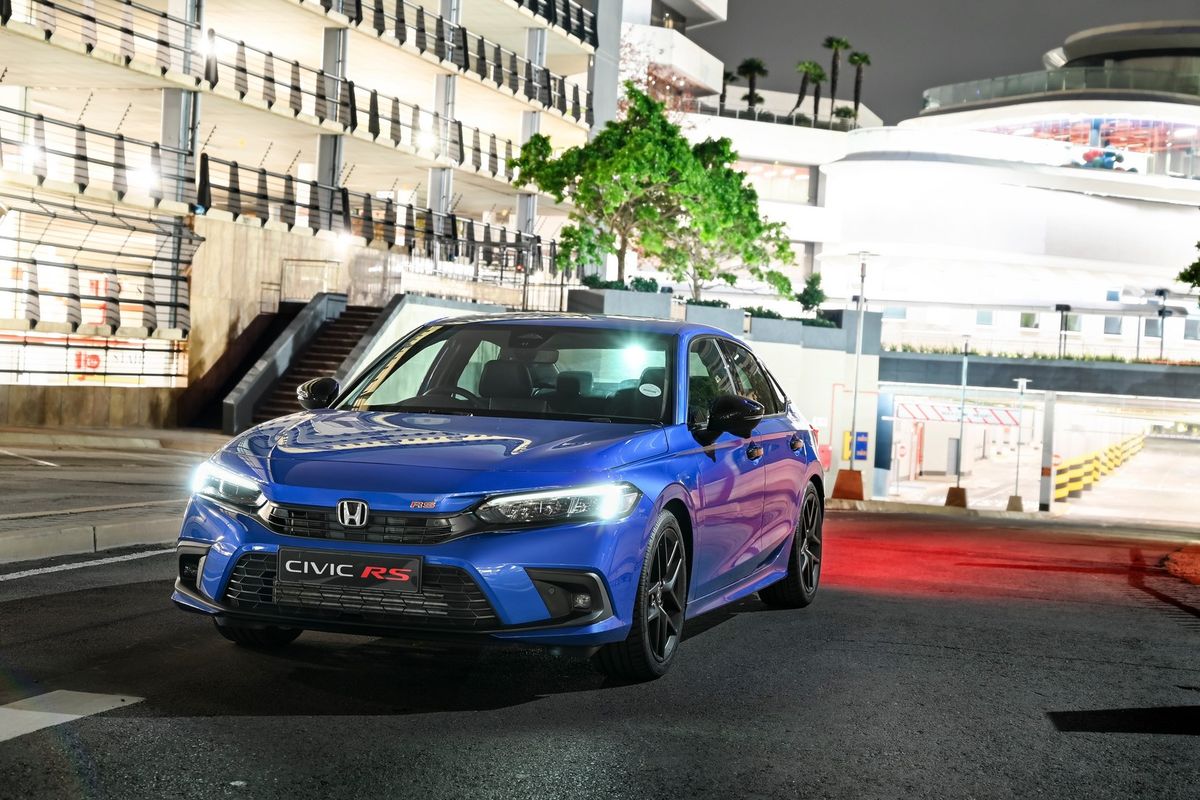
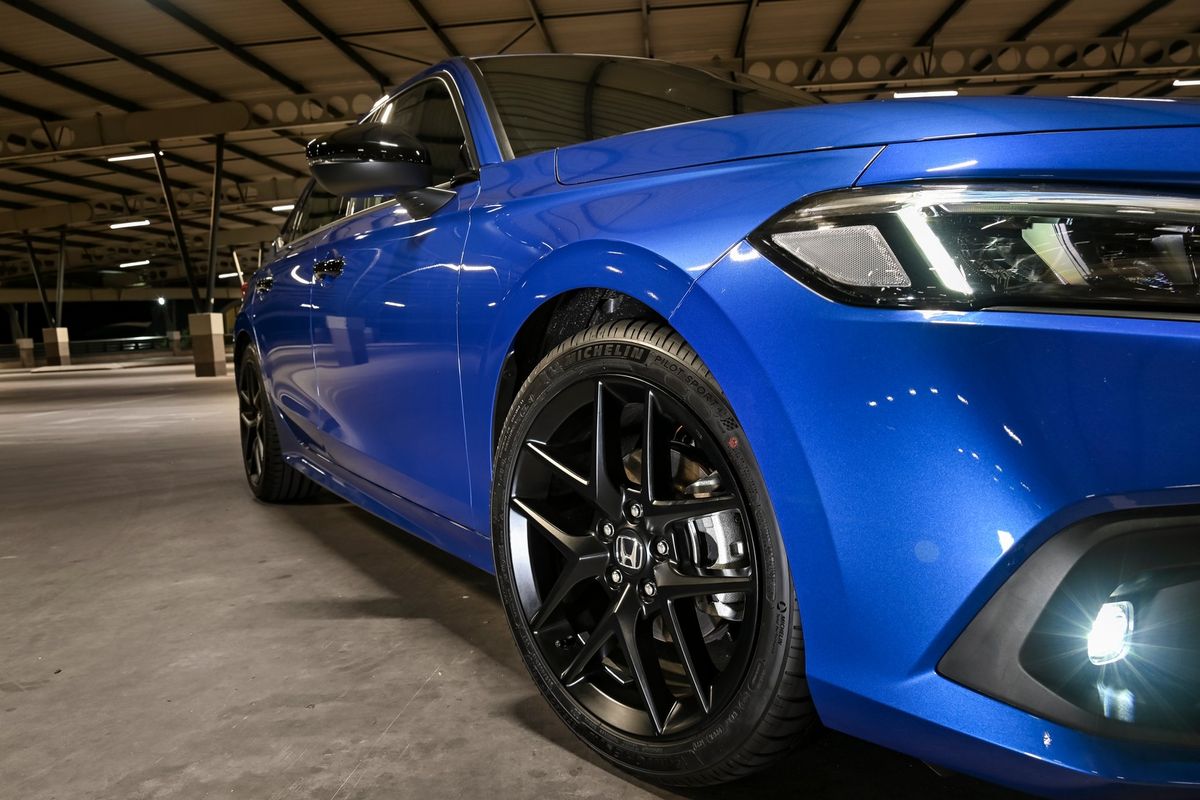
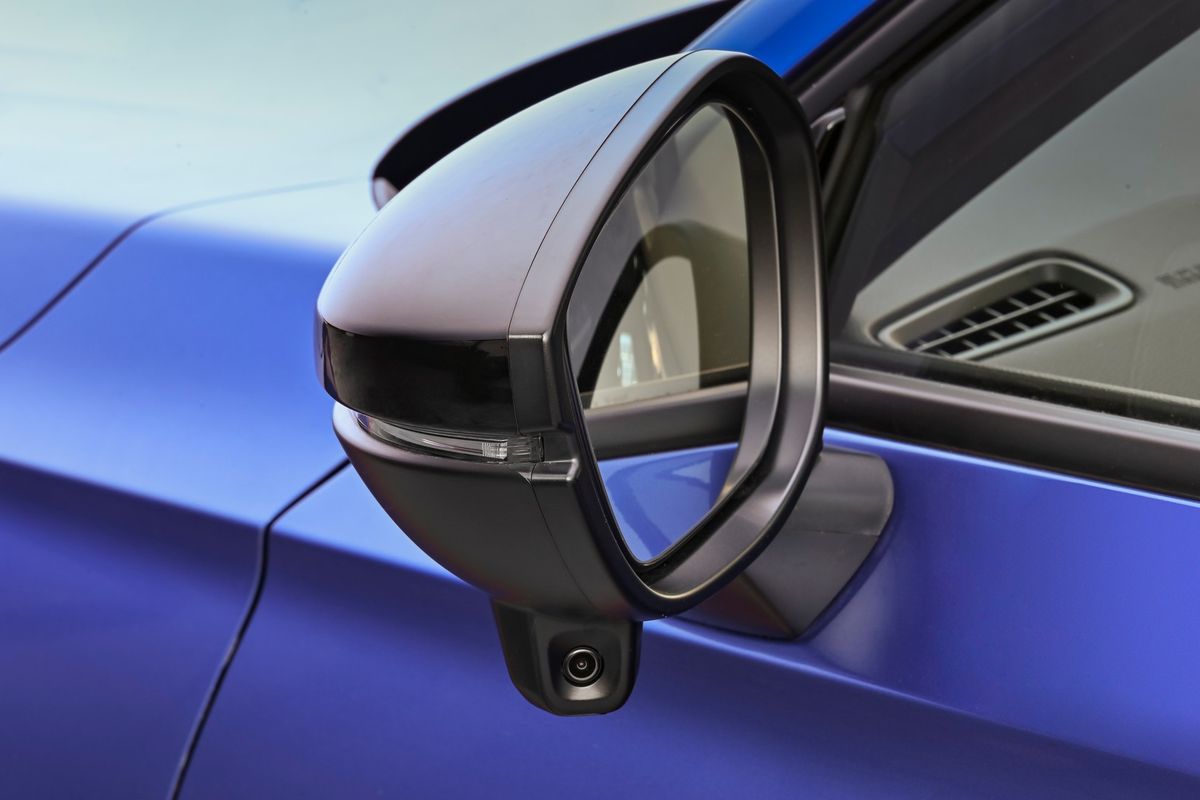
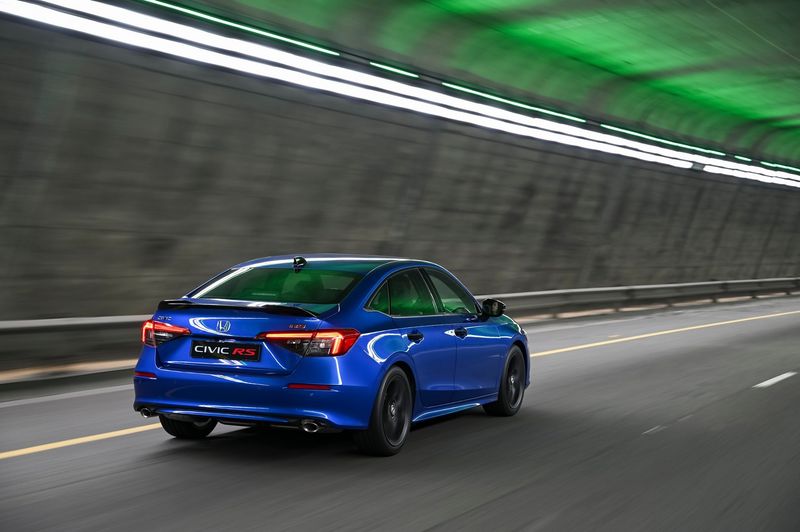
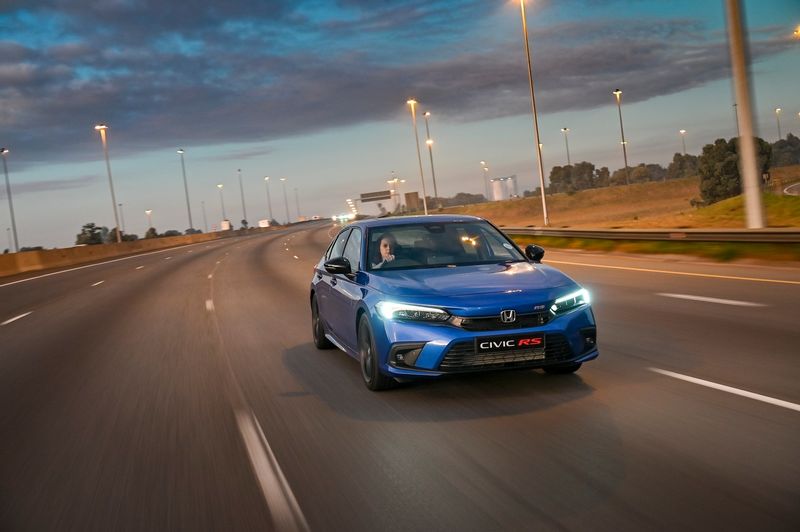
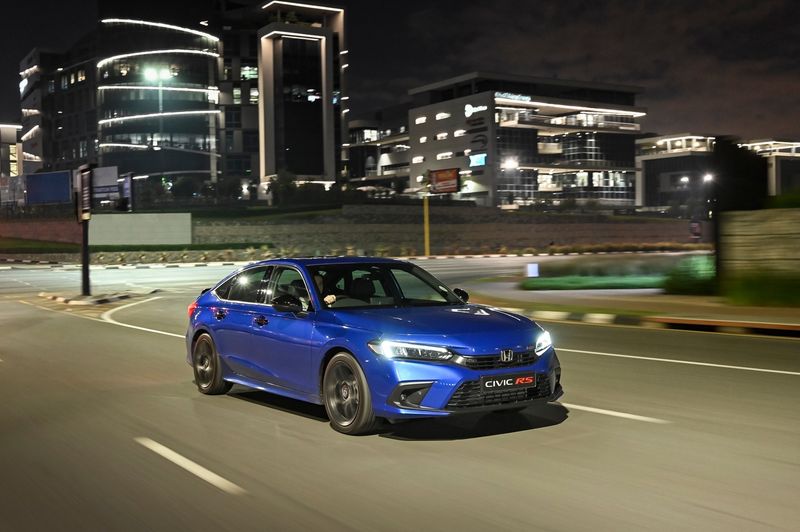
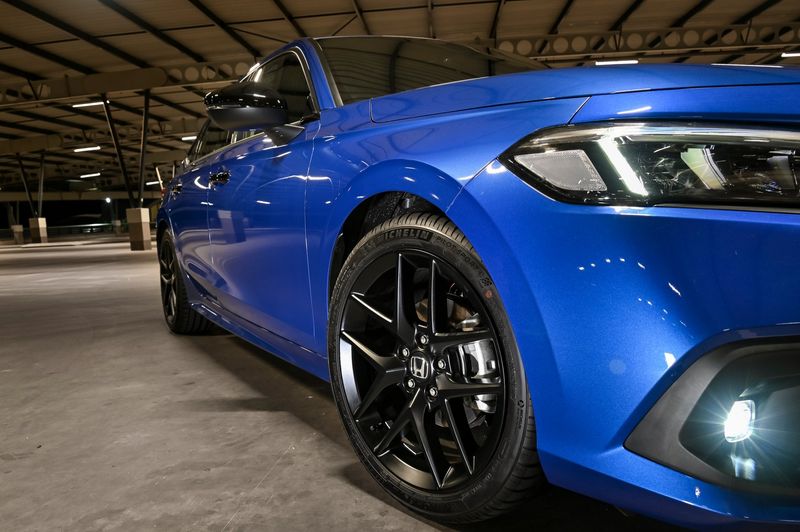
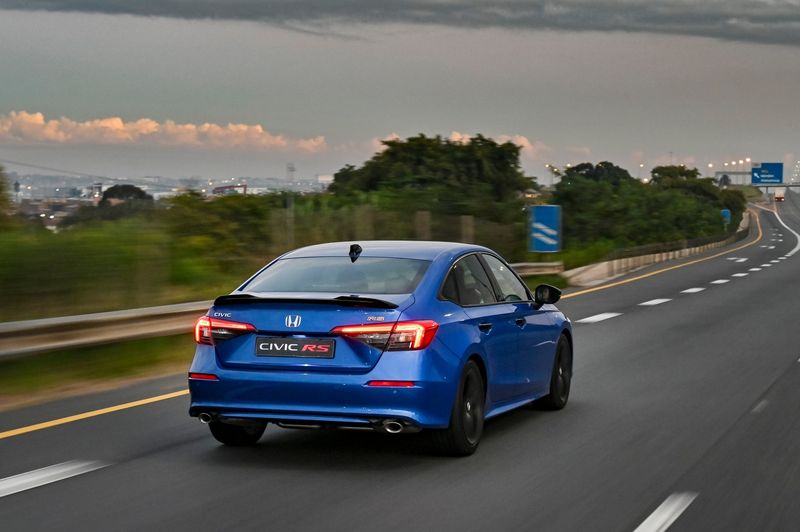
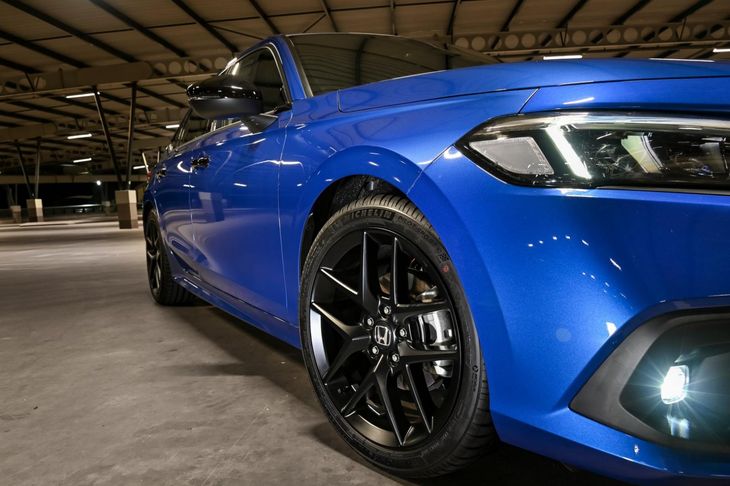
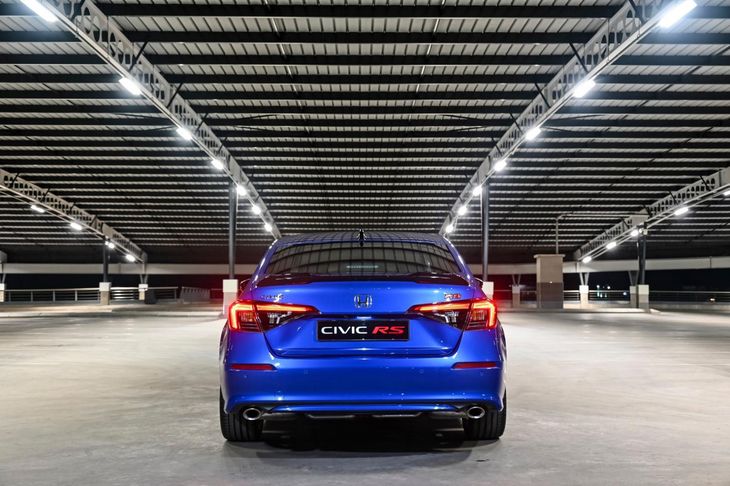
Customers have five colours to choose from: platinum white, meteoroid grey, lunar silver, cherry red, and brilliant blue. The RS trim includes some subtle sporty touches such as a boot spoiler, 18-inch alloy wheels wrapped in Michelin Pilot Sport 4 rubber, dual exhaust outlets, and gloss black wing-mirror caps.
The newcomer’s bigger than you think and photographs don’t quite do it justice. The white with black trim details is a great nod to JDM (Japanese domestic market) culture!
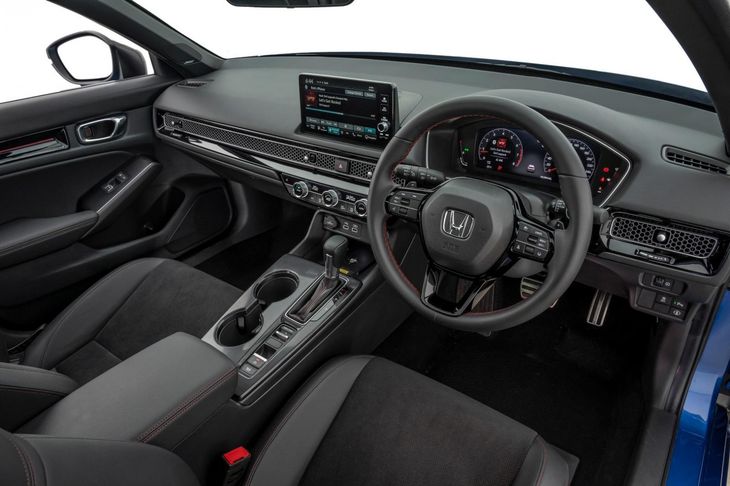
The route of our evaluation drive encompassed an assortment of roads, which gave us an opportunity to experience the Civic on good, to poor, surfaces. First impressions count for a lot, as they say, and before we even left the launch venue, we were suitably impressed with the Civic’s upmarket cabin. Not only does it look premium, its touch surfaces feel pleasant and substantial. There’s a great-looking honeycomb trim insert across the dashboard that’s understated and classy.
The well-calibrated transmission, aided by the sizeable wad of torque available from the 1.5-litre turbopetrol motor, demonstrates that the era of dull-to-drive CVTs is mercifully drawing to a close. Look, if you treat the Honda’s accelerator pedal like an on/off switch, you’ll get that dreaded “elastic band” feeling with an engine drone to match (the downside of a CVT). However, if you’re a bit more thoughtful and gently feed in the power, the driving experience improves markedly.
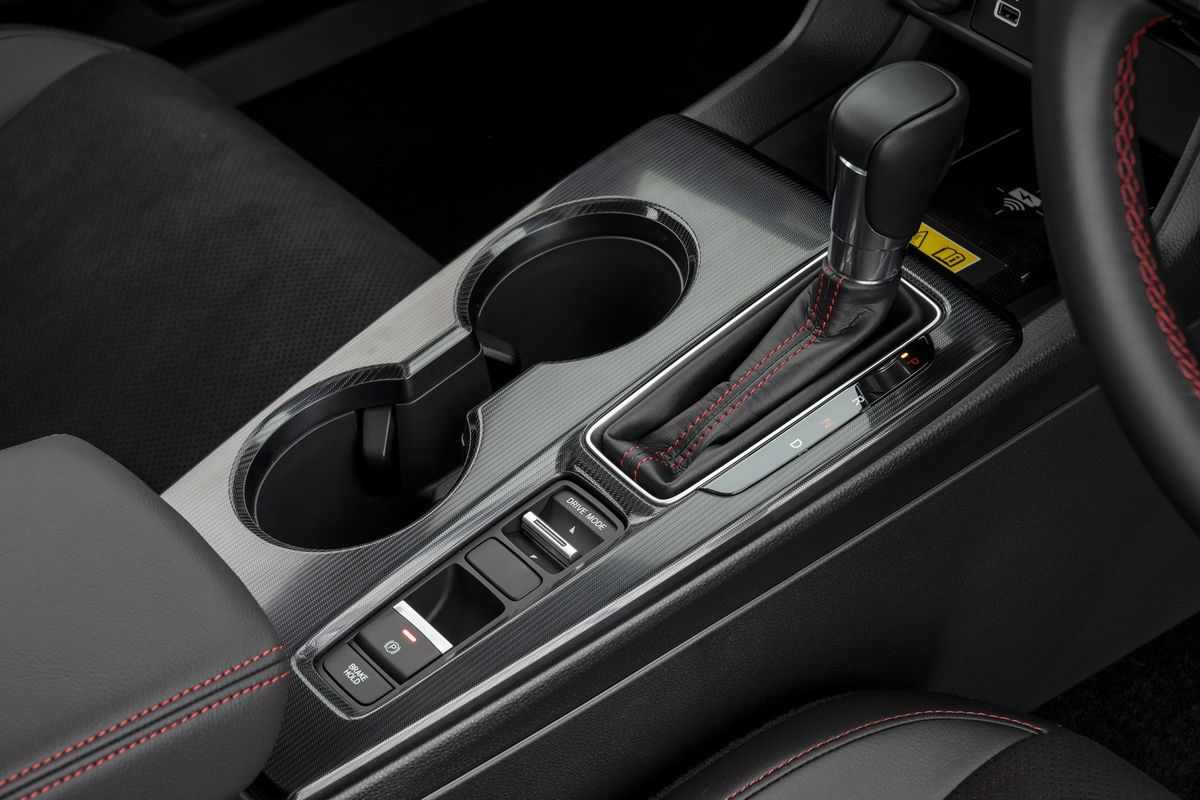
There are drive modes, such as Econ(omy), Normal and Sport, but the Civic does not need to be in Sport mode to perform eagerly. No more than a 66% application of the accelerator pedal will prompt the powertrain to deliver a solid “push in the back” without sounding too strained as the revs climb. Cleverly, in Sport mode, the CVT is mapped to simulate the way a conventional transmission shifts gears, which can be exploited by using the paddles located on the steering wheel.
Of course, the main benefit of a CVT is good fuel economy and we saw an indicated 8.9 L/100 km after some enthusiastic driving (mostly in Sport mode). To reiterate, the claimed consumption is 6.2 L/100 km, which is a tad ambitious, but we’re confident that an efficiency-minded driver would be able to get that figure to dip below 8 L/100 km by adopting a more measured driving style. It’s such a pity this powertrain couldn’t make its way into the HR-V…
The steering setup is on the lighter side and, when we drove the Civic enthusiastically, the tiller was not as precise as we hoped. But, given the model’s target market is commuters (as opposed to driving enthusiasts), it’s an appropriate setup.
Road noise from the Michelin 235/40 ZR18s was higher than expected, but the lovely Bose audio system drowned it out easily; we’ll wait for the Civic to make its way to us for a comprehensive assessment before passing a final judgement.
The Civic’s general ride quality is on the firm side of pliant, which is to be expected given the newcomer’s mildly-sporty designation. Interestingly, RS stands for Road Sailing (as opposed to Rennsport), which implies a balance between refinement and sportiness. Still, we’d say the Civic is more of a quiet, comfortable “cruiser” than a warm sports sedan… Less Nurburgring, more Drivetoworkburgring.
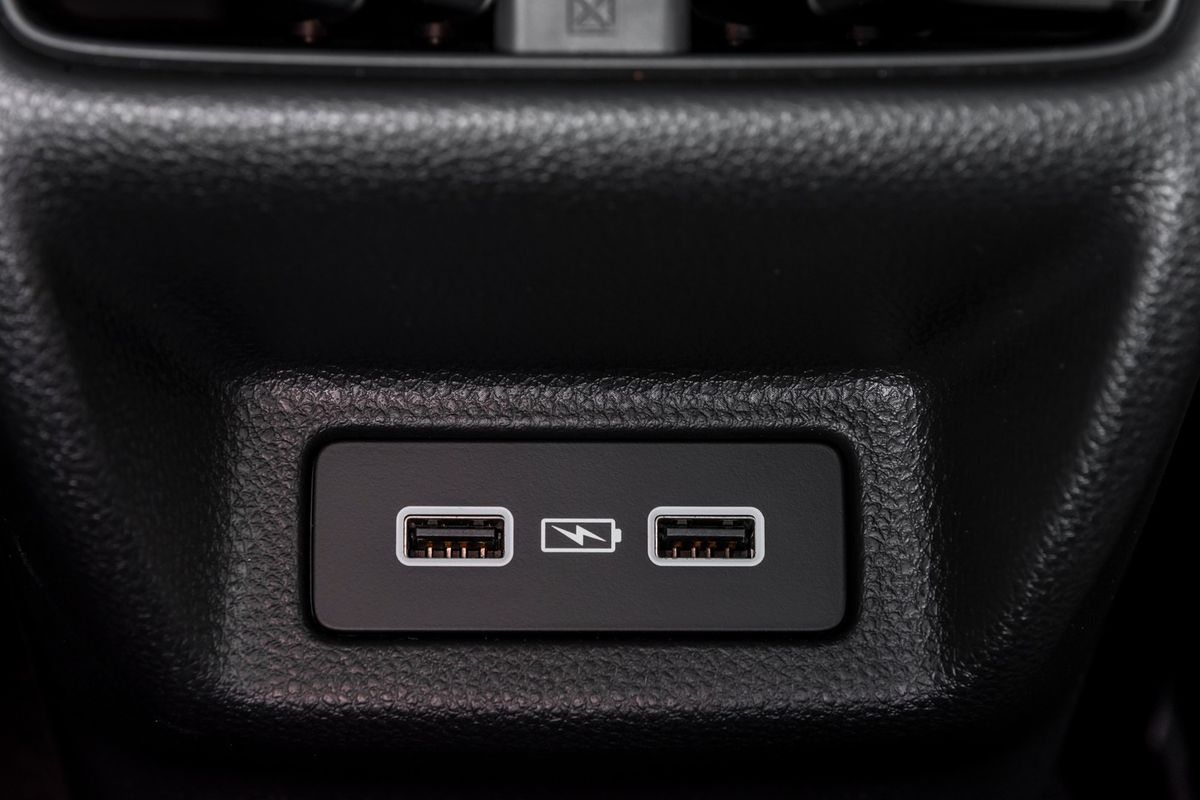
Interior space, meanwhile, is excellent, and the boot is capacious. In a quick sit-behind-yourself test, I was able to get my 1.91-metre frame into the rear passenger seat behind a driver’s seat that was set up for me – there was ample legroom, even if headroom was a bit cramped. Rear occupants are also availed USB ports to charge their electronic devices, which should please family-car buyers no end.
How much does the Honda Civic RS cost in SA?
Civic 1.5T RS CVT R669 000
The new Civic is sold with a 5-year/90 000 km service plan, 5-year/200 000 km warranty, and 3 years of roadside assistance. The service intervals are every 10 000 km or 12 months.
Summary
Honda has not exactly been flooding the new-vehicle market with a raft of new models and, other than the new Fit (previously known as the Jazz), the brand’s newer products have been good, but short of brilliant. The good news is that the new Civic brings some much-needed pizzazz to Honda South Africa’s line-up. Oh, and the brand-new Honda CR-V medium SUV will be introduced in the local market in the near future, which is something to look forward to.
This Civic is undoubtedly one of the better-to-drive products from the brand and its interior quality deserves commendation. It’s a foray into the luxury space and you could be forgiven for thinking this was the new Accord.
The proverbial elephant in the room is the 1.5T RS CVT’s pricing and, to the casual observer, R669 000 (Aug 2022) may seem quite expensive for “just a Civic”. However, the premium is understandable, to an extent… Honda SA doesn’t manufacture vehicles in our market and thus doesn’t benefit from earning customs duty rebates, which it could use to reduce the costs of bringing foreign-built products to market. Then there’s the exchange rate, which is not favourable.
One would think the Civic would go up against the Toyota Corolla and Mazda3 (now available only in hatchback guise), but the highly-specced (and priced accordingly) Honda is more of an Audi A3 sedan rival, which is a tough match-up.
Should you buy one? In an era in which small crossovers are selling up a storm compared to the C- and D-segment hatchbacks/sedans, it’ll take a brave and determined soul to purchase the new Civic. However, those who do are likely to be satisfied with what’s a pleasantly surprising and accomplished offering from the Japanese marque.
10 vehicles quietly killed off in South Africa in 2022 so far
Over the first half of 2022, various automakers quietly discontinued vehicles in South Africa. Let’s take a closer look at the dearly departed, some of which you may not have noticed are no longer available new…
When a given vehicle is discontinued in South Africa, its manufacturer understandably seldom makes a song and dance of it, instead preferring to let the nameplate quietly slip from the market’s memory. But we’ve been keeping tabs on the local automotive landscape’s comings and goings, allowing us to compile the list of dearly departed you see below.
Of course, we should point out we’ve concentrated on instances of entire model ranges being scrapped, choosing to ignore (for now, anyway) single derivatives that have been removed from their respective line-ups. Let’s take a closer look, in alphabetical order.
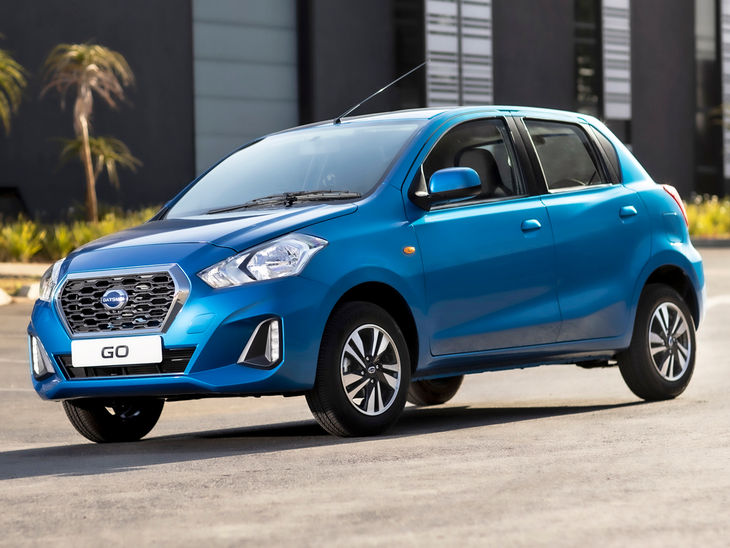
1. Datsun Go and Go+
Earlier in 2022, Nissan ended production of its Datsun products in India, effectively scrapping the budget brand for the second time in its 91-year history and spelling the end of the line locally for the Go hatchback and Go+ MPV. With run-out stock seemingly depleted, the two Datsun products are no longer available new in South Africa. For the record, the four-strong Go range had been priced from R184 600 to R213 800, while the three-variant Go+ line-up had run from R194 700 to R223 800.
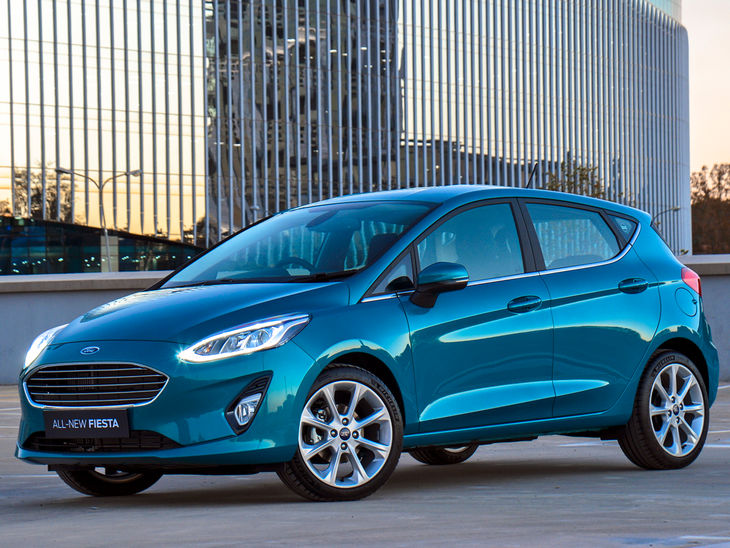
2. Ford Fiesta
Back in March, Ford Motor Company of Southern Africa confirmed to Cars.co.za the Fiesta hatchback had been discontinued locally. The seventh-generation version of the once-popular supermini touched down on local shores in mid-2018, while the facelifted model debuted on the global stage in September 2021. However, the Blue Oval brand opted not to bring in the refreshed Fiesta, with stock of the sixth-gen model seemingly running dry by the end of the first quarter.
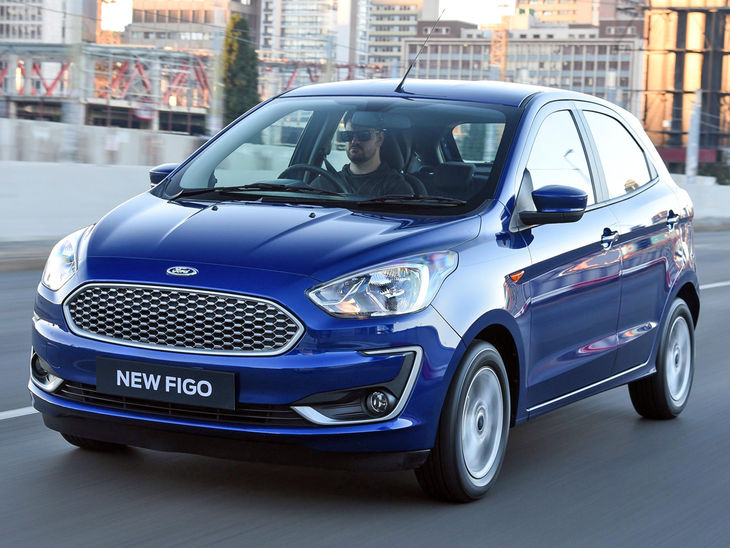
3. Ford Figo
The Figo soon followed the Fiesta, leaving Ford’s local line-up devoid of hatchbacks (with the only passenger car still available being the Mustang). From what we understand, production of the second-generation Figo at the company’s Chennai and Sanand factories in India ceased towards the end of 2021. With no replacement on the cards, Ford Motor Company of Southern Africa had zero option but to remove the Figo (which was available in sedan and hatchback body styles) from its portfolio.
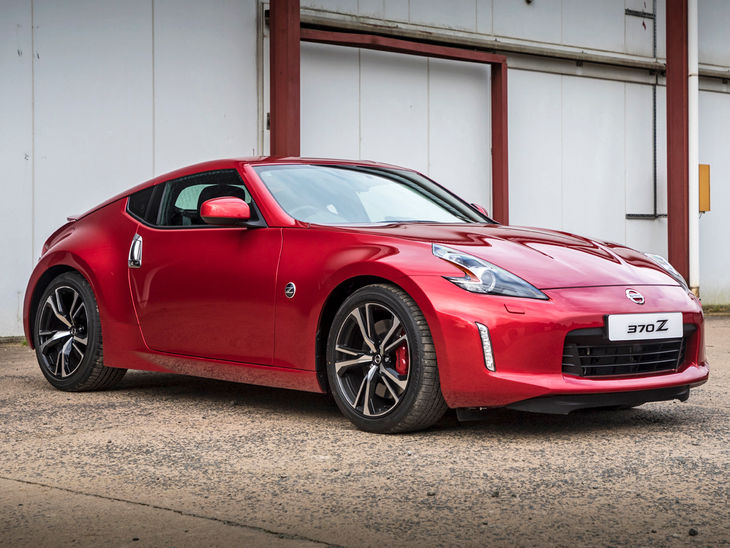
4. Nissan 370Z
It was a long time coming, wasn’t it? After nearly 13 years on the market in South Africa, the naturally aspirated Nissan 370Z was quietly put out to pasture at the start of 2022. Introduced locally in mid-2009 as an evolution of the 350Z, the manual version of the 370Z cost R499 000 at launch, a figure that climbed to over R700 000 by the time its run was over (with a few updates along the way, of course). Unfortunately, that appears to be the end of the line for the badge in South Africa, as Nissan SA seemingly has no intention of bringing in the latest Z.
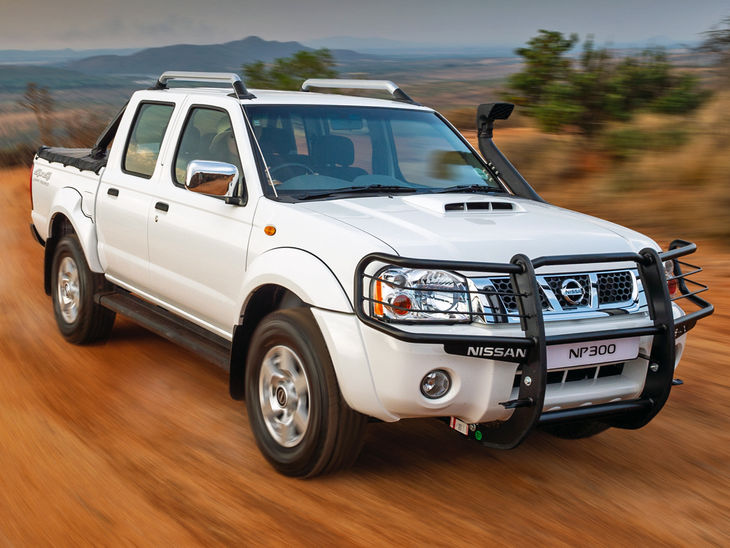
5. Nissan NP300
By the time May 2022 rolled around, Nissan had also canned the NP300 Hardbody. Since the Japanese firm’s Rosslyn factory had started building the refreshed D23-generation Navara – including single-cab workhorse derivatives – Nissan opted to end production of the long-in-the-tooth Hardbody. Back in 2018, of course, the bakkie scored zero stars for safety in its Global NCAP crash test, prompting calls for ageing bakkie to be pulled. Four years later, that eventually happened.
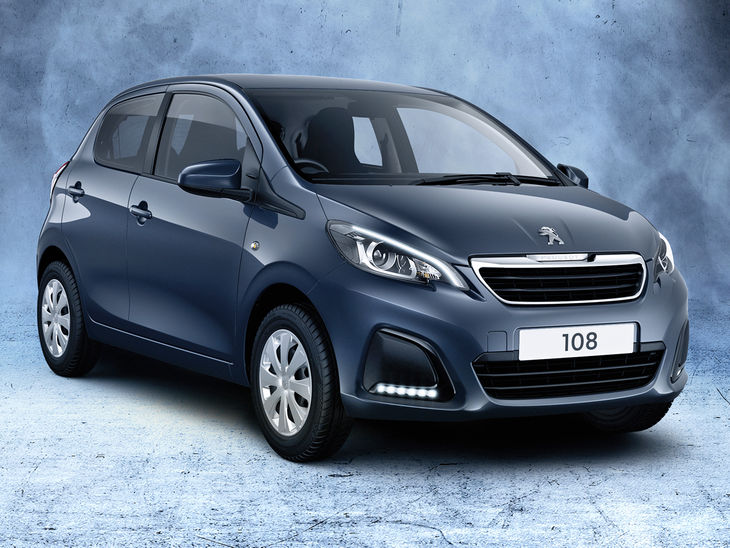
6. Peugeot 108
Introduced in South Africa in September 2019, Peugeot’s little 108 – which was developed alongside the Citroën C1 and Toyota Aygo – hardly set the local sales charts alight. Still, it made a strong argument for itself in the A-segment, offering high levels of safety equipment for this class of car (including 6 airbags and electronic stability control) and a lengthy 5-year/100 000 km service plan. However, with production having since ceased, this budget-friendly 5-door hatchback was officially discontinued in SA at the start of April 2022.
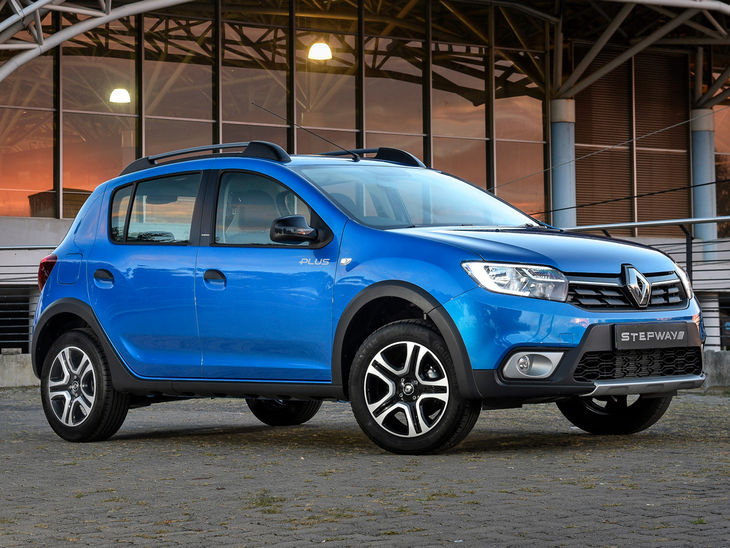
7. Renault Sandero
Over the years, the second-generation Renault Sandero gained quite a following in South Africa, with local buyers appreciating its competitive price, plentiful interior space and efficient engine (a tiny turbo-triple shared with the Clio IV). When the third-gen Dacia-branded version debuted overseas late in 2020, we expected it to eventually find its way here, though again wearing a Renault badge. However, that didn’t ever happen, with the French firm’s local division instead opting to bring in the Indian-built Kiger. Stock of the outgoing Sandero had run dry by February 2022.
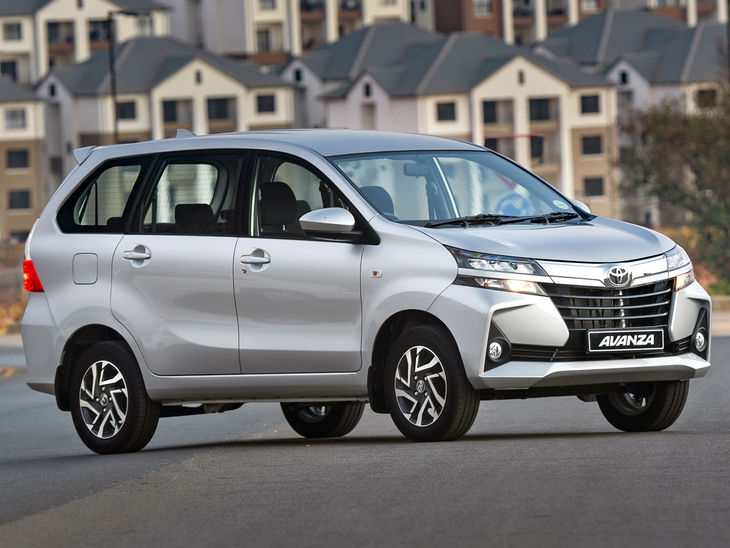
8. Toyota Avanza
The second-generation Avanza proved a strong seller for Toyota, despite (or perhaps because of?) its fairly agricultural underpinnings. With its engine up front but drive directed to the rear wheels, the Daihatsu-developed Avanza was offered in 7-seater MPV form as well as in panel-van guise. Despite a third-generation version being revealed towards the end of 2021 (and switching to a front-wheel-drive platform), Toyota South Africa Motors instead chose to ditch the Avanza in favour of the front-wheel-drive Rumion … which is, of course, based on the Suzuki Ertiga.
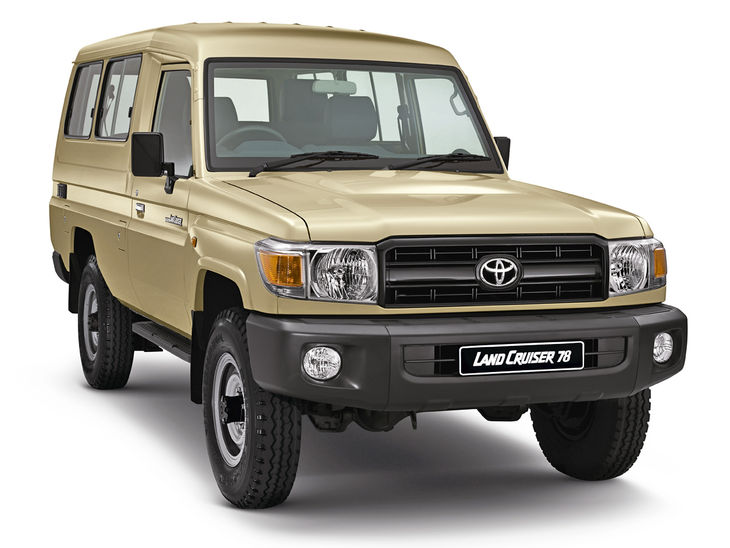
9. Toyota Land Cruiser 78
While the 76 station-wagon and 79 bakkie are perhaps the best-known models from Toyota’s Land Cruiser 70 series range, a third family member exists. Yes, after a hiatus of nearly 6 years, the Land Cruiser 78 – which is affectionately known as the Troopy (short for Troop Carrier) in some circles – returned to the South African market in February 2021, though on a customer order basis only. However, right at the start of 2022, the 78-badged model seemingly disappeared from Toyota’s range. Update: We’ve since learned the Land Cruiser 78 is technically still available in SA, though is now listed in the 76 section of Toyota’s website.
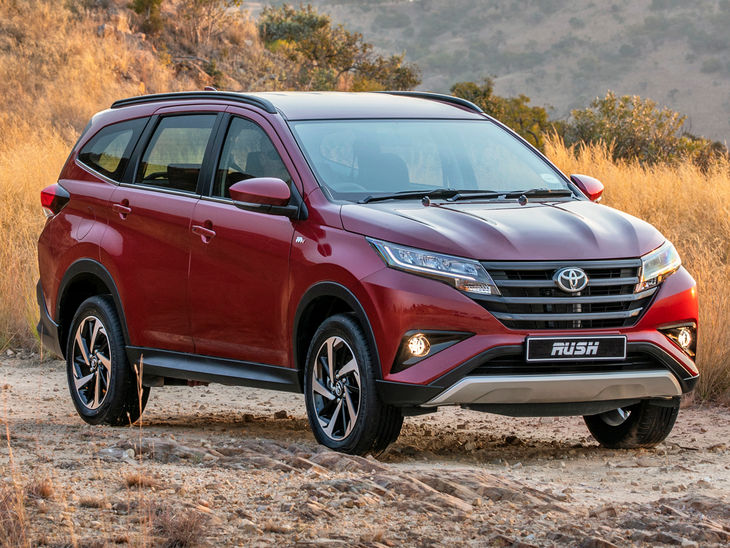
10. Toyota Rush
Remember the Daihatsu Terios? Well, Toyota offered a rebadged version of the third-generation Terios called the Rush, and it debuted in South Africa in mid-2018 (interestingly, in 5-seater guise only, rather than with 7 seats as in many other markets). Like the aforementioned Avanza with which it shared its underpinnings, it sported a front engine, rear-wheel-drive layout. However, production of the Rush has seemingly ended, leading to its disappearance from Toyota’s pricelist by April 2022.
Honda has introduced the new Civic RS in South Africa! Take a look at the specification and pricing details for the newcomer below!
The Honda Civic sedan’s biggest rival is the Toyota Corolla and while the latter dominates the local sedan market, the introduction of the new Civic RS will give buyers something to think about.
What makes the styling special on the Civic RS?
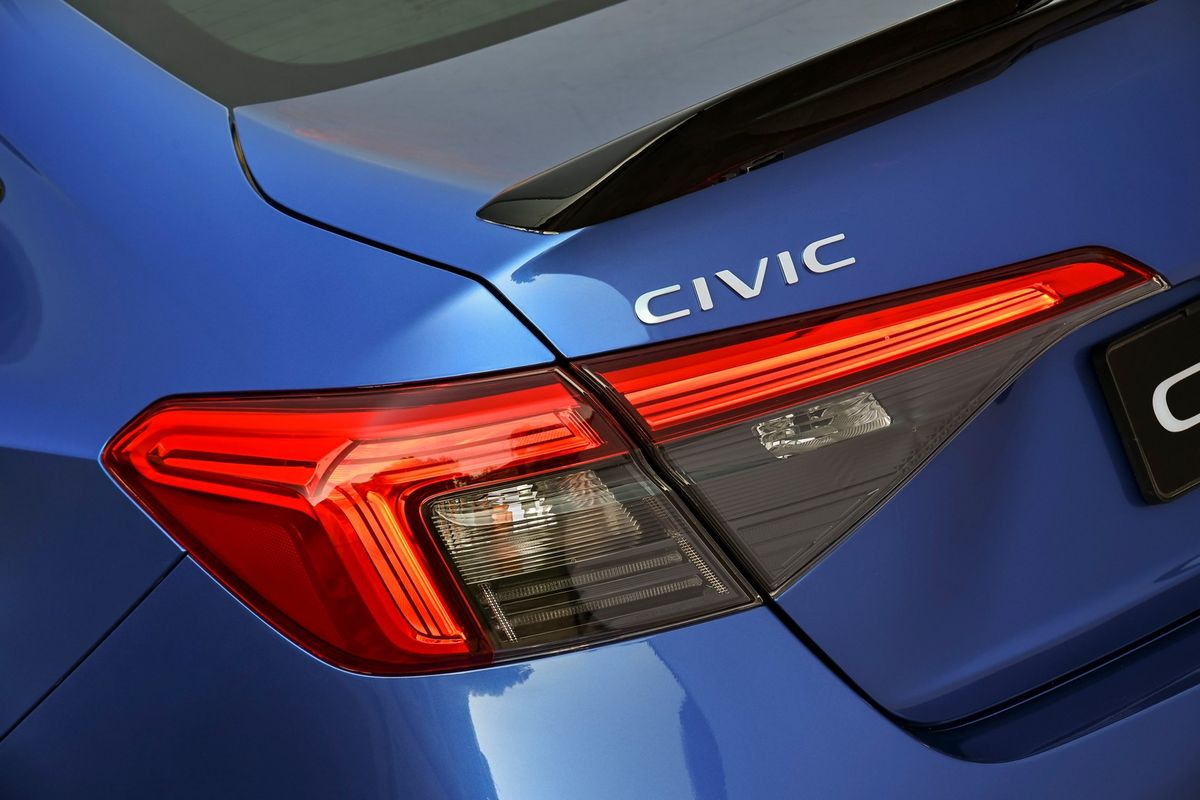
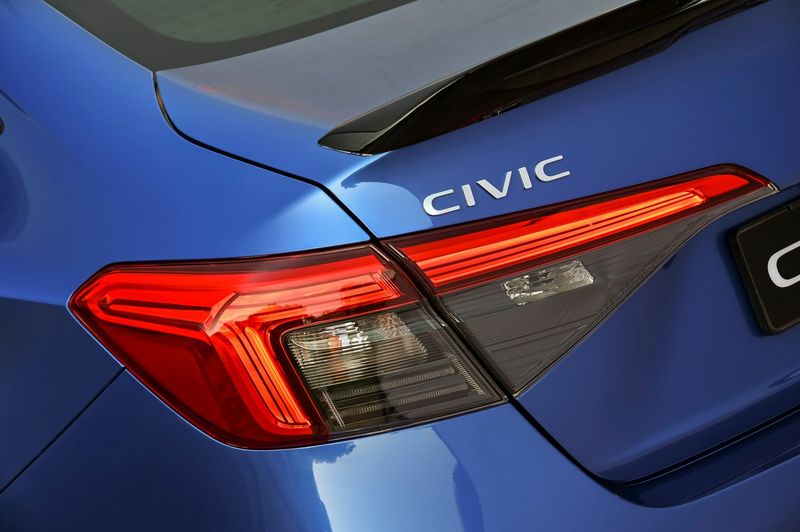
The Civic RS is equipped with sporty features such as RS bumpers and side skirts, gloss black mirror housings and black door handles, 18-inch black alloy wheels, sunroof, LED headlights, smoked rear LED taillights, boot lid spoiler and a dual exhaust system.
The Civic RS is available in 5 colours including Platinum White, Meteoroid Grey Metallic, Lunar Silver Metallic, Cherry Red Metallic and Brilliant Sporty Blue Metallic.
What features are found inside the Honda Civic RS?
The Civic RS is equipped with leather and suede combination upholstery as well as red ambient lighting and sport pedals. The front seats also have a heating function as well as 8-way electronic seat adjustment.
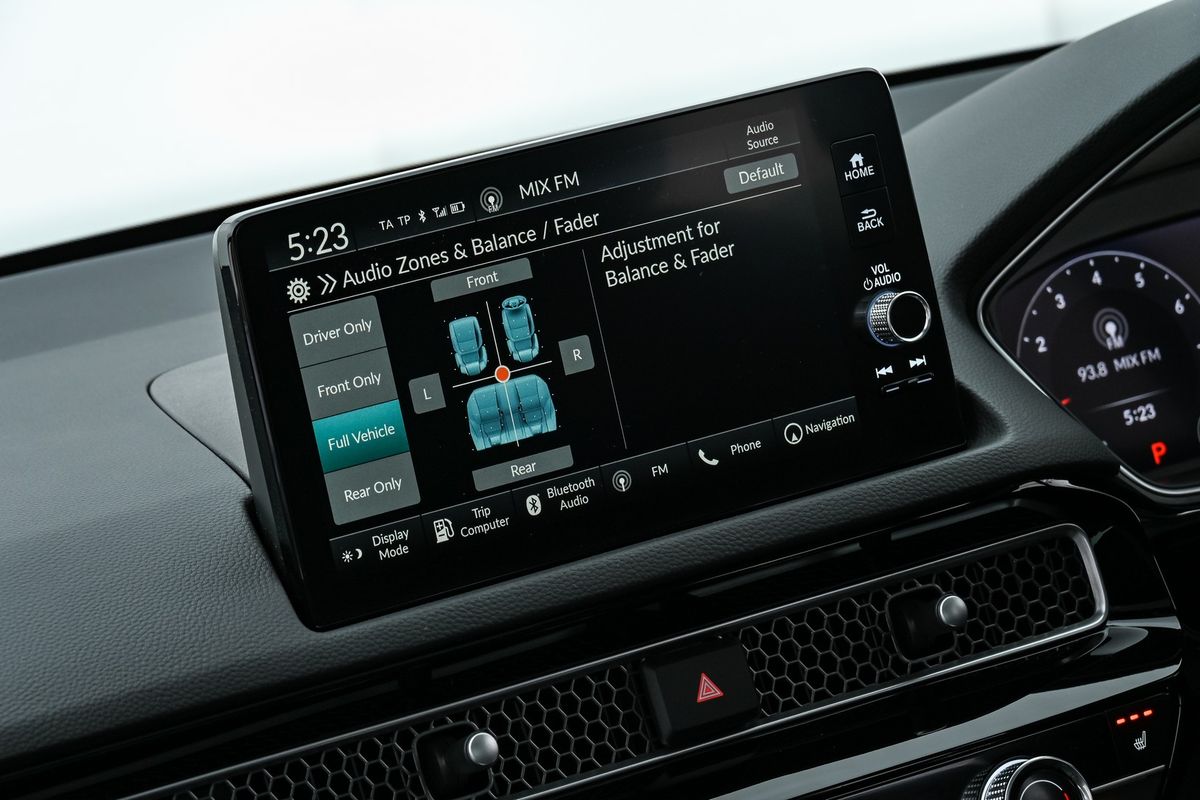
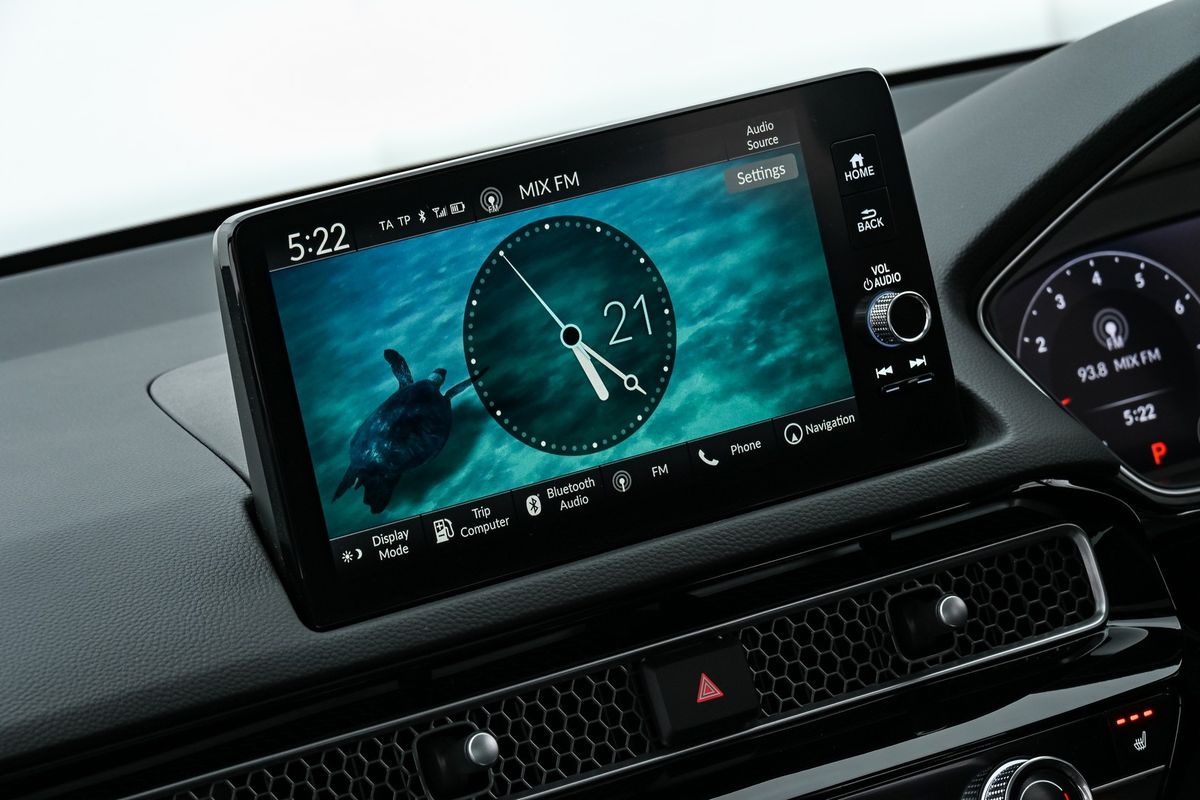
In terms of infotainment, a 9-inch HMI infotainment system is fitted and it offers integrated navigation as well as Apple CarPlay and Android Auto functionality. The system adopts an easy-to-use smartphone-style menu layout. The Civic RS is also equipped with a wireless smartphone charger.
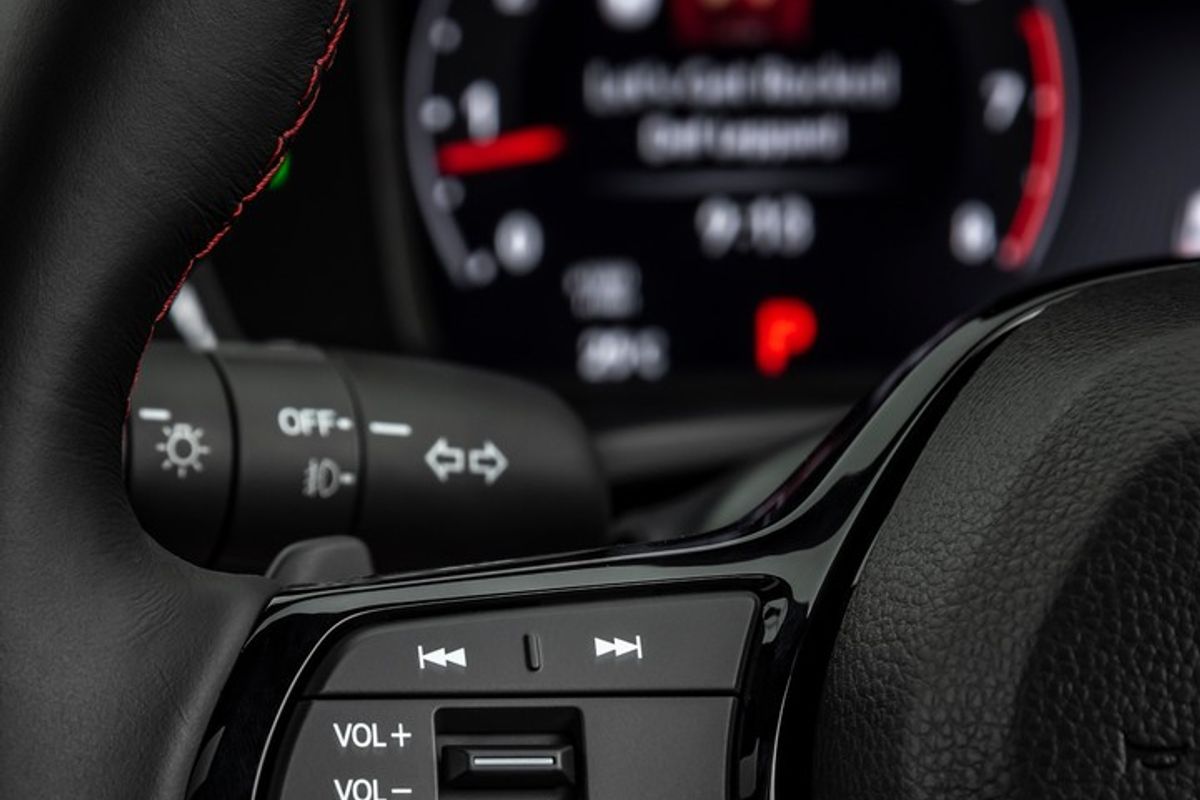
A 10.2-inch digital instrument cluster is also fitted and the information is easily toggled using the mounted controls on the steering wheel. Music lovers will also appreciate the presence of a 12-speaker BOSE sound system.
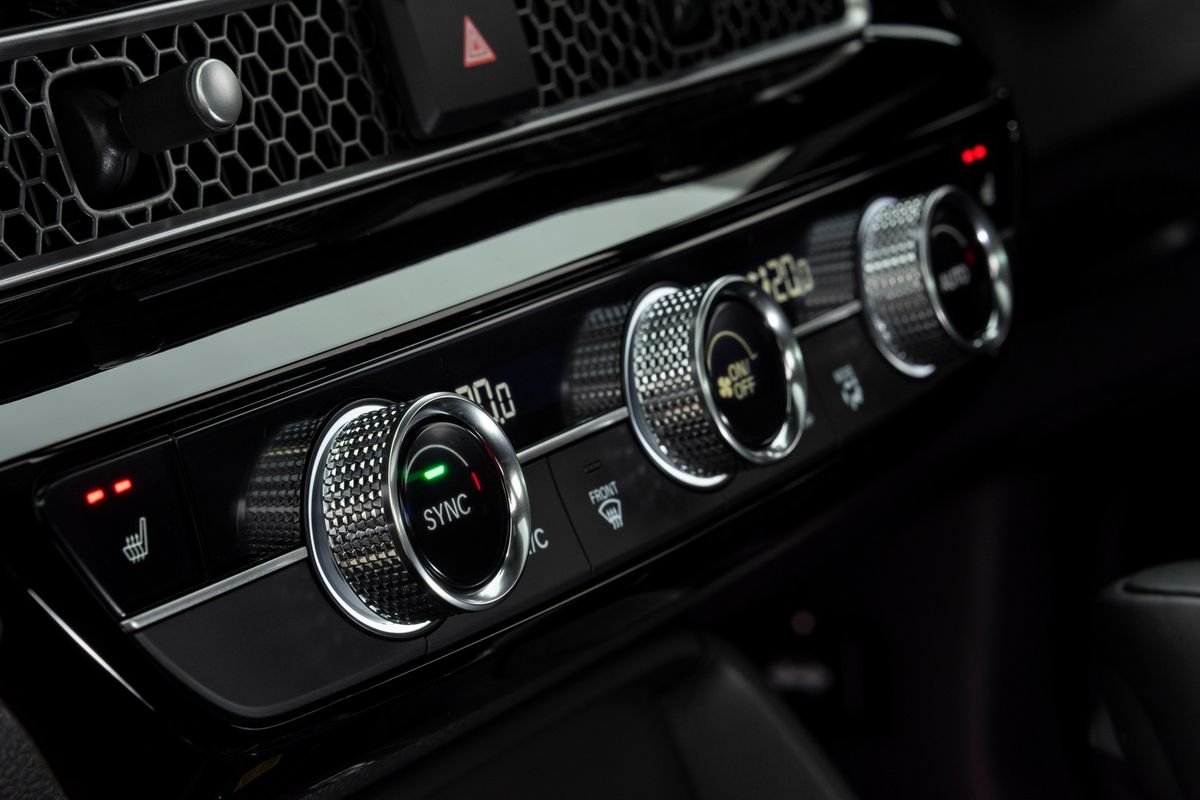
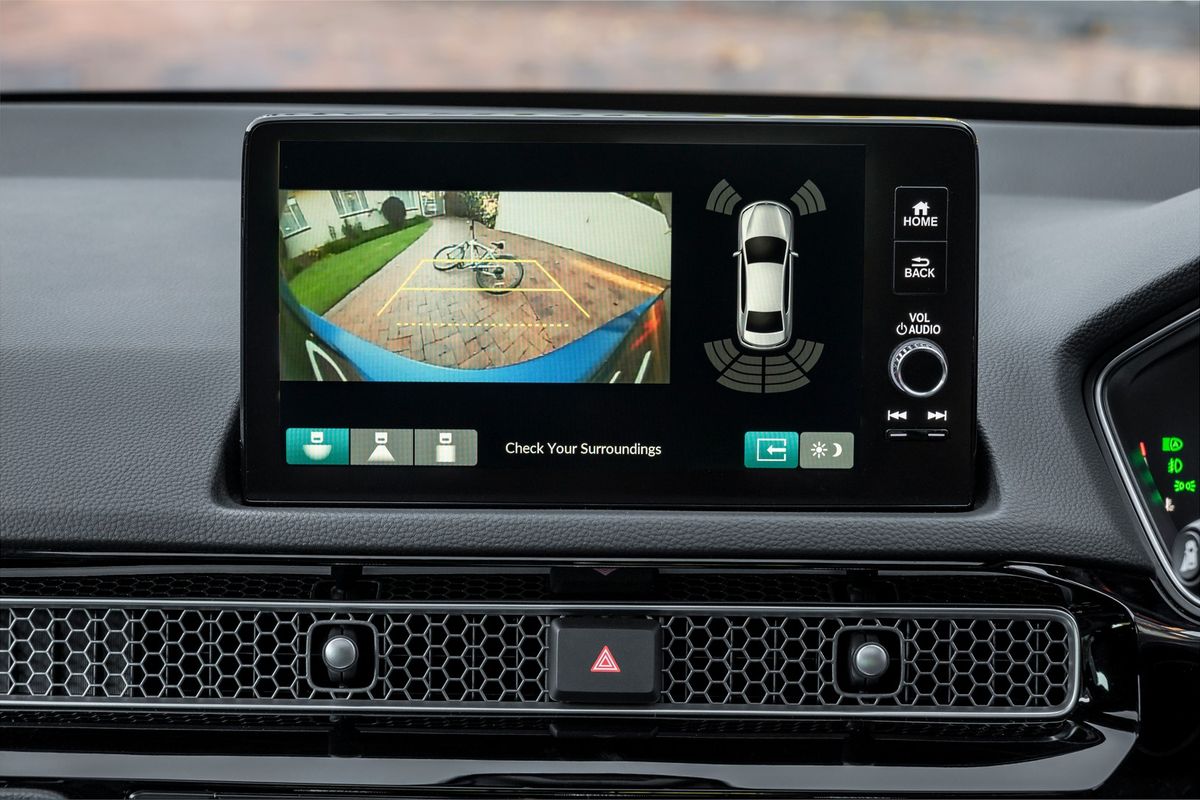
Other key features include cruise control, smart entry, climate control air conditioning, 2 rear USB ports, front and rear park distance control and a reverse parking camera.
In terms of safety, 6 airbags is standard as is ABS with EBD, Vehicle Stability Assist, Hill Start Assist, Driver Attention Monitor and Lanewatch. Further driver assistance comes in the form of Honda Sensing which includes Collision Mitigation Brake System (CMBS), Adaptive Cruise Control (ACC) with Low Speed Following (LSF), Road Departure Mitigation System, Lane Keep Assist System (LKAS) and Automatic High Beam.
What engine powers the Honda Civic RS?
The Honda Civic RS is powered by an improved 1.5-litre turbocharged petrol engine that now offers 131 kW and 240 Nm of torque and comes paired with an enhanced Continuously Variable Transmission (CVT). This combination returns a claimed fuel economy of 6.2 L/100km.
Using the Drive Mode switch, the drive is able to toggle between 3 drive modes including ECON (to maximise efficiency), Normal (for general use) and Sport (to enhance performance).
The wheelbase of the new Civic RS has grown by 35 mm over its predecessor while the track has increased by 12 mm. This has led to improvements in straight line and turning stability. Honda has also refined the Civic’s overall ride comfort and handling ability.
How much does the new Honda Civic RS cost in South Africa?
Honda Civic 1.5T RS CVT – R669 000
The Honda Civic RS is sold with a 5-year / 200 000 km warranty, 5-year /90 000 km service plan and 3-year roadside assistance. Service intervals are at every 10 000 km or every 12 months.
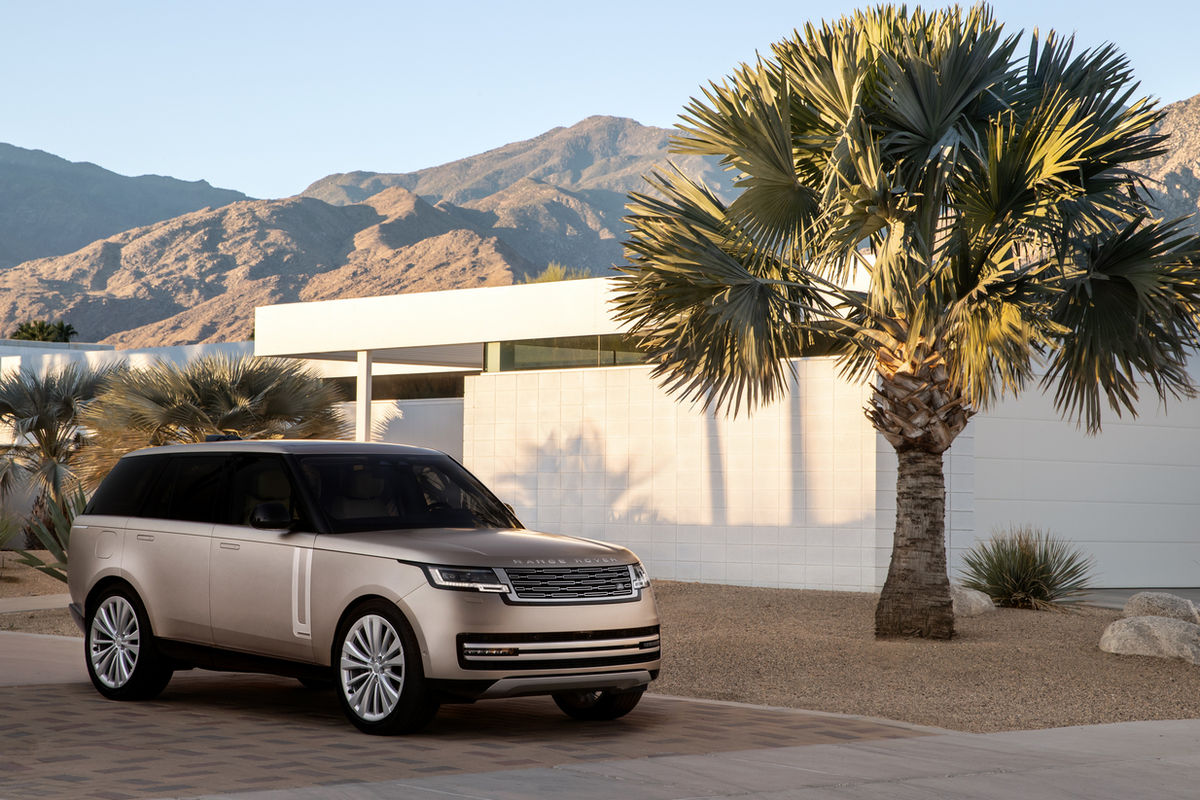
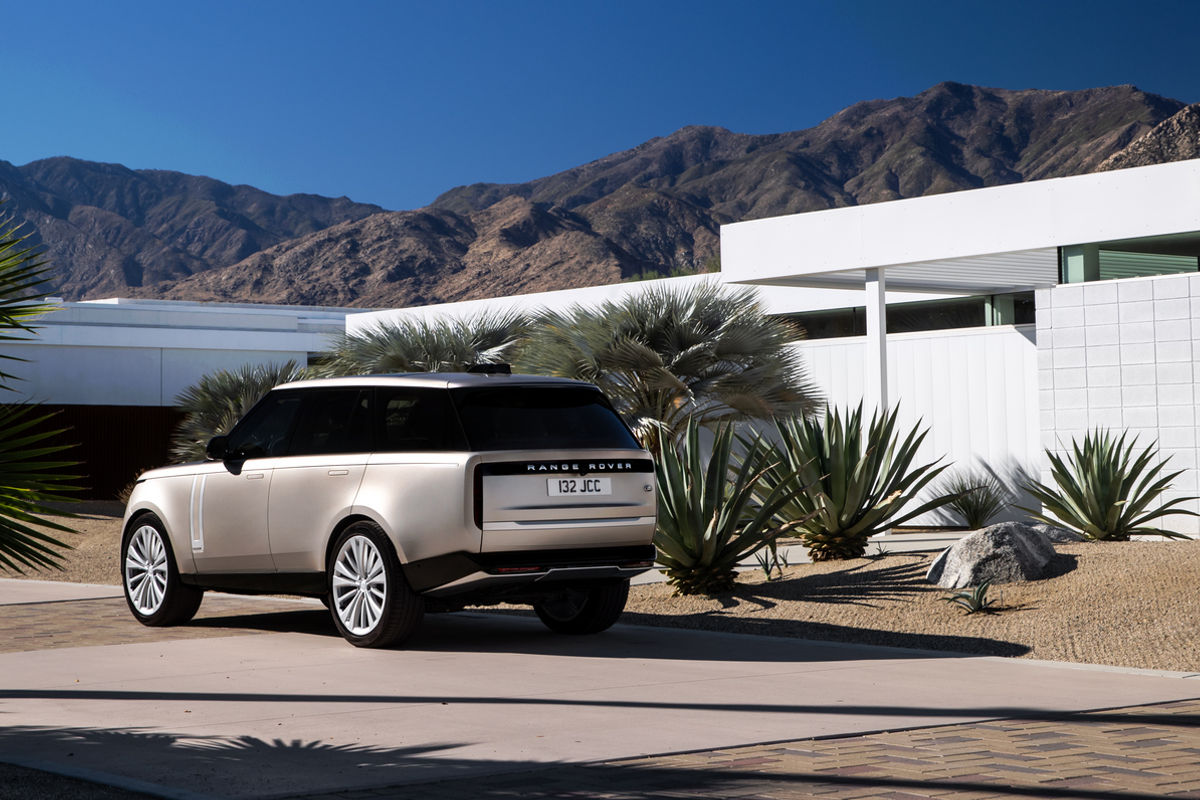
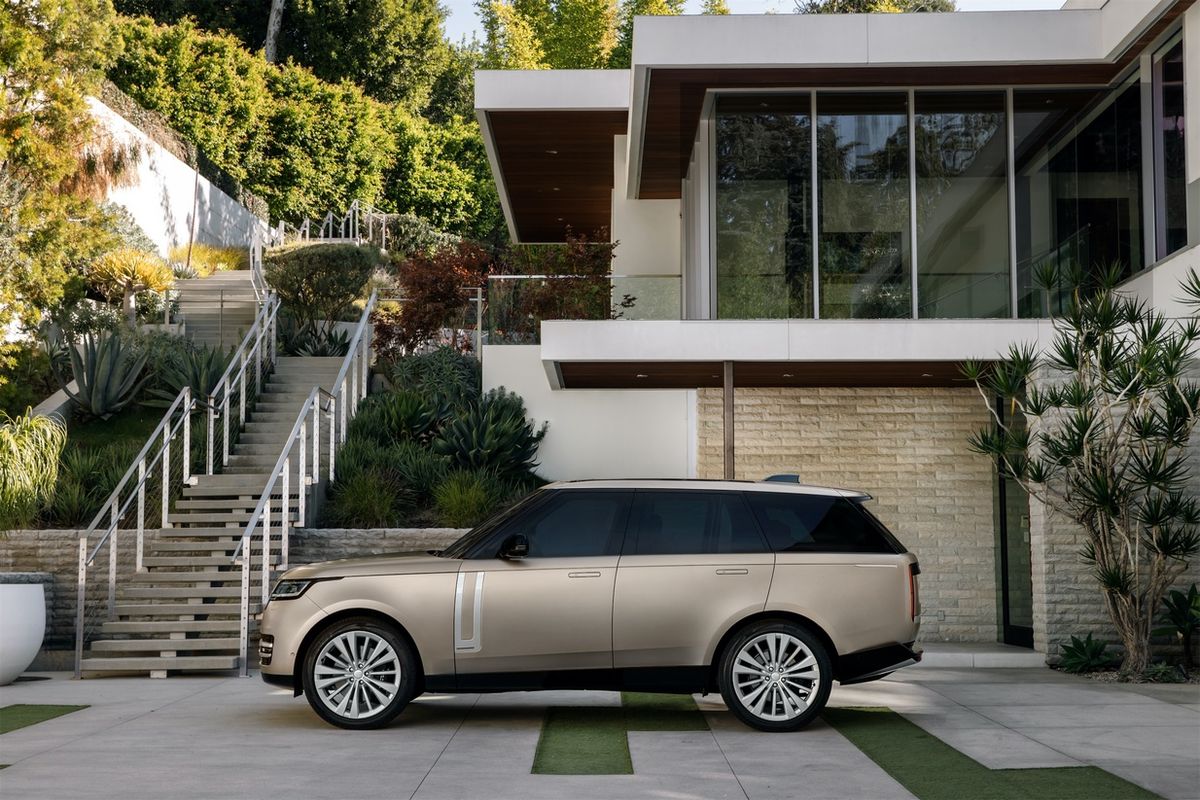
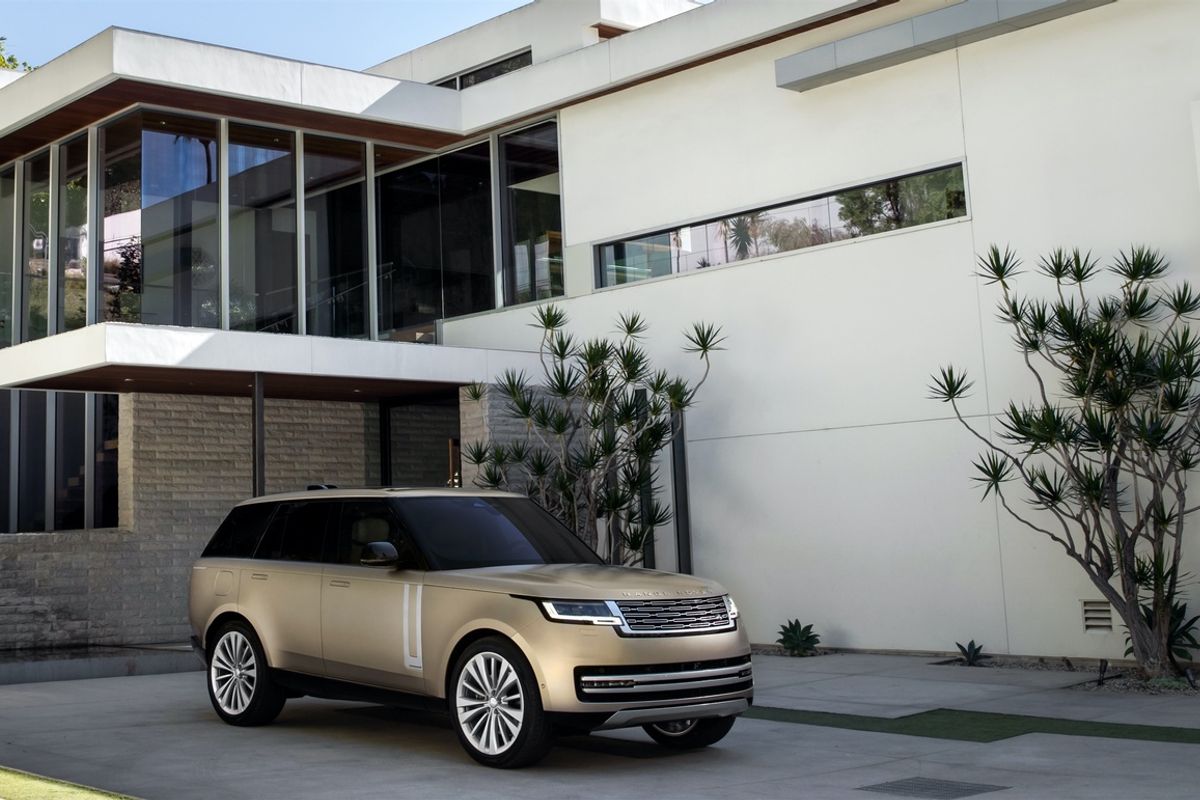
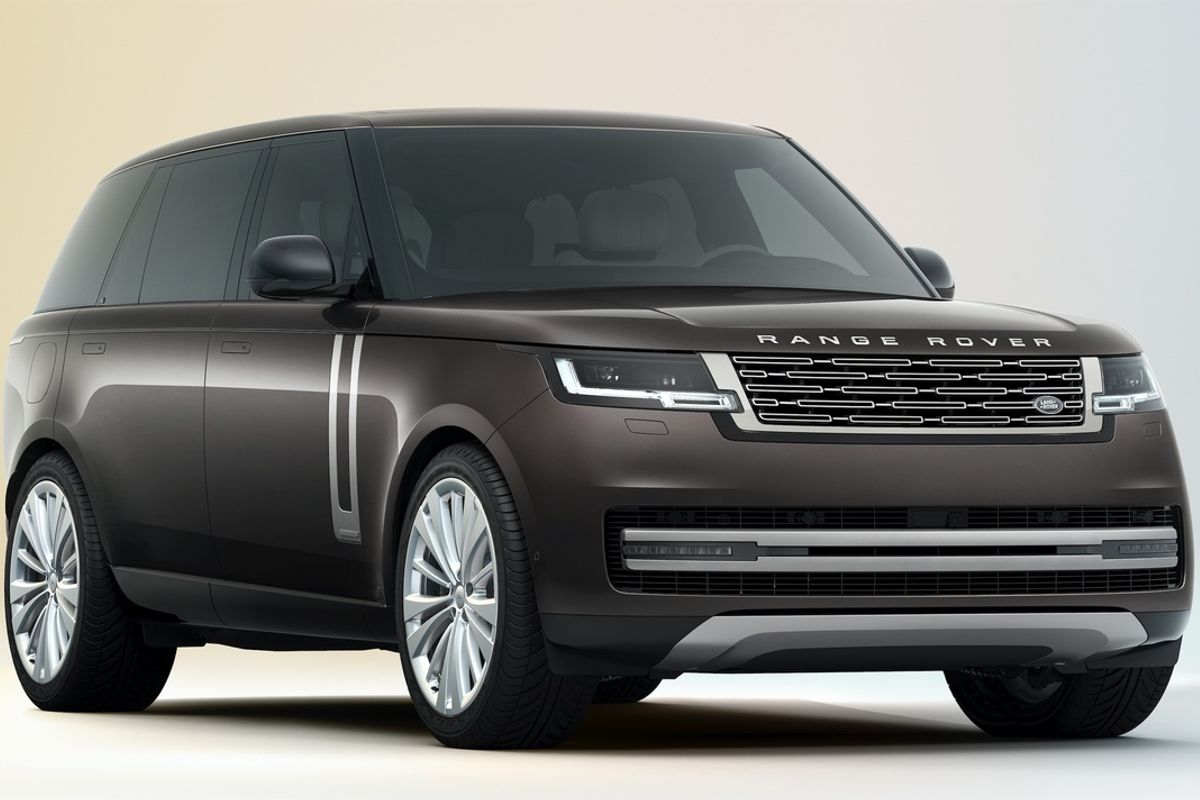
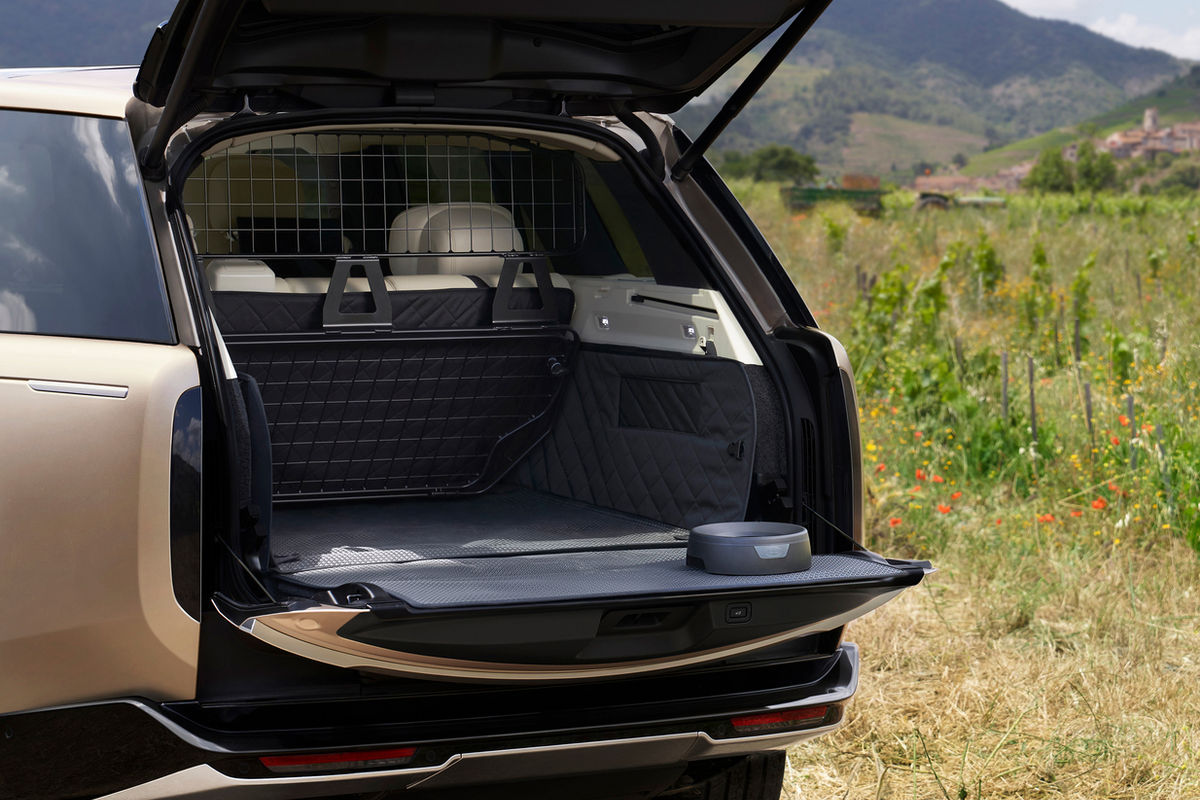
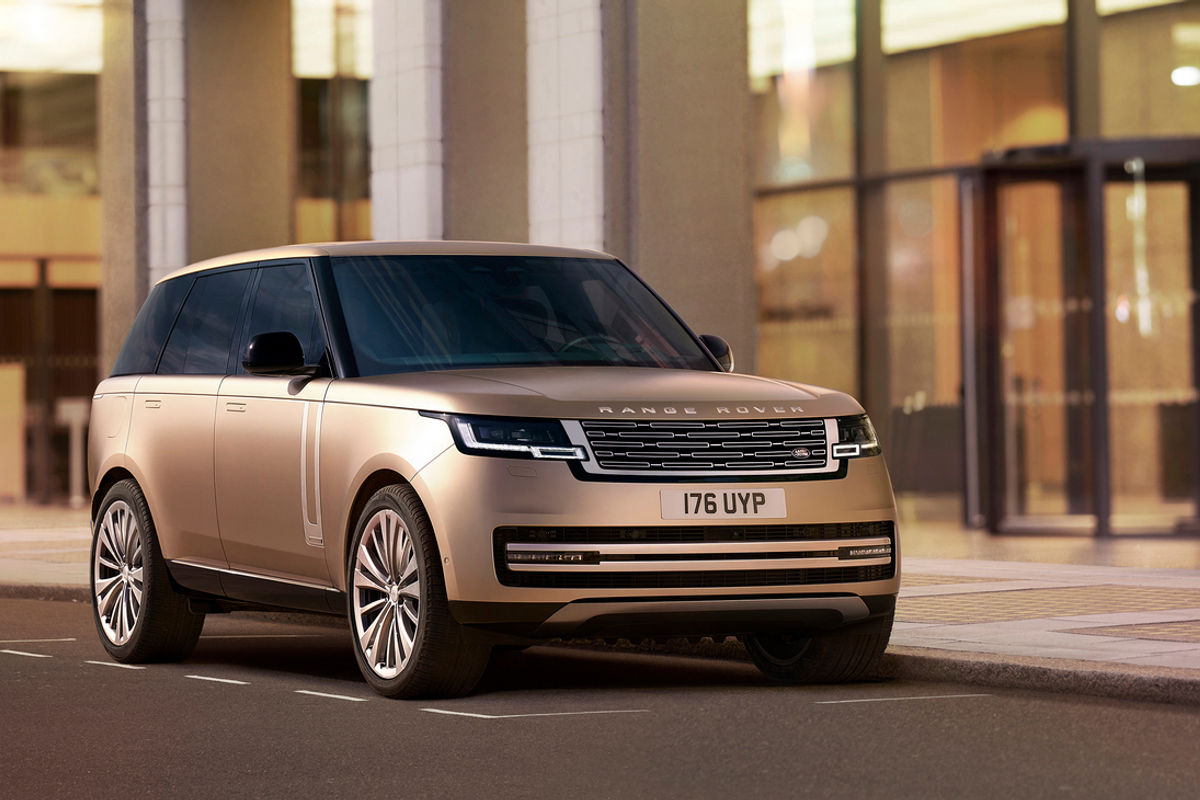
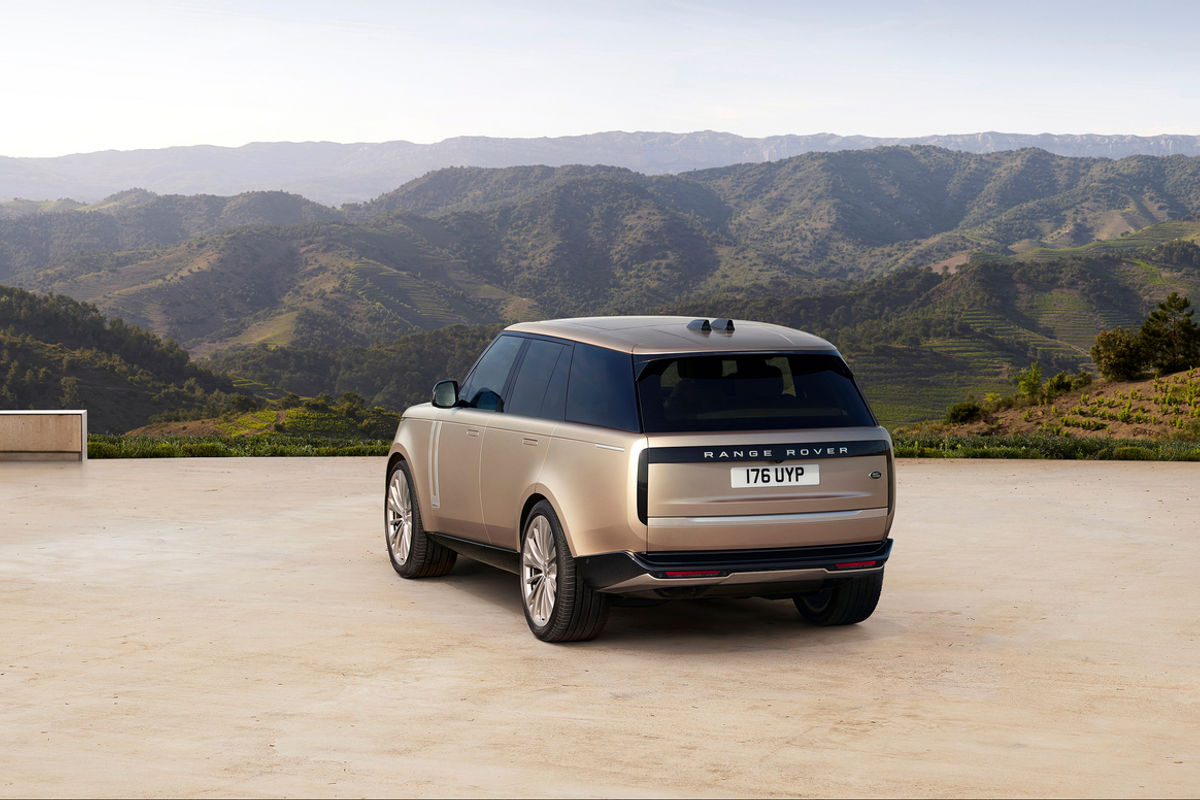
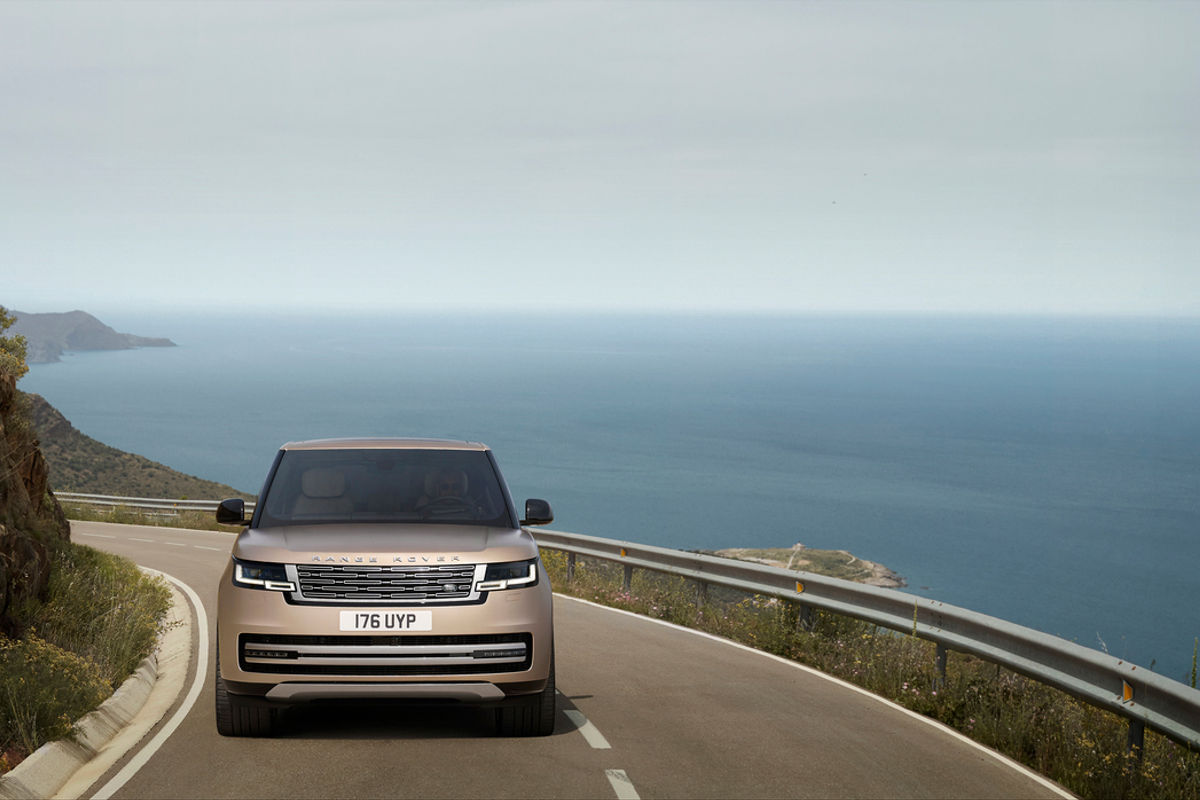
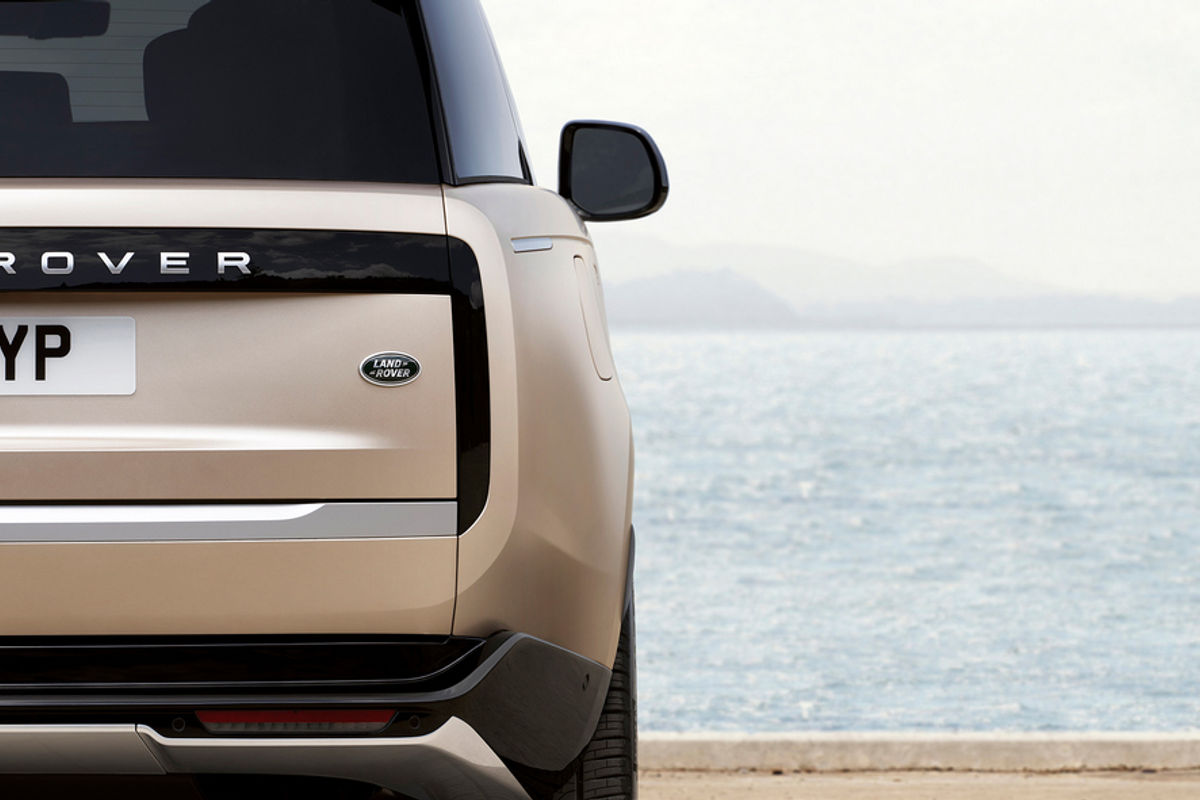
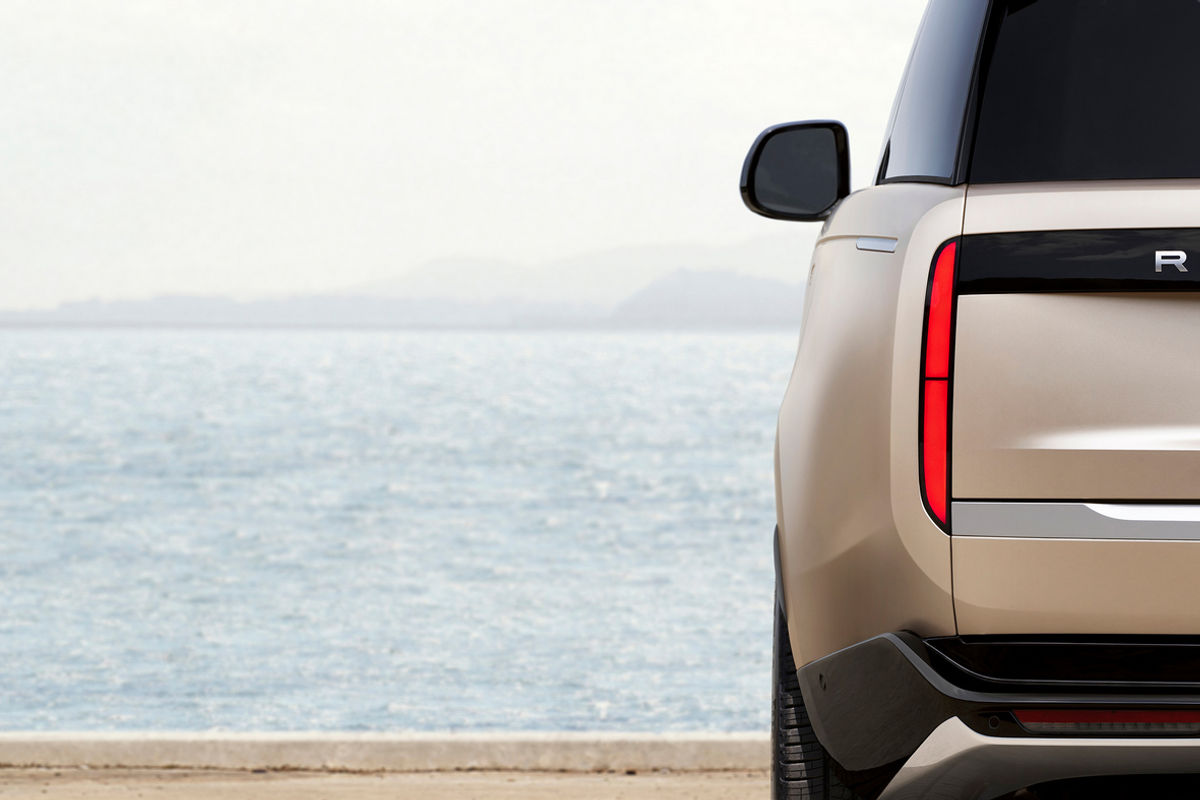
The all-new Range Rover took its sweet time to reach our shores. Now that it’s here, what does the British model offer over and above its German rivals and how does it fit into a new world that’s increasingly concerned with zero-emission motoring? We drove the R3-million first-class SUV around the Western Cape during its local launch.
What’s new on the Range Rover?
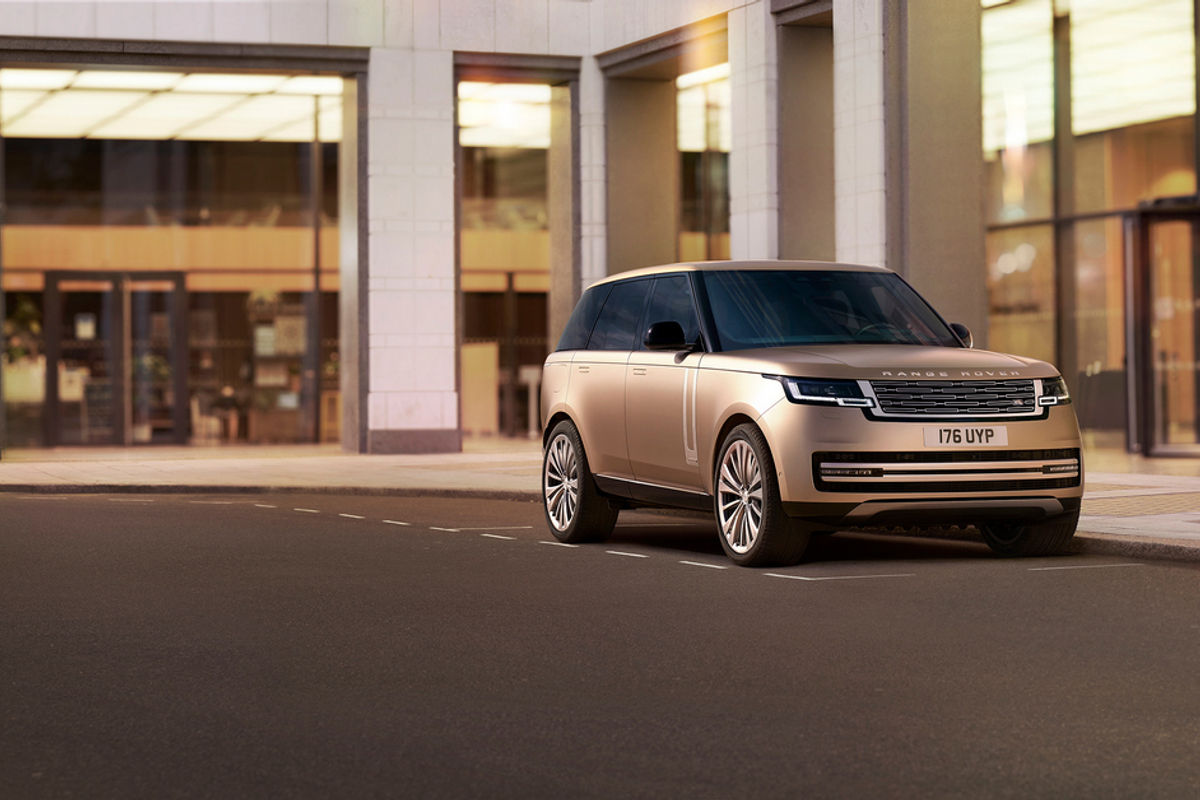
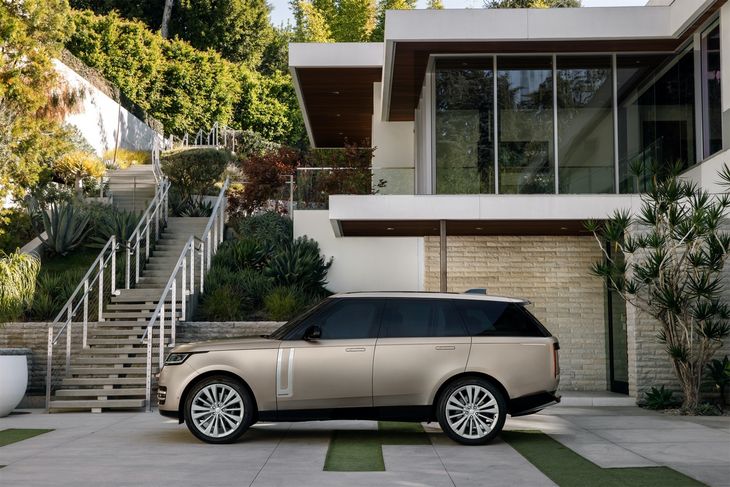
The new Range Rover is slightly longer and taller, but a touch narrower, than the outgoing model.
The new Range Rover may look a lot like its predecessor, but it’s an all-new SUV and whereas the previous model’s major update was the lightweight aluminium architecture that saved 450 kg, this model is all about modern tech and comfort, plus the range includes an excellent hybrid derivative. That’s not to say this Range Rover has been at the Cornish Pasties, it’s only a few kg heavier than the outgoing car despite being longer and taller (marginally).
There’s a new inline-6 turbodiesel engine borrowed from the Discovery and Defender. Meanwhile, a big turbopetrol 4.4-litre V8 does the heavy lifting on the unleaded front and it’s partnered by a straight-6 hybrid version with a claimed pure-electric range of 113 km. A fully electric derivative is scheduled to arrive in 2024 (for those looking to avoid filling up altogether), so even if the Range Rover appeals to the same crowd it always has, it’s more efficiency-oriented than before.
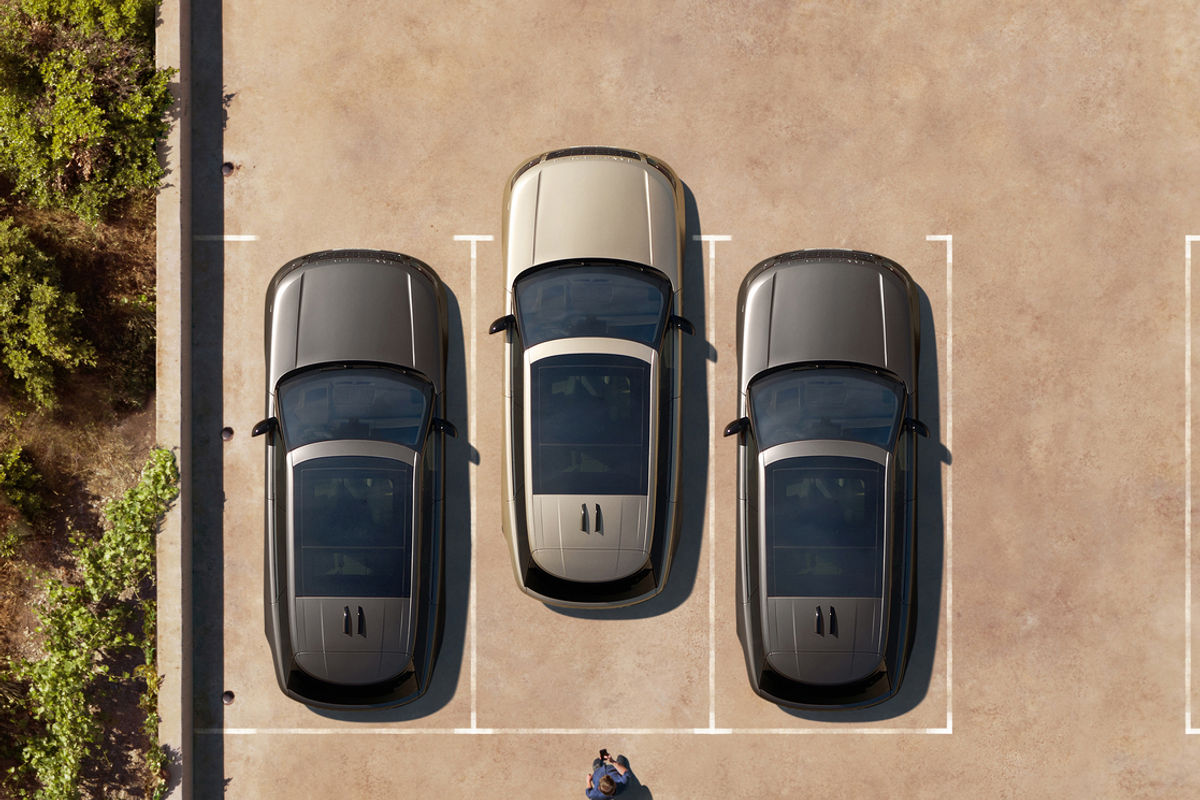
Four-wheel steering has also been deployed in the new model, which allows the 5-metre SUV to turn much tighter at slow speeds, such as when it’s being manoeuvred in parking lots or made to perform U-turns.
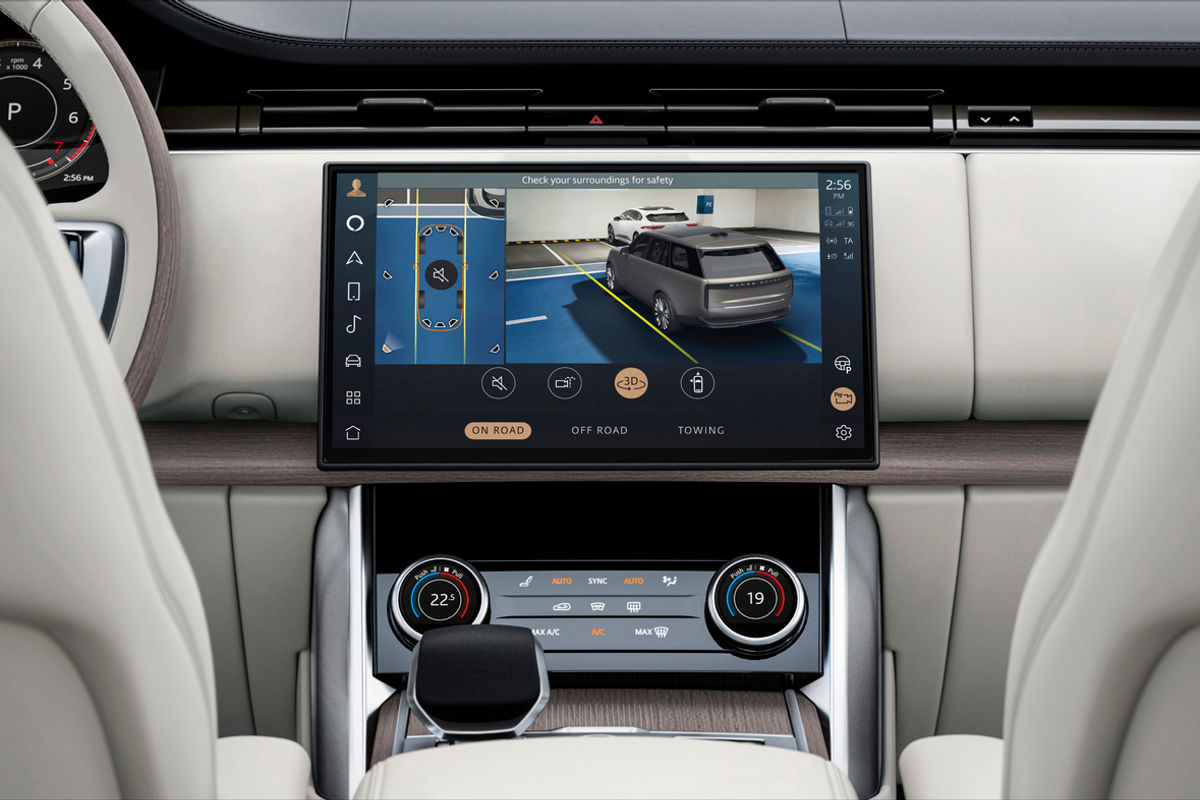
Inside, connectivity has been brought up to modern standards with all the wireless functions you would expect, as well as App connectivity for gimmicks such as remote-controlled parking. Software updates will also be continually sent to the vehicle throughout its life cycle to ensure that it remains up to date (for ostensibly for as long as it is in service).
Inside the new Range Rover
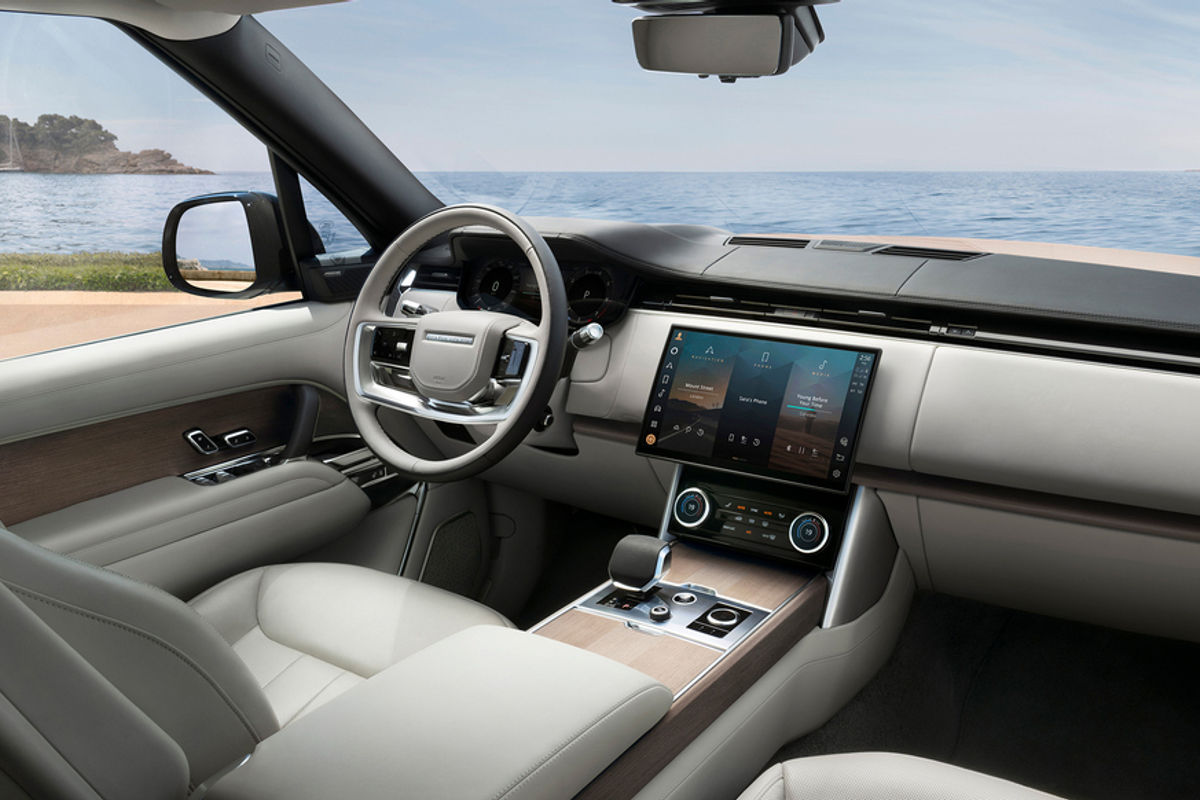
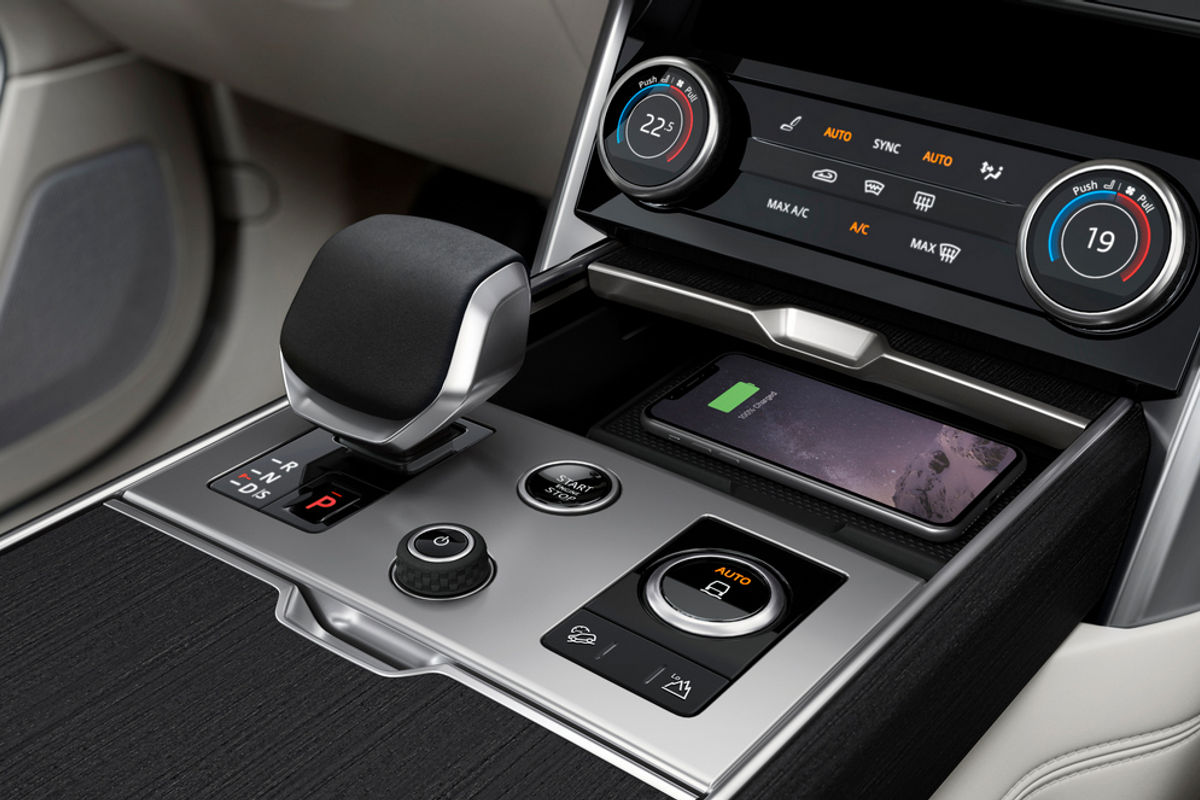
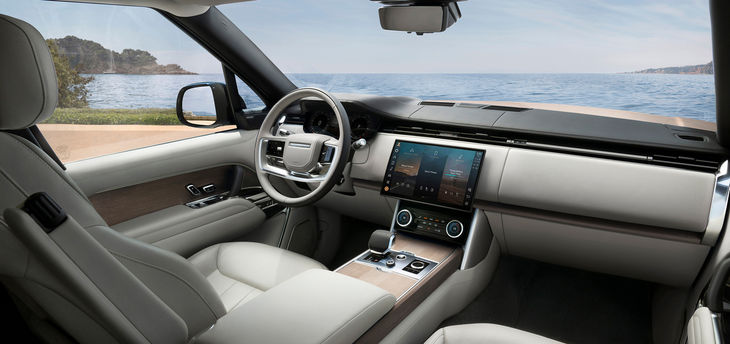
Subtle but luxurious, note the return of a ‘”traditional'”gear lever.
There’s quite nothing quite like walking up to a Range Rover for the first time. The new model has an immense visual presence from the outside with clean flat lines. The door handles lay flush with the sheet metal until you press the unlock button on the key fob, at which point they elegantly pop out along with the running boards that are stored under the car. At first glance, those “side steps” seem hazardous to your shins, but they fold out just far enough – a smart bit of design.
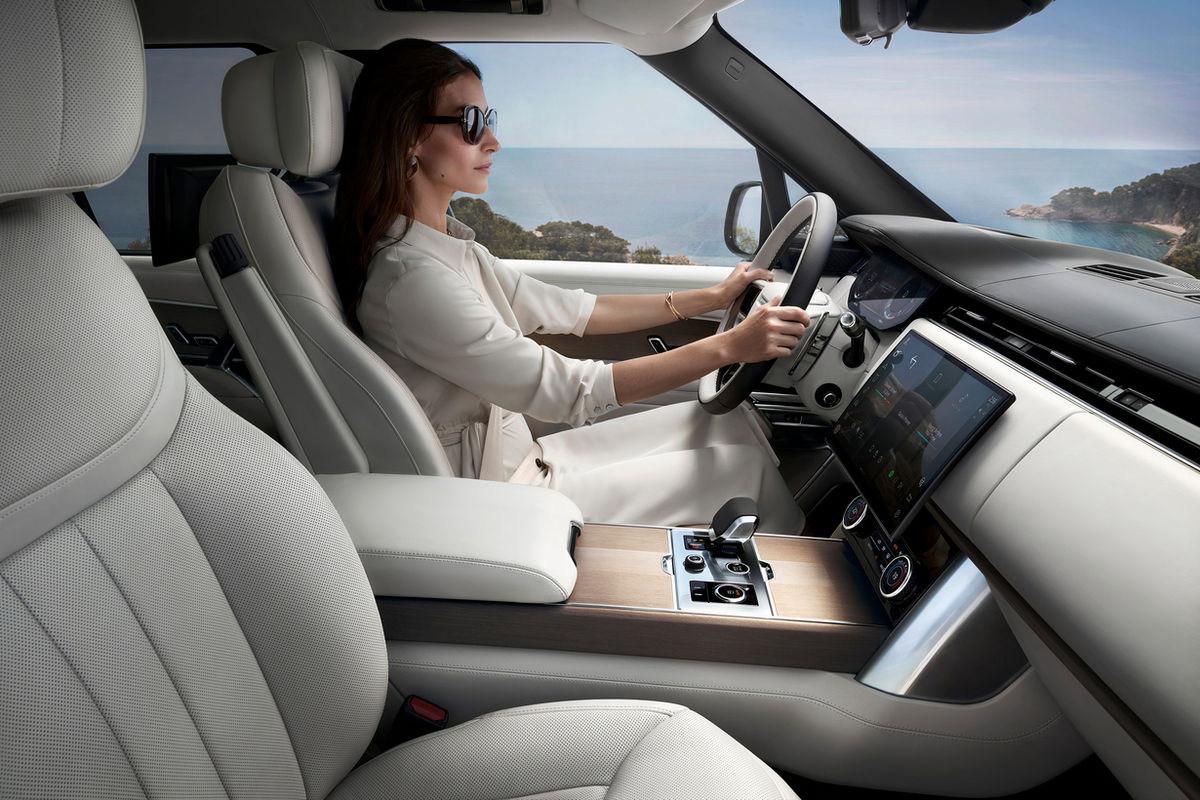
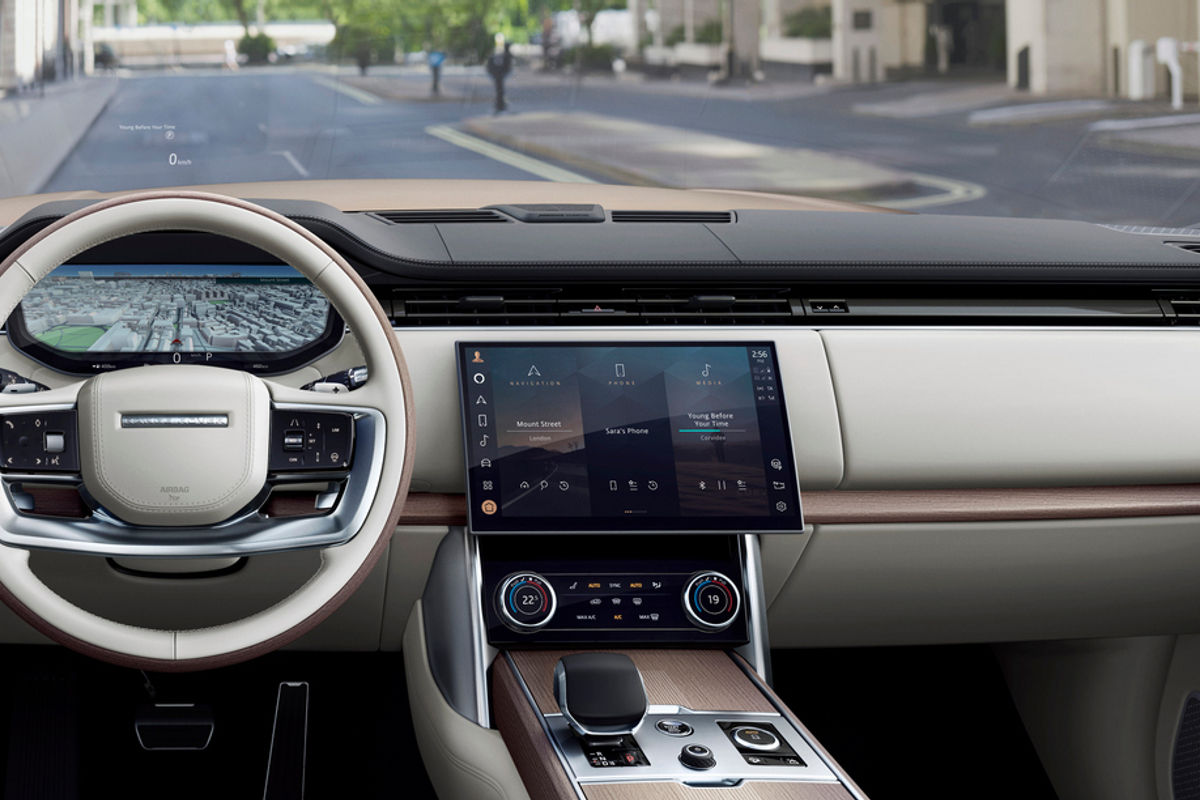
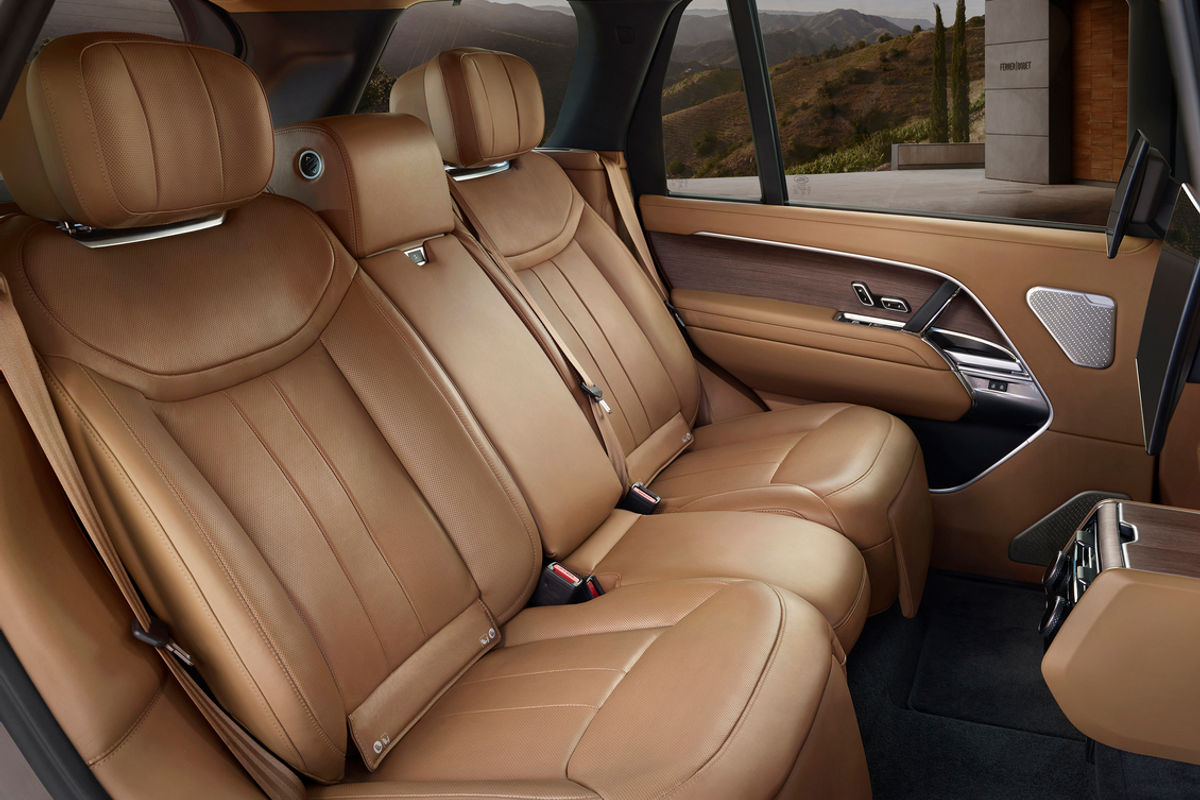
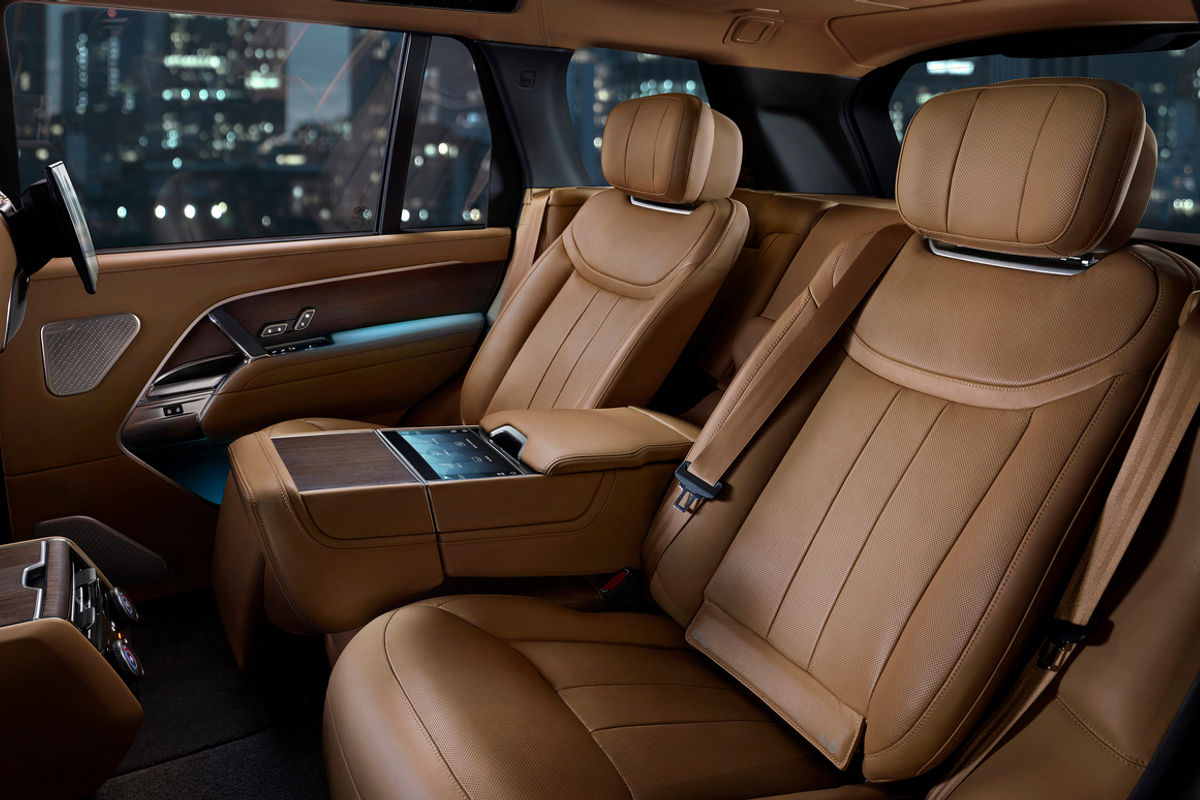
Climb on in and you’ll find automotive luxury in its finest form… The soft quilted leather seats are so comfortable, they cosset you like a big hug from your mum. The two digital screens are now much more prominent; the centre infotainment screen and digital instrument cluster feature high-definition glass displays that produce vivid colours along with easy-to-read icons. Somewhat surprisingly, the rotary gear knob has been replaced with a more traditional transmission lever.
The entire centre console has, in fact, been reimagined with much more intuitive ergonomics and no shortage of storage spaces. There’s a 4-bottle fridge in the centre console and a two-tier storage compartment below the cupholders for stashing things like phones or keys (there are USB ports in there for charging devices too). Wireless Apple Carplay and Android Auto integrate seamlessly with the car, although you may want to spend some time digging through the plethora of options in the infotainment system – vehicle settings, cameras, seat massaging, towbar deployment and just about everything you can do with the car can be accessed through the screen.
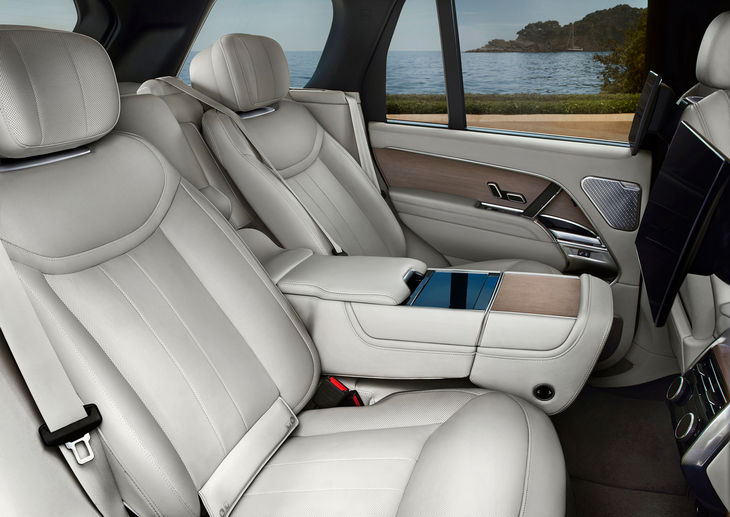
The long-wheelbase 5-seater version provides an abundance of space and tech to get you through a long drive in comfort.
While the overall interior ambience is second to none in a Range Rover and that sense of “effortless reality” comes across perfectly, some of the material choices seem to be a bit below par for a vehicle that has a starting price of around R3 million. Fancy-looking plastic has substituted real metal finishes in the centre console and while it looks nice, I don’t think it has that same sensory appeal as real aluminium, for example, and the same goes for the touch points on the steering wheel. I might be being a little picky here, but surely the “ultimate luxury SUV” (well, this side of a Rolls-Royce Cullinan) shouldn’t have anything less than the best?
Driving the Range Rover
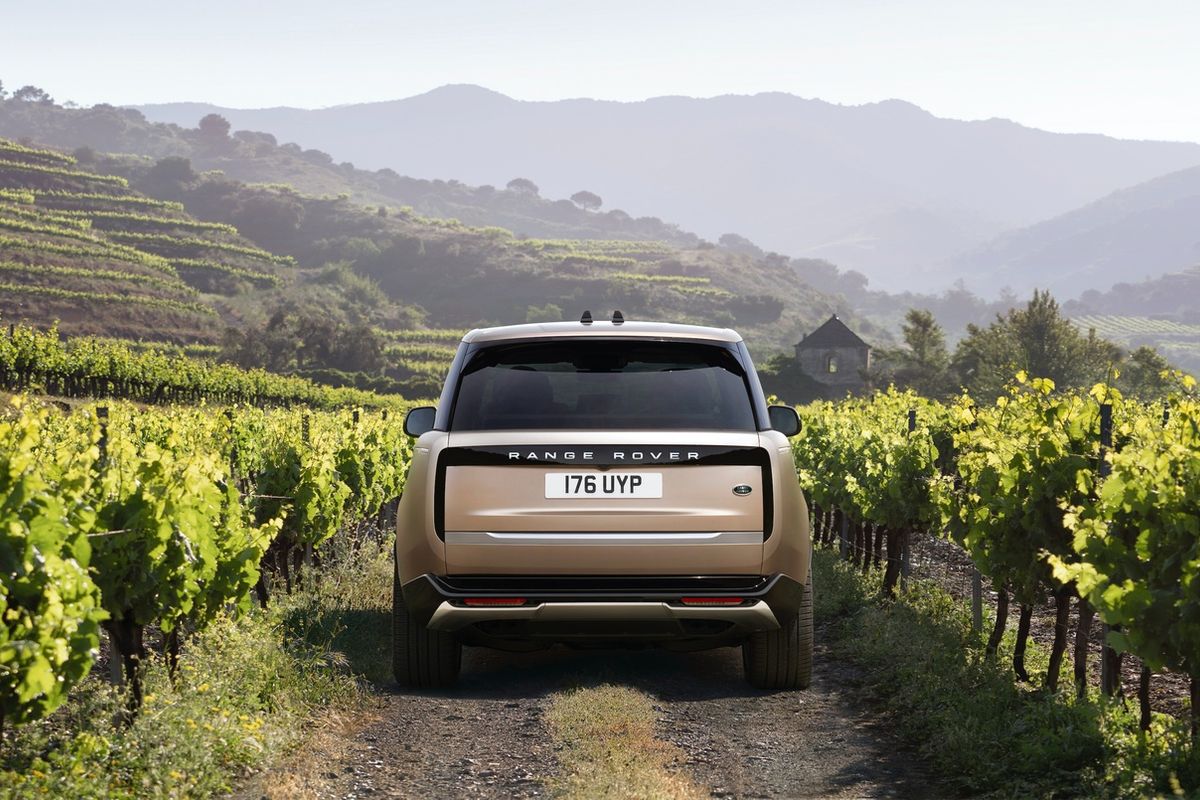
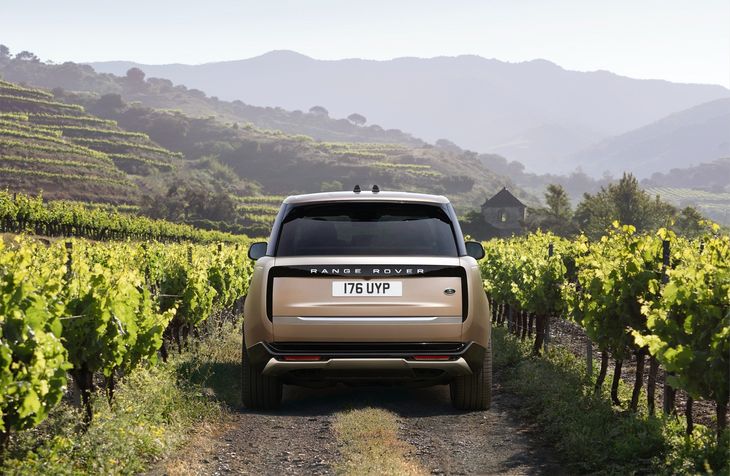
Air suspension allows the Range Rover to get just about anywhere you want, along with Terrain Response off-road modes.
Straight-six turbodiesel and V8 turbopetrol derivatives were made available to us to drive; the petrol-electric hybrid version will only be arriving later this year. We completed the first 300 km of driving in the V8, which positively wafts down the road; the twin-turbo 4.4-litre motor has no problem propelling the 2.6-tonne road-ship swiftly. There’s 390 kW and 750 Nm of torque available, but the mind-bending number is the claimed 0-100 kph time of 4.6 seconds. That’s Volkswagen Golf R pace (at least from a standstill to 100 kph), but imagine doing that in your stately British living room.
It’s all the power you will ever need… In fact, the V8 sometimes feels a little too eager to accelerate, at which point a fair amount of force to the brake pedal is required to slow the Rangie down to a calmer velocity. For those worried about fuel consumption (which is rather unlikely if you’re looking to spend 3 bar on a car) we managed just over 14 L/100 km over 300 km in the V8. Compare that to the turbodiesel, which returned 11.2 L/100 km on the return journey.
You won’t miss much in terms of performance if you opt for the turbodiesel. The inline-6, which we first sampled in the new Defender, has plenty of shove and is well suited to this stately cross-continental cruiser. With 257 kW/750 Nm, the wave of torque facilitates short, sharp bursts of acceleration. The most noticeable difference between the engines is that, when overtaking at speed, the petrol’s acceleration feels more sustainable than what the diesel can muster.
Ride and handling
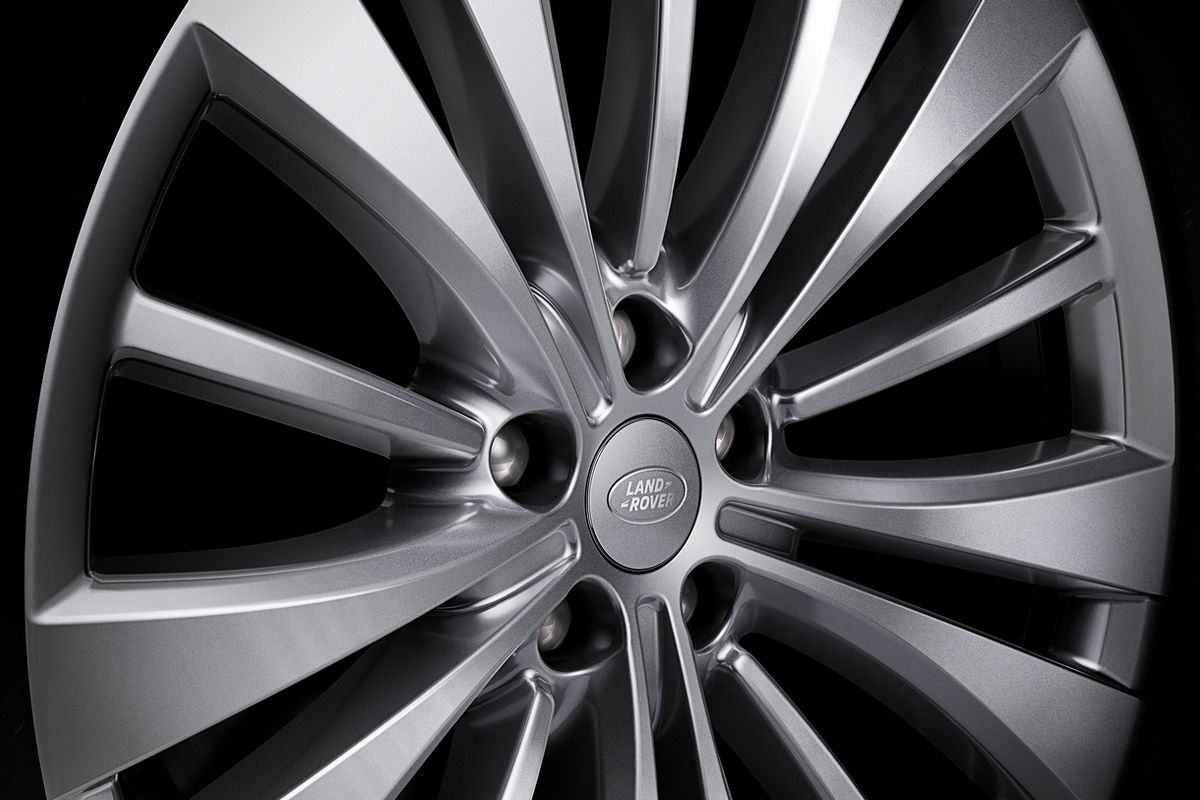
Insanely large (23-inch) wheels try their best to hamper the ride, but certainly look the part on the new model.
The word wafting is synonymous with Range Rover dynamics and that’s still the case with this new-generation model. Air suspension has always been the key to what makes a Range Rover’s ride so plush and even when fitted with the ridiculously large (23-inch) wheels shod with low-profile tyres, the first-class SUV’s ride is beautifully composed and quiet. You do, however, get the impression that the computers that govern the workings of the air-suspension setup are working overtime to maintain that perfect ride, while a set of 19-inch wheels and plumper rubber would probably be a more practical option. Having said that, 19s may possibly be considered “poverty spec” by other Range Rover owners…
I don’t think I have ever been as impressed by an SUV’s ride quality (while driving it on a dirt road) as I was in the Range Rover. What’s more, its cabin is brilliantly insulated from exterior noise… even when stones were being flicked up into the wheel wells, there was nothing more than a light tinkling of sound to be heard. On the tarmac, you do discern a little bit of road noise and wind buzzing at around the 120 kph mark.
The addition of 4-wheel steering is certainly beneficial when navigating the confines of narrow roads or parking lots; it makes getting in and out of regular parking bays much simpler/less stressful. It also means you can perform a U-turn within the confines of most single-lane roads without having to 3-point turn your way out.
Range Rover pricing and after-sales support
Note that pricing is accurate as of May 2025.
All Land Rover vehicles come with a standard 5-year/100,000km Land Rover Care Warranty and Maintenance Plans. * Prices include VAT but exclude CO2 tax.
P460e HSE Standard Wheelbase – R3 395 000 P460e HSE Long Wheelbase – R3 498 500 P460e Autobiography – R3 885 400 P460e SV Long Wheelbase – R4 968 900
D350 HSE Standard Wheelbase – R3 419 700 D350 Autobiography Standard Wheelbase – R3 926 200 D350 Autobiography Long Wheelbase – R4 022 900 D350 Autobiography Long Wheelbase (7 seats) – R4 058 100 D350 SV – R4 536 500
P530 HSE Standard Wheelbase – R3 807 700 P530 Autobiography Standard Wheelbase – R4 338 000 P530 Autobiography Long Wheelbase – R4 439 600 P530 Autobiography Long Wheelbase (7 Seats) – R4 476 600
The new Range Rover effectively maintains the appeal of the British brand’s eponymous model – the German premium marques’ models are simply not in the same league. The presence and respect that the badge brings to the table offer prospective buyers something extra special, which is exactly what they are after at this price point. The Rangey still has unquestionable off-road ability, which many of its rivals no longer offer, and its on-road dynamics are better than ever.
The interior, meanwhile, is opulent and has been modernised with all the latest connectivity options you could possibly want, but some of the material choices feel like they don’t quite match up to the price tag the Range Rover demands.
The engines and ride quality are from the top drawer; they provide the perfect backing to the Range Rover’s luxurious underpinnings and play no small role in defining its regal character.
Range Rover – Frequently Asked Questions (FAQs)
1. Why is Range Rover a good car? If you can afford it, the Range Rover offers high levels of comfort, technology and refinement while also offering powerful performance.
2. Why is Range Rover so expensive? The Range Rover sits at the pinnacle of the Range Rover stable and is considered to be a high quality, luxury SUV that offers strong performance and high levels of technology, comfort and overall refinement.
3. Why buy a Range Rover? There are many reasons to buy a Range Rover (if you can afford it) but the main reasons include ultimate luxury, comfort, refinement, kerb appeal and performance. The Range Rover is a status symbol that shouts success!
New BMW M240i xDrive Review – What has the 2 Series become?
BMW’s 2 Series Coupe is the last small rear-driven car in its lineup. The only thing is, it’s not really that small anymore and it’s not all that light either. Ciro De Siena reviews the latest sports coupe from BMW to see if he can figure out what’s going on at BMW.
When BMW pursued a front-wheel-drive layout for their popular 1 Series model, it certainly made sense from a business point of view. The platform could underpin the Mini products and an xDrive version could underpin some of the smaller BMW SUVs.
However, this left the 2 Series high and dry. With no compact, rear-wheel-drive platform available, BMW had to base the new 2022 2 Series on the underpinnings of the 3 Series.
The result is a much heavier, much more expensive 2 Series. So we sent our video journalist, Ciro De Siena, out to the world-famous Franschoek Pass to try and answer the question, what has the 2 Series become?
Looking for a used BMW 1 Series or 2 Series for sale in South Africa?
10 best-selling bakkies in South Africa: July 2022
The Toyota Hilux still found itself outside the top three on the list of South Africa’s best-selling bakkies for July 2022. Let’s take a closer look at the figures…
While Toyota South Africa Motors recently confirmed production at its Prospecton plant in KwaZulu-Natal had resumed after the facility was forced to halt assembly back in mid-April 2022 owing to severe flood damage, it will take some time for the company to ramp up. So, the Hilux had to again settle for fourth place on the list of SA’s best-selling bakkies in July 2022.
We should point out, too, that domestic sales of new light-commercial vehicles, bakkies and mini-buses fell 6.9% year on year to 9 547 units in July 2022, thanks in part to a lack of production of the Hilux and Hi-Ace at Prospecton for much of the month.
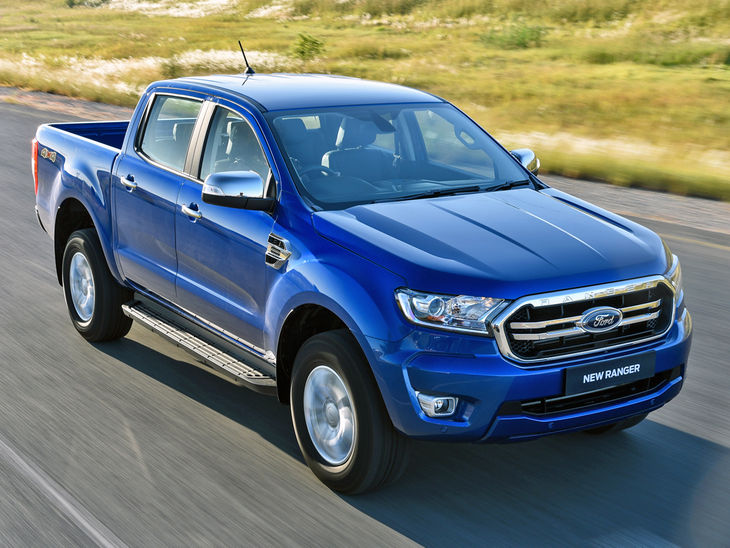
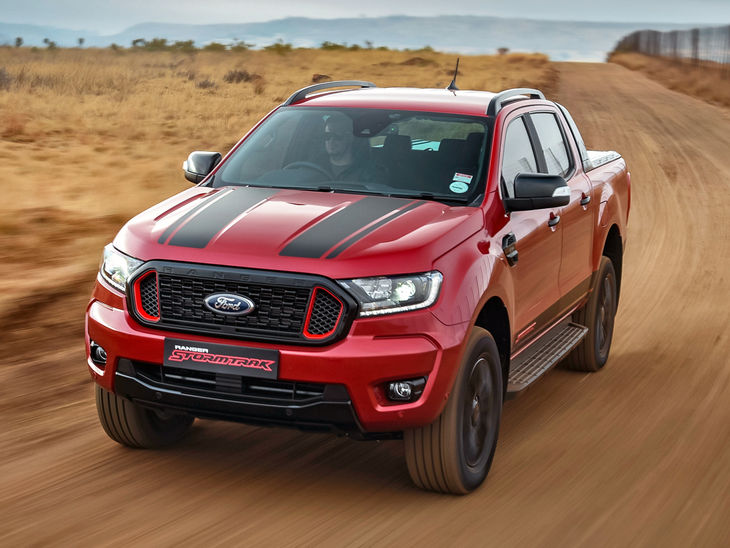
So, if the Hilux wasn’t at the top in July, what was? Well, the outgoing Ford Ranger (the first units of the new model are scheduled to start rolling off the line at Silverton towards the end of October 2022) took first place – just as it did in June 2022 – with 1 838 units registered during the month.
Ford’s outgoing Ranger enjoyed its third consecutive month at the top.
The Isuzu D-Max (1 602 units) grabbed a strong second place, though this figure seemingly includes the prolonged lifecycle model known as the Gen 6. The Nissan NP200 (1 213 units) was again third, ahead of the aforementioned Toyota Hilux (1 012 units), while the fifth-placed Mahindra Pik Up (recently bolstered by the launch of a trio of special-edition models) put in another impressive showing with 847 registrations.
The Rosslyn-built Nissan Navara (561 units) held steady in sixth spot, while the GWM Steed (365 units) climbed two places to seventh, pushing its sibling, the GWM P-Series (279 units), down one to eighth. The now ninth-placed Toyota Land Cruiser 79 (252 units) likewise dropped a spot, with the outgoing Volkswagen Amarok (115 units) again rounding out the table.
Best of the rest in July 2022
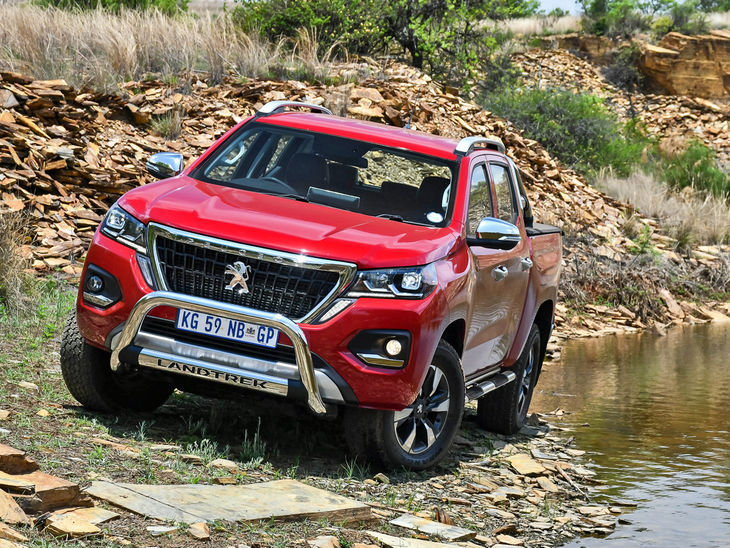
Peugeot registered 58 examples of the Landtrek in July 2022.
Wondering how the bit-part players performed? Well, wonder no more. The Peugeot Landtrek (58 units) graduated to the position of “best of the rest” in July 2022, just ahead of the Mitsubishi Triton (56 units). The Mahindra Bolero had to settle for 45 registrations, while the R1 259 900 Jeep Gladiator finished on 27 units in its first full month on sale. Finally, Mazda could find homes for just 26 examples of its D-Max-based BT-50.
Export winners in July 2022
Ford exported 6 587 units of its Ranger in July, far ahead of the Nissan Navara (479 units) and Isuzu D-Max (421 units). Toyota’s Hilux export figure, meanwhile, was a mere three units, though is expected to ramp up considerably over the next two or three months. As is often the case, the Nissan NP200 (81) made up the numbers here.
10 best-selling bakkies in South Africa for July 2022
Pricing and some spec details have been loaded into the Range Rover South African configurator, giving us a first look at what’s headed to our shores in October 2022.
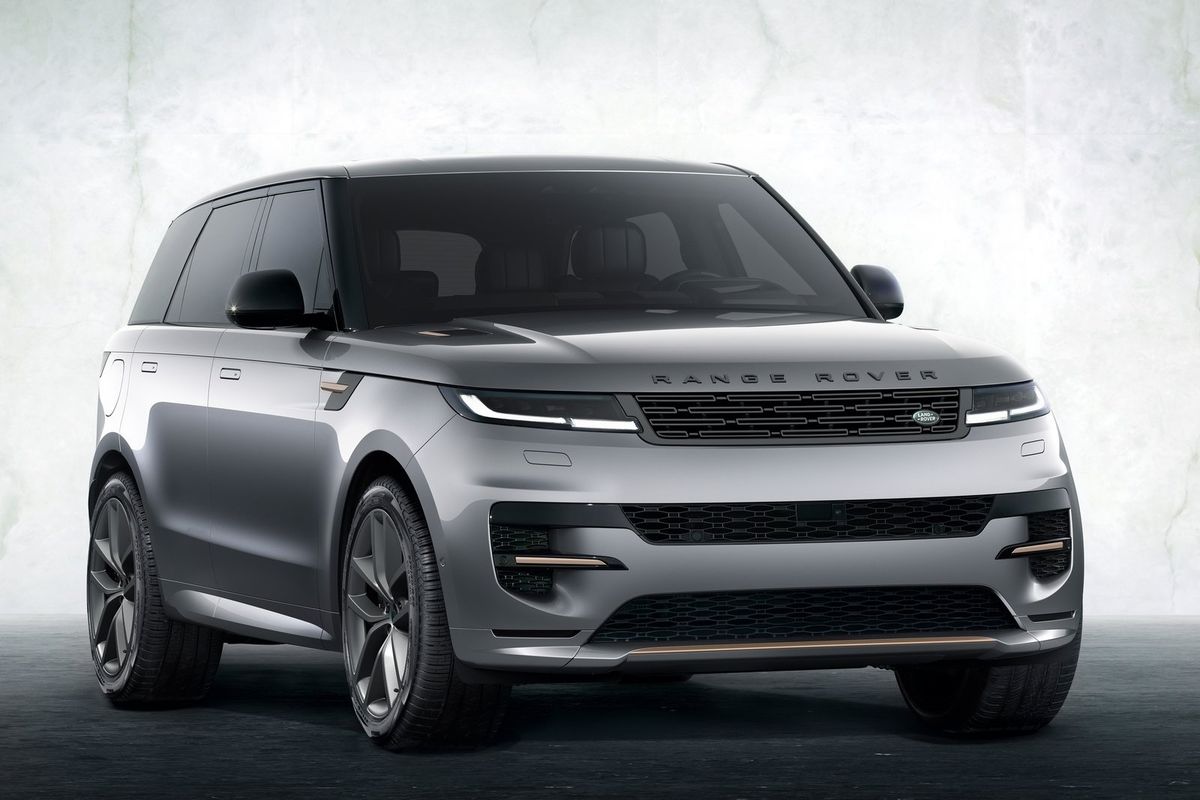
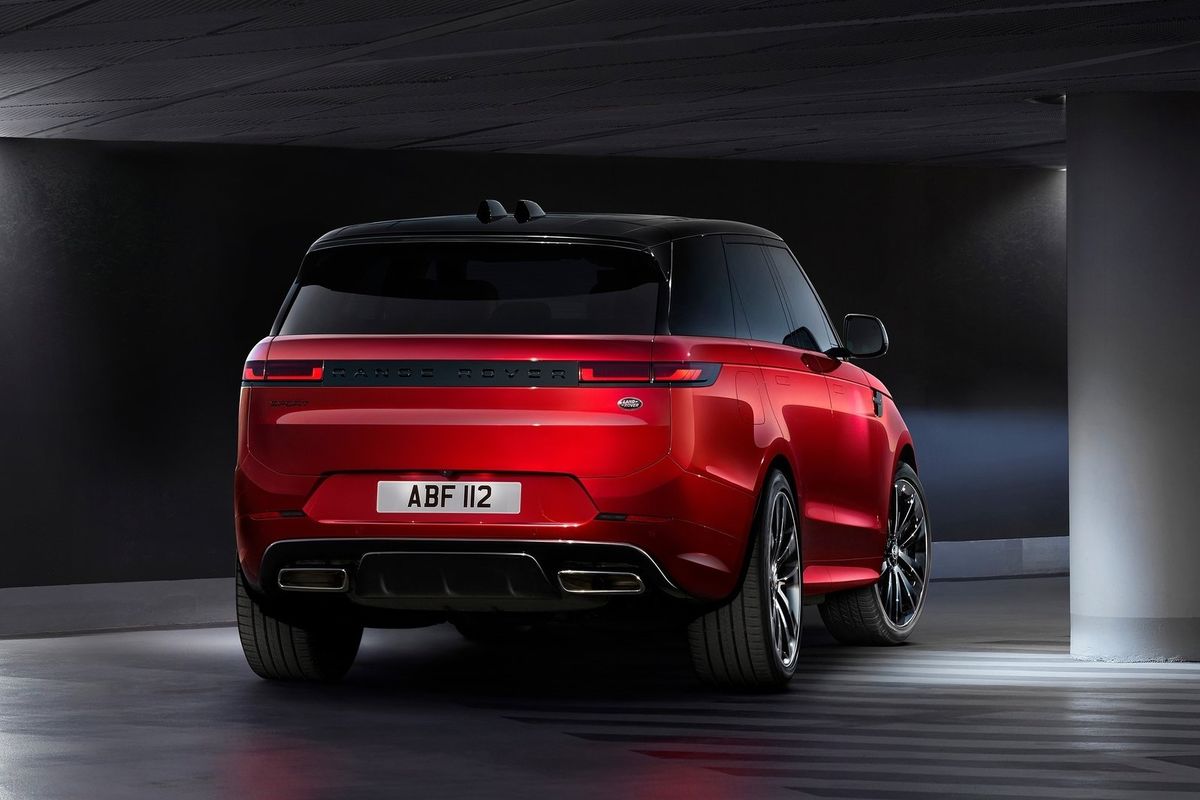
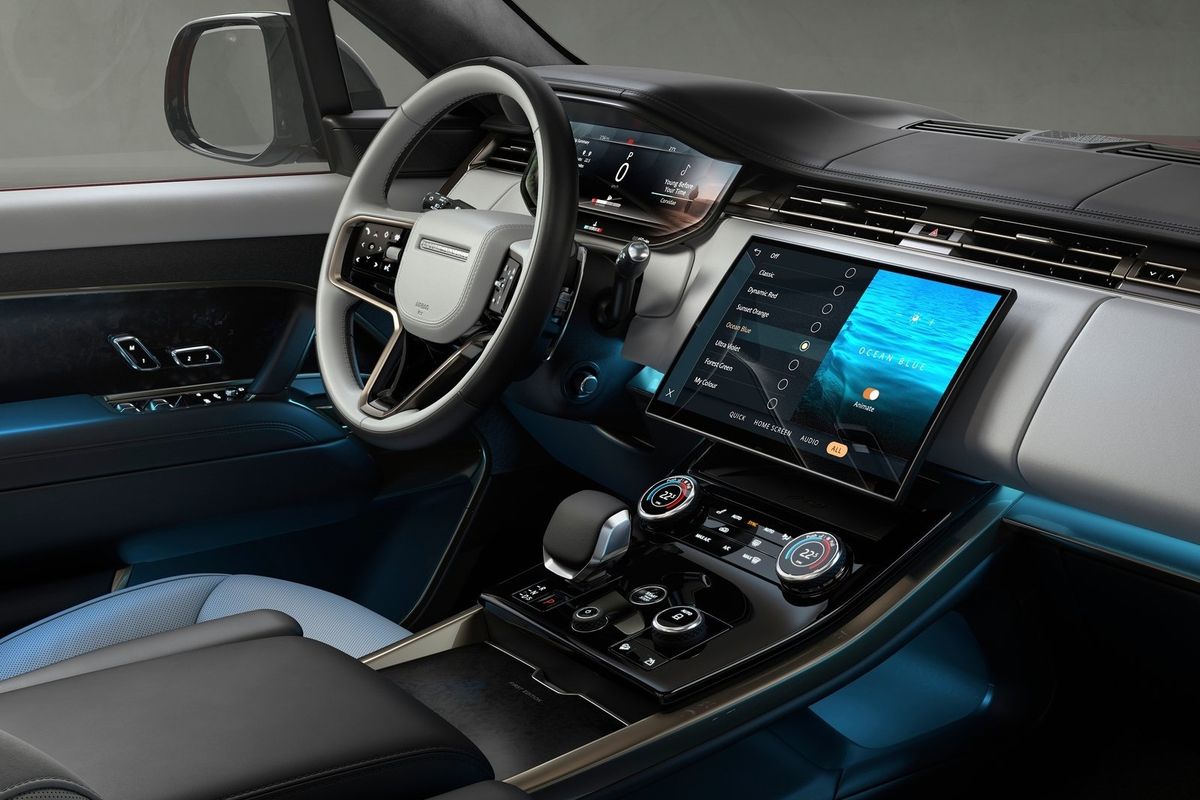
Jaguar Land Rover is claiming this all-new Range Rover Sport is ” the most desirable, advanced and dynamically capable yet.” The Electrical Vehicle Architecture (EVA 2.0) supports Software Over the Air updates and the award-winning Pivi Pro infotainment system is back, this time with a high-res floating 13.1-inch curved touchscreen.
There’s a 13.7-inch digital dashboard, wireless Apple Carplay and Android Auto, a 15w wireless charger, Emergency Braking, 3D Surround Camera, including front and rear parking sensors, Wade Sensing, ClearSight Ground View6, Manoeuvring Lights, Driver Condition Monitor and Lane Keep Assist.
Powertrains on offer
Range Rover is offering customers a choice of three 6-cylinder engine options for South Africa. There will be a plug-in hybrid petrol, conventional petrol and a diesel. All Range Rover Sports feature 8-speed automatic transmissions and all-wheel drive.
The 3.0-litre 6-cylinder turbo PHEV develops 375 kW / 700 Nm and is good for a 0-100 kph in a claimed 5.4 seconds while consuming just 1.6 L/100 km on the WLTP cycle.
The 3.0-litre turbocharged 6-cylinder diesel produces 258 kW / 700 Nm and can do 0-100 kph in 5.9 seconds and will use 7.4 L/100 km.
The 3.0-litre turbocharged 6-cylinder petrol makes 294 kW / 550 Nm and can sprint to 100 kph in a claimed 5.7 seconds and use 9.4 L/100 km.
For those wanting something special and fast, JLR SA has confirmed the twin-turbocharged V8 powertrain (P530) will be coming too. There’ll be just 60 units of the 390 kW Range Rover Sport and it’s said to sprint to 100 kph in just 4.5 seconds.
Based on the configurator, we can see multiple trim levels like Dynamic S, Dynamic SE, Dynamic HSE, First Edition and Autobiography. Wheel sizes range from 20-inch to 23-inch.
How much does the new Range Rover Sport cost in South Africa?
The below prices are before optional extras and include VAT, but exclude CO2 tax.
Just how well are Chery vehicles selling in South Africa?
It’s been almost a year since Chery announced its return to South Africa. But just how well are its vehicles selling? Let’s take a closer look at July 2022’s figures…
Chery officially announced its return to the South African market in August 2021, this time entering the space directly as a wholly owned subsidiary of the Chinese automotive giant. So, have local buyers taken to the 25-year-old brand?
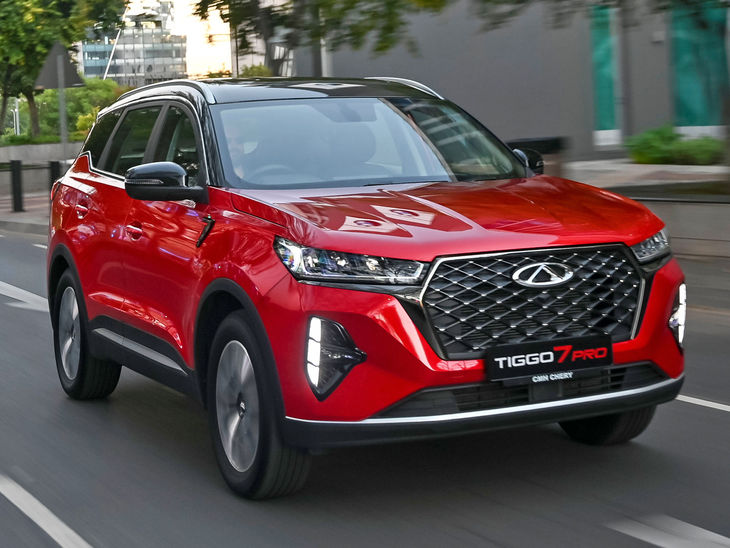
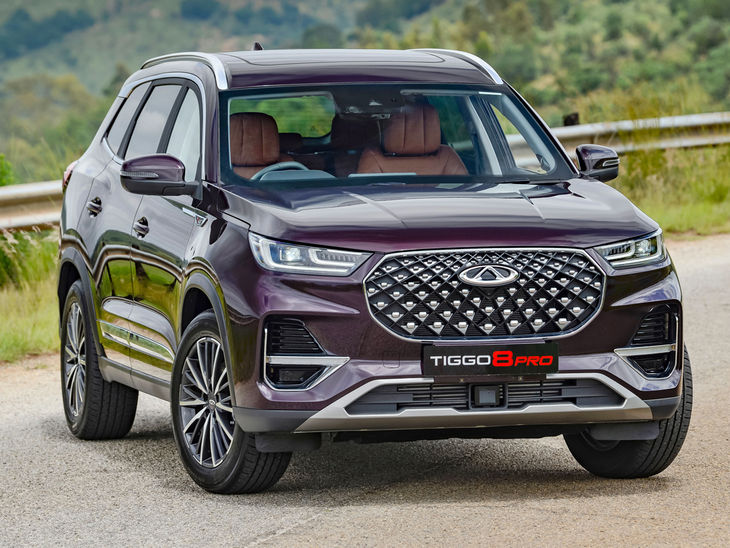
Well, now that Chery is finally reporting its sales figures to Naamsa, we have a firm idea of how well its range is selling. As a reminder, the current line-up comprises three crossover models: the Tiggo 4 Pro that touched down in November 2021, the Tiggo 8 Pro that arrived in February 2022 and the Tiggo 7 Pro that launched in May 2022.
According to Naamsa, Chery registered 1 262 units in July 2022, with every single one sold through the dealer channel. That was enough to see the brand rank 13th on the list of best-selling automakers in South Africa, behind fellow Chinese firm Haval (1 502 units) and Indian manufacturer Mahindra (1 327 units).
Chery SA sold 372 examples of the Tiggo 7 Pro in July 2022.
To give you a better idea of where that sort of volume sees it slot in, Chery’s tally meant it easily beat the likes of Stellantis (which comprises the Alfa Romeo, Citroën, Fiat, Jeep, Opel and Peugeot brands, and ended up on 904 units), as well as Mazda (421 units) and Honda (297 units).
In the passenger-vehicle space (so, excluding light-commercial and truck sales), Chery ranked eighth overall, 404 units ahead of Haval (which relies on the P-Series and Steed bakkies for a large chunk of its volume).
If we drill down to individual model sales, we find the Tiggo 4 Pro was Chery’s best-selling vehicle in July 2022, with 689 units registered. Next came the Tiggo 7 Pro (372 units), with the flagship Tiggo 8 Pro (201 units) bringing up the rear. We’ll be tracking Chery’s growth closely in the coming months now that it’s reporting sales figures to Naamsa…
The Tiggo 8 Pro managed to cross the 200-unit mark in July 2022.
South Africa’s new-vehicle sales for July 2022 reflect what appears to be a healthy year-on-year increase, though off an admittedly low base. Here’s what you need to know, including SA’s best-selling car brands and models…
New-vehicle sales in South Africa for July 2022 increased 30.9% year on year to 43 593 units, representing the fourth consecutive month of growth for the industry. However, as Naamsa points out, this came off a low base considering where the market was a year ago, dealing with disruptions caused by unrest in KwaZulu-Natal, a cyber-attack on Transnet operations and the adjusted COVID-19 Level 4 lockdown restrictions.
Still, July 2022’s total was up slightly on the previous month’s tally, which is certainly encouraging. Overall, out of the 43 593 vehicles registered, an estimated 83.6% represented dealer sales, with 10.4% coming courtesy of the rental industry. The new passenger-car market finished on 31 455 units, with the aforementioned rental channel accounting for 13.2% of these sales.
However, domestic sales of new light-commercial vehicles, bakkies and mini-buses fell 6.9% to 9 547 units. Exports, meanwhile, jumped 177.7% year on year to 31 242 units, pushing the year-to-date figure into positive territory for the first time in 2022 (2.9% ahead of the corresponding period in 2021).
WesBank echoed Naamsa’s heed to view the latest market figures with July 2021’s KZN unrest and COVID-19 lockdown restrictions firmly in mind, describing year-on-year comparisons as “skewed”.
“It would be easy to get over-excited about July sales when looking just at the numbers. However, the context of July last year is critical to appreciating the slow and steady growth being experienced in the market,” said Lebogang Gaoaketse, head of marketing and communications at WesBank.
New vehicle sales summary for July 2022
Aggregate new-vehicle sales of 43 593 units increased by 30.9% (10 281 units) compared to July 2021.
New passenger-vehicle sales of 31 455 units increased by 50.2% (10 517 units) compared to July 2021.
New light-commercial vehicle sales of 9 547 units decreased by 6.9% (-710 units) compared to July 2021.
Export sales of 31 242 units increased by 177.7% (19 990 units) compared to July 2021.
10 best-selling car brands in South Africa for July 2022
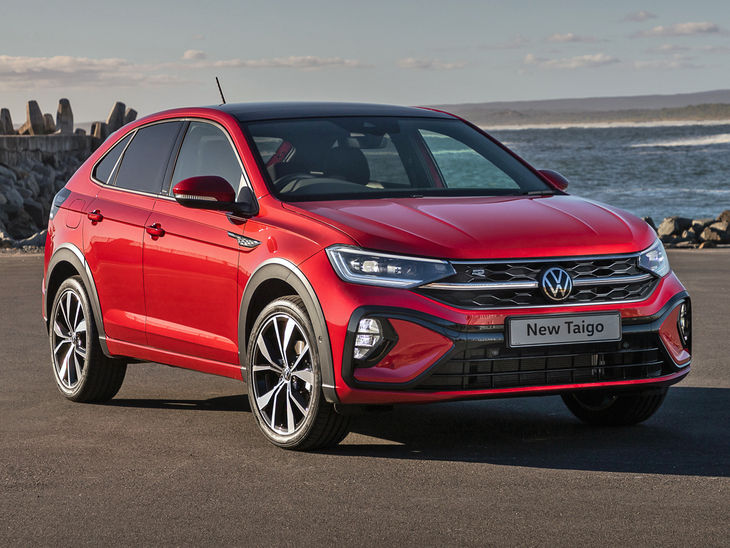
The new Taigo (528 units) helped VW grow its monthly tally past the 6 000-unit mark.
Although most assembly lines at Toyota’s flood-damaged Prospecton plant finally started moving again towards the end of July 2022, the gradual return to production would have had virtually no impact on sales for the month (full capacity is expected to be reached only in September, after all). That said, the Japanese brand again managed to hold its title of SA’s best-selling automaker, registering 7 110 units in July thanks largely to the performance of its imported models.
The Volkswagen Group (6 204 units) was again second, though closed the gap considerably compared with June. Suzuki held steady in third place with yet another record showing, this time registering 4 734 units (up on its previous best of 4 622 units achieved in June). Meanwhile, Nissan (2 625 units) climbed one place to fifth and Renault (2 552 units) one spot to sixth, forcing Ford (2 473 units) down two to seventh. The BMW Group entered the top 10 (though its figure is technically an estimate), meaning Haval fell from the official table in July 2022. Interestingly, Chery started reporting its sales statistics to Naamsa in July, with its final tally of 1 262 units enough for it to rank 13th.
1. Toyota – 7 110 units
2. Volkswagen Group – 6 204 units
3. Suzuki – 4 734 units
4. Hyundai – 2 965 units
5. Nissan – 2 625 units
6. Renault – 2 552 units
7. Ford – 2 473 units
8. Kia – 2 087 units
9. Isuzu – 1 951 units
10. BMW Group – 1 512 units
10 best-selling vehicles in South Africa for July 2022
Demand for the Ford Ranger remains strong, despite a new model being close.
With the Toyota Hilux (1 012 units) having to settle for tenth place, South Africa crowned a new best-selling vehicle for July 2022. Yes, the Suzuki-built Toyota Urban Cruiser (1 854 units) grabbed first just ahead of the Ford Ranger (1 838 units), with the likewise locally produced Volkswagen Polo Vivo (1 820 units) close behind in third.
The Isuzu D-Max (1 602 units) climbed three places to seize fourth, while the Suzuki Swift fell from June 2022’s first place to fifth with a still-impressive tally of 1 521 registrations. The Kariega-built Volkswagen Polo (1 166 units), meanwhile, found itself in unfamiliar territory all the way down in eighth.
Top 5 vehicles exported from South Africa in July 2022
As many as 11 526 units of the Polo were exported from VW’s Kariega facility in July 2022.
Although the Polo hatchback didn’t have its best sales month in South Africa, the VW-badged supermini triumphed by quite some margin in the export market, with a whopping 11 526 examples shipped from our shores. The Ford Ranger (6 587 units) was again second, while the Nissan Navara (479 units), Isuzu D-Max (421 units) and Nissan NP200 (81 units) made up the numbers. Just three examples of the Toyota Hilux were exported in July.
As always, we should point out BMW and Mercedes-Benz did not submit detailed figures, so it’s unclear exactly how many new X3 and C-Class sedan units were exported from SA during the reporting period. For the record, however, Naamsa’s estimates stand at 3 700 units and 8 147 units, respectively.
1. Volkswagen Polo (hatch) – 11 526 units
2. Ford Ranger – 6 587 units
3. Nissan Navara – 479 units
4. Isuzu D-Max – 421 units
5. Nissan NP200 – 81 units
Sales outlook
What’s next for the South African new-vehicle market? Well, Naamsa warns that the South African Reserve Bank’s recent 75 basis point interest-rate hike – the biggest since September 2002 and the fifth increase since November 2021 – will “impact consumer and business sentiment negatively”, and “consequently the new vehicle market”, too. This will likely be compounded by further interest-rate increases expected for the remainder of the year.
WesBank’s Gaoaketse likewise cautions that “the significant increase” in interest rates may dampen August sales as “new deals confront an affordability challenge or consumers simply delay purchase decisions”. However, he maintains interest rates are still “relatively low”, meaning a new-vehicle purchase will remain an “appealing financial opportunity” for some.
On the exports front, Naamsa points out global economic growth prospects “have been revised downwards” in recent times. This includes significantly weaker demand in Europe, which is the South African automotive industry’s largest export region. Still, as mentioned above, the year-to-date export figure is currently 2.9% in the positive.