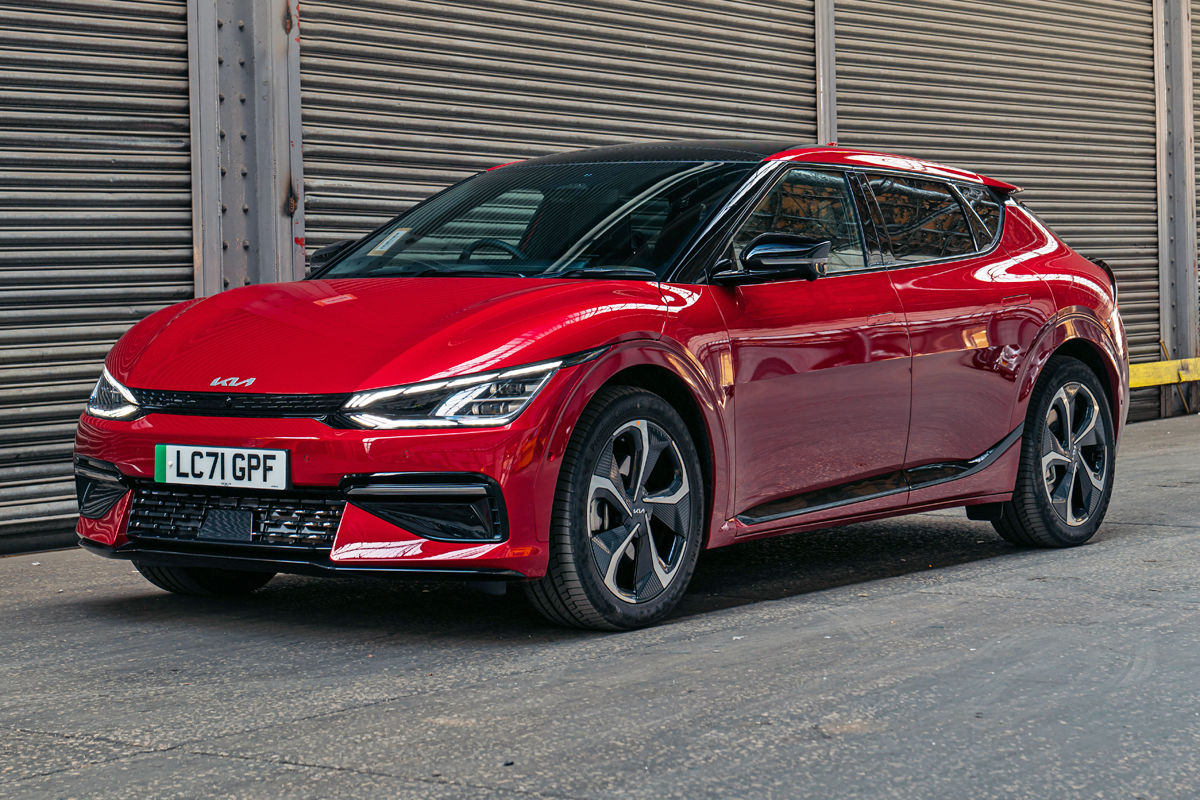
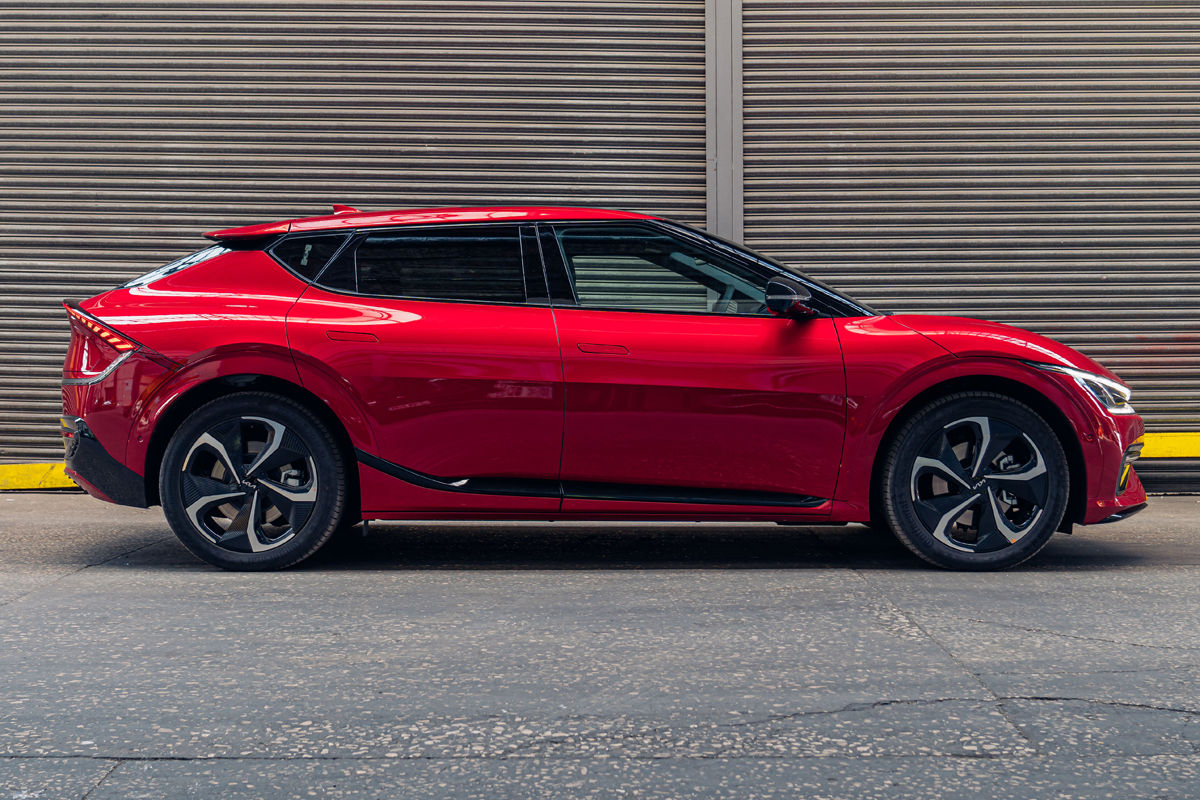
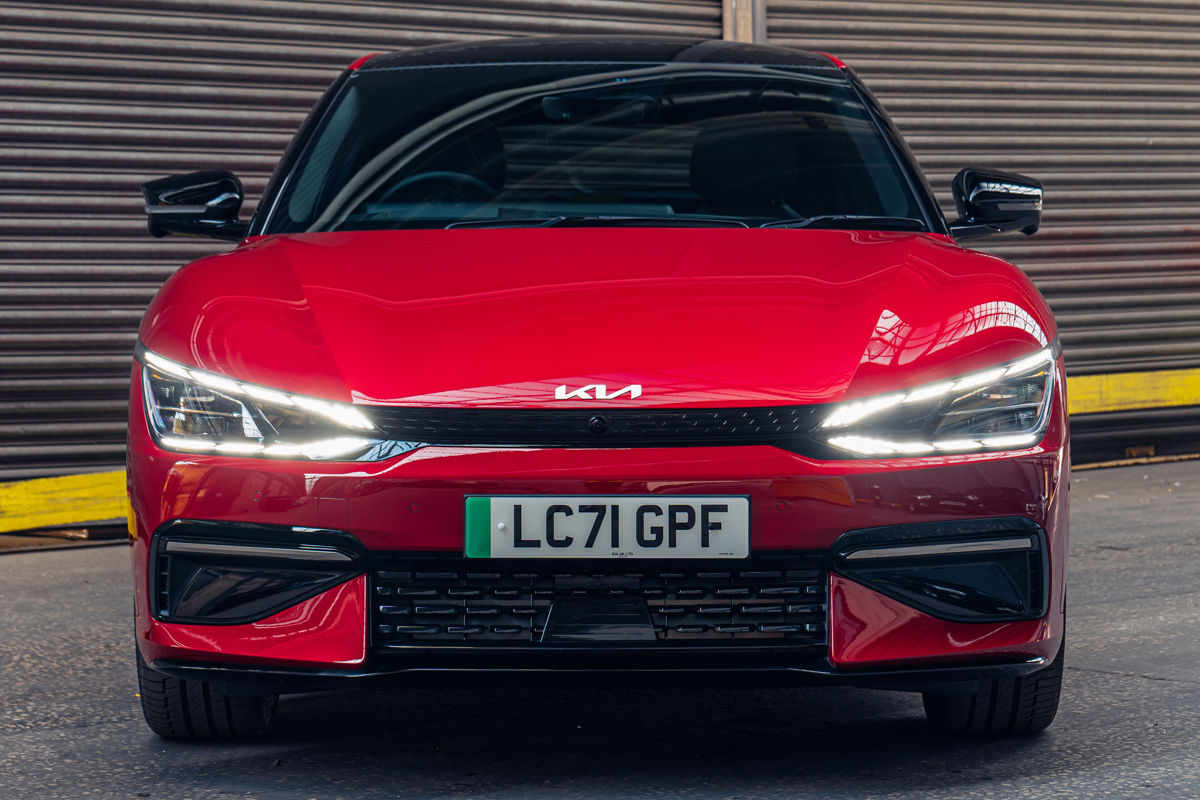
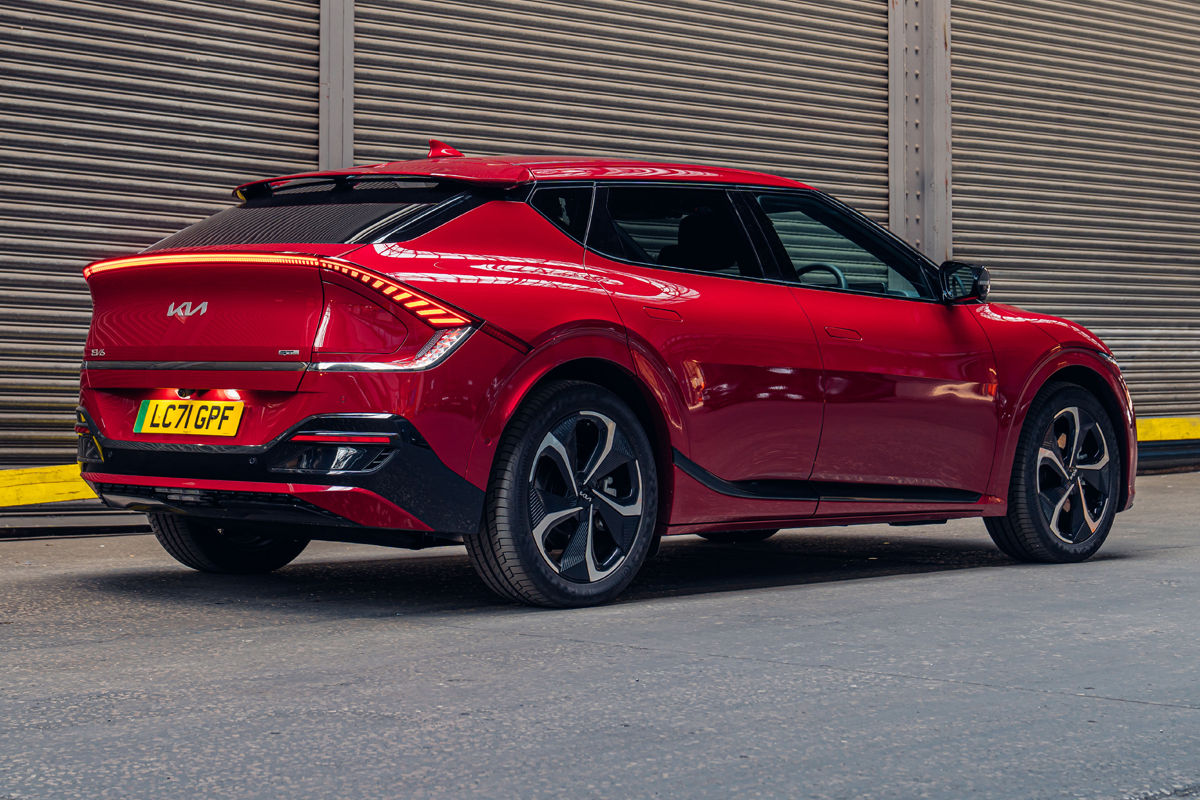
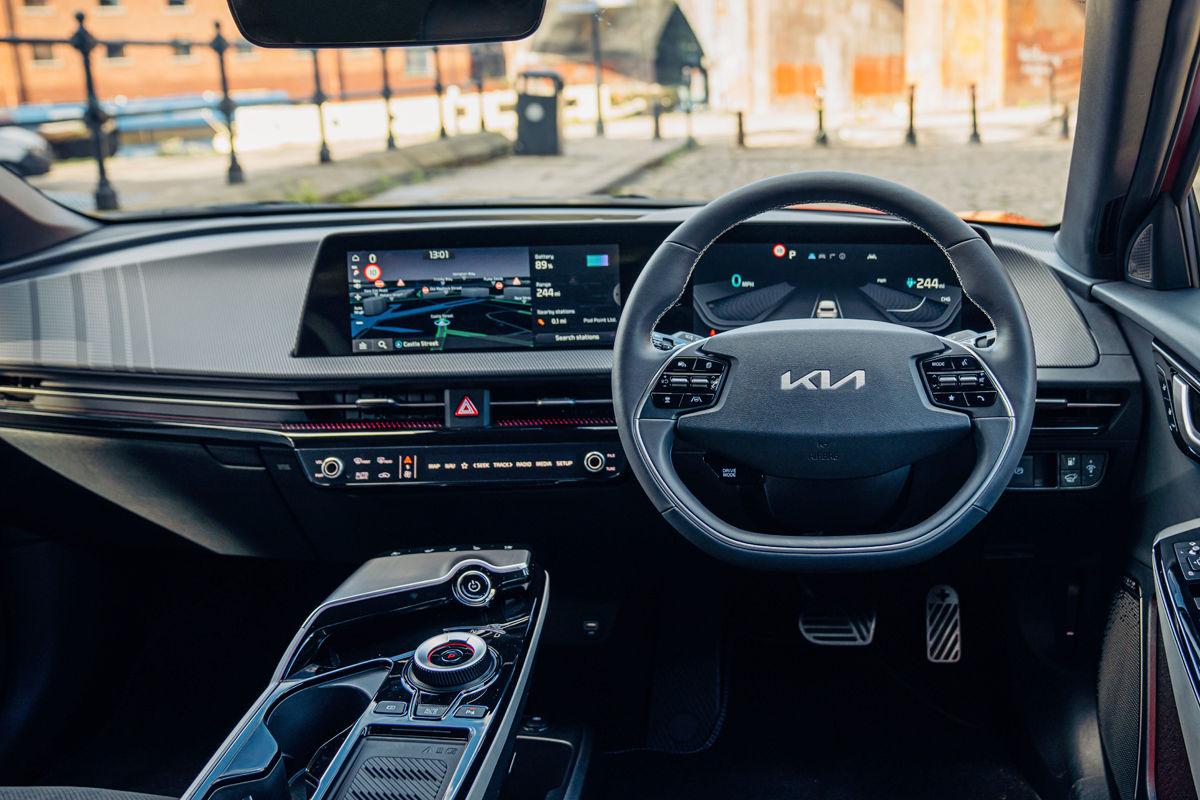
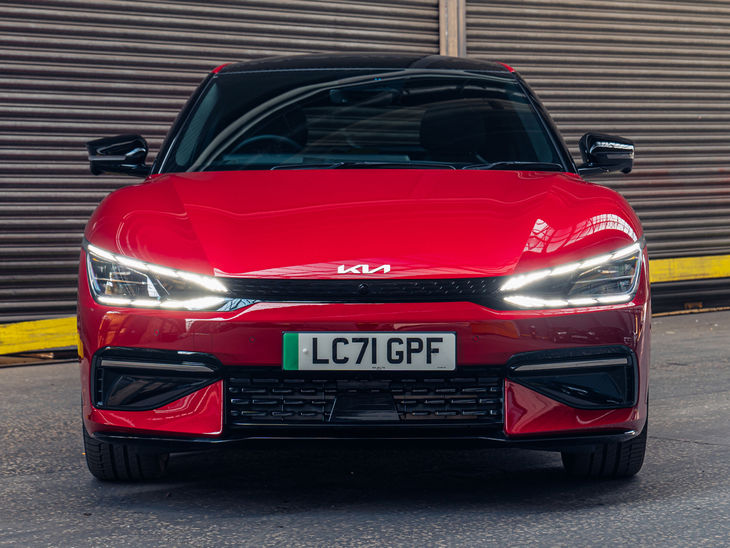
Kia’s first standalone electric vehicle has been awarded the 2022 European Car of the Year title, beating out six other finalists. Yes, the EV6 is the overall winner…
The new Kia EV6 has been named the 2022 European Car of the Year, becoming the first vehicle from the South Korean company to win the award.
Once the votes from the 59-strong jury had been counted, the all-electric crossover had garnered 279 points, which was enough to see it beat the Renault Mégane E-Tech Electric (265 points) and Hyundai Ioniq 5 (261 points) to the title, sitting atop an all-electric podium.
Other finalists that had been in the running included the Ford Mustang Mach-E, Škoda Enyaq iV, Cupra Born and Peugeot 308. As you can tell, electric vehicles (EVs) dominated this year’s competition, with six of the seven finalists taking the form of battery-powered cars and the seventh (the 308) being available in petrol, diesel and plug-in hybrid form.
“It’s a great honour to have won the 2022 European Car of the Year with the EV6, the first ever Kia to win this prestigious award,” said Jason Jeong, President of Kia Europe. “The EV6 is truly a landmark development that’s been designed from the outset to make electric mobility fun, convenient and accessible by combining a highly impressive real-world driving range, ultra-fast charging capabilities, a spacious high-tech interior and a truly rewarding driving experience. The EV6 is an exciting sign of what’s still to come in our evolving electrified line-up.”
Though none of the finalists is currently available in South Africa, there’s at least a chance the Kia EV6 will eventually be offered here, with the company’s local division having earlier indicated an intention to conduct a feasibility study on its introduction.
As a reminder, the EV6 is the Korean firm’s first standalone EV and is based on the company’s Electric-Global Modular Platform (E-GMP). Kia claims the EV6 has “class-leading” interior space, a 528 km driving range and 800-volt charging capabilities.
Revealed at the end of March 2021, the EV6 employs a Nickel-Cobalt-Manganese battery pack that is available in two sizes. The base derivative uses a 58 kWh battery with a rear-mounted motor and is good for 125 kW and 350 Nm. The all-wheel-drive version makes 173 kW and 605 Nm, with Kia claiming a 0-100 kph sprint time of 6.2 seconds.
Specify the bigger 77.4 kWh battery and you score more range and more power. The rear-wheel-drive version boasts 168 kW and 350 Nm, while its all-wheel-drive sibling packs a hearty 239 kW and 605 Nm, with the claimed sprint time falling to 5.2 seconds. Finally, the flagship EV6 GT ships standard with all-wheel drive and the bigger battery, plus some extra power, with peak outputs of 430 kW and 740 Nm allowing a claimed 0-100 kph time of just 3.5 seconds and a top speed of 260 kph.
The EV6 has a chance to add another trophy to its cabinet, as it’s also a finalist in the 2022 World Car Awards, where it has been nominated in the overall World Car of the Year category as well as the World Car Design of the Year section. The winners of this competition will be announced on 13 April.
BMW 2 Series (2022) Price Announced for SA
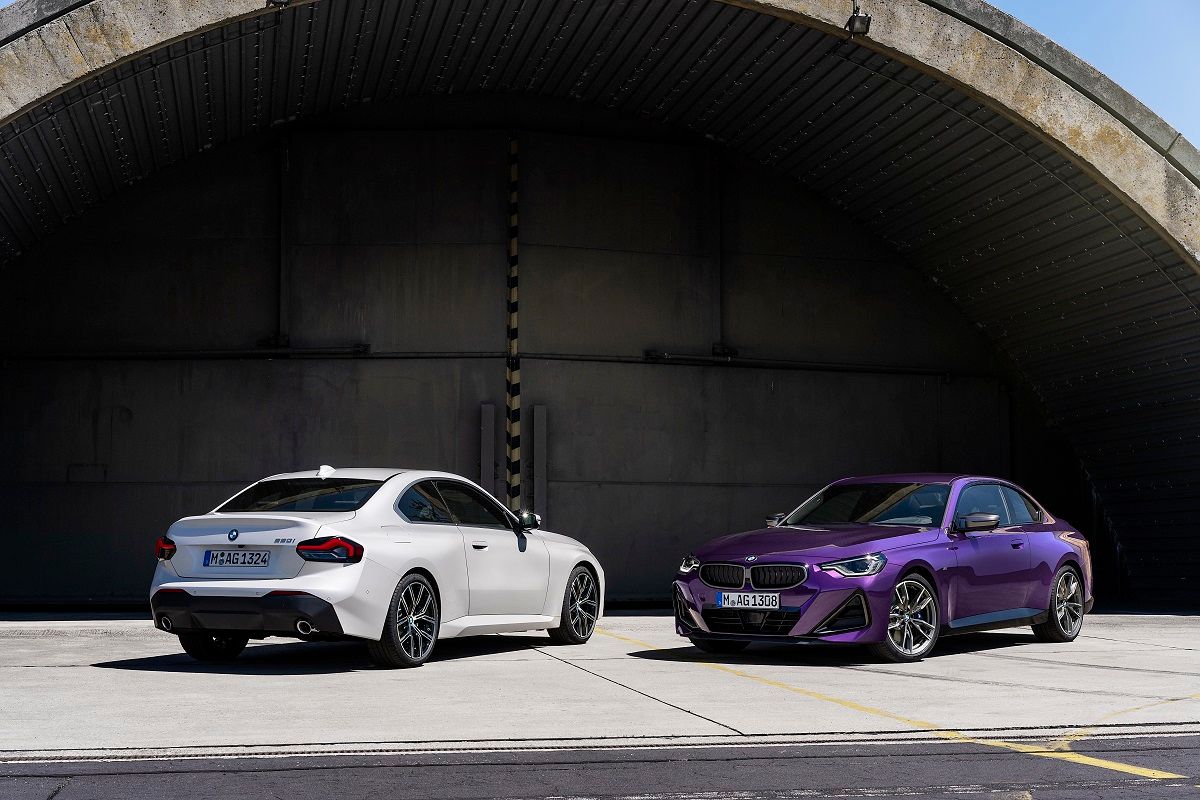
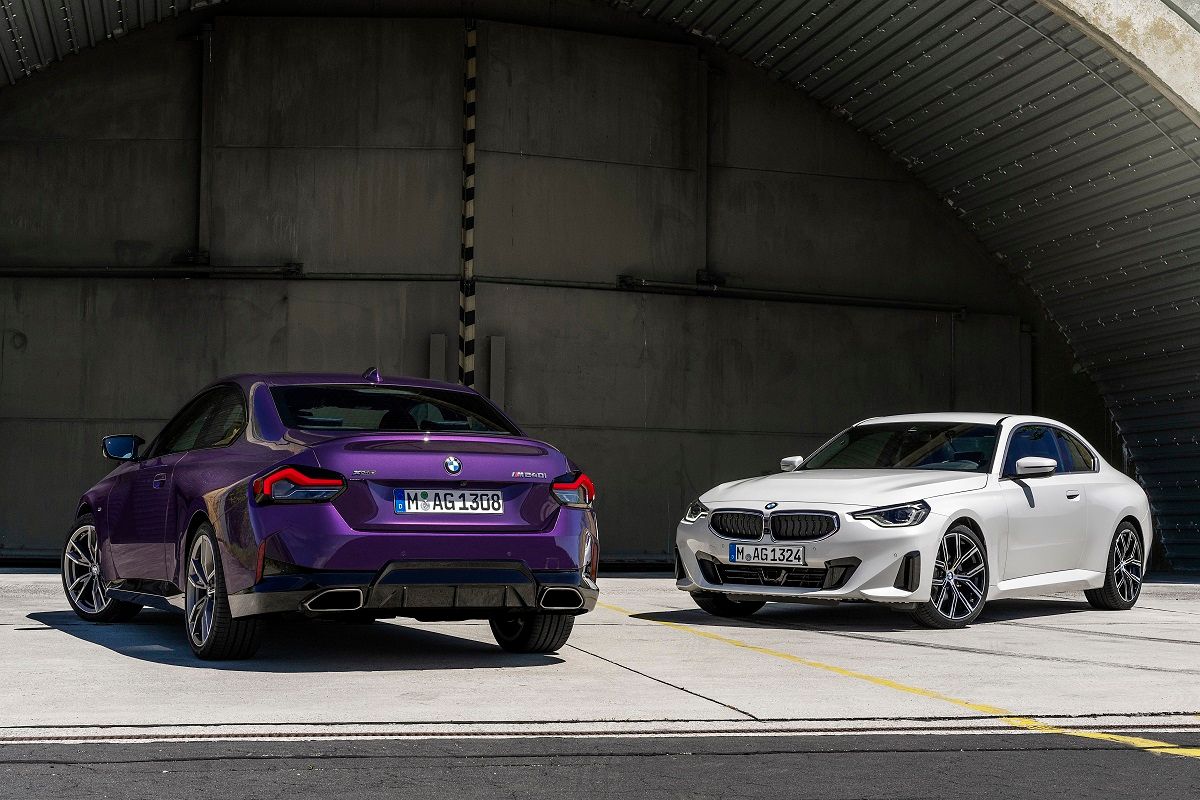
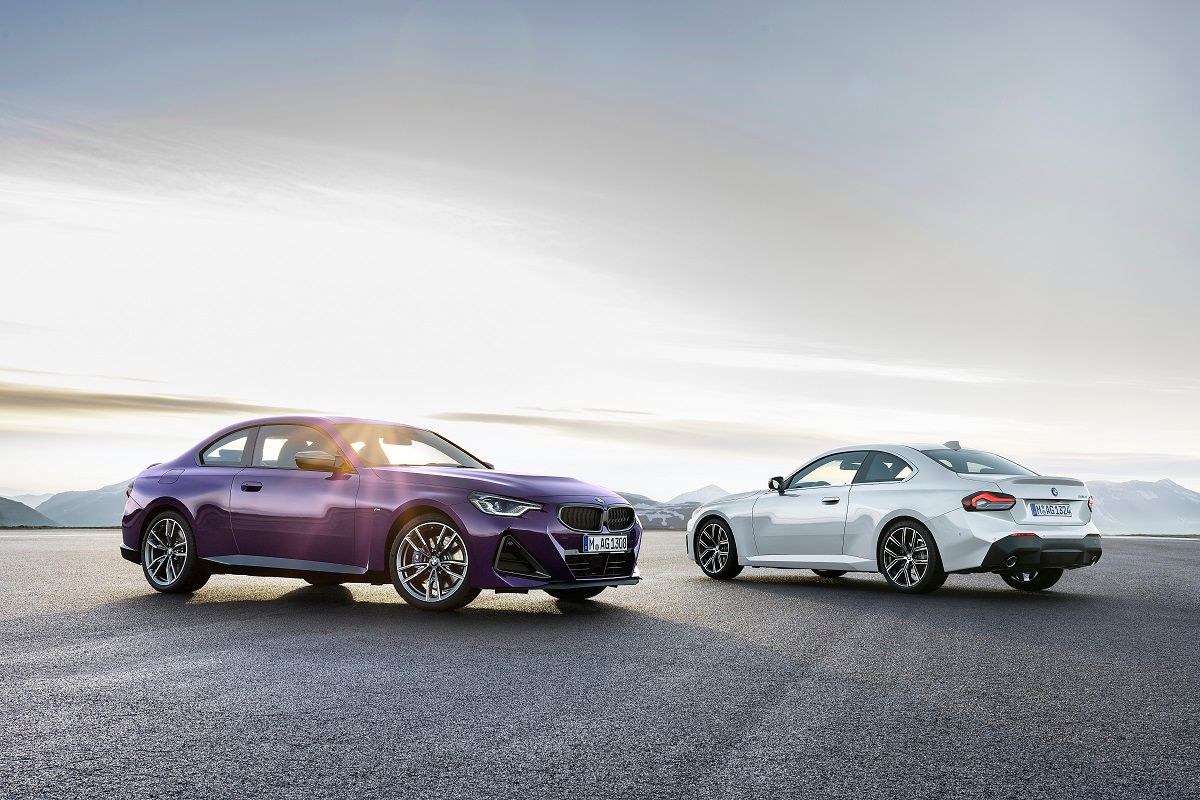
The all-new BMW 2 Series will be launching in SA in the first quarter of 2022 and pricing has been loaded onto BMW SA’s website. Here’s how much you can expect to pay, plus which models are confirmed.
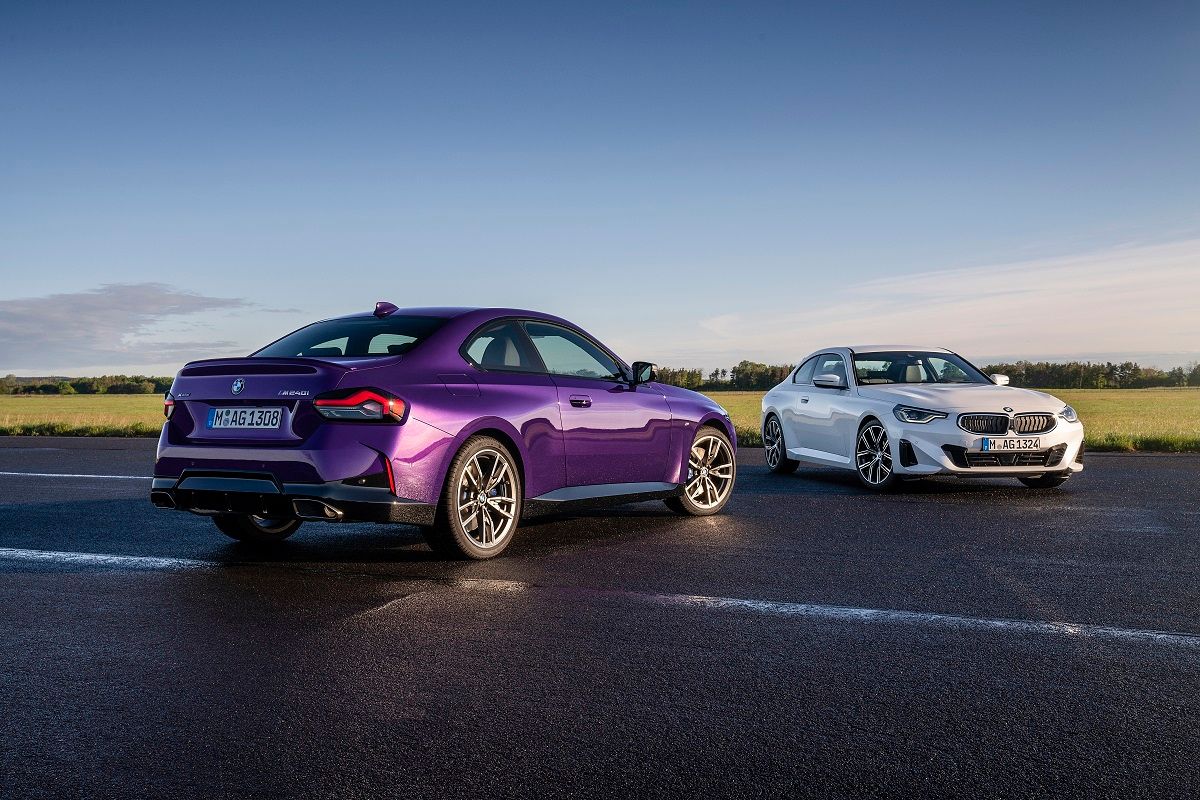
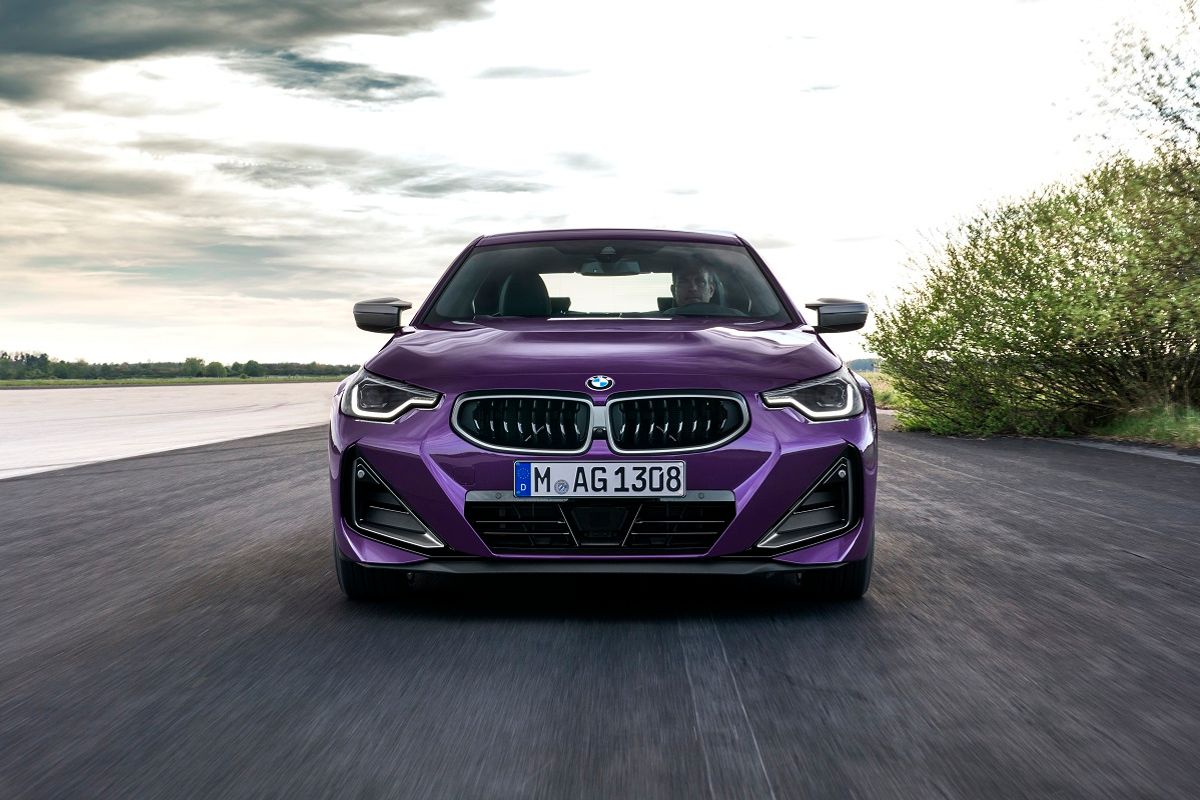
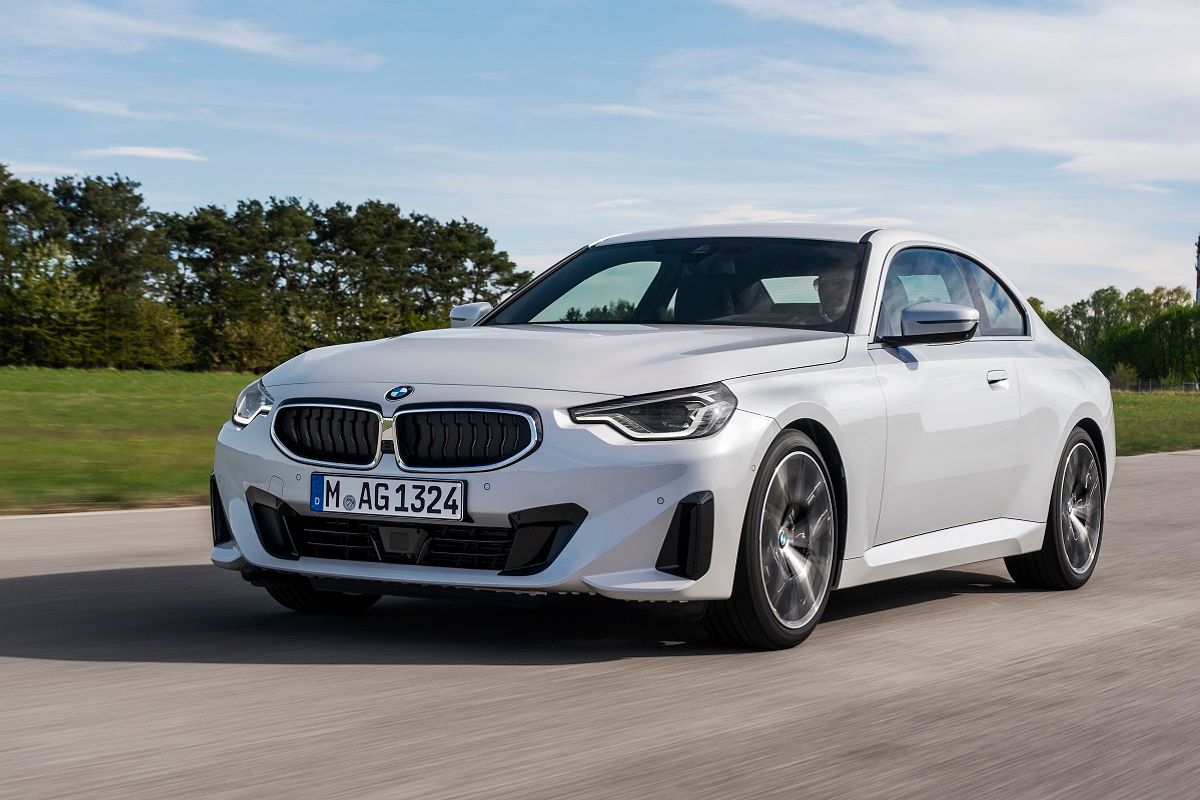
The all-new BMW 2 Series looks radically different from the rest of the Bavarian brand’s portfolio. When finished in the new Thundernight Metallic, the BMW M240i xDrive really looks special. Yes, you read right. With this new generation of 2 Series, xDrive has made its debut. Fear not purists, as the next-generation BMW M2 will be offered with rear-wheel drive only.
From BMW SA’s price list, it looks like we’re getting a 3-model lineup, before the flagship M2 eventually makes an appearance. The BMW 220i starts off the range, powered by a 2.0-litre turbocharged 4-cylinder producing 135 kW and 300 Nm. Power goes to the rear wheels via an 8-speed automatic gearbox. BMW claims a 0-100 kph time of 7.5 seconds.
With the price of petrol reaching silly heights, diesel may provide the answer and BMW is offering a 220d. The 2.0-litre turbocharged diesel engine produces a healthy 140 kW and 400 Nm, and is said to hit 100 kph in just 7 seconds.
For the performance fans, the BMW M240i xDrive comes out swinging with a 3.0-litre turbocharged 6-cylinder petrol engine pumping out 285 kW and 500 Nm. For the first time in the 2 Series coupe range, all-wheel drive makes its debut and this allows the M240i xDrive to hit 100 kph in just 4.5 seconds. Hopefully it will be more engaging, unlike the current BMW M135i.
When it comes to fuel economy, the BMW 220d will be the lightest consumer with a claim of just 4.8 L/100 km, with the 220i following at 6.3 L/100 km. Being a performance model, the M240i xDrive is the thirstiest at 8.0 L/100 km.
Final specifications and trim levels will be confirmed closer to the vehicle’s launch in the first quarter of 2022.
How much does the new BMW 2 Series coupe cost in South Africa?
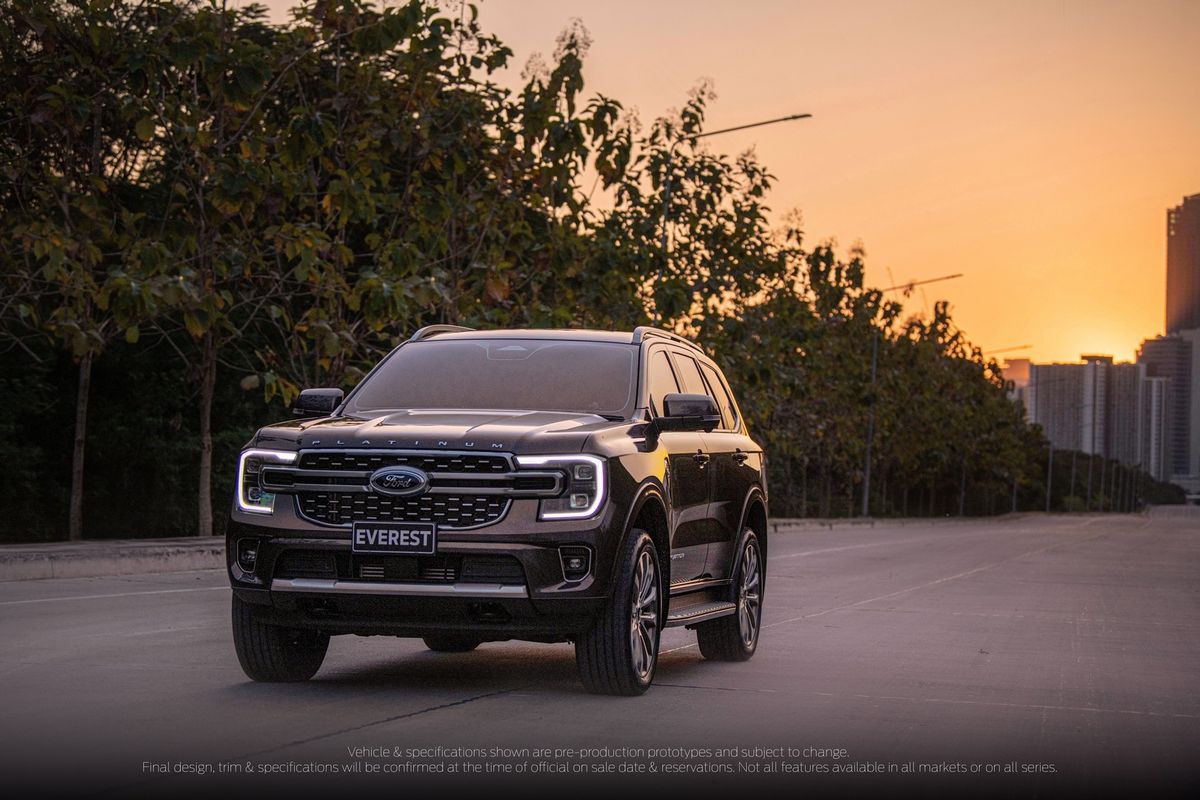
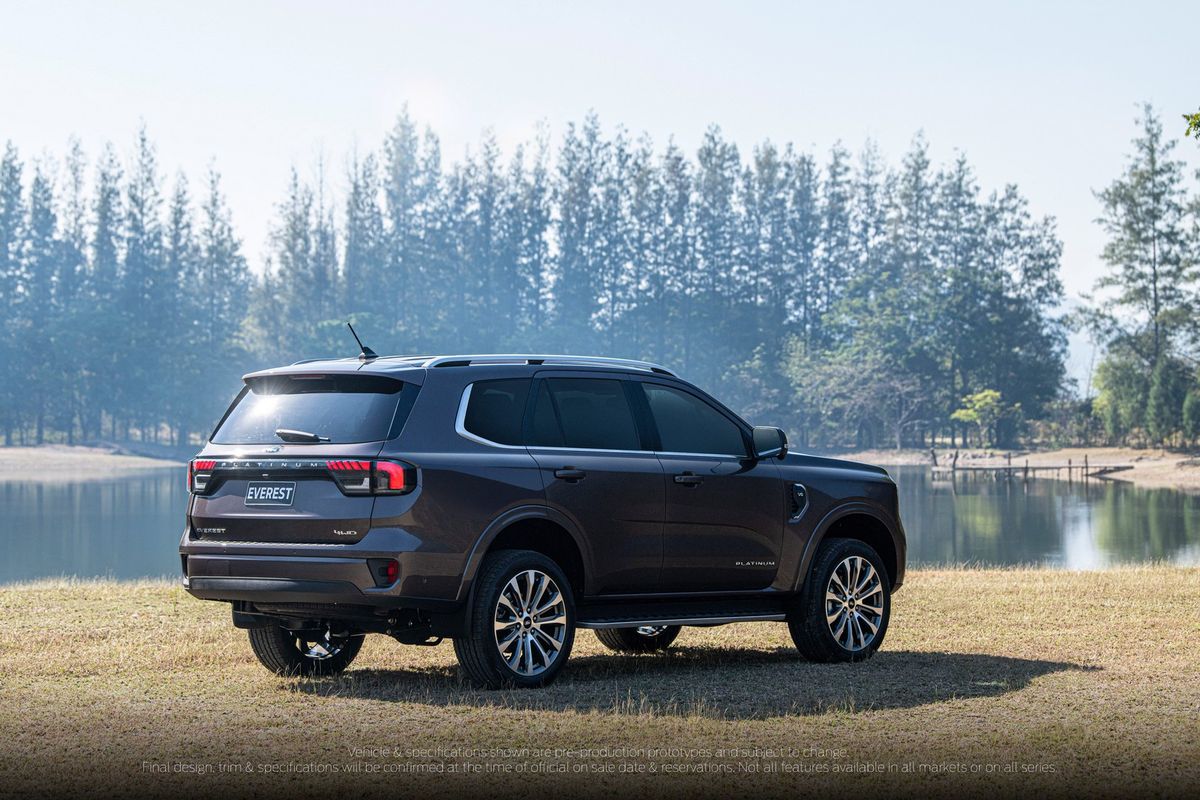
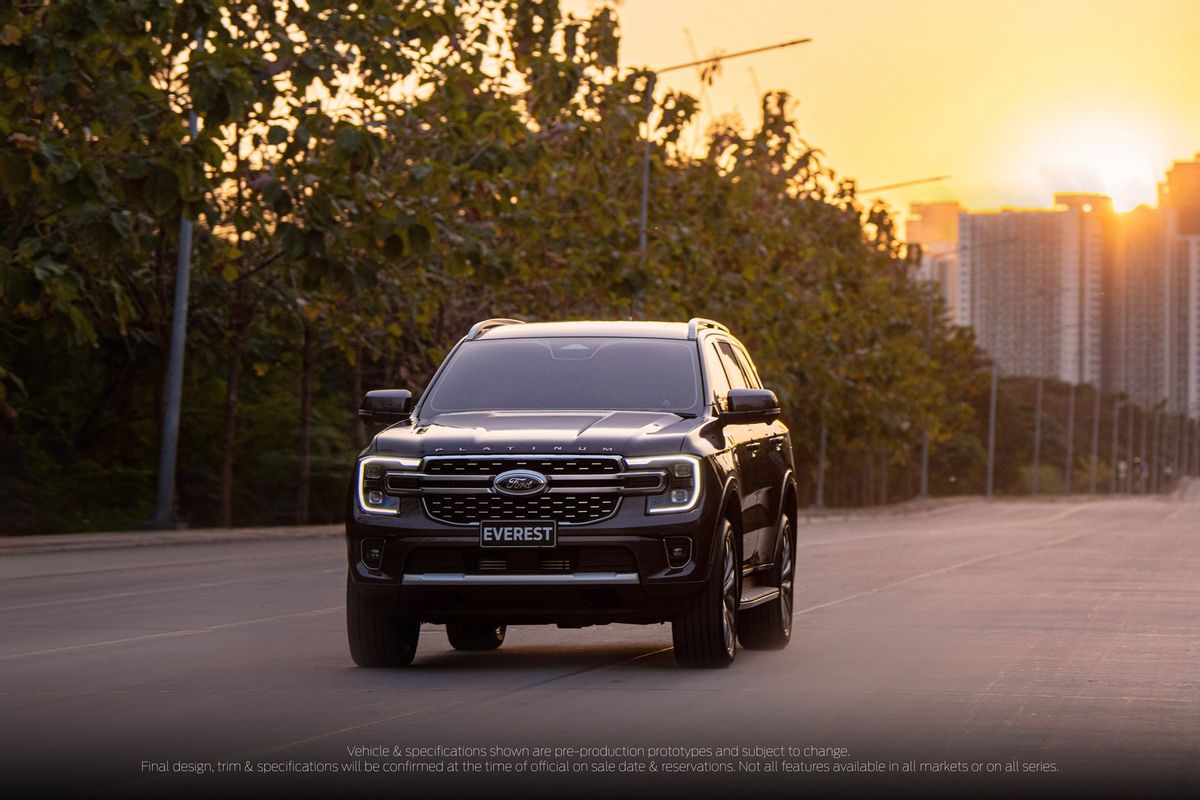
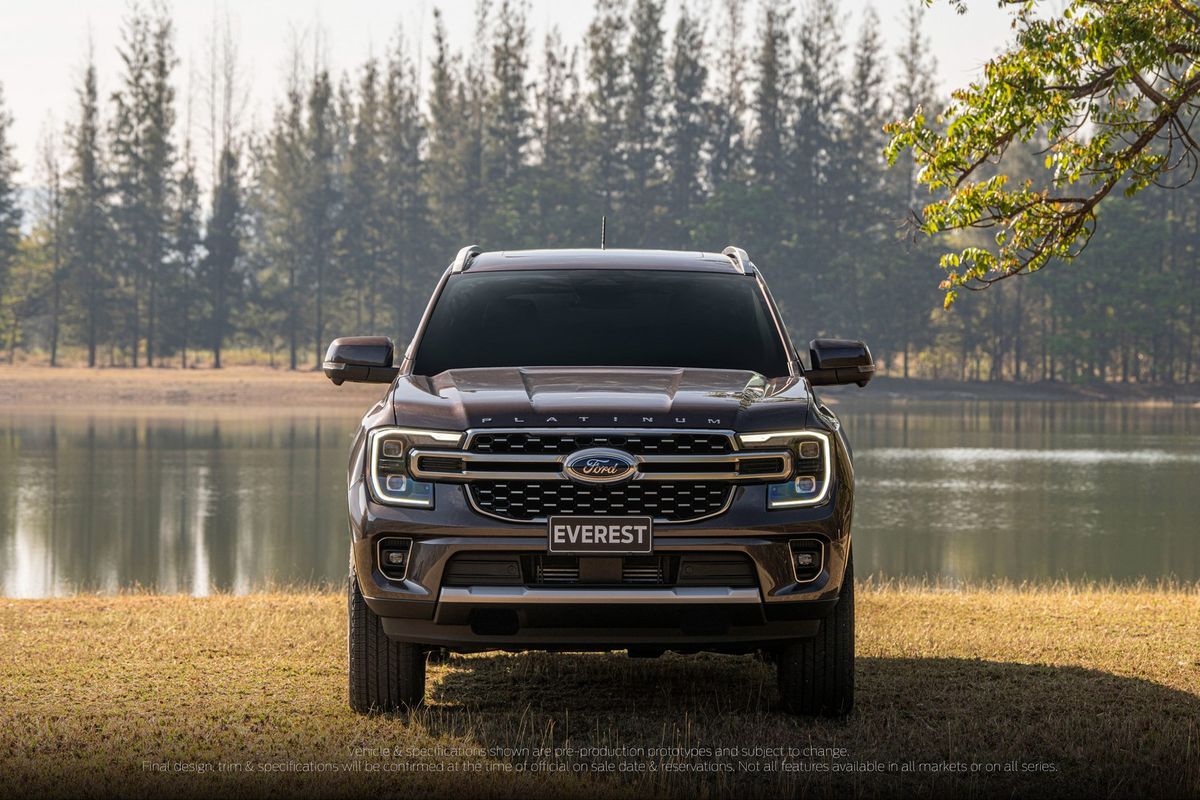
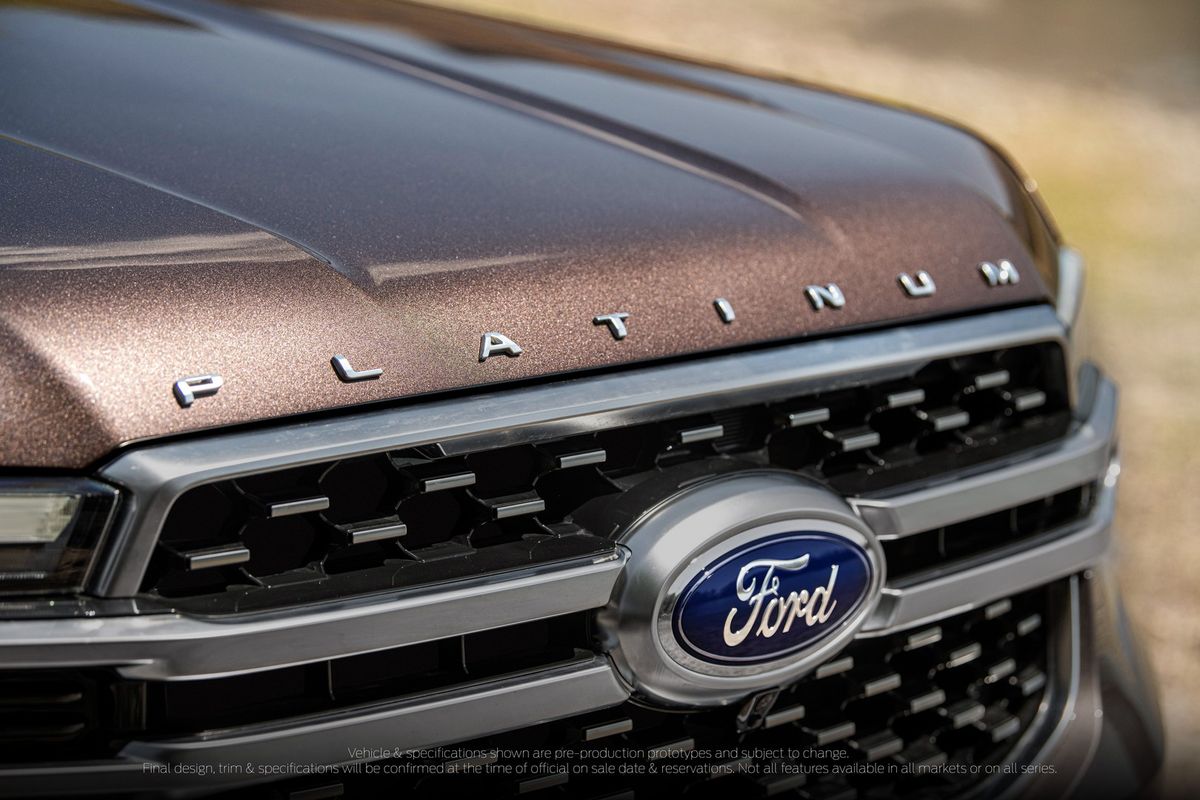
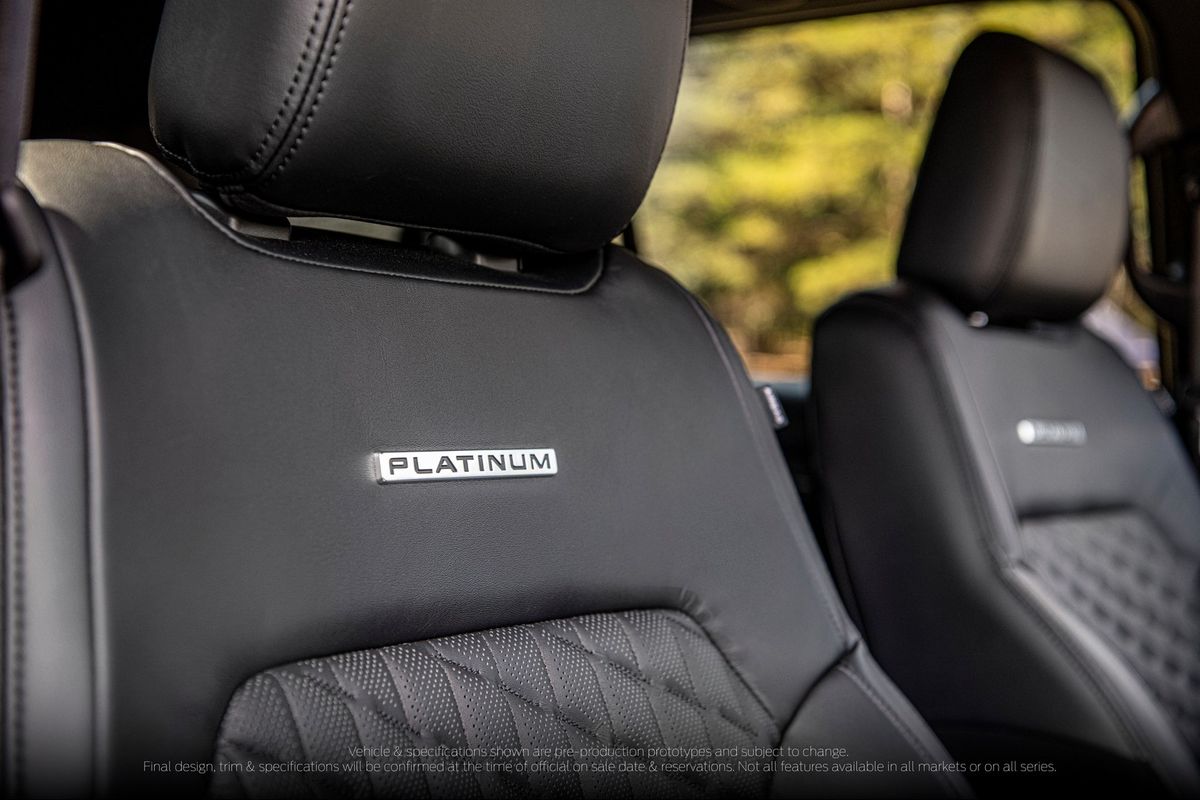
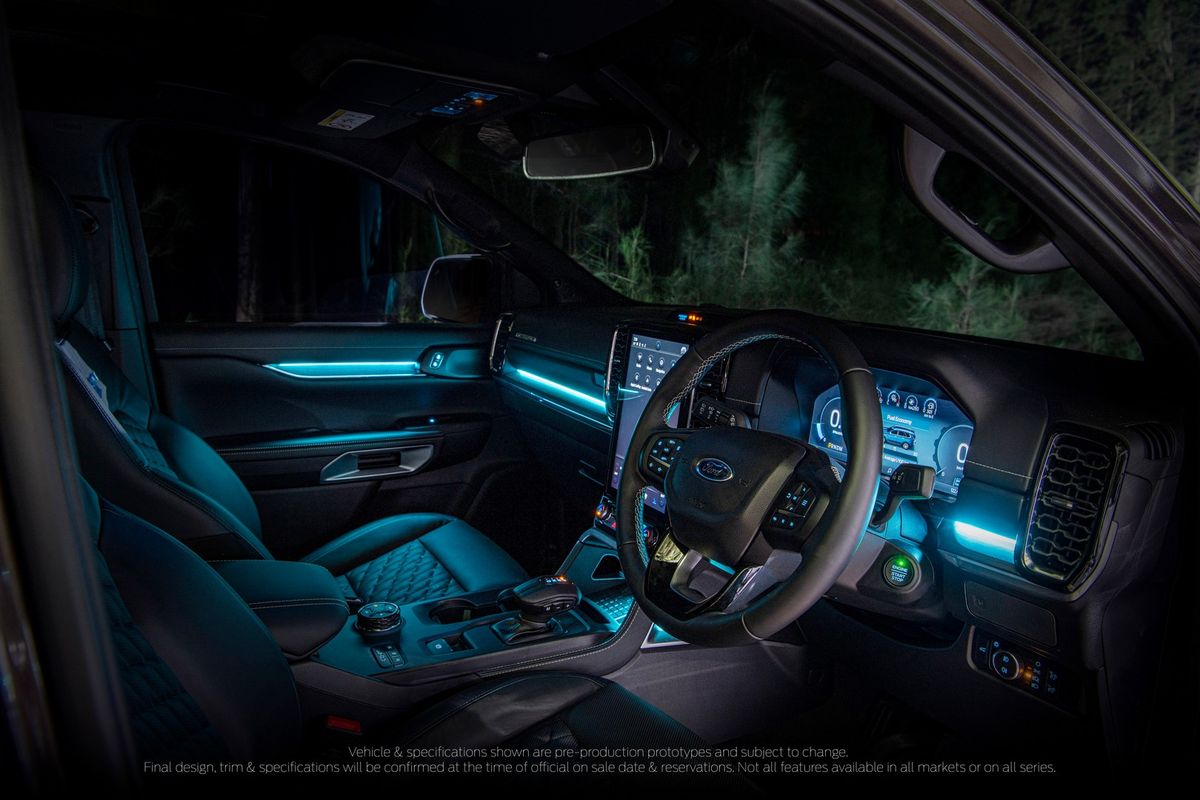
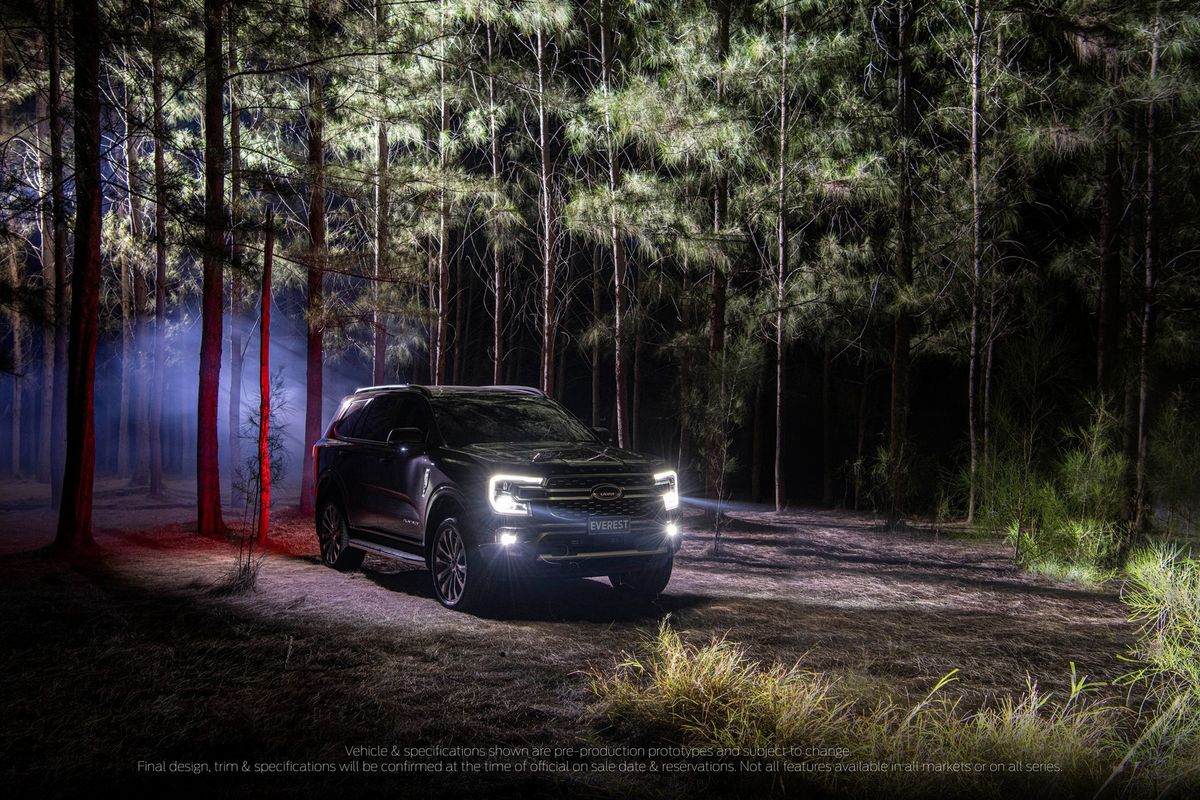
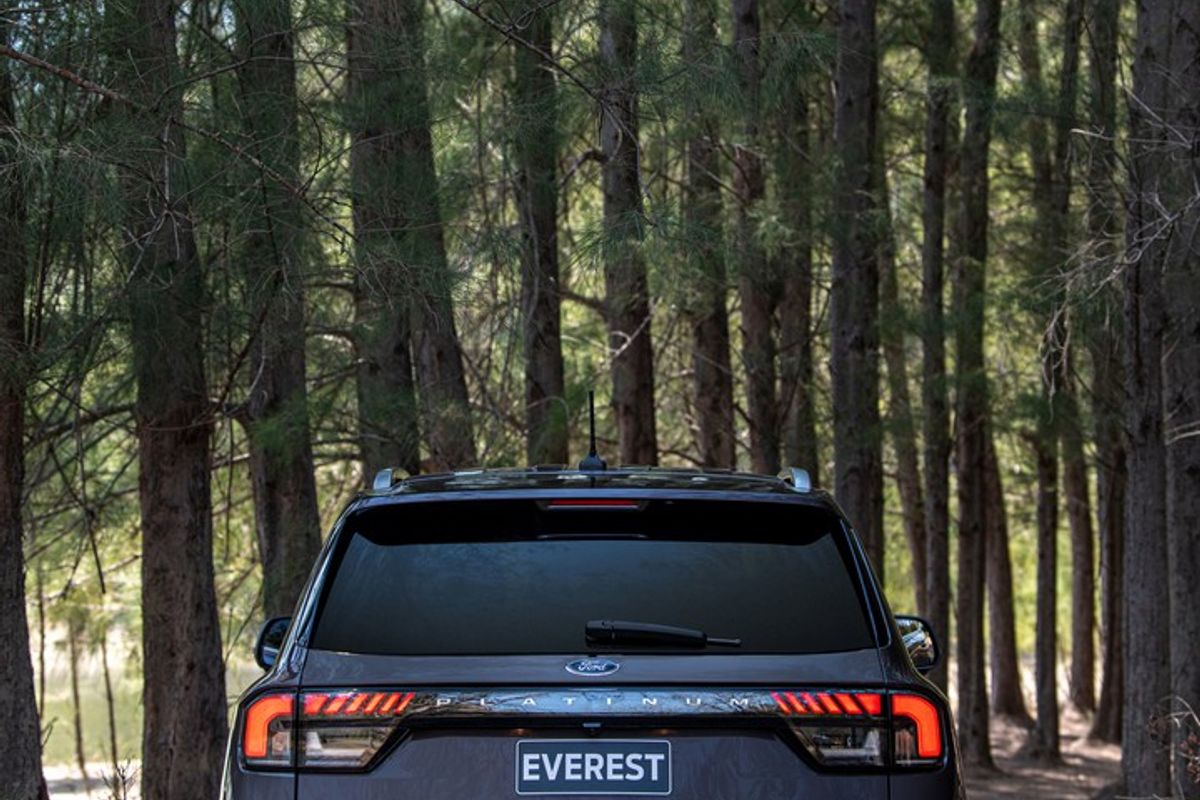
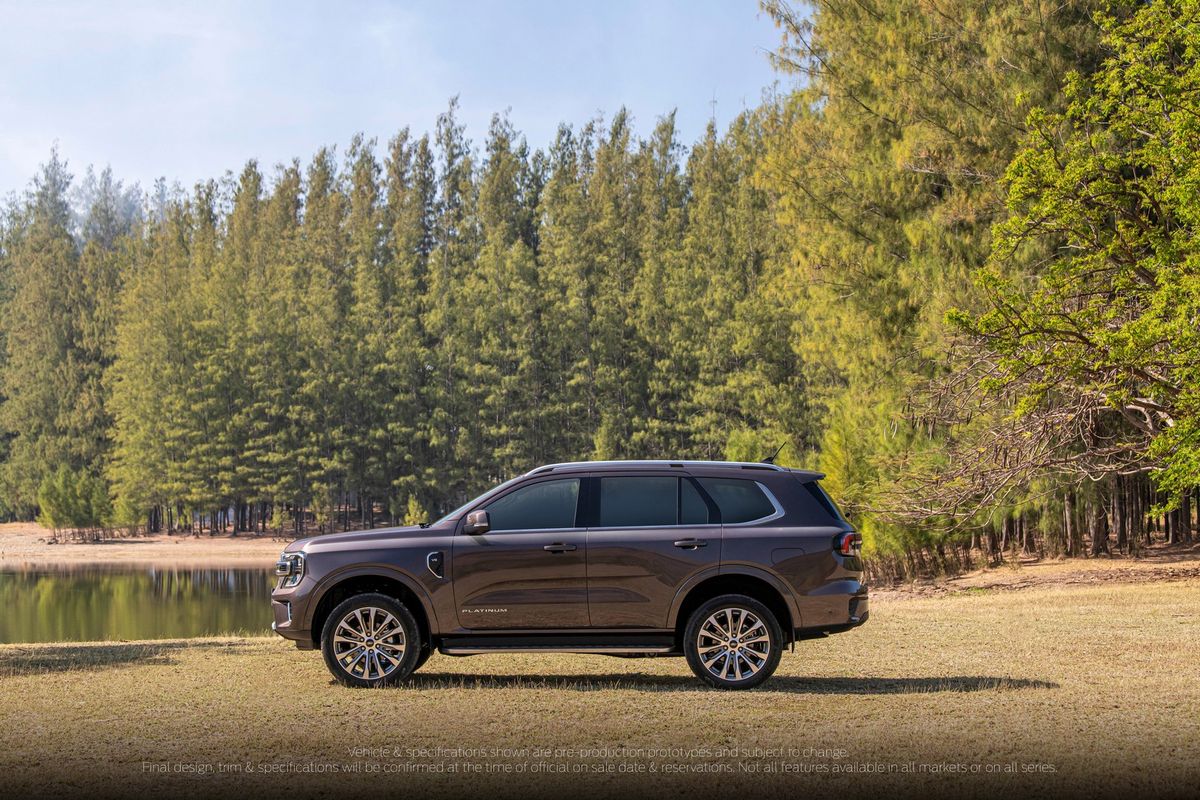
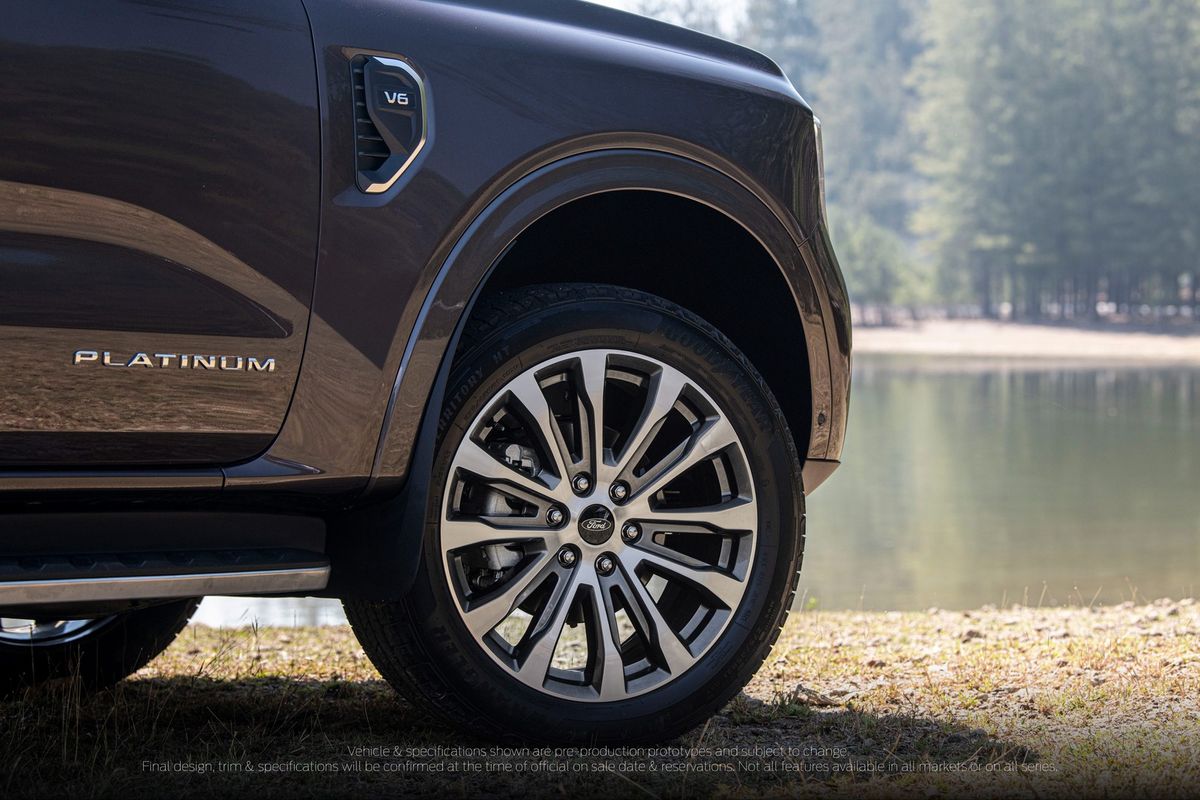
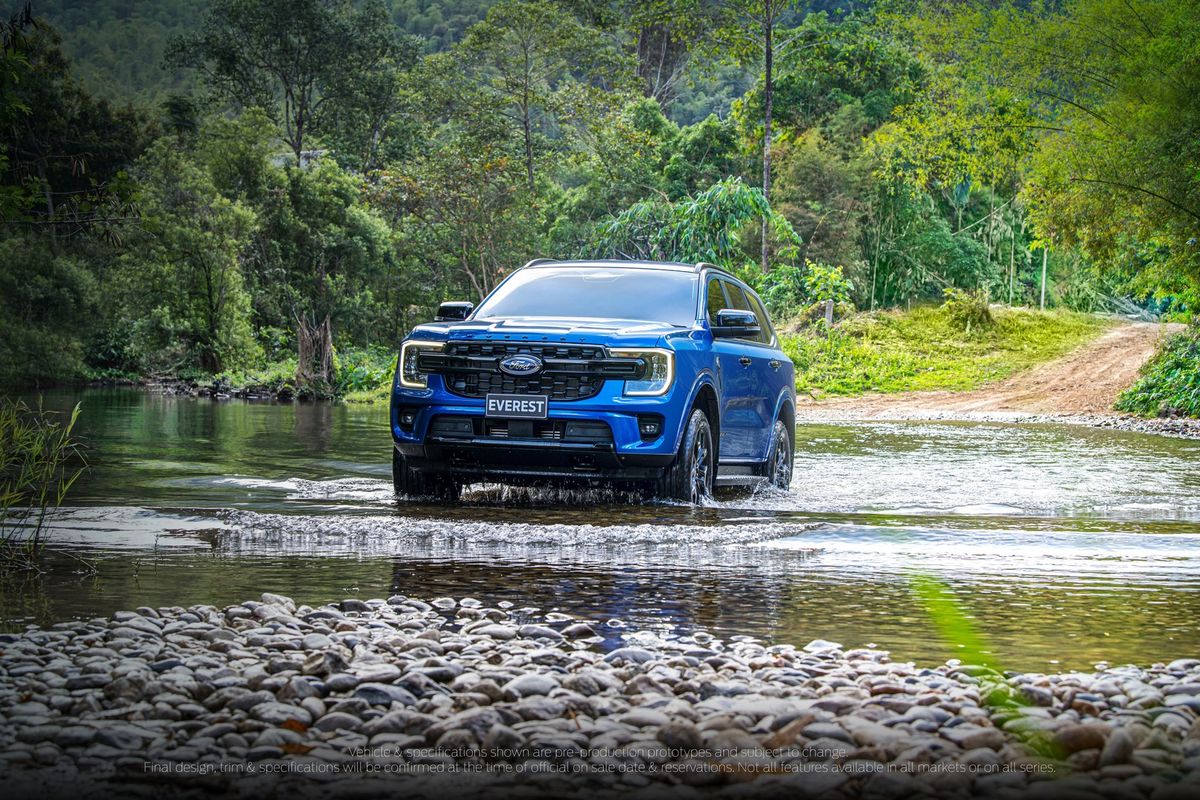
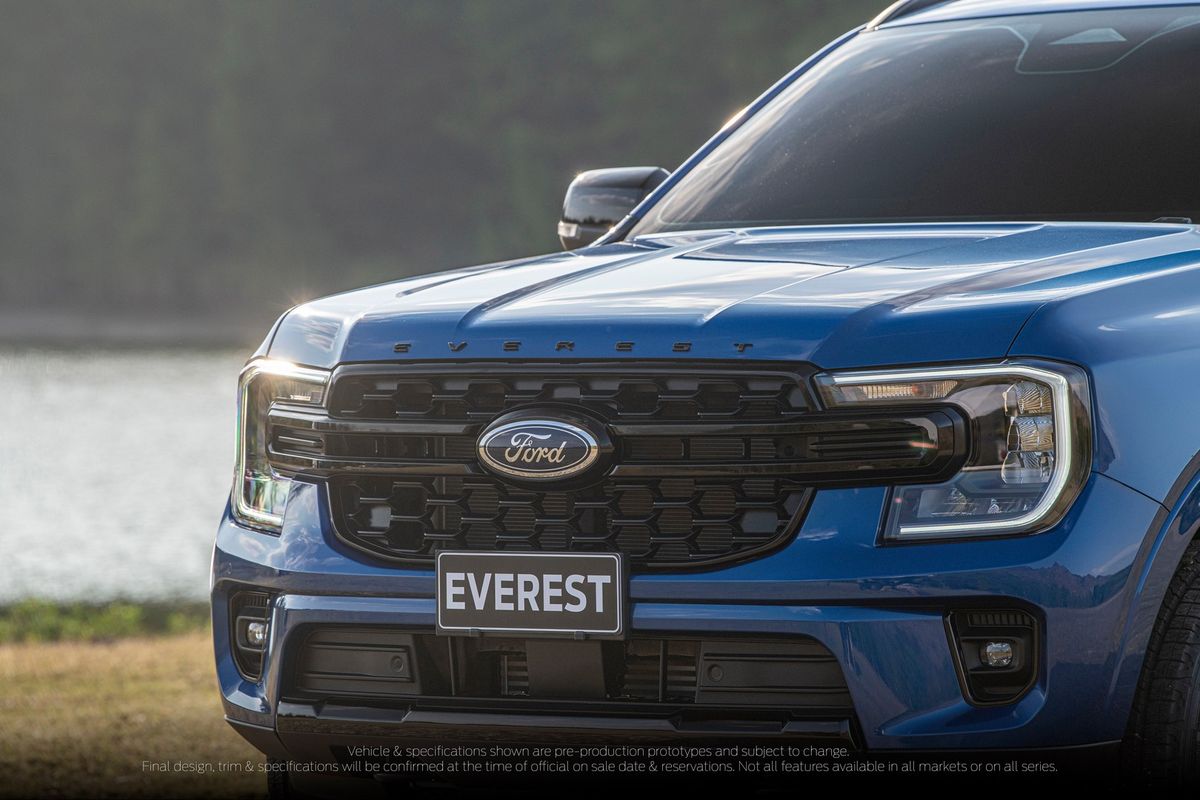
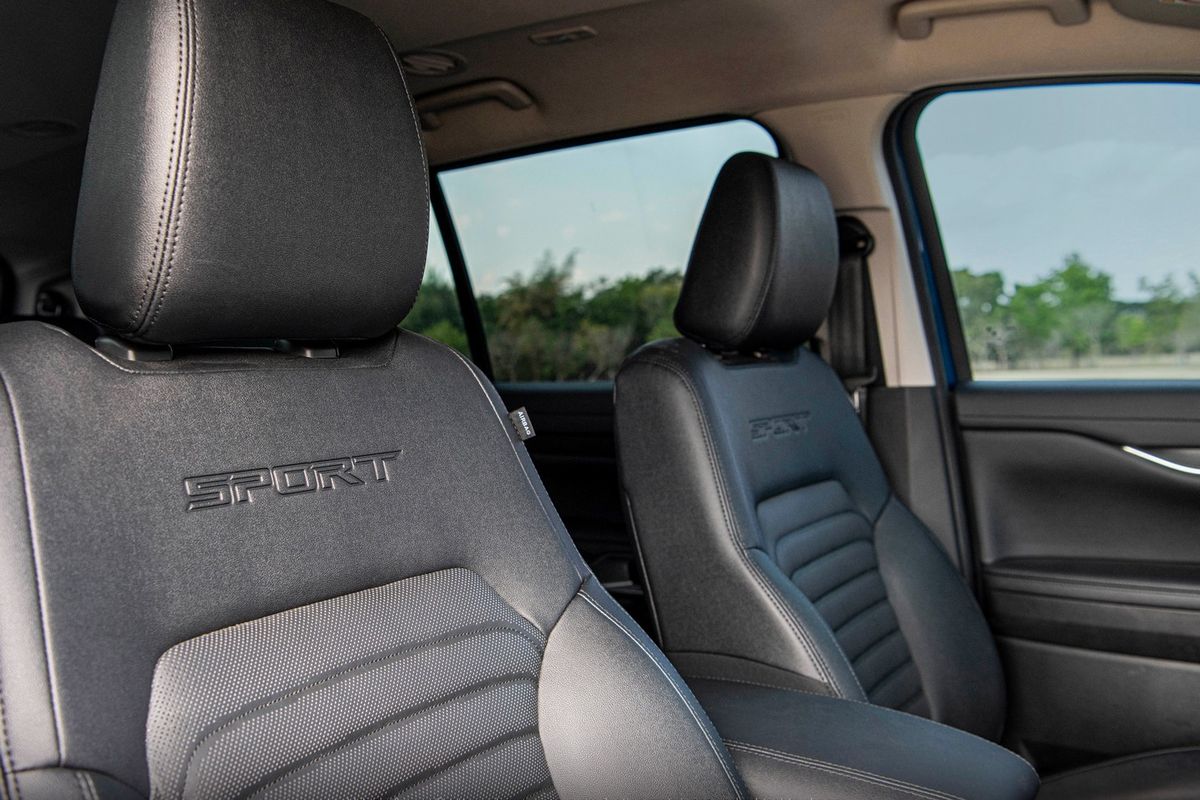
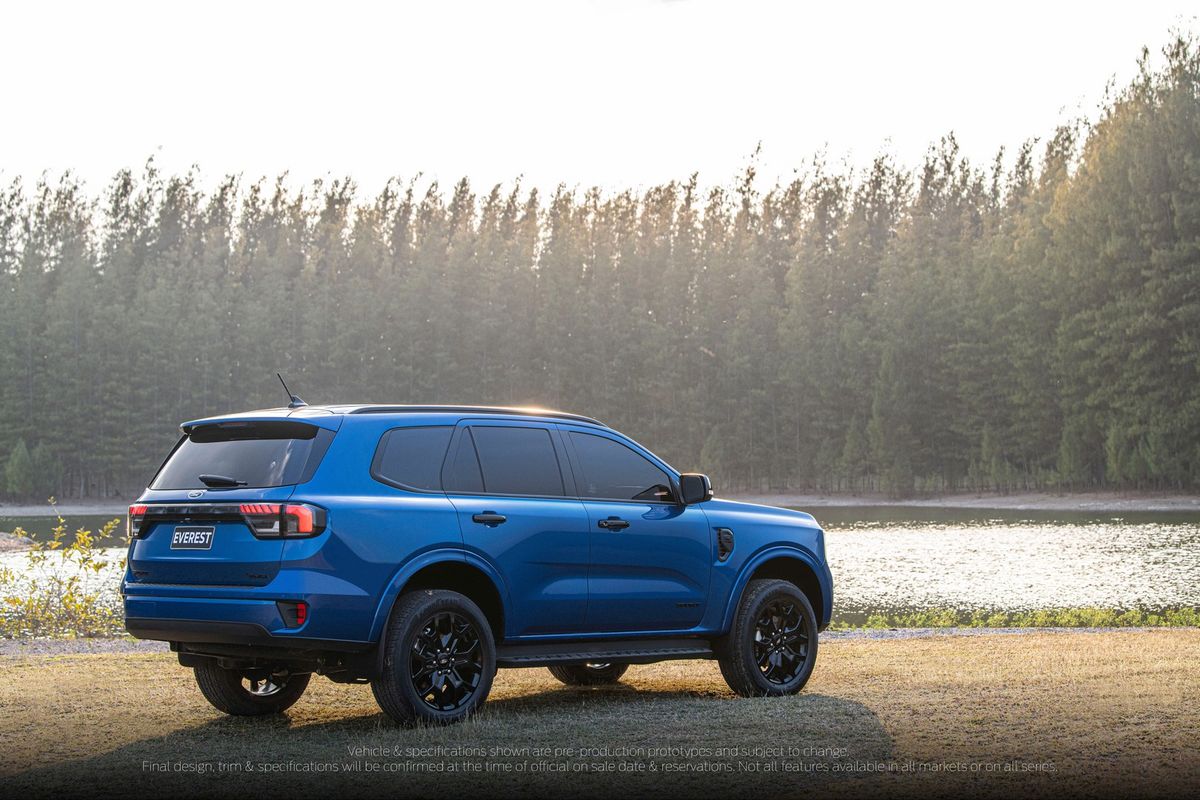
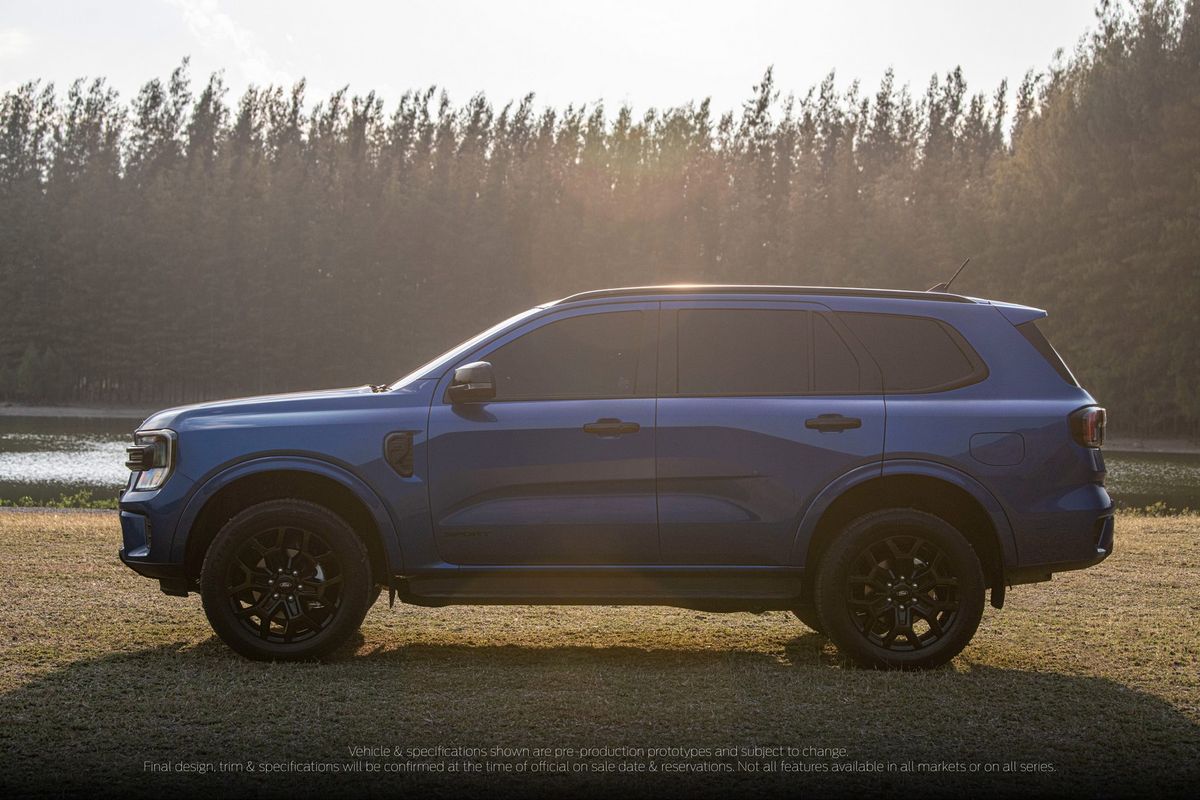
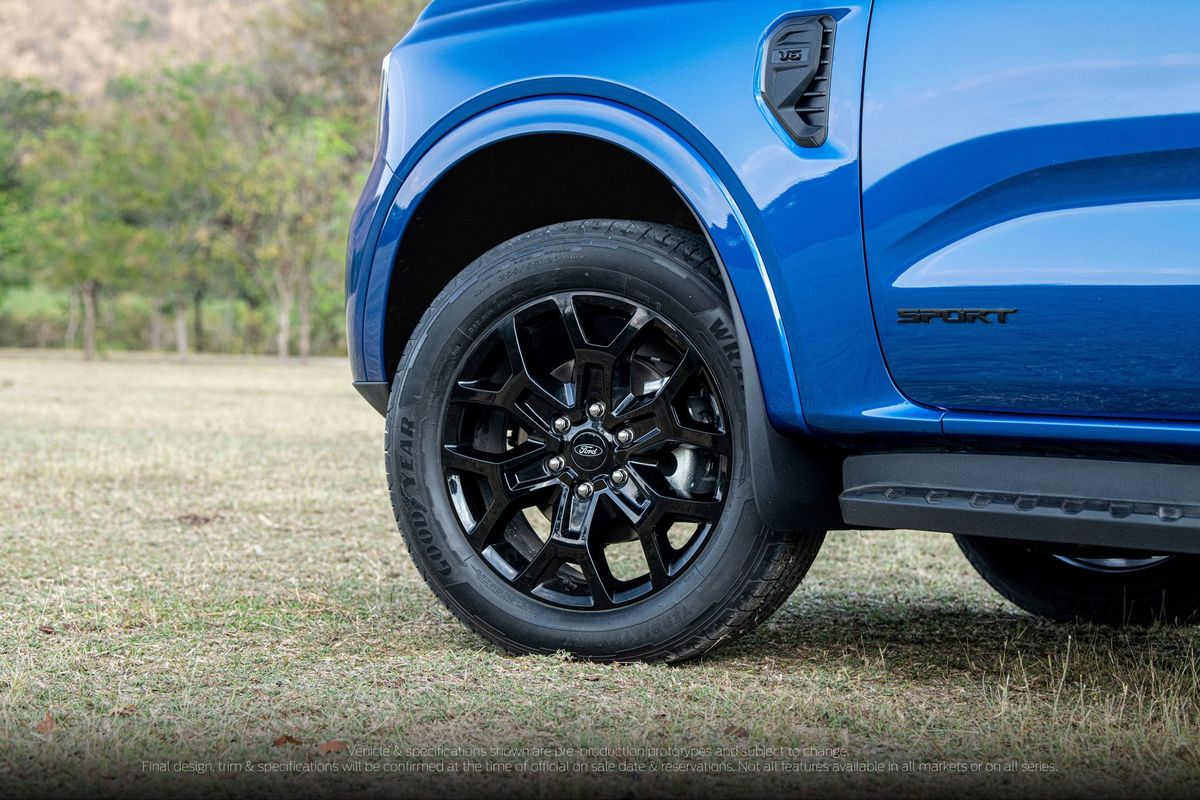
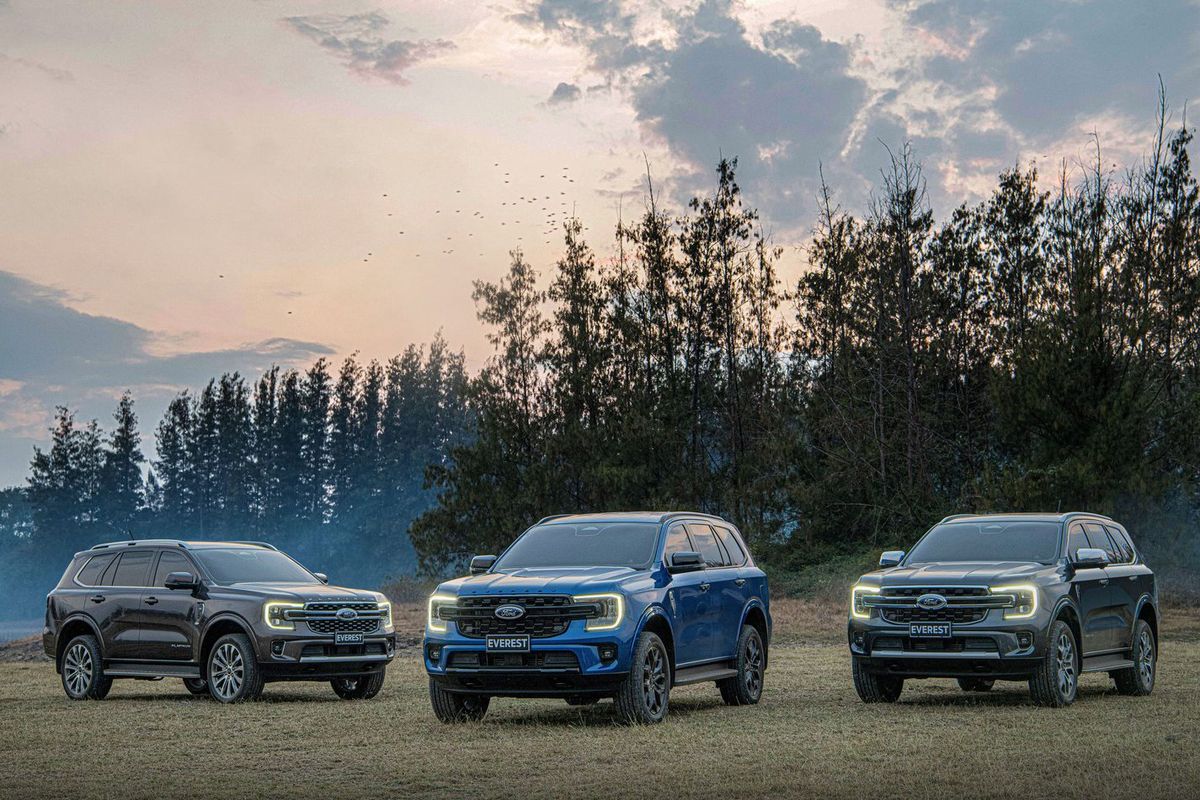
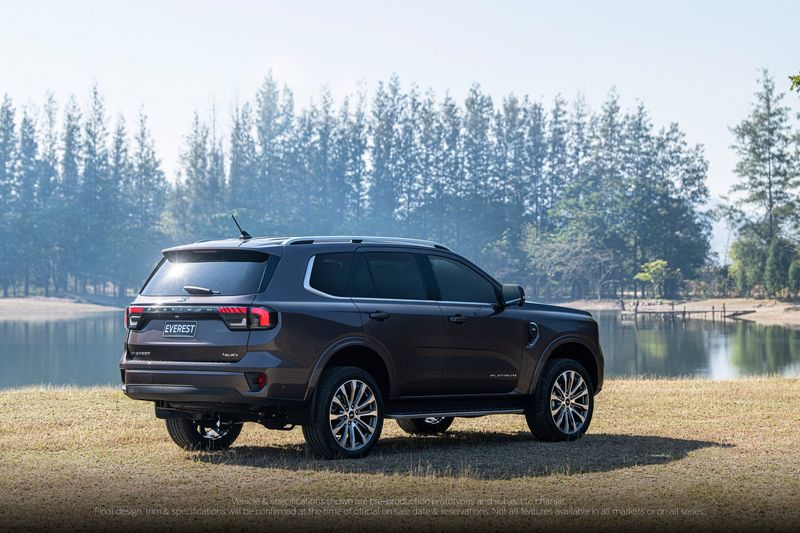
What you see here are three trim levels of the all-new 2023 Ford Everest; Sport, Titanium+ and a new flagship grade called Platinum. While it’s too early to confirm what our market will get, it’s good to see the differences. Market availability for South Africa will be confirmed at a later stage, but we estimate it’ll hit our shores in 2023.
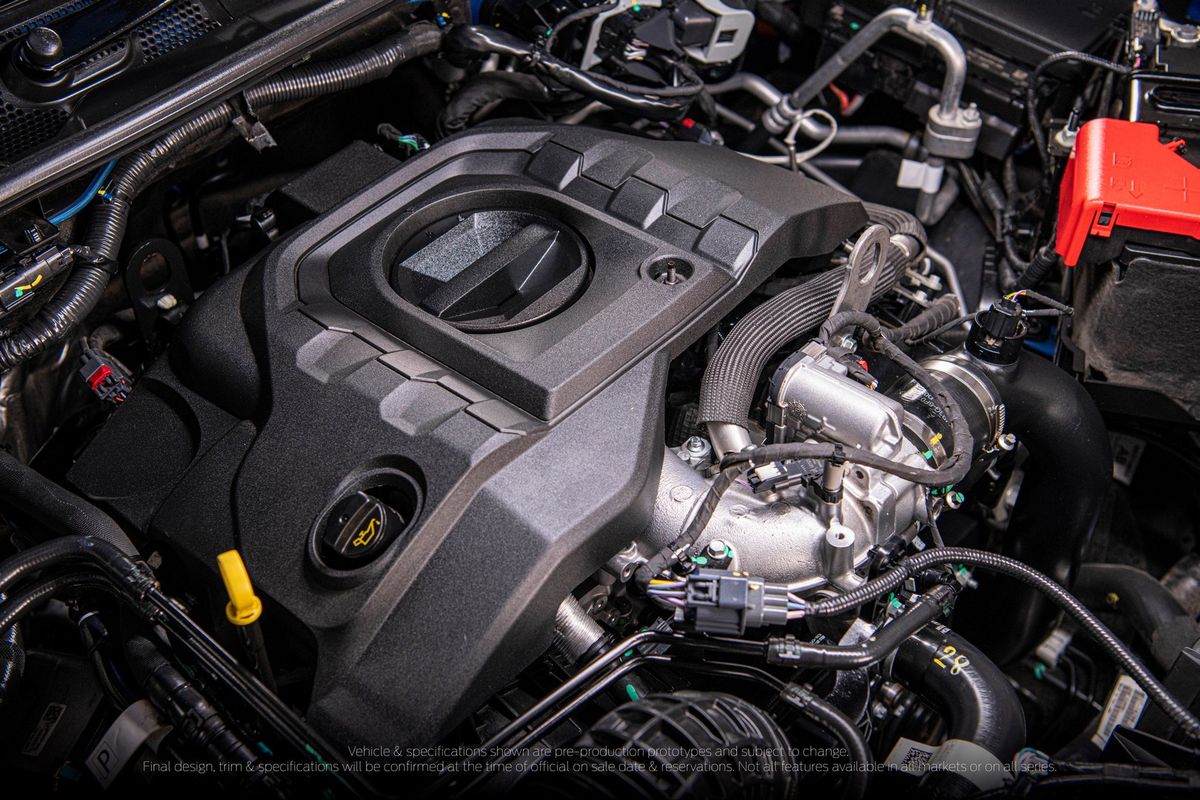
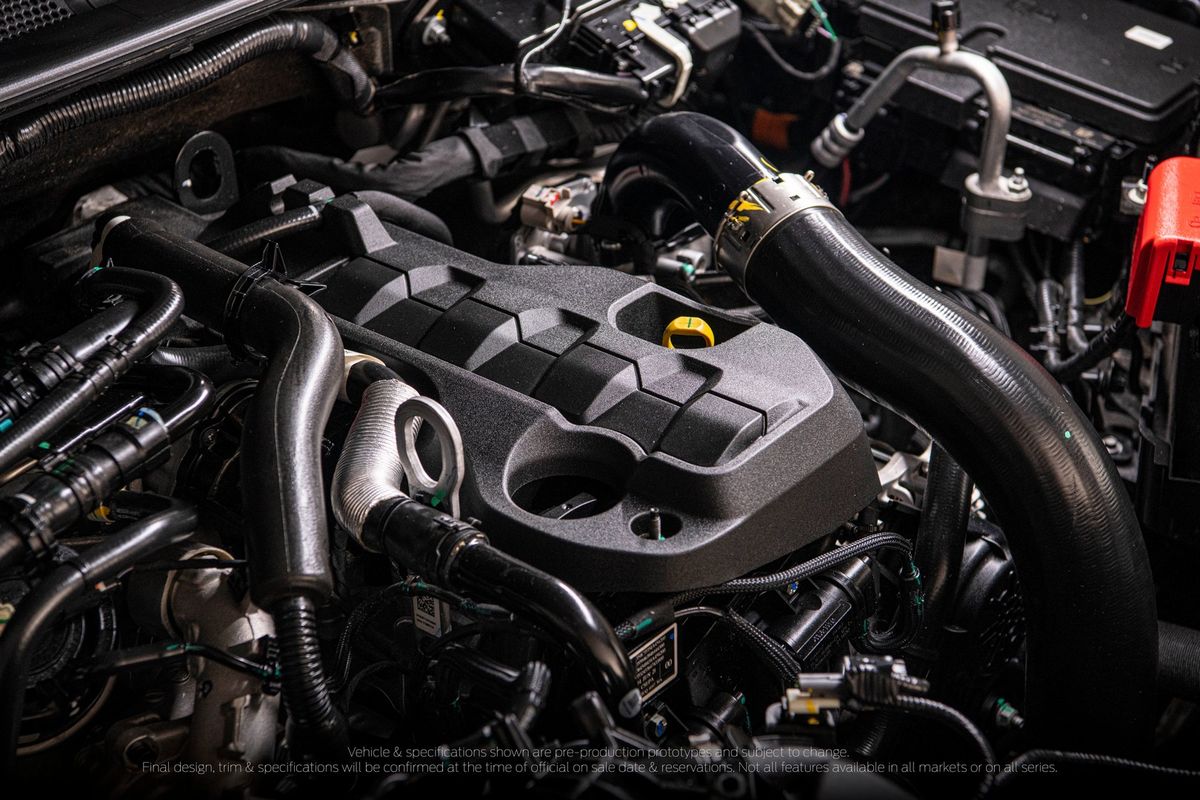
Under the skin, there are substantial changes with a longer wheelbase and wider track, and more powerful engines on offer. The new 3.0-litre turbodiesel V6 has been confirmed, along with single-turbo and bi-turbo 2.0-litre 4-cylinder diesels. For the petrol fans, a 2.3-litre EcoBoost will be offered, but we’ll confirm closer to launch if SA will be getting this engine. The 2023 Ford Everest is available with either a 6-speed automatic or a 10-speed automatic.
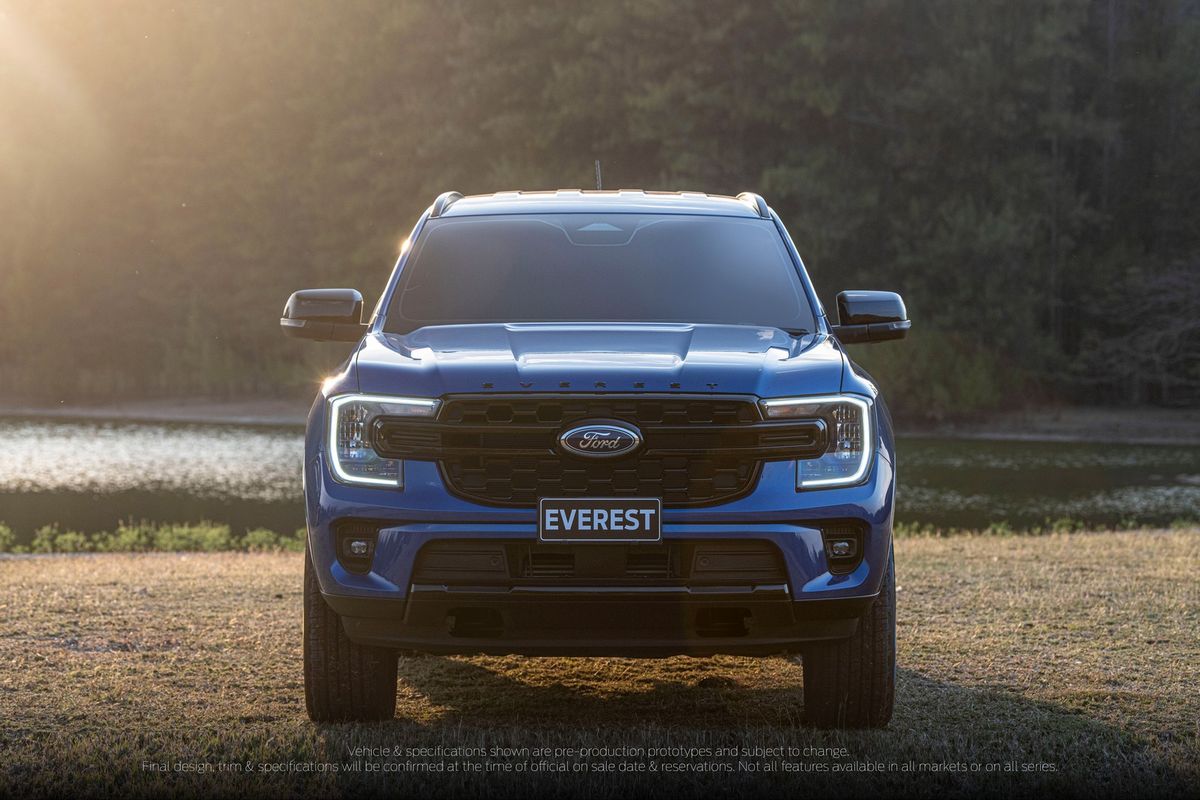
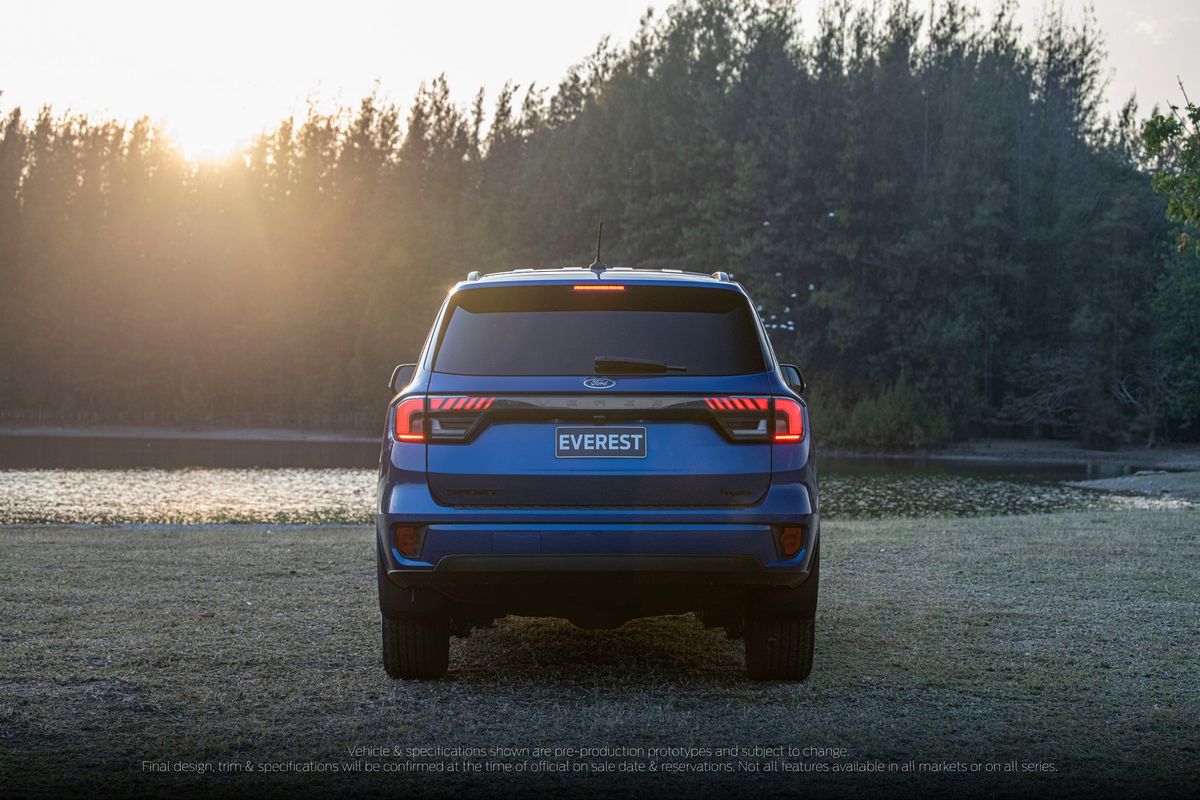
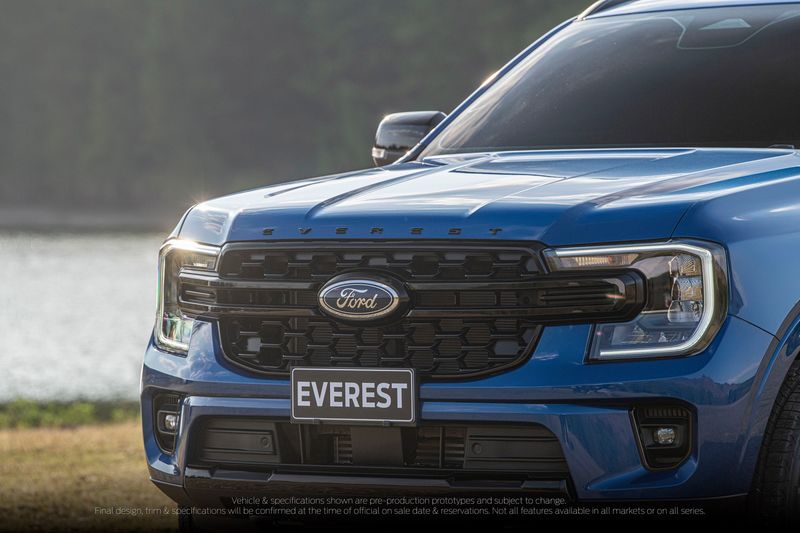
The front design is quite similar to that of the new Ford Ranger, with shared elements like the C-shaped daytime running lights. At the rear, those modern tail lights look good.
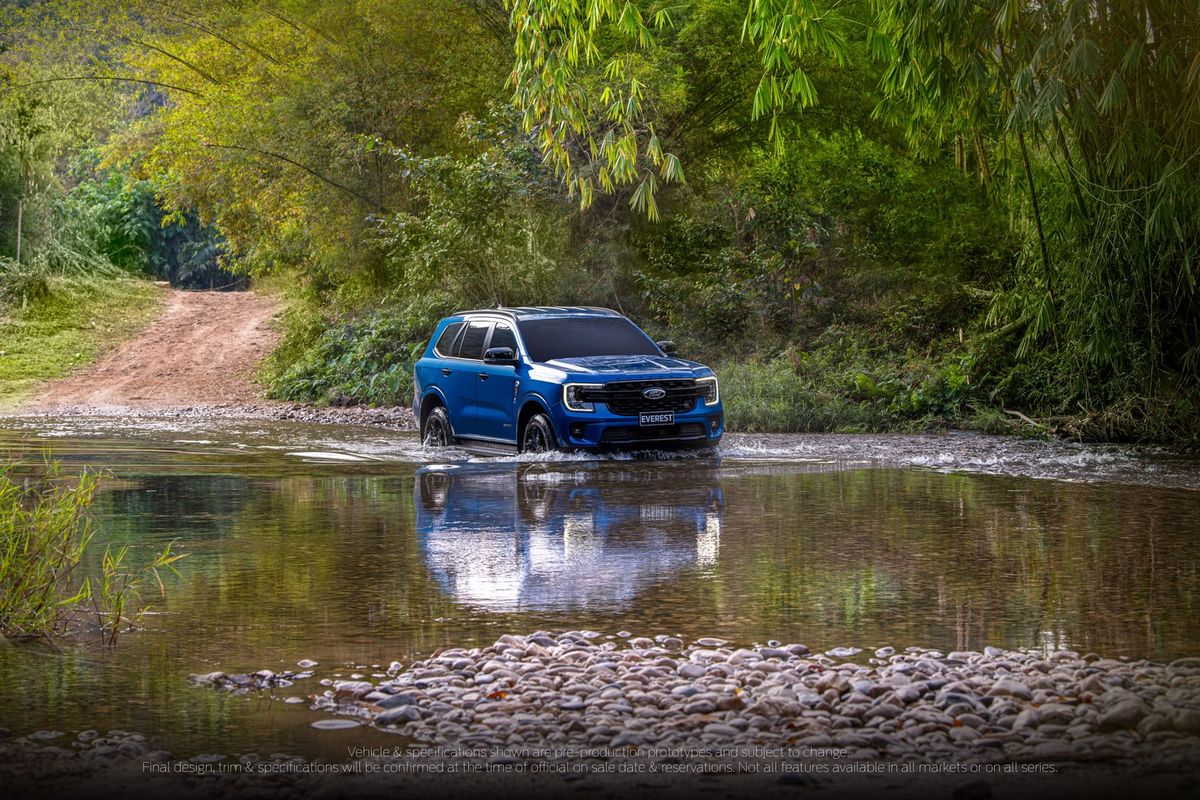
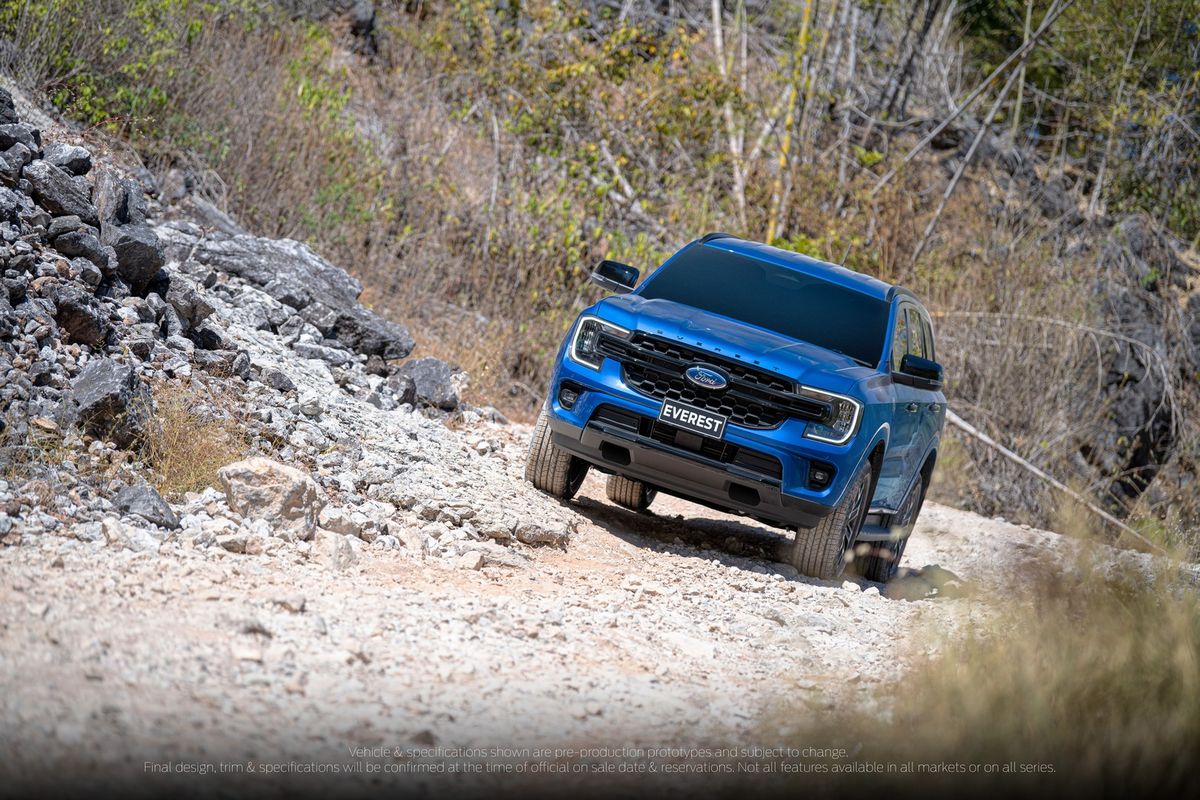
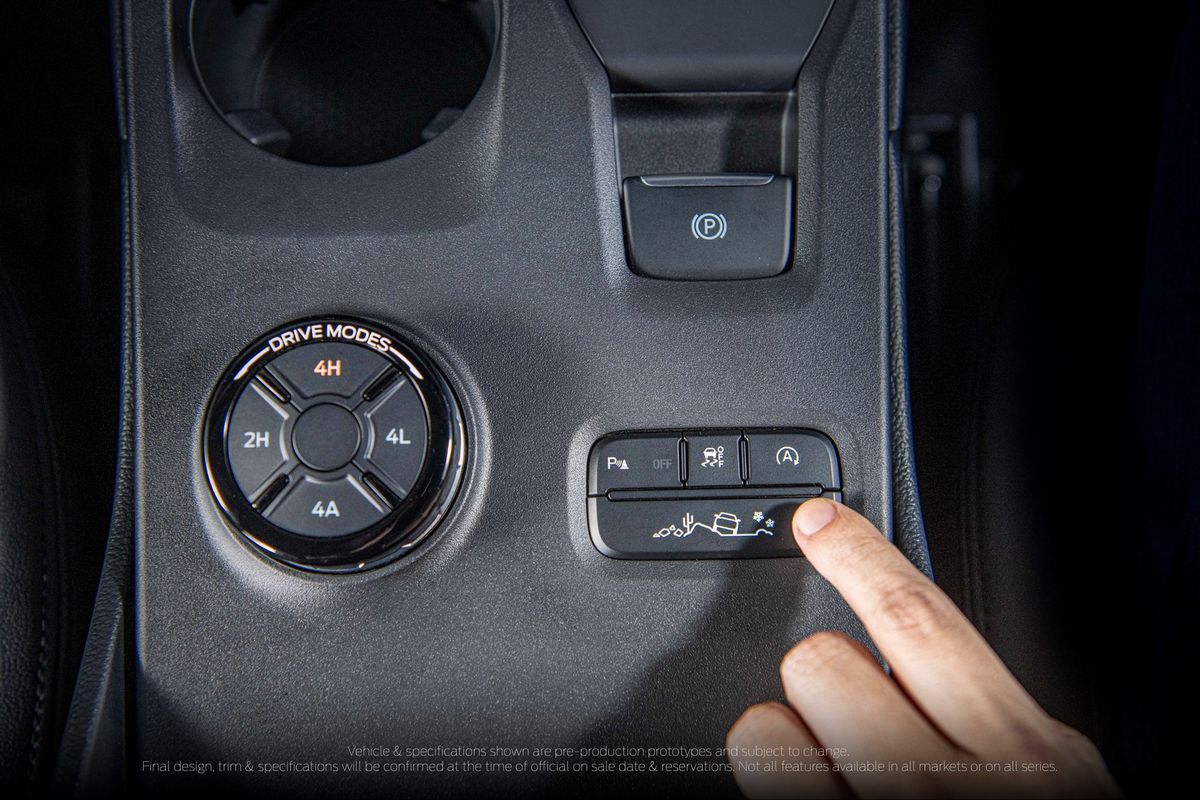
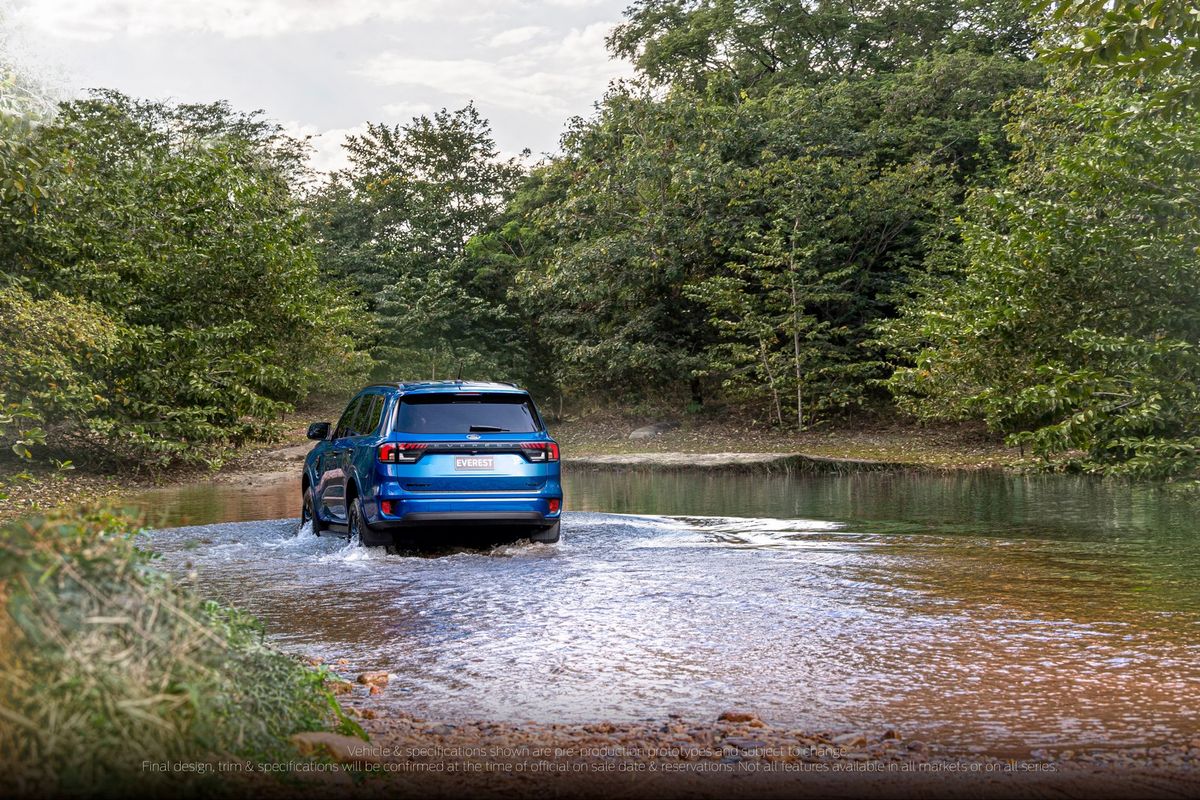
If you are the offroading type, you’ll be pleased to hear about the 2023 Ford Everest and its choice of two four-wheel drive systems, underbody protection, and off-road selectable drive modes plus rear locking differential, two functional tow hooks upfront, and provision for accessories. A wading depth of 800 mm is claimed.
The two 4WD systems available are: A two-speed electronic shift-on-the-fly transfer case, also known as a part-time 4WD system; and an advanced, permanent four-wheel drive system that uses an electronically controlled on-demand two-speed electromechanical transfer case (EMTC) with selectable drive modes.
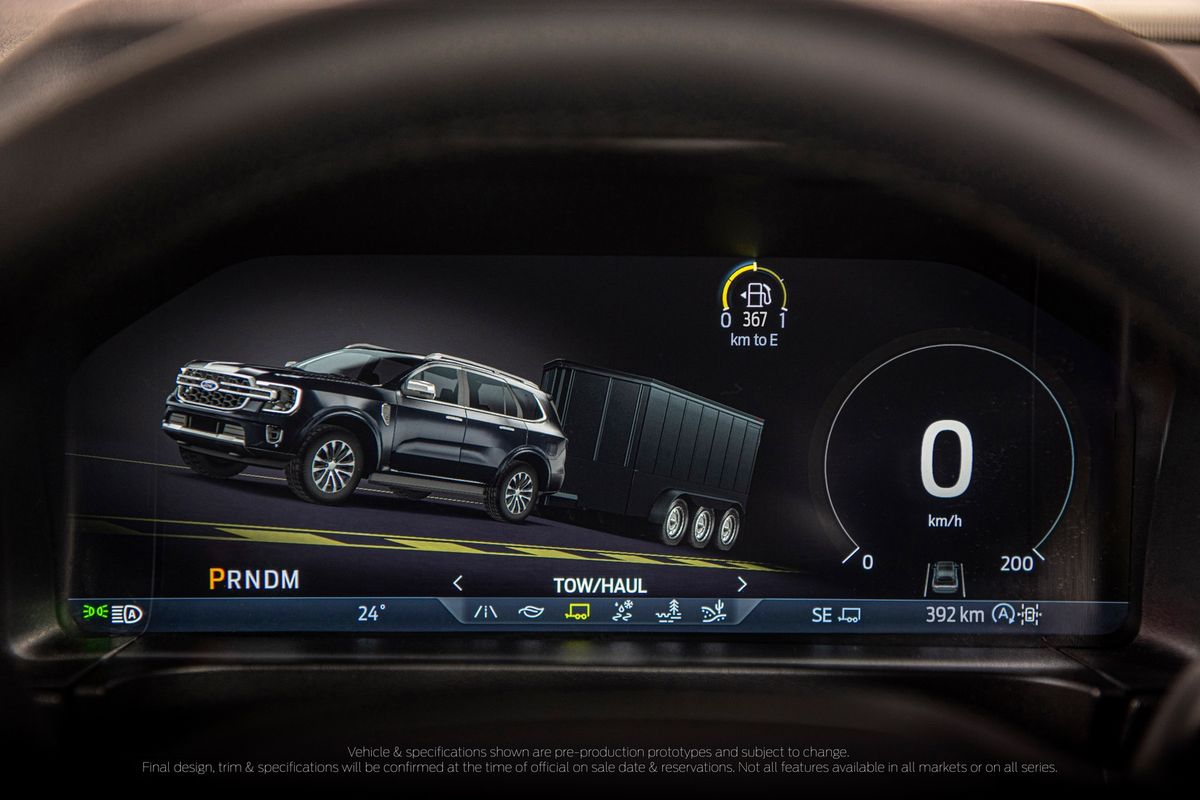
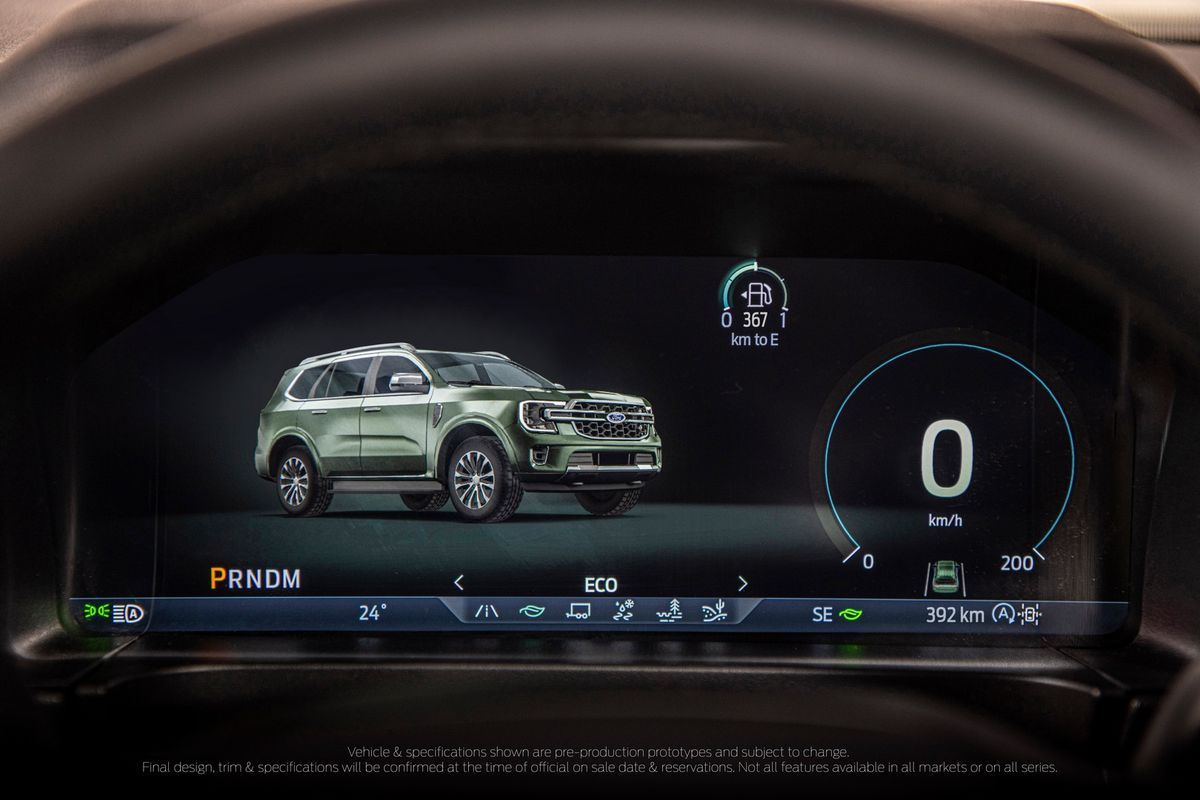
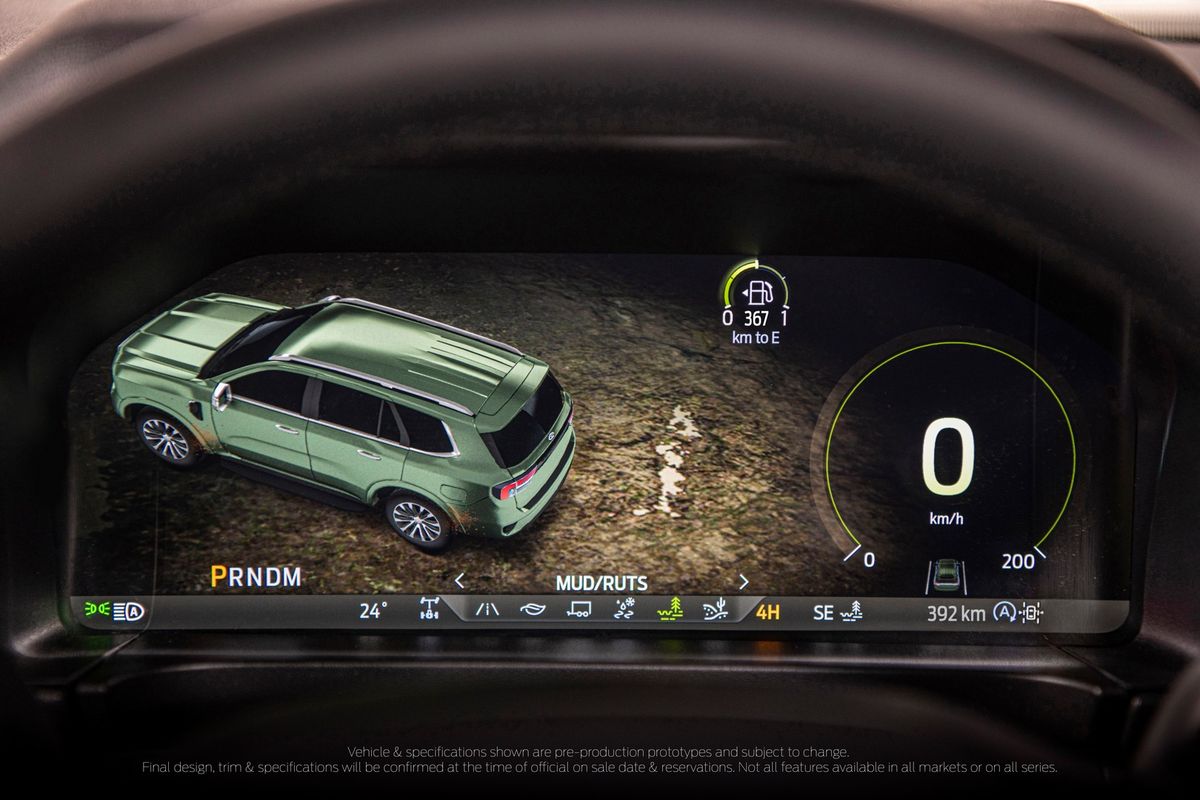
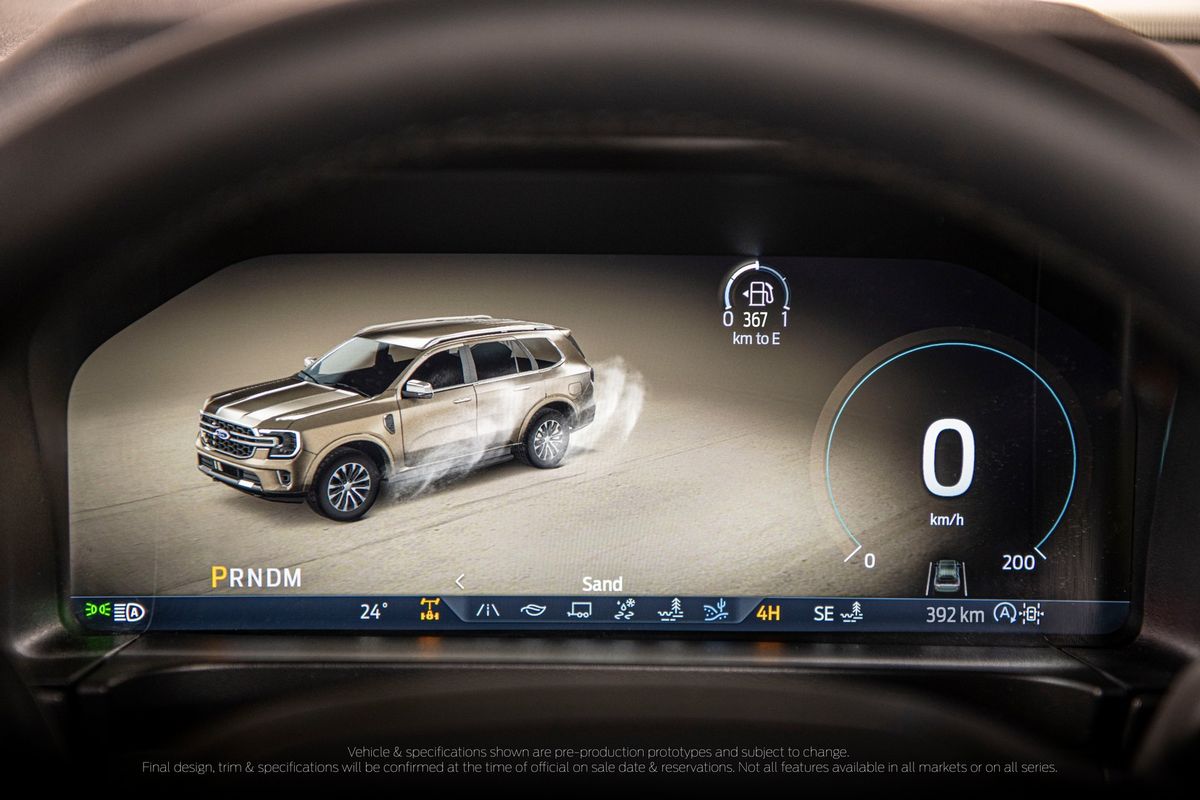
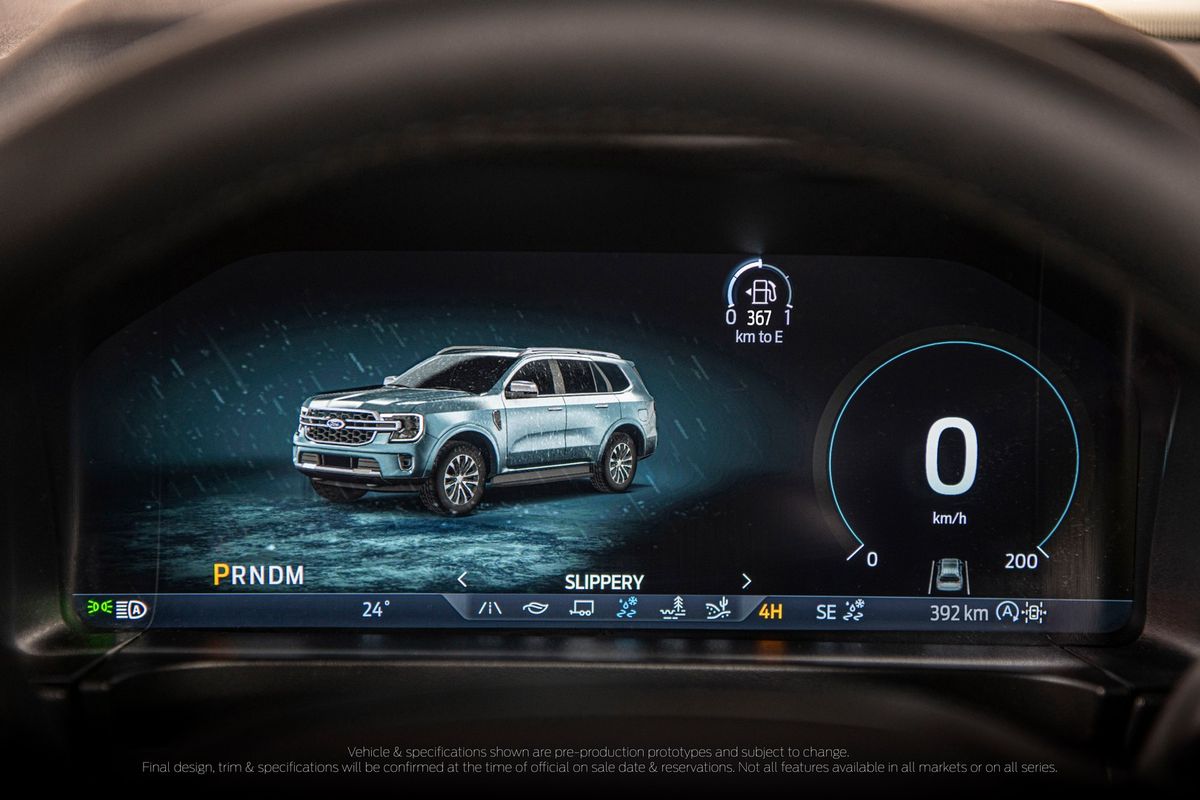
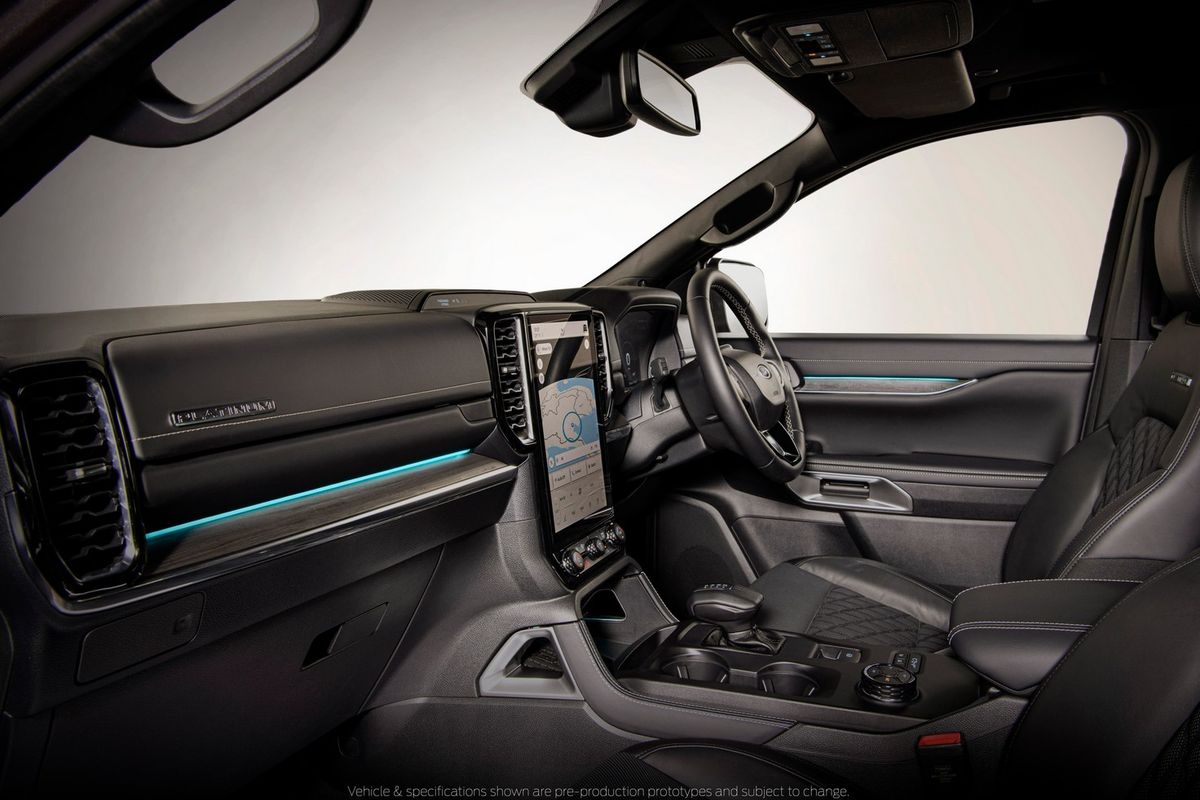
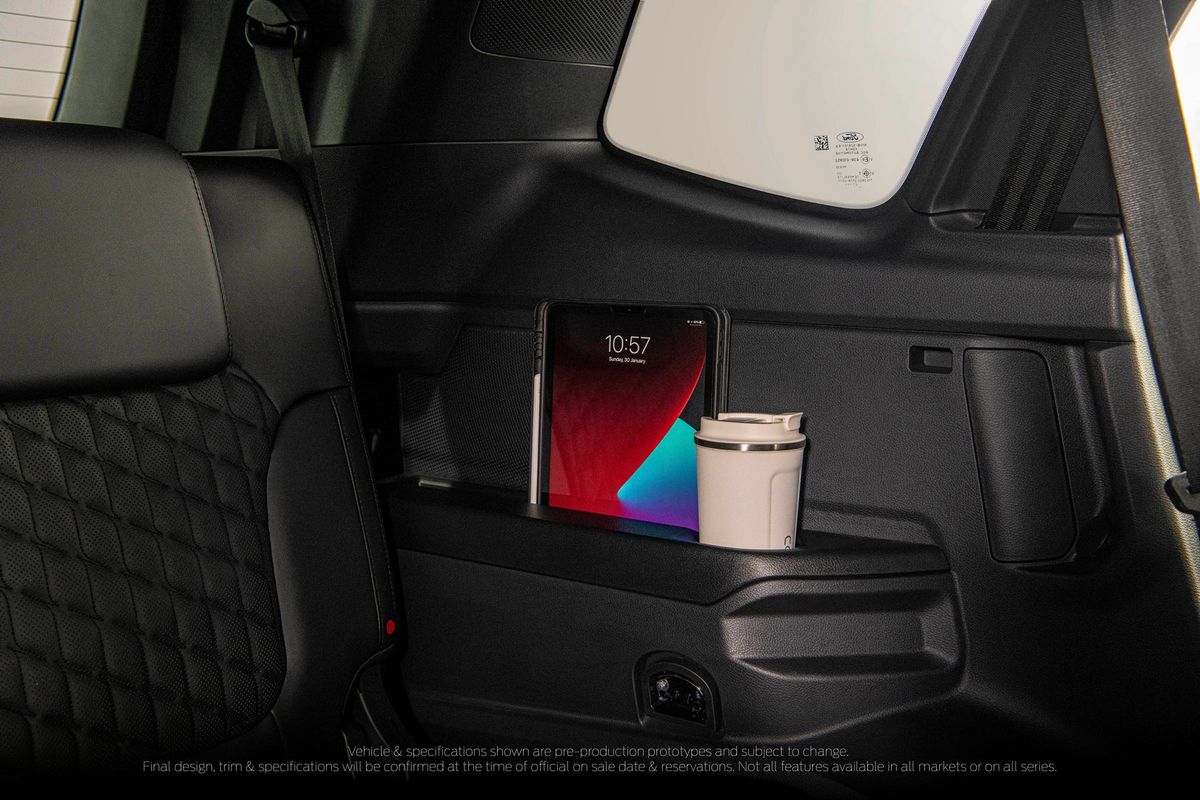
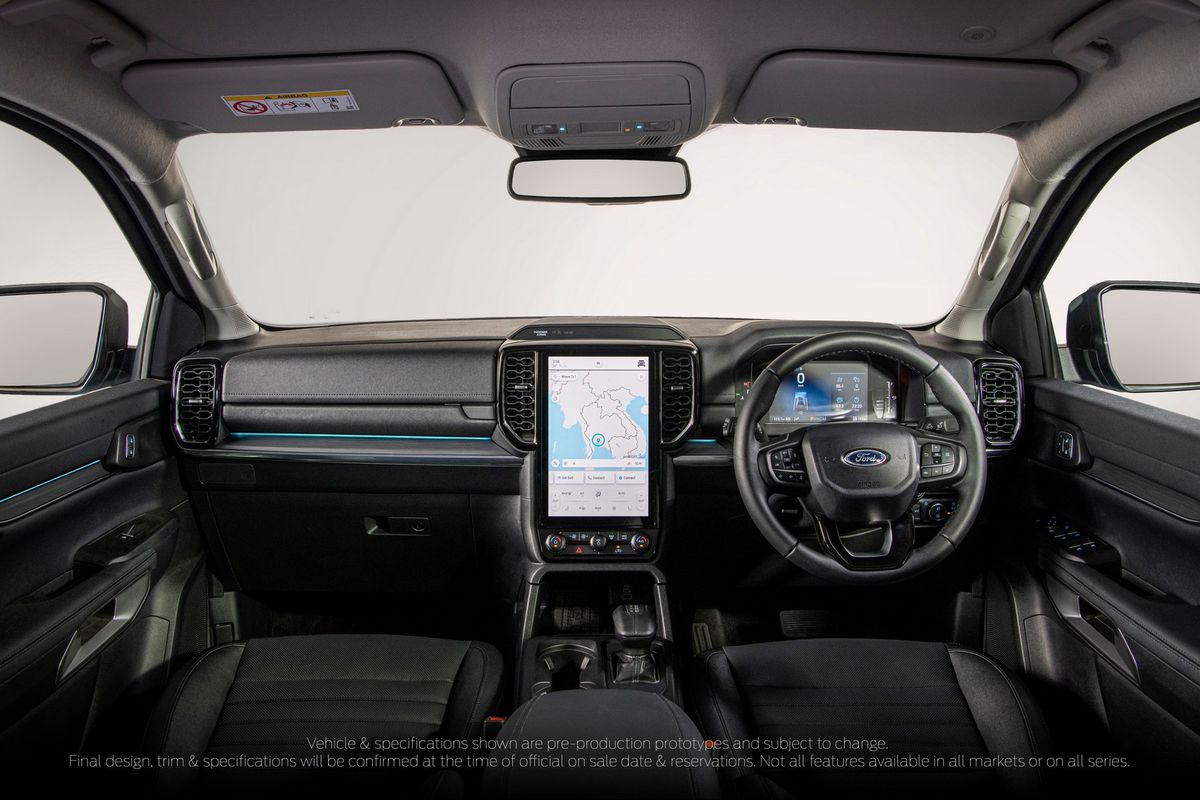
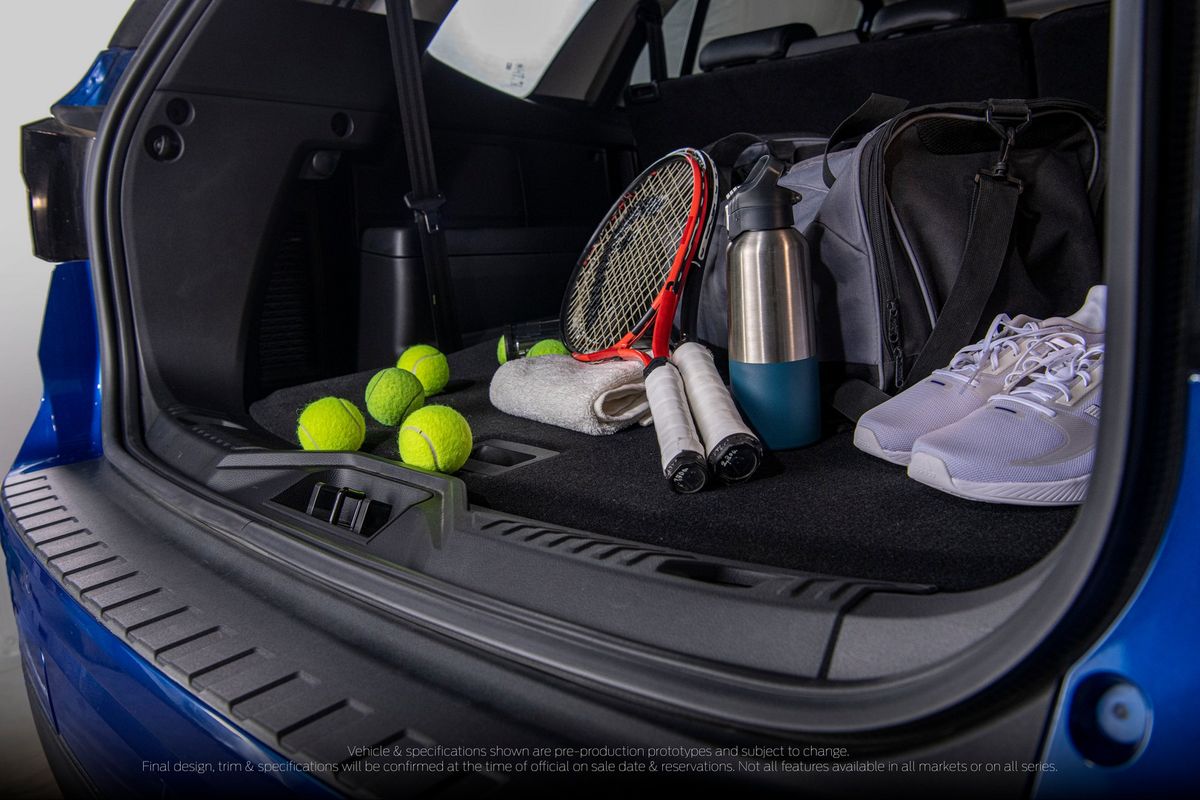
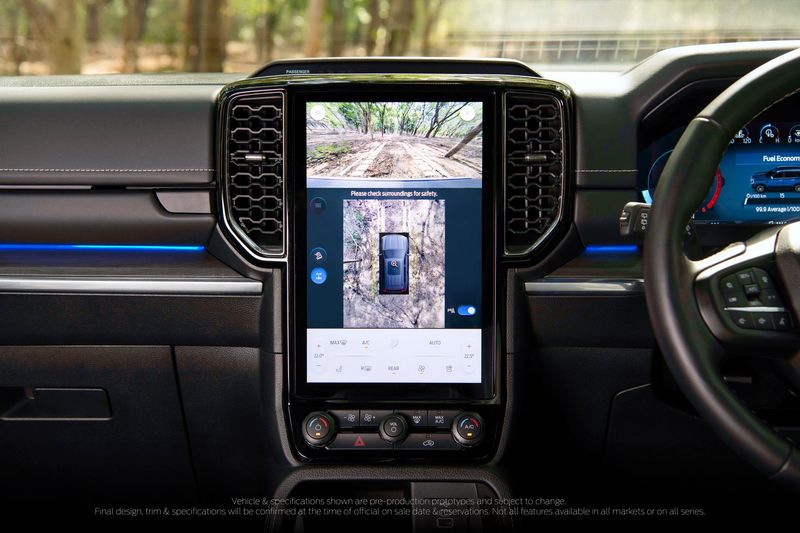
The cabin has been given a complete overhaul and there’s now a large infotainment screen, digital instrument cluster as well as a rejigged seating setup, with Ford claiming the 3rd row of seats are now more accessible. The boot has received a rejig, with a lip that stops loose items from rolling out.
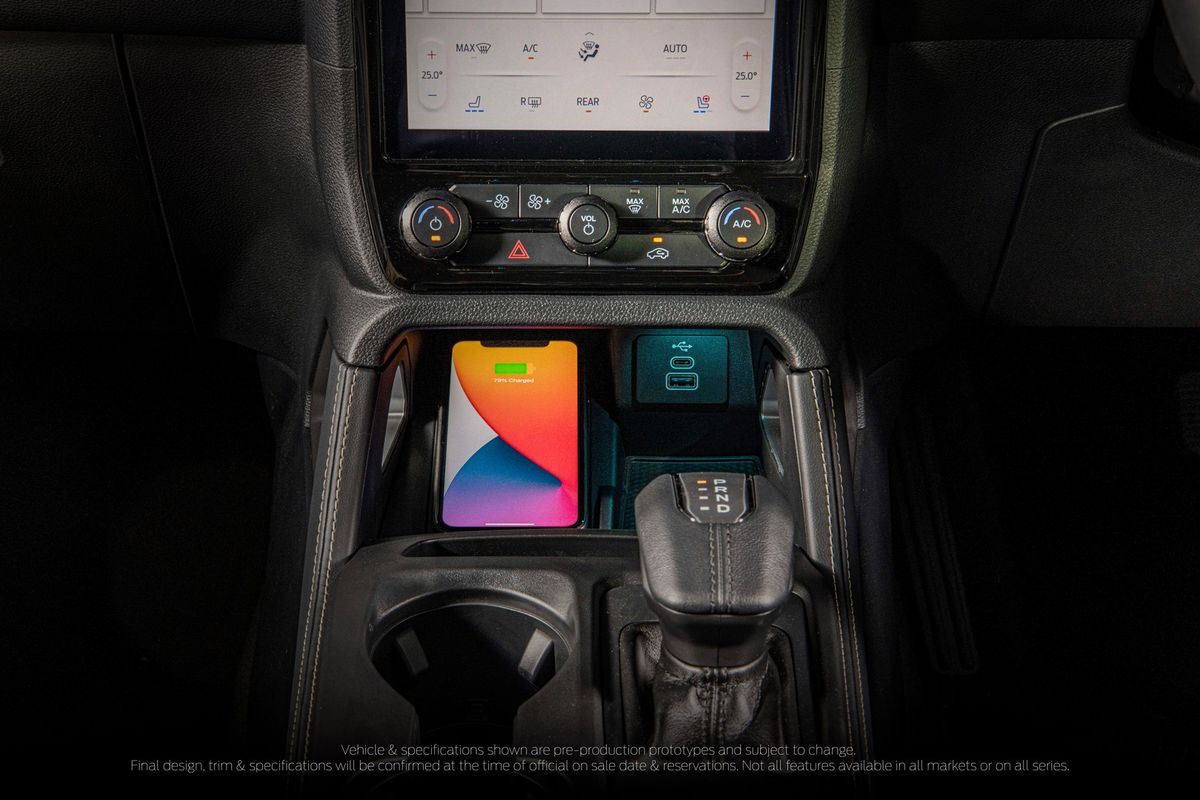
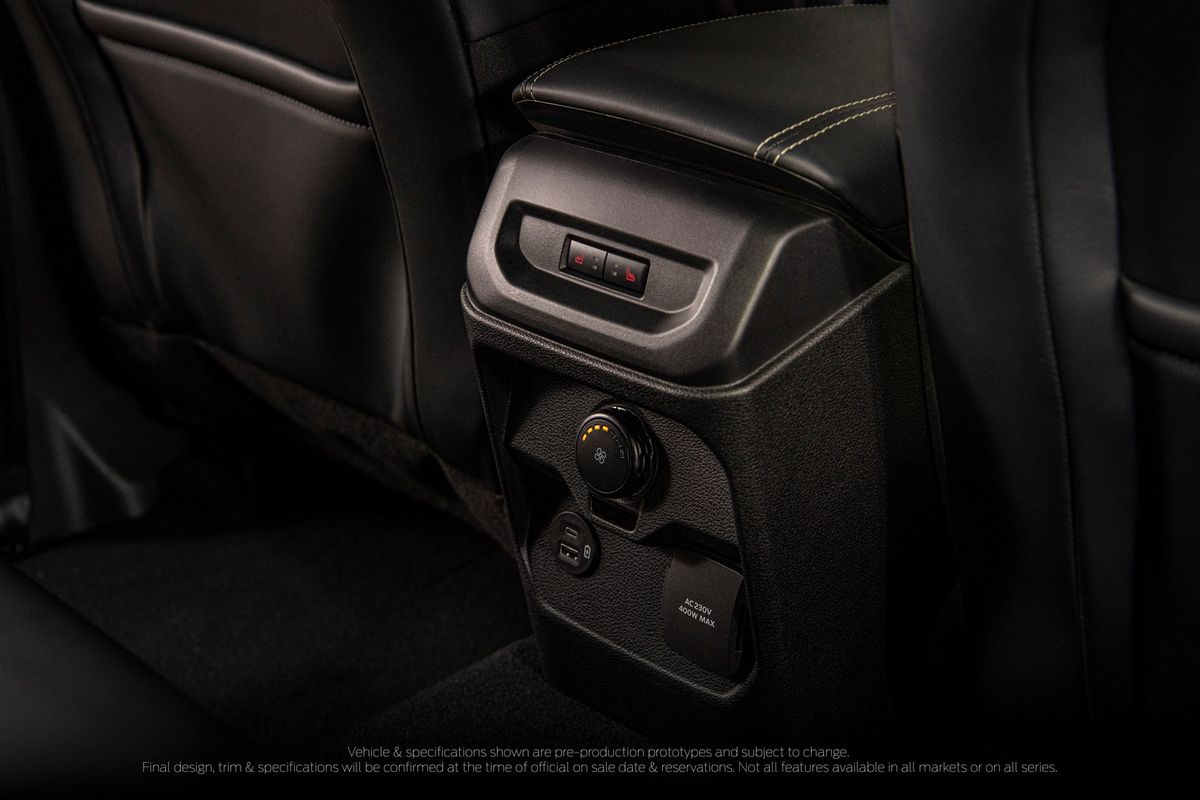
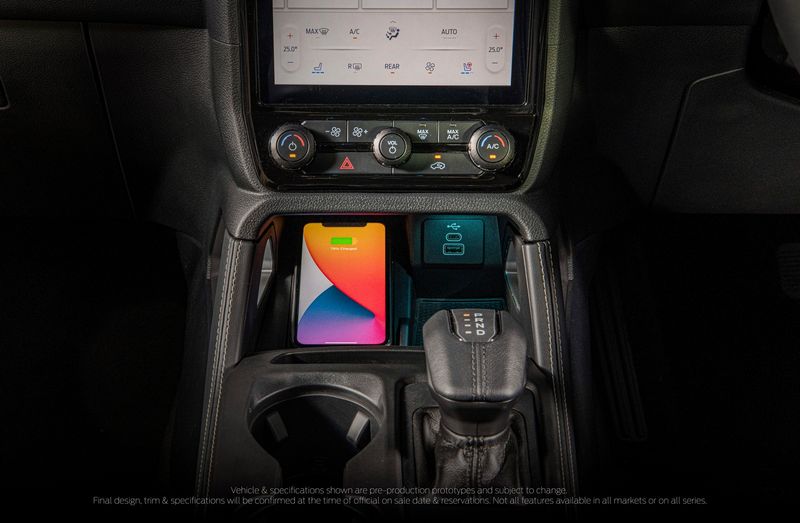
Spec level at first glance looks impressive with higher-end derivatives gaining wireless charging, leather-trimmed gear selector, electronic parking brake, heated and ventilated front seats, 10-way electrically adjustable driver seats, and charging ports for all three rows. The 2nd and 3rd row of seats can fold flat, allowing for large items to be transported.
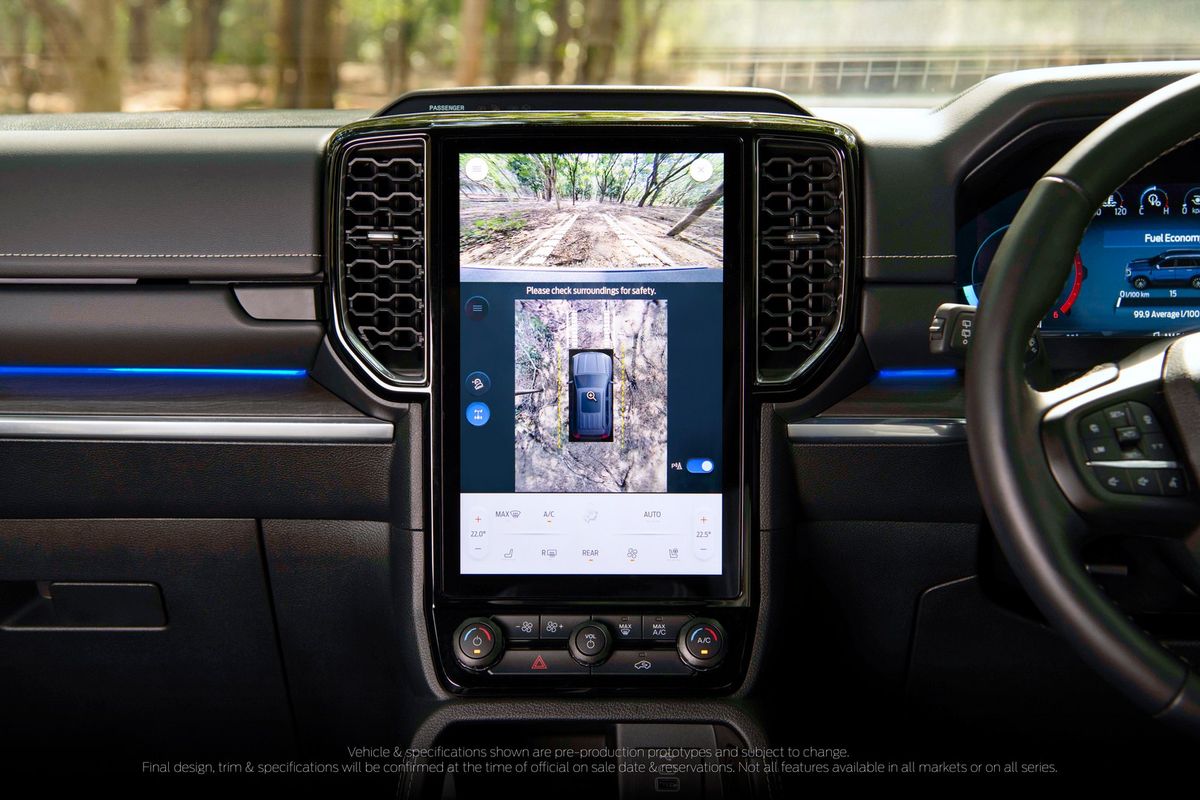
The new SYNC4 infotainment system makes its debut in the 2023 Ford Everest. Depending on trim level, Everest comes with 8- or 12.4-inch digital instrument panels and there are high-res portrait 10.1- or 12-inch touchscreens.
As far as safety is concerned, the new Ford Everest has a number of semi-autonomous features like adaptive cruise control, lane-keeping assist, blind-spot monitoring, and pre-collision assist. There are also up to 9 airbags, including a new airbag located between the driver and the passenger.
This announcement is essentially just a first look at the all-new 2023 Ford Everest and we’re still some time away from the vehicle launching locally. As it stands, we do know that it will be assembled in Thailand and not in SA. We assume the Ford Silverton factory needs all the capacity as it will be building both the new Ford Ranger and new Volkswagen Amarok.
Range Rover (2025) Specs and Price in South Africa
The ‘big daddy’ Range Rover has much to offer in terms of luxury and style. Take a closer lookinside and out of what is the most luxurious and comfortable SUV Range Rover has ever built.
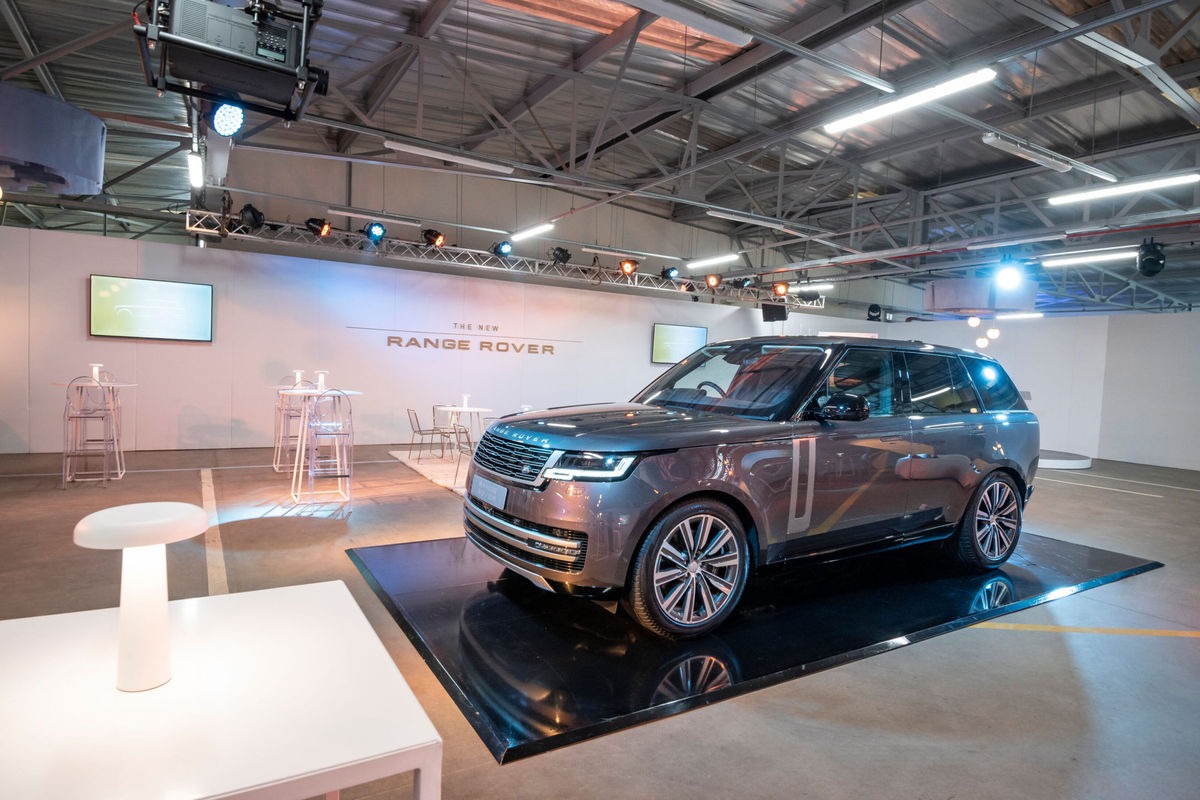
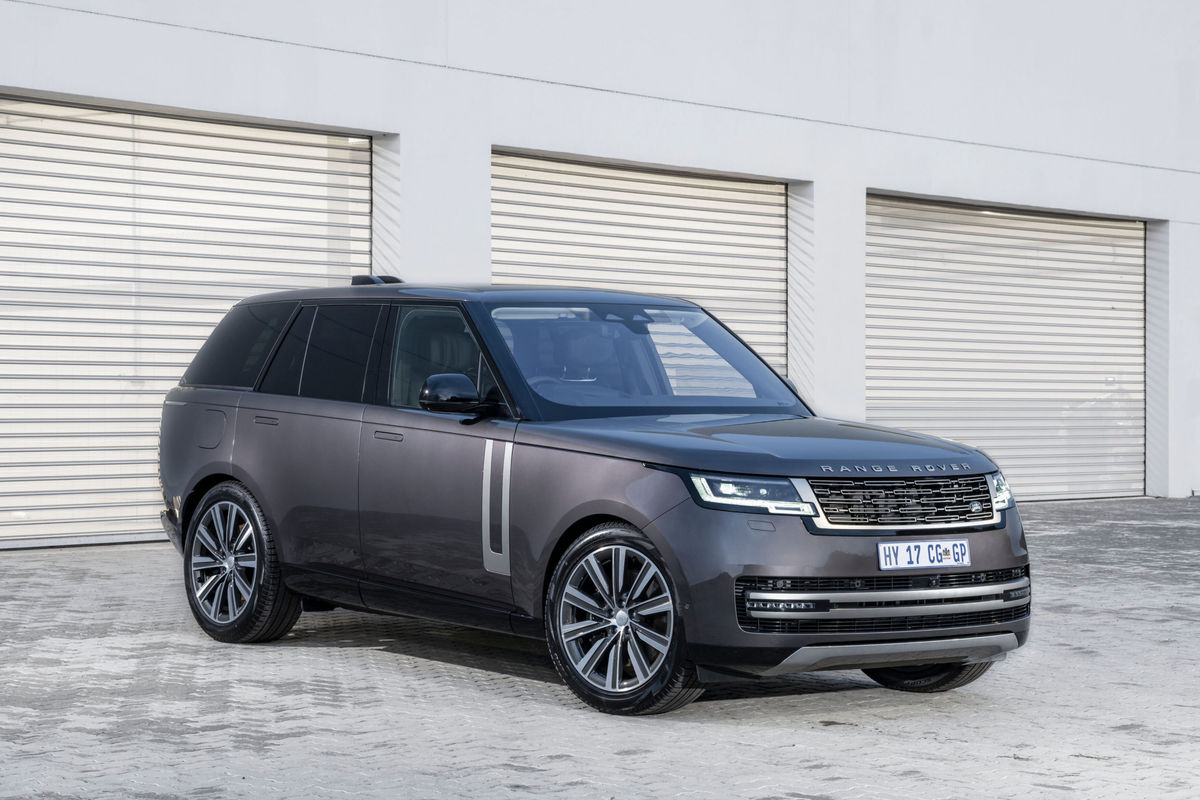
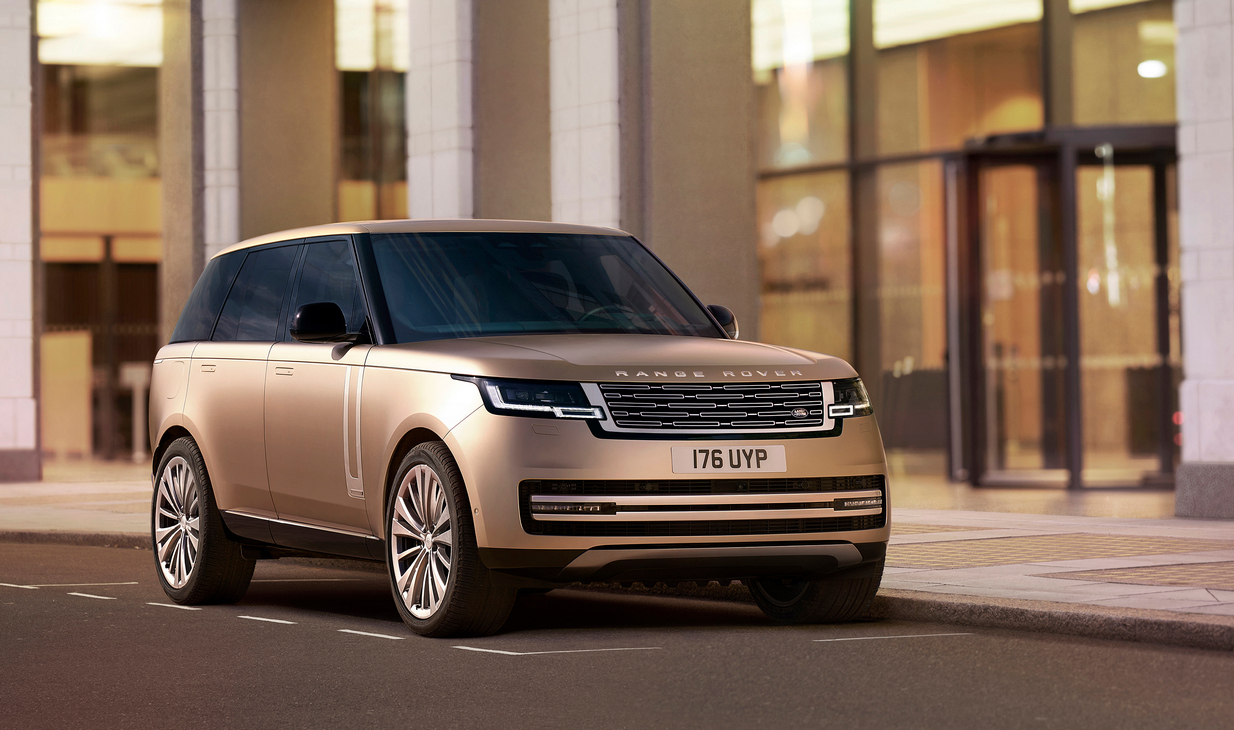
Certain cars only work when you see them in the sheet metal, and the Range Rover is a prime example of that.
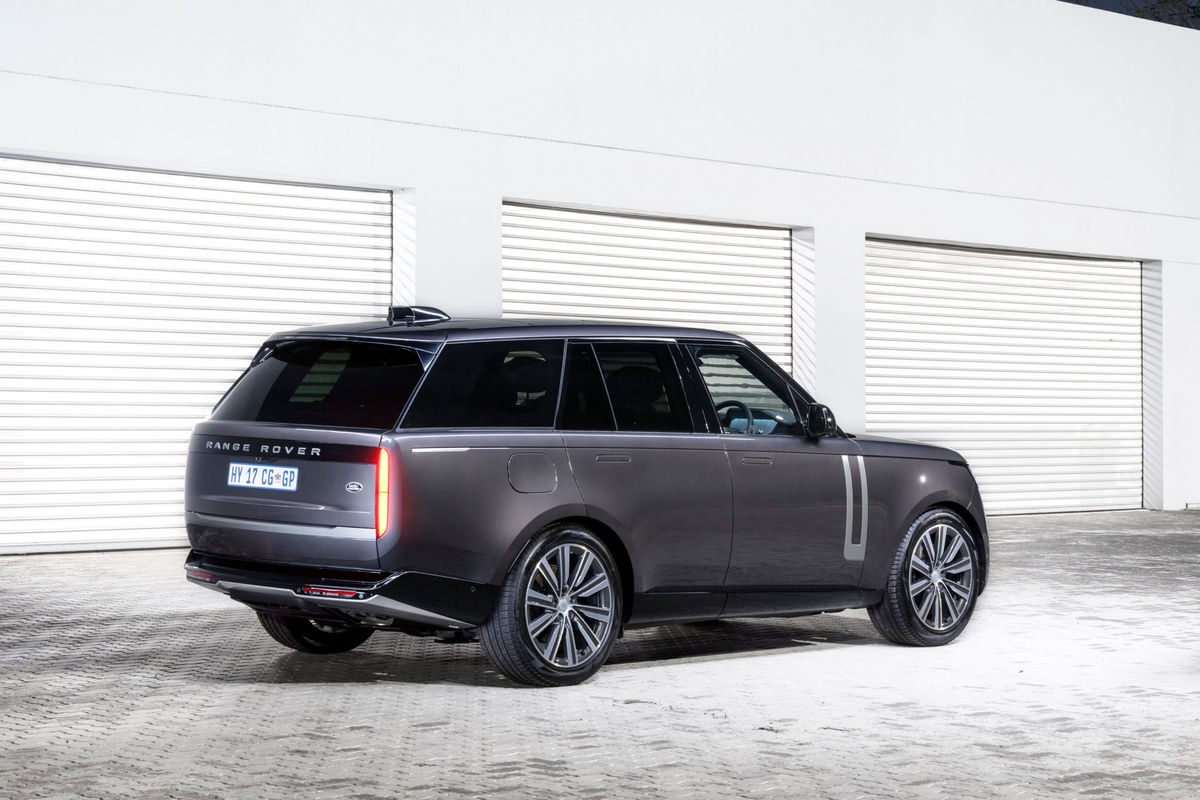
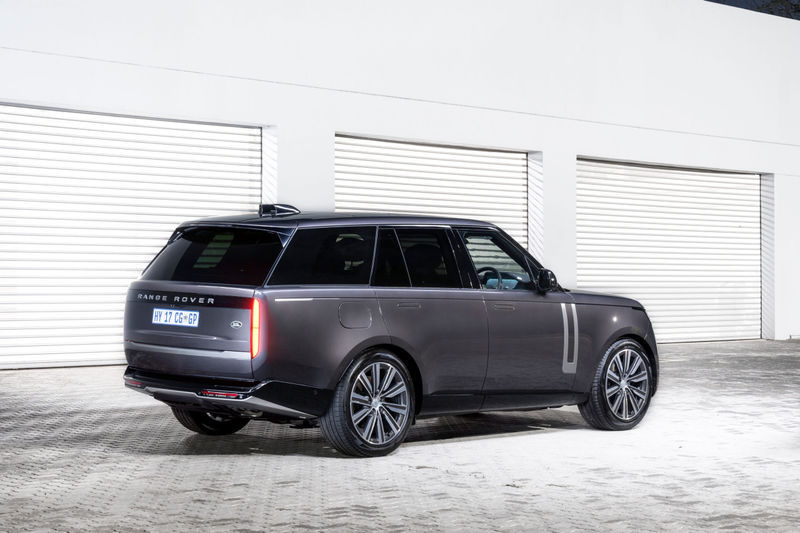
Upfront, the new Rangie wears a familiar light signature and begins the three sweeping lines that all Range Rover models have featured. The front overhangs are still short, while the sill line rises in height against the falling roofline. At the rear there’s a new “boat tail”-like design and the split tailgate, which we’ve come to know the brand for, has been retained.
Overall, the idea was to build an SUV that looks like it’s carved from a solid form. The finish is flush, and the lighting is designed to remain hidden until it’s illuminated. It’s based on Land Rover’s new flexible Modular Longitudinal Architecture, also known as MLA-Flex.
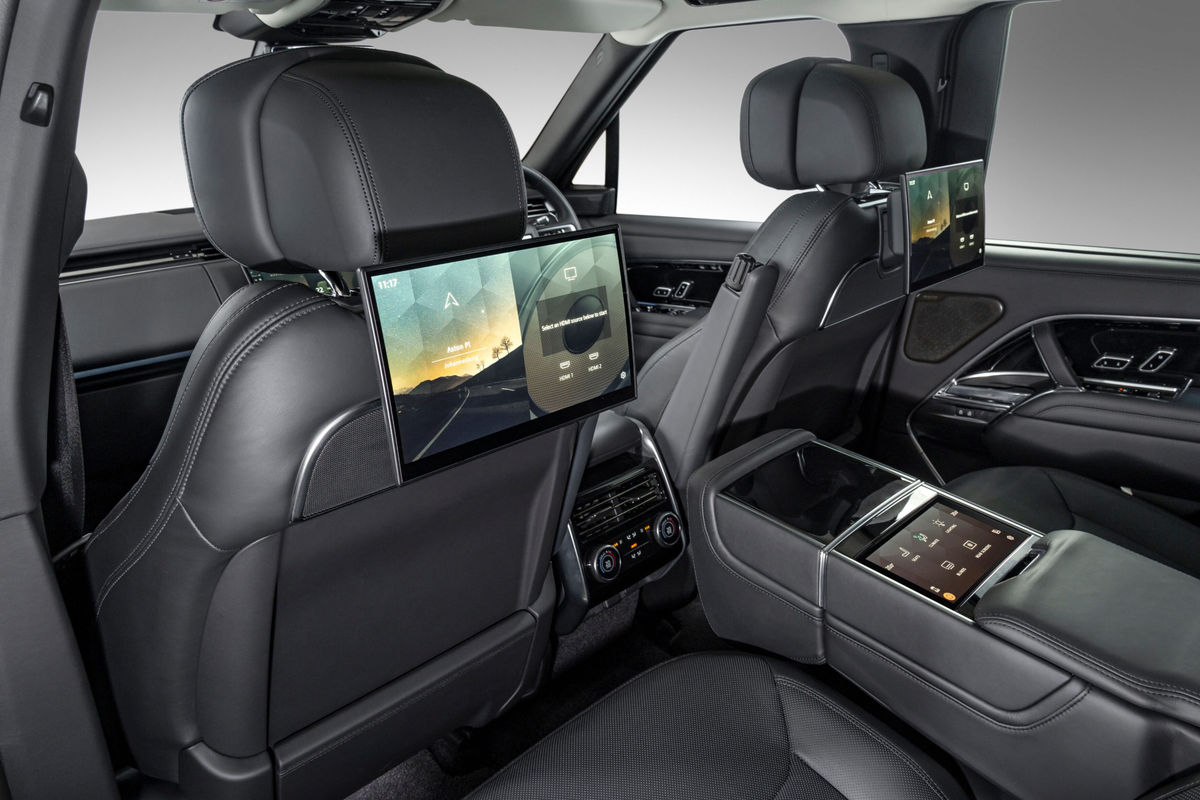
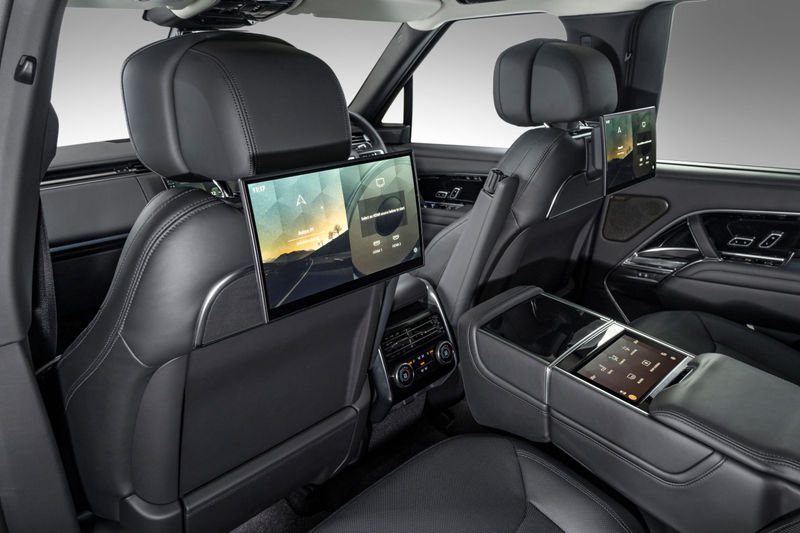
Elsewhere, at the one extreme, the Range Rover can be voluminous, long-wheelbase transportation for up to 7 people, with the SUV’s first 7-seat option. At the other end of the scale, a Range Rover SV with the Signature Suite cabin makes for a lavish four-seater, with 90+ cm of legroom to stretch out in the rear.
Sandwiched in between are various configurations with five seats, short- and- long wheelbase options, and of course Land Rover’s 3-strong array of engines.
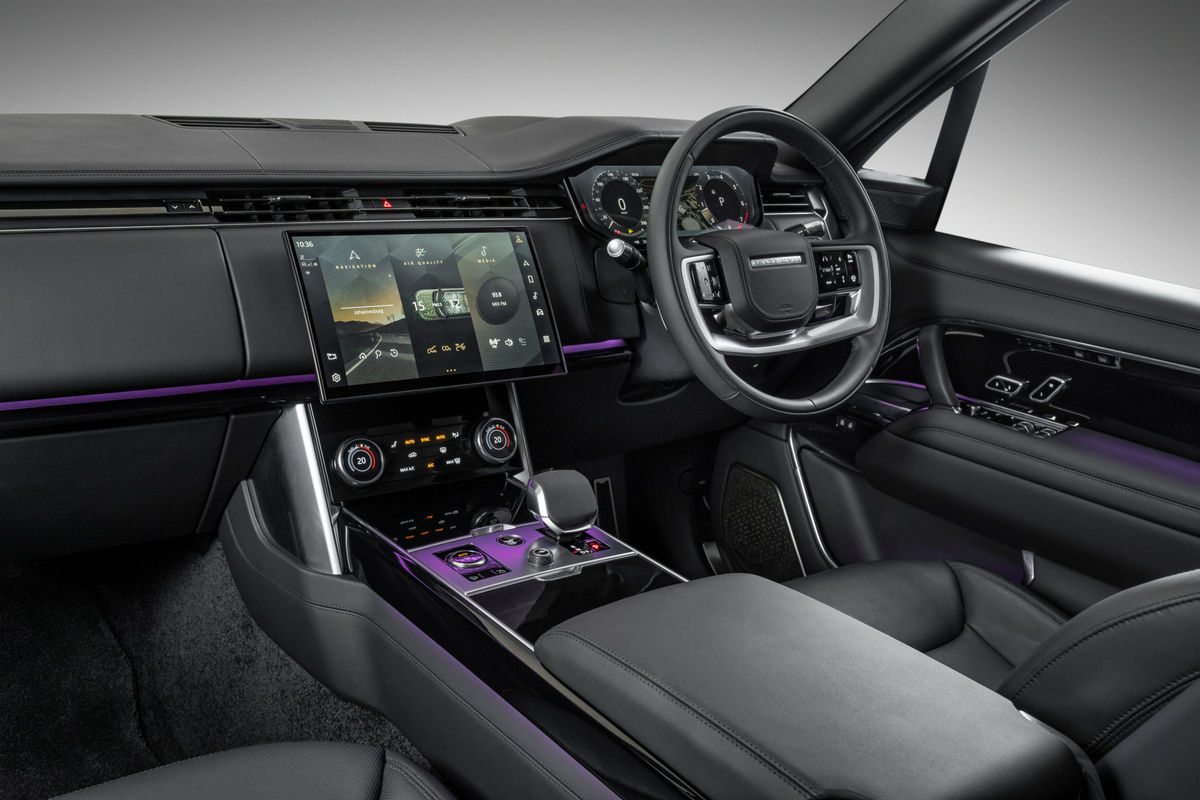
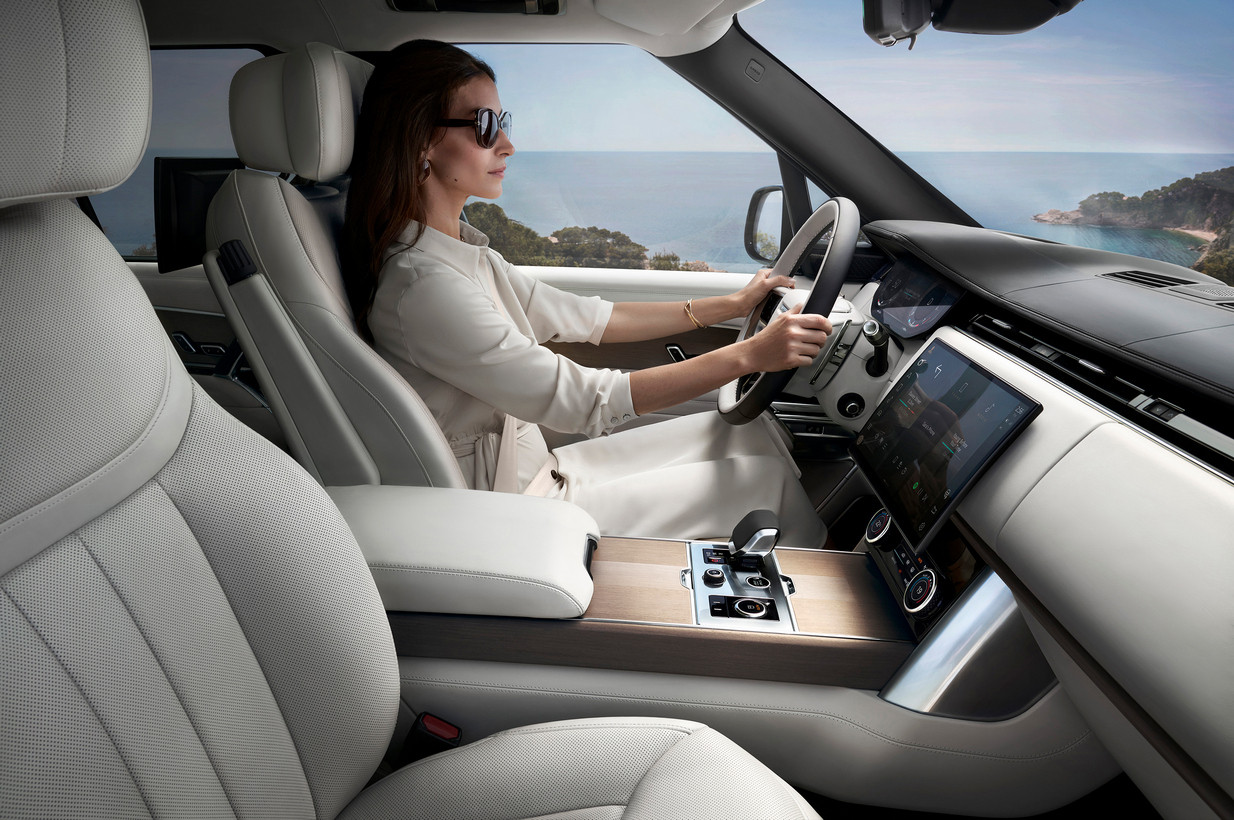
Along with astronomic power and a great deal of luxury, this SUV offers an extreme level of comfort for its passengers. Starting with the seats, top end materials have been used to provide the softest feel to the driver as well as all the passengers on board. The headrests are designed can be adjusted to contour perfectly to the passengers’ head, thus offering greater comfort.
The cabin stretches from familiar luxury features through to more ambitious materials: technical fabrics with a high percentage of recycled content, for example, and a near-aniline leather that the automaker says not only feels more like furniture hide but uses fewer dyes and other chemicals in the process.
Clients can choose from over 1.6-million potential configurations, including upwards of 13 wheel designs, bespoke paint colours, sustainable wood trim, elegant metal trimmings, ceramics, and Ultrafabric sustainable leather upholstery.
There is also wood veneer surfaces with elaborate patterns laid out poshly around the cabin, formed by hundreds of individual laser-cut pieces, all laid by hand. Opt for the four-seater Range Rover SV Signature Suite and you’ll see this wood trim from front to back, extending to the centre fridge between the two rear seats.
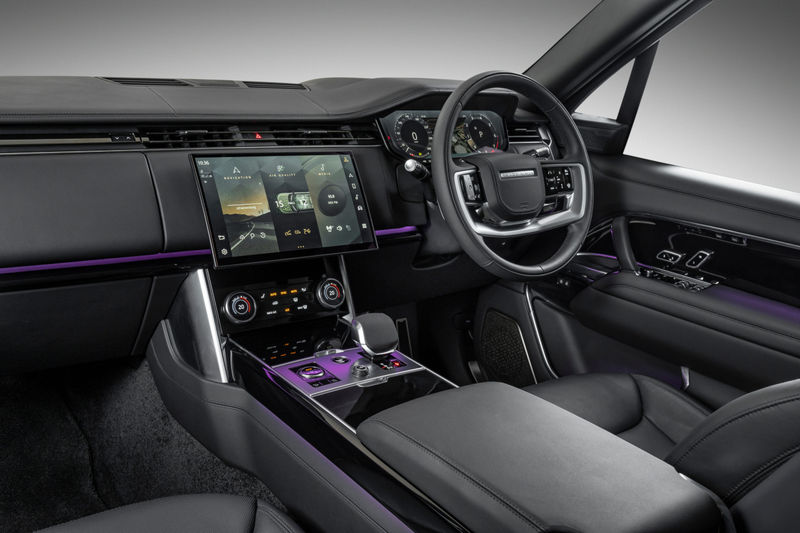
Furthermore, there is no doubt that the 2022 Range Rover is the epitome of leading-edge technology and is loaded with some mind-blowing tech features on board. It features the Pivi Pro infotainment system: a 13.1-inch fully touch display that is convexly curved and has a floating appearance over the dashboard. The display features an inbuilt navigation system with voice recognition. It also offers wireless Apple CarPlay and Android Auto for seamless connectivity and is paired up with an industry-leading Meridian sound system that offers an immersive surround sound experience.
Meanwhile the driver’s instrument cluster – a 13.7-inch digital display – shows the status of the vehicle and the engine as well as navigation which can all be controlled with the buttons mounted on the steering wheel.
Purists may bewail the further distancing of this fifth-generation model from the more rugged designs of the earlier iterations, which undoubtedly wore their work talents more clearly on their sleeves. Even so, given the number of people who get to take their Range Rover off-road, this move toward even greater on-road civility is something that can hardly be argued with.
What engines are on offer?
There are 3 engines to choose from.
The range starts with a petrol-electric hybrid powertrain in the P460e comprising a 3.0-litre, straight-6 turbocharged petrol engine that’s paired with a 38.2 kWh battery pack to allow for an electric driving range up to 113 km. Total outputs for this powertrain is 338 kW and 550 Nm.
A 3.0-litre turbocharged diesel burner (D350) is available in the D350, the same used in the Defender and Discovery, and it produces a useful 258 kW and 700 Nm of torque.
The engine offering is headlined by a powerful 4.4-litre V8 turbocharged petrol engine that produces either 390 kW and 750 Nm of torque in the P530 or you can opt for the range-topping P615 SV with 452 kW and 750 Nm.
How much does the new Range Rover cost in SA?
*Note that pricing is accurate as of August 2025.
All Land Rover vehicles come with a standard 5-year/100,000km Land Rover Care Warranty and Maintenance Plans. * Prices include VAT but exclude CO2 tax.
What are the available engine options for the 2025 Range Rover in South Africa?
The 2025 Range Rover offers a range of engines, including a P460e petrol-electric hybrid, a D350 turbocharged diesel, and a 4.4-litre V8 turbocharged petrol engine (P530 and P615 SV).
What are the starting and top-end prices for the 2025 Range Rover in South Africa?
Pricing for the 2025 Range Rover starts at R3,395,000 for the P460e HSE Standard Wheelbase, and goes up to R5,487,700 for the P615 SV Long Wheelbase model.
What are the warranty and maintenance plans for the Range Rover?
All 2025 Range Rover models come with a standard 5-year/100,000 km Land Rover Care Warranty and Maintenance Plans.
What are some of the interior and technology features of the new Range Rover?
The interior features a 13.1-inch Pivi Pro infotainment system with wireless Apple CarPlay and Android Auto, a Meridian sound system, and a 13.7-inch digital driver’s display. It also offers a seven-seat option in the long-wheelbase version and can be configured with a four-seater ‘Signature Suite’ cabin.
Big Fuel Price Increases Expected in SA for March 2022
The fuel price forecast for March 2022 isn’t looking good as mid-month fuel price data points to significant price increases for both petrol and diesel.
Motorists should prepare themselves for yet another increase in the price of fuel. Both grades of petrol will increase by R1.46/ per litre, diesel will increase between R1.44/l and R1.48/l and illuminating paraffin will increase by R1.21/l at midnight as we go into Wednesday.
For the first time in history, 95 octane petrol inland will rise above R21 a litre, and by a significant margin. As of Wednesday, this fuel will cost R21.60/l while at the coast it will cost R20.88/litre.
The main factors influencing the monthly fuel price adjustments are the Rand-Dollar exchange rate and the price of petroleum products such as Brent Crude Oil. During the first half of February 2022, the Rand-Dollar exchange rate has remained fairly stable and is currently around R15 to the US Dollar. The price of Brent Crude Oil, however, is surging and is currently at $93.7 per barrel.
Geo-political uncertainty as a result of conflict involving Russia and Ukraine isn’t helping matters and this upward trend is likely to persist in the short-to-medium term as the threat of a potential conflict lingers.
The Automobile Association (AA) has called on the government to urgently address the fuel price crisis and to mitigate fuel price increases in an effort to relieve over-burdened consumers.
“Our economy is closely linked to the fuel price; it is a major input cost in the manufacturing, retailing and agricultural sectors. We have noted before that a review of the current structure of the fuel price, as well as an audit of all the elements which comprise the fuel price, should be done sooner rather than later. We therefore call on the Minister of Finance to initiate such a review during his Budget Speech on 23 February,” says the AA.
In addition, the AA strongly believes that increasing fuel levies must be avoided.
“We know all too well of the economic challenges facing the country, and of the importance of the revenue raised through the two main levies. We are also aware that, as was the case last year, delivering a Budget in the current economic environment is tricky and difficult and that the pressure to ease government’s financial burden is immense. However, increasing the levels of the General Fuel and Road Accident levies will be counter-productive as this will impact mostly on the poorest of the poor”
The General Fuel Levy is currently at R3.93 p/l while the Road Accident Fund (RAF) Levy is at R2.18 p/l, both of which add up to R6.11 for every litre of fuel sold in South Africa.
Nedbank, however, predicts a General Fuel Levy increase of 30c/litre for petrol and diesel, and 15c/litre in the Road Accident Fund levy.
“Our country faces enormous and complex economic challenges. High fuel prices are adding to these challenges and instead of accepting the current model, we must seek solutions that benefit consumers, not place them in more financial distress. One immediate solution for us, for instance, is to review the funding of the poorly managed Road Accident Fund (RAF). Our reliance on the RAF is a direct result of South Africa’s poor road safety and that’s where more attention needs to be given for a long-term solution,” urges the AA.
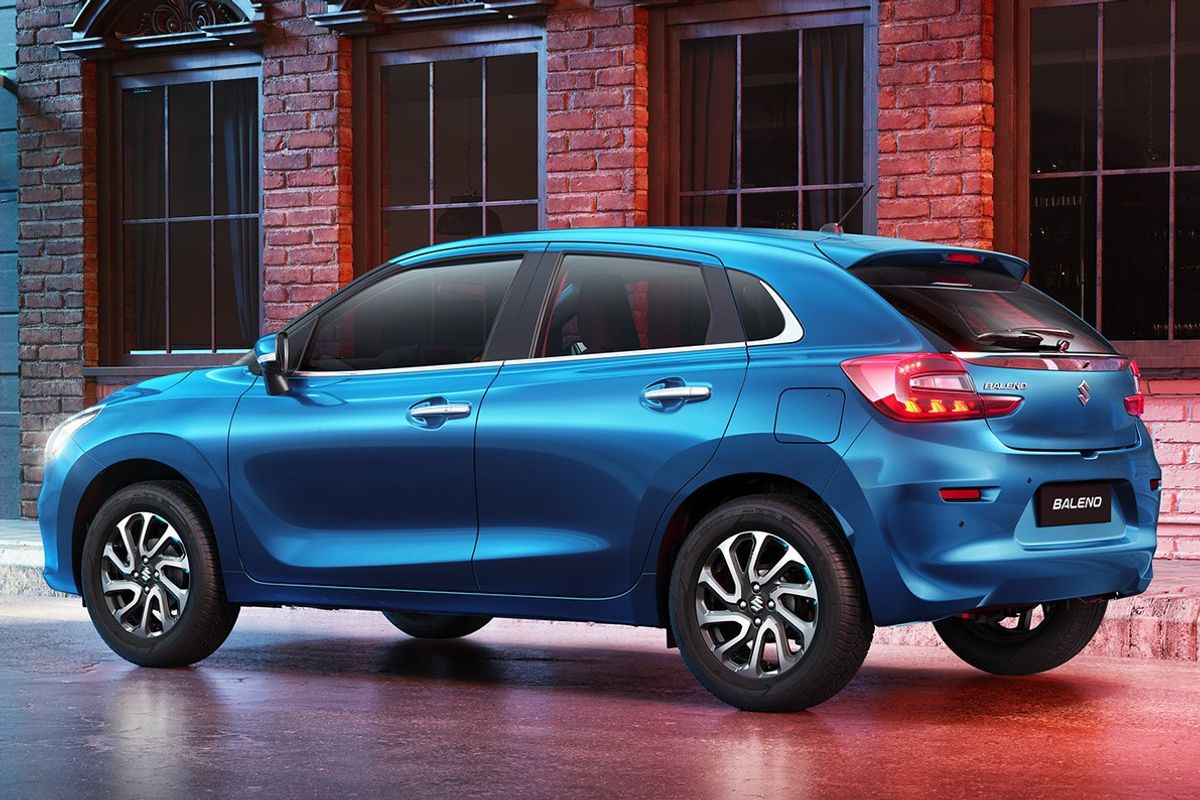
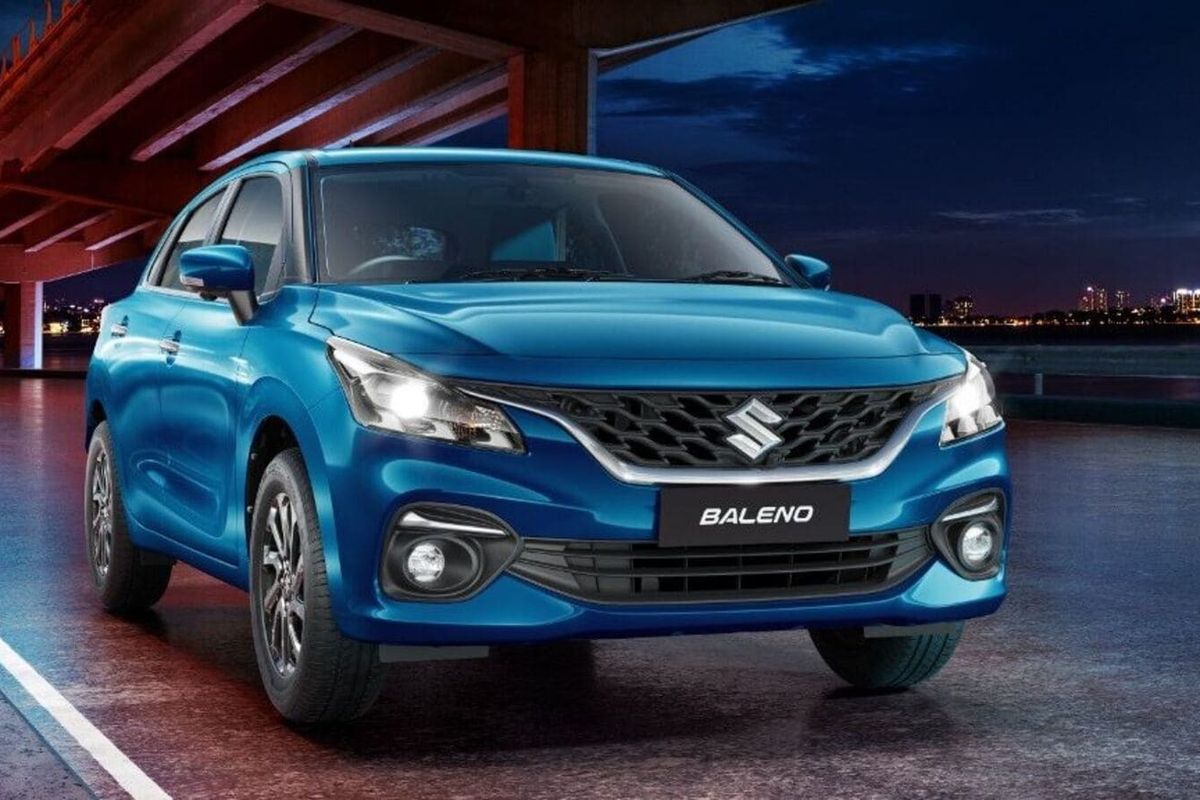
After a lengthy teaser campaign, the facelifted Suzuki Baleno has been revealed. See specification details below!
The Suzuki Baleno has been quite a popular hatchback in India, where it is assembled, with Maruti Suzuki claiming that a Baleno is sold every 3 minutes. It is also one of the top 5 best-selling cars in India. In South Africa, it wasn’t as popular until it gained a Toyota badge and a new name, Starlet.
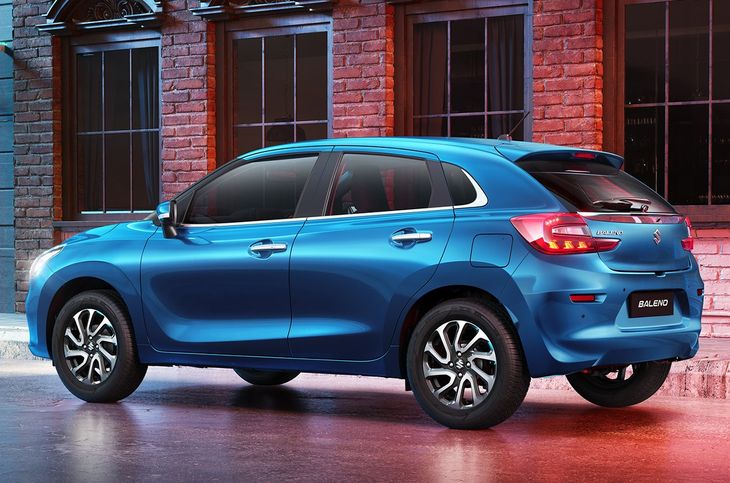
Visually, the new Baleno adopts a design philosophy called ‘Crafted Futurism’. You can spot the updated model with a new-look grille with new LED headlights and LED daytime running lights. The rear is where the real changes lie and the new taillights are quite radical. There are new-look 10-spoke 16-inch alloy wheels too. Inside, the cabin has been redesigned with a multi-layer dashboard and new contoured seats.
The big news, however, is that the new Baleno gains more power!
More power and features for Suzuki Baleno
The new Baleno not only gains a more powerful engine but its standard specification has also been enhanced.
Under the skin, there’s a new suspension setup and the 2023 Suzuki Baleno features a more powerful 1.5-litre naturally-aspirated 4-cylinder engine now delivering 77kW and 138 Nm. Both a 5-speed manual and 4-speed automatic gearboxes will be offered in both GL and GLX trim grades
Suzuki says that the new Baleno has a best-in-class power-to-weight ratio as it weighs roughly 955 kg giving it a ratio of 81kW per tonne. More so, the Baleno weighs, on average, 10% less than its competitors but with a 30% higher power-to-weight ratio.
A new infotainment system makes its way into the new Baleno as well as a host of other nice-to-haves.
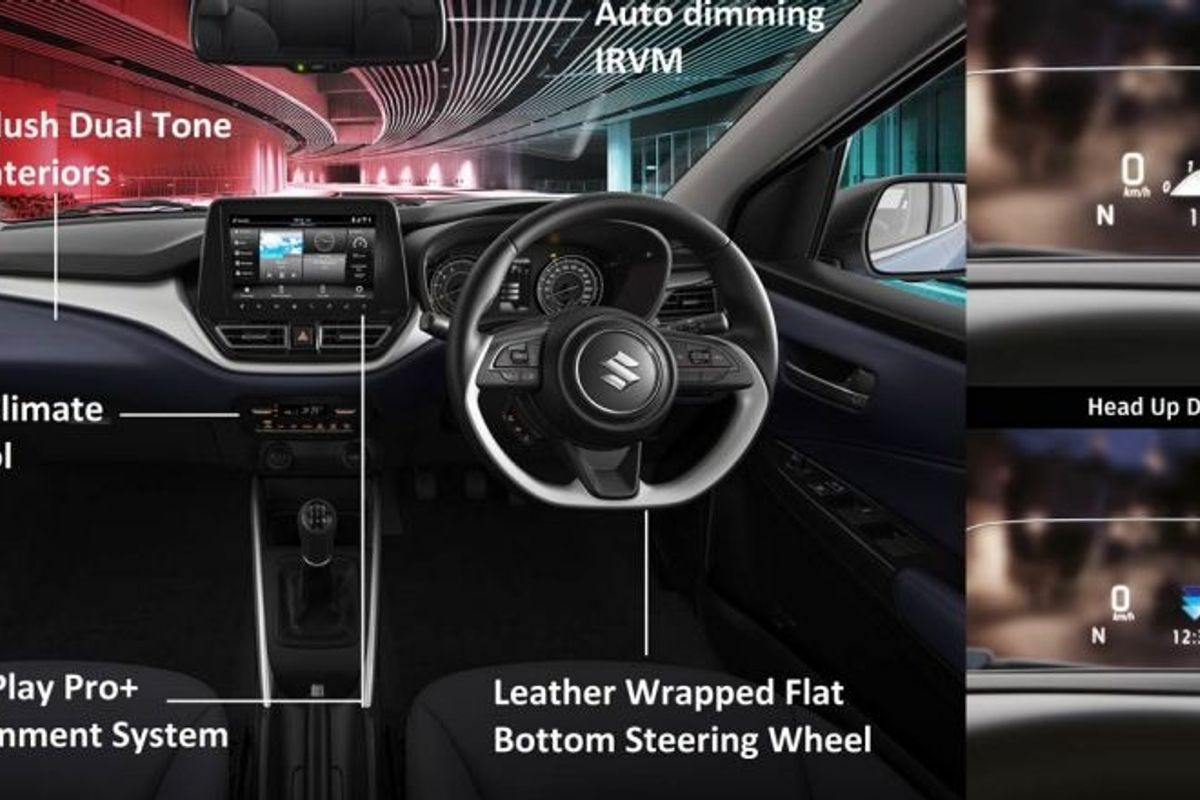
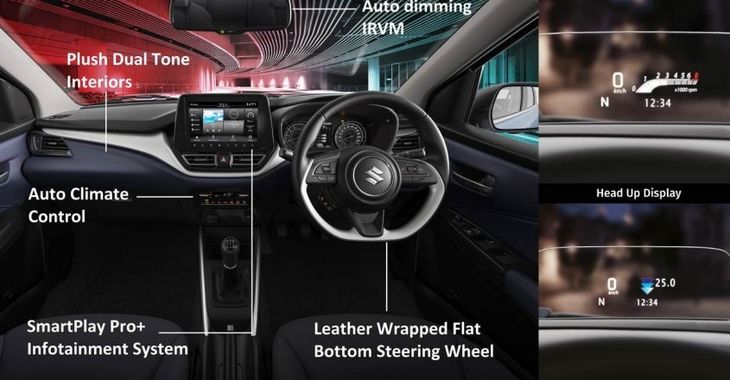
As far as features go, the 2023 Suzuki Baleno comes fully loaded both in terms of convenience and safety features. In base GL trim, the Baleno gains features such as cruise control and climate control air conditioning with rear-mounted vents. A 7-inch touchscreen infotainment system will be fitted as standard and devices can be connected via 2 USB ports (front and rear) as well as a rear USB-C port in the rear. A multi-function leather steering wheel with audio, phone, cruise control, electric window and mirror controls is also fitted. Safety features include dual front airbags, ABS with EBD, brake assist, electronic stability control and hill hold control.
If you opt for the Baleno in GLX guise, features such as a larger 9-inch high-definition infotainment system (with Android Auto and Apple CarPlay capability) as well as a 360-degree camera and Head’s-Up Display. A total of 6 airbags are fitted on the Baleno GLX.
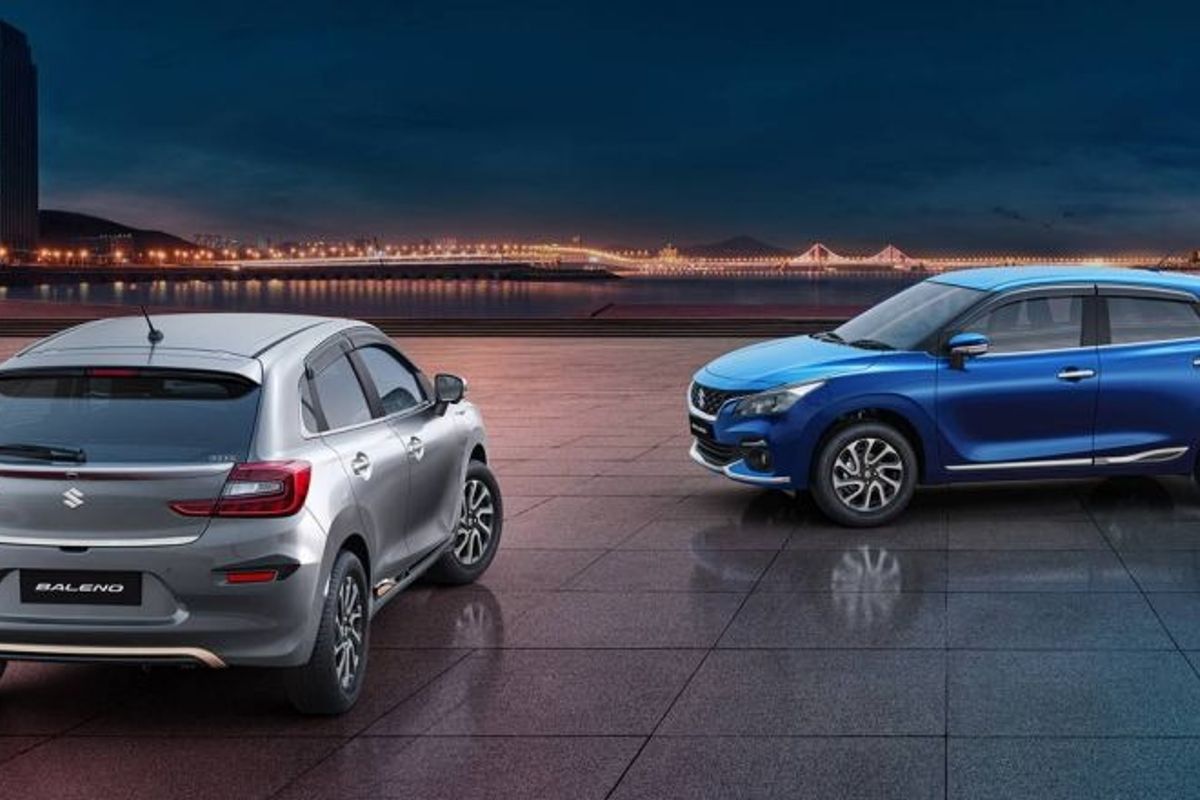
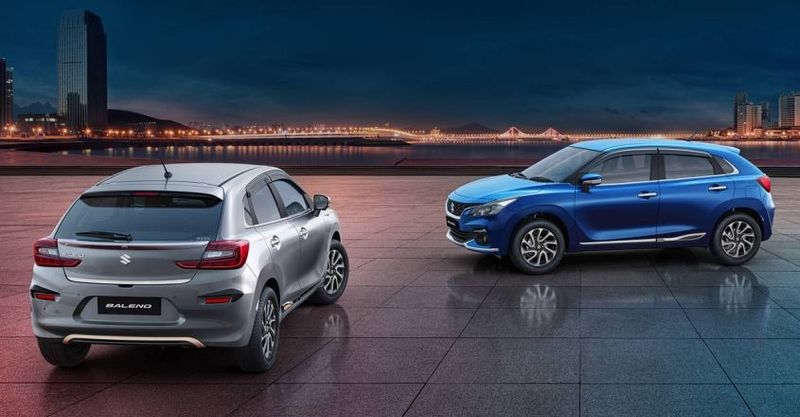
Suzuki will also offer 5 new colours for the new Baleno including Celestial Blue Pearl Metallic, Luxe Beige Pearl Metallic, Opulent Red Pearl Metallic and Splendid Silver Pearl Metallic and Grandeur Grey Metallic. These colours are in addition to Arctic White Pearl and Midnight Black Pearl.
Production of the new Suzuki Baleno will begin in April 2022 with the first customer deliveries expected in June 2022. Pricing and final specification details will be communicated closer to launch.
We’re also wondering when Toyota will reveal its updated Starlet, which will be mechanically identical to the vehicle you see here.
China might become a source of cheap EVs, but that hasn’t stopped them from developing luxury battery vehicles.
Product planners at Chinese brands have observed the German and American EV strategy, combing battery power with large platforms, lots of luxury – and very premium pricing.
Chinese vehicles have struggled to access Europe. It remains the most demanding market for any brand, with its combination of stringent safety and emissions regulations.
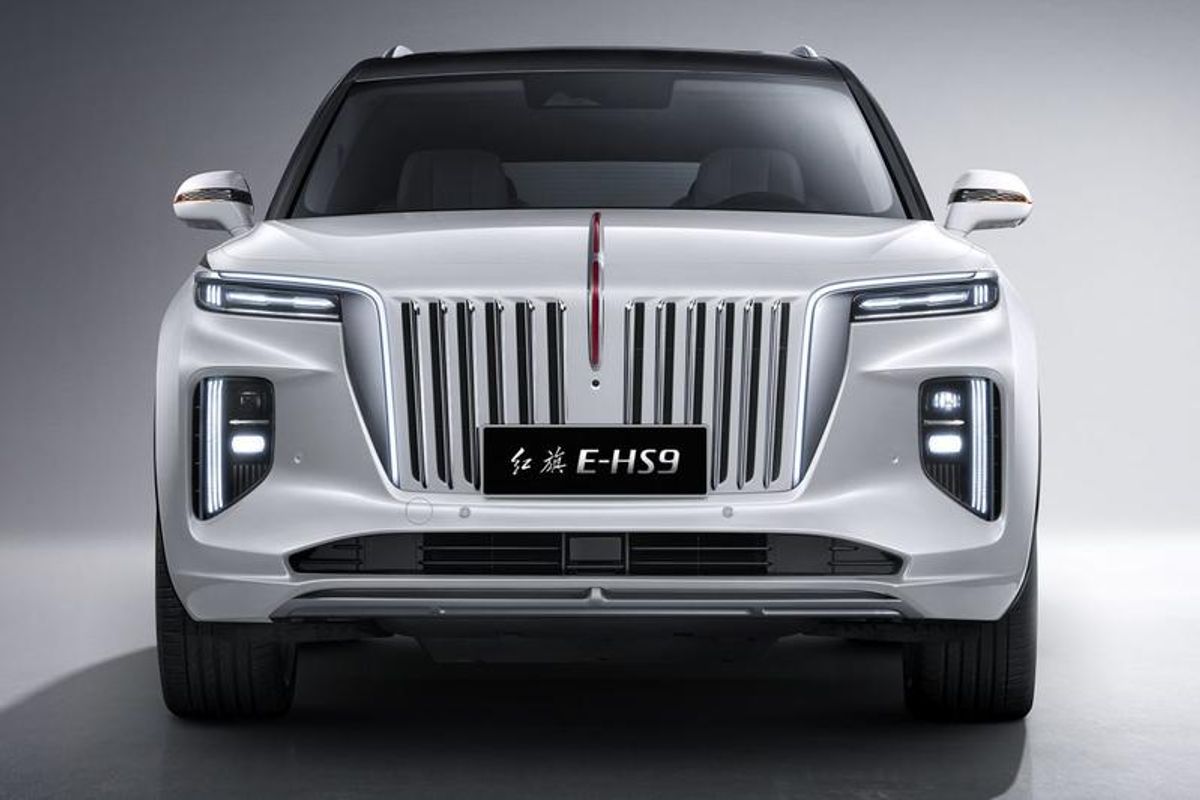
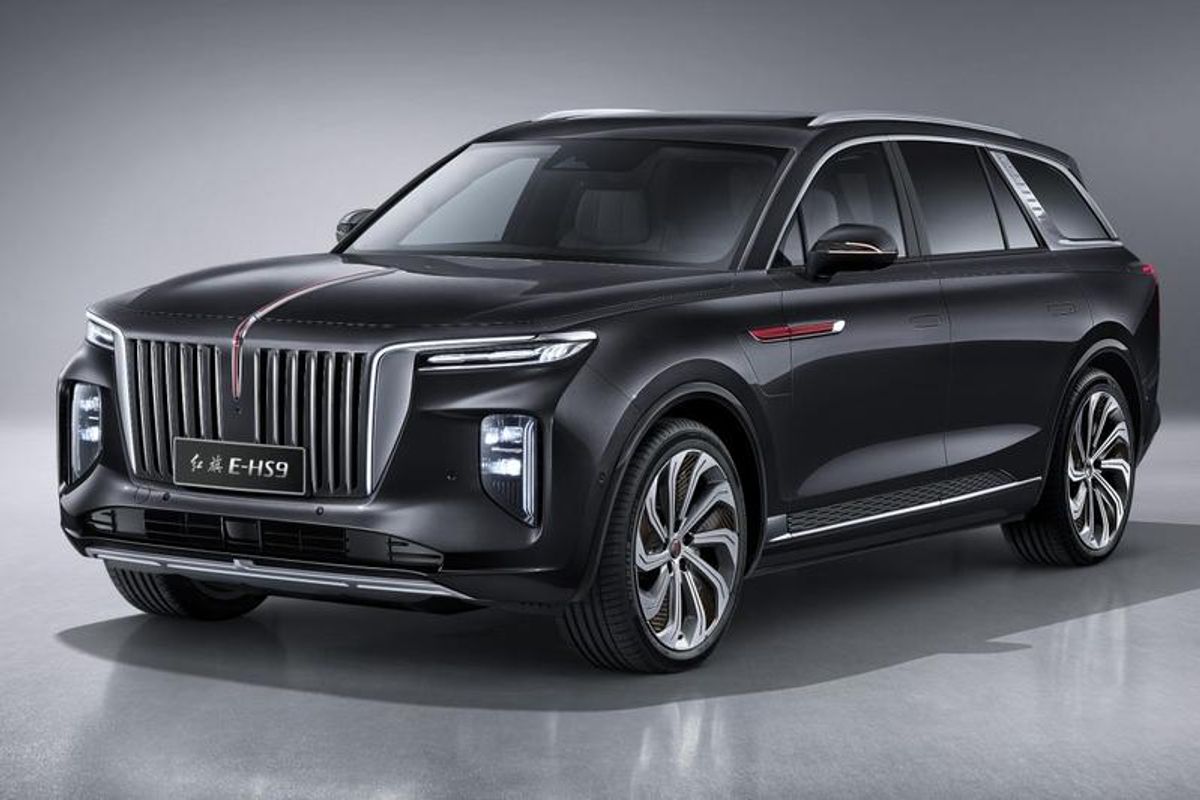
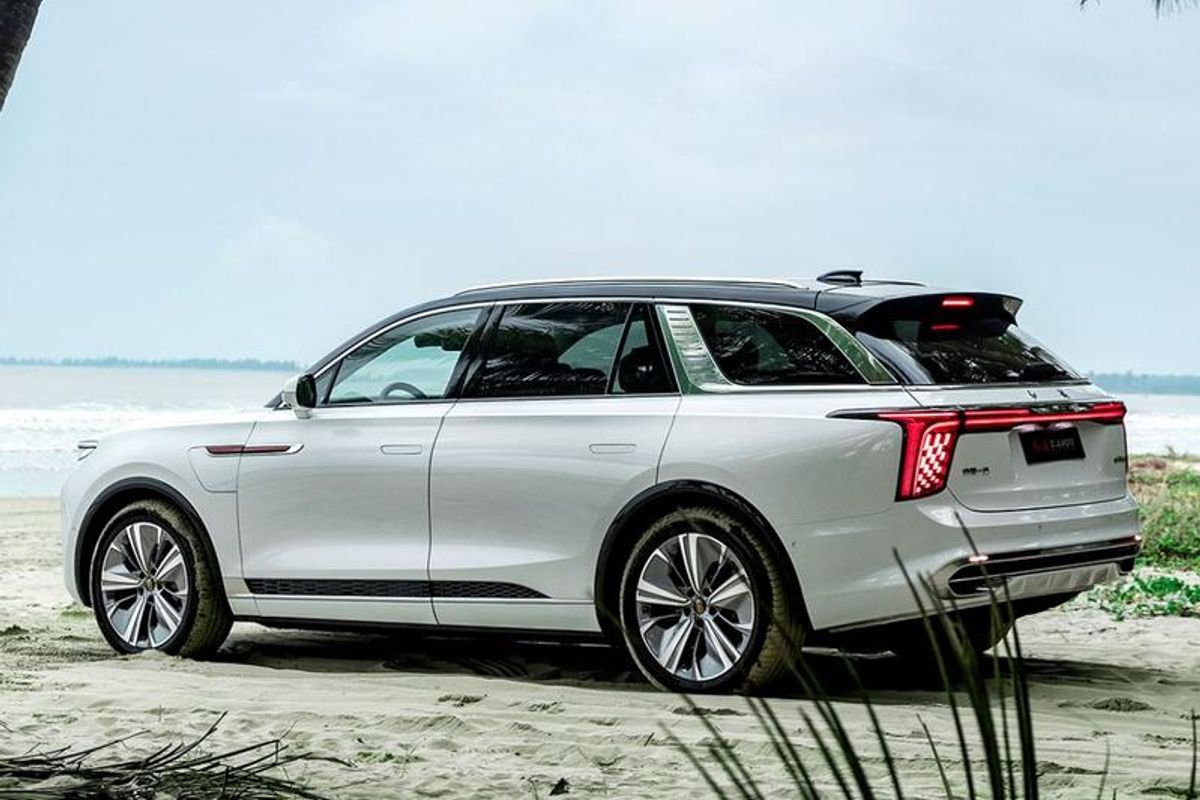
Hongqi, a Chinese brand with uncanny legacy, dates back to 1959. Nowadays, it forms part of the FAW group and has managed to fulfil all European regulatory requirements and is shipping its huge E-HS9 SUVs, to Norway. Yes, Norway, where Tesla found its initial European success.
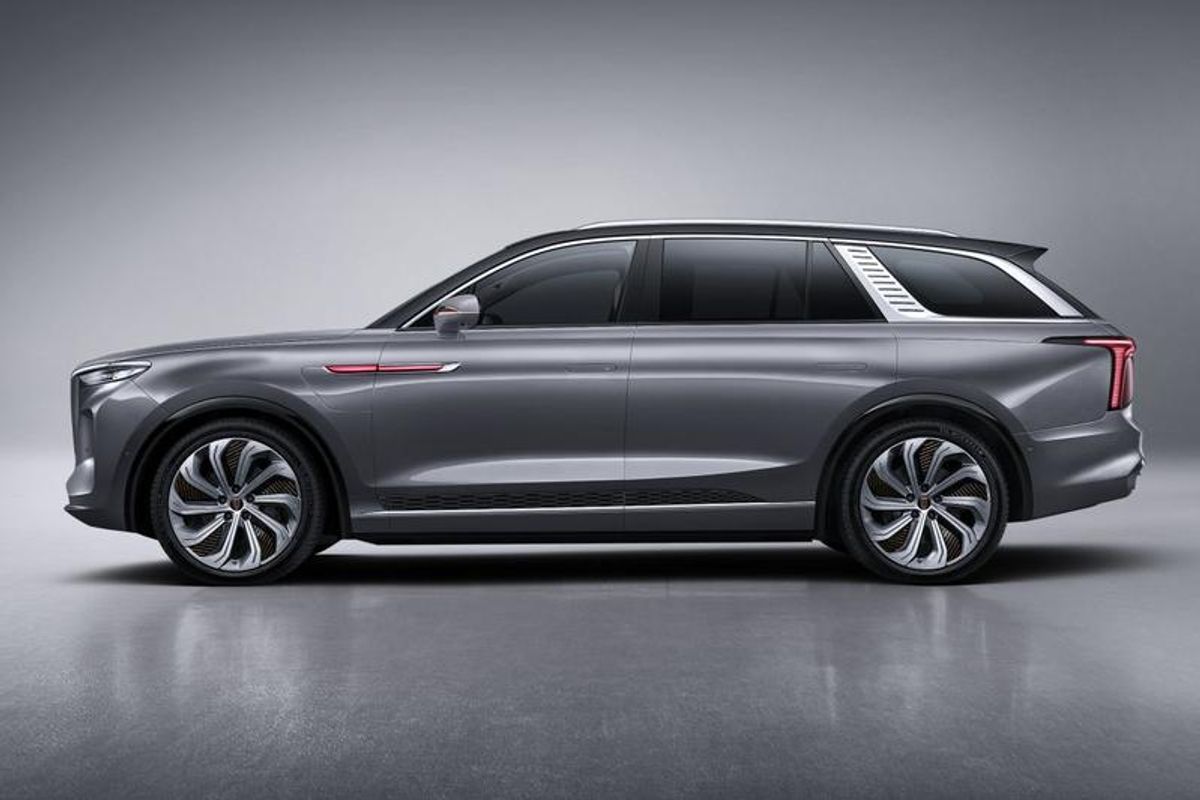
An enormous vehicle, measuring 5.2m in length, the E-HS9 is Land Cruiser 300 sized. The design is a blend of large non-functional grille, with thin horizontal LED headlights.
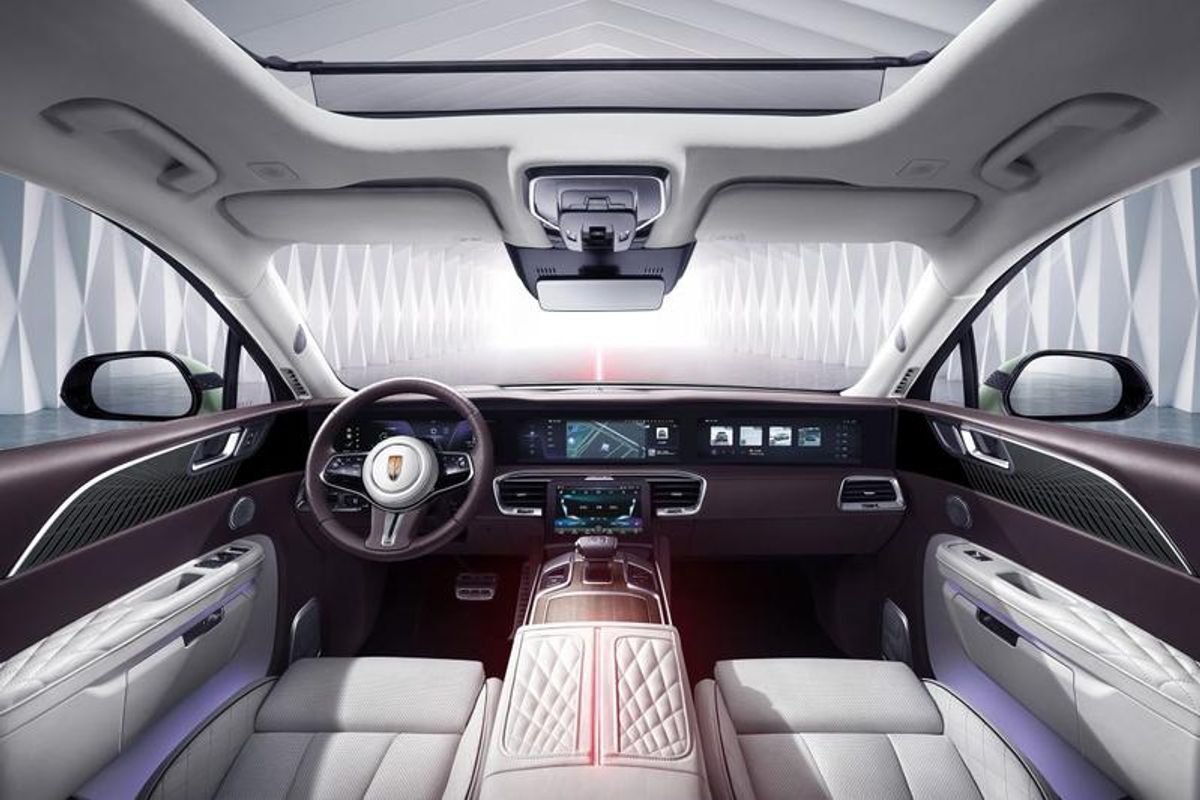
The cabin architecture appears to have all the luxury bits you’d expect from a seven-seater touring SUV, and a 16.5-inch infotainment screen.
But what about the performance? Hongqi is offering two versions of the E-HS9. These Chinese seven-seater luxury SUVs are all-wheel drive, with a motor powering each axle.
The base version draws energy from an 84 kWh battery pack and its two electric motors product 162 kW and 300 Nm each. Hongqi claims a range of 396 km on a single charge, and if you are in a hurry, the base E-HS9 is good for 0-100 kph in only 6.5 seconds.
There is a slightly more potent version, too, with a larger 99 kWh battery pack and a more powerful rear axle motor.
With the rear wheels being driven by a 248 kW motor, with 450 Nm of instantaneous torque, this higher-specification E-HS9 is hot-hatch fast. It will go from 0-100 kph in 4.9 seconds and, if driven sedately, will cover 465 km on a single charge.
As with all Chinese vehicles, the pricing equation is very competitive. The Hongqi E-HS9 range starts at a cheaper price than Mercedes-Benz’s EQC.
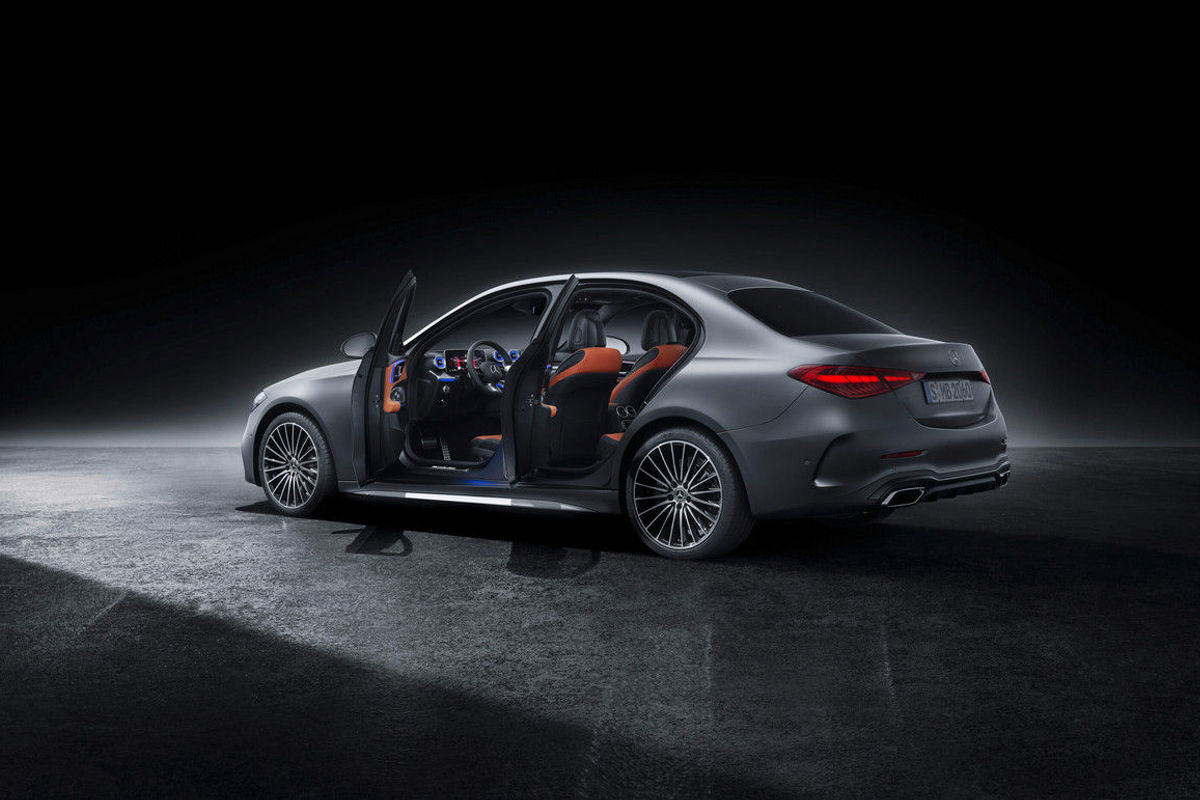
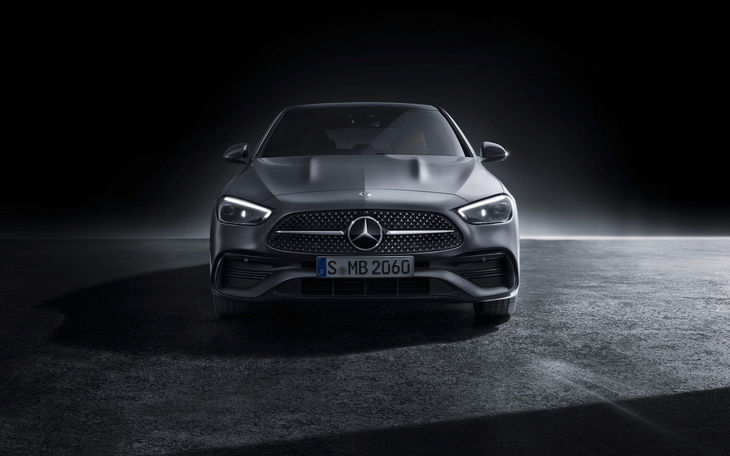
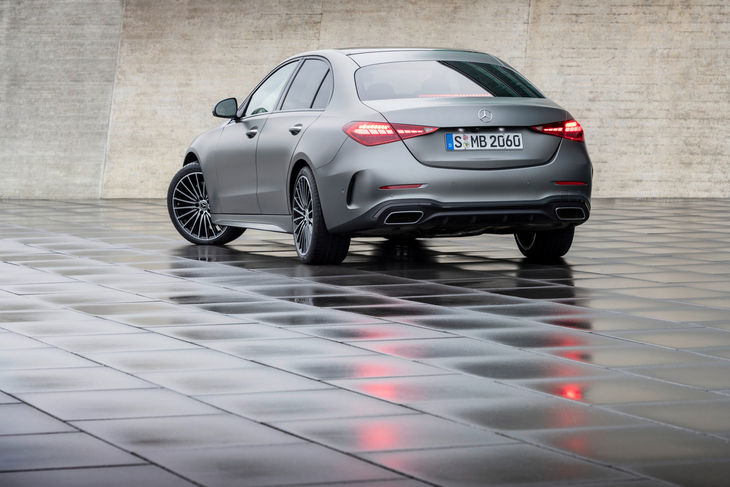
The business-class sedan segment may be declining in South Africa, but the C-Class is still Mercedes-Benz’s best-selling model globally. Besides, a new C-Class means there’s a new platform that will underpin numerous ‘Benz products, including SUVs. We’ve had a chance to drive the new sedan in the Cape Winelands.
What’s new for the C-Class?
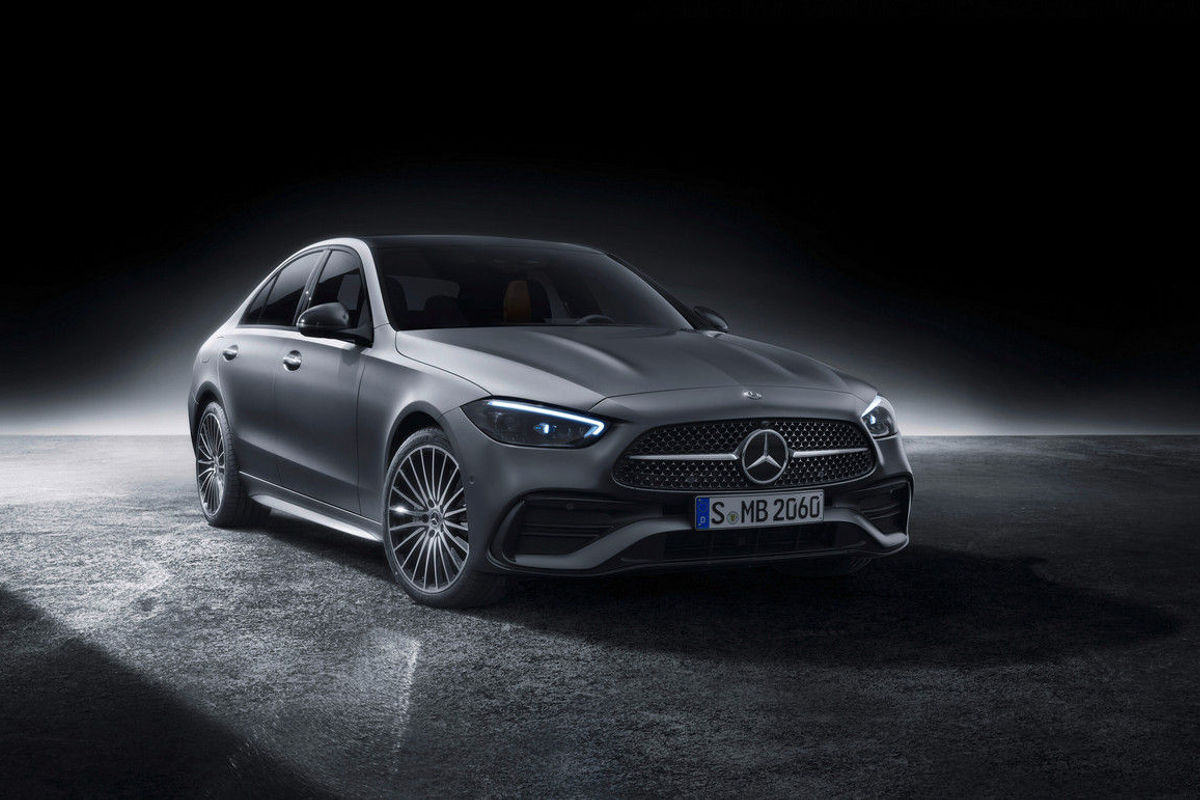
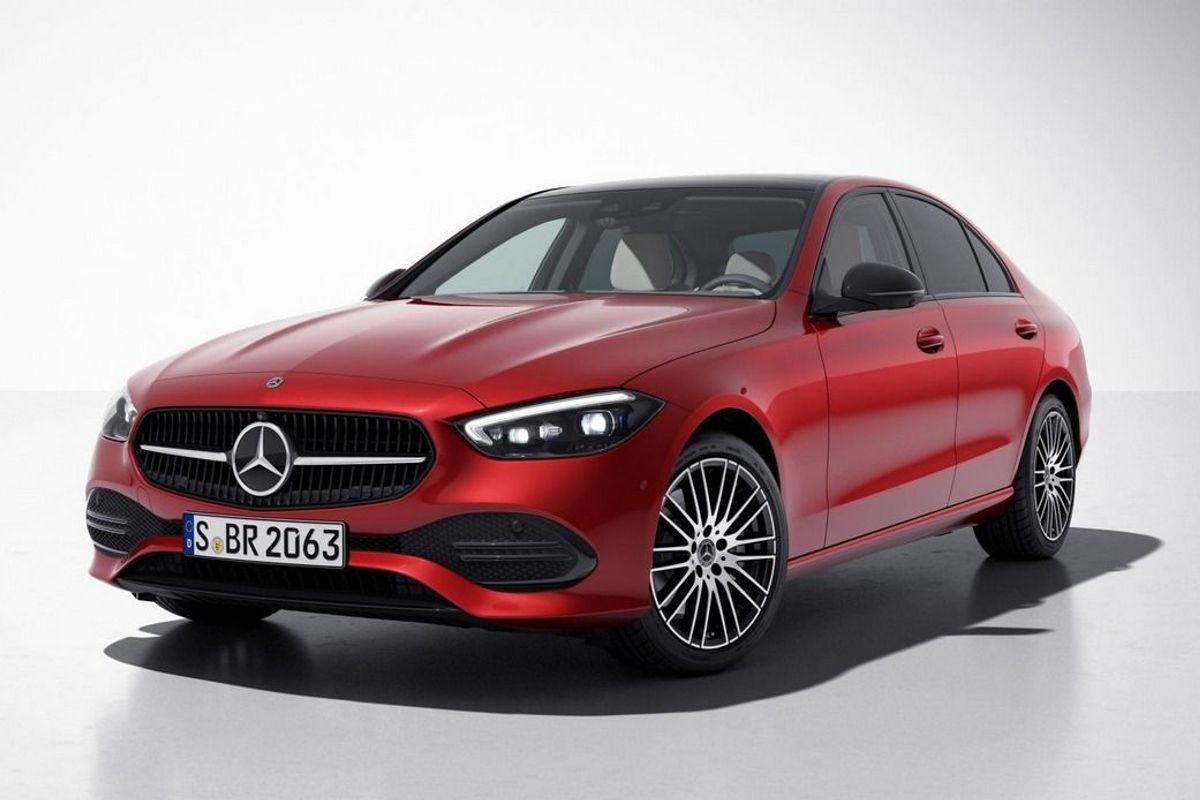
Avantgarde is now the entry-level trim for the C-Class range and features a different front-end treatment.
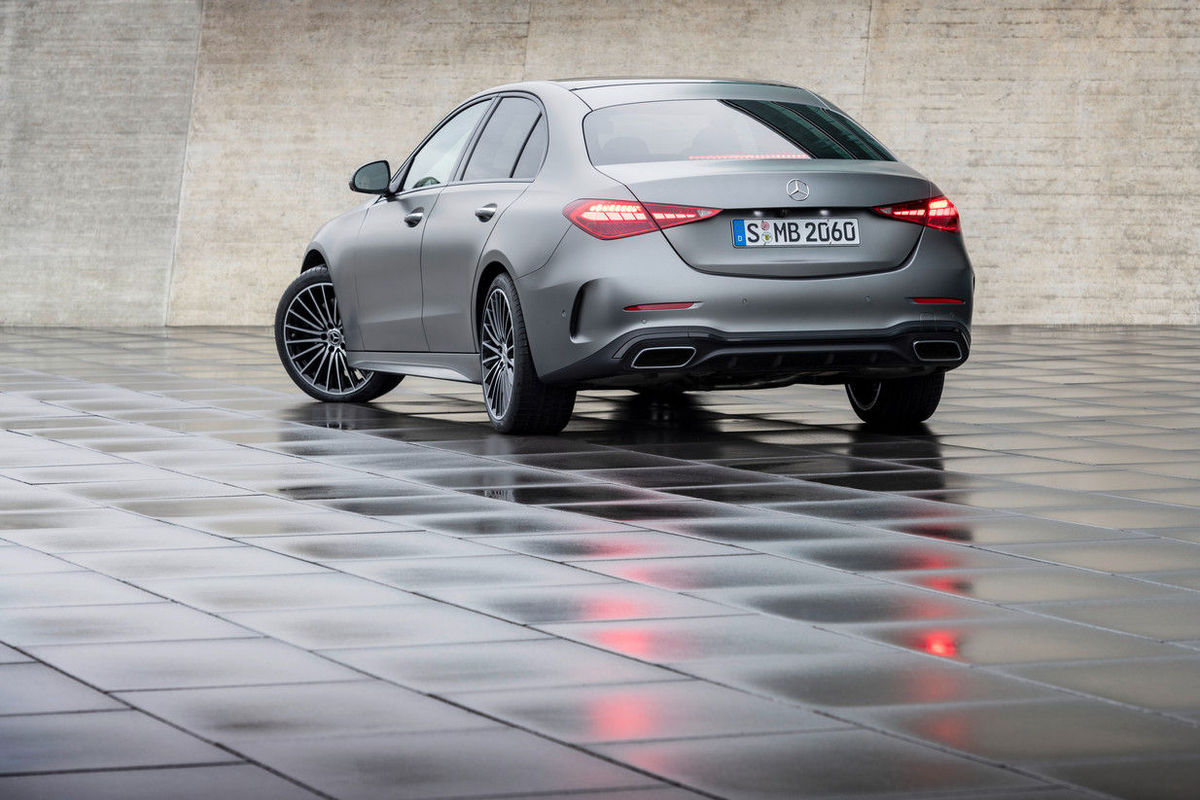
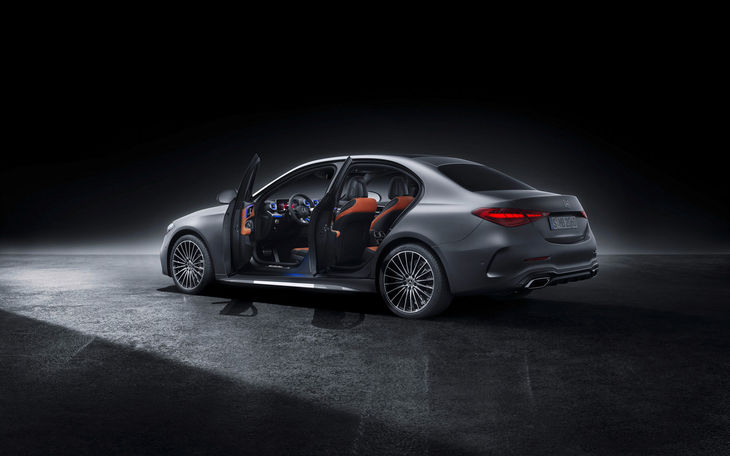
The new model’s chassis is carried over from the previous-generation sedan, but Mercedes-Benz promises that nearly every part of the W206-generation C-Class has been improved or altered to increase its appeal. The sedan is longer, wider and lower than the outgoing model. The wheelbase has been lengthened by 25mm to create additional passenger space, especially for rear occupants.
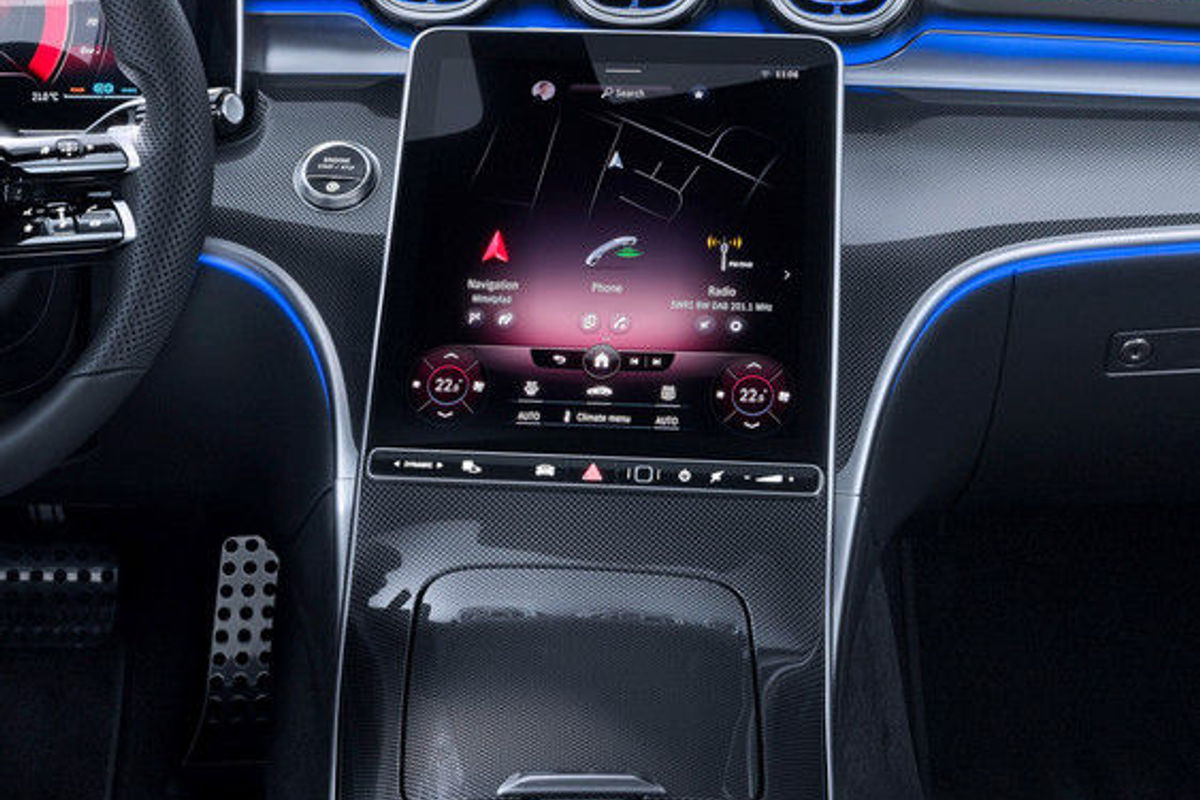
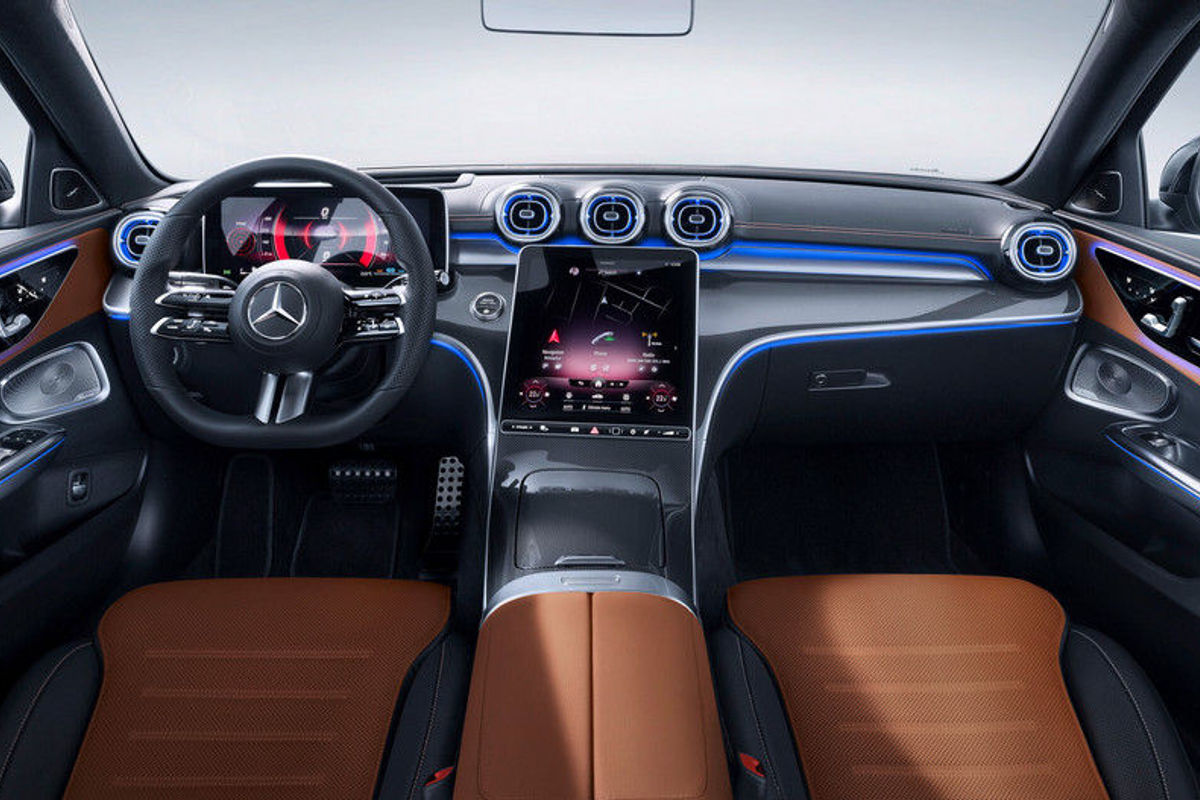
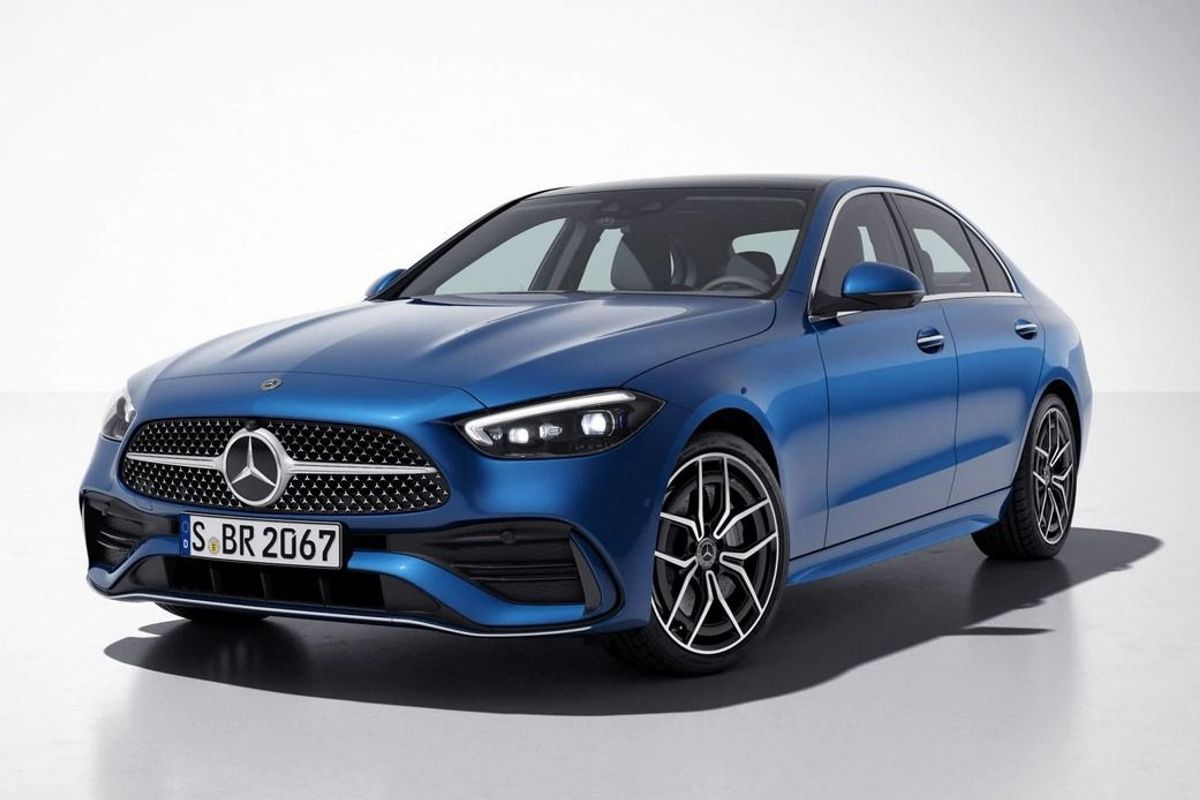
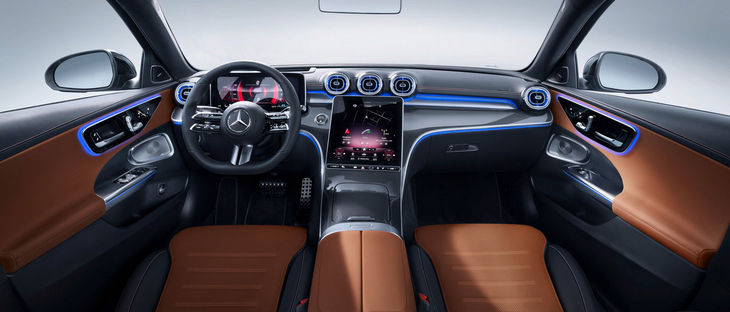
The Three-pointed Star’s focus for this car was to make it as much of a “baby S-Class” as it could be and, as a result, the new C-Class’ exterior and interior executions incorporate a plethora of cues of the grand saloon’s design. The interior features a new vertical infotainment screen and an all-digital instrument panel – they’re elements that embody Mercedes-Benz SA’s bid to push the C-Class even further upmarket. The Classic entry version has been dropped from the range, so the local lineup starts with the Avantgarde trim line and tops out with the AMG Line, both of which can be loaded with options.
The new C-Class also introduces rear-wheel steering, which aids cornering at slow speeds and stability at high speeds.
The local engine line-up
More engines will be added to the range, but currently, the C200 and C220d make up the range.
Right now, the range’s lineup comprises the C200 turbopetrol and C220d -diesel. Both engines are fitted with a 48V electrical system that operates an electric motor capable of adding 15 kW and 200 Nm to the outputs. The electric motor takes over functions such as gliding (something that used to be done by decoupling the motor and transmission); the new setup sees the engine shut off (when coasting), after which the electric motor takes over. There’s a readout on the instrument cluster that tells you how many kilometres and how long you’ve used the electric motor only (if you want to track its effectiveness).
Of the two ICE motors, the 147 kW/440 Nm turbodiesel is the one to have. Combined with an incredible 9-speed auto transmission that shifts intuitively and seamlessly, it provides a better driving experience and, paradoxically, the C220d has a smoother powertrain. The extra torque gives it that added punch from low rpm and saves the ‘box from having to shift down another ratio to deliver urgent acceleration.
If you do a lot of cruising on the freeway, this engine should help you save a lot of money at the pumps. I averaged 3.9 L/100 km for the first 10 km of my trip where we were cruising behind traffic at speeds of between 60- and 100 kph. After 280 km of mountain passes and back roads (at a decent lick) it still indicated an average consumption figure of under 7L/100 km (compared with the petrol’s 9.5 L/100 km).
The turbopetrol engine, meanwhile, is a 1.5-litre unit that delivers 150 kW and 300 Nm of torque. A small-capacity engine like this doesn’t exactly conjure up images of premium power delivery and nonchalant overtaking prowess, but it does deliver enough poke to warrant its 3-pointed badge on the bonnet. It has a surprising turn of speed when tasked to perform quick overtakes, but lacks a little bit of oomph when it needs to ascend steeper inclines. When downshifting, it often needs an extra shift to deliver the power you want from it, but, as an entry point to the C-Class range, it performs adequately.
What’s the C-Class like to drive?
With a lower centre of gravity and rear-wheel steering, the C-Class is more dynamic than its predecessor.
The previous-gen C-Class was all about comfort. Whereas BMW and Alfa Romeo pushed the boundaries of dynamic handling ability, Mercedes-Benz stuck to its guns and produced the most comfortable sedan it could. The new model, however, seems to look for the perfect balance of comfort and athleticism. A lower stance and rear-wheel steering endow the C-Class with more dynamism than it’s ever had.
We drove the ‘Benz on a multitude of mountain passes and it proved to be much more confident (compared with its predecessor) in that setting. The improvement starts with the steering, which seems faster but also better-weighted and precise. If you toggle the drive mode to Sport or Sport Plus, the steering weights up further, but even in Normal, there’s a nice balance and heft to twirling the ‘wheel.
I like to sit low in a car – my first seat adjustment is to get the seat into its lowest position and, when you do that in the C-Class, it feels almost “sportscar low”, which no doubt helps with the centre of gravity.
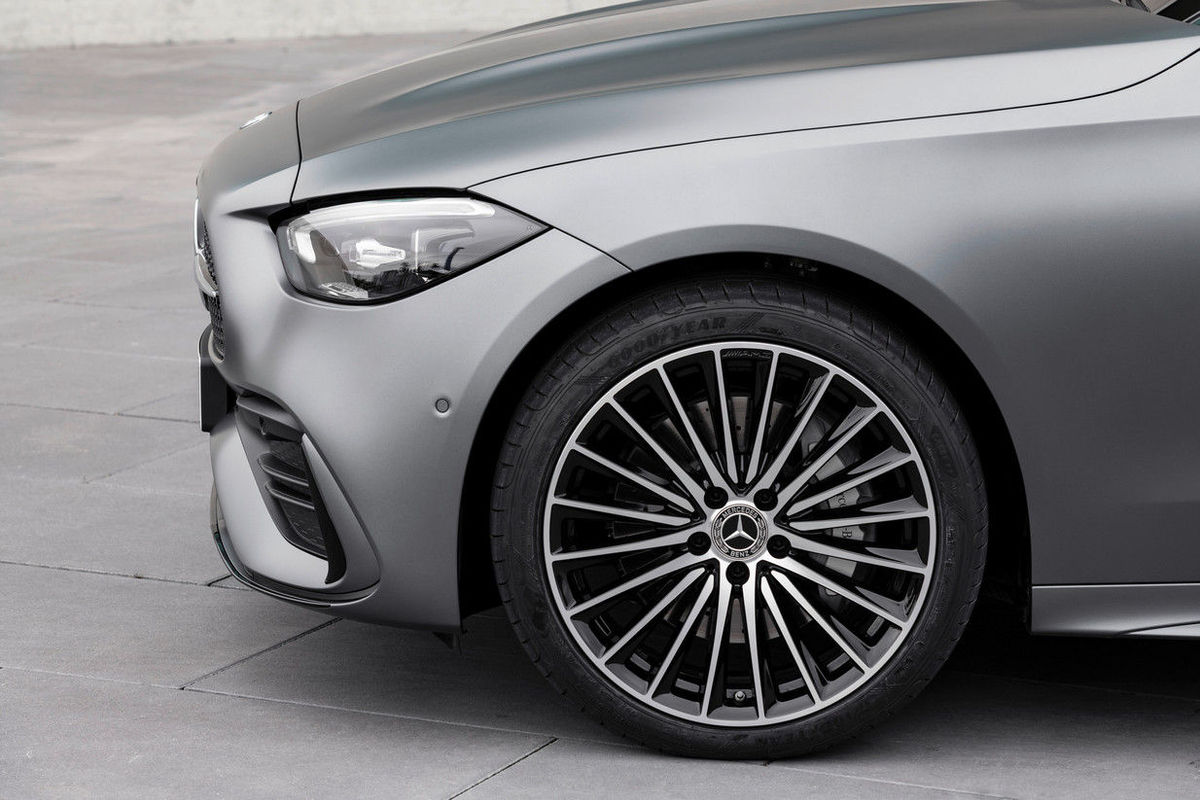
The Du Toitskloof Pass, which uses a more, shall we say, winding section of asphalt to get over the mountains behind Paarl, is a bumpy road with little in the way of camber to help you keep a car well-planted on terra firma. I found the C-Class settled really quickly after bumps, which inspired confidence to pile on more pace. The lower-profile tyres don’t really enjoy broken-up roads and, as a result, the ride quality can be rather firm when the Mercedes-Benz traverses harsh cracks or holes in the road, but, on most freeways or main roads, the comfort level is good.
If you’re not carving up a mountain pass and just hoping to get from one destination to another in luxury, the new C-Class is quiet inside and still produces segment-leading levels of in-car comfort. On long trips, you hardly need to move a finger to keep the Benz’s tiller centred in the road… even when the Western Cape’s notorious crosswind gusts are doing their worst to push the Teutonic sedan off course.
Is the new interior high tech?
Almost a perfect clone of the S-Class… save for the steering wheel and air-vent designs.
Following on with the theme of “baby S-Class”, the interior of the new C-Class looks like a shrunken copy of its big brother’s cabin, with the addition of round air vents and more spokes on the steering wheel. It also features the 2nd-generation MBUX software for the infotainment screen, which is standard across the range (it measures 30.2cm diagonally). The display is crisp and high-res and the system performs functions quickly, as a modern tablet would. Your climate controls are stored on the bottom of the screen for quick adjustments and just below that is a row of conventional buttons that includes the new fingerprint scanner. This scanner will load a user profile associated with the ‘print and load up favourite screen displays, recent destinations and even your electric-seat position and steering settings.
The infotainment system is Apple Carplay and Android Auto compatible with wireless connectivity options, plus a charging dock is located in the central tunnel. You can also spec multiple USB-C points in the front and rear if you wish. Over-the-air updates are now available to ensure that your ‘Benz gets the latest functionality as soon as it becomes available. Updates have also been made to the safety systems and the semi-autonomous driving tech; they now intervene in a less intrusive manner. Suffice to say Mercedes will continue to develop and refine functions and implement them via internet downloads.
While the interior is a technological marvel, the build quality lets the overall product down, unfortunately. The leather at the front of the dash and on the door trims and seats is of sufficient quality and stitched neatly, but the hard plastic surfaces in the cabin lack that same premium touch. The centre console is made to look like carbon but when you touch it, it creaks like plastic (well, because it is made of plastic) and the surround of the centre tunnel is scratchier than you’d expect from a product wearing a Mercedes-Benz badge.
Mercedes-Benz C-Class pricing
Only the C200 and the C220d are on sale at the moment, but Mercedes-Benz South Africa plans to introduce the C43 later this year and the AMG C63 in early 2023.
Will the sedan segment prove surprisingly resilient throughout the life-cycle of the new C-Class? We hope so.
The new Mercedes-Benz C-Class has certainly lifted its game in terms of dynamic driving ability and technological advancements. Indeed, it is the baby S-Class that it is purported to be, but there are certain areas where you can see the luxury levels aren’t quite up there with those of its vaunted first-class sibling – which one should probably expect, given the chasm in pricing between the two models.
The engines and 9-speed automatic transmission are highlights of the package. The C220d is a peach – it outperforms its petrol-powered sibling in terms of performance and efficiency. The price point has certainly been raised with this generation of C-Class, but so has the driving refinement. We’ll just have to see whether the sedan will still be a popular choice once it has spawned a new range of SUVs…
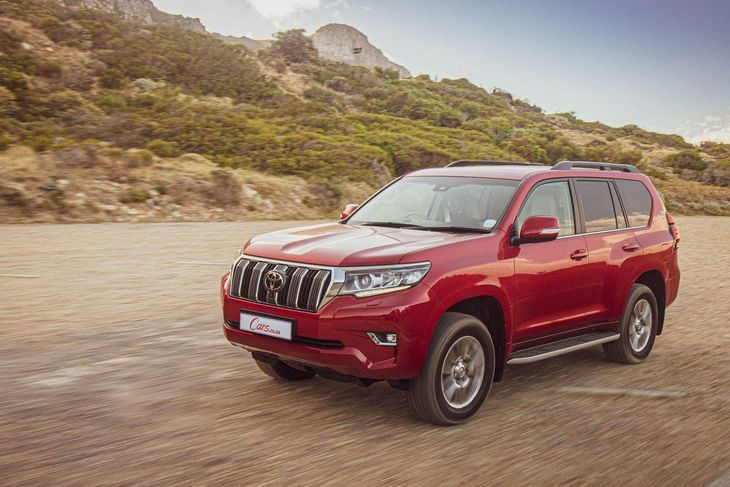
Toyota Prado To Get More Powerful Hilux Engine?
On the back of the news that Toyota will introduce a more powerful Hilux GR Sport in coming months, there’s a good chance that the Prado will benefit from the power bump.
The 150-series Prado has moved into its 12th year of production, double the typical SUV lifecycle. Although demand remains strong, there are some lagging technology elements – due to Prado’s age and unsophisticated platform.
Toyota has shown that it knows how to keep a ladder-frame luxury SUV relevant. Evidence of this is the evolution from Land Cruiser 200 to 300, where newer features and technologies have been added, but the ladder frame platform retained.
With the new Prado, which is expected to be revealed in 2022, industry analysts expect much of the same. Toyota will in all likelihood, shorten the Land Cruiser 300’s modular GA-F platform. That will continue to give Prado owners the proven durability and rough terrain survivability of a ladder frame structure.
Engines for new Prado?
A new Prado is expected to be revealed later in 2022 and could reach South Africa in 2023.
One of the most significant challenges for the next-generation Prado will be the powertrain. There is increasing pressure on diesel engines as an option, with little development. And hybridisation is complex, adding cost, especially when the application is a dedicated Overlanding and touring vehicle, such as Prado.
What can fans of the junior Land Cruiser expect in terms of engine choice? For some markets (most likely South Africa), there is a high probability of the 2.8-litre four-cylinder turbodiesel, continuing with some improvements. In fact, Toyota recently announced that it will introduce a more potent Hilux GR in South Africa in 2022 with its 2.8-litre turbodiesel engine uprated to deliver 165 kW and 550 Nm. Logic, therefore, dictates that Prado is well-positioned to receive this updated powertrain which is sure to please Prado customers.
Toyota is likely to face a challenge in the status of its new 3.3-litre V6 turbodiesel engine, which debuted in the Land Cruiser 300. There is a real cannibalisation risk when offering a lead powertrain in two different models, especially when those two vehicles are in a hierarchy and it’s therefore reasonable to expect a slightly detuned V6 engine to make its way into the new Prado.
Toyota never offered its Land Cruiser 200 V8 turbodiesel in the Prado, because it could risk diluting the appeal of the larger off-road vehicle. That same risk now exists with the next-generation Prado and new Land Cruiser 300.
We will keep you updated as more information becomes available.
For many car owners, car insurance is about protecting yourself against terrible drivers on the road, unexpected accidents, and bad luck. Few of us think about protecting our vehicles against natural disasters but it is something we should consider carefully. Because while we may not mind our older model vehicles getting the odd scratch and dent, having to repair or replace a car because of a natural disaster can become very expensive.
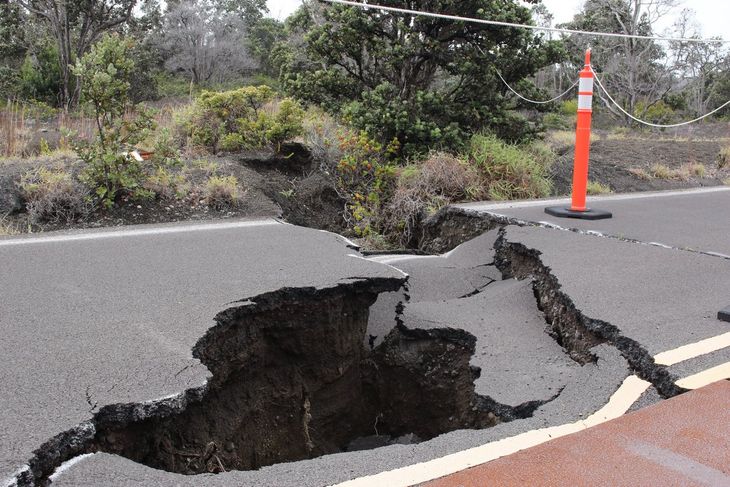
From floods and sinkholes to earthquakes and wildfires, natural disasters occur all over the world, including in South Africa. In fact, according to some sources, disasters are happening three times more often today, than in the 1970s and 1980s. For car owners, this poses a threat because damage to their vehicles directly impacts their wallet. This is where good, comprehensive car insurance can help.
If you have comprehensive car insurance taken out before disaster struck, then your insurer may be able to assist you to get back in the driver’s seat. It all depends on exactly what your policy says, so read your policy documents in detail. This will help you to know what you can claim for and also, how to claim.
Things to remember about car insurance and natural disasters
While most banks insist on vehicle insurance before they finance a car, there may be a temptation to stop your car insurance once the car is paid up. But this is risky. Without insurance, in the event of a natural disaster, you will be solely responsible for the costs to repair the vehicle. And, if the car isn’t driveable, then you also lose the use of the vehicle and the money you spent buying it.
In case of a natural disaster, car owners will need money to pay for alternative transport while their vehicle is being repaired. This means that costs start to add up quickly. If insurance can help with taking care of one expense, it is smart to have.
In the case of a natural disaster, remember that you may have other expenses to manage at the same time including urgent medical care and in a worst-case scenario, funeral costs. Having car insurance means that during a natural disaster you have one less thing to worry about.
And finally, don’t automatically expect that you will be able to get financial assistance from friends or family if your car is impacted in a natural disaster. You may not even be able to carpool because 65% of motorists are uninsured in South Africa. So, your circle may have their own costs to contend with as a result of a natural disaster.
But are there natural disasters in South Africa?
It is common knowledge that Hurricane Katrina devastated New Orleans in 2005 and terrible wildfires did the same in Australia in 2020. But does Mzansi have to worry about natural disasters?
Well, already in 2021, newspapers around the country have reported on vehicles being damaged in floods – in Gauteng, KwaZulu Natal and the Northern Cape. Tropical Storm Eloise was so intense earlier this year that the Government declared it a National Disaster based on its impact on Northern KZN, Mpumalanga and Limpopo. This follows on from heavy rains leading to flash flooding in parts of South Africa in 2020.
In July last year, Cape Town as the city was lashed by heavy rains and gale-force wind in July. Meanwhile, the Council for Geoscience South Africa which tracks and monitors earthquakes across the country confirmed tremors in the Mother City and Johannesburg in 2020. In addition, despite the efforts of the South African Weather Service to warn South Africans about hail conditions, motorists across the country have seen their vehicles damaged by hailstones.
Conclusion
It seems clear that wild weather is not limited to only certain parts of the world and that a necessary part of owning a vehicle is to make sure one is adequately insured.
Given how important reliable transport is to get to work, and to school, it is smart to protect your car against any surprises, including those dished out by Mother Nature.
Disclaimer: This content is for informational, educational, or entertainment purposes only. We do not make any warranties about the completeness, reliability, and accuracy of the content. The views and opinions are those of the author and not necessarily those of the company.