The Jetta’s Chinese twin has received many styling upgrades and cabin refinements in preparation of its Beijing Auto Show debut.
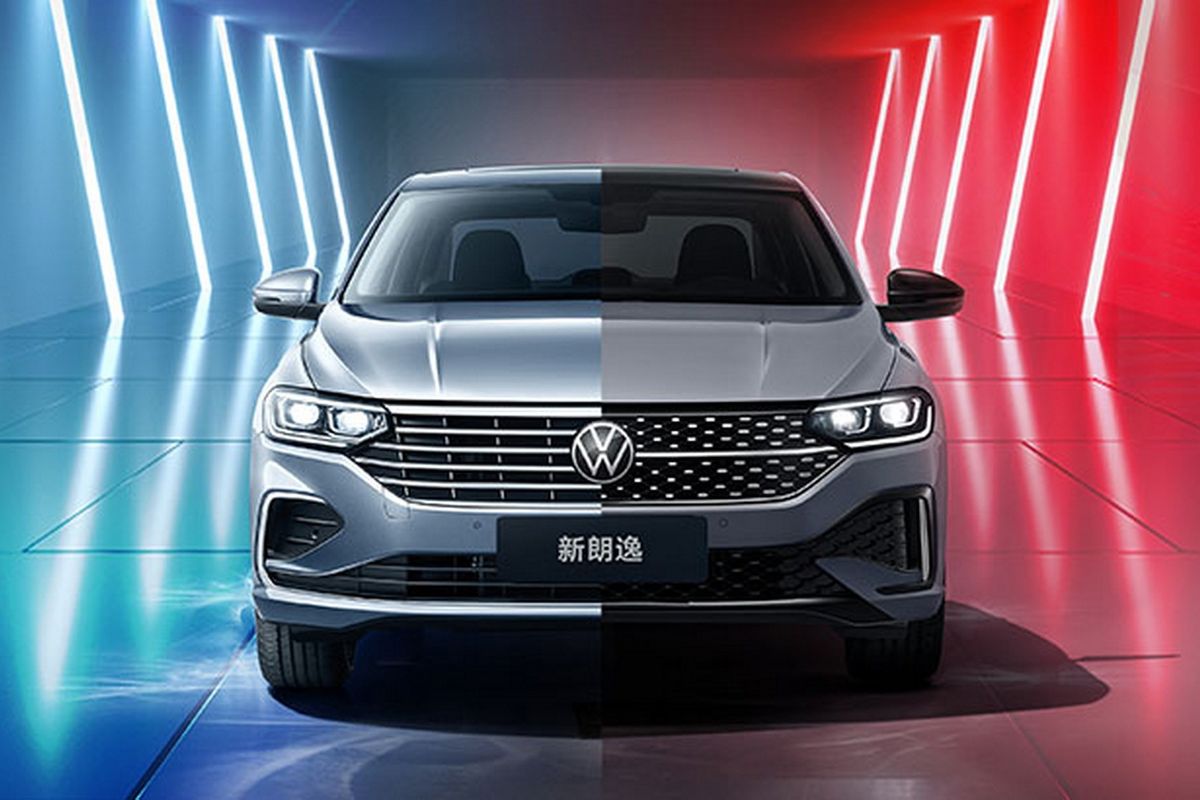
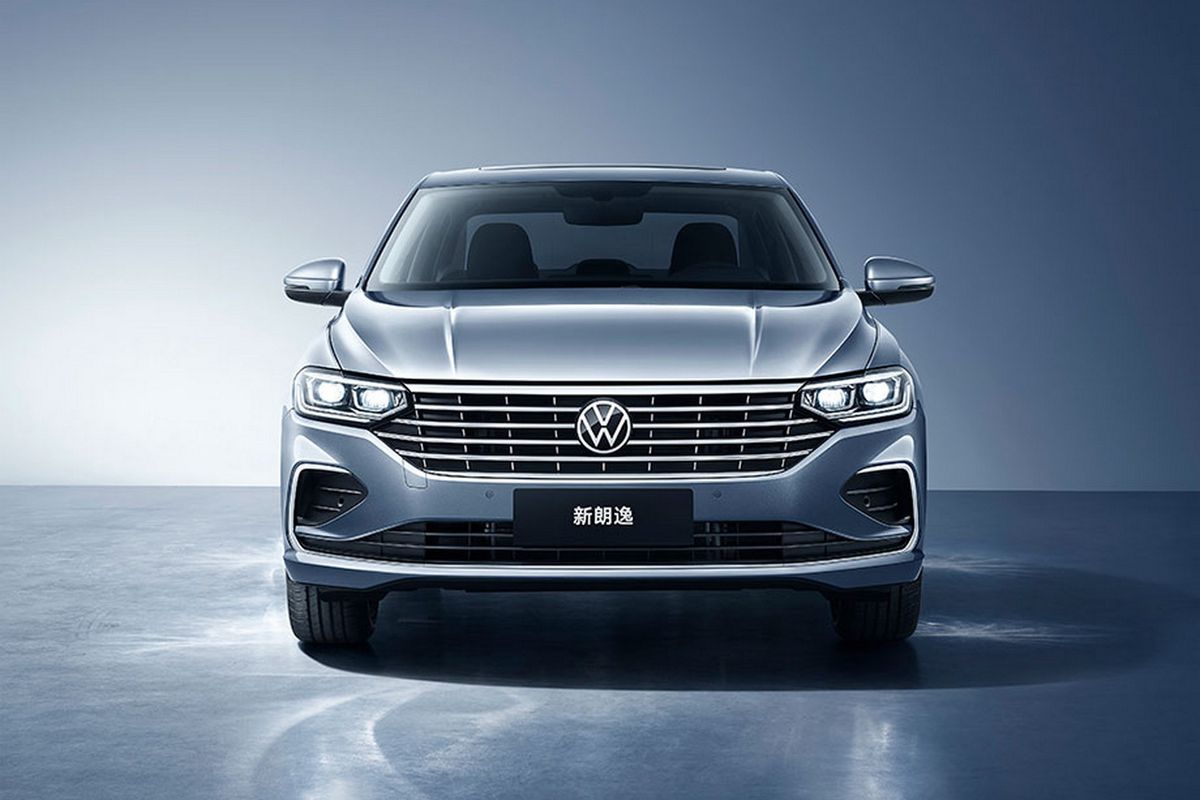
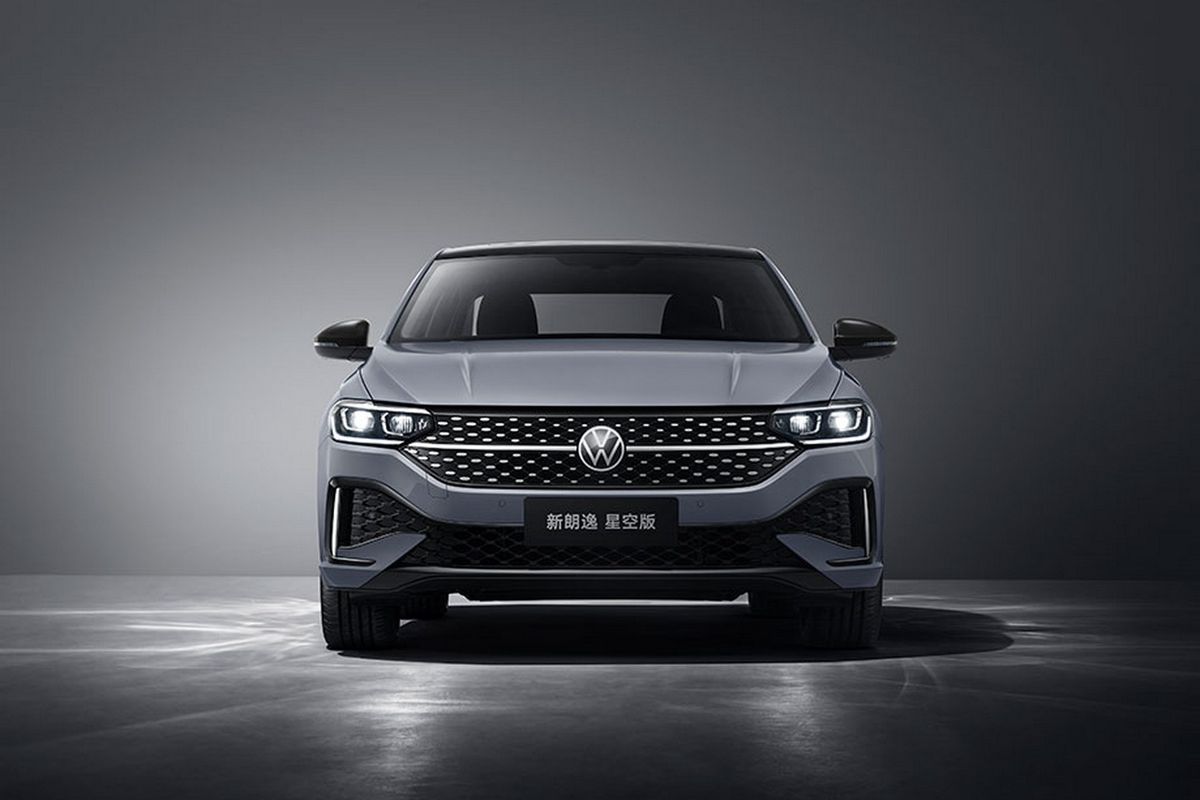
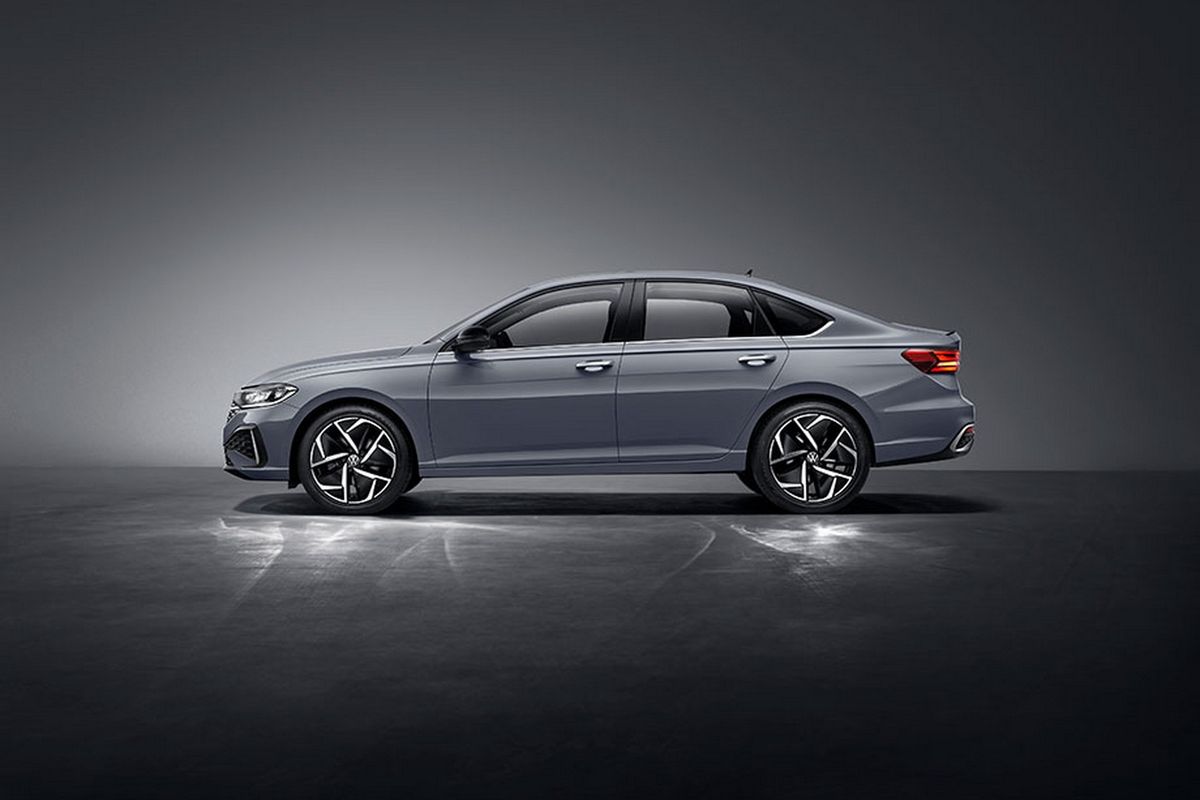
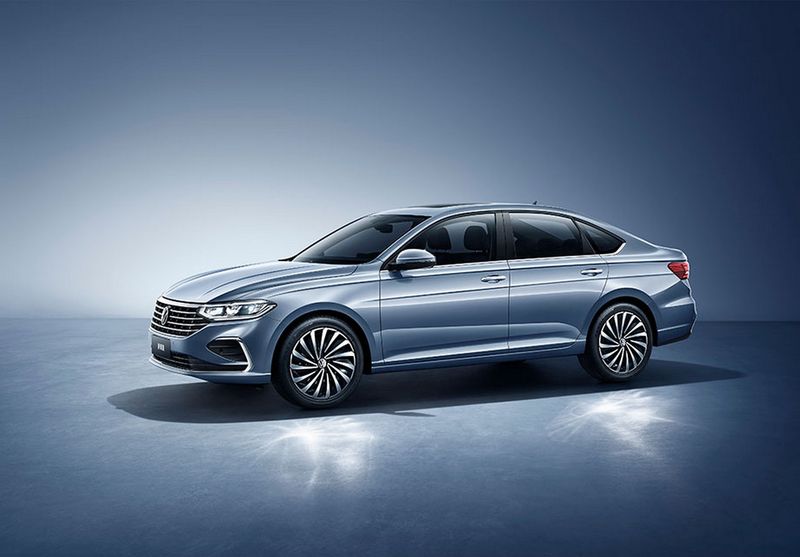
A joint venture between SAIC and VW, the Lavida is a mid-sized sedan, built on the proven MQB platform. Sitting atop VW’s overengineered chassis is bodywork that now includes larger bumper intakes and typical of a Chinese market vehicle – an abundance of chrome garnishing around the front.
VW is offering two grille options with Lavida. The one is a traditional version, with horizontal slats, while the other is more reminiscent of something you’d see on a Mercedes-Benz A- or C-Class, with a single horizontal slat holding the VW badge in place. This ‘Star edition’ grille has a distribution of small rectangles set against a black background, supposedly replicating stars on a clear night.
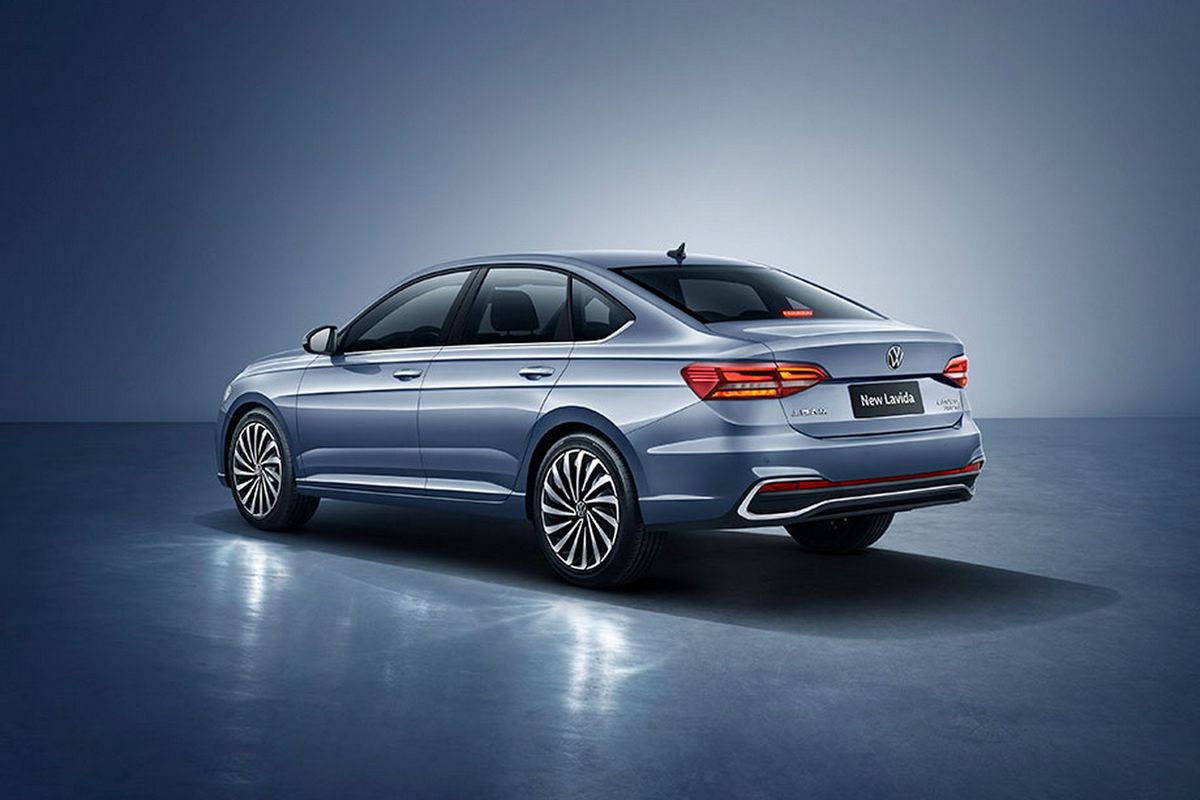
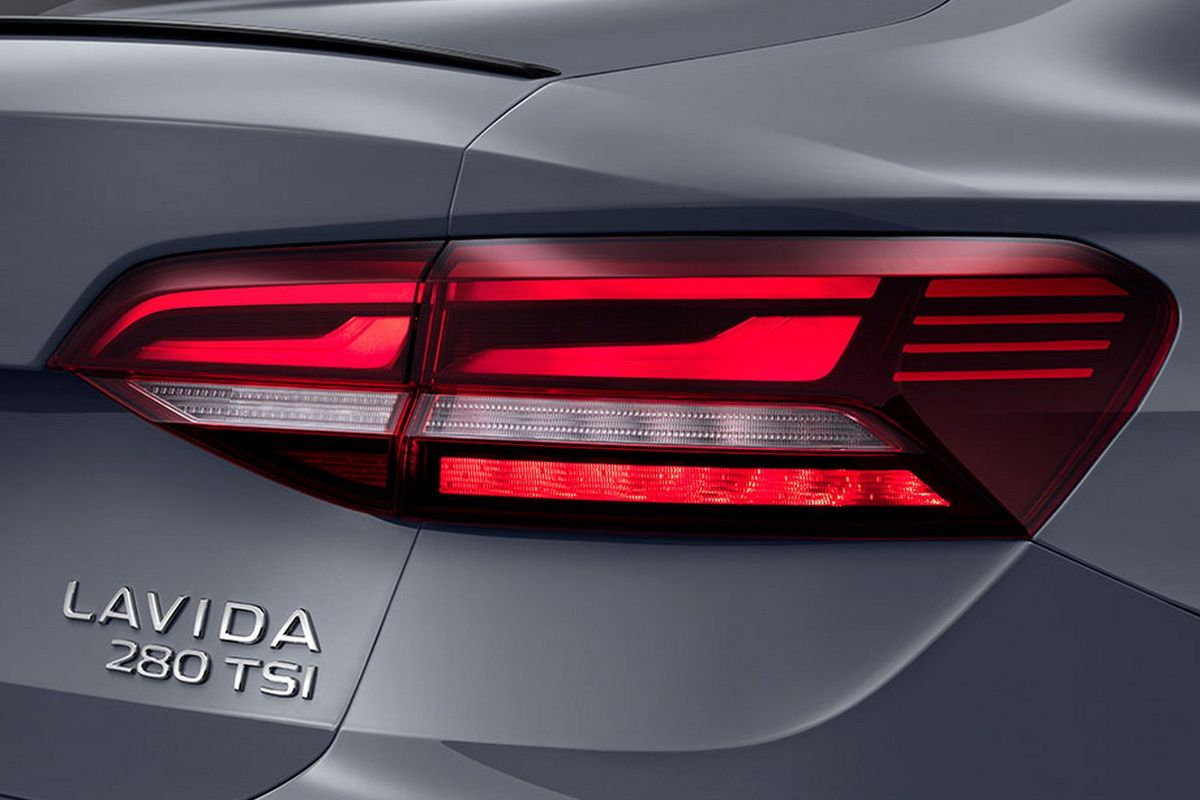
Designed have applied a similar updated LED light diode treatment to Lavida’s rear taillamps and there is even a trace of integrated spoiler lip, on the boot lid.
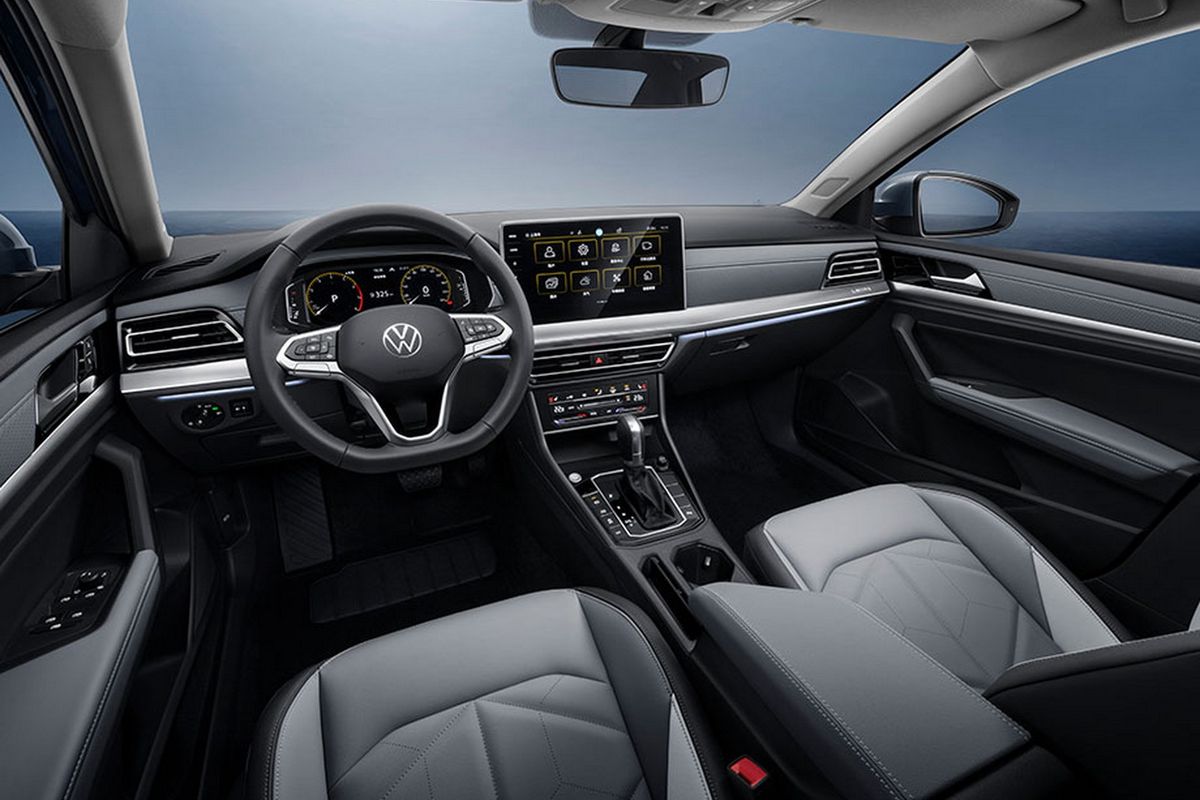
Cabin architecture benefits from a larger floating touchscreen, to navigate the infotainment functions, and some optional red accents and trim stitching.
High-speed cruising performance is of negligible importance in China, and engine specification is unconfirmed.
A confident deduction can be made from the ‘280TSI’ badging, that VW’s 1.4-litre TSI engine is being used, in a 110 kW/250 Nm state of tune. VW’s nomenclature strategy in China indicates status, by numerals, instead of any correspondence to power output – in either horsepower or kilowatts.
Drive will be to the front wheels via VW’s slick-shifting seven-speed DSG transmission.
Would the Lavida be popular in South Africa? Possibly. But for those local VW brand fans who prefer a boot to a tailgate, a new version of the Polo sedan will become available later this year.
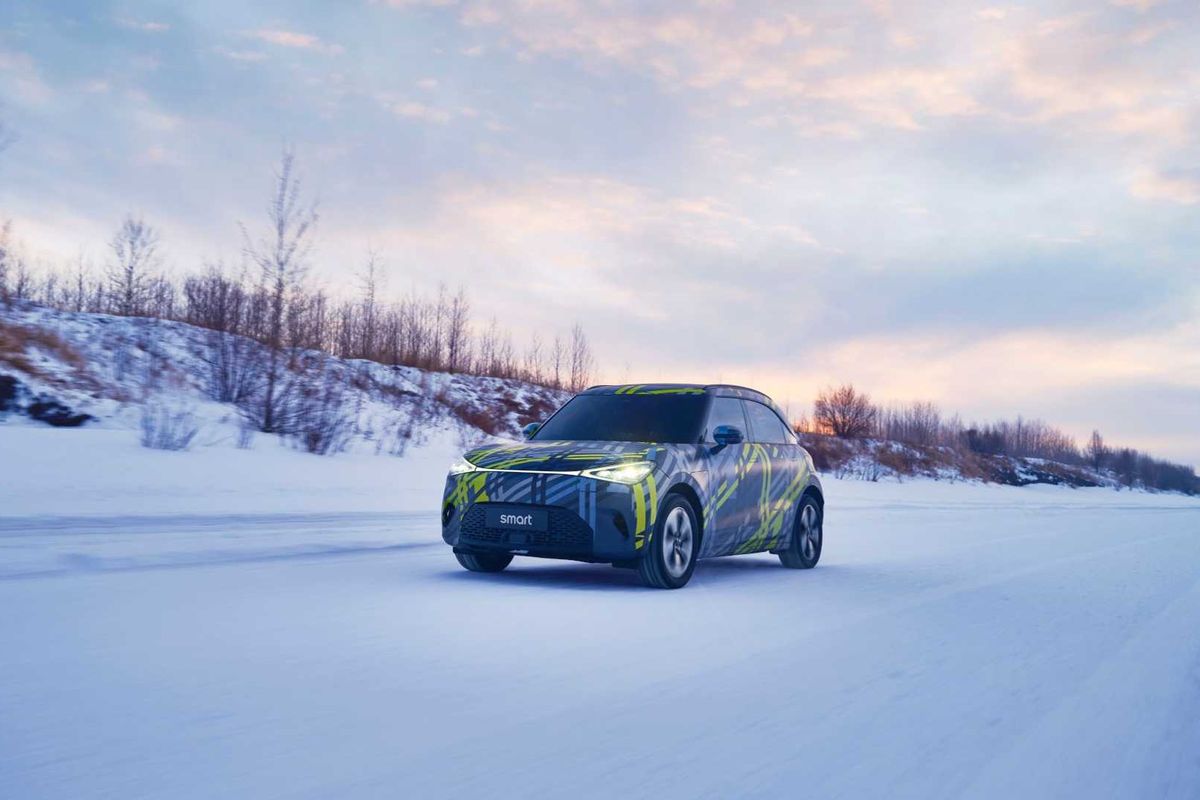
Remember Smart? Well, an all-new electric Smart #1 is due to launch in 2022.
Smart #1. That’s the new naming convention being ushered in by the revamped Smart brand which is a result of a joint venture between German powerhouse, Mercedes-Benz and Chinese automotive juggernaut, Geely.
Smart dropped off South African new car listings in 2019 and while the Smart ForTwo city car and slightly more practical Smart ForFour had charm and loads of cuteness, they were pricey and never really won the hearts of local car buyers.
In 2018, Smart made its intentions known to become an Electric Vehicle (EV) brand and in 2020 the $849-million joint venture was announced with Mercedes-Benz being responsible for design while Geely champions engineering and production in China.
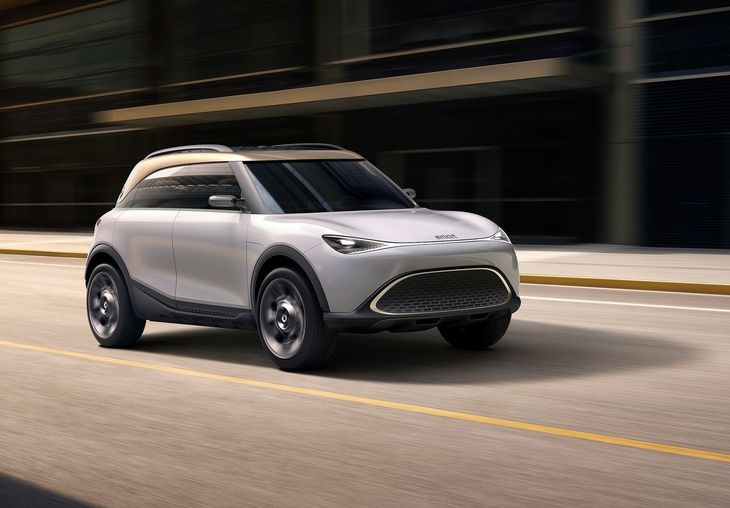
The Concept #1 forms the basis for the new Smart #1 due this year.
The Smart #1, therefore, represents a new start for Smart and the #1 is expected to be fully revealed later this year.
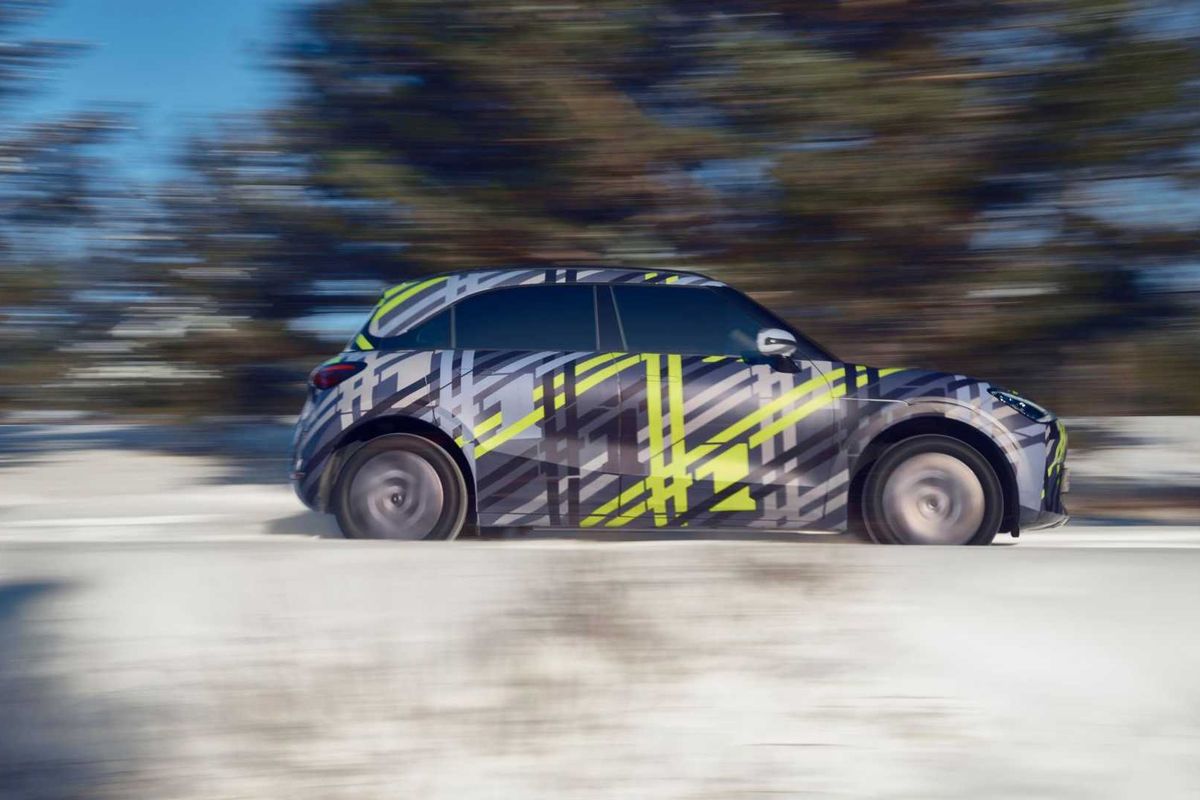
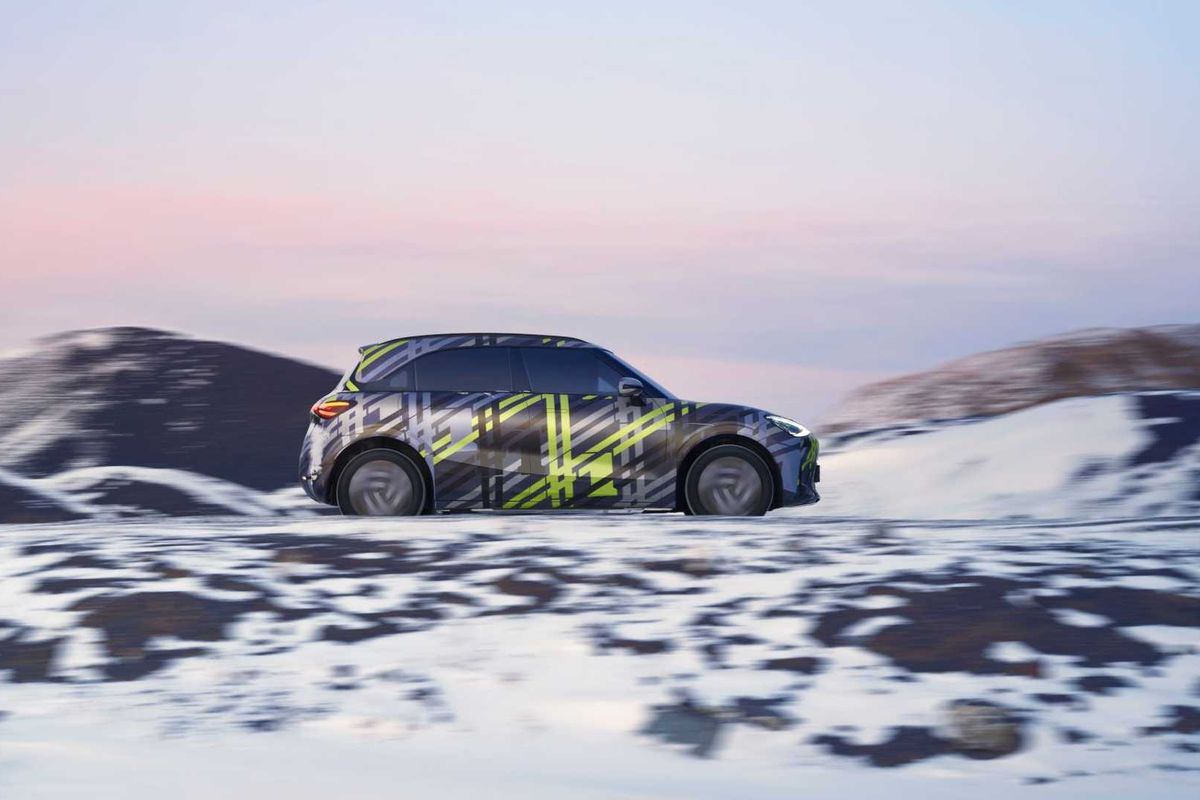
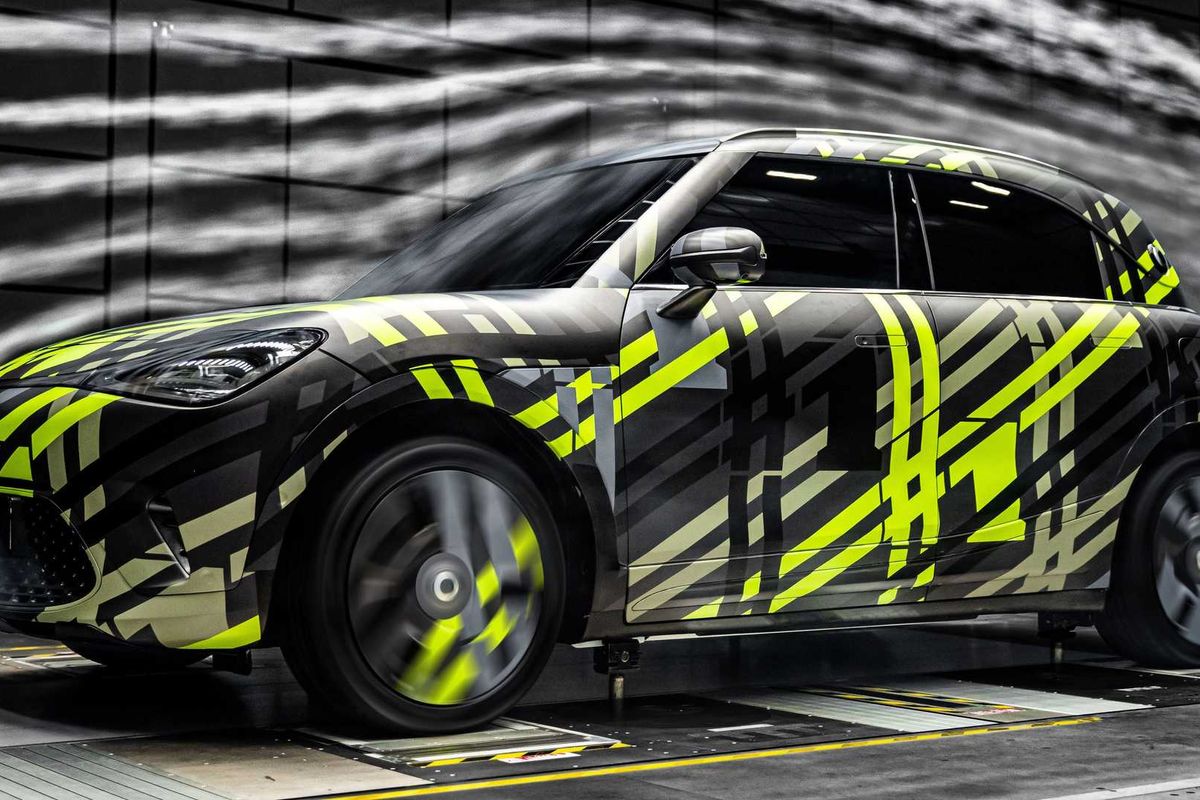
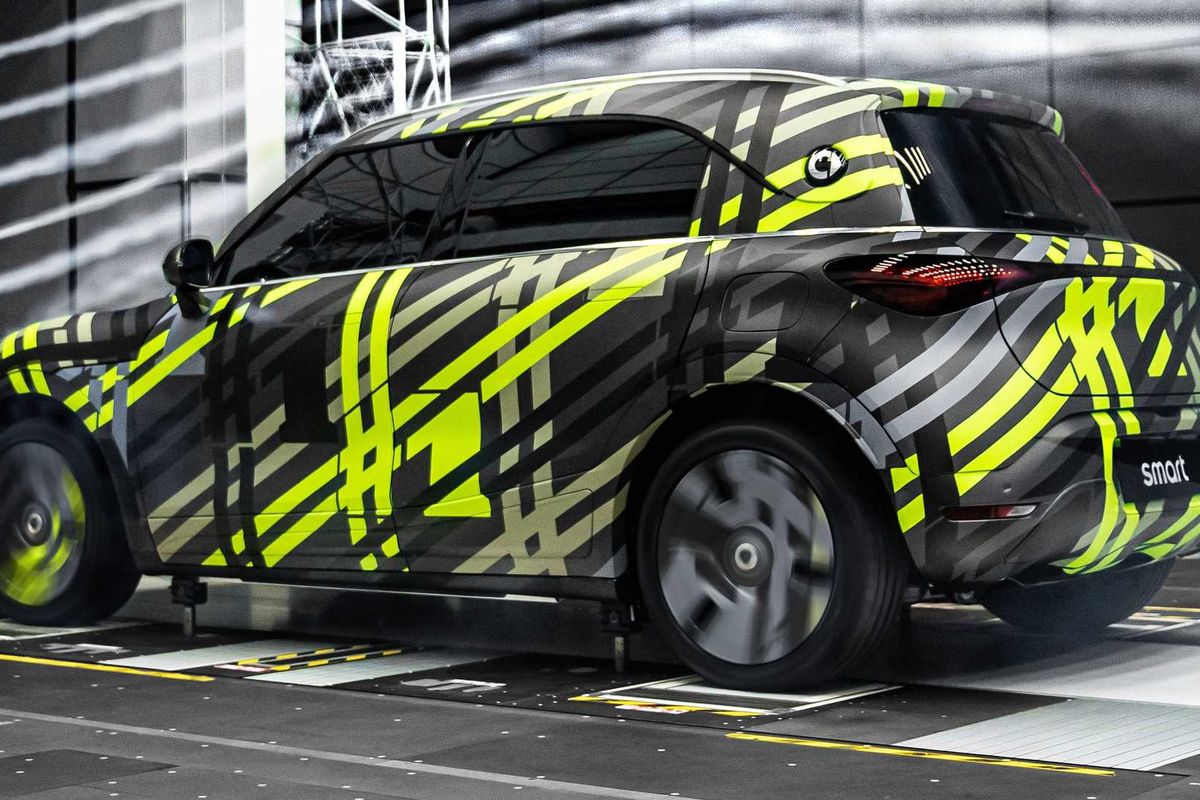
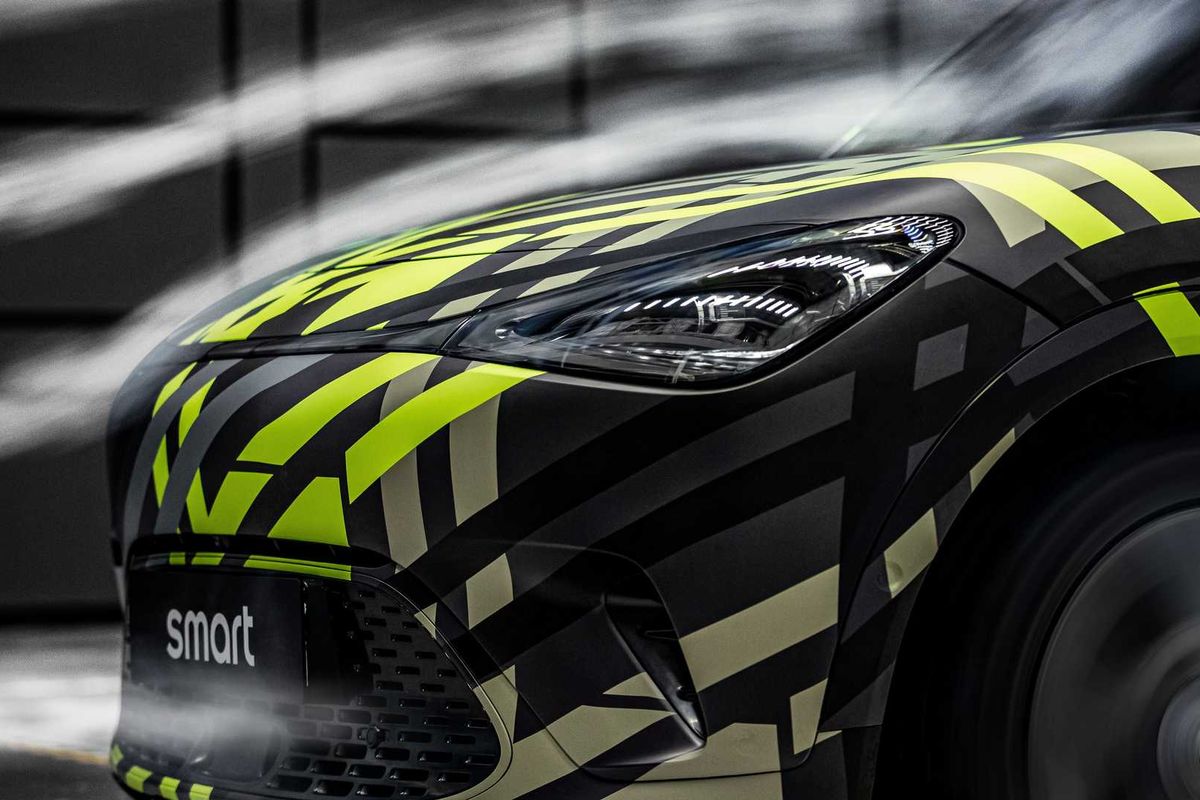
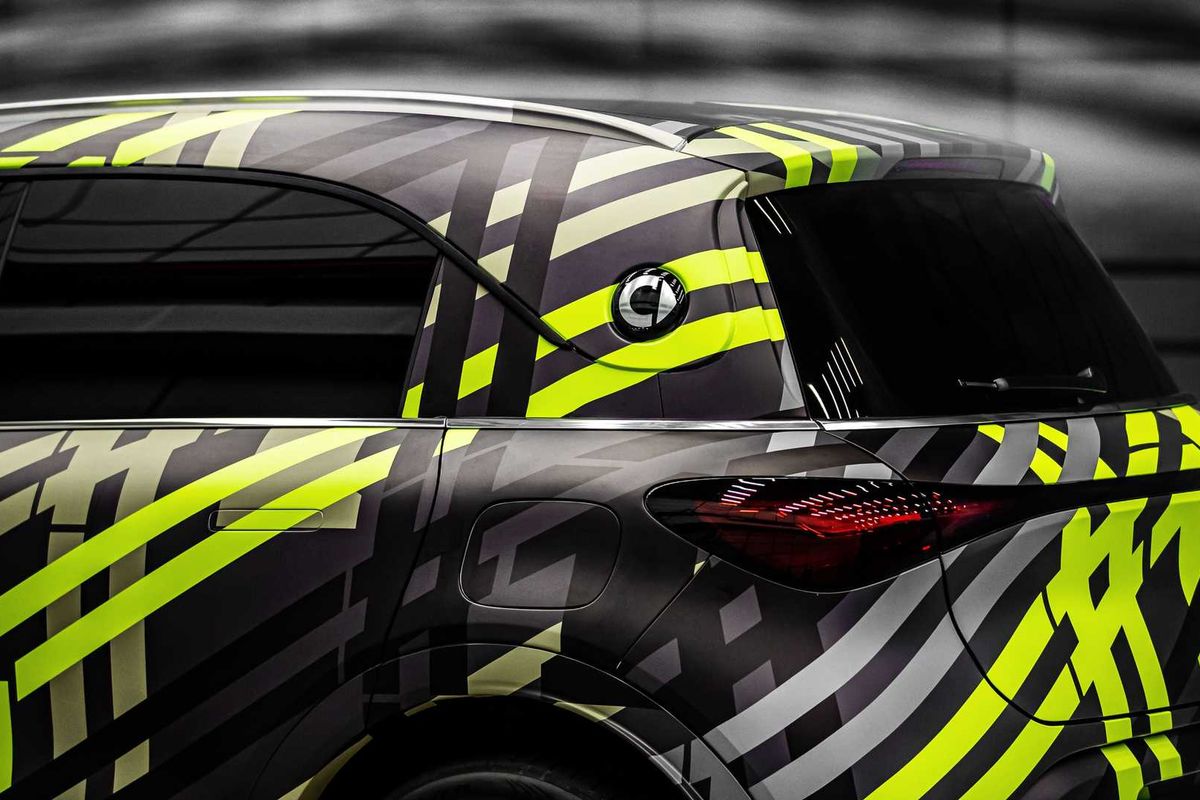
The images you see here show the 5-door, all-electric Smart #1 crossover wearing a colourful camouflage but they provide enough detail to imagine what the final production version might look like. The Smart #1 is based on the Concept #1 which was shown at IAA in Munich, Germany, in 2021 and measured 4 290 mm long, 1 910 mm wide and 1 700 mm tall, which is comparable to the size of a Mini Countryman.
The Smart #1 will be produced on the Geely Sustainable Experience Architecture but the exact electric powertrain details are not yet known.
The Smart #1 is said to have an impressive drag coefficient of 0.29 and features active grille shutters as well as flush door handles with ice-breaking functionality, the latter of which will be useful for icy European winters.
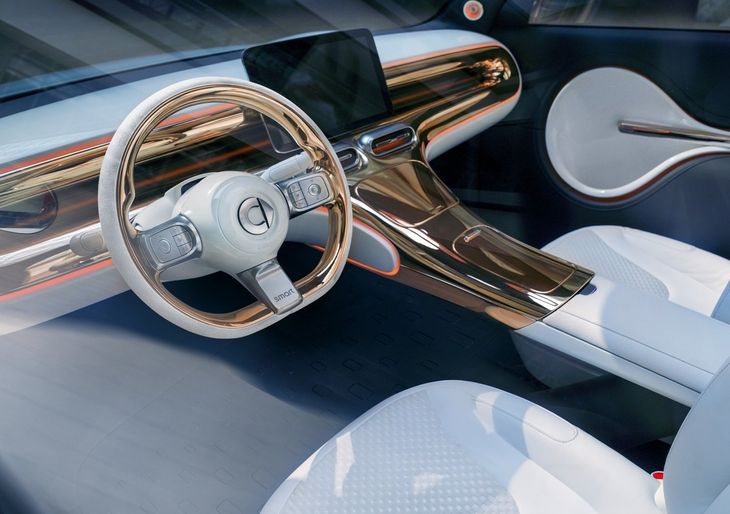
As far as the interior is concerned, the Smart #1 is expected to have a minimalist interior design and while it’s likely to share cues from the Concept #1, it’s not expected to be as flamboyant in its execution. A large central infotainment system measuring 12.8-inches is likely.
The interior of the Concept #1 provides hints of what the Smart #1 might offer, but with a more conventional execution.
The Smart #1 will later be joined by a larger model and it would be logical to assume that it will be called #2, but time will tell. The Smart #1 is earmarked for sale in China and Europe.
We will keep you updated as soon as more details are revealed.
These Nissan Bakkie Concepts show what’s possible when engineers are given free reign. We’re in love!
The 2022 Chicago Auto Show hasn’t produced much ground-breaking car news, but we came across these Nissan bakkie concepts and we’re smitten.
Based on the new Frontier, these three Nissan bakkie concepts each have their own identity. Sadly, the Nissan Frontier is not offered in South Africa, but we do have the rather good-looking and surprisingly refined updated Nissan Navara on showroom floors. The new Navara is quite a big leap as far as comfort and driving refinement are concerned.
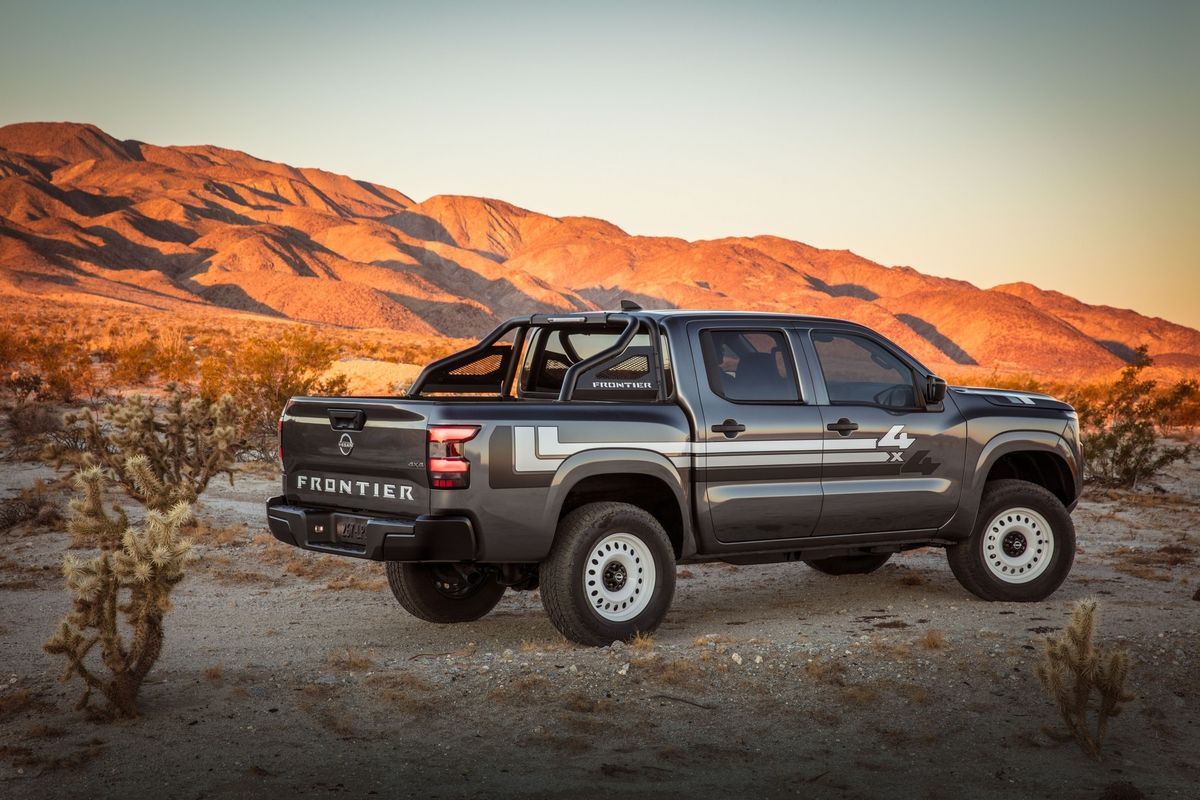
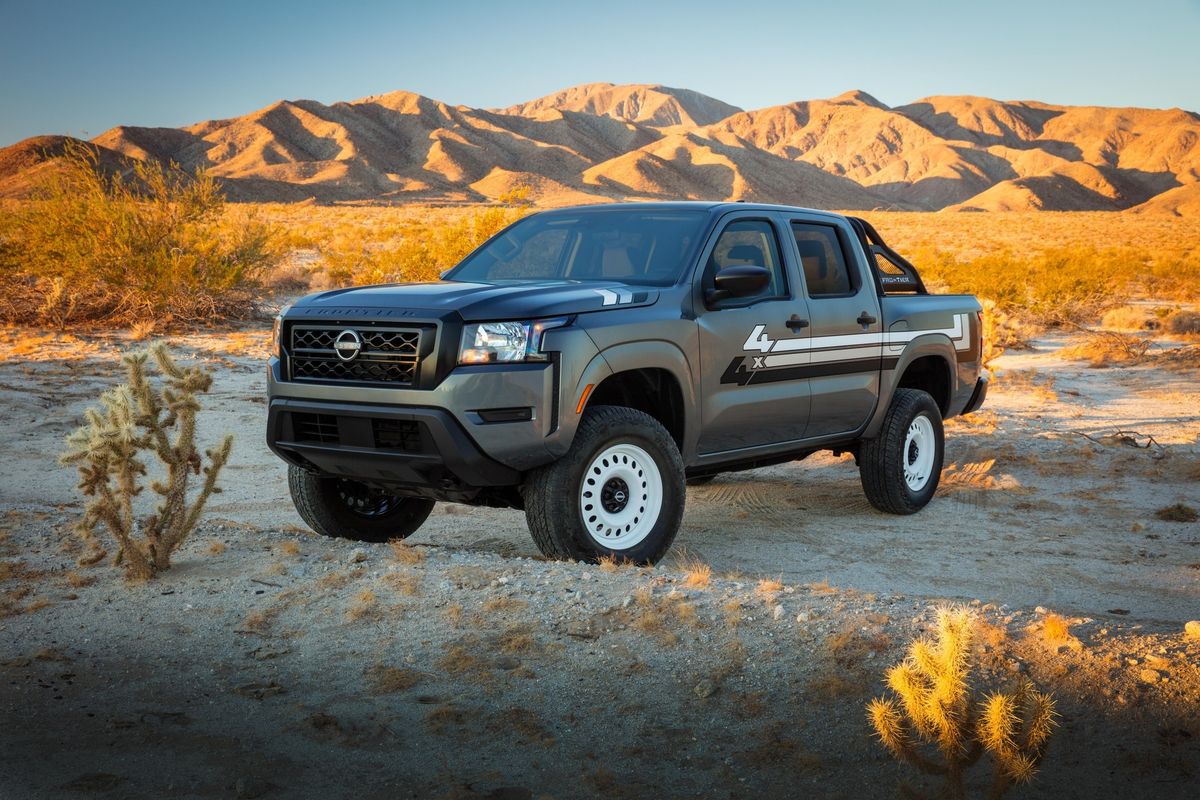
The first Frontier concept is the Project 72X Frontier. By using the Crew Cab S 4×4 derivative as a base, this retro-looking bakkie has been created as a modern-day version of the Datsun 720 truck that made its debut back in 1979.
The heritage vibes are strong, with a simple exterior paint job, with retro-style decaled and white steel wheels. Nissan has given this model a lift kit for additional clearance and we love the old-school cool look.
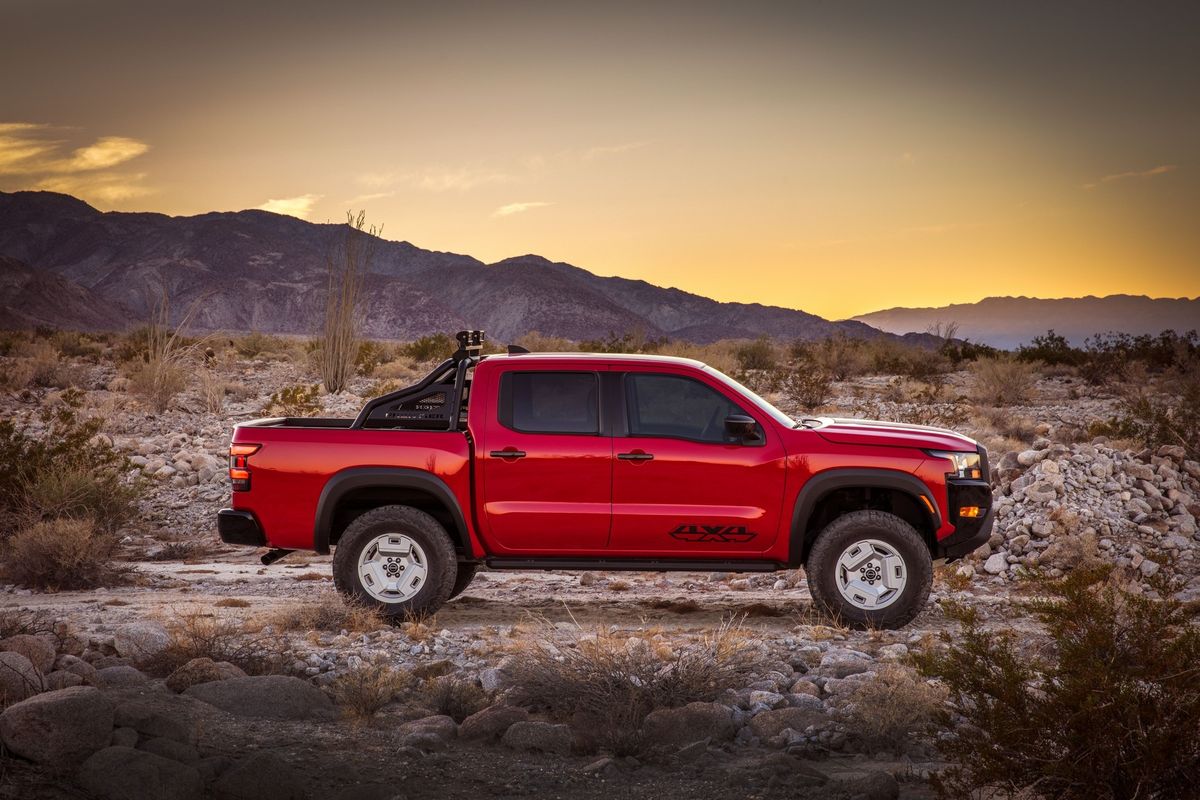
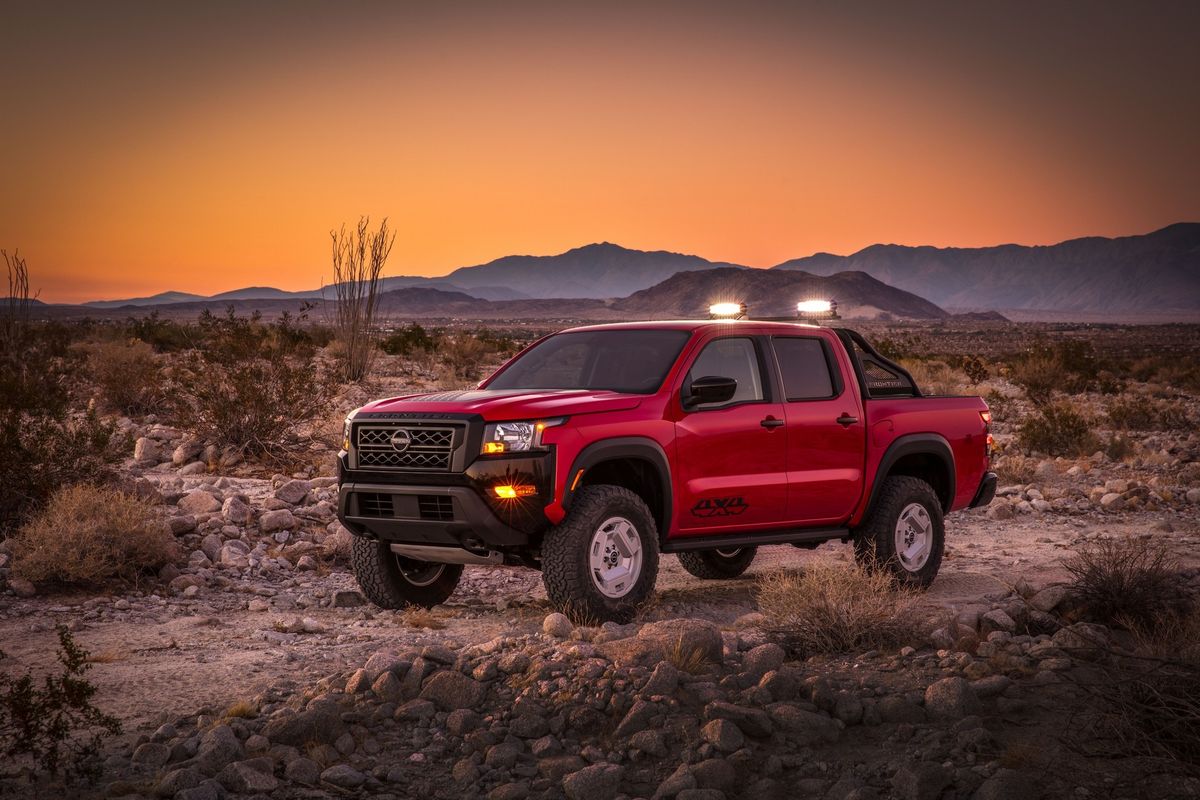
Next up is the Project Hardbody Frontier Concept, which begun as a standard 2022 Frontier Crew Cab SV 4×4. It looks fairly standard, but Nissan has given it a 3-inch lift kit, adjustable upper control arms, fender flares, block-style alloy wheels with 33-inch tyres, sports bar, decals and a 10-inch rectangular LED light bar.
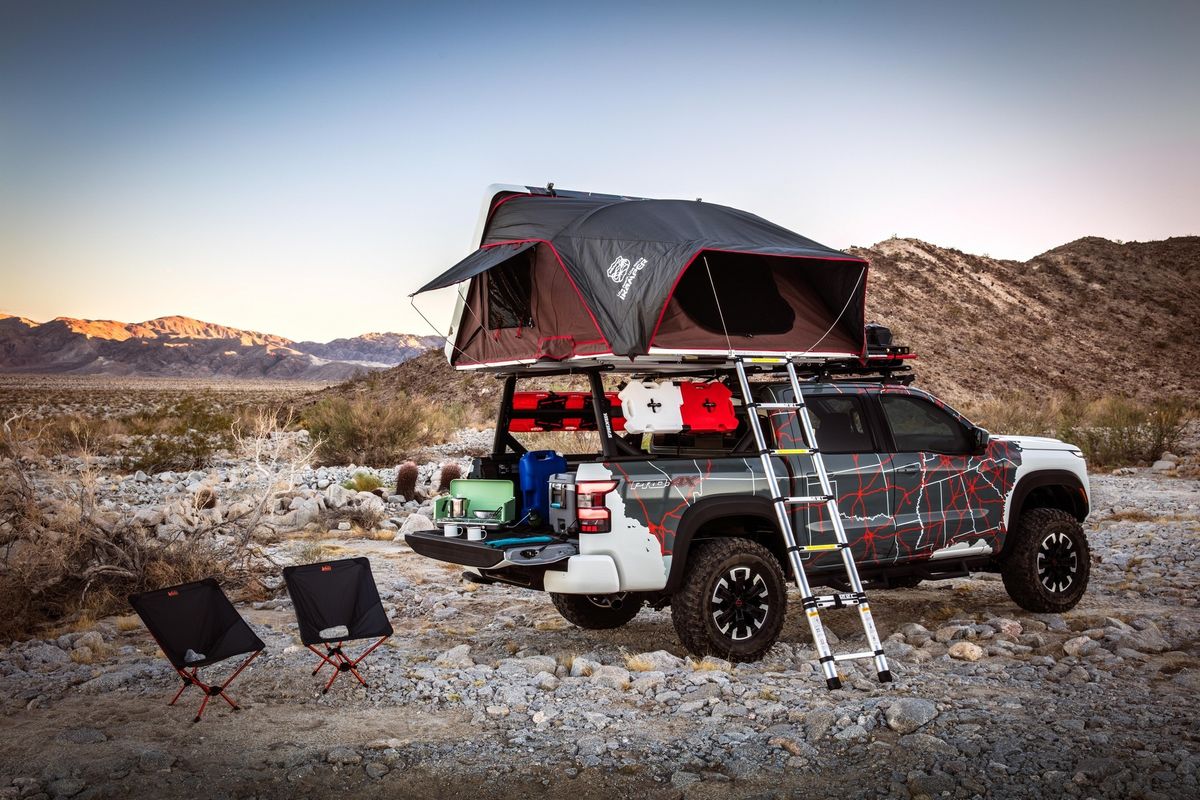
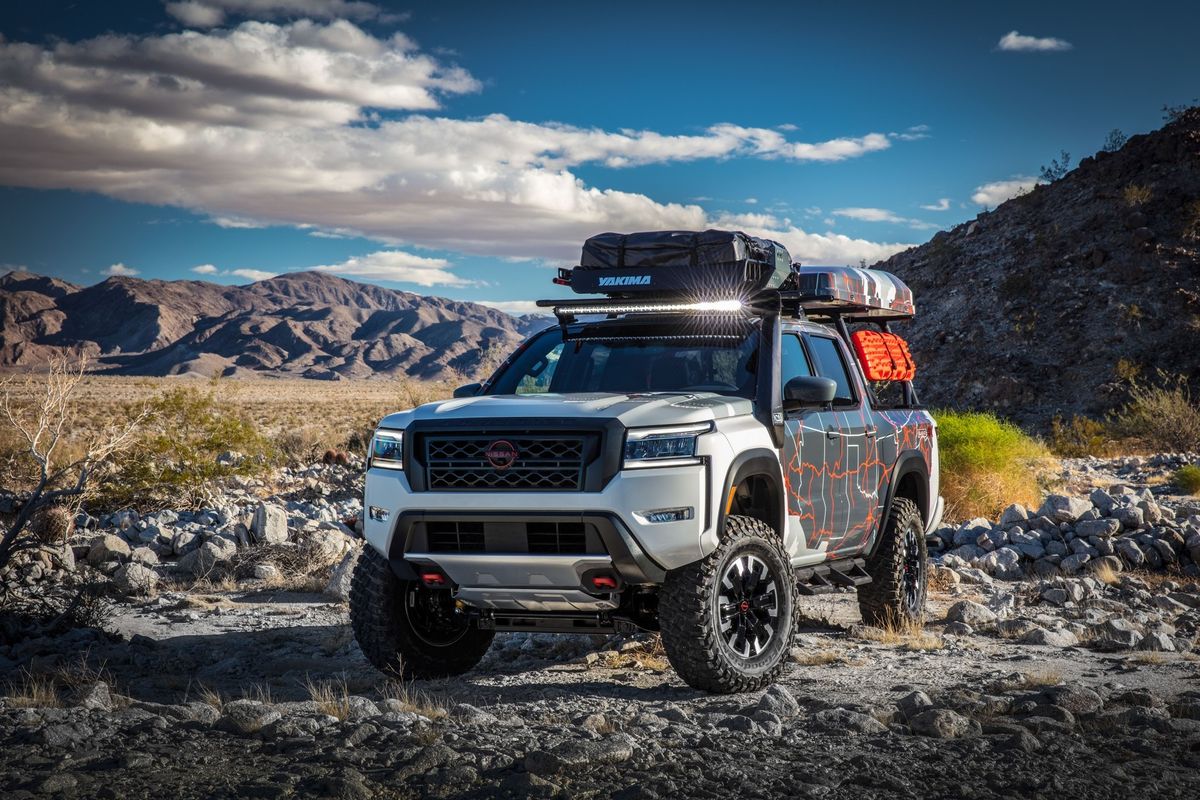
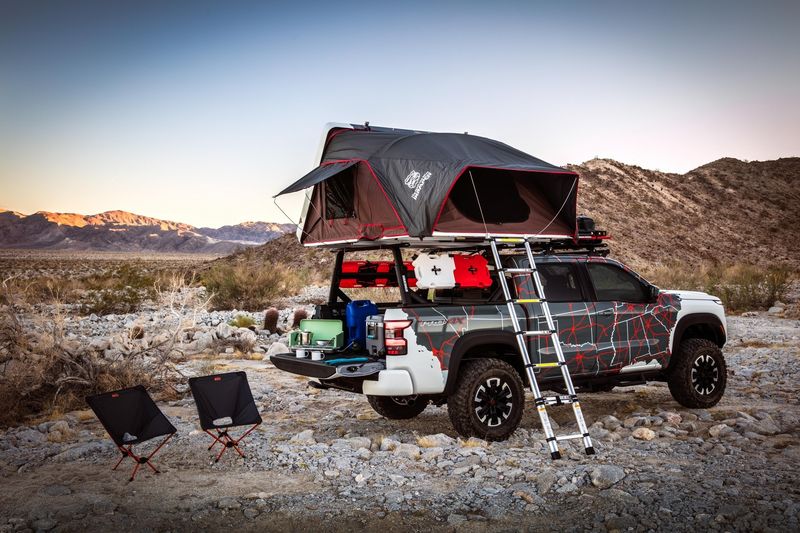
Finally, the piece de resistance for the Nissan bakkie concepts. This is the Project Adventure and it looks ready to do some serious overlanding. Under the skin is a monster 5-inch lift kit, 34-inch special mud tyres, carbon fiber snorkel while Nissan has accessorised it with a Yakima bed rack setup, Yakima Loadwarrior roof basket, sky tent and an uprated Kicker audio system.
As far as hardcore overlanding bakkies go, we think the Nissan Project Adventure is one of the most impressive. Right, who wants to drive one to the middle of nowhere for an adventure?
It’s the end of the small Audi as we know it as the A1 and Q2 won’t be replaced.
Aspiration into the Audi brand will become a lot more challenging in the future. As reported in an interview with the Handelsblatt, the German automaker’s CEO, Markus Duesmann, has confirmed that Audi will discontinue the A1 and Q2.
Audi recognises the cost of its shift to electrification. Smaller platforms and lower prices don’t have the margin tojustify electrification, making battery-powered A1s and Q2s an impossibility.
For Audi, the decision is to go upmarket, sacrificing its popular entry-level models such as A1 and Q2. This will come as a disappointment for those who saw A1 and Q2 as attainable and might challenge Audi regarding young customers.
A1 and Q2 enabled Audi to capture a more comprehensive age demographic in its customer base. Discontinuing these models, and focussing on more expensive vehicles, will undoubtedly alter the Audi age demographic in terms of ownership.
In the historical context, A1 and Q2’s deletion from the company’s product portfolio will also see it decuple from a historical small car history.
An example of Audi’s small-car excellence was A2, a significant and revolutionary vehicle predating A1. It is a pity that the company is now strategising to bundle all its technology and resources into larger platforms.
What is also telling about this latest Audi strategic model realignment is that affordable electric cars will not happen anytime soon.
Audi’s last internal-combustion model will launch in 2026, and it is targeting 2030 as the date for a full-electric vehicle portfolio.
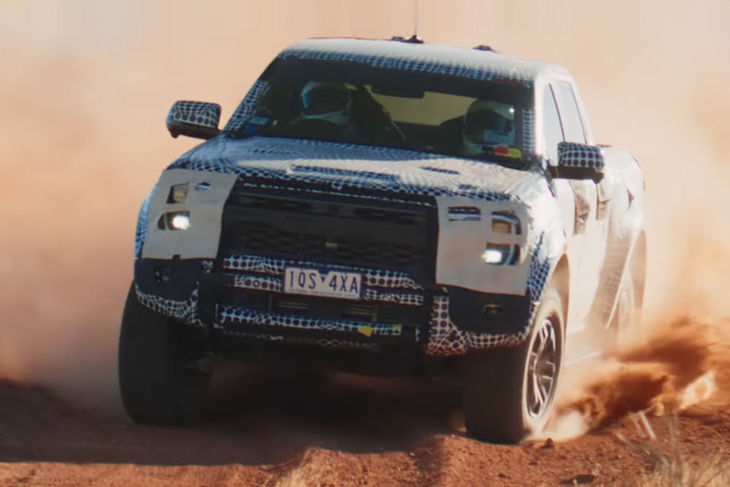
Ford will officially reveal its all-new 2023 Ford Ranger Raptor on February 22 and has released a promotional clip showing a disguised prototype ripping through the Australian outback. But don’t be too sure that it will be powered by a 3.0-litre V6 Power Stroke turbodiesel motor, however.
The Blue Oval has not announced anything new about the upcoming flagship of the new-generation Ford Ranger, which will be revealed via the brand’s Facebook and YouTube channels on 22/02/2022, apart from “developed by Ford Performance for off-road enthusiasts, this is the most-powerful factory-built Ranger Raptor ever”.
The 26-second YouTube clip contains all the usual elements: A camouflage-clad Raptor prototype kicks up plumes of red dust as it tears along a dirt road, bounds over hills and corners at breakneck speeds. What’s more interesting is what the mechanical soundtrack that accompanies the footage tells us… If you turn up the sound, you’ll hear that the gear shifts are rapid, which suggests the prototype utilises the Blue Oval’s 10-speed automatic transmission.
Moreover, the camouflaged Raptor’s roaring motor sounds a bit too sharp and raspy to be a 2.0-litre bi-turbodiesel (as used by the current bakkie). Considering the rorty audio clip Ford released in November last year, which was simply titled 02.2022, we now believe the new Ford Ranger will be powered by a turbopetrol engine… and probably a V6.
Ford has some potent EcoBoost V6 turbopetrol powerplants in its arsenal, including ones with 2.7-, 3.0- and 3.5-litre capacities.
The 2.7-litre unit produces 242 kW-246 kW and 542 Nm in the Ford F-150 and Bronco, the 3.0-litre develops 298 kW and 563 Nm in the Explorer ST and Bronco Raptor, while the 3.5-litre motor produces 335 kW and 691 Nm in its most powerful state of tune, but more realistic outputs of 280 kW and 637 Nm could be on the cards for the new Ranger Raptor.
Due on sale globally in early 2023, the new Raptor Raptor should feature purposefully flared fenders, the characteristic FORD grille, unique alloy wheels, BF Goodrich All-Terrain T/A KO2 rubber (or General Grabber AT3 tyres, as featured on the current-gen Special Edition) and wide-set dual exhaust ends.
The only question that remains is: If the new Ranger Raptor will utilise a turbopetrol V6 motor, will it still be produced at Ford Motor Company of Southern Africa’s Silverton plant? We’d bit it will, but we’ll let you know as soon as we find out for sure.
The new-gen Ranger line-up will make use of (updated) locally made single and bi-turbocharged 2.0-litre diesel engines, while a 3.0-litre V6 diesel motor, which will also be produced at the firm’s Struandale engine plant in Gqeberha, will head the range. The model will be launched in South Africa in the second half of the year.
Kyalami 9 Hour – What went down at this year’s race?
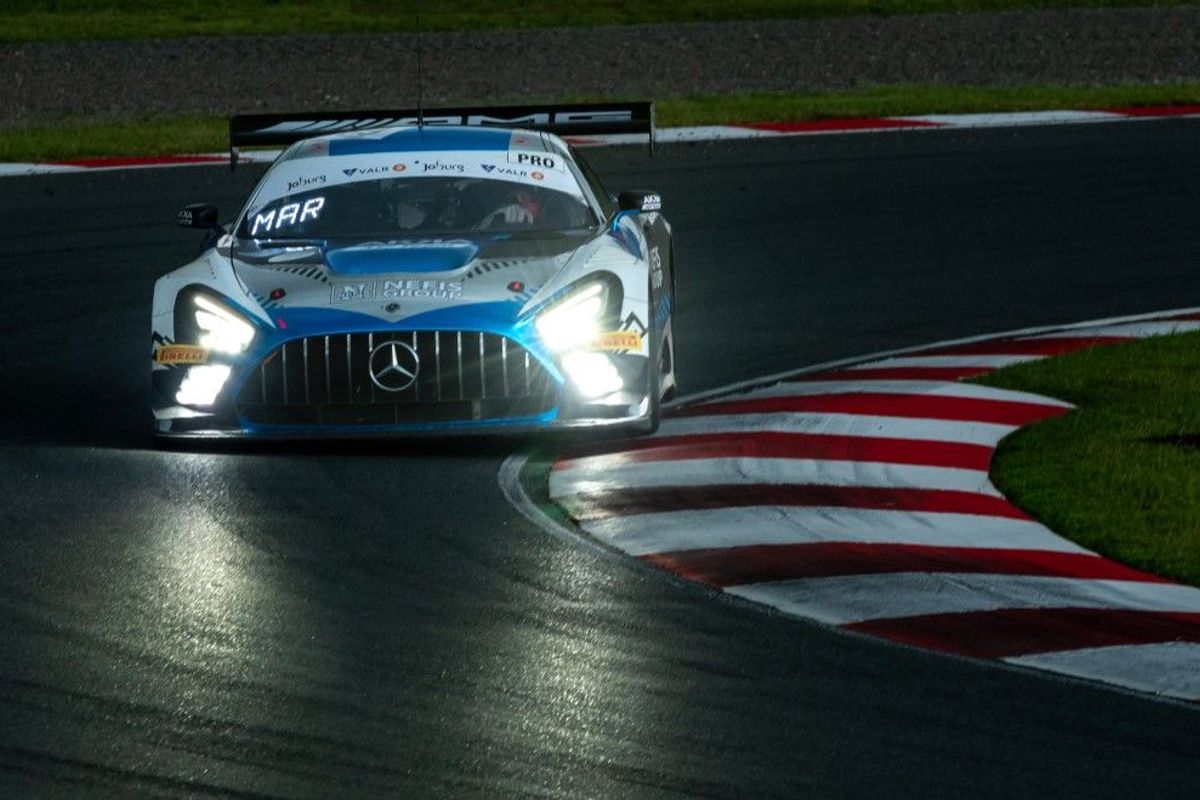
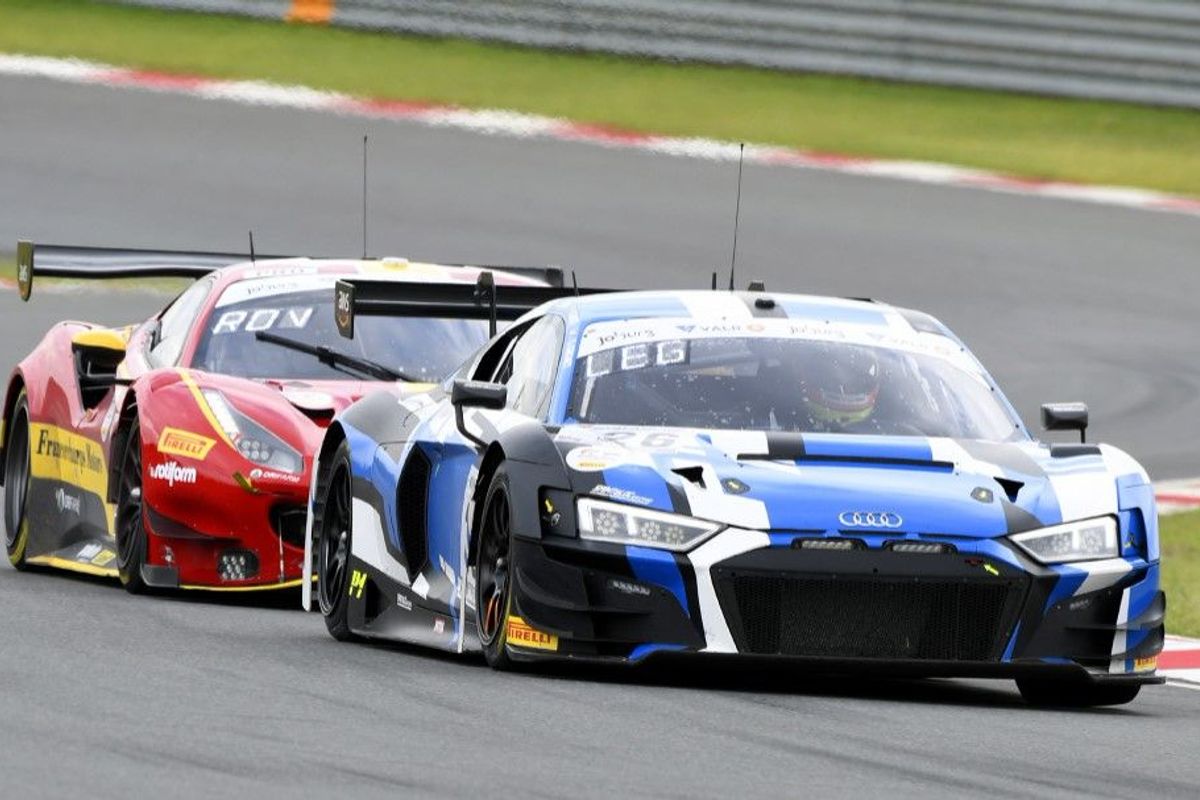
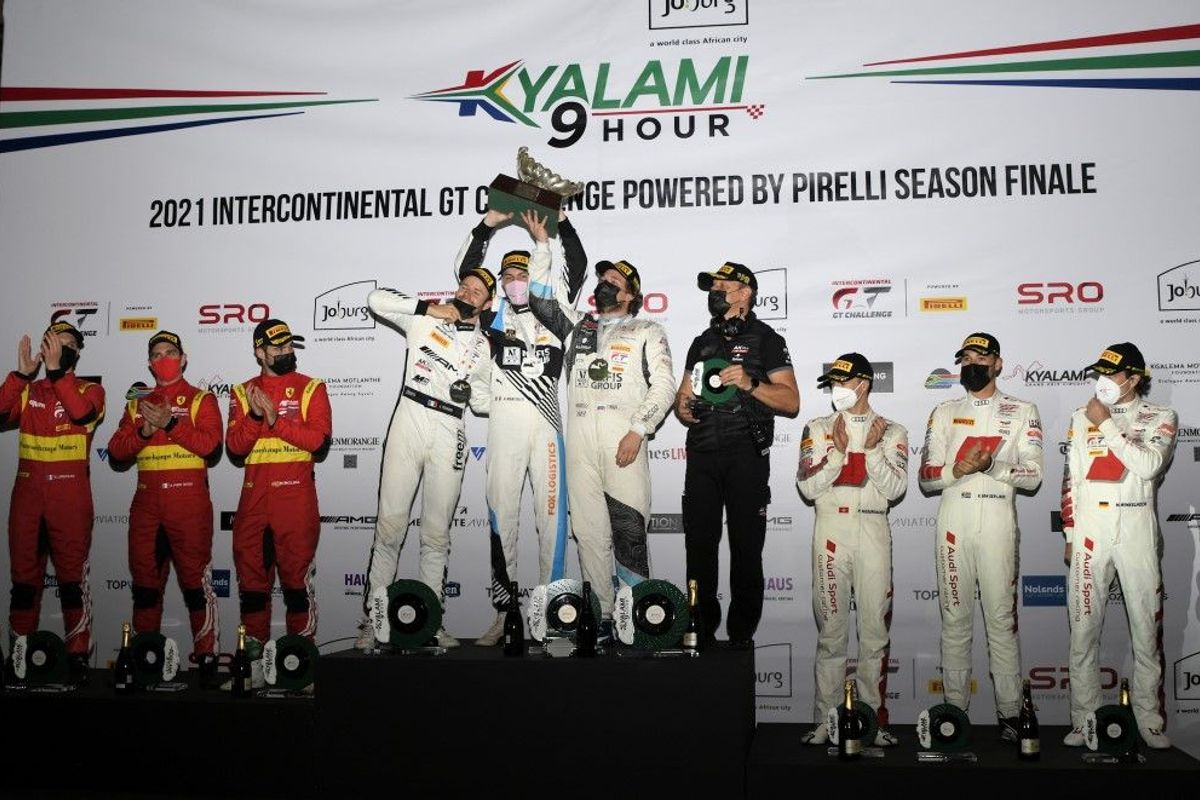
The AKKA ASP Racing Mercedes-AMG crossed the line to win the 2021 (yes, that is technically correct) Kyalami 9 Hour at the weekend. And although not as many cars entered the race as in the past, the storylines that unfolded during the Intercontinental GT Challenge – powered by Pirelli, were quite compelling, Ernest Page (who was part of the broadcast team) reports.
As is the case with so many (otherwise carefully planned) public events these days, the 2021 Kyalami 9 Hour, which was due to take place in December last year, had to be postponed at the very last minute due to the outbreak of the Omicron variant of the Covid-19 virus. Teams and organisers were aghast at the thought of ending the championship without its much-anticipated final race…
Therefore, in the time-honoured South African tradition, the organisers made a plan. And, on 5 February 2022, the modern rendition of this classic race took place once more. As the South African national anthem rang out and the nation’s flag was flown at the opening ceremony, many, including yours truly, had a lump in their throats.
For me, the big story was seeing all of those spectators, many of them with their right hands held to their chests, getting ready to experience the spectacle of motor racing for the first time in nearly 2 years. A few years ago, I would have said that circuit racing was in its death throes in the Republic, but thanks to us being confined to our homes for much of the past 24 months, we’ve become quite starved for outdoor entertainment.
It was refreshing to see the masses being out in force, lighting braais at Barbeque (corner) and being festive again. It didn’t hurt that some of the coolest race cars that (lots of) money can buy were part of the live entertainment!
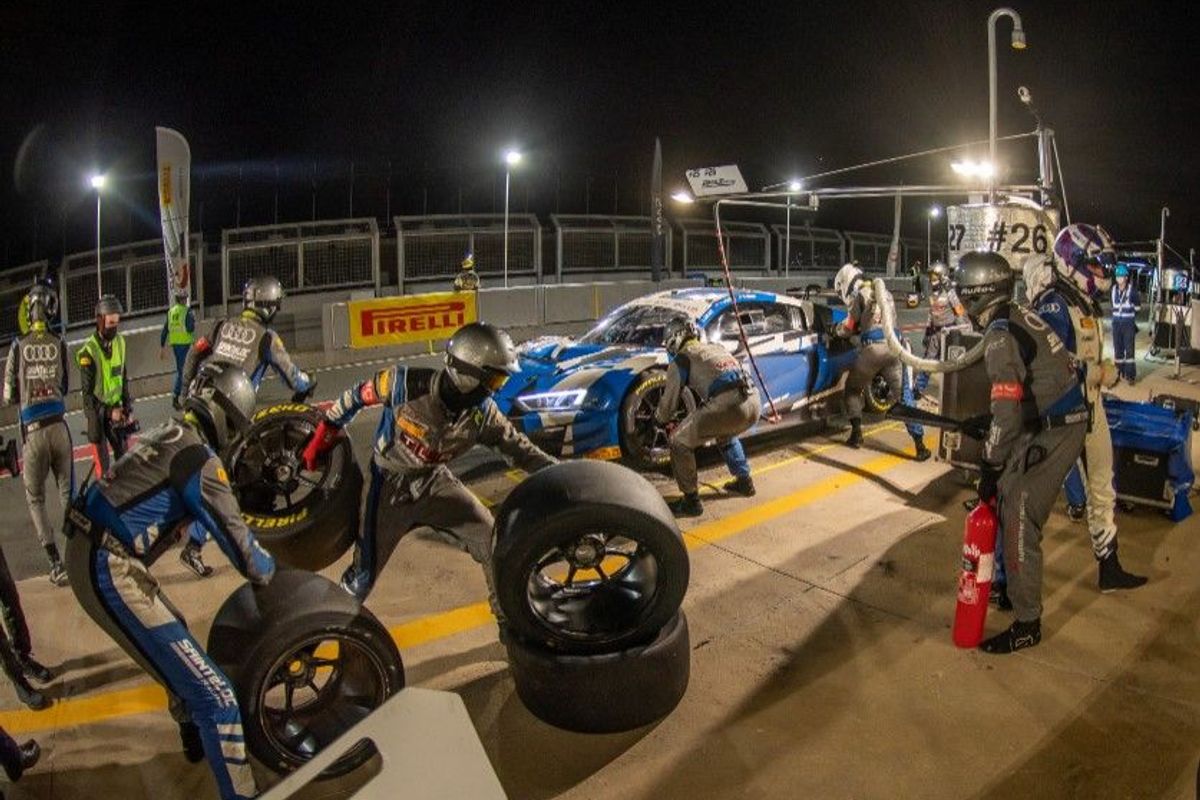
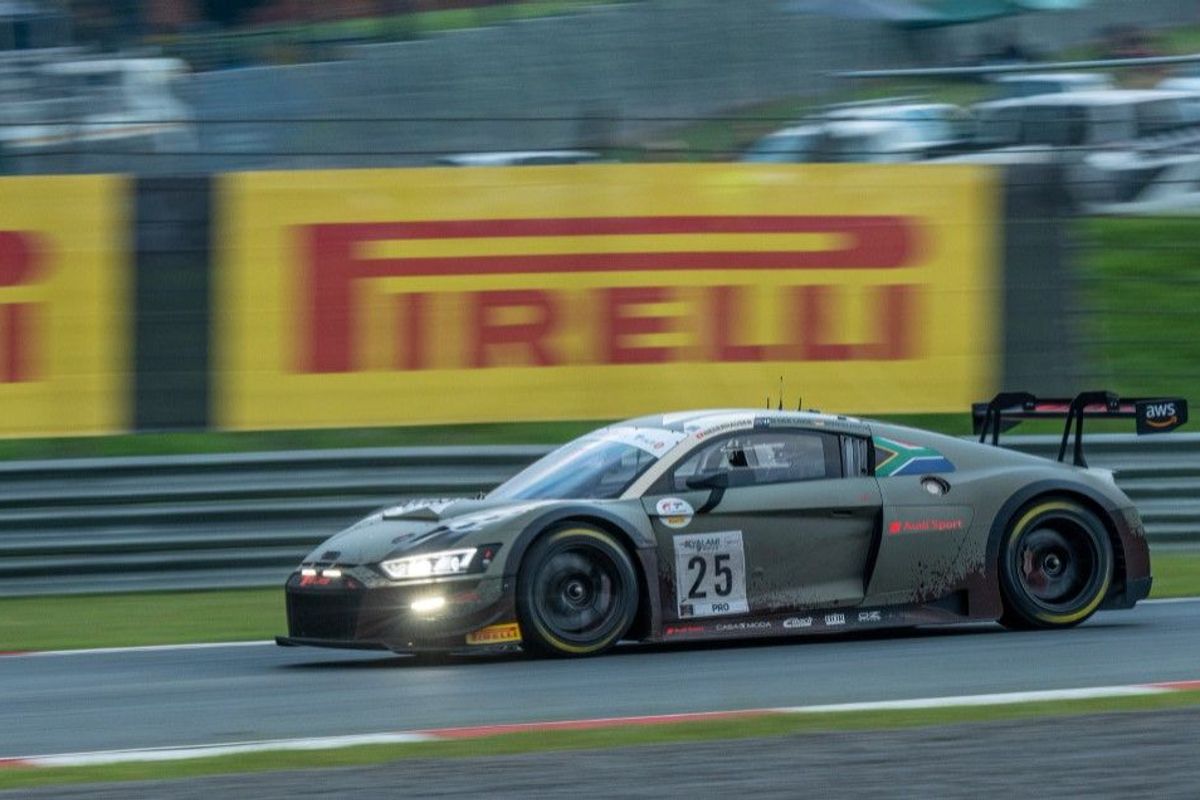
Kelvin van der Linde’s Audi GT3 made it to the podium in this year’s event.
With GT3 races taking place on most weekends these days, worldwide motorsport has seen an unlikely resurgence. On local soil, the South African GT series presents local drivers with an opportunity to go wheel-to-wheel with international drivers in an incredible season finale – the Kyalami 9 Hour. That’s something that’s been missing from SA motorsport for a long time. A feeder series, if you will, which draws participants from all over the world.
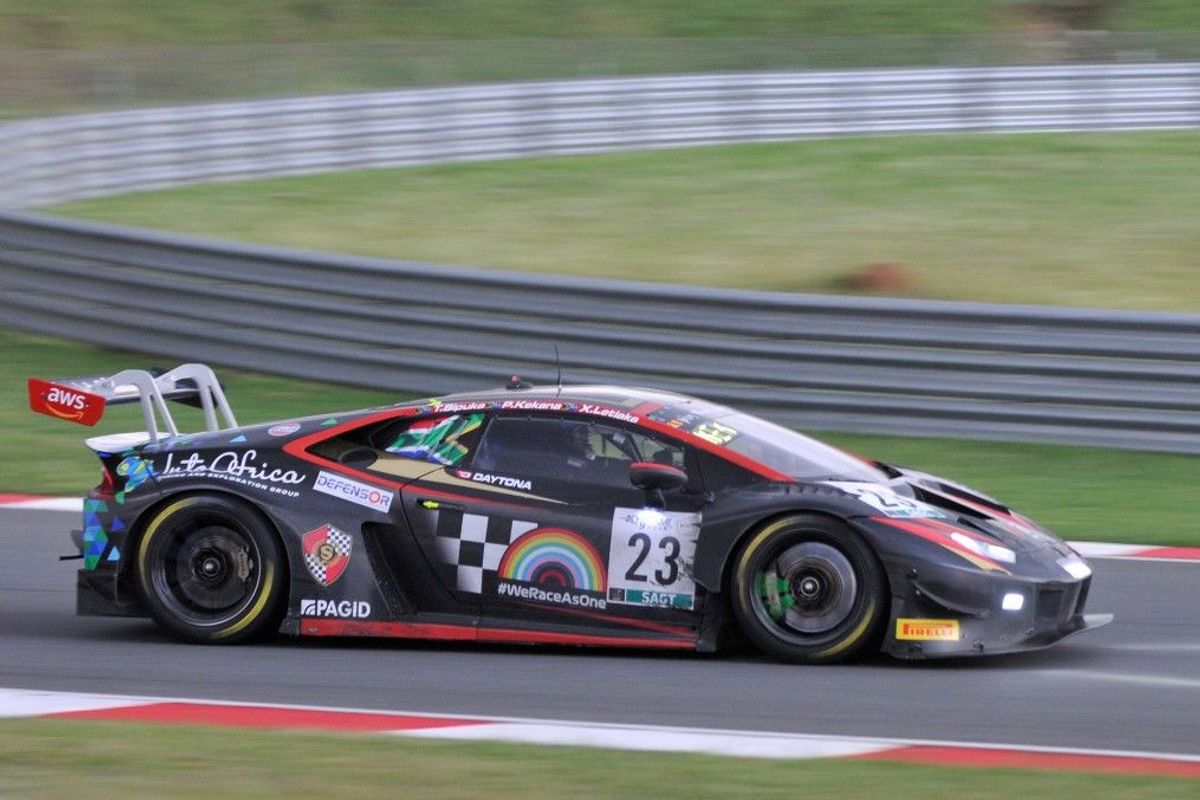
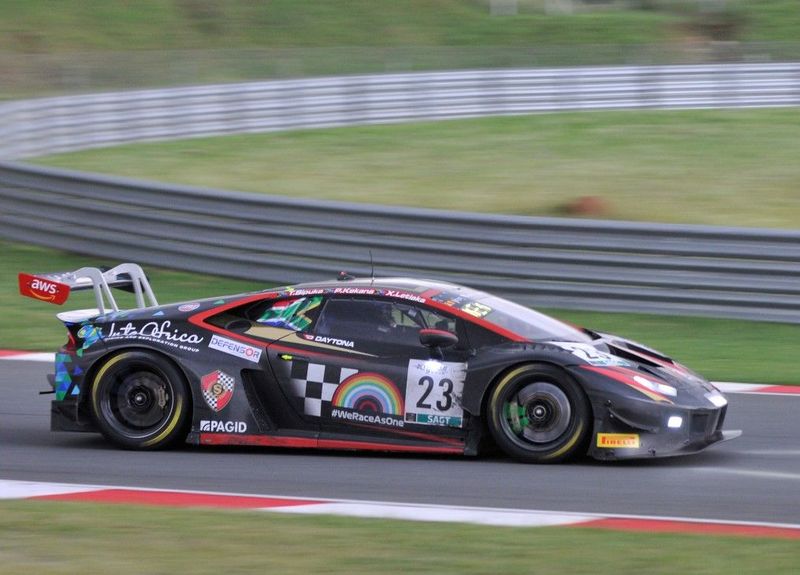
In that vein, our local heroes were very impressive, Charl Arrangies and the Stradale Motorsport team were fast enough to, albeit briefly, compete with the international squads and, who can forget the Into Africa team who became the first all-African team to not only compete in the Kyalami 9 Hour, but also finish it.
Comprising of local legends Tschops Sepuka, Phillip Kekana and led by Xolile Letlaka, they were an inspiration to many spectators at the Midrand circuit and people across the nation… the applause for them and their fellow SA drivers proved it. Other locals that had success was Scuderia Scribante, who won the locally run 1-hour race.
The local trio of Phillip Kekana, Tschops Sepuka and Xolile Latlaka in their Lamborghini Huracan GT3.
On the main stage, Mercedes-Benz crossed the line first, thereby ensuring that their 3 top drivers Jules Gounon, Raffaele Marciello and Timur Boguslavskiy etched their names in Kyalami 9 Hour history forever. Ferrari took the drivers’ championship and Audi won the manufacturers’ title. Now consider that each car has three drivers, a relatively large crew (and many hangers-on!), you have the makings of a racing after-party second to none.
The topsy turvy 2021 season is now finally behind us and South African motorsport has a lot to look forward to – and be proud of. We have always been able to cultivate the talent, and now finally, we have an international event in which we can showcase it. Yes, this type of racing is exorbitantly expensive, but because of the 3-driver system and the wealthy benefactors that have been willing to support this series financially, young talented drivers have a better chance of creating success here than in the even more expensive single-seater feeder formulas abroad.
If the crowds come back at the end of this year, and the production quality of the Kyalami 9 Hour is at the same level as – or higher than – the “2021” event, SA motorsport indeed has a brighter future, on and off the track.
Volkswagen Tiguan: What it’s like to live with
The Tiguan is Volkswagen’s best-selling model worldwide. It’s equally adept at serving as a runabout during the week and transporting families to fun getaway destinations on weekends. We spent a month living with the Tiguan to see why buyers flock to it; can the VW stand up against a volley of new competitors?
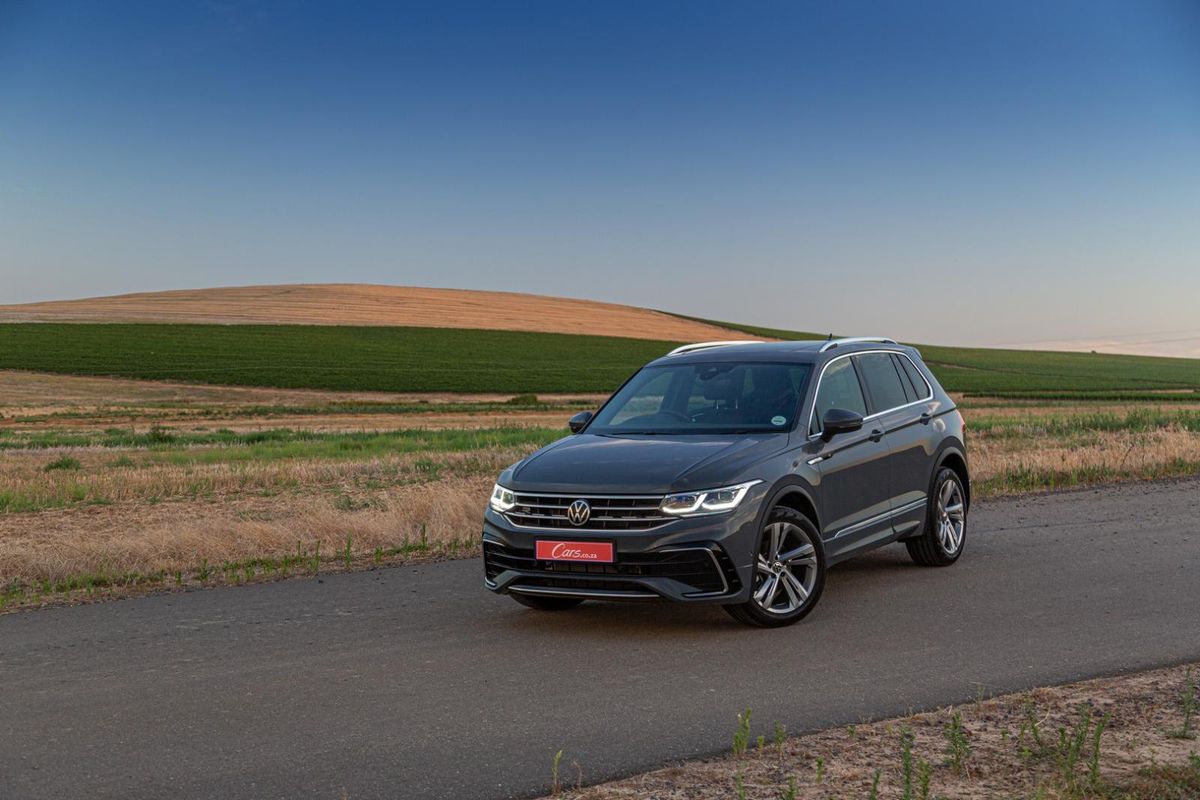
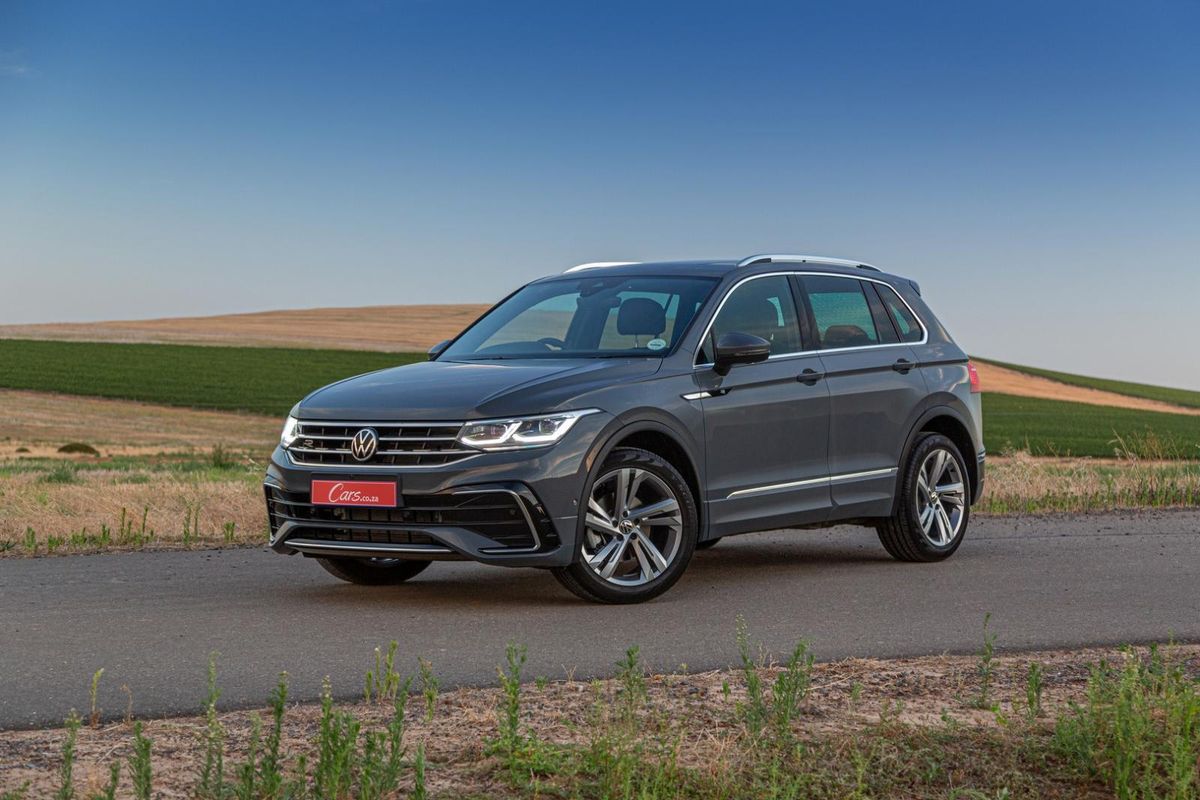
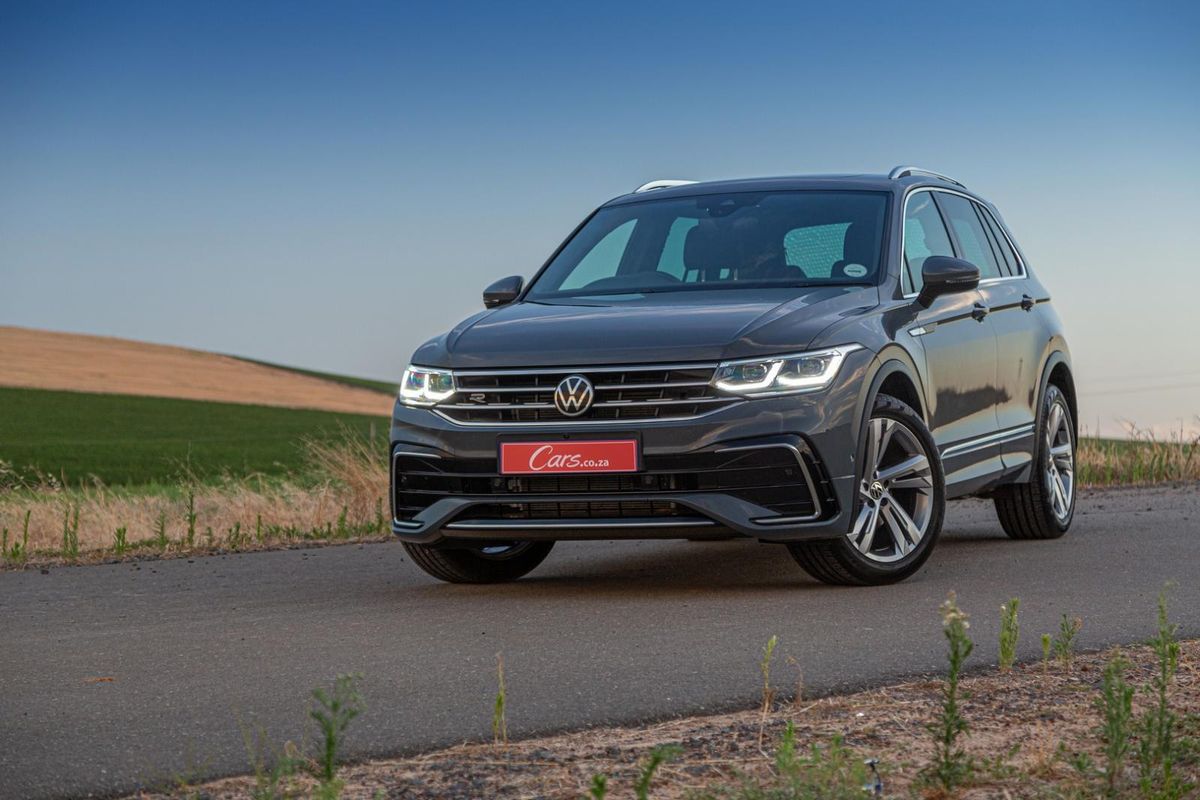
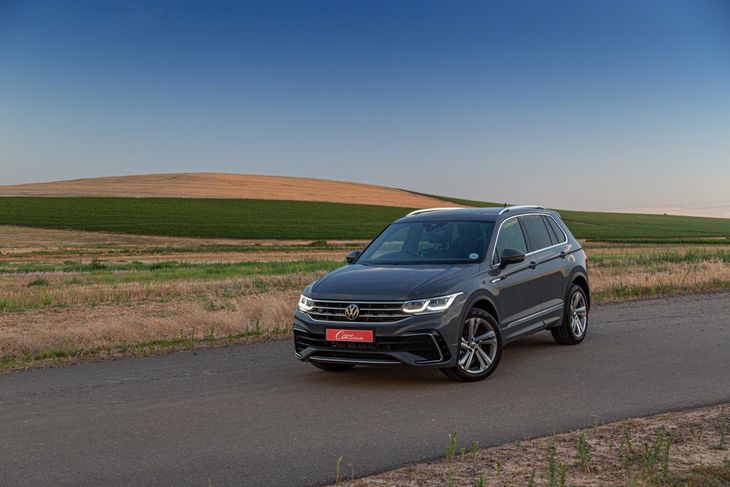
The Volkswagen Tiguan underwent a facelift in mid-2021. The update introduced a more muscular front end, more (optional) passive safety systems, as well as a touch-based infotainment array and climate control console. Volkswagen needs to eke out 2 to 3 years with this revised model before its successor arrives – this could be the last version of the Tiguan to feature an internal combustion engine (ICE).
Volkswagen’s ID range of electric cars already includes an ID4, ID5 and ID6, all of which cover the family SUV segment, so, considering all the R&D that has been invested in those EV models, one would be forgiven for thinking that the Wolfsburg-based brand will de-prioritise upcoming ICE models (effectively leave them on “life support” until the official end of ICE in 2030). Having said that, Volkswagen can’t afford to neglect its best-seller (at least, not yet), because the Tiguan is a cash cow that helps to fill the brand’s coffers. If VW AG wants to lead the EV race into the next decade, it’ll need deep pockets.
Industry problems aside, the Tiguan has always had stiff competition, but its latest – and perhaps most dangerous – rival is not produced by one of Volkswagen’s old foes, but a new brand that’s determined to increase its market share as fast as possible. The usual competitors, such as the Toyota RAV4, Mazda CX-5, Peugeot 3008, Hyundai Tucson, Kia Sportage and Subaru Forester, to mention a few, are still there. However, the real threat to the Tiguan hails from China. The newly-launched Haval H6 is selling up a storm; its ascent up the sales charts has only been curtailed by supply issues, but they’re likely to be resolved soon. It offers a lot of car, for a lot less money. While it’s more likely to steal sales from brands that don’t have Volkswagen’s brand strength, the German giant will be keeping an eye on Haval.
Desirable appliance?
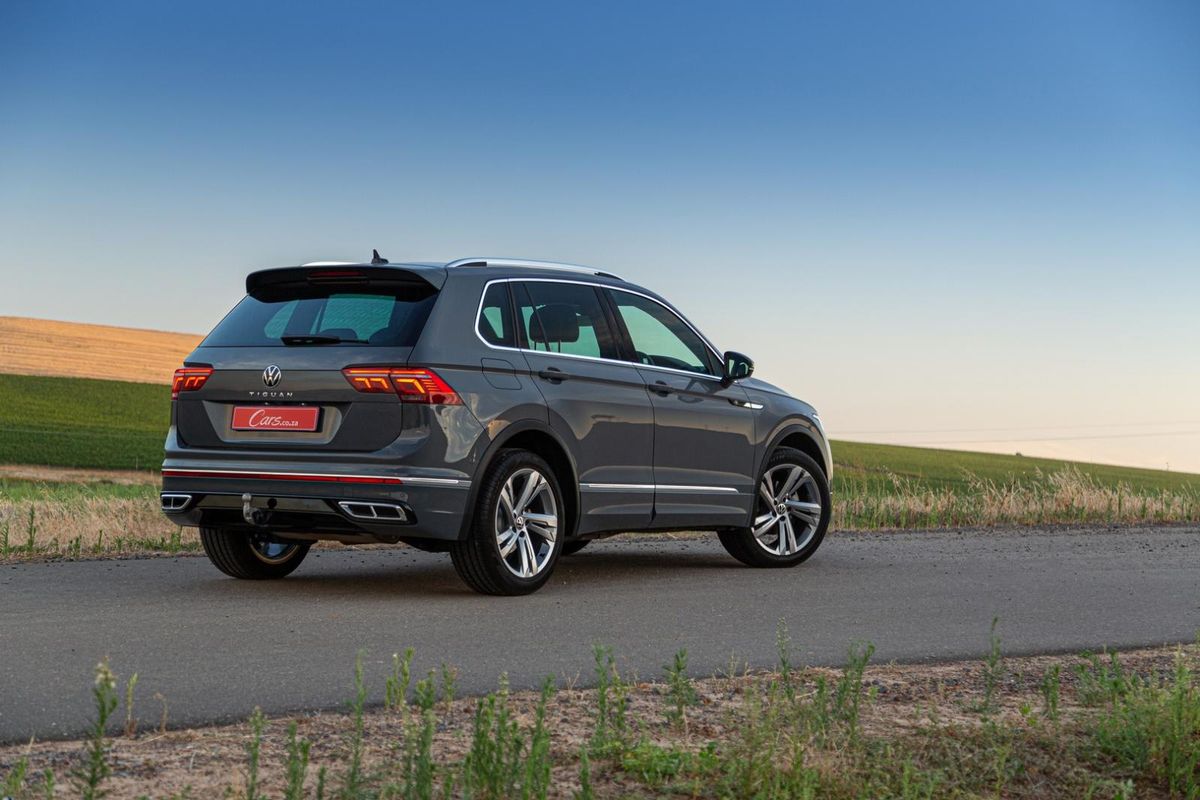
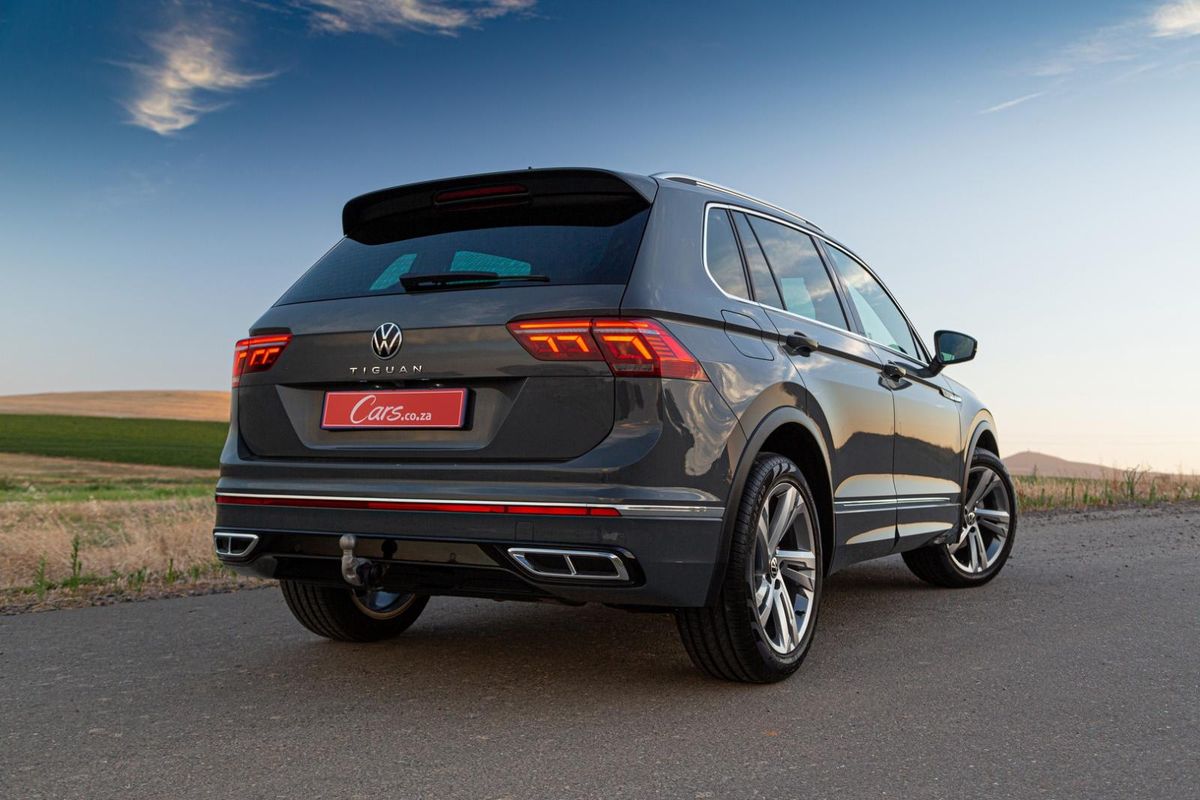
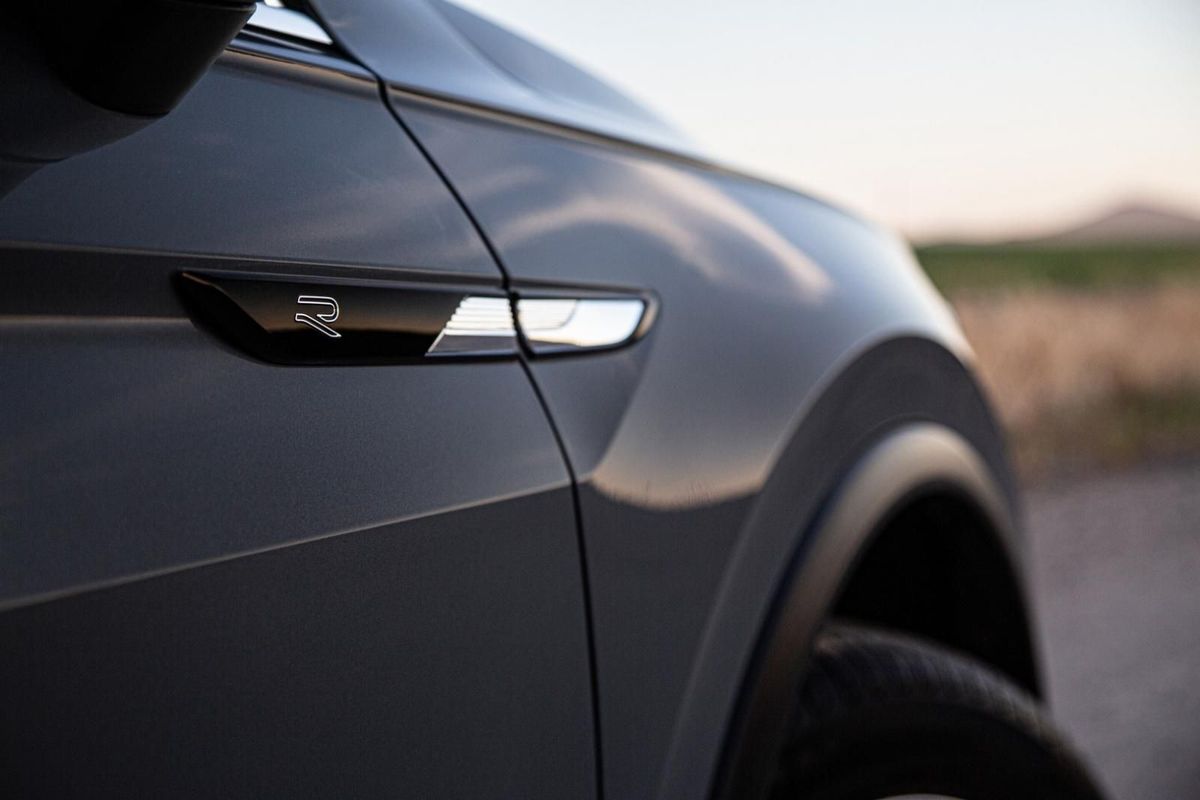
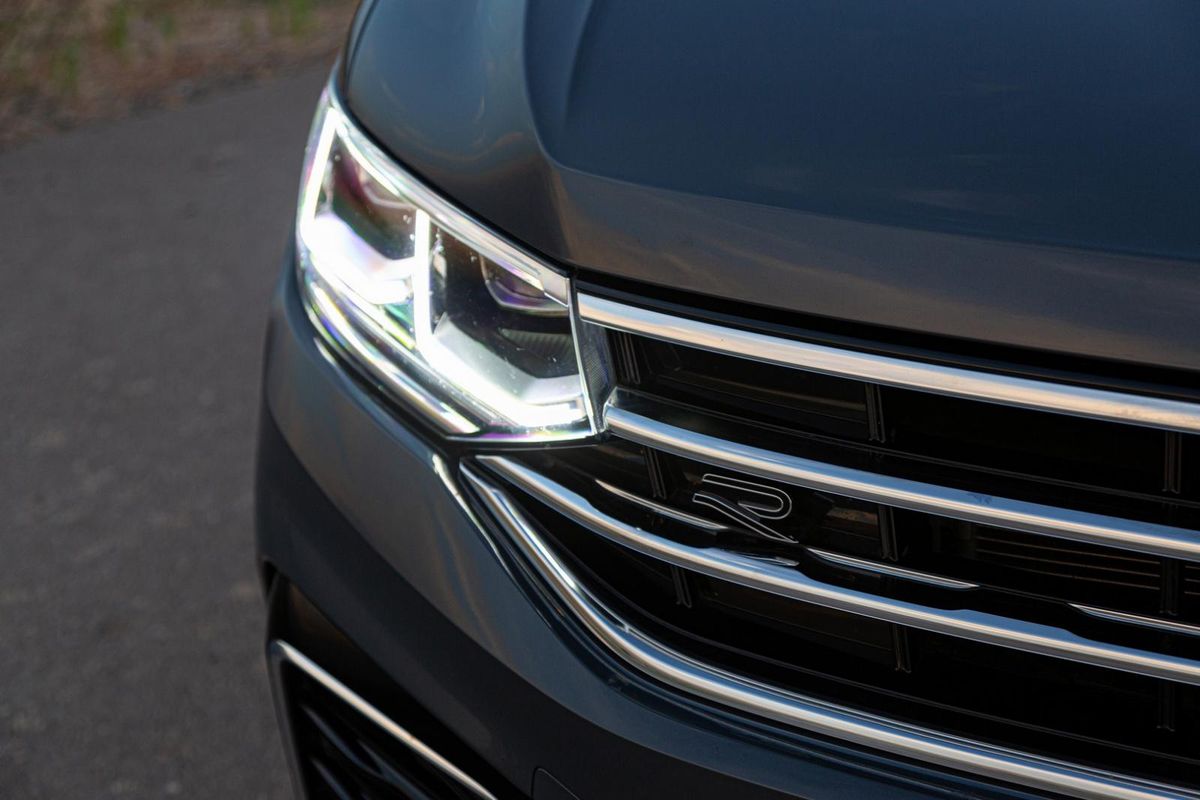
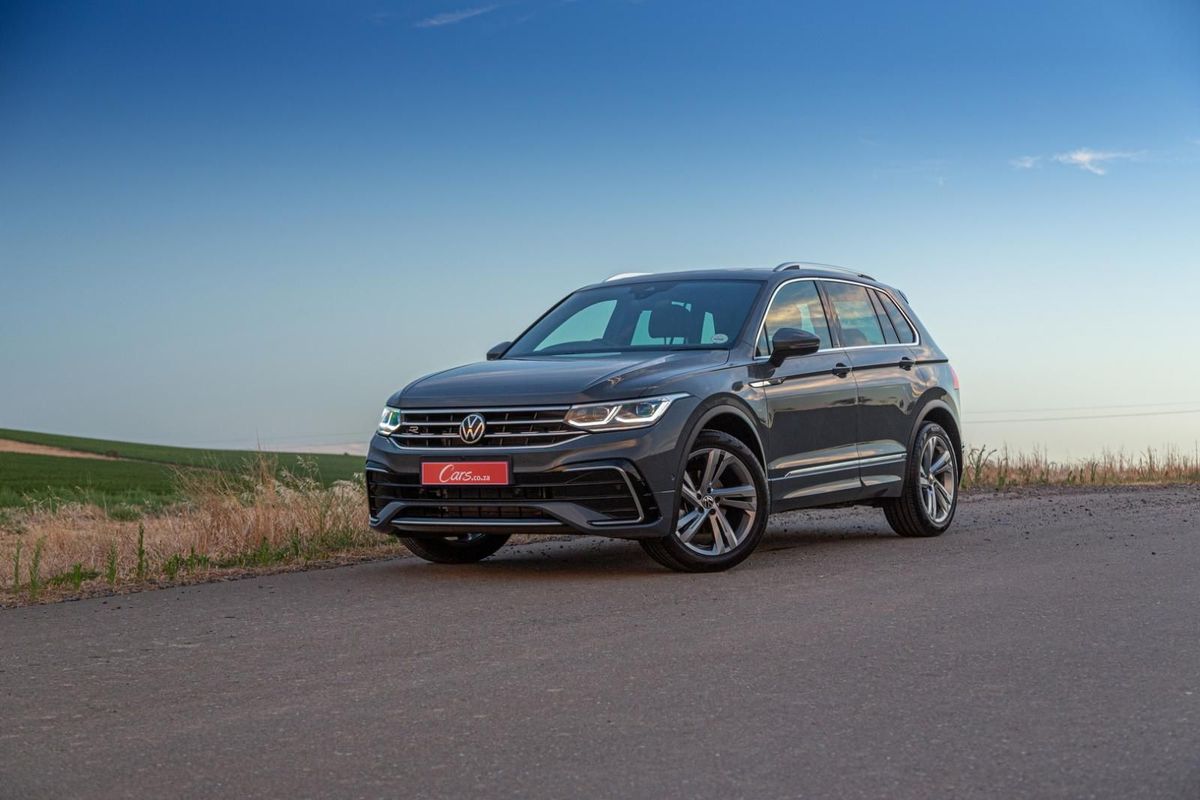
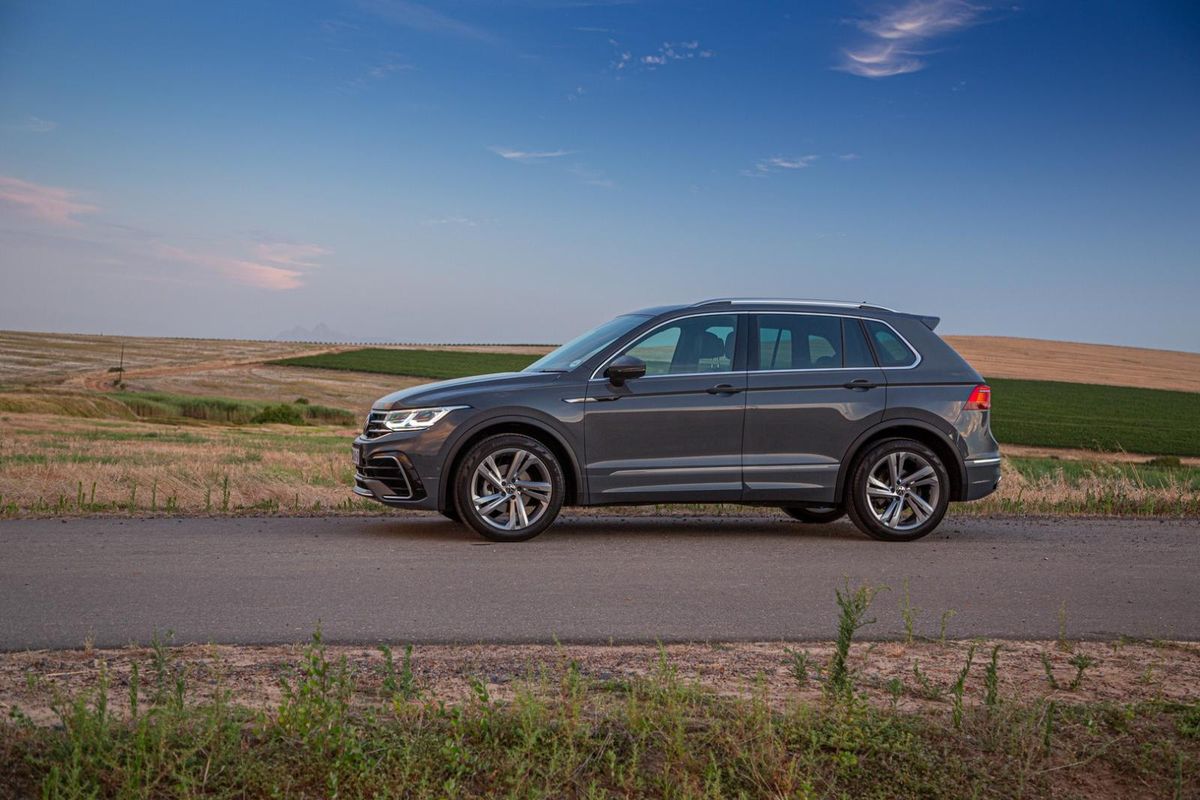
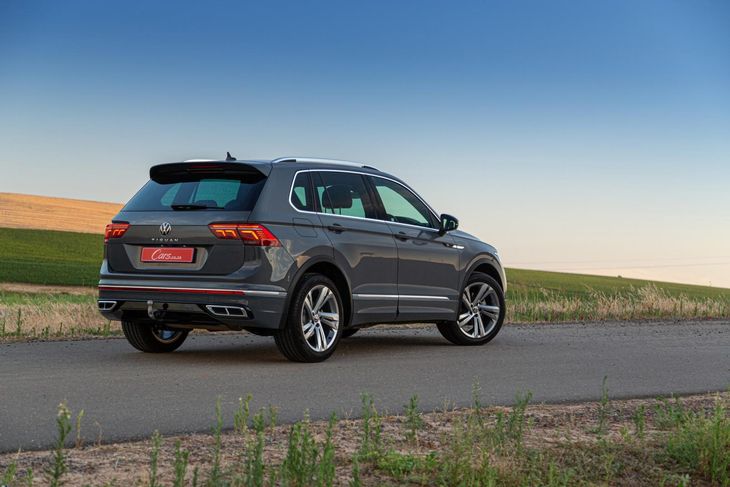
The R-Line body kit gives the Tiguan a little more road presence.
In the Family Car segment, you need to be able to compete on every level… okay, except handling dynamism. What you end up with is something that’s extremely practical, versatile and, ultimately, a tool.
For something that sits at the upper end of the segment’s pricing – and that’s before you’ve added on any of a host of options, the Tiguan looks bland unless it’s equipped with the R-Line exterior package. Sure, those R-Line looks draw attention on the school run or when you’re pulling into the gym’s parking lot, but has the VW’s base prices increased to such an extent that you may overpay for that “cred”?
That’s up to you to decide.
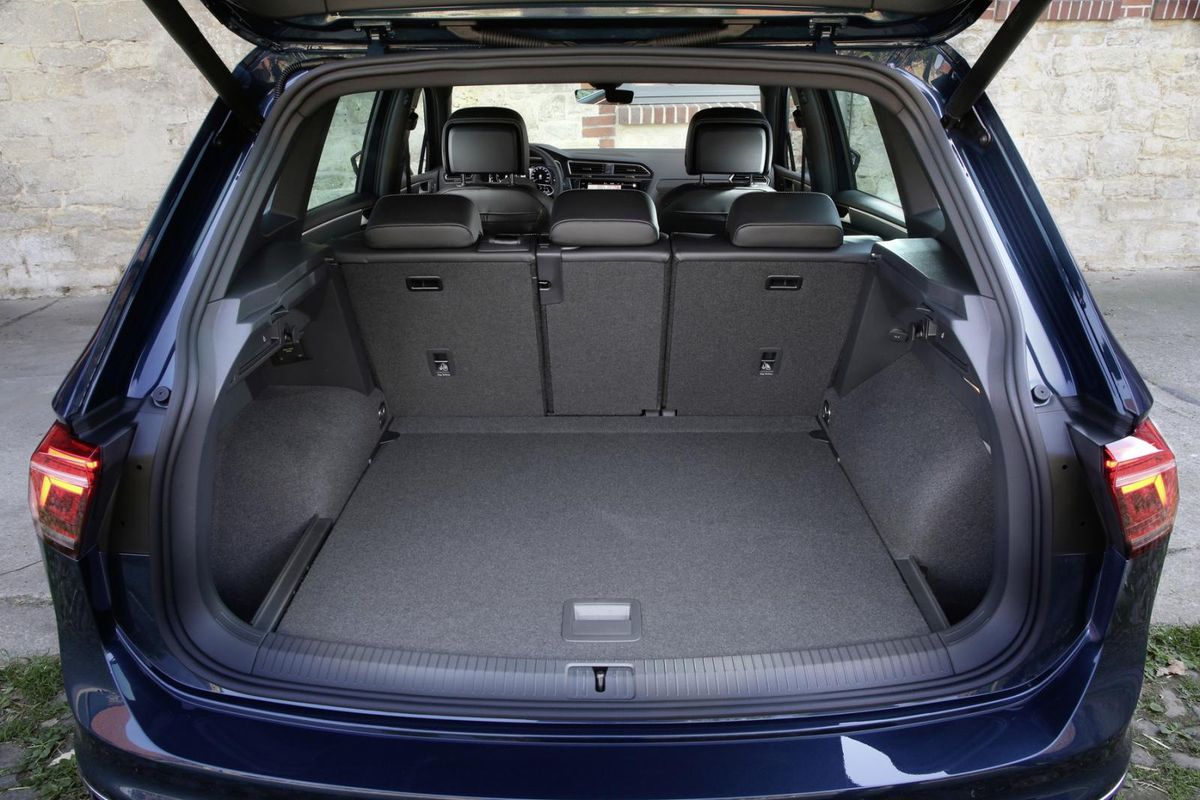
Meanwhile, is the Tiguan effective as a family SUV? First on the list of must-haves is practicality. Box ticked! The 520-litre load bay is more practical than its stated capacity suggests. It’s almost a perfectly flat square with minimal intrusion from the wheel arches, so it’s extremely easy to load in things, such as suitcases. There are neat little pockets at either end of the rear of the bay (for those smaller items you don’t want rolling around) and hooks on either flank for shopping bags, although reusable Woolies bags’ straps are a little too long to keep their contents from being deposited on the load-bay floor!
Dropping the rear seats is easy as pulling levers in the load bay or releasing latches to the sides of the seat benches. Practicality-wise, this space is enormous and the seatbacks fold perfectly flat. Without a doubt, when its rear seats are folded down, the Tiguan has one of the biggest load areas in the segment. I know this because I’ve tried to pack my mountain bike into all of the Tiguan’s competitors – this is pretty much the only bay that will accommodate my bike while its front wheel is attached. It’s my very own industry standard, if you will – it thoroughly tests the length and width of a family car’s load bay.
Easy-to-use tech… can be frustrating
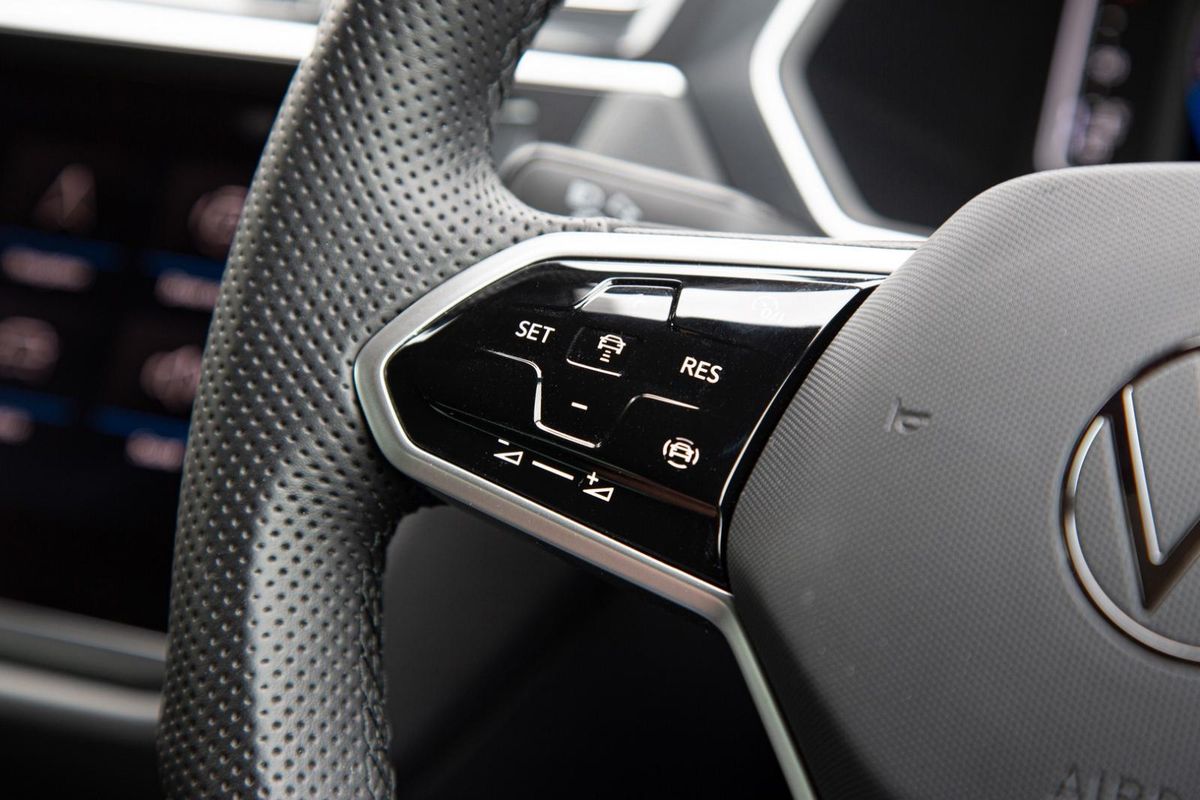
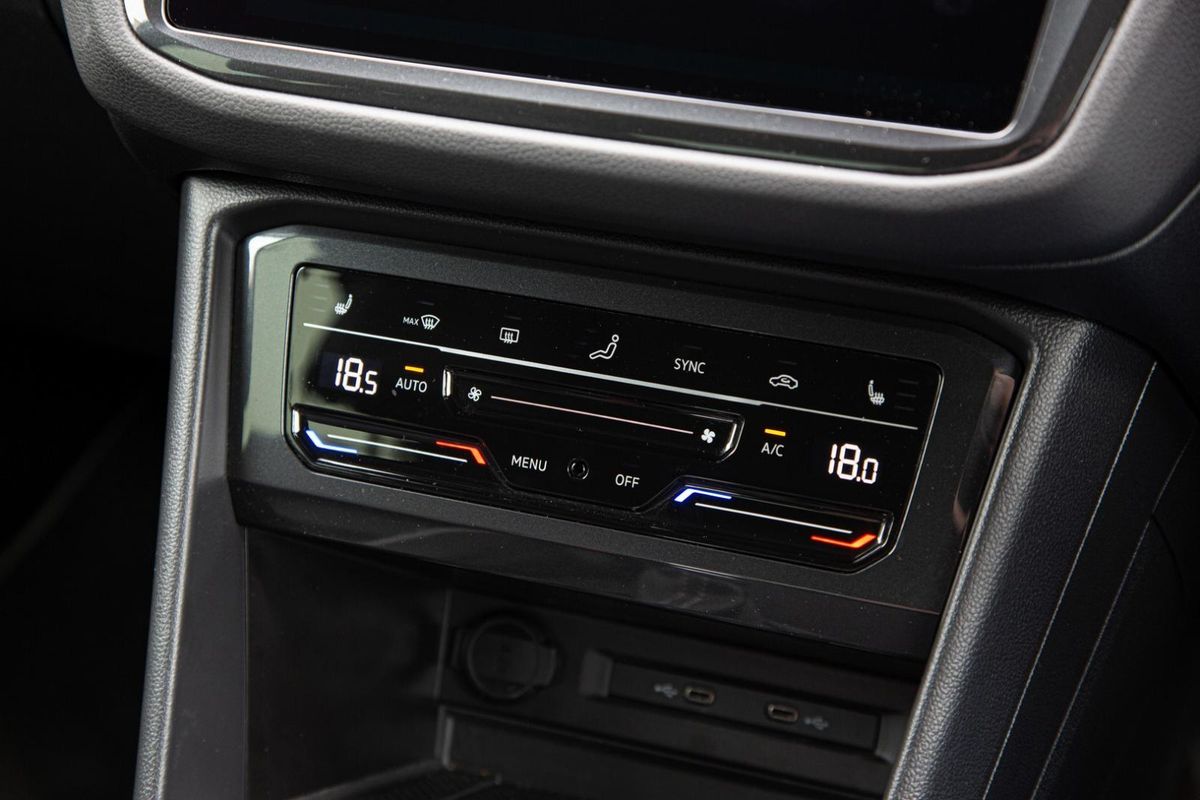
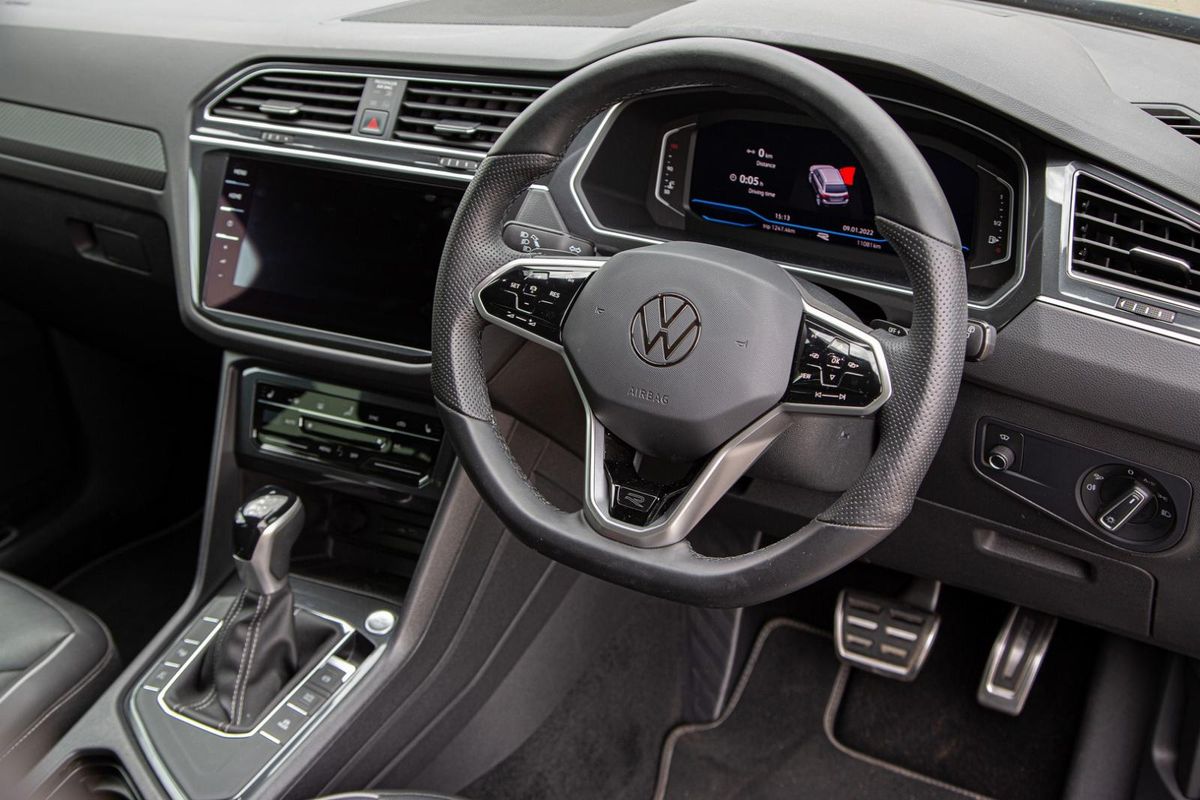
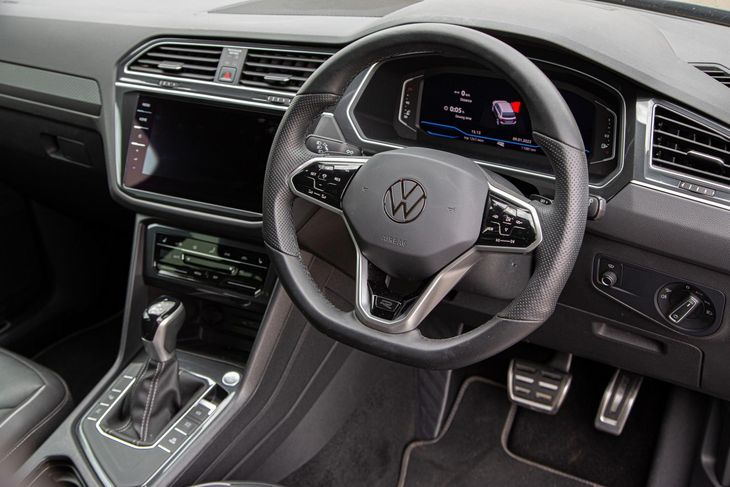
No physical buttons for the climate control or steering wheel toggles, they’re all touch-sensitive.
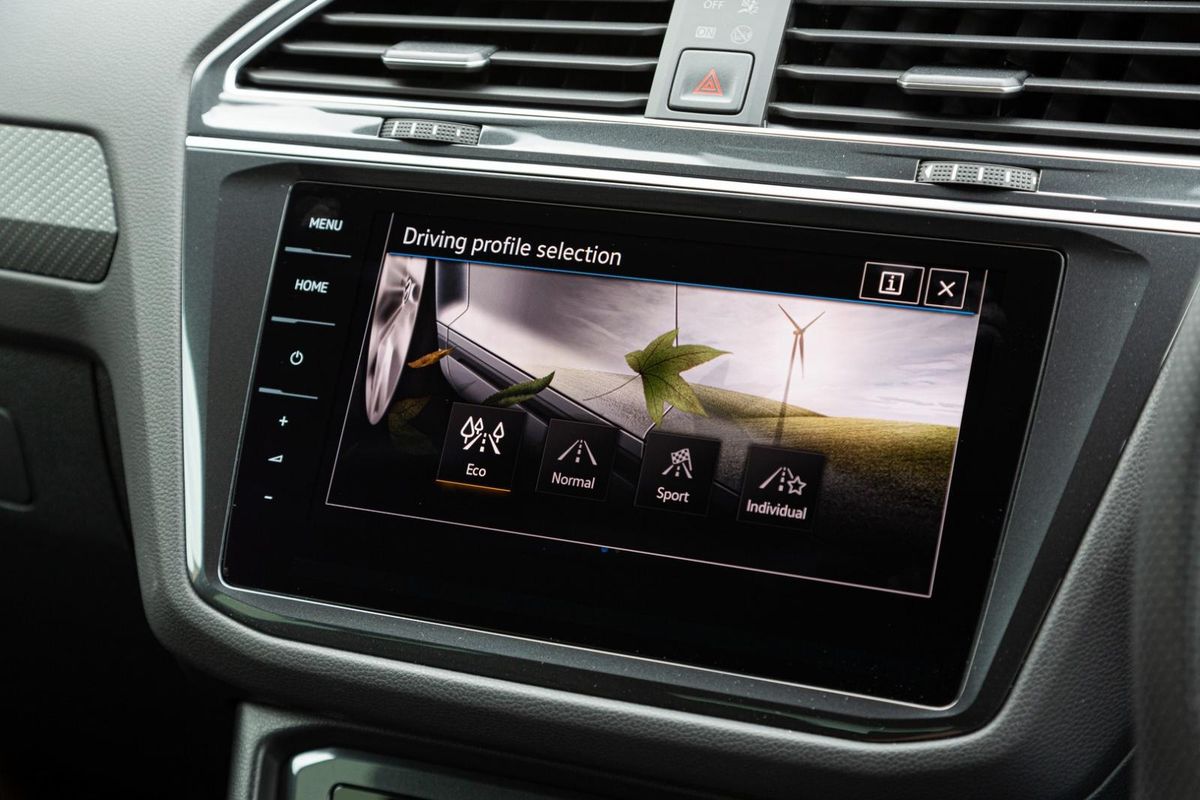
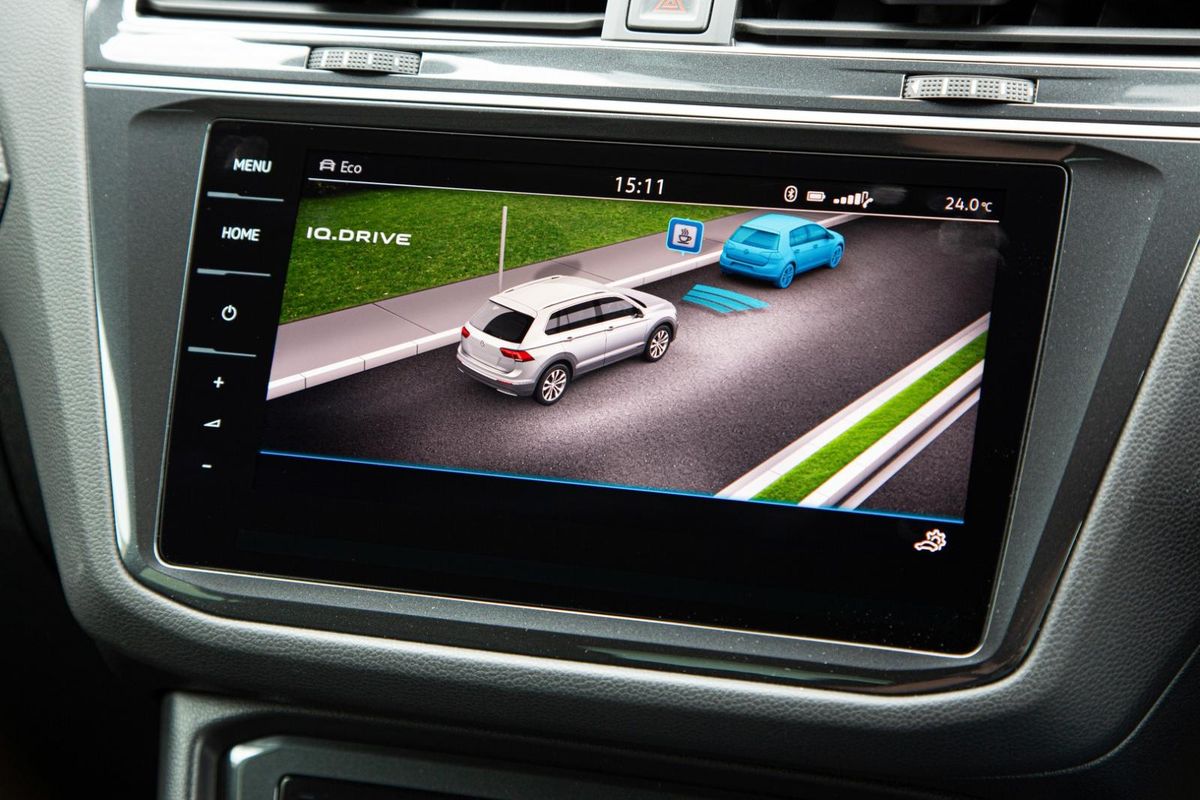
The move to digitise interiors to the extent that we need to be able to swipe or touch every control is very on-trend, isn’t it? Interacting with the Tiguan’s functions is exclusively done in this way and, in most instances, they’re a pleasure to use. The infotainment screen, for example, “readies itself” as your hand moves towards the monitor by raising a submenu with shortcuts. The system is quick to respond to inputs and seamlessly integrates with Apple Carplay and Android Auto. Our test unit had a wireless charging dock too, something you’re going to need if you use the communication systems via wireless connectivity. I’ve found that in most cars, Wireless Android Auto helps to declutter the cabin (fewer cables!) but it sucks battery power and can cause intermittent connectivity – and not only in Volkswagens.
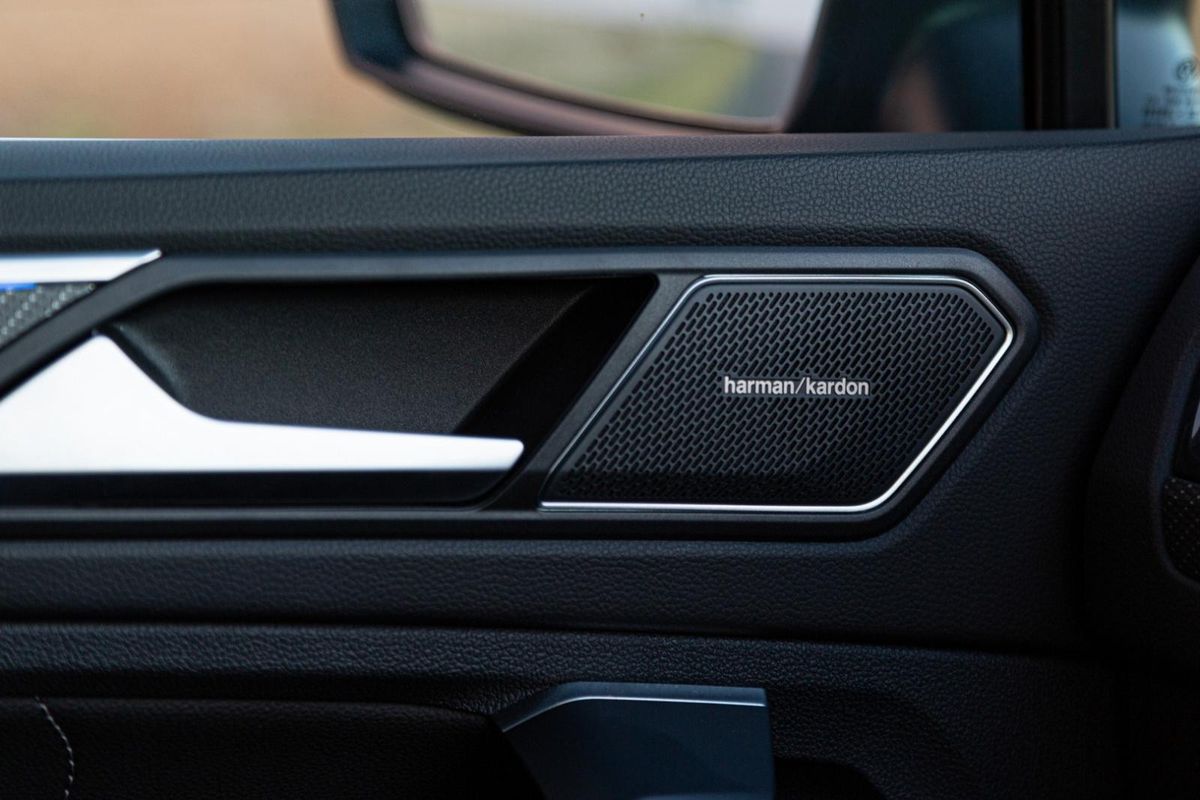
I’m not so convinced by the climate control console’s swipe functionality or the multifunction steering wheel’s touch-sensitive controls. I struggled to adjust the Tiguan’s interior temperature to the exact setting I prefer… so much so, that I eventually resorted to tapping the console (like you would a normal button). As a consequence, it takes longer to make an exact adjustment than it would if I used an old-school knob! The same goes for the steering wheel controls – as you slide the volume knob, it either doesn’t adjust the volume on the Harman/Kardon system… or cranks it up to Foo Fighters concert levels.
I admit, all the touch-sensitive buttonry looks great and when you first use it, it feels flashy and exciting, but after living with it for a while, you will either love it – or dearly miss the days of clicking buttons.
Once you figure out how to stroke the steering wheel “buttons” effectively, Volkswagen’s best tech systems spring to life. The adaptive cruise control is excellent at adjusting to the pace of preceding traffic, even when a huge truck suddenly veers into the overtaking lanes in front of you. Other car brands’ systems can be quite abrupt and analogue in how they deal with vehicles that pop into the radar’s range.
Is the 1.4-litre turbopetrol the right choice?
The 1.4-litre turbopetrol is frugal if a little bit plain to drive.
The 1.4-litre 4-cylinder turbopetrol engine has served the Volkswagen Group’s small/medium car portfolio dutifully. In this car, the Tiguan 1.4TSI 110kW R-Line, the engine powers the front wheels only – if you want 4Motion (all-wheel-drive), you have to lump up another R68k, but that actually isn’t all that much if you consider that you’d get 162 kW and 350 Nm (from a 2.0-litre turbopetrol) compared with the 1.4’s 110 kW and 250 Nm. If your budget can stretch to the 4Motion derivative, it’s worth the extra layout due to the added usability of all-wheel-drive. Just watch that R-Line kit on the rough stuff.
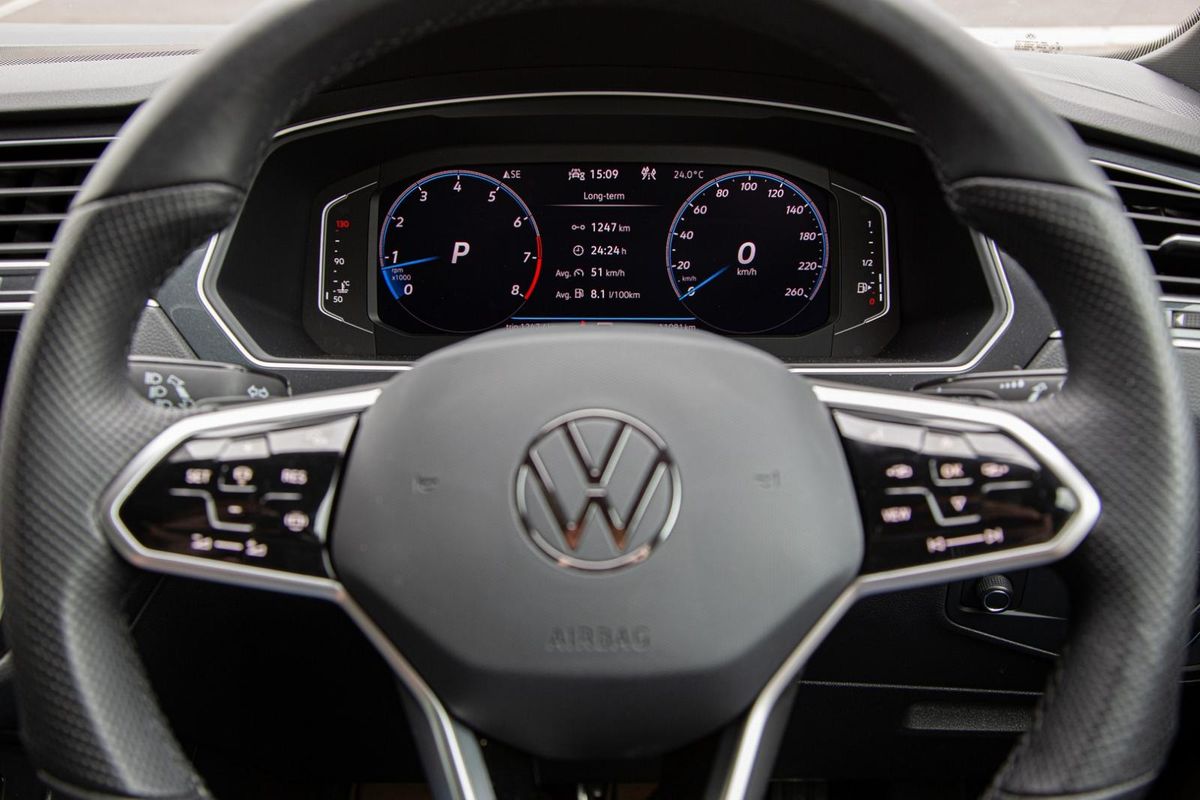
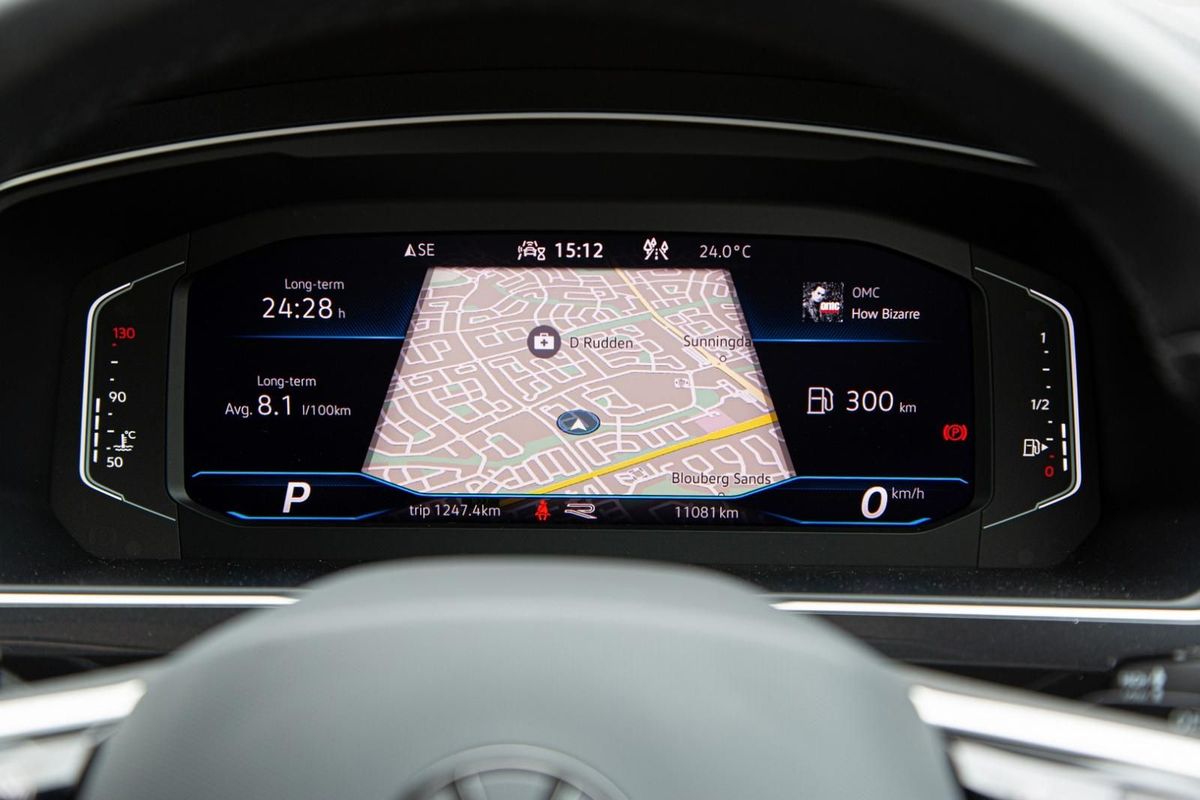
As for the smaller-capacity engine, it proved quite frugal… After a month of running around in Cape Town (during the busy festive period, no less), the Tiguan 1.4TSI 110kW R-Line indicated a fuel consumption figure of 8.1 L/100 km. I’m confident that figure would have dropped close to Volkswagen’s claimed consumption figure (7.7 L/100 km) if the test unit did a few more long highway stints.
The Tiguan’s 6-speed dual-clutch ‘box is as good as any automatic transmission (and better than the CVTs) in the segment, although I found it would occasionally fumble when required to accelerate from a slow roll. It sometimes selected first gear. When that happens, the powertrain engages a bit more boost than you really want and the Tiguan tends to set off as if it has been woken abruptly.
The overall refinement of the engine and transmission combo is good, which is one of the reasons that the Volkswagen’s cabin is so quiet. There’s nothing particularly characterful about the 1.4TSI 110kW R-Line’s performance, as you’d expect from the motor’s mild outputs. However, this family SUV is priced at the top of its segment, so most buyers are bound to expect a consummate package.
Should you buy a Tiguan?
The facelifted Tiguan is not immediately as easy to recommend as it was when it was launched in 2016.
When this generation of the Tiguan arrived in local showrooms in 2016, it was easy to recommend. Simply put, it was the best model in its segment – aided by Volkswagen’s brand reputation and extensive dealer network, the Tiguan won its category in the 2016/17 Cars.co.za Consumer Awards. However, the facelifted model demands an even bigger premium over its rivals than before and that’s before you spec options such as the panoramic roof, wireless app connectivity, parking camera system and semi-autonomous driving tech (including auto emergency braking). As impressive as it is, the Tiguan’s pricey.
What counts in the Tiguan favour, however, is that its rivals are also ageing and none of them is superior to the Volkswagen. New models of the Hyundai Tucson and Kia Sportage will arrive in Mzansi this year, which could see the VW’s market share decline. Having said that, if Haval continues to offer its H6 at R140k less than the equivalent Tiguan, all the legacy brands’ family SUVs are going to struggle.
Renault Clio V6 Review – On track in Renault Sport’s rear-engined super-hatchback
When our video guy Ciro De Siena was offered a drive in one of the rarest cars ever made, he jumped on a plane to Jo’burg to make it happen. For Ciro, this was a dream come true; the Clio V6 has always been one of his hero cars.
Renault only ever made 1 309 of the Phase Two Renault Sport Clio V6, making it rarer than a Ferrari F40. Inspired by the incredibly successful rally-going Renault 5 Turbo, the Clio V6 was a modern incarnation of that frankly bonkers hatchback.
Shoving a naturally aspirated 3.0-litre V6 into the boot and sending the power through a manual transmission to the rear wheels, Renault created a wonderfully unique sports car formula that no other manufacturer has tried to put into production since.
These cars are worth a small fortune these days, if you can even find one, and after a thorough shakedown, Ciro reckons they’re worth every cent.
A huge thank you to the owners for allowing us to drive and film this car for our channel.
No more new petrol and diesel engines from Nissan.
Nissan has become the first Japanese automotive company to structure a disengagement from internal combustion engine development. The decision was alluded to, as the company announced its latest quarterly earnings.
The Japanese industry faces significant disruption as China, Europe, and parts of the United States rapidly demand more electrified powertrain choices.
For Nissan, the issue is complicated by its bakkie business. As part of the broader Alliance (including Renault and Mitsubishi), there is shared scale and electric powertrain development. But bakkie customers in most Nissan markets are still very content with large capacity V6 and V8 engines. Not to mention, turbodiesels.
Despite the bakkie business being core to Nissan’s product portfolio, its R66bn R&D budget will now be channelled to powertrain technologies beyond internal combustion.
As the only part of the Alliance with a credible presence in North America, Nissan can’t rely on Renault or Mitsubishi to share the burden of sustaining large capacity bakkie and SUV engines. Ironically, Renault will continue to share some of those profits, which flow to Paris, regardless of its negligible contribution to North American bakkie design and engine development.
There will be some future evolution of the current petrol engines for Nissan’s American customers. But for the brand’s global turbodiesel customers, things don’t look that great.
What about South Africa? As a global production hub for Navara, there is no question that Nissan’s announcement will trigger greater urgency concerning hybridization. Loyal followers of the Navara nameplate can also suspend any optimism about a notable improvement in the current diesel engine portfolio.
If the local industry and supply chain cannot create momentum around batteries and electric motors, Nissan South Africa could run into issues later this decade. Nissan will continue to tweak the engine architectures it has, but don’t expect any breakthrough technology shifts with its petrol and diesel engine line-ups.
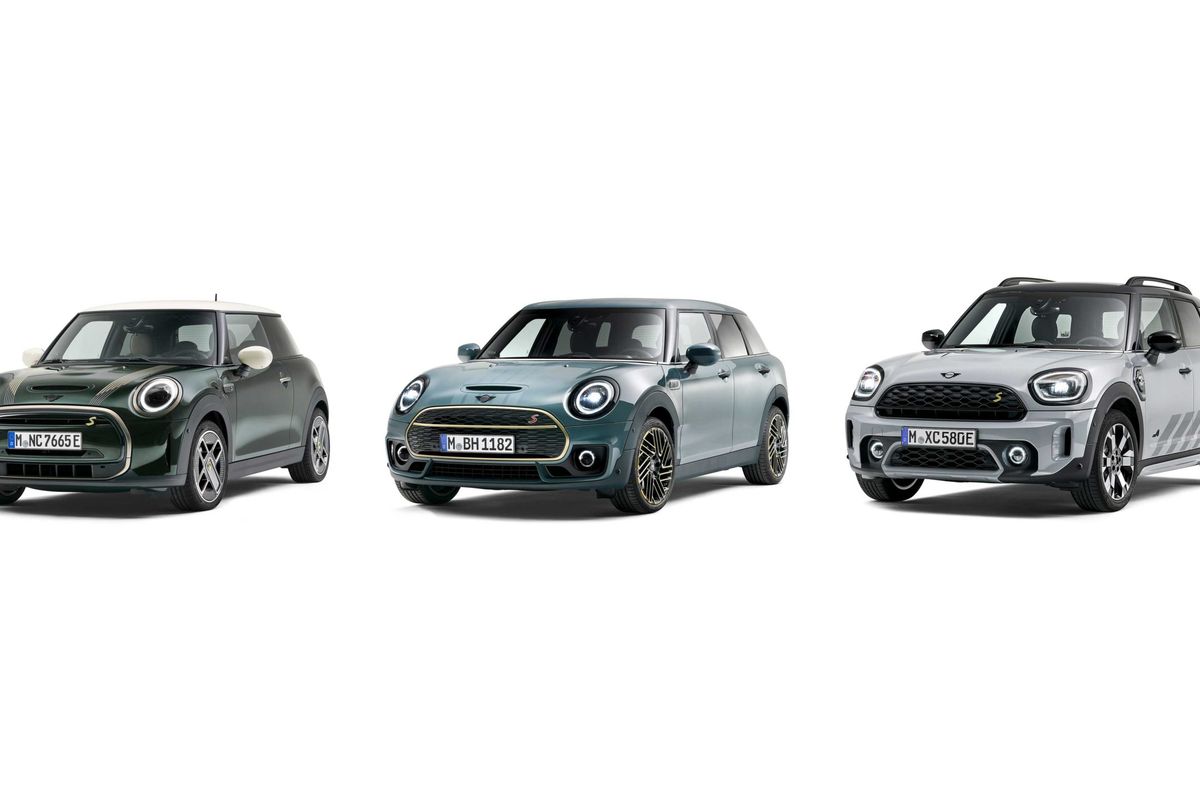
Mini will be upping the ante across its entire model range with the simultaneous introduction of distinct Edition derivatives due to arrive in South Africa in Q3 2022.
Mini fans in South Africa are in for a treat as the British marque is preparing to launch not one but 3 unique Edition models across its range at the same time.
What Mini Edition models will be offered in SA?
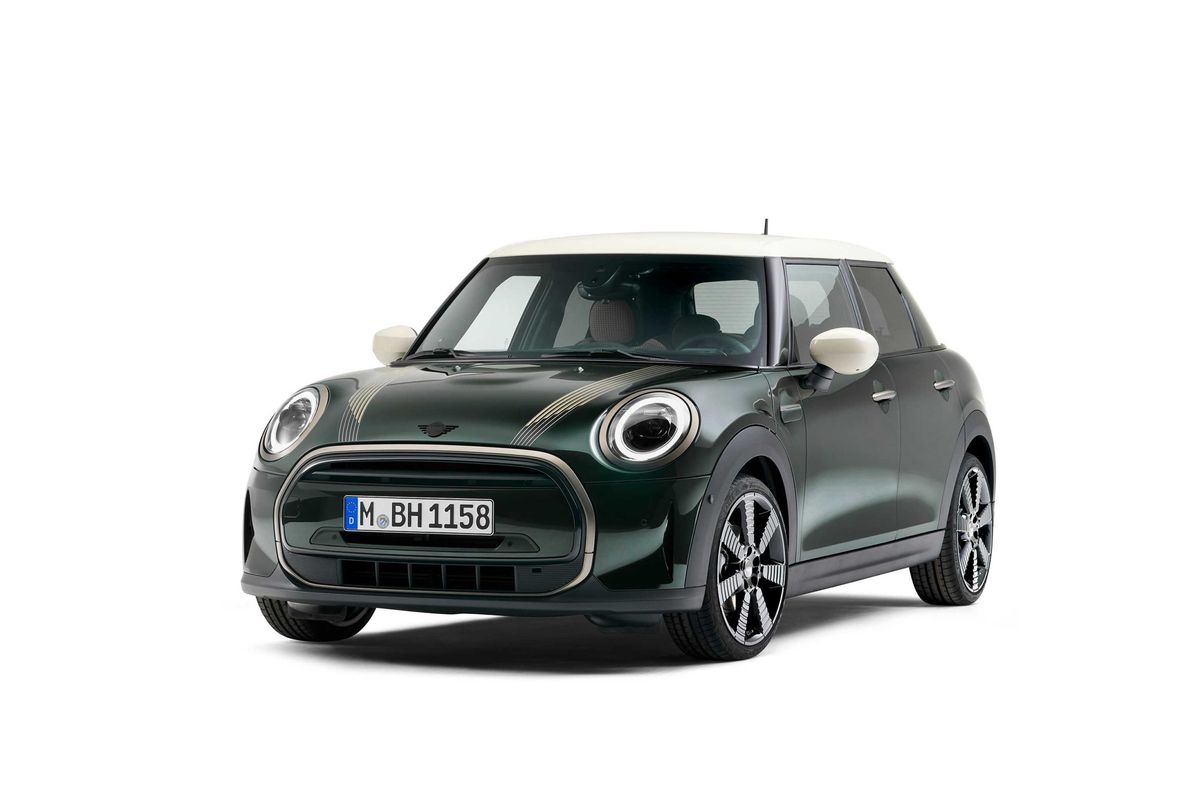
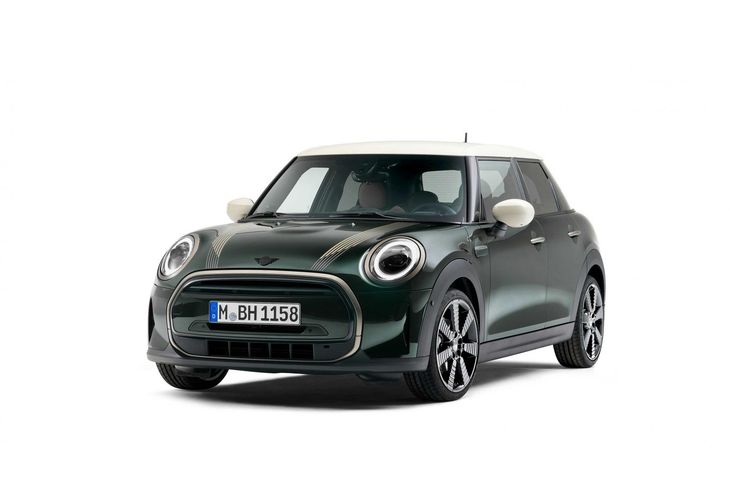
The Mini 3-door, 5-door, convertible and the all-electric Cooper SE will be offered as the Resolute Edition. The Mini Clubman Untold Edition and the Countryman Untamed Edition will also be available to buyers.
Each Edition will have its own distinct character with specific styling cues (including striking colours and wheel designs) and decorative elements which are also carried over to the interior. Over and above the standard features, customers will be able to build on the specification with model-specific Comfort, Driver Assistance and Connected Packages. Furthermore, features such as a panoramic sunroof, Harmon Kardon HiFi speaker sound system, adaptive chassis and a Steptronic sport transmission can also be had if you wish.
Features for Mini Resolute Edition
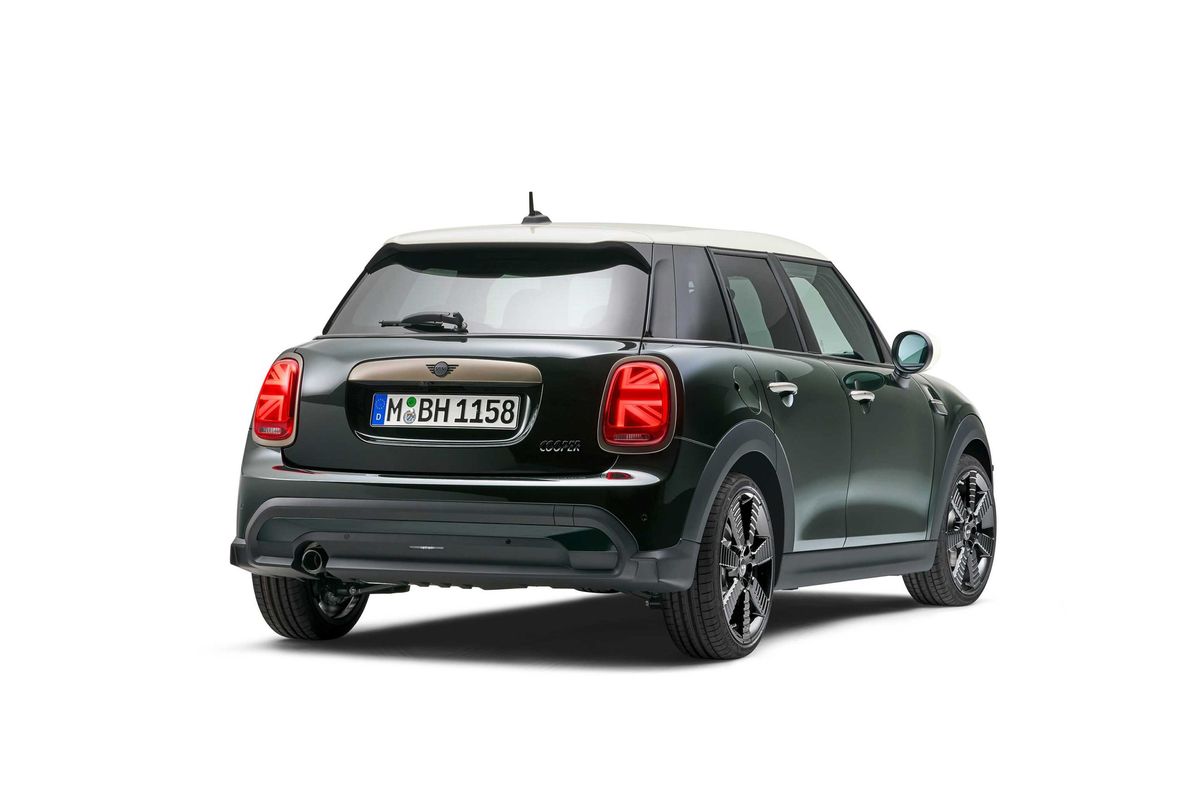
Key features for the Mini Resolute Edition include a traditional-style colour scheme and Mini has done away with chrome elements (also for future models). The Resolute Edition in Rebel Green, which was an exclusive colour for the Mini JCW, combines a Pepper White Roof and white side mirror housings on the Mini 3- and 5-door versions. The roof and mirrors on the Mini Convertible Resolute Edition are finished in black. Other details include Resolute Bronze finishes seen on the headlight surrounds, grille, side scuttles, door handles, tailgate and tail lights.
Furthermore, the Resolute Edition features bonnet stripes and parallel line patterns on the door sills in shades of gold with the “RESOLUTE” lettering making it clear that this is an Edition model. The Resolute Edition rides on 18-inch alloy wheels in a Pulse Spoke Black design while the Cooper SE gains 17-inch alloy wheels in Electric Collection Spoke design. Alternatively, Mini will also offer 17-inch alloy wheels in Tentacle Spoke Black design for all models.
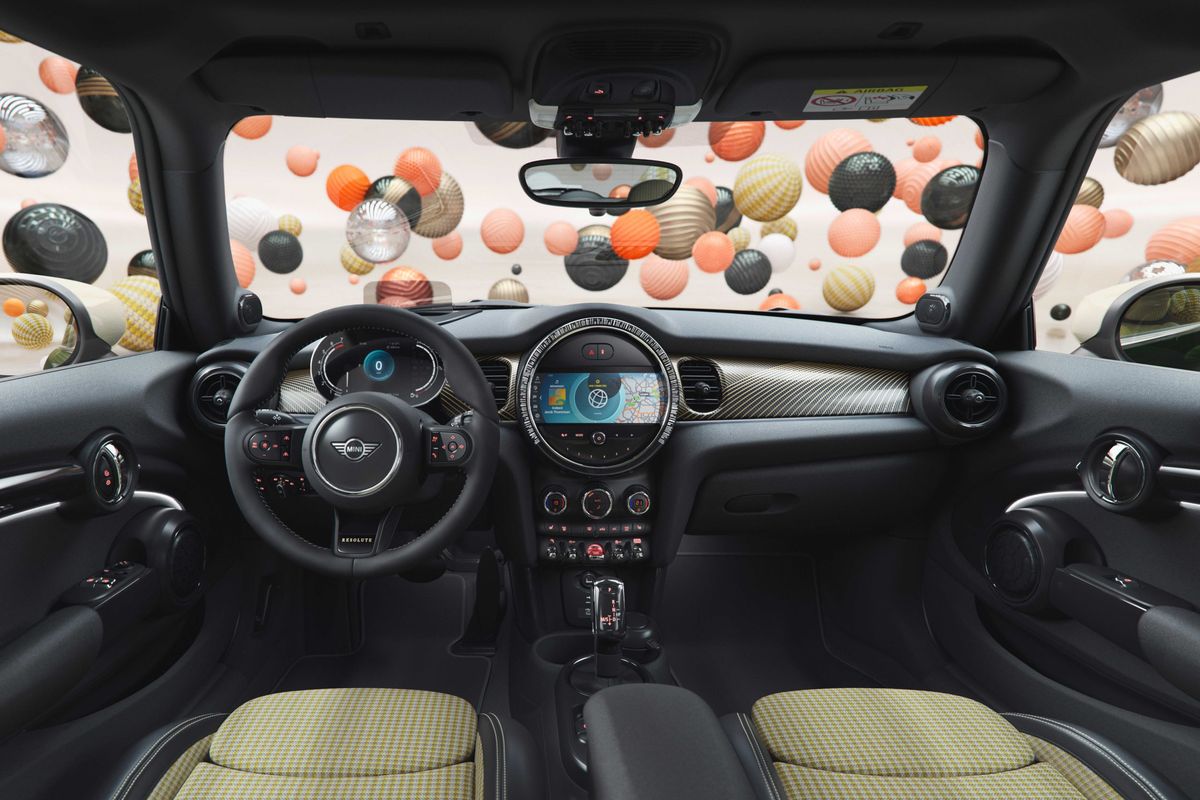
Moving inside, the Resolute Edition gains sports seats finished in Black Pearl Light Chequered fabric and leather combination. The Mini Yours Leather Lounge in Carbon Black is also offered as an option. The Nappa sports leather steering wheel gains an Edition emblem and the headliner in the 3- and 5-door models is finished in anthracite.
Features for Mini Clubman Untold Edition
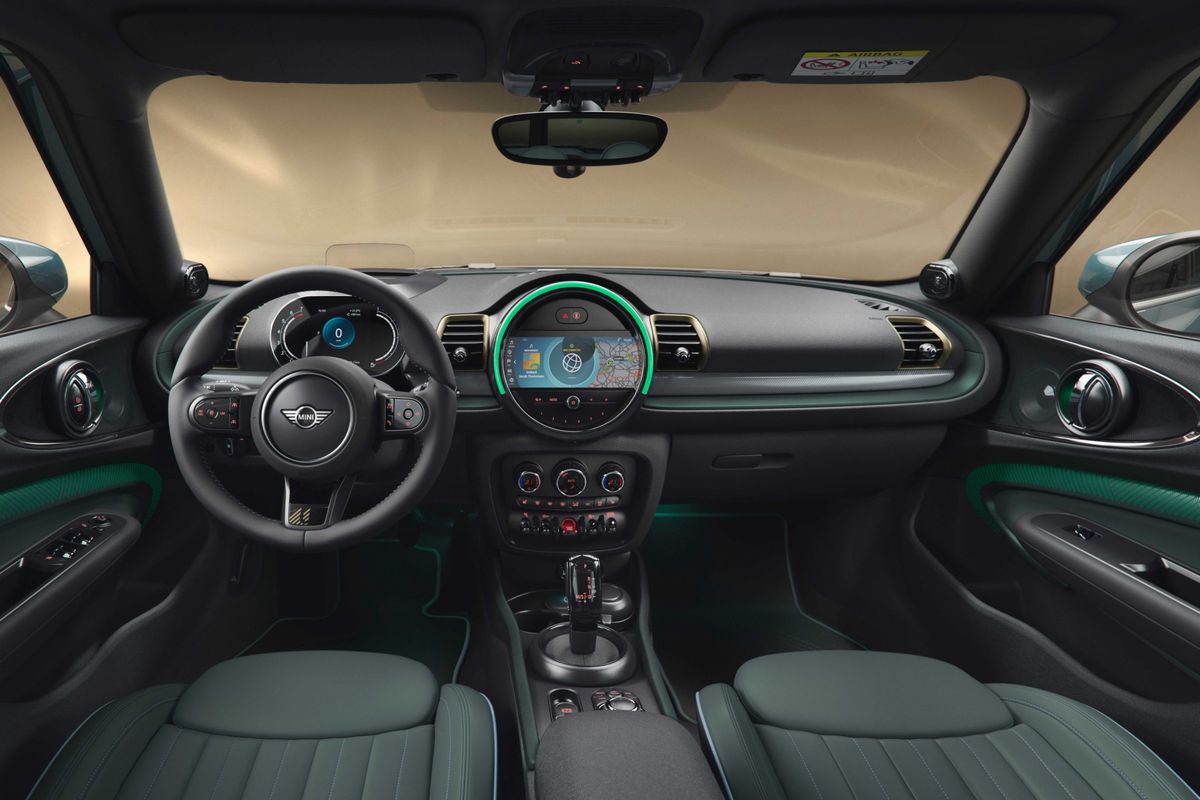
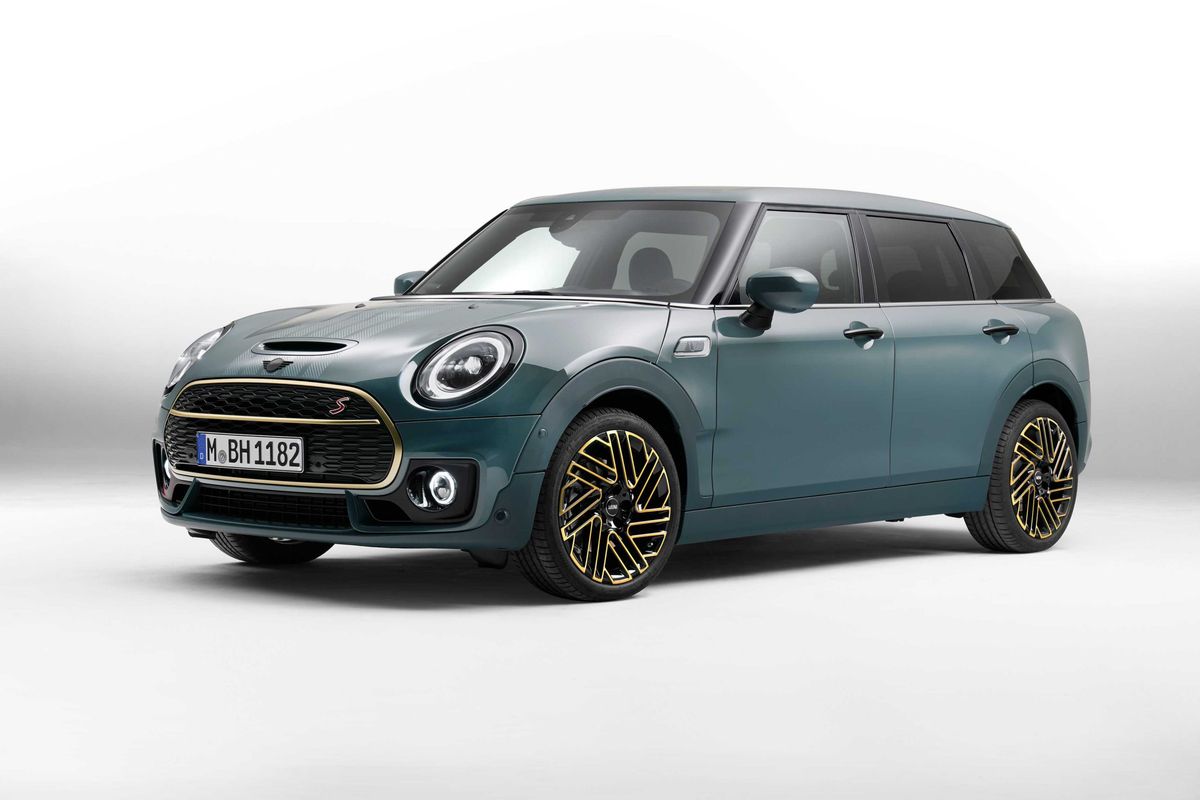
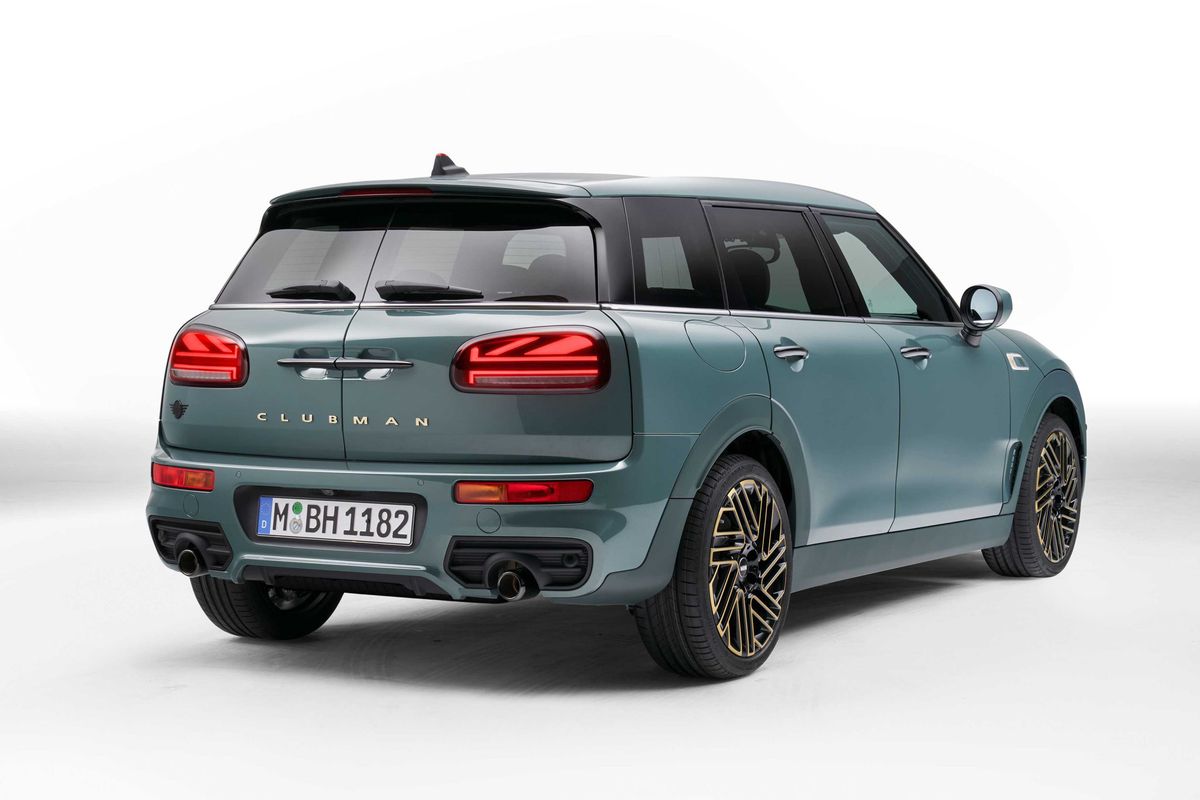
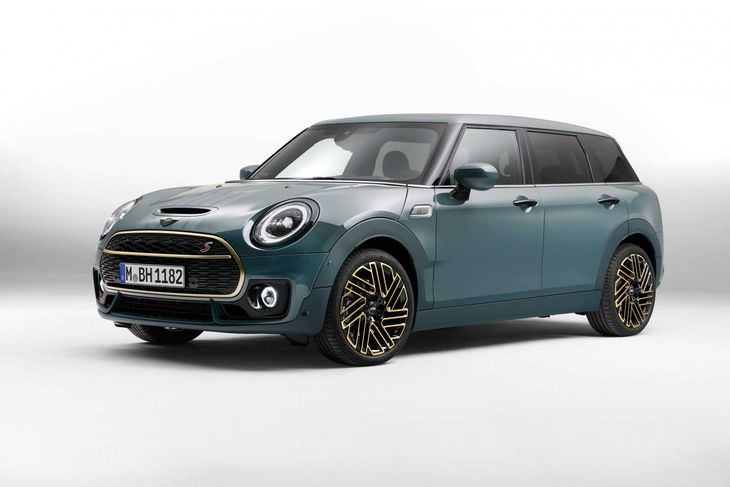
The Mini Clubman Untold Edition gains a Sage Green metallic body colour as well as a reworked front and rear apron inspired by the JCW Aerodynamic Kit. The lower body surrounds are finished in dark green for the first time and 5 narrow parallel sport stripes are seen on the bonnet and roof. The 18-inch alloy wheels sport a Untold Spoke design with bi-colour surfaces in Jet Black and Refined Brass combination. This scheme is also used for the grille surround and on the radiator crossbar on the Clubman S and Clubman JCW. A black roof and black mirror caps will be offered as an option. Other details include piano black door handles and exhaust tips while the Mini logos and model lettering is also in black.
Inside, the Untold Edition gains the Mini Yours Leather Lounge Sage Green to match its exterior hue. The seats gain light-coloured seams and piping for a stylish look. Customers can also opt for sports seats as part of the Mini Yours Leather Lounge Carbon Black. Other details include a Refined Brass finish for the venitaltion surrounds, illuminated accent strips in Sage Green as well as a badged Nappa sports steering wheel and floor mats bearing the Edition emblem. More so, features such as adaptive LED headlights, Mini Excitement Package and Mini Driving Modes is also included.
Features for Mini Countryman Untamed Edition
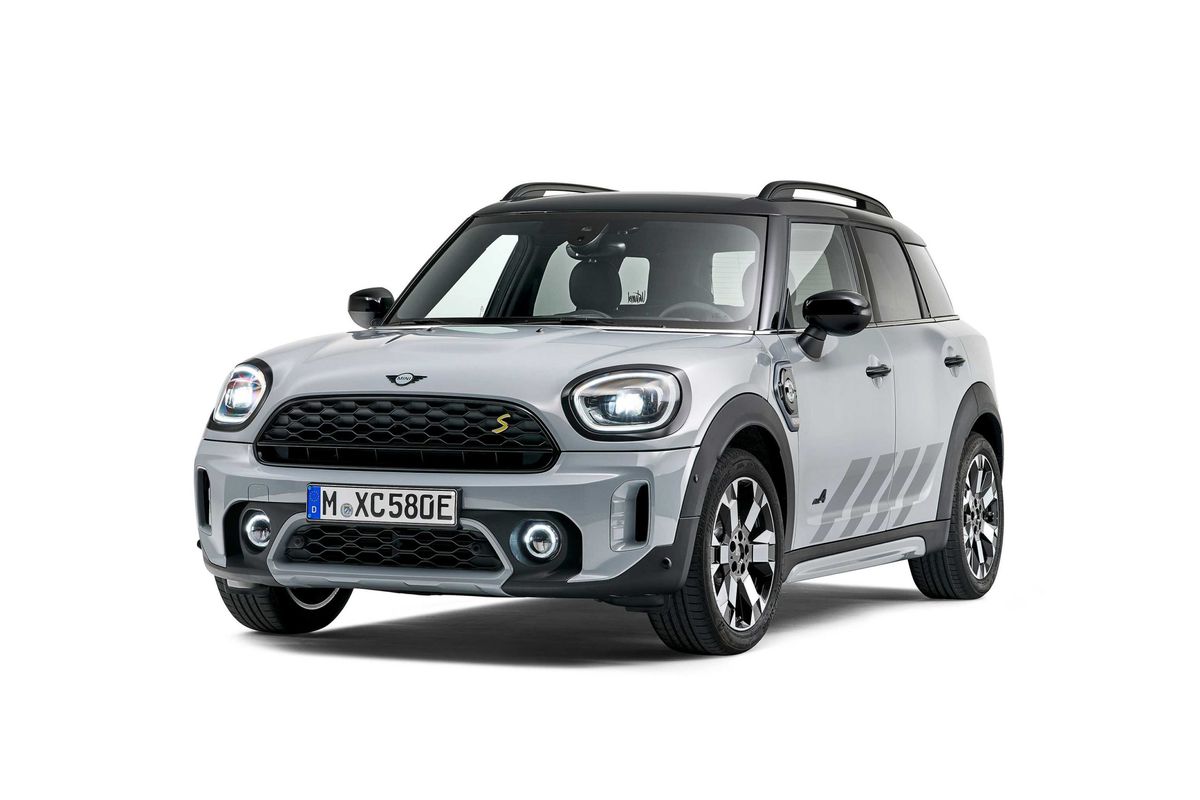
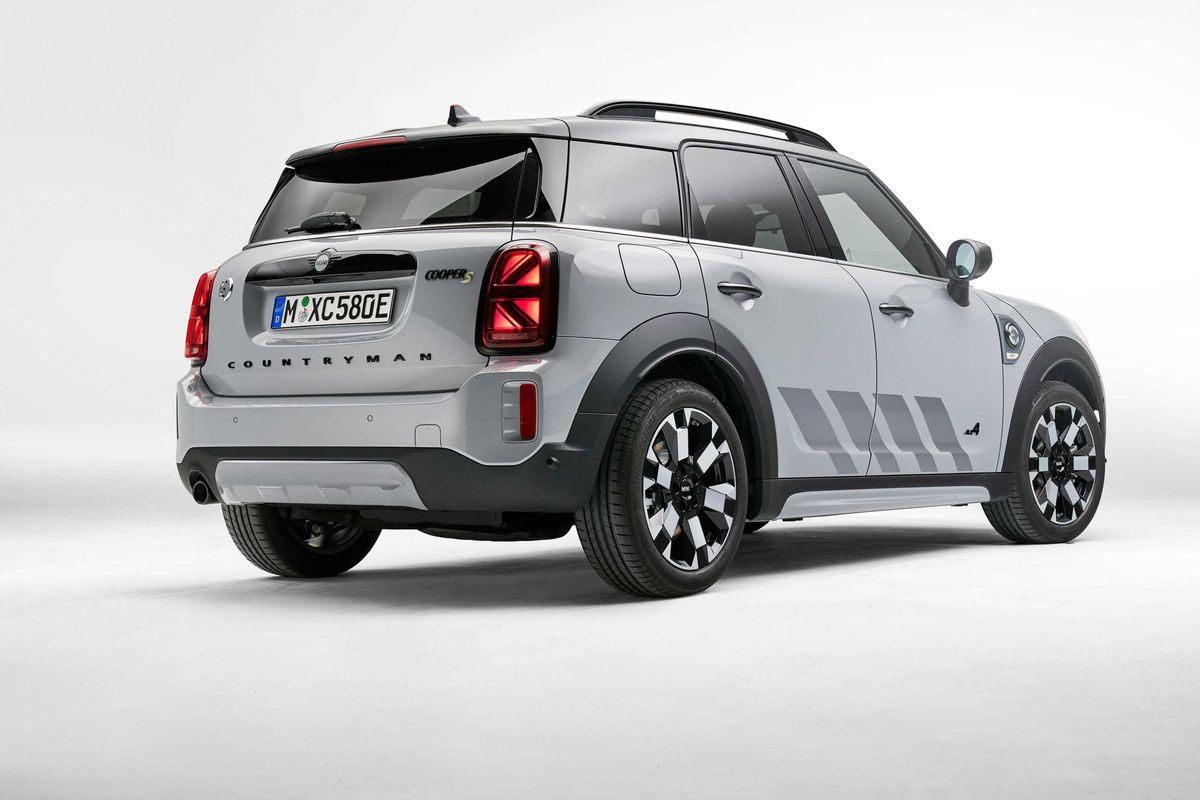
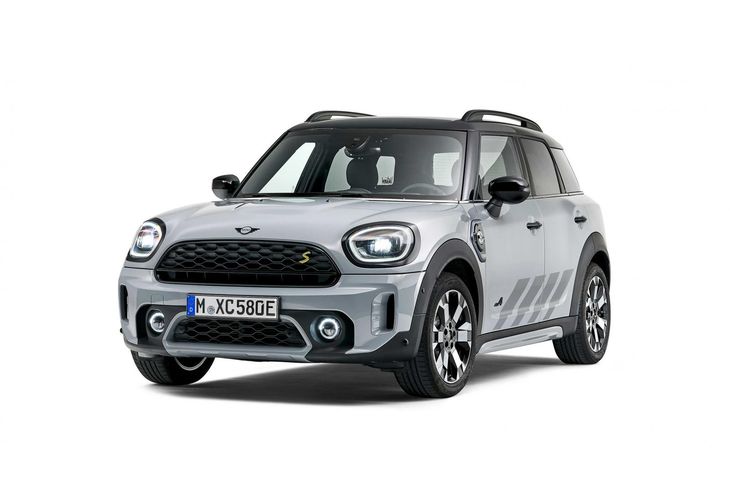
The Countryman Untamed is ready for adventure and features an exclusive Momentum Grey metallic body colour and elements such as the lower air intake, underside guard, air curtain inserts, side skirts, reflector inserts and the lower insert the rear apron feature the same Momentum Grey finish.
The Untamed Edition can also be identified by 4 diagonal stripes in Frozen Bluestone on the lower door section and the ‘Untamed’ inscription is set in a mountain-inspired graphic implying the model’s adventurous intent. The Untamed Edition rides on 18-inch alloy wheels in Untamed 2-tone design with burnished surfaces. The roof, mirror housings, roof rails and headlight housing are finished in black while a Piano Black Exterior option will also be offered.
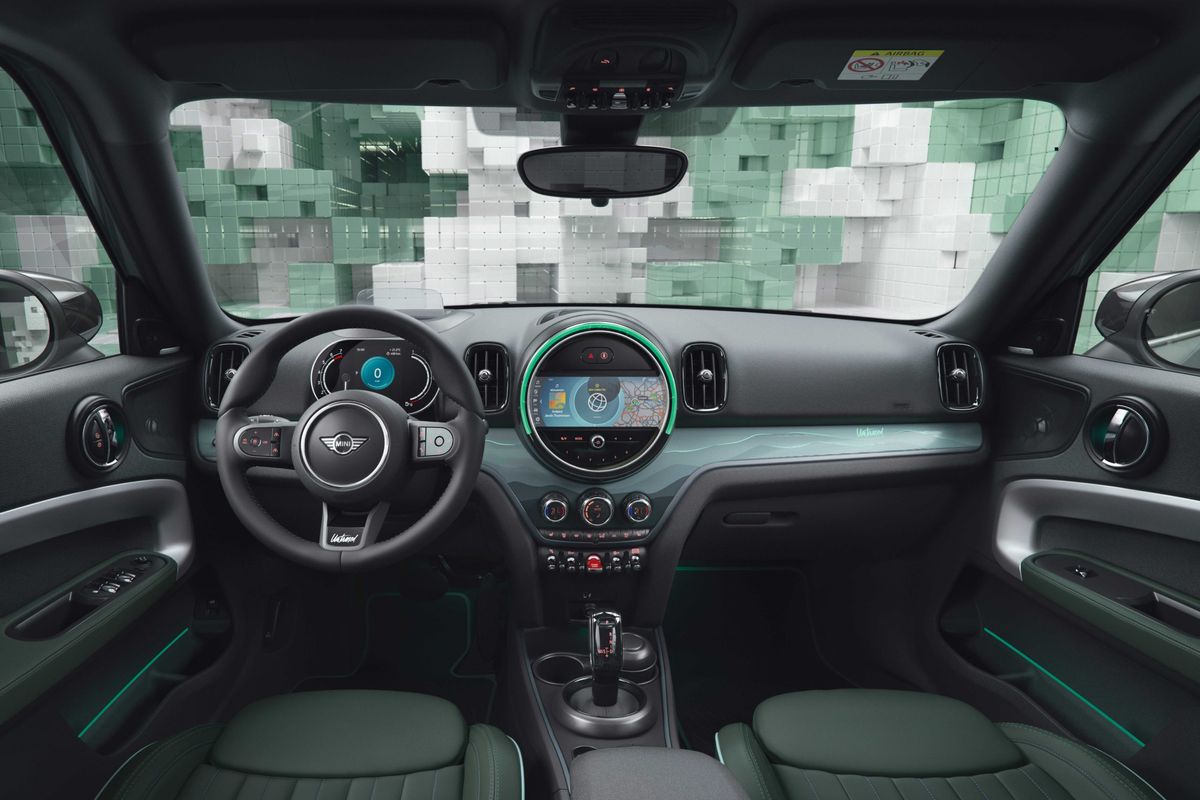
Inside, the Untamed Edition combines a Highland Green interior with blue and green contrasting stitching seen on the sports seats as part of the Mini Yours Leather Lounge finish but buyers can also opt for the MINI Yours Leather Lounge Carbon Black trim. The model also gains illuminated decorative elements with a landscape pattern in Frozen Bluestone while accent strips in the cockpit are finished in Frozen Blue metallic and the door trim is finished in Arctic Silver metallic.
Other details include ‘Untamed’ lettering on the seats, floor mats and bottom spoke of the Nappa sports leather steering wheel as well as a 3D embossed landscape pattern on the door sills. The Untamed Edition will also be offered with Mini’s Light Package, the MINI Excitement Package and the MINI Driving Modes.
The Mini Edition models are expected to arrive in South Africa simultaneously in the third quarter of 2022. We will keep you updated as soon as pricing details are released.