Electric power nearly doubles with new PHEVs from the Swedish carmaker.
Safety. Comfort. Sustainability. And some very tidy Swedish design. These are the core principles of Volvo, but the company is going to sneakily add a lot more performance, to its hybrid vehicles.
A technical upgrade has been introduced for the XC60 and XC90 plug-in hybrids (PHEVs). Engineers at Volvo have managed to increase the battery pack capacity, allowing for a more potent hybridization system.
The XC60 and XC90 PHEV vehicles now use an 18.8kWh lithium-ion battery pack, with a 63% increase in energy density over the 2021 model year’s 11.6kWh of power storage.
For those Volvo owners who want to stretch their electric-only driving range, the better battery boosts range from 48- to 68km for the XC90 PHEV T8 and from 52- to 76km in the smaller XC60 PHEV.
The more notable gains are powertrain performance. Both the upgraded XC60 and XC90 PHEVs benefit from a more potent electric motor, rated at 107kW. That increases total system output to 335kW and 709Nm – impressive numbers by any standard.
With Volvo’s powertrain integration team nearly doubling the XC60 and XC90 PHEV electric motor power (from 65- to 107kW), the traditional sprint statistics are impressive.
Volvo claims the updated XC90 PHEV T8, which is not a light vehicle by any margin, will run the benchmark 0-100kph sprint in only 5.4 seconds.
Even more impressive is the new XC60 PHEV. It might not be marketed as a performance SUV, but with a 0-100kph time of 4.9 seconds, it is one of the quickest vehicles Volvo has ever produced.
Volvo’s hybridization might be for environmental reasons, to make its vehicles lighter on fuel, but the net result has been a genuine increase in power and performance. Ironic? Maybe. But definitely worthwhile.
The more powerful Volvo hybrid drive systems are scheduled for customer introduction in early 2022. Given the rumour of SA’s government changing its tariff and import structure for hybrid and electrified vehicles, we might see these sexy Swedes in SA sooner than you think.
Now based on the brand’s global platform, the new, larger Subaru WRX is powered by a 2.4-litre 4-cylinder turbopetrol motor. However, seeing as the WRX badge no longer inspires shock and awe in the way it used to, is the newcomer too conservative, or merely a mild opening act for the upcoming WRX STI?
It’s fair to say the cult following garnered by early versions of the WRC-inspired, all-wheel-drive WRX and its WRX STI has waned dramatically; forget for a minute about Subaru’s controversial decision to produce the 3rd-gen Impreza in hatchback guise only (although it did later produce a 4-door variant); like other smaller Japanese manufacturers, Subaru lost steam when the global financial crisis hit in the late Noughties and, since then, WRX variants have become increasingly pricey and are rivalled by all-wheel-driven hyper hatches such as the Mercedes-AMG A45 S, Ford Focus RS and VW Golf R.
The current WRX and WRX STI were officially divorced from the Impreza range and not only in name – they were based on the previous-gen Impreza (GP) platform, while the current iteration Impreza (which arrived in SA in 2017) was based on the brand’s global platform. In fact, all Subaru models in the local market, apart from the WRX and WRX STI (VA), are based on those underpinnings.
Improved dimensions & ridigity
The new WRX, however, is also based on Subaru’s Global Platform. The immediate benefit of the “full inner-frame construction” and “structural adhesive application” is an improvement in the sedan’s body rigidity. The newcomer is also wider and longer than its predecessor; the Japanese firm claims the model offers more shoulder room and credits a longer wheelbase for the improved rear legroom.
Ride comfort and on-road stability are said to have been improved by virtue of the WRX’s optimised suspension geometry (with a longer functional stroke compared with the previous model). What’s more, a dual-pinion electric power steering system, which has separate axes for the motor assist and the driver’s input, has been adopted to instil a “smooth and responsive sporty steering feel”, Subaru claims.
As was the case with the new Subaru BRZ, the WRX features a 2.4-litre direct-injection flat-4 petrol engine, but in this case, it’s turbocharged. The new motor produces 202 kW and 350 Nm, which represents a nominal improvement of 5 kW over the current model’s maximum outputs, but Subaru has not yet revealed at what rpm marks those figures are produced or how wide the peak-torque band is.
Optimised auto transmission
The WRX will be offered with a choice of a 6-speed manual gearbox or a Subaru Performance Transmission; although the latter’s not a particularly original name, it has a better ring to it than Lineartronic and we understand that the automatic drivetrain remains a continuously variable transmission (CVT).
The Subaru Performance Transmission doesn’t have any gears, but it’s programmed to offer 8 “steps” so the driver can use the steering wheel-mounted paddles (sports shift control) to actuate simulated manual shifts. These are said to be 30% faster on “upshifts”, and 50% quicker on “downshifts” and “even in Drive”, Subaru claims, the transmission “automatically changes ratios in response to the driver’s throttle inputs”.
For derivatives specified with Drive Mode Select – all of them, we hope – the WRX offers its driver additional options to configure steering feel, damper settings etc at the push of a button, the Variable Torque Distribution AWD system incorporates an “AWD Sport” mode that “further enhances cornering performance by controlling LSD torque” and features electronically controlled active dampers.
Purposeful, yet restrained, styling
In terms of its appearance, the WRX is adorned with the pre-requisite sporty addenda, such as a low front bumper, a bonnet scoop, flared fenders, titanium-coloured alloys, a rear diffuser (flanked by 2 pairs of exhaust tips) and a boot-lip spoiler. The influence of Subaru’s Viziv Performance concept car is most apparent at the rear, where the triangular tail-light clusters are linked by an (LED) light bar.
The newcomer appears to look its best with a bright, non-metallic paint finish, so that the numerous black trim embellishments (such as the winglets on the edges of the bumpers, the trio of air outlets on the front wheel-arch trims and the angular side sills, which feature hexagon-patterned aerodynamic textures) create an eye-catching contrast.
The interior design is predictably restrained and characterised by the Levorg-like fascia design, replete with a portrait-oriented touchscreen infotainment system, which is complemented by an upsized driver info display in the instrument cluster and a thick-rimmed multifunction sports steering wheel.
There are a few tasty sporty touches in the otherwise sombre black interior, however, including liberal applications of red contrast stitching, in combination with WRX-branded headrests. Speaking of the figure-hugging front sports seats, they were designed in conjunction with Recaro and can be trimmed in a combination of leather and black/grey suede.
Better EyeSight
Lastly, EyeSight is again standard on automatic versions of the WRX. The latest iteration of Subaru’s active safety system is equipped with a revised stereo camera with a wider viewing angle (in other words, the hardware has an expanded area of recognition).
In combination with the newly added electric brake booster (which improves the responsiveness of braking assist, Subaru says) the operational coverage of pre-collision braking has been beefed up to support the system’s collision-avoidance function at intersections.
Even though they may no longer achieve notable sales volumes for Subaru, the WRX and WRX STI are halo models (brand builders) for the Hiroshima-based brand, which is why Subaru Southern Africa has confirmed plans to introduce this new sedan on the local market in the middle of 2022. For hardcore enthusiasts, however, this is only an appetiser for next year’s reveal of the WRX STI, for which expectations are lofty!
This week’s news you need to know (September 2021, Week 2)
In this week’s automotive news you need to know: How will Toyota position the GR Corolla to ensure its success? The VW ID.3 GTX will eventually turn Vrrr-pah into Vrrr-shh, the Ford Ranger of the week – yep, there’s another one – and how will you know a G-Class is heading towards you if you can’t hear it coming?
Corolla GR – Where to from here?
With the Toyota GR Yaris hype train showing no signs of slowing down any time soon, grown men are still speaking in squeaky voices when they regale tales of seeing one of the Japanese brand’s rally-bred machines in public. I know, because I am one of those men. Given the hoopla that’s been created, anything succeeding the GR Yaris will be expected to be a giant-killer too. That means that a GR Corolla could be a match for the Mercedes-AMG A45 S, but no one in South Africa would ever buy one for the kind of money that can purchase a 2-bedroom Balwin Properties apartment in Joburg North.
But let’s forget about the GR Yaris for the moment. It’s more likely that Toyota will produce a GR Corolla that is a lava-hot front-wheel-drive hatch to rival the Hyundai i30 N, Renault Megane RS Trophy and, if I dare say so, Volkswagen Golf 8 GTI. Toyota’s the one brand with enough cachet to poach buyers who have realised that the VW has become too refined, which is a more diplomatic adjective than boring.
VW ID.3 GTX – From Vrrr-pah! to Vrrr-shh!
The news that Volkswagen will produce the ID.3 GTX – the performance-oriented version of the brand’s electric premium hatchback – has me all confuddled as to how VWSA will eventually (have to) bring GTI owners out of the trance they’ve been put in. I don’t envy VWSA, they’ve made their bed with the on-point Vrrr-pah! marketing campaign for the Golf 8 GTI and, well, ICE engines are responsible for producing those unmistakable pops. What will they use for ID.3 GTX… Vrrr-shh!? Dad jokes aside, it may be a little too much for the masses to accept; riots may break out when Vrrr-pah! is officially retired.
Spare a thought for the after-market community as well. Tuners must be having nightmares about the post-ICE age; they will one day have to reposition their businesses’ core offerings if they can no longer slap on a Stage 2 map and de-cat to generate the kind of crackle that enhances street cred. We may need to go back to the original ICE (in-car entertainment)… kicker square 12-inch subs and all, cuzzie.
EQG – Achtung, baby!
For those stay-at-home moms who have a predilection for illegally double parking their G-Wagons (while they flit between Pilates classes and those all-important micro-blading appointments) or that trust-fund sponsored start-up founder who’s late for the meeting with his VC (ahem, his dad) who uses about equal parts of street and pavement to moor his blocky AMG behemoth, I fear for the safety of all pedestrians when the Mercedes-Benz G-Class goes full electric. As a respectable citizen of an affluent suburb (relax, I flew in under the radar), where the G-Wagon per capita rate is about 1:5, I have come to rely on the characteristic growl of the Affalterbach division’s V8 to warn me that a G-Glass is approaching in my direction – it gives me just about enough time to quickly get out of the Benz’s path.
Once the G-Glass is battery-powered, I’ll have to rely solely on tyre noise and blaring car phone conversations (in those heavy Sandton accents) to warn me. The G-Wagon – an off-roading legend that morphed into a fashion accessory/gratuitous expression of wealth – has always been a hit for Mercedes-Benz. You can be sure that Stuttgart’s finest will keep that premium status alive with the EQG.
Ford Ranger Brand Fatigue – Another Day, another Ranger
I’ve lamented brands succumbing to derivative fatigue many times before. It’s like an endless obsession to bolster returns on investment; it makes the boardroom happy/ier and the customer base… well, tired. It’s becoming like those washed-out DJs from the 90s who try to stay relevant by having producers churn out extended remixes of old songs. Enough already. The moment to shine has passed.
But to play devil’s advocate… I must remind everyone, including myself, that an OEM is ultimately a business – not a charity. Sure, we always want something new and exciting, but that’s not always viable and these minor iteration changes are to be expected as manufacturers squeeze out as much profit as they can. Whether that translates into sales, well, the numbers never lie, so just skip to the next track.
Toyota Corolla Cross (2021) Specs & Price Announced
With local production of the Corolla Cross starting this month, Toyota SA has now released details of its new compact family car, which will slot in between the Urban Cruiser and RAV4.
Earlier this year, it was announced that, following a R2-billion-plus investment in Toyota South Africa Motors’ (TSAM) assembly plant in KZN, the Corolla Cross would be produced at Prospecton, from where it would be sold in the local market (from November 2021, we believe) and exported to more than 43 countries in Africa. The newcomer utilises the new Corolla’s TNGA (GA-C) platform and is produced alongside the Corolla Quest.
Until recently, Toyota has not offered much in the way of SUV-flavoured family cars below the popular Fortuner and RAV4. Whereas the 3-time #CarsAwards Brand of the Year winner only offered the boutique C-HR small crossover and, briefly, the Indonesian-made, ex-Daihatsu Rush budget crossover before (you can count the discontinued Etios Cross too, if you must), the Japanese brand will soon have a trio of offerings in the burgeoning compact family-car segment… The Suzuki-made Urban Cruiser budget crossover, the C-HR and, finally, the Corolla Cross.
Familial look
The Corolla Cross effectively fuses the design language of the Corolla Sedan and Hatch models with an SUV-shape. Large, elongated headlamps flank a prominent trapezoidal grille, which is accentuated by the broad, upswept lower bumper. Deep vertical design lines on the outer edges of the bumper help create a substantial frontal view. The side profile is characterised by pronounced fender flares, replete with black cladding, which ties in with the side skirts and bumper trim. The rear, meanwhile, employs large elliptical taillamps with trapezoidal detailing and crease lines.
In terms of dimensions, the Corolla Cross is 35 mm shorter, but 185 mm taller than a Corolla sedan/hatch, although its mechanical configuration is slightly less advanced. An example of this is that the model utilises MacPherson struts for its front-, but a torsion beam – as opposed to a multi-link setup – for its rear suspension.
The newcomer will take on rivals such as the Volskwagen T-Cross, Hyundai Creta and the Kia Seltos and TSAM says buyers will be able to customise their vehicles with an assortment of exterior accessory packages, including “rugged, adventure-themed variants to sporty urban enhancements”.
By virtue of being based on the TNGA (GA-C) platform, the Corolla Cross is also expected to offer a comfortable ride quality and a quiet cabin by virtue of good noise, vibration and harshness (NVH) control. Toyota says the new model provides a spacious cabin, easy entry into and exit from the car, class-leading luggage space suitable for all scenarios, and safety equipment inherited from the Corolla series.
SA’s first hybrid compact family car
Base derivatives of the Corolla Cross will be powered by a 1.8-litre 4-cylinder petrol engine, which also propels Corolla Quest and the Corolla 1.8 XS sedan. The motor is mated with a 7-step continuously variable automatic transmission and produces peak outputs of 103 kW at 6 000 rpm and 173 Nm at 4 400 rpm. Toyota claims an average fuel consumption figure of 6.8 L/100 km for the non-hybrid derivative/s.
The petrol-electric hybrid version, meanwhile, will probably be the most affordable hybrid model in South Africa because it won’t be subject to the premium tax that is levied on imported hybrid models – well, at the moment.
Like the Toyota Prius (and upcoming Corolla Hybrid), the Hybrid will utilise a 72 kW/142 Nm Atkinson-cycle 1.8-litre petrol engine in combination with an electric motor and battery. The ICE (Internal Combustion Engine) has a high thermal efficiency figure of 40% (for a petrol engine) with the Japanese manufacturer has recently improved the motor’s gas flow, combustion, cooling, knock control and exhaust gas recirculation/heat recovery system, which means more fuel can be saved because the hybrid system can deactivate the ICE earlier… and more frequently.
Advancements to the electric system include a more compact package that is lighter in weight and lower in cost. The hybrid battery has a higher energy density, which means that even though its size was reduced by 10%, its power output remains the same. Toyota says it can absorb 28% more energy (either harvested via regenerative braking or generated by the petrol engine) in the same amount of time as the previous configuration did.
The electric motors themselves are smaller, but also have an improved power-to-weight ratio. The electric motor provides a supplementary 53 kW and 163 Nm of torque (at full capacity) to boost the overall system output to 90 kW (the combined figure is not an aggregate of the two power sources, due to transmission reduction losses).
A dedicated EV mode is also offered, where operation is restricted to near-silent, full-electric propulsion (battery state-of-charge dependant). The Hybrid configuration is optimised for low-speed usage situations such as peak-hour traffic, where the petrol engine is automatically shut off and the vehicle can be driven on electric power only – thereby using as little fuel as possible. EV operation is also utilised when reversing or when coasting on a level road.
The petrol-electric hybrid powertrain also employs a CVT. All of Toyota’s latest generation hybrids utilise a “starting reduction gear” to improve acceleration from standstill and provide a more direct-drive feeling when taking off.
In terms of fuel efficiency, the Corolla Cross Hybrid is said to consume an average of 4.3 L/100 km (in-town and high conditions) and has a CO2 index of under 100 g/km.
Toyota Corolla Cross Trim Levels
Toyota South Africa is using its traditional trim level designation of Xi, Xs and Xr for the new Corolla Cross. Xi kicks off the range with Toyota saying its aimed at customers seeking value motoring. Mid-tier Xs throws in additional convenience features and comfort, while Xr gives you the full package of larger wheels, comprehensive features as well as enhanced exterior look.
Despite it being the entry-level derivative, the Xi features colour-coded bodywork, keyless entry, power-adjustable and auto-retractable exterior mirrors, LED taillamps and automatic light control. Interior Items include four cupholders, stowage binnacles, 60/40 fold-down rear seats and steering switches. Cruise Control, air-conditioning, 12-volt power outlet, all-round one-touch power windows and a Multi-Information Display (MID) round off the spec offering.
Xs trim enhances the package with foglamps, an upgrade to LED headlamps, Park Distance Control (PDC) and rain-sensing wipers. The interior trim is upgraded to leather, while the air-conditioning switches to a dual-zone variant and the Multi-Information Display (MID) is upgraded to the TFT-type. There’s also a reverse camera, Apple CarPlay/Android Auto connectivity as well as two more USB ports.
Finally, the Corolla Cross Xr model adds in even more safety spec, plus 18-inch wheels and additional convenience features.
The top-of-the-range Xr models offer customers additional convenience and safety specification and an upgrade to 18-inch wheels.
How much will the Toyota Corolla Cross cost in SA?
Corolla Cross 1.8 Xi – R349 900
Corolla Cross 1.8 Xs – R390 100
Corolla Cross 1.8 Xr – R425 400
Corolla Cross 1.8 Hybrid Xs – R413 000
Corolla Cross 1.8 Hybrid Xr – R448 300
A six-services/90 000 km service plan is standard on all Corolla Cross models, with service intervals pegged at 12-months/15 000 km. A 3-year/100 000 km warranty also forms part of the offering. The Hybrid model carries an 8-year warranty on the Hybrid battery. Customers can also purchase additional service and warranty plan extensions from their nearest Toyota dealer (220 outlets nationwide).
The sharply-styled BMW 2 Series M Performance Parts catalogue has been confirmed, giving us a good look at what’s possible in terms of cosmetic and performance enhancement.
After some polarising design decisions in the form of the 4 Series and 2 Gran Coupe, the new 2 Series is a sweet return to form for BMW. This is pretty much what the Bavarian brand does best; handsome two-door muscular coupes.
In profile, the newcomer has traditional coupe proportions, with a long bonnet and stubby tail section fore and aft of the cab. There are a few fresh details, however, such as triangular elements in the bumpers, flush-fitting door handles, a subtle integrated spoiler on the boot lid, as well as 3D-effect LED tail-light clusters.
As opposed to its 1 Series hatchback and 2 Series Gran Coupe siblings, the 2 Series Coupe is based on the Bavarian firm’s rear-wheel-drive CLAR platform (the newcomer is believed to be closely related to the Z4 roadster); it has 12% more torsional rigidity than its predecessor and a near-50:50 weight distribution.
As far as the engine lineup goes, we know there will be a 220i with 135 kW and 300 Nm, a 230i with 180 kW and 400 Nm, as well as a flagship M240i XDrive packing 285 kW and 500 Nm. Let’s not forget the inevitable M2 that will be revealed sometime in 2022.
The BMW 2 Series M Performance Parts takes things up a notch. As is tradition with every new BMW product, the M Performance parts catalogue is released, with parts and modifications ranging from tame to extreme. There’s an array of carbon fibre goodies on offer, with bumpers, mirrors, diffusers and grille surrounds.
The M Performance Parts catalogue for the BMW 2 Series also includes M-branded puddle lamps, brake upgrades, special edition alloy wheels as well as interior upgrades.
The headline upgrade has to be the suede/alcantara steering wheel, which is a work of beauty. Customers can also opt for M Performance bucket racing seats. There’s even a special key fob and you can get M-branded door locks.
The all-new BMW 2 Series will be launching in South Africa in the first quarter of 2022.
6 Bakkie Drag Race! Hilux vs Ranger vs Amarok vs P-Series vs BT-50 vs Navara (all 4×4)
Here it is, our largest drag race ever. Six bakkies (or for our international audience, pick-ups or utes) lined up side by side on a staggeringly awesome salt pan, 700km outside of Cape Town, South Africa.
The contenders are (ranked from most to least powerful, prices accurate as of September 2021)
All of them would be vying for glory on the quarter-mile (400m). The surface was a remarkably flat and hard clay, the result of an ancient dried-up lake. It was very grippy, closer to tarmac than gravel.
We ran all the bakkies in 4×2 mode.
We hope you enjoy the video, let us know your thoughts in the comments below.
The new vehicle market’s compact family-car segment continues to expand rapidly and many of the newcomers are priced around the R300k mark. The Renault Kiger is the latest model to enter the fray and we sampled the Indian-made budget crossover at its local launch in Cape Town.
What is a Renault Kiger?
The Renault Kiger is quite a good-looking newcomer to the segment.
Most of the budget crossovers that have come to market in 2021 are made in India, which illustrates the ability of that country’s motor industry to manufacture compact vehicles to a keen price point. The Kiger is based on the Nissan Magnite and is built in the same factory as its cousin. Renault has, however, made sure that its Kiger is sufficiently different from its sibling – both inside and out (unlike the example of the Suzuki Vitara Brezza and Toyota Urban Cruiser, where the latter is simply a rebadged version of the former).
The Kiger is powered by either a naturally aspirated 1.0-litre (52 kW/96 Nm) or a turbocharged 1.0-litre (74 kW/160 Nm) 3-cylinder petrol engine. The 52-kW motor is paired with either a 5-speed manual gearbox or a 5-speed Automated Manual Transmission (AMT), while the 74-kW powerplant is available with a choice of a 5-speed manual gearbox and a continuously variable automatic transmission (CVT).
The Kiger is claimed to offer the most spacious load bay in its segment, as well as a high level of standard specification, including excellent connectivity (at the price). The French newcomer is up against a veritable horde of competitor models though, including the Kia Sonet, Honda WR-V, Nissan Magnite, Peugeot 2008, Suzuki Vitara Brezza, Toyota Urban Cruiser and, to some extent, the Volkswagen T-Cross and Hyundai Venue.
What are the Kiger’s engines like?
The 1.0-litre turbopetrol combined with the CVT is… the best combination of drivetrain.
At the media launch, we were only able to sample the manual and automatic versions of the 1.0-litre turbopetrol Kiger. This may be the first time I’ve ever said this, but the 5-step CVT derivative is actually better to drive than its 5-speed manual equivalent. Why? Well, the Renault’s CVT doesn’t whine as much at high rpm as those of its direct competitors and, as for the driving experience, the transmission behaves much like a conventional automatic.
Look, the version with the manual ‘box is fine, but in today’s market, automatics are becoming the default choice in terms of ease of use on the daily commute, plus they are no less fuel-efficient than their manual peers.
Speaking of fuel economy, Renault claims average consumption figures of 5.0 L/100 km for the 1.0-litre turbopetrol manual and 5.4 L/100 km for the CVT. As is customary in many Indian-built cars, the instrument cluster displays the consumption in km/L and I couldn’t figure out how to change it to L/100 km, so I had to do some on-the-spot mental calculations to work out the consumption we achieved on the day. Both versions returned between 7 and 7.3 L/100 km over the 100 km we travelled in each car, but that did encompass a fair amount of full-throttle usage, so expect the Kiger to have much better fuel consumption in the long run.
As for the turbopetrol engine itself, it feels quite spritely iand proved especially responsive to firm dabs of the accelerator pedal. Up to about 110 kph, the motor makes good progress; it seems to haul along the Kiger’s sub-1-tonne kerb weight around with little effort. Above 110kph, however, things are a bit more laboured, but the Renault will hover at the national speed limit quite easily.
Meanwhile, the much more workmanlike non-turbo 1.0-litre engine has been installed to help the Kiger meet that very impressive R199 900 entry-level price tag. The engine comes from the 7-seater Renault Triber and produces peak outputs of 52 kW and 96 Nm of torque. The naturally aspirated version of the Kiger wasn’t available to test at launch, but, hopefully, we will get to drive one for a review later this year.
What’s the Kiger like inside?
The Kiger’s interior is spacious and well-specced compared to rivals.
As a rule, Renault specs its cars generously with modern tech features – even the Kwid budget car, for example, has a touchscreen infotainment system with Apple Carplay and Android Auto compatibility.
The Kiger has 3 trim lines: Life, Zen and Intens. For a full rundown of the model specifications, check our specs and price article.
We drove the Intens version, which you could say is “fully loaded” in terms of what the Kiger can offer. Wireless Apple Carplay and Android Auto is certainly a big drawcard, but the lack of a wireless charger makes it a little less useful considering you still have to plug in a cable to charge your smartphone.
The 8-inch touchscreen is simple to use, responds quickly to touch inputs and paired with my phone without a glitch. The Intens trim incorporates an 8-speaker Arkamys audio system that produces good sound volume and clarity, especially for this segment, where aspects such as “sound reproduction” aren’t of great importance.
The interior is quite spacious with a choice of places to store things. The centre console is large and includes a large storage space underneath the armrest, but doesn’t include any cupholders, which is a bit odd. In front of the gear lever/transmission lever is a two-tier tray for storing your phone; it also houses the USB port.
The quality of the trim materials is probably the weakest point of the Kiger’s interior. The plastics feel quite scratchy and some of the build quality feels marginal at best. Piano-black plastic is applied strategically inside the Intens 1.0L Turbo to hide some of the scratchy plastic, plus leather trim features on the gear lever and handbrake boots, although those adornments don’t do a great job of masking the problems.
The load bay, meanwhile, is large for the segment (Renault claims a luggage capacity of 405 litres) and also features split-folding rear seats, which is something many of the Kiger’s rivals don’t have. The rear seat also has a fold-down central armrest with cupholders, although that doesn’t really fix the issue of no cupholders for the front occupants.
Stability control is only available on the 1.0-litre turbopetrol derivatives, but ABS with EBD and rear parking sensors are standard across the range. The entry-level Life derivative is equipped with 2 airbags at the front, while the Zen and Intens versions are equipped with an additional 2 curtain airbags (for rear passengers).
What’s the Kiger like to drive?
The driving experience in the Kiger feels quite settled and surefooted.
In this segment, the quality of the driving experience doesn’t make or break the product, but it’s good to know that the Kiger feels quite steady on the road. It was quite a windy day in the Winelands when we drove the Kiger, but even so, the Renault stayed well planted and felt surefooted under cornering and when buffeted by crosswinds.
The steering is heavier than usual for the segment, but not unusably so, in fact, the extra effort needed to twirl the ‘wheel helps to make the Renault feel steadier on the road.
Overall, the Kiger’s driving experience won’t light up your life, but nothing in this segment is built to be sporty. The Intens 1.0L Turbo does come with drive modes: Eco prioritises fuel economy, but makes it quite difficult to make forward progress, Sport sharpens up the accelerator pedal’s sensitivity for better responsiveness and Normal is the best of both (it’s the mode we used for the majority of our journey).
After-sales support and warranty
The Kiger 1.0 naturally aspirated model gets a 5-year/150 000 km warranty and a 2-year/30 000 km service plan, while the turbo derivatives get the same warranty, but a 3-year/45 000 km service plan.
Renault Kiger Pricing (September 2021)
Kiger Life 1.0L
R199 900
Kiger Zen 1.0L
R214 900
Kiger Zen 1.0L AMT
R224 900
Kiger Zen 1.0L Turbo
R249 900
Kiger Intens 1.0L Turbo
R269 900
Kiger Intens 1.0L Turbo CVT
R289 900
Summary
The Kiger has earned its place on the shortlist in the segment as a good option in terms of value and design.
Without a shadow of a doubt, the Renault Kiger offers good value for money in the budget crossover segment. The price is very competitive in a busy pocked of the new-vehicle market where top-spec derivatives usually retail for R300k, if not more. The Kiger is well-equipped inside with the modern standards for connectivity, as well as nice-to-have features such as a reverse-view camera and parking sensors for most derivatives.
The 1.0-litre turbopetrol engine delivers enough oomph to make the Kiger feel nippy round town and, in combination with the CVT, offers the most balanced and comfortable driving experience.
Some of the interior material choices may be a bit iffy, but that’s balanced out with class-leading practicality in the form of a large load bay and split-folding seats, as well myriad storage spaces in the cabin.
Renault SA expects to sell several units of the newcomer a month – in a segment of the market that has seen the largest growth in 2021. At first glance, it seems the Kiger has a decent shot at meeting those ambitious targets.
The New Ford Ranger: What to Expect
A new Ford Ranger bakkie is in the works and it will be built right here in South Africa at Ford’s Silverton production facility in Gauteng. Here’s what you can expect from the new Ranger!
Ford South Africa is gearing up for the local production and introduction of a new Ford Ranger but that hasn’t stopped the firm from making the most of the current Ranger. In recent months, Ford has expanded the Ranger lineup with new special edition derivatives such as the Ranger FX4, Ranger Thunder and the soon-to-be-launched Ranger Stormtrak. But that’s not all, we might even see the Ranger Splash on local soil too!
The current-generation Ford Ranger is celebrating its 10 year anniversary this year and since its introduction in 2011, more than 732 000 Rangers have been produced at Ford’s Silverton production facility in Pretoria, Gauteng. More so, this month, Ford also achieved a major export milestone with the 500 000th Ranger destined for export rolling off the production line.
It goes without saying then that the Ford Ranger has proven to be hugely popular, not only locally but overseas too. Now though, Ford is gearing up for the introduction of an all-new Ranger which will also be produced locally as of 2022.
Production expansion and job creation at Silverton
Expansion at Silverton will accommodate the production of the new Ranger and create much-needed jobs.
This week, Ford announced that 1 200 incremental jobs had been created as a result of a third shift being added to the production schedule. The move will support expanded production of the current Ranger but it will also enable the capacity needed to produce the new forthcoming Ford Ranger.
With the additional shift, the Silverton Assembly Plant will now be able to produce up to 720 vehicles per day which equates to 1 Ranger being produced every 2 minutes. About two-thirds of locally-built Rangers are destined for export to over 100 markets worldwide.
When the Ranger arrives in 2022, production capacity will reach 200 000 units per annum which is nearly double the production of the 2011 Ranger at 111 000 units per annum.
New Ford Ranger: What to expect
The latest news regarding the new Ranger comes from Australia where 2 images and a short video showing the new Ranger undergoing testing in various offroad terrain. Ford states that new Ranger customers “will rejoice at the toughest, most capable and connected Ranger pickup yet developed by Ford. At its core, the next-generation Ranger will be the ideal pickup partner for work, family and play. This is not just a Built Ford Tough truck, but the smartest, most capable and most versatile Ranger yet.” Let’s hope Ford delivers on this promise!
Even though the Ranger prototype is well adorned in camouflage, the images and video reveal major changes to the Ranger’s design.
These images confirm, with reasonable certainty, that the new Ranger will adopt styling cues from the new and larger F-150 which is hugely popular in the land across the pond.
Note the squared-off LED daytime running lights that border the large headlight housings as well as the noticeably larger upright grille area and the sculpted bonnet. It’s clear then that Ford wants to the new Ranger to have distinct similarities to its bigger F-150 brother.
The F-150 offers a multitude of different grille options to customers and we wouldn’t be surprised if the new Ranger also offers different grille options to suit different tastes. At the rear, it’s interesting to note the fitment of a sports bar that looks familiar from the Ranger FX4 as well as a big bulge in the centre of the tailgate which will likely be an oversize Ford logo.
The new Ford Ranger will no doubt be a formidable offroad vehicle.
As for the interior, we expect the new Ranger to feature a new design, hopefully with higher quality materials. It’s reasonable to suggest that the new Ranger may very well adopt an upright dashboard design, much like the F-150 and we also expect to see a larger 12-inch infotainment system fitted as well as a fully digital 12-inch instrument cluster on higher-spec derivatives. In addition, we may very well see features such as Ford’s SYNC4 operating system, wireless app connect and a powerful Bang & Olufsen sound system making its way into the new Ranger.
The current Ranger is well equipped with safety and driver-assist features and Ford will likely build on this with improved 360-degree cameras and sensors that will assist the driver with tasks such as parking (Active Park Assist 2.0) or connecting a trailer (Trailer Reverse Guidance or Pro Trailer Backup Assist).
Ford has not yet divulged what engines will power the new Ranger but we reckon the relatively new 157 kW / 500 Nm 2.0-litre bi-turbocharged engine will forge on in the new Ranger but it’s likely to arrive with higher outputs. The single-turbo 2.0-litre diesel engine is also likely to power the base Ranger models. The current 3.2-litre turbodiesel engine option is likely to be discontinued.
As for the next-generation Ford Ranger Raptor, a 3.0-litre EcoBoost V6 petrol engine is on the cards boosting up to 298 kW and 563 Nm of torque. The South African market prefers diesel-powered bakkies though, so it will be interesting to see if the V6 will see the light of day here in Mzansi.
As always, we will keep you updated as the development of the new Ranger progresses, so stay tuned!
Volkswagen has taken the wraps off the restyled 6th-generation Volkswagen Polo… The update to the Wolfsburg-based brand’s popular compact hatchback incorporates several cosmetic updates (inspired by the new Golf 8), as well as a number of high-end onboard technologies. The newcomer will go into production at VWSA’s Uitenhage assembly plant in the latter half of the year and is expected to reach local showrooms in the first quarter of 2022.
The Polo’s styling has always erred on the side of conservativism – and that’s still the case, although Volkswagen has ensured that its compact hatchback still looks youthful; it comes replete with new-gen VW emblems (which already debuted on local Polos late last year), an LED light bar across the hatchback’s grille and, should you specify them that way, LED tail-light clusters with dynamic indicators.
The LED daytime running lights in the headlamp clusters are connected by the light bar integrated at the bottom of the grille.
The updated Polo can be distinguished by its revised bumpers and new-look LED headlamp- and tail-lamp clusters… Those at the rear are strongly inspired by the rear lights of the Golf 8, which will soon arrive in Mzansi in GTI guise, and optionally feature a “wiping” lighting effect as seen on the Touareg’s tail-lights, for example. Polo lettering again appears beneath the fresh VW badge on the tailgate.
The dark blue metallic car shown here has the top-of-the-range R-Line trim, which includes sportier bumpers, new IQ.light matrix LED headlights (ostensibly as standard on the flagship derivative and upcoming GTI), LED fog lamps and 16-inch alloy wheels. Note the quartet of chrome-effect faux exhaust exits that are integrated into the gloss-black “diffuser” on the edge of the rear bumper.
Unfortunately, those racy-looking exhaust tips are just for show. The upcoming GTI will be a different story, however.
As for the interior of the updated Polo, it’s been reported that an 8-inch digital instrument cluster (or 10.25 inches, for the Digital Cockpit Pro version) will become standard across the range, which means traditional dials appear to have been consigned to the scrapheap. The newcomer’s (now Apple CarPlay and Android Auto-compatible) touchscreen infotainment system measures 6.5-inches, whereas an 8.0-inch or, for the first time, a 9.2-inch display can be specified at extra cost. The latter 2 setups incorporate Volkswagen’s We Connect connectivity (for real-time traffic info and live music streaming).
Note the subtle upgrades, which include subtle LED lighting and a “frameless” rear-view mirror…
Meanwhile, the safety technology offered as standard on the updated Polo, which is a compact hatchback model, after all, beggars belief: Volkswagen says that predictive ACC (adaptive cruise control) and lane-keeping assist will feature on every derivative. In the European market, at the very least, the Polo will be offered with the optional IQ.Drive Travel Assist semi-autonomous driving assistance system.
Here’s how it works: IQ.Drive Travel Assist can take over the accelerating, braking and steering of the Polo, from standstill in auto derivatives and from a rolling 29 kph in manual cars; it works by combining the lane-keeping assistance and the predictive adaptive cruise control functions (as long as the driver keeps their hands on the wheel at all times).
Another addition to the newcomer’s suite of standard safety features is a centre airbag, which opens towards the centre of the cabin in the event of an accident to protect the driver and front passenger.
Apart from a new multifunction steering wheel, electrically folding and heated side mirrors are fitted throughout the range. As the trim levels move up, the Polo gains 15-inch rather than 14-inch wheels, App-Connect, a centre armrest with an additional USB-C port in the middle of the passenger compartment and leather trim on the steering wheel and gear knob.
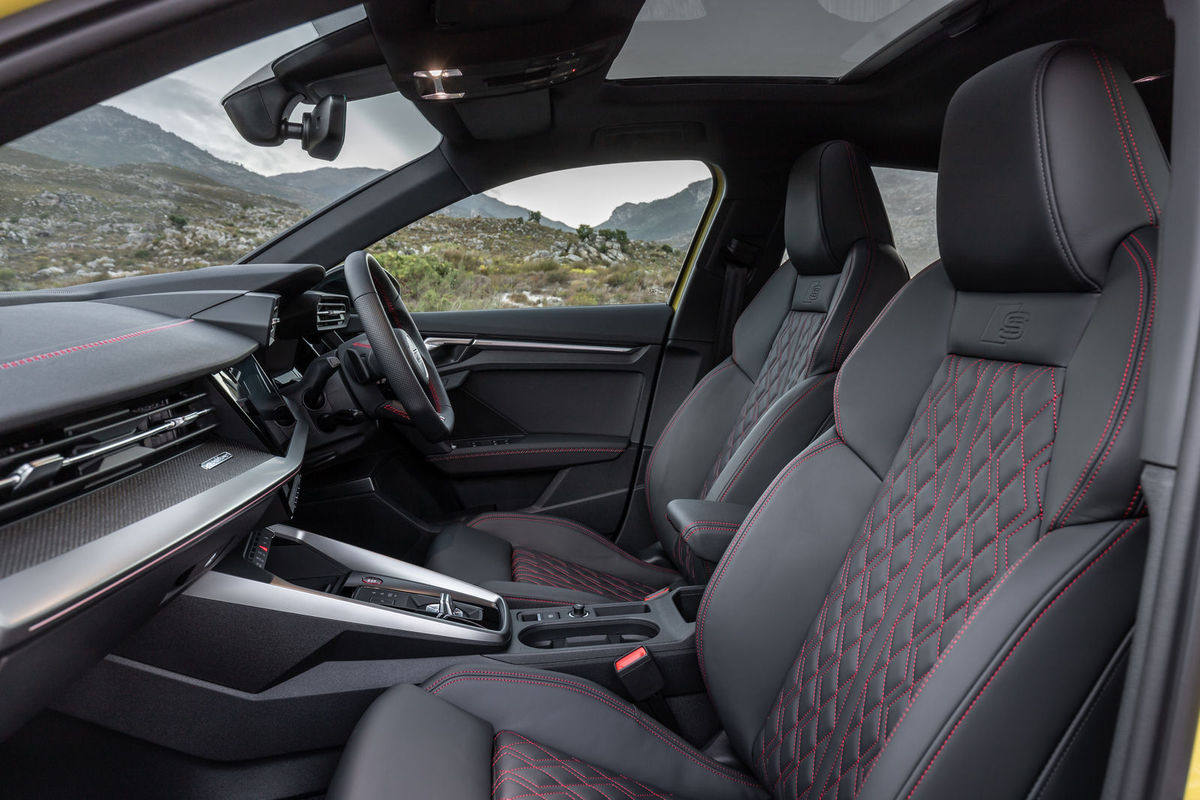
What’s more, Polos equipped with automatic climate control feature a piano-black touch-sensitive panel with digital temperature readouts, below which an abutment with a pair of illuminated USB-C ports is fitted. Finally, a wireless smartphone charging pad (as shown below) can be ordered at extra cost.
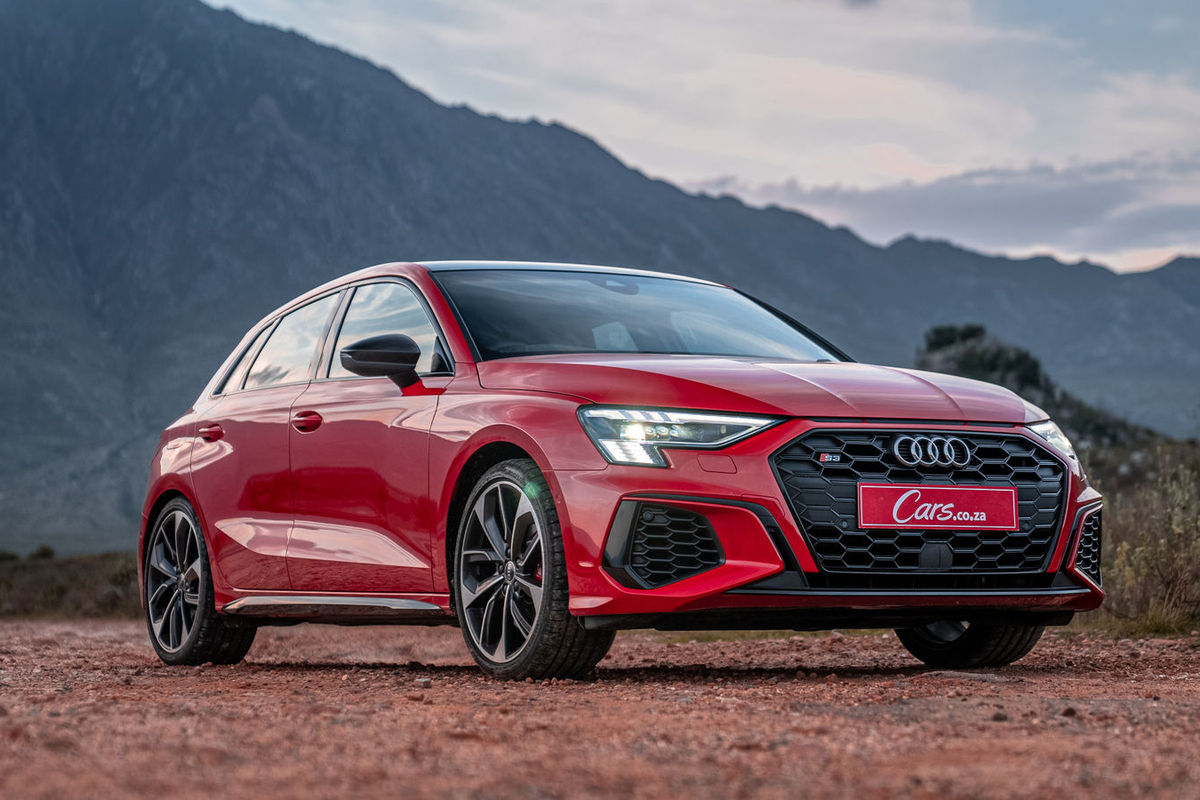
Volkswagen is also set to re-align the Uitenhage-built car’s trim structure; apparently, the Trendline, Comfortline and Highline designations will fall away and be replaced by the Polo (standard), Life, Style and R-Line specifications. To reiterate, the newcomer will arrive in South African showrooms in the first quarter of 2022 and an updated GTI hot hatch version will follow during the course of next year.
This is the all-new 2023 Volkswagen Amarok, carefully camouflaged and it has been spotted in the United States of America. Here’s the latest on the Wolfsburg-based brand’s Hilux fighter.
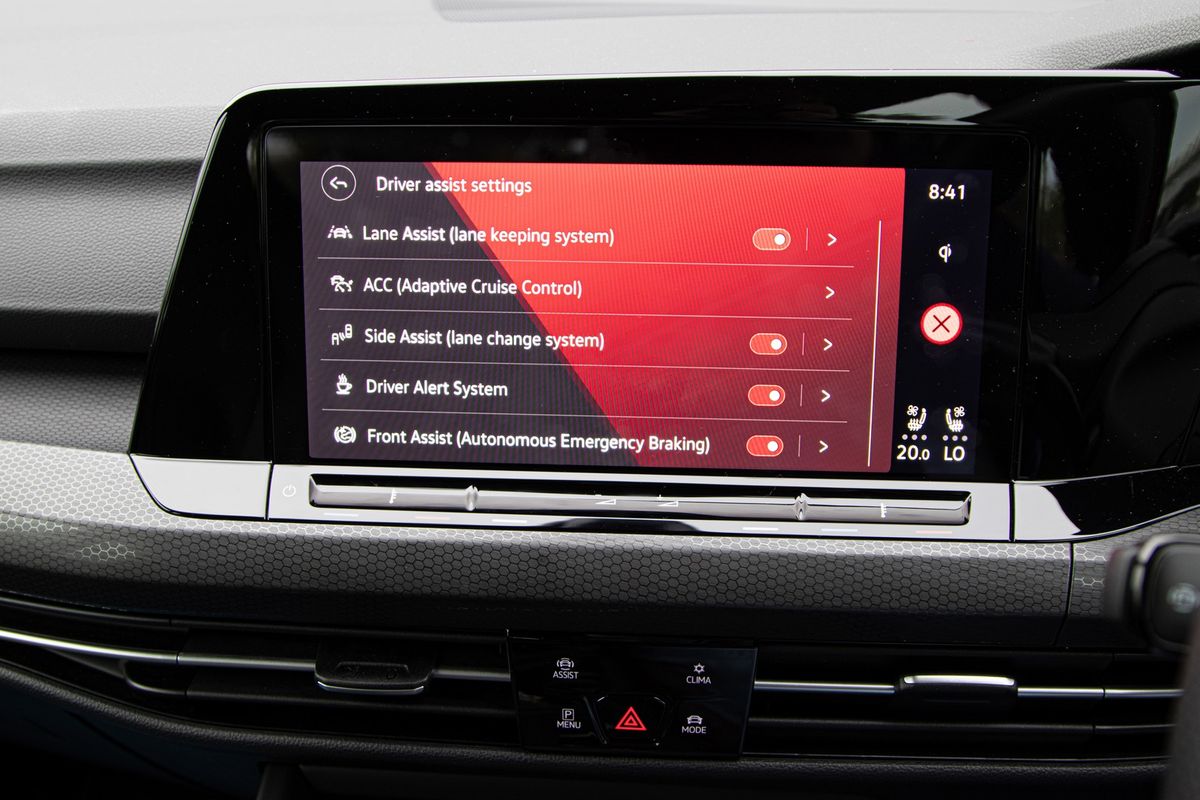
Picture credit: S. Baldauf/SB-Medien. We have paid for these photos and at the photographer’s request, have watermarked them.
The 2023 Volkswagen Amarok has been spotted testing! Good timing, as the Volkswagen Amarok is one of the oldest bakkies on sale in South Africa and despite the addition of a thundering V6 engine, is really starting to show its age.
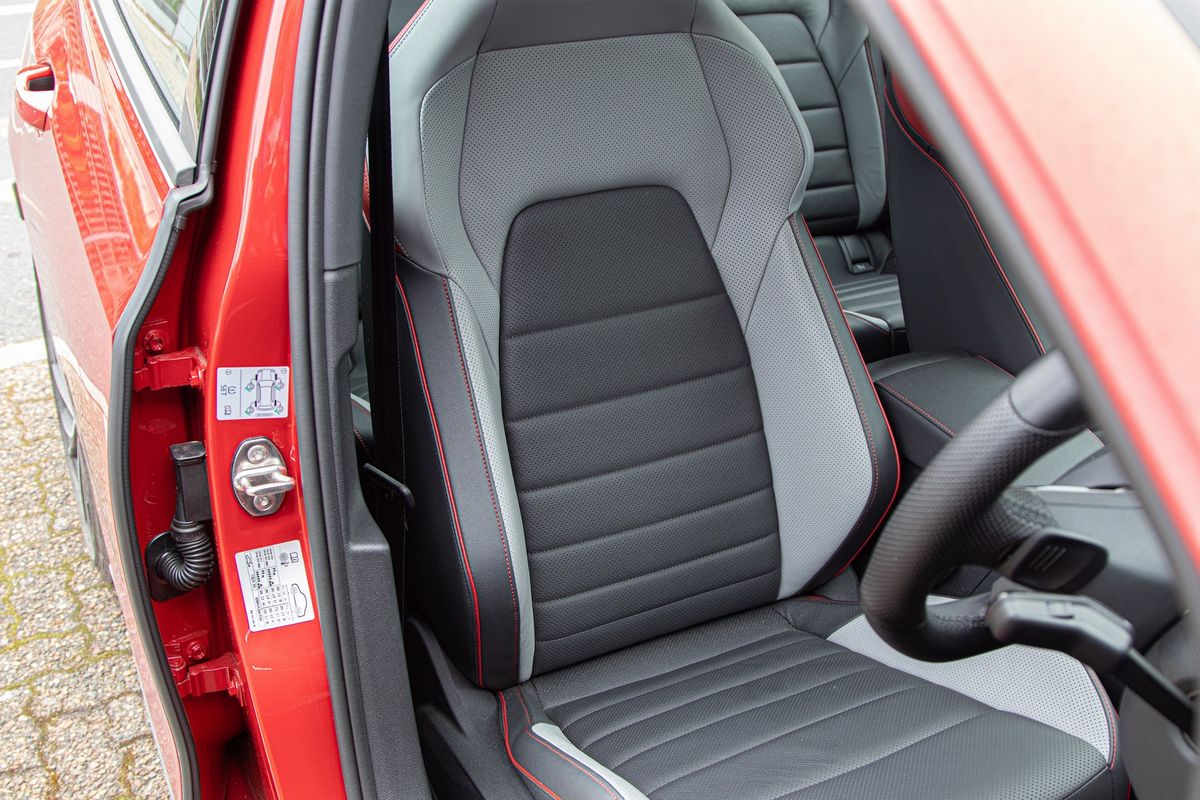
The big news is that if you remember correctly, back in early 2019 Volkswagen and Ford signed an agreement to develop and share costs on the new generation of commercial vehicles. So that’s bakkies and vans (think Caddy and Transit). During the conference, Volkswagen chairman Herbert Diess said the new Amarok will be one of the first fruits of the collaboration between Volkswagen Commercial Vehicles and American carmaker Ford.
There will be a lot of shared technology and we expect this 2nd-generation Volkswagen Amarok to feature a lot of kit with the all-new Ford Ranger, and both models are expected to go on sale after 2022.
So what you see here is the first Volkswagen Amarok prototype spotted at Ford’s test track in Dearborn, Michigan. There will be many shared components across the two vehicles, but the designs should be quite different. Think of the current shape Isuzu D-Max and the Mazda BT-50, they’re mechanically similar, yet the fronts are poles apart.
While everything is still under wraps, our spy photographers have focused on the headlight and taillight designs of both the Amarok and the Ranger, showing us there will be a difference between the two models.
With this testing taking place in the United States at Ford’s HQ, it appears the Blue Oval is doing most of the work. Let’s not forget that both the new Volkswagen Amarok and Ford Ranger will be assembled right here in South Africa, at Ford’s factory in Silverton, Pretoria in 2022.
While the engine lineup is yet to be confirmed, we expect both petrol and diesel powertrains to be made available, but we have questions. Ford’s Struandale factory in Gqeberha has an assembly line dedicated to inline configuration engines. To produce a V6 on this line, as it currently stands, would be expensive. A possible 6-cylinder solution is the production of Ford’s 3.0-litre Power Stroke V6 turbodiesel, for installation in both firms’ next-generation bakkies.
The Power Stroke turbodiesel is rated at 186 kW and 600 Nm, making it adequately potent to replace the Amarok’s 3.0-litre V6. However, if Ford decides to utilise the Power Stroke motor in the next-generation Ranger and Amarok it will produce in Silverton, it wouldn’t feature exclusively in the German firm’s bakkie. No, if the Ford V6 gets the go-ahead for local production, it will be present in both the Ford and VW, which means the Amarok will lose its unique trump card as the only V6 diesel bakkie in Mzansi.
We’ll keep a close eye on this fascinating collaboration.
A sketch from VW in March 2021 showing what’s potentially coming.