Hyundai Creta (2021) Review

The 1st-generation Hyundai Creta proved quite popular in the local compact family-car segment and its replacement hopes to build on that success, even though the competition is stiffer than ever. Are the changes incorporated in the 2nd-gen model substantial enough to offset those radical – and divisive – looks, though?

We like: Excellent standard spec, stability control finally added, refined driving experience.

We don’t like: Divisive styling, some iffy build quality, where’s the climate control?

Fast Facts 

  • Model tested: Creta 1.5 Executive
  • Price: R429 900 (as of March 2021) 
  • Engine: 1.5-litre 4-cylinder naturally-aspirated petrol
  • Power/Torque: 84 kW/143 Nm
  • Transmission: CVT
  • Fuel Consumption: 6.3 L/100 km 
  • Load capacity: 433-1401 litres
  • Acceleration: 0-100 kph in 12 sec (claimed)

What is it? 


Such a bold look for the Creta, but we’re not sure it’s going to be as universally accepted as its predecessor’s safe looks.

The 2nd-generation Creta recently arrived in SA and, compared with its predecessor, the newcomer features numerous – and substantial – changes. For a start, this iteration is produced at a new factory in India; despite the similarities between the Hyundai and its eye-catching Kia Seltos cousin, the models are produced at separate plants. The newcomer is based on a new platform, features an array of fresh engines and its range is topped by a 1.4-litre turbopetrol-engined derivative equipped with a dual-clutch transmission. This, however, is a review of the “sensible” mid-spec 1.5 Executive derivative.

Let’s first address the proverbial elephant in the room: many prospective buyers might be unwilling to look beyond the newcomer’s bold appearance, which is distinctive, yet polarising. The previous Creta was much more conservatively styled and traded (to reiterate, quite successfully) on its practicality, features and value for money. This new look does tie in the Creta better with its Venue sibling, but it is in-yer-face, and much like the 1st Nissan Juke, which jolted the market when it arrived, we expect the new Creta to raise a number of eyebrows! Perhaps it will soften up the public for the next Tucson…

The new Creta adopts Hyundai’s new Sensuous Sportiness design language, which makes extensive use of angular, narrow daytime LEDs and bold grilles; it features on virtually all of the Korean marque’s new models, including the Tucson, Santa Fe and Palisade. Do we like it? Well, a design critique is entirely subjective – one man’s art is another’s man trash. Seeing that it’s impossible to pass a definitive verdict, we will say that in an era where car design has become bland and predictable, Hyundai should be applauded for such an assertive design. Love it or hate it, it’s certainly going to get people talking.

How it performs in terms of… 

Performance and efficiency


The Creta’s CVT drive selector, with the wireless charging pad located in front of it.

While many of its competitors are powered by turbocharged petrol engines, the Hyundai Creta 1.5 Executive features a new, naturally-aspirated 1.5-litre 4-cylinder petrol motor. It’s an example of the Smartstream series of powertrains and develops 85 kW and 144 Nm. In terms of transmission, the newcomer is equipped with what Hyundai calls IVT (intelligent variable transmission). That’s marketing speak for an automatic CVT (continuously variable transmission) and, before all the petrolheads among you flee in terror, let us tell you why this engine/gearbox combination is actually the one to have. 

A CVT is engineered to operate smoothly and efficiently, almost unobtrusively in the best of its kind. It will keep the engine’s revs as low as possible, but if you flatten the Creta’s accelerator pedal to summon every available bit of torque when overtaking a slower vehicle up a hill (which you’ll have to now and again, seeing as there is a middling 144 Nm available), the powertrain will emit that typical-of-CVT dull drone. However, in day-to-day operations, the engine barely ticks over and, thanks to the Creta’s lightness (it tips the scales at 1 190 kg), the motor didn’t need to be worked hard to keep pace with traffic.

The net result was a quiet and efficient driving experience. At the end of its tenure in our test fleet, the 1.5 Executive displayed an impressive consumption figure of 6.7 L/100 km, which is close to Hyundai’s claim of 6.3 L/100 km. We’d bet the turbocharged brigade would battle to match that, so we can easily live with the quirks of a CVT. With its 50-litre fuel tank, the Creta has a theoretical range of 794 km.

Performance-wise, we were happy with the non-turbo Creta’s straight-line efforts. Hyundai claims a 0-100 kph time of 12 sec, which is about par for the segment.

Ride and handling


These stylish 17-inch alloys add some further kerb appeal to the Creta

The powertrain (a 1.5-litre non-turbo petrol engine in combination with a CVT) does set the Creta up to be a competent cruiser and, in that regard, the package does not disappoint. On the smoothest of roads, the Hyundai’s cabin is whisper-quiet, a testament to impressive refinement measures. The steering wheel has a flat-bottomed shape, but not for a hint of sportiness, for maximum driver comfort. 

The weighting of the steering is good; it feels a bit more engaging and direct than in the previous Creta and Hyundai deserves praise for improving driver involvement in a non-performance compact model. 

In this (Executive) trim, the Creta comes equipped with 17-inch alloys that really look the part and, best of all, they’re shod with plump 215/60 R17 tyres, which don’t impede the ride quality very much – if at all. When the tar road surface deteriorates, the Hyundai’s suspension soaks up the worst undulations; although it thumps through when traversing the worst of potholes, the Creta coped admirably. 

As far as gravel-road performance is concerned, although the majority of Creta customers are unlikely to venture far from the tarmac, the 190 mm of ground clearance is handy on poor dirt-road surfaces.

Interior execution and features 


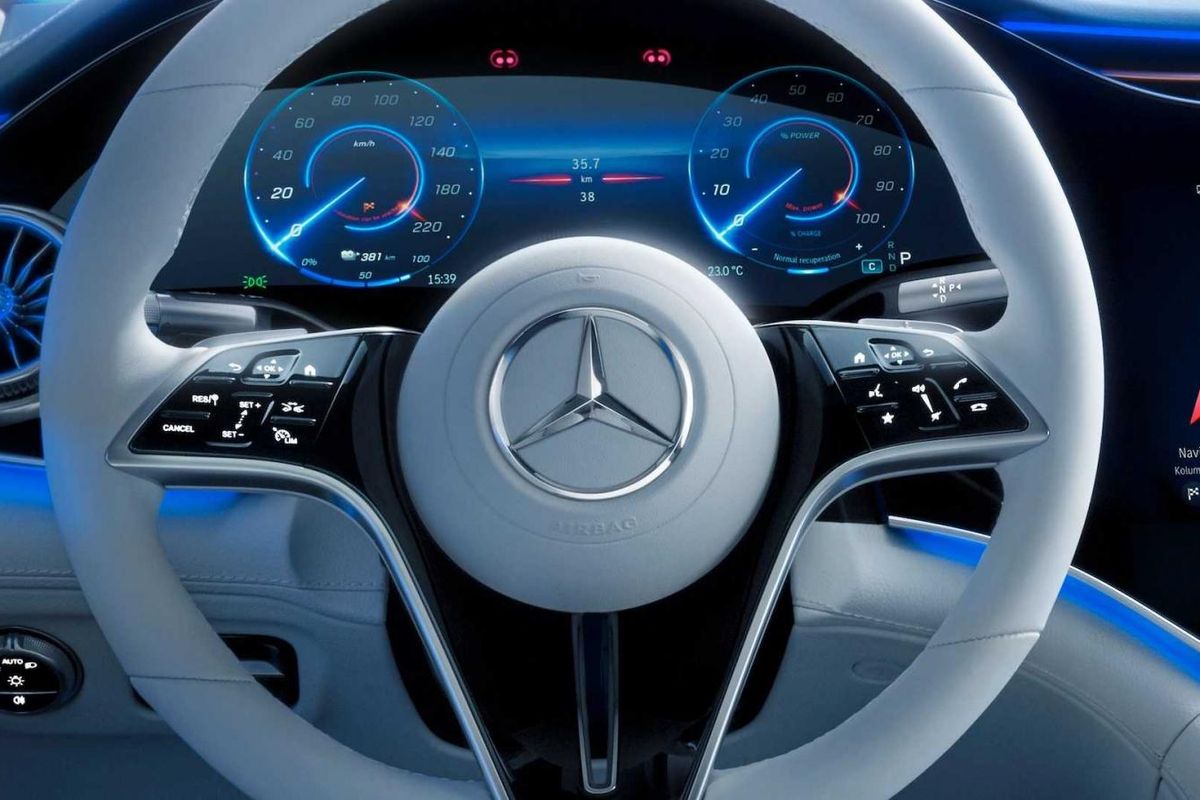
The clear dials and neatly-designed steering wheel make for a relaxing drive

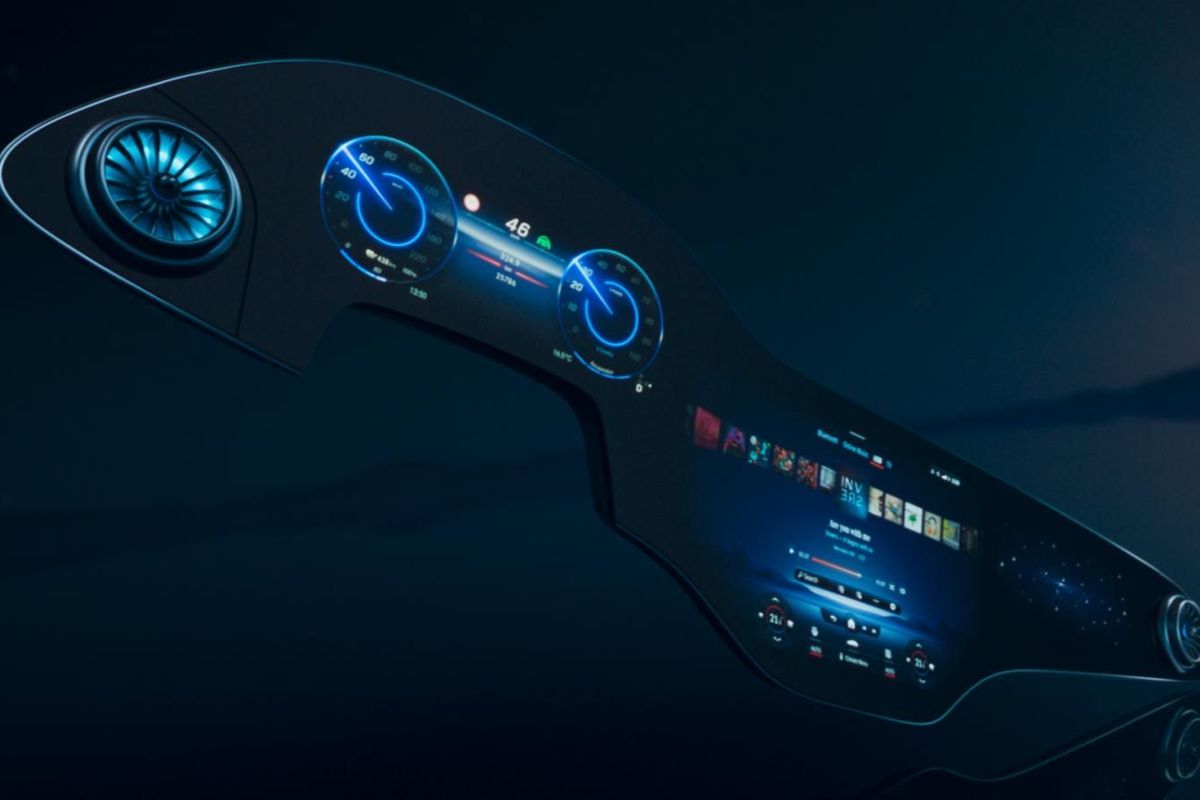
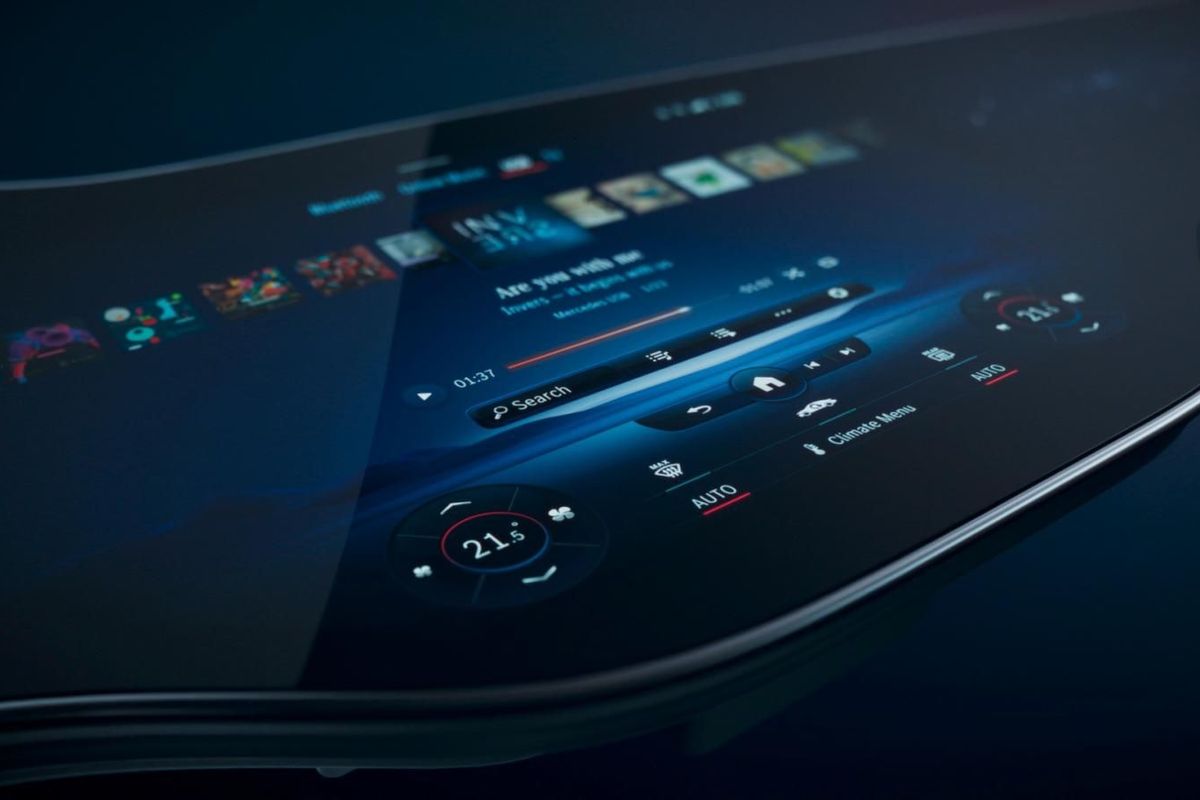
In terms of cabin layout, interior materials and features fitted, the 1st- and 2nd-gen Cretas are worlds apart. The new cabin is stylish and comes with all the bells and whistles associated with a R400k price tag. The connected generation will be pleased with the addition of Android Auto and Apple CarPlay compatibility, as well as the provision of a wireless charging pad (ahead of the transmission lever) and a charging-type USB port at the rear. The infotainment system in the previous-gen Creta looked aftermarket, but it’s been replaced by the current-gen Hyundai interface which looks and works much slicker.
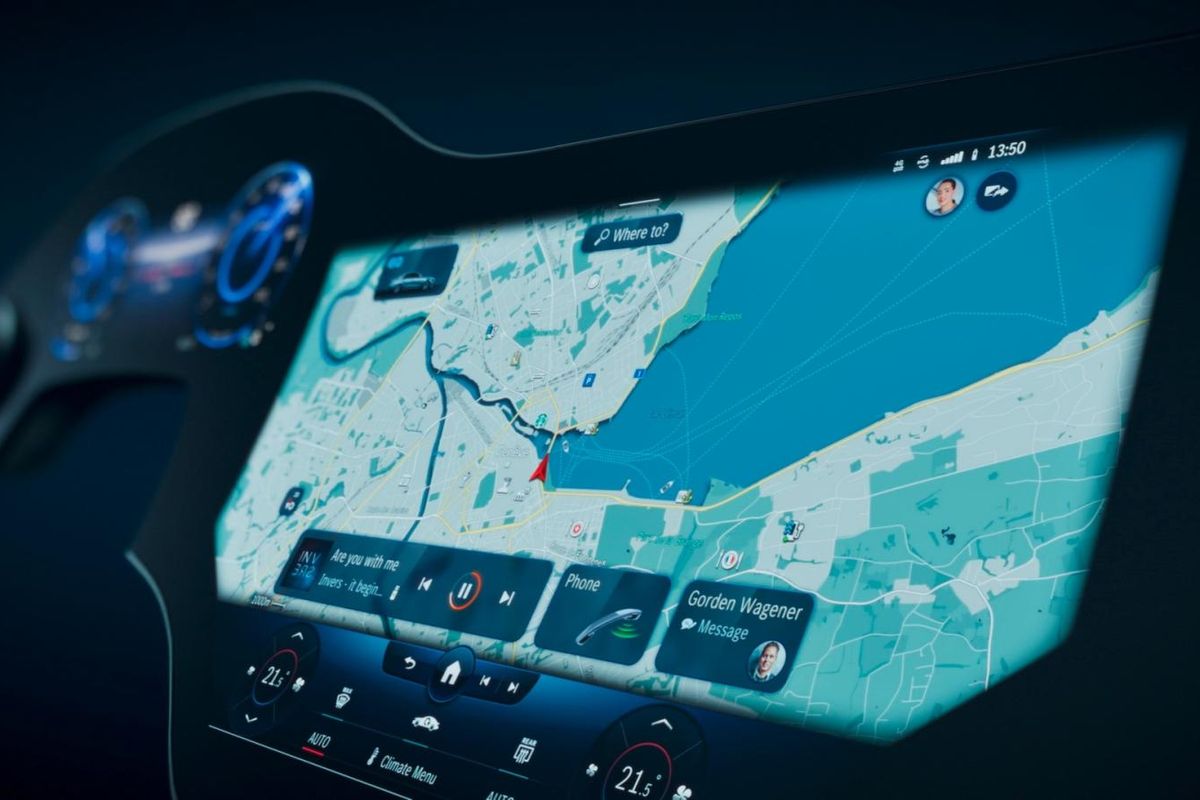
While the 1.5 Executive seems liberally equipped, it doesn’t have climate control (automatic air-conditioning), which the previous model did. The manual aircon is perfectly functional and supplies plenty of cool air as required, it’s just an odd omission. Visibility out the vehicle is generally good, plus a reverse-view camera and rear parking sensors are fitted to make those tricky parking manoeuvres easier.

Android Auto on duty, but the lack of climate control in the range was a mystery. The standard AC is adequate.

While the minimalistic cabin exudes simple elegance and is ergonomically sound, the Creta’s centre-console/transmission-tunnel cladding did emit a nasty-sounding creak under cornering during the test. Upon investigation, we managed to recreate the annoying creak by having the front passenger apply some pressure against the side of the centre console with their right knee, which suggests the plastic could be a bit sturdier. What’s more, while the faux-leather seats look fresh/youthful, we suspect the light-coloured inserts may not stand up so well against the spills, smears and dirt they’ll be subjected to.

Last, but certainly not least, the Creta’s safety suite now features electronic stability control. Being a consumer publication, we like to emphasise the importance of safety features and the lack of some form of traction/stability control was a drawback of the previous-gen model. “Creta II” now finally has a safety package that’s worth bragging about; apart from ABS with EBD, half a dozen airbags are fitted.  

Practicality 


Rear legroom has grown in the new-gen Creta and rear passengers will find the USB charging port useful.

The Creta’s proportions have increased by virtue of the compact family car’s new platform, which, of course, benefits occupant space… and luggage capacity. The newcomer is claimed to hold a useful 433 litres, 31 litres more than before and the additional length in the wheelbase has resulted in more legroom for rear passengers. Testers who are of above-average height could conduct the “sit-behind-thyself” test without much effort. The rear seats fold in a 60/40 split, so even if you have to transport additional cargo, you can still use some of the rear bench, which cannot be said of most Venue derivatives. 


The load-bay capacity of the Creta has grown in the new model.

Price and after-sales support 

Pricing for the new Hyundai Creta range starts at R374 900 and tops out at R484 900; the 1.5 Executive (tested here) costs R429 900. All Hyundai Creta derivatives are sold with a 5-year/150 000 km warranty with an additional 2-year/50 000 km warranty on the powertrain. A 5-year/90 000 km service plan and a 7-year/150 000 km roadside assist package are included.

See full specification details for the Hyundai Creta here.

Buy a new or used Hyundai Creta on Cars.co.za 

Verdict


The exterior styling may not win legions of fans, but there’s much more to this 2nd-gen Hyundai Creta…

The Creta’s excellent family-car characteristics have, by and large, been successfully been carried over to the new model. There is generous occupant space and features aplenty, even though the 1.5 Executive is a middle-of-the-range offering. Despite the non-turbocharged petrol engine being mated with a CVT, it offers sufficient poke/overtaking ability, without emitting too much of that dreaded drone (which CVTs are known for) and its real-world fuel economy is admirable. We reckon only enthusiastic drivers will be disappointed by this transmission; it really is a near-ideal setup for the daily commute. 

The changes are substantial enough for us to suggest current Creta owners should strongly consider upgrading to the 2nd-gen model, which has a diverse line-up. There are manual-‘box derivatives and, for those who seek the ultimate in open-road economy, even a turbodiesel version. The added load-bay capacity and rear legroom have enhanced what was already an impressive compact family-car offering.

It’s undisputable – a vehicle’s exterior looks do constitute a substantial part of its overall’s purchasing proposition, but potential purchasers really ought to look past the new Creta’s controversial face (if they can – we ultimately could) and explore the highly practical and well-equipped newcomer. The Creta’s no longer a study in understatement, yes, but then very few future Hyundai models will be… 

Related content:

Hyundai Creta (2020) Specs & Price

Kia Seltos (2020) Review

#CarsAwards – Best Compact Family Cars in SA

Hyundai Creta (2020) Launch Review

Suzuki Vitara (2020) Review

Mazda CX-30 e-Skyactiv X engine upgrade


More torque for Skyactiv.

Mazda might not be AMG, but the Japanese company’s search for superior internal combustion engine solutions is no less impressive.

With a tremendous history of engine development, from its adaptation of the German Wankel rotary idea to Mazda’s latest e-Skyactiv X, the company has remained strongly committed to petrol.

The idea of a compression ignition petrol engine is radical. For most legacy followers of engine design, diesel is ignited under pressure, not petrol. With the efficiency benefits on offer with compression ignition, Mazda’s engineers made a concerted effort to solve the issue with its Skyactiv technology.

Thanks to new pistons and a more advanced ignition system, Mazda has been able to lower the e-Skyactiv X engine range’s compression ratio, from 16.3:1 to 15.0:1.

For decades the intake camshaft was a key to improved throttle response and Mazda has not glossed over the traditional value of superior intake control. A modified intake camshaft enables improved valve timing and a reduction of pumping losses.

Applying the e-Skyactiv X technology to Mazda’s 2-litre four-cylinder petrol engine architecture delivers slight increases in power and torque. With 138 kW and 240 Nm of torque, it might not have the potency of a 2-litre turbocharged petrol engine, but the promise is superior day-to-day driving economy.

Although most new petrol engines are now turbocharged, Mazda has always believed that for everyday driving, an atmospheric engine manages to achieve superior efficiency.

The updated engine will see its debut in the 2021 CX-30. Our local market has only just received its allocation of CX-30s so the update will not be immediately available. We have reached out to Mazda SA and will update this story when we hear back.

Related content

Mazda CX-30 (2021) Launch Review

Mazda CX-5 (2021) Review

The Mazda Rotary Engine is Back

China’s stealthy progress – what it bodes for SA


Although GWM/Haval is enjoying strong support in South Africa, the “first wave” of the Chinese car onslaught didn’t quite work out for the other brands. Indications are, however, that fortunes could be markedly different next time round…

It is now nearly a decade-and-a-half since the first Chinese brands arrived in the South African market. Back then it was frequently stated that the Chinese carmakers would achieve in 5 years what took the Koreans 10 years, and the Japanese 20. Looking at the past 15 years with a South African market lens, it’s clear that theory didn’t quite play out as expected… 

The only brand that has made an impact is GWM/Haval (its H2 compact SUV achieved an impressive Top 20 sales position last year). The other Chinese brands still in the market (but not so that you’d notice), are BAIC (with the D20 and X25), JAC (with a range of pick-ups), Changan (those small half-loaves) and JMC (primarily with the Vigus pick-up and Landwind SUV). Geely, Chery, Foton, Hafei and others have come and gone.


Leading the Chinese charge in South Africa is the Haval H2, a Top 20 seller last year.

Look beyond South Africa’s borders, however, and it’s clear that the Chinese brands’ performance in the South African market is not an accurate reflection of the progress that they’ve made internationally. Companies such as MG (Morris Garages), Chery and Geely, in particular, are making their presence felt in other markets. 

How are Chinese brands performing in export markets?

In an international market severely impacted by the Covid-19 pandemic last year, the top Chinese brands achieved some of their best export results on record. 

In Russia, a 1.5-million-plus new-vehicle market that contracted by “only” 9.1% in 2020, Chinese brands were up 41.3% collectively, with Chery (+80.1%), Geely (+61.2%) and Haval (+41.5%) leading the charge.


Now owned by China’s SAIC Motor, the MG brand has entered several export markets and is making rapid inroads.

Over in Brazil, in a market down nearly 27% to 1.95 million units sold, Chery achieved 11th place overall and in December alone achieved a market share of 1.4%, the highest on record for a Chinese brand. In the Ukraine, a market down 3.5% overall, Chery was up by 18.1%, while in Egypt its sales jumped 76.4%. Keep in mind that Chery built its first car in December 1999 and late last year recorded its 9-millionth unit. The brand has been China’s largest vehicle exporter for the past 17 years. In January this year, Chery exports jumped by 86.7% (year-on-year).

MG, the iconic British brand that is now Chinese-owned, is a strong performer in several markets, with overall 2nd place in Chile, and 3rd in Thailand (a significant 800k unit per year market). The marque’s MG ZS compact crossover was the 3rd-best-selling model in the Chilean market last year. MG also achieved top 10 market placements in Oman, Bahrain, Iraq, Jordan, India, Kuwait, Saudi Arabia, Philippines and Egypt, among others. In New Zealand, a market down 22.6%, MG posted growth of 105.3%. And in the UK? Well, on “home soil” MG is currently the fastest-growing car brand.


The neatly-styled MG ZS is a compact crossover that’s made an immediate market impact. It was the third-best selling vehicle in Chile last year.

Geely, meanwhile, moved up to 2nd place overall in Belarus, fuelled by the success of its Coolray model. The brand only arrived in the Philippines late in 2019, but had already achieved 12th overall place in the market last year. In 2020, Geely became the first Chinese brand to manufacture its 10 millionth vehicle.


Geely’s stylish Coolray is already a strong seller in several export markets.

So, while a European breakthrough has not quite happened yet for the Chinese brands, it certainly appears to be on the cards. MG is already posting impressive sales in the UK, but the real opportunity comes with the rapid growth of Europe’s EV market. It is reported that nearly 50% of all EVs on the world’s roads in 2019 could be found in China. Most of the major Chinese brands already build EVs or have dedicated sub-brands that do. The resistance to these products, in a market that’s undergoing major change, is likely to be far less.

Quality, design and market knowledge add up

Chinese vehicles are far removed from the (at times) poorly made copies of mainstream brands that they were 15 years ago. But if you look at the smash-hit Haval H2 as an example of what’s current in China, you’re sorely mistaken… The current (but pre-facelift) H2 was already revealed in China as far back as 2013! I know, because I sat in it as a (then) employee of GWM. 


The new GWM P-Series pick-up’s premium cabin vividly illustrates this Chinese brand’s upmarket ambitions.

Things have progressed rapidly since. The most important factor in GWM/Haval’s current success in South Africa (besides more attractive products at the right price), is the fact that the brand now competes as an OEM, and not via a local distributor. This results in major efficiencies (such as a lower cost of operation), as well as improved timing and better coordination. Those factors would have played a part in GWM’s P-Series pick-up managing to get onto the local market relatively quickly, with the right engine (turbodiesel).

Chery, also one of the first Chinese brands to become available in South Africa, arguably paid the same school fees as GWM (being distributed here, rather than entering the market on its own steam). In the few years since it left South Africa, Chery’s product line-up has become unrecognisable from what South Africans will remember (the QQ, J3 and Tiggo). The brand’s Tiggo 8 model is a neatly styled, spacious 7-seat SUV that is selling up a storm in China, as well as export markets. Another popular product is the Tiggo 3x, which is more of a compact crossover. Like many of the Chinese brands, Chery identified the SUV/crossover trend early and is now reaping the rewards. 


The name might be familiar, but the latest Chery Tiggo 8 model is far removed from the compact SUV sold in South Africa in previous years.

Similarly, the vehicles fuelling MG’s rapid growth in export markets are no longer sporty roadsters or sedans (remember the MG6 sold in South Africa?), but SUVs. Ironically, MG is now the largest importer of Chinese cars in the UK, even though R&D (and to some extent, design), still happens out of Longbridge. Though the MG5 sedan does well in some markets, the brand’s ZS crossover is racing into the Top 20 rankings in the export markets in which MG competes.

Major investment in R&D, pinching top designers from Europe and a focus on quality all contribute to the rapid progress that has been made. According to the 2020 JD Power Initial Quality Study (on the Chinese domestic market) the percentage of vehicle owners who agree or strongly agree that the Chinese domestic brands are innovative, reliable, environment-friendly and reputable has increased annually since 2015 by 12%, 9%, 7% and 10% respectively. The percentage of vehicle owners who choose domestic brands because of good quality or performance has increased to 25% this year from 16% in 2015, while the percentage of those who choose domestic brands due to low price has dropped to 6% from 12% in 2015.


The Chery Tiggo 8’s luxurious and stylish interior is one of its numerous drawcards.

It is important to note, however, that there are close to 200 (!) Chinese car brands – and not all of them are improving at the same rate. “Consumers choosing a domestic brand for reasons of quality and performance, as well as improved brand image, demonstrates that the progress of improving quality in domestic brands has seen positive outcomes,” said Jeff Cai, general manager of auto product, J.D. Power China. “However, the quality among domestic brands varies considerably. Although a few leading brands have reached the same quality level as international brands, most of the domestic brands are still lagging.”

In the most recent (2020) IQS rankings, Chery, Changan, Geely and GAC Trumpchi compete well with the world’s mass-market brands. In the product-specific categories, the top 3 positions in the Small SUV category were occupied by Chinese products (Changan CS35, GAC Trumpchi GS3, Geely Vision X3). Geely also tied with Hyundai’s ix35 for first place in the Midsize SUV category and models from Baojun and Wuling were tops in the Compact- and Midsized MPV segments.


The stunning Geely Tugella is named after Tugela waterfall in South Africa. It rides on the Volvo XC40’s platform and is powered by a 177kW 2.0L turbocharged petrol engine.

Another important development is that the frustrating “lag” in sophistication between what is sold on the Chinese market, compared with what is offered for export, is being addressed. The major Chinese brands now do product development with a world view (including right-hand-drive markets), and this means that the products available to export markets are bang-up-to-date.

What does this mean for South Africa?

Several Chinese brands are known to be keenly following GWM/Haval’s success story in South Africa. Chery, Geely and MG (as examples) have all already been in the local market and understand that returning as an OEM, rather than through a local distributor, would be key. Expansion upward into South-Saharan Africa is also a factor, and most brands would agree that South Africa is best-placed in providing just that. So, brace yourselves for China’s second wave. It will hit much harder… and soon!

Related content:

GWM P Series could be the perfect Chinese bakkie

The end of empire for VW

Chinese Qoros7 has BMW Valvetronic

2020 Haval H2 Facelift – Video Review

South Africa’s top-selling cars of 2020

China’s stealthy progress what it bodes for SA


Although GWM/Haval is enjoying strong support in South Africa, the "first wave" of the Chinese car onslaught didn't quite work out for the other brands. Indications are, however, that fortunes could be markedly different next time round…

It is now nearly a decade-and-a-half since the first Chinese brands arrived in the South African market. Back then it was frequently stated that the Chinese carmakers would achieve in 5 years what took the Koreans 10 years, and the Japanese 20. Looking at the past 15 years with a South African market lens, it’s clear that theory didn’t quite play out as expected… 

The only brand that has made an impact is GWM/Haval (its H2 compact SUV achieved an impressive Top 20 sales position last year). The other Chinese brands still in the market (but not so that you’d notice), are BAIC (with the D20 and X25), JAC (with a range of pick-ups), Changan (those small half-loaves) and JMC (primarily with the Vigus pick-up and Landwind SUV). Geely, Chery, Foton, Hafei and others have come and gone.


Leading the Chinese charge in South Africa is the Haval H2, a Top 20 seller last year.

Look beyond South Africa’s borders, however, and it’s clear that the Chinese brands’ performance in the South African market is not an accurate reflection of the progress that they’ve made internationally. Companies such as MG (Morris Garages), Chery and Geely, in particular, are making their presence felt in other markets. 

How are Chinese brands performing in export markets?

In an international market severely impacted by the Covid-19 pandemic last year, the top Chinese brands achieved some of their best export results on record. 

In Russia, a 1.5-million-plus new-vehicle market that contracted by “only” 9.1% in 2020, Chinese brands were up 41.3% collectively, with Chery (+80.1%), Geely (+61.2%) and Haval (+41.5%) leading the charge.


Now owned by China's SAIC Motor, the MG brand has entered several export markets and is making rapid inroads.

Over in Brazil, in a market down nearly 27% to 1.95 million units sold, Chery achieved 11th place overall and in December alone achieved a market share of 1.4%, the highest on record for a Chinese brand. In the Ukraine, a market down 3.5% overall, Chery was up by 18.1%, while in Egypt its sales jumped 76.4%. Keep in mind that Chery built its first car in December 1999 and late last year recorded its 9-millionth unit. The brand has been China’s largest vehicle exporter for the past 17 years. In January this year, Chery exports jumped by 86.7% (year-on-year).

MG, the iconic British brand that is now Chinese-owned, is a strong performer in several markets, with overall 2nd place in Chile, and 3rd in Thailand (a significant 800k unit per year market). The marque's MG ZS compact crossover was the 3rd-best-selling model in the Chilean market last year. MG also achieved top 10 market placements in Oman, Bahrain, Iraq, Jordan, India, Kuwait, Saudi Arabia, Philippines and Egypt, among others. In New Zealand, a market down 22.6%, MG posted growth of 105.3%. And in the UK? Well, on "home soil" MG is currently the fastest-growing car brand.


The neatly-styled MG ZS is a compact crossover that's made an immediate market impact. It was the third-best selling vehicle in Chile last year.

Geely, meanwhile, moved up to 2nd place overall in Belarus, fuelled by the success of its Coolray model. The brand only arrived in the Philippines late in 2019, but had already achieved 12th overall place in the market last year. In 2020, Geely became the first Chinese brand to manufacture its 10 millionth vehicle.


Geely's stylish Coolray is already a strong seller in several export markets.

So, while a European breakthrough has not quite happened yet for the Chinese brands, it certainly appears to be on the cards. MG is already posting impressive sales in the UK, but the real opportunity comes with the rapid growth of Europe’s EV market. It is reported that nearly 50% of all EVs on the world’s roads in 2019 could be found in China. Most of the major Chinese brands already build EVs or have dedicated sub-brands that do. The resistance to these products, in a market that's undergoing major change, is likely to be far less.

Quality, design and market knowledge add up

Chinese vehicles are far removed from the (at times) poorly made copies of mainstream brands that they were 15 years ago. But if you look at the smash-hit Haval H2 as an example of what’s current in China, you’re sorely mistaken… The current (but pre-facelift) H2 was already revealed in China as far back as 2013! I know, because I sat in it as a (then) employee of GWM. 


The new GWM P-Series pick-up's premium cabin vividly illustrates this Chinese brand's upmarket ambitions.

Things have progressed rapidly since. The most important factor in GWM/Haval’s current success in South Africa (besides more attractive products at the right price), is the fact that the brand now competes as an OEM, and not via a local distributor. This results in major efficiencies (such as a lower cost of operation), as well as improved timing and better coordination. Those factors would have played a part in GWM’s P-Series pick-up managing to get onto the local market relatively quickly, with the right engine (turbodiesel).

Chery, also one of the first Chinese brands to become available in South Africa, arguably paid the same school fees as GWM (being distributed here, rather than entering the market on its own steam). In the few years since it left South Africa, Chery's product line-up has become unrecognisable from what South Africans will remember (the QQ, J3 and Tiggo). The brand's Tiggo 8 model is a neatly styled, spacious 7-seat SUV that is selling up a storm in China, as well as export markets. Another popular product is the Tiggo 3x, which is more of a compact crossover. Like many of the Chinese brands, Chery identified the SUV/crossover trend early and is now reaping the rewards. 


The name might be familiar, but the latest Chery Tiggo 8 model is far removed from the compact SUV sold in South Africa in previous years.

Similarly, the vehicles fuelling MG’s rapid growth in export markets are no longer sporty roadsters or sedans (remember the MG6 sold in South Africa?), but SUVs. Ironically, MG is now the largest importer of Chinese cars in the UK, even though R&D (and to some extent, design), still happens out of Longbridge. Though the MG5 sedan does well in some markets, the brand’s ZS crossover is racing into the Top 20 rankings in the export markets in which MG competes.

Major investment in R&D, pinching top designers from Europe and a focus on quality all contribute to the rapid progress that has been made. According to the 2020 JD Power Initial Quality Study (on the Chinese domestic market) the percentage of vehicle owners who agree or strongly agree that the Chinese domestic brands are innovative, reliable, environment-friendly and reputable has increased annually since 2015 by 12%, 9%, 7% and 10% respectively. The percentage of vehicle owners who choose domestic brands because of good quality or performance has increased to 25% this year from 16% in 2015, while the percentage of those who choose domestic brands due to low price has dropped to 6% from 12% in 2015.


The Chery Tiggo 8's luxurious and stylish interior is one of its numerous drawcards.

It is important to note, however, that there are close to 200 (!) Chinese car brands – and not all of them are improving at the same rate. “Consumers choosing a domestic brand for reasons of quality and performance, as well as improved brand image, demonstrates that the progress of improving quality in domestic brands has seen positive outcomes,” said Jeff Cai, general manager of auto product, J.D. Power China. “However, the quality among domestic brands varies considerably. Although a few leading brands have reached the same quality level as international brands, most of the domestic brands are still lagging.”

In the most recent (2020) IQS rankings, Chery, Changan, Geely and GAC Trumpchi compete well with the world’s mass-market brands. In the product-specific categories, the top 3 positions in the Small SUV category were occupied by Chinese products (Changan CS35, GAC Trumpchi GS3, Geely Vision X3). Geely also tied with Hyundai’s ix35 for first place in the Midsize SUV category and models from Baojun and Wuling were tops in the Compact- and Midsized MPV segments.


The stunning Geely Tugella is named after Tugela waterfall in South Africa. It rides on the Volvo XC40's platform and is powered by a 177kW 2.0L turbocharged petrol engine.

Another important development is that the frustrating “lag” in sophistication between what is sold on the Chinese market, compared with what is offered for export, is being addressed. The major Chinese brands now do product development with a world view (including right-hand-drive markets), and this means that the products available to export markets are bang-up-to-date.

What does this mean for South Africa?

Several Chinese brands are known to be keenly following GWM/Haval’s success story in South Africa. Chery, Geely and MG (as examples) have all already been in the local market and understand that returning as an OEM, rather than through a local distributor, would be key. Expansion upward into South-Saharan Africa is also a factor, and most brands would agree that South Africa is best-placed in providing just that. So, brace yourselves for China’s second wave. It will hit much harder… and soon!

Related content:

GWM P Series could be the perfect Chinese bakkie

The end of empire for VW

Chinese Qoros7 has BMW Valvetronic

2020 Haval H2 Facelift – Video Review

South Africa's top-selling cars of 2020

Volvo Announces All-Electric Strategy & New Model


The Swedish carmaker has announced it will be ditching the internal combustion engine and will be a fully electric car company by 2030. Its 2nd all-electric model was revealed too, the C40 Recharge.

Volvo Cars has announced its intentions of becoming a leader in the fast-growing premium electric car market and plans to become a fully electric car company by 2030. By 2030, the Geely-owned brand intends on phasing out any vehicle with an internal combustion engine in its portfolio. The only vehicles it will be selling will be purely electric. 

Its a bold and ambitious claim from Volvo to go purely electric. As we've seen with Jaguar Land Rover, it's only Jaguar who is going pure electric, with Land Rover still offering some form of internal combustion / hybrid powertrain to customers. The entire car sales process will be changing too and Volvo will be focusing intensely on online car sales. All fully electric Volvos will be available online only. There will be a few electric cars revealed and Volvo's 2025 goal is 50% of its global sales to be fully electric, with the remaining 50% being hybrids.

“To remain successful, we need profitable growth. So instead of investing in a shrinking business, we choose to invest in the future – electric and online,” said Håkan Samuelsson, chief executive. “We are fully focused on becoming a leader in the fast-growing premium electric segment.”

“There is no long-term future for cars with an internal combustion engine,” said Henrik Green, chief technology officer. “We are firmly committed to becoming an electric-only car maker and the transition should happen by 2030. It will allow us to meet the expectations of our customers and be a part of the solution when it comes to fighting climate change.”

Volvo, not to be confused with its electric performance brand Polestar, launched its first fully electric car the XC40 last year and the 2nd model has just been revealed. It's called the Volvo C40 Recharge and it will be sold exclusively online. Essentially, its an XC40 in a flashier coupe SUV body style and it features the same powertrain as the XC40 Recharge.

Power outputs are rated at 300 kW and 660 Nm, with 0-100 kph dispatched in an impressive 4.7 seconds. Top speed is rated at 180 kph as per Volvo's safety strategy. According to the WLTP cycle, the Volvo C40 Recharge has a range of 420 km and it will take 8 hours to charge it on an 11 kW plug. If you can find a 150 kW charger, 80% capacity will take just 40 minutes. Volvo has already said there'll be future Over-The-Air (OTA) updates that will enhance the range. Production of the Volvo C40 Recharge begins in 2021 and there'll be another 5 electric Volvos revealed by 2025.


Further Reading

Volvo to Bring Small Electric Crossover to Market

Volvo XC40 Recharge Revealed

Volvo XC40 T3 R-Design (2019) Review

Volvo XC90 (2019) Launch Review

Volvo XC40 (2018) Launch Review

Volvo XC60 D4 R-Design (2019) Review

Hyundai Unwraps Bayon Crossover


Hyundai has taken off the covers of its new Bayon crossover. 

The Hyundai Bayon is built on the i20 compact hatchback platform and the Korean brand is pitching it to the B-segment against things like the Volkswagen T-Cross and Nissan Juke. Named after a particularly pretty area of French Basque Country, it's clear Hyundai is targeting the European market with its offering.

It's 4 180mm long, 1 775mm wide and 1 490mm tall, and has a wheelbase of 2 580 mm. Clever packaging means 411 litres of boot space. Customers have the option of 15-inch steel wheels or 16- or 17-inch alloy wheels. Hyundai is claiming a ground clearance of up to 183 mm (in combination with 17-inch alloy wheels)

Inside, customers have digital connectivity options in the form of a digital dashboard, Apple CarPlay and Android Auto (Offered wirelessly with 8-inch Display Audio), Bose Premium Sound System, wireless charging pad, and 3x USB ports (2x front, 1x rear).

In terms of engines, there are 1.0-litre turbocharged 3-cylinder engines in two states of tune. The entry-level outputs are 74 kW and 172 Nm, while the top-spec model produces 88 kW and 172 Nm. Both derivatives are paired with 48V mild hybrid assistance, and customers can choose from either a 6-speed manual gearbox with rev-matching tech or a 7-speed dual-clutch transmission. 

We're trying to work out where the new Bayon fits in relation to the Kona and the Venue and we suspect there's going to be quite an overlap. Interestingly, the Hyundai Creta is not sold in Europe and we suspect Bayon won't come to SA as we already have the former on sale.


The Hyundai Bayon cabin

Further Reading

Hyundai Creta (2020) Specs & Price

Hyundai confirms & previews Kona N

Full Reveal: Hyundai i20 N with 150 kW!

Browse Hyundai vehicles for sale


Toyota’s Brilliant South African CEO to retire


Dr Johan van Zyl will be retiring from leading Toyota Motor Europe. 

Toyota dominates South Africa’s vehicle market and the person responsible for much of that is retiring, soon.

Dr Johan van Zyl will serve his last day as a senior member of Toyota’s global staff, on 1 April (and no, it is not a joke).

Despite humble beginnings in Springs, Guateng there is no questioning Dr van Zyl’s credentials or his influence on the South African automotive industry.

He joined Toyota in 1993, as the transition to greater internationalisation of the local automotive environment was starting. Dr van Zyl’s initial speciality was marketing where he worked in various capacities, before becoming CEO of Toyota South Africa, in 2003.

Between becoming CEO and then taking responsibility for Toyota’s African presence in 2009, Dr van Zyl oversaw a terrific growth and product development story for the Japanese brand’s South African chapter.

In the period 2003-2009 Toyota transitioned away from traditional passenger cars to its enormously successful SUV business. The Fortuner was one of Toyota's most important projects, launched locally, under the guidance of Dr van Zyl. 

Despite a punishing travel schedule and having to report to Toyota headquarters in Japan, despite being in a Brussels office, Dr Johan van Zyl has excelled. To ascend to a senior managing office position at Toyota, whilst not being Japanese, is exceedingly rare.

Although Dr Johan van Zyl has less than a month left in his position a Toyota international, he will not be lost to the company, especially its local operations.

Toyota South Africa has confirmed that Dr van Zyl will remain in his position as chairman of the company, after he retires from international Toyota corporate life. His skills and insight should serve Toyota South Africa with value, as the company prepares to start producing its first hybrid vehicles at the Prospecton plan, outside Durban.

Further Reading

Toyota Hilux Raider (2021) Specs & Price

Toyota Corolla Cross to be built in SA

Toyota Fortuner (2021) Review

2020 Toyota Fortuner: 5 Key Changes

New car sales in SA: February 2021


February is a short-selling month, how did our vehicle sales and export data stack up?

February continued the trend set by January with a double-digit decline over the previous year’s vehicle sales. However, last year’s data was pulled during pre-Covid conditions so the decline is actually in-line with market expectations according to naamsa – the Automotive Business council.

The export market was also slightly down on the corresponding period during 2020, but overall our export channel has delivered more cars over the first 2 months of 2021 than it did in the first 2 months of 2020.

New car sales summary for South Africa – February 2021

  • Aggregate new vehicle sales of 37 521 units down by 13.3% compared to February 2020.  

  • Passenger car sales of 24 270 units down by 18.1% compared to February 2020. 

  • Light Commercial Vehicle (LCV) sales of 11 246 units down by 3.2% compared to February 2020. 

  • Exports of 29 582 units down by 8% compared to February 2020. 

Sales outlook

According to naamsa “The performance of the new vehicle market for the first two months of 2021, compared with the pre-COVID first two months of 2020, continues to reflect the economic and social challenges in South Africa considering that the country’s economy was already in a recession before the outbreak of the global health pandemic. 

Although a rebound in the new vehicle market is anticipated from March 2021 onwards, compared to the low-base affected COVID-19 corresponding months in 2020, it is likely that both business and consumer confidence will remain subdued over the balance of the year. 

naamsa welcomes the February 2021 Budget tax relief naamsa announcements for individual taxpayers, which will reduce the tax burden on mainly the lower and middle-income households, as well as the corporate income tax rate, which was lowered to 27% for companies. 

These measures, along with the current low interest rates, low inflation environment, as well as the roll-out of the vaccine in South Africa will aim to support to the new vehicle market over the short to medium term, despite other above cost of living increases such as the hefty rise in the price of electricity of over 15% this year. 

Vehicle export numbers continue to gain upward momentum and will be supported by the rebound in global economic growth projected for 2021, spurred by mass vaccination campaigns in various countries to taper the COVID-19 pandemic. 

An improvement in the economic climate of the South African automotive industry’s main trading partners will stimulate demand for higher vehicle sales, and subsequently, will result in increased vehicle exports of South African manufactured vehicles to those countries.

Related content

New car sales in SA: January 2021

More Fuel Price Increases Looming

Toyota Land Cruiser 78 Returns


Toyota has re-introduced the Land Cruiser 78 Wagon to market. See details below. 

Few offroaders have garnered as much respect as the Toyota Land Cruiser 70. Back in 2015, Toyota discontinued the Land Cruiser 78 wagon and forged on with the bakkie and station wagon derivatives. 

Now though, demand for the 78 wagon has warranted its reintroduction and it joins the market with a 6-cylinder 4.2-litre diesel engine offering 96 kW and 285 Nm in conjunction with a 5-speed manual transmission and a low-range transfer case. 

The Land Cruiser 78 Wagon rides on heavy-duty 16-inche steel wheels and buyers are able to choose from 2 colours including Ivory White or Sand Beige. The inclusion of rear drum brakes also improves its suitability for high-dirt operating conditions while also enhancing durability. 

Toyota Land Cruiser 78 – Price in SA

Land Cruiser 78 4.2 Wagon – R716 000 

The Land Cruiser 78 Wagon is sold with a 3-year/100 000km warranty and service/maintenance plans are available as an option. 

Buy a used Toyota Land Cruiser on Cars.co.za

Related Content

New Land Cruiser On The Way

Next-gen Toyota Land Cruiser Loses V8

Toyota working on battery Cruiser (Updated)


Volkswagen Golf 8 GTI Clubsport 45 Announced


A special edition Volkswagen Golf GTI is on its way, if this leak is anything to go by. 

Update: Volkswagen has revealed the special edition model, which comes fully customised. Volkswagen says its new offering boasts a black roof, black spoiler as well as the Race package. This package includes a sports exhaust system as well as the removal of the top-speed limiter. 

The vehicle rides on 19-inch Scottsdale alloy wheels finished in gloss black, there's a subtle 45 on the side and the vehicle features IQ.Light LED matrix headlights. In terms of engine power, the new Clubsport 45 is powered by a 2.0-litre turbo producing 221 kW and 400 Nm. 

Volkswagen SA will not be bringing the standard Clubsport to SA and it's safe to assume this birthday model won't be coming either.

The Instagram user Cochespias has shared three images of what's claimed to be the new Volkswagen Golf 8 GTI Clubsport 45. 

Given the name, we understand this model has been built to celebrate 45 years of the GTI name. It was back in 1976 that the first GTI reached customers and it was an instant success. 

From what we can see in these images, the Clubsport 45 features a unique colour, special black wheels and that exhaust system looks a bit different to the standard plumbing setup. It's likely its an Akrapovic system which should sound great. There's also a nice 45 decal on the sides. 

There's no mention of mechanical changes, but for the record, the Golf 8 GTI Clubsport 2.0-litre turbo produces an additional 41 kW and 30 Nm compared with its standard sibling. Peak outputs of 221 kW and 400 Nm are on offer and what’s more, its 7-speed dual-clutch (DSG) automatic transmission has derivative-specific shorter gear ratios, which helps the Clubsport accelerate from 0 to 100 kph faster than the standard GTI. 

Don't get your hopes up yet, Vrrpha fans as Volkswagen SA has said the new Golf GTI Clubsport is not coming to South Africa. We do live in hope that it will eventually make its way here in a few years time – the love for the Golf GTI in SA should be enough to secure a few units for the fans. We were big fans of the first Golf GTI Clubsport which we drove back in 2016 and the Golf GTI TCR is a worthy #CarsAwards winner.

Is this the successor to the Volkswagen Golf GTI TCR? We will know soon enough as an official reveal should be soon. As it stands, the all-new Volkswagen Golf 8 GTI will be launching in South Africa in the first quarter of 2021, with its all-wheel-drive Golf R sibling reaching showrooms towards the end of the year. 


A closer look at the Volkswagen Golf 8 GTI Clubsport 45 unique wheels (Cochespias Instagram)

Further Reading

Volkswagen Golf 8 GTI Clubsport Not for SA

Volkswagen Golf 8 GTI Filmed in Cape Town

Golf 8 R revealed with 235 kW, optional drift mode

Volkswagen Golf 8 GTI (2020) International Launch Review