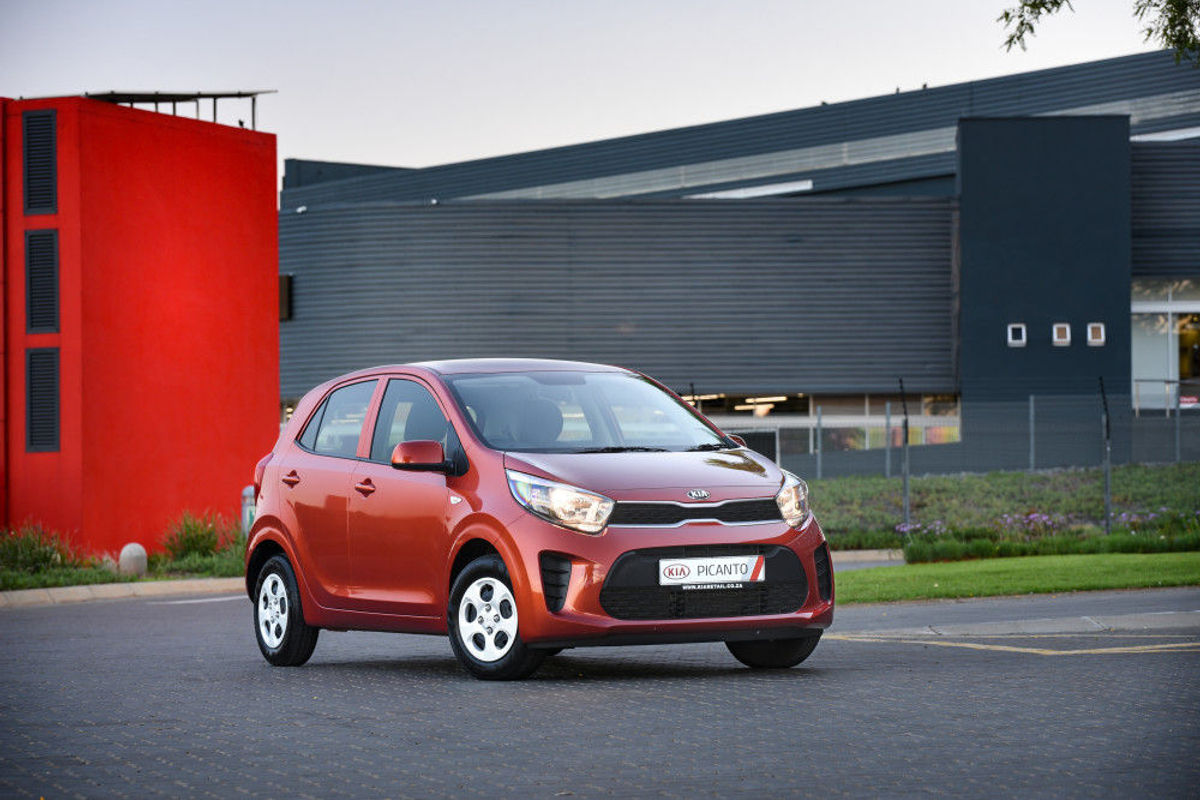
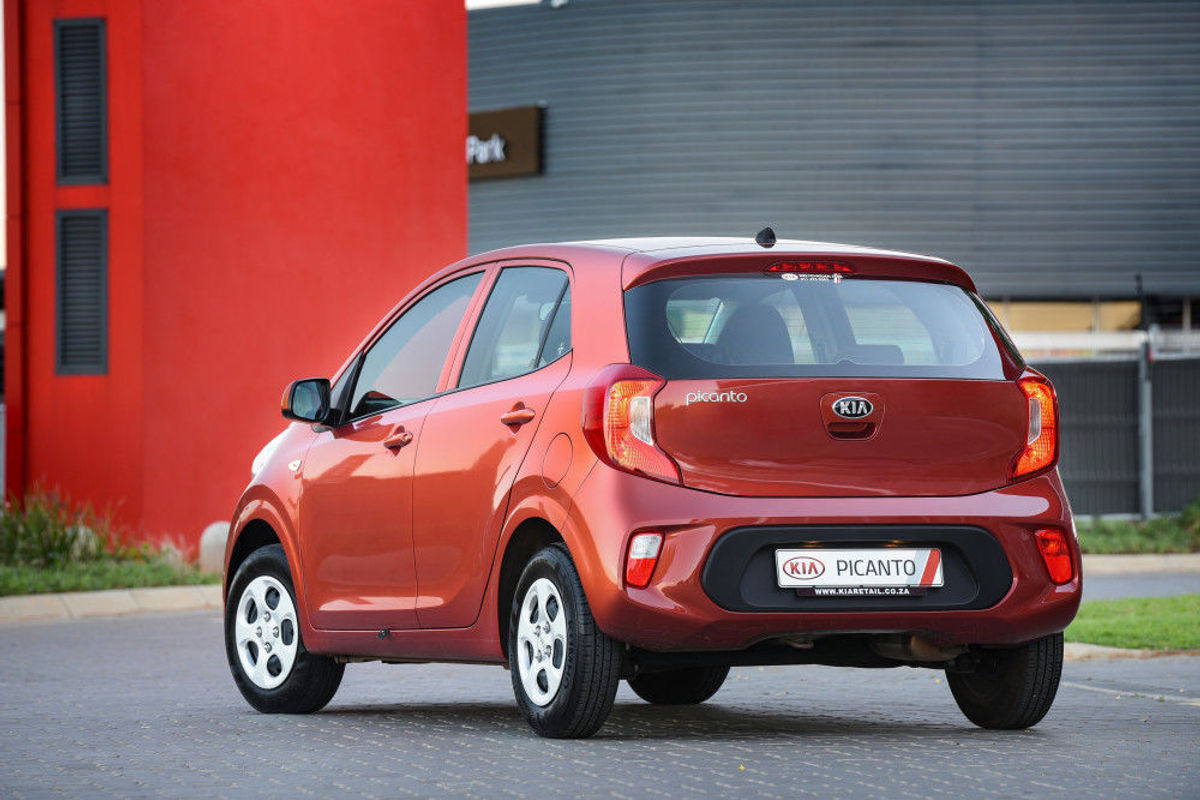
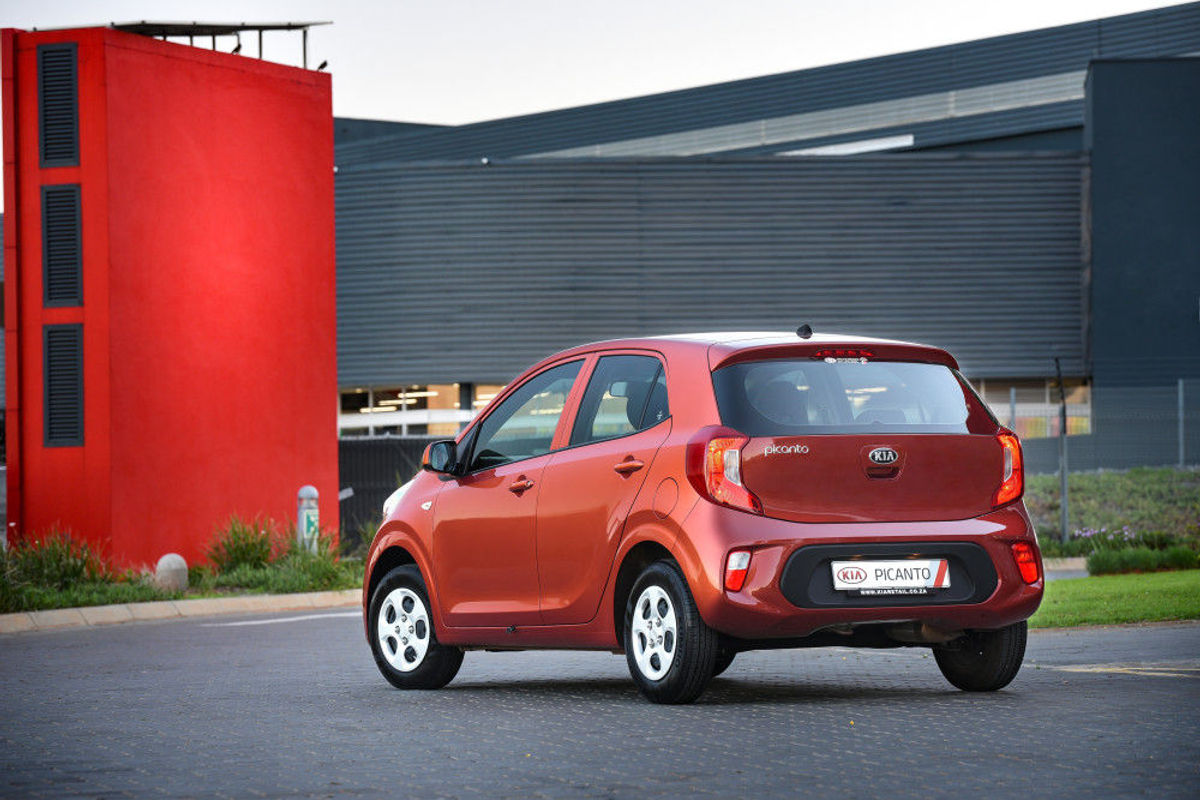
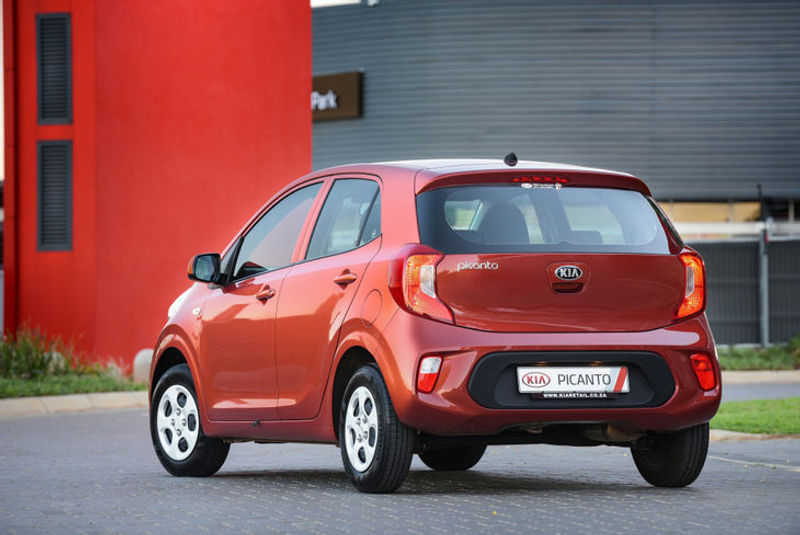
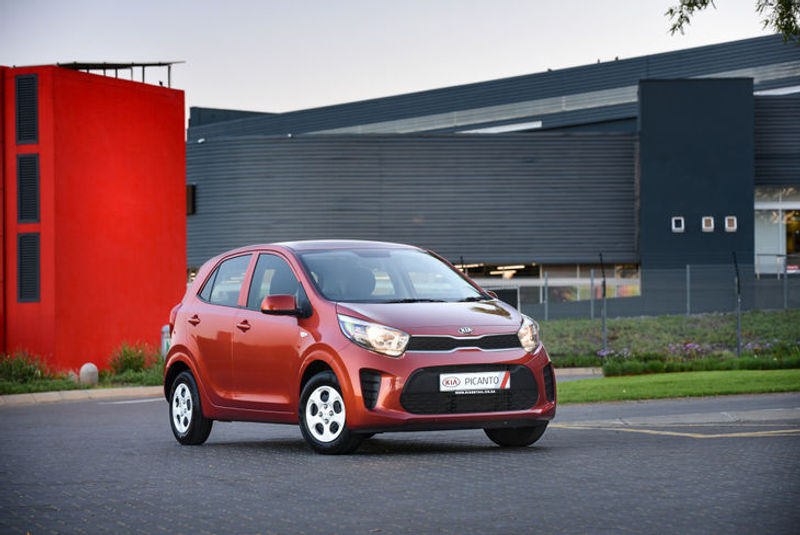
With a facelifted Picanto waiting in the wings, Kia has sweetened the deal on its budget-car range by offering buyers 2 free tanks of fuel every month for the first 6 months of ownership (if they buy one before 31 December 2020)*.
The 3rd-generation Kia Picanto – a former #CarsAwards – powered by WesBank finalist – came to market in 2017 and the affordable city car remains a popular choice for first-time new car buyers in the South African market. Kia has done its bit to improve the value offering of the Picanto range (prices begin at R184k and range to R250k)… In mid-2019, it introduced a standard 2-year/30 000 km service plan and 6 months later, introduced a range of detail upgrades throughout the range, followed by the addition of a 1.0 Runner panel van variant a few months ago.
Pricing for the Kia Picanto begins at R184k, with the entry-level Start specification now featuring 2 front airbags and ABS.
However, with a facelifted version of the Picanto scheduled to be introduced in South Africa early in 2021, Kia has come up with an attractive runout deal for the current pre-facelift model. In what is sure to appeal to cash-strapped buyers looking to minimise running costs, if you purchase a new Picanto before the end of year, Kia will comp you 2 free tanks of fuel for free every month for the first 6 months* (from date of registration).
Recent spec update
Earlier this year, Kia added specification across the range, most notably on the entry-level Start, which gained an additional airbag (for the front passenger, in addition to the one mounted in the steering wheel) and added ABS and EBD, which will please safety-conscious buyers.
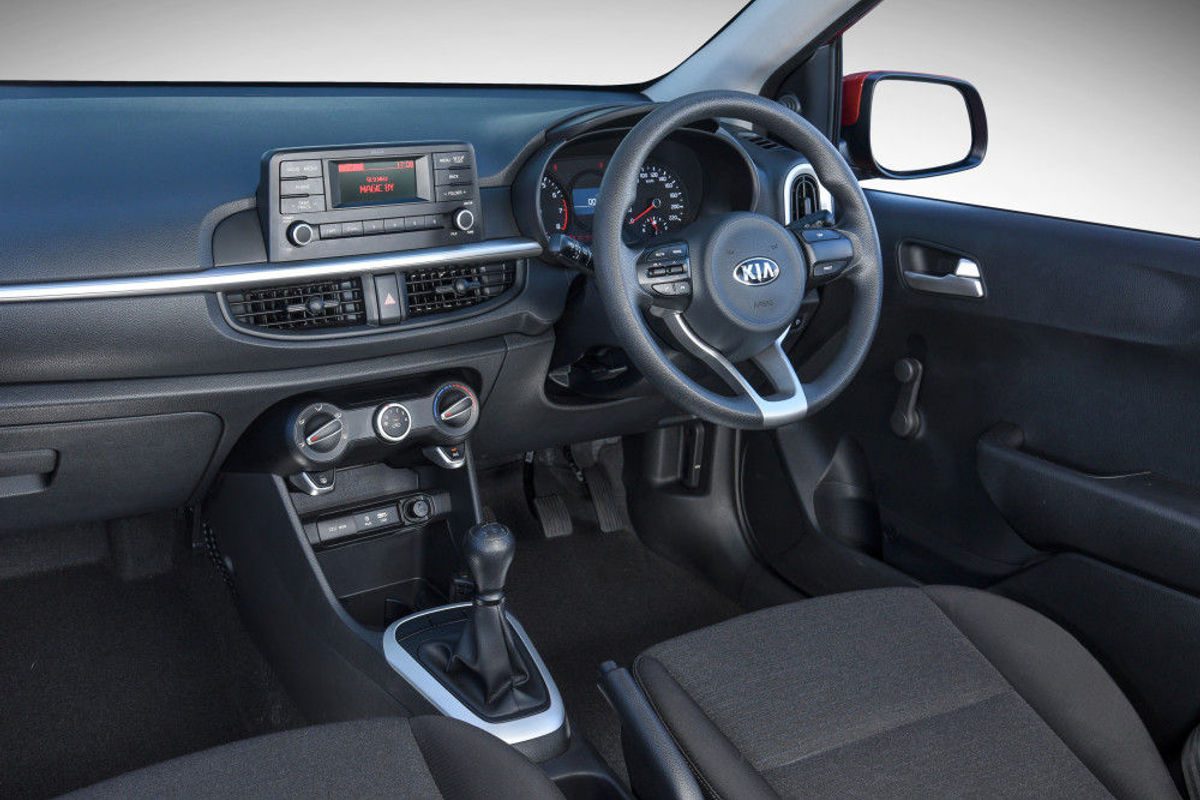
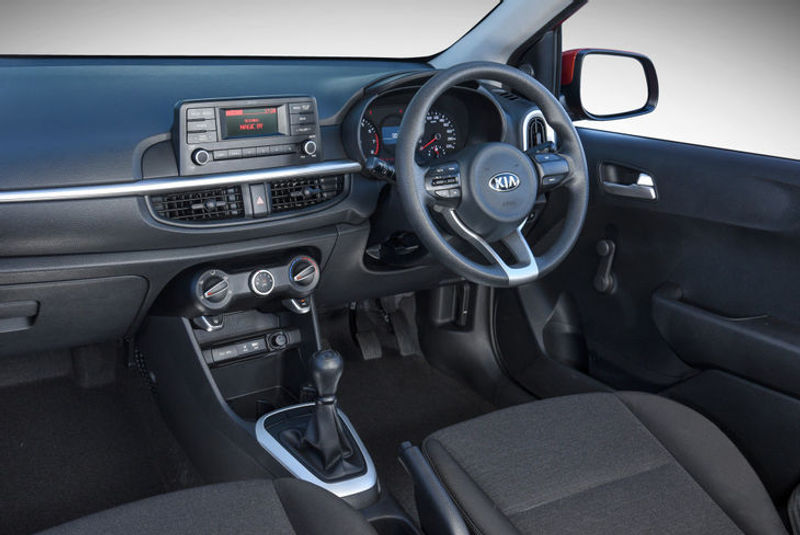
The Picanto Start derivatives include standard features such as 13-inch steel wheel with cosmetic covers, power steering with steering adjustment, manual air conditioning, radio with Bluetooth and a USB/Aux input. All Start derivatives are powered by a 3-cylinder, 1.0-litre petrol engine that produces 49 kW and 96 Nm of torque and comes mated with either a 5-speed manual or 4-speed automatic transmission.
The entire Picanto range now benefits from increased feature specification.
Over and above Start specification, the mid-spec Picanto Street adds features such as electric windows, a multifunction steering wheel and a height-adjustable driver’s seat. What's more, the Street specification has now been bolstered with the addition of an 8-inch colour touchscreen with Apple CarPlay and Android Auto compatibility. The side mirrors are also heated, while the 14-inch steel wheels boast a revised cover design.
Street derivatives are powered by the same 1.0-litre engine as their Start stablemates, but buyers can also opt for a perkier 1.25-litre petrol engine with 61 kW and 122 Nm of torque. Both engines are available in conjunction with either a 5-speed manual or 4-speed automatic transmission.
Kia Motors South Africa claims the Picanto is "renowned for having one of the best resale values in South Africa".
The Picanto Style offers a few more nice-to-haves such as a 3-spoke leather-trimmed steering wheel and leather-clad gear lever. This derivative is now distinguished by integrated turn signals in the side mirror housings, which are also now electrically foldable. Fourteen-inch alloys are standard.
The range-topping Picanto Smart, which is offered exclusively with the 1.25-litre engine and a choice of 5-speed manual or 4-speed automatic transmission, features LED daytime running lights, sporty-looking alloy wheels, a full leather interior, as well as a sunroof, which is certainly a rarity in the budget car segment. Meanwhile, park-distance control and a reverse-view camera are available at extra cost.
As before, the Picanto is sold with a 5-year/unlimited km warranty (including roadside assistance), as well as a 2-year/30 000 km service plan.
* Fuel calculated at full tank capacity of 35 litres, with cost per litre being R14.83 at two tanks per month. Please note that this is dependent on driver behaviour and the type of traffic customers travel in on a daily basis.
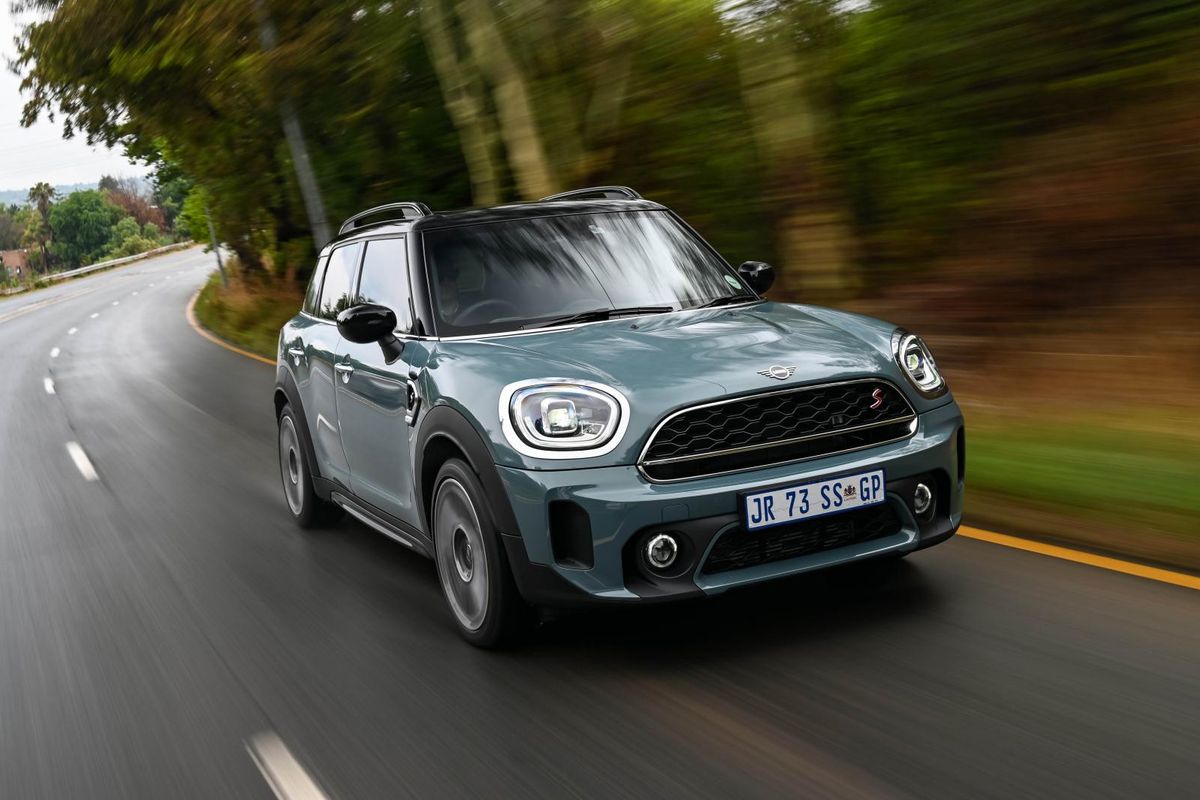
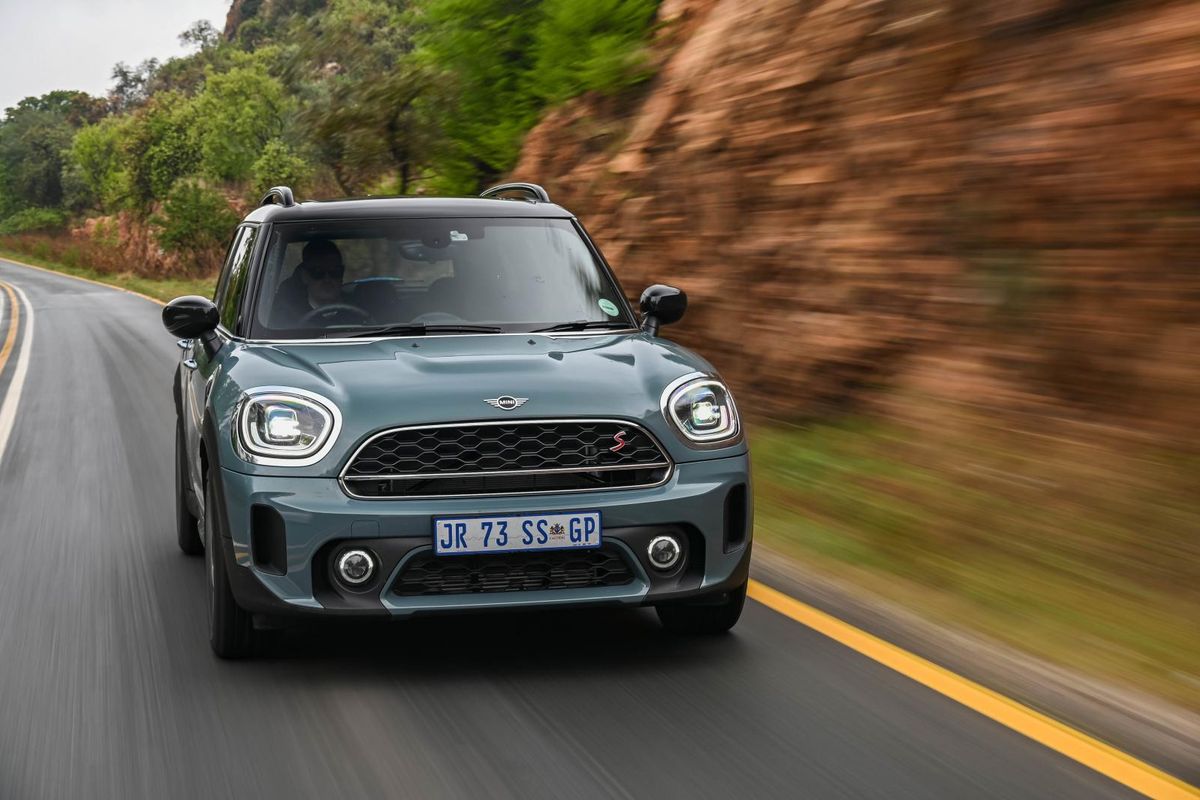
The largest member of the Mini family has been updated. We spent a few days driving the Countryman on some spectacular roads in Mpumalanga and Limpopo to find out if it's retained its fun-to-drive nature and charm…
This author can recall the South African launch of the 1st-gen Countryman in 2010; traditionalists weren't happy because the Oxford-based firm's crossover was anything but "mini". The lineup was fascinating: the naturally-aspirated Cooper (with a lethargic motor unable to provide much in the way of driving thrills) was best avoided, the Cooper S boasted All4 – the brand's all-wheel-drive setup – and a JCW version rounded out the range.
The 2nd-generation model landed in 2017 and, thankfully, the 1.6 petrol motor was replaced by a turbocharged motor. Interestingly, Mini continued to offer a manual gearbox on both Cooper and Cooper S derivatives. There was a turbodiesel version too, as well as the 225-kW JCW flagship.
For 2020, the Mini Countryman has been given a facelift and a mechanical upgrade, but the SA line-up has been trimmed to Cooper, Cooper S and John Cooper Works (JCW). All derivatives feature turbocharged petrol engines and automatic transmissions, while the JCW range-topper is offered in conjunction with all-wheel drive. The Countryman is an important model for Mini; the brand claims it accounts for almost 30% of global sales.
What's New?
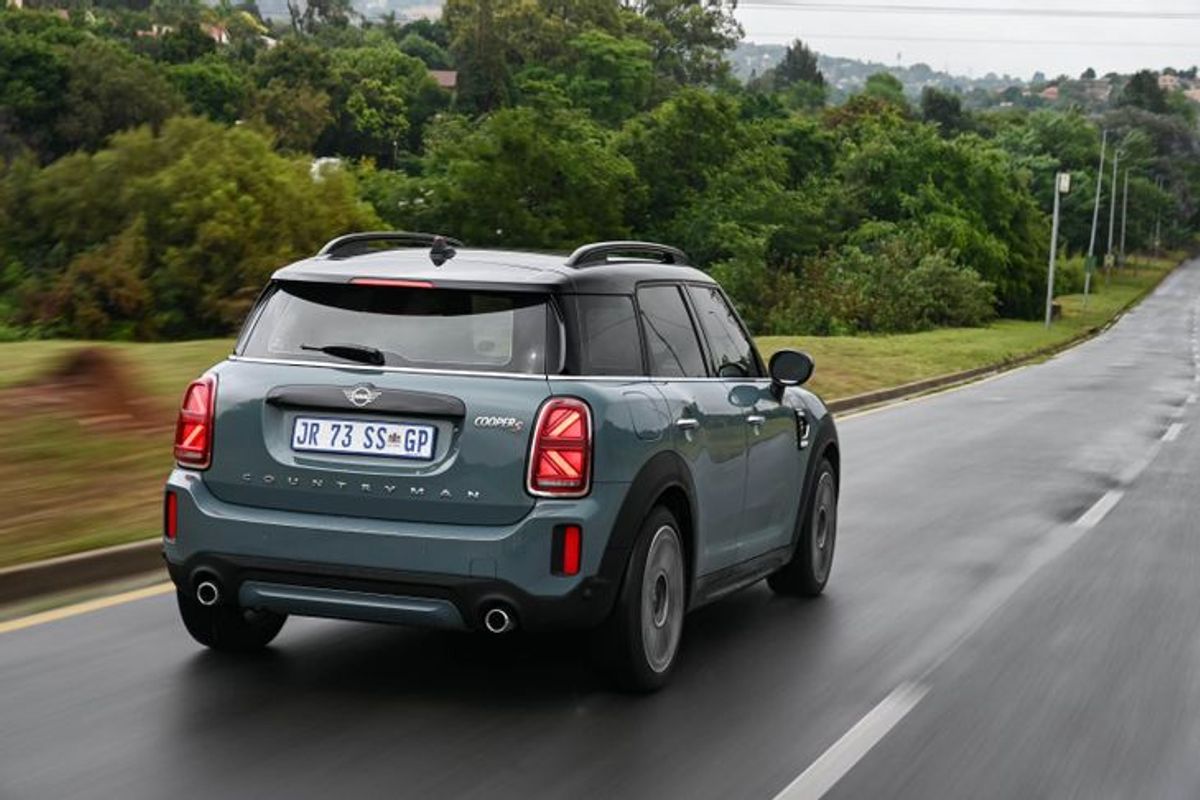
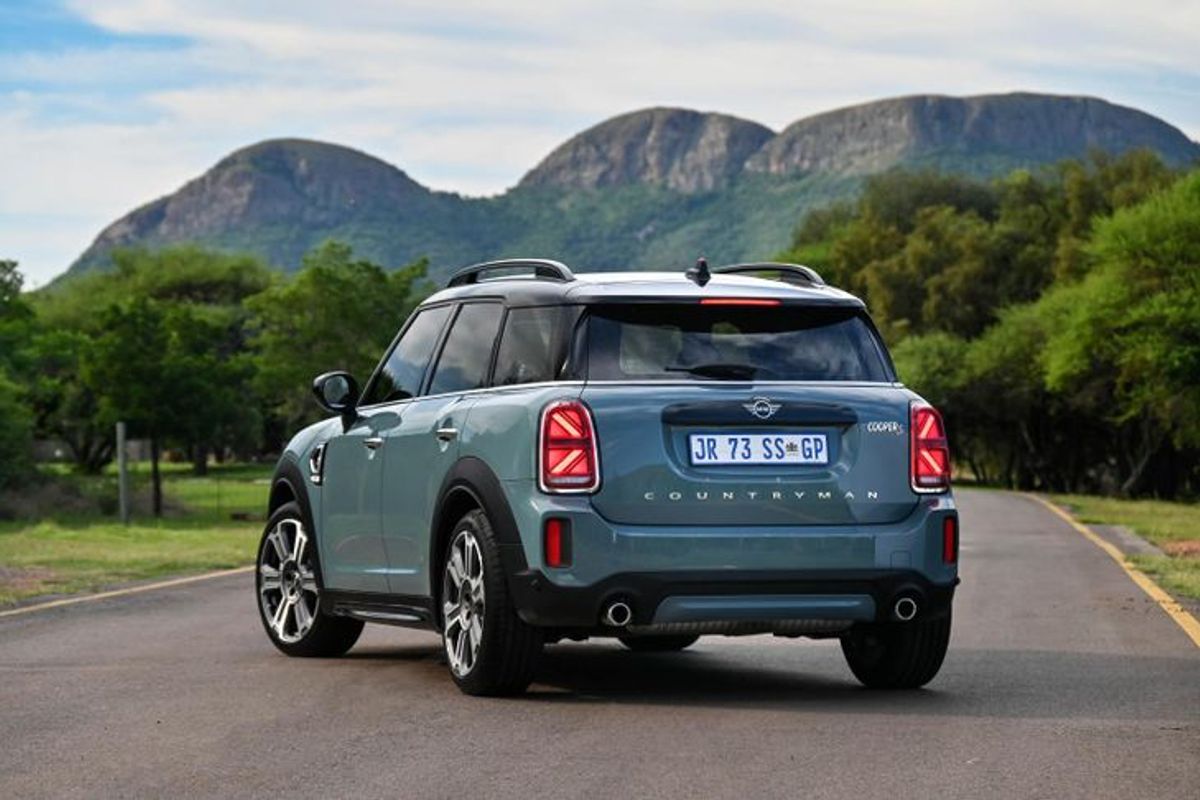
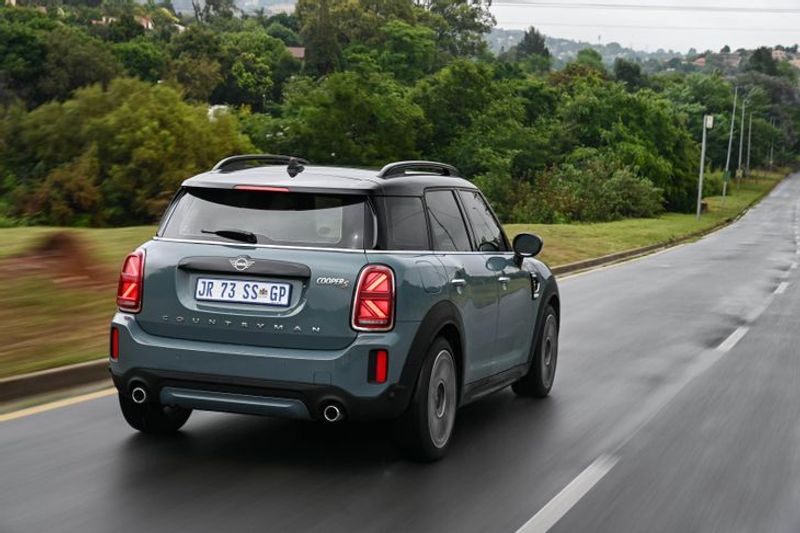
You can spot the new model with its UK-flag tail lights. Cooper S derivative gains twin exhaust pipes.
The cosmetic changes are quite subtle – in fact, you have to look closely to spot them. There's a new-look front end with redesigned headlights and radiator grille, while the rear gains Union Jack-inspired tail lights and an updated bumper. LED headlights and fog lights are standard, plus there are new exterior colours and alloy wheel designs to choose from. Inside, the Countryman's cabin gains a new compact digital instrument cluster, while a sports steering wheel is standard equipment and the Mini Connect infotainment system benefits from upgraded functionality and connectivity.
The engines have been carried over, but Mini says they're now Euro 6d compliant. The Mini Countryman Cooper features a turbocharged 1.5-litre 3-cylinder petrol engine, delivering 100 kW and 220 Nm, while the Countryman Cooper S adds 500 cm³ and another cylinder to deliver 141 kW and 280 Nm from its 2.0-litre 4-cylinder motor. The Cooper is good for a 0-100 kph in a claimed 9.7 sec, while the Cooper S is said to reach the same speed in a spirited 7.5 sec. Both derivatives feature 7-speed dual-clutch transmissions and steering-wheel paddles are optional on the Cooper S.
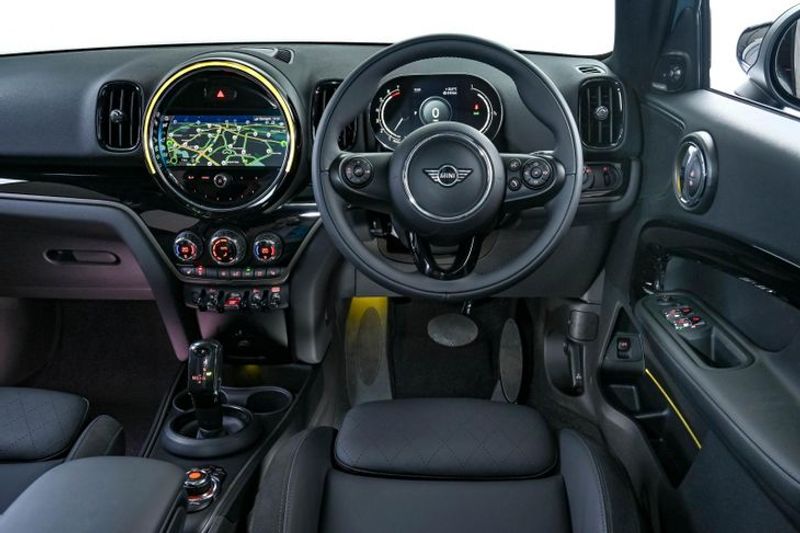
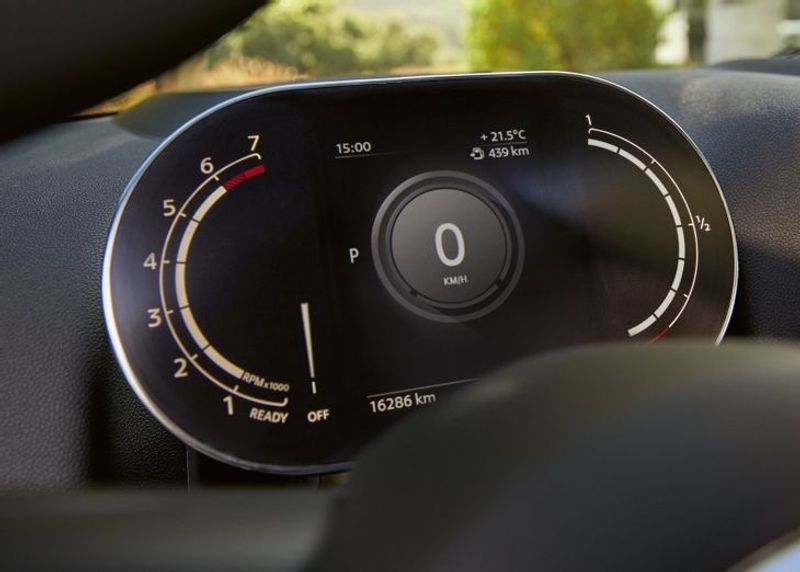
The updated Countryman cabin gets a refresh', with the key change being the new minimalistic central speedo/rev counter.
What's it like to drive?
We had the chance to drive 2 derivatives of the updated Mini Countryman range over a 2-day period. First up was the Cooper and, despite it being the entry point to the range, its 3-pot motor offers up plenty of excitement. Granted, it does have that trademark rough idle, which is typical of 3-cylinder engines, but once you're climbing through the rev range, things smoothen out appreciably. There's a lovely engine note, which inspires you to use the throttle pedal enthusiastically. With 100 kW and 220 Nm on tap, the motor's more than sufficient to propel the large Countryman briskly.
We suspect that despite the 3-cylinder Cooper's charm, the Cooper S will attract the bulk of Countryman customers. With a 2.0-litre turbocharged 4-cylinder motor packing 141 kW and 280 Nm, it certainly is the faster of the 2 derivatives on paper, and yet… it doesn't feel that much quicker than its 1.5-litre sibling. It may produce 41 kW and 60 Nm more (and should feel substantially quicker), but that doesn't translate into real excitement.
A close-up of the new all-digital speedometer.
Mini has given the Cooper S some aural theatrics in the form of an assortment of exhaust pops and bangs on the overrun, as well as a delicious turbo flutter when you ease your foot off the accelerator. Strangely, these sounds are hard to hear from inside the cabin, which is a pity. In Sport mode, the Cooper S gets some synthesised engine noise piped into the cabin, which sort of makes up for it (unless you are a diehard purist).
The real star of the show here is the 7-speed dual-clutch transmission. Not only is it quick to react, but each shift is silky smooth and unlike some rivals, which are programmed for efficiency at the expense of experience (they tend to change up too quickly), this transmission will hold on to those ratios a touch longer so you can make the most of the engine. It's a pity shift paddles are optional, because the Cooper S is better for having them.
In terms of ride quality, Mini suspension setups are traditionally on the firmer side and the Countryman is no exception. It's particularly thumpy at low speeds and on bad roads, but as the speed picks up, things improve. It's happiest at the national speed limit on a highway. Be aware that ride quality will suffer further if you decide to opt for larger wheels. Not that many buyers will mind all that much… the larger alloys really look the part.
The Mini's overly quick steering is also a minor annoyance. We understand that Mini has tried to make the Countryman as nimble and fun to drive as its smaller siblings, but the laws of physics still apply and you're quickly reminded that the Countryman is a sizeable car. You'll learn to adapt to the steering setup eventually and when you get it right, the Countryman is one of the more entertaining vehicles in the segment to "fling around".
The Countryman does not have a spare; it relies on run-flat tyres and a repair kit. That's alright if you pick up a small puncture, but should you hit a bad pothole, which can split the tyre's sidewall (it happened to us on a bad section of road during the launch), you'll require roadside assistance.
Summary
Many have suggested that the Countryman is a pointless vehicle, but we disagree. Not only do the sales figures easily justify the Mini crossover's existence, but there are bound to be die-hard Mini fans who are reluctant to trade in their Coopers on bigger BMW-branded SUVs when they want, or need, to "upsize". The Countryman is ideal for Mini customers who need a bigger car to accommodate a family and its associated paraphernalia.
To put it another way, the Countryman is those who want a vehicle with a modicum of practicality, but have no appetite for mainstream compact crossovers – staid "shopping trolleys" or "school-run 'mobiles" that cannot offer an immersive driving experience. Does the target customer care that the Countryman and BMW X1 are mechanically similar and share the same UKL2 platform? Unlikely. That being said, if you find the Mini too predictable and need the space, the funkier Clubman is more than up to the task of ticking the practicality and fun-to-drive boxes with ease.
The recent update adds some exterior flair to the Countryman range, while the new-look dashboard is easy on the eye. The engines are as punchy as ever and the biggest Mini still manages to be pleasant and enjoyable to drive. At the dawn of the electric era, Mini finds itself is in an interesting position… The Mini Cooper SE, which recently went on sale in SA, is the cheapest electric vehicle in our market. In the next few years, the entire Mini lineup will be overhauled and new models will feature electrified powertrains. Get your petrol-powered Minis while you still can…
Mini Countryman Price in South Africa (November 2020)
Cooper Countryman R599 624
Cooper S Countryman R631 004
John Cooper Works ALL4 Countryman R867 890
According to the Automobile Association (AA), which sends out comment on the unaudited mid-month fuel price data, South African consumers can look forward to potential drops in petrol and diesel, while illuminating paraffin could rise.
We've had a good run with the price of fuel coming down gradually throughout 2020 and as we head into the final month of the year, it looks like SA consumers will see yet another decrease. The SA Rand has been performing well, but unfortunately there has been a sharp spike in the price of international oil.
"Petrol is set to drop by up to 36 cents a litre, but by contrast, diesel will likely only see a four-cent drop. Meanwhile, illuminating paraffin is showing an increase of almost ten cents a litre." is what the AA is predicting. It's great to see some decreases, as the international prices have increased substantially in the early parts of November 2020. "Fortunately, the Rand has fended off most of these increases, and has appreciated strongly against the US dollar, dipping below R15.50 to the dollar on November 10," added the AA.
We're hoping the numbers stay on their current trajectory and we get another drop in the fuel price as we close off this year.
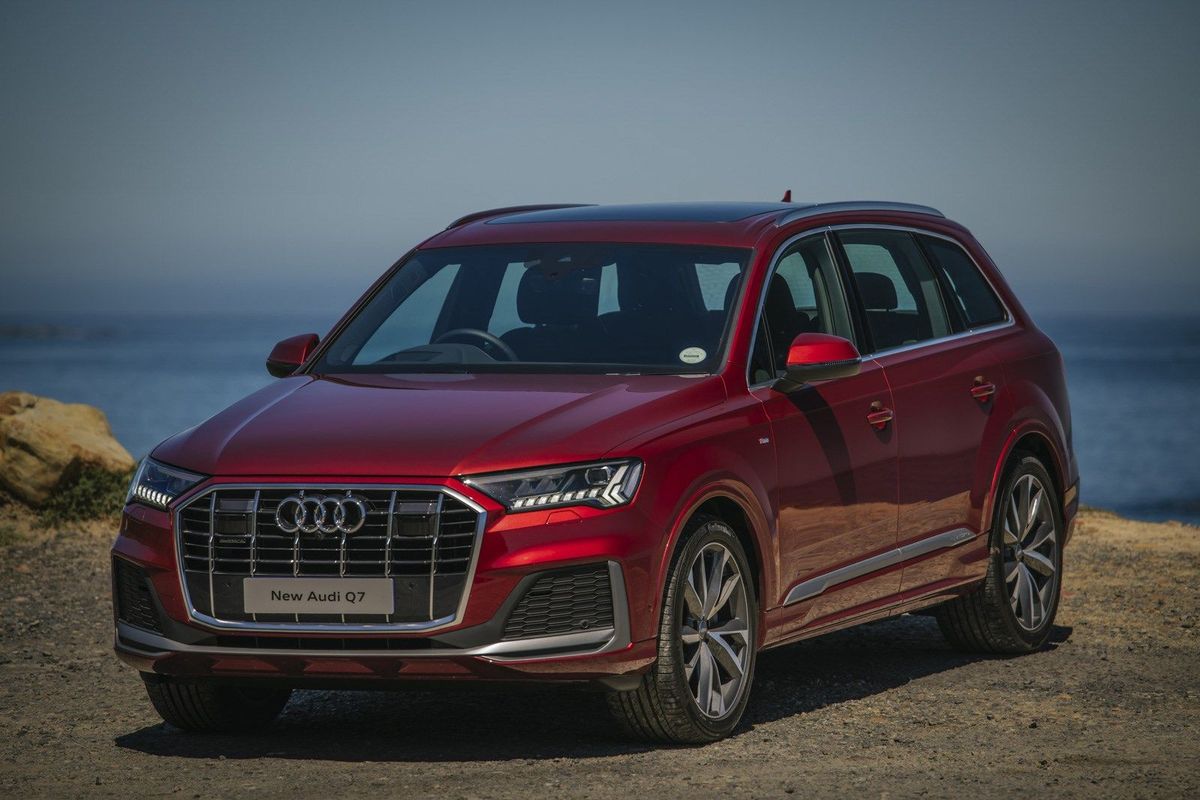
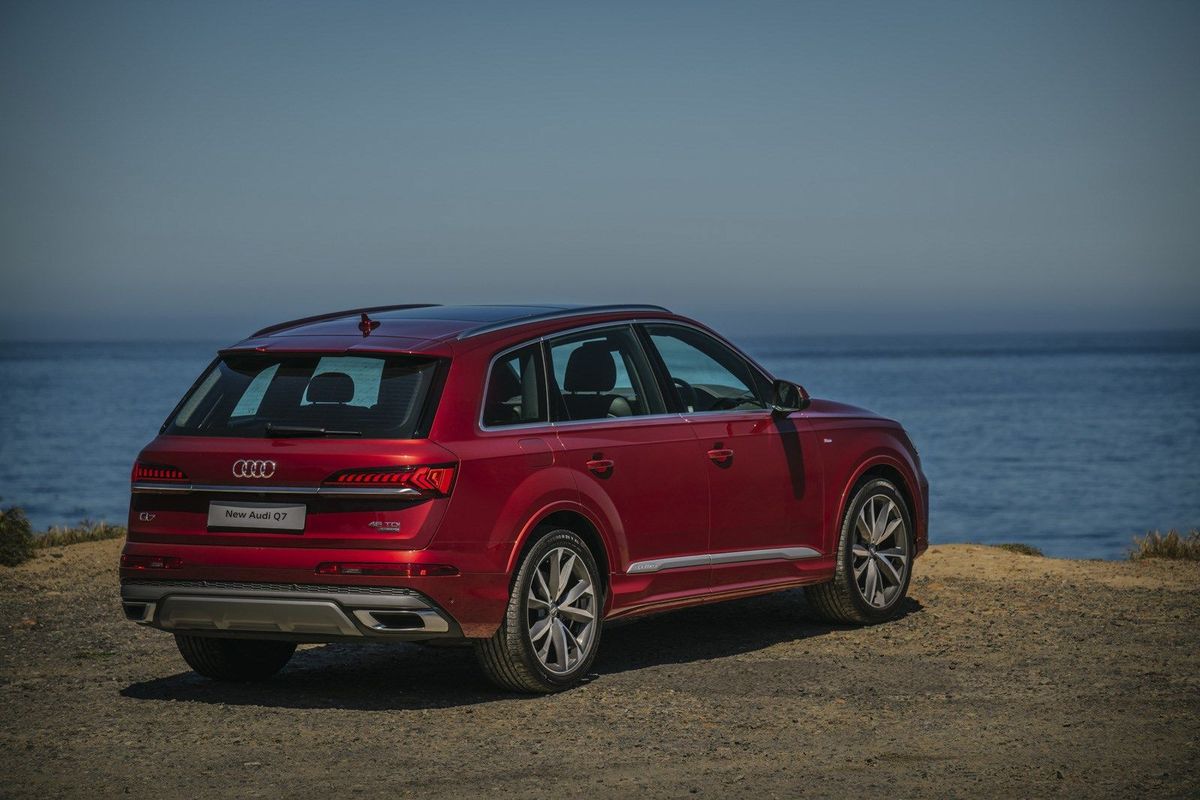
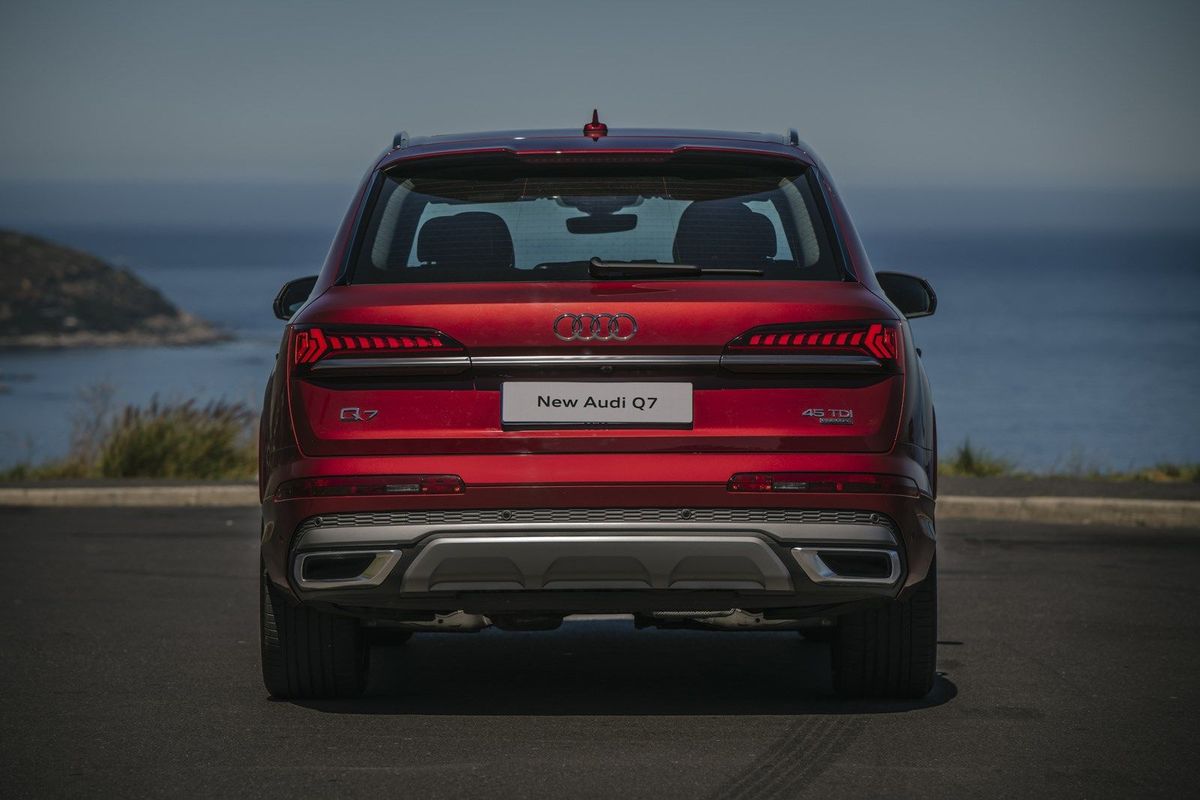
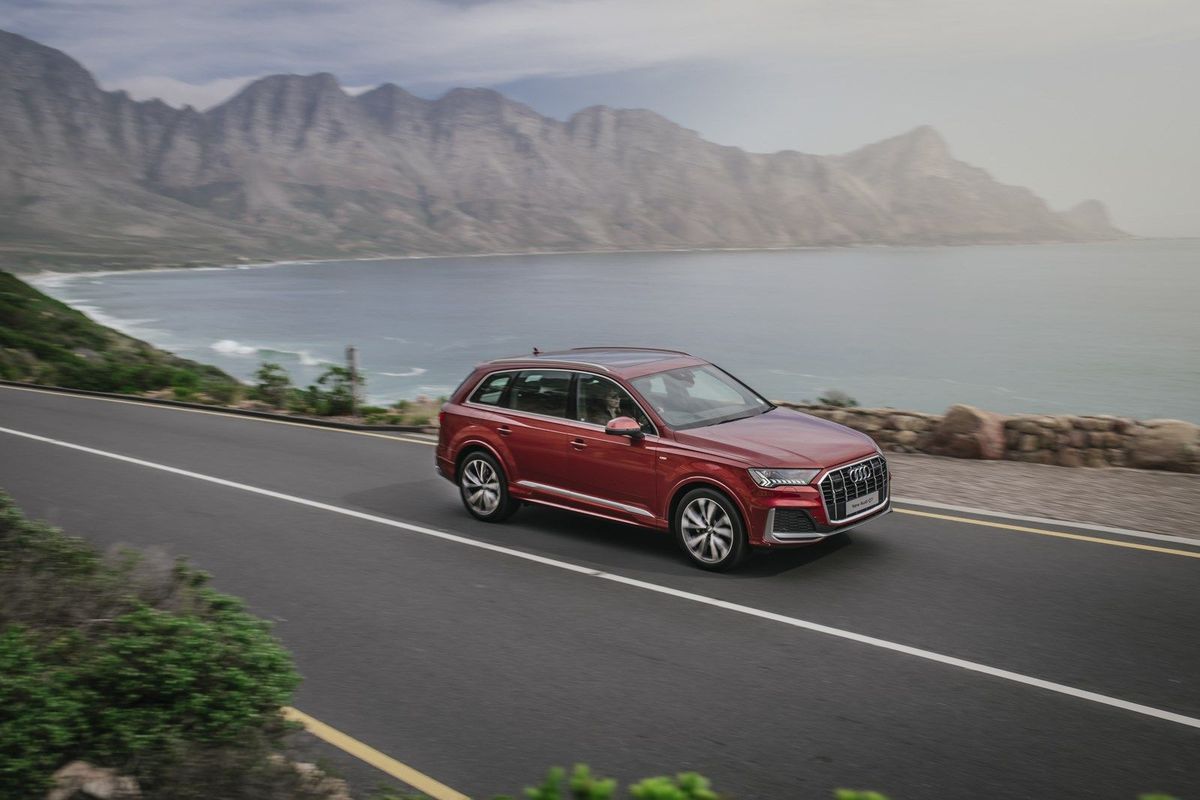
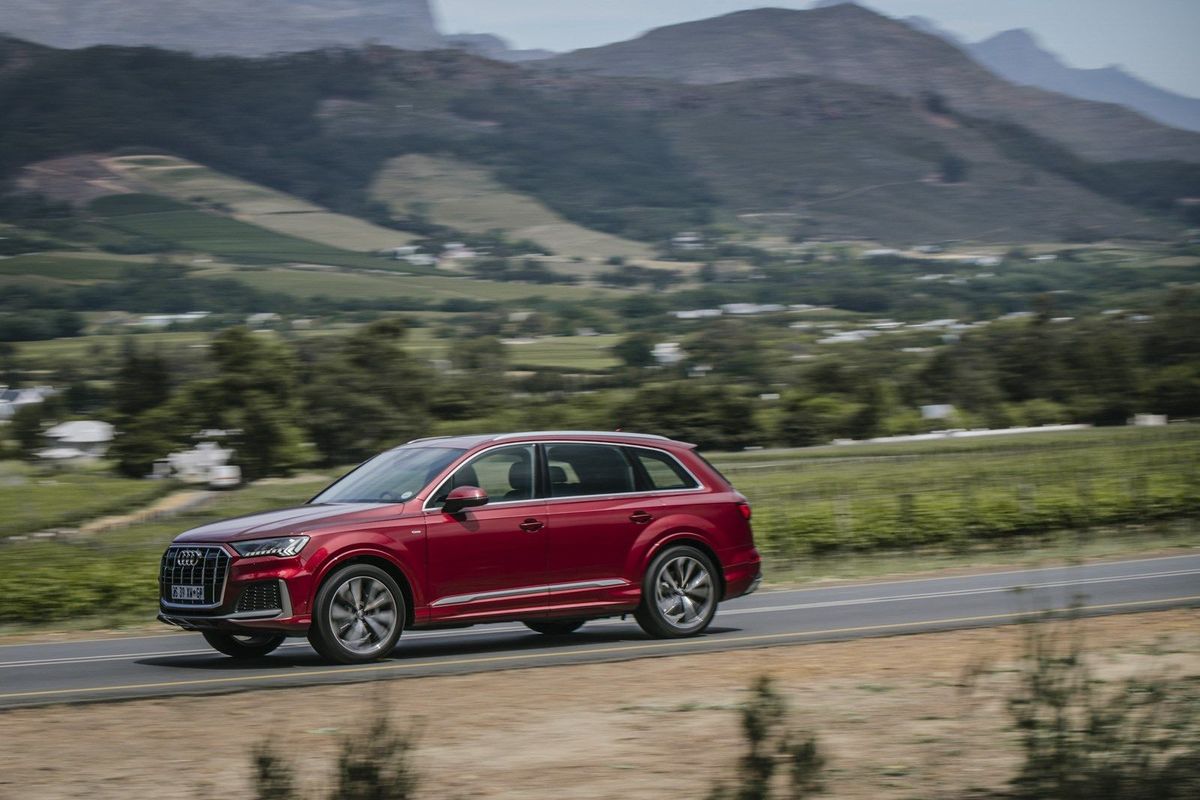
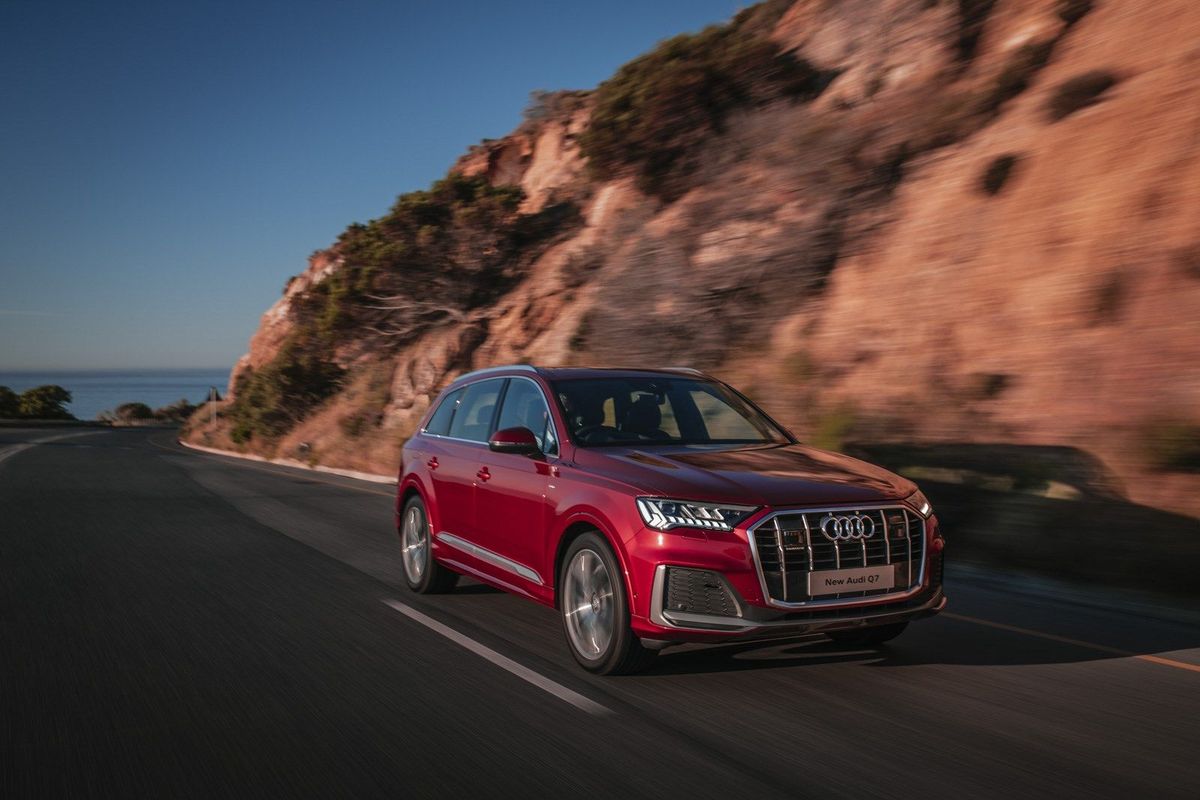
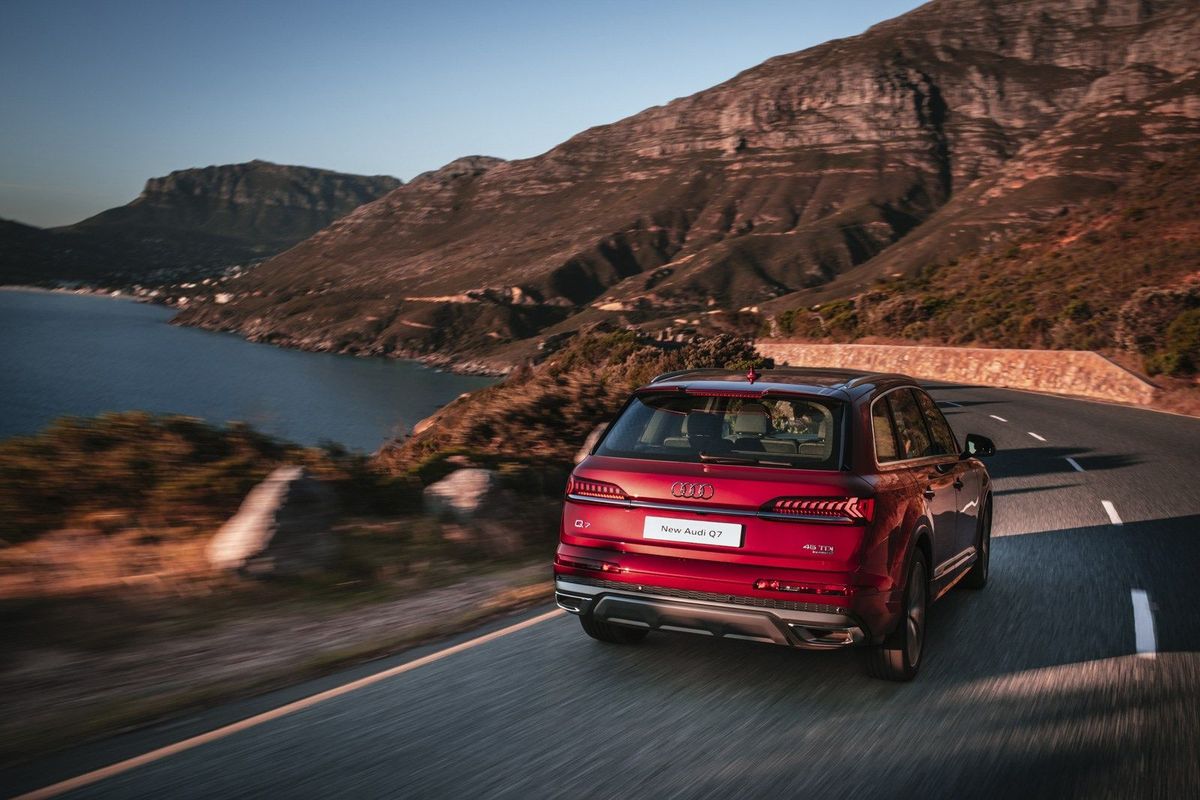
Audi has launched its updated Q7 in South Africa! See specification and pricing details below!
Audi’s Q7 arrived locally in 2015 and now an updated Q7 has reached South Africa with notable upgrades inside and out as well as under its skin.
What’s changed?
The updated Q7 is more purposeful in its styling execution and boasts improved dynamic ability.
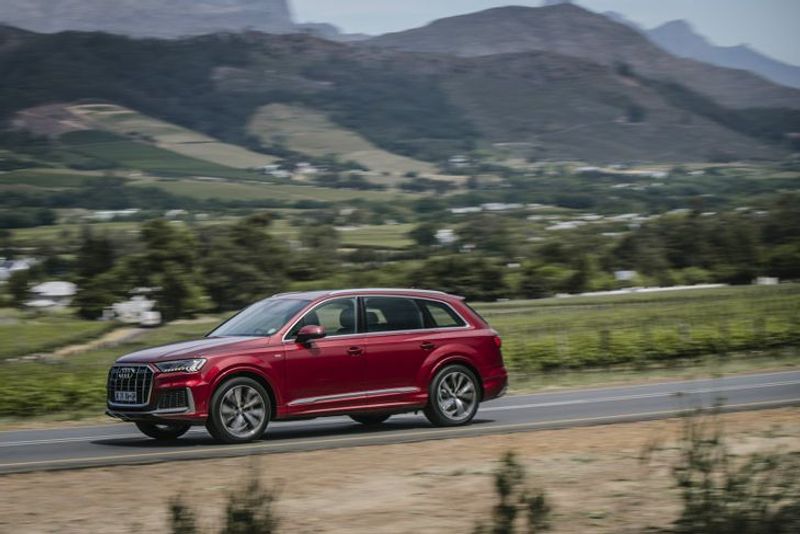
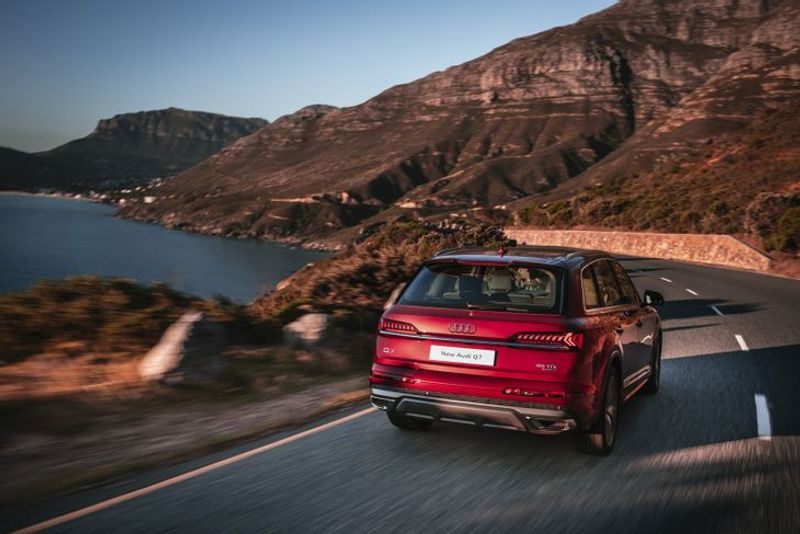
The updated Q7 is easily recognised with its large octagon-shaped single-frame grille which features 6 vertical slats and the bold grille is flanked by Matrix LED headlights (optional). The rear-end has also been refined with a chrome strip connecting the slimmer LED taillight clusters. The Q7 in S line guise gains a blade in the front bumper, titanium black radiator grille with slats in aluminium silver matte, rear high-gloss finishes, underbody protection, roof rails and 20-inch wheels.
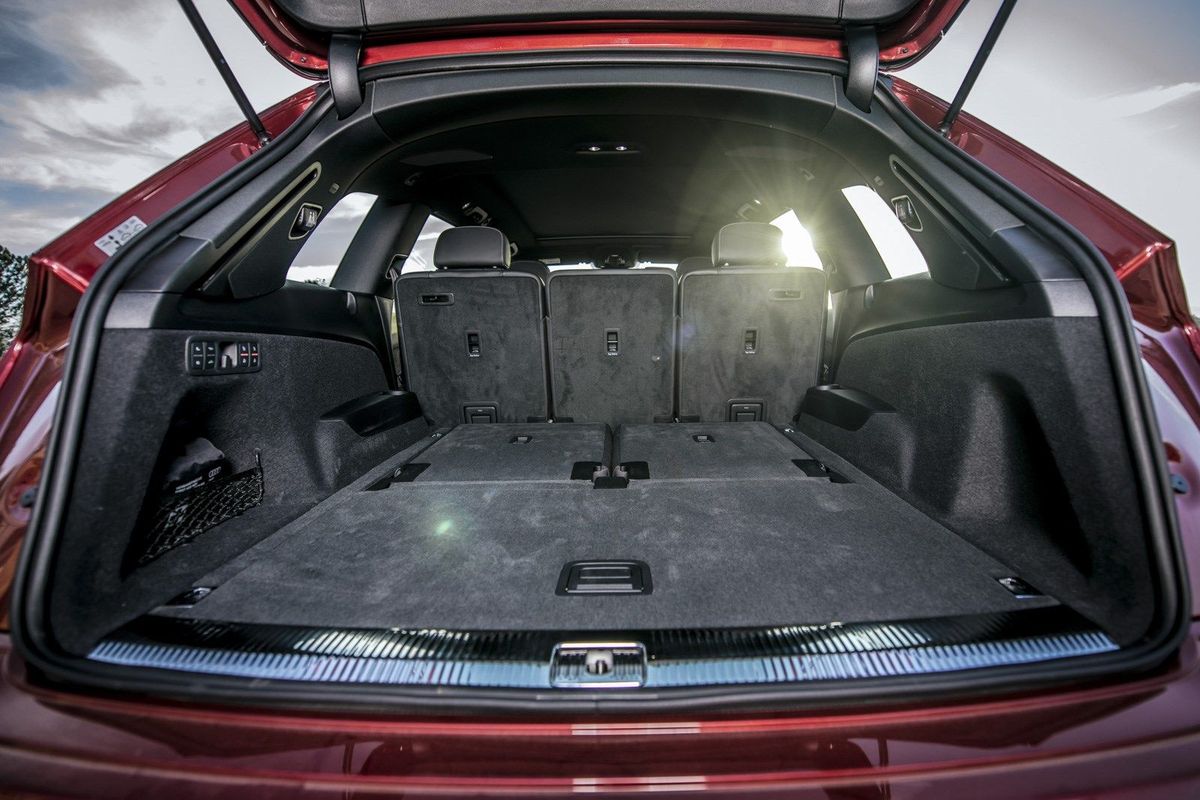
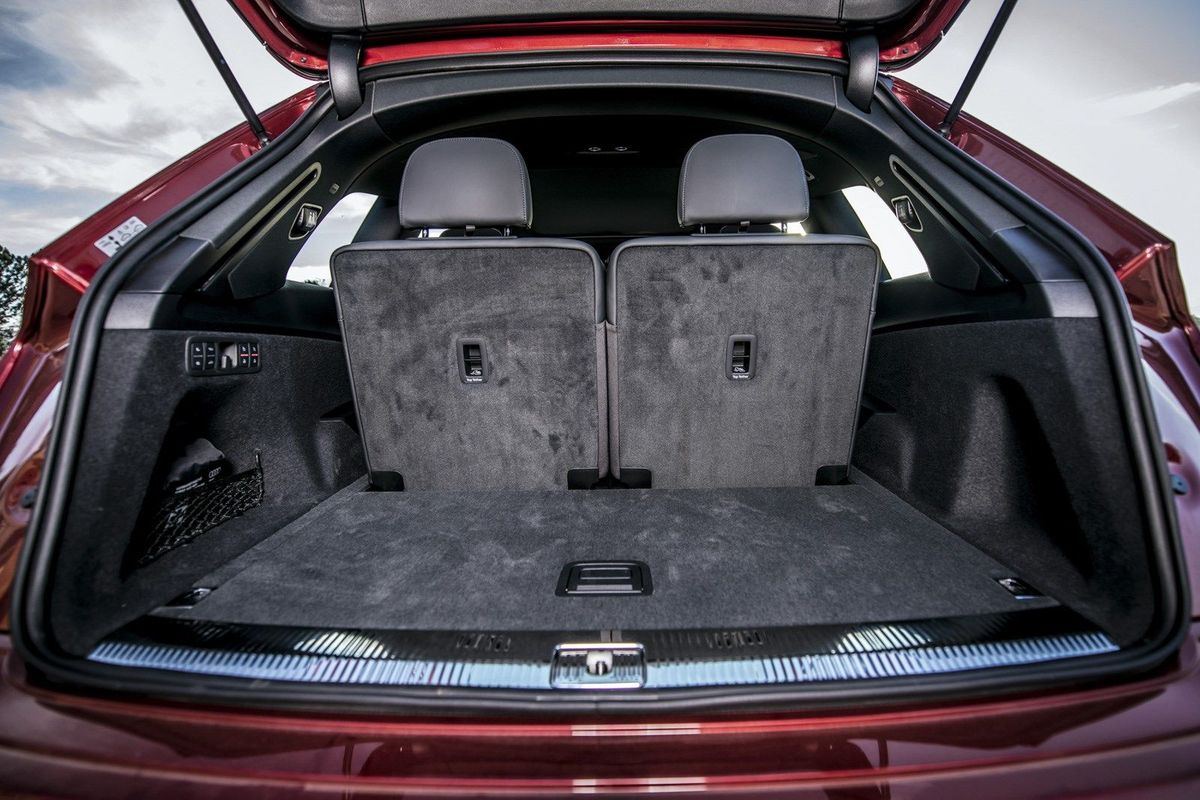
As for the interior, the Q7 can be had in 5 or 7-seat guise and with an increase in length of 11 mm, the Q7 has more space inside. As a 5-seater, the Q7 offers a load bay measuring 865 litres, expanding to 2 050 with the seats folded down. An electrically operated tailgate is standard with foot-activated functionality.
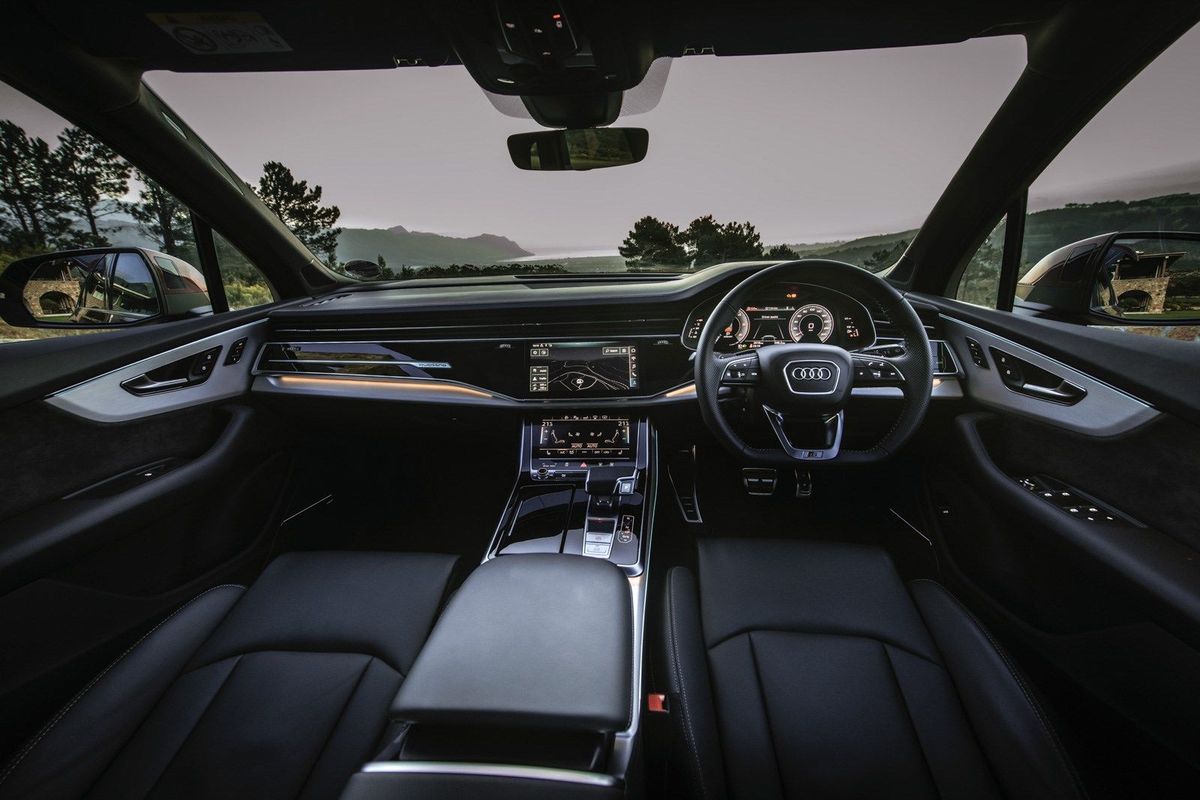
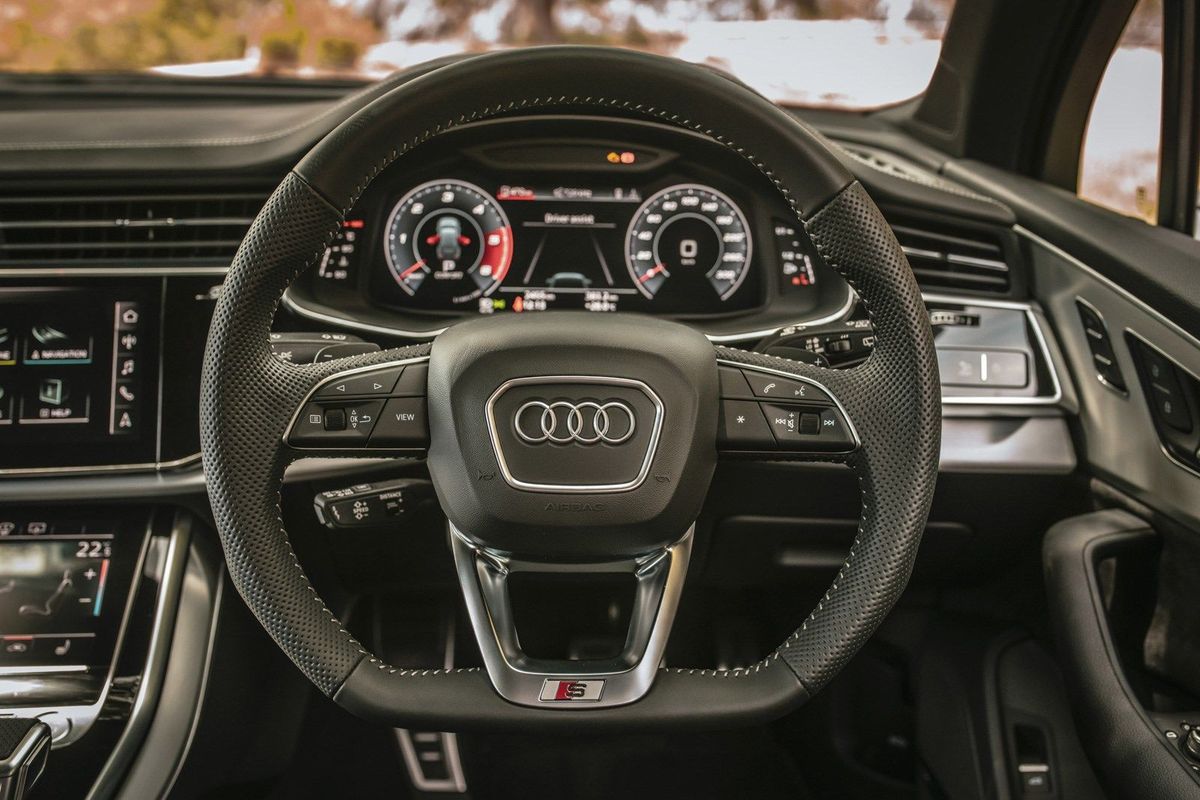
Two large touchscreens take care of all infotainment and vehicle functions while 4-zone climate control is standard while a high-end Bang &Olufsen Premium Sound System is optional. The infotainment system is equipped with Audi’s MMI Navigation Plus with an embedded SIM, Wif-Fi hotspot voice control while additional functionality can be accessed via the MyAudi app. Audi’s Virtual Cockpit is standard equipment but a head-up display is optional.
A total of 3 packages are available to South African buyers including Comfort, Black styling and S line interior.
Engine power
Just one engine is offered in SA, but in the case of the Q7, that's all you need…
The Q7 45 TDI is the only engine on offer locally. It’s a turbocharged 3.0-litre turbodiesel engine offering 183 kW and 600 Nm of torque with an 8-speed automatic transmission sending power to all 4 wheels. Zero to 100 kph is claimed in 6.9 seconds with a combined fuel consumption figure of 8.0 L/100km.
Audi has enhanced the Q7’s all-wheel steering to provide better handling. When coupled with the optional adaptive air suspension, ride quality improves substantially and the driver is able to adjust the ground clearance which is useful if you ever want to take your Q7 offroad.
We are currently driving the updated Q7 at its local launch so look out for our launch report this week.
Audi Q7 – Price in South Africa
Audi Q7 45 TDI quattro tiptronic – R1 328 500
Audi Q7 45 TDI quattro S line tiptronic – R1 388 500
The Audi Q7 is sold with a 1-year/unlimited km warranty and a 5-year/100 000km Audi Freeway plan.
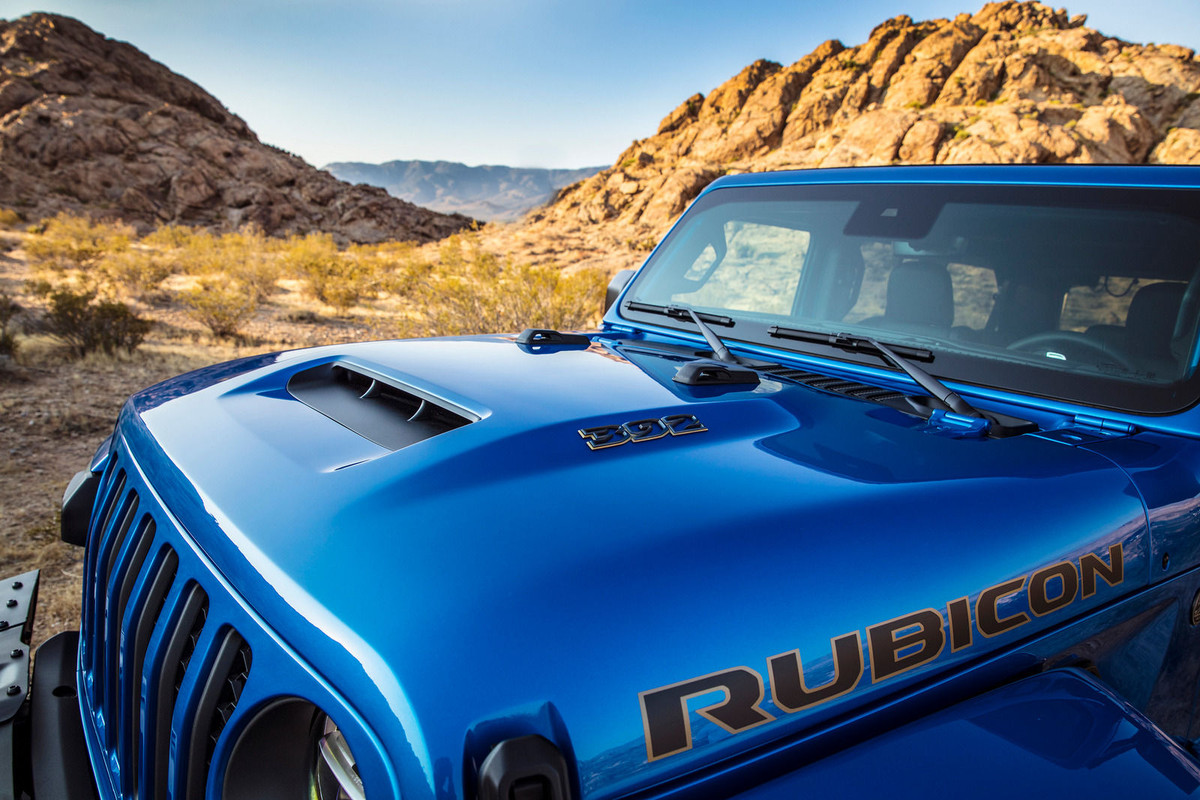
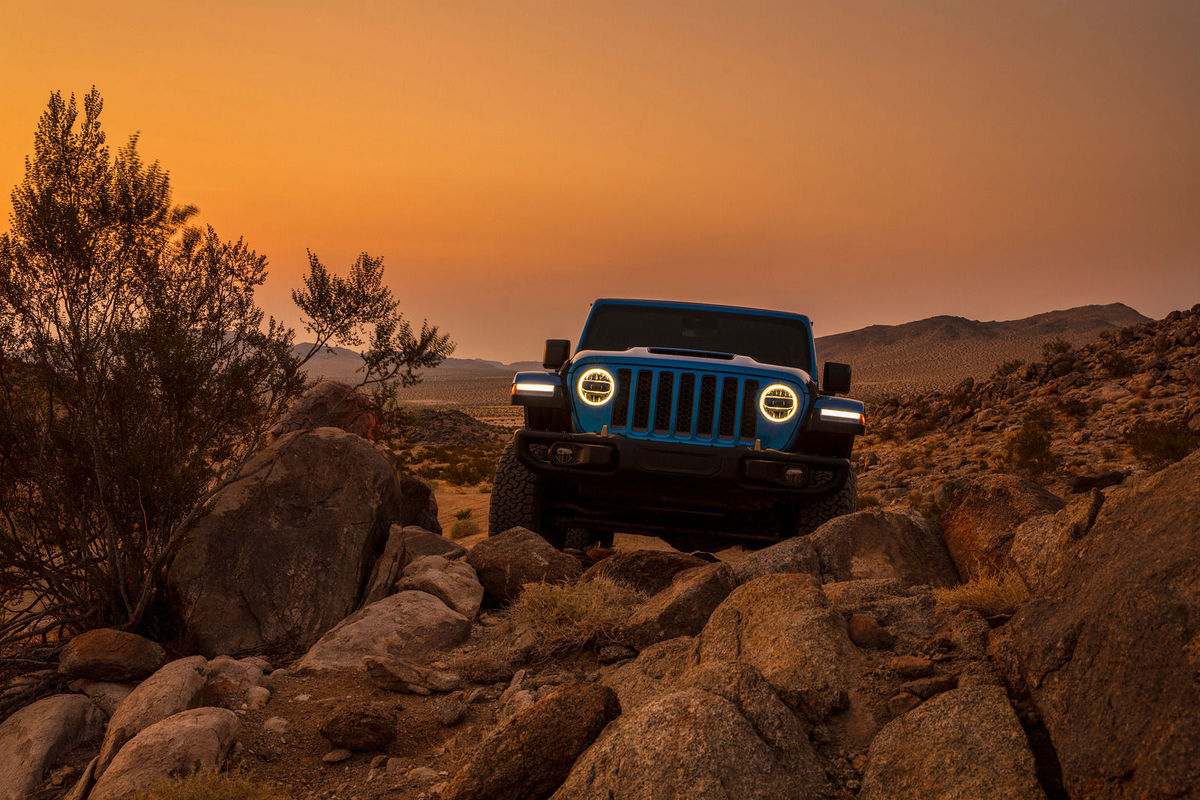
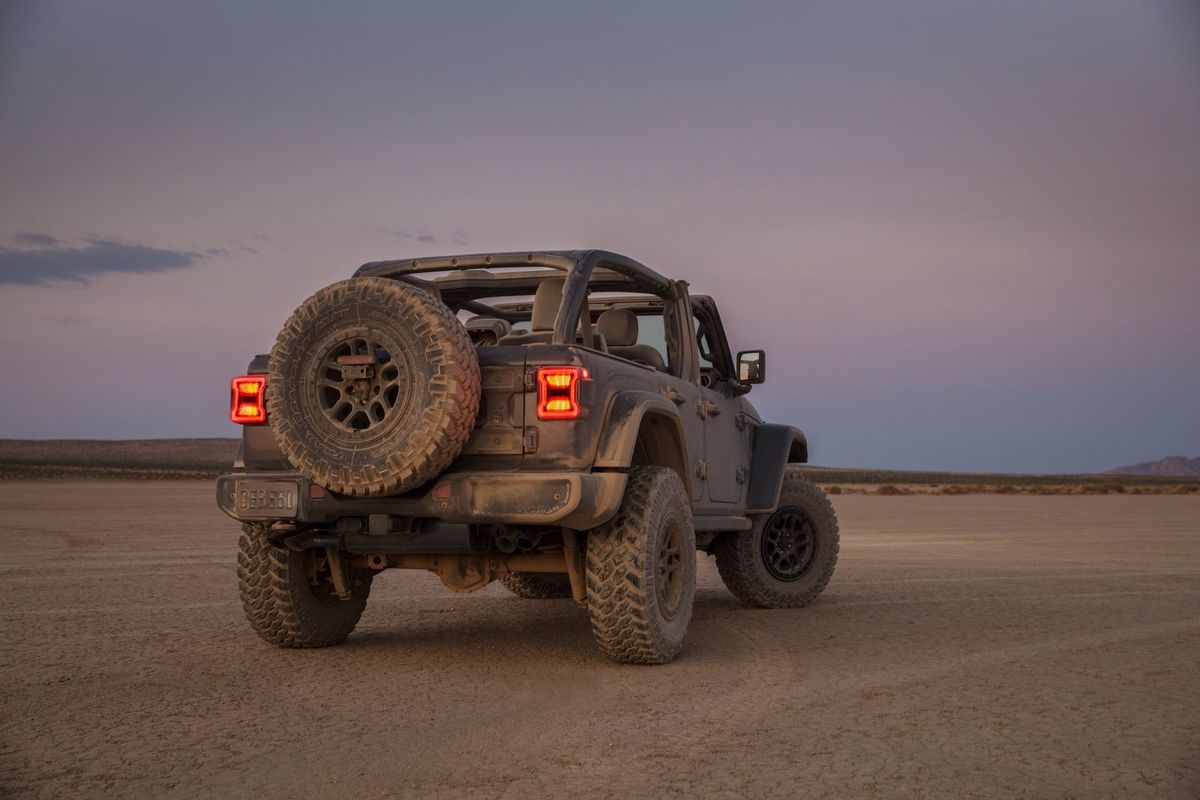
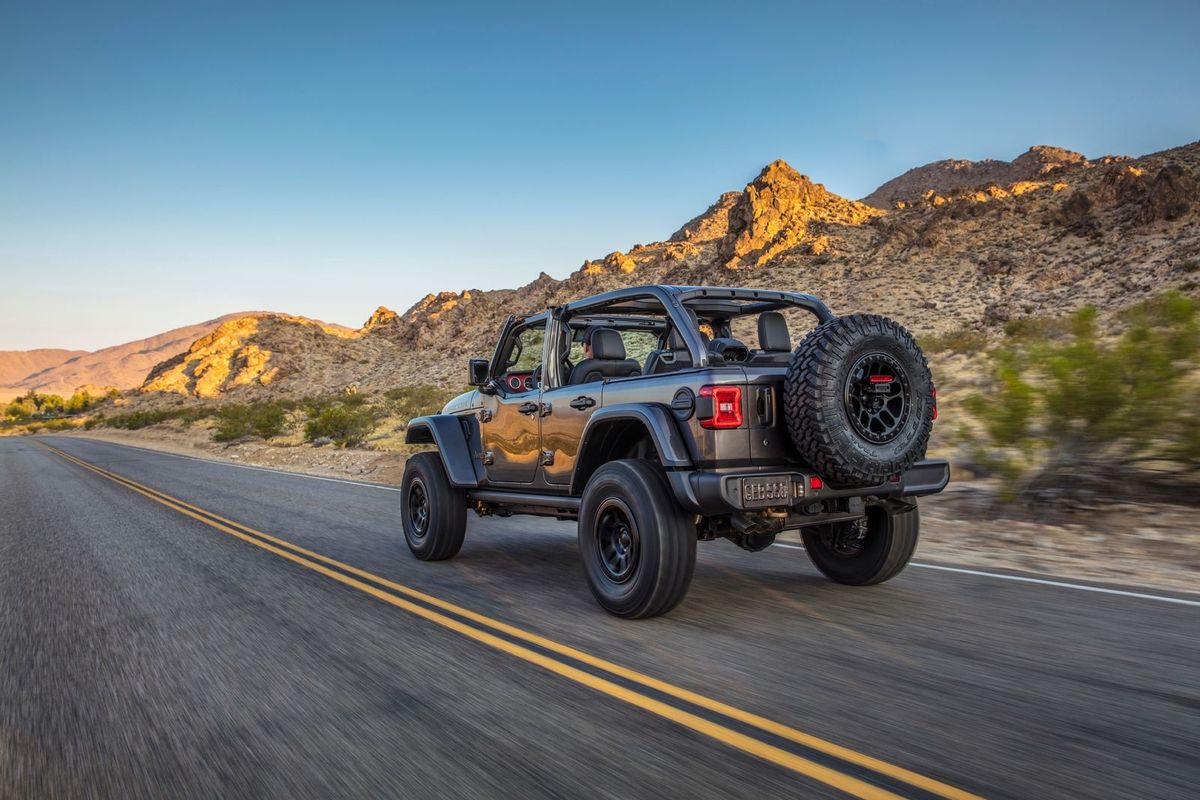
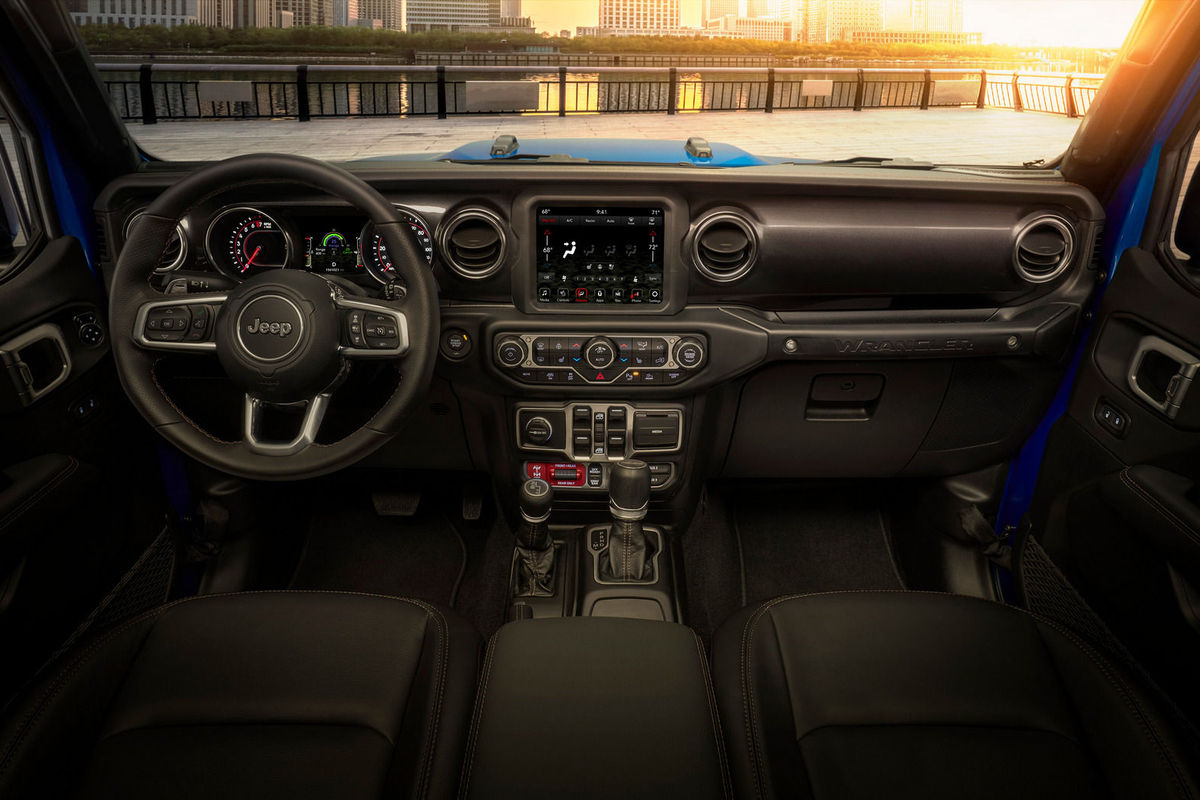
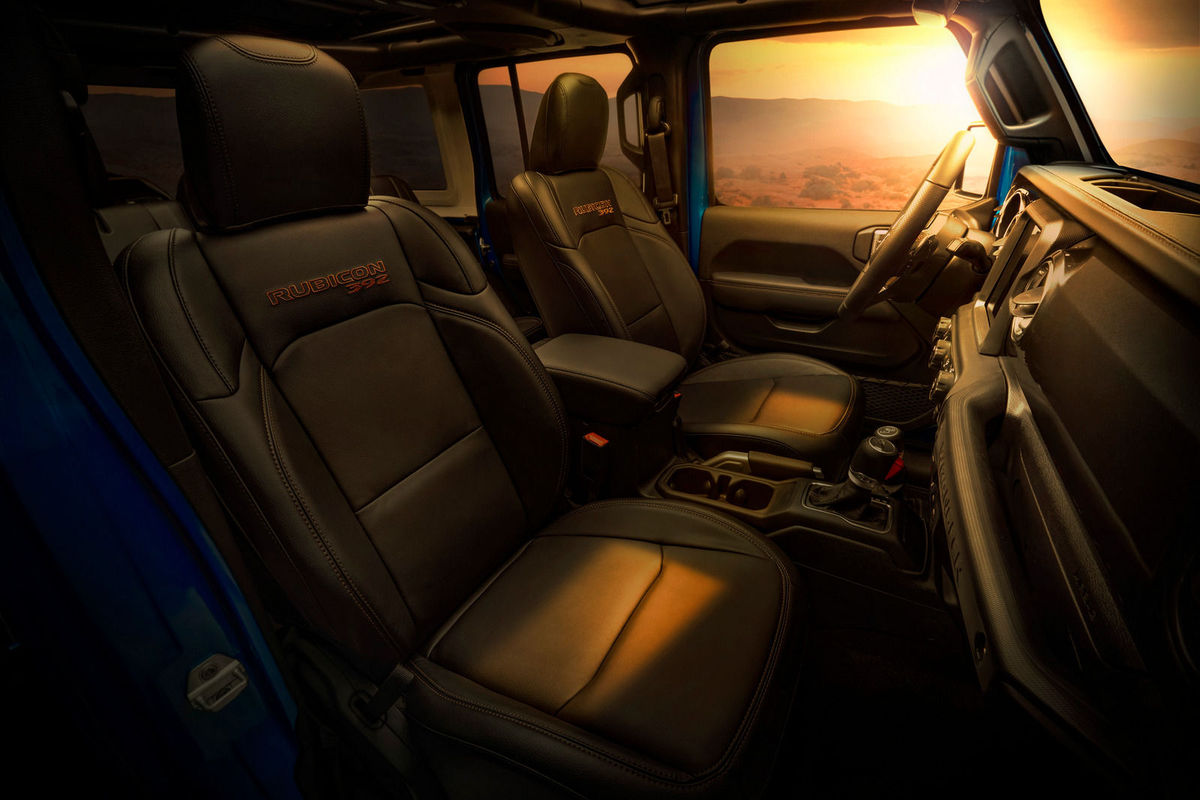
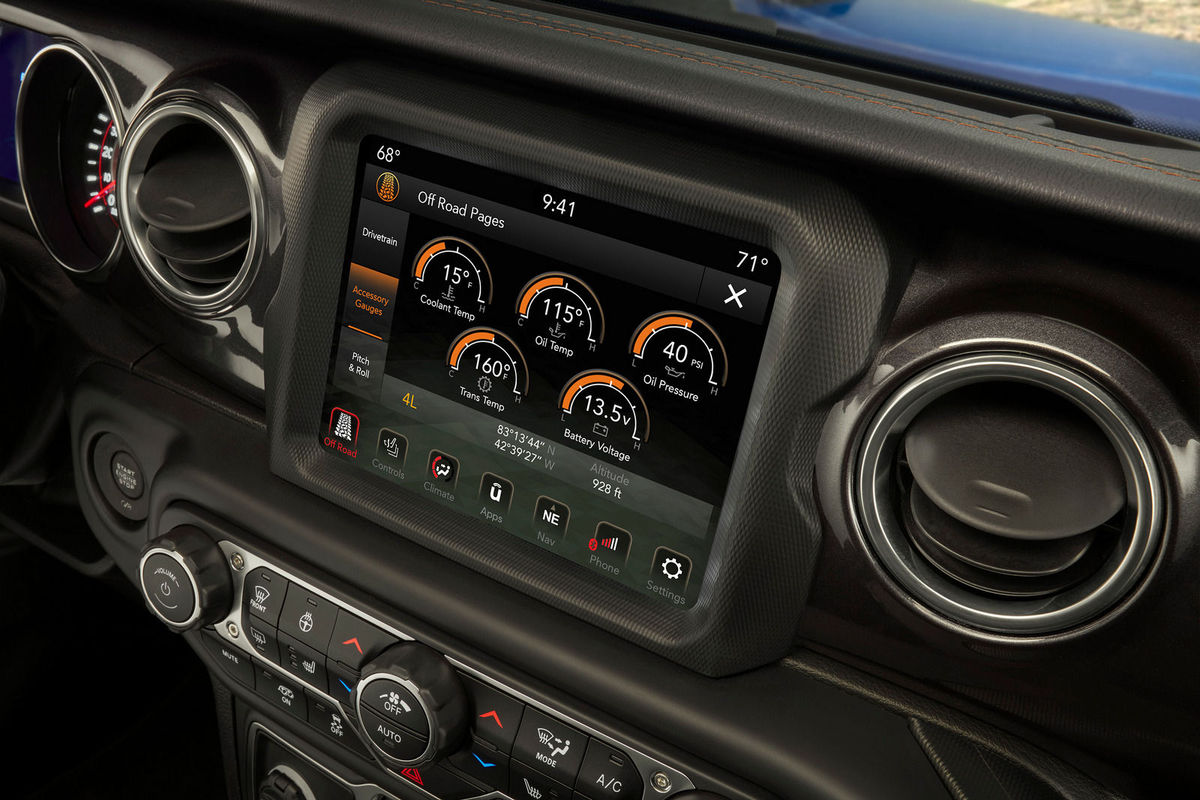
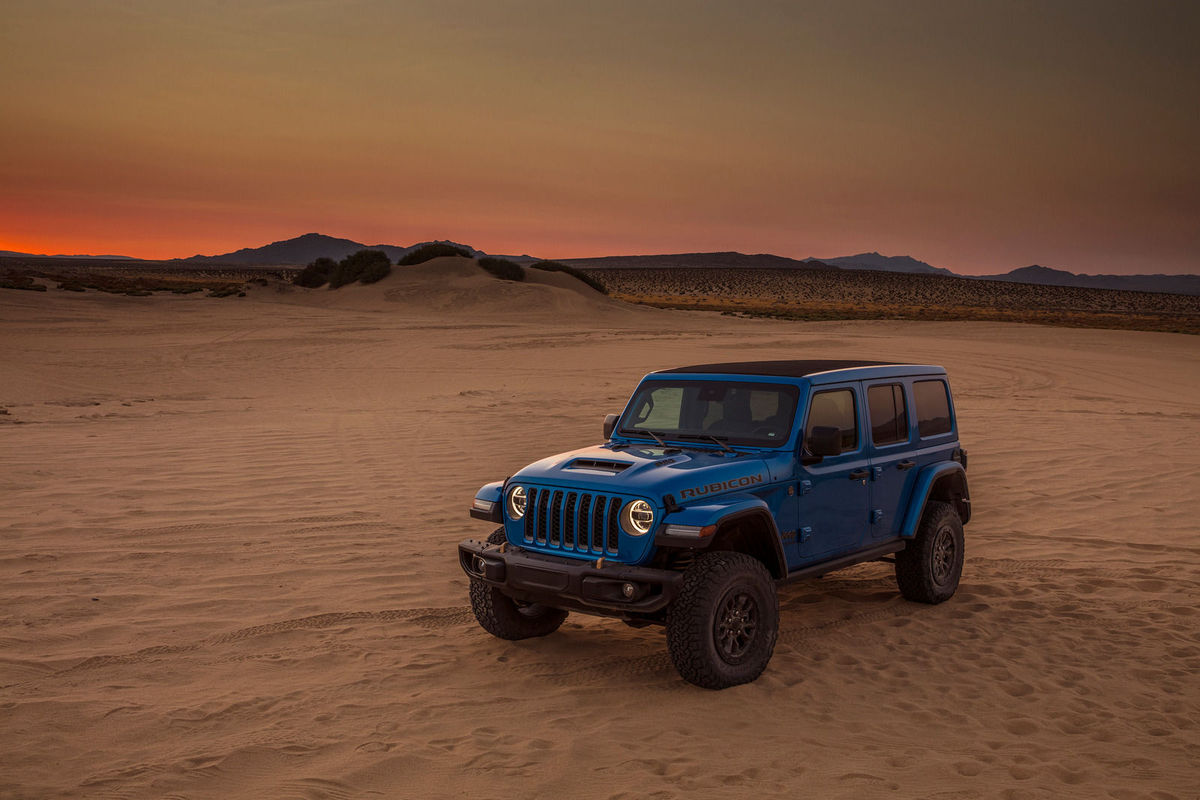
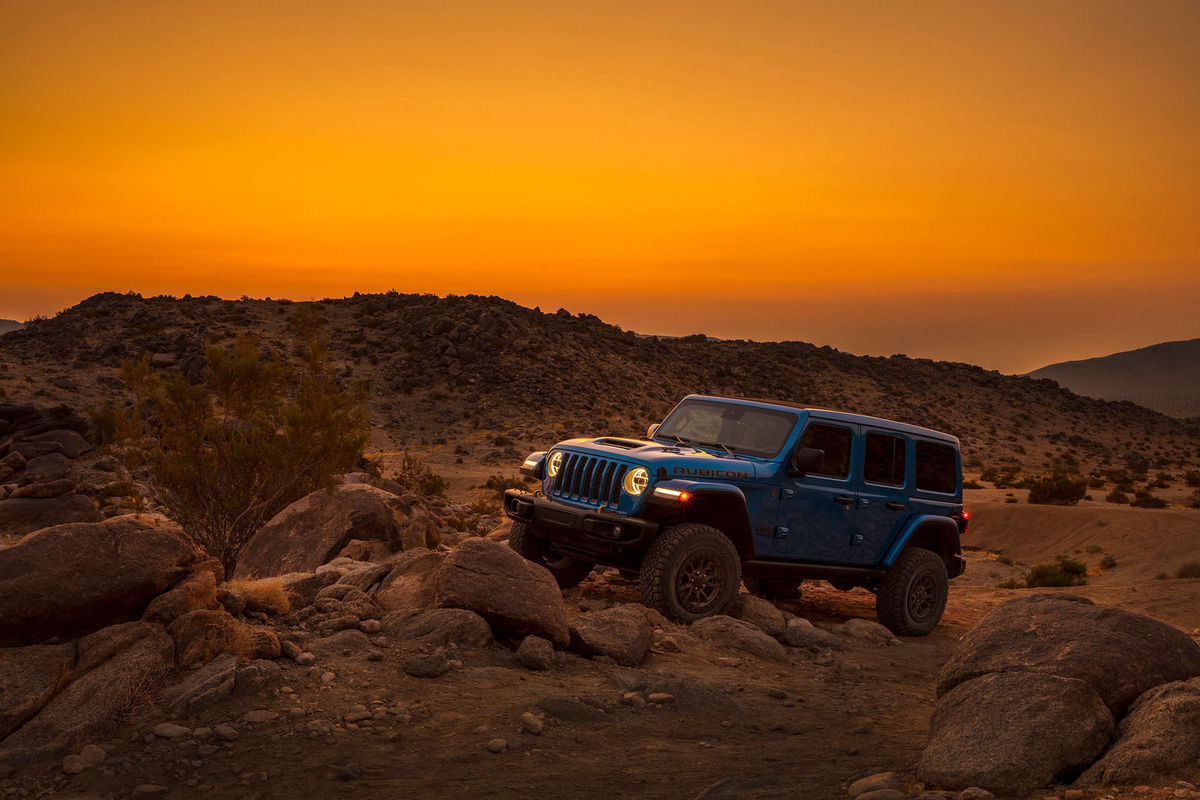
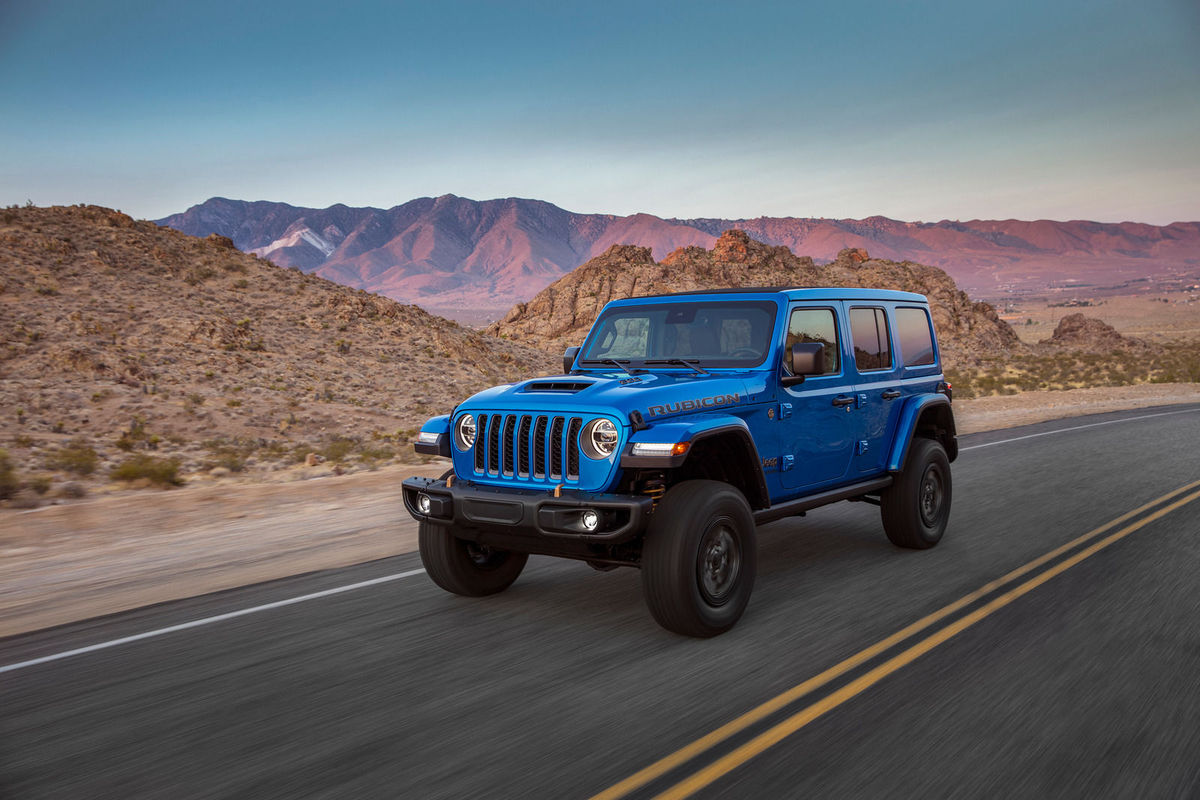
Jeep has announced it will put its Wrangler Rubicon 392 Concept, which it unveiled earlier this year, into production. The newcomer, which is expected to have a Hemi V8 under the bonnet, will be "available (in the US) early 2021".
It has been many years since the Wrangler last featured a V8 motor – almost 40 years, in fact. When Jeep unveiled the Rubicon 392 Concept in July, it had enthusiasts of the iconic US brand in a proverbial froth. However, because the barrel-chested off-roader was unveiled shortly before the official release of the reimagined Bronco, many dismissed the move by Jeep as a ploy to steal some of Ford's limelight… and nothing more.
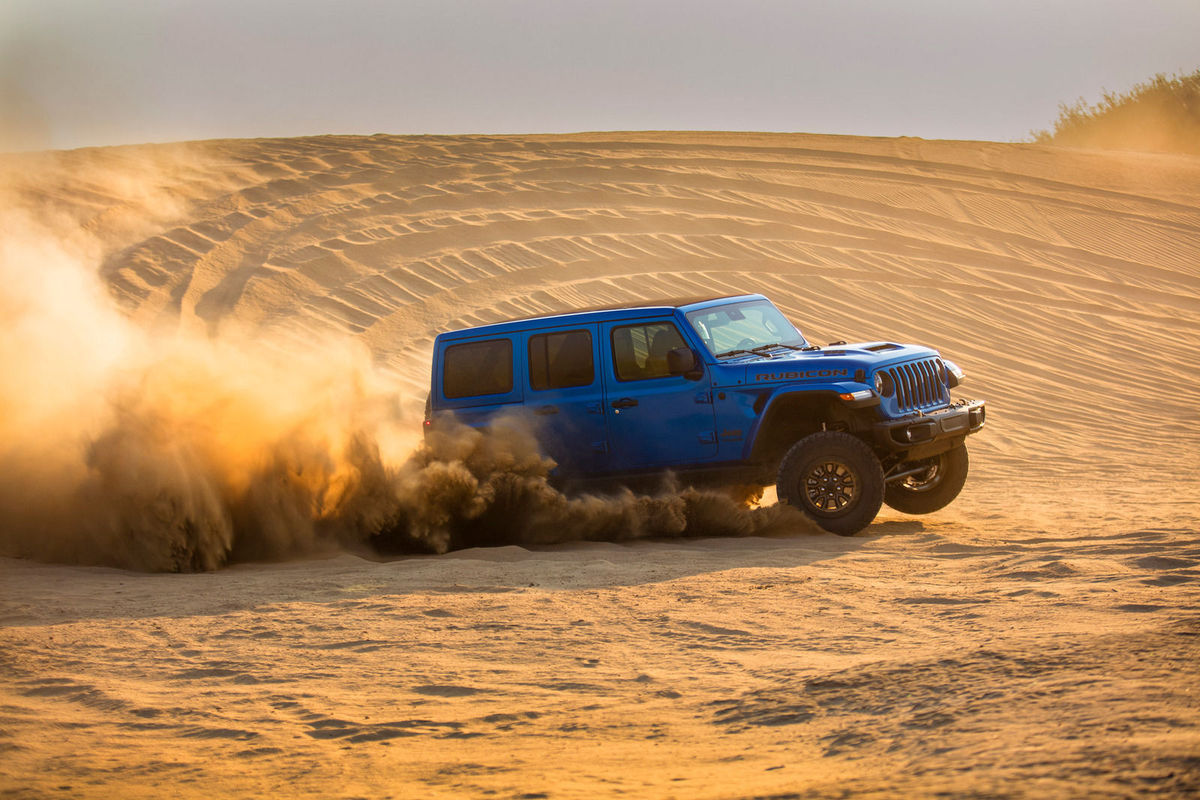
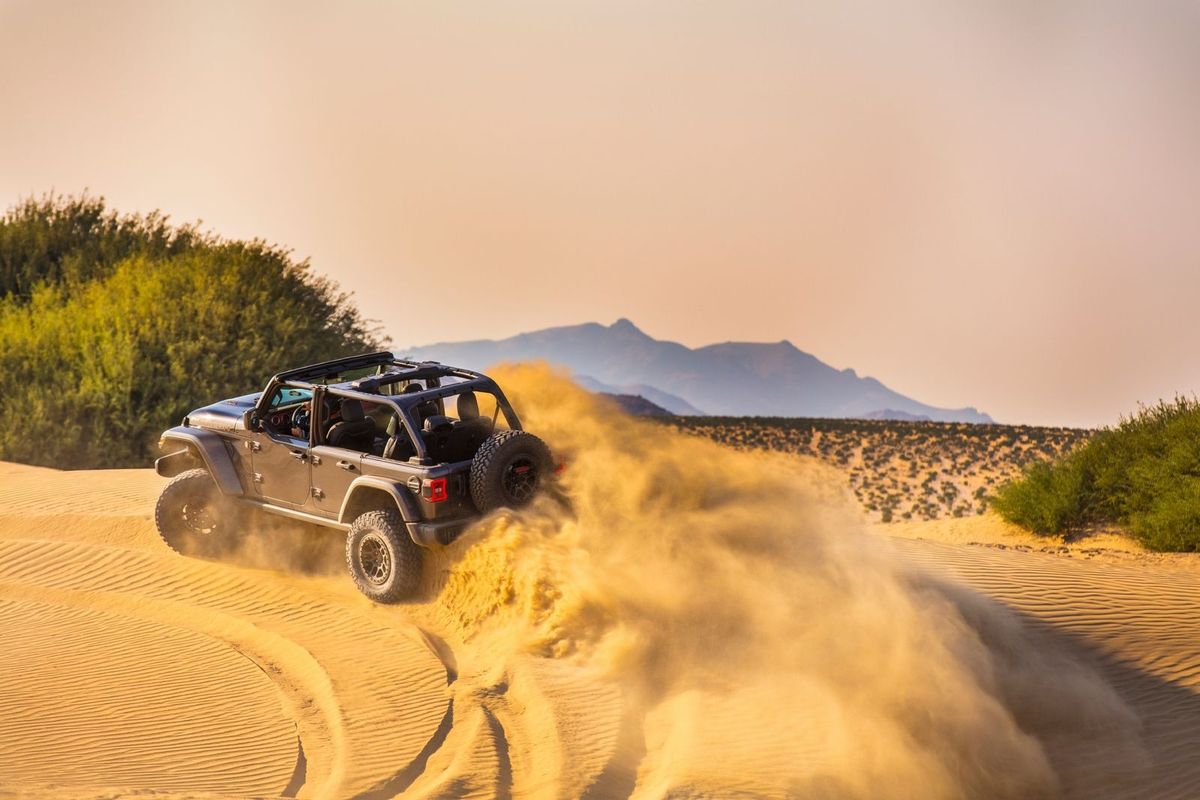
But Jeep has now used its Instagram account to announce the 392 was #NotAConcept. It posted a video showing a Wrangler ripping across a dry riverbed while emitting a distinct, full-throated exhaust note: "Some concepts are so powerful they storm into reality.? Preproduction model shown."
Of course, many enthusiasts will hope that Jeep will simply slap a "V8" badge and number plates on the Wrangler Rubicon 392 Concept before shipping it off to showrooms, because it is reported to have a 6.4-litre Hemispherical (Hemi) V8 motor, which has peak outputs of 335 kW and 610 Nm and is mated with an 8-speed automatic transmission. Jeep claims a 0-100 kph time of under 5 seconds, which is simply astounding!
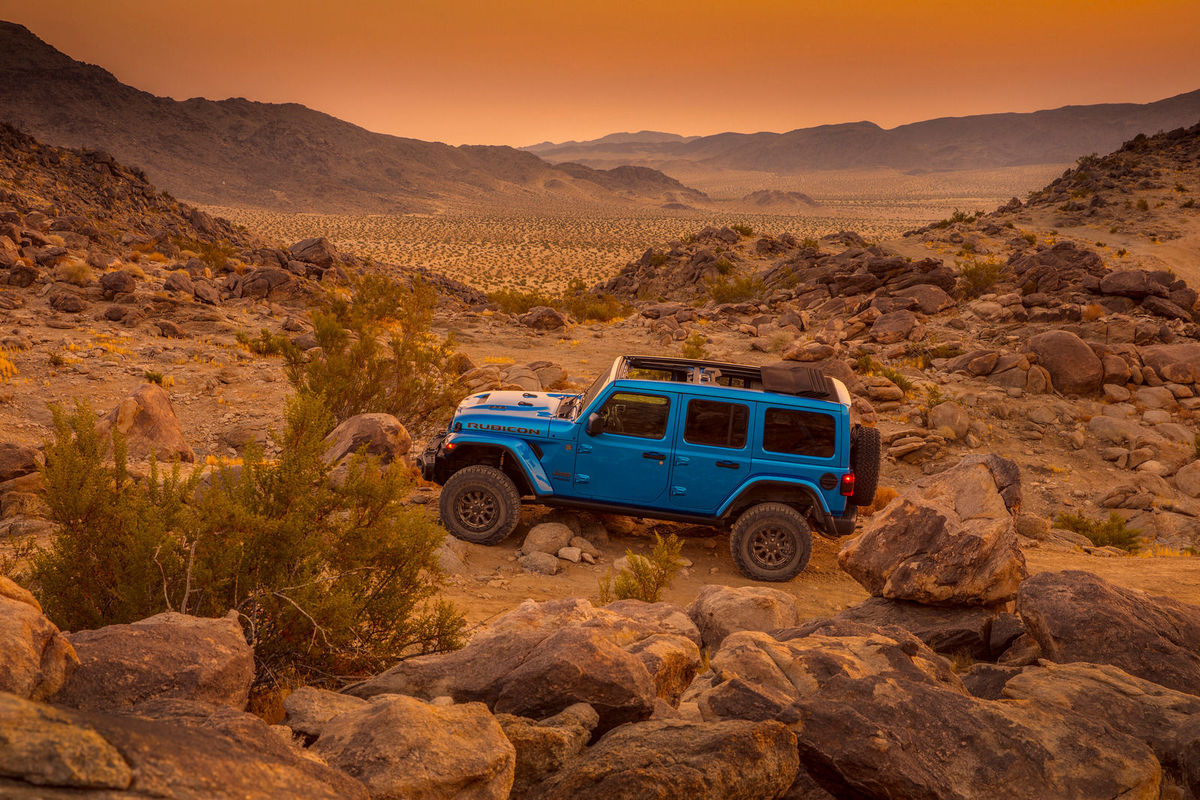
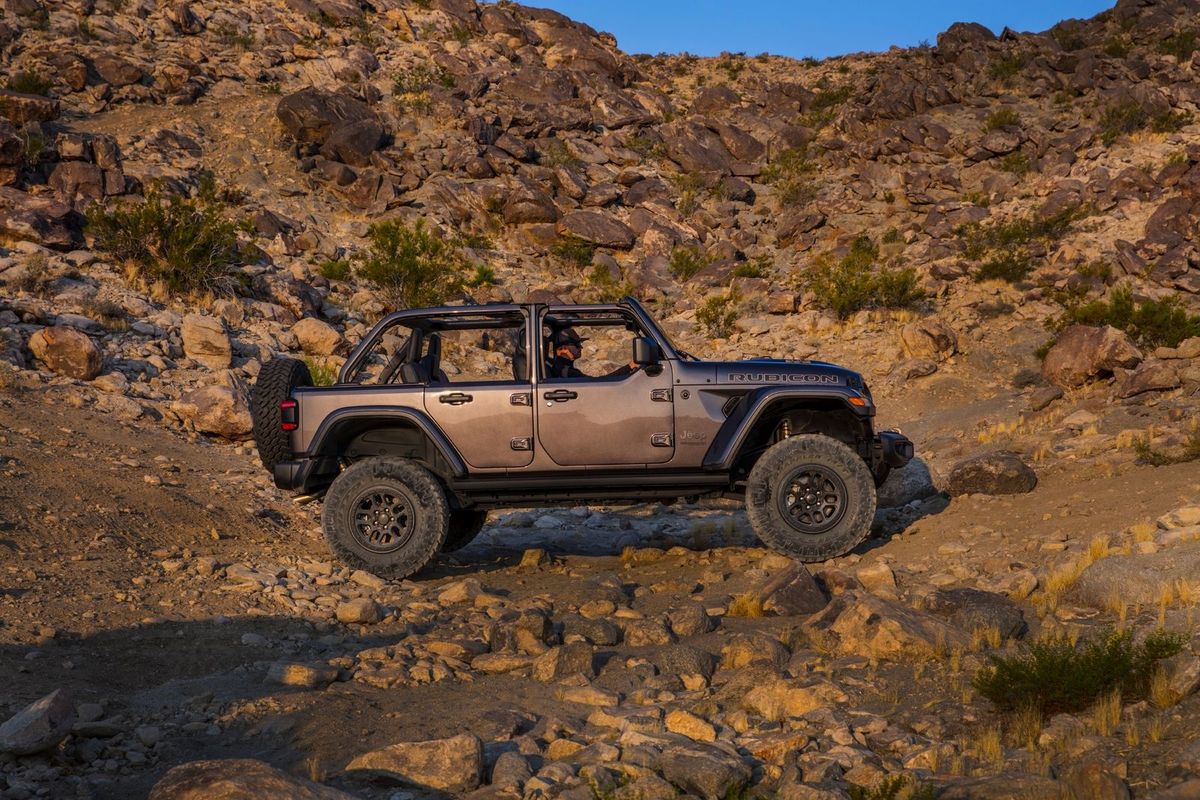
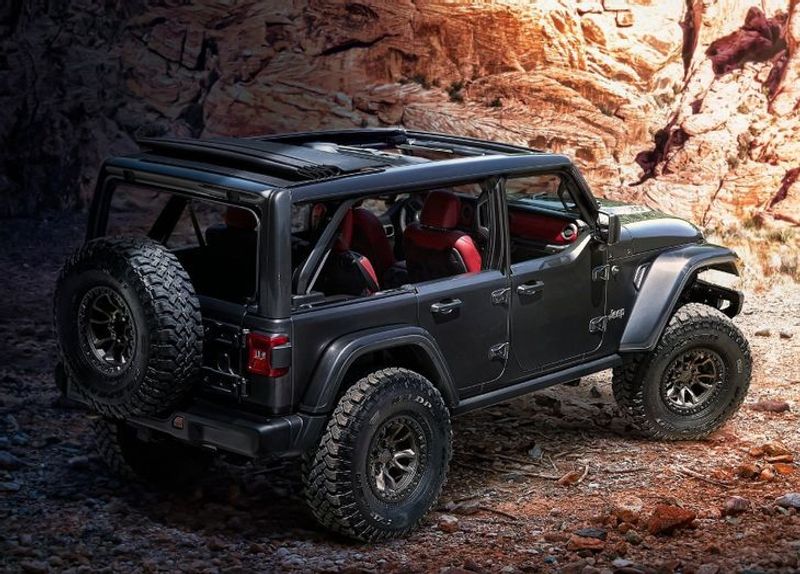
Aesthetically speaking, the Jeep Wrangler Rubicon 392 Concept really looks the part with its bronze-accentuated tow hooks, badging, springs, shocks and wheels. The half doors are unmistakably Jeep and the entire package looks ready to tear up the asphalt, gravel, sand, you name it!
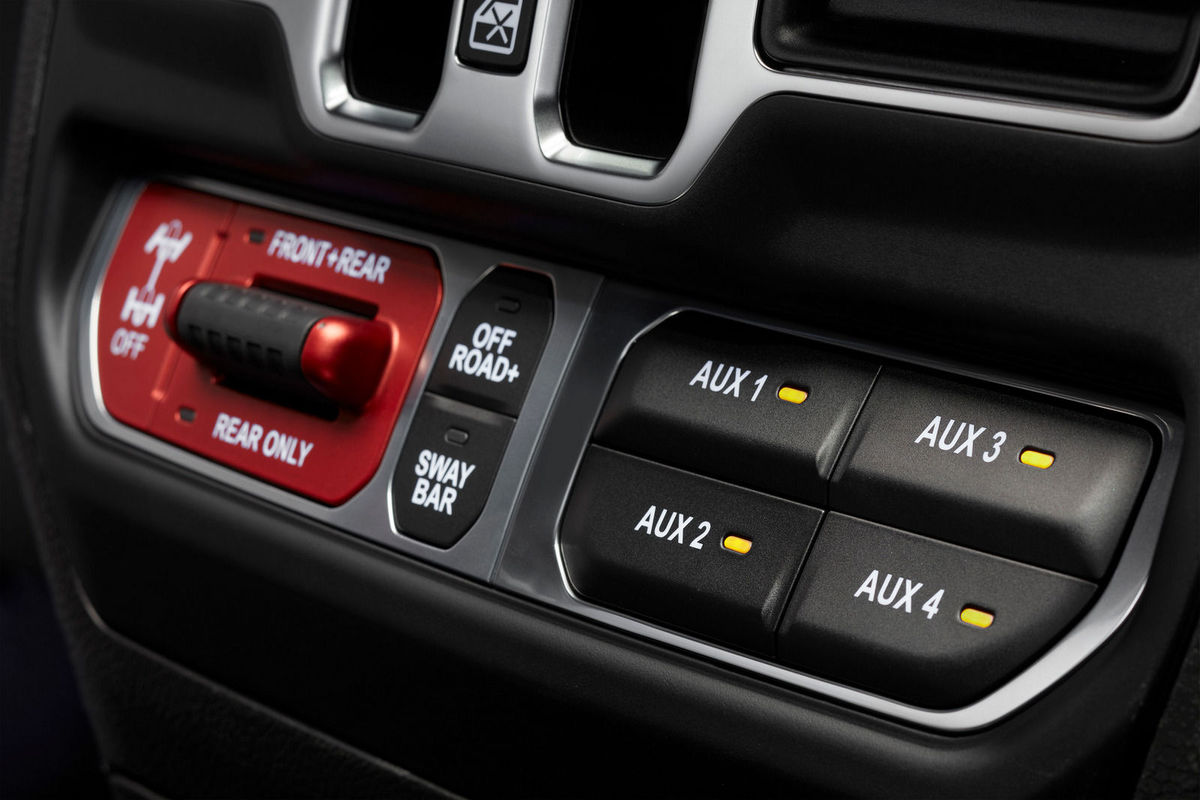
It's not all about that stonking V8, though… The production version should also feature the concept's full-time 2-speed transfer case, Rubicon Dana 44 axles (with electric front- and rear-axle lockers), 17-inch wheels shod with 37-inch mud-terrain tyres and a Jeep Performance Parts 2-inch lift kit from Mopar. The automatic transmission has been beefed up from the Grand Cherokee SRT to use taller 3.73:1 gear ratio.
Will Jeep produce the Wrangler V8 in right-hand-drive guise? That remains to be seen, but if there was even the remotest chance of the newcomer being introduced in South Africa, we imagine there would be more than a handful of enthusiasts lined up to order one…
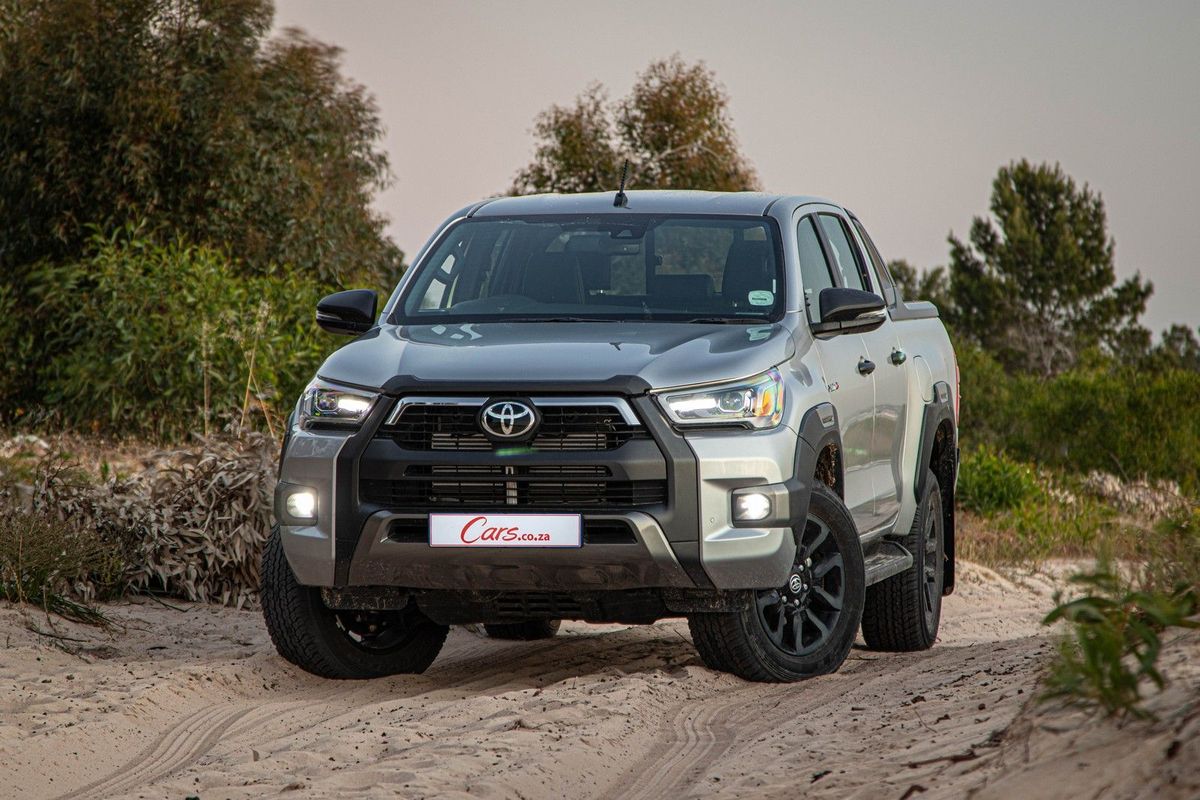
As the market's perennial top-selling bakkie, the 8th-generation Hilux has undergone continuous refinements since its launch in 2016, but lately, it has arguably lagged a few of its rivals in terms of all-round leisure-vehicle appeal. With the latest facelift, Toyota brings its mainstay bang-up-to-date.
We like: Refinement, extra power, feeling of solidity, off-road ability, improved infotainment
We don’t like: Roller-shutter malfunctioned during test, lack of reach-adjustment on steering column
Fast Facts:
Price: R851 100 before options (November 2020)
Engine: 2.8-litre turbodiesel 4-cylinder
Power/Torque: 150kW/500Nm
Transmission: 6-speed automatic
Fuel consumption: 8.0 L/100 km (claimed)
Top speed: 175 kph
What is it? ?
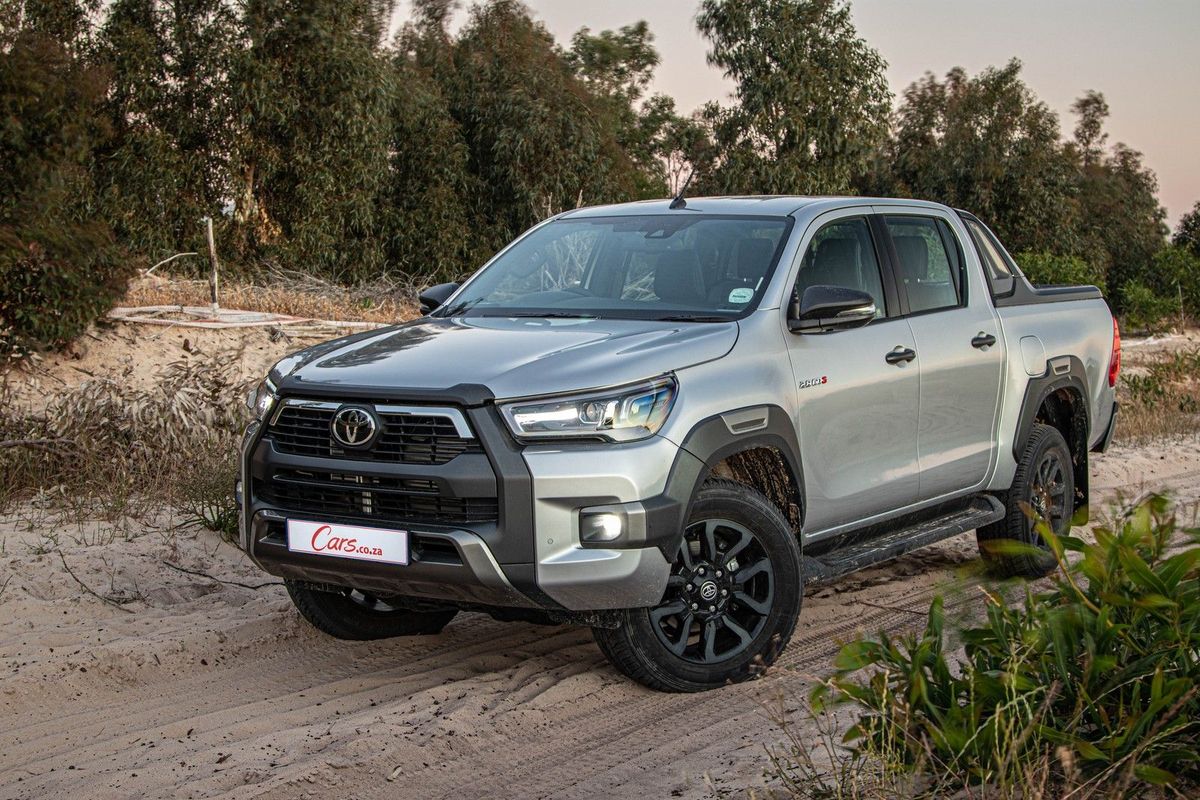
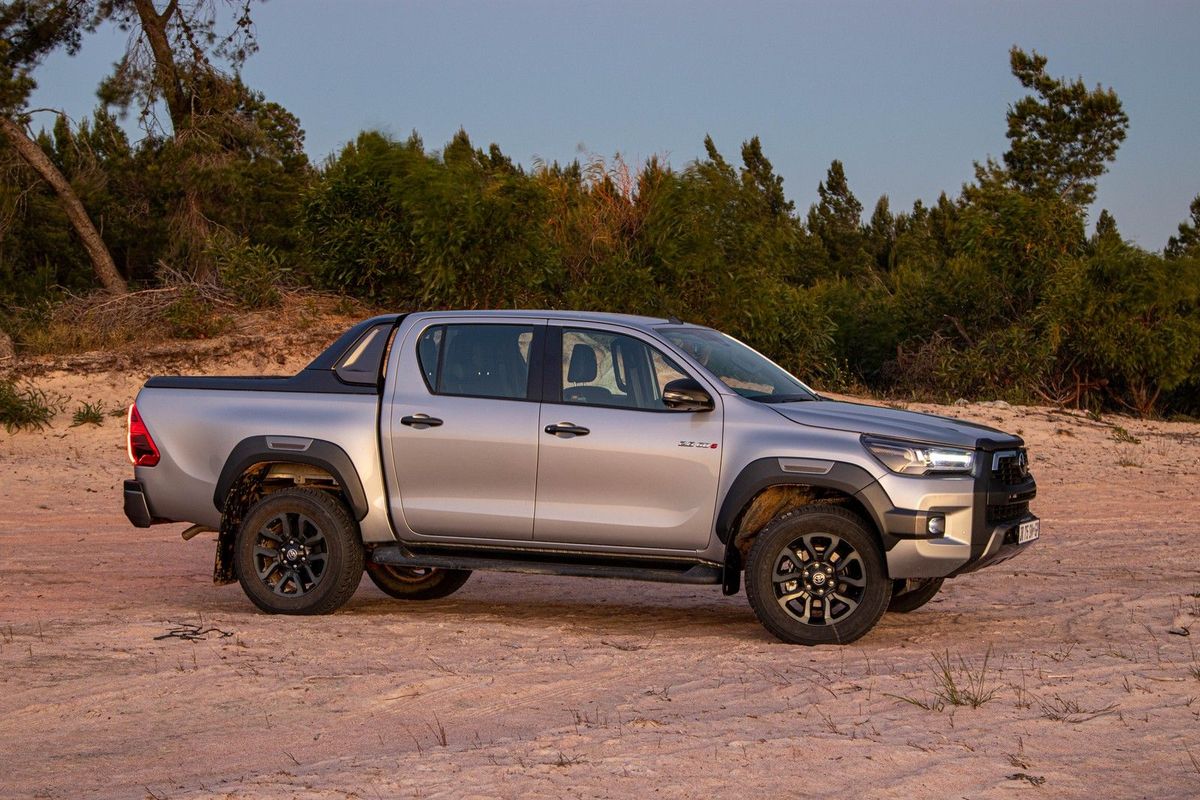
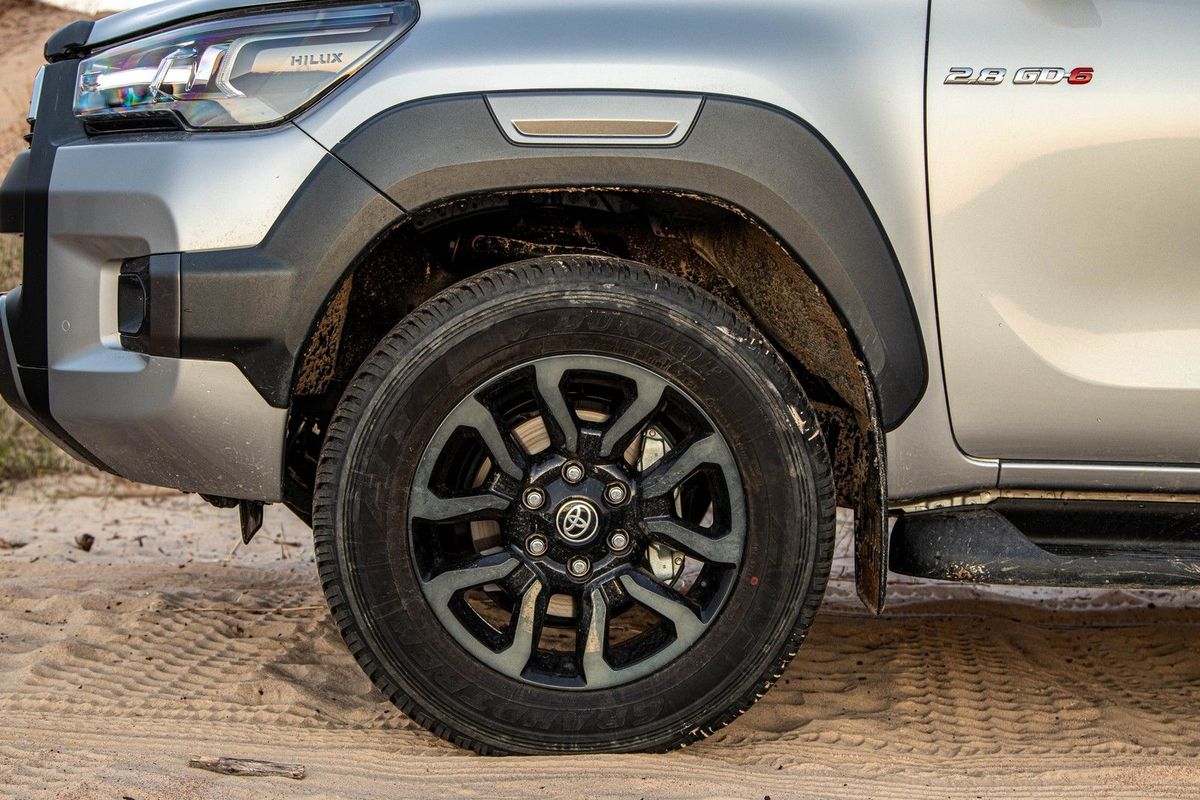
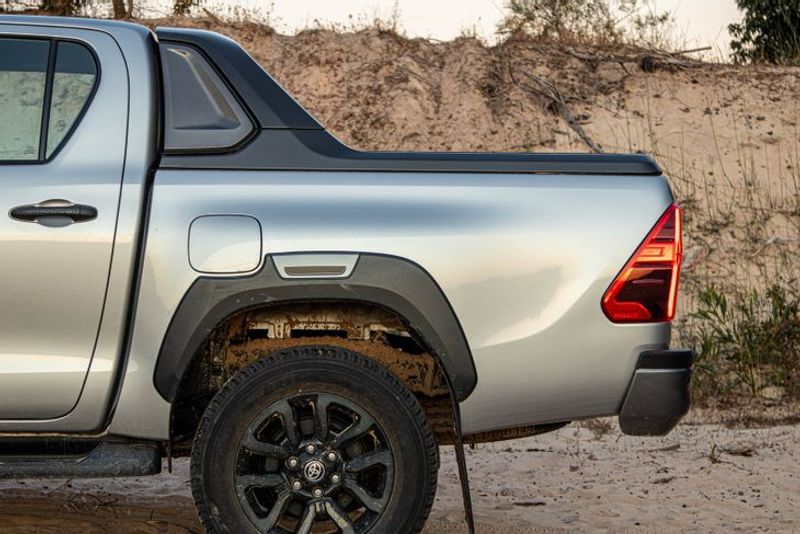
Riding on new 18-inch wheels and sporting more aggressive wheelarch extensions, the Hilux has a sportier side profile.
The fact that the Toyota Hilux has been updated so frequently since its launch in 2016 is not only indicative of fierce competition in this market segment, but how quickly requirements for particularly the leisure-bakkie niche are evolving. Ford's popular Ranger and the evergreen VW Amarok (a multiple CarsAwards winner) are the Hilux's most serious rivals, but soon it will also have to contend with the all-new Mazda BT-50 and Isuzu D-Max. So, Toyota's engineers have come up with a raft of changes to the Hilux, resulting in what is far more than just a mere cosmetic update.
But let's be honest here, aesthetics are important in this segment! In previous updates, the Hilux discarded its awkward-looking "over-bite" front-end, but this latest version is certainly the most head-turning Hilux we've ever driven. In fact, we used it as a workhorse during our most recent SentiMETAL Gathering, which attracted hundreds of classic and collectible car enthusiasts… and the Hilux (which was supposed to be "hidden" behind a gazebo) proved to be one of the most photographed cars there!
Futhermore, the Hilux seemed to lag some of its rivals in terms of refinement, onboard infotainment and safety tech and those elements have also been addressed in this latest round of improvements. Now, the question is whether this flagship Hilux is worth its heady pricetag?
How it performs in terms of…
Performance and ride/handling
As was the case before the 2020 update, the automatic Hilux has a torque (50 Nm) advantage over its manual counterpart.
With a new, enlarged turbocharger, as well as a revised common-rail injection system, the Hilux's power has been upped by 20 kW to 150 kW, and torque (in this automatic derivative) by 50 Nm to a meaty 500 Nm. The cooling system and intake manifold have also been upgraded with the aim to ensure the Hilux's reputation for reliability remains undiminished.
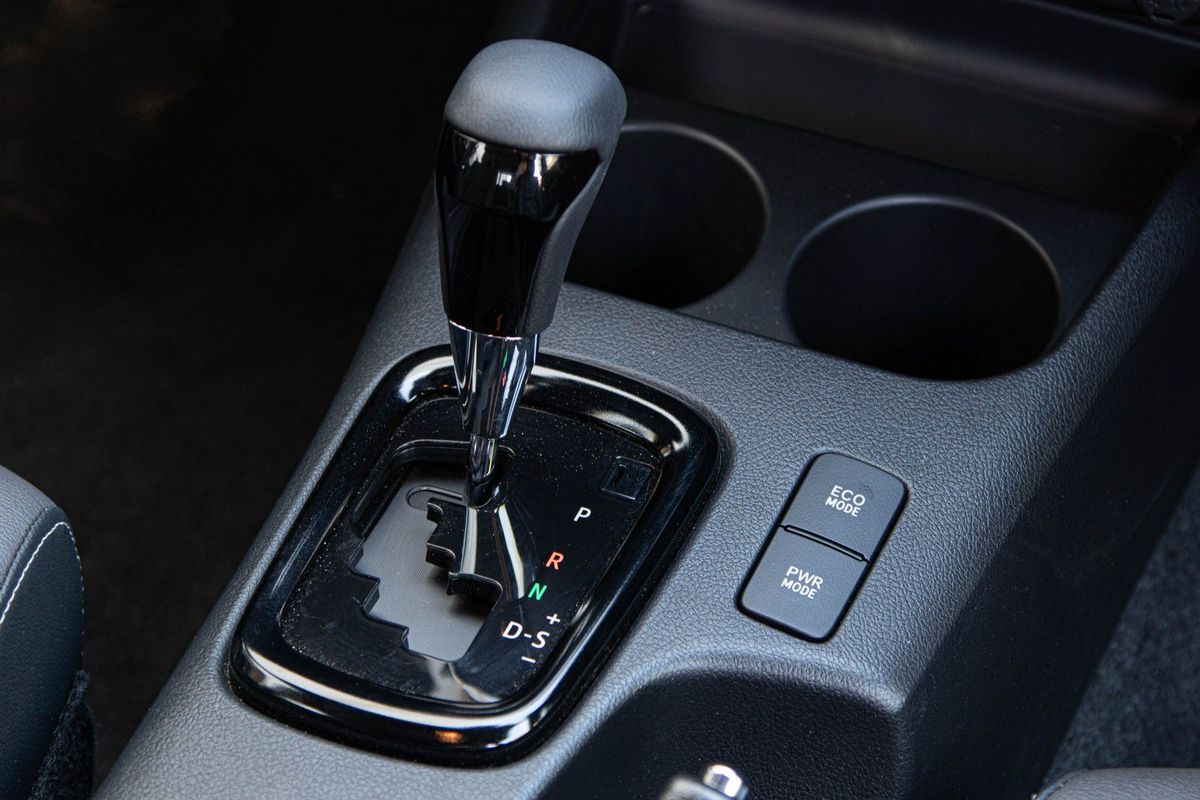
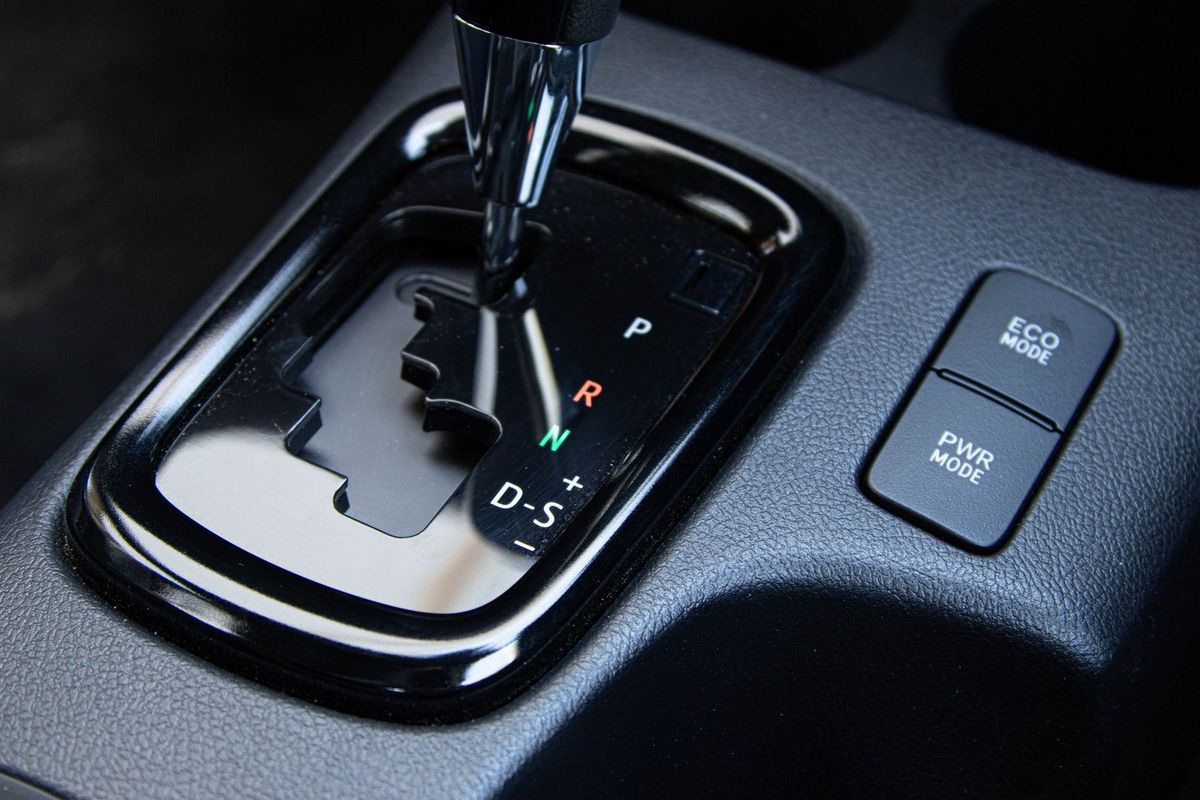
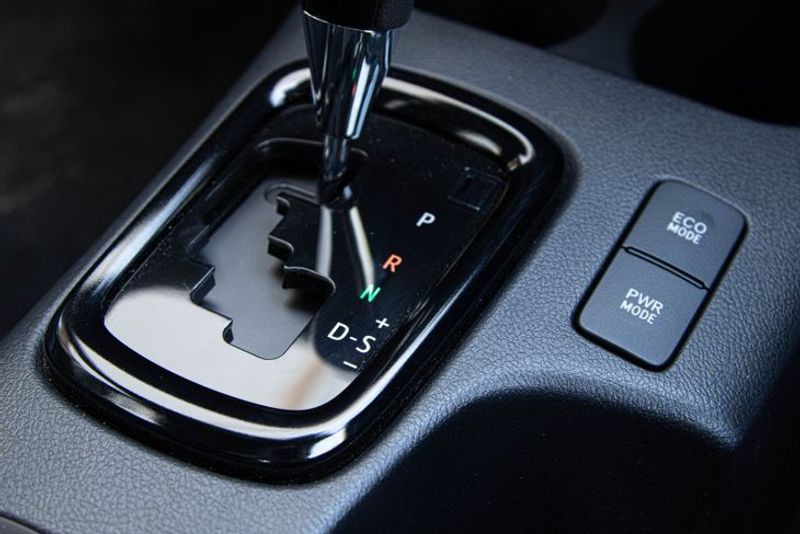
Toyota has also fettled the 6-speed automatic transmission to deliver improved acceleration, particularly when towing (it claims). On the road, the new Hilux does indeed feel more responsive, though it's hard to say how much of this is down to the extra power, or the revised transmission. Either way, what we particularly enjoyed is that it reacts more promptly to throttle inputs, and does so in a smooth and refined manner. In fact, testers enthused about the refinement. It comes as no surprise, then, to learn that a balance shaft has been installed to minimise noise and vibrations.
Toyota claims an average fuel consumption figure of 8.0 L/100 km, which interestingly is 0.5 L/100 km less than what was claimed for the 2.8GD-6 Raider Auto we tested back in 2016. In the real world, you're more likely to average around 9.5 L/100 km. This compares favourably with the fuel consumption of the bi-turbodiesel 2.0-litre Ford Ranger derivatives.
Hilux being off-road tested during the Cars.co.za Consumer Awards evaluations at Gerotek. It remains a segment frontrunner.
The focus on refinement is also evident in the way the Hilux now rides, handles and, in particular, cruises. The Hilux features revised spring rates, new shock absorbers and suspension bushes, as well as revised leaf springs, with a focus area being ride comfort when unladen (a common problem with double-cab bakkies). While the suspension now deals with, and settles after, a bumpy section much faster, it has lost none of its robust feel. The Hilux remains a bakkie that feels like it can be driven at speed over (or through) just about anything in its way. It's also in such tough conditions that the solidity of the cabin (not a rattle to be found) impresses hugely.
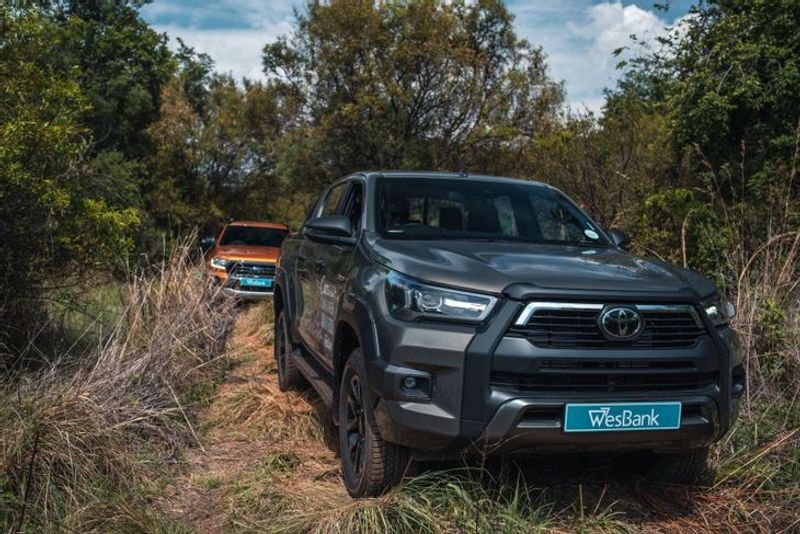
During recent #CarsAwards testing at the Gerotek facility, the Hilux was subjected to quite a challenging off-road evaluation by the judges. It's an area in which the Hilux has always put in a class-leading performance, and the latest changes have certainly not impacted its performance in a negative way, although its weak-chin forebear arguably offered a better angle of approach. Oh, and be wary of those fancy-looking running boards!
Exterior design & Packaging
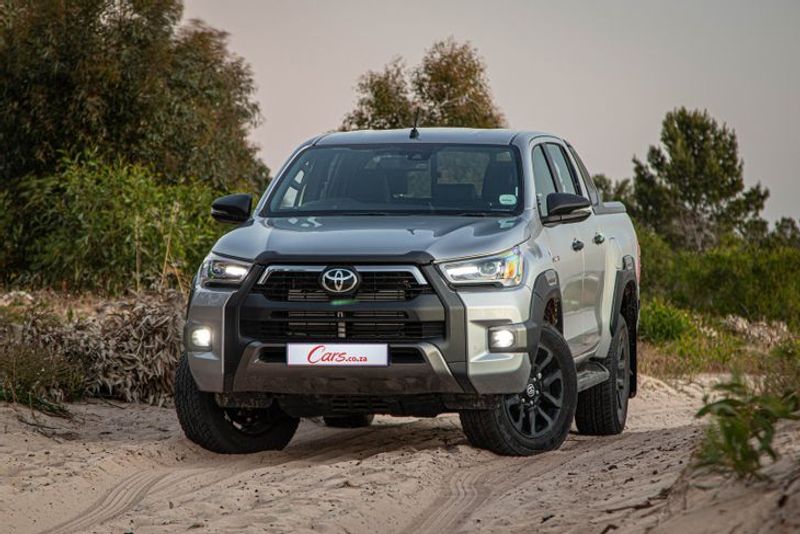
Imposing new "face" is another big step forward in giving the Hilux the necessary "macho" appeal this segment requires.
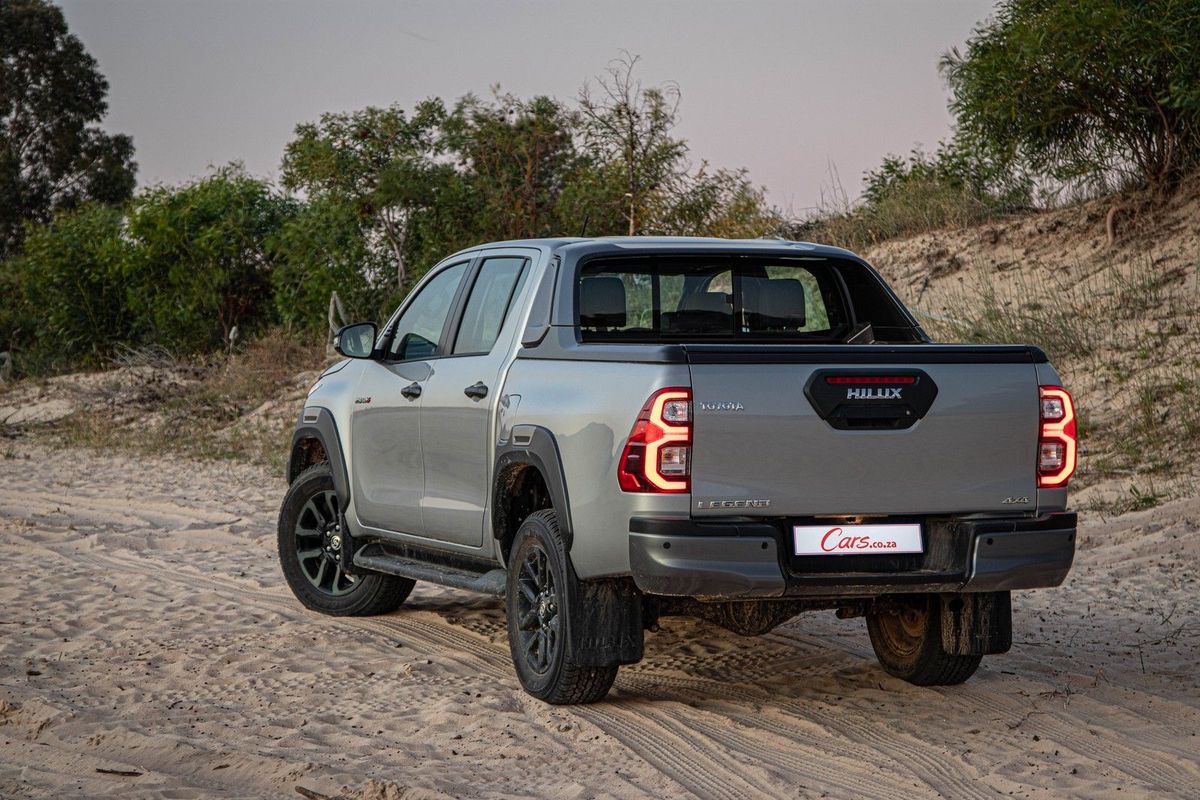
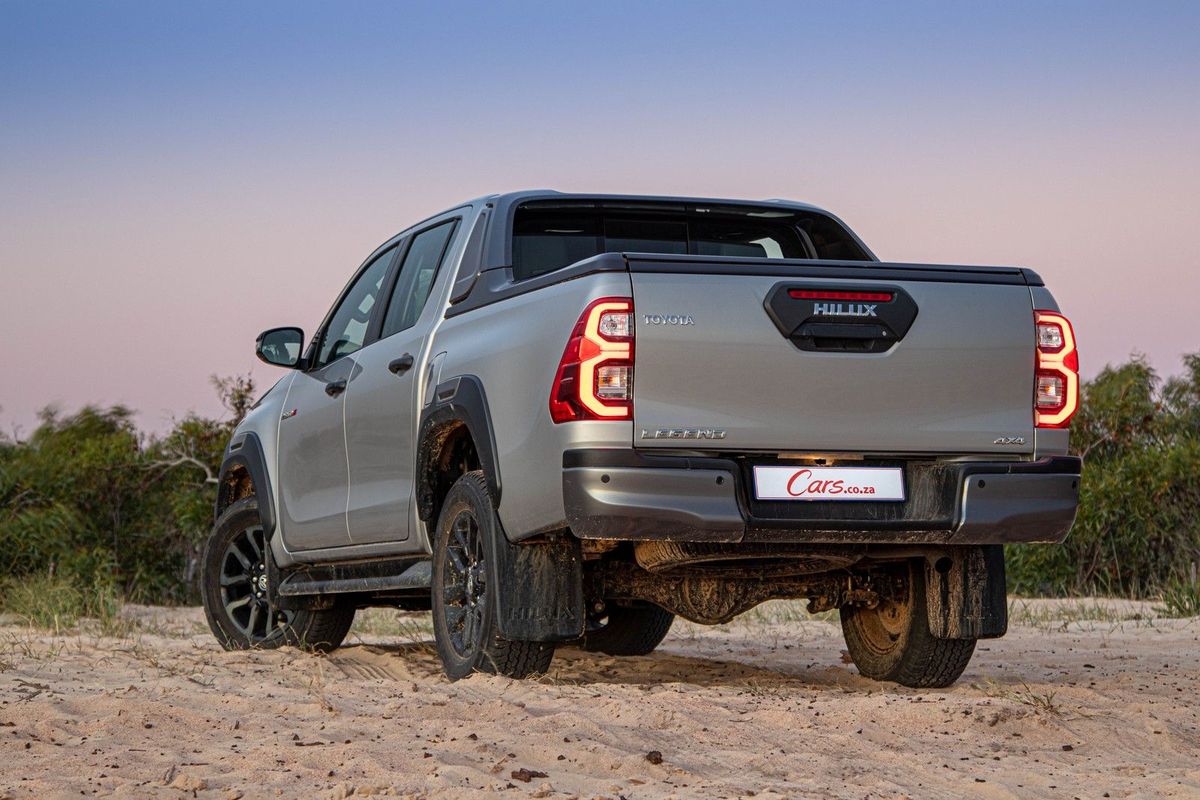
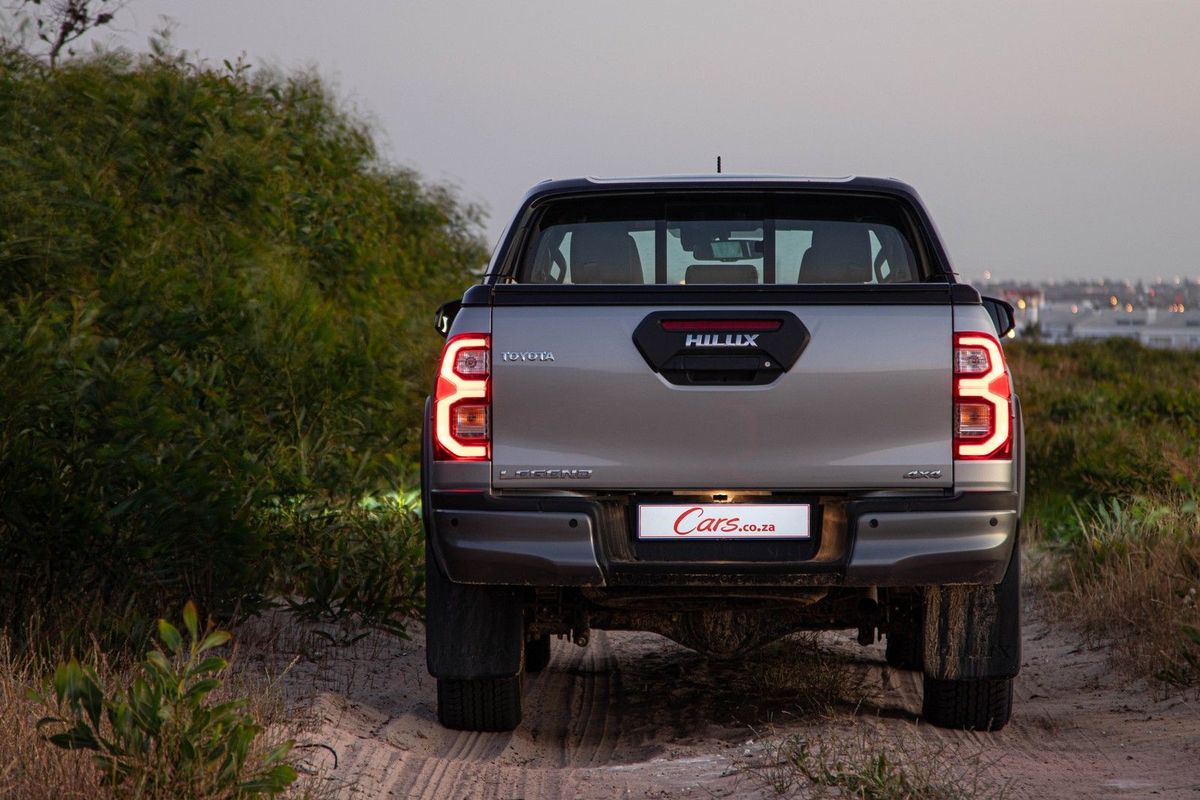
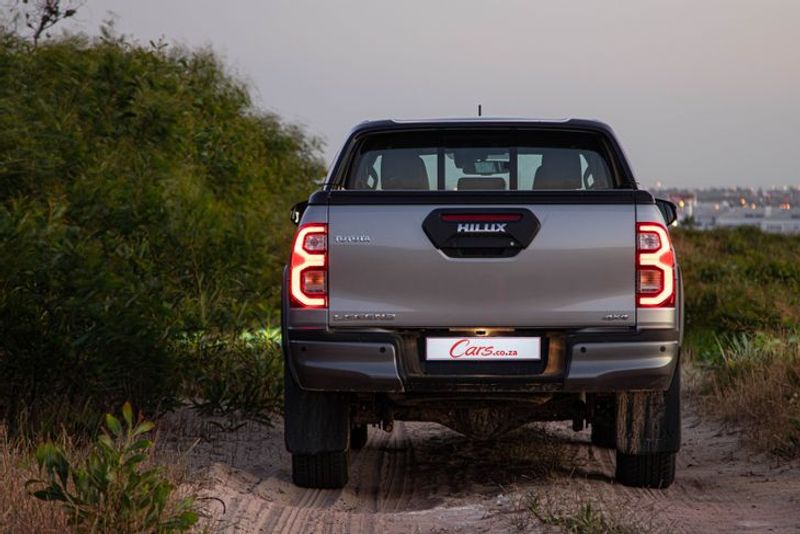
To reiterate, Toyota had already significantly enhanced the appearance of the Hilux at the time of its previous upgrade, but this latest facelift embues the bakkie with a lot more presence. The new slimline headlights, combined with the black trim around the more angular grille give the Hilux a fierce-looking face. We also like the new wheel arch extensions (and how they flow into the front foglamp surround) and the LED tail lamps.
This particular model's RS moniker may lead you to expect something more overtly "sportly" from the Hilux, but it turns out that RS is an abbreviation for "Roller Shutter". This is in reference to the electrically operated roller-shutter tonneau cover fitted to this model. It's a smart-looking system that brings with it a swoopy roll-over hoop, as well as plug points and LED lighting in the load bay. The system offers vastly improved security compared with a traditional canvas tonneau cover, but it's arguably less practical, seeing as it eats into cargo space and not easy to remove. During the test, the system also stopped working for no apparent reason, but a friendly Toyota technician sorted it out quickly enough.
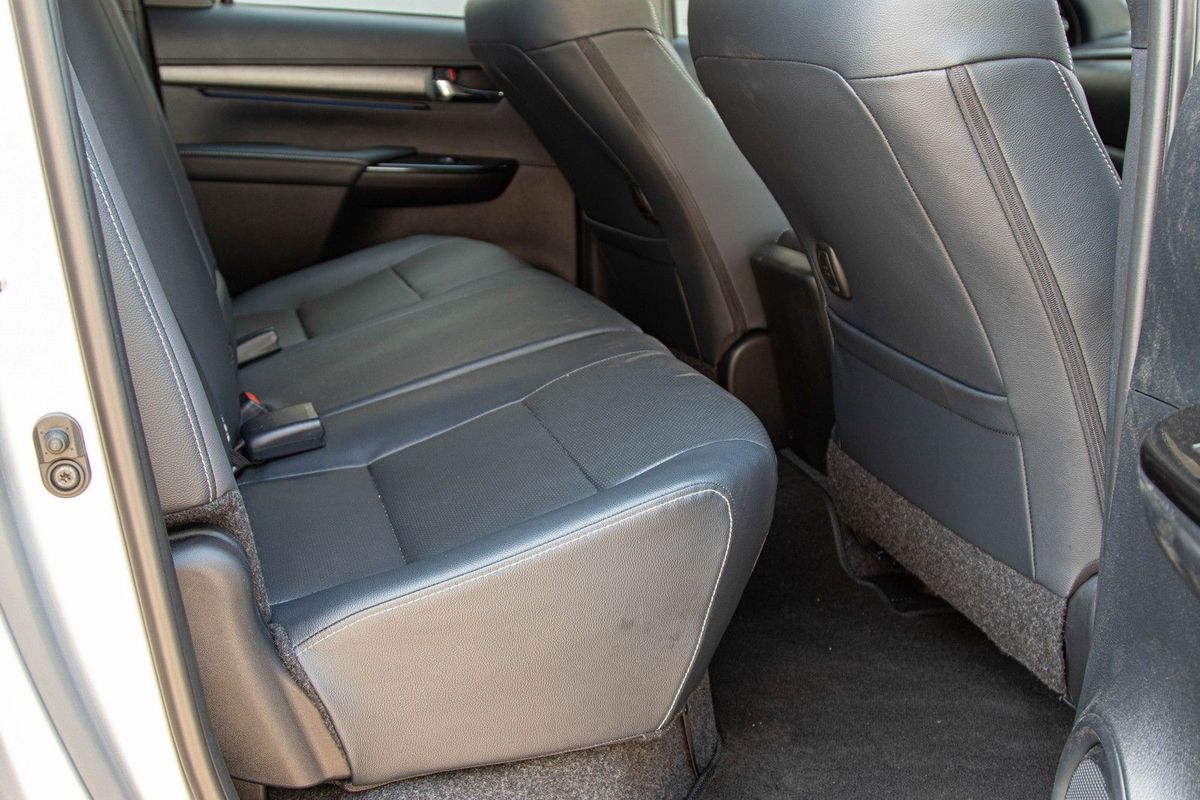
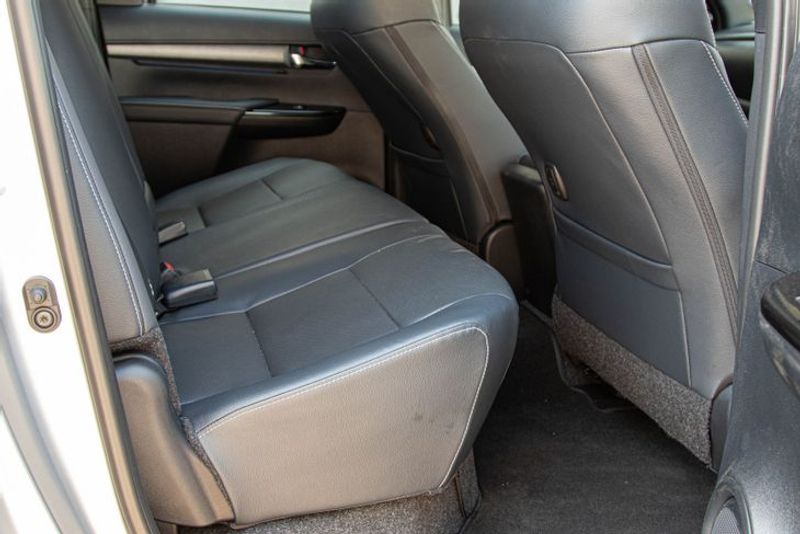
Rear legroom is about average for this segment.
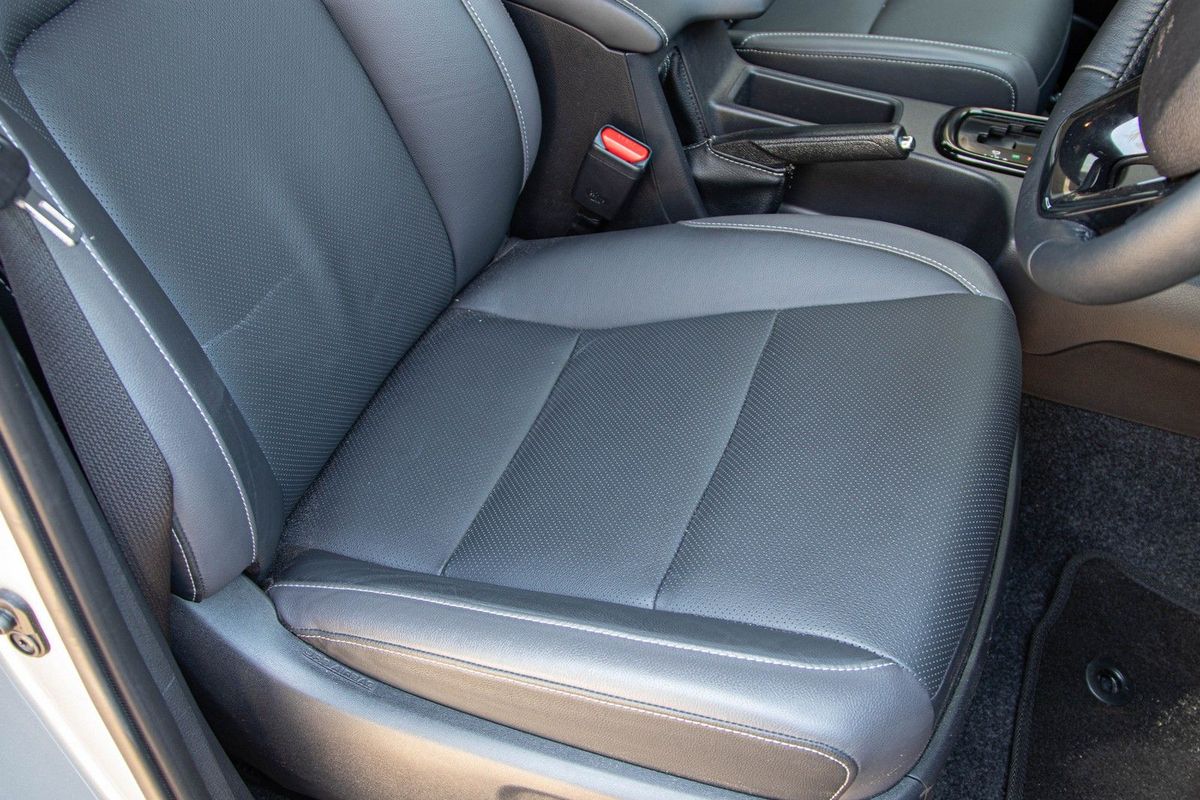
Inside, in terms of packaging, there are no major changes to speak of. Front passenger space is very good, but rear legroom is probably only about average for this segment. Interestingly, we experienced a front-left flat tyre during the bakkie's tenure in our test fleet, which necessitated fitment of the spare. During the wheel-change, we noticed that the standard jack is probably a bit too small for the Hilux, as we had to jack up well beyond the yellow warning (maximum recommended lift) line. Thankfully we were stranded on a solid, flat surface and not out in the sticks!
Interior execution and features
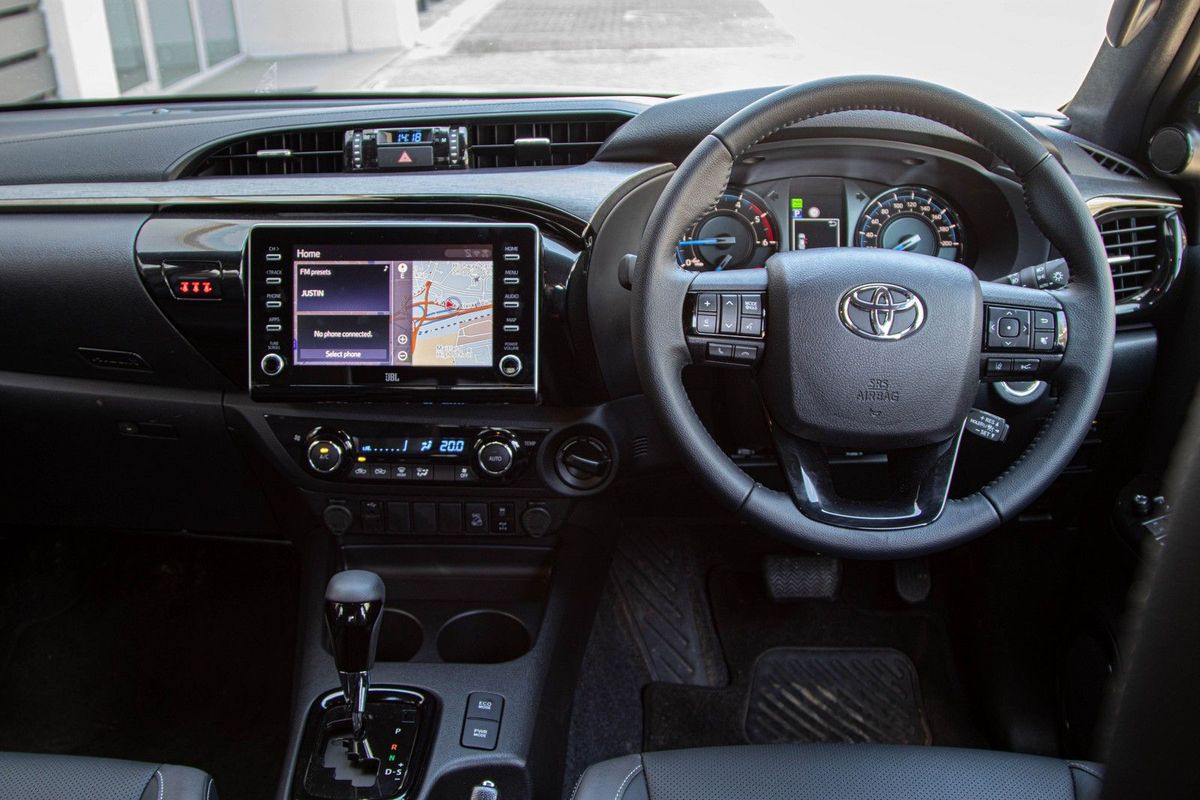
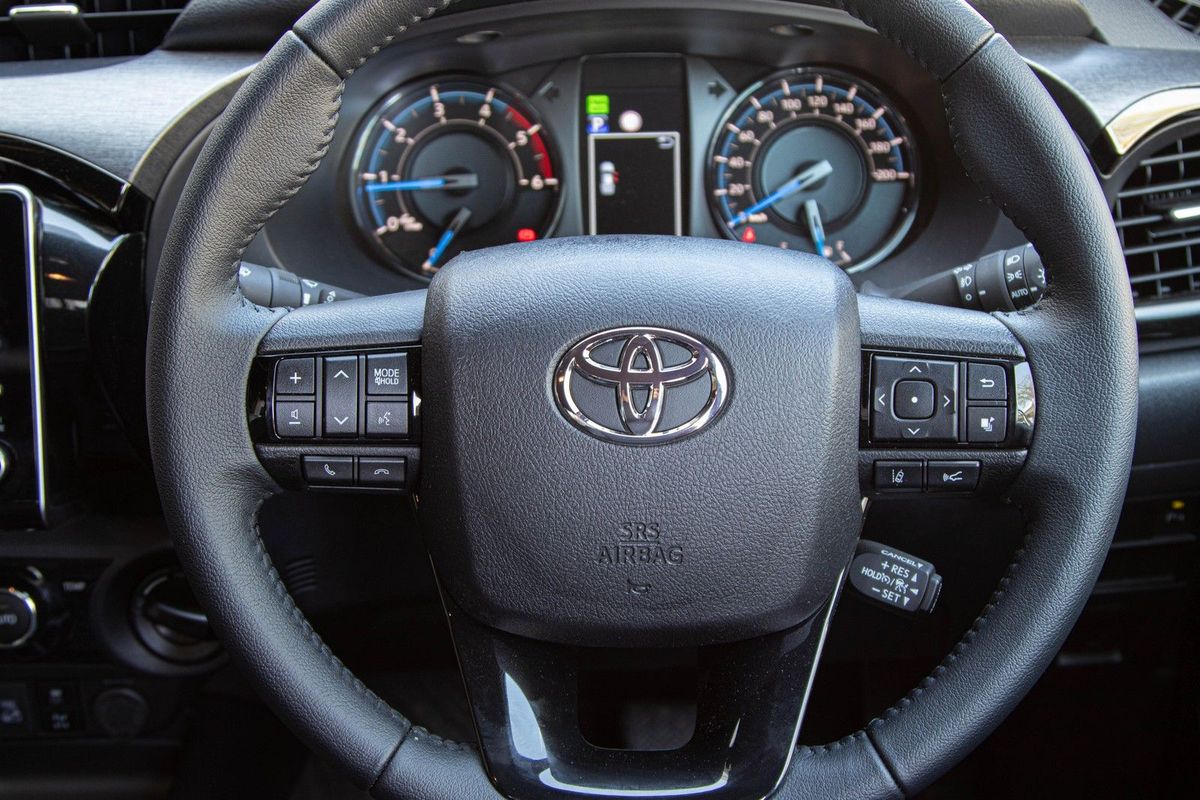
Detail refinements have been made and new tech fitted (including an Apple CarPlay/Android Auto compatible infotainment system).
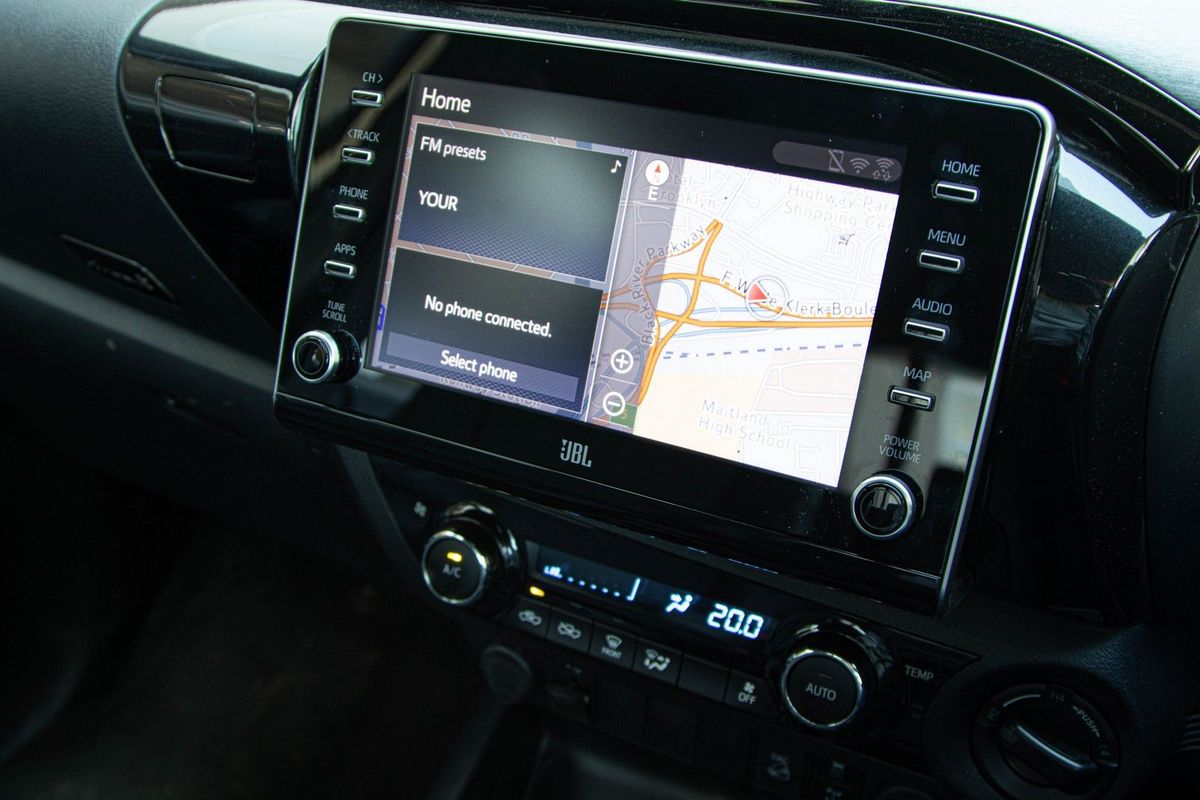
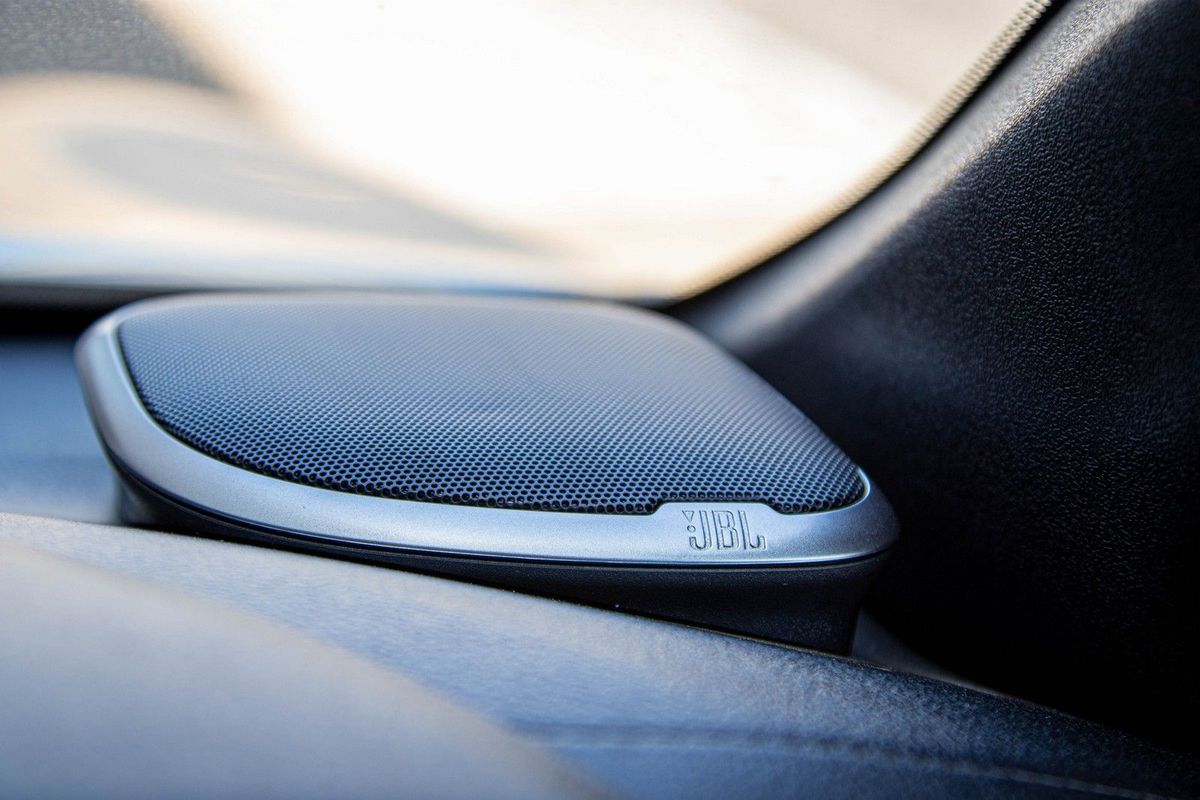
The big news inside is tech-related. First of all, the Hilux now features an all-new 8-inch infotainment system that is compatible with Apple CarPlay and Android Auto. This allows for music streaming services, as well as access to real-time navigation and traffic info via Google Maps. As a bonus, there's now an in-car Wi-Fi hotspot and complimentary 15 Gb of data. The touchscreen console still incorporates hard buttons for major functions, which makes it easier to use the system on the go. Secondly, Toyota has also introduced a 9-speaker JBL sound system as standard.
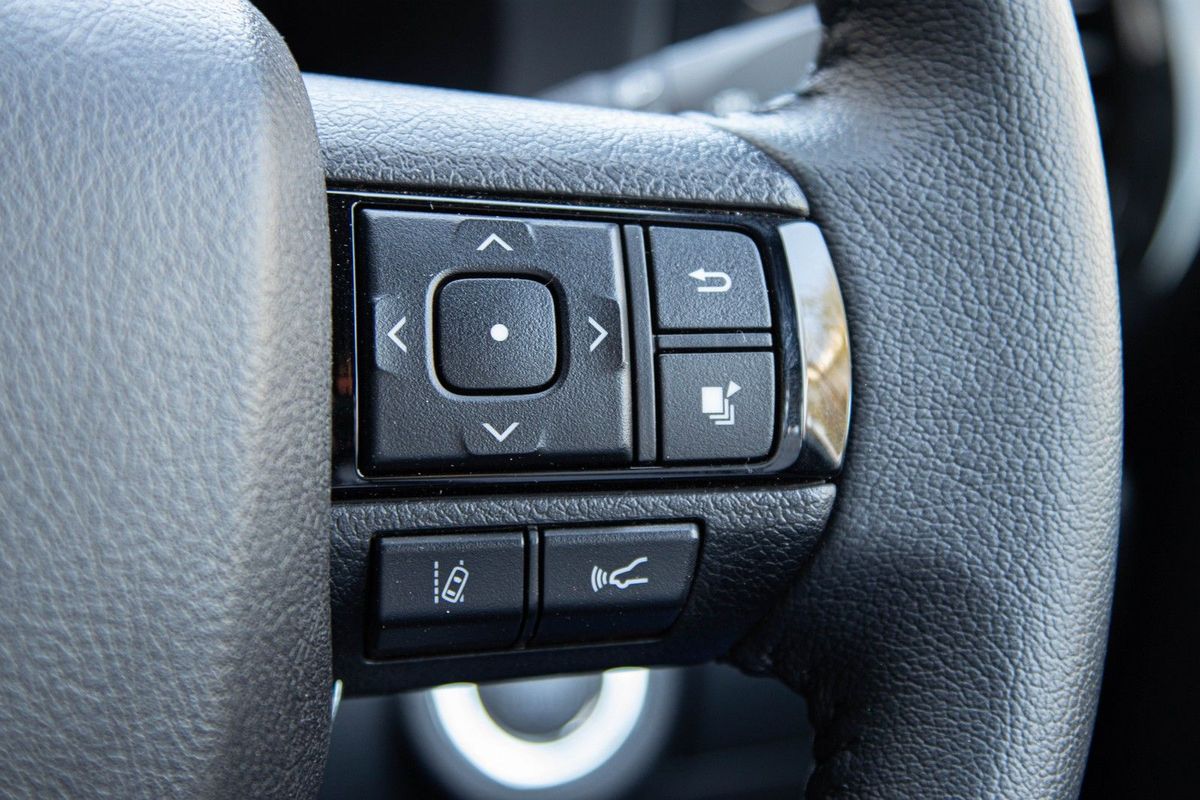
Also included in the price on this model is the Safety Sense package. It consists of a pre-collision detection system, road-sign detection, lane departure alert and adaptive cruise control. The latter feature is particularly welcome on longer road trips.
Price and after-sales service
The Toyota Hilux 2.8GD-6 Double-Cab 4×4 Legend RS Auto sells for R851 100 (before options, November 2020). The price includes a 3-year/100 000 km warranty and a service plan that covers the first 9 services.
Striking new LED tail lamps further elevate the aesthetic appeal of the refreshed Hilux.
With this latest round of (rather far-reaching) improvements, the Hilux is now arguably the most well-rounded offering in the local market. The stylistic improvements give it considerably more kerb appeal, an important factor in the leisure double-cab segment where "image" is key. The extra grunt from the 2.8-litre turbodiesel motor is certainly welcome, but the overall refinement (drivetrain and ride) is even more noticeable. And, finally, the Hilux now offers a comprehensive suite of infotainment and modern safety features that will stand it in good stead when its new rivals arrive on the market. None of these improvements have come to the detriment of the Hilux's usual strenghts and, combined with the fact that Toyota is our current #CarsAwards Brand of the Year (based entirely on owner feedback), we can't but give the revised Hilux an enthusiastic double thumbs-up!
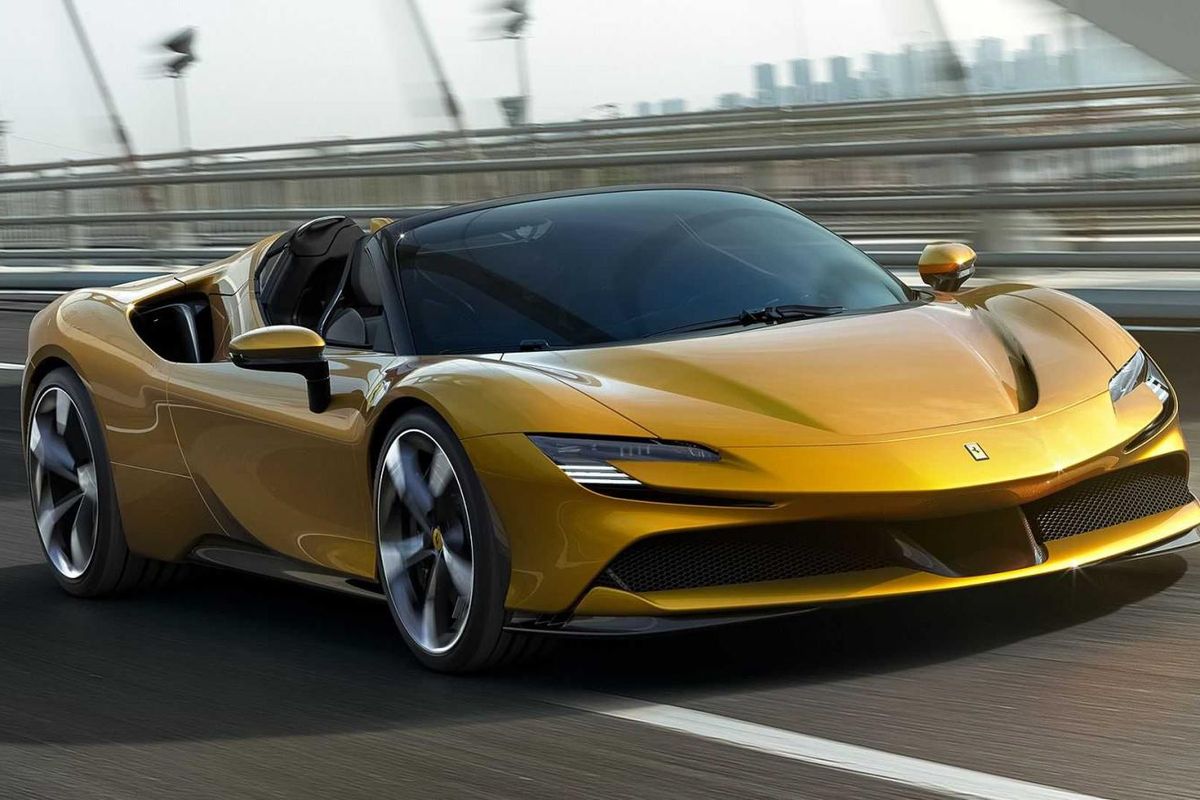
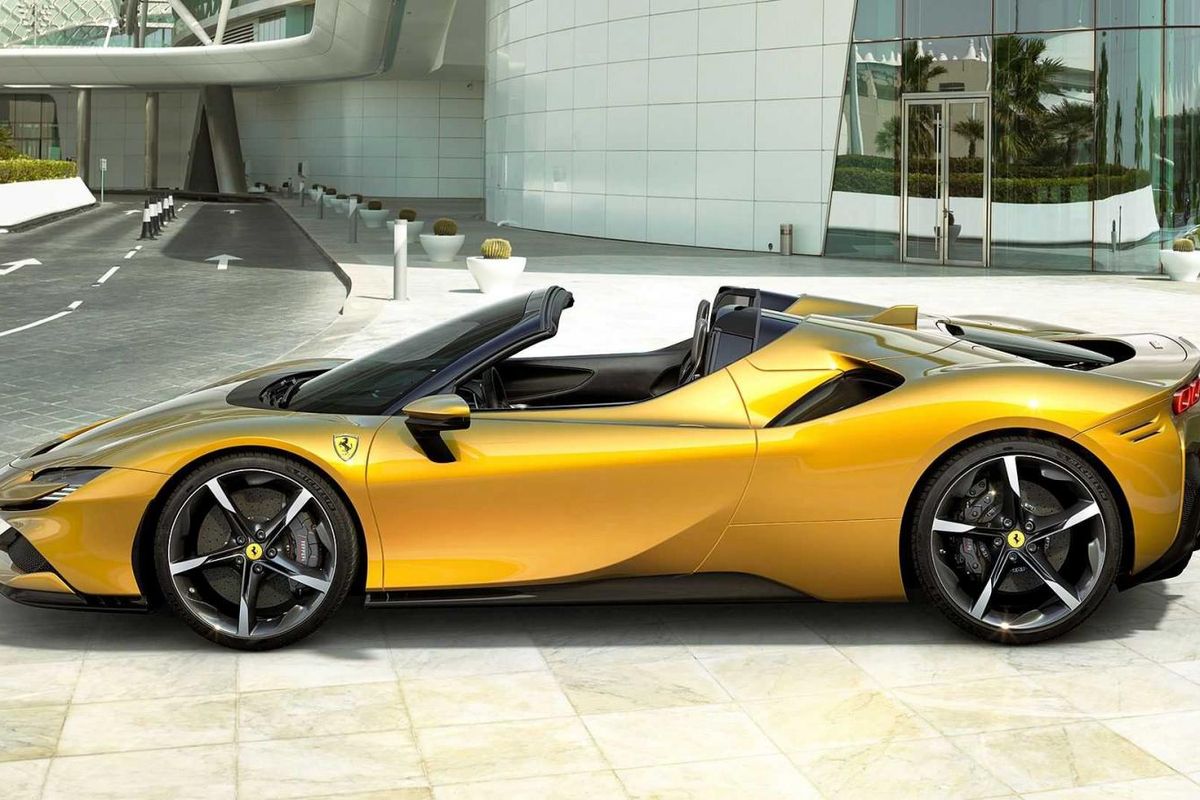
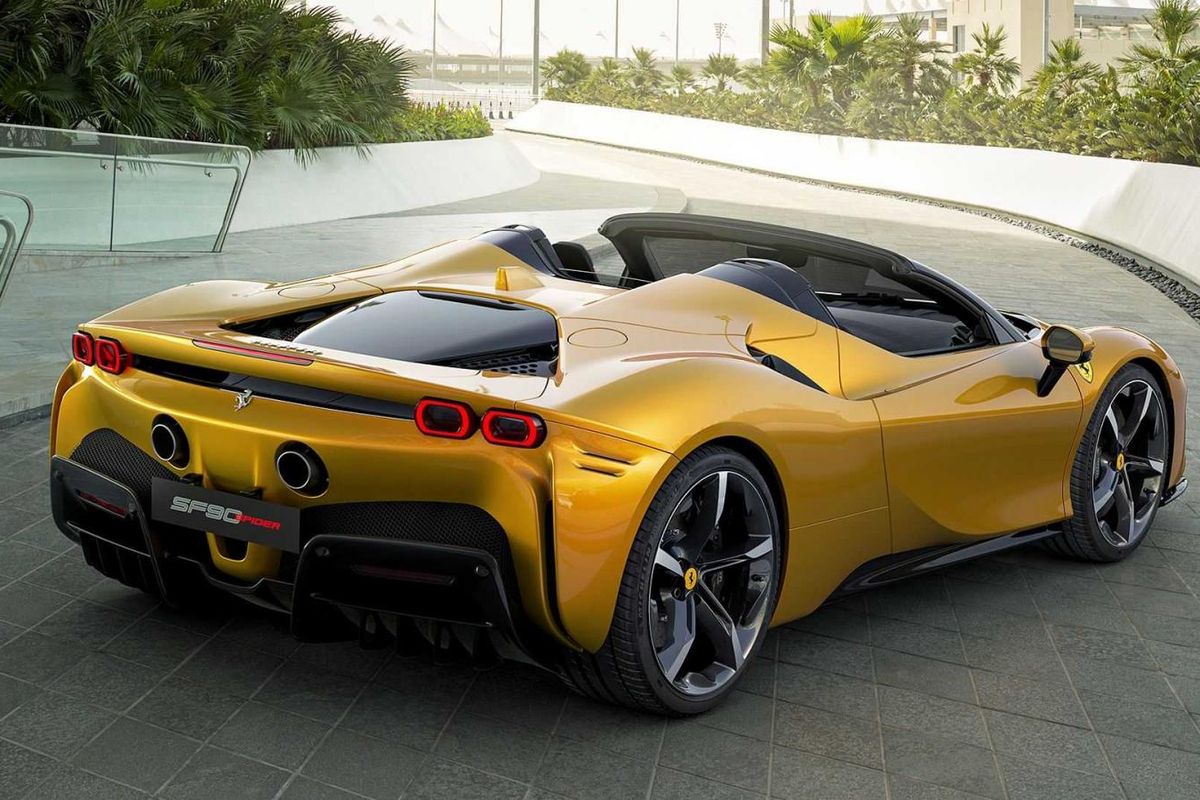
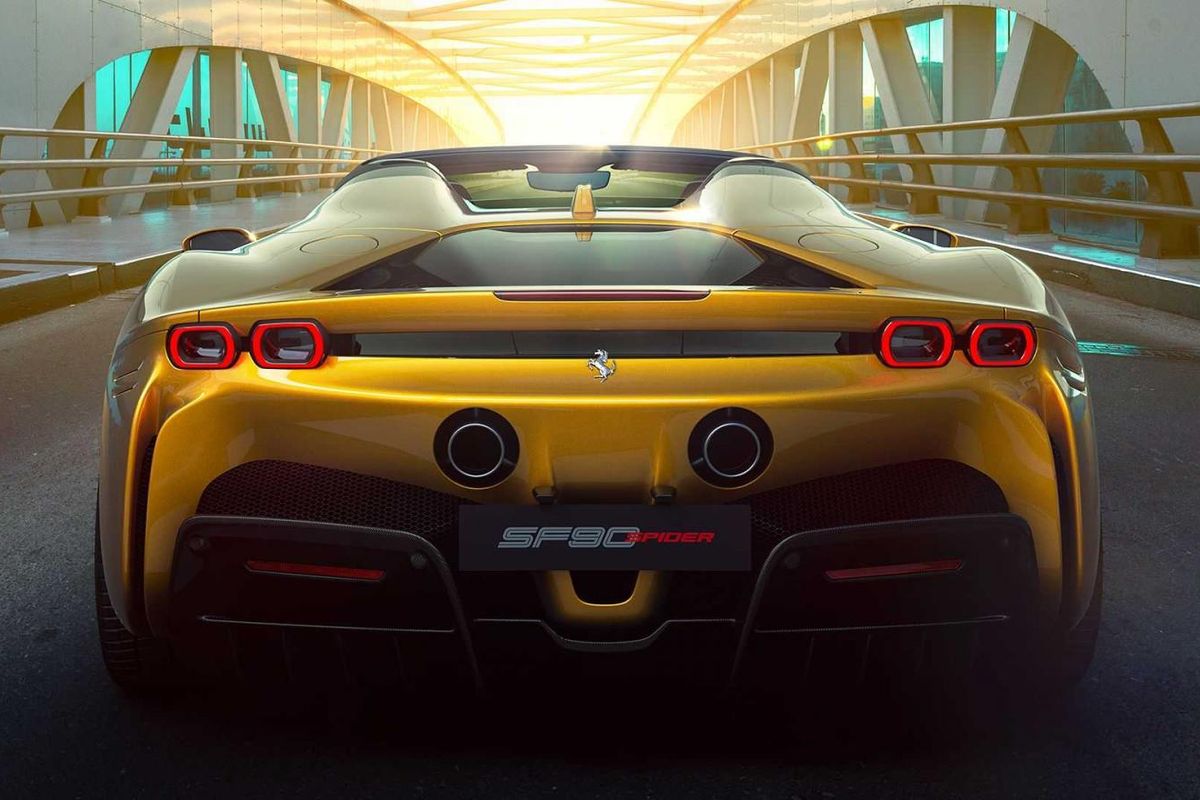
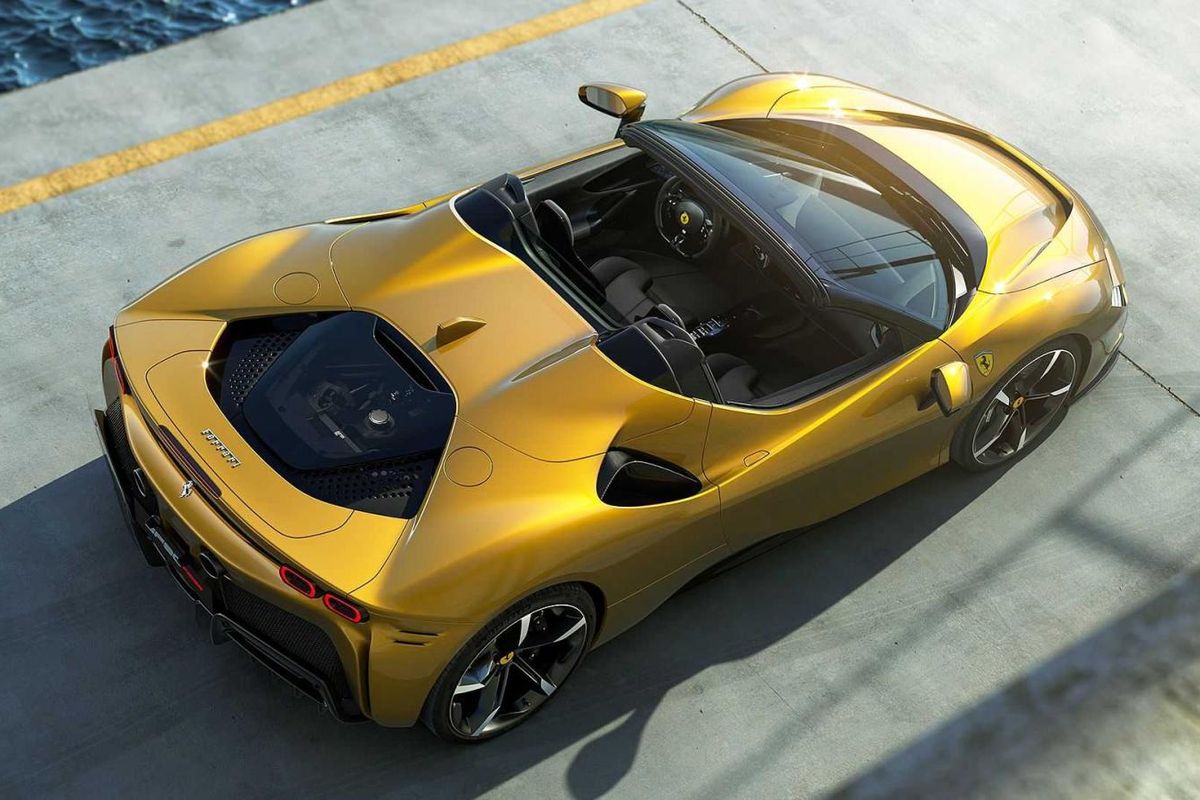
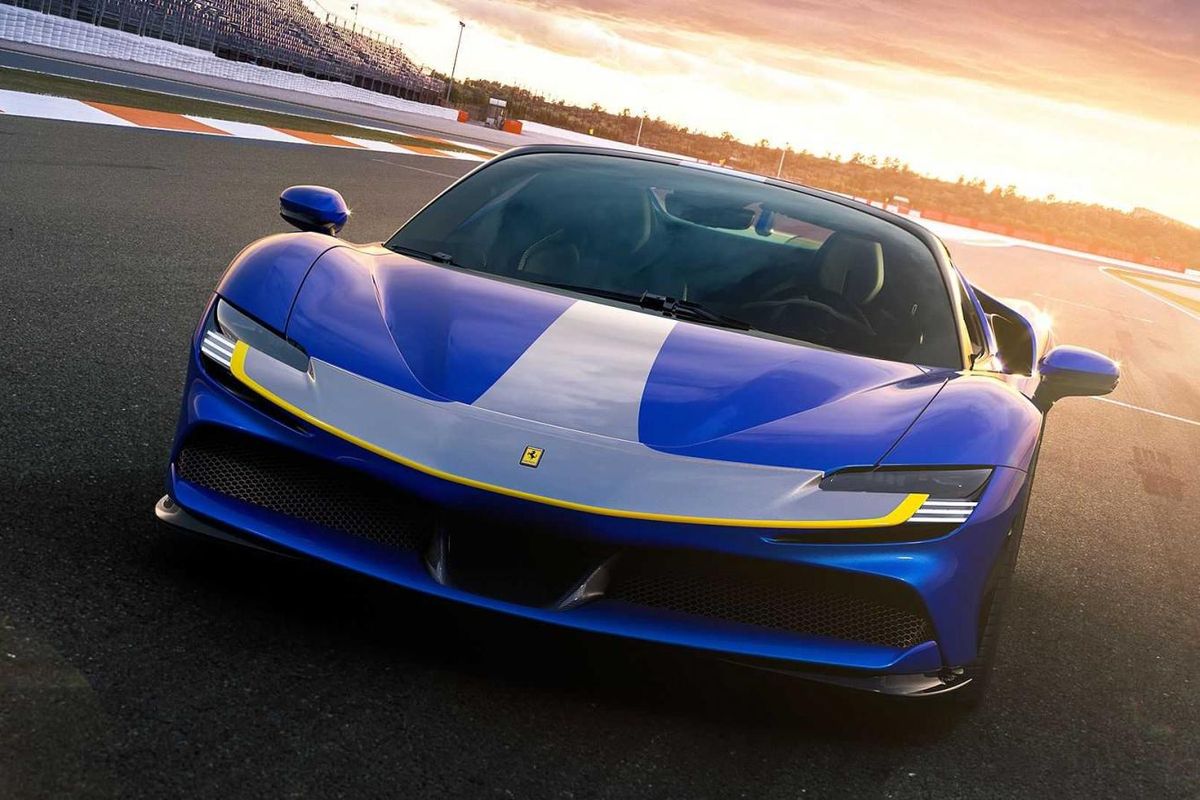
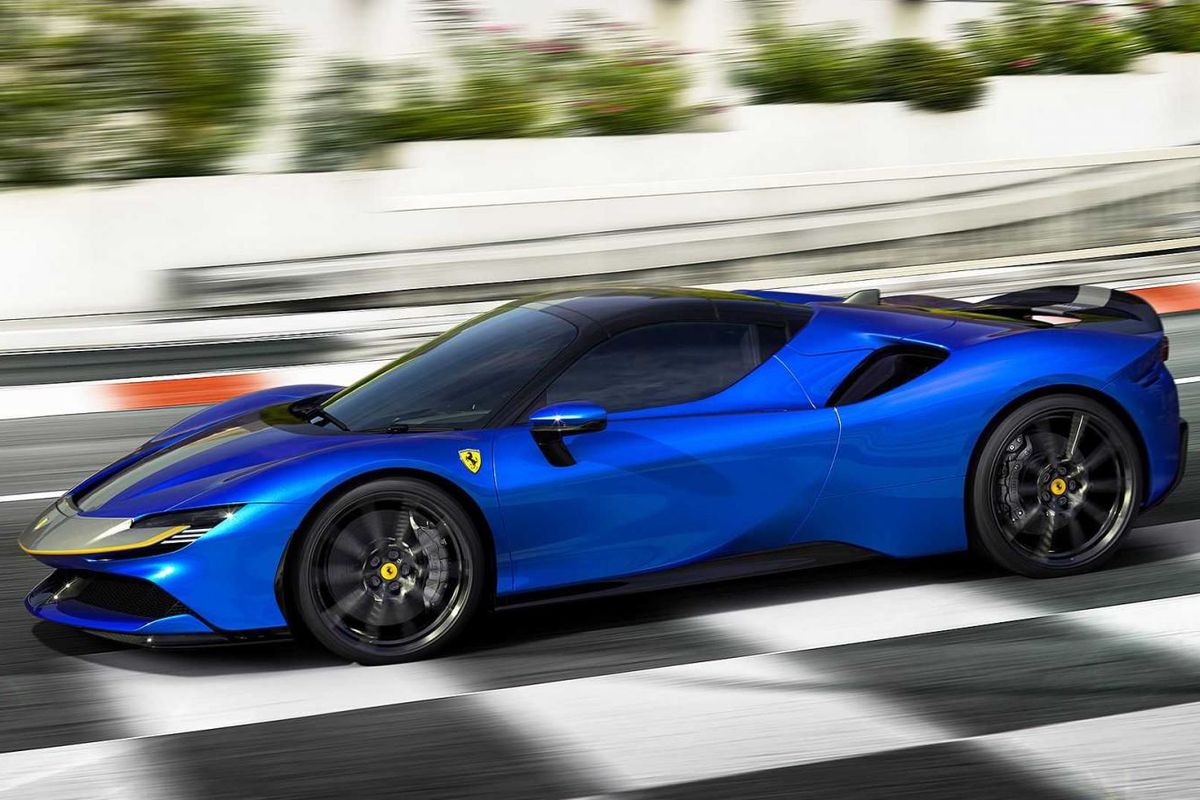
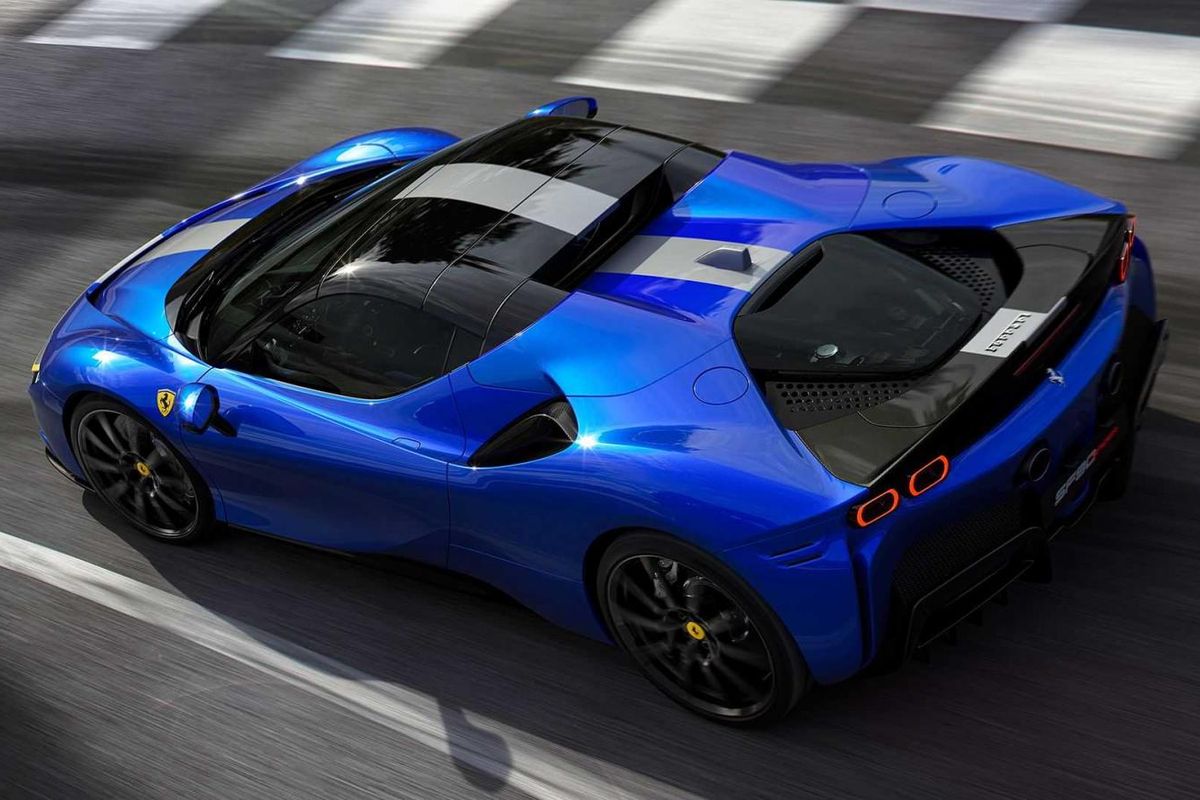
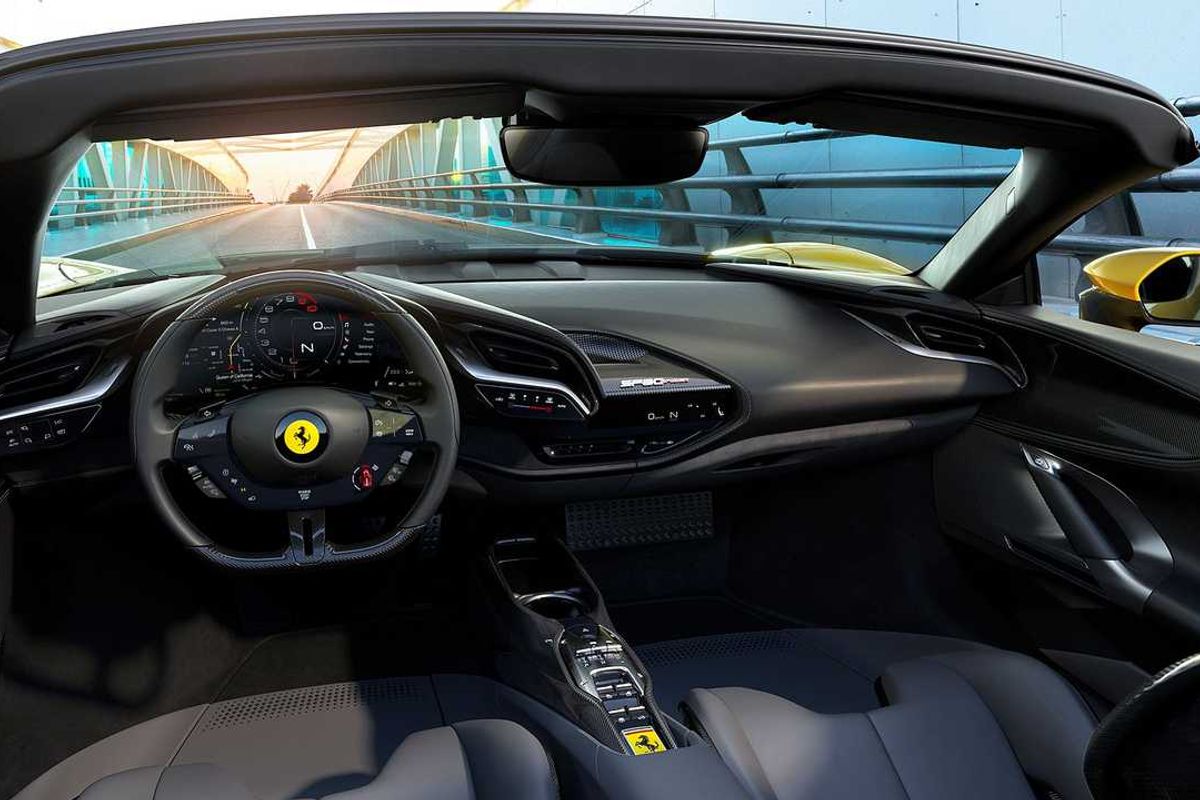
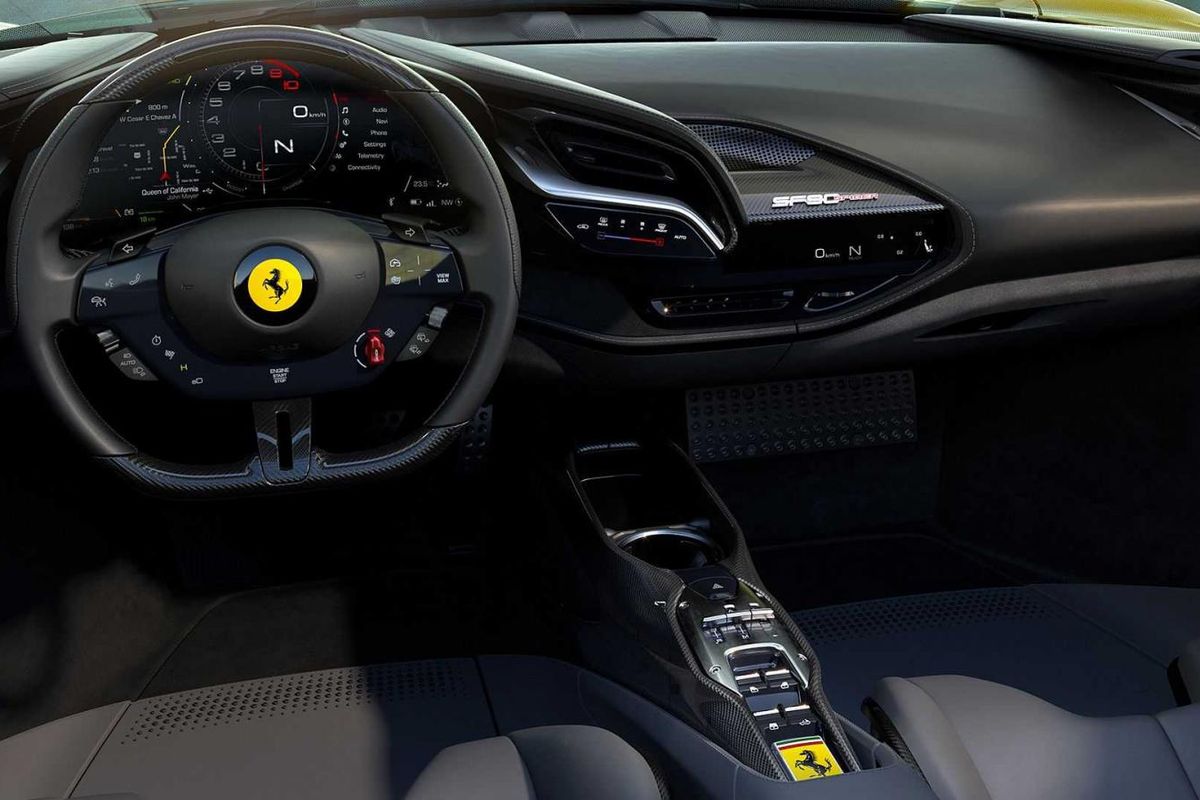
Ferrari has revealed the spider version of its plug-in hybrid SF90 Stradale coupe. See details below…
Ferrari revealed its SF90 Stradale plug-in hybrid coupe last year boasting impressive outputs 574 kW and 800 Nm developed by its mid-mounted, twin-turbo 4.0-litre V8 engine. Additional firepower is harvested and stored in a 7.9 kWh lithium-ion battery, adding 162 kW to the SF90’s total system output of 735 kW. Two electric motors drive the front wheels, giving the SF90 all-wheel-drive capability, a first for Ferrari.
The SF90 Spider adopts the same powertrain and is claimed to achieve a zero to 100 kph sprint time in 2.5 seconds with a top speed of 340 kph using a lightning-fast 8-speed DCT.
The SF90 spider features an electrically retractable hardtop that can be retracted in 14 seconds and only occupies 100 litres of space and is some 40 kg lighter than a conventional hardtop. An optional Assetto Fiorano package sheds a further 21 kg with carbon fibre and titanium construction. This package reduces the SF90 spider’s overall weight to 1 670 kg or 100 kg more than the coupe version.
What would you rather have, the SF90 Stradale coupe or this SF90 spider?
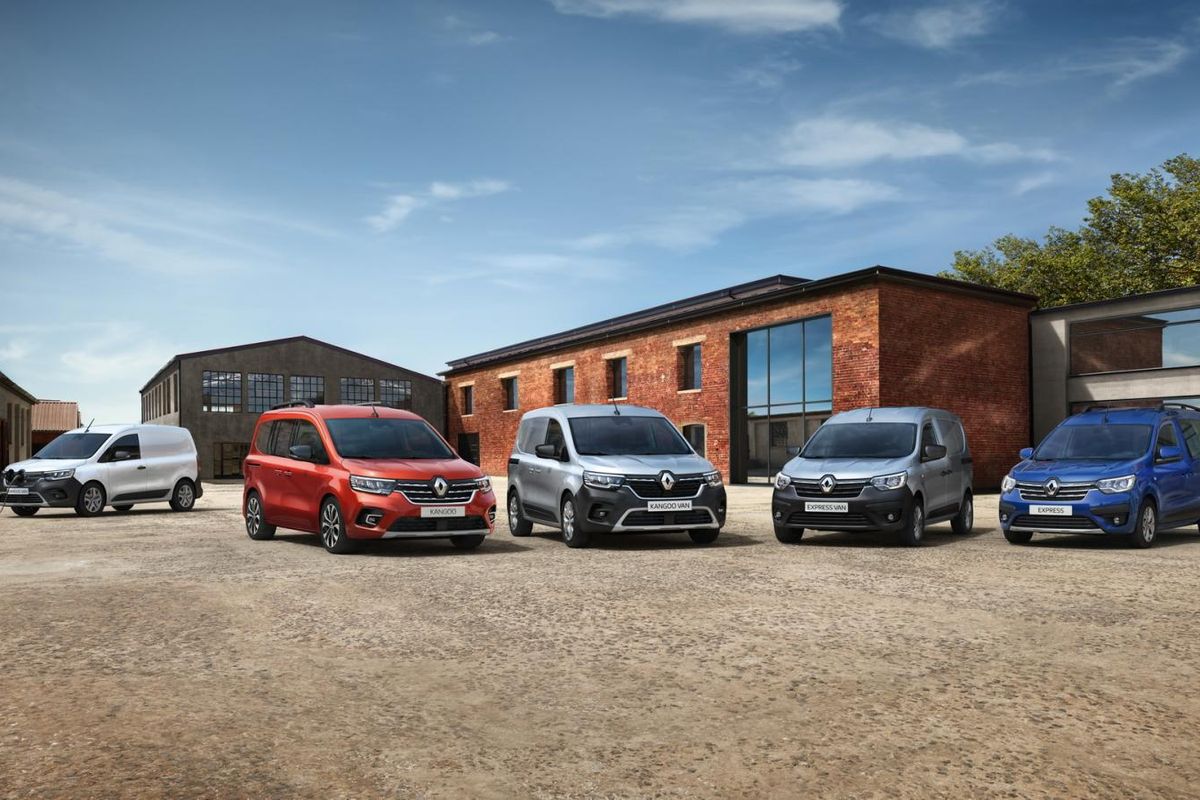
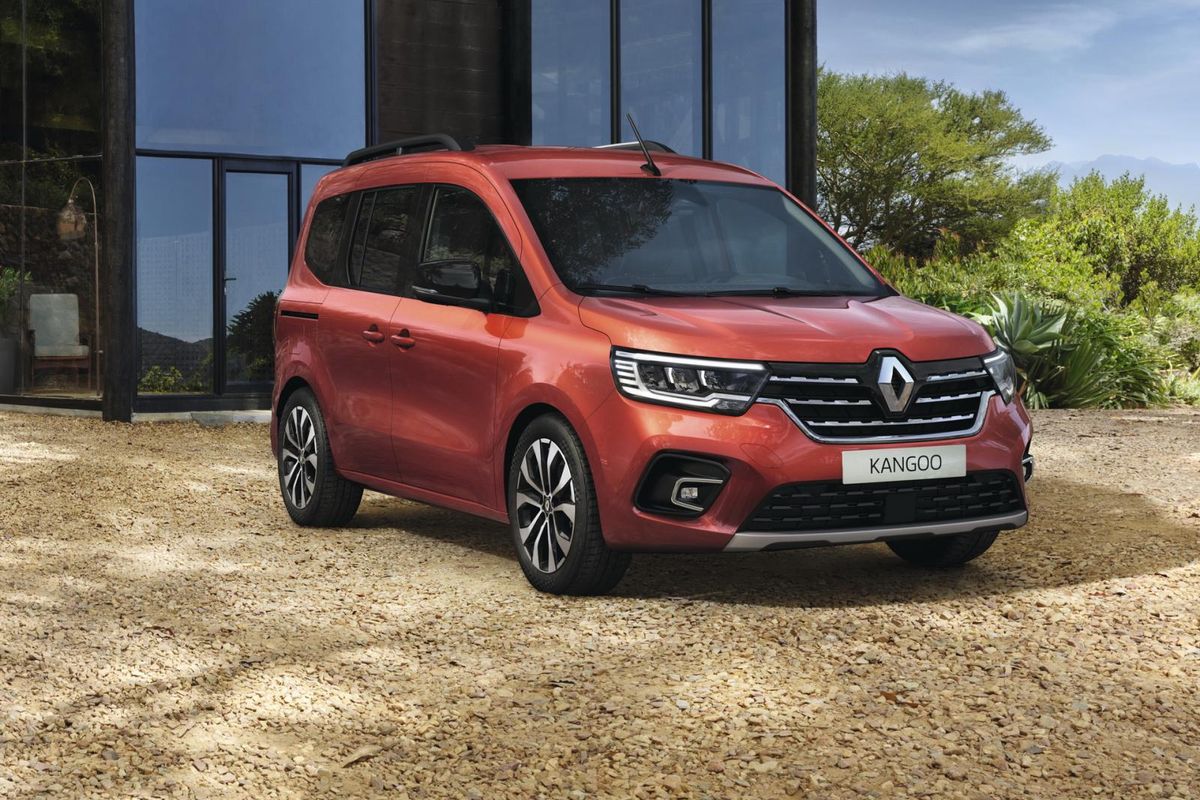
A new Renault Kangoo is coming to market next year!
If you’re a business owner, you are probably familiar with all the offerings available in the panel van market and the Renault Kangoo is a familiar nameplate. The Kangoo is a rival to other products such as the Volkswagen Caddy and Opel Combo. Perhaps that package that arrived on your doorstep this morning was delivered in a Kangoo.
Now, Renault has partially revealed its next 3rd-generation Kangoo which is due to go on sale in Europe and other markets in 2021. Renault has yet to reveal what will power the new Kangoo, but both petrol and diesel options are likely in conjunction with manual and automatic transmissions, depending on the market. A battery-electric Kangoo is also expected.
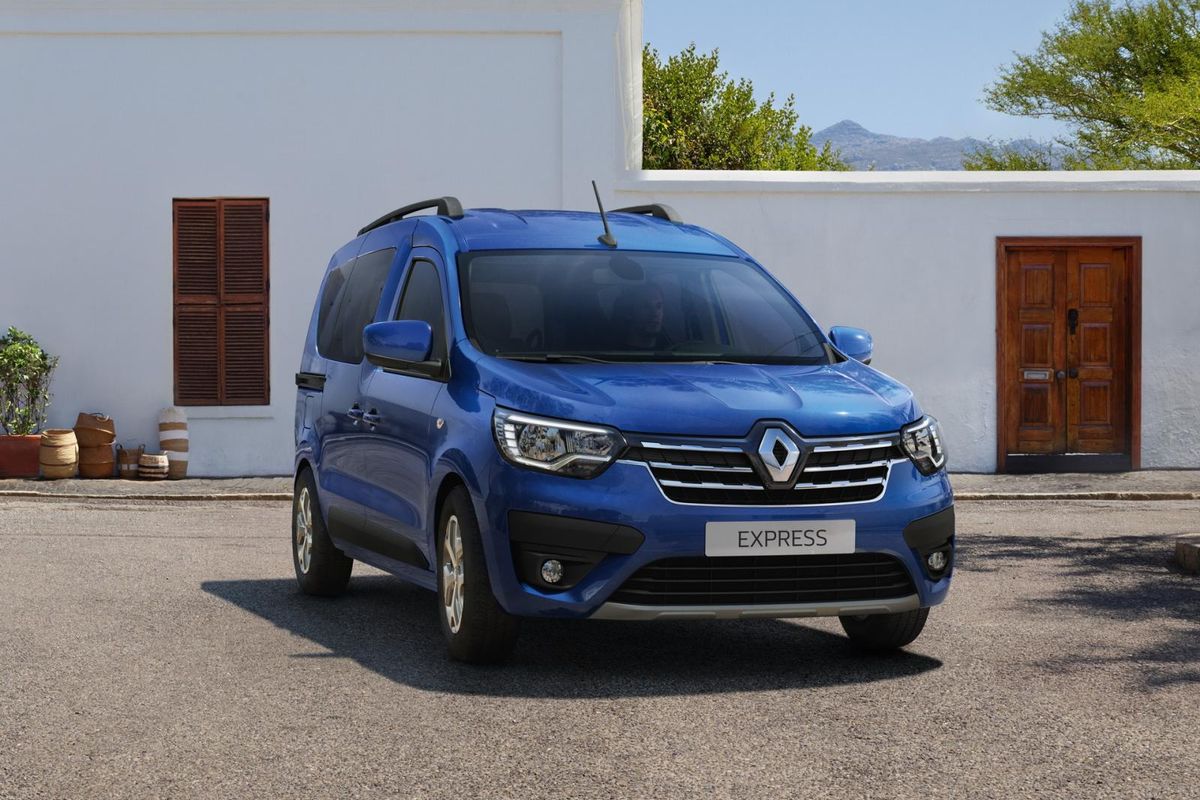
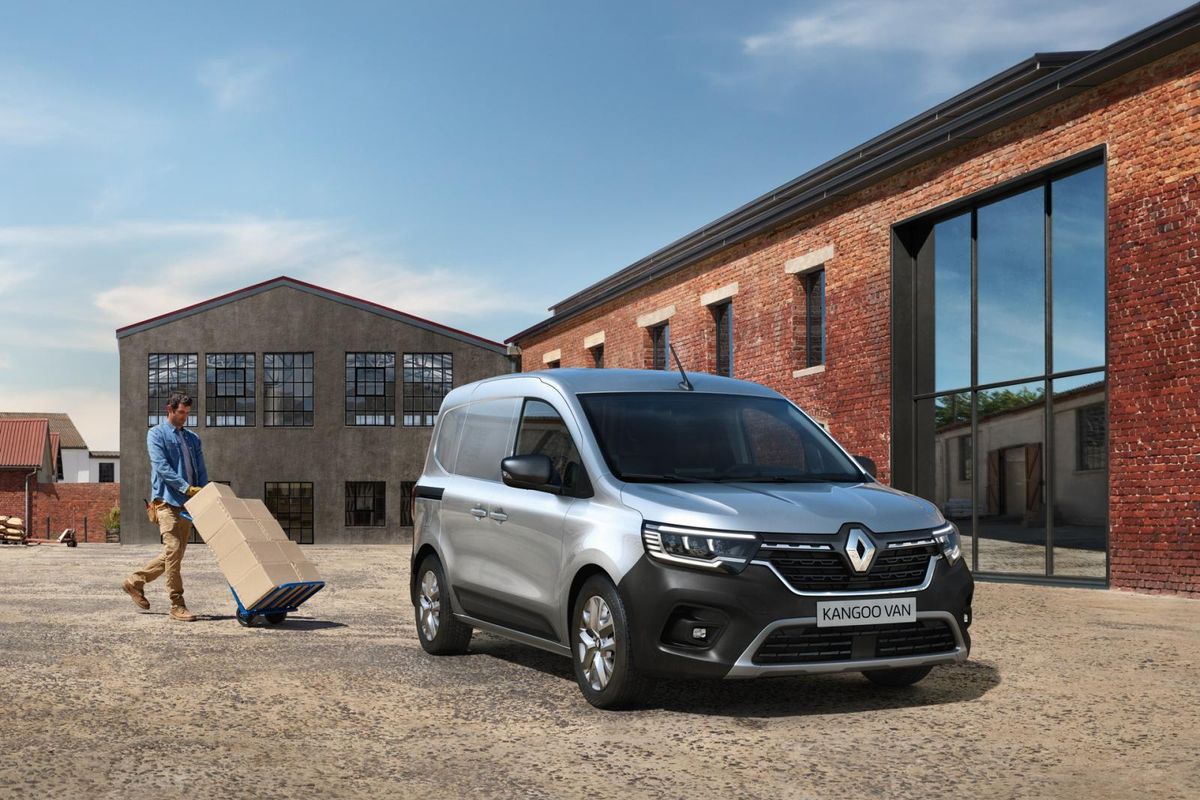
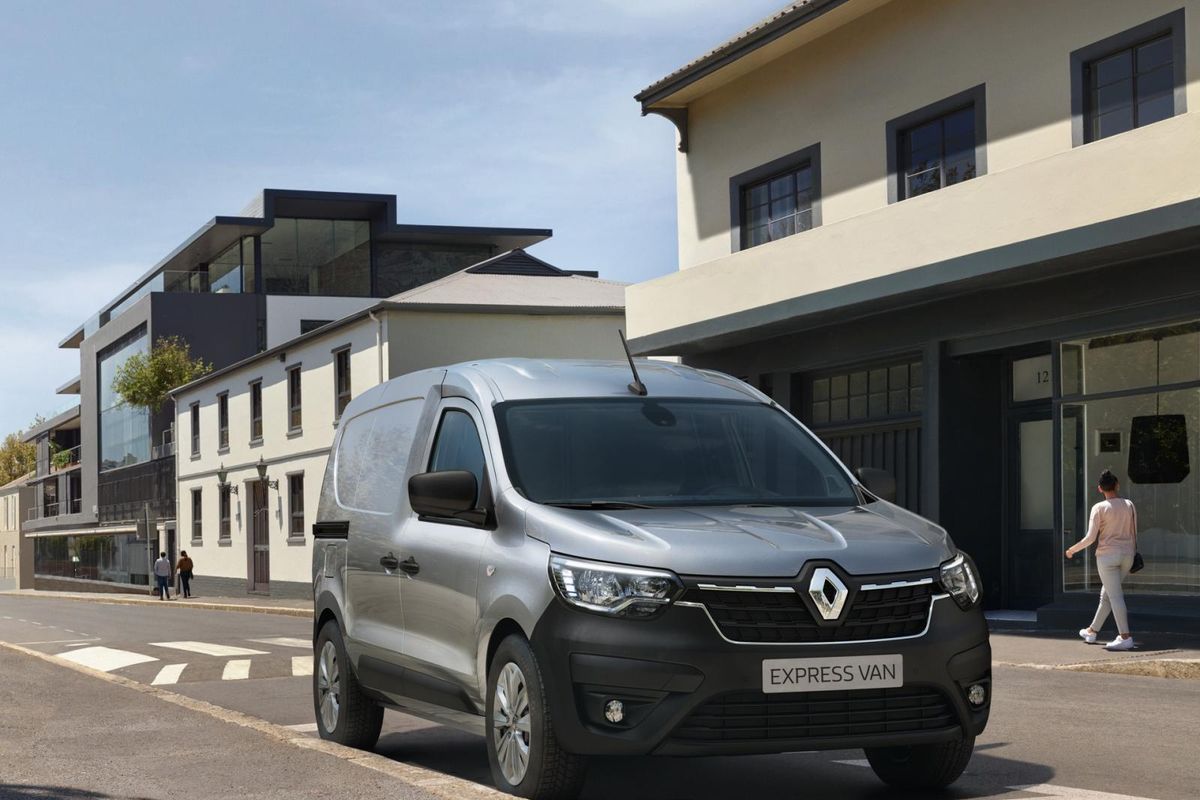
The Kangoo is designed to fulfil a variety of requirements, including family and business duties, and it will therefore come to market with 2 main derivatives including the Kangoo (high-spec) and Kangoo Express (entry grade) in either passenger or van variations. A short- and long-wheelbase option for each is also expected.
As shown in the images, the new Kangoo features a bolder and more design, in line with Renault’s current model lineup.
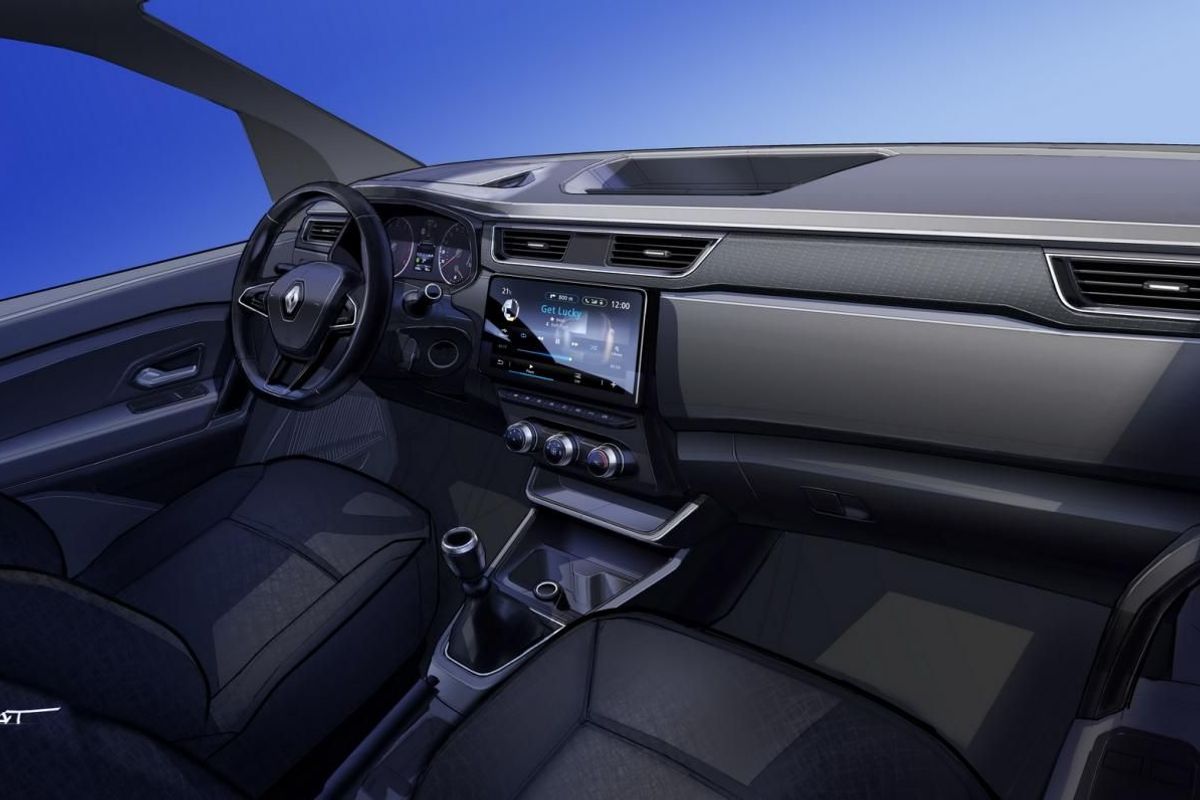
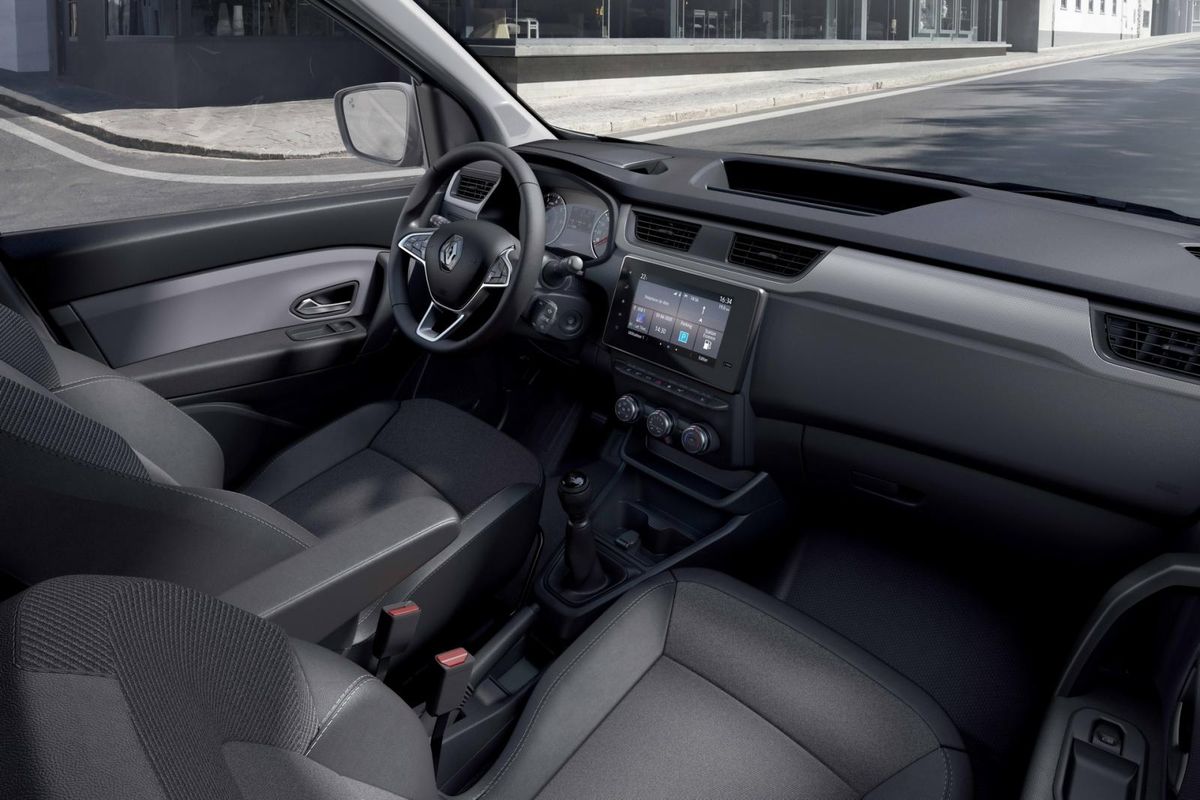
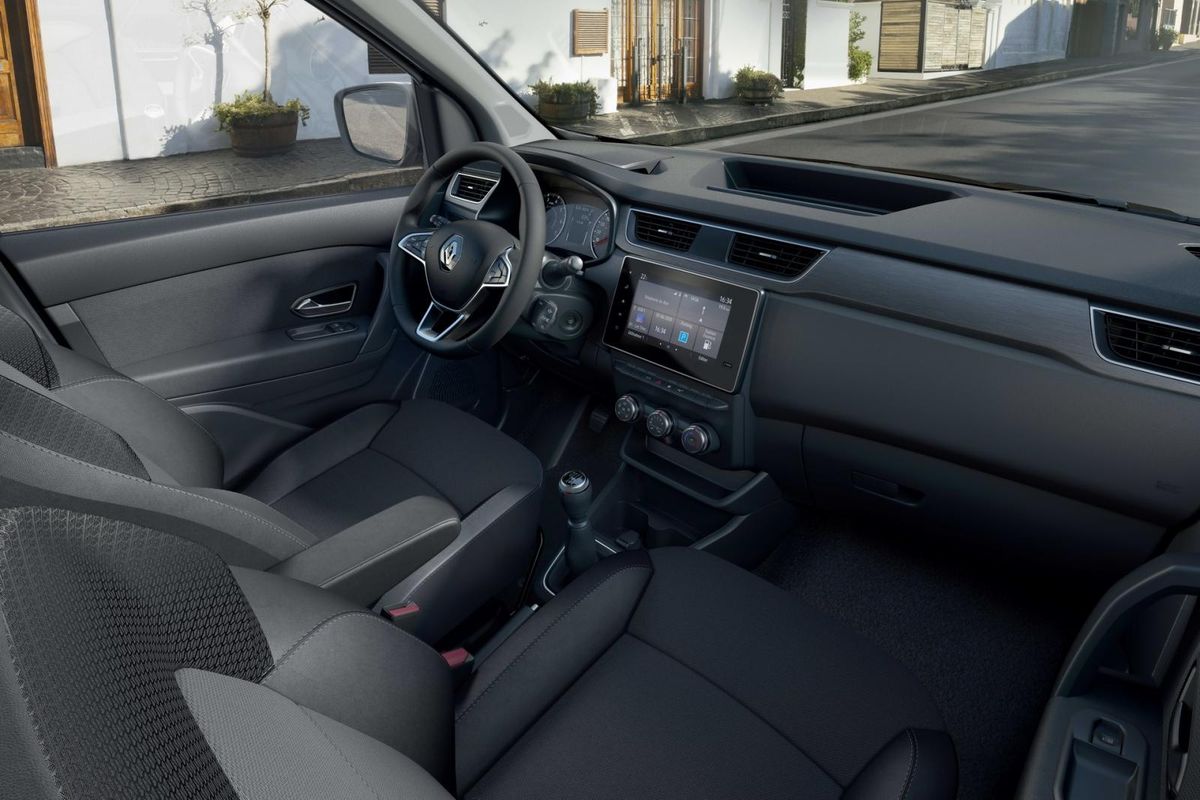
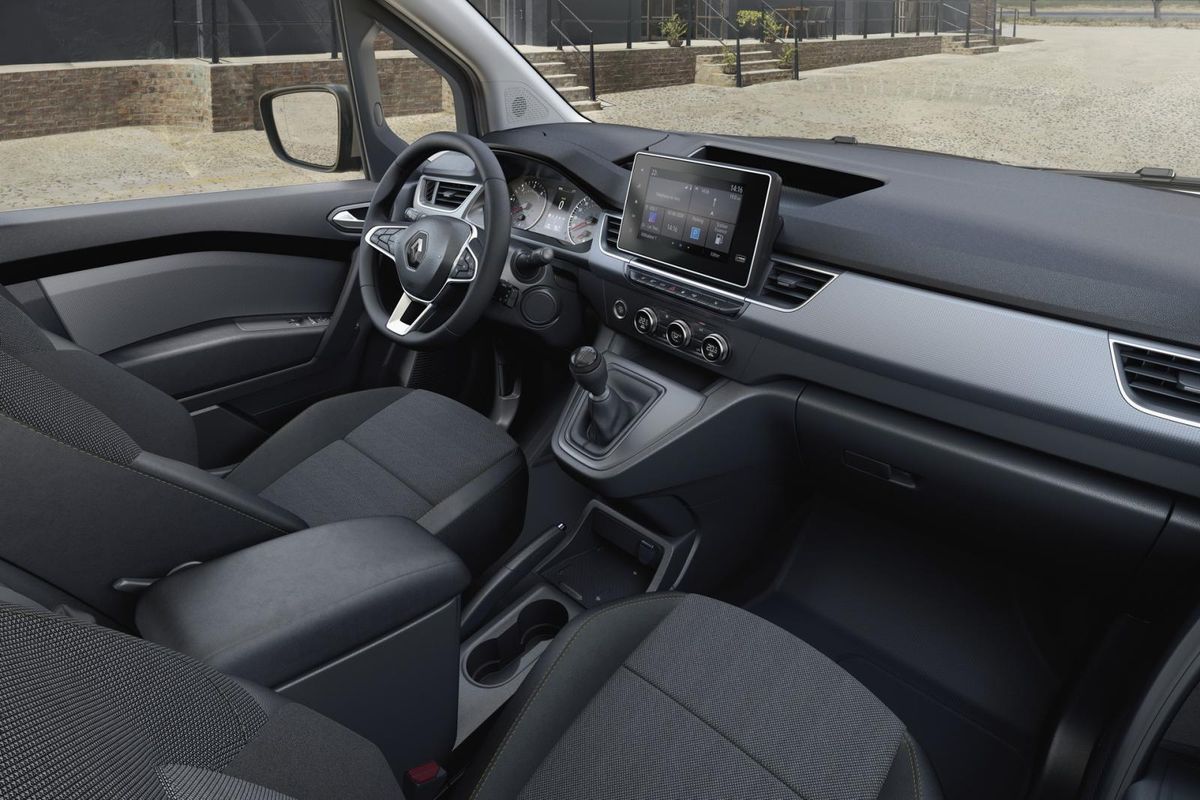
On the inside, the new Kangoo has been modernised and now gains a touchscreen infotainment system and a new multifunction steering wheel. As you can expect, the Kangoo will offer sufficient storage solutions through its cabin.
In terms of practicality, the Kangoo will offer notable loading capacity and Renault’s Easy Side Access and Easy Inside Rack elevate the practicality of the new Kangoo even further. Other nice-to-haves include a digital rearview mirror and trailer swing assist.
As for local availability, it’s still too early for Renault SA to confirm when the new Kangoo will reach South Africa but if we had to hazard a guess, late in 2021 could be a possibility or 2022, which is probably more realistic. Nonetheless, we will let you know when we know, so stay tuned!
Toyota Hilux Legend RS Review – A significant refresh of the Hilux formula, but does it work?
The facelifted Toyota Hilux has just been set loose in SA and it's ready to put some space between it and its rivals. We review the top-of-the-range Legend RS model.
The fact that the Toyota Hilux has been updated so frequently since its launch in 2016 is not only indicative of fierce competition in this market segment but how quickly requirements for particularly the leisure-bakkie niche are evolving. Ford's popular Ranger and the evergreen VW Amarok (a multiple CarsAwards winner) are the Hilux's most serious rivals, but soon it will also have to contend with the all-new Mazda BT-50 and Isuzu D-Max. So, Toyota's engineers have come up with a raft of changes to the Hilux, resulting in what is far more than just a mere cosmetic update.
In this review our video journalist Ciro De Siena takes the refreshed Toyota to a 4×4 proving ground and, while surviving an onslaught of horseflies, manages to thoroughly test the improved engine, off-road handling and standard-fitted roller shutter.
Looking for a used Toyota Hilux? We have over 1100 to choose from!
Honda has introduced the new, 8th-generation Ballade in South Africa. We drove the Japanese compact sedan at its local launch (in Cape Town) to find out what it has to offer…
The Honda Ballade is a well-known nameplate in South Africa; it was first launched locally back in 1982. The new Ballade has moved upmarket and, in terms of price, it now straddles the B- and C- sedan segments where the Toyota Corolla and its Quest sibling hold significant market share.
The rise of crossovers and SUVs has pretty killed off the compact sedan market (unless you're an Uber driver), but there are still a few sedans available and yes, many of which serve in the e-hailing service or rental fleets. At just under R400 000, you can opt for either a Toyota Corolla or the pocket-friendly Corolla Quest. Volkswagen's Polo sedan, Fiat Tipo, and the Hyundai Accent occupy the lower end of the pricing bracket.
Does the Ballade have what it takes to attract new customers to the fold and increase its market share in this segment? Perhaps, but let’s take a closer look at what the new Ballade has to offer… See also: Honda launched its new WR-V compact SUV in South Africa this week!
What’s on offer?
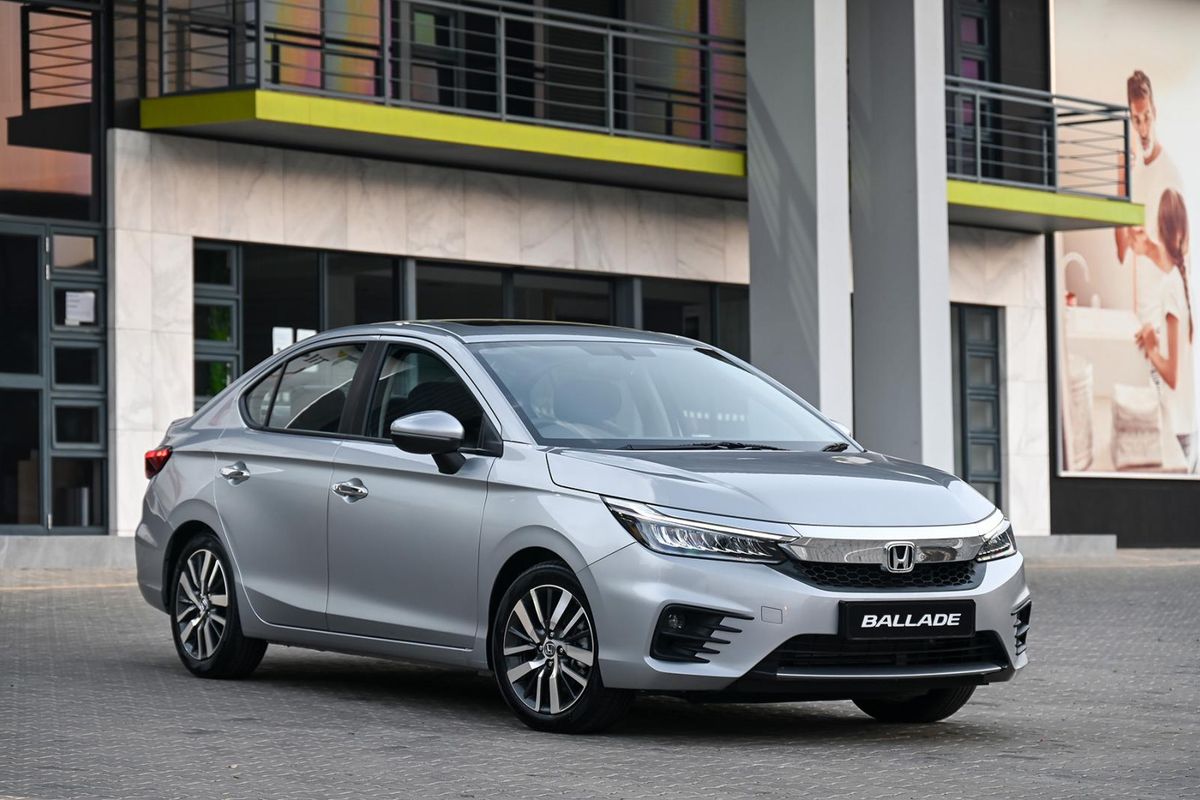
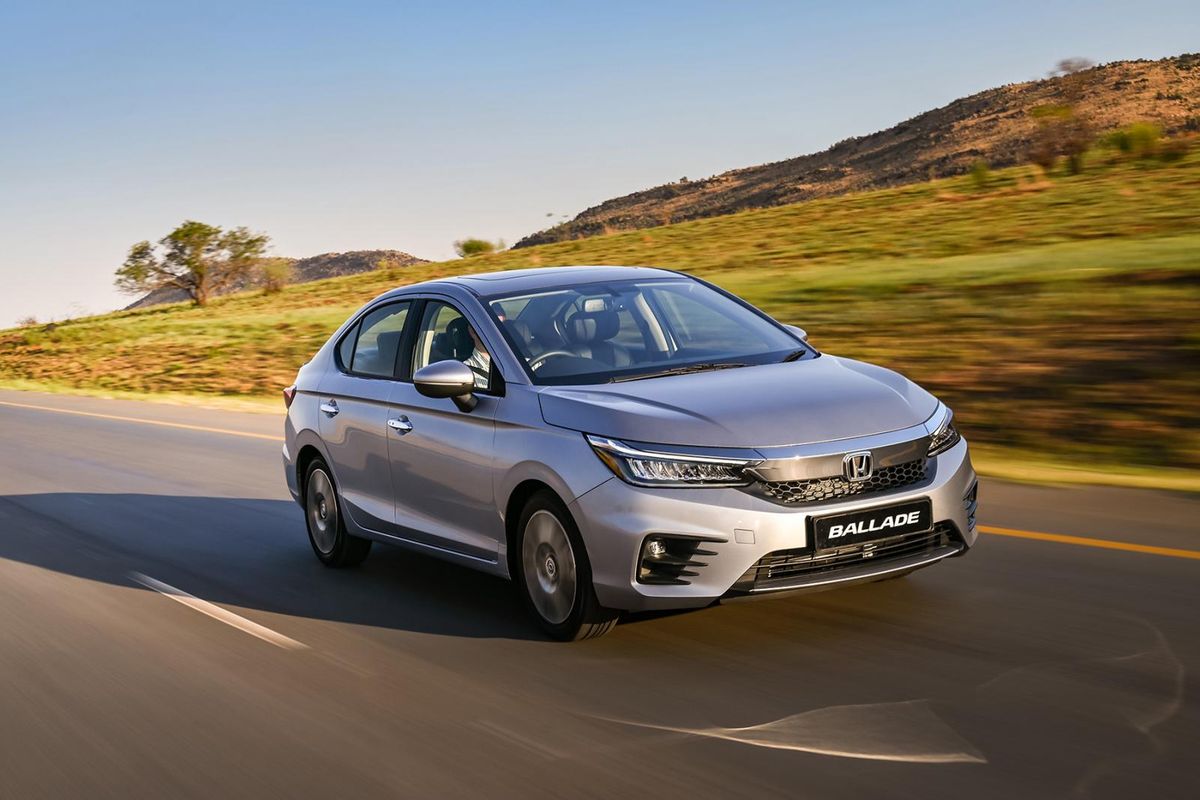
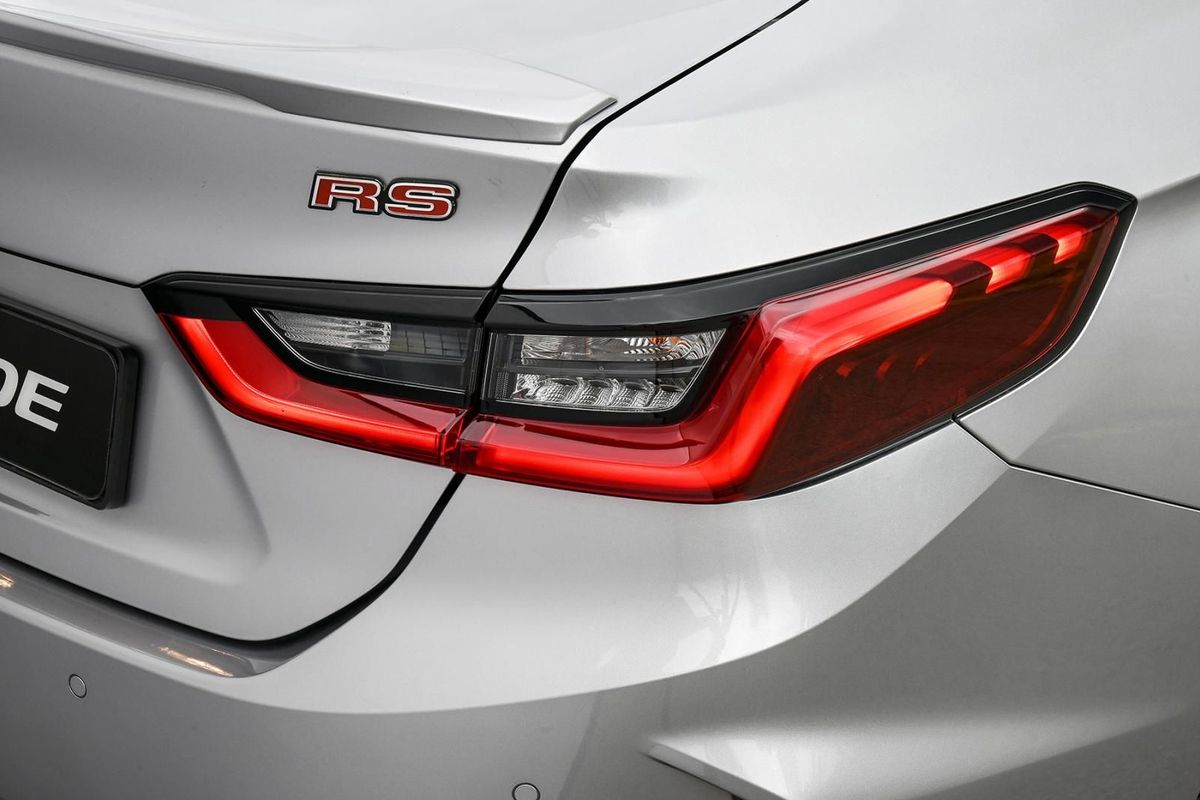
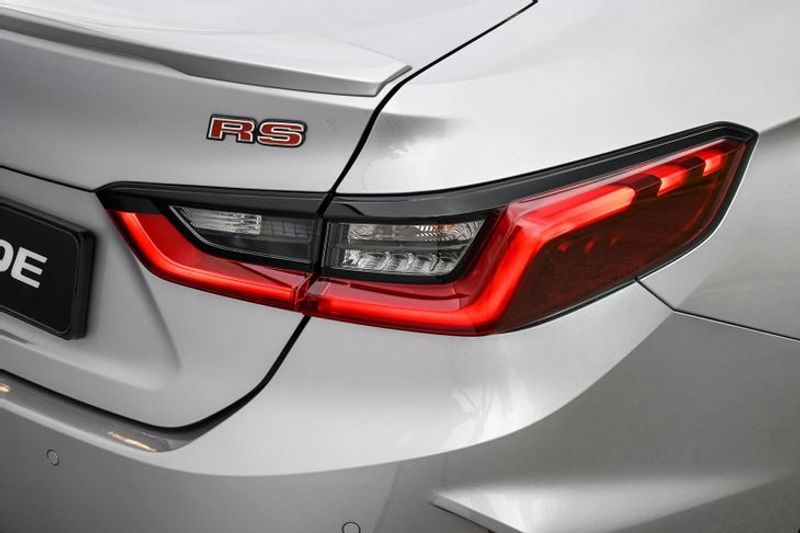
The Ballade range is now headlined by a new RS derivative which boasts some sporty visual enhancements.
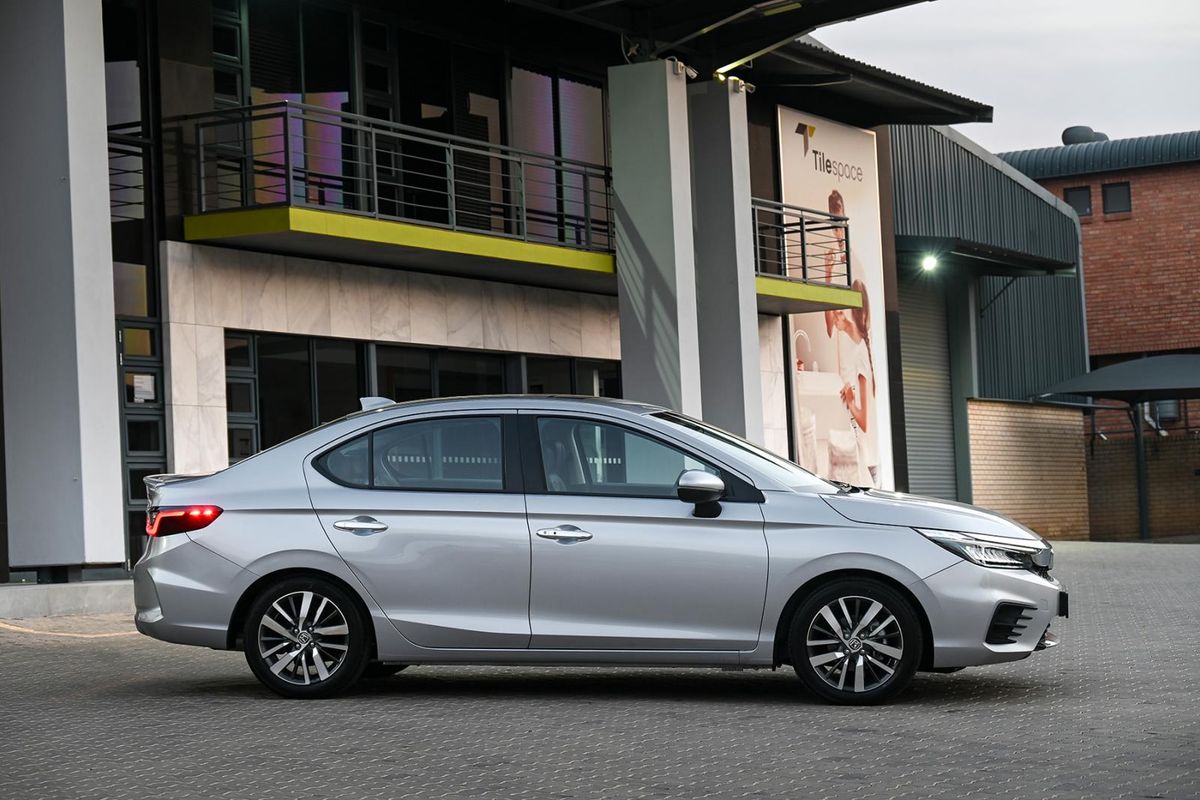
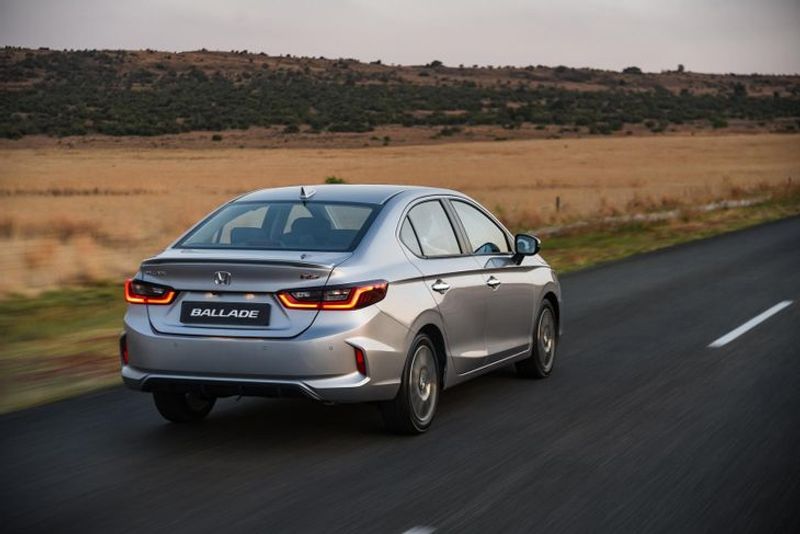
The new Ballade is built on the same platform as the outgoing Ballade, but it’s 110-mm longer, 55-mm wider and sits 10-mm lower (the wheelbase is unchanged). The range comprises 3 trim grades: the entry-spec Comfort, mid-spec Elegance and, for the first time, range-topping Ballade RS.
The Ballade RS sure sounds like a sporty name, but RS actually stands for "Road Sailing", which highlights the Ballade’s smooth cruising ability. Honda's RS trim is similar to product lines such as Volkswagen’s R-Line or Toyota’s GR Sport; it focuses on cosmetic execution, not performance.
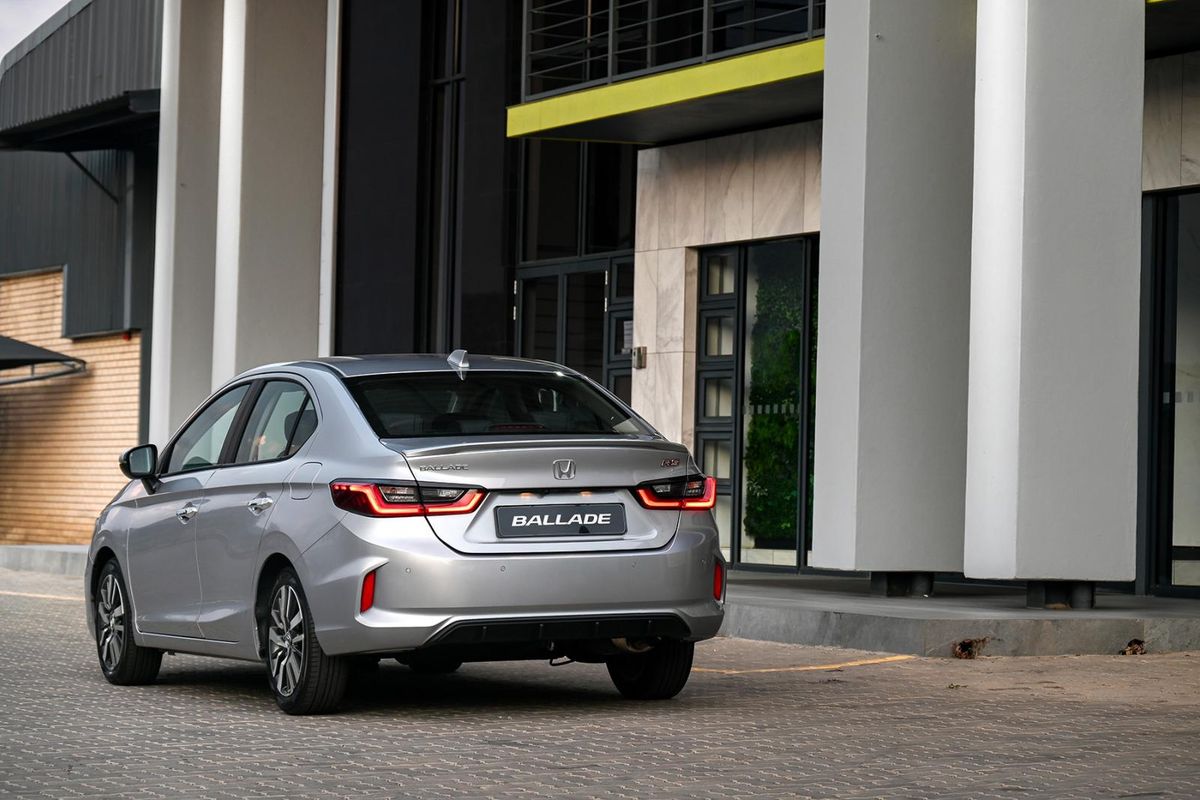
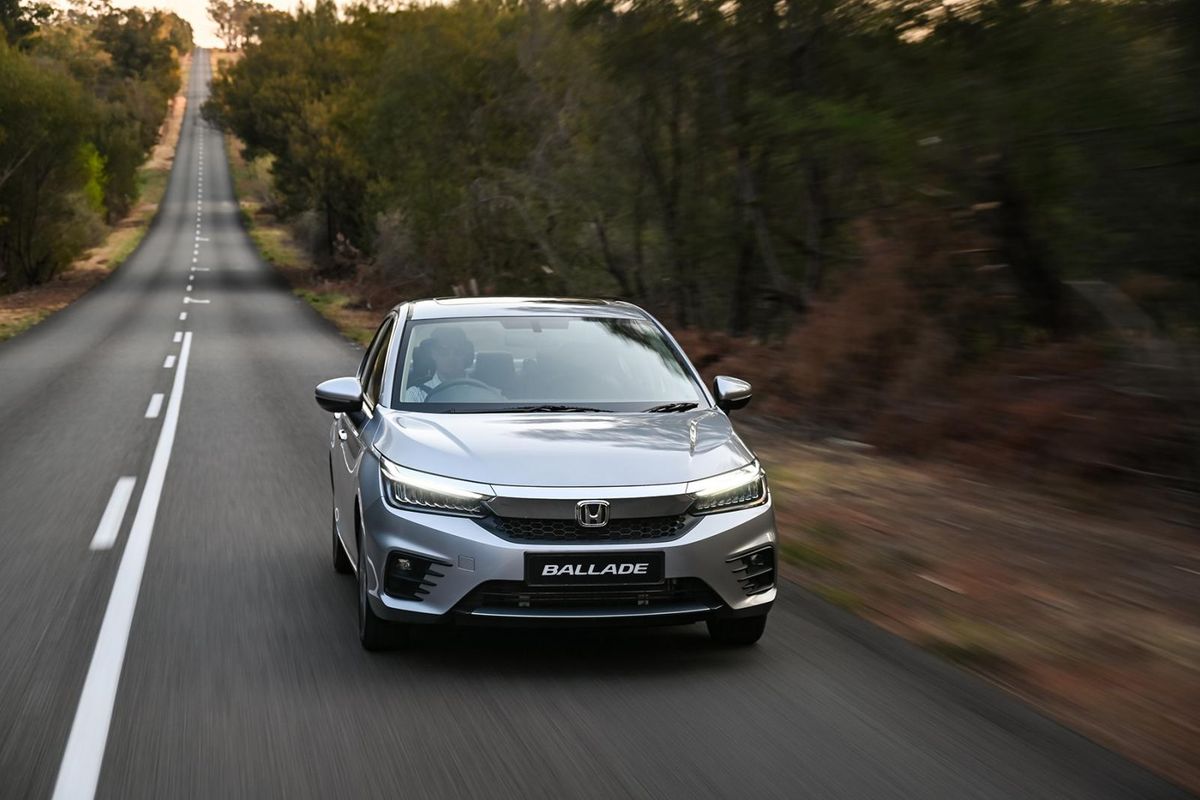
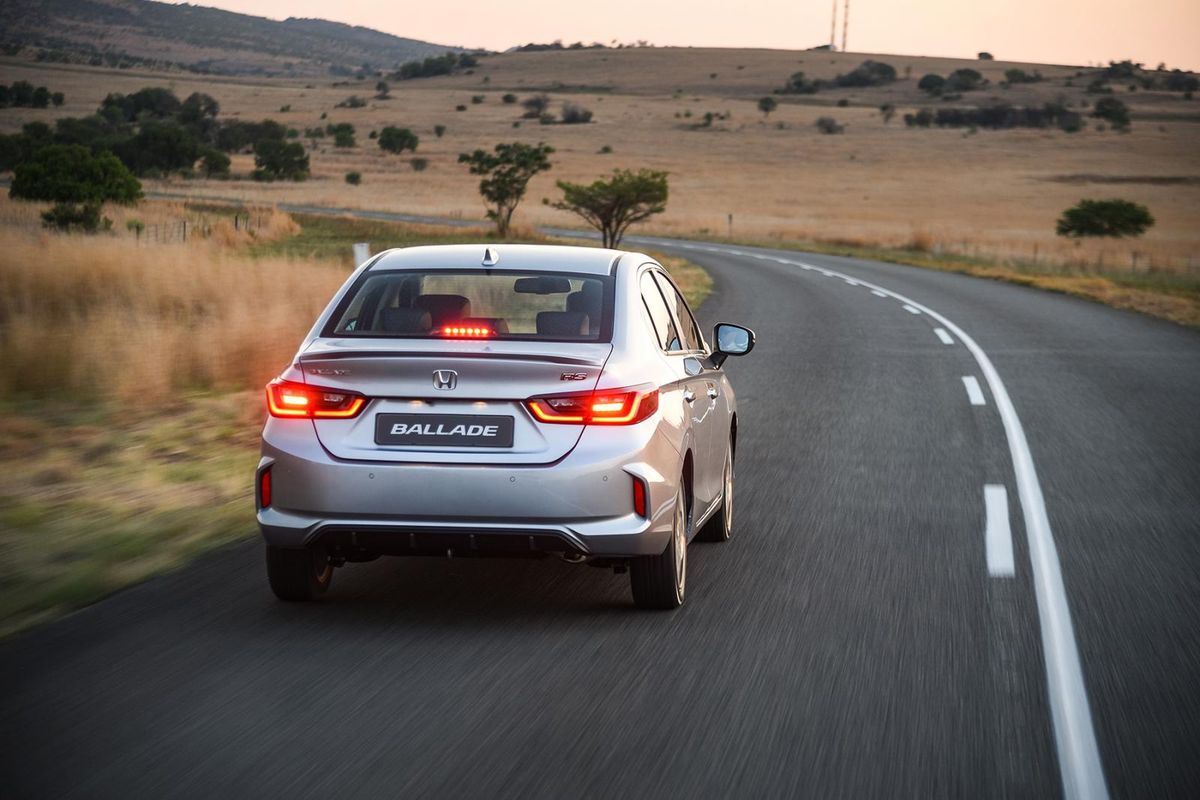
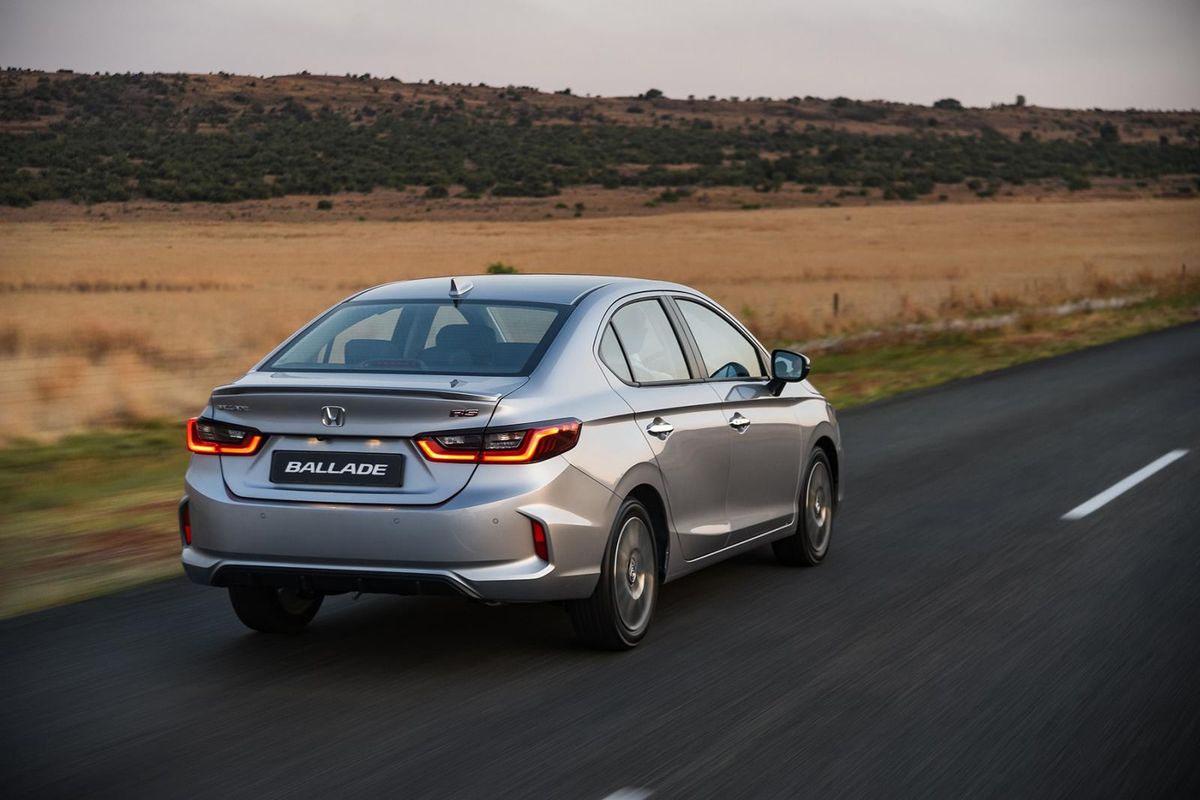
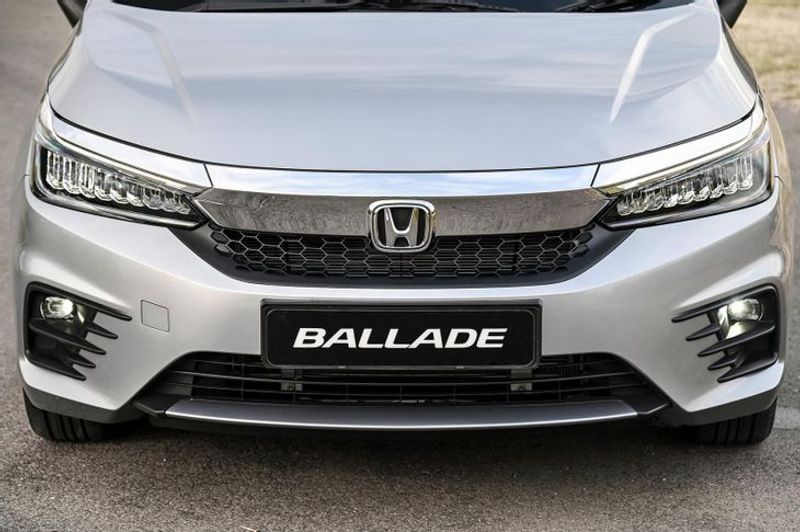
The bold and broad chrome wing on the face of the Ballade is its most defining feature and the RS is decked out with styling enhancements such as a boot spoiler, faux carbon-fibre diffuser, 16-inch alloys, a sunroof, honeycomb grille and LED headlights. Comfort and Elegance versions are a bit more demure; they ride on 15-inch wheels with halogen headlights, but LED daytime running lights and taillights are standard on all derivatives.
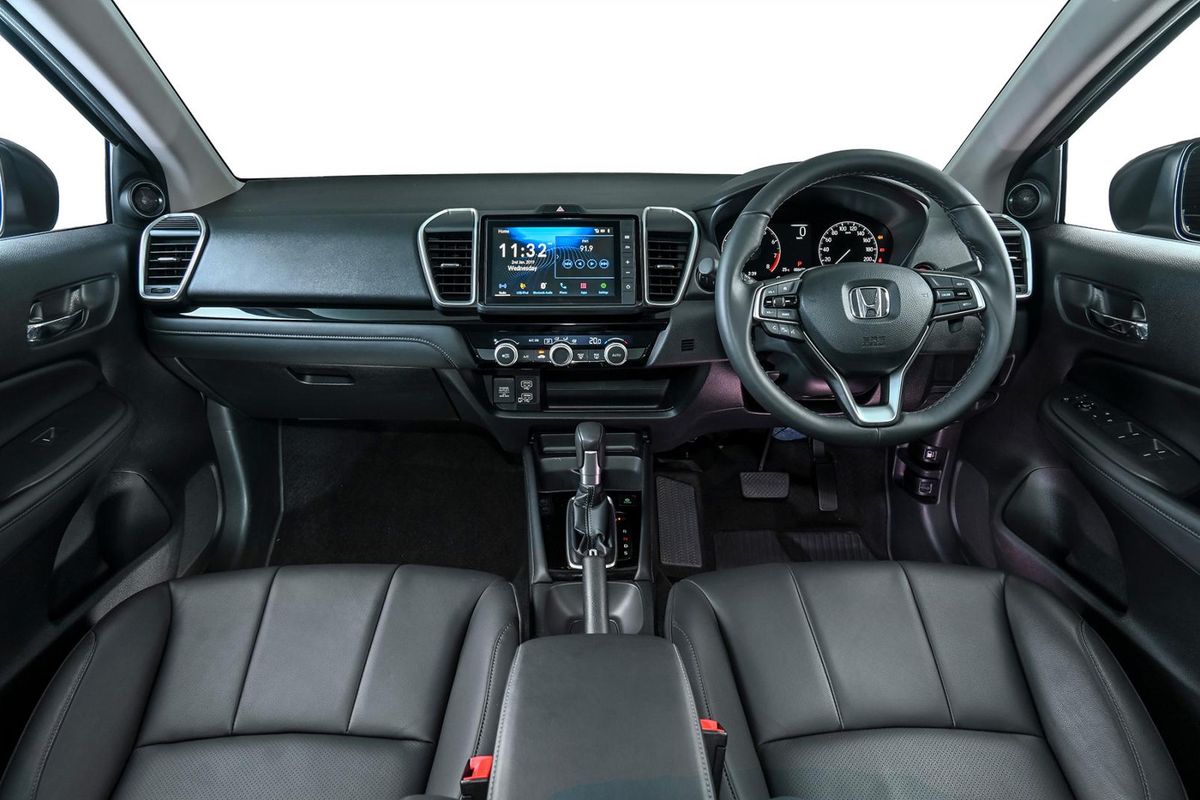
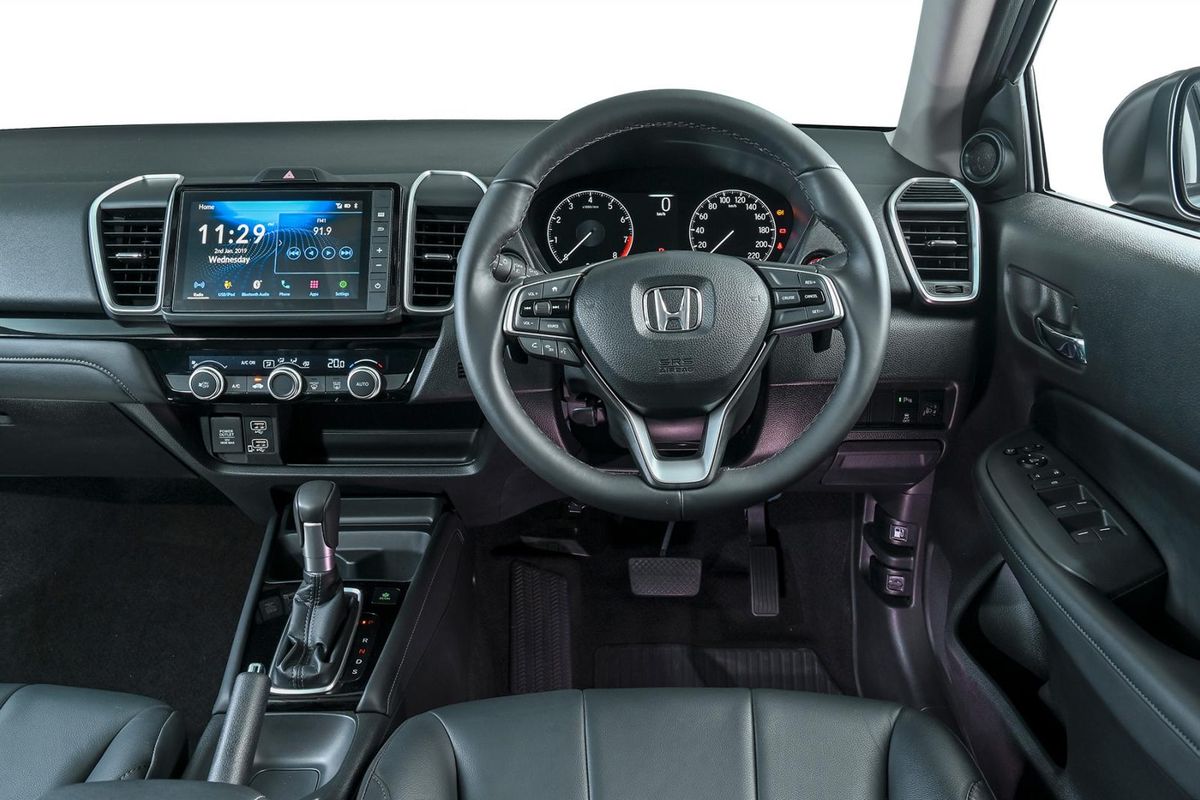
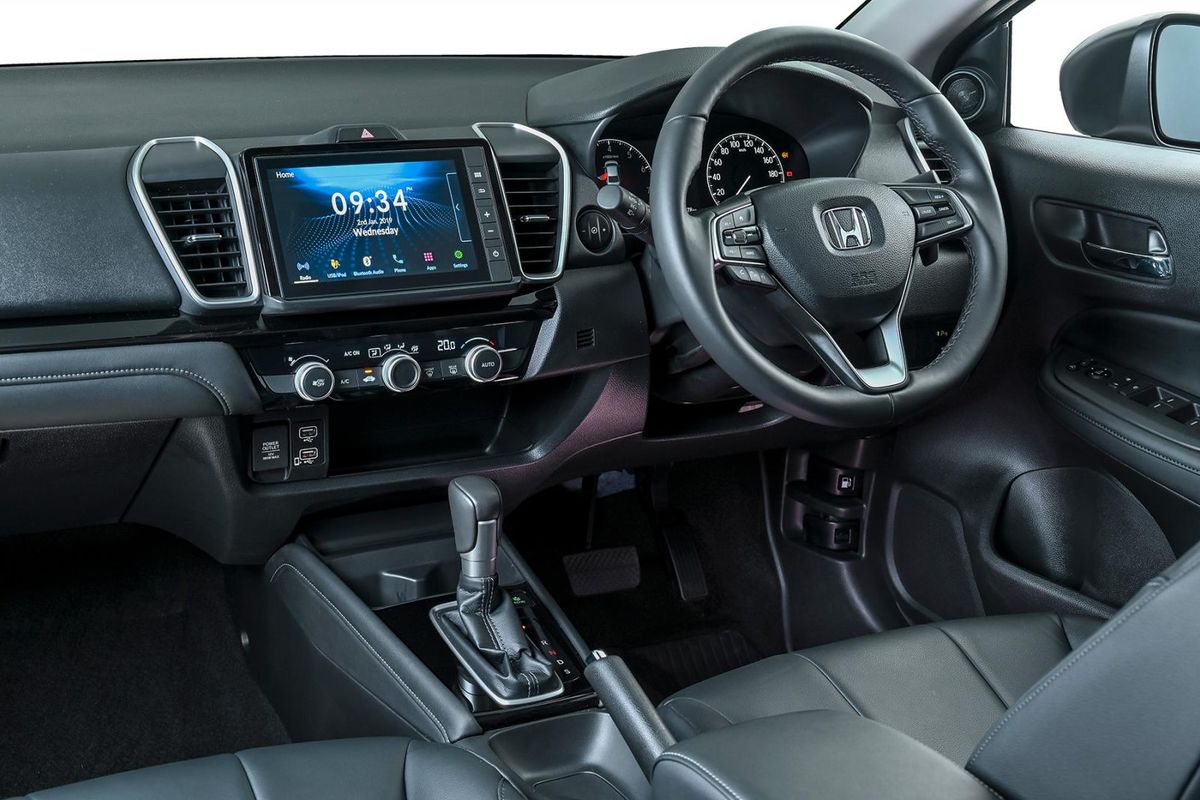
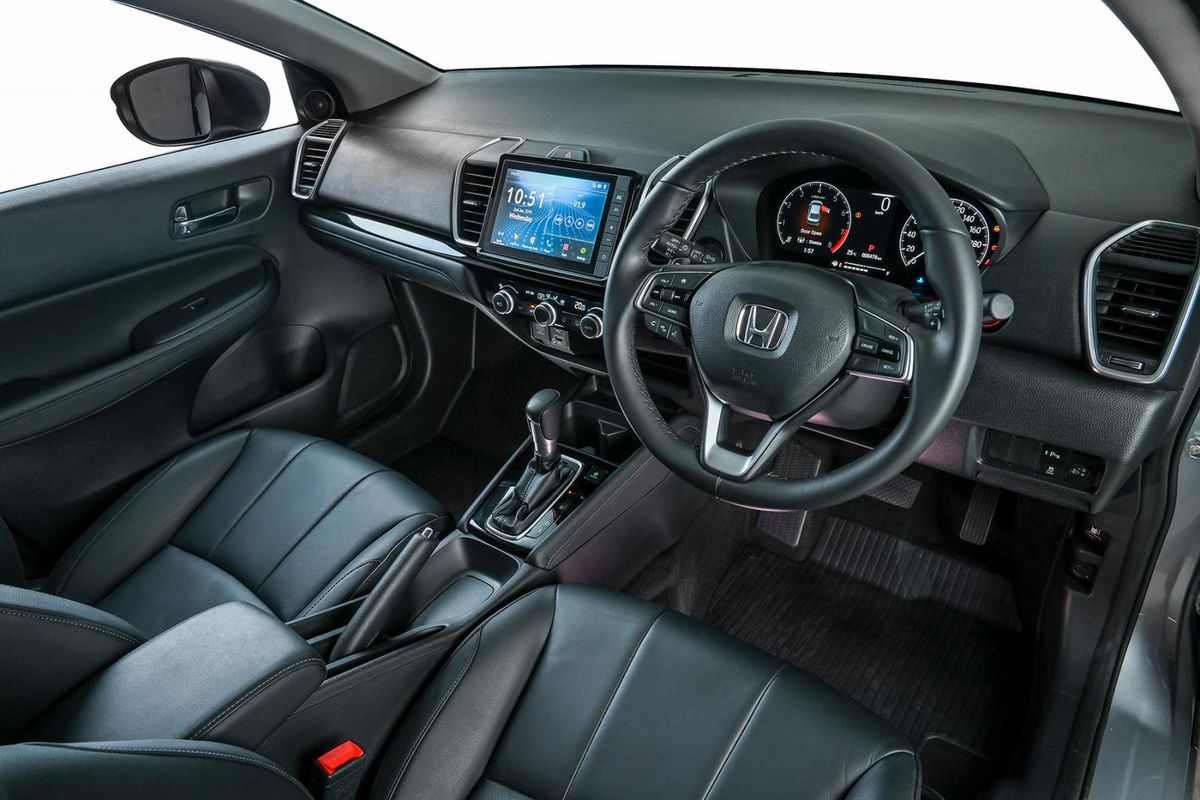
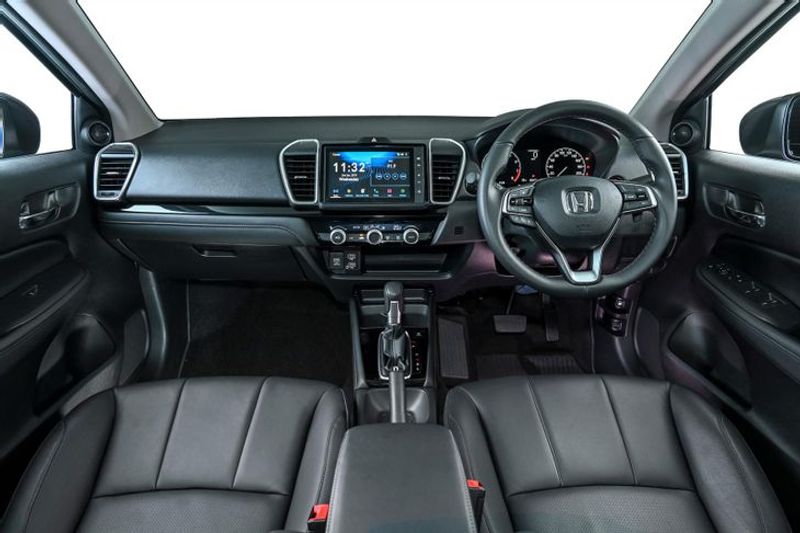
The Ballade's interior is well-equipped with features, especially in RS guise.
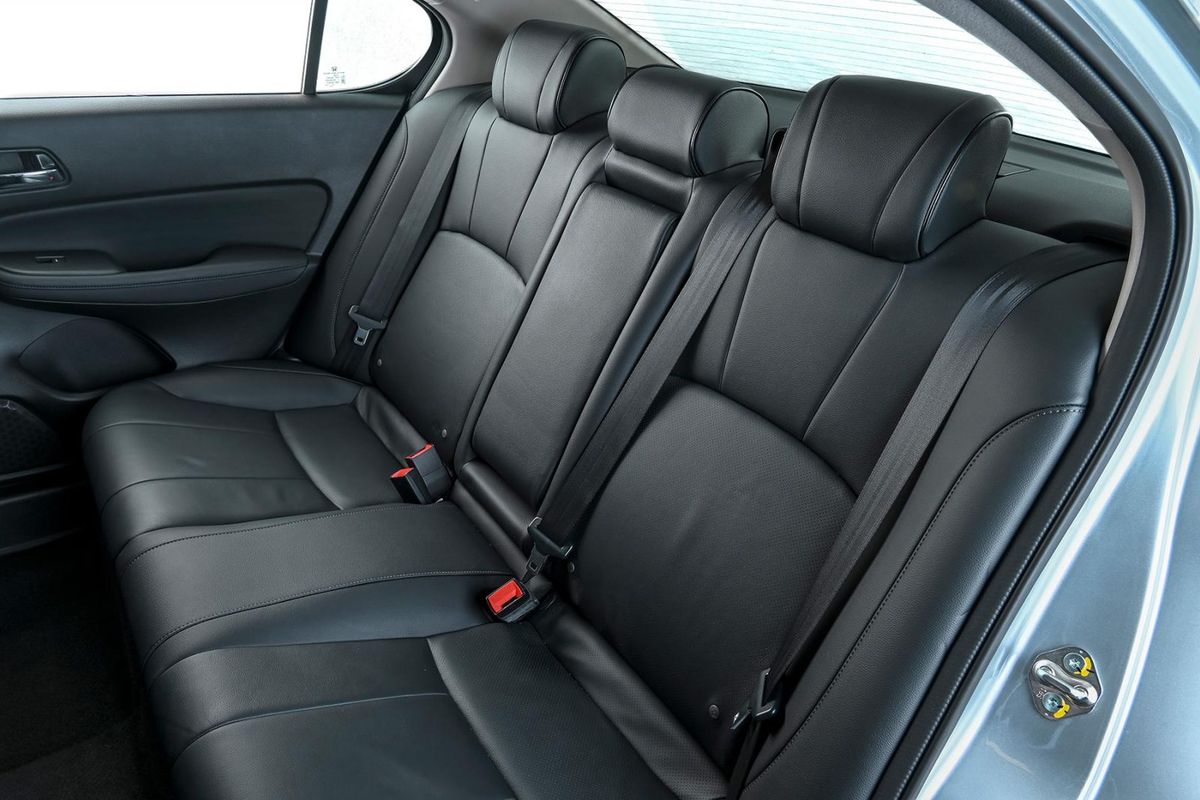
As for the interior, Honda has taken a minimalist approach to the Ballade’s interior execution and we think it looks fairly smart. New seat designs provide more comfort and while Comfort and Elegance derivatives feature cloth upholstery, the Ballade RS' cabin sports leather trim instead.
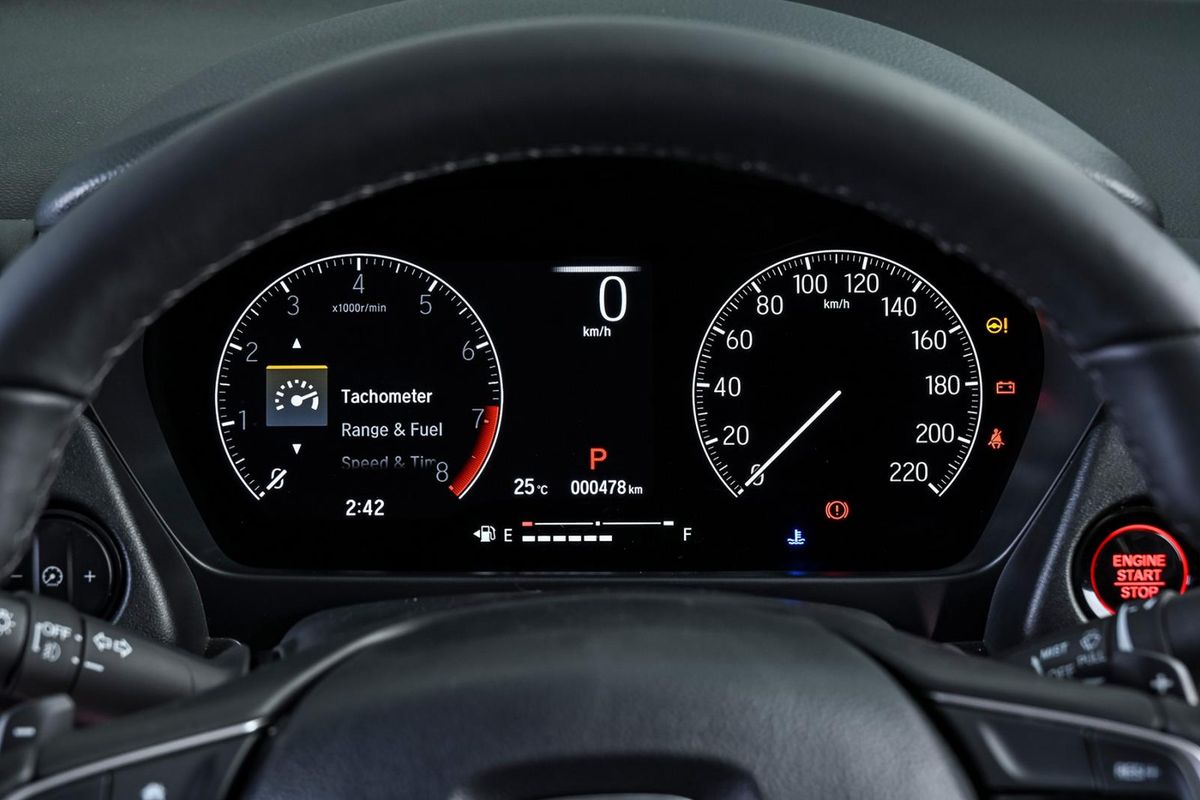
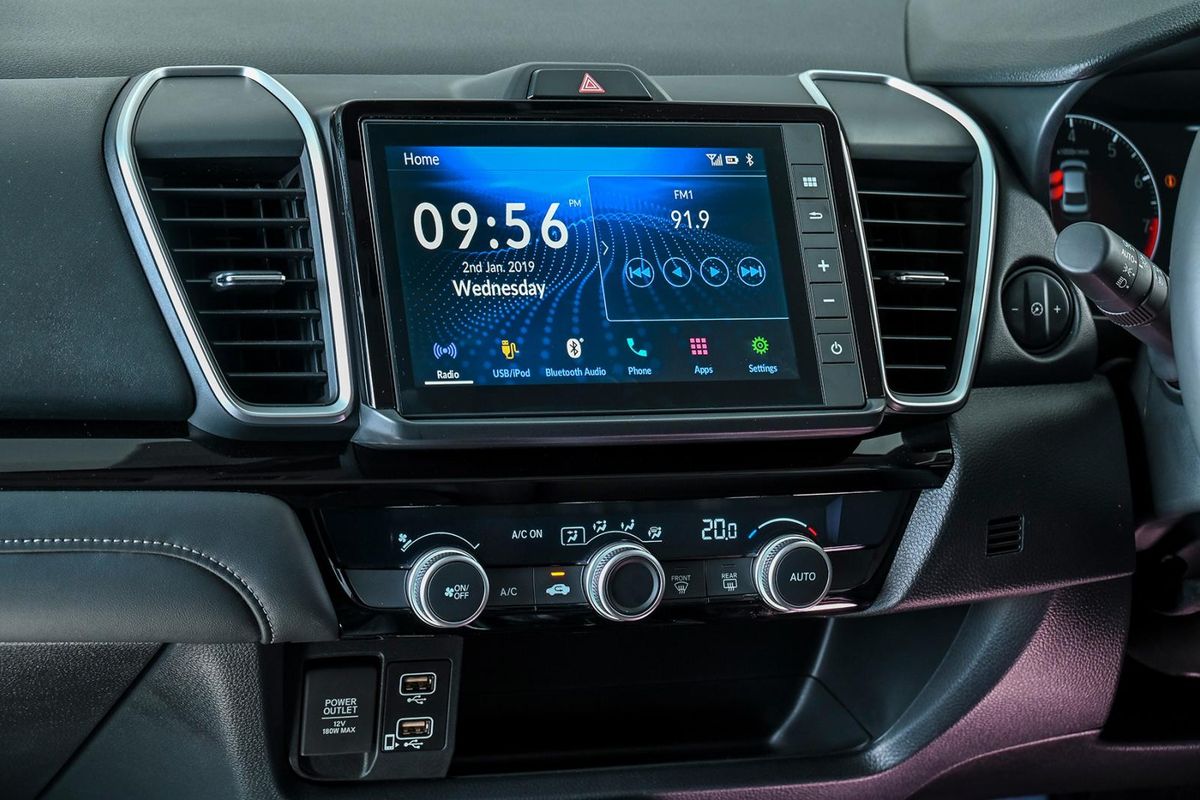
Meanwhile, the Honda's perceived interior build quality is good. All derivatives feature a multifunction steering wheel, electric windows, cruise control and auto aircon, while the Elegance gains an 8-inch touchscreen infotainment system with Bluetooth, voice control and Android Auto and Apple CarPlay compatibility. The RS also features automatic walk-away locking, a reverse-view camera and a 7-inch multi-information display.
On the safety front, the Ballade is equipped with 6 airbags as standard, as well as ABS with EBD, brake assist and electronic stability control. Rear parking sensors are standard on Elegance and RS derivatives.
What’s it like to drive?
The new Ballade is only offered with a CVT in SA and it delivers good performance overall.
For this new Ballade, Honda is pressing on with its naturally aspirated 1.5-litre petrol engine, but it’s been enhanced for better performance (89 kW and 145 Nm), as well as efficiency. All versions of the newcomer feature Honda’s improved CVT transmission, which has been augmented by what the brand calls "G-Design" shift control with integrated artificial "gears" or "steps", which can be selected via steering-wheel-mounted shift paddles.
On our drive through the Cape Winelands, the new Ballade’s powertrain delivered good overall performance. The engine didn’t feel underpowered and, with the mounted paddles, you can effectively manipulate the CVT to deliver the desired result, whether it be for making swift overtakes or keeping the engine ticking over in its power band (helpful on an uphill). It’s also quite a refined setup; while some CVTs have been criticised for being overly noisy/droney, the same can’t be said for Honda’s combo. It’s actually relatively pleasant to drive without being intrusive or offensive.
Granted, the Ballade’s performance will be somewhat compromised at altitude (Gauteng) but we suspect it will only become more pronounced when all your aunties, uncles, kids and all their luggage are crammed into the Ballade. For the most part, performance should be adequate for the average commute. In terms of efficiency, Honda claims a combined fuel consumption figure of 5.5 L/100km.
Another highlight of this new Ballade is its ride quality! It dealt with poor road surfaces very well; the suspension is pliant/forgiving almost all of the time. Moreover, the steering feels responsive and communicative, which helps when you are pitching the Ballade through corners at speed…
We would have liked to spend more time driving the Ballade, but we should have it on test soon – expect a thorough review in the near future.
Honda Ballade – price in South Africa (November 2020)
The Honda Ballade is well worth a test drive!
As mentioned, pricing for the Ballade has shifted further up the pricing ladder, but the Ballade undercuts the new Corolla (from R380 200) and is aggressively priced against offerings such as the Hyundai Accent auto (From R324 900) and Volkswagen Polo sedan auto (from R309 100).
The new Honda Ballade is sold with a 5-year/200 000 km warranty, 4-year/60 000 km service plan as well as 3 years of AA roadside assistance.