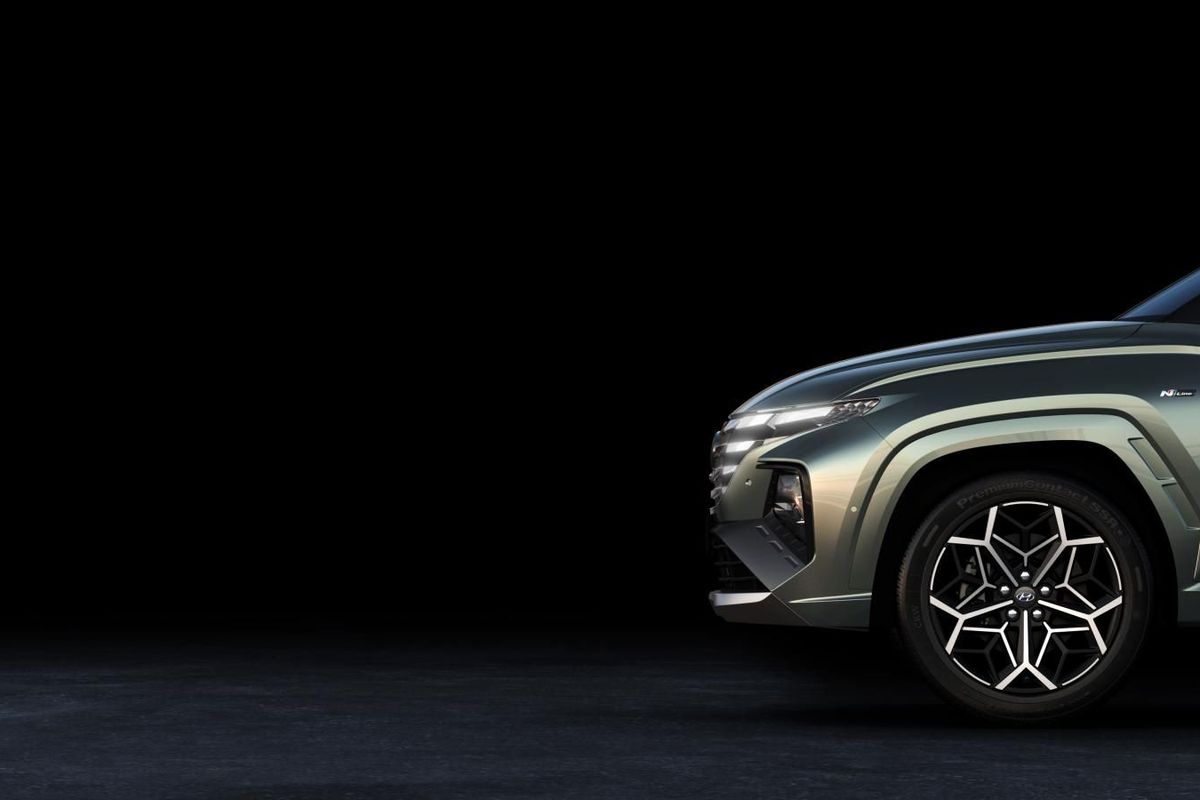
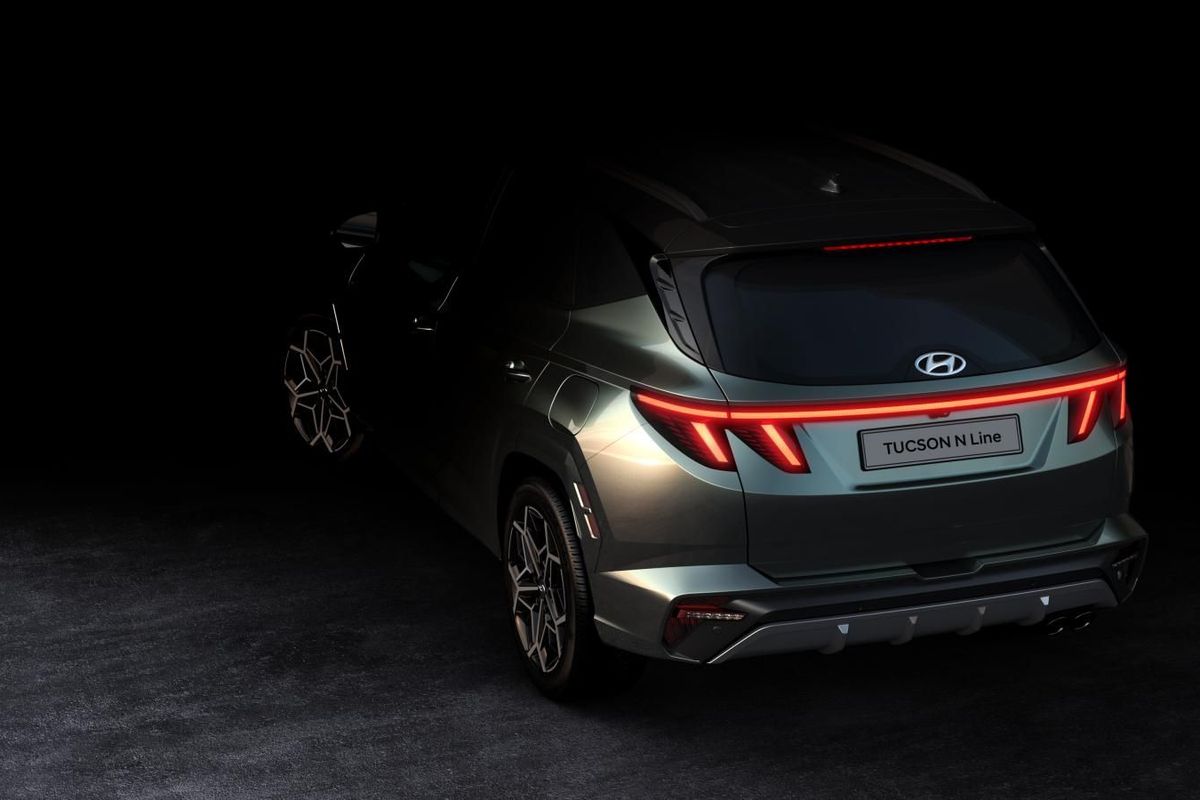
Hyundai revealed its all-new Tucson family SUV earlier this year and now the Korean carmaker has teased a sporty Tucson N Line. Check it out!
The new Tucson is a striking product, featuring Hyundai’s bold, ‘Sensuous Sportiness’ design identity which also features on the new Elantra sedan. Hyundai, however, is ramping up the boldness of the Tucson by tasking its growing and flourishing N Division to create a sportier N Line version of the popular family car.
Hyundai’s N Division has been working hard to bring a range of stylistically sporty N Line and fully-fledged high-performance N models to market. In South Africa, the i30 N is currently the only full-blown N model in South Africa and it’s a finalist in the Hot Hatch category of the Cars.co.za Consumer Awards – powered by Wesbank.
Now, Hyundai has teased its forthcoming Tucson N Line and the teaser images you see give us some idea of what to expect. Visually, the Tucson N Line is more aggressive with a revised lower front grille and enhanced lighting design while the rear end gains a revised rear bumper with an integrated diffuser and revised tailpipe outlets. It’s also likely to ride on decisively sporty and unique wheels when it comes to market. While we have yet to catch sight of the Tucson N Line’s interior, it will likely feature sportier trim throughout.
As for what will power the Tucson N Line, nothing has been confirmed just yet but rumours suggest that a 216 kW 2.5-litre turbopetrol could become a reality but a 1.6-litre turbopetrol hybrid powertrain is also plausible in conjunction with an 8-speed automatic transmission. It’s been previously reported that a 254 kW Tucson N is also a possibility.
We will keep you updated as soon as Hyundai reveals further details…
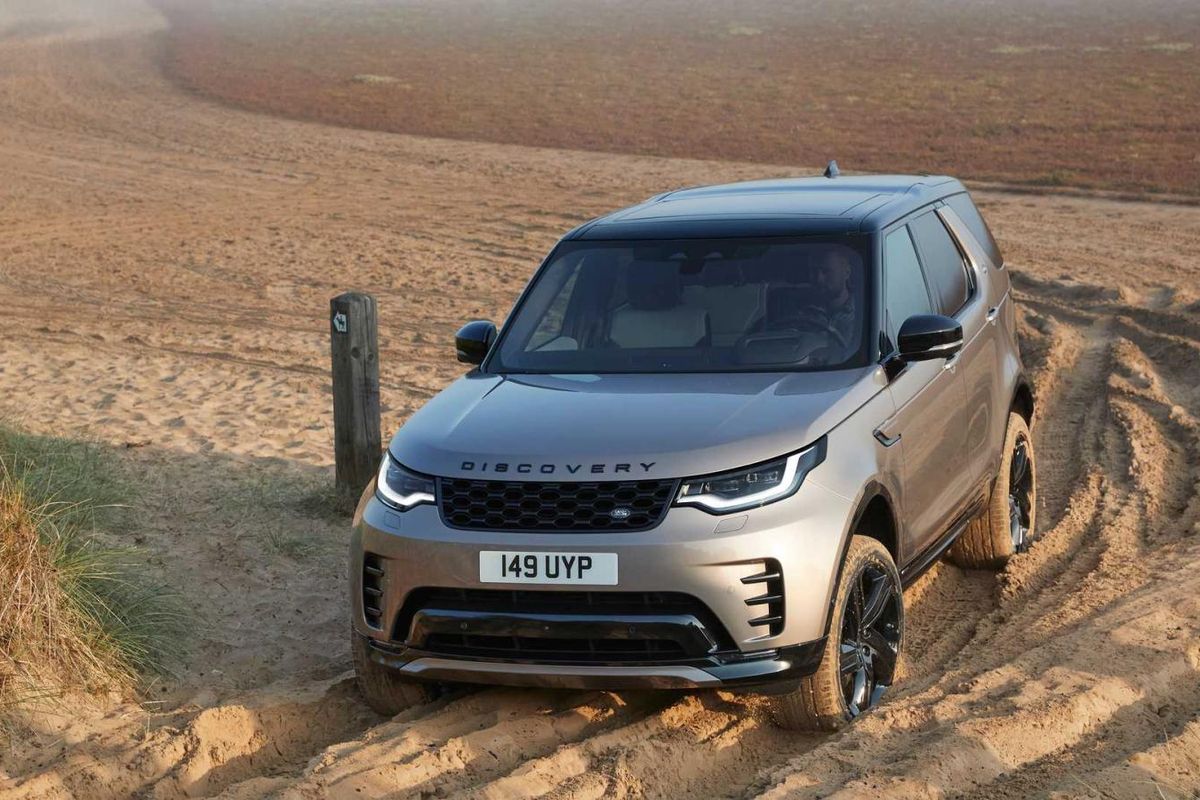
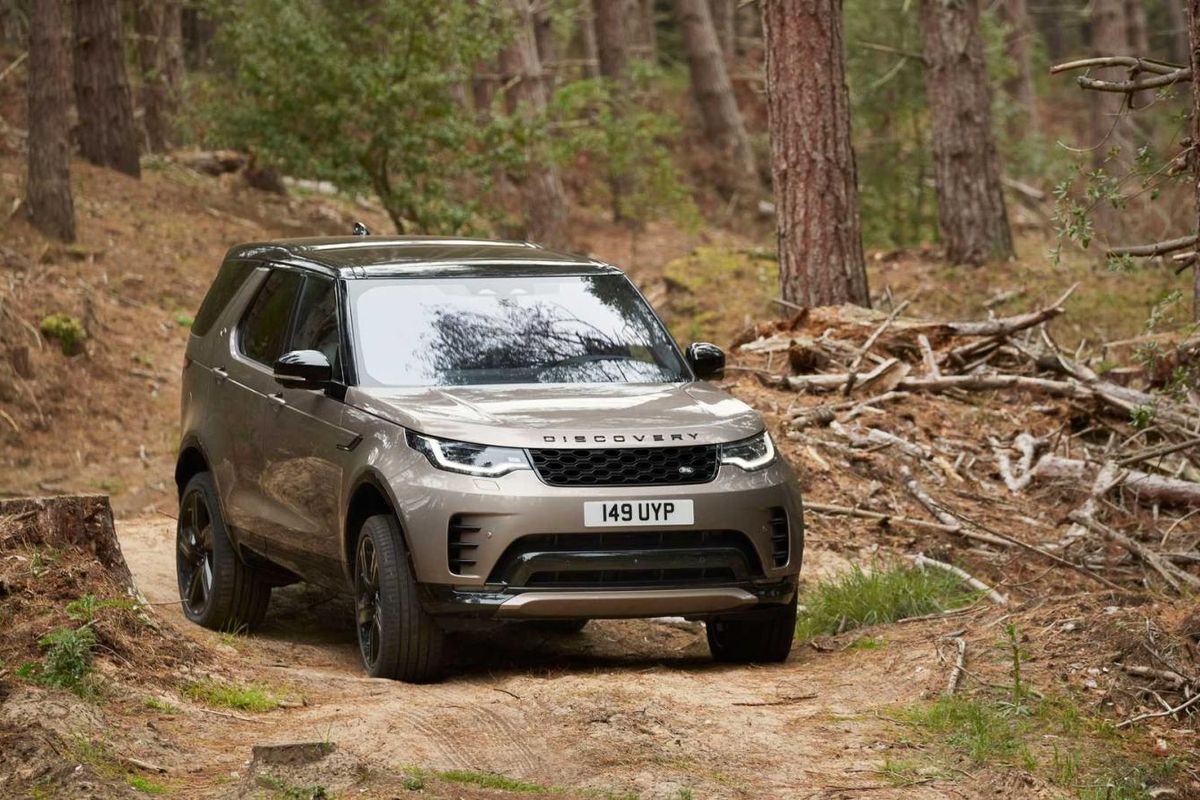
Since its launch in 2017, the Discovery has created tension amongst loyal Land Rover followers, with its interpretation of the model’s design heritage. That said, the platform and its all-terrain capabilities have been proven as outstanding.
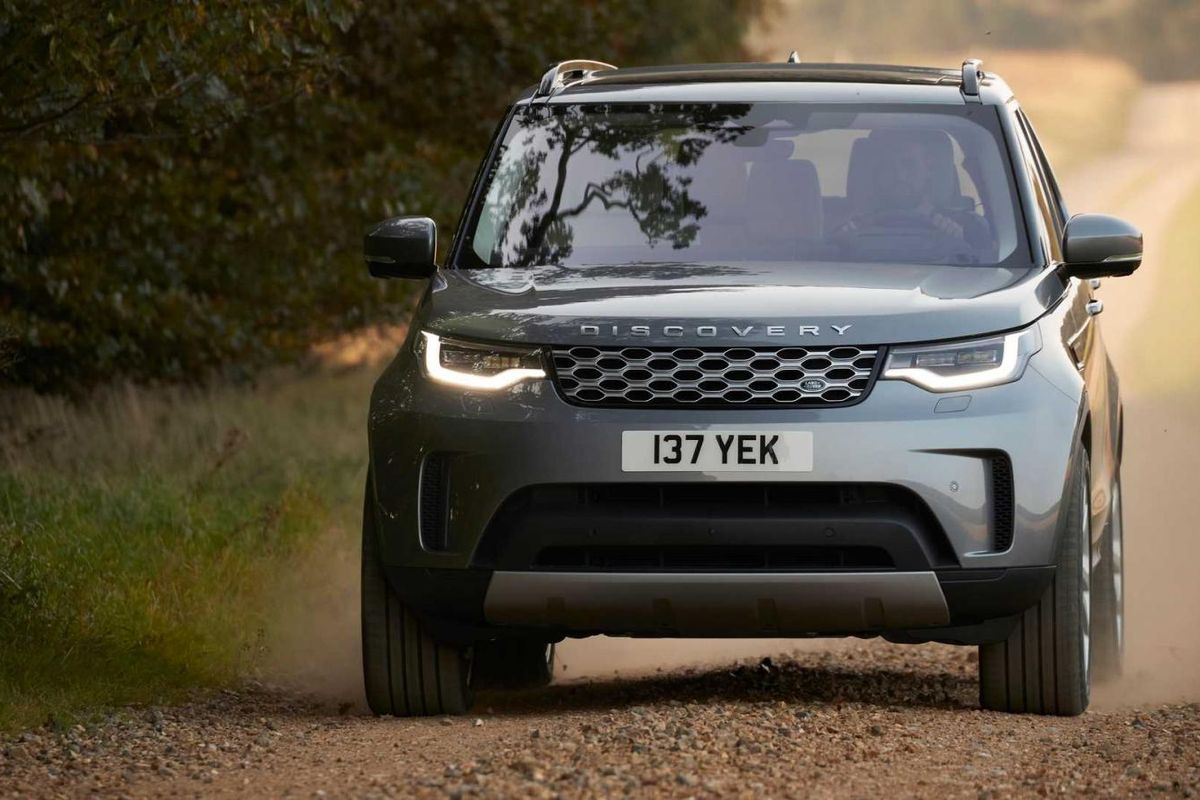
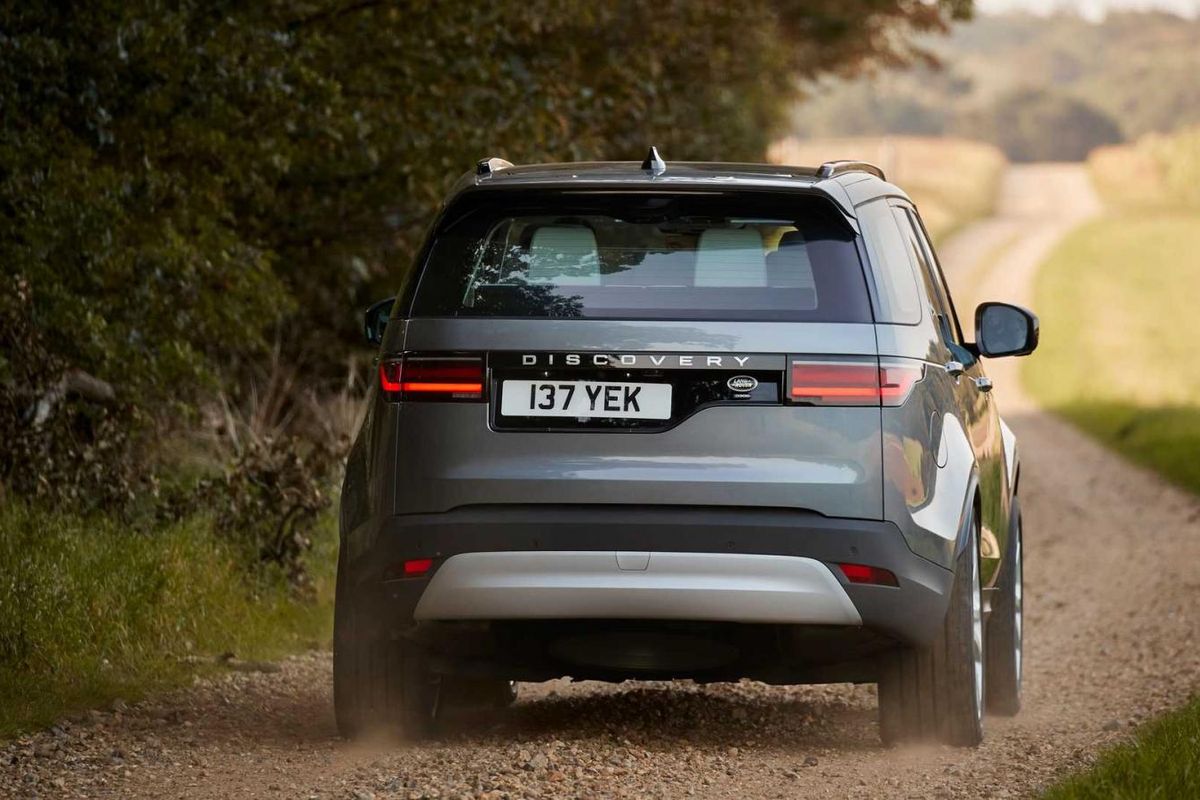
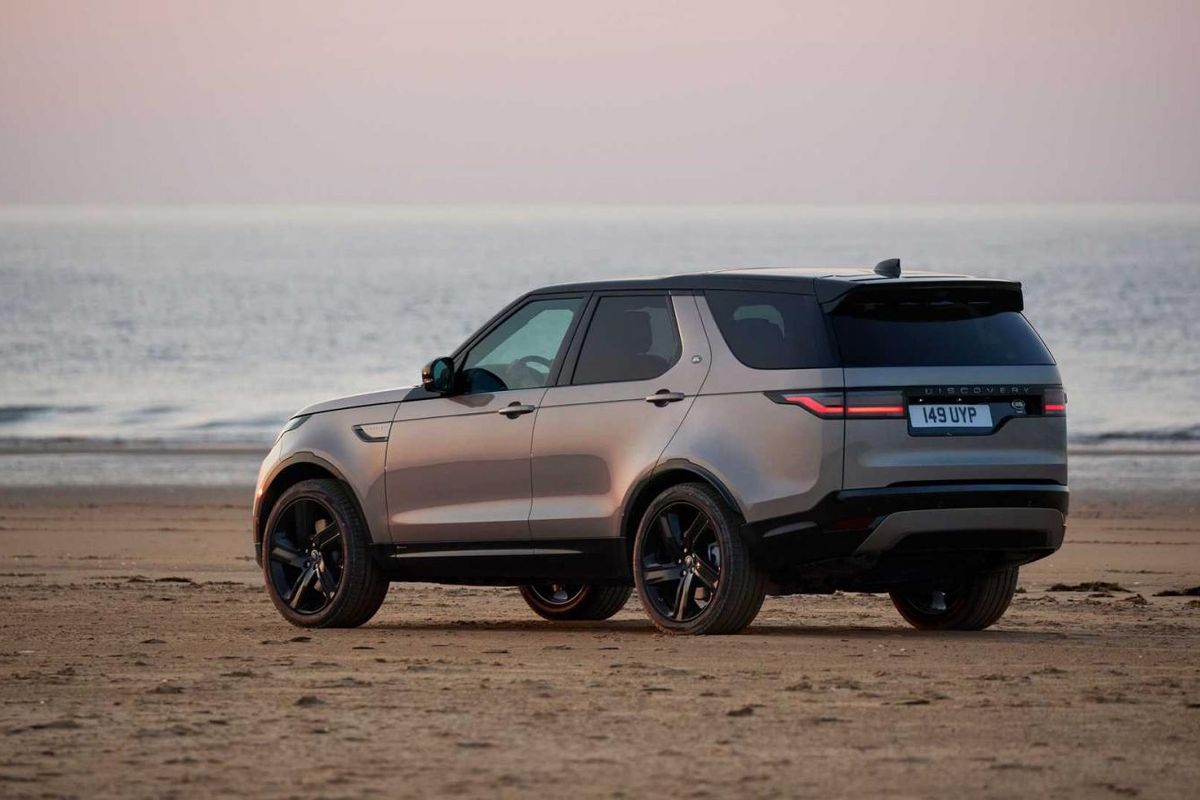
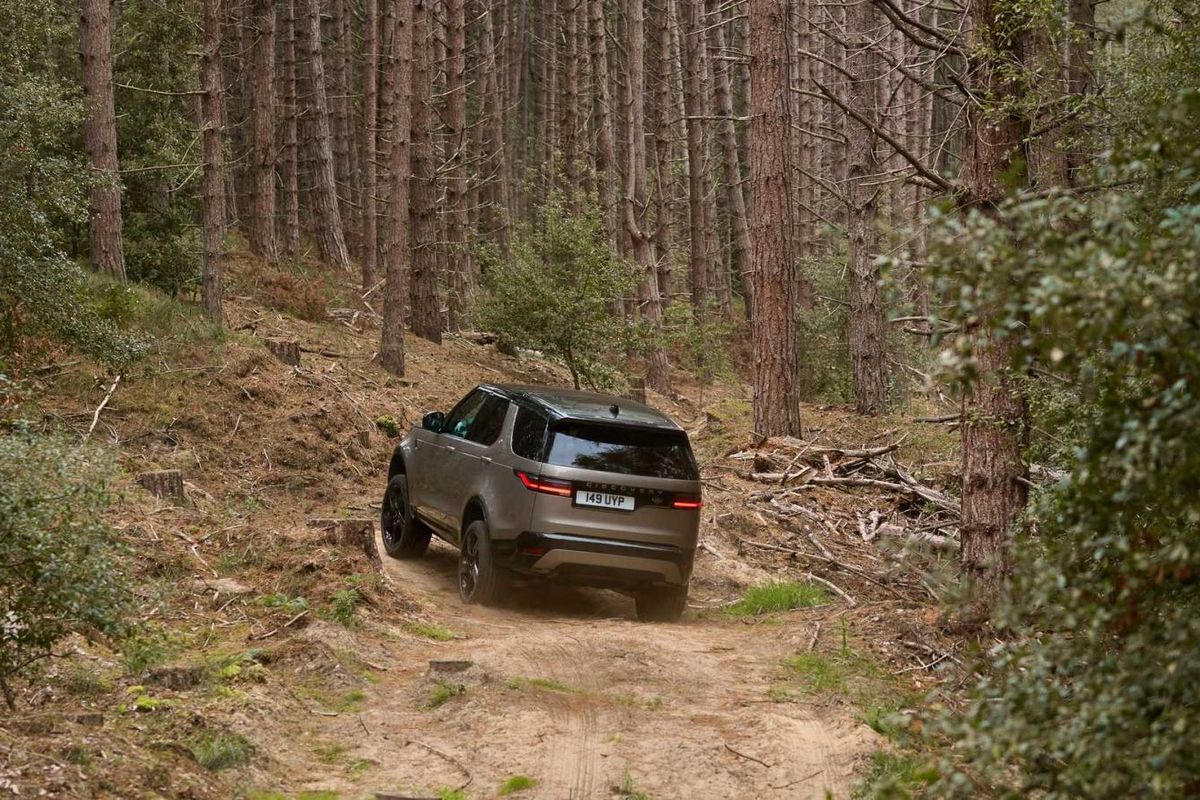
Although the Discovery’s core body panels remain unchanged, it does have new bumper air intakes and a revised LED signature, in both the front and rear light clusters.
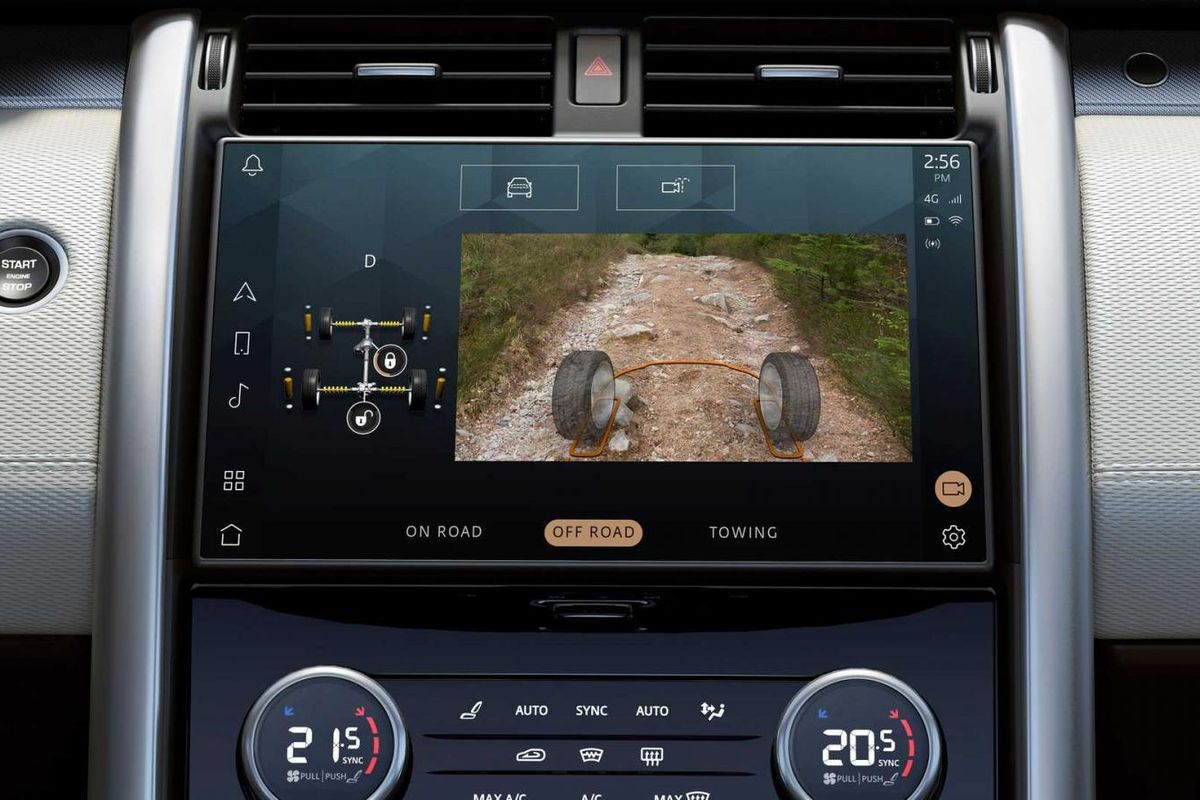
A significant technology feature is an improved infotainment system. Land Rover realised that its Discovery customers desire to be perpetually connected and the company’s Pivi Pro infotainment system boasts an 11.4-inch touchscreen interface, which is 48% larger than before.
With an independent power source and customed software, the Pivi Pro system promises stability and seamless responses, no matter how complicated your infotainment multitasking becomes. The latest four-spoke Land Rover steering wheel design, with its haptic controls, has also been added to this latest Discovery’s cabin.
The engine line-up has been narrowed for South Africa, with a single diesel option replacing the SD4 and SD6. This D300 engine boosts 221 kW and 650 Nm.
For those Discovery customers who prefer the high-speed responsiveness of a turbopetrol, there is a P360 derivative too, producing 265 kW and 500 Nm. Both these Land Rover Discovery engines are of the in-line six-cylinder configuration.
The price grade for Land Rover’s improved Discover starts at R1 452 700, for the D300 S and peaks at R1 710 900, for a P360 HSE R-Dynamic. This restructured Discovery range features six derivatives.
Land Rover Discovery Pricing in South Africa (November 2020)
Excludes CO2 tax
Land Rover Discovery D300 S R1 452 700
Land Rover Discovery D300 SE R-Dynamic R1 561 200
Land Rover Discovery D300 HSE R-Dynamic R1 675,900
Land Rover Discovery P360 S R1 487 600
Land Rover Discovery P360 SE R-Dynamic R1 596 100
Land Rover Discovery P360 HSE R-Dynamic R1 710 900
As if the Volvo XC40 couldn't get any more attractive, the South African arm of the Swedish brand has revealed a striking one-of-a-kind version.
This Volvo XC40 is like no other. It was designed and customised in partnership with South African fashion designer Rich Mnisi. This is not the first time Volvo SA has made some interesting custom cars as the murdered-out XC90 nicknamed The Beast won over more than a few fans.
The Volvo XC40 D4 R-Design also has also been given the murdered-out look with a zebra-patterned double wrap. A nice touch is the green leather door inlays as well as the designer’s signature logo embossed on the headrests.
According to Charmagne Mavudzi, Head of Consumer Experience at Volvo Car South Africa, both The Beast XC90 and Beast's Baby Brother XC40 form part of the brand's new social media campaign called #HiddenGem. "#HiddenGem is built around one pertinent idea: that, after all we have been through, summer and the ability to move are more precious than ever before. The need for us to work together to limit the spread of a virus has given our perspective of safety a new meaning. This summer we will take to our cars, more than to planes or trains, to enjoy the beauty of the outdoors safely once again. We will do this in order to reunite with family and to revisit our places of importance and meaning – our #HiddenGem,” she explains.
Volvo SA is in a good place currently. Despite the pandemic, Volvo retail sales in South Africa during July were said to be 'outstanding, with the company doubling its volumes versus June 2020.' said Yvette Greyvenstein, Head of Commercial Operations at Volvo Car South Africa.
Lexus has given its LX, RX and NX models a specification update. See details below…
In a bid to keep its SUV product lineup fresh, luxury Japanese brand, Lexus has introduced improved specification for its flagship LX luxury SUV, RX premium SUV and its NX premium crossover.
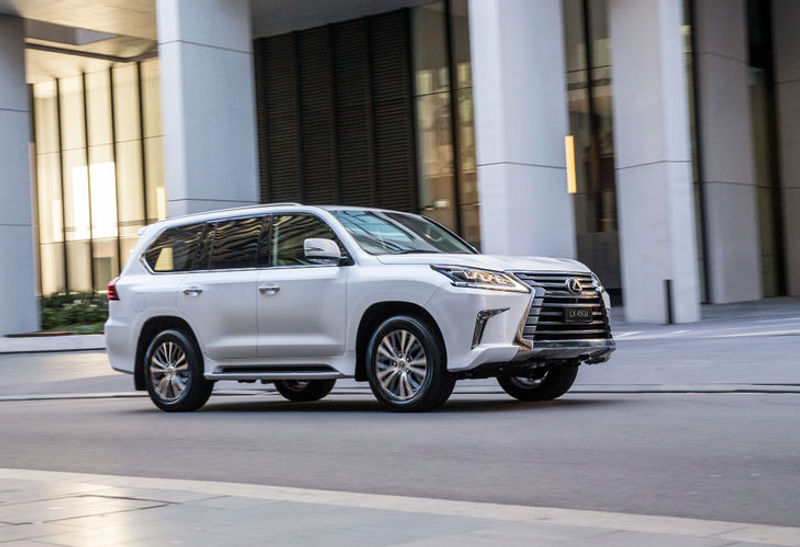
Lexus LX
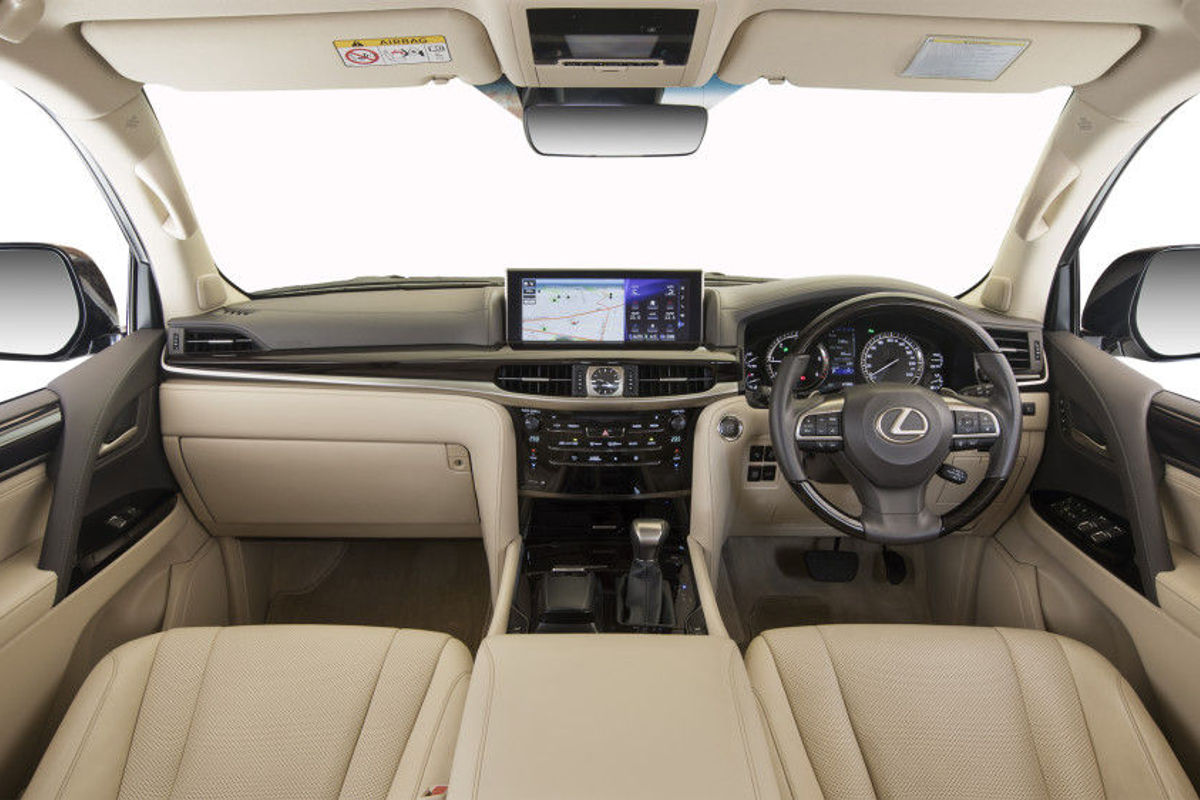
Offered as either a 5- or 8-seater, the Lexus LX is offered with either a 5.7-litre V8 petrol engine with 270 kW and 530 Nm or with a 4.5-litre V8 diesel engine with 195 kW and 650 Nm of torque.
Specification updates for the Lexus LX include a new Terrane Khaki body colour, a new Ochre interior trim, a buzzer function to warn the driver and passengers if a seat belt is not being worn and wireless headphones to boost the infotainment experience. A 7-year/100 000 km warranty and maintenance plan is standard.
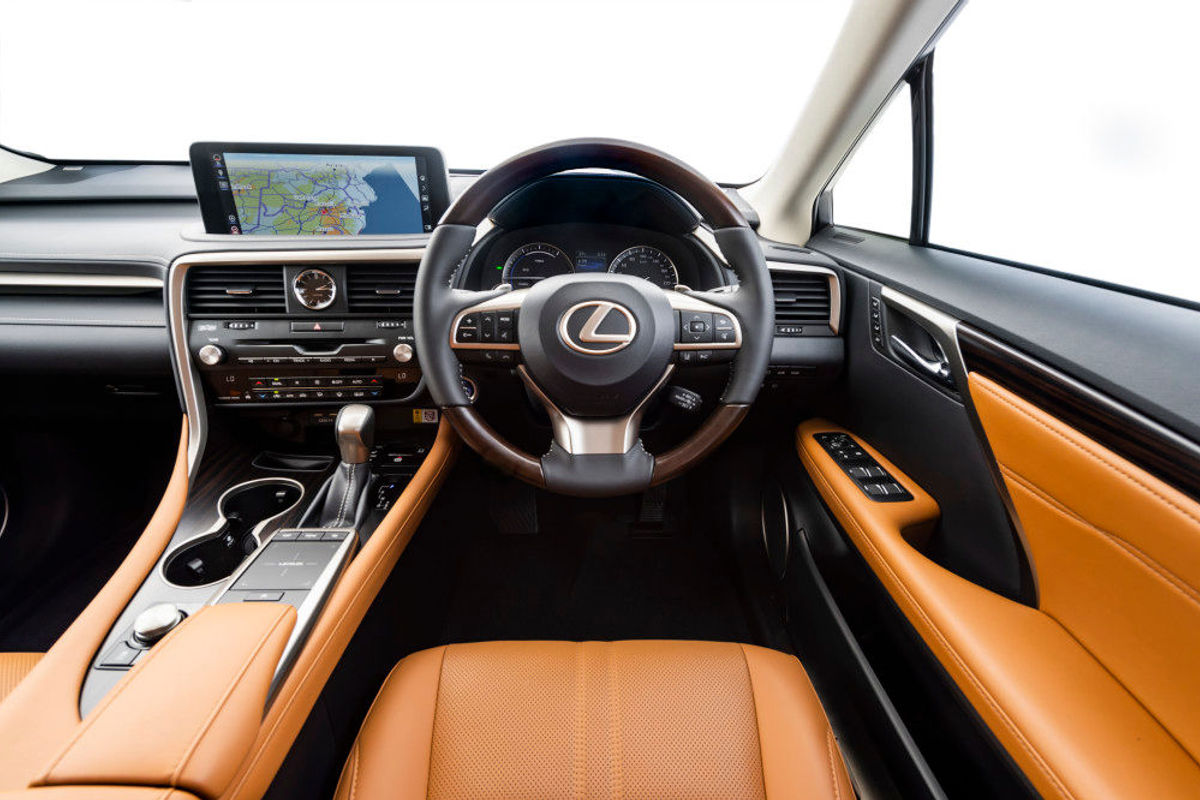
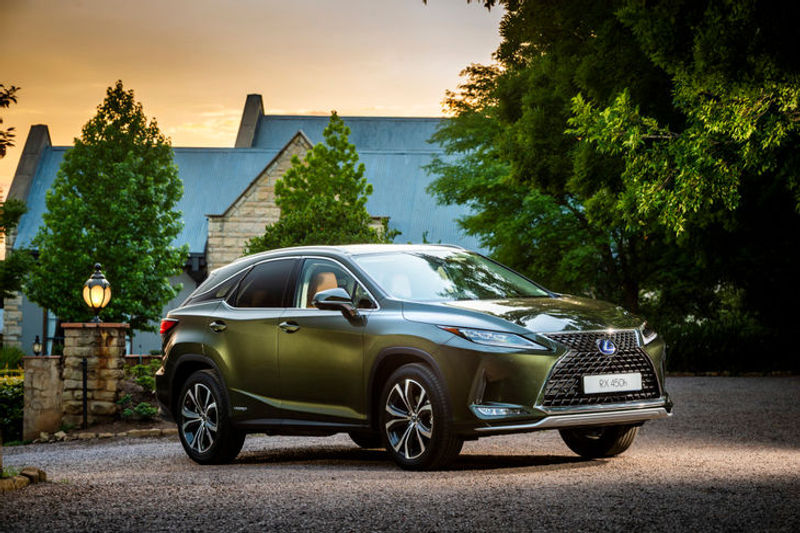
The Lexus RX with 4 trim grades available to buyers including RX 350 EX, RX 350 L EX, RX350 F Sport and RX 450h SE.
The RX 350 derivatives are powered by a naturally aspirated 3.5-litre petrol engine with 221 kW and 370 Nm of torque (RX 350L with 216 kW/358 Nm) while the hybrid RX 450h SE offers 230 kW and 335 Nm.
Specification improvements include improved seat quality ranging from natural leather for EX grade to natural high leather for the RX 350 L 7-seater, F-Sport and SE grades. Seatbelt warning is also standard for all passengers (front and rear). Dynamic automatic headlights are also now standard.
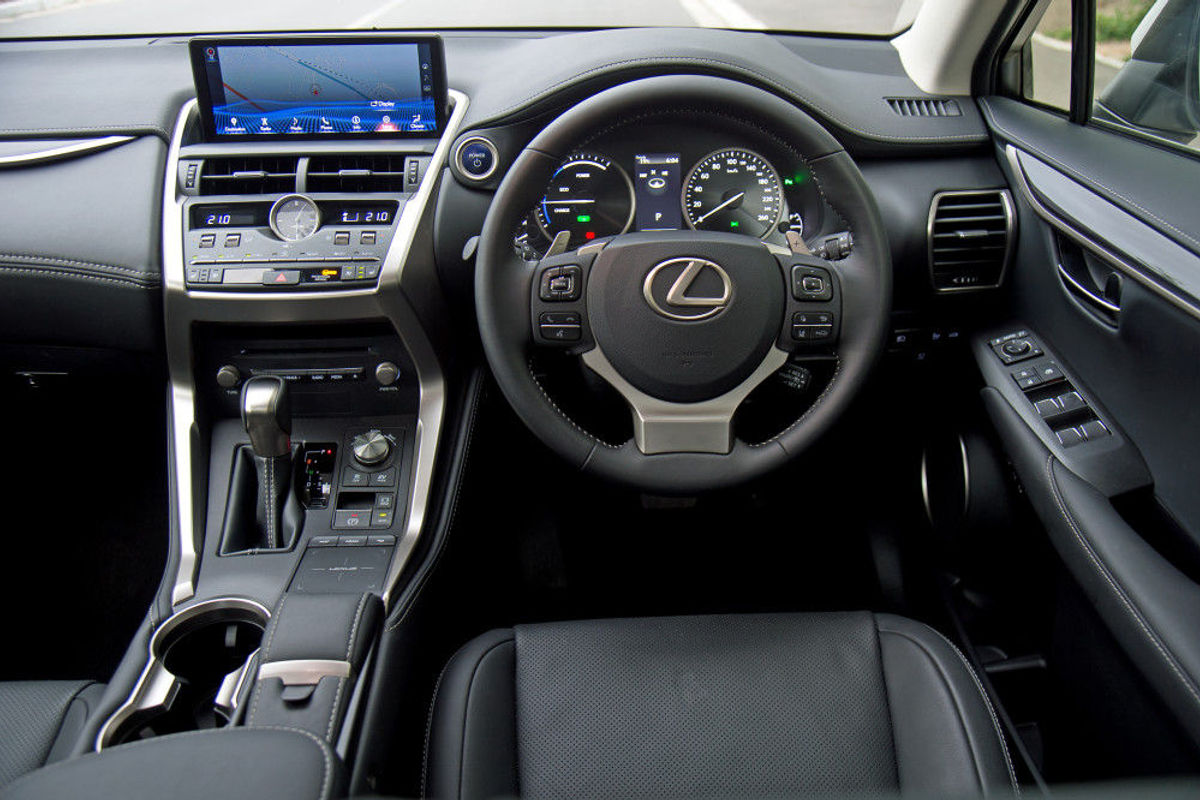
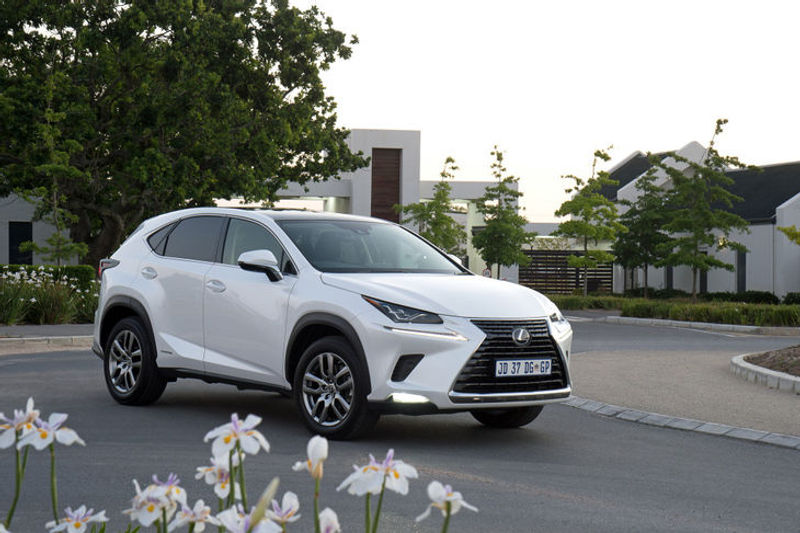
Buyers in the market for a premium crossover might want to consider the Lexus NX, offering the NX 300 EX, NX 300h SE / EX and the sporty NX 300 F Sport.
A naturally-aspirated 2.0-litre petrol engine is on offer with 175 kW and 350 Nm while the NX hybrid employs a 2.5-litre petrol-electric hybrid powertrain with 150 kW and 210 Nm.
Changes for the NX now include 2 hybrid derivatives (EX and SE), an updated tachometer and steering wheel, inside door handles gain metallic coating and keyless entry for the back door. The NX 300 F Sport and hybrid SE derivatives gain a 14-speaker Mark Levison sound system and Active Sound Control.
Lexus has also expanded on the colour offering with 3 new colours for the EX, SE and hybrid models including Terrane Khaki, Celestial Blue and Black. The NX 300 F Sport can be had in new colours too including White Nova, Terrane Khaki, Celestial Blue and Black.
The NX 300h also gains High Alloy wheels (previously Base Alloy) and park distance Control with standard front and rear clearance sonar has been added to the EX and SE grades.
Lexus NX Price in SA
NX 300 EX – R760 900
NX 300 F-Sport – R901 500
NX 300h SE – R992 000
The Lexus NX and RX models are sold with a 7-year/105 000 km warranty and 7-year/105 000 km maintenance plan.
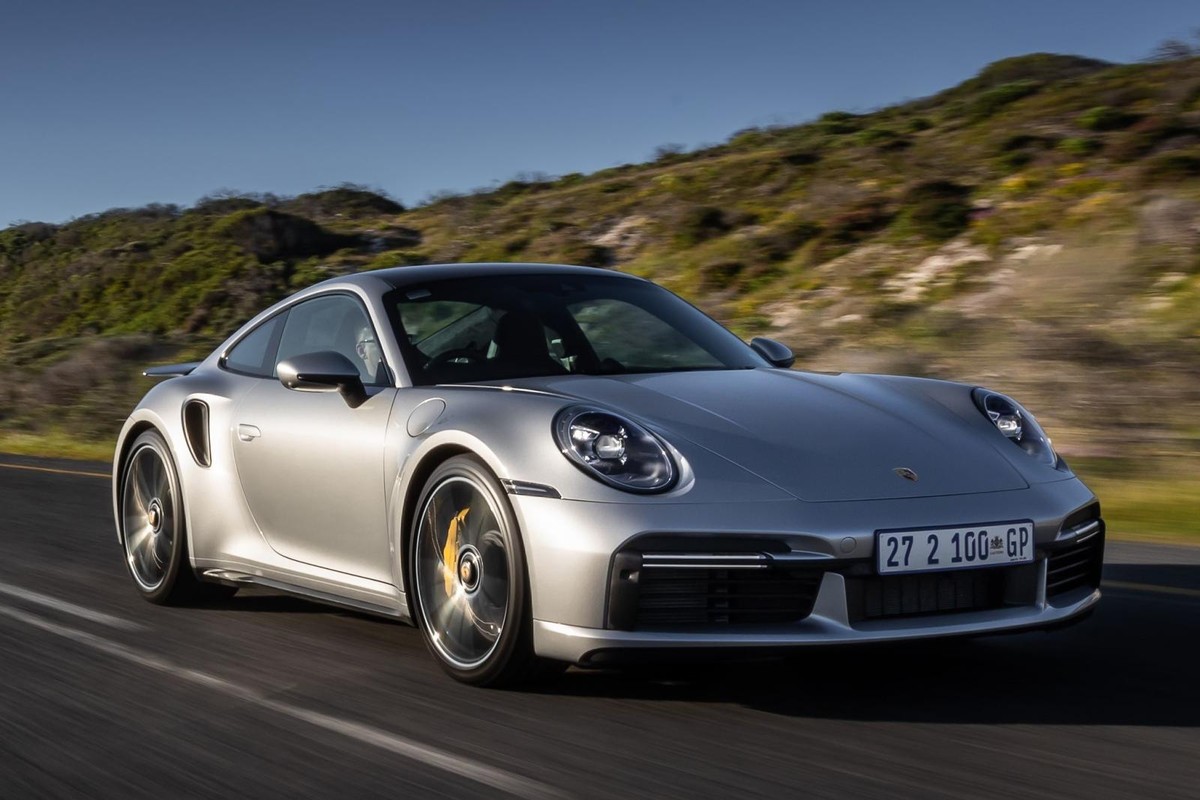
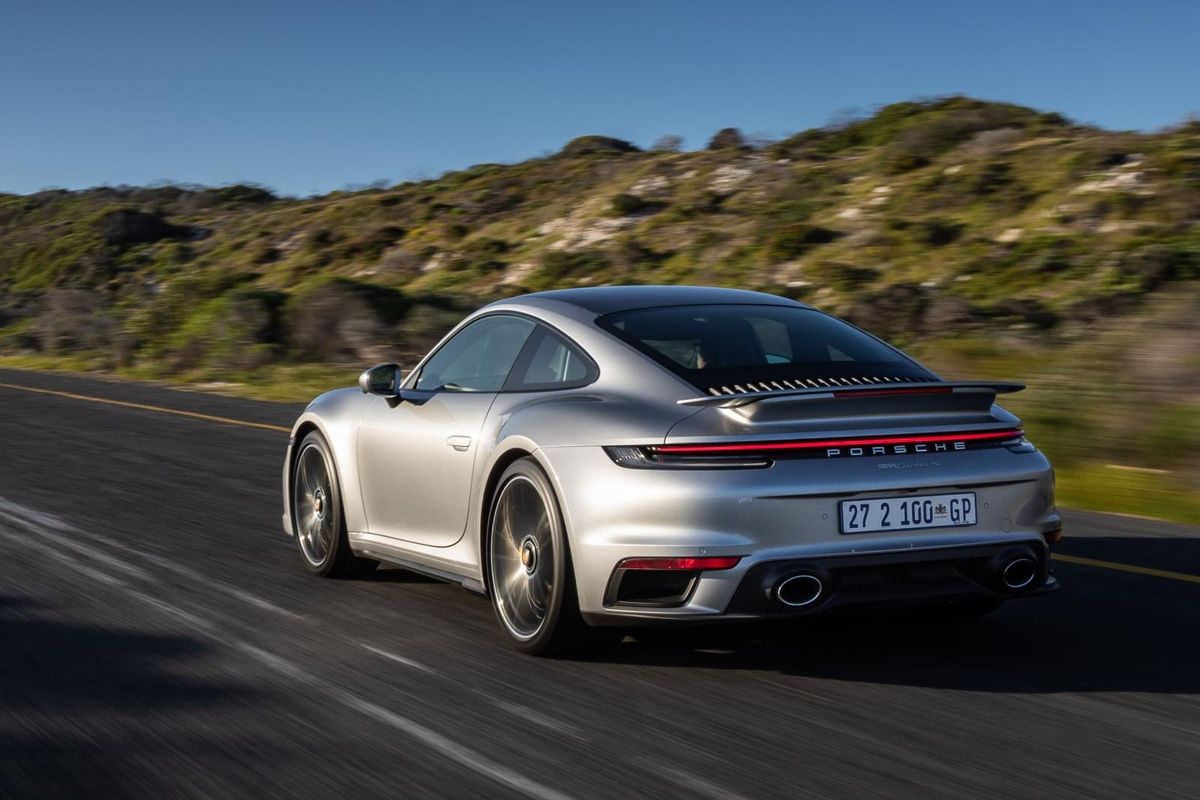
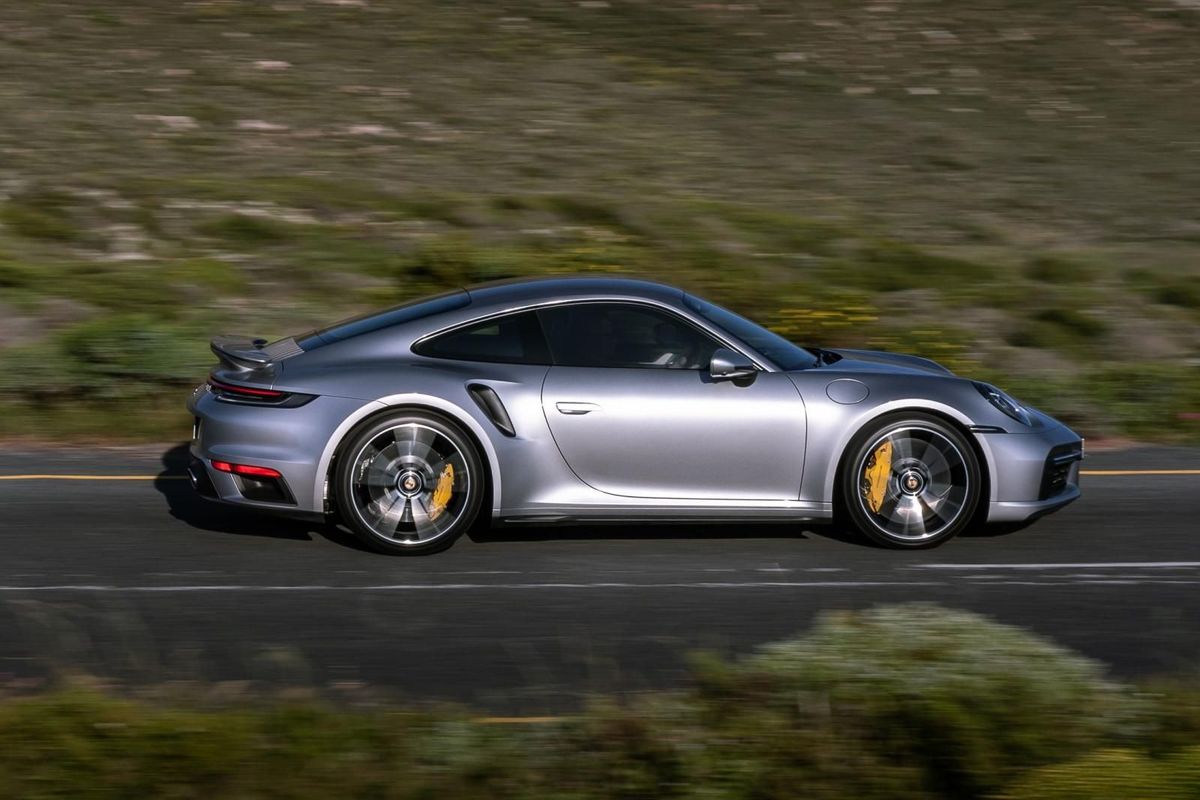
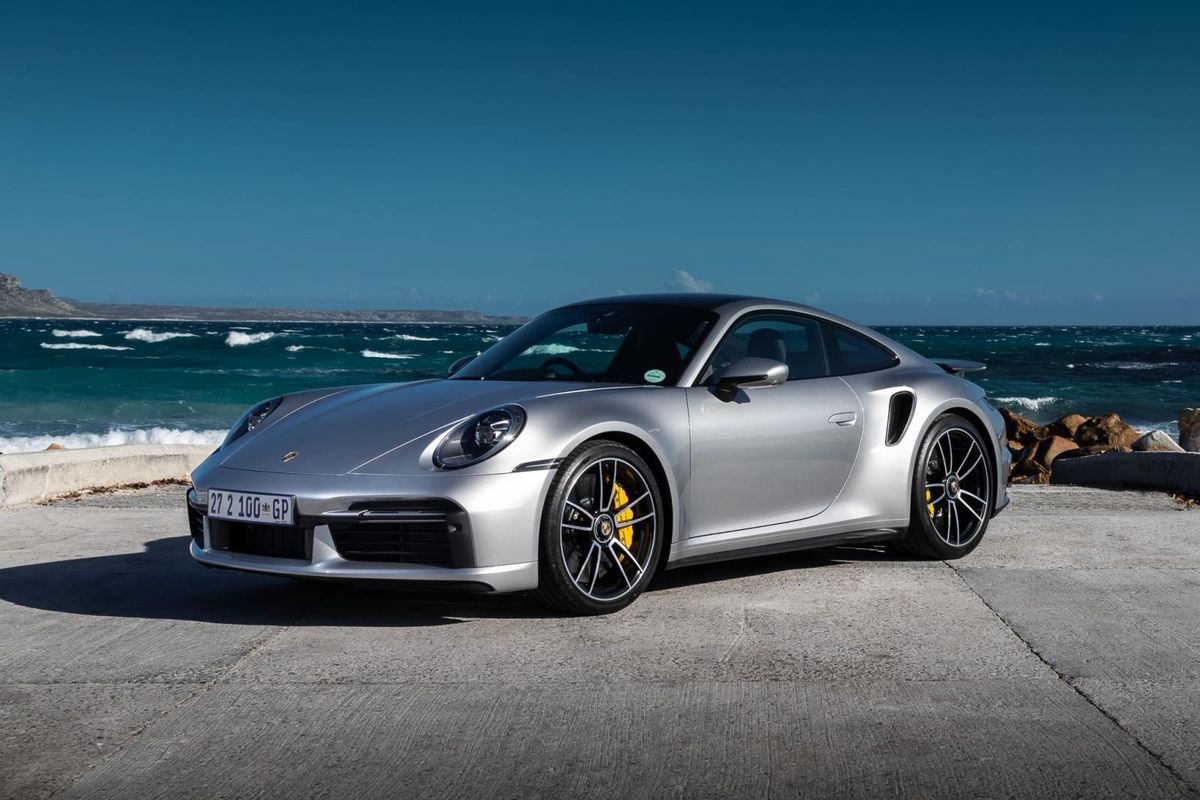
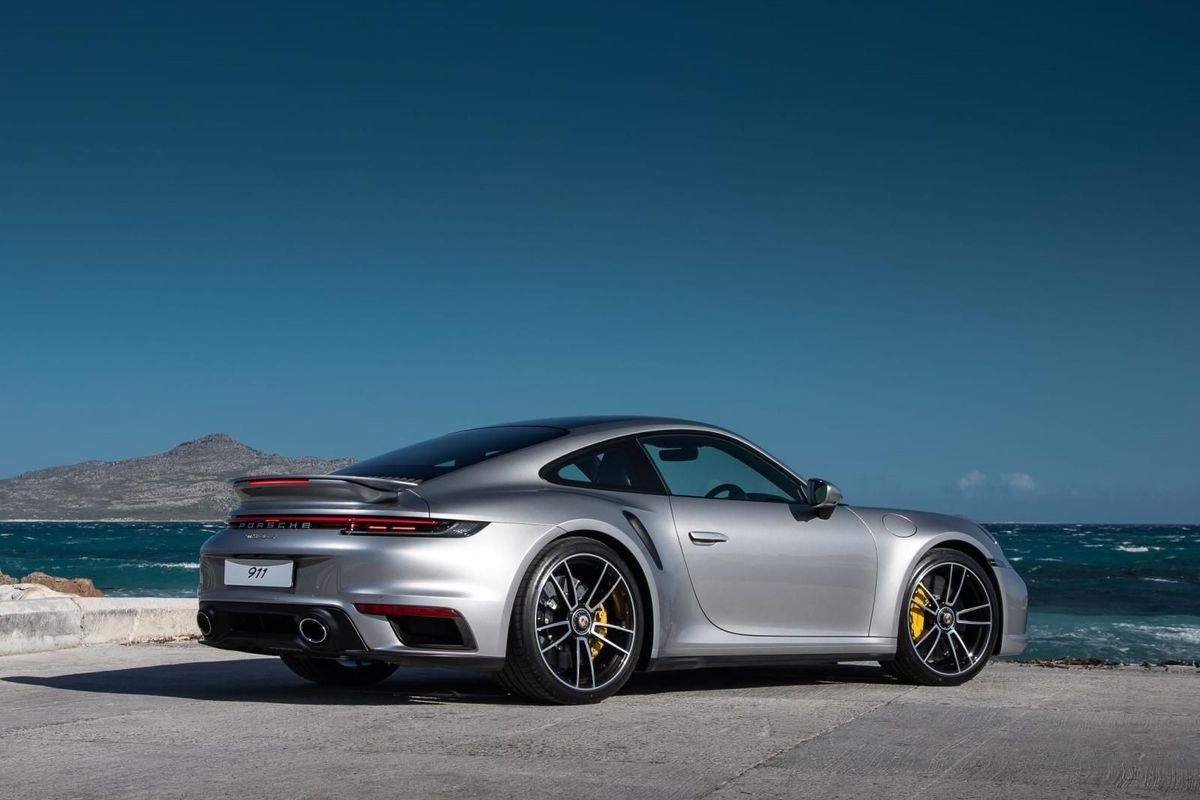
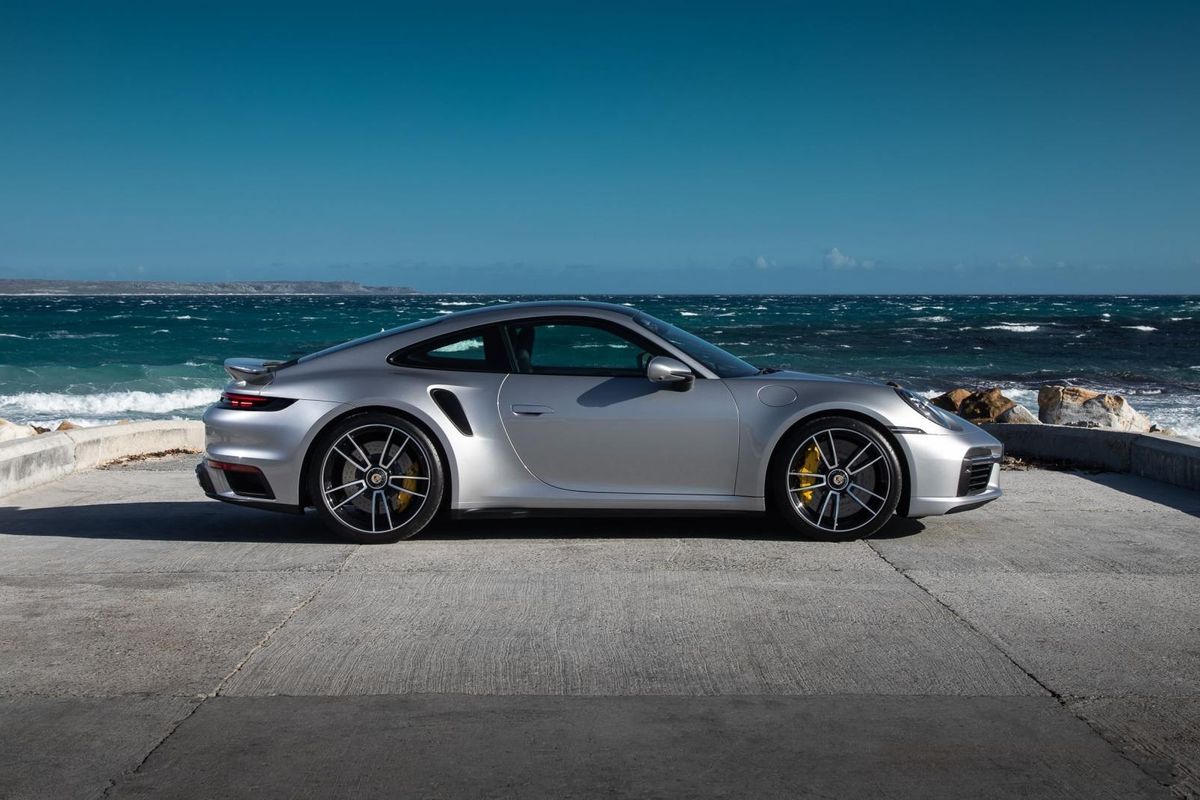
Given its astounding ability to catapult from 0 to 100kph in only 2.7 seconds, with remarkable ease, time and again –the new Porsche 911 Turbo S is a luxurious GT sportscar with supercar-humbling performance.
Since its introduction in 1974, the 911 Turbo has been a pivotal model in Porsche's line-up. Early iterations were scarily fast, so much so that the Turbo was labelled a "widowmaker", but Porsche has continuously refined its poster child. In 1995 (with the 993-generation), the derivative gained the added security of all-wheel drive. But for many customers, the ferociously fast and extremely capable 911 Turbo is not the ultimate Turbo…
The success of the more powerful 911 Turbo S has been so pronounced in recent years that, for the first time, it has reached the market before its famous sibling. We took to some of the Western Cape's finest roads to figure out whether this flagship 992 (for now) is worth nearly R4 million.
The headline numbers
There's no getting away from it, the Turbo S' claimed performance figures are staggering. According to Porsche, its flagship can sprint from 0 to 100 kph in 2.7 sec. That's quicker than a Ferrari F8 Tributo. Faster than a Lamborghini Huracán Evo. And it's just about "ludicrous" enough to keep up with a Tesla Model S P90D, a car that's humbled supercars in hundreds of Youtube videos. It is also faster, by the way, than the headline-grabbing, all-electric, Porsche Taycan Turbo S we sampled recently. So there's definitely some life in the internal-combustion engine yet!
And what an engine it is! The 3.8-litre flat-6 features twin variable geometry turbochargers and pumps out 478 kW (51 kW more than before) and 800 Nm of torque (50 Nm more). The 0-100 kph time is 0.2 sec improved compared with its perfectly fast predecessor, but 200 kph (from standstill) comes up a full second faster than before (in 8.9 sec). The Turbo S's amazing 8-speed dual-clutch transmission deserves a lot of credit for not only harnessing all of that power to deliver scorching acceleration times, but its astounding ability to do so repeatedly, without so much of a hiccup.
Compared with many other performance cars, it's laughably easy to execute a launch-control start. You select Sport Plus mode, mash the accelerator, hold the brake pedal and then release it… and hang on. The 911 Turbo S catapults itself forward with such ferocity that unsuspecting passengers might experience discomfort. In fact, it is advisable to keep one's head pinned against the headrest before executing a hard launch!
Top speed is the same as before (330 kph), putting the 911 Turbo S among some pretty exotic machinery. And yet, Porsche describes the 911 Turbo S as a sportscar, not a supercar…
Bigger dimensions, active aero
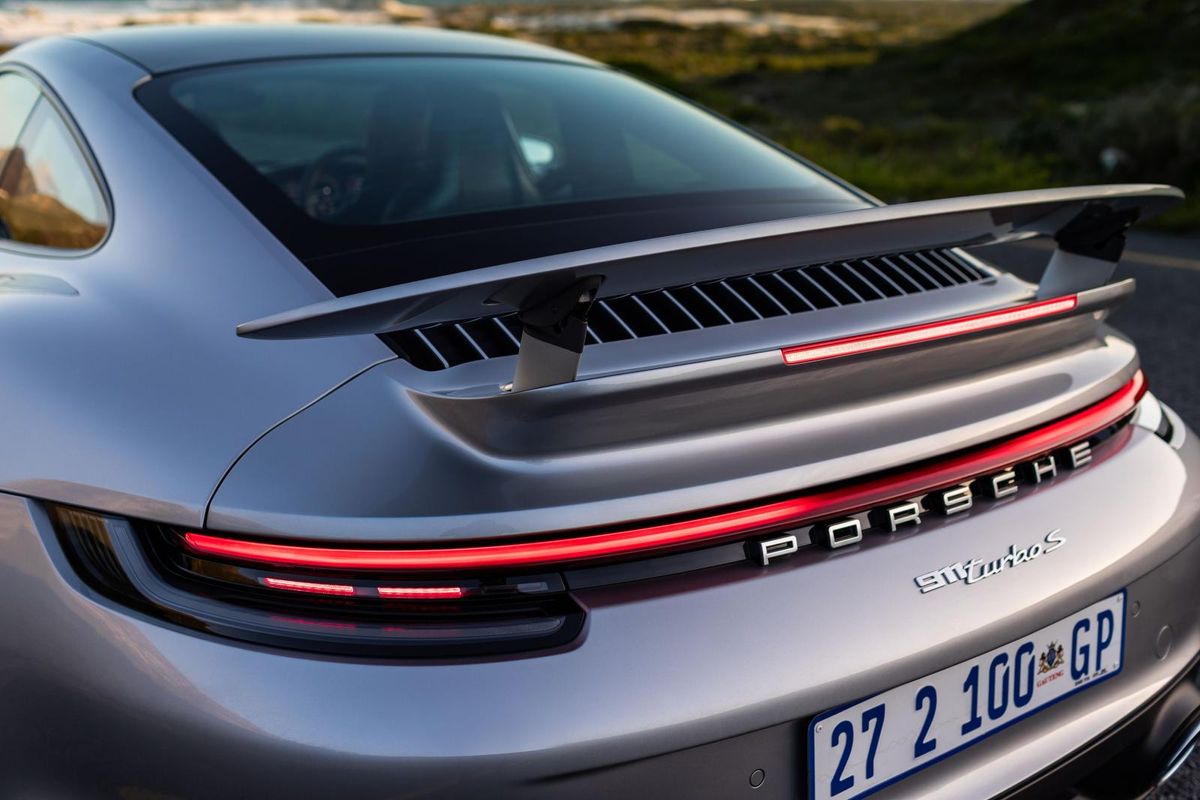
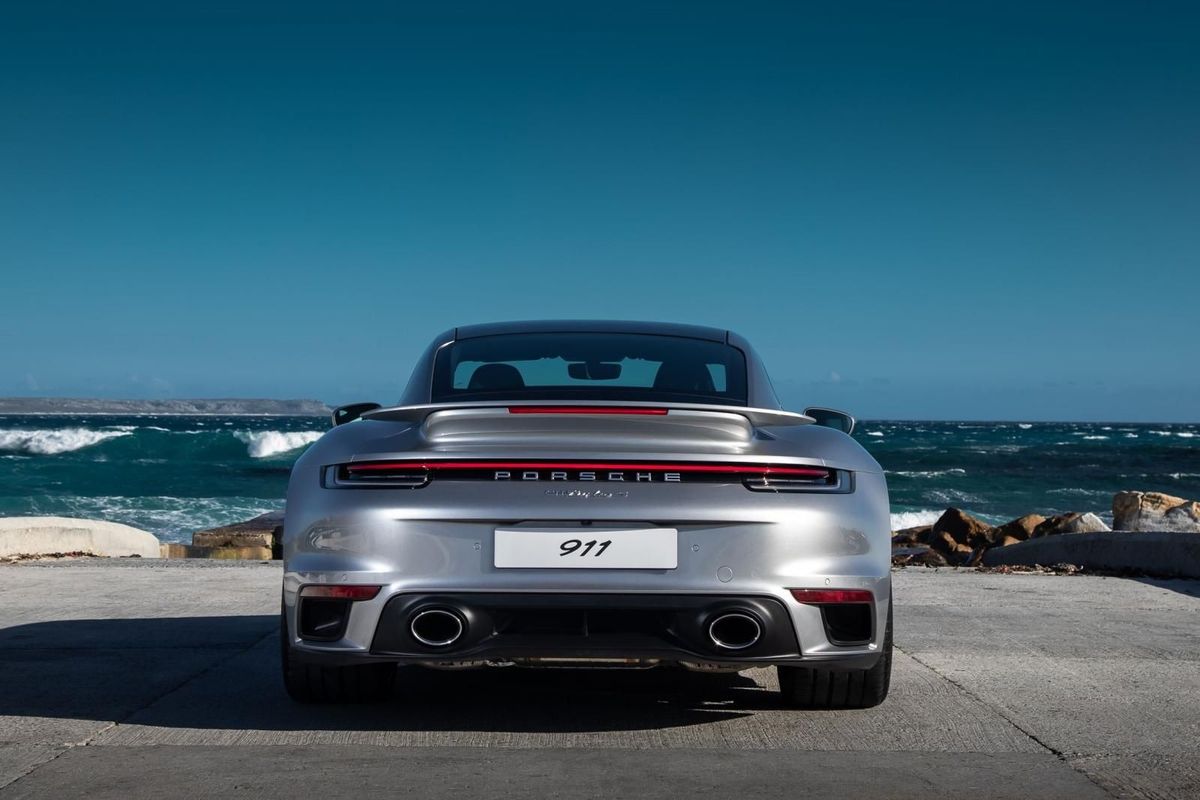
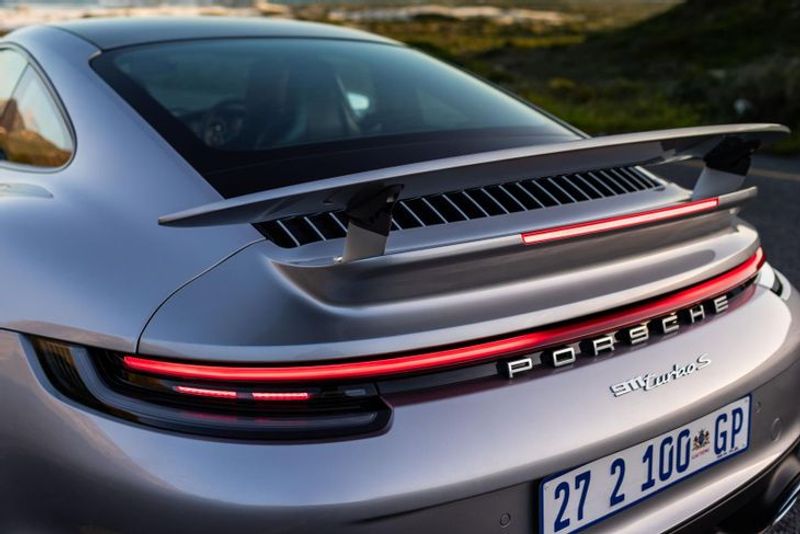
The active rear wing also doubles as an "air brake".
The adaptive aerodynamic features launched on the previous model have been further improved for the 992-generation Turbo S. A new function is "Wet Mode", which we had the privilege of experiencing during a very unseasonal Western Cape downpour. The car detects when the road is wet, warns the driver, and once the mode is selected, the aerodynamic features of the car prioritise downforce on the rear axle to improve grip.
There's also a self-adjusting front spoiler which, in conjunction with the rear wing, move to a "performance" position during emergency braking at high speeds to create a higher drag force, as well as more downforce, to reduce the Porsche's braking distance. This also serves to improve stability under braking. At higher speeds (above 200 kph), the active front and rear spoilers boost downforce by as much as 15%.
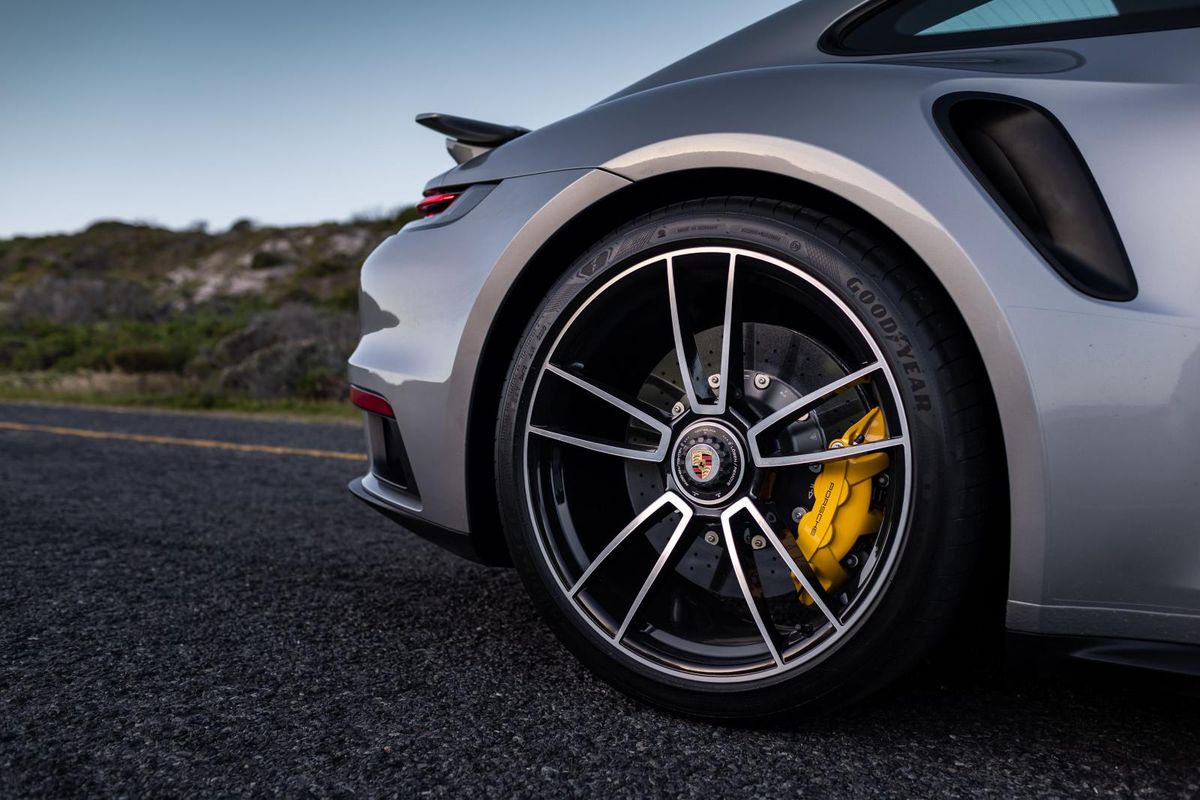
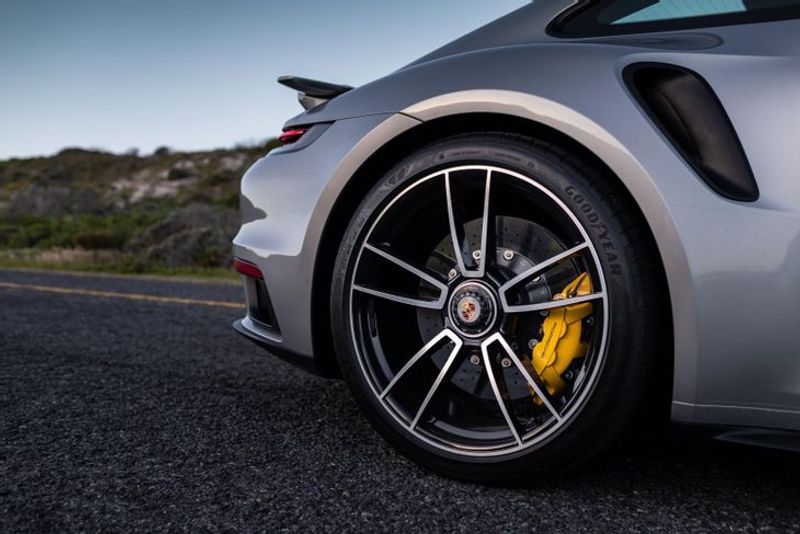
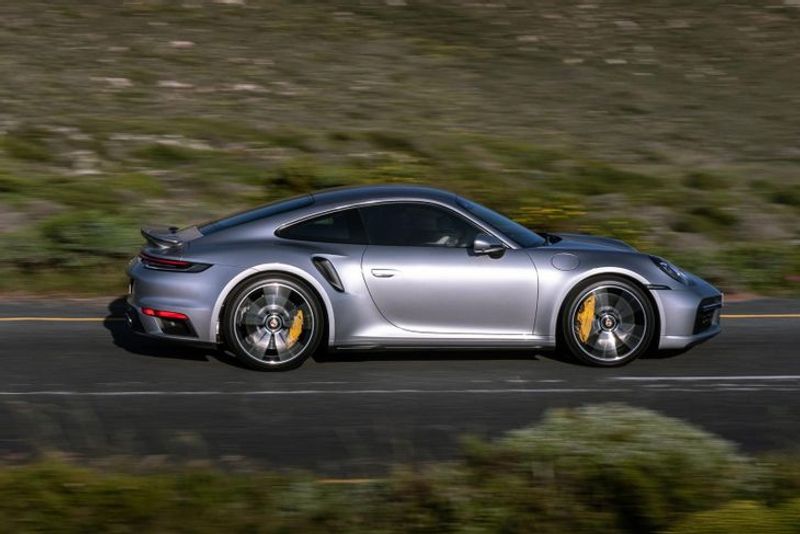
Massive 21-inch rear wheels fill the broad rear "hips" with purpose.
Most of these aero features are virtually invisible most of the time. For the most part, the Turbo S looks like the beefed-up 911 it is – there are no oversized wings, splitters, or eyeball-assaulting ducting. This "restraint" endows the 911 Turbo S with considerable Q-car appeal. That said, those in the know will be able to identify it by its wide hips (it's the widest 911 ever, with 20-inch wheels fore, and 21-inchers aft, wrapped in 315/30 rubber).
Luxurious GT
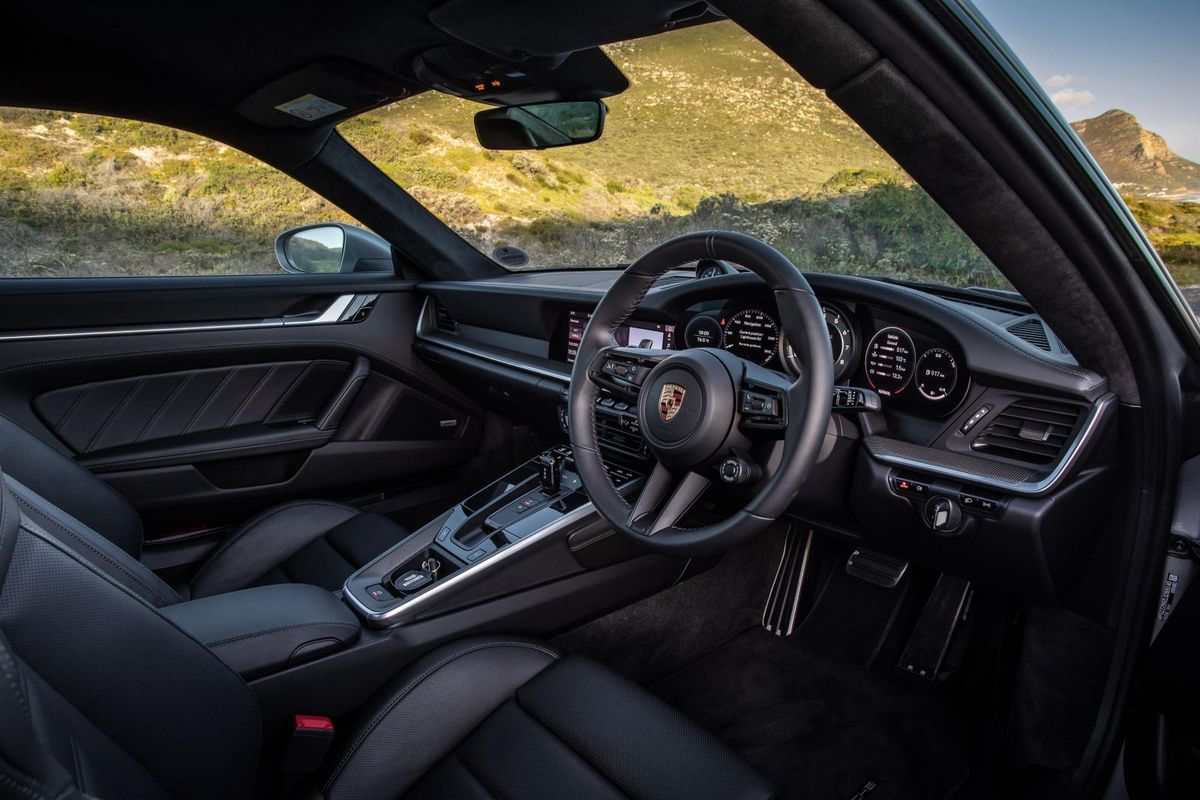
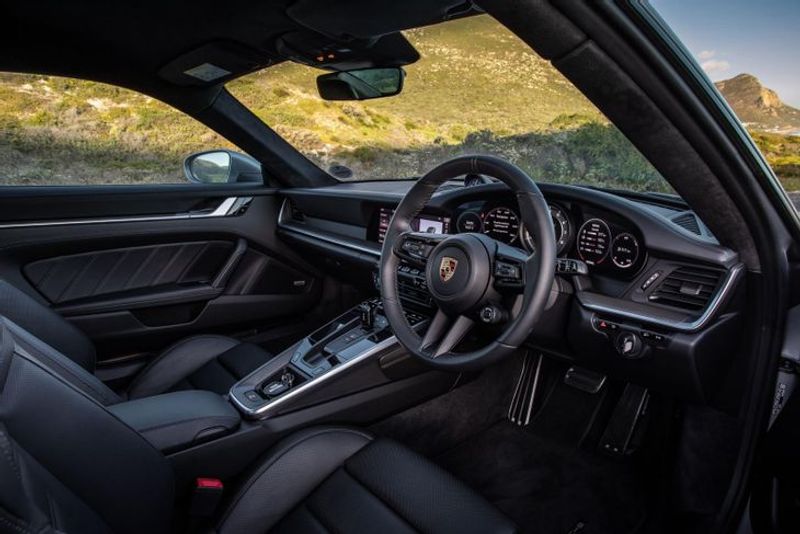
The top-quality cabin is a fantastic place to spend long distances in, with superbly comfortable seats and loads of luxury features.
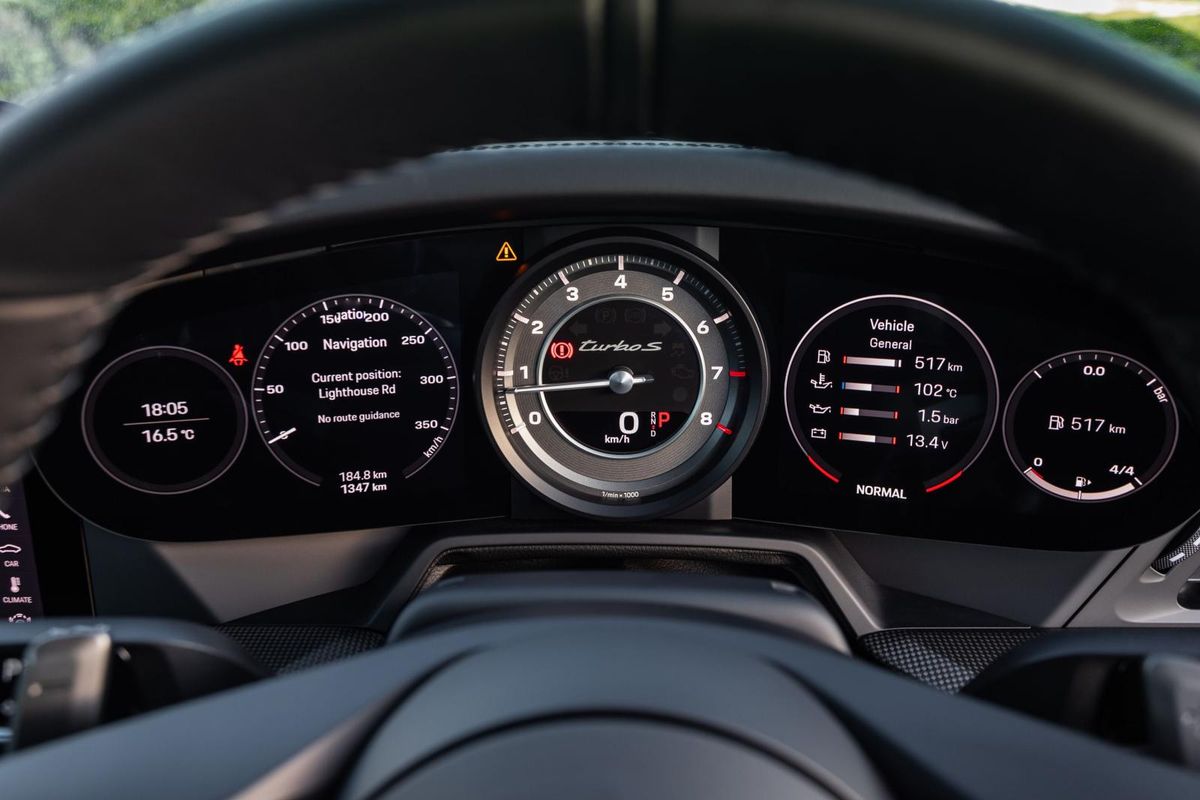
The launch route for the 911 Turbo S encompassed some of the Western Cape's finest roads, which afforded us ample opportunities to test the depths of this amazing machine's abilities. However, before you start wringing the Porsche's neck, you're likely to be taken aback by its other qualities… The 911 Turbo S is no stripped-out, bare-boned racer. As standard, you get a full-leather interior and carbon trim combination with light satin silver accents. The sports seats feature stitching that pays homage to the 1st (930) 911 Turbo and the instrumentation is a lovely mix of analogue and digital. A slight ergonomic issue is that the 2 outer-most dials are obscured by the rim of the steering wheel/driver's hands.
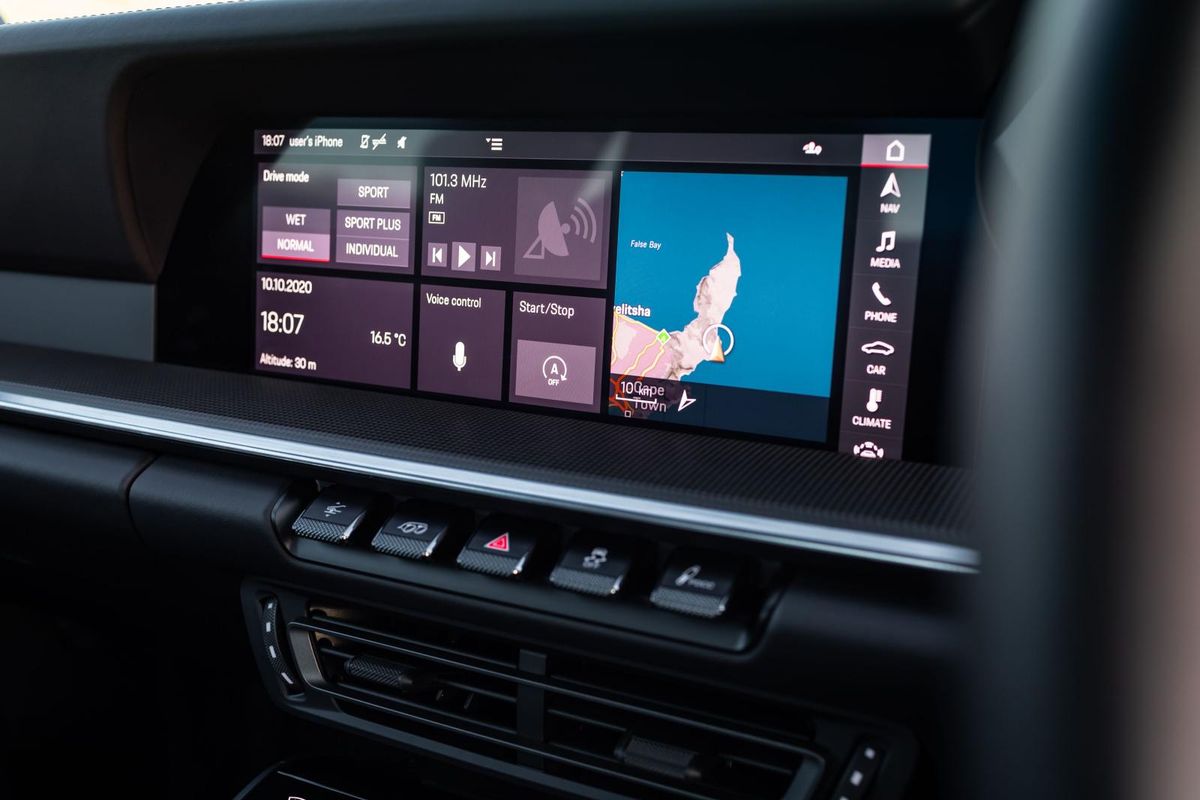
A large (10.9-inch) infotainment screen has an intuitive user interface and slick graphics. Other standard features include a lovely-to-hold GT sports steering wheel, the Sport Chrono package (with a newly integrated Porsche Track Precision app), as well as a Bose surround-sound audio system. I recently spent quite a lot of time in the Cars.co.za Porsche Cayman R, and it's remarkable just how familiar and "instantly Porsche" the latest 911 still manages to feel, even though it boasts a lot more in the way of luxury and convenience features than its older sibling.
Grip. Grip. And yet more grip!
With an improved traction management system, the new Turbo S boasts outstanding, confidence-boosting grip.
I've driven cars with comparable peak power outputs to the Porsche, but I can't recall one that so effectively harnesses all that fury… and allows the driver to unleash it with so much abandon. Porsche talks a lot about tyre-pressure and temperature management when it comes to the 911 Turbo S and, for the first time, a tyre temperature indicator is availed to keep enthusiastic drivers informed about the car's 4 tackies' state of readiness.
Another 1st is an optional PASM sports chassis that is lower by 10mm and which features shorter springs with more "dynamic" spring rates. But to ensure that maximum grip is maintained, there are "helper" springs at the rear to ensure sufficient pre-loading of the main springs for a full rebound. Little details like those add up to make the 911 Turbo S probably the fastest, real-world, ground-covering machine on the planet.
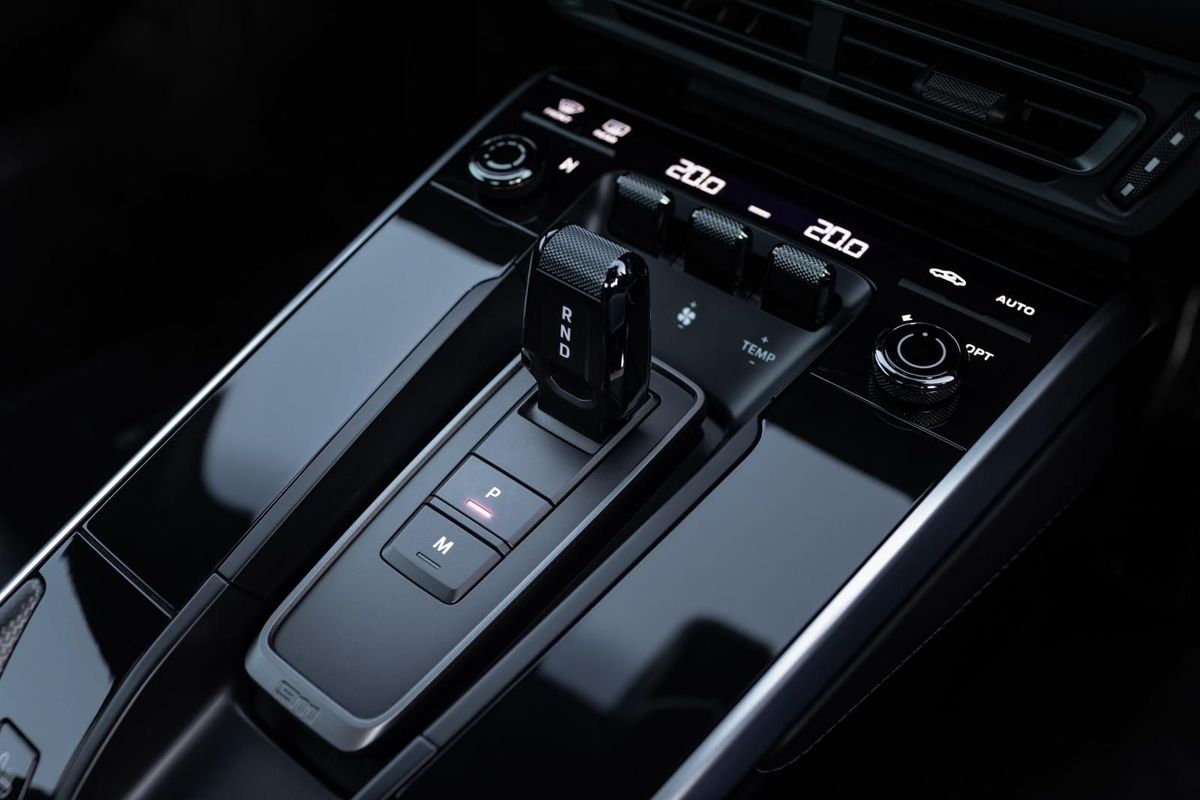
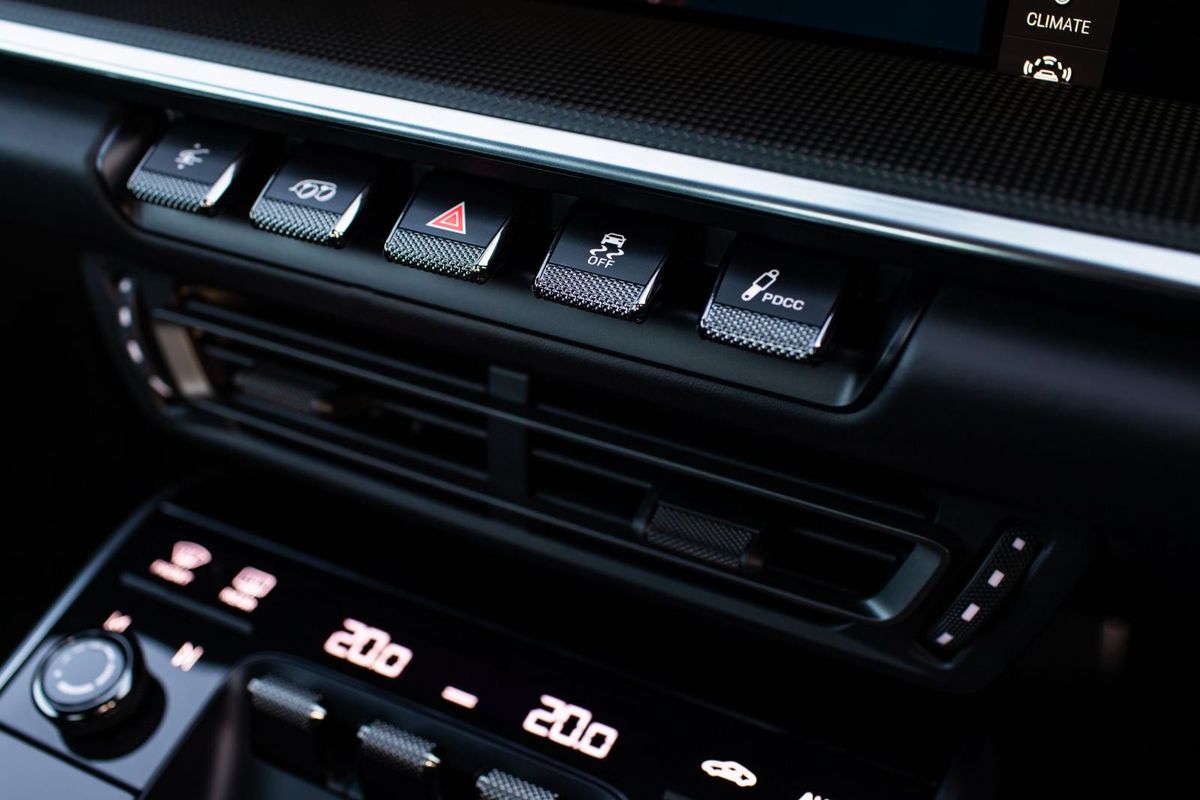
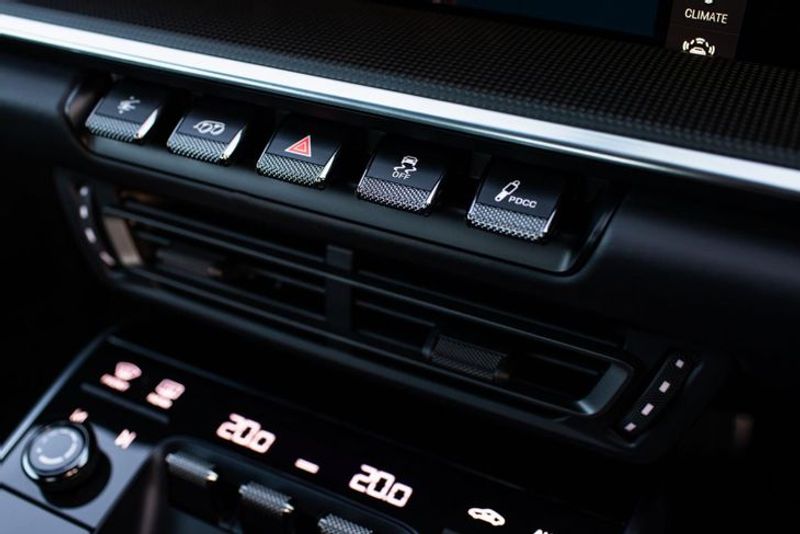
Note presence of exhaust and nose-lift buttons.
Meanwhile, the PTM (Porsche Traction Management) all-wheel-drive system has been further honed for use in the 911 Turbo S. The front axle now features additional water-cooling and reinforced steel plates, allowing it to transfer as much as 500 Nm to the front wheels. There is also a new, more stable driveshaft with just one universal joint that distributes power to the front axle.
On the road, and even when pushed hard, the Turbo S stubbornly resists understeer in a manner that beggars belief – the significantly wider front track helps here – and the steering itself remains wonderfully direct and meaty, although not overly communicative. And there's just so much grip… Even when you apply stabs of throttle mid-corner you're unlikely to see the stability control light flickering. Flicking through the quick-acting 8-speed 'box is a real treat and also advisable (if you're in the mood for a spirited drive) because there's a smidge of lag low down in the rev range, which can be circumvented if you use the paddles. Overall, it's a car that seems to be able to make the most hamfisted driver feel like a champion.
Due to the Porsche's excellent on-road refinement, however, one tends to arrive at corners at a significantly faster rate of knots than expected. Thankfully, the Turbo S features an improved PCCB ceramic brake system (as standard) and it's the first 911 to be fitted with brake calipers with 10, yes, 10 pistons (the front brake discs now measure a colossal 420 mm in diameter).
Summary
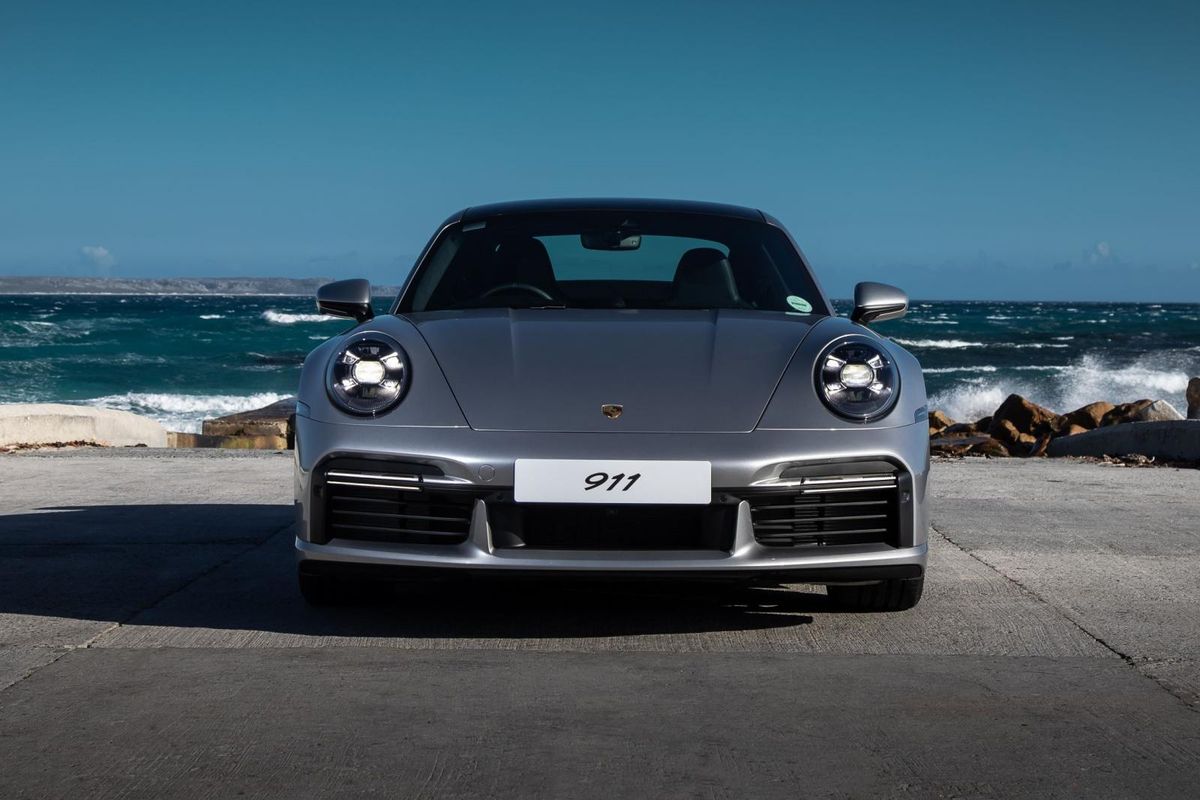
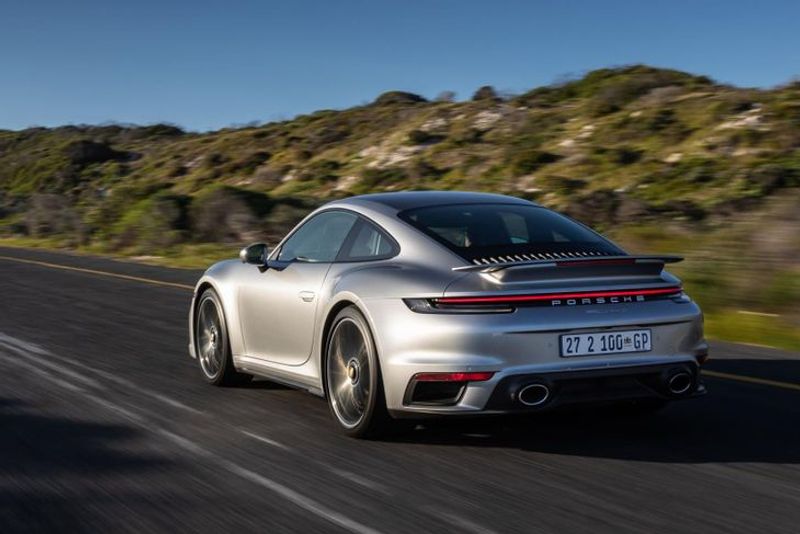
The view most other road users will see – the 911 Turbo S offers unrivalled performance and dynamic capability at the price.
Because the 911 Turbo achieves its staggering performance claims with such ridiculous ease, you may be tempted to regard it as a one-trick pony, but it's far from it – it's as much a crushingly competent luxurious GT as it is a humbler of supercars with much, much higher price tags. Factor in typically excellent Porsche build quality and you've got a R4-million car that could be called a "bargain"… it's a monumental achievement.
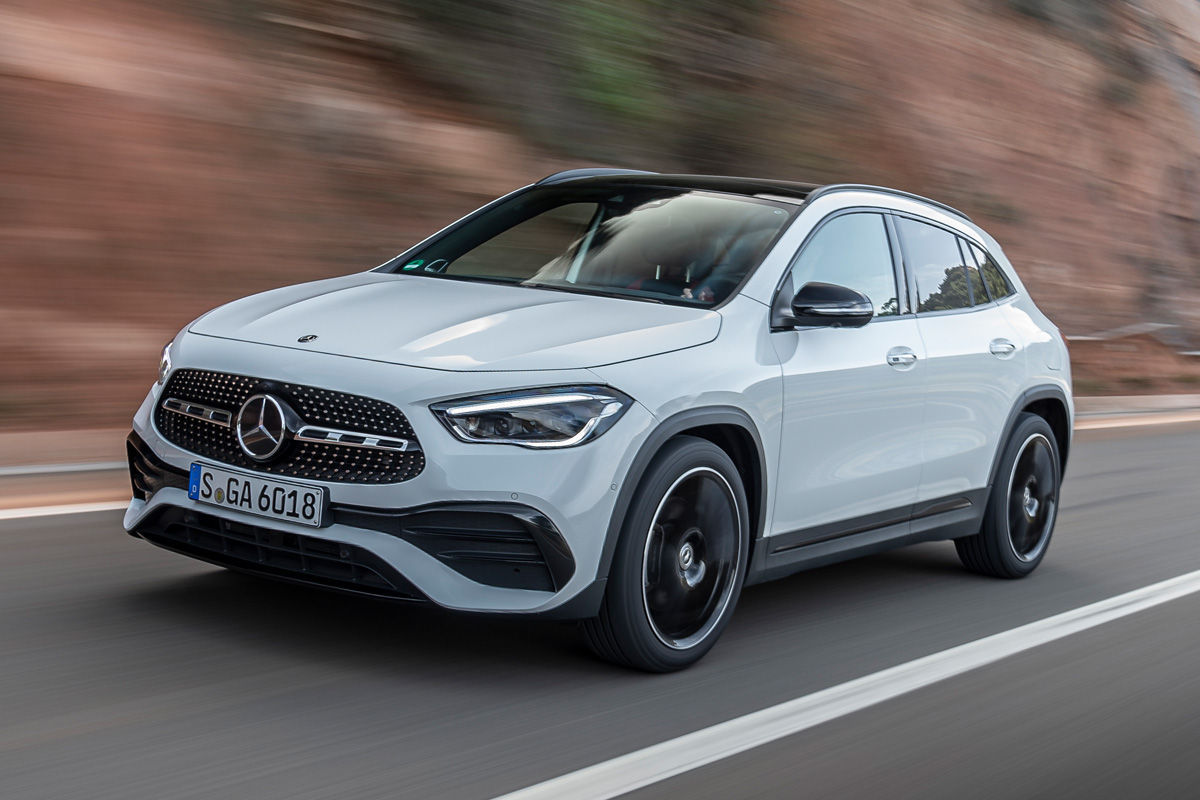
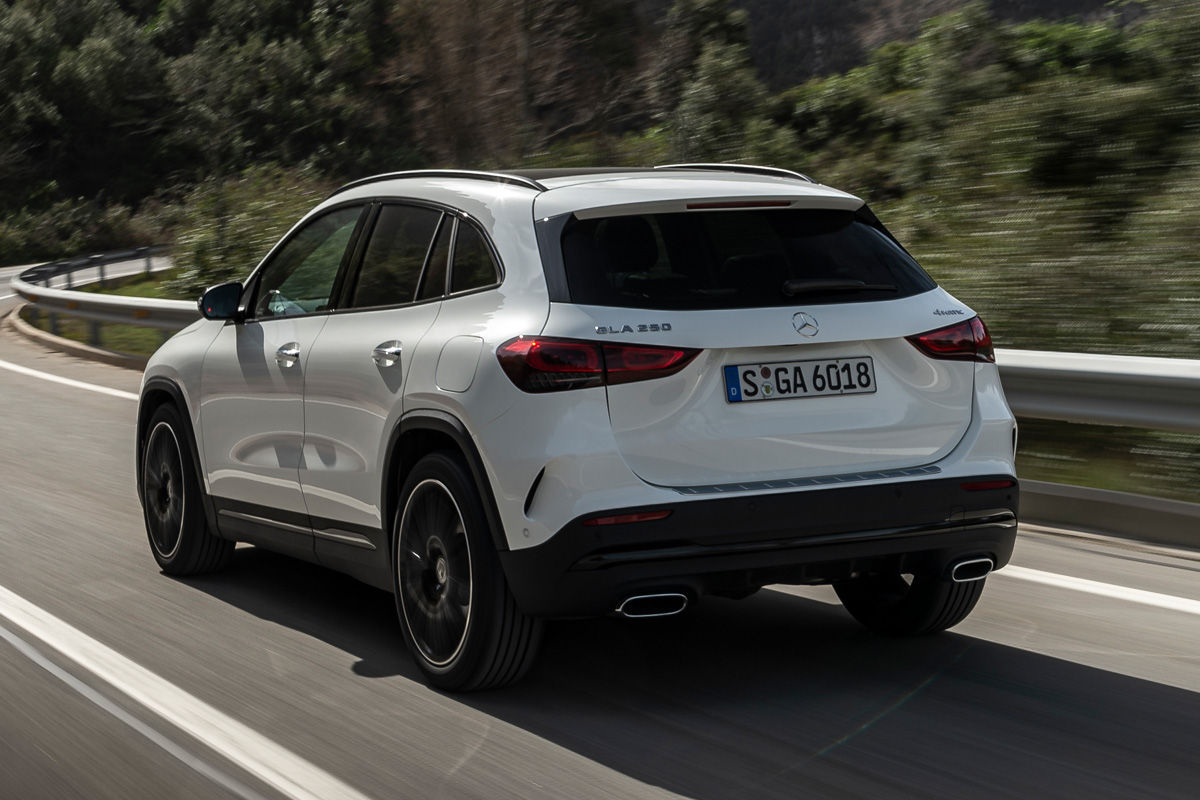
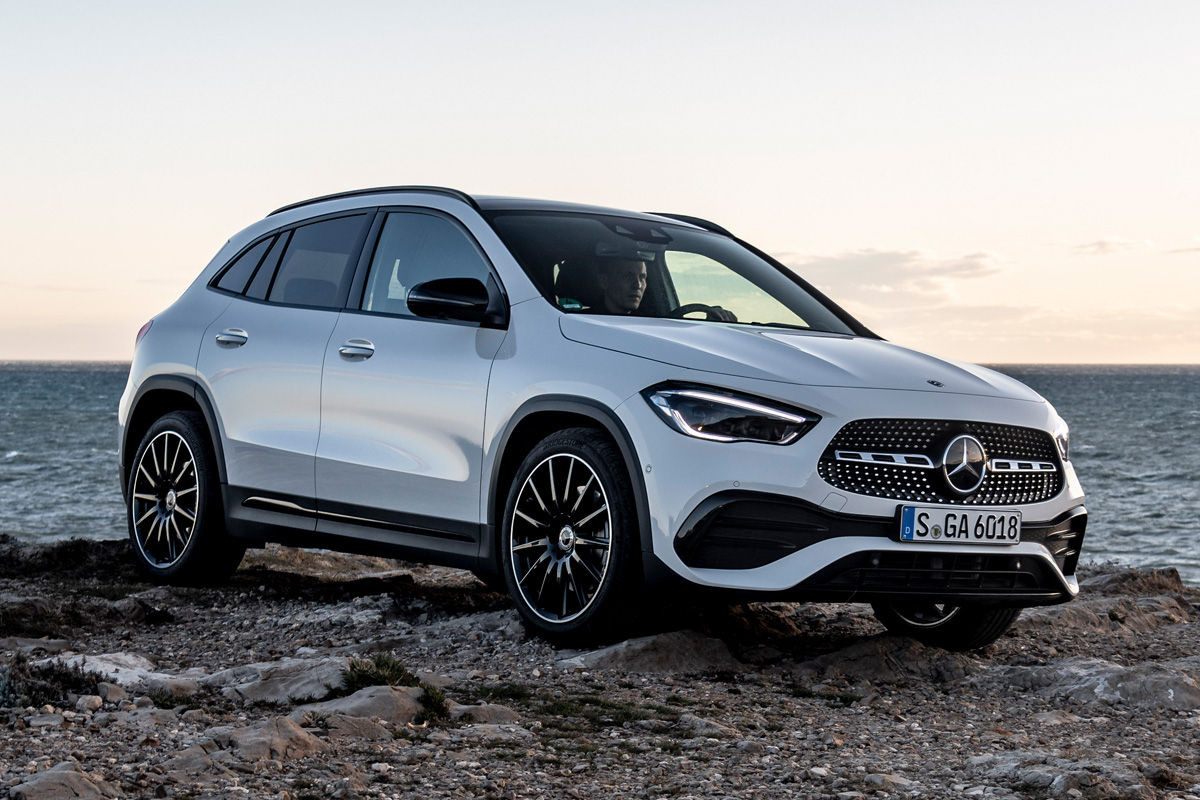
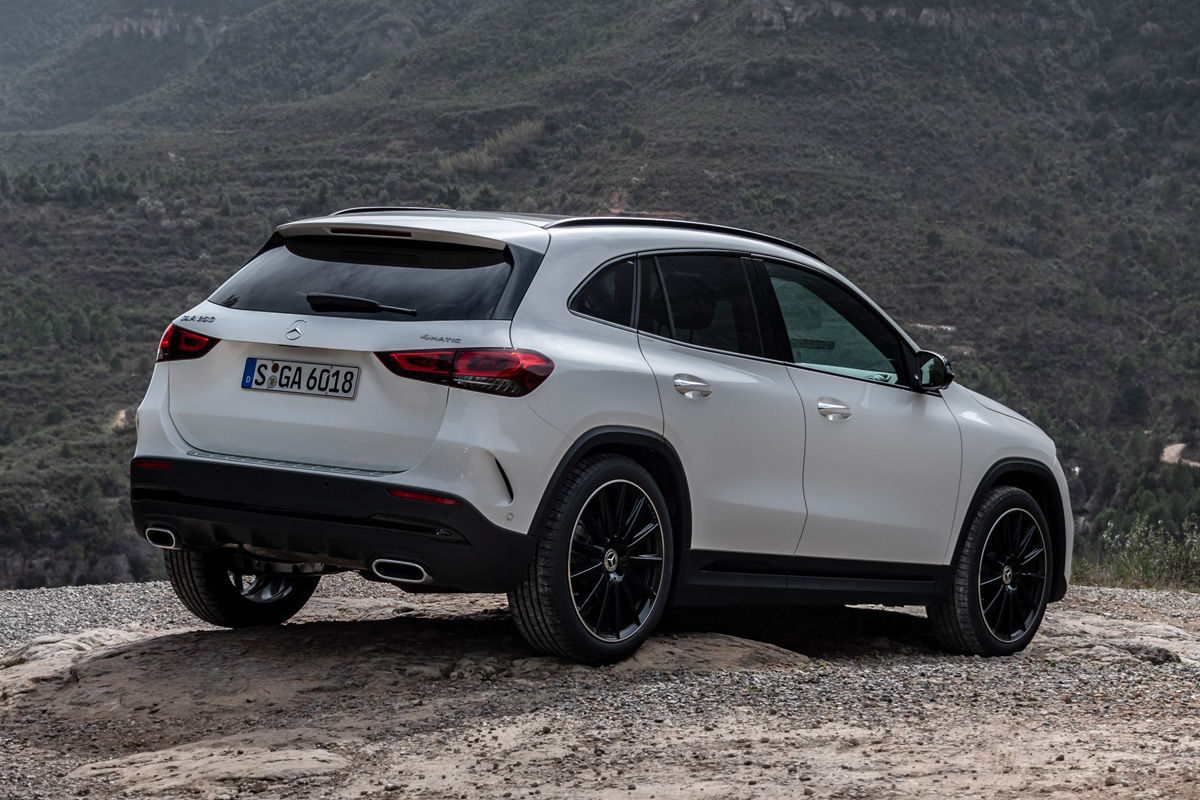
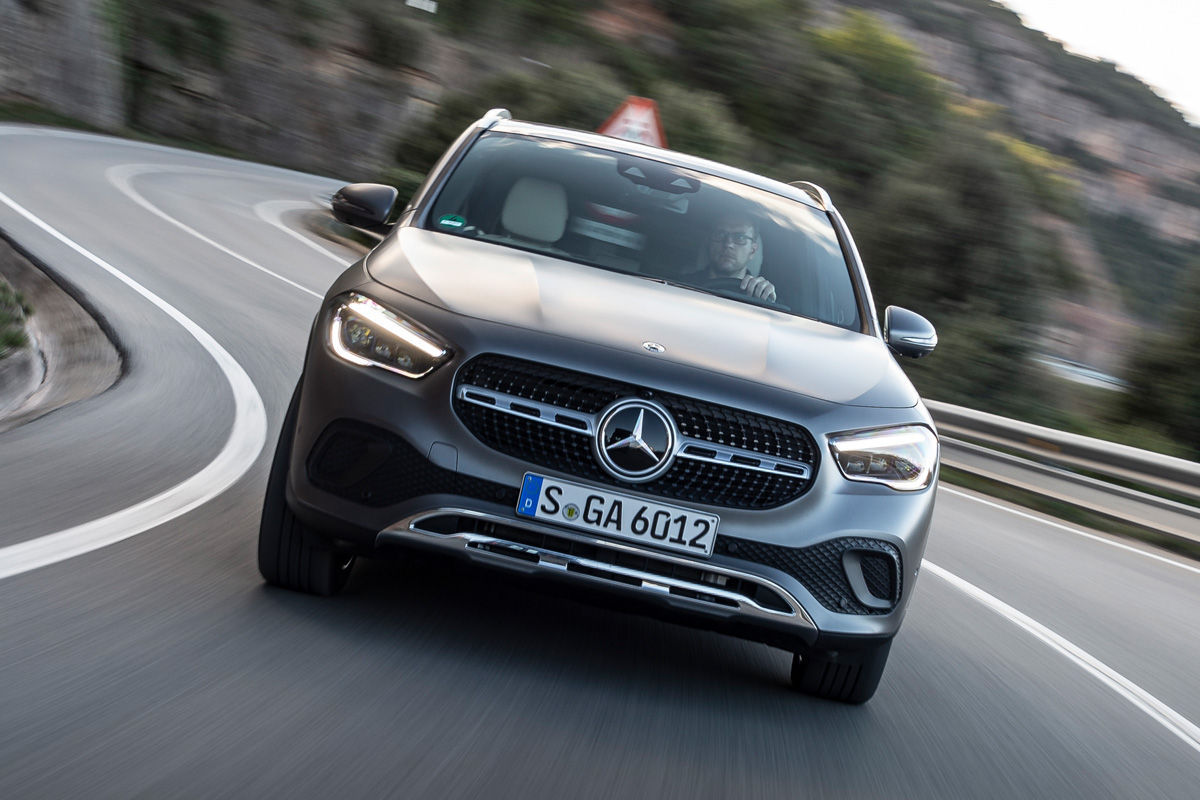
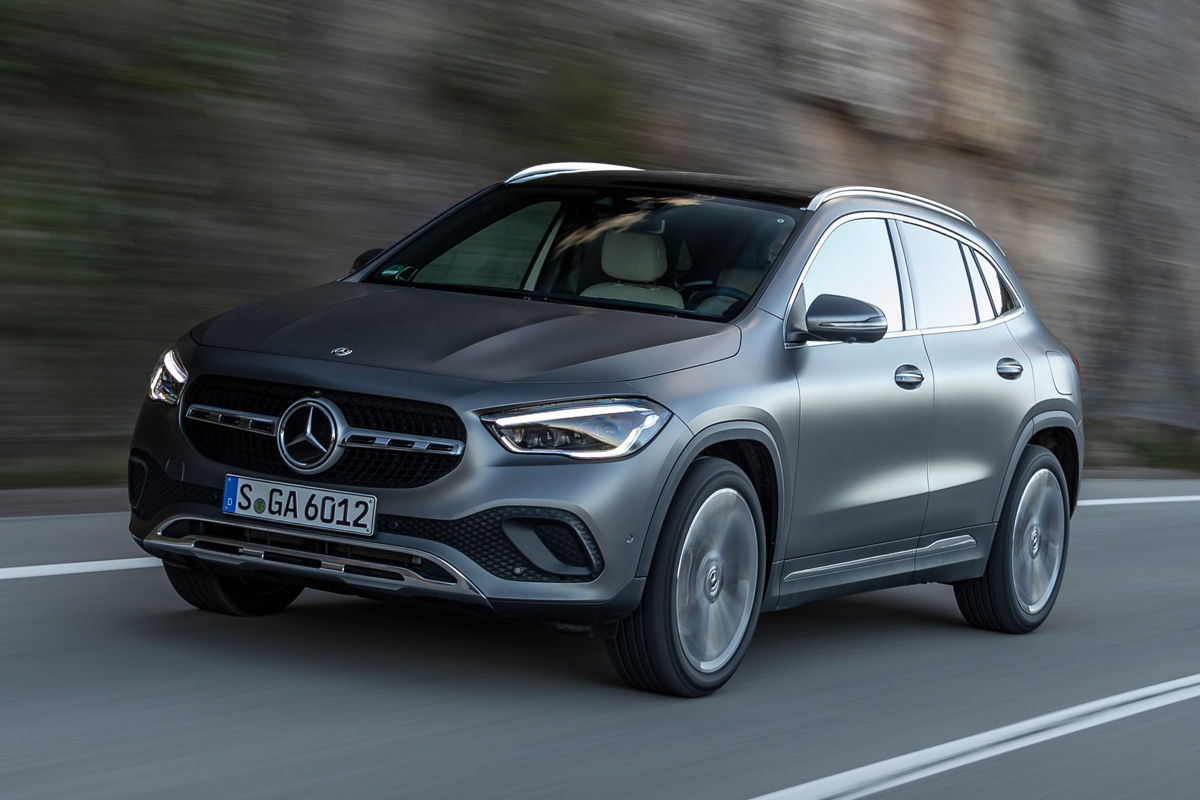
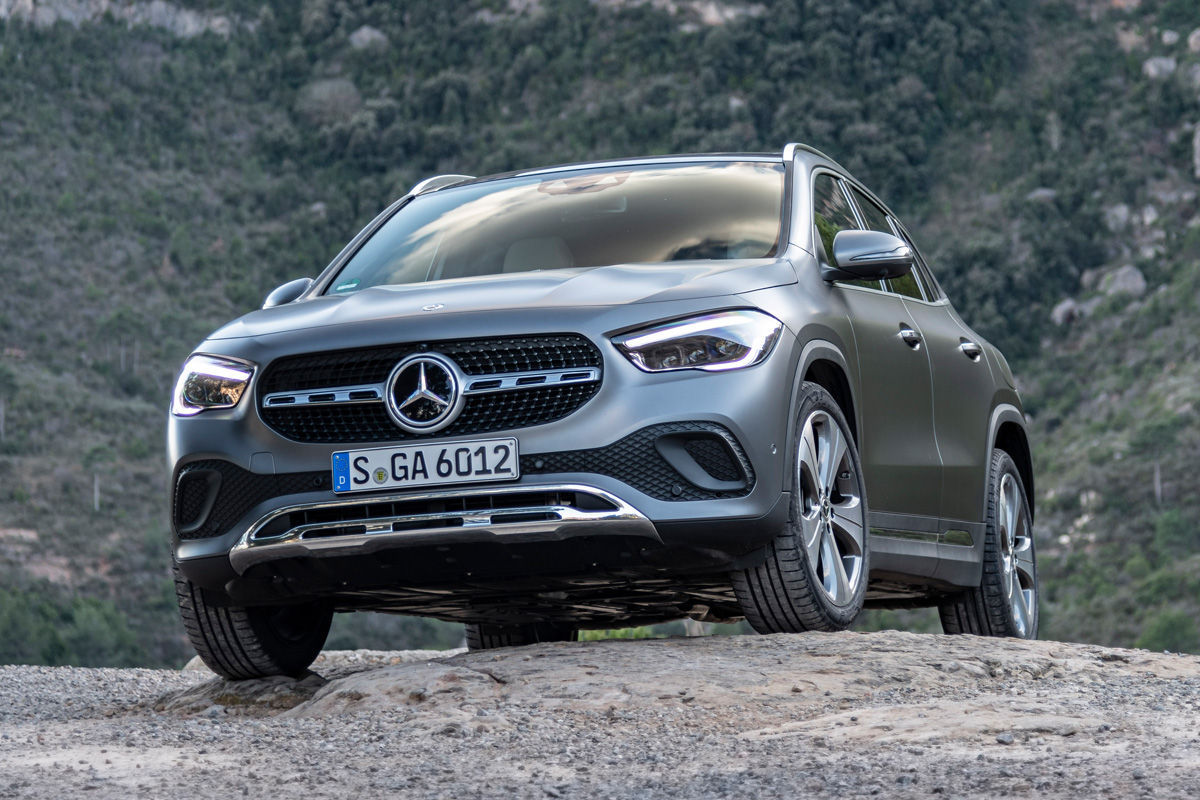
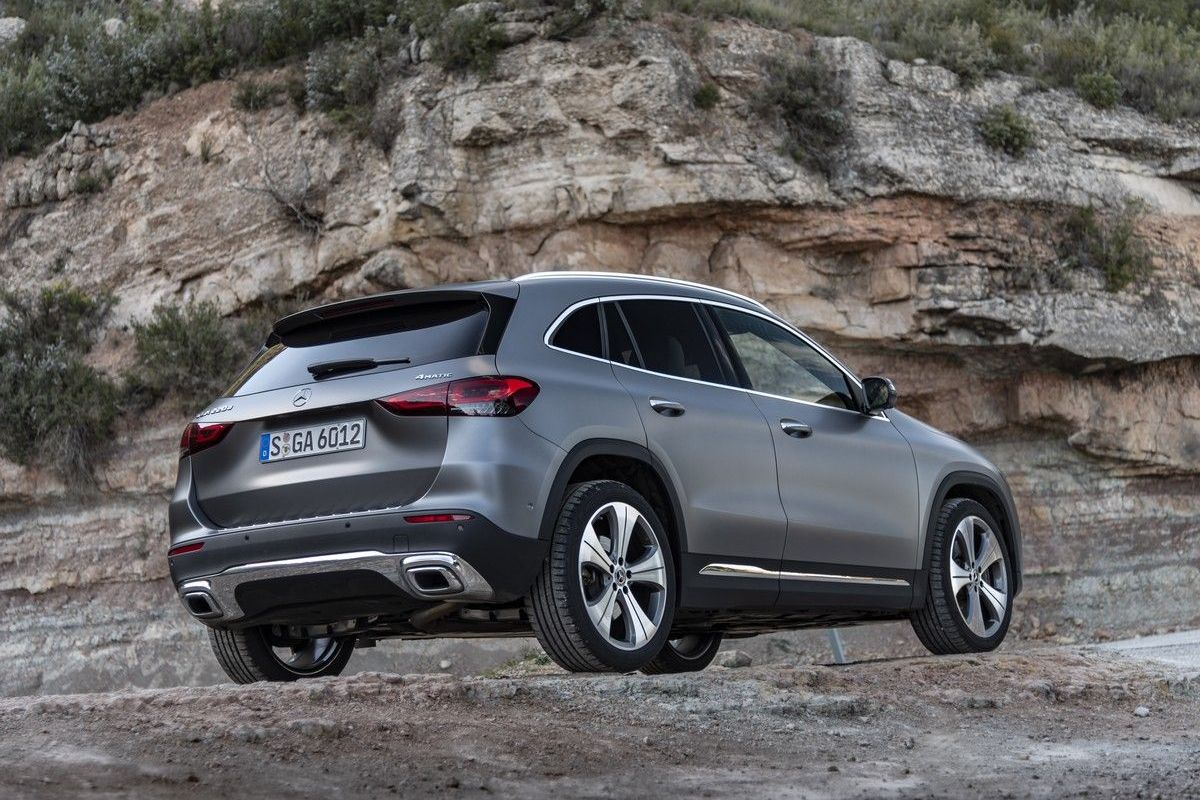
Mercedes-Benz South Africa recently gave its SUV portfolio an extensive update, which included the introduction of the all-new GLA. Cars.co.za contributor Ian McLaren unpacks the wealth of updates and improvements the Three-pointed Star's premium compact crossover offers over its predecessor.
Launched in 2014, the 1st-generation GLA was marketed as a lifestyle-oriented, adventure-seeking alternative to the then 3rd-generation A-Class. Although it shared its underpinnings with its hatch sibling, the GLA offered a raised ride height and improved all-round visibility and it immediately found favour with an audience who enjoyed its more purposeful stance – and rugged intent – compared with a traditional premium hatchback.
Suffice to say almost 1 million units of the GLA have been sold since its introduction; the A-Class has its place, but evidently many buyers favour the inherently more compliant ride quality of this raised-body derivative, as well as its roomier interior (afforded by the larger overall dimensions).
So, what’s new?
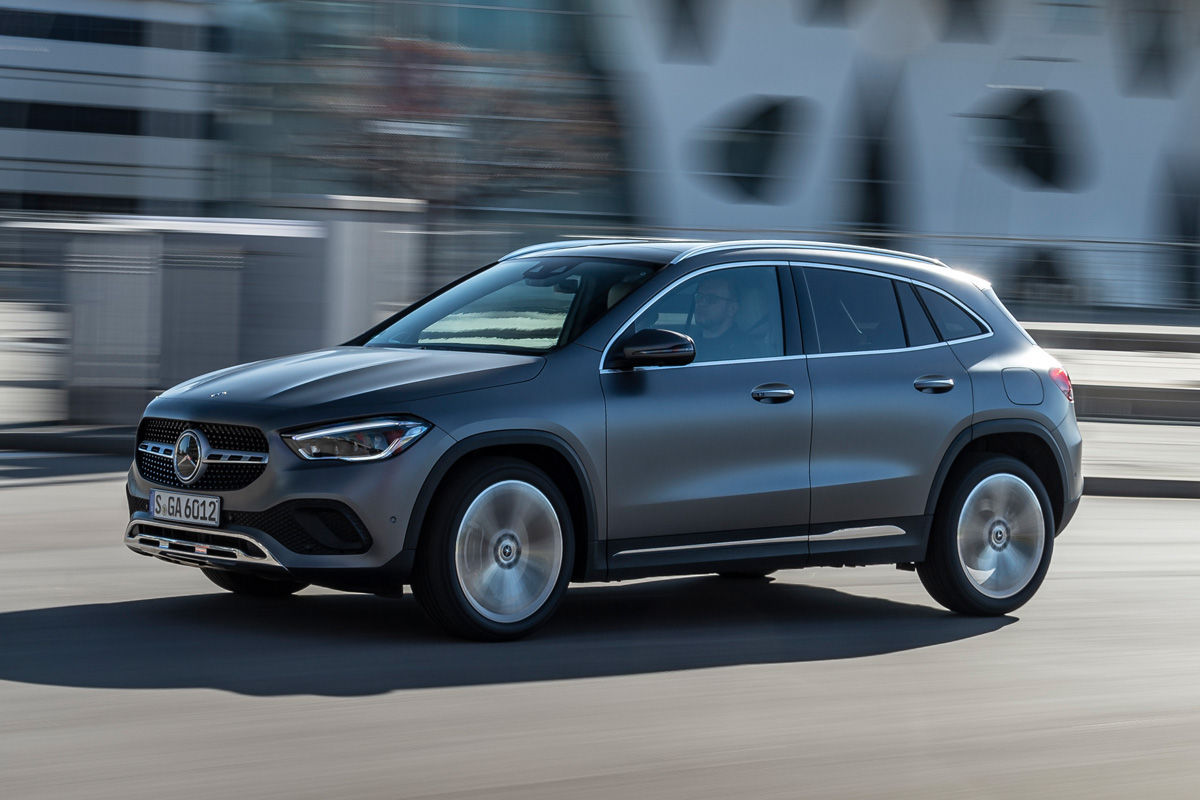
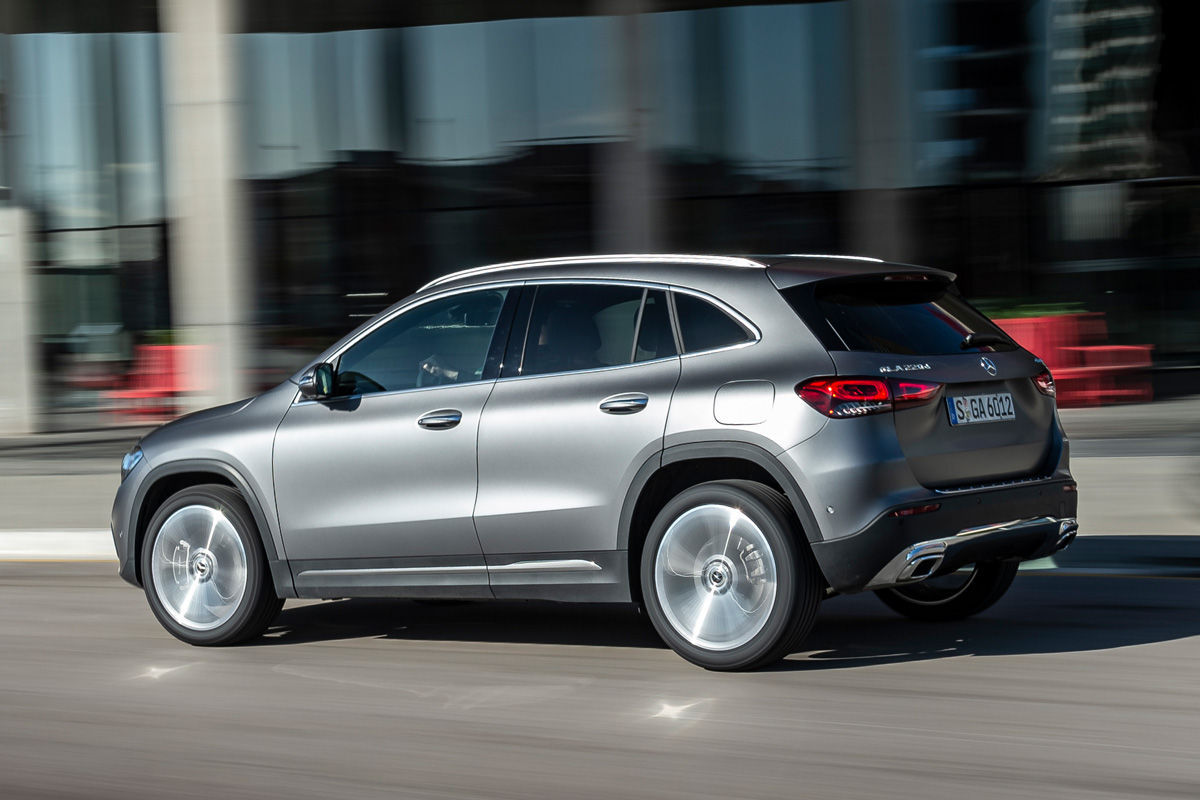
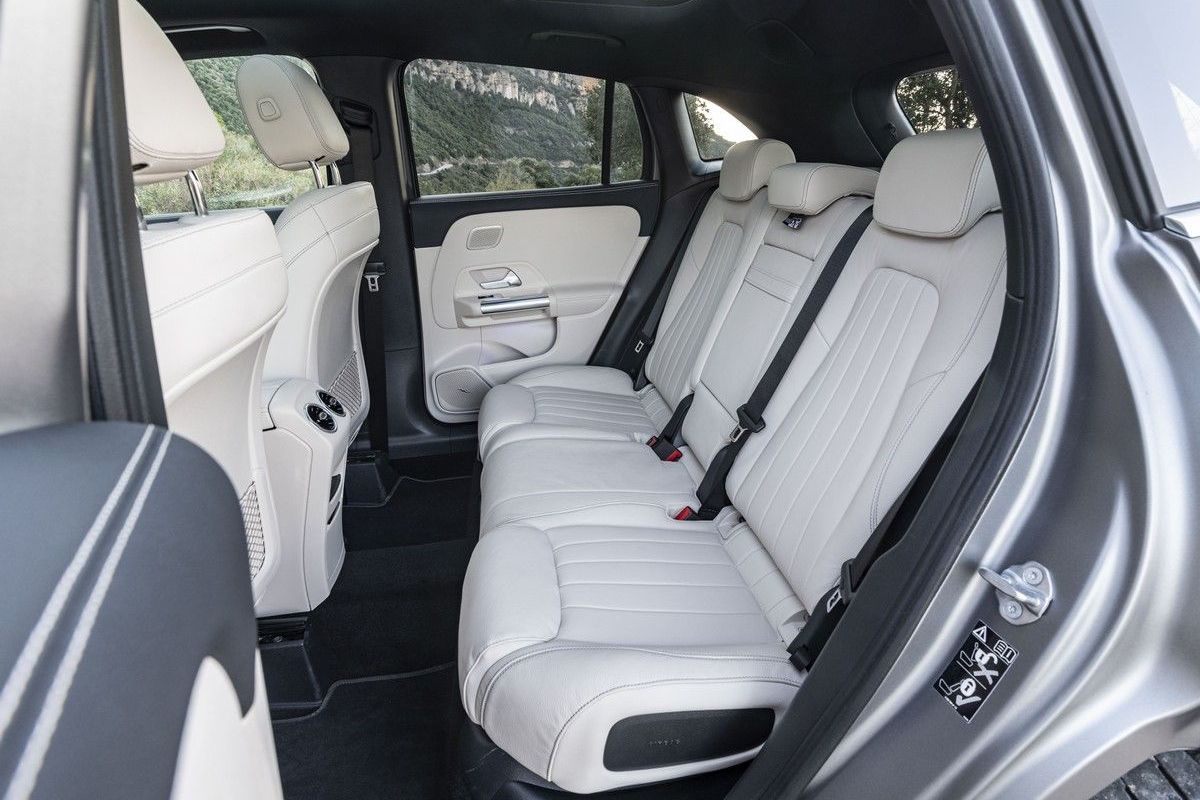
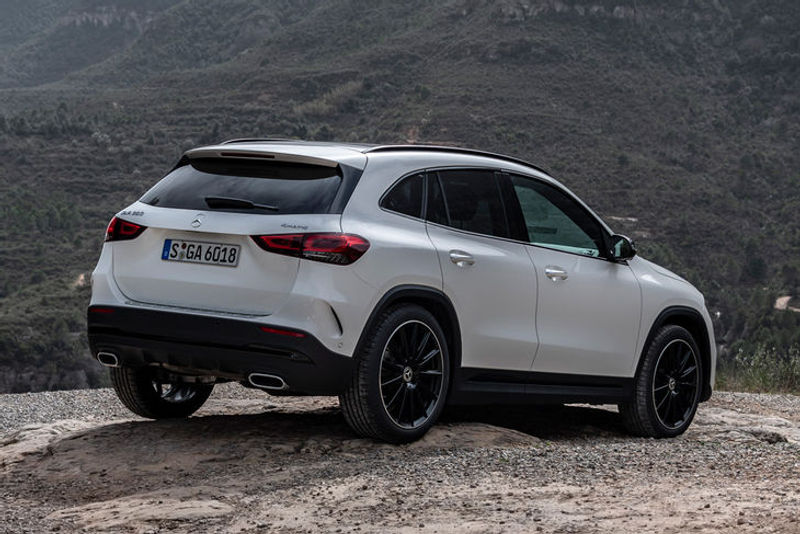
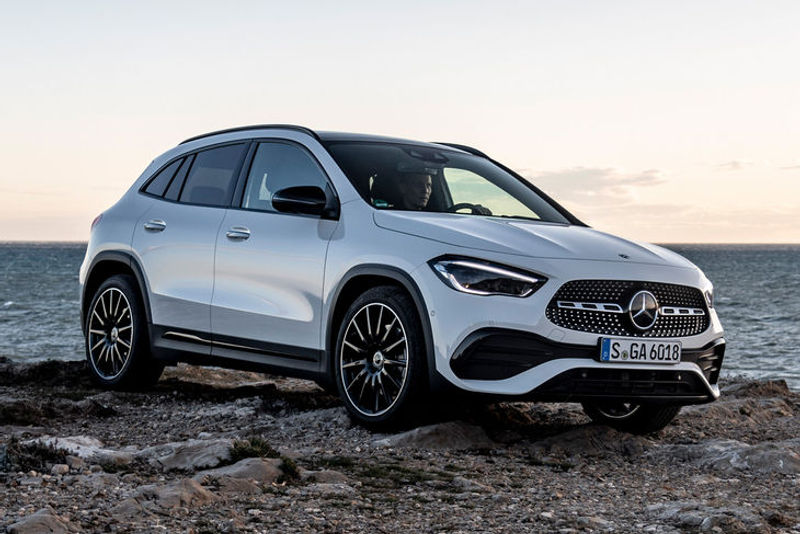
A little taller and wider, but actually shorter than the previous model, the new GLA is still more practical than the previous model.
Sharing its updated (lighter yet stiffer) MFA2 platform with the W177 A-Class, the 2nd-generation GLA incorporates a host of improvements and updates over the outgoing model. Not only is it 100 mm taller and 30 mm wider than its predecessor, but the Benz has a more purposeful stance by virtue of being 150 mm shorter than before (at 4 410 mm). That may seem like a disadvantage (in terms of packaging), but thanks to a 30-mm stretch of its wheelbase, as well the adoption of wider tracks, the newcomer has shorter overhangs and improved interior space/versatility!
The 2nd-generation GLA further features a higher ride height (up by 9 mm, to 143 mm), as well as a taller seating position. A 22-mm increase in overall headroom means that the newcomer feels that much more substantial and “imposing” when you're seated behind its steering wheel.
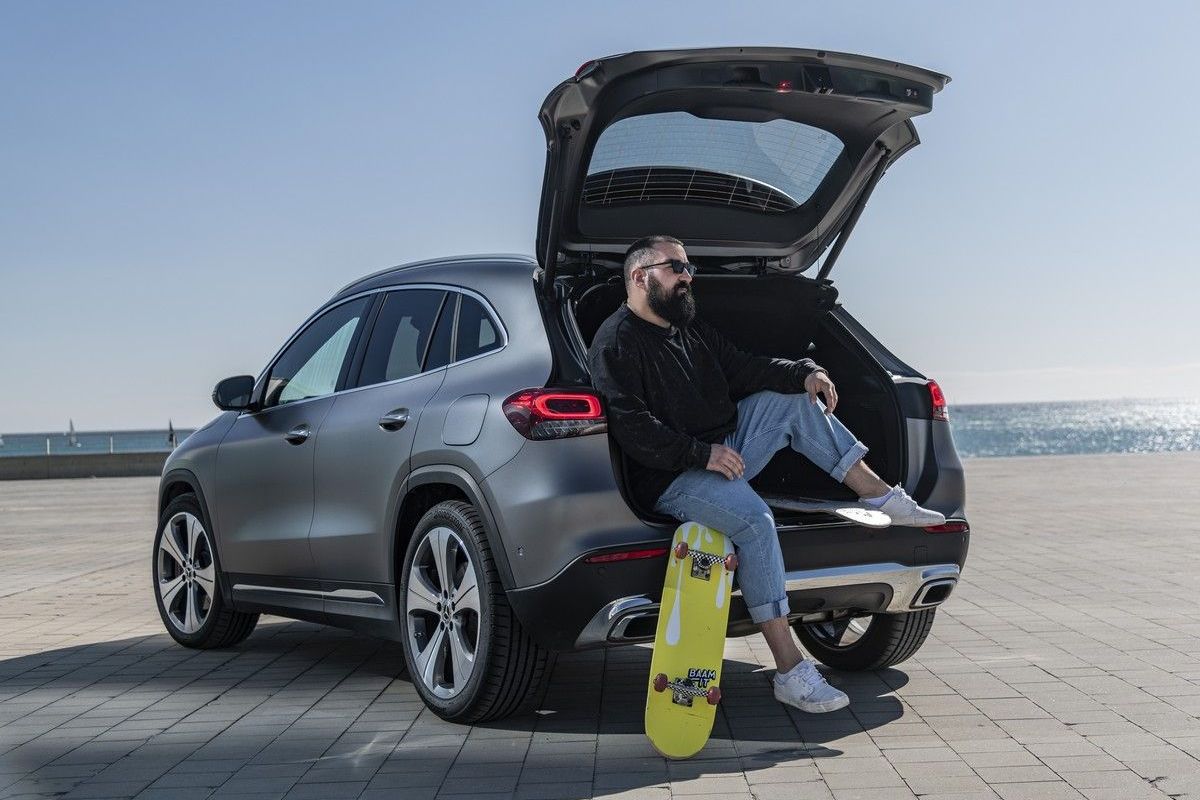
The updated packaging has resulted in a 14-litre increase in luggage capacity, with the option of a sliding 2nd-row bench and 40:20:40-split rear backrest adding additional versatility. While an electrically operated tailgate is optional, a multi-level load-bay floorboard is standard fitment.
The range
The choice is either 1 diesel or 1 petrol model, both autos.
With the new GLB introducing a degree of ruggedness with a modicum of off-road ability to the brand’s compact SUV family, the 2nd-generation GLA is offered exclusively in a front-wheel-drive guise, with a choice of either a 1.3-litre turbopetrol or 2.0-litre turbodiesel engine. The latter produces outputs of 110 kW/320 Nm, is mated with an 8-speed dual-clutch transmission and has a claimed fuel consumption of 5.1 L/100 km.
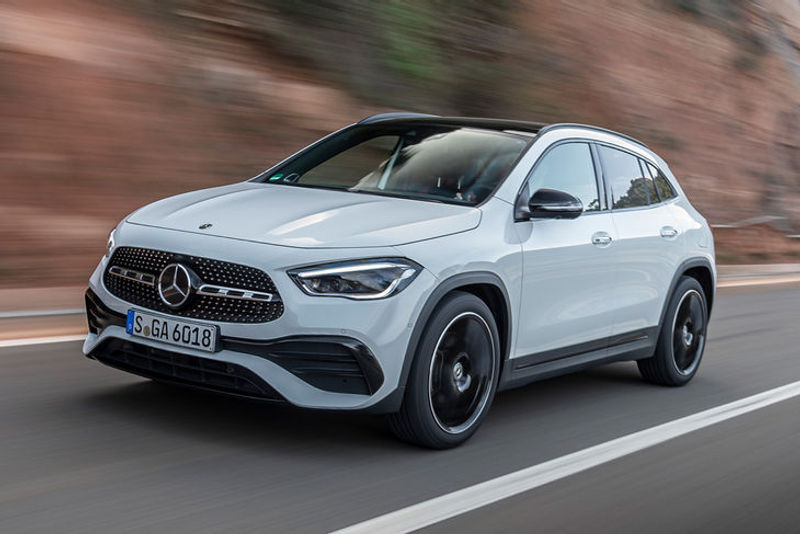
Both derivatives can be specified with 17- to 20-inch alloy wheels, along with optional Style, Progressive and AMG Line trim packages, and the enticing Edition 1 line adds red accents to the bodywork, grille and alloy wheels, as well as matte black roof rails.
Added innovation comes in the form of various optional driver assistance packages, including a car wash function that automatically folds your mirrors, closes all windows and calls upon the parking-camera system to help guide you into the wash bay.
While some launch attendees saw hints of Volvo and, indeed, Opel in the new GLA's design, the consensus was that the 2nd-generation of Benz’s smallest SUV offering looked altogether sleeker than before, effortlessly complementing the brand’s broader portfolio of raised ride-height vehicles.
Behind the 'wheel
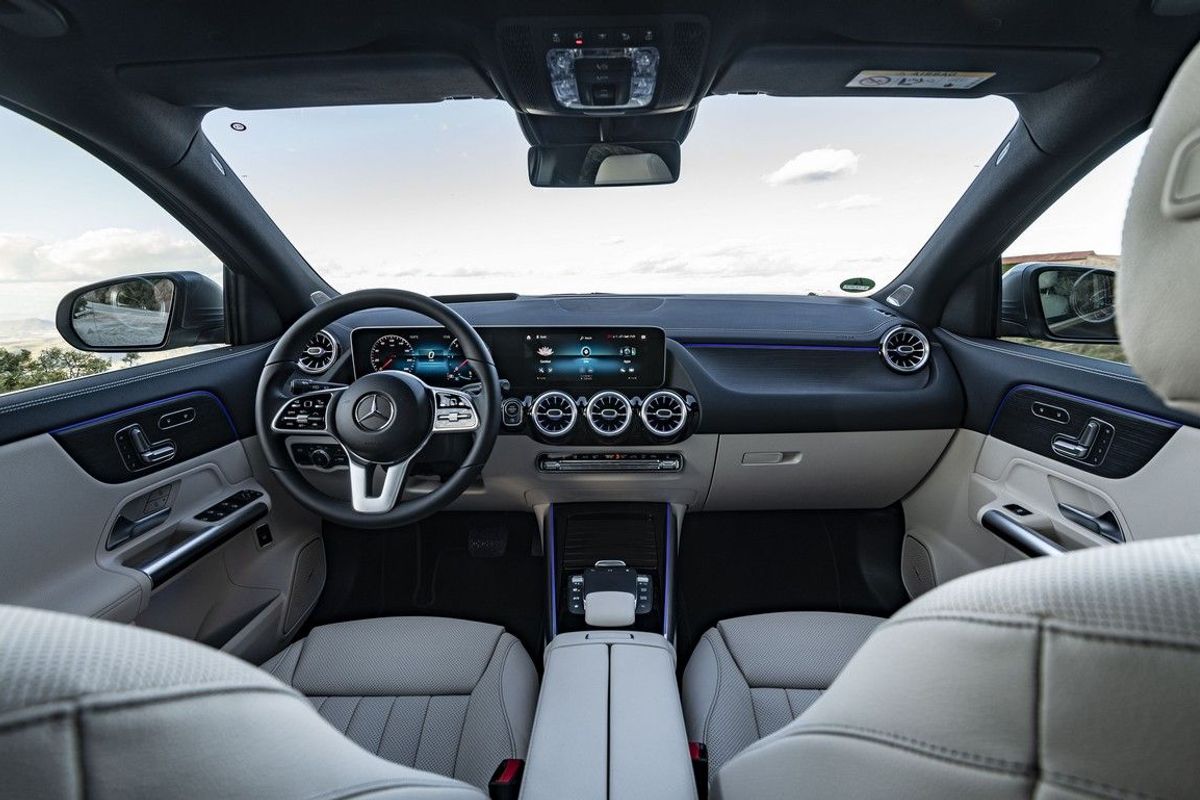
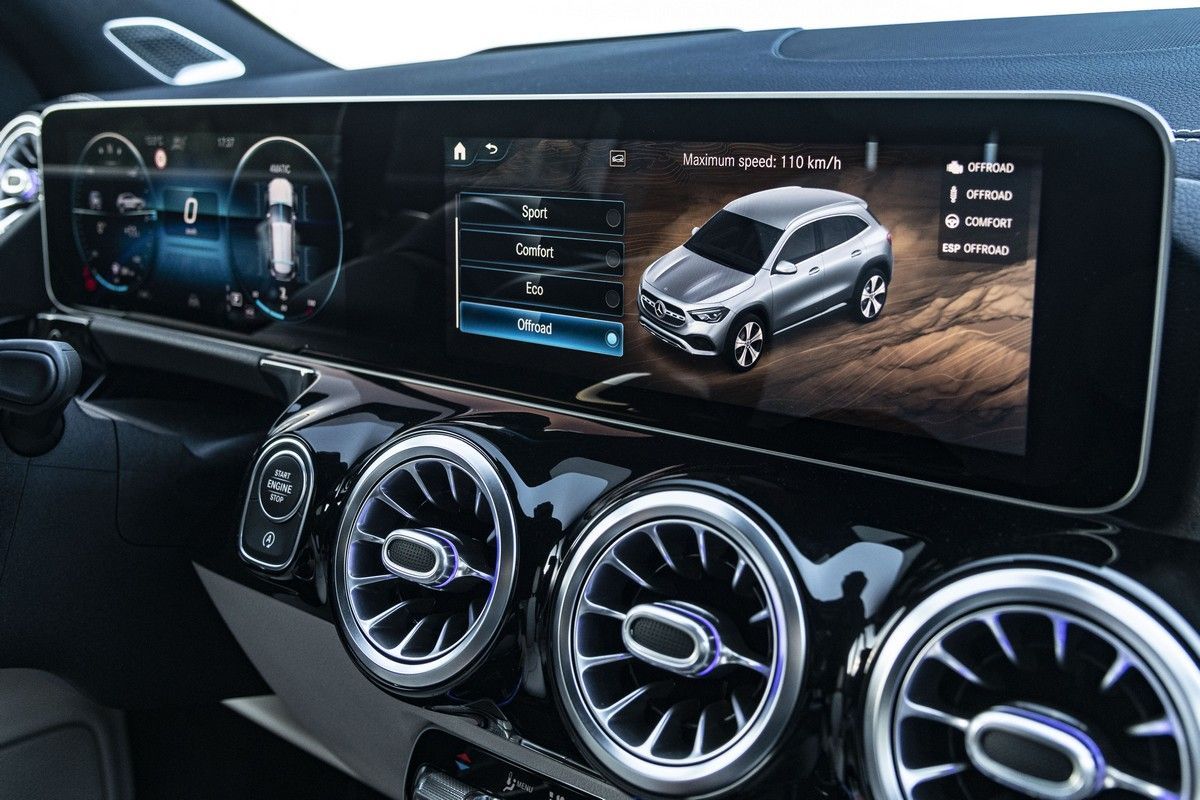
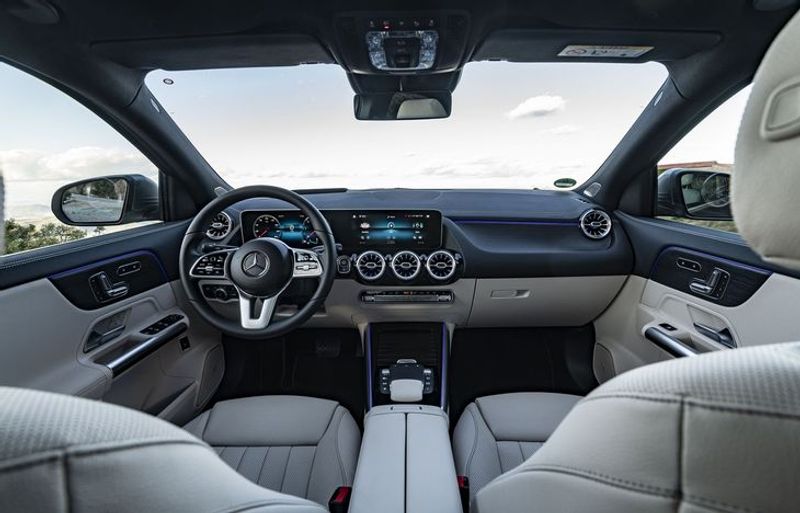
Not much in here to tell the GLA apart from the A-Class. It's a very modern and classy interior with plenty of tech.
We had an opportunity to put the GLA 200 through its paces during the model's media presentation. The derivative's 1.3-litre turbopetrol develops 120 kW, with 250 N.m of torque available from 1 620 to 4 000 rpm, and is mated with a Getrag-sourced 7-speed dual-clutch gearbox. The 200 does not pull away with tremendous urgency, but its drivetrain quickly settles into its duties, complementing a package that feels suitably lighter on its, um, wheels and, indeed, more nimble than before. Mercedes-Benz claims average fuel consumption of just 6.0 L/100 km for the GLA 200.
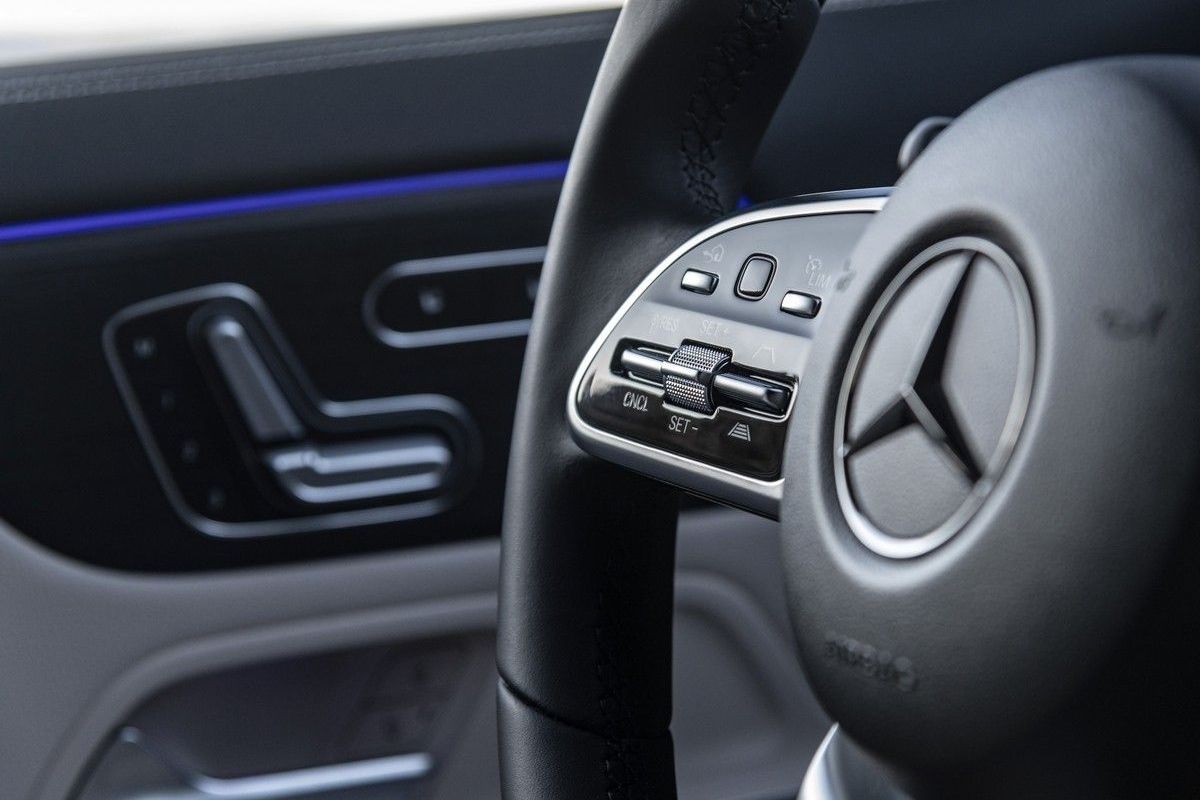
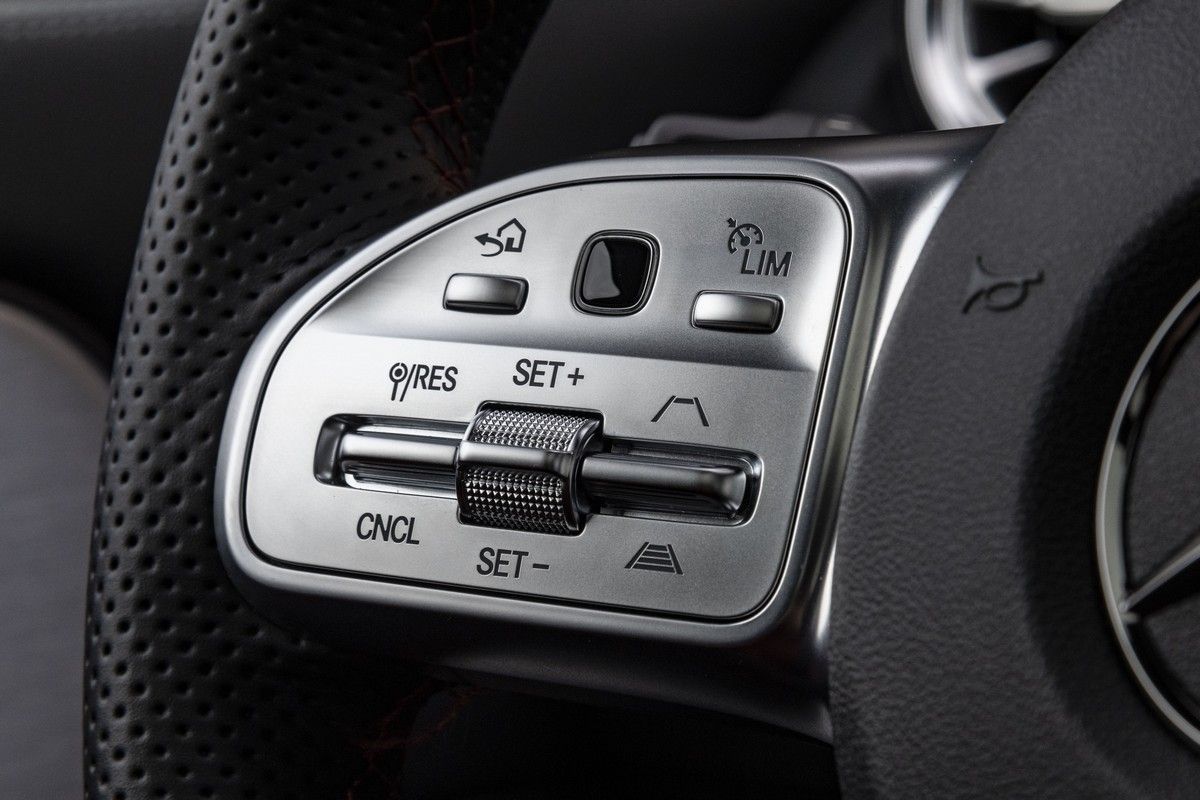
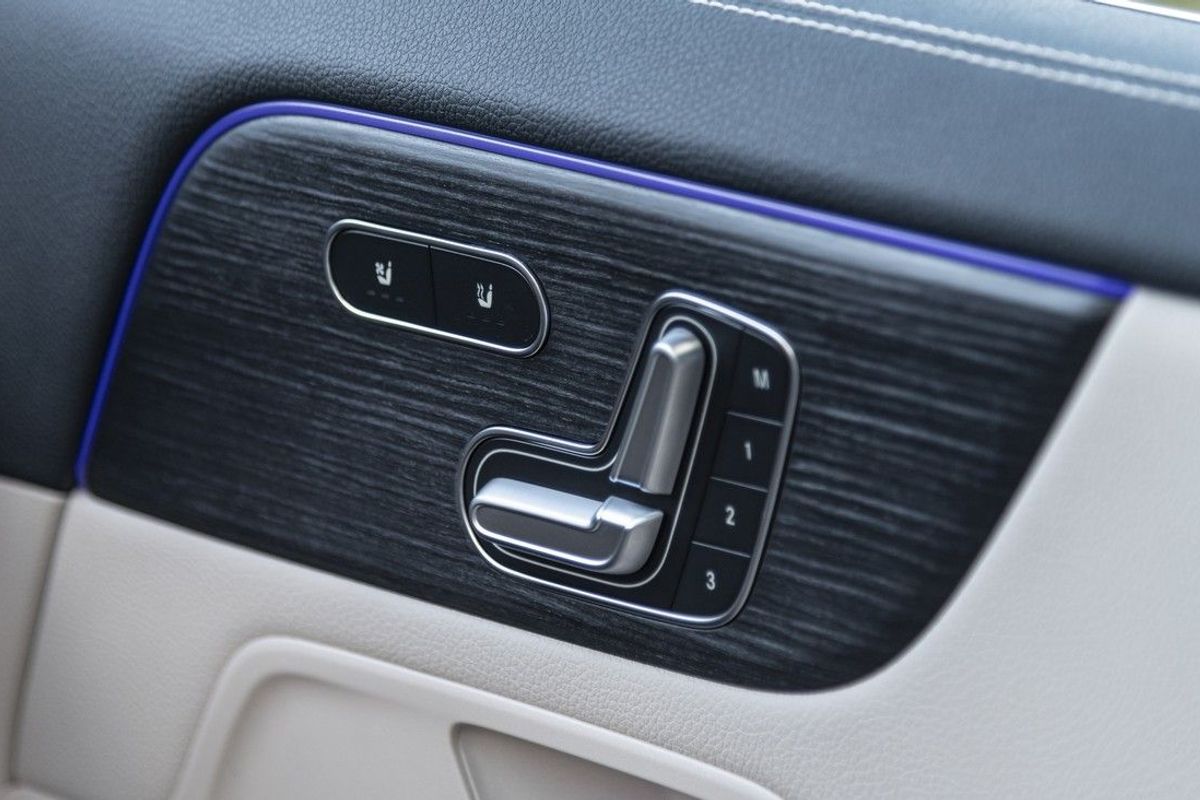
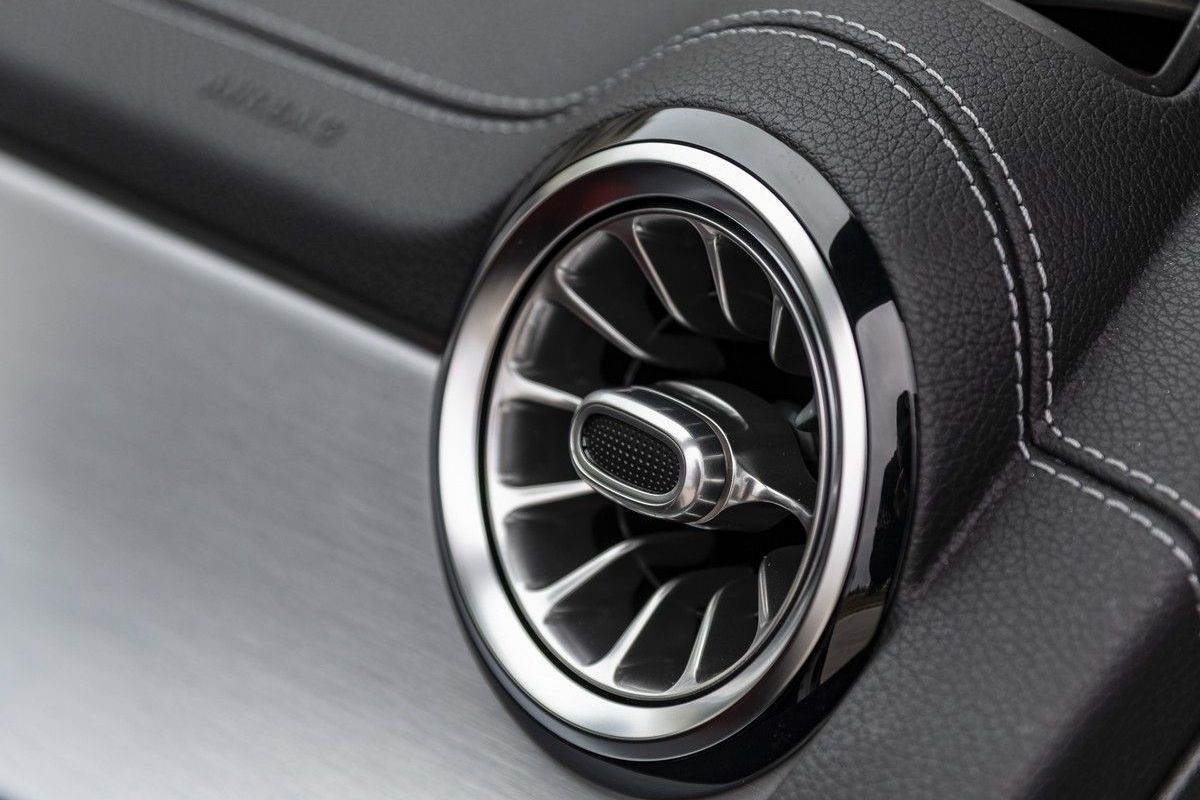
The GLA’s interior mimics that of the 4th-generation A-Class. It’s a good thing, too, with all controls feeling suitably light to the touch and generally well put-together. Subjectively, the Benz comes within a whisker of matching the material feel of its class-leading (in this regard) rival, the Audi Q3.
As with the hatchback, it’s advisable to spend a bit more and opt for the pair of 10.25-inch display screens (the digital instrument cluster and multimedia screen), if only to experience both the crispness and functionality of the brand’s impressive MBUX infotainment system. Broadly configurable in terms of layout, this touchscreen-based technology is also accessible via the “Hey, Mercedes” voice-activated wizardry.
While the lightness of the electrically assisted power steering may take some getting used to on the open road, around town it suits the feisty character of this model when it comes to negotiating the hustle and bustle of urban living. A suitably tight turning circle certainly helps as well.
Most buyers will probably want to specify the optional larger wheels, shod with suitable low-profile rubber, but because the GLA has a reasonably pliant suspension tuning, at least compared with its lower-riding stablemates, the newcomer feels less susceptible to a choppy ride.
Summary
There are plenty of A-Class platformed versions to choose from with the GLA being the entry into the Merc SUV lineup.
There’s a lot to like about the new GLA. It feels notably more substantial on the road compared with its predecessor and offers more in terms of comfort and versatility. Whereas the previous model broadly improved on the minor shortcomings of its A-Class siblings (of which there were a few, including ride quality and interior space), the new car feels like an upgrade over its hatch and sedan equivalents. It offers a bit of respite from the lengthy options list with standard features such as automatic climate control, auto-dimming rear-view mirror and electric-folding side mirrors (to name a few), but moreover, it has more presence/a greater sense of occasion than its more traditional siblings, which explains its premium pricing.
Having said that, in a hotly contested segment – where pricing doesn’t seem to play as big a role in buyers' purchasing decisions – the GLA is a credible rival to the aforementioned Audi and BMW X1; it also represents a prime entry-point into the ever-expanding Mercedes-Benz SUV family.
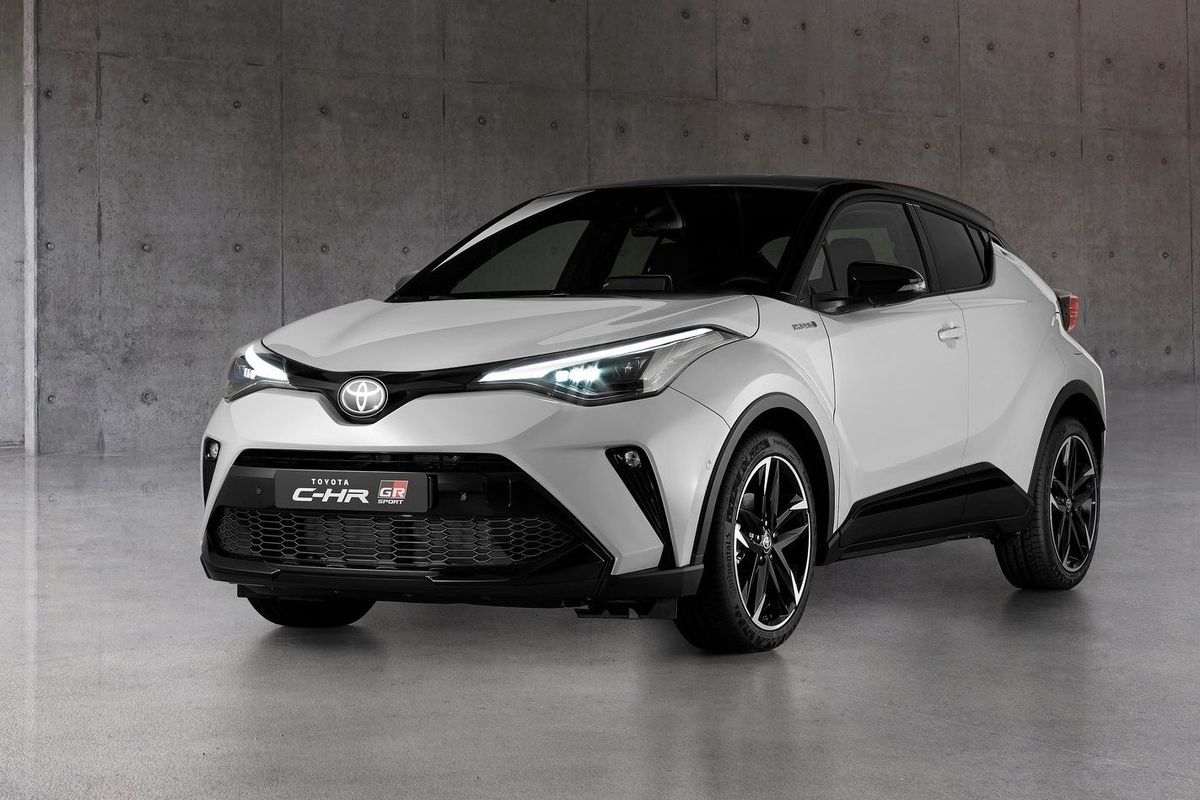
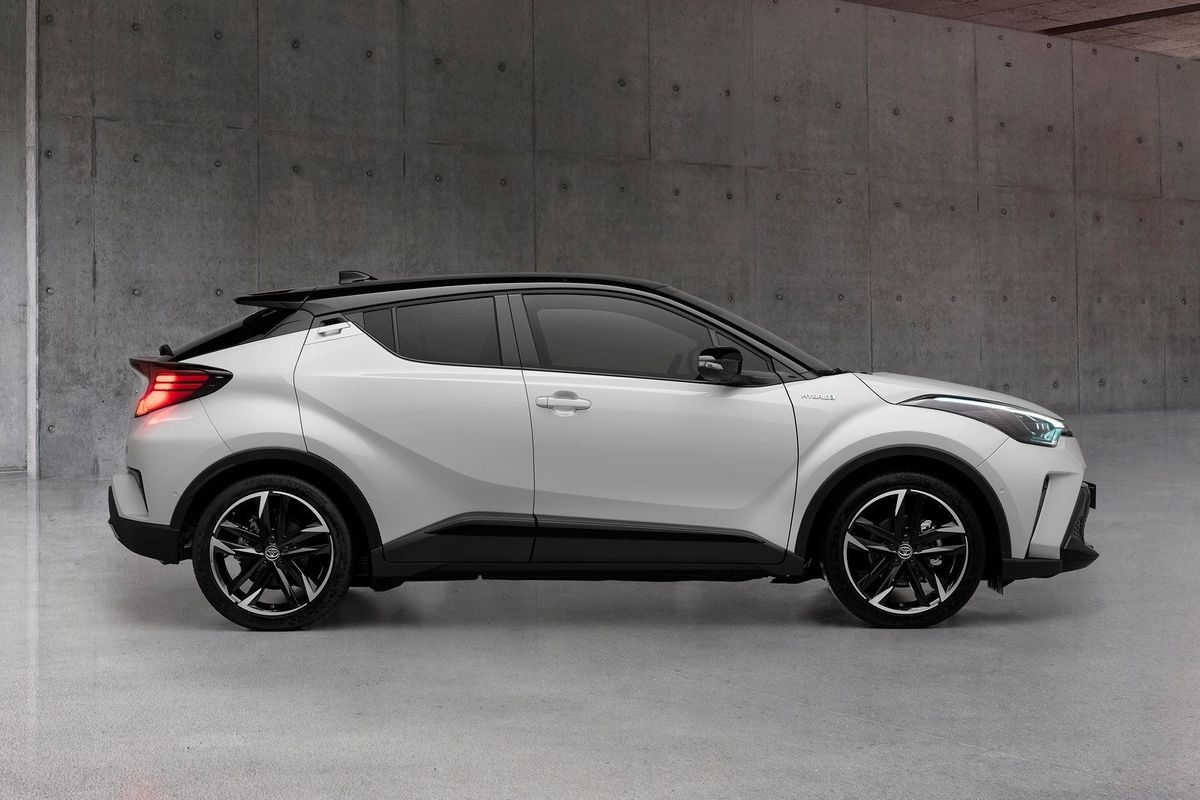
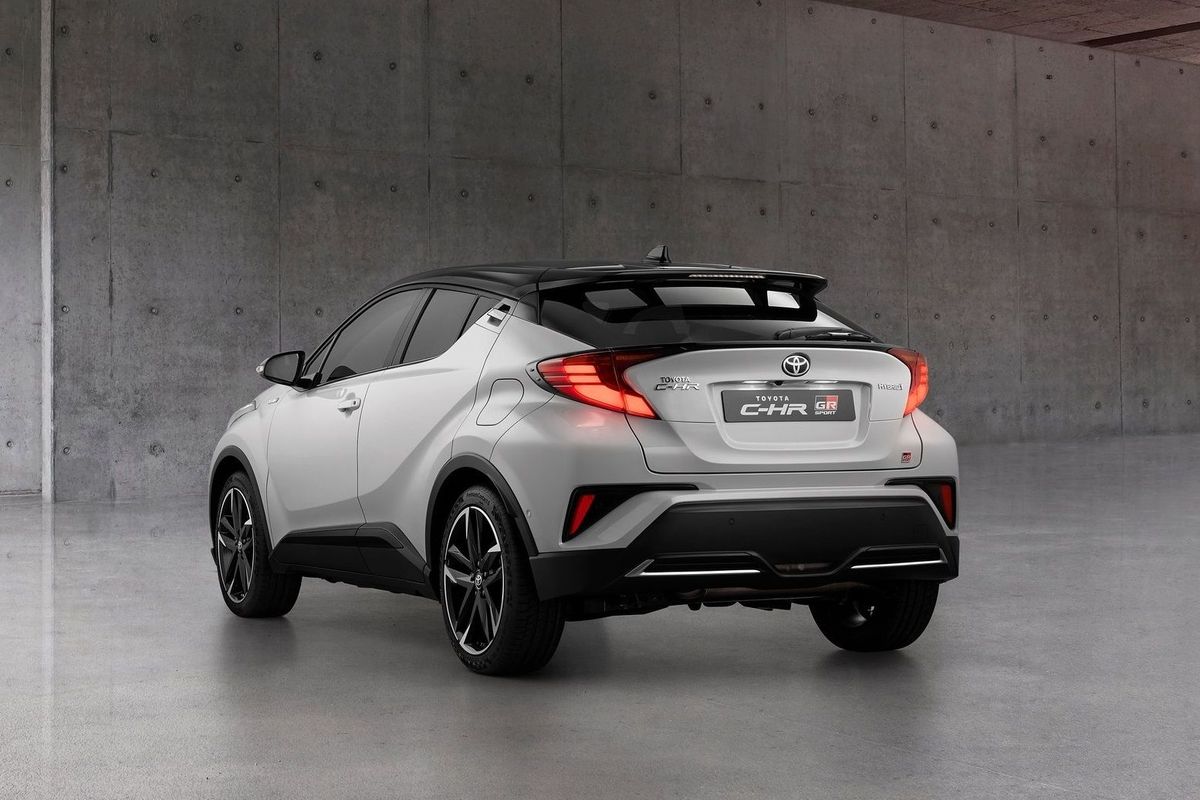
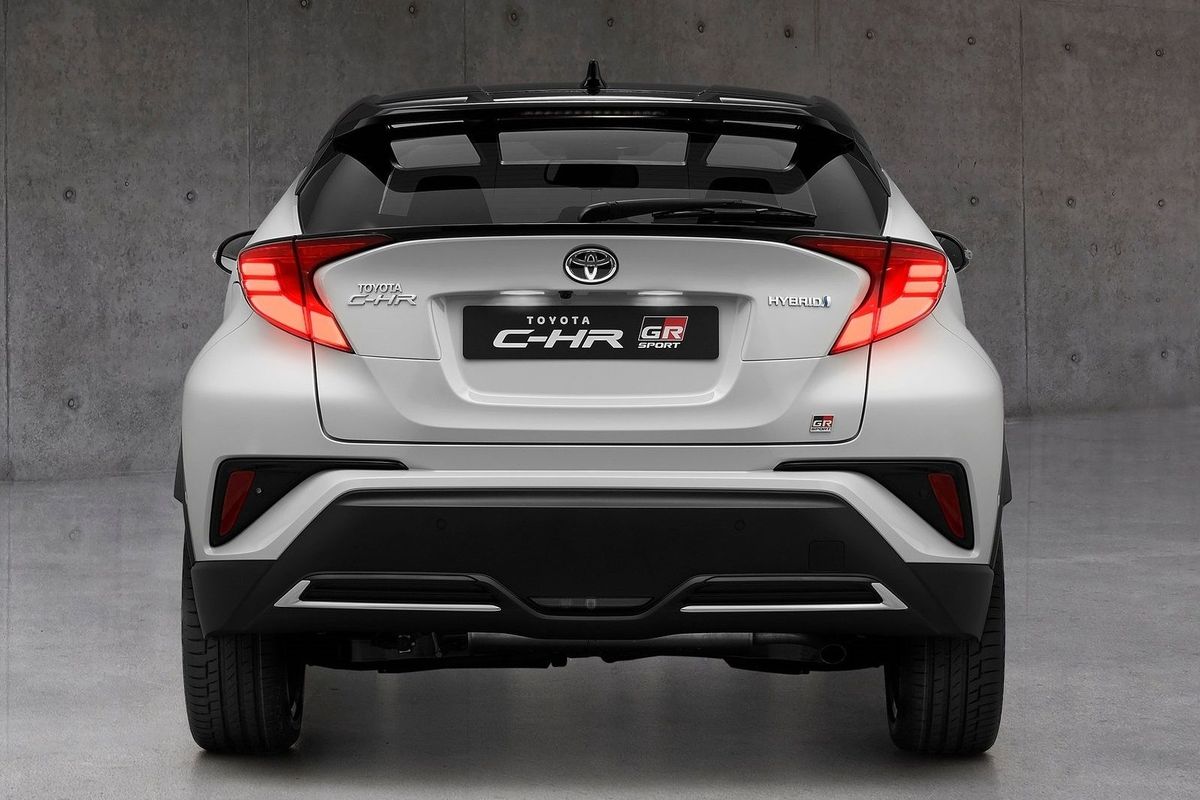
Toyota has taken the covers off of the 2021 C-HR GR Sport. While its not the outrageous performance model we're craving, there's no denying it's quite the looker!
Toyota's performance hierarchy is complex. Petrolheads will be lusting after the hardcore GRMN and GR models, while those who want to look the part can opt for the GR Sport range. The Toyota C-HR is a popular model, with 120 000 European sales in its first year. Assembled on the TNG platform, it combines fashionable styling with pleasant driving manners. The SA-spec Toyota C-HR is a finalist in the CarsAwards-powered by WesBank, where it takes on the Subaru XV and Mazda CX-3.
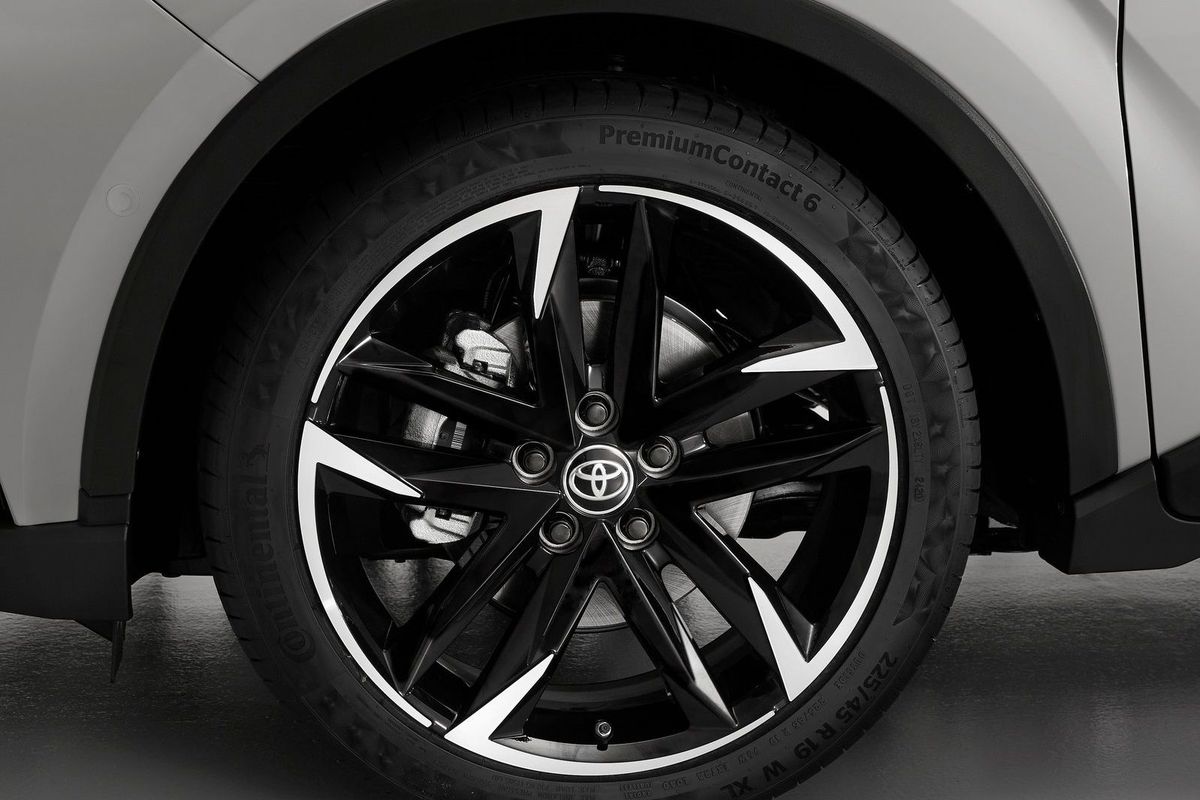
With the Toyota Gazoo Racing flavour, there's bolder and more dynamic focused styling. The model receives some updates on the exterior, in the cabin and in the tech department. Visually, the bi-tone contrast combines well with a sporty-looking front end with piano black detailing. The bumper is a bit more aggressive and there are 19-inch alloy wheels on each corner. There's a subtle GR Sport logo on the rear as well as a bespoke under-bumper trim garnish.
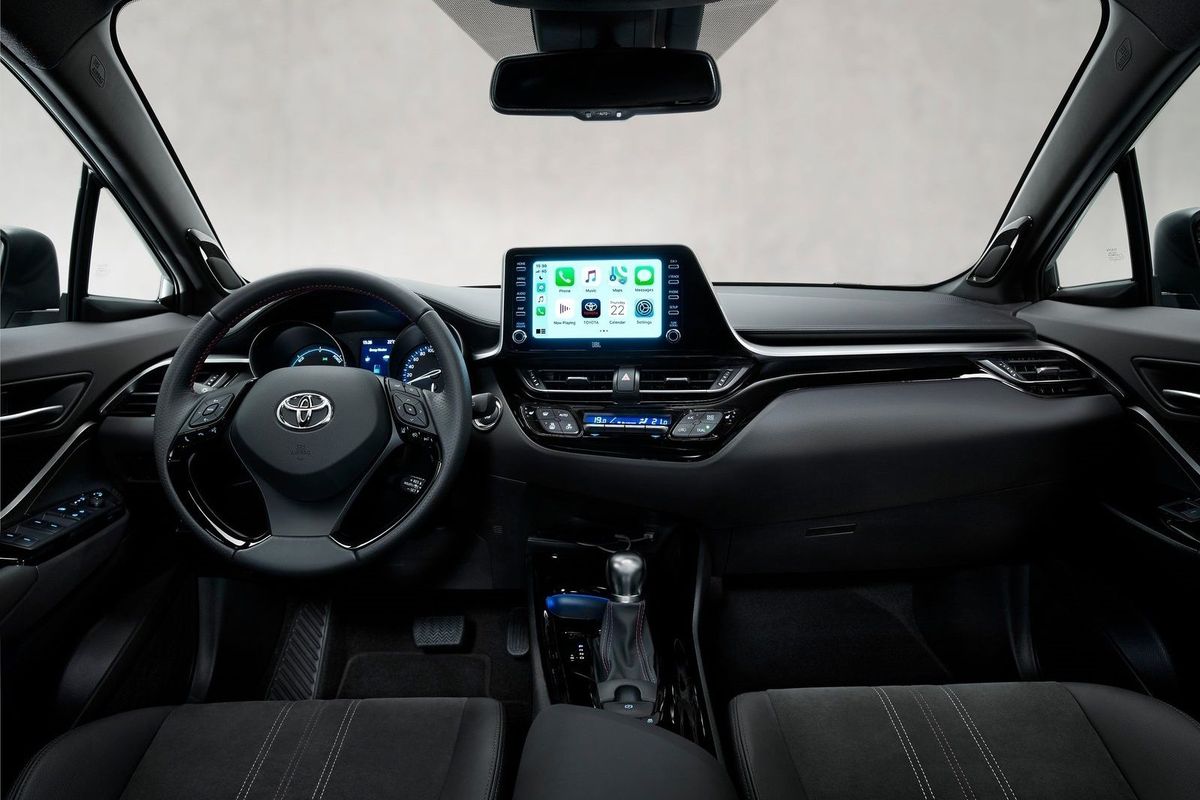
Inside, the cabin features a choice of Alcantara-trimmed leather or all-fabric seat upholstery, both enhanced by a GR-inspired Red and Grey stitching theme. There's also a perforated leather steering wheel rim, red stitching accents to both the wheel rim and the gear lever gaiter, model unique scuff plates, the GR Sport logo, a GR stop/start button and a GR start-up animation in the driver's instrument binnacle TFT screen. The 2021 Toyota C-HR gains the latest version of Toyota Safety Sense too.
While the GR Sport trim generally focuses on giving a vehicle some visual punch, Toyota has given the C-HR a revised suspension and steering tune, which the brand says will 'perceptibly improve the GR Sport's dynamic behaviour.'
European sales of the Toyota C-HR GR Sport will start in January 2021.
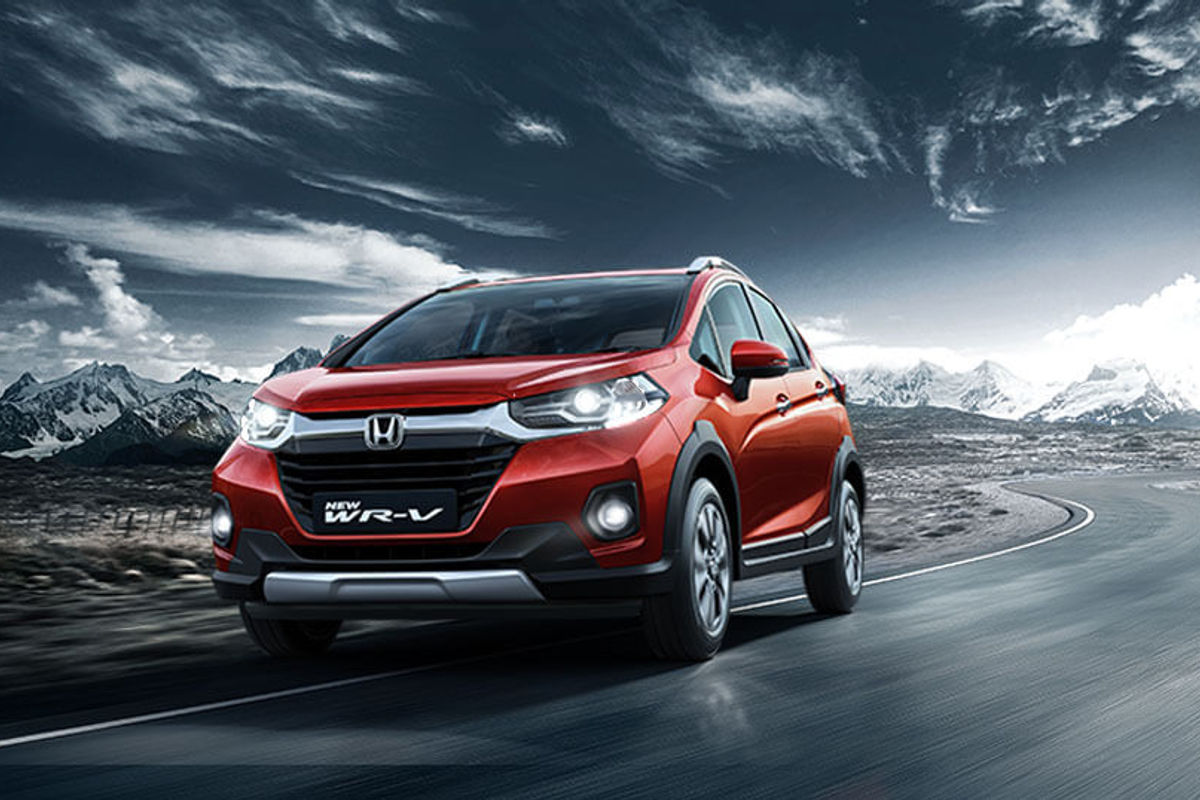
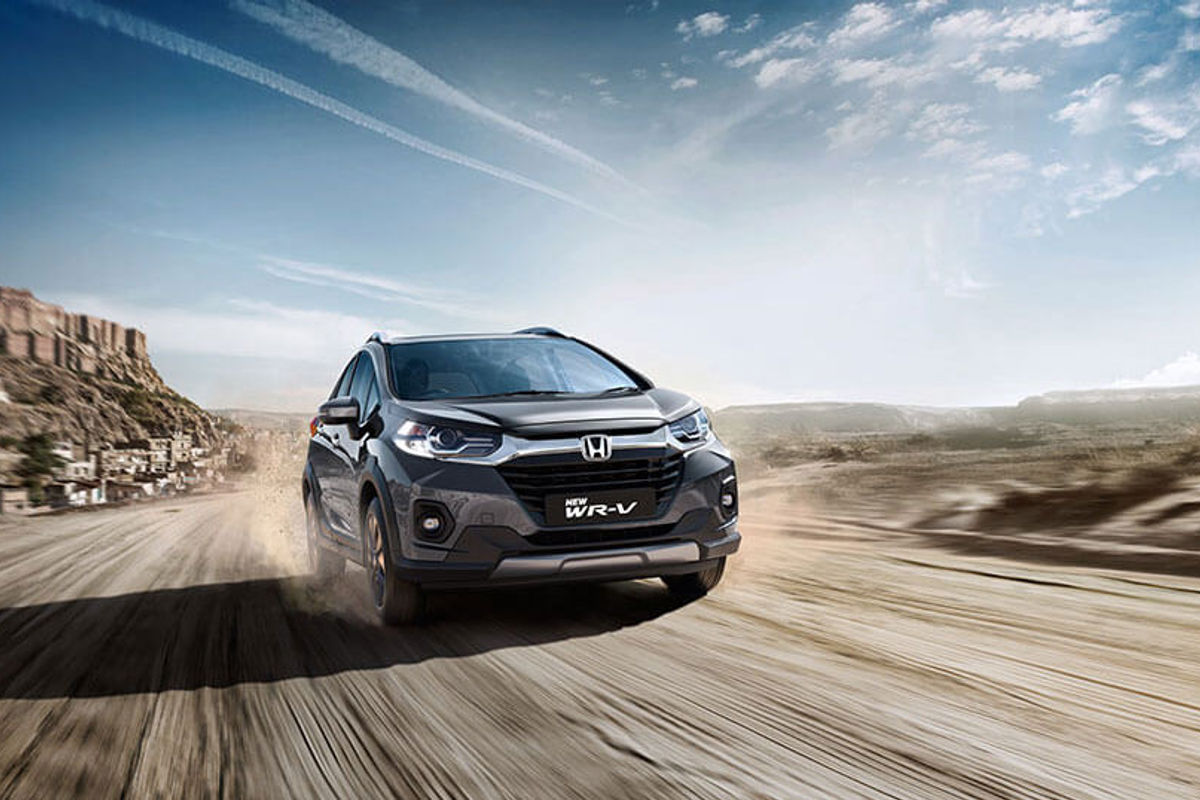
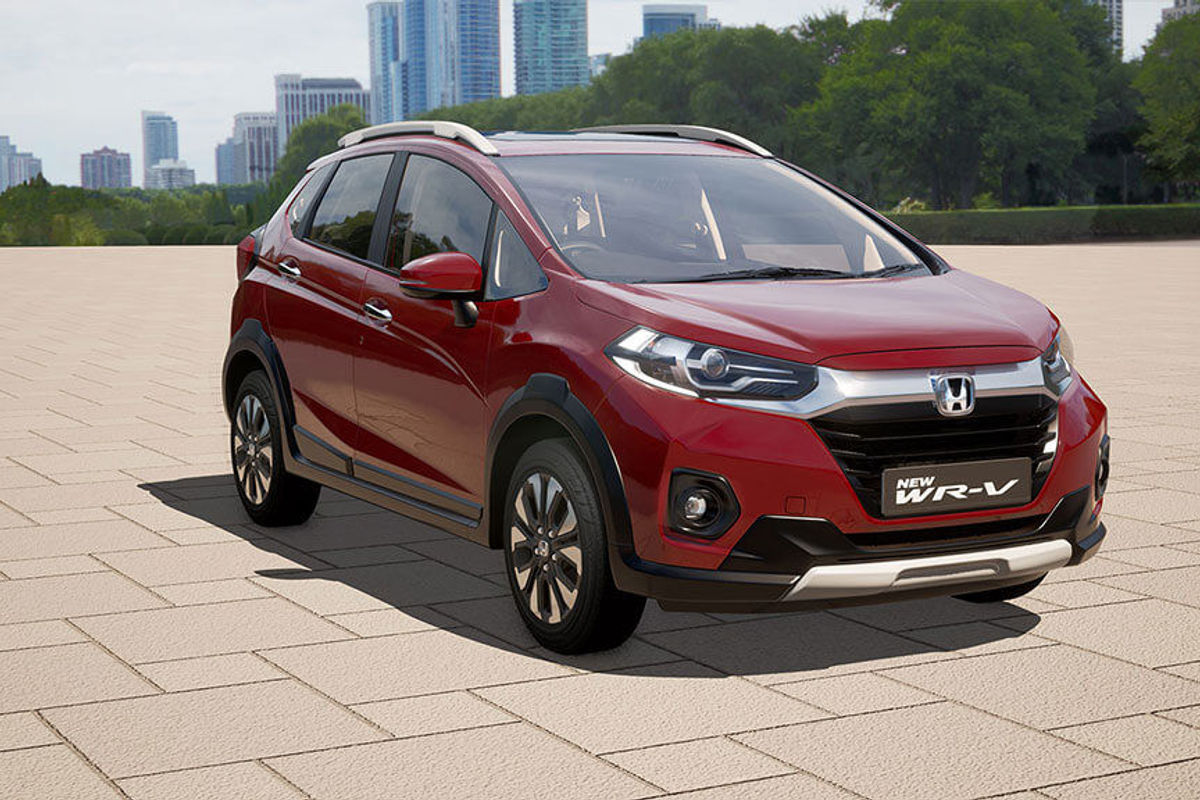
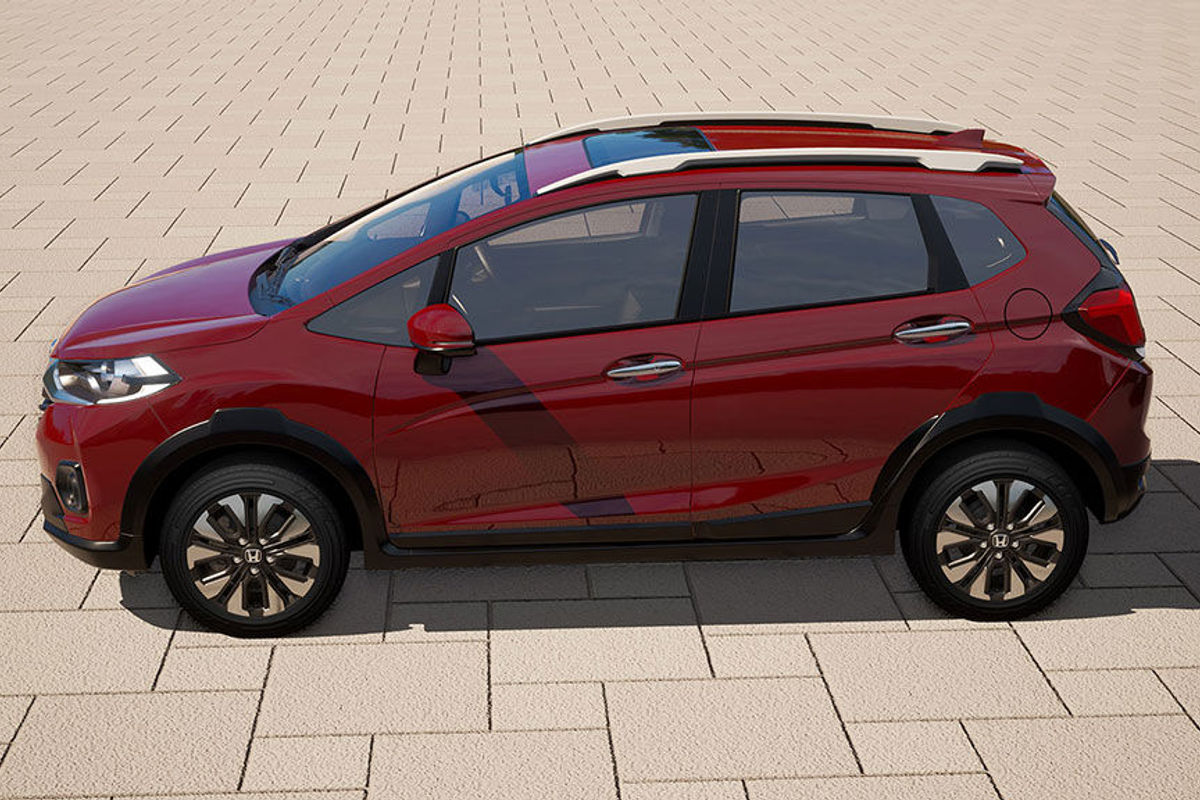
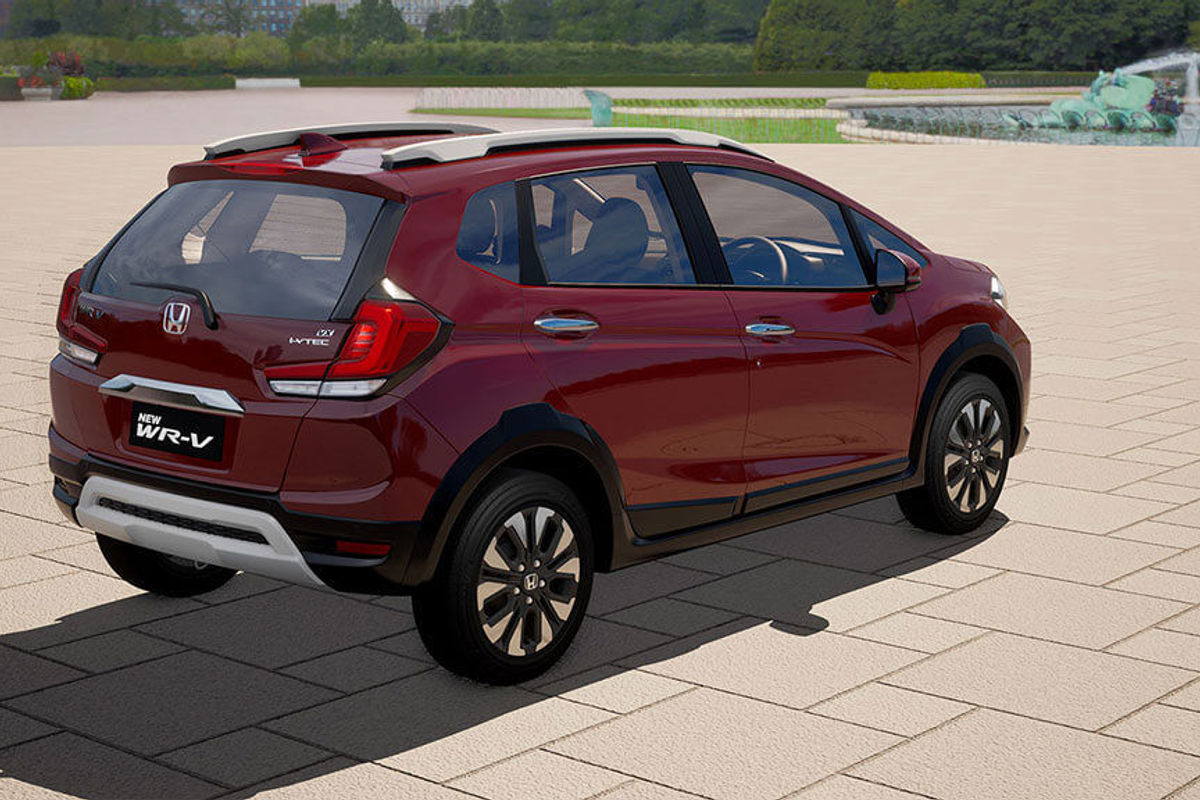
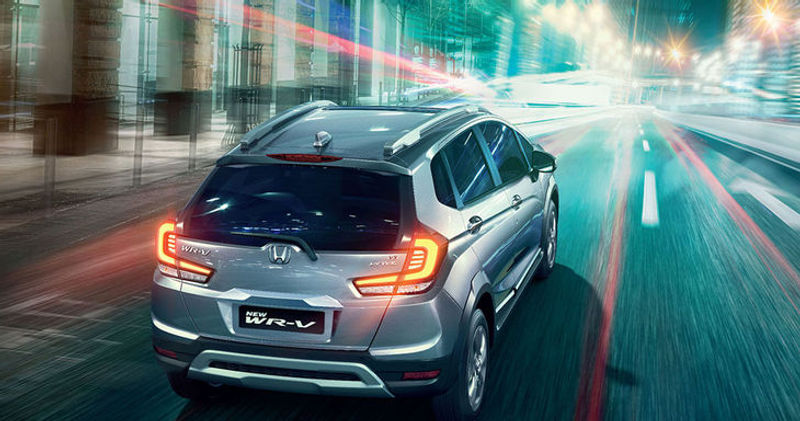
The WR-V was first shown at the 2016 Sao Paulo Motor Show and at the time it was only destined for Brazil, but in 2017, Honda launched the WR-V in India where it’s produced in addition to being produced in Brazil. Like South Africa, India is a right-hand-drive market and it’s therefore entirely conceivable for Honda South Africa to consider the WR-V for introduction locally.
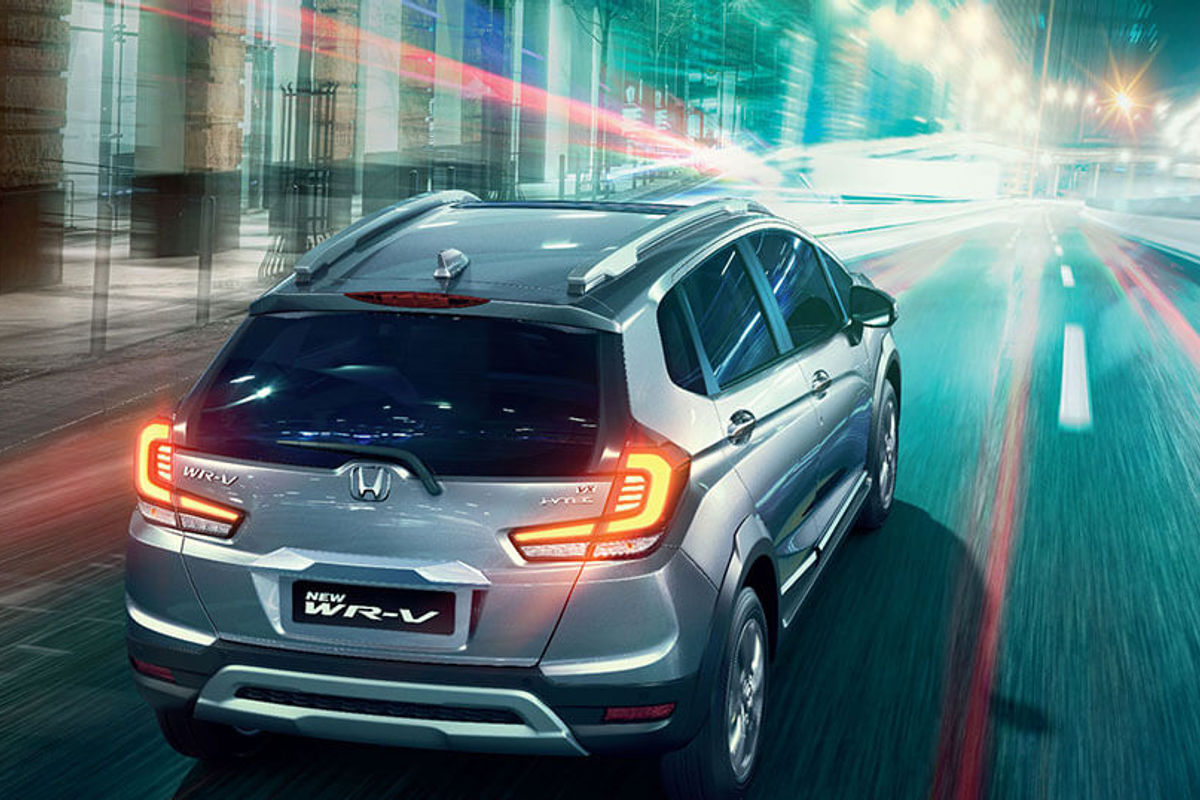
Interestingly, the WR-V is based on the same platform as the Honda Jazz, which is also produced in India and imported into South Africa.
Crossovers and indeed SUVs are big money-spinners for car manufacturers and this new small crossover from Honda will slot in underneath the slightly larger HR-V compact SUV in Honda’s local lineup and will rival offerings such as the Ford EcoSport and Hyundai Venue.
What engines will power the Honda WR-V?
The WR-V is based on the same platform as the Honda Jazz.
Exact engine specification for South Africa has yet to be confirmed but it’s likely that the WR-V will feature the same 1.2-litre naturally-aspirated engine offered in the Jazz with 66 kW and 110 Nm of torque. This
engine will be offered with either a 5-speed manual or CVT.
There’s also a possibility of a 1.5-litre turbodiesel engine with 74 kW and 200 Nm of torque being offered in South Africa.
What about the interior?
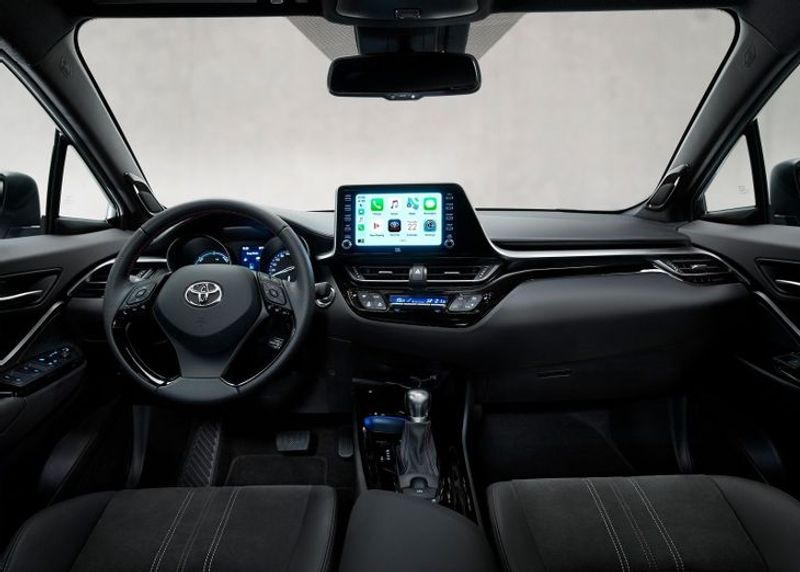
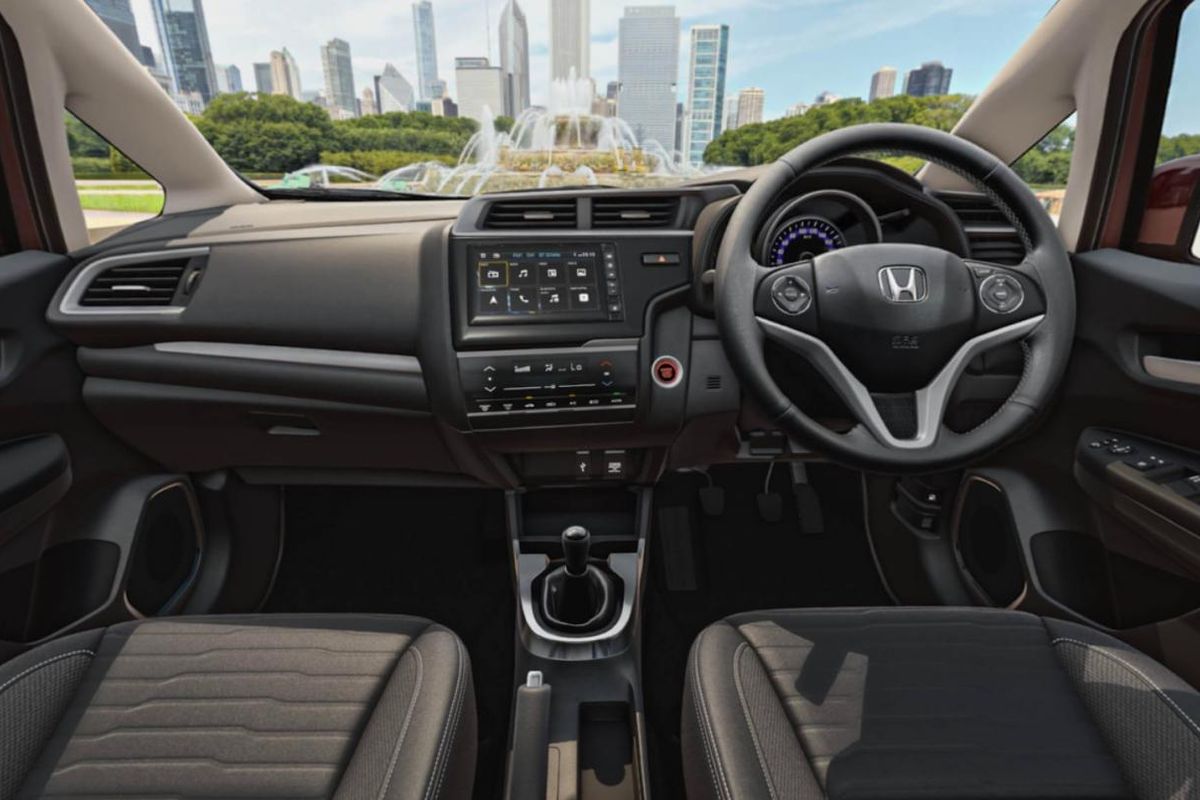
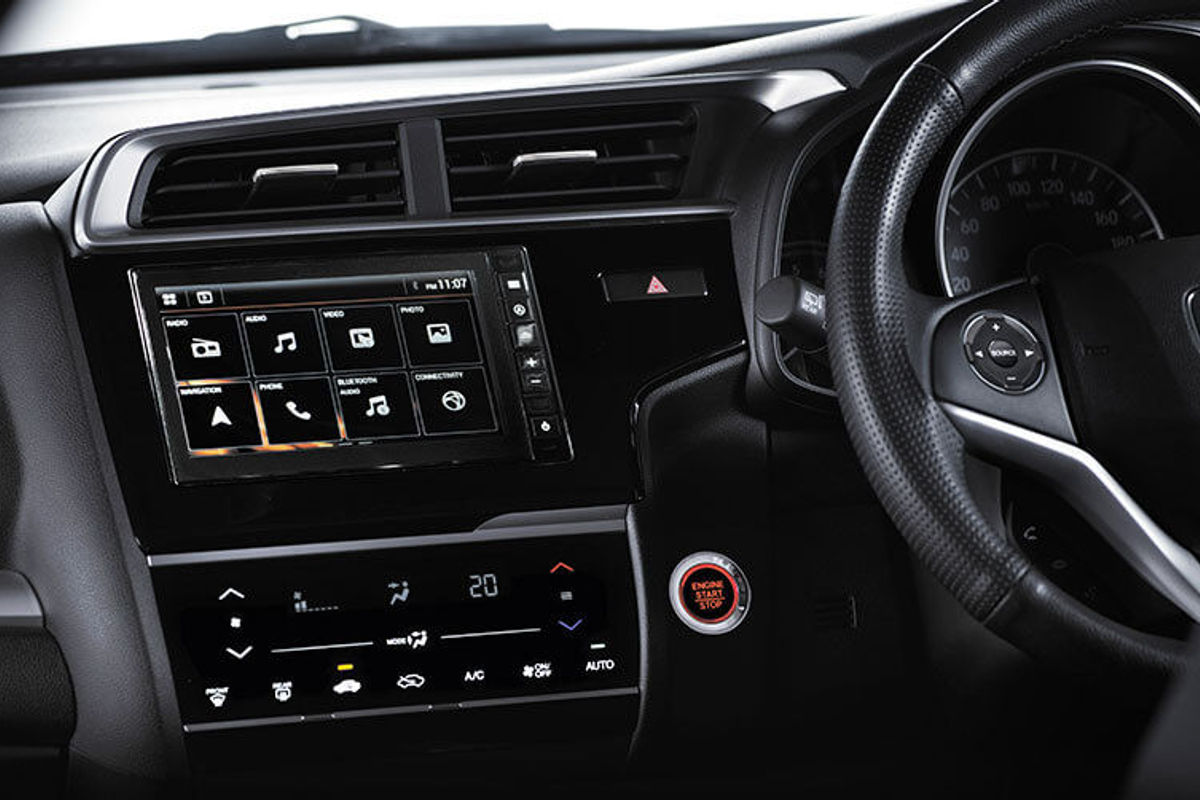
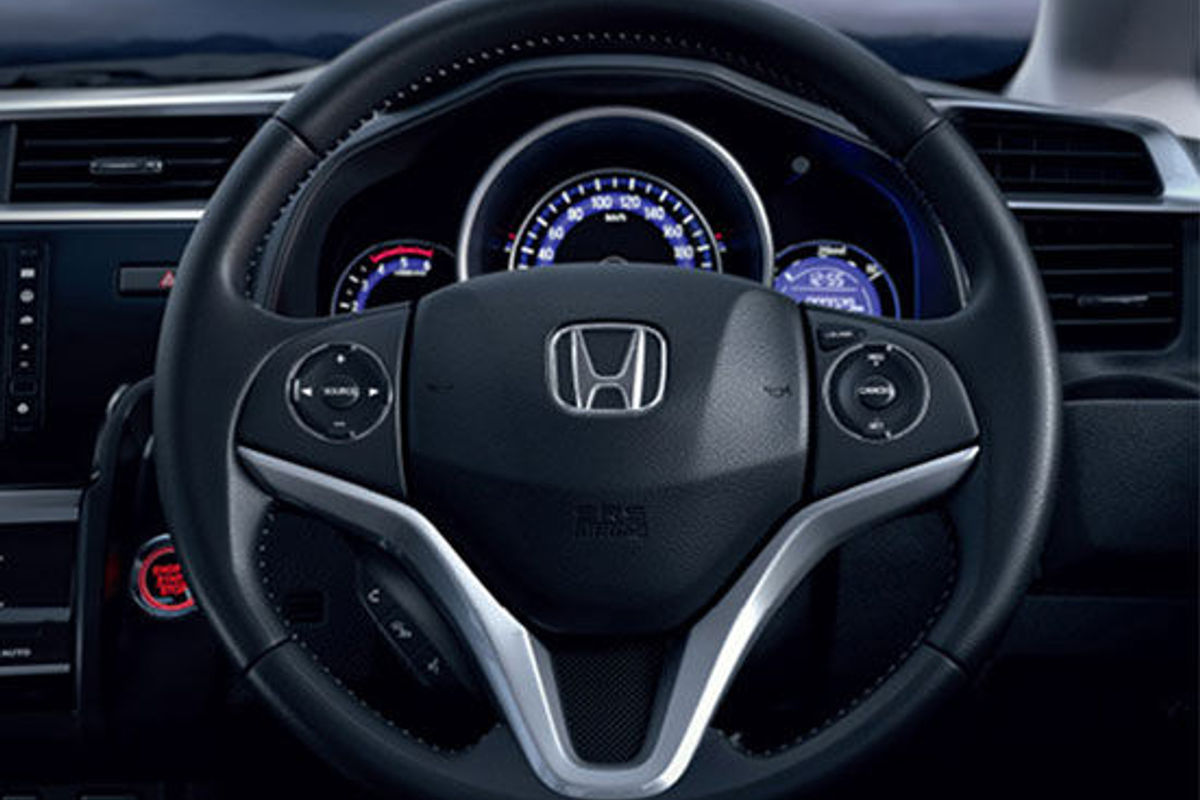
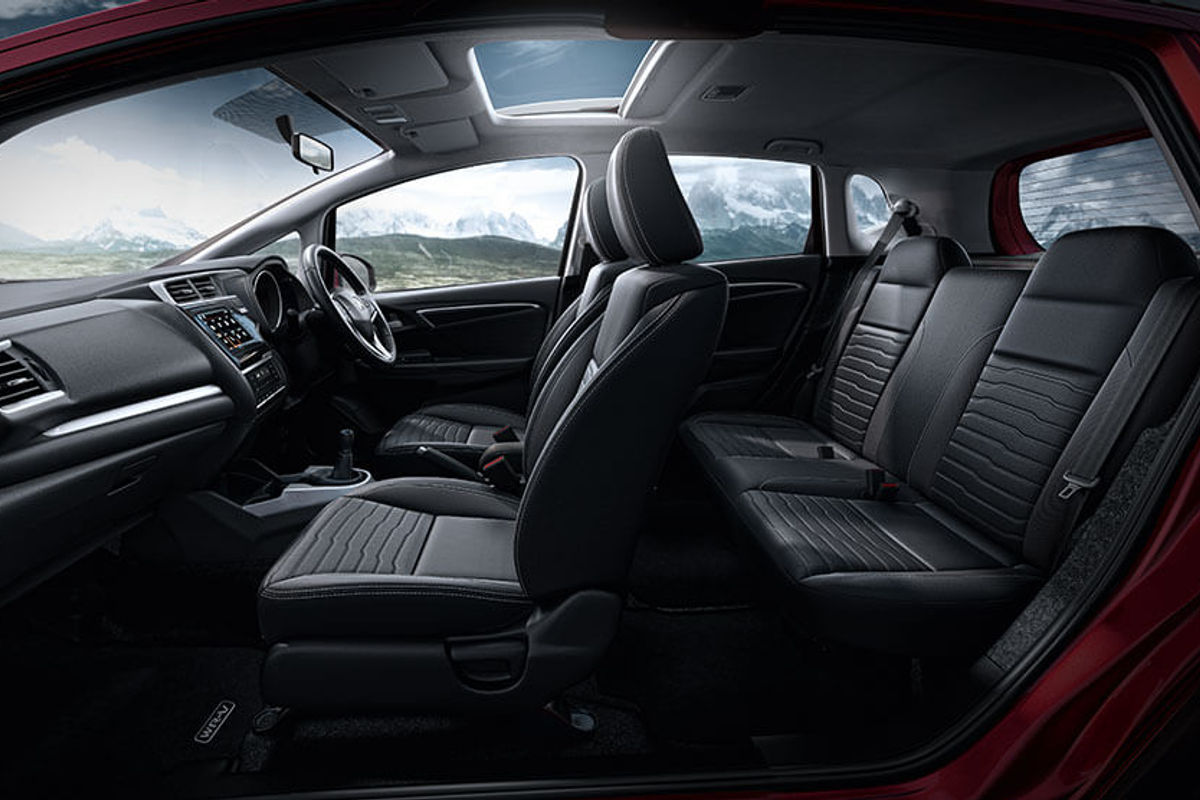
A neat, driver-focused interior with a 7-inch infotainment system is expected. We think it looks quite smart, wouldn't you agree?
In the words of Honda, the WR-V was designed to offer “excellent utility and a spacious cabin within a compact body size” which implies that the WR-V offers generous interior space.
In terms of features, the WR-V comes equipped with a 7-inch touchscreen DigiPad 2.0 infotainment system that’s orientated towards the driver and it offers Android Auto and Apple CarPlay while also projecting the feed from the rear-reverse camera with guidelines. Rear parking sensors are also offered.
Other nice-to-have-features seen on the Indian-spec WR-V include a one-touch electric sunroof, start/stop button, keyless entry and cruise control. It’s also worth knowing that the size of the load bay is claimed at 363 litres. In terms of safety features, the WR-V is equipped with 2 airbags and ABS with EBD.
We will be attending the local launch this week so look out for more details coming your way very soon! While official pricing has yet to be confirmed, the WR-V is expected to be priced between R300k and R350k.
It's worth noting that Honda will also be introducing a new Ballade compact sedan in South Africa this week.
European and Japanese car companies might be radically downsizing their engines, but their American rivals are not. Especially Chrysler.
The concept of buying a ‘crate’ engine has long been the solution for those who seek more power, with all the convenience of a manufacturer warranty and stable supply chain of parts.
If you have an outrageous project car idea and want a ludicrously powerful V8 engine to complete it, Chrysler is now offering a choice solution.
The company’s 6.2-litre supercharged V8 engine is now available as a ‘crate’ purchase. For R330 000 (estimated) Chrysler will ship you a Redeye specification 6.2-litre V8, boosting 602 kW and 971 Nm.
As part of the deal, you will receive a supercharger, throttle bodies, injectors, coil packs, water pump and front sump pan. Chrysler is also offering a range of attachment parts to go with the Redeye V8 deal: a flywheel, all power and alternator ancillaries, drivetrain attachment bits and mounting hardware.
If you have an appropriate rear-wheel-drive vehicle platform, the possibilities are virtually endless with this latest Chrysler ‘crate’ engine deal.
In a world where the idea of contacting AMG for its most potent V8 engine as a ‘crate’ option remains inconceivable, Chrysler’s generosity of technology will prove popular with many.
These enormously powerful ‘crate’ engines offer a compelling alternative to the idea of aftermarket tuning, which voids your engine warranty and can make the securing of aftermarket parts a challenge.
But why is Chrysler giving away its performance engine IP so easily? There is a possibility that sinking demand for its most powerful vehicles, has seen a stockpiling of 6.2-litre V8 engines in the company’s inventory.
The truth is perhaps less suspicious, as American brands have long supported the ambitions of their engine-only customers. And Chrysler might simply be fulfilling the commitment of that legacy, with the availability of its Redeye V8, in a crate.
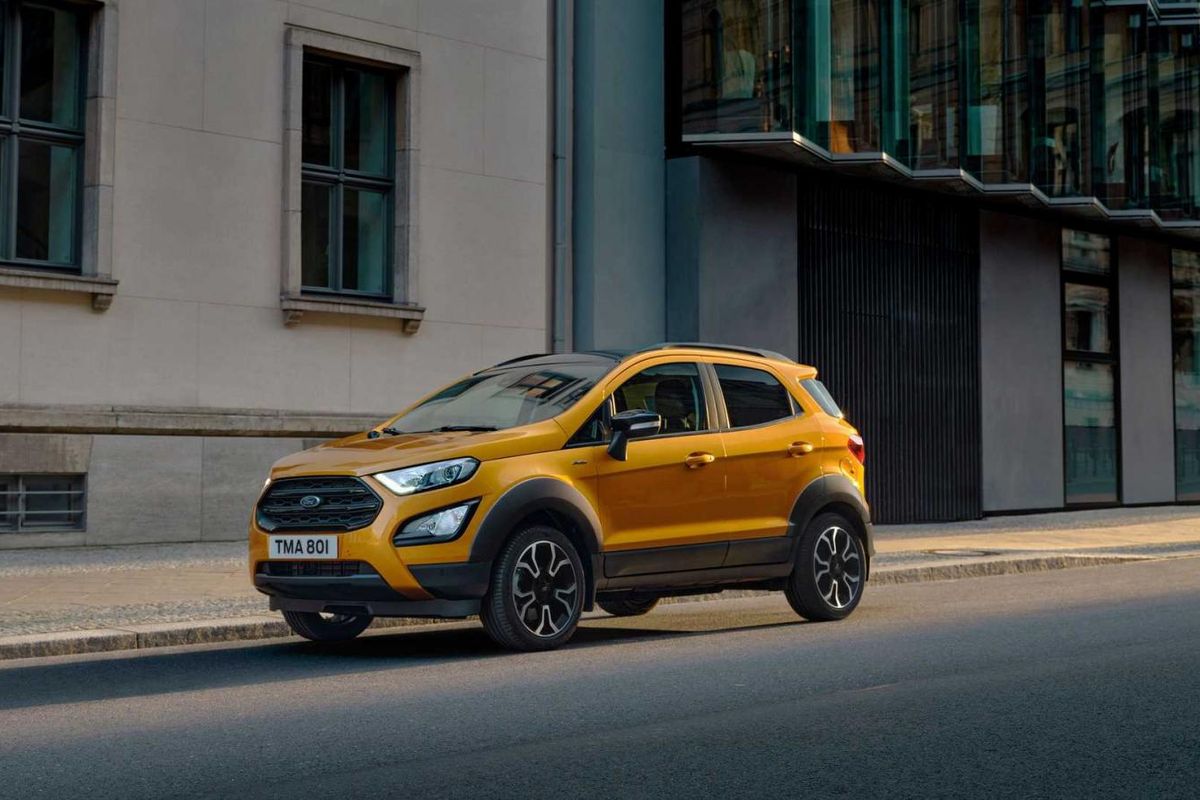
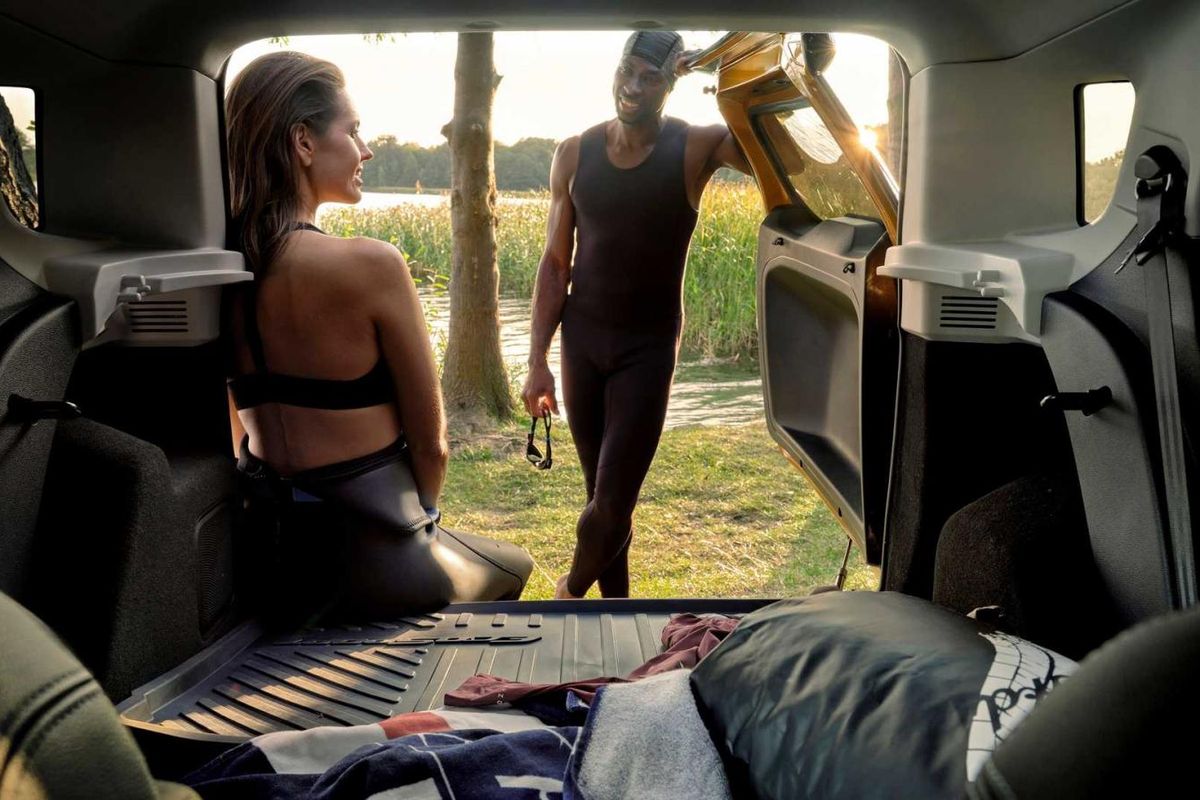
Last month, Ford teased an Active version of its compact EcoSport but now the rugged newcomer has been revealed. Take a look!
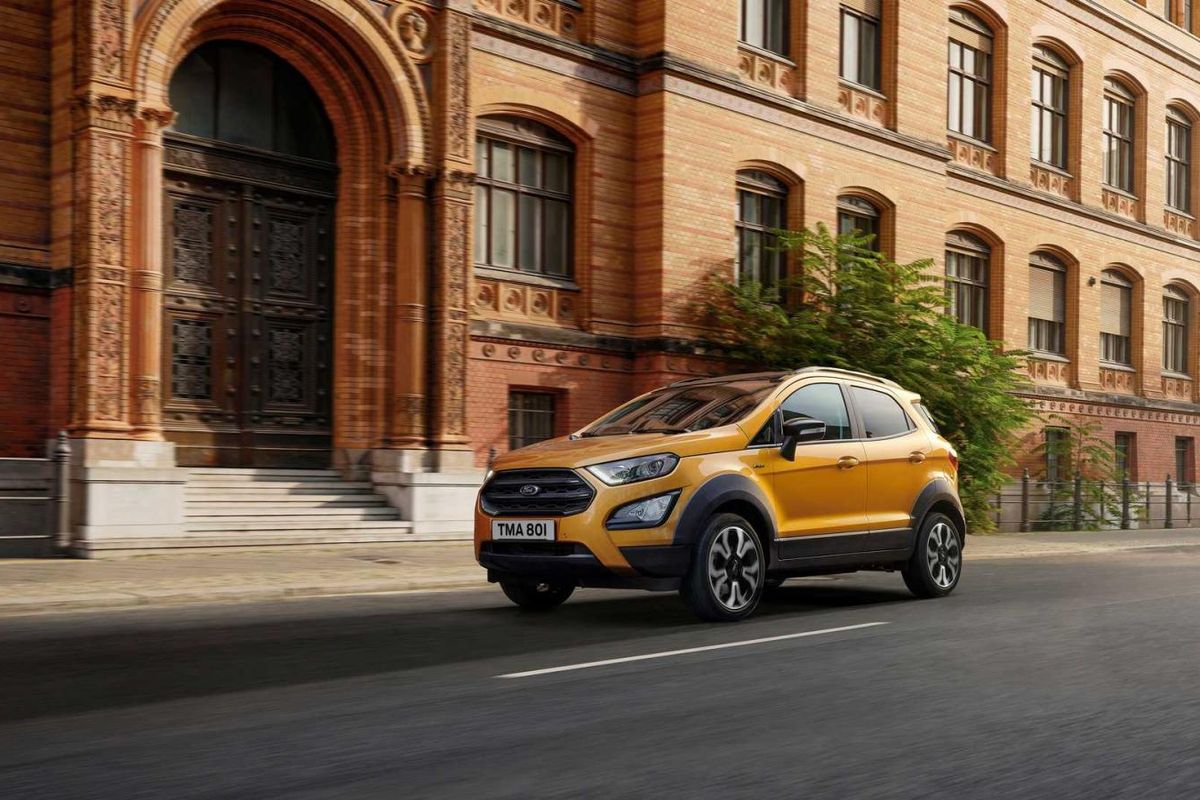
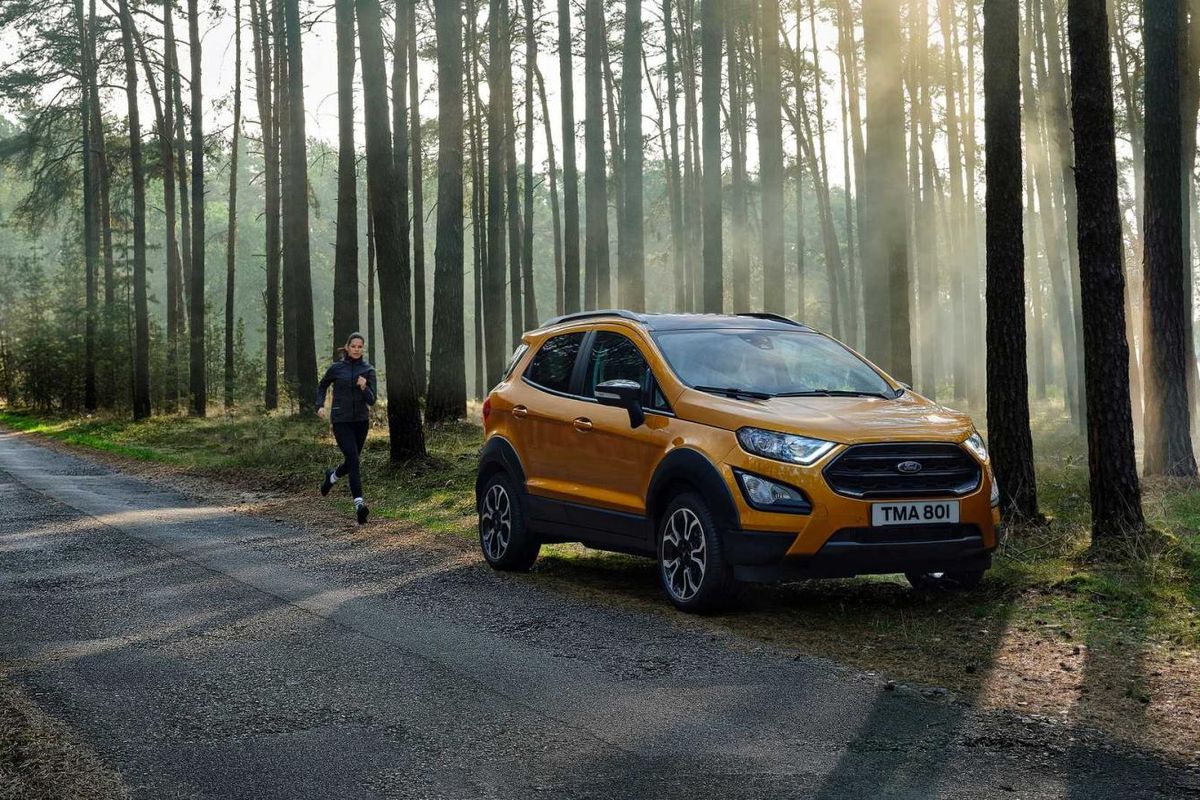
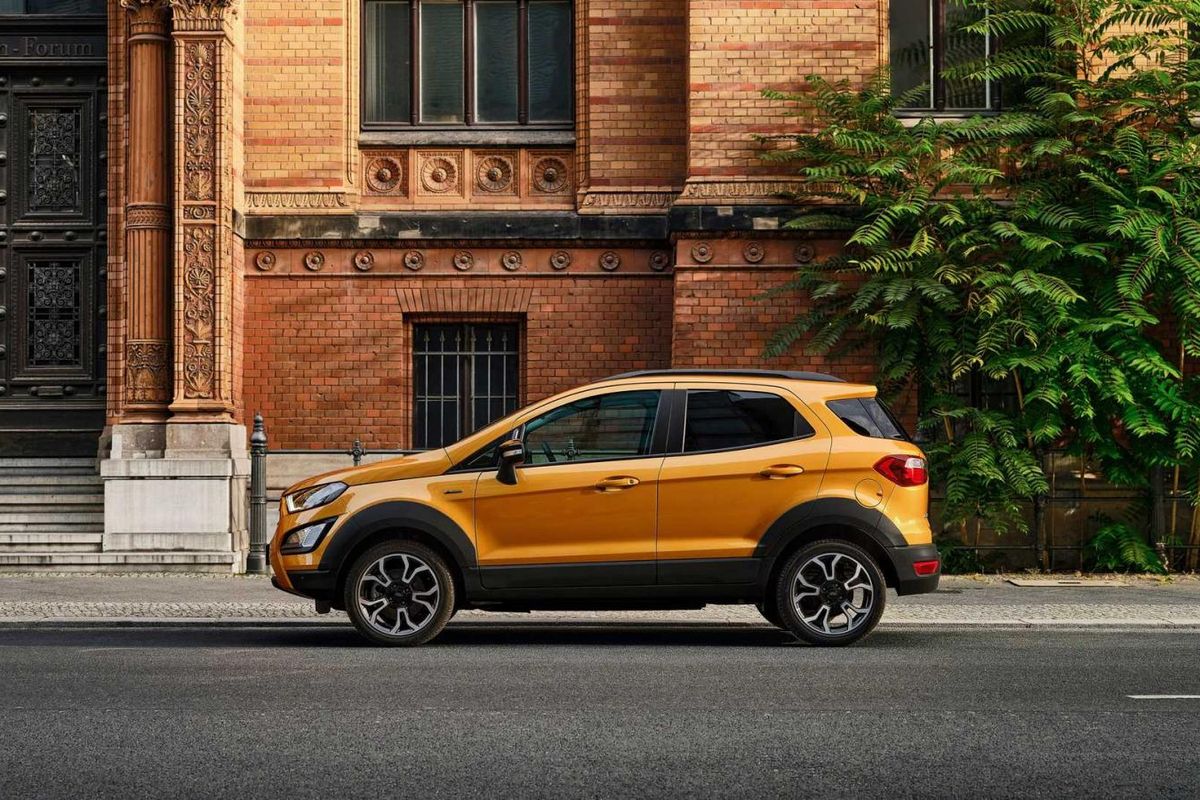
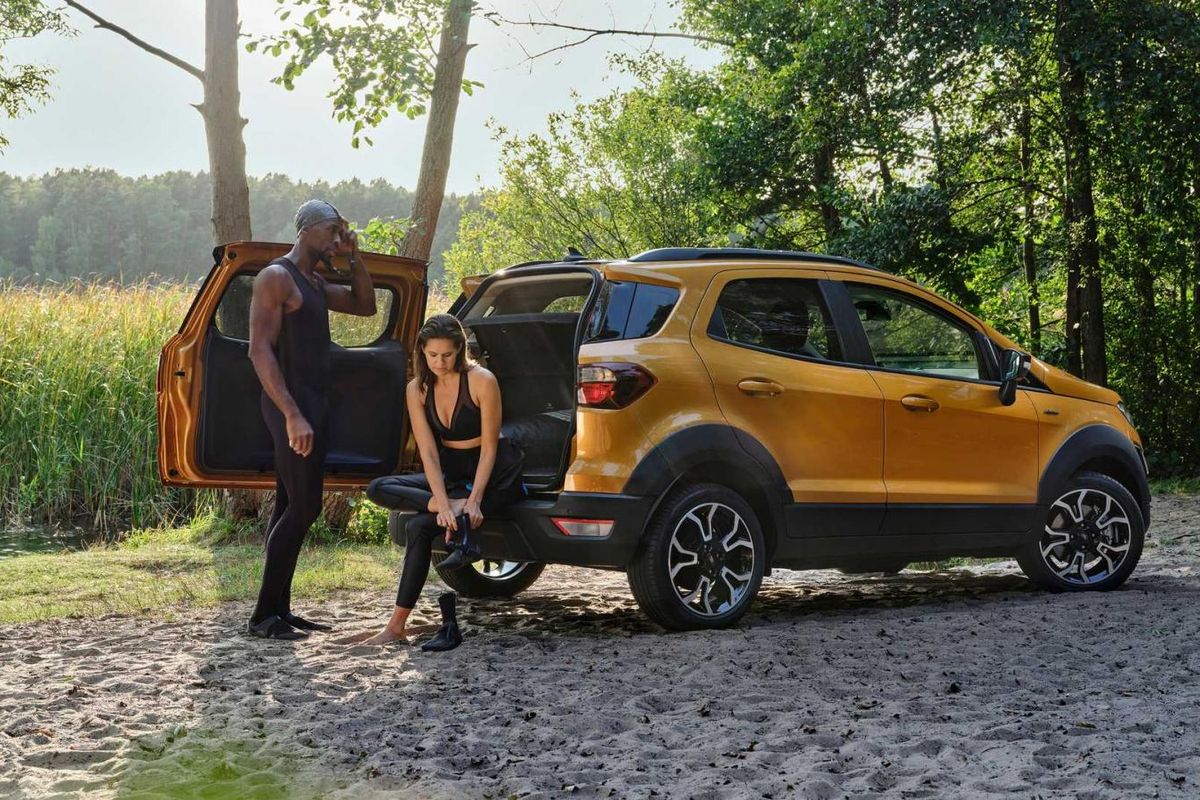
The Ford EcoSport has proven popular in the compact SUV segment, thanks to its surprising gravel travel capability. Ford has now launched an Active version of its EcoSport in Europe. For those who aren't aware, Active is the tag given to Ford models that have been given some additional ground clearance as well as some offroad visual upgrades. Ford offers the Focus and Fiesta in Active trim already and now the EcoSport has received the Active treatment.
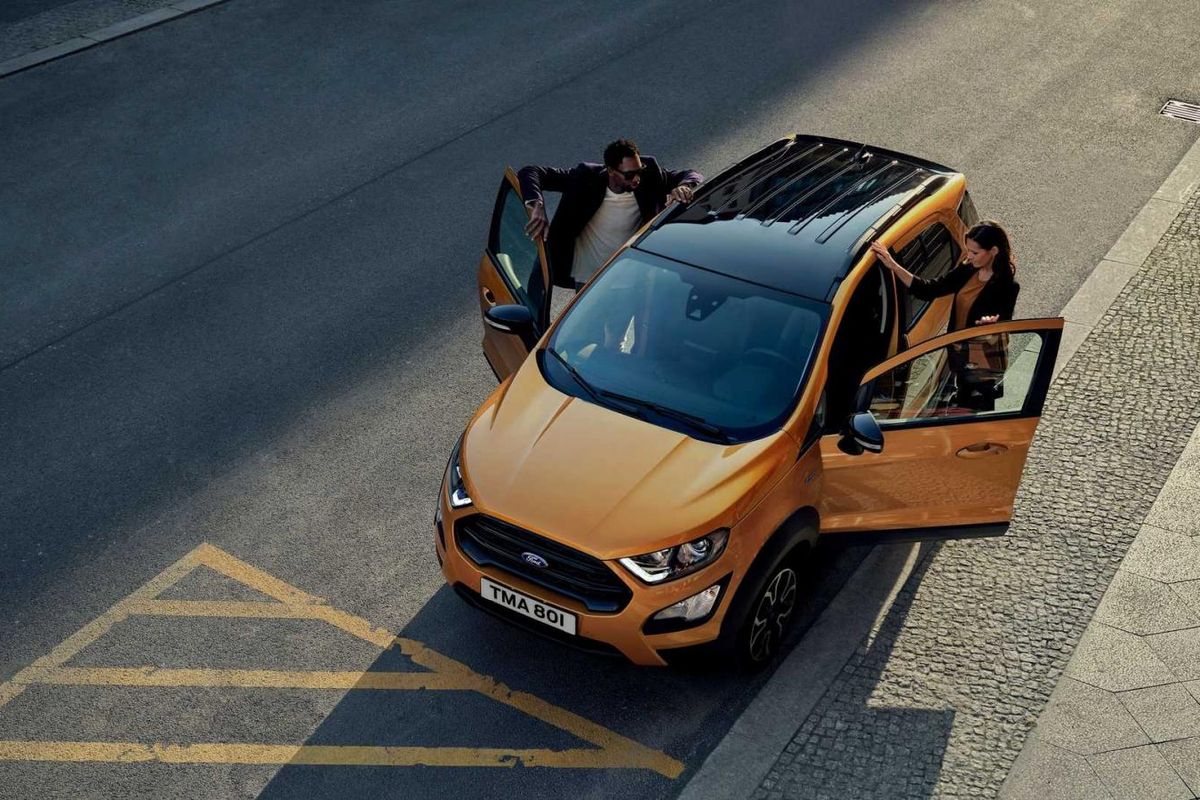
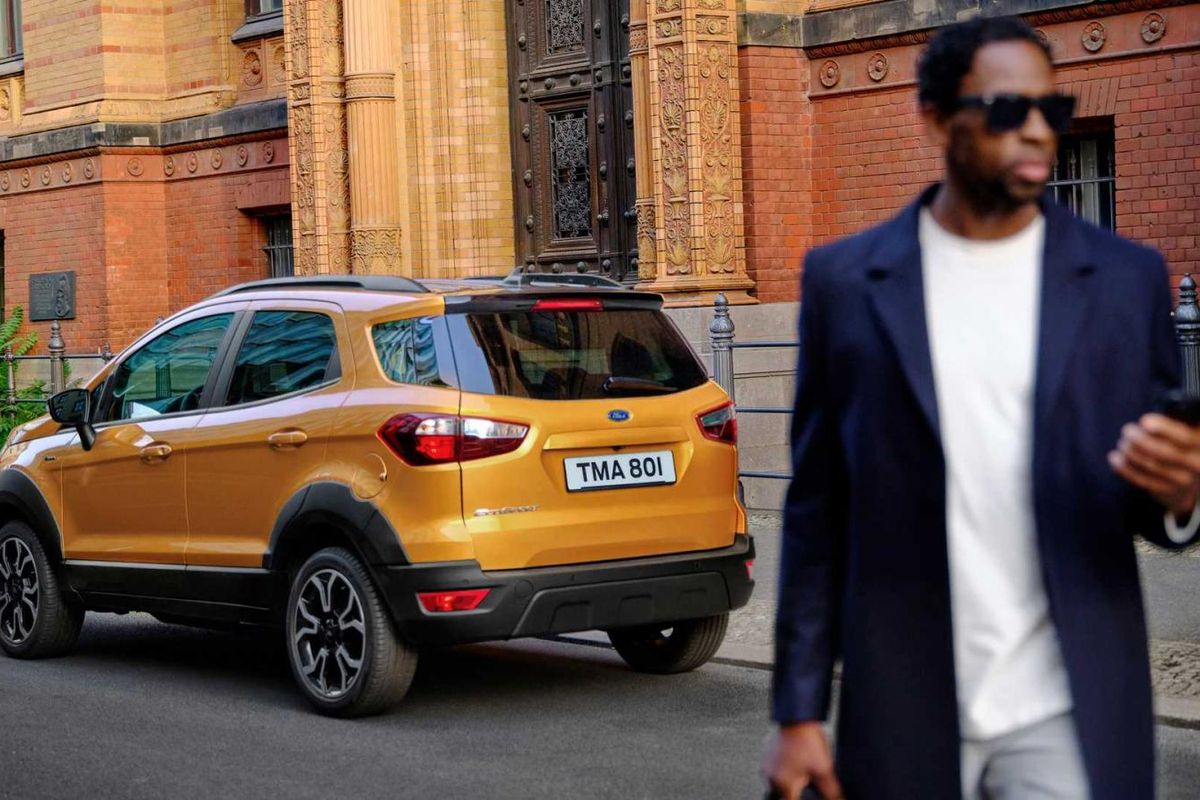
The Ford EcoSport Active features plastic cladding around the wheel arches, side skirts and leading into the front bumper. Note the revised rear bumper and faux skid plates which add to the EcoSport Active's rugged appeal. Also, Ford has further differentiated the EcoSport Active with its dual-tone body colour and roof combination. The EcoSport Active features 'unique exterior and interior styling alongside increased ride height and additional body protection for greater rough road capability'.
Ford also said, “Customers tell us they love how EcoSport’s bold styling, practical interior and versatility fits into their busy lives, so we’re excited to enhance the SUV with an Active version that delivers even more of those qualities,” said Roelant de Waard, vice president, Marketing, Sales & Service. Ford of Europe. “The EcoSport Active will be a new addition to the Active series that offers extra capability and rugged style for customers who want to take their outdoor adventures to the next level.”
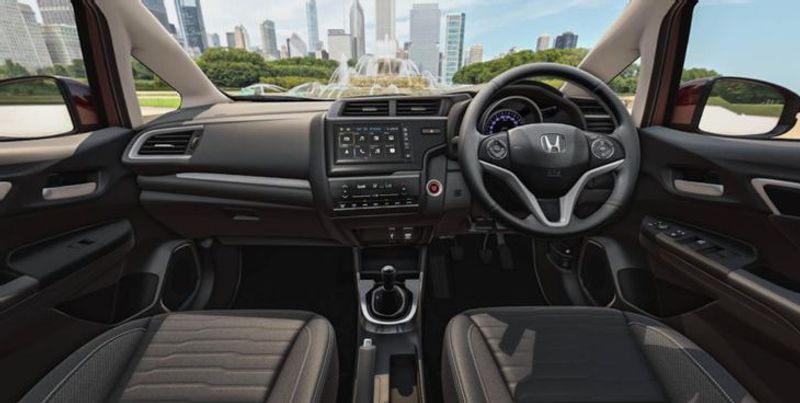
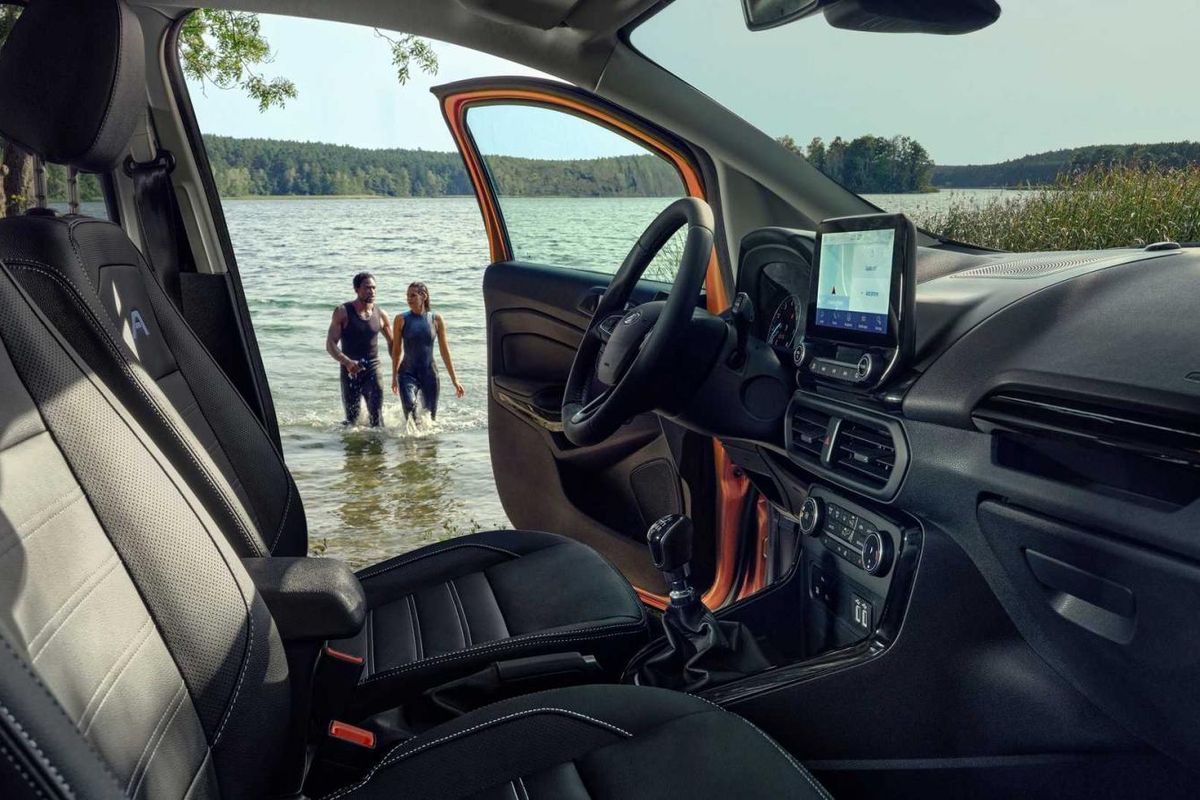
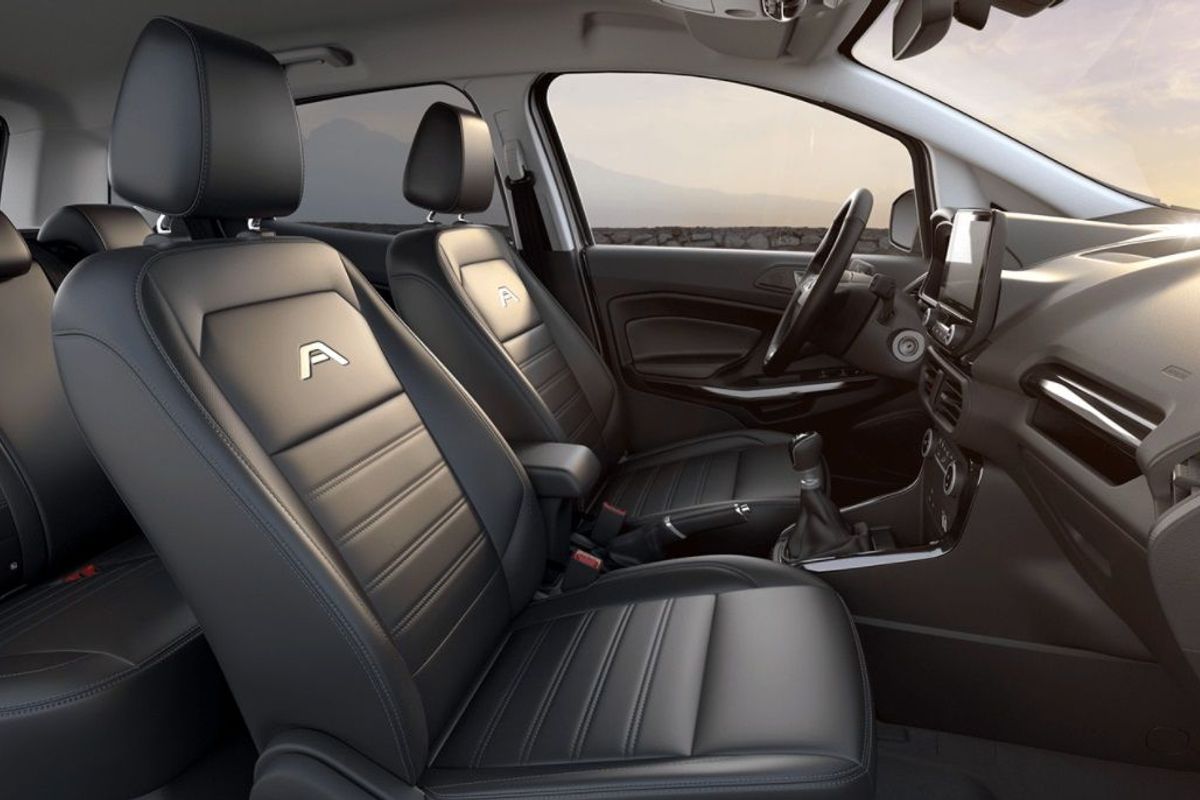
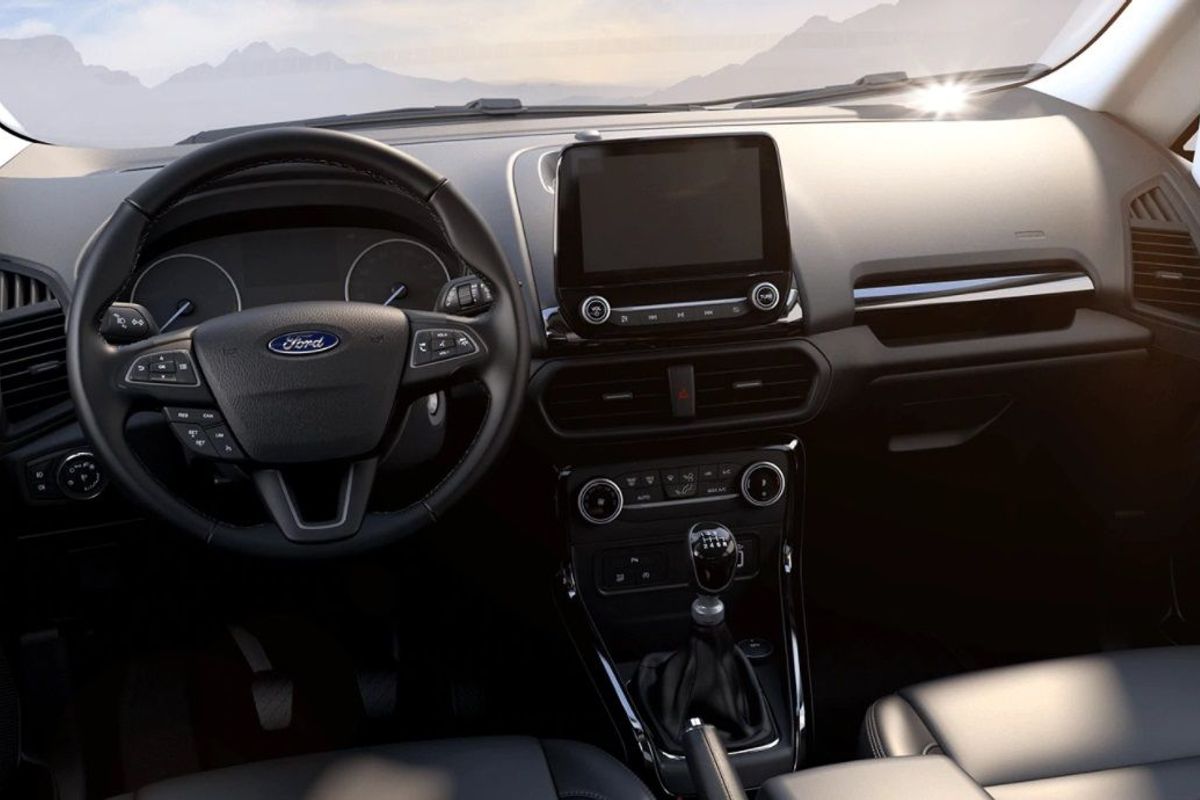
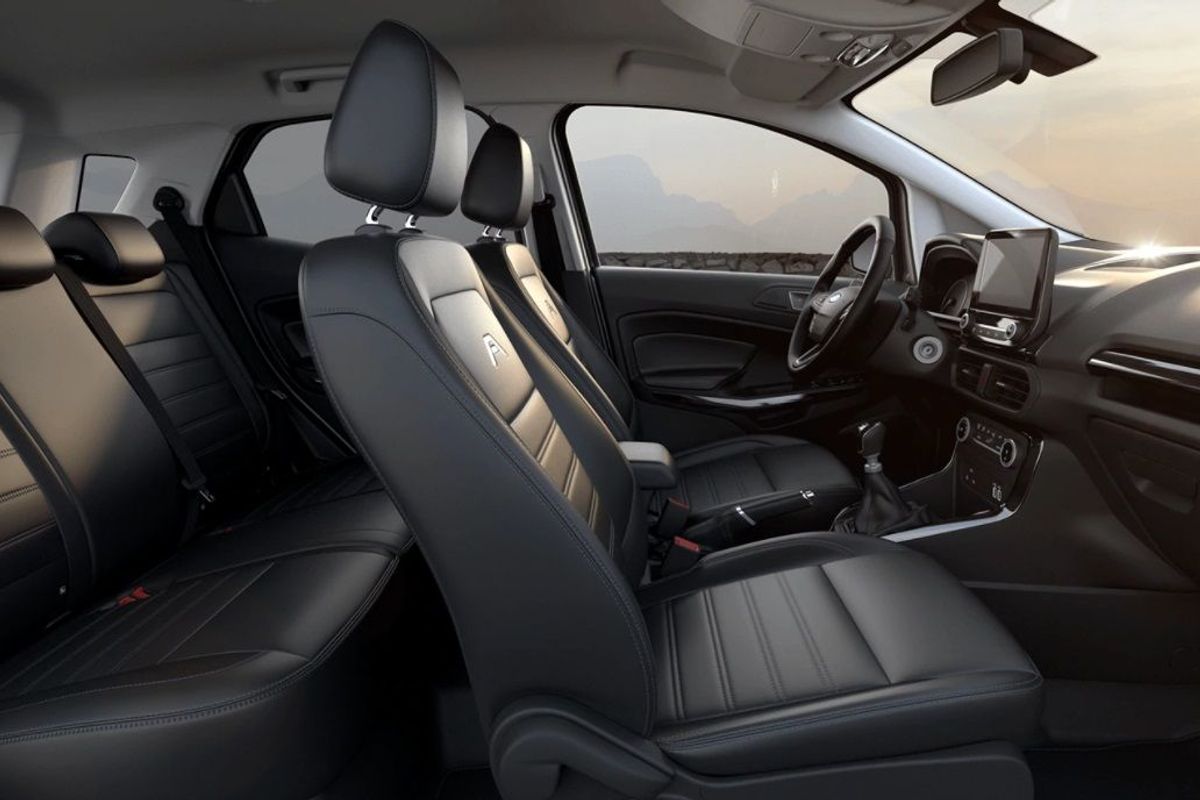
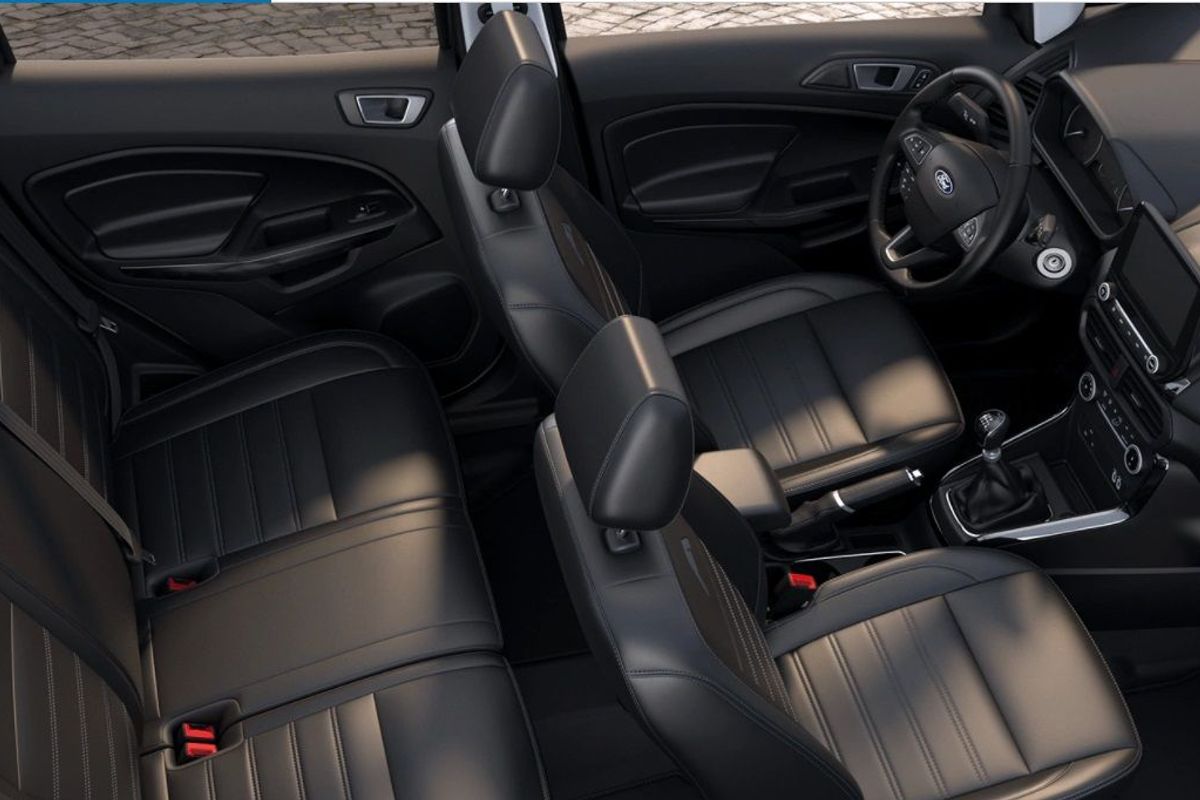
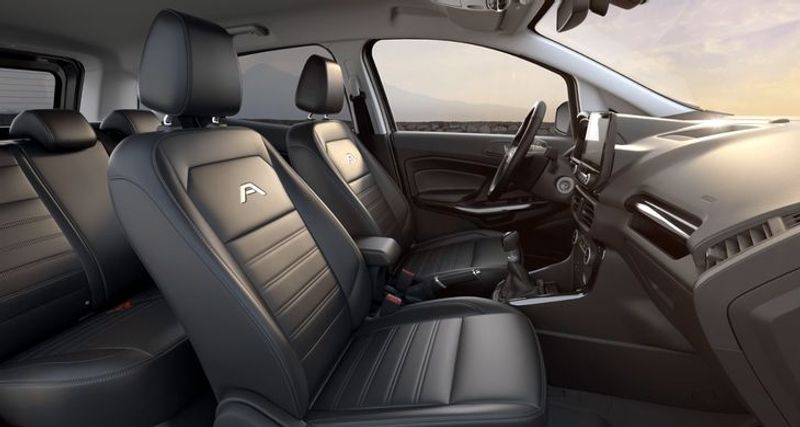
The EcoSport Active's interior is familiar and standard specification is expected to be generous.
Speaking of the interior of the EcoSport Active, the images reveal leather upholstered seats with the 'Active' logo seen on the front seats. As a range-topping EcoSport, the Active derivative features Ford's latest SYNC3 infotainment touchscreen with Android Auto, Apple CarPlay, Bluetooth and voice control functionality. Other notable features include 2 USB ports, climate control airconditioning, cruise control, and a multifunction steering wheel.
As for engine power, Ford's 93 kW 1.0-litre EcoBoost engine does service under the bonnet and it's mated with a 6-speed speed manual gearbox.
Given how much love there is for the Renault Duster globally, it should come as no surprise that Ford will want to prove its EcoSport is just as capable when it comes to the offroad stuff. As such, the Ecosport Active features an uprated suspension system, limited-slip differential and uprated chassis.
Will it come to South Africa? We are currently waiting for an official response from Ford South Africa but as it stands the Romanian-built EcoSport Active is predominantly destined for the European market. Nonetheless, given local conditions and South Africa's appetite for the outdoors, we think the EcoSport Active would be well-received by local buyers. Let's hope Ford SA can make a strong enough case for it! We will keep you updated…