Subaru Impreza hot hatch in the works

Impreza hot hatch could be a Yaris GR 'lite'.

Japanese motoring media are reporting that Subaru fans might have something worth crowing about soon.

With Toyota having a significant share in Subaru, cooperation between the two Japanese companies is a given. The result of which has also proven to be rather good, as illustrated by the BRZ/86 twins.

This latest report, filed by Japanese website BestCarWeb, makes mention of a new joint-venture hot hatchback. With Toyota currently thought to have the world’s best production hot hatch in its product portfolio, the Yaris GR, Subaru fans will be very keen for some shared componentry.

Those hoping for a Yaris GR clone are likely to be disappointed. This new joint-venture hot hatch is not thought to be quite as bespoke in its componentry, or focussed in purpose, as the Yaris GR.

The most interesting specification conjecture, which is not confirmed at this stage, is engine configuration. Subaru’s characteristic flat-four engines deliver excellent centre of gravity benefits and this new joint-venture hot hatchback, is expected to feature a horizontally opposed engine.

In the history of hot hatches, flat-four engines are rare. Extremely rare. Nearly as rare, as Subarus. The company’s best known hot hatchback was the third generation Impreza WRX STi. Although traditional sedan fans of the brand were disappointed by it, the WRX STi was an all-wheel-drive superhatch before AMG had even conceived of building an A45 and Audi was only supplying S3s instead of RS3s.

The platform for this new Impreza hot hatch is expected to be a shared version of Toyota’s compact high-performance structure, due for American customers. The Yaris GR is not available in America, despite enormous interest.

Toyota is keen to service its most important market with a compact performance car. Developing a slightly modified vehicle platform to serve the Americans, could also spin-off the twin chassis to make a new Impreza hot hatch possible.

Related content

Toyota GR Yaris for SA in mid 2021

Hyundai i20 N Line Previews Hardcore Hot Hatch

245 kW Volkswagen Golf 8 R Plus Coming?

Audi e-tron GT Revealed 

Audi has taken the wraps off its new all-electric e-tron GT which represents the pinnacle of the Ingolstadt-based brand’s electric vehicle portfolio. See what it’s packing below…

The pinnacle of Audi’s electric car range has been revealed! This is the new e-tron GT and the newcomer will rival Porsche’s Taycan and Tesla’s Model S.

Most will agree that the e-tron GT’s styling is up to scratch and we think it looks attractive overall, but let’s dive into the numbers which are arguably of more interest.  

The e-tron GT is built on Volkswagen Group’s J1 Performance Platform, the same that underpins theTaycan and the newcomer will be offered in 2 flavours, the base e-Tron GT and the higher power e-tron RS GT. Both feature dual electric motors, one over each axle, along with 800V electrical architecture and a 93.4 kWh lithium-ion battery pack. A 2-speed automatic transmission is standard.

European outputs for the base e-tron GT are pegged at 350 kW and 630 Nm of torque while the e-tron RS GT ups the ante to 440 kW and 830 Nm. An 2.5-second overboost function further increases power outputs to 389 kW and 475 kW respectively. 


The e-tron GT's interior is familiar and lavishly equipped with the latest technology on offer from Audi. 

As for acceleration, the zero to 100 kph run is completed in 3.3 secs for the e-Tron RS GT while the base model claims 3.9 seconds. While those numbers are impressive, the Porsche Taycan is still faster by this measure with the Taycan Turbo S capable of 2.6 seconds from zero to 100 kph. It’s w.orth noting that the e-tron RS GT is offered with 4-wheel steering as standard which enhances high-speed stability while also improving agility (optional on the base e-tron GT). The RS model is also fitted with adaptive air suspension as well as an electronic rear differential lock.   

As part of the reveal of the new e-Tron GT, Audi was keen to demonstrate the performance of its newcomer by putting it up against Audi’s Formula E e-tron FE07 driven by Lucas di Grassi while F1 world champion, Nico Rosberg, piloted the new e-tron RS GT. It’s amazing to see how closely matched the 2 cars are down the drag strip! Watch the segment here!  

In terms of charging, the e-tron GT offers 270 kW charging using a DC fast-charger and can achieve 5% to 80% charge in just 22.5 minutes, which is roughly 100 km charge in just over 5 minutes. Home charging uses an 11 kW AC charger while an optional 22 kW charger will also be offered. Range is claimed at 433 km and 472 km according to WLTP. 

As for the interior, it’s equipped the latest technology in Audi’s arsenal as well as offering a fine selection of sustainable interior finishes. A 12.3-inch touchscreen infotainment is fitted and is accompanied by a smaller screen beneath. Audi’s configurable Virtual Cockpit is also fitted. The e-tron RS GT gains sports seats, carbon fibre inlays and an Alcantara-wrapped steering wheel. 

Do you like the look of the new Audi e-tron GT? 

Buy an Audi on Cars.co.za

Related Content

New Audi Cars for SA in 2021

 Drifting Audi e-tron S Coming Soon [w/video] 


Suzuki Vitara Brezza (2021) Specs & Price
Suzuki South Africa has launched the Vitara Brezza to slot in between its Ignis and Vitara models. Here's what's on offer and how much the newcomer costs.

Suzuki has sold in excess of 550 500 units of the Vitara Brezza since it was launched on the sub-continent in 2016. Not only is the model the top-selling SUV in India (with 38.8% of the entry-SUV market and 18.4% of all SUV sales) – it was named the Indian Car of the Year in 2017. The model arrives in Mzansi in updated-for-2020 spec, which comprises an engine upgrade, as well as tweaked styling. 

Read: 2021 Suzuki Brezza Review – We test Suzuki's new crossover in South Africa

Compared with its Vitara compact family-car sibling, the Vitara Brezza is shorter by 180 mm, as well as fractionally wider and higher (by 15 mm and 30 mm, respectively), but it's underpinned by the same 2 500-mm wheelbase. Interestingly, its kerb weight is as low as 1 115 kg on the manual version and the newcomer offers more slightly ground clearance: 192 mm, which is 7 mm more than the Vitara. 

Classic crossover looks

In keeping with its brethren's off-roader-inspired styling cues, the Vitara Brezza sports a number of cosmetic addenda, including a chrome-look grille, skid-plate-like bumper garnishes, foglamps, roof rails, side mouldings, wheel-arch extensions and a tailgate spoiler. It has a floating-roof look, courtesy of blacked-out A-pillars and dark inserts on the rear corners that appear to "lift the C-pillars from the body."

The top-spec GLX derivatives can be distinguished from their GL siblings by the fact that they have full-LED headlamps and -daytime running lights, gunmetal-coloured roof rails and silver-finished bumper garnishes (both as opposed to black), as well as diamond-cut 16-inch alloy wheels wrapped in slightly plumper rubber (215/60 R16 vs 205/60 R16 on the GL, which is shod with 16-inch steel wheels). 

Powertrain

The Vitara Brezza is powered by the K15B engine, which is a naturally-aspirated 1.5-litre 4-cylinder motor that develops 77 kW and 138 Nm. Power goes to the front wheels via a 5-speed manual gearbox or a 4-speed automatic transmission. The South African subsidiary of the Japanese brand has not revealed claimed consumption figures for the model yet, but expect performance in line with that of the Ertiga.

Specification

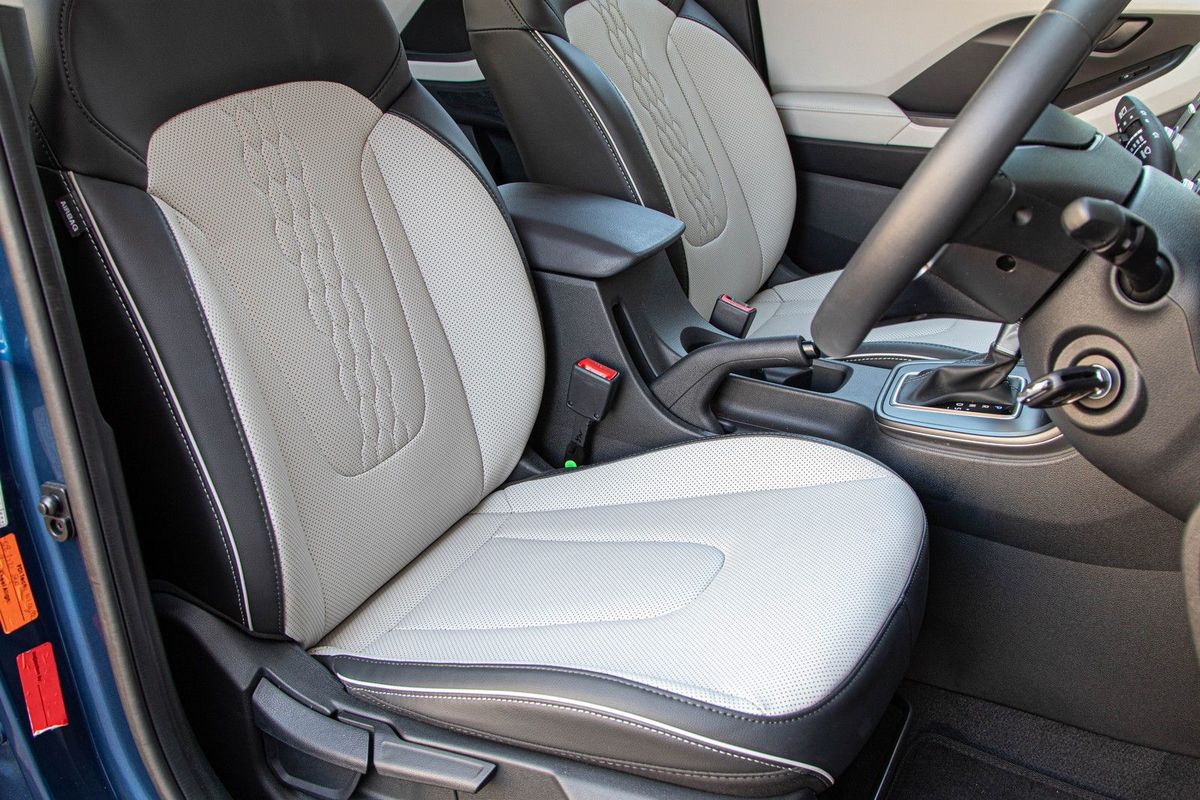
Although GLX derivatives are better equipped than their GL counterparts, that does not mean the Suzuki's standard equipment list is sparse. The Vitara Brezza has a driver-focused cabin fascia, which is dominated by a 7-inch touchscreen infotainment system, which incorporates Bluetooth, USB and auxiliary inputs, Android Auto and Apple CarPlay compatibility, as well as a reverse-view camera display.

Apart from 5 customisable mood lighting options, automatic climate control is standard, as are rear parking sensors. The steering is electrically assisted and the -column is tilt-adjustable for added comfort.

The GLX derivatives additionally feature a leather-trimmed multi-function steering wheel, keyless entry and push-button start, auto wipers, cruise control, tweeters for the audio system, a cooled glovebox and a 12V charging port in the load bay. Speaking of which, the Vitara Brezza has a claimed luggage capacity of 328 litres, which expands handily when the 60/40 split rear seatbacks are folded down.

Safety 

The Suzuki Vitara Brezza received a 4-star crash safety rating from Global NCAP in 2018 and comes equipped with 2 front airbags, ABS with EBD and brake assist, as well as ISOfix child-seat mounting points at the back (GLX versions are further fitted with height-adjustable front safety belts). Security is taken care of by an immobiliser and security alarm, both of which are standard on all derivatives.

Suzuki Vitara Brezza Price in South Africa (February 2021)
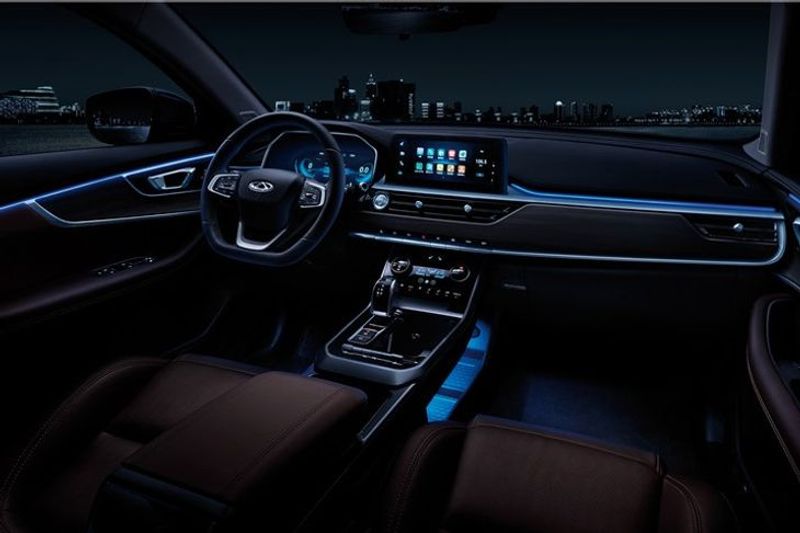
All Vitara Brezza derivatives are sold from new with a 4-year/60 000 km service plan and a 5-year/200 000 km promotional warranty. There are 6 exterior finishes to choose from and top-spec GLX derivatives are additionally available in the following 2-tone colour combinations: Sizzling Red with Midnight Black roof; Granite Grey with Autumn Orange roof and Torque Blue with Midnight Black roof.

Suzuki Vitara Brezza GL Manual      R244 900

Suzuki Vitara Brezza GL Auto           R264 900

Suzuki Vitara Brezza GLX Manual    R289 900

Suzuki Vitara Brezza GLX Auto         R309 900

Further Reading

2021 Suzuki Brezza Review – We test Suzuki's new crossover in South Africa

Suzuki Vitara (2020) Review

Suzuki SA Confirms Brezza for 2021

New Renault Kiger Revealed

Toyota Urban Cruiser: More Details Emerge

Incoming Demerit System Could Be Delayed

Maladministration might result in the delay of the forthcoming Demerit System. 

The controversial Administrative Adjudication of Road Traffic Offences (Aarto) Act which was due to come into effect as of 1 July 2021 might be delayed due the start of a forensic investigation into alleged maladministration at the Road Traffic Infringement Agency (RTIA). A number of senior employees have reportedly been suspended and it’s believed that the suspensions are tied to financial maladministration. 

The Aarto bill was signed into law in 2019 by President Cyril Ramaphosa with the aim of improving road safety in South Africa. In October 2020, Transport Minister, Fikile Mbalula, gazetted the 540-page Aarto regulations detailing how the demerit system will work. 

Essentially, the Aarto Act allows for a demerit system whereby a person, operator or company is liable to pay a penalty as well as incurring a points penalty related to the particular traffic infringement. Once a maximum amount of demerit points (15 points) are reached, then the person and vehicle will be disqualified from driving for a period of time (3 months). Offence points range from 1 to 6, depending on the severity of the offence. After 3 disqualifications, the driver’s licence will be cancelled and that person will have to apply for a new learner’s license and driving licence after the disqualification period has come to an end. 

The Road Safety Project (RSP) commented on the latest developments, “Similar points systems overseas have proven to be one of the most effective means to increase road safety. Unfortunately, the investigation into RTIA is revealing that AARTO appears to be more concerned with the financial benefit of traffic penalties rather than improving road safety. “As a result of these findings, public buy-in and support is likely to be seriously impacted. This is in a climate where the public was already sceptical of the system before any maladministration was found. Until a resolution to the concerns is found, the planned implementation of AARTO on 1 July will need to be delayed.”

The RSP has further urged the Department of Transport to realign its objectives to best serve road safety. “Instead of the good that could be realised, the regulation is now mired in controversy. Fortunately, the findings have been made early and provide the Department with ample opportunity to realign proceedings in order to rectify any concerns or potential maladministration and instead prioritise road safety. The RSP urges the Department to act swiftly and decisively so that the focus of AARTO returns to increasing road safety rather than profits. Let this not be an irreparable blow to the potential that AARTO could have in reducing the number of lives lost on South African roads,” said the RSP.

We will keep you updated as soon as further information regarding the Demerit System comes to light. 

Buy a used car on Cars.co.za 


Peugeot 2008 (2021) Launch Review

The new 2008 compact family car has finally arrived in South Africa! Cars.co.za journalist Gero Lilleike attended Peugeot's launch event in Limpopo to find out if the French marque's newcomer has what it takes to take on the best of the best in this highly competitive segment. 

The small crossover/compact family car segment is booming and, according to 2019 statistics, this part of the new vehicle market accounts for roughly 20% (1 in every 5) of all new passenger cars sold in South Africa. Therefore, it goes without saying that this is a highly lucrative segment, one in which buyers are truly spoilt for choice. 

The 2008 is the first new Peugeot to come to South Africa since the recent formation of the Stellantis group (following the merger of PSA Groupe and FCA), which is now the 4th largest automobile manufacturer in the world (by volume). However, Peugeot is also expected to launch a number of new products throughout the year, including the new 208 hatchback and the Landtrek double-cab bakkie

The previous 2008 soldiered on for what seemed like forever and, in truth, the plucky Peugeot had fallen behind the competition. The new-generation 2008 is determined to redress matters, however.   

Engine, trim and key features


The new 2008 is perhaps one of the most striking new compact SUVs on the market. 

Produced at the Stellantis Vigo plant in Spain, the new 2008 is built on the latest-generation CMP (Common Modular Platform), which supports electrification, but can, of course, accommodate traditional internal combustion petrol and diesel powertrains too. 

In South Africa, the new 2008 is powered by a 1.2-litre turbopetrol engine in 2 states of tune – either with 74 kW and 205 Nm or 96 kW and 230 Nm, the latter of which is offered exclusively with a 6-speed automatic transmission. There are 3 trim levels available to buyers, including the entry-level 74-kW 2008 Active with a 6-speed manual transmission, as well as the higher-output 96-kW version, which features the previously-mentioned automatic shift. Buyers shopping higher up in the range can opt for the mid-range 94-kW 2008 Allure automatic… or go all-out for the top-spec 94 kW 2008 1.2T GT automatic. 

The new 2008 is arguably one of the most stylish – and boldest – designs to be introduced in this segment. Key design features include a large, studded grille, sculpted bonnet with "2008" lettering on the nose, full-LED projector headlights with a striking 3-claw light design and "sabre-tooth" daytime running lights, which lend the new 2008 considerable kerb appeal. All 3 trim grades, however, feature their own distinctive grille design. Moreover, the Peugeot's bodywork features striking creases and lines and can be finished in bold colours such as Orange Fusion, Vertigo Blue and Elixir Red, to name a few… 


The 2008's cabin is both modern and generously-equipped with standard features. 

The 2008's interior boasts typical Peugeot flair and the cabin architecture is derived from the 3008 family car. The wraparound dashboard is driver-focused and incorporates Peugeot’s 3rd-generation i-Cockpit, which features a new 3D instrument cluster and 7-inch (Active) or 10-inch (Allure and GT) touchscreen infotainment system equipped with integrated navigation, as well as Android Auto and Apple CarPlay functionality. Peugeot’s familiar yet polarising compact steering wheel allows the driver to access media functions, voice control or toggle and customise the display of the 3D instrument cluster. The 2008 GT, in turn, also benefits from a wireless charging pad. Up to 4 USB ports are included, as well as a USB-C port. A 10-speaker Focal premium sound system with a 12-channel, 515W amplifier is fitted. 

Some of the key active safety features offered on the new 2008 include lane-departure warning, blind-spot monitoring, adaptive cruise control, park assist, automatic emergency braking, driver warning alert and traffic-sign recognition. A total of 6 airbags are fitted, along with ABS with EBD and electronic stability control with traction control.  

The 2008 is equipped, as standard, with a 2-position boot floor and has a claimed luggage capacity of 434 litres, which is fairly generous. The 60:40 split rear seatback can be folded flat to free up utility space.  

See specification details for the Peugeot 2008 range here

What’s it like to drive? 


The 1.2-litre turbopetrol engine offers good overall performance while also returning excellent fuel consumption. 

Peugeot was keen to show off the top-of-the-range GT and the 450-km launch route afforded us ample opportunities to experience the capabilities of the new 2008. 

Depending on how tall you are, getting comfortable in the new 2008 (and, it seems, all of Peugeot's latest products) can be a bit of a chore and much of this can be attributed to the brand’s small and compact steering wheel. Some love it, others hate it, but it’s designed to be “driven low”, which means that you gaze over the steering wheel into the instrument cluster – as opposed to looking through the 'wheel, which is typically the case in most other vehicles. The driver’s seat is height-adjustable and the steering column can be adjusted for rake or reach, but be aware that the range of the adjustment is fairly limited. 

With a simple push of the Start-Stop button, the 2008’s 3-cylinder, 1.2-litre turbopetrol engine comes to life, but it’s barely audible inside the seemingly well-insulated cabin. The launch route took us on a mix of highway and potholed secondary roads and we found the 2008’s suspension supple and forgiving. Apart from the comfortable ride quality, the cabin was well insulated against noise, vibration and harshness. 

With 96 kW and 230 Nm on tap, the 2008 GT Line’s performance is more than adequate and, in that regard, it compares favourably with its rivals in this segment. There is a brief moment of lag before the turbocharger kicks in and then it just keeps piling on the pace. Acceleration is good and overtaking manoeuvres can be executed with minimal effort. 

The steering firms up nicely as speed increases and the Peugeot's tiller is pleasingly responsive to inputs. The driver can choose between Eco, Sport and Normal driving modes and it’s worth mentioning that the trip computer returned a fuel consumption of between 6.8 and 7.0 L/100 km, which is fairly impressive when you consider that Peugeot claims an average figure of 6.5 L/100 km. 

During the evaluation drive, a huge highveld thunderstorm brewed overhead and the ensuing heavy rain made the journey far more challenging than we expected. The deluge effectively transformed a 20-km stretch of dirt road into a veritable mud pit, which would be a formidable test for any front-wheel-driven car… 

The 2008 is, however, equipped with Grip Control modes (including Sand, Mud and Snow) and it was the perfect situation to put the Mud mode to the test. Road conditions were poor and where most front-wheel-drive cars would be bogged down in the mud, the Peugeot took the challenge well in its stride and managed to “float” over the muck with impressive poise. The newcomer’s ride quality in the dirt was also particularly impressive. With this in mind, the 2008 is more than just a city slicker; it’s capable of venturing onto the dirt, within reason of course – remember, it does not have particularly generous ride height. 

Summary


There's so much to like about the new 2008 but it remains to be seen if it can steal considerable sales from its rivals. 

Our first impressions of the new Peugeot 2008 are mostly positive; we think it makes a strong case for itself, especially for style-conscious buyers who are looking for something with a bit more flair and pizazz than what the more conservatively-styled offerings in this segment offer. Not only does it look good on the outside, the 2008’s cabin is modern and refreshing. Perceived interior build quality is also very good. 

In terms of performance, the 96-kW 2008 is difficult to fault and we think it will give popular offerings in this segment, such as the Volkswagen T-Roc 1.4T, a solid run for its money. However, we have yet to test the entry-level 74-kW 2008 Active. There’s no doubt that the 2008 is a product worthy of consideration in the compact family car segment, but perhaps Peugeot’s biggest challenge is to successfully improve the public's perception of the Gallic brand. Peugeot South Africa is going to great lengths to improve its after-sales service, as well as parts availability, which is good news for local buyers.

From an affordability point of view, the new 2008 is competitively priced, which will hopefully (for Peugeot's sake) attract new customers to the brand; it deserves a chance, because the new 2008 arguably has enough style and technology to woo local buyers away from rival products. In fact, we wouldn't be surprised if the new 2008 made an appearance in the 2021/22 iteration of the #CarsAwards…  

We will have new Peugeot 2008 on test soon, so look out for a thorough review on Cars.co.za soon. 

Buy a used Peugeot 2008 on Cars.co.za 

New Peugeot 2008 – Price in South Africa 
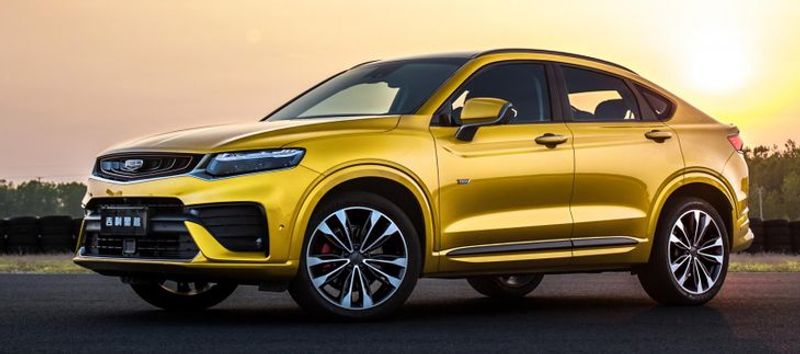
Active 1.2T 74 kW MT6 R359 900
Active 1.2T 96 kW AT6 R399 900
Allure 1.2T 96 kW AT6 R429 900
GT 1.2T 96 kW AT6 R479 900

The 2008 will be sold with a 5-year/100 000 km warranty and a 3-year/60 000 km service plan.

Related content: 

Opel SA to be absorbed by Peugeot Citroen SA

New Cars For SA in 2021

2020/21 Cars.co.za Consumer Awards – Powered by WesBank; Finalists

#CarsAwards – Best Hot Hatches in SA

Meet the finalists in the Hot Hatch category of the 2020/21 #CarsAwards powered by WesBank!

Now in its 6th year, the #CarsAwards was conceived to be South Africa's definitive automotive awards programme and is backed, for the 5th year running, by the country's leading supplier of vehicle finance, WesBank.

Read more about the 2020/21 Cars.co.za Consumer Awards powered by WesBank here 

Best Hot Hatches in SA 

With very few compact fun cars currently available in South Africa, our focus falls on the traditional hot hatch, which these days offers sportscar-humbling performance while retaining admirable practicality. In this category, we’re looking for a total package that is not priced in fantasy land. This is one for the petrolheads – a car that must leave the die-hard enthusiast smiling after every drive, in the way it looks, handles, sounds and, yes, performs.

This category is guided by both eligibility factors and Pillars of Success. 

Eligibility factors for this category include a list price between R650 000 and R900 000 (as of October 1, 2020) to ensure that this doesn’t become a category dominated by extravagant and unattainable exotics.  
Pillars of success for this category include drivetrain engagement, handling, sensory appeal and standard features.  

Visit www.carsawards.co.za for more information. In no particular order, the finalists are as follows:

Honda Civic Type R

The latest Honda Civic Type R blends hot hatch and sedan looks into one. It has been refined from the previous model in ways that have vastly improved its comfort and driving dynamics. Its exterior suggests something exceptionally wild, but all of the little winglets and vents are functional in either keeping the R stuck to the ground or cooling its components. The new Civic’s major drawcard is that it’s somehow brilliant on the track and suitably comfortable “when the red mist isn’t visible”.

View specification details for the Honda Civic Type R


Hyundai i30 N

Hyundai has finally introduced the i30 N in Mzansi. It’s the first N model from Hyundai, which is seeking to establish its N division in a similar way as Volkswagen has done with its R brand. The i30 N is an excellent first hot hatch that, much like the Golf GTI, blends power and poise.

View specification details for the Hyundai i30 N


Volkswagen Golf GTI TCR

As a last hurrah to the outgoing Golf 7.5 GTI Volkswagen has seen fit to give the GTI TCR the power to compete with the hottest hot hatches of the moment. It’s limited to just 300 units locally, each with their own specific number adding to its collectibility.


View specification details for the Volkswagen Golf GTI TCR

See last year's #CarsAwards winners here!


Amarok could become more hardcore

VW might be tempted to offer factory lift kit double-cabs.

As the VW Amarok prepares for retirement, the expectation is that VW might be more given to introducing accessories to keep it relevant until its replacement in 2023.  

End of lifecycle upgrades happen as any vehicle matures, in an attempt to keep the product offering valid and competitive.

For those bakkie buyers who desire an Amarok with better off-road ability, without compromising the factory warranty or service plan, there might be change afoot.
Australia has been a huge demand market for Amarok, especially the V6 variant. With very similar climate, terrain and user profile to South Africa, what happens Down Under, is often an indication of what could transpire locally.

The latest Amarok news from Oz, details plans for a range of optional off-road accessories. By far the most interesting of these is a Koni Raid lift kit, featuring new coil springs and twin-tube dampers.

Amarok’s comparatively low ground clearance has been its only real weakness off-road, versus Hilux or Ranger. The Koni Raid upgrade adds 25 mm of lift and those twin-tube dampers should notably improve the ride quality in extremely rocky terrain, reducing the jarring effect on passengers.
Beyond the suspension and ride height improvement, Amarok’s planned Australian upgrades also tally aluminium skid plates, to keep vulnerable engine and drivetrain components protected in technically challenging terrain.

The source for most of these Amarok off-road components and protection plates, is German supplier, Seikel. Local 4×4 enthusiasts will recognize the name, as Seikel is a distributor in South Africa and is vetted as an approved VW supplier, with the benefit of ‘no objection’ certification by the German vehicle giant.

As a factory-fitted option, customers who order these new Australian Amaroks, with their greater ground clearance and underbody protection, will retain full brand and dealership support. It will be interesting to see if VW South Africa, does the same, by incorporating Seikel accessories as part of its ‘official’ offering to Amarok double-cab customers.

Related content

The end of empire for VW

How the AmaFord changes everything

Volkswagen Amarok V6 TDI (2021) Review

This week’s news you need to know (Feb 21, Part 1)

The first week of February 2021 produced some banging news. Mercedes-AMG has finally put it in writing that the next-generation C63 will be propelled by a hybrid 4-pot, Audi has announced local pricing for its performance wagon RS4 and RS5 variants and Ford and Toyota have pledged to invest billions more in the South African automotive manufacturing sector. Brent vd Schyff takes us through some of the missing details… 

Audi RS4 Avant – the return of the wagon

I dream of the day when SUV fatigue will finally set in and, after years of subjecting us to one pointless, overpowered and jacked-up model after the other, manufacturers will begin to forge a new path. It’d be a day when consumers will realise there is life after the SUV and, hopefully, car brands will meet the demand for something to snap us out of this funk. The answer? Performance wagons, my learned friends. 

Unlike their SUV counterparts, performance wagons actually make sense somehow. An estate is just a sedan with an extra bit of sheet metal at the back, so applying a little performance tuning to the venerable 'wagon is a much simpler task than fashioning yet another cumbersome big-wheeled SUV, replete with gaudy detailing, compromised dynamics and an obscene carbon footprint.

A performance wagon offers a distinctive exterior execution, allied with the added practicality of a bigger load bay, which guarantees that school runs are always interesting affairs (careful of the kids' necks there, dad). Still not convinced? The romance seriously sets in when bar or braai talk turns to stories of wagons thrashing sportscars with the baby seat still in situ (disclaimer: not while baby's strapped in).

I’ve never met a petrolhead who doesn't covet a performance 'wagon, especially one of Audi's RS models. Audi has gifted us countless examples and has kept the flag flying for all these years. Think back to the beginning when the introduction of the RS2 shook the community – that first RS set the tone and boy, did we like that tone. 

Read: Audi RS4 & RS5 (2021) Specs and Price

And yes, the station wagon was once the SUV of the world. Don’t forget that. That is before the SUV took over and became the craze and just like fashion, trends come and go. Remember the relief you felt when that annoying trend of wearing t-shirts over long-sleeve shirts in the 90s faded into obscurity? I’m hoping that the SUV will meet the same fate. Its replacement (hopefully the 'wagon) will be welcomed.

Investment in SA, Toyota and Ford doubling down on SA

In amidst the slugs being thrown at the global economy in the post-Covid fallout, it’s welcoming to see motoring giants such as Ford and Toyota investing in our beloved Republic. After the year we’ve just had, it’s a timely fillip. It’s great to see the motor industry taking the driving seat with these green shoots. If that isn’t a cause for celebration, what is? 10 000 jobs created by Ford. That is 10 000 families that will positively benefit from this. Feeling good yet? Even Cyril had something to say about the Ford deal… about hoping that the relationship lasts for another 100 years. Eish… He knows it’s a Ford, right? 

Read: Ford to invest a further R15.8 billion into SA

This bit of news comes shortly after Toyota South Africa Motors announced that it intended to commence production of a Corolla-based crossover (named Corolla Cross) at its Prospecton plant in KZN (where the Hilux, Fortuner, Corolla and Quest are made). The R2.4-billion investment will create more jobs and inject much needed foreign investment into our economy. Let’s hope that this trend will continue!

Read: Toyota Corolla Cross to be built in SA

Shock therapy – next-generation Mercedes-AMG C63

Mercedes-AMG's performance division in Affalterbach must have done a lot of soul-searching about what to do with the C63 powerplant. The twin-turbo 4.0-litre V8 has been a triumph, but tightening emissions laws have rendered the roaring motor unsustainable. So, what power unit will Benz use in the next C63? Many won’t like it and sensitive viewers, be advised, the next sentence contains the words “4-cylinder hybrid”. No, it's not a misprint. To be fair, AMG created the monster to begin with and, thanks to the emission saga slowly tightening the noose, the days of boisterous V8s are coming to an end, cylinder by cylinder. These same emissions laws, if they achieve their ultimate goal, would see ICE engines being totally phased out. This was long before Greta had her soapbox moment at Davos. Food for thought?

Read: Next Mercedes-AMG C63 to pack 410 kW

I’ve driven the GT53 (powered by a hybridised V6 petrol motor) and folks, it’s not that bad. Sure, it isn’t your gut-wrenching V8, but it’s a worthy substitute. Cold comfort I know, but let’s also not forget that a large amount of technology proven on F1 circuits will find its way into the C63 and, consider how well that technology has worked out for Mercedes' F1 campaign so far… Technically, with some tough arm tattoos and the new hybrid C63, you could be the next Lewis Hamilton. Still not convinced? Then let’s put this question to you: What would you rather prefer? A hybrid powerplant with more shunt or nothing at all?

I love a good old thumping V8 just as much as the next petrolhead. It’s a visceral experience that strokes the, um, ego, but we need to check our ego and realise that modern-day engine technology has surpassed the need for bulky power units that aren’t economical. What we need here is a paradigm shift from Mercedes-AMG… a religious conversion, of sorts. If the Three-pointed Star can get that right then they’ll have accomplished what many traditionalists still regard as an impossible task. But like Tata Madiba once said, "it’s always impossible until it’s done.” Good luck, Benz.

Comparison: Land Rover Defender vs Toyota Prado

When it comes to off-roaders that are designed to transport you across some of the harshest landscapes on the planet – in high luxury, no less, the Toyota Prado and Land Rover Defender are near the top of the pile. The new Defender's racking up sales, but how does it stack up against the ageing, but ever-popular, Prado?

These 2 nameplates are synonymous with extreme off-roading. The Defender has a cult following because of the British icon's storied 60-year history. It started its life as a purposely utilitarian off-roader with few sops to passenger comfort, so while it has countless fans, most of them curse their vehicles when they need to execute parallel parking manoeuvres on busy city streets, for example. Since the new Defender’s arrival last year, however, things have changed drastically; the L663 model is much easier to live with as an everyday vehicle and even better off-road thanks to its array of tech features.

The Toyota Prado, on the other hand, has been one of the most popular luxury off-road vehicles in South Africa since the late 1990s. Considering the age of the current generation (it was launched in 2009), it still outsells the likes of the Audi Q7, BMW X5 and Mercedes-Benz GLE, all of which offer reasonable off-road capability in combination with vastly better on-road dynamics than the Japanese SUV.

Does the ageing Prado have enough going for it to match the new Defender P400? We pitted the 2 rivals against each other to see which of them represent the best way to spend R1.25 million on an off-roader.

How do they compare in terms of…

Off-road capability


The Prado has proven its off-road effectiveness over the span of 3 generations.

The Prado’s nameplate is legendary in South Africa; it’s revered as a vehicle that's extremely capable in virtually all off-road conditions – in fact, the worse the route, the better the Toyota is said to perform. The model's underpinned by a tried and trusted Land Cruiser chassis that’s optimised for off-roading. Its suspension is specifically set up to be softly sprung so it soaks up impacts and jolts, such as when climbing over rocks or traversing poor gravel roads. The steering is light for this very reason – one finger is all you need to control it through technical terrain and, when the wheel fights you, it doesn’t "take your arm off".

Having said that, the Prado feels the more analogue of the 2 vehicles to drive; it’s old-school insofar as you simply point it at where you want to go and modulate the throttle and steering as you see fit. Whether you get stuck along the route you undertake depends largely on your off-roading skill level. That’s not strictly true, however, because the Toyota has been endowed with modern off-roading equipment such as Terrain Select, hill descent control, a crawl mode… and even the option to pull away in 2nd gear with the 2nd Start button. It doesn’t feel as if these systems take centre stage in the Prado's overall packaging, whereas the Defender puts the tech "in your face and ready to use". The Prado’s simplicity evokes a sense of invincibility; its driver instinctively trusts there’s nothing too fancy that could go wrong or break.

Our Defender test unit was specced with air suspension (something which you can’t have on a Prado) and it does make off-roading more comfortable, especially when travelling along long stretches of gravel road. It also gives the Land Rover considerably more ground clearance, while simultaneously affording its user the option to manually lower the vehicle to make it easier to load up their detritus. 


The new Defender looks the part and has all the right credentials to be the most capable off-road car you can buy.

While the vehicles' off-road spec is quite similar (incl. low range and selectable modes), the Defender’s controls feel slicker to use: the interface is more intuitive and the exterior cameras provide much better resolution. You can even select a view that allows you to "see through the bonnet". The Prado’s camera set up, by contrast, feels basic. Due to its lower resolution, it’s not always clear what you’re looking at.

Speak to the guys at the Land Rover Experience centre (they drive Defenders off-road all day, every day) and they’ll tell you that the Discovery was the most capable Land Rover ever made until the new Defender came along and blew it away. Every aspect of the drive can be adjusted through the Pivi Pro touchscreen system (from throttle control, to the locking of the diffs and traction control settings etc).

Digging into off-road potential specs, the Prado is claimed to have an approach angle of 32 degrees, a departure angle of 24 degrees and a breakover point of 22 degrees. The Defender, with its wheels positioned at the extreme corners of the chassis (oh, and it's even boxier than the Prado) has better off-roading stats… Land Rover claims its newcomer has a 38-degree approach angle, a 40-degree departure angle and a 28-degree breakover point. The wading depth of the Defender is also better – 900 mm, compared with the Prado’s 700 mm.

Both vehicles are extremely capable in tough terrain and more than a match for where your average holiday destination might be located, but if you’re the Overlanding type who likes to forge their own path and are looking for the most off-road capable vehicle, the Defender ultimately has the edge.

On-road manners


Ladder frame vs monocoque, there's only one winner when it comes to tarmac manners. 

The on-road manners of the combatants are relative to the ages of the vehicles. The brand new Defender has a monocoque (it's not a body-on-frame design) and incorporates the latest chassis tech from Land Rover. Its aluminium architecture is reportedly 3 times stiffer than a ladder-frame chassis (like the Prado's). The stiffness translates into sharper steering responses, less body roll and, as a consequence, more sure-footedness. Air suspension is just as useful on-road as off it and the Defender smooths out its path. They may have to start building more effective speed bumps, because I anticipate that Defender owners may just blast through them as there is little to identify you’ve hit something harsh from behind the 'wheel. What you don’t need on your Defender, unless you really need to butch up the SUV's looks, are the mud-plugging tyres. They are noisy at anything above 80 kph and stiffen up the ride with their hard sidewalls. The standard all-terrain tyres will serve you better over the long run and are still excellent off-road.

The Prado, meanwhile, is approximately 12 years old in 2021 and while it has had a facelift, there’s no getting away from the age of the frame (technologically speaking) that the Toyota's body is mounted on. That said, it does have adaptive dampers that adjust the suspension depending on the conditions, um, underfoot. There’s certainly more lean in the chassis when cornering and the light steering doesn’t provide much of a connection to the road for the driver, but, by all accounts, it’s comfortable and familiar, much like your favourite couch, except your couch is probably newer.

Performance


Petrol or diesel, the Defender has the more powerful engines, but they are thirstier too.

The 2 engines here might ignite different types of fuel (the Defender is a turbopetrol P400 and the Prado a 2.8 GD turbodiesel), but this match-up provides valuable insight into the differences between petrol- and diesel-engined SUVs. We have driven the D240 Defender before, so we do have a reference point for comparison with the Prado’s new, more powerful 2.8-litre turbodiesel.

The more powerful diesel (150 kW/500 Nm) is the same unit as in the facelifted Hilux and Fortuner. It delivers better in-gear overtaking acceleration and while it doesn’t make the Prado feel sportier, it delivers a driving experience befitting a R1-million-plus SUV. Out on the freeway, the Prado’s consumption averaged 9.2 L/100 km, but that increased to over 11 L/100 km when driving on suburban and city roads. 

By comparison, the Defender’s turbodiesel unit in the D240 derivative produces 177 kW and 430 Nm of torque. The focus for Land Rover appears to be a more linear power delivery over high torque and extra pulling power. It does lag momentarily before accelerating quite aggressively (until you get used to making slightly lighter applications of the throttle pedal), but it then runs out of puff when the revs surge past 2 500 rpm. Ultimately, the Land Rover D240 motor feels the quicker of the 2 turbodiesels and during our earlier test of the D240 derivative, we found indicated fuel consumption would drop as low as 10 L/100 km and climb as high as 12 L/100 km. We might suggest waiting for the new straight-6 turbodiesel that’s due any day now (Q1 2021), as it will likely provide the perfect sweet spot for Defender owners.

The P400 petrol we have here uses a 6-cylinder turbopetrol to chuck out 294 kW and 550 Nm of torque. It’s a strong engine that gives the Defender uncharacteristic overtaking prowess, it also pounces quickly off the line making it super fun to drive around town and on country roads. The downside is that fuel consumption is, in a word, terrifying. We gave the car back with the average consumption reading 18.5 L/100 km. You will certainly achieve better results than that in the long run, but it will require much more sedate driving and there’s not much point to that if you have a sonorous 6-cylinder under the bonnet.

When it comes to ultimate tank range, the Prado is fitted with a 150-litre tank, meaning that you can, in theory, travel in excess of 1 500 km on a tank, so that you won't need to stop at that dodgy-looking 1-pump petrol station town that sells 500 ppm sand fuel. The Defender only comes with a 90-litre tank, but you could probably store a small Jerrycan in the side box, if you'd like to (Adventure pack option).  

Practicality


The Prado's door aperture is wider than the Defender's making for a slightly larger load bay (in 5-seater mode).

These are large SUVs so you’re not going to find many vehicles out there that can accommodate as many people (and their things) as these can. They are surprisingly closely matched in terms of length, with the Defender being just 8 mm longer (5 018 mm vs 5 010 mm) than the Prado. Stack them side-by-side though and the Defender seems to dwarf the Prado. Maybe it’s the chunkier design and roof rack creating a bit of an optical illusion, but the same goes for the interiors. The Defender feels roomier (almost vast) inside, with huge-but-comfortable seats that make the Prado’s items feel puny by comparison. 

In terms of packaging, the Defender demonstrates how far SUV interiors have advanced in the past 10 years. Whereas the Prado has a cubby hole, cup holders, door pockets and a nice big (and cooled) centre console, Land Rover's newcomer features a tiered centre console in which you can store phones or bunches of keys and whatever else you want to bring with you, and it still has room for a cooled centre box.


You can spec the interior of the Landy with a washable covering.

The shelf-like space to the left of the infotainment screen is useful for storing passenger-specific goods (like padkos), plus there's a USB port on the shelf – ostensibly so that the front passenger’s phone won't t clutter the centre console. Moving to the rear, where the Prado comes standard with 7 seats (a 3rd row is optional in the Defender), both cars offer enough legroom to seat all sizes of people in comfort. The Defender’s 3 022 mm wheelbase (versus the Prado’s 2 790 mm) does mean the former offers more legroom, but you’re not going to find the accommodation cramped, by any measure, in either of these SUVs.

Luggage capacity actually favours the Prado, probably because the rear door aperture of the Land Rover is narrower than the Toyota’s. As a result, claimed load space for the Prado is 104 litres with all the seats up and 974 litres in 5-seater mode. The Defender is slightly bigger in 7-seater mode (160 litres), but only offers 743 litres in 5-seater configuration.

Kerb appeal


When you're spending R1.2 million, looks matter – and the Defender attracts more eyes than the Prado. 

Aesthetic appreciation may be subjective, but in the eyes of most onlookers we chatted with, the Defender looks so much cooler than the Prado. Its retro design hits the right notes and judging by the envious looks and attention it got, you would never know that we had a seriously rare red Prado with us (have you ever seen a Prado that wasn’t white, beige or silver?).  

The Defender is going to be the car that catches your eye and tugs at your heartstrings when you need to sign on the dotted line at the dealership. It’s no wonder sales have rocketed since its launch last year.

It’s also entirely customisable to your lifestyle; there are add-on packs for all kinds of cosmetic (and, okay, functional) addenda and a plethora of external designs to choose from, so much so that you can easily get lost on the online configurator for hours while you choose which adornments you want – much to the detriment of your bank balance, of course.

Interior tech


Modern and sophisticated but still extremely practical.

Tech-wise, it seems the Prado has brought a sjambok to a gunfight (again), although perhaps the gun in question is a little too fancy for its own good. Metaphors aside, the abundance of USB ports is reason alone to award this section to the Defender. The Prado has 1 USB port, whereas you can lose count of the number of USBs you can spec in a Defender, which is also available with a wireless charging pad.

The updated Prado does come with Android Auto and Apple Carplay compatibility, which is a step in the right direction and allows you to use 3rd party apps for media and navigation. It does feature Toyota’s Safety Sense suite as well, which incorporates pre-collision detection, adaptive cruise control, blind-spot monitoring, lane departure warning and rear cross-traffic alert. All of this you can have on a Hilux and Fortuner as well, but it is nice to have electrically operated front seats and steering-column adjustment over and above what the other Toyota models offer.


Prado interior showing its age. Is that wood trim from someone's skirting board?

Swapping to the Defender's cabin, however, time warps you into 2021 with a glossy touchscreen that can be customised to display whichever layout you want on it. The system works very quickly thanks to a new processor and feels very much like a large smartphone (because it offers similar features and adjustability). The 3D camera screens are impressive in 4×4 mode; they allow you to rotate your view around the entire SUVs while looking at things like steering angle, lean angle and differential settings.

The Landy does seem to have teething troubles, however. We came across a few software glitches when using Android Auto and Apple Carplay, not to mention the electrics on the door windows and mirrors stopped working. It was quickly rectified via a software update, which can be done "over the air", which means if you encounter issues, they can be sorted without having to visit a dealer (drivetrain issues too).

Verdict


The Prado has earned its spot as the go-to vehicle for traversing Africa and its untouched landscapes. Defender is the young upstart.

If you've read intently up to this point in the comparison, you may think that this is a walkover for the Defender… The Defender is better on- and off-road, looks more attractive and is jam-packed with modern technology and connectivity options. What it hasn’t done yet, however, is prove its reliability and die-hard attitude under punishing African conditions. It may have clocked up millions of miles in testing, but we all know that the real test is what happens when there is no signal, no repair shop within 100 km and you’re deep in the bush, mud or sand and your SUV presents your only chance of getting back to civilisation.

The Prado and its Land Cruiser platform has spent decades proving itself in our conditions and has an enviable reputation for reliability. Prado owners swear by (as opposed to at) their vehicles and the new-vehicle sales figures show that some 12 years since this iteration of the 7-seater SUV arrived in local showrooms, in excess of 100 units still find new owners in the Republic every month.

The previous Defender similarly spent much of its life proving itself in rural Africa, but was never able to attain the Toyota's level of robust reliability. The new one still needs to prove itself in that department!

When all is said and done, if you're looking for the last word in reliability and brand strength, the venerable Prado should be the one that gets your nod. If, however, you don’t intend to spend every waking moment thrashing through the bundu and happen to live a more urbane city life for 90% of the year (as most people who can afford these vehicles do), the Defender is, unsurprisingly, the better all-rounder.

ID.6 is VW’s largest EV yet

ID.6 shows VW's battery cars can go big.

Brochure images of VW's new large battery-powered crossover have leaked.

An addition to the VW ID family of electric vehicles, the ID.6 is a notably longer version of the ID.4, showing the adaptability of VW’s MEB platform.

The ID.6 will be primarily targeted at Chinese customers and the source of these leaked images are from a homologation application by VW, in China.

Although the styling details are broadly similar to ID.4, the additional sheet metal is noticeable, especially towards the rear of the vehicle.

The core dimensions illustrate how much longer it is. VW’s ID.6 measures 4 876 mm bumper-to-bumper, which is 92 mm longer than an ID.4. Perhaps the most beneficial change, for passenger comfort, has been the stretched wheelbase, which increases by a significant 198 mm from ID.4 to ID.6.

Although VW has not confirmed the exact cabin architecture of ID.6, its extra length and generous wheelbase would indicate that this is destined to be marketed as a seven-seater vehicle, with third-row seating.

VW has chosen its large-capacity 82 kWh lithium-ion battery pack to power the ID.6’s 150 kW electric motor. The range is claimed to be an entirely adequate 450 km.

Some of the other specification details that are translatable from the leaked documents details a very interesting tyre choice, by VW’s product planners. The ID.6 rolls 20-inch alloy wheels, shod with a variety of tyre sizes, including a 235/55, which should give it very decent ride quality for a vehicle with such huge wheels.

It would also appear that ID.6 is not a light vehicle, as one would expect from any battery-powered crossover of its size. The kerb weight rating is 2 280 kg, which makes it heavier than any current production Touareg.

Related content

The end of empire for VW

VW Boss Confirms Halo Trinity EV

Will you pay R1 million for a VW Golf 8 R?