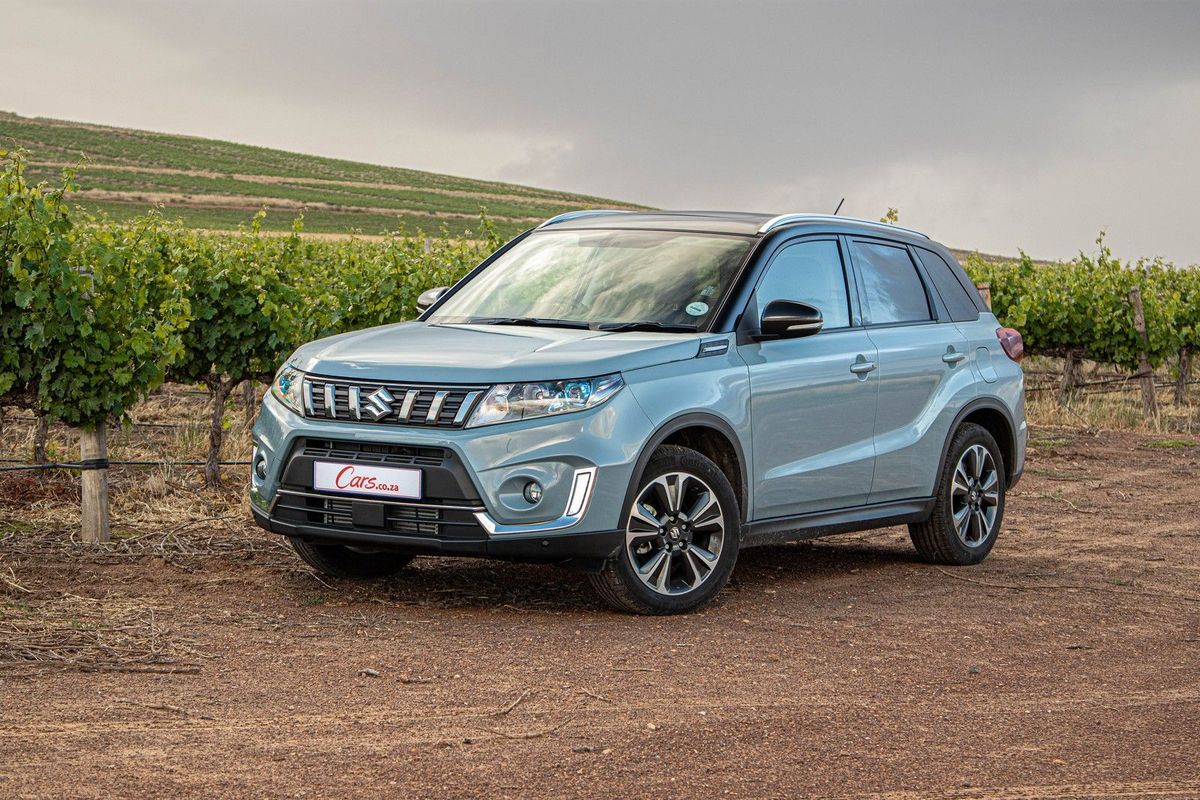
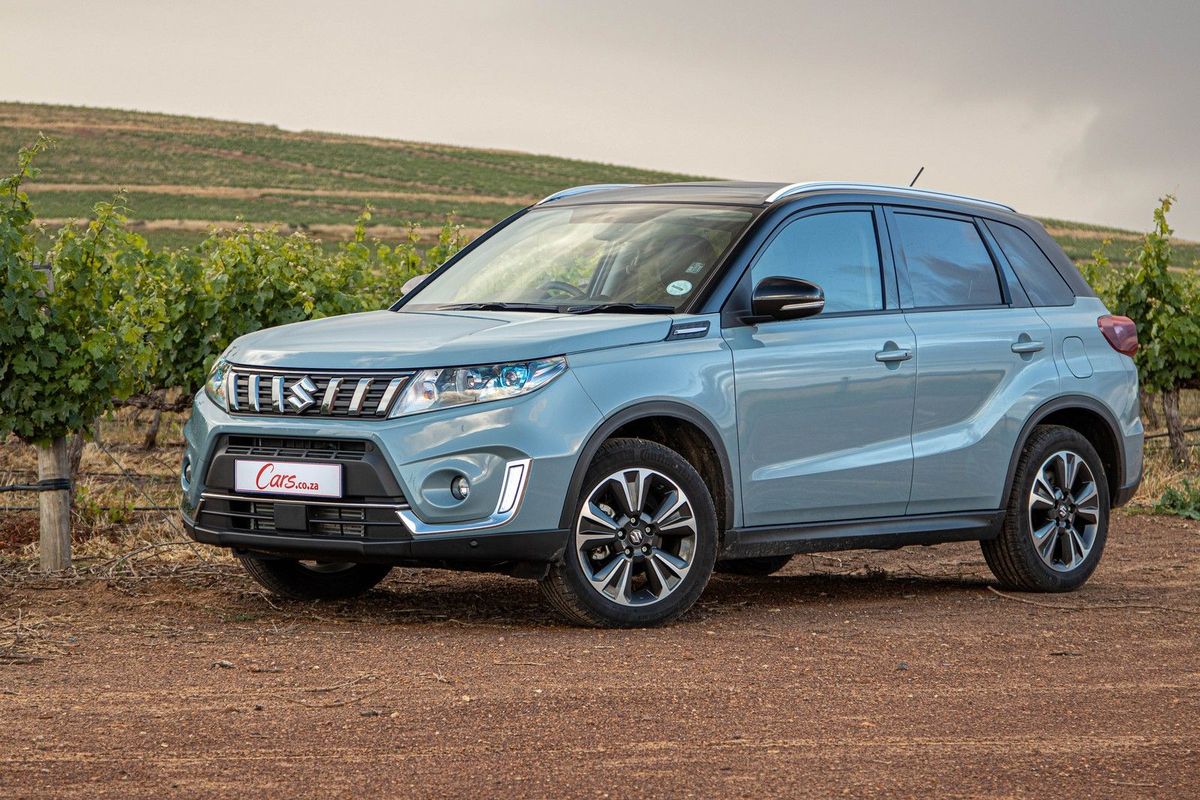
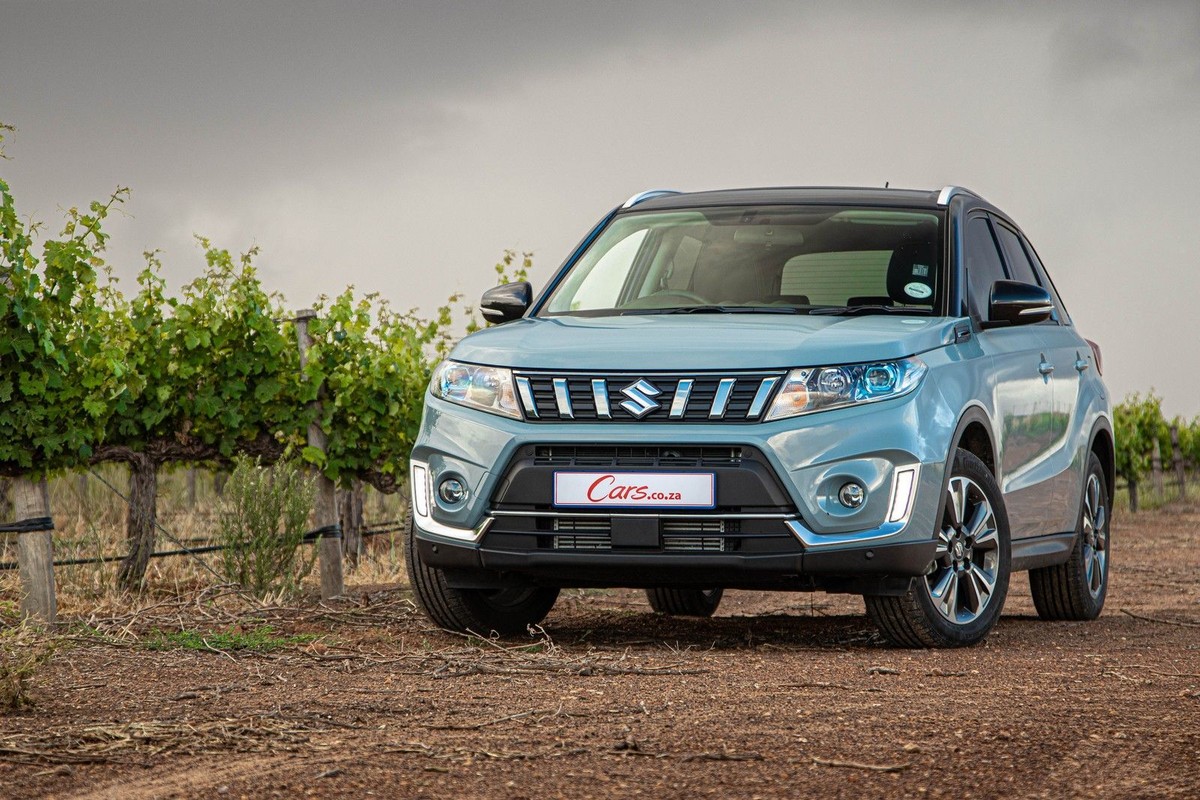
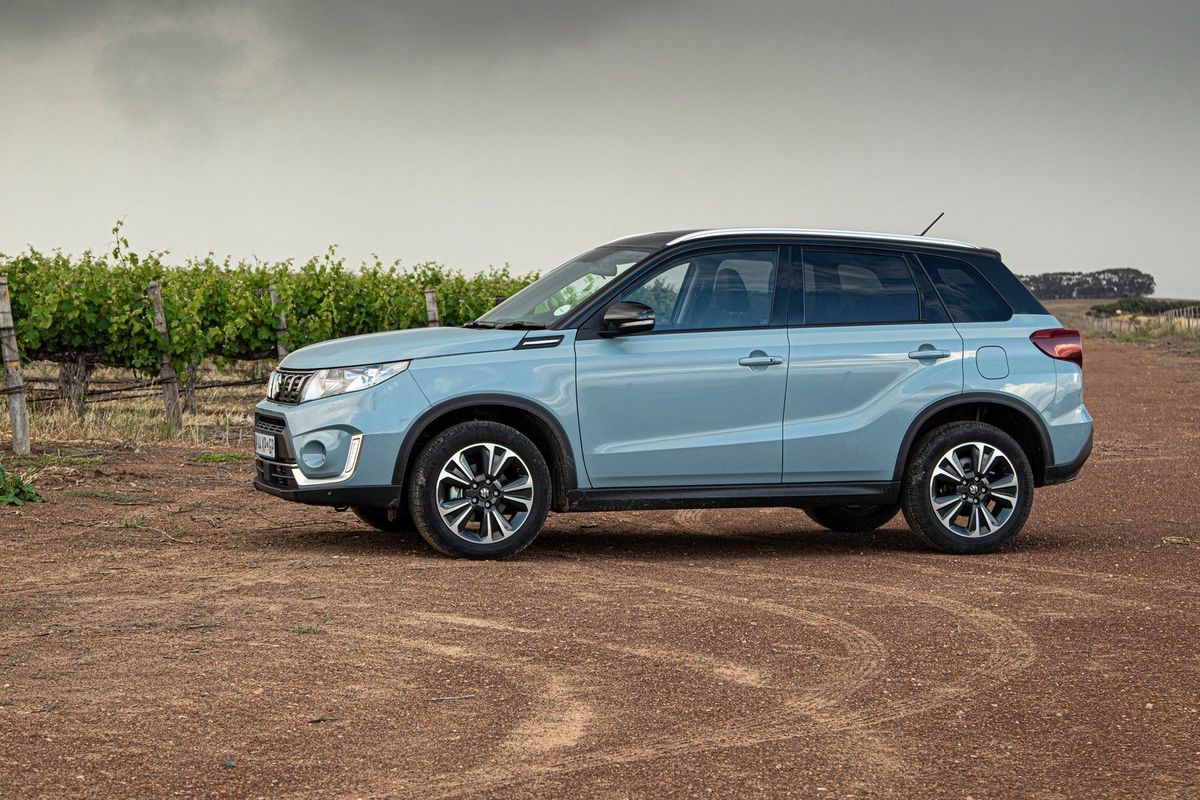
Peugeot 5008 Updated for 2021

Peugeot’s 5008 family car has received an update for 2021. See what’s changed below…

Hot on the heels of the reveal of the facelifted 3008 this week, Peugeot has now shown the updated 5008. 

The most noticeable change is the new frameless grille which is also found on the 3008 and the model gains new LED headlights and a hook-shaped daytime running lights while the rear also gains newly-designed LED taillights. 

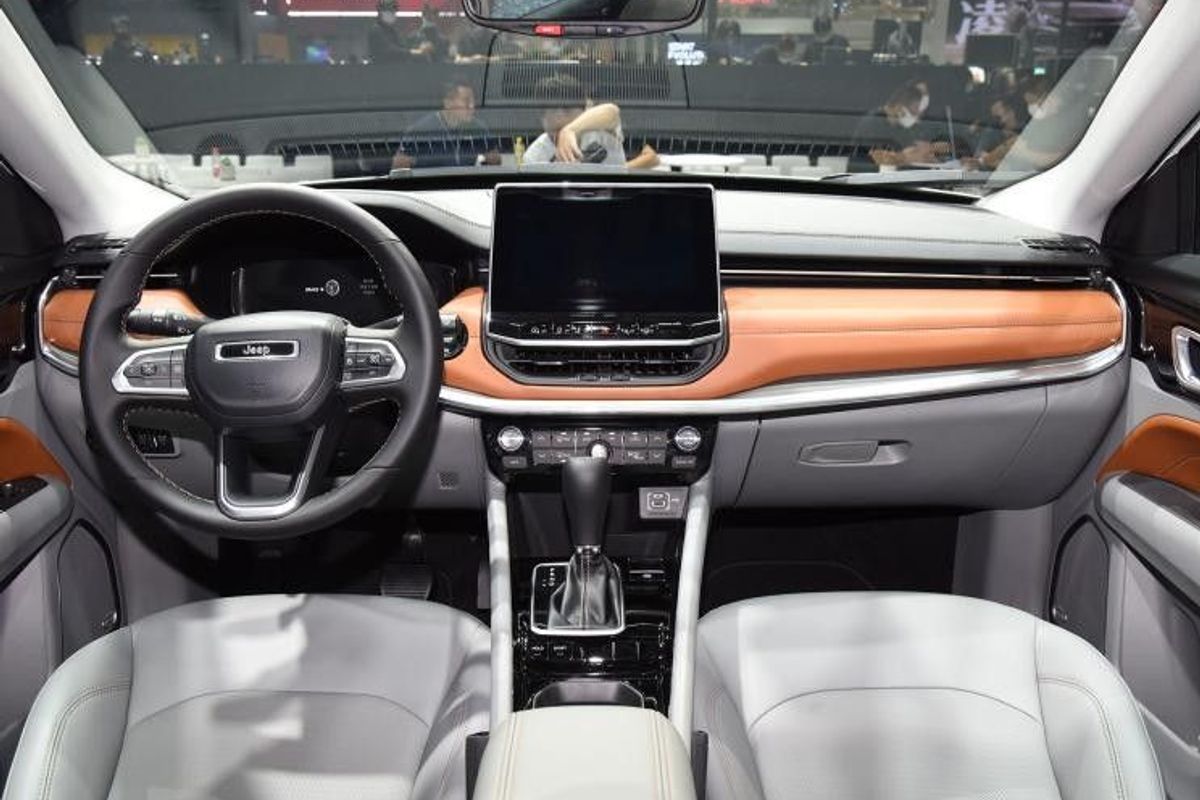
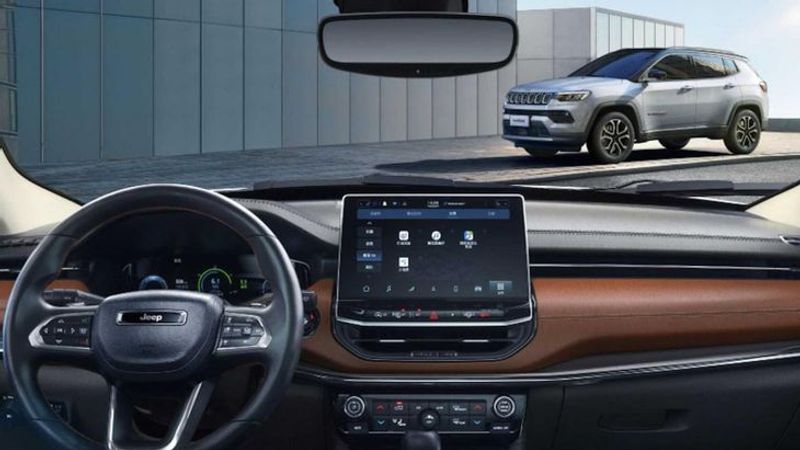
Inside, the 5008 gains Peugeot’s latest i-Cockpit comprising a 10-inch infotainment system and 12.3-inch digital instrument cluster and customers will have a choice of various interior trim options. More so, the 5008 will also be equipped with useful safety features such as a night vision system, adaptive cruise control with stop and go function, lane-keeping assist, traffic sign recognition and emergency brake assist. 

In terms of engines, the current 121 kW/240 Nm 1.6-litre turbopetrol engine and 110 kW/370 Nm 2.0-litre turbodiesel engine are expected to be carried over locally in conjunction with a 6-speed automatic transmission. Other markets such as Europe have more choice with a 1.2-litre, 3-cylinder engine and 1.5-litre turbodiesel engine also being offered. 

Peugeot South Africa has confirmed that the updated 5008 will reach South Africa in 2021 but exact timings have yet to be confirmed (Q2 is likely). We will keep you updated as soon as local pricing and specification details are confirmed. 

Buy a Peugeot 5008 on Cars.co.za

Related Content

Peugeot 5008 1.6T Allure (2019) Review

All-New Peugeot 2008 Announced


Hyundai teases radical new Tucson

The Hyundai Tucson is a perennially popular family car, but distinctive design has never been its main selling point. However, when the all-new model makes its world debut later this month, we’re all but guaranteed to be bowled over by its avant-garde appearance and futuristic interior.   

We recently published renders of the all-new Tucson, which is likely to be introduced in South Africa during the first half of 2021 and speculated about the powertrain and peak outputs of the rumoured N variant of the next-gen model. Click here to review that story.


Hyundai has integrated the daytime running lights within the elaborate grille design; the frontal look is thoroughly distinctive. 

We expected the brand’s “Sensuous Sportiness” design language to influence the look of the upcoming Tucson, but when SangYup Lee, the Senior Vice President and Head of Hyundai Global Design Centre, was recently quoted as saying that the 4th-generation Tucson would make people “freak out”, he clearly wasn’t joking…

In teasing the all-new Tucson, which will be officially unveiled on September 15, with these stylised images, Lee adds: “(The new) Tucson’s advanced, experimental design is true to its pioneering spirit and raises the game in the industry’s most competitive segment.”

Virtually all the Korean brand’s latest models sport expansive, cascading grilles with a distinctive pattern, with narrow headlamp clusters/indicator elements that merge into a single design element. The new Tucson is no exception – its LED daytime running lights are cleverly integrated into the jewel-like grille, and only revealed when activated by the driver.


The lighting signature of the new Tucson is characterised by a wraparound LED light bar and jewel-like tail-light clusters.

The newcomer is notably wider than its predecessor and based on a stretched wheelbase; the extra length, combined with the longer bonnet and short overhangs give the family car a coupé-like profile. From the side, angular body panels feature “Parametric Dynamics” (such as swage lines that run at different angles but “meet at one point”), the wheel arches are squared off and the C-pillars feature metallic-look accents that blend with the window trims. It's certainly a design that emphasises athleticism, so we can imagine that an N model based on this family car will look really purposeful!

The Tucson’s rear-end, meanwhile, incorporates a strike plate-adorned bumper, triangular LED tail-light clusters, a light bar that spans the width of the tailgate and a subtle roof spoiler.

As for the interior, Hyundai says its “dual-cockpit layout offers personalised space intuitively optimised for a high-tech user experience… an interspace with an integrated interface”.


Although it looks like a black-and-white photograph, this "interior image" is but a sketch – finer details have yet to be revealed.

Setting the firm's purple prose aside for the moment, it's fair to say that if the exterior execution of the Korean firm’s new family car is astounding, well, then its interior is positively mind-blowing. For example, Hyundai has not just replaced an analogue instrument cluster with a digital one – it’s discarded the binnacle entirely and replaced it with a display panel that's embedded in the dashboard.

Meanwhile, the pronounced dashboard ridge features a pair of metallic trim lines that extend through the upper door trims (so creating a wraparound effect for each of the front occupants), while the “floating” fascia, which sprouts from the elevated centre console and merges with the slim vents in the middle of the dashboard, is dominated by a large, tablet-like touchscreen. Very futuristic!

We’ll be sure to bring you official details as and when they become available later this month.

Related content:

Next Hyundai Tucson 'will spawn 254-kW N model'

Facelifted Volkswagen Tiguan Revealed

Mazda developing a CX-50 to replace CX-5?

Toyota RAV4 Gains More Tech

Kia Sportage Gets Infotainment Upgrade in SA

Yaris GR Still on the Cards for SA – Toyota SA

As production of the Toyota GR Yaris performance hatch kicks off in Japan, Toyota SA says the model is still on the cards for an SA introduction.

The GR Toyota Yaris looks to be one of the most entertaining performance hatches. First revealed at the beginning of 2020, the  GR Yaris packs a punch with a 3-cylinder, 1.6-litre turbocharged engine that offers up 192 kW and 360 Nm but there is also a high-power version that offers 200 kW and 370 Nm. Unlike most hot hatchbacks which use a front-wheel drive setup, the GR Yaris is all-wheel drive. 

Toyota's Gazoo Racing division reckons this Yaris is good for a 0-100 kpg in 5.5 seconds, which is likely down to its 1 280 kg weight and trick all wheel drive. This new GR Yaris features an all-wheel-drive system that can split power between the front and rear axle depending on the situation via modes such as Normal (60:40), Sport (30:70) and Track (50:50). An optional Circuit Pack, which comprises a Torsen limited-slip differential on both the front and rear axle, performance-tuned suspension and 18-inch forged alloy wheels with Michelin Pilot Sport 4s 225/40R18 tyres is also offered for the GR Yaris. Based on this, we think it's going to be one compact circuit carving machine.

Now production has officially kicked off at Toyota's Motomachi factory and the first production vehicle recently rolled off the line. Toyota Gazoo Racing has an entire section of the Motomachi factory and it will be exclusively building GR sports cars. Unlike conventional car factories which use conveyors to move vehicles along the line, this factory features a series of individual assembly cells, connected by automatic guided vehicles.

However, everyone's plans in 2020 went down the drain due to the COVID-19 pandemic and now as the world has turned a corner, we thought we'd reach out to Toyota South Africa regarding the GR Yaris availability. A spokesperson confirmed that "it is still on the cards for SA for 2021" but expressed some concern over timing and exchange rates, the latter not being favourable. So, there you have it, GR Yaris is still very much on Toyota SA's radar, but its arrival will depend on the South African Rand's performance against foreign currency.

Further Reading

Toyota GR Yaris on Track with Alonso [w/Video]

Toyota GR Corolla to use GR Yaris Engine

All-New Toyota Yaris Revealed

Toyota Corolla GR Sedan Coming?

New Mercedes-Benz S-Class Revealed

The new Mercedes-Benz S-Class has been revealed and it's expected to arrive in South Africa in the first quarter of 2021! 

The S-Class represents the pinnacle of the Mercedes-Benz product line and apart from being an important part of the brand’s history, it also serves as the spearhead, as it were, for showcasing the latest and greatest technology currently in Merc’s arsenal. 

This is important because the technology that’s infused in the S-Class, will likely find its way into the next generation of the brand’s extensive model lineup. 

We have seen spy images and teasers in the past few months and Mercedes-Benz has already revealed what to expect from the new S-Class' interior and after months of waiting, the official reveal has now taken place.

Large, intuitive touchscreens dominate the interior, featuring the latest generation MBUX operating system with up to 3 screens taking care of just about everything you can think of. The setup includes a large 12.3-inch central screen which has contributed to fewer buttons present in the cabin as well as a 12.3-inch configurable instrument cluster. Rear passengers can also have access to two 11.6-inch screens mounted on the front seatbacks as well as a 7.0-inch tablet in the rear centre console which forms part of the optional Business Centre Console package. Rear passengers can now also summon MBUX by using the 'Hey Mercedes' command and each passenger has access to their own individual media options. The range of comfort and convenience features on offer in the S-Class is next-level luxury for passengers. In fact, Mercedes-Benz states that the interior fulfils the claim of a “third place,” a private refuge between home and work. As such, passengers have access to a range of 6 Energising program options depending on the passenger's personal needs. The S-Class can also be had with a top-end Burmester 4D surround sound system with a total of 30 loudspeakers and 8 resonators for crisp clear music quality. 

As for the steering wheel, it's also new and features capacitive hands-off recognition made possible with a two-zone sensor pad located on the rim of the steering wheel which can sense if the driver's hands are on the 'wheel or not. The new S-Class also features an augmented reality navigation heads-up display. 

In terms of safety, the new S-Class is the first series-production car to be fitted with rear-seat airbags for added passenger protection in the event of a frontal accident. More than this, the Pre-Safe Impulse Side will be able to raise the S-Class’ body by up to 8 centimetres immediately before an impending side collision which will benefit all passengers.  

Read more about the interior of the Mercedes-Benz S-Class here.


The tech-laden cabin of the new S-Class is mightily impressive. 

The W223 S-Class will be produced on Merc’s revised MRA (Modular Rear-wheel drive Architecture) platform and it will be the first model to be built at what Merc believes is the most modern automobile production facility in the world, Factory 56. 

The S-Class is powered by a range of hybridised powertrains with 48-volt technology as well as the choice of a plug-in hybrid setup while an all-electric EQS is also in development which will take square aim at Tesla.   

The S-Class range starts with the S500 which is powered by a 3.0-litre inline-6 turbopetrol engine with an integrated starter-generator with EQ Boost and outputs of 320 kW and 521 Nm of torque directed to all-four wheels. The EQ Boost allows for additional power and torque bursts of 16 kW and 249 Nm for short periods. The headlining powerplant in the S580 is a twin-turbocharged 4.0-litre V8 that's good for 350 kW and 700 Nm. Both derivatives make use of a 9-speed automatic transmission.  

The optional E-Active Body Control utilises 5 multi-core processors, more than 20 sensors and a stereo camera to predictively respond to varying driving situations and the system is able to make damping and spring force adjustments at each wheel by analysing the driving situation 1000 times per second. Rear-axle steering, which will also be offered as an option, is expected to enhance the handling and manoeuvrability of the S-Class. 

As you can expect, there will be a host of advanced driver assistance systems on offer. As part of the Driving Assistance Package, features such as Active Blind Spot Assist, Active Steering Assist, Active Parking Assist while a Parking Package with a 360-degree camera will be optional.   

Timing for the local introduction of the new S-Class in South Africa has yet to be confirmed. 

Buy a new or used Mercedes-Benz S-Class on Cars.co.za

Related Content

Electric Merc S-Class confirms huge range

Mercedes-Benz teases new S-Class [Update]

Mercedes-Benz Showcases New S-Class Infotainment


The Cars.co.za Podcast, Ep4 – SA Youtuber Liberebil’s new venture & what his next car might be

Ciro was delighted to be joined in studio by popular SA Youtuber Niyaaz Isaacs, the face and voice behind the Liberebil Youtube channel.

In this wide-ranging interview, Ciro and Niyaaz discuss the unreliability of BMW M cars, why Honda fans love model codes so much, why Maseratis need to look like Monica Bellucci, how to fix engines before they break, why he wants to buy his mom a Mercedes SLK, driving an electric Golf, what Niyaaz might buy next and of course his new venture, a build shop in Paarl focusing on American muscle trucks.

You can also enjoy this episode on your favourite podcast platform, we'll paste the links here as soon as it's uploaded.

Watch episode 1 here:

https://youtu.be/AFpbr4jgs_c

Watch episode 2 here:

https://youtu.be/KOQHIiCLbRc

Watch episode 3 here:

https://youtu.be/gX29a3Prqf8

Updated Range Rover Evoque and Discovery Sport (2021) Specs & Price

Land Rover has updated its Evoque and Discovery Sport and will also introduce the special edition Range Rover Evoque Autobiography and the Discovery Sport Black to the local market in early 2021. See all the details below…

Land Rover has rolled out some updates for the Range Rover Evoque and Discovery Sport. In terms of interior technology, both vehicle ranges now benefit from the introduction of Land Rover’s Pivi infotainment system which is faster and more responsive and can be updated over-the-air via WiFi. The system will be offered as the standard Pivi system or Pivi Pro which features integrated navigation (offered on S-specification). Two smartphones can be connected simultaneously and Spotify is now integrated into the menu for the first time.

Other notable updates include a new Cabin Air Filtration System which cleans the air in the cabin and the Discovery Sport also gains a Rear Collision Monitor as well as a 3D Surround Camera which will complement the ClearSight Ground View and ClearSight Rear View Mirror systems. 

For those who venture into the outdoors regularly, a second-generation Activity Key will also be available which now features an LCD watch. The device is shock-resistant and waterproof.  

Apart from technological upgrades, new special edition models will also come to market in early 2021.

A new range-topping Range Rover Evoque Autobiography with distinctive exterior styling and a luxurious interior will be offered. More so, an Evoque Lafayette Edition with a Nolita Grey contrasting roof will also come to market with a carefully curated set of options and will be available with a new 147 kW 2.0-litre turbodiesel engine (D200) which will, in fact, replace the 132 kW D180 offering in both the Evoque and Range Rover Sport lineups.  

More so, a new Discovery Sport Black will also be offered and will be powered by a new 213 kW turbocharged 2.0-litre (P290) petrol engine.

Range Rover Evoque Autobiography – Price in SA 

Range Rover Evoque Autobiography – From R1 090 500

Land Rover Discovery Sport Black – Price in SA 

Land Rover Discovery Sport Black – From R1 058 400

Buy a new or used Range Rover Evoque on Cars.co.za

Buy a new or used Range Rover Discovery Sport on Cars.co.za

Related Content 

Range Rover Evoque (2019) Video Review

Spy Shots: 2021 Range Rover Evoque 7-Seater

Land Rover Introduces New Plug-In Hybrids

Land Rover Discovery Sport D180 HSE (2020) Review


Toyota Starlet returns to Africa

Toyota revives an iconic compact car model name.

The Japanese automotive giant announced a new Starlet hatchback, targeted at Toyota’s ambitious African expansion plans.

Although the Toyota badge takes pride of place in the middle of its grille, this Starlet is a true example of badge engineering. There is virtually no trace of Toyota in its components or mechanical engineering.

This new Starlet is the result of Toyota’s agreement with Suzuki and is, in fact, a Baleno underneath. As more automotive companies seek economies of scale and cost benefits from cooperation, badge engineering is a reality that will become commonplace.

For Toyota to develop a new compact hatchback for African markets and their robust conditions, it would not be cost-effective. Suzuki’s Baleno is a proven vehicle, with its design strongly influenced by Indian road conditions, which are broadly similar to most African markets.

The cooperation between Toyota and Suzuki is, therefore, a logical conclusion and gives African consumers, a tidy new hatchback choice – with a legendary name.

Although Toyota South Africa has not commented on any local possibility of the new Starlet, it does look quite tidy. The only notable specification change between Toyota’s Starlet and its Suzuki donor platform concerns the engine.

The Suzuki’s Baleno's 1.4-litre engine, good for 68 kW is also carried over to the Starlet, both producing a similar peak torque value of 130 Nm. Starlet buyers will have the option on both a five-speed manual or four-speed automatic transmission

In terms of overall size, this new Starlet measures nearly 4m bumper-to-bumper and is 1.74m across and stands 1.47m tall.

With its own grille and wheel design, the Starlet is slightly differentiated from Toyota’s Glanza, which is its exact twin-vehicle in India, also based on the Baleno.

Related content

Suzuki Across is a Rebadged Toyota RAV4

Best Used Cars in SA for Under R100k

Toyota Yaris Cross Gets GR Treatment

New Opel Mokka Engine Lineup Revealed

Following the reveal of the new second-generation Mokka crossover in June 2020, Opel has now revealed additional combustion engine derivatives that will be offered alongside the all-electric Mokka. 

When the new Mokka was shown earlier this year, many people, including us, were really impressed by the styling on offer and it also features an electric drivetrain with a 50 kWh lithium-ion battery and outputs of 100 kW and 260 Nm and with a range of about 322 km. 

At the time, Opel confirmed that the new Mokka was under consideration for our market in 2022 but it remains unlikely that we will see the all-electric Mokka on local soil. However, Opel has now announced internal combustion engine derivatives for the new Mokka which will make a stronger business case for a South African introduction. The good news is that the styling will be near-identical to the electric Mokka and we may even see some sportier trim come to market such as the two-tone GS Line trim you see here. 

The new Mokka will be offered with a choice of 2 petrol and 1 diesel engine option. 

A 1.2-litre, 3-cylinder petrol engine will offer 74 kW and 205 Nm of torque and will be mated with a 6-speed manual transmission. A more potent turbocharged 1.2-litre petrol engine will also be available with 96 kW and 230 Nm but in addition to a 6-speed manual, this engine will also be equipped with an 8-speed automatic transmission. 

A 1.5-;itre turbodiesel engine will round out the new Mokka range with 81 kW and 250 Nm and will be offered in conjunction a 6-speed manual transmission only. 

Inside, the UK-spec Mokka provides passengers with access to a 7-inch or top-spec 10-inch touchscreen infotainment system with Apple CarPlay and Android Auto capability. The interior look is further enhanced with a 12-inch digital instrument panel. 

Other nice features include advanced cruise control, active lane positioning, 180-degree rear-view camera and automatic park assist. Specification for South Africa is likely to differ though and local engine and feature offerings will only be confirmed closer to the Mokka’s local introduction in 2022. 

Buy an Opel Mokka on Cars.co.za

Related Content

New Opel Mokka Finally Revealed

Opel Corsa Utility Review – The 250 000km Trooper!

Ciro finally drives the Cars.co.za Opel Superboss

Hyundai unveils facelifted Kona & N-Line derivative

Of the 3 compact family cars that Hyundai offers in South Africa, the Kona is probably the most niche model. The Korean manufacturer has released details of its updated crossover, including a new performance-inspired N Line derivative, which sets the scene for the introduction of a fully-fledged Kona N. 

The Kona, which is based on the i30 compact car's platform, is quite popular in Europe and although it was only introduced in Mzansi relatively recently (in late 2018), it's been in production since 2017, which means the facelift is just about on cue. 

To bring the model's looks up to date, Hyundai has introduced a significantly revised front end, replete with a longer bonnet, a fresh grille design and widened LED daytime-running lights. A silver-grey skid plate cups the lower air intake, while vertical aerodynamic inlets feature on the outside edges of the black bumper. The two-tone execution, with black mirror housings, looks particularly fetching.


Hyundai has added a number of silver-grey accents to the Kona's cladding; the crossover now looks quite a bit sleeker. 

At the rear, revised tail-light clusters feature horizontally-stretched graphics. The shapelier rear bumper, meanwhile, features a large skid plate that ties in neatly with the front-bumper execution and additional side-skirt garnishes. Overall, the updated Kona is 40 mm longer than its predecessor and comes with 16-inch alloy wheels; redesigned 17- and 18-inch rims are optional. 

Inside, the Kona gains an electronic handbrake, ambient LED lighting (for the centre cup holder as well as the driver and front passenger's footwells), updated speaker- and vent surrounds, as well as a selection of new colour and material options. In Europe, the car's infotainment system has increased to an 8-inch touchscreen with wireless Android Auto and Apple Car Play compatibility as standard. 


As expected, the Kona interior in the press material features the digital instrument cluster and the upgraded infotainment system.

The emergence of the all-new i20, of which we recently drove a pre-production unit, sees the compact hatchback's 10.25-inch digital instrument cluster being transplanted in the Kona. The infotainment system can be upgraded to a 10.25-inch unit, which supports a split-screen function, multiple Bluetooth connections and the extended features of Hyundai’s cloud-based navigation system. 

Although the new N-Line derivative probably won't be of much consequence to the South African market, it does offer clues to what the upcoming Kona N will might look like (…only wilder). Compared with its standard sibling, the N-Line eschews black cladding in favour of a sportier bodykit and features an (ostensibly Audi A1-inspired) trio of mesh-covered mini air intakes above the front grille.


There's a lot more in the way of air inlets in the N Line version's frontal aspect. 

Apart from bespoke alloys, the N Line features a rear diffuser and a dual-outlet sports exhaust, while the black leather interior trim is accented with red contrast stitching, metal pedals and N logos.

Meanwhile, Hyundai has upgraded its 1.6-litre turbopetrol derivative's peak power output to 145 kW, which is available in either 2- or 4-wheel-drive guise in conjunction with a 7-speed dual-clutch automatic overseas. On the South African market, Hyundai offers a 1.0-litre turbopetrol derivative with a 6-speed manual and a 2.0-litre naturally aspirated petrol version with a 6-speed automatic 'box.


The N Line's rear bumper features an elaborate diffuser inset, which is complemented with dual exhaust pipes.

As for the driving experience, the refreshed Kona features a recalibrated steering system (for more linear responses to 'wheel inputs), plus a more comfort-oriented suspension setup. The firm says: "Next to springs and dampers, the stabiliser bars have been modified for better isolation. The rear bump stop was also modified, bringing benefits for primary ride and lateral body control."

Hyundai South Africa's product pitch for the Kona is quite different to its counterparts in Europe; local derivatives are much more soberly specced for optimal value for money. Although the local subsidiary has yet to confirm the arrival date of the updated Kona, we expect local versions to carry over at least the cosmetic updates next year, probably during the 1st quarter (or half) of 2021.

Hyundai Kona Specs & Prices in South Africa 

Related content:

Hyundai Creta (2020) International Launch Review

Hyundai i20 (2021) International Launch Review

Hyundai Kona N in the Works

Hyundai Kona (2018) Launch Review
Isuzu D-Max (2021) International Launch Review
We know there's a facelift coming for the market-leading Toyota Hilux, but the most anticipated ALL-NEW bakkie heading for Mzansi is the next-generation Isuzu D-Max. It will go on sale in the 2nd half of 2021, but it's already available in Australia, where our correspondent Matt Campbell has put the newcomer through its paces. How does it compare with the current crop of bakkies in South Africa? Has Isuzu taken a significant step forward? Read on…

First, a disclaimer: the new-generation D-Max that will be sold in South Africa will be built at the Japanese firm's plant in Port Elizabeth and will undergo an extensive local development programme to adapt its powertrain and underpinnings (including suspension tuning) to suit the requirements of the Republic (not least its plethora of road conditions, which range from fine to atrocious, depending on where you're driving). What's more, the units that are sold in Australia are liberally specified, especially with passenger-car-like safety technology. Local units may feature fewer high-end features – and indeed some class-leading considerations – that have been made available in other markets, but it will essentially be the same bakkie, which is why we were keen to find out what it's like to drive.


The combination of a dark-grey grille and other exterior accents work particularly well with the vibrant orange paintwork.

So, what’s new?

Pretty much everything. Isuzu’s global team has made a huge effort to leave no stone unturned for this new-generation D-Max. It’s not like the "facelifted facelifts" of old. In fact, the Australian version is unique in its specification, with a number of specific inclusions that will help it compare better with lifestyle-focused offerings in the line-ups of the Ford Ranger, Toyota Hilux and other models.

The Japanese brand says the all-new D-Max has been “completely redesigned from the ground up”: the chassis has been thoroughly reworked, and there is new suspension front and rear – the latter of which is now a 3-leaf setup, yet still manages payload of 1 000 kg or more on most derivatives. To read more about the specifications, be sure to revisit All-New Isuzu D-Max: More Details.


In Australia, the top-of-the-range derivative is called the X-Terrain, which is designed to be a Ford Ranger Wildtrak competitor.

If you just compare the versions Down Under with those sold in Thailand, you’ll immediately notice the increased standard safety equipment for the Australian market. That list incorporates automatic emergency braking with pedestrian and cyclist detection, lane keeping assistance, blind spot monitoring and rear cross traffic alert, and adaptive cruise control on automatic derivatives – not all of those features are guaranteed to be offered in other markets, including South Africa. It's a shame, really, as it sets the D-Max apart. Still, local specification is still being finalised, so watch this space.

Isuzu says it has paid extra attention to customer feedback for the new bakkie's ride and handling settings, and the evidence is clear when it comes to the D-Max’s newfound road manners – it’s as if the Japanese contender has been to finishing school and graduated with honours. Indeed, there’s a lot that’s better about the new D-Max…


The D-Max's on-road refinement has always been near the top of the segment and Isuzu has improved it even futher.

What's it like to drive?

The new D-Max's electric power steering system is both light and accurate on the road, and still tractable off-road. What's more, the suspension is considerably more, well, considered when it comes to handling bumps and lumps. You can still tell you’re driving a vehicle with a 1-tonne payload and towing specs of up to 3 500-kg (braked capacity), but it is a vast step forward from the agricultural underpinnings of its predecessor.

The more pliant ride quality is particularly noticeable when driving the Isuzu at freeway speeds when it's carrying little or no cargo on its load bed. There is markedly improved suspension control over uneven tarred surfaces and, in terms of overall refinement (wind- and engine noise suppression), it arguably still trails the Ford Ranger, but not by much and matches its other rivals in this regard. 


The new D-Max doesn't mind loose gravel; for tougher courses, 4×4 versions feature standard diff-locks and upgraded software.

As for off-roading, we didn't tackle anything more serious than a rough dirt road during the initial evaluation (the Isuzu will be put through a strict test regimen on a 4×4 course at a later date), but the vehicle's stabilty at (for the most) average dirt-road speeds was admirable, with minimal shaking and rattling of the cabin (and its occupants) on rutted sections.  

There are still disc brakes at the front and drums at the rear, and Aussie versions have steel wheels on base grades (in 17 inch size), while higher grades get alloys in either 17- or 18-inch design.


The new model has a ground clearance of 240 mm, with a maximum wading depth of 800 mm.

It looks the business

Australia has even seen the introduction of a new flagship derivaitve, named the X-Terrain, which is designed with the Ford Ranger Wildtrak squarely in its targets. It has plenty of standout features, including dark grey highlights all around the vehicle, and the top-grade version gets a leather-accented cabin trim and dark headliner… that's straight off the "Wildtrak checklist", isn't it?

But even the average D-Max derivative offers vastly more kerb appeal than the existing bakkie, which wasn't exactly fashion-forward, even when it was brand new. What's more, the KB/D-Max's interior execution was lacklustre, with hard, scratchy surfaces and a staid design. The new one, by contrast, feels fresh, which is possibly as much as some buyers will need to get them over the line.


Higher-grade derivatives feature a 9-inch touchscreen infotainment system with wireless smartphone screen-mirroring tech.

But it’s more than just the cabin design. The front seats are very comfy, plus there’s reach and rake adjustment for the steering wheel, and height adjustment for the driver’s seat – the X-Terrain even gets electric driver's seat adjustment. The rear-occupant space, in particular, is competitive in double-cab derivatives; in terms of knee- and headroom, the Isuzu feels more spacious than the Toyota Hilux, for example, although it doesn't offer as much shoulder room as in the back of a Volkswagen Amarok. In Aus, all D-Max double cabs are equipped with separate vents for rear passengers.

For interest's sake, there are 4 trim levels available and all of them are well equipped and presented… but the prices have gone up substantially to compensate for all the additional technology and equipment. An example is the media setup, which is a 7.0-inch touchscreen infotainment system with smartphone mirroring technology in the base grades (Android Auto and wireless Apple CarPlay – a first in the bakkie segment, we understand), while the higher derivatives get a 9.0-inch screen with sat-nav. The latter really looks the part, especially alongside the 4.2-inch digital instrument cluster.


The newcomer's cabin is notably spacious, with better-than-average rear leg- and headroom.

The Isuzu is also eminently practical, with storage options in the cabin comprising outboard cup holders in the dashboard, big cup/bottle holders between the seats, plus door pockets that are large enough to accommodate a 1-litre bottle. There’s a dual glovebox, while high grade versions are additionally equipped with a closable dash-top box.

But Isuzu hasn’t gone the whole hog inside – even the top-spec version misses out on some desirable options like an auto-dimming rearview mirror, seat heating/cooling, and electric adjustment for the front passenger seat. A few of those items have shown up on the equipment list of the D-Max's cousin, the next-gen Mazda BT-50, however – be on the lookout for a driving impression of that soon. 

Improvements to the engine comprise improved refinement and efficiency, the motor's power and torque outputs are middling.

What’s the engine like?

Isuzu says the D-Max's 3.0-litre 4-cylinder turbodiesel is an all-new motor – the engine code (for those who care) is 4JJ3-TCX. Despite the “re-engineered” engine apparently stepping things up for the Isuzu brand, it hasn’t taken huge leaps and bounds in terms of its outputs. The maximum power output is 140 kW (at 3 600 rpm) and peak torque is 450 Nm (from 1 600 to 2 600 rpm).
Those are modest increases for what is now a "large capacity" turbodiesel bakkie and, even though the engine's ostensibly more refined than the motor it replaces, it still sounds rather strained under firm acceleration. Toyota in Australia recently upgraded its 2.8-litre unit to 150 kW and 500 Nm, while the 2.0-litre Ranger Bi-turbo reins supreme with a comparatively huge 157 kW and 500 Nm.


Isuzu is not chasing ultimate engine outputs with its 3.0-litre D-Max motor – but then, the Japanese manufacturer never has.  

Suffice to say, some buyers may want more. There’s also an argument, though, that you might want less, especially for the sake of long-term reliability under sustained hard use. Maybe not as little as the current entry-level single cab 250 Base unit with 58 kW and 176 Nm, but in some markets there will be also be a 1.9-litre twin-turbo and it will likely come with a smaller price tag than the 3.0 litre.

The transmission choices remain a 6-speed manual or 6-speed automatic for the 3.0-litre in Australia, but with the choice of a 4×2 rear-wheel drive or the selectable 4×4, the latter now with a standard rear differential lock in conjunction with hill descent control and tweaked traction- and stability control settings. In our brief experience of the manual 'box, we found the shift quality positive without an overly long throw, while the automatic transmission shifted reasonably crisply, although it did exhibit a tendency to hunt a little in the higher gears in some traffic conditions. 

Summary

All the signs are there that the new-generation D-Max will continue the success story of its predecessor, which certainly has a loyal following in South Africa. The overseas indications are very promising, and if all the hard work that Isuzu has put into making the Australian version as good as it is ends up being carried over to the South African-spec bakkie (which it should, even though local specification has yet to be confirmed), it will no doubt do very well for the brand. If anything, the new model has the potential to grab an ever bigger slice of the lucrative lifestyle market than before.  

Related content: 

All-New Isuzu D-Max: More Details

Bakkies Coming To SA in 2021

How Toyota got Hilux to 150 kW

Ford Reveals Ranger Wildtrak X

Ford Ranger Thunder vs Wildtrak: Key Differences

New Mazda BT-50: More details emerge