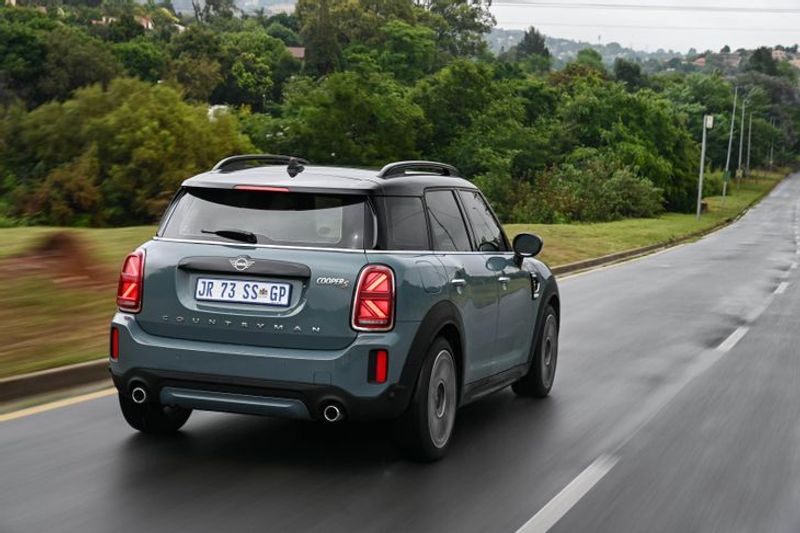
Kia Rio X – The hatchback that wants to go off-road
Kia is expanding its gravel travel hatchback range, with a new Rio derivative.
Reacting to customer preference and stable demand for conventional hatchbacks with pseudo-SUV styling elements, this new release from Kia is called the Rio X.
It uses the same GB platform, like all other Rios, but there have been significant updates to the hatchback’s bumpers and lights in this new X-specification.
With reshaped front and rear contact points, the Rio X is 170 mm longer than a conventional Rio hatchback. The extra length is credited to its bumper design.
The car’s front styling also features a dramatic new headlight design, with a spur line that runs into the bumper.
Around the wheel arches and along the lower door sills, Kia has added black plastic cladding, to preserve the bodywork and reduce stone chip damage. At the rear, there are two new aero ducts, at each corner.
Despite not marketing it locally, the Rio X would have outstanding applicability to the South African market. Engineers at Kia have managed to stretch its wheelbase by 20 mm, which means it should have slightly better ride quality and stability on dirt roads.
Perhaps even more impressive is its 195 mm ground clearance. That is enough to allow this Kia to roll through the worst of potholes and navigate gravel trails with a significant centre-mound. As a basis for comparison, Toyota's Rav4 has 213mm of ground clearance.
Although Kia has not confirmed powertrain specifications for its Rio X, the logical association is that it should feature the company’s 1.4- and 1.6-litre naturally aspirated petrol engines. Options that are graded for 75 kW and 92 kW, respectively.
The Kia Rio X is being produced in Russia and primarily targeted at buyers there, but as a product concept, it would also make a great deal of sense for South African conditions.
BMW’s M Division has collaborated with New York-based clothing retailer, Kith, to produce a limited edition BMW M4 Competition x Kith. Check it out!
This is not the first time that BMW and Kith founder, Ronny Fieg, have joined forces. In fact, the collaboration has already spawned an impressive matching pair of cars seen in Fieg’s one-off M4 Competition and his E30 M3. Now, a new car, dubbed the M4 Competition x Kith has been added to the collection and will be offered worldwide with a limited production run of only 150 units.
“This is not the first time BMW M GmbH has released a limited edition of one of our cars as part of an exclusive collaboration. The tie-up with Ronnie Fieg and Kith is a great opportunity for BMW M GmbH to bridge the gap between the original BMW M3 and our new BMW M4 Competition Coupé for the sixth generation of this iconic model range. It also allows us to spread the word to an exciting new target group, as the lifestyle fashion scene transforms from a cultural phenomenon to a global way of life, bringing a new and very distinct brand of exclusivity to many different areas” commented Markus Flasch, CEO of BMW M GmbH.
Although inspired by Fieg’s previous M4 Competition and E30 M3, this limited-edition M4 Competition x Kith features a unique BMW roundel with an additional ring bearing the M colours and ‘Kith’ lettering. An M-inspired ‘Kith’ logo also replaces the M4 logo at the rear. This limited M4 Competition x Kith is offered in only 3 colours including Frozen Black, Frozen Brilliant White and Frozen Dark Silver while a carbon fibre roof with large ‘Kith’ lettering and M stripes is optional.
The interior gains black Competition seats with blue and red accents, as well as ‘Kith’ embossed on the headrests. ‘Kith’ embossing is also found on the centre armrest and centre console.
There are no changes mechanically, which means that this special M4 Competition produces the standard 375 kW and 650 Nm from its twin-turbocharged 3.0-litre in-line-6 engine and is mated with an 8-speed automatic transmission.
The BMW M4 Competition x Kith is expected to go on sale in July 2021.
Watch the video below to see it driving on track alongside the Kith E90 M3.
Land Rover has introduced 2 new Mild-Hybrid Electric Vehicle (MHEV) Range Rover Sport derivatives in South Africa! See specification and pricing details below…
The Range Rover Sport family has grown with 2 new additions to the local line-up both of which are powered by a new 3.0-litre, 6-cylinder, twin-turbocharged engine which makes use of an electric supercharger to reduce or virtually eliminate turbo lag. The supercharger spools up in half a second with a maximum boost pressure of 6 500 rpm.
This engine is paired with an electric motor and an all-new Start-Stop system that allows for energy to be harvested and stored in a 48V battery which in turn can be used for torque-assist, which effectively reduces the load on the engine, thereby improving efficiency.
The first MHEV derivative is the Range Rover Sport P360 with 265 kW and 495 Nm of torque. Land Rover claims a fuel consumption figure of 9.2 L/100km and the P360 is sold in either S, SE or HSE trim specification. Zero to 100kph is claimed at 6.6 seconds.
Buyers can also opt for the more powerful Range Rover Sport HST which boasts 294 kW and 550 Nm from its uprated MHEV powertrain. This derivative can accelerate from zero to 100 kph in 5.9 seconds and Land Rover also claims a fuel efficiency figure of 9.2 L/100km.
The engine used in the above MHEVs is produced at Jaguar Land Rover’s Engine Manufacturing Centre in Wolverhampton alongside the current range of four-cylinder petrol and diesel engine.
Nick Rogers, Executive Director of Product Engineering, Jaguar Land Rover, said: “In-line six-cylinder engines are inherently better balanced than V6 designs and our all-new Ingenium unit builds on that promise to optimise efficiency in all operating conditions. Advanced features, including an electric supercharger, ensure distinctive Range Rover Sport performance and responses, while the intelligent MHEV system harvests energy to improve fuel economy and reduce emissions.”
Bespoke Features
The Range Rover Sport HST gains some styling and specification enhancements, while also offering more powerful performance.
The Ranger Rover Sport HST is equipped with exclusive features such special badging and carbon fibre trim is seen on the bonnet front grille, side vents and tailgate. In addition, buyers will be able to select from 2 wheel choices and five colours including Santorini Black, Fuji White, Hakuba Silver, Firenze Red and Carpathian Grey. The HST is also differentiated by red brake callipers (anodised grey is optional).
Moving inside, key features include 16-way adjustable dynamic seats while the steering wheel and gear shift feature a suede-cloth finish. The steering-mounted gear paddles are in satin chrome while the fascia features HST badging. Other useful features include Terrain Response 2, Advanced Cruise Control – featuring Stop & Go and Steer Assist and High Speed Emergency Braking.
The 2nd-generation of the GLA, Mercedes-Benz's premium compact crossover, is now available in South Africa.
PARTNERED CONTENT
The first incarnation of the GLA was undoubtedly a success from its launch in 2014; Mercedes-Benz sold no fewer than 1 million units worldwide. But whereas the 1st generation model was essentially a high-riding and glammed up variant of the A-Class premium compact hatchback, the 2nd-generation model is different – and better for it. Developed as part of an 8-strong line-up of compact Mercedes-Benz models, the GLA has been endowed with the necessary design and engineering scope to evolve into a much more rounded and talented rival to the Audi Q3 and BMW X1.
While the mechanical similarities to its lower-riding A-Class hatchback remain, a whole host of unique touches help not only to provide the 2nd-generation GLA with a more standalone character, but to instil the car with the inherent qualities to make it more appealing on many fronts. Key design features include power domes in the bonnet, a single-louvre grille with a central star and all-round protective cladding for rugged appeal.
Bigger inside
Mercedes-Benz says that front headroom has increased as the GLA now stands some 110 mm higher than the outgoing model. More than this, rear legroom is also claimed to be more generous even though the GLA measures 15 mm shorter than before. The wheelbase has grown by 30 mm.
Apart from increases in legroom and headroom, the luggage capacity has grown too and the rear seats can split in a 40:20:40 configuration. Plus, with optional fore/aft adjustment of the rear seats, you can slide the entire rear seat bench by up to 90 mm to the front and 50 mm to the rear.
Standard features
In the South African market, the GLA range comes standard with front fog lights, seat-comfort package, automatic climate control, an auto-dimming rear-view mirror, electric-folding side mirrors, a 7-inch MBUX touchscreen multimedia infotainment system with Apple CarPlay and Android Auto capability. Safety equipment includes an electric parking brake, ABS, Brake Assist, ESP and dual front-, driver knee and curtain airbags.
Available trim lines
Style
With the Style design and equipment line, the GLA comes with additional features such as ARTICO man-made leather/Bertrix fabric black upholstery, Ellipse-look interior trim elements, a leather-trimmed multifunction sports steering wheel, a double cupholder, polished aluminium roof rails and aerodynamically optimised 17-inch light-alloy wheels.
Progressive
With the Progressive design and equipment line, the GLA comes with additional features such as ARTICO man-made leather/Fléron fabric black upholstery, Spiral-look trim elements, a leather-trimmed multifunction sports steering wheel, a double cupholder, polished aluminium roof rails and 18-inch 5-twin-spoke light-alloy wheels.
AMG Line
The AMG Line reinforces the GLA's attractive sporty appearance with a diamond-pattern radiator grille, an AMG body kit (including a rear apron with diffuser look), 15mm-lowered comfort suspension, polished aluminium roof rails and 19-inch AMG 5-twin-spoke tantalite grey light-alloy wheels.
Inside, the AMG Line features a multifunction sports steering wheel in fine nappa leather with a flat-bottomed section, front sports seats, ARTICO man-made leather/DINAMICA microfibre black upholstery, carbon-structure trim elements, a double cup holder, as well as AMG floor mats.
Edition 1
The limited Edition 1, which builds on the AMG Line, additionally features LED static headlamps, black roof rails, as well as 20-inch AMG multi-spoke light-alloy wheels painted in high-gloss black and with rim flange in ember red and a profiled hub cover. The interior features exclusive seats trimmed in perforated leather, carbon-fibre-look trim elements, ambient lighting, illuminated door sill panels and special floor mats.
Engine Choices
The GLA range starts with the GLA 200, which is now powered by a 1.3-litre turbopetrol engine with 120 kW (5 kW more than the previous 1.6-litre unit) and 250 NM of torque and comes mated with a 7-speed dual-clutch automatic transmission. Fuel consumption is claimed at 6.0-5.7 L/100 km.
Meanwhile, the GLA 200d is powered by a 1.95-litre turbodiesel engine that produces peak outputs of 110 kW and 350 Nm in conjunction with an 8-speed dual-clutch automatic transmission. In this case, Mercedes-Benz claims a fuel consumption of 4.8-4.6 L/100 km for the diesel derivative.
Optional packages
Electrically adjustable front seats with memory function (including passenger).
Multi-contour Seat package.
Lane Tracking package (includes blind-spot assist, active lane-keeping assist, telephone aerial and exit-warning function).
Driving Assistance package (includes Active Distance Assist DISTRONIC, Active Steering Assist, exit-warning function, Pre-Safe system and route-based speed adaptation.
Keyless-Go Comport package (includes handsfree access, keyless entry & start and Easy-Pack tailgate in conjunction with PAD).
Leather package & dual-tone AMG leather package.
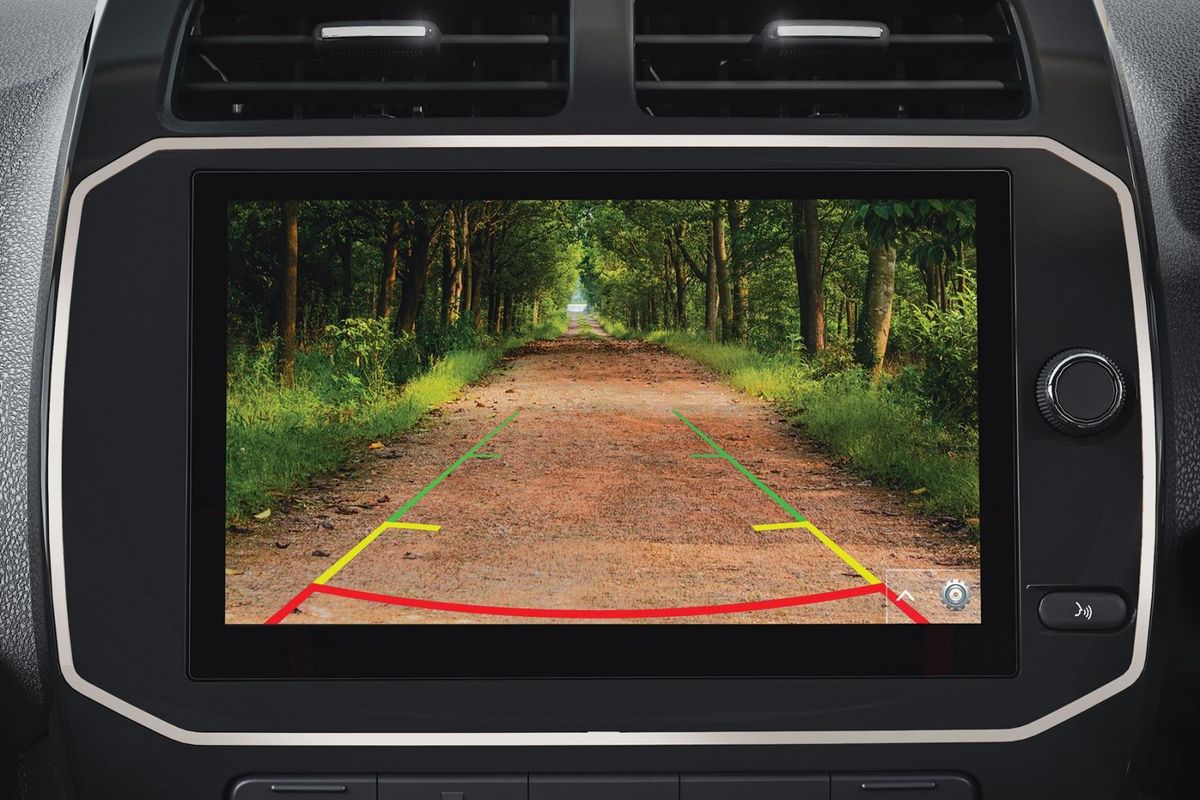
Parking package with reversing camera (includes Active Parking Assist with Parktronic).
Parking Package with 360-degree camera (includes Active Parking Assist with Parktronic).
Night package (includes roof rails in black and heat-insulating dark-tinted glass).
Engineering package, includes adaptive damping suspension, Keyless-Go, larger brake discs on the front axle, Adaptive High-beam Assist Plus and Multibeam LED headlamps.
MBUX Innovation package (includes head-up display and MBUX Interior Assistant).
Navigation Connectivity package (includes hard-disc navigation and pre-installation for Navigation Services).
Energizing package (includes Extended MBUX functions, 10.25-inch media display, Advanced Sound System or Burmester® surround sound system, heated front seats or Climatised front seats, as well as ambient lighting)
Energizing package Plus (includes Multicontour Seat package, dual-zone climate control, Advanced Sound System or Burmester® surround sound system, 10.25-inch Media display, Heated front seats or Climatised front seats, as well as Ambient lighting).
Mercedes-Benz GLA: Price in South Africa
All Mercedes-Benz derivatives are is sold with a 2-year/unlimited km warranty and a 5-year/100 000 km maintenance plan.
We recently attended the launch of the 3rd-generation Grand i10 in the Western Cape. Given the popularity of the Grand i10 and sustained demand for pocket-friendly compact cars, Hyundai has high hopes for the new model…
The Indian-built Hyundai Grand i10 has done well in South Africa – between 2014 and 2020, the 2nd-generation model garnered almost 50 000 sales. This 3rd-generation model brings some sharper looks, updated connectivity and is notably larger than its predecessor. Hyundai is pitching its newcomer against the market's perennial favourite, the Volkswagen Polo Vivo, as well as the Kia Picanto, Ford Figo and Toyota Aygo.
What's on offer?
With 2 engines, 2 transmissions and 2 levels of trim, we think Hyundai has covered all the bases.
The Korean brand is offering its new Grand i10 with a choice of 2 naturally-aspirated petrol engines; a 1.0-litre 3-cylinder and a 1.2-litre 4-cylinder. Both derivatives are available with either a 5-speed manual gearbox or a 4-speed automatic transmission.
There are 2 levels of trim; Motion and Fluid. There's quite a bit of overlap between the 2 trim levels with both featuring a touchscreen infotainment system that is Bluetooth-enabled and compatible with Android Auto and Apple CarPlay; dual-front airbags and ABS are standard. The Fluid spec adds niceties such as faux-leather trim, rear park assist, front foglights, daytime running lights and 15-inch alloy wheels.
The new Hyundai Grand i10 is available with a dual-tone contrasting finish.
We sampled a Grand i10 1.0-litre Fluid, with a manual gearbox, at the launch event. Aesthetically speaking, the Hyundai looks every bit a freshly-styled and thoroughly modern city runabout; its alloy wheels and daytime running lights endow the 1.0 Fluid with an understated premium look.
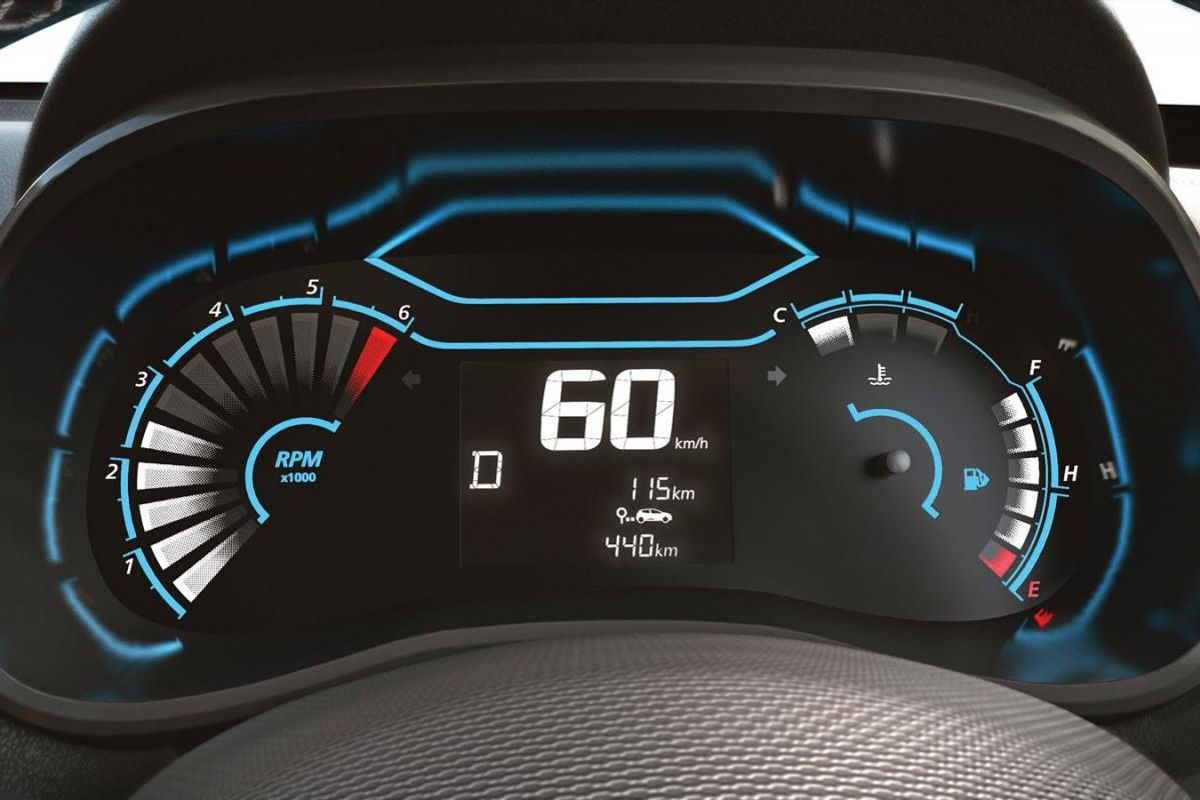
As an adult of above-average height, I was impressed with the ample headroom once I was ensconced in the height-adjustable driver's seat. The partial digital/analogue dashboard has a minimalist, but contemporary, look with the basic information displayed in a clear, legible manner. Our first stumbling block was the infotainment system – Android Auto refused to boot, but we understand that the current version of the smartphone software is not 100% stable at present. We're happy to report the Bluetooth synced quickly and the USB's convenient location was a bonus.
Our launch route comprised a variety of roads and surfaces, ranging from the national highway to pockmarked farm service roads. It may sound like a bit of a "scattershot route" but it availed us an opportunity to drive the Hyundai on a broad spectrum of tarmac and dirt that the average consumer may encounter on their daily travels. The 1.0-litre naturally-aspirated 3-cylinder may churn out a minuscule 49 kW and 94 Nm of torque, which sounds woeful, but the little motor only has an 892 kg-car (and its occupants, plus their luggage) to move around; the car's not as sluggish as you might expect. The key to this compact offering's (pleasantly surprising) urge is a wonderfully light and slick gearbox and clutch combination.
Not only is the leftmost pedal and 'box effortless to use, but dare we say there's an element of sporty engagement that encourages you to stretch the car's legs. And stretch the car's legs you will – especially when conducting in-gear overtaking manoeuvres, when you're likely call upon the motor's entire rev range. The steering is good too, not only is it fairly direct, but it's lightly weighted – perfect for those tight inner-city parking bays.
When it comes to ride quality, the Grand i10 has a pliant suspension and rides composedly on 15-inch alloy wheels (the Motion is hod with 14-inch steel wheels with covers). There's a focus on comfort and refinement here, which is impressive considering the Grand i10 is a budget-car offering.
Summary
The Grand i10's recipe has not been changed radically for the 3rd generation. Instead, it carries on where the 2nd-gen model left off, by offering a pleasant and uncomplicated driving experience. Those whose budgets can't stretch to the 1.2 won't feel hard done by, as the 1.0 is more than up to the task of being an accomplished city runabout. There's reasonable specification across the pair of trim levels and customers should feel satisfied in terms of safety kit, with anti-lock brakes (ABS) and dual front airbags. Hyundai's warranty and service plan should also prove to be a drawcard.
Hyundai now has a comprehensive budget car portfolio that has the sub-R300k segment well and truly covered. There's the Hyundai Atos, priced from R170 000 and a #CarsAwards – powered by WesBank finalist, the new Grand i10 and if you need more space, there's the Hyundai i20, but bear in mind that the next-generation i20 is scheduled to arrive in the local market during 2021.
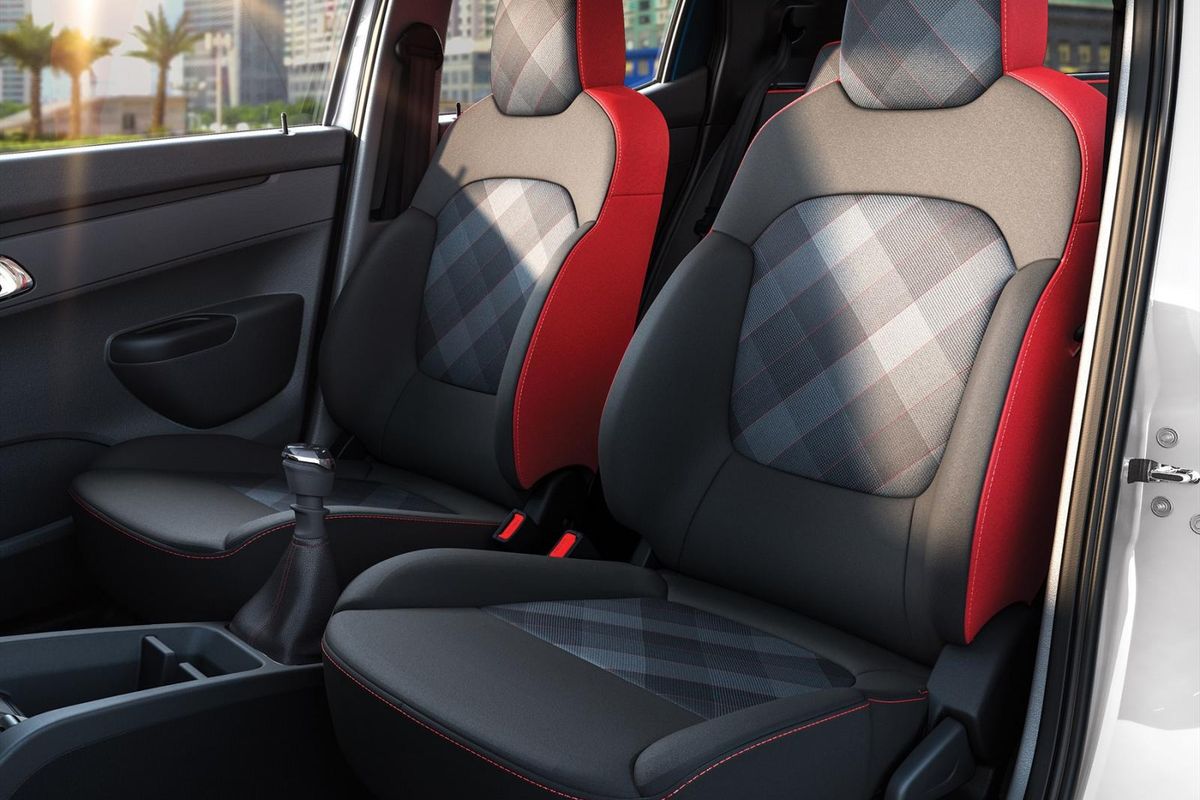
The sporty looking cabin is a great place to be, with a surprisingly generous amount of space on offer.
Hyundai Grand i10 Price in South Africa (October 2020)
The 3rd-generation Hyundai Grand i10 is sold with a 7-year/200 000 km manufacturer warranty, a 1-year/15 000 km service plan, and as well as roadside assistance valid for 5 years/150 000 km.
The substantially updated Hyundai Grand i10 has launched in South Africa. Here are detailed specifications and pricing for the new budget segment offering.
The Hyundai Grand i10 has been a popular model in the budget segment. The 2nd-generation model sold almost 50 000 units in South Africa between 2014-2020 and the vehicle was the third best-seller in the segment behind the Volkswagen Polo Vivo and the Renault Kwid.
The third-generation model has changed considerably when compared to the outgoing Hyundai Grand i10. The vehicle has physically grown, with the newer model being longer and wider at the slight expense of height. Critically, the wheelbase and boot space have been increased – both important factors in the budget car segment.
What's on offer?
Hyundai South Africa is offering the 3rd-gen Grand i10 with a choice of 2 engines, 2 transmissions, and 2 levels of trim. In terms of engines, the 1.0-litre 3-cylinder motor produces 49 kW and 94 Nm with a choice of either a 5-speed manual gearbox or a 4-speed automatic. When it comes to fuel economy, Hyundai claims 5.4 L/100 km and 5.9 L/100 km for the manual and automatic respectively.
The second engine is a 4-cylinder offering and the new 1.2-litre offers up 61 kW and 114 Nm. Customers have a choice of either a manual gearbox or an automatic transmission. In terms of fuel economy, the Korean brand claims returns of 5.9 L/100 km and 6.9 L/100 km for the manual and automatic respectively.
Trim Breakdown
There are 5 colours to choose from, plus 2 2-tone options. Both vehicles have a single USB port, touchscreen infotainment system with Android Auto/Apple CarPlay and Bluetooth connectivity. Both vehicle also have a basic air conditioner and in terms of safety, offer up two airbags and anti-lock brakes with EBD.
Motion
14-inch steel wheels with covers
Cloth trim
Black grille
Fluid
15-inch alloy wheels
Indicators on mirrors
Daytime running LEDs
Heated side mirrors
Front foglights
Artificial leather trim
Rear park assist
Silver grille
60/40 folding seats
Hyundai Grand i10 Price in South Africa (October 2020)
The 3rd generation Hyundai Grand i10 is sold with a 7 year / 200 000km manufacturer warranty, 1 year / 15 000 km service plan, and as well as 5 years / 150 000km roadside assistance.
Haval's refreshed H2 arrived in South Africa earlier this year and we recently had it on test and decided to film it so that you can see the changes for yourself and hopefully we can also impart some useful buying advice in the process. Watch the video for insight!
Haval is arguably the first Chinese passenger car brand to establish a strong foothold and market presence in South Africa, and their success has been largely due to this, the H2, a compact SUV that rivals players such as the VW T-Cross, Hyundai Creta and Honda HR-V. In pre-Covid times, Haval was selling over 400 of these a month; a very healthy figure indeed.
But it has one key difference, it's exceptionally well priced compared to its many rivals. In fact, you can barely get into a VW Polo for the same price.
In this video, our video journalist Ciro De Siena takes the top-spec Luxury variant for a spin and you will learn many things about the latest H2 and Ciro also gives the Cars.co.za's teams' opinion on whether you should buy into the Chinese brand.
The Ford Ranger XL has been beefed up with some additional specification choices for local buyers. See what’s on offer below!
If you are looking to purchase the Ford Ranger XL in either Single Cab, SuperCab or Double Cab body styles, you will be pleased to know that Ford is now offering some attractive options to consider, including a Sport Pack and an optional 8-inch touchscreen infotainment system that offers Apple CarPlay and Android Auto functionality.
“The Ranger XL is our value-oriented offering that suits a wide variety of applications, from the hard-working Single Cab with its spacious loadbox, the practical SuperCab that provides additional storage capacity behind the front seats, or the comfortable Double Cab that is equally suited to business or family use. With the addition of the Sport Pack option we’re giving the Ranger XL more upmarket flair while enhancing its day-to-day practicality. Customers now also have the choice of upgrading from the entry-level SYNC®1 system to a touchscreen infotainment system with an integrated eight-inch display that provides improved connectivity, ease of use and driving safety,” says Doreen Mashinini, General Manager Marketing at FMCSA.
The Sport Pack includes 17-inch Panther black alloy wheels, a black gloss grille, black rear bumper and a tubular sports bar. In addition to this, buyers can also opt to have black side steps fitted.
The Ranger XL is powered by Ford’s 2.2-litre turbodiesel engine which produces 118 kW and 385 NM of torque. Single Cab and SuperCab derivatives are offered in either 4×2 or 4×4 guise and come mated with a 6-speed manual transmission while the Ranger XL Double Cab is offered with either a manual or automatic transmission and can also be had in either 4×2 or 4×4 guise.
Ford Ranger XL – Price in SA
Ranger XL Single Cab – Priced from R396 700
Ranger XL SuperCab priced from R418 600
Ranger XL Double Cab priced from R449 400
The optional XL Sport Pack is priced at R16 500 while the optional 8-inch infotainment system is priced at R6 080. The dealer-fitted side steps are priced at R5 050.
The Ford Ranger is sold with a 4-year/120 000 km warranty, 6-year/90 000 km warranty, 5-year/unlimited km corrosion warranty and 3-year/unlimited km roadside assistance.
Which are the fastest SUVs in the world – and what's to come in 2021? This list will give you the answers.
The rise in popularity of SUVs in the last 5 years is nothing short of staggering and while these high-riding lumps of steel offer appealing levels of practicality (and luxury), many SUV manufacturers are also producing high-performance SUVs that deliver astounding acceleration off the line.
Right now, in 2020, there’s a large number of fast SUVs available and by our standards a fast SUV is anything that can accelerate from zero to 100 kph in under 4 seconds, considering that many of these vehicles weigh well over 2 tons.
Nonetheless, this list places the spotlight on the fastest SUVs in the world that are capable of accelerating from zero to 100 kph in under 4 sec. Electric and hybrid SUVs are also included.
Tesla Model X – 3.1 sec
It shouldn’t come as a surprise that an electric car sits atop this list. Tesla’s Model X is blisteringly fast off-the-line, especially in Ludicrous mode and it’s the only SUV on this list with a claimed 0 to 100 kph sprint time of 3.1 sec in Performance guise. The Model X is powered by 2 electric motors (one at each axle) delivering 580 kW and 1 140 Nm of instantaneous torque. By virtue of a 100-kWh battery, the X has a claimed range of 491 km.
See how the Grand Cherokee Trackhawk competes in a drag race against a BMW X4 M Competition in the video below.
Lamborghini Urus – 3.6 sec
The Urus ranks highly in the performance stakes and with a 0 to 100 kph sprint time of 3.6 sec, it’s one of the fastest SUVs on the planet. It’s motivated by a twin-turbocharged 4.0-litre V8 engine with 478 kW and 850 Nm of torque.
Ford unveiled its new electric Mustang Mach-E earlier this year and the all-wheel-drive high-performance GT version is due in 2021 and it’s expected to offer no less than 347 kW and 830 Nm of torque, which will see it well in the sub-4-second range with a touted 3.7-sec sprint time.
Audi RS Q8 – 3.8 seconds
Powering Audi’s most potent SUV is a 441 kW version of the brand’s 4.0-litre bi-turbocharged V8 engine. With 800 Nm of torque and sophisticated mild-hybrid energy harvesting, the RS Q8 can be both brutally quick and impressively efficient; Audi claims that its RS Q8 will run a true 0-100 kph time of 3.8 sec.
Going fast in style is achieved in the Bentley Bentayga Speed which boasts an uprated 6.0-litre twin-turbo W12 engine that develops 467 kW and 900 Nm of torque. Apart from its impressive sprinting performance, it also boasts a top speed of 306 kph.
The Maserati Levante Trofeo is in the same league as the Bentley and comes equipped with a Ferrari-built 3.8-litre V8 with 433 kW and 729 Nm.
New Renault Duster 4×4 Bakkie Launched
Is this the best new bakkie of 2020?
Renault’s Duster has a built great reputation. It can rightfully claim to have transformed the French brand’s image and standing amongst South African buyers, especially those who do a lot of gravel travel.
Imagine if Renault could leverage that positive brand association with the strong local demand for bakkies? The latest Duster product development is a move exactly in that direction.
Renault’s Romanian subsidiary, Dacia, has now revealed a bakkie version of its Duster, which not only looks great, but has some real off-road ability too.
How does this Duster single-cab compare to the SUV in terms of size? Measured bumper-to-bumper it is 19mm shorter, which should make parking even easier.
The new Duster bakkie’s load box is 1.65m long and has a loading capacity of 1000-litres, with a payload rating of 500kg. In the market for traditional half-ton bakkies, which is now virtually serviced by a single model, Nissan’s NP200, the Duster’s utility specification is absolutely on point.
The Duster bakkie would provide strong competition for Nissan's NP200 (if it was offered in SA).
All-terrain ability promises to be excellent, with the single-cab using Duster’s clutch-pack actuated all-wheel drive system and six-speed manual gearbox.
Ground clearance also increased, by 14mm, to give the Duster bakkie an impressive 224mm of underbody obstacle clearance, which is hugely impressive for a vehicle that has a comparatively short wheelbase.
Completing the simply outstanding compact single-cab 4×4 bakkie specification is a 1.5-litre turbodiesel engine. The DCi powertrain will be familiar to South African Duster customers, boosting 85kW and 260Nm. Diesel consumption is excellent too, at only 4.7l/100km.
Those outputs should not only give it very responsive overtaking acceleration, but could make the lightweight Duster single-cab a very capable sand driving bakkie, with some high-volume tyres running at appropriately low pressures.
Priced at a premium of 20% above the equivalent Duster five-door SUV, the single-cab 1.5 DCi 4×4 qualifies as something of a compact lifestyle bakkie.
Despite its hefty price increase over other Dusters, there is no arguing against the bakkie version’s specification and neatly executed design. These Dusters were developed by a joint venture between the Renault-Nissan Alliance and Romanian engineering consultancy, Romturingia.
Would you like to see the Duster bakkie in South Africa?