German aftermarket stylers get to work on Chinese crossover.
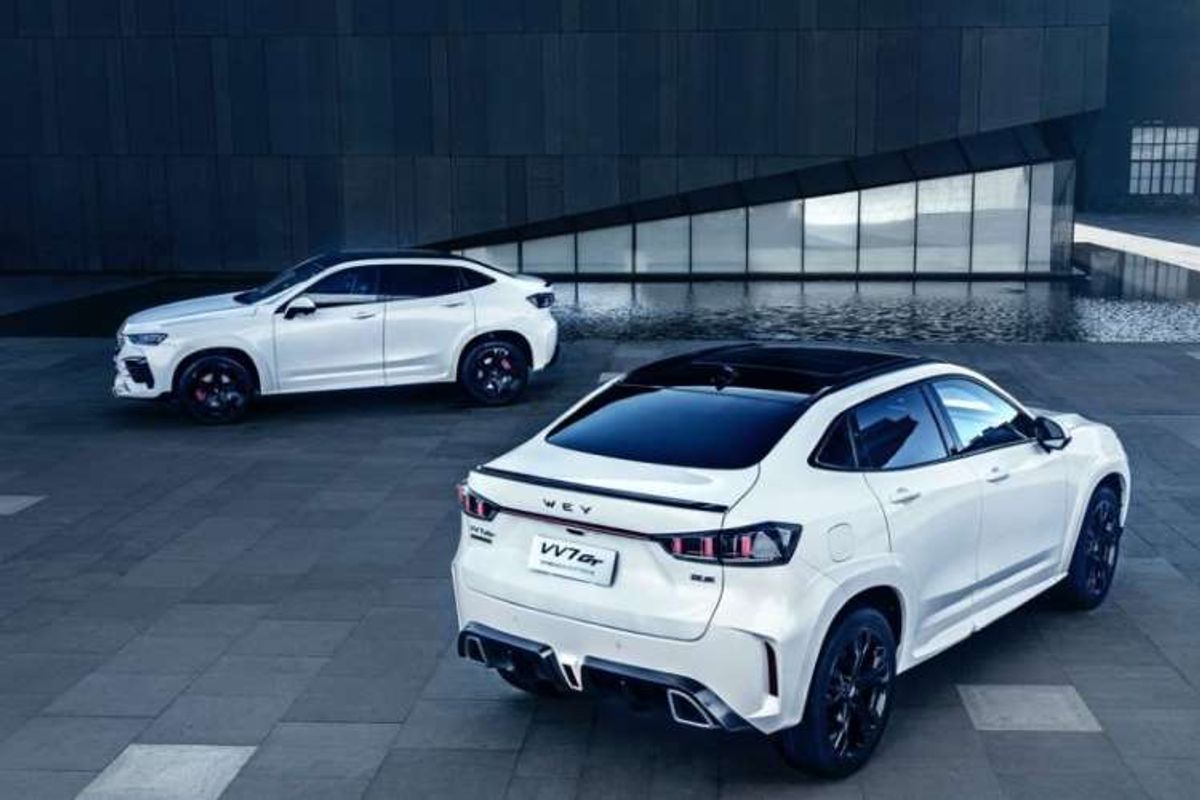
Chinese brand GWM has commissioned celebrated German aftermarket vehicle specialist, Brabus, to help its new luxury SUV brand gain some credence.
WEY is a sub-brand of GWM and its VV7 GT is the Chinese company’s attempt at a fastback crossover, which is a notable 200 mm shorter than its VV7 SUV sibling.
Built on the same platform as Haval’s H6, which South Africans are familiar with, the VV7 GT has now gained some additional image appeal, thanks to Brabus.
Although the German tuner is best known for its outrageous Mercedes-Benzes, it has applied slightly more subtle tuning to this Chinese joint-venture project.
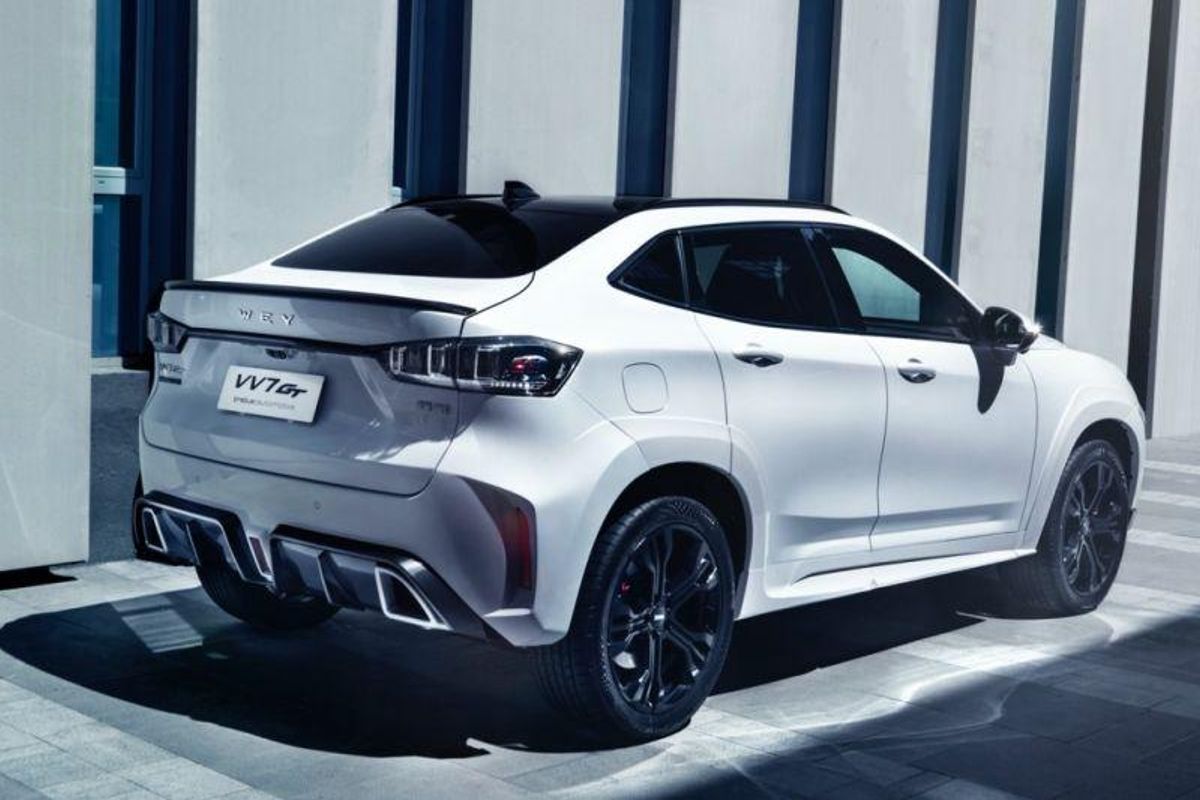
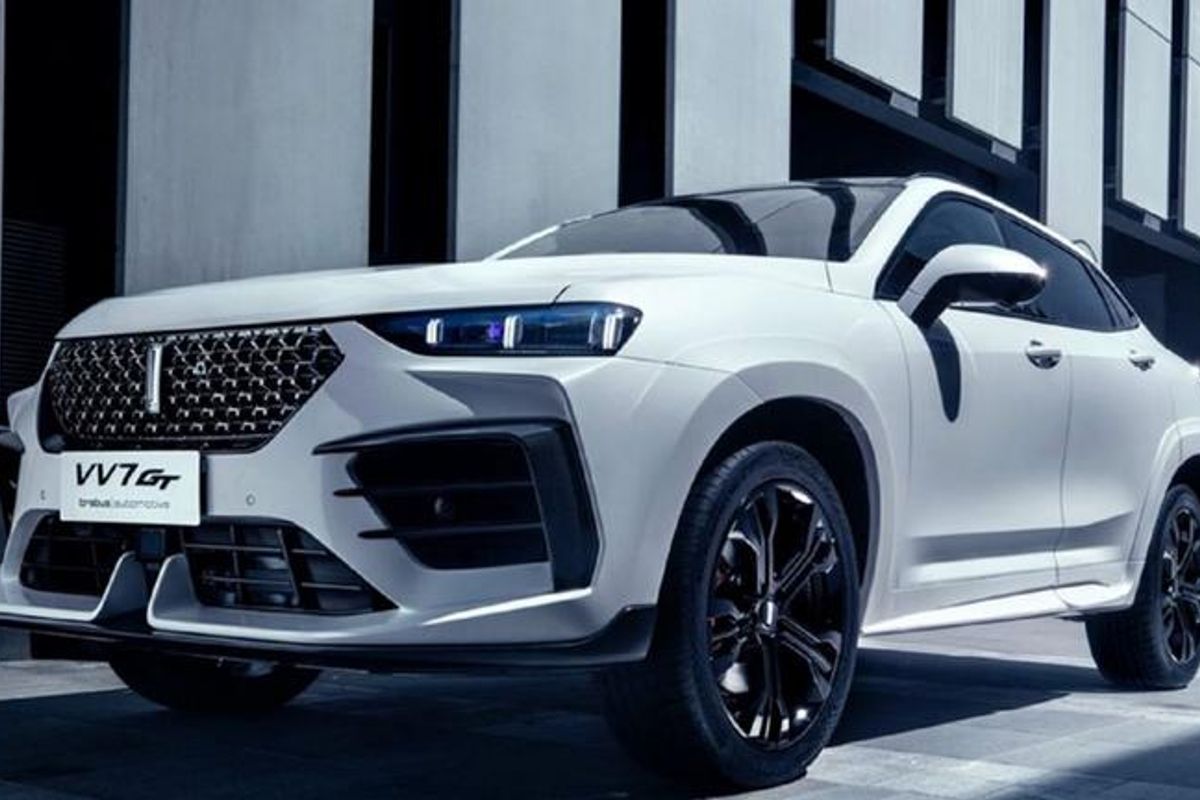
For the WEY VV7 GT, industrial designers from Brabus have added a few strategically placed exterior styling upgrades.
Wider fenders help to house Brabus-edition 21-inch alloy wheels and give the VV7 GT a more purposeful stance. A remoulded bumper design replaces the factory items at both ends of the Brabus VV7 GT, and around the rear, there is a diffuser – which integrates large diameter exhaust ends.
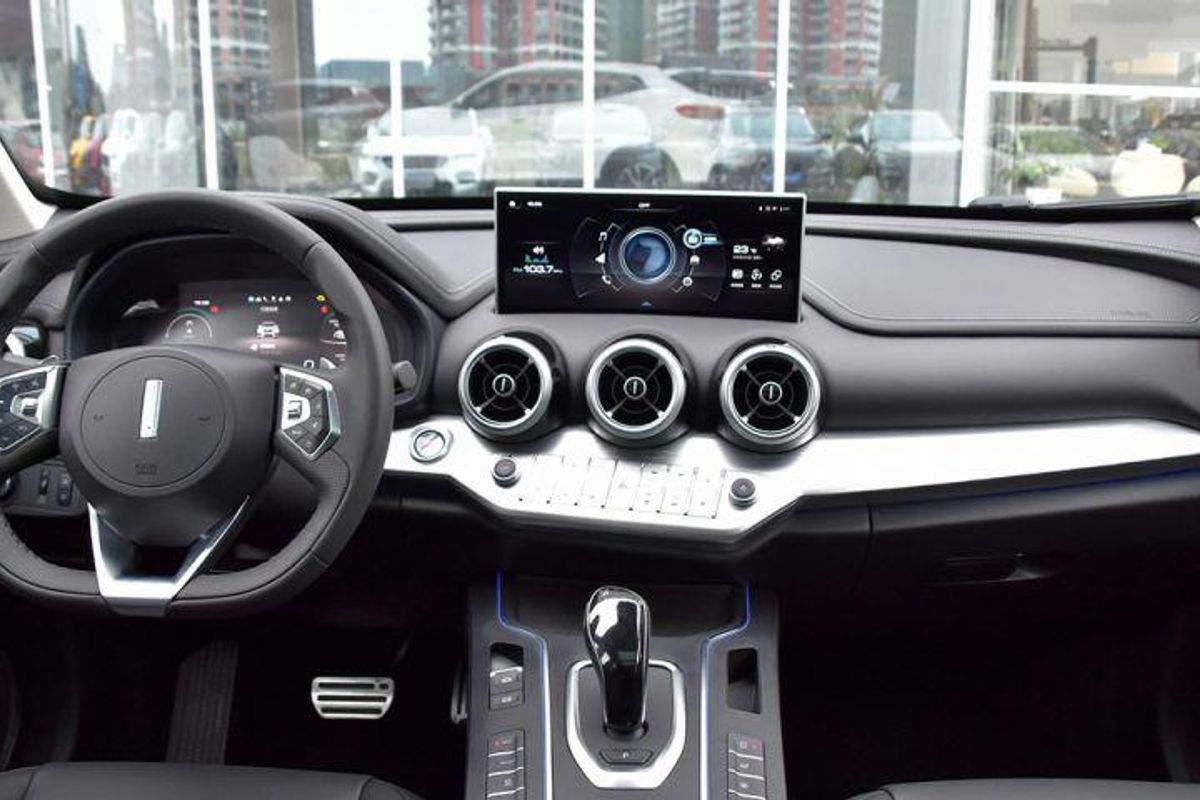
Inside the WEY VV7 GT, Brabus has not applied its signature leatherwork or defined contrast stitching, leaving the Chinese crossover with its standard trim and finish.
Powering the Brabus VV7 GT is a 2-litre turbocharged petrol engine, boosting 169 kW and 387 Nm, driving either the front- or all four wheels, depending on specification.
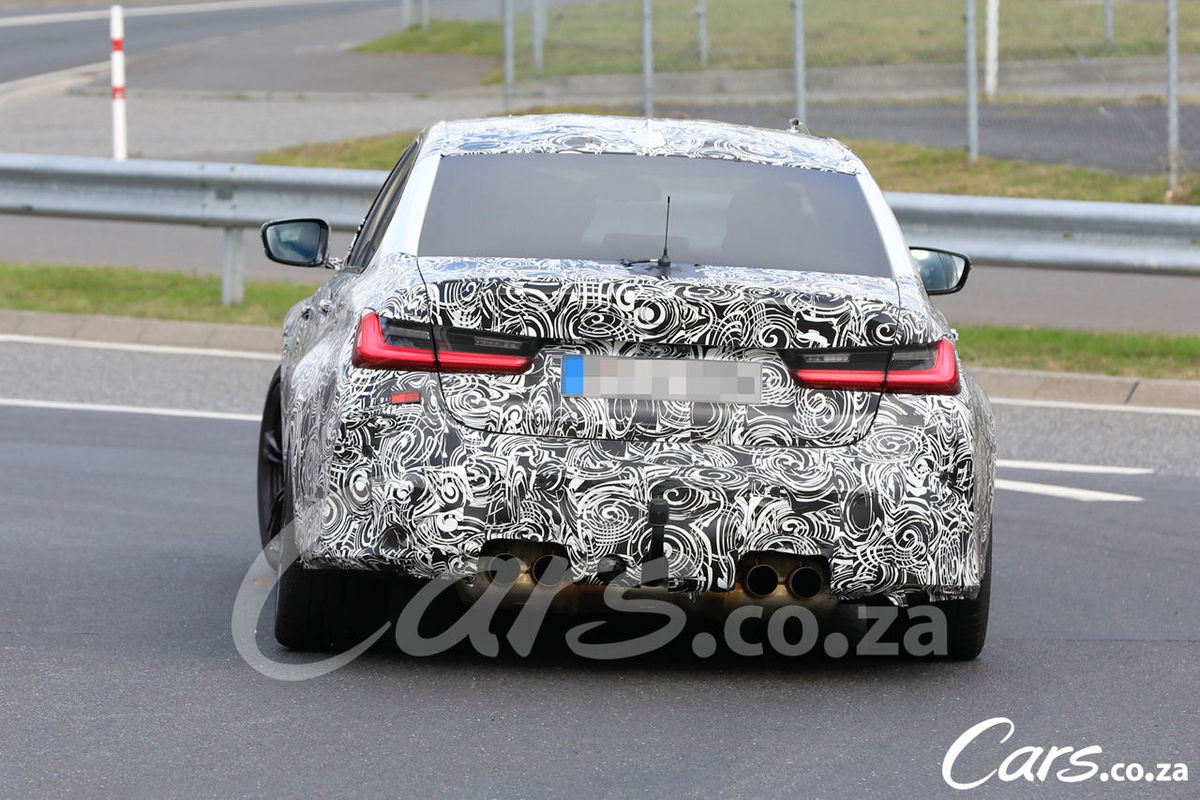
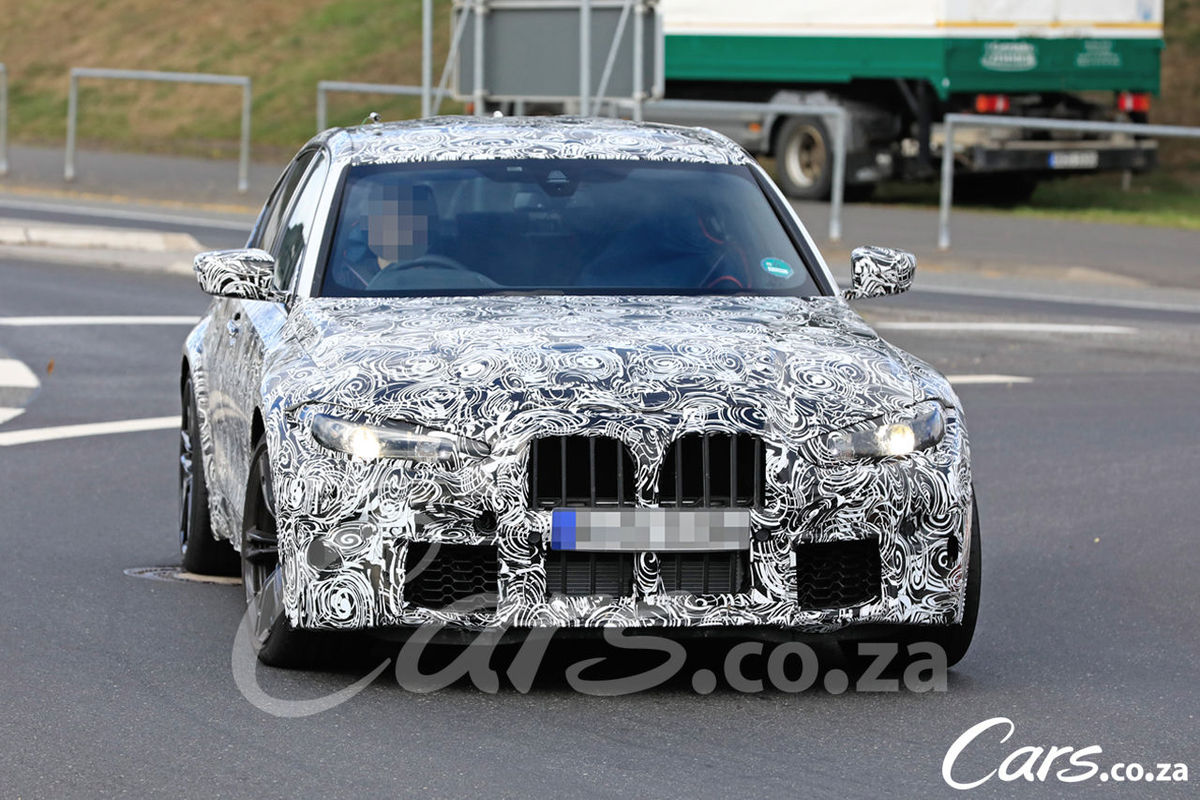
Spy photos of disguised pre-production BMW M3s have been around for a couple of years, but this is the first time that we've been able to see (and hear!) the full M-car version of the G20-generation of the 3 Series driven in anger. We expect the production version to be unveiled before the end of the year.
Picture credit: S. Baldauf/SB-Medien. Video published on YouTube by Auto Addiction.
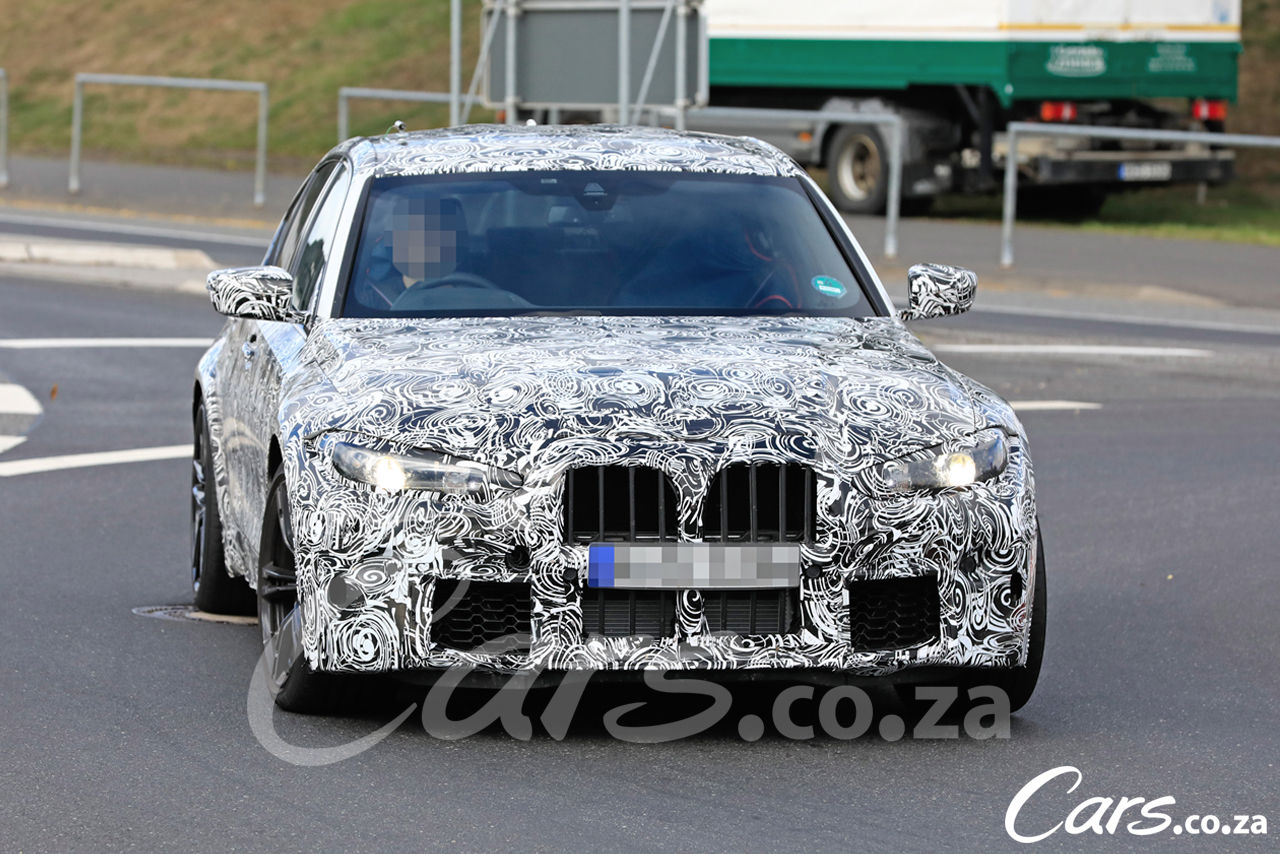
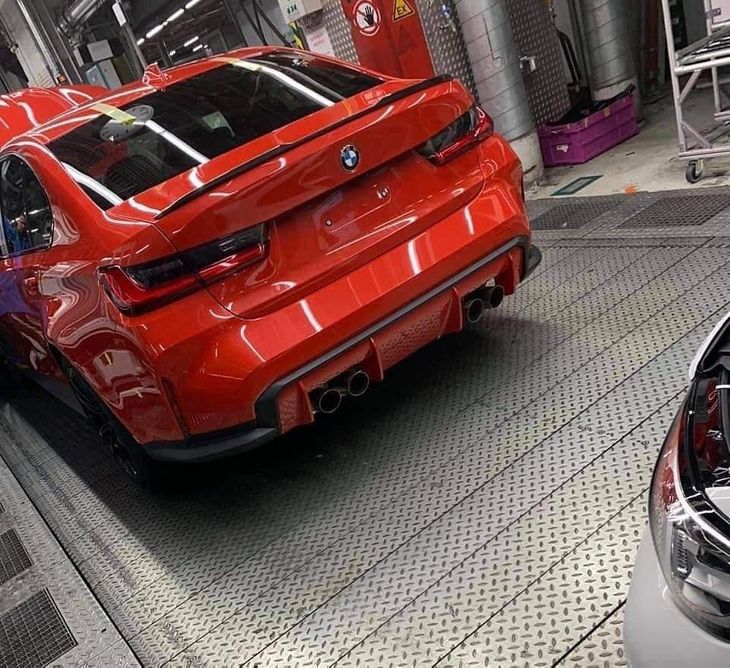
We are getting tantalisingly close to the full reveal of the G80-generation M3; BMW's M Division boss Markus Flasch has previously said the new G20 3 Series-based M3 would only go into production in late 2020, with cars arriving at dealers in early 2021 (but he did say that before the onset of the Covid-19 pandemic, we hasten to add). Our spy photographers have spotted the eagerly anticipated Bavarian sports sedan being testing at the Nurburgring (again) and late last year, the newcomer's rear was revealed by a spy photo that appeared on an enthusiast website.
BMW cannot really afford to delay the introduction of the M3 for much longer as the evocative (and recently updated) Alfa Romeo Giulia Quadrifoglio stole much of the outgoing car's thunder (let alone the headlining GTA version) and the current 3 Series has been on the market for a good while. Our spy photographers suggest that the newcomer will adopt the oversized vertical (beaver-toothed, to be unkind) grille we saw on the BMW 4 Concept (revealed at the 2019 Frankfurt Motor Show). The controversial styling cue is widely expected to feature on the next 4 Series and, therefore M4, but the nature of the camouflage of this disguised pre-production car might just be a classic case of misdirection to keep nosey enthusiasts – let alone motoring writers – guessing.
We expect that the S58 3.0-litre twin-turbocharged 6-cylinder of the BMW X3 M and X4 M will be utilised in the next M3. That motor delivers 375 kW and 600 Nm in its Competition spec, but bear in mind that the M Division may want to keep a bit in reserve for hotter versions of the G80. The general consensus about the car featured in the Auto Addiction video is that it is fitted with larger-bore exhaust ends and consequently, sounds fruitier than the standard car will. It's possibly courtesy of an M Performance upgrade, but it might also be a Competition-spec M3 in the video…
The quartet of exhaust ends leaves no doubt that this is an unbadged G80-generation M3. Pic credit: Auto Evolve.
All that remains to be seen (apart from the shape of the new M3's double-kidney grille), is whether the car will feature the xDrive all-wheel-drive system (like the BMW M5) in conjunction with an 8-speed automatic (non-dual clutch) transmission. Given the standard sports sedan's executive-express model positioning and lofty expected power and torque outputs, it stands to reason that the initial version of the new M3 will effectively be "a much wilder M340i xDrive" (in a manner of speaking). However, it's been widely reported that a manual-gearbox version of the car will also be produced. Performance purists and a bunch of M traditionalists are hoping that rear-wheel-drive will be offered too, but perhaps only as a temporary switchable mode in the car's M drive-mode settings.
Auto Addiction also recently published a video of the upcoming G82-generation M4 being put through its paces. Watch it here.
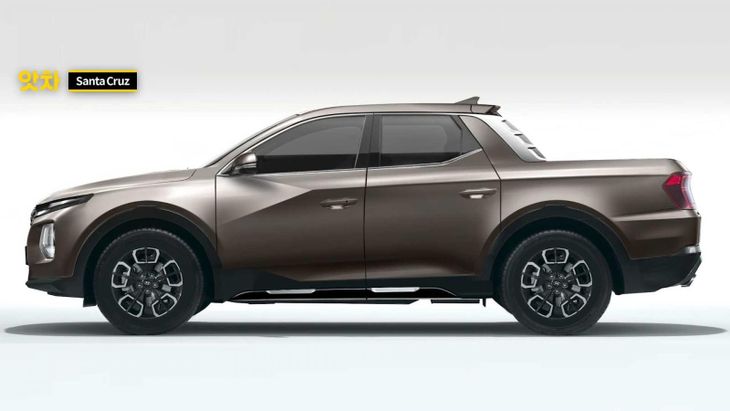
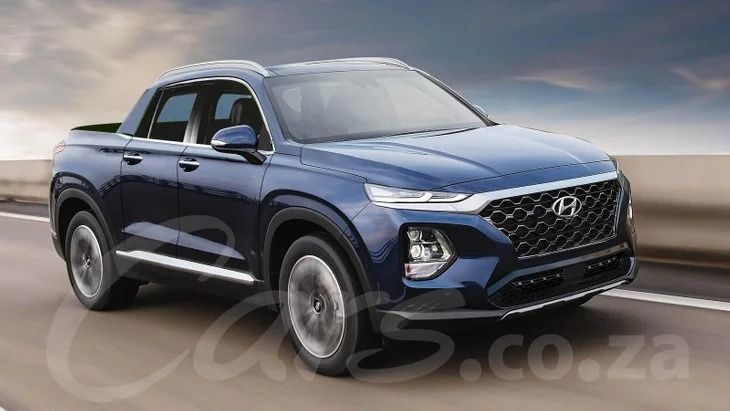
Following the recent appearance of a spy photo of the Hyundai “Santa Cruz” double-cab, which will be introduced in the US next year, a Korean YouTube channel has published this render based on the stylistic details revealed in that image.
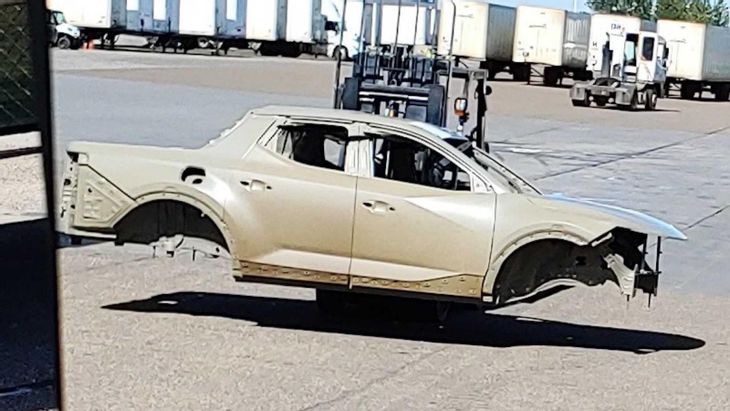
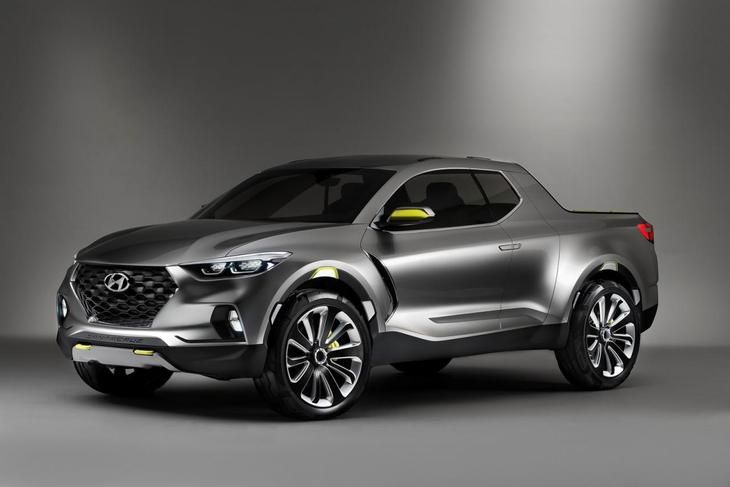
Earlier this week, we reported that even though the spy image was not of a completed, road-ready example of Hyundai's upcoming Alabama-built double-cab, the single side profile of the pre-assembled body revealed several cues carried over from the Santa Cruz concept (circa 2015) as well as elements of "parametric dynamics”, which are integral to the Korean manufacturer's new Sensuous Sportiness design language.
After a number of speculative renderings and spy photos, this is the first look at the bakkie in the metal. Image credit: Motor1.com.
You may remember that Atchacars – the YouTube channel of a Korean automotive artist – recently produced renderings of the boldly styled next-generation Hyundai Creta. Now they have produced this eye-catching render of the upcoming “Santa Cruz” 4-door leisure double cab based on the image that originally appeared on Motor1.com…
As expected, the render shows a bakkie with a truncated load bed and rearward-sloping C-pillars. Atchacars has integrated the upward-sloping rear window sill, which creates a kind of Hofmeister kink (again, with apologies to BMW) and accented the side glass area by blacking out the B-pillars and adding chrome-look window trim, which extends to a louvred/stepped backing plate, as well as an oh-so-subtle roof spoiler.
Atchacars imagines that the finished product will look quite sophisticated, replete with chunky alloys and chrome-look finishes.
What's more, the artist has incorporated the distinctive contours near the top of the front door – they reference "parametric dynamics" (radiating lines that converge at a central point) – as well as a pinched beltline. To round off the imagined profile of the “Santa Cruz”, the artist has added black cladding around the wheel arches, chunky 5-spoke dual-tone alloys and textured running boards, as well as dark-grey rear bumper garnishes.
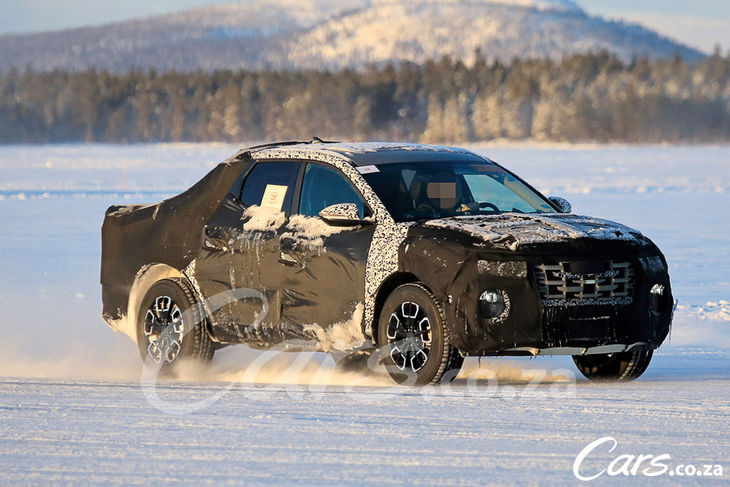
In addition to our own earlier render (by Cars.co.za’s own Duwyne Aspeling), we have also seen spy photographs of a prototype testing in the snow. While most of the body is hidden from sight, there are some noteworthy learnings about the bakkie’s front and rear ends that can be gleaned from the spy images. Perhaps the most obvious feature is indeed the large, bold cascading grille that will likely be flanked by slim LED headlights.
Picture credit: S. Baldauf/SB-Medien. We've watermarked the image at our supplier's request.
It's commonly known that Hyundai plans to commence production of its new double-cab at its US plant, which also produces the Santa Fe, Sonata, and Elantra, next year. Most reports suggest that the Korean manufacturer is committed to bringing the concept’s Santa Cruz name to market and the newcomer will be a unibody vehicle (unlike local body-on-chassis 4-door bakkies) and exclusive to the North American market.
Car And Driver believes the finished product will share its underpinnings with the Santa Fe 7-seater SUV in our market: "Hyundai's plan for the Santa Cruz is as an affordable… choice for drivers who haul bulky, but not necessarily heavy items – think mountain bikes, kayaks, and camping gear rather than gravel, boats, and cinder blocks."
Our much earlier render of the upcoming Hyundai bakkie by Cars.co.za's Duwyne Aspeling.
Given its Santa Fe underpinnings the "Santa Cruz" is likely to feature the family SUV's engines in North America, which includes a 137 kW/241 Nm naturally-aspirated 2.4-litre petrol engine and a turbocharged, 175 kW/352 Nm 2.0-litre turbocharged petrol engine, both fitted in conjunction with an 8-speed automatic transmission.
So while the light-duty bakkie may not be of great consequence to South Africa (at this stage, but Hyundai might decide to build RHD versions at its Ulsan plant in Korea later), why should we be intrigued by what the production version “Santa Cruz” could look like?
It's not often that a concept vehicle (let alone a 5-year-old one) looks this production-ready.
Well, it has been reported (by Australian title Which Carand other sites)that Hyundai is simultaneously developing a 1-tonne bakkie based on a ladder-frame chassis (in partnership with its sister-brand, Kia) for Australia and other markets, which will likely include South Africa – which is, as we know, a major market for bakkies.
Hyundai South Africa has never hidden the fact that it would be keen to introduce a leisure double-cab – if one was available to us and a viable proposition; if little else, this "Santa Cruz" is likely to set the tone for the look of future Hyundai chassis-cab bakkies…
Calvin Fisher takes a closer look at an online car community in bloom in a time of self-isolation under national lockdown.
It happened on Facebook
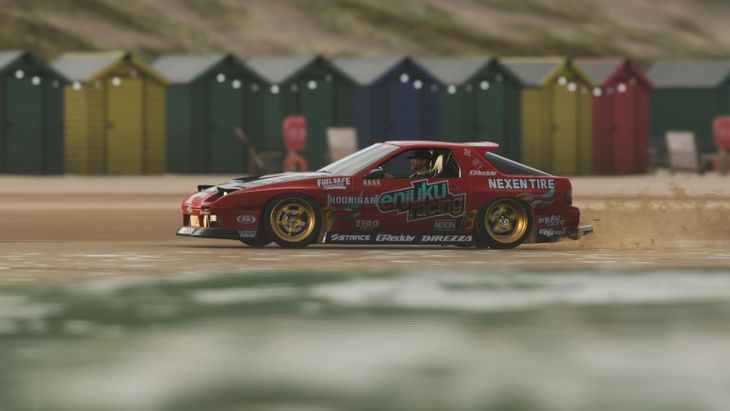
There I was, scrolling through my newsfeed, when I saw something at once alien – but familiar. An array of attainable 4-wheeled road machines gathered in a parking lot – warmed up and stickered, from Mk1 Golfs to GTIs of various vintage, plus a collection of Honda Civics. Soon, older BMWs and AMG sedans rolled in, a few Japanese rear-wheel-drive coupes and roadsters (the likes of S2000s, Mazda RX7s and Nissan S13s) joined them. Nothing you wouldn't see at a local car meet, but the Forza logo in the bottom corner of the screen couldn't evade my suspension of disbelief any longer.
It was a live stream, I clicked on it and my TV speakers were immediately filled with car banter. At first, the chatter was general then quite specific. Races were being organized, drags and drifting, and several had a convoy planned just for kicks, and would soon head out and explore the twisting asphalt of, well, Britain. See, This is Forza Horizon 4, set in the UK. But don’t let that put you off.
Without being able to congregate in the real world, petrolheads are turning to online meetups.
Cars.co.za contributor and #CarsAwards judge Ernest Page is among this lot. Besides being a YouTuber, he has experience commentating at the weekly Robot Racing drag events at Killarney Raceway, so I wasn't surprised to find him doing the same here, just virtually. He has taken temporary steps substituting his usual Wednesday stream of real races with virtual ones. Emphasis on temporary. And this is still small-scale. “Top-flight drivers, F1 boys, big companies and sponsors, they're all looking closely at this new virtual way of doing races," he says.
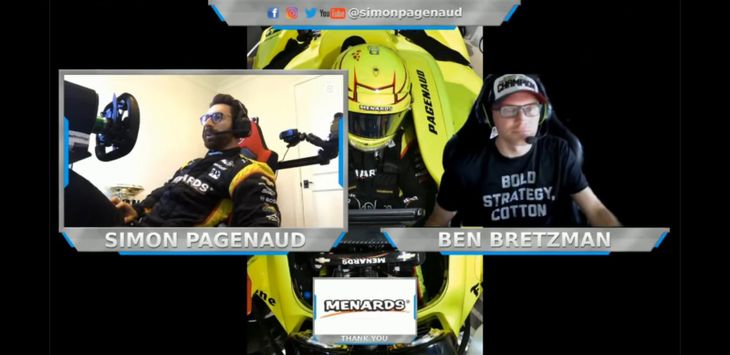
It’s true, Formula One and NASCAR have been rapid adopters of the new reality. Other forms of sport have followed, but it hasn’t been without drama. Just look at what happened this weekend during a virtual IndyCar race when Indy driver Simon Pagenaud took out F1’s Lando Norris just as he was looking to take the win. It was deliberate, it was ugly, and now it has real-world ramifications… complete with death threats. Clearly it’s not just a videogame, because racing makes it real. And while the lockdown won’t be permanent, there’s no telling what the world of motorsport will look like when things go back to something resembling normality.
There was even drama in the Sim Racing world as Simon Pagenaud deliberately wiped out Lando Norris.
Money is being poured into this, and I predict a split between track and TV-based racing going forward. Professional drivers seem to have made the leap quite easily thanks to years of simulator training. But technology is a great equaliser and they’ll soon encounter 14-year old wunderkinder primed to put them in their place. Whether it’s in Gran Turismo, iRacing, Asetto Corsa, or whatever comes next, the world is their oyster, the factors have played into their hands courtesy of Covid-19.
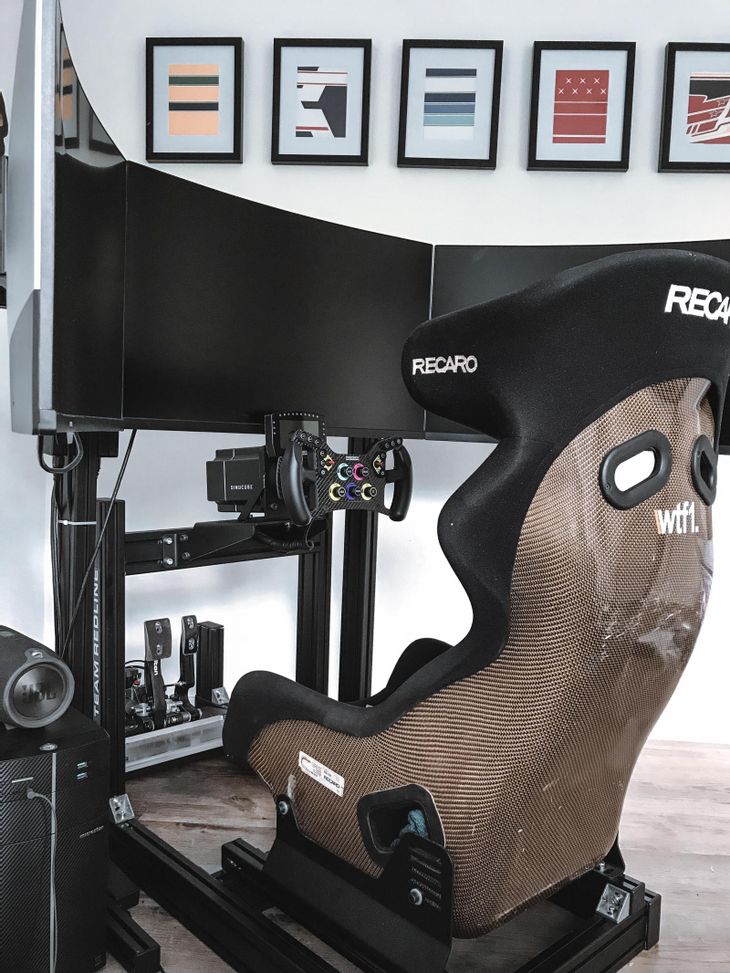
But if you think the pros are just rolling up with regular controllers and keyboards you'd be sorely mistaken. Pundits are getting high-tech with their rigs, with integrated racing seats and wraparound screens, for example. If you've seen mods in pro drifting then it's probably happening here too with 900-degree angle steering wheels and oversized stick shifts. Just like in the real world, racing gets very expensive, very quickly. And whether races are being streamed on Twitch, Mixer, Facebook or YouTube, it doesn’t really matter. The public is starving for competitive racing and sport in general.
Local race ace Kelvin van der Linde's setup is something to lust after. He regularly competes online and appears to be just as fast there as in the real world.
It's not just about racing
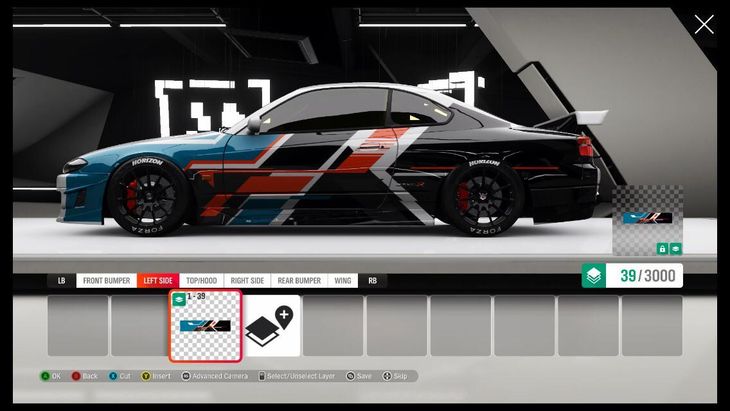
I alluded to it earlier with my Forza example. The denizens of this virtual world are happy just to cruise around – a basic activity, now a privilege as a worldwide lockdown has confined us to our homes. It’s easy to see why, as real-world photographers and tuners also get in on the action. I myself, a car photographer and videographer, have lost hours – nay, days – to the photography mode in Forza. Then there’s the game’s extensive tuning and styling modes, both of which are time-eating monsters.
On that note, meet Rouen Abrahamse. We met over a decade ago during the drift remote-control car phase. He was already cutting and shutting, spraying and decaling-up custom Tamiya and Yokomo chassis and shells for himself and his crew. Fast forward to now, and he is producing slick liveries for several online racers. "It's therapeutic hey. And it tickles my love of Japanese cars, just like the RC cars did," says Rouen. "I doubt it will have a permanent effect on motorsport however as many disciplines have postponed their events for later in the year or as I saw in Japan, they are hosting pro Drift events without spectators. Sponsors-wise and financially, it will adversely affect drivers and teams. On the flip side, we are seeing a lot more e-sports leagues and events pop-up featuring the world's top pro drivers competing in official virtual races. James Deane drifts on Assetto Corsa on PC and Ferrari driver Charles Leclerc emerges as a regular on the virtual podium."
Custom paintwork and liveries are a great way to show originality at a fraction of the real-life cost.
Before I go offline
By now, I've had my fill of cruising the virtual streets and so pulled into a parking lot to join another large congregation of cars. I've had the good fortune of joining most of the SentiMETAL events here in Cape Town and this immediately felt like that. A Dodge Viper took centre stage, flanked by a classic BMW 2002 and Audi ur-Quattro S2.
Fords in attendance included an RS200 rally thing, plus a Cosworth or two. A group of muscle cars soon grumbled and burbled their way into the group. Yet the most exciting car there had to be a rare (even digitally) Toyota 2000 stealing attention away from a handful of 80s era supercars. None of these were marred with stickers or after-market wheels. They're as they were originally cast. Fantastic.
Even in a video game where the sky is the limit, where virtual currency is depressingly more attainable than the real stuff, it's a pleasure to find that there are still collectors, enthusiasts who don't just go for the unobtanium, opting instead for cars that are important to them, cars that are meaningful. Yet, I'd argue that while the virtual world will never replace a lockdown-addled reality for petrolheads, it will certainly help sustain us. Videogames will save real cars and real car enthusiasts. Until we can drive freely again.
Introducing…The Cars.co.za Show! Welcome to the fourth (ever!) episode of our weekly 45 minute show. In this episode, we race the Toyota Hilux GR Sport against an ordinary Hilux, Ciro takes a Rolls Royce offroad and onto a skidpan, Ernest Page finds out if the BMW M5 will really drift, we retell the story of our very own Opel Superboss restoration and finally join three of South Africa's best surfers on a journey deep into the Eastern Cape.
We have been working towards this project for many years now – a proudly South African long format, multi-segment car show. A show which celebrates South Africa and our rich car history. We toyed with broadcasting on terrestrial television or launching on a streaming network, but with us so close to the finish line we got blindsided by the global Covid-19 crisis, which required a global lockdown.
Our talks, production and country halted. But this extraordinary moment in time also creates opportunity. With South Africa ordered to stay home, online content consumption is on the rise and content creation dwindling. As a company which takes great pride in being nimble, we simply couldn’t resist the urge to fill this content void and give South Africa, and the world, something beautiful to watch.
And so in a moment of inspiration, we decided to adapt our long-format car show concept, using some techniques that may have been unthinkable before lockdown, and get it ready in record time to release it for free to the world. With this show, we aim to entertain, inform, inspire and hopefully make our audience smile.
We have also committed to donating all revenue generated off our Cars.co.za YouTube channel for the rest of 2020 to charitable causes in support of the fight against Covid-19. For this show, all of our content was either filmed pre-lockdown or safely under lockdown conditions by our presenter himself – Ciro De Siena; it turns out a lounge and dining room can be an excellent TV studio.
New episodes will debut every Thursday at 8 pm and all episodes will remain on the channel indefinitely. From everyone at Cars.co.za, stay safe, stay home, look after yourselves, and each other.
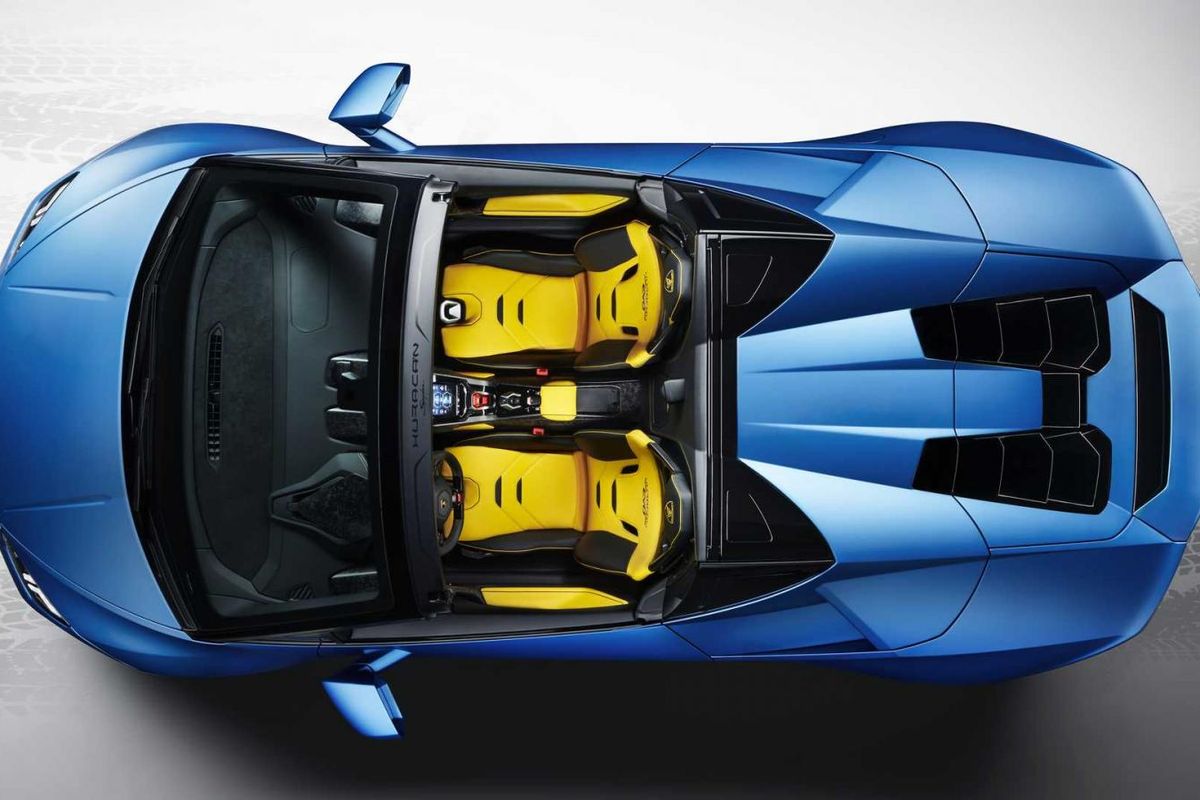
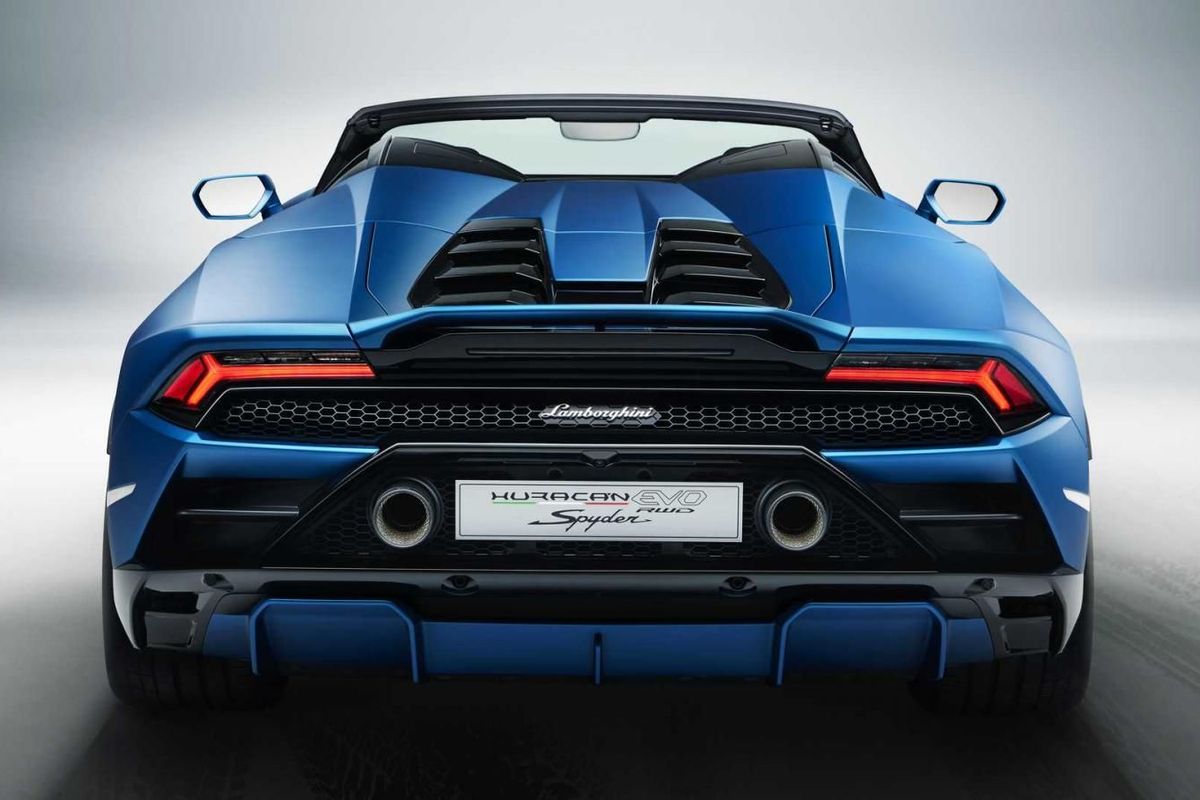
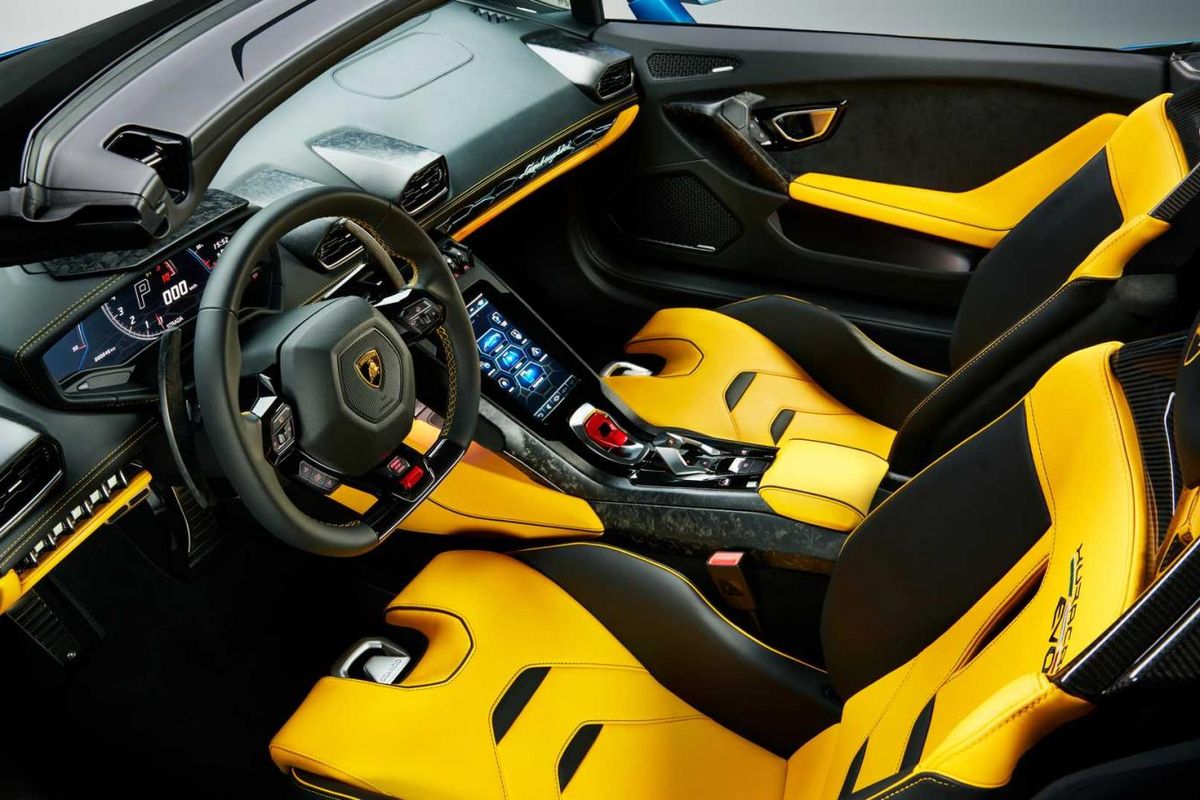
New Lamborghini Huracan Evo Spyder Revealed
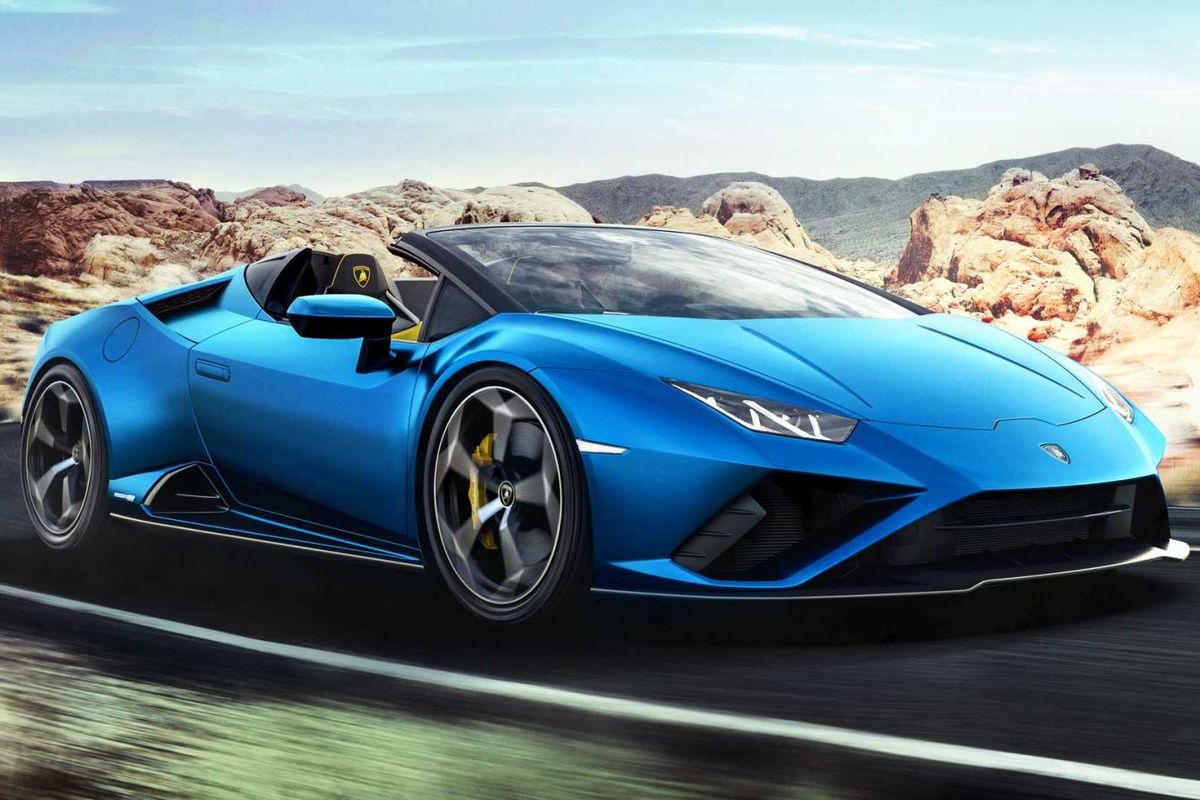
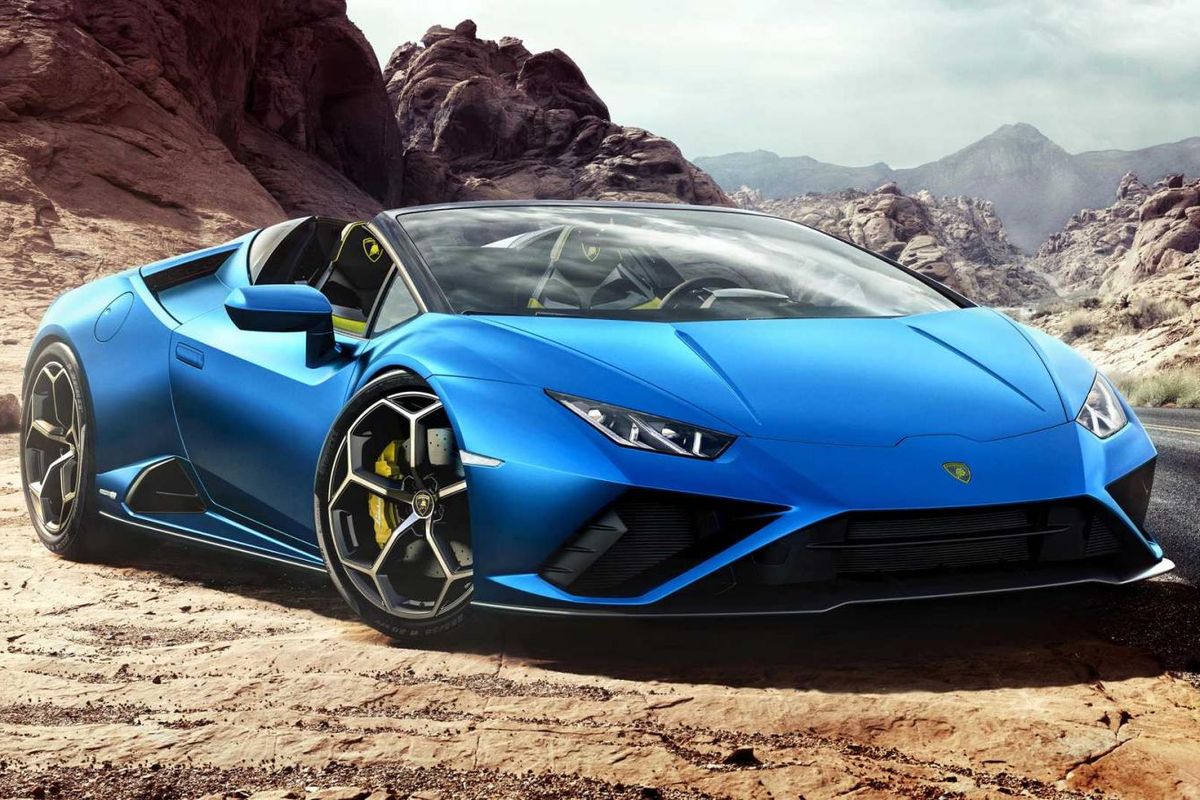
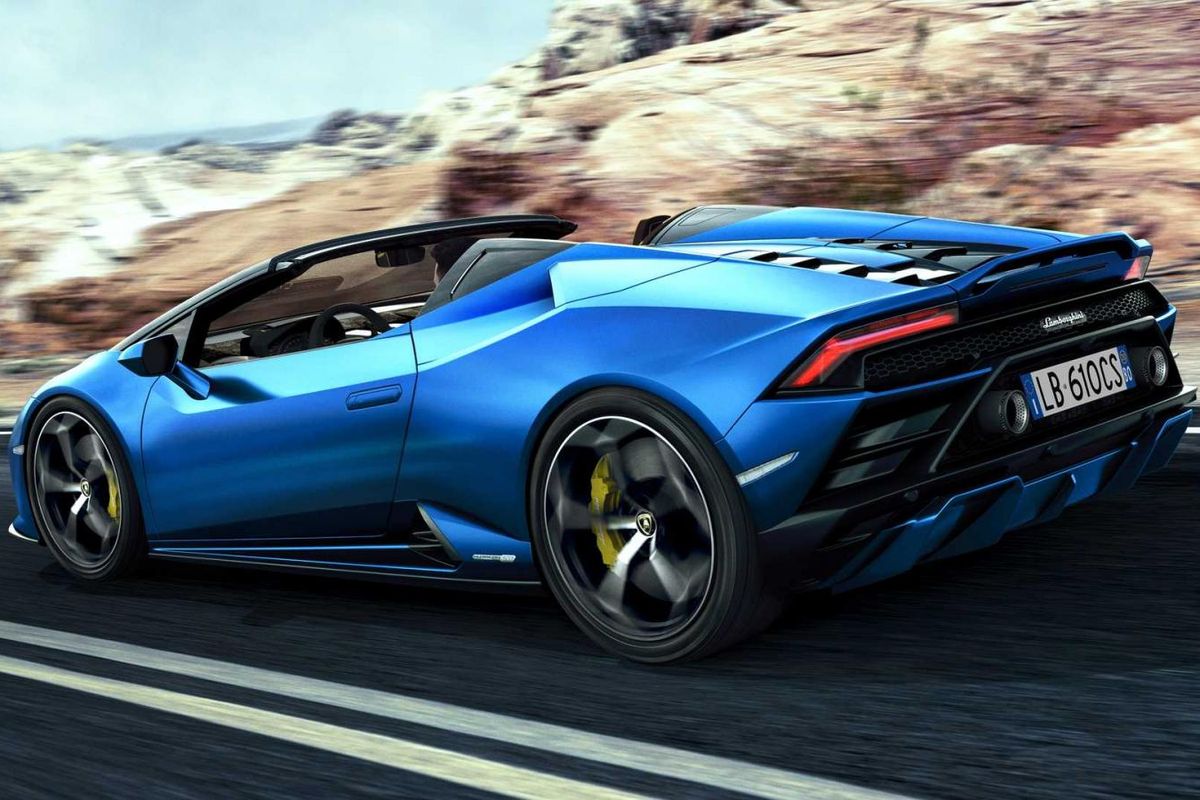
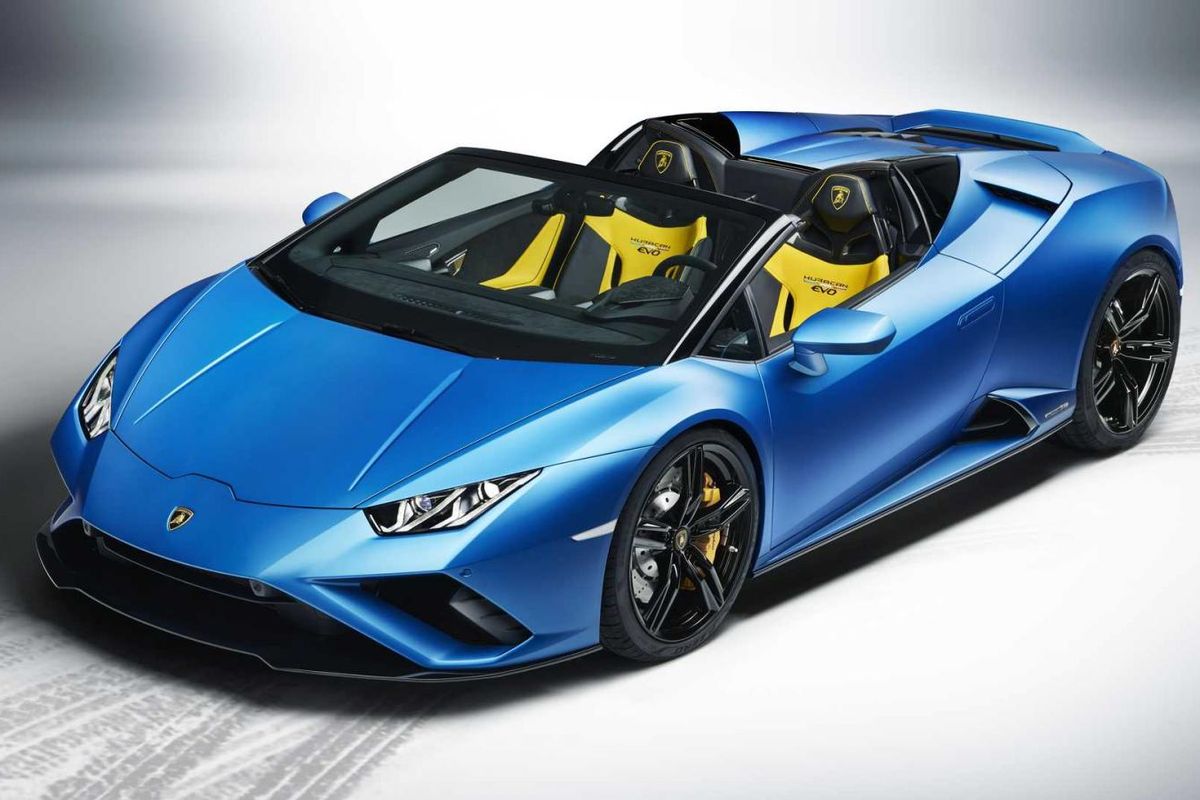
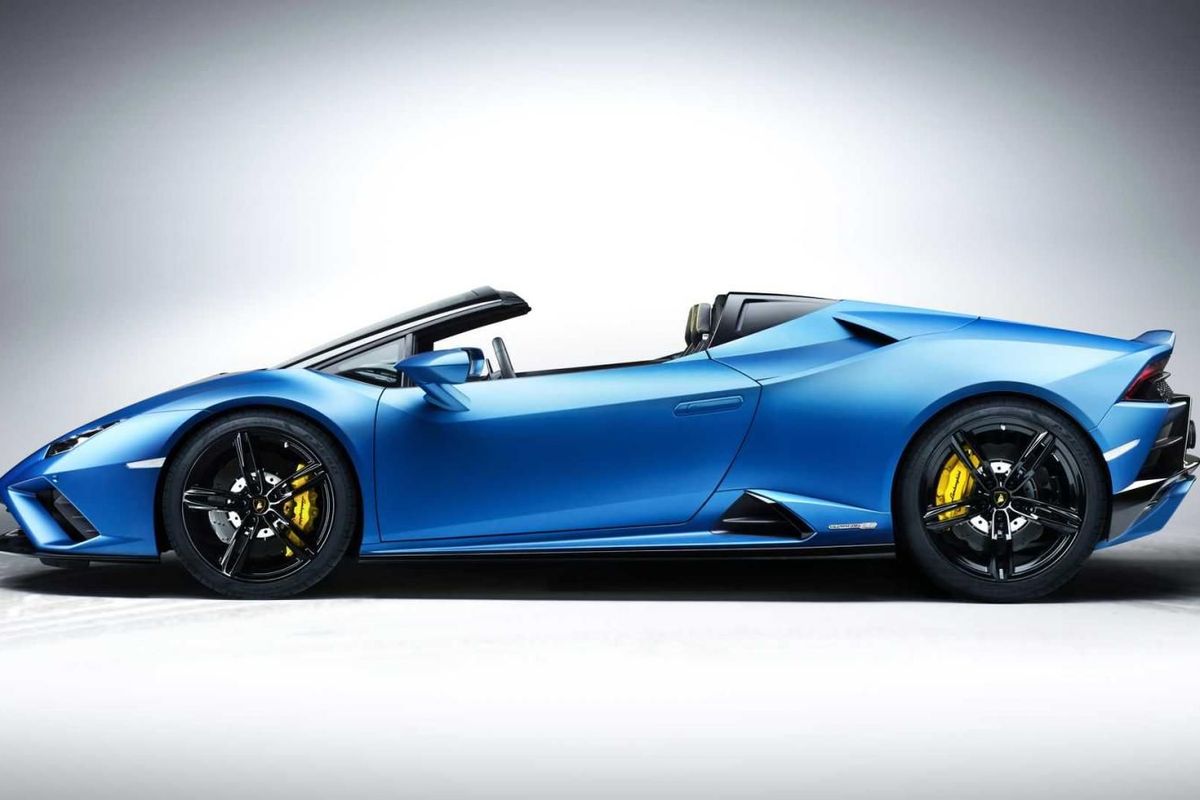
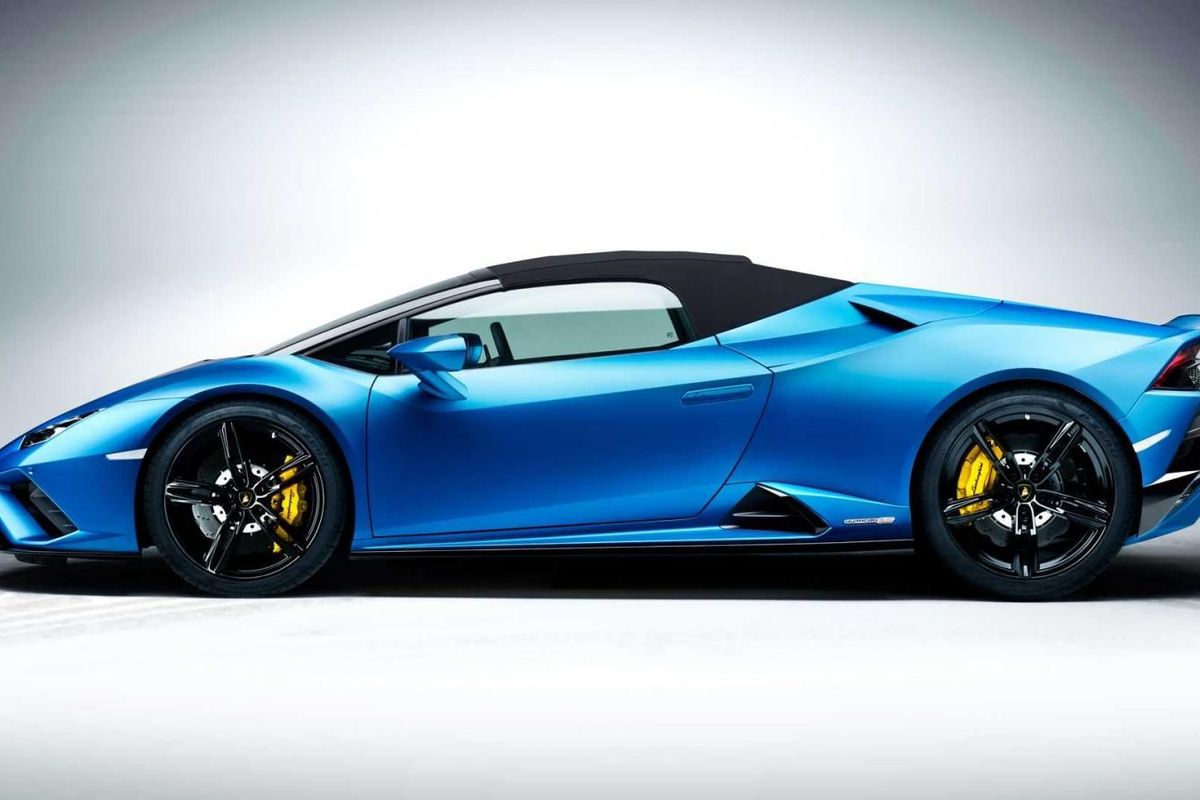
A new rear-wheel-drive Lamborghini Huracan Evo Spyder has been revealed and it looks phenomenal, as most Lambos do…
We are big fans of Lamborghini’s Huracan Evo (who isn't?) and this latest rear-wheel-drive Huracan Evo Spyder gives us one more reason to love this model. It brings the Hurcan Evo derivative count up to 4 and employs the same scintillating 5.2-litre V10 engine which offers 455 kW and 560 Nm of torque.
With a dry weight of just 1 509 kg and using a 7-speed dual-clutch transmission, this new Huracan Evo Spyder will rocket from zero to 100 kph in just 3.5 seconds and reach a top speed of 324 kph. That should do…
An electrical soft-top roof is fitted and can fold flat in just 17 seconds at speed up to 50 kph and customers can choose from a range of roof colours to match. 19-inch wheels shod with Pirelli P Zero tyres are standard but larger 20-inch wheels and carbon-ceramic brakes can be had as an option.
As far as pricing goes, the RWD Huracan Evo Spyder is priced from $229 428 which equates to well over R4.2-million at current exchange rates. As for local availability, 2021 is likely but COVID-19 will have the final say…
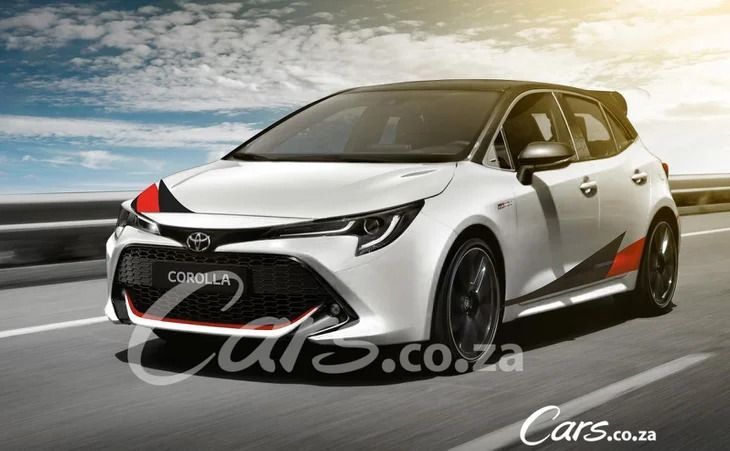
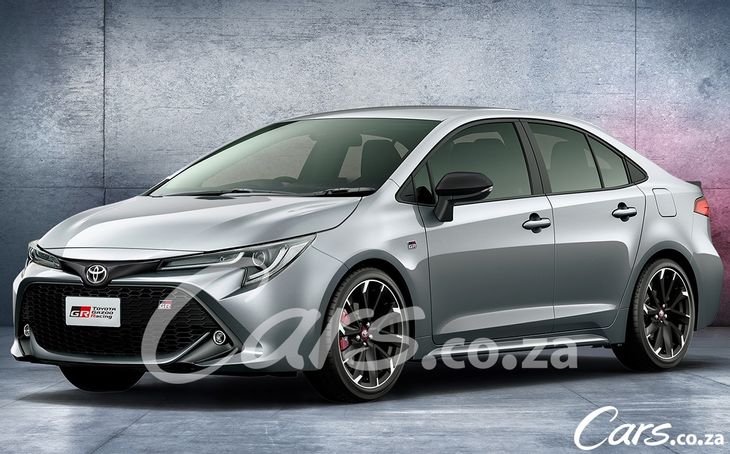
An all-new Toyota Corolla sedan recently arrived in South Africa and while it can surely be regarded as a near-perfect Uber car, we reached into our imagination bank to envision something a little more exciting for one of the world’s most popular nameplates. Enter the Toyota Corolla GR sedan!
Render courtesy of Duwyne Aspeling – Cars.co.za
Toyota has a rich motorsport heritage that stretches over 60 years and its Gazoo Racing performance arm has experienced notable success in events such as the Dakar Rally, World Rally Championship (WRC), 24 Hours of Nurburgring Endurance Race and 24 Hours of Le Mans.
Led by Toyota Motor Corporation President, Akio Toyoda, Toyota Gazoo Racing aims to harness its vast motorsport experience and transfer its learnings into Toyota’s road cars. To do this, Toyota Gazoo Racing developed a multi-tiered product strategy that can be applied to a wide range of road-going Toyota’s while also appealing to a broader customer base.
The Toyota Gazoo Racing tiers include GR-Line (cosmetic upgrade), GR-Sport (suspension upgrade), GR (power upgrade) and GRMN (high-power upgrade).
A GR Corolla hatchback is reportedly on the way, but will Toyota release a GR Corolla sedan?
You will recall in 2018, Toyota brought just 3 Yaris GRMNs into the country and we took great pleasure in putting this potent firecracker of a compact hatchback up against a range of rivals in a series of track and drag race battles (which you can watch on the Cars.co,za YouTube channel) and its performance was mind-blowingly good. Toyota has since revealed the new rally-bred Yaris GR, which will surely offer tons of fun behind the wheel, as well as the formidable GR Supra.
Even the Hilux bakkie has received some Gazoo love in the form of the Hilux GR Sport and a fully-fledged GR Hilux is likely to be in the works following a trademark application and there are more exciting products in the pipeline, which brings us neatly to the subject of this article, the Corolla sedan.
A potent GR Corolla sedan would bring some excitement to the C sedan segment.
The new Corolla hatchback came to market last year and Toyota has already revealed the luke-warm Corolla GR Sport and a patent has been filed for Corolla GR which implies that the boffs at Gazoo Racing are working on a hot Corolla hatchback that can be expected in 2023.
But, what about the Corolla sedan? This week, news from Taiwan revealed a Corolla Altis GR Sport and even Thailand released its own version of the Corolla Altis GR-Sport featuring different styling elements.
While there hasn’t been outright confirmation of a Corolla GR sedan, we believe it’s just a matter of time and the render above imagines what it might look like.
In terms of what could power the Corolla GR sedan, we suspect that the new Yaris GR’s 1.6-litre, 3-cylinder turbopetrol engine with 192 kW and 360 Nm of torque (a 200 kW/370 Nm version is also a possibility) would offer sufficient performance in the sedan’s application and mated with a snappy 6-speed manual transmission that would lay the power down via the larger front wheels shod with sporty rims and lower profile rubber.
Since Toyota doesn’t have its own rapid-shifting transmission, perhaps the Japanese powerhouse will employ the services of the 8-speed ZF automatic transmission which does duty in the GR Supra, or look to Lexus to send over a unit from its performance RC-F. Neither of those are great options as they are built to deal with far more torque than a Corolla GR could ever muster.
The Corolla GR sedan would also feature a revised suspension and braking setup to enhance dynamic handling ability and in terms of styling, it would follow on from the latest-generation Corolla with GR-specific details to set it apart from the standard Corolla sedan. Interior features would likely include GR-embroidered sports seats, a GR sports steering wheel and sporty pedals.
If the Corolla GR sedan does come to market at some point, it will go head-to-head with the forthcoming Hyundai Elantra N which will make for an exciting showdown in the relatively conservative and dare we say, boring, C sedan segment.
Do you think there’s a strong enough case to be made for a Corolla GR sedan?
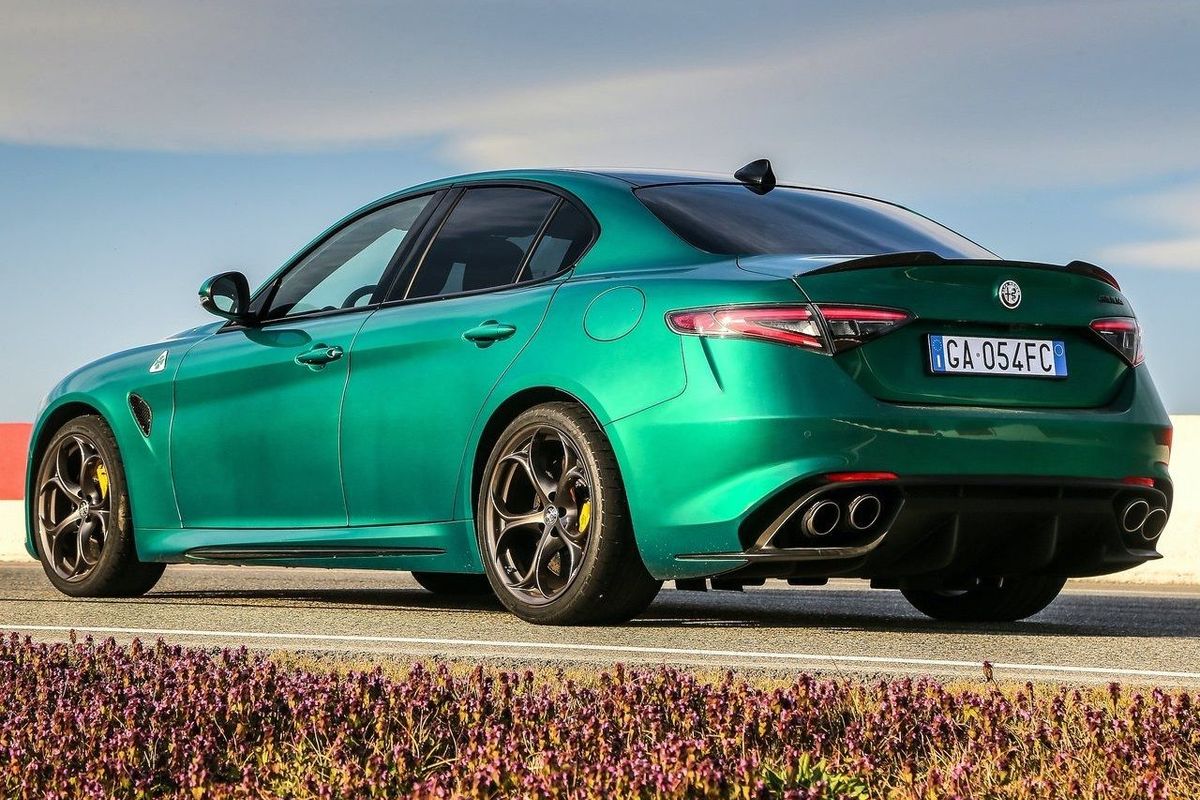
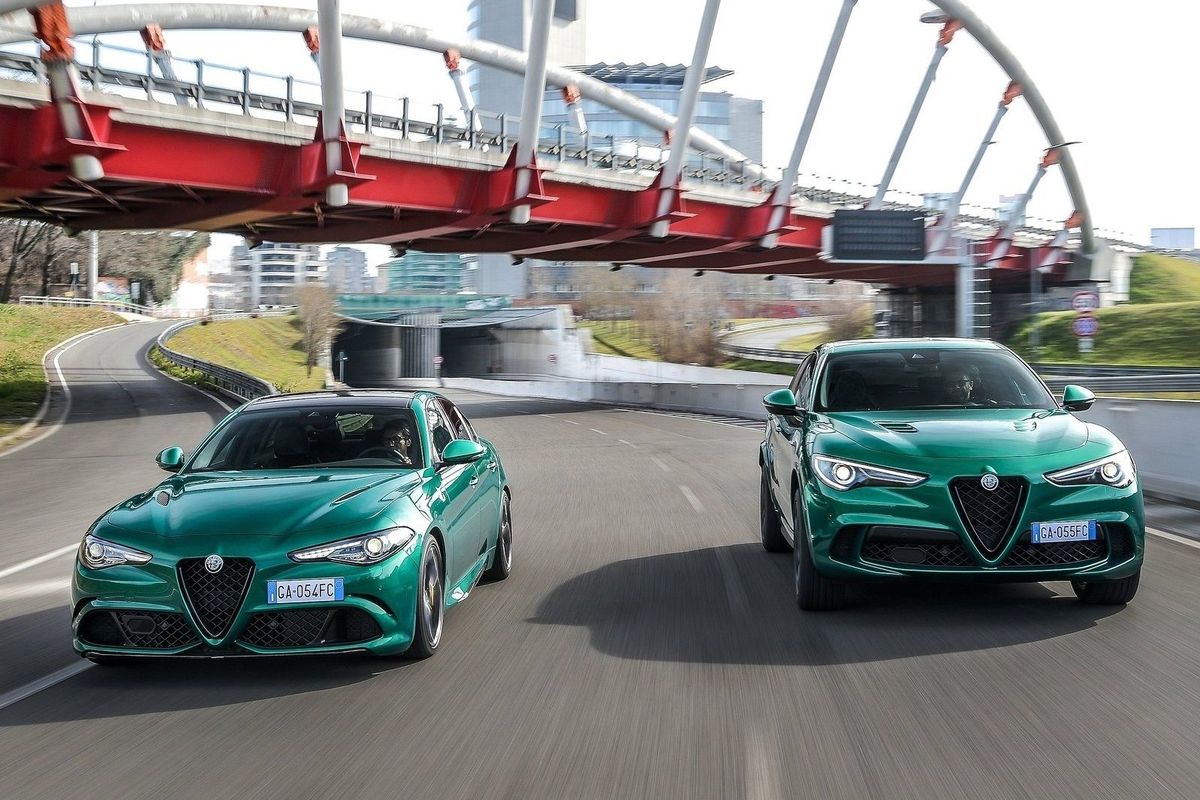
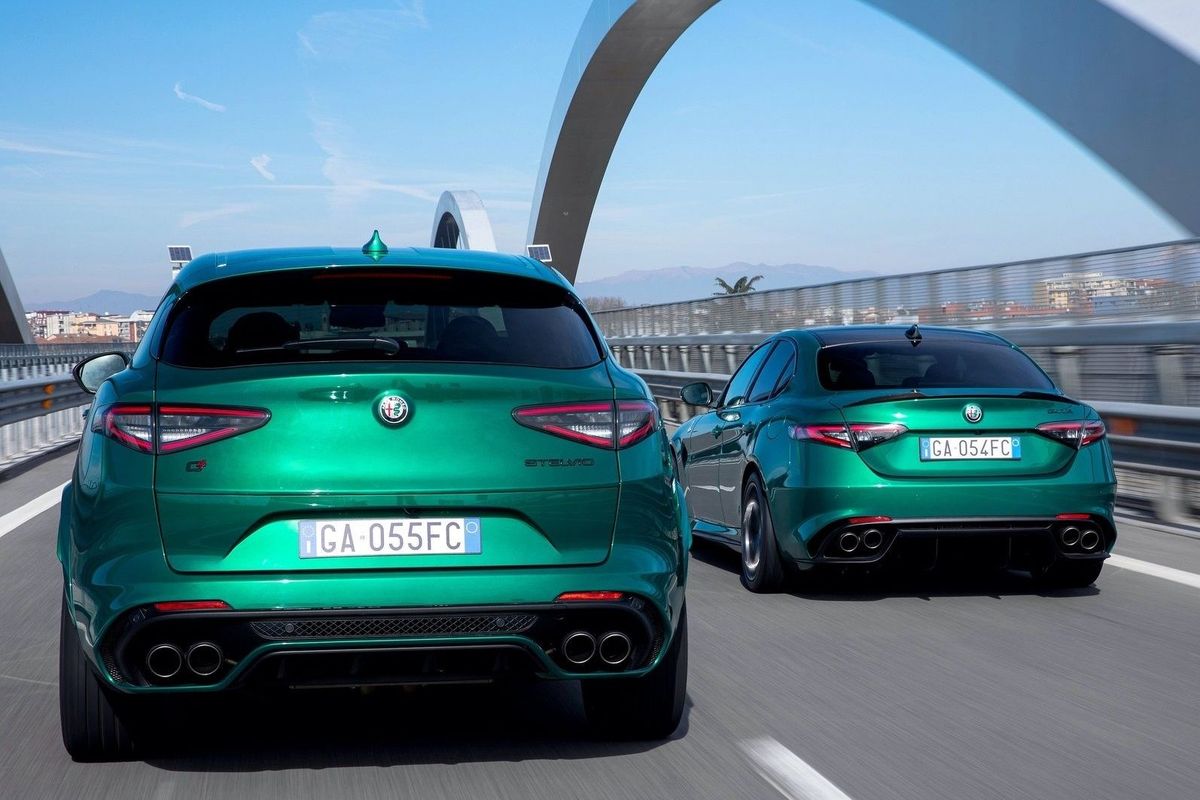
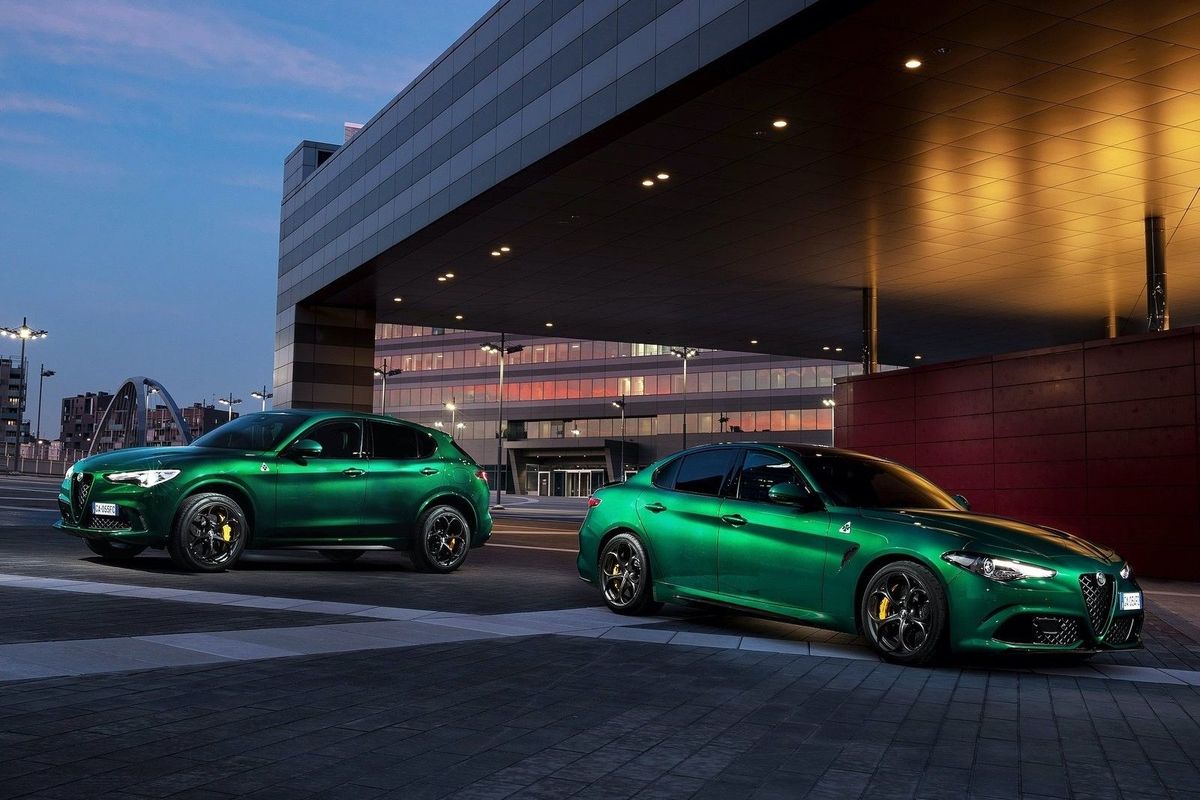
Alfa Romeo has announced updated versions of the Giulia and Stelvio Quadrifoglio for 2020. Here are the changes.
Let's get the bad news out the way, the engine and performance have not changed. The 2.9-litre biturbo V6 still produces 375 kW and 600 Nm, and power goes to the rear wheels for the Giulia and all 4 wheels for the Stelvio via an 8-speed automatic gearbox. Performance is brisk, with both claiming 0-100 kph in under 4 seconds. If you want more, look to the Alfa Romeo Giulia GTA.
Now for the good stuff, the MY2020 Giulia and Stelvio Quadrifoglio can come with an optional new Akrapovic exhaust with carbon fibre tailpipes for even more sound. In terms of design, there are new LED rear light clusters, 21-inch alloy wheels for the Stelvio, as well as gloss black detailing. Alfa Romeo is also offering a sporty accessories line with a carbon fibre front grille with "V" insert, mirror caps and rear spoiler.
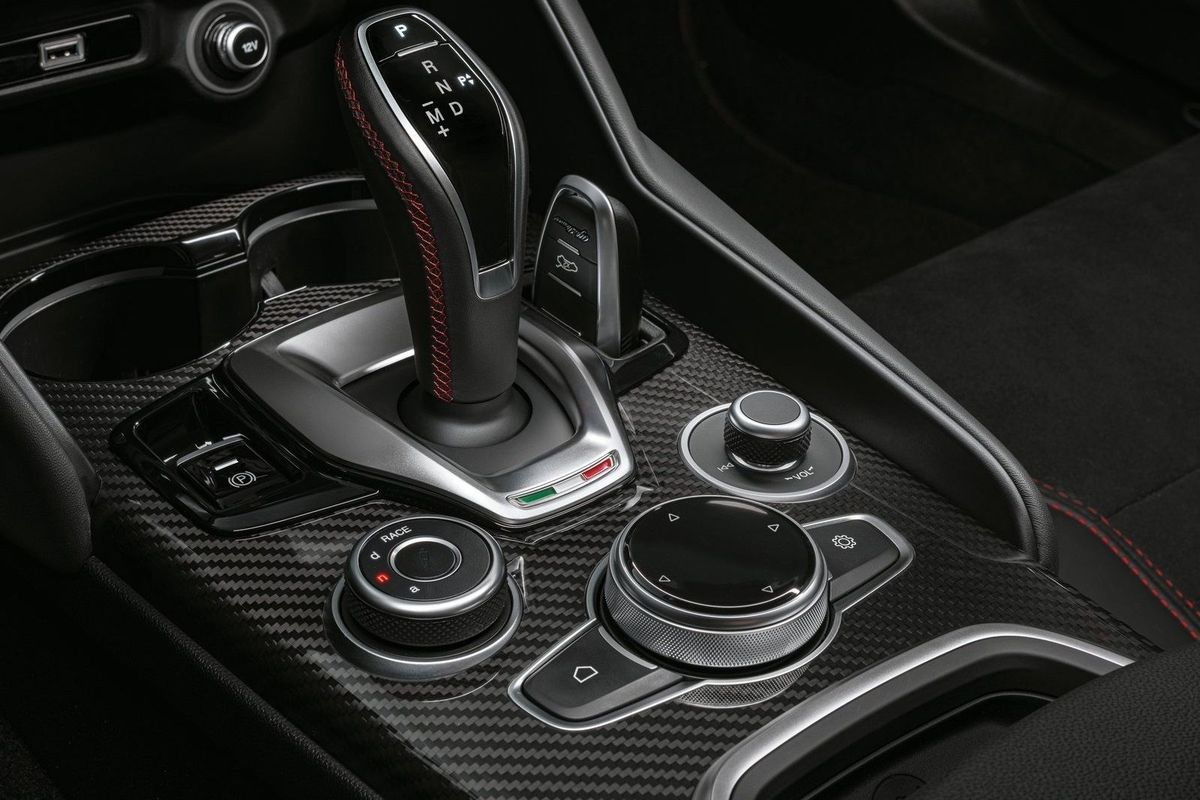
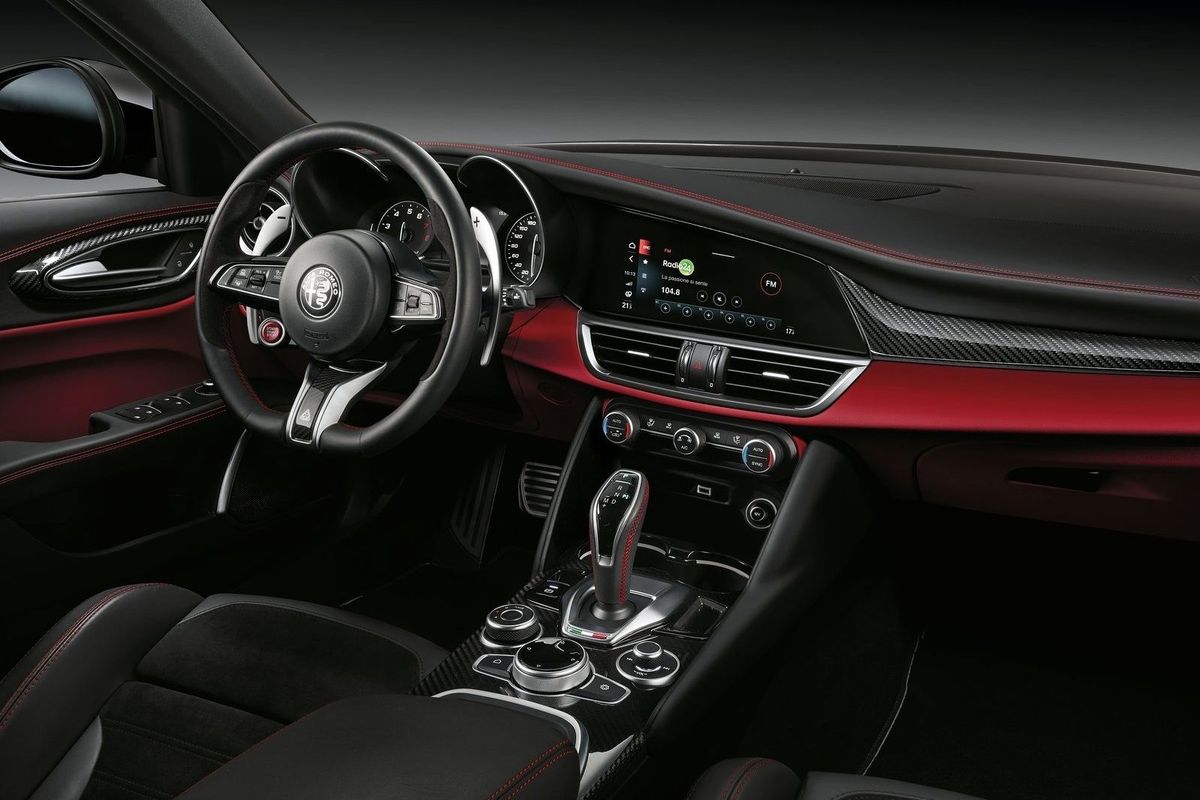
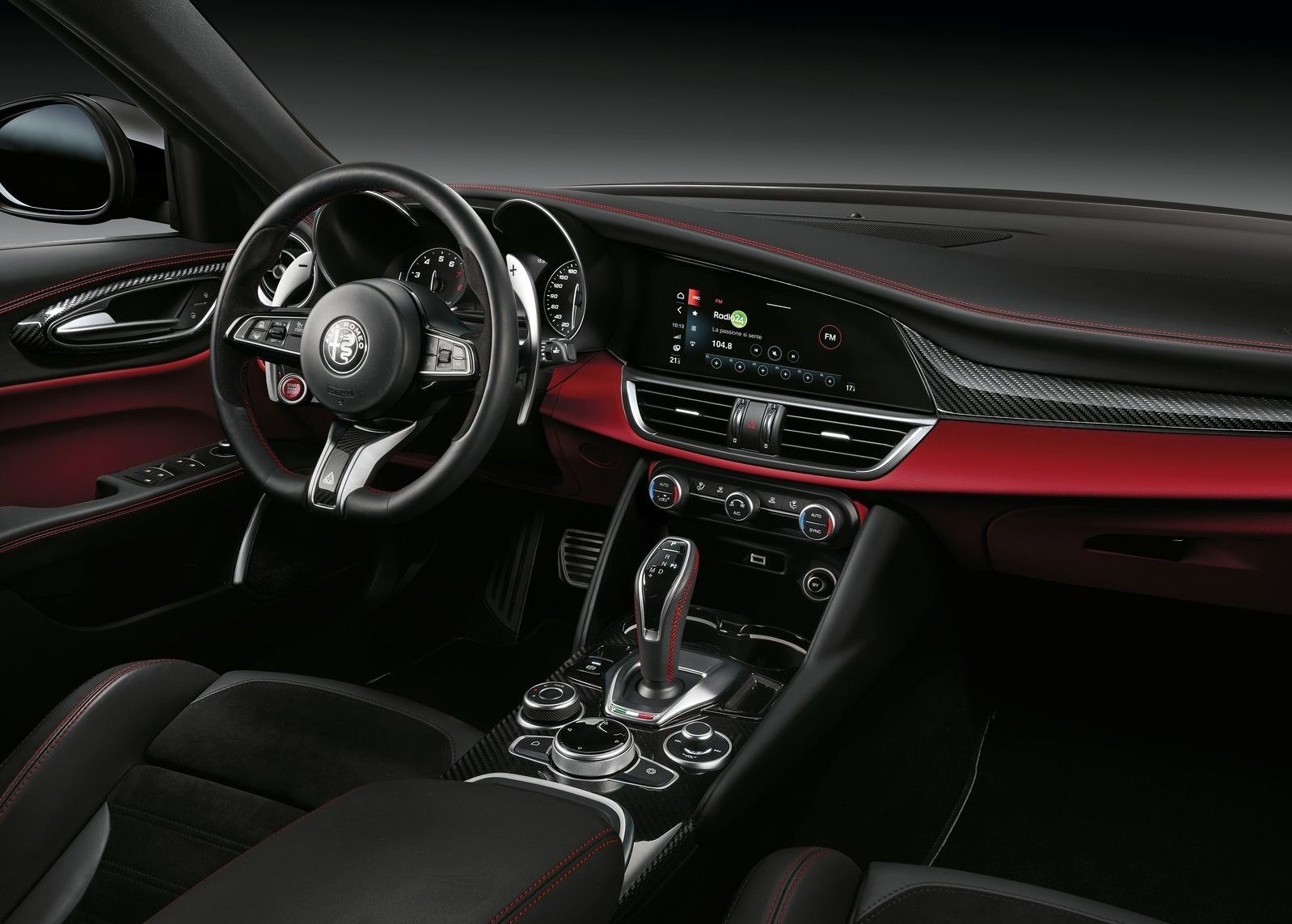
The real changes can be found inside and under the skin. One of the big criticisms of the two vehicles was the poor quality cabin and the interior has been improved with what Alfa Romeo terms 'greater tactile and visual impact'. There's also a new leather-trimmed steering wheel and gear selector. Alcantara sports seats are standard, but you can opt for the carbon shell Sparco seats. The tech changes comprise an all-new infotainment system with an 8.8-inch central touchscreen display, featuring connected services and new interface design. There's also something called Performance Pages which show the temperatures of the main mechanical components, torque delivery, turbo pressure and power, as well as digital chronometers to measure acceleration and maximum speed. The two vehicles also feature level 2 autonomous driving.
Vehicle Warranty / Servicing Extensions Due to Covid-19
The car industry has ground to a halt due to the Covid-19 pandemic and as a result, servicing and warranty claims have gone unfulfilled. Here's a comprehensive brand-by-brand guide to servicing and warranty extensions.
The Covid-19 pandemic has severely disrupted our way of life and car manufacturers are keen to reassure customers whose vehicles were due for a service or repair. Many car companies are offering extensions to service plans and warranties, which we've detailed below. We've also attached contact details so you can get in touch. As we hear from more manufacturers regarding service plan and warranty extensions, we will update this article.
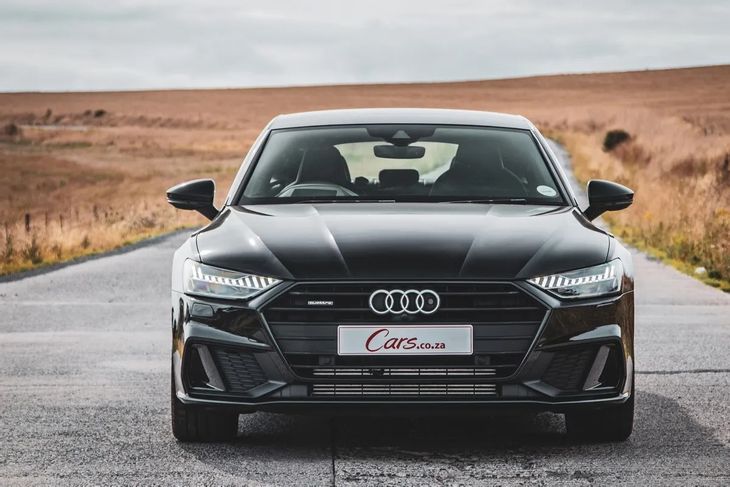
Audi South Africa
The German brand offers the standard Audi Freeway Plan which is a service and maintenance plan covering the first 5 years and/or 100 000 km.
In light of Covid-19, Audi is offering a 3 month extension period for valid contracts which are due to expire soon. This extension is based on 3 months from date of expiry within the prescribed period and not based on mileage.
For more info, contact Audi SA Customer Interaction Centre on 0860 434 838 or email: [email protected]
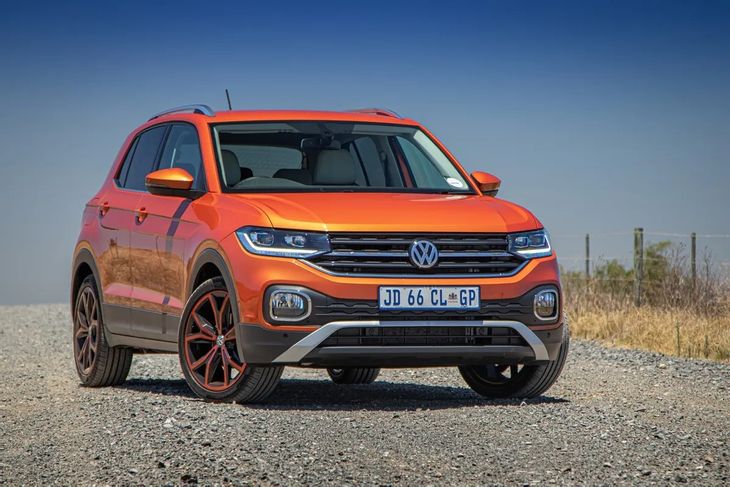
Volkswagen South Africa
Volkswagen SA has extended new vehicle warranties. “As the passenger-car market leader in South Africa, we want to release some of the burden that Covid-19 has placed on Volkswagen customers. As a result of this pandemic, Volkswagen dealerships were closed during the 5-week lockdown meaning that for many of our customers, it was impossible to make claims under their warranties in good time, that is why we are offering this free-of-charge benefit to our customers,” says Mike Glendinning, Sales and Marketing Director for Volkswagen Group South Africa.
If your new vehicle warranty or the EasyDrive Plan expires or has expired during the period from 27 March 2020 to 30 June 2020, Volkswagen SA will extend the warranty or maintenance/service plan periods with an additional 3 months. These periods will end 3 months after the expiry of the new vehicle warranty or the Volkswagen EasyDrive Plan. The mileage restrictions will not be extended. If your vehicle needed servicing during the lockdown period, you will receive either a grace period of 1 500 km or 1 month after the scheduled service.
Contact Volkswagen SA: 0860 434 737
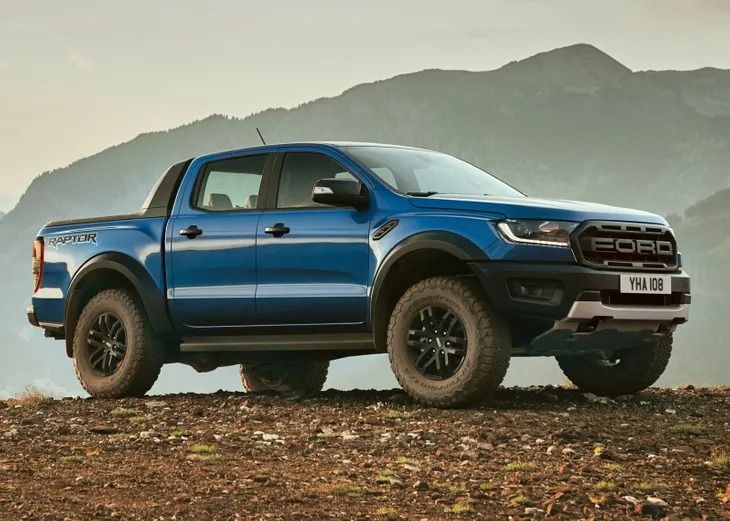
Ford South Africa
Ford Motor Company of Southern Africa (FMCSA) has added a 2-month extension to the service plan for all vehicles where the contract expires between 1 March and 31 May 2020. This applies to you if you were not able to complete the last service due to the national lockdown. This offer is valid on all Ford Protect Extended Products (excludes Ford Protect Extended Warranty) as well as all Ford Inclusive Service Plans, and is applicable from 1 June until 31 July 2020.
“We are committed to supporting all of our customers who are not able to service their vehicles within the prescribed Service Plan contract period as a result of the measures introduced to contain the spread of the coronavirus, and whose contracts expire during or soon after the lockdown period,” says Neale Hill, MD of FMCSA.
Ford Customer Care Centre can be contacted from 08:00 to 17:00 Monday to Friday on 0860 011 022 or [email protected].
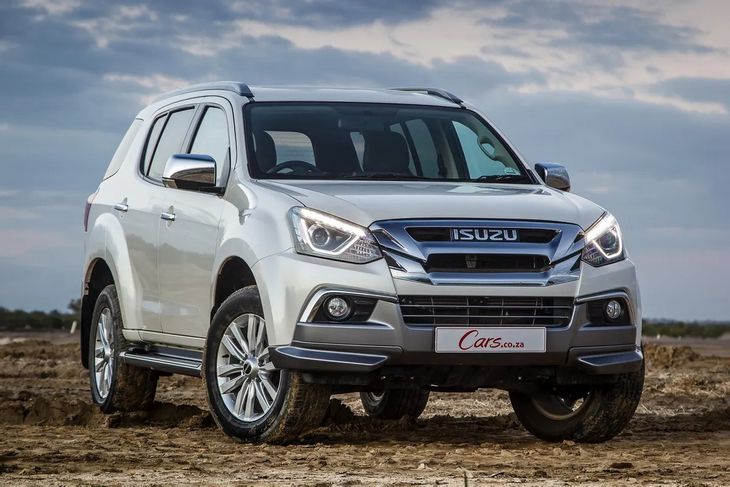
Isuzu South Africa
Due to the lockdown, Isuzu Motor South Africa has offered extensions of its maintenance and service plans by 2 months. This offer is for customers who have the standard service plan or have signed up for the Isuzu Mobility plan.
Chris Jonck, Isuzu Motors South Africa Executive: Aftersales, Subsidiaries and Joint Ventures, said Isuzu vehicles are designed and tested to provide owners with years of trouble-free driving. “It is mandatory to have your vehicle serviced according to the recommended service intervals. These intervals must be adhered to inside of a 2 000 km or 3-month window either side of the interval, however, during the lockdown period there is limited access to vehicle servicing therefore the two-month extension on the plans will give customers peace of mind,” said Jonck.
These maintenance plans form part of Isuzu’s Complete Care programme. “It is our personal commitment to safeguarding our customers and their vehicles at all times, built on Isuzu’s proven reputation for reliability, and ties in perfectly with our brand promise: ‘With you, for the long run’, as we strive to meet and exceed our customers’ expectations,” said Jonck.
Isuzu has close to 80 dealers around the country and you can contact its customer care line on 0800 047 898.
Honda South Africa
Japanese brand Honda will be extending warranty and service plans across its entire portfolio of cars, motorbikes and power products for the entire duration of the lockdown period. Note this extension is only applicable to customers who were due to have their products services or repaired during the lockdown.
“Honda understands that some of our customers may have reached the end of the included Honda Service Plan during the lockdown and that their products were due for a service during this particular time. We are also aware, that some customers may need to have their products repaired, however their warranty would have reached the expiration dated during the lockdown period. Therefore, we have decided to assist these customers by extending their service plan and warranty for the duration of the lockdown”, says Dinesh Govender, General Manager of Automobiles and Corporate at Honda Motor Southern Africa.
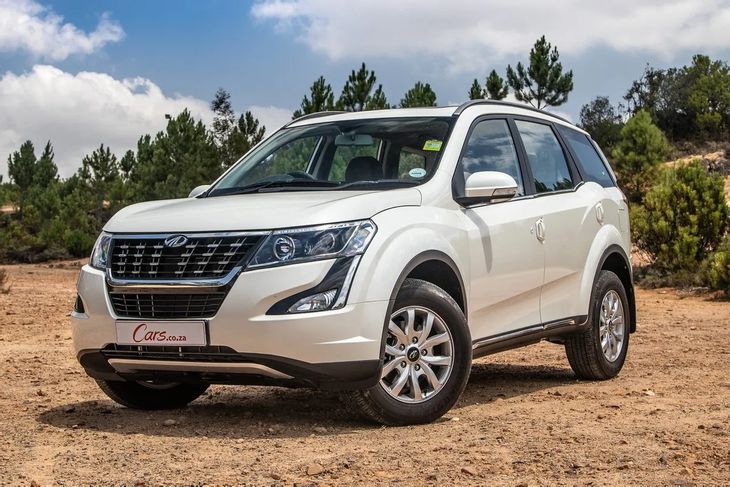
Mahindra SA is offering customers who are not able to repair or service their vehicles during the lockdown period between 1 March and 30 April will receive a complementary extension of 2 months. This extension not only includes service plans and the standard mechanical or powertrain warranties, but also applies to vehicles that were due for a service in this period. These vehicles may be brought in for up to 2 months after the lockdown ends for their required service, without affecting their warranty.
Contact Mahindra Customer Care on 012 661 3161 or email [email protected]
Mitsubishi South Africa
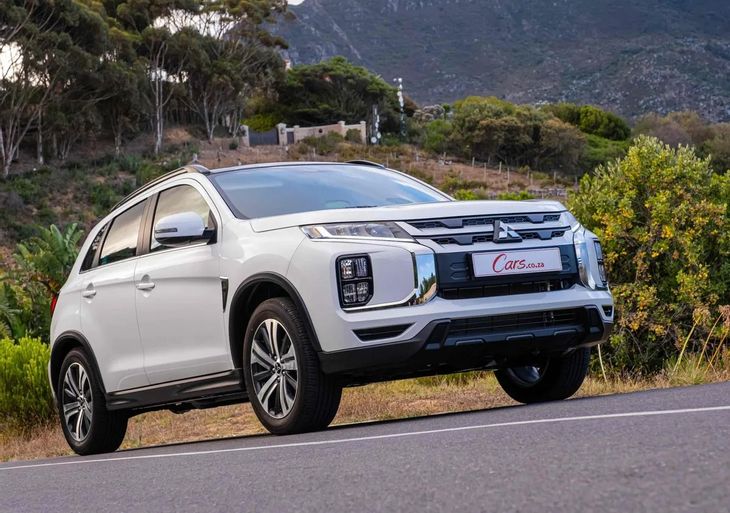
Mitsubishi SA is offering 3-week extensions for its warranty, 5-year service/maintenance plan and parts/workmanship warranties. “We have extended all active Manufacturer Warranties by 21 days so that owners can still have their vehicles repaired as per the policy documented and disclosed in the warranty and service book should relevant repairs be required during the lockdown,” says Nic Campbell, General Manager of Mitsubishi Motors South Africa (MMSA).
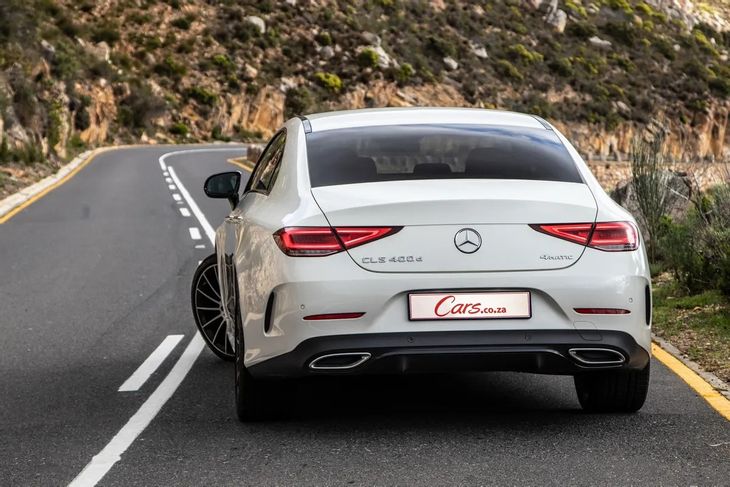
Mercedes-Benz SA is offering extensions to help put customers at ease during the lockdown period. In the event of a customer's vehicle is due for service during the lockdown and the vehicle is still within the PremiumDrive contract, Mercedes-Benz South Africa will extend the service parameter up to 120 days or 4 000 km. If a customers’ vehicle is due for a Service and the PremiumDrive comes to an end during the lockdown period, Mercedes-Benz South Africa will cover the cost of the service and selected wear and tear items, provided the customer visits the dealer within 6 weeks of lockdown ending. Should a customers’ Premium Drive Plan end during the lockdown and the customer wishes to extend their contract, MBSA will allow this extension provided the vehicle presents no fault codes at time of quotation and contract activation. This will be allowed for a period up until 6 weeks post lockdown. Contact Mercedes-Benz SA customer care on 0800 133 355.
BMW South Africa
BMW Group SA (which includes Mini) has introduced some measures. There will be a 6-month extension for all services due during the lockdown period due to time, up to 2 000 km negative allowance for all mileage-based services due during the lockdown period and a 30-day extension for customers whose Motorplan will be coming to an end during the lockdown period.
If you would like to extend your Motorplan contract further or want more info, please contact BMW Customer Care on 080 060 0555 or [email protected]
Toyota South Africa
Toyota South Africa is offering warranty and service plans extensions. Essentially, any days lost due to lockdown will be credited to you, extending your service plan and warranty.
You can contact Toyota on 0800 139 111.
Nissan South Africa
Nissan SA is keen to reassure its customers that its new vehicle warranty does cater for service overrun. There is an early/late service allowance of 1 500 km or 1 month is allowed with the understanding that intervals between any two services will not exceed 16 500km or 13 months.
Renault owners whose new vehicle warranty has expired in the last week of March 2020 or about to expire in April 2020 will have their warranties extended until the end of May 2020. Customers who were due to service their vehicles between 27 March and 30 April 2020, now have up to 31 May 2020. Contact customer care on 0861 736 2858.
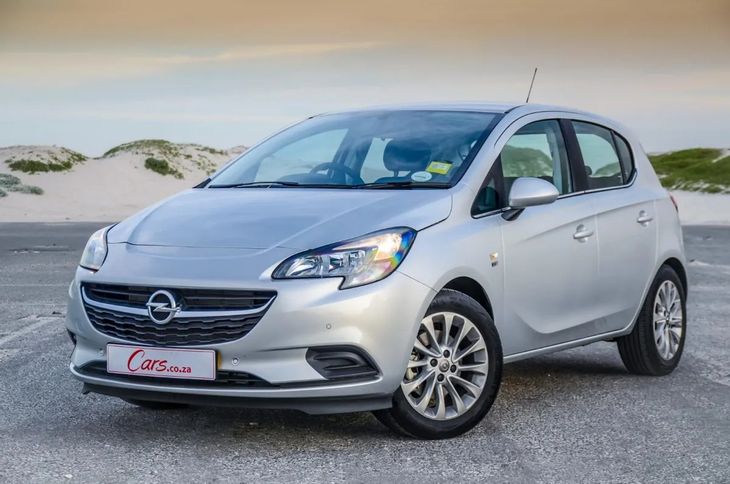
Opel South Africa
Opel SA has a message on its website saying, "if you have missed your required service due to lockdown restrictions, your warranty and service plan won't be affected. Includes exceeding permitted service mileage or expired warranty and service plans affected during the lockdown period."
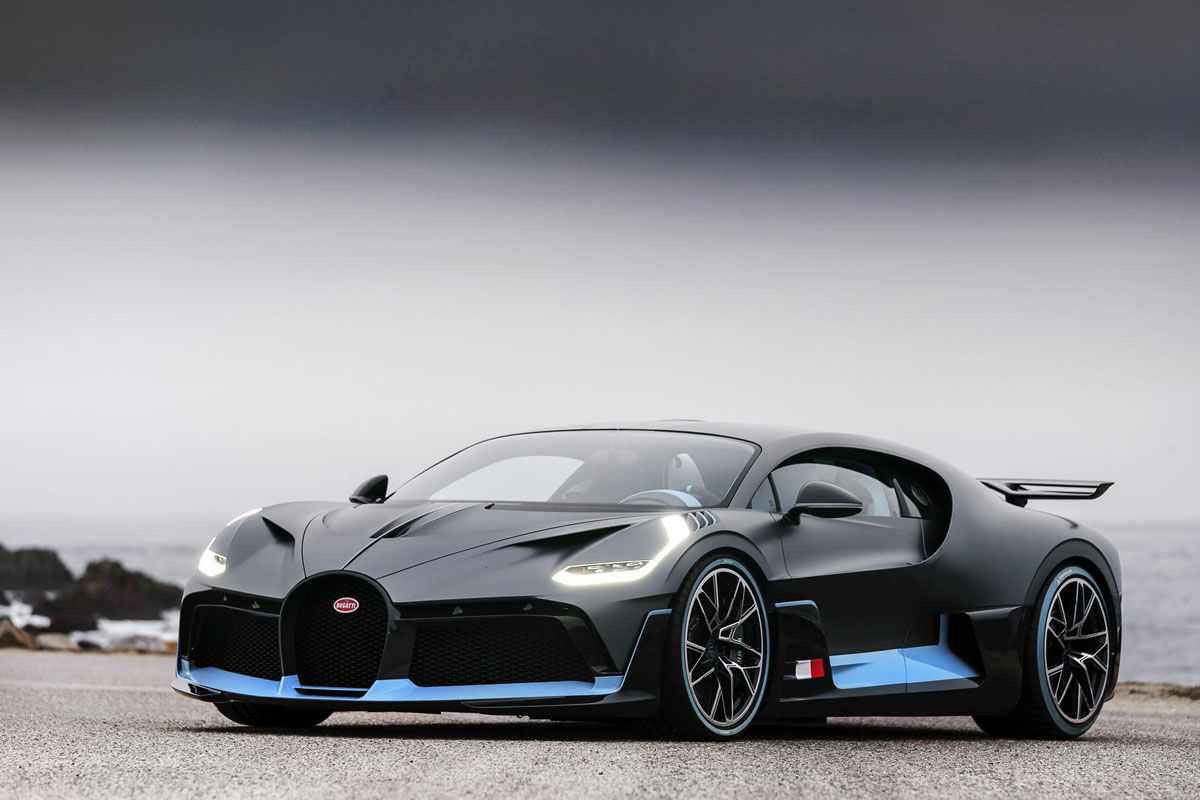
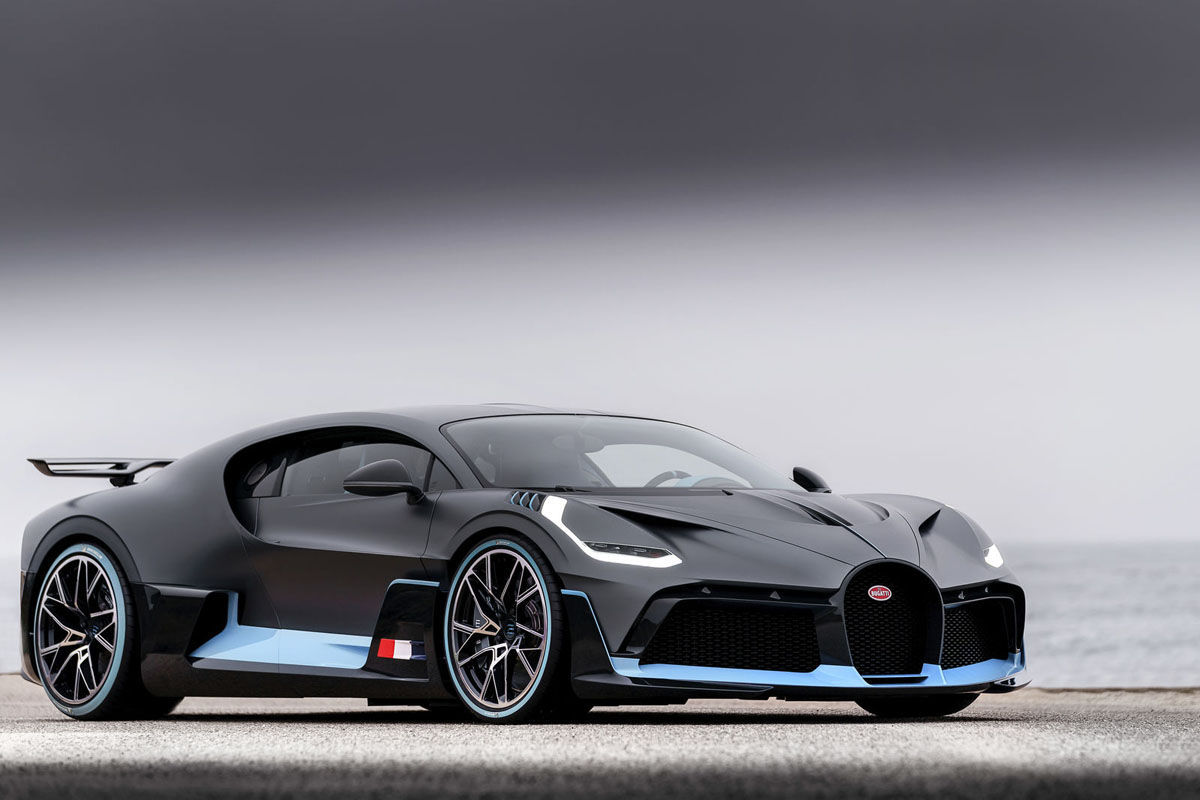
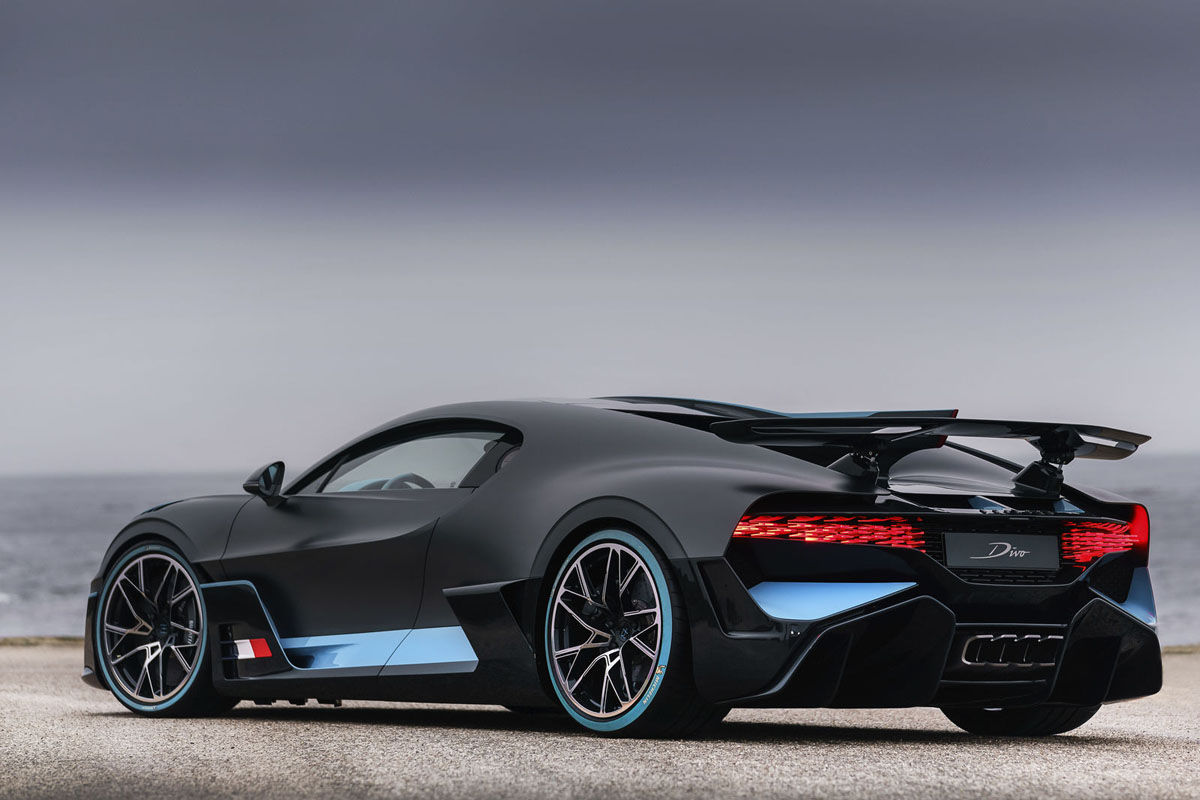
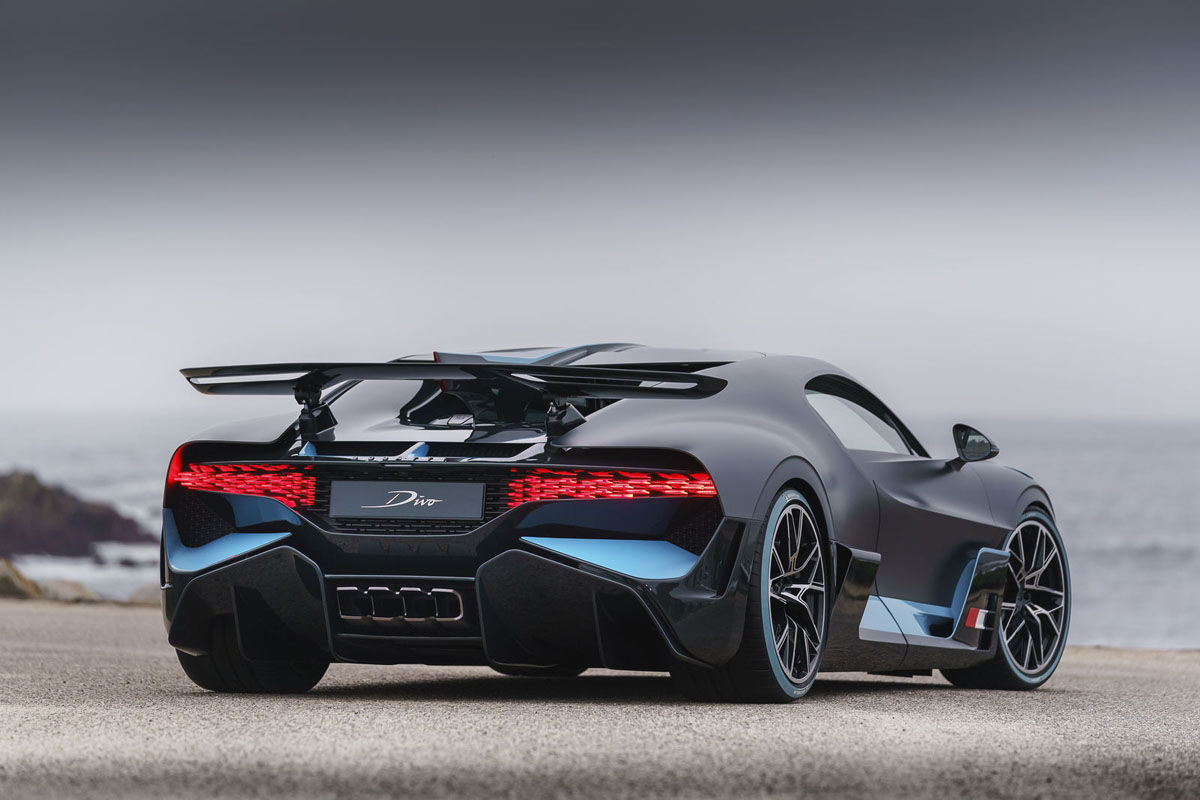
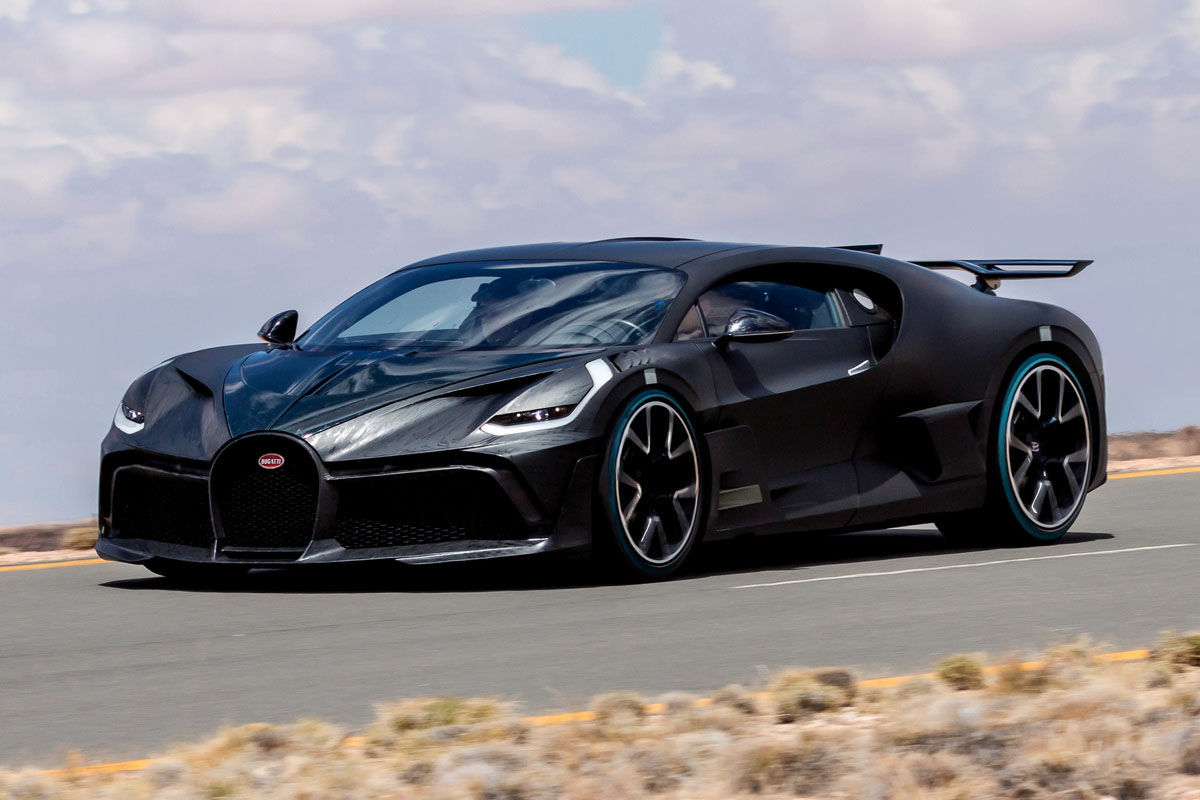
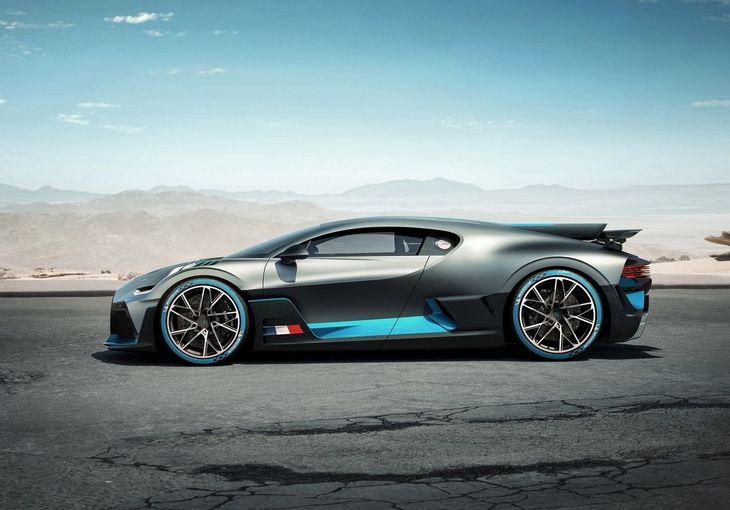
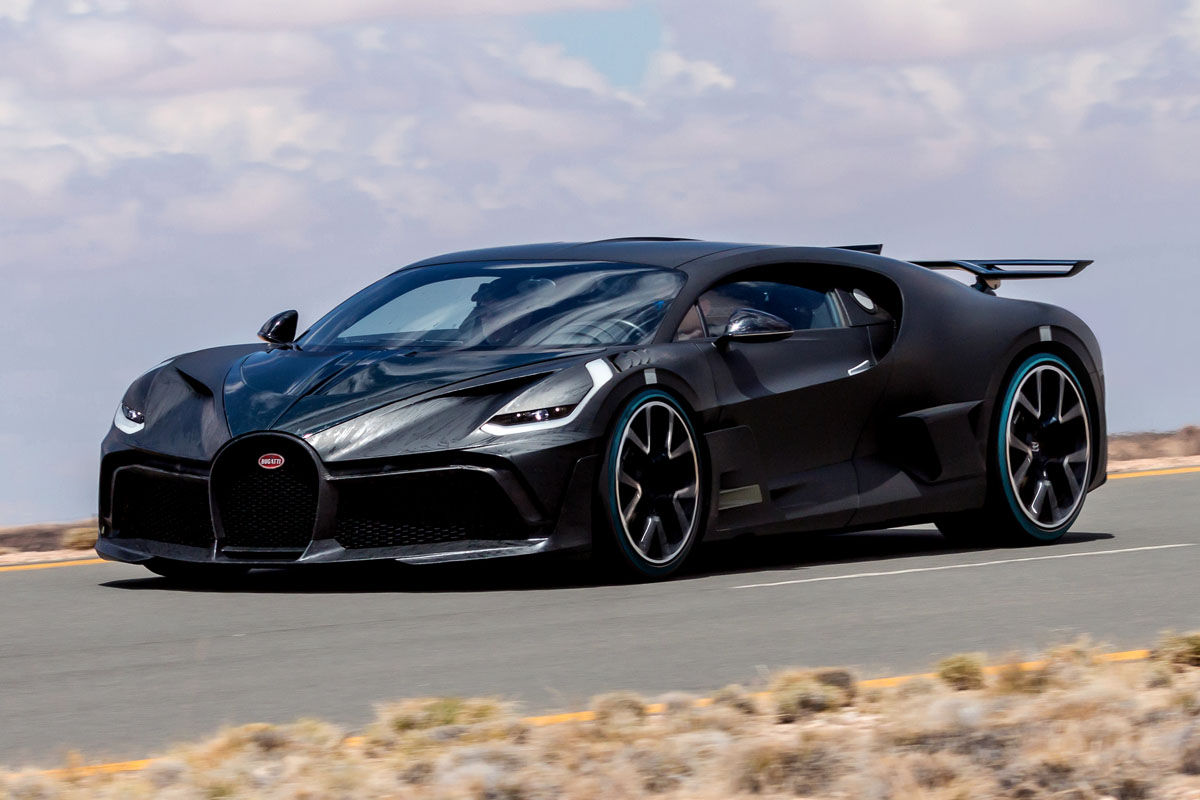
Bugatti, which unveiled the handling-focused Divo at the Pebble Beach Concours d'Elegance in 2018, has commenced deliveries of its R100-million W16-engined hypercar. It will produce a total of just 40 units, all of which were pre-sold to Chiron owners well before the hypercar made its public debut.
The 420-kph Bugatti Chiron, which succeeded the Veyron in 2016, needs little introduction. Powered by an 8.0-litre quad-turbocharged W16 engine that produces 1 103 kW and 1 600 Nm of torque, the carbon-fibre bodied, all-wheel-drive hypercar is the crowning achievement of the Volkswagen Group-owned French manufacturer. But, means allowing, those who want one, can buy one.
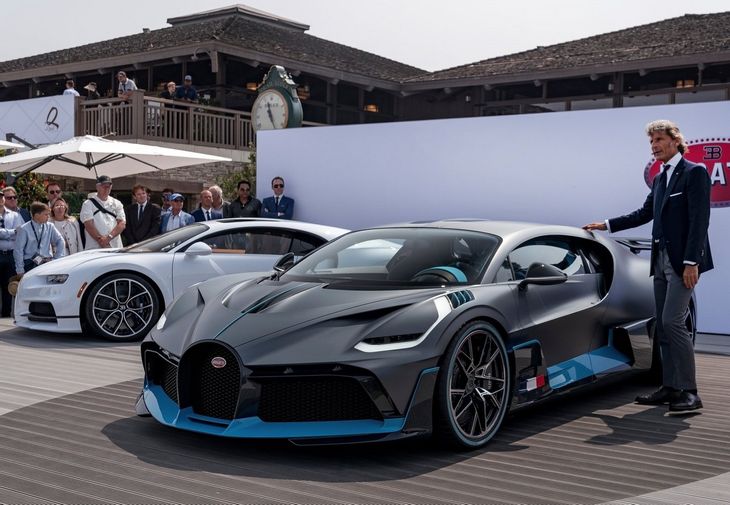
Ex-Lamborghini Boss Stephan Winkelmann unveiled the Divo in Monterey, California in 2018.
The same cannot be said for the exclusive Divo, however. When Stephan Winkelmann, who led Lamborghini for 11 years and was in charge of Audi Sport for a little under 2 years thereafter, took the reins at Bugatti at the beginning of 2018, the French manufacturer embarked on a project to develop a car based on the Chiron, but one that would have a distinct look, character and, although it would be just as powerful as its celebrated sibling, offer “a completely different handling performance”.
Named after Albert Divo – a French pilot and racing driver who won the Targa Florio in Sicily in 1928 and 1929 at the wheel of a Bugatti Type 35 (the French marque famously won the historic race 5 times in a row) – the Divo has undergone a rigorous 2-year development period and, according to Bugatti, the first of a limited run of 40 units are now being delivered to a select group of customers.
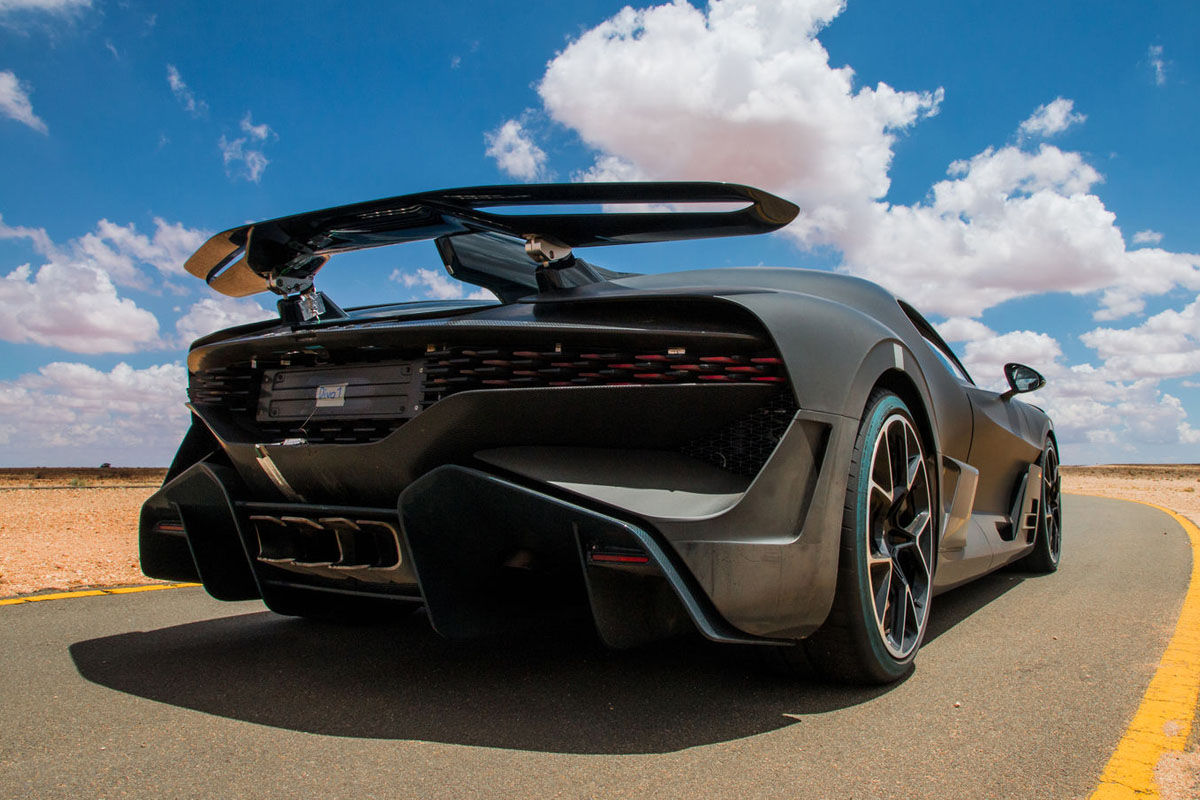
Bugatti has added a plethora of vents and ducts to the Divo's bodywork to improve the hypercar's aerodynamic and cooling efficiency.
You see, the Divo was offered exclusively to existing Chiron owners by dealer invitation. Within a few months of the initial design model being created, Bugatti flew those owners to its headquarters in Molsheim, France to present the Divo, which was “designed to be more sporty and agile in bends (the Chiron, but) without sacrificing comfort and… supremacy” (sic).
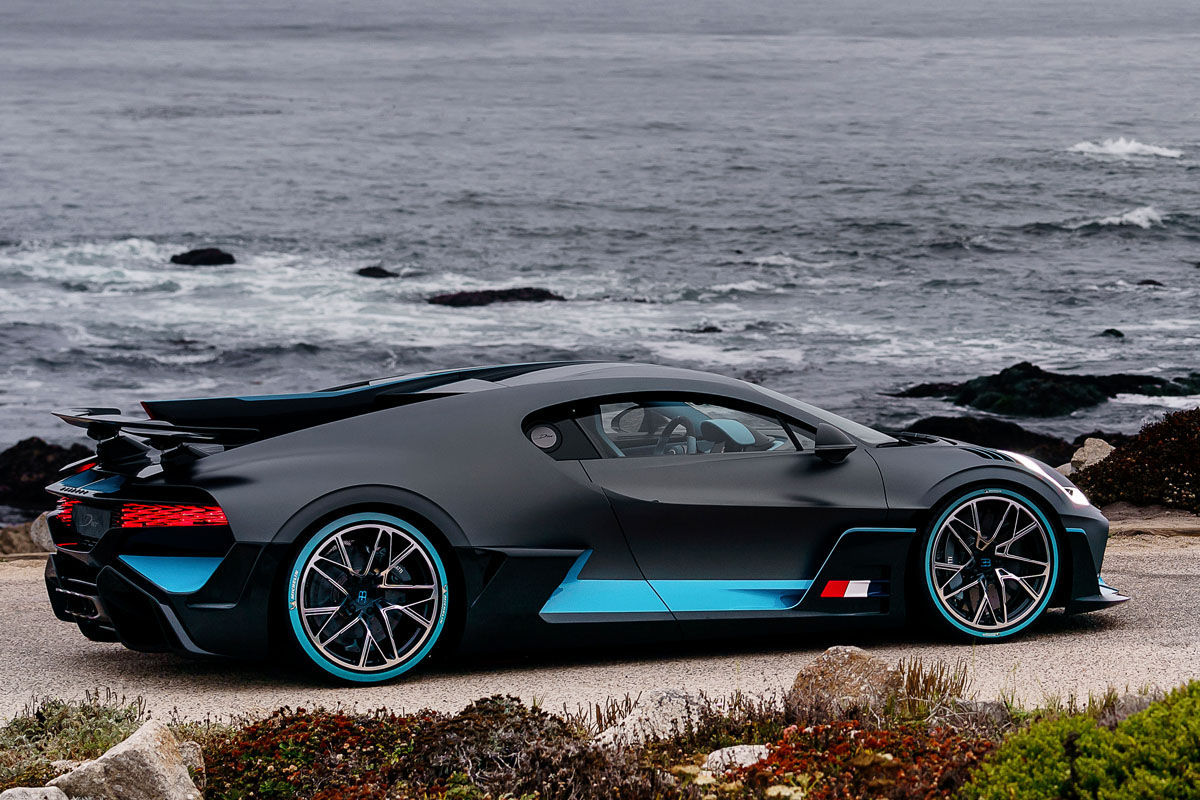
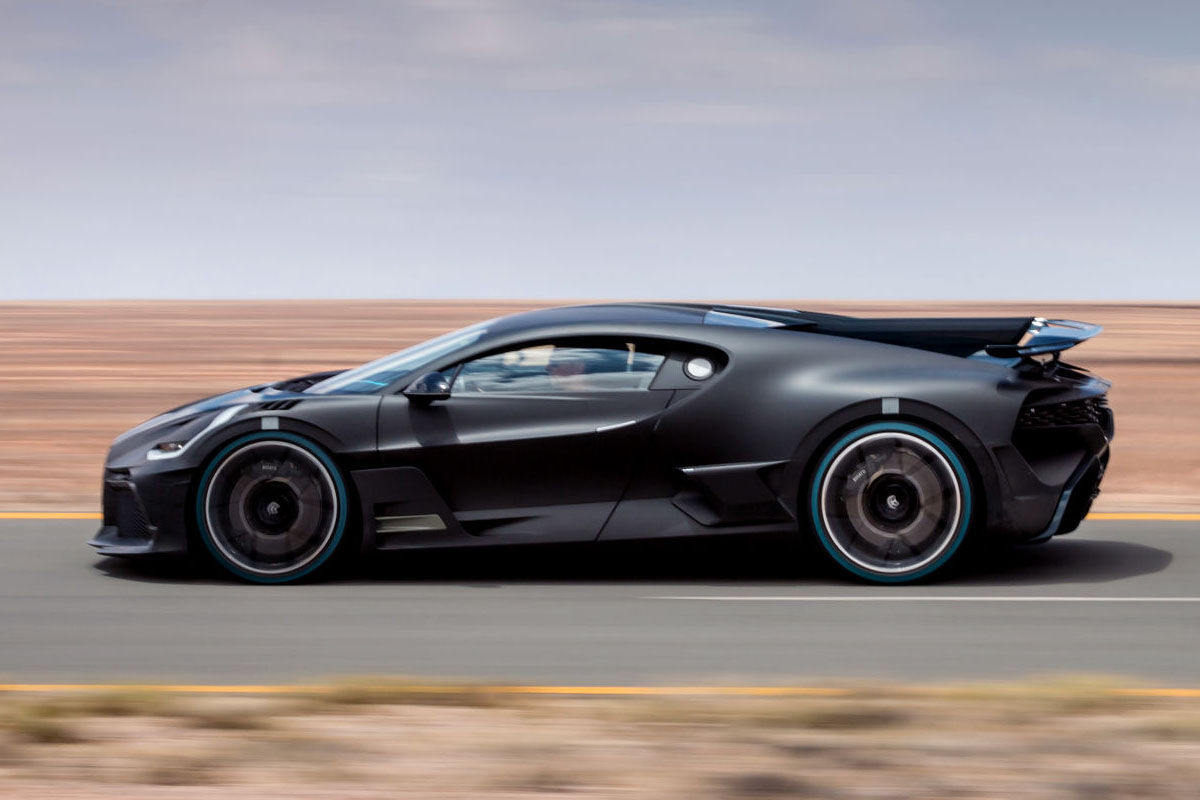
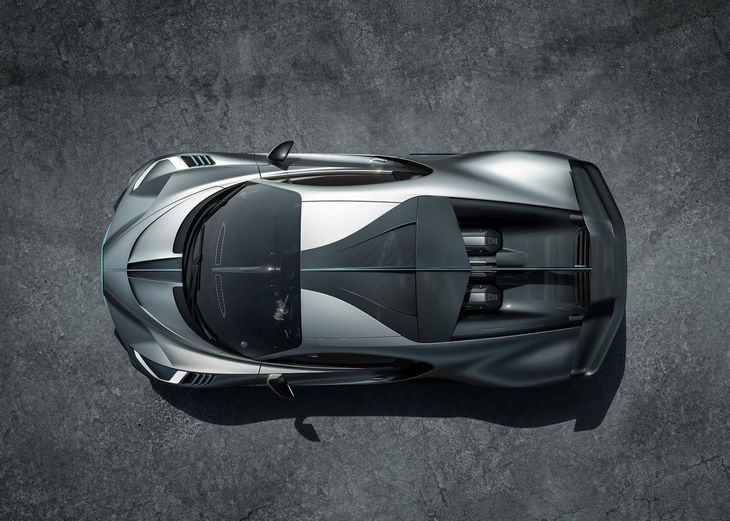
The design team – led by Bugatti design director Achim Anscheidt – optimised the Divo for lateral acceleration, as well as aerodynamic and thermodynamic efficiency. Compared with the Chiron, the newcomer has a bespoke bonnet, front spoiler and finned side skirts; they include several extra inlets and ducting to improve downforce, as well as engine- and brake cooling.
Note the NACA duct in the roof and the central fin that directs air over the Divo's rear diffuser.
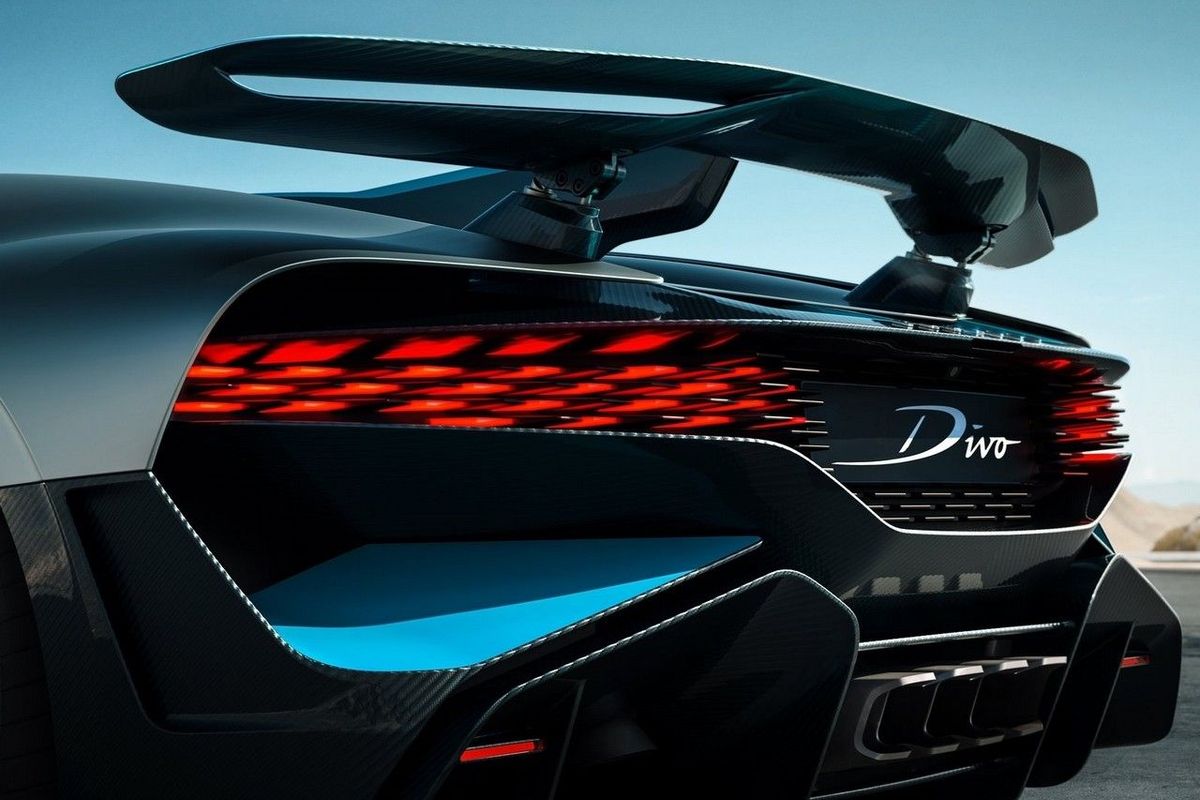
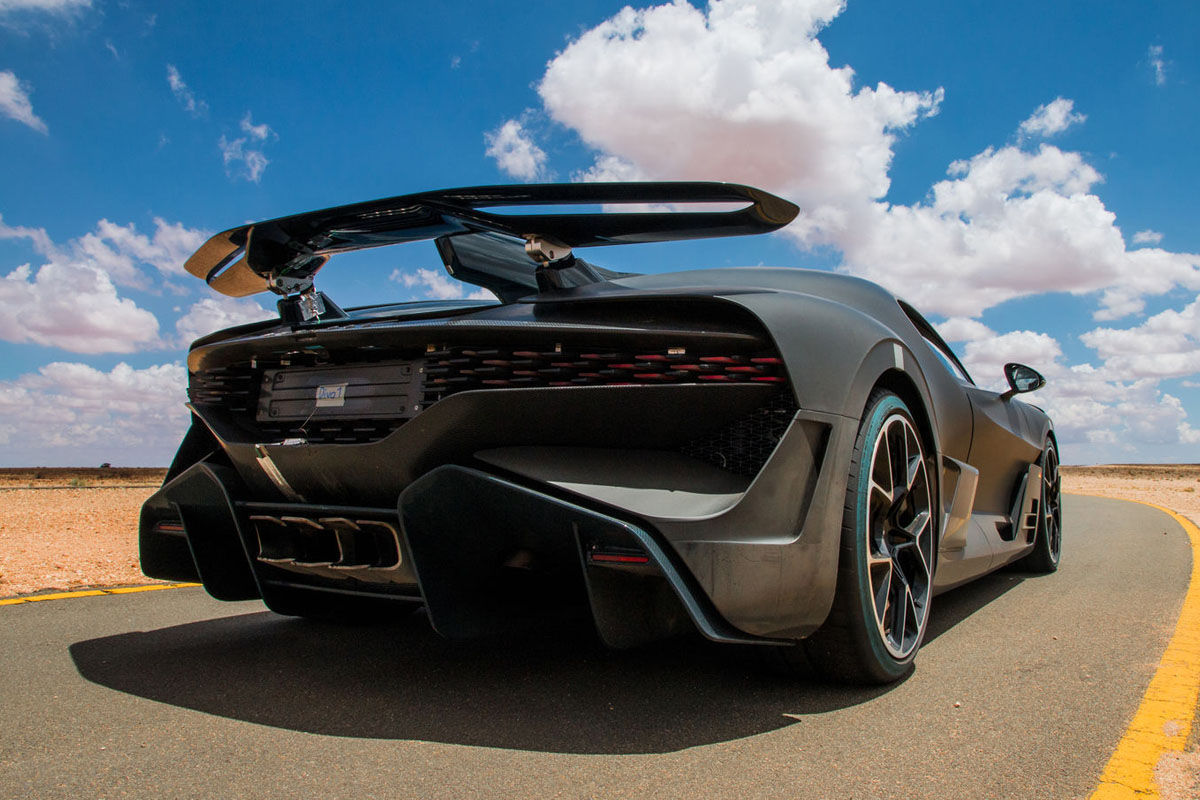
The roof, meanwhile, features a NACA duct that channels over the rear wing, which is 23% wider than that of the Chiron, via a central fin. Although the rear wing does not extend, its angle can be adjusted for individual modes and continues to function as an air brake. The rear diffuser features a quartet of exhaust pipes to give the 8.0-litre W16 its unique sound signature.
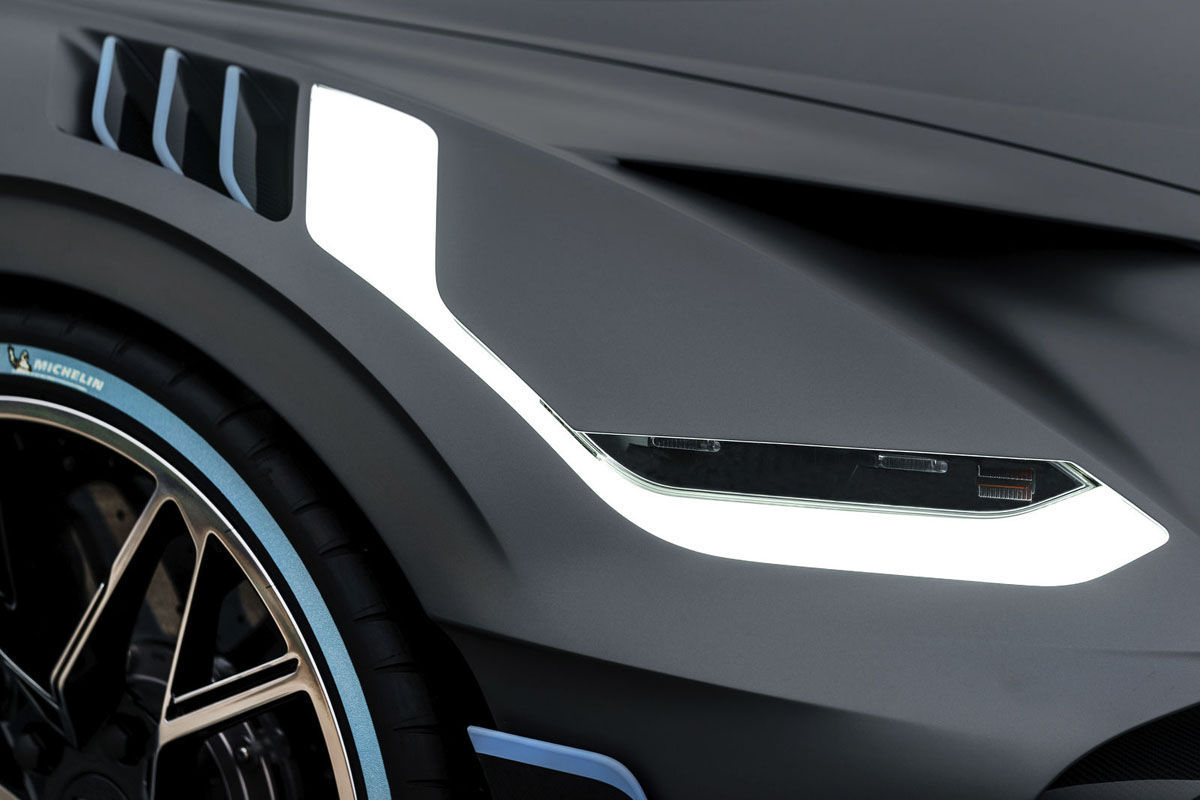
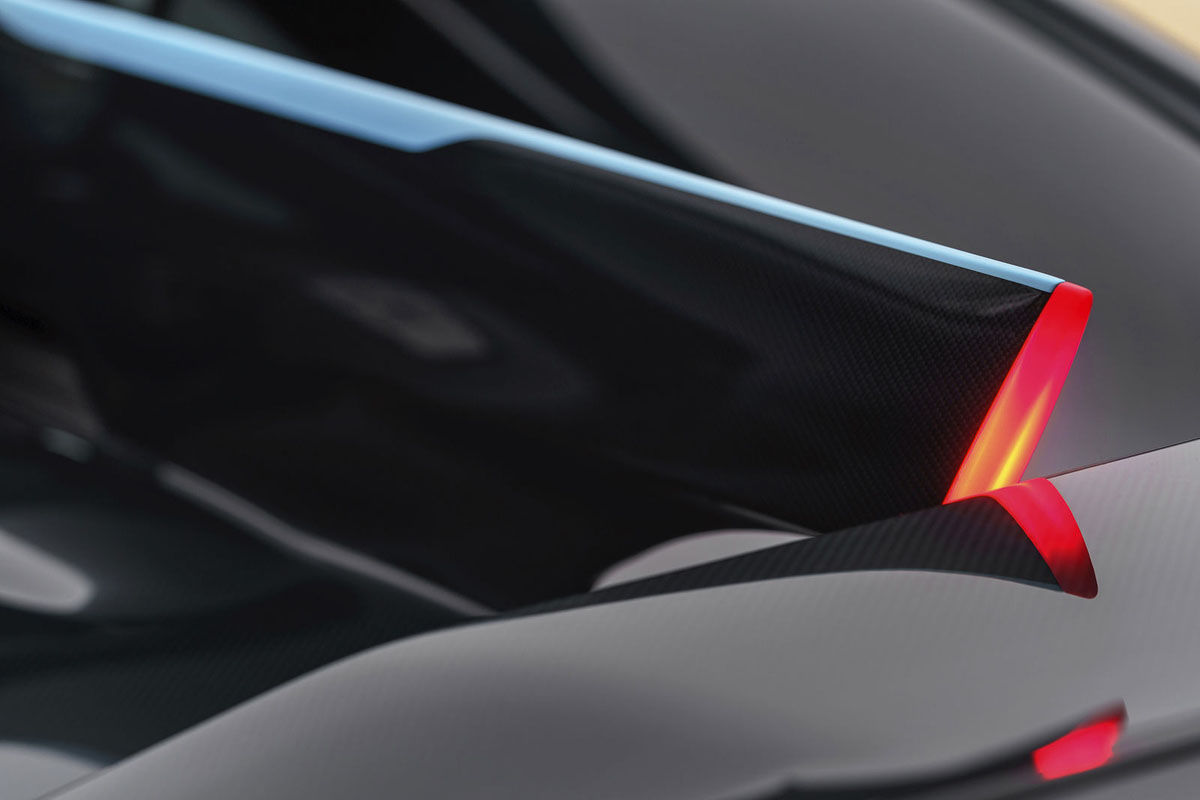
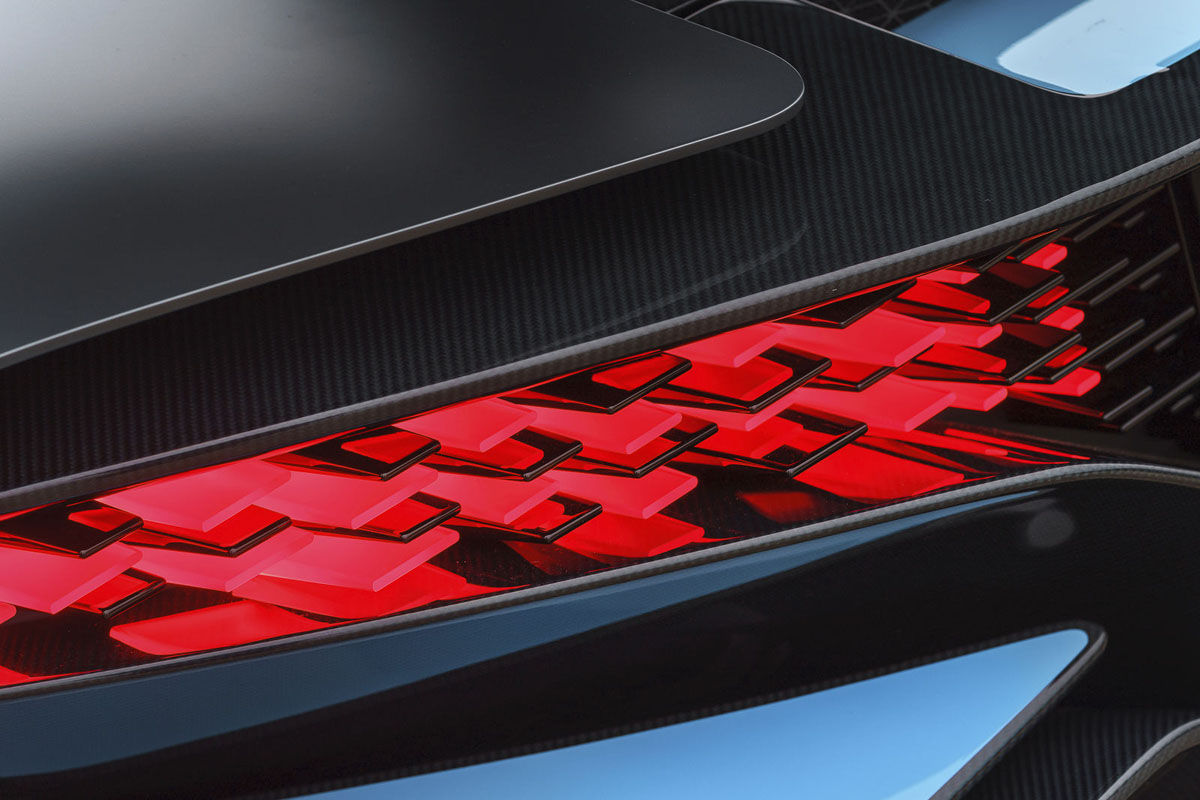
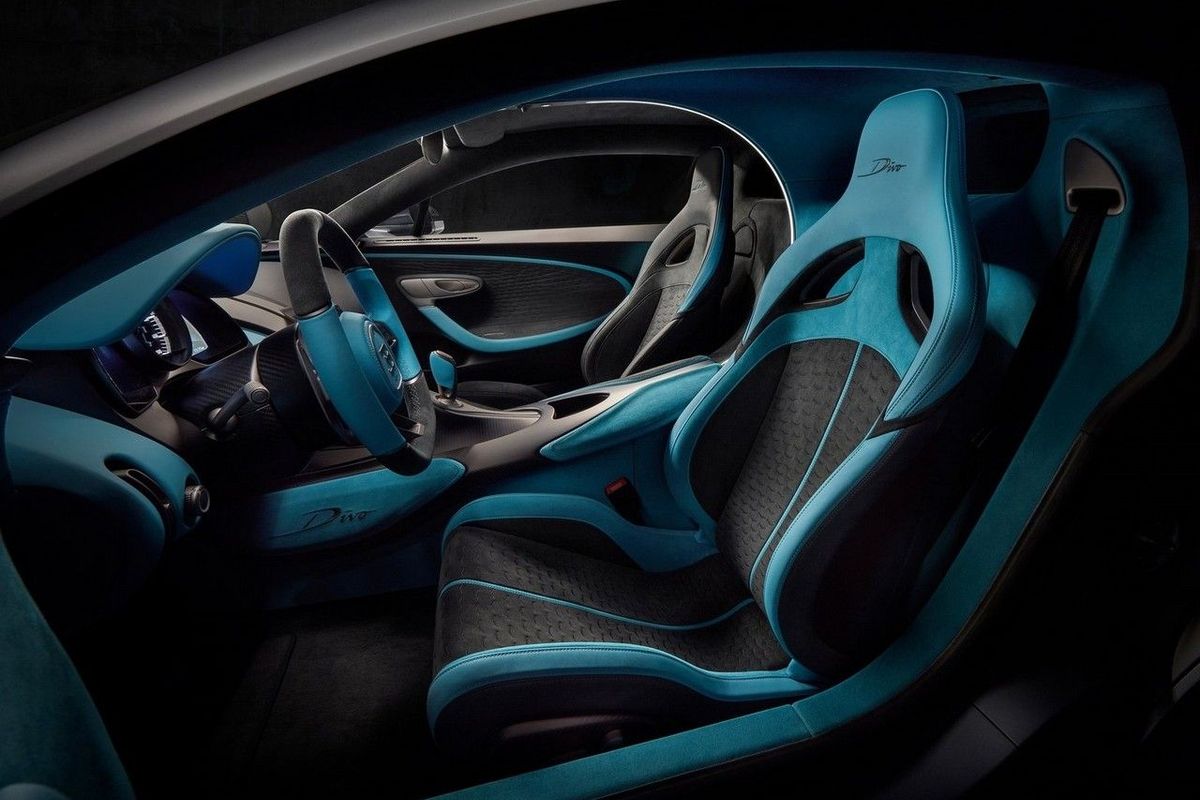
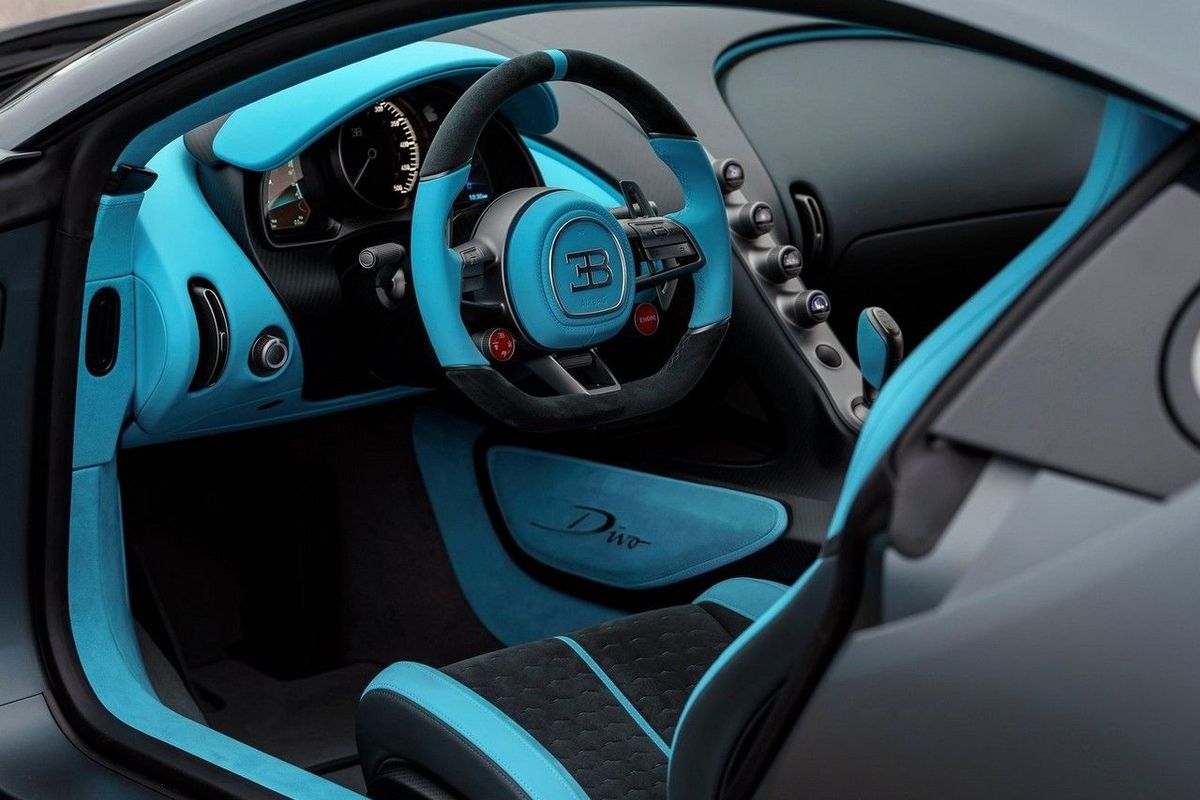
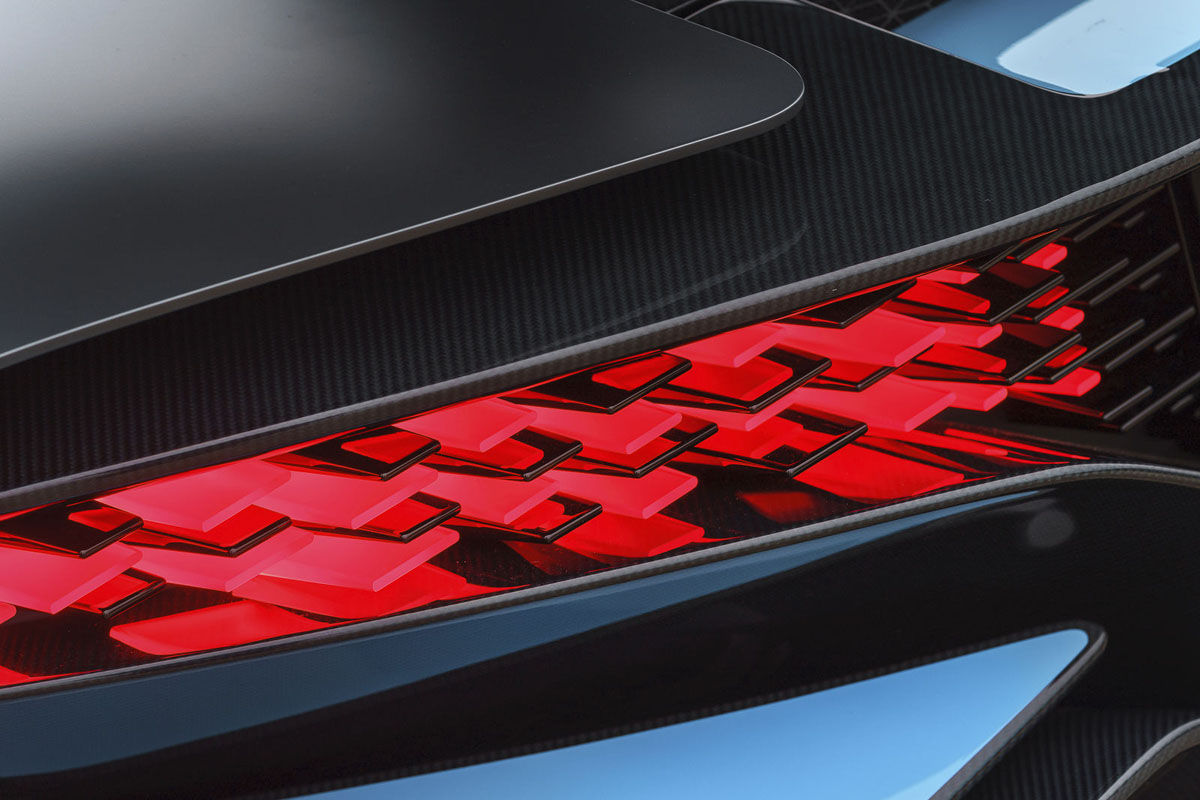
The detailing is quite sublime… The intricate LED headlights have a flat light aperture of only 35 mm, while the tail-light modules consist of 44 illuminated fins, which are partly produced by a 3D-printing process. Inside, new sports seats with higher bolsters hold the occupants securely, while the steering wheel is partially covered in Alcantara and comes equipped with enlarged shift paddles.
The tail-light clusters comprise a series of intricately-stacked fins (44 in all) that were created using 3D-printing.
But back to the Divo’s raison d’être – its handling prowess… The Divo has similar engine outputs to the Chiron, accelerates from 0 to 100 kph in 2.4 seconds and its top speed is limited to 380 kph (as opposed to 420 kph), but it weighs 35 kg less than its sibling, generates 90 kg more downforce (up to a claimed 456 kg at 380 kph) and, as a consequence, is capable of higher cornering speeds.
In fact, Bugatti says the Divo’s capable of achieving a maximum lateral acceleration of no less than 1.6 g; the newcomer is claimed to be able to lap the 6.2-kilometre handling circuit at the (Porsche-owned) Nardò testing ground in Italy a full 8 seconds faster than the Chiron.
The Divo's handling characteristics were honed using simulations, road evaluations and testing at the Nurburgring and Nardo.
Over and above achieving a lower kerb weight, higher downforce and "a more direct chassis setup", Bugatti adapted the Divo’s wheel cambers front and rear, stiffened its springs and fine-tuned the steering to achieve a more front-oriented handling balance and sharpen the hypercar’s responses to steering inputs overall.
Apart from putting the Divo through its paces at Nardo and the Nurburgring, Bugatti conducted more than 5 000 km of testing across all the newcomer’s speed ranges (yes, up to 280 kph) in the 3 driving modes: EB, Motorway and Handling; it adjusted the hypercar's setup repeatedly to refine it to a point that “all parameters were perfectly matched.”
A quad-tipped exhaust juts out from the Divo's shapely rear diffuser.
“The Divo is entirely different to drive than the Chiron. This is particularly evident when driving the car on twisty roads. With even more precise steering and greater downforce, the Divo corners comparatively faster and more predictably,” says Lars Fischer, the head of chassis testing and application at Bugatti. “Despite being a hyper sports car, the Divo remains well suited to everyday use.”