Land Rover Defender (2020) International Launch Review
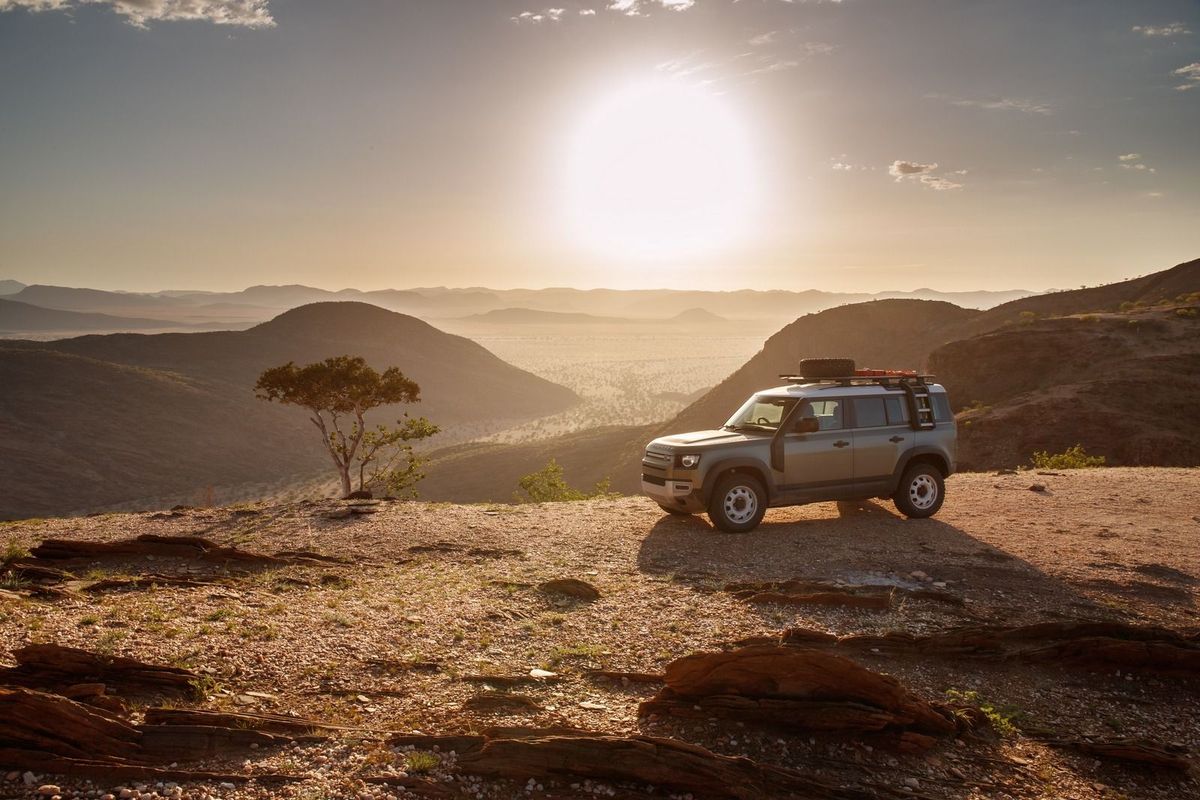
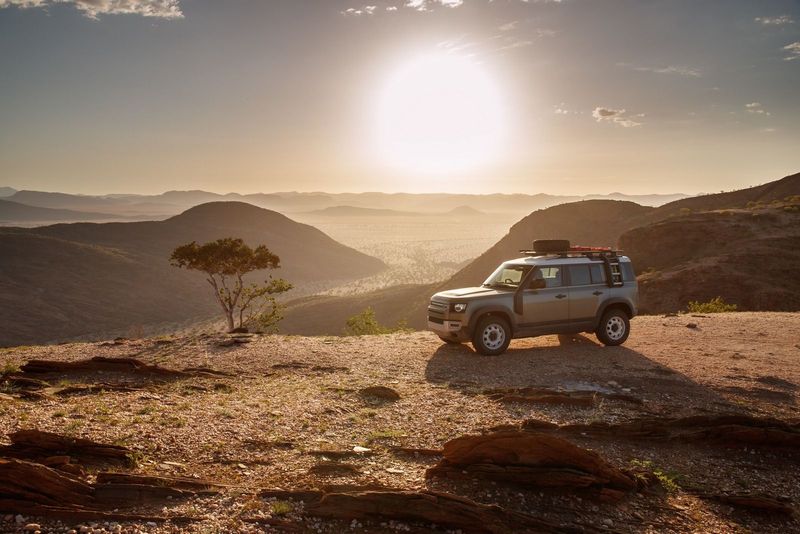
Land Rover was brave enough to let motoring journalists loose in its all-new Defender on one of the world’s toughest 4×4 terrains: Namibia’s Kaokoland. Danie Botha put the eagerly-awaited off-roader through its paces to find out if it truly represents the successful rebirth of a 4×4 icon… 

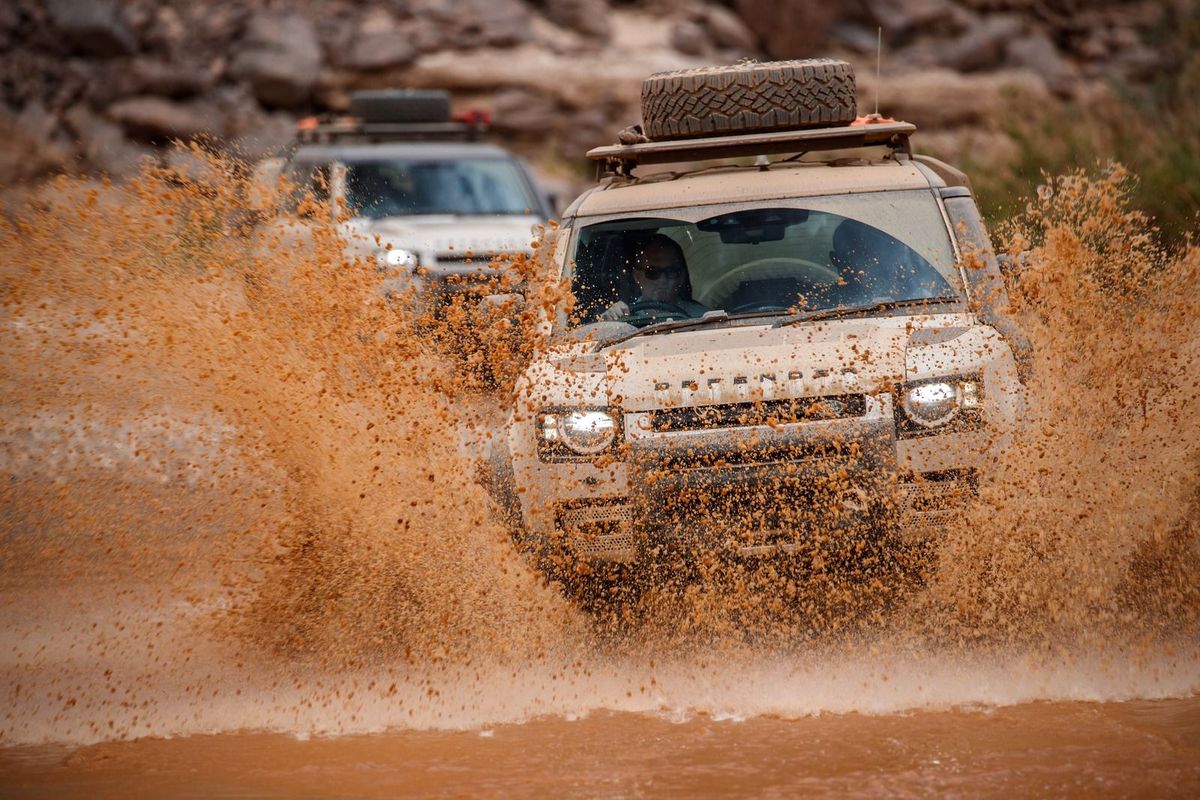
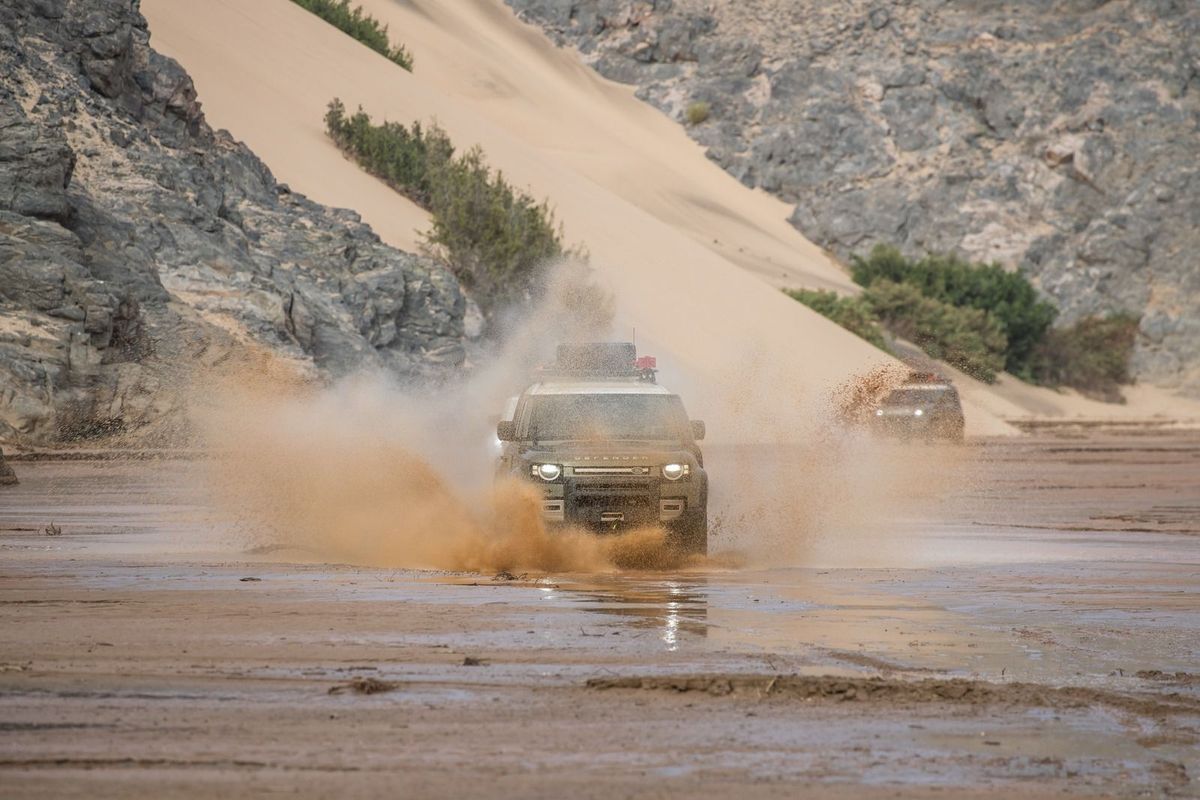
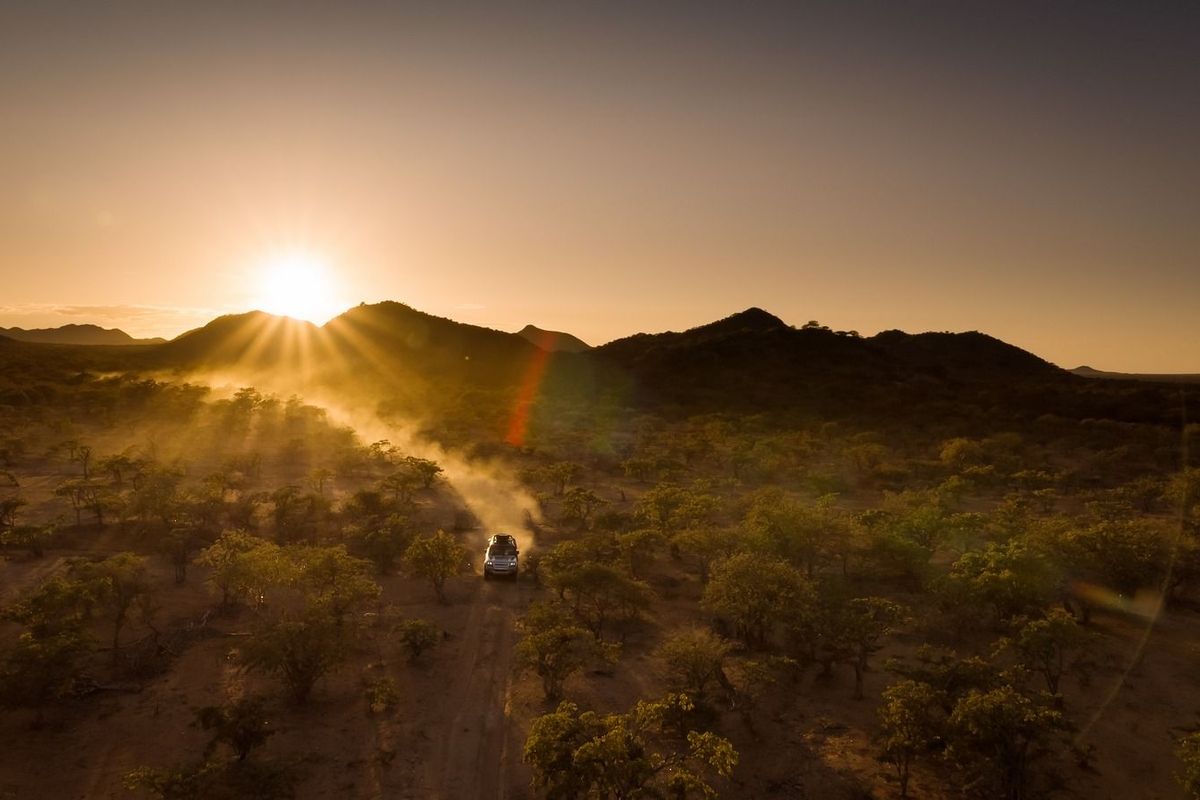
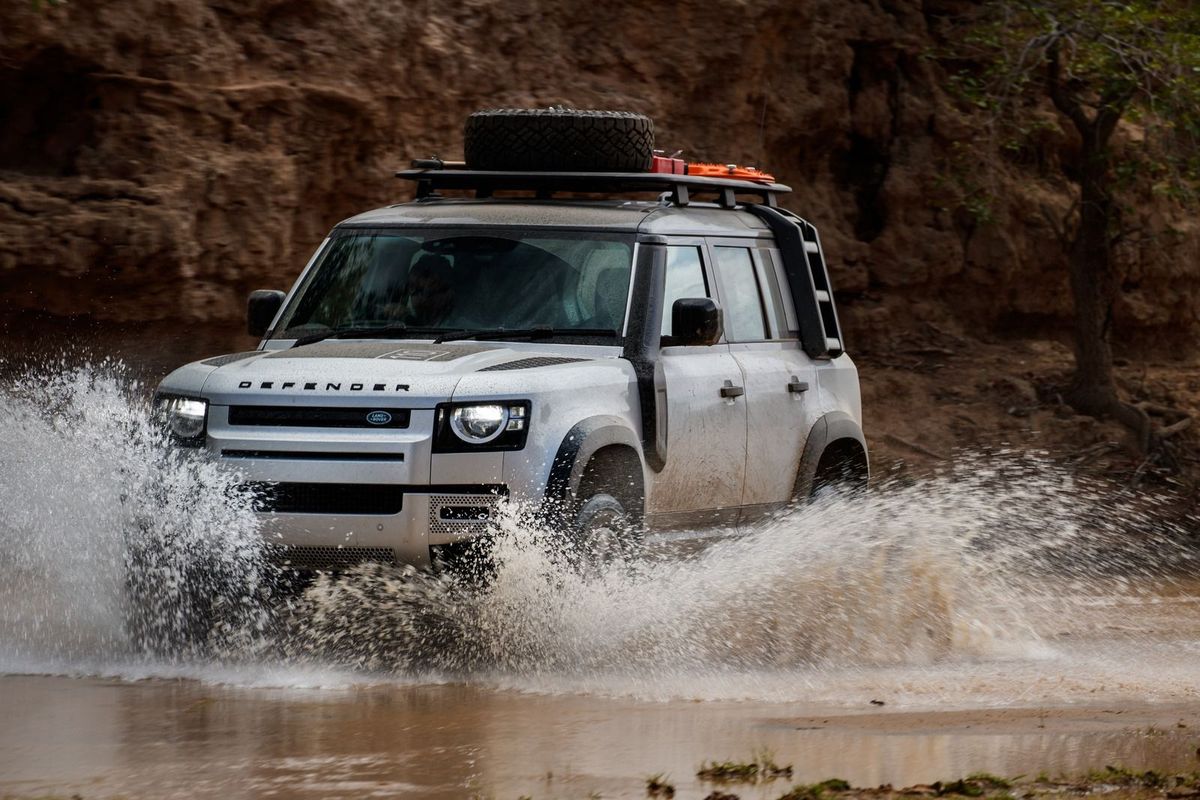
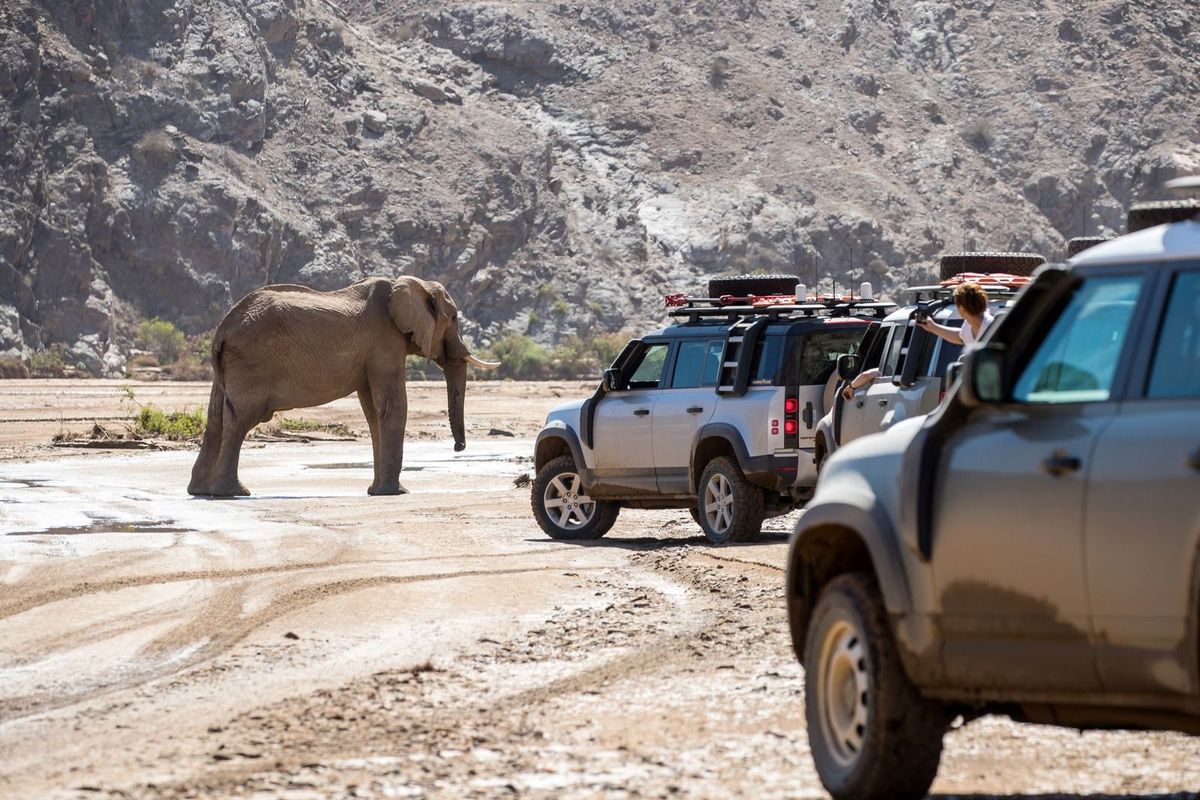
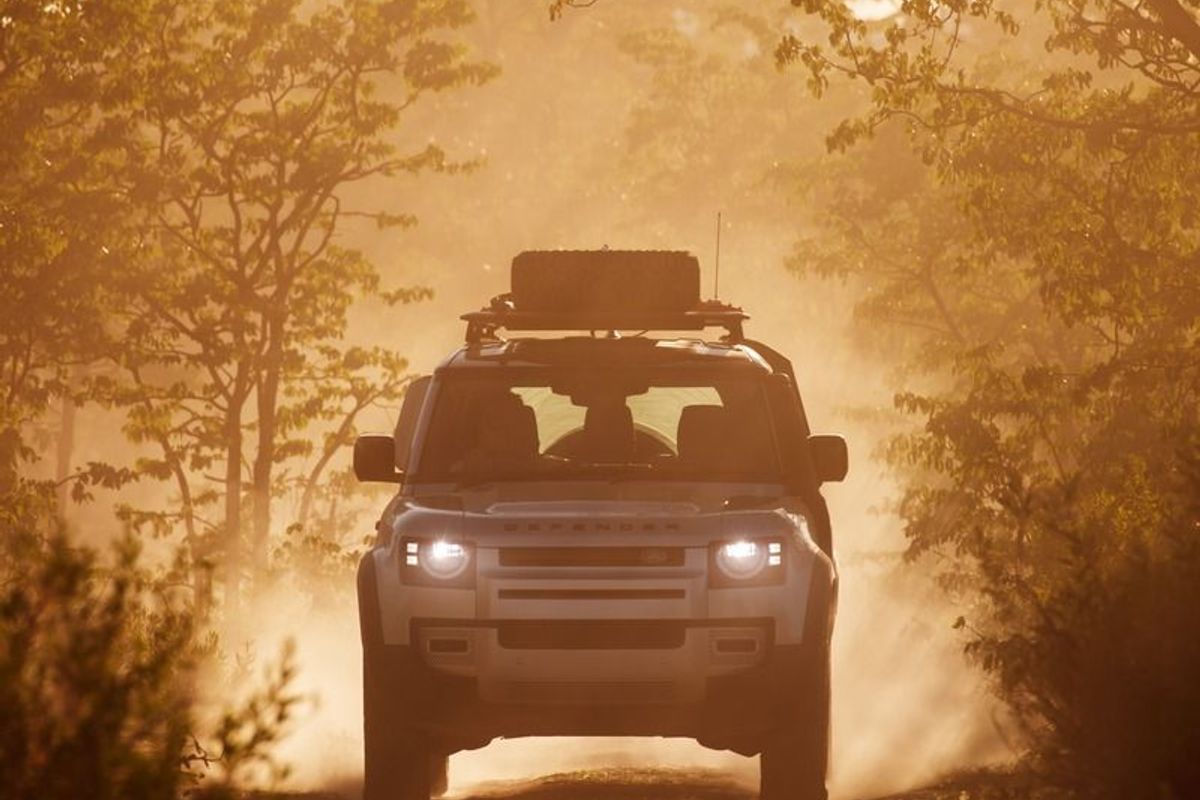
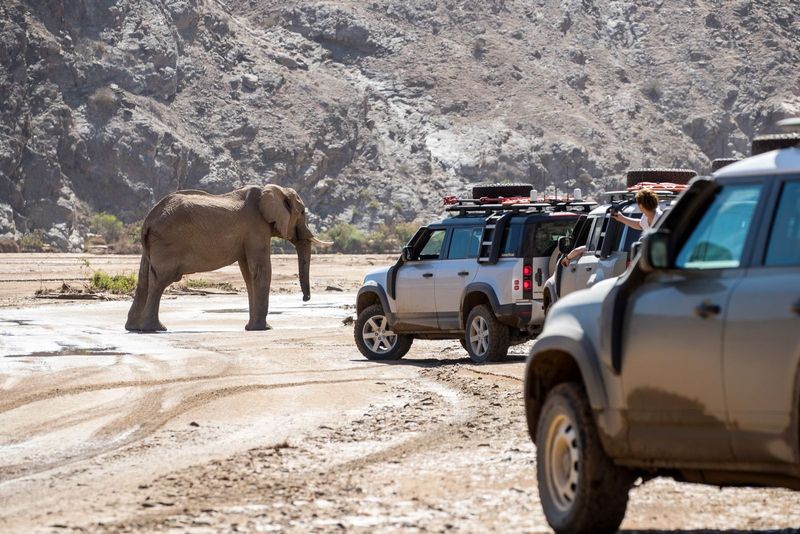
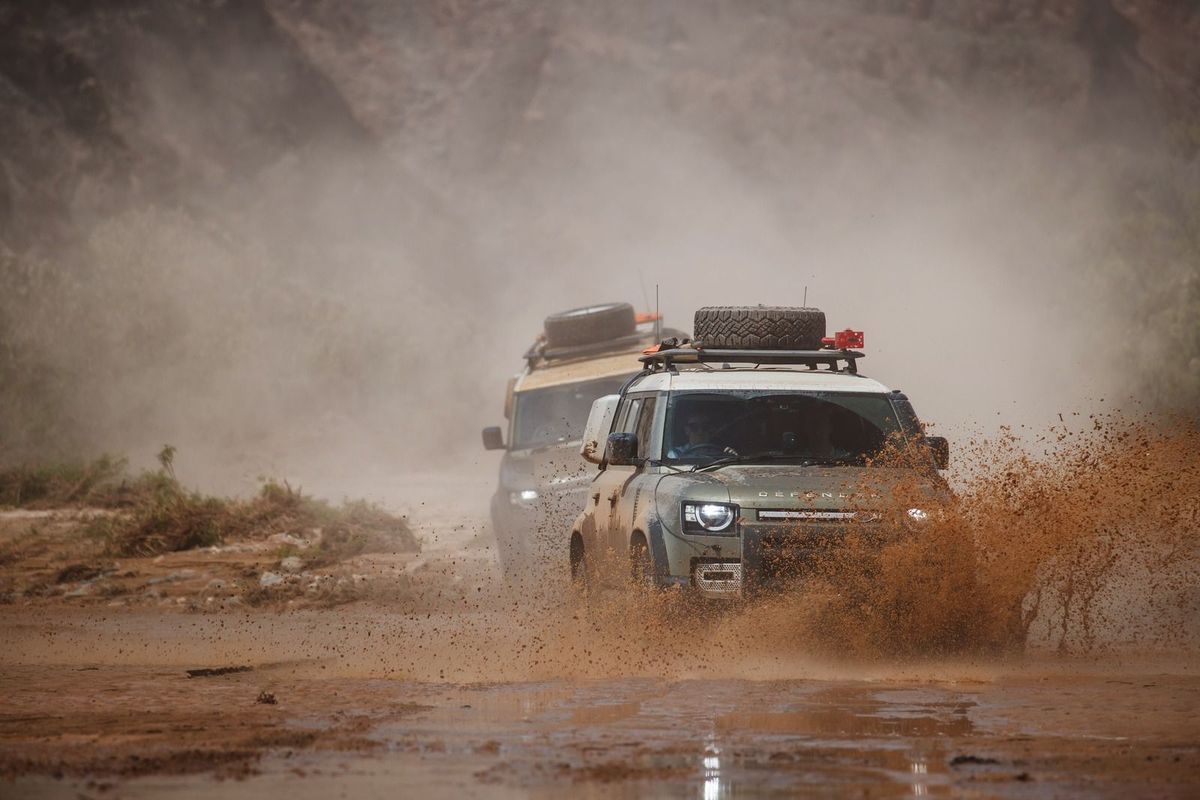
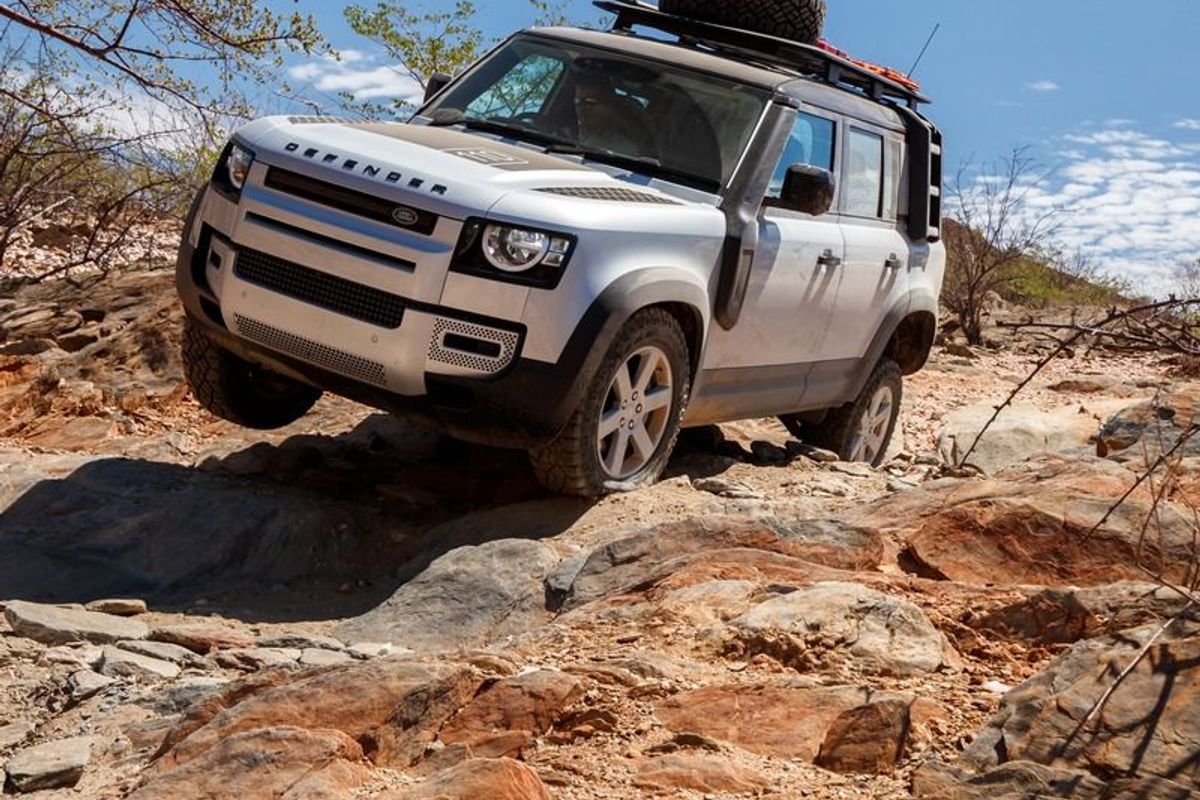
There we were, in Land Rover’s new Defender. Like adventurers of yore, we were powering through mud, sand and water, clambering over rocks, tiptoeing past some desert elephants. This was a real 4×4 challenge – not a watered-down 4×4 media drive designed to showcase a vehicle’s specific features. In fact, of the nearly 800 km we covered, only about 3 km was on tarmac.

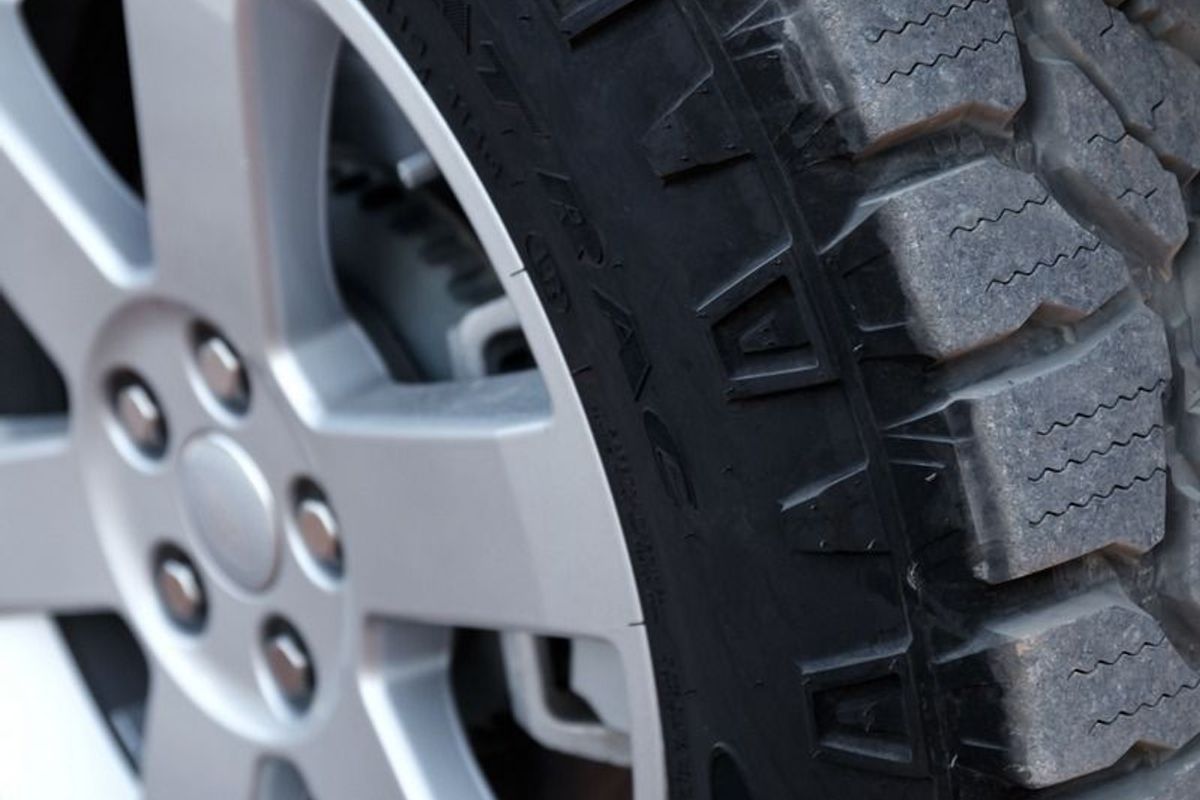
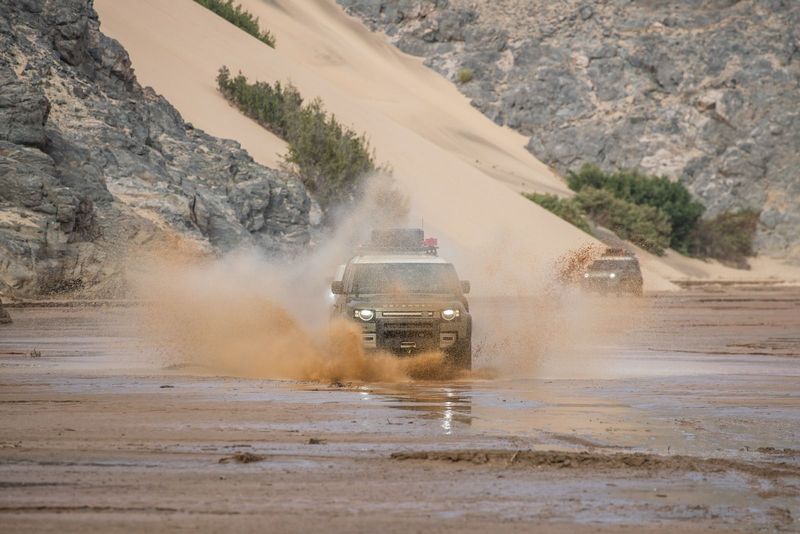
Just a week earlier, the Hourasib River, in Namibia’s Kaokoland, had been in flood. Before the rain, it had been a straightforward 4×4 sand drive in a dry riverbed. And now we were winching 110s out of the mud, forging through deep water, and changing off-road tyres that were destroyed on unseen rocks.


Unexpected flooding in Namibia made the usually straightforward river crossing a much tougher challenge.

Even from that early stage, it was clear that Land Rover’s goal – to endow the new Defender with authentic 4×4 abilities – had been realised. Designed for a global market, the Defender features Land Rover’s latest D7x light-weight aluminium monocoque construction – it is said to be the stiffest body structure Land Rover has ever created. The newcomer rides on an independent air suspension set-up (coil-sprung derivatives will only become available in 2021).

A low-range transfer case, hill descent control, up to 291 mm of ground clearance, excellent approach and departure angles and traction- and stability control systems are all standard. The Terrain Response 2 system is also part of the package and besides the normal choice between Auto, Mud & Ruts, Grass, Gravel & Snow, Sand and Rock Crawl modes, a new Wade function has been added specifically for traversing water crossings. The new Defender can cross water up to 900-mm deep, which is actually the same specification as the Discovery

Additionally, there are 4 custom settings with which the driver can set up the traction control, throttle response and other parameters to best suit their driving style and, of course, the prevailing conditions.

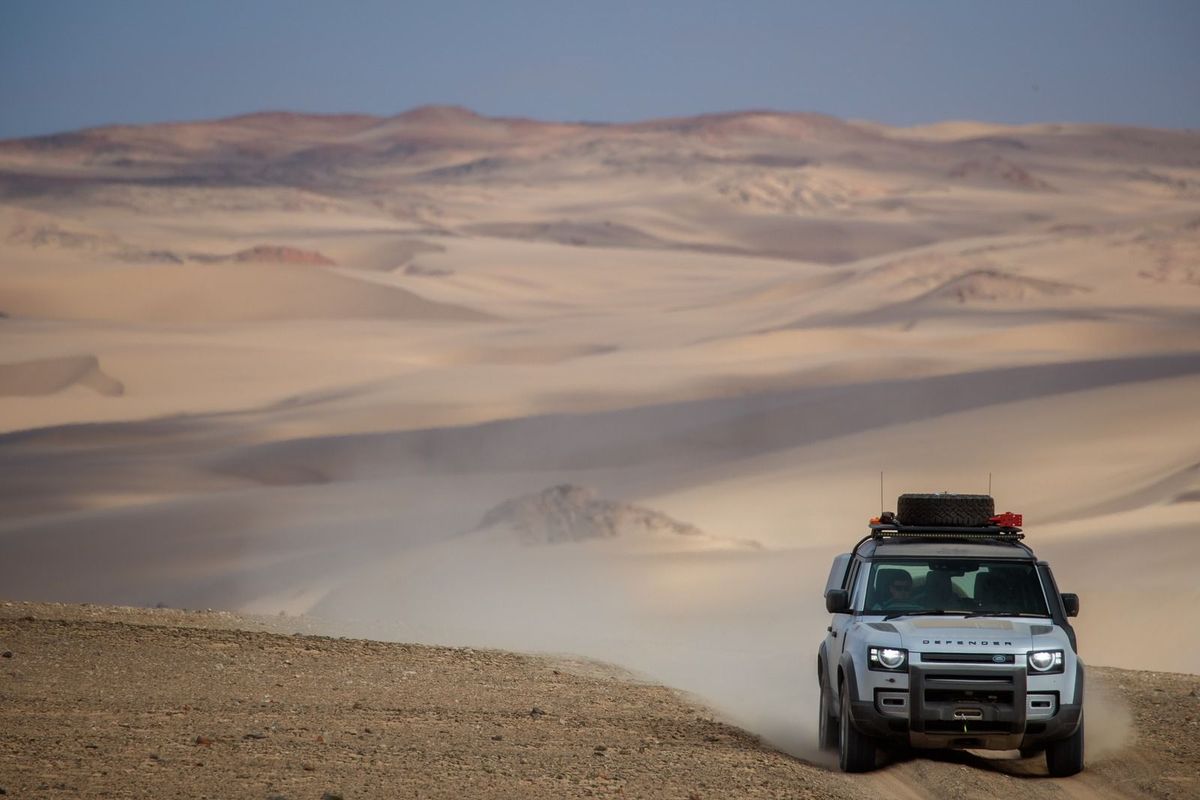
In the muddy, sandy river, we found that the Sand setting indeed worked best, the 8-speed automatic transmission felt better primed/in the ideal gear for those moments you need to punch through a particularly bad section. 

Impressive hybrid

Talking about punch: we got to sample 2 engine derivatives in Namibia. The first was the D240, a 2.0-litre 4-pot turbodiesel with 177 kW and 430 Nm that managed really well on the rocky terrain, and everywhere else too actually.

The D240 is certainly more powerful than the 2.2-litre turbodiesel motor in the last of the body-on-frame Defenders, but with all the extra weight the new Defender carries (it weighs 2.4 tonnes in its entirety), there were a handful of times we wished for "a few more horses under the bonnet". 

We spent the majority of our time in the P400 MHEV – a mild hybrid that delivers 294 kW and 550 Nm of torque. The numbers sound impressive, but the driving experience exceeds that by virtue of clever technology under the bonnet.

The engine is a 3.0-litre inline-6 turbopetrol, allied with an electric supercharger and Land Rover’s Belt-Integrated Starter Generator (BiSG), which is linked to a 48V system that charges fourteen 8Ah lithium-ion pouch cells. The generator harvests energy whenever you lift your foot off the accelerator and redeploys this energy by charging the supercharger (it can spool from 0 to 65 000 rpm in half-a-second) to massively bolster torque at engine speeds below 2 000 rpm.


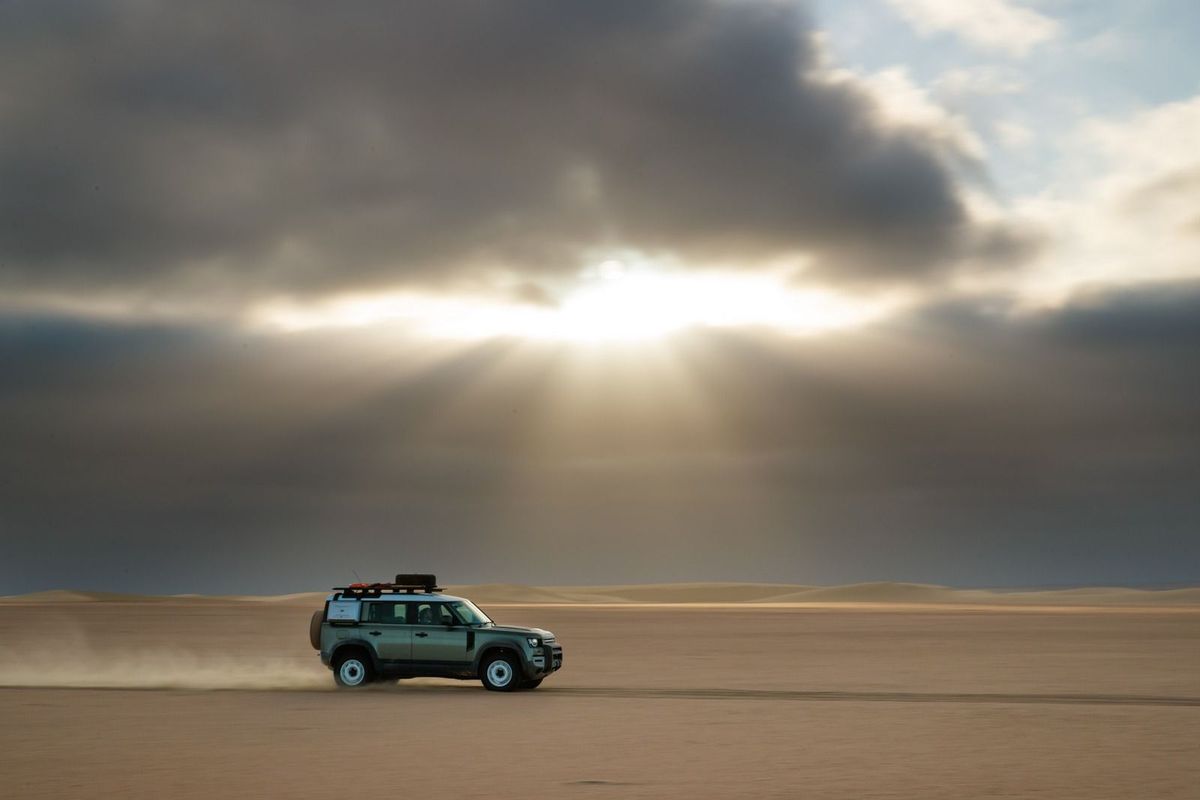
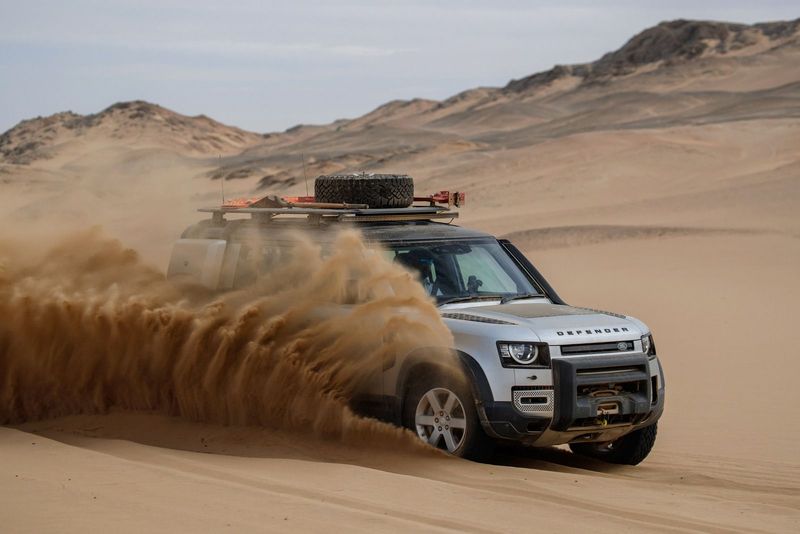
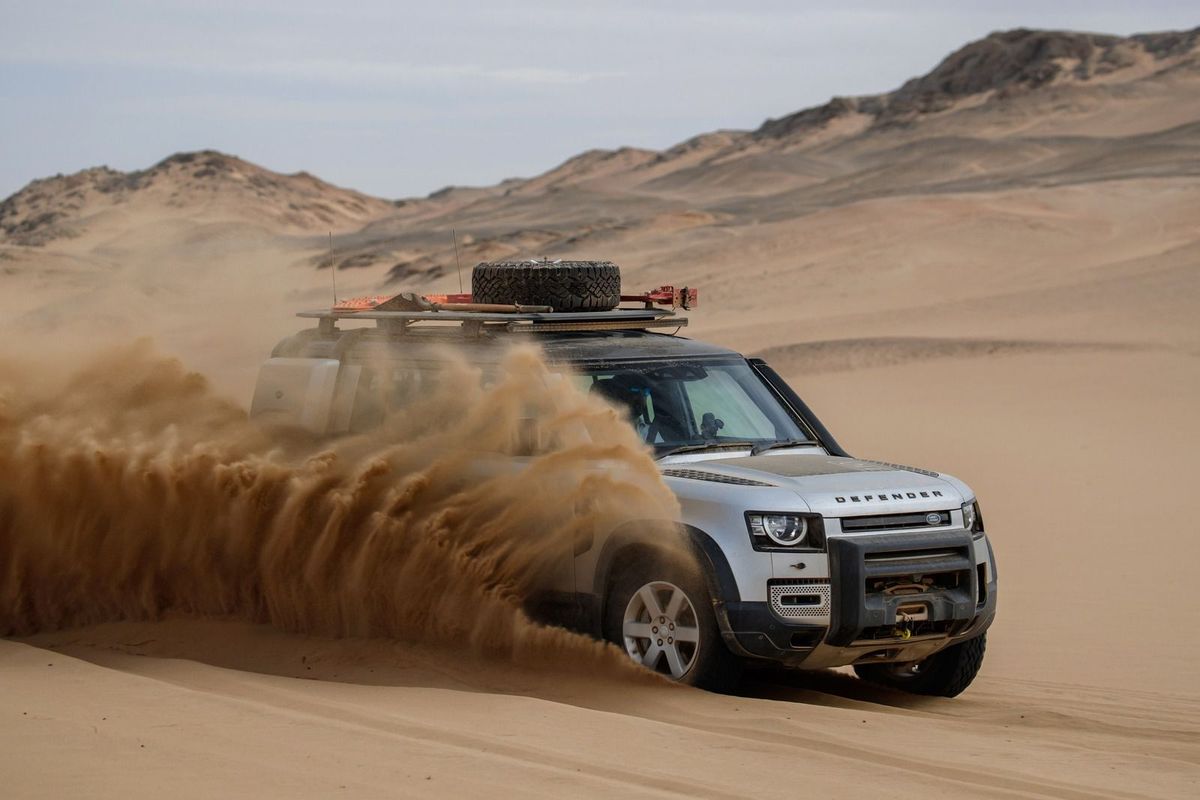
The hybrid delivers instant power that makes it very responsive in deep sand.

The result is instantaneous punch, irrespective of how many revs the engine's pulling when you nail the accelerator pedal… the P400 emits a wail (through its snorkel), the straight-six howls and the Landy shoots forward like a sportscar. 

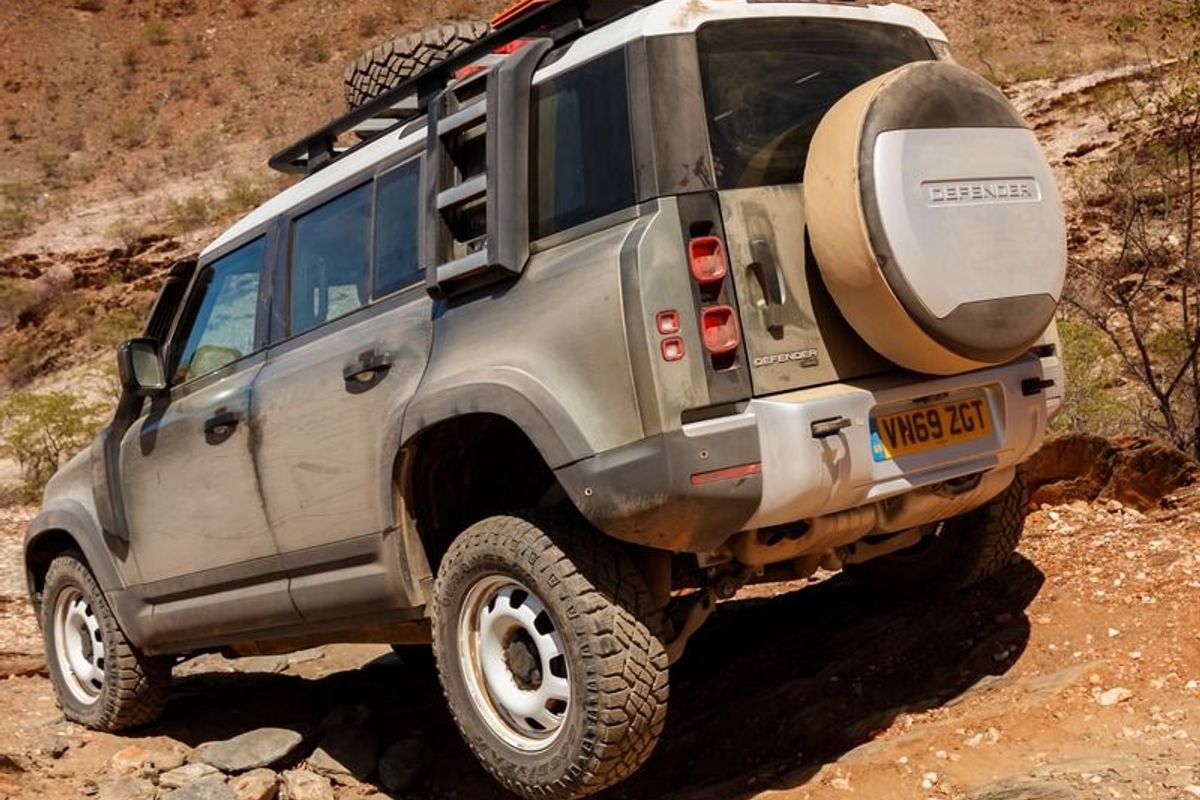
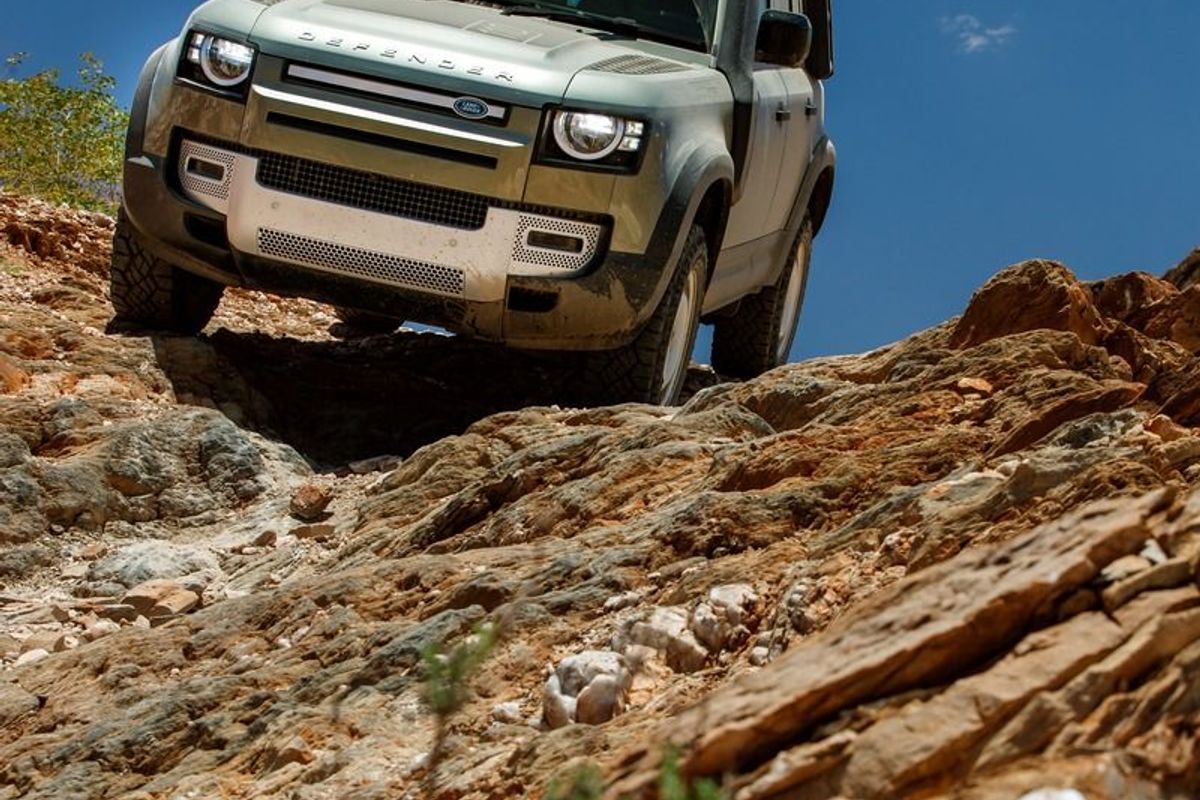
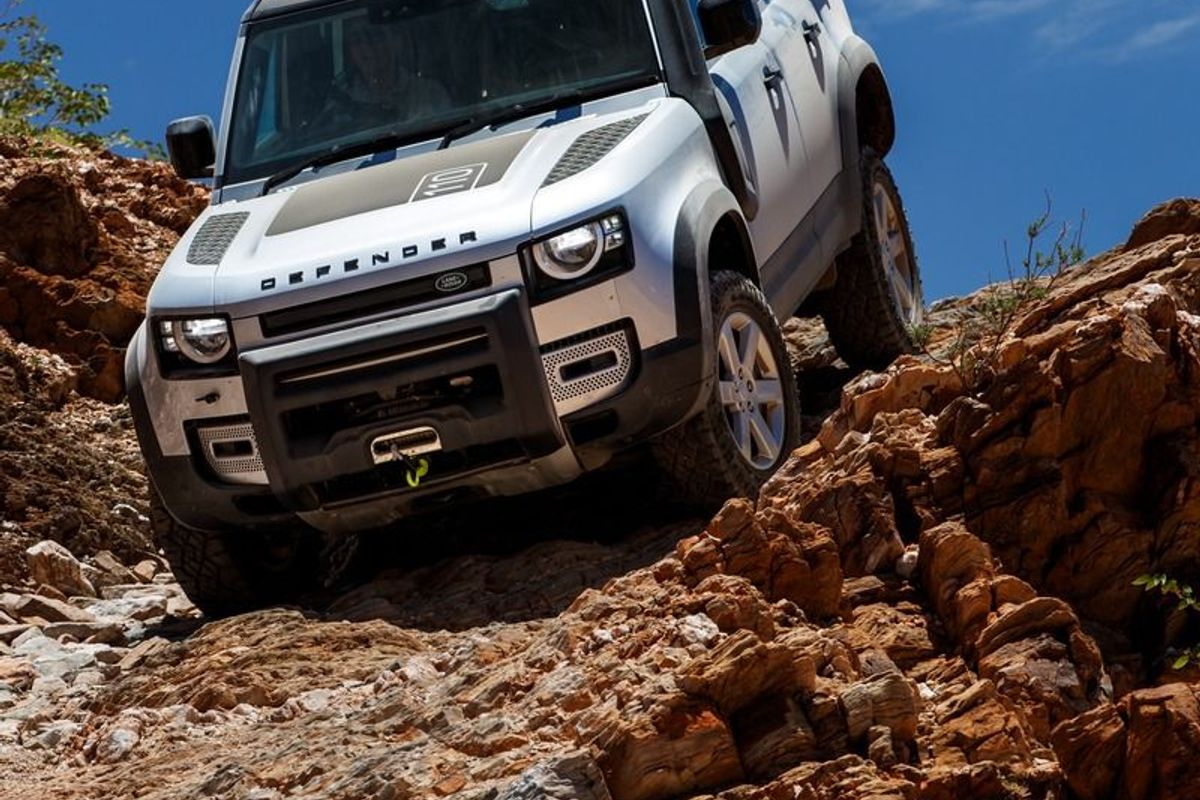
But the mild-hybrid derivative is not only very capable on sand, in mud and in water. The previous day we had conquered Van Zyl’s Pass with low-range engaged, the transmission in manual and the Terrain Response 2 system in Rock Crawling mode. The big P400 easily dispatched the daunting rock sections, the liberal ground clearance and 38-degree approach- and 40-degree departure angles really proved their worth. 

Thanks to the automatic locking centre- and rear differentials, it was simply a case of aiming true… the Defender sorted out the rest of the details, irrespective of whether any of its wheels were airborne – or not.

Interior tech upgrade


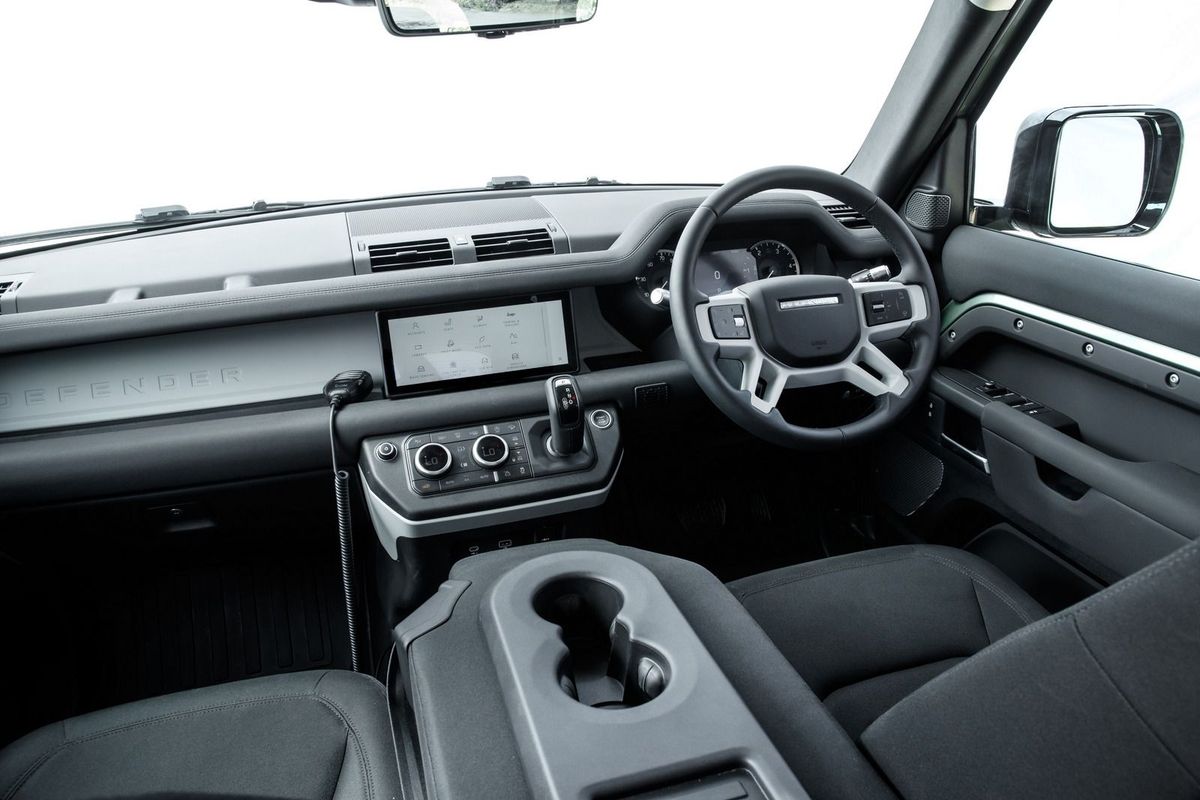
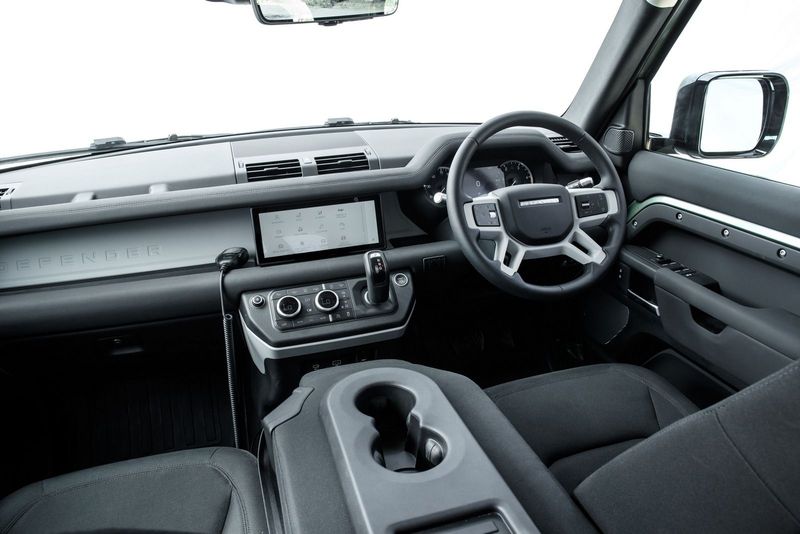
The new cabin is vastly more luxurious than the original.

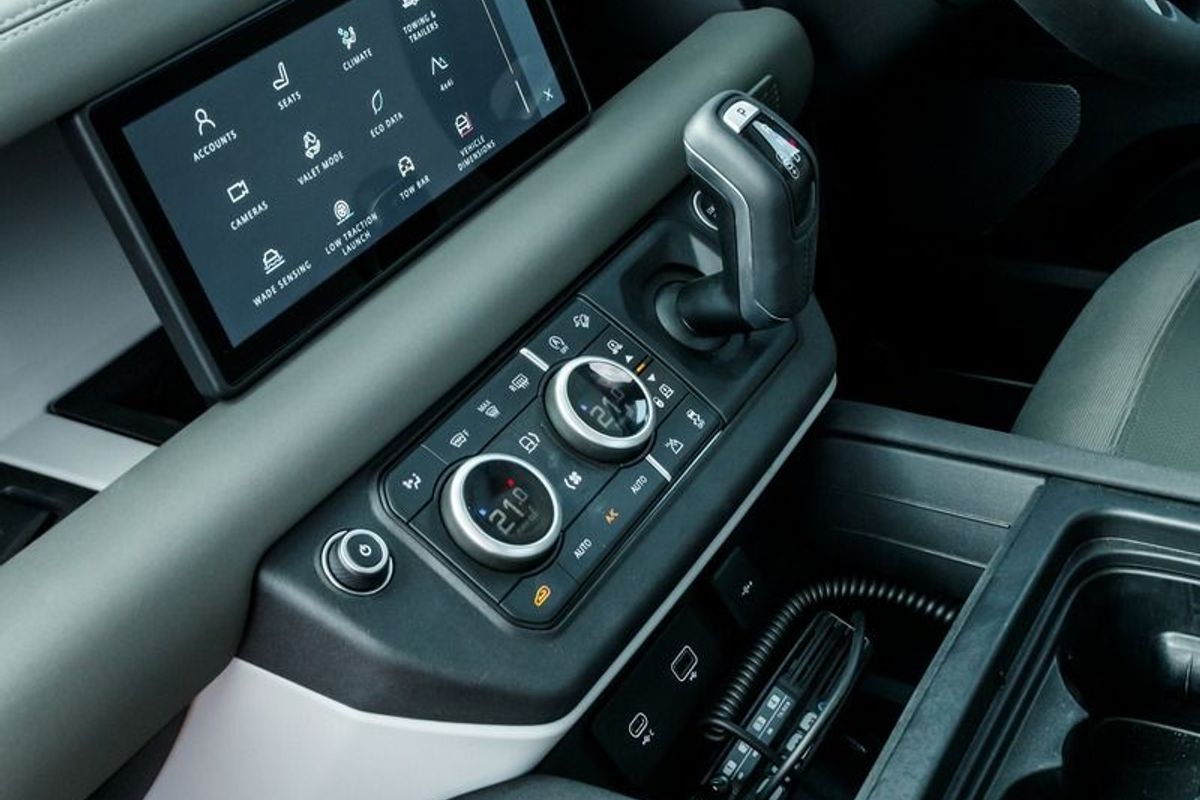
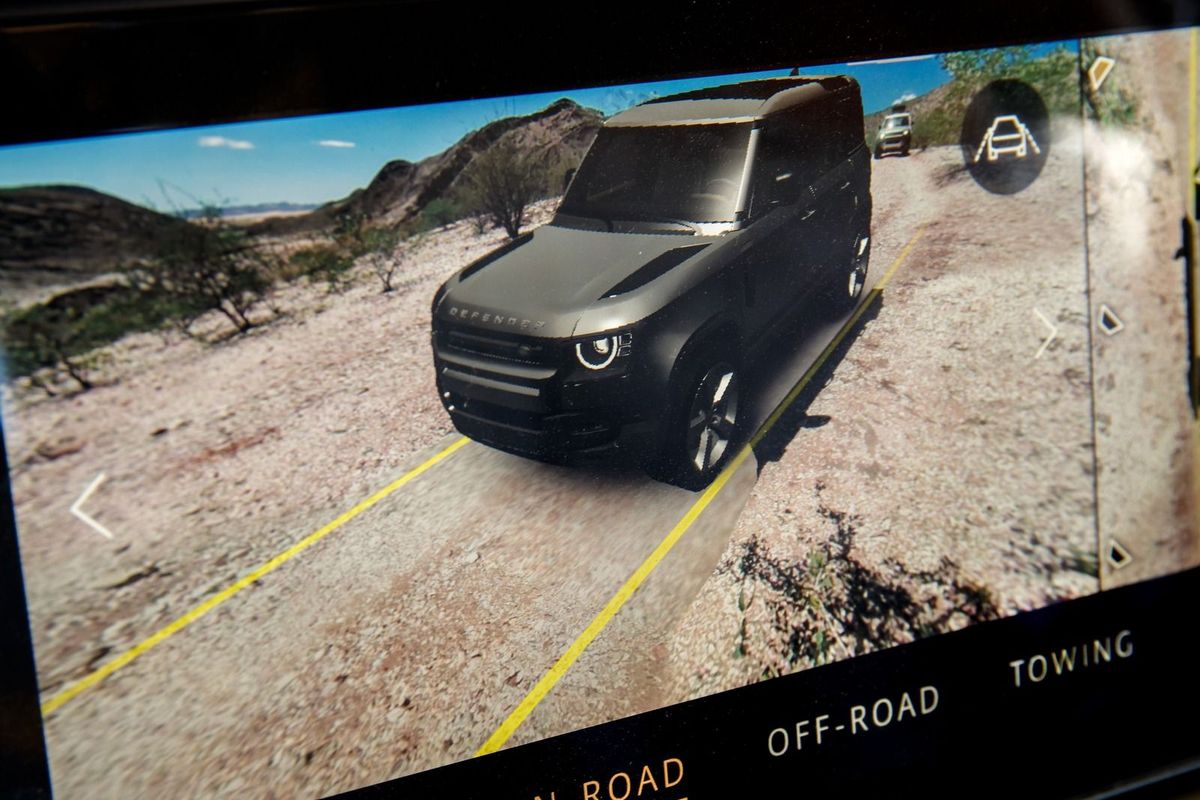
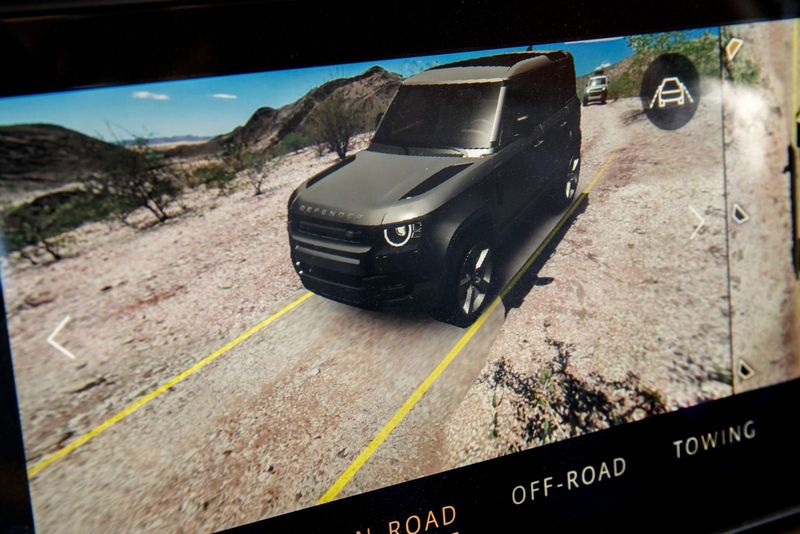
The Defender's cabin features the latest Pivi Pro infotainment system; its touchscreen is located in the centre of the fascia and incorporates a number of 4×4 assistance displays, of which Land Rover’s All-Terrain Progress Control and ClearSight Ground View technologies are new. All-Terrain Progress Control allows you to select the "outside view" of your Defender – literally the outside view of your vehicle shown in the environment that you are driving.

The ClearSight Ground View technology is a little less gimmicky: it solves that age-old issue of not being able to see over your vehicle's bonnet when you're cresting a steep ascent (that's right, when the vehicle’s nose pointing at the heavens). ClearSight offers a surprisingly realistic and clear view of the route ahead.

The cabin is a near-perfect mix of retro-cool and modern functionality. The D240 gets analogue dials, the transmission lever lives in the dashboard next to the 4×4 controls, and various grab handles and stowage spaces are provided. The P400’s instrument panel is fancier, but it’s not nearly as high tech as you’d find in a new Range Rover Sport, for example. It’s all cool, modern and practical, but without being ostentatious.


All-Terrain Progress gives you an outside view from inside the car.

The 110 features a trio of seating configurations: you can have a 6-seater (with a jump seat between the front seats), a traditional 5-seater, or a 7-seater, with a pair of jump seats in the cargo area. 

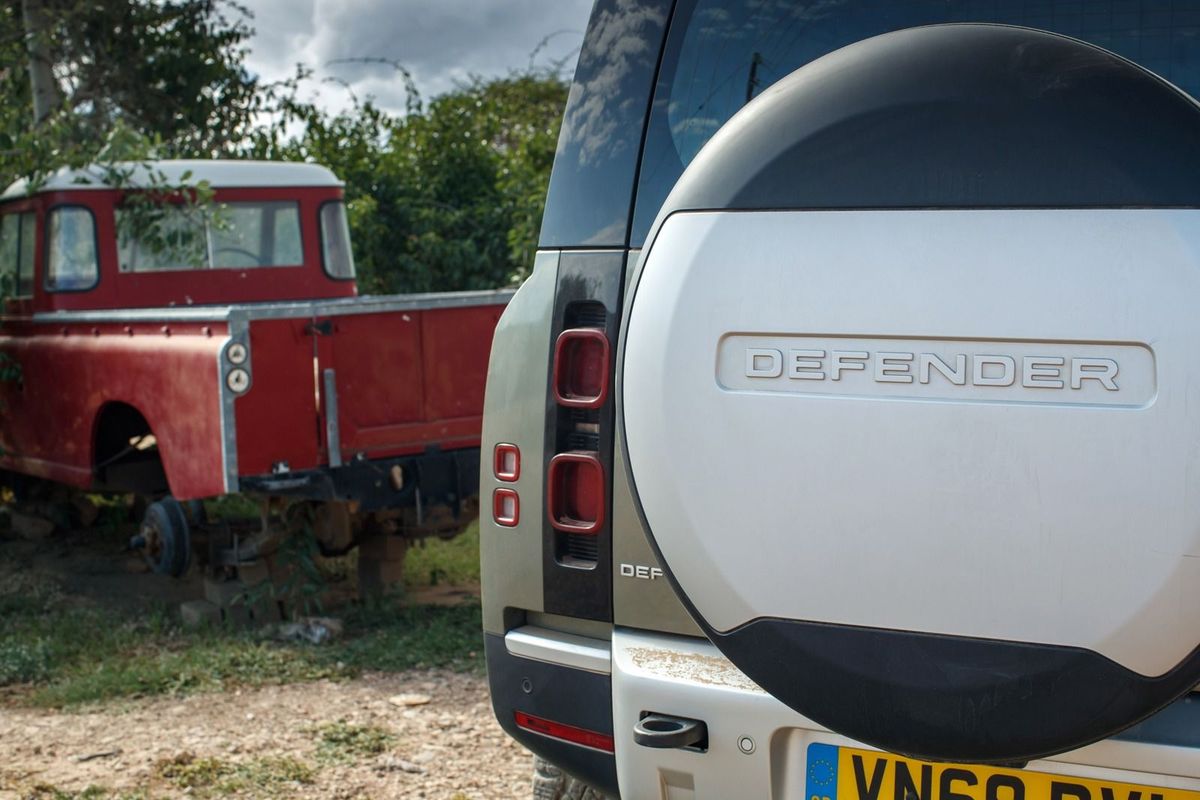
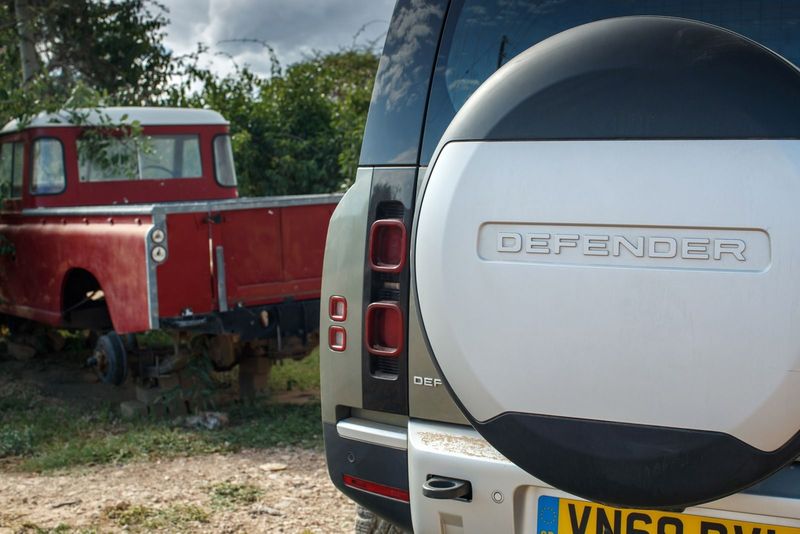
There is plenty of room and space for the front occupants and the driver no longer needs to hang his right elbow out of the window just to fit in. Second-row passengers have it particularly good too, they're availed acres of legroom. A claimed 1 075 litres of cargo space is available (with the second row of seats in place), which is easily accessible through the side-hinged rear door, which also carries the spare wheel (in true Defender tradition). 

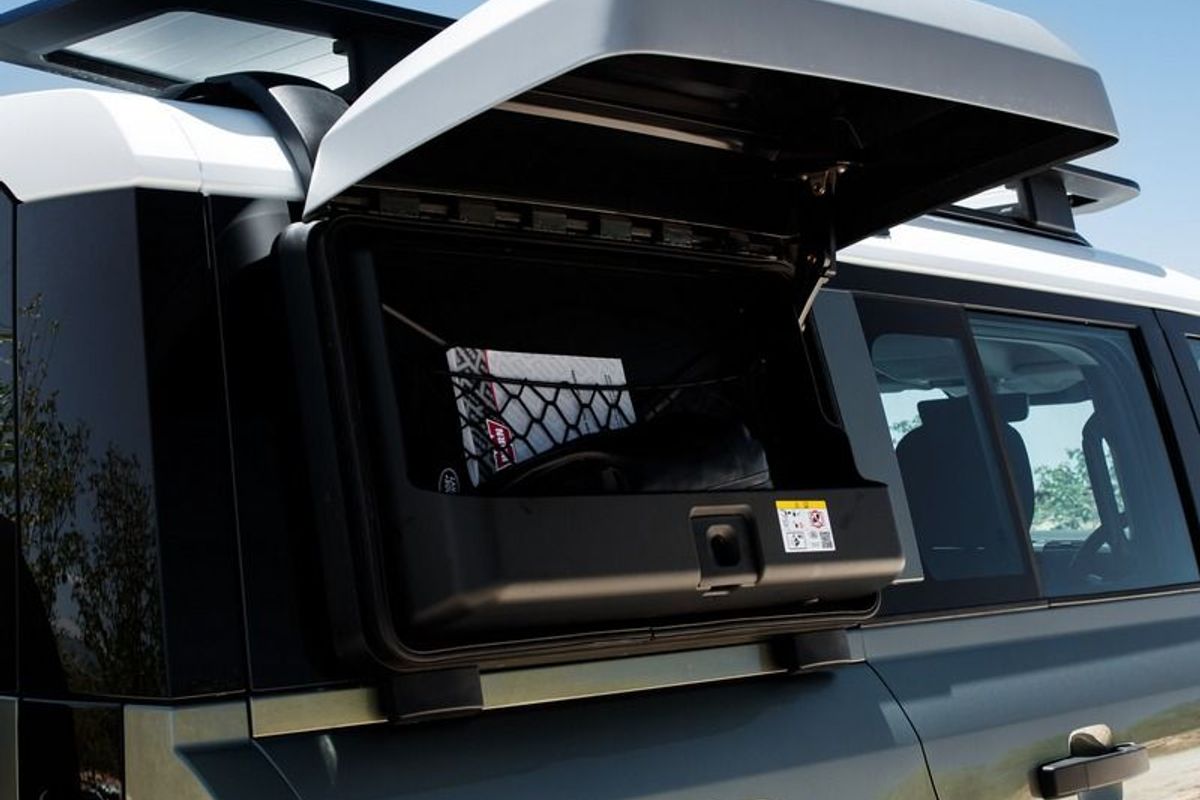
Another Defender tradition that has been incorporated is the Alpine windows in the roof in the back of the cabin…

Living up to the hype


Does the new Defender live up to the legend that the old one created?

The arrival of the new Defender is certainly one of the most anticipated motoring introductions of 2020. Does it live up to the expectations, however? 

Our pre-production units did a spectacular job in Namibia, considering the punches that they were dealt. We did get bogged down in the mud. We did lose a few tyres along the way. The heavily accessorised D240 did feel out of breath in some conditions. On its highest setting, the air suspension was no longer particularly comfortable on the rough stuff. 

At speeds higher than 80 kph, the air suspension automatically drops down to its normal height – which is not an absolute train smash in the new Defender (with its handy approach and departure angles), but not always ideal when you are attempting to crest big dunes at speed. Some punters may also rue the fact that there will be no manual gearbox option.


Steel wheels can still be specced, a classic nod to the original.

And there were some electronic glitches that the Land Rover technicians managed to sort out en-route by plugging in a laptop and clearing the errors.

Our trip formed part of Land Rover’s development programme, and the data accumulated from our units will be used to update the software on production models. That’s another Defender party trick: Software-over-the-air (Sota) technology, with up to 14 individual modules capable of receiving remote updates.  

That means that your Defender’s software can be updated while it is parked in your garage. And, if your Defender has a mechanical malady of sorts, it can send a report to your local Land Rover dealership before you even take it there, which ensures that technicians will have ample opportunity to order replacement parts (if necessary) ahead of time.

Local pricing

The new Defender 110 will be available in South Africa in June, while the slightly more affordable 90 will follow later in the year. 

The Defender 90 D240 AWD AT is expected to be the most affordable new Defender at R948 000 when it eventually arrives, but recent calamities across the world may still have some bearing on that asking price.

The Defender will initially only be available with the air suspension set-up – coil-sprung versions, which will probably be slightly easier on the pocket, will only follow in 2021.

The 110 will go on sale with 3 engine options: a 2.0-litre 4-cylinder turbodiesel mill with 177 kW and 430 Nm (D240), a twin-turbocharged 4-cylinder petrol with 221 kW and 400 Nm (P300) and the aforementioned clever mild hybrid that develops 294 kW and 550 Nm of torque (P400 MHEV). The top-of-the-range 110 is claimed to sprint from 0 to 100 kph in 6.1 seconds…


Steep base price may make the new Defender less attractive but could end up stealing sales from the New Discovery.

Summary

The new Land Rover Defender does indeed seem to be an icon reborn. It is as capable off-road as its body-on-frame predecessor, but it so much more accomplished in every other area, including comfort, safety, luxury, refinement, performance and looks. It’s the complete modern 4×4 package.

But, there is the matter of price, which may be the Defender’s biggest stumbling block. The 110 range, which goes on sale here, will start at R999 000 for the entry-level D240. The P400 MHEV tops the range at R1.5-million.

Those prices are for stock standard units, which aren't liberally specced on entry-level versions. Four accessory packs (Explorer, Adventure, Country and Urban) and myriad optional accessories will further add to those asking prices.  

Unfortunately, the new Defender is no longer the quintessential 4×4 to discover the wonders of Africa or the world. Well, perhaps it is… if your name is Bill Gates. 

It remains a highly capable 4×4 and an extremely accomplished vehicle in its own right, but at the price you are more likely to spot it in the parking lot of a posh private school, or with a R200 000 mountain bike on a towbar-mounted carrier. You’d probably see some in game reserves and on established gravel tracks too.

Time will tell if the huge interest in the new Defender wanes or if the thousands of potential customers who expressed interest will actually put their (big wads of) money on the table. 

Related content:

Land Rover Defender (2020) Specs & Price Announced

New Land Rover Defender to the Rescue [w/video]

Range Rover Velar SVAutobiography (2019) Review

Defender Remake Coming to SA

Next-gen Toyota 86 coming in 2021

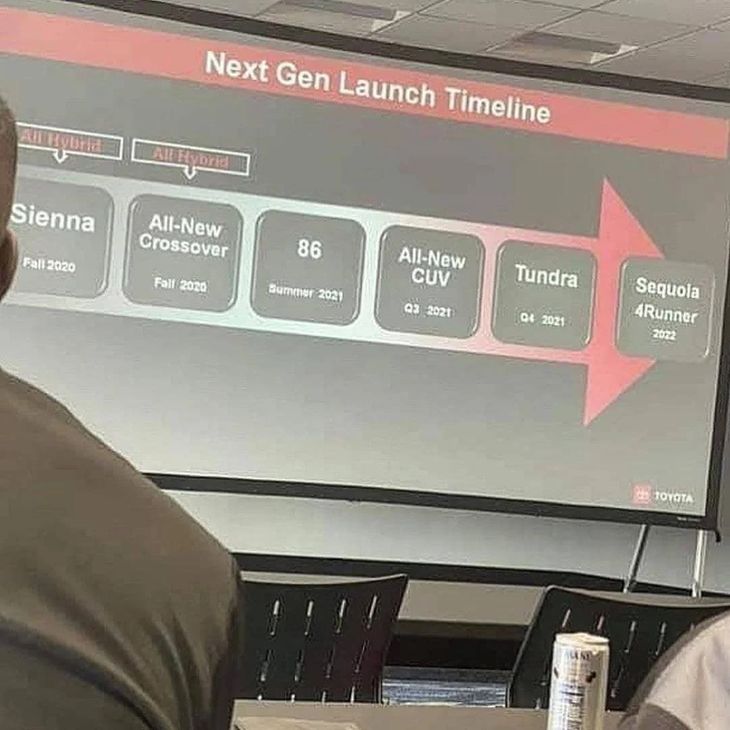
A leaked screenshot from an internal presentation to Toyota dealers in the States suggests the next 86 coupe will debut next year. But, compared with the elemental, naturally-aspirated driver's car we know (and many, love) it will be infused with Gazoo Racing DNA and is most likely to feature a 2.4-litre turbocharged boxer motor.

The image, which was posted on the GR86.org forum, all but confirms that the next-generation coupe, which will again be a collaborative effort between Subaru and Toyota, will have a mid-2021 launch – in the US, anyway – although the impact of COVID-19 may invariably delay the release date somewhat.


The next 86 is literally in the middle of Toyota's product plans for 2021/2022. Image credit: GR86.org

The current generations of the 86 (and its discontinued – in South Africa – Subura BR-Z cousin) were launched in 2012. Powered by a 2.0-litre non-turbo 4-cylinder boxer petrol motor with a rear-end set up for easily accessible tail-sliding fun (helped by skinny Prius-spec tyres at the back) the coupe was the embodiment of a purist-pleasing rear-wheel-drive compact coupe.

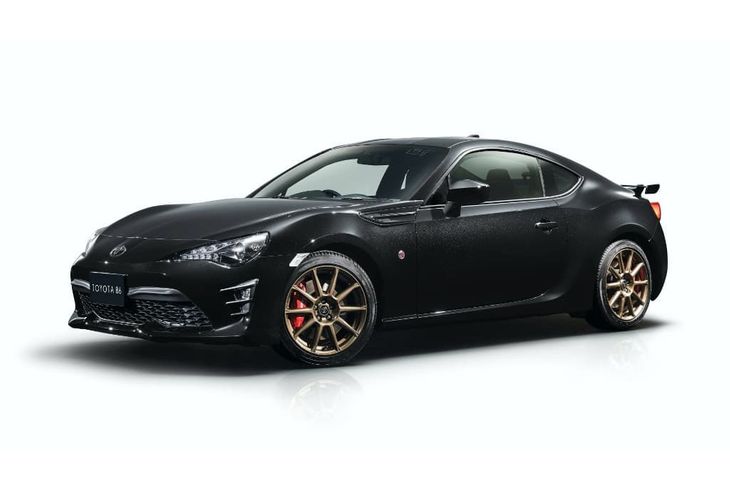
It was a car singular in purpose, if not particularly powerful (even for the time). Recently, a limited run (of 86 units, fittingly) of the 86 was released in the Japanese market to pay tribute to special-edition AE86s of yesteryear and, unofficially, that the lifecycle of the current-gen sportscar would soon be at an end.


This limited-edition derivative of the current-generation 86 was released in the Japanese market recently.

Since the introduction of the 86, forced-induction engines have become ubiquitous and Toyota’s Gazoo Racing motorsport division has grown into a fully-fledged sub-brand. The Supra, for example, purposely bears a GR prefix in our market, the division has already released a GRMN version of the previous Yaris, as well as a 192-kW Euro-spec GR Yaris. Heck, if reports are to be believed, GR versions of the C-HR, Corolla hatchback and even RAV4 are coming!

The next-gen 86, which may be named the GR 86 (as per the Supra), is likely to be underpinned by a rear-wheel-drive version of Toyota’s New Global Architecture platform, while it's understood that Subaru will supply the motor.

The aforementioned forum post sensationally suggests the upcoming 86 will be powered by a turbocharged 2.4-litre 4-cylinder boxer engine, which features in the new Subaru Legacy/Liberty and Outback models in North America. That powerplant produces 194 kW at 5 600 rpm and 375 Nm at 2 000 rpm in those models.


The centrally-mounted exhaust end will certainly please the fanboys if it's retained for the production version.

Another report says the turbocharged 1.8-litre 4-cylinder boxer engine that will feature in the next iteration of the Levorg station wagon is also an option. We’ve driven the current-generation Subaru Levorg… check out our video!

Toyota currently offers the 86 in our market exclusively with a 6-speed manual ‘box, but the next-gen model is likely to be offered with a choice of stick-shift and automatic transmissions, the latter probably derived from the Sports Lineartronic CVT unit that is available in the current WRX and WRX STI.


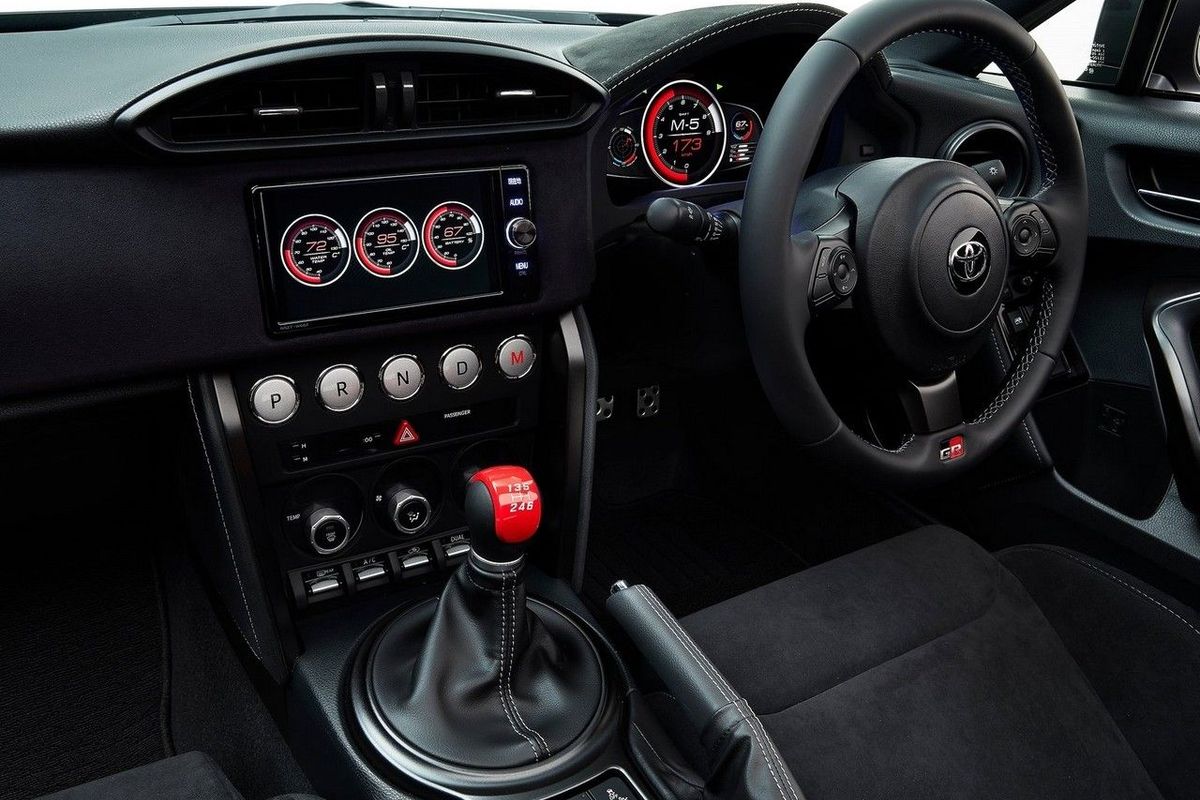
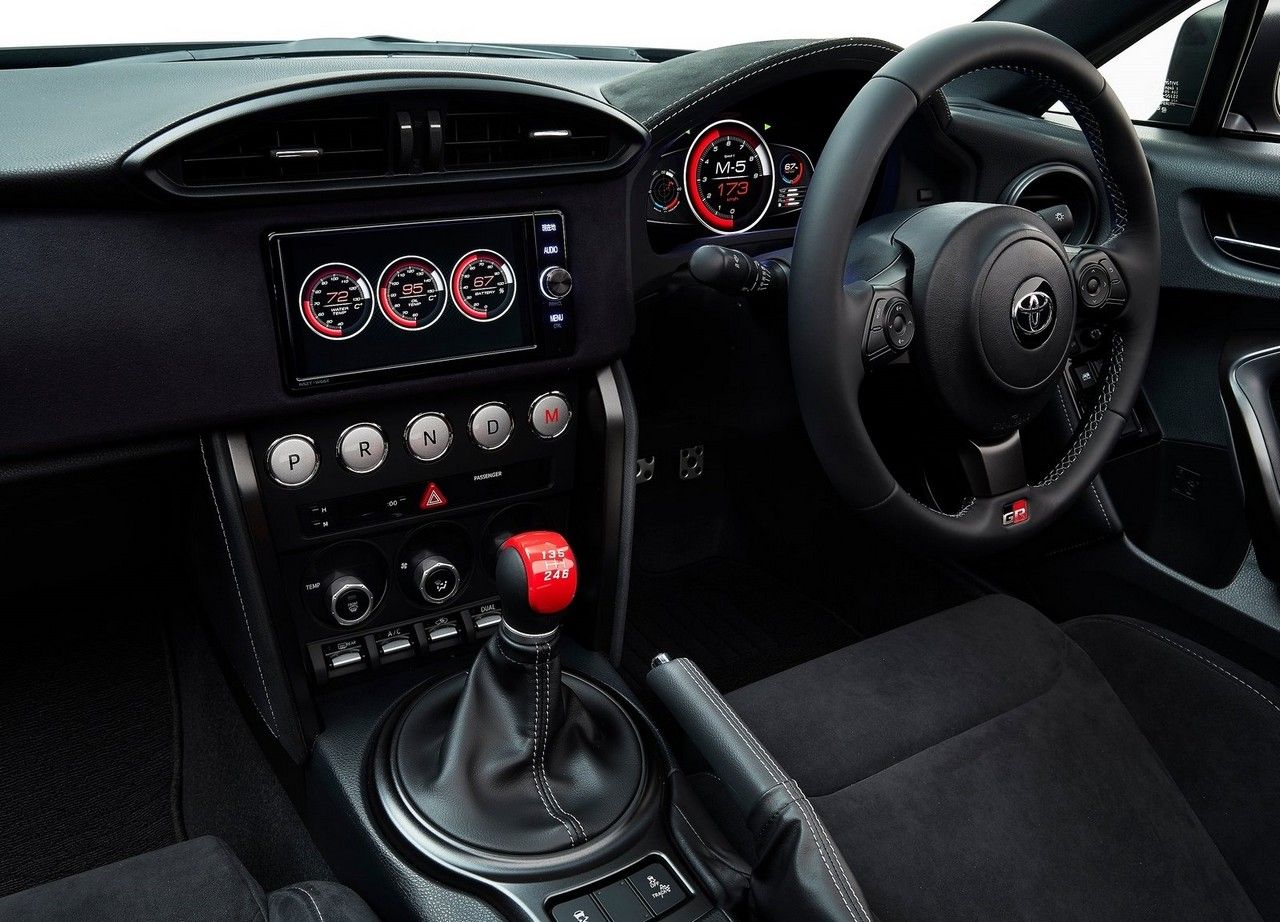
We still can't figure out why auto transmission buttons on the fascia are combined with a 6-speed gear lever, but it's just for the look.

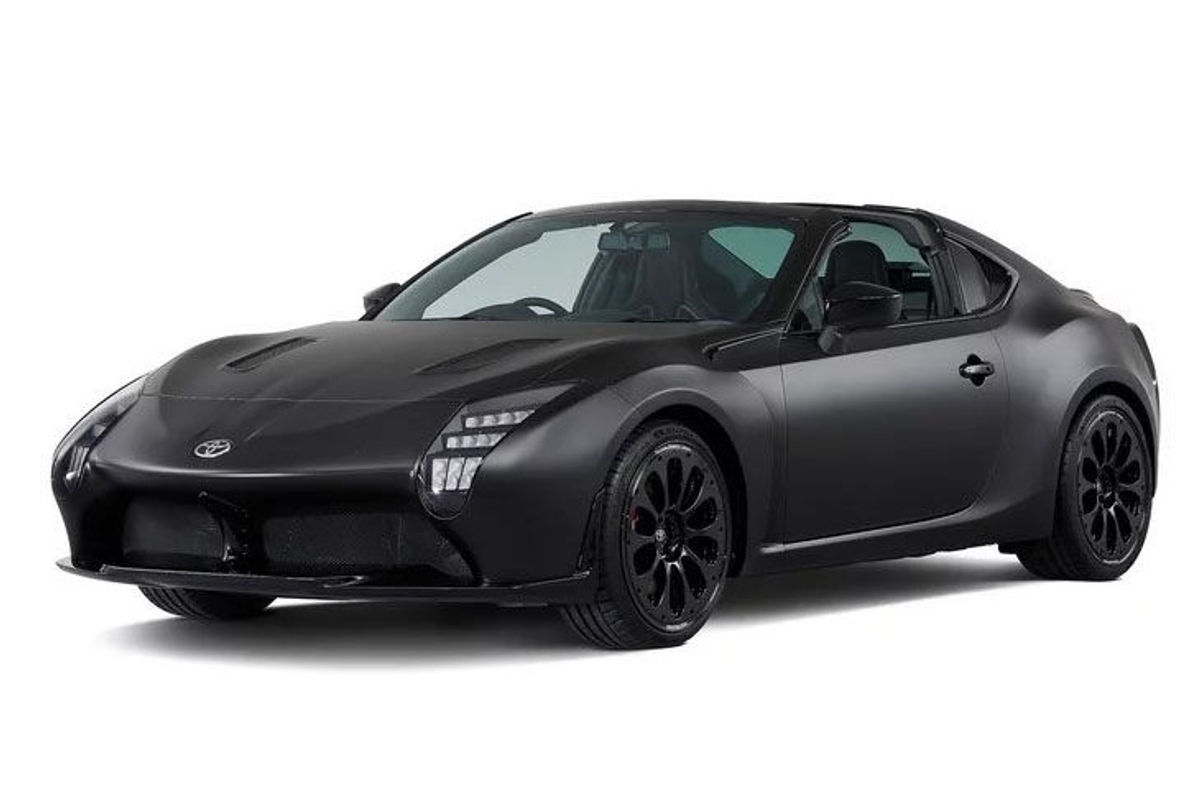
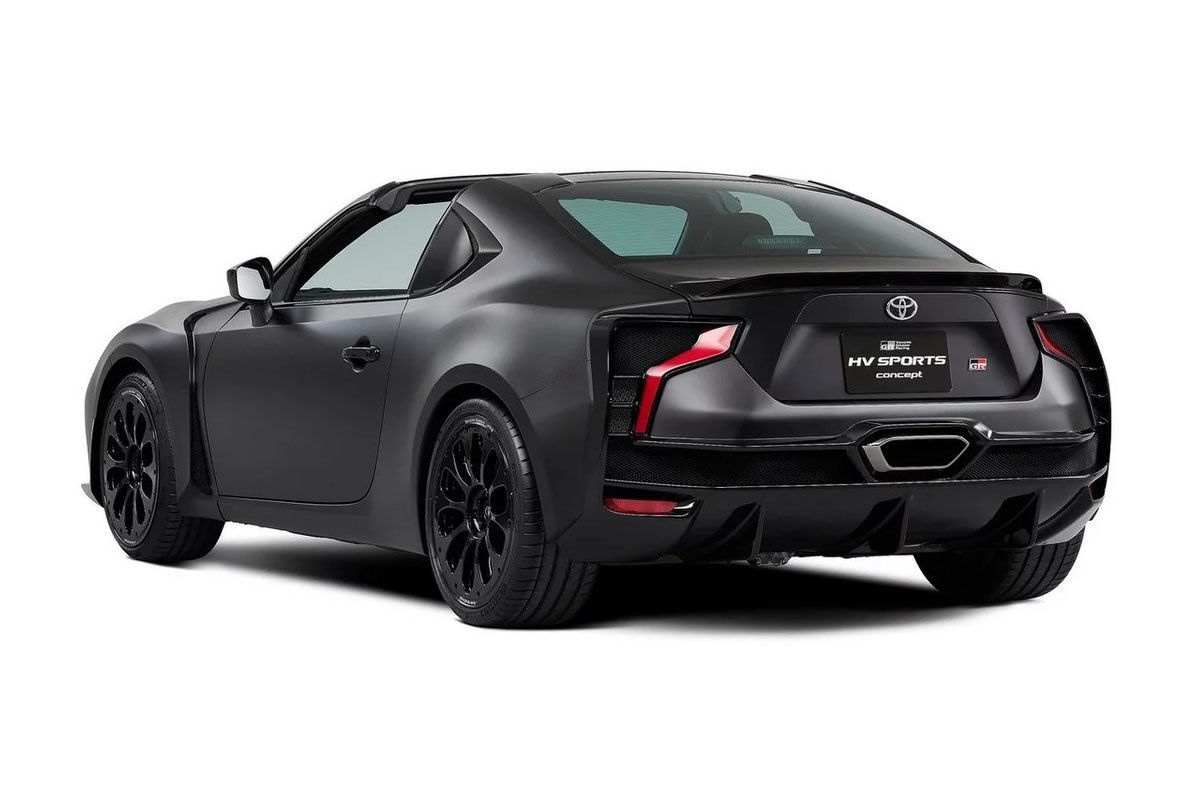
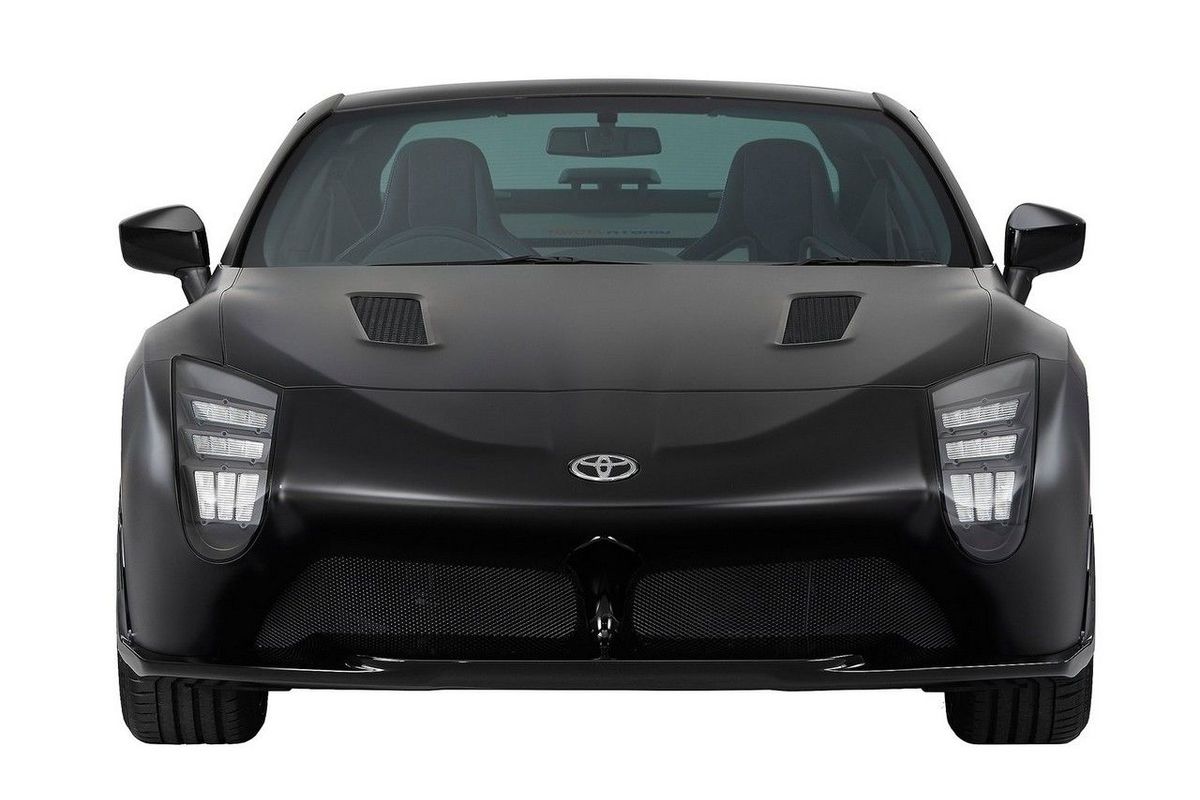
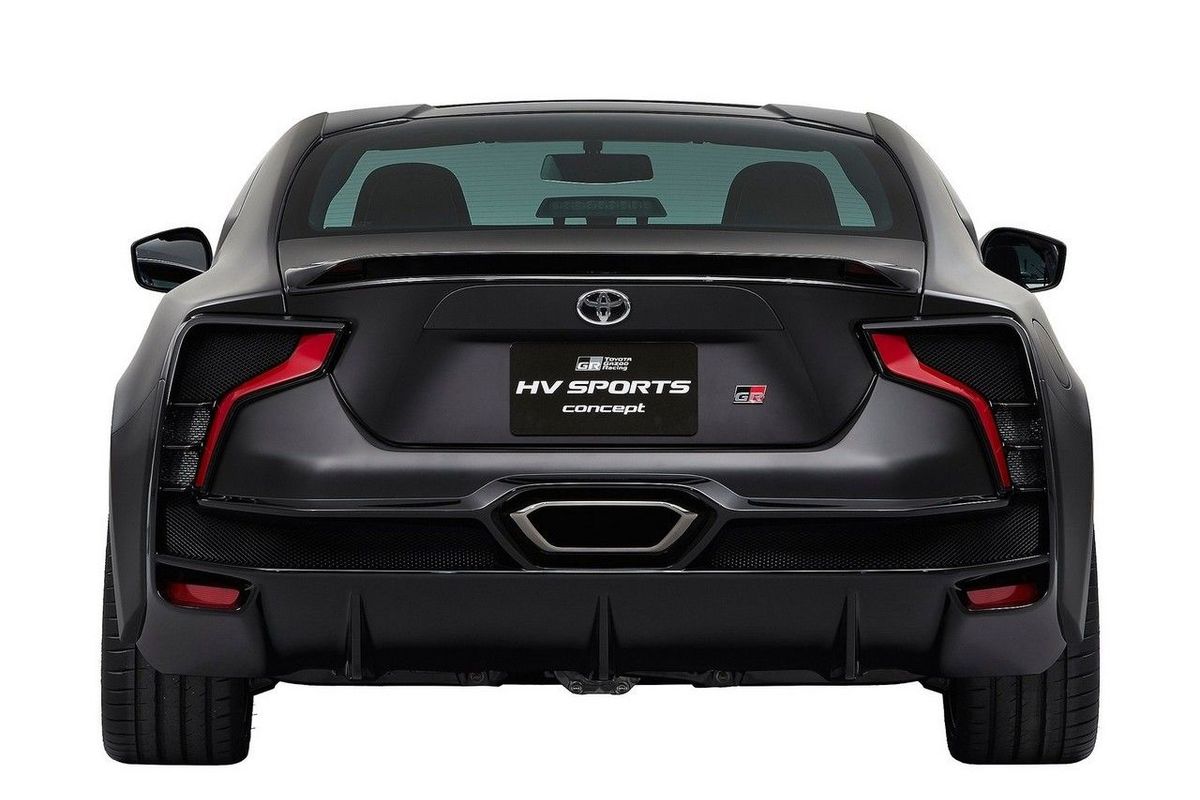
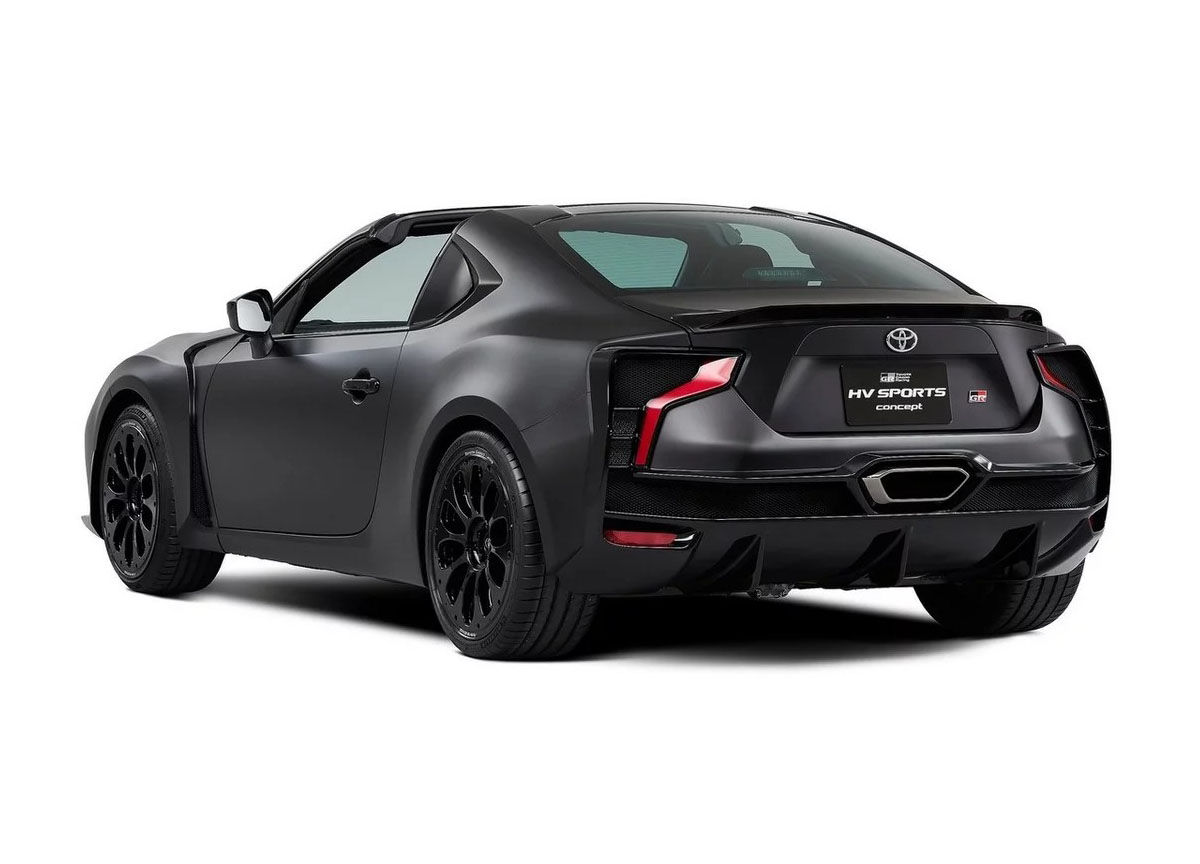
As for what the next 86 will look like, we expect it will incorporate cues from the 2017 Toyota GR HV Sports Concept, whose proportions (let alone interior architecture) is closely related to those of the current car.

The substantial performance upgrade mooted for the Aichi-based manufactures upcoming sportscar (remember, the current 86 model’s 2.0-litre engine produces “only” 147 kW and 205 Nm) will undoubtedly whet the appetites of horsepower-obsessed performance-car aficionados, but all that new forced-induction goodness will add complexity to the package and, therefore, come at a premium.

As a result, the 86 will transform from a back-to-basics (and relatively affordable) driver’s car to a baby Supra, which means its asking price will certainly eclipse R632 200, which is what the current model costs.

Related content:

Toyota Reveals Rally-Inspired GR Yaris

Toyota GR Yaris on Track with Alonso [w/Video]

Toyota C-HR GR Sport Revealed

Toyota Hilux GR Sport Shown

35 kW more for BMW Z4, Toyota GR Supra

Toyota GR Supra 3.0T (2019) Review

Aston Martin builds own 500 kW-plus V6

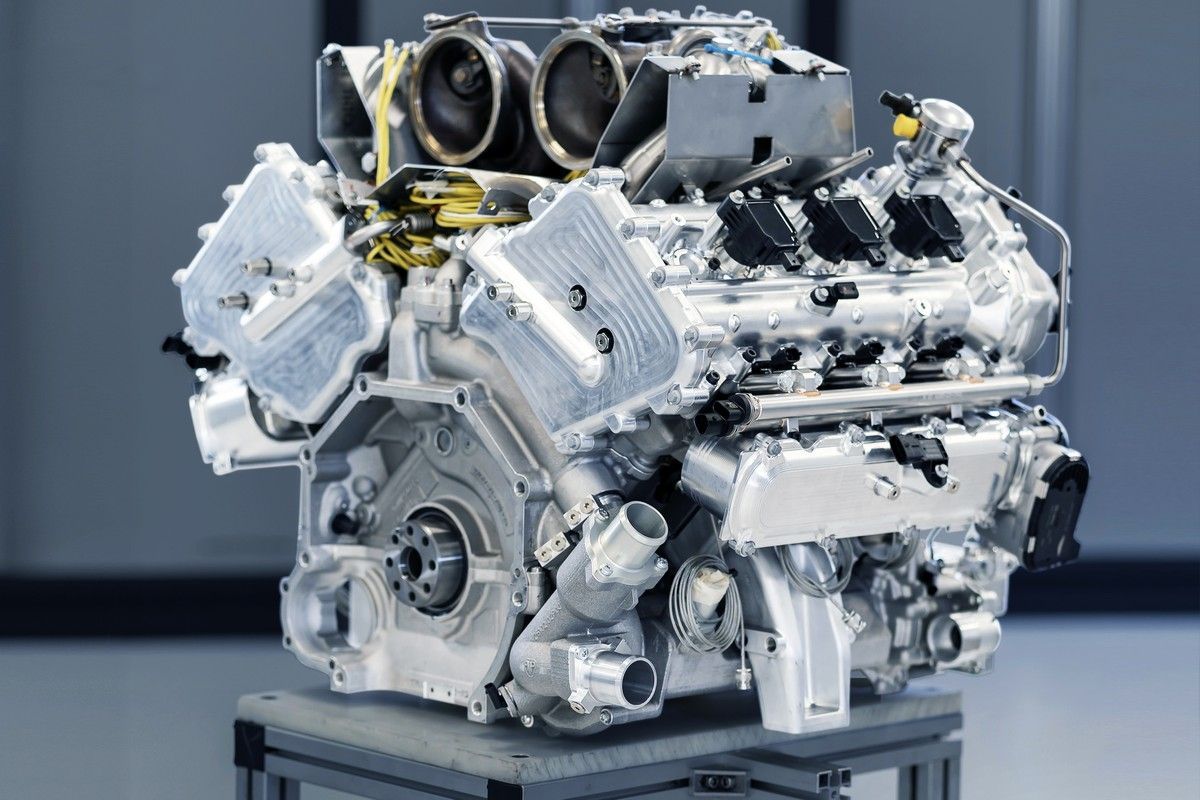
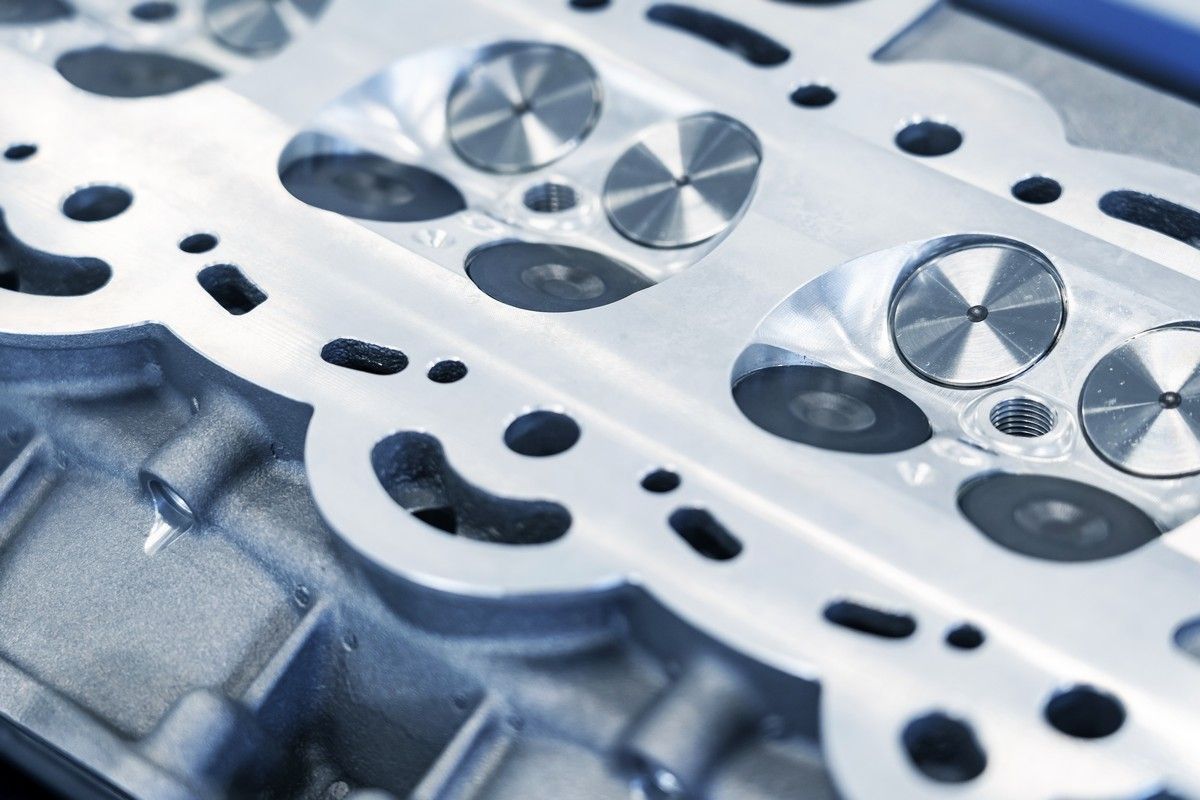
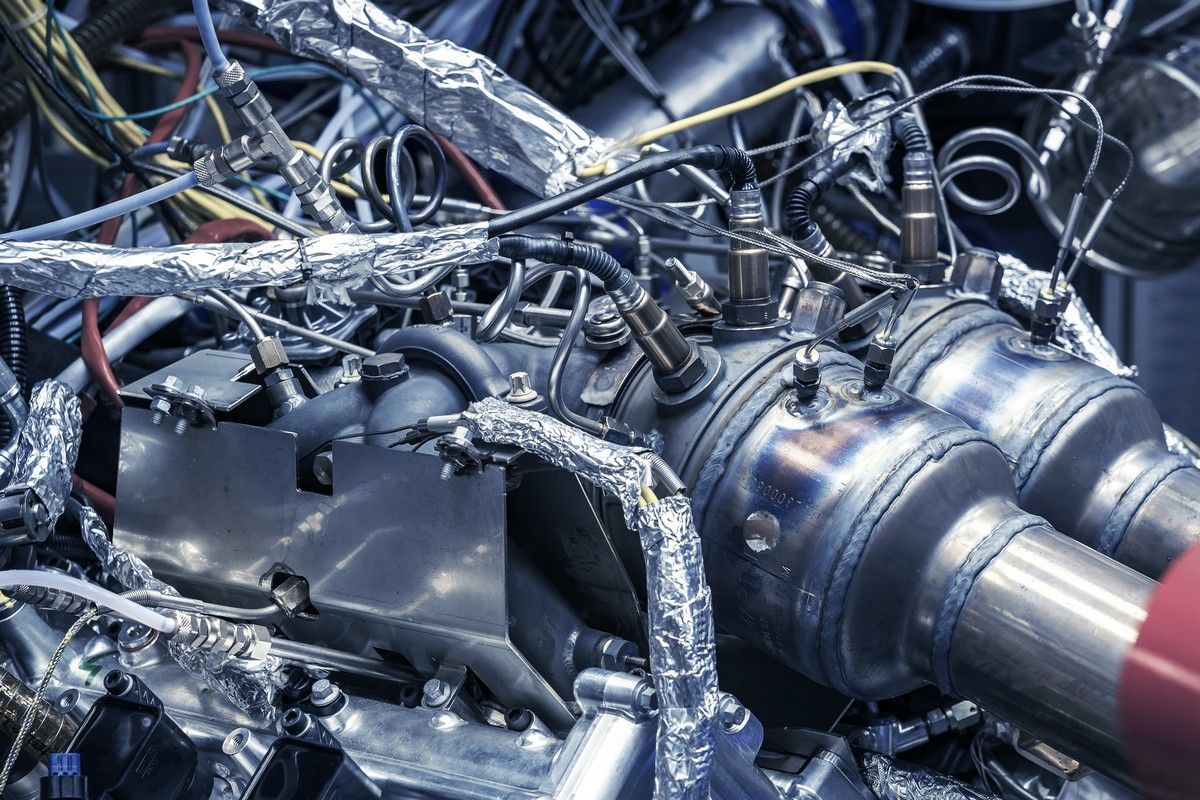
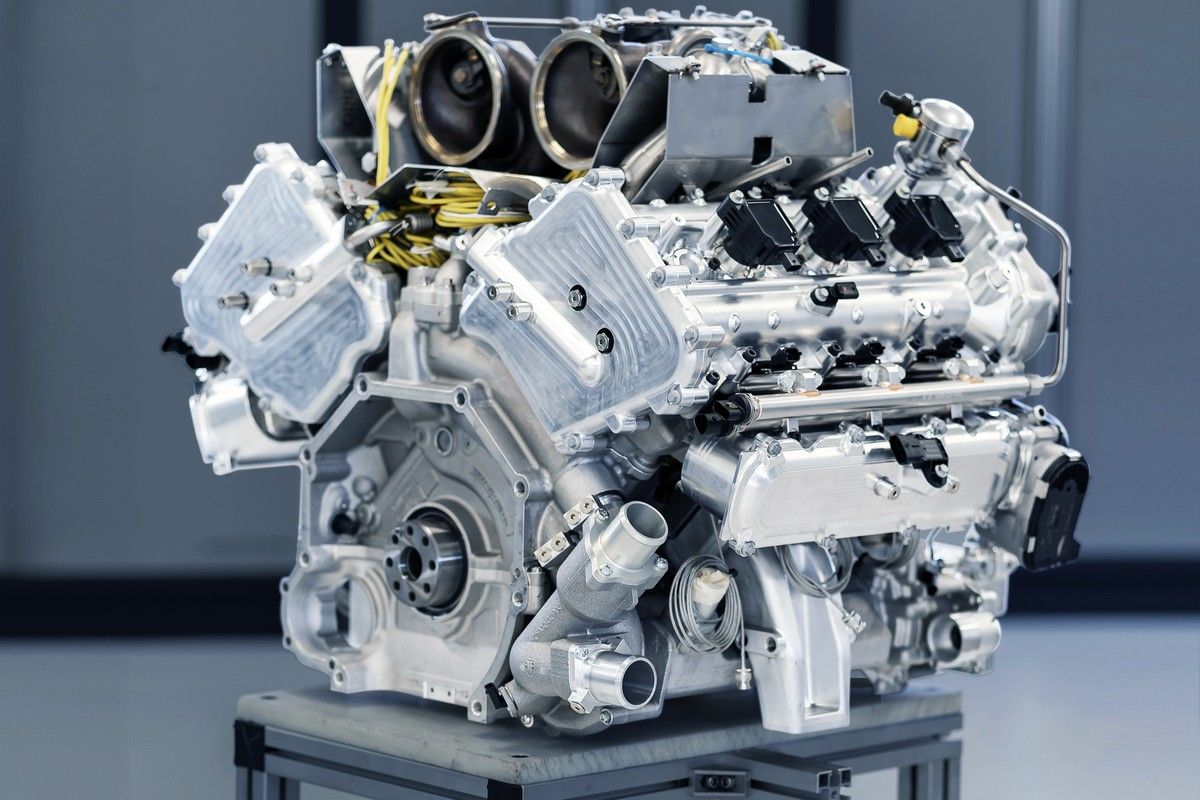
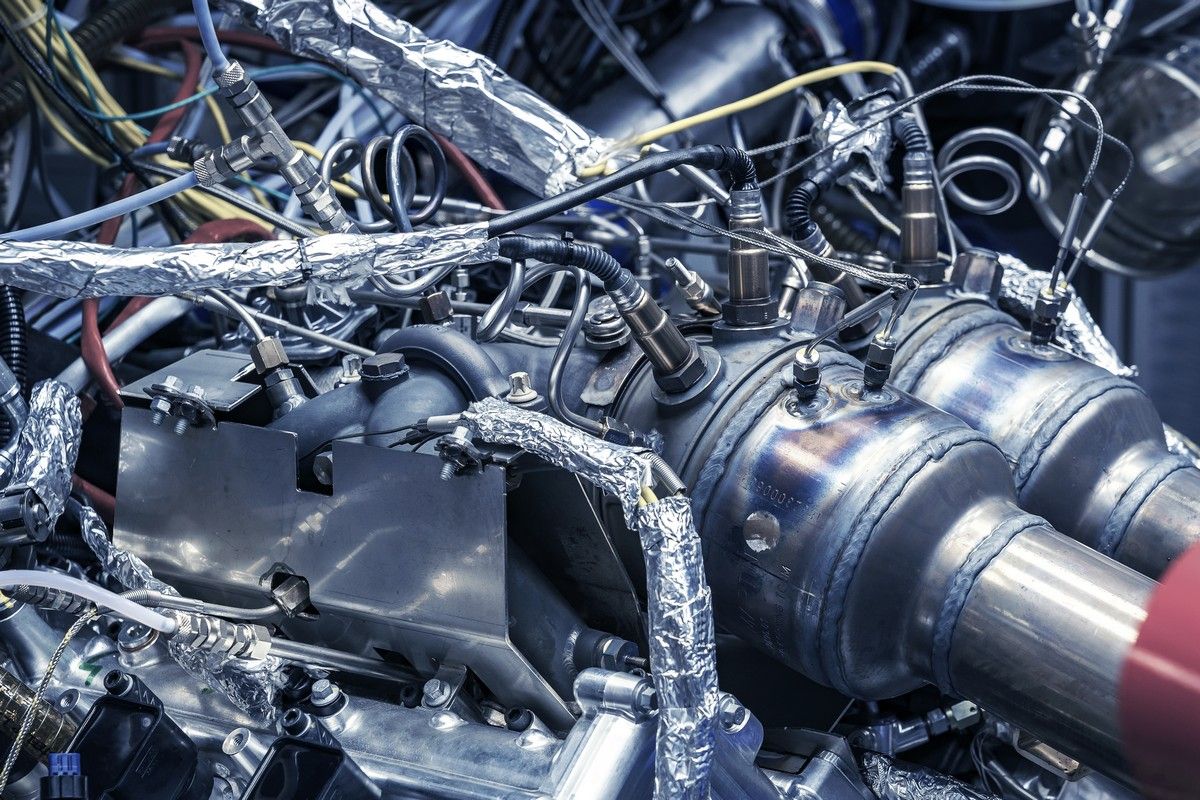
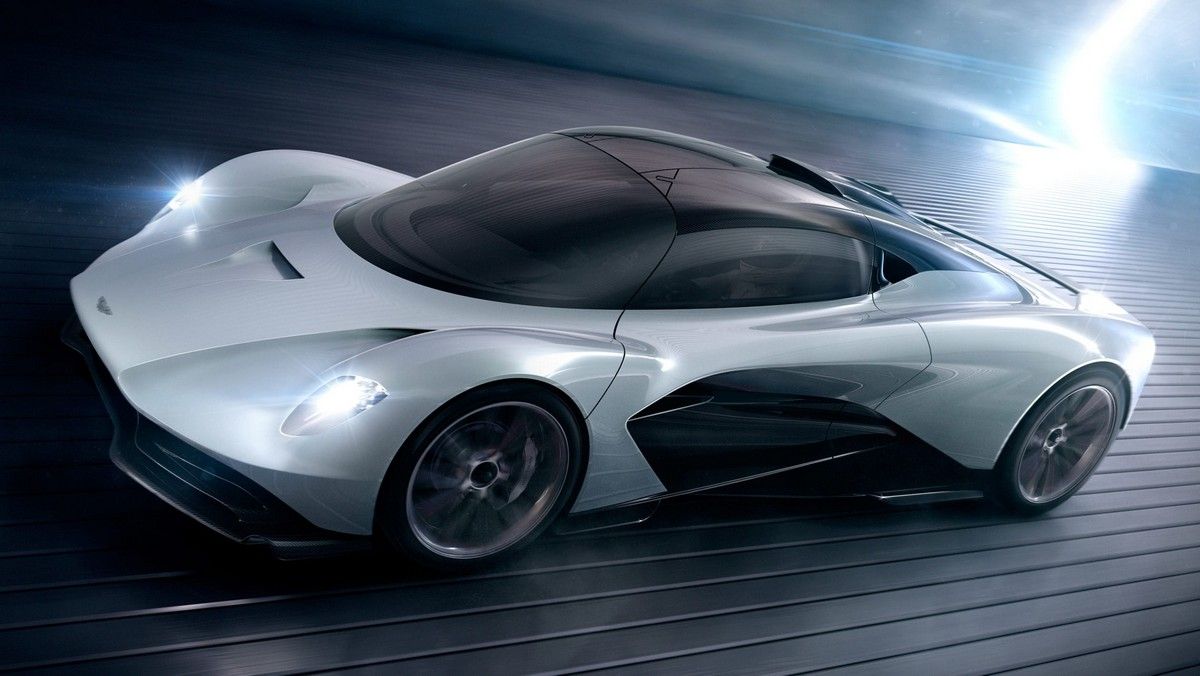
Aston Martin has released details of its all-new 3.0-litre V6 turbopetrol hybrid motor. It’s the first all-new engine that the Gaydon-based firm has designed and built in-house since 1968 and it will debut in the upcoming Valhalla mid-engined supercar.

Unlike most supercar makers, Aston Martin has relied on the supply of engines from other manufacturers, which are then fettled and modified for their installation in the British marque’s various models, throughout the years.

Mercedes-AMG supplies its 4.0-litre V8 turbopetrol for Vantage, DB11 and DBX first-class SUV, but before that, when Aston Martin was part of the now-defunct Premier Automotive Group (along with Jaguar, Land Rover, Lincoln and Volvo) in the early 2000s, it utilised engines from the Ford stable. In fact, Aston Martin's current 5.2-litre twin-turbo V12 still comes from the Ford plant in Cologne…


The compact V6 can be utilised for front- or mid-engined installations and it is said to produce in excess of 500 kW in its raciest configuration.

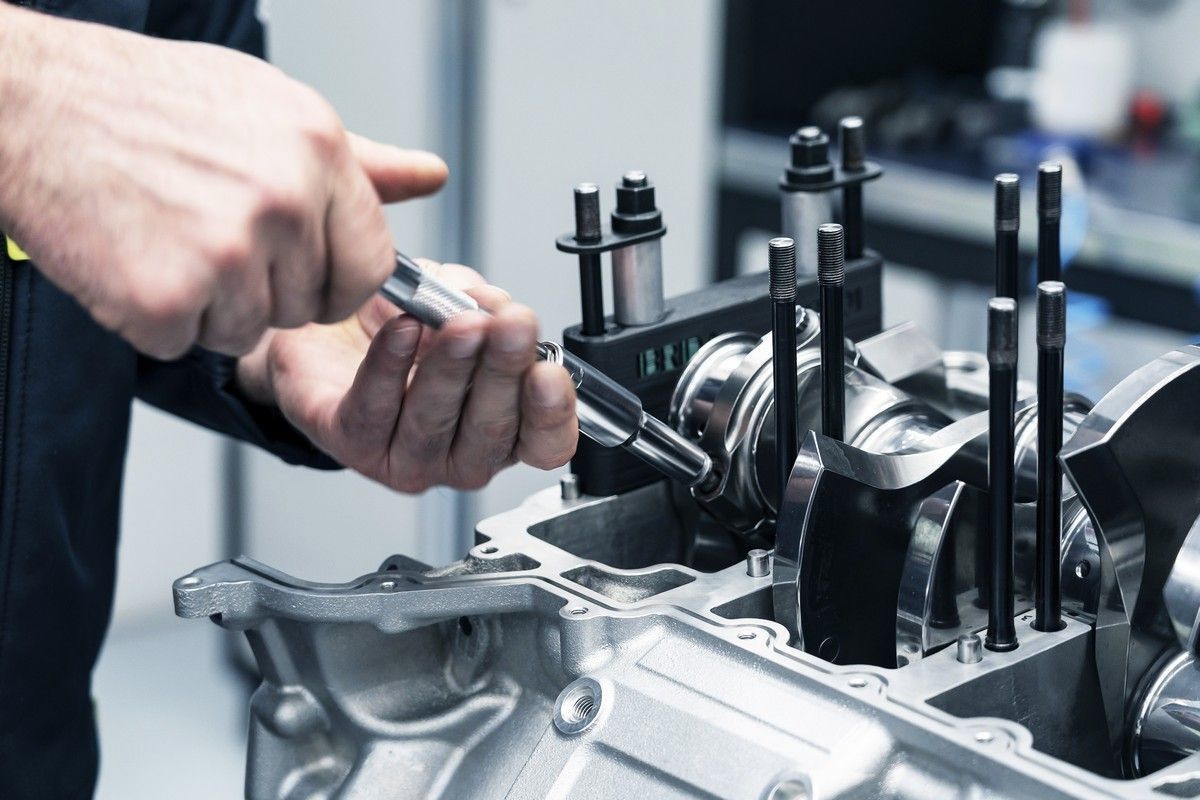
However, although the TM01 – named in honour of legendary Aston Martin engineer Tadek Marek ­– will debut in the mid-engined Valhalla in 2022, it will eventually be implemented in a number of Aston Martin models, ostensibly to replace the AMG-supplied 4.0-litre V8. The motor has already undergone extensive dyno testing and will be offered in conjunction with either hybrid- or plug-in hybrid systems.

Even though it will be the smallest Aston Martin engine in recent memory (in terms of the number of cylinders and capacity), the V6 is said to be able to produce peak power in excess of the DBS Superleggera's 533 kW (Autocar reports) in its highest state of tune.

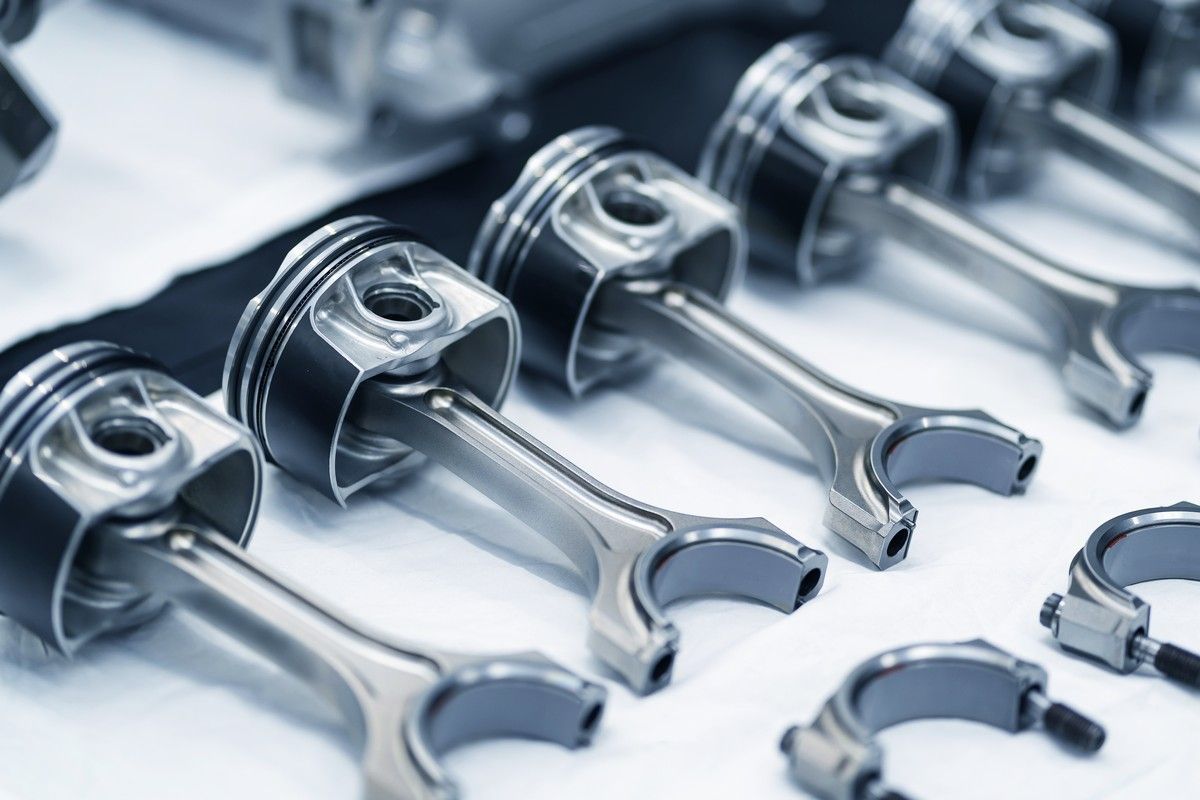
The motor features a dry-sump and a “hot V” configuration – the turbochargers are mounted between the engine’s 2 banks of 6 cylinders. It weighs less than 200 kg and, by virtue of its compact nature, Aston Martin expects to utilise the powerplant in both front and mid-mounted applications.


We expect that the new hybrid V6 will appear in everything from the Vantage to the next Vanquish, as well as the DBX at some point.

Aston Martin CEO Andy Palmer said of the new engine: “Investing in your own powertrains is a tall order, but our team have risen to the challenge. Moving forward, this power unit will be integral to a lot of what we do and the first signs of what this engine will achieve are incredibly promising.”

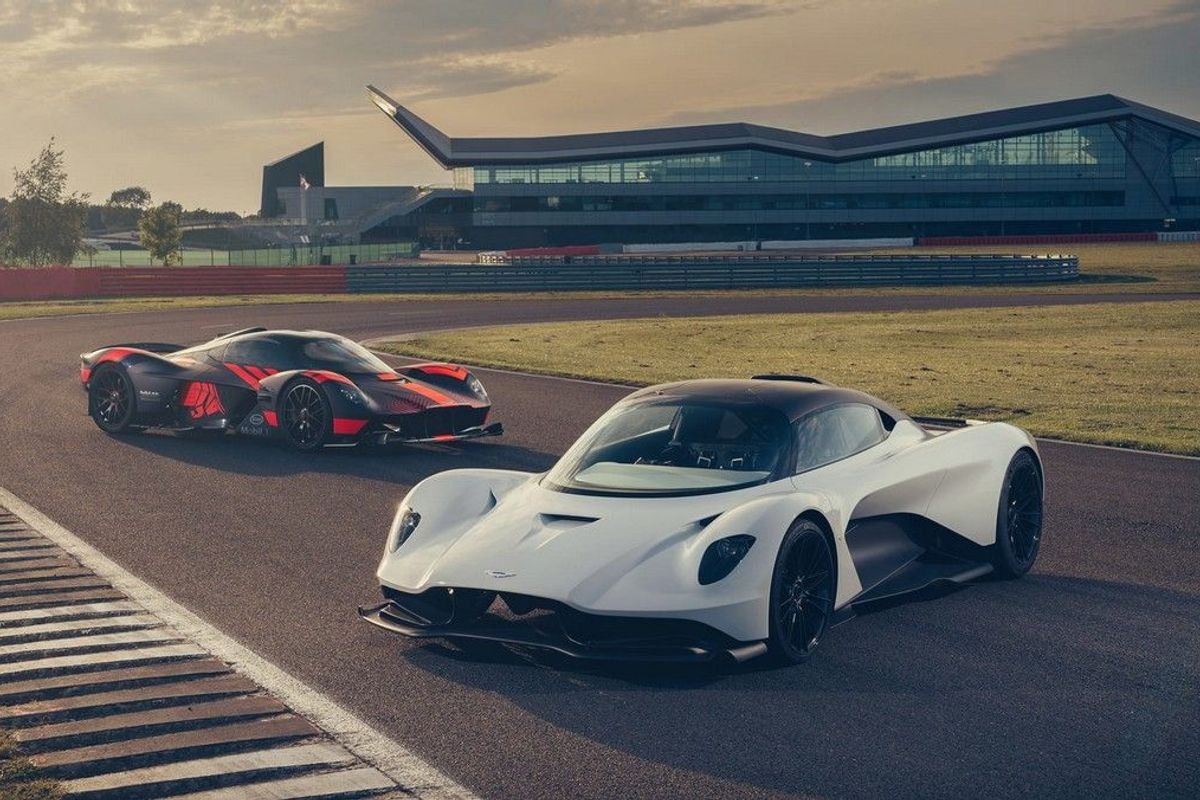
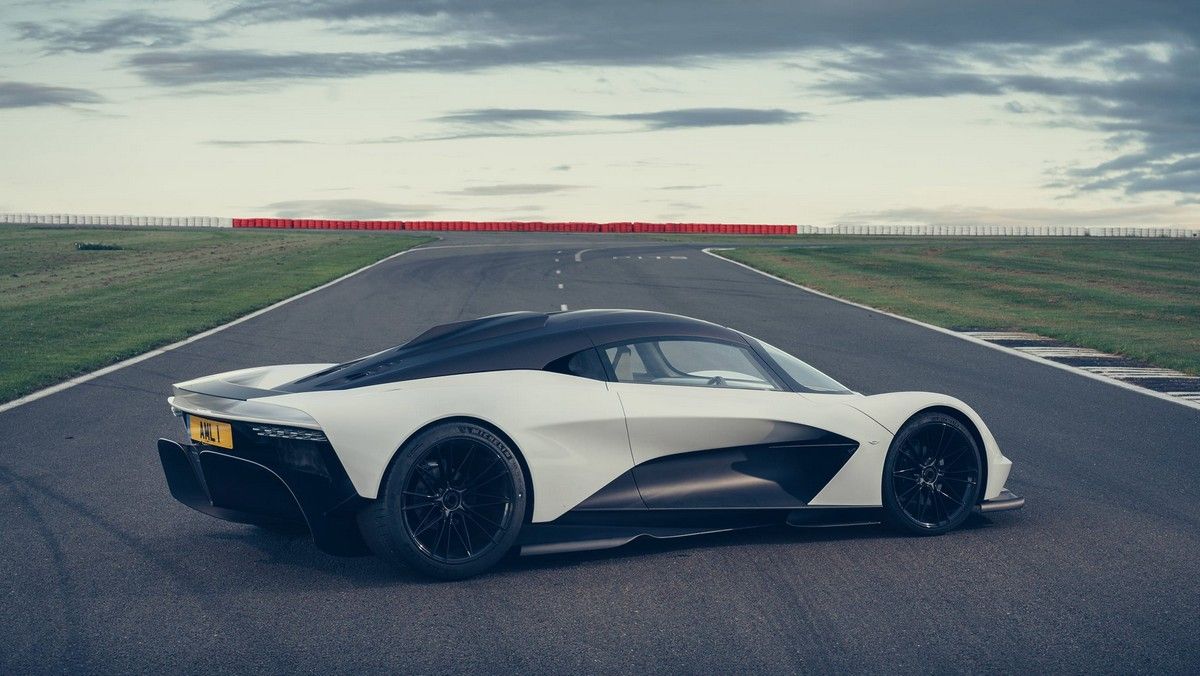
Meanwhile, the upcoming Valhalla will be the latest V-named model in Aston Martin’s history; it follows a 70-year tradition dating back to the 1951 Aston Martin DB2 “Vantage”. Apart from Vantage, the Gaydon-based marque has produced the Virage, the Vanquish, the Vulcan, as well as the Valkyrie.


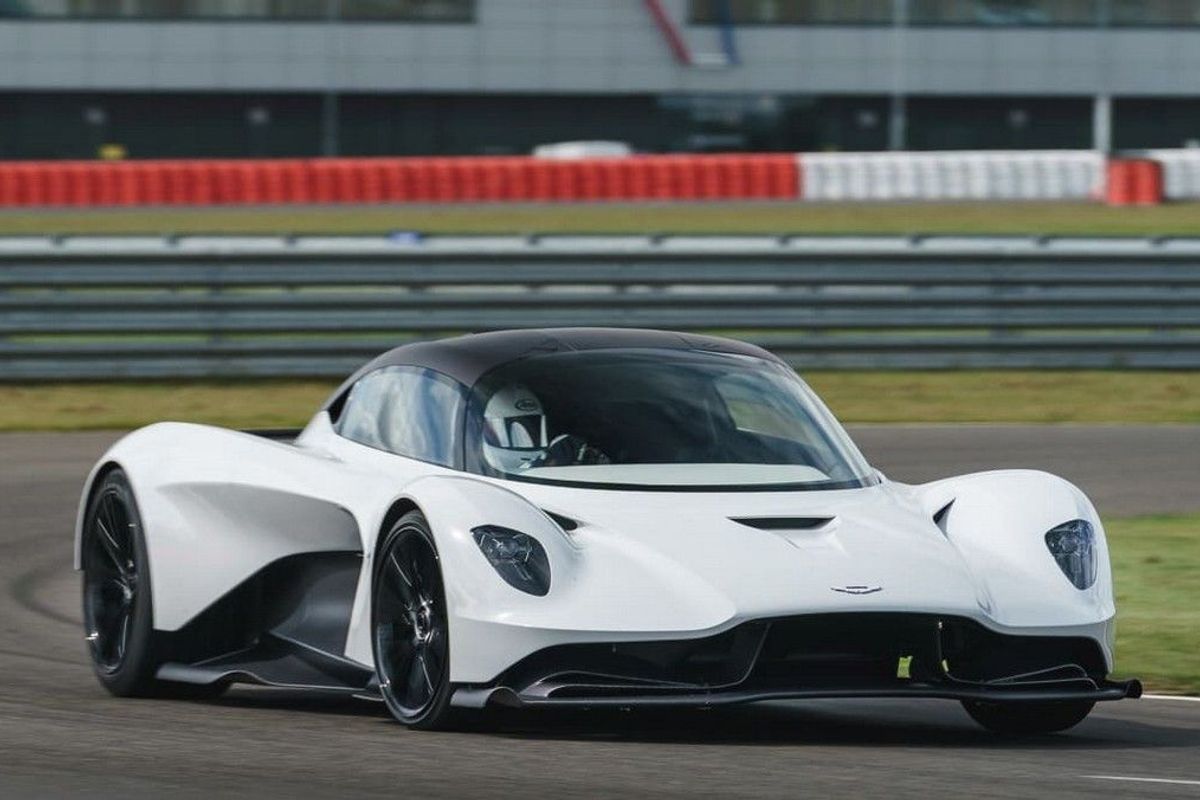
The Valhalla is very much a micronised Valkyrie, only it has half as many 

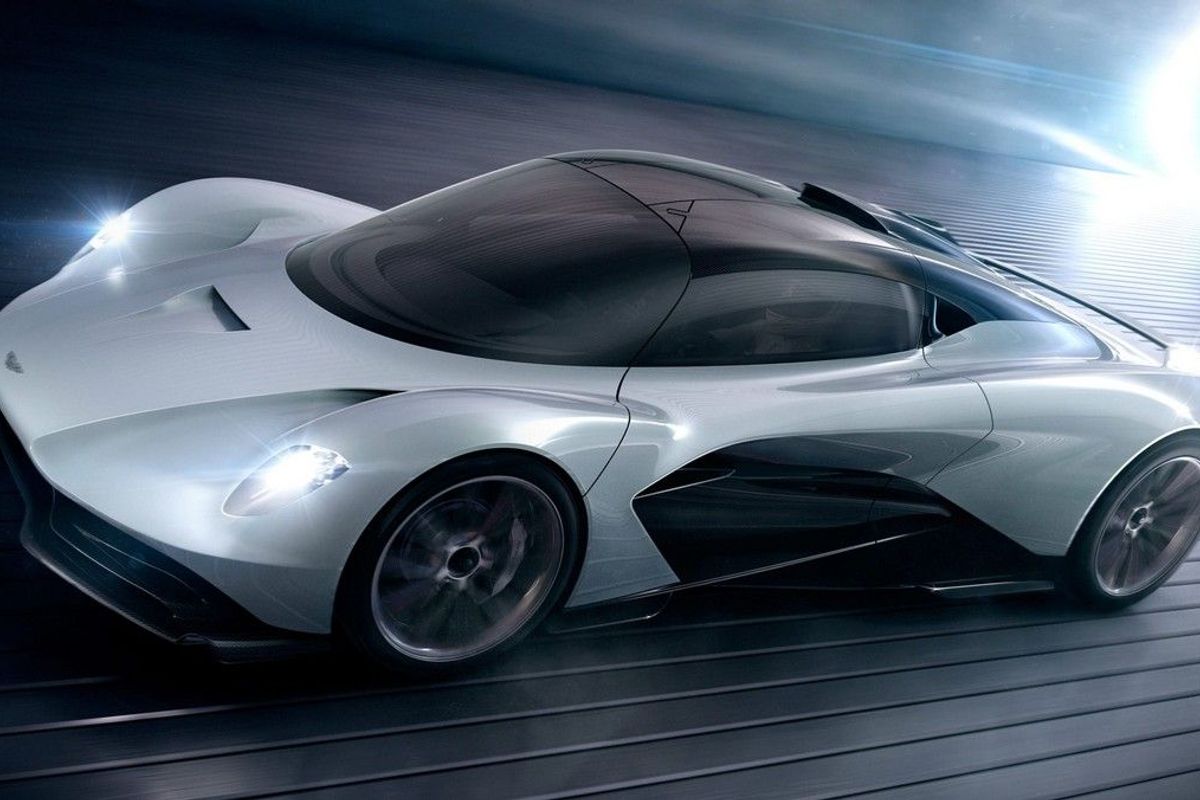
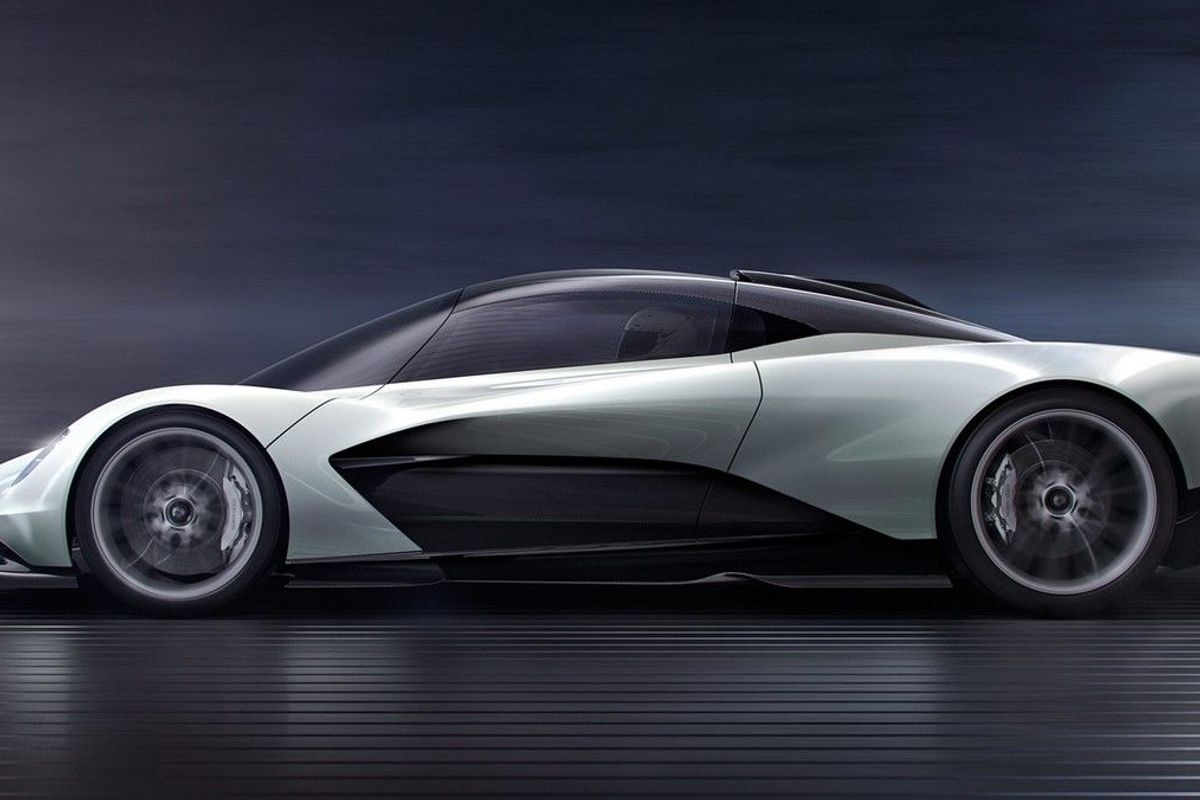
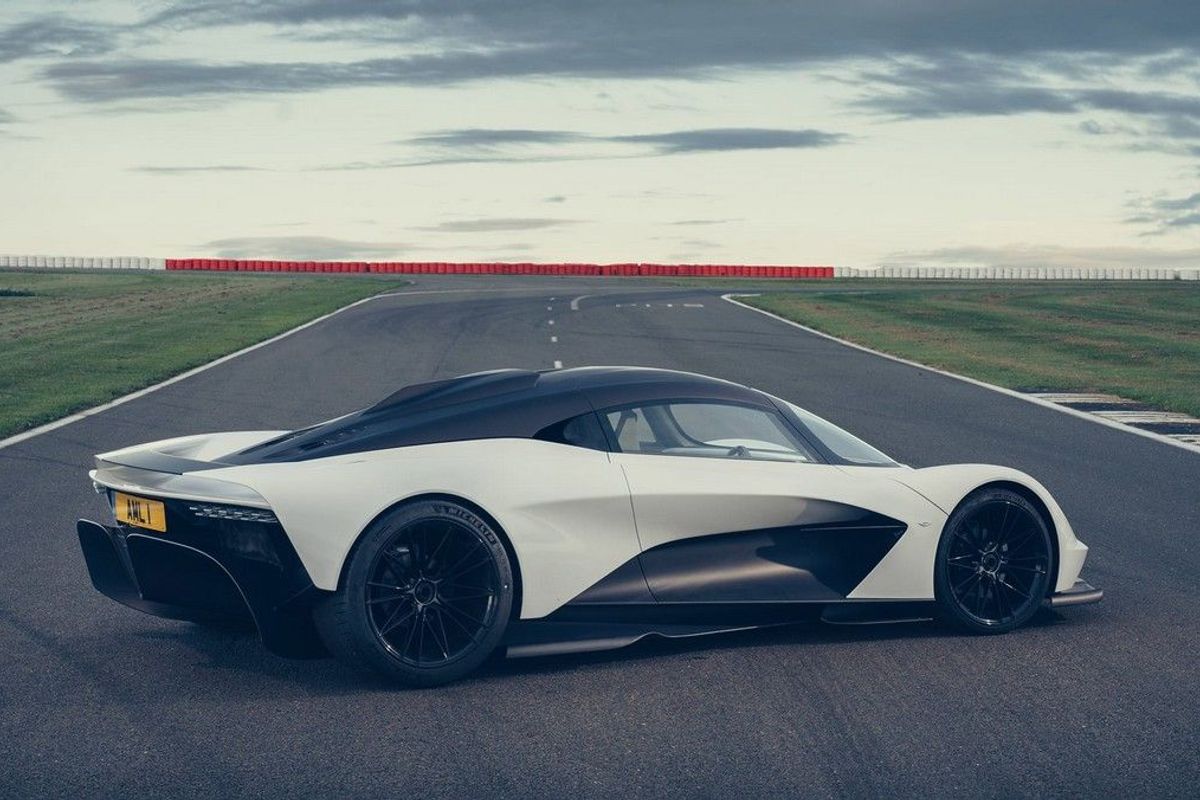
In many ways, the Valhalla is a “baby Valkyrie”. It is also a collaborative effort between Aston Martin and Red Bull Racing (and the F1 team’s chief designer, Adrian Newey, in particular), based on a carbon-fibre monocoque and clad in a plethora of carbon fibre panels to keep kerb weight to a minimum. What’s more, the Valhalla adopts the Valkyrie’s elaborate bumpers and haunches, but it doesn't; resemble an "F1 car with a body shell" to the same extent.

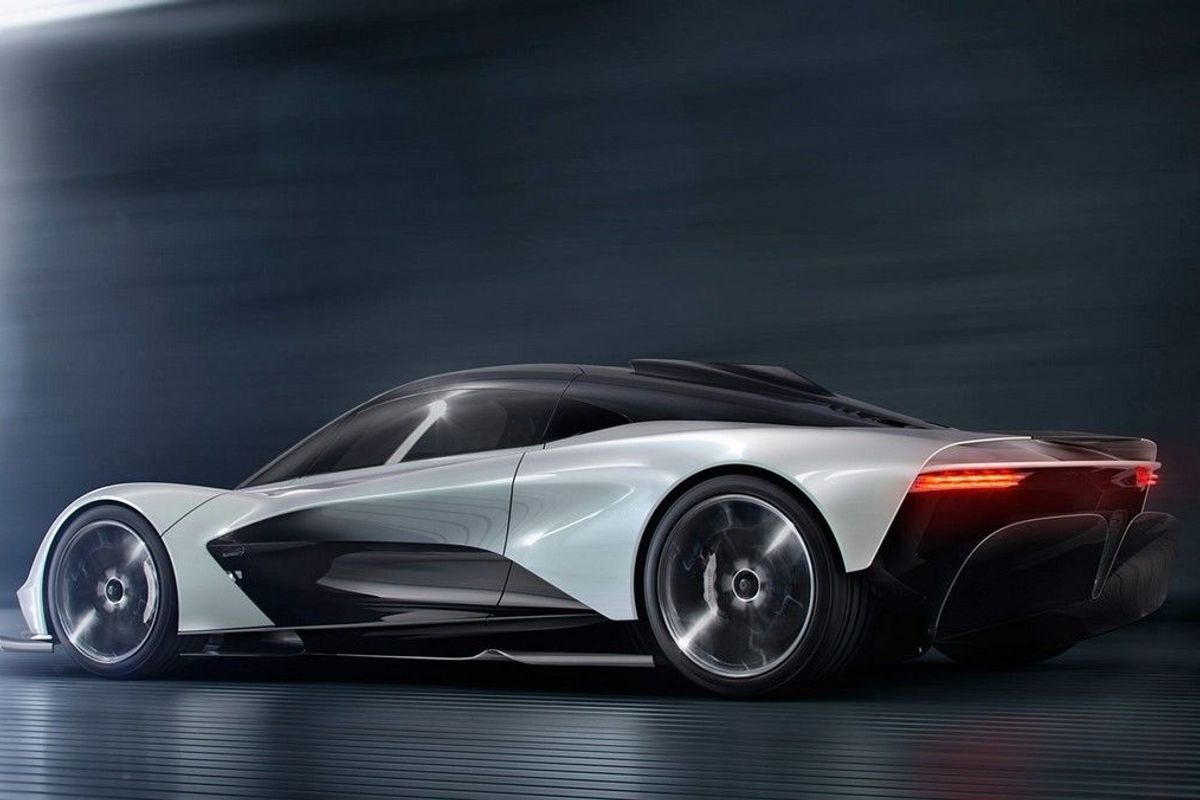
Newey’s influence is best demonstrated by the Valhalla’s active aerodynamic addenda, including FlexFoil technology – claimed to be a first for a production car. FlexFoil, which has already been proven in the aerospace industry and has been tested by Nasa, enables the Valhalla’s rear wing to improve the amount of downforce it generates by physically altering its shape at speed.


How's that for racy? The Valhalla's diffusers appear to protrude further than its Flexfoil rear wing.

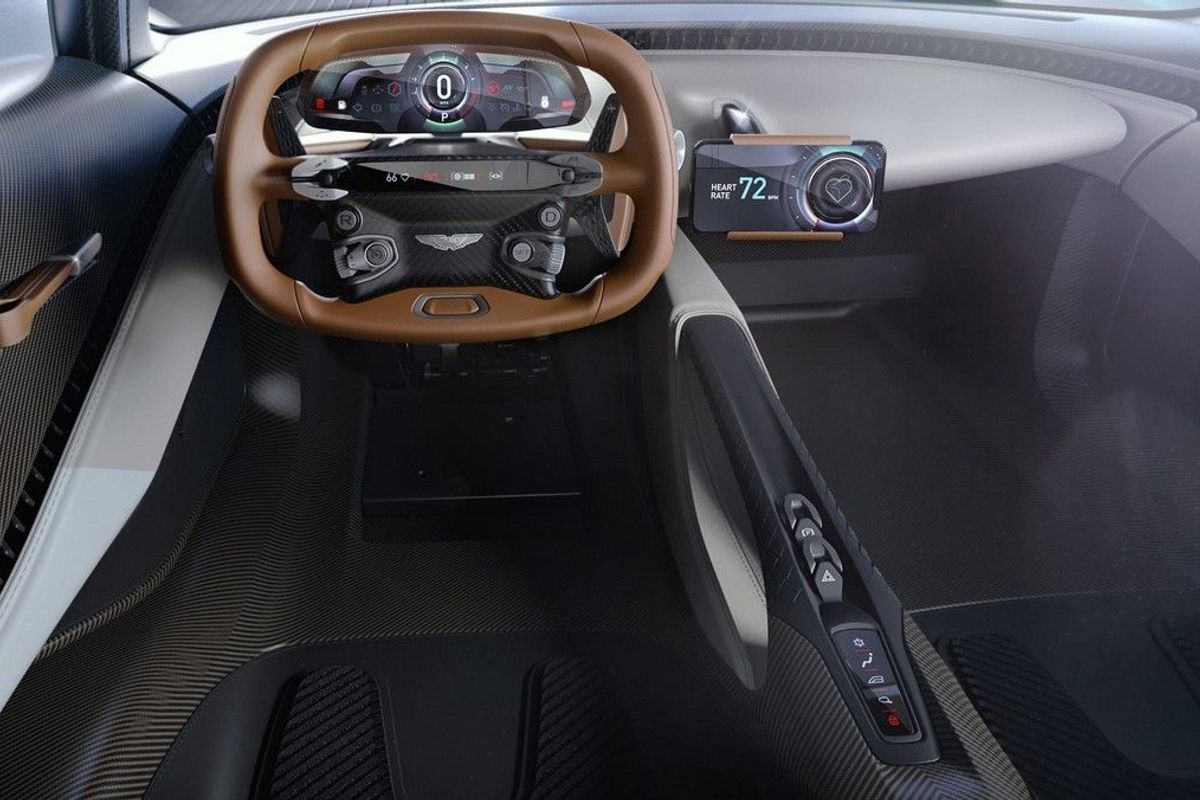
Compared with the Valkyrie, however, the Valhalla’s interior is far more comfort-oriented – after all, it was designed to be a road car. A section of the roof has been incorporated into the scissor doors to make ingress/egress easier, while a 3D-printed centre console affords occupants more room.

Meanwhile, AutoExpress reports that a digital instrument cluster sits atop the steering column… "Aston Martin’s solution to in-car entertainment is to 'bring your own', with the Valhalla offering a smartphone mount in place of an integrated infotainment system for maximum simplicity and flexibility”.

Aston Martin will build 500 units of the Valhalla, but whereas the Valkyrie will cost R50 million, the former is believed to cost a much more reasonable R20 million.

Watch the Valkyrie and the Valhalla take to the track:

Related content:

Aston Martin Valkyrie hits the road

Koenigsegg Jesko Absolut is Crazy Fast

Bugatti Chiron Pur Sport Focuses On Driving

Aston Martin V12 Speedster Goes Official

Hot Pininfarina Battista Anniversario Revealed [w/video]

Boulogne is an 820 kW Spanish Supercar

Koenigsegg unveils a 400-kph 4-seater

Europe to SA in a Porsche Cayenne? 

A South African couple in Austria is planning on returning home by driving their modified Porsche Cayenne to South Africa. 

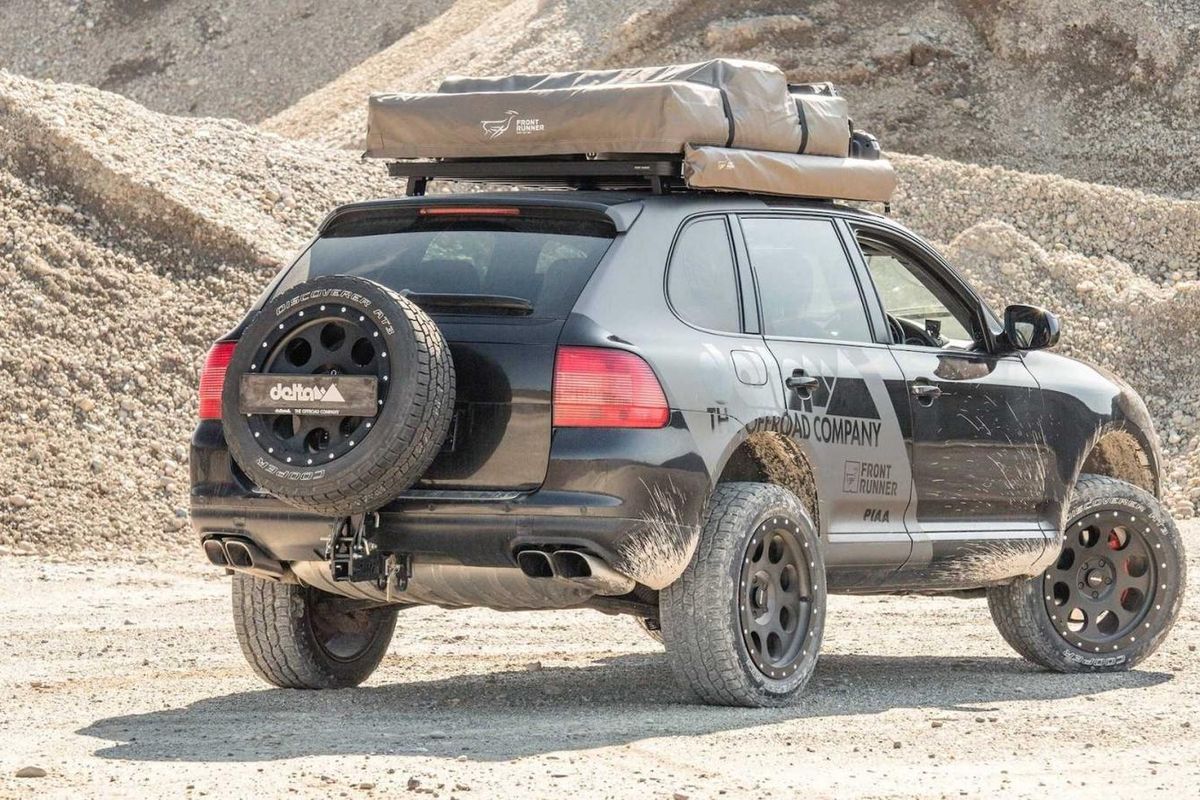
If you can’t fly, why not drive? With major airlines cancelling passenger air travel in an effort to curb the spread of Coronavirus, many people all over the world are now forced to stay put until the virus is contained. Despite all the disruption, a South African, Shane Oosthuizen along with his fiancé is devising a plan to drive from Austria to South Africa in a modified, offroad-ready first-generation Porsche Cayenne.

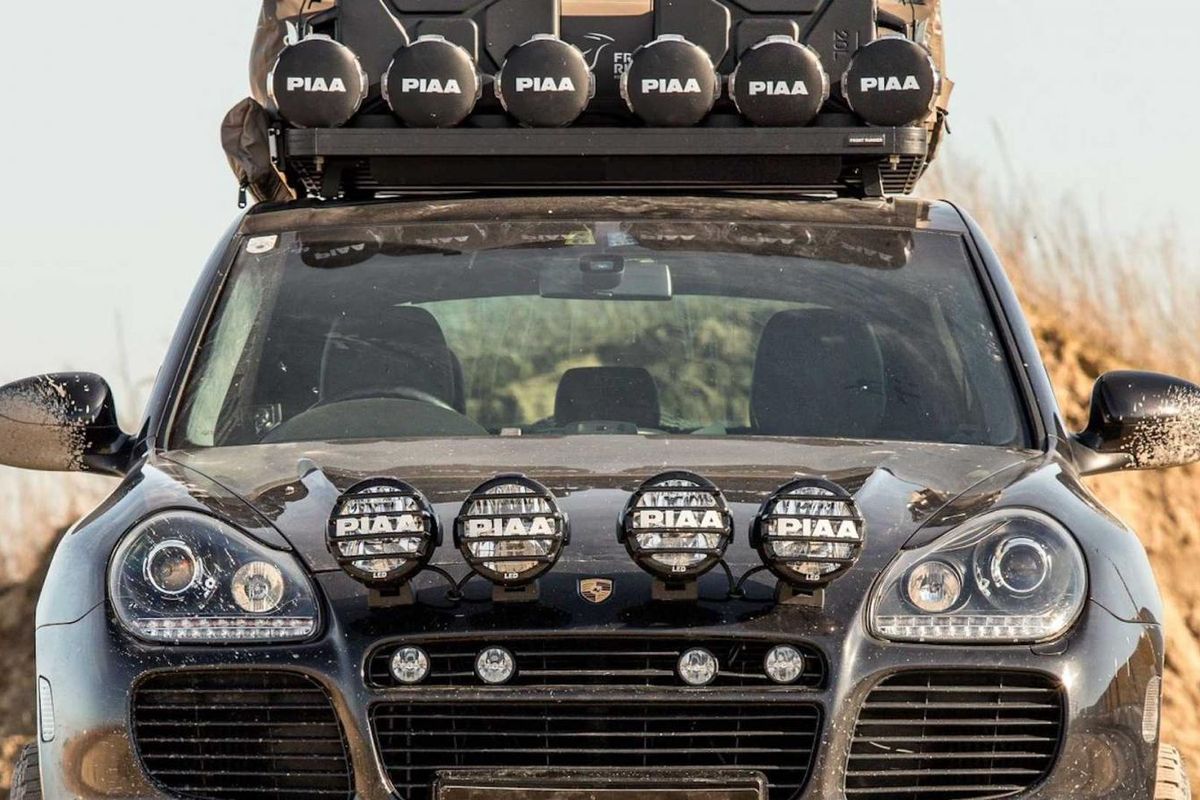
In an interview with Crazy About Porsche, Oosthuizen explains how he modified his Porsche Cayenne for the journey. Key modifications include a Front Runner roof rack for additional packing space (tent, jerry cans etc), lockable drawer system in the boot, full-size spare wheel and numerous PIAA rally lights for driving at night.

Oosthuizen also slightly modified the Cayenne’s air suspension to provide some more lift and the while wheel options were limited due to the size of the front brake rotors, with the help of Delta4x4, a set of 20-inch wheels and Cooper rubber were fitted. 

Oosthuizen says all the modifications took about a year to complete and the final stages of planning are now underway with a planned departure date set for end of June, but he admits that the ongoing Coronavirus pandemic could further interfere with his plans. 

Oosthuizen also mentions that they will likely travel off the beaten track and the journey could take anywhere between 3 to 4 months to complete. Good luck and bon voyage!

Buy a new or used Porsche Cayenne on Cars.co.za

Related Content 

Porsche Cayenne (2018) Launch Review

Porsche reveals 500 kW Cayenne E-Hybrid

Radical 911 4×4 Due Later This Year

Nissan Rosslyn Plant to Shut Down

Nissan has announced several closures of its plants in Africa, Middle East and India as a result of the ongoing Covid-19 outbreak. 

Nissan joins the list of growing plant closures relating to the Coronavirus outbreak across the world and as a result will be suspending production at its Renault-Nissan Alliance plant in Chennai, India, Giza, Egypt and Rosslyn in Pretoria, South Africa. 

Operations at Nissan’s Rosslyn plant will cease until further notice from March 26 2020. 

Nissan is also implementing a work-from-home strategy where possible in an effort to safeguard employees. 

South African president, Cyril Ramaphosa, announced a full 21-day lockdown commencing midnight 26 March 2020 until 16 April 2020 in an effort to curb the spread of Covid-19.

Buy a Nissan on Cars.co.za 

Related Content

Ford SA Suspends Production at Plants

BMW SA Pauses Production At Rosslyn Due to COVID-19

Ford SA Suspends Production at Plants


Ford has announced it will be temporarily suspending its production facilities around the world in light of COVID-19. What does this mean for South Africa?

Ford South Africa has a large presence, with 2 facilities. The first is the plant in Silverton, Pretoria, which focuses on Ranger, Raptor and Everest assembly for both local and export markets. The second is the engine assembly facility in Struandale, Port Elizabeth, which builds the engines for the aforementioned vehicles, as well as other models.

It's not just South Africa which is affected as Ford has facilities in India, Vietnam and Thailand. According to Ford, the last working day for South Africa will be on the 27th March 2020.

“The health and safety of our employees, dealers, customers, partners and communities is our highest priority,” said Mark Ovenden, president, International Markets Group. “We are continuing to act in real-time and taking added safety measures by temporarily halting production at our manufacturing sites in the international markets.” Ford has also requested its employees to work remotely. 

Further Reading

Building the Ford Ranger Raptor's Engine

One-Off Ford Heritage Ranger for SA

Ford Ranger (2019) Launch Review

Ford Ranger Raptor (2019) Video Review

Mercedes-AMG A45 S Takes on the Nurburgring w/video

The Mercedes-AMG A45 S has tackled the famed Nurburgring, and posted a respectable lap time. Watch the run!

There's something quite unbelievable about the Mercedes-AMG A45 S. Here's a compact hatchback delivering 310 kW and 500 Nm from a 2.0-litre turbocharged petrol motor, with power going to all 4 wheels via a dual-clutch transmission. Mercedes-AMG claims a 3.9 second sprint time for this little road-legal weapon, which is insane. Just 10 years ago, you'd have to be forking out millions for an exotic supercar to have this sort of performance. Now in 2020, this power is readily accessible, sort of, because it still costs R1 million. 

Straight-line acceleration aside, the real test would be to see if the 4Matic all-wheel-drive system can actually put the power down when some corners are thrown into the mix. Can the electronic torque vectoring work some magic to deliver cornering exit speeds? The best place to test handling prowess is Germany's Nurburging, a monstrously-long ribbon of tarmac that winds through a forest. Watch the video and see what sort of time the Mercedes-AMG A45 S does. The lap time was conducted by German publication Sport Auto.

If you've already watched the video, the time of 7.48.80 is certainly brisk and when you compare that to other cars, you get an appreciation for what AMG has done to the little A-Class. Back in 2007, the 996 Porsche 911 GT3 RS ran around the Ring in 7.48 and the A45's time is 1 second slower than a Ferrari 599 GTB Fiorano, proving how far technology has progressed.

It's important to note the A45 S was running Pirelli P Zero Trofeo R rubber, plus, if you look carefully the gearbox went into limp mode briefly at the 7:59 minute mark, which resulted in a bit of lost time. The driver was Sport Auto's Tester Christian Gebhardt, who has considerable experience both in motorsport and Nurburgring test laps. The question is, if the gearbox hadn't had a glitch, how much faster could the Mercedes-AMG A45 S have gone?

The previous generation Mercedes-AMG A45 is a ballistic performer and we have many examples for sale.

Further Reading

Mercedes-AMG A45 S (2019) International Launch Review
Drag Race: Mercedes A45 AMG vs CLS 63 AMG S

Mercedes-AMG A45 S Price Announced for South Africa

Mercedes-AMG A45 4MATIC (2016) Review

Drag Race: Audi RS3 vs Mercedes-AMG A45

Drag Race: Audi RS3 vs Mercedes A45 AMG [Video]
2021 Audi A3: SA Details Emerge

The Audi A3 made its debut online, thanks to the cancellation of the 2020 Geneva Motor Show due to COVID-19 outbreak. Here's the expected arrival time of it in SA, plus some news regarding other body styles.

The new Audi A3 will be sold as a Sportback shape only, the 2-door body style being cancelled in favour of more practicality. As we mentioned in our first article, the premium hatch is bigger than before but retains the same wheelbase. Bumper-to-bumper the A3 Sportback measures 4.34 m, which is 30 mm longer than its predecessor. Petrol and diesel engines are available, with both manual and dual-clutch transmissions. Naturally, for the European market, there'll also be electrified powertrains too. 

Naturally, petrolheads will be interested in what else is available, specifically the S and RS versions. Well, thanks to CarandDriver.com, there will be an Audi A3 sedan joining its Sportback sibling. It should be revealed before the end of 2020 and from what the source at Audi North America suggested, the new Audi A3 sedan will "look sportier and more aggressive than its predecessor, with a slightly more chiseled and angular attitude". The best news is that there will be a successor to the iconic RS3 too, complete with its monstrous 2.5-litre 5-cylinder motor. Rumours suggest power will climb from the current 294 kW and 480 Nm, to over 300 kW, going to all 4 wheels via the quattro setup. It'll need it too, considering its rival from AMG packs a considerable 310 kW and 500 Nm.

On the more sensible side of things, but still as performance-focused as ever, will be the 2021 Audi S3. It's also due for a reveal in the near future, and we expect it to retain the familiar quattro setup as well as the 2.0-litre turbocharged 4-cylinder motor. However, outputs will increase and if the leaked document showing 245 kW from the next-gen Volkswagen Golf 8 R is anything to go by, we'd be very surprised if its Ingolstadt-based rival offers anything less.

Audi A3 South African Arrival

The all-new 4th generation Audi A3 is expected to arrive in South Africa in 2021, with an Audi South Africa spokesperson saying it's currently planned for quarter 2 next year. Excitingly, the spokesperson also added the S3 will also plan to launch at that time. 

Now is a good chance to bag a bargain. Browse Audi A3 units for sale. 

Further Reading

New Audi A3 is Sportback Only

2021 Audi S3: Details Emerge

Audi A3 2.0T Sportback Auto (2017) Review

Audi A1 (2019) Launch Review

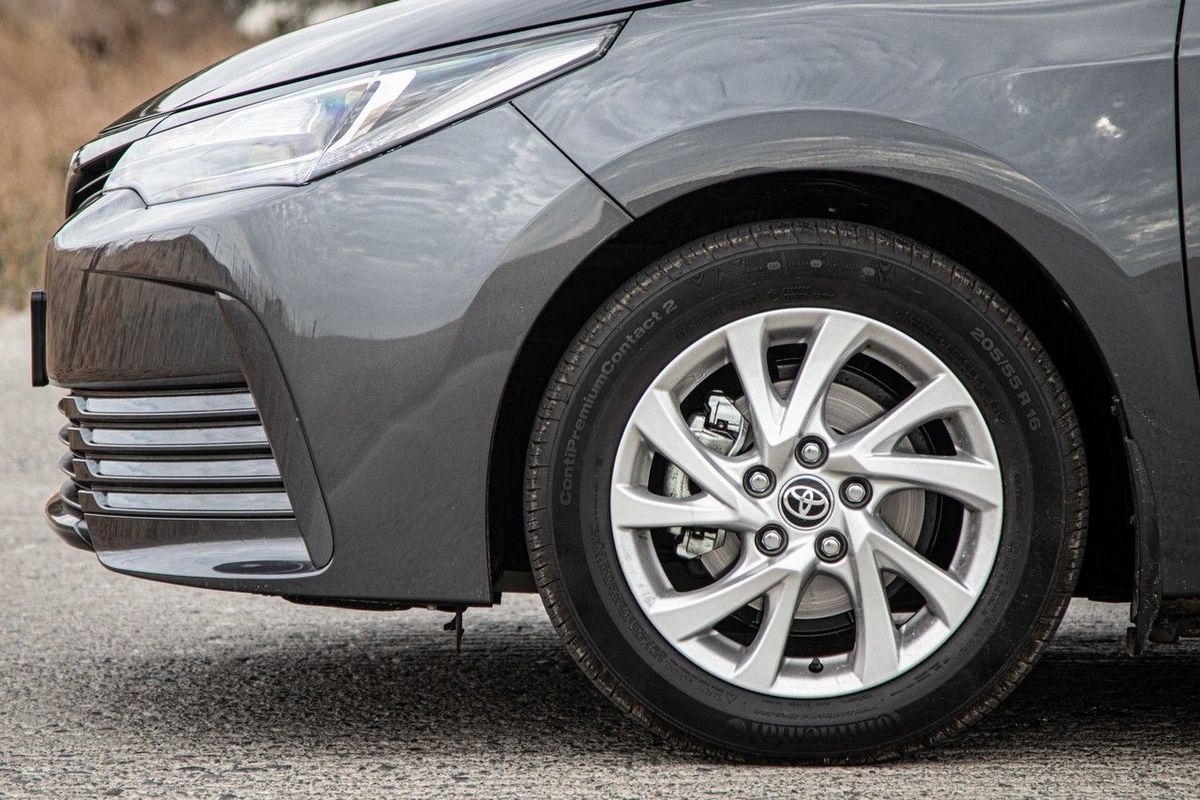
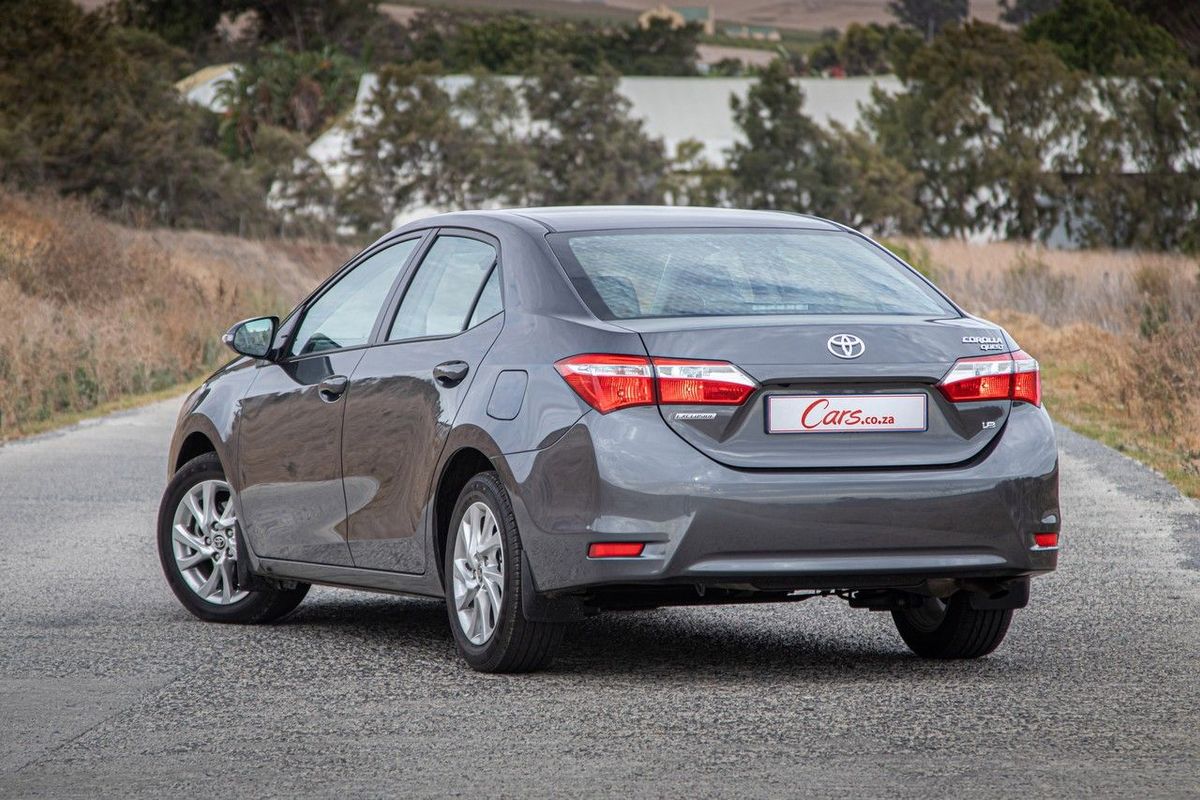
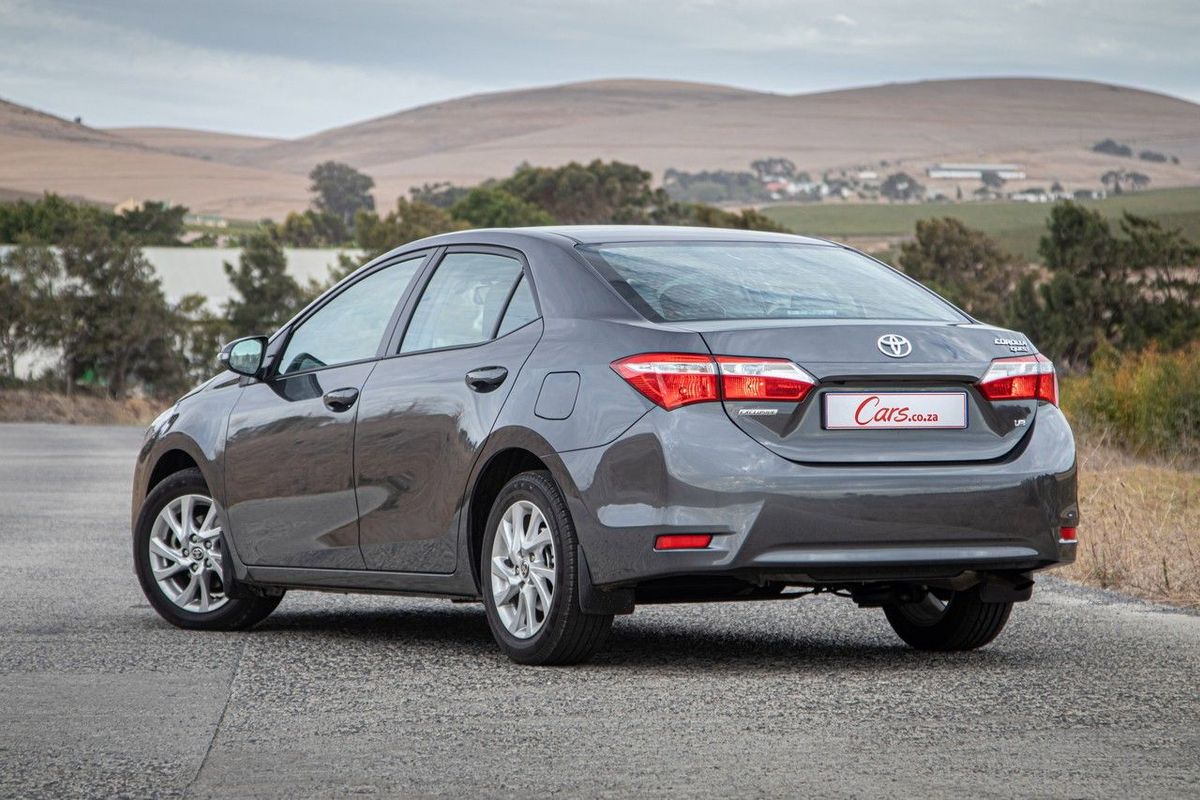
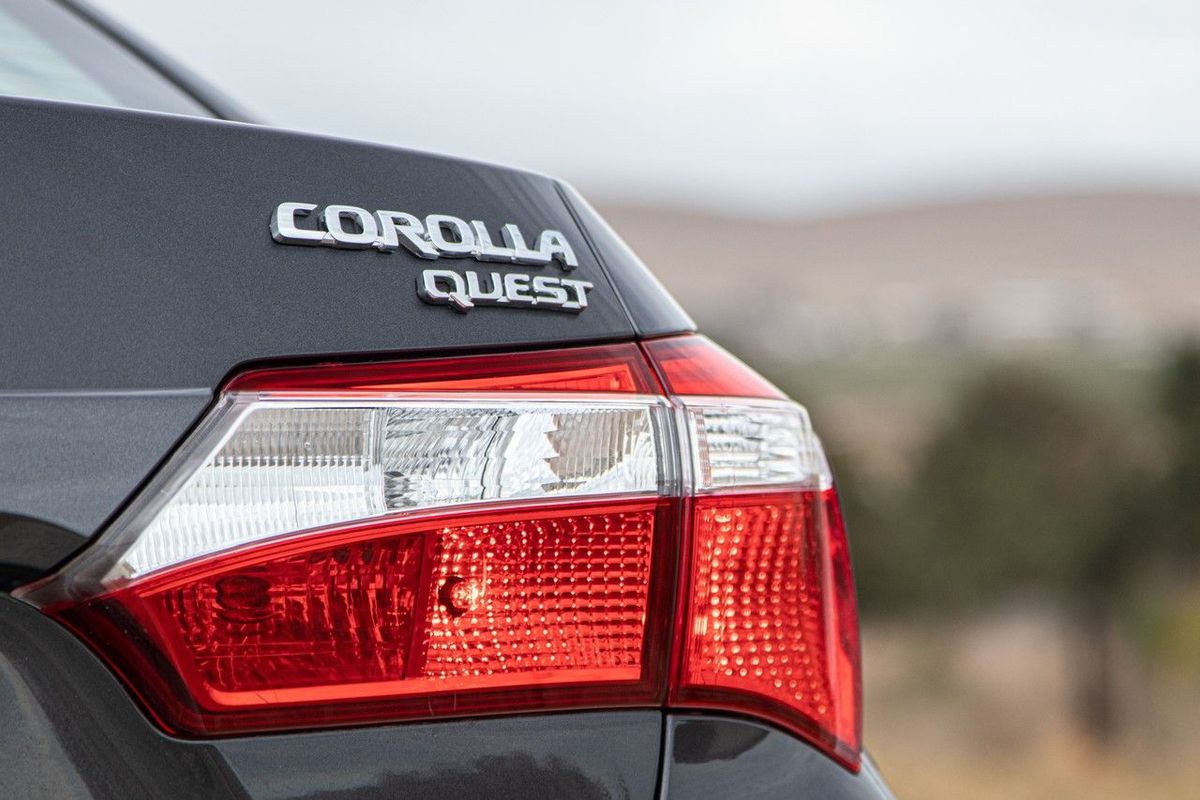
Toyota Corolla Quest 1.8 Exclusive Auto (2020) Review

Passenger-vehicle market arch-rivals Toyota and Volkswagen continue to reap success from producing legacy models. The former recently introduced a new Corolla Quest to avail the previous-generation of its compact sedan to buyers looking for a reliable, value-for-money vehicle. We put the range-topping 1.8 Exclusive automatic derivative through its paces… 

We Like: Engine performance, excellent ride quality, good build quality, value

We Don’t Like: Lack of Android Auto/Apple CarPlay

Fast Facts

  • Price: R317 700 (March 2020)
  • Engine: 1.8-litre petrol, naturally-aspirated 
  • Power/Torque: 103 kW / 173 Nm
  • Transmission: CVT 
  • Fuel Economy: 6.3 L/100km 
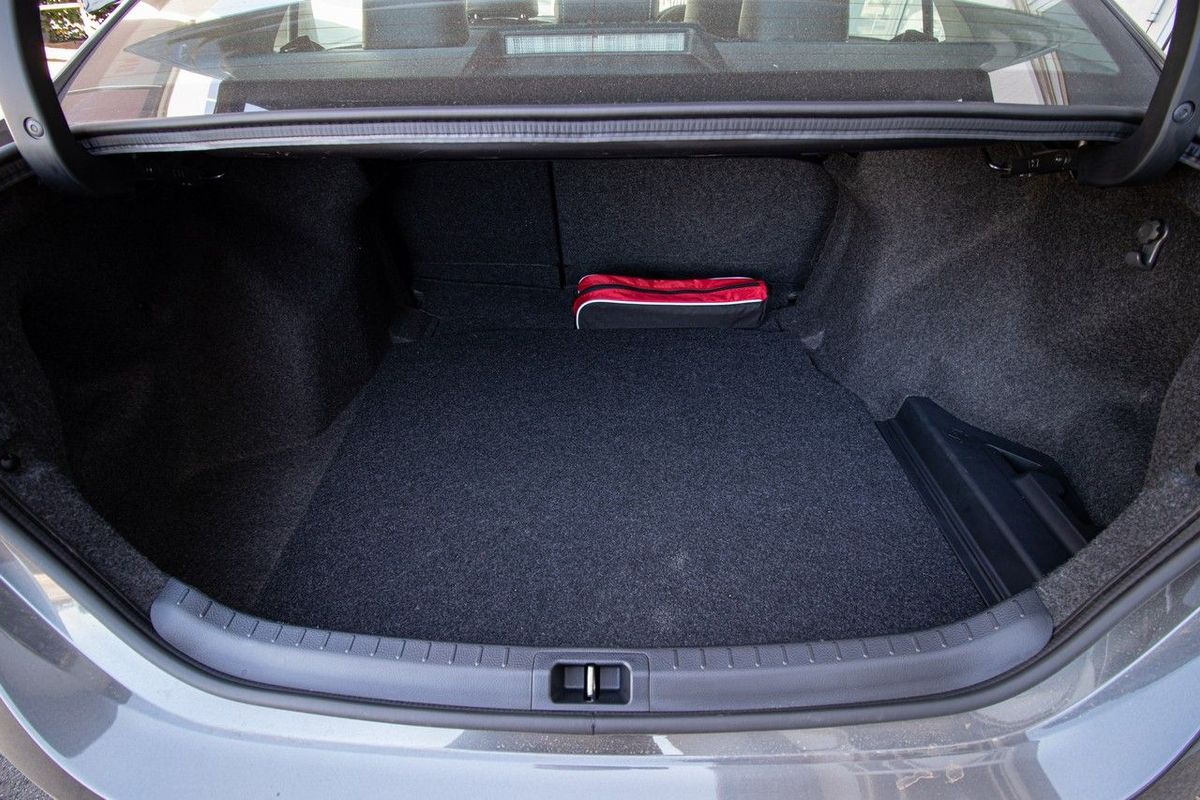
  • Load Space: 452 L 

Own a Toyota? Tell us about your experience here

SERIOUS ABOUT BUYING?

What is it? 


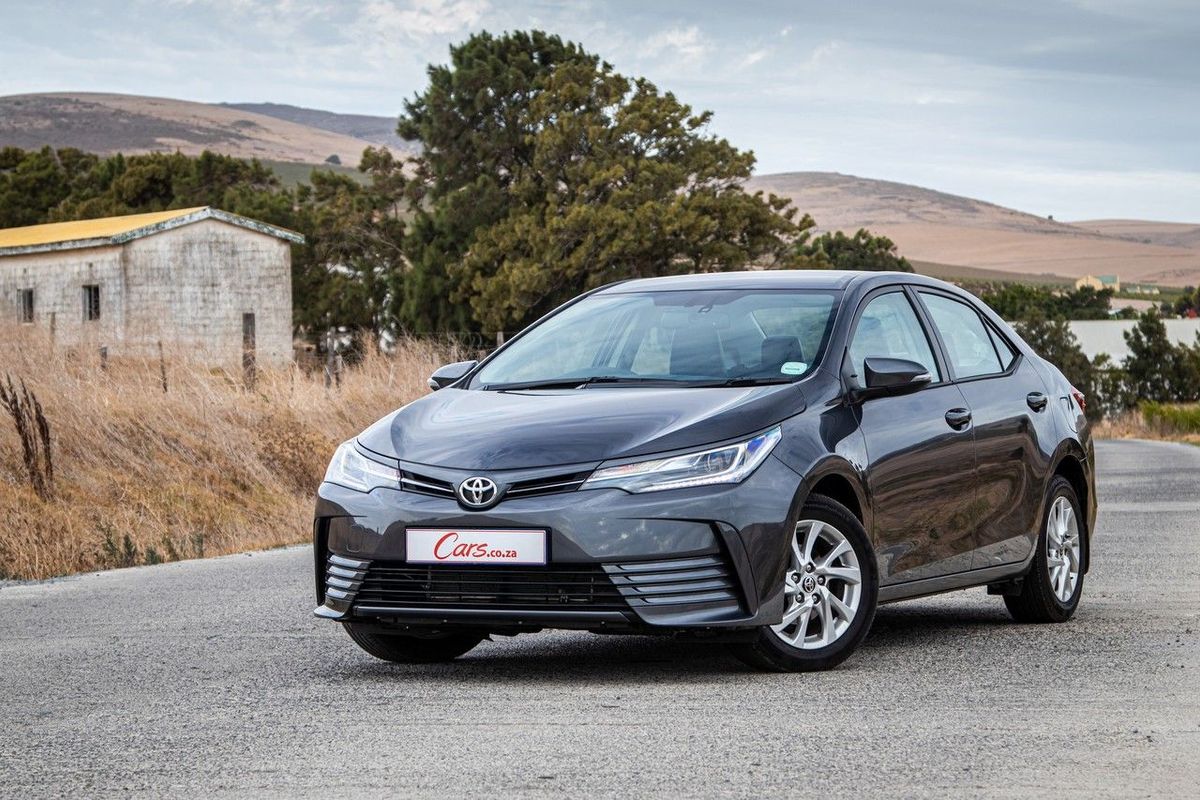
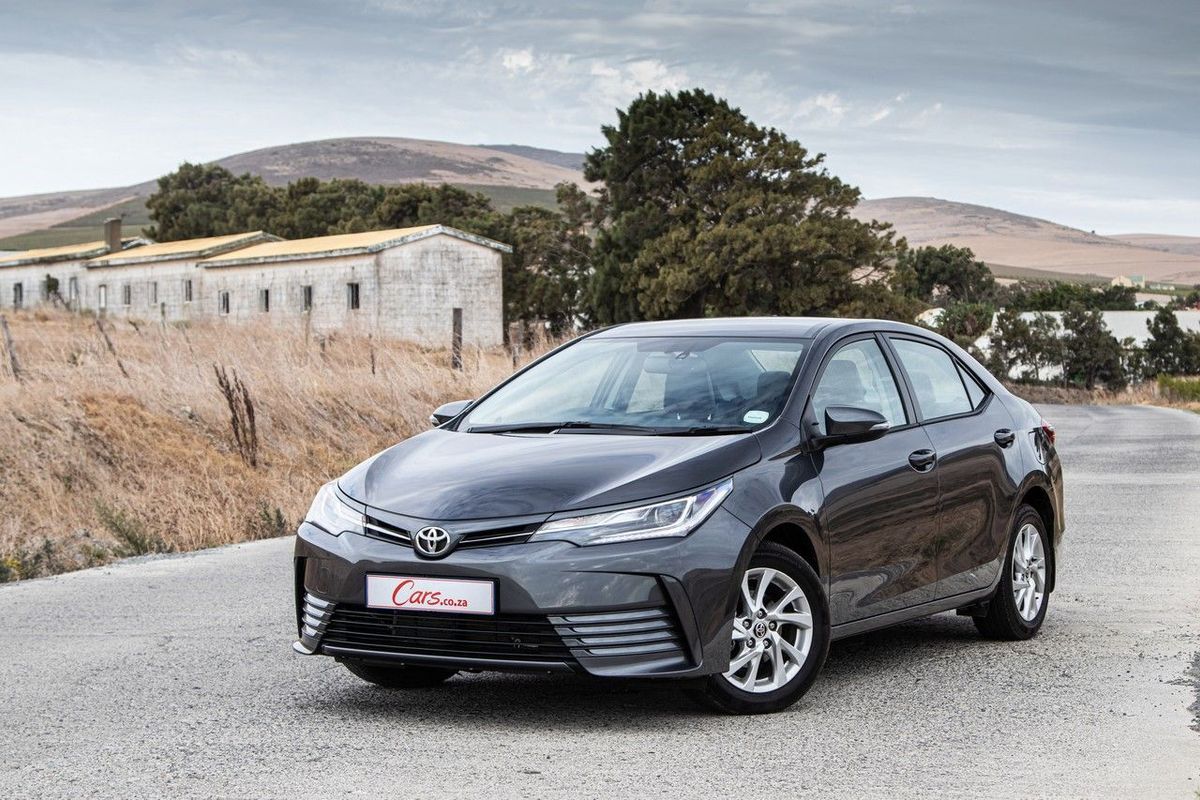
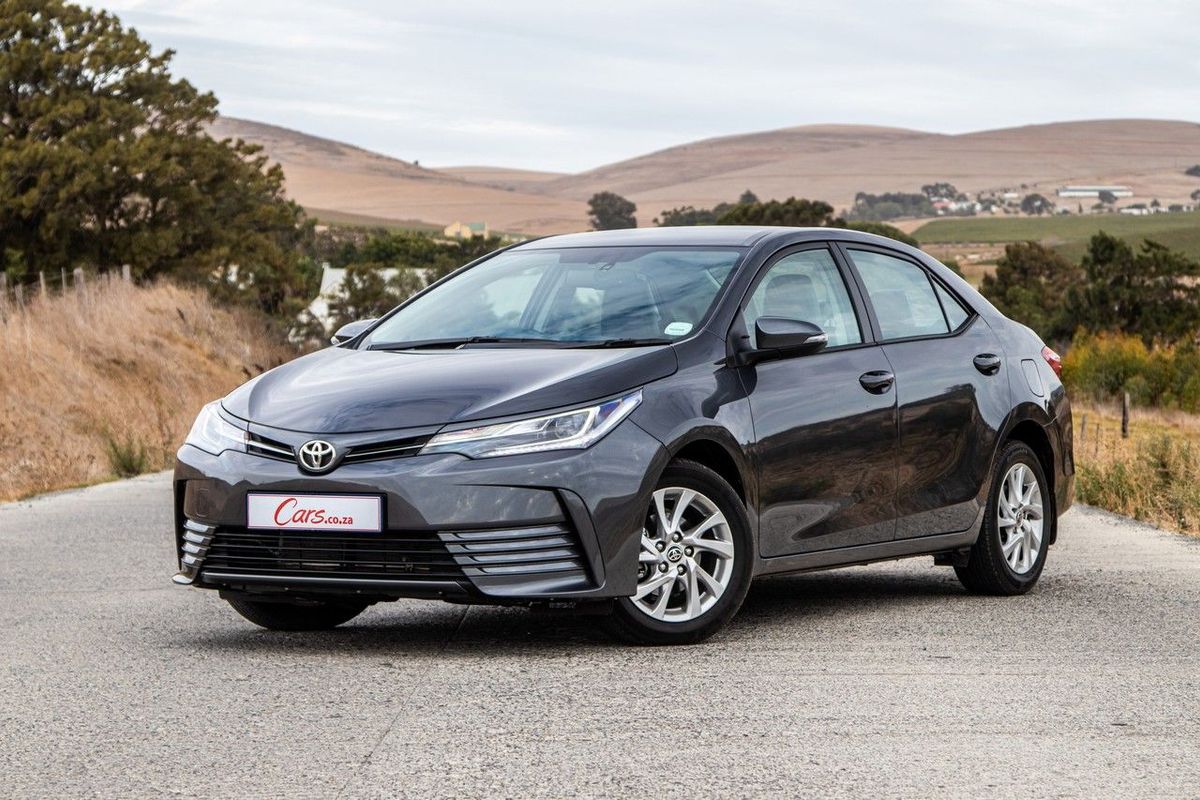
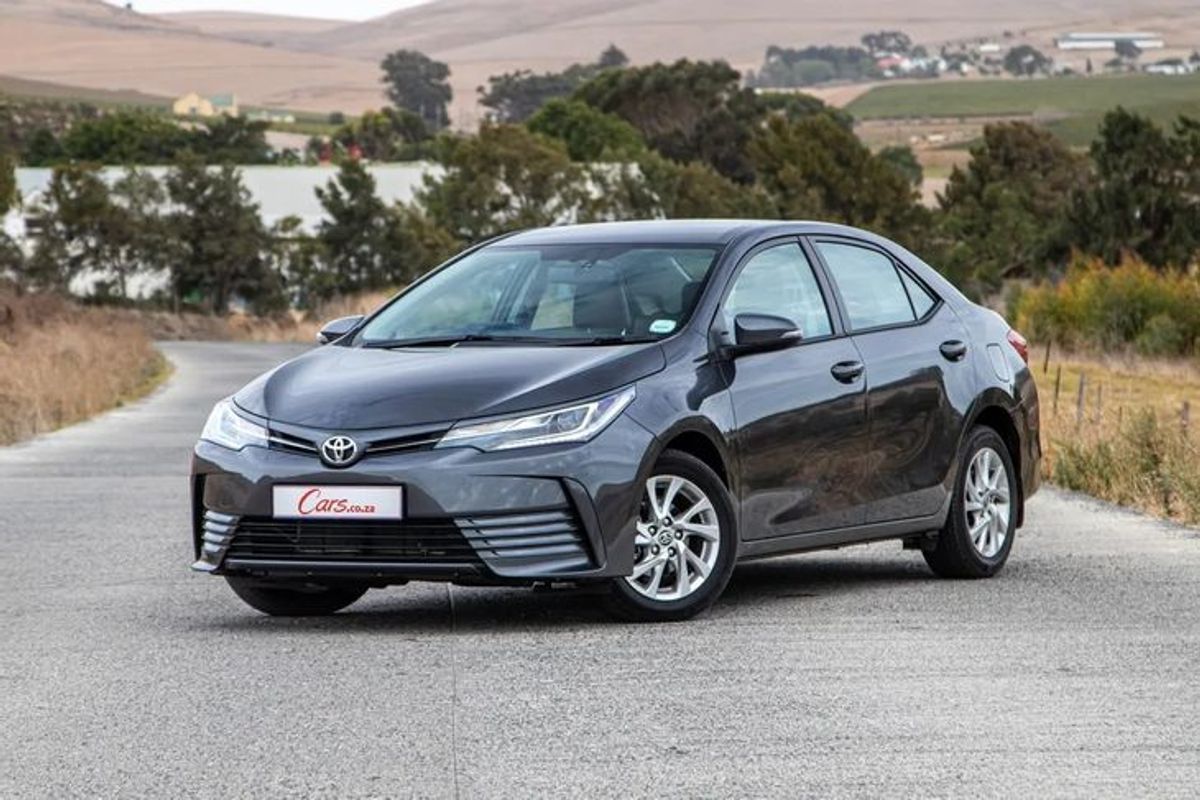
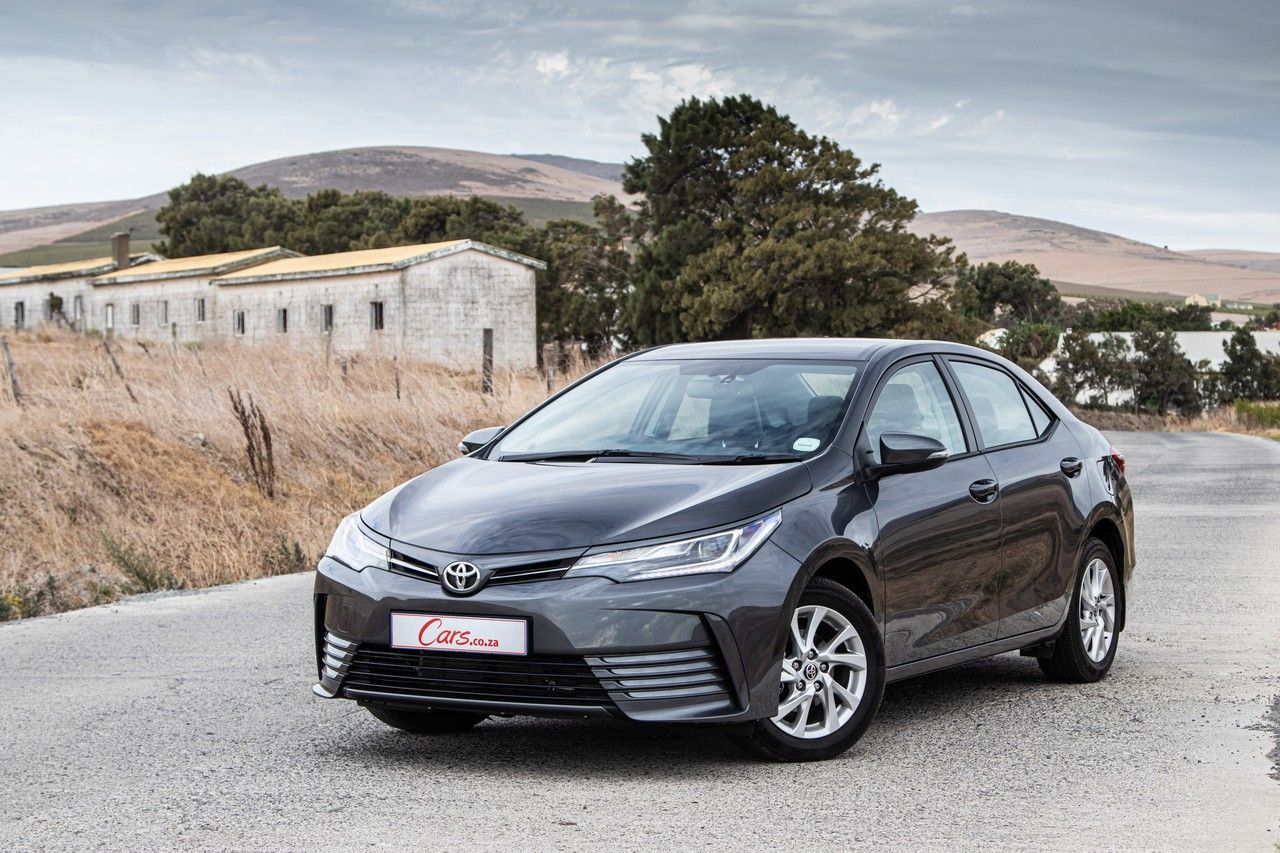
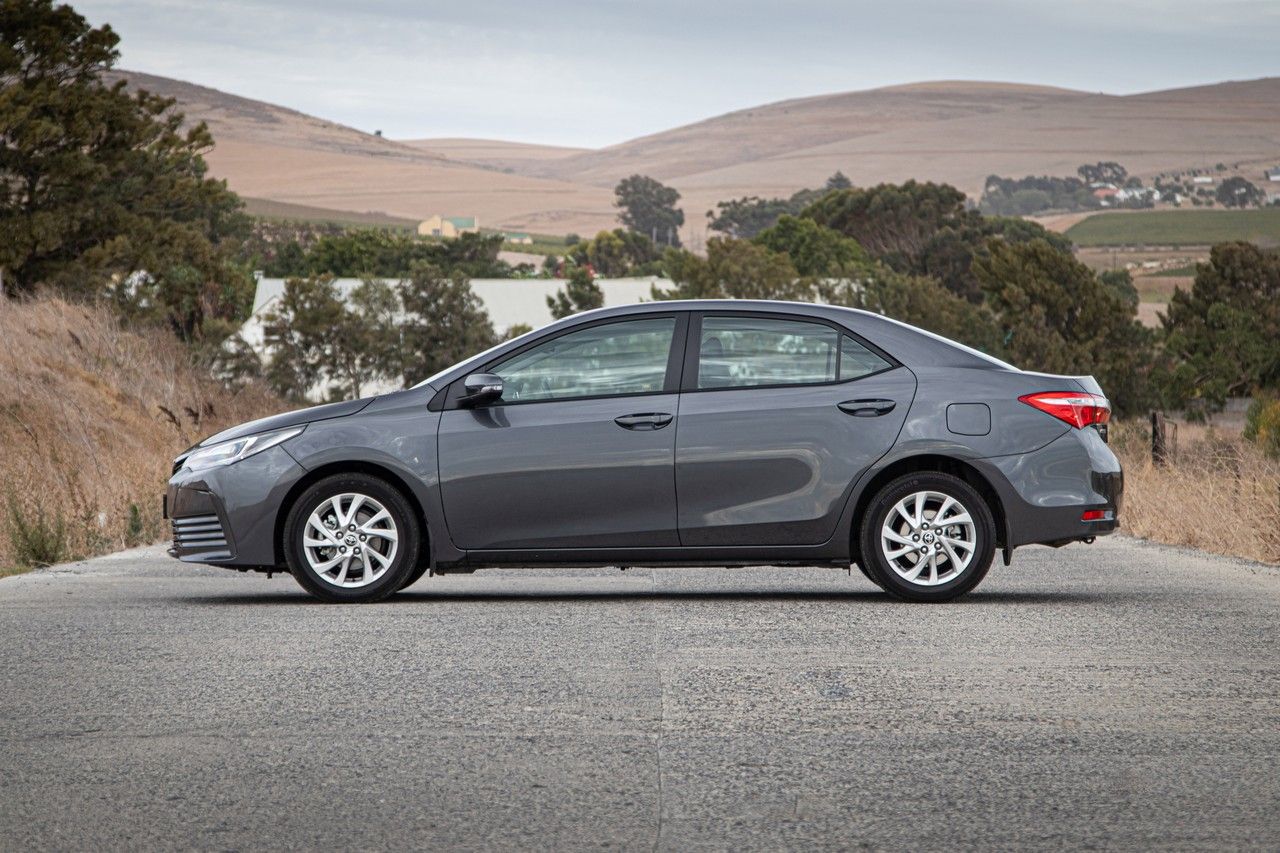
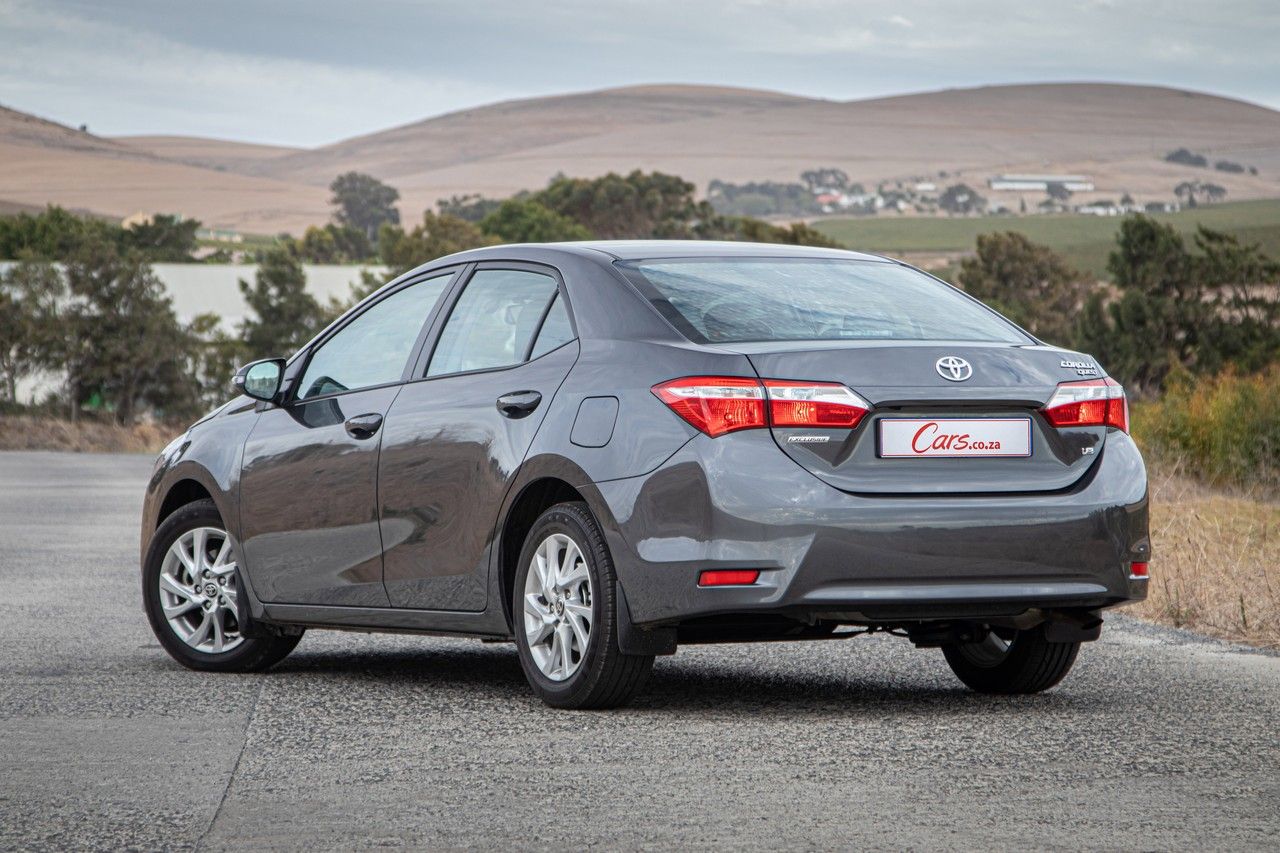
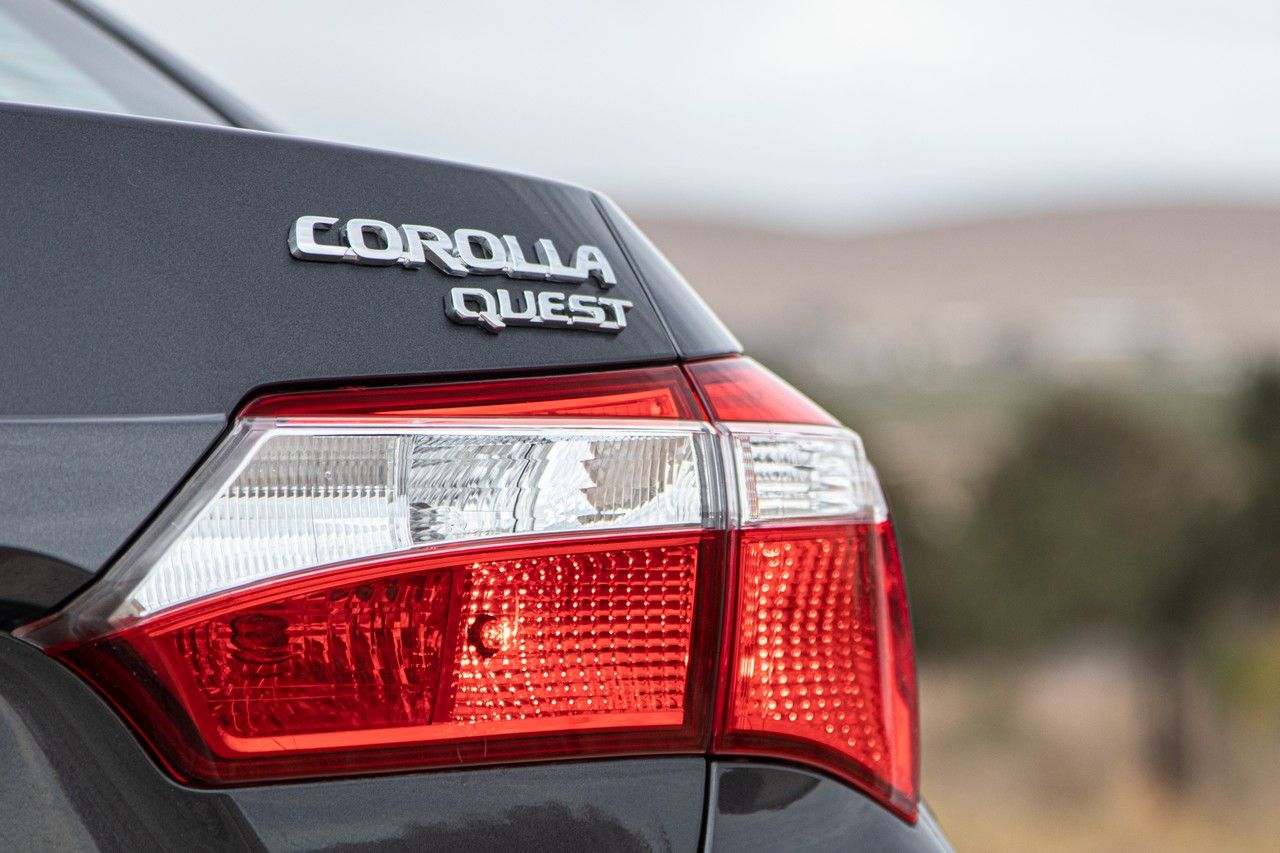
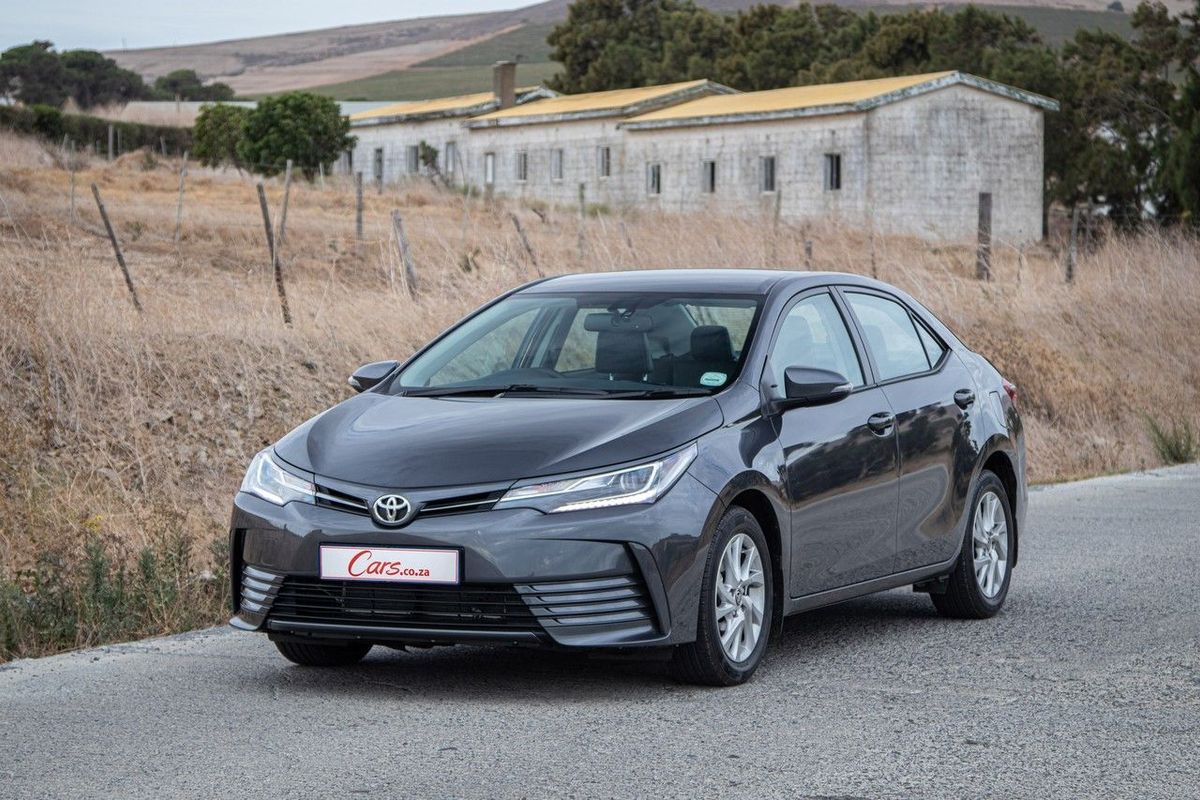
Stylish and purposeful, the Corolla Quest is certainly one of the better-looking sedans in its segment. 

Those who have been following the new vehicle market for a while – even if just casually – will know that a model will either be replaced with an all-new, next-generation version or discontinued when it reaches the end of its lifecycle…

However, Toyota has a history of producing older-generation Corolla variants as value-proposition (or legacy) models; the model that most will remember is the Tazz, which was based on the E90-series Corolla that debuted in the late '80s, yet the plucky Tazz remained in production until 2006! Then, in 2014, Toyota launched the first Corolla Quest, a locally-built, more-affordable sedan based on the then outgoing 10th-generation Corolla. Toyota South Africa sold the 11th-generation Corolla and 1st-generation Corolla Quest in tandem and achieved great success; the Prospecton-based firm sold 137 000 Corollas and the latter accounted for almost 64 000 of those sales. That’s good business! 

The outgoing 11th-generation sedan now forms the basis for the new Corolla Quest. The newcomer goes on sale this month (March 2020) and will soon be joined by the 12th-generation Corolla, for which we already have specs & prices

Despite sedan models' declining sales numbers (and not just in the compact segment) due to the growing popularity crossovers and SUVs, the Corolla remains a notable success story on local soil. With the 2nd-generation Corolla Quest, Toyota aims to continue its domination of the compact sedan segment (it holds 70%-plus market share). On test here is the range-topping Corolla Quest 1.8 Executive automatic. Let’s see if it deserves your attention…

How it performs in terms of… 

Performance and economy 


More powerful and more refined, the new Corolla Quest represents a marked improvement over its predecessor. 

For this latest iteration of the Corolla Quest, Toyota has done away with the previous model's 1.6-litre petrol engine and fitted the sedan with a naturally-aspirated 1.8-litre petrol engine, which offers peak outputs of 103 kW and 173 Nm, compared with the 90 kW and 154 Nm produced by its predecessor.

That additional torque, which is also produced earlier in the rev range compared with the previous 1.6, definitely makes its presence felt on the road; there’s noticeably more urgency in how the Corolla Quest reaches the national speed limit. The engine is paired with a continuously-variable automatic transmission (CVT), but before you jump on the CVT-bashing bandwagon: the transmission is actually well-matched to this engine. Engine noise and transmission drone only become mildly annoying when you drive the Corolla Quest hard, which is silly and, to be honest, unnecessary. That said, most buyers will find the Corolla Quest’s performance quite adequate on the daily commute.

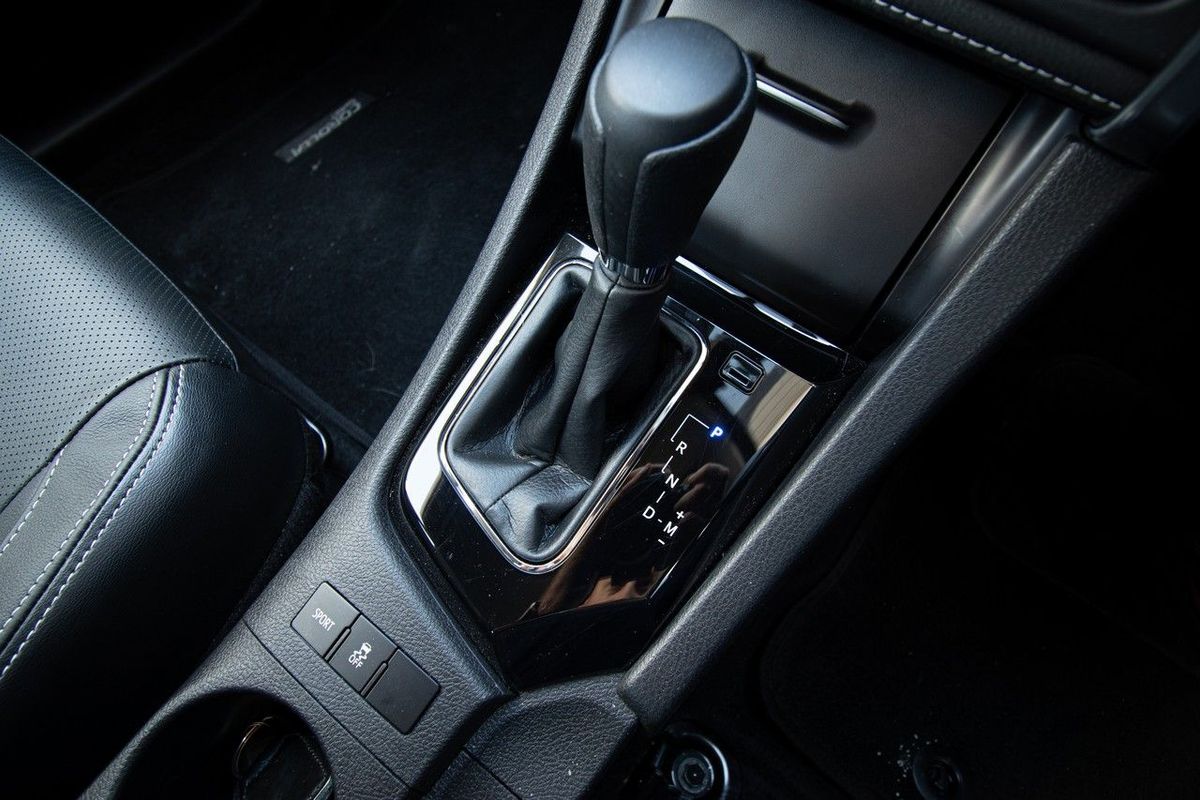
Due to the lack of near-instantaneous punch that a turbocharged engine provides, the Corolla Quest accelerates in a more linear manner, therefore overtaking manoeuvres require some forethought. Strangely though, there’s a Sport button and while it does sharpen throttle response somewhat, that dreaded CVT drone becomes very invasive. We feel there is no benefit to having a Sport button in a sedan that prioritises comfort and efficiency over sportiness. 

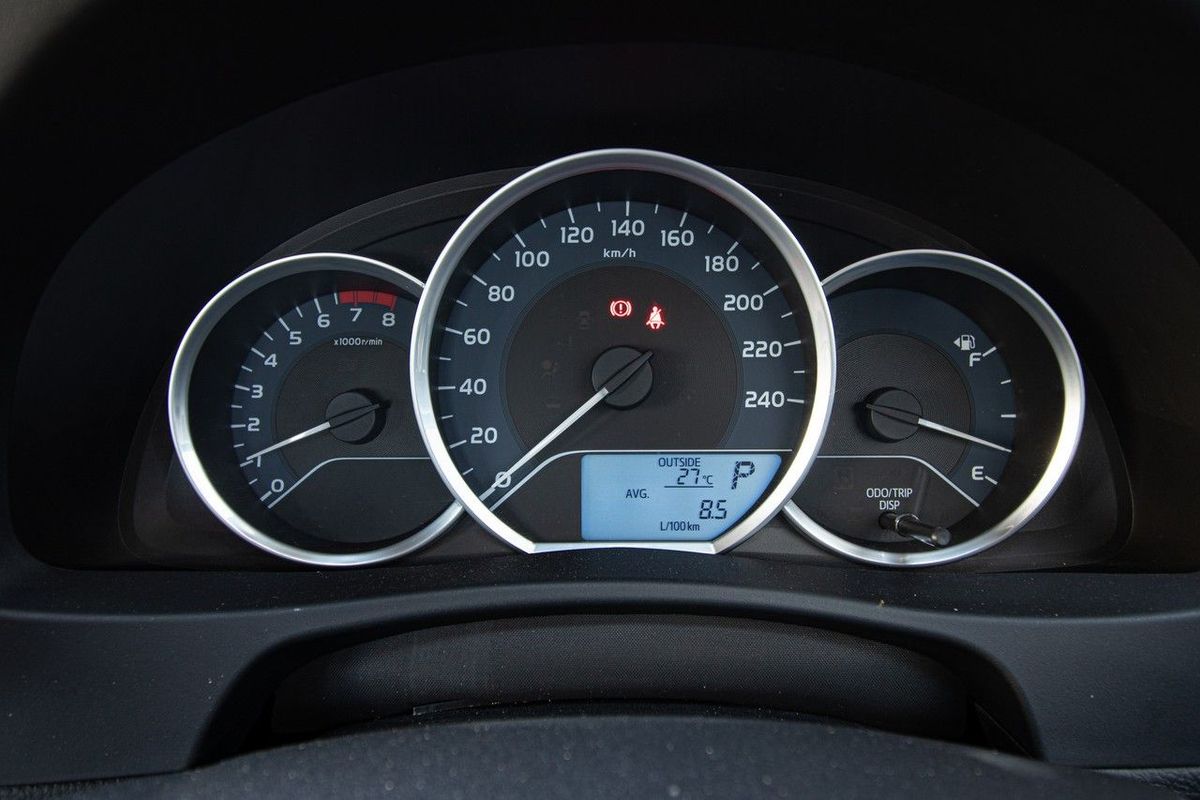
Toyota claims a combined fuel consumption figure of 6.3 L/100 km, but during its tenure in our fleet, we saw figures between 8- and 8.5 L/100 km. We do, however, concede that lower figures are achievable if you drive conservatively.  

Ride and Handling 


The Corolla Quest delivers a very premium ride at this price point. 

To its credit, the Corolla Quest's ride quality belies its budget-oriented price point. In combination with a more powerful engine, the pliant – but not soggy – suspension is probably the trait that deserves the most praise in this package. Indeed, the Corolla Quest delivers a wonderfully comfortable ride courtesy of its proven front McPherson strut and rear torsion beam suspension setup, which was, of course, carried over from the 11th-generation Corolla. 

Apart from its superb ride quality, the Corolla Quest has a nicely-weighted steering setup and it exhibits predictable and sure-footed handling ability. Although the made-to-a-cost Corolla Quest must surely have less sound insulation than the sedan on which it is based, road- and wind noise entering the cabin is impressively muted, which increases refinement and ultimately the quality of the driving experience.

Interior execution, features and practicality


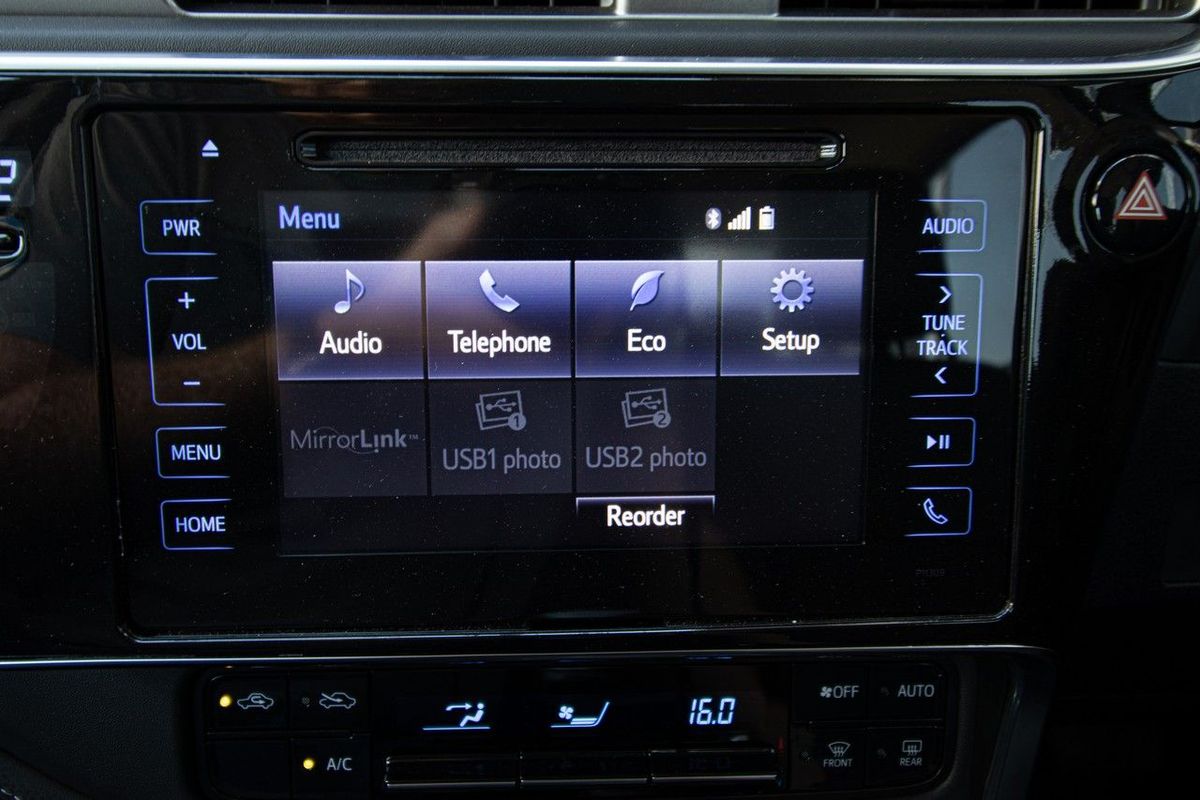
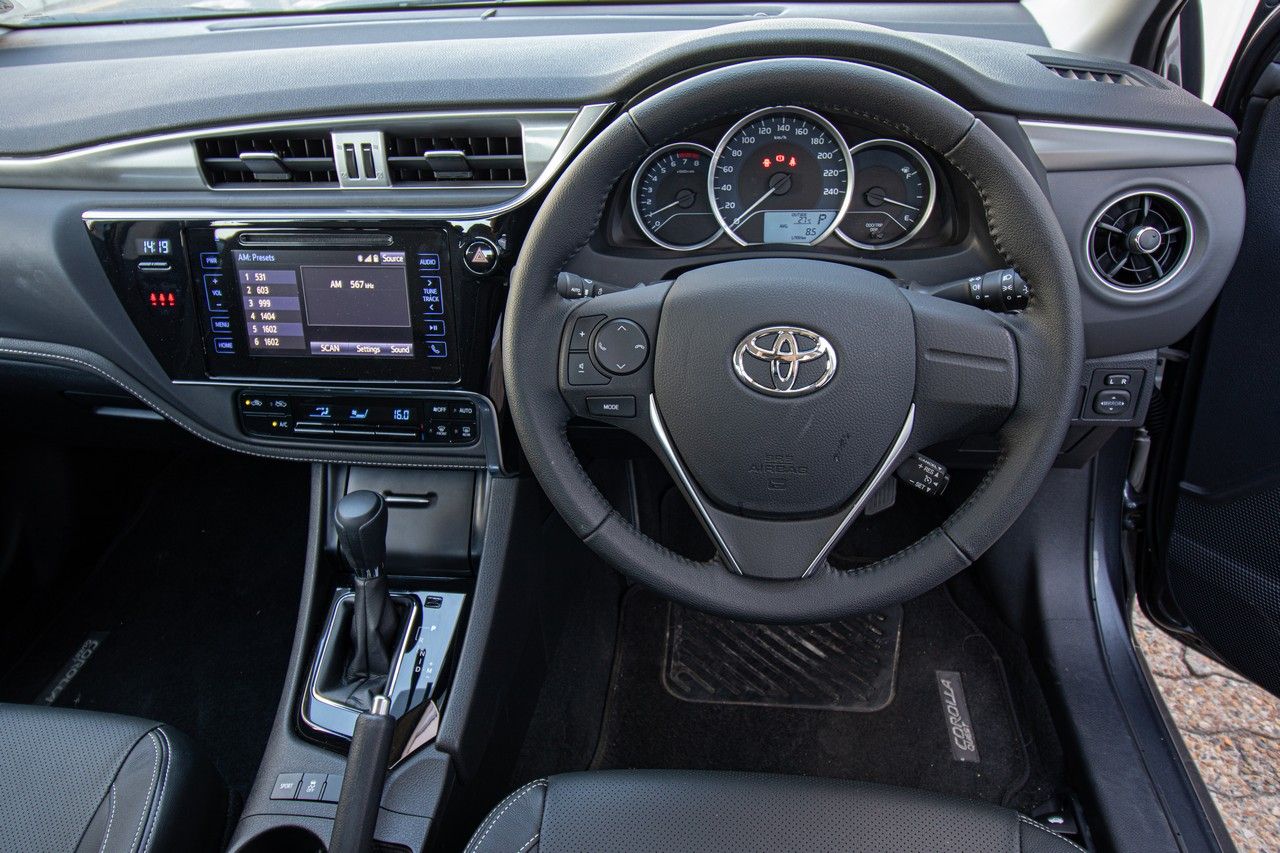
Interior build quality is very good as is the standard specification. It just needs Apple CarPlay and Android Auto!

There’s much to like about the interior of this Corolla Quest. Yes, it may not be particularly exciting in terms of design, but it’s functional and importantly, perceived build quality is very good. The interior is solidly made and squeak free!

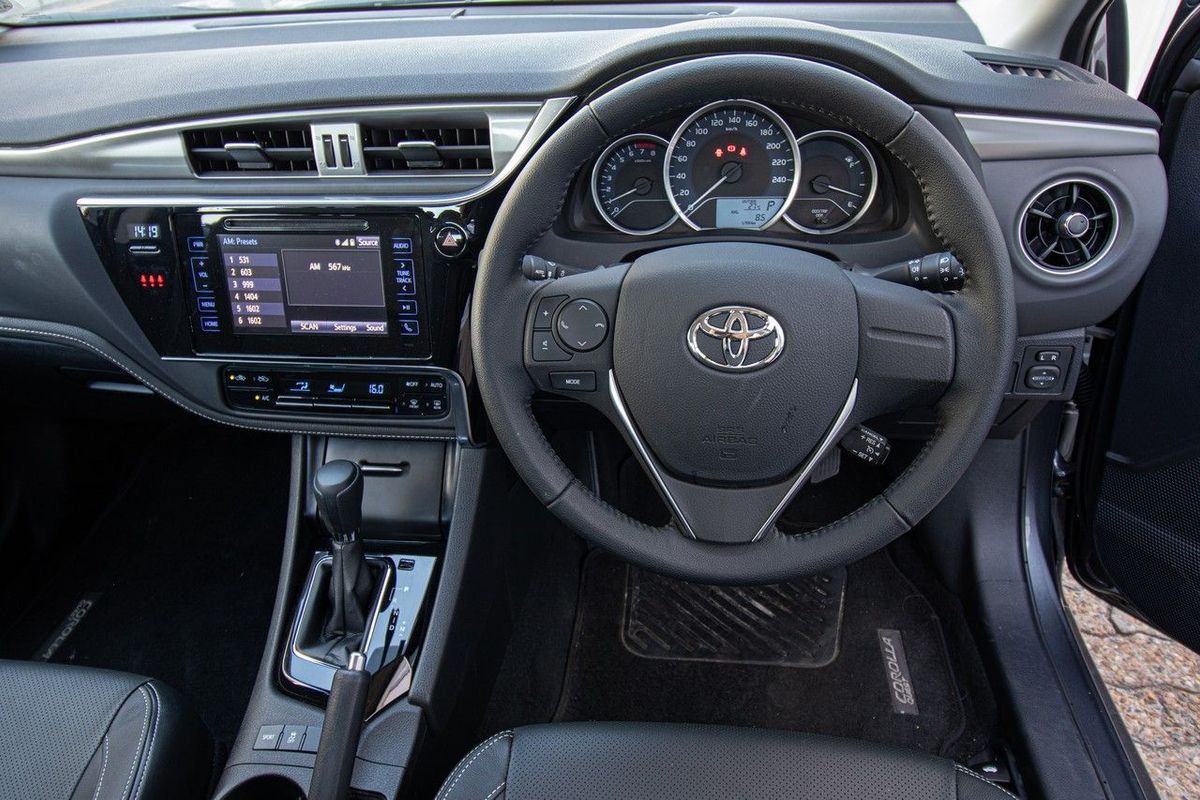
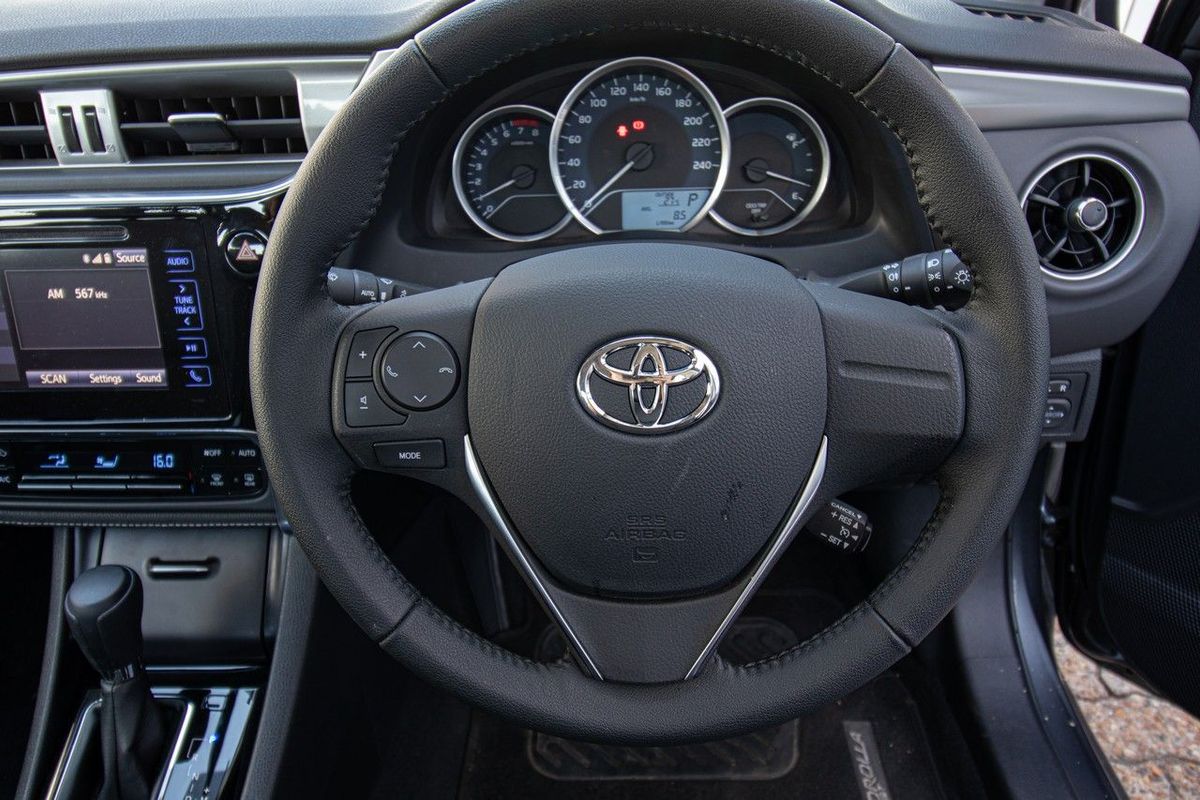
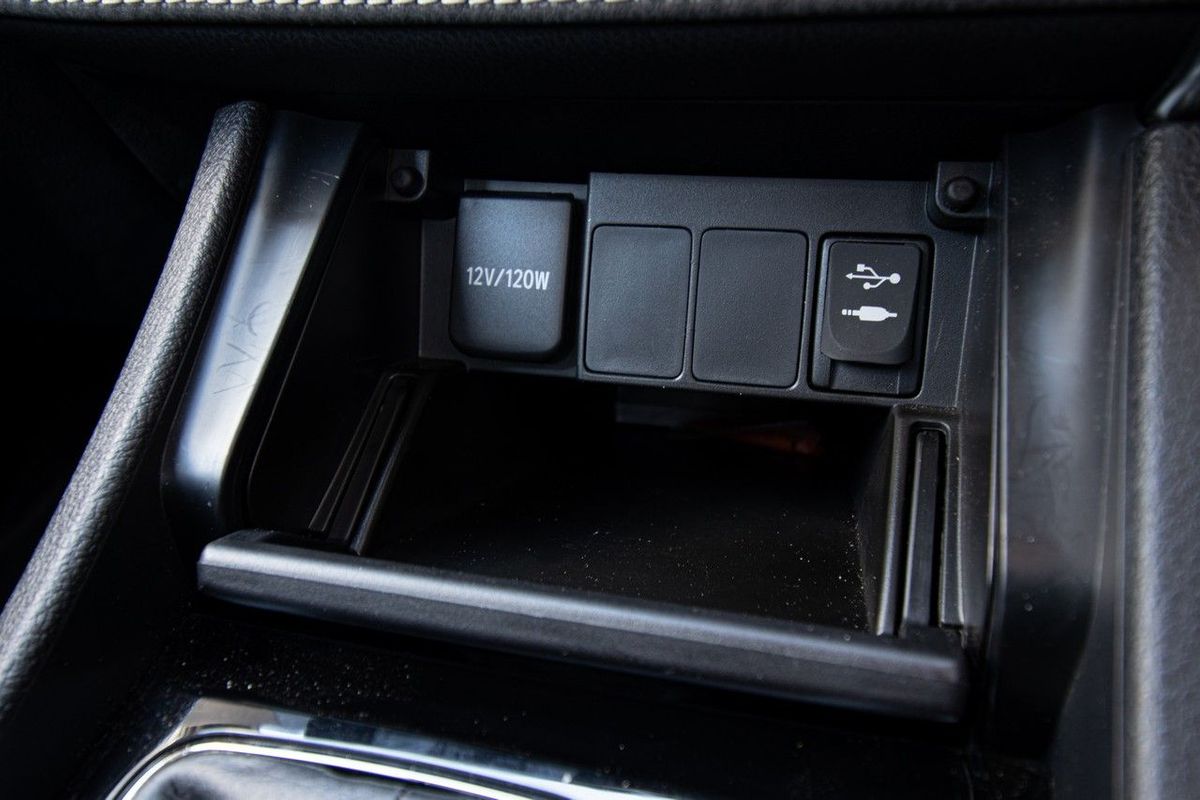
The leather seats, in particular, are comfortable by virtue of their shape and more-than-sufficient cushioning; the steering wheel has mounted audio and Bluetooth controls and is adjustable for rake as well as reach; the infotainment system is familiar (sourced from sister products such as the Hilux and Fortuner) and while it covers the basics, it lacks connectivity features such as Android Auto and Apple CarPaly. There is also a USB port for charging devices. 

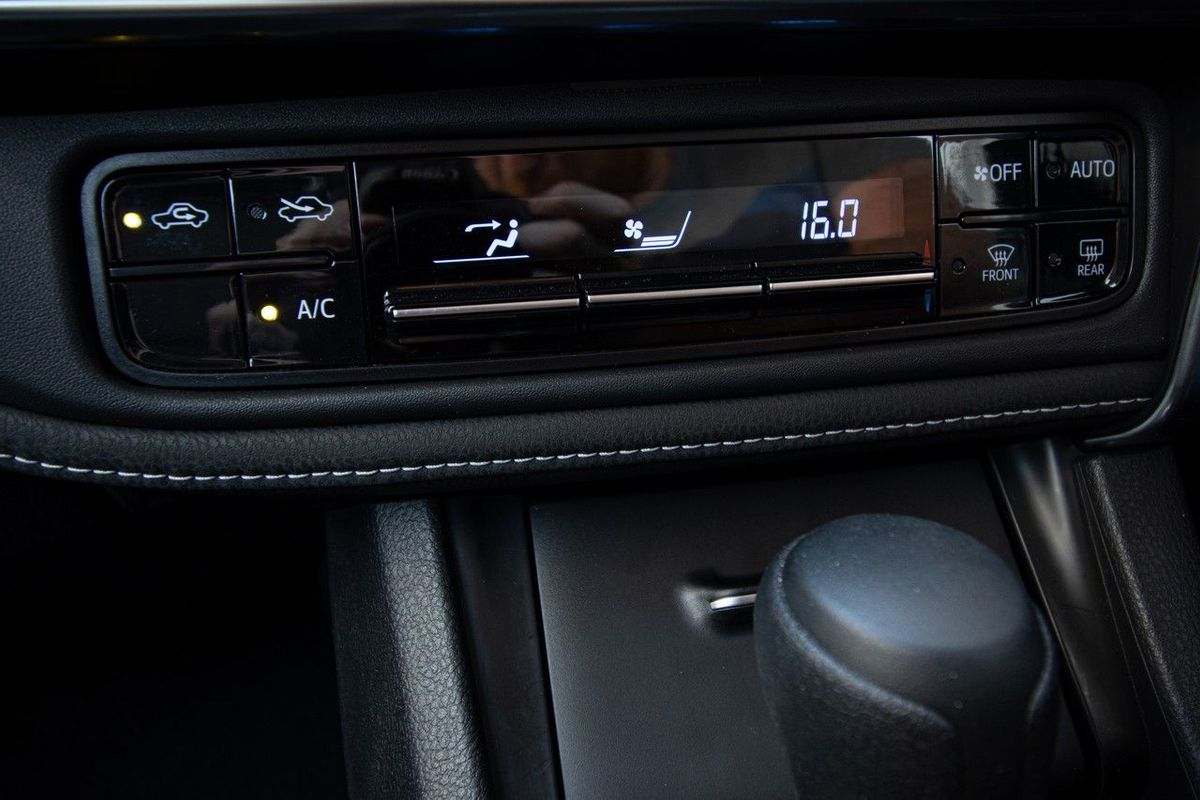
Other nice-to-have features in this top-spec derivative include rain-sensing wipers, keyless access and start, dual-zone climate control (automatic aircon), cruise control, rear park distance control with a reverse-view camera and electric windows. On the safety front, the Corolla Quest is fitted with 5 airbags, ABS with EBD, brake assist and electronic stability control. 

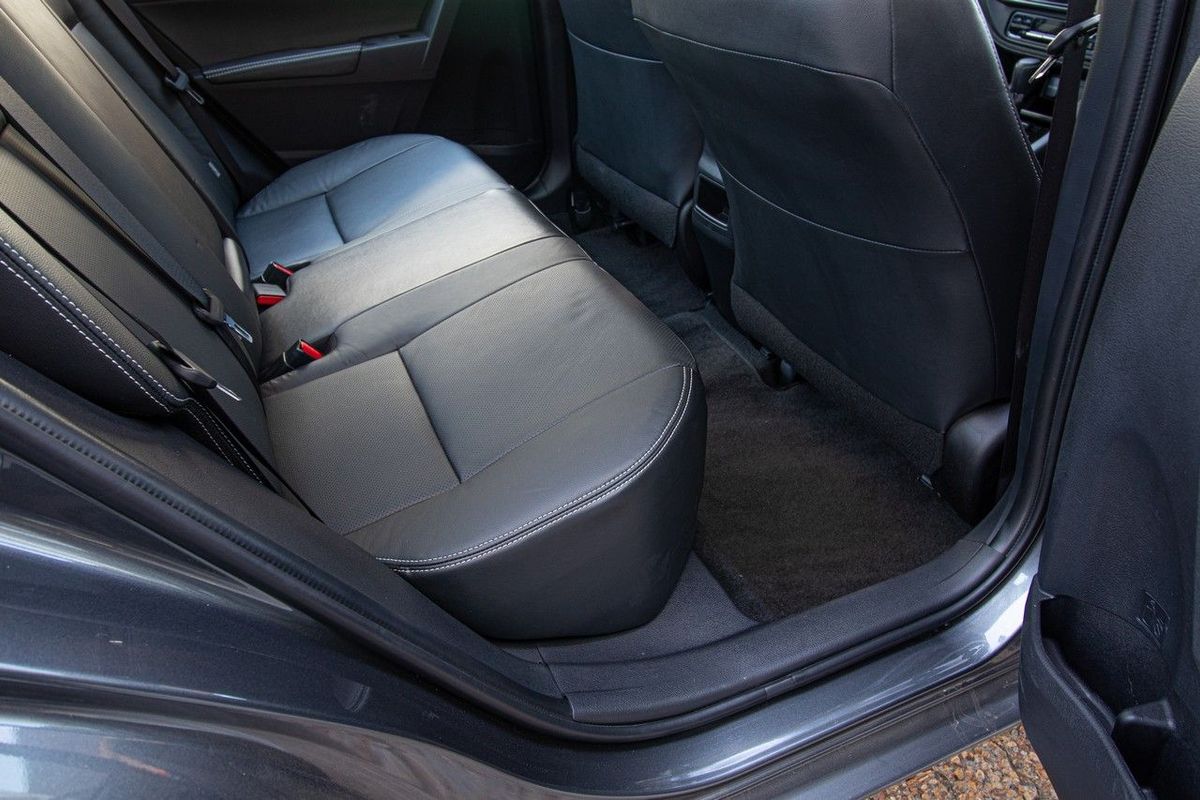
In terms of practicality, the Corolla Quest has a large boot with a substantial claimed capacity of 452 litres. Also, this range-topper has 60:40 split rear seats, which is great, because you can load longer items through into the cabin. Rear passenger legroom is more than adequate and there’s ample storage space in the door mouldings, centre bin, and ahead of the transmission lever. The 2 cupholders up front are handy for storing your coffee/s on the morning commute…

Price and warranty 

The Toyota Corolla Quest 1.8 Exclusive automatic is priced from R317 700 and is sold with a 3-year/100 000 km warranty and a 3-services/45 000 km service plan. 

Buy a Toyota Corolla Quest on Cars.co.za

Verdict


The Corolla Quest is easy to recommend in this segment. It's a quality product that's definitely worth considering. 

This 2nd-generation Corolla Quest is a great product overall; it’s easy to understand why it has been such a success story for Toyota South Africa: it exudes quality and value for money. Not only is this latest version more powerful than before but it’s also more refined and offers higher levels of comfort, while being well-equipped with convenience features. This engine and CVT combination will suit its intended target market well; it strikes a reasonable balance between performance and economy. However, while we feel that the lack of Apple CarPlay and Android Auto is somewhat disappointing, we don’t think it’s a deal-breaker in this segment. Hopefully, Toyota will institute updates later this year. 

When stacked up against rivals such as the ageing and pricier Honda Ballade, Hyundai Accent, Volkswagen Polo sedan and less-premium Suzuki Ciaz, the Corolla Quest makes a very strong value case for itself – yes, it is a legacy model, but it is based on a product that was only recently superseded. It does not feel stripped out and basic – quite the opposite. With the imminent arrival of the all-new Corolla on local soil, we suspect that the Corolla and Corolla Quest tag team will continue to dominate the (admittedly shrinking) segment. Should you consider this Corolla Quest? You'd be silly not to… It's a shining example of a locally-produced product that outshines its imported rivals with aplomb.

Related content: 

Toyota Corolla Quest (2020) Launch Review

Toyota Corolla sedan (2020) Specs & Price

Toyota Corolla Hatch Updated for 2020

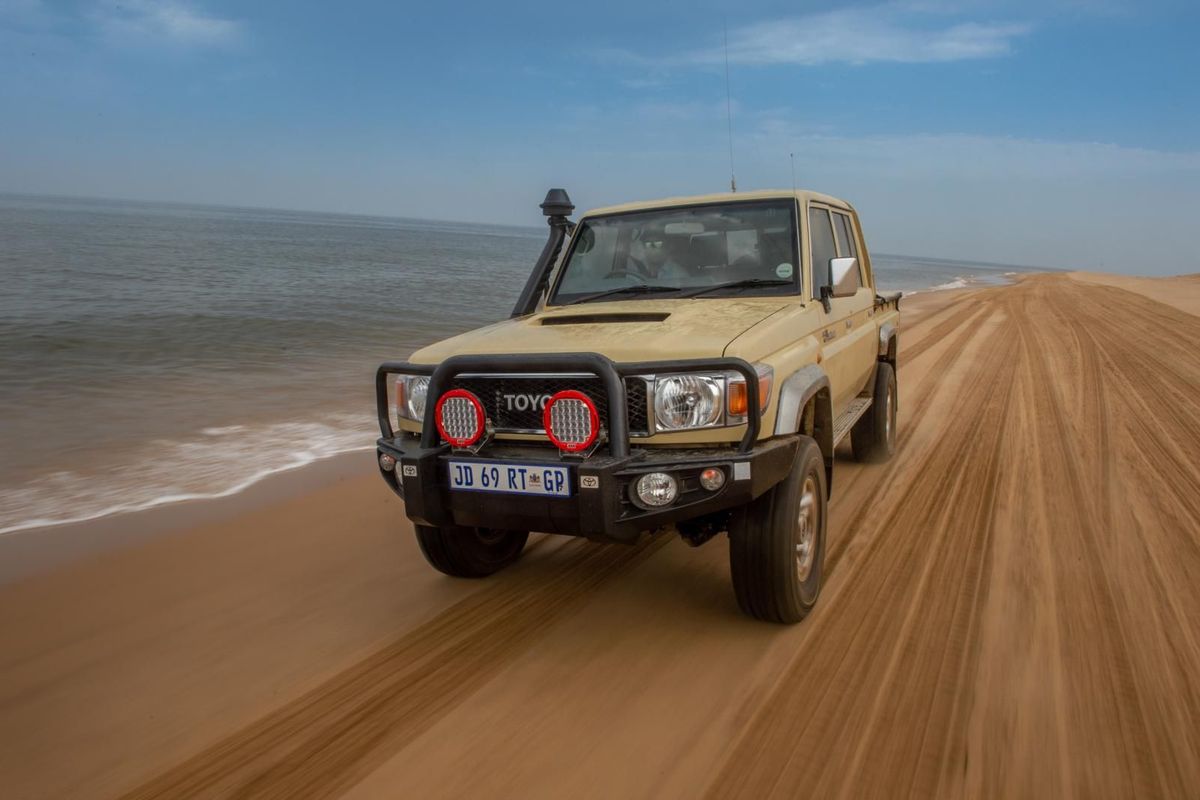
Toyota Land Cruiser Namib Production Extended

All 60 Toyota Land Cruiser Namib editions were sold by January 2020, and with the vehicle still in high demand, Toyota South Africa has commissioned a few more. Here's how much this unique and one-of-a-kind overlander costs, plus detailed specs.

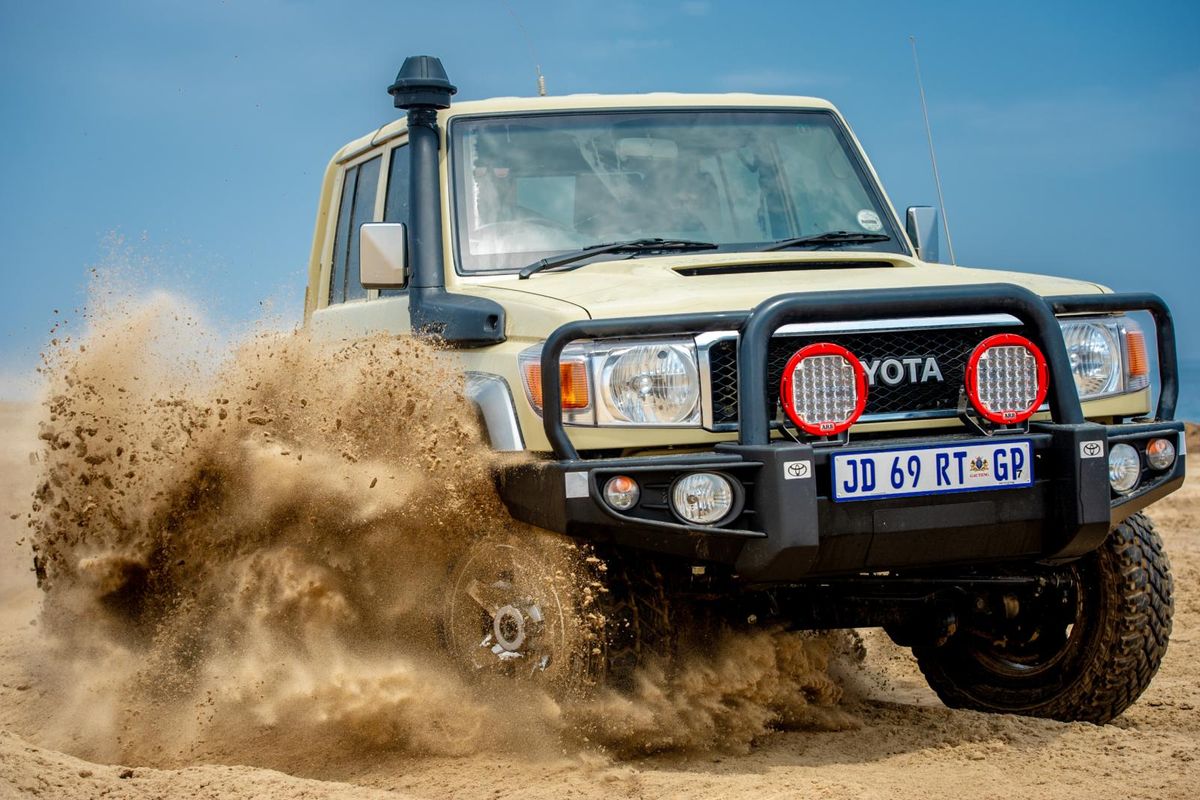
The thing with limited-edition vehicles is demand quickly outstrips supply, especially if you know the vehicle on offer is one-of-a-kind and dripping with coolness. We're not talking unaffordable and unobtainable European exotica here either, but rather the humble and iconic Toyota Land Cruiser Namib edition. Toyota South Africa made just 60 of them back in the 3rd quarter of 2019 and by January 2020, all were gone. Rather than disappoint Toyota's incredibly loyal customers, the brand has made a few more, plus added a single-cab option.

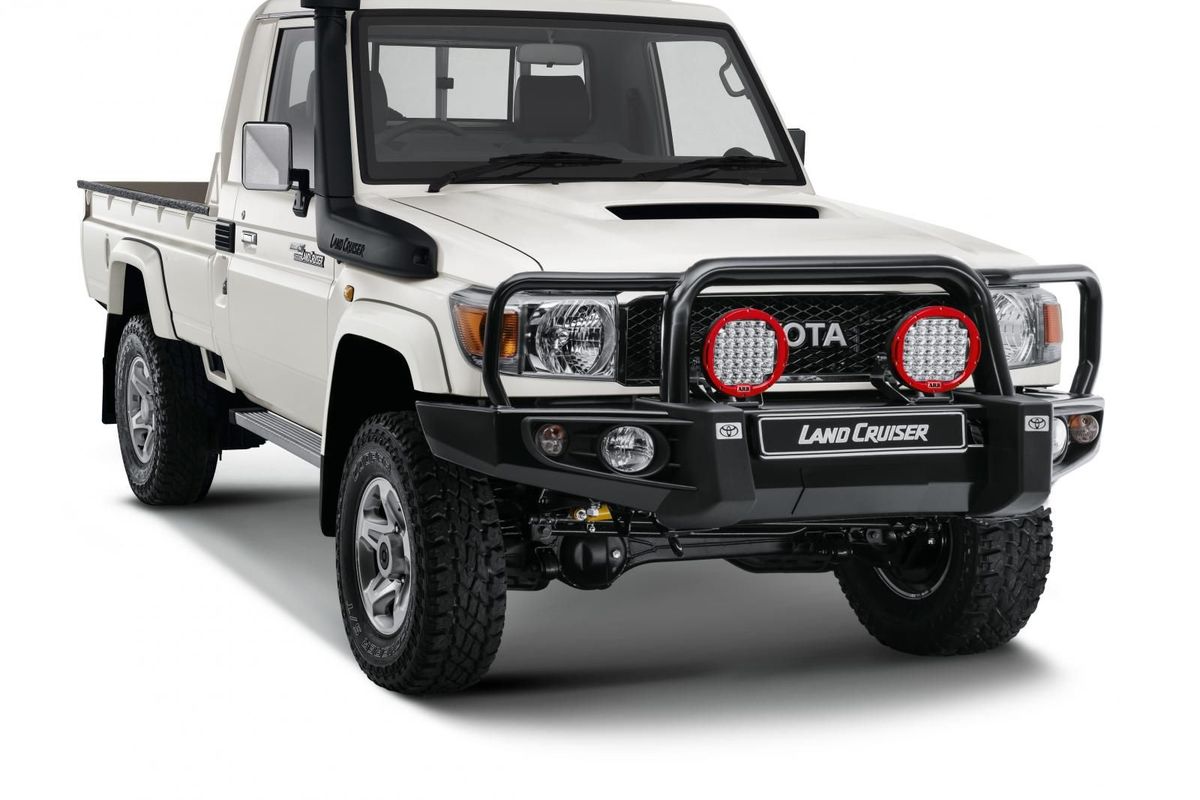
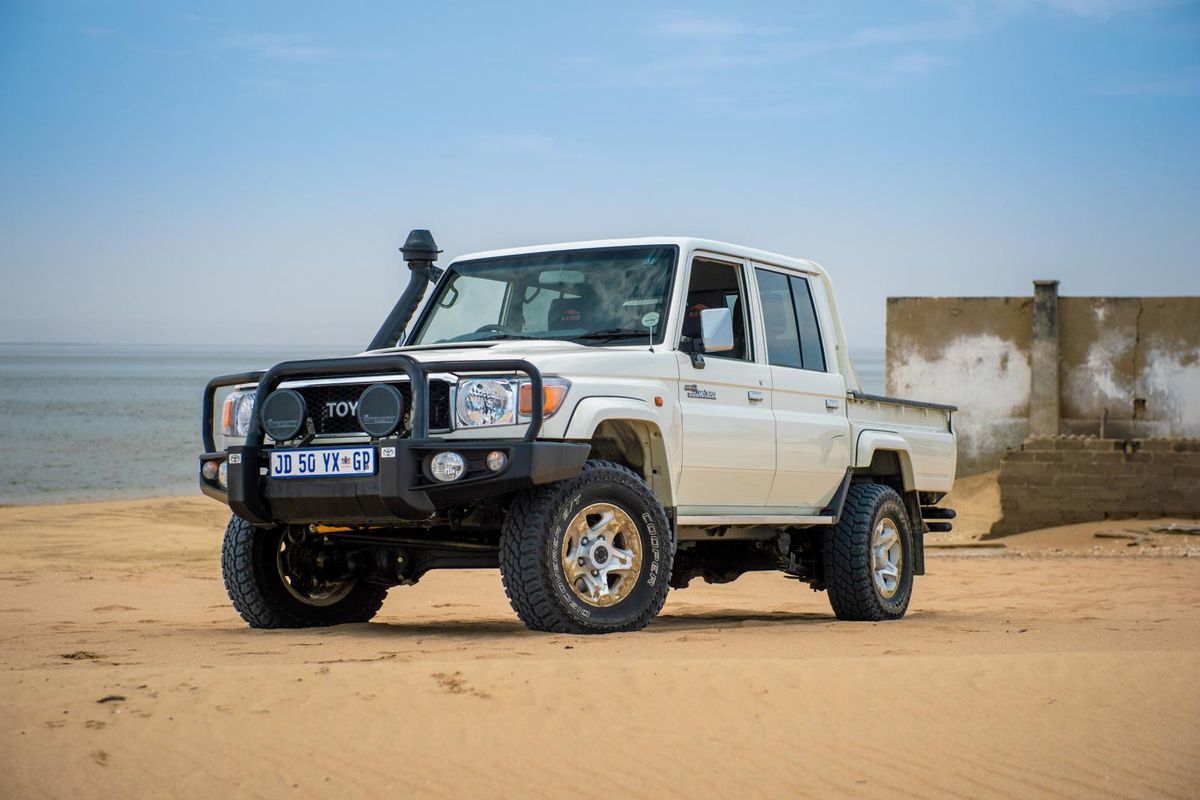
What exactly do you get in your single- and double-cab Land Cruiser Namib edition? 

Toyota Land Cruiser Namib Features

Exterior:
Front grille with robust mesh design and prominent Toyota lettering
?Stylised Namib badging on fenders and tailgate
Heavy-duty steel front bumper with integrated nudge-bar and headlight protectors
Large, high-intensity LED spotlights with protective covers
Tubular rear step with integrated towbar
Protective loadbin skin

Interior:
Glovebox with integrated cooling duct
Protective canvas seat covers with Namib insignia and anti-scuff panel
Roof-mounted console with LED lighting and storage binnacles

Technical:
Upgraded off-road suspension
265/75/R16 Cooper Discoverer S/T Maxx versions with white lettering

Exterior Colours:
The Namib edition is available in two colours; Ivory White and Sand Beige.

Standard Specification:
The Namib edition retains all of the standard Land Cruiser 79 D-Cab V8 specification, which includes a touchscreen audio system with built-in Navigation, Bluetooth, front power socket, power windows, tilt and telescopic steering column, remote central locking and an anti-theft system. The safety systems include driver and passenger airbags alongside an anti-lock braking system (ABS).

Powering the Toyota Land Cruiser Namib is the 4.5-litre turbodiesel engine, which produces a tidy 151 kW and 430 Nm, with consumption sitting at a claimed 11.3 L/100 km.

Can't afford one of these beauties? Start your search for a standard Toyota Land Cruiser here.

Toyota Land Cruiser Namib Price in South Africa (March 2020)

Toyota is offering its Land Cruiser Namib with a 3-year/100 000 km warranty. Customers can purchase optional service plans according to their needs. There will be a further 60 single-cab and 60 double-cab models (120 combined), over a 6-month period, with the arrival of the first units at dealerships in the very near future.

Land Cruiser 79 4.5D V8 S/C Namib  R 842 200

Land Cruiser 79 4.5D V8 D/C Namib  R 911 500

Further Reading

Land Cruiser Sales Total 10m

Toyota Prepares All-New Land Cruiser

Infotainment Boost for Land Cruiser in SA

Testing the Land Cruiser Legend in Angola

Land Cruiser Bakkie Goes Namibian