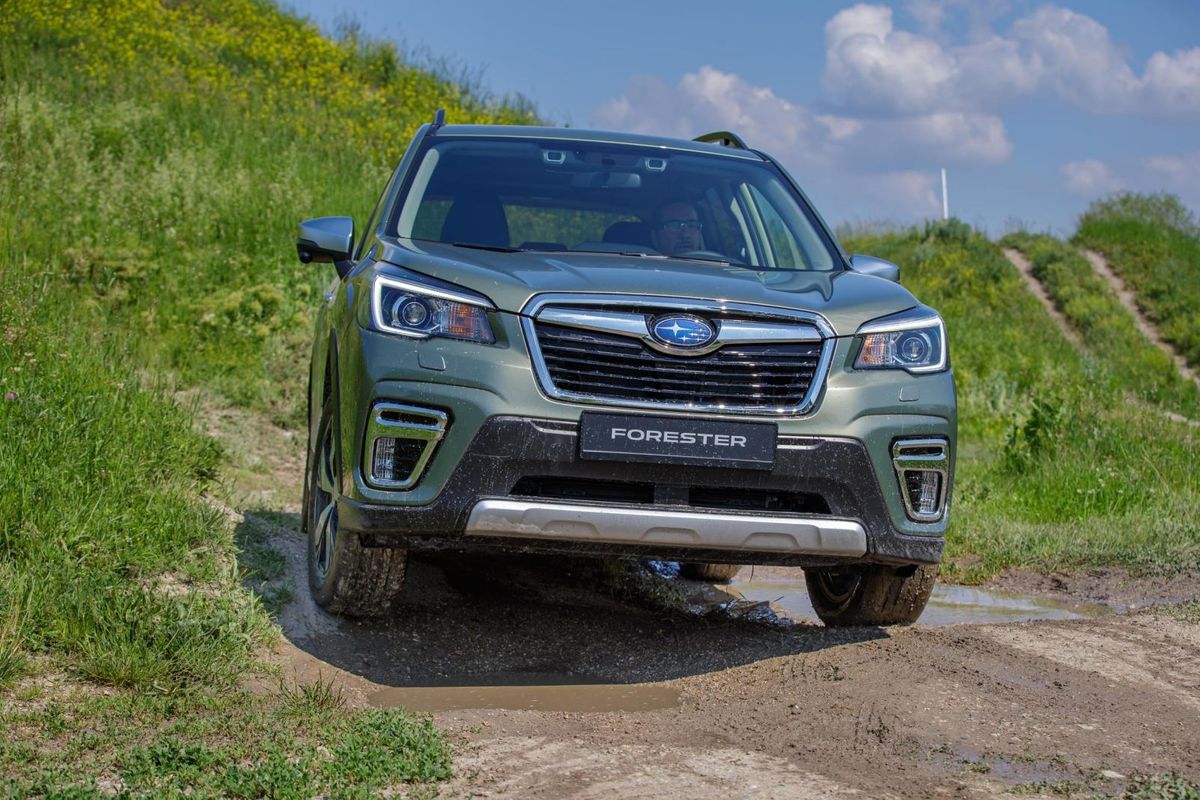
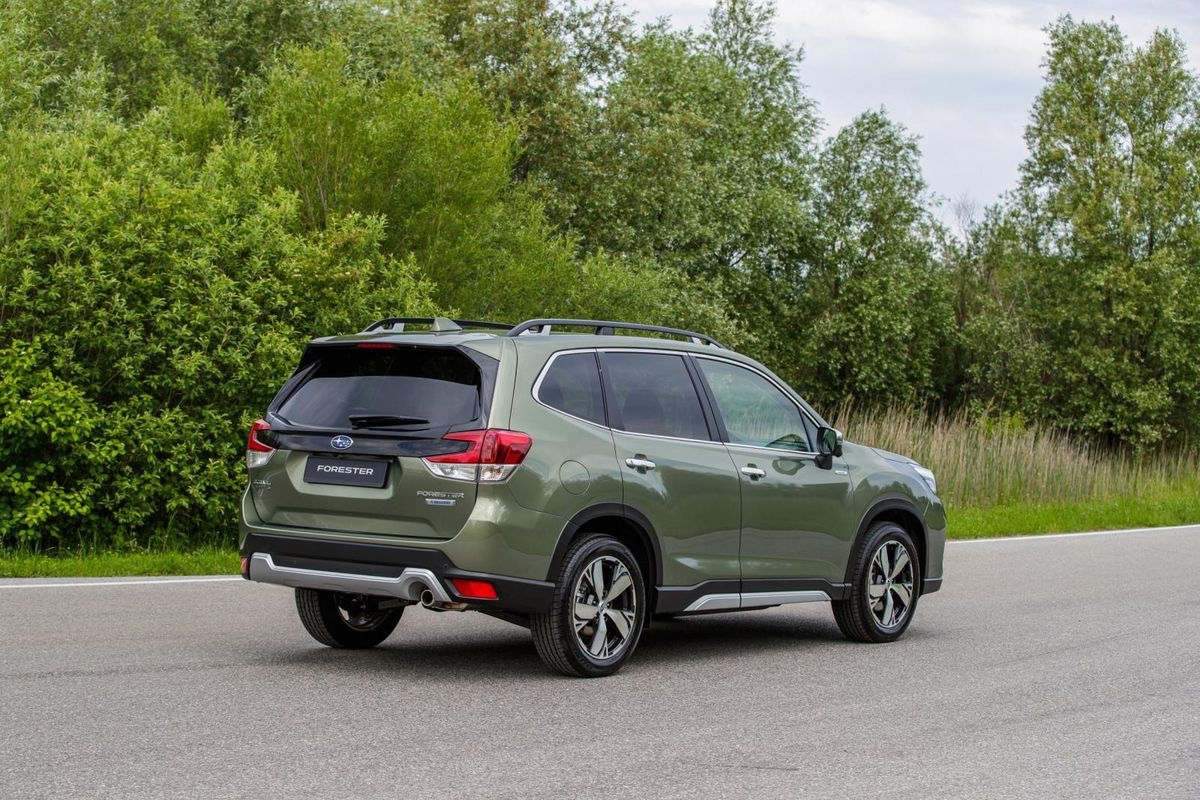
Subaru has announced an electrified version of its Forester, dubbed 'e-Boxer.'
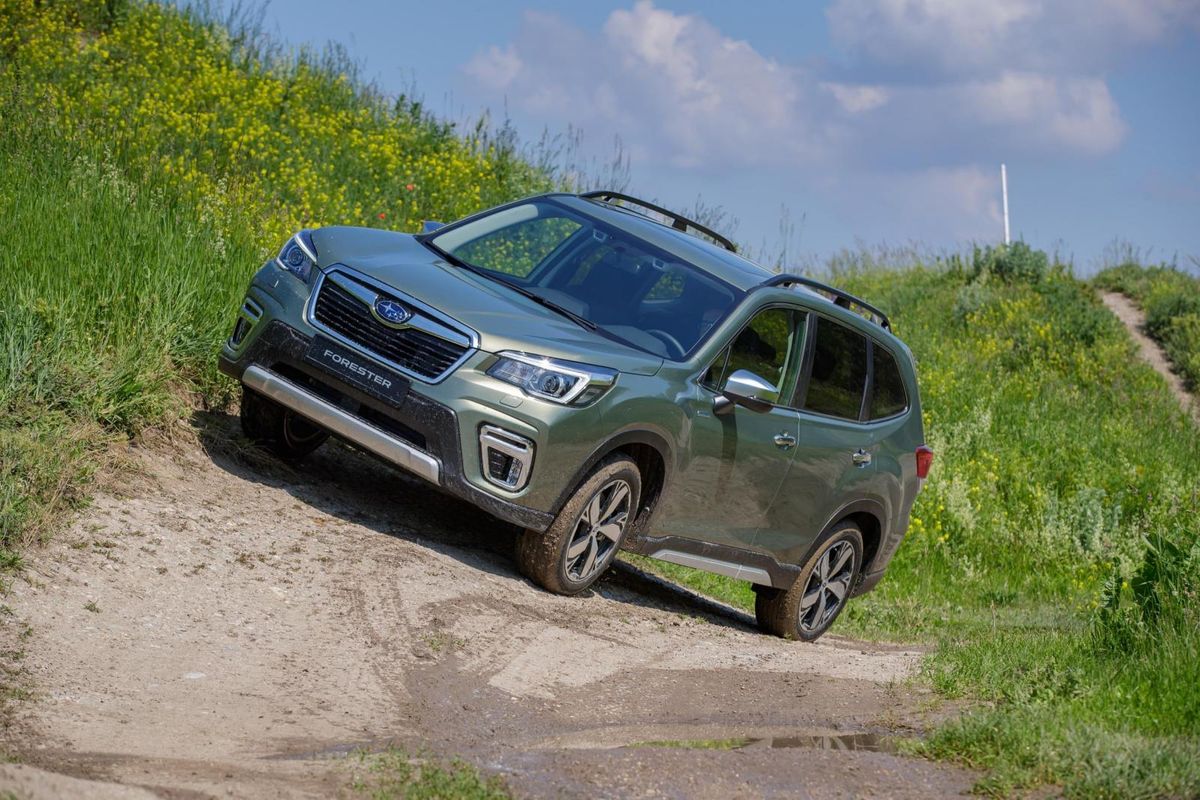
The Subaru Forester is a popular SUV thanks to its excellent all-road capability and practicality. Now for 2019, there's an electrically-assisted version. It's called the Subaru Forester e-Boxer and it comes loaded with tech.
Combining the 2.0-litre direct-injection petrol engine with an electric motor. With its lithium ion battery unit located under the boot floor, the Subaru Forester e-Boxer can be driven on pure electric power at speeds of up to 40 kph. There are 3 driving modes: EV Driving, Motor Assist and Engine Driving. The vehicle also features a 1.8 ton towing capacity and power goes to all 4 wheels via an updated Lineartronic CVT. In terms of safety, the Subaru Forester e-Boxer features Eyesight Driver Assistance tech as well as Rear Vehicle Detection.
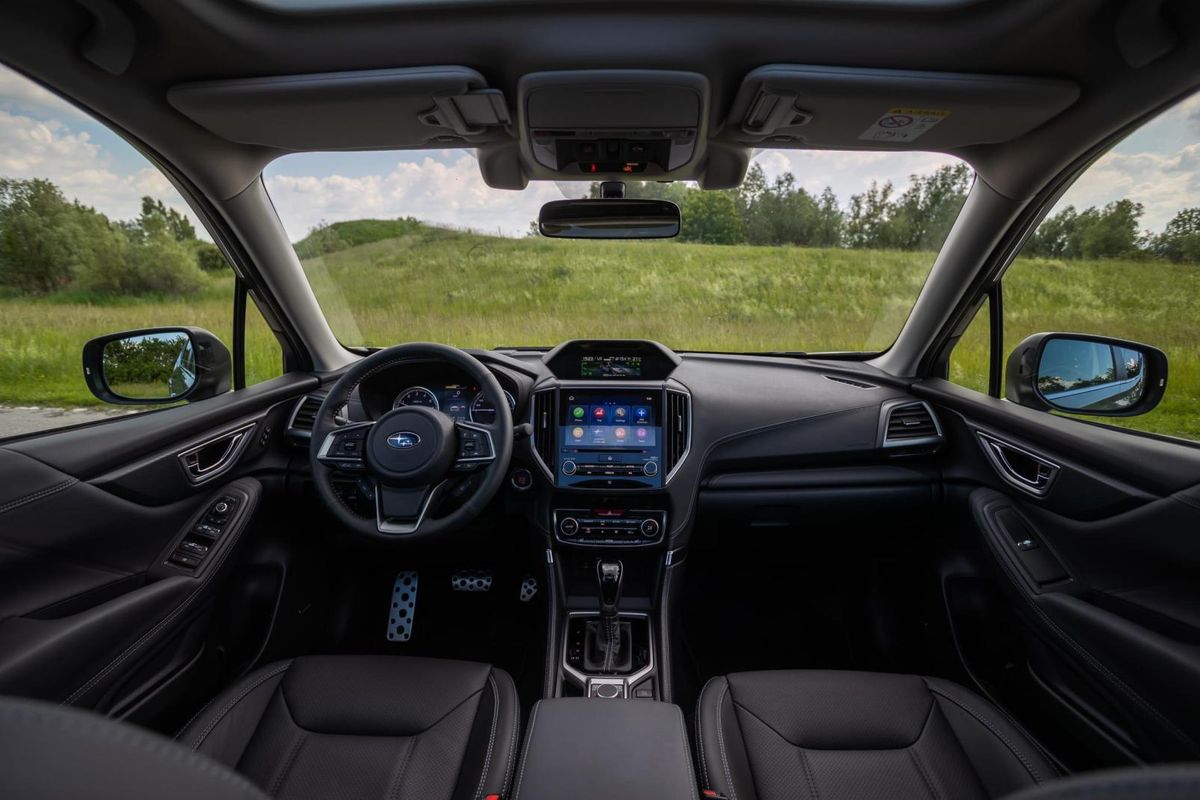
Inside, it appears the cabin is largely carried over from what we've already seen from the current range of Forester derivatives.
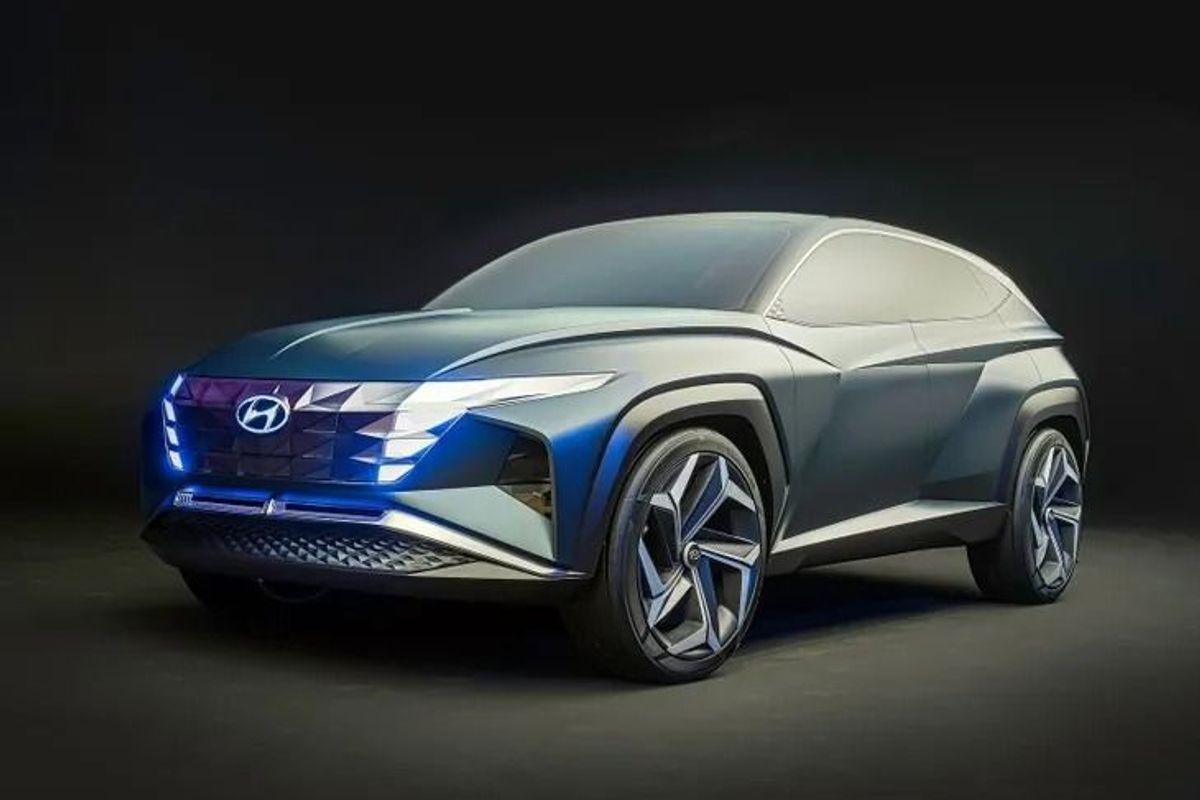
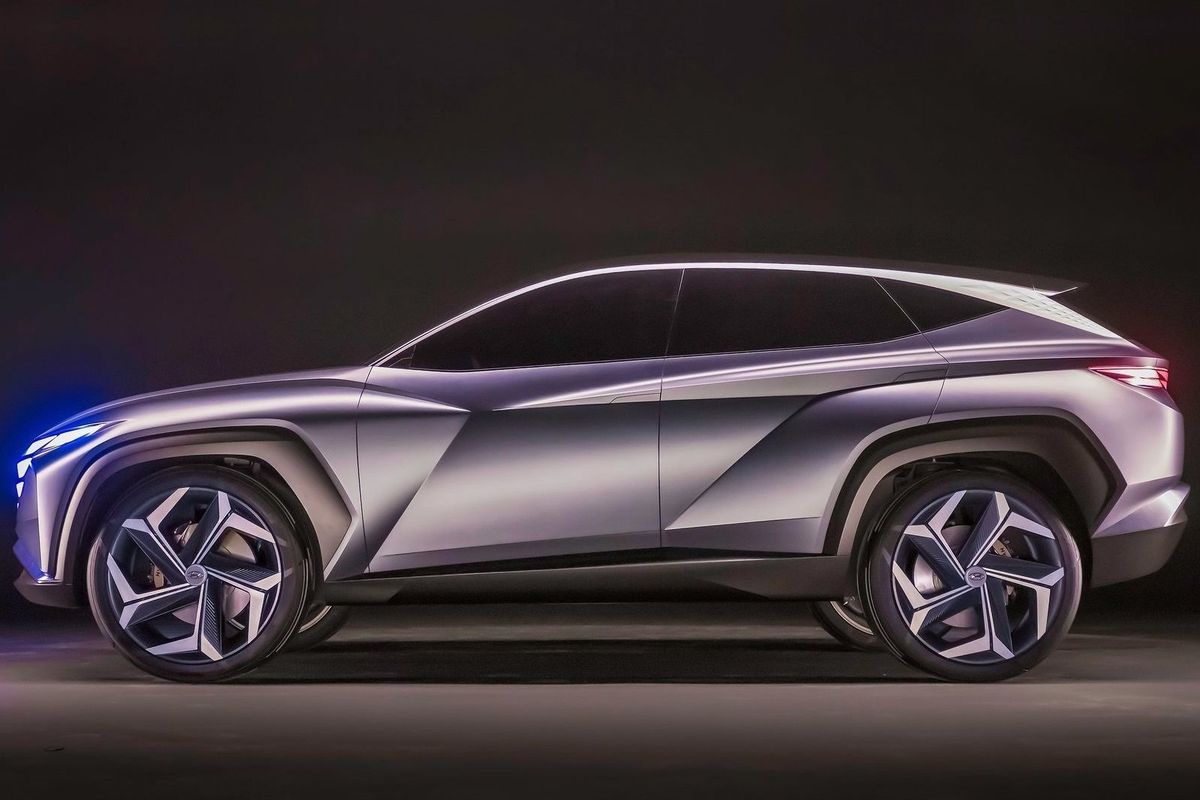
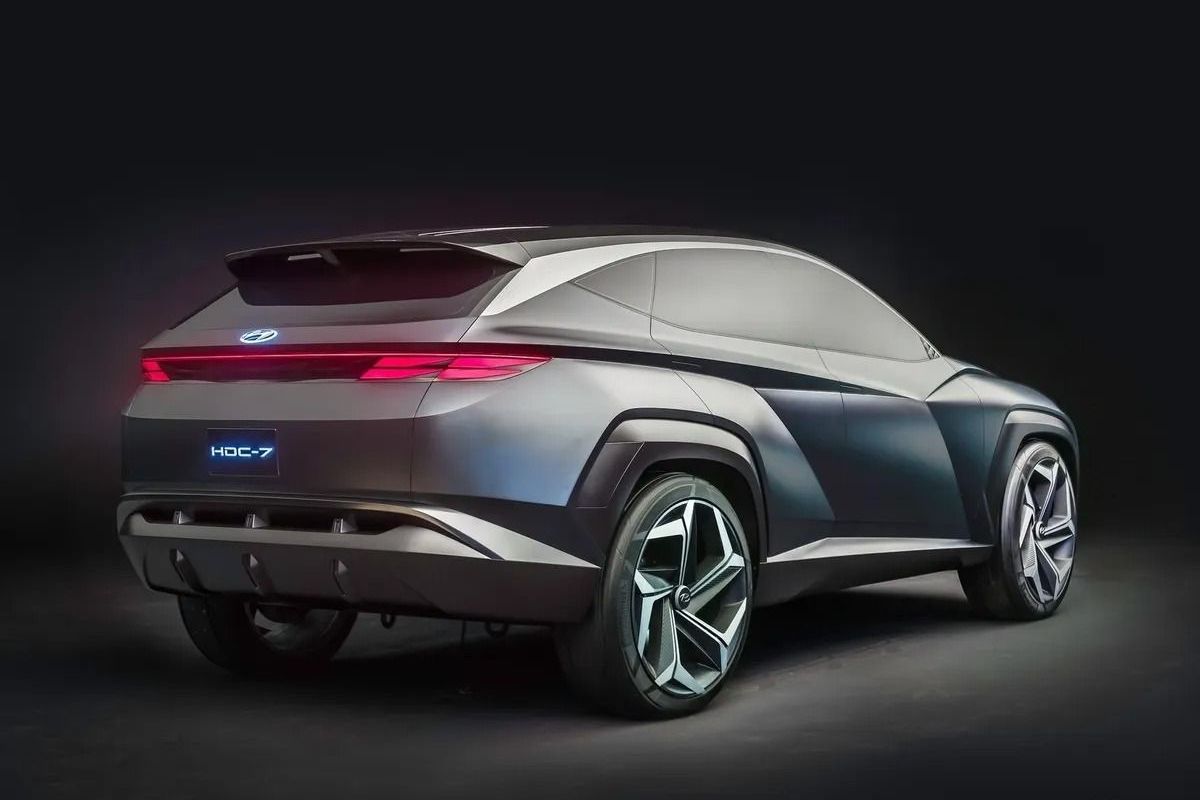
The Hyundai Vision T Concept is one of the most striking concepts to have hit a motor show's floor. We think it gives us a good idea of what the new Hyundai Tucson will look like.
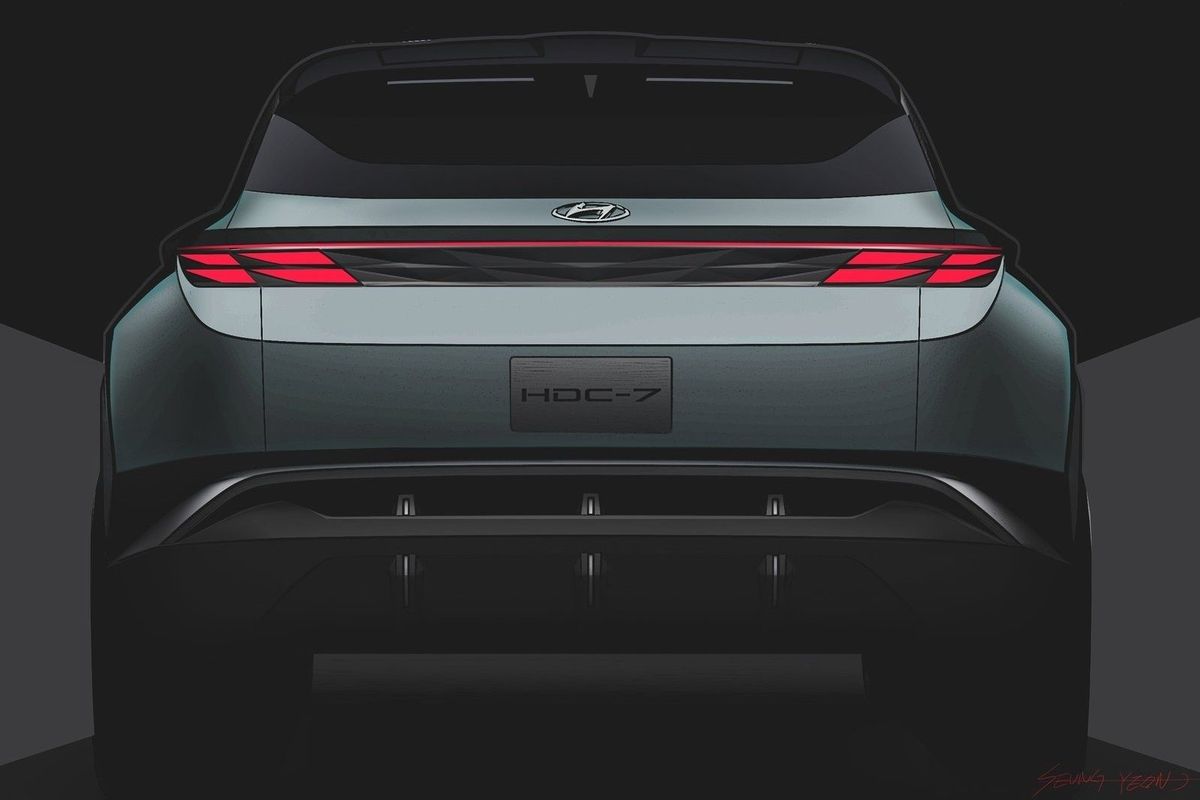
The Hyundai Vision T Plug-in Hybrid SUV Concept to give it its full name was revealed at the 2019 AutoMobility show in Los Angeles and is the latest concept to show off the all-new design language from the Korean brand. Dubbed Sensuous Sportiness, the Vision T looks bold, and with its matte-green exterior finish is striking.
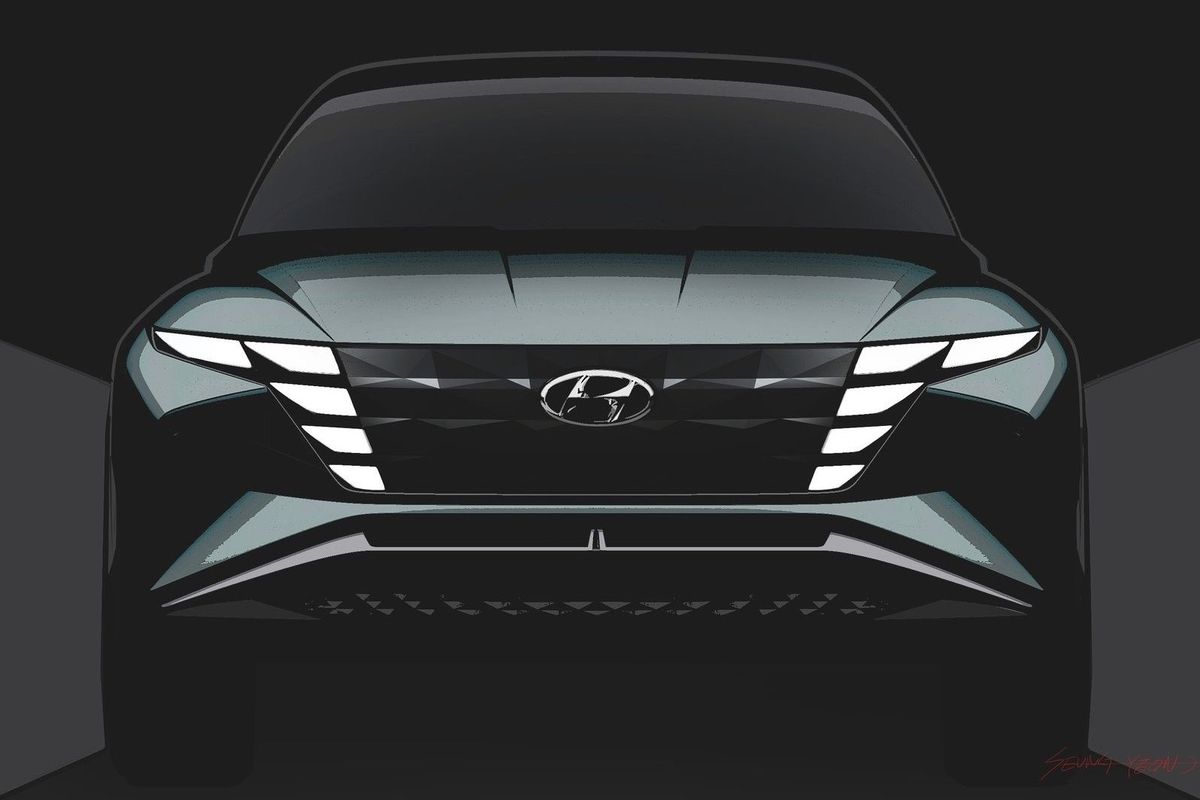
At the front of the vehicle is what Hyundai calls the Parametric Air Shutter Grille Design, and we're starting to see it rolled out on many of Hyundai's products. We've seen touches of it on the latest iteration of Hyundai Santa Fe, for example. This grille is interesting because it opens and closes. When parked, it's closed, but things get interesting as the vehicle moves as each individual element of the grille moves in a sequence, creating a shimmering effect. It also helps control the airflow to the engine as well as assisting with aerodynamics and fuel economy.
Elements of this grille have already been spotted on the Hyundai Tucson mules which we've reported on and we think that the all-new Tucson will have a variation of it.
Speaking of, Hyundai says its Vision T Concept is powered by a plug-in hybrid powertrain but there were no specific details given. Guess Hyundai wants everyone to just look at this car then!
Best Business Class Cars in SA – #CarsAwards Finalists
Meet the finalists in the Business Class category of the 2019/20 Cars.co.za Consumer Awards – powered by WesBank!
Now in its 5th year, the #CarsAwards was conceived to be South Africa's definitive automotive awards programme and is backed, for the 4th year running, by the country's leading supplier of vehicle finance, WesBank.
The Business Class category is guided by both eligibility factors and Pillars of Success.
Eligibility for this category includes a list price that falls between R600 000 and R800 000 at the time of semi-finalist voting (1 September 2019) to ensure a healthy measure of prestige. The fitment of required optional extras must collectively not push the price over R800 000. Eligible vehicles must have 6 airbags and Electronic Stability Control (ESC).
Pillars of Success in this category include powertrain technology, luxury, brand strength, design and quality appeal, driving dynamics and technology.
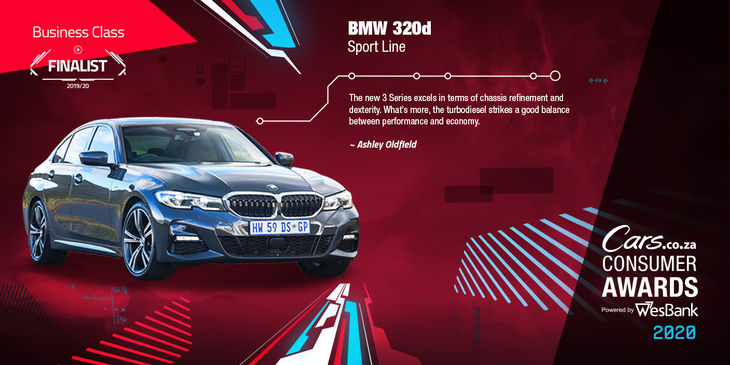
The all-new BMW 3 Series enters this #CarsAwards category armed with sharper looks, more technology and promises the same rear-wheel drive driving pleasure we’ve grown accustomed to. Interestingly, this year there are 2 derivatives vying for honours. Take your pick: 320d or 330i?
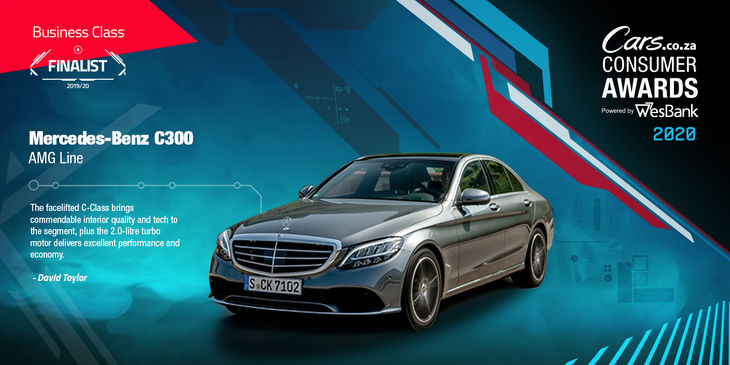
As a top-seller in its segment of the South African new vehicle market and with a World Car of the Year title under its belt, the Mercedes-Benz C-Class continues to be a comfortable front-runner in the business class segment. However, the Stuttgart-based firm extensively facelifted the C-Class in mid-2018, which introduced new engines, safety features and tech.
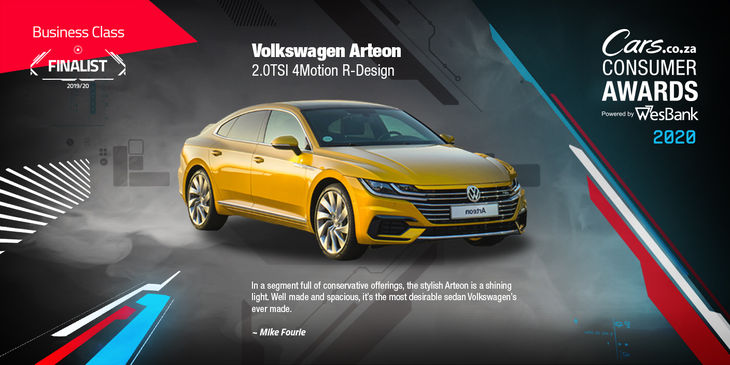
The head-turning Volkswagen Arteon is the successor to the svelte CC. It looks like no other contemporary Volkswagen and is, in essence, a fashion-forward reimagining of the conservative Passat. However, in a segment dominated by premium brands, does a Volkswagen have enough prestige to see it go all the way? It did so last year, but the segment has changed.
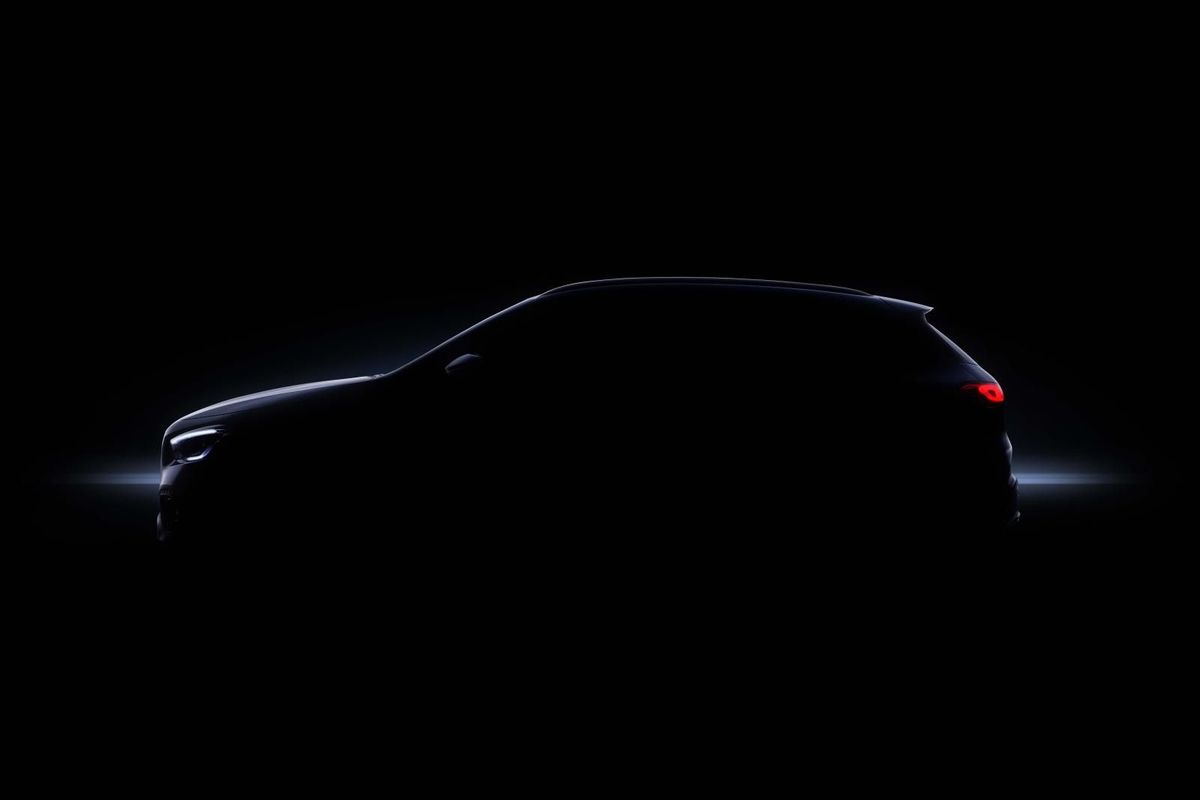
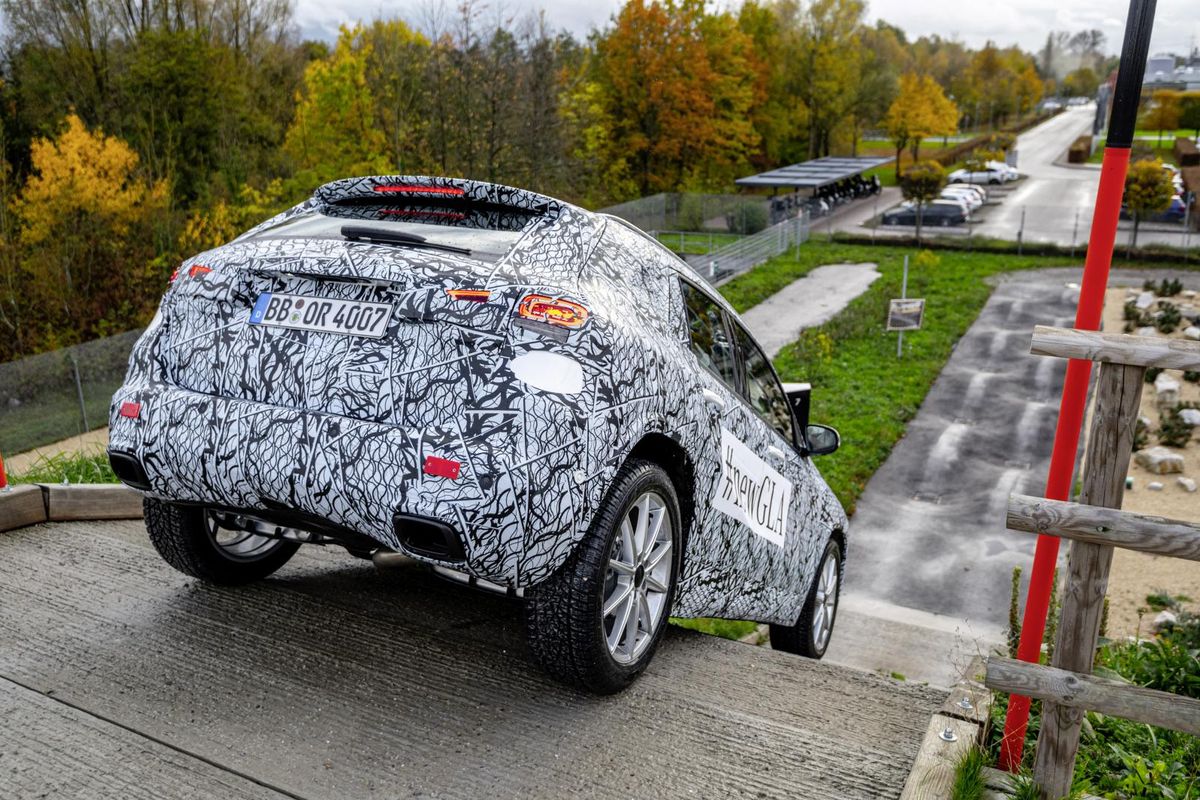
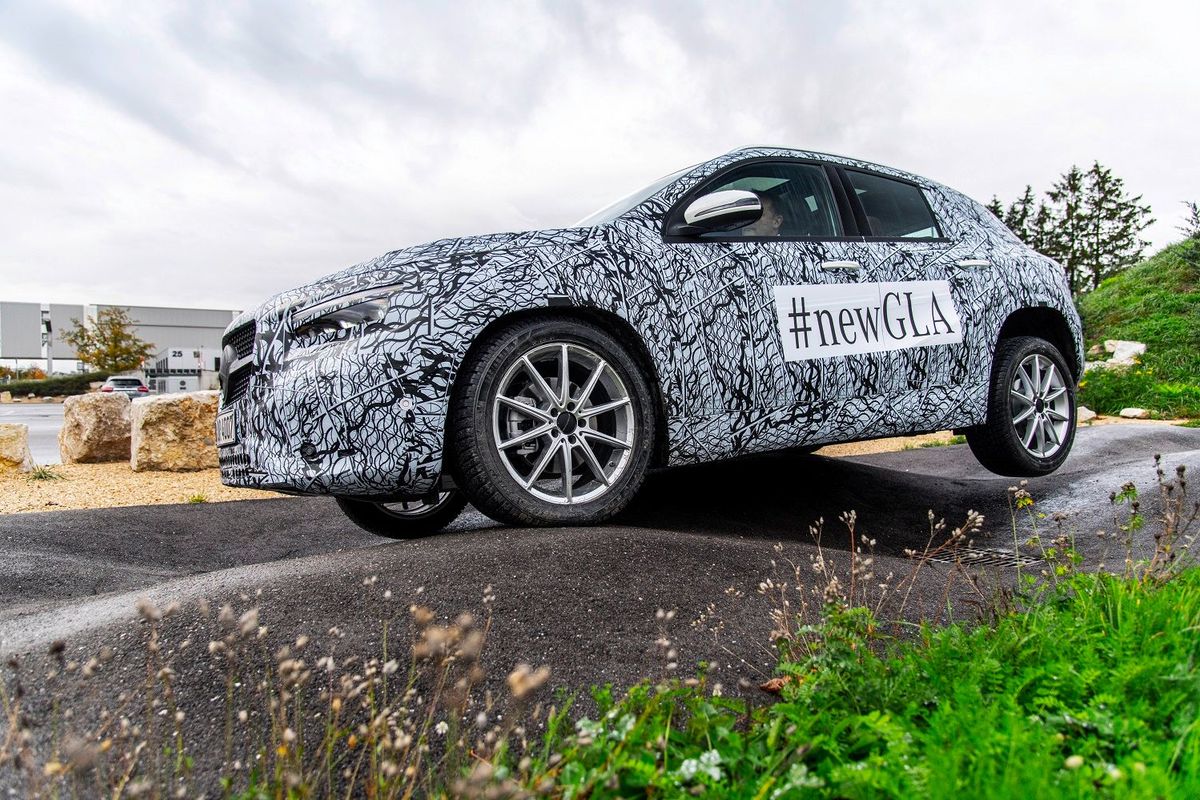
The all-new Mercedes-Benz GLA is due for a reveal on 11th December 2019. Here's what we know about the German compact SUV.
Built on the Mercedes-Benz A-Class platform, the 2020 GLA's countdown to a reveal has begun. Scheduled for 11th December 2019, the all-new Mercedes-Benz GLA will offer increased dimensions and more luxury fittings than the current model.
As far as engines go, we expect the 2020 Mercedes-Benz GLA to adopt the same powertrains as those seen in the A-Class, B-Class and CLA. Kicking off the range should be the GLA 200 with a 1.3-litre turbocharged 4-cylinder motor with 120 kW and 250 Nm, followed by a GLA 250 with a 2.0 turbo delivering 165 kW and 350 Nm. Diesel fans should be able to get there hands on the GLA 200d with a 2.0 turbodiesel delivering 110 kW and 320 Nm.
Like before, there's going to be some potent AMG versions, with GLA 35 and GLA 45 S. Both have turbocharged 4-cylinder motors packing 225 kW/400 Nm and 310 kW/500 Nm respectively.
Inside, you can expect a cabin not too dissimilar to that of the new-shape A-Class, complete with its extensive MBUX digital screen which stretches across the dashboard.
The countdown begins and we'll update you as soon as we hear more info.
The coundown to the reveal of the 2020 Mercedes-Benz GLA
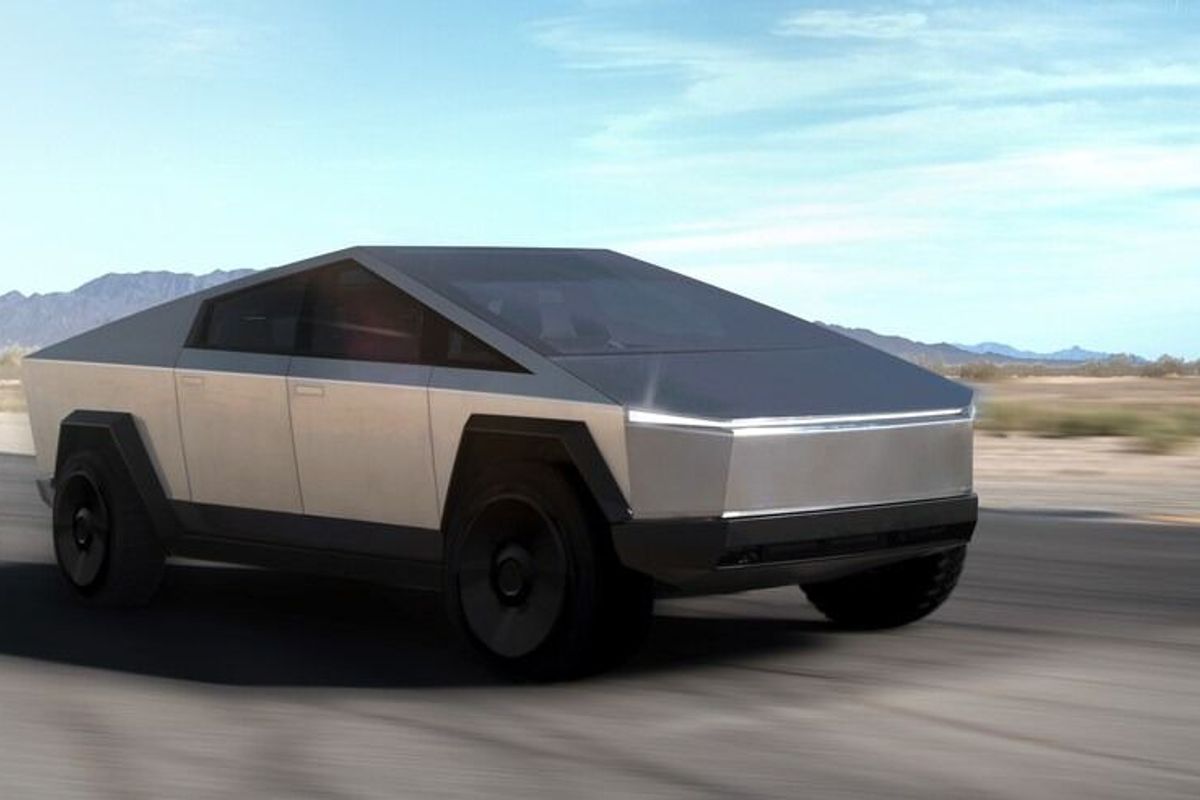
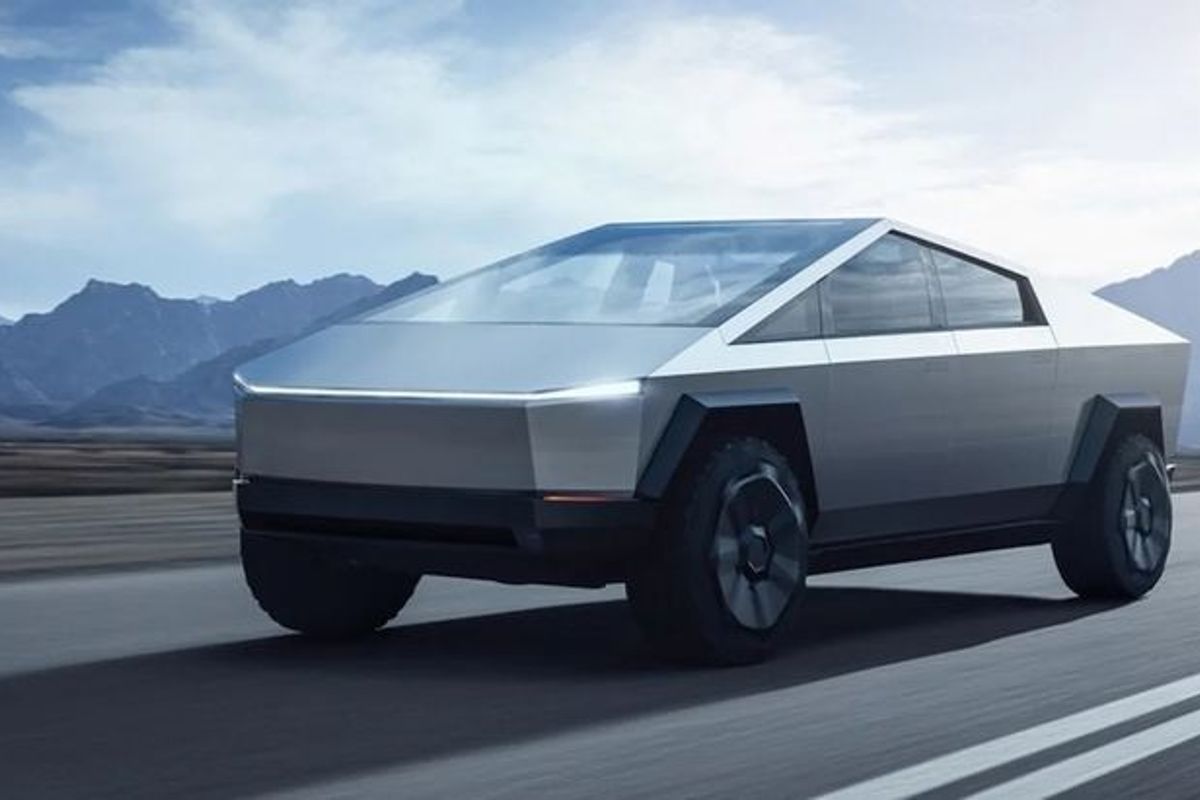
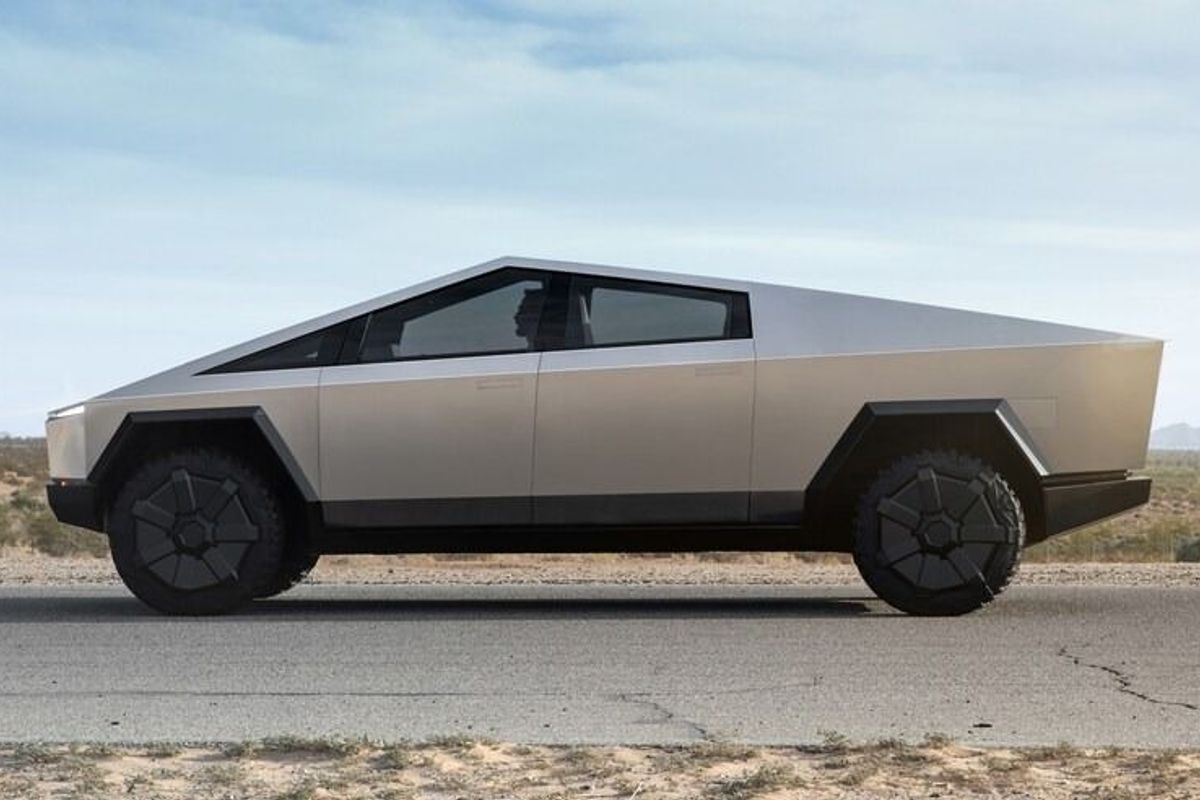
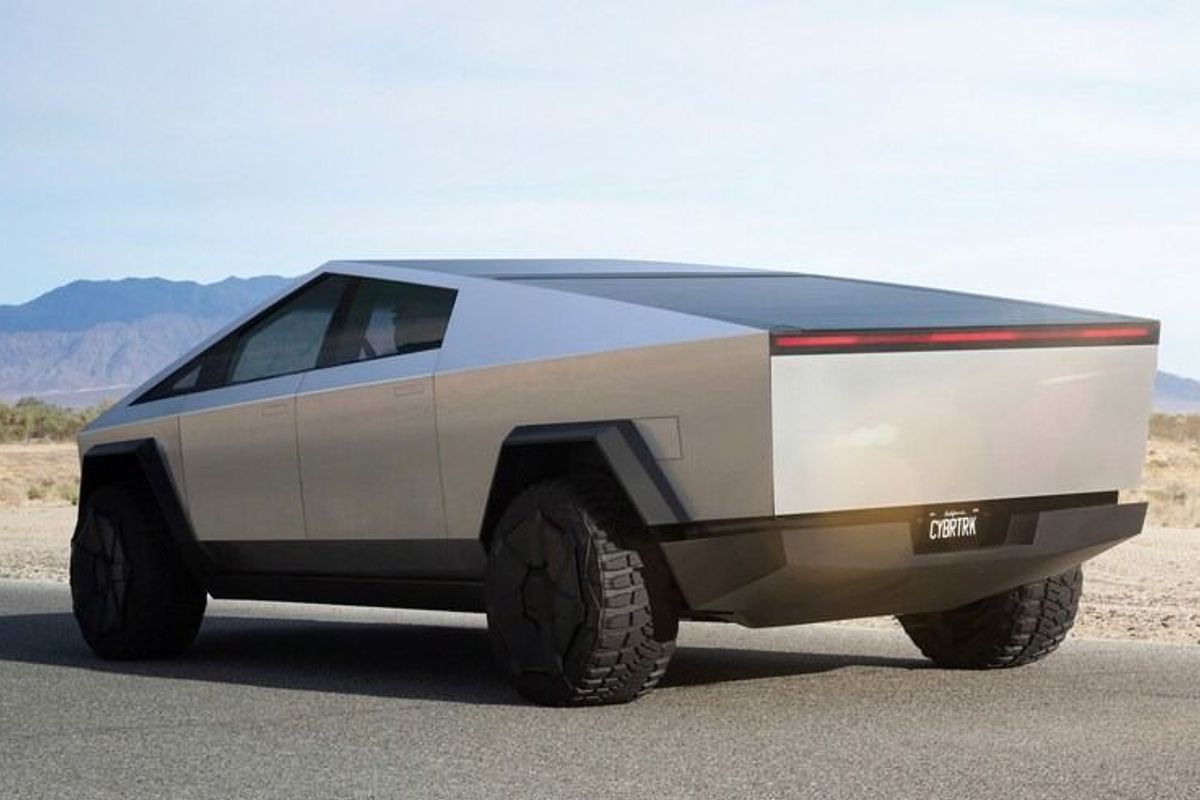
This is the Tesla Cybertruck, the brand's first foray into the bakkie world. While the numbers make for impressive reading, the design is awkward.
Tesla is claiming its Cybertruck will have the practicality and utility of a bakkie, combined with the performance of a sports car. There's a focus on durability, versatility and capability. Elon Musk says the Tesla Cybertruck will be sold in 3 versions: single motor rear-wheel drive, dual motor all-wheel drive and a tri-motor all-wheel drive.
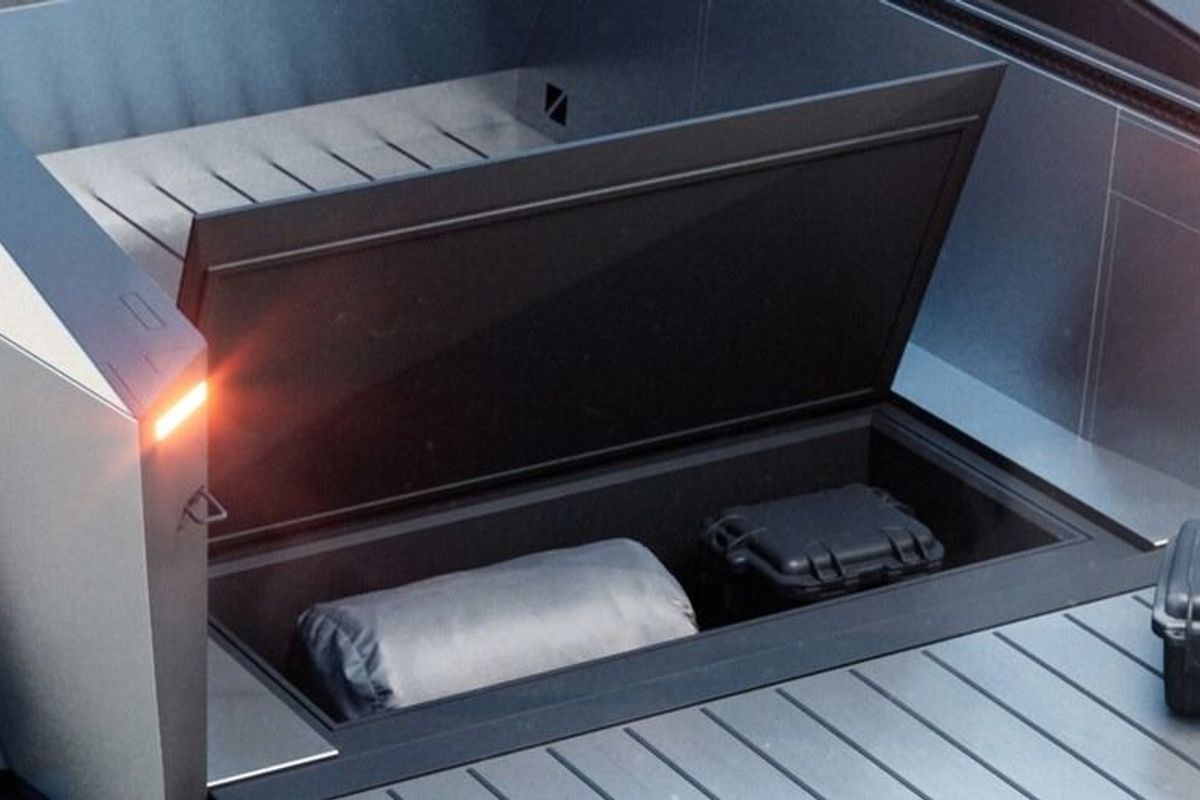
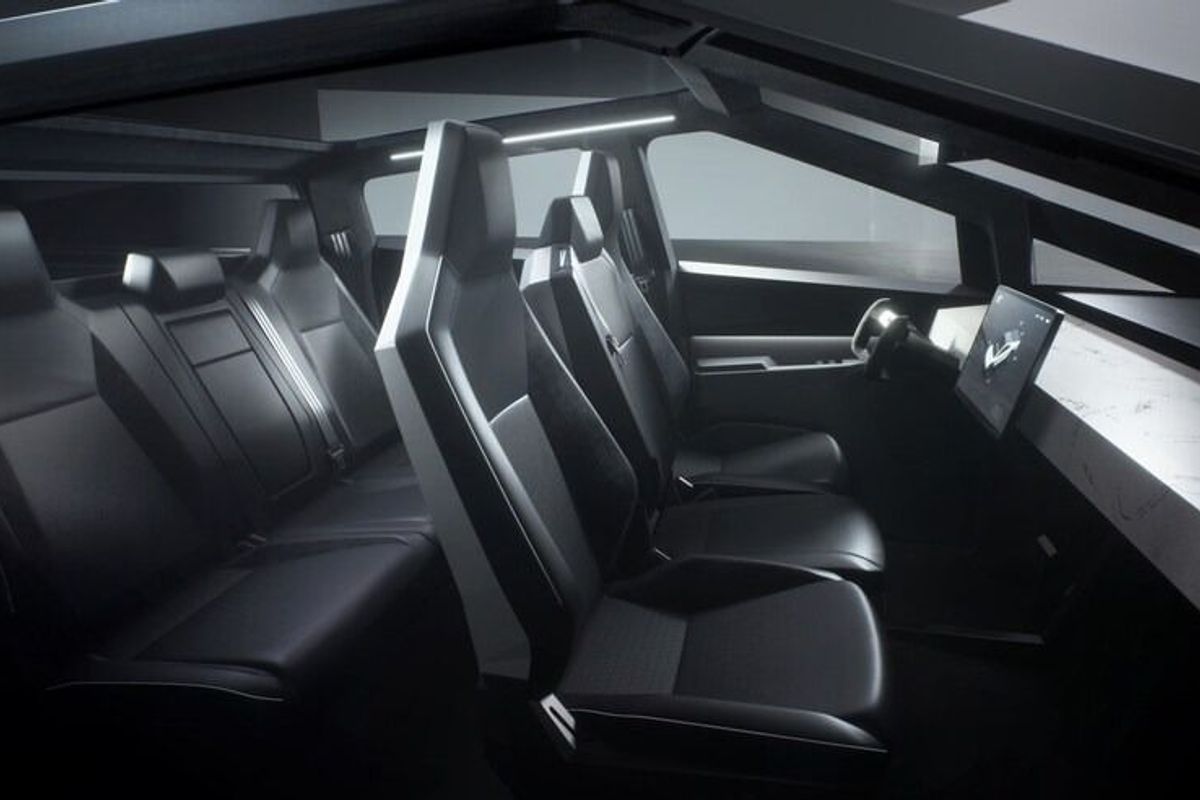
With a claimed range of over 800 km, the Tesla Cybertruck also boasts a 0-100 kph claim of around 2.9 seconds which is incredible. The body is assembled from ultra-hard 30x cold-rolled stainless steel. There's a massive focus on practicality and the load bay features plenty of lockable storage compartments. The Tesla Cybertruck is said to have a tow rating of over 6 tons and its payload can carry 1.5 tons. Inside, there's seating for 6 adults and it features a 17-inch touchscreen.
We get the feeling that something is not right here. Not only is the design extremely awkward, but the presentation was marred by an incident where the so-called unbreakable glass was easily smashed in a test. Musk claimed they'd fix that with the production model. Still, those looks just don't sit right with us and the vehicle looks unfinished. Tesla claims it will be going into production in 2021, with the tri-motor setup coming in 2022.
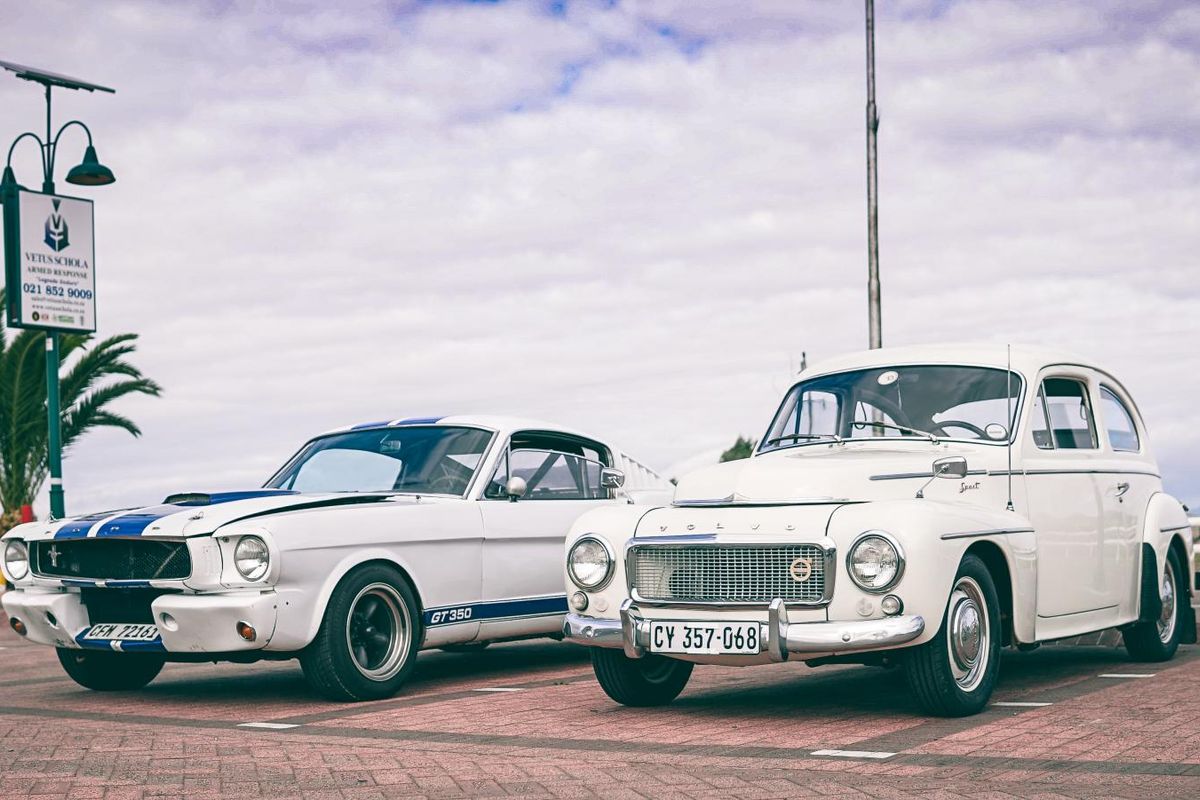
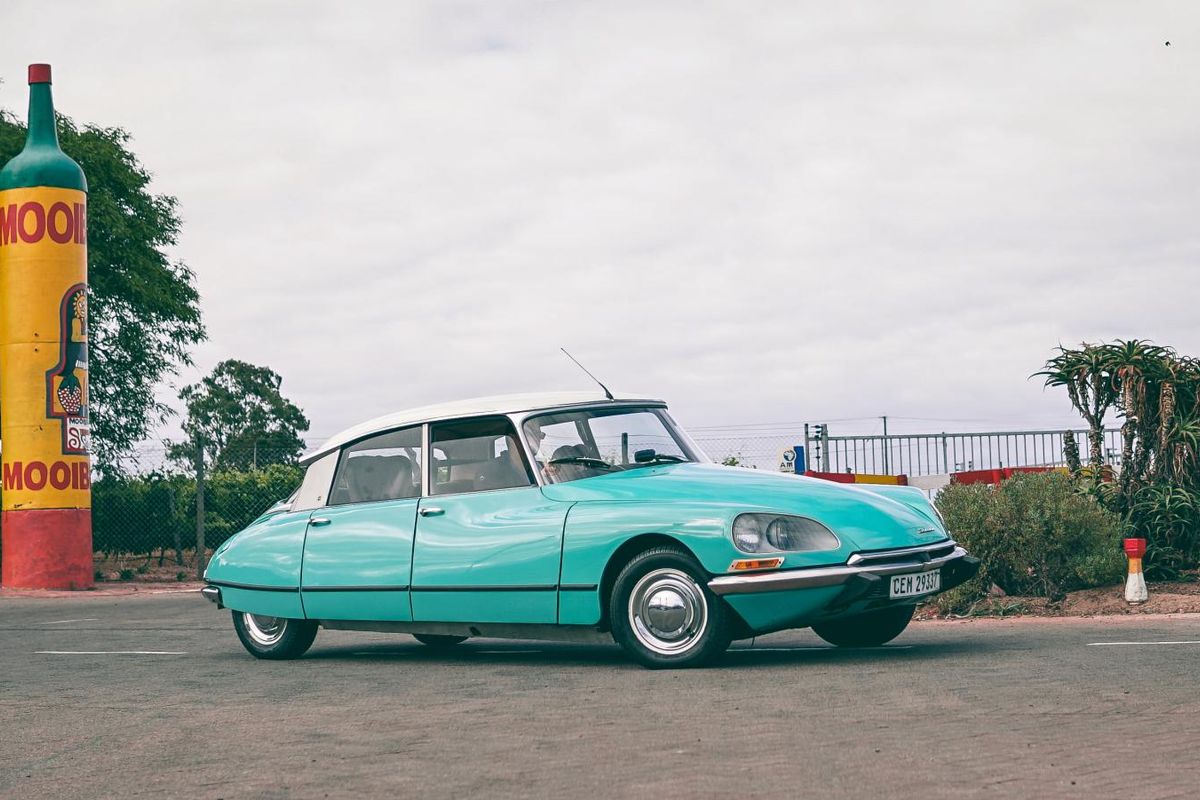
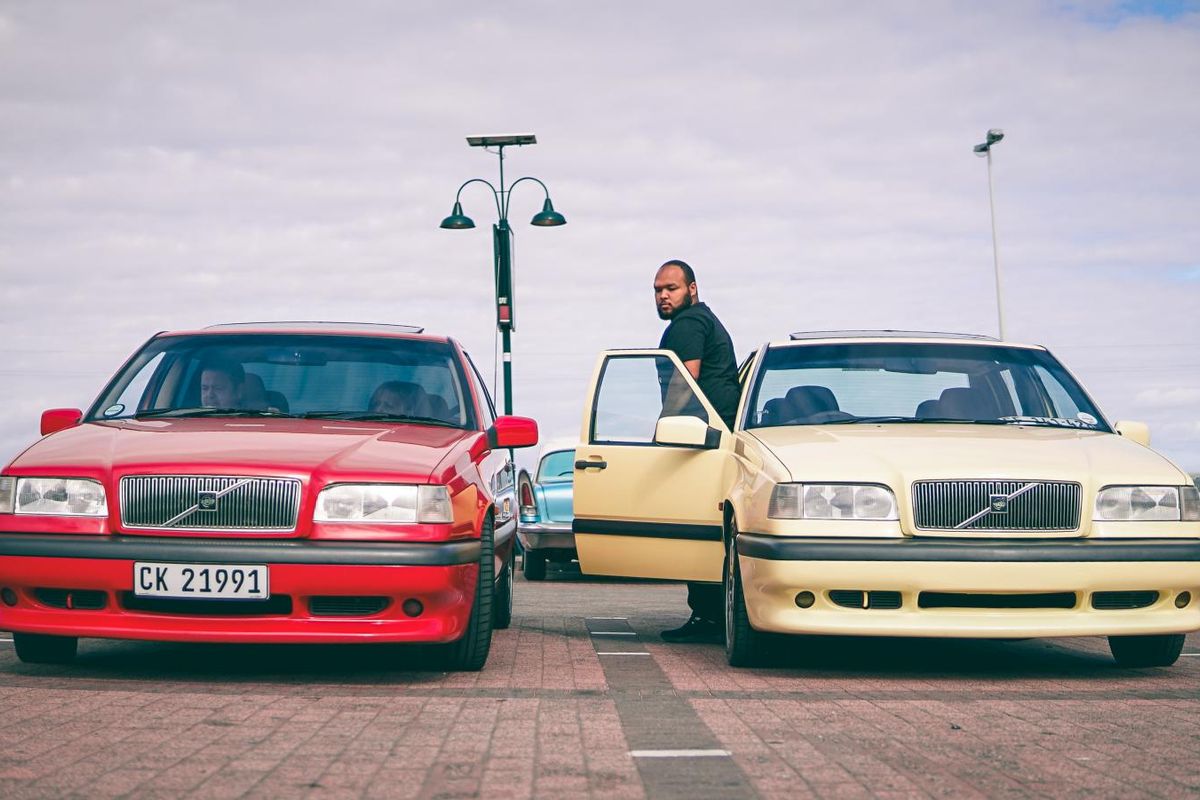
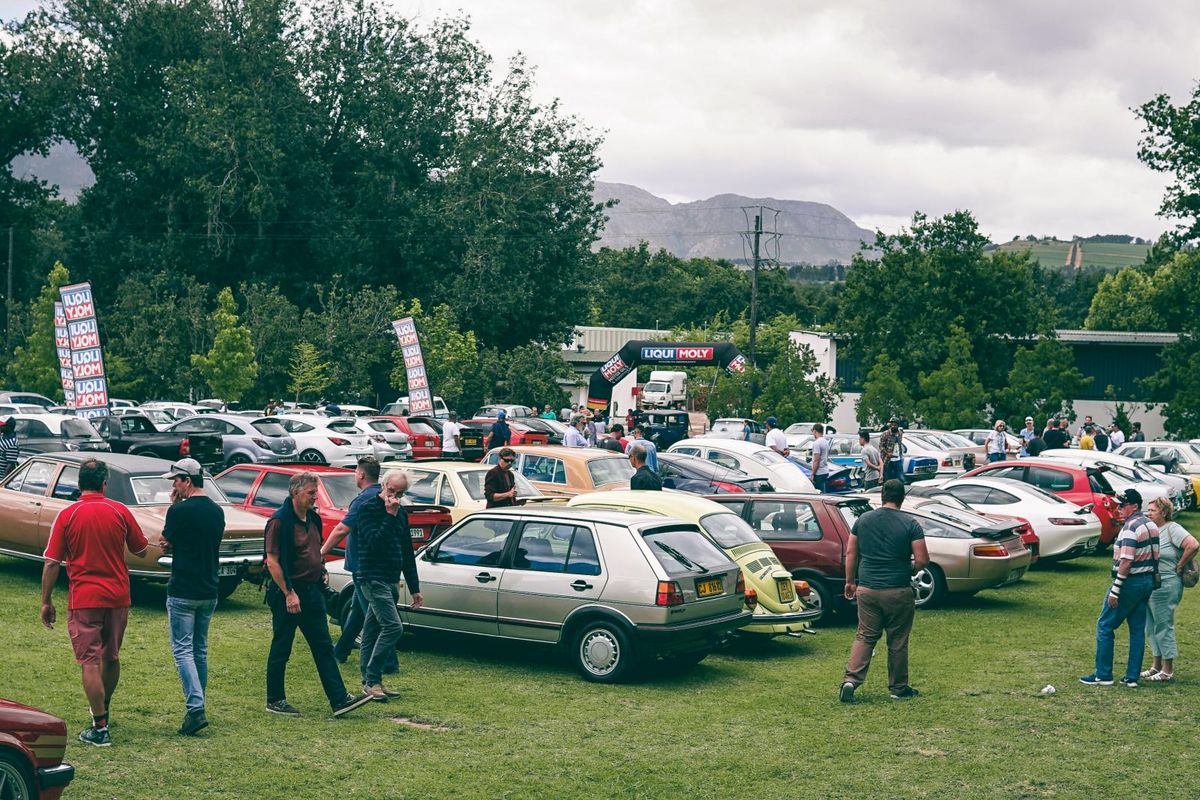
With an estimated 200 cars in attendance, the SentiMETAL Classic Car Community continues to grow. The final Gathering at Lourensford Estate's Abru Motor Studio attracted some real stunners.
"?The first SentiMETAL OutRun took place exactly one year ago with 7 cars, and to see around 200 cars show up one year later in a beautiful setting such as Motor Studio at Lourensford Estate," can be rather emotional, said Master of Ceremonies, Ciro de Siena, when thanking those in attendance.
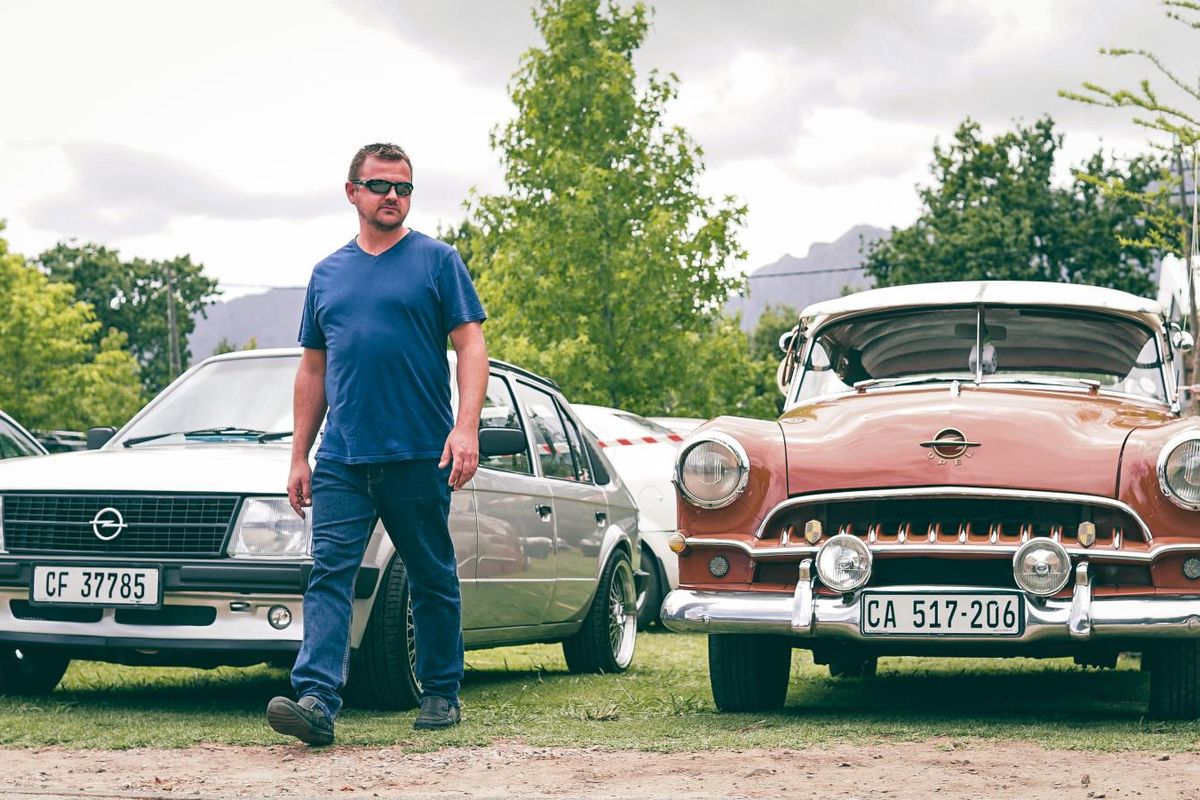
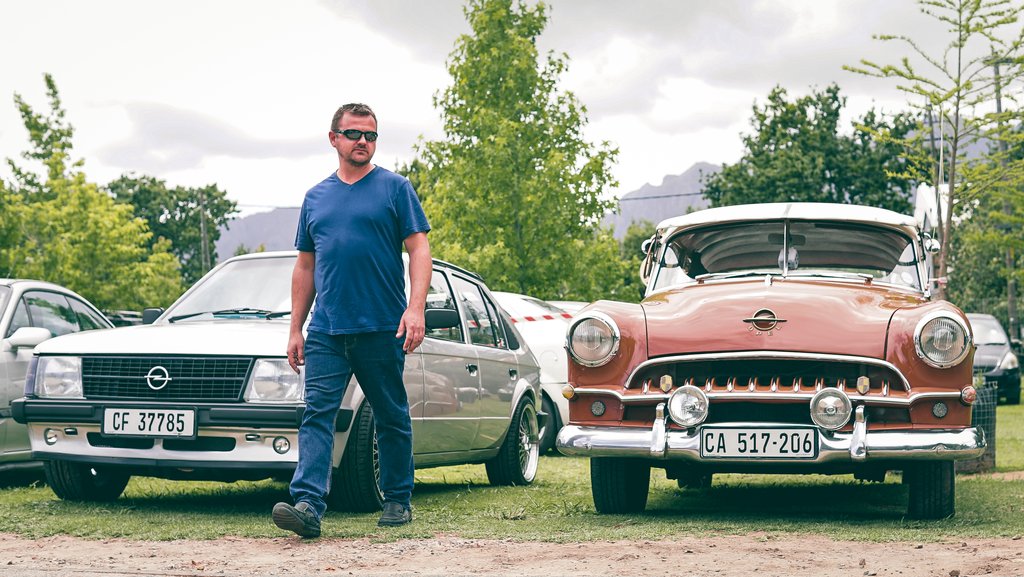
Celebrating 120 years, Opel was the featured brand at this event. The 1955 Kapitan on the right was the oldest Opel to participate.
It was also the first SentiMETAL meet to have a sponsor in the shape of Liqui Moly. "Having a sponsor allows us to put on a better event," explained Hannes Oosthuizen, SentiMETAL project manager. "We think Liqui Moly is the ideal partner for SentiMETAL, and thank them for their support.
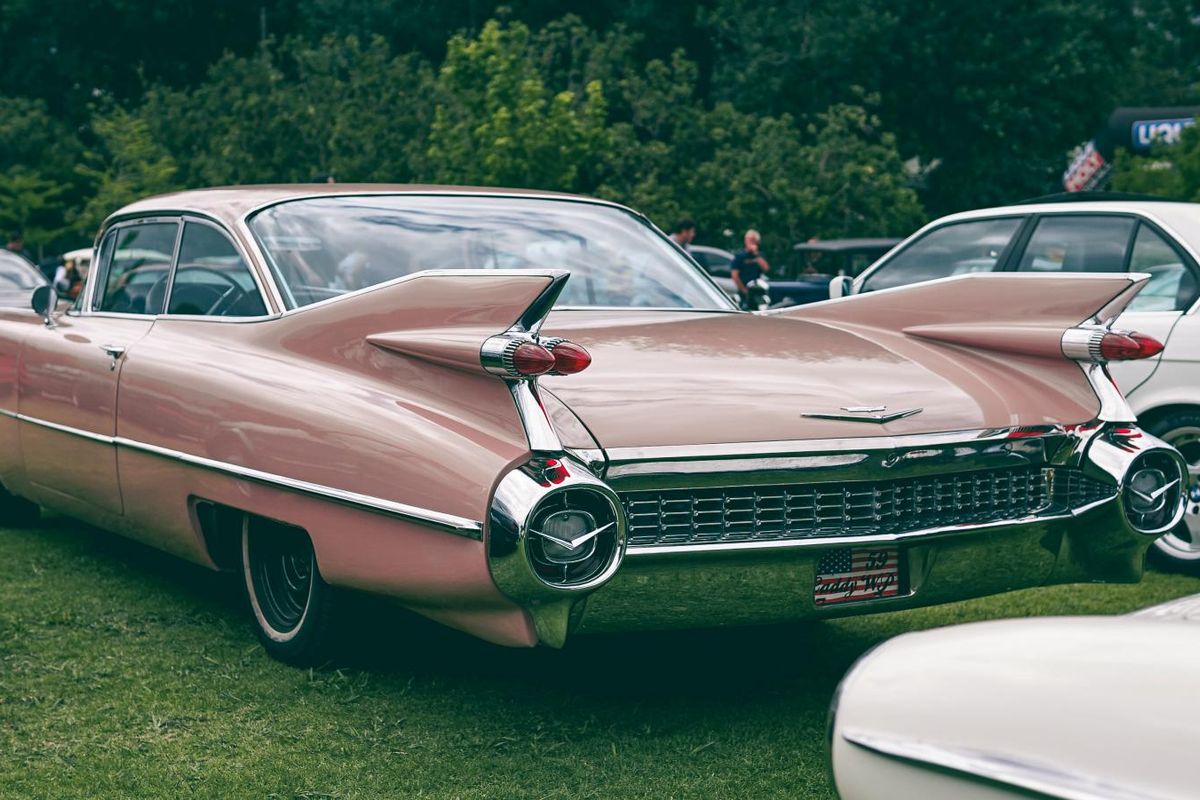
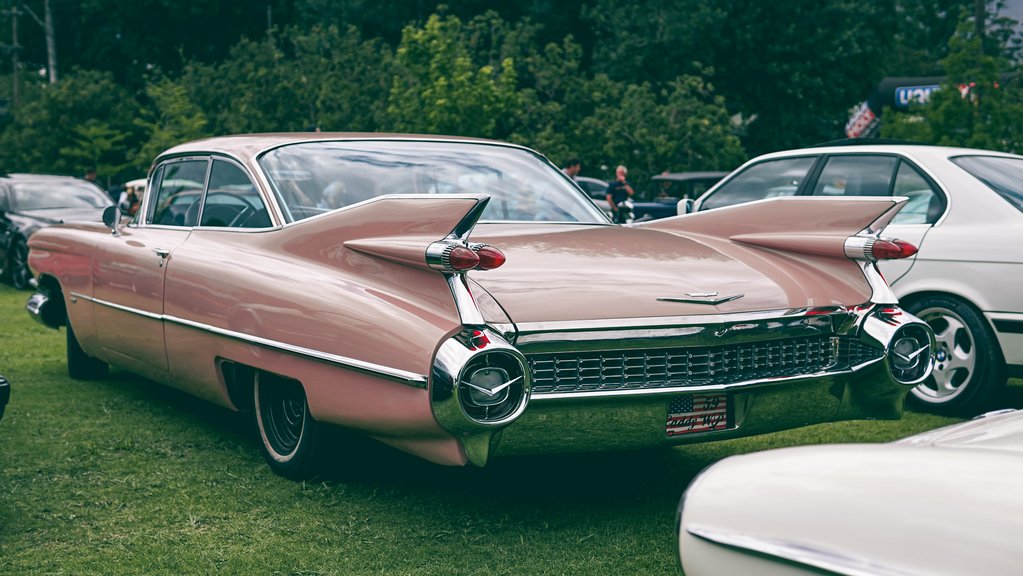
Anthony Ilchilcik's stunning 1959 Cadillac was awarded the prize for most original/unique car at the event.
Participants started gathering at 3 pre-determined meeting spots in the Western Cape before driving together towards Lourensford and Motor Studio, an ideal venue for a petrolheaded event such as this one. "The feedback on Motor Studio was incredible," says Oosthuizen. "We'll definitely be back!"
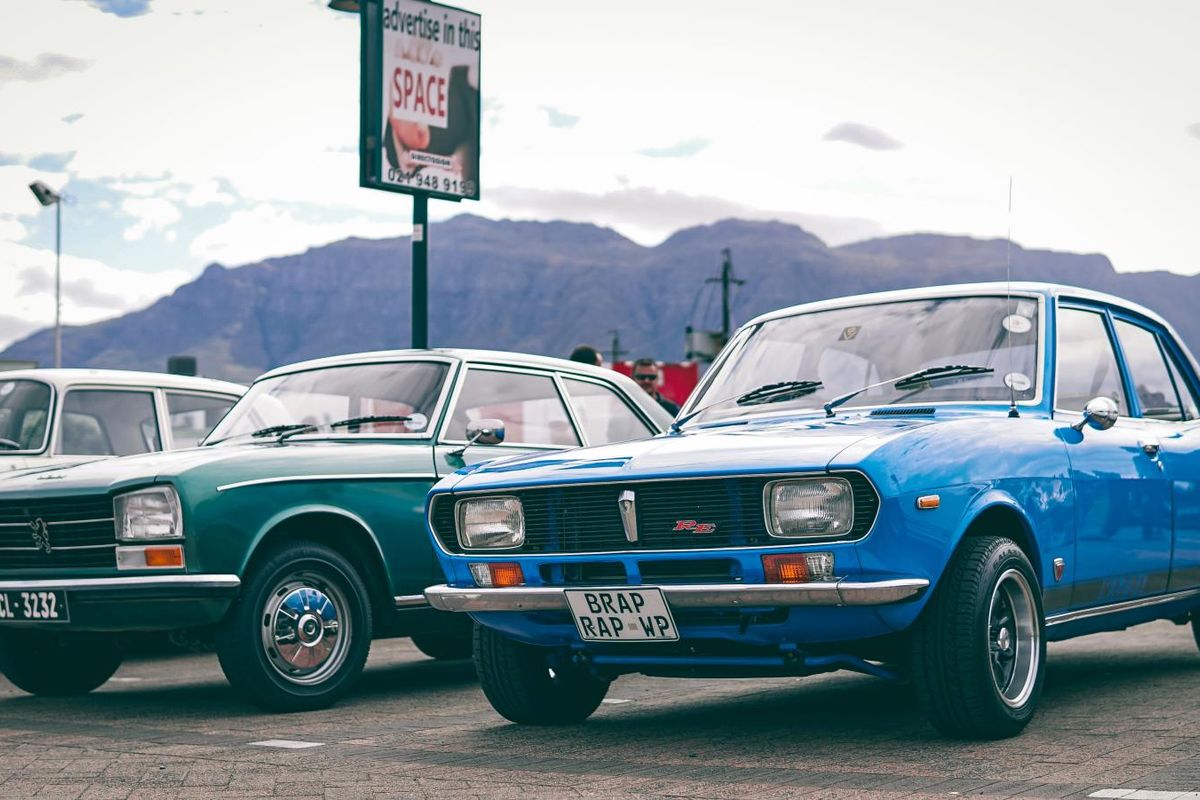
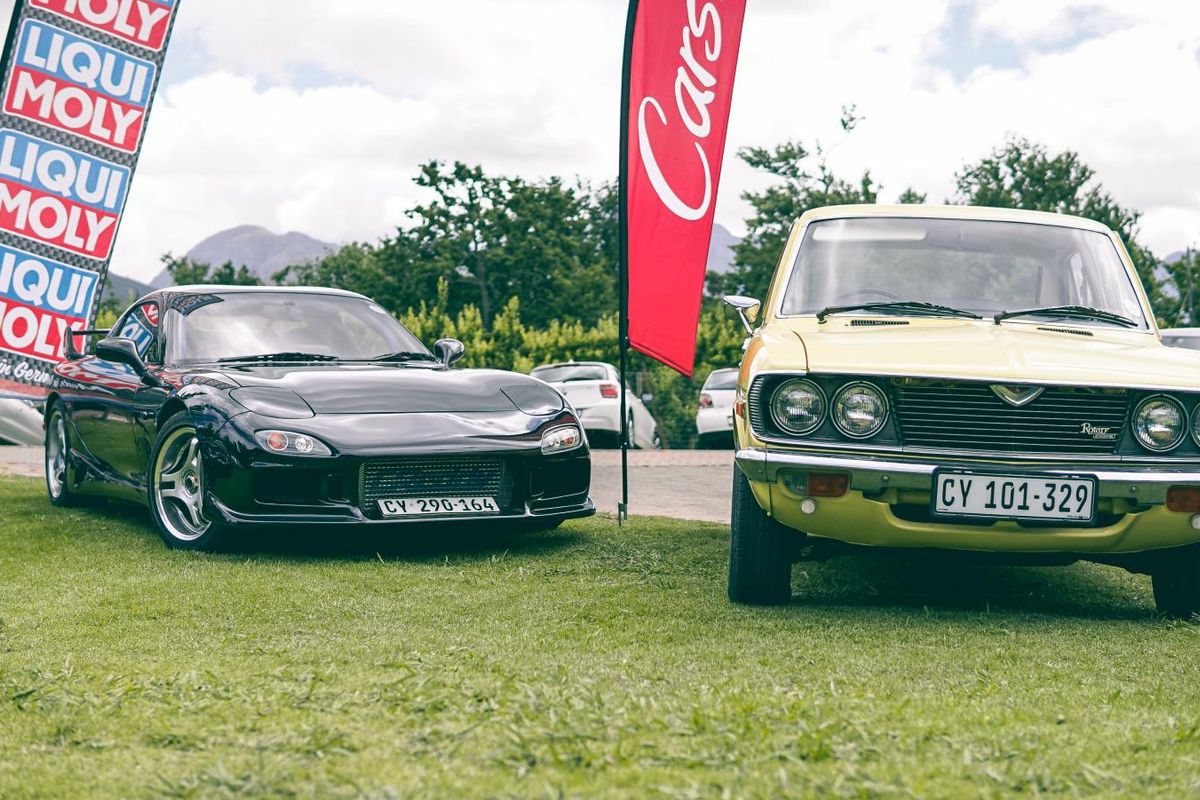
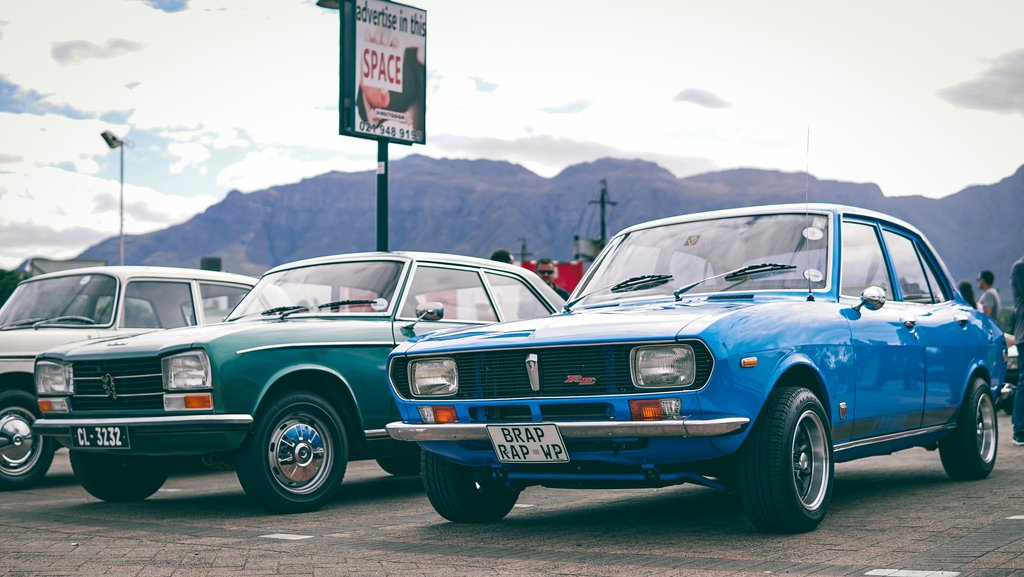
Cute 1972 Peugeot 304 Coupe joined by period Mazda RX-2.
Another first for this Gathering was to have a "Featured Brand", in this instance German marque Opel, celebrating its 120th anniversary. A large number of Opel supporters showed up with cars from almost all eras – the oldest being a stunning 1955 Kapitan. But it was Shabir (Mo) Hoorzook's stunning red Superboss that drove away with the prize (sponsored by Liqui Moly), for the best Opel of the day.
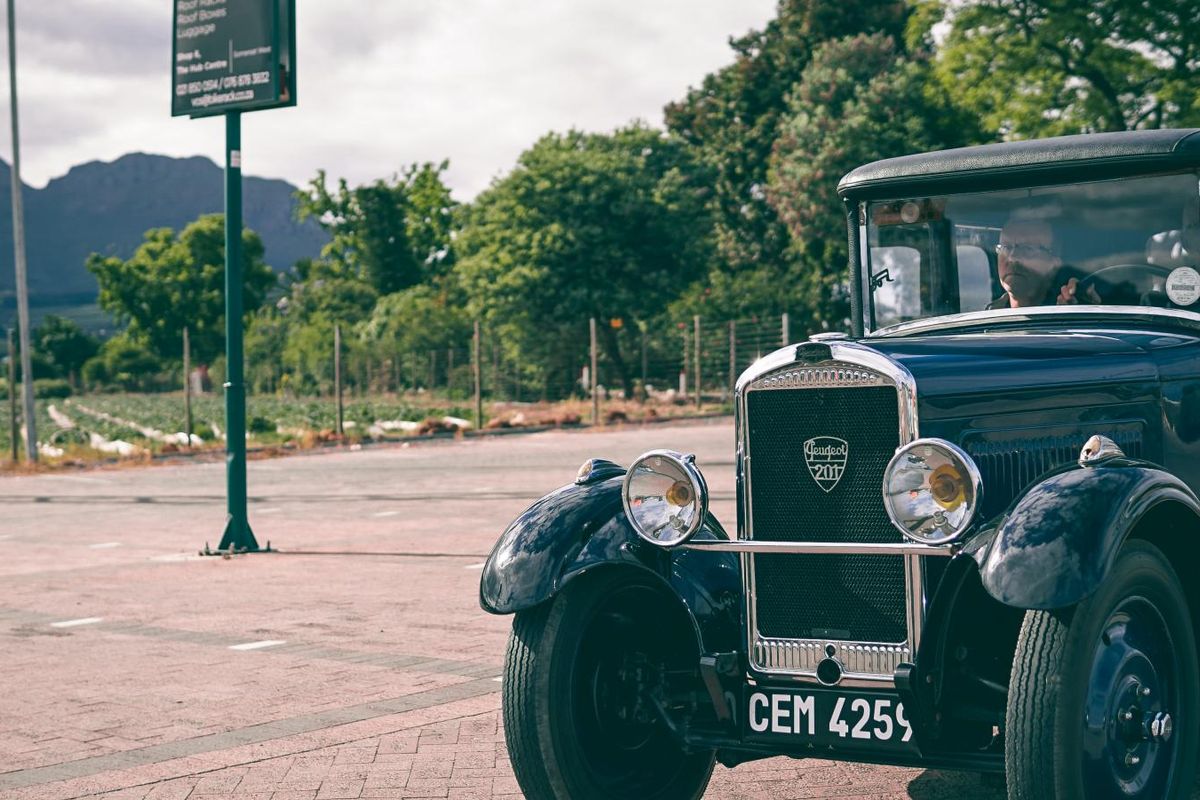
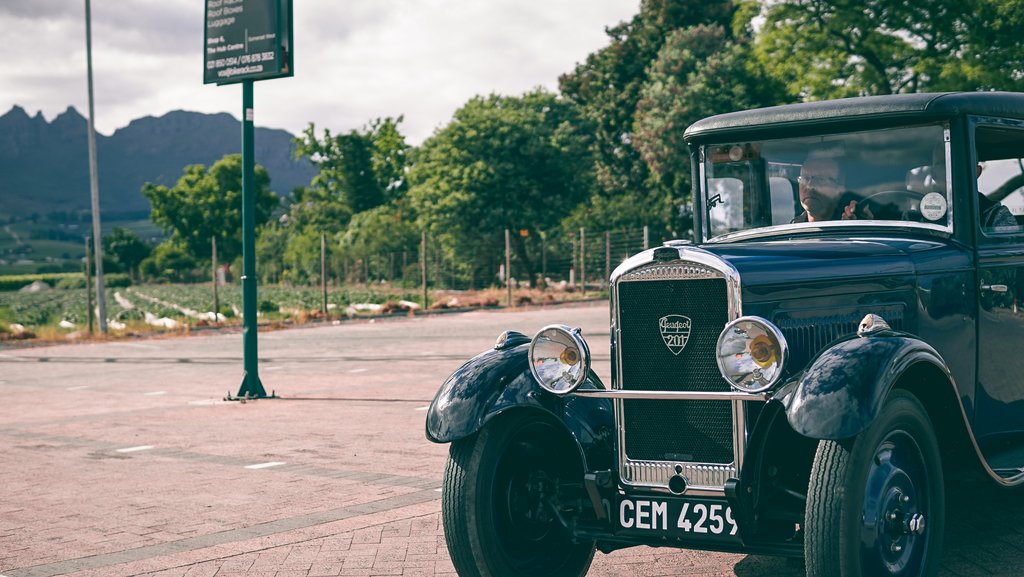
The oldest car to make the Gathering was this 1930 Peugeot 201.
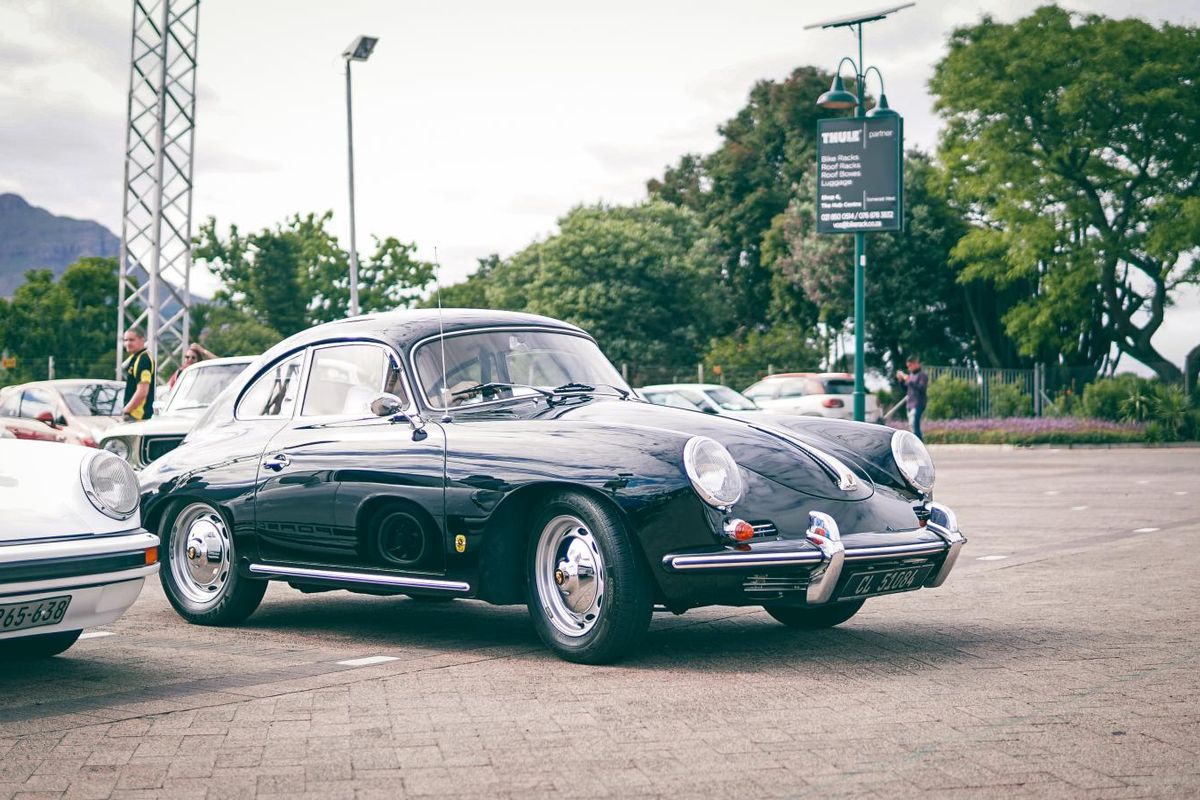
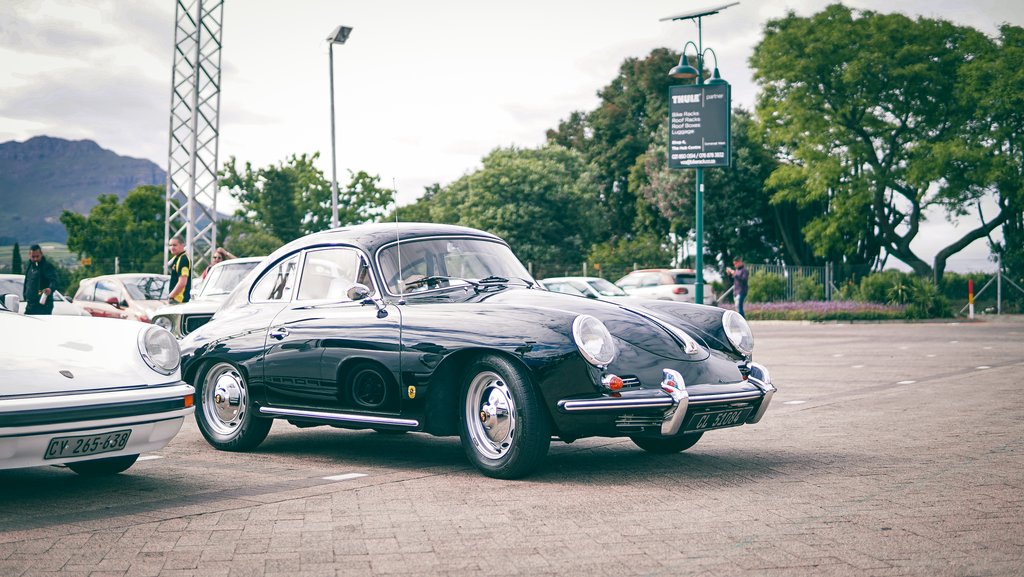
The 3 judges (Cars.co.za's Hannes Oosthuizen, Ciro de Siena and Motor Studio's Ewald Fendler) identified Jaques Wessels' stunning black Porsche 356B as the most stylish car on the day (he wins a professional photoshoot of him and his vehicle), while Anthony Ilchilcik's flamboyant 1959 Cadillac Coupe De Ville was judged as the most original/unique car of the show, particularly as it was finished in what is called Wood Rose Pink Metallic! He wins a day's venue hire at Motor Studio.
Jaques Wessels' immaculate Porsche 356B drove away with the prize of the most stylish car at the event.
But there were many other highlights, including some head-turning Peugeots. A real old-timer was a 1930 Peugeot 201, but there was a stylish little 1972 304 Coupe and a neat 1968 404 sedan, too.
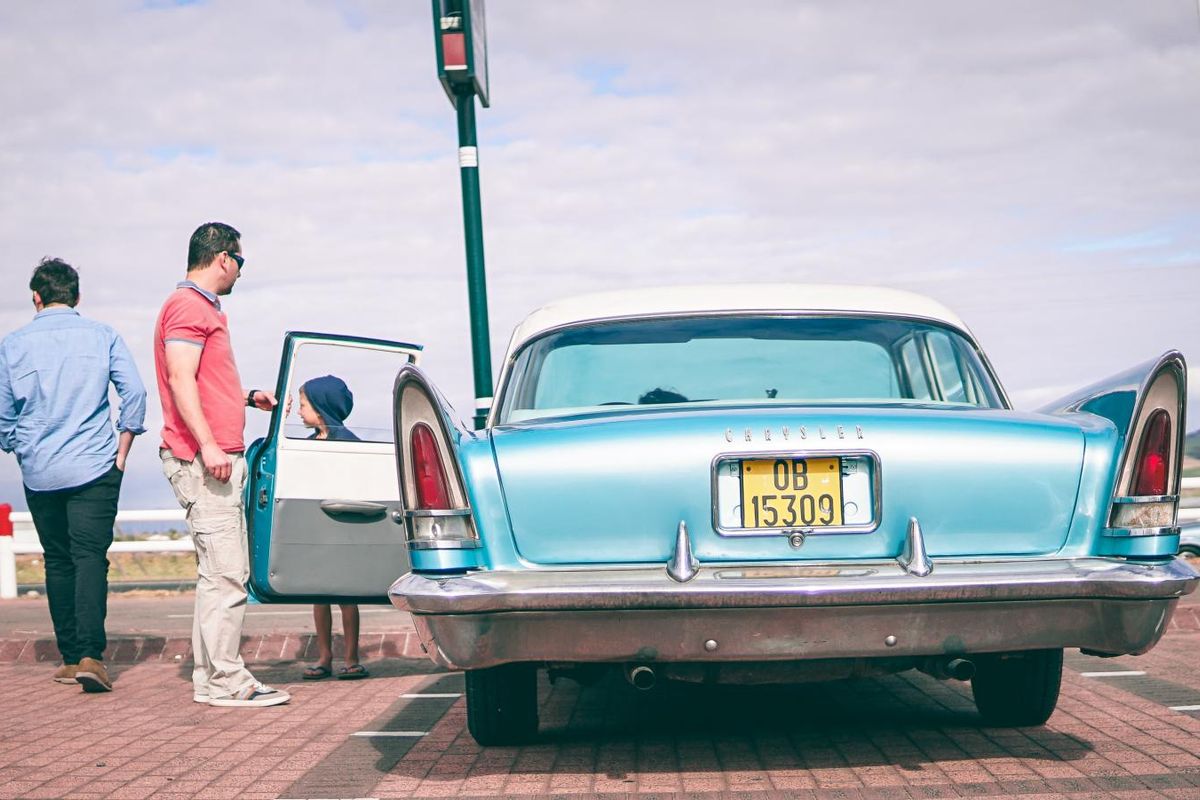
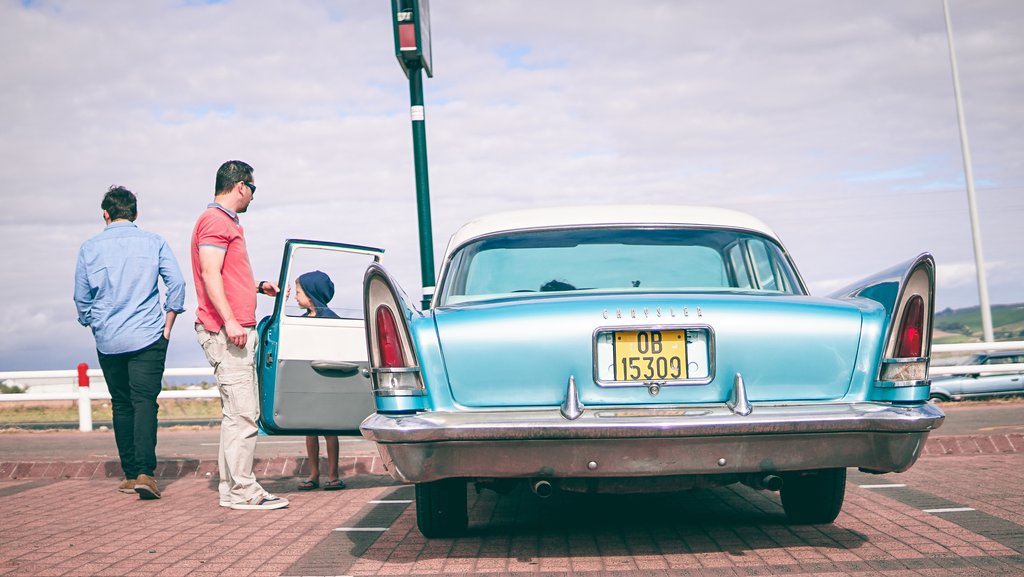
Fins for days on this 1958 Chrysler Windsor!
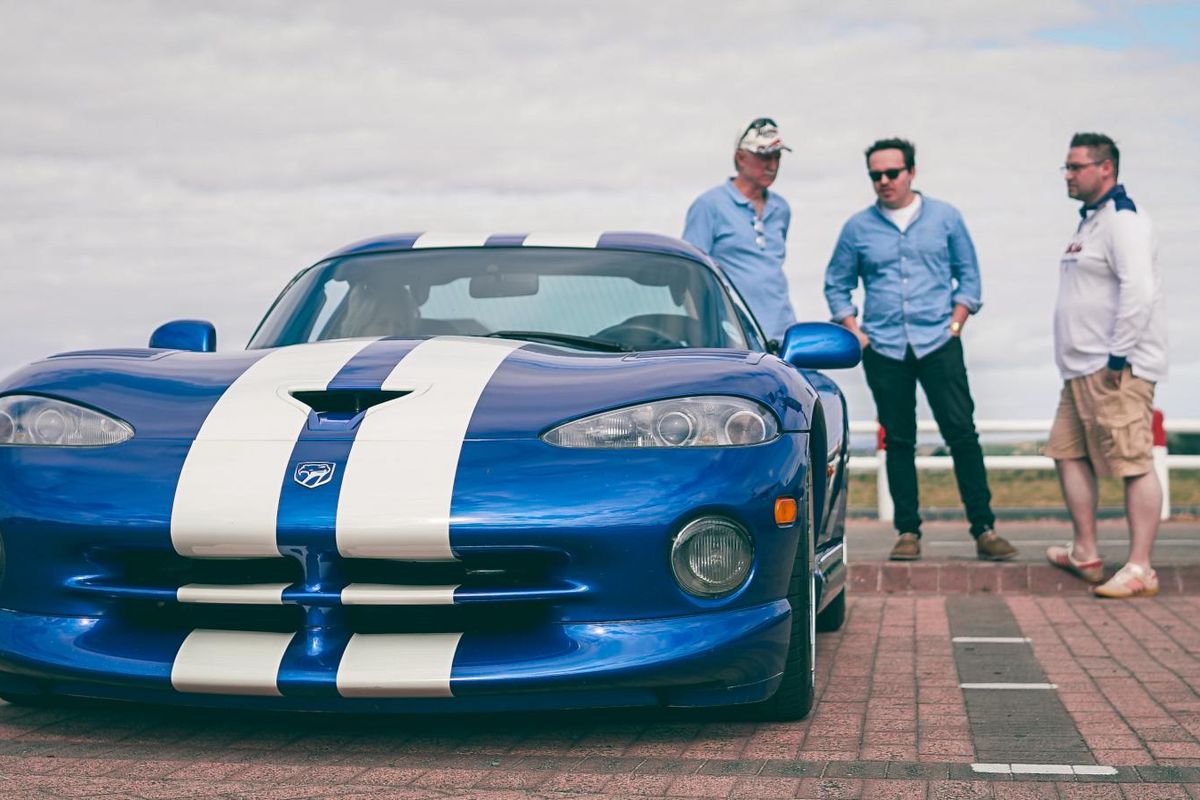
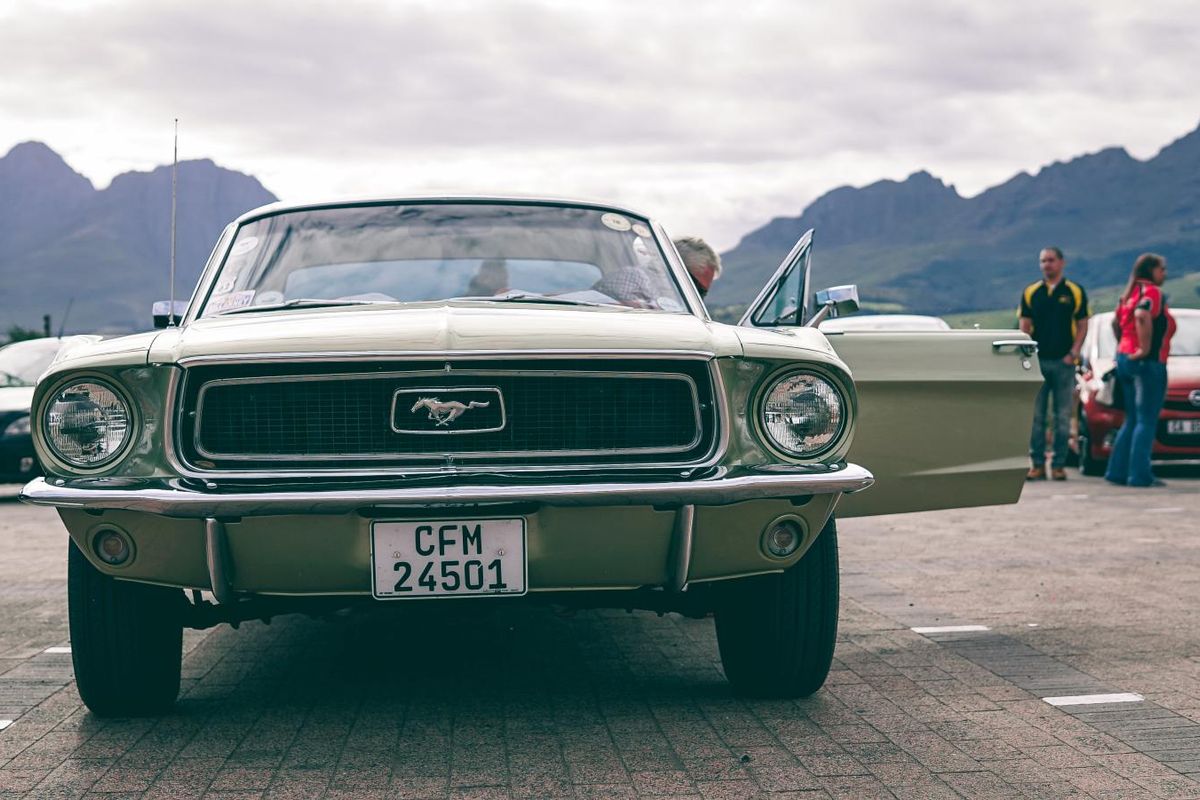
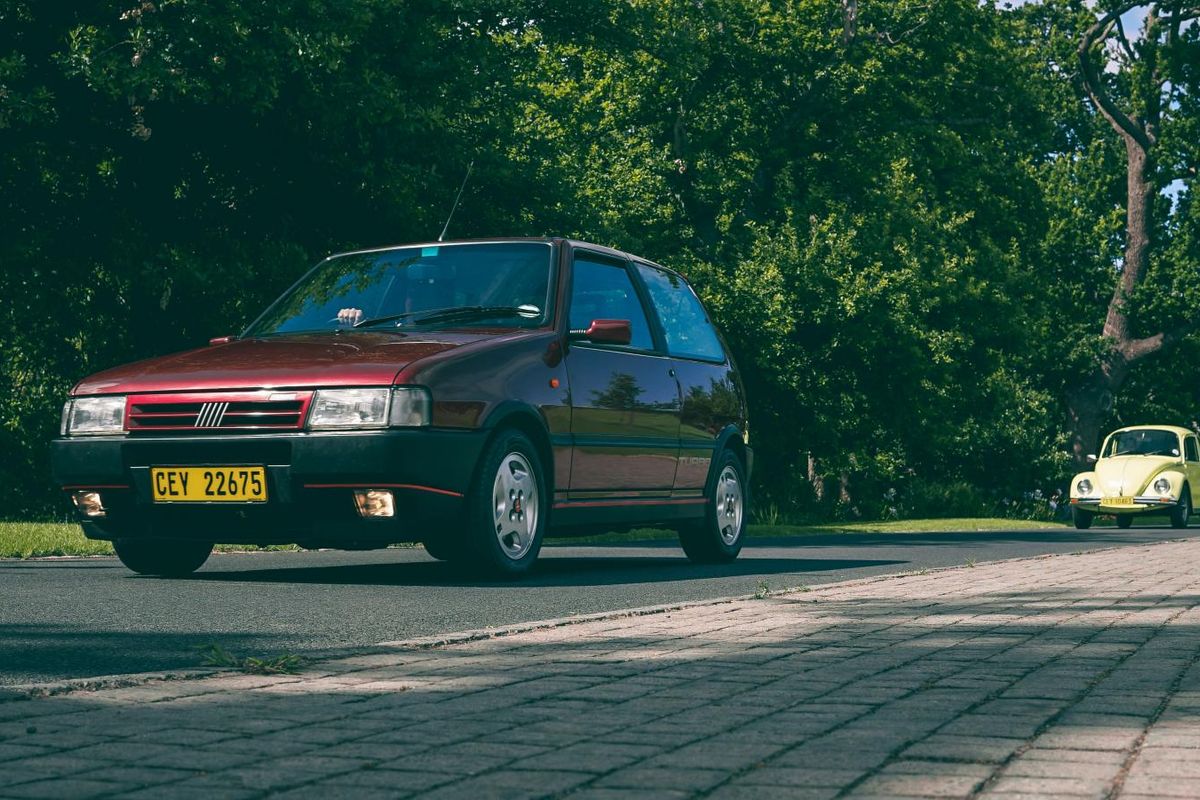
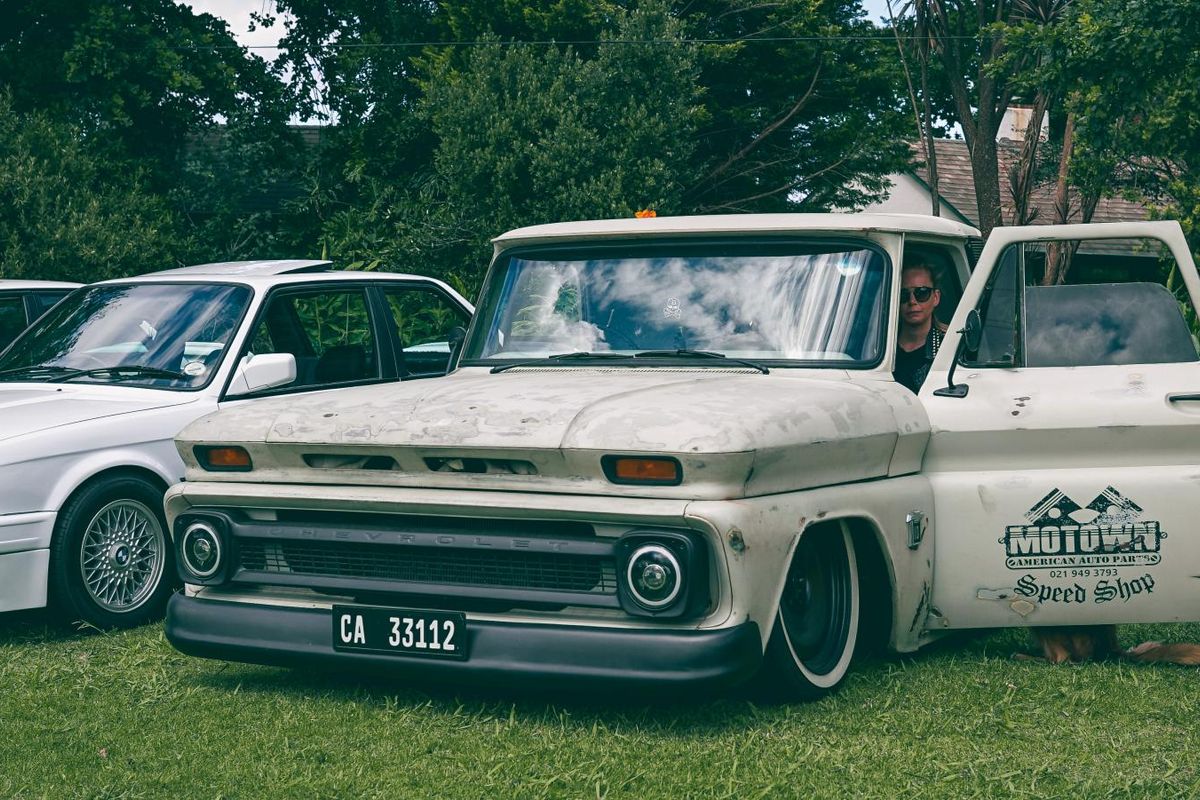
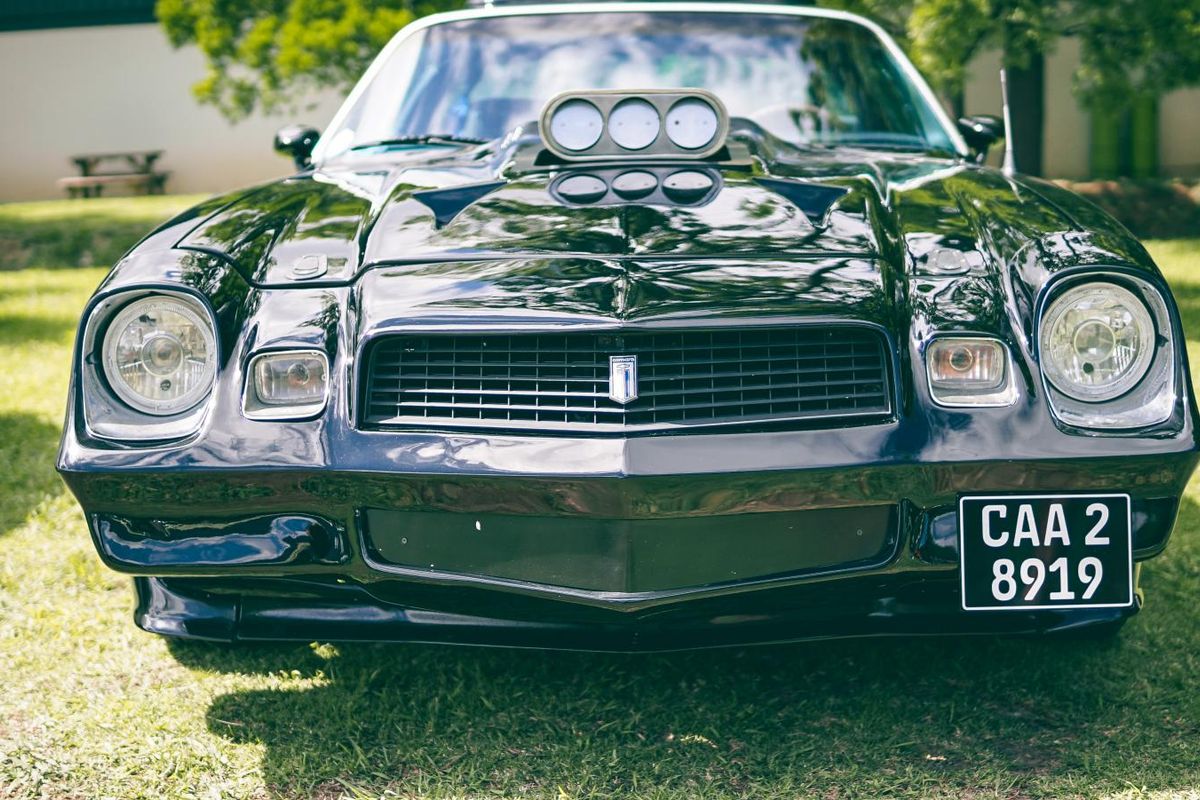
A very large number of American cars were present, including a 1958 Chrysler Windsor and an immaculate light metallic green Ford Mustang that has done only 64 000 miles since new. Also catching the eye, as always, was Jess Goedhals' Dodge Viper GTS (feature car of episode 11), a black Chevrolet Camaro that obviously packs some extra punch and a dropped, rat-rodded Chevy C10 pick-up.
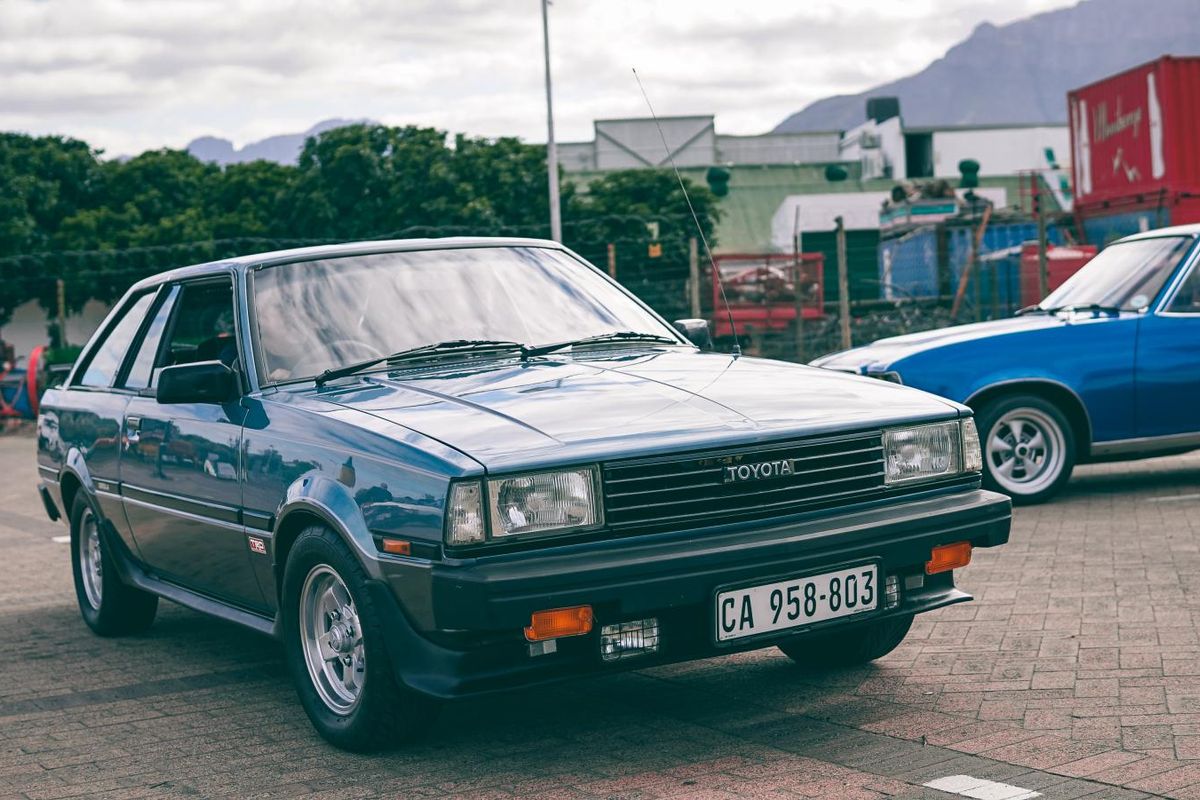
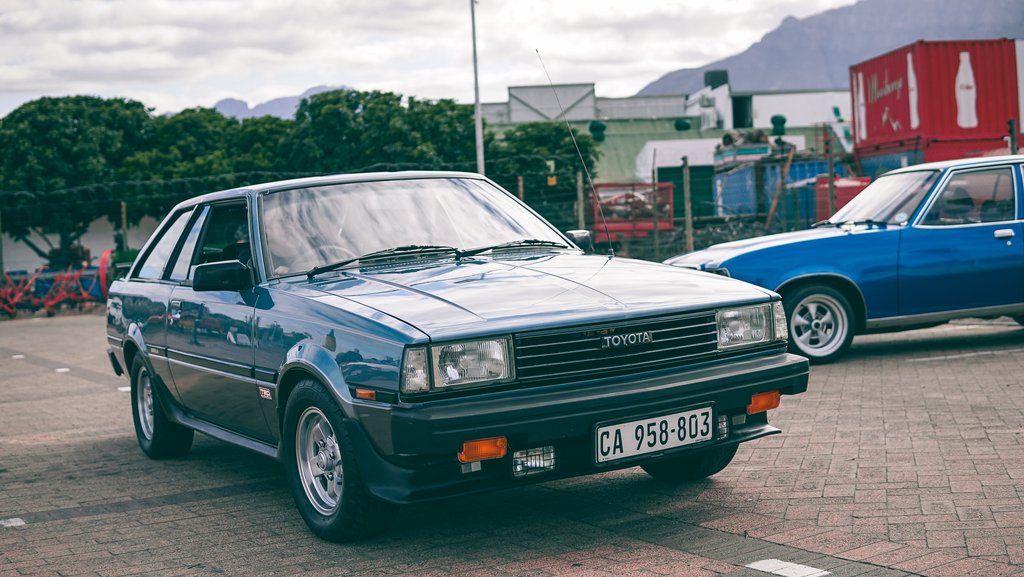
You don't find these in this condition anymore – 1984 Toyota Corolla Liftback TRD.
Heading over to Japan, and a stand-out car was a very neat (and very rare, these days), 1984 Toyota Corolla Liftback TRD, a third-generation Supra and a couple of rare Mazda rotaries. A cute arrival was a Daihatsu Copen.
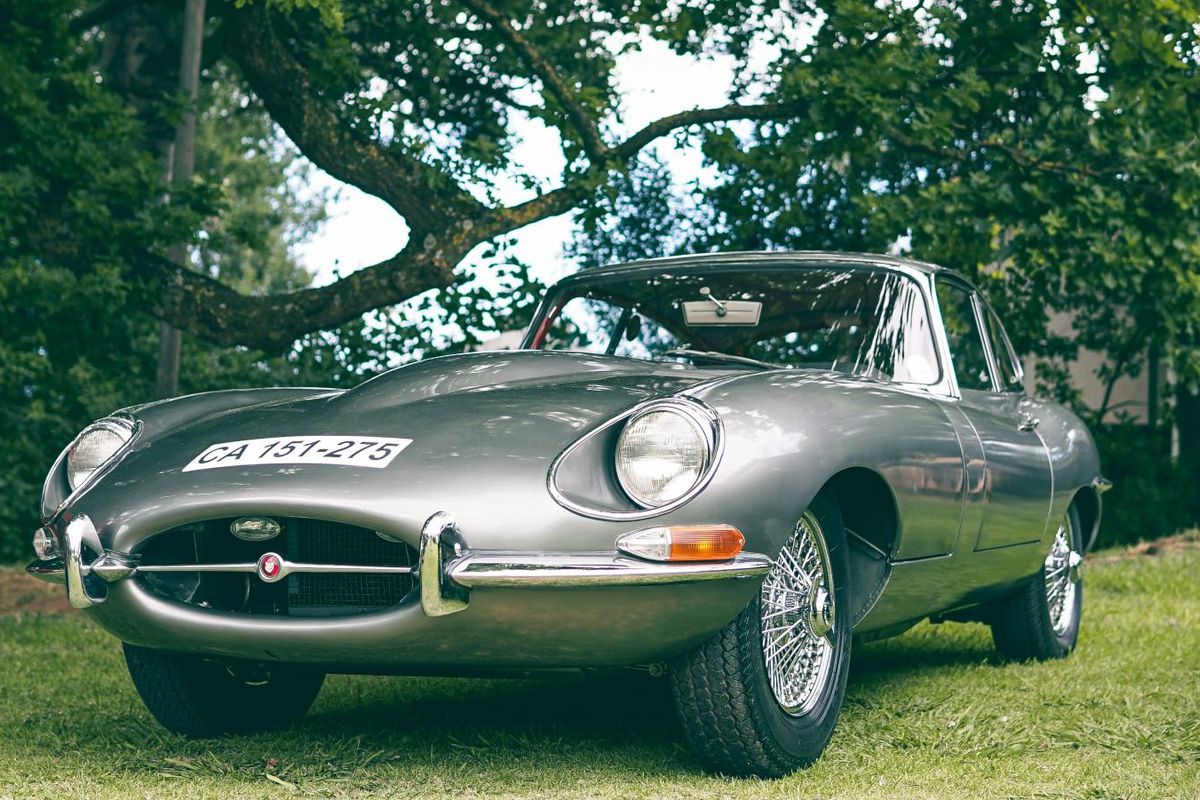
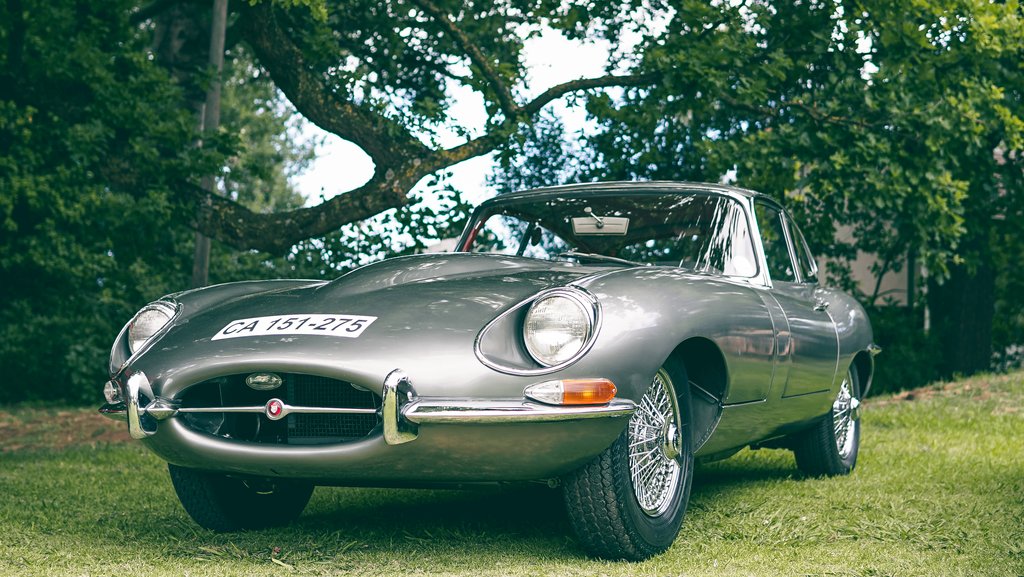
Josh Spencer's Jaguar E-Type almost stole the show, again. Such a beauty!
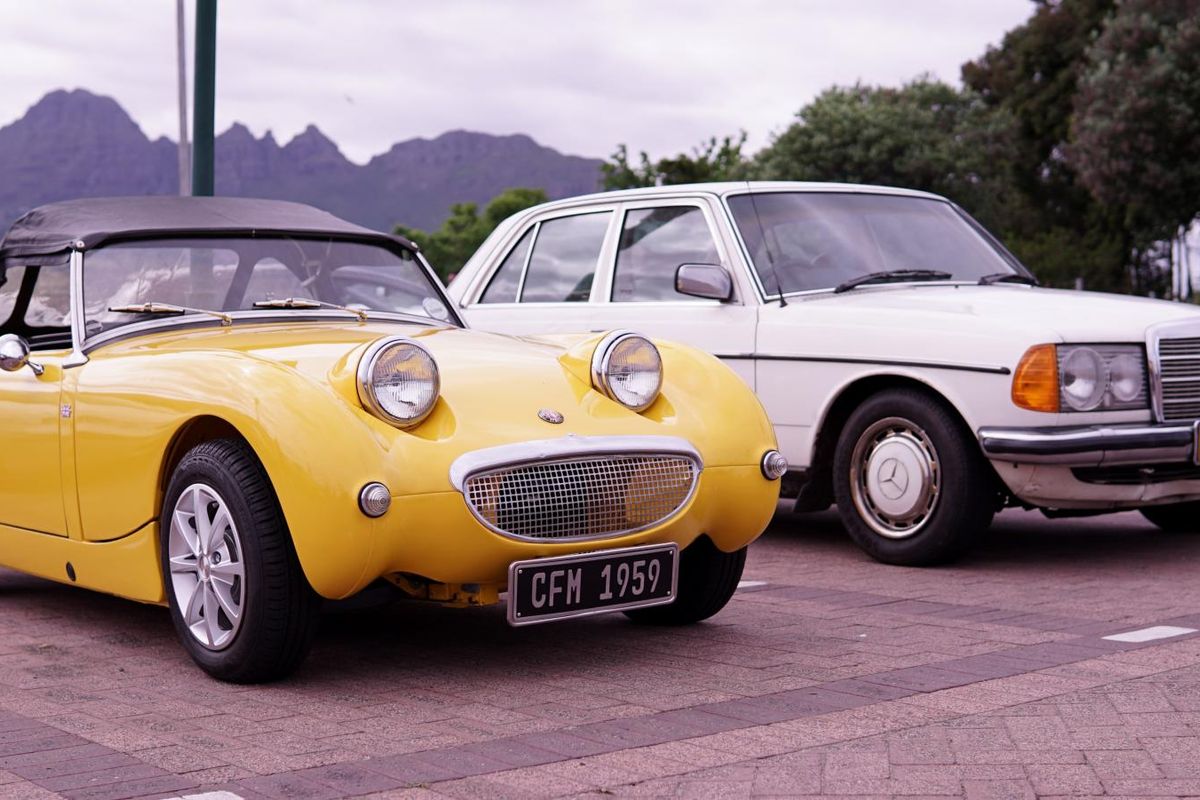
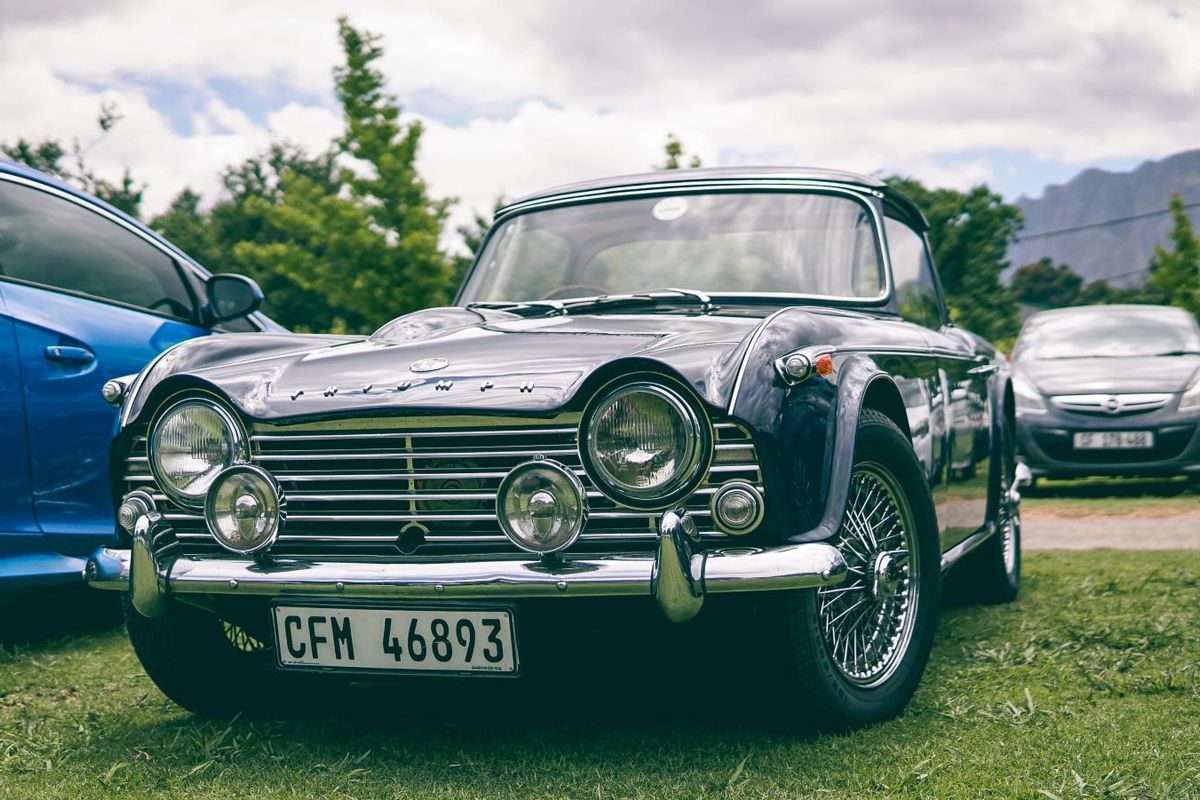
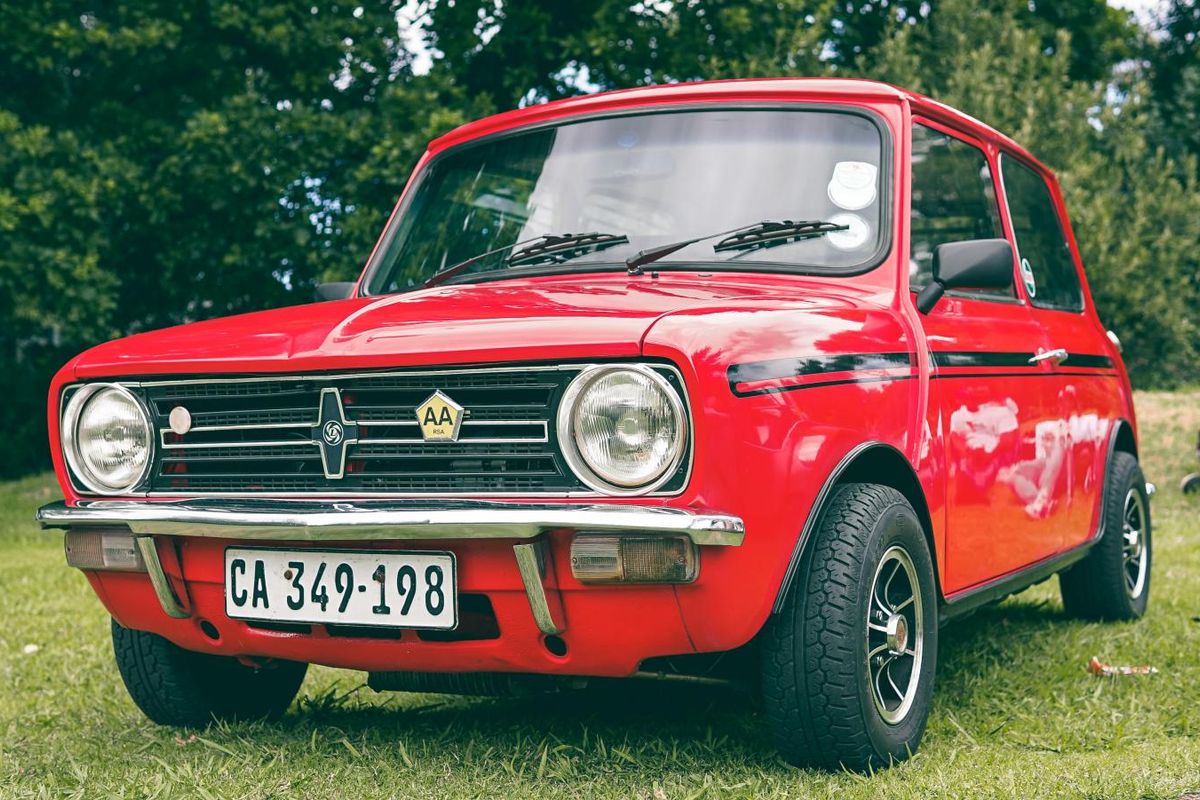
And then there were the British. Josh Spencer brought his beautiful E-Type (featured in SentiMETAL Episode 1) but his was not the only E-Type in attendance, as a stunning yellow Roadster also showed up unexpectedly. A bright red little Leyland Mini 1275 E turned many a head, as did a Lotus Esprit Turbo, Rolls-Royce Silver Shadow and a 1964 Triumph TR4A.
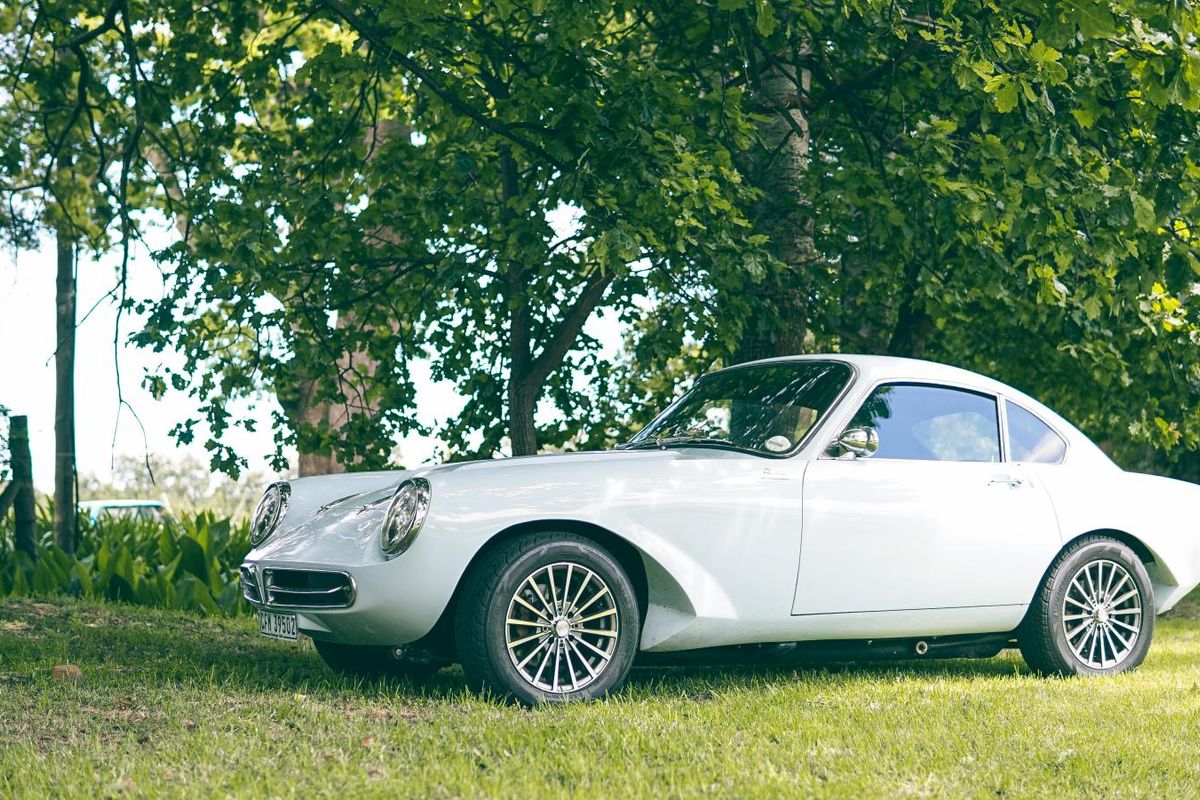
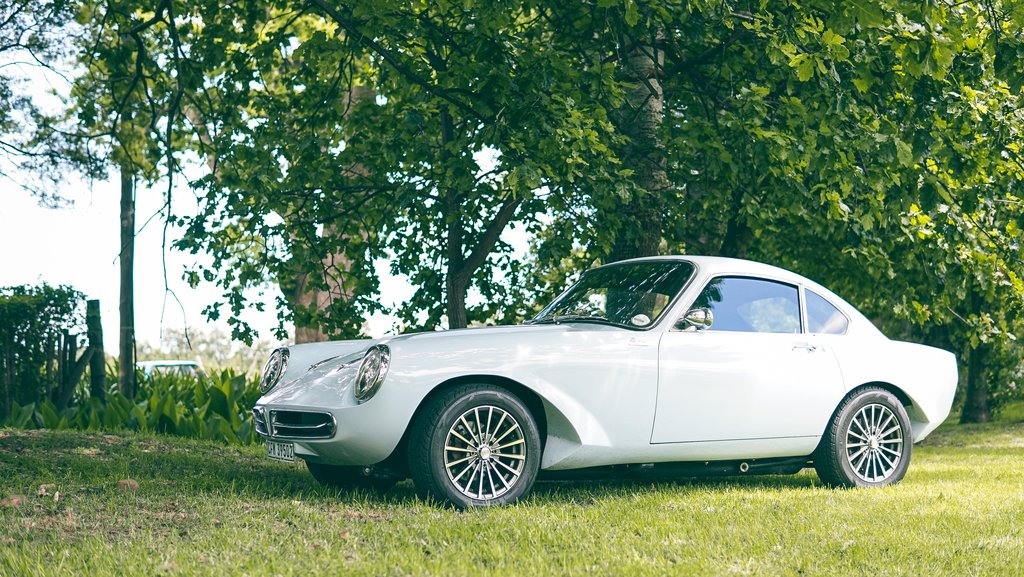
Uniquely South African, this GSM Flamingo may sport modern wheels, but it looked absolutely gorgeous.
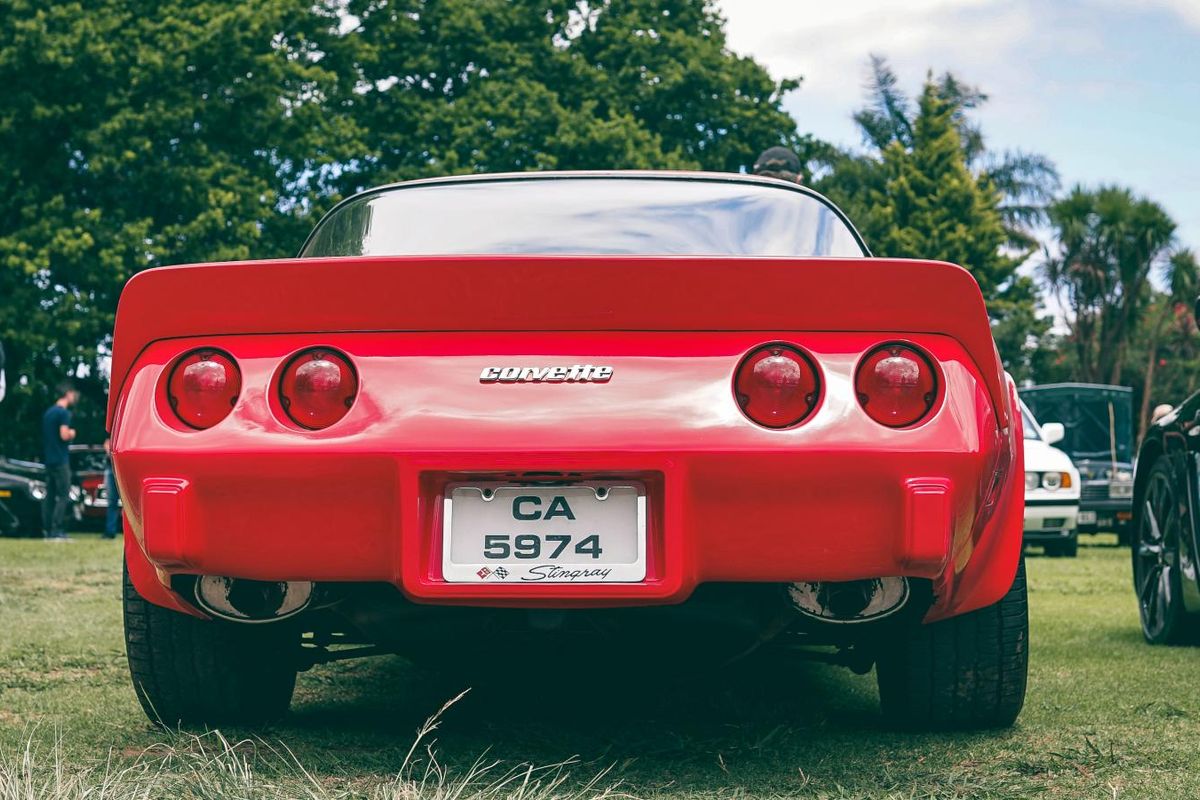
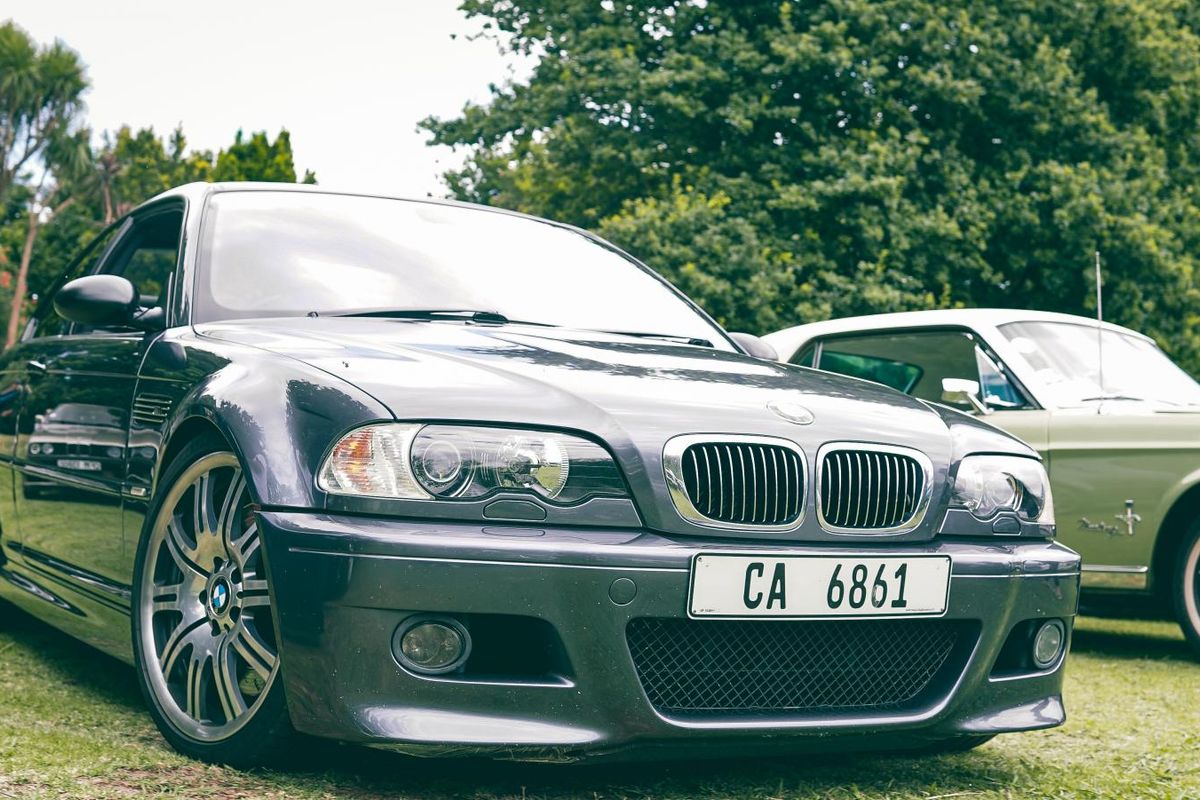
And so the list goes on, and on… Examples of the GSM Dart and Flamingo brought a more South African flavour to the event, and a mixture of other European delights gave the audience plenty to look at. Crowd favourites included four Volvos (850R, 850 T-5R, P1800 and PV544), a variety of Bimmers (E34 M5, E46 M3 and several E30s) and for those with more modern tastes highlights were the Mercedes-AMG GT, Audi R8 and Lotus Exige S.
Loads to see inside Motor Studio, too, as the crowd joins the queue for a caffeine injection.
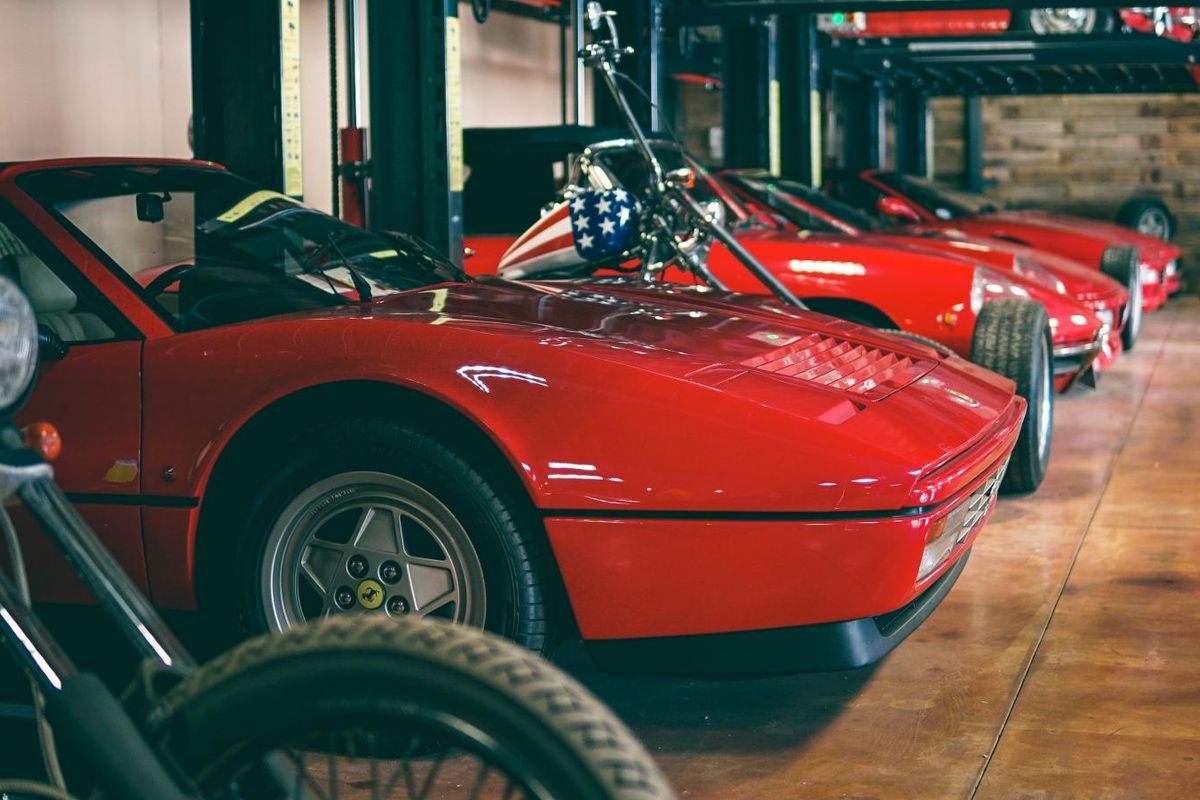
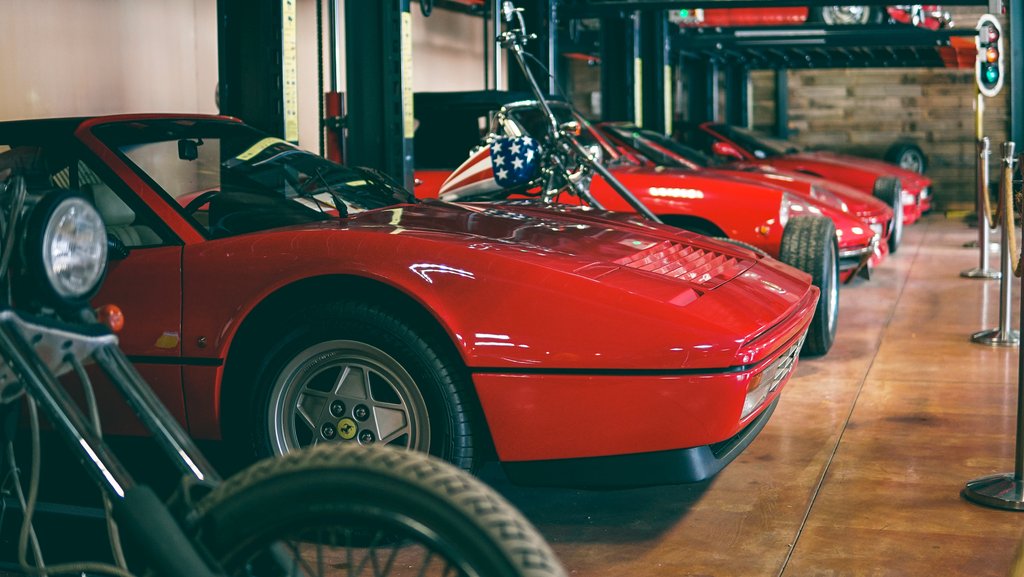
Inside Motor Studio, the visual delights continued, with several bright red Italian and British beauties on display, and the SentiMETAL store selling some of its limited edition prints. The day was in aid of a worthy cause, with a percentage of the proceeds on the day destined for Camphill West Coast, a facility that provides care for intellectually challenged adults, but does so with purpose, creating quality products in a natural farm setting. Find out more about Camphill here.
The next SentiMETAL Gathering is scheduled for Gauteng in February 2020. Watch this space.
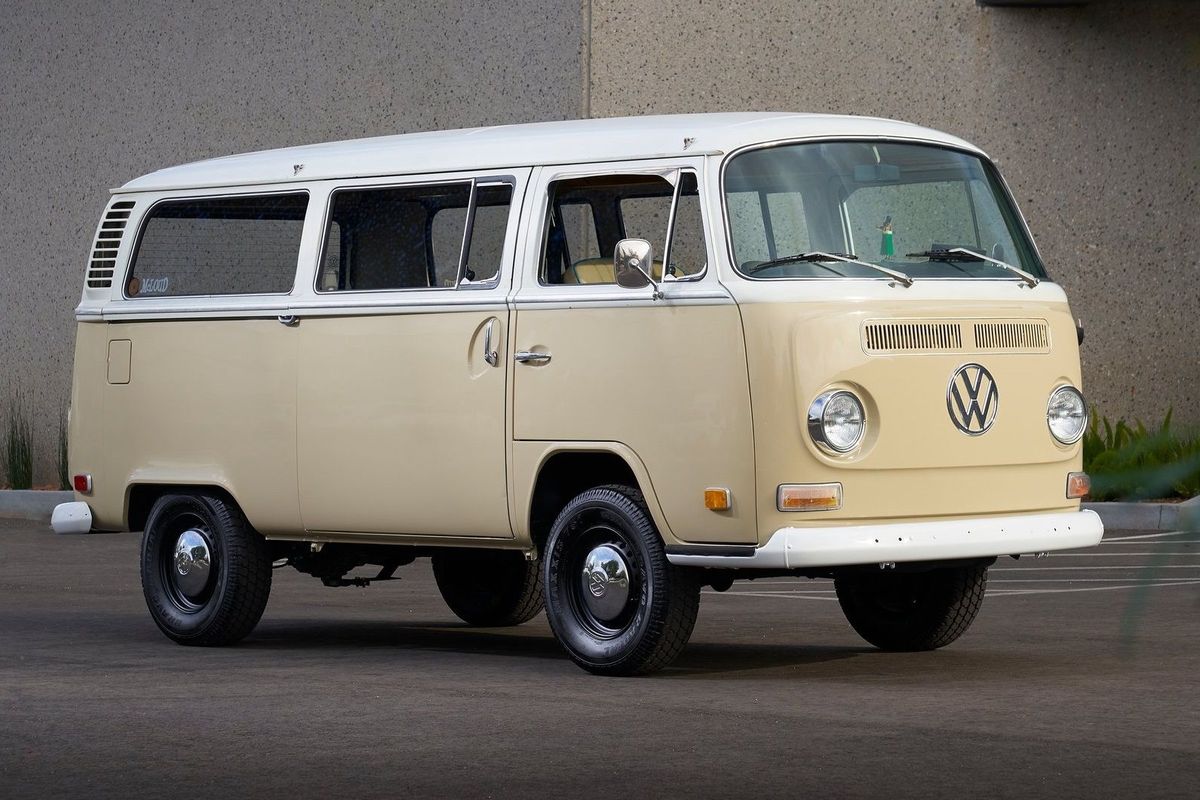
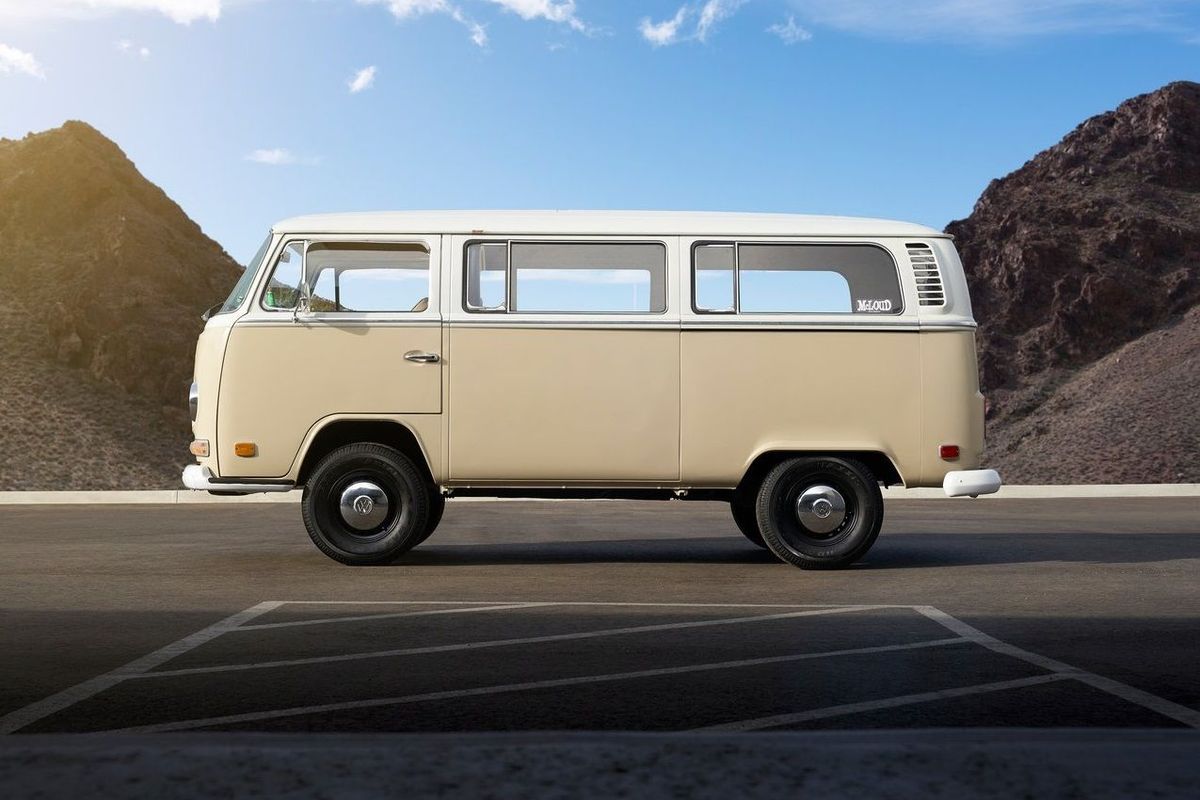
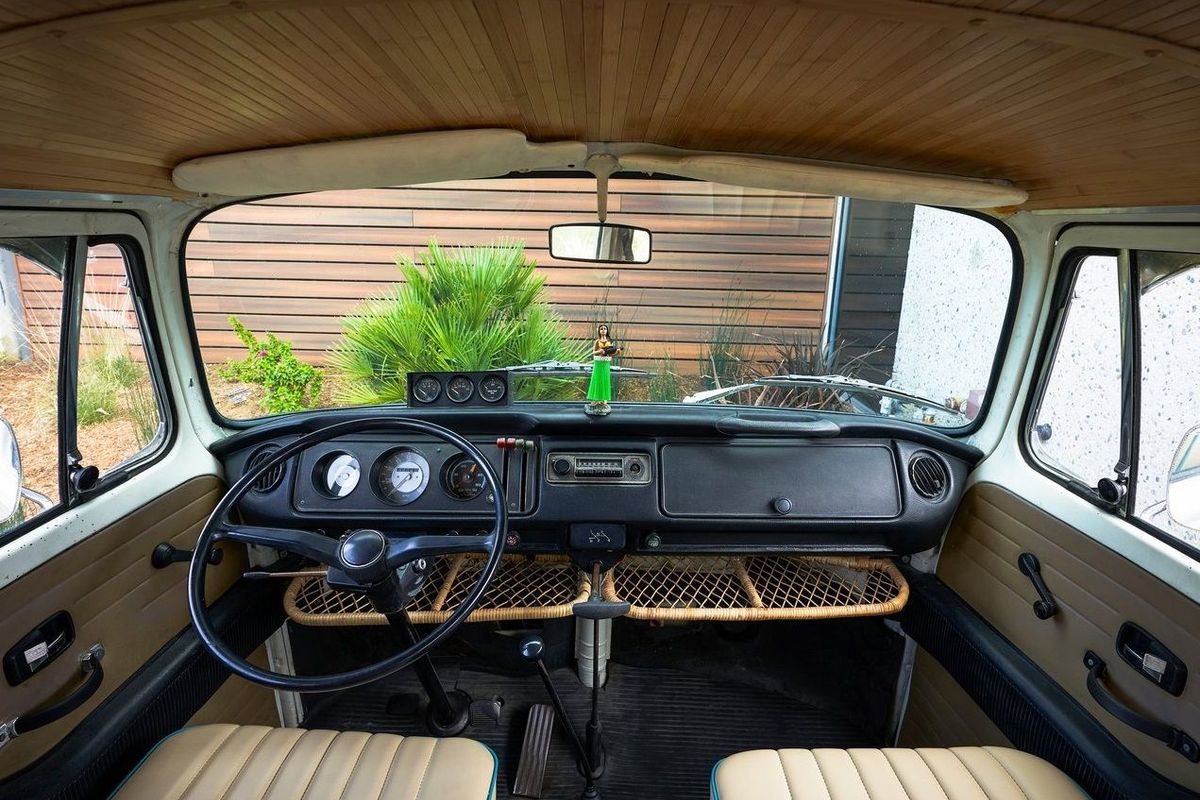
With the heart of an e-Golf, this 1972 Volkswagen Type 2 now runs on electric power.
Electric vehicle conversion specialists, EV West, were commissioned by Volkswagen of America to convert this 1972 Type 2 bus into a fully-fledged electric vehicle.
"Their passion for classic-car culture and commitment to renewable energy made EV West the ideal choice for this project," said Mathew Renna, VP G4, Volkswagen North American Region. "We thought, who better to see if the e-Golf powertrain would be the perfect fit for our older vehicles. It's great to see that the spirit of hot rodding is going to live on into the electric age."
The e-Golf’s powertrain was harvested and installed into the classic bus, giving the e-Bus an electric range of around 200 km. The 100 kW/290 Nm electric motor resides in the rear compartment where the previous 45 kW 4-cylinder engine used to be and the 35.8 kWh battery system is contained in a reinforced, fireproof enclosure found under the front seats.
Much of the interior has remained the same as the original bus. However, the long-throw gear lever now commands actions such as park, reverse, neutral and drive, as well as regenerative braking modes. A classically-styled multi-function digital EV guage has been fitted in the dashboard allowing the driver to cycle through multiple views and monitor vehicle outputs.
"We are very excited to be a part of this project," said Michael Bream, Founder and CEO of EV West. "Merging a historic model from an iconic brand with the technology of today, is just one of many ways that we can step closer to a more sustainable future while continuing to enjoy our rich automotive heritage."
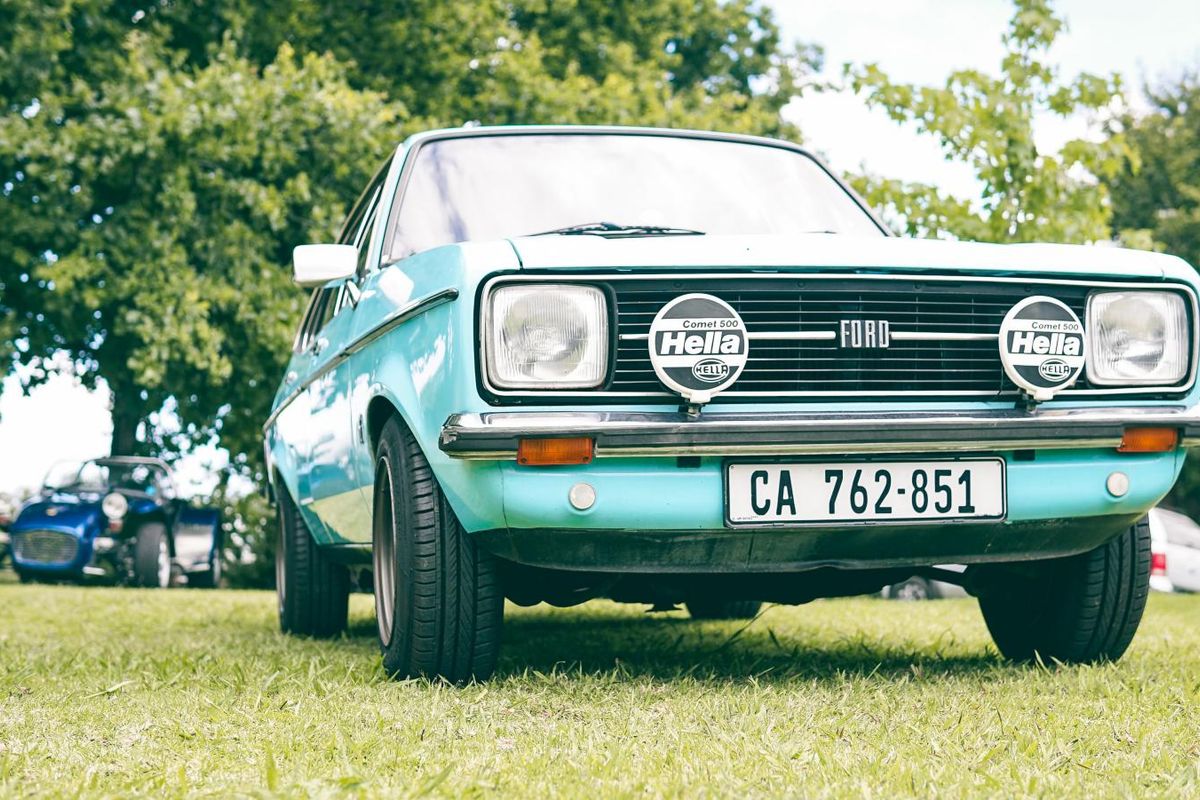
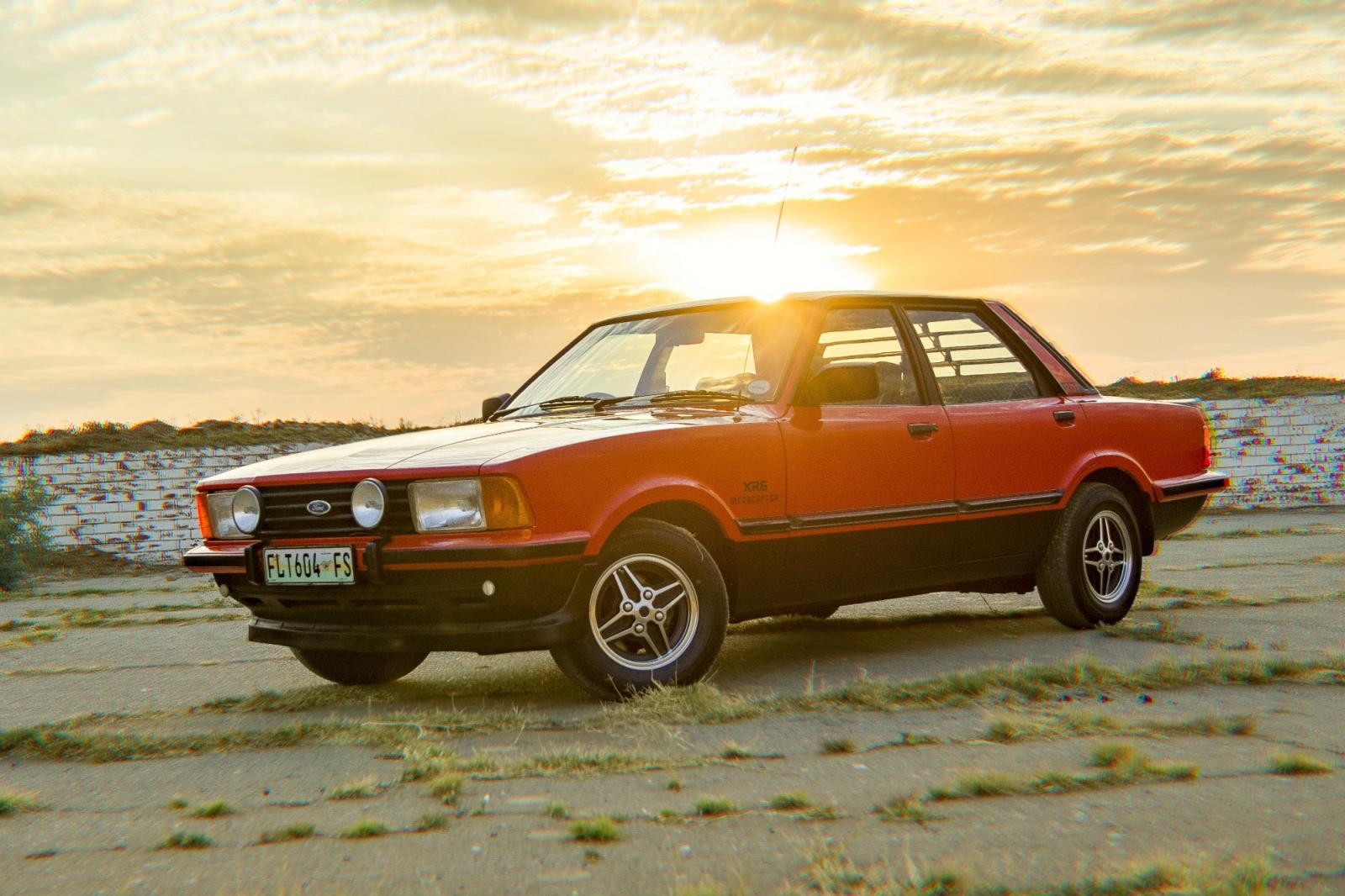
Ford Cortina XR6 Interceptor: SentiMETAL Episode 12
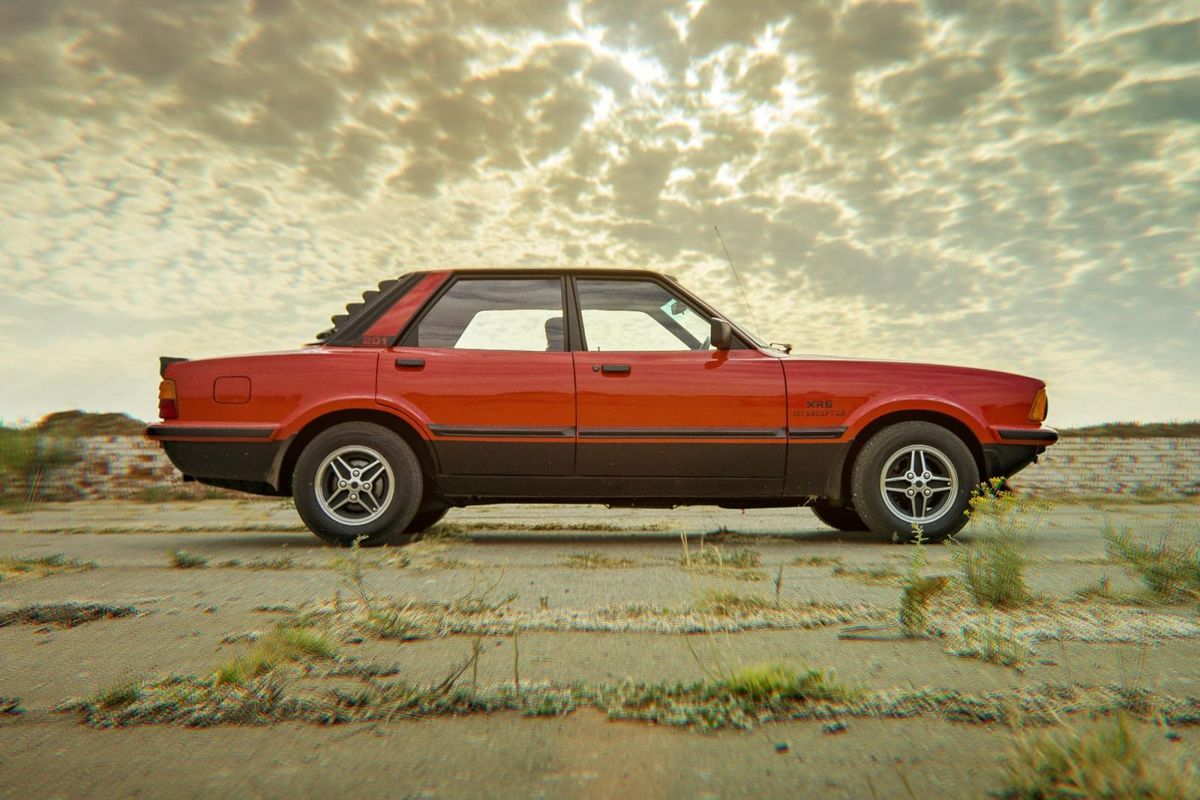
“Buckle in for the drive of your life.” That was the heading of the advertisement for the Ford Cortina XR6, but there was more to come from the South African arm of the Blue Oval – in 1981, it released the audacious XR6 Interceptor homologation special.
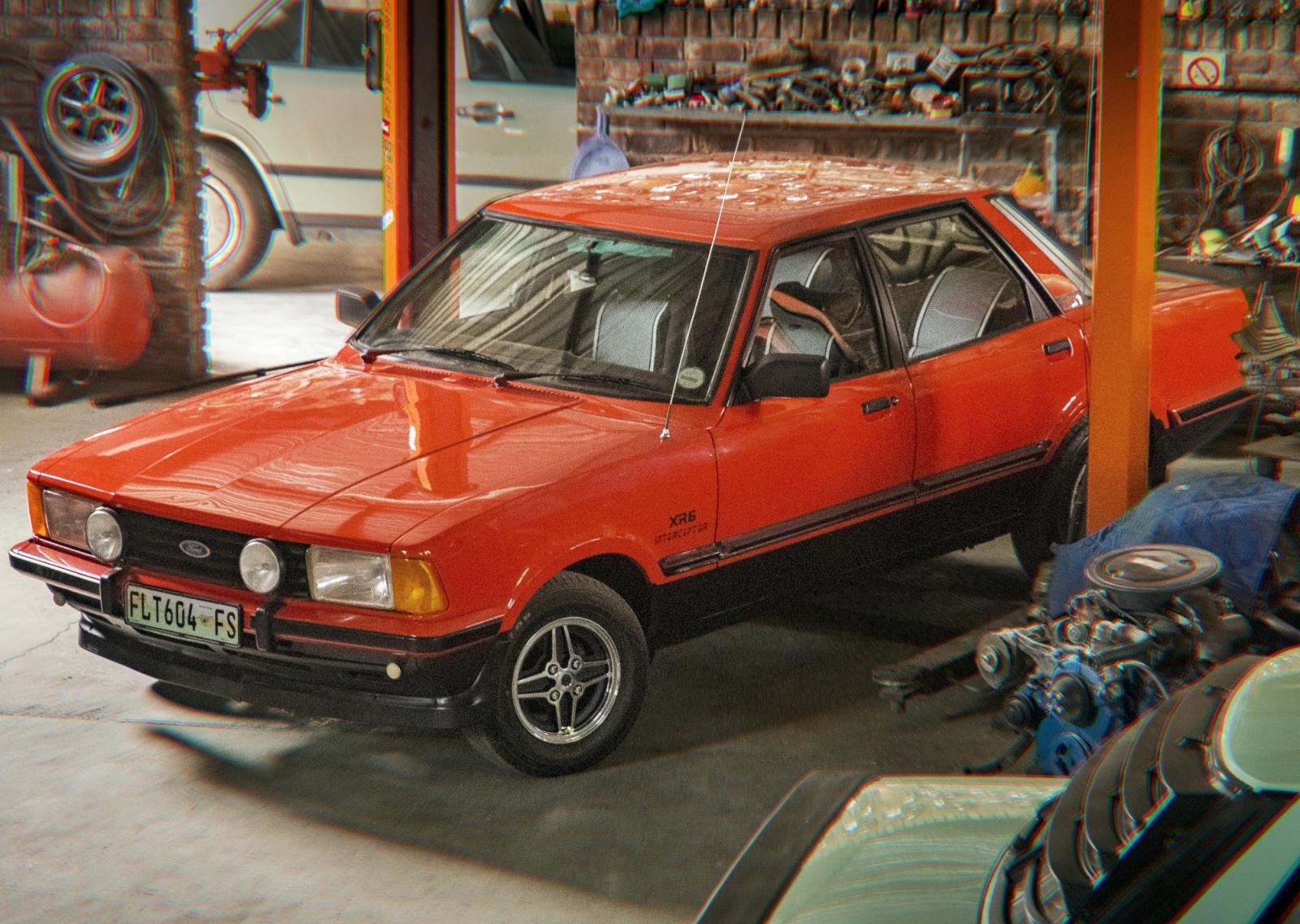
Bertus Ferreira has been involved with cars all his life, and his love for cars, especially Fords, is visible when he took us for a tour through his personal car collection and his workshop. One can sense that the Interceptor is one of his personal favourites, and he also owns the Cortina 3.0 S of the same era.
The Mark V Ford Cortina model range was introduced in South Africa in 1980. Although the range included engine sizes spanning from 1.3-, 1.6- and 2.0-litres, it was the XR6 with its 3.0-litre engine that sat at the top of the range and which became a local icon on its own.
However, in 1981, the XR6 Interceptor – developed and released as a homologation special to allow Ford to compete in the local production car race series called Group One – bowed in. The XR6, although not the Interceptor, was also known for being used as police cars while the big Ford sedan also became notorious when policeman André Stander started robbing banks during his lunch hour!
Cars are a Ferreira “family sport”
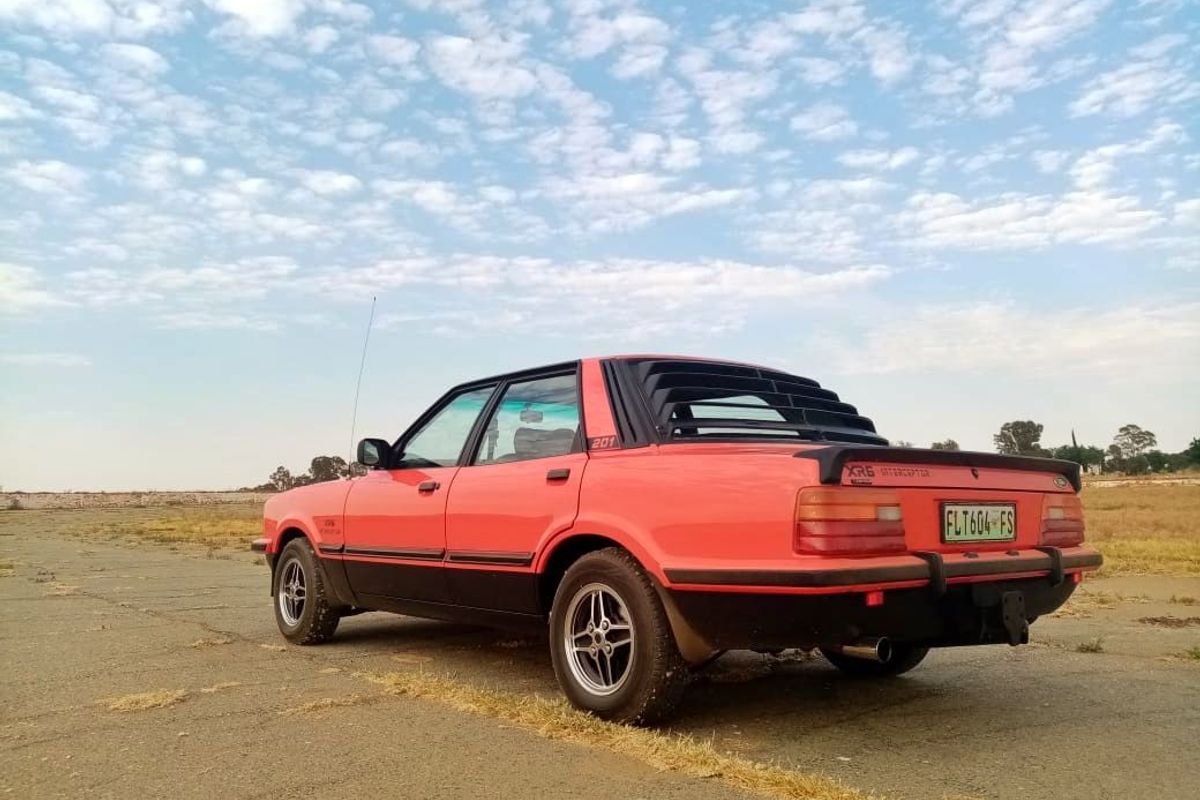
The Cortina XR6 Interceptor was only offered in Wild Coral Red.
Bertus bought the car in 2014 in Vierfontein, a 120 km drive from his hometown of Riebeeckstad in the Free State. It was advertised on Facebook, but it was the same car Bertus tried to purchase before when the owner passed away and he wanted to buy it from the late owner’s wife. However, at the time she was not ready to part with the car.
Driving to Vierfontein and after attending to a problem or two, they finally started the journey home. Over time Bertus has fixed and improved a number of things on the car. These included fitting new tyres, windscreen, exhaust system and alternator, while the rims were refurbished. Inside, the upholstery was redone in the correct material, Bertus having sourced seats from another car.
Bertus calls the Ferreira’s love for Ford and old cars a “family sport”, because his 3 daughters and sons-in-law as well as the grandchildren are all somehow interested or involved with the cars.
What makes an Interceptor?
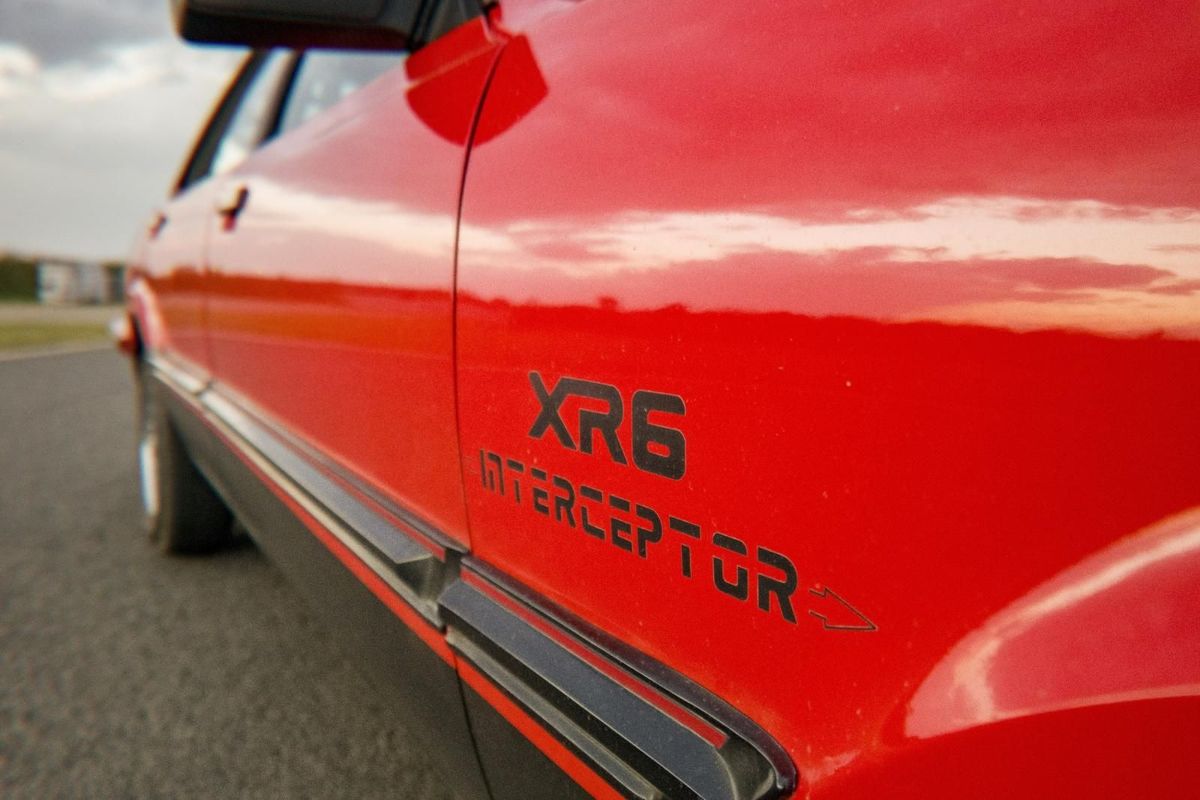
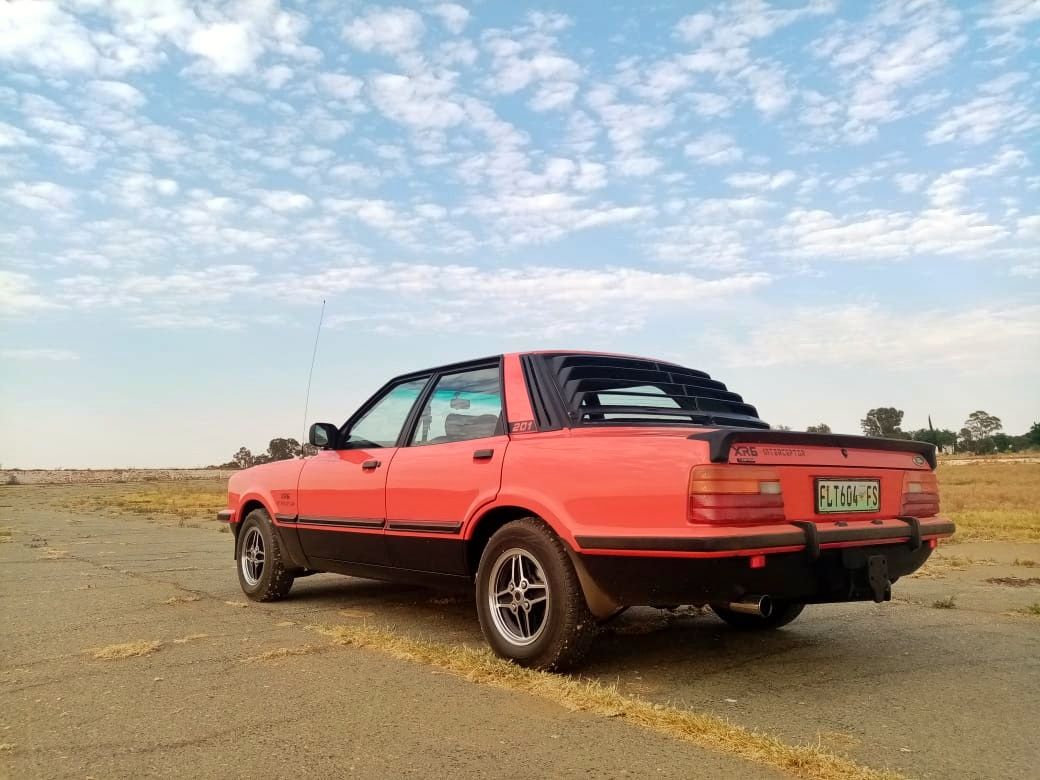
Note the number 201 on the C-pillar, denoting the car’s number in the build sequence.
Visually the XR6 Interceptor can be easily identified, owing to the notable matte black highlights and more importantly, the number of each individual car on the C-pillar, in this case number 201. Interestingly, this number should correspond with the number on the car’s chassis plate. There is also a small winglet on the bootlid and “XR6 Interceptor” script behind the rear wheelarches and above the rear headlights.
Inside, the cabin also features sport seats that offer improved side support. Buyers also had no choice in terms of colour, as all the cars featured the Wild Coral Red, immediately visible from a distance or in your rear-view mirror.
But, it is under the body where the important improvements were made. Interceptors featured triple-downdraft 42 Weber carburettors, an aggressive camshaft, a different exhaust manifold and suspension updates. Assisting with a better footprint, wider Ronal 13-inch wheels were also fitted. This is the only part of this specific car which is not completely standard. Somewhere along the car’s life, an owner decided to paint the inside of the wheels black – it should only be in the pure aluminium-grey finish. However, it does suit the car, though, and Bertus decided to leave it that way.
Significant power bump
Bertus works on his cars himself, and has continuously improved this Interceptor through the years.
In terms of performance, the 3.0-litre V6 engine developed 118 kW at 5 800 rpm. This was an increase of around 15% over the standard “Essex” V6 engine. These mechanical changes also resulted in a deeoer and fruitier exhaust note.
The suspension on offer was independent coils and anti-roll bar at the front and a five-link system with an anti-roll bar at the rear. Although some sources suggest that only 200 were made, that is incorrect. As the number on this car suggests, the true figure is more likely 250.
Interestingly, the last Ford Cortina was sold in South Africa in 1984. At the time, it was often one of South Africa’s best-selling cars, which further contributed to the sales success of the homologation special.
Specification
Car: Ford Cortina XR6 Interceptor (1981-1982) Engine: 2 994 cm3, V6 Power: 118 kW @ 5 800 rpm Gearbox: 4-speed manual Weight: ±1 200 kg Top speed: 196 kph 0-100 kph: 8.6 or 8.8 sec (sources differ)
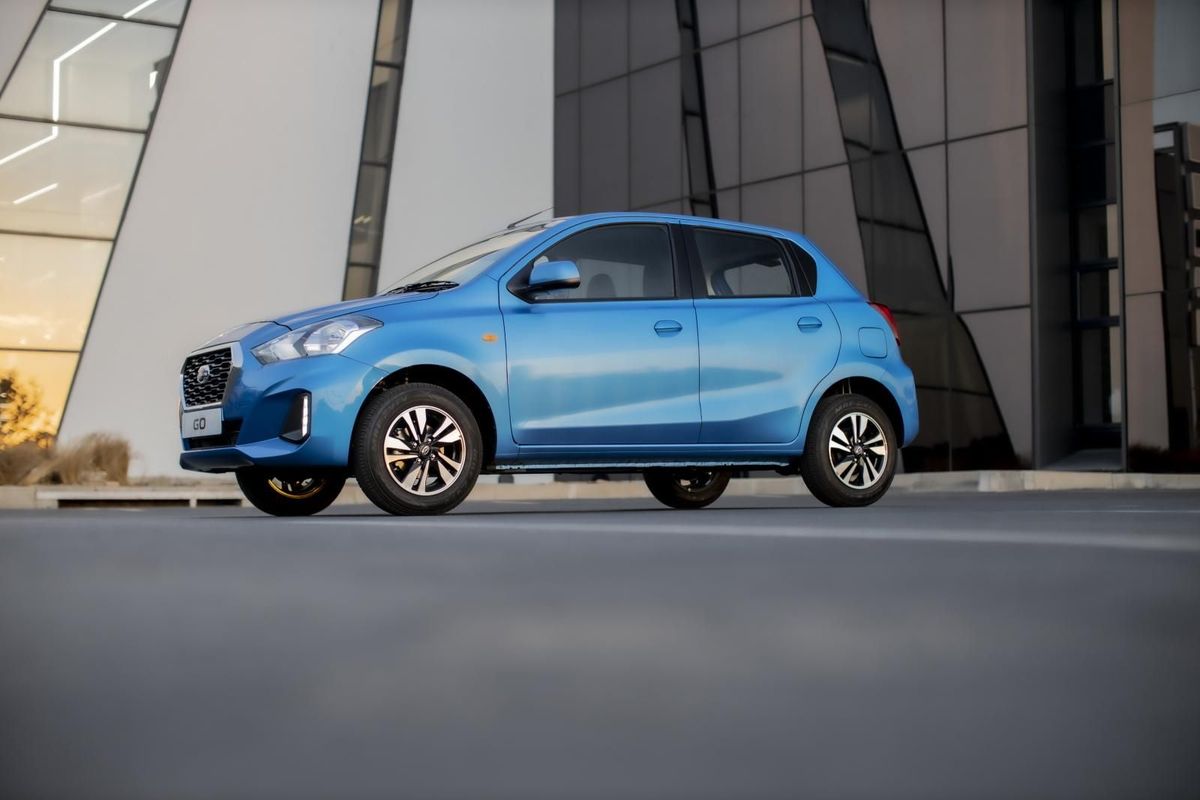
Datsun has bucked the AMT trend in the budget-car segment and, to cater for those who want an automatic 'box instead of a "stick shift", imbued its Go budget car with a continuously variable transmission (CVT). Is this a good move? We drove the newcomer at its local launch in Johannesburg to find out…
With the budget segment showing a noticeable uptick in ease-of-use 2-pedal vehicles, Japanese brand Datsun now offers its Go and Go+ with a CVT. It's interesting that most manufacturers in the segment have tended to favour an automated manual transmission (AMT) for its automatic derivatives. AMTs look good on paper, but experience with these transmissions suggest they dull the driving experience and drivers need to adapt their driving style substantially.
CVT is regarded as a swearword in the vocabulary of petrolheads; the unpleasant droning noise emitted by so many of such-equipped powertrains (upon the application of full throttle) is a common complaint. However, there's some merit to these types of transmissions. They do a good job of reducing fuel consumption, are cheaper to produce (and less complicated) than their torque-converter equivalents and offer a generally smoother ride in gridlock traffic than AMTs.
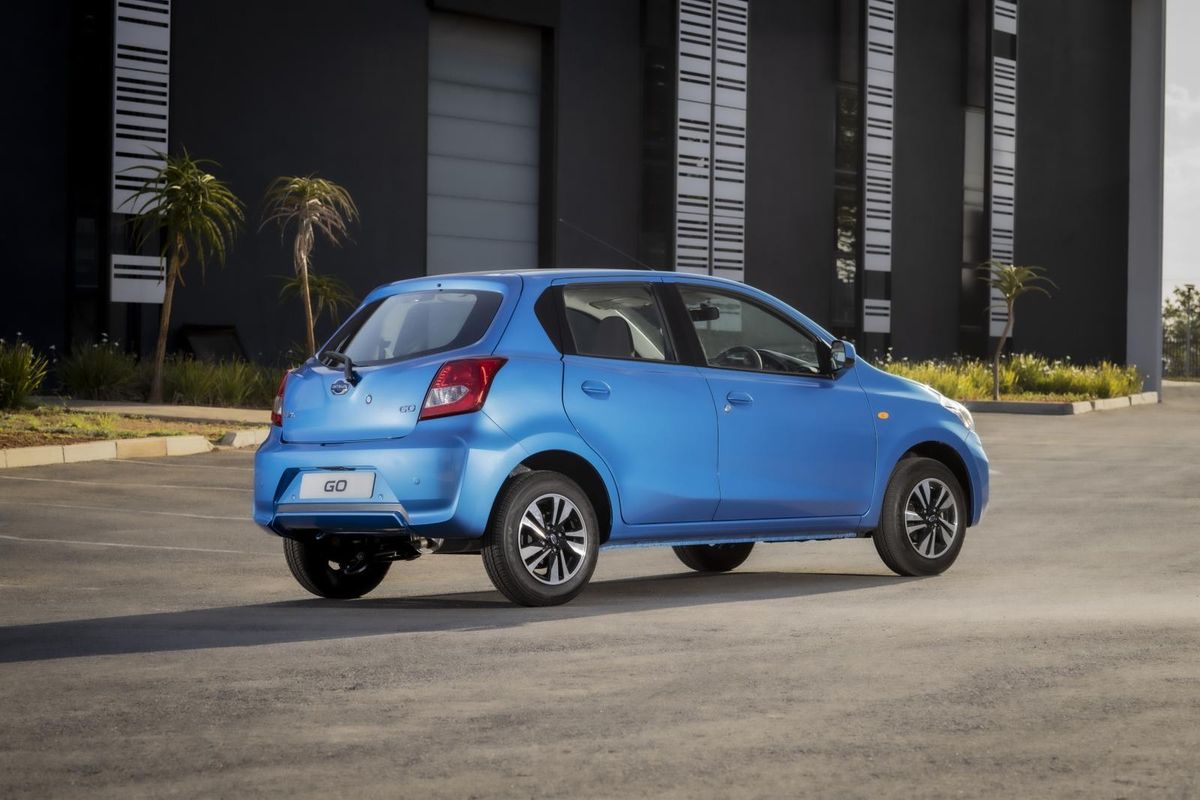
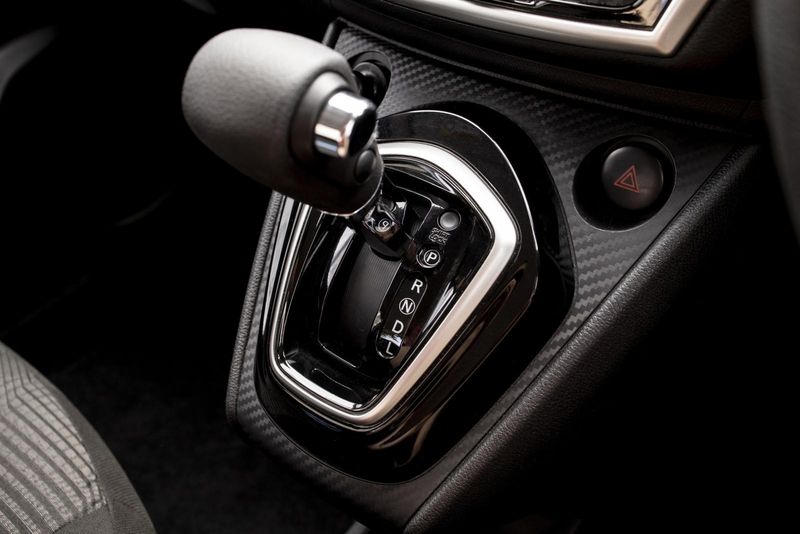
The CVT transmission in the Datsun Go makes for a smoother drive around town.
Engine and economy
Interestingly, the CVT-equipped version of the Datsun Go has a touch more power than its manual counterparts. There's 57 kW and 104 Nm available from a 1.2-litre naturally-aspirated 3-cylinder motor and power is directed to the front wheels via the CVT. In terms of fuel economy, the Go CVT is claimed to consume 5.0 L/100 km, which is a 10% improvement compared with its manual-equipped sibling.
Standard specification
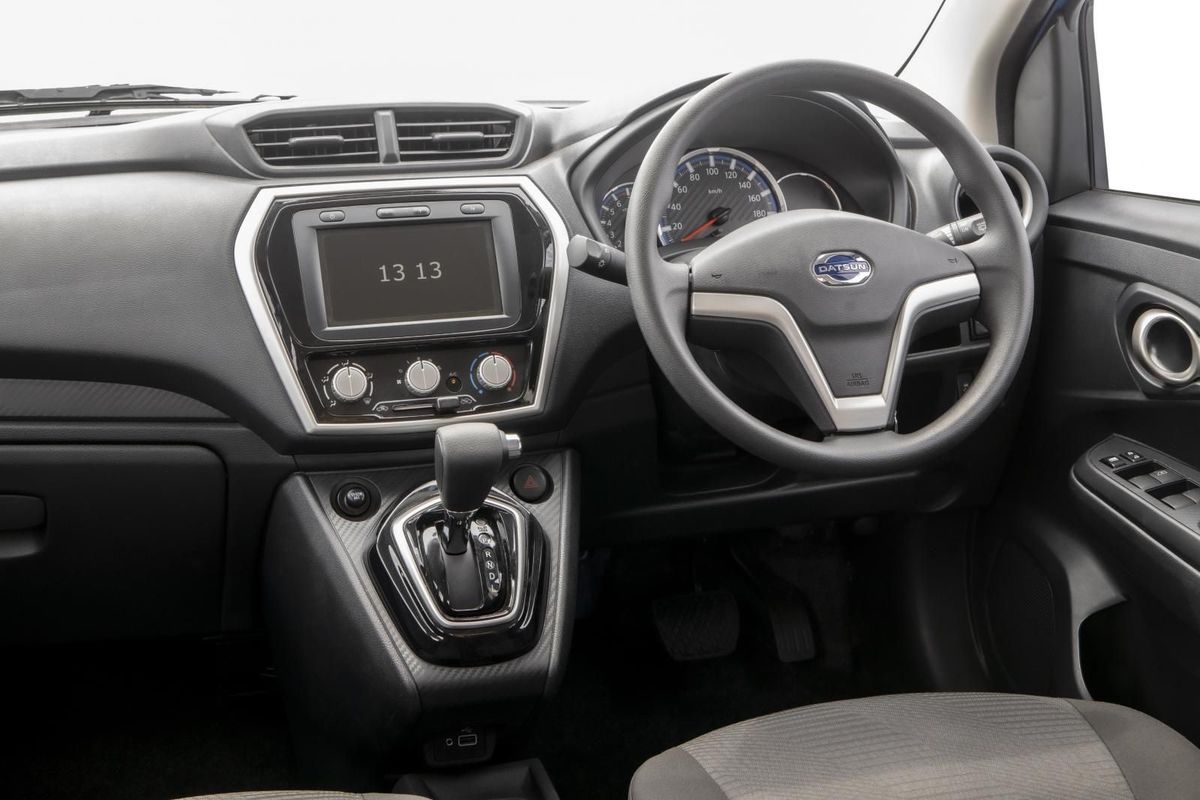
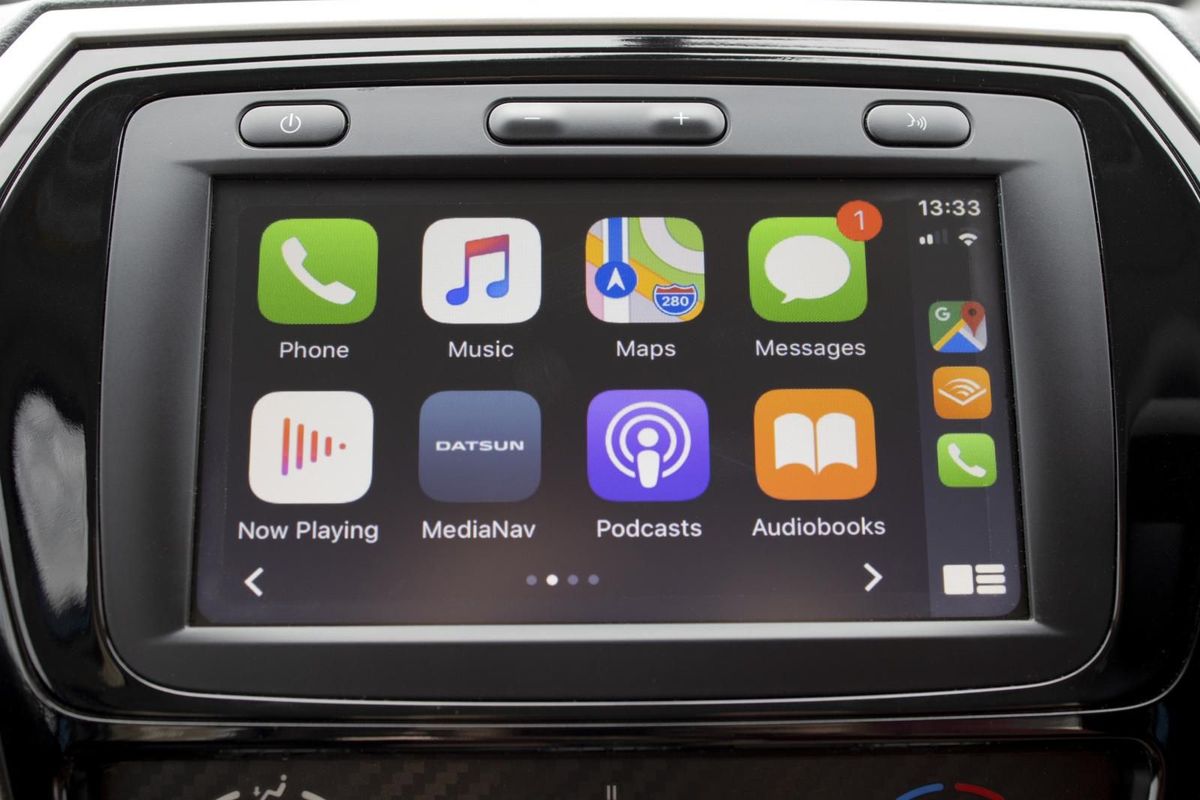
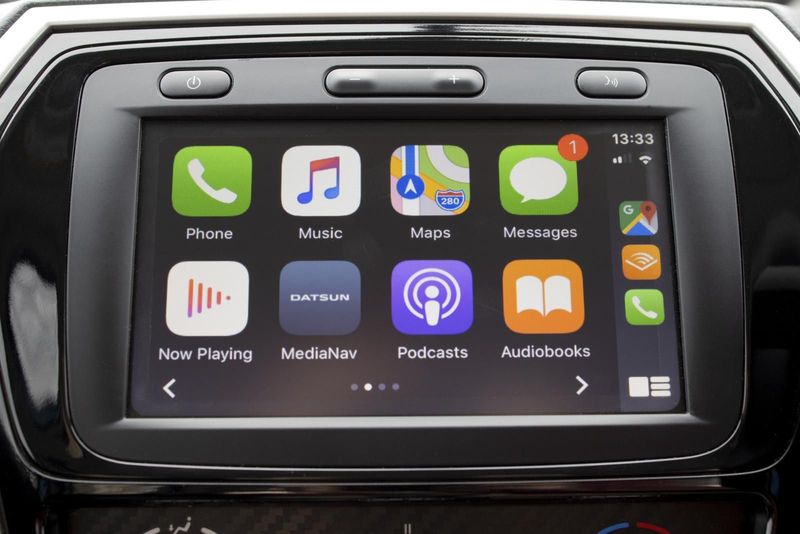
The Datsun Go CVT comes with front and rear electric windows, power steering, 14-inch alloys, a touchscreen infotainment system with Apple CarPlay/Android Auto compatibility, a USB port and daytime-running lights. We would have liked to have seen the provision of some steering-wheel-mounted satellite controls, however.
Apple Carplay and Android Auto functionality add some hands-free connectivity inside the Datsun Go.
But is the Datsun Go unsafe?
When the updated Go was launched in late 2018, it received more standard safety features. The CVT version comes with dual airbags, ABS with EBD and brake assist, as well as VDC (a form of stability control). There are still question marks surrounding the integrity of the crash structure/whether the Go would be able to withstand a serious impact, but the aforementioned features will significantly reduce your chances of being in an accident in the first place.
What's it like to drive?
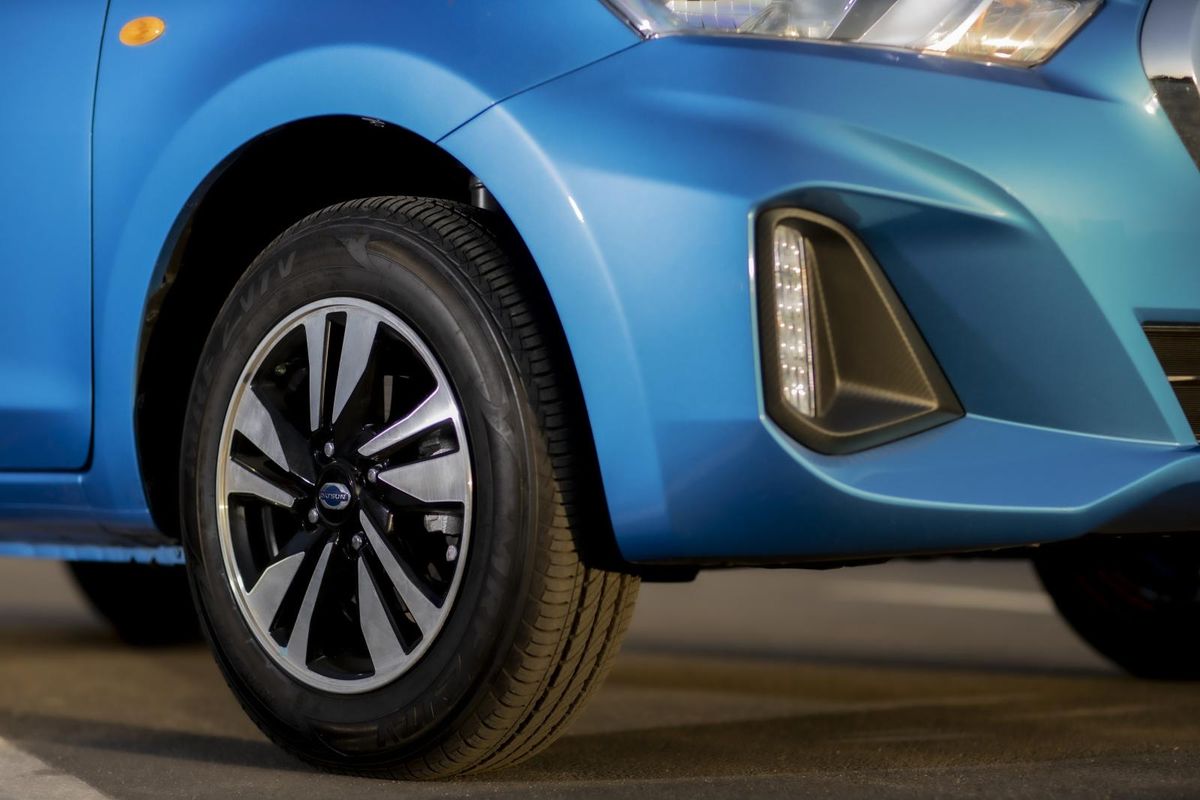
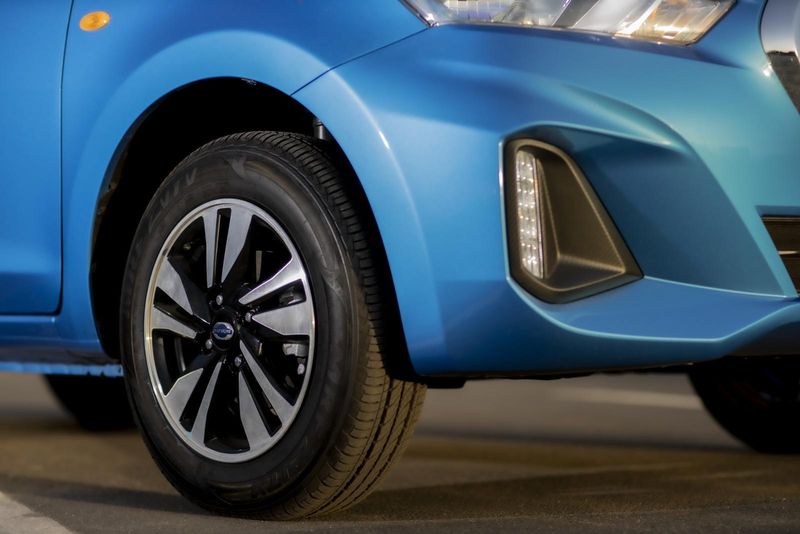
The Datsun Go CVT comes with 14-inch alloy wheels as standard.
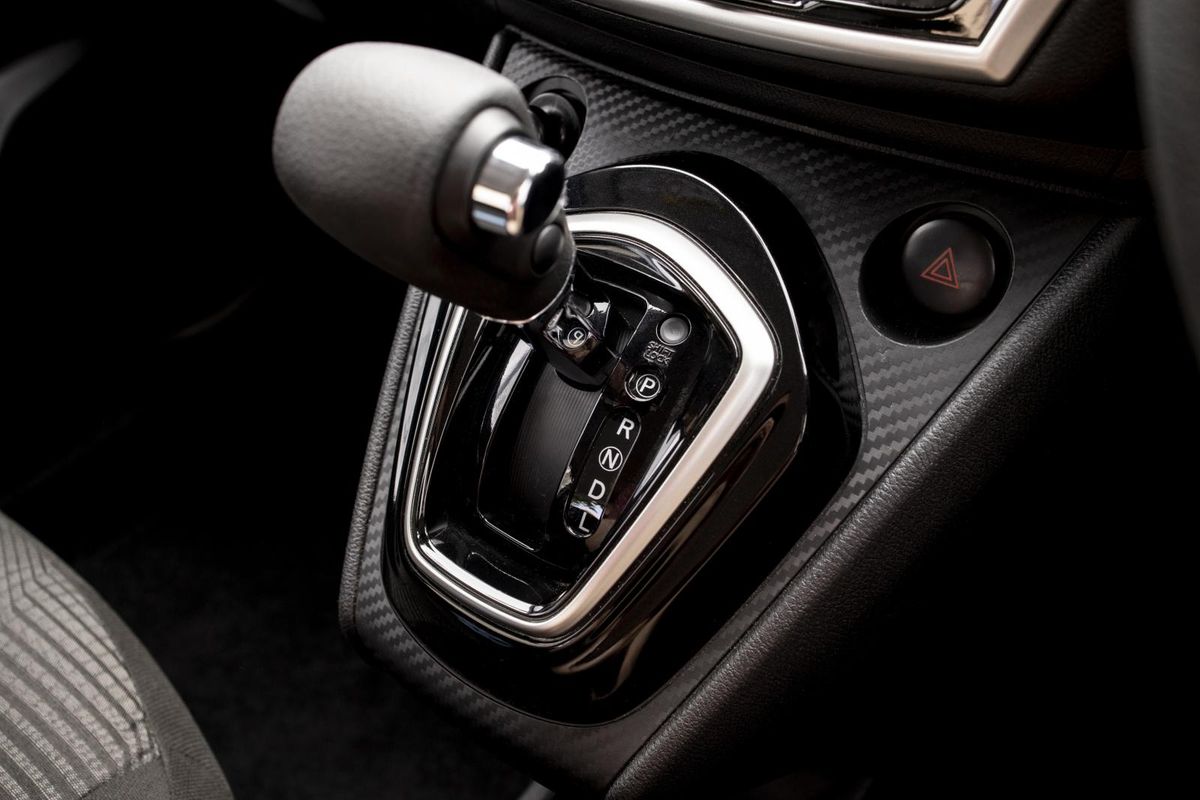
We had a chance to drive the Go CVT on a 50-km route that comprised an assortment of road surfaces and traffic situations. The driving position is fair and the cabin layout is ergonomically acceptable. That being said, it took us more than a few minutes to locate the USB port to make full use of hands-free Android Auto. Why hide the USB port, Datsun?
As long as you modulate the accelerator pedal and don't depress it fully, the Datsun Go offers adequate momentum for urban driving. If you accelerate fully, that CVT drone emerges with very little increase in forward momentum. The ride offered by the 14-inch alloy wheels is acceptable, but significant body roll is evident under cornering. The steering is light and tight parking manoeuvres (which we put to the test in a parking gymkhana) were executed effortlessly.
The Achilles Heel of the Datsun Go CVT comes to the fore when it is required to execute overtaking manoeuvres on a national highway at speeds in excess of 3-digits (in other words, over 100 kph). If you floor the accelerator pedal those speeds, the engine revs noisily but delivers precious little in the way of overtaking acceleration, especially when the Datsun's climbing a hill.
Summary
Should you consider the Datsun Go CVT if you're in the market for a 2-pedal budget car? Well, there's a lot on offer in this segment, ranging from the newly-launched Hyundai Atos to the recently updated Renault Kwid. The Datsun Go's (1 year's worth) of free insurance and generous specification will win it some fans, as well as its pleasant urban driving characteristics.
A note of advice, though: if you do buy a Go CVT then try to avoid driving it on highways, unless when it's absolutely necessary. If you stick to speeds under 100 kph, you should be satisfied with its fuss-free operation.
Datsun Go Price in South Africa (November 2019)
Datsun Go Mid R159 100
Datsun Go Lux R170 200
Datsun Go CVT R184 200
The Datsun Go is sold with a 6-year/150 000 km warranty and comes with a year's worth of insurance. A service plan is optional.
Audi fans have had to wait very patiently for the arrival of new A1 Sportback. Now that it's here, however, does the Ingolstadt-based brand's premium compact hatchback represent enough of an improvement over its predecessor to again find favour with young, stylish and ambitious professionals?
We like: Attractive design and stylish cabin, build quality
We don't like: Steep pricing. Somehow feels and sounds less "sporty" than the Polo GTI
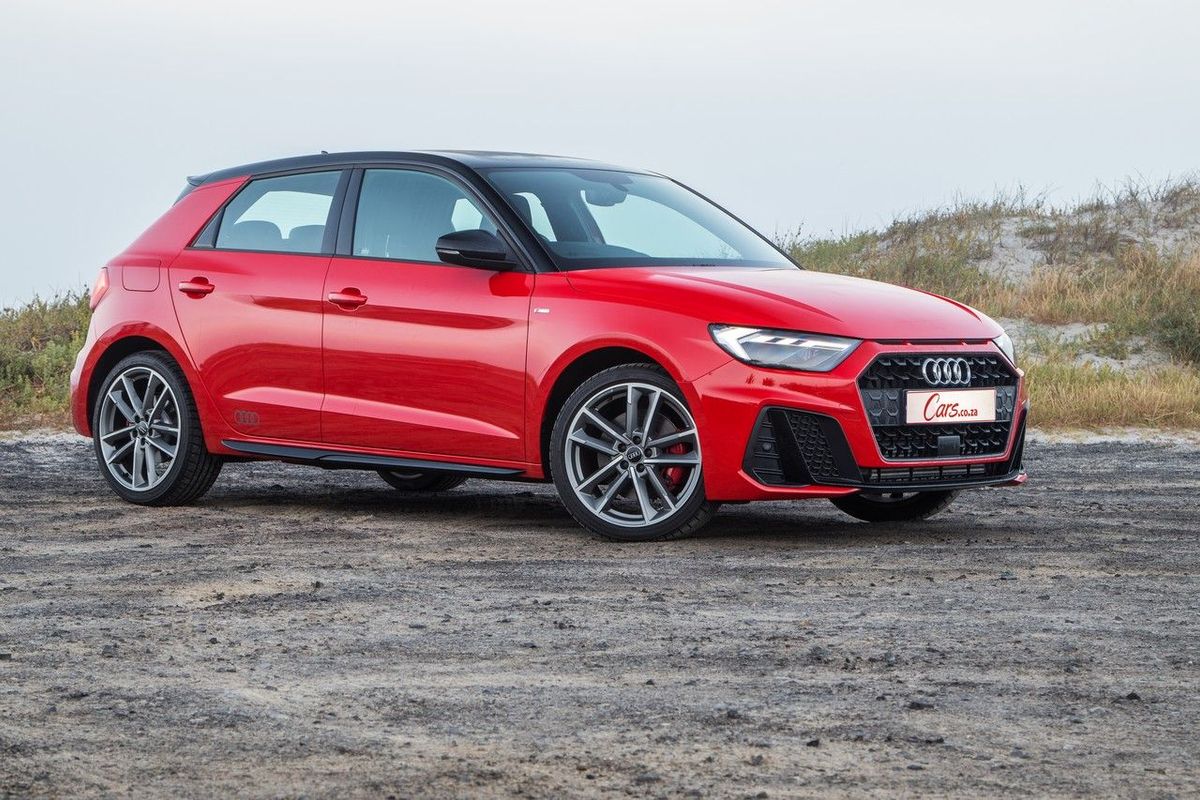
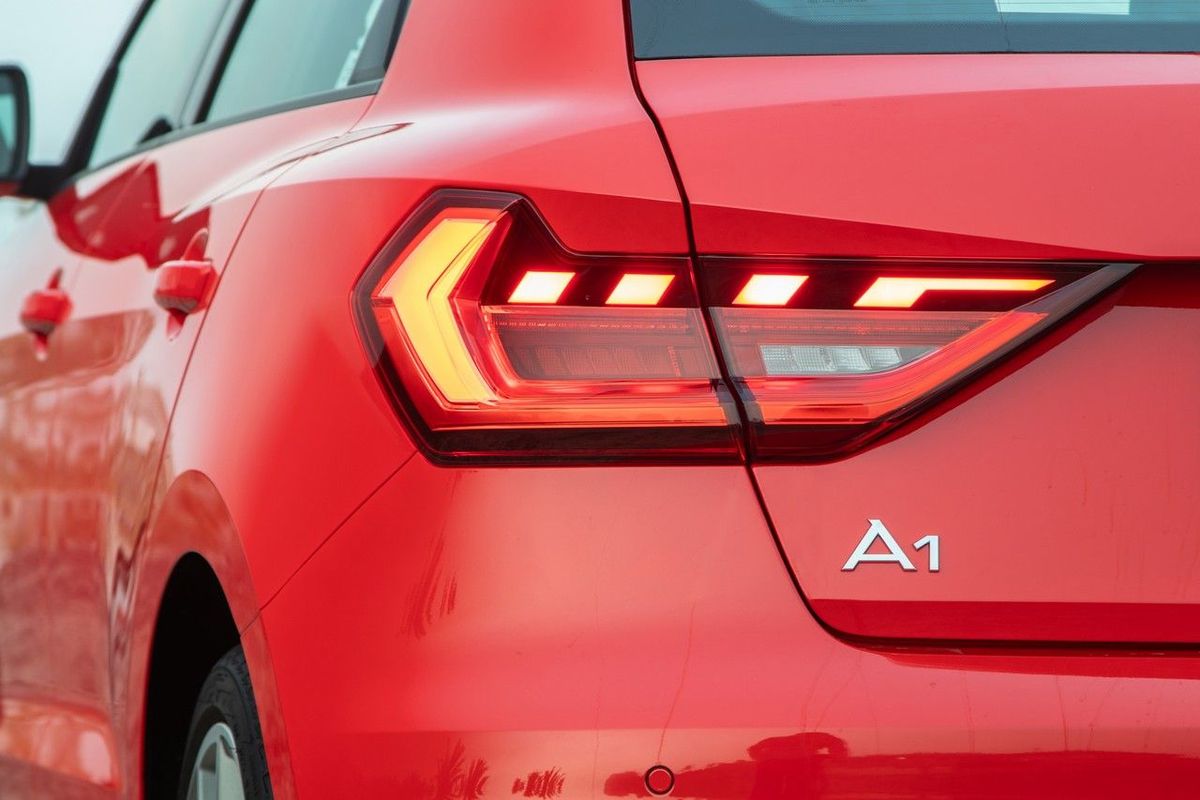
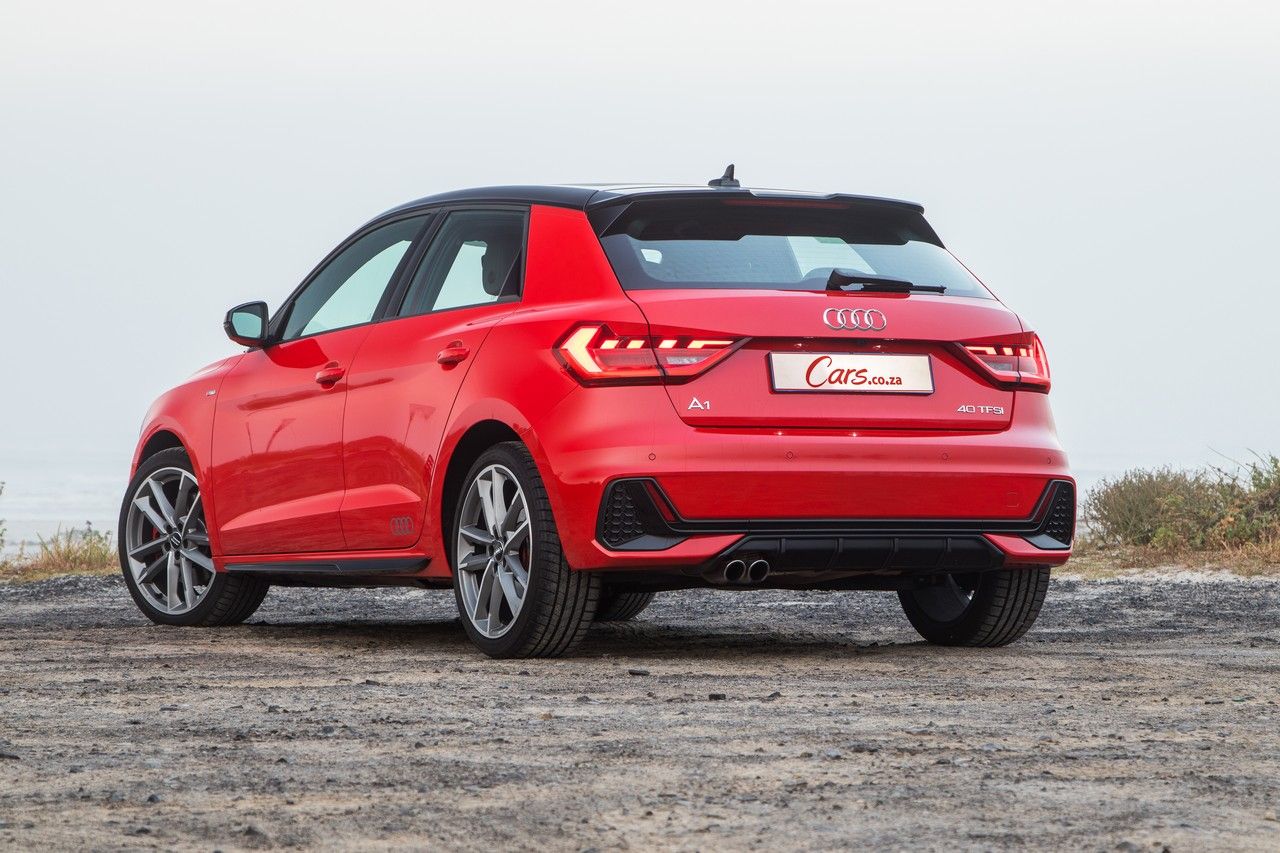
Chiselled design gives the new A1 a far more muscular appearance compared with its relatively demure predecessor.
Audi sold 13 700 units of the 1st-generation A1 and A1 Sportback in South Africa and the brand hopes this 2nd-generation car will fare better, as the next A3 Sportback looks set to move considerably higher up the price ladder. The A1 Sportback competes in a difficult segment, in terms of body shape and price. Yes, it has to contend with the likes of the Fiat 500, Volkswagen Polo and Mini Cooper, but also with those fancy crossovers that are all the rage these days.
So who are the likely buyers for this flagship derivative? Probably style-conscious, brand-aware single young professionals who want at least a measure of spirited performance. Let's see if the 40TFSI S Line derivative ticks those boxes.
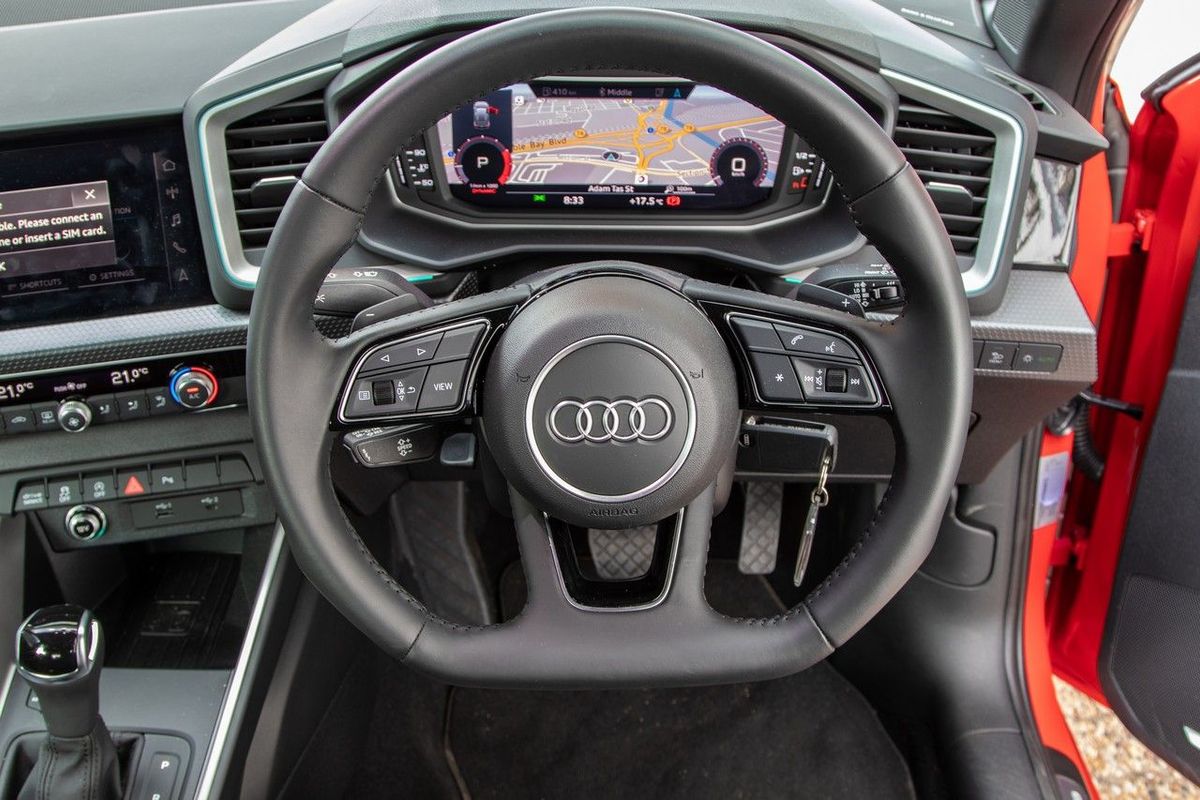
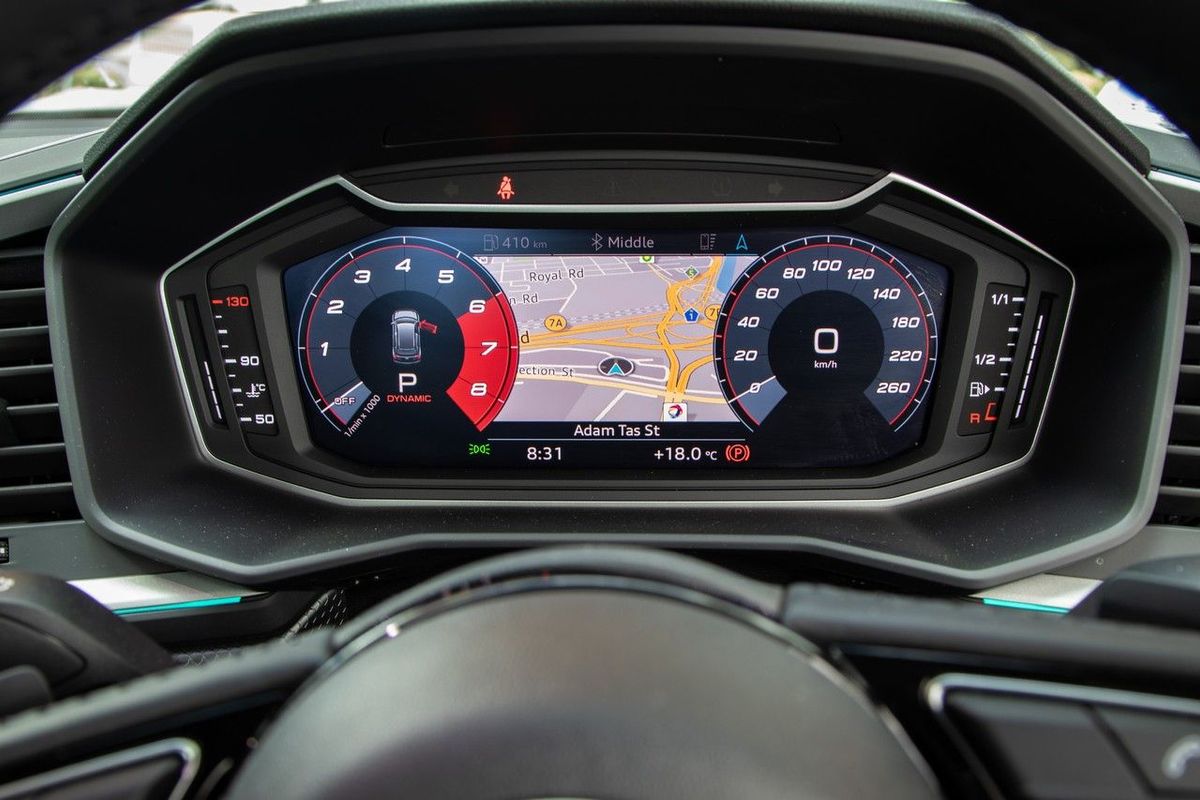
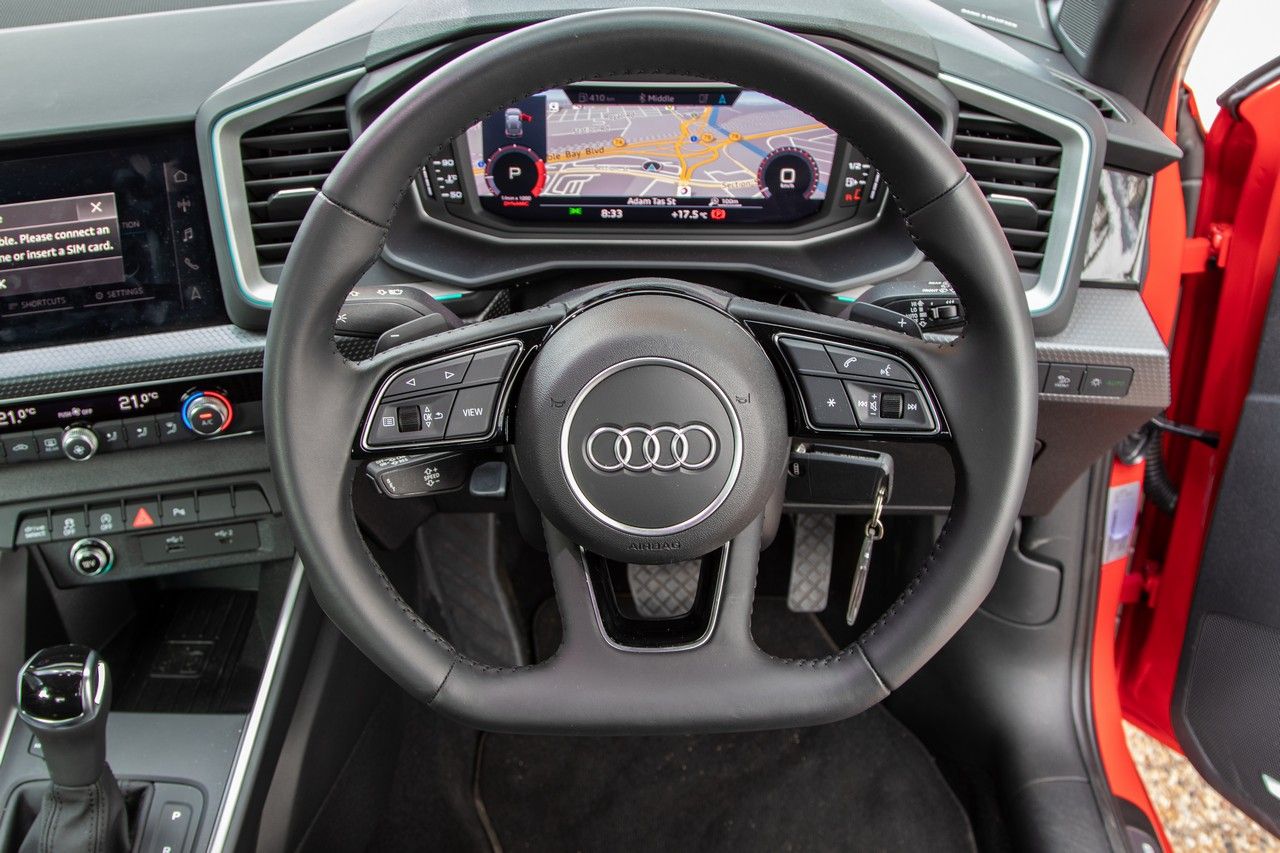
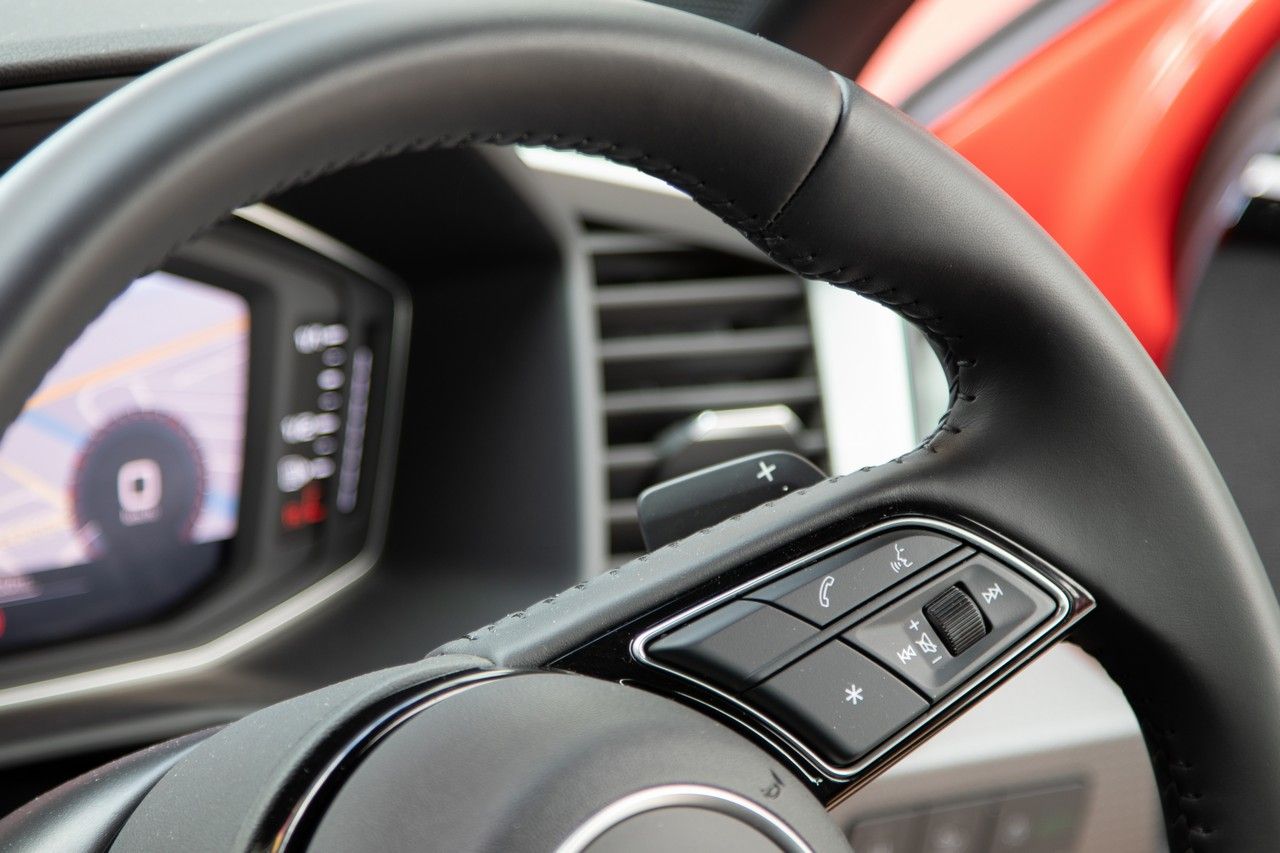
The cockpit's a stylish place to be, but you pay extra for nice-to-have items such as the extended virtual cockpit functions and flat-bottom steering wheel.
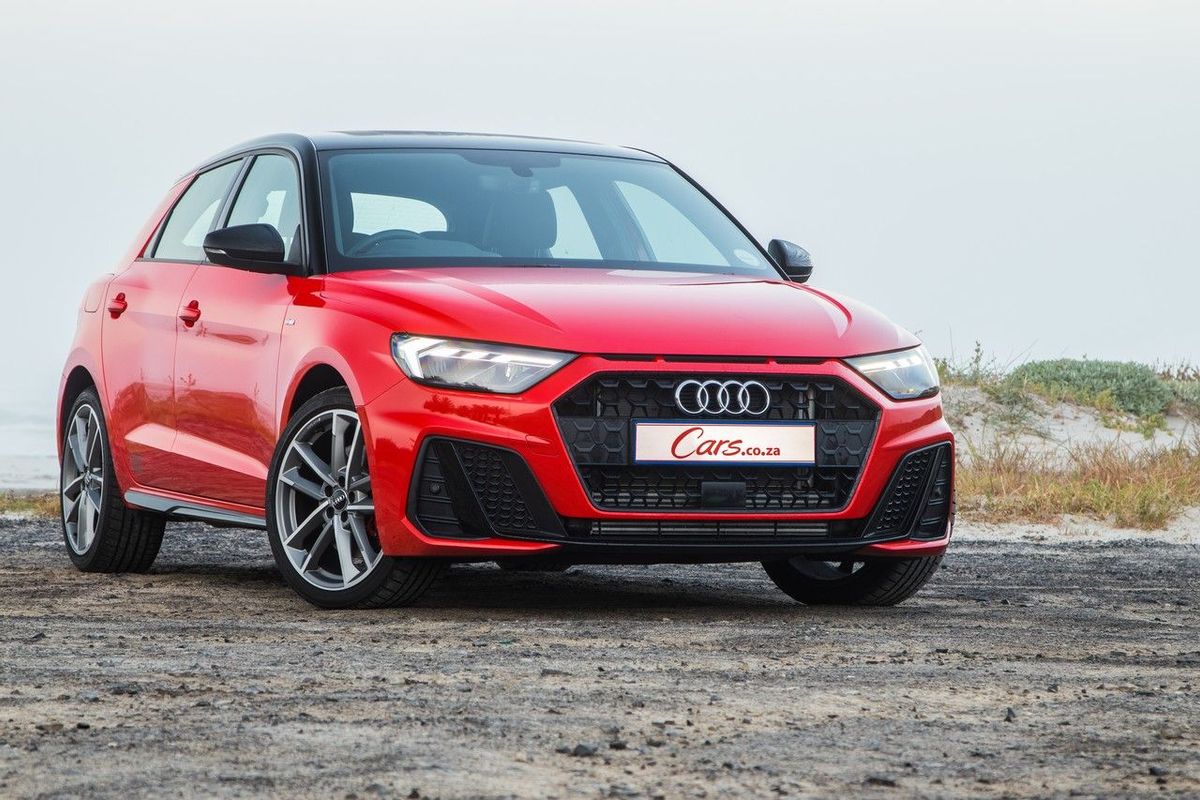
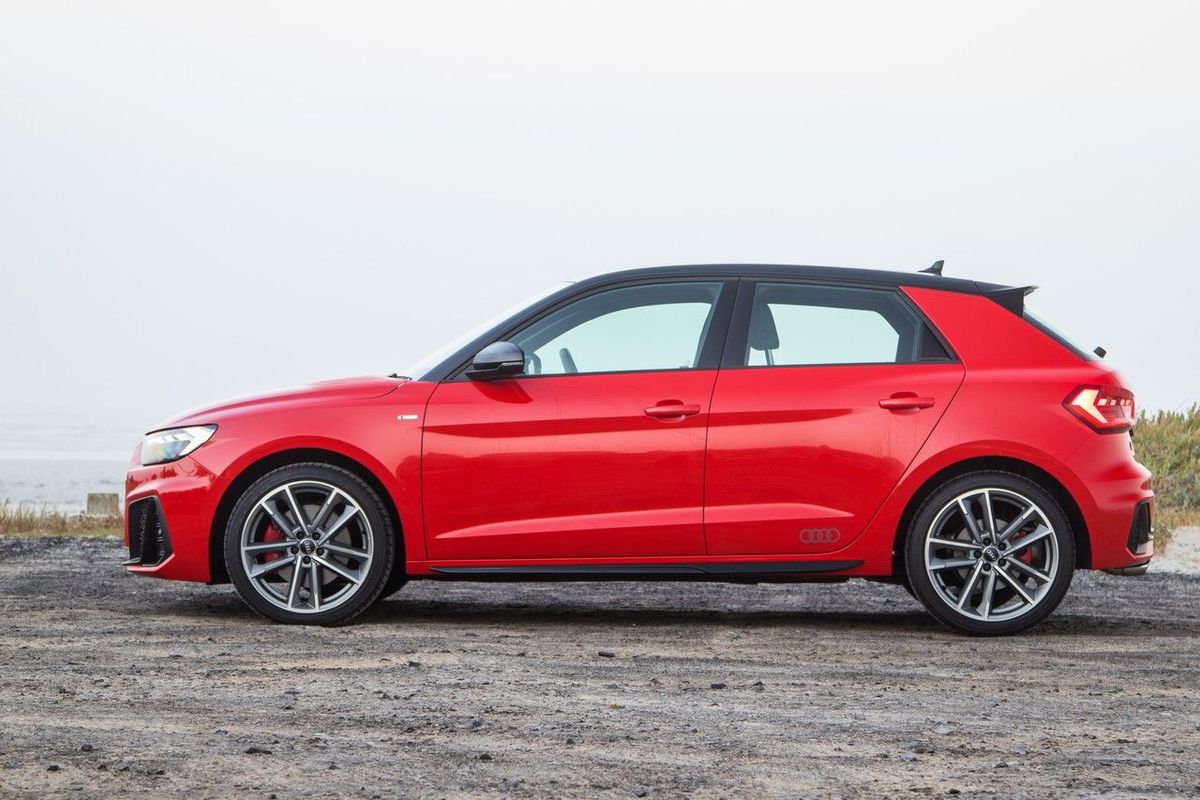
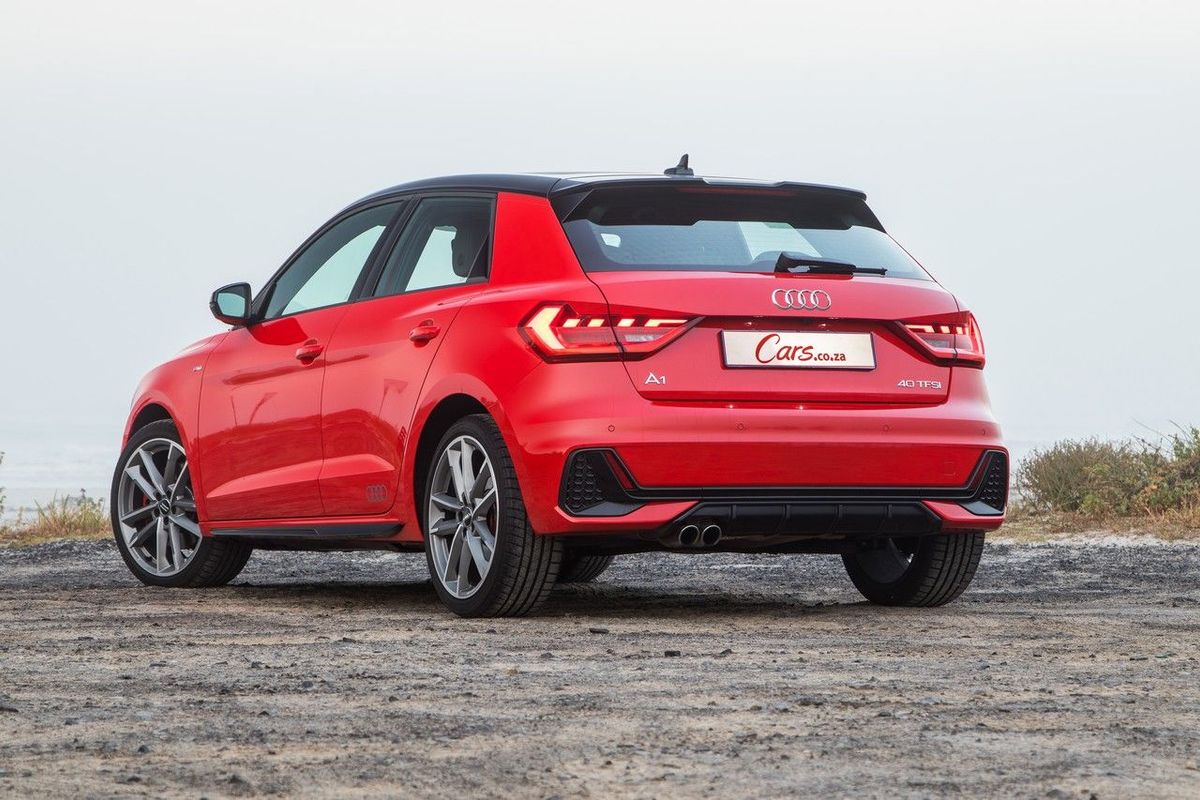
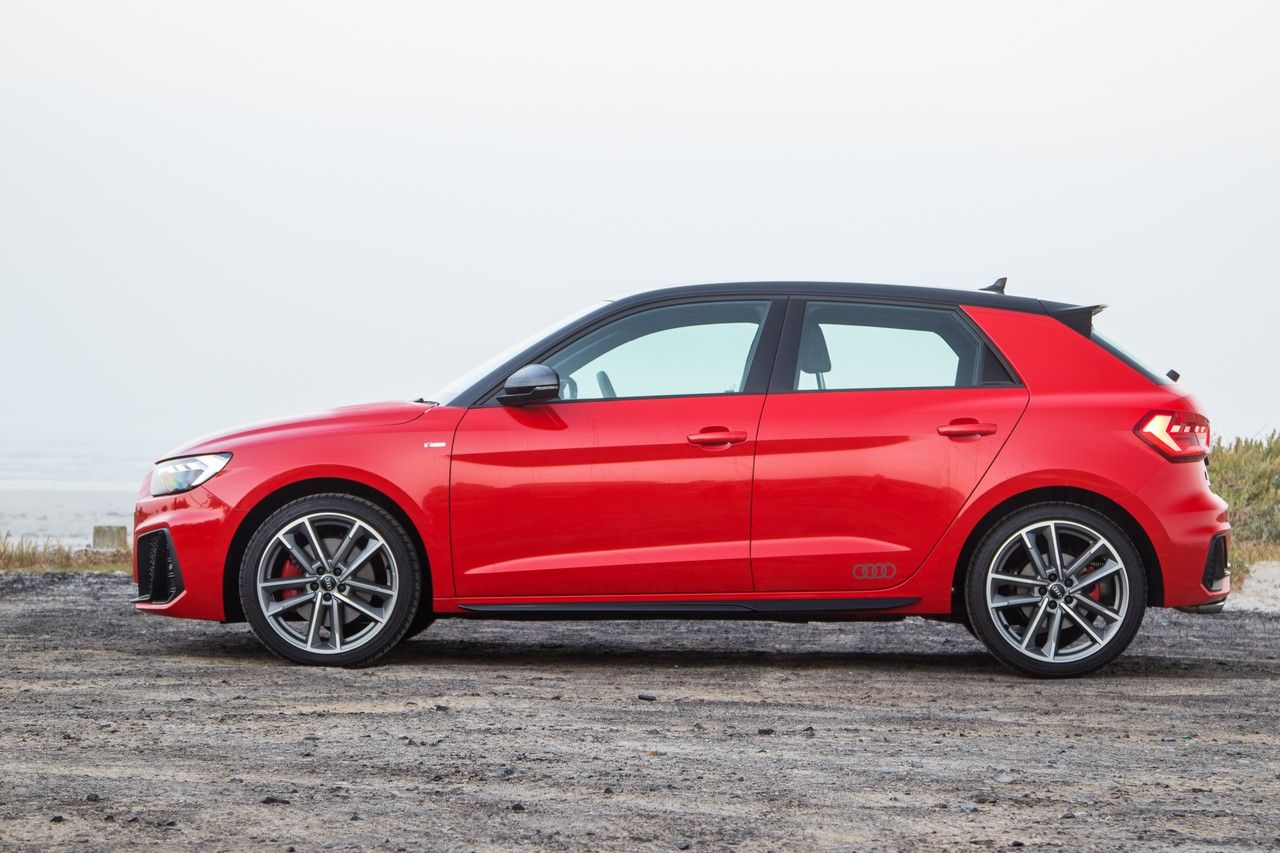
Compared with the relatively "soft" styling of its predecessor, the new A1 Sportback has a far more purposeful, sporty look. It's only 56 mm longer, but roughly the same width as its predecessor, but clever styling details such as the contrasting roof and the wide, flat and sloping C-pillar contribute to a more dynamic look. We also love the trio of slats/vents/cutouts just below the leading edge of the bonnet, they pay homage to the iconic Sport Quattro from 1984.
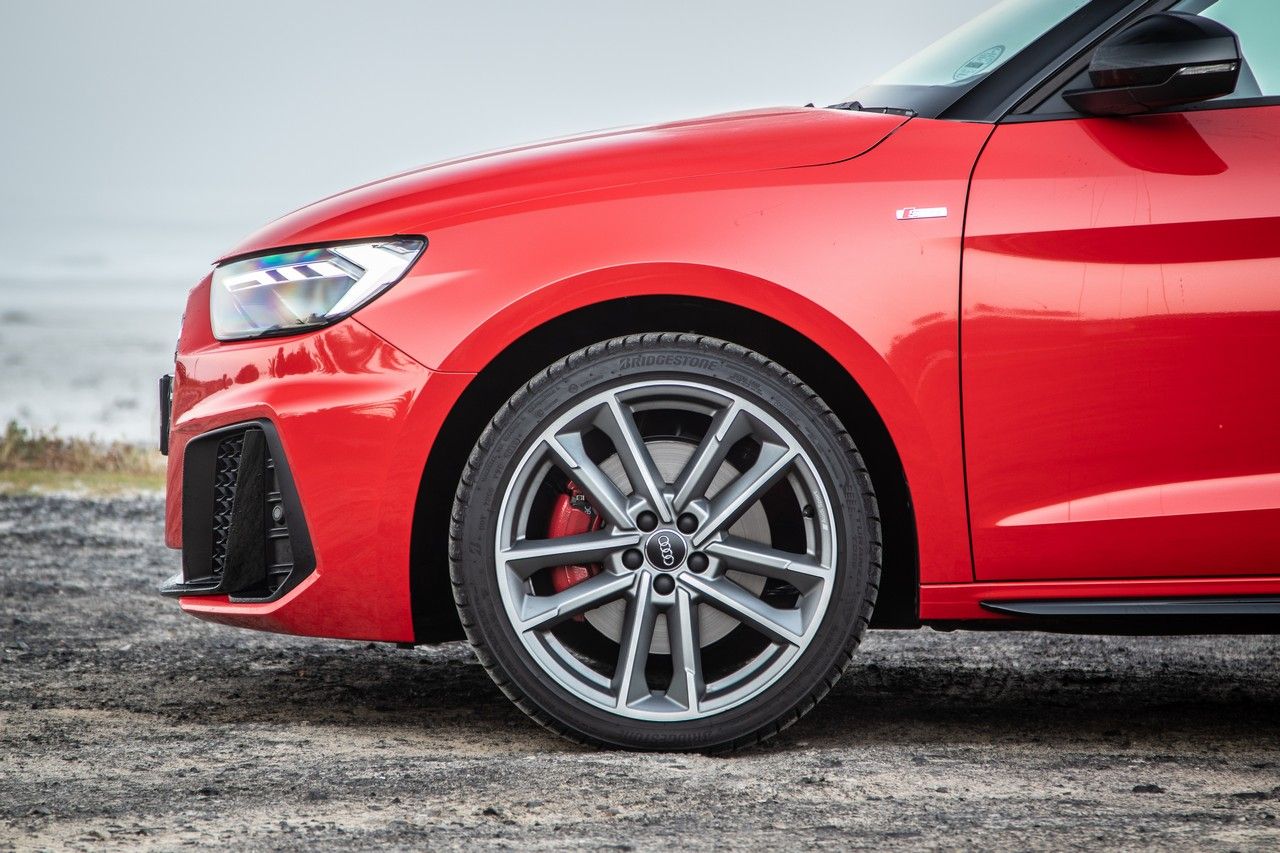
This flagship derivative tested here comes standard with the S Line package, which includes 17-inch alloy wheels, larger air inlets, additional sill trims, sportier (more detailed) bumpers, as well as an enlarged rear wing. The 40TFSI S Line also has twin exhaust outlets and LED headlights as standard. Our test unit, however, featured several options that further improve the look – 18-inch Audi Sport wheels in a matte titanium look (R15 600), accent surfaces in silver grey (R500) and the Black Styling Package (R6 900) which includes a radiator grille in matte black and the grille frame; front air inlet frame; rear diffuser and front spoiler all in high-gloss black.
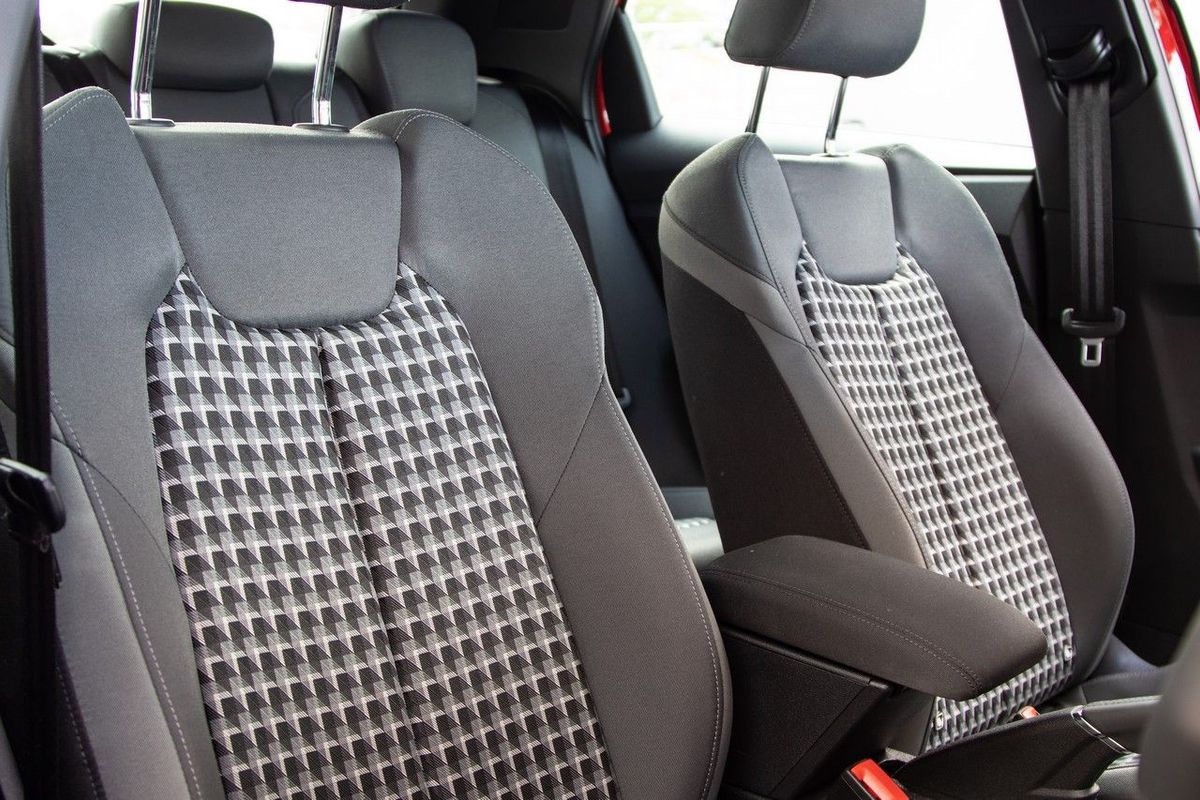
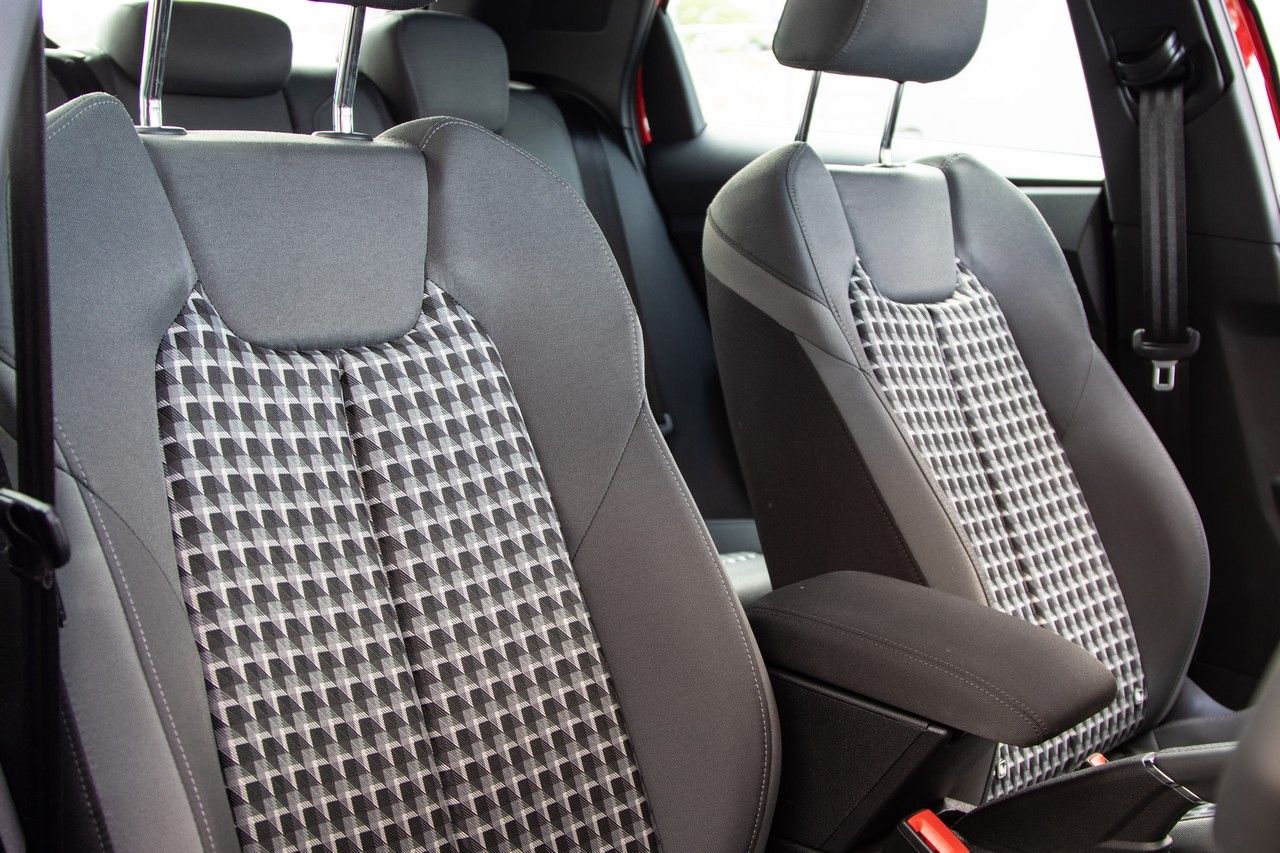
Front Sports seats are standard, but the "Derby" cloth upholstery is optional.
Inside, the Audi makes a good first impression, though it's still by no means what you'd call a spacious car. Audi claims a load bay volume of 335 litres (65 litres more than before), which is bigger than what is quoted for the Volkswagen Polo and Mini Cooper S 5-door Hatch, to name a couple of examples, but rear legroom does feel a little tight, unsurprisingly, particularly when tall occupants are seated at the front. Of course, the rear seatback folds in a 60:40 split configuration to increase load capacity, but 5 doors or not… this would be a tight fit as a car for a young family.
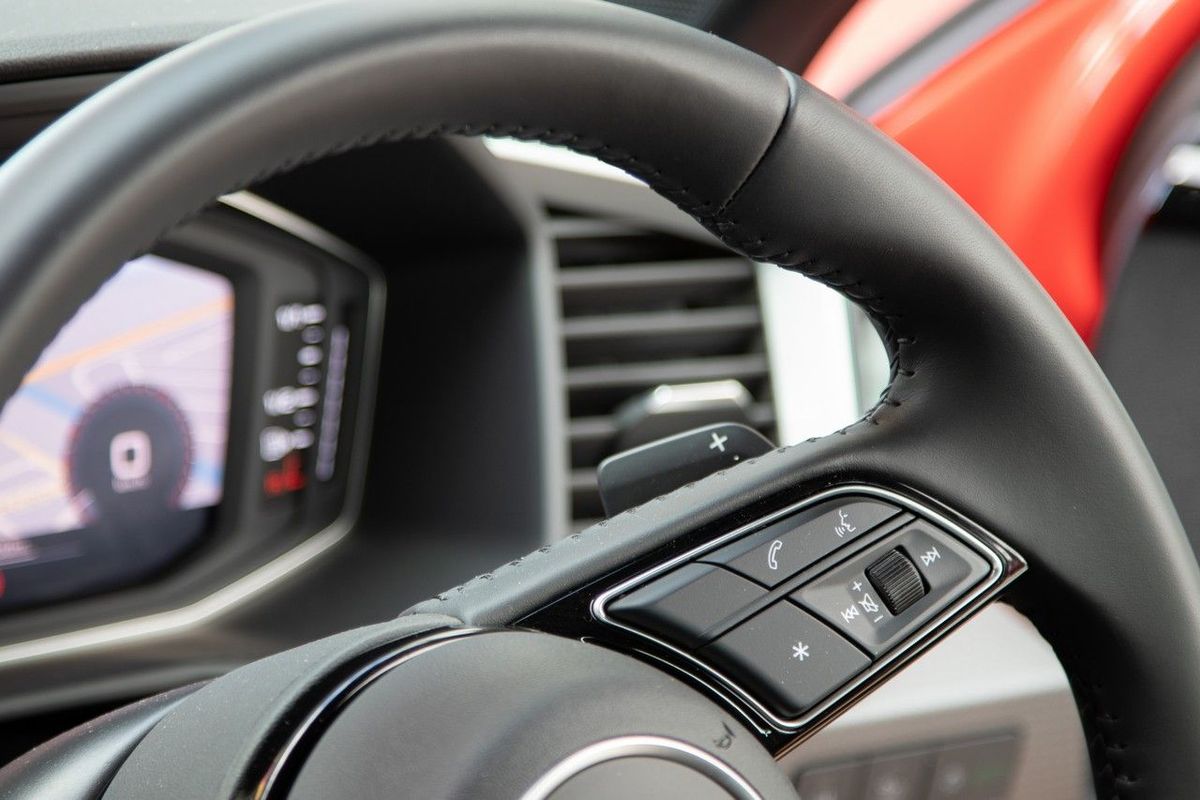
When you're seated behind the lovely, flat-bottomed and leather-wrapped steering wheel and gazing at the slick graphics of Audi's Virtual Cockpit, you may feel that the considerable outlay for the 40TFSI S Line derivative was well worth it – the A1 Sportback is very good at making its driver feel special. But there are some caveats… upon closer inspection, the quality the plastics is perhaps still too similar to the Polo's (already of a high standard, it must be noted) and, although the digital instrumentation is standard, you pay extra for the greater functionality of the Virtual Cockpit – in our test unit it was bundled in with the necessary smartphone interface (including Apple Carplay and Android Auto compatibility) and an upgraded audio system (as part of the Technology Package) for a reasonable R9 900. And that fancy steering wheel with the shift paddles… that'll be a further R3 400, dankeshön.
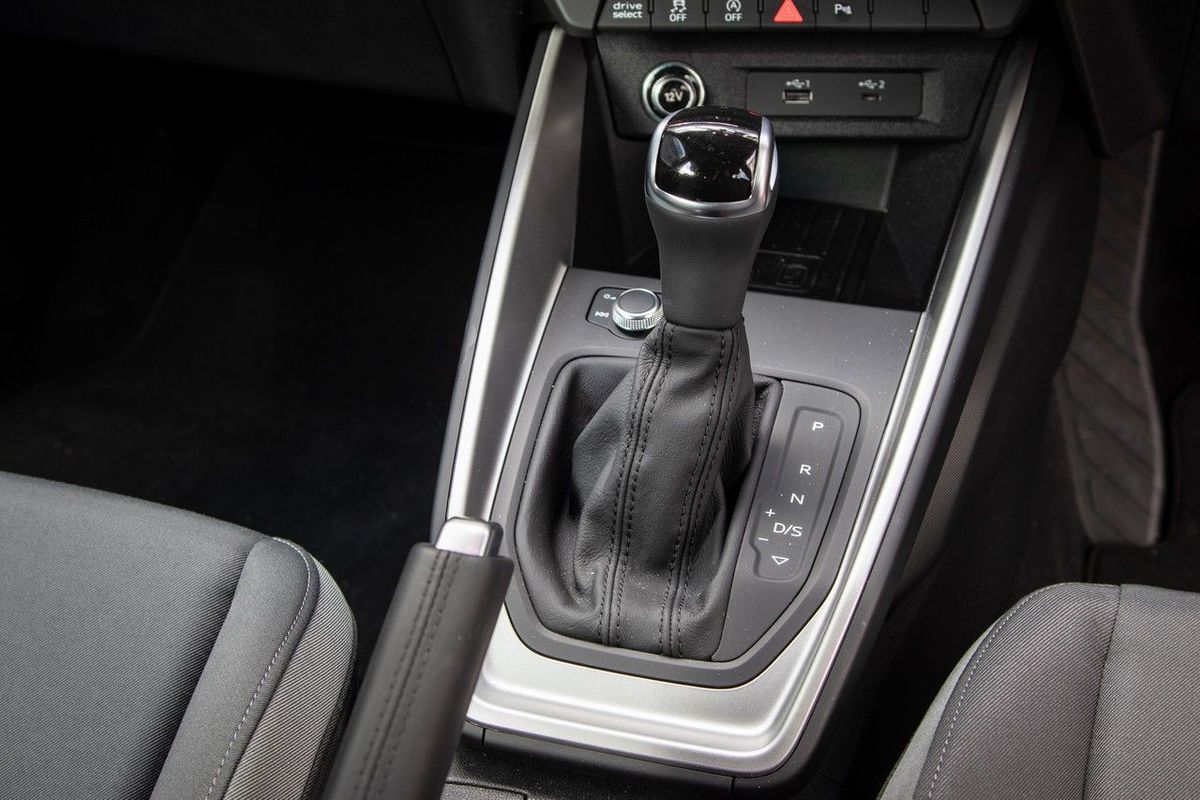
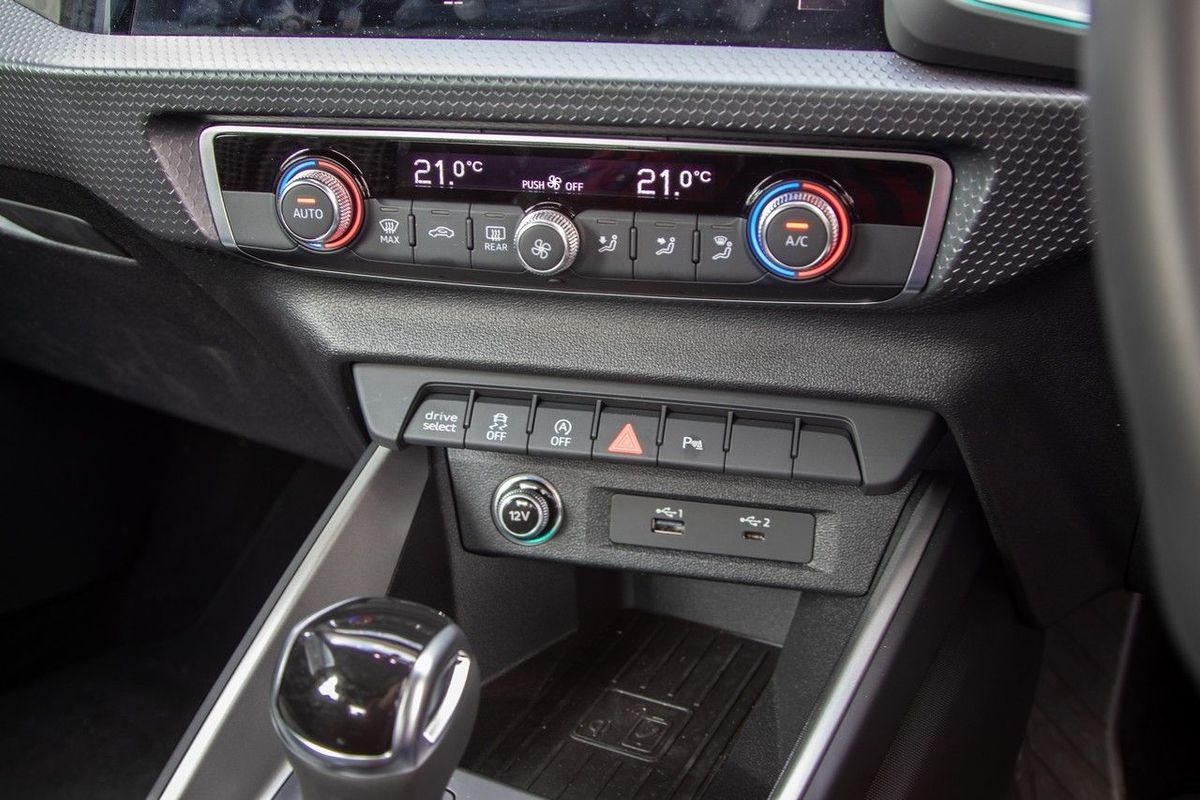
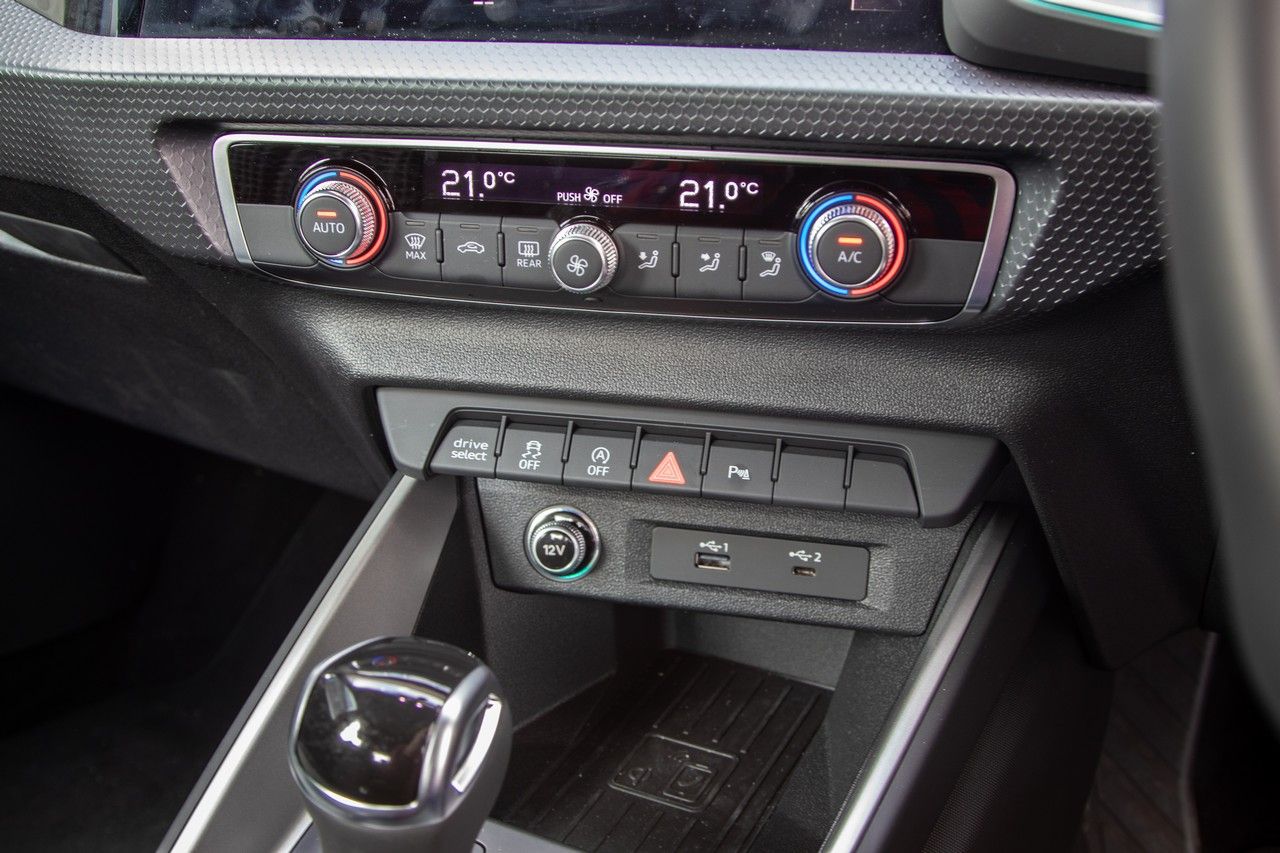
Dual-zone climate control and Audi Drive Select are standard on this model. Note charging pad and 2 USB ports.
Standard interior features on the 40TFSI S Line includes auto lights/wipers, hill-start assist, MMI Radio Plus with a Bluetooth interface/voice recognition, auto-dimming rear-view mirror, Audi Drive Select, dual-zone climate control, cruise control and front sport seats. Interestingly, our test unit didn't come with leather upholstery, but rather "Derby Fabric", a no-cost option instead of the standard "Novum" fabric upholstery.
Performance & Efficiency
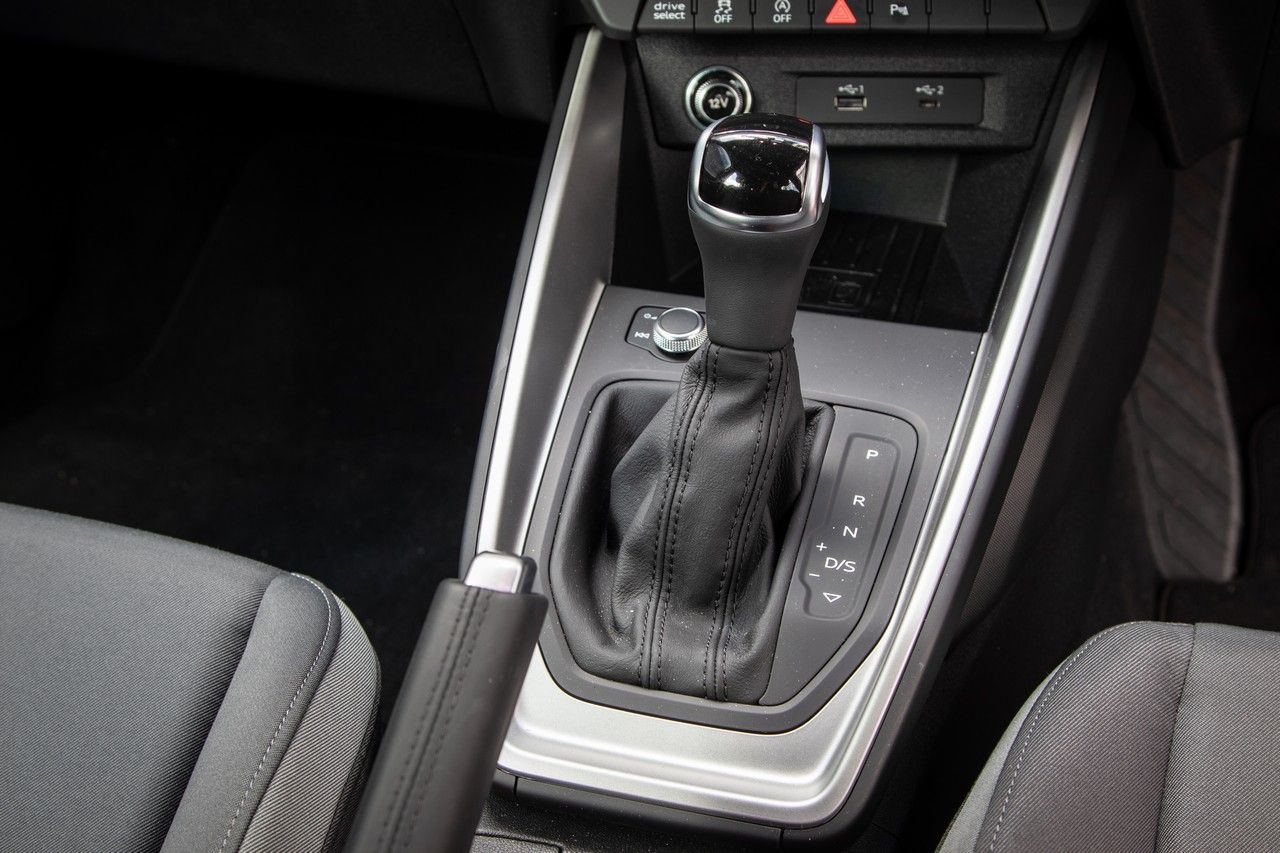
The A1 Sportback shares its 6-speed dual-clutch transmission with the VW Polo GTI.
Powered by the same 2.0-litre turbocharged engine that you'll find in the aforementioned Polo GTI, the 40TFSI S Line produces peak outputs of 147 kW and 320 Nm, which are directed at the front wheels through the VW Group's proven 6-speed dual-clutch transmission. Interestingly, Audi claims a 0-100 kph time of 6.5 seconds for this A1 Sportback, which is 0.2 seconds faster than the Polo GTI. The latter hits back with a slightly higher stated top speed, however.
It was interesting to note the difference in the exhaust notes of the Polo GTI and flagship A1 Sportback – yes, the Polo GTI doesn't quite give you the same Vrrr-pah! of a Golf GTI, but the test team was still of the consensus that the Volkswagen sounded a bit rortier than the Audi, which is interesting because the 40TFSI S Line comes standard with the Dynamic Package, which includes (in addition to the sportier suspension set-up, larger brake discs and Audi Drive Select) a "sound actuator". We wish it made its presence known a bit more readily…
There's plenty of power underfoot, and a slick 6-speed dual-clutch 'box to help you find that oomph.
Nevertheless, this is by no means a slow car, and we enjoyed clicking through the gears of that 'box to keep the engine in its preferred power band (between around 2 000 to 5 000 rpm). Drive it like this often, though, and the fuel consumption will suffer, which is to be expected… With a more efficiency-minded approach, you should be able to achieve a consumption figure of around 7.4 L/100 km (Audi claims 6.0 L/100 km).
Ride & Handling
The 18-inch Audi Sport cast alloy wheels with a titanium look are R15 600 extra.
As it rides on the same MQB-A0 platform as the Polo, you'd expect the A1 Sportback to deliver a similar ride and handling experience, but perhaps because of the larger wheels (combined with the standard sport suspension), this 40TFSI S Line rode comparatively stiffer than its cousin… perhaps slightly too stiff. If the car had a more overtly sporty character and targeted the hot hatch buyer, this would be very acceptable, even desirable, but we suspect many buyers would prefer a more supple set-up, particularly on coarser surfaces, on which the Audi's otherwise premium cabin ambience is spoilt by considerable road noise.
The steering is set up for comfort and lacks feedback (as you'd expect), but is nicely weighted and, when you start hustling this little Audi on a challenging piece of blacktop, you may experience levels of driver engagement/driving enjoyment that you didn't expect to get. It's then that the flagship A1 Sportback starts to make more sense as a more "premium" alternative to the car it's based on (the Polo GTI).
Price and warranty (November 2019)
As standard, the Audi A1 Sportback 40TFSI S Line sells for R488 000, which includes a 1 year/unlimited km warranty and 5-year/100 000 km maintenance plan. But if you want to make your 40TFSI look like this one, you'll have to spend an extra R106 400, which is the total cost of the options fitted to this test unit. Notably, you'll want to specify the technology package (R9 900), which gives you the Virtual Cockpit, smartphone interface and a different sound system.
Verdict
Undeniably stylish and swift, the A1 Sportback 40TFSI is, however, steeply-priced and struggled to justify its price positioning.
During our test period, the bright red Audi A1 Sportback 40TFSI S Line drew numerous favourable comments (and rubber-necking) from millennials that seem immediately drawn to this stylish new entrant from Audi. The fact that it combines good looks with a desirable badge will get many buyers to sign on the dotted line alone. We rate the standard specification as decent (remember, adaptive suspension is standard), but given the vast price difference between this derivative and the Polo GTI, you'll have to really want the 40 TFSI S Line's performance (and badge) to justify the outlay, and then you'll still have to budget for a few extras to get the most enjoyment out of this cool little car.
Compared with its aged predecessor, however, this new A1 Sportback gives Audi a potent new entry-level model, but we suspect one of the smaller-engined derivatives, specced with more of the glitzy options, would be a better buy.