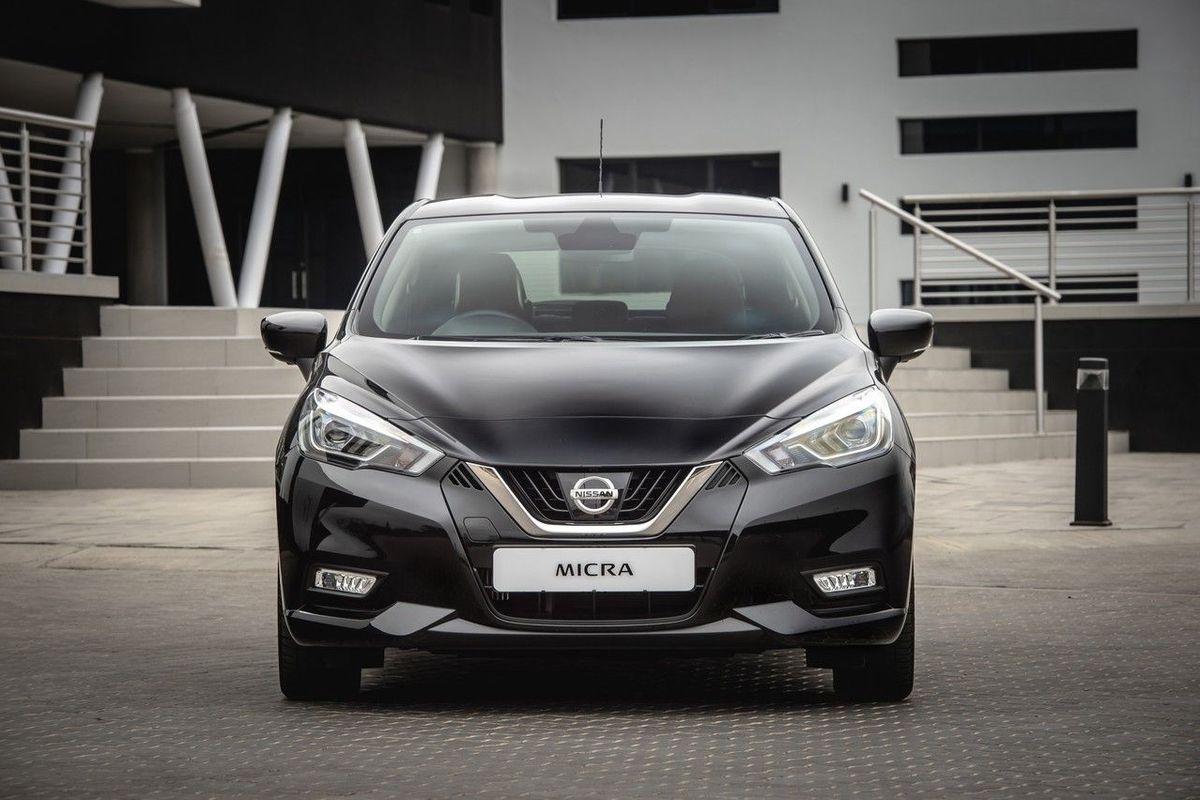
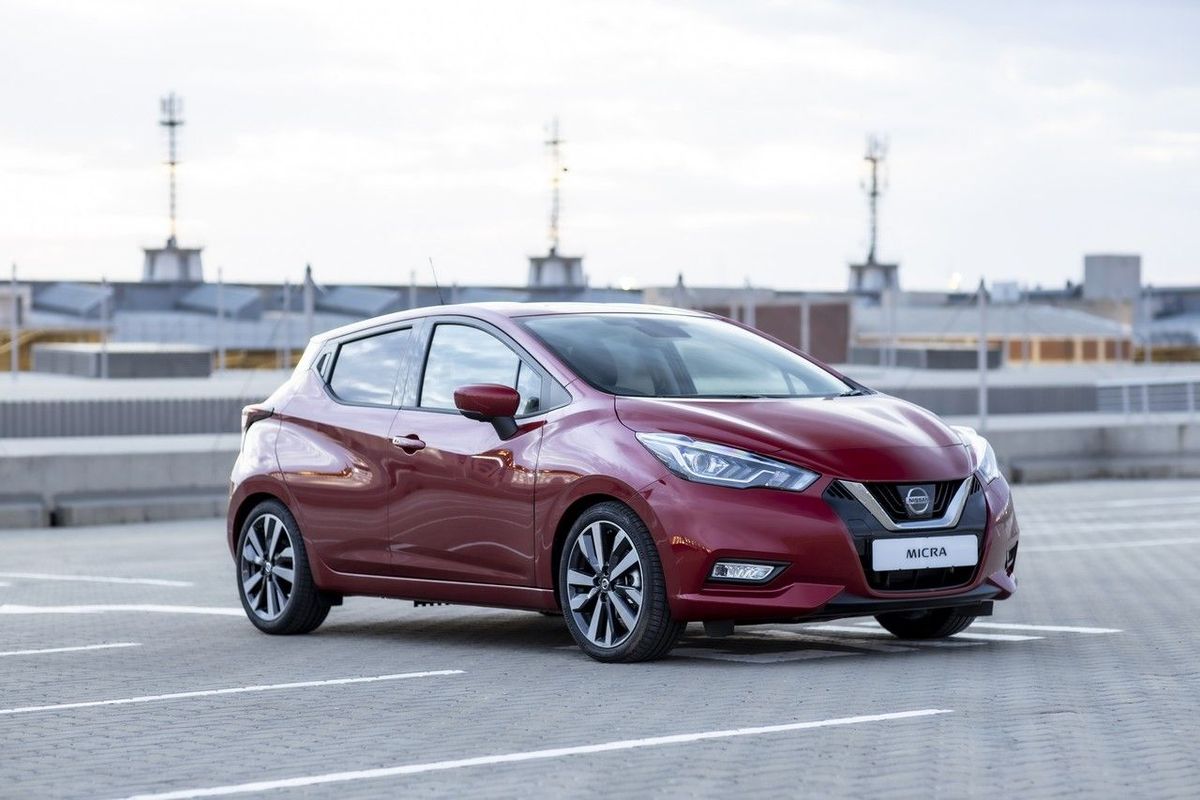
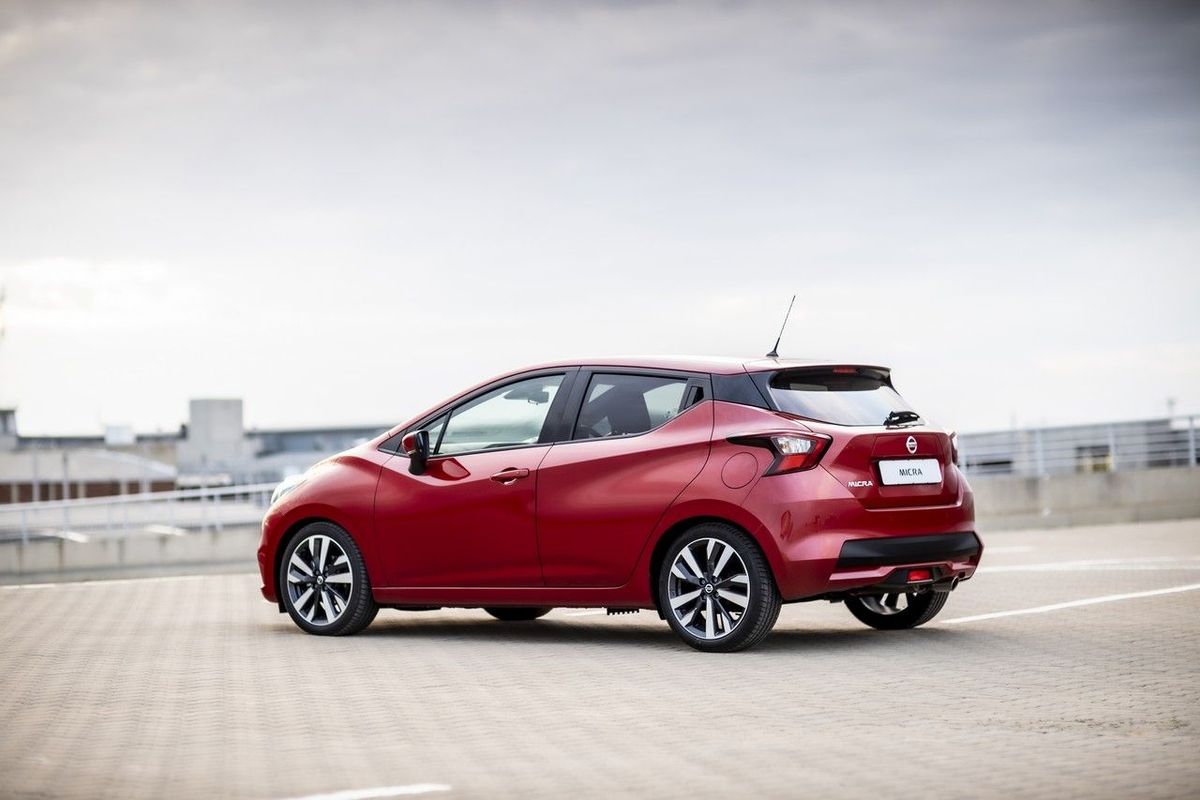
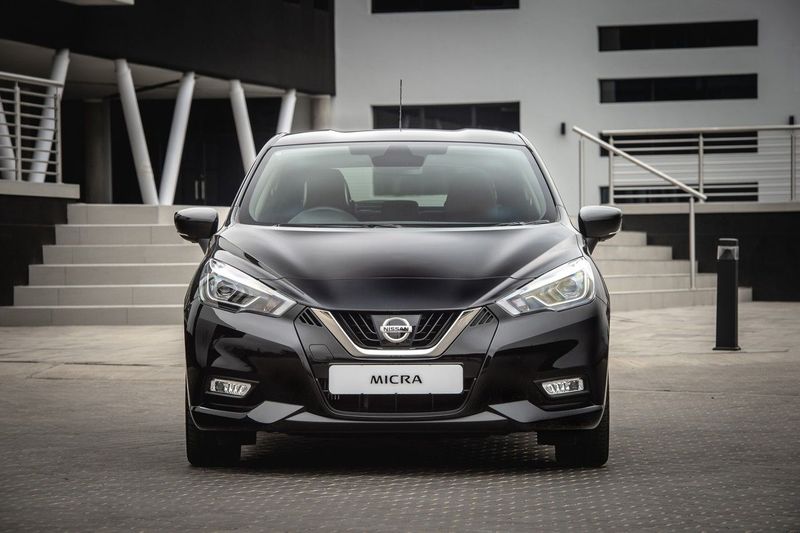
Opel Corsa 1.2 Turbo (2019) International Launch Review
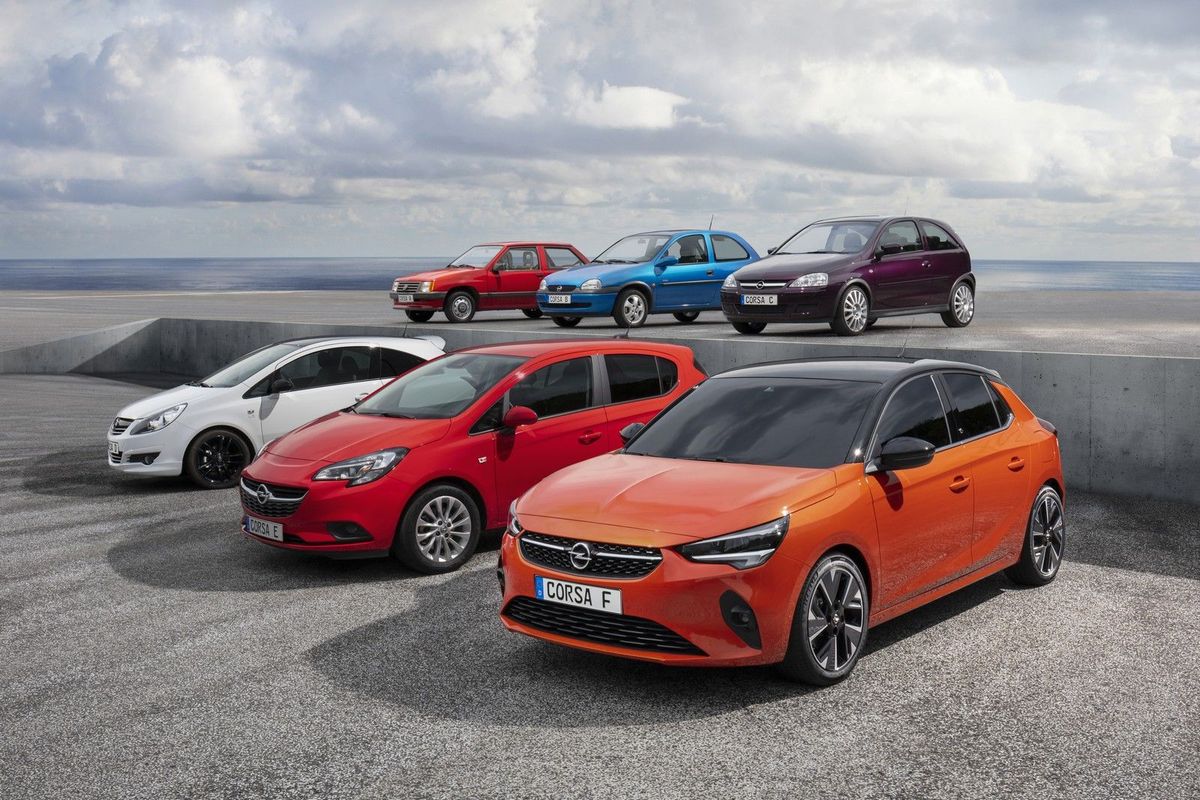
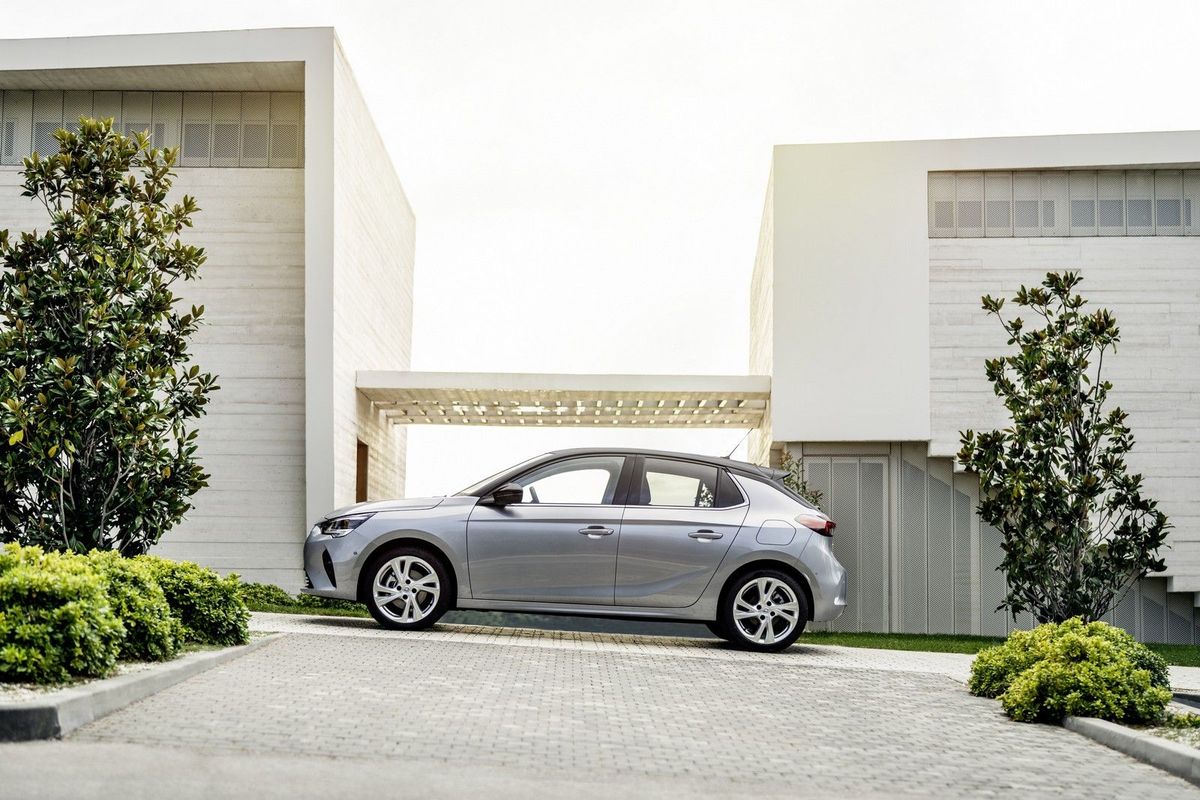
Opel has sold more than 13.7 million Corsas and now there's an all-new model, which is better than ever. With a new chassis, potent (yet efficient) engines and notable premium features, the newcomer promises to be one of the world's best compact hatchbacks. International correspondent Dave Humphreys drove the new Corsa at its global launch. 

What’s new?

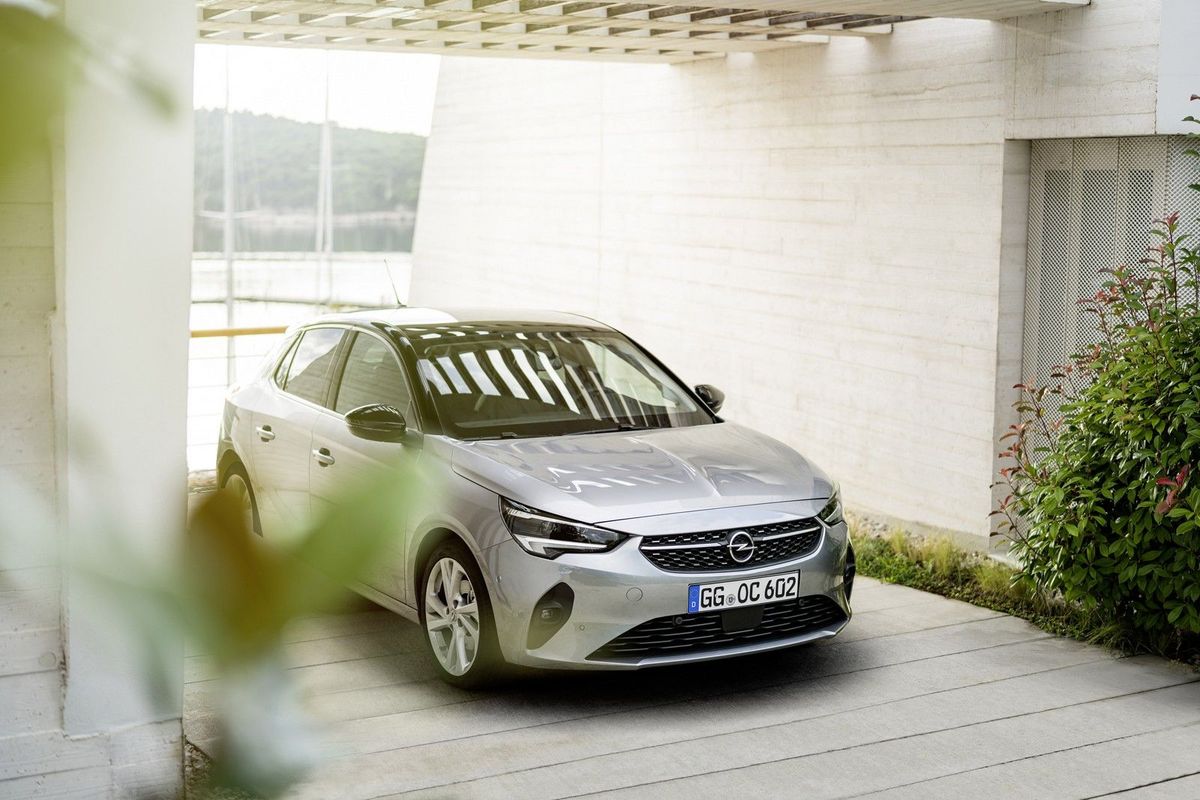
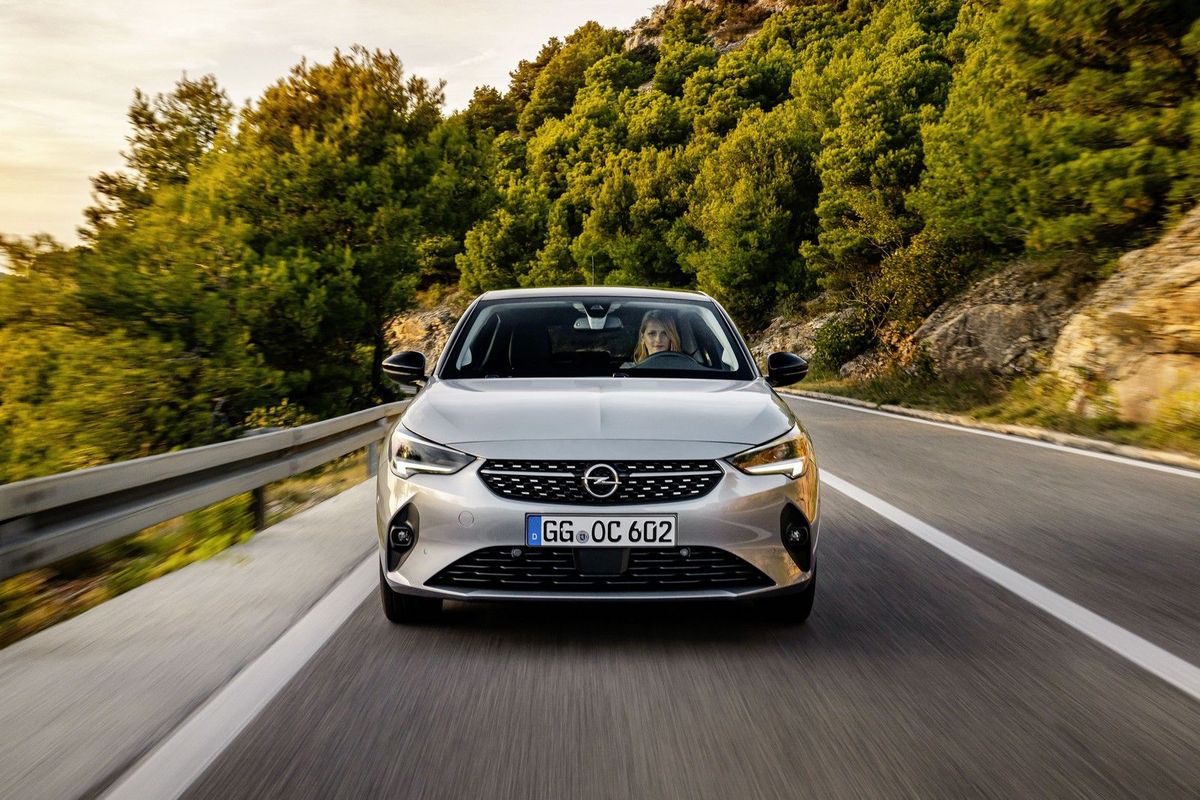
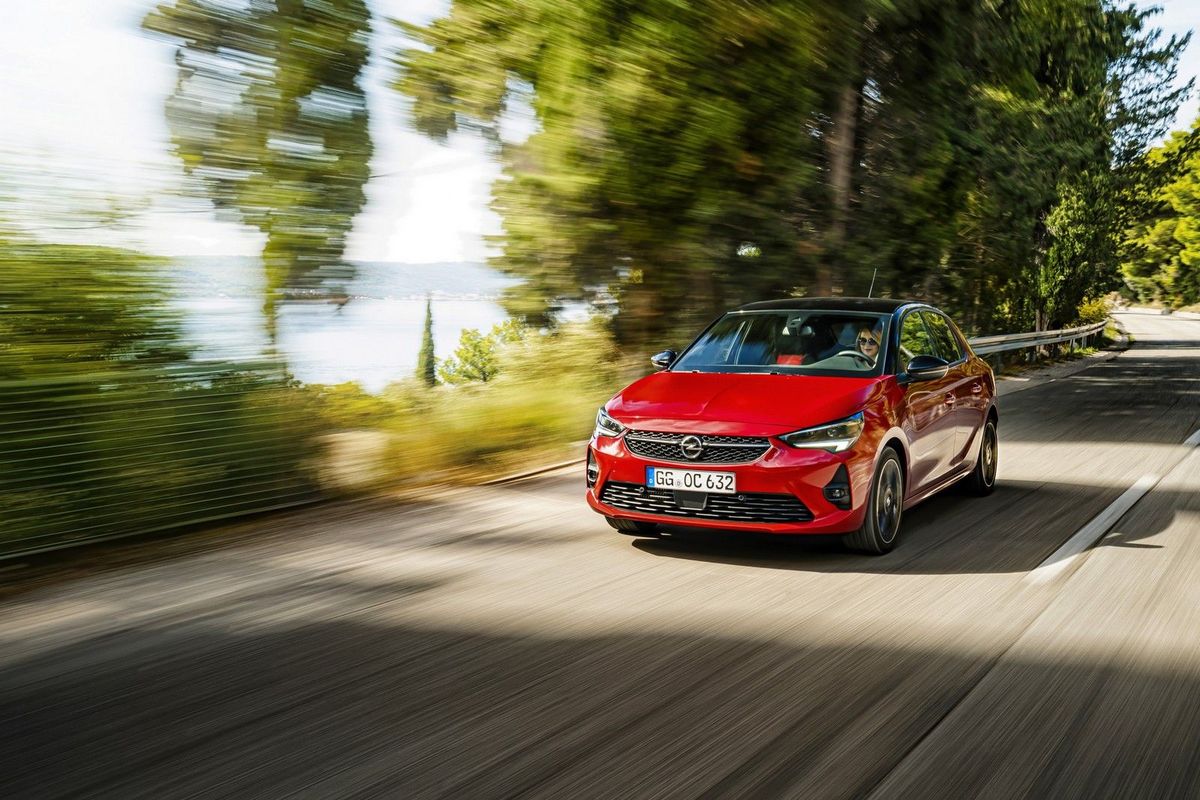
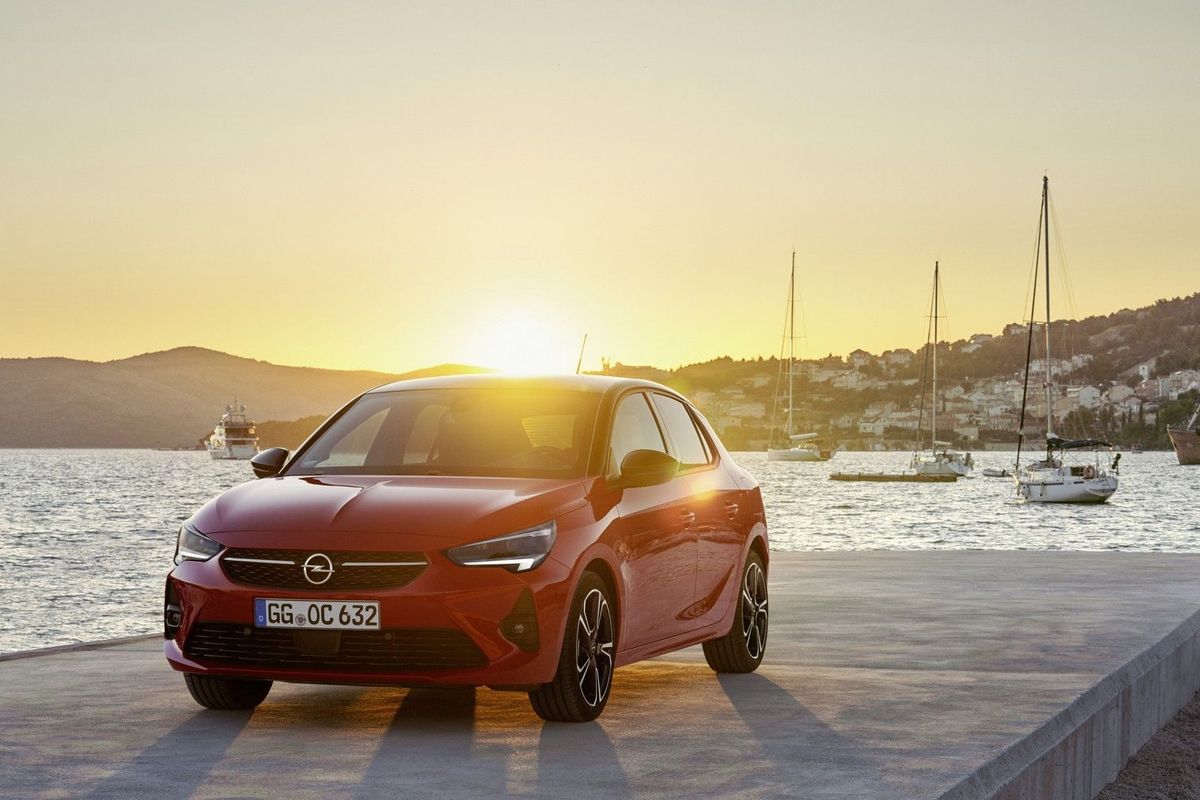
The 6th-generation Opel Corsa is more than just a replacement model; it’s the Russelsheim-based brand’s first all-new offering to emerge following its takeover by the PSA Group. So is it merely a Peugeot 208 with some new badges? Thankfully not, and no, that isn’t a slight at the baby Pug, either. The Corsa uses the same CMP architecture, which allowed Opel to introduce a more grown-up appearance with a 2-box design.

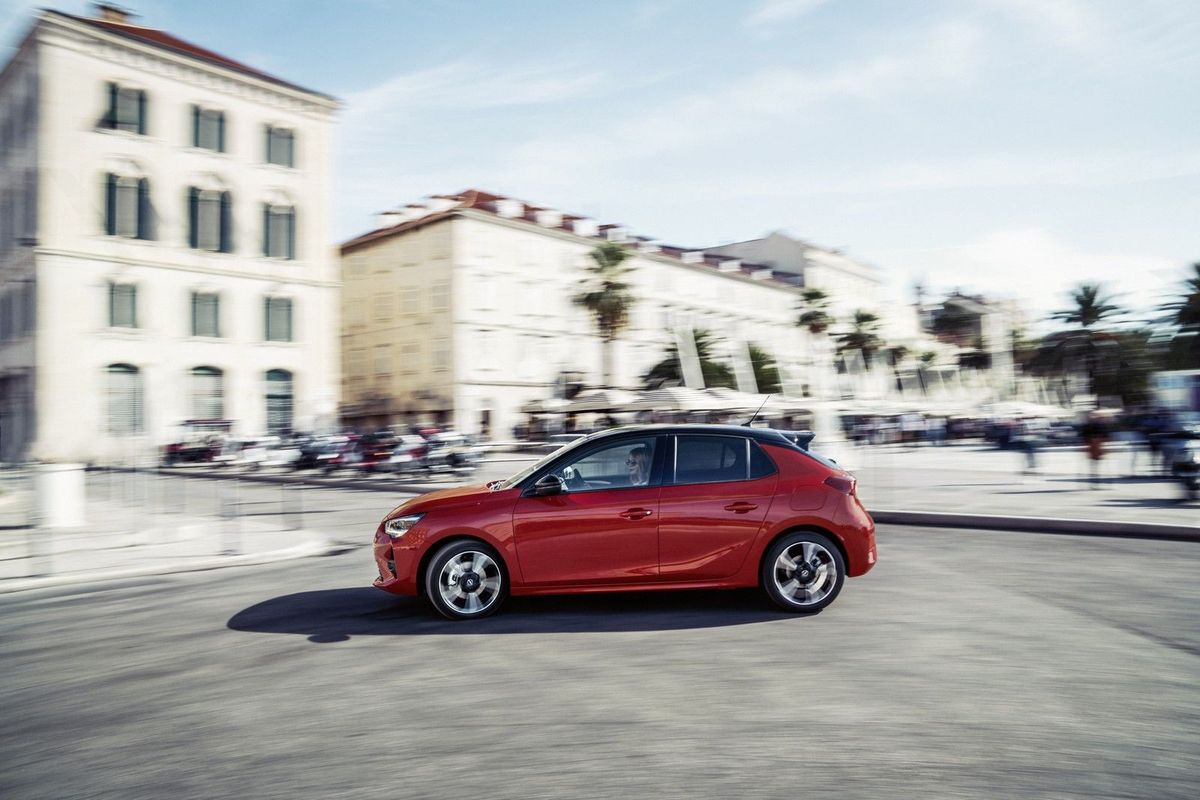
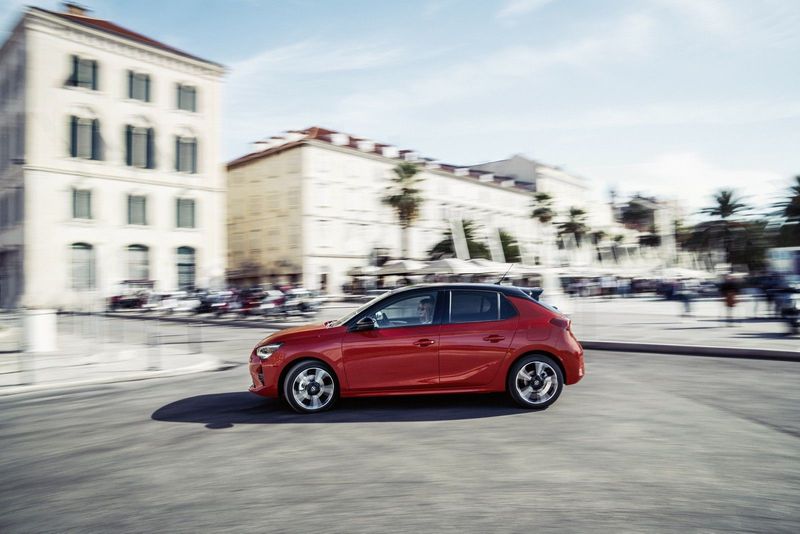
Now 28 mm longer than before, the Corsa is a noticeable 48 mm lower overall, yet the front headroom has increased by 3 mm. It’s easily the most visually appealing Corsa to date and should help it continue to be Opel’s best-selling car. 


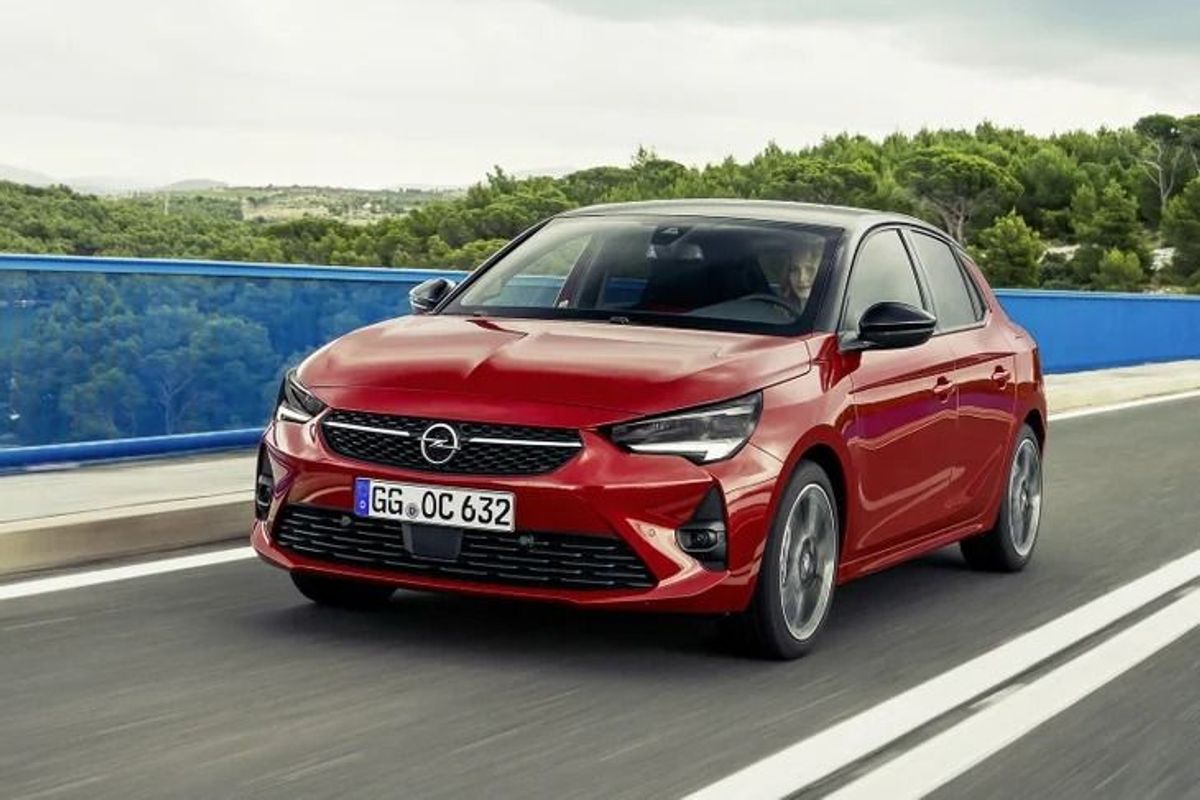
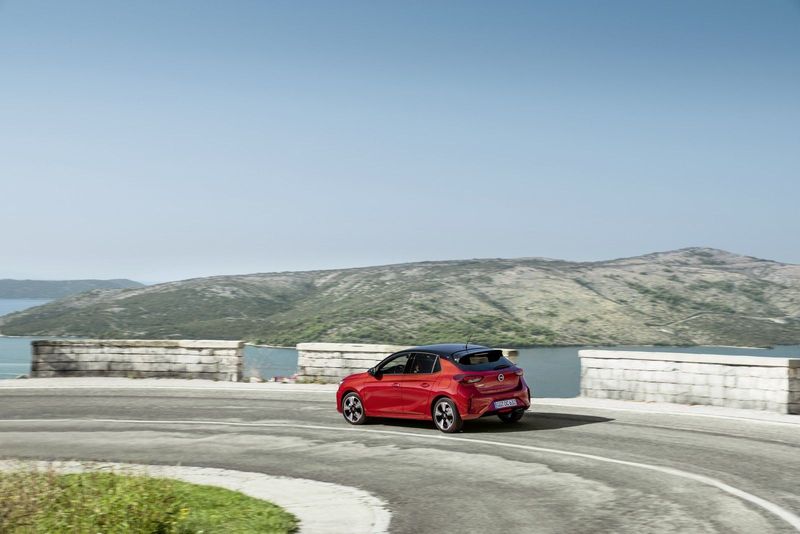
Opel is signalling the Corsa's sporting pretensions; it's a much lower car than the previous model. 

Opel has honed the Corsa's shape in the wind tunnel to achieve (what is currently) best-in-class aerodynamics, but that’s not all that helps make this newcomer more efficient. The adoption of a new platform that uses more high-strength materials has contributed to a notable reduction in weight and, in its lightest guise, the Corsa tips the scales at just 980 kg. Included in that is a range of new all-aluminium engines that contribute to a 15 kg reduction. The result is better fuel economy and lower emissions that see even this most powerful version improve on the returns of the most economical version of its predecessor. Opel will also introduce a fully electric version (the Corsa-e), with a claimed driving range of 330 kilometres. 

More relevant to the average buyer is what you can get in this latest Corsa, and the answer is: quite a lot. A long-standing ethos of Opel has been democratising technology, in particular, safety-related items. Continuing in that vein, the Corsa will be the first in the segment to offer LED Matrix headlights, allowing higher levels of illumination at night without the risk of dazzling other road users. Soon after launch, it will get a one-button automatic parking feature for cars equipped with automatic transmissions, in addition to a lane-positioning assistant to help with freeway driving. 

The good


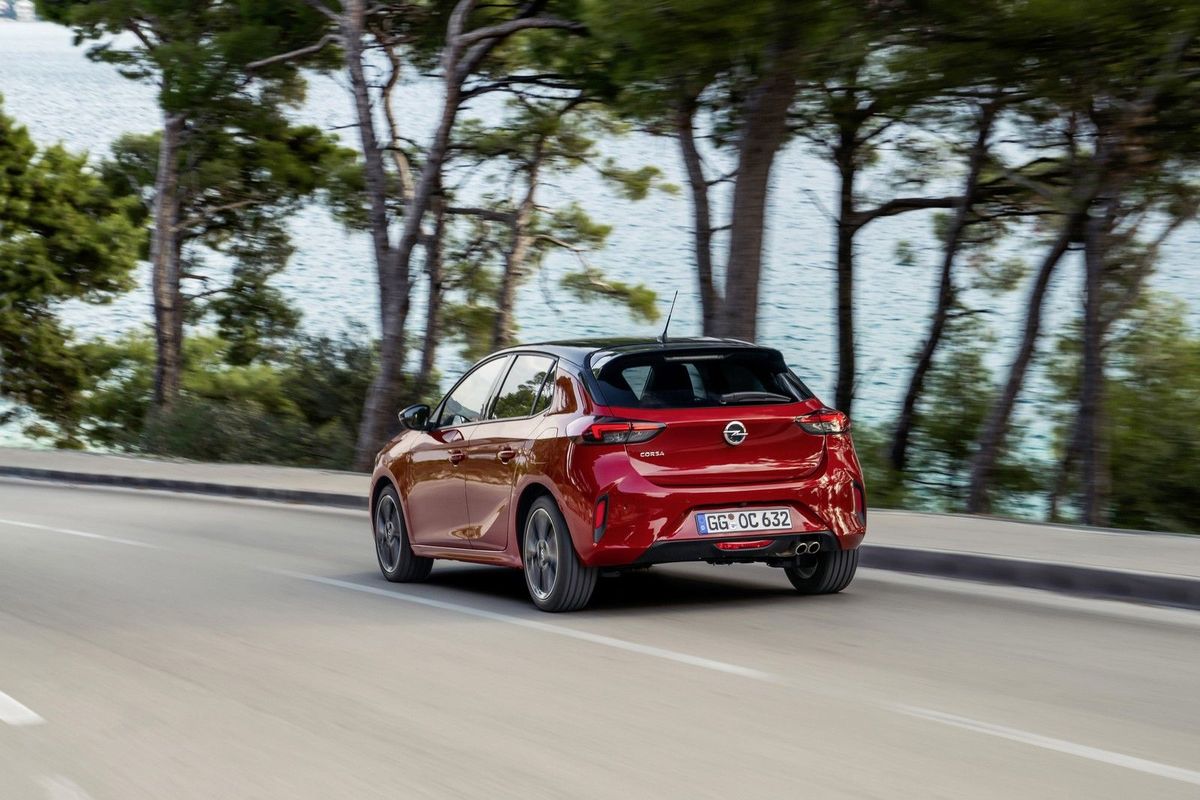
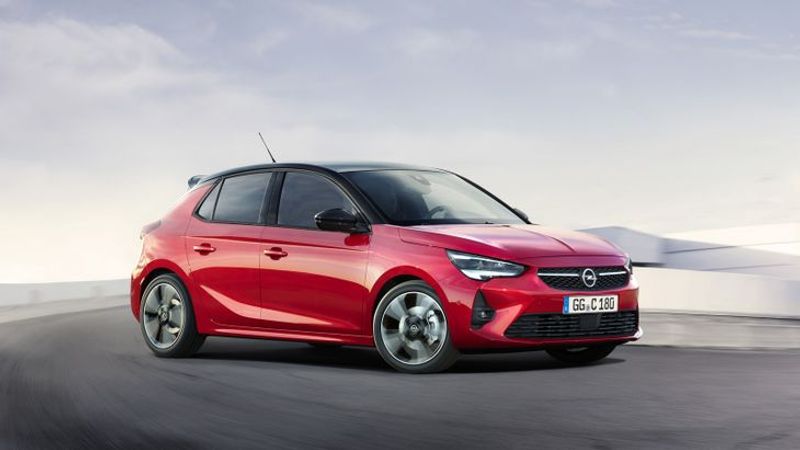
The new Corsa looks like a very modern and stylish competitor to the Polo and Fiesta.

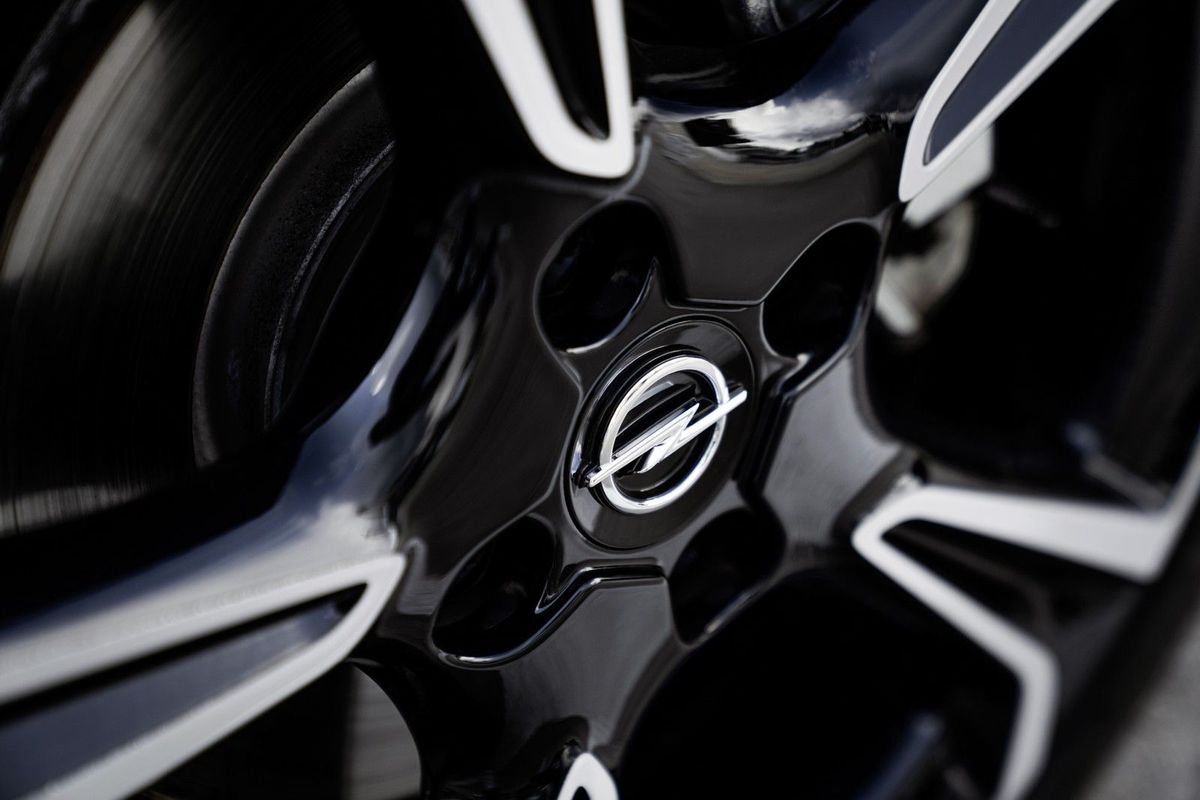
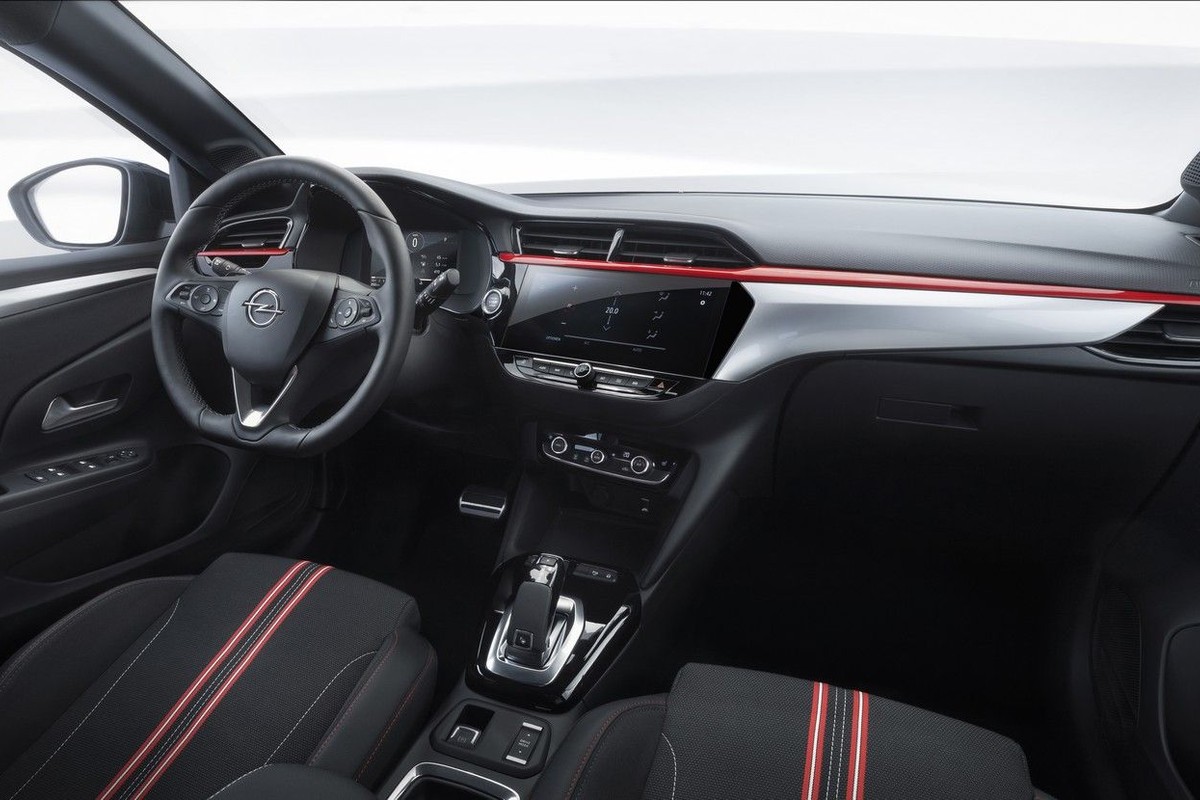
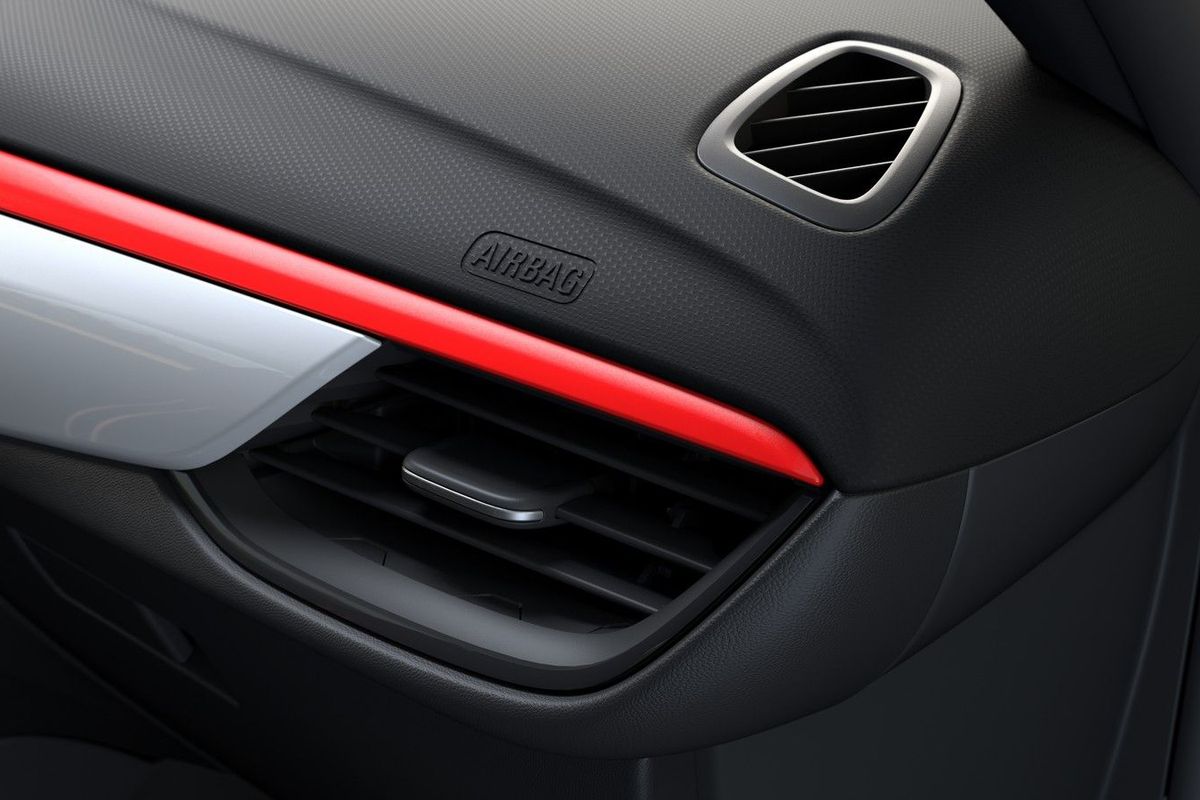
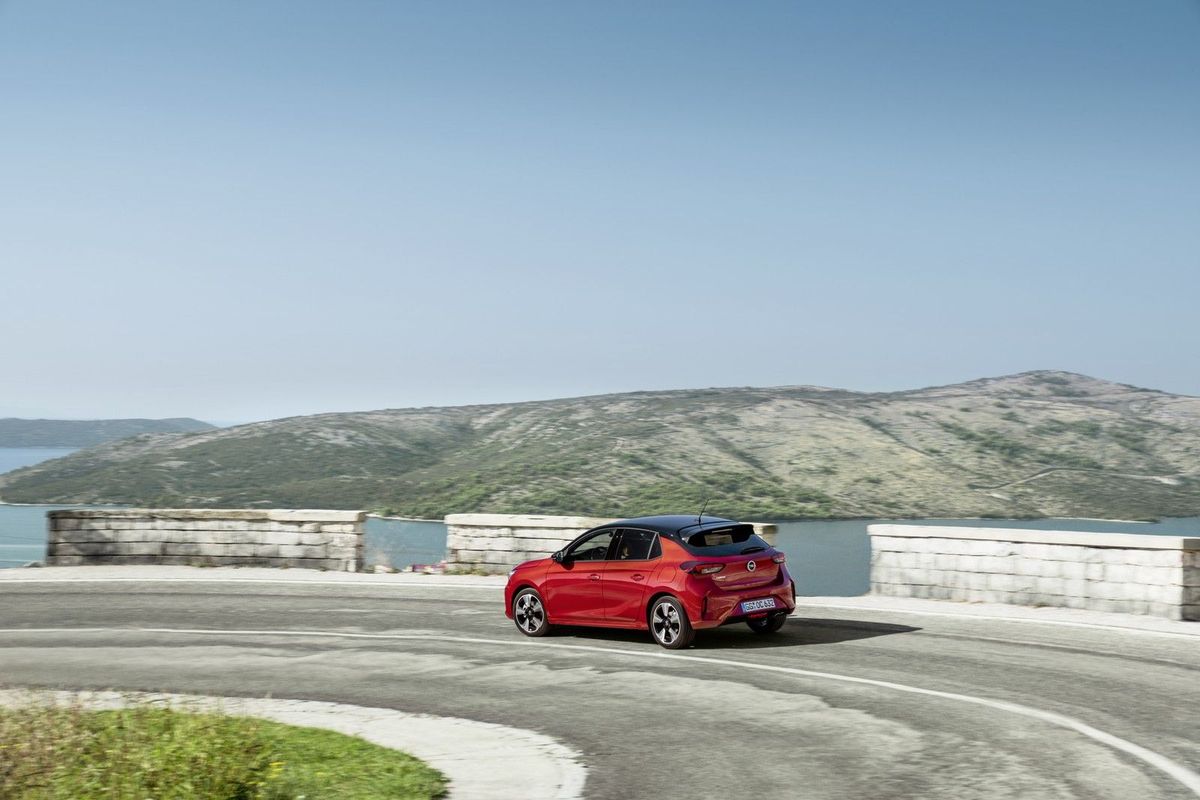
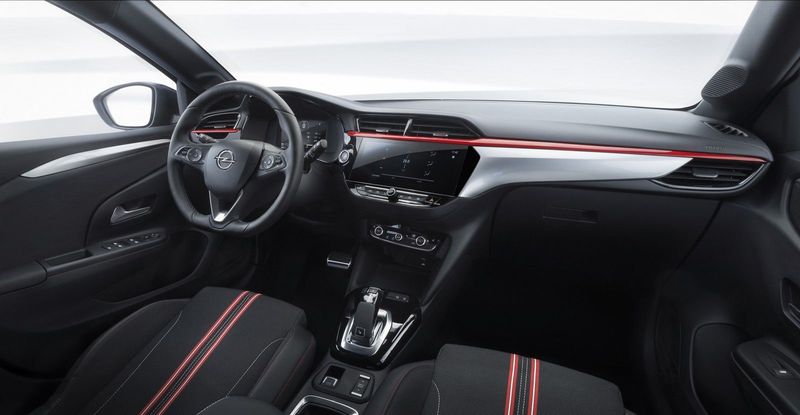
A choice of equipment grades will be available and this (GS Line) version tops the range. This spec gains a sportier appearance with bespoke bumpers, 17-inch alloys and a twin exhaust ends. The contrasting roof and door mirror colours add to the premium image, while the cabin gets flashes of colour across the dash. The front sports seats have sufficient bolstering to hold you in place, yet don't lack comfort for everyday driving. 

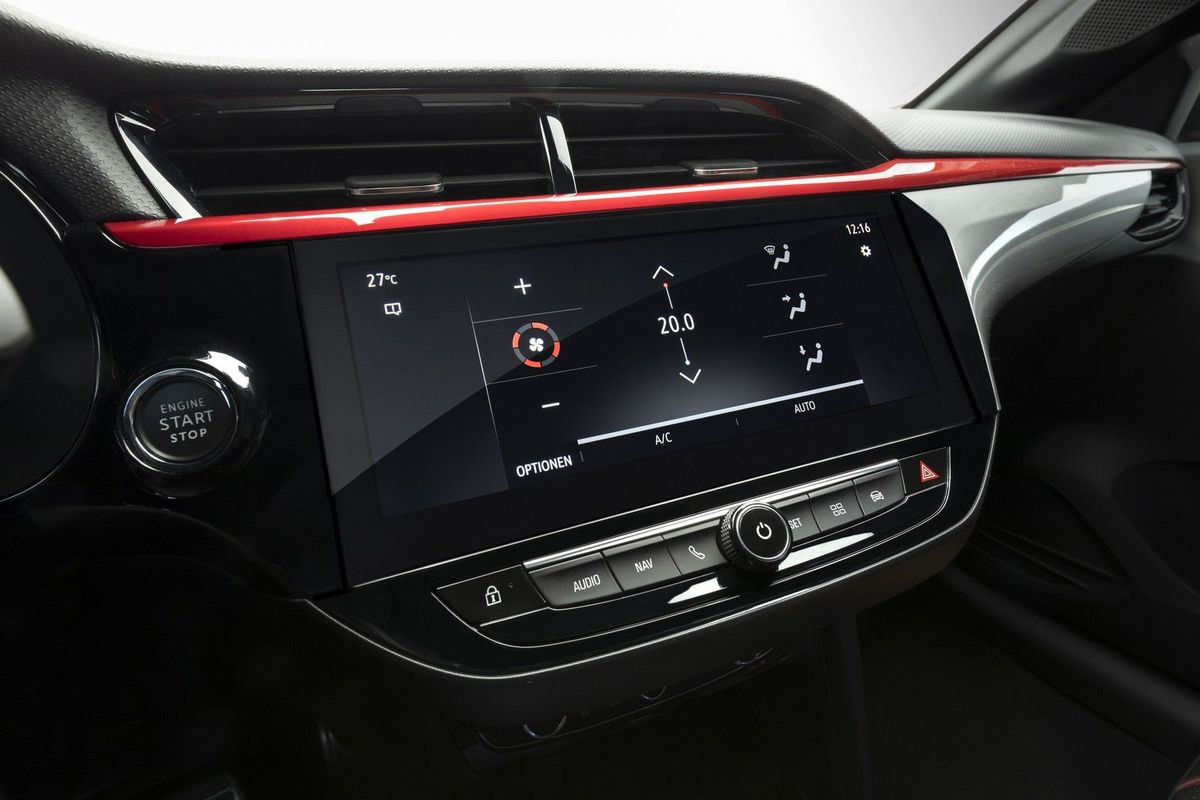
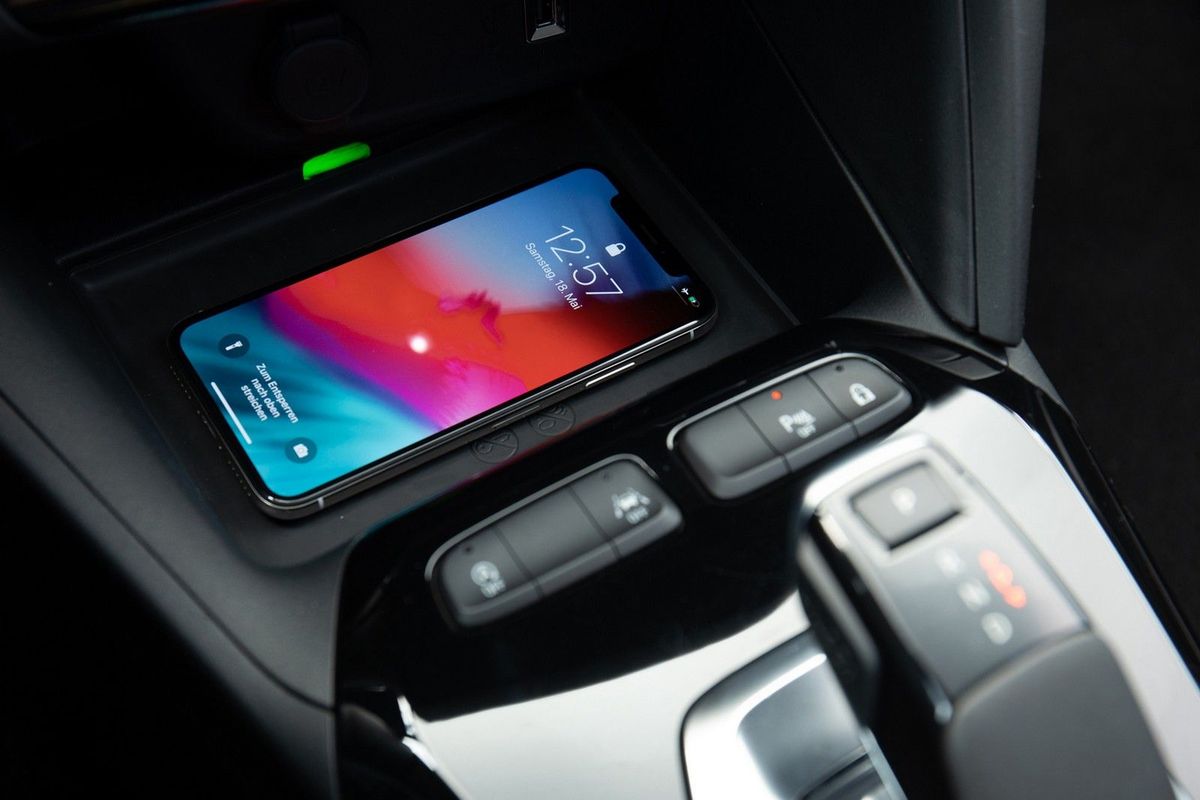
The instrument cluster is available with a configurable digital instrument display, but it isn't as novel or good looking as the 3-dimensional effect that Peugeot offers in the 208, however – the French parent company is evidently keeping some of the better bits for itself. There will be a range of touchscreen infotainment displays ranging in size from 5- to 10 inches. With the larger units, it’s possible to connect your smartphone through Android Auto and Apple CarPlay. A wireless charging pad and USB port (and the option of two more USB ports in the back of the car) ensure all devices can be topped up.

But it’s the overall uplift in the look and feel of the Corsa’s interior that sets this car apart. The previous GM-era Opels featured dull cabins with hard plastics, whereas now the materials used inside, even on the lower-grade models, are of markedly better quality. On the practical side, the Corsa's load bay capacity has also improved, with an increase to 309 litres and, potentially, to 1 081 litres when you fold the hatchback's rear seats down. 

Ride and drive 


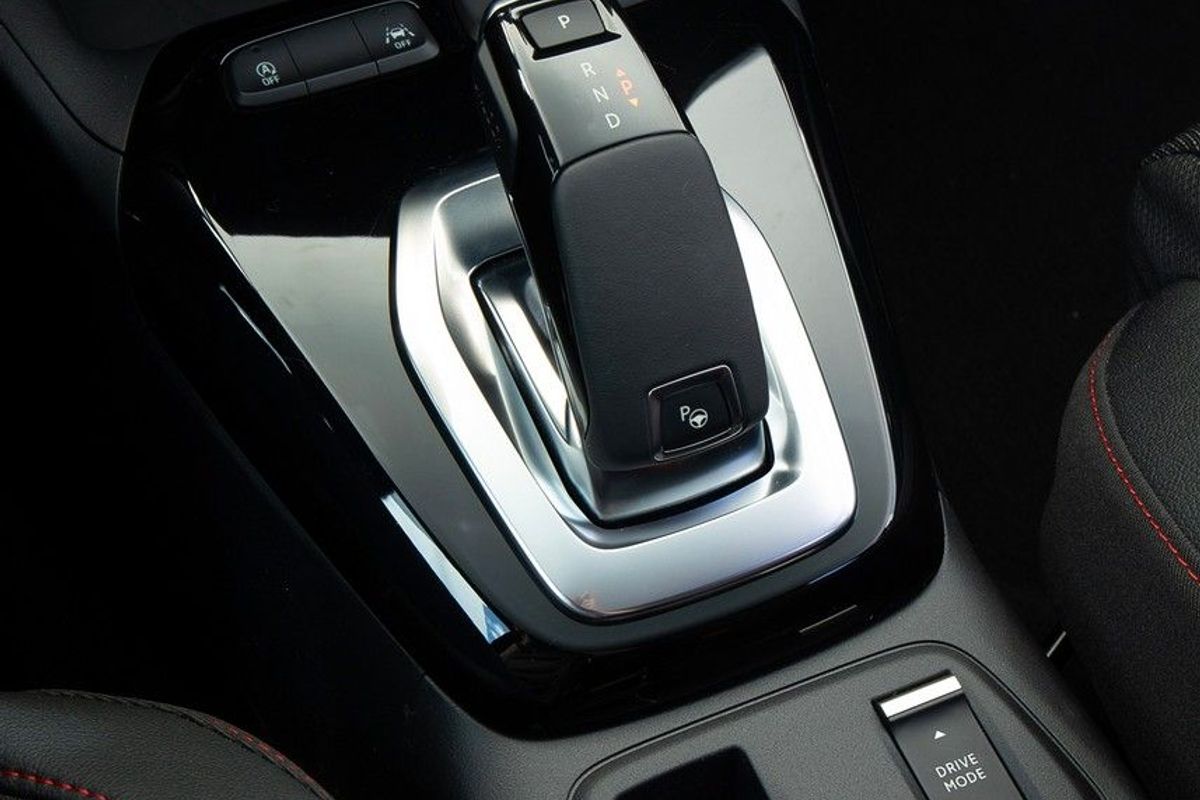
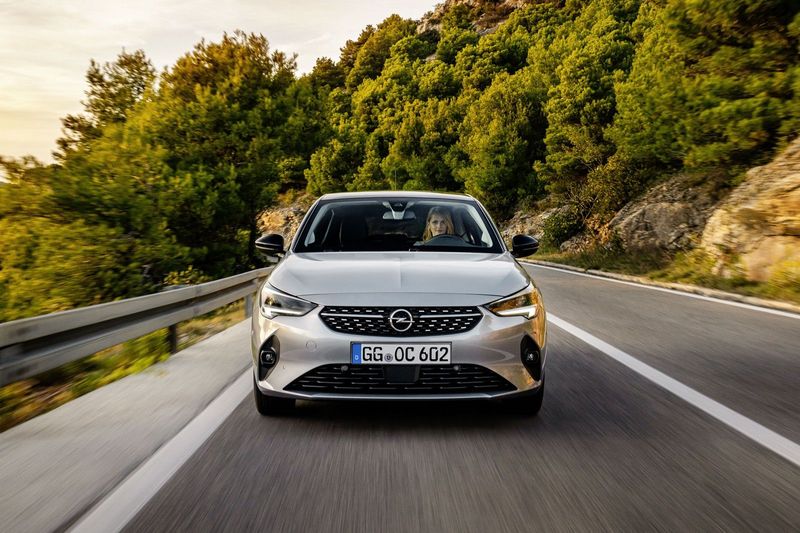
The turbocharged engine works well with the new 8-speed automatic transmission.

Those who have previously driven the outgoing version of the Opel Corsa (a #CarsAwards category winner in 2016/17 with the 1.0T Enjoy) will notice how different this 6th-generation model feels before you even turn a wheel. You feel the 28 mm lower seat height when getting in. The seating position offers plenty of adjustment, as does the multifunction steering wheel. There is more of a driver-focused cabin layout with a windscreen that no longer feels as if its several feet in front of you. Less obstruction by the A-pillar is helpful in town, and there’s decent rearward visibility, too.

The 96 kW 1.2-litre turbopetrol motor, meanwhile, is exclusive to the GS Line and comes mated with an 8-speed automatic transmission. Typically, 3-cylinder engines emit a characteristic thrum and lack the smoothness of their 4-cylinder counterparts. Still, the Corsa delivers a reasonably refined performance by virtue of improved sound insulation. Only when you press on with more urgency does the 3-cylinder note become more apparent. 

The transmission shifts up through its ratios quickly – and with little fuss – which helps to keep engine speeds down and optimise fuel economy. The peak torque of 230 Nm pulls the car along comfortably with sufficient overtaking urge at freeway speeds. If you want to have extra fun, there is a Sport mode that dials up the steering weight a few notches, lengthens out the time between upshifts and digitally plumbs more "engine sound" into the cabin. You can shift gears manually via the steering wheel-mounted paddles too, but Sport works pretty well; it's best left to its own devices.  


The GS Line derivative has numerous colourful inlays and the whole range features softer, more premium materials than before.

The Corsa's handling doesn’t disappoint, thanks partly to additional strut bracing at the front, which is exclusive to this GS Line version. That said, it’s worth remembering this isn’t a hot hatch, but the core chassis setup does bode well for the hotter GSi version, which is expected to arrive later. 

Other engines in the range will include a base 1.2-litre 55 kW naturally-aspirated 3-cylinder petrol unit, followed up by a mid-range 1.2-litre 3-cylinder turbopetrol producing 74 kW, and this will be available with either a 6-speed manual gearbox or 8-speed automatic transmission.

For a compact hatchback, the Opel Corsa now feels far more mature to drive. The suspension setup takes the edge off poorer road surfaces, and all of the controls are well-weighted. A drive in the 74 kW manual version confirmed that these attributes aren’t exclusive to this current range-topping derivative, so you shouldn’t feel short-changed by choosing one of the more modestly-priced Corsas. 

The not-so-good 

Occupant space is usually compromised in a compact hatchback and, in the case of the new Corsa, it’s (again) the rear passengers that get the worst deal. Making up for this (a little) is generously sized rear-door apertures, while the 2 outer rear seats come equipped with ISOfix points. 

Pricing & Warranty 

Pricing for the new Opel Corsa is not currently listed. Opel South Africa has assured us that the Corsa will arrive during 2020, but it's too early to confirm which engines or trim lines will be available. Opel currently offers a 3-year/120 000 km warranty on all its new cars. 


The new Corsa could be a real contender when it arrives in local showrooms. Hopefully, Opel SA can get the price right.

Summary

The Opel Corsa's all-new package propels it straight to the sharp end of a segment dominated by the Volkswagen Polo, but contested by a number of excellent offerings. A good engine line-up and the choice of the best equipment options bring large-car tech and quality to a car that has, at times, felt like a good product let down by workmanlike finishes. To reiterate: the new Corsa is not a 208 clone and doesn't have to stand back for anyone.

Related content:

Comparative Review: Ford Fiesta vs Volkswagen Polo (2018) [w/video]

New Renault Clio Revealed

Nissan Micra 84 kW Turbo (2019) Launch Review

Petrol Price Update For Nov/Dec 2019

The petrol price is likely to increase in the next few weeks, while motorists driving diesel vehicles should feel some relief.

The Automobile Association has released its predictions for the next round of increases/decreases after the mid-month fuel price data was released. 

Things are not looking good for petrol, with a predicted increase of 11 cents a litre for 95 octane petrol, and a 7-cent rise for 93 octane petrol. On the other hand, there's some good news for diesel as there should a decrease by as much as 18 cents. 

"The average Rand/US dollar exchange rate has been essentially flat, contributing a small decrease of about 3.5 cents to fuel prices as it maintains a level around R14.90 to the dollar. The picture for oil is similar, with the international prices of both petrol and diesel having run neck-and-neck for several days last week," the Automobile Association notes. These increases will hurt many who will be conducting longer journeys over the December 2019 holidays.

Related Content

Fuel Price Breakdown: What do you pay for?

5 Ways to Beat the Fuel Price Hike

Most Fuel Efficient Budget Cars in SA

Most Fuel-Efficient Double-Cab Bakkies in SA

5 Fuel-Saving Car Features & How They Work

Most Fuel Efficient Budget Cars in SA

Most Fuel Efficient Diesel Cars in SA

Most Fuel Efficient Petrol Cars in SA

New Renault Kwid in SA (2019) Specs & Price 

A new Renault Kwid budget car is launching in South Africa today! Herewith specs and pricing…

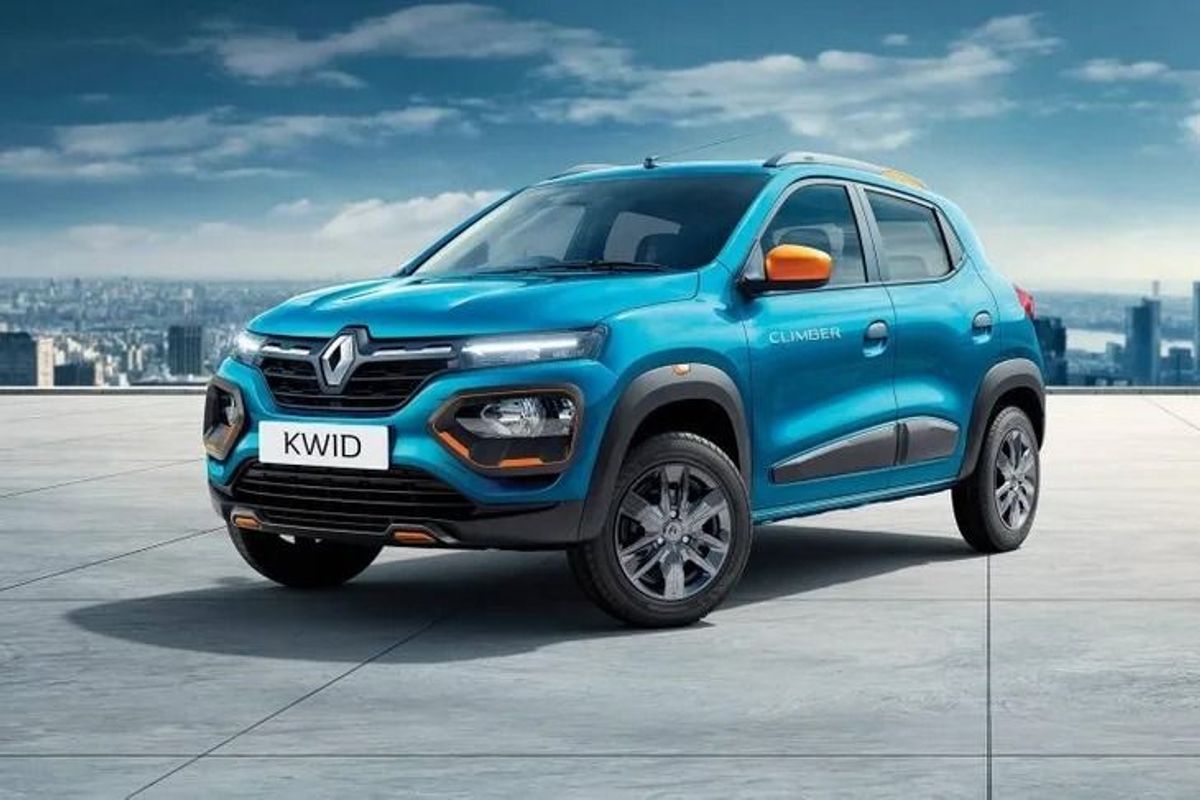
The Renault Kwid came to market in 2016 in South Africa and it has proven to be a big hit with budget car buyers. Now, Renault is launching a new Kwid and South Africa is the first country outside of India (where the Kwid is produced) to receive this new model.

Key Features 


The new Kwid is now safer and more stylish than ever before. 

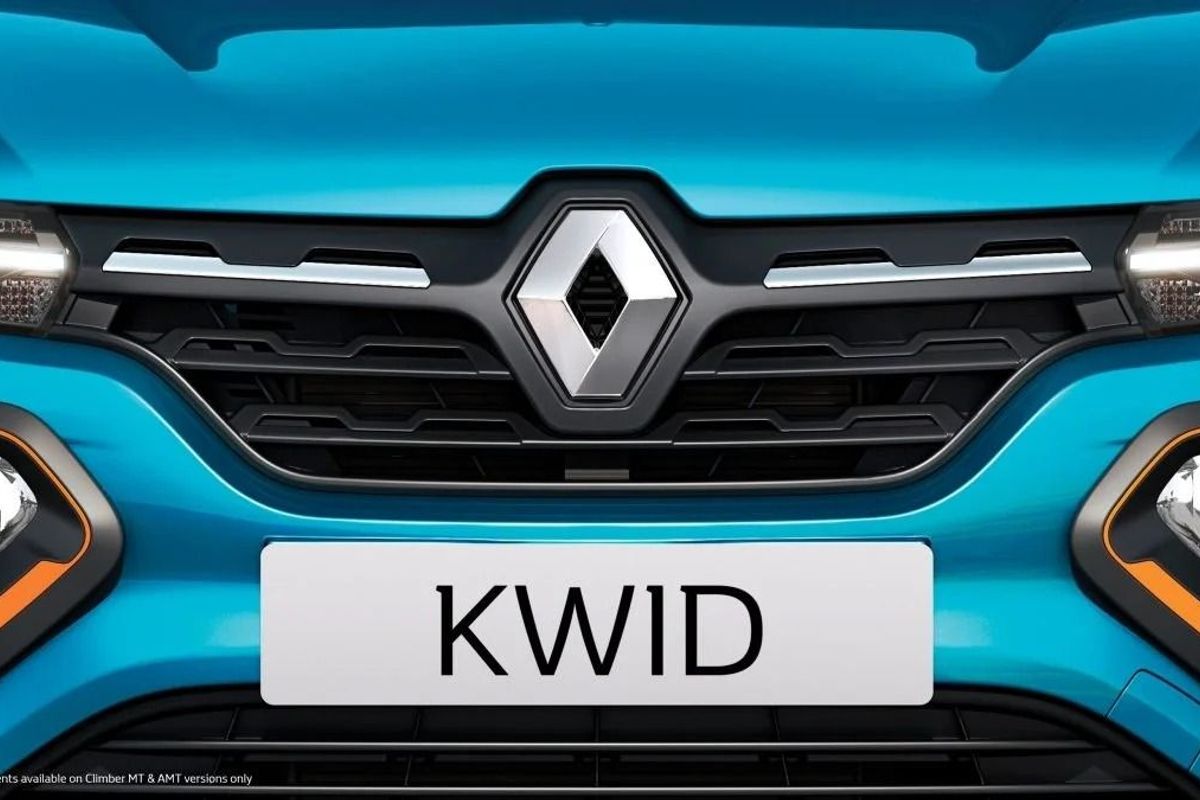
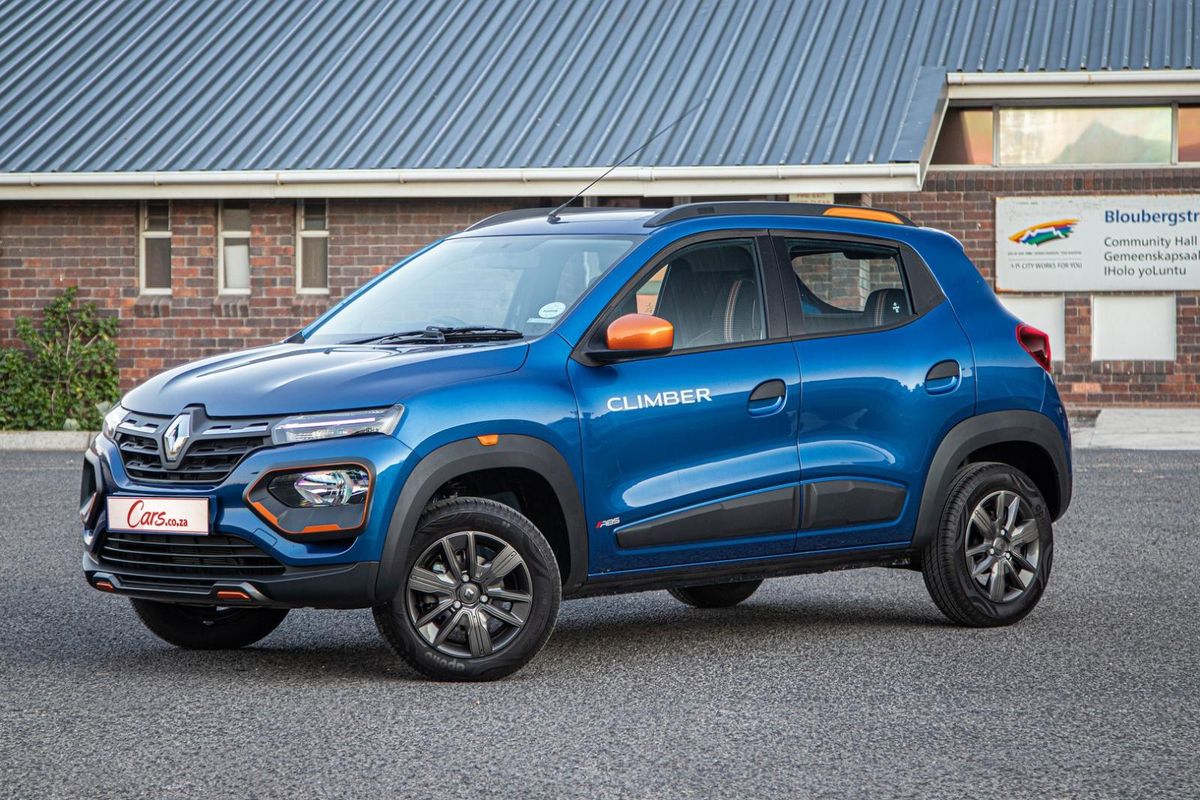
The Kwid is now 52 mm longer than the outgoing model and is easily recognised by its new grille design featuring a split headlight configuration. 

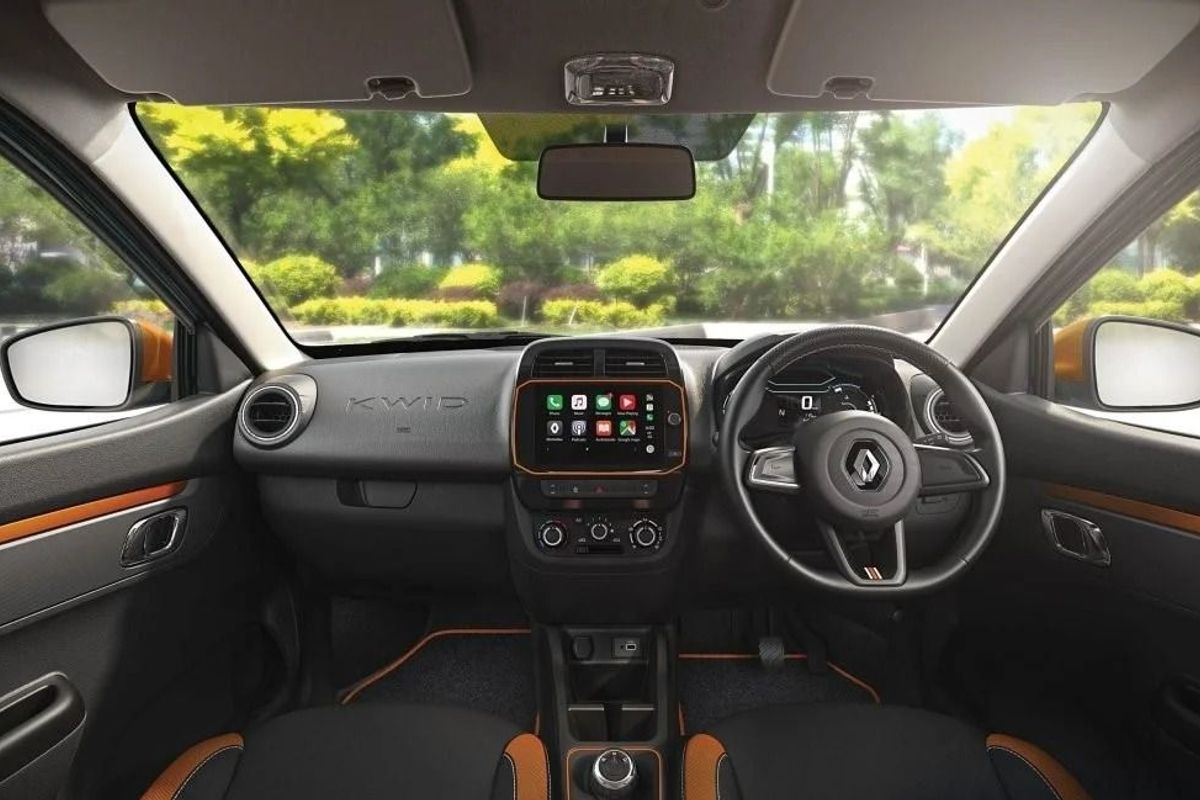
There are 3 Kwid variants on offer, including the base-spec Kwid Expression, Dynamique and range-topping Climber. The Kwid Climber features details such as 14-inch Volcano Grey alloy wheels, roof rails, front and rear skid plates with orange inserts and climber badging seen on the front doors. 

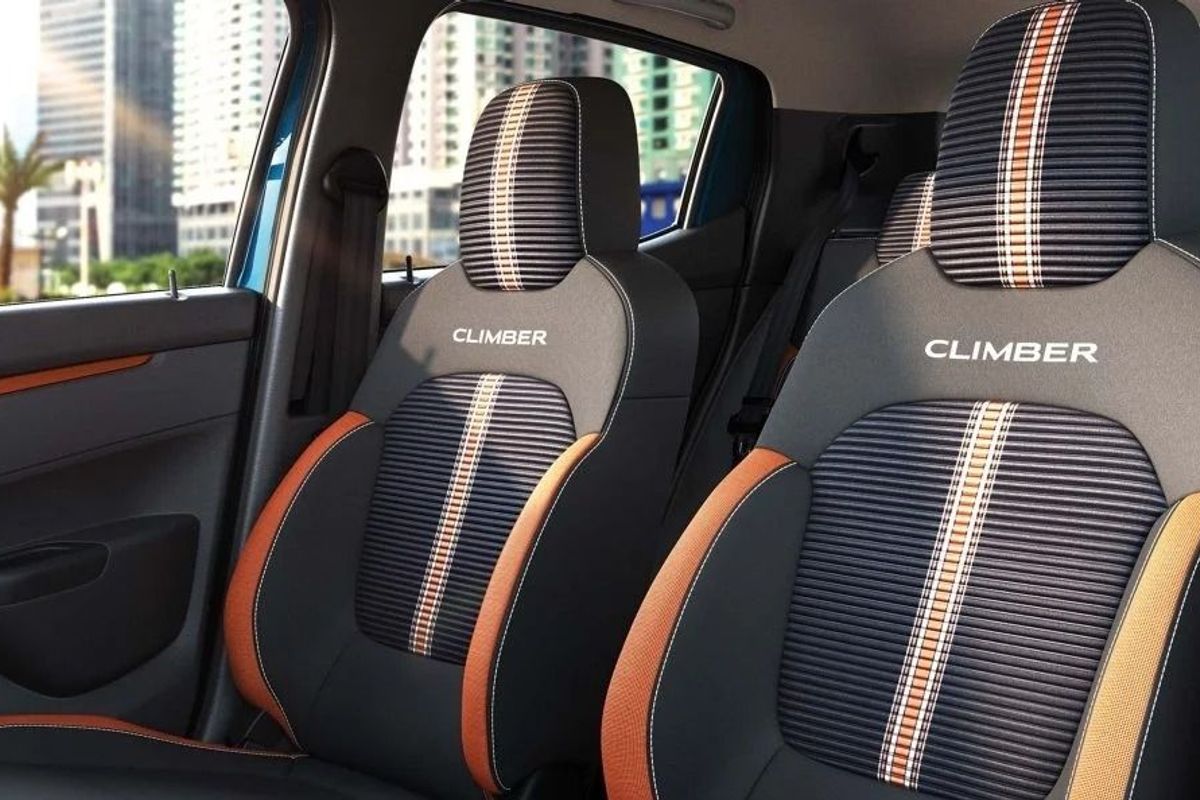
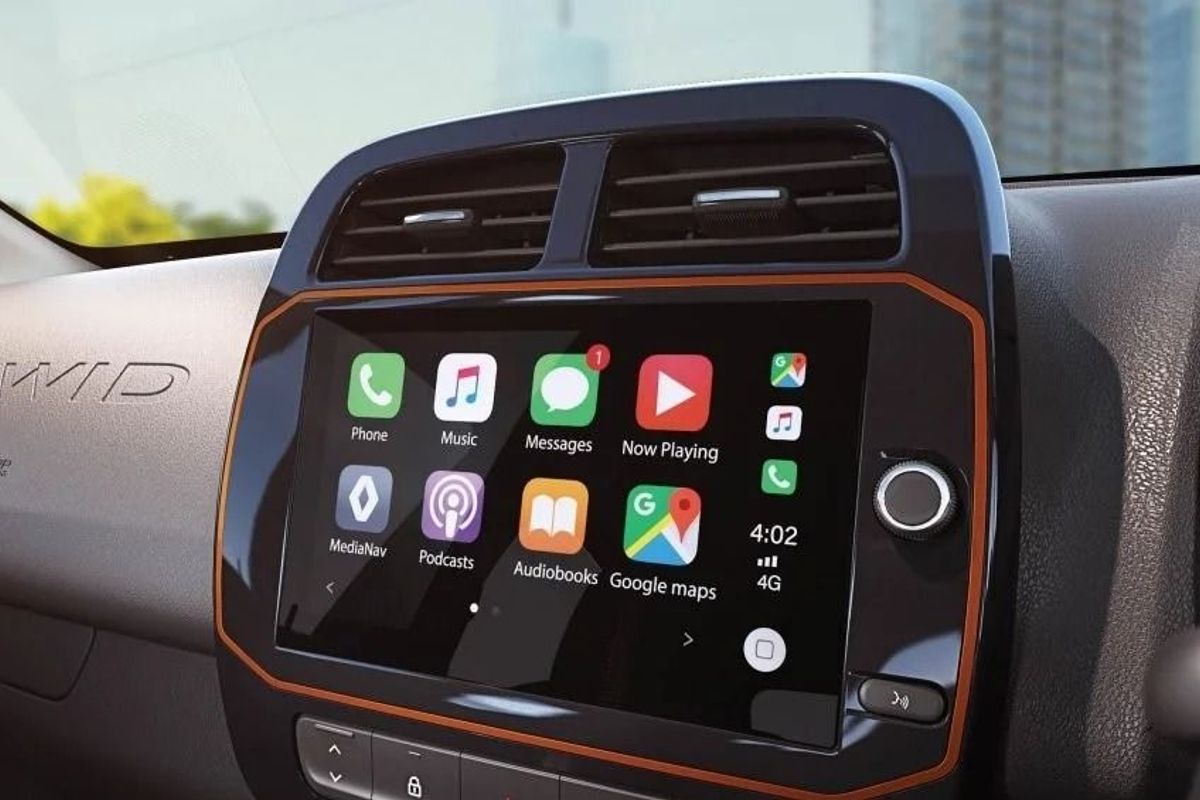
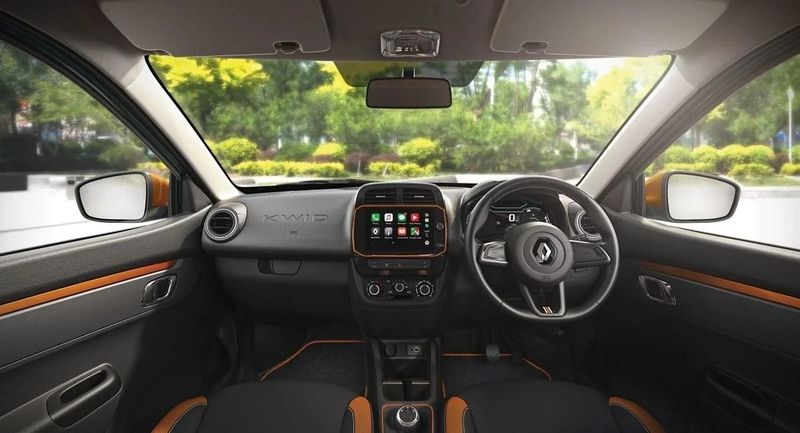
On the inside, the Kwid Climber features a sporty steering wheel with orange accents while the seats are upholstered in orange, white and black. Dynamique and Climber derivatives benefit from an 8-inch touchscreen infotainment system with Android Auto and Apple CarPlay functionality. The Expression derivative is equipped with a basic radio with Bluetooth functionality. Luggage space is claimed at 279 litres.  

Perhaps the best news about the Kwid is that its safety specification has been beefed up and all derivatives are equipped with 2 airbags, ABS with EBD, rear park distance control and a reverse camera with guidelines (Dynamique and Climber). 

Engine and fuel consumption

The familiar 1.0-litre, 3-cylinder petrol engine continues service under the Kwid’s bonnet and it produces 50 kW and 91 Nm of torque. A 5-speed manual or 5-speed Automated Manual Transmission (AMT) is offered across all derivatives.

Renault claims a fuel consumption figure of 4.7 L/100km for the manual derivatives while the AMT derivatives are claimed to consume 4.4 L/100km. 

New Renault Kwid- Price in South Africa 

Kwid 1.0 Expression M/T – R144 900

Kwid 1.0 Expression AMT – R154 900

Kwid 1.0 Dynamique M/T – R154 900 

Kwid 1.0 Dynamique AMT – R164 900

Kwid 1.0 Climber M/T – R164 900

Kwid 1.0 Climber AMT – R174 900

The Kwid is now sold with a 5-year/150 000 km warranty, 2-year/30 000 km warranty and 1-year insurance included. 

Buy a Renault Kwid on Cars.co.za

Further Reading

Renault Kwid Restyled for 2020

6 Cheapest New Cars in South Africa (2019)

Renault Kwid (2016) Video Review

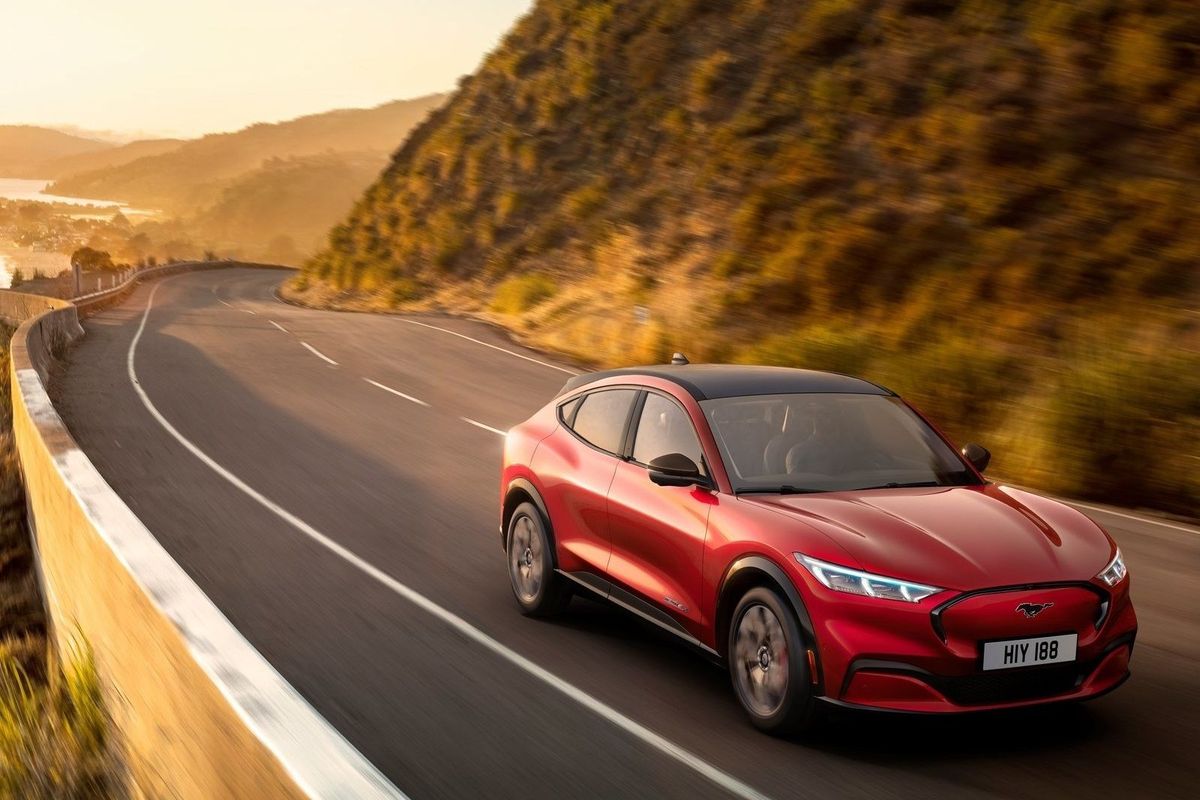
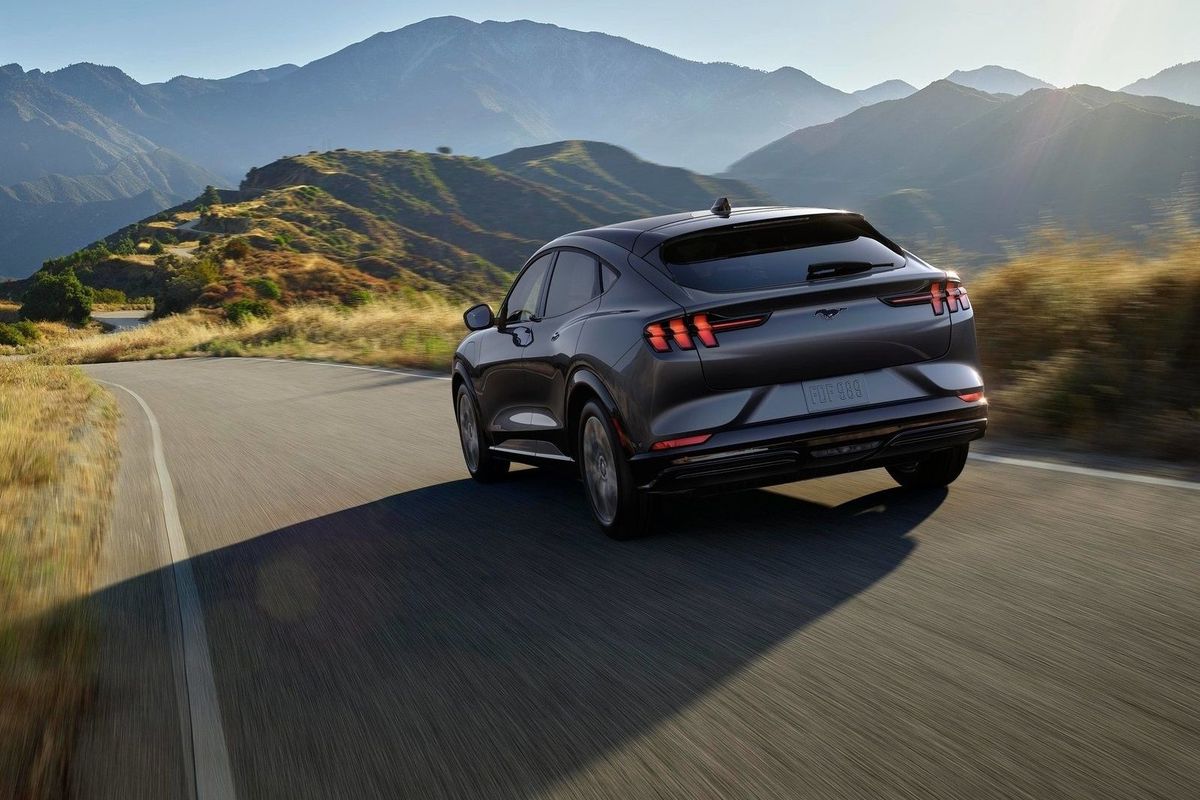
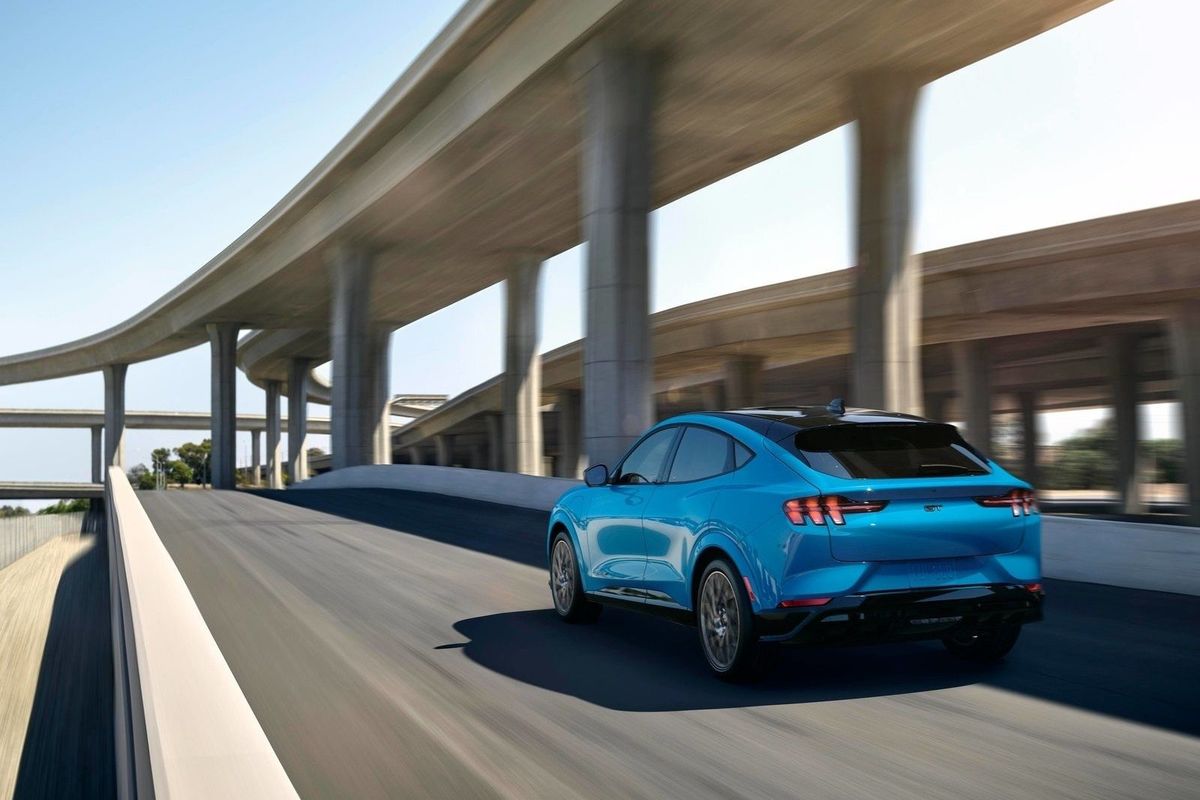
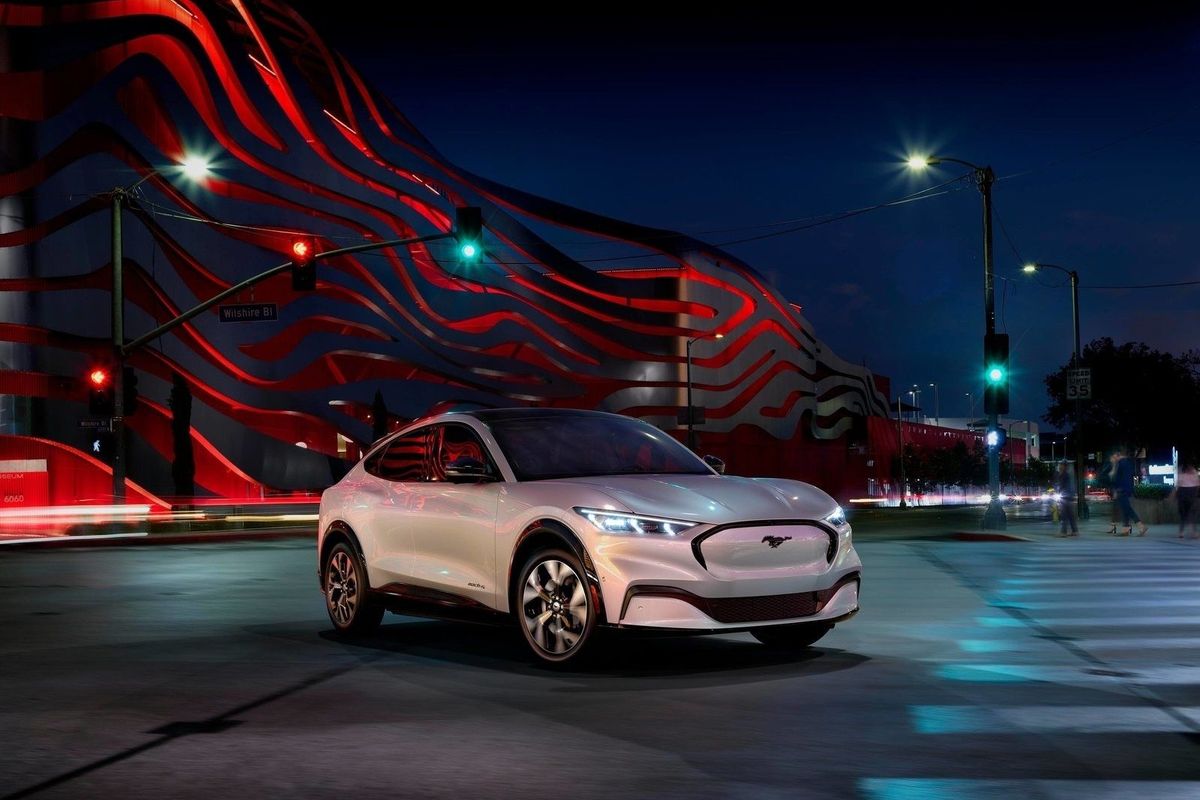
Ford Mustang Mach-E Officially Revealed

A Ford Mustang electric SUV doesn't sound right at all, and yet, the Ford Mustang Mach-E looks desirable. Here's what you need to know.

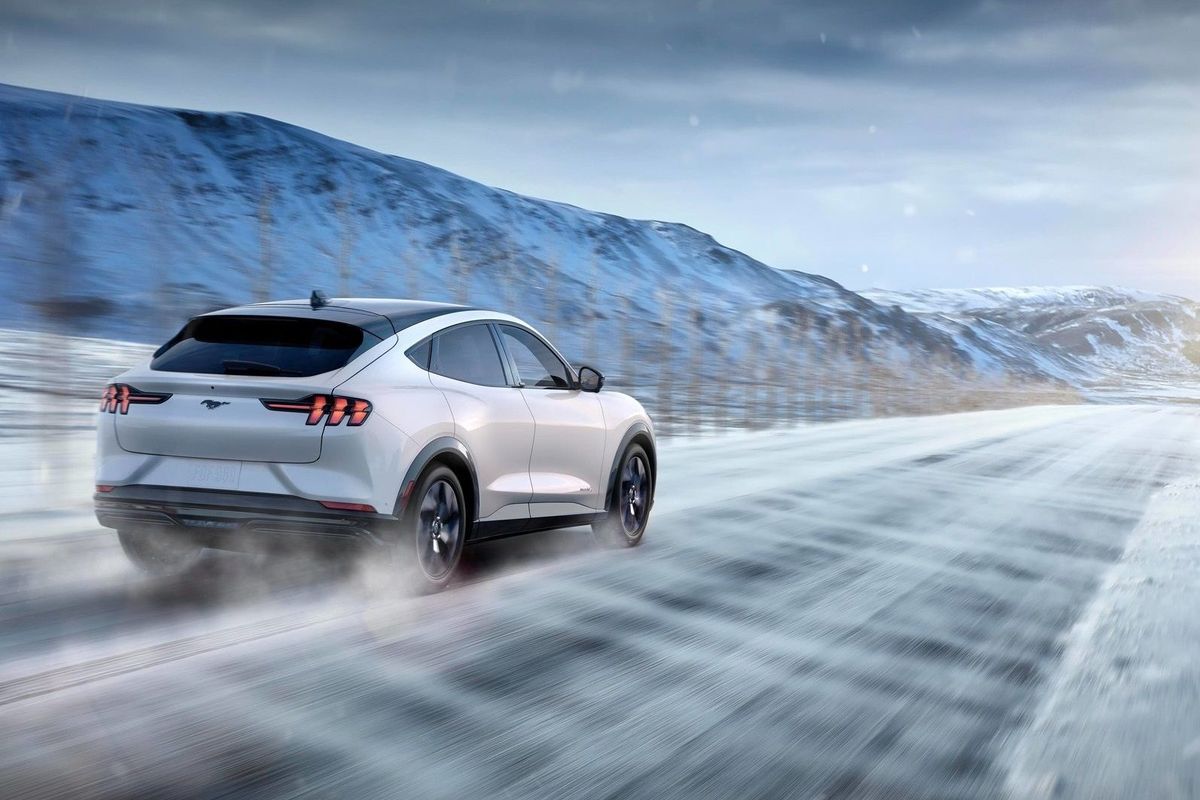
Ford has launched the Mustang Mach-E, which is an all-electric SUV, which underlines the Blue Oval's plans for an electric future. "At the first-ever Detroit auto show, Henry Ford said he was working on something that would strike like forked lightning," said Bill Ford, executive chairman, Ford Motor Company. "That was the Model T. Today, the Ford Motor Company is proud to unveil a car that strikes like forked lightning all over again. The all-new, all-electric Mustang Mach-E. It's fast. It's fun. It's freedom. For a new generation of Mustang owners."

Strangely, the vehicle was revealed in November 2019, but will only go on sale towards the end of 2020. When it launches, the Ford Mustang Mach-E will be available with standard and extended range batteries, with the choice of either rear-wheel drive or all-wheel drive. Range is estimated at 480 km for the latter version and Ford is claiming the all-wheel-drive model will be quicker to 100 kph than a Porsche Macan. There will also be 2 performance versions, with a target performance figure of under 4 seconds to 100 kph for the GT, while the GT Performance Edition is aiming for the 3.5 second to 100 kph bracket. Outputs of 342 kW and 830 Nm are being touted. For those interested, the battery capacities are 75.7 kWh and 98.8 kWh, the latter being the extended range. The FordPass Charging Network is the largest public charging network in the US, and there are more than 12 500 charging stations and 35 000 charging plugs available. Using one of the powerful fast chargers will see the Mustang Mach-E go from 10% to 80% in around 38 minutes.

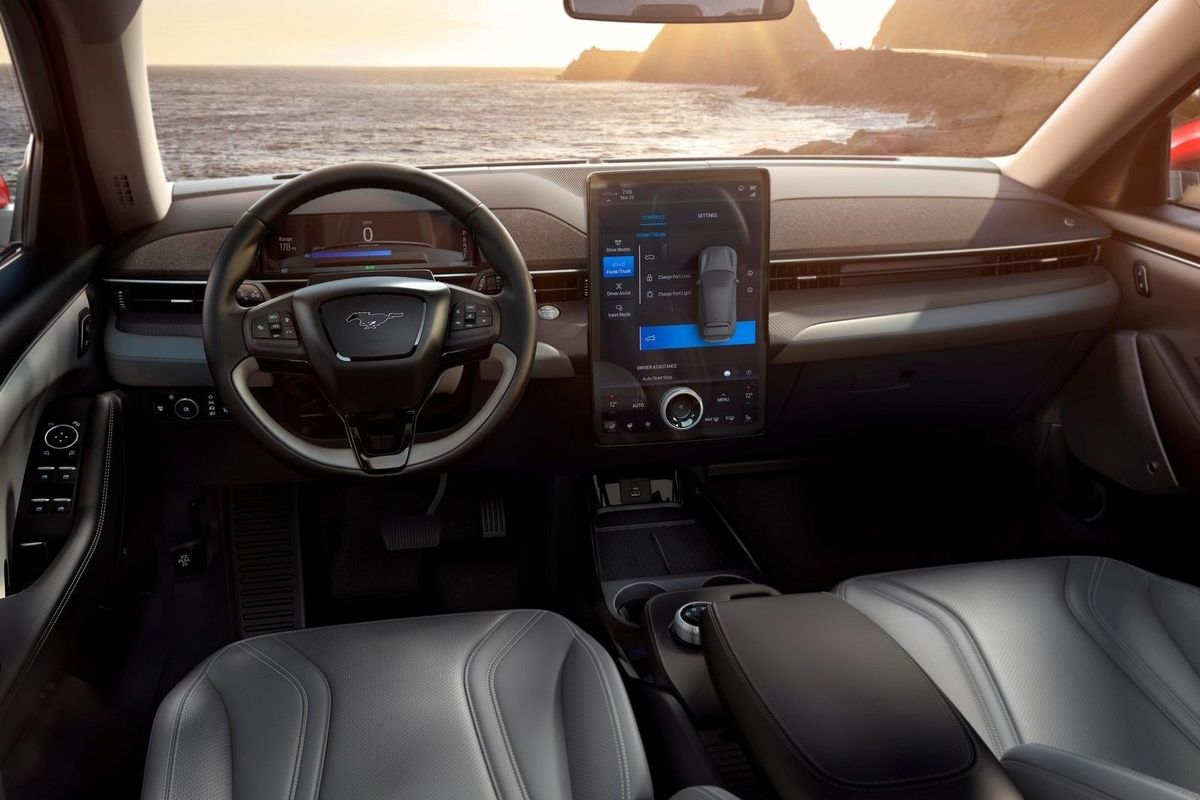
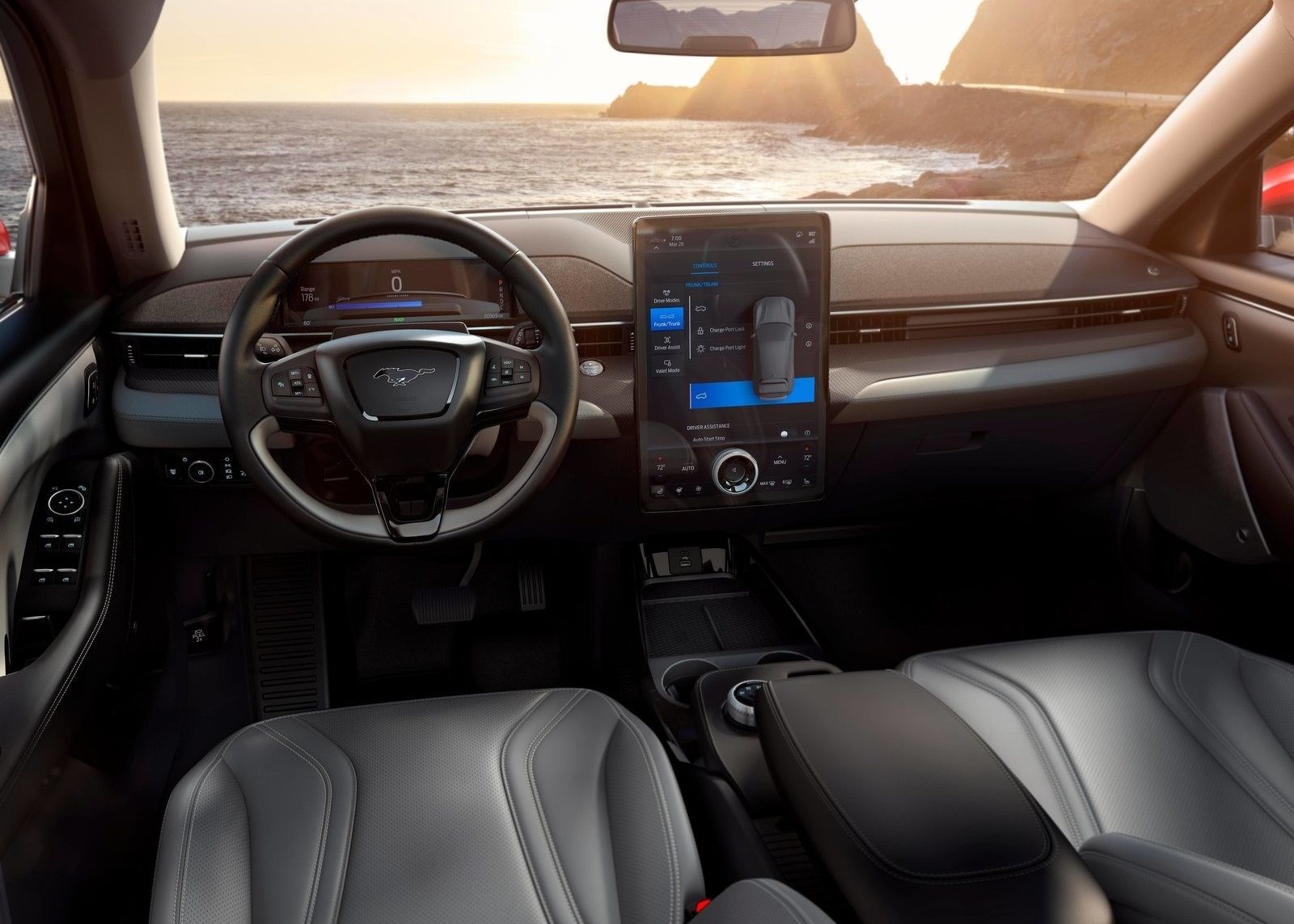
Inside, there's a Tesla-style central infotainment screen. Ford says this is the next-generation SYNC which features things like machine learning, over-the-air updates, smartphone-like controls and a cloud-connected assistant. The main benefit of an electric car is the addition of a front trunk, or frunk, which adds to the cargo-carrying capacity.


The Ford Mustang Mach-E cabin.

Further Reading

Ford Teases All-Electric Mustang SUV

Ford Mustang 5.0 GT Fastback (2019) Review

Ford Confirms 560 kW Mustang

RentMyRide gears up for major expansion

Following an R8-million funding round and the recruitment of a high-profile car industry exec as its new COO, peer-to-peer vehicle rental platform RentMyRide plans to expand its Professional Fleet Owner service and launch an app.

The funding round, which the firm says was “fully subscribed with contributions by local and international investors”, coincided with the appointment of former Kia Motors SA marketing director David Sieff (who'd been with the Korean subsidiary for almost a decade) as chief operating officer. 

Ex-Kia exec appointed COO

Sieff will be based at RentMyRide’s Johannesburg office and his first order of business will be to assist large vehicle fleet owners to list their vehicles on the platform as part of the Professional Fleet Owner service. "I will place substantial focus on this,” says Sieff.  


Sieff has also gained valuable experience with technology companies such as Microsoft and Dimension Data.

RentMyRide has facilitated more than 1 500 rentals between private vehicle owners and renters and currently operates in Cape Town, Bloemfontein, Durban, East London, Johannesburg and Port Elizabeth. However, the recently-introduced Professional Fleet Owner Service, which allows firms of individuals with more than one vehicle to manage their own small rental vehicles fleet, adds a promising new dimension to the business.

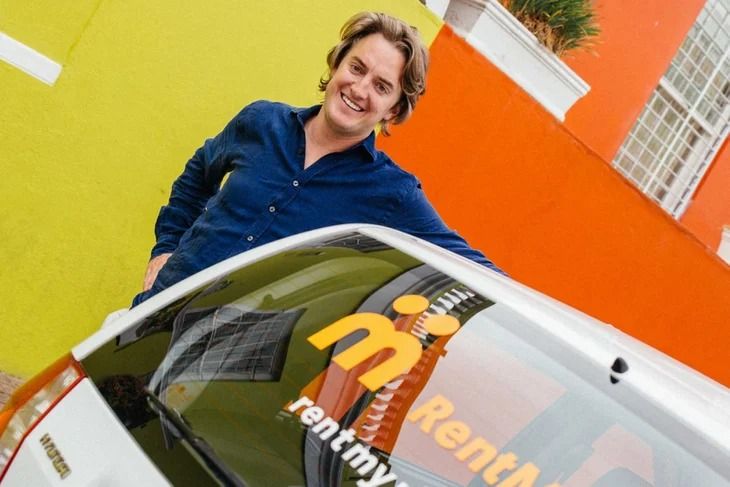
“Entrepreneurs and fleet owners, such as vehicle dealers with slow-moving stock have started using RentMyRide to make money from their vehicles, especially during periods when they are standing still,” RentMyRide's chief executive officer Sebastian Brokmann says. 

“The demand for vehicles always outstrips supply, so there is no shortage of rental requests for anyone who wants to list his/her vehicle on our platform. Since our service includes vehicle insurance for vehicles of up to R150 000, we also remove most of the risk from the transaction.”

 
Since starting the Professional Fleet Owner service, RentMyRide has welcomed Pace Car Rental as a corporate client, says Brokmann.

RentMyRide app is coming

Brokmann adds that the confidence shown by funding investors will help RentMyRide to extend its reach and further develop an intuitive technology platform that can easily scale. It will also assist the company to develop and launch a dedicated app for both iPhone and Android platforms. 

While the RentMyRide model is similar to those of global peer-to-peer companies, the firm's algorithm and rental platform have been developed for the unique business environment in South Africa. For example: RentMyRide has one of the most comprehensive background-checking processes of its kind, as it checks the credit and employment history of both the vehicle owner and the person interested in renting the vehicle. 

Similarly, the learning algorithm considers location, vehicle age and other metrics to best match interested renters with the right vehicles. 

“With our planned app, the system will be better able to match interested parties based on their locations and requirements. It will also help us to speed up loading and listing of new vehicles on the system, using the owner’s cellphone to inspect vehicles and upload pictures,” he concludes. 

Related content:

SA's first private car renting platform adds professional fleet owner service

RentMyRide: Owners' Success Stories

Rent out your car safely with RentMyRide

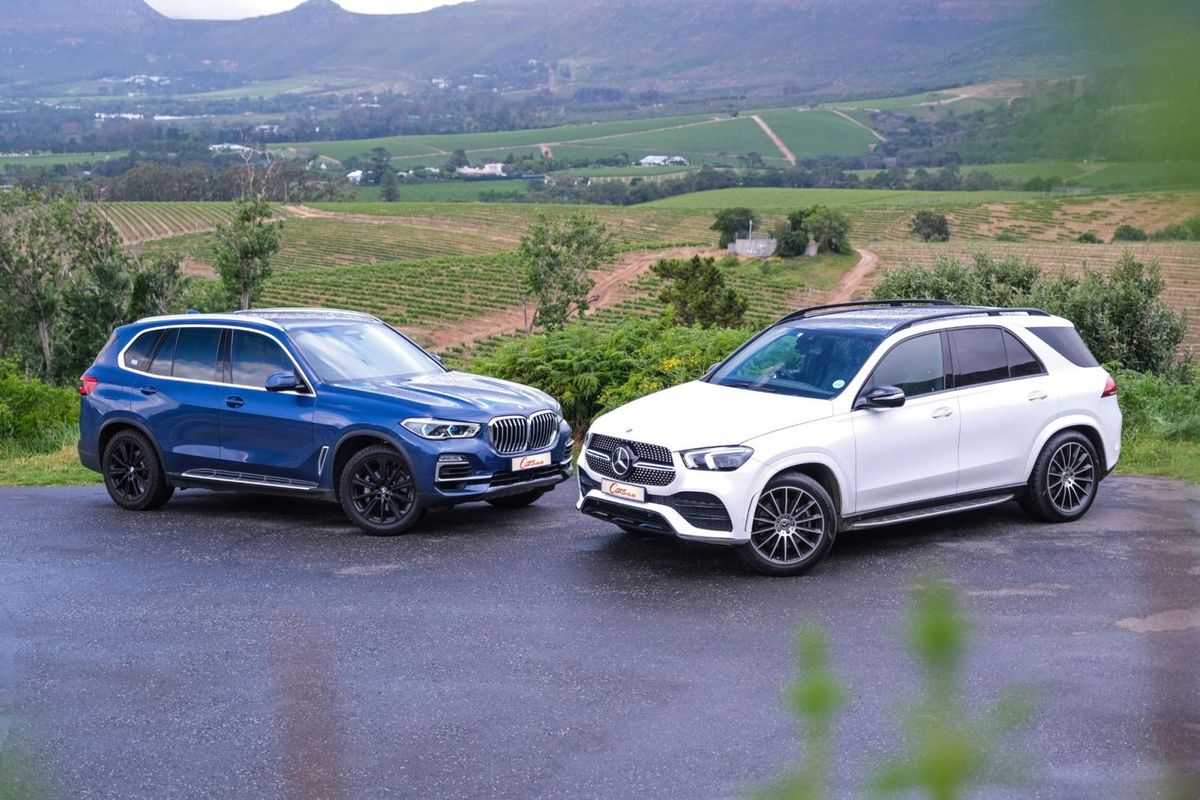
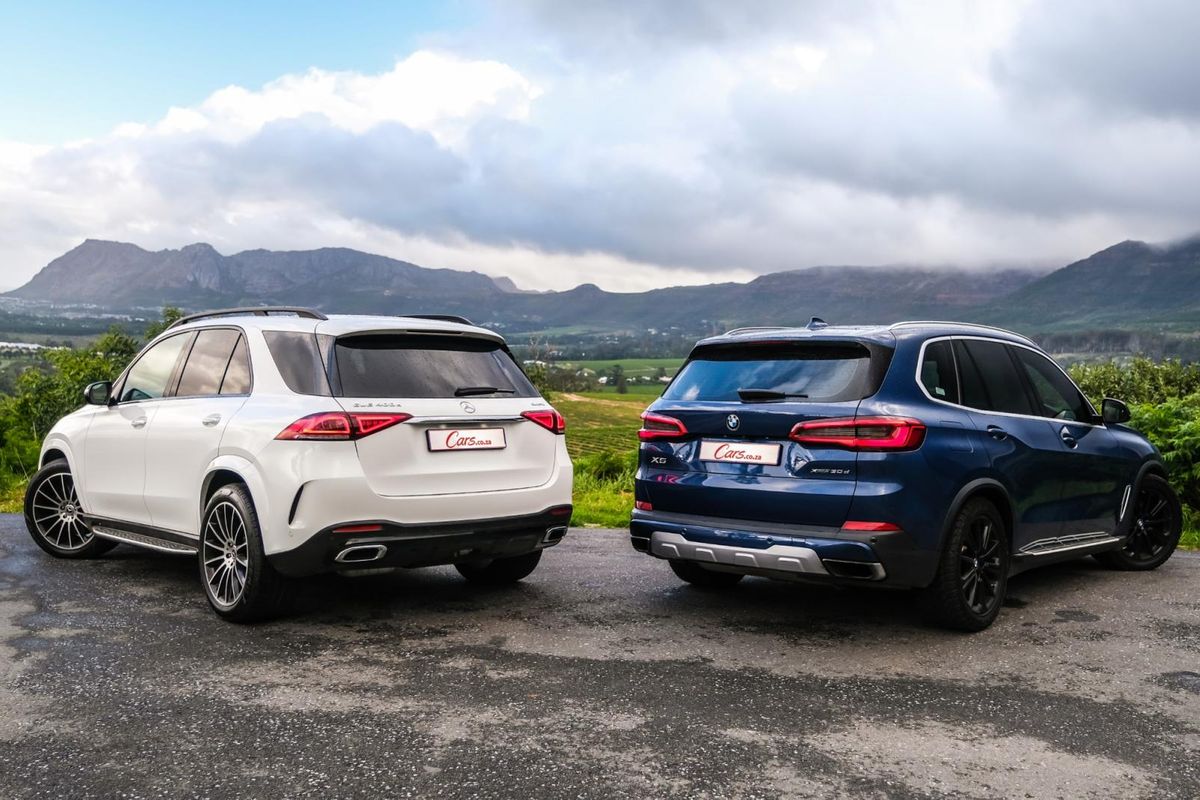
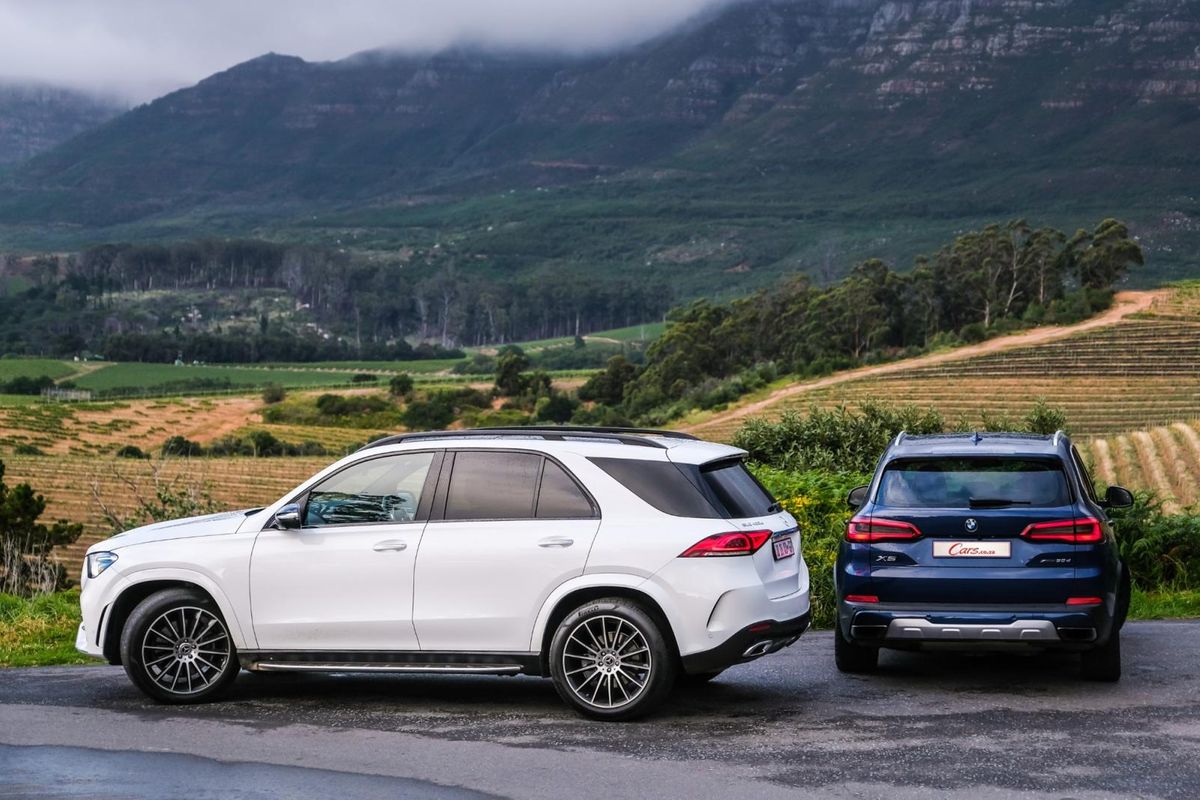
BMW X5 xDrive30d vs Mercedes-Benz GLE 400d (2019) Comparative Review [w/Video]

Premium SUVs are the automotive embodiments of success and among the most desirable cars on the market. The rivalry between archrivals BMW and Mercedes-Benz is particularly fierce in this segment and, seeing that the X5 and GLE are all-new, it’s the perfect time to bring these 2 juggernauts together for a thorough comparative evaluation. 

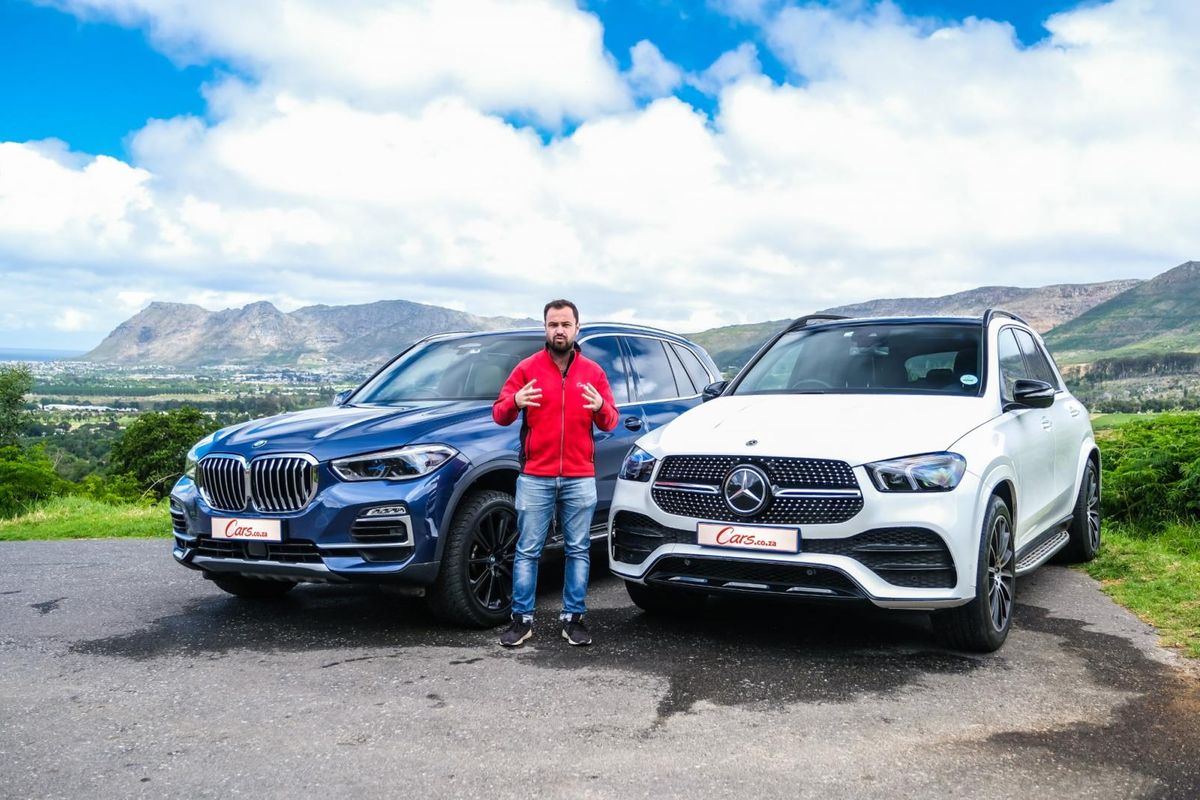
Large premium SUVs are big money spinners for BMW and Mercedes-Benz and their respective X5 and GLE ranges have proven highly popular both in South Africa and abroad. The latest (4th-generation) X5 came to market in November 2018 while its Benz-badged rival landed in South Africa recently (August 2019). Now that both these fine German products are here, we thought it would be a good idea to bring them together for a round of "show and tell".

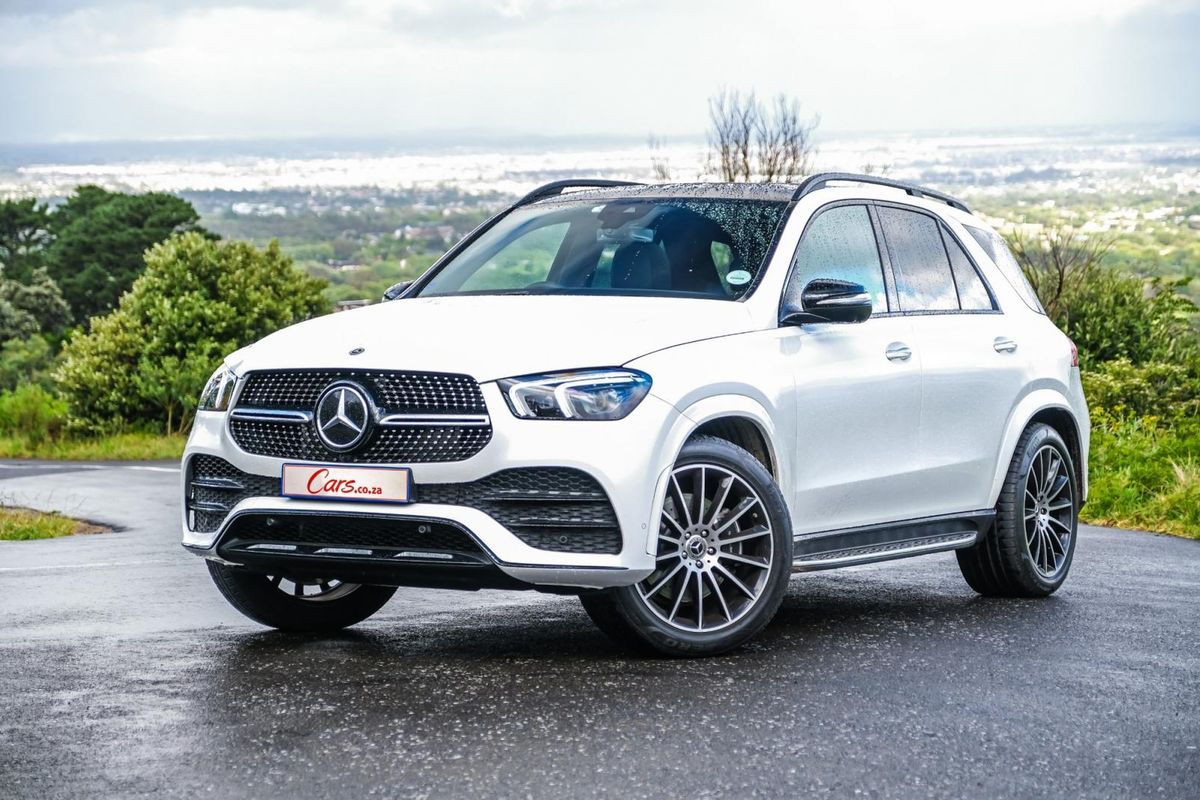
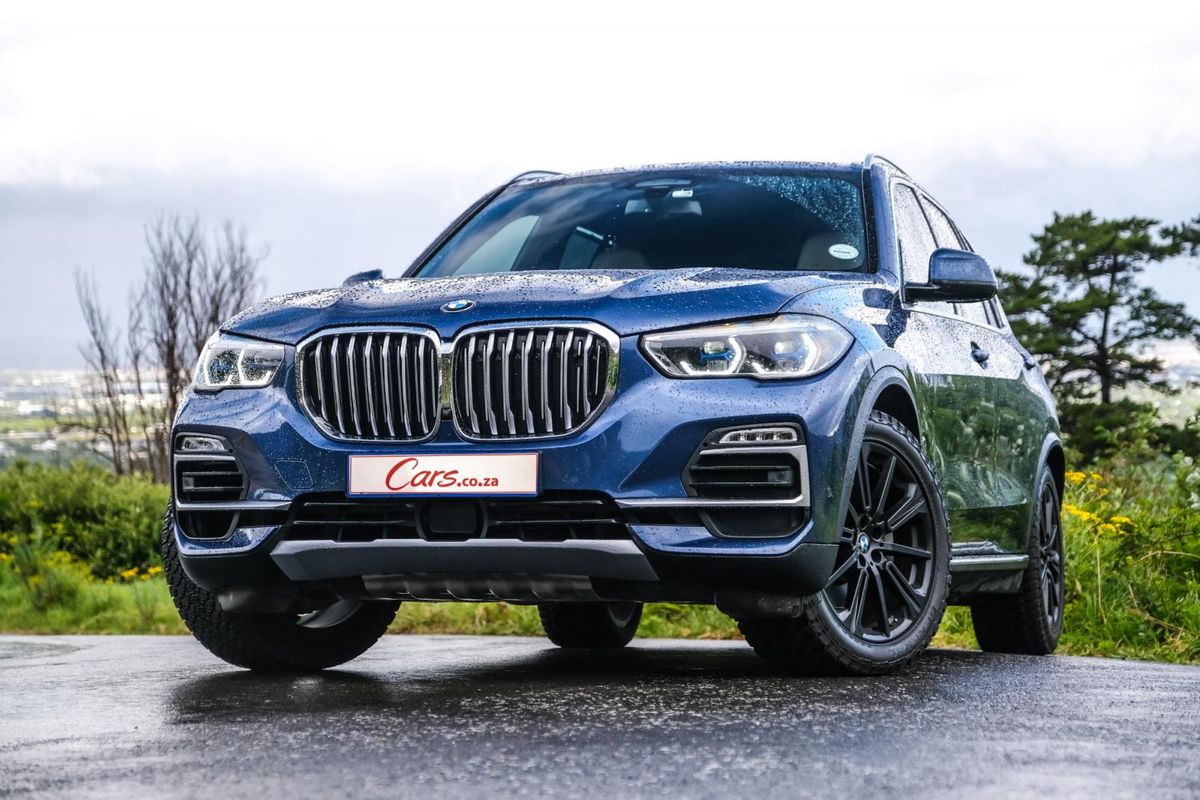
This comparative review features a pair of turbodiesel combatants: The X5 xDrive30d in xLine trim and the Mercedes-Benz GLE 400d 4Matic in AMG Line guise. It must be said at the onset that both vehicles are hugely capable and attractive in their own right. We will, therefore, highlight the cars' strengths, as well as their weaknesses, so you can decide for yourself which SUV you like most and which one would serve your needs best.  

How do they perform in terms of…

Kerb Appeal


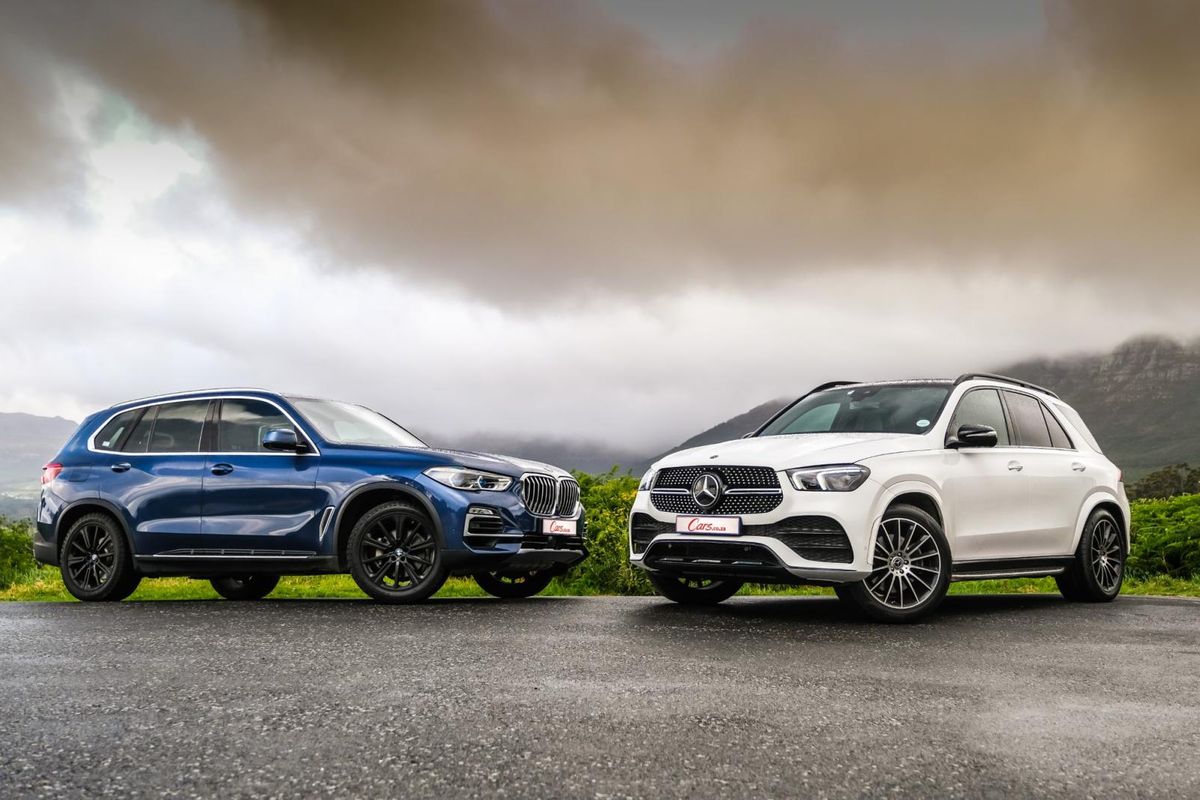
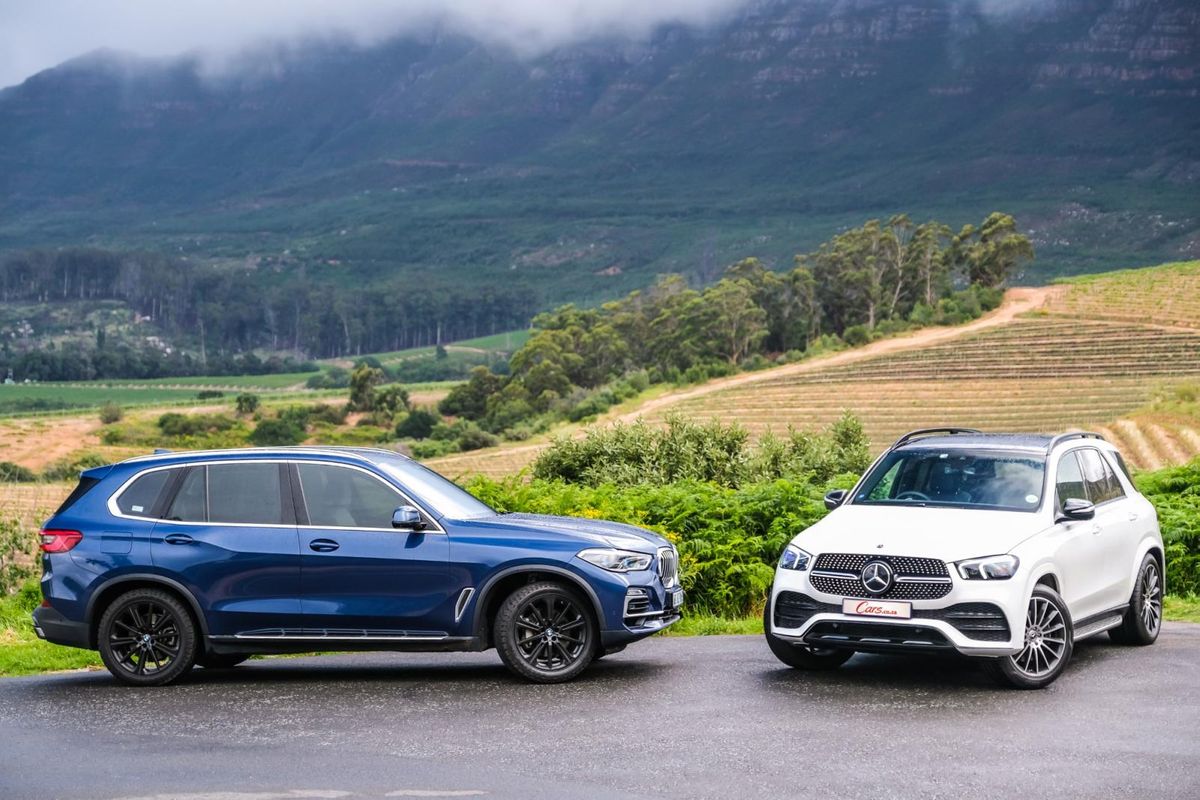
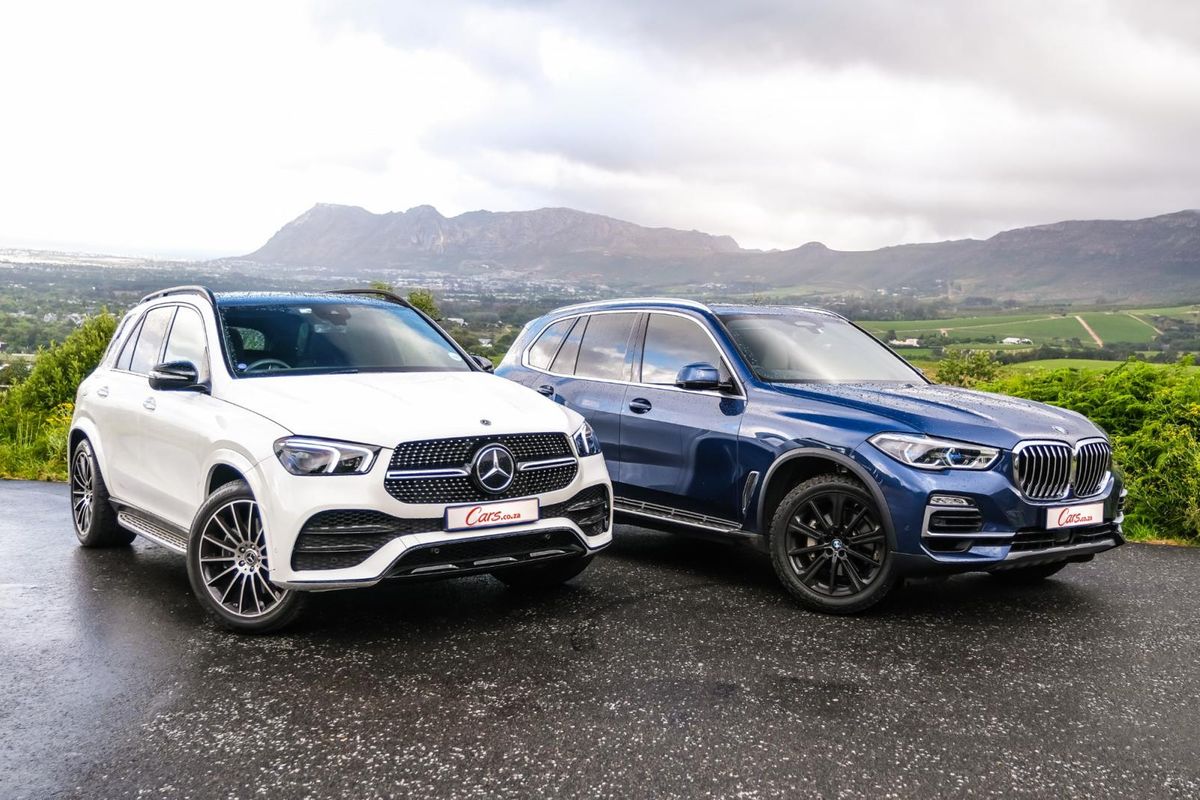
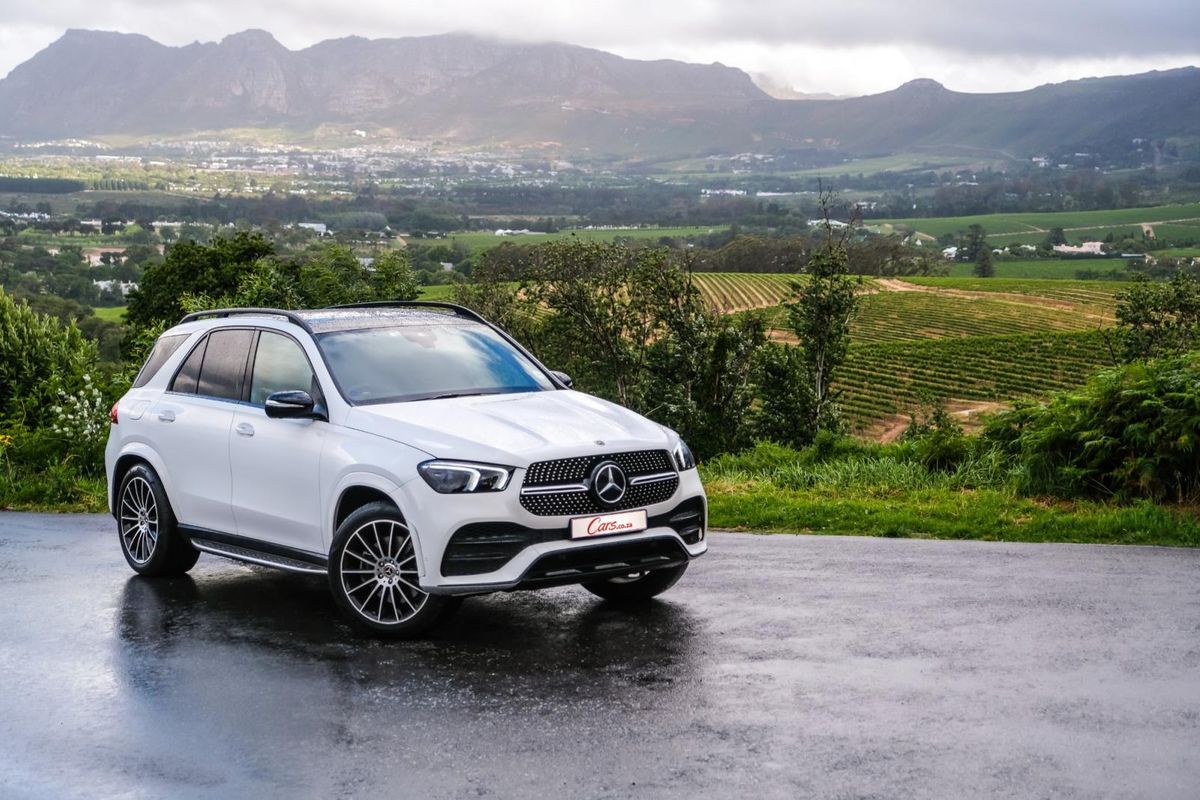
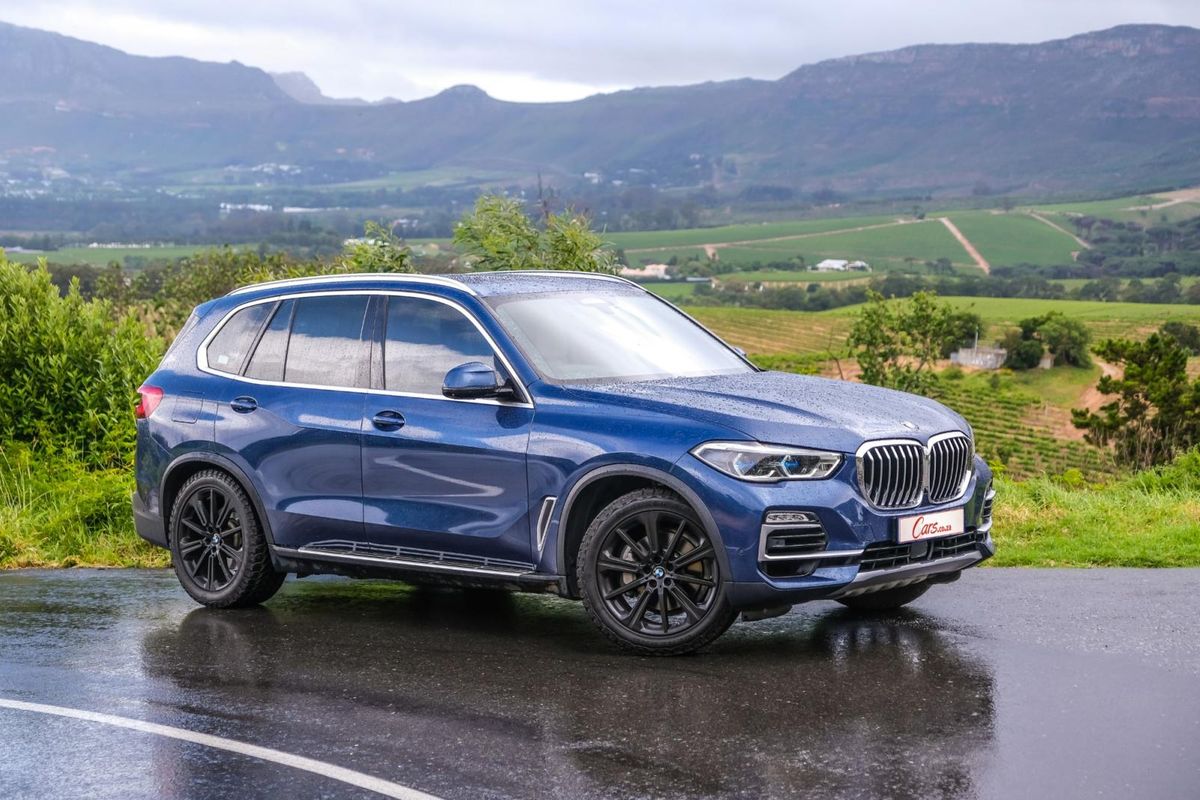
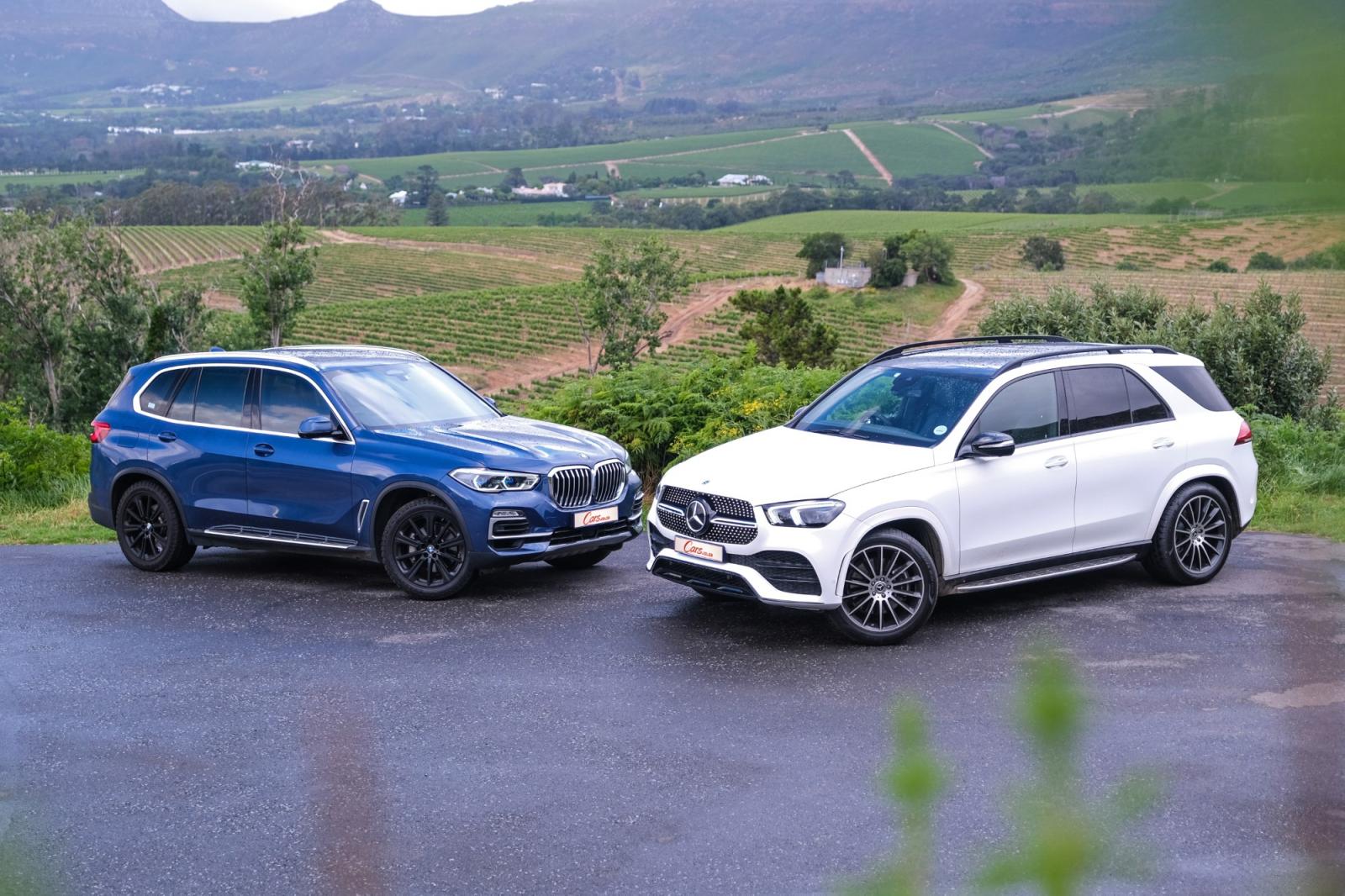
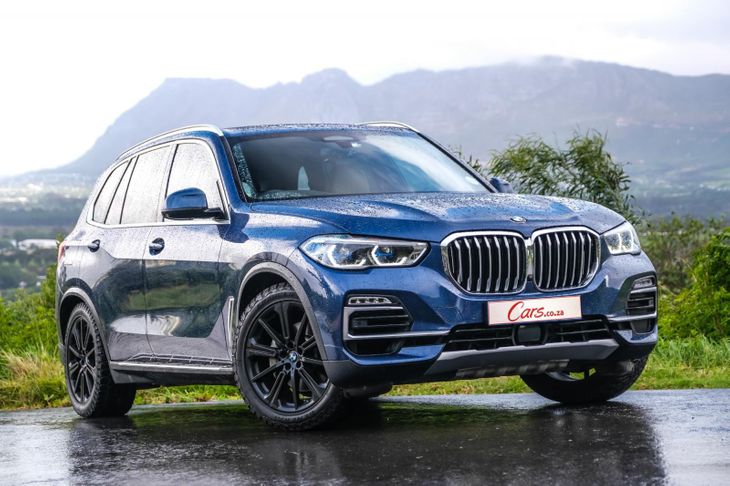
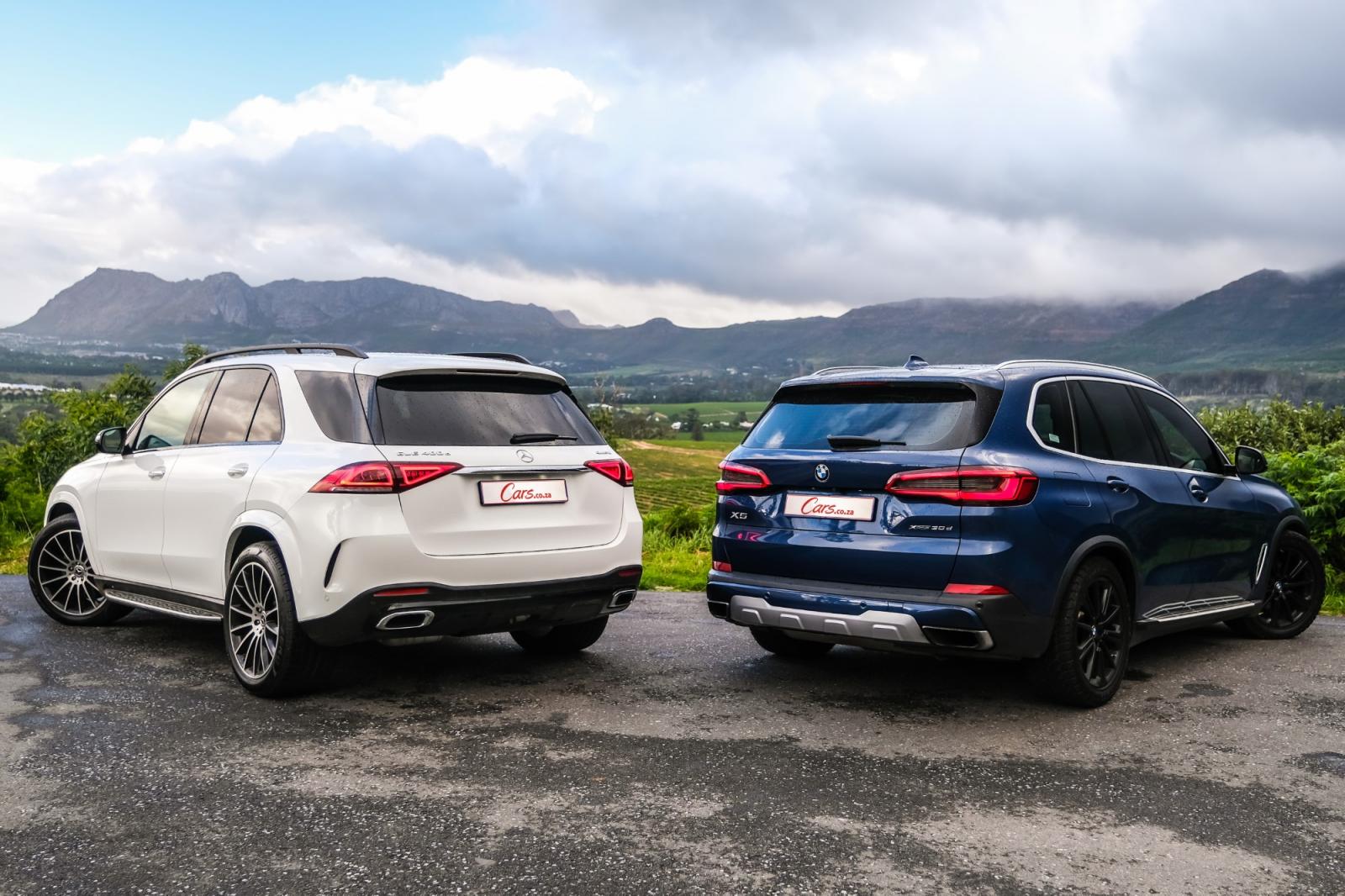
It's a matter of taste, but there's no doubt, both the X5 and GLE have lots of road presence. 

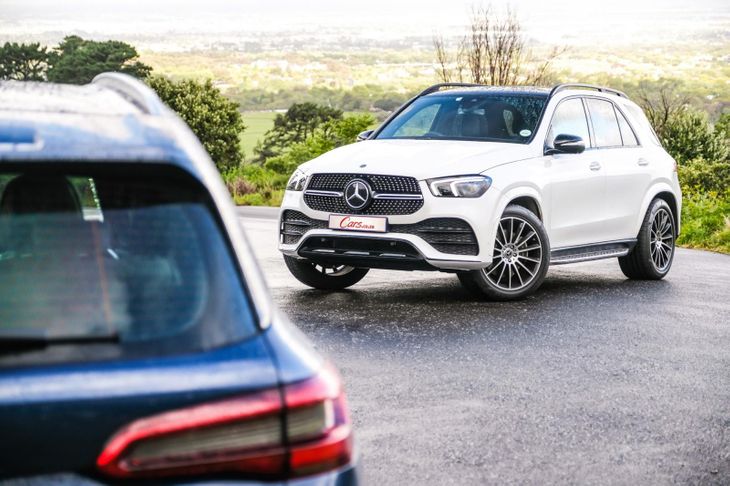
Both vehicles ooze kerb appeal but the GLE looks larger than the BMW, even though the latter stands wider than the Benz. 

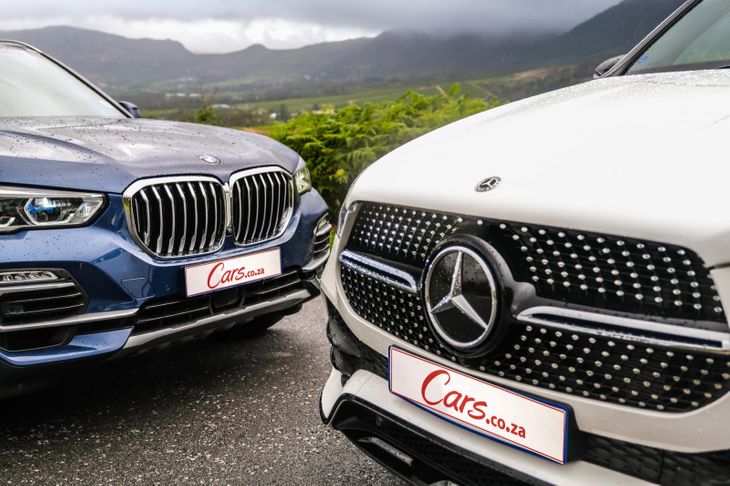
This X5 came fitted with the optional xOffroad package (R30 500), which adds chunky black 20-inch wheels shod with all-terrain tyres. They are, in turn, complemented by optional aluminium running boards (R6 400) that add rugged appeal. The enlarged kidney grille (which is thankfully well-proportioned to the rest of the vehicle) and Laser Light headlights give the X5 a decisively purposeful look.  

As for the GLE, it benefits from an optional AMG exterior package (R48 000) and it rides on massive 21-inch AMG wheels, which look particularly striking. The large, diamond-pattern grille is flanked with multi-beam LED headlights, while aluminium-look running boards add a sense of width while serving a practical function: they make it easier to get in and out of the vehicle, especially for shorter folk.

You can decide for yourself which look you prefer over the other, but either way, both these SUVs offer loads of kerb appeal. 

Performance and economy


The GLE 400d offers impressive performance with loads of torque available low down in the rev range.

The new 6-cylinder 2.9-litre turbodiesel engine under GLE 400d's bonnet is powerful (243 kW and 700 Nm of torque) and refined. Those hefty numbers are directed to all four wheels using a 9-speed automatic transmission, which we found to be impressively smooth and unobtrusive. Steering wheel-mounted shift paddles allows the driver to shift manually and when driven with fervour, the GLE 400d delivers stonking performance. It's a real brute of an SUV. Throttle response is good (for a diesel) and the big Benz pulls strongly from the get-go with minimal lag… it just piles on the pace relentlessly. 

Mercedes-Benz claims a 0-to-100 kph sprint time of 5.7 seconds, which is significant when one considers the GLE's kerb weight of 2 265 kg. While the GLE 400d shines in terms of performance, its efficiency is not class-leading in our experience. Benz claims an average fuel consumption figure of 7.5 L/100 km, but saw indicated returns of around 12 L/100 km. A measured driving style should bring that figure down markedly, however.

The X5's 3.0-litre, 6-cylinder twin-turbodiesel engine develops 195 kW and 620 Nm of torque: figures that are well eclipsed by those of the GLE. Still, the Bimmer's engine’s performs commendably in conjunction with a slick-shifting 8-speed transmission and all-wheel drive. Like the Benz, the X5 comes with shift paddles behind the steering wheel, which can be used to extract maximum performance from the engine when required. 


The BMW X5 30d strikes an appealing balance between performance and economy. 

This BMW gets up to highway speed quickly and effortlessly. Its manufacturer claims a 6.5-second benchmark for the 0-to-100 kph sprint and the xDrive30d doesn’t as if it lacks performance whatsoever. In fact, we think the X5 strikes a better balance between performance and economy than its rival; BMW claims an average consumption figure of 7.0 L/100 km and we saw returns of around 10 L/100 km and lower, which is commendable. 

In terms of outright performance, the GLE 400d wins hands down, but we feel the xDrive30d's powertrain is perhaps the better-balanced offering. Of course, you can always consider the mighty X5 M50d if you want to crush the GLE 400d (if you can afford it), but we'll leave that decision to you… 

Ride comfort and handling


With air suspension and chunky tyres fitted, the X5 trumps the GLE in terms of ride comfort. 

While these vehicles offer high levels of ride comfort, we noted some distinct differences in their respective on-road manners. Despite the fact that this xDrive30d was fitted with the off-road package (including chunky General Grabber tyres) and 2-axle air suspension (R25 100), we were highly impressed by the lofty levels of ride comfort the BMW delivered on urban roads of variable quality. What's more, the level of road-noise intrusion caused by the off-road tyres wasn’t as severe as we expected. For its mastery of uneven surfaces, the X5 definitely pipped the GLE in this regard. 

The GLE, however, wasn’t fitted with air suspension (it's a R29 000 option), therefore the difference in ride quality between the BMW and the Benz was immediately apparent. The 400d's ride quality wasn't choppy, but whereas the xDrive30d absorbed small bumps with ease, such imperfections were much more noticeable in the former. While the larger, lower-profile tyres on the GLE look stylish, they do contribute to a less forgiving ride. 

There was also a distinct difference in the way the combatants handled. When you drive these premium SUVs enthusiastically, the X5 hides its weight well and although it’s steering is decidedly light, the BMW feels more nimble on its rubber and delivers a sportier driving experience. In the GLE, you feel the weight of the car through the steering; it doesn’t feel as dextrous. Driving the GLE is more like driving a land yacht, it feels big. 

Suffice to say both vehicles are comfort-orientated. If you want the optimal ride quality, set some money aside for air suspension.  

Interior style and quality


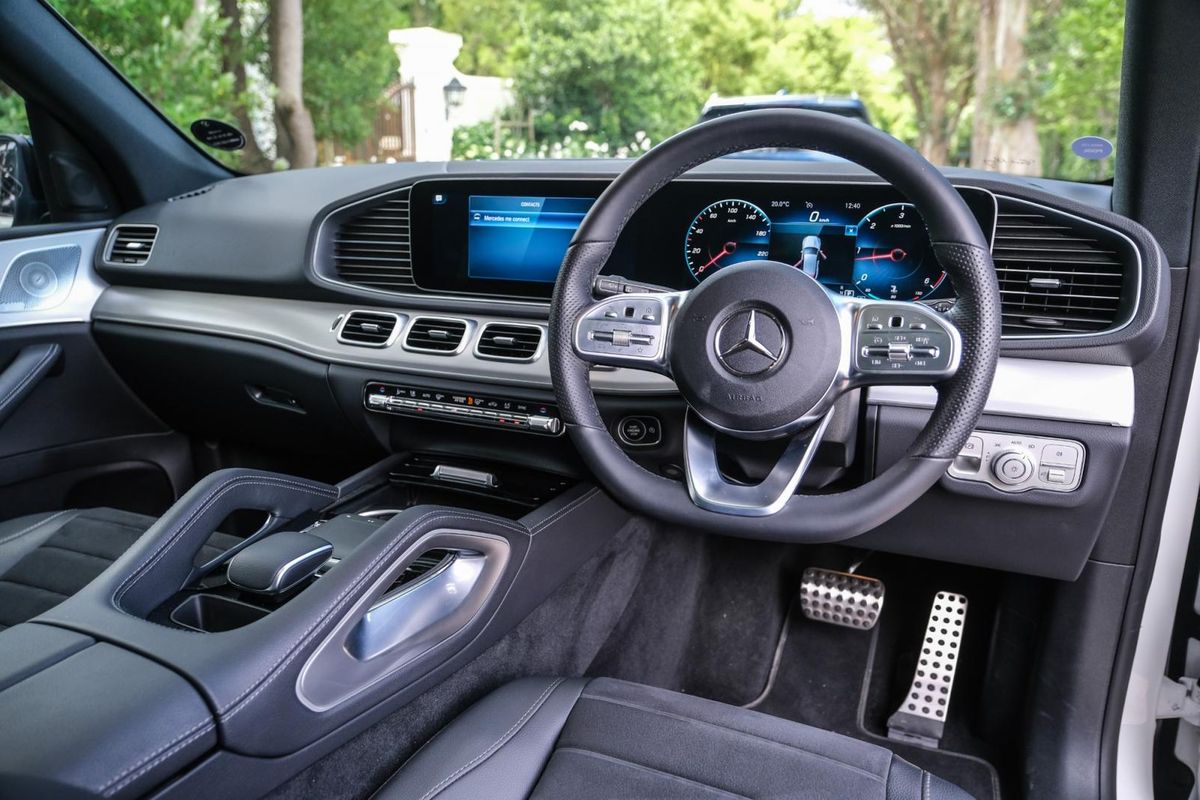
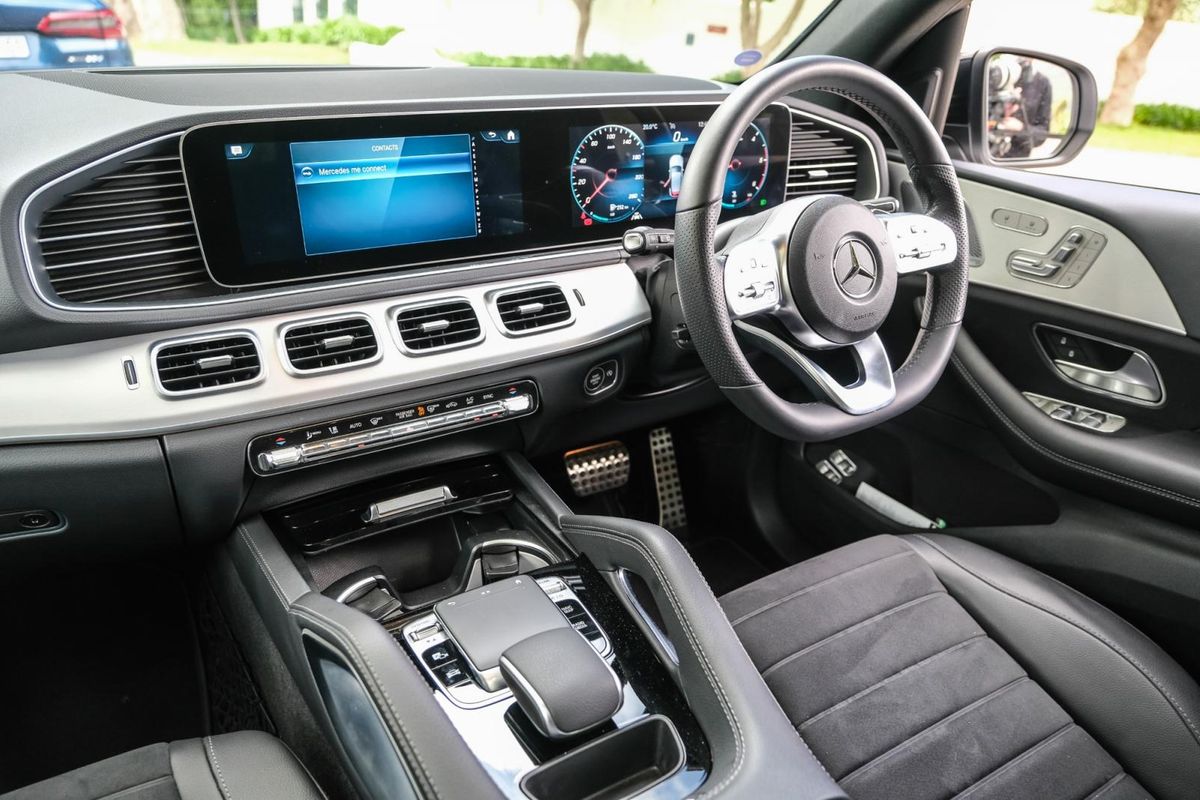
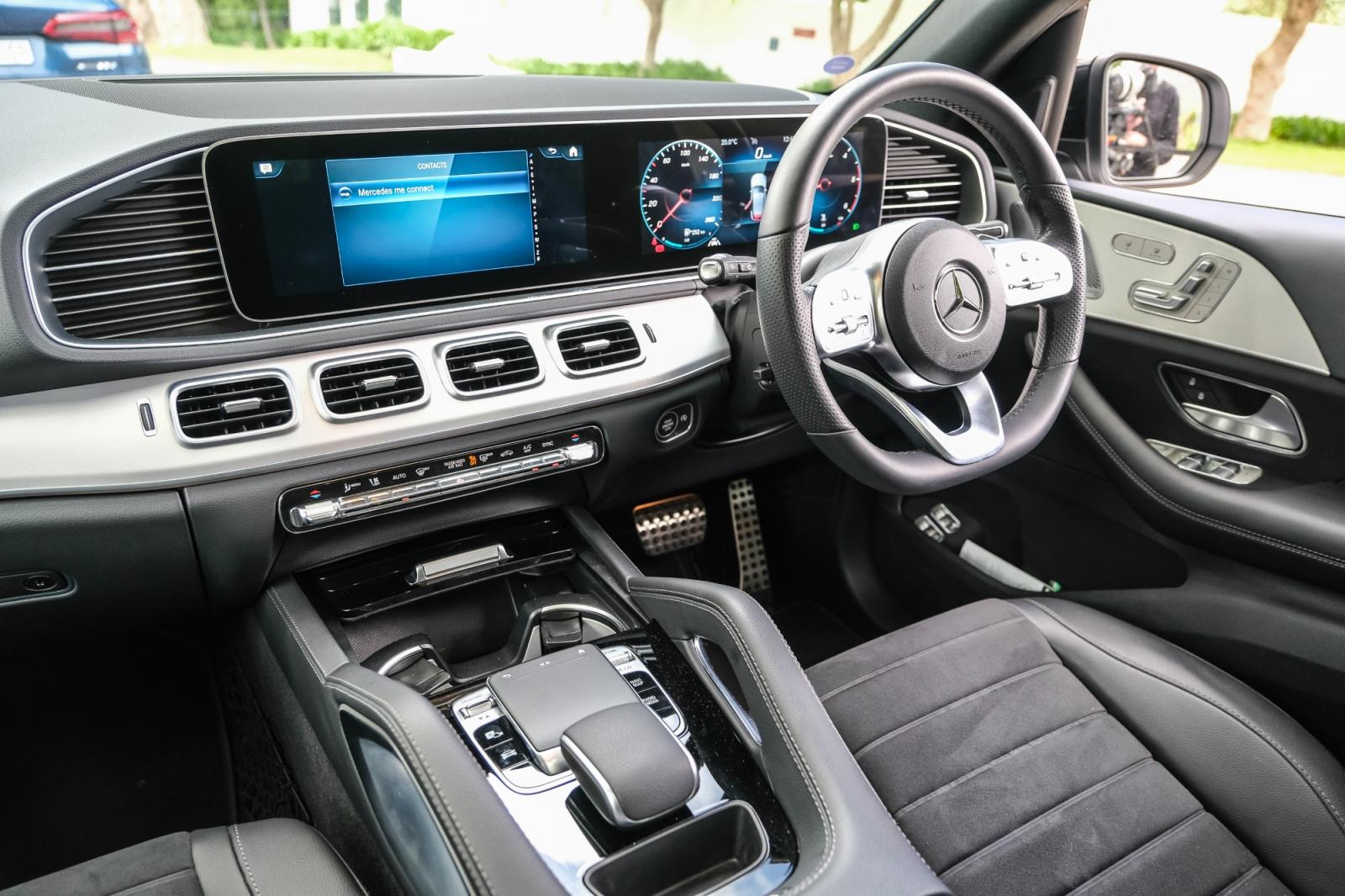
The GLE's interior is stylish and looks more advanced than that of the X5. 

Buyers considering the X5 and GLE are afforded a staggering number of options when it comes to trims, equipment and optional extras. With that said, the choices you make will determine how stylish your GLE or X5 will look. In this particular test, we found the GLE’s cabin to be more stylish than the X5's. It just looks and feels more sophisticated by comparison and there is more of a sense of occasion when stepping inside the Benz.  

While the interiors of both cars exhibit good overall (perceived) build quality, if you pay close attention, there are some questionable bits – some in terms of quality, others taste. While navigating the GLE through suburbia, we noticed subtle creaking in the cabin, it didn't sound like metal or glass, but almost as if materials were flexing. We also feel that some of the cabin switchgear in the GLE could be of higher quality/befitting its price tag. 


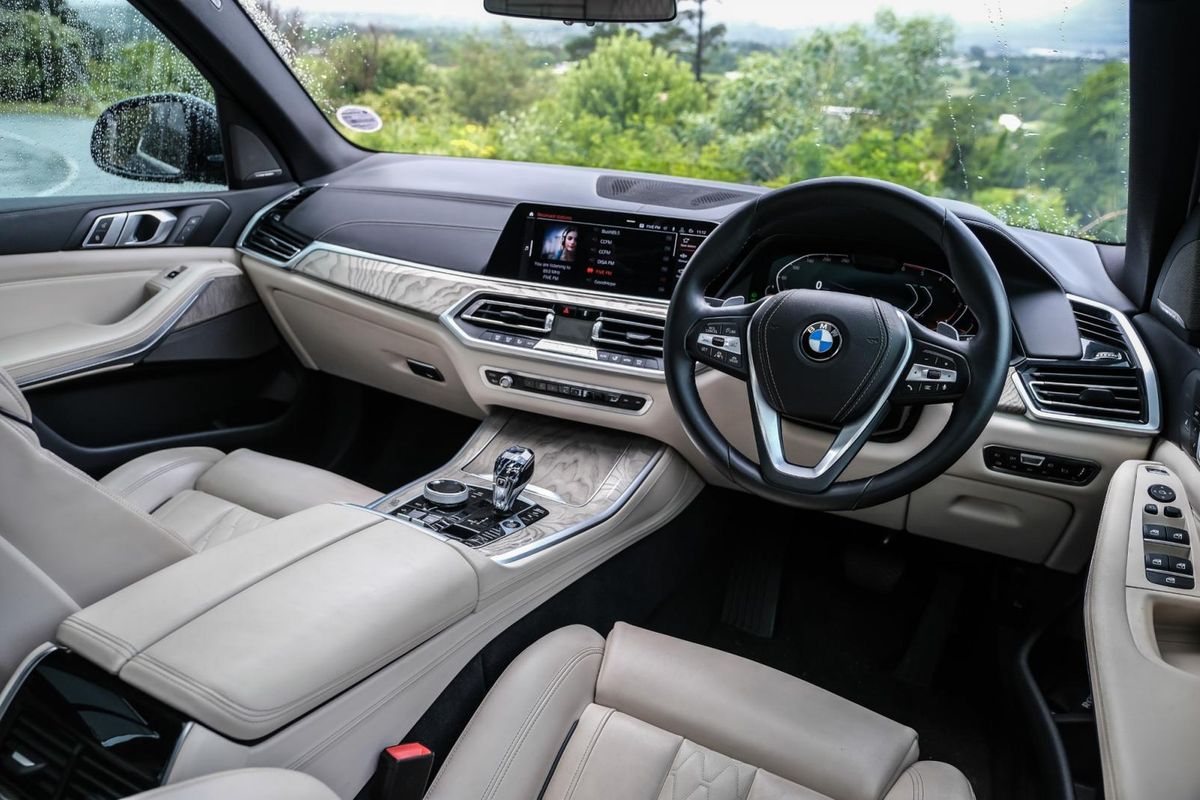
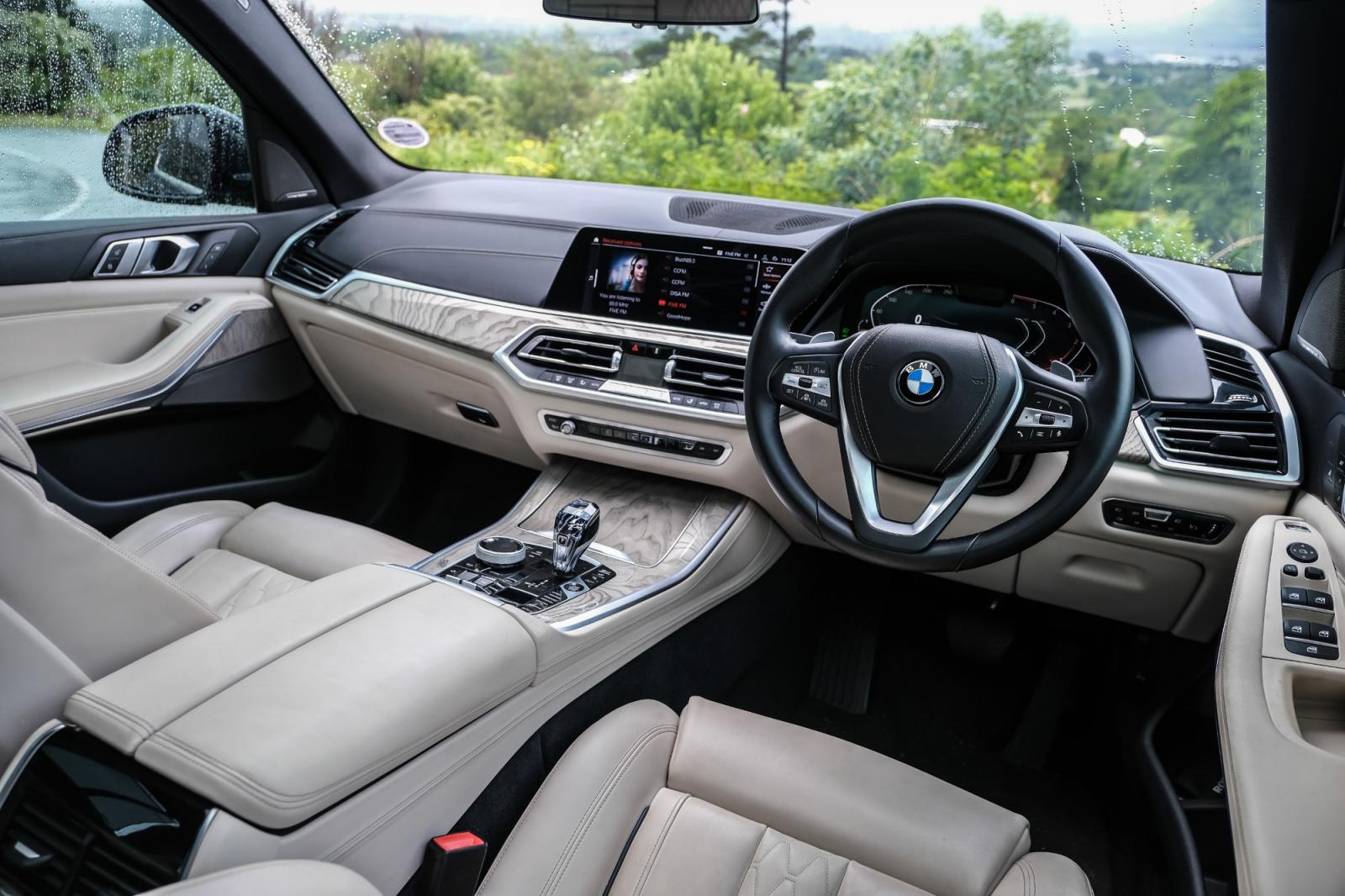
When tastefully specced, the X5's interior is attractive and comfortable. 

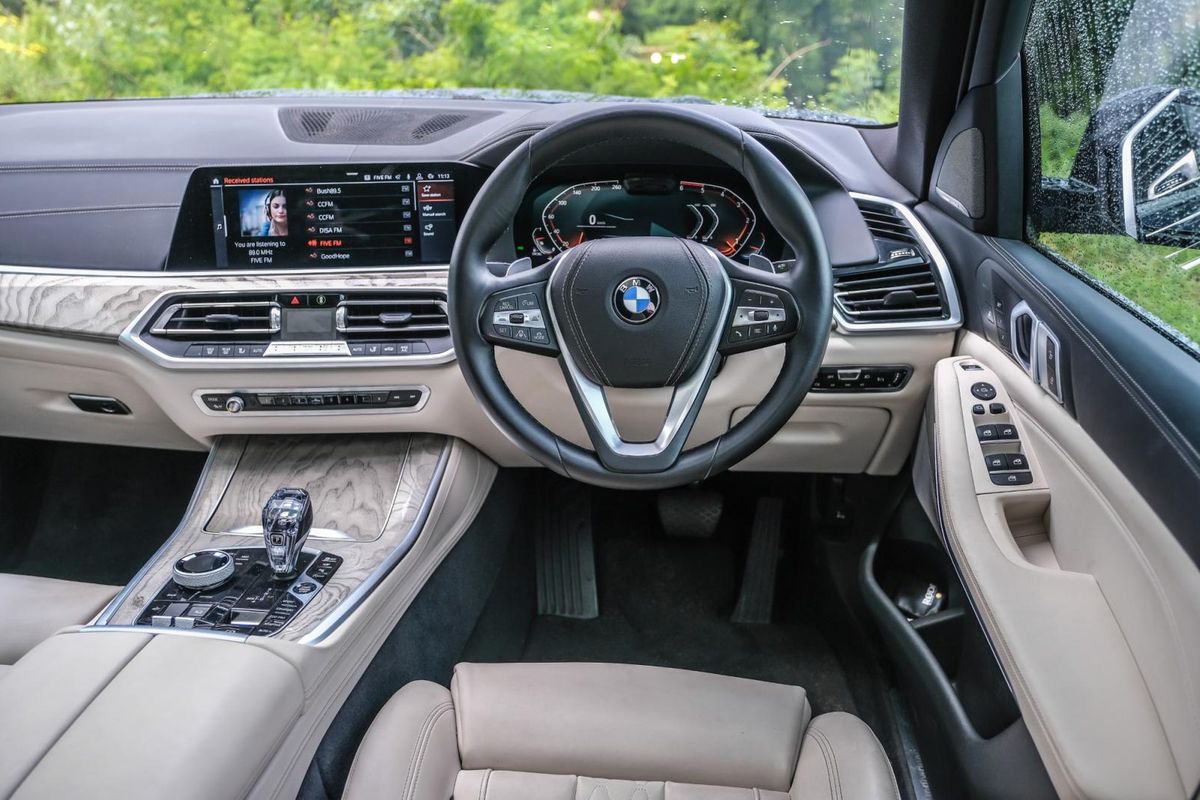
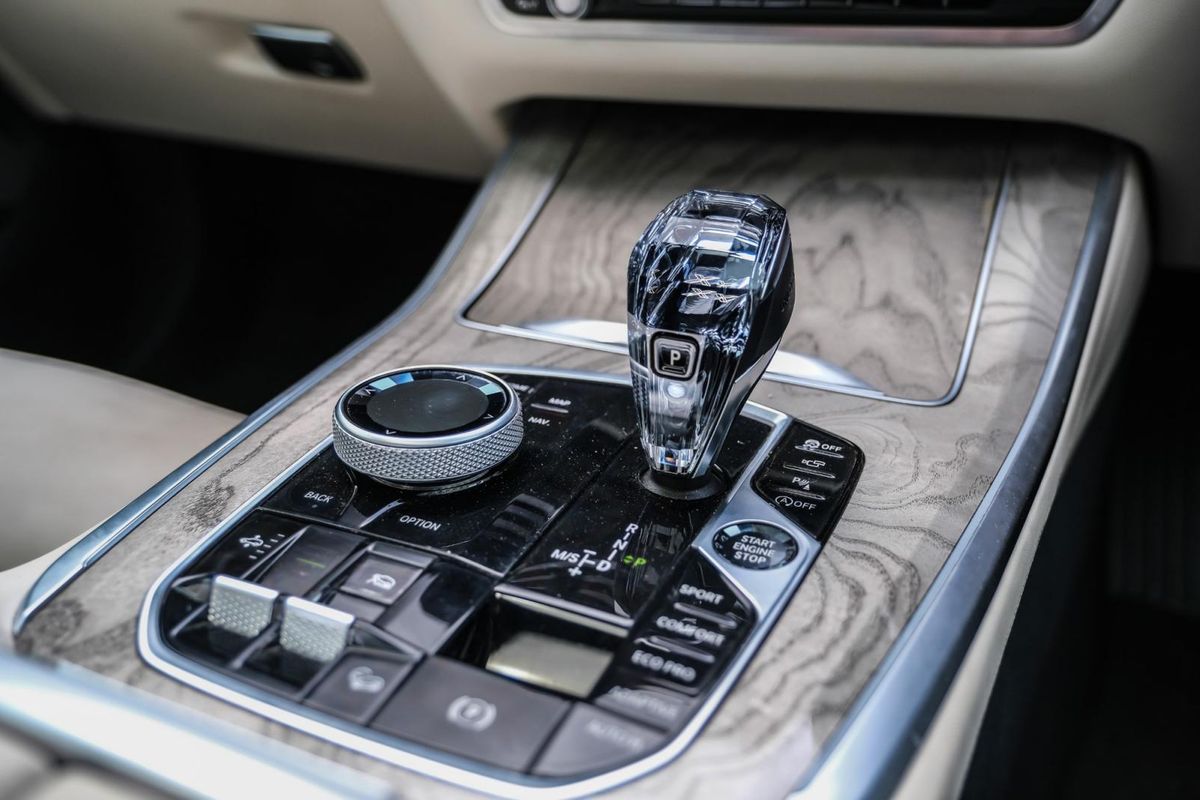
Meanwhile, we'd urge against specifying the beige leather trim in the X5 (as BMW's marketing department did for this test unit) – it gets dirty easily and should prove tedious (if not impossible) to keep unmarked. We also didn’t like the fine-wood Ash Grain Silver trim (it looks plasticky) and, as for the crystal-look transmission lever and iDrive controller? Sorry, pass. Those elements combined somehow manage to cheapen the look of the X5’s interior, which is a pity. The driver’s door handle in the X5 looked like it was about to break off too (perhaps this xDrive30d has lived a hard life). 

Technology and connectivity


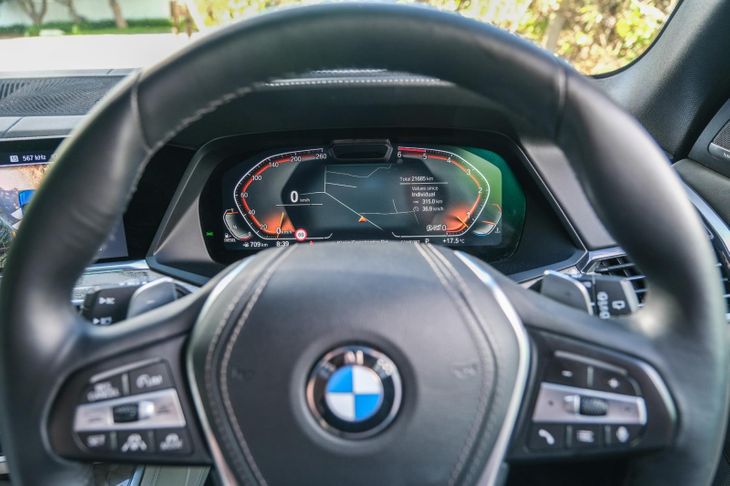
The X5's instrument cluster can be customised according to taste. We like it sporty…

Premium SUVs are known for offering a  plethora of the latest onboard technologies and connectivity options (to be blunt: the more and bigger the touchscreens, the better) and, in this regard, neither the X5 nor the GLE disappoints. In the BMW, infotainment is taken care of via the standard Live Cockpit Professional setup, which incorporates a pair of 12.3-inch screens, 1 for the instrument cluster and the other right in the middle of the fancy fascia. The system can be accessed via touch, voice control, gesture control, the iDrive controller or if you must, the steering wheel buttons.

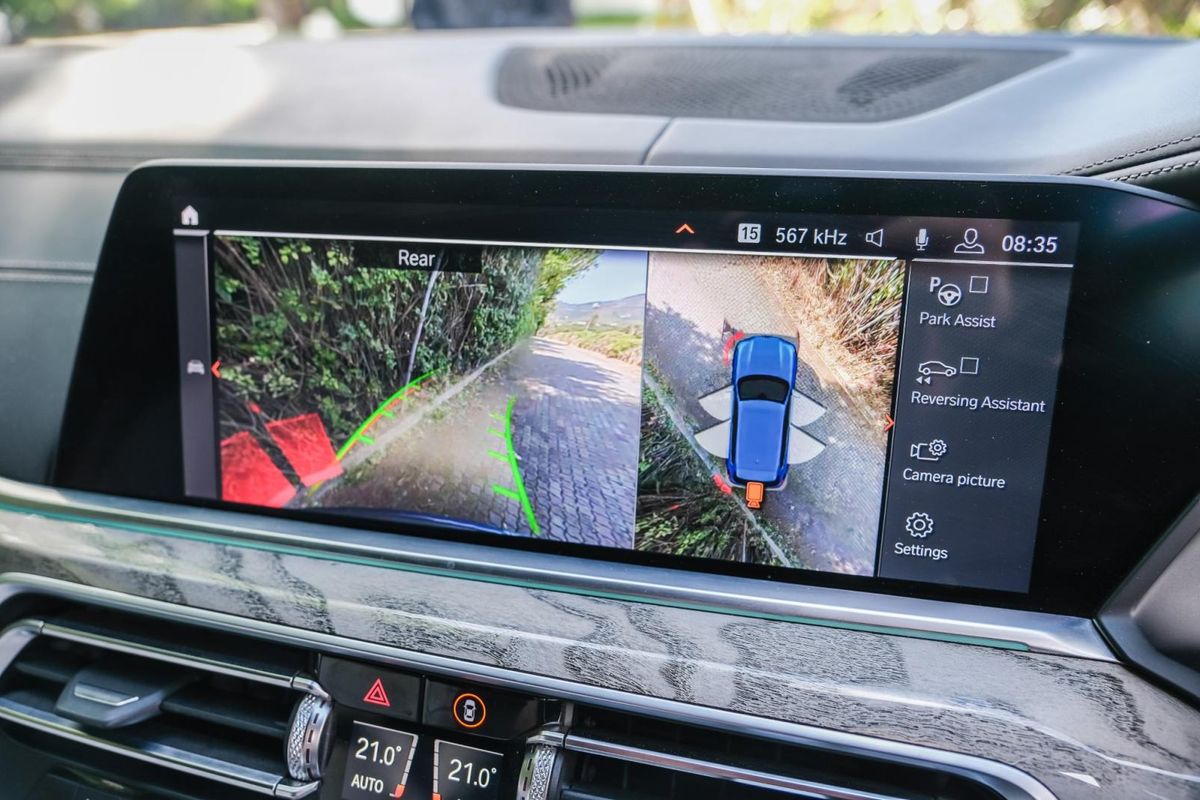
It’s an easy system to navigate and the instrument cluster is customisable; the sportier look, in particular, lifts the cabin ambience. It’s worth noting that only Apple CarPlay is offered and integrated navigation is included. Other key tech features include a wireless smartphone charger, Harmon Kardon surround sound (R7 300), 4-zone climate control (R8 000) and front and rear park distance control with a reverse-view camera. 


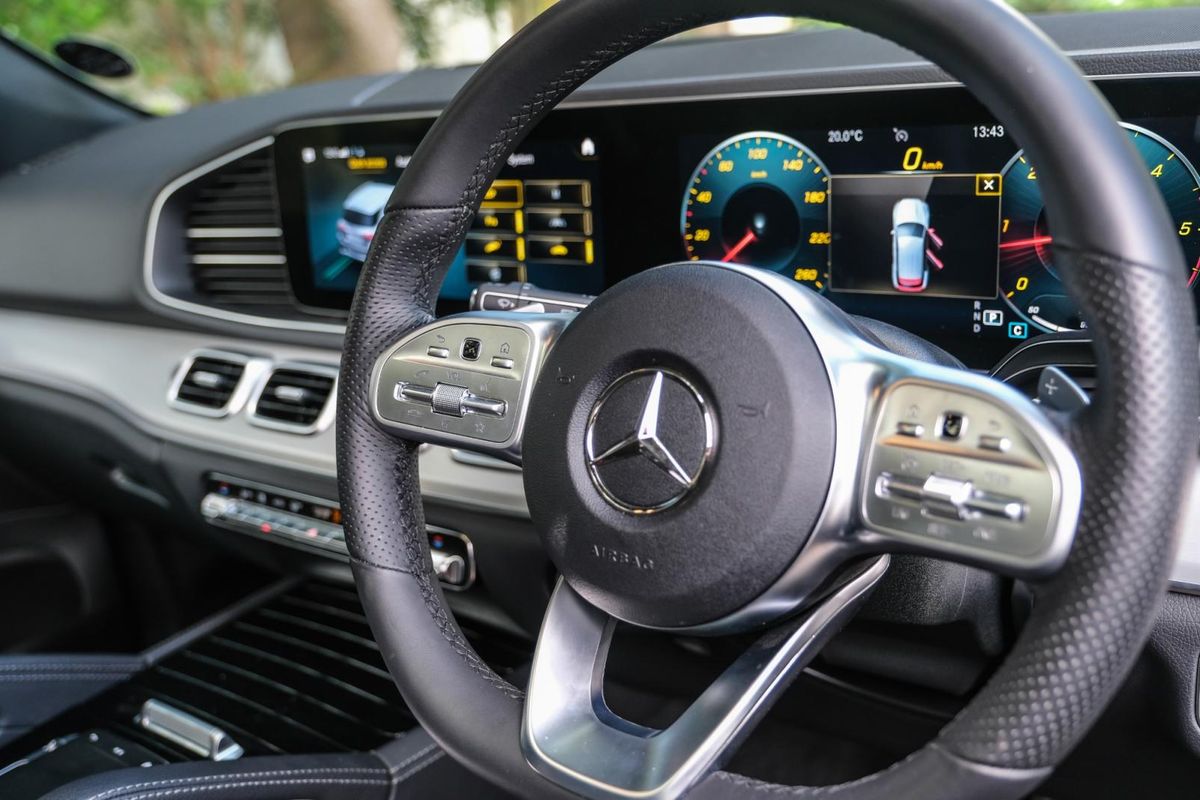
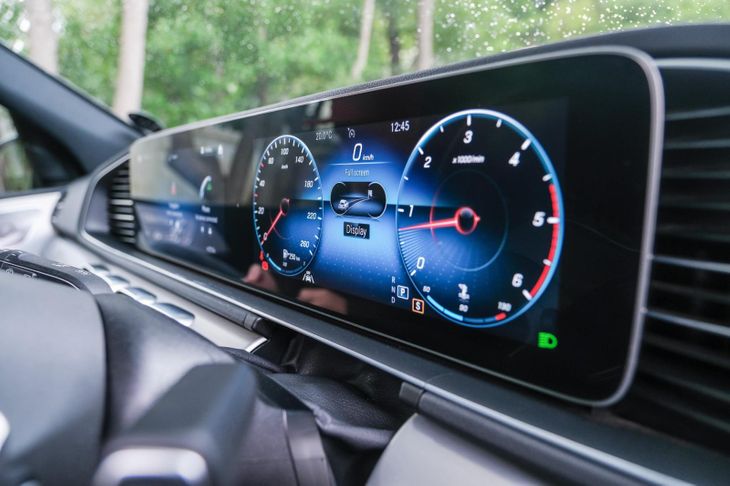
The Widescreen Cockpit in the GLE is a major highlight with crisp and easy-to-use functionality.

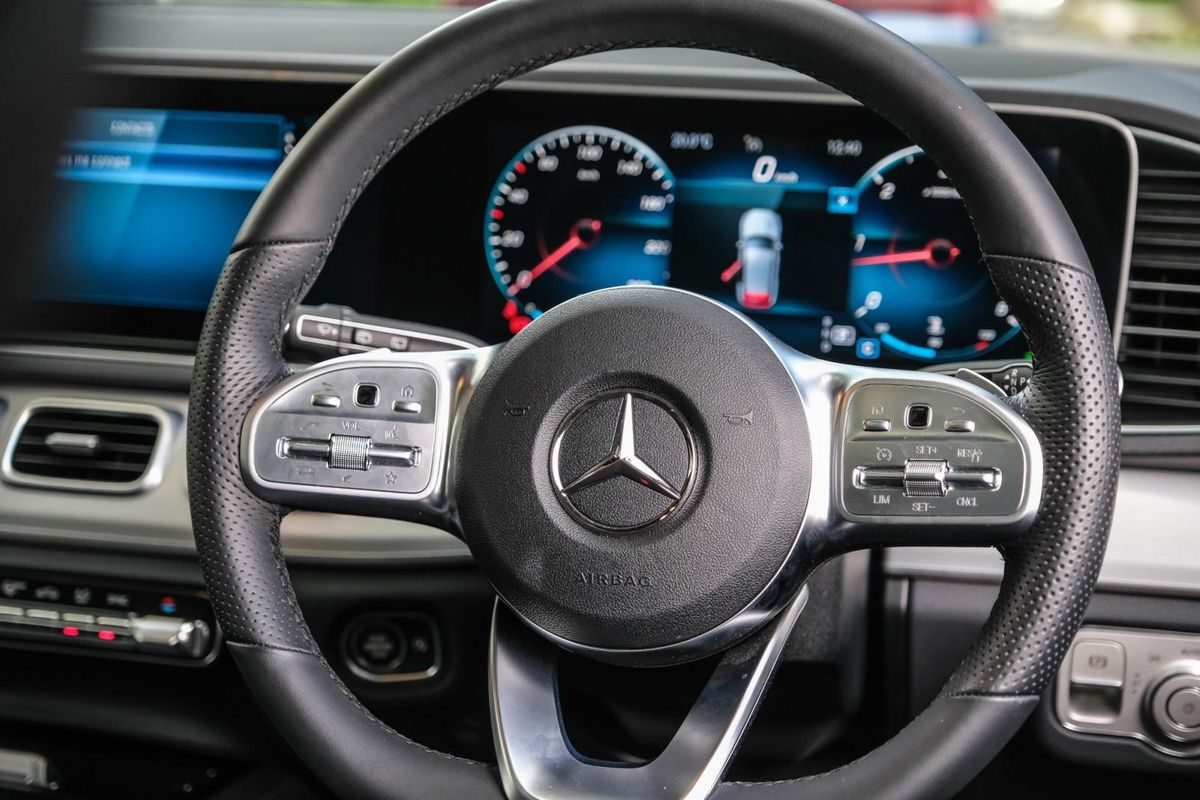
The GLE fights back with a huge skateboard-like widescreen that claims virtually half the dashboard's real estate. The graphics and layout are impressive and elevates the GLE cabin to the next level of luxury. The MBUX system can be operated by touch inputs, the touchpad in the centre console, which requires a fair bit of familiarisation and, of course, voice commands. Apple CarPlay and Android Auto are standard, as is navigation.

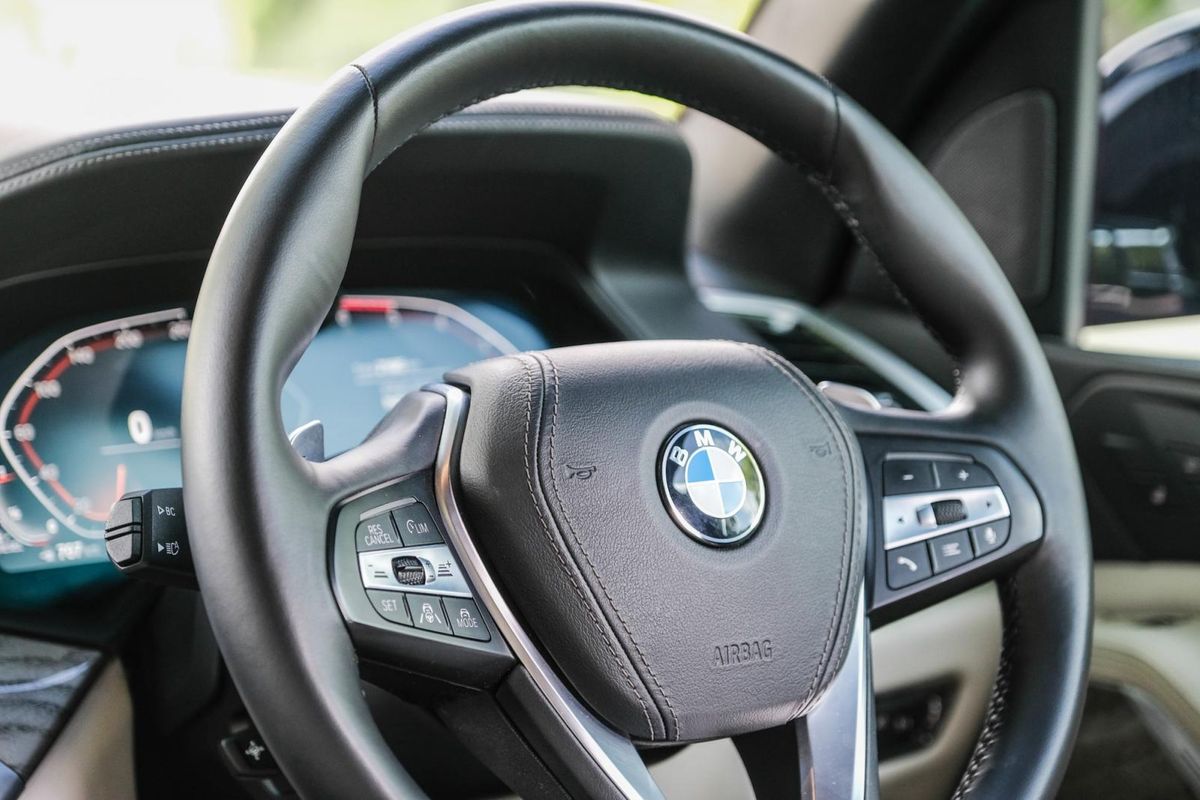
Compared with the BMW, the Benz offers a more comprehensive range of screen customisation options and we hasten to add that the design of the steering wheel (including its array of multifunction buttons) is superior. Key tech features in this GLE include a Harmon Kardon surround sound (R14 500) front and rear PDC with a 360-degree surround-view camera system and Blind Spot Assist and Lane Keeping Assist (R13 700).  

The quality of the technology on offer from both BMW and Mercedes-Benz is noteworthy and buyers are only limited by how much they are willing to spend on optional equipment. Both these vehicles were equipped with at least R200 000 worth of optional extras!  

Practicality  


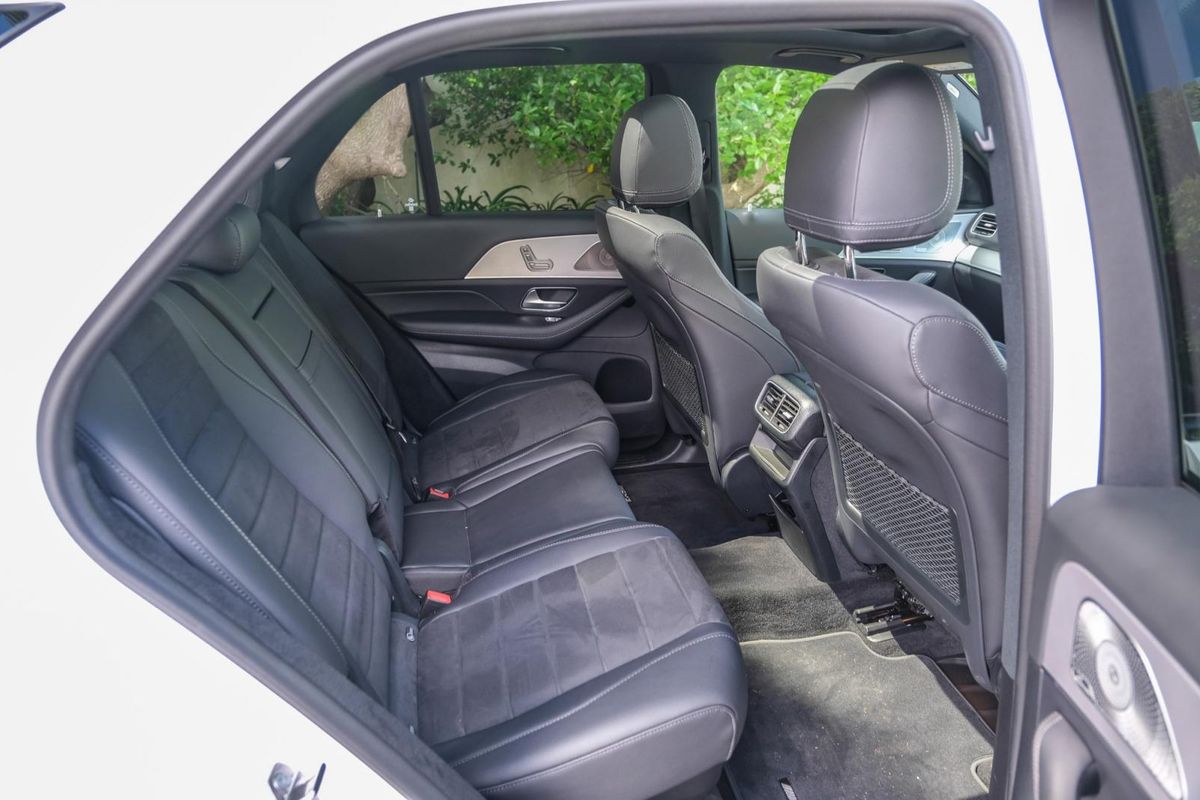
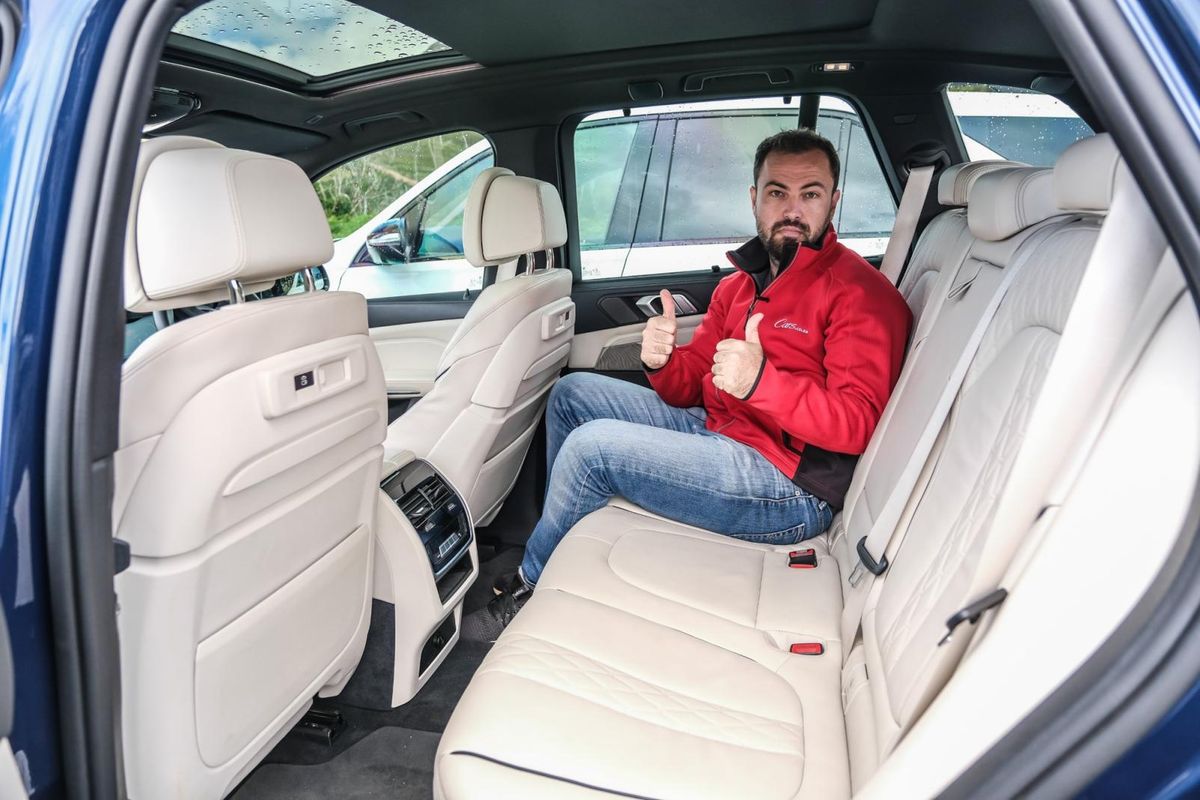
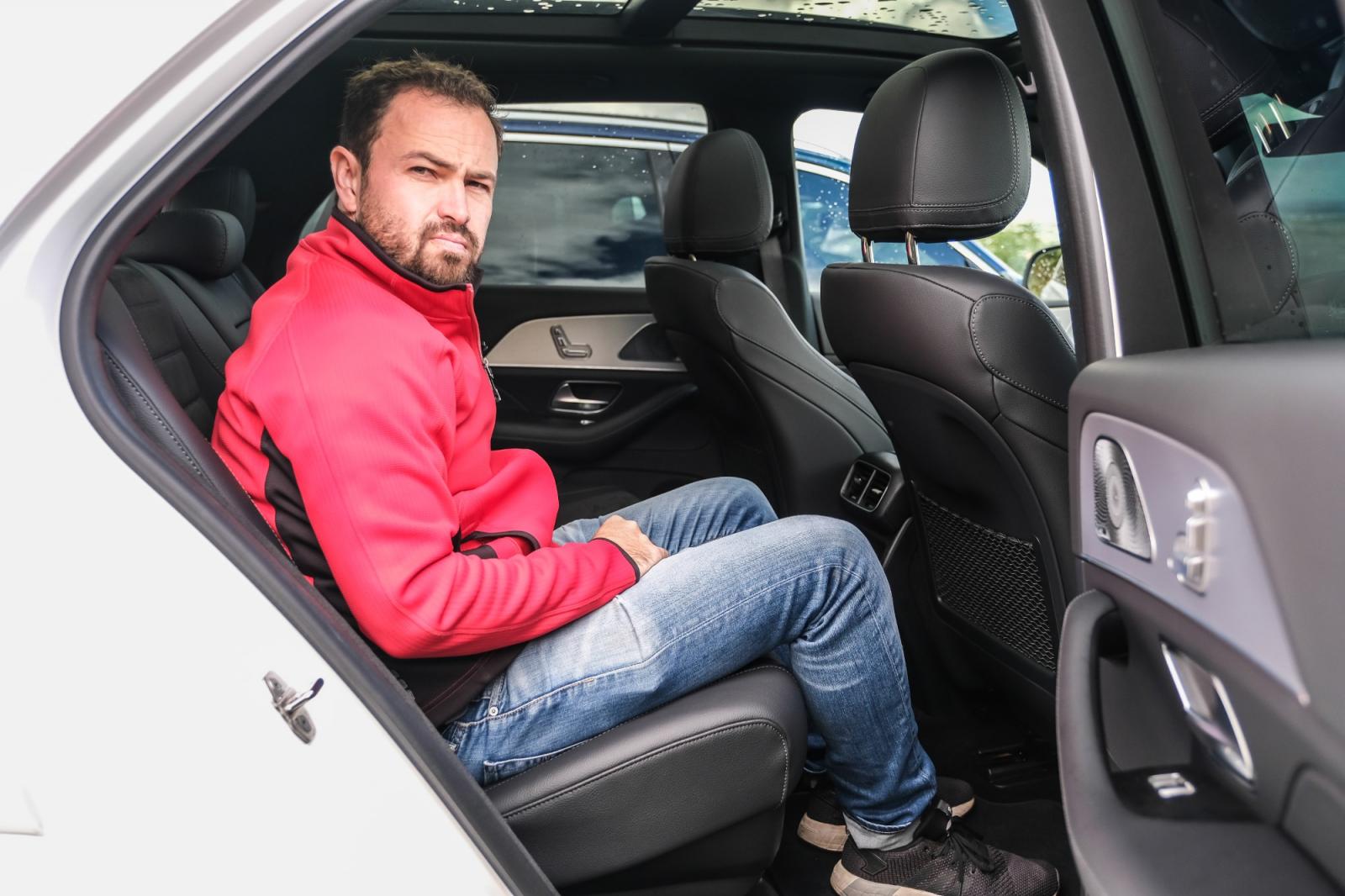
The GLE wins in terms of space for rear passengers. Smile Ciro!

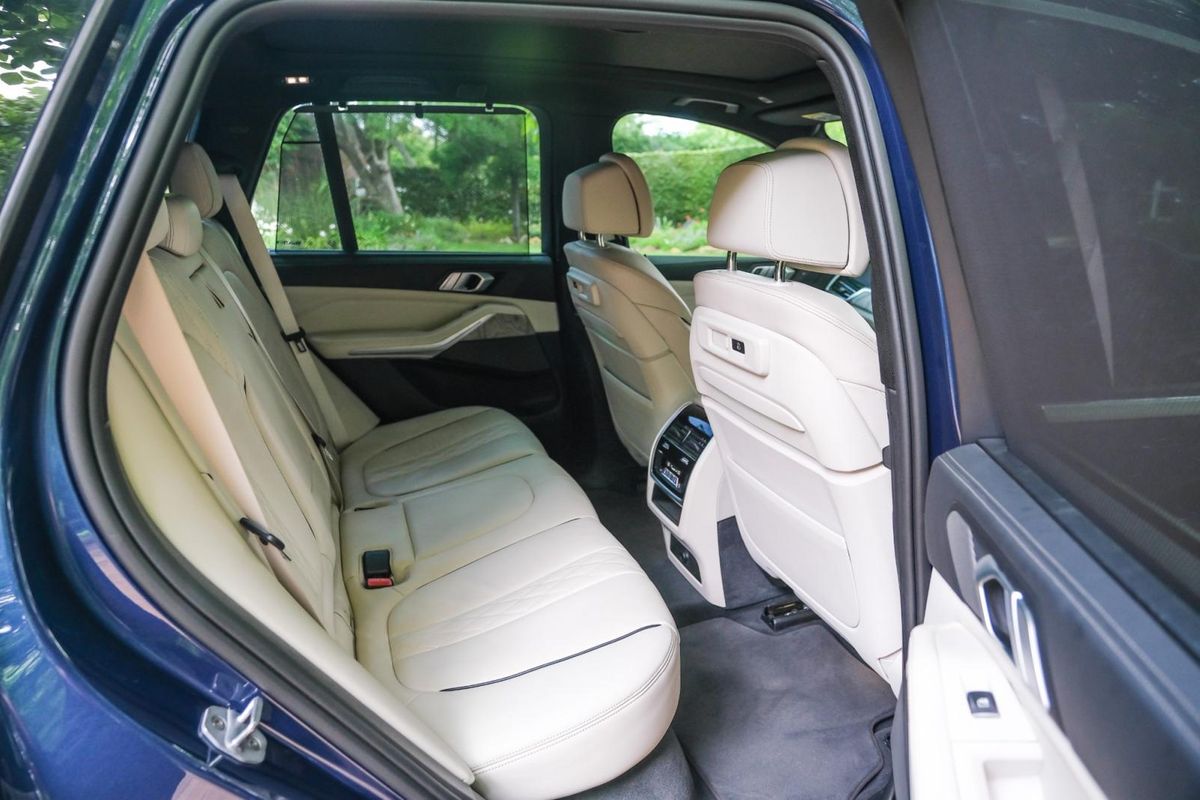
At 2 995 mm, the GLE’s wheelbase is 20 mm longer than the X5's, which translates into noticeably more leg- and knee room in the Benz. That’s not to say that the X5 is cramped, far from it in actual fact, but the BMW's rear legroom is just not as generous. In both cars, rear passengers have access to 2 charging ports and a central armrest with storage space and 2 cupholders. Storage for the driver and front passenger is sufficient too.

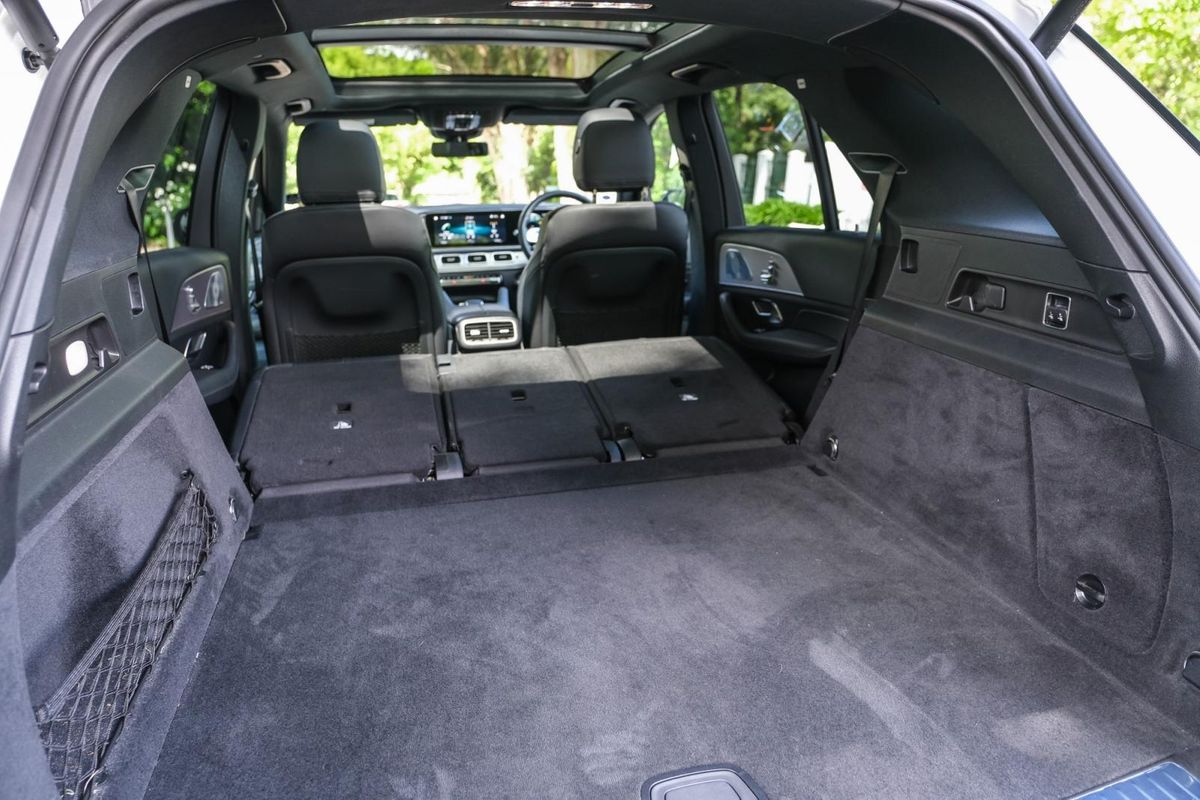
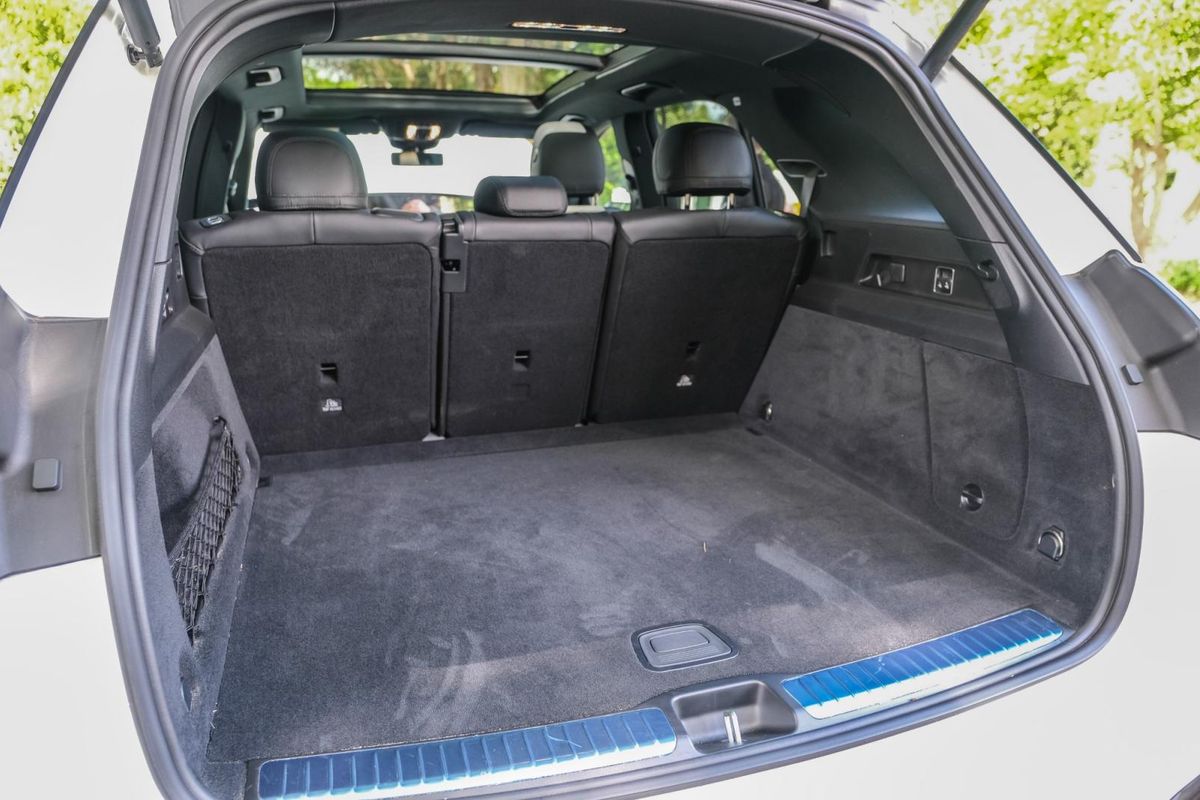
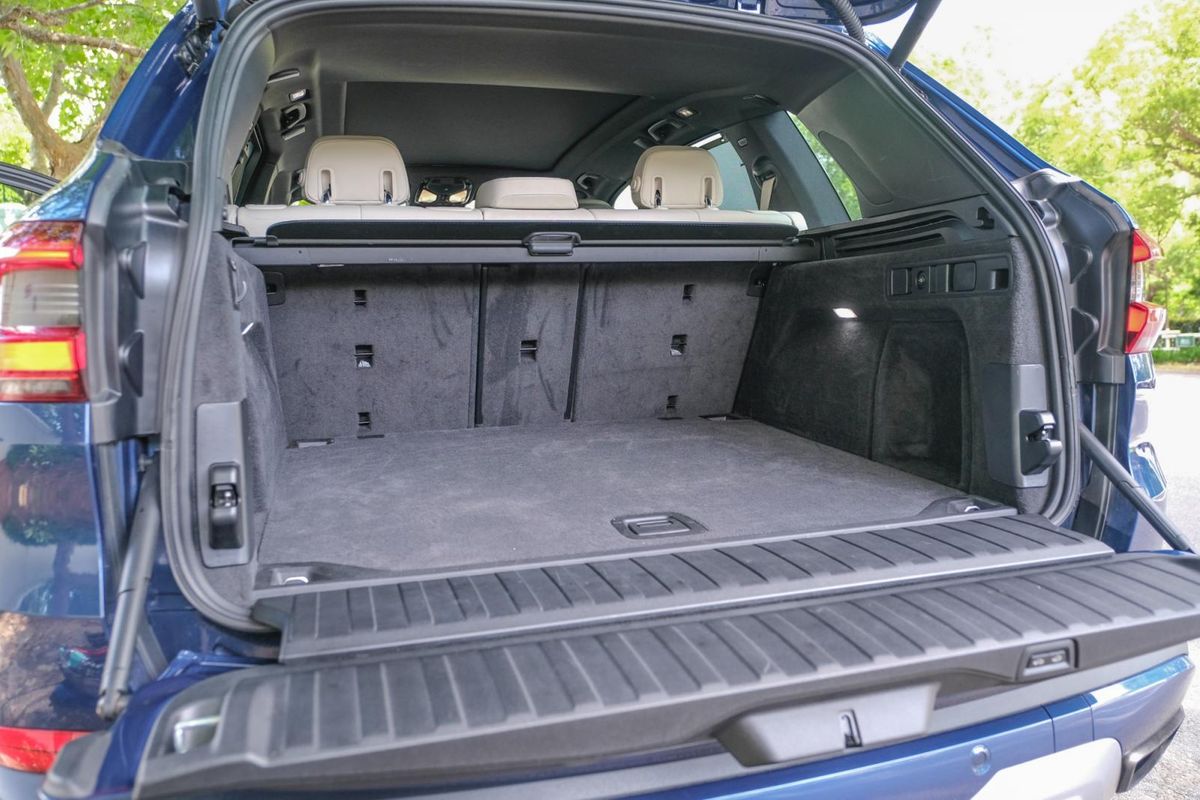
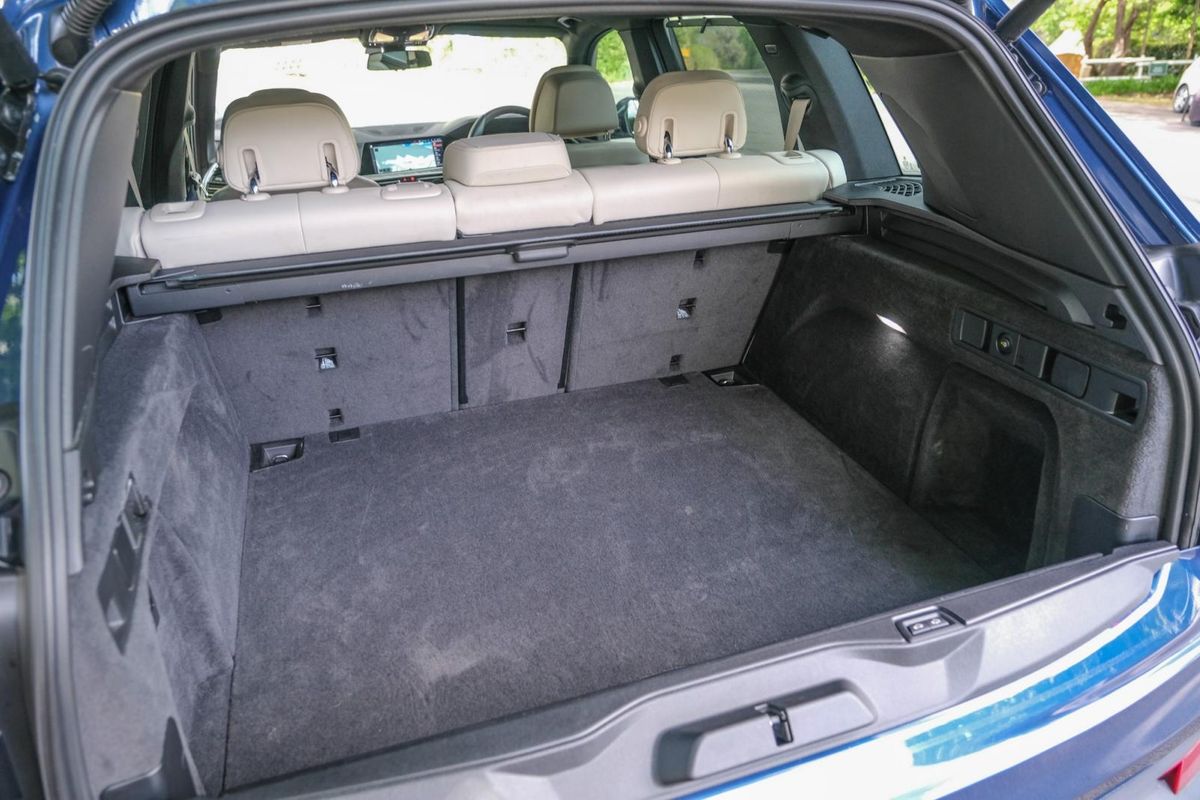
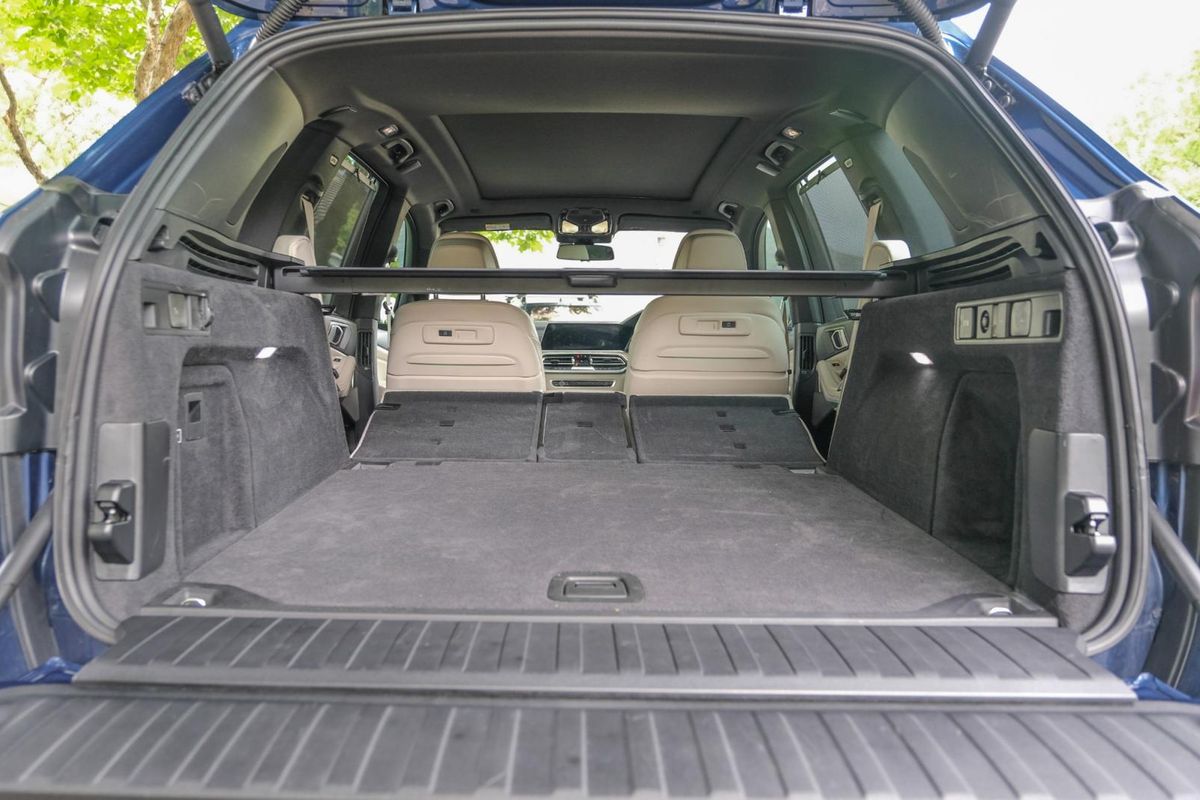
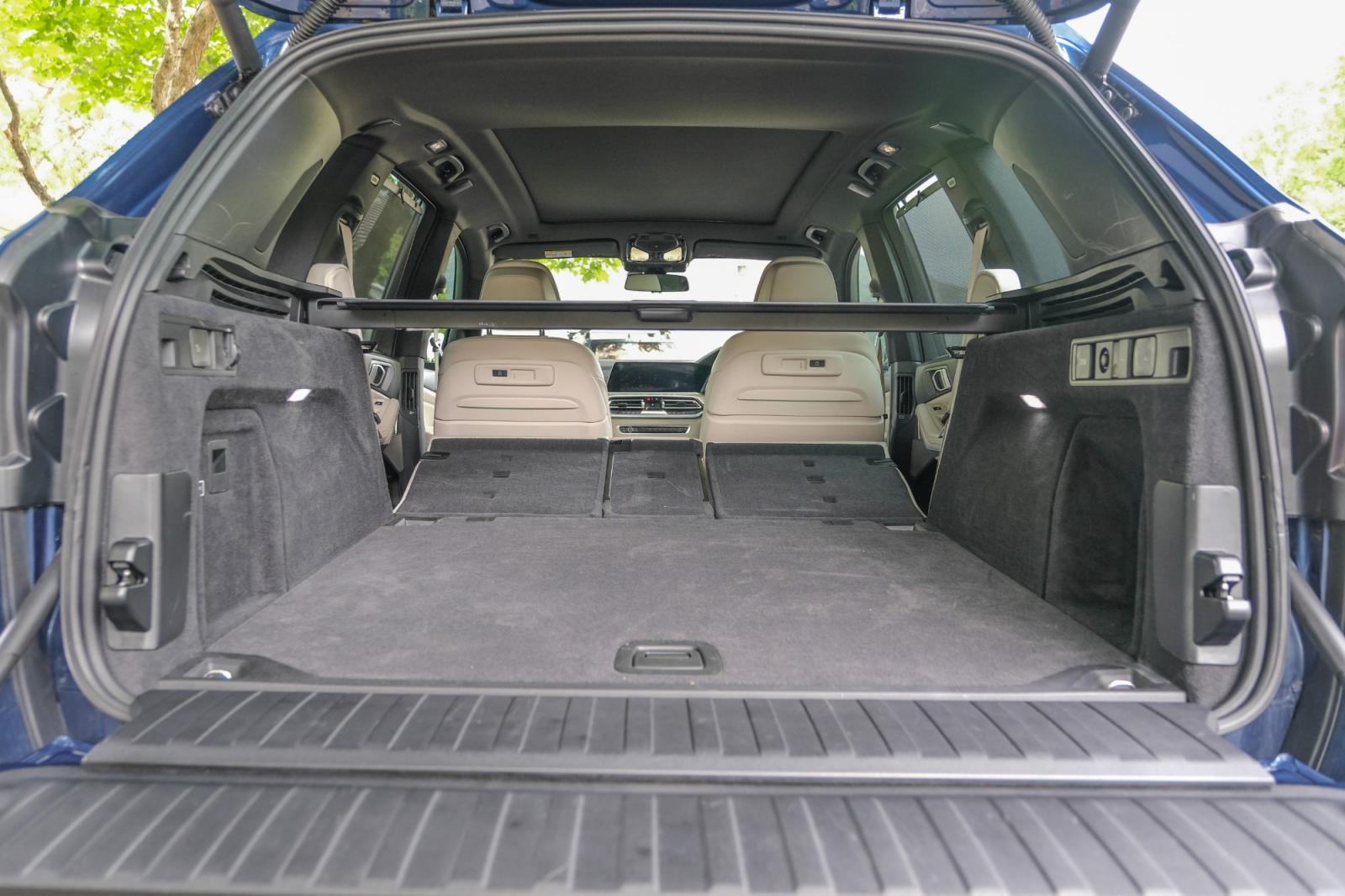
In terms of load space, the X5 and GLE offer similar luggage capacities (650 and 630 litres respectively), but the Benz is claimed to offer more with the rear seats folded down (2 055 litres versus 1 870 litres in the BMW). Both load areas are commendably flat when the aft seatbacks are down. 


The X5's split tailgate and easily folding seats are more practical than the electric folding seats in the GLE. 

The X5 has a pair of manual levers in its load bay. These make it easy to flip the seatback down without needing to pull it forwards from the 2nd row. The GLE test unit, in turn, came specified with electrically folding seats. In our opinion, the manual levers are faster and more effective while also eliminating the potential for electrical failure down the line. We like the split tailgate on the X5: when deployed, it offers easy access to the load bay or provides a place to sit or unpack a picnic basket. With the no-cost Comfort Access selected, the X5’s tailgate can be opened electrically as well as with a swipe of a foot under the bumper. In the GLE, you will have to pay R12 000 for an electronic tailgate by selecting the Keyless Go option. 

For towing, the GLE is equipped with an electric towbar as standard while it’s offered as an option in the X5 (yours for an additional R11 500). The BMW, however, benefits from a 3 500 kg braked towing capacity, while the GLE is limited to 2 700 kg. 

Price and warranty 

The base price for the BMW X5 xDrive30d xLine starts from R1 194 296 and the price as tested here is no less than R1 400 000. The X5 is sold with a 2-year/unlimited warranty and a 5-year/100 000 km maintenance plan.

Buy a used BMW X5 on Cars.co.za

The base price for the Mercedes-Benz GLE 400d 4Matic AMG Line starts from R1 434 194 and the price as tested here is no less than R1 650 000. The GLE is sold with a 2-year/unlimited warranty and a 5-year/100 000 km maintenance plan. 

Buy a used Mercedes-Benz GLE on Cars.co.za

Verdict


As a status symbol, the GLE400d hits the mark, but for a sportier drive, the X5 xDrive30d will please. 

The new(ish) BMW X5 and brand-new Mercedes-Benz GLE have all the characteristics that buyers in this segment expect (and then some), but as we've highlighted in this review, BMW and Mercedes-Benz's respective interpretations (and executions) of the premium SUV are somewhat different. Ultimately the choice you make will depend on your preferences pertaining to design, performance, technology, practicality and so forth. 

In this test, the X5 xDrive30d was outmuscled (performance-wise) by the burly GLE, but alternatively, the quad-turbodiesel M50d derivative offers muscular performance (if near-breakneck acceleration is what you're after): it’s more closely priced to this GLE 400d at R1 502 582. 

Nonetheless, the X5 xDrive30d is a well-balanced performer and it’s worth mentioning that the M-Sport version of the derivative is a finalist in the Premium SUV category of the 2019/20 Cars.co.za Consumer Awards – powered by WesBank. If your budget is tight, consider the xDrive30d ahead of the smaller-engined GLE 300d as the former comes better specced as standard and offers better power and torque outs.

The X5 30d beats the GLE 400d in terms of its overall value proposition, performance/economy balance, ride and handling while also being sufficiently practical with superior towing ability, should you need it. 

In the Premium SUV segment, however, logic is often overpowered by indulgent, ego-driven purchasing decisions and this is where the GLE brings its clout. The GLE's sheer sense of occasion and road presence puts the X5 in the shade and if you are a buyer looking to impress, then the GLE can do that for you, but that privilege will come at a premium…

Of course, if neither of these vehicles is to your taste, you might want to consider rivals such as the Audi Q8, Range Rover Velar, Volvo XC90, Jaguar F-Pace, Porsche Cayenne and so forth. 

Related Content

Best Premium SUVs in SA – #CarsAwards Finalists

BMW X5 xDrive30d xLine (2019) Review

New BMW X5 M50d Review – Quad Turbo Monster?

Mercedes-Benz GLE (2019) Launch Review

Mercedes-Benz Reveals New GLE Coupe

Toyota’s Quest for Mobility for All

In the hours preceding this year's Tokyo Motor Show, Japanese auto giant Toyota wheeled out several high-tech concepts to the world's media, but on its exhibition stand on the following day, you had to really look around to find an actual car… Between several odd-looking concepts and interactive displays, however, stood the stunning, Tron-like, e-Racer concept, which demonstrates that there's hope for the motoring enthusiast, after all…

Toyota is the sponsor for the 2020 Summer Olympics, which will be staged in its home country, as well as the Paralympic Games, and used this year's Tokyo Motor Show to preview several autonomous and battery-driven vehicles that will play a role in the world's biggest sporting event next year. The marque is transitioning from being a car company to being a "mobility company", which in itself is nothing new – several other car brands have made similar statements in recent years. However, Toyota seems to be taking its new philosophy particularly seriously. 


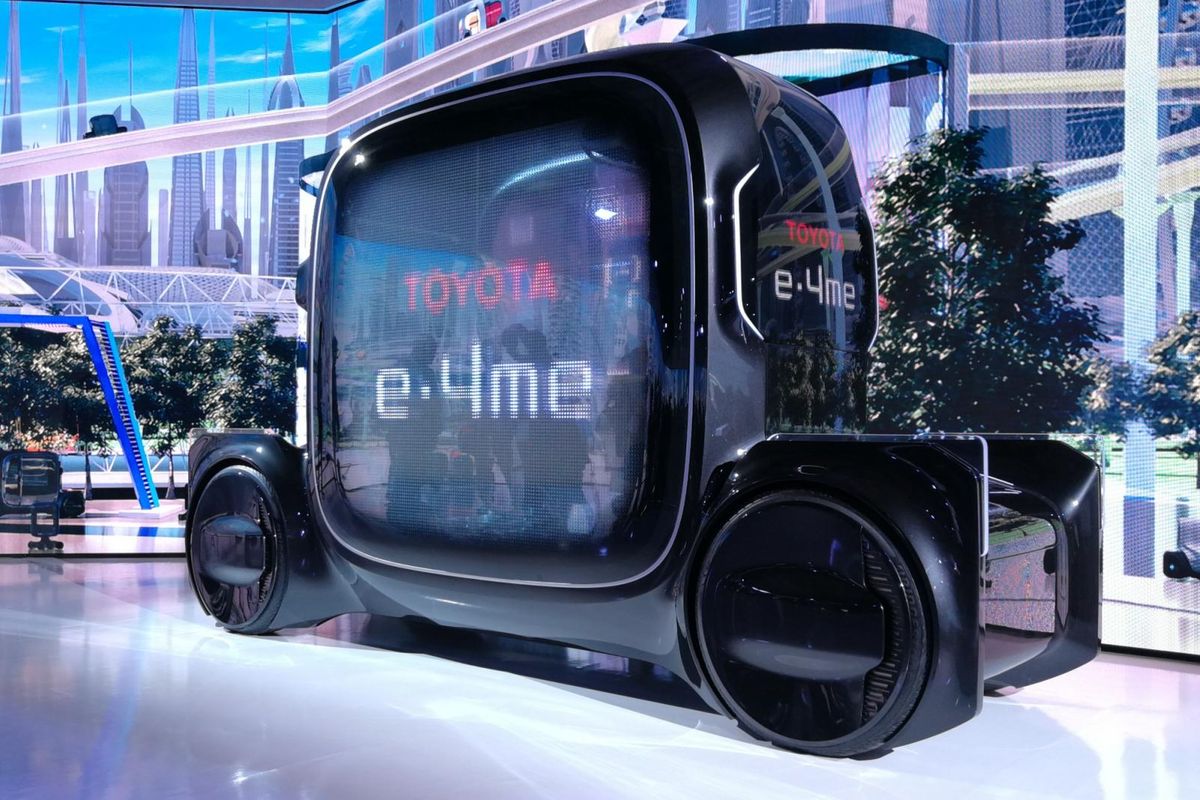
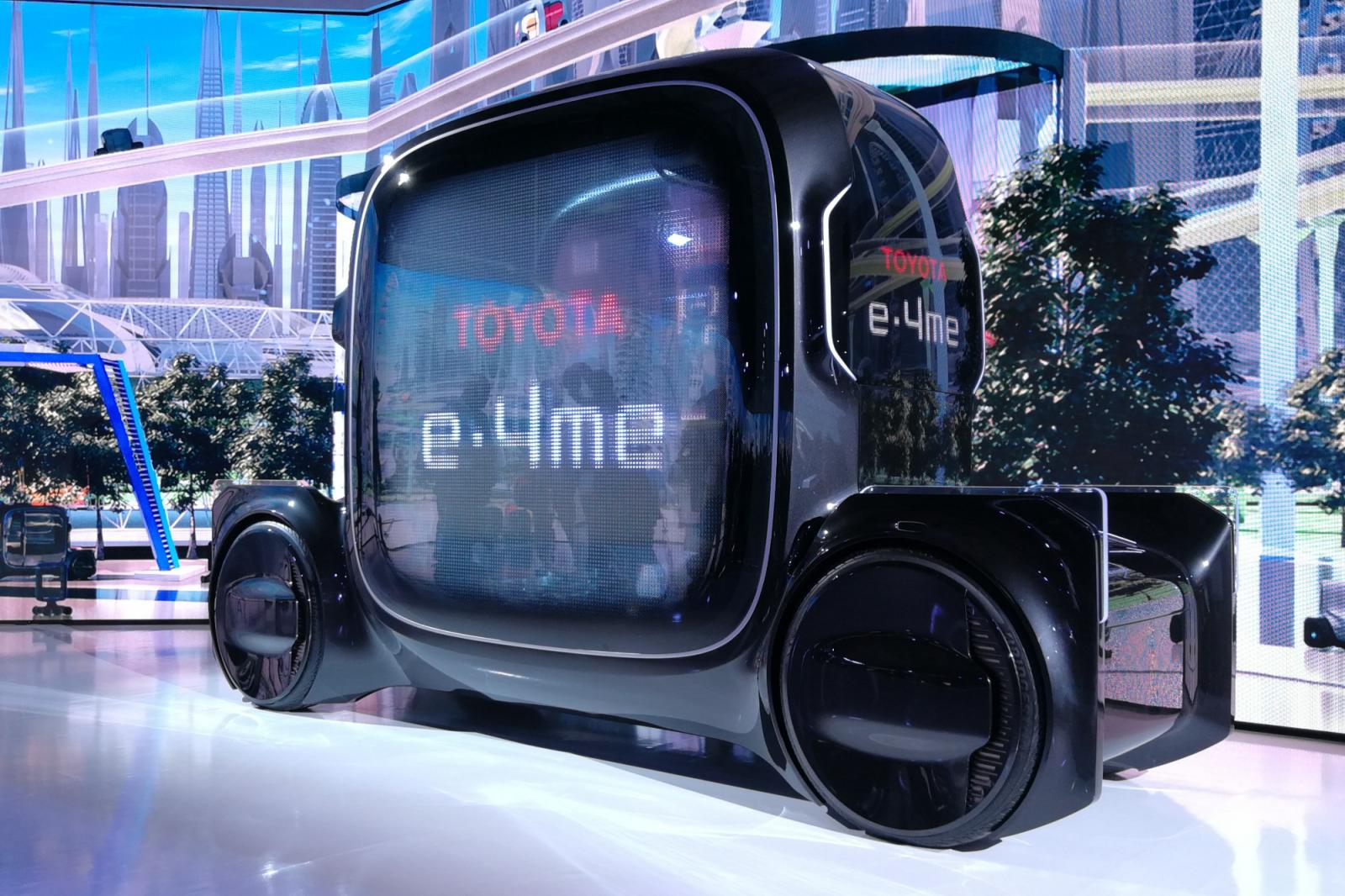
Autonomous, battery-powered, and with loads of personalisation options, the e-4me provides private, single-seat transport in luxury.

From robotic vehicles that will fetch the hammer in hammer throw events, to autonomous taxis for the physically disabled, to a hydrogen fuel-cell bus, Toyota put on a staggering display of technical prowess. But what about the cars? After all, Akio Toyoda, current president of the company, is a known car enthusiast and one who believes cars are different to other machines: we love them and that looks set to remain the case for a while yet. 

Let's take a look at what's in store from Toyota in the near future.

Toyota Mirai


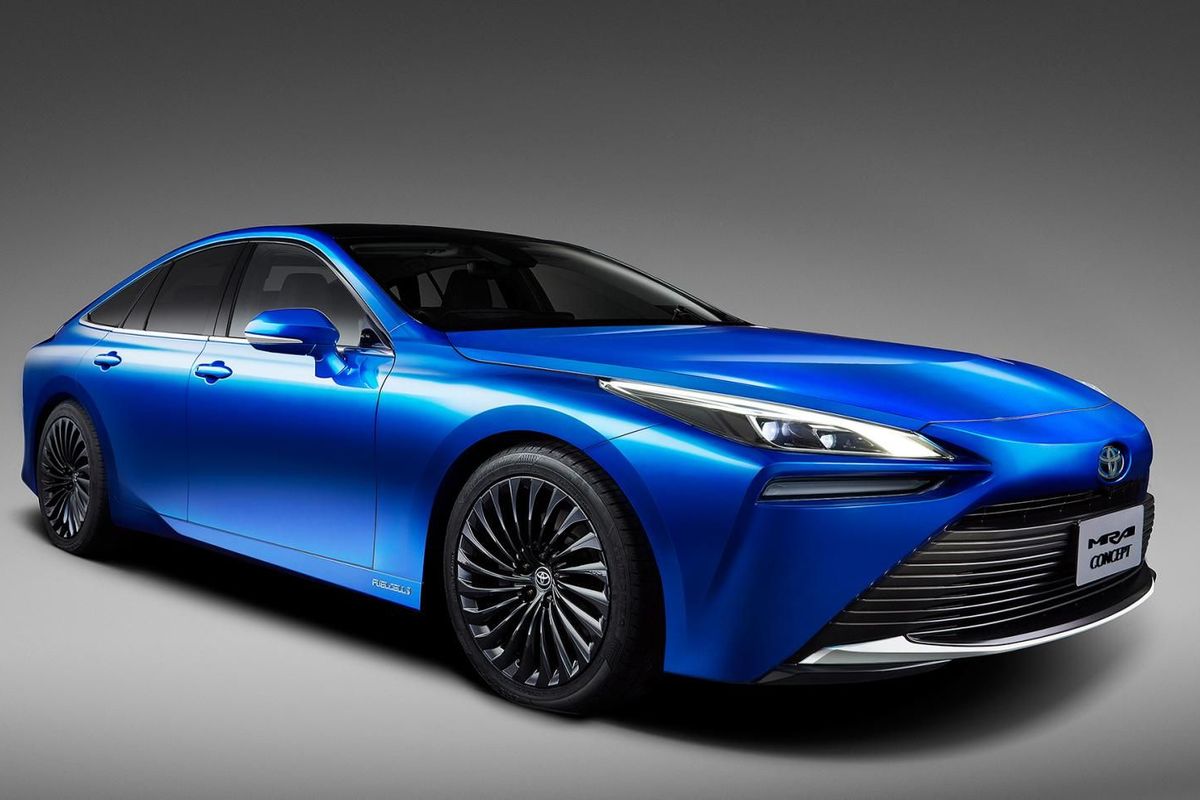
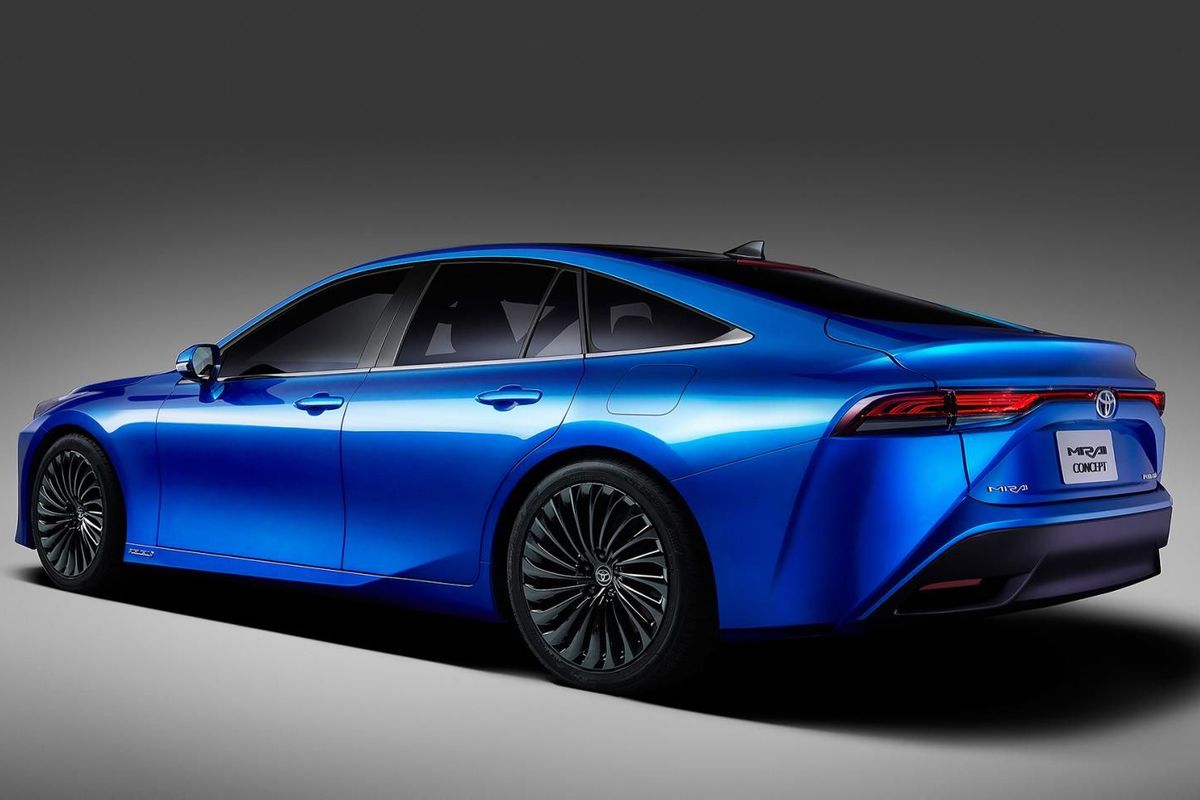
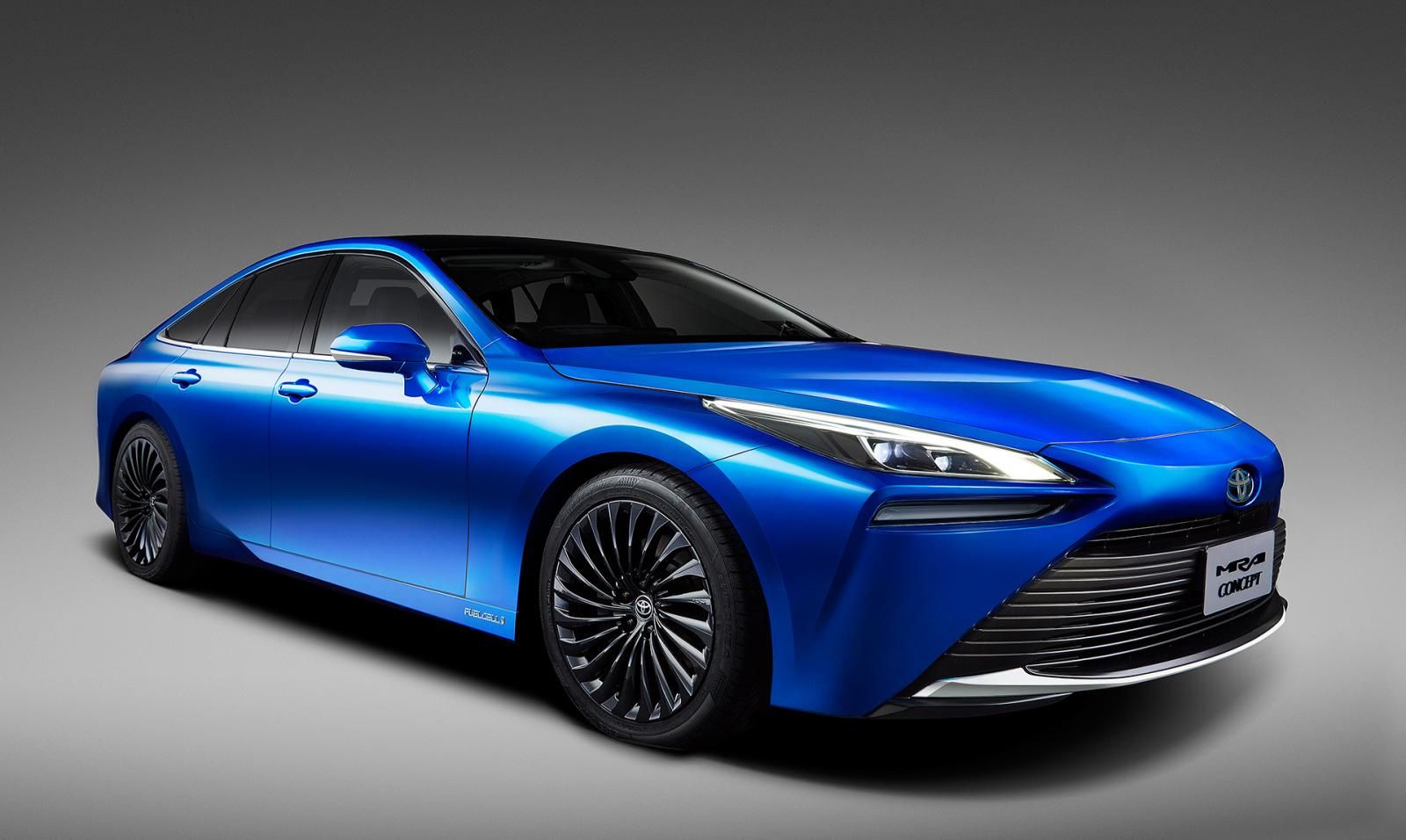
What a difference! Scheduled for launch in Japan late next year, the new Mirai boasts a striking design.

While plug-in battery electric vehicles are all the rage in Europe, Toyota continues to forge ahead with its hydrogen fuel-cell technology. At the recent Frankfurt Motor Show, BMW revealed that it will soon join Toyota in putting a fleet of hydrogen fuel-cell vehicles on the road in Japan. Ultimately, this is the cleanest and most sustainable energy, though there remains significant challenges ahead, particularly in terms of storage, hydrogen-refuelling networks and manufacturing. Of course, Toyota came to market with the first Mirai hydrogen fuel-cell vehicle in 2014, but it was a low-volume "exploratory" vehicle. Only around 10 000 have been sold worldwide; the US happens to be the biggest market, followed by Japan.

And if I'm being honest, the previous Mirai was also rather ungainly. In Tokyo, Toyota wheeled out a dramatically different 2nd-generation Mirai, one that now appeals not only for its green tech, but its sophisticated styling, as well as advanced interior and premium finishes. It will reach the Japanese market late in 2020 and you can bet that Toyota has far more ambitious volumes in mind this time round.


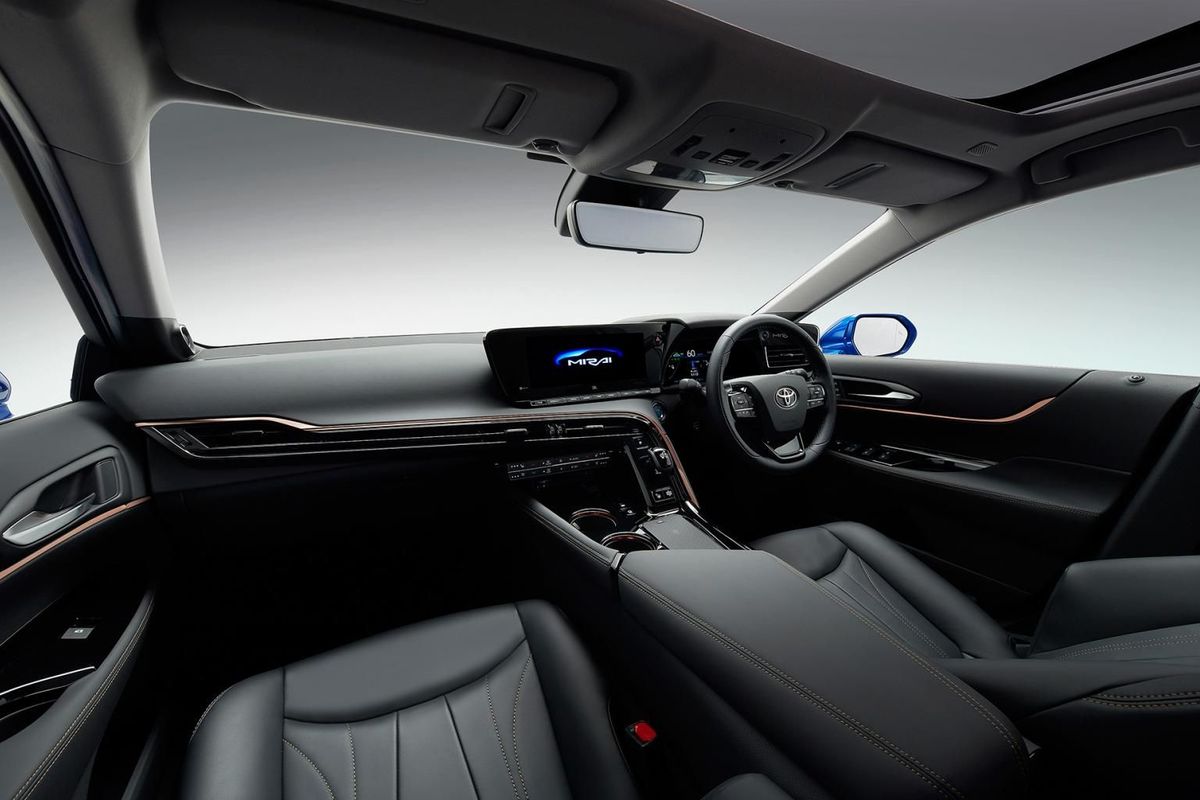
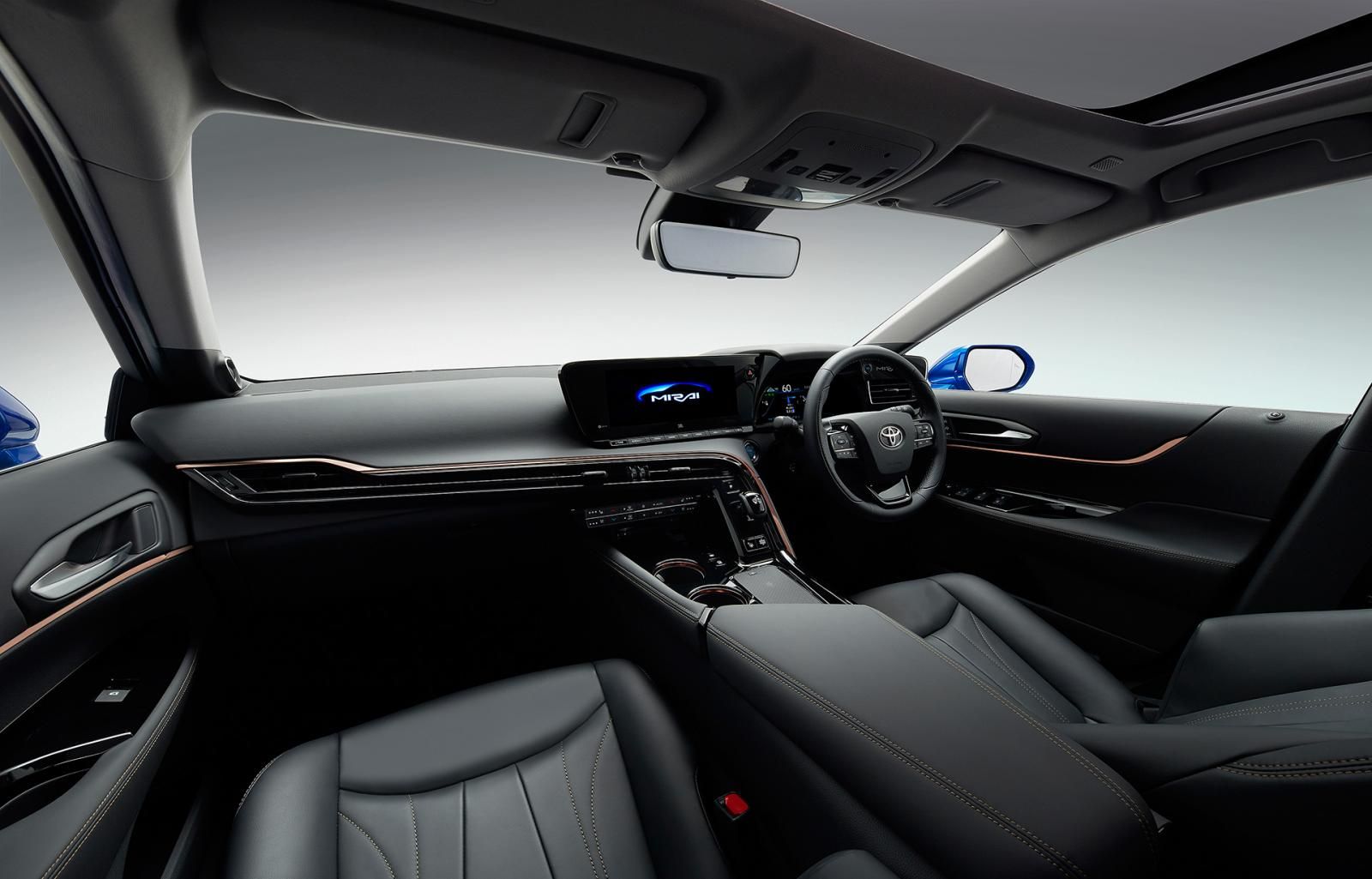
New Mirai interior is a big step forward in terms of spaciousness and luxury. 

Boasting improvements in fuel-cell system performance and hydrogen storage capacity, the new Mirai is claimed to have a driving range that's 30% better than that of its predecessor. Built on Toyota's TNGA platform, the new Mirai is spacious and offers seating for 5 (the current Mirai can only accommodate 4 occupants) and the interior is dominated by a 12.3-inch screen on the centre console. I had a peek inside and can confirm that it looks Lexus-like in there. Sadly, as South Africa has no hydrogen refuelling infrastructure, this car is not destined for our shores any time soon.

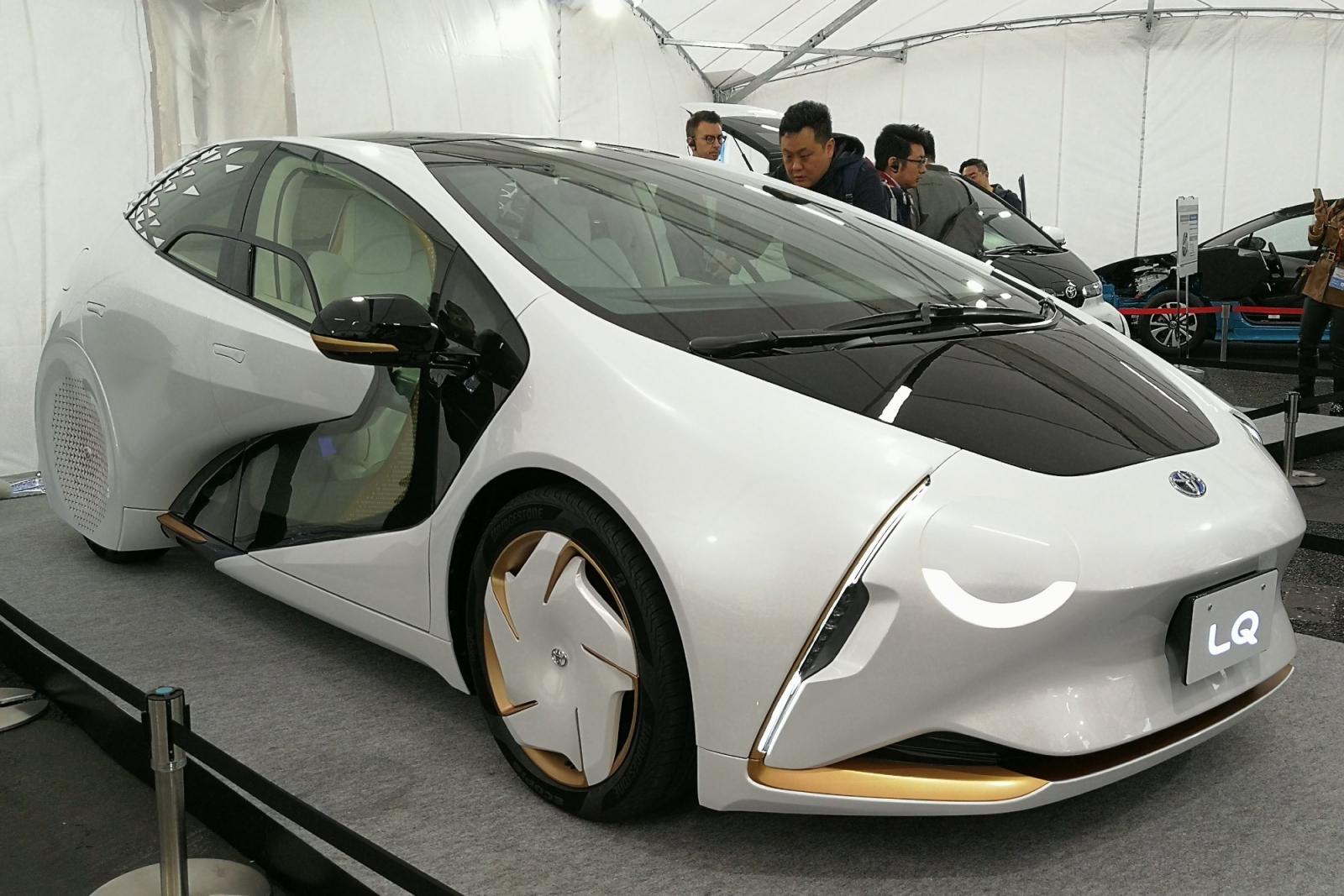
Toyota LQ Concept


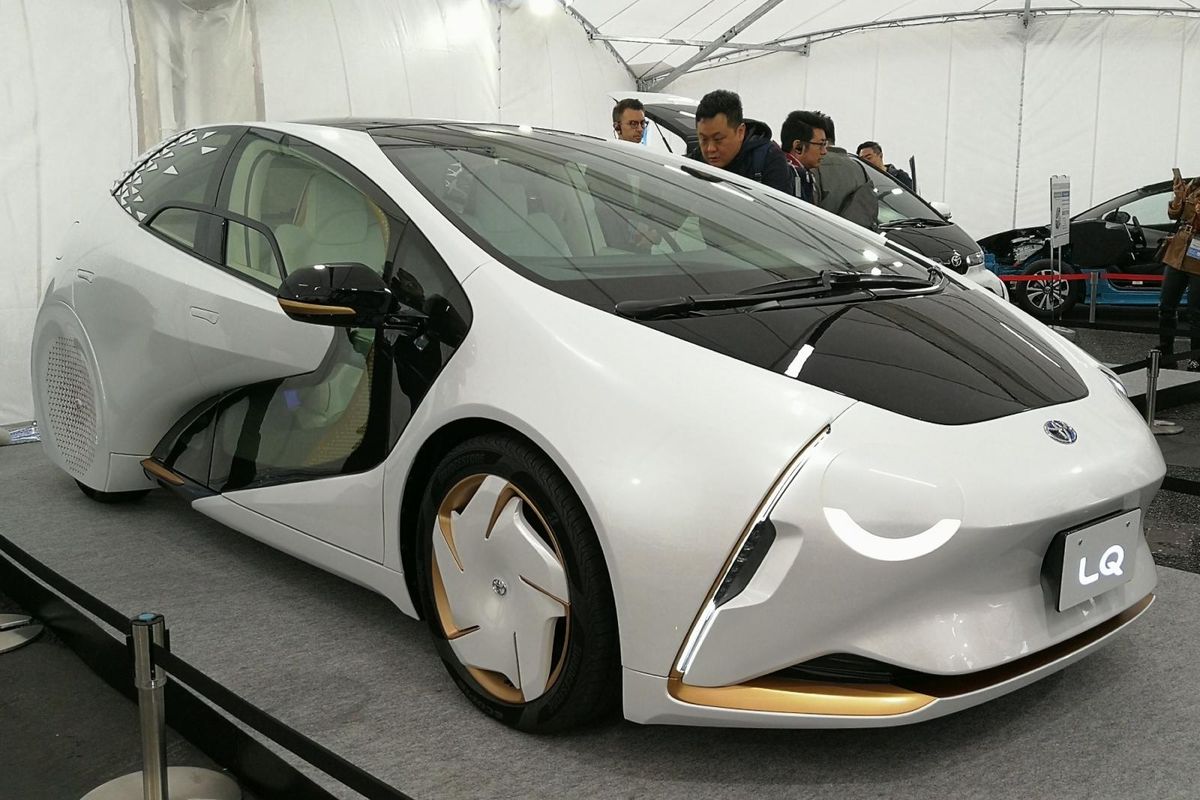
Battery-powered and autonomous, the Toyota LQ could be the Corolla of 2030.

This strange-looking concept features Level-4 autonomous driving and the latest version of Toyota's artificial intelligence system, called Yui. It is claimed to be able to learn the preferences of the vehicle's driver and to adapt settings by itself to better suit their desires. One of its most interesting features is an air-conditioned seating system that automatically monitors the driver's alertness, and adjusts airflow as needed.

Artificial intelligence (AI) and machine learning were major topics at Toyota in the lead-up to the Tokyo Motor Show, which included live displays of several robotic systems to help the elderly or disabled. As cars become more autonomous, Toyota is of the opinion that AI could be key to keeping occupants engaged and occupied during the journey (if required).

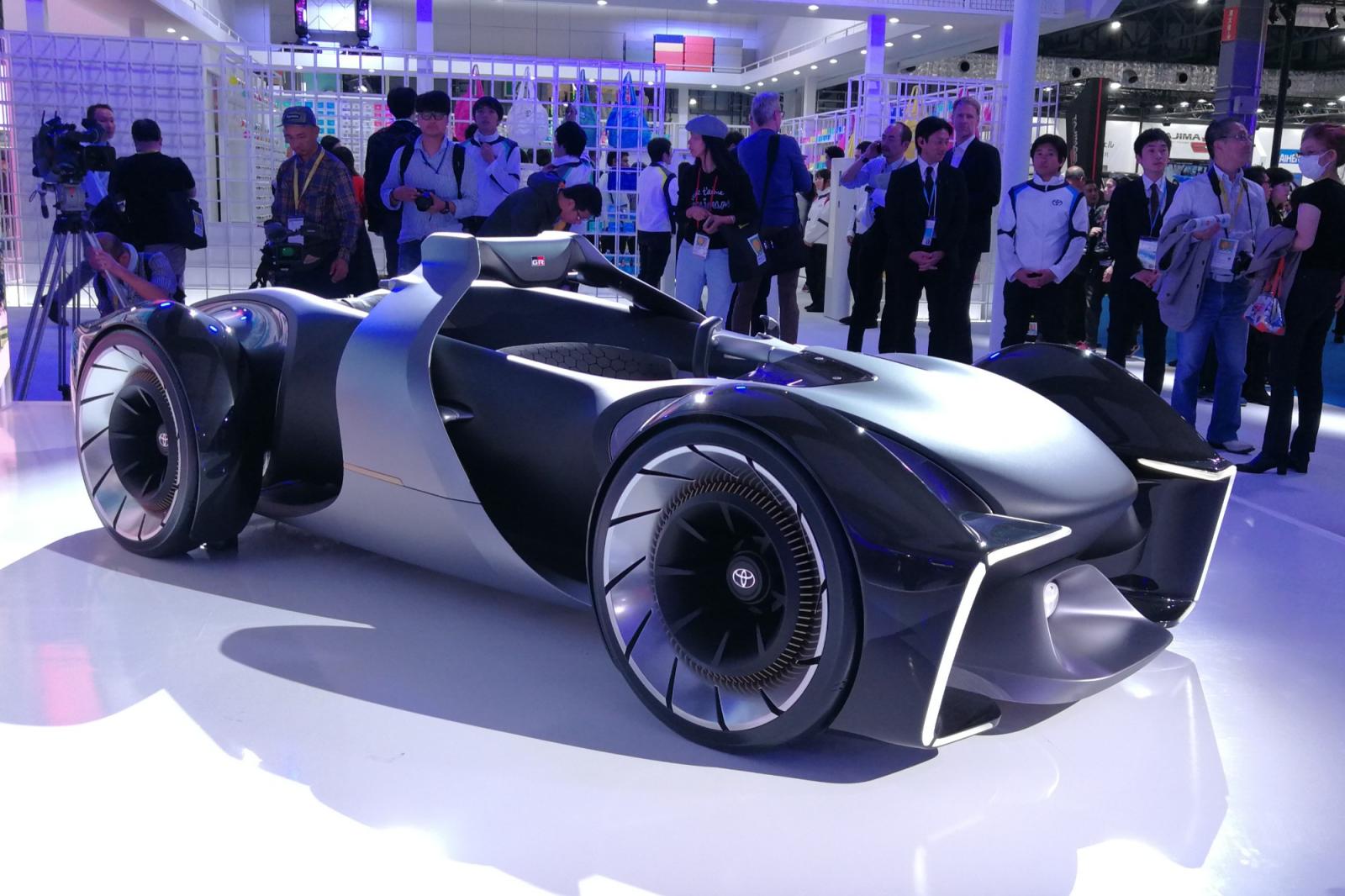
Toyota E-Racer


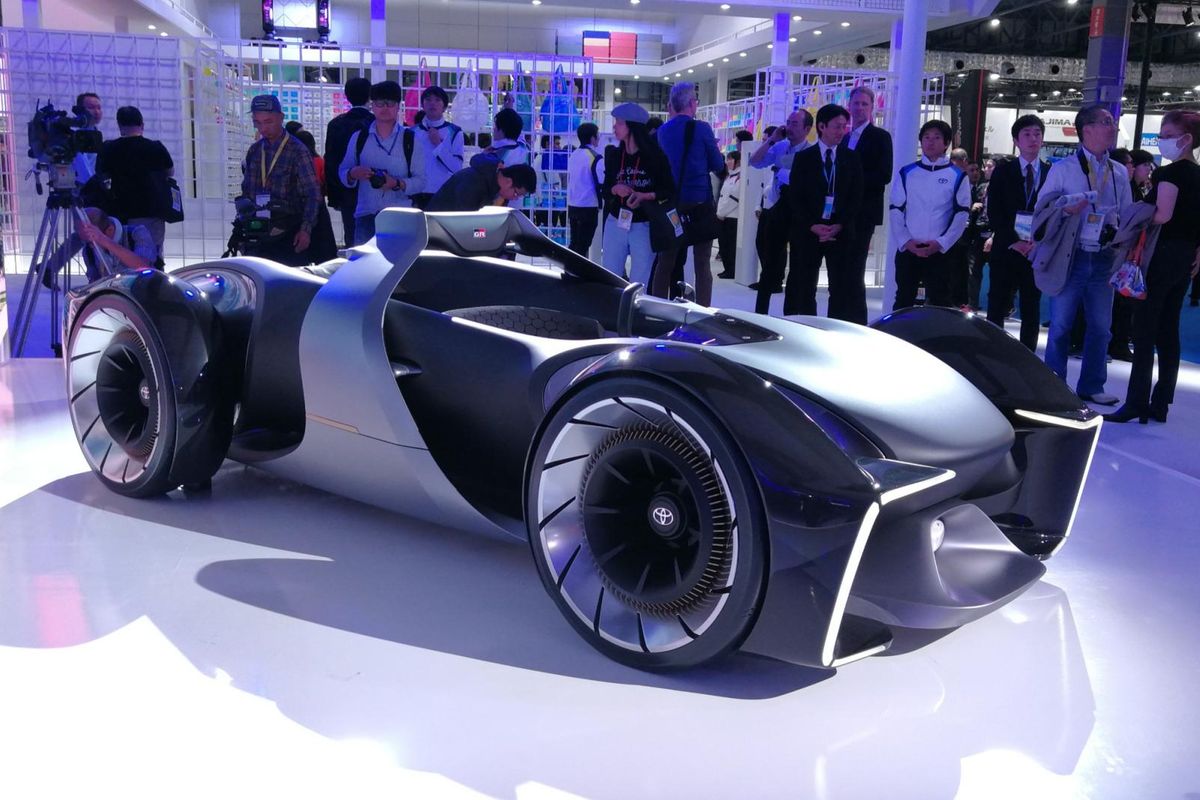
The Toyota E-Racer concept looked like it had come straight off the set of the sci-fi blockbuster Tron.

Easily one of the most photographed and exciting-looking concepts at this year's show, the e-Racer is a 2-seater sportscar that is ostensibly entirely electrically powered. Toyota revealed no further details of the concept, but simply stated that the pleasure of driving will remain part of its philosophy, even as increasing autonomy is achieved by an increasing number of cars on the market. 

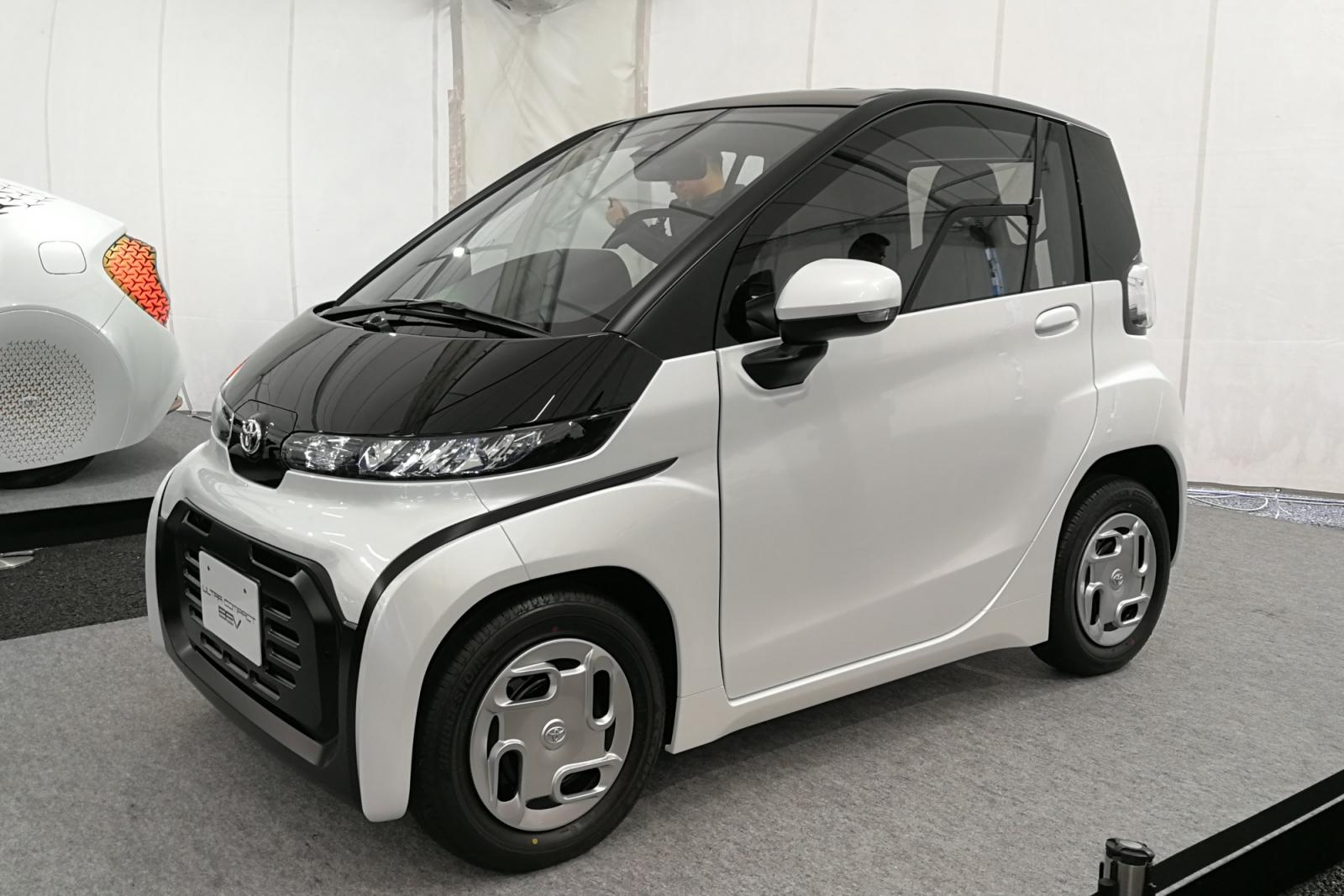
Toyota Ultra-Compact BEV


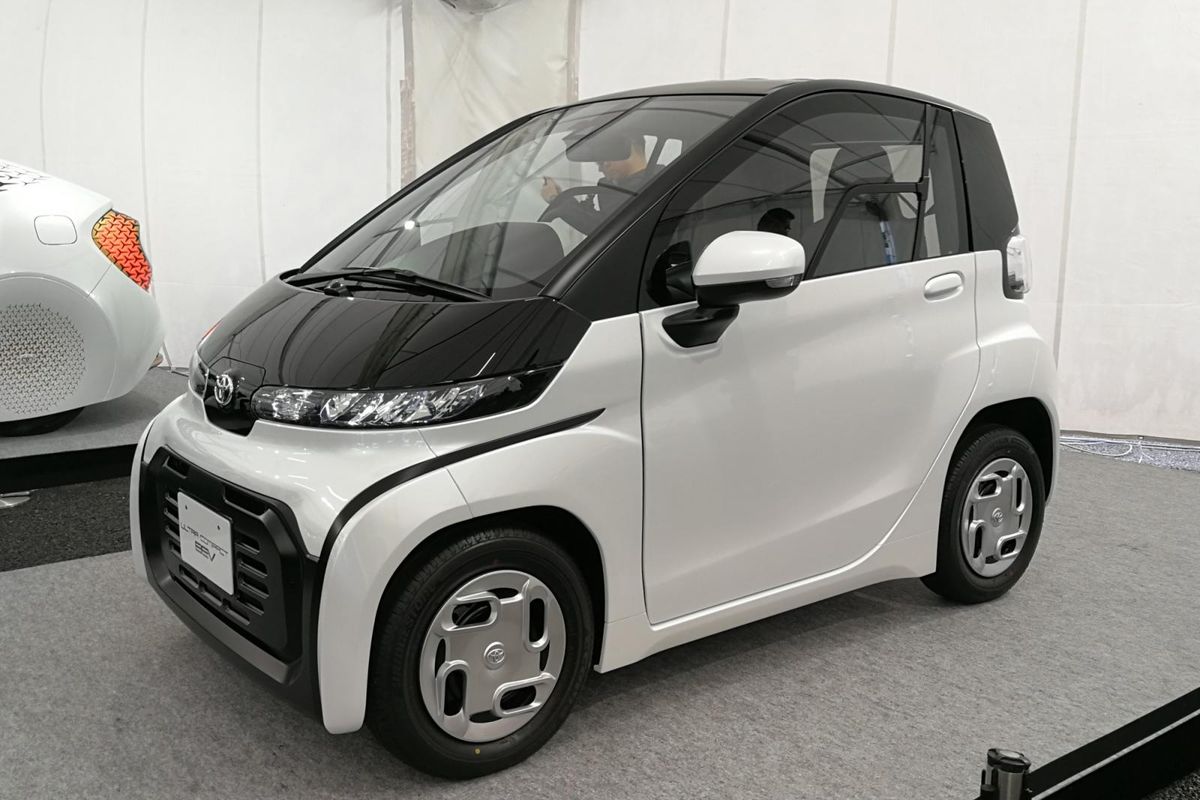
It's no beauty queen and it lacks a name at this point, but for short distances it sure beats walking.

The first of Toyota's Tokyo Moto Show cars to reach production will be this odd-looking BEV (Battery Electric Vehicle). It is aimed at drivers who need a vehicle for short distances, and particularly the elderly who may just want to pop out to the shops. It has a range of 100 km (quite impressive, actually), and a top speed of 60 kph, which is more than sufficient for Tokyo traffic. The car is less than 2.5 metres long and only 1.3 metres wide. 

Development chief Akihiro Yanaka says: "We want to create a mobility solution that can support Japan's ageing society and provide freedom of movement to people at all stages of life. With the ultra-compact BEV, we are proud to offer customers a vehicle that not only allows for greater autonomy, but also requires less space, creates less noise and limits environmental impact."

The Toyota BEV will hit the Japanese market next year.

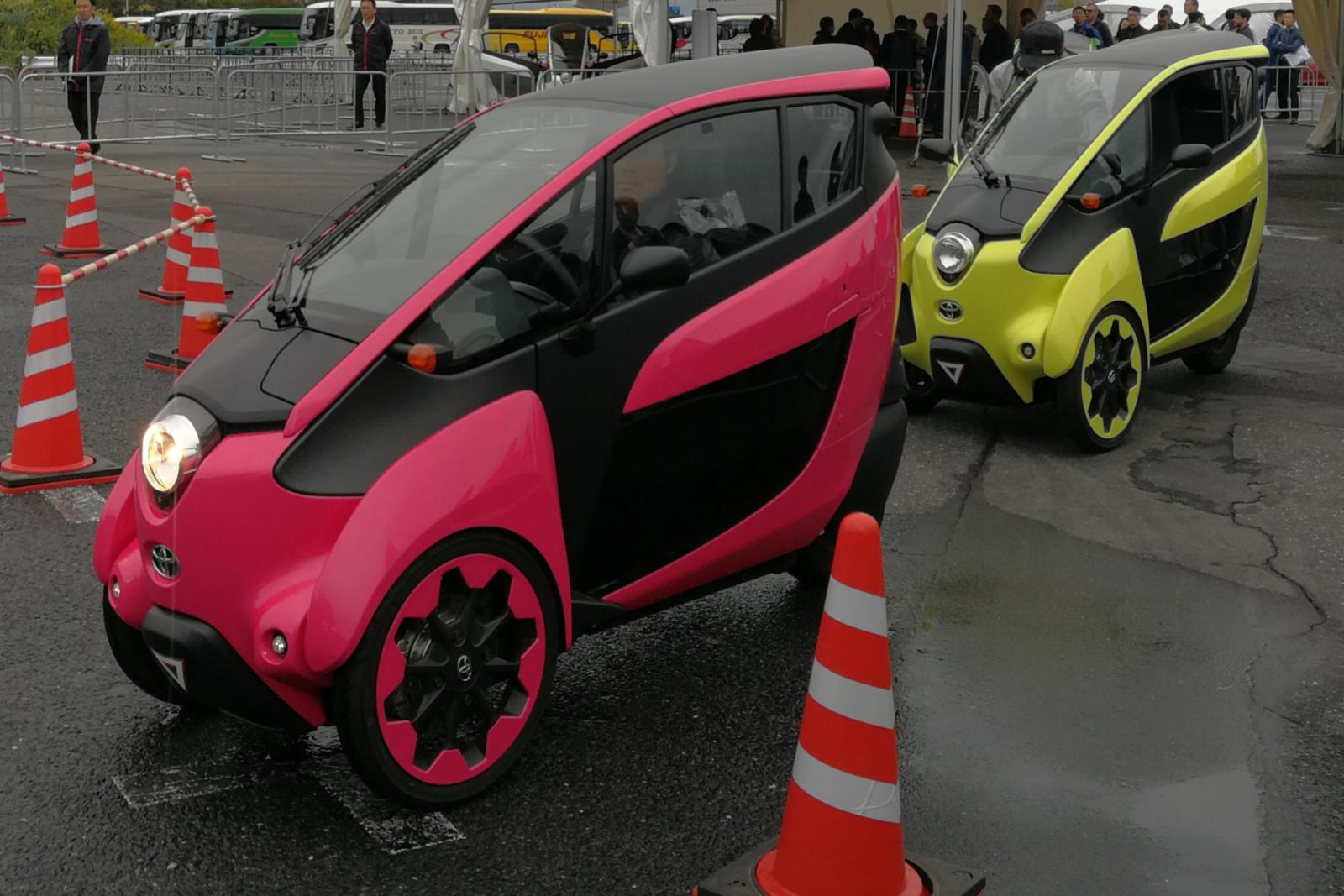
Toyota i-Road


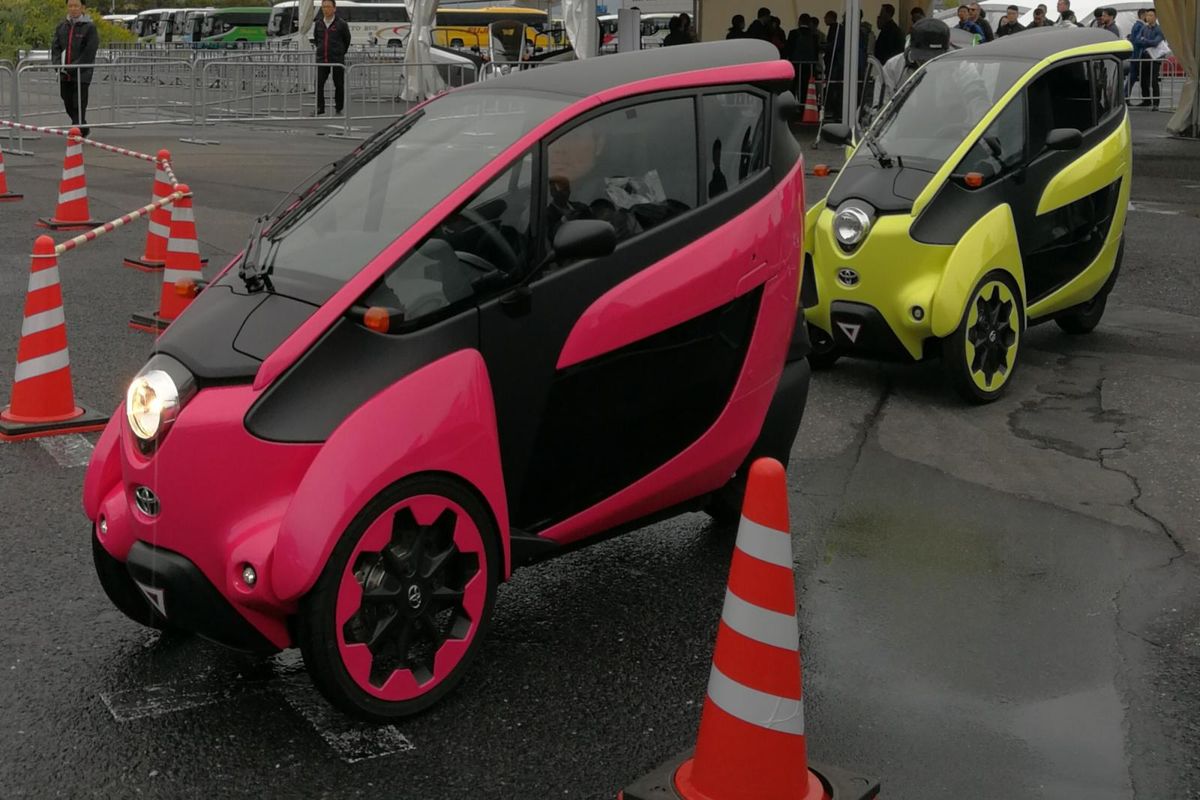
Quirky, but fun to drive, the i-Road is a cool short-distance alternative to a motorcycle.

We've seen the i-Road before (we drove it in South Africa last year) and Toyota again displayed it in Tokyo. For a concept car, the i-Road has had a remarkably long life. It was first shown as far back as 2014, but Toyota has continued to refine the concept. It's a 3-wheeled, self-stabilising vehicle with electric power. It offers seating for 2 (in tandem) and is said to provide a safer, enclosed, short-distance driving solution to a scooter.

You may also be interested in

Toyota Prius (2019) Review

Toyota C-HR (2019) International Launch Review
Volkswagen's EV plans for South Africa

Best Crossovers in SA – #CarsAwards Finalists 

Meet the finalists in the Crossover category of the 2019/20 Cars.co.za Consumer Awards – powered by WesBank!

Now in its 5th year, the #CarsAwards was conceived to be South Africa's definitive automotive awards programme and is backed, for the 4th year running, by the country's leading supplier of vehicle finance, WesBank.

Read more about the finalists in the 2019/20 Cars.co.za Consumer Awards – powered by WesBank here!

Best Crossovers in SA

The Crossover category is guided by both eligibility factors and Pillars of Success. 

Eligibility for this category includes a list price that falls between R500 000 and R700 000 at the time of semi-finalist voting (1 September 2019) to ensure exclusivity and status. 

Eligible vehicles must be a crossover/small SUV shape of the Audi Q2/BMW X2/ Volvo XC40 category. 

Pillars of Success in this category include design and quality appeal, powertrain technology, luxury, brand strength and driving dynamics

Visit www.carsawards.co.za for more information. The finalists are as follows:

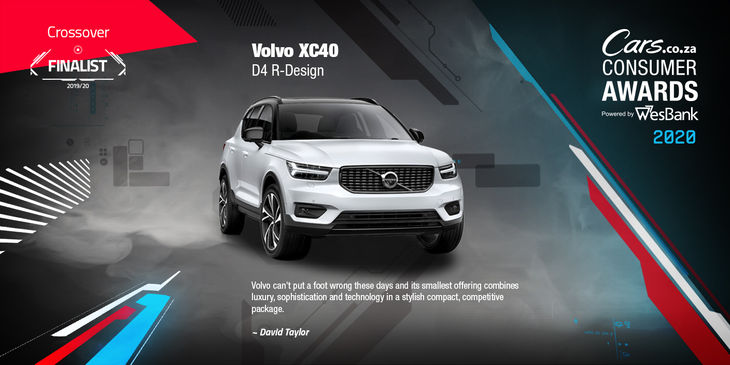
Volvo XC40 D4 R-Design

Volvo’s line-up of SUVs is winning awards left, right and centre: the XC90 has won its category of the #CarsAwards three times and the XC60’s triumphed in Executive SUV category in 2018/19. Now we have the baby XC40 as a contender for Crossover honours. Can it replicate its brothers’ successes?

View specification details for the Volvo XC40 D4 R-Design

Do you own a Volvo? Have your say and complete our Ownership Satisfaction Survey!

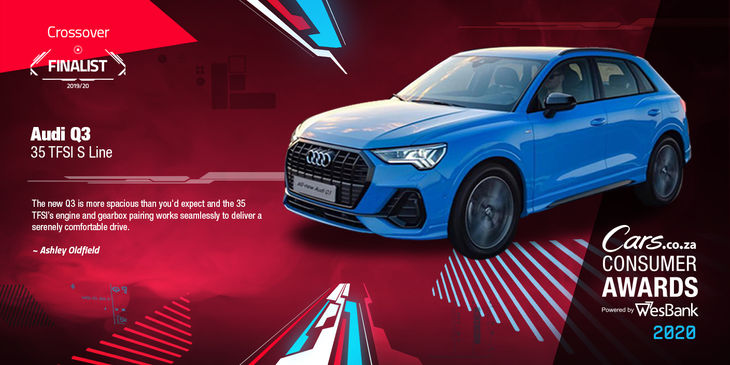
Audi Q3 35 TFSI S Line

Compared with its predecessor, which was based on the PQ35 platform, the new Audi Q3 is based on the Volkswagen Group's MQB matrix. MQB is ubiquitous but widely lauded for its impressive driving traits, practicality and refinement (areas in which the newcomer excels).

View specification details for the Audi Q3 35 TFSI S Line 

Do you own an Audi? Have your say and complete our Ownership Satisfaction Survey!

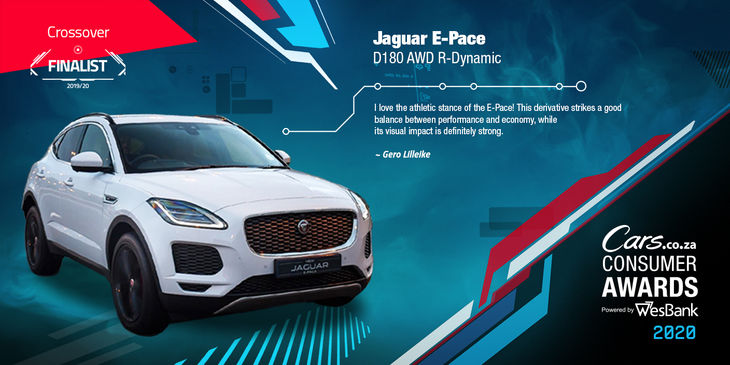
Jaguar E-Pace D180 AWD R-Dynamic

Strong sales of the Jaguar F-Pace premium SUV prompted the Coventry-based brand to introduce another, but smaller, SUV. The newcomer is a typical Jaguar in terms of its on-road bias and agile handling. It may be based on the previous Range Rover Evoque, but it feels quick and responsive.

View specification details for the Jaguar E-Pace D180 AWD R-Dynamic

Do you own a Jaguar? Have your say and complete our Ownership Satisfaction Survey!

See last year's #CarsAwards winners here!

2019 BMW X5 vs Mercedes-Benz GLE Review – Which one should you buy?

This is a big review of some big cars. The physical size of the cars in this segment has grown in tandem with their popularity. If you're looking to spend over R1million on a car, chances are you're looking for something pretty fancy, and quite imposing.

Both of these cars fit the bill very well but after spending time in both cars back to back, our video journalist Ciro De Siena reached the conclusion that they represent quite different approaches to building and designing luxury SUVs, very much in line with what you might expect from each brand.

In this video we take a detailed look at the interiors, load space/boot capacity, practicality with the rear seats in places and folded flat, the difference in performance between the two models and Ciro gives us his opinion on how each car simply makes you feel.

Read a full comparison here

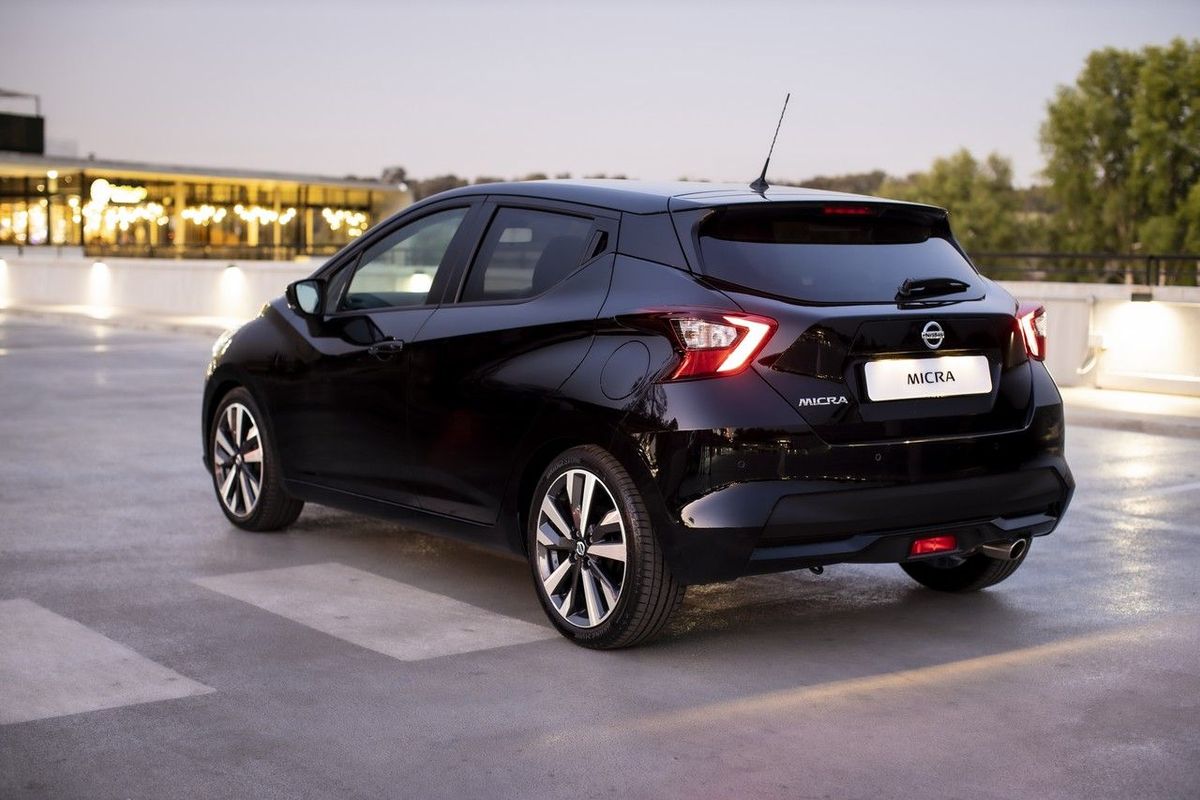
Nissan Micra 84 kW Turbo (2019) Launch Review

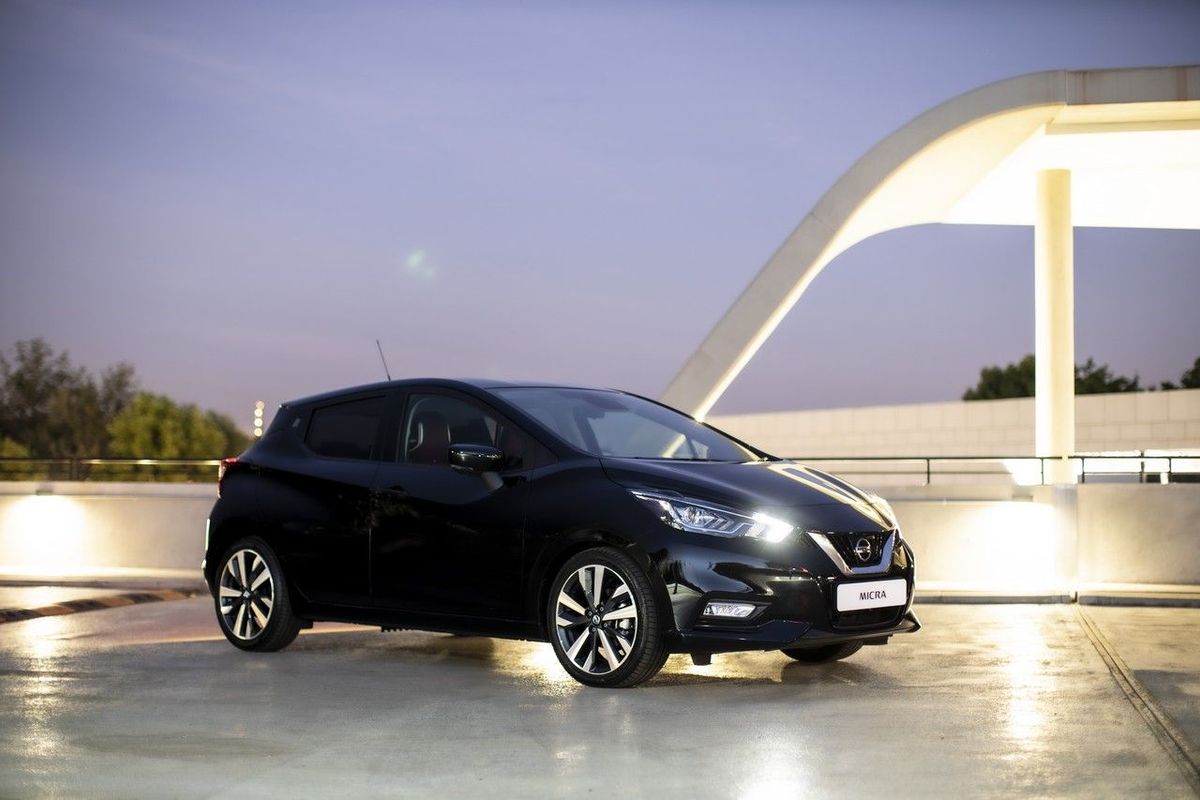
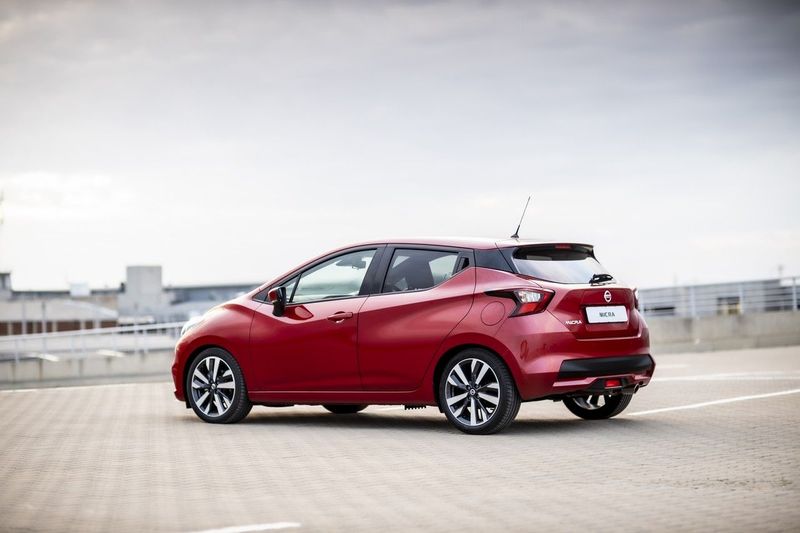
Nissan has introduced a new 1.0-litre 3-cylinder turbopetrol engine, as well as a few other specification upgrades, to its Micra compact hatchback. We drove the new 84 kW Turbo derivative in Johannesburg to see how it performs…

What’s new?

The new engine is a product of Nissan's co-operation with Daimler AG (including Mercedes-Benz and Smart) and has powered Nissan's compact hatchback in the UK since early 2019. Now it has finally made its way to South Africa and joins the Micra line-up alongside the well-known 0.9-litre derivatives. The powerplant produces peak torque of 180 Nm (up to 200 Nm on overboost) and has a claimed fuel efficiency of 5.0 L/100 km.

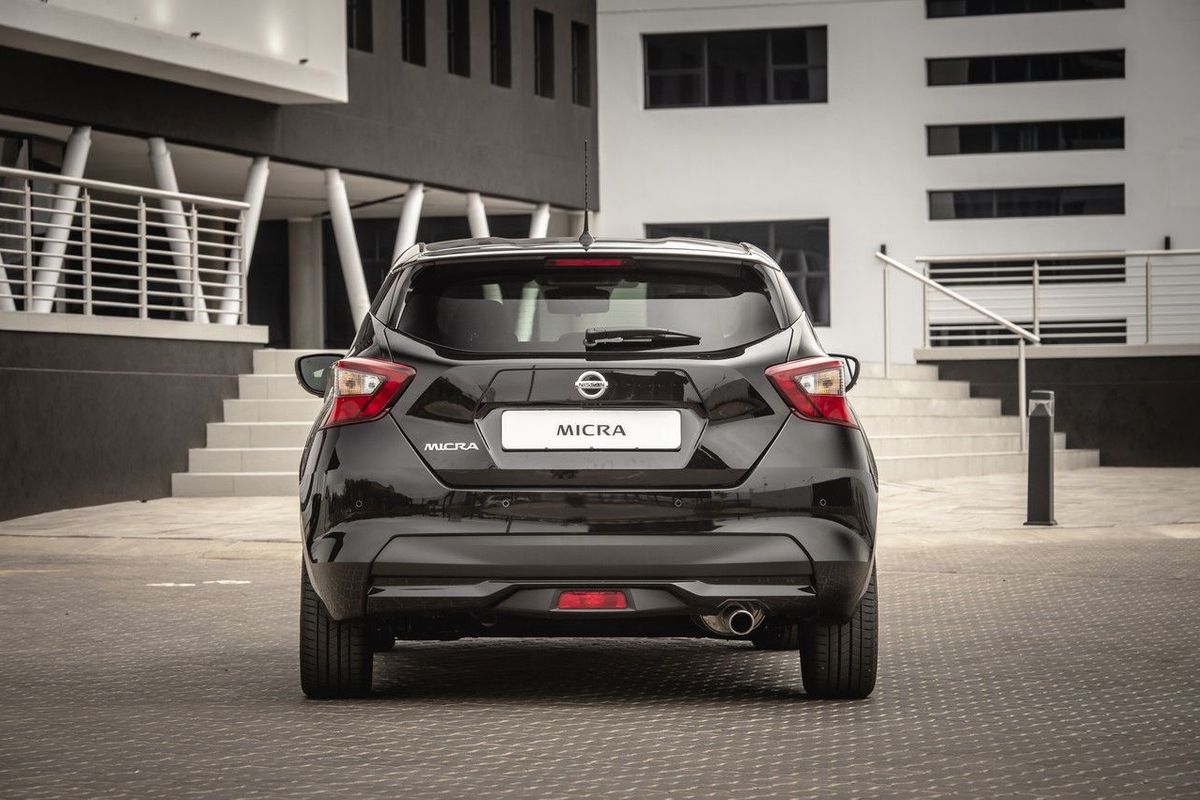
In order to make the Micra more appealing, Nissan has lowered its ride height by 10 mm. The firm has also tuned the hatchback's suspension and quickened the steering to improve handling and give the 84 kW Turbo more edginess and a fun-to-drive character so sorely lacking in the segment.

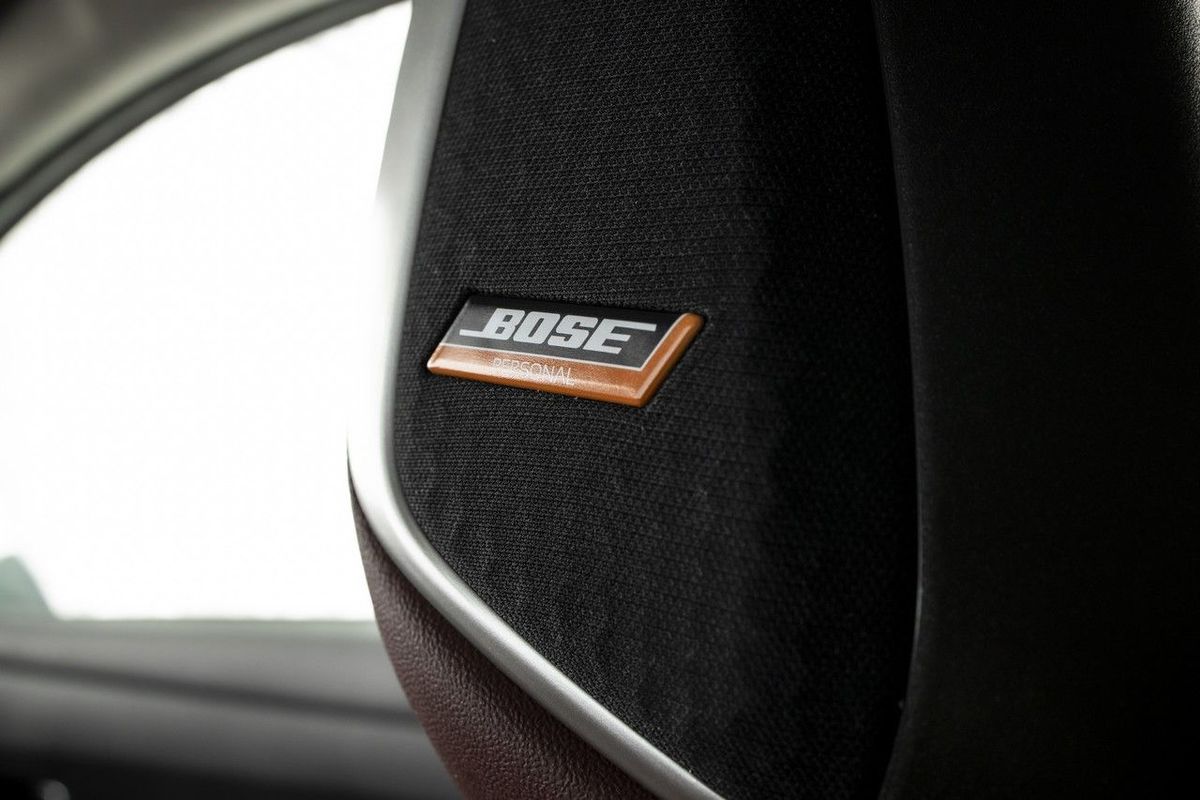
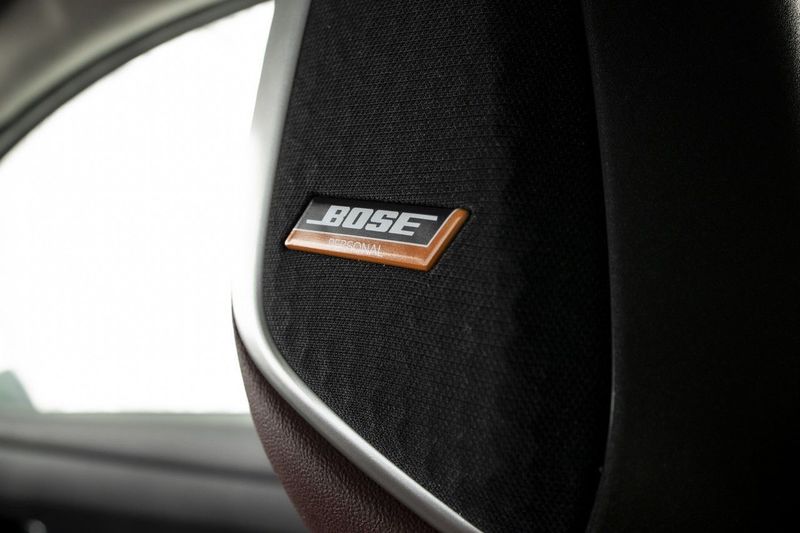
The final addition is a Bose personal sound system, which produces a more voluminous and generally higher-quality audio output.

How does the new engine perform?


The new 1.0 turbo will be sold alongside the 0.9-litre model.

Well, it’s definitely more energetic than the older 0.9-litre unit… It offers commendable mid-range acceleration and once the 84 kW Turbo derivative reaches the national speed limit, its motor doesn’t need to be continuously worked to remain in the sweet spot. There is a bit of dead spot right at the bottom of the rev range (something that haunts most small-capacity turbos). Until the turbo kicks in, you (kind of) feel like you’re hovering. We were travelling with 3 people on board and at 1.6 km above sea level, so there was bound to be some lethargy as the engine spooled up its turbo.

The new 6-speed manual gearbox, meanwhile, is a quick- and solid-shifting unit. There’s nice weight to each shift and a natural action to finding each of the gears. Having a 6th gear really helps out the fuel economy on those dual carriageways, when you’re cruising at 80 kph. The same goes for freeways, where the 84 kW Turbo seems happy to cruise at 120 kph in 6th and still has a bit to spare if you need to overtake slower vehicles.

The suspension changes


The drive is more sporty but not uncomfortable as a result.

The 10 mm drop coincides with some suspension fine-tuning. The changes are felt most when you’re swinging across an intersection or tackling a roundabout. The front end turns in more crisply than before and with the lower centre of gravity limits body roll. The ride is firmer, but not unpleasant, so there’s no real downside to it. The faster steering is well-weighted and, generally speaking, Nissan is one of the better exponents of steering feel.

Tech changes

The only real change on the tech side is the introduction of the Bose audio system, which includes the fitment of better speakers in the Micra's doors and dashboard. There are also 2 special speakers fitted into the driver’s headrest, which certainly improves the volume and clarity of the sound and allows you to adjust the direction of the sound (you can toggle between surround mode or driver-focused settings).


A pair of speakers are fitted in the driver's headrest to enhance the sound experience.

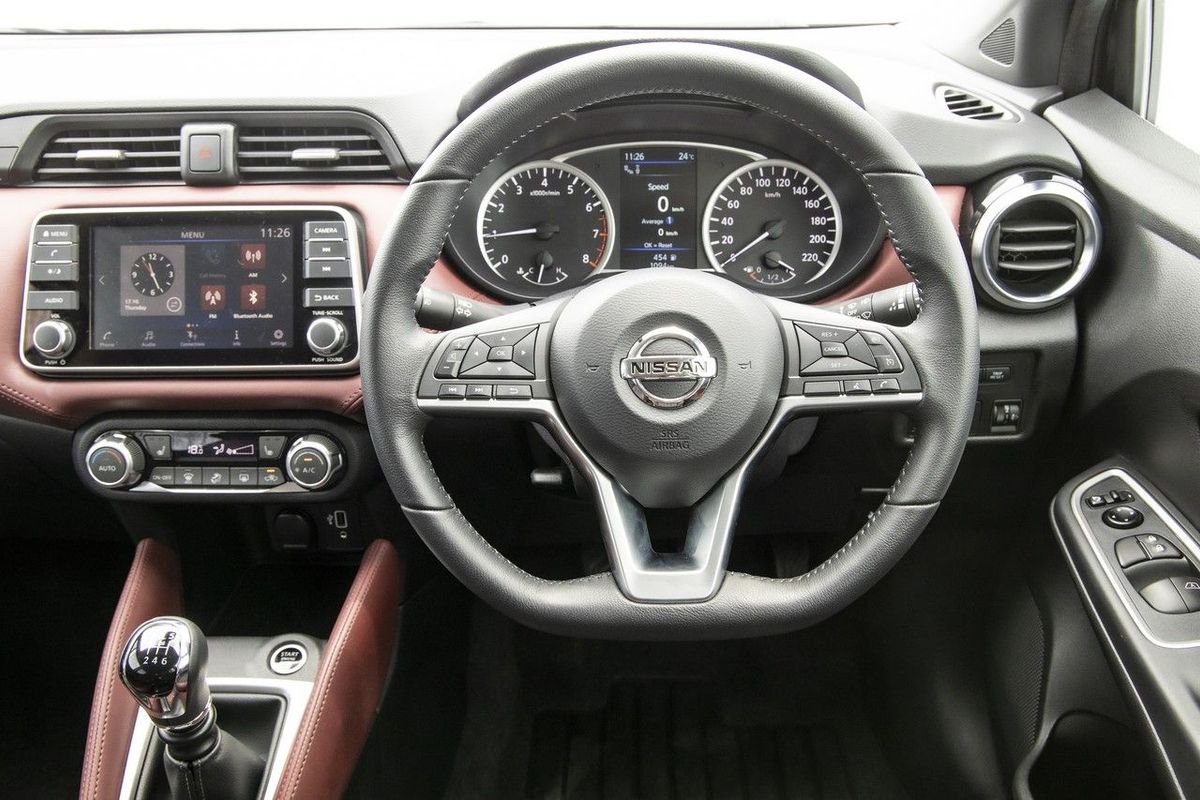
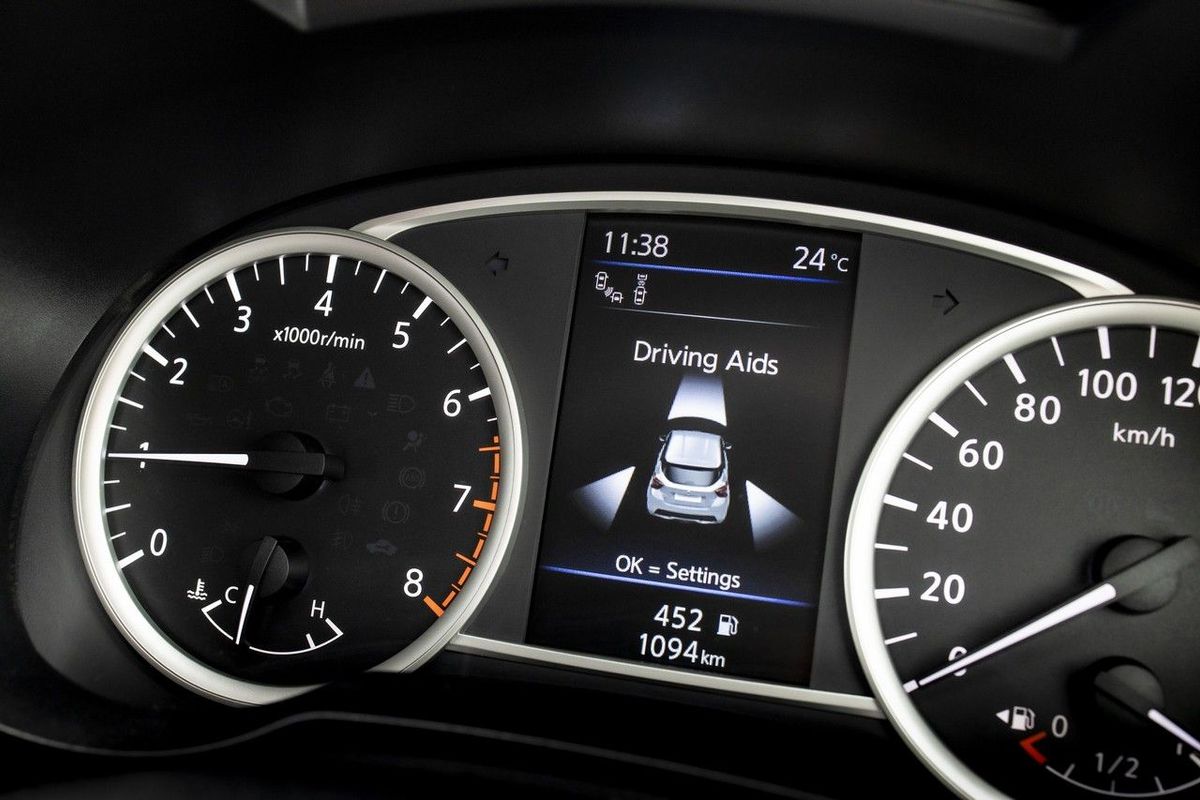
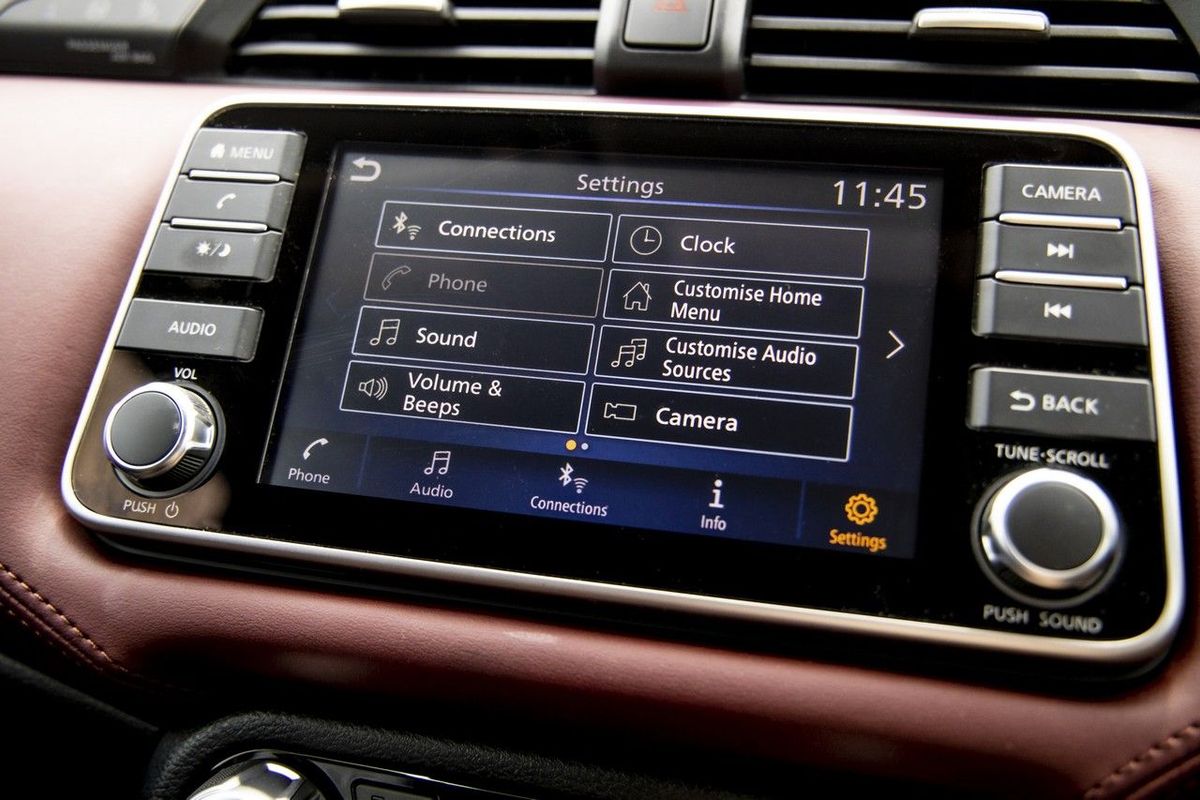
As for the rest of the kit, the infotainment system is fully functional, replete with Apple Carplay and Android Auto compatibility. The instrument cluster is analogue with a digital information display (trip computer) between the dials. It’s all fairly standard for the segment without shooting the lights out.

Unchanged interior

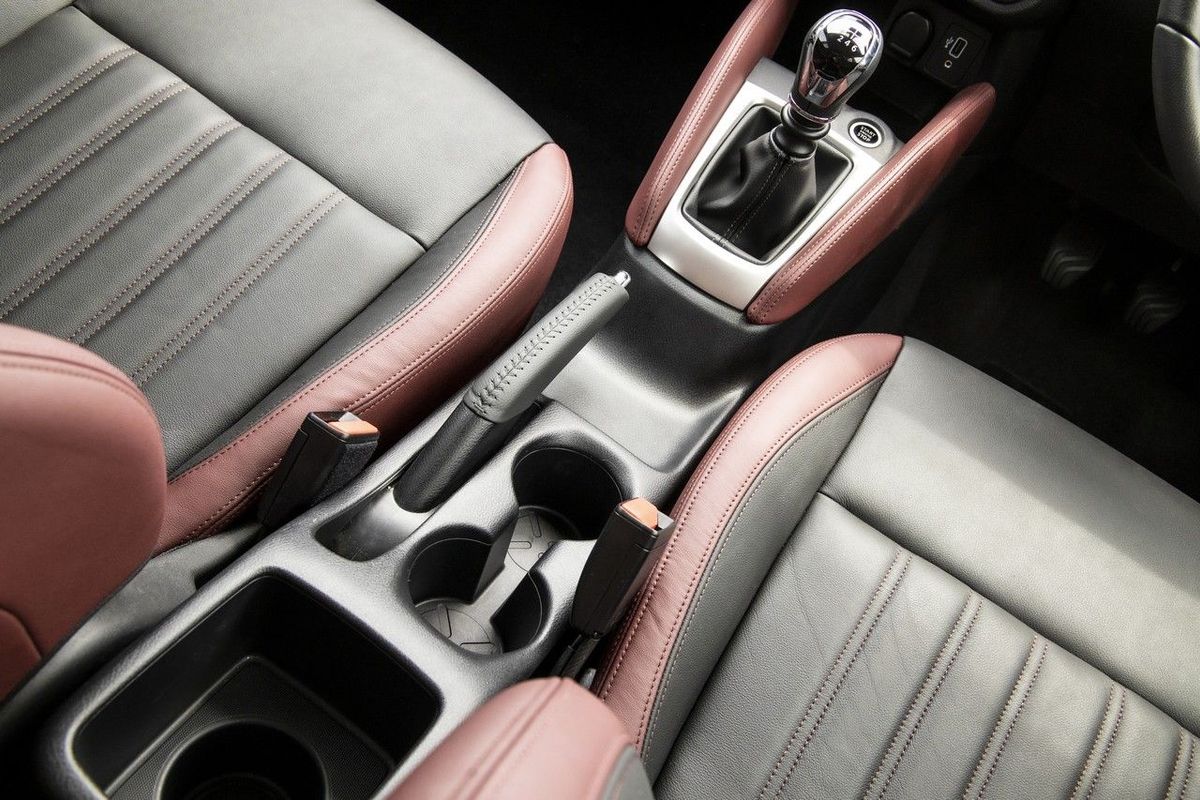
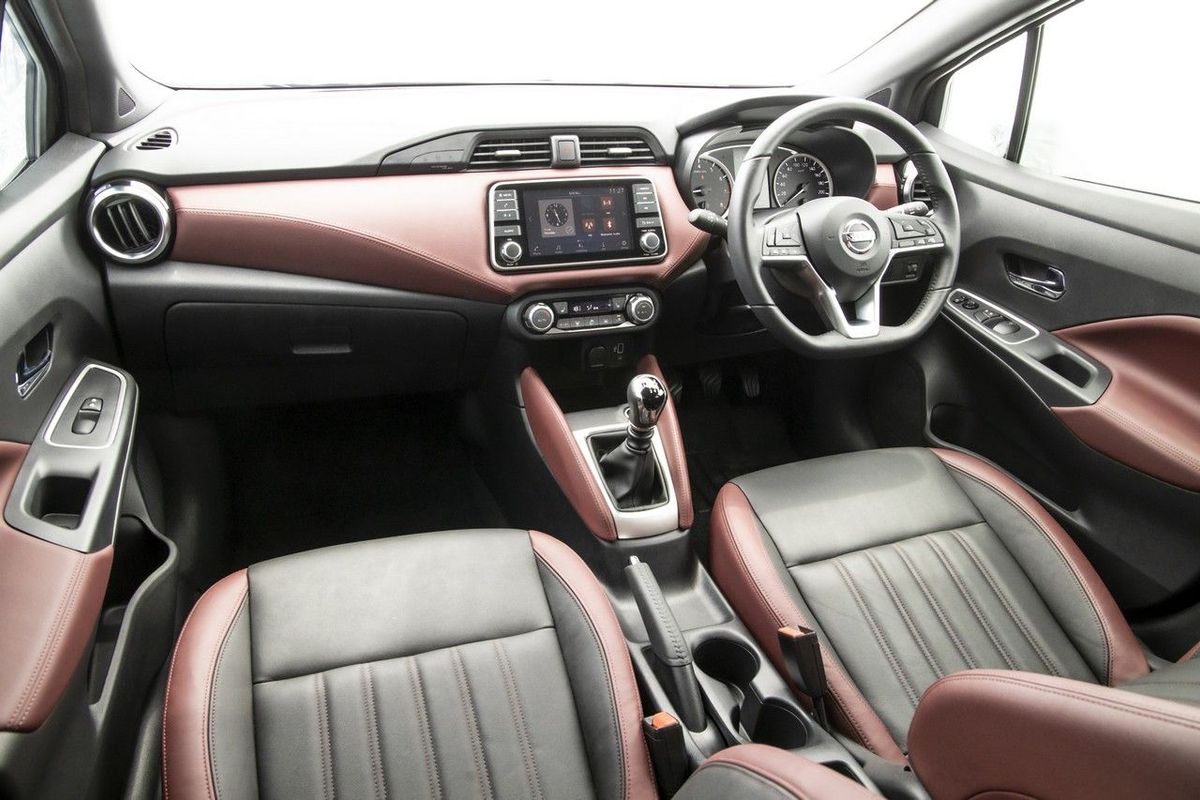
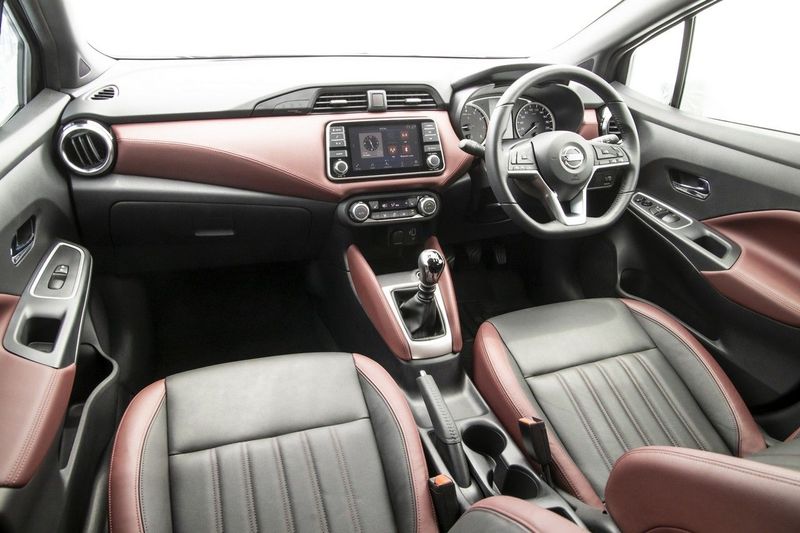
We drove the Tekna and Tekna Plus derivatives, which are at the upper end of the price range, during the launch event. There are no changes to the original car’s interior, but it’s worth doing a recap on the Micra's comfort levels… It’s roomy up front and the Nissan notably features more soft-touch surfaces on its dash than most of its competitors. Rear legroom is a little on the tight side, but perfectly acceptable for adults on shorter journeys (provided front occupants are willing to nudge forward). The load bay has a claimed capacity of 300 litres, which is average for this segment.

Summary


Top-spec Tekna Plus gets lots of soft-touch and leather bits.

The new 1.0 litre doesn’t need to be worked as hard as the 0.9 litre, but even if there’s a dead spot right at the bottom of the rev range (that can leave you hanging at rolling speeds), the engine (and its 6-speed 'box) improves the Micra substantially. A CVT is likely to join the range in 2020. 

The upgrades to the suspension represent a painless gain – the Micra feels appreciably sportier to drive but not at the cost of ride comfort. Improved outputs of 84 kW and 180 Nm are, of course, welcome, but the motor doesn’t deliver quite enough to get the most out of what the chassis offers.

Meanwhile, the new upgraded audio system could be a solid drawcard for younger buyers, especially with the Bose labelling on the headrests. 

When it comes to value for money, the Micra is in the ballpark with the Volkswagen Polo, Ford Fiesta and Mazda2, which is esteemed company, to say the least. The Nissan’s got all the safety and tech features you want in this segment and the exterior and interior designs are both appealing. 

Its competitors do, however, make better use of their motors' performance capabilities/feel more energetic to drive. Now, if Nissan could get hold of the 1.3-litre turbo unit that it has access to thanks to its venture with Mercedes-Benz (A200 engine). That would be a very different story!

Pricing

Micra 84 kW Turbo Acenta Plus     R305 900
Micra 84 kW Turbo Tekna              R326 300
Micra 84 kW Turbo Tekna Plus      R336 900

For a full list of specifications and prices check out this article.

Related content:

Nissan Micra – Video Review

Nissan Micra 66kW turbo Acenta (2018) Quick Review

Comparative Review: Ford Fiesta vs Volkswagen Polo (2018) [w/video]