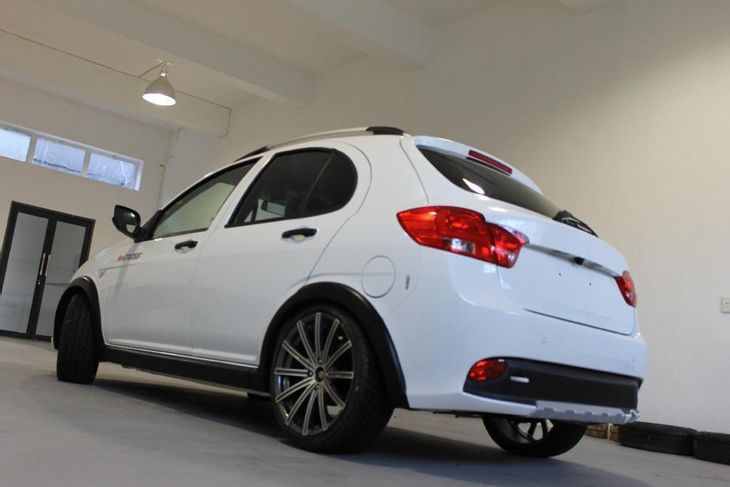
South African might soon have a new car brand, from Iran.
Mureza Auto Company has announced its intention to launch a hatchback locally, with funding from the UAE securing its operational capital.
This new venture will be debuting its Prim8 hatchback at the Automechanika show in Johannesburg, which opens this week.
What do we know about the Prim8? The platform and most of its engineering are sourced from Iran’s SAIPA group, which has been building vehicles on contract for the Iranian market since 1965.
The Prim8 features a 1.5-litre naturally-aspirated petrol engine, producing 87 kW. As one would expect from a hatchback of its size, the Prim8 is front-wheel drive.
Mureza is keen to offer comprehensive equipment levels with its Prim8. Its best trim option for the local range will include keyless entry, a seven-inch touchscreen infotainment system, SatNav, rear-view camera, parking sensors and air-conditioning.
You’ll also get electronic stability control, tyre-pressure monitoring, a powered driver’s seat and four airbags.
Price? Mureza isn’t confirming a specific retail structure but quotes a figure within the relatively narrow band of between R180 000 and R200 000 for the best-equipped Prim8.
What is particularly interesting about the Mureza Auto project, is how it intends to source and produce these Prim8s for the local market.
This Prim8 appears to be locked up in someone's office.
The initial assembly will commence in Rosslyn, with plans to expand to another facility in Zimbabwe. Mureza is also considering a revival of the former Hyundai assembly plant in Botswana. The latter is a viable option with geographic advantages, considering its proximity to the large South African and relatively robust Namibian new vehicle markets. Whether Zimbabwe will be capable of facilitating vehicle assembly and transhipment during its current economic crisis appears unclear.
Mureza is positioning the Prim8 in a very competitive market segment, which is dominated by the VW Polo Vivo and Toyota’s Etios. It will also face competition from Hyundai and Kia, which although smaller in size, have proven technology and an established South African presence.
The local hatchback market has not been kind to emerging brands. Tata tried. And failed. Most of the Chinese hatchbacks marketed in South Africa have been removed from the local market too. Mureza would have to do something extraordinary to achieve substantial sales volumes.
It is aiming for assembly volumes of 10 vehicles per day and hoping to grow that to 35 units. If Mureza’s assembly facility only runs on weekdays (which would be potentially unprofitable for an automotive assembly plant), that would put conservative monthly production at 200 Prim8s.
Don’t expect to see a Mureza dealership, though. To avoid the costly set-up infrastructure for countrywide distribution and dealership networking, Mureza plans to sell the Prim8 through used vehicle outlets. There is talk of an online sales channel too, but no clear details about this venture at the moment.
And the name? Well, ‘Mureza’ means The flag in Shona.
Audi has increased its rivalry with BMW by recruiting a board member of the Munich company as its new CEO.
Since Rupert Stadler was forced to leave his role at Audi in disgrace, the crucial source of profits for the VW Group has been managed by Bram Schot as an interim measure.
The man who will soon become substantive in his role as Audi’s new CEO is Markus Duesmann. Although it was expected that Duesmann was going to replace Stadler without disruption to organisational continuation, this has not been the case.
At the time when Duesmann was recruited by Audi, in late 2018, he oversaw BMW’s supplier network and purchasing. BMW enacted a blocking clause which exists within the German automotive industry, relating to highly skilled staff. This prevented Duesmann from leaving on his own timeline.
New developments have seen BMW relenting its position and Duesmann is expected to join Audi a few months earlier than anticipated – although still many months later than he originally wanted to. Duesmann’s official contract with BMW expires at the end of September, which could finally see him move officially into his new role as Audi CEO.
Who is Markus Duesmann and why do Audi want him so badly? Although his final board position at BMW was in supply chain, he is a veritable engine design genius.
Duesmann started his career at Mercedes-Benz, where he worked as a design engineer for the V12 development project (1992-1995). He was also in charge of Mercedes-Benz’s F1 engine development (2005-2006), before joining BMW, where he was entrusted with influential positions: as the engineer responsible for driving dynamics (2010-2012) and powertrain development (2012-2016).
From Duesmann’s impressive resume it is obvious that he possesses immense technical skills and project management abilities. As Audi looks to transition from internal-combustion to electric power, he would appear to be a very appropriate appointment as CEO.
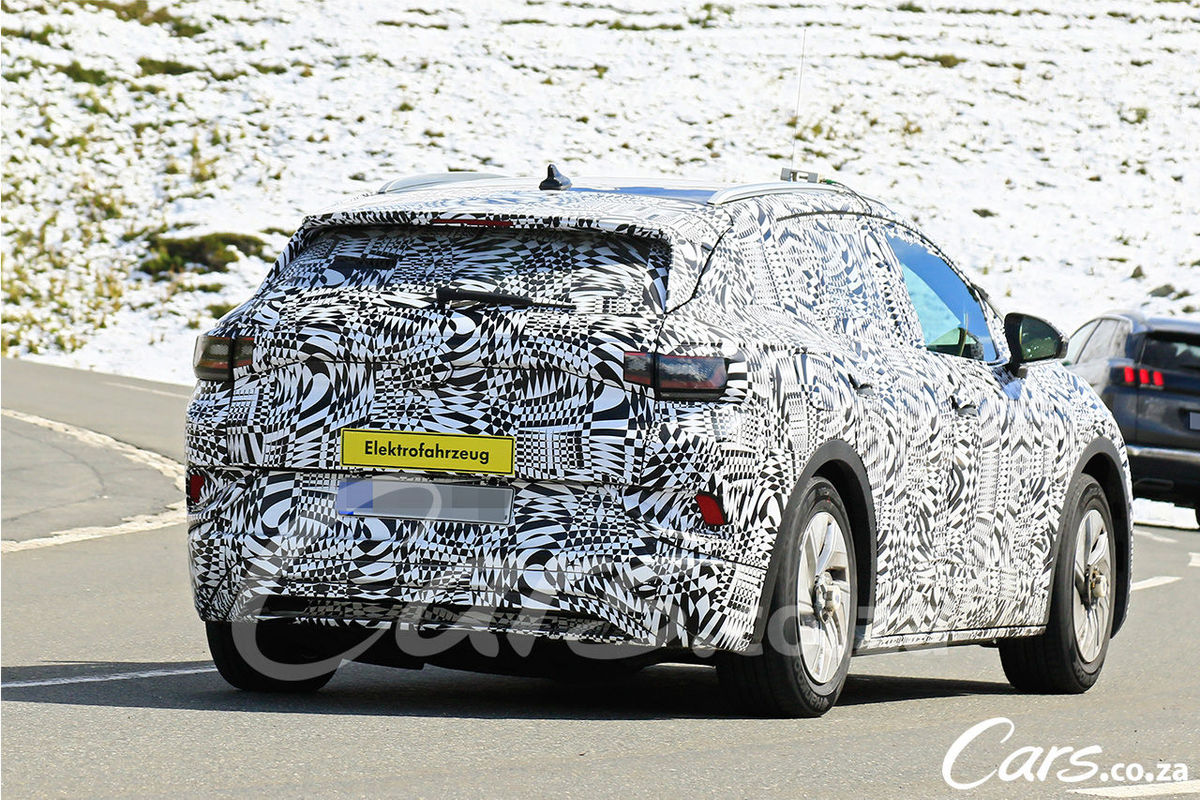
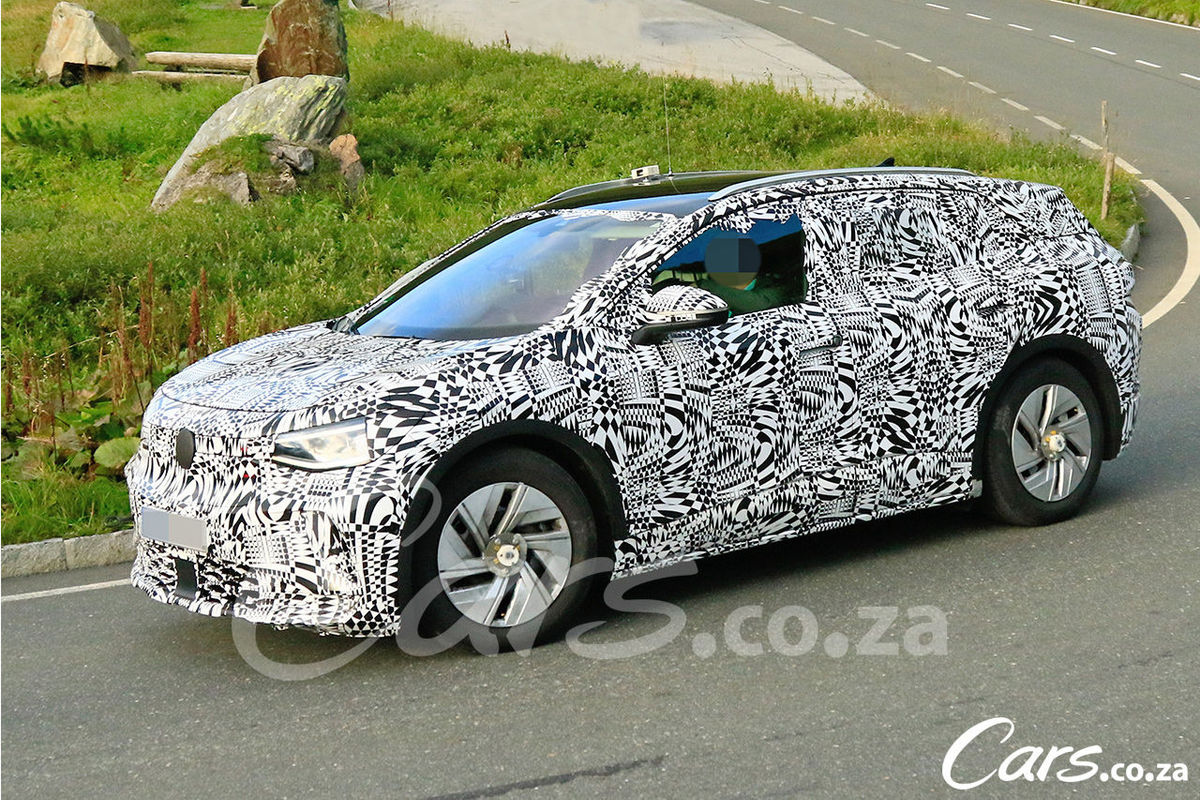
The Volkswagen electric assault has begun. We've now spotted the bigger ID4 Crozz testing and it's likely to come to SA too.
Images: S. Baldauf/SB-Medien?
Earlier in September, we saw the introduction of the first standalone electric Volkswagen, the ID3. It's a Golf-sized hatchback with 150 kW and a range of anywhere between 330 km and 550 km. You can read more about that here.
Now, the next electric model is in the testing phases. Our spies spotted this ID4 in the Alps. The ID4 is a high-riding SUV running on the same ID3 platform (MEB) but with more interior space and in the more desirable SUV shape. The ID4 is reckoned to be about the size of the current Tiguan but due to the superior packaging ability of electric cars has the interior space of a Tiguan Allspace.
Volkswagen will likely use a similar powertrain for the ID4 as it does in the ID3. Speculation exists that it could add a second electric motor to power the front wheels adding around 75 kW of extra power and making it all-wheel-drive.
Insiders at Volkswagen SA have told us that the ID4/Crozz will likely be introduced to SA before the ID3, which is slated for late 2021.
The all-new BMW X6 has only just been revealed, but that's not stopping BMW's M Division from teasing the mighty X6 M. From this video, we can see it also has drift mode!
While not much is known about the all-new BMW X6, BMW's M division released a teaser video which gives us plenty of clues. The video was filmed at BMW's test facility in France where a German TV personality is introduced to a heavily camouflaged X6 M prototype.
There are interviews with key engineers involved in the development of the vehicle, as well as some dynamic driving shots. There's a lot of censored speech and blurred components, which we're guessing confirms the fact it's an X6 Competition in the film. This vehicle is expected to have even more power than the standard X6 M as well as some unique trim options. There's no confirmation on engine, but we expect it to be a variation of the BMW twin-turbocharged 4.4-litre V8 motor with power outputs in the region of 450 kW and 750 Nm. The exciting part? During the drive, we get to see the all-new BMW X6 going sideways, which indicates it has drift mode, with all power heading to the rear wheels.
As for arrival, we estimate the BMW X6 M will be revealed by the end of 2019.
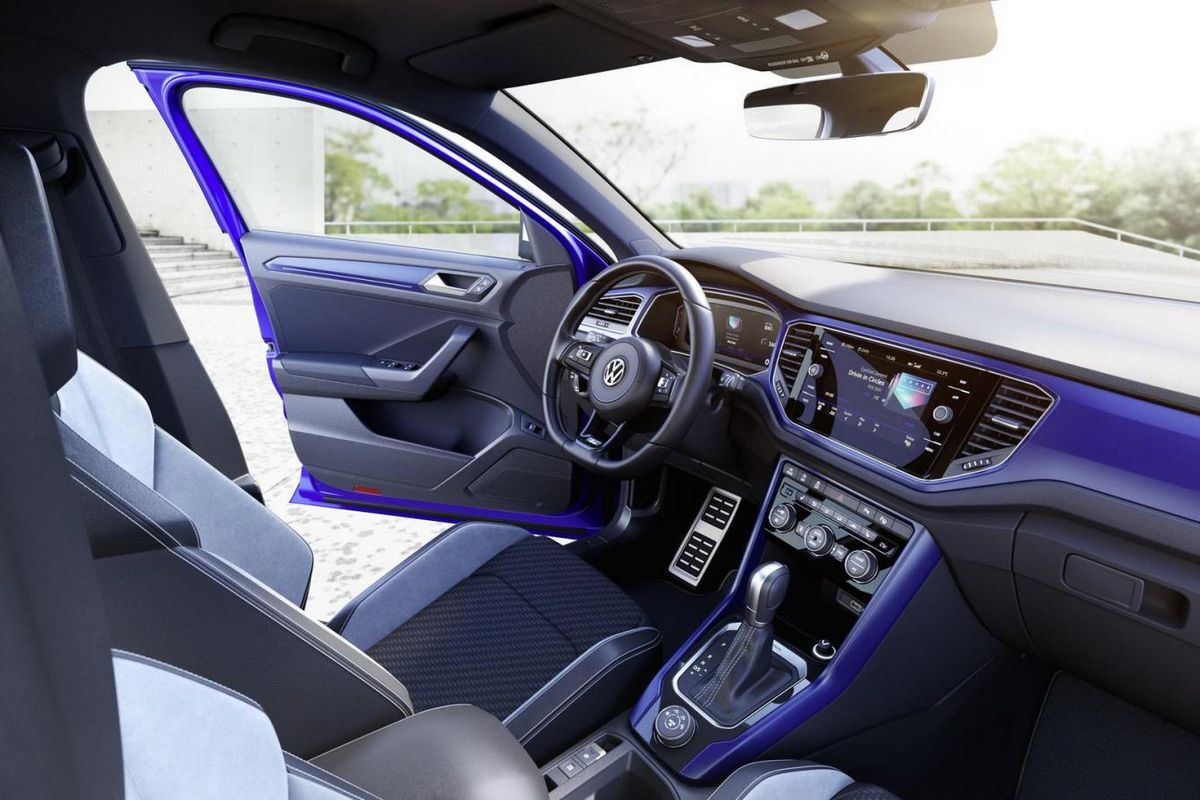
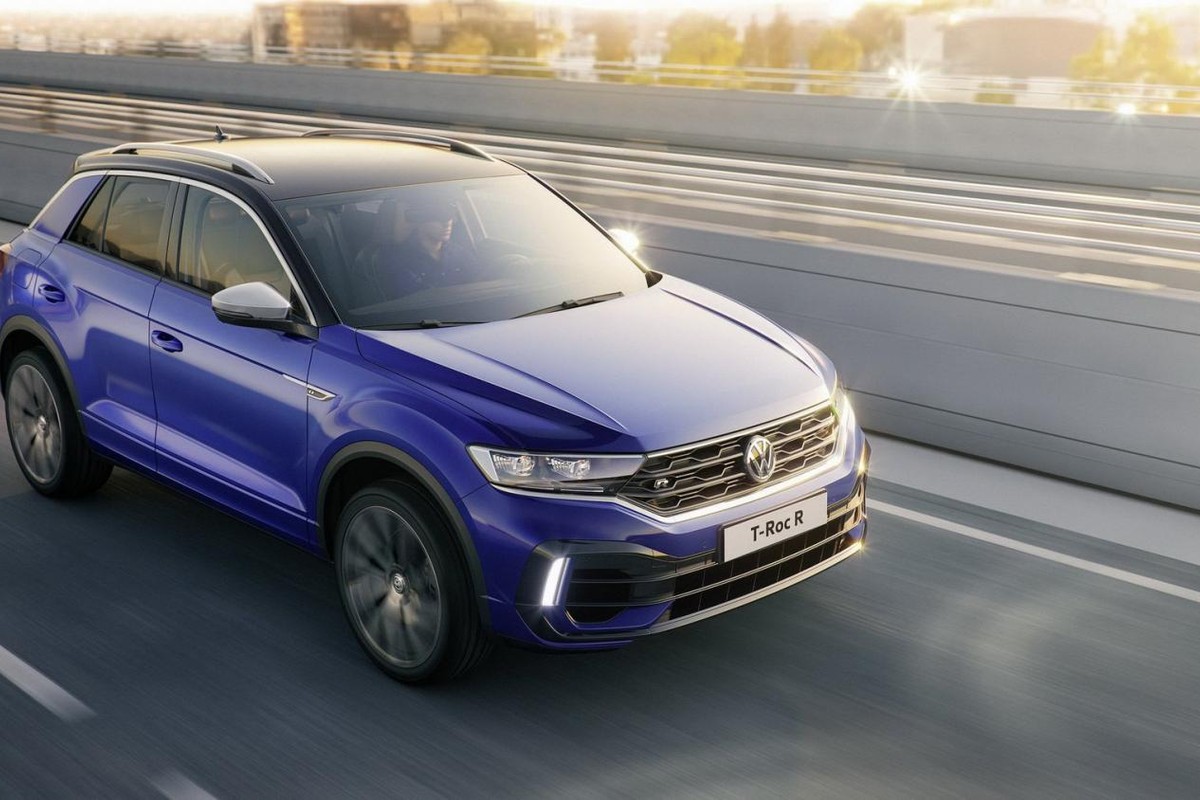
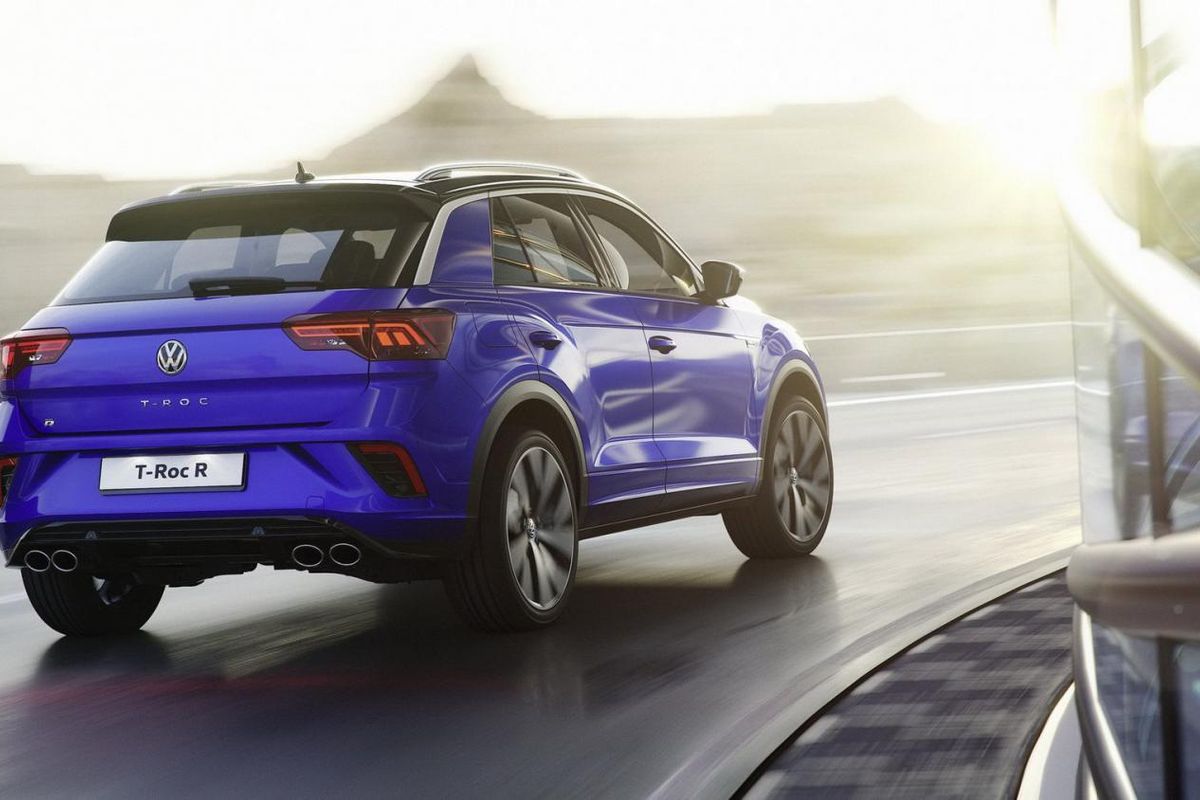
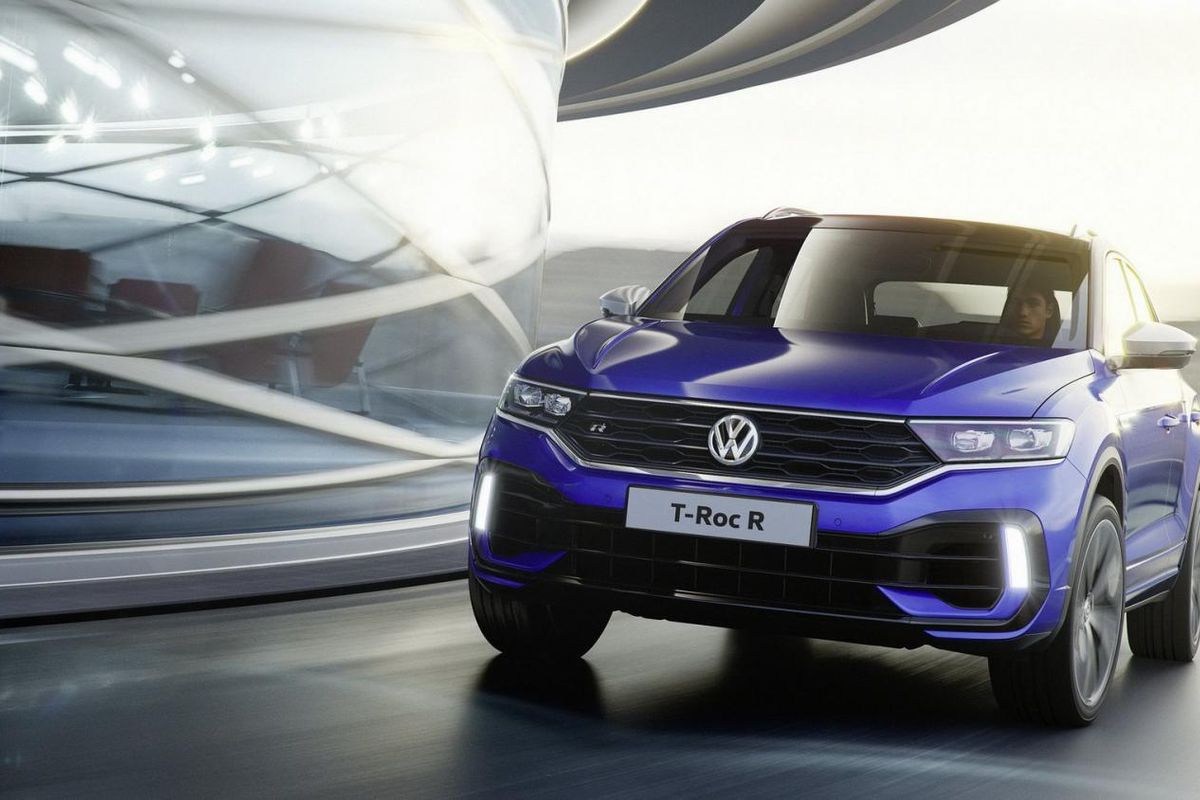
VW’s first R-specification SUV has commenced distribution in Europe, the launch location for its global rollout.
A bold new initiative for VW, the T-Roc R features a similar power – and drivetrain to what followers of the brand have come to expect from any Wolfsburg R-car: turbocharged 2-litre power and all-wheel drive.
In the T-Roc R application, there is a 220 kW 2-litre engine (which also boosts 400 Nm) and a seven-speed dual-clutch transmission.
With excellent traction, courtesy fo VW’s 4Motion all-wheel-drive system, the T-Roc R runs 0-100 kph in only 4.9 seconds. That is only a tenth slower than the current Golf R of similar power- and drivetrain configuration.
Compared to its more established GolfR sibling, the T-Roc R offers 30% more luggage capacity and superior all-surface driveability, thanks to nearly a third more ground clearance.
With Europe as its debut market, the pricing structure positions T-Roc R at a 6% premium to Golf R. With the current Golf R priced at R681 000 that would suggest T-Roc R could push the R700k barrier.
VW is expected to bring the T-Roc range to South Africa in 2020, although the viability of T-Roc R as part of that product offering is still being evaluated.
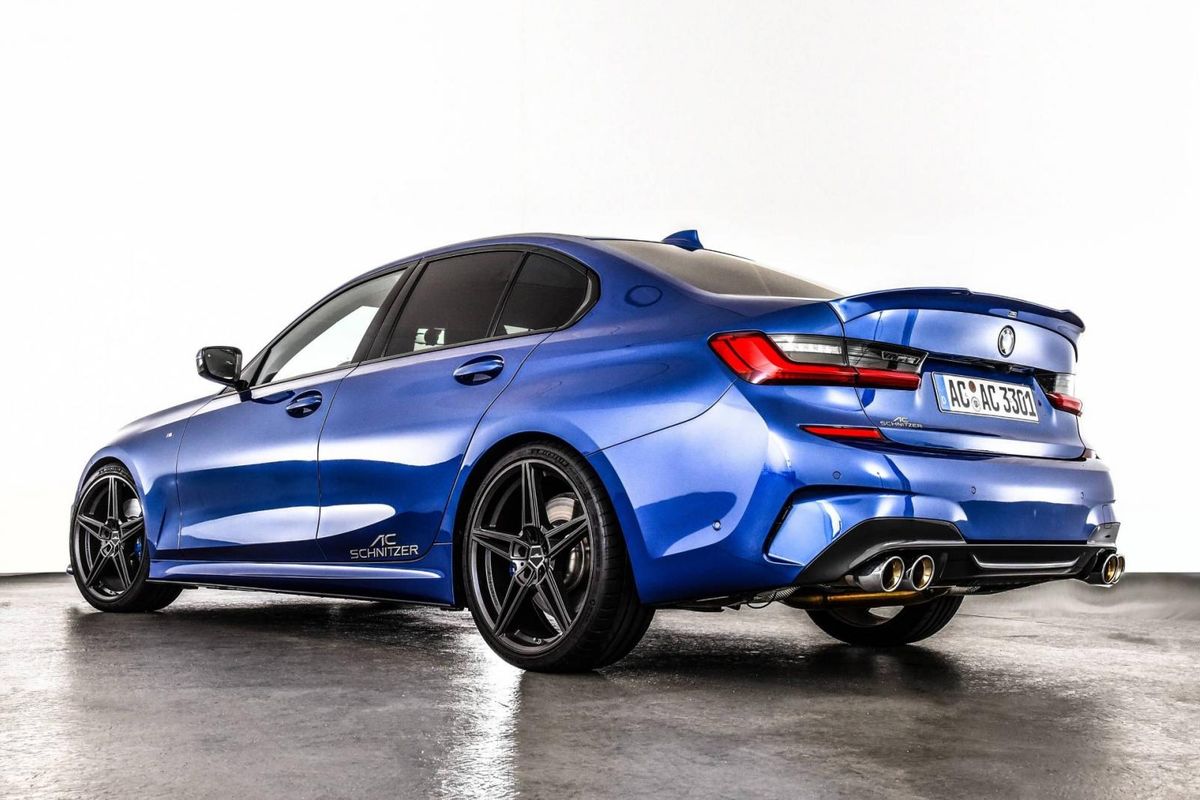
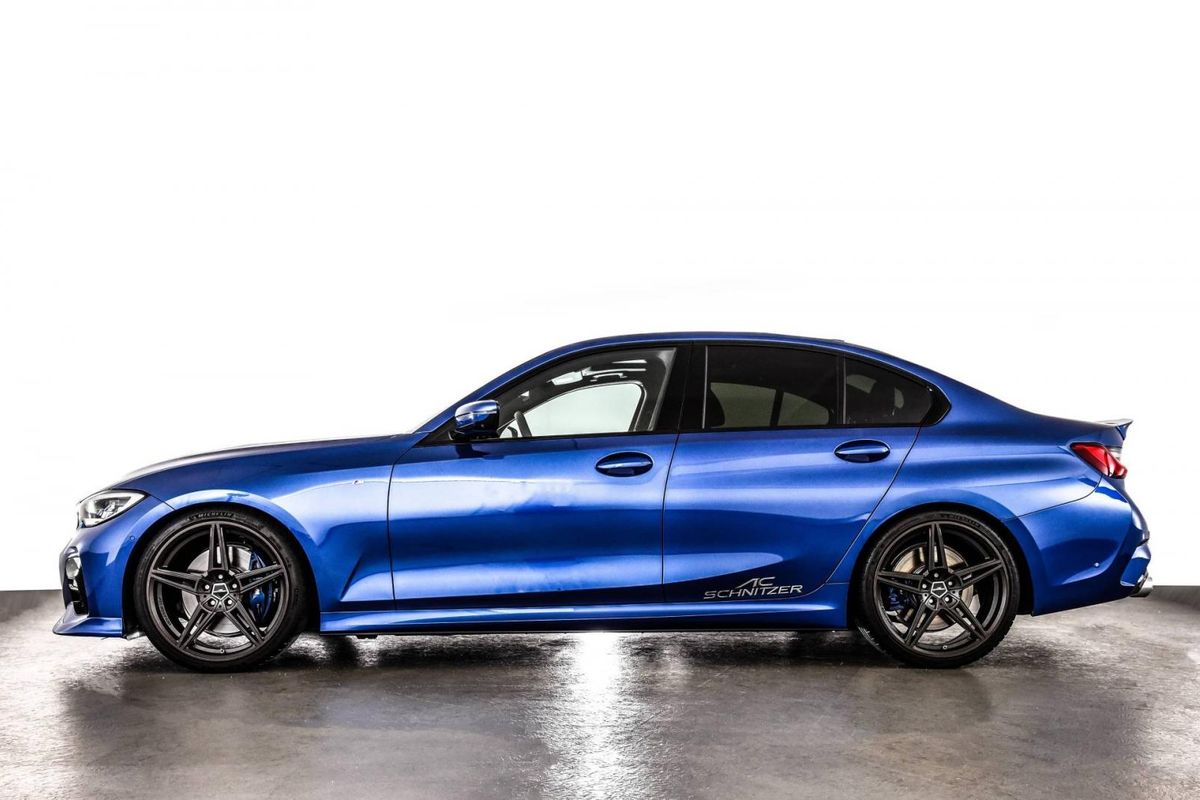
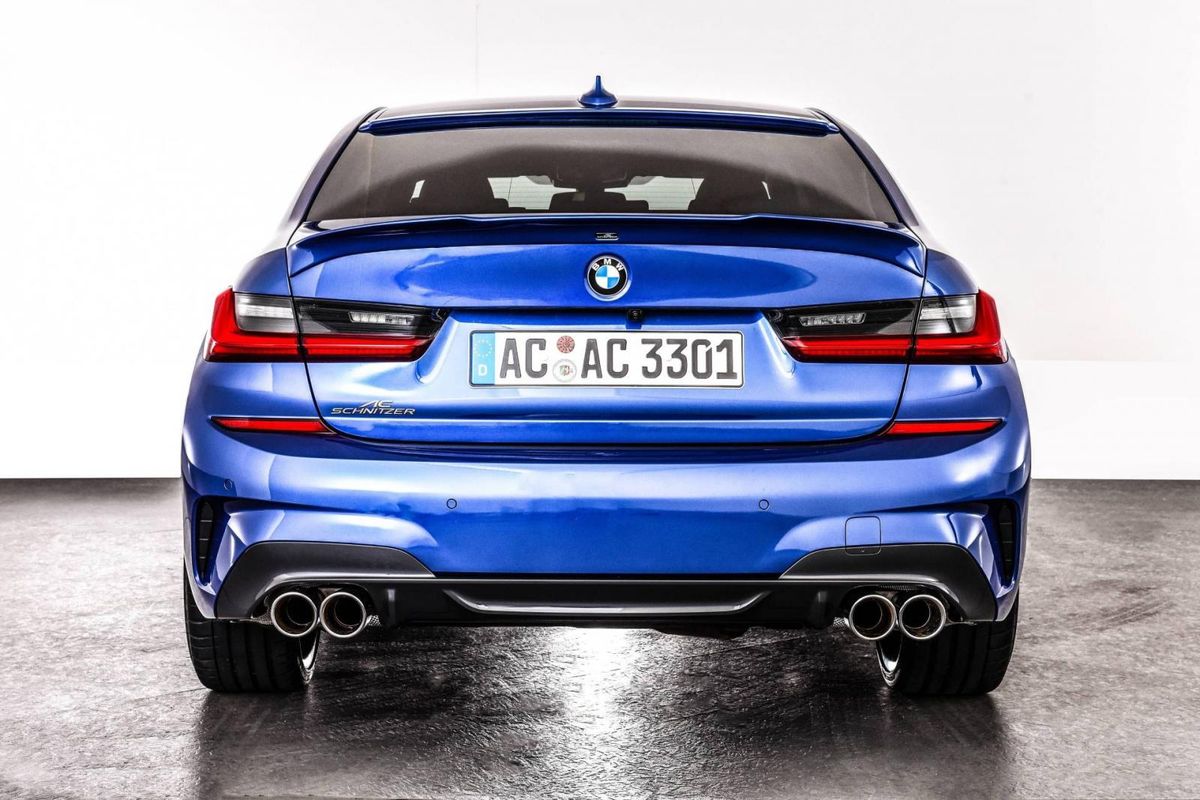
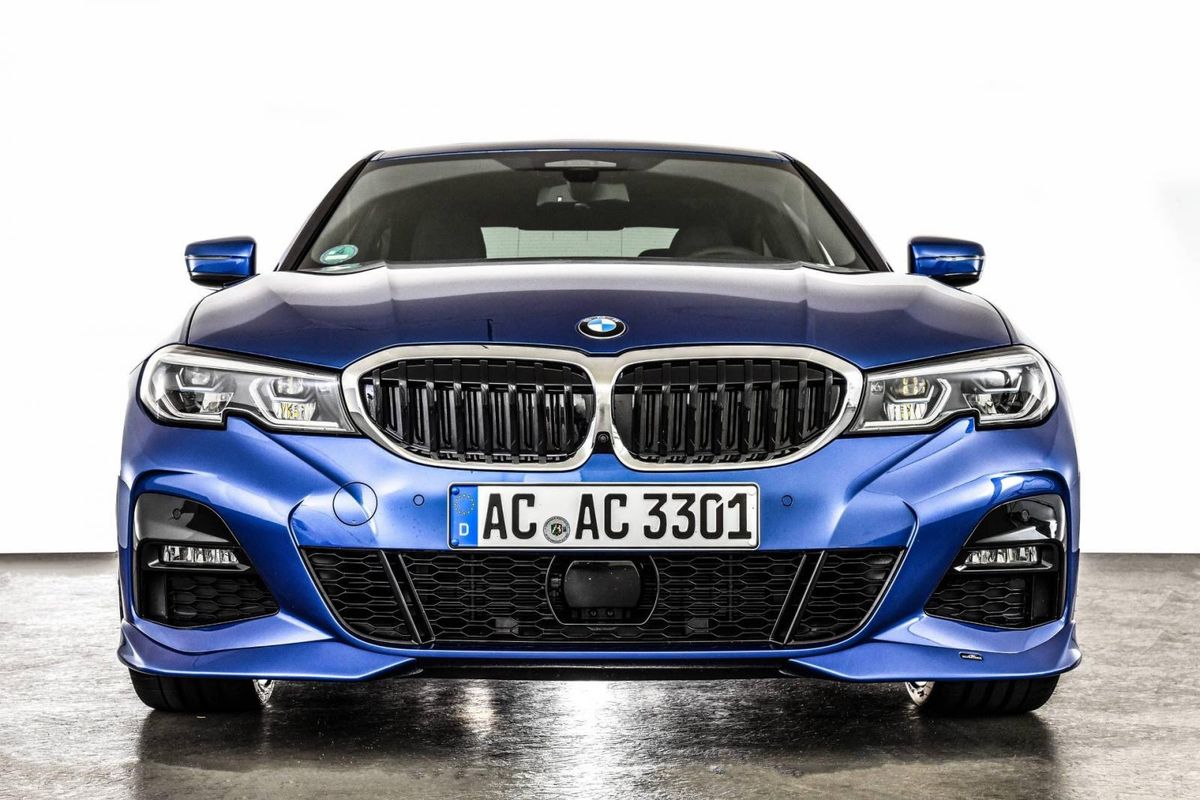
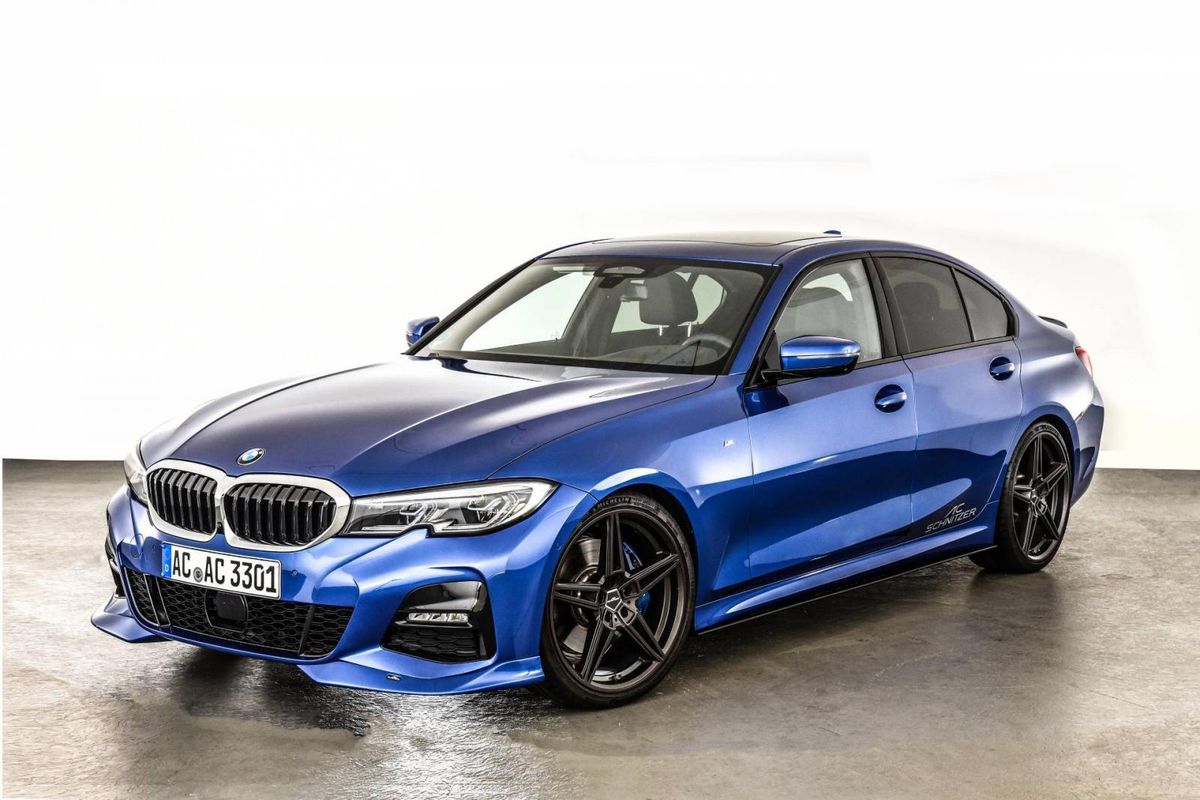
German tuner AC Schnitzer has released its kit for the latest iteration of BMW 3 Series. What do you make of the looks?
The German tuner has started rolling out its visual upgrades for the BMW 3 Series. While customers will have to wait a bit more for the eventual power upgrades, we get a good look at what the aftermarket specialist has achieved with the 3 Series. We understand that AC Schnitzer is working on adding some more horses to the 320i, 330i, M340i xDrive and the 330d.
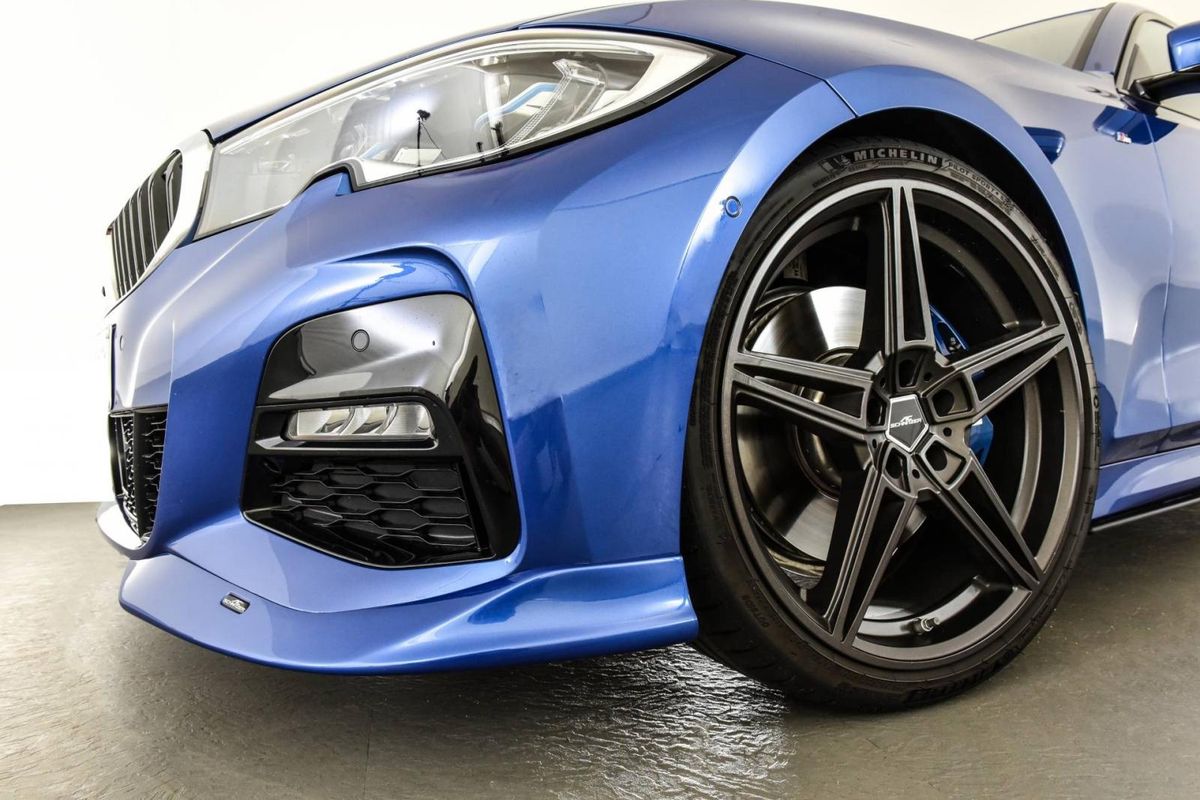
What you see here then is not just a 3 Series with a bodykit. There's a sportier suspension which lowers the car's ride height by 25 mm and AC Schnitzer claims the handling is improved without negatively affecting the ride quality. How striking are the wheels though? These AC1 alloy wheels are available in 19 and 20 inch, as well 2 choices of colour. The aero kit you see range from the front splitter and front spoiler, which the tuner claims improves downforce, to the roof spoiler and boot spoiler. Rounding off the package are tasteful side skirts.
For those wanting even more, AC Schnitzer will fit quad exhaust pipes in either Sport Carbon, Sport Chrome or Sport Black finish. Inside, the cabin receives aluminium gearshift paddles, aluminium pedals, aluminium footrest and a key holder, in yes you guessed it, aluminium. AC Schnitzer components are available in SA at selected BMW dealerships.
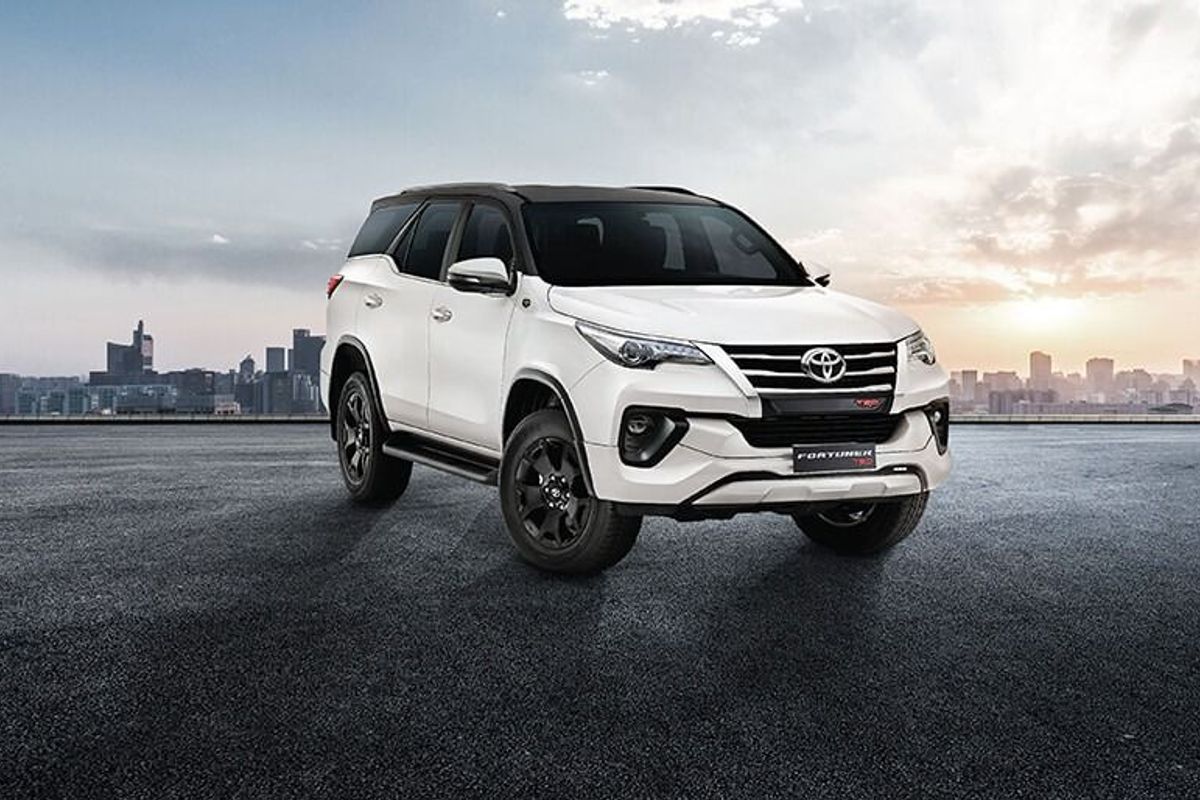
While this is an India-only model, this sporty-looking Toyota Fortuner TRD really looks the part. Here's hoping Toyota SA will take notes and make a version for SA customers.
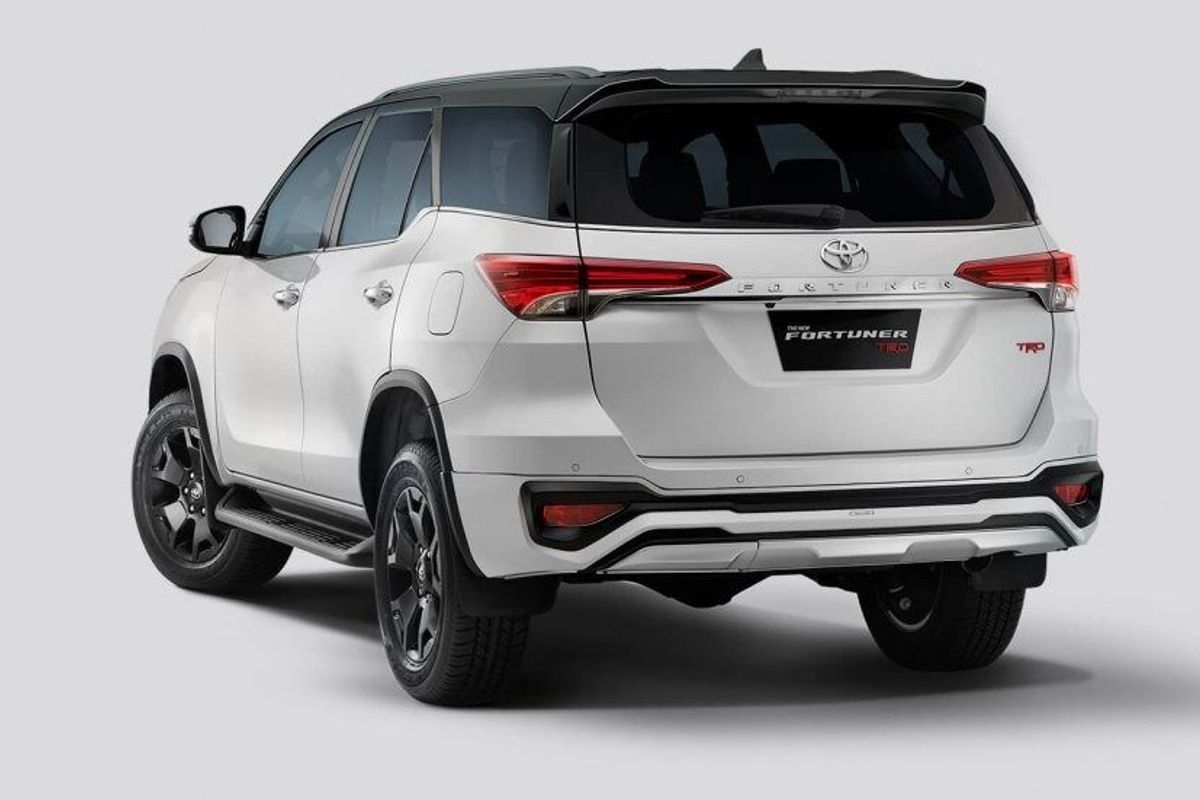
Toyota India calls this the Fortuner TRD Celebratory Edition to celebrate 10 years of the vehicle in the Sub Continent. Available only in 2.8-litre turbodiesel 4×2 automatic, the Fortuner TRD is offered in a 2-tone colour setup.
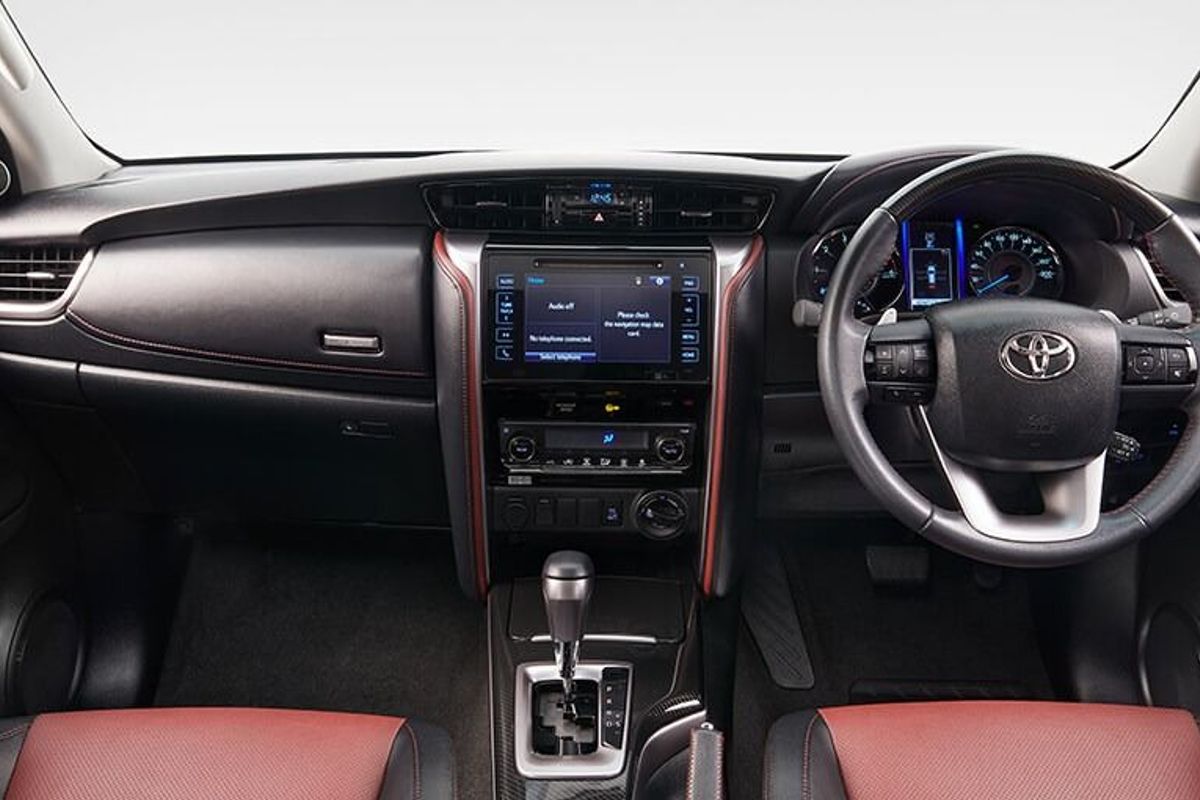
It also gets red TRD badges at the front and rear, as well as some attractive 18-inch TRD Sportivo alloy wheels which are finished in charcoal black. The vehicle is also fitted with blacked-out pillars and skid plates. The cabin also receives some sportier updates in the form of black and red colour theme with red stitching.
It's interesting to see the TRD badge still be slapped onto Toyota products when the Gazoo Racing (GR) brand is on the ascent. Do you think Toyota should look into making some Fortuner GR models?
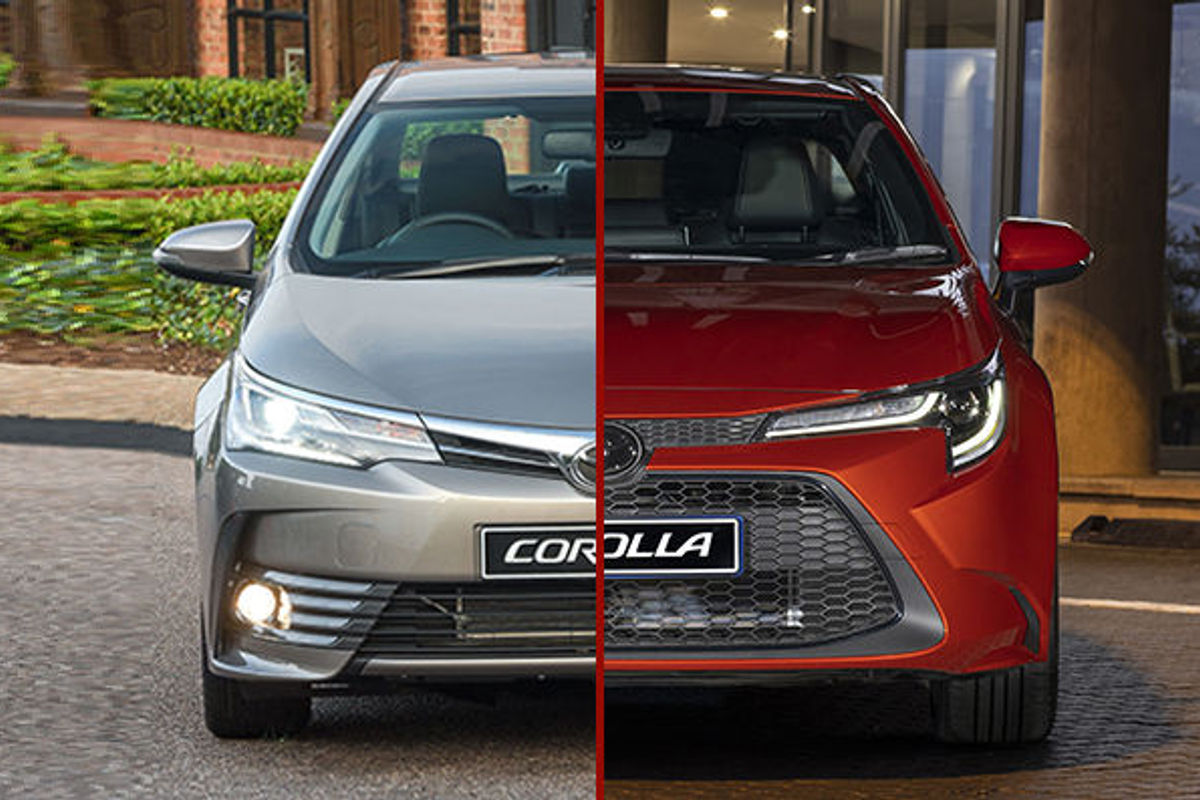
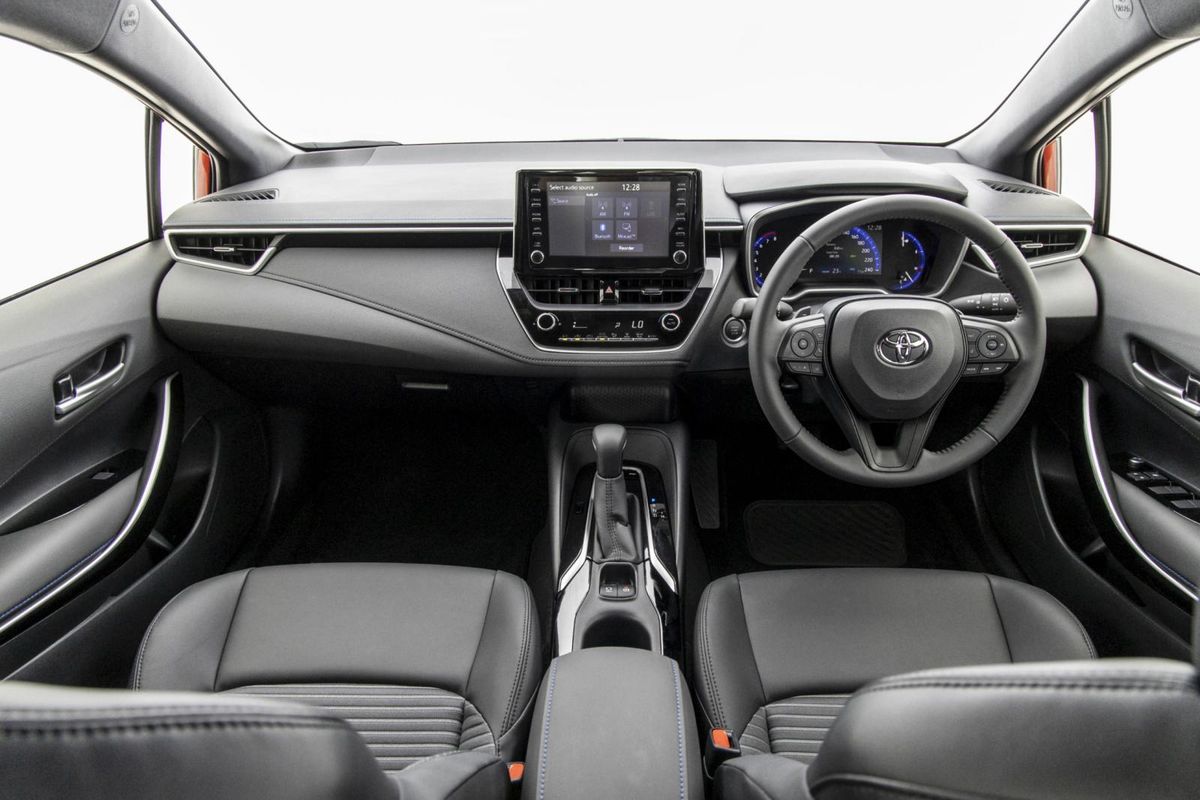
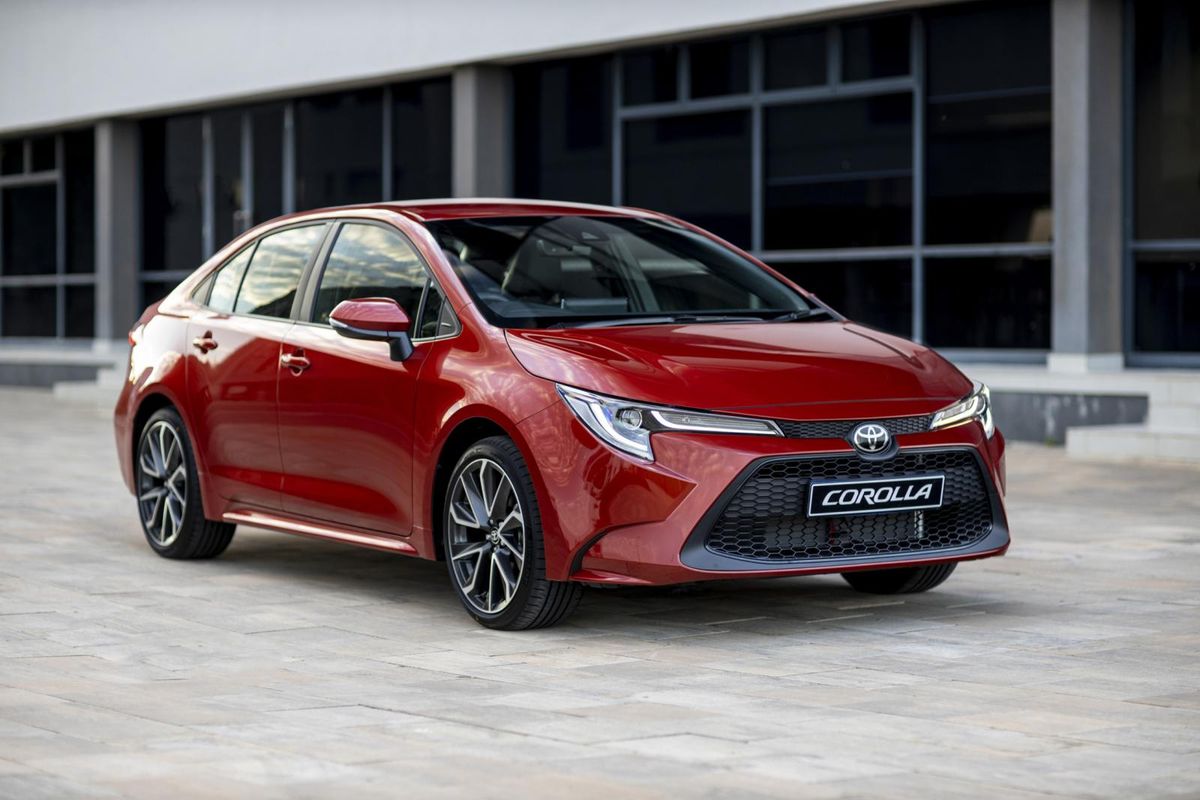
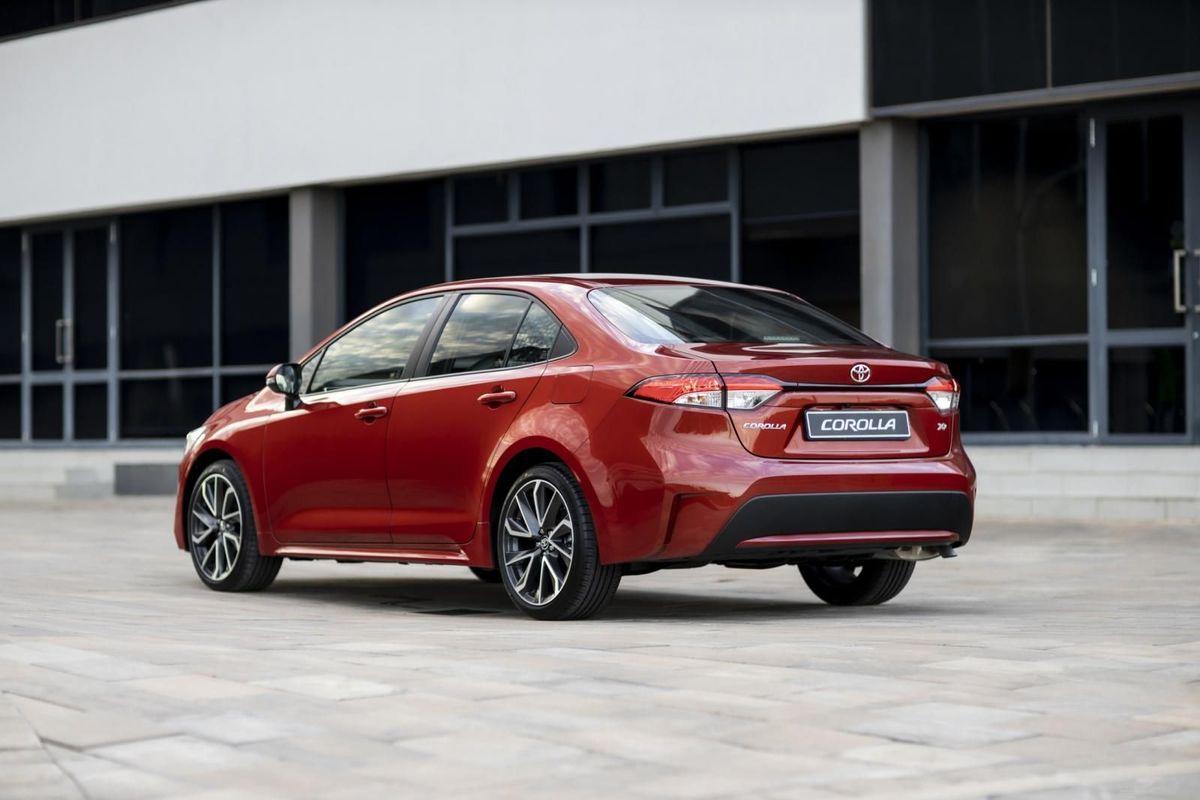
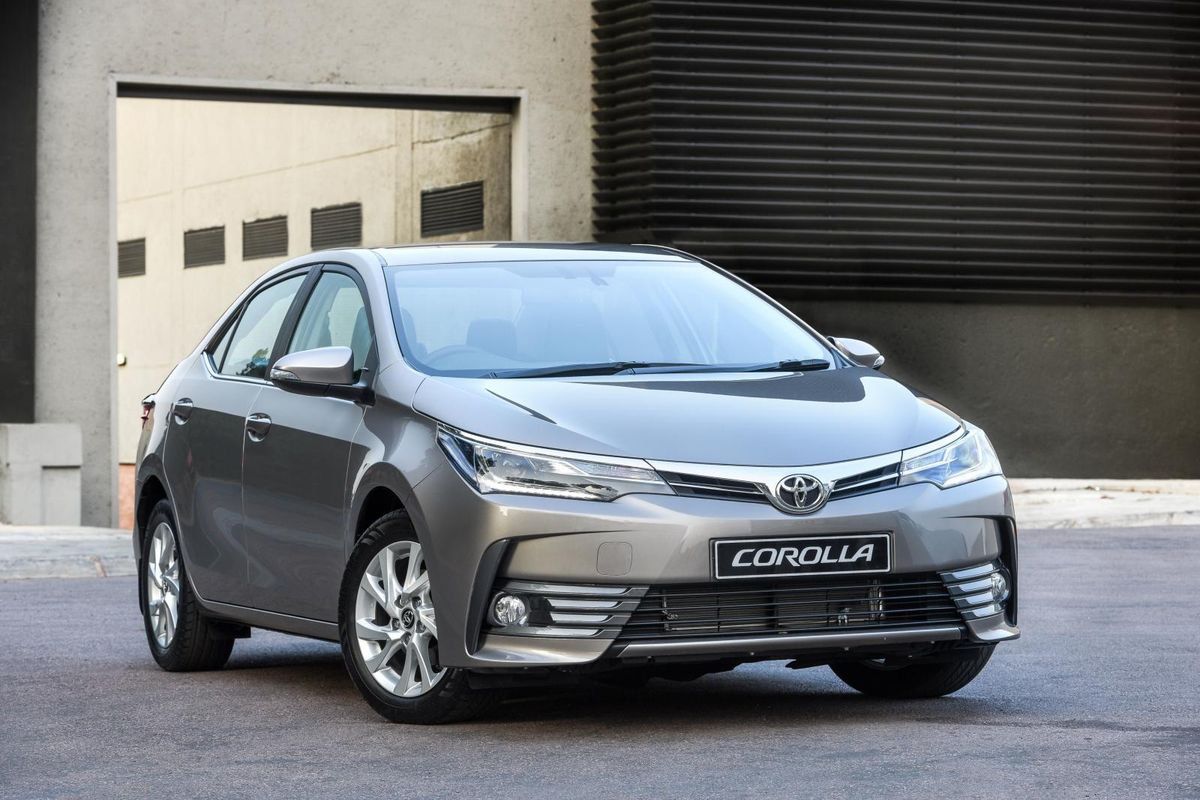
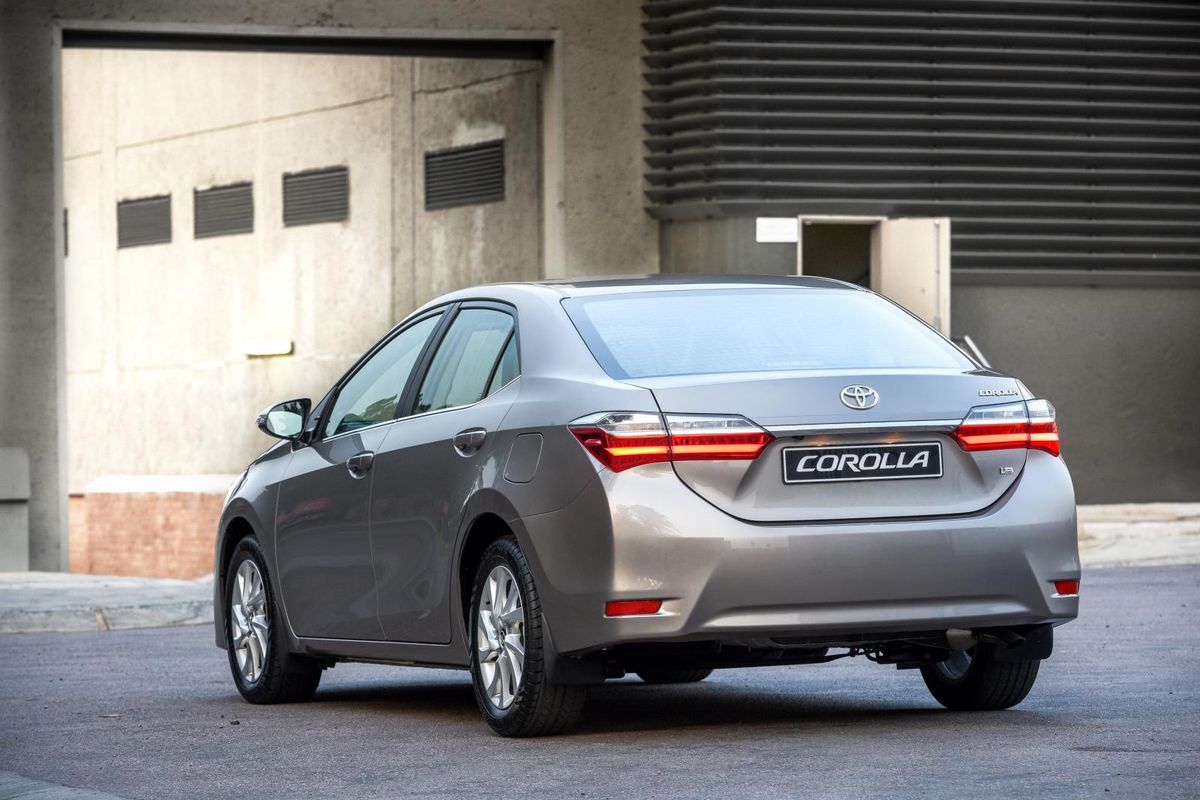
Toyota South Africa confirmed that it will be launching the Corolla sedan into our market in 2020. Here's what we know so far.
Underpinning the new Toyota Corolla sedan is the TNGA platform, which we've experienced extensively in the new Corolla hatchback, RAV4, C-HR and more. Not only does possess excellent ride and handling qualities, but refinement is on another level. So while the new Corolla sedan is aimed at the lower end of the market, it's going to drive in a more upmarket manner.
At 4 640 mm long, 1 780 mm wide and 1435 mm tall, the Toyota Corolla is a good-sized family sedan. Rear legroom looks impressive too, with the Corolla sedan's wheelbase sitting at 2 700 mm. Toyota claims ride comfort has been enhanced with a multi-link rear suspension that replaces the previous torsion beam setup.
In terms of engines, there are a few petrol and hybrid options. We've experienced the new 1.2-litre turbocharged 4-cylinder motor with 85 kW and 185 Nm, which proved capable of shifting the Corolla hatchback along pleasantly. Toyota also offers a new 2.0-litre, naturally-aspirated 4-cylinder mill pushes out a reasonable 126 kW and 205 Nm with the option of a manual, automatic or a CVT. This powertrain does duty in the RAV4 and while we weren't enamoured with its performance, we suspect that the lighter and more compact Corolla sedan will be more nimble.
When it launches in SA, expect a trim level lineup similar to that of the Corolla Hatchbach with nomenclature such as XS and XR. We'll have final clarity on specifications and arrival date early in 2020, while also answering the vital questions of whether it will be locally assembled as well as finding out the fate of the Corolla Quest.
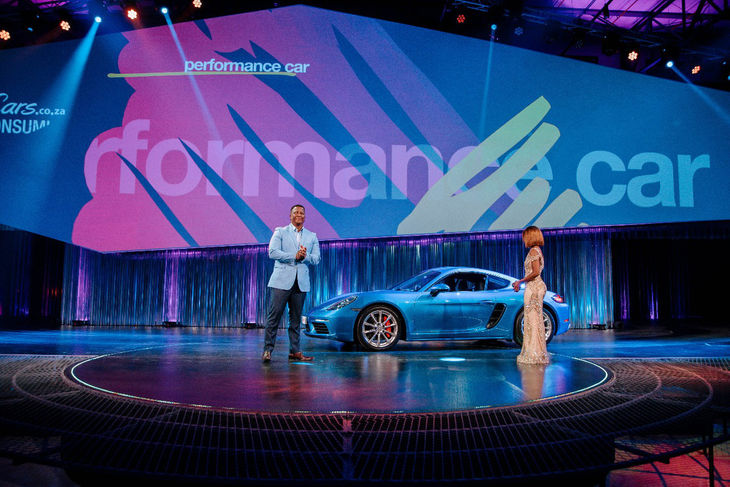
2019/20 Cars.co.za Consumer Awards – Powered by WesBank; Semi-Finalists
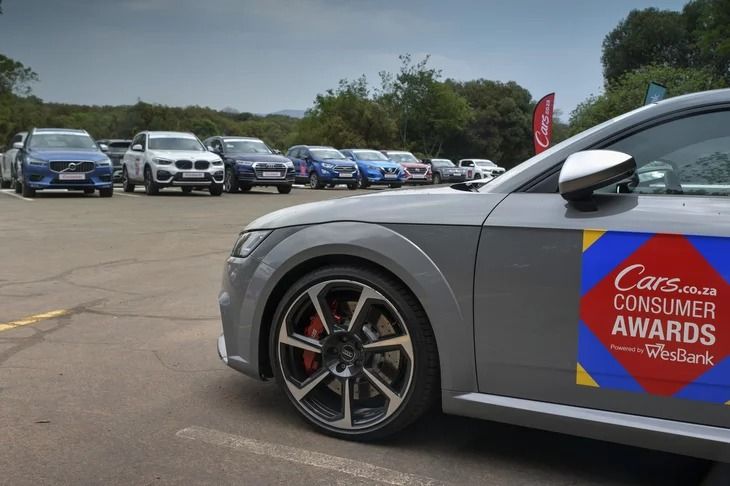
These are the semi-finalists of the 2019/20 Cars.co.za Consumer Awards – powered by WesBank. The 13 eventual category winners will be selected from this pool of 65 vehicles, which represent some of the best purchasing propositions in the new car market.
Conceived to be South Africa’s definitive automotive awards programme, which recognises the best purchasing propositions in respective categories of the new car market, #CarsAwards enters its 5th year – has steadily grown in stature, reach and influence with the support of WesBank, South Africa’s largest vehicle finance provider.
“Vehicle purchases are amongst the biggest that consumers are likely to make in their lifetime,” says Ghana Msibi, Executive Head of Sales and Marketing at WesBank. “Initiatives such as this offer credible opinions on the types of cars and features available in the market, and in so doing help consumers make informed decisions when choosing a new or used vehicle.”
The #CarsAwards is regarded as an energetic, impactful opening number on the automotive industry calendar.
The list of 65 semi-finalists includes model derivatives from no fewer than 24 brands represented in the South African market. All vehicles available on the South African market on September 1, 2019, were eligible, not only new products that were launched during the past 12 months.
The first phase of 2019/20 #CarsAwards saw the extended Cars.co.za editorial team select the 5 best vehicles in the 13 categories, some of which were specifically devised for this year’s programme. Careful attention was paid to the respective categories' "Filters of Eligibility" and the "Pillars of Success" in order to come to a consensus on the list of semi-finalists.
New categories reflect market changes
Compared with the 2018/19 #CarsAwards, the Executive Sedan category has been replaced with one that caters for premium-positioned crossovers. The former Hot Hatch category (now named Fun Hatch) encompasses more affordable contenders and the price caps for the Premium SUV and Performance Car segments have been raised.
“It is important to note that we analyse market changes proactively and adapt the categories to be better aligned with the South African consumer,” says Cars.co.za Consumer Experience Manager Hannes Oosthuizen. “With no new contenders in the Executive Sedan category, as well as very poor sales in that segment, we saw it fit to create a new category (to reflect growth and interest in upmarket crossovers) instead.
“Meanwhile there have been no new launches in the traditional hot hatch category, but there has been activity at a lower price point, so we've created a new category called Fun Hatch. Plus, given the rapidly rising prices of cars, we believe that sticking to a R1-million barrier for our Premium SUV and Performance Car categories is no longer practical.”
Volkswagen leads the charge again
Even though as many as 24 brands’ vehicles feature in the list of 65, 5 marques have more than 3 semi-finalists in the running for category honours. As was the case at this stage last year, Volkswagen has the most representatives (8), followed by BMW (6) and Audi, which has 5, although the A1 Sportback 40TFSI S Line derivative is notably a semi-finalist in 2 separate categories. Ford (5) and Toyota (4) round out the major manufacturers.
To gain a greater understanding of how the #CarsAwards work, go here.
Full list of 2019/20 #CarsAwards semi-finalists
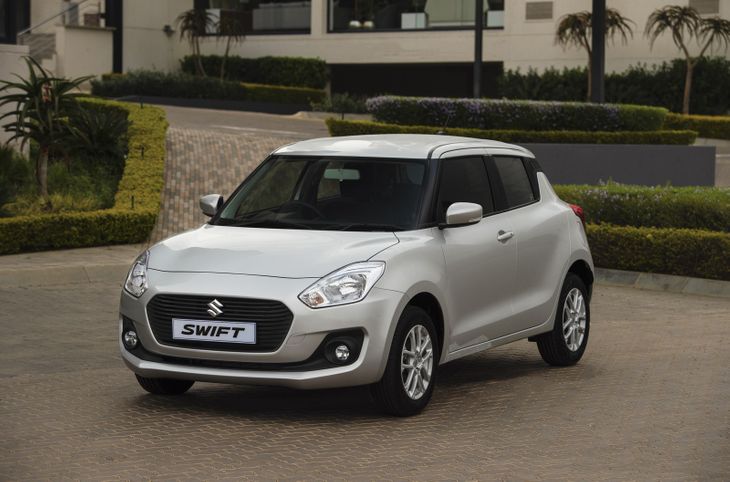
The recently introduced Suzuki 1.2 GLX replaces its sibling (and 2018/19 #CarsAwards category winner) in this year's list.
Budget Car
Kia Picanto 1.2 Style
Renault Sandero Stepway Expression
Hyundai Grand i10 1.0 Fluid
Suzuki Swift 1.2 GLX
VW Polo Vivo Trendline
For more info on the category's criteria and semi-finalists, click here.
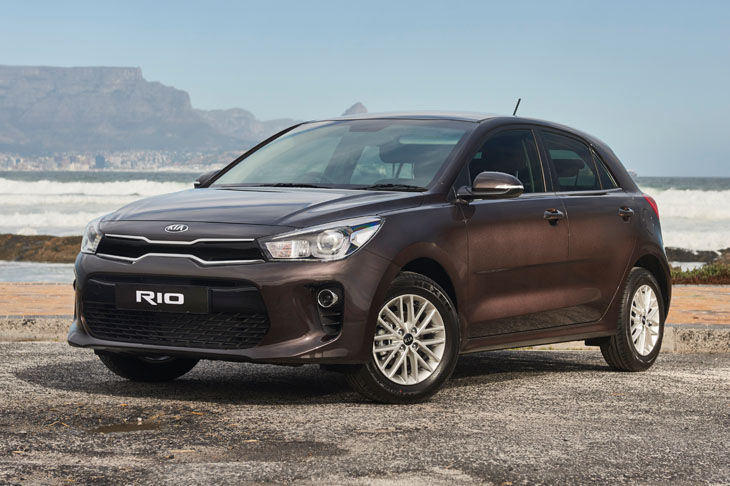
The mid-spec Kia Rio 1.4 EX has charmed its way into the semi-finalist line-up in the Compact Hatch category.
Compact Hatch
VW Polo 1.0 TSI Comfortline
Nissan Micra turbo Acenta Plus
Mazda2 1.5 Individual Auto
Kia Rio 1.4 EX
Ford Fiesta 1.0 Trend Auto
For more info on the category's criteria and semi-finalists, click here
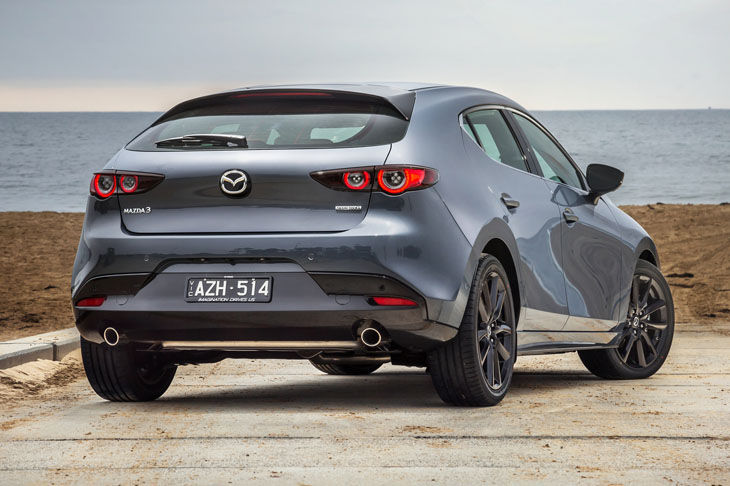
The Premium Hatchback- replaces the Premium Compact category; the new Mazda3 2.0 Astina is one of the semi-finalists.
Premium Hatch
VW Golf GTI
Audi A1 Sportback 40TFSI S Line
Mercedes-Benz A200 AMG-Line
Mazda3 2.0 Astina
Mini Cooper S Hatch 5-Door Sports Auto
For more info on the category's criteria and semi-finalists, click here.
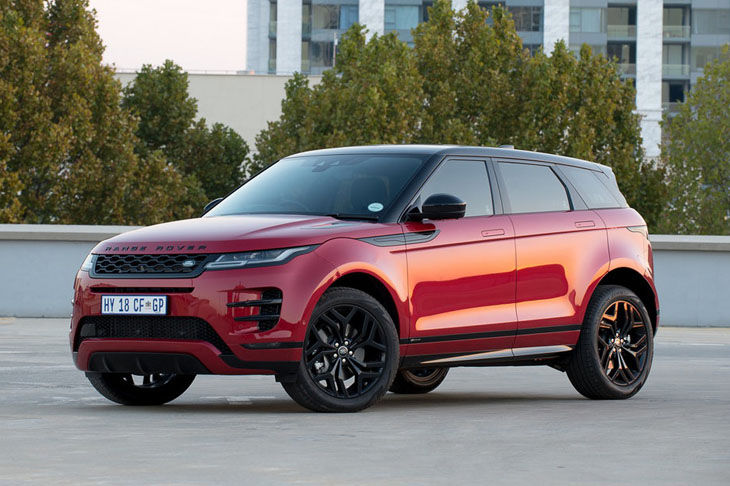
Could the Range Rover Evoque supersede the Volvo XC60 as the champion in the Executive SUV category?
Executive SUV
Volvo XC60 D5 R-Design
Audi Q5 40 TDI Sport quattro
BMW X3 xDrive20d M-Sport
Range Rover Evoque D180 R-Dynamic SE
Mercedes-Benz GLC 220d AMG-Line
For more info on the category's criteria and semi-finalists, click here.
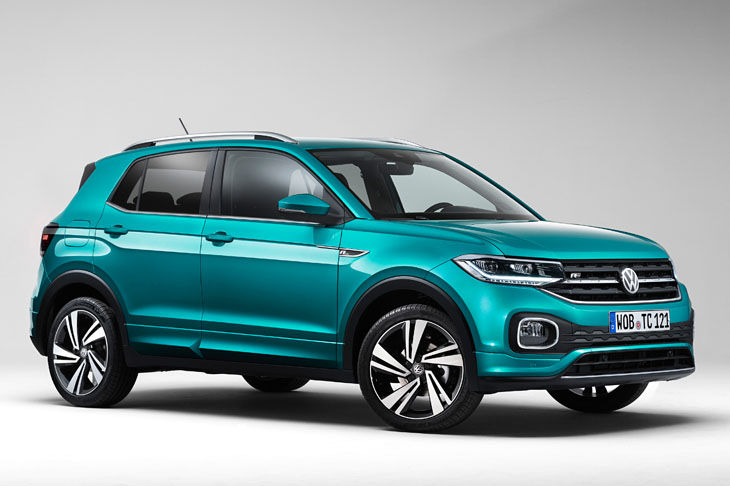
The eagerly anticipated Volkswagen T-Cross was launched in South Africa shortly before our September 1 cut-off date.
Compact Family Car
Ford Ecosport 1.0 Titanium Auto
Opel Crossland X 1.2 Turbo Enjoy Auto
Renault Duster 1.5 dCi Prestige
Suzuki Vitara 1.4T GLX Auto
VW T-Cross 1.0 TSI 85kW Highline R-Line
For more info on the category's criteria and semi-finalists, click here.
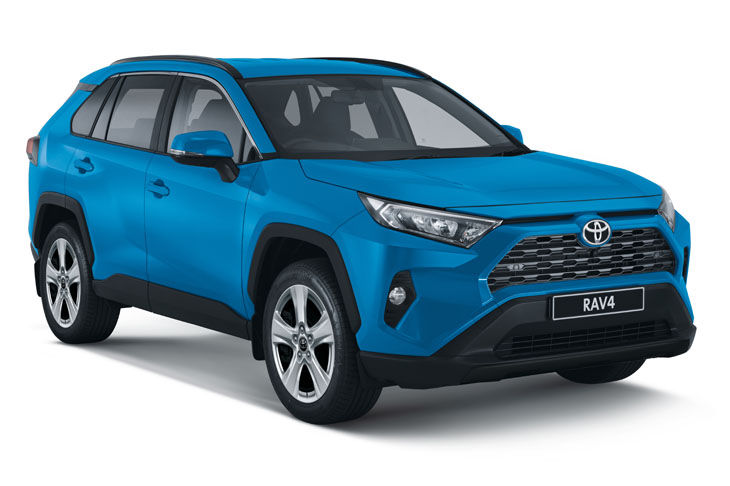
The 2.0 GX-spec Toyota RAV4 is a popular derivative on the new vehicle market… Will it unseat the Volkswagen Tiguan in this category?
Family Car
Mazda CX-5 2.0 Dynamic Auto
Peugeot 3008 2.0 HDI Allure
Subaru Forester 2.0i-S ES
Toyota RAV4 2.0 GX Auto
VW Tiguan Allspace 1.4 TSI Trendline
For more info on the category's criteria and semi-finalists, click here.
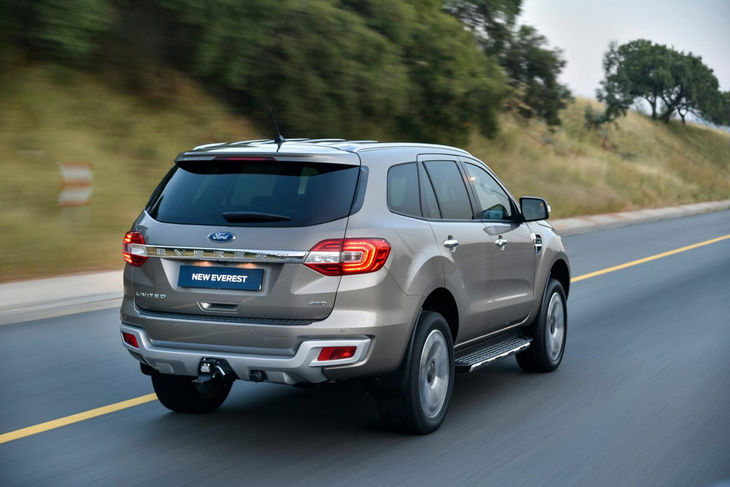
Armed with a new 2.0-litre bi-turbodiesel and a host of onboard and safety technologies, the top-spec Ford Everest in a strong contender.
Adventure SUV
Ford Everest 2.0 Bi-Turbo 4WD Limited
Haval H9 Luxury
Isuzu M-UX 3.0 4WD
Mitsubishi Pajero Sport 2.4 D4 4×4
Toyota Fortuner 2.8GD-6 4×4 Auto
For more info on the category's criteria and semi-finalists, click here.
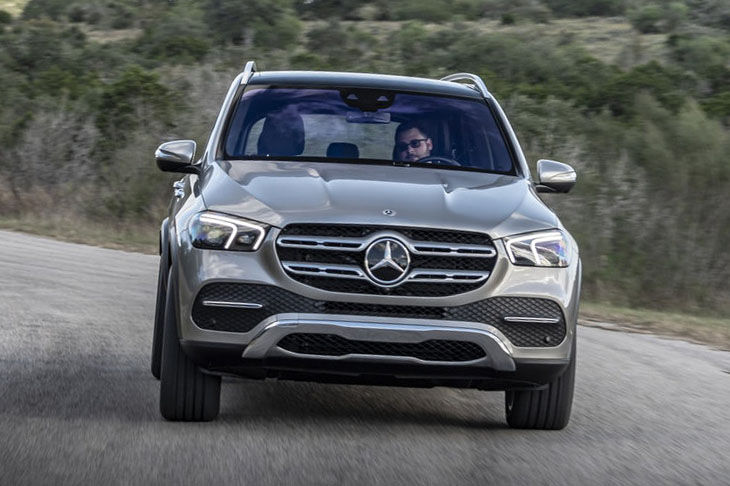
The new Mercedes-Benz GLE features myriad improvements over its predecessor, but picking a winner in this category is tough.
Premium SUV
Audi Q8 55 TFSI quattro
BMW X5 xDrive30d M-Sport
Range Rover Velar D300 R-Dynamic HSE
Mercedes-Benz GLE 400d 4Matic AMG-Line
Volvo XC90 T8 Twin-Engine R-Design
For more info on the category's criteria and semi-finalists, click here.
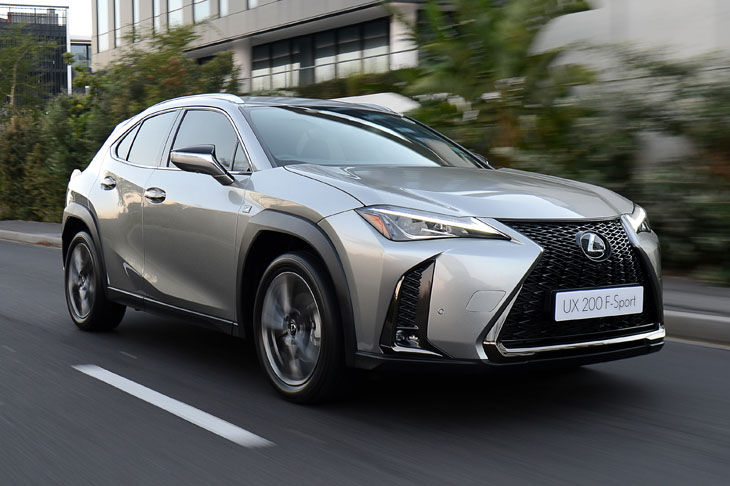
Lexus returns to the #CarsAwards semi-finalists list with its new UX, which has garnered notable critical acclaim.
Crossover
Volvo XC40 D4 R-Design
Audi Q3 35 TFSI S Line
Jaguar E-Pace D180 AWD R-Dynamic
Lexus UX 200 EX
Mini Countryman Cooper S sports-auto
For more info on the category's criteria and semi-finalists, click here.
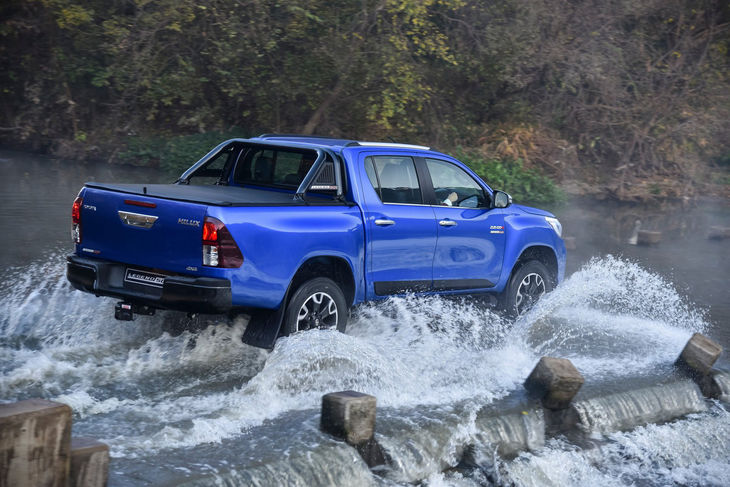
The Toyota Hilux Legend 50 and updated Ford Ranger hope to unseat the defending champion, Volkswagen's Amarok 3.0 V6 TDI.
Leisure Double-Cab
Toyota Hilux 2.8 GD-6 Legend 50 4×4 Auto
Ford Ranger 2.0 BiTDi Wildtrak 4×4 Auto
Mitsubishi Triton 2.4 DI-D 4×4 Auto
VW Amarok 3.0 V6 TDI Highline 4Motion
Isuzu D-Max 3.0 TD 4×4 LX Auto
For more info on the category's criteria and semi-finalists, click here.
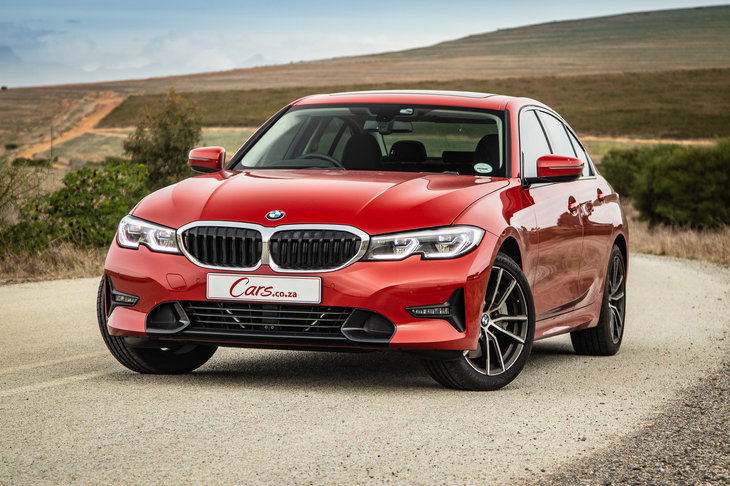
With its new G20-generation 3 Series, BMW has not 1, but 2, semi-finalists in the Business Class category.
Business Class
BMW 320d Sport Line
BMW 330i Sport Line
Mercedes-Benz C300 AMG Line
VW Arteon 2.0 TSI 4Motion R-Line
Audi A5 40 TFSI Sport
For more info on the category's criteria and semi-finalists, click here.
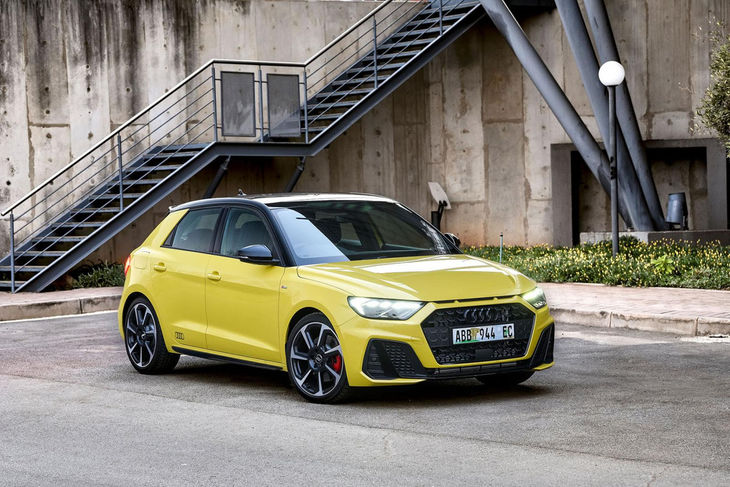
The new Audi A1 Sportback is a bigger, more sophisticated and characterful offering. The 40 TFSI S Line is a semi-finalist in 2 categories!
Fun Hatch
VW Polo GTI
Suzuki Swift Sport 1.4T
Audi A1 Sportback 40 TFSI S Line
Opel Corsa GSi
Mini Cooper S Sports-Auto
For more info on the category's criteria and semi-finalists, click here.
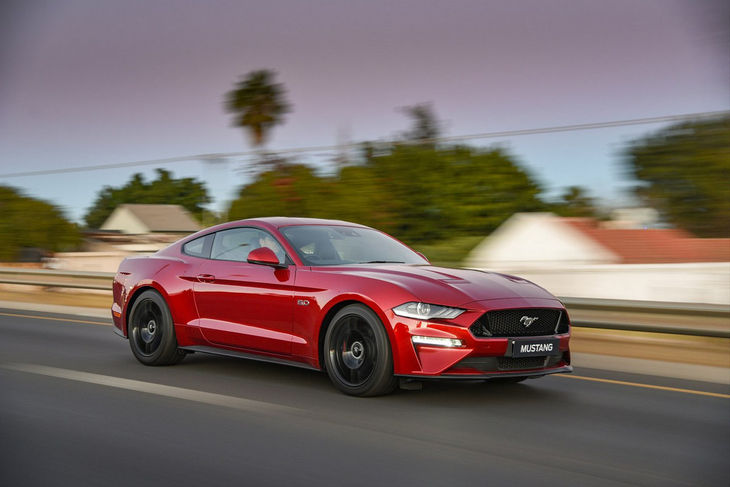
The Ford Mustang utilises a mix of olde-worlde charm and bags of nostalgic appeal to combat the might of Germany (and Japan).
Performance Car
Toyota GR Supra 3.0T
BMW M2 Competition M-DCT
BMW Z4 M40i
Ford Mustang GT 5.0
Porsche Cayman GTS
Visit CarsAwards.co.za for more info on all the #CarsAwards categories & semi-finalists.
In the next round (due to take place in October 2019), the extended Cars.co.za editorial team will score the semi-finalists individually, taking into account various criteria set out for each of the respective categories. Following that, the top three finalists per category will be announced and subjected to back-to-back testing at Gerotek in Gauteng by the combined judging panel (the 7 Cars.co.za editorial team members and 14 respected guest judges from various backgrounds and fields of expertise) in November 2019.
2019/20 #CarsAwards combined judging panel (in alphabetical order):
Aluta Maqoko (The Kolloquium), Ashley Oldfield (Cars.co.za), Brenwin Naidu (Sowetan & Sunday Times), Ciro de Siena (Cars.co.za), Claire Mawisa (Carte Blanche), Dasen Thathiah (eNCA), David Taylor (Cars.co.za), Ernest Page (SA Car Fan), Gero Lilleike (Cars.co.za), Jacob Moshokoa (947/EWN), Juliet McGuire (Freelance), Khulekani Dumisa (Khulekani on Wheels), Khutso Theledi (YFM), Kojo Baffoe (freelance), Lerato Matebese (Driven), Mike Fourie (Cars.co.za), Nafisa Akabor (Tech Journalist), Phuti Mpyane (The Petrosexual), Thami Masemola (In4Ride), Wendy Knowler (Consumer Specialist) and Wezile Bonani (Bay FM). To learn more about the judges' backgrounds, click here.
The 21 judges’ scores for each of the 39 finalists will only count for 50% of the final standings, however. The other 50% will be based on rankings that the respective vehicle brands represented by the finalists achieved in the Cars.co.za Ownership Satisfaction Survey, conducted in partnership with data specialists Lightstone Consumer. The data incorporates feedback from thousands of vehicle owners, based on their experiences of their vehicles (less than five years old and serviced through franchised outlets).
Cars.co.za editorial and guest judges test #CarsAwards finalists back to back, but the public has an equally-big say.
“The Cars.co.za Consumer Awards – powered by WesBank is designed to be a guide for all new passenger vehicle buyers, not only those who follow motoring publications," Oosthuizen concludes. “With 50% of the final scores determined by brands’ rating in the survey, a vehicle only really stands a very good chance of winning if it is a good product in the eyes of the judges and if its brand delivers solid after-sales service.
It goes without saying that ongoing public participation in the Ownership Satisfaction Survey enables Cars.co.za to deliver the most relevant and accurate data-driven insights to consumers. The survey also represents a golden opportunity for owners to have a say in the outcome of the 2019/20 #CarsAwards.
Ford welcomed an extensively facelifted version of its iconic Mustang sports car to South Africa earlier this year and we were eager to find out if the sum of these changes had strengthened the muscle car's purchasing proposition…
We Like: Engine sound, performance, styling, generous spec
We Don’t Like: 10-speed auto detracts from driving experience, ongoing interior build quality issues
Fast Facts
Price: R915 800 (as of September 2019)
Engine: 5.0-litre V8
Power/Torque: 331 kW/529 Nm
Transmission: 10-speed automatic
Fuel Consumption (claimed): 12.1 L/100 km
What is it?
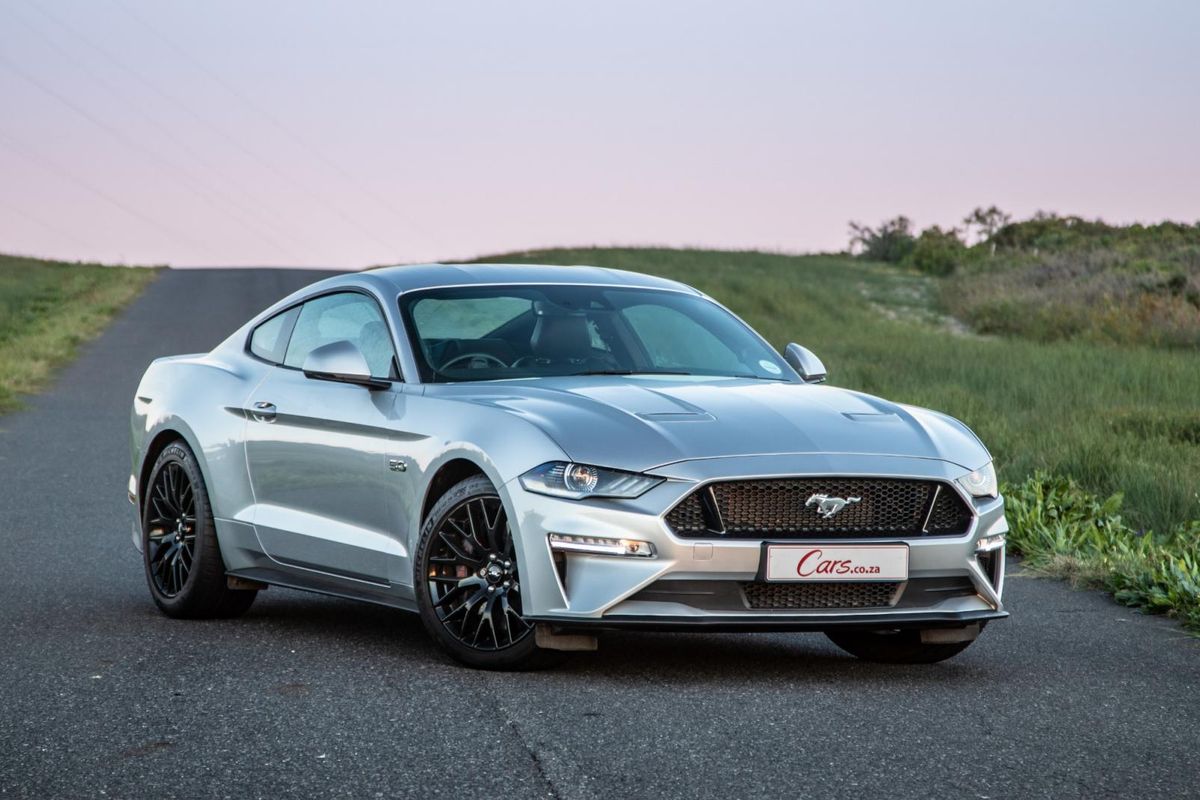
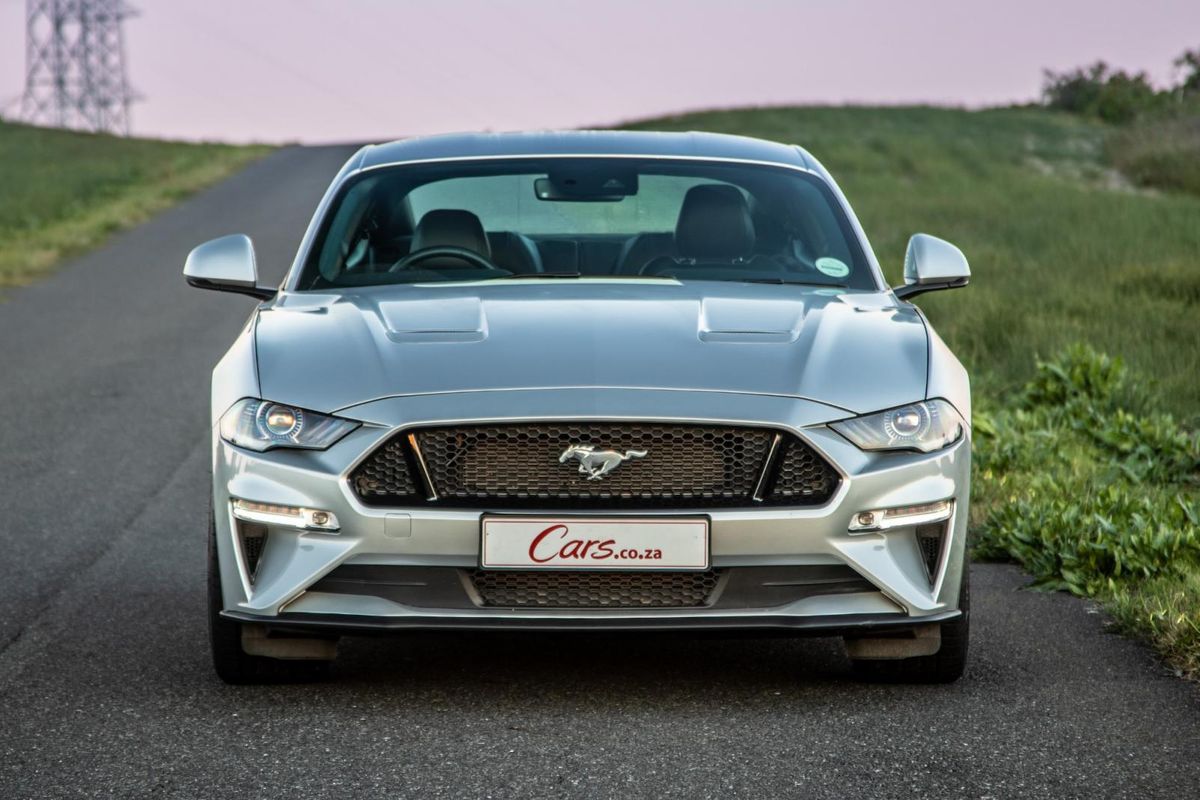
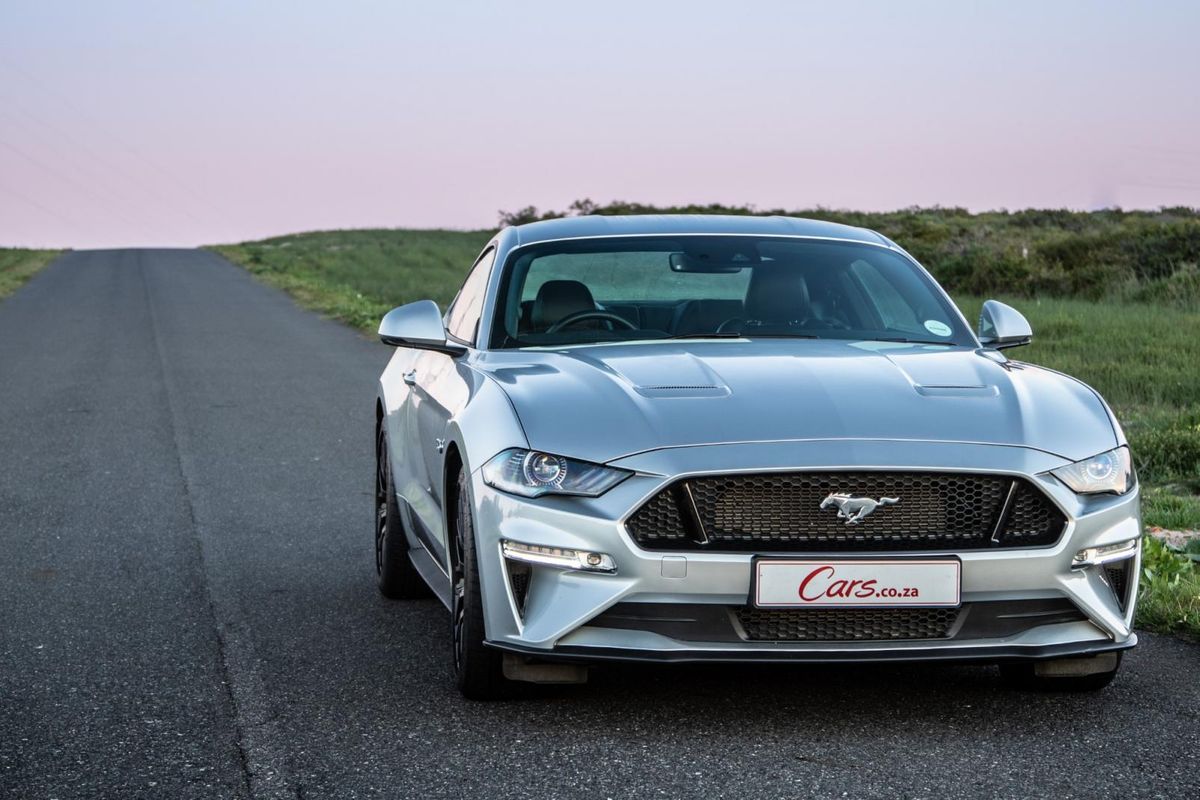
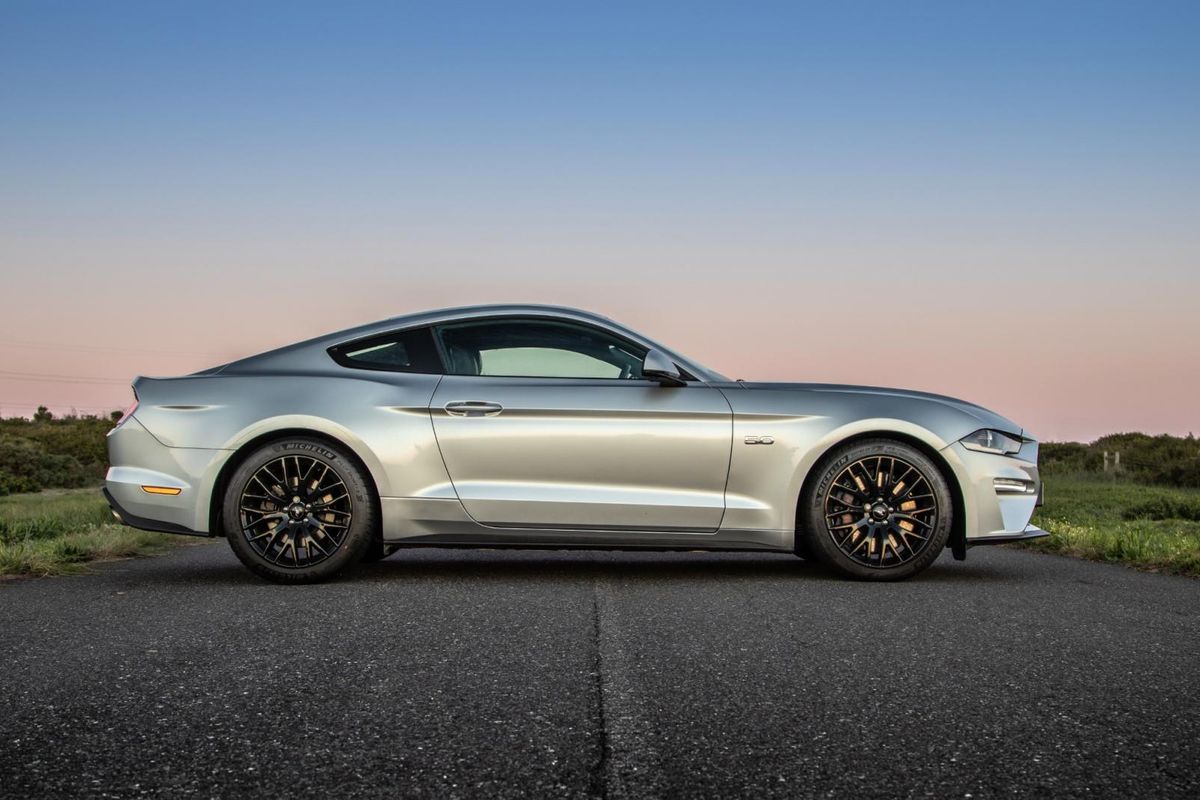
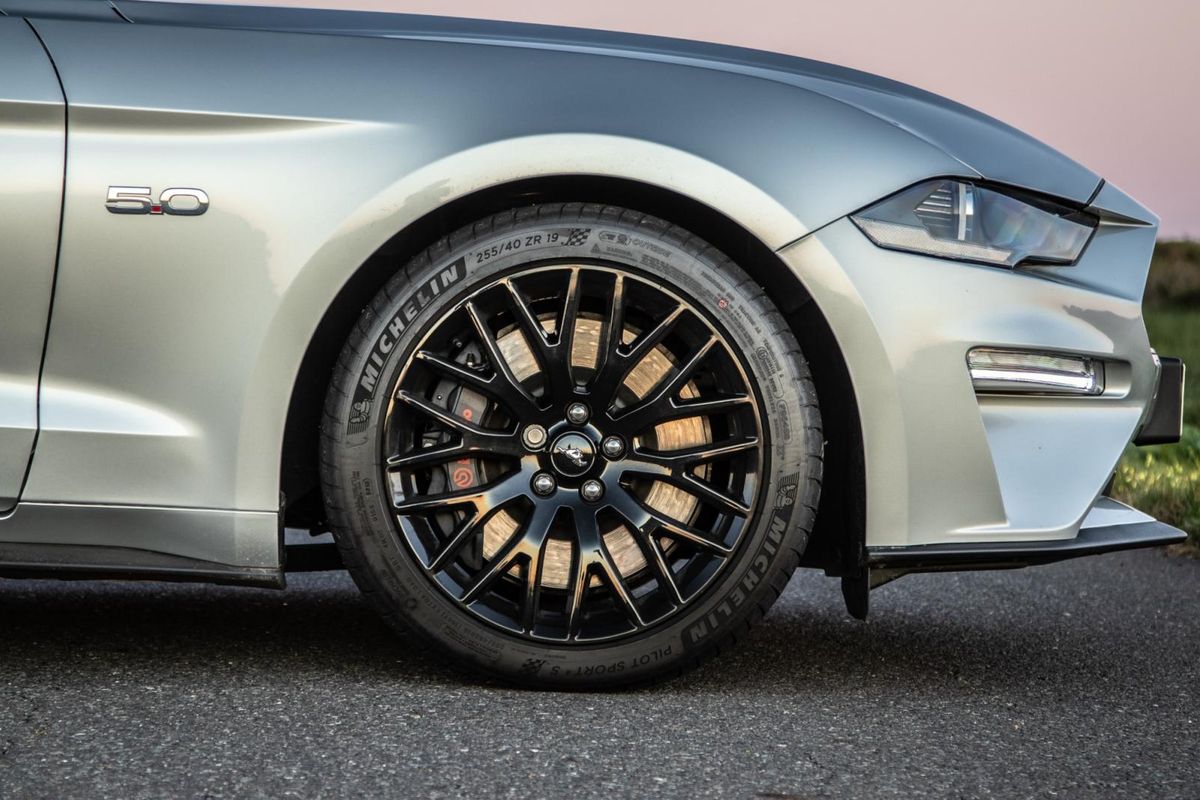
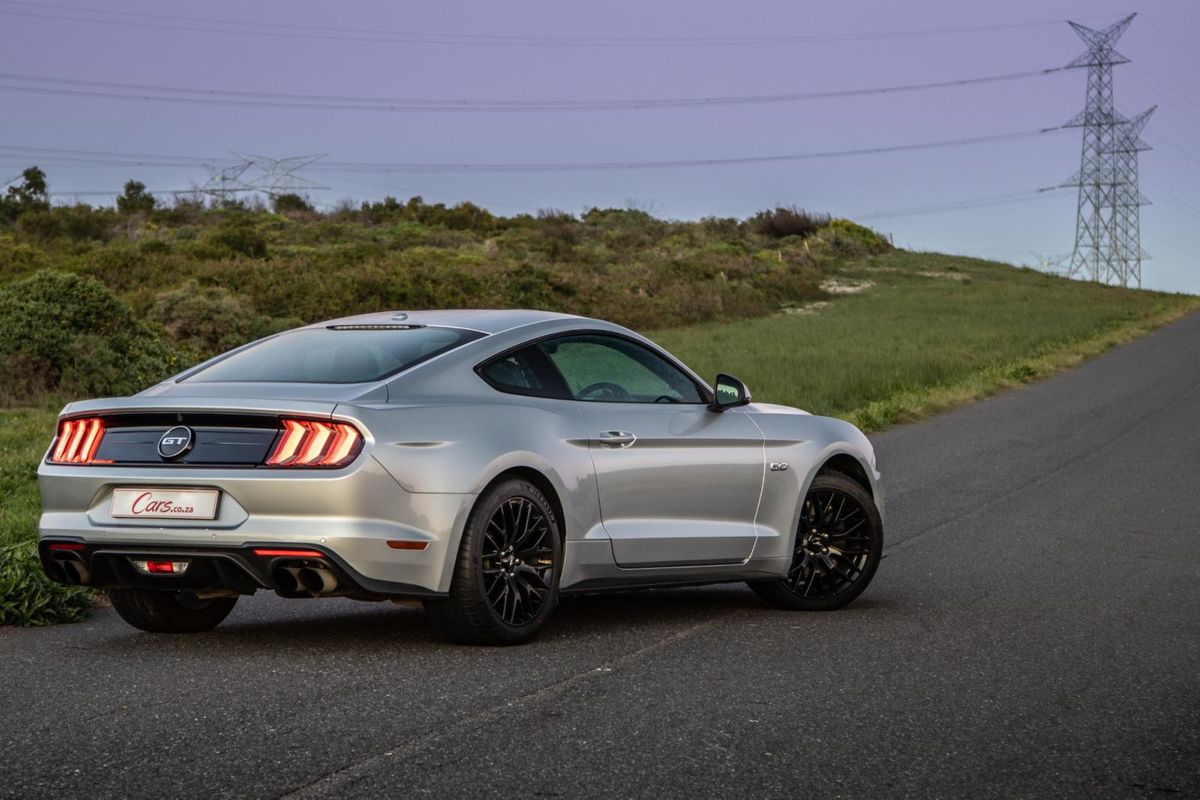
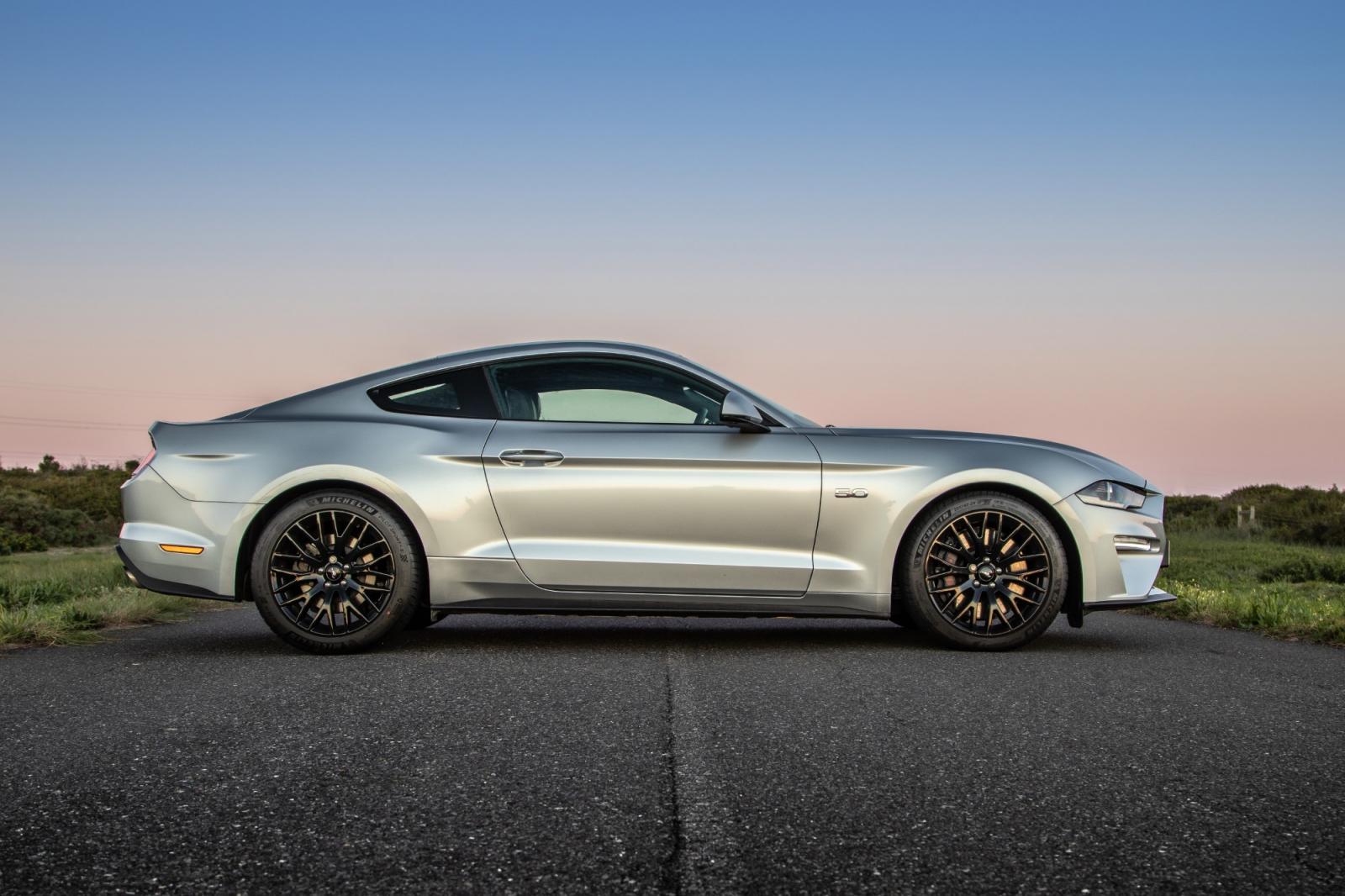
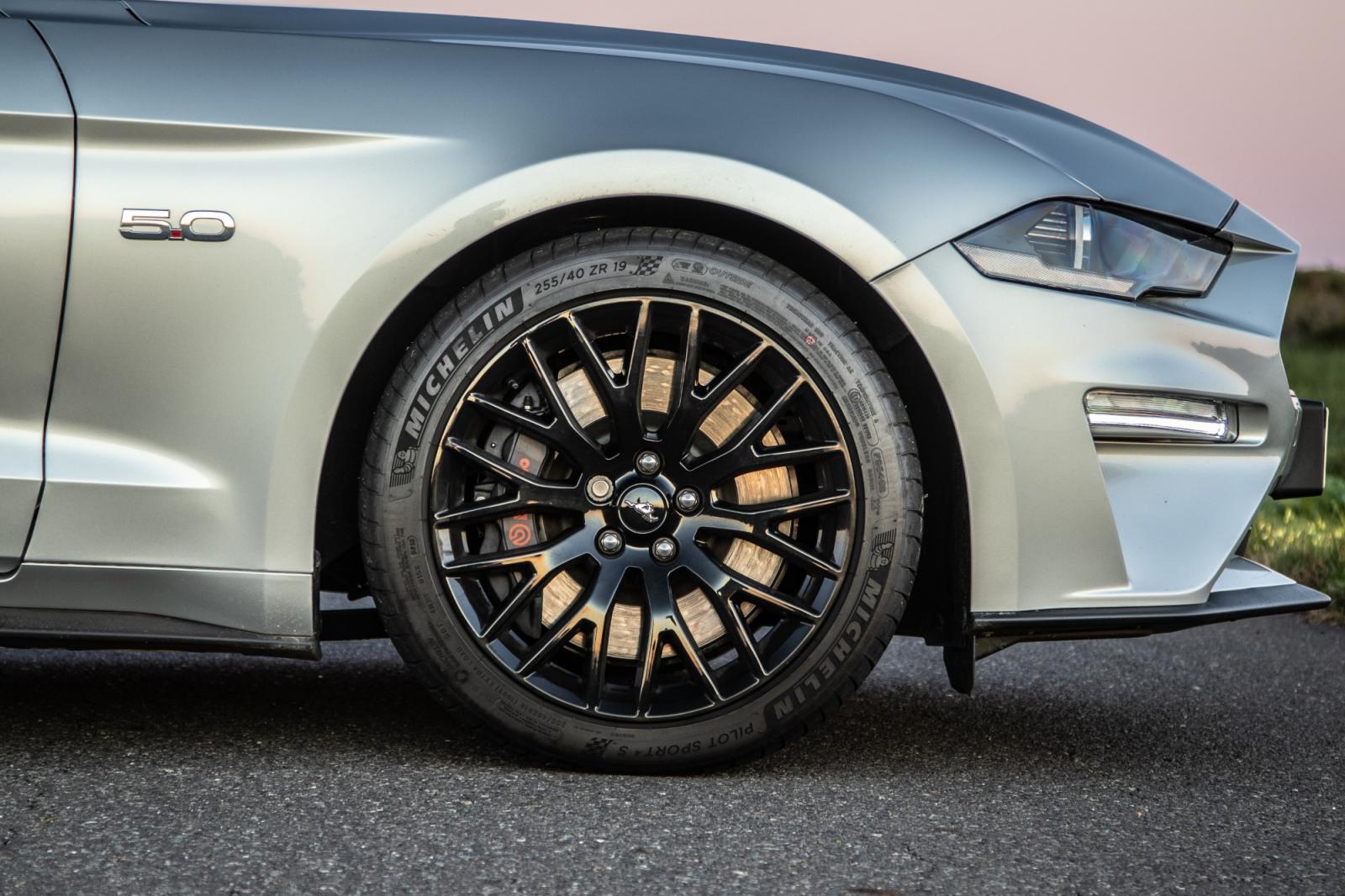
The 5.0 GT Fastback has head-turning appeal, with large 19-inch wheels and flared rear wheel arches that add to its powerful stance.
The Mustang needs little introduction – it's the world’s most popular sportscar, with a storied heritage that captures the imaginations of even those who've never driven (let alone travelled in) a '60s version. Since its local introduction in 2016, the Mustang has become a common sight on South African roads. To keep the model fresh and exciting, Ford has dispatched updated versions to showroom floors, replete with enhanced styling, uprated engines, Ford’s 10-speed automatic transmission, as well as a host of new and attractive interior- and driver assistance features.
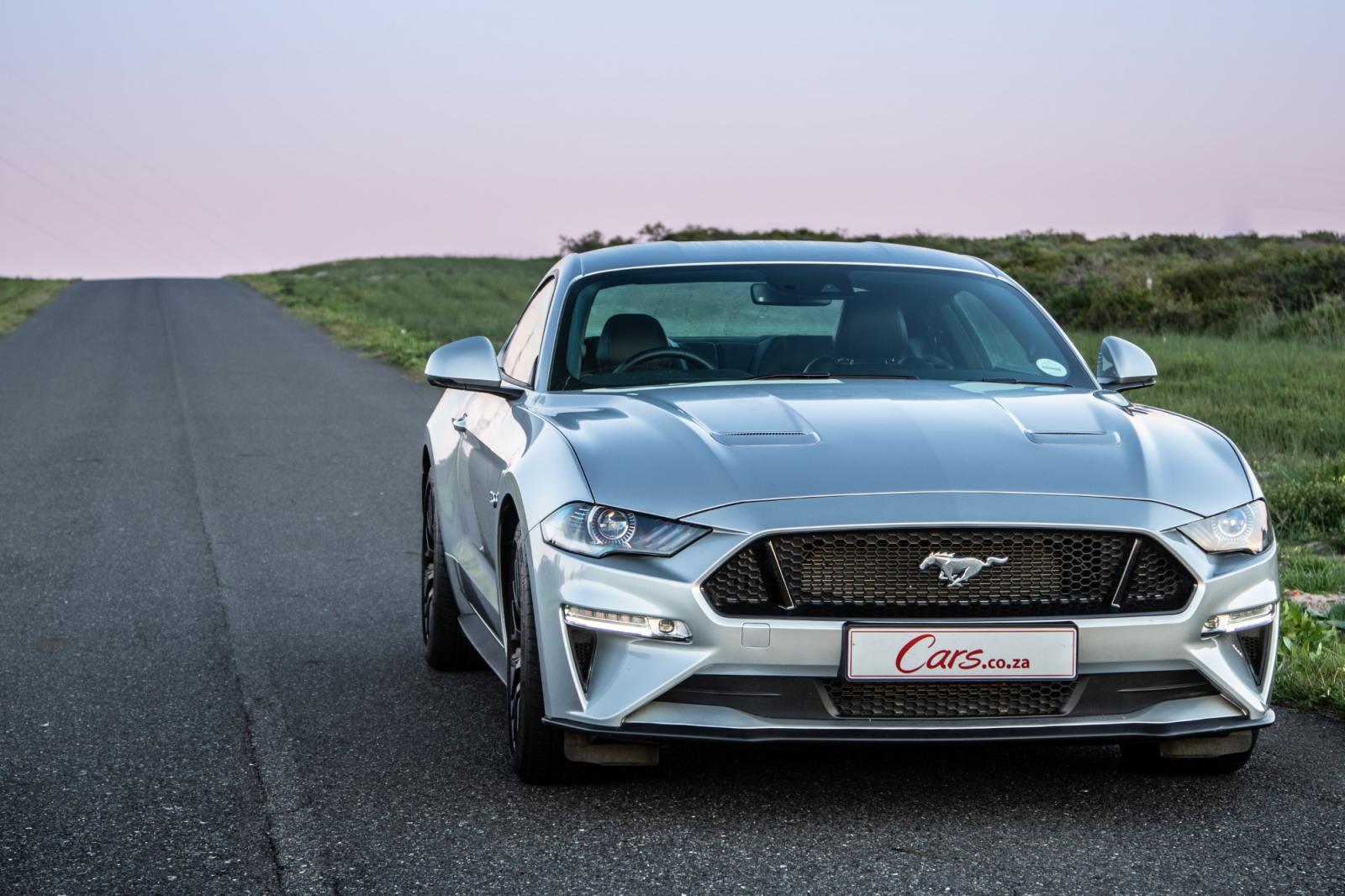
The Mustang still turns heads everywhere and it’s still achingly pretty in the metal (if American muscle is your thing). We sampled the latest 5.0 GT Fastback in Ingot Silver metallic to find out just how significant the changes are. Is the Mustang is still a worthwhile offering? Let’s go for a gallop…
How it fares in terms of…
Performance
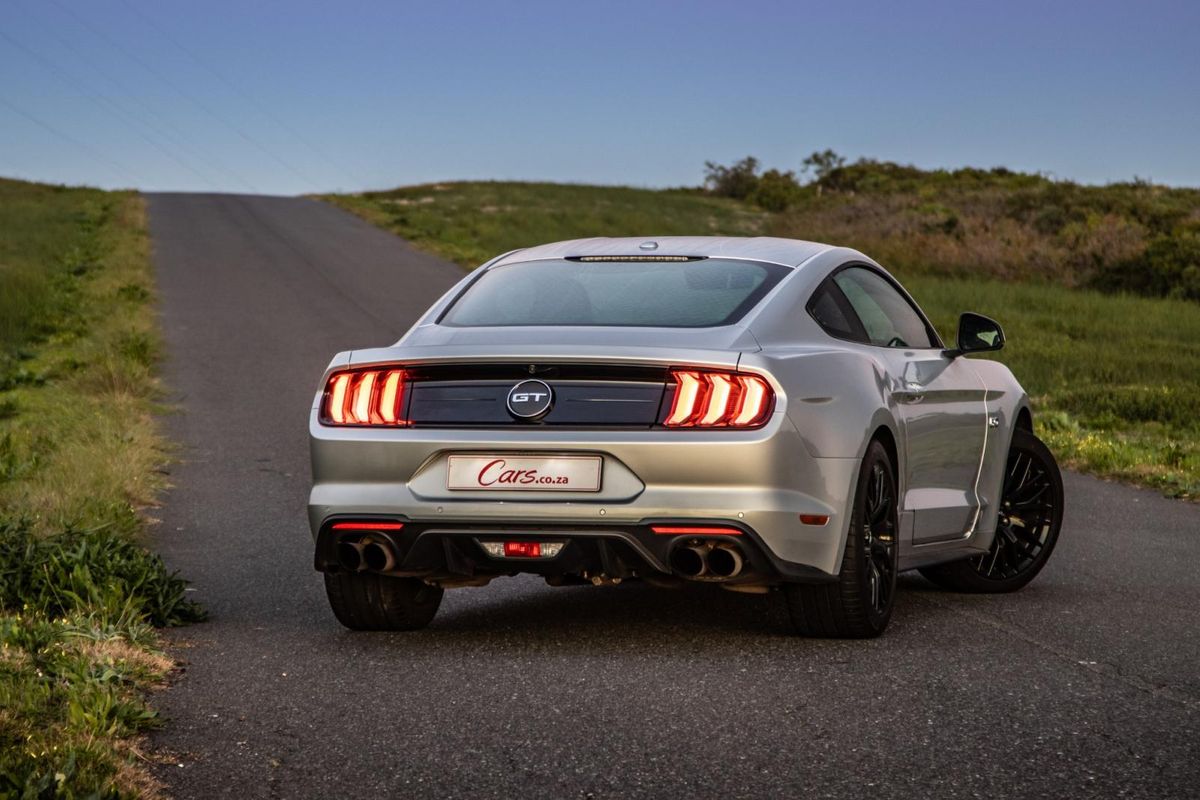
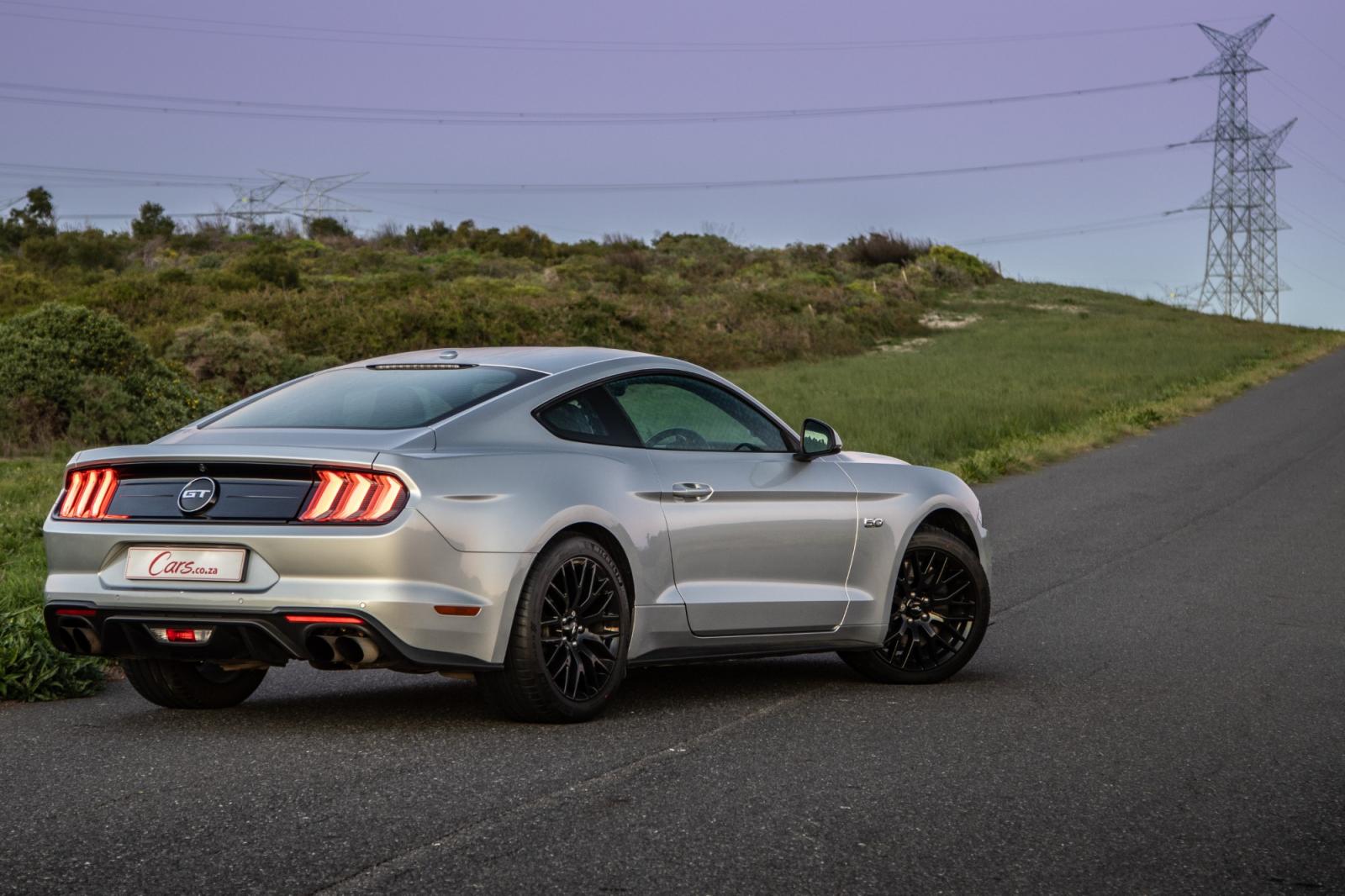
The quad exhaust system makes a delectable sound at full throttle…
The characteristic we love most about this Mustang is undoubtedly the sonorous soundtrack of its uprated 5.0-litre V8 engine. It’s just marvellous to listen to that V8 rumble and roar – it's an utterly addictive experience! The Mustang’s quad exhaust system now features active-valve technology that allows the driver to manage the extent to which they can "disrupt the peace and calm" around them. We definitely like it loud!
Power output of the naturally-aspirated 5.0-litre V8 engine has also been bumped up substantially to 331 kW (previously 306 kW) with torque now at 529 Nm, a mere 1 Nm less than before.
Sadly, Ford no longer offers a manual transmission (this is reserved for the limited-edition Mustang Bullitt). It has also replaced the previous 6-speed automatic 'box with the 10-speed automatic transmission that also does duty in the Ranger/Raptor bakkie and Everest SUV, but with different ratios.
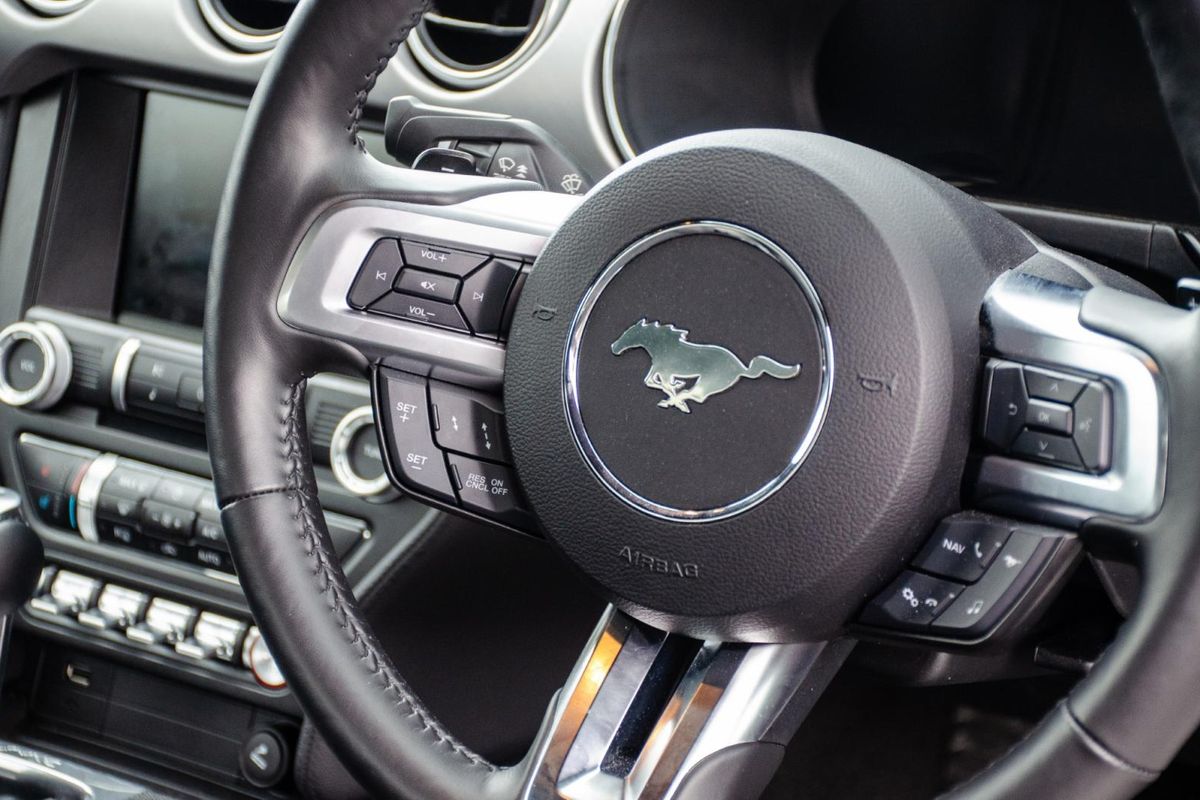
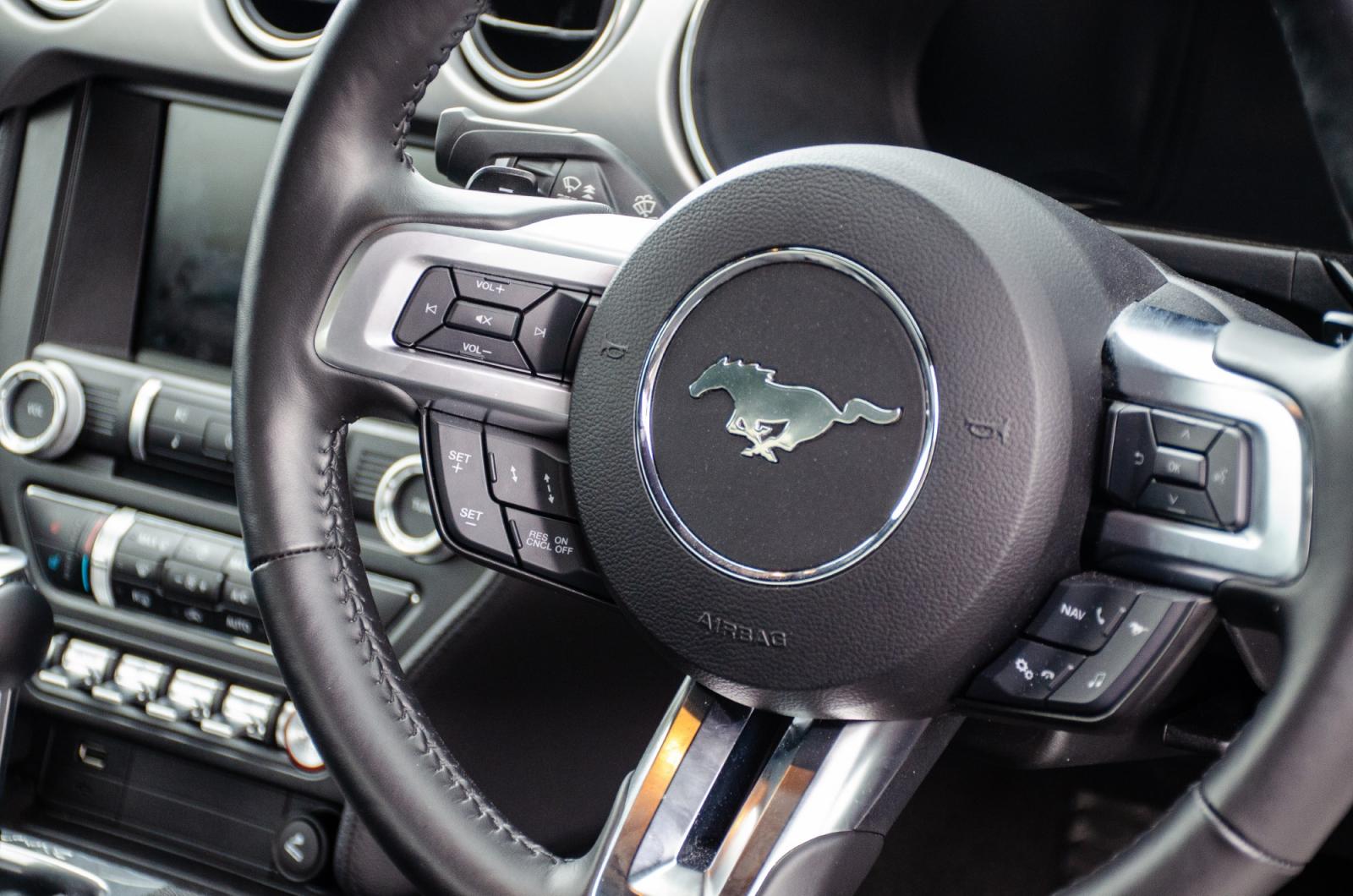
Paddle shifters behind the steering wheel enhance driver engagement with quick snappy shifts.
Some of our test team members weren’t impressed with the performance of the transmission, at least in its application in the Mustang, anyway. On spirited runs and when left to its own devices, the transmission copes well, but it has moments where it fumbles over gears and sometimes fails to catch the right gear for the driving situation. Under hard acceleration, you don't get to enjoy the sensation of thrusting acceleration because the 'box rushes through its ratios so quickly that the satisfaction of the naturally-aspirated V8's high-rpm limit is reduced by the thuds of multiple gear shifts.
Some buyers will, of course, prefer the long-legged nature of the Mustang's motor – it's tailor-made for leisurely cruises and the occasional spirited gallop (from a canter, as opposed to straight out of the blocks). Should you wish to spur the 5.0 GT Fastback into action a bit quicker, you can make the use of the steering-mounted paddle shifters to effect manually-actuated shifts. That does improve matters somewhat, but because there are so many gears, gearing down, or up, requires a few quick flicks, which inadvertently also turns into a bit of pot-luck in selecting the right gear…
Nonetheless, the Mustang still kicks up dust and in Sport mode, it hauls off-the-line with a claimed 0-to-100 kph sprint time of 4.3 seconds, which compares favourably with the previous 4.8 seconds of the pre-facelift version.
In terms of fuel consumption, Ford claims 12.1 L/100 km, which is achievable if you adopt a conservative driving approach (the 10-speed auto certainly helps), but given that aural satisfaction is always just a prod of the accelerator away, you can expect to see figures higher than that…
Ride and handling
The Mustang delivers admirable cruising ability over long distances but it's not a sharp-handling sports car.
Seeing that it is marketed as a grand tourer, as opposed to a dyed-in-the-wool sportscar, the Mustang prioritises ultimate ride comfort over sporty damping and, as a consequence, the 5.0 GT Fastback is an absolute pleasure to drive over long distances – it munches kilometres with palpable ease. Whereas its German rivals ride stiffly, the Mustang is more forgiving and softly-sprung. As a result, it rides better over harsher surfaces.
The Mustang, however, is less than gifted when it comes to tackling corners. Compared with similarly-priced continental machinery, it’s not nimble or wieldy. While the steering wheel is light in feel and relatively responsive to inputs, the heft of the vehicle is ever-noticeable and, given the softer suspension, turn-in is not that sharp. To put it another way, it's not a coupe that inspires enthusiastic cornering. There's lots of grip – but little verve.
Nonetheless, for this facelift, Ford has revised the calibration of the shock absorbers in an effort to improve cornering stability, while the rear suspension has been stiffened with a cross-axis joint to reduce flex and improve handling. Moreover, thicker anti-roll bars are fitted to reduce body roll. Let's just say the updates will make the Mustang more forgiving/controllable in the event that you breach the limits of its handling abilities…
Standard features
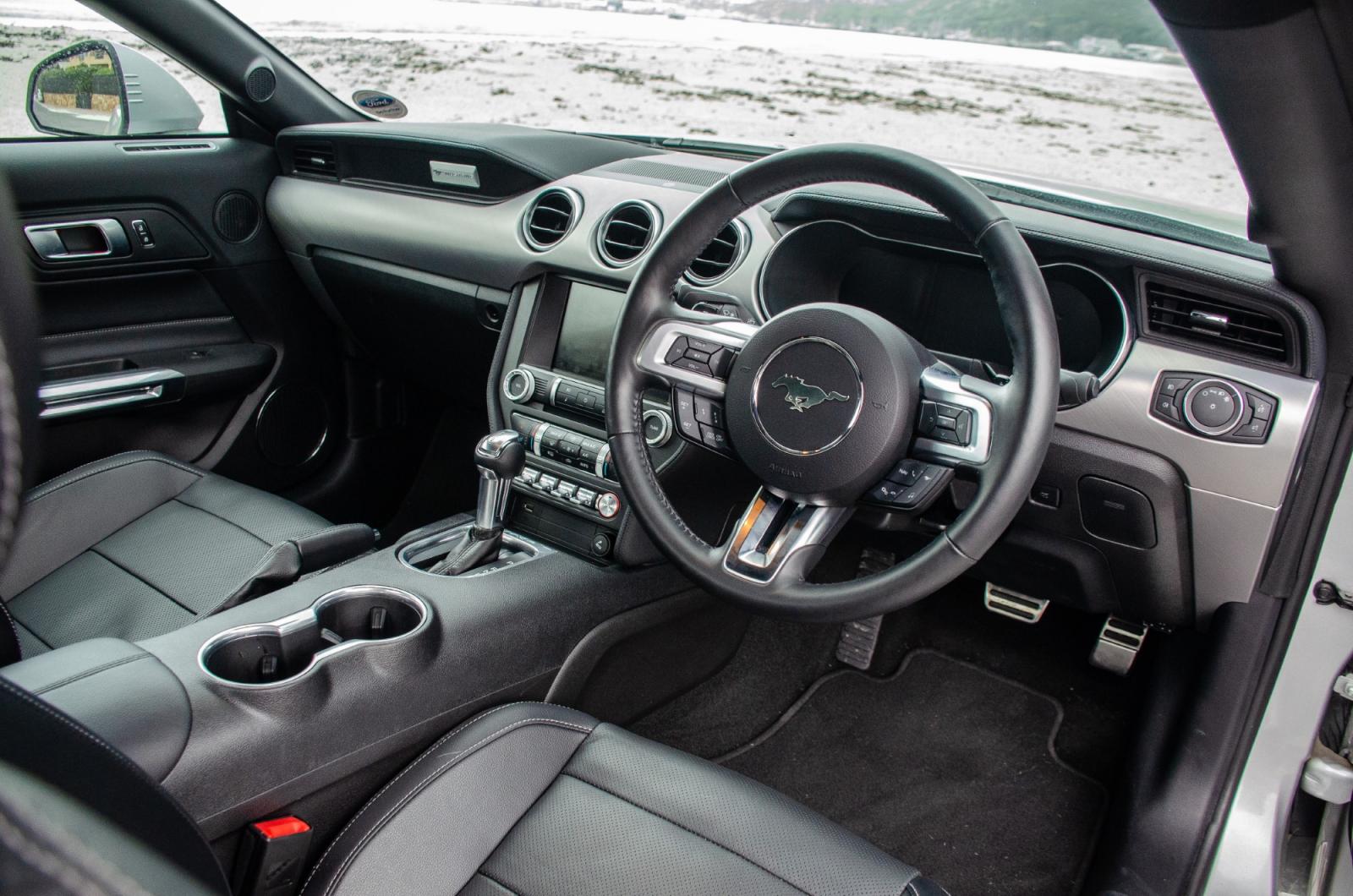
The Mustang is packed with nice-to-have standard features. A new instrument cluster is a nice addition to this latest model…
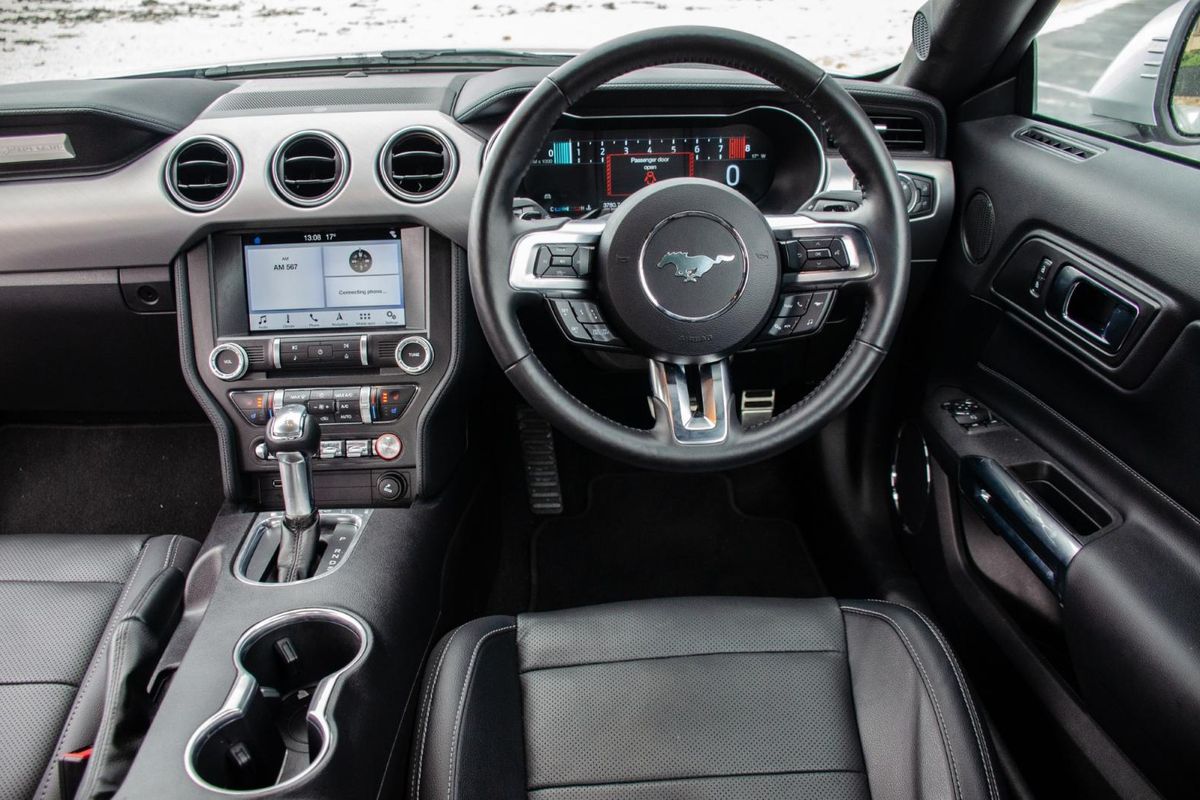
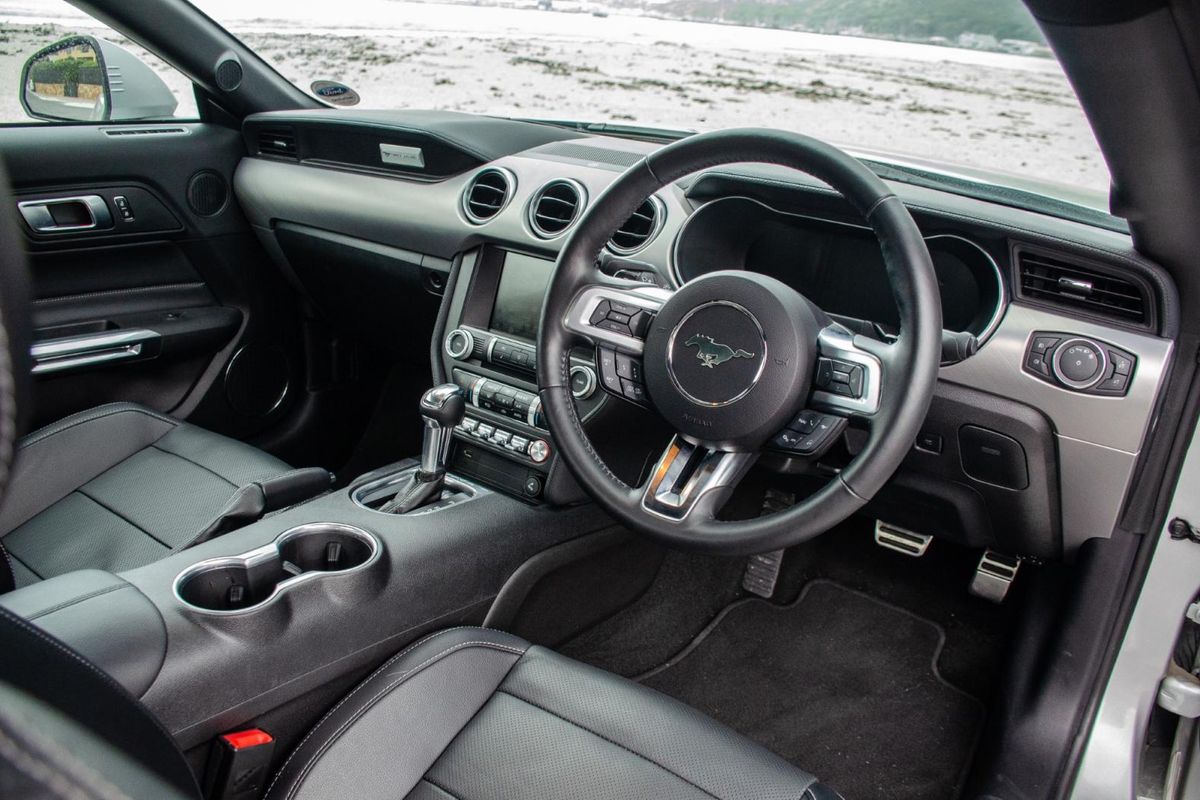
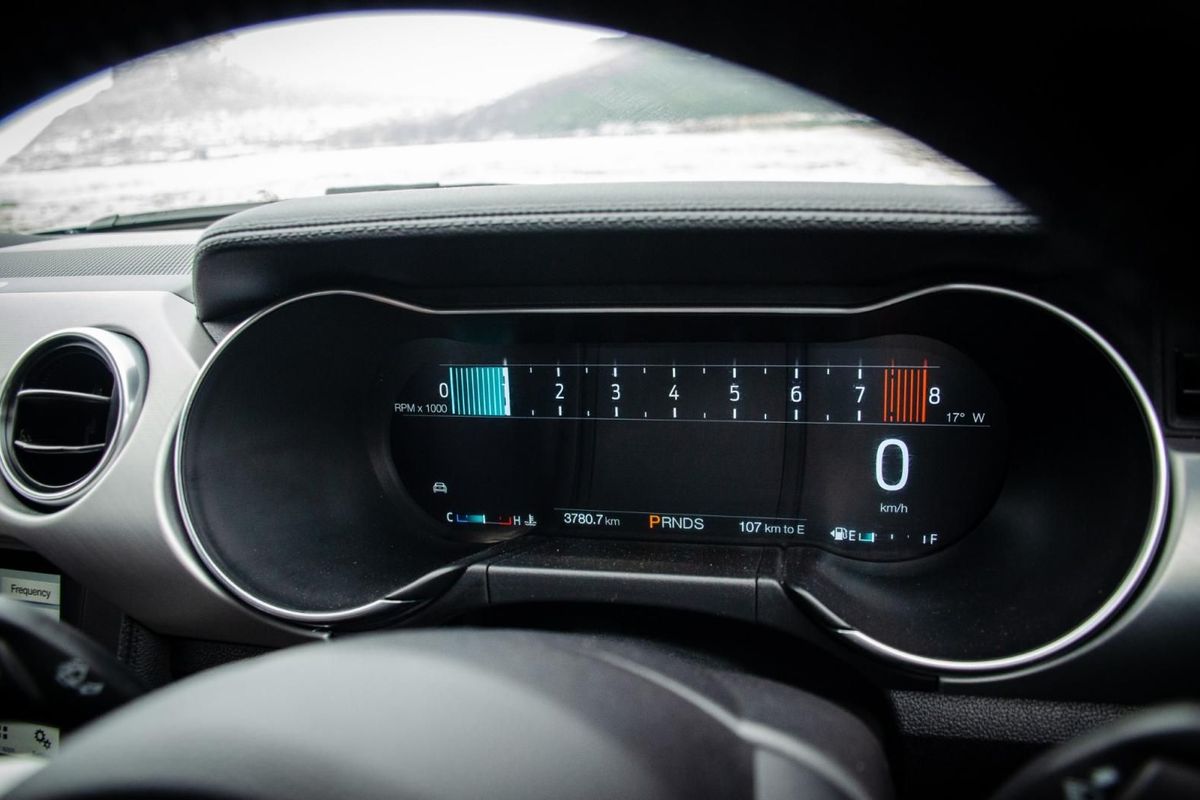
Ford didn’t skimp on the Mustang's standard features list – in fact, the 5.0 GT Fastback comes very well-equipped. The most noticeable change inside the cabin is the fitment of a new 12-inch LCD instrument cluster, which looks far more attractive (and contemporary) than the previous cylindrical analogue dials. The display changes according to the drive mode and it can be further customised using the steering wheel controls.
In-car entertainment comes in the form of Ford’s 8-inch SYNC3 infotainment system, which is excellent with an easy-to-use, legible layout. The system is Apple CarPaly and Android Auto compatible and integrated navigation is standard as is Bluetooth, voice activation and USB support.
Ford has also fitted additional safety features, such as Pre-Collision Assist with Pedestrian Detection, as well as driver assistance features such as adaptive cruise control, lane-keeping aid and lane departure warning, to the 5.0 GT Fastback. A total of 7 airbags are standard issue and the Mustang is further equipped with ABS with EBD, brake assist and electronic stability control with traction control.
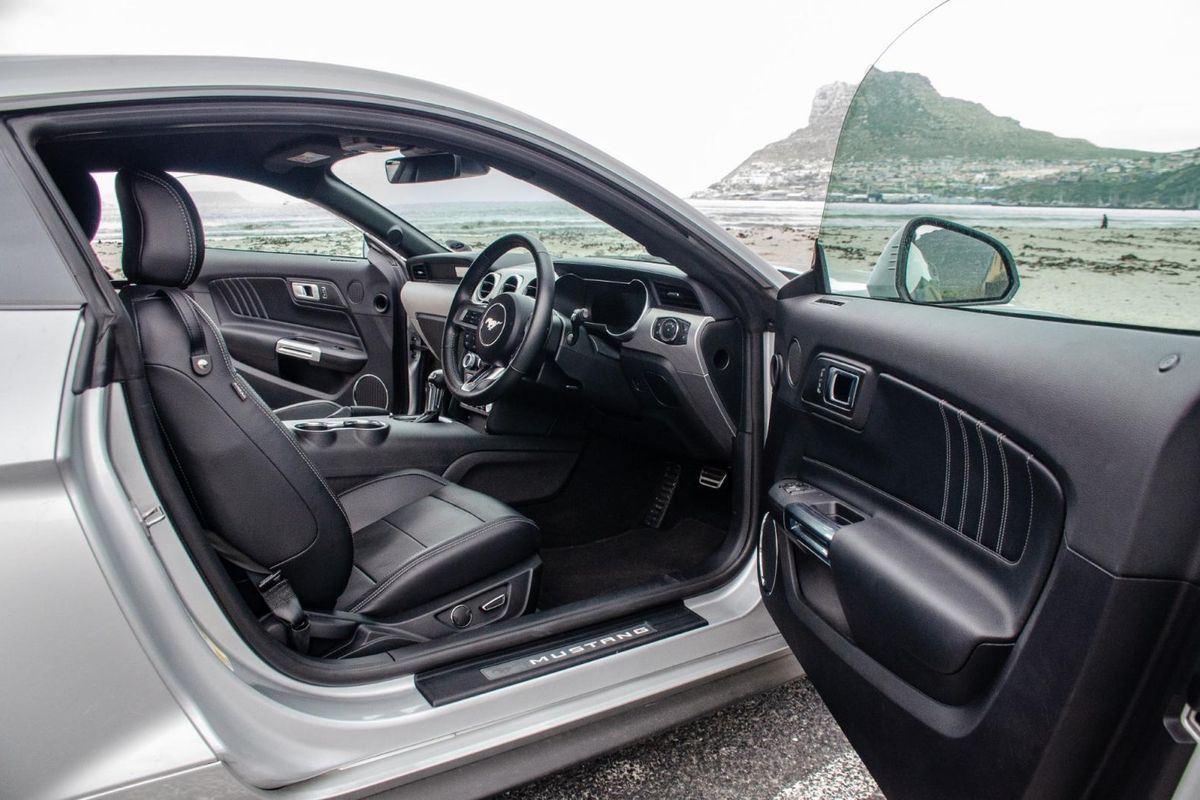
Other notable standard features include leather trim, rain-sensing wipers, climate control, rear park distance control (in conjunction with a reverse-view camera), as well as electrically-adjustable (and heated) front seats.
Practicality and interior execution
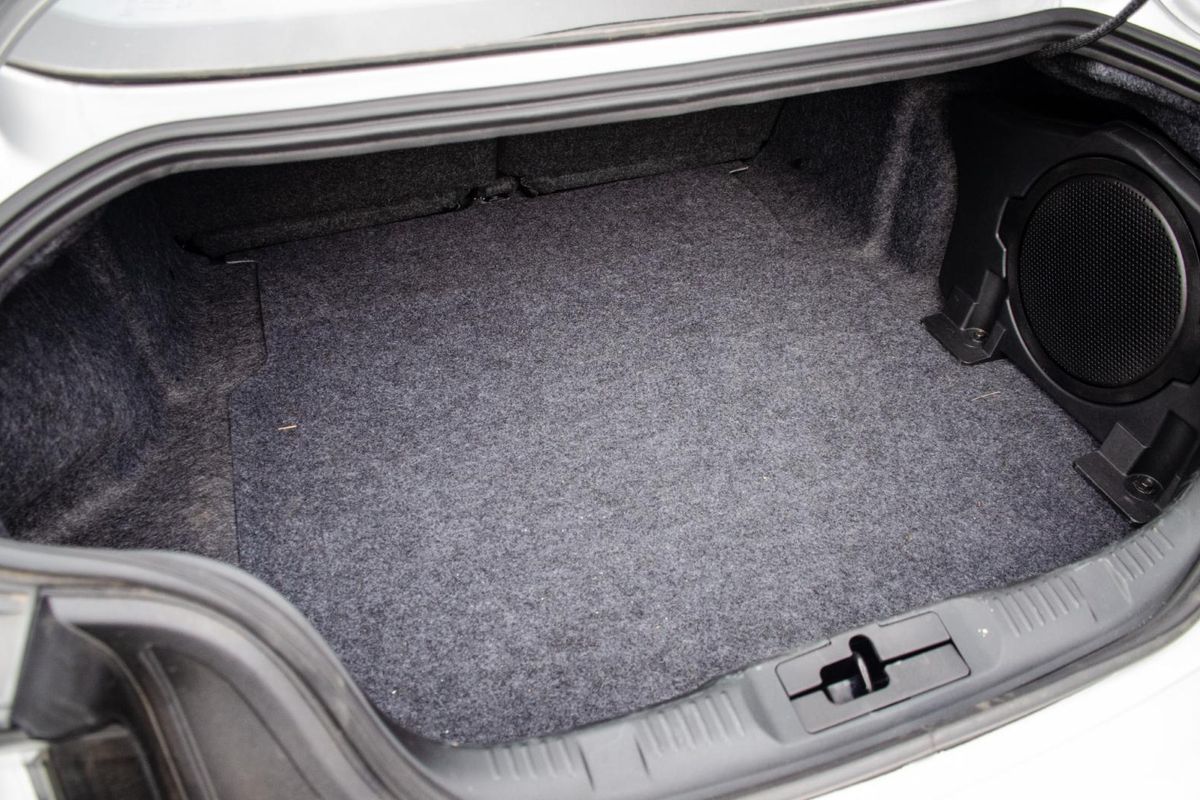
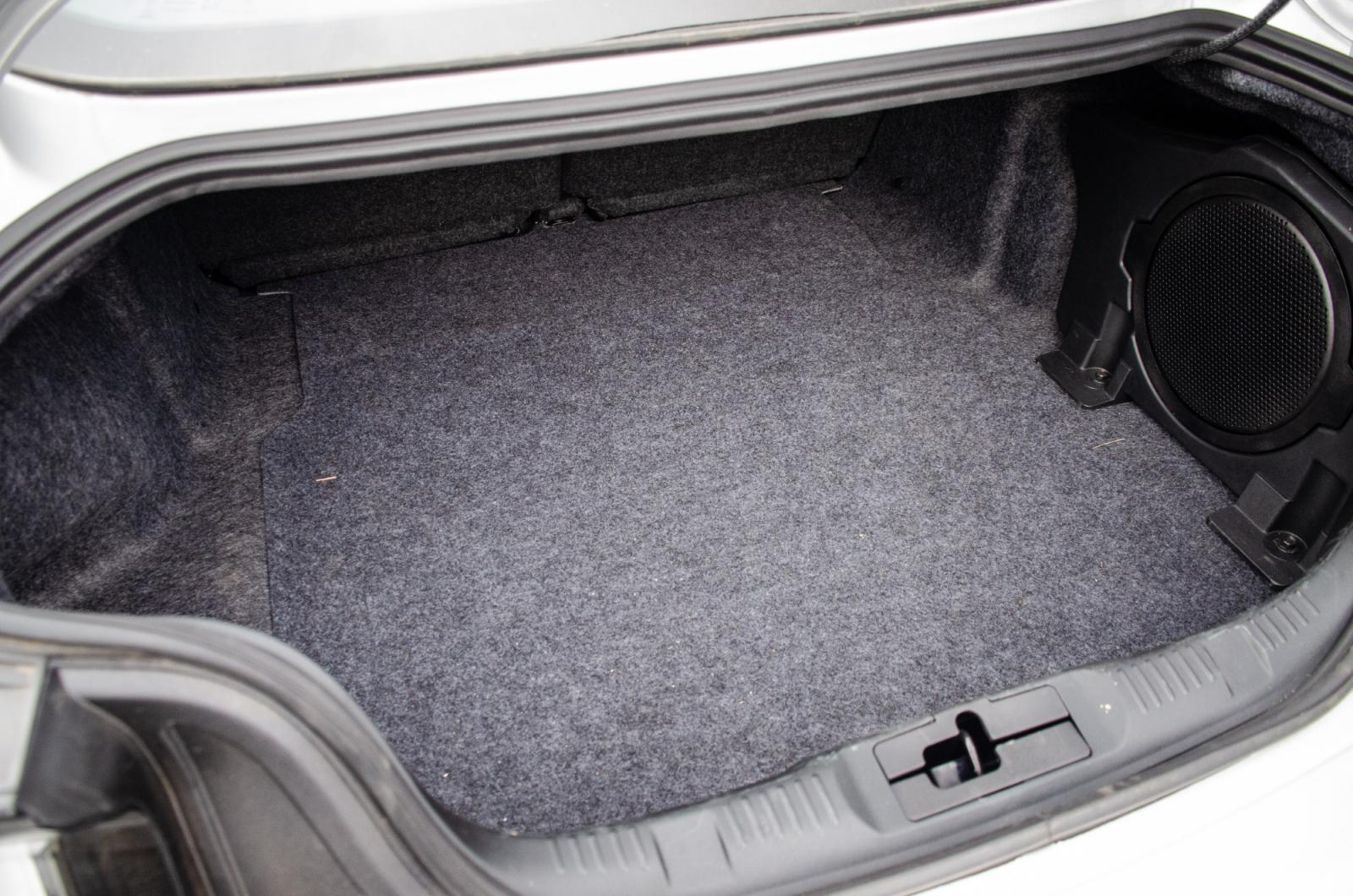
For those that care, the load bay is sizable and puts most compact hatchbacks/crossovers to shame.
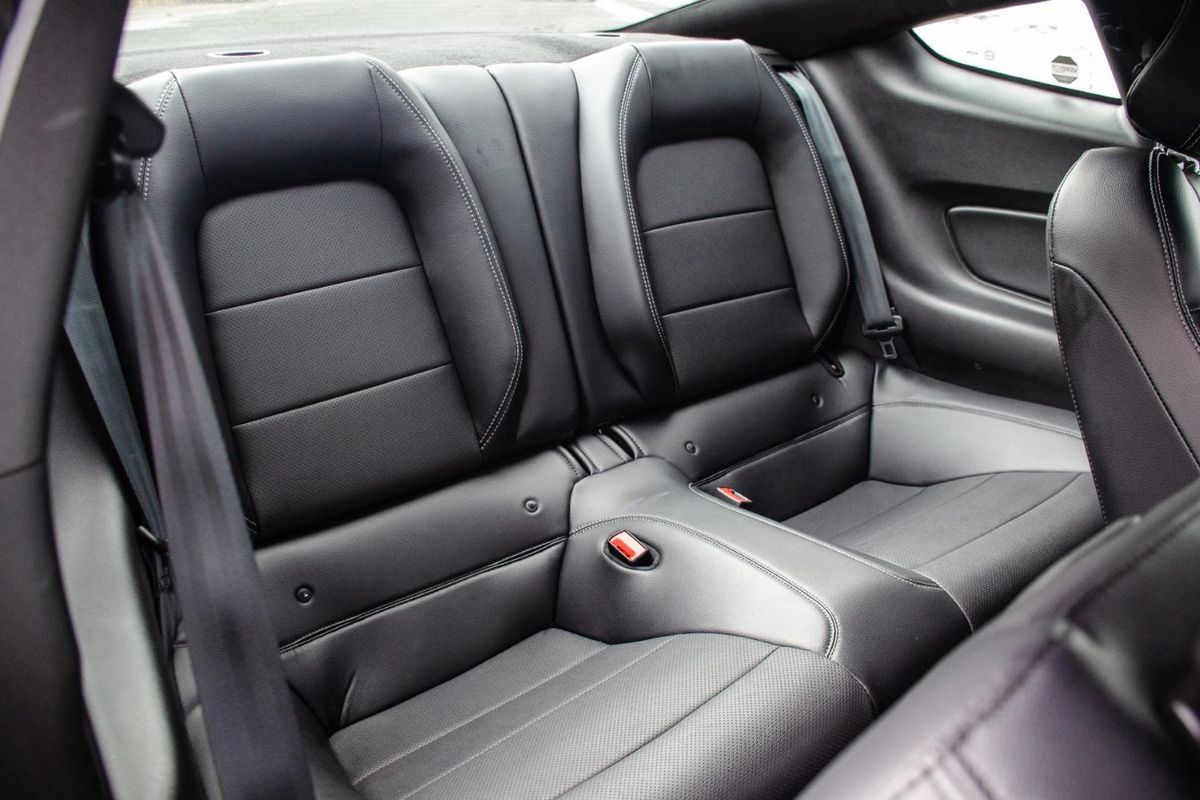
The Mustang is a 2+2 sports car and the rear seats are therefore not entirely suitable for adult occupation (unless you really have to and don’t mind being uncomfortable); they're best utilised for additional storage space. Space for the driver and front passenger, however, is very generous. The boot area is surprisingly spacious with 382 litres of luggage space on offer, which is bigger than most compact hatchbacks and small crossovers.
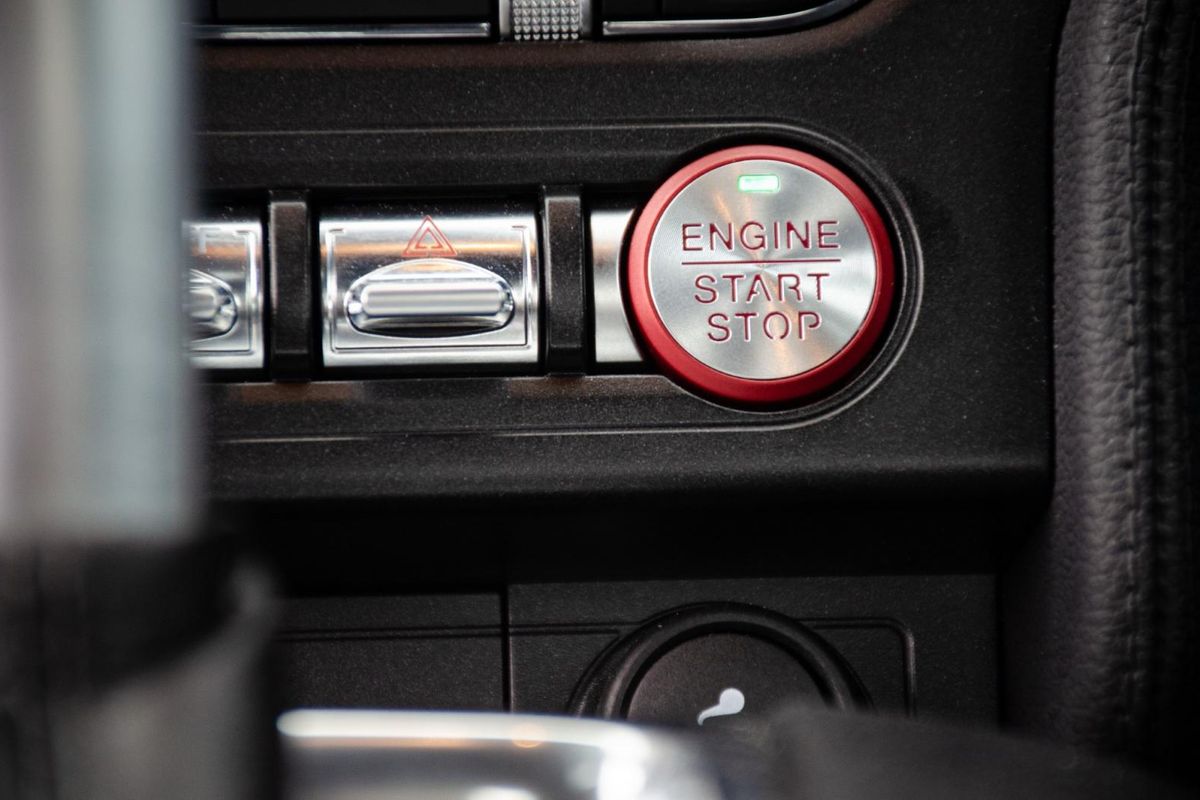
An ongoing gripe with the Mustang is the quality of some of the cabin materials. The plastic trim on the dashboard, around the centre console and on the door finishes are of marginal quality for a car in the near R1-million price range. Also, the buttons and switchgear could feel more substantial.
Price and after-sales support
The Ford Mustang 5.0 GT Fastback is priced from R915 800 and is sold with a 4-year/120 000km warranty and a 6-year/90 000 km service plan.
Verdict
The latest Mustang is better in many ways; its nostalgia value overrides its most obvious flaws. It's not perfect, but it's very likeable…
The Mustang, even in its latest guise, is far from perfect… if we judge it purely against the potent sportscars that are priced around it. The fussy transmission detracts from the overall driving experience and we would much prefer to wield a manual transmission in this particular application. Buyers will also have to accept that the Mustang is not an agile handler and some of the interior finishes could be more befitting of its price tag.
However, and despite its shortcomings, there is still so much to like about the Mustang, which is why it has been selected as a semi-finalist in the Performance Car category of the 2019/20 Cars.co.za Consumer Awards – powered by WesBank. The nostalgia surrounding the name and the badge counts for a lot and to a large extent makes its flaws easier to accept and possibly even easier to forgive. It has loads of kerb appeal and the sound that bellows from the exhaust tips is music to any petrolhead’s ears. It’s fast and hugely enjoyable to drive on straight roads. As a GT, the Mustang is great, but not so much as a sportscar. Even so, there’s simply nothing quite like the Mustang and that, in itself, makes it a special car.