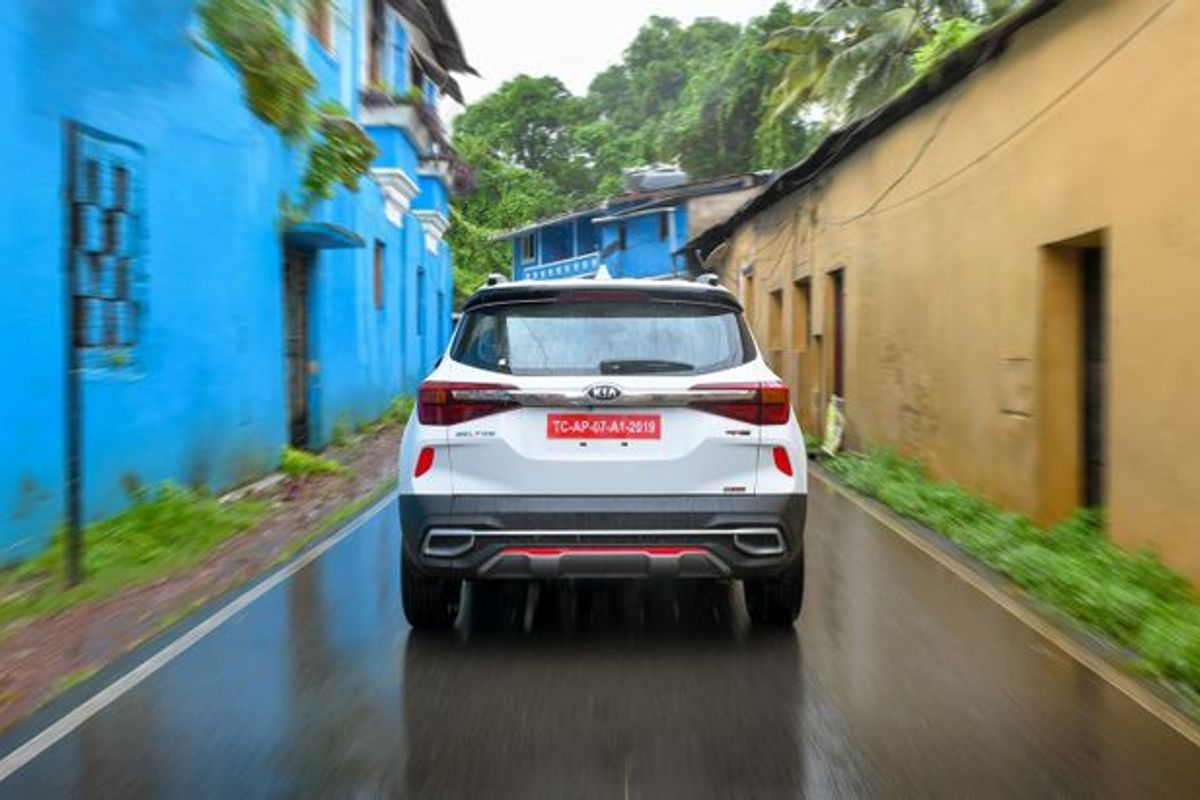
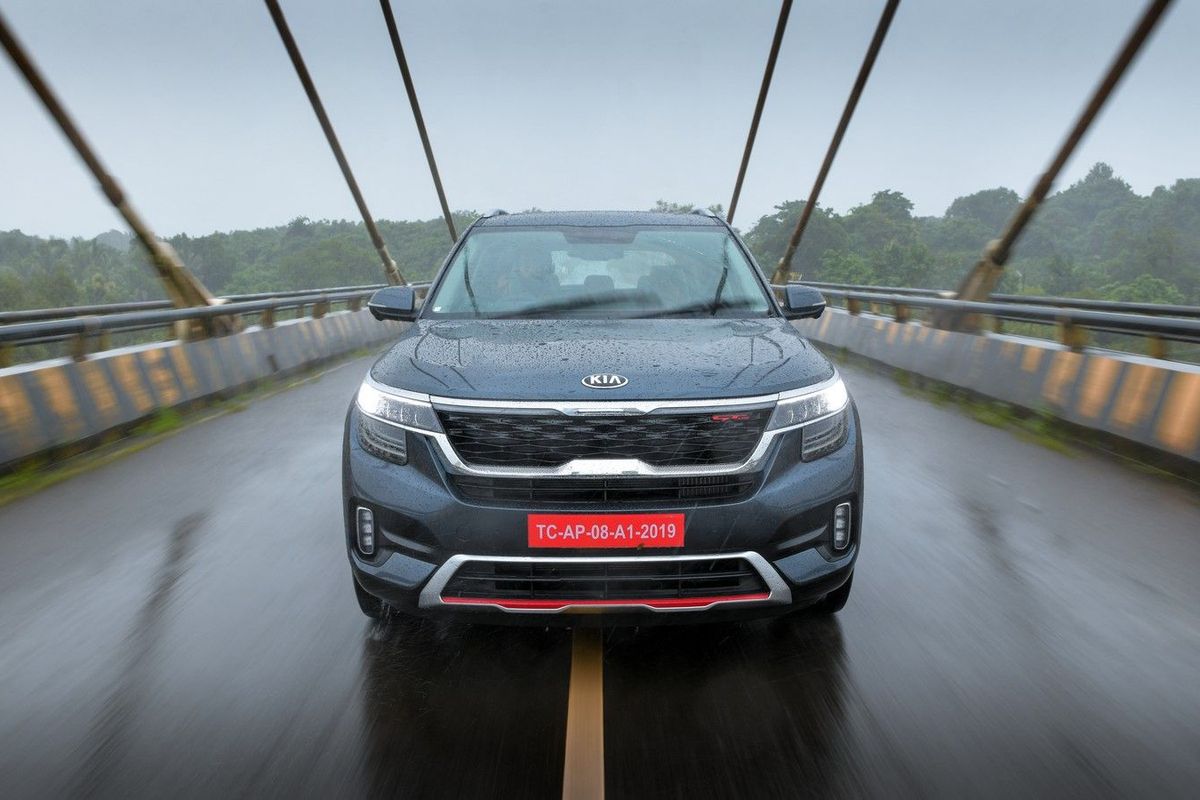
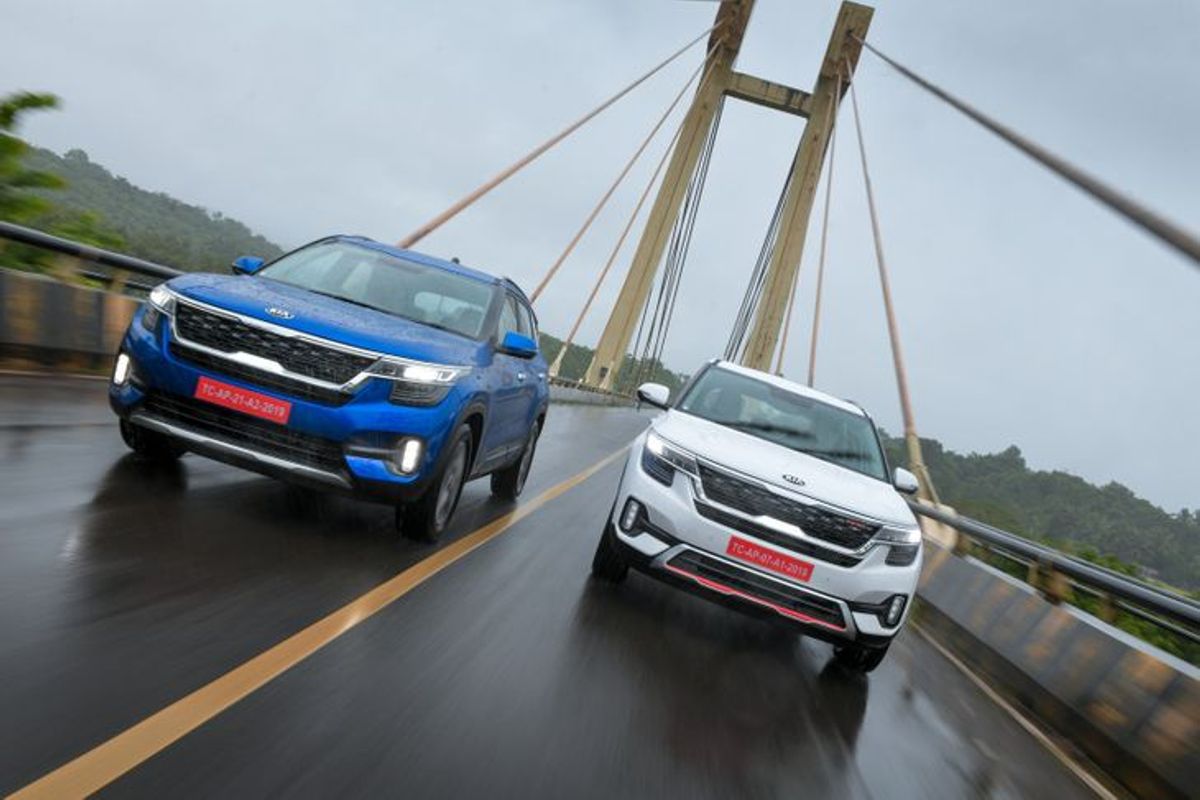
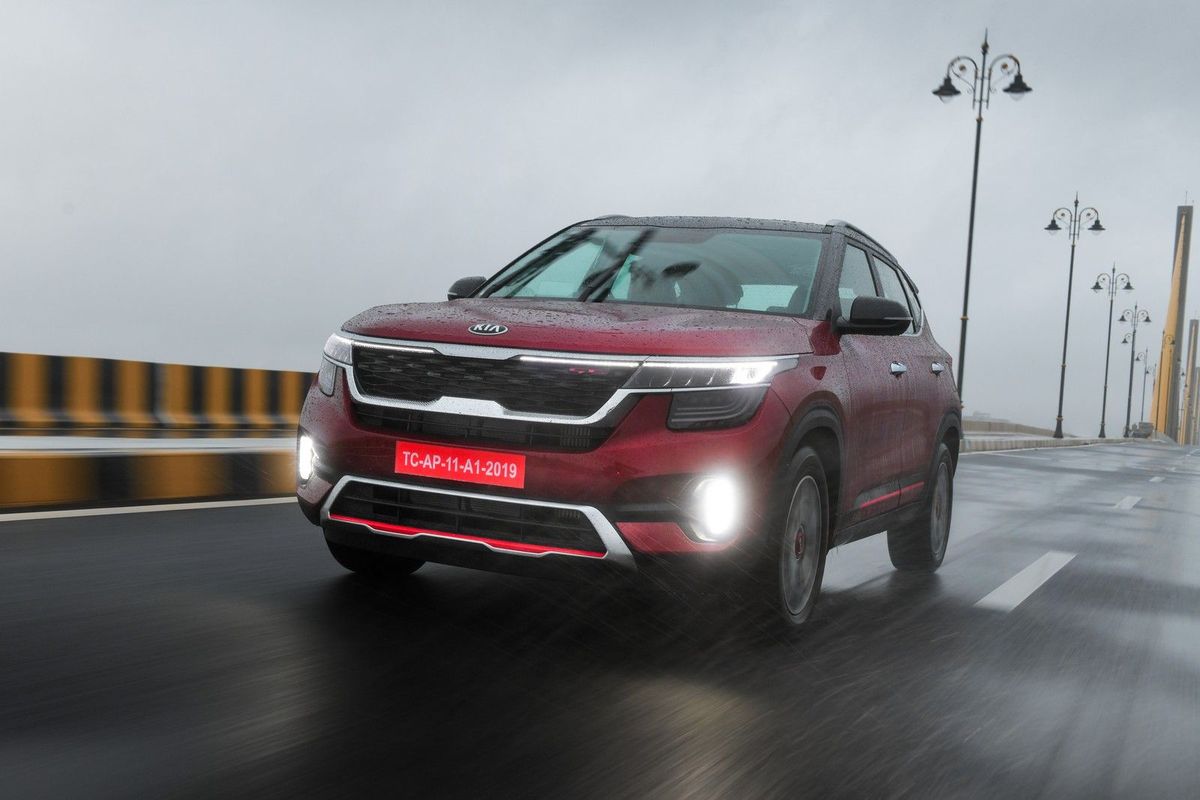
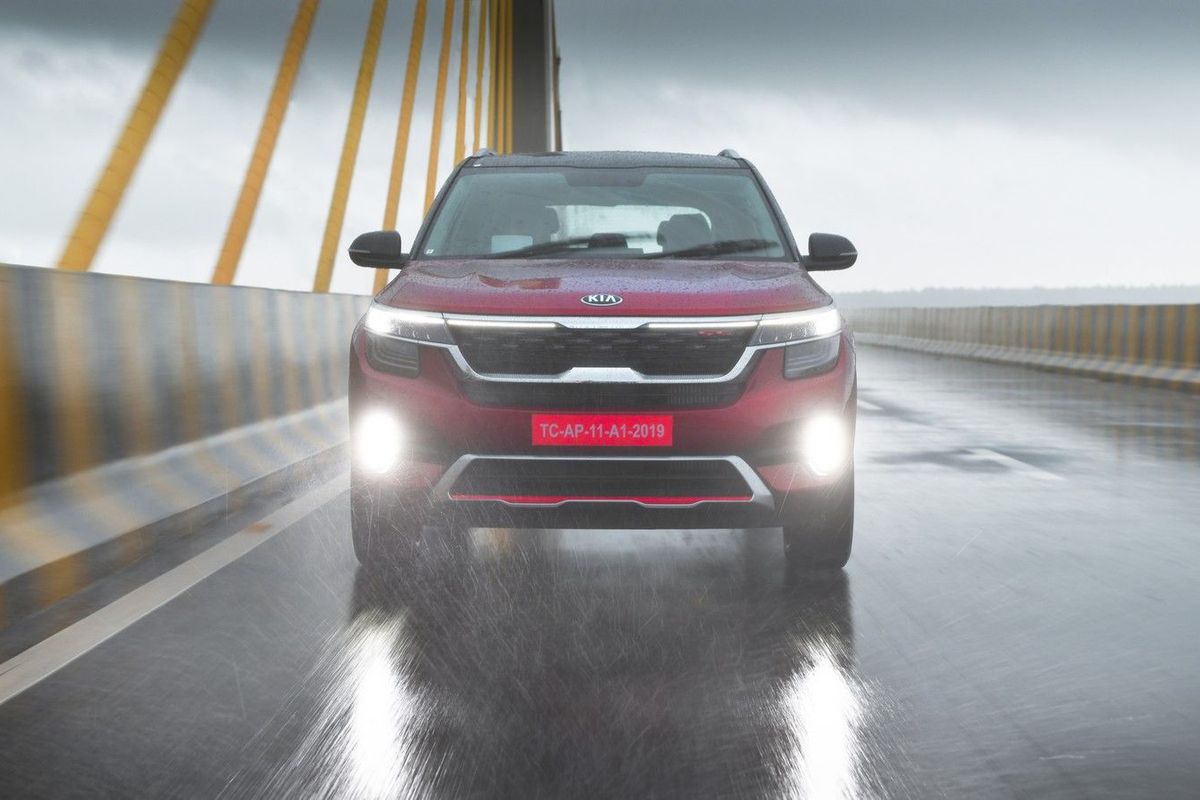
Kia has confirmed that its new global compact SUV will be called Seltos and it’s expected to reach South Africa in early 2020.
The Seltos name is derived from Greek mythology, more specifically, Celtos, the son of Hercules. The ‘S’, however, stands for speed and sportiness.
The new Kia Seltos is based on the SP Signature Concept which was recently shown at the Seoul Motor Show as is squarely aimed at youthful, tech-savvy buyers. The Seltos will be built in a new state-of-the-art assembly plant in India following an investment of $1.1-billion (R16-billion) in 2018. The Seltos will cater for right-hand drive markets and is therefore ideally suited for introduction in South Africa to fill the gap left by the now locally discontinued Soul compact family car.
Kia says that the Seltos combines a sporty design with the space and capability of a traditional SUV, but in a compact product offering. The interior also boasts a 10.25-inch infotainment system along with Sound Mood Lighting. An 8.0-inch head-up display is also part of the tech inclusion for the Seltos along which displays basic information along with turn-by-turn navigation. For audiophiles, there is the option of a banging 8-speaker Bose sound system.
Power comes in the form of naturally-aspirated and turbocharged petrol engines as well as turbodiesel units. The particular market will dictate which variants go where and are available with either 7-speed dual-clutch, 6-speed auto or CVT gearbox.
Kia has upped the safety spec of its 'global' cars with the Seltos, which includes vehicle stability management and traction control systems. It's also equipped with 6 airbags, although it will surely depend on the derivative as to how many make it all the way to South Africa.
The Kia Seltos sits on a choice of 16-, 17- or 18-inch crystal cut alloy wheels.
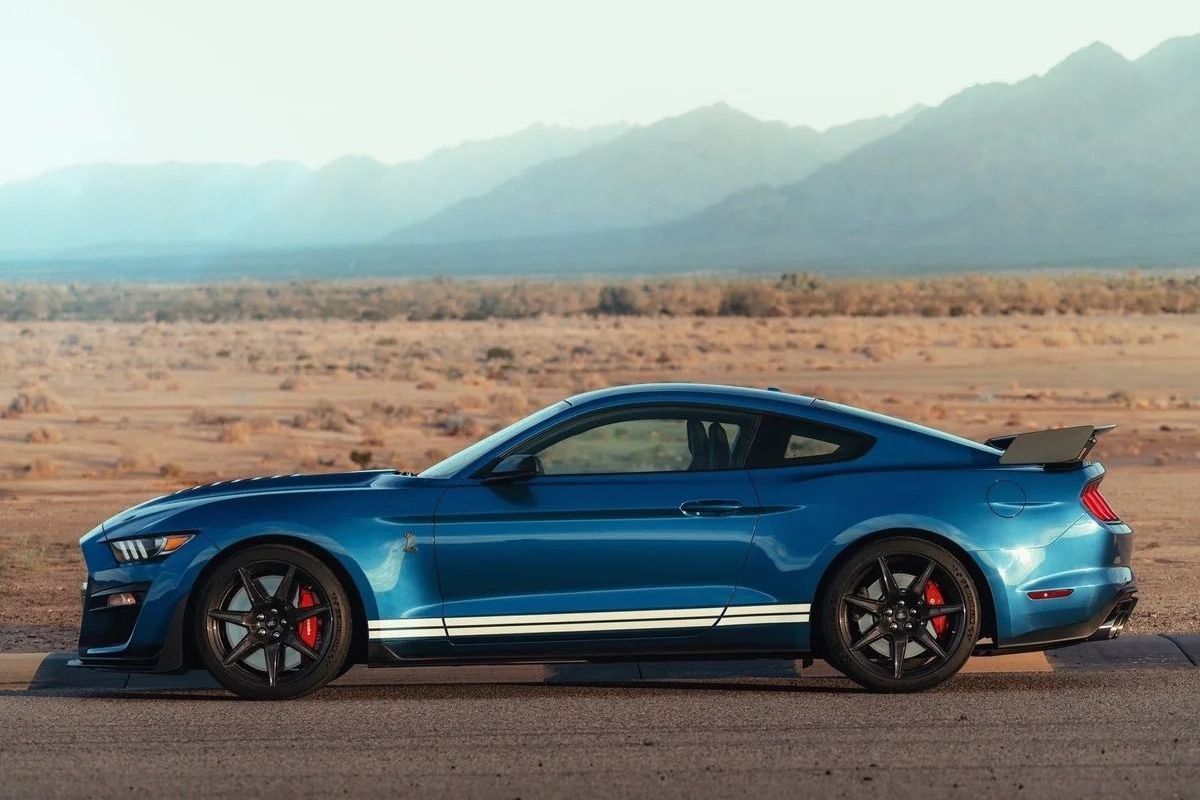
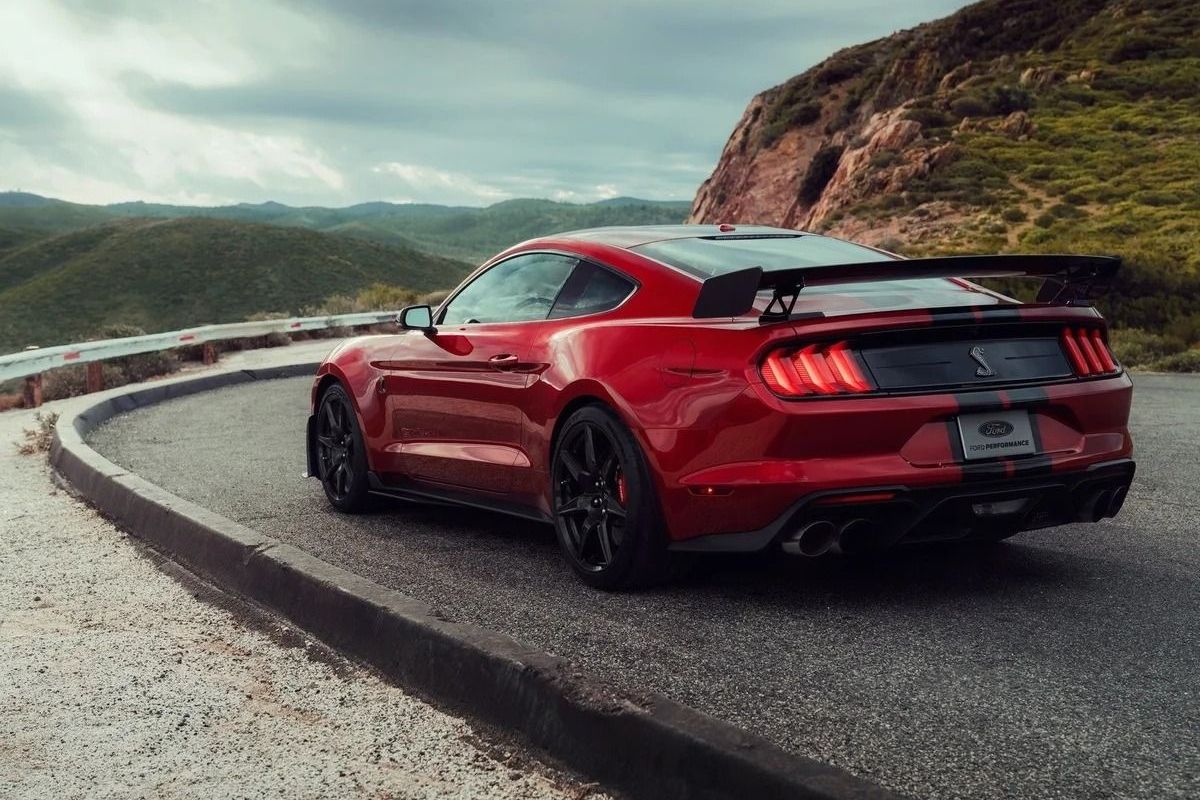
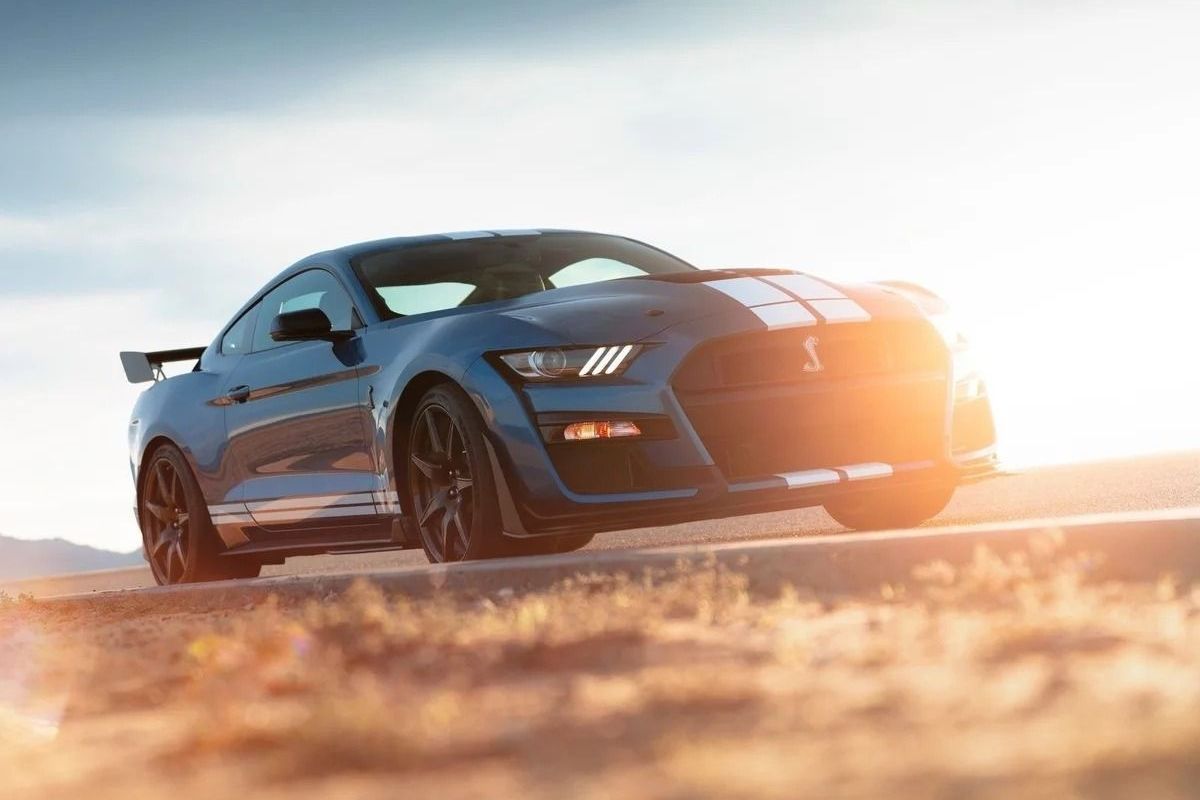
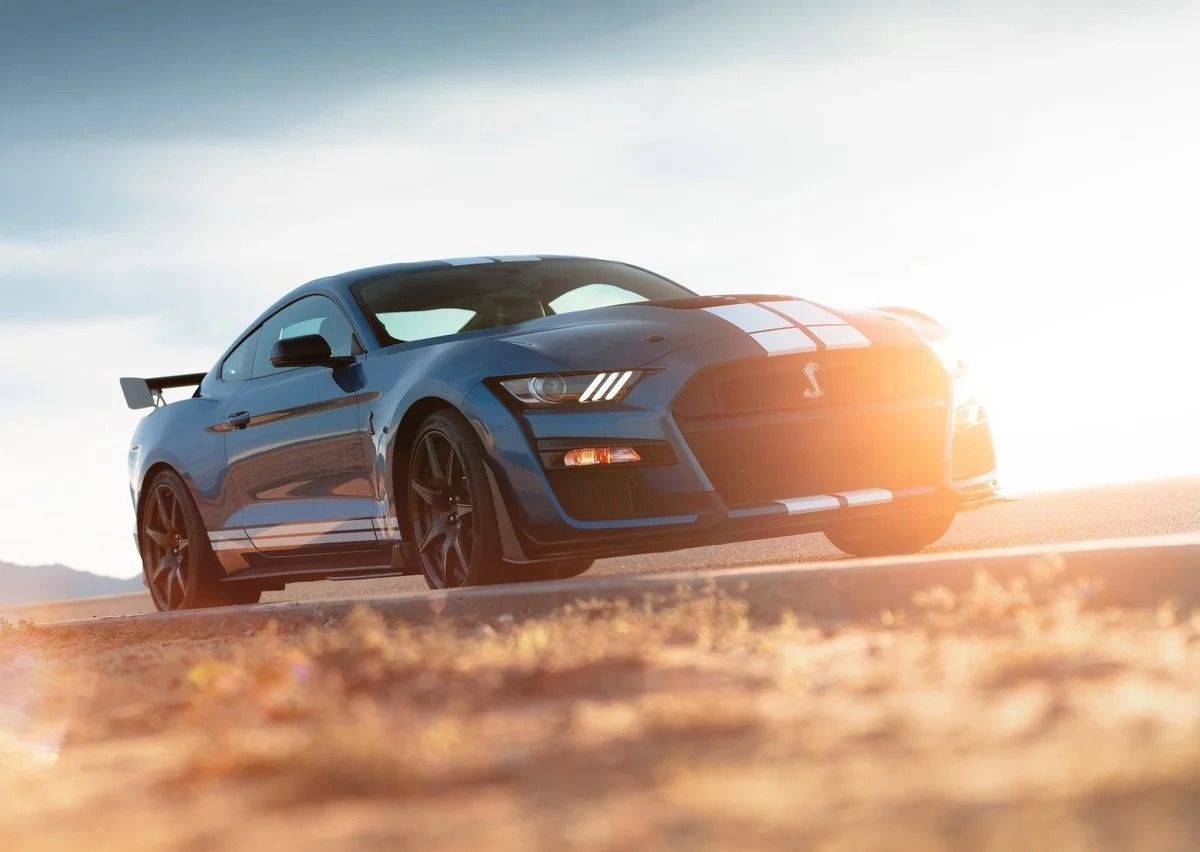
Ford has revealed the engine specification of its new Mustang Shelby GT500 and the numbers are astonishing.
The most potent Pony car ever built will also be Ford’s most powerful road car, eclipsing the company’s mid-engined GT supercar.
Engineers used the Mustang GT350’s 5.2-litre naturally-aspirated V8 as a platform for the Shelby GT500. The flat-plane crankshaft was sacrificed, but they’ve added a supercharger and the claims are lofty.
Ford says this new 5.2-litre V8 is the world’s most power-dense production supercharged engine and with it rating at 567 kW and 847 Nm, there is confidence in that claim.
The supercharger will add some mechanical drag and additional intake pressure, so don’t expect the Shelby GT500 to have the same 8 250 rpm redline that the naturally-aspirated 5.2-litre GT350 has.
What is perhaps even more extraordinary than the engine’s output is the fact that Ford will be offering a carbon-fibre driveshaft and seven-speed dual-clutch transmission for the GT500, at a time when many European high-performance vehicles are reverting to traditional automatic gearboxes for extreme output engines.
There will also be an optional carbon-fibre package which adds composite wheels (expensive if sourced aftermarket), an adjustable carbon-fibre rear wing and front winglets.
Best of all? Mustang Shelby GT500 owners will have the option of ordering their cars as pure two-seaters, with the rear passenger accommodation deleted.
Local Shelby dealers will no doubt be frothing at the opportunity to import a few of these, but no mention of right-hand-drive derivatives has been mentioned, yet.
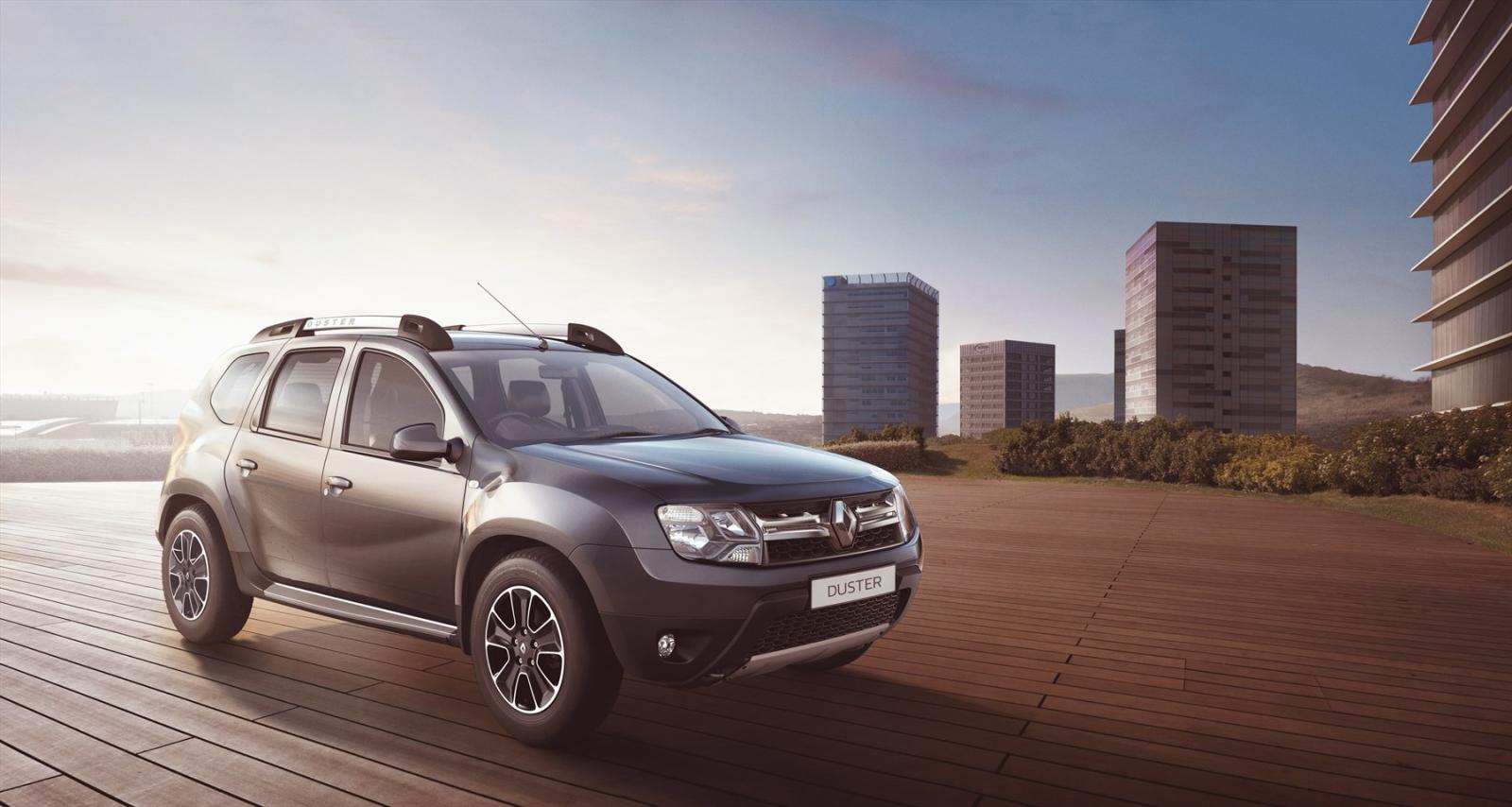
Renault Duster (2013-2018) Buyer’s Guide
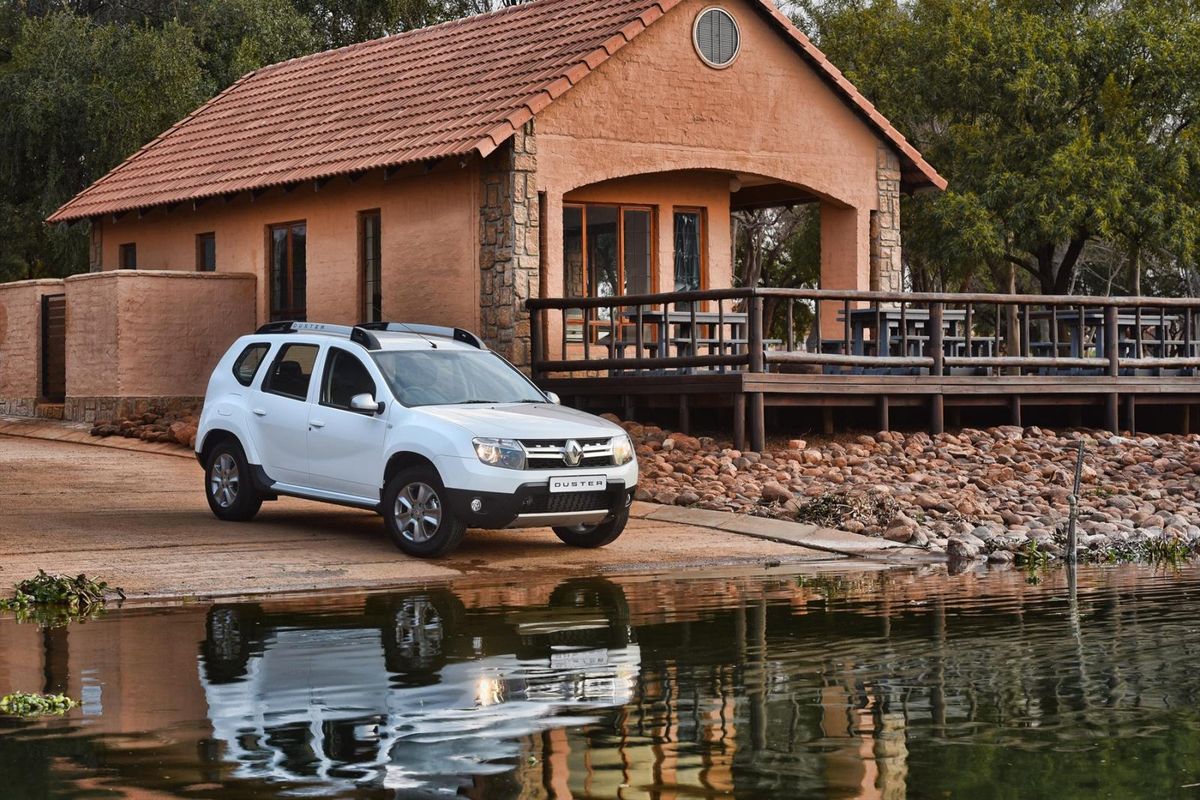
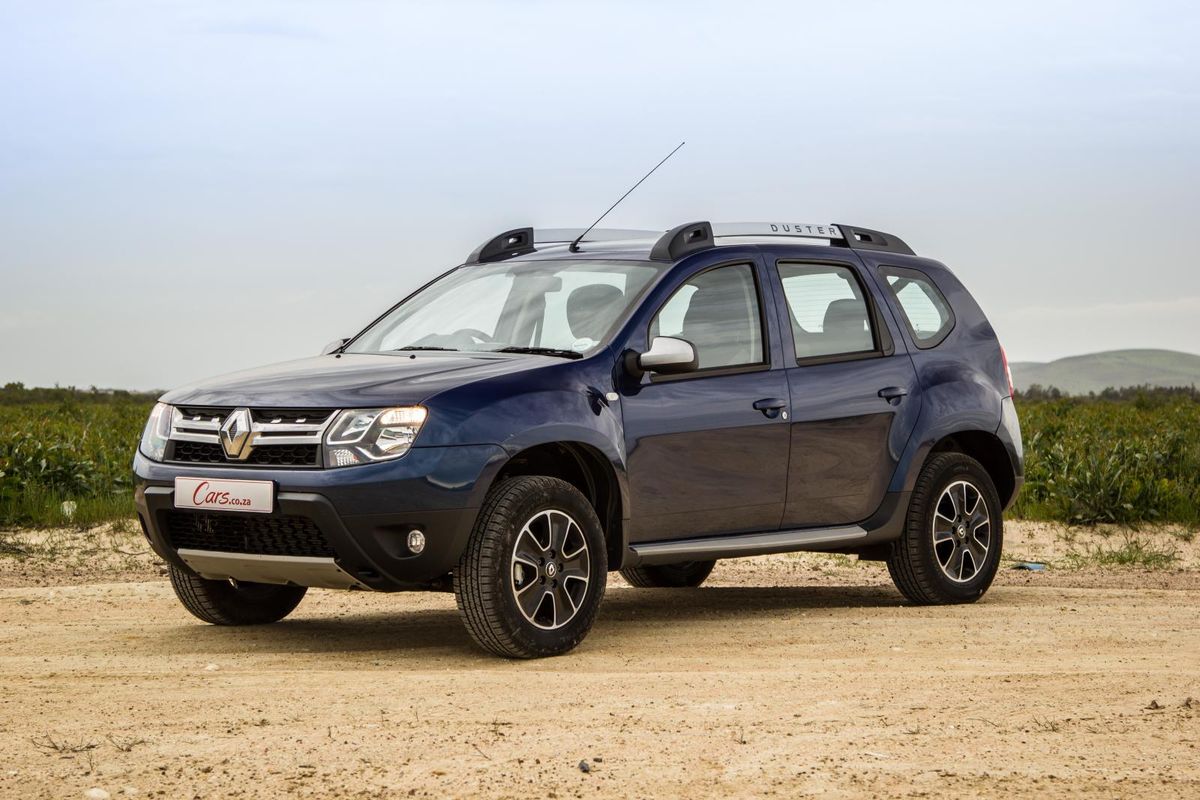
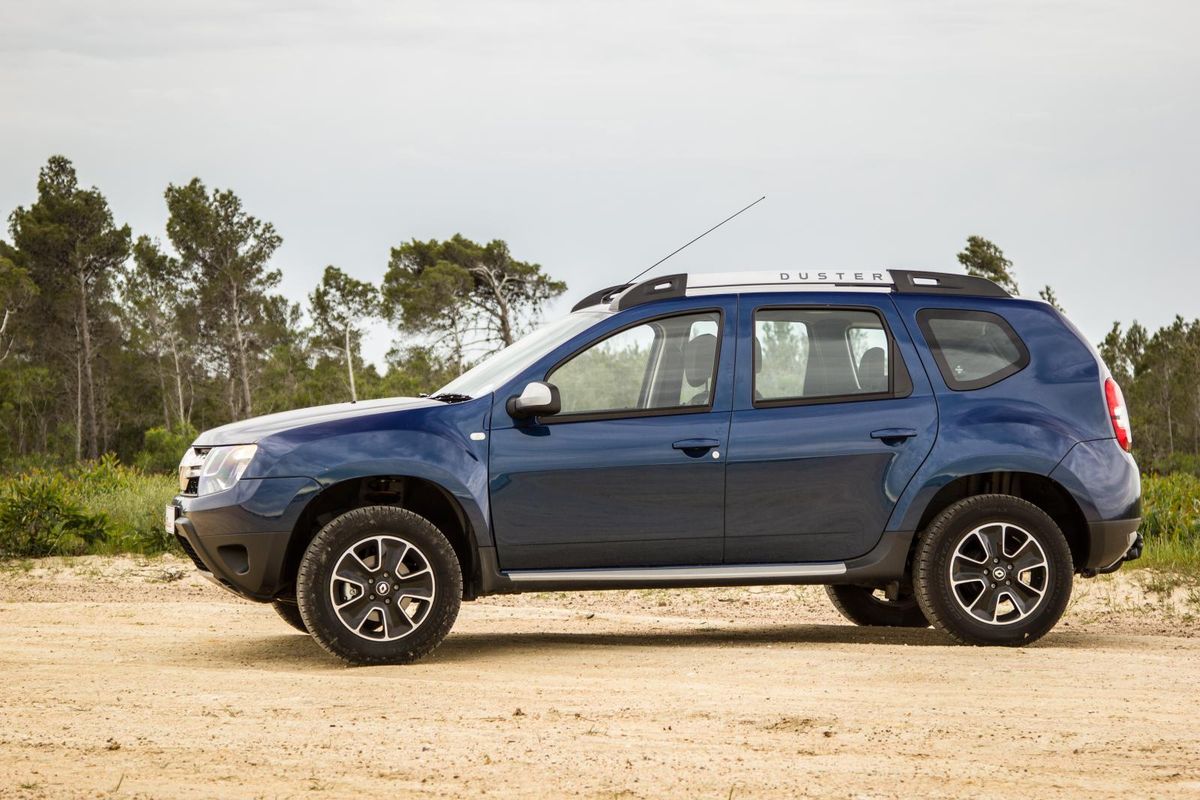
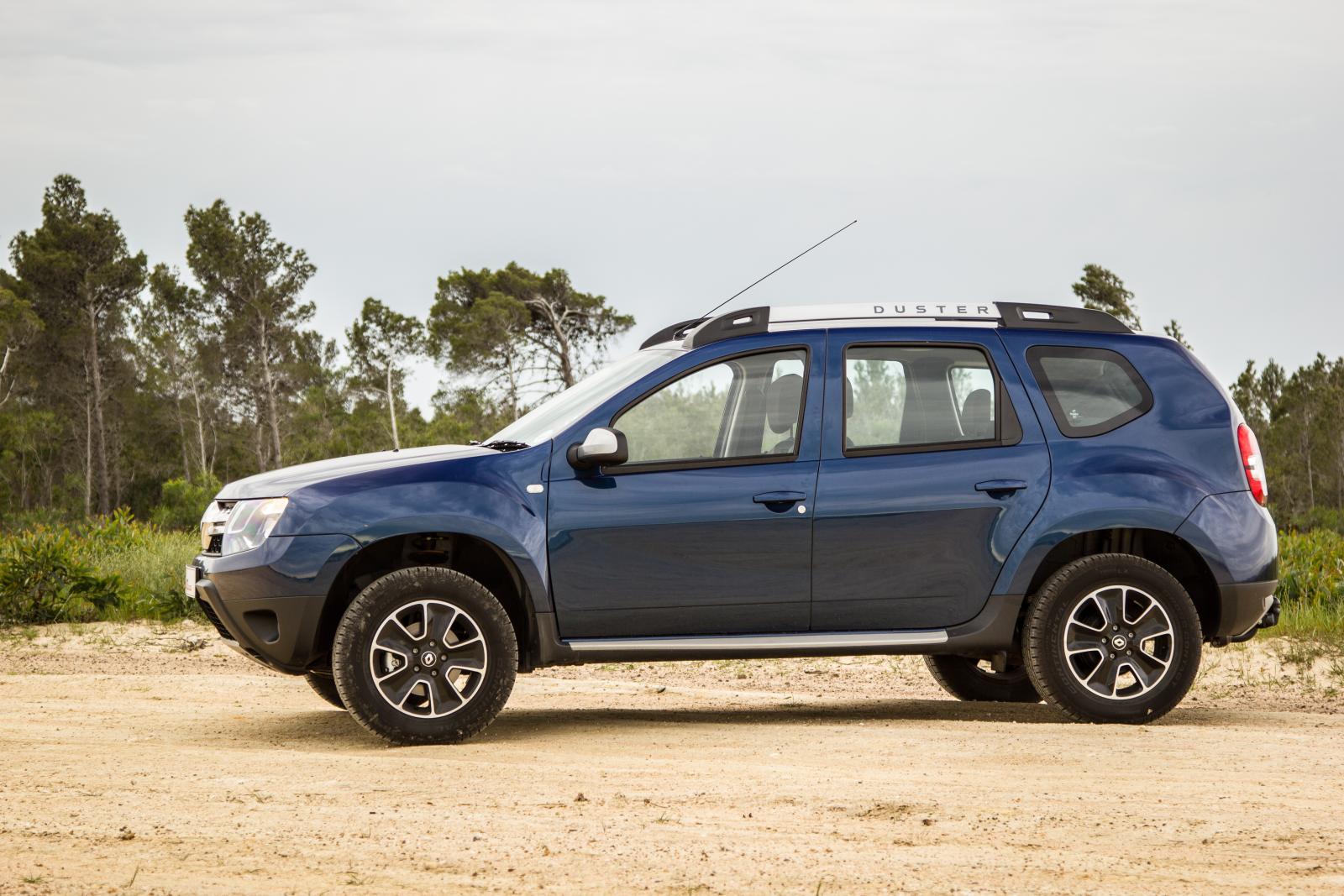
South Africa might have been late to receive the Renault (née Dacia) Duster (in 2013), but it proved a strong seller right from the start. The 1st-generation Duster offered excellent value for money, plus endearing ruggedness and simplicity, which explains why it’s such a popular used buy. What should you pay, and what are its shortcomings?
Introduced in South Africa during October 2013, the Duster compact family car has become a regular sight on our roads, with around 15 000 sold from 2013 to 2018. It was positioned as an affordable, spacious and well-equipped compact SUV that wasn’t shy to get its boots dirty. There are currently more than 300 1st-generation Dusters listed on Cars.co.za, with prices starting just below R110 000. Are they worth a closer look?
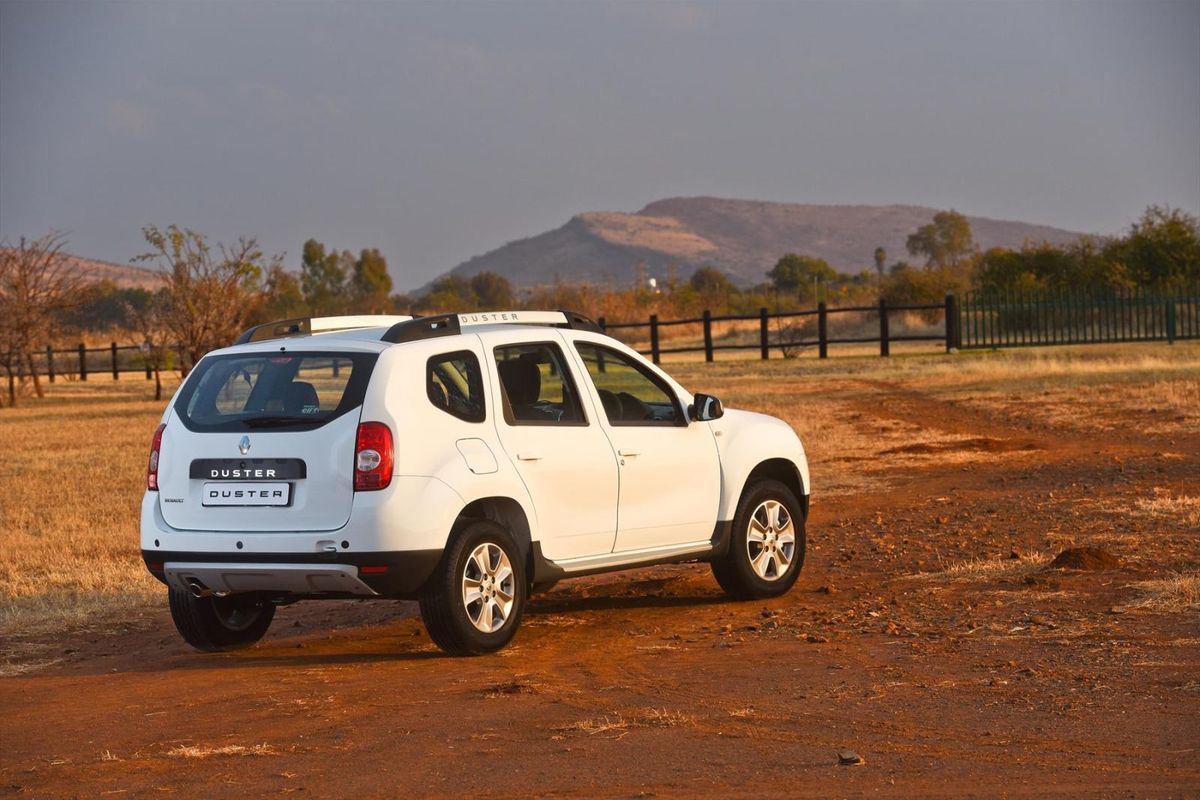
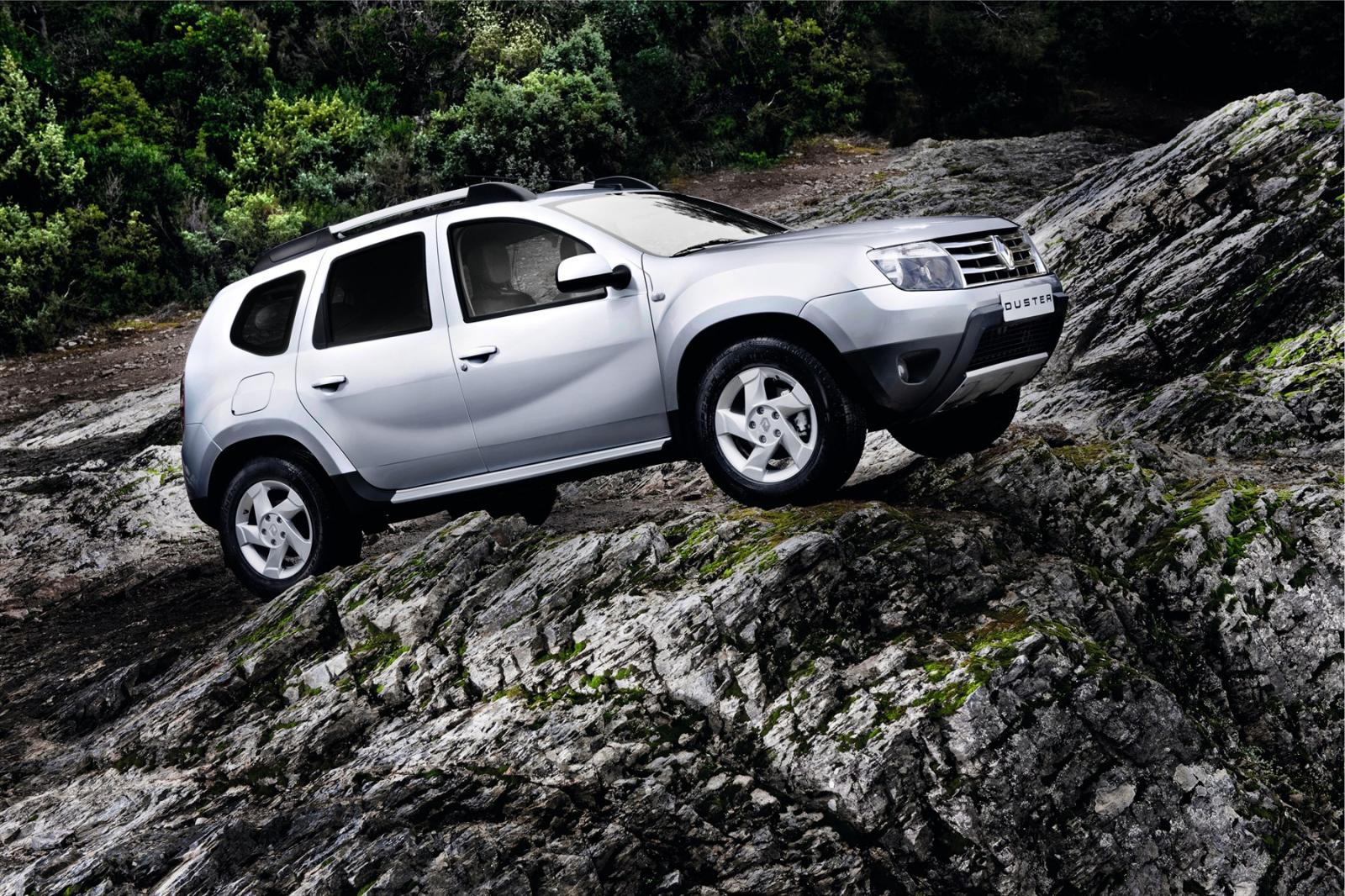
Cheap and seemingly quite rugged, the Duster appeals to those buyers who actually need a vehicle that can handle the rough.
Upon launch, the Duster was offered with 2 engines and in 2 trim levels. The 1.6-litre 16-valve base engine (75 kW/145 Nm) is a proven unit, but relatively thirsty, with a claimed combined-cycle consumption figure of 7.5L/100 km, which translates to around 9.0 L/100 km in the real world. It was offered exclusively in 4×2 guise and in Expression and Dynamique trim.
The 1.5-litre dCi engine (80 kW/240 Nm) proved popular from the start, particularly as it boasted an impressive economy figure of 5.5 L/100 km, which meant consumption of below 7.0 L/100 km was achievable. It also delivered its substantial torque across the rev range, from a low 1 750 rpm (on the 4×4). The turbodiesel engine was mated with a 6-speed manual transmission, and 4×2 and 4×4 versions were offered in Dynamique trim.
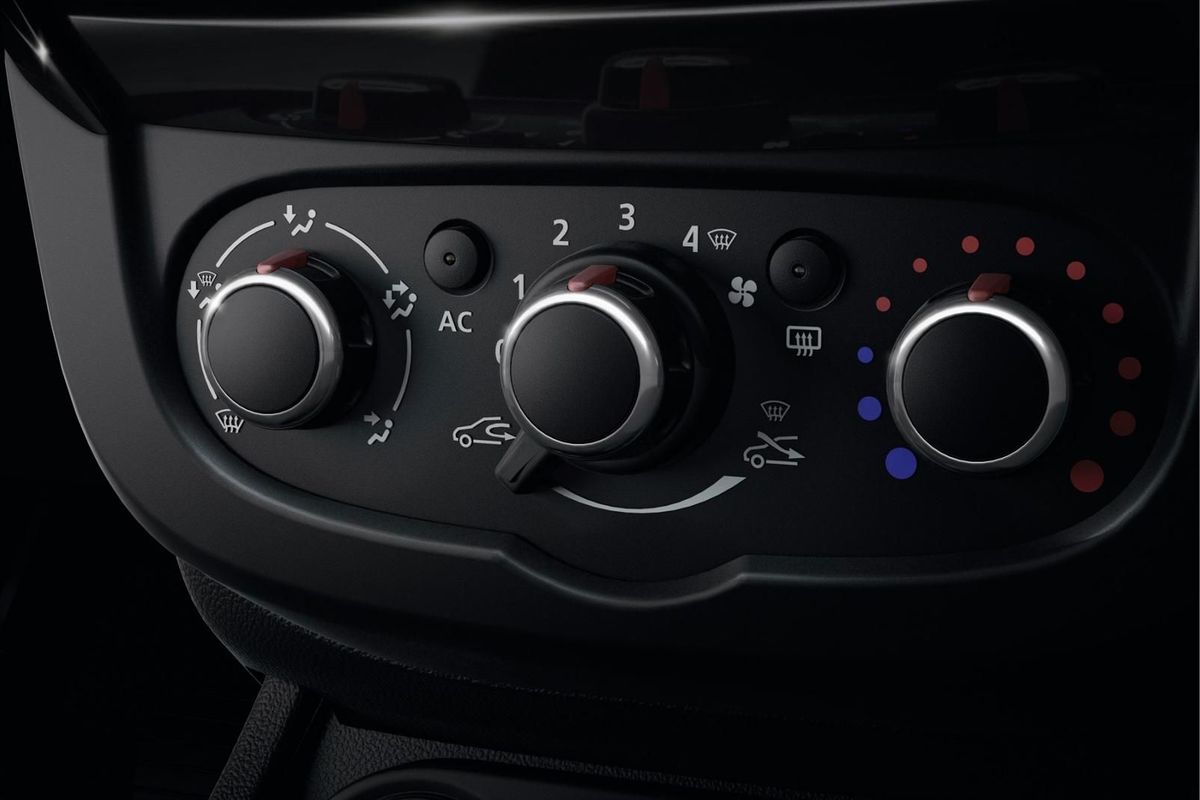
Expression might have been the “base” specification, but it still included air-conditioning, electric windows, height-adjustable steering wheel and driver’s seat, radio/CD player with USB and Bluetooth compatibility, dual front/side airbags and ABS with EBD – but sadly, no ESP.
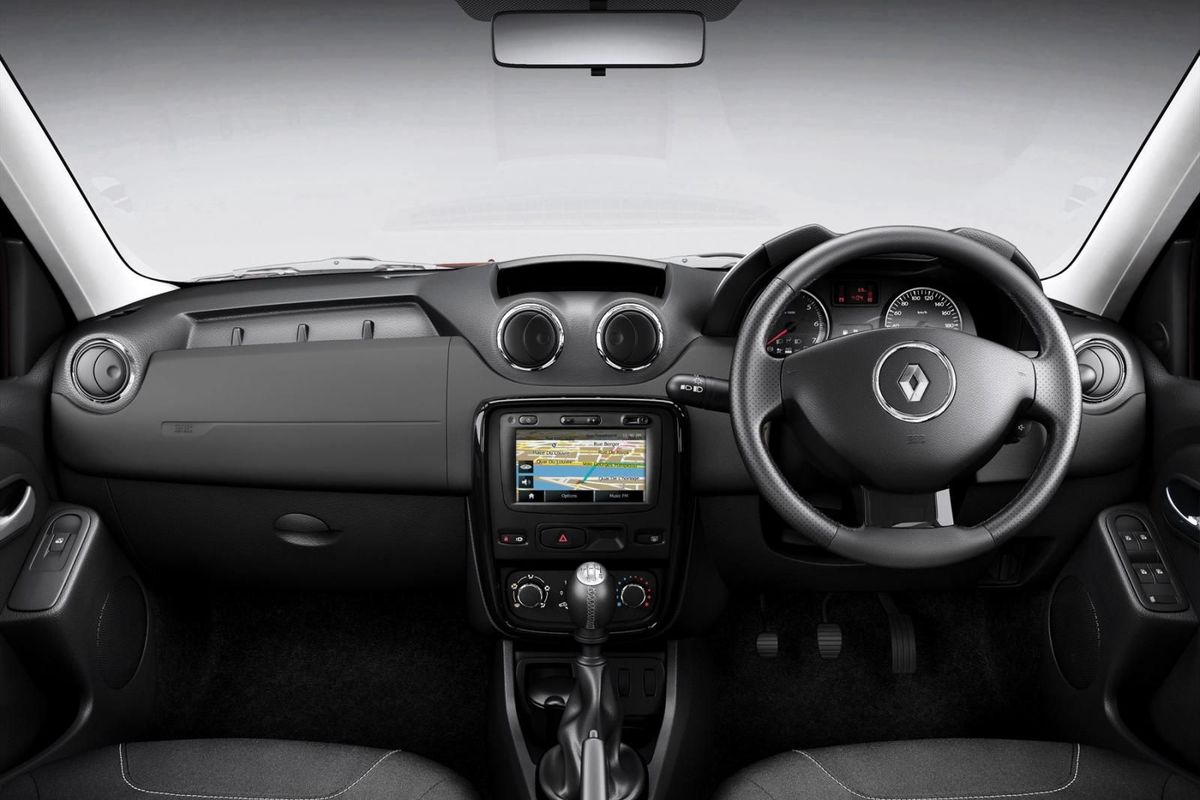
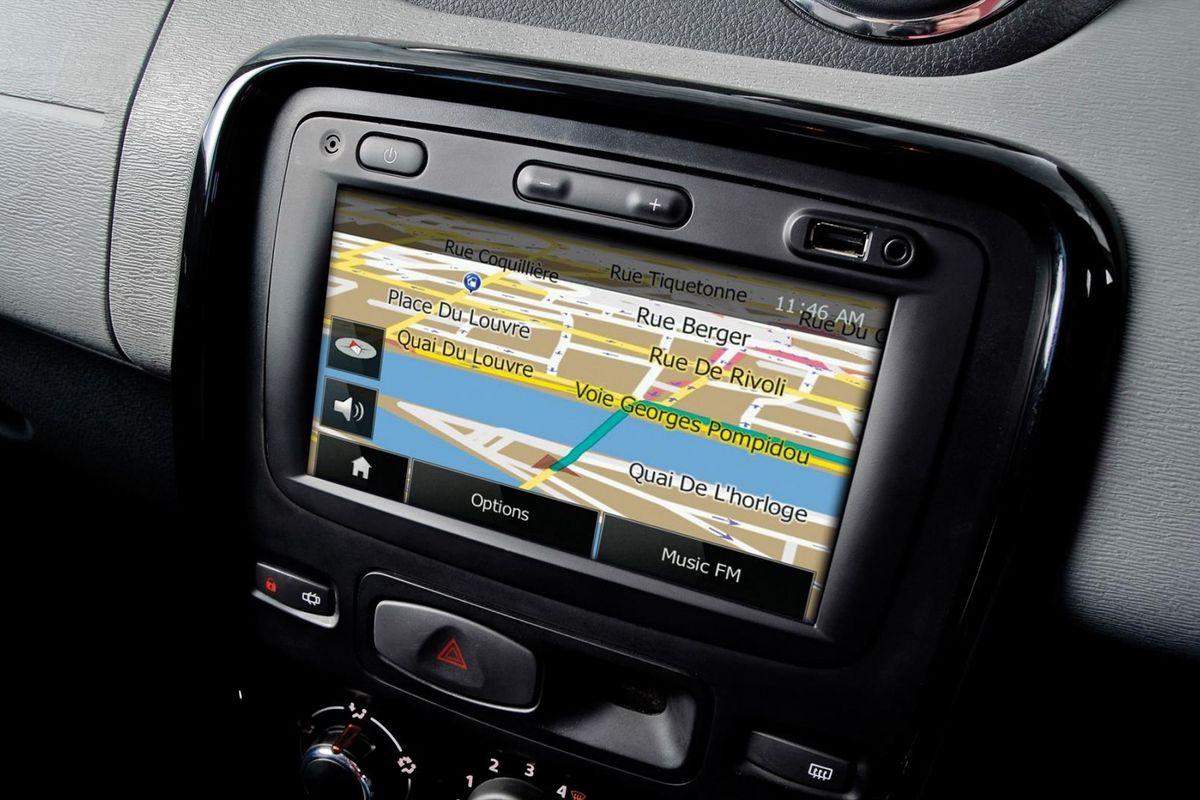
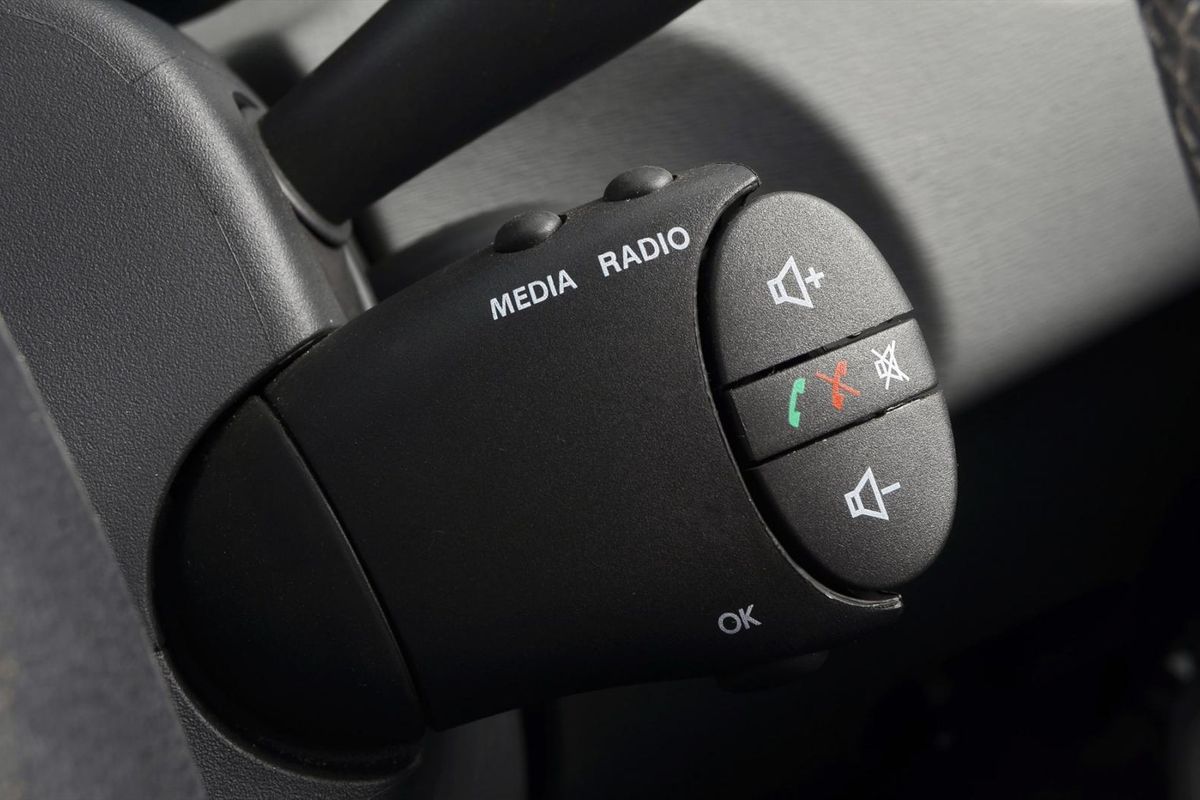
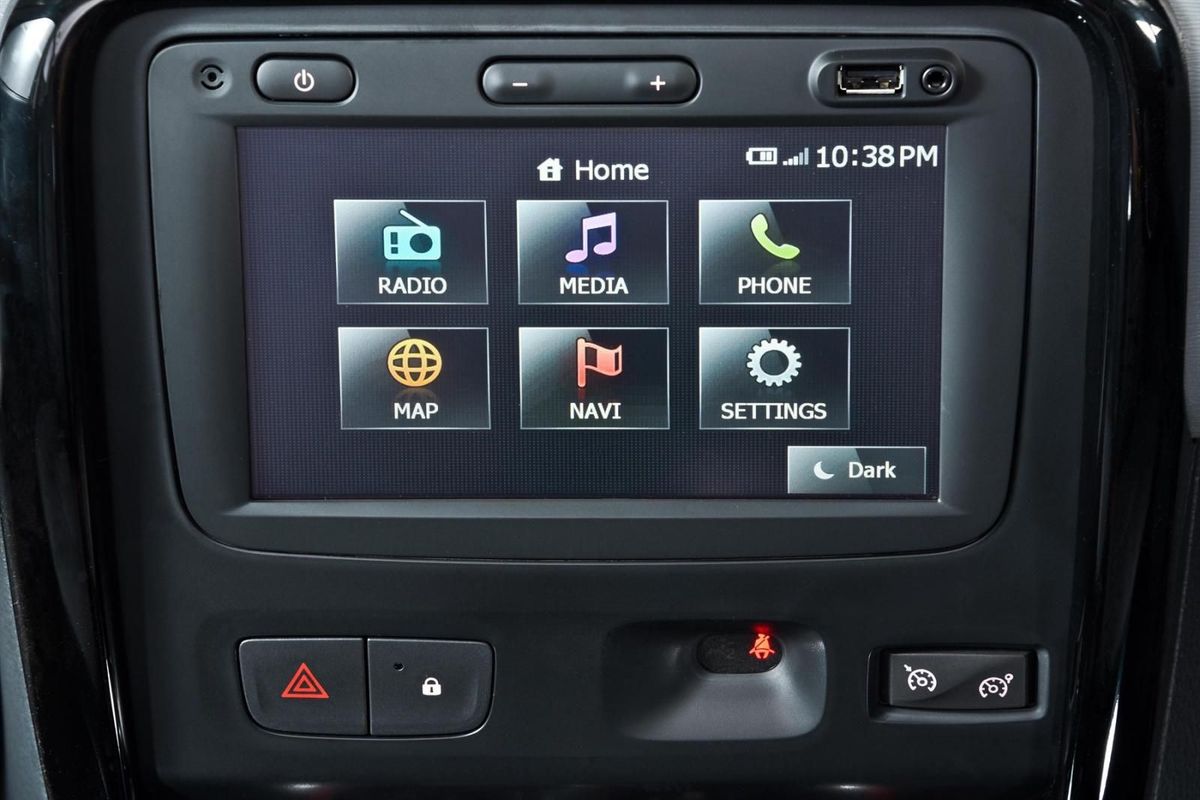
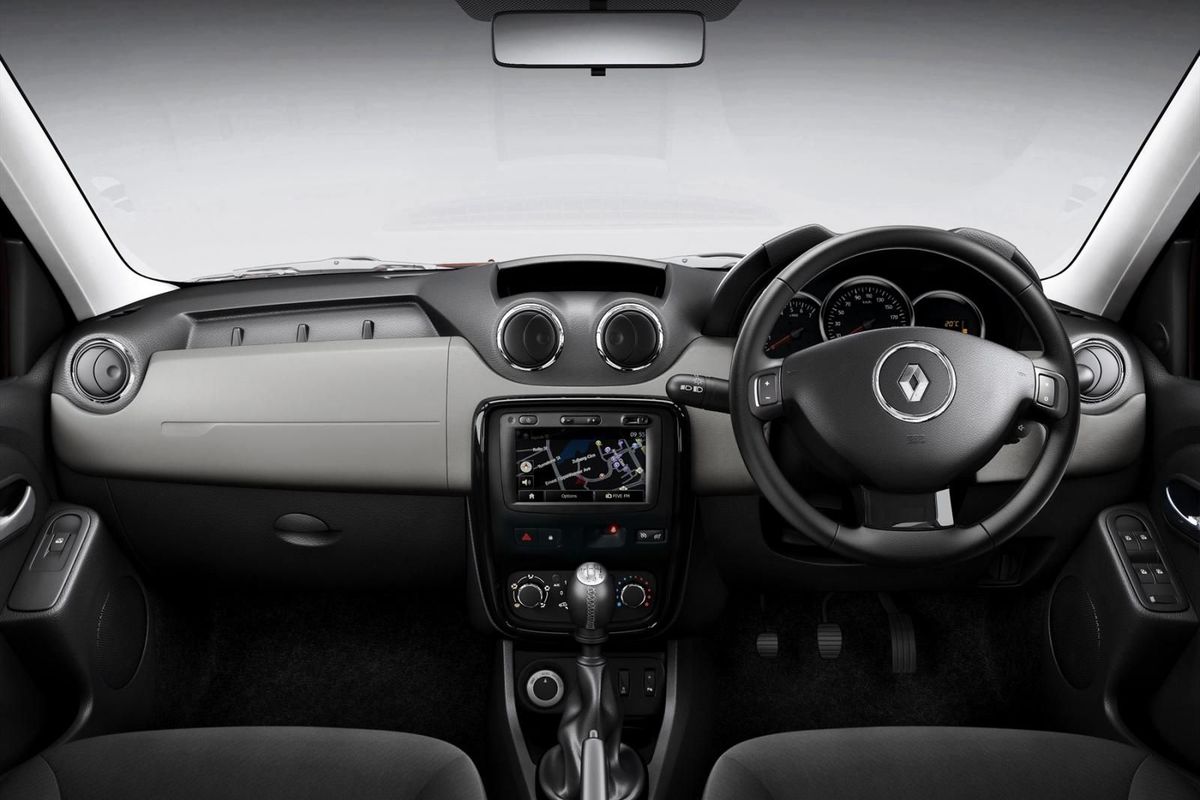
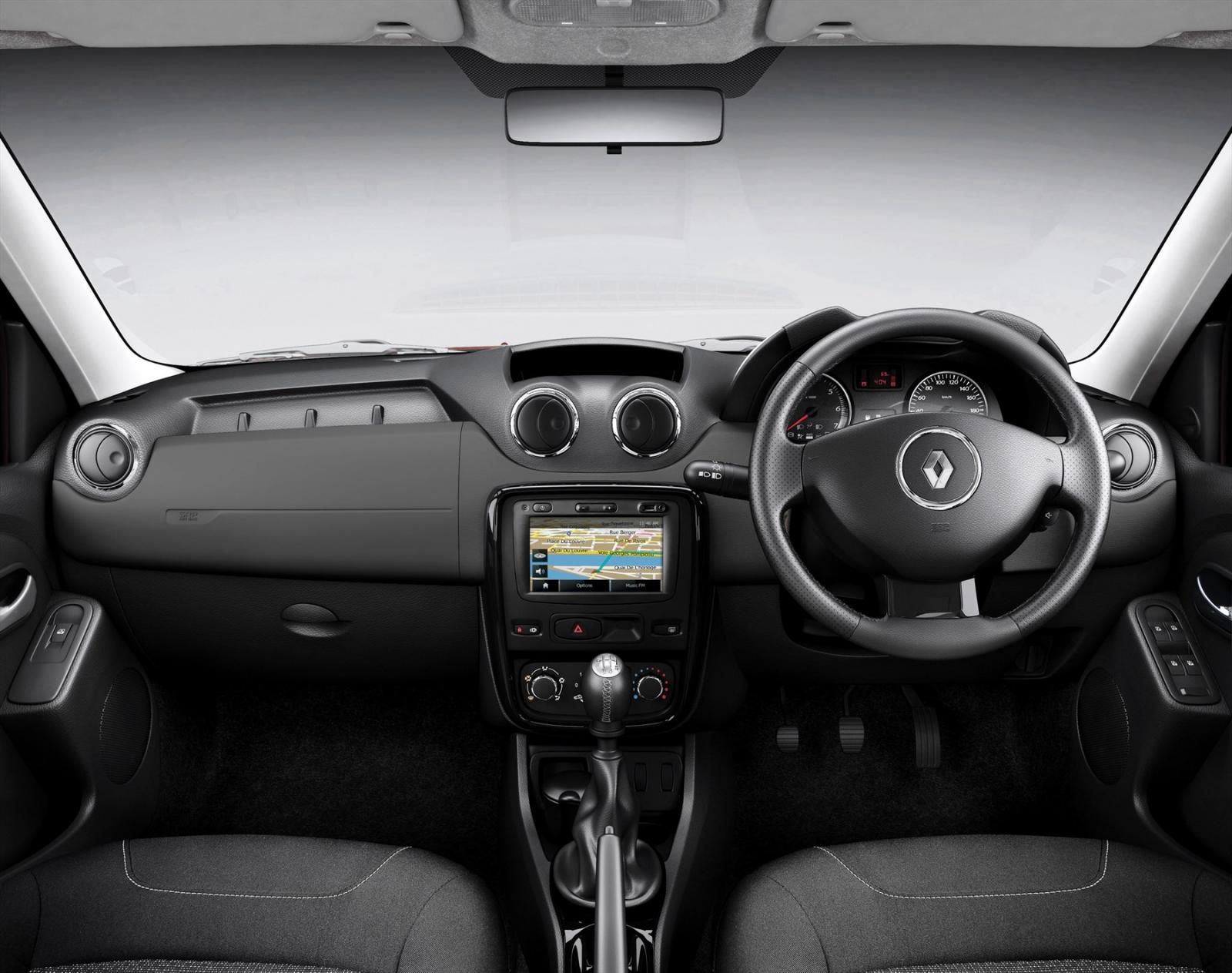
The Dynamique trim level was particularly generous, with items such as 16-inch alloys, leather-wrapped steering wheel and, perhaps most importantly, a Media Nav infotainment touchscreen with navigation as standard – unfortunately, the screen is mounted too low. The 4×4 version also benefitted from the addition of ESP (electronic stability control), and a Nissan-derived all-wheel-drive system with 3 modes (2WD, Auto and Lock).
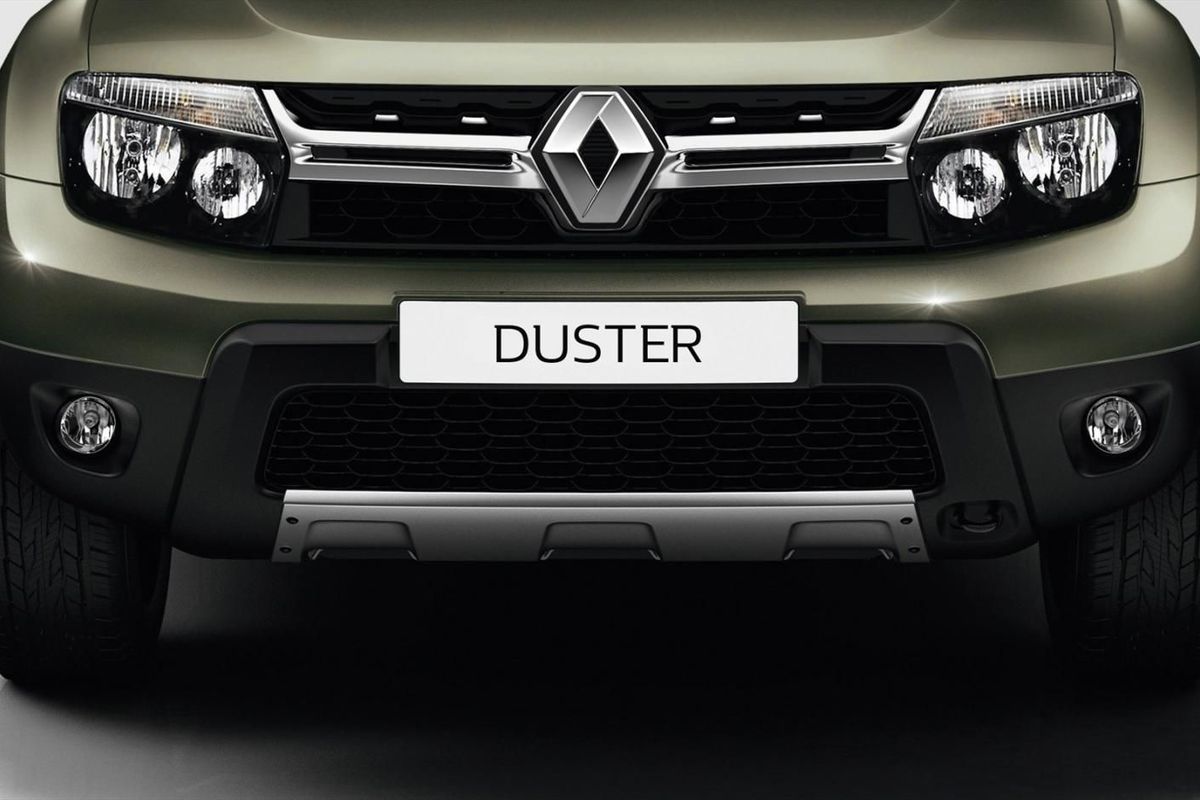
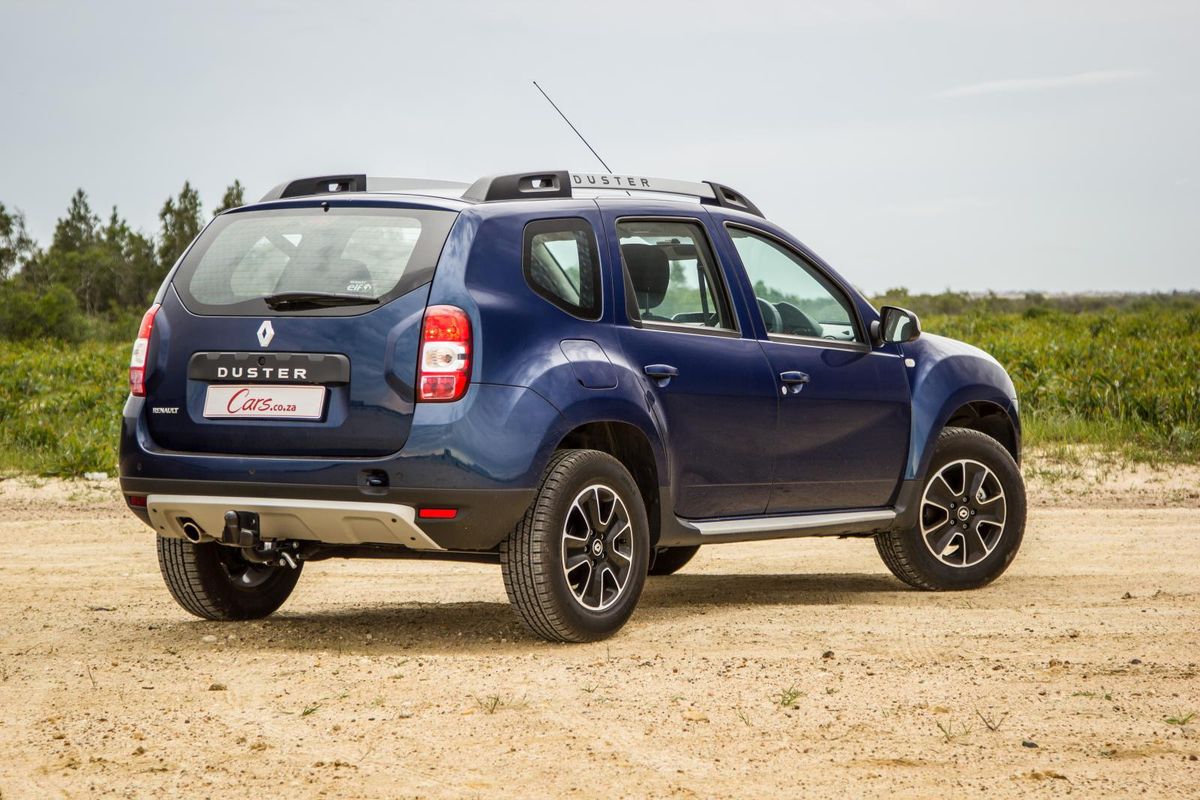
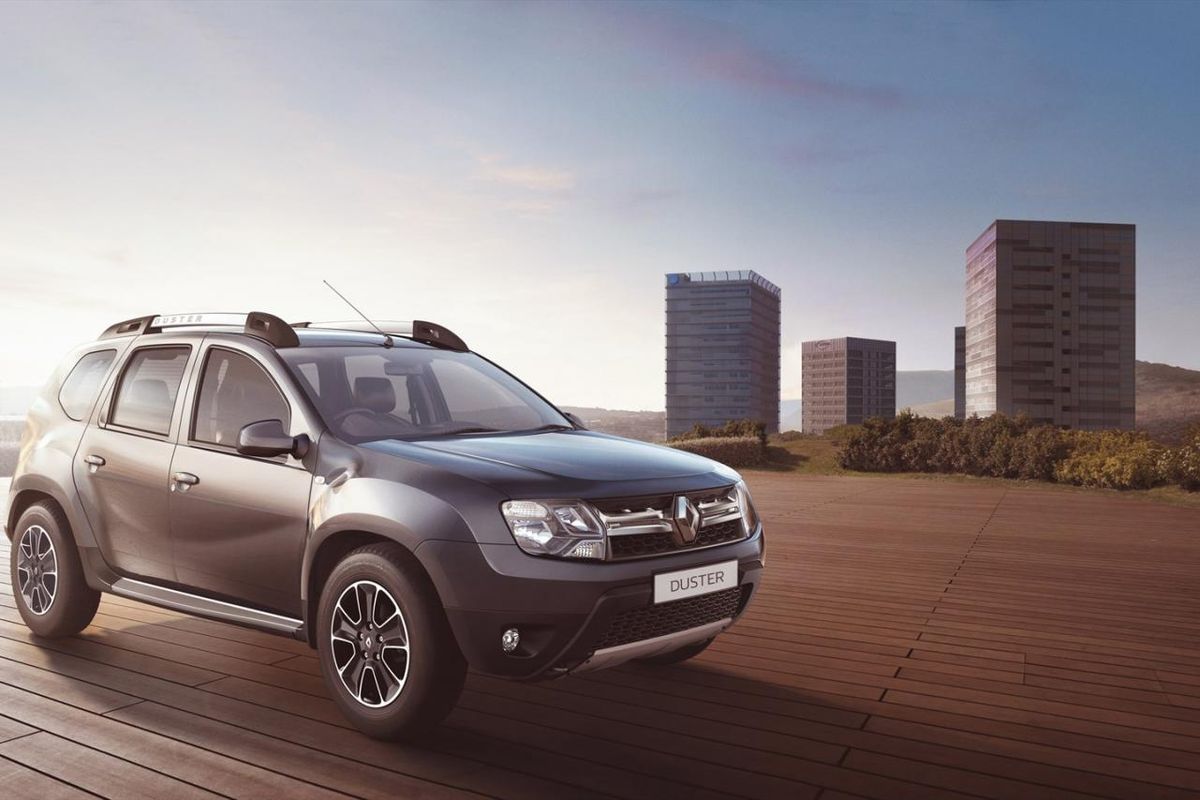
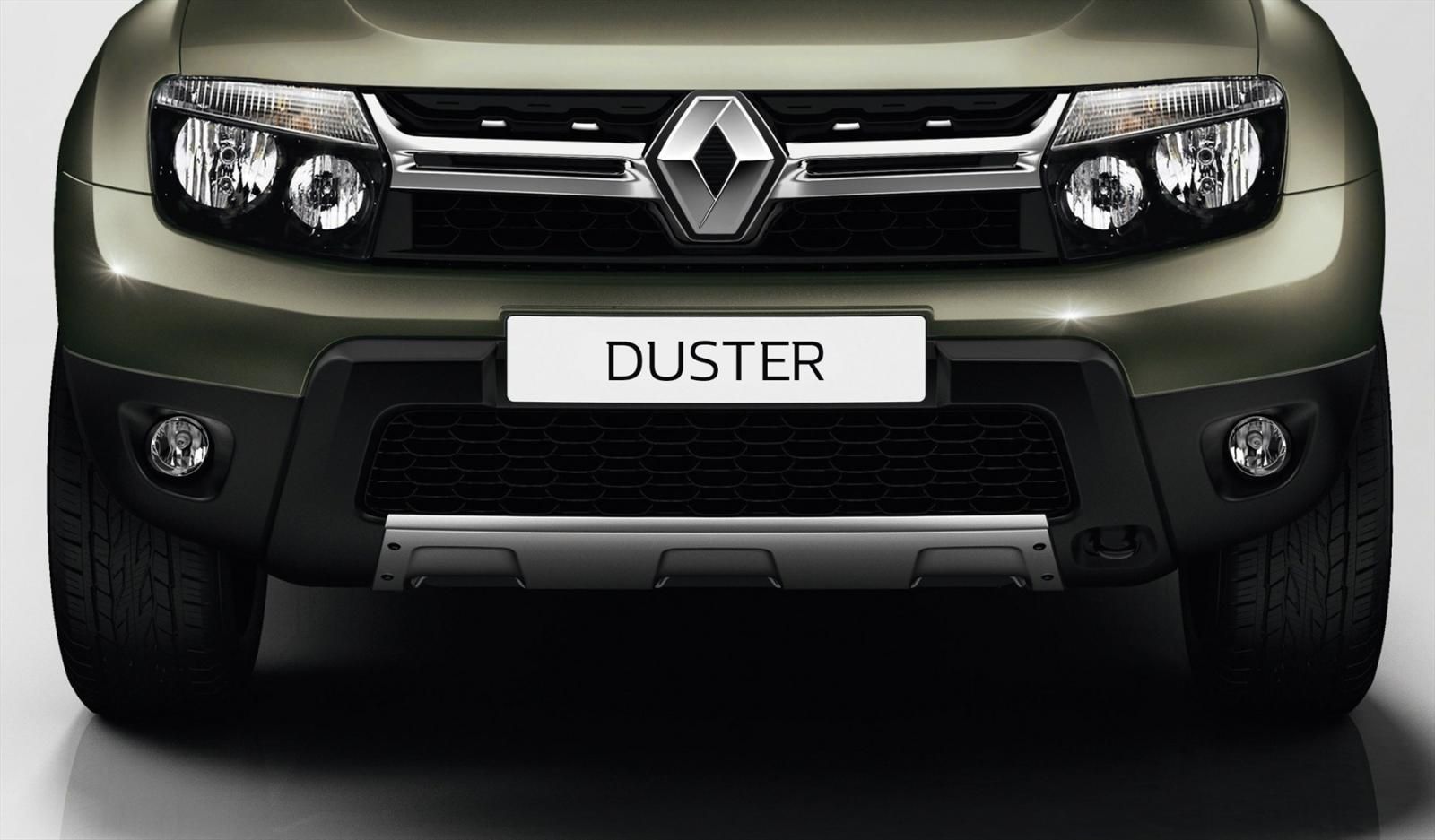
The facelifted version arrived in August 2015, sporting a significantly revised front-end with a redesigned grille design.
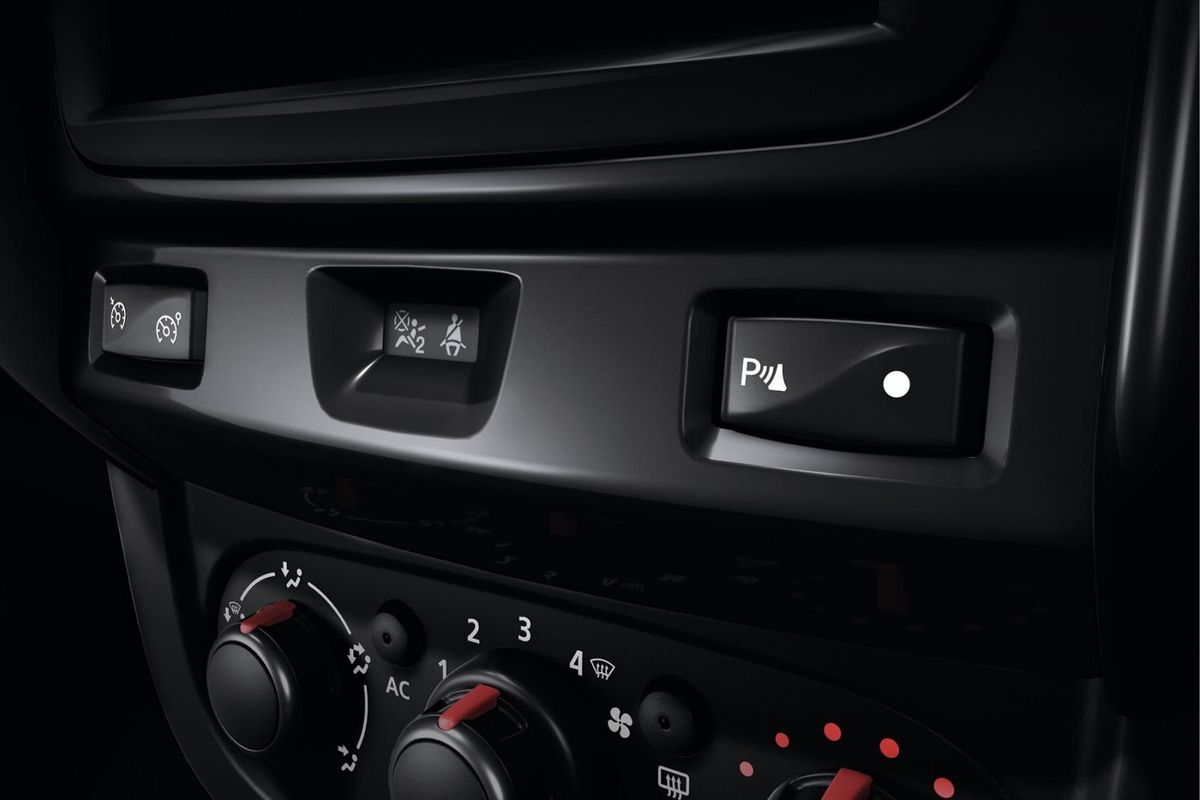
The arrival of the facelifted Duster (in 2015) coincided with a move of production facility. Initially, Dusters sold in South Africa were built in India, but as of the introduction of the revamped version, production shifted to a plant in Romania. Besides the obvious exterior cosmetic alterations (and some trim revisions inside), the major changes were related to specification, with all models now boasting rear park-distance sensors and cruise control. Leather upholstery was an option on Dynamique variants. The range’s line-up remained unchanged, but interestingly the turbodiesel 4×2 was now claimed to be more fuel efficient, with a combined cycle figure of only 4.8 L/100 km (translating to about 5.8 L/100 km in the real world).
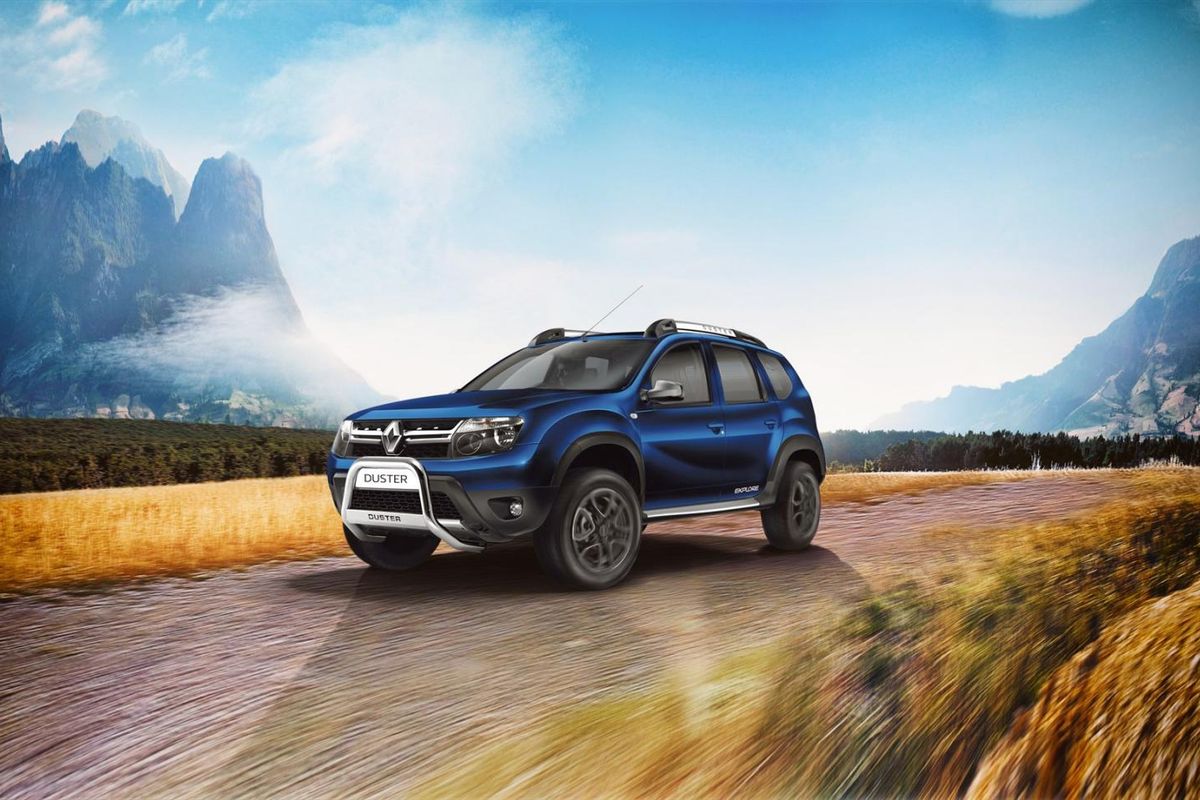
In June 2016, Renault added a limited edition EXPLORE variant to the line-up, based on the 1.6L Dynamique. It featured additions such as a nudge bar, different 16-inch alloy wheels, reverse-view camera and wheel-arch protectors. At the time of the derivative’s introduction, Renault said only 100 of these EXPLORE variants would be available.
Fast forward another year, and Renault finally added a self-shifting Duster to the local line-up, in the shape of a dual-clutch transmission equipped 1.5 dCi 4×2 Dynamique EDC (same transmission as in the Kadjar). Renault claimed a low consumption figure of 4.8 L/100 km for the derivative.
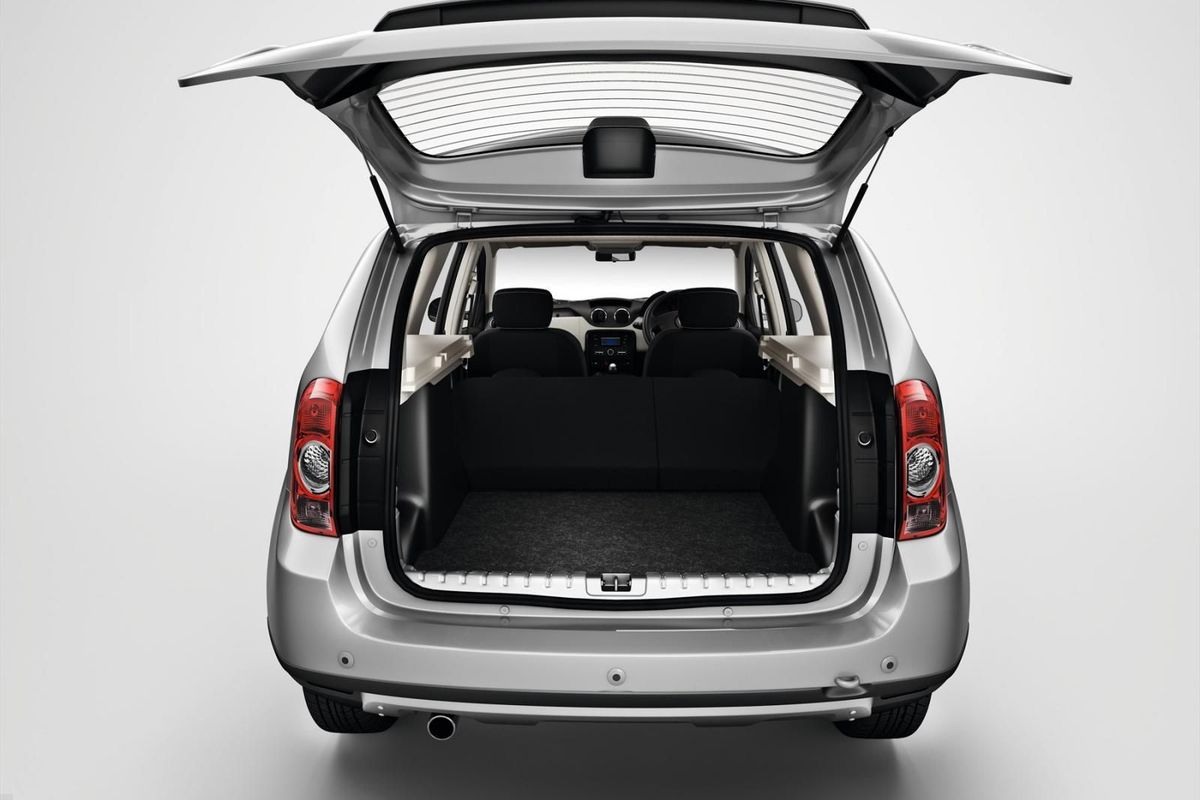
? The Duster is a spacious compact SUV, though the large boot does come at the cost of some rear-seat legroom.
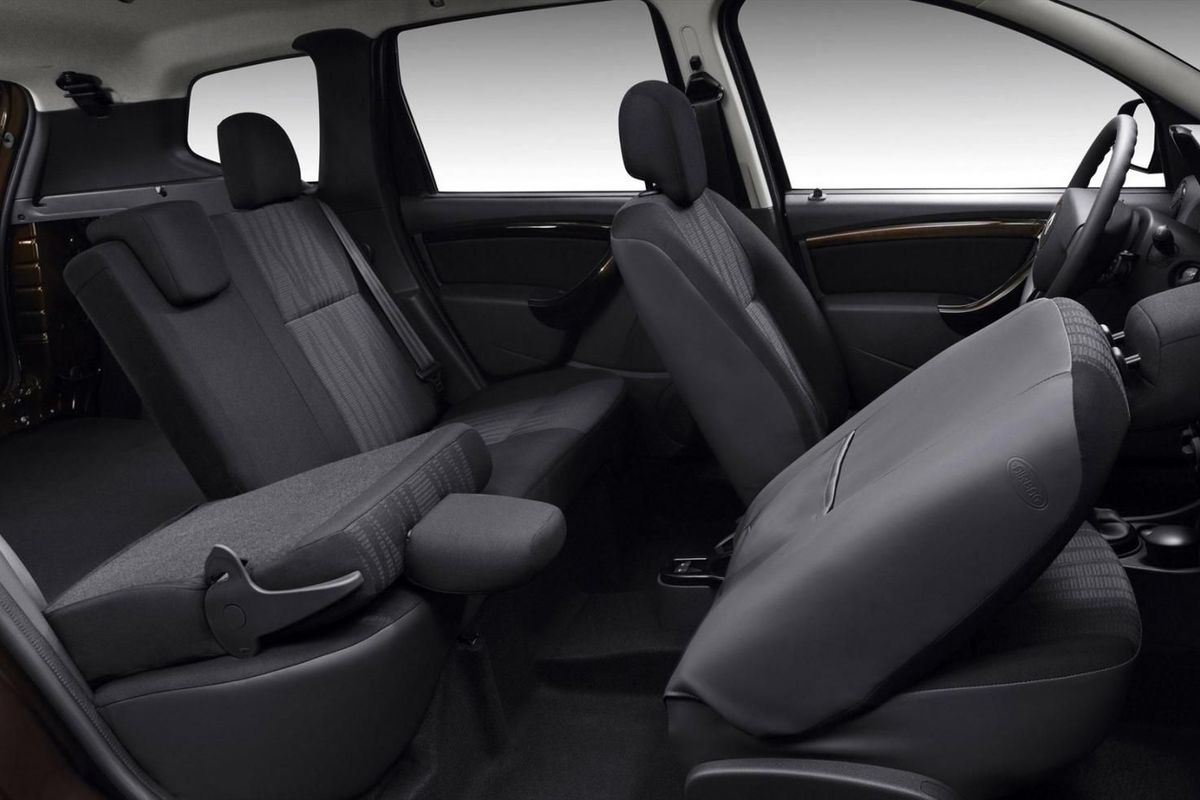
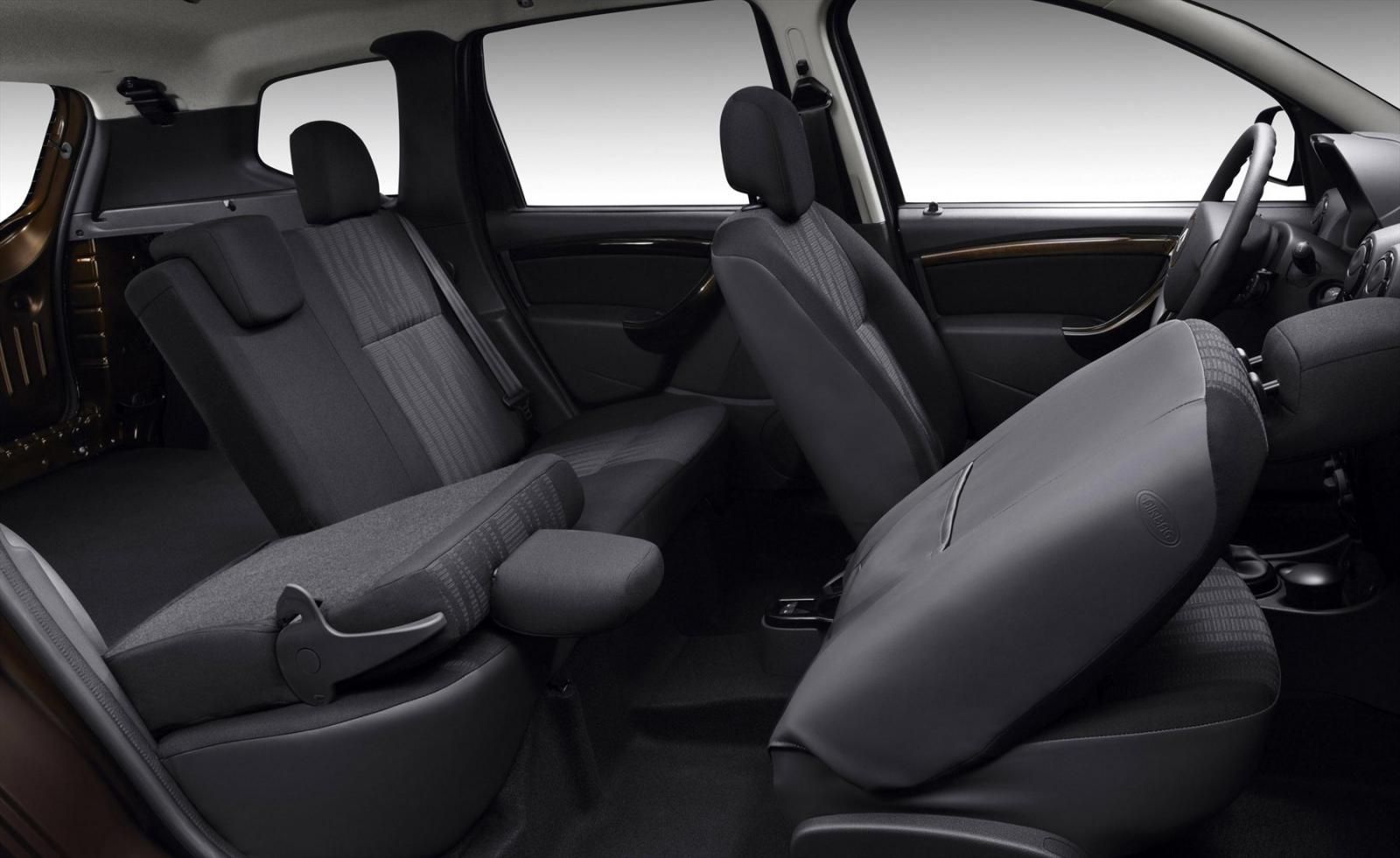
Space and Practicality: There were few (if any) similarly priced compact crossovers that could compete with the Duster in terms of spaciousness and practicality. Inside, it feels just a little bit wider than most of its rivals, while the extra length translates into a spacious luggage compartment (at the cost of some rear legroom). The load bay measures in at a claimed 475 litres and note that all Dynamique-spec derivatives had a full-size spare wheel while the base model 1.6 Expression made do with a space saver. Of course, the rear seatback was split 60:40 to further aid practicality. It’s a pity that the rear seats don’t fold completely flat, however.
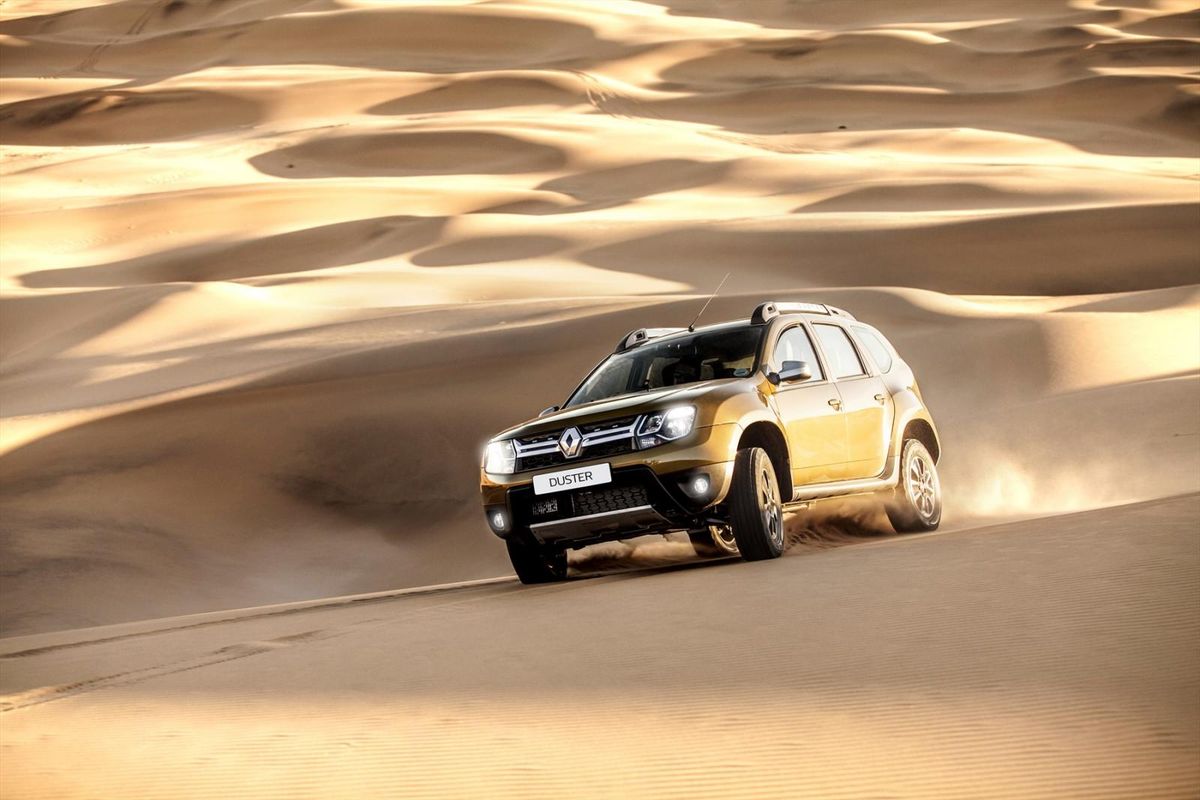
With decent ground clearance (205 mm in 4×2 variants, slightly higher for the 4WD) and generously side-walled tyres, the Duster is a practical all-rounder that doesn’t mind traversing the odd bit of rough gravel. In fact, given the deteriorating state of South Africa’s roads, it’s pretty much perfectly suited to our local conditions.
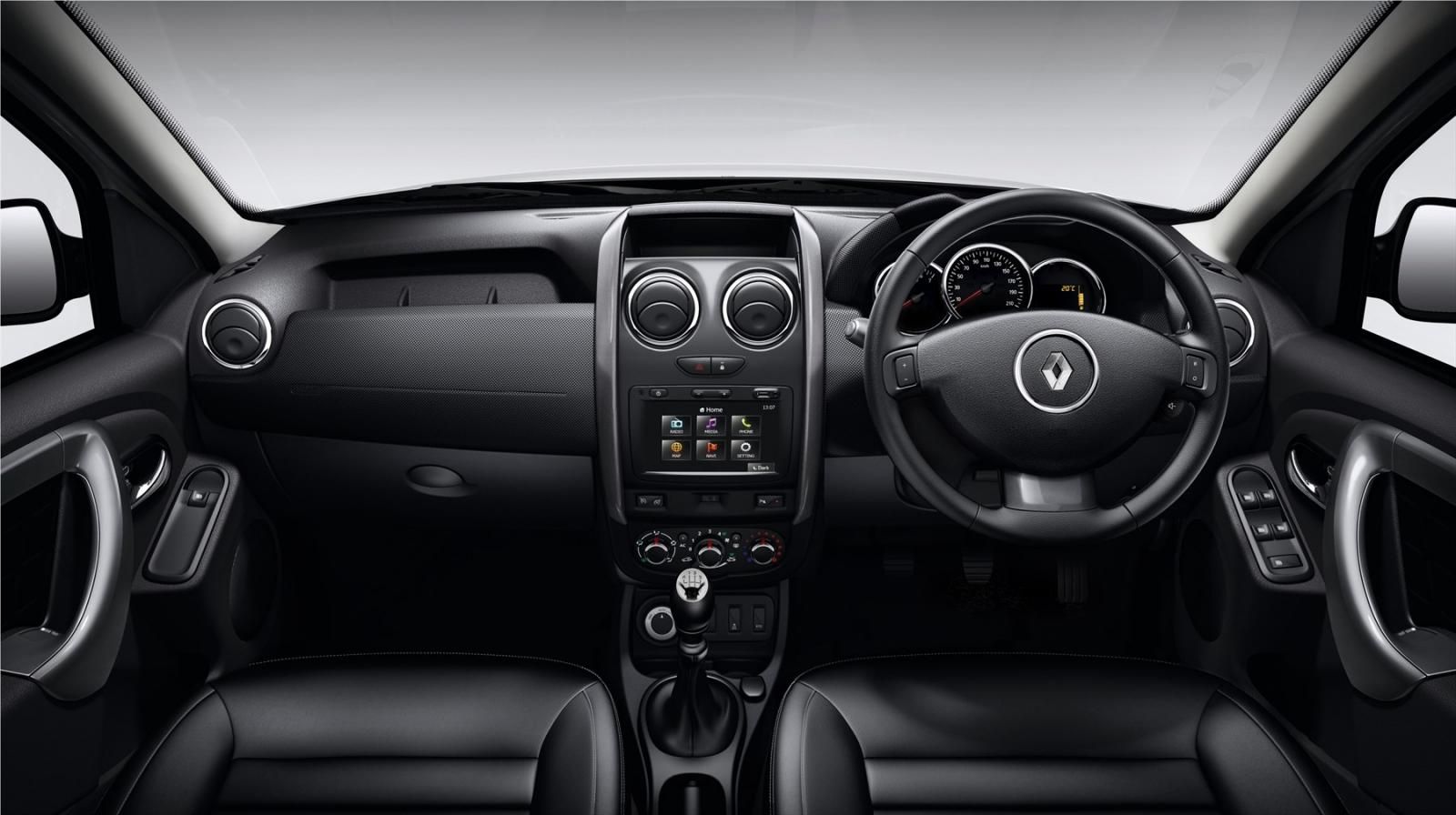
Although by no means luxurious, the Duster cabin offered plenty of showroom appeal. Pity the screen was mounted too low.
Good standard specification: At the price, the Duster offered a cabin constructed of decent-enough materials, and made up for any shortfalls in that regard with generous specification. Although Expression specification wasn’t as basic as you’d imagine, we’d definitely advise paying more for a Dynamique derivative as it includes ESP (stability control) on the 4WD, as well as the Media Nav touchscreen navigation system. All Dusters sold locally featured dual front- and front side airbags. You’ll also appreciate the cruise control fitted to later model-year cars.
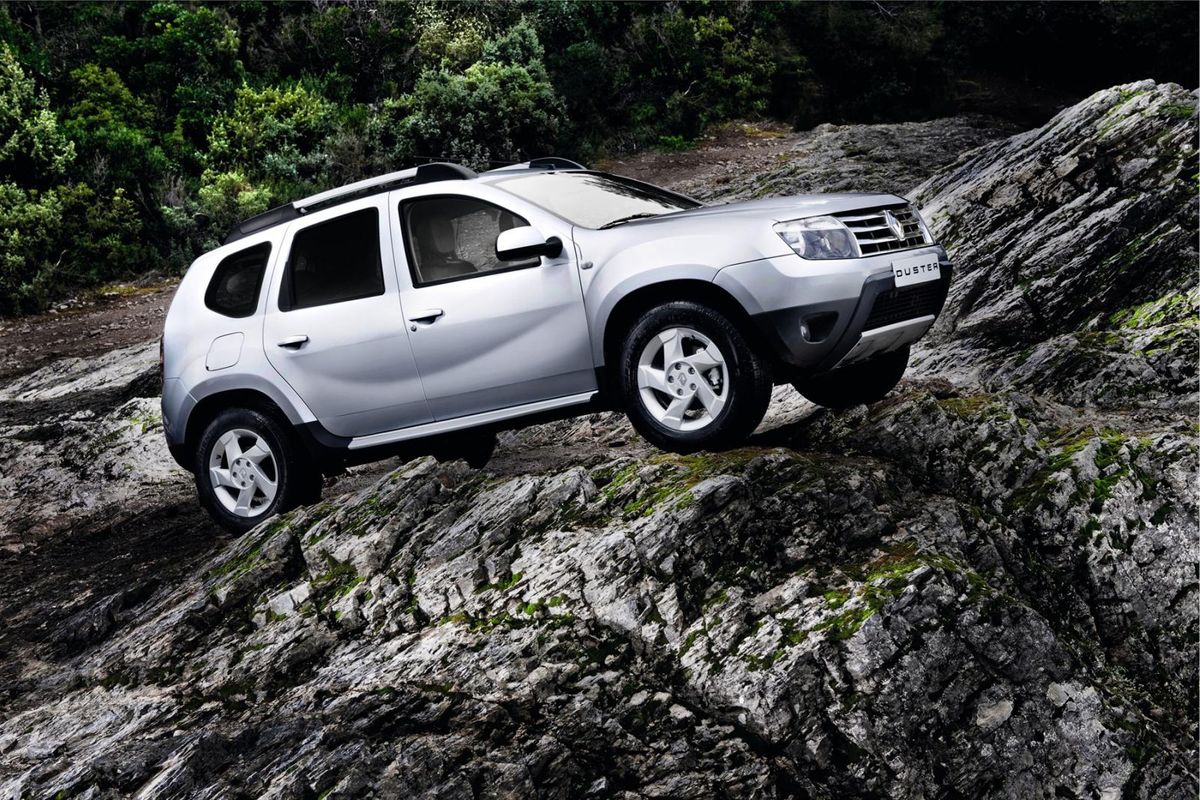
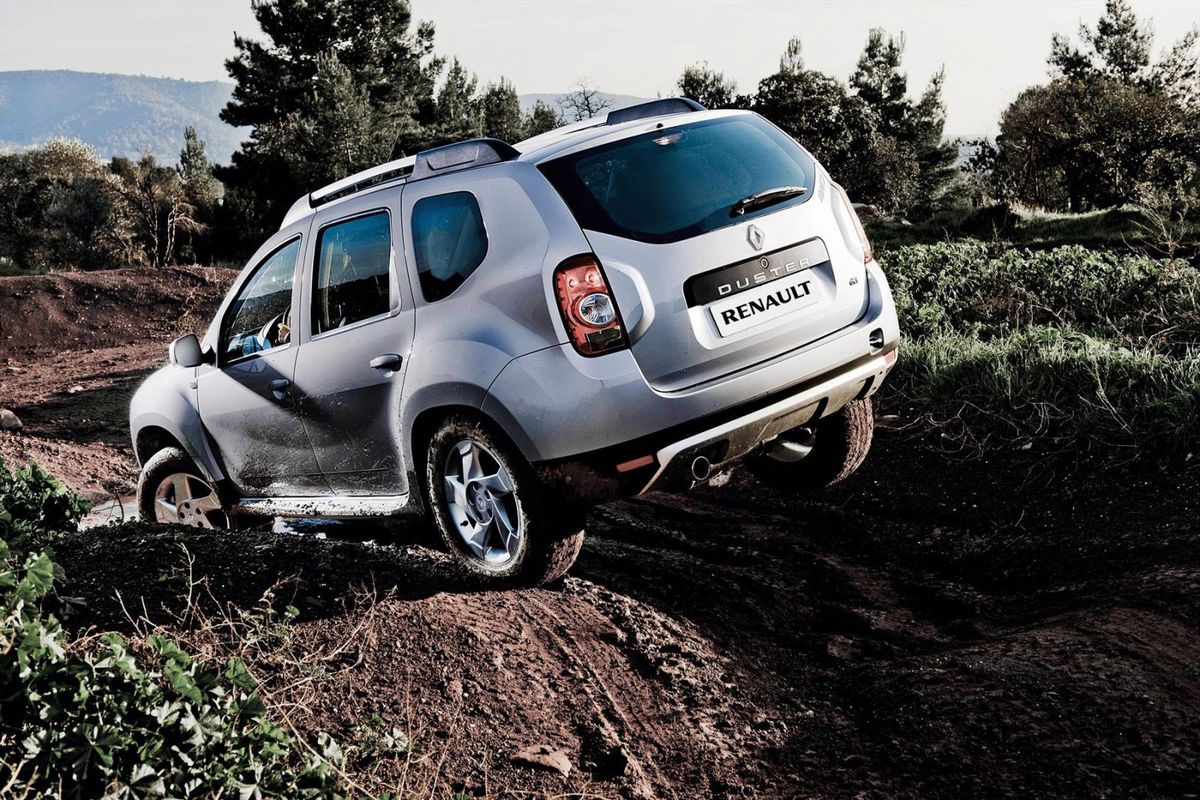
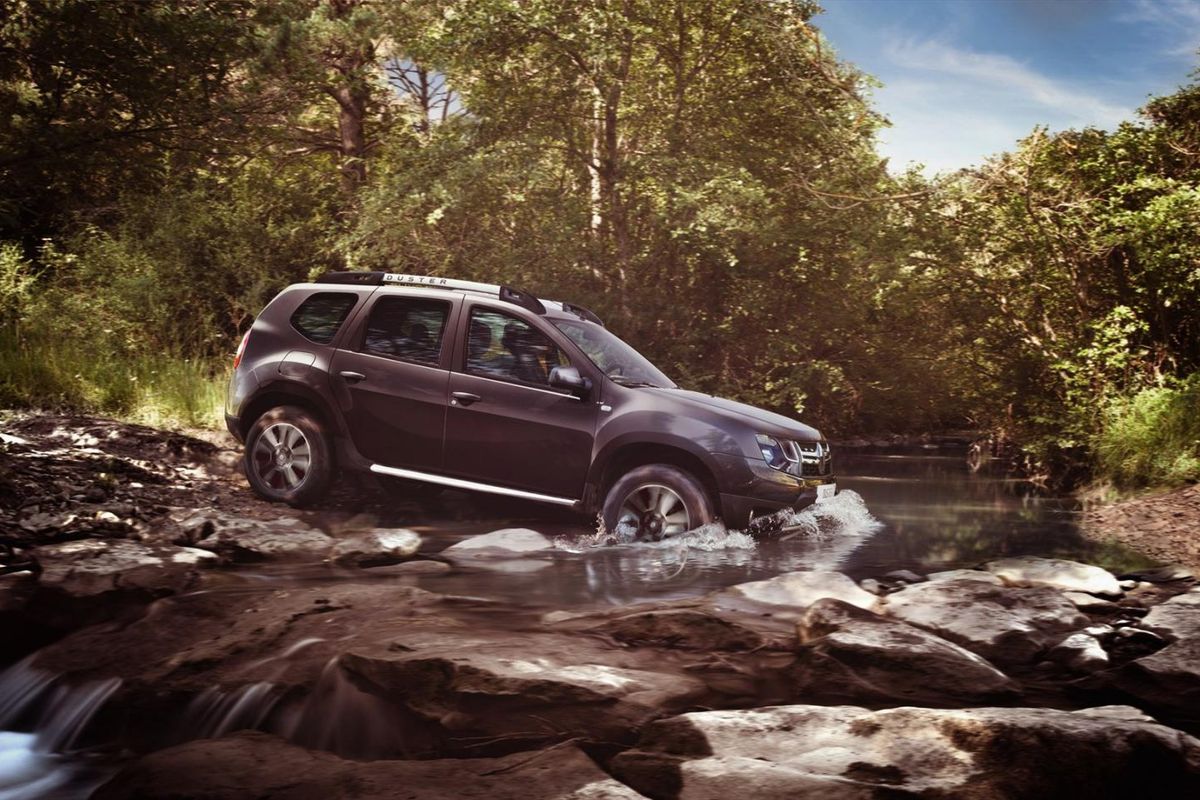
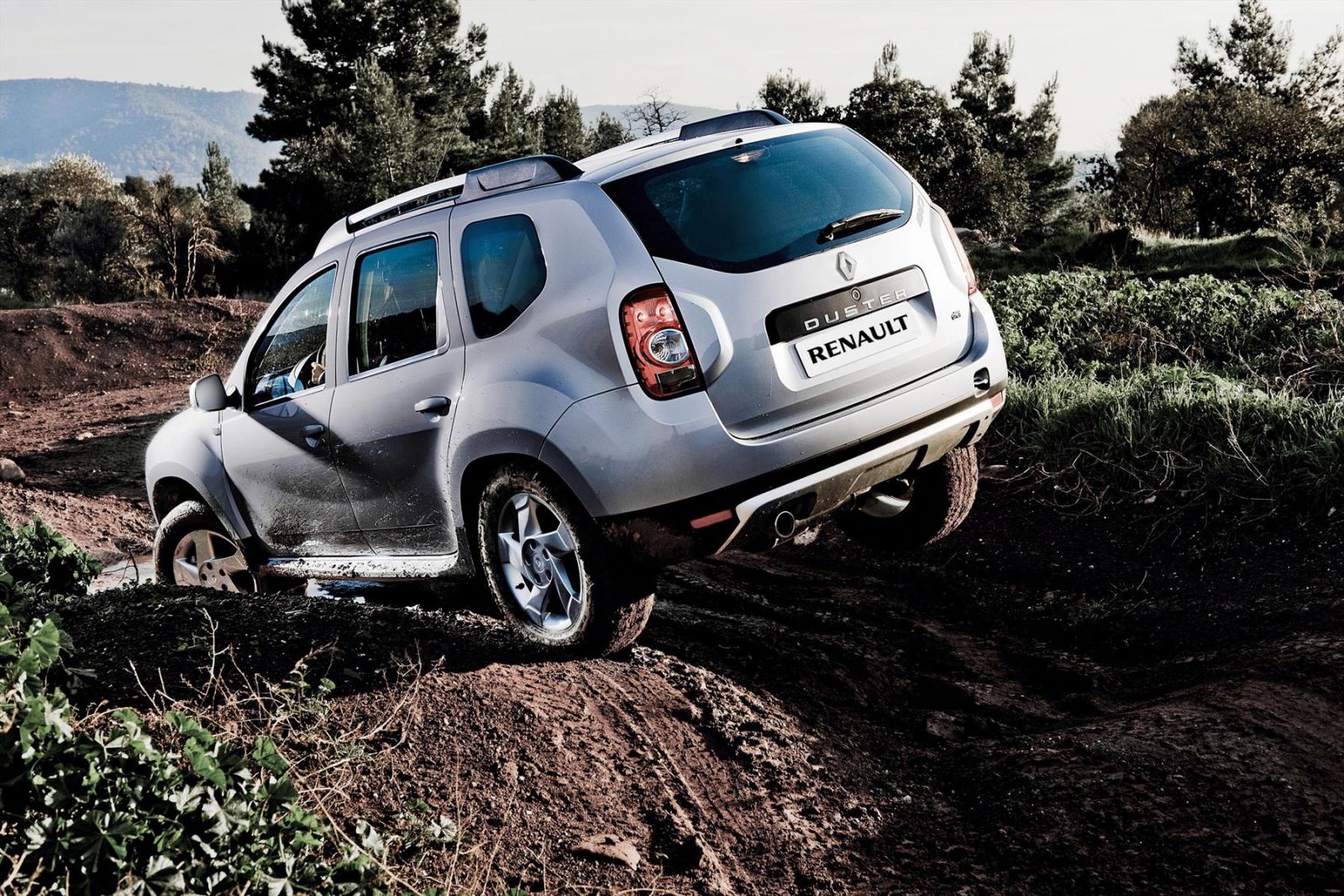
Using off-road hardware from sister company Nissan, the Duster 4WD is a capable mud-plugger.
Easygoing nature: The Duster is set up for comfort and easy driving. The suspension is softly sprung, so it rides with surprising suppleness, and this aspect will be particularly appreciated on gravel roads. The engines are by no means performance-oriented, but provide sufficient urge for overtaking out on the open road. The steering systems and transmissions are tuned for ease-of-use as well.
Surprising off-road ability: Given the rugged nature of the Duster, it’s not a car that you mind using a little more “harshly” than the more “poseur-oriented” crossovers it competes with on price. So it’s a good thing, then, that the 4WD version is actually pretty good off the beaten track.
Using the same all-wheel-drive system as the contemporary Nissan X-Trail, it usually runs in front-wheel drive, but can also be shifted to Auto (which determines the torque spread between the axles automatically) and Lock, which, as the name suggests, splits the torque evenly between the front and rear wheels. Combined with a short 1st-gear ratio, good approach and departure angles and decent ground clearance, the Duster 4WD will go places where most compact crossovers will be reluctant to tread…
Product weaknesses
In general, Duster owners seem to love their vehicles. In the Cars.co.za Ownership Satisfaction Survey, 95.2% of owners said that the Duster had lived up to their expectations. That said, no car is perfect, and there are a few niggles.
The cabin was markedly improved at the time of the 2016 facelift. Look out for a wobbly driver’s seat on the test drive.
In the same survey, the Duster came in for some criticism for “excessive noise” as well as “loose trim and rattles”. Neither of these should raise too much cause for concern, as cars of similar initial pricing will probably suffer the same maladies.
When you’re out test driving one of these Renaults, take note of the following:
Rust: Some earlier cars can show signs of rust, so be sure to inspect carefully. Pay particular attention to the tailgate hinges, A-pillars, rain gutters, door sills and under the bonnet. It’s worth lifting up the load bay’s carpet and have a look there too, and check the suspension components while you’re at it. Romanian-built cars appear to have benefitted from better rust-proofing/paint quality. Renault South Africa is, however, aware of the problem, and has an ongoing support programme that aims to resolve this issue with all affected vehicles as they come through Renault service centres.
Underbody damage: Previous owners of the 4WD derivatives might have been tempted to venture a little too far off-road, so check the Duster’s underbody for signs of off-road damage. While you’re there, also make sure the spare wheel is present and correct.
Loose driver’s seat: On several of the cars we looked at the driver’s seat was wobbly – apparently caused by the height-adjustment mechanism. This can be quite an irritating issue, so have it attended to by the dealership/owner.
Power loss: Not reported too frequently,but something to keep an eye out for is that the petrol engine’s ignition coils can die. If a Duster’s coils are suspect, you should be able to feel/hear a misfire during a test drive, and if it’s present, it’s worth asking the dealer to sort it out – or move on to the next car.
Rear footwell water leak: If you open a Duster and smell damp, check the rear footwells. On some early cars, a channel/cavity in the underbody resulted in water draining into the rear footwells.
What to pay?
There were more than 300 Dusters listed on Cars.co.za during the time this article was being researched, so there should be lots to choose from.
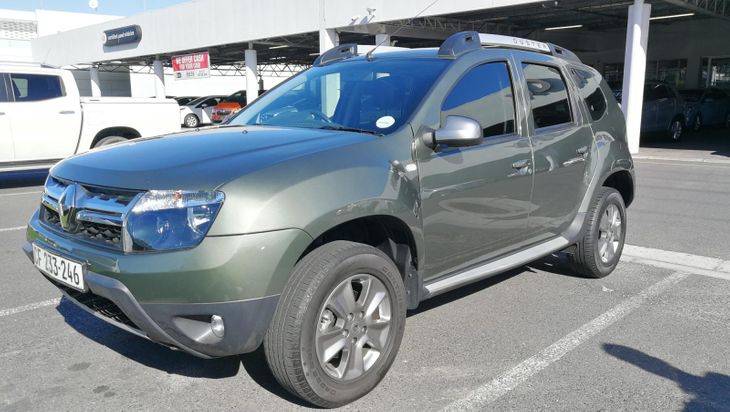
This very neat 2016 Duster 1.6 Dynamique was offered by Reeds N1 in Cape Town for below R190k. It had only 35 000 km on the odo.
R100 000 to R120 000: You can pick up a Duster for as little as R100 000, but be aware that these are usually high-mileage cars with various cosmetic issues. The cloth seats, in particular, are often stained/dirty. Also, keep in mind that the earlier Indian-built cars are more likely to have issues with rust than their predecessors. For closer to R120 000 (or just over), you can pick up a relatively neat 1.6 Expression.
R120 000 to R150 000: In this price range you can find some facelifted Dusters, but they’re pretty rare. Most likely, if you’re looking for a 1.5 dCi Dynamique AWD, you’ll have to make do with a pre-facelift car (which is not the end of the world), while a neat, low-mileage, post-facelift 1.6 Dynamique is also attractive in this price range.
R150 000 to R210 000: In this price range you can find pretty much whatever Duster you’d like, but a late-model (post 2016) 1.5 dCi Dynamique AWD would be our pick. Good examples of these cars are starting to appear in this price range.
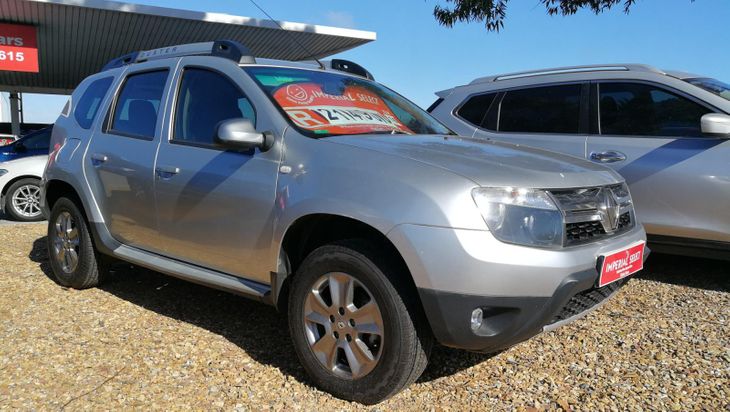
This 2016 Duster 1.5 Dynamique AWD at Imperial Select Table View was going for around R210k, with 70 000km on the clock.
R210 000 to R250 000: At the upper end of price range, the obvious target vehicle is the EDC-equipped (automatic) 1.5 dCi Dynamique 4×2 that was added to the line-up in 2017. There aren’t many out there, however.
Our advice would be to look for a low-mileage, post-facelift (2016 onwards) 1.5 dCi Dynamique 4WD variant.
We think the best choice would be a clean, post-2016-facelift 1.5 dCi Dynamique 4WD. Seeing as Dusters were sold with 5-year/150 000 km warranties, a relatively low-mileage 2016/17 car would still offer some warranty cover. Besides, the Duster’s ruggedness is one of its most appealing factors, so it would be a shame to miss out on its surprising off-road ability by not going for the all-wheel-drive variant. The turbodiesel engine is also significantly more economical than the 1.6-litre petrol powerplant, and when you opt for the 4WD, you also get ESP (electronic stability control).
Prices for neat post-facelift Duster 1.5 dCi Dynamique 4WD start at around the R190 000 mark.
Verdict
For adventurous families buying on a relatively tight budget, the Duster is a highly appealing option.
The Renault Duster is a deservedly popular offering courtesy of excellent value for money, surprising ruggedness (given its low purchase price) and overall practicality. As ever, condition is important, but overall, the Duster has a solid reputation in the local market, and owners tend to love them.
It’s not easy finding suitable rivals for the Duster, either, because most of its competitors offer neither the space, nor the necessary competence off the beaten track. If you don’t mind a slightly smaller, less “gravel-oriented” vehicle, Ford’s EcoSport is an obvious rival. Daihatsu is, of course, no longer distributed in South Africa, but its Terios remains highly respected and because of its good build quality, should offer years of reliable service.
Parts pricing
We asked Renault for the prices (incl. VAT) of some of the major parts for 2 of the most popular models: the 2014 1.6 Dynamique and 2017 1.5 dCi Dynamique.
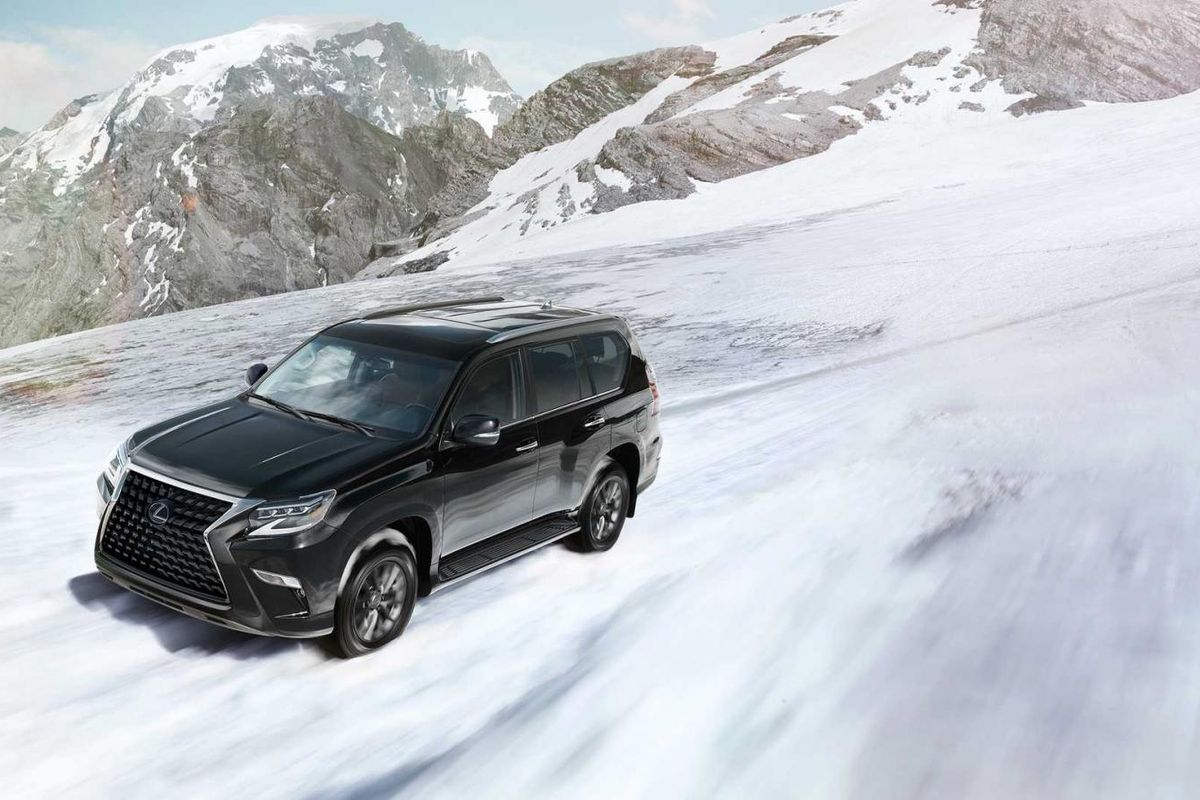
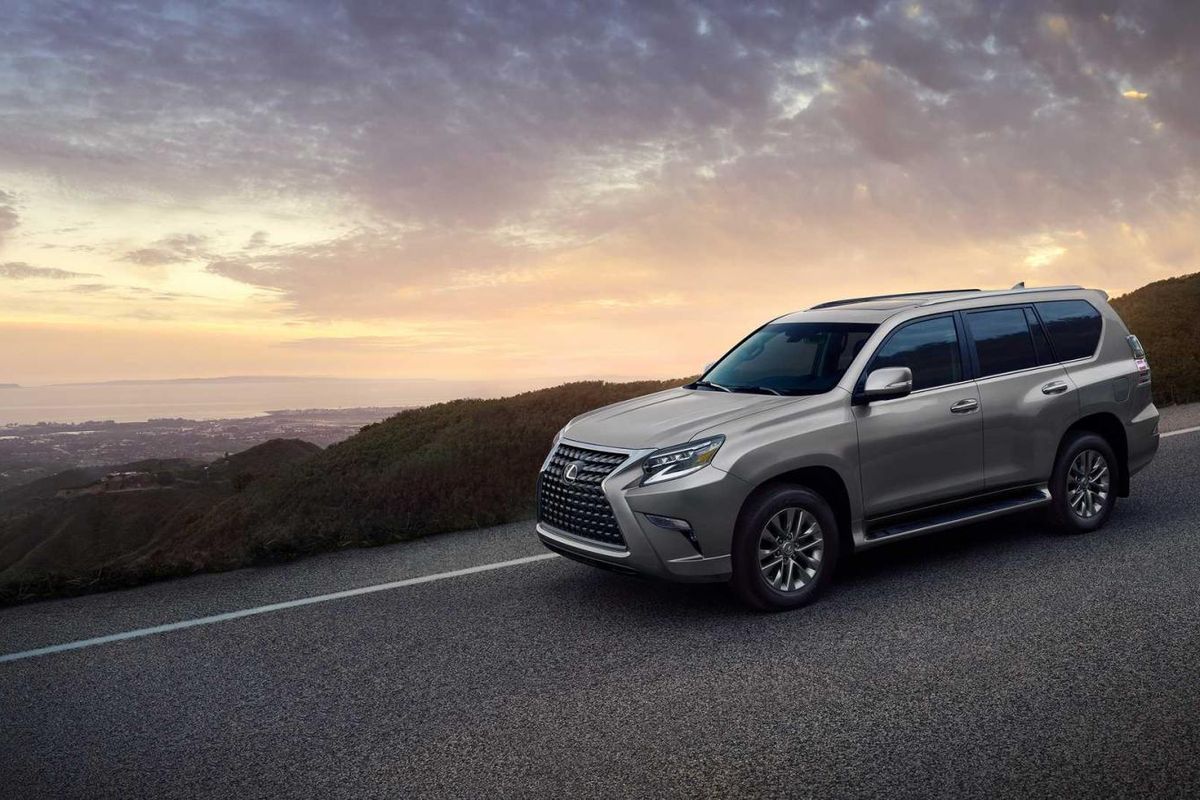
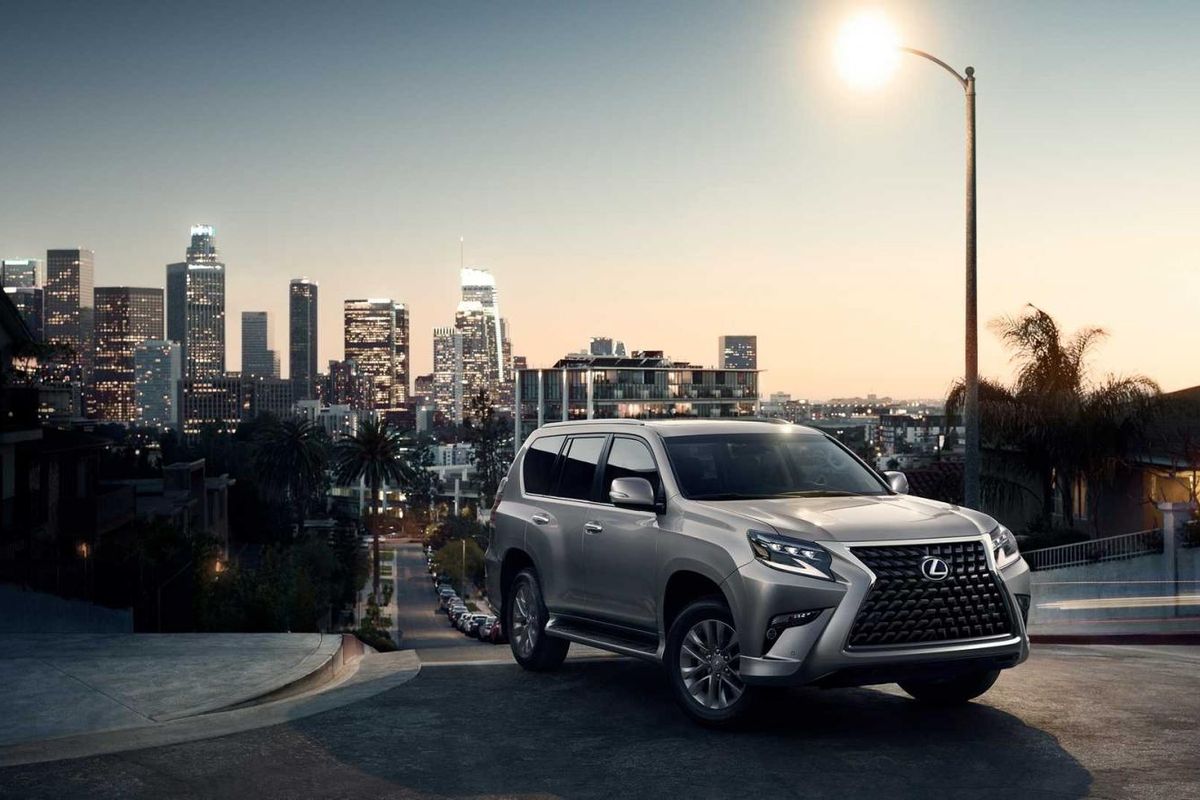
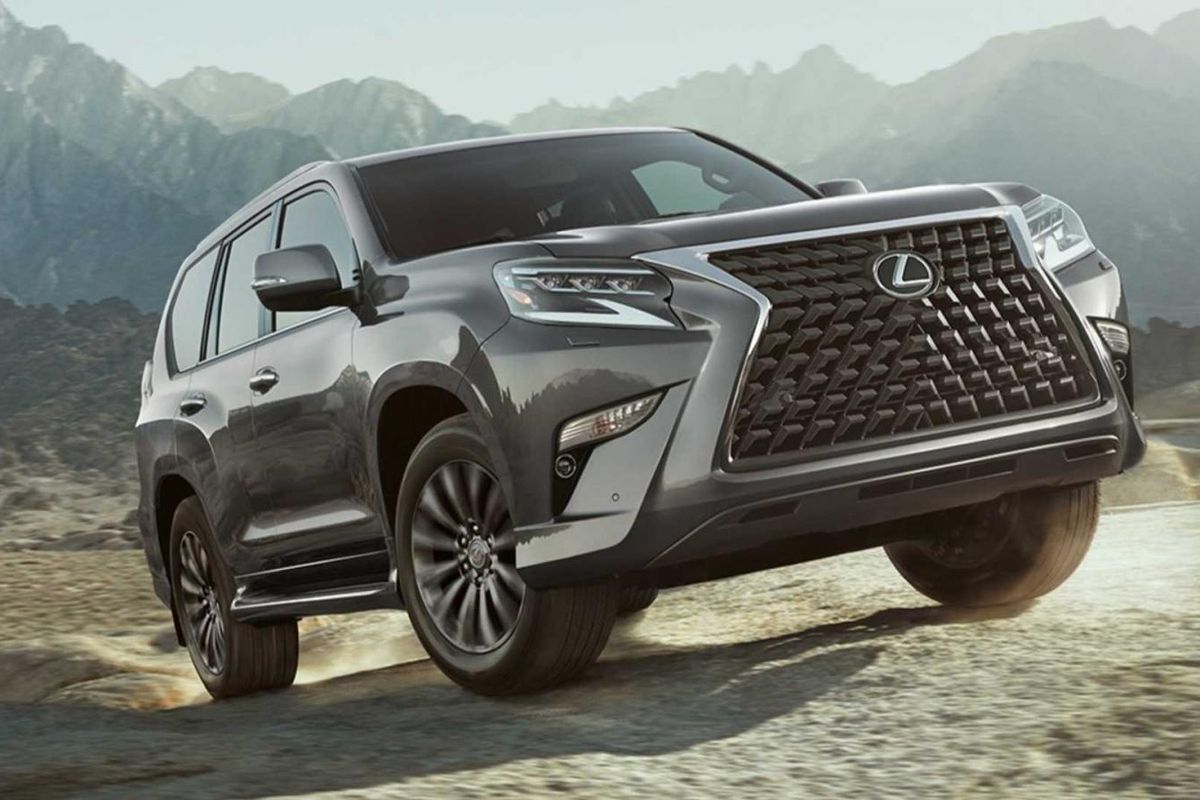
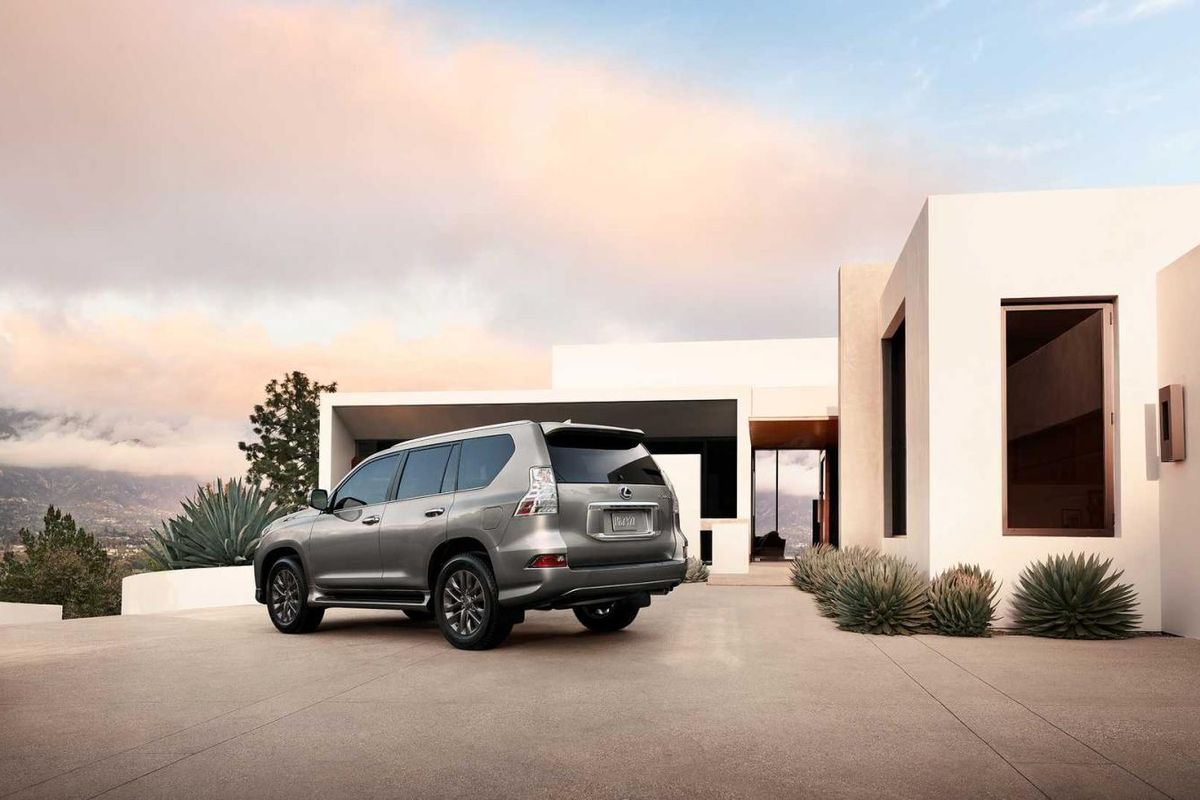
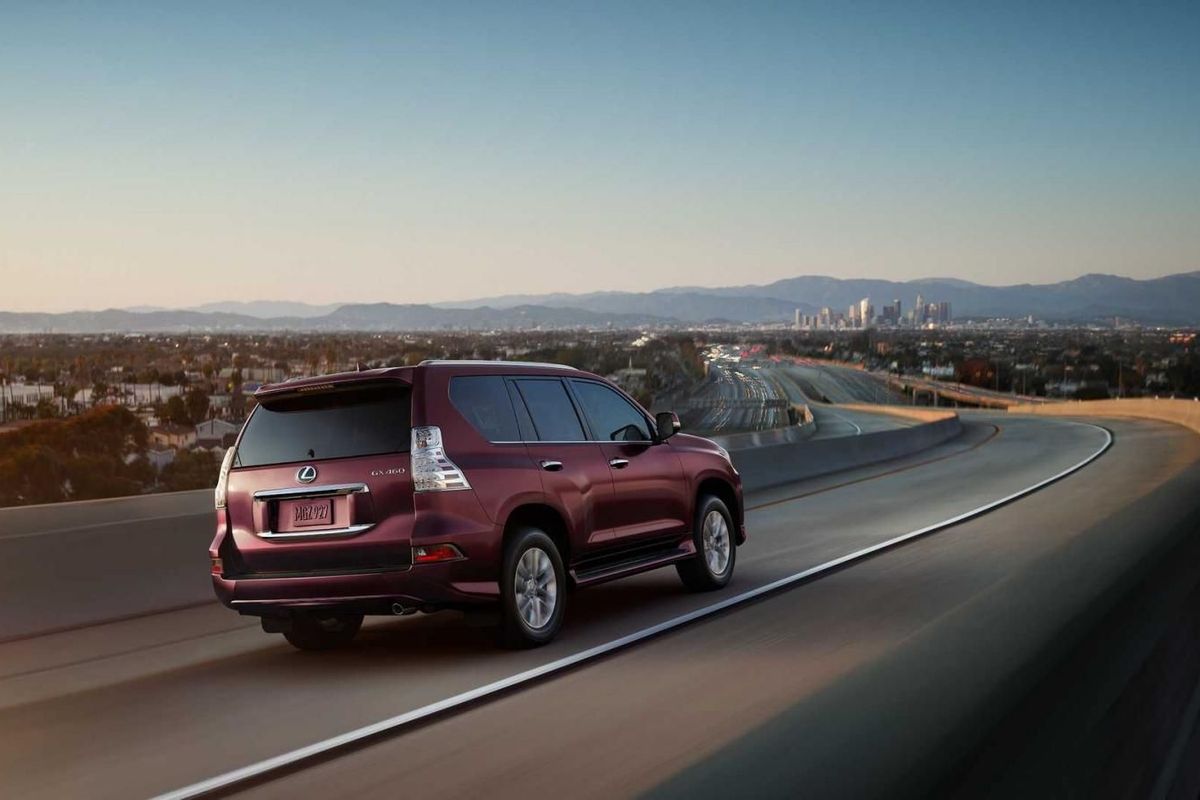
Lexus has revealed an upgrade of its GX SUV, which is in fact, a twin of Toyota’s Land Cruiser Prado.
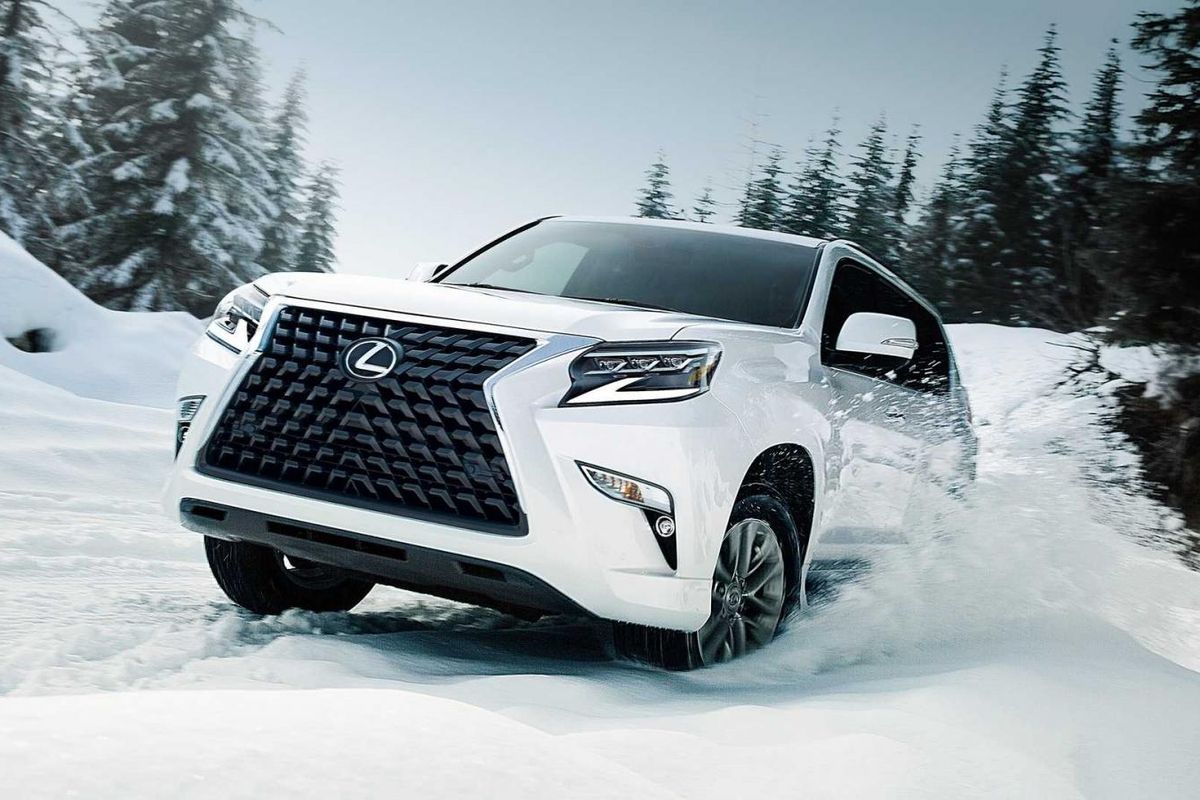
Differentiated from the Prado by its enormous spindle grille – a styling feature of Lexus SUVs and crossovers – the new GX also mounts L-shaped LED pods in its redesigned headlamps.
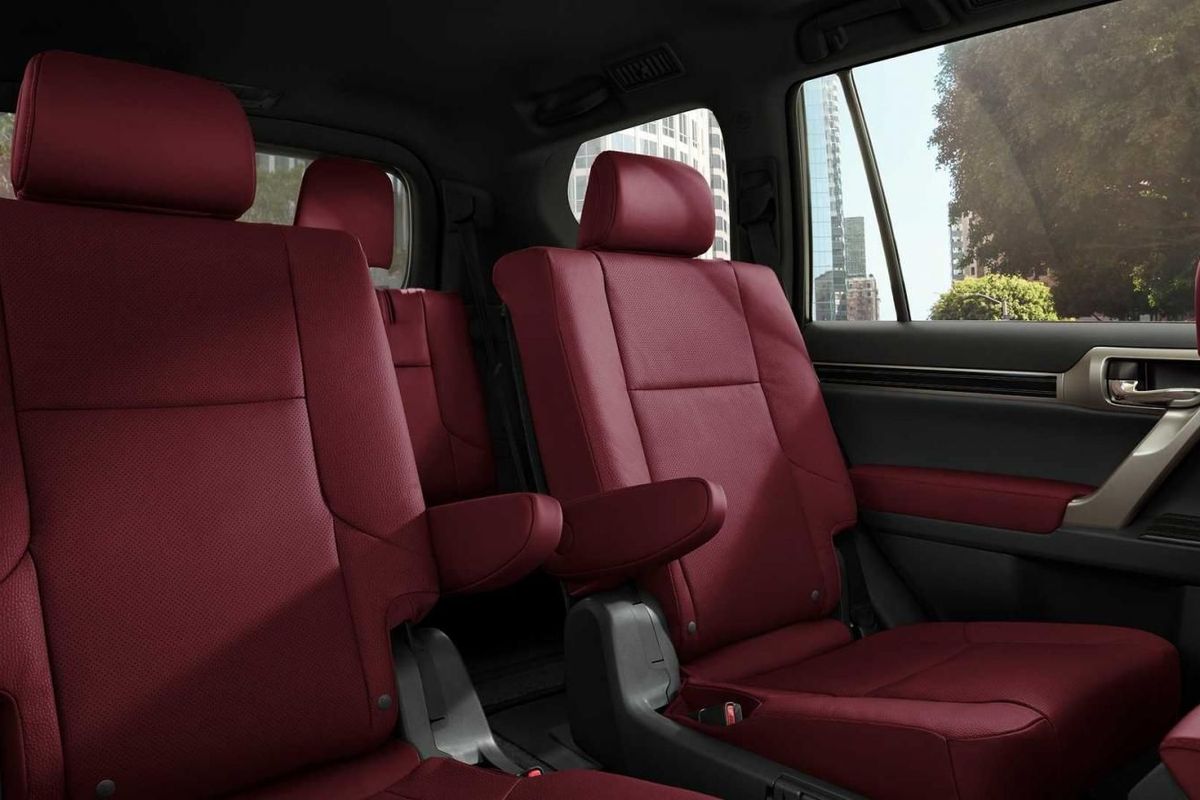
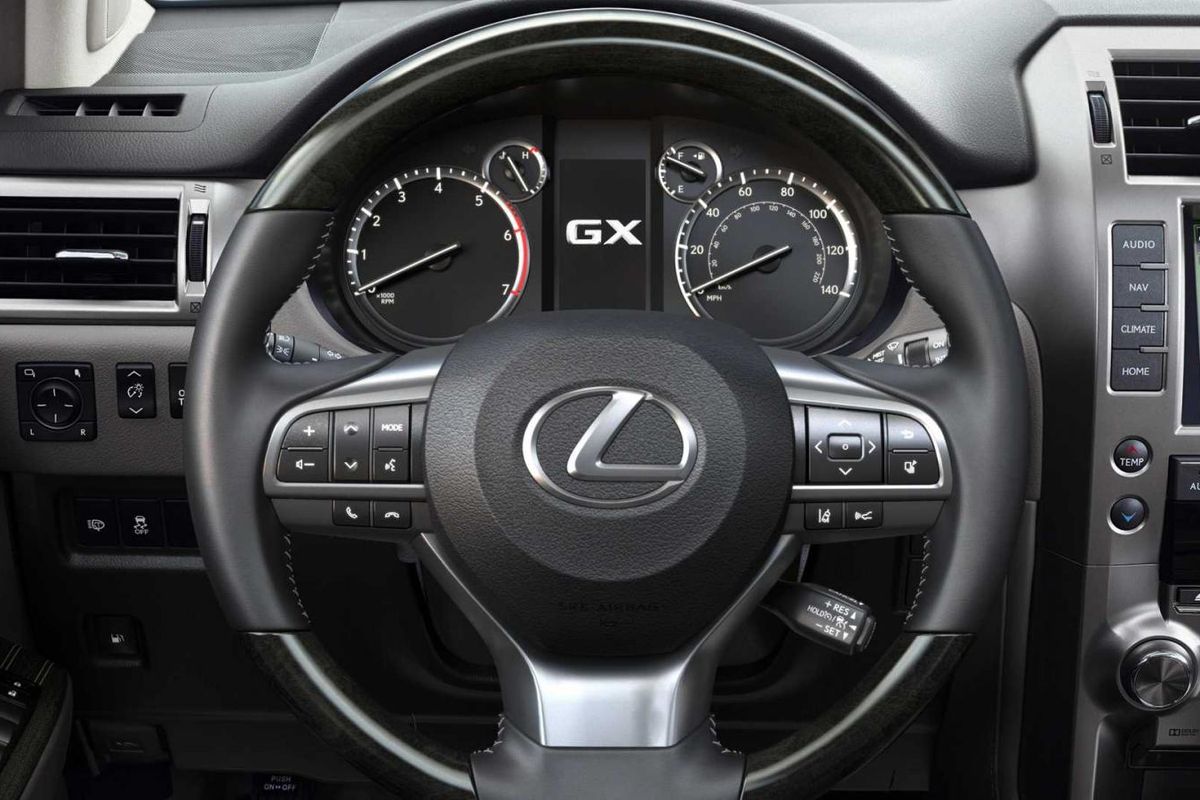
Inside the cabin, it's similar to what awaits a Prado owner when they set out on an adventure – or their daily commute. The only difference is that Lexus has made the GX cabin trim a touch smarter, with aluminium and wood detailing.
With a ladder-frame Land Cruiser platform, this is a Lexus with prodigious off-road ability. The all-wheel drive system links with a Torsen limited-slip centre differential and there is a proper low-range transfer case for challenging terrain.
Semi-autonomous off-road driving capability is provided by a low-speed crawl function, with the engine, transmission and braking system doing all the work whilst you simply steer up, over or around obstacles.
Lexus has added some additional off-road grade features. These include a panoramic view camera system for manoeuvring in tight terrain, transmission cooler for peak torque applications in desert conditions and terrain impact protection for the petrol tank
Powering the Lexus GX is a 4.6-litre naturally aspirated V8 engine, producing 224kW and 446Nm. It drives through a six-speed automatic transmission.
Global distribution for the Lexus GX remains concentrated on the North American market so don't expect to see this beast in South Africa.
Engineering excellence and independence have always been non-negotiables for BMW. So, why did the Munich-based firm forge a new cooperation agreement with Jaguar Land Rover, then?
Many automotive marques' brand identities are anchored in their independence from other car makers. For countless decades, the major players in the motor industry have operated on a simple principle that "you develop everything on your own… and elevate your brand with technical expertise". Then, you charge a premium for that expertise from customers who appreciate the technical excellence and exclusivity of owning your products.
All that is changing. Rapidly. This month saw yet another announcement of cooperation between manufacturers who would ordinarily be bitter rivals. The latest automotive joint venture is an agreement between BMW and Jaguar Land Rover (JLR) to pool engineering resources for the goal of producing superior electric drive units (EDUs).
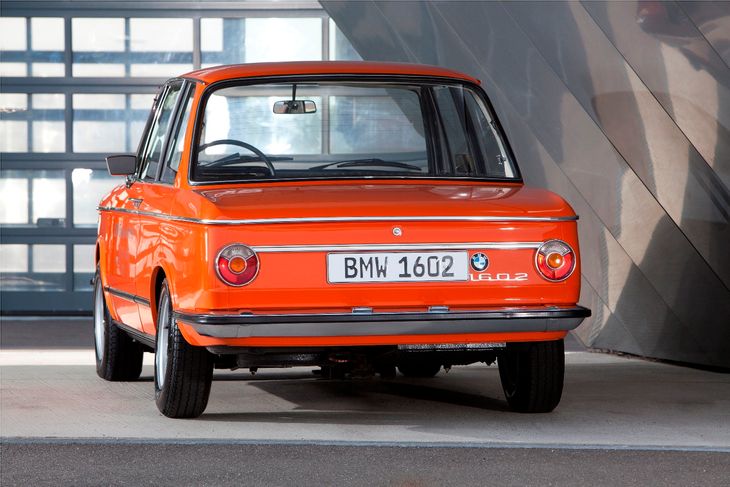
Wait, why's there no exhaust outlet on the classic 2-dub?
These EDUs are effectively the electric motors and drivetrains that make electric vehicles (EVs) work – pretty much all the important electro-mechanical bits, but for the battery pack. The agreement between BMW and JLR raises a lot of questions and also reveals that the endeavour to build a future fleet of battery-powered vehicles is proving far more challenging than many industry bigwigs are willing to admit.
Neither brands are having a great 2019
The joint venture comes at a time of adversity for both JLR and BMW… At JLR, the losses are mounting, jobs are evaporating and 4-day working weeks are becoming a reality. BMW has warned of substantially lower profits and recently embarked on a R200-billion cost-cutting programme.
The respective manufacturers are also facing the peculiar challenge of having to research, engineer and produce electric vehicles, which are tremendously costly to develop, yet offer weak immediate profitability. As premium brands, they have demanding customers, who possess an awareness of what Tesla is doing, and are (now) subtly pressuring BMW and JLR to also offer battery-powered vehicles of a similar calibre.
With BMW and JLR desperately seeking efficiencies and faced with enormously challenging and expensive capital expenditure requirements to develop electric vehicles, pride and independence are no longer guiding principles. Survival is.
Although the joint-venture stipulated a very specific technical aspect – EDUs – it could possibly grow to a much broader cooperation agreement, if the British and German technical teams are shown to achieve the required harmony and productivity.
What can BMW offer JLR?
The sad truth is that Tata-owned JLR, after nearly a decade of phenomenal reinvention at the behest of designers and engineers, is bleeding technical staff. The firm has announced that it has to cut 4 500 staff voluntarily this year and by sheer weight of probability, a fair percentage of those will be engineers with very specific technical expertise. With the transformation of JLR's product portfolio (from an internal-combustion to battery-powered vehicles) is being strategized, the job cuts create a stalling effect on JLR’s R&D capacity at exactly the moment that it is most needed.
With Brexit imminent, JLR may have to outsource much of its R&D.
Partnering with BMW will ease the burden on technical research and development for JLR, but it is abundantly clear who the senior partner in this joint-venture is. The technical centre for BMW and JLR’s joint-venture EDU research will be in Munich, not the West Midlands…
With Brexit creating toxic uncertainty about which types of skilled automotive industry employees will be allowed to remain in the United Kingdom, JLR realises that it cannot lure young engineers into a job market where they could possibly be dragged into an administrative and bureaucratic quagmire. Munich is an internationally recognised technical hub and poses no issue for technical personnel who are requested to relocate there.
What can JLR do for BMW?
Despite being a much smaller brand, JLR has invested heavily in electrically-powered vehicles and has achieved amazing success so far. Consider that the Jaguar i-Pace is the current World Car of the Year and, in the eyes of many, superior to equivalent offerings from Tesla. The Coventry-based firm further has workable hybrid versions of all its SUVs, which could prove more than useful for implementation in BMW’s ever-expanding SUV lineup. With the 2 companies working together, it will be possible to reach economies of scale on electric cars on a shorter timeframe.
Then there’s a workable cultural exchange. BMW has an exemplary record of optimising working relationships with British car brands and their technical teams. Since Rolls-Royce and Mini have come under BMW’s management, both brands have flourished without sacrificing their identities.
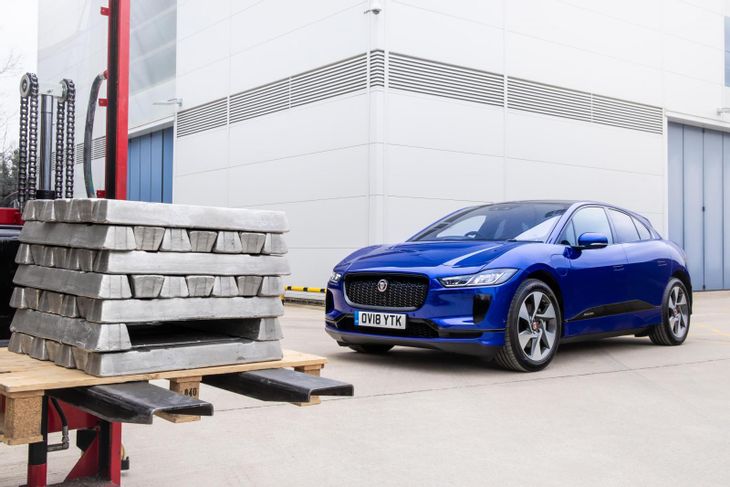
Jaguar has invested in EV tech and aluminium architecture.
If BMW was seeking a partner to assist it in electric-vehicle development, the German company’s positive experience with its British subsidiaries (Mini and Rolls-Royce) definitely predisposed an agreement with JLR, as opposed to a French or Japanese automotive company.
JLR also has expertise in an area where BMW has perhaps been too ambitious: structure. The i3's platform, for example, is totally over-engineered and its carbon-fibre structure arguably the envy of (notoriously aloof) Italian supercar design teams. But for all its technical elegance, it's too costly.
An advanced aluminium monocoque is perhaps the best short- to mid-term engineering solution for battery powered vehicles. JLR has proven highly competent at implementing alloy structures – for body panels and platforms. The ability of JLR’s engineers to trim impressive amounts of weight, whilst retaining strength, in large off-road SUVs such as the Range Rover, will clearly be an area where they can be of assistance to BMW.
The EV game is proving too big for traditional brands
There is tremendous pride among engineers and the marketing people who plan their ideas into products. To reiterate: for decades, car brands' identities and differentiation pivoted on the ability of certain companies to develop technology – and deliver products – that others could not. And for the last 30 years or so, most of this was driven by the chasm in engine development between German marques and those from the rest of the world.
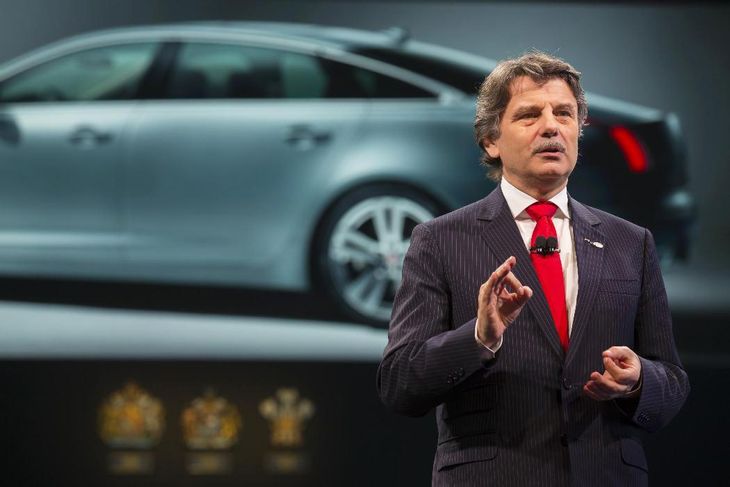
JLR's CEO Ralph Speth used to be a BMW engineer.
BMW is a profoundly proud company, one in which engineers hold sway. Meanwhile, JLR’s engineers have been given the credit for the British company's resurgence, not Tata’s cash injection. Why would 2 such confident groups of engineers be open to working together? The uncomfortable truth is that electric vehicle development is proving too complex, costly and difficult for independent companies and engineering teams to do by themselves. European premium automotive brands have realised they need partnerships, something which was unimaginable a decade or 2 ago.
BMW and JLR appear to believe that they will not cannibalise each other with their joint-venture EDUs and they are probably right. The diverse vehicle derivatives that will be powered by the EDUs might not compete directly with one another. EDUs are being classed as "everything not including the battery", and engineering teams from both brands will also feel more comfortable working on something within the electro-mechanical realm, instead of the mysterious pure chemistry of battery development.
But how did BMW and JLR find each other in agreement, in an industry where mistrust and fierce opposition are rampant? The answer is more obvious than you might think… JLR’s mercurial CEO is Ralf Speth – and he is German, instead of British. He also worked as an engineer at BMW from 1980-2000. If ever there was a rival CEO who could negotiate in good faith with BMW, it is Speth.
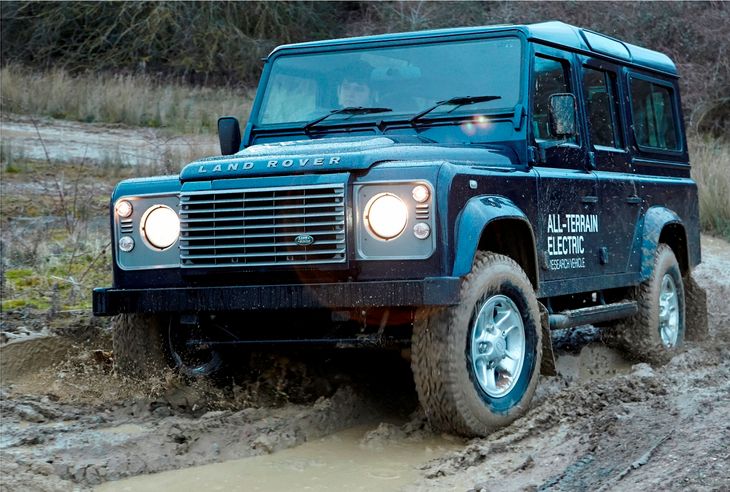
BMW and Land Rover may team up again to make an iconic Defender.
BMW and Land Rover also share a strange history, which has now been brought back into reference with the JLR technical joint-venture. The German firm owned Land Rover from 1994-2000. Nothing much happened in terms of technology transfer, but it did create a spectacular South African Land Rover Defender, powered by one of BMW’s finest powerplants, the (M52) 2.8-litre in-line six.
The era of a new Defender is upon us. And it might in future be powered, in some part, by electric drive motors jointly developed by BMW, in Munich. It would be an ironic twist in the destinies of BMW and Land Rover – yet again.
While all Toyota-related performance talk will be centred around the new Supra roadcar, the recent changes in Le Mans/World Endurance Championship regulations mean that a hypercar class has opened up. Toyota already has a working concept which will compete in the series, but more importantly, there'll be a road-legal version.
When Toyota announced its 2018 Toyota GR Super Sport Concept, we assumed it formed the basis of the next-generation of endurance racer. With the recent changes to the Le Mans/WEC regulations making provision for a hypercar, an opportunity for a road-legal hypercar has opened up. In this footage released by Toyota's Gazoo Racing division, we can see a camouflaged prototype driving around the Fuji Speedway circuit. Behind the wheel is none other than current Toyota CEO and President, Akia Toyoda.
Right now, there's not much to go on, but we do know that the Toyota hypercar will feature a similar powertrain to the racer which competed in Le Mans 2019 recently. That'll mean a hybrid powertrain with a combined output of around 1 000 hp / 745 kW. Regulations for the new hypercar class of WEC restrict the car to 750 hp / 560 kW and it can't weigh more than 1 100 kg.
As for the name? Well, Toyota titled its video with just "GR", but some Internet petrolheads are already dubbing it the "Toyota GR Super Sport". When it comes to life, expect to cost hypercar money and be extremely limited in volume. In order to meet the Hypercar class regulations, at least 20 production models have to be made available.
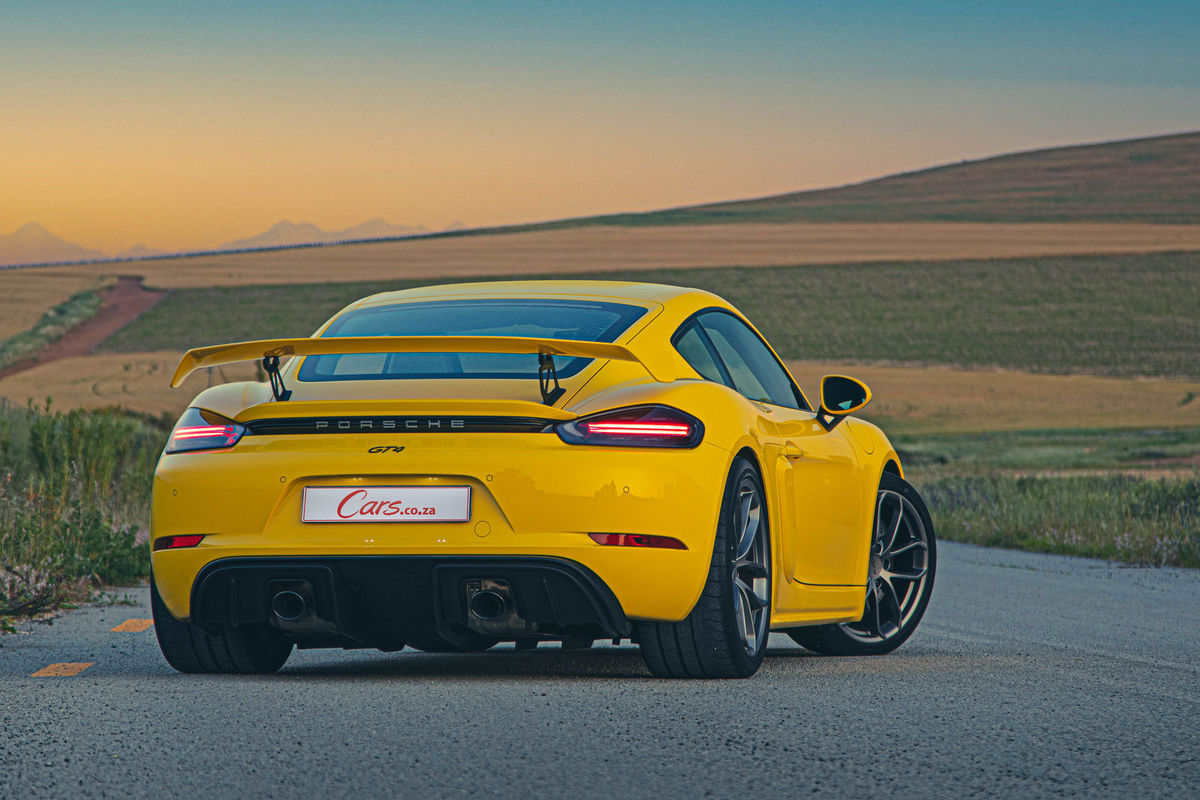
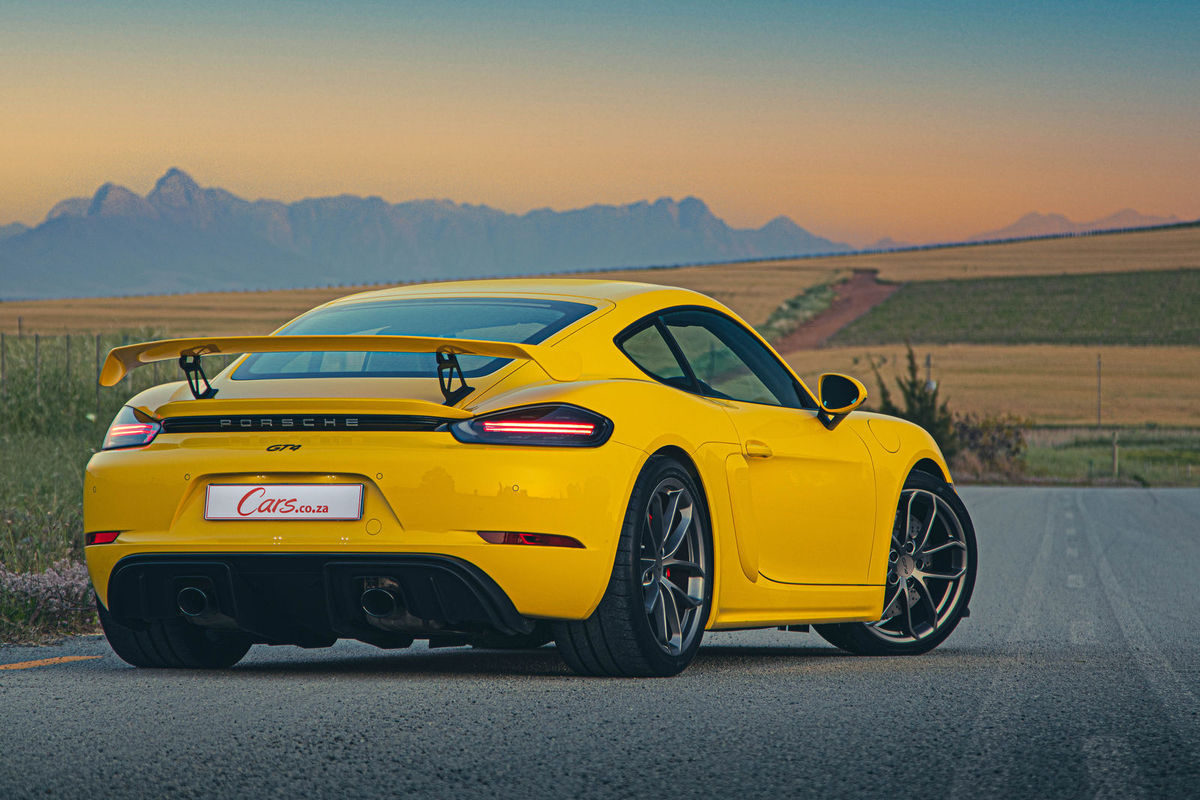
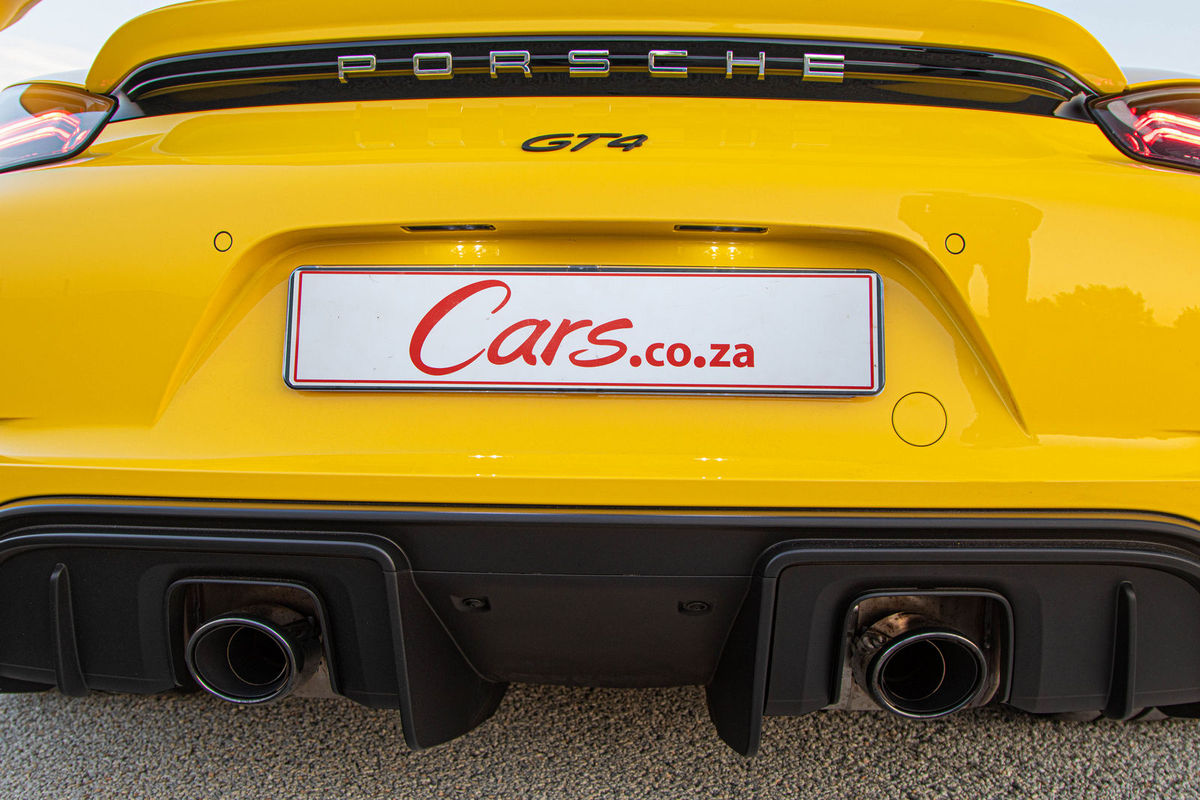
Porsche has unveiled the next version of its high-performance Cayman GT4. With a potent new 4.0-litre 6-cylinder boxer engine at its heart, the new Cayman GT4 is faster, more efficient and aerodynamically cleaner.
The previous generation Porsche Cayman GT4 was an instant classic. Thanks to some thrilling dynamics, glorious engine note and rarity, the Cayman GT4 enjoyed a cult following and is highly sought after amongst the classic Porsche fraternity. Now for 2019, there's an all-new Cayman GT4.
Under the bonnet is a new 4.0-litre 6-cylinder motor which Porsche claims is based on the current 911 Carrera engine. Producing 309 kW and 420 Nm, it's not a slouch and Porsche claims 0-100 kph in 4.4 seconds. With a redline of 8 000 revolutions, the new Cayman GT4 boasts a top speed of over 300 kph, while consuming just 10.9 L/100 km. Porsche claims its new Cayman GT4 is more than 10 seconds faster than the outgoing car.
It's not just about the fabulous engine however. The new aerodynamics package is said to produce up to 50% more downforce, while the rear spoiler is harder-working than the previous model with 20% more downforce. At 200 kph, there's 12 kg of downforce.
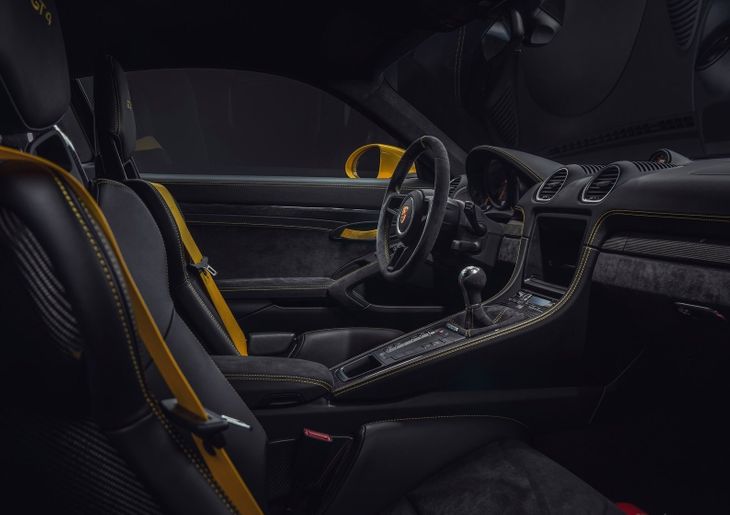
Underneath the good looks is a sharp high-performance GT chassis, Porsche Torquing Vectoring with mechanical differential lock. For those wanting even more, there's the option of a Clubsport package comprising rear steel roll bar, in-cabin fire extinguisher and 6-point seatbelts.
The interior of the Porsche Cayman GT4. Note, this is a Clubsport-equipped car with the fire extinguisher.
Toyota will be entering a new Supra into the Nurburgring 24 Hour Race this weekend. There's a nugget of info that has us very interested, however.
Motorsport is a great test of a car's reliability and durability as it pushes a vehicle to its limits for an extended period of time. However, the Nurburgring 24 Hour race event takes this to a new level and is extremely taxing and demanding to both vehicle and driver. With each lap comprising 25 km of distance, an altitude change of 300 metres and over 170 corners, a vehicle will be under serious strain.
A perfect place to refine and hone current technologies, then. We saw Hyundai put its pre-launch I30N hot hatches at this very event in 2017. Toyota Gazoo Racing has announced it will be participating in the 2019 event and has entered a new Supra to race alongside a Lexus LC.
Interestingly, in the press release from Toyota, the cars racing will "incorporate and refine parts and advanced technologies intended for future road cars." Does this mean we could be getting a hotter and faster Supra? Maybe. We already know that the Gazoo Racing hierarchy indicates a potential for a faster and more focused model. The current Toyota Supra is badged as GR, with the flagship performance models tagged as GRMN.
The new Toyota Supra will be launching in South Africa in the 3rd week of July 2019.
Initial predictions and estimates from the Automobile Association (AA) for SA suggests that road users are in for some relief in the next month or two.
The AA of SA is suggesting there's a decrease in the cost of petrol and diesel. With a prediction of as much as 91 cents per litre and 70 cents for the diesel, things are looking better for the motorists.
"The story of the month is definitely oil," says the AA. "Crude laboured above $70 a barrel for large portions of April and May, as the tug-of-war continued between the OPEC countries, which favour ongoing output restrictions, and the USA, where production is steaming ahead."
"South Africans are not getting full value though, thanks to Rand jitters in the wake of the ANC top leadership trading jibes over the future of the Reserve Bank," the AA comments."After a period of sustained price stability, the Rand weakened substantially against the US dollar, taking some of the shine off oil's retreat."
We'll keep you posted as we head closer to the end of June 2019.
Toyota Hilux vs Ford Ranger (2019) Comparative Test
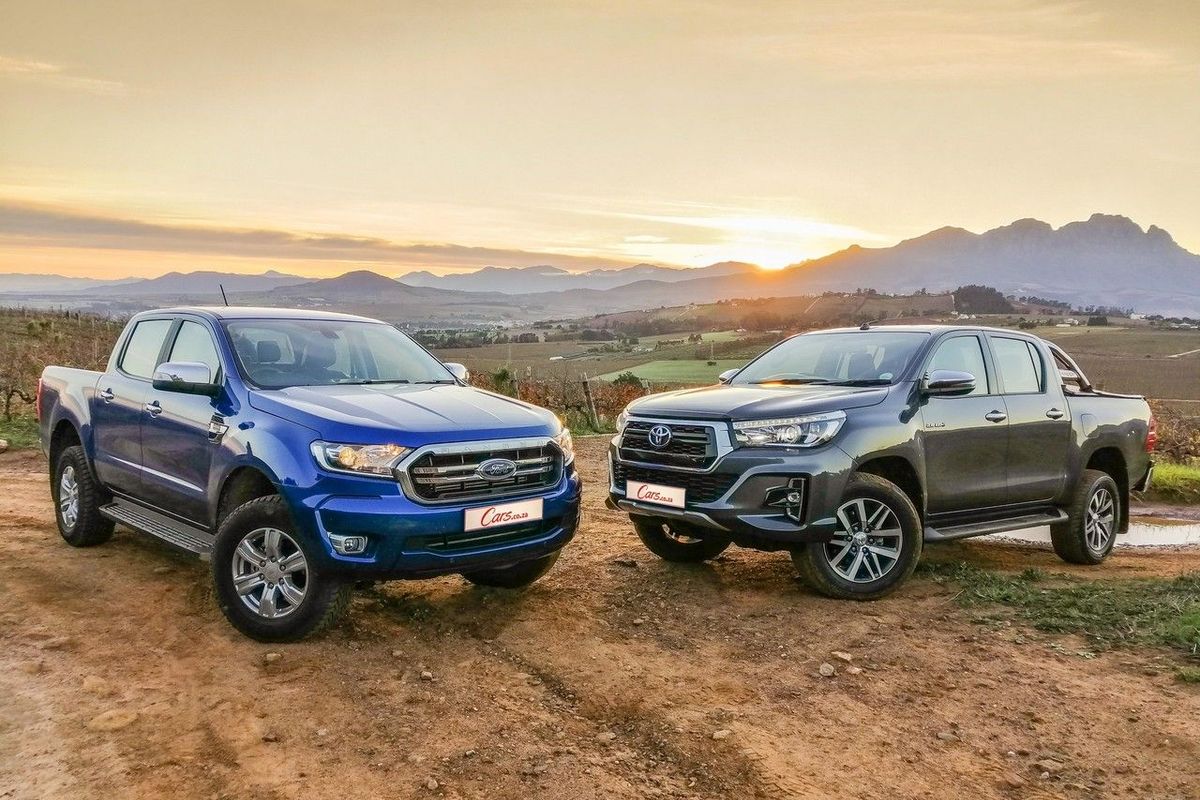
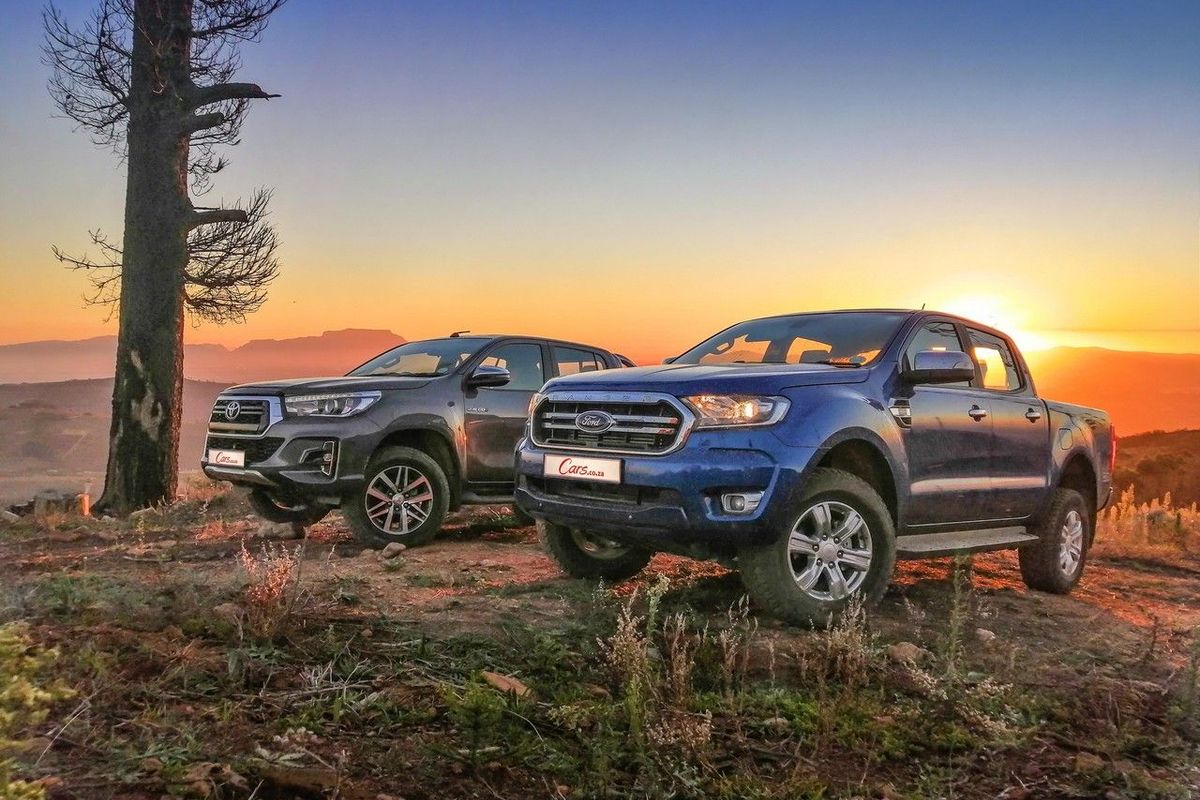
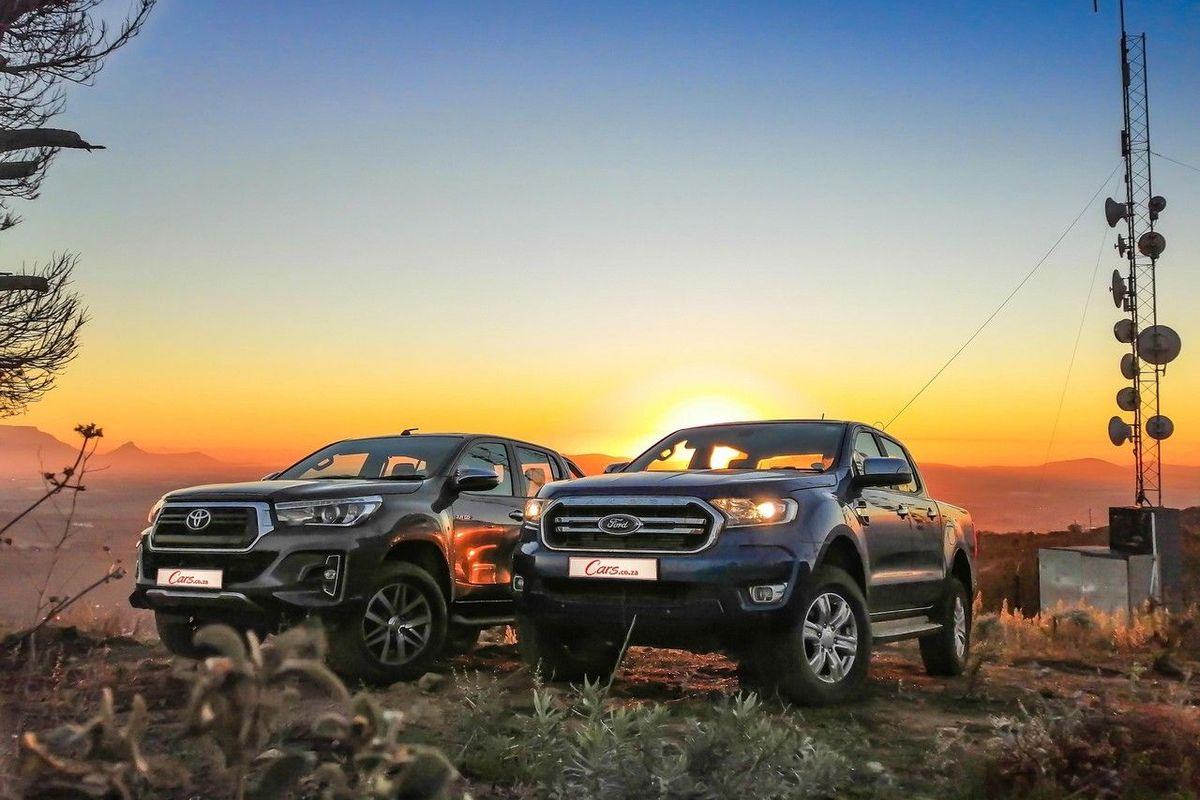
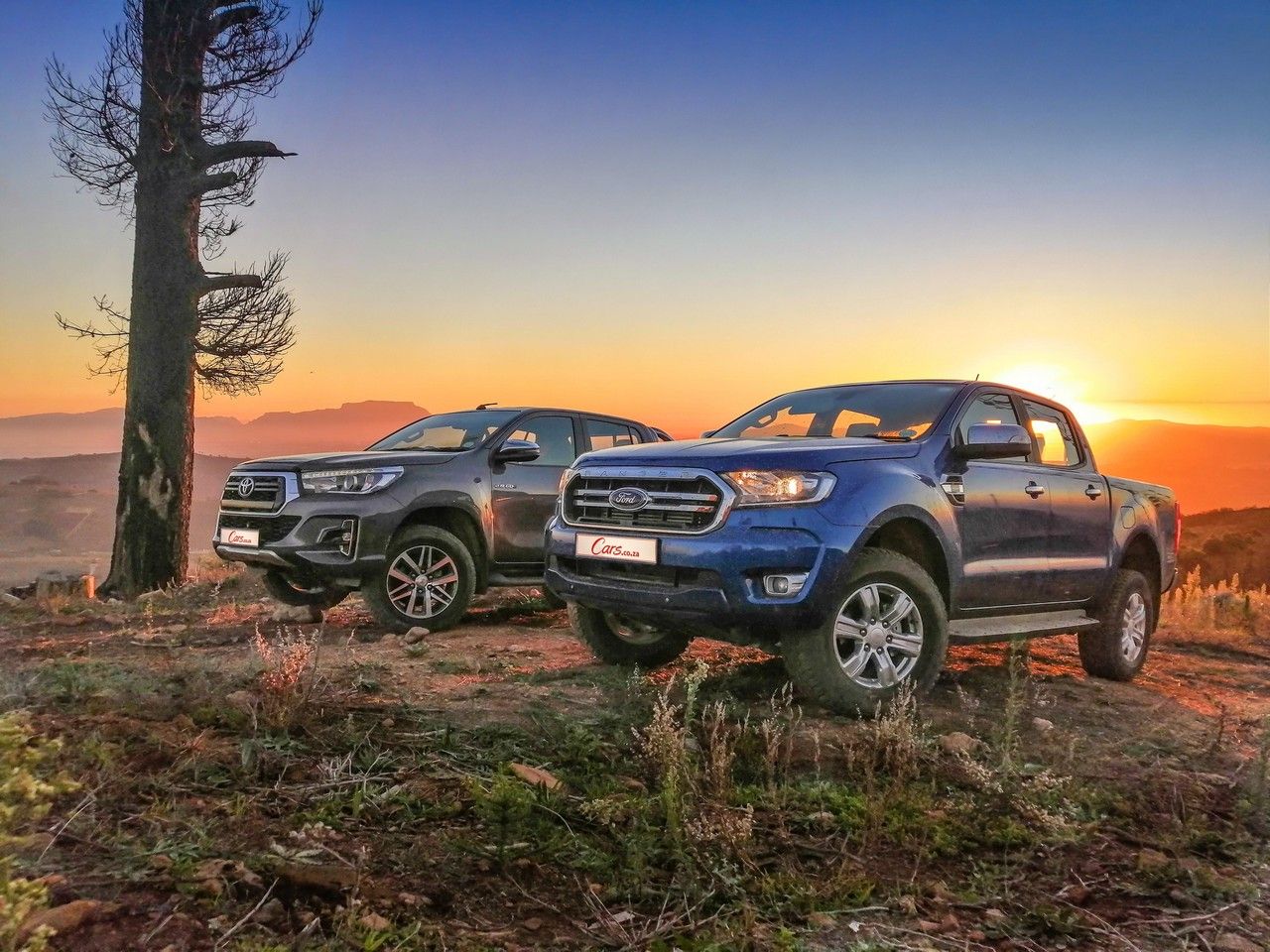
Toyota Hilux or Ford Ranger? This is a question that thousands of potential South African bakkie buyers grapple with. For some, it’s an easy choice, but for many, it’s a trickier decision to make. For this comparative review, we set the Hilux and Ranger loose on the Welgelegen 4×4 Farm? in Stellenbosch to determine which one is the better buy…
At Cars.co.za, we like a good ol' bakkie battle and the rivalry between the Hilux and Ranger is as fierce as they come. With monthly sales figures running into the thousands, these 2 bakkies are considered to be the most popular Light Commercial Vehicles (LCV) on sale in South Africa.
The last time we put the Hilux and Ranger together for a comparative test was way back in 2016 and at the time they were both really closely matched in almost every way, including price. Now, however, things have changed and there’s more to separate these classic rivals. The Hilux range received a significant update in 2018 and the facelifted Ranger was recently introduced with a pair of 2.0-litre turbodiesel engine options as well as a new 10-speed transmission. It is, therefore, the perfect time to bring these 2 bakkie giants together for another showdown.
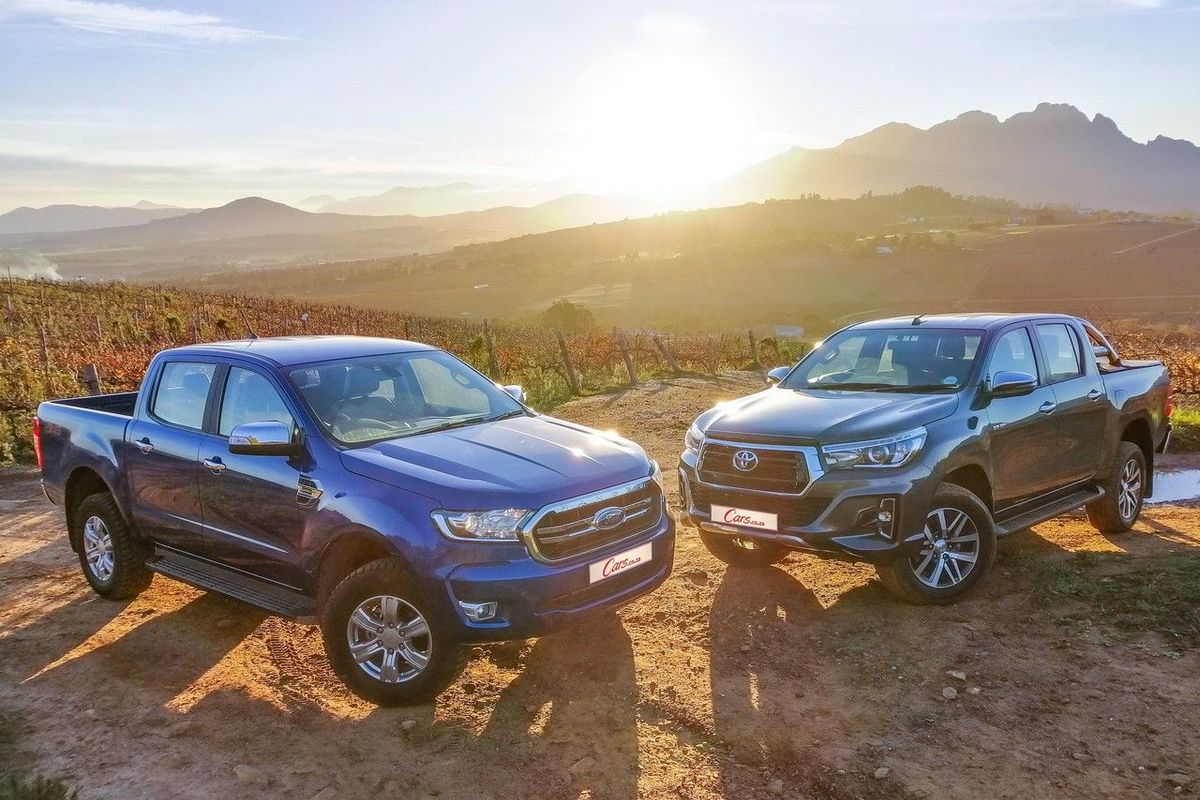
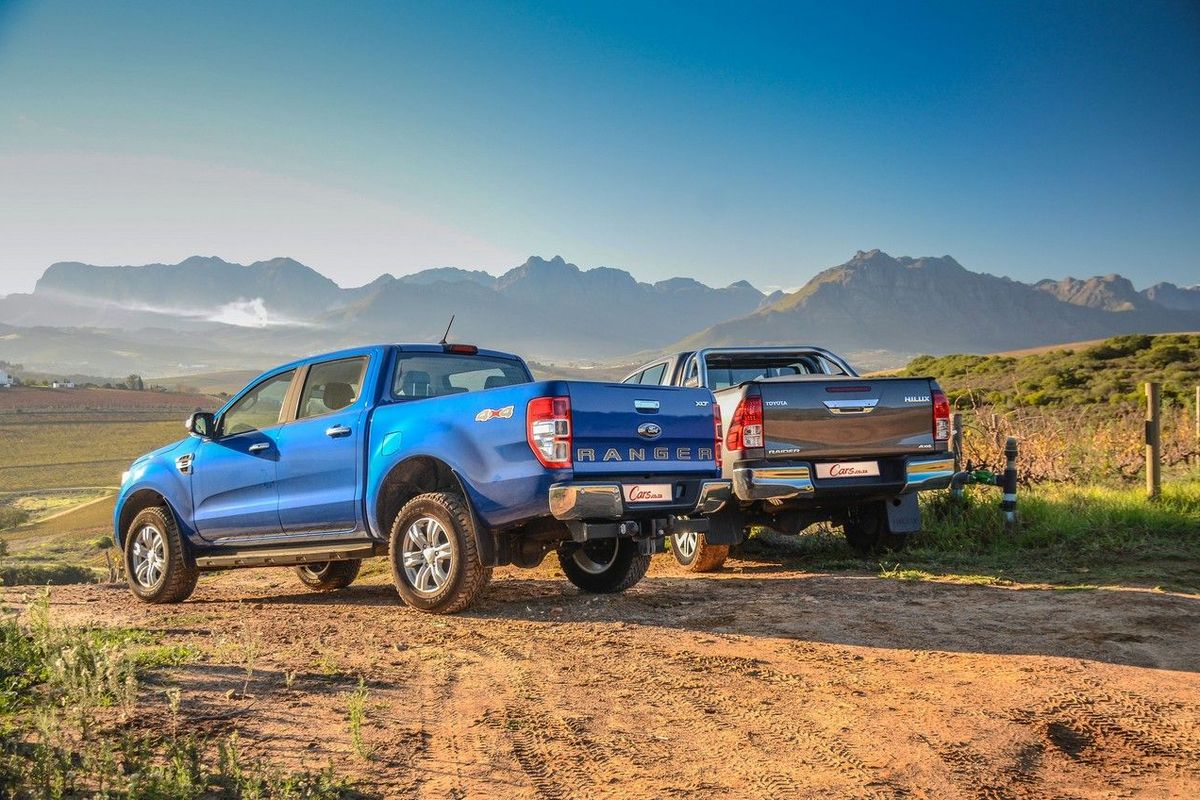
For this comparative test, we managed to get our hands on the Ranger 2.0 4×4 XLT (automatic) and Hilux 2.8 GD-6 Raider 4×4 (manual).
Despite the differences in transmission, this comparative review provides useful buying advice if you are considering a Ranger or Hilux double-cab bakkie; we've paid particular attention to the contenders' kerb appeal, interior execution and standard features, engine performance, ride quality and handling, off-road ability and pricing and warranty details.
Is the mid-spec Ranger XLT strong enough to trounce the high-spec Hilux Raider? Let’s find out…
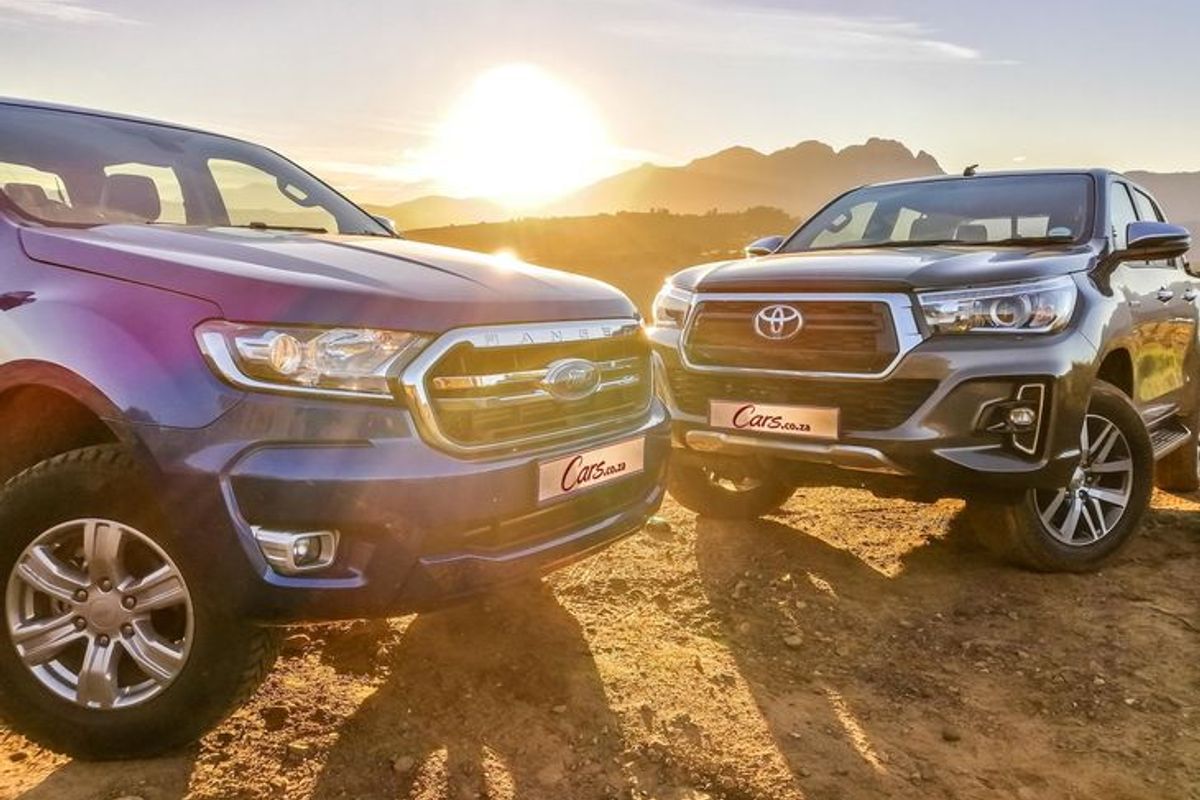
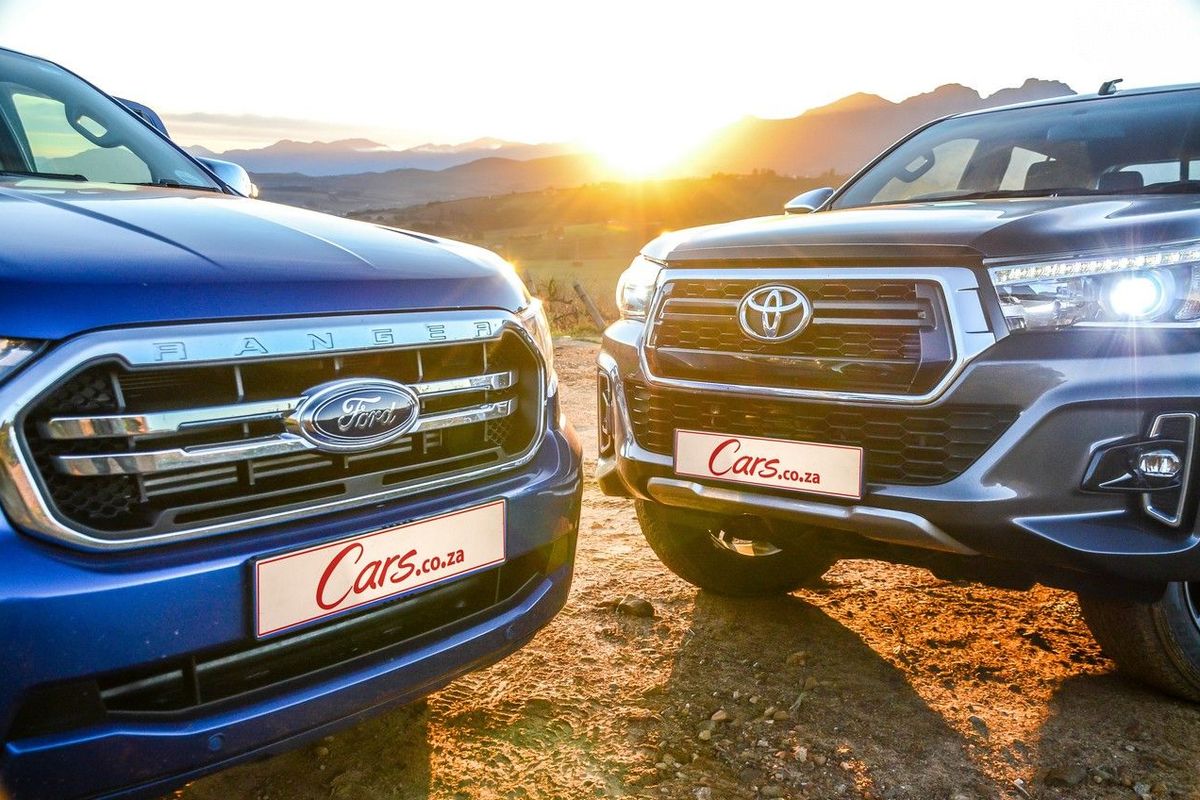
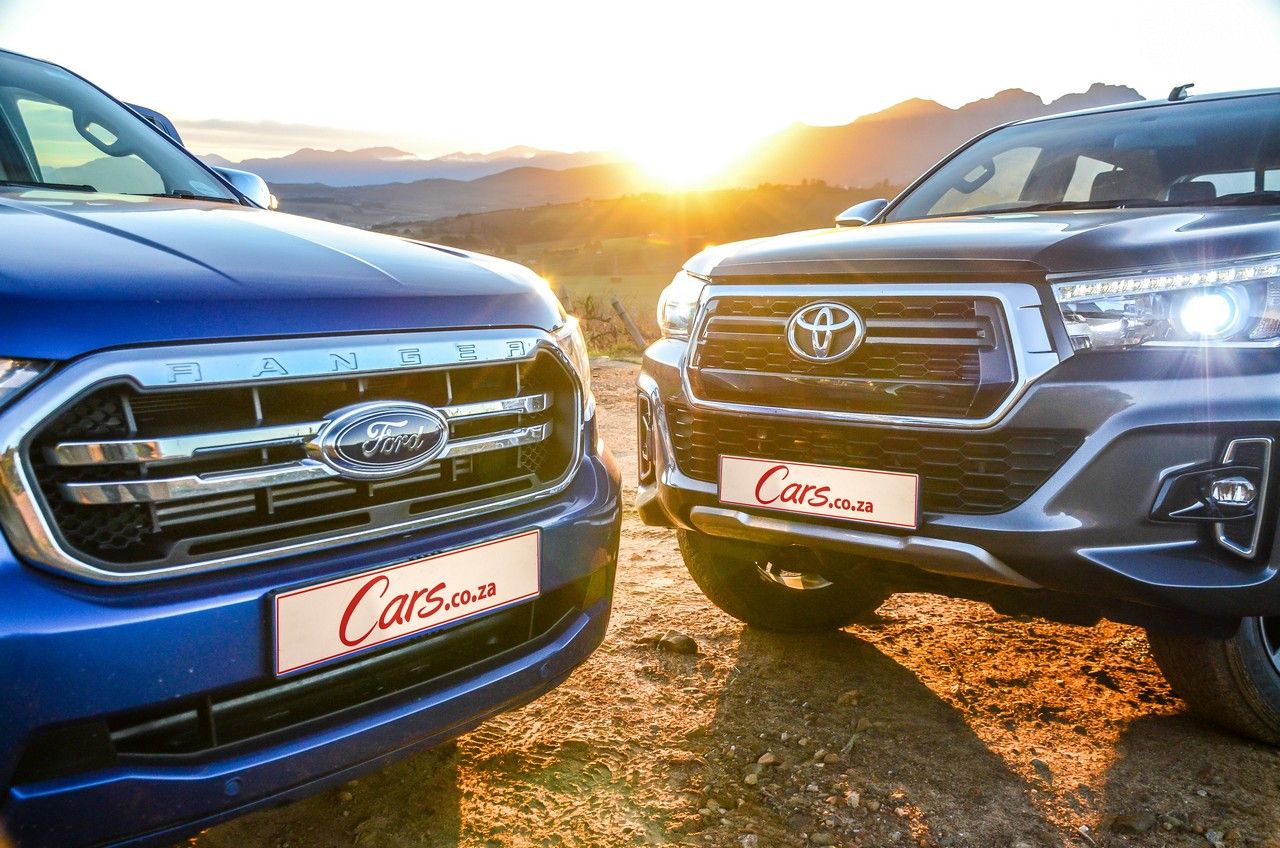
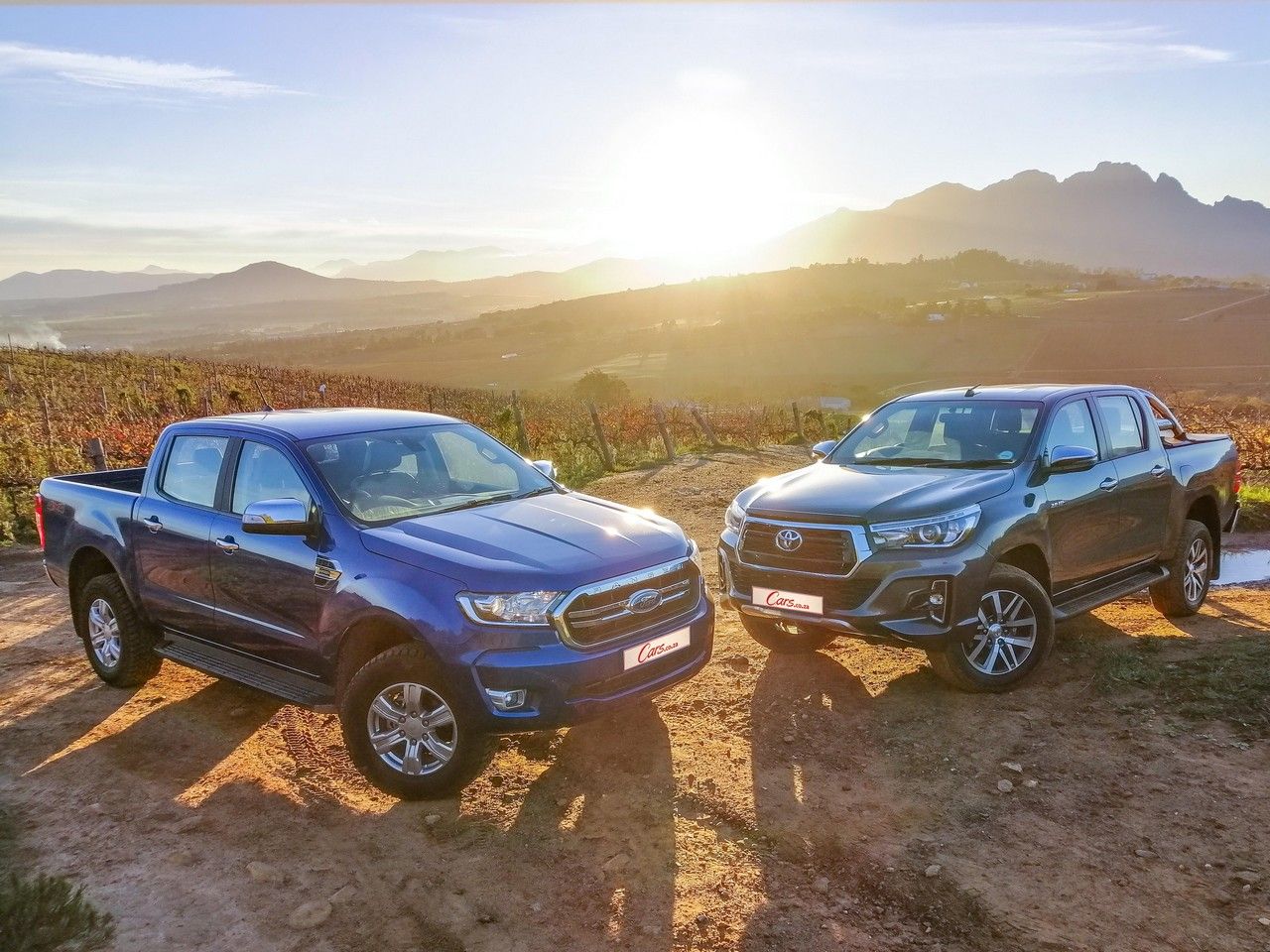
Both bakkies have recently received facelifts, noticeably changing the front end design.
How they compare in terms of…
Kerb Appeal?
Hilux
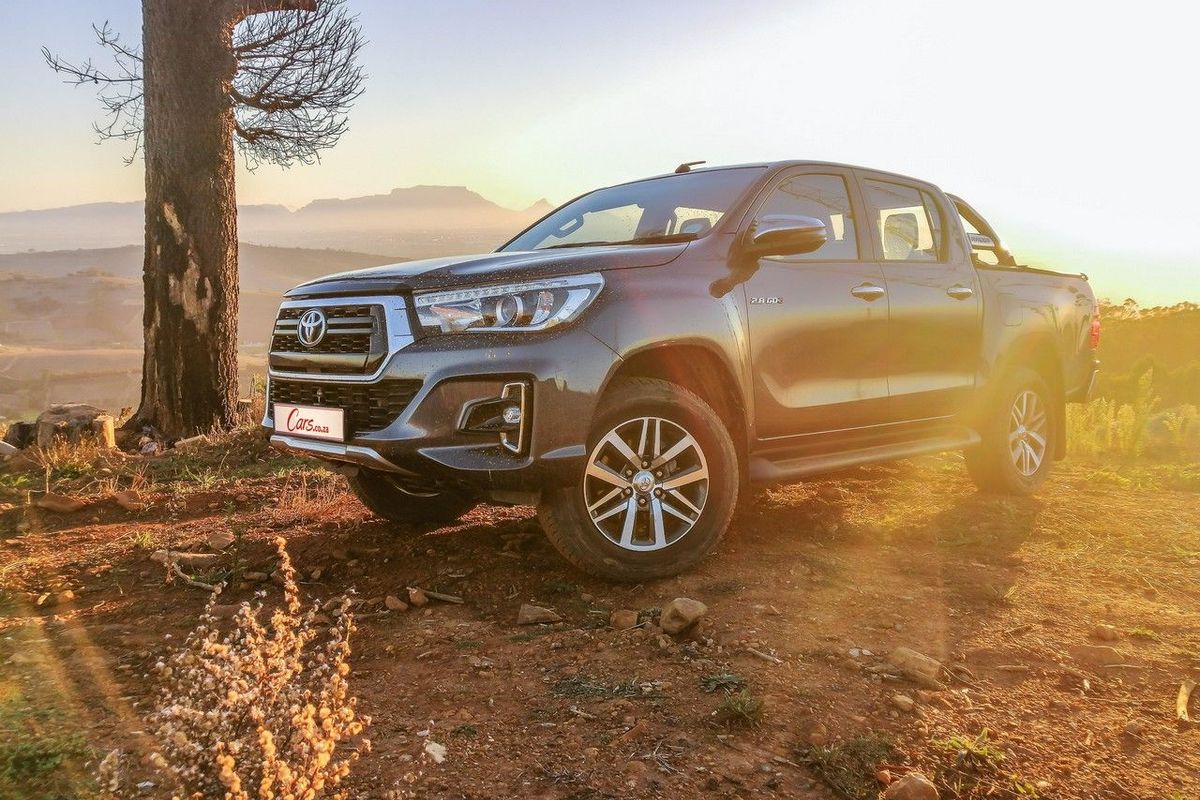
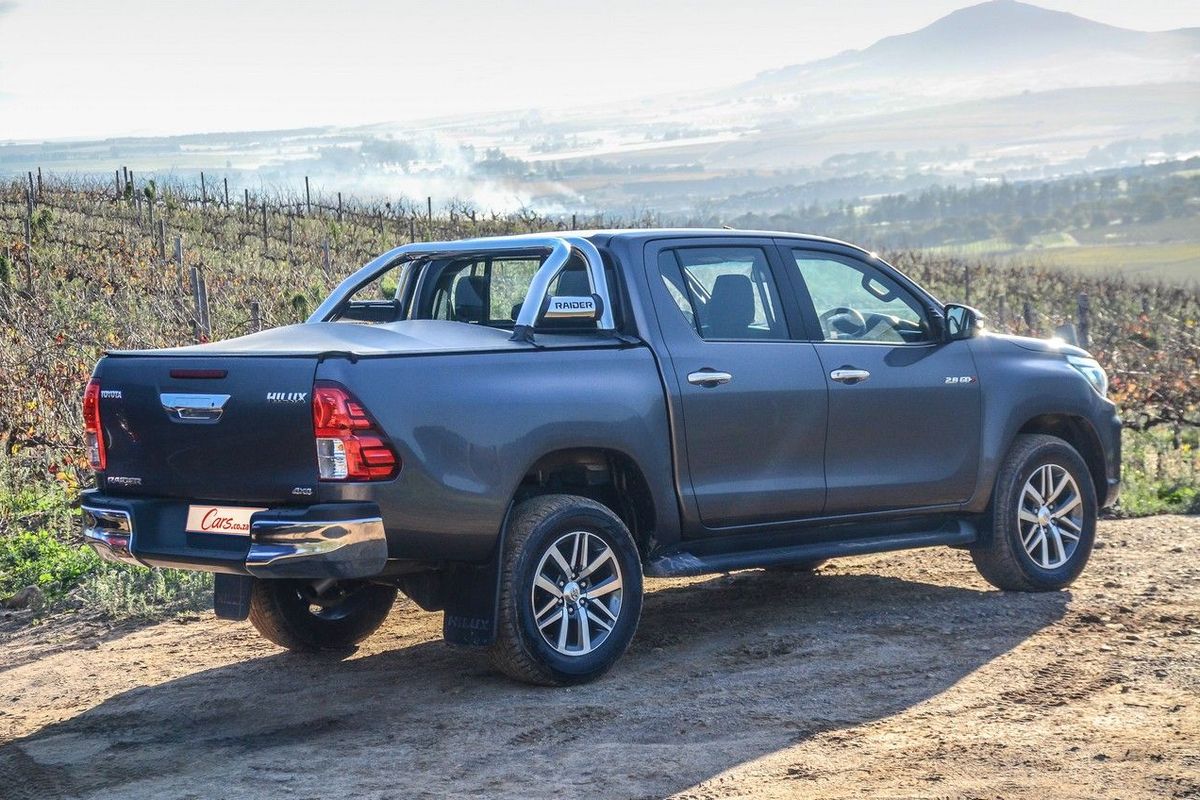
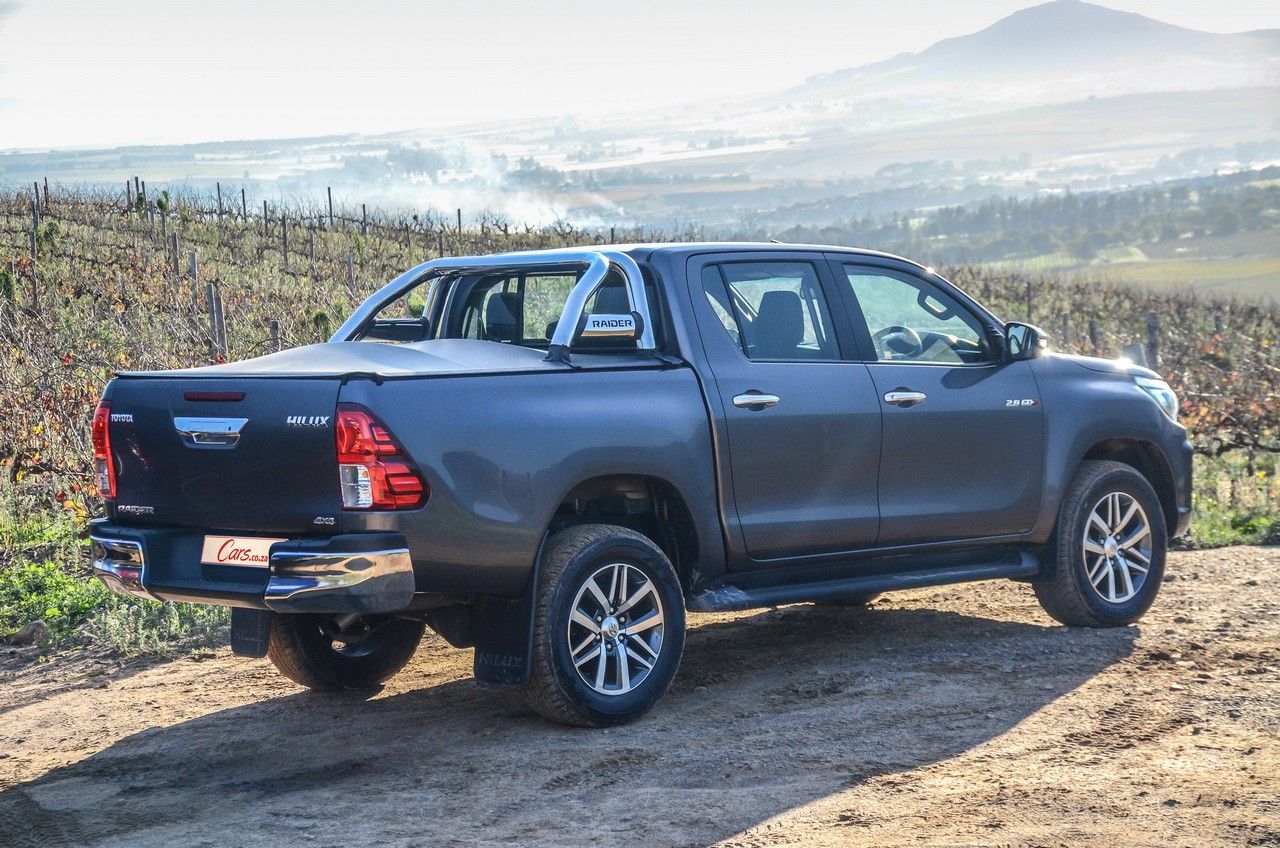
Raider spec Hilux really does look the part with the rear roll-over hoop.
Raider-spec adds notable road presence to the Hilux. The 2018 Dakar-inspired update includes welcome changes including a squared-off grille replete with a stylish chrome surround. The chrome look is carried over to the door mirrors and -handles, giving the Toyota a more sophisticated and polished look. The 2.8 GD-6 Raider 4×4 is also equipped with LED headlamps and daytime running lights as standard and rides on handsome 18-inch alloy wheels. Note that a rubberised load bay and sports bar is standard, but a tow bar is optional at an additional cost of R7 500.
Ranger
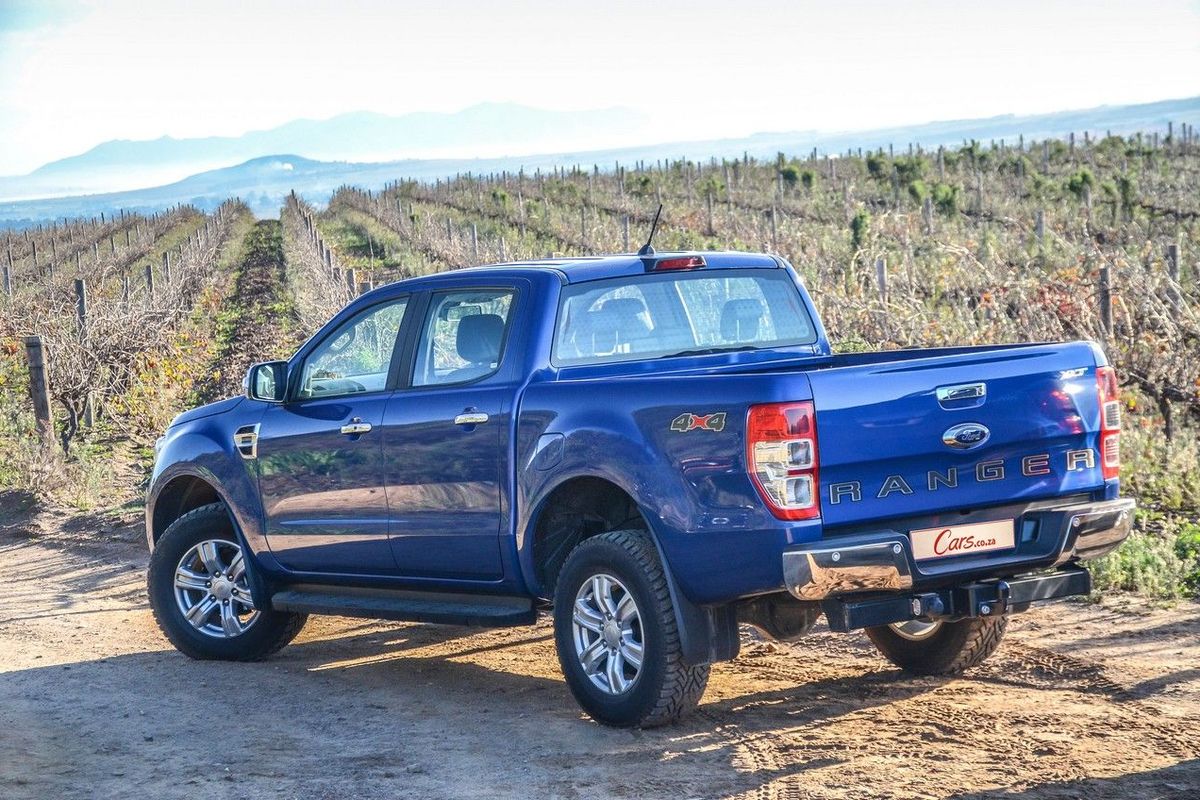
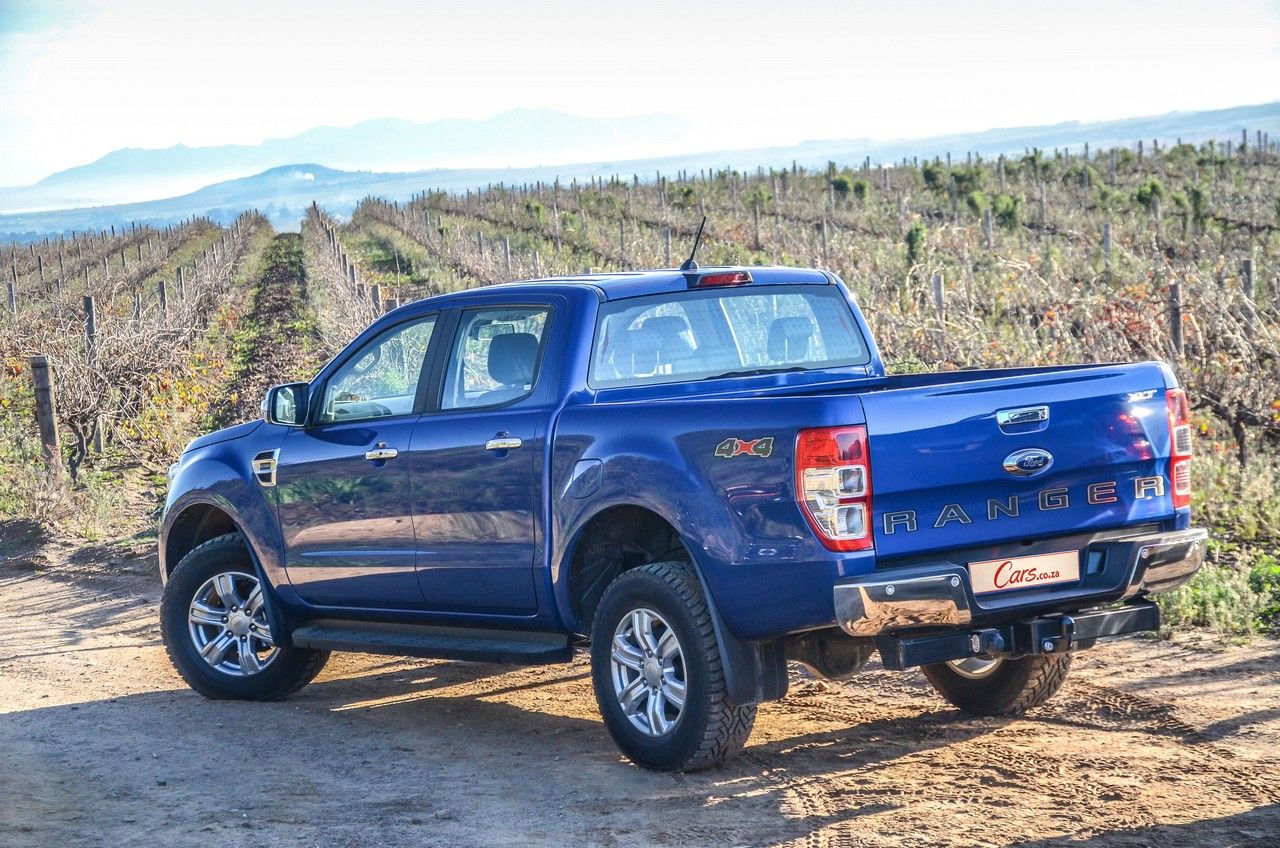
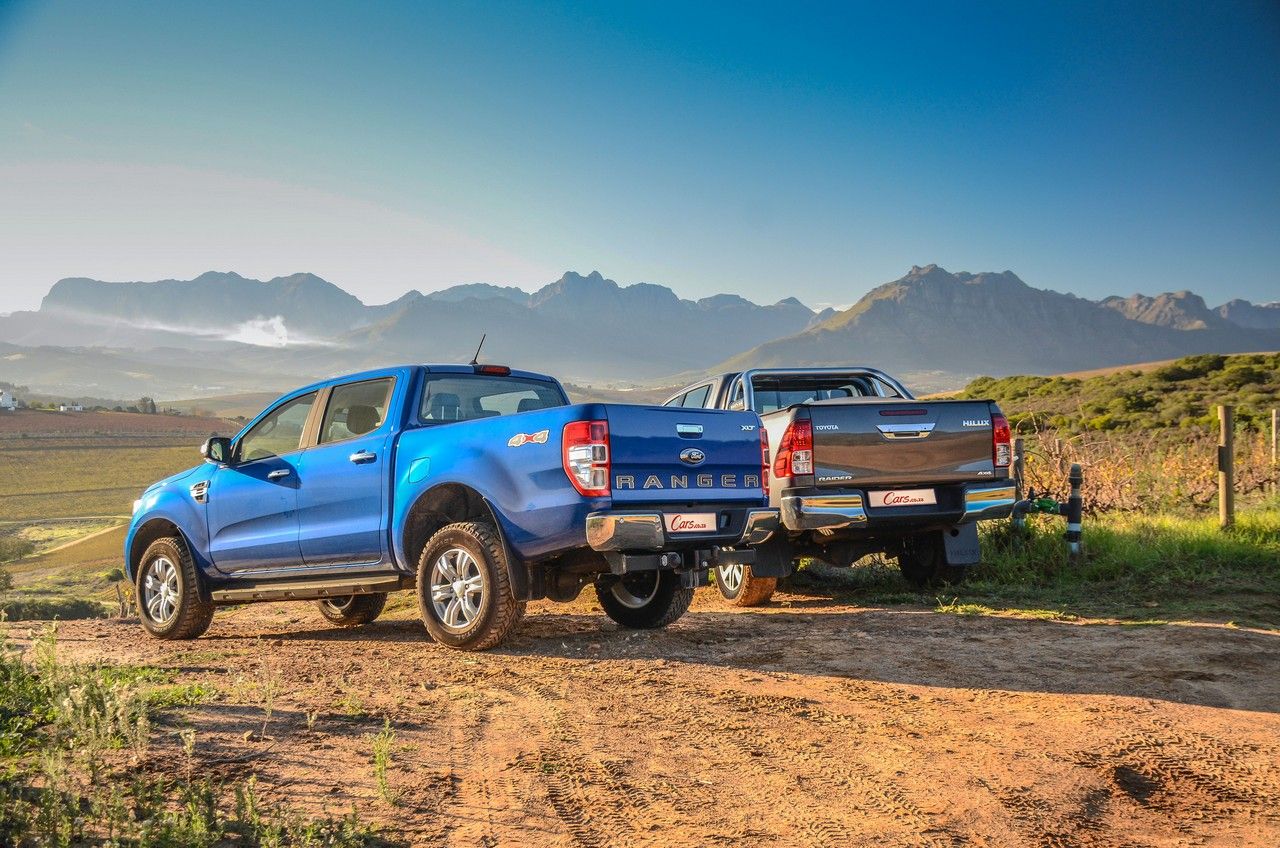
The Ranger XLT lacks a few styling finishes in comparison to the Hilux.
While the aesthetic changes to the latest Ranger are more subtle than those applied to the Hilux, they are nonetheless effective! The most obvious change is the central bar, which effectively splits the grille into 2 halves, while the lower bumper has been revised to strengthen the 2.0 4×4 XLT's overall front-end design. The chrome treatment gives the Ford some flash, but it does not detract from its macho appeal. The derivative rides on smaller 17-inch alloy wheels and looks a bit naked without a sports bar or a rubberised load bay (optional). A tow bar, however, is standard.
Verdict: Overall, we think the Hilux Raider looks more impressive than the Ranger XLT in the metal; it simply has more kerb appeal in stock form. Perhaps the smaller wheels and absence of a sports bar and naked load bay gives the impression that the Ranger XLT is a more basic offering (which it isn’t, but more on that later). Nonetheless, styling is subjective and you will ultimately have to decide which look you like most.
Interior execution and features?
Hilux
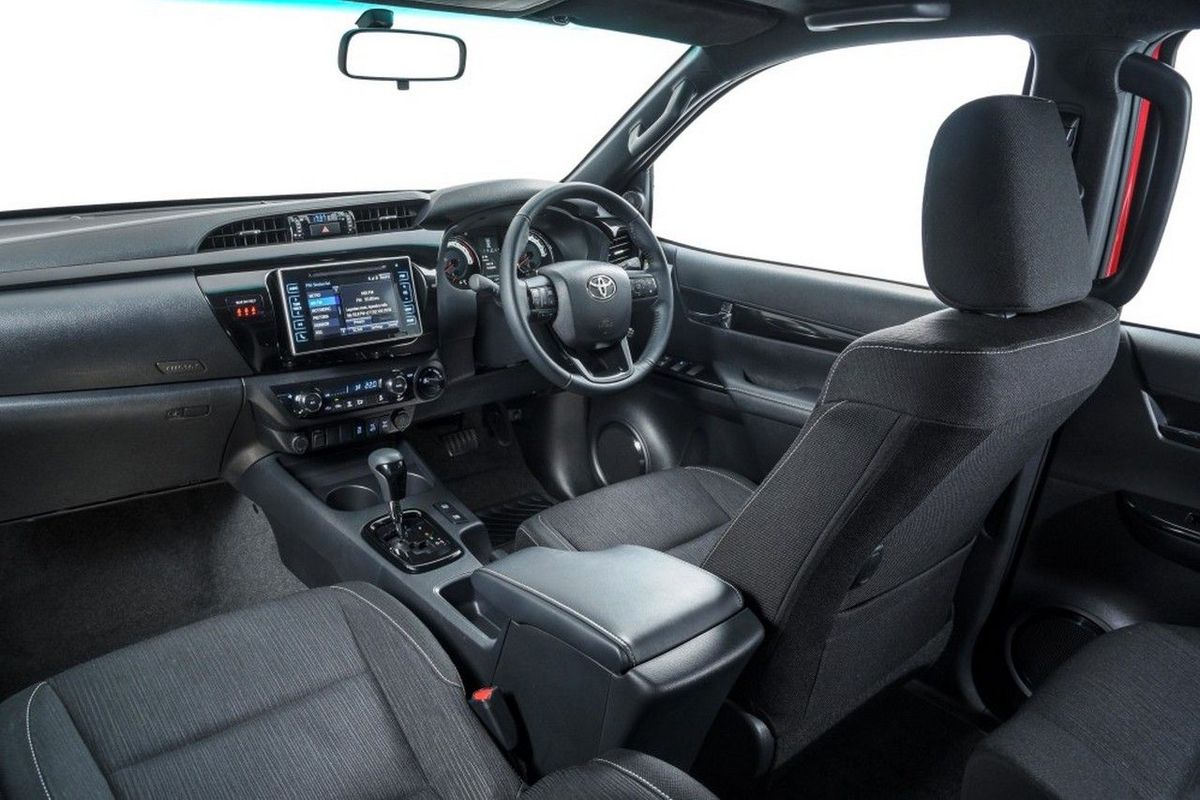
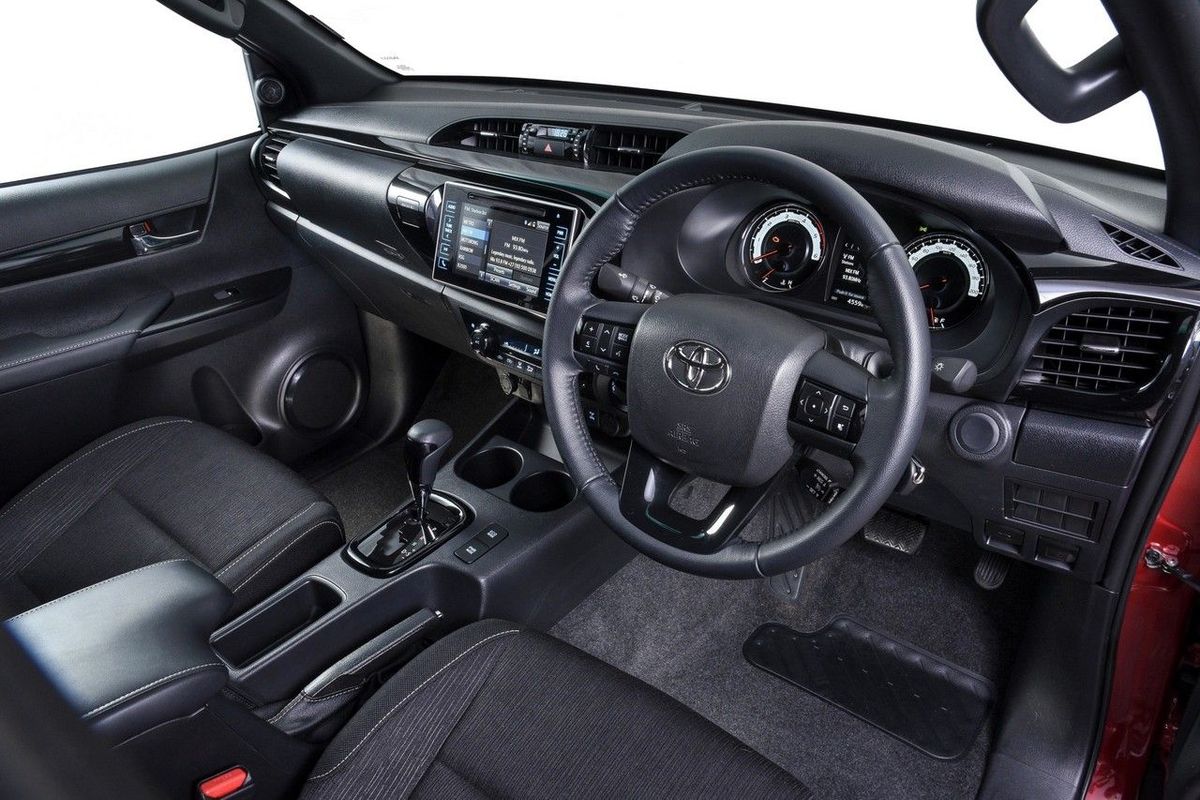
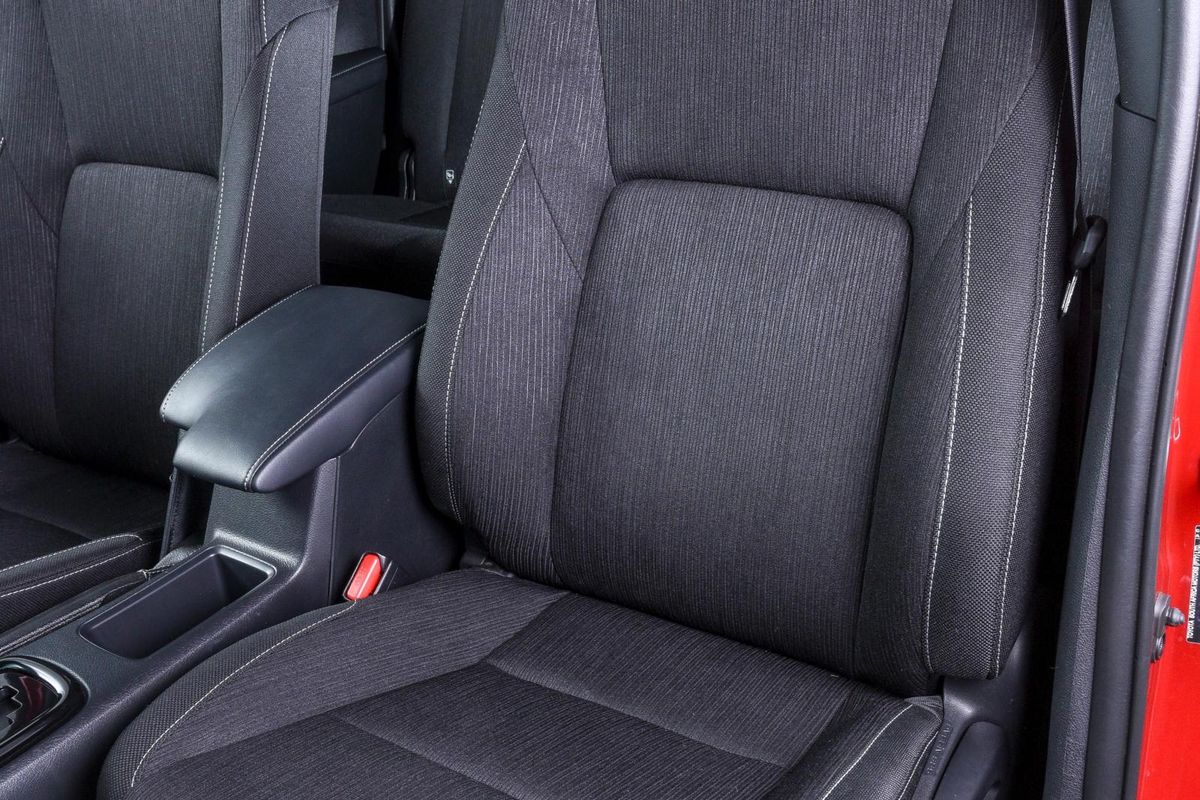
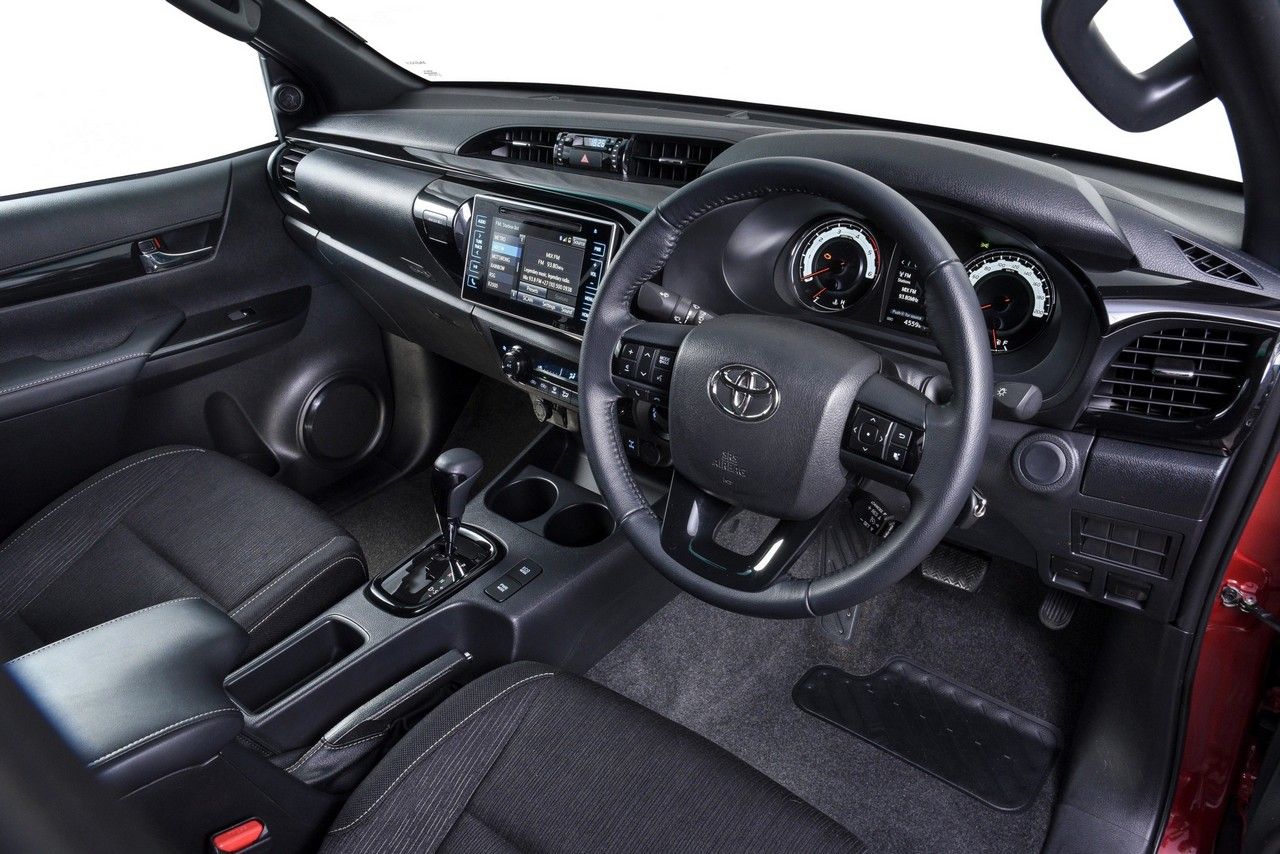
Cloth seats at this end of the are a bit of a letdown. *auto model pictured.
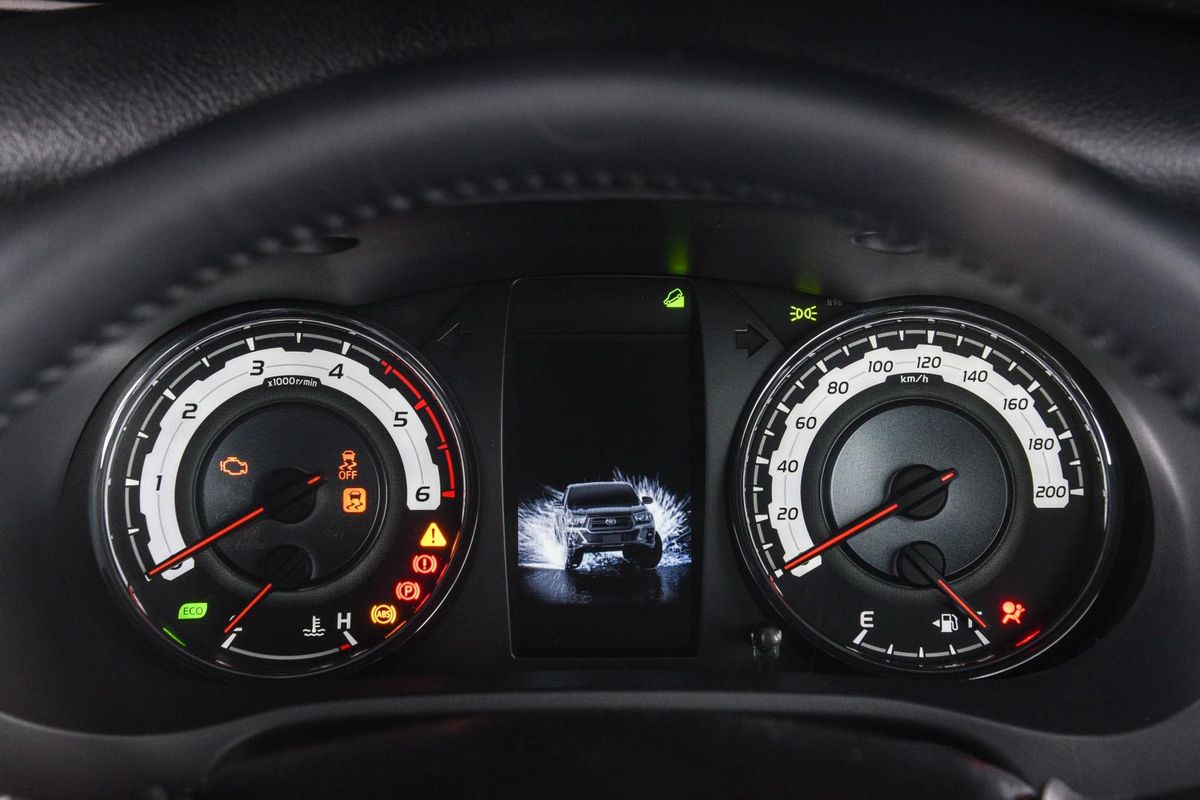
The Hilux’s interior has an upmarket appearance and its build quality is very good. However, the touchscreen infotainment system is rudimentary and while it does offer navigation and Bluetooth, it isn't Android Auto or Apple CarPlay compatible (which is an ongoing gripe with the Toyota range).
The 2.8 GD-6 Raider 4×4 comes with cloth upholstery as standard (leather is optional; speccing it will cost an additional R12 500) and other interior features worth mentioning include a rake/reach adjustable steering wheel with mounted controls, height-adjustable driver's seat (manual), cruise control, single-zone climate control, a USB port, electric windows/side mirrors and a reverse-view camera.
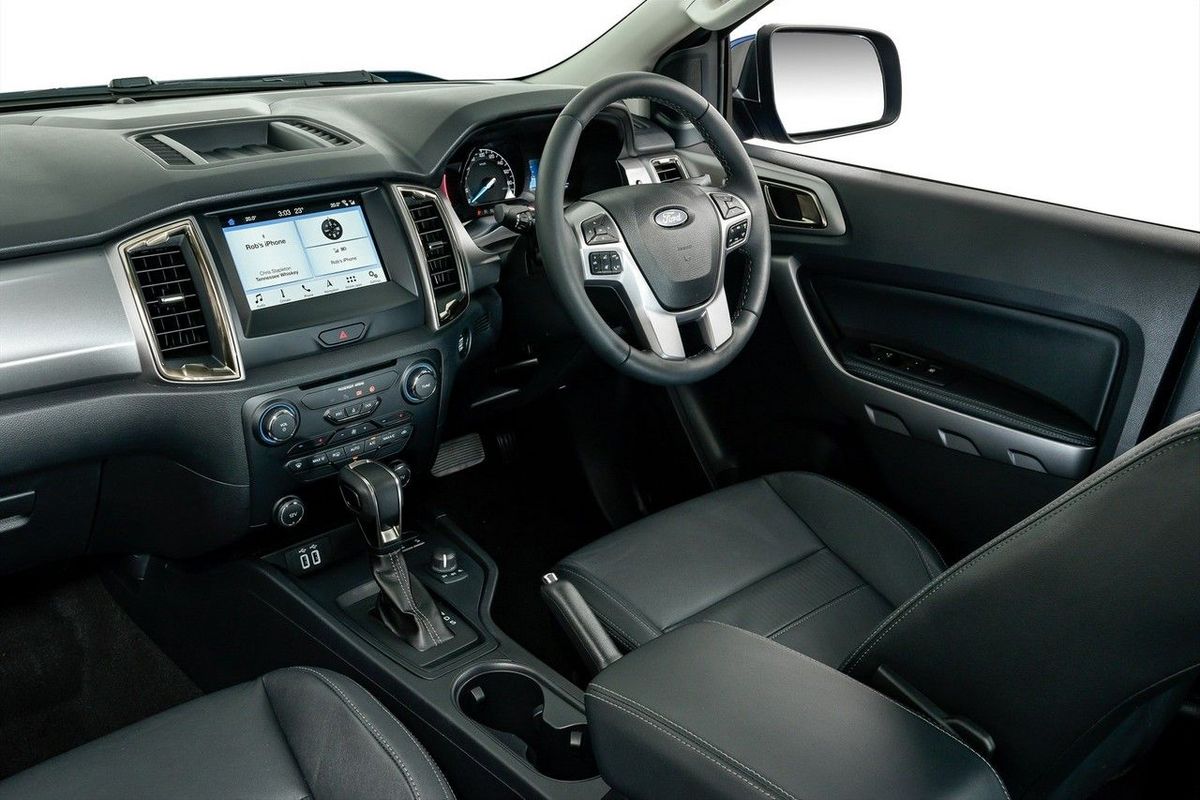
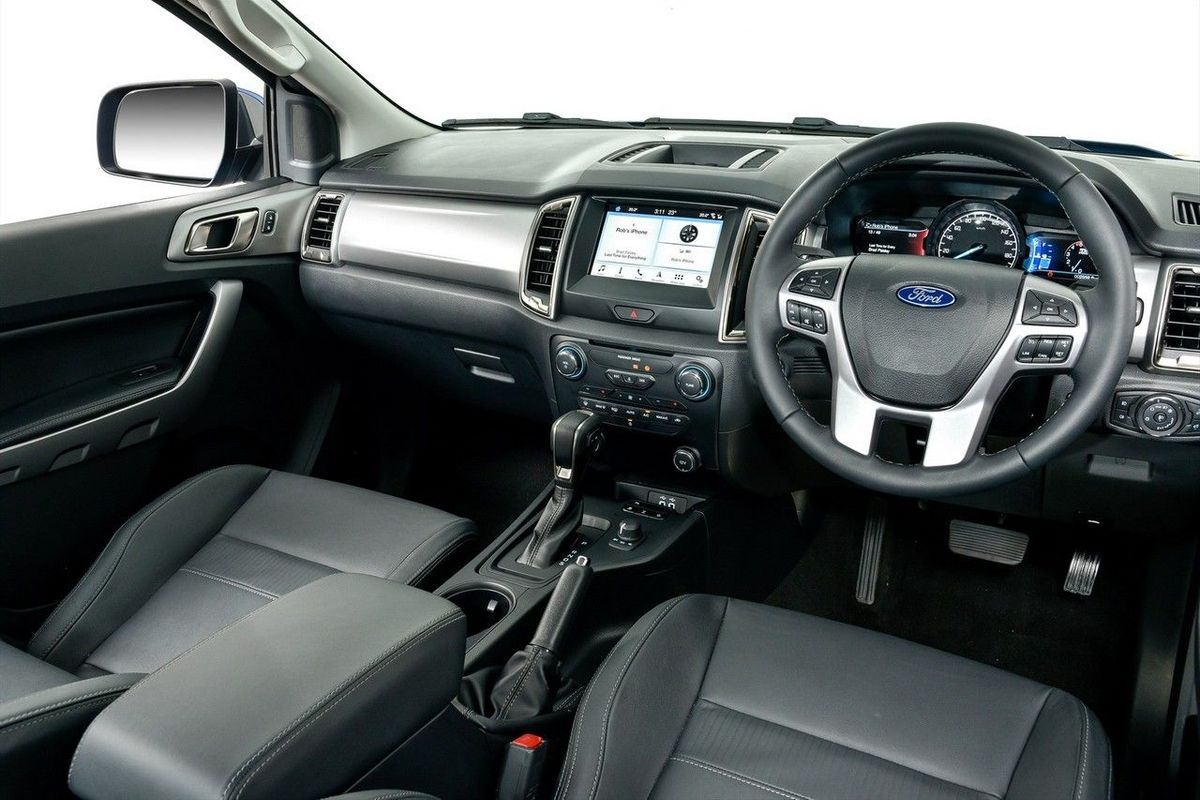
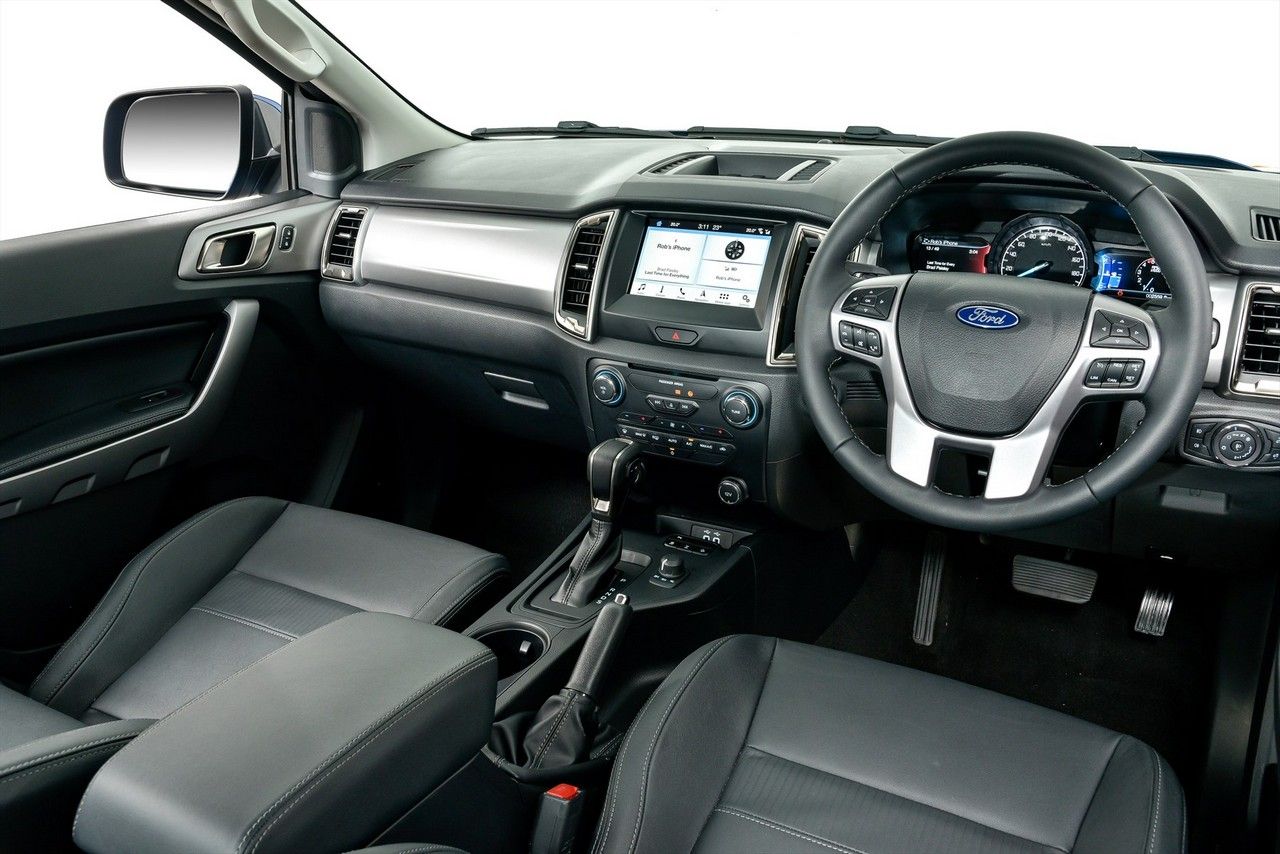
Ranger is impressively specced with modern infotainment and leather seats.
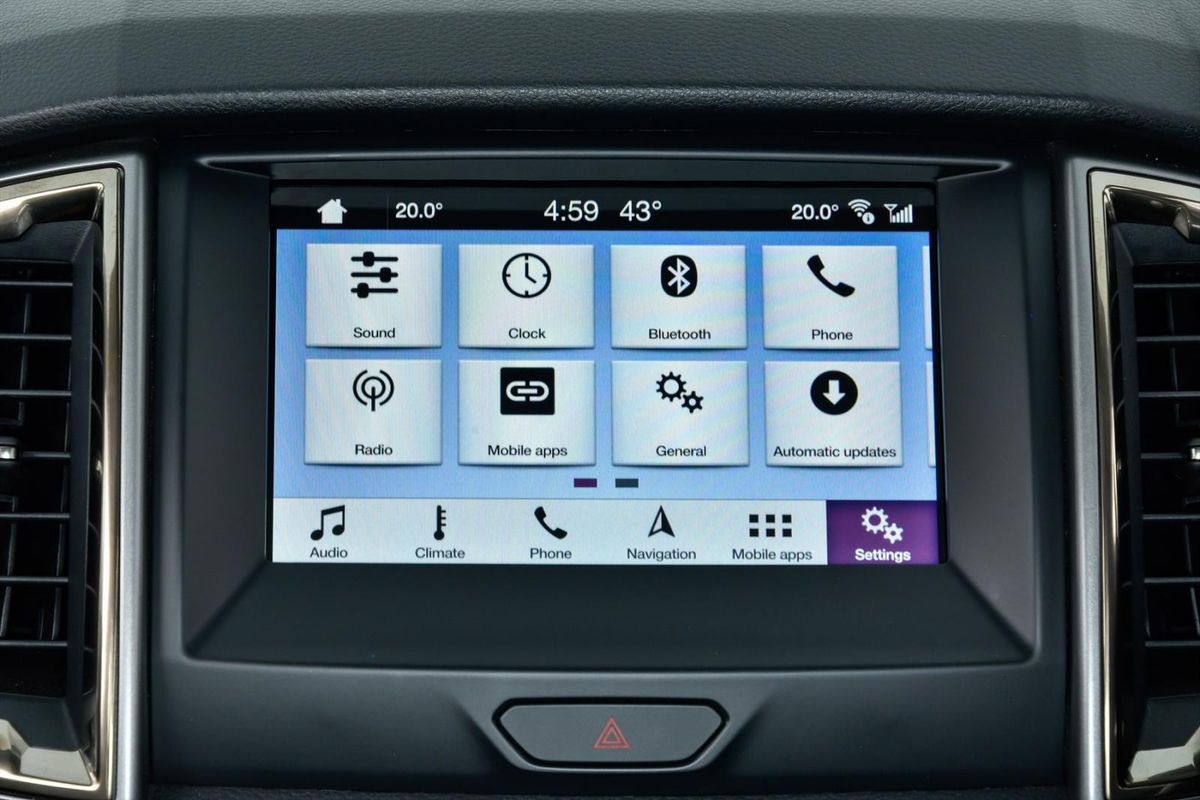
While Ford's interior material/trim does not quite match that of the Toyota (some of the plastics panels feel of marginal quality, for example), the perceived build quality (fit) is still good. The Ranger, however, strikes a significant blow in this match-up by offering an impressive, easy-to-use SYNC3 touchscreen infotainment system that includes Bluetooth, voice control, navigation, as well as Android Auto and Apple CarPlay compatibility.
Moreover, the 2.0 4×4 XLT is also well-stocked with standard features, the most notable being leather upholstery, a multifunction steering wheel (rake adjustable only, we must add), height-adjustable driver's seat (manual), rain-sensing windscreen wipers, keyless access, two USB ports, cruise control, dual-zone climate control, electric windows/side mirrors and front and rear park distance control with a reverse-view camera.
Verdict: The Ranger scores a win in terms of connectivity and its high level of standard specification adds significant value to the overall package. By contrast, the Hilux’s infotainment system is no match and it can’t beat the Ranger XLT in terms of standard features. It’s a big win for the Ranger!
Engine performance?
Ford has downsized its new Ranger bakkie to just 2.0 litres, while the Hilux remains 2.8 litres.
Hilux
The Hilux employs the familiar 2.8-litre turbodiesel engine with 130 kW and 420 Nm of torque. By all accounts, it’s a dependable motor that offers solid general performance be it on- or off-road. The Hilux accelerates with purpose and even though it doesn't have the most refined engine in its segment, its performance is difficult to fault. Mechanical integrity is one of the main reasons why the Hilux has such a devout following in Mzansi.
While we didn’t have an automatic on test on this particular occasion, we have tested the Hilux 2.8 GD-6 automatic extensively in the past and found the transmission to be well-matched to the engine, while also offering prompt and (relatively) smooth shifts. Toyota claims an average consumption figure of 8.5 L/100 km for the 2.8 GD-6 Raider automatic and our previous tests returned reasonable real-world figures of just over 10 L/100 km.
Ranger
Many people are sceptical about Ford’s new 2.0-litre turbodiesel engine (just as they had misgivings about the Amarok's 2.0-litre mill), but despite its smaller capacity, the new motor just about matches the Hilux’s outputs with 132 kW and 420 Nm. We can report with confidence that it outperforms the Hilux in the real world by offering superior mid-range acceleration, while also being quieter and more refined. The single-turbo engine is a peach!
Furthermore, the Ranger's new 10-speed transmission is very responsive to throttle inputs and always seems to be in the right gear to match on-road conditions. It’s also wonderfully smooth in operation. Importantly, though, the Ford trumps the Toyota in terms of fuel efficiency too. Ford claims an average consumption figure of 7.5 L/100 km and we saw returns of around 9.5 L/100 km, which is commendable.
Verdict: The Ranger convincingly beats the Hilux in 3 key areas including performance, fuel efficiency and transmission performance.
Ford's new single-turbo engine is smooth and its 10-speed 'box delivers excellent shifts.
Ride & Handling?
Hilux
The 2.8 GD-6 Raider 4×4's ride quality is good on asphalt as well as gravel road surfaces. However, the Hilux is more firmly sprung than the Ranger; its ride quality is not as pliant. What's more, we found the rear end to be somewhat jittery, something that most bakkies suffer from (but improves when the load bed is laden). We do, however, like the Hilux's well-weighted steering feel as it inspires confidence, especially when venturing offroad.
Ranger
One of the key upgrades the Ranger received during its recent model-year update was a revision of its suspension setup – and it has paid dividends. Whether crossing tar or off-road routes, the Ford’s ride is more forgiving than (and offers superior driving comfort to) the Toyota. The former's steering is lighter in feel and, depending on your preference, this can be beneficial when navigating the bakkie in tight city confines.
Verdict: We found the latest Ranger to ride more comfortably on various surfaces and, therefore, it scoops another win against the Hilux.
Off-road ability?
Hilux
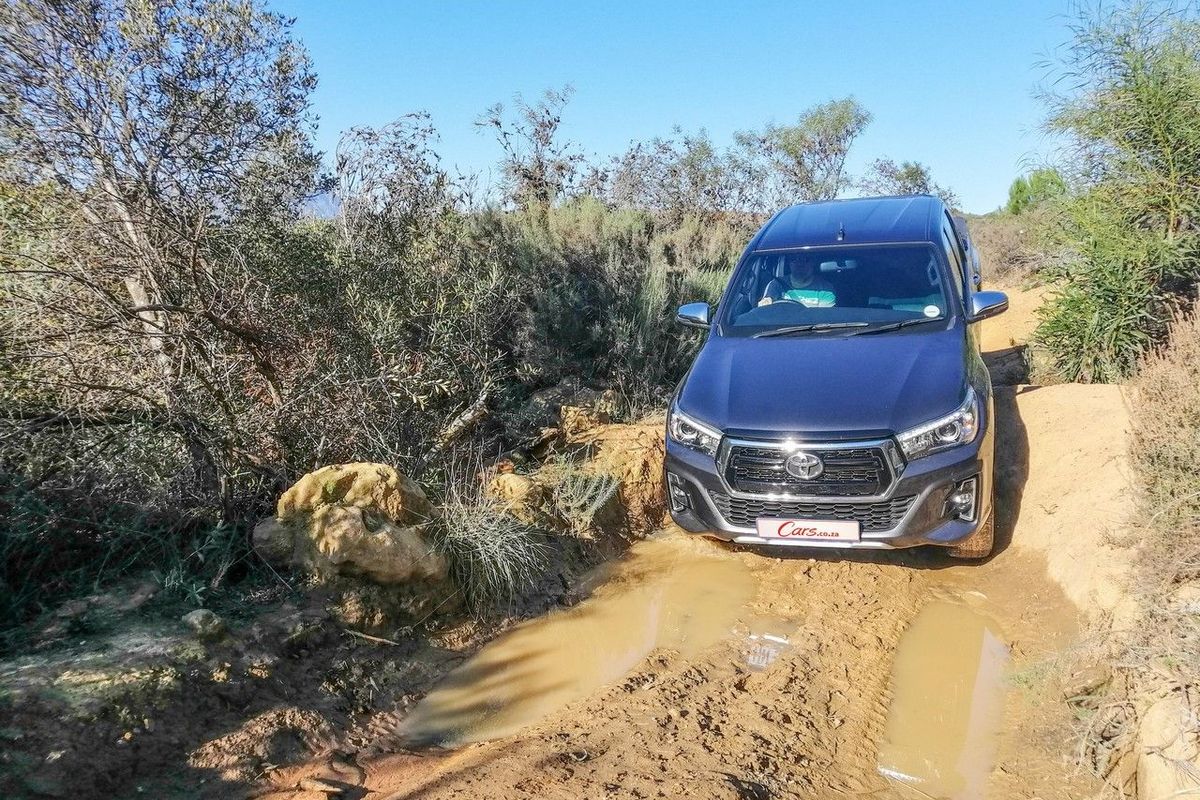
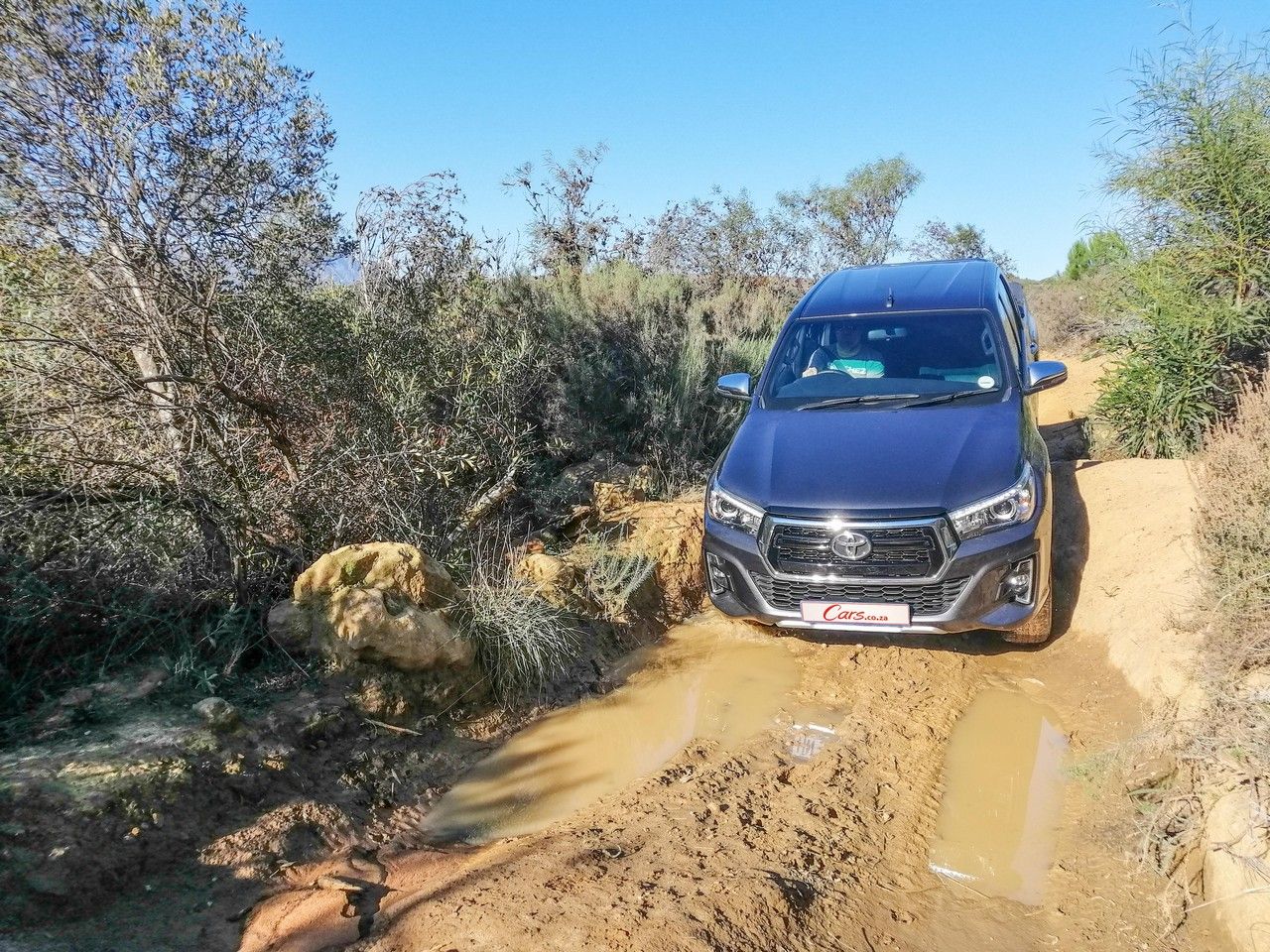
The Hilux has always had impeccable off-road skills.
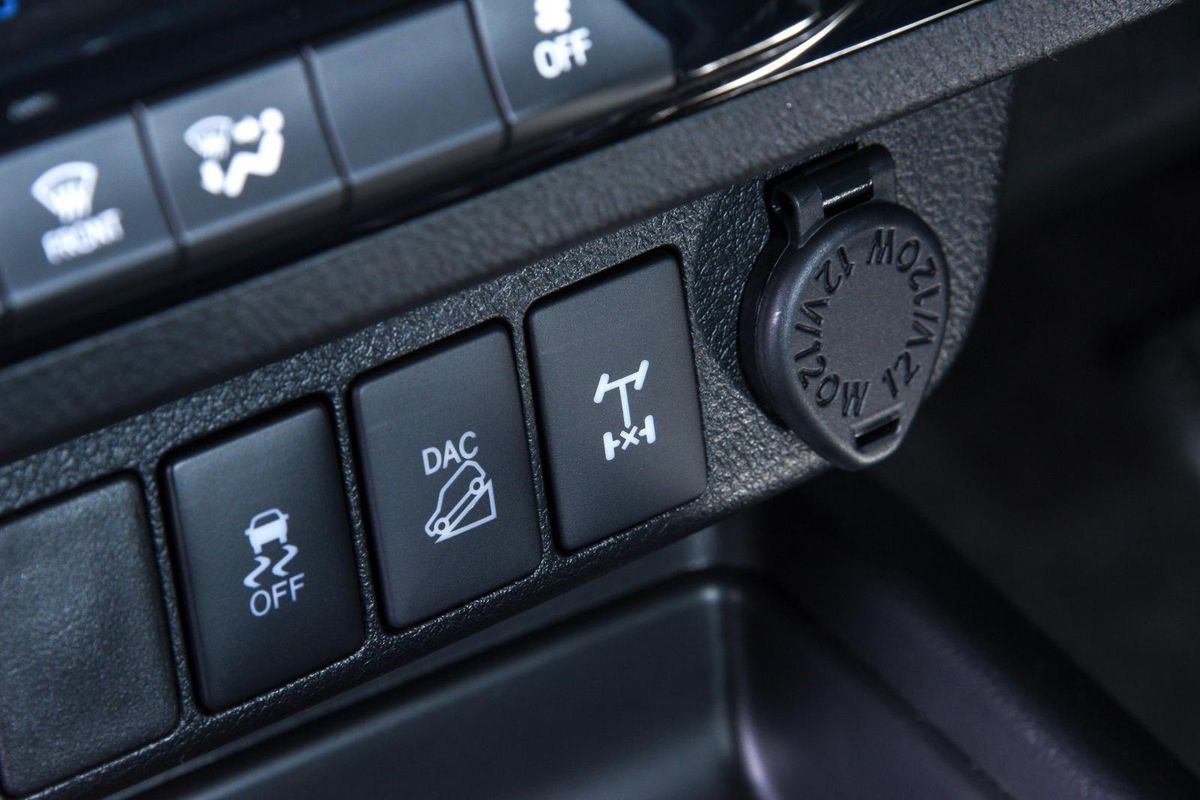
The Hilux is mightily impressive off-road and while we'd have preferred to tackle the off-road course with an automatic, the manual version of the 2.8 GD-6 Raider 4×4 performed admirably. Adorned with a rotary knob to easily switch between 2H, 4H and 4L, along with a centre and rear differential lock, the Hilux is virtually unstoppable when the going gets tough. The ground clearance of 286 mm makes it easier to deal with trickier obstacles.
Ranger
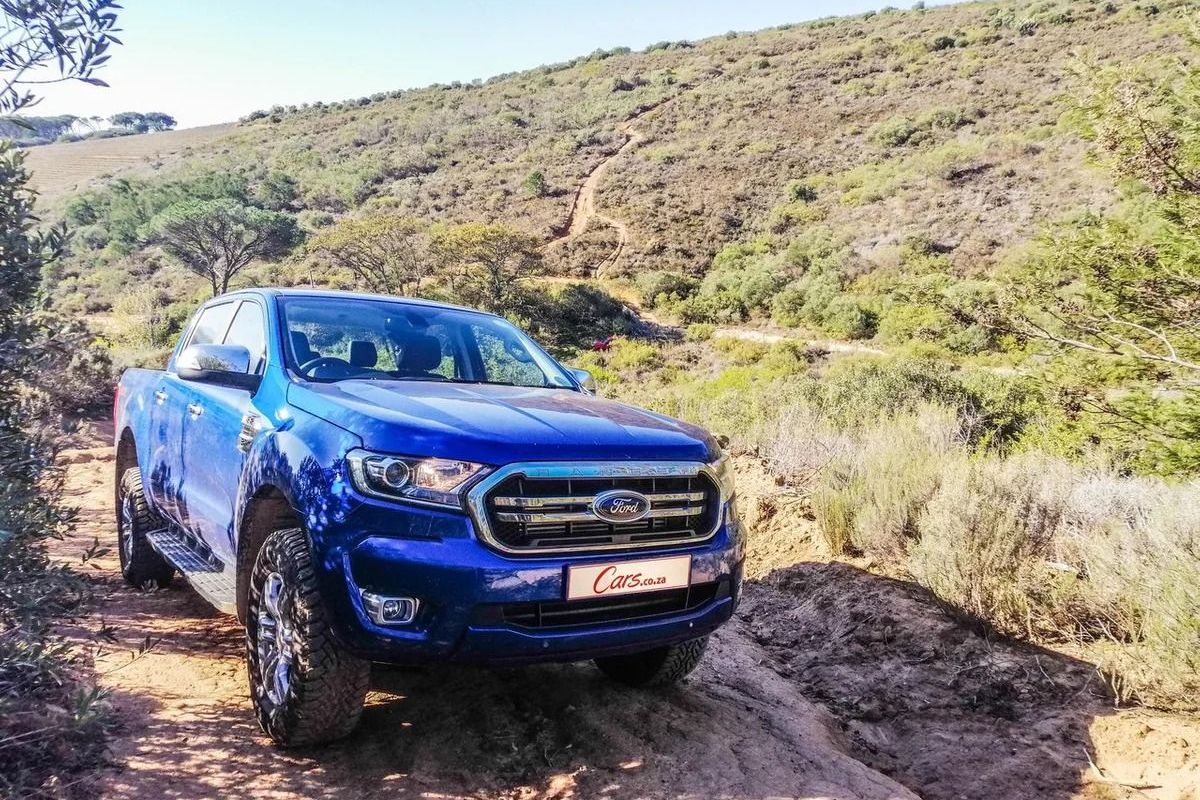
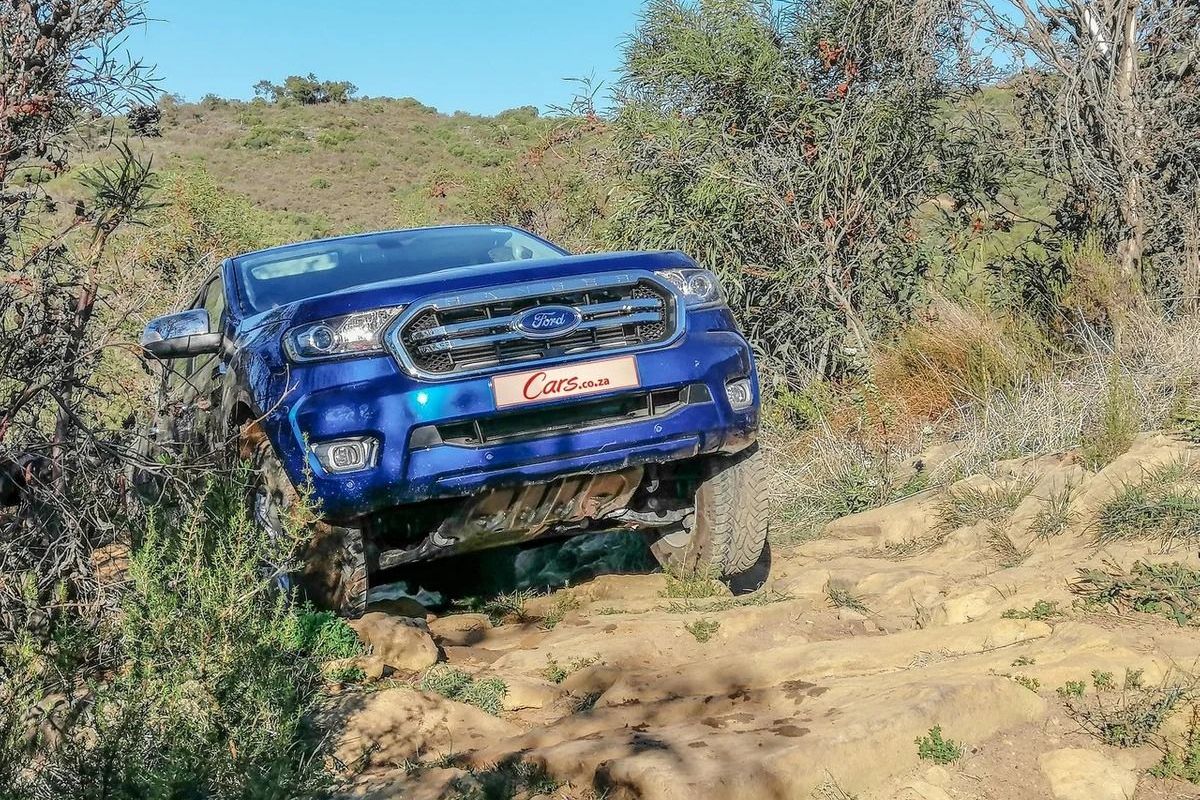
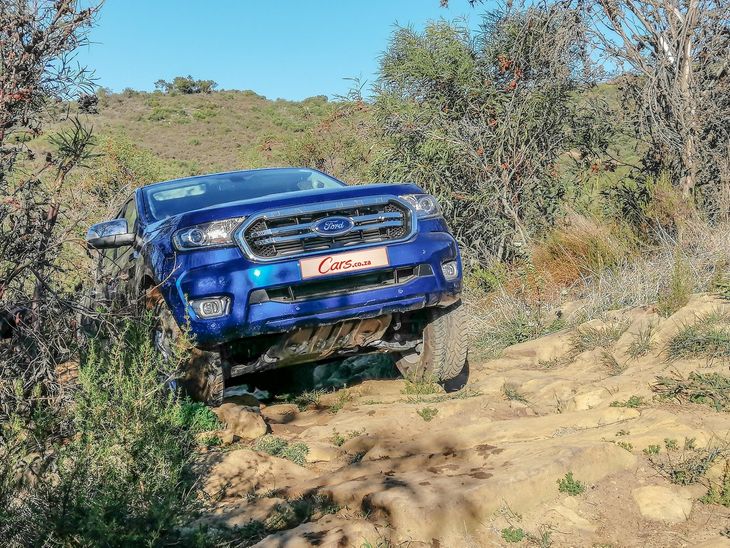
Both bakkies proved very capable on the off-road track at Welgelegen.
Much like the Hilux, the Ranger offers impressive off-road ability and the automatic transmission made off-roading even easier, because you only have to focus on steering and throttle control. The Ranger is also equipped with a shift-on-the-fly rotary knob for 2H, 4H and 4L as well as a rear differential lock to tackle tougher terrain. The Ranger’s ground clearance, however, is notably lower than the Toyota's (237 mm vs 286 mm).
Verdict: We know from extensive testing that the Hilux and Ranger are hugely capable offroaders and while both impressed us with their off-road abilities during this comparative test, we feel that a draw is the fairest call we can make seeing that we had different transmissions on test here.
Pricing and Warranty?
Hilux
The Hilux 2.8 GD-6 4×4 Raider manual is priced from R616 600 and if you want the automatic version then you can expect to pay R637 500 – an extra R19 900. The Hilux is sold with a 3-year/100 000 km warranty and 9 services as standard.
While the Hilux Raider 2.8-GD-6 4×4 should ideally be compared with the Ranger 2.0 Bi-Turbo 4×4 Wildtrak – not the 2.0 4×4 XLT – the reality is that the former and latter's powerplants and abilities are well matched. However, the well-specced Ford offers better value for money than the Toyota.
To illustrate this: if you opt for the Hilux 2.8 GD-6 Raider 4×4 Automatic (R637 500) and specify leather seats and a tow bar, its total price will total R657 500, some R87 300 more than the Ranger XLT 4×4 Automatic. In this comparative review, the Ranger outshone the Hilux in terms of performance, refinement, fuel efficiency, ride and handling and standard specification. It’s also worth noting that the Ford has a longer warranty.
Is the prestige of the Toyota badge enough of a reason to buy the Raider (at a premium) instead of the XLT, though? Remember that Toyota is not a top seller without reason. Since the inception of the Cars.co.za Consumer Awards – powered by WesBank (and its crowning Brand of the Year category), the Japanese marque has won the title twice in 4 years, while Ford is yet to make the podium on any occasion. Brand of the Year means the marque in question excels at its sales processes, ownership satisfaction with its products, after-sales service, and achieve good resale values.
Therefore, in terms of sheer value-for-money, the Ranger 2.0 4×4 XLT wins this comparative test, but, based on feedback we've received from thousands of South African vehicle owners, the Hilux 2.8 GD-6 Raider 4×4 remains the better long-term ownership proposition.
Don’t agree with our verdict? Share your opinion with us!