There appears to be a rapid shift towards electrifying the bakkie segment, China is at the forefront of this movement.
China’s burgeoning commitment to vehicle electrification has gained another entrant as Dongfeng revealed its battery-powered bakkie.
Based on the Rich 6 double-cab platform this new electric bakkie has been developed in conjunction with Nissan. And yes, it does look like a facelifted Hilux from the front.
In terms of dimensions, the Rich 6 EV is a large double-cab, measuring 5.29m bumper-to-bumper, with a wheelbase of 3m. Kerb weight registers as 1 983 kg, which is remarkable for a bakkie of its size, carrying the burden of a battery pack.
Powering the Dongfeng Rich 6 EV is a single electric motor, rated at 120 kW and 420 Nm. Energy is sourced from a 68 kWh battery pack.
The Dongfeng Rich 6 EV’s performance certainly is not startling, with a top speed of only 110 kph. This comparatively low performance threshold is not an issue in China, where traffic precludes moderate highway cruising speeds.
What is deeply impressive, is the Rich 6 EV’s claimed range. Dongfeng says their battery bakkie will run 403 km on a single charge and then power-up to 80% capacity in only 45 minutes, if plugged-in at a fast-charging station.
Debits? It does not carry much. The Rich 6 EV’s load rating is a modest 490 kg.
Nissan holds a 50% share in Dongfeng and the joint venture's aim is to have 20 electric vehicles in the market by 2022.
A new Mercedes-AMG GLC 43 SUV and Coupe has broken cover, herewith the details.
The facelifted GLC SUV was revealed earlier this year as well as the potent AMG GLC 63. Now, the boffs at AMG have revealed the GLC 43 which wears a Panamericana grille, flanked by newly-designed headlights. The taillights are new too and the model can be further differentiated by its oval quad tailpipes.
In terms of firepower, the familiar 3.0-litre, twin-turbocharged V6 engine is found under bonnet but now it produces a meaty 287 kW (17 kW more) and 520 of torque thanks to larger turbochargers and software adjustments. All that grunt is directed to all four wheels using an AMG 9G transmission. Zero to 100 kph will take 4.7 seconds.
The interior features updated trims and finishes and the highlight is the presence of the latest MBUX infotainment system which is accessed via a 10.25-inch touchscreen while the driver can configure the snazzy 12.3-inch digital instrument cluster. A new AMG steering wheel is fitted and features a flat bottom and perforated grips along with mounted paddles for manual gear changes. AMG Drive Unit buttons for the steering wheel are optional.
The exact arrival date of the Mercedes-AMG GLC 43 has yet to be confirmed by a local MBSA representative but we anticipate its arrival early in 2020. Local specification and pricing will also be confirmed closer to launch.
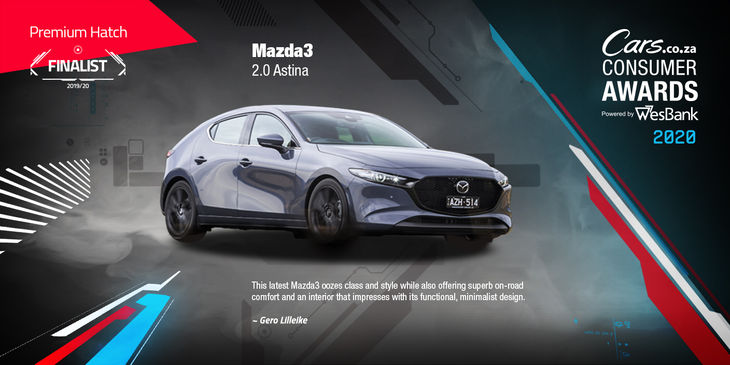
The new, 7th-generation Mazda3 has made landfall in South Africa and we attended the Japanese compact hatchback and sedan range's launch in Johannesburg to find out if this stylish newcomer has been worth the wait…
Just look at it! The handsomely styled new Mazda3 is here at last and it’s come to steal sales from rivals such as the Volkswagen Golf, Renault Megane, Opel Astra and even the Audi A3, to name but a few. The 3 is an important product for Mazda – it accounts for roughly 30% of the Hiroshima-based firm's annual sales volume and this new model will, therefore, look to continue (and expand on) this success.
While its refined Kodo design language may draw various opinions, we think this new Mazda3 is one of the more striking and classy-looking products on offer (in both hatchback and sedan guises). Up until now, Mazda has done a pretty good job of keeping local engine and specification details under wraps, but with the Mazda3 now officially available in South Africa, let’s take a closer look at what it has to offer.
Mazda is sticking with naturally-aspirated engines in SA, which may disappoint some potential buyers.
Firstly, there are 4 trim grades to consider: the entry-level Active, mid-level Dynamic, up-spec Individual, plus the top-of-the-range Astina.
While some may have been wondering whether Mazda would introduce its new 132 kW/224 Nm 2.0-litre SkyActiv-X engine with spark-controlled compression ignition, the Hiroshima-based marque has opted for a pair of naturally-aspirated SkyActive-G petrol engines: a 88 kW/153 Nm 1.5 litre, which replaces the previous 77 kW/144 Nm 1.6-litre unit, and a range-topping 2.0 litre with peak outputs of 121 kW and 213 Nm.
The 1.5-litre engine is offered in Active guise (exclusively with a 6-speed manual gearbox), while 1.5 Dynamic and 1.5 Individual derivatives are available with either the stick shift or a 6-speed automatic transmission.
How do the engines perform?
Engine performance could be stronger but the new Mazda3 ushers in higher levels of overall refinement.
We sampled both 1.5- and 2.0-litre derivatives during the launch event (both of them in automatic guise) and, to be blunt, outright performance is not an area in which the new Mazda3 shines particularly brightly. Good refinement aside, these naturally-aspirated engines lack the surge of overtaking urgency that turbocharged powerplants provide from low revs. Acceleration isn't punchy, but linear and progressive, as the Mazda3 works up momentum.
At altitude, both engines felt sluggish under a firm foot, but as you can imagine, the 1.5-litre engine felt more compromised, whereas the 2.0 litre at least offered modica of power and torque to work with in the thinner air. For what it's worth, the performance will improve somewhat at sea level.
The automatic transmission does a fair job of changing gears while getting on with its job relatively unobtrusively. Sport mode, should you really really feel the need to use it, will force the transmission to hang on to gears for a bit longer so you can wring every ounce of grunt from the engine.
With all that said, the Mazda3’s performance must be judged against how you intend on driving it every day. Yes, it's not as quick as it looks, but if that is of little concern (the newcomer works best when driven with a gentler, measured approach) it will serve you just fine on the daily commute.
The news gets better…
But where the new Mazda3 shines really brightly is in terms of its on-road refinement and ride and handling. Mazda has made big leaps especially in terms of the former. Road and engine noise is well damped and the engine itself runs mostly in near-silence, unless you are caning it, of course.
Meanwhile, the steering is nicely weighted and responsive to inputs – in fact, the Mazda3 feels eminently surefooted and precise through corners. The general ride quality is admittedly on the firmer side, but still comfortable and not overly crashy or intrusive when driving over uneven surfaces.
Yes, indeed, the Mazda3 could do with some more shove, but the general driving experience is right up there with the best in the segment.
What about the interior?
Perceived interior build quality is very good and the cabin looks and feels more premium.
The refinement continues on the inside of the new Mazda3… We liked the classy, minimalist design approach of the outgoing Mazda3 and the Hiroshima-based firm has further upped its game with the next-generation compact hatchback and sedan. You’ll notice the cupholders have now moved ahead of the gear lever and, to enhance the cockpit's driver-centric approach, the screens and controls are angled towards the driver.
The look and feel of the cabin is premium and build quality remains of a high standard. The 8.8-inch infotainment display is faster to boot-up than before and apart from looking sleeker, it features integrated navigation as well as Android Auto and Apple CarPlay compatibility. The enlarged central digital instrument cluster (with configurable displays) is another interior highlight, as is the standard provision of a head-up display.
For the music lovers, Mazda and sound partner, BOSE, have developed a high-end audio system, which includes 12 speakers and a subwoofer!
We were quite surprised to learn that the load bay in the hatchback has actually become smaller, shrinking from 308-litres to 295-litres, but the rear seats do split-fold if you need to open up more space. As for the sedan, its boot is claimed to hold 408 litres of luggage.
In terms of safety features, 7 airbags are standard as is ABS with EBD, brake assist, dynamic stability control and hill launch assist. The Astina derivative adds features such as adaptive LED headlights, Blind Spot Monitoring, Rear Cross-Traffic Alert.
The new Mazda3 also carries a 5-star EuroNCAP safety rating.
Final thoughts
The new Mazda3 is a quality product that's well worth a closer look if outright performance is not a priority.
The Mazda3 is a looker! However, we found its engine performance incongruent with the sporty persona it exudes. It's a conservative offering in terms of its cut-and-thrust performance, but potential buyers can find comfort in knowing that these naturally-aspirated engines are probably more likely to deliver fuel consumption figures in the ballpark of their manufacturer's estimates than their turbocharged rivals, at least in our experience.
Despite not being particularly exhilarating to drive, the new Mazda3’s higher level of overall refinement is a major highlight. Its ride/handling balance is commendable and the newcomer's interior is markedly improved over that of the outgoing model. It just feels like a more premium product.
Is the new Mazda3 better than its predecessor? Yes, by a large margin. Mazda’s intention for this new model was to elevate it into a more upmarket realm. Of course, its higher pricing reflects this, but for the most part, it can justify it. It’s certainly a quality product and it should be well received by the market at large, but it’s perhaps too under-gunned to get a rise from a buyer in need of a more potent dose of grunt.
Although the Mazda3's 3-year/unlimited km warranty and service plan are middling, it represents a sensible buy, especially over the longer term.
We will have the new Mazda3 on test soon so look out for a thorough evaluation coming your way in the near future.
Mazda3 – Price in SA
Hatchback
Mazda3 1.5L Active Manual – R359 900
Mazda3 1.5L Dynamic Manual – R374 200
Mazda3 1.5L Dynamic Automatic – R387 000
Mazda3 1.5L Individual Manual – R421 900
Mazda3 1.5L Individual Automatic – R434 700
Mazda3 2.0L Astina Automatic – R474 000
Sedan
Mazda3 1.5L Active Manual – R357 000
Mazda3 1.5L Dynamic Manual – R371 300
Mazda3 1.5L Dynamic Automatic – R384 100
Mazda3 1.5L Individual Manual – R418 800
Mazda3 1.5L Individual Automatic – R431 600
Mazda3 2.0L Astina Automatic – R470 800
The Mazda3 is sold with a 3-year/unlimited km warranty, 3-year/unlimited km service plan, 5-year corrosion warranty and 3 years' roadside assistance.
Exclusive Behind The Scenes: Coulthard vs Taxi + Red Bull F1 Circuit Cape Town
We were given exclusive behind the scenes access to the shoot, to show you, our Cars.co.za audience, what it takes to film a short film with the Red Bull Formula 1 car.
It’s been 26 years since a Formula 1 race was held in South Africa. There is an entire generation of South Africans who have never heard or seen a Formula 1 car in real life. On the weekend of 2 June 2019, for tens of thousands of South Africans, that all changed.
Red Bull worked closely with the City of Cape Town to stage the Red Bull Cape Town Circuit, a public demonstration of one of the fastest and loudest cars ever made, a 2011 V8 Formula One car – the very car which competed for Red Bull racing in the 2011 Formula One season.
Sunday 2nd of June 2019 would see sporting legend David Coulthard pilot the Formula One car through the streets of the Cape Town city bowl, an event which was completely free for the public to attend. We were there and part of the video you’re about to watch is full coverage of that event.
But for Ciro De Siena and the Cars.co.za film crew, a very special opportunity was afforded to us on the Saturday before the event. Red Bull had planned the production of an incredible short film. The aim was to produce a global film for the Red Bull brand with a very South African flavour. The script would see David Coulthard race a South African minibus taxi through the streets of Cape Town.
We were given exclusive behind the scenes access to the shoot, to show you, our Cars.co.za audience, what it takes to film a short film with a Formula 1 car. It was without a doubt one of the best filming experiences we’ve ever had, and being that close to the car and watching it cruise through the closed-off roads of downtown Cape Town is something we won’t forget in a hurry.
We hope you enjoy this exclusive Behind The Scenes documentary.
A Cars.co.za Production in association with Red Bull ZA.
Watch the official Red Bull Film
Mercedes-AMG CLA45 Shooting Brake Revealed
AMG shows its best-looking compact car, the new CLA45 station wagon (Shooting Brake).
Mercedes-Benz has revealed the third of its latest generation AMG 45-series cars, in the guise of a Shooting Brake variant.
Like the recently shown A45 and CLA45, this CLA45 Shooting Brake is powered by AMG’s phenomenally powerful M139 engine, which is rated as the world’s most potent series production petrol powerplant.
All the AMG styling upgrades applied to the A45 hatchback and CLA45 four-door coupe are also present on the brand’s new CLA45 Shooting Brake: large diameter quad exhausts, big wheels and all manner of AMG-themed aerodynamic design details applied to the nose and aft section. The Shooting Brake’s long-roof proportions carry its AMG upgrades particularly well.
In terms of configuration, the Shooting Brake body style delivers 505-litres of luggage space, which is 45-litres more than the CLA45 coupe. The cabin features red detailing to underscore its dedicated high-performance purposing.
Similar to its M139-powered siblings, the CLA45 Shooting Brake will be available in two different output grades. The most powerful of these will be CLA45 S derivatives, boosting 310 kW and capable of 0-100 kph in 4 seconds. Slightly less powerful is the ‘standard’ version, which delivers 285 kW and is only a tenth of second slower from 0-100 kph.
Interestingly, despite being a touch heavier than the CLA45 coupe, the Shooting Brake is equally as quick in 0-100 kph acceleration. Top speeds register as 250- and 270 kph, respectively for the standard and S-model.
Driveability is enhanced by AMG’s sophisticated all-wheel-drive system, which features a zero intervention threshold drift mode – which sends all torque to the rear wheels. Inputting driver demand to the powertrain is an eight-speed dual-clutch transmission, while active exhaust flaps enable the CLA45 Shooting Brake to adapt its sound signature, according to the environment: muted in traffic but loud when road conditions open up.
The CLA45 Shooting Brake is also a compact car with very large brakes, boasting 360 mm discs behind the front wheels – on the high-powered ‘S’ cars.
Unlike most of AMG’s products, which feature in the local market due to strong demand and brand loyalty, the CLA45 Shooting Brake is doubtful for a South Africa debut. Mercedes-Benz did not introduce the previous-generation CLA Shooting Brake locally – and there are no commitments around the second-generation either, which includes this new AMG version.
Mazda 3 (2025) Specs & Price
The facelifted Mazda 3 hatchback arrived in South Africa in 2023. Here are the specifications and pricing details for this stylish offering from the Japanese firm.
The Mazda 3 hatchback has racked up millions of sales in over 120 countries and it’s one of Mazda’s best-selling products.
In 2025, the compact hatchback segment remains under considerable pressure in South Africa as buying preference has clearly shifted to Crossovers and SUVS. In 2023, Mazda rationalised its Mazda3 range by culling the entry-level Active grade and leaving the Dynamic and Astina trim lines intact.
Engines include a 1.5-litre petrol engine with 88 kW and 153 Nm that powers the manual and automatic Dynamic derivatives while the Mazda3 Astina automatic is powered by a 2.0-litre petrol engine that produces 121 kW and 213 Nm.
What standard features are offered on the Mazda 3?
The Mazda3 Dynamic trim line includes 16-inch alloy wheels and a host of comfort and tech features including an 8-inch infotainment system with Apple CarPlay and Android Auto functionality, 7-inch TFT instrument cluster, Heads-Up Windscreen Display, wireless charging, a reverse camera, cruise control and a height-adjustable driver’s seat, to name a few feature highlights.
If you opt for the Mazda3 Astina derivative, additional standard features include 18-inch alloy wheels, dual-zone climate control air conditioning, BOSE sound system, black leather upholstery, 10-way adjustable driver’s seat and a powerslide sunroof, to name a few.
Is the Mazda3 available as a sedan and hatchback in South Africa?
Yes, the Mazda3 is available in South Africa in both sedan and hatchback body styles. Both versions offer the same engine and trim level options, with the choice of body style catering to different customer preferences regarding practicality and design.
What engines are available in the Mazda3 in South Africa?
The Mazda3 in South Africa is powered by a 2.0-litre, naturally aspirated Skyactiv-G petrol engine. It produces 121 kW of power and 213 Nm of torque. This engine is paired with a 6-speed automatic transmission across all models.
What are the main safety features of the Mazda3?
The Mazda3 has a 5-star Euro NCAP safety rating. Standard safety features include seven airbags, ABS with EBD, Electronic Stability Control (ESC), and Hill Launch Assist. Higher-spec models come with a comprehensive suite of i-Activsense safety features, such as Blind Spot Monitoring, Lane-keep Assist, and Rear Cross Traffic Alert.
Is the Mazda3 a good alternative to premium brands?
The Mazda3 is often seen as a strong value-for-money alternative to entry-level premium brands like the Audi A3, BMW 1 Series, and Mercedes-Benz A-Class. It is praised for its high-quality interior, refined driving experience, and sleek design, which give it a premium feel without the premium price tag.
We've had the opportunity to sample this – the all-new BMW 1 Series – in Munich, Germany. Has the loss of the 3.0-litre straight-6 engine and a switch to a (primarily) front-wheel-drive layout affected the premium hatchback's famed driving experience? Is its interior now well and truly up to date? Does it look like an SUV? It's time to find out…
As an entry point to the brand, the 1 Series is pivotal for BMW. The premium hatchback has a funkier, more youthful appeal to BMW's increasingly conservative and upmarket 3 Series sedan, which has become out of reach for many consumers who want to buy into the Bavarian brand (from new). Their first port of call is now most likely to be the often controversial 1 Series, so the fundamentals of the F40-generation car need to be right.
The all-new BMW 1 Series adopts the brand's latest exterior styling language and has switched to a front-wheel-drive focused platform
Controversy has most certainly followed this newcomer too! When the new 1 Series broke cover, many of our users reacted negatively to its styling. "Looks like a baby SUV," was the most common complaint. Even though the old cliche: "photos don't really do it justice" applies, the F40 does kind of resemble a new addition to BMW's X family. However, when you walk around the vehicle and view it from multiple angles, it quickly loses its SUV figure and settles into a more pleasing hatchback shape. Of course, because the 1 Series is a new BMW, its grille is a hot topic. In this iteration, not only does the grille dominate – in M135i xDrive spec, it looks fantastic with intricate detailing. Lesser models have to make do with a plainer grille.
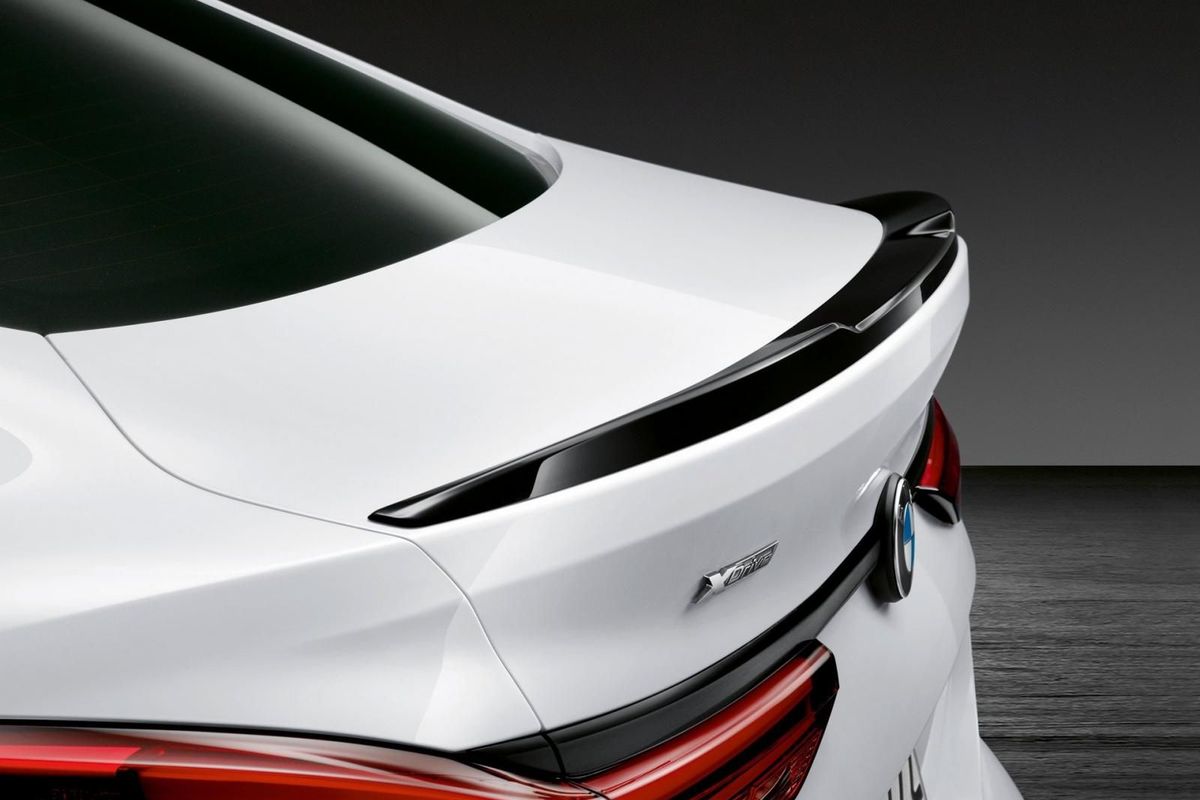
Being the performance variant, the BMW M135i needs to have the aggressive looks. A wing and twin exhausts should do it.
The F40-generation 1 Series is built on the UKL2 platform, which simply means the 1 Series is no longer a rear-wheel driven. This platform focuses on front-wheel drive and all-wheel drive setups and makes provision for electrification. Current BMW Group models built on this modular architecture range from the X1 and X2 crossovers to the Mini Clubman and Mini Countryman. While petrolheads are upset, we can see the logic behind BMW's strategy. Not only is it cheaper to have more models sharing the same platform, but BMW claims there are notable gains in terms of interior space.
The 1 Series' cabin space has increased in several dimensions thanks to the new platform.
Speaking of space, the newcomer will be sold exclusively as a 5-door hatchback. Front- and rear occupants are availed 42 mm and 13 mm extra elbow room respectively, but, more importantly, aft passengers benefit from an additional 33 mm of knee room and 19 mm of headroom (if the outward-opening sliding panoramic sunroof is specified, BMW's press material notes). The Bimmer's luggage capacity is also said to have increased by an additional 20 litres. The total now sits at 380 litres, but if you fold the 40/20/40 rear seats down, you gain access to 1 200 litres of utility space.
Cabin
The cabin gains the new digital dashboard seen in the X5, 3 Series and X7.
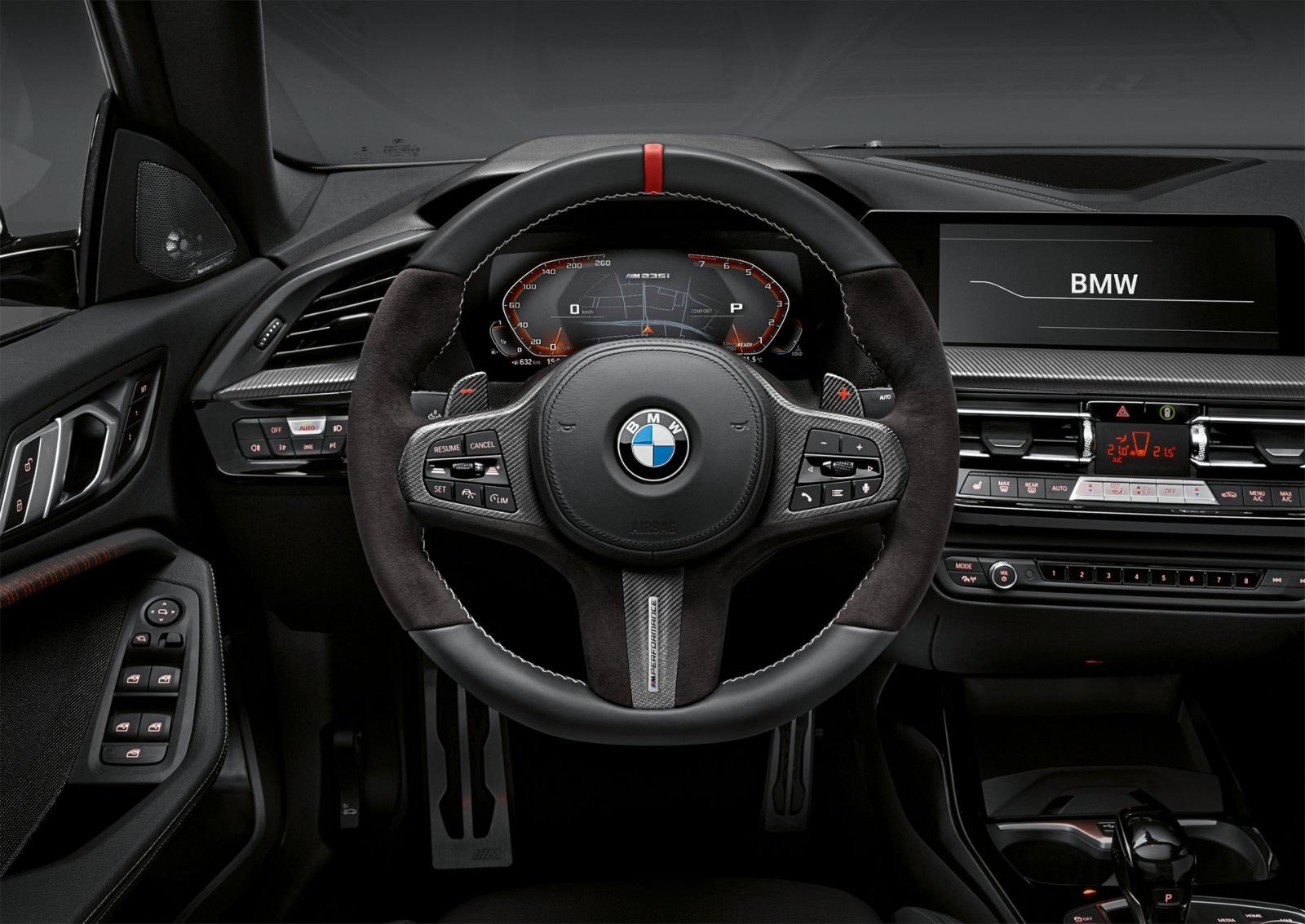
When you step inside the newcomer's cabin, it's immediately apparent that most of the criticisms of the previous model's interior have been addressed. Firstly, the 1 Series' fascia has a fresh, modern and connected appeal, thanks primarily to the introduction of BMW's Operating System 7.0. We've experienced the comprehensive system, which encompasses an all-digital instrument cluster and crisp-looking and slick touchscreen infotainment interface in a number of new BMWs, and every time we've come away impressed with its intuitive functionality. In the new 1 Series, things are no different; we sampled the "Hey BMW" assistant, swiped away using gesture control and made full use of the wireless charging pad. Even though the F20 was only recently discontinued, it now looks and feels positively ancient inside compared to its successor's s(l)ick setup.
The crisp digital instrument cluster is not only aesthetically pleasing – it displays a host of information in the space provided.
SA's 1 Series engines
With a healthy balance of turbopetrol and -diesel engine choices, with the option of 2- or all-wheel drive, the 1 Series' line-up is diverse. However, South Africa will only be getting 2 petrol-powered derivatives initially, with diesel-powered versions coming later. Kicking off the range is the 118i, which is powered by a 1.5-litre turbocharged 3-cylinder engine. It produces 103 kW and 220 Nm, giving it a claimed 0-100 kph time of 8.5 seconds.
It's available with either a 6-speed manual or a 7-speed dual-clutch transmission. We'll have final clarity on transmission choice for the SA market closer to the vehicle's launch. The diesel options include the 116d (85 kW/270 Nm), 118d (110 kW/350 Nm) and 120d xDrive (140 kW/400 Nm).
M135i powertrain
The 3.0-litre straight-6 engine is gone and has been replaced by a transversely-mounted 2.0-litre 4-cylinder motor
The now-discontinued M140i's 3.0-litre straight-6 is undoubtedly revered by BMW aficionados, but the M135i xDrive's all-new 2.0-litre 4-cylinder engine is no slouch. It stems from BMW's modular B48 family, but has been revised to deliver additional performance. Interestingly, this engine also does duty in the X2 M35i as well as JCW-branded Mini models. The twin-scroll turbocharged motor produces 225 kW and 450 Nm, which puts the flagship version of the new 1 Series right in the middle of the current crop of 2.0-litre turbocharged all-wheel-drive hatchbacks. In fact, a quick glance at the Cars.co.za Compare New Cars tool suggests the Bavarian hatch packs a 50 Newton metre advantage over its rivals. Cue dramatic music!
With power going to all 4 wheels via BMW's xDrive all-wheel-drive system, the M135i should be quick – and it is, with a claimed 0-100 kph time of 4.8 seconds thanks to a launch control system (supported by ARB – actuator contiguous wheel slip limitation technology borrowed from the BMW i3s) and a quick-shifting 8-speed automatic transmission. Despite its performance slant, it boasts a claimed economy figure of 7.1 L-6.8 L/100 km.
What's it like to drive?
There's an admirable focus on ride quality and comfort in the new BMW 1 Series, but the real test will be on SA roads
We had an opportunity to sample the blue M135i xDrive you see here as well as a diesel derivative. Given that we're not likely to receive the latter in the immediate future, we chose to spend our time behind the wheel of the range-topper.
The driving experience commences the moment you plant your posterior in the body-hugging driver's seat. We're told that front sports seats will be standard fare, but we'll confirm that closer to the 1's SA launch in October. Stab that engine start button and hear that new motor fire up. If you're a petrolhead, you're most likely to select Sport mode from the get-go (to prompt those exhaust flaps to open up). The sound is a deep, throaty burble especially when the engine's cold, but we can't say its radically different to that of, say, an Audi S3. Granted, there's only so much acoustic trickery one can apply to the note of a 4-cylinder engine, but thankfully BMW has tuned it to emit generic pops and splutters on overrun. The best part? Even when the M135i xDrive is in Comfort mode, you're reminded that this is the performance version – a pleasant, engaging engine hum is omnipresent.
In its most aggressive settings, the BMW M135i made some terrific noises when accelerating at full throttle.
The new launch control system engages promptly, compared with those of previous dual-clutch-transmission-endowed M models that tended to hesitate (as if to insist on absolutely perfect conditions before they'd deliver the goods). The revs build, a Launch Control Active message appears on the digital dash' and then you release the brake pedal. You can either shift cogs yourself or, do what we did: let the 'box do its business. The 1st gear is short enough to give you a slingshot feeling as the Bimmer hurtles towards the horizon and I appreciated the loud tyre chirps between gear changes; they enhance the sensation of performance. It'd be ever so simple to dial them out with electronic intervention, but we're glad they're there.
Speaking of gear changes, you can actuate them by using the steering-wheel-mounted shift paddles, but note that when you manually change up at high revs, the next gear arrives with a deliciously mechanical thud. It's not too dissimilar to a hard dual-clutch 'box upshift, which is satisfying, but perhaps some users may complain about "whiplash"? The in-gear acceleration is thoroughly satisfying – the engine delivers its maximum torque on the proverbial silver platter from as low as 1 750 rpm and the thrust duly continues until the redline comes up. Grab the next gear, rinse and repeat!
The xDrive offers terrific grip and inspires you to press on, something you couldn't casually do in the rear-wheel-drive 1 Series.
Being an M Sport model, the M135i xDrive features a thick-rimmed steering wheel as standard. It's not to my personal preference (I am happier with a slightly thinner rim), but aficionados will be most pleased. As for steering feel, the flagship comes with an electromechanical M Sport steering setup, which is thankfully not as ultra-direct or darty like that of the Z4 M40i, but conveys a modicum of sporty feel. However, there's always room for improvement; BMW should draw inspiration from hot hatches with "talkative tillers", such as the Honda Civic Type R and Renault Megane RS.
In terms of ride quality, our media launch units rode on 18-inch alloy wheels wrapped in Pirelli 225/40 R18 rubber. Despite the smallish size of these wheels, I think they looked the part and offered a fair blend of ride comfort and dynamic grip. However, on some of the coarser surfaces, some road noise presented itself, but it wasn't excessive. Our test units also featured optional adaptive damping, which aided the suspension's pliancy.
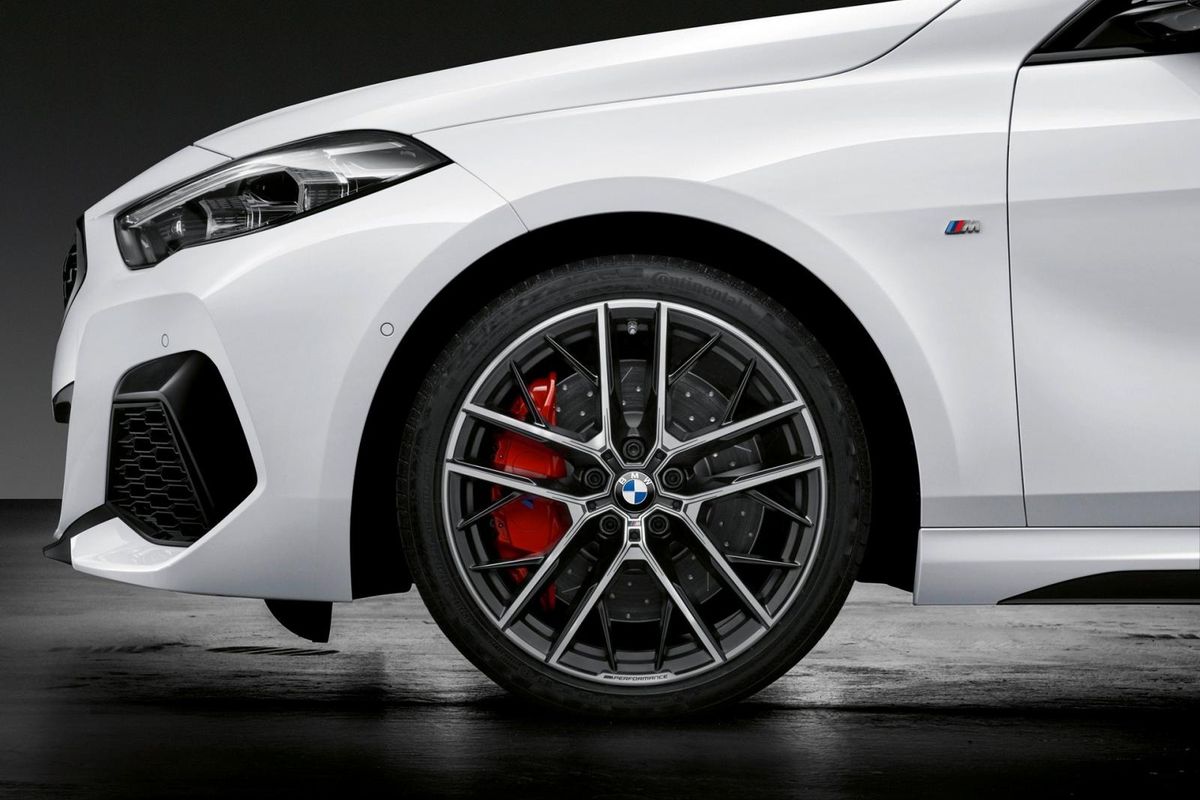
These 18-inch alloy wheels looked great. M Performance brakes are standard fare on the M135i
As our test route comprised B-roads through Bavarian hamlets and a few stints on the Autobahn, we didn't push the newcomer to its limits, but got a good inkling of its capabilities. I'll discuss the merits of the xDrive (the M135i comes with a Torsen limited-slip differential mounted to its front axle) in the next section, but suffice to say I experienced enough of the range-topper on this "first date" to make me very keen to sample it on home turf a second time. When the test team reviews the newcomer on our favourites stretches of twisty tarmac, more of the BMWs talents will come to light.
M135i vs M140i?
It seems the question that nearly everyone wants an answer to is this: Can this new M135i xDrive match the outgoing M140i (a finalist in the hot hatch category of the 2018/19 #CarsAwards) in terms of performance? Truth be told, there's no simple answer to that – you cannot compare the 2 vehicles with their on-paper specifications. This isn't a game of top trumps. Yes, there are detractors lined up on social media with their metaphorical pitchforks at the ready to lynch anyone who doesn't show due reverence to the straight-6, but the critical factor here is accessible performance.
I'd bet the majority of BMW M140i owners have not ventured into the "DSC Off" territory and tried to coax their cars' rears to step out deliberately. The risks are simply too great on public roads and if you dare to explore the limits of your personal car on a race track, your maintenance plan will go up in smoke if BMW finds out about it. Purists will always hold rear-wheel-drive in high regard, but with the addition of xDrive, BMW has made its flagship 1 Series' performance limits more safely attainable. An average driver will feel the confidence to press on, even in lower-grip conditions, without this constant worry in the back of their mind that, should their vehicle suddenly want to pirouette, they'd be skilful/lucky enough to control it.
How pretty are these performance seats? They're also very comfortable and feel upmarket.
The primary benefit of the xDrive setup is that it endows the M135i with a tremendous amount of mechanical grip. We estimate that it'd take some serious talent from a BMW M140i driver to try to overtake a newer M135i xDrive on a tight and twisty road, especially when it's wet or even damp. In slippery conditions, the newer car will simply make the most of what grip it can muster and power away into the distance. Some of you have asked if BMW could fit a more potent engine in this new 1 Series? In terms of what's possible engineering-wise, no… This new platform only works with the engine mounted in a transverse position (parallel to the front axle), so a longitudinally-mounted straight-6 engine won't physically fit.
Verdict
It's a big step forward for the BMW 1 Series and it brings new levels of tech and refinement to the premium hatchback segment
Does the all-new BMW 1 Series impress? Once you see the newcomer in the metal and realise that photos obscure its hatchback proportions, you'll disregard derogatory comments such as "It looks like an SUV!" The cabin deserves the lion's share of the praise because the previous generation's interior felt outdated compared with those of its digital dashboard-endowed rivals. Given the arrival of Mercedes-Benz MBUX and Audi Virtual Cockpit, BMW desperately needed something to match its rivals and the F40-generation car's infotainment system is a significant step up. Having experienced it in many applications, we've become quite fond of its slick touchscreen interface and gorgeous graphics. As for the luggage capacity and occupant space improvements yielded by the new platform, the 1 Series is more practical than before, but it's still no "family hatchback".
Whereas previous versions of the 1 Series offered meagre luggage compartments, the F40 generation's load bay is at least workable.
On balance, does the switch to an all-new platform work? Yes, it does. While the newcomer's improvements are incremental, they're enough to make this the most sensible 1 Series to date, especially in terms of the packaging. The build quality is even better than before, so much so that it feels more solid and better finished inside than the Mercedes-Benz A-Class. It's ahead of the Audi A3 in most departments too, but in the Ingolstadt-based firm's defence, there's an all-new A3 due in 2020. It'll be very illuminating to compare the 3 combatants back-to-back when the time comes.
To reiterate, our first taste of the all-new 1 Series was restricted to the M135i xDrive. While we lament the departure of the soulful 3.0-litre straight-6, we appreciate BMW's efforts to make the new 2.0-litre twin-scrolled turbo 4-pot as tractable and charismatic-sounding as possible. Granted, it's going to be damn-near impossible to replicate that glorious wail of the 6, but there's enough of a performance "note" to keep things interesting.
With this flagship derivative, BMW has elbowed its way into a segment dominated by the Audi S3, Volkswagen Golf R and Mercedes-AMG A35, the latter of which will soon be launched in the South African market. The M135i xDrive may be late to the party, but I'm glad it's here (well, you know, proverbially speaking…) and given the anodyne handling traits of the current crop of all-wheel-drive 2.0-litre turbocharged hot hatches, it's fair to say that the BMW injects some genuine vigour into the segment. We're itching to put all of them together for a face-off and see which one ends on top.
BMW 1 Series Price in South Africa (July 2019)
The all-new BMW 1 Series will be arriving in South Africa in October 2019, with 2 models offered initially.
If there was one easy criticism of the Ford Ranger Raptor, it would be the choice of a diesel powertrain. Petrolheads are craving authentic muscle and it appears that Hennessey Performance has the solution.
While we like the 2.0-litre twin-turbocharged diesel setup in the new Ford Ranger Raptor, we do find ourselves asking if diesel is the most appropriate fuel for a performance bakkie. Hennessey Performance has killed 2 birds with 1 stone as it not only replaces the diesel engine with a petrol-powered engine but also gives the American market a hardcore Ranger as the Ranger Raptor is not sold there. This is the 2019 Hennessey VelociRaptor Ford Ranger!
Hennessey Performance is famous for its work on the F-150 Raptor and has used its bakkie expertise on the current Ford Ranger, which is sold in the United States with a turbocharged 2.3-litre petrol engine. In stock tune, it delivers 200 kW and 420 Nm, but after some under-the-bonnet work from Hennessey Performance, power is increased to 261 kW and 521 Nm. These gains are achieved thanks to the addition of a new high-flow air induction kit, less restrictive stainless steel exhaust system as well as an engine control unit (ECU) reflash. In terms of acceleration, the uprated Ranger hits 100 kph in a claimed 6.1 seconds, which is a 1.3-second improvement.
However, there's so much more to this vehicle than just engine performance. It also features proper offroad kit in the form of Hennessey's Stage 1 suspension upgrade which sees ride height increased by 10 cm. There are also monster BF Goodrich All-Terrain Tires 285/70 R17 offroad tyres and for those wanting more offroad goodies, you can opt for a winch too. Flared wheel arches are thrown into the mix for some proper visual appeal.
“We are so excited to introduce our 2019 Hennessey VelociRaptor upgrades for the 2019 Ford Ranger truck,” said company founder & CEO, John Hennessey. “The demand for our VelociRaptor upgrades for the Ford Raptor truck has been incredible over the past 10 years. We are thrilled to be able to offer increased power, performance – on and off-road all packed in our exclusively-branded VelociRaptor package.”
As for the price, well Hennessey will sell you one for $64 950 which comes to around R900 500, before import duty. Hennessey will be making just 500 of these bad boys, and for the American market who don't have access to the Ranger Raptor, this is the next best thing.
Hennessey VelociRaptor vs Ford F-150 Raptor Drag Race
Rumours are rife that Daimler will be killing off the Mercedes-Benz X-Class double-cab bakkie completely. Here's what we know.
According to Automotive News Europe, the Mercedes-Benz X-Class is going to be cancelled as parent company Daimler posted another profit warning recently.
Much was expected of the X-Class when it was launched back in 2017, but it was simply too expensive in comparison to its more established rivals and lacked the premium feel that most expect from the 3-pointed star. Automotive News Europe reported that only 16 700 units were sold in 2018 around the world, which is pitiful, given the numbers that Toyota Hilux, Ford Ranger, Nissan Navara and Volkswagen Amarok are doing.
Perhaps the worst business decision was to not offer the X-Class to the bakkie/pickup-crazed Americans where it surely would have had some degree of success. The writing was already on the wall as former Daimler boss Dieter Zetsche cancelled plans to build the Mercedes-Benz X-Class in Argentina for the South American markets.
As for the profit warnings, this is Daimler's 4th forecast in 13 months, with the brand preparing to pay dearly for diesel emission irregularities and vehicle recalls.
Volkswagen has engineered a new six-speed manual that should reduce consumption.
VW might be directing most of its engineering resources at electrification, but it remains committed to providing updated elements for its internal-combustion vehicles too.
Although manual transmissions might be featuring on fewer vehicles than a decade ago, they do reduce the purchasing price point of any model – making them particularly attractive to buyers in the more affordable segments, where a few thousand Rands make a real difference.
The latest transmission advancement from VW carries an internal company codename of MQ281, and it is a six-speed manual transmission with significantly reduced friction. Built around a 2.5 shaft concept, the MQ281 boasts a high gear spread peak of 7.89, which should allow you to short-shift it into higher ratios at cruising speeds – reducing fuel burn.
VW’s engineers focussed on incorporating smoother running bearings and slicker seals to improve the mechanical meshing and optimise lubrication. This new six-speed manual also requires less oil than any of VW’s previous manual transmission.
Housed in a new casing the MQ281 transmission externalises less vibration too, which should improve the NVH of those VW’s optioned with it. The company has not confirmed an exact production roll-out of the new transmission, beyond that it will debut in the Passat – with Golf8 the next likely candidate.
According to VW’s technical specification for the MQ281 transmission, it is torque output rated for between 200- and 340Nm, which covers a very broad spread of the brand’s current 1- to 2-litre engines.