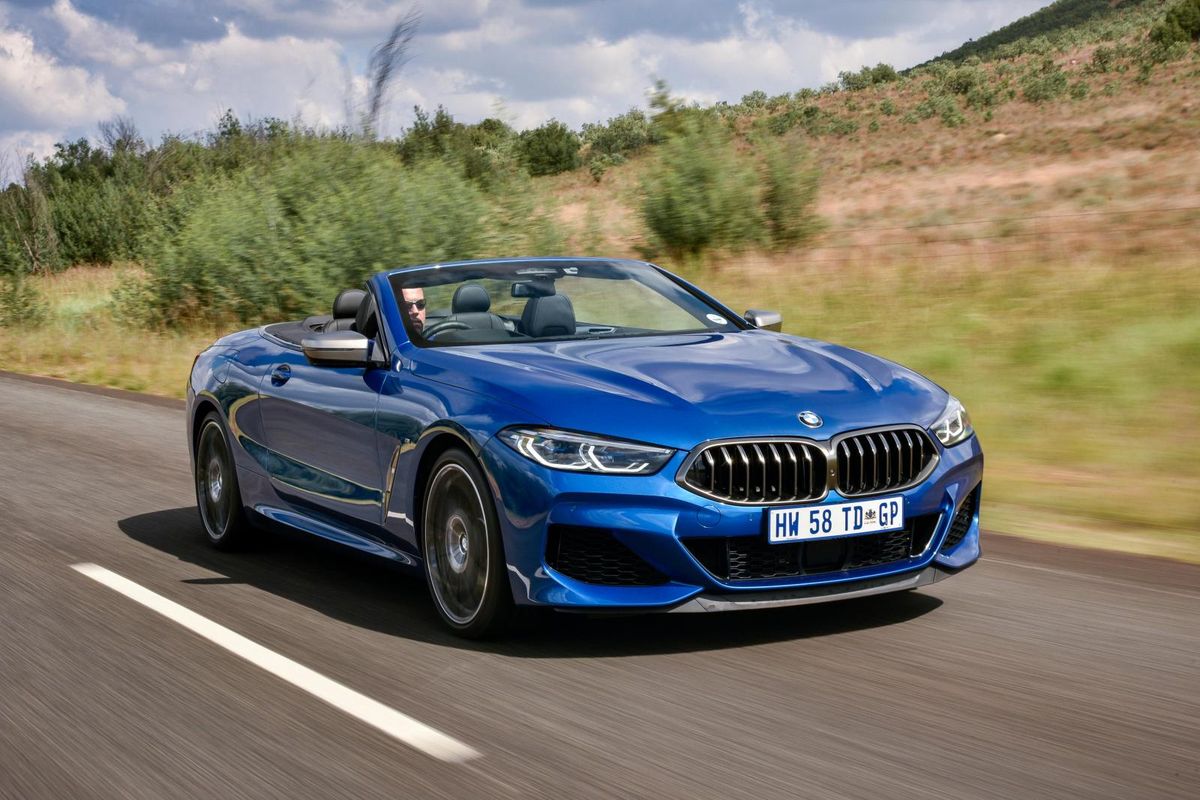
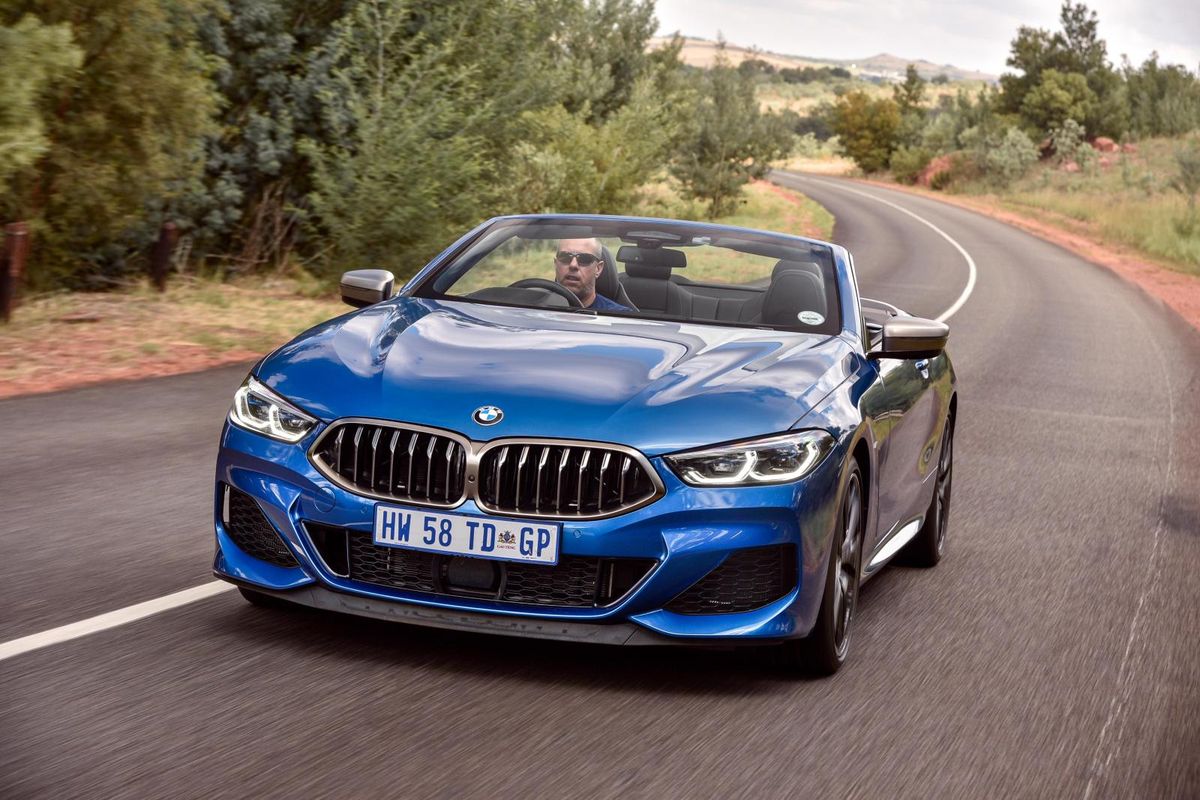
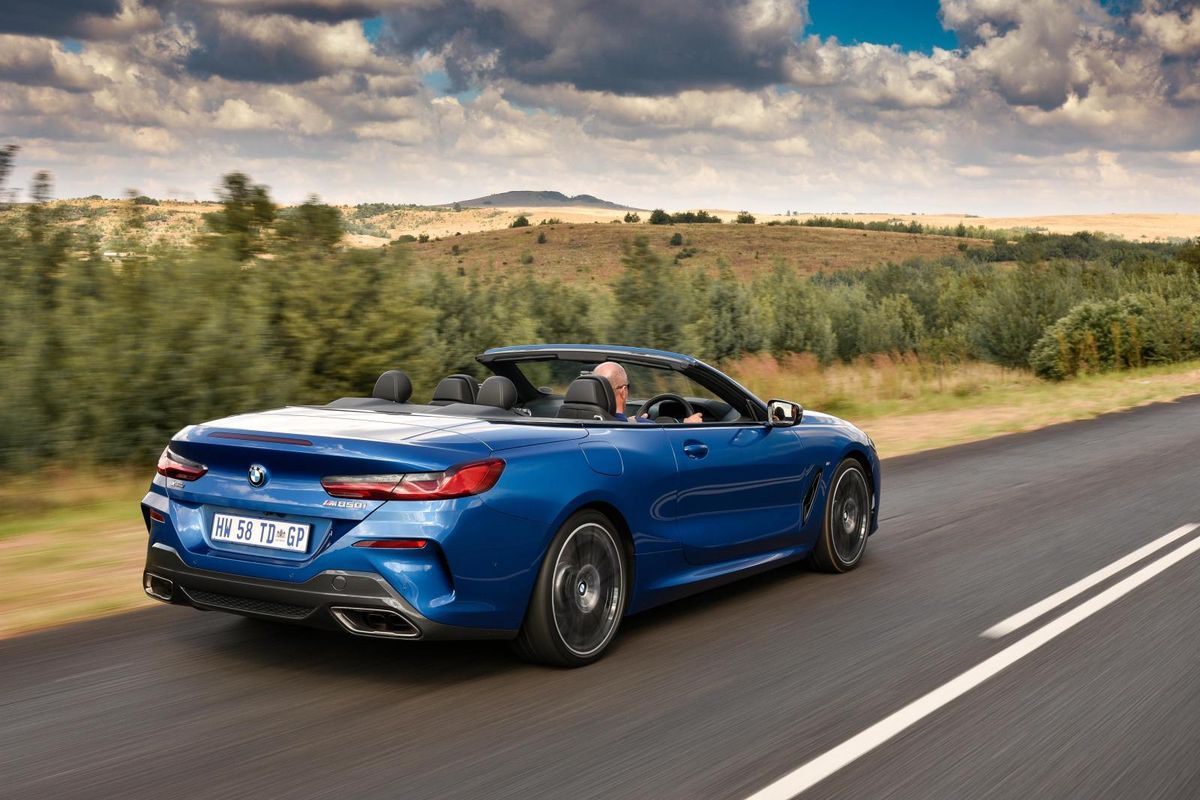
The BMW 8 Series Convertible has arrived in South Africa and we have specifications and pricing for this new product. Here's what you need to know.
The dust has barely settled after the BMW 8 Series coupe launch and now the convertible has arrived. That's not all though, as there's still an 8 Series Gran Coupe and a high-performance M8 due later in 2019 too.
As for the BMW 8 Series Convertible, it arrives in SA in just one flavour: M850i xDrive Convertible. Powered by the same 4.4-litre twin-turbocharged V8 engine as its coupe sibling, it produces 390 kW and 750 Nm. Power goes to all 4 wheels via an 8-speed Steptronic Sport transmission and an M Sport differential is fitted as standard. Performance is brisk, with a 0-100 kph claim of just 3.9 seconds with an economy claim of around 10 L/100 km.
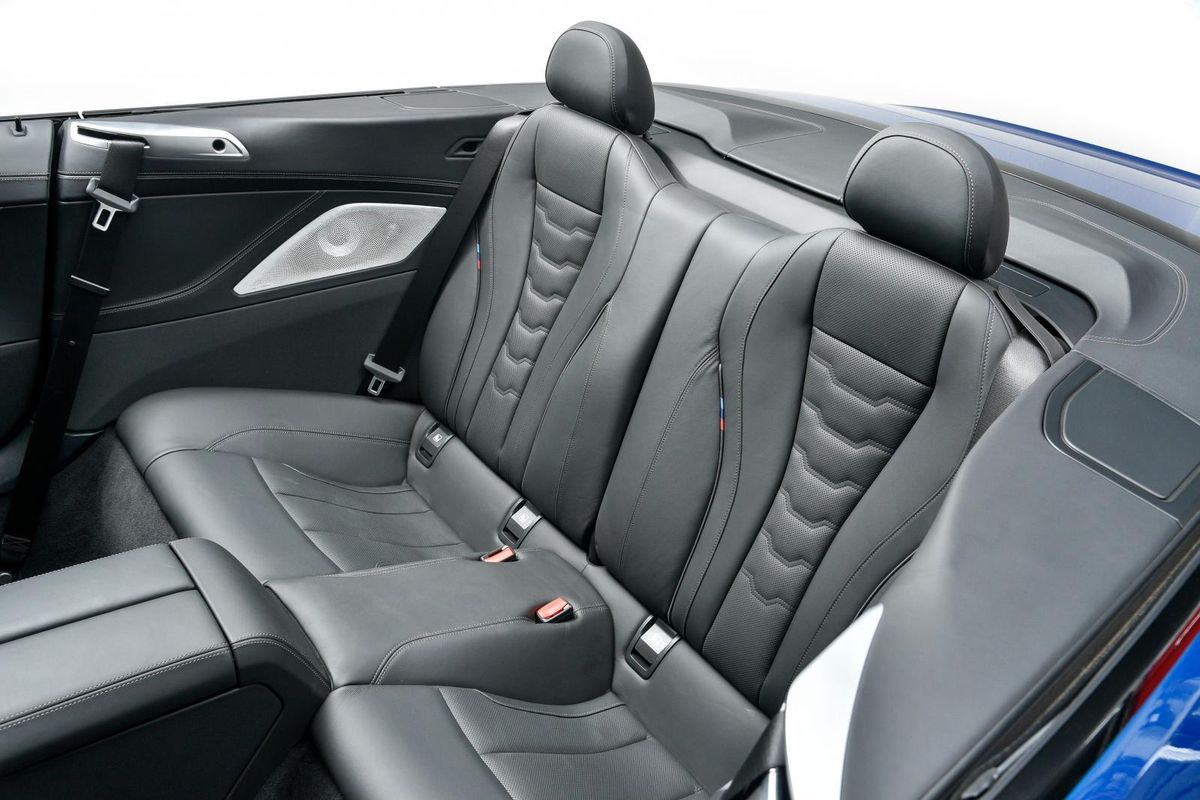
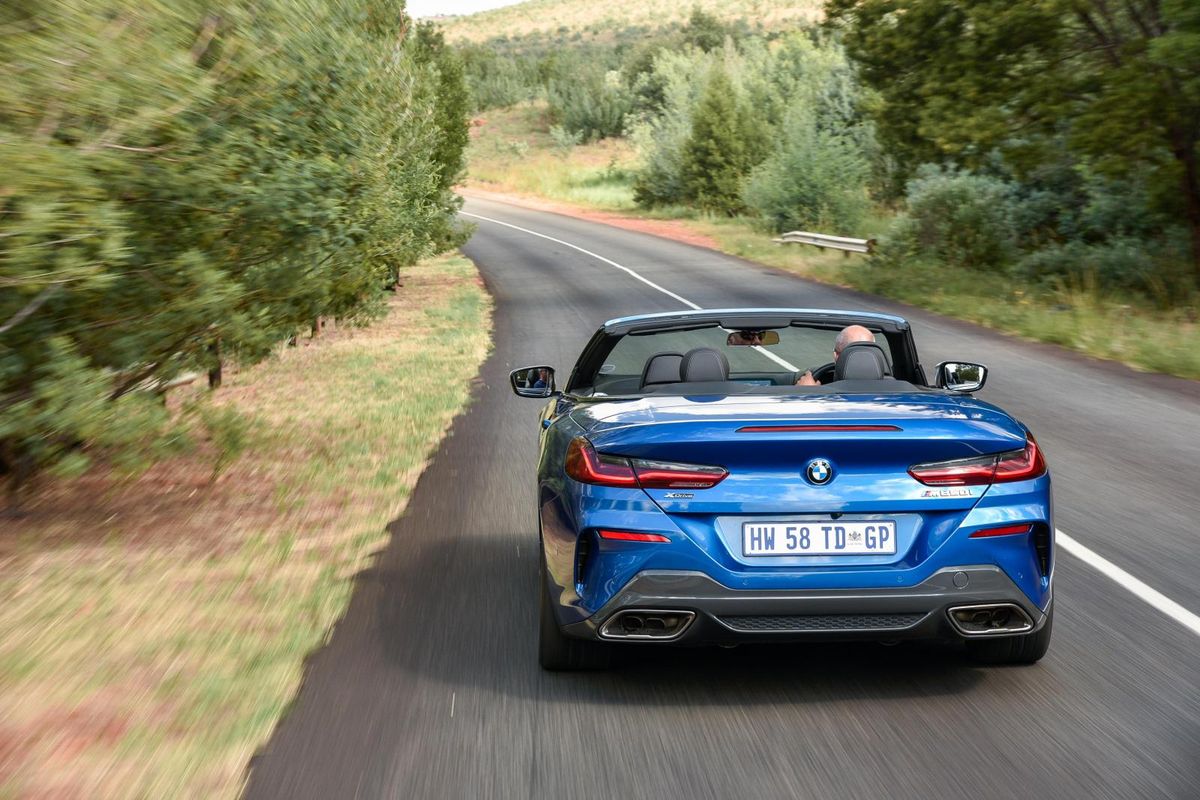
Being a convertible, interest now turns to the roof and its mechanics. It's a soft-top which comes in black as standard, it can open and fully close in 15 seconds at speeds of up to 50 kph. Standard fare includes a wind deflector which can be set up in the rear-seat area to prevent unwanted air turbulence when driving with the top down. For an even greater feel-good factor when driving with the top down in cooler weather, the new BMW 8 Series Convertible is available with optional neck warmers whose air outlets are integrated into the front-seat head restraints. Other optional extras include climate seats, a Heat Comfort package with a heated steering wheel, and the BMW Display Key. Available as an optional alternative to the standard Harman Kardon Surround Sound System is the high precision and excellent sound quality of the Bowers & Wilkins Diamond Surround Sound System. And customers can also specify glass applications for selected controls and options from the BMW Individual range.
Other noteworthy standard features include a Head-Up Display, Driving Assist Professional, which comprises the Steering and lane control assist, Collision Warning, Lane Departure Warning and Lane Change Warning, Speed Limit Info and Active Cruise Control with Stop & Go function. Also standard is the Parking Assist Plus, which includes a rear-view camera and the Reversing Assist.
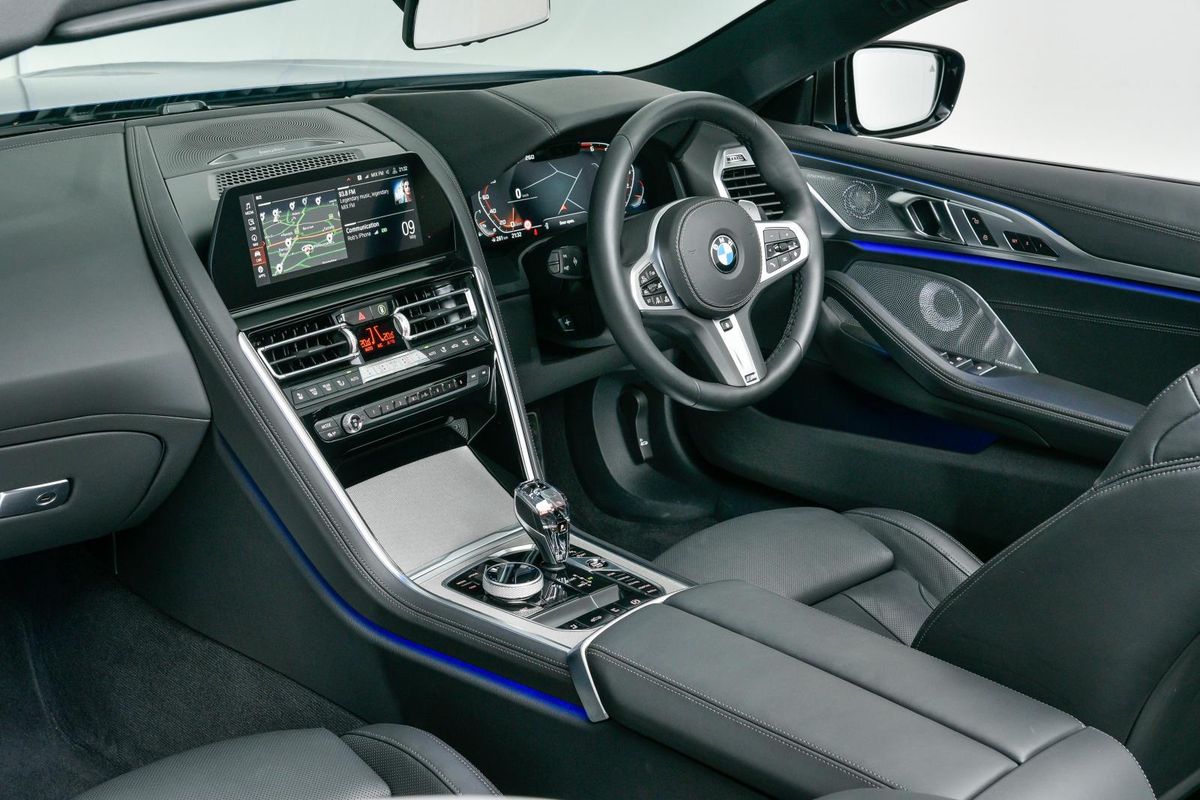
When you sit behind the wheel, the first thing you'll notice is the new interface. Dubbed BMW Operating System 7.0, this modern and fully-digital instrument cluster elevates the cabin. It includes navigation and a multimedia system. There's also the new BMW Intelligent Personal Assistant, which is activated by saying, "Hey BMW."
BMW 8 Series Convertible Price in South Africa (May 2019)
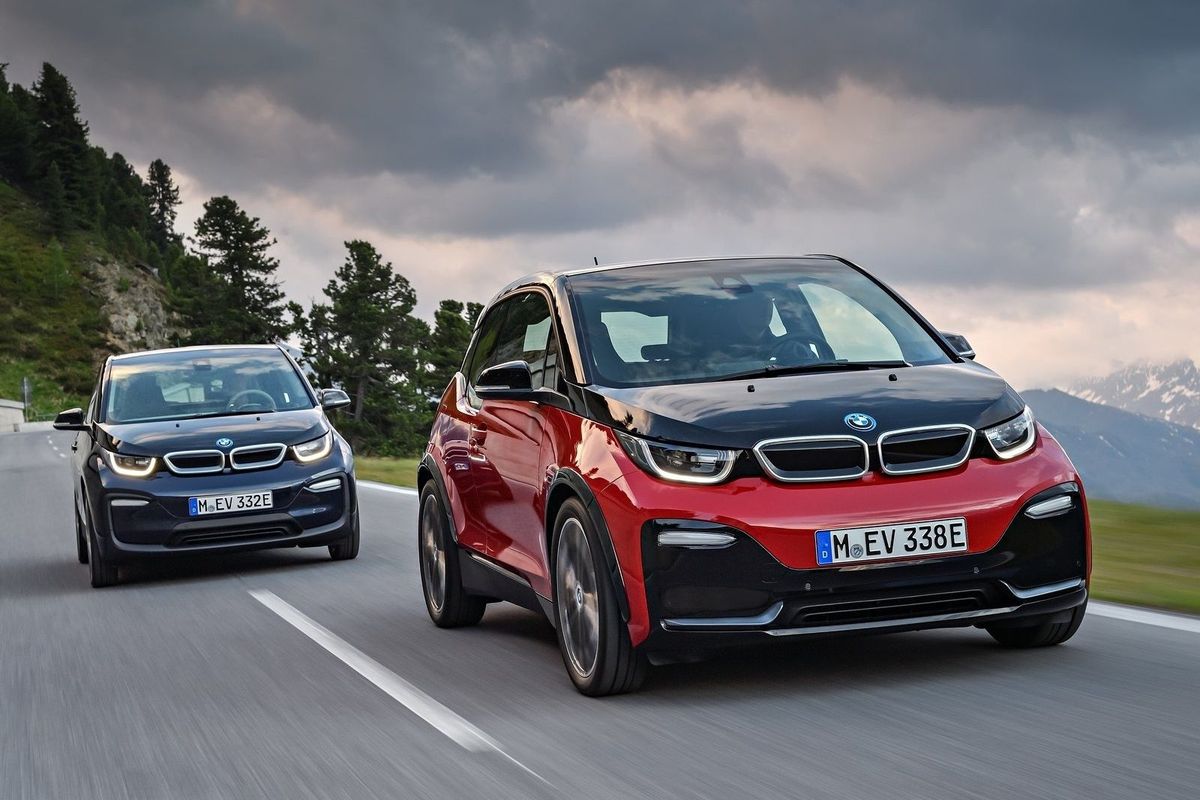
Late in 2018, we brought you the news that BMW South Africa was looking at introducing more powerful i3 versions that also boasted more range and battery capacity. They've since landed and we have specifications and pricing for the newcomers.
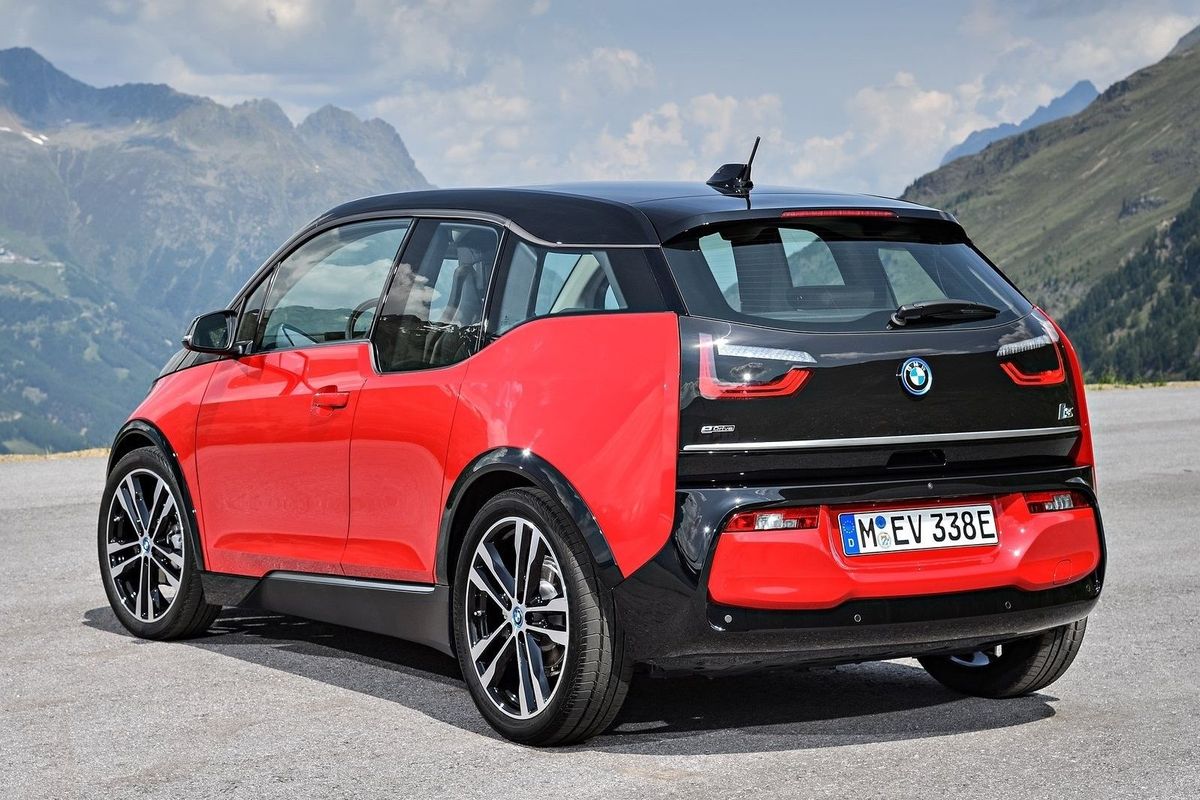
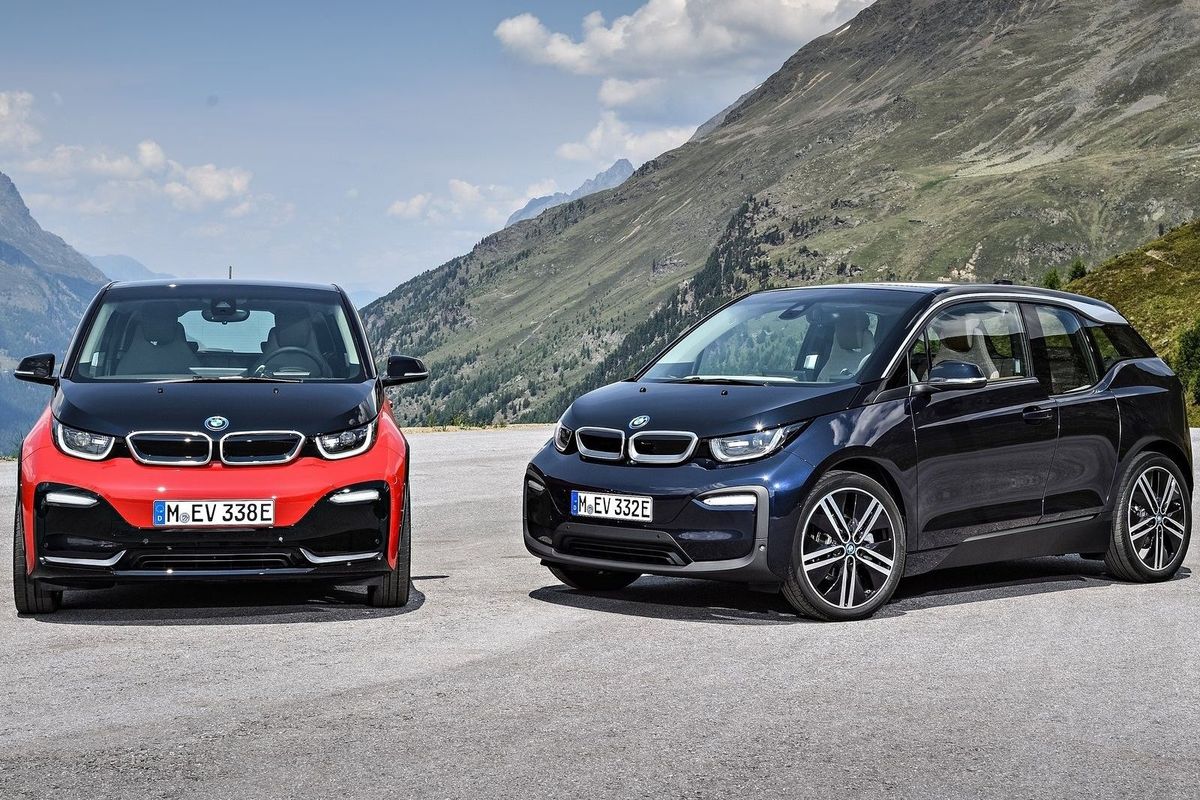
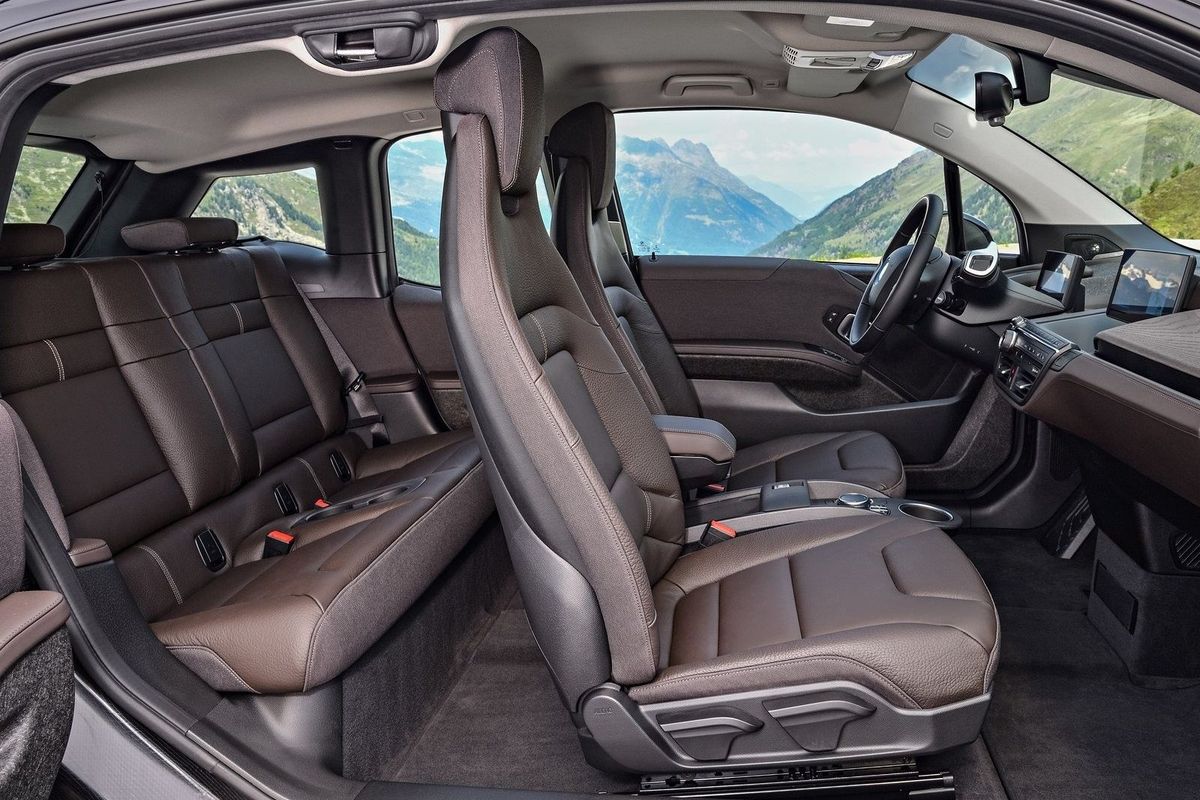
Still looking like a fresh and futuristic concept straight from a European motor show comes the updated BMW i3. It's difficult to believe that the first i3 launched in South Africa in early 2015. Assembled from a carbon fibre monocoque and a whole lot of recycled materials, the BMW i3 has received a few updates for 2019.
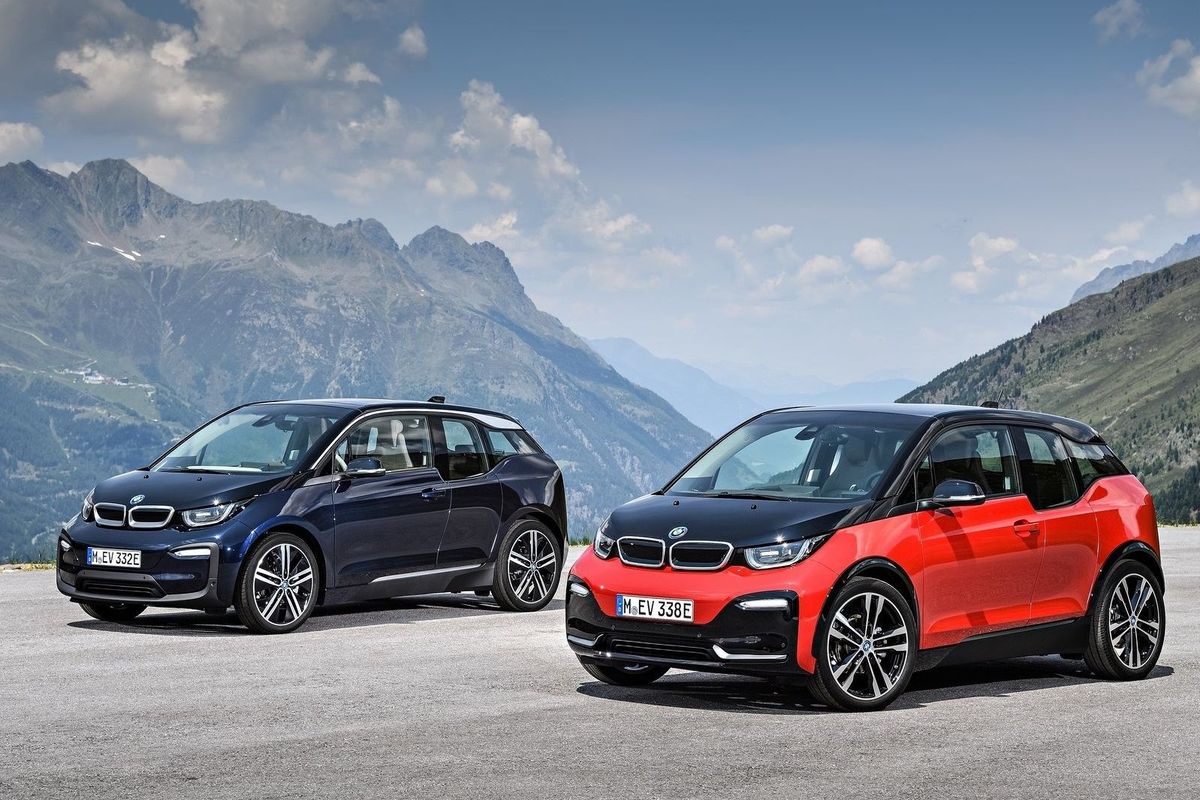
In terms of performance and this is where it gets interesting, BMW South Africa didn't just launch the standard i3, but the sportier i3S is now on sale locally too. Both the i3 and i3S are available in 2 flavours: pure electric and REX. REX stands for Range Extender and these models feature an inline 2-cylinder petrol engine with 28 kW and 56 Nm, which doesn't actually drive the wheels but rather generates additional electricity thus increasing the range. There's a 9-litre petrol fuel tank. The range is estimated at 359 km for the i3 and 345 km for the i3S. The REX models ranges weren't supplied with the BMW brochure but we estimate that there's at least an additional 100 km of range.
The standard i3 has 125 kW and 250 Nm, while the sportier i3S has 135 kW and 270 Nm. BMW claims its i3 can hit 100 kph in 7.3 seconds, while the i3S is even brisker at 6.9. Due to the additional weight of the onboard engines, the REX models are a touch slower at 8.1 and 7.7 seconds respectively. Top speed is rated at 150 kph for the i3, while the i3S is capable of 160 kph. The key differentiators between i3 and i3S is not limited to just engine power increase, but there's also a sportier suspension with sporty steering, giving it a slant towards enthusiastic driving.
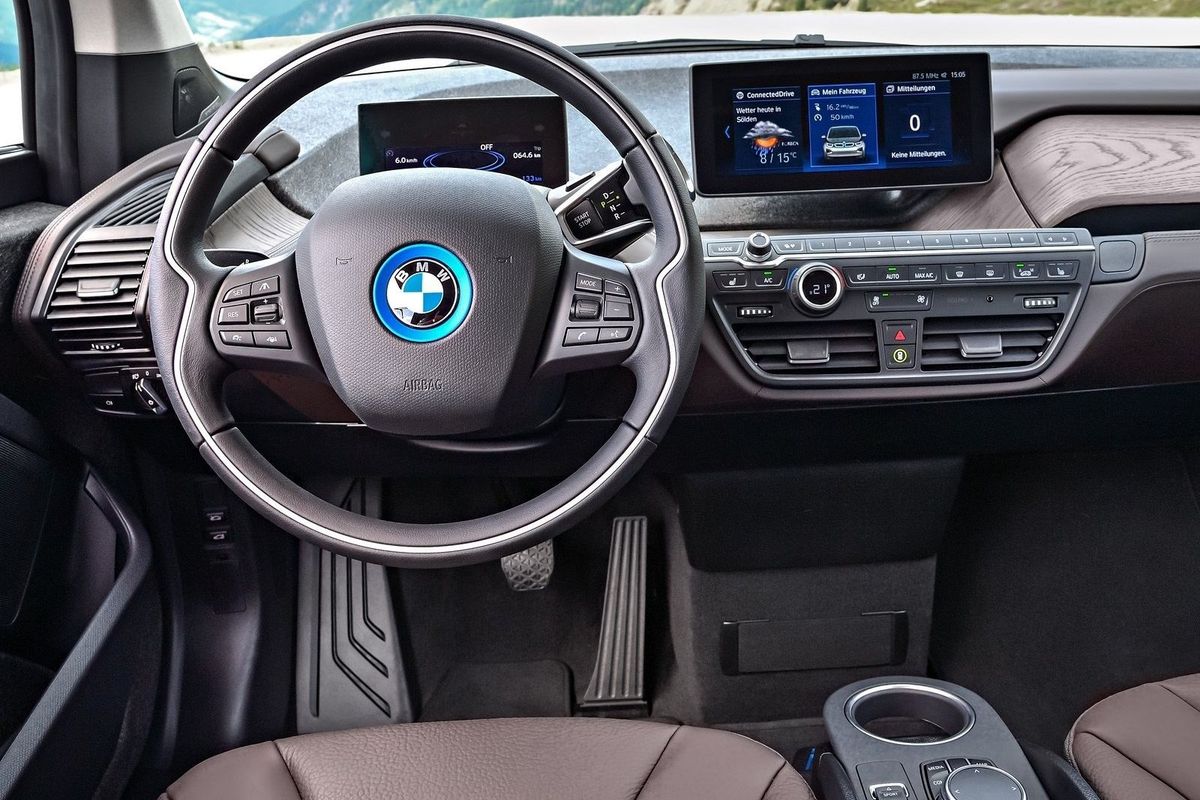
Standard specification is impressive for a German brand and we can see only a handful of options available. These range from park assist, reverse cameras, some alloy wheels, sunroof, heated seats and trim options to name but a few.
We'll be driving the updated BMW i3 this week and will update you with additional information.
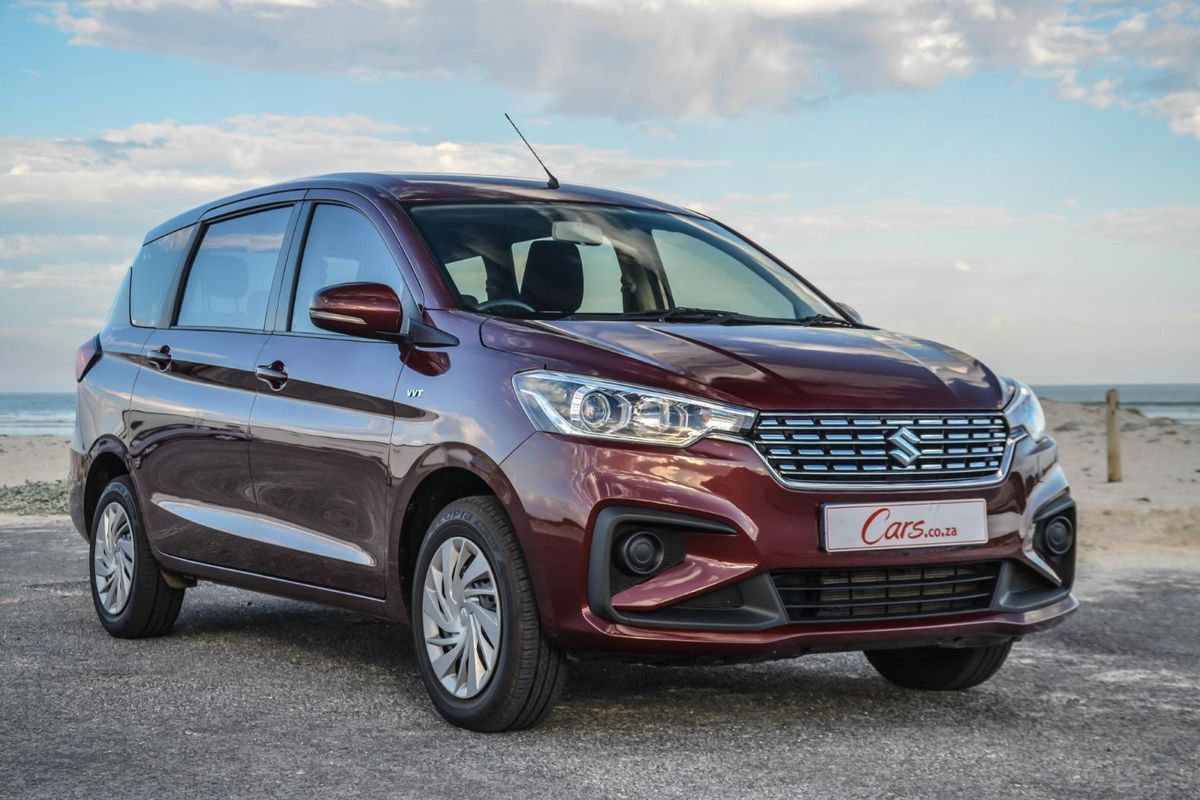
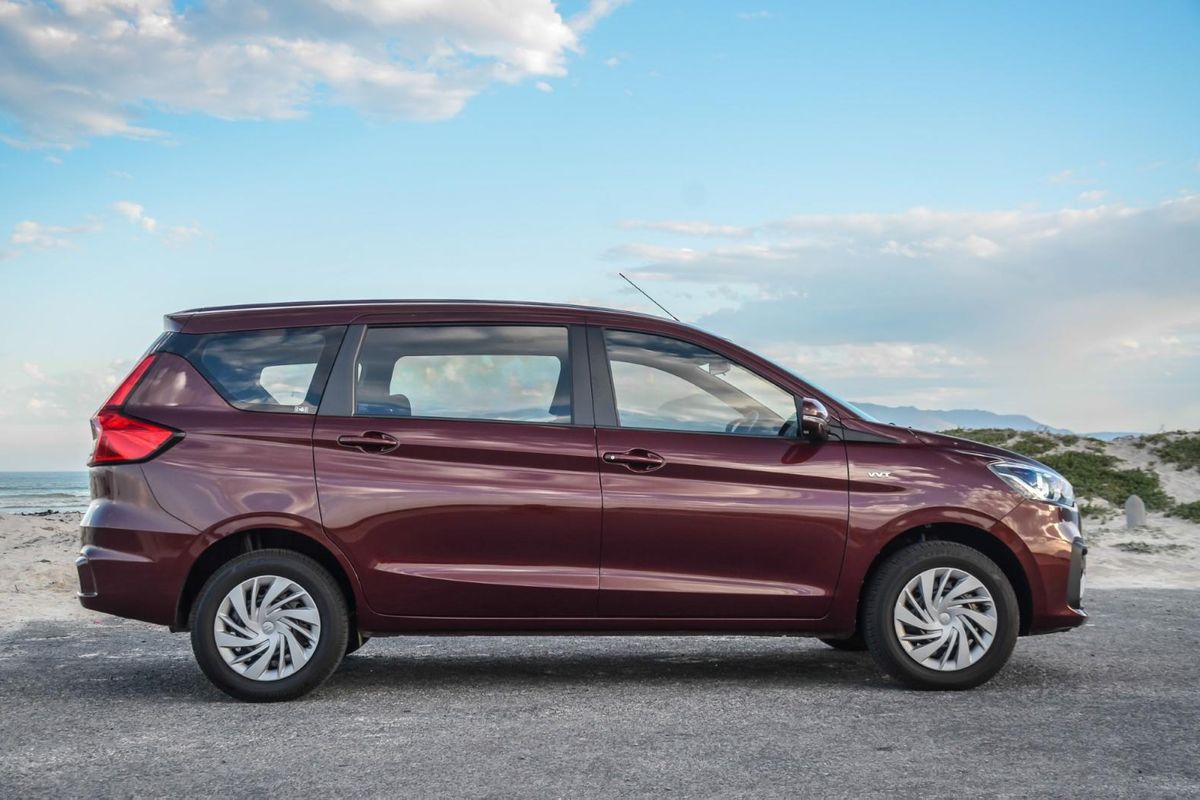
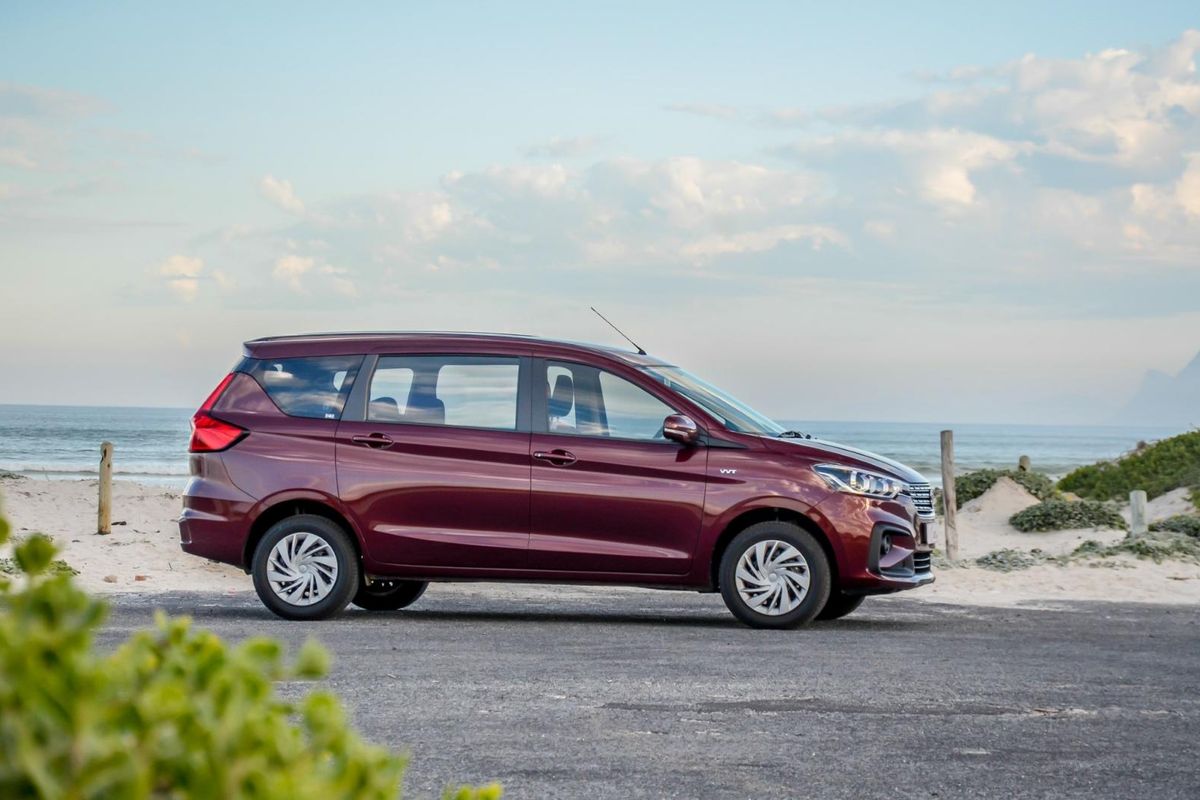
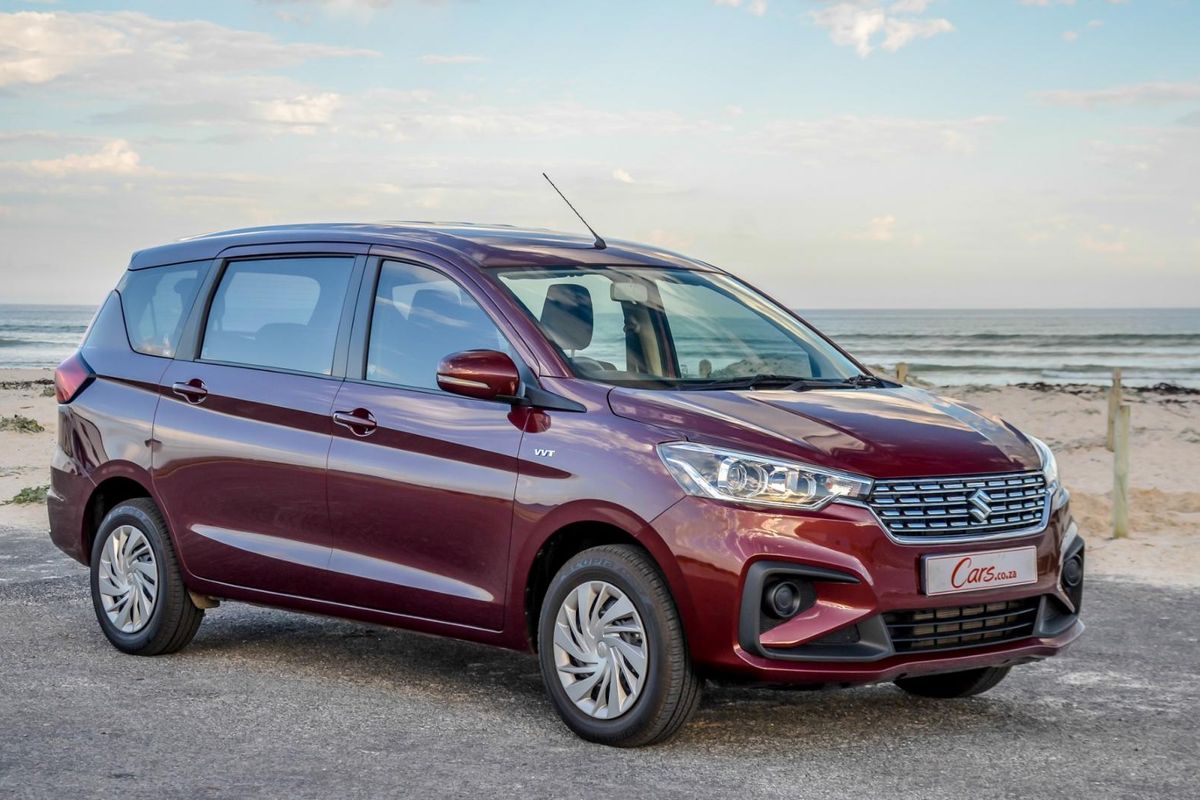
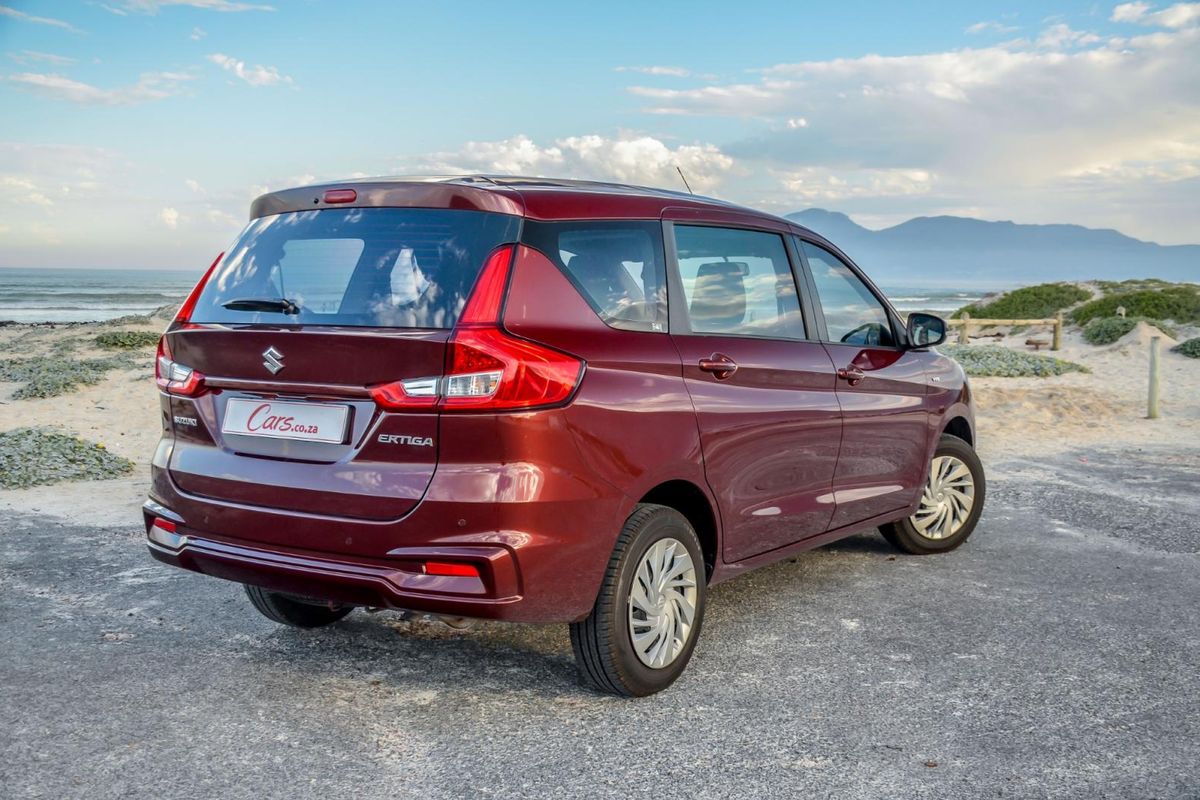
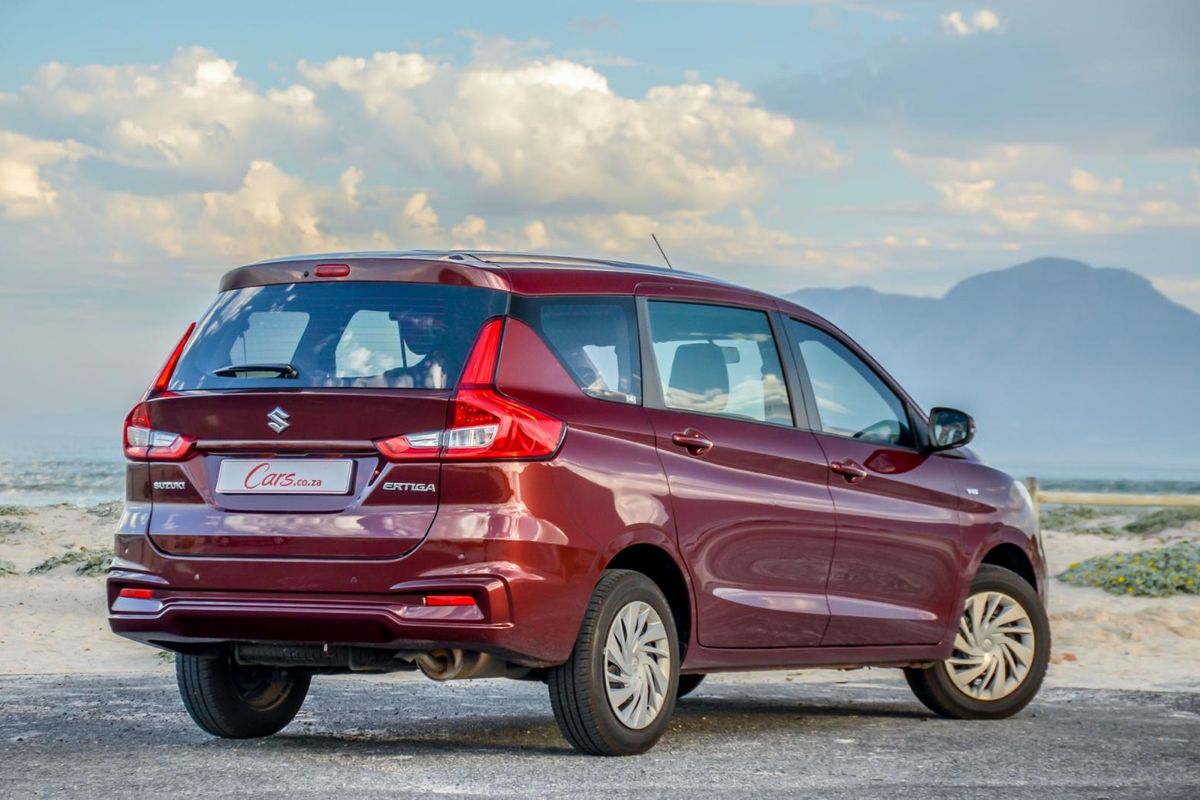
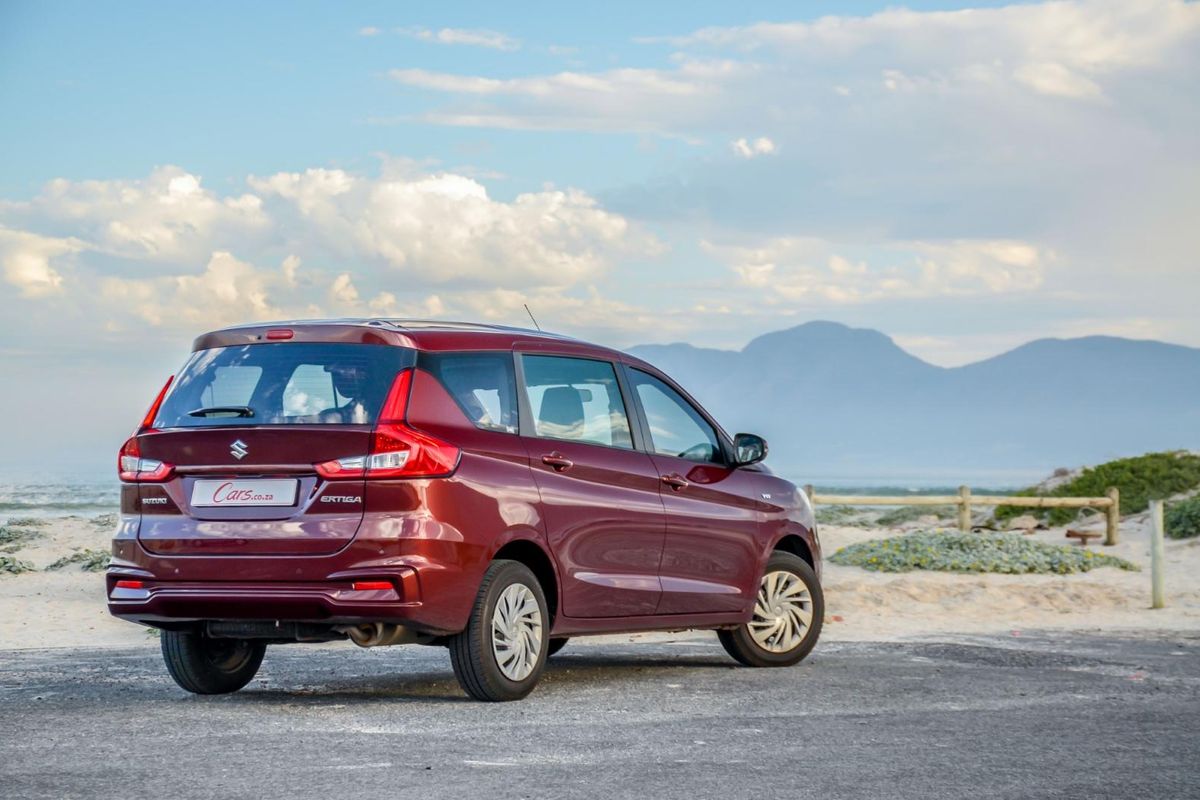
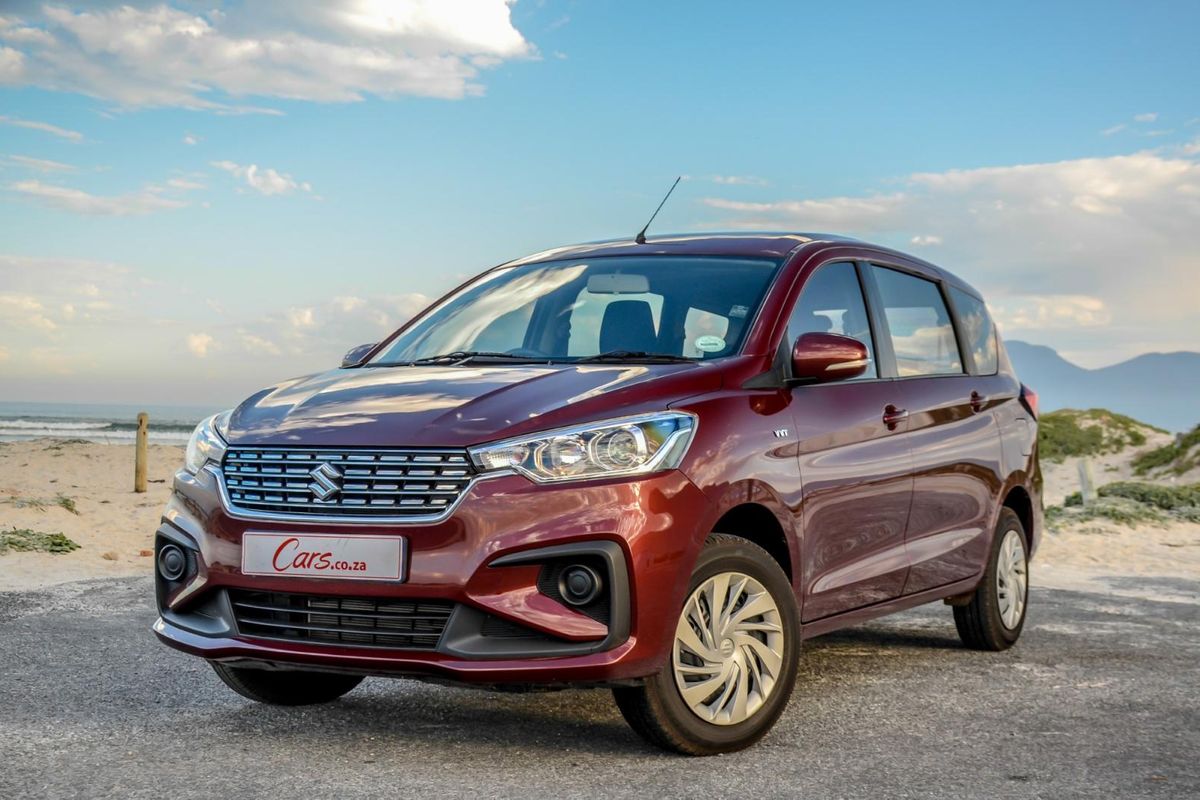
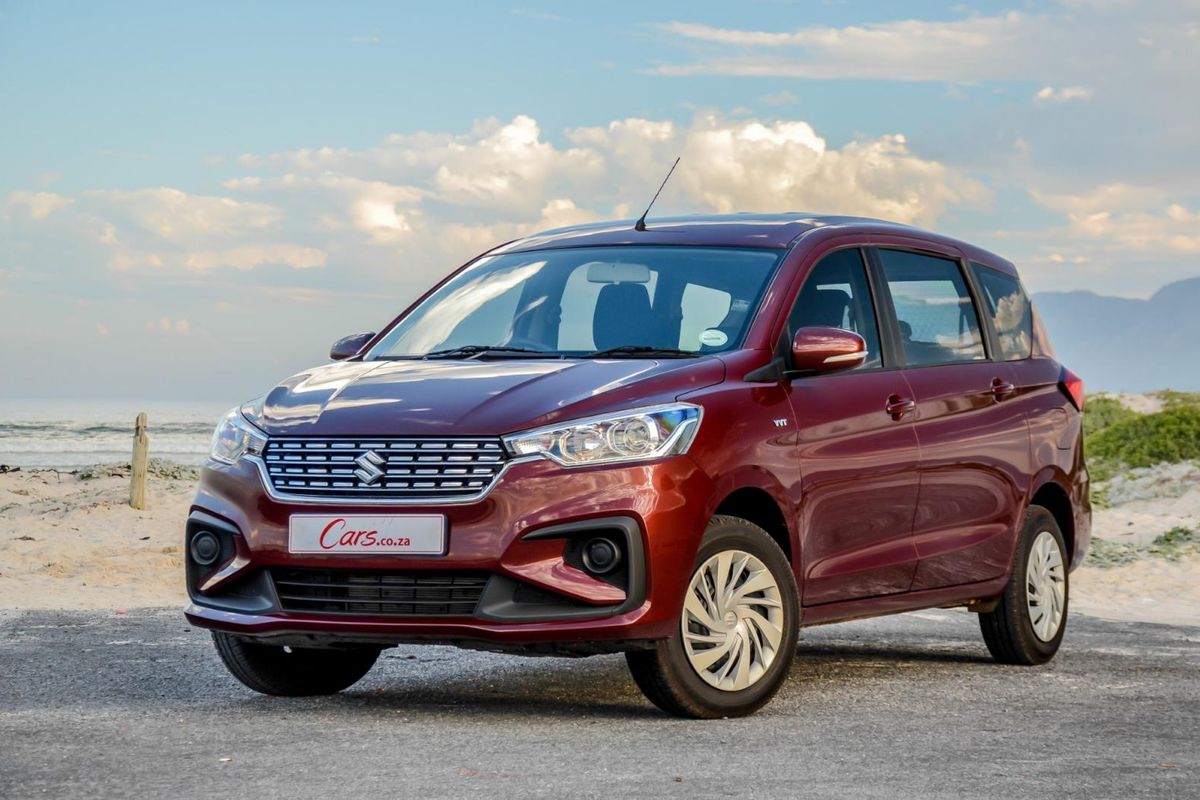
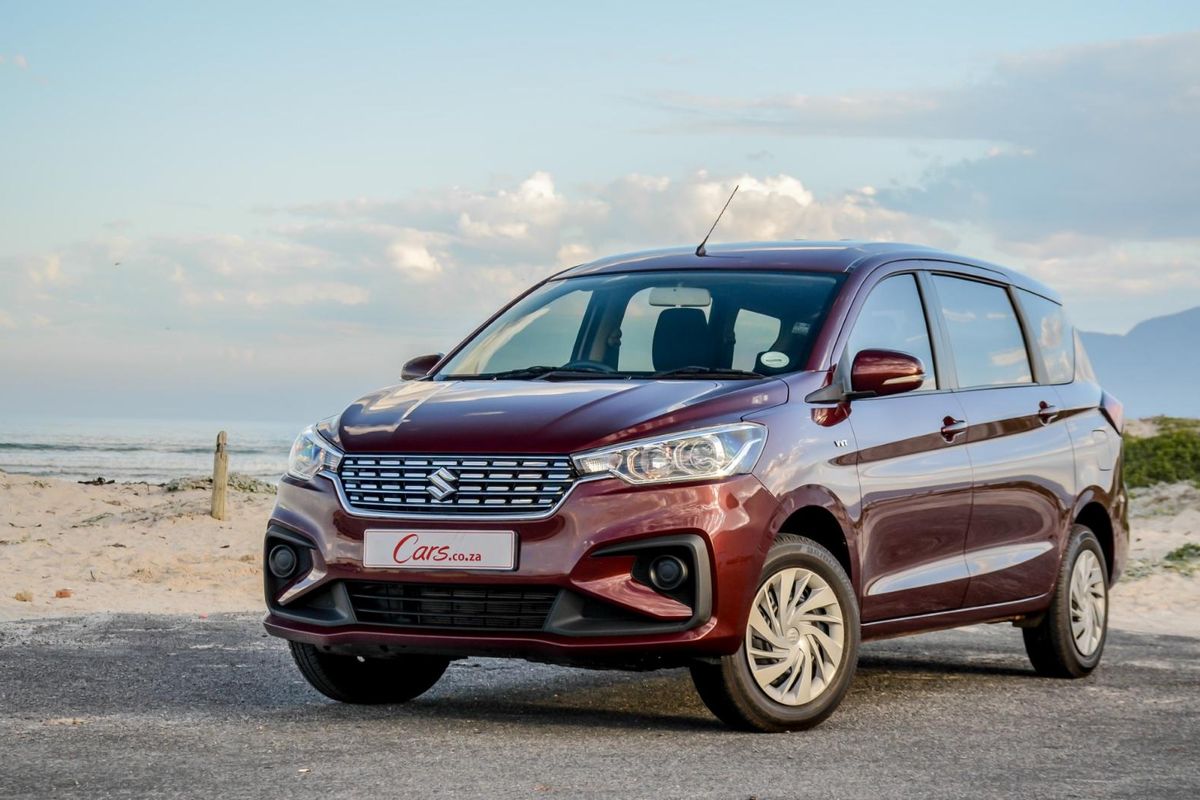
Compared with its predecessor, Suzuki's 2nd-generation Ertiga is bigger, offers greater interior flexibility and it's superbly frugal. Like before, it challenges the strong-selling Toyota Avanza and Honda BR-V. If you're looking for an affordable 7-seater, the Ertiga could be the pick of the bunch.
We like: Interior space, ride comfort, long warranty, value for money, fuel economy
Some Suzuki dealers regularly offer specials: Have look here.
Where does it fit in?
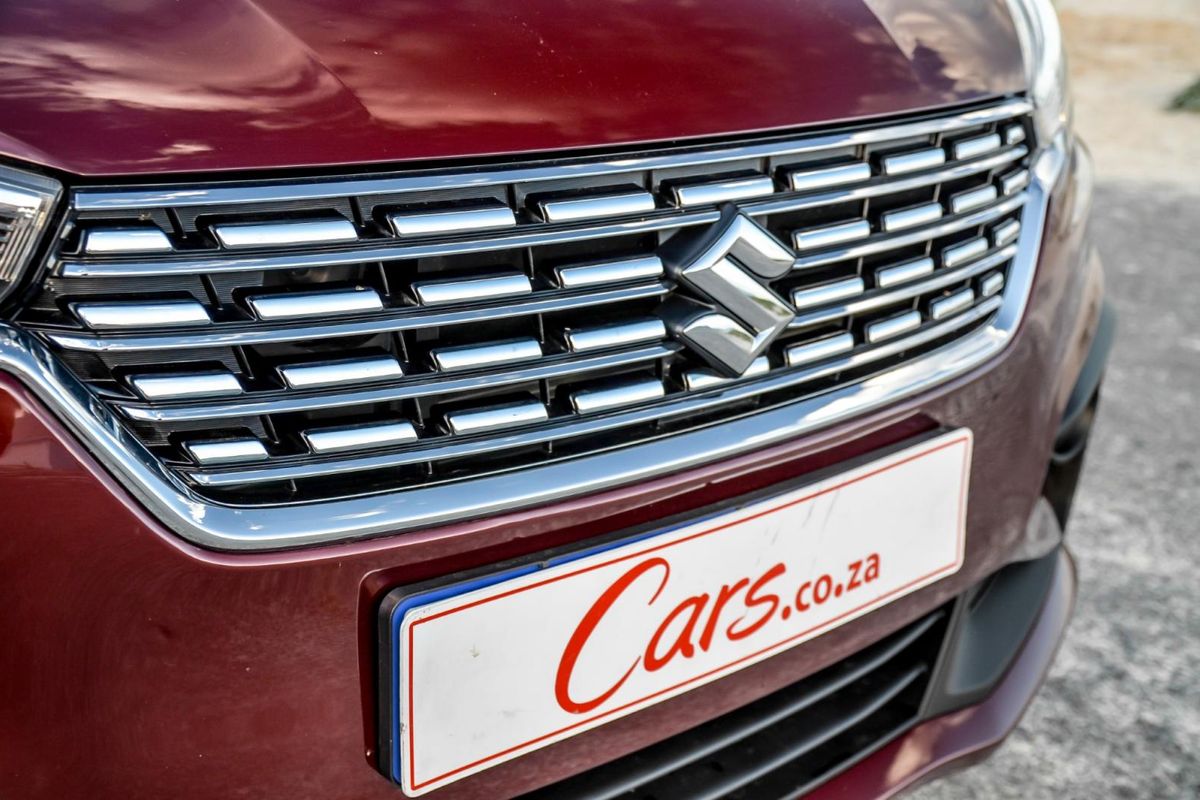
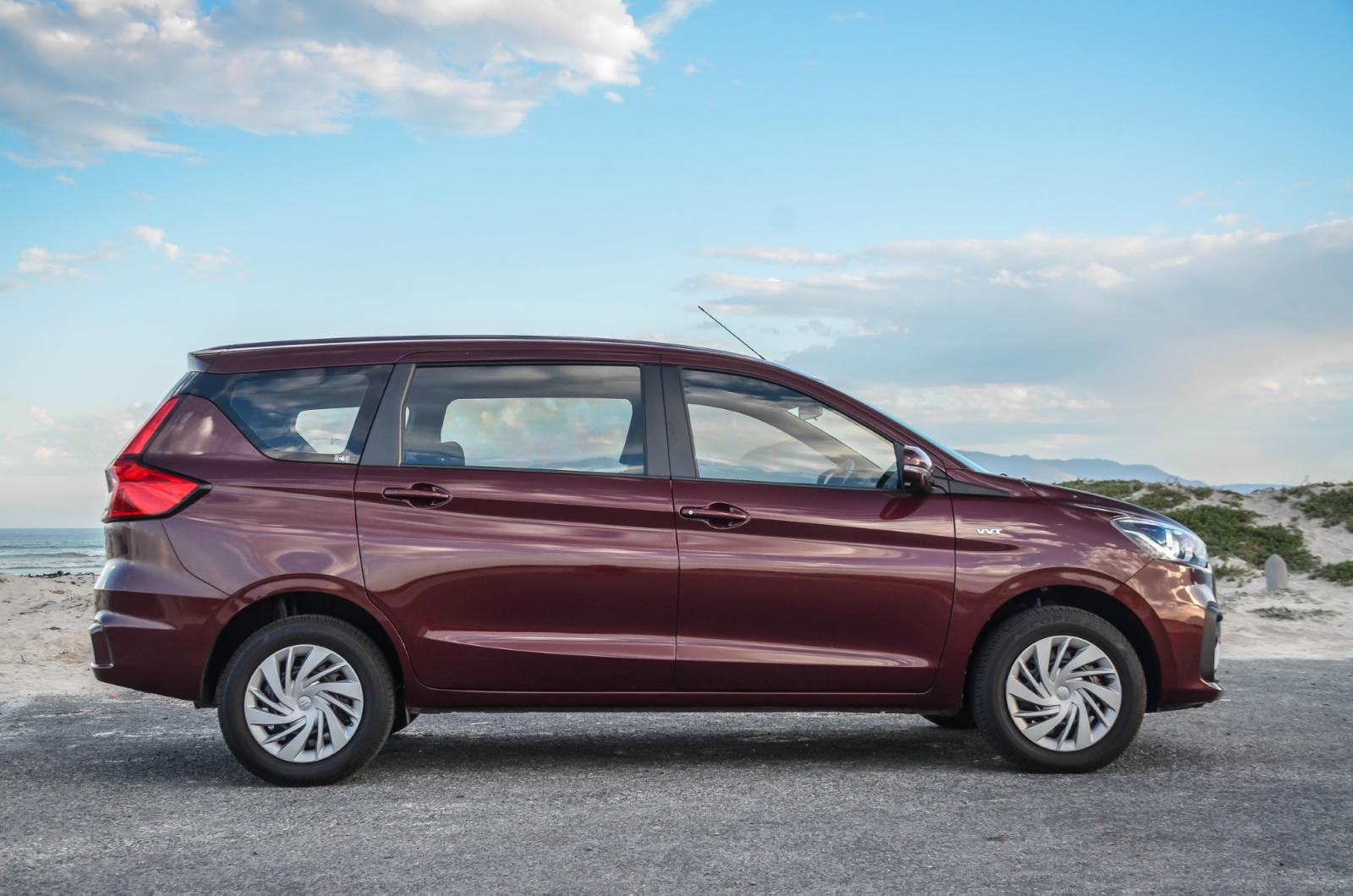
Longer and wider than the model it replaces, the Ertiga remains compact enough to be a comfortable city-traffic dodger.
Uber drivers and fleet operators aren't the only car buyers that have taken a liking to compact, affordable 7-seater vehicles – they make a great deal of sense for families shopping on a tight budget, too. The Toyota Avanza continues to be the biggest seller in the market (more than 4 000 were sold through Toyota's dealership network last year, and an additional 1 000 going into rental fleets). The BR-V, meanwhile, has quietly become Honda's top-seller. In the first 3 months of this year, the 1.5 Comfort CVT derivative was its best-selling offering. And Suzuki? Well, the rampant Japanese marque sold around 600 of its 1st-generation Ertigas last year, but hopes to do much better than that with this newcomer.
The 2nd-generation Ertiga has grown in size to offer not only more space, but greater seating/loading flexibility. Suzuki has also introduced its frugal new 1.5-litre engine, and the cabin offers more features as standard. And then there's that warranty…
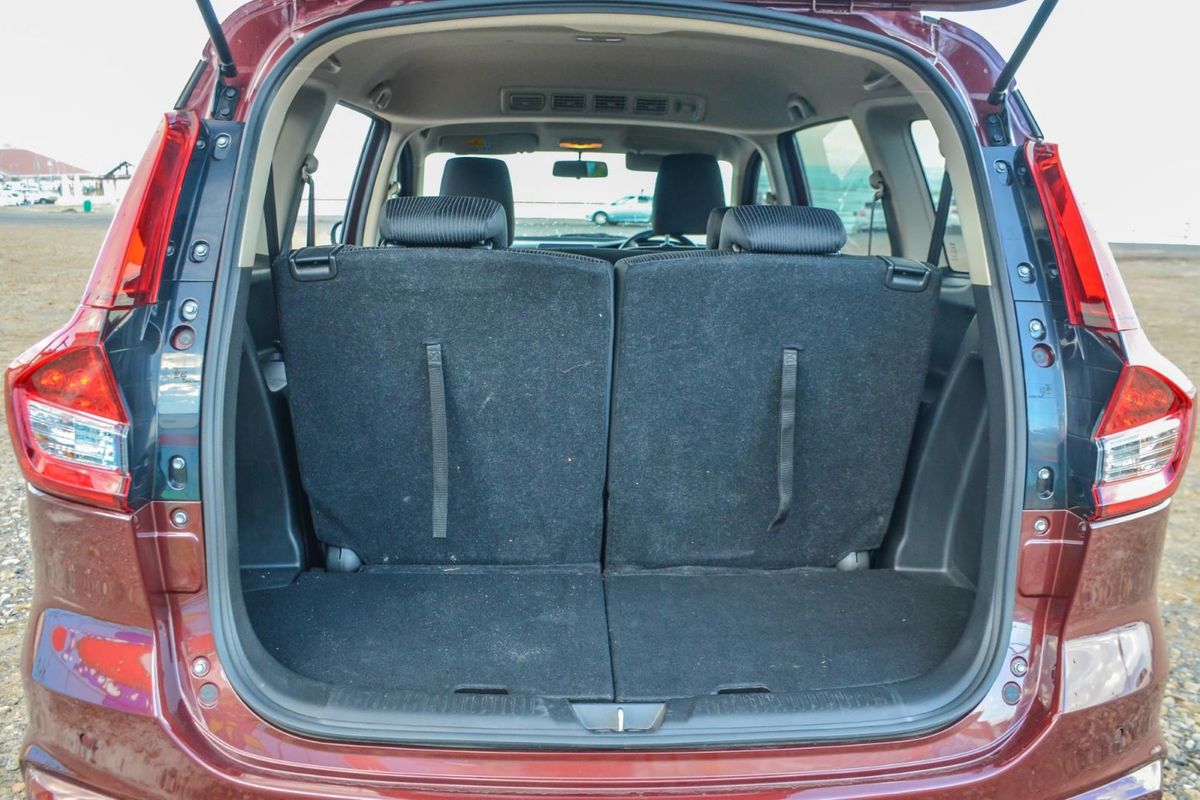
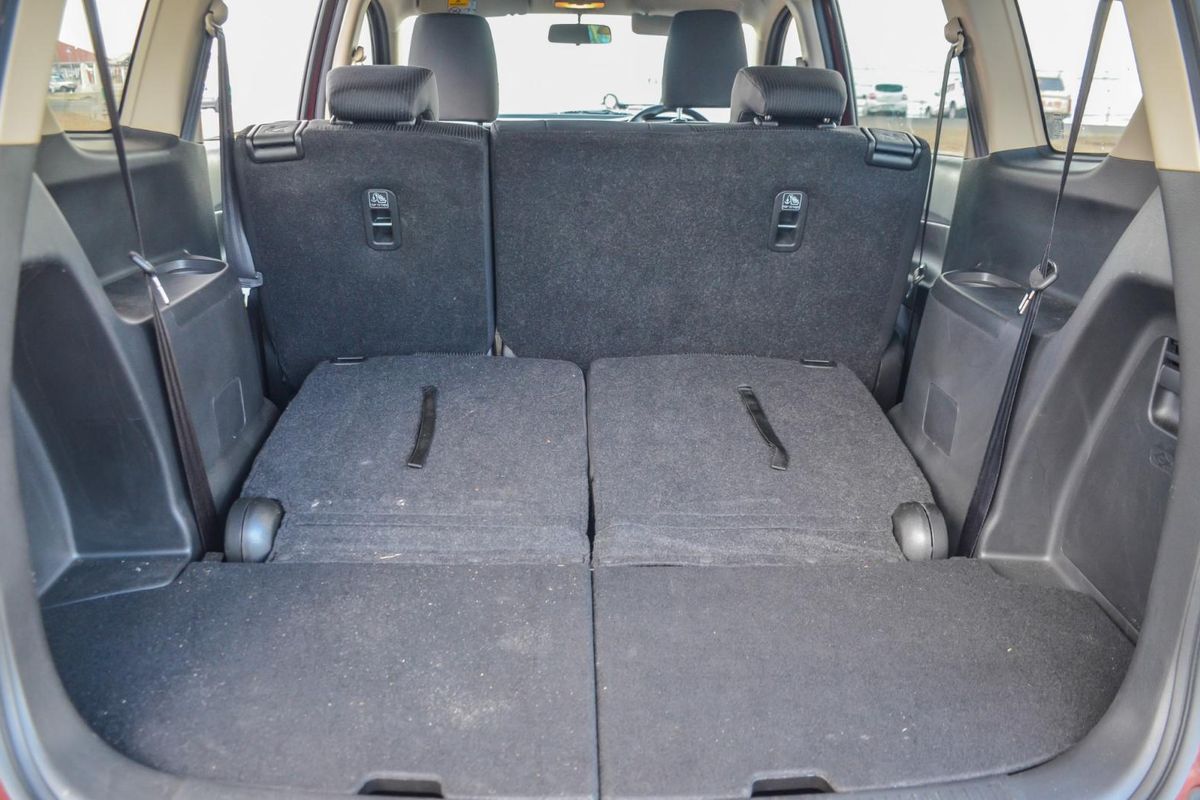
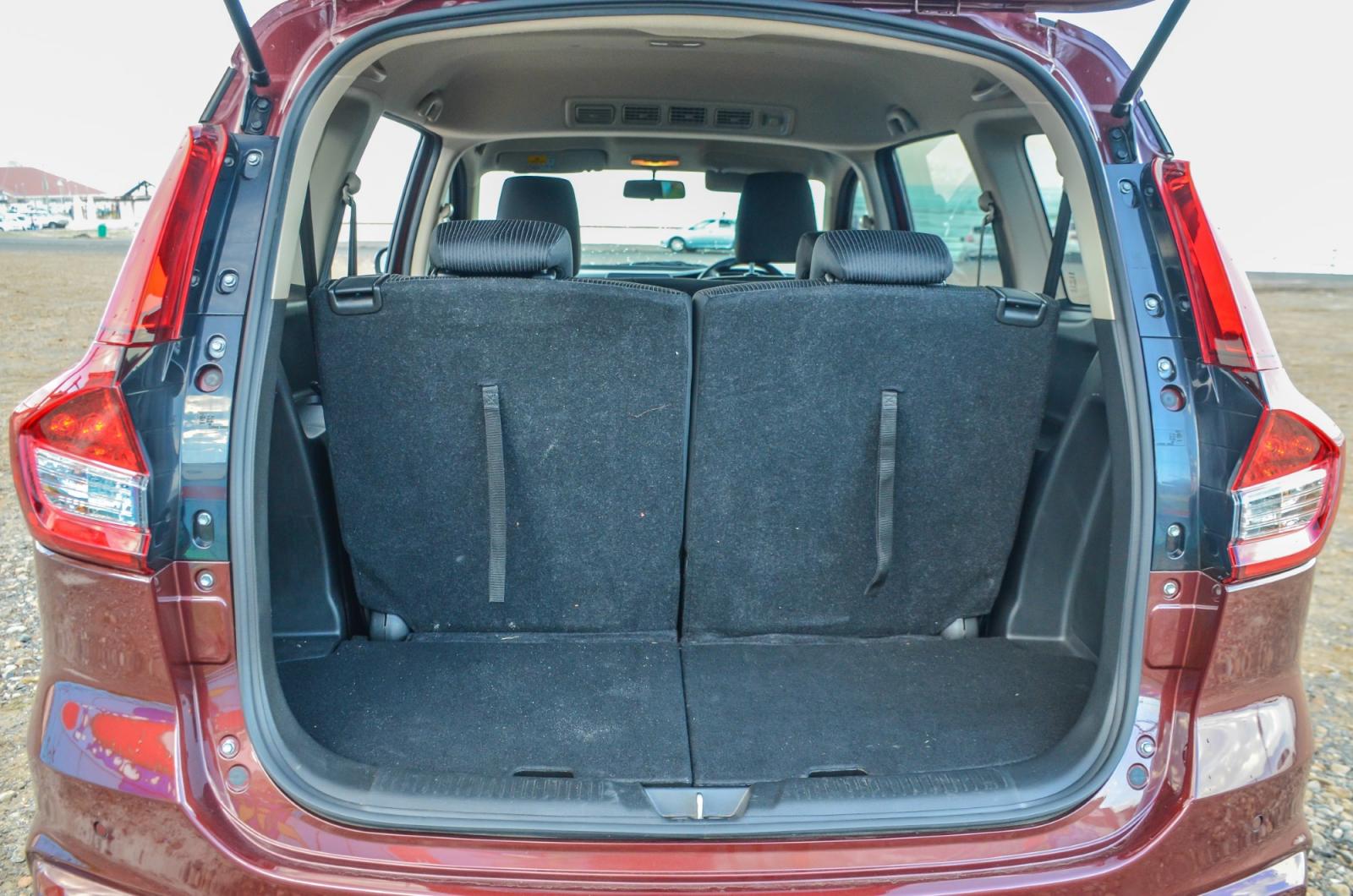
The Ertiga offers an impressively capacious load bay, even with the 3rd-row occupied.
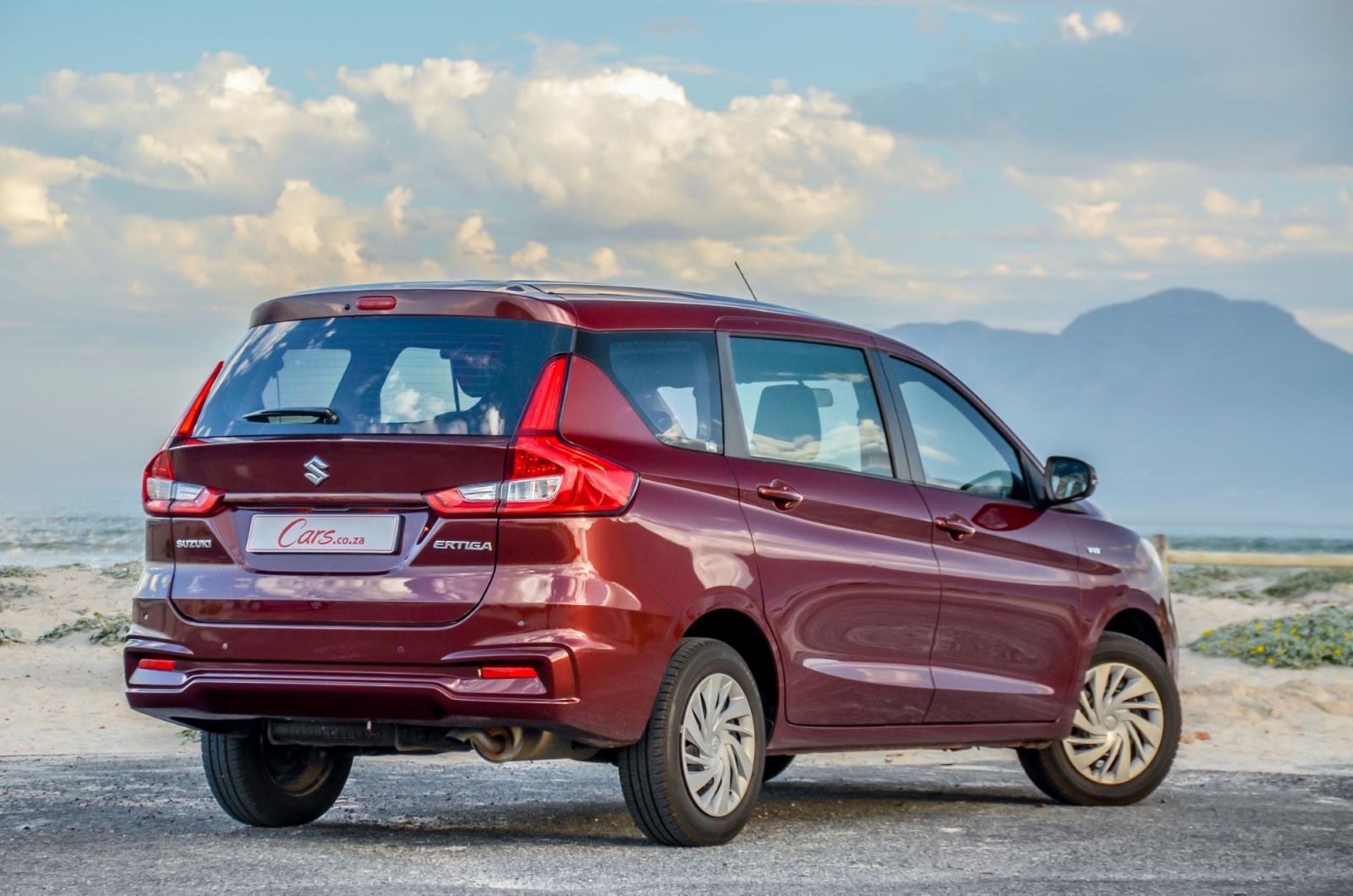
Compared with its predecessor, the new Ertiga is a significant 130 mm longer and 40mm wider. Though the wheelbase has remain unchanged, the extra size is noticeable when parking a new Ertiga next to its predecessor. You'll also then notice the 5-mm higher roofline. It's not a design that's going to win any beauty contests, but that's not something that is stopping the Avanza, for example, in achieving massive sales…
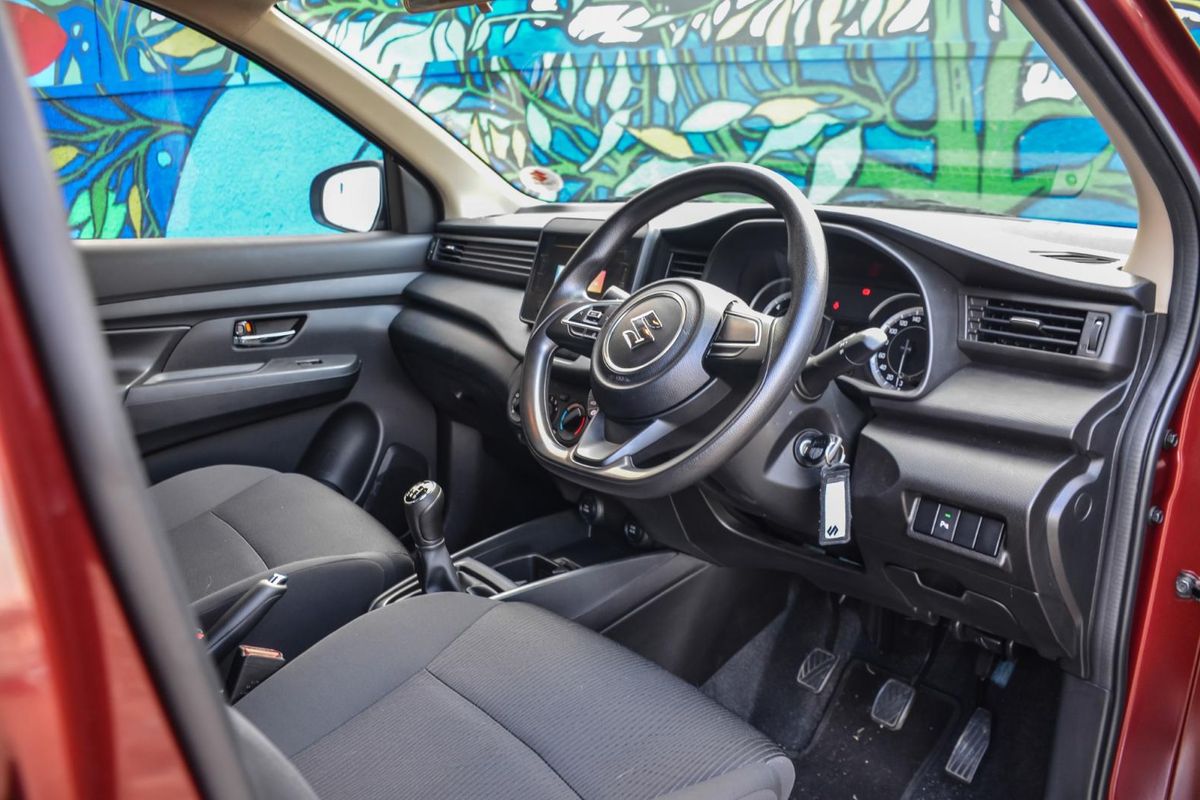
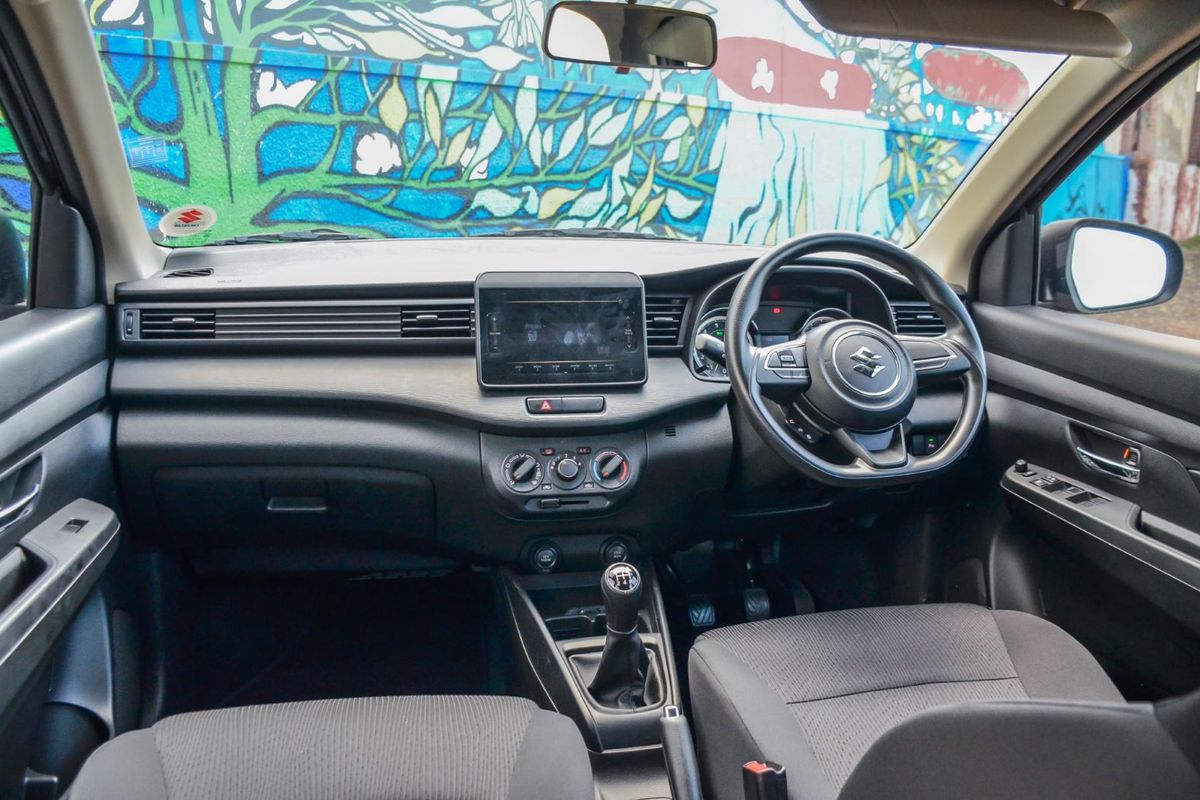
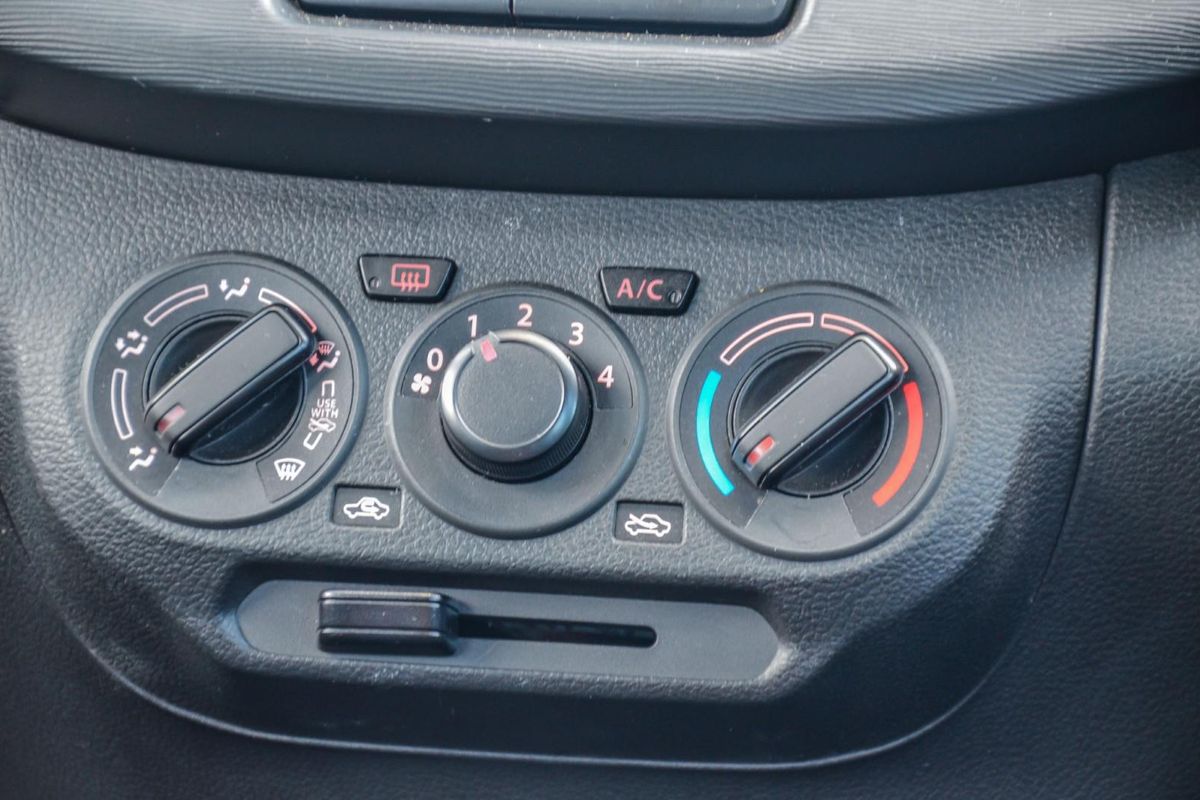
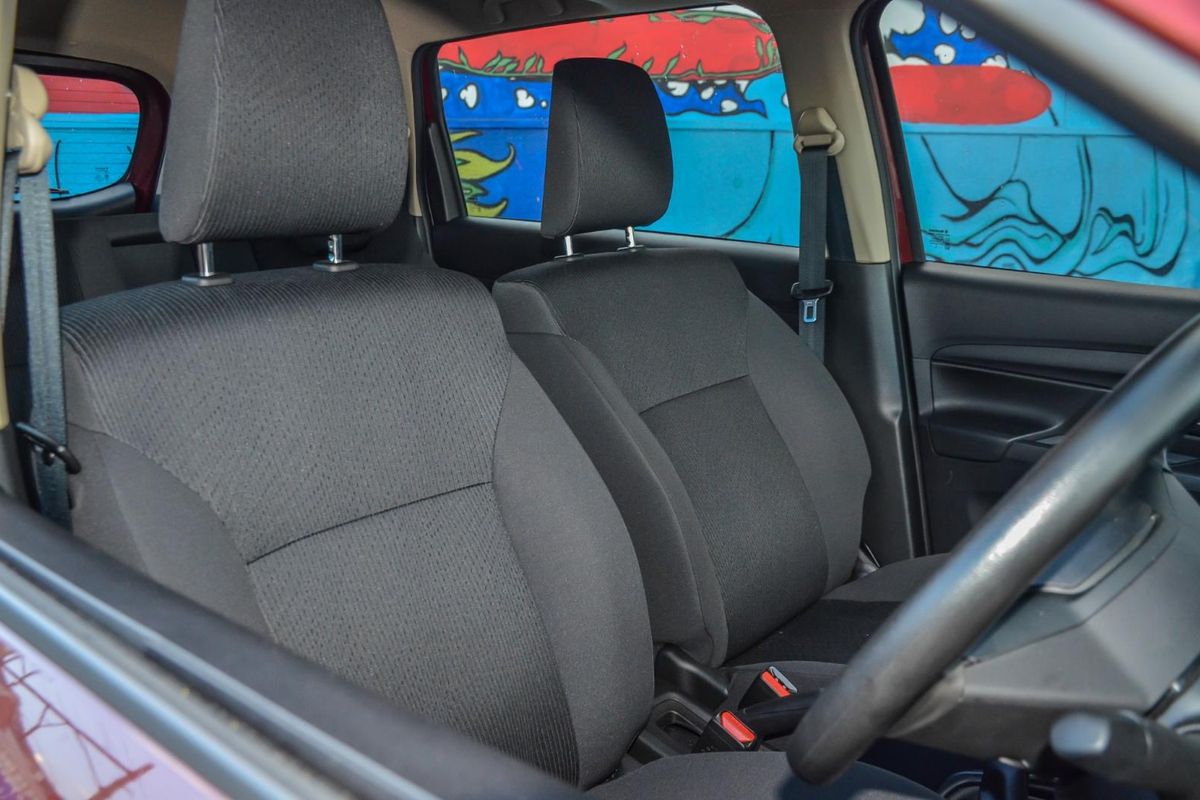
Inside, the Ertiga is a more "grown-up" – and practical – car than before. The upholstery is now black (compared with a light beige previously), and the fascia design is modern and simple. The emphasis has been on practicality – there are drinks holders and storage spaces dotted throughout the cabin (even back to the 3rd row). When seated at the front, you'll appreciate the extra width, as well as a number of practical little touches, such as a mobile phone tray that can accommodate the larger devices of today, which is commendable. It's also worth pointing out that the ventilation system is piped to the front cupholders, so you could cool your drinks in situ if needed!
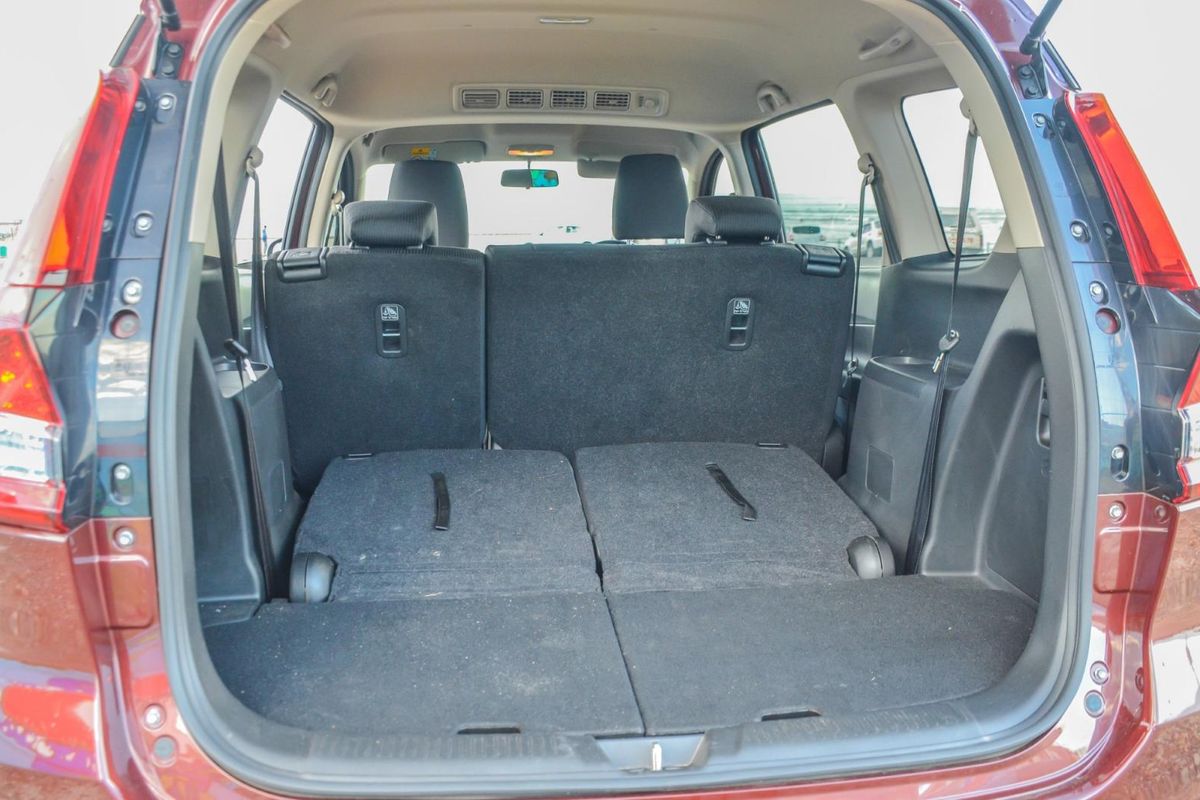
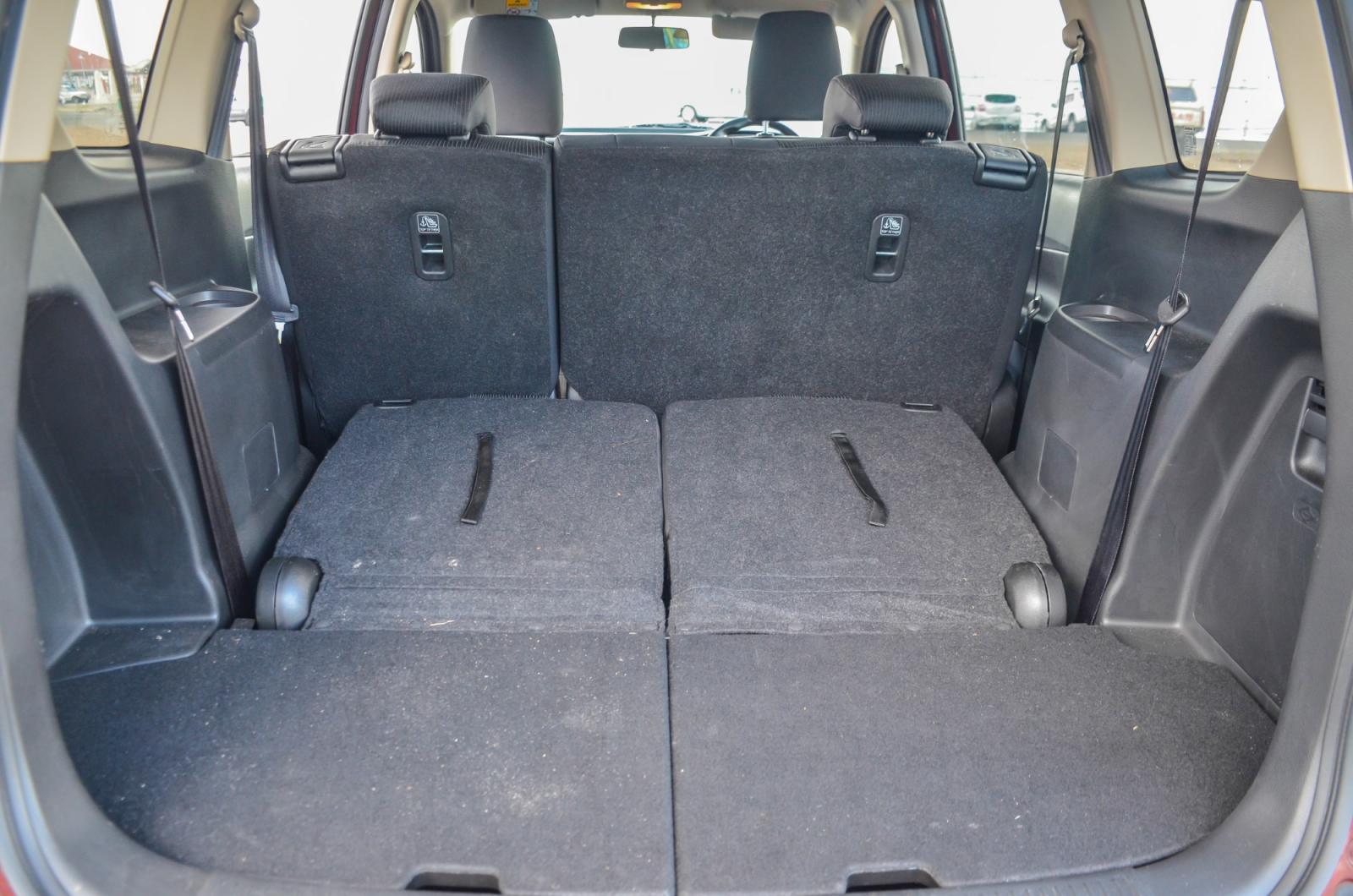
With the 3rd row of seats folded flat, the load area is massive! The spare wheel is mounted underneath the vehicle.
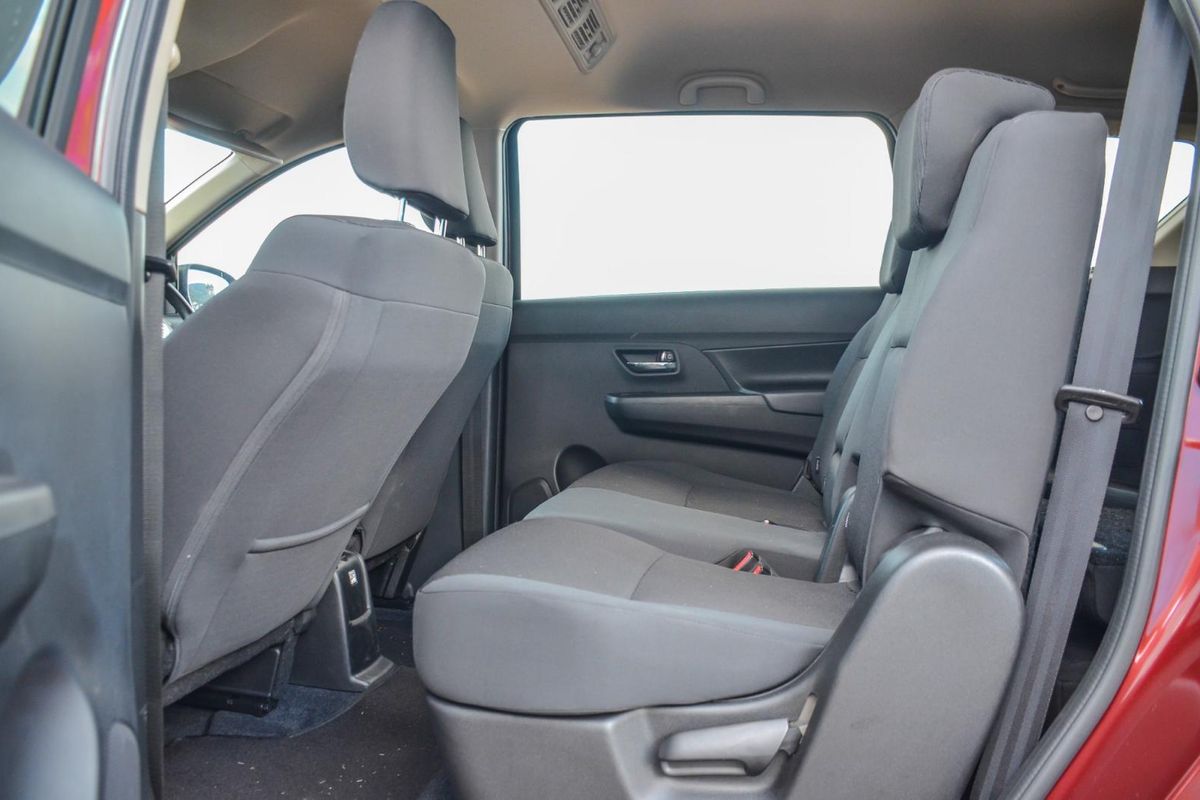
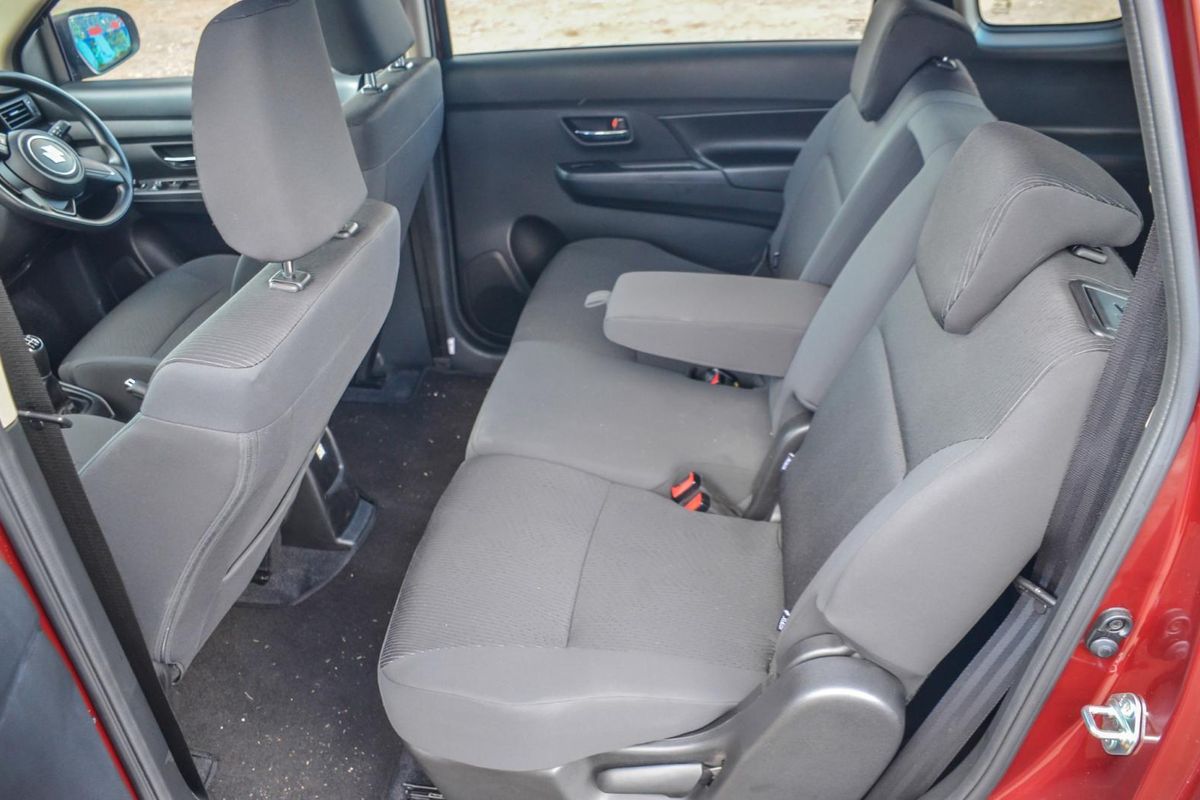
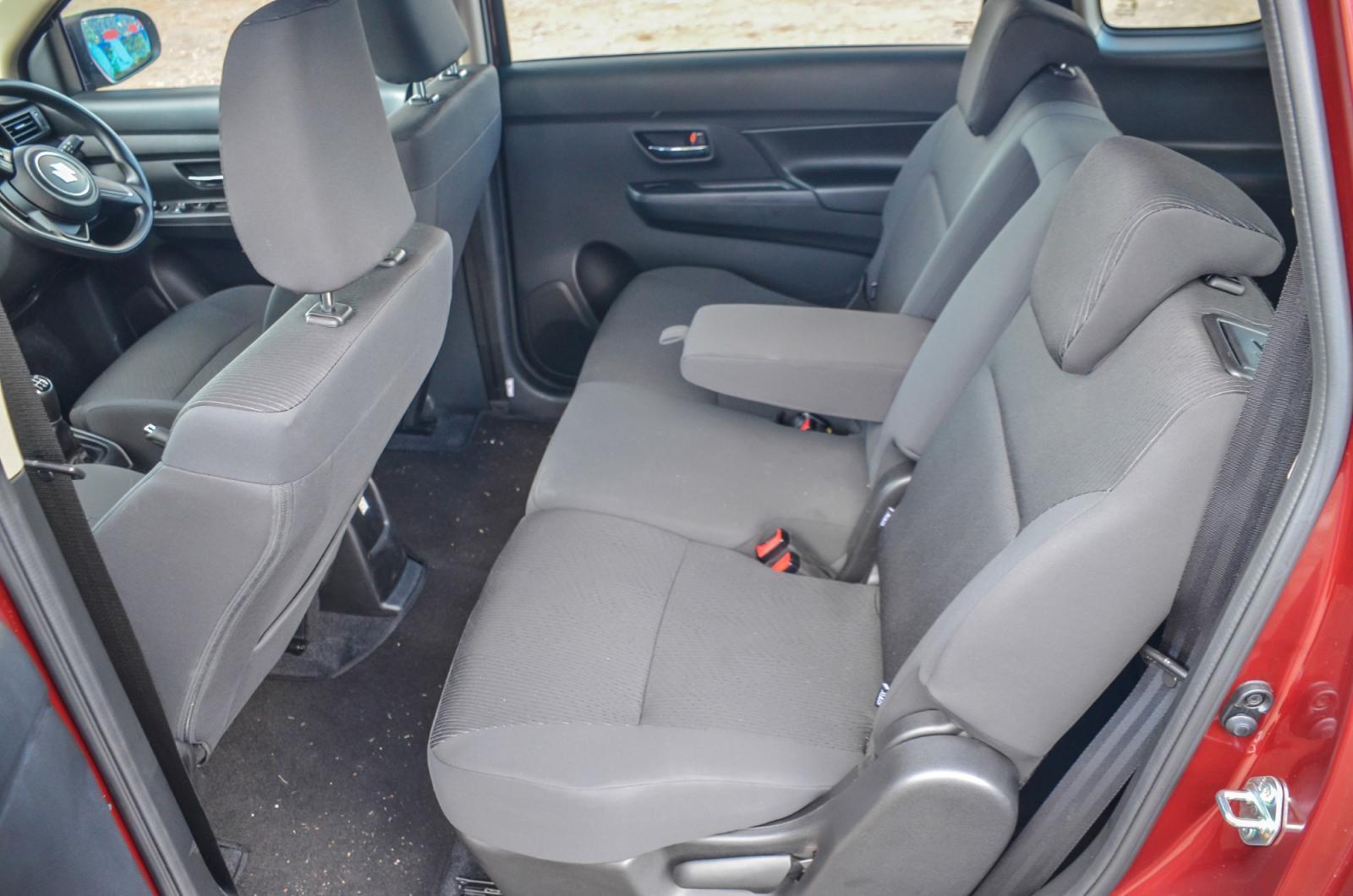
The 2nd-row's doors are elongated and open to almost 90 degrees, which aids practicality… as long as you remind the little ones to open them carefully when the Ertiga's parked in a confined parking space. There is generous headroom in the back, and passengers are availed with their own overhead ventilation outlets (with fan speed control). The middle row's seatback splits in a 60/40 configuration, can recline if required and the entire bench slides both fore and aft.
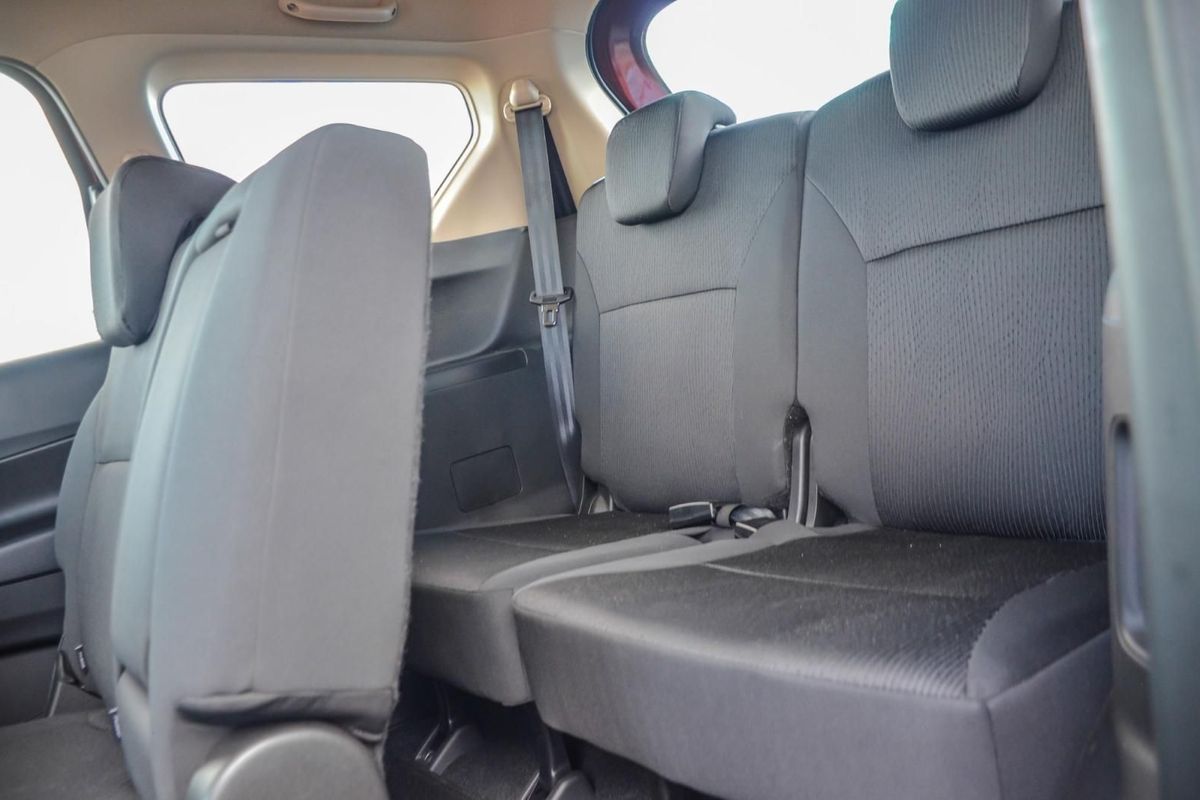
With the 2nd row moved slightly forward (but still allowing enough legroom to accommodate adults), space in the 3rd row is pretty decent, as a matter of fact (its 50/50-split backrest can also recline). With the smaller part of the 2nd row folded forward, as well as one of the 3rd-row seatbacks, we were still able to seat 5 occupants, with a surfboard accommodated inside the cabin. It's worth noting that the front passenger seat can also fold flat, allowing items of up to 2.82m in length to be accommodated if required.
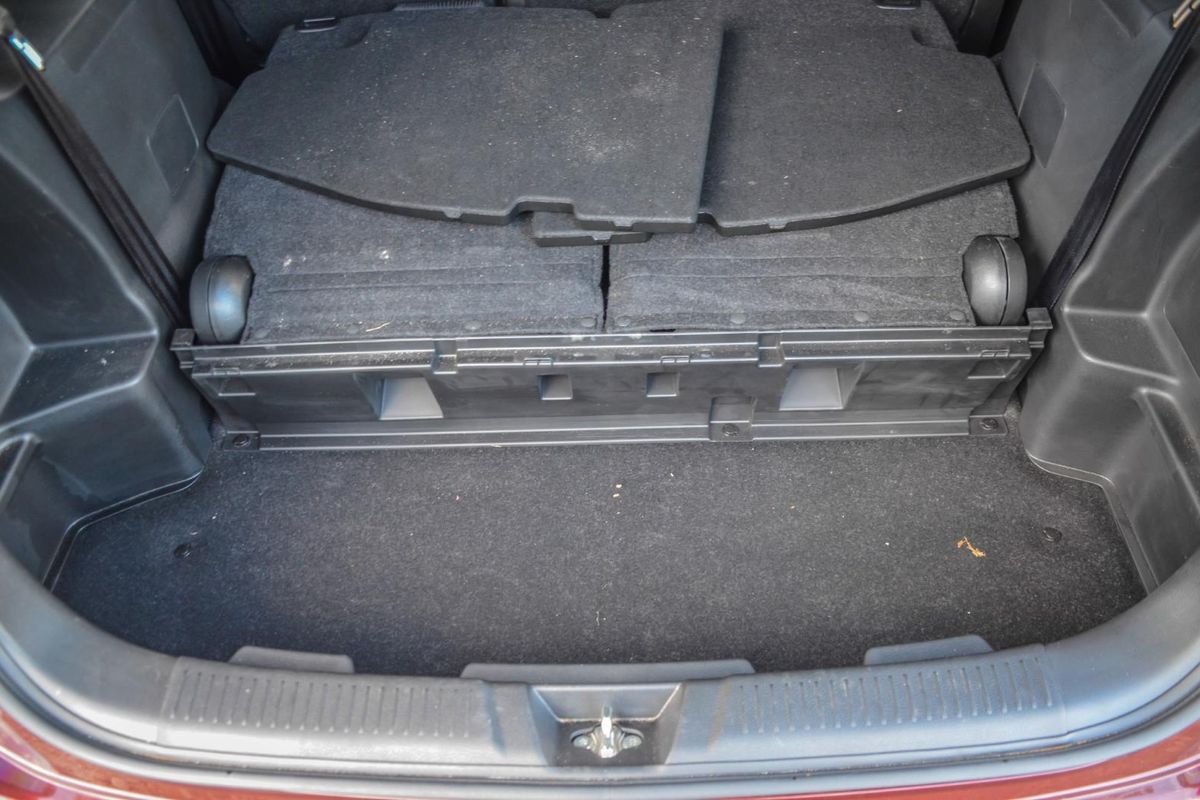
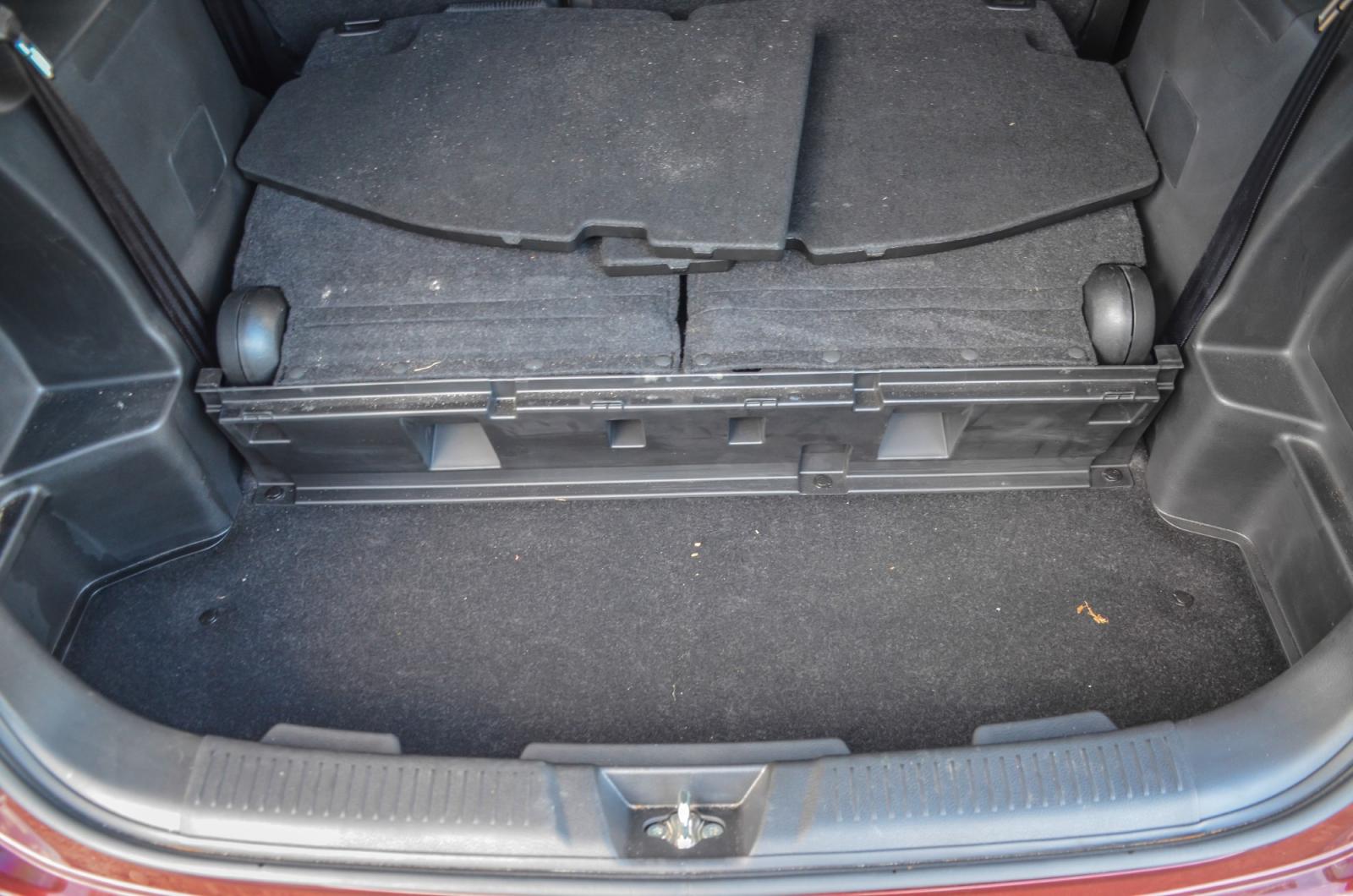
Some very helpful additional storage space is provided underneath removable panels in the load-bay floor.
But it's in the load bay where Suzuki has arguably worked its magic most. Even when the 3rd row is occupied, there's more than respectable packing space back there and, if you lift up the removable panels that double as the floor of the luggage area, you'll find a lot more space where you can store valuable items (it's a good thing too, as there is no parcel shelf).
Comfort & Features
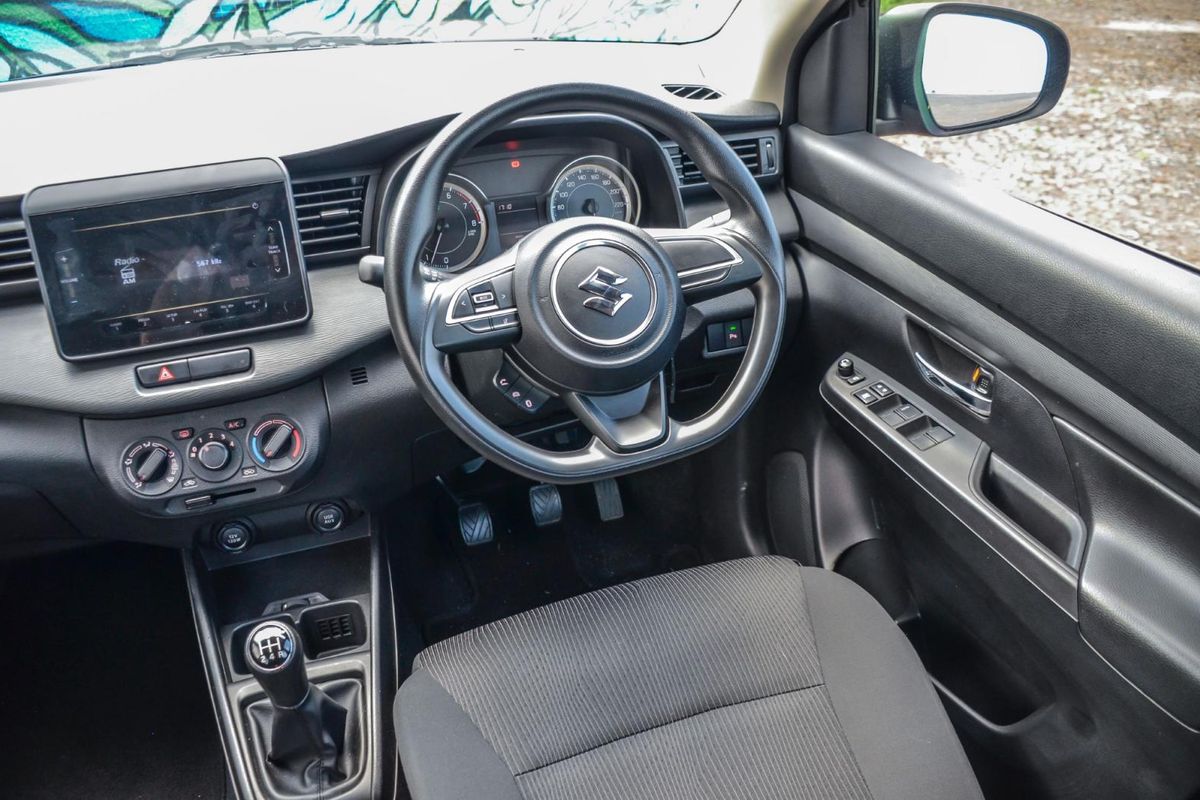
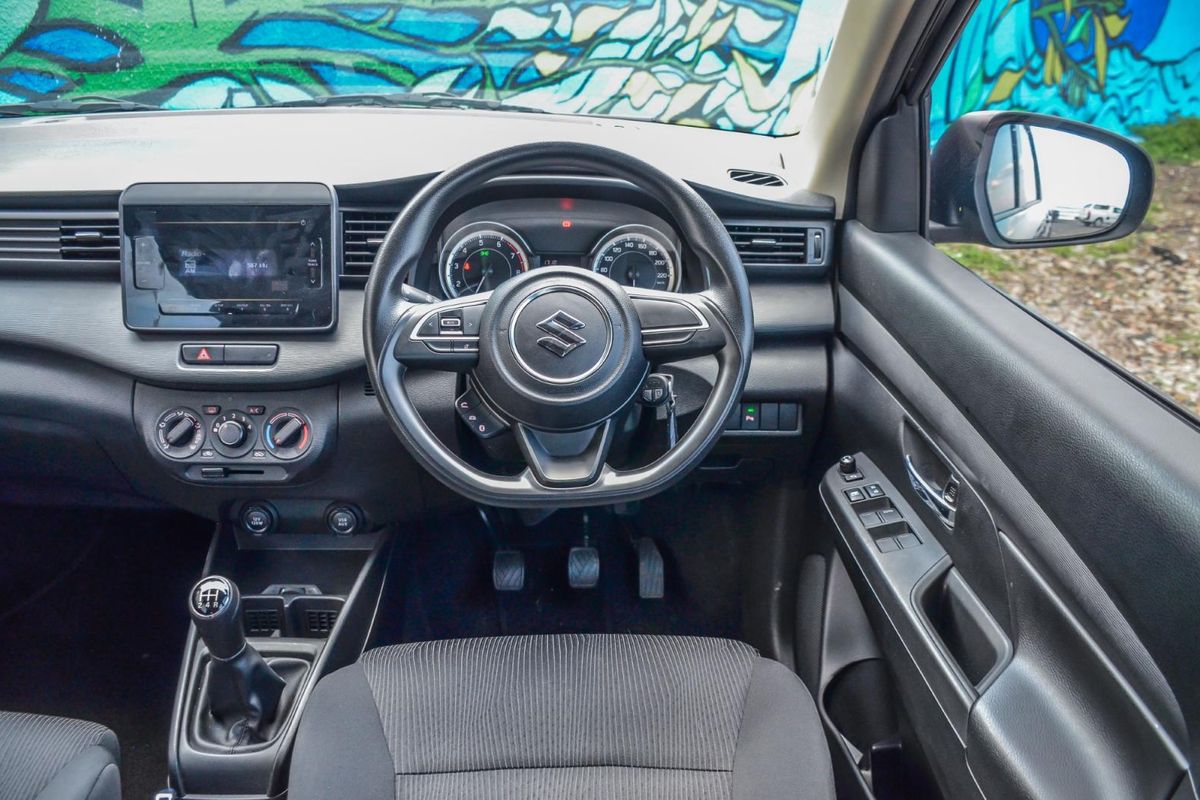
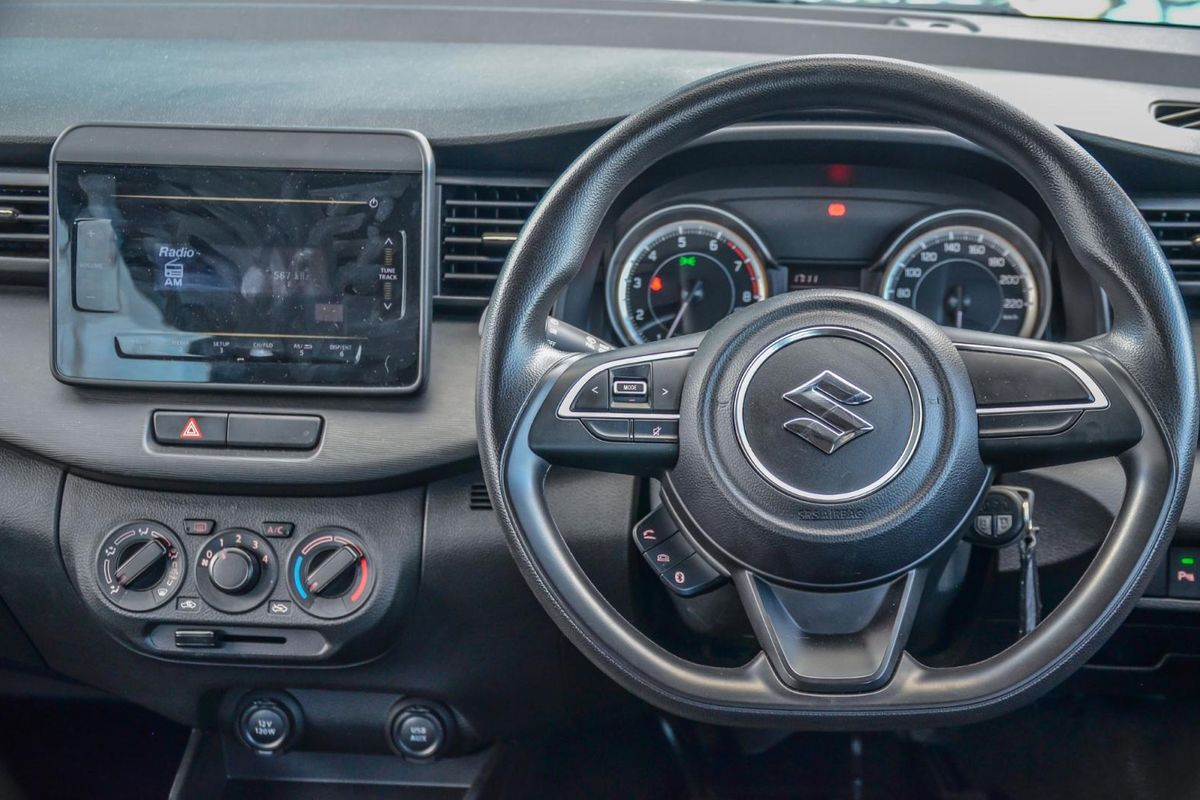
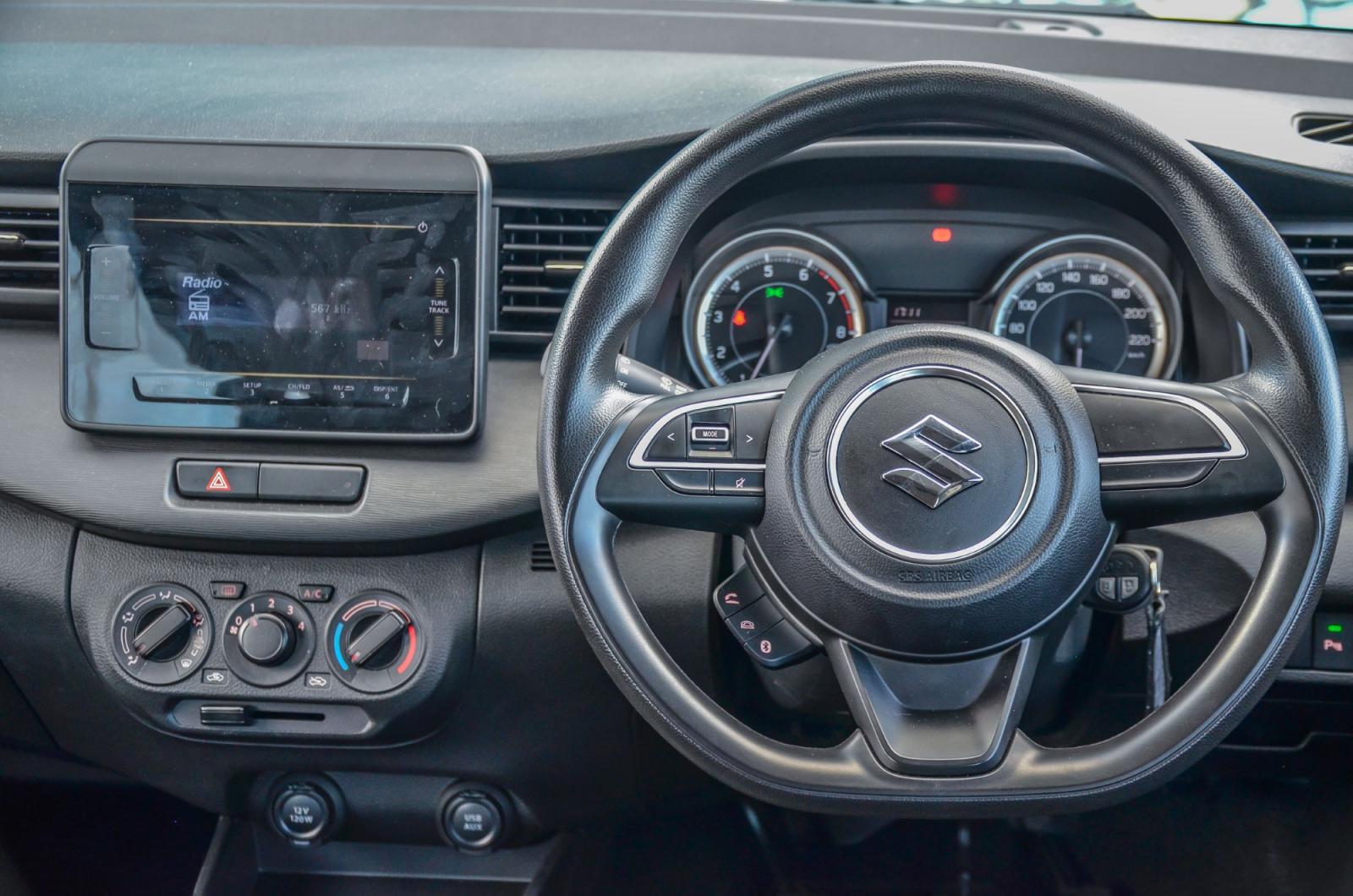
Facia design is modern and simple, but we're not convinced by the functionality of the audio system interface.
Suzuki points out that the world today is significantly different from when the 1st-generation Ertiga was launched. That's true, and connectivity is particularly high on the list of consumer demands. Consequently, this new Ertiga offers Bluetooth connectivity (with control buttons on the steering wheel), as well as USB support. Looking at the tablet-like design of the audio system interface, however, you may have expected more… In fact, we found the new system quite clumsy to use – it requires a lot of familiarisation, which, given its relative lack of functionality, is frustrating. The old car's small LCD screen/hard button set-up may not have appeared that stylish, but was infinitely simpler and faster to use.
And that's really our only criticism when it comes to the features fitted (or not fitted as standard) to this Ertiga, because in most respects it betters (or at least matches) what the competition offers, at a lower asking price. The list of standard features includes; air-conditioning, power steering, electric windows all-round, electric/folding mirrors and even rear park sensors as standard. A 12V power socket is provided for front and second-row occupants, but we'd have preferred the latter to be replaced by another USB outlet.
In terms of safety, the Ertiga GL offers dual front airbags and ABS with EBD. Sadly, there is no ESP (electronic stability control), but ISOfix child seat anchors are provided in the 2nd row. A security alarm is also standard.
Performance & Efficiency
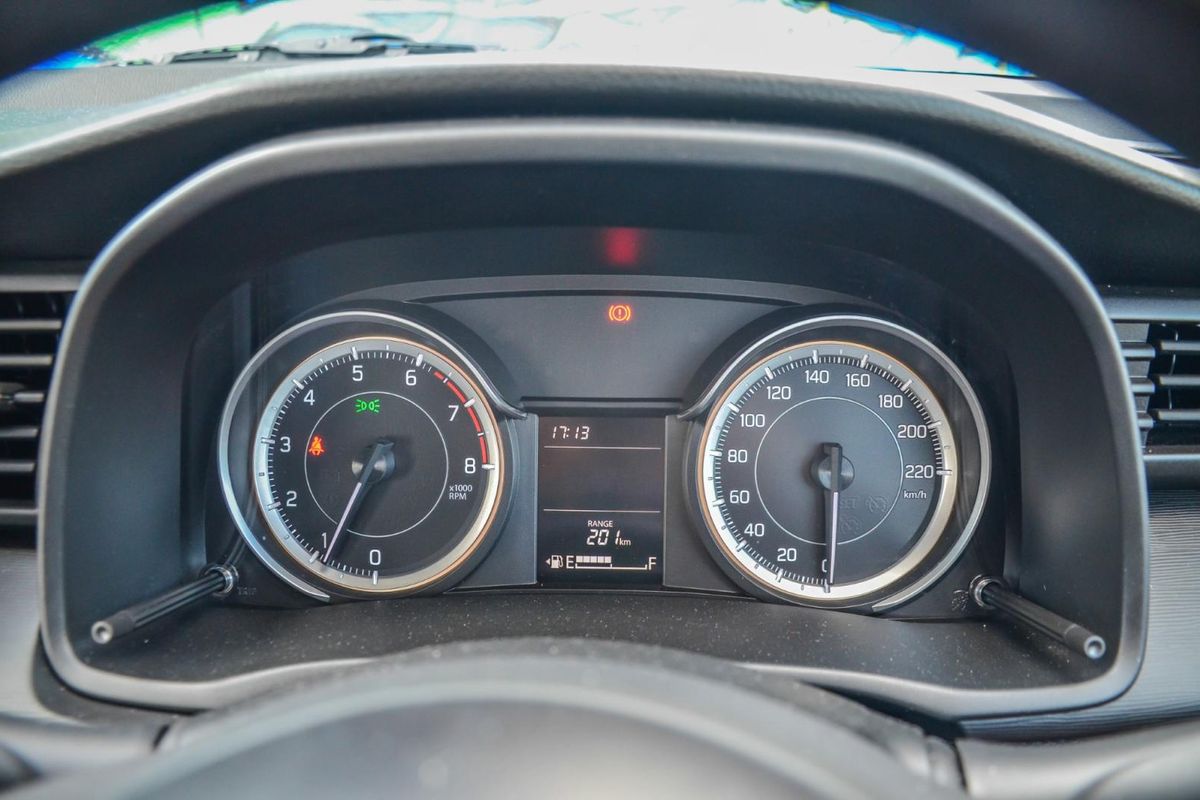
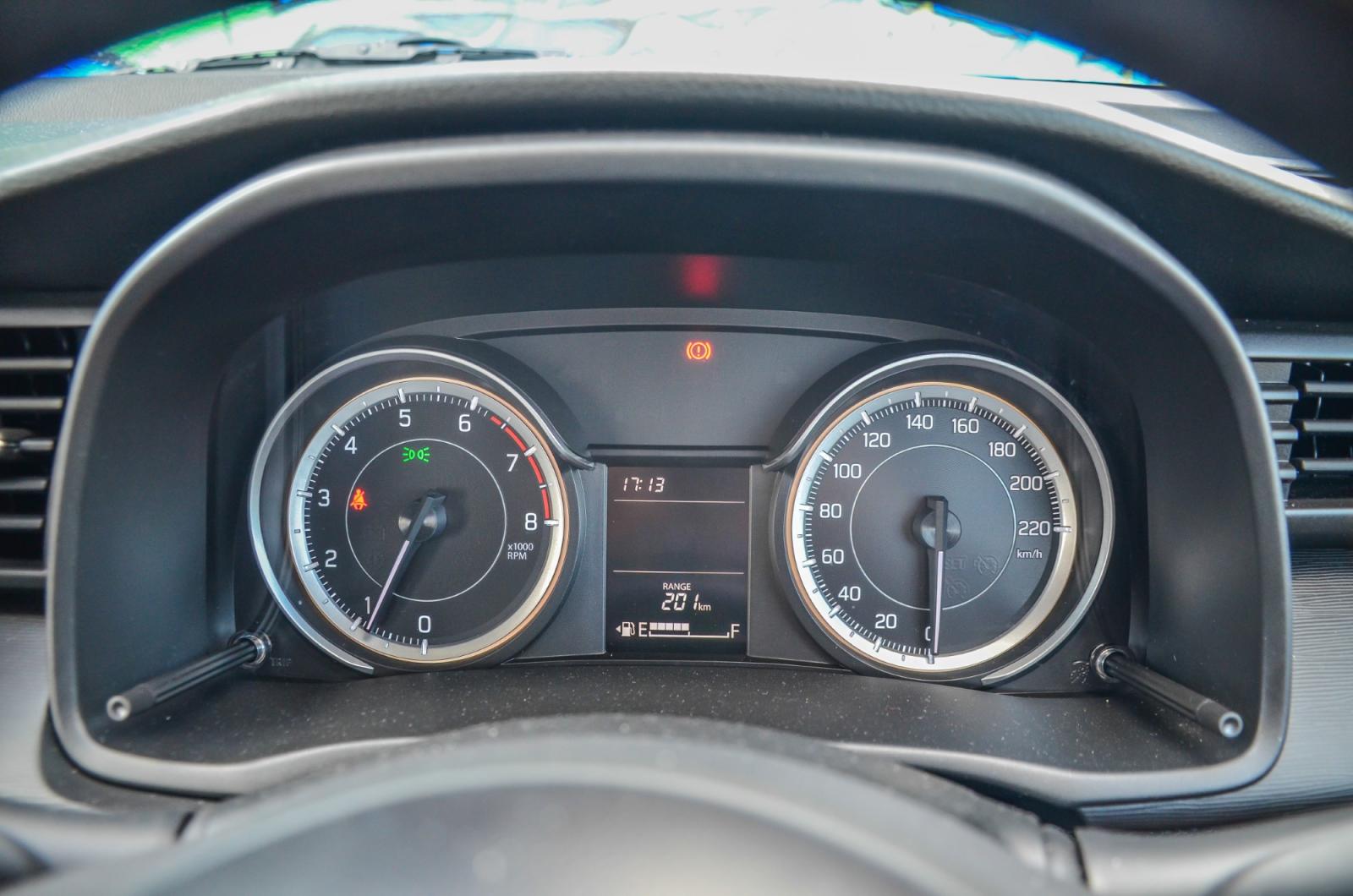
Instrumentation is simple, but a range-to-empty indicator is included.
The Ertiga is powered by Suzuki's new K15B 1.5-litre petrol engine. It develops a class-competitive 77 kW, which in typical Suzuki fashion, arrives at fairly high engine speeds (7 000 rpm). Peak torque is a claimed 138 Nm at 4 400 rpm which, again, is par for the course in this segment. But like all modern Suzukis, the Ertiga is light – despite growing in size and offering more features the newcomer is 6 kg lighter than before, and more powerful. Consequently, the Ertiga feels sprightly, even with a full complement of passengers on board. The 5-speed manual gearbox is also light and accurate, making it surprisingly enjoyable to drive this little family van.
Most impressively, it is very economical. Suzuki didn't release claimed consumption figures at the time of the Ertiga's launch, but we easily achieved a real-world consumption figure of 7L/100 km during an extensive 2 weeks of testing.
Ride & Handling
Impressive legroom on offer in the second row, which can slide fore/aft across a wider range than before.
With its greater width, the Ertiga feels more stable on the road than the vehicle it replaces, and also more so than, for example, the Avanza, which is well-known for being sensitive to cross-winds. We'd also rate the Ertiga's suspension as more supple than the Toyota's and consequently, the cabin feels like a more relaxed place. Double door seals and extensive noise-reducing material in the roof certainly contribute to the Suzuki's "refined" ambience inside.
Dynamism is not a requirement in this segment, but of importance is the turning circle. Although Suzuki's newcomer is larger than before, the turning circle has remained unchanged and with its light steering and standard rear park sensors (combined with good visibility out of the vehicle), the Ertiga is an easy car to steer and park around town. The supple suspension also deals very well with the speed humps that litter our towns and cities these days.
Pricing and warranty
The Ertiga 1.5 GL sells for R239 900 (May 2019) and the price includes a 4-years/60 000km service plan. At present the Ertiga is also sold with the brand's promotional 5-years/200 000km warranty, adding further peace of mind.
Verdict
More spacious, more practical, well-equipped and very economical, the Ertiga ticks most low-cost family motoring boxes.
With the new Ertiga, Suzuki looks set to make inroads into a segment where it has not reached its full sales potential, at least not yet. Compared with its (more expensive) rivals, the Ertiga offers not only exceptional value for money, but is simply a product that is hard to beat in the areas where it matters most – space, practicality and comfort. That said, we would have preferred some additional safety features (particularly curtain airbags and ESP), even if that meant its pricetag would match those of the competition.
Nevertheless, this is an easy product to recommend. Suzuki continues to perform brilliantly in our Ownership Satisfaction Survey, following up its 2 previous Brand of the Year accolades with a second place (to Toyota), in this year's Cars.co.za Consumer Awards – powered by WesBank.
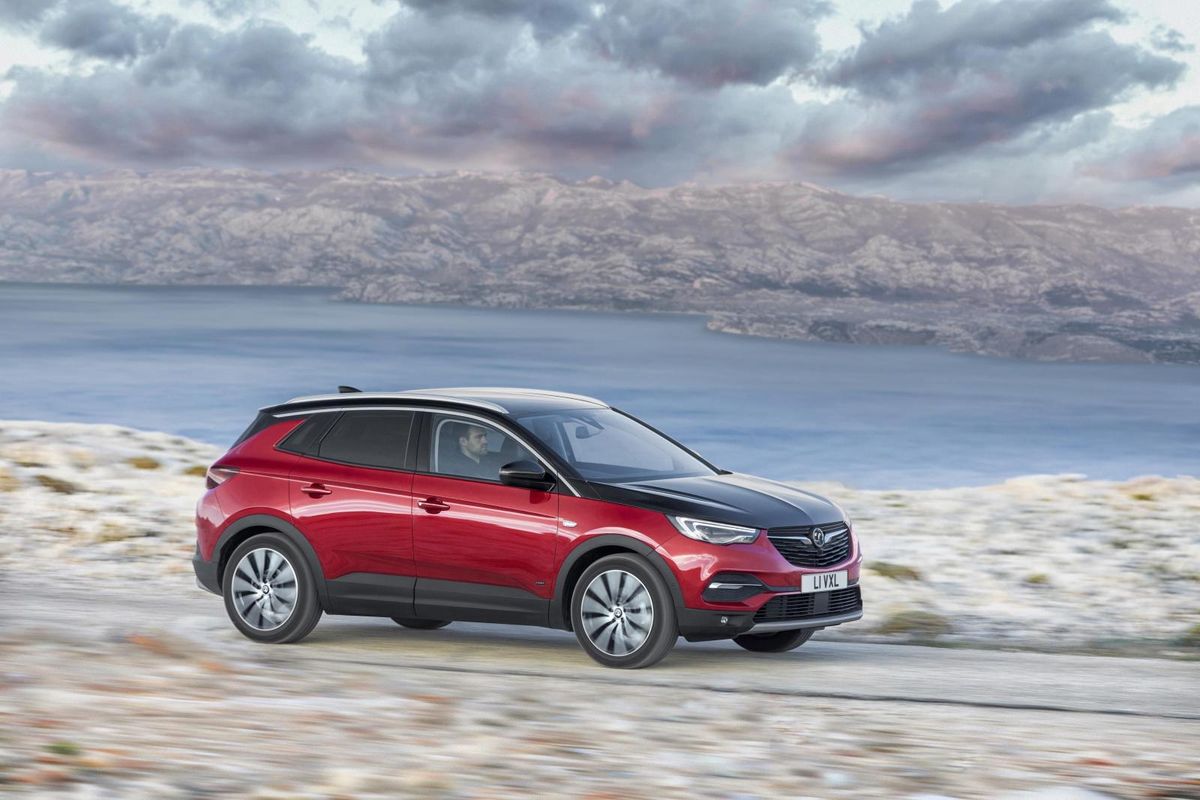
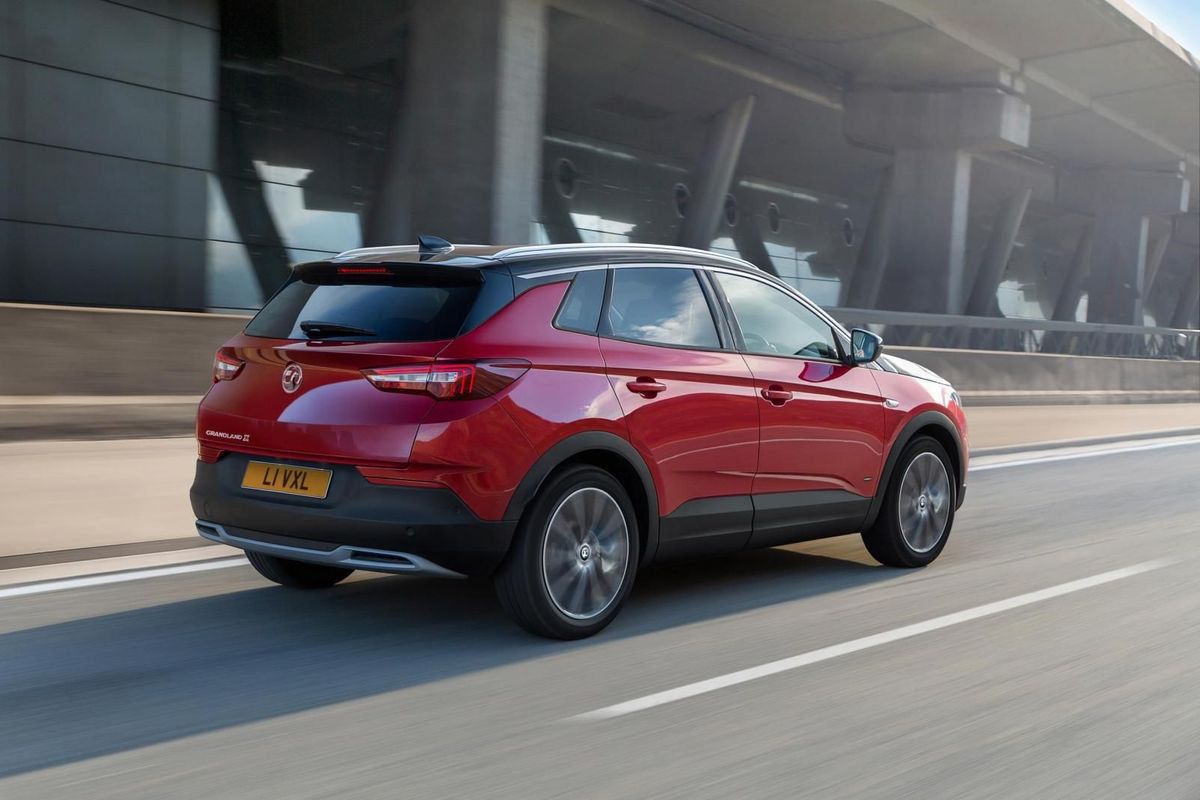
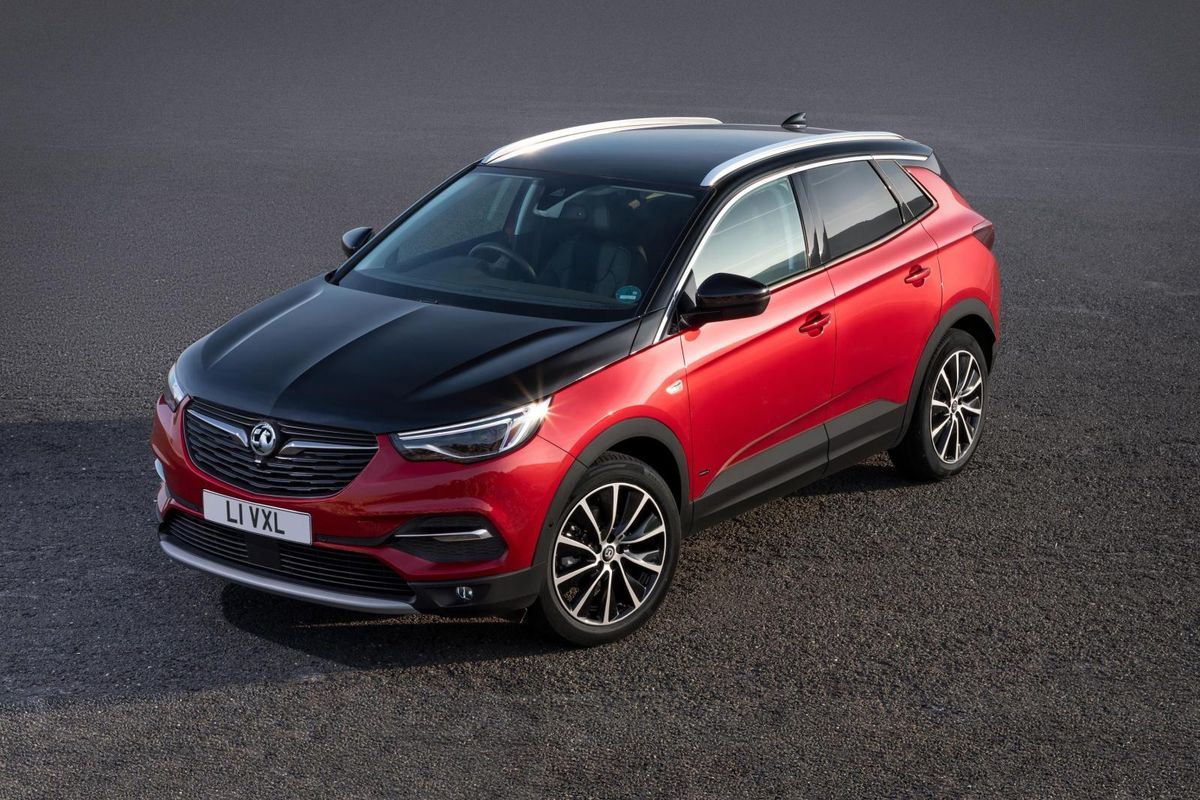
Opel/Vauxhall has announced its first-ever plug-in hybrid vehicle. The Grandland X Hybrid4 is expected to go on sale in Europe before the end of 2019.
Opel/Vauxhall made an impressive claim not so long ago. The goal is to have the entire Opel/Vauxhall portfolio electrified by 2024. First vehicle out of the blocks is the new Grandland X Hybrid4.
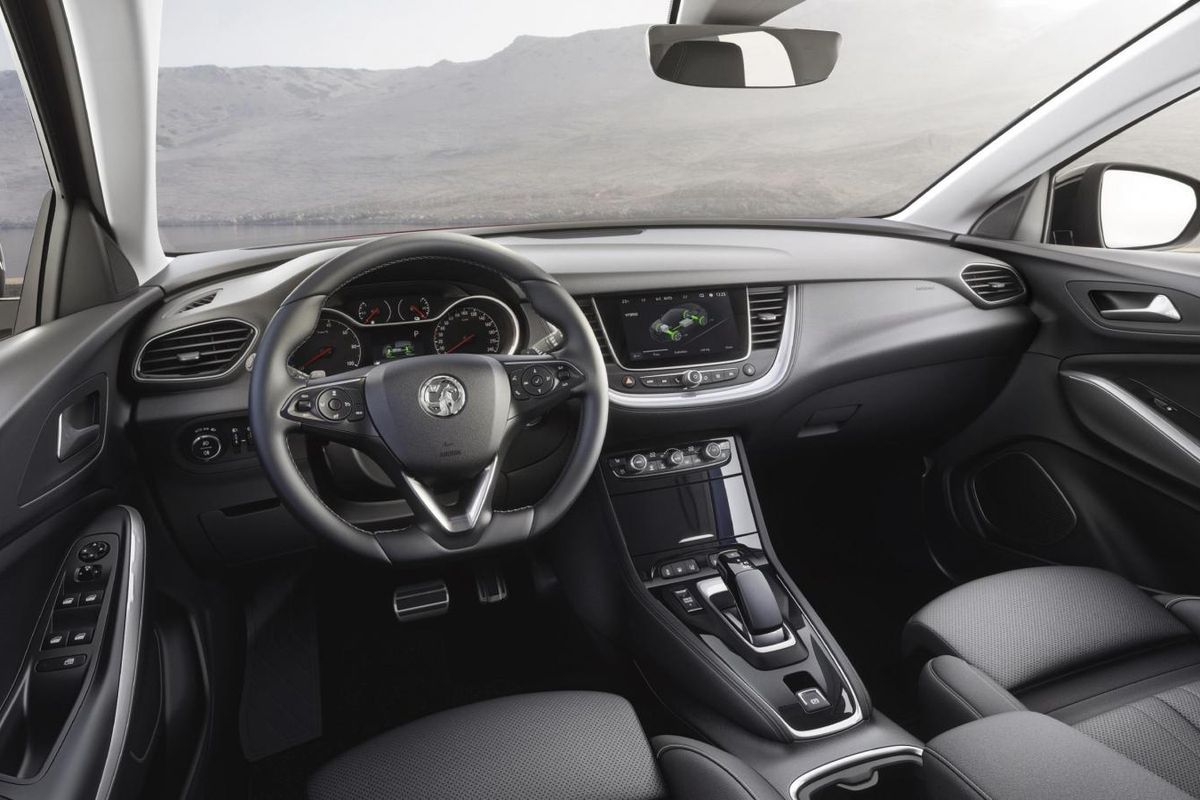
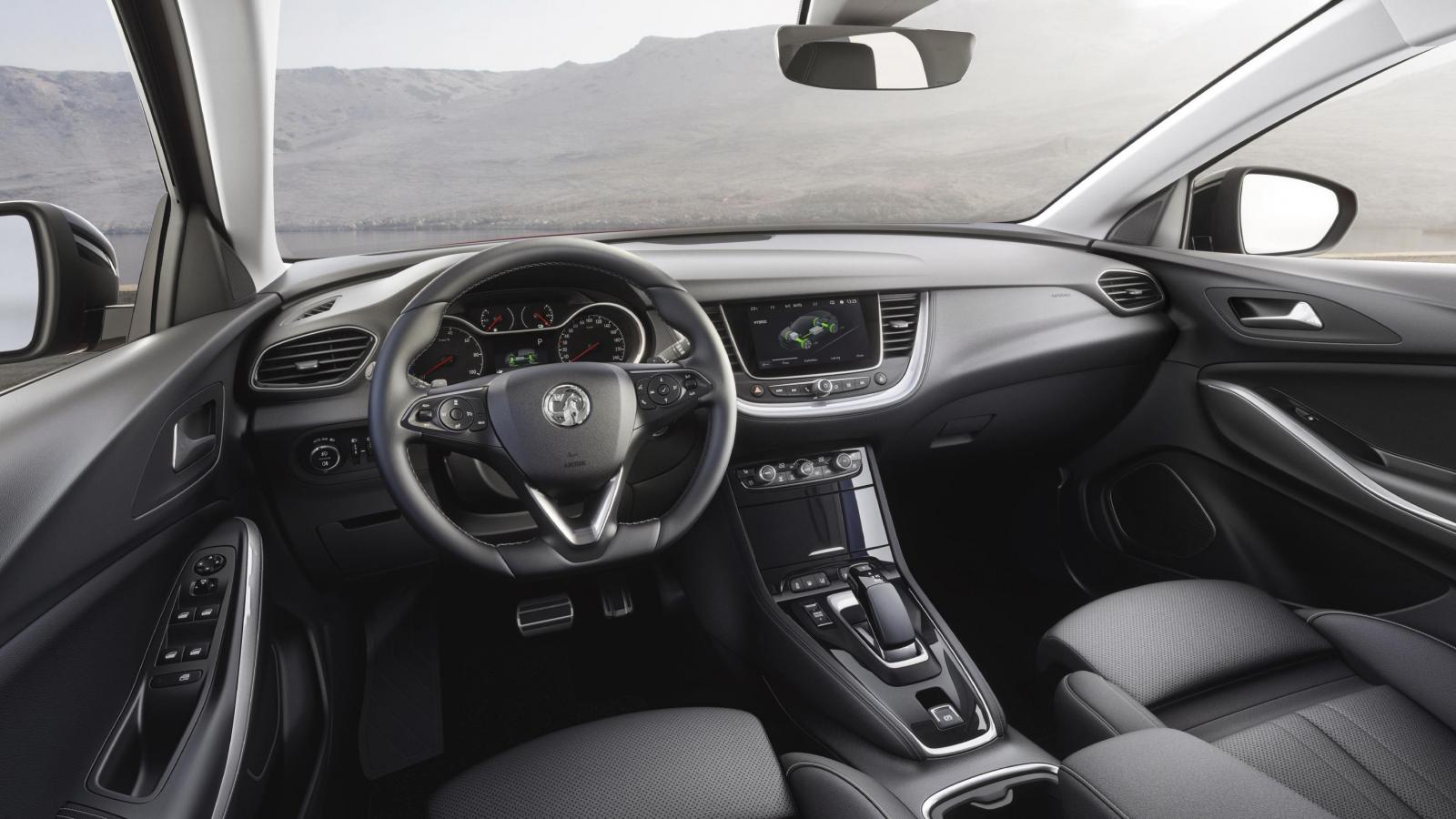
The vehicle features a 147 kW 1.6-litre turbocharged 4-cylinder engine mated to an electric drive setup with 2 electric motors pushing out a combined 81 kW. In total, there's 223 kW going through all 4 wheels. Battery capacity is rated at 13.2 kWh and the fuel economy rating sits at hard-to-believe 1.84 L/100 km.
Under the skin, the front electric motor is mated to electrified eight-speed automatic transmission, while the second motor and differential are integrated into the electrically-powered rear axle, providing all-wheel traction on demand. In pure electric mode, the car has a range of 48 km (according to WLTP1). In hybrid mode, the car automatically selects the most efficient method of propulsion. When travelling at low speeds within cities, for example, the system switches to electric mode for zero-emission driving. The vehicle also features a regenerative braking system, which Opel/Vauxhall claims can increase the electric range by up to 10%.
The vehicle features a 3.3 kW on-board charger, with an optional 6.6kW version also available. Opel/Vauxhall will also offer devices for fast charging at public stations, as well as wallboxes at home. With a 7.4 kW wallbox, customers can fully charge the battery in less than 2 hours. The European charging network boasts more than 85 000 charging points and the car has a smart navigation system which will plot the best route based on charging stations.
The Grandland X Hybrid4 is the first plug-in hybrid vehicle from Opel/Vauxhall, but it won't be the last. In 2019, the next-generation Corsa will go on sale and it'll be available in a full battery electric derivative.
Opel/Vauxhall has revealed the Grandland X hybrid which shares more than a few components with its Peugeot 3008 sibling.
At the recent launch of the new CLS 53 and updated C63 S, Mercedes-Benz South Africa confirmed what it will be launching here during the course of 2019. Here's what you can expect.
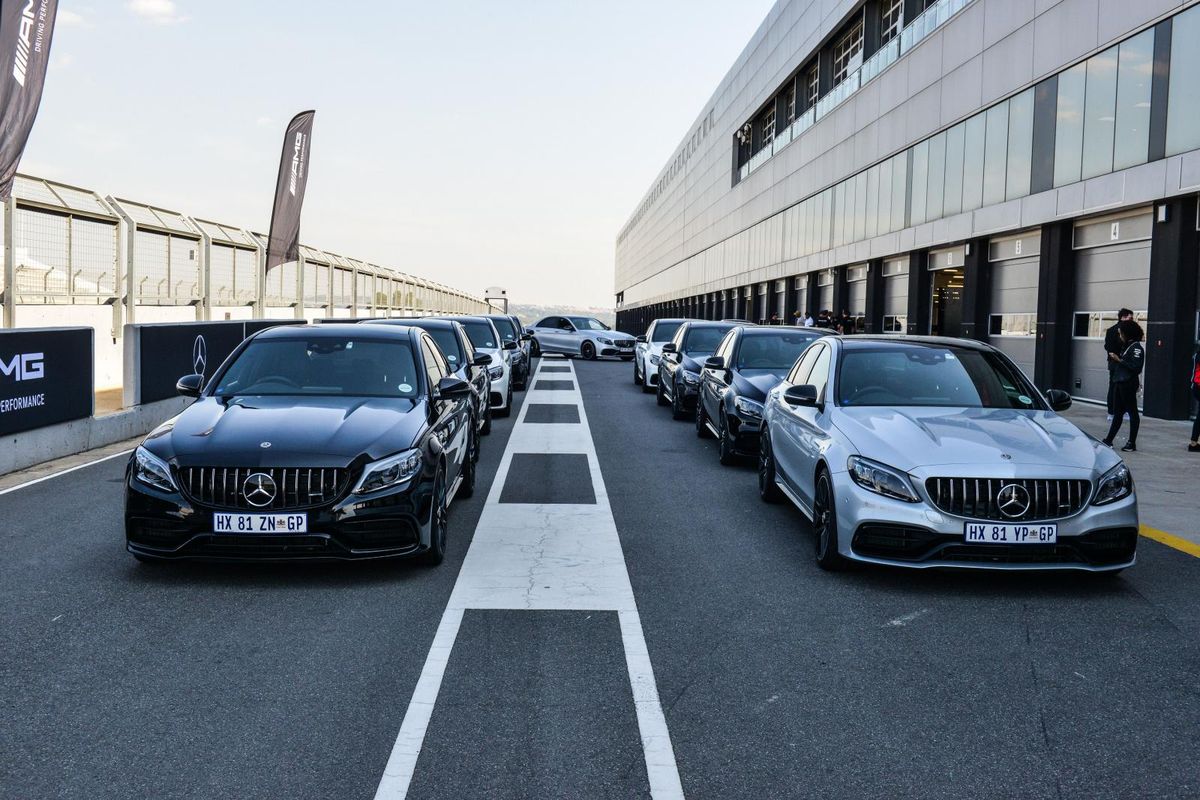
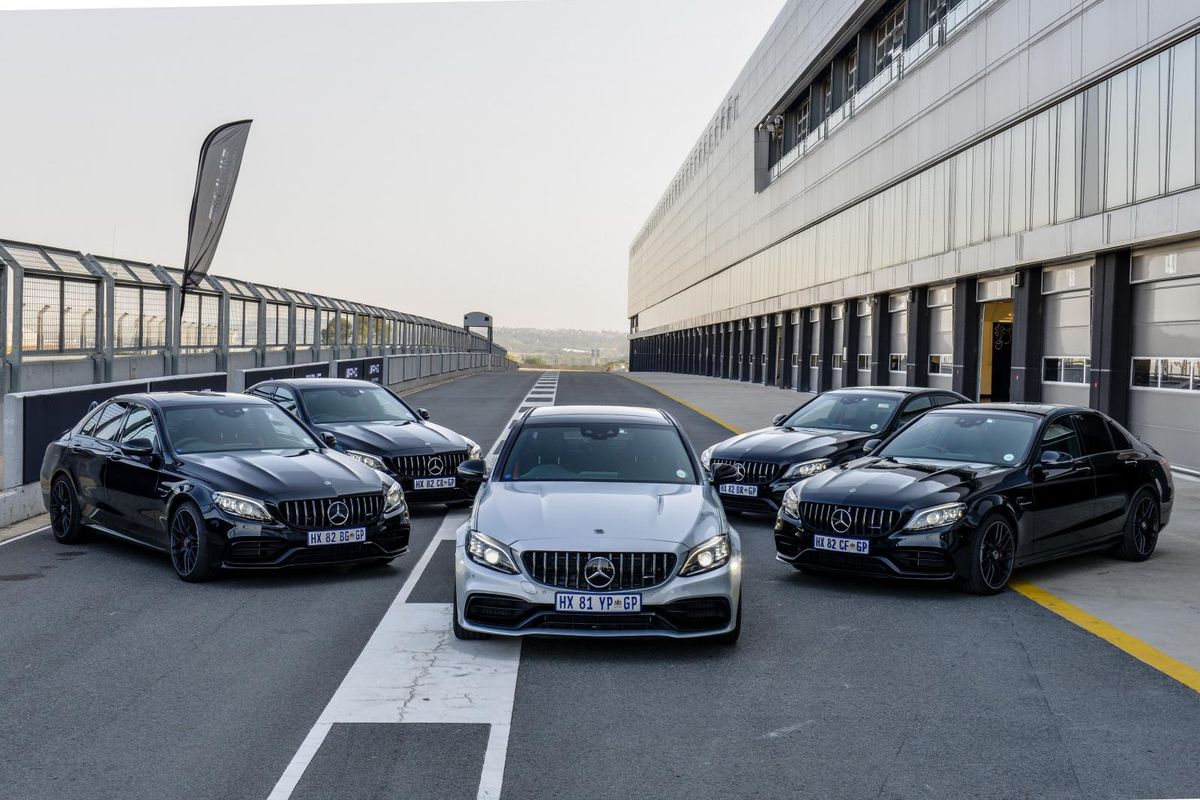
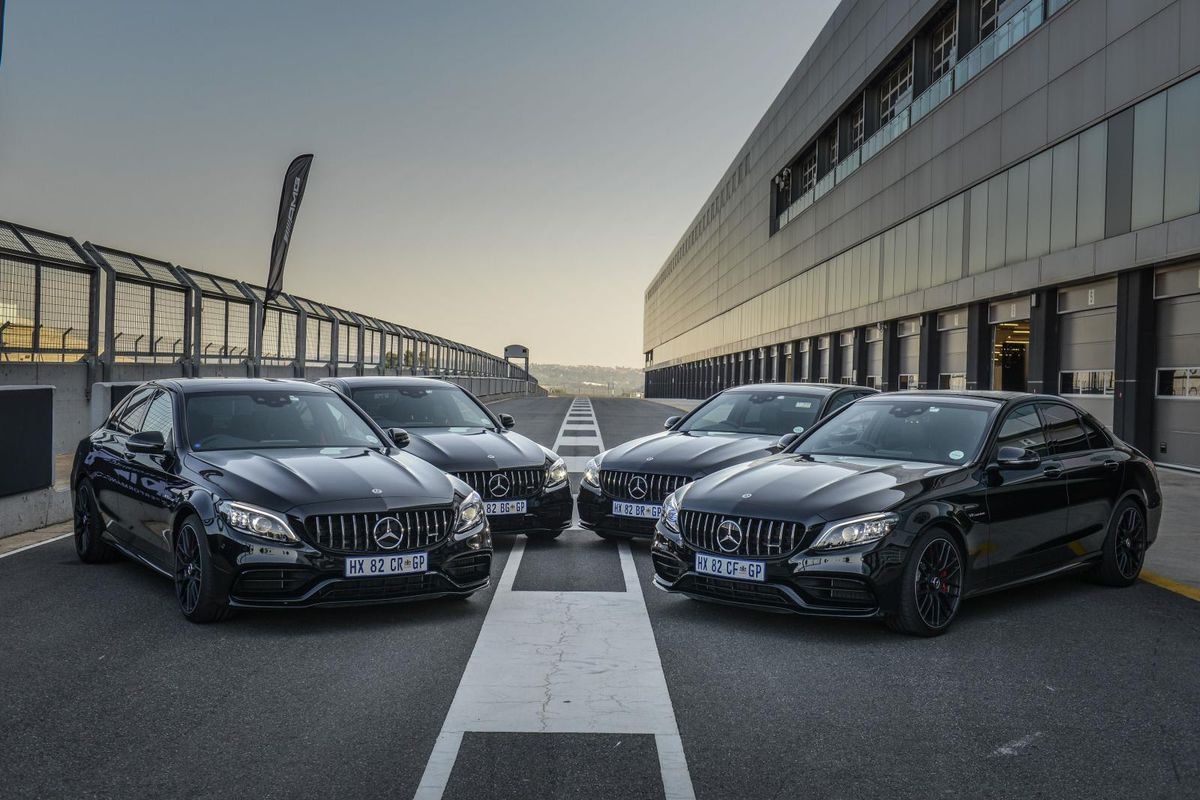
The launch of the new CLS 53 and updated C 63 S took place at Kyalami Grand Prix circuit and during the product presentation, Mercedes-Benz showed what's coming to our market in 2019. The good news is that the 3-pointed star has full confidence in our market and is not holding back.
Mercedes-Benz Product for 2019
Here are the main arrivals from Mercedes-Benz and Mercedes-AMG. As always, there could be some surprises. Click the headings for more information, driving impressions, pricing and photos.
Not to be confused with the forthcoming Mercedes-Benz CLA, the A-Class sedan will be arriving locally soon with the two derivatives being the A200 and A250.
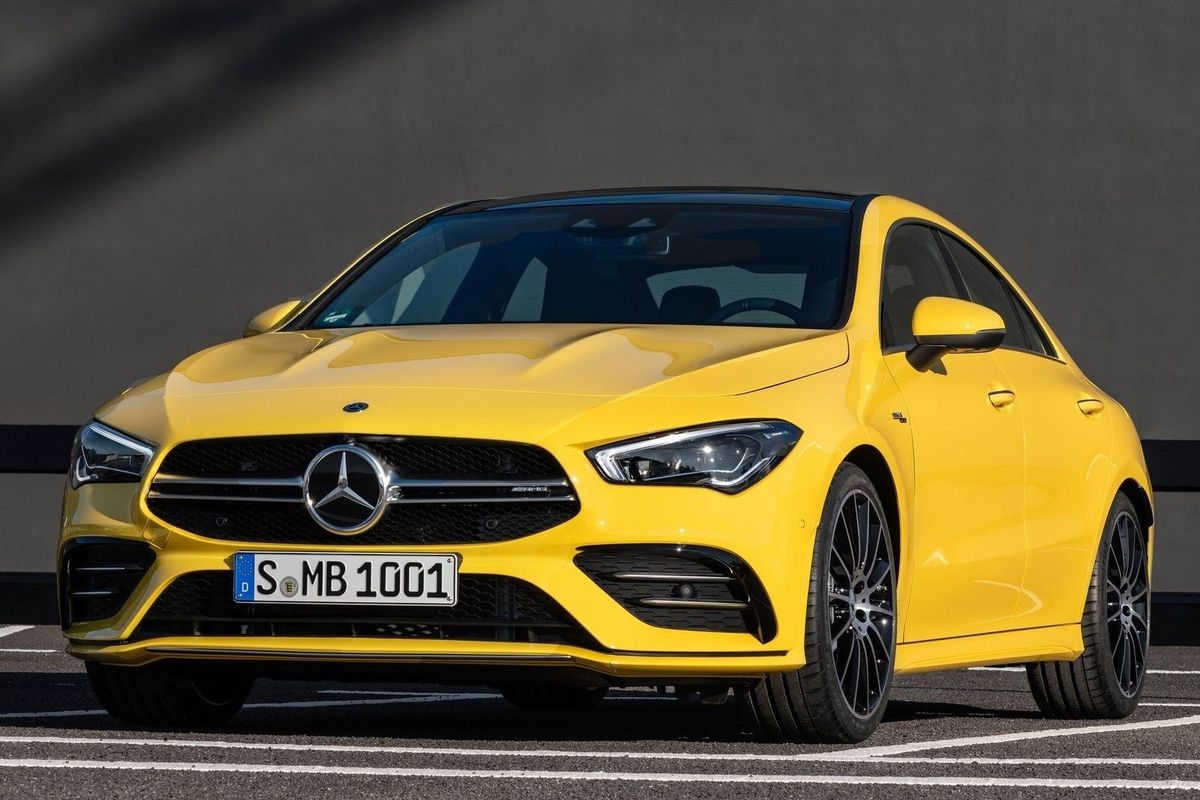
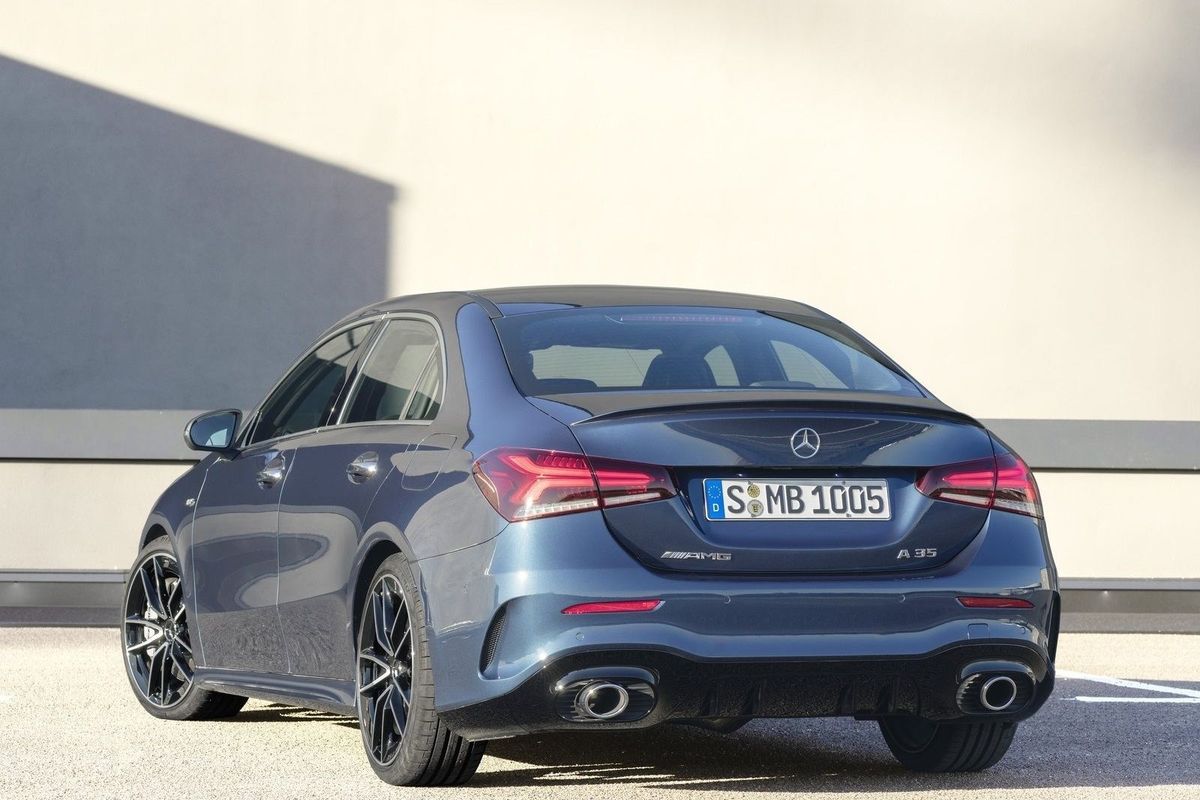
The first of the performance vehicles from Mercedes-AMG are the compact duo of the A35 and A45. Both boast 2.0-litre turbocharged 4-cylinder motors and all-wheel drive.
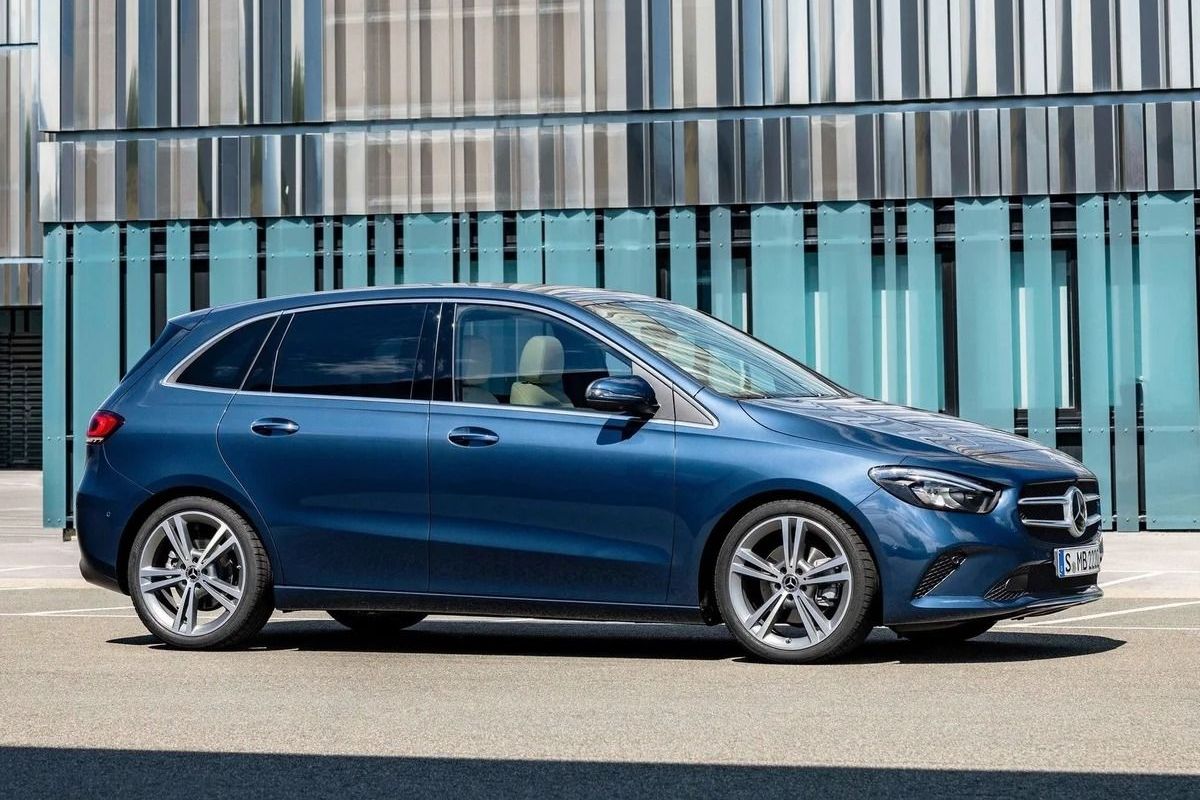
When the Mercedes-Benz A-Class moved from frumpy MPV to upmarket hatchback, there was a void in practical MPV segment. Enter the B-Class, a practical and sensible family vehicle boasting all the luxury features you'd expect from a Mercedes-Benz but with a family bent.
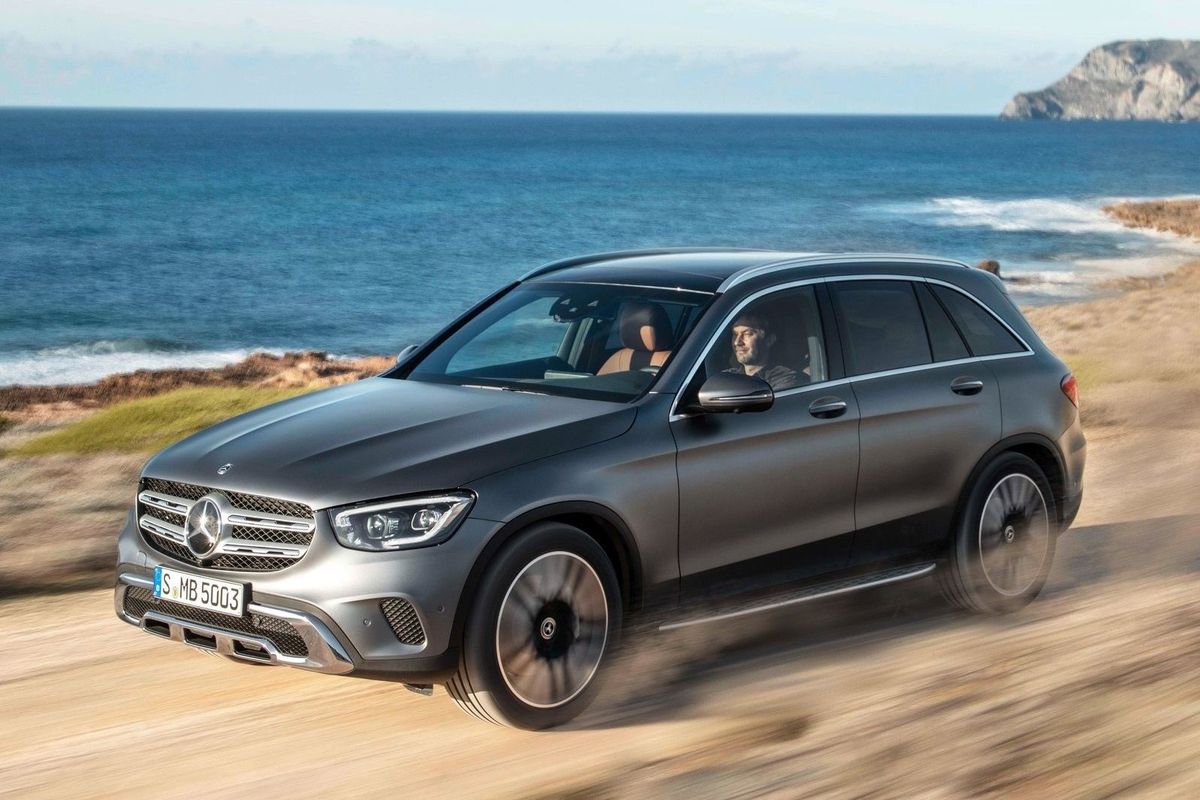
Mercedes-Benz will introduce a heavily updated version of its current GLC to the market later this year, featuring the brand’s latest 48-volt electric architecture.
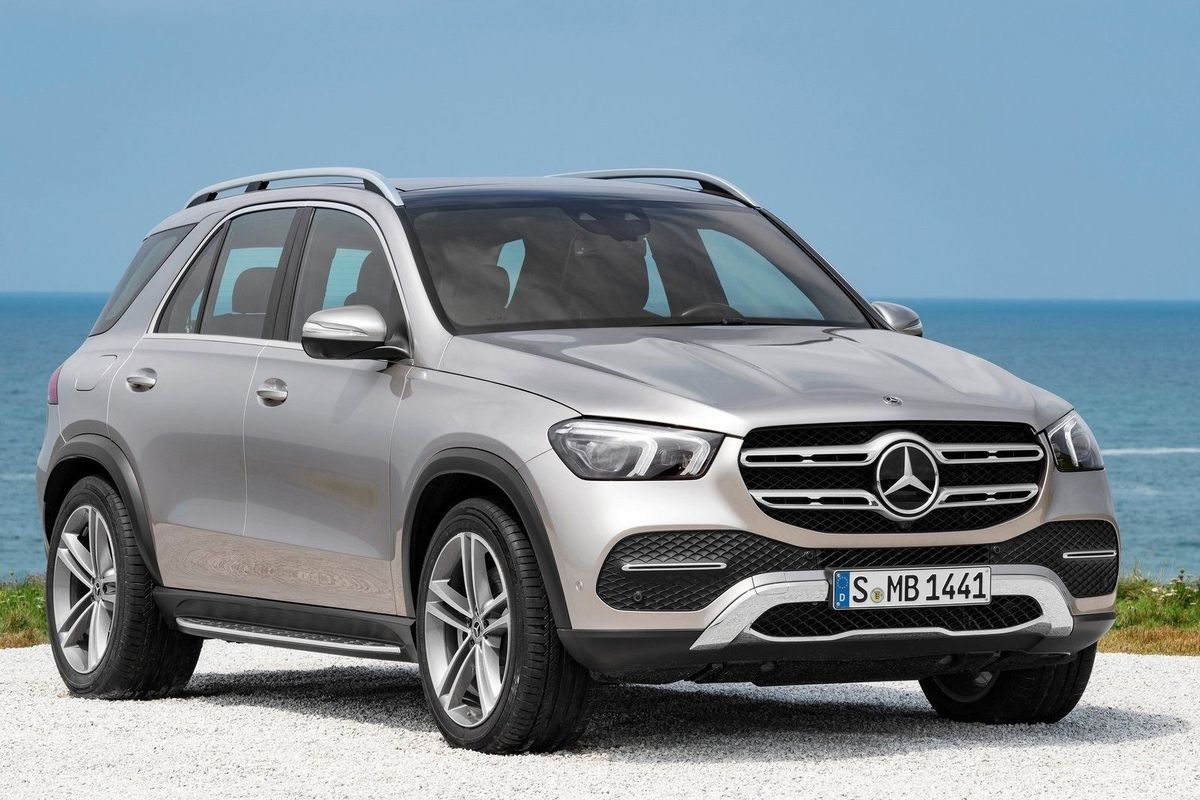
Mercedes-Benz's 4th-generation premium SUV has grown in size and standing, with new engines and advanced new suspension technology that bolsters its overall abilities.
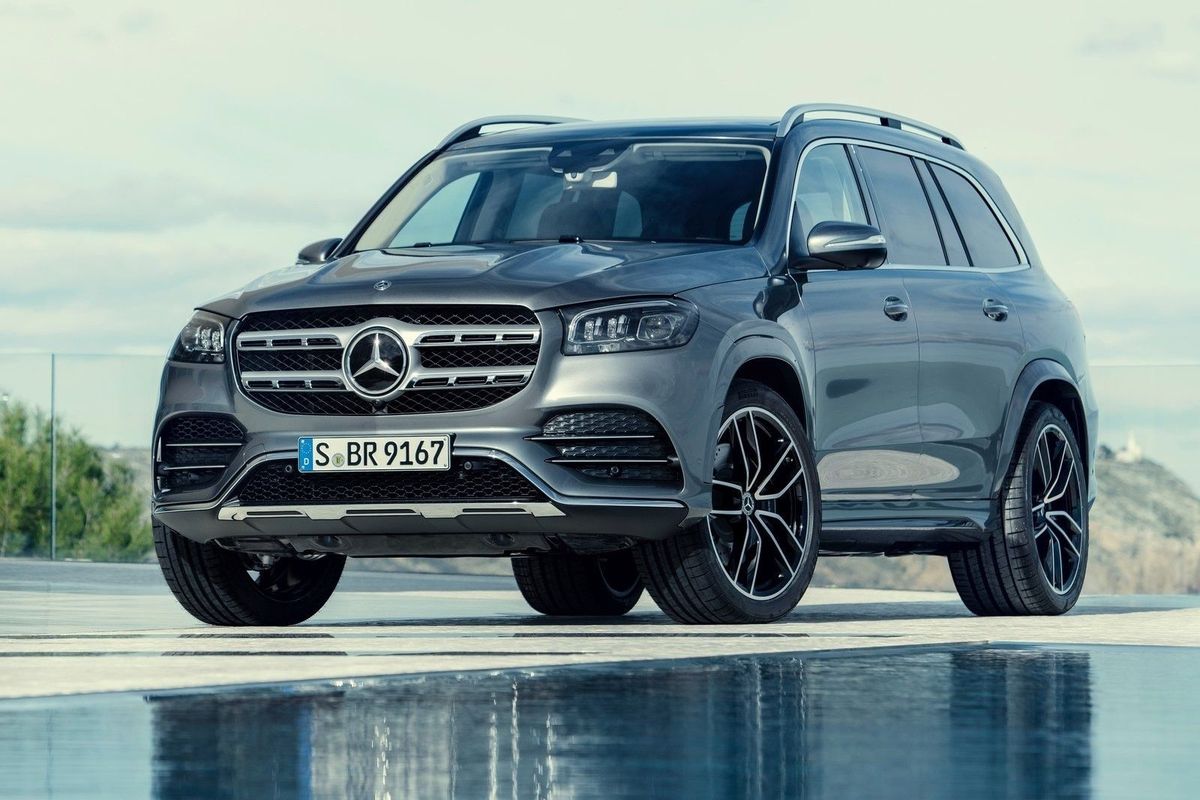
The third-generation of Mercedes-Benz’s largest SUV is confirmed for market introduction, bringing with it 7-seat carrying capacity as well as some offroad bias.
Cars.co.za’s WhatsApp Bulletin brings you frequent roundups of all the most important motoring news, reviews and opinion in a simple, once-a-day WhatsApp message.
Sign up now to receive a short and punchy WhatsApp Bulletin from Cars.co.za at no cost to you. Once a day we’ll send you a brief message with descriptions of – and links to – our best articles. Don’t worry about being spammed by group messages… only we will send messages to you!
Don't worry
We will not share any of your contact details with anyone else.
Your details will not be seen by any of the other users either.
You won’t be subscribed to other communications from Cars.co.za or 3rd parties.
The service is free of charge and, if you wish, you can leave by replying ‘Stop’ to the message and we will remove you..
Here’s how to sign up:
Hit this button below and send us the automated message.
We will respond immediately, please add the number to your contacts (this is very important)
We will then add you to the list and you’ll start receiving a WhatsApp Bulletin from us (it may take a day or two to activate if there are many of signups). If you feel like unsubscribing from the Bulletin service, reply to a message from us with ‘Stop’ and you won’t receive further messages.
WhatsApp Article example
Mazda Plans Straight-6 Engines
While the world continues on its downsizing of engines course, Mazda is busy preparing a new generation of big straight-6 engines. Here's what we know so far.
Mazda has confirmed it'll be assembling a new family of straight-6 petrol and diesel engines for future products. Dubbed Skyactiv-X, these new engines will be joining an all-new platform with the capacity for rear-wheel drive as well as all-wheel drive. There'll also be hybrid and plug-in hybrid capacity.
The move to a bigger engine tells us that Mazda is wanting to attack the more premium segments of the global car market. While we don't think the South African market will see many of these engines, other than a future generation CX-5, the international market has the CX-9 as well as large Mazda6 sedan.
The current lineup of engines look good on paper and the new Mazda3 features the advanced Spark Controlled Compression Ignition technology and this model is due in South Africa before the end of the year.
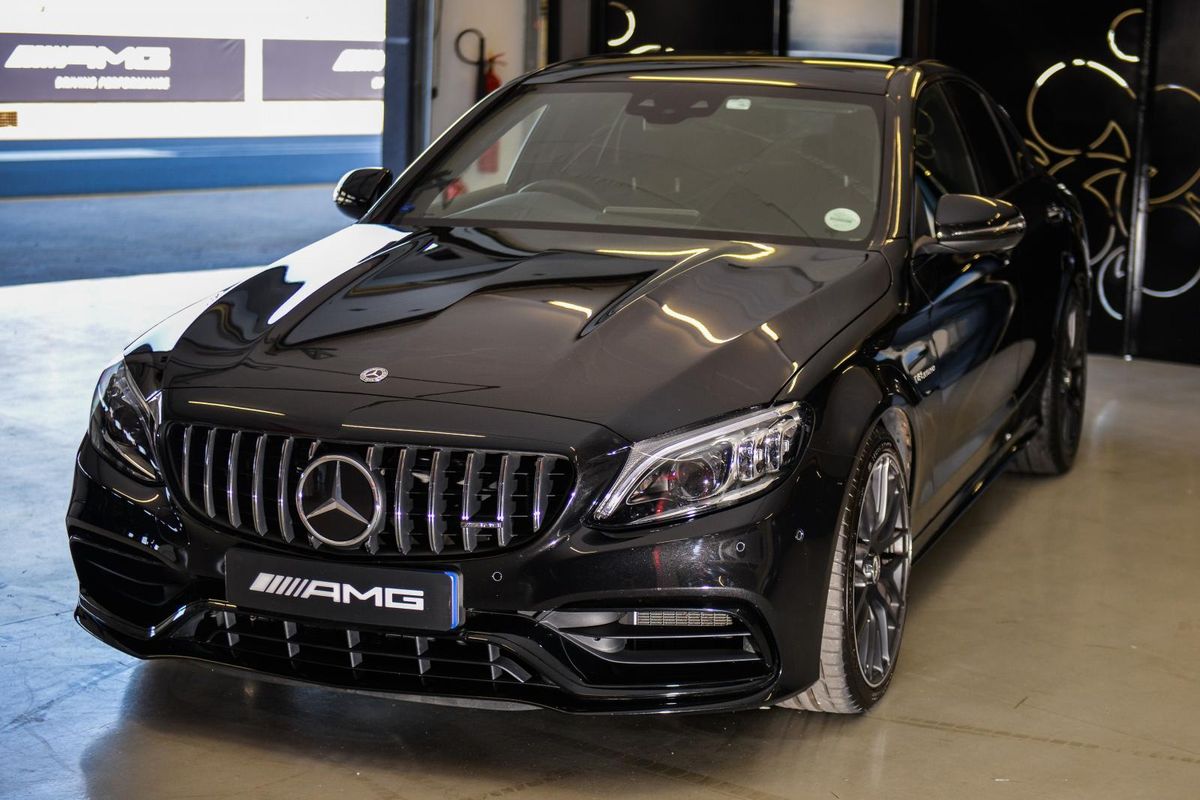
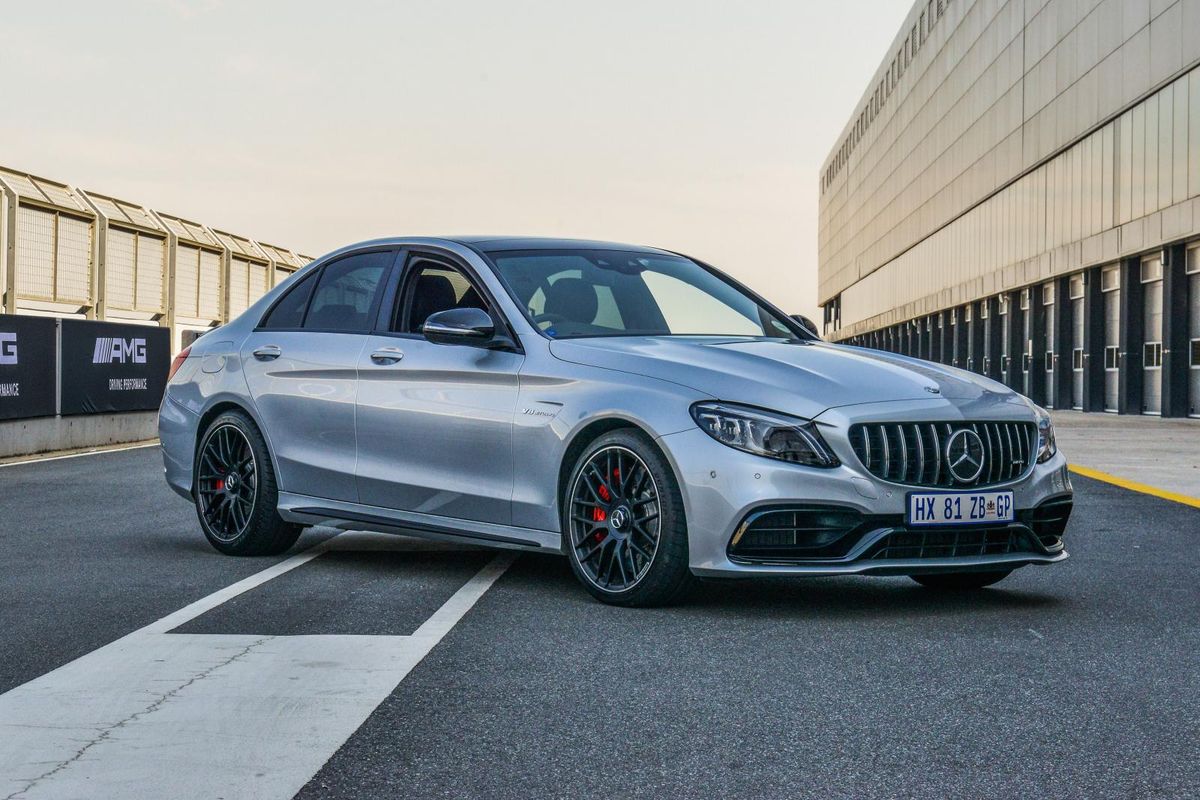
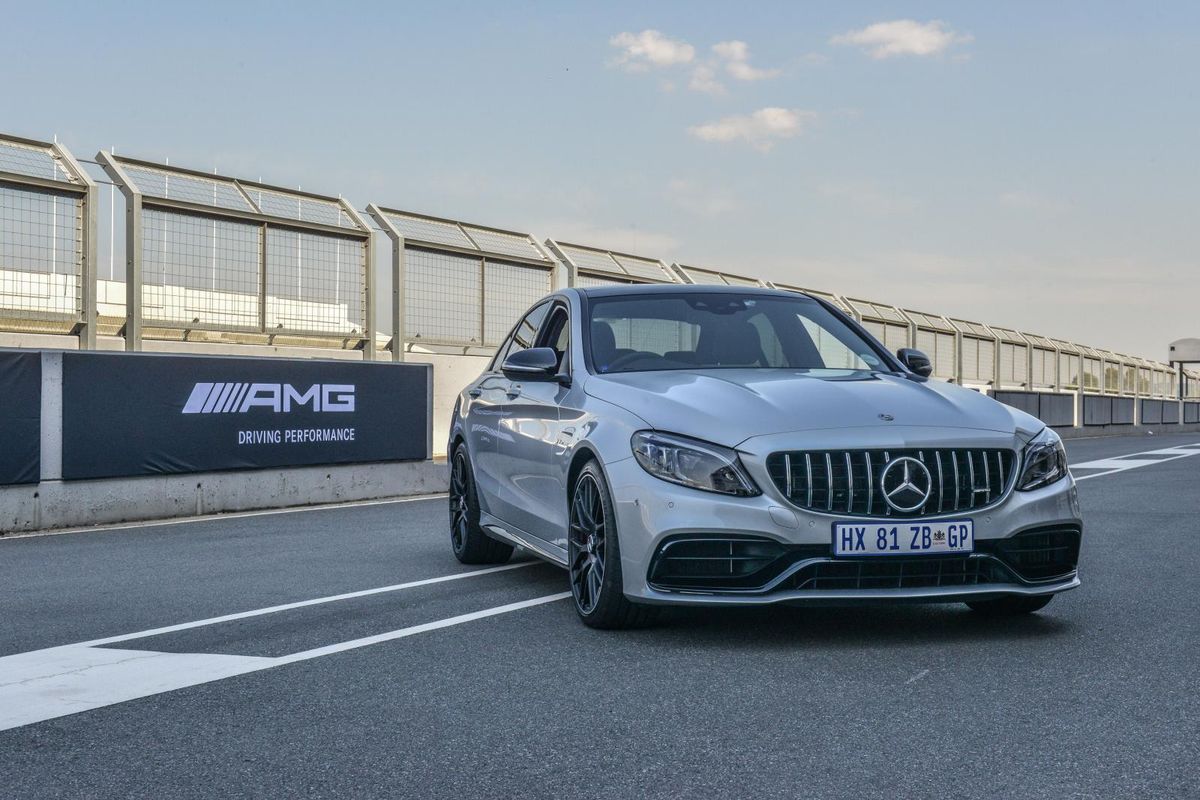
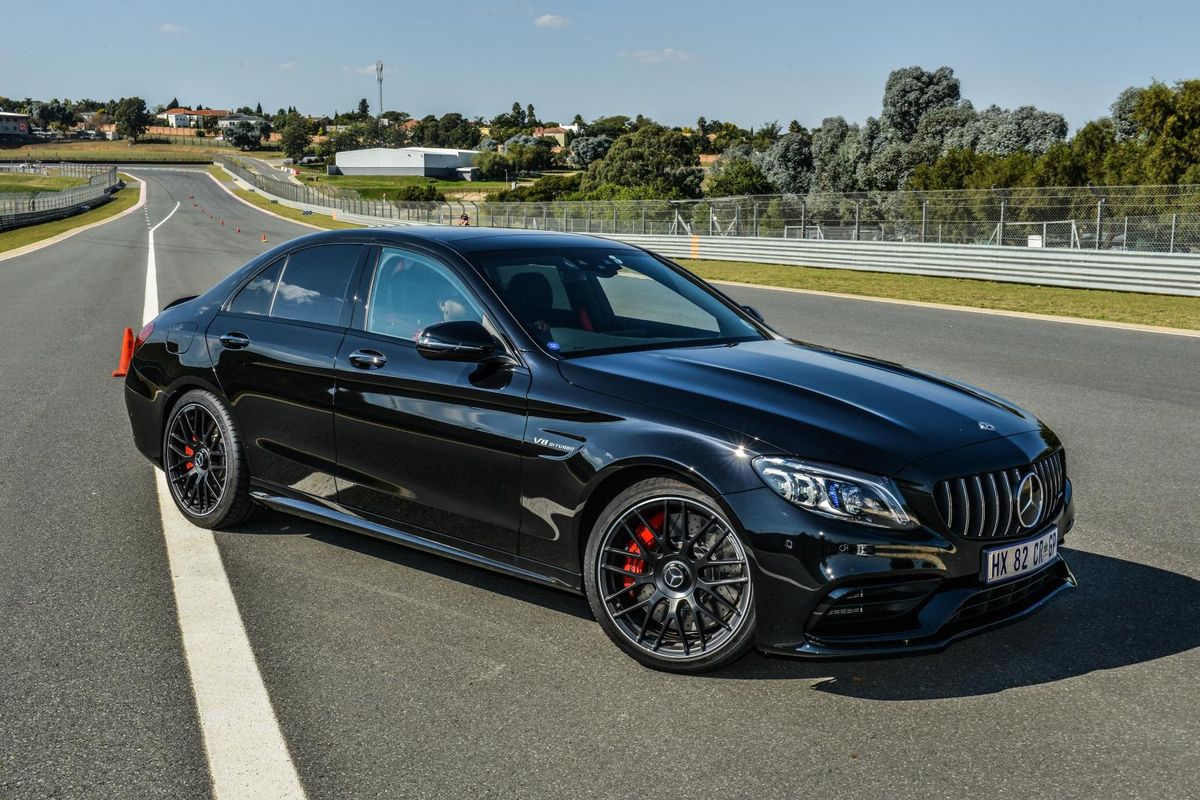
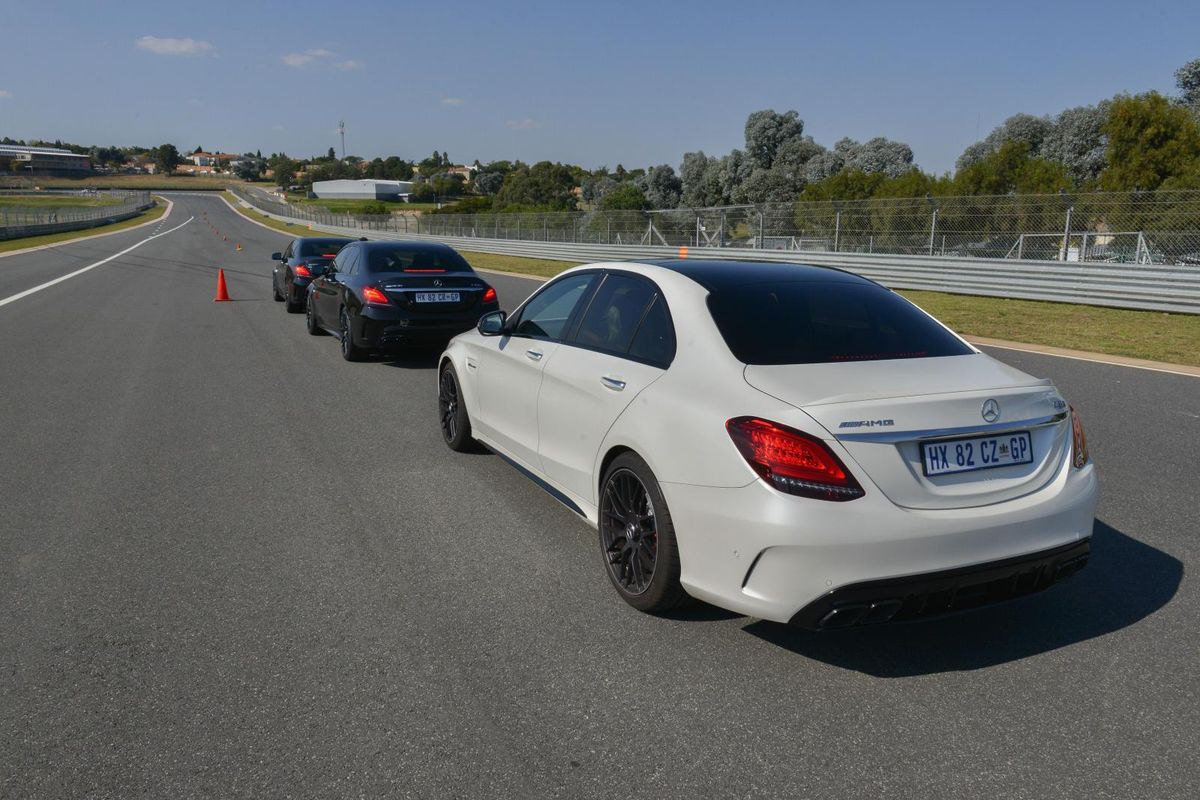
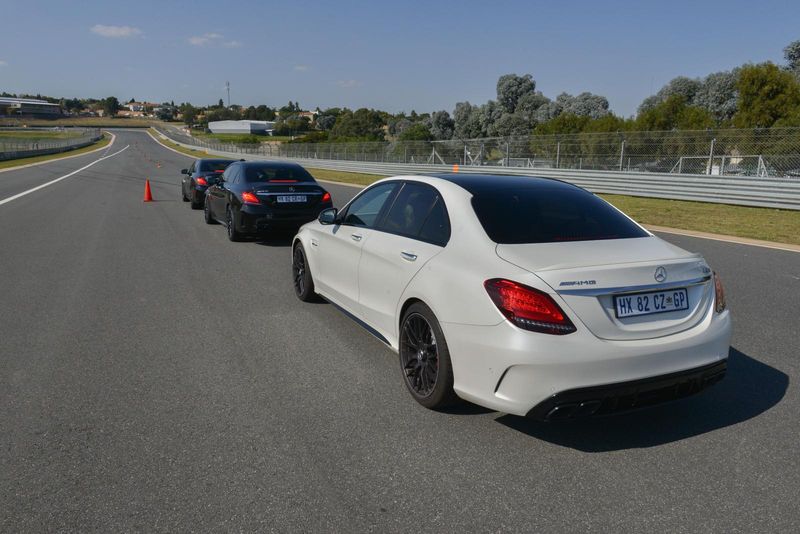
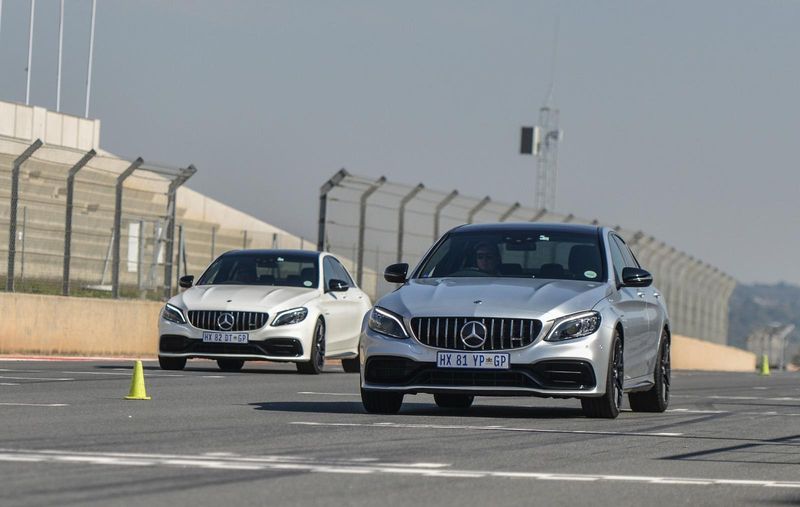
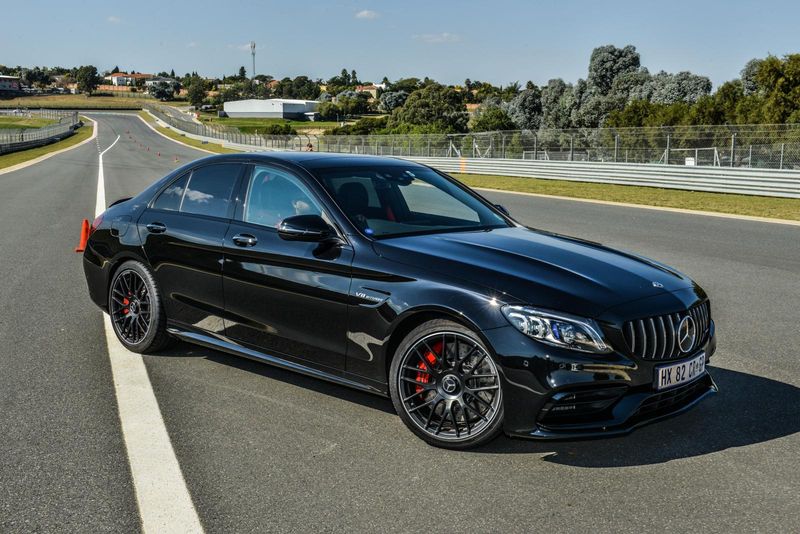
The updated Mercedes-AMG C63 S is now available in South Africa and we got a chance to stretch its legs at the Kyalami Racing Circuit. Is this the benchmark performance-oriented business class sedan in the local market?
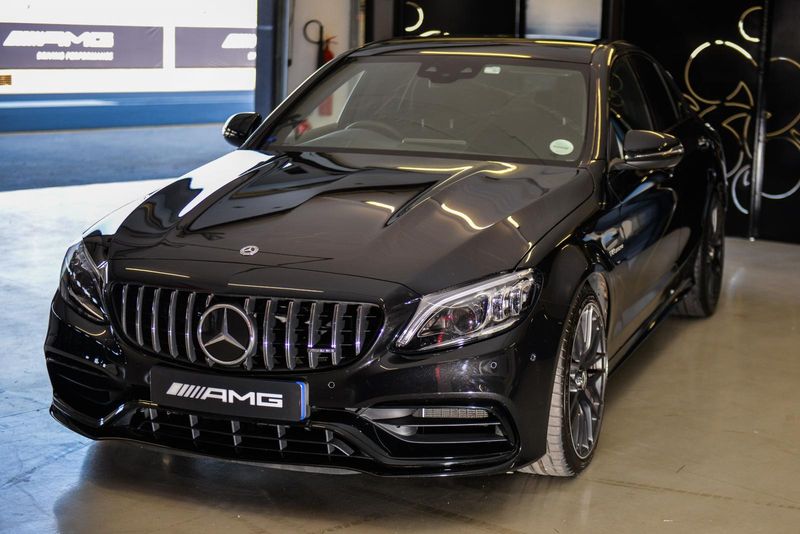
We had our first glimpse of the new-look C63 S in Germany in 2018, where we sampled the newcomer on road as well as the technical Bilsterberg circuit. Initial impressions were good and while the changes from the pre-facelift version aren't easy to notice, there are enough alterations under the skin to make this vehicle quite newsworthy. Available in sedan, coupe and cabriolet flavours (alas, there is not enough demand for an estate version in South Africa), the C63 S boasts some slight visual updates, but the real changes can be found under its sheetmetal.
The 4.0-litre V8 twin-turbocharged engine remains unchanged, but it's not a deal-breaker by any stretch of the imagination – it's a superb motor. Not only does it deliver a class-leading power output, it's one of the best-sounding engines of all time. For the record, it delivers 375 kW and 700 Nm. The good news is that the older 7-speed transmission has been replaced by a new, fast-shifting 9-speed 'box with a wet start-off clutch. Gearshift times have been reduced and the new clutch setup replaces the torque converter, which in turn, saves weight and is a tad more responsive.
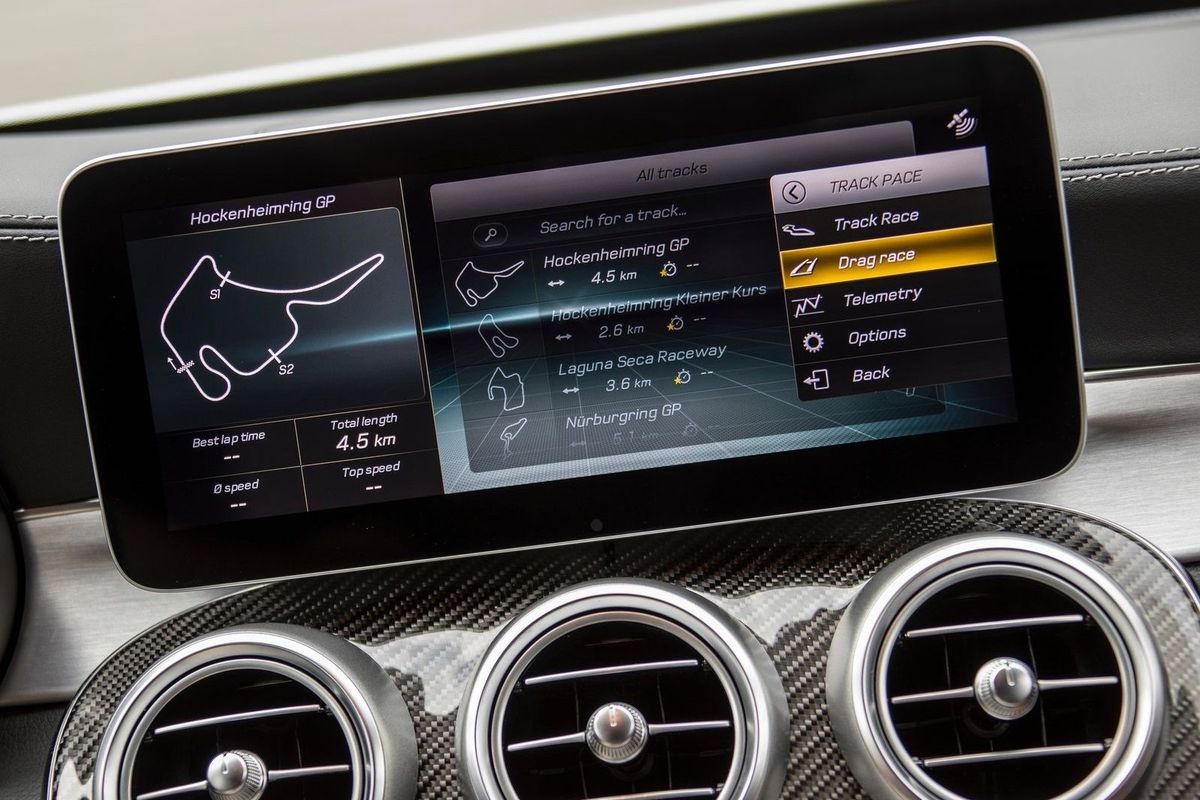
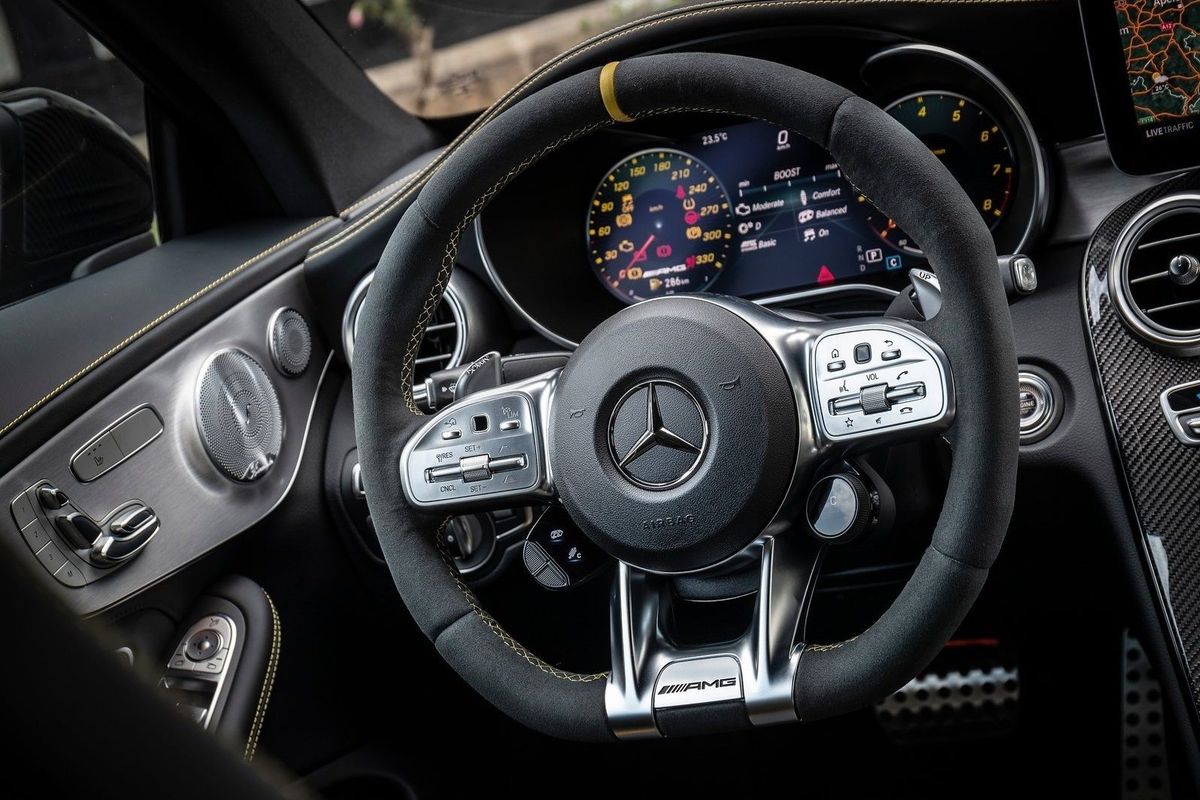
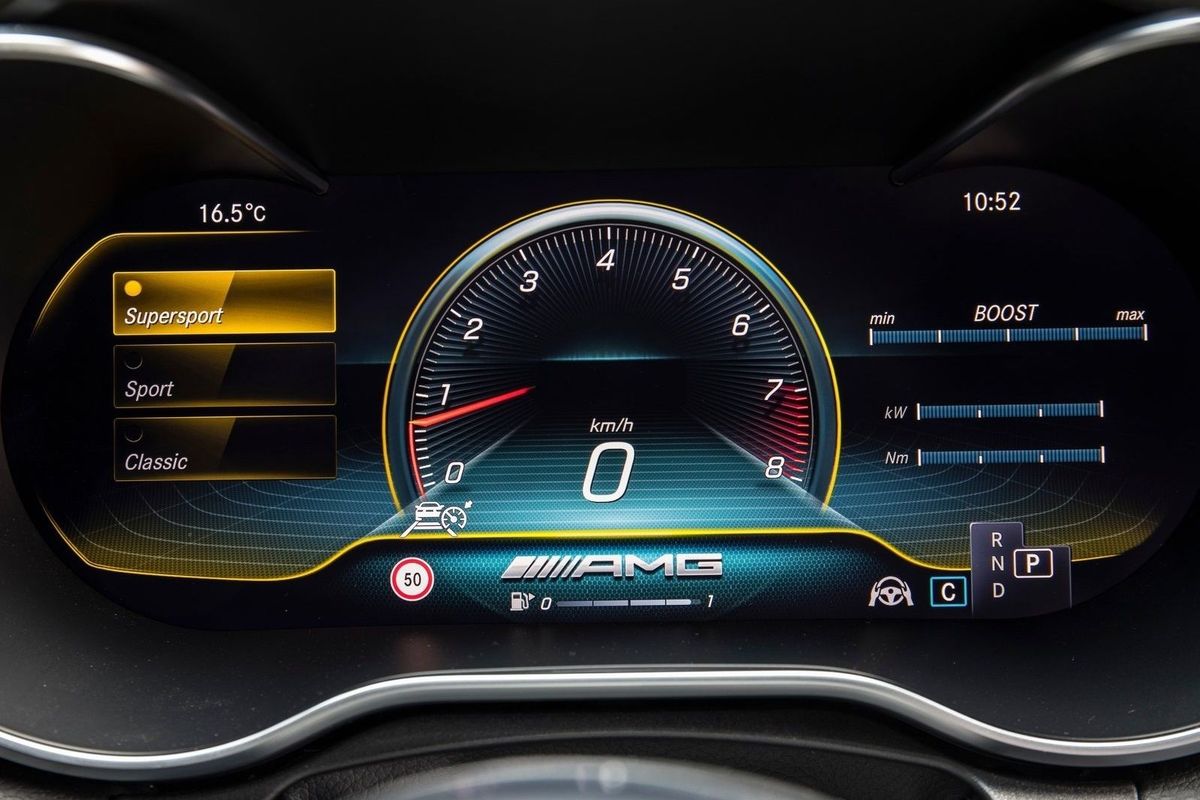
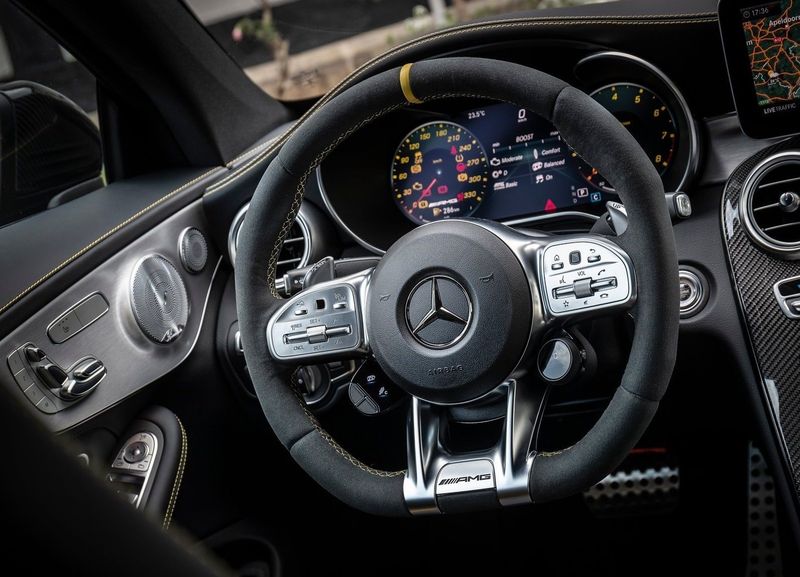
Other nice additions are the new electronically-controlled rear differential, as well as a trick 9-stage traction control system similar to that first seen in the AMG GT R supercar. Visually, there's the flamboyant Panamericana grille dominating the front end, some new-look tail lights, redesigned alloy wheels and some new exhaust tips at the rear. Inside, the vehicle gains a neat digital dashboard, as well as the latest updated steering wheel. You'll notice 2 new features on the steering wheel: towards the middle are 2 controllers, which remove the need to fiddle with the centre console.
You can now easily switch between drive modes using the rotary controller on the right and it's a cinch to scroll through vehicle settings such as those that pertain to manual gear changes, traction control on/off and auto start/stop… there's even a mode to make the exhaust louder.
The updated steering wheel features a pair of rotary selector switches. Change driving modes, gearbox settings and more here.
What's it like to drive?
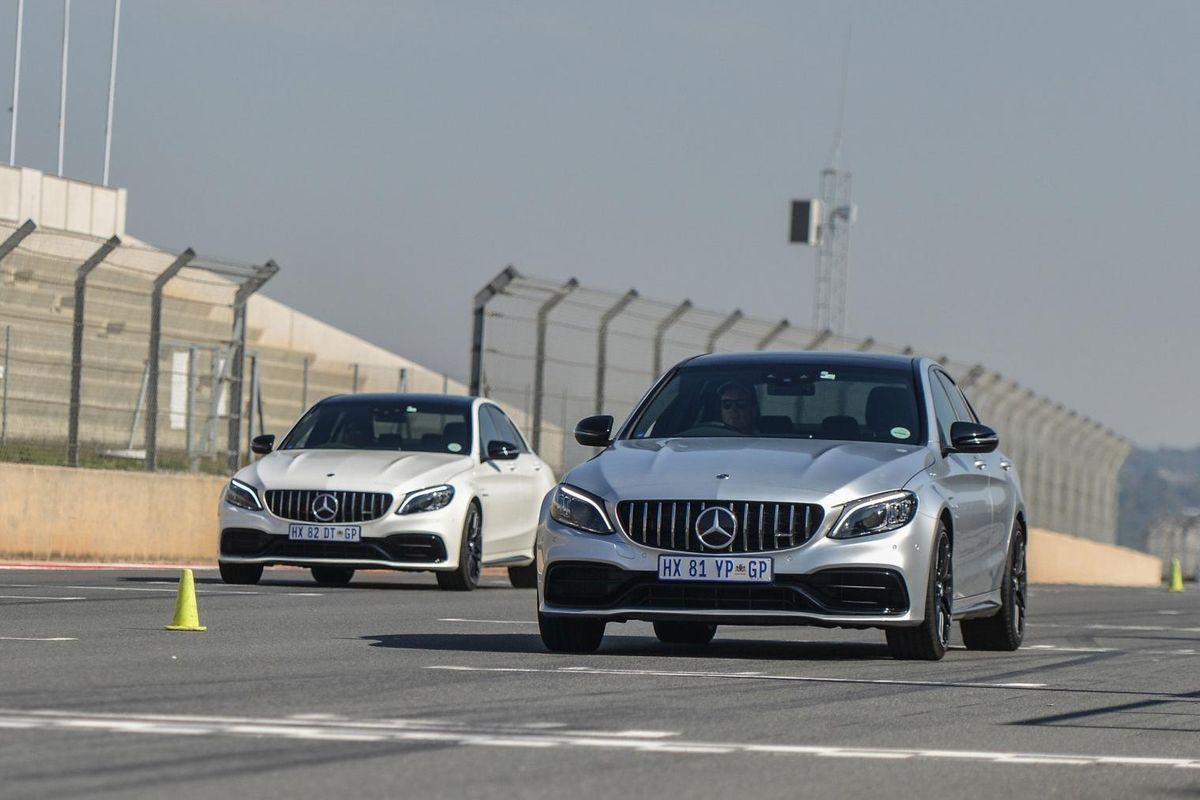
Our time with the updated Mercedes-AMG C63 S was limited to on-track testing. The best thing about being on track is you can really open the taps and thoroughly evaluate the vehicle in a safe environment. Given the tremendous grunt and performance on offer, this was a good thing. We did a few quick laps to test the vehicle's handling and acceleration and conducted an interesting exercise to experience the 9-stage traction control.
One thing that's always impressed us about the C63 S is its adaptability. Thanks to its multitude of driving modes, you can live with the vehicle on a day-to-day basis without fear of falling foul of its tremendous performance potential (it'd take a brave person to try to drive a C63 S on a wet road in its most aggressive mode). When in Comfort mode, the Benz behaves quite politely; the quad exhaust system emits just a subtle audible hint of the fire-breathing V8 lurking beneath its bonnet. But seeing that we were on a racetrack, we duly engaged Race mode, which put all the systems into maximum performance mode. The adaptive dampers firm up, the steering sharpens and the exhaust valves open fully – cue mechanical mayhem.
Kyalami: the safest and most logical place to test a V8-powered rear-wheel-drive super sedan.
As we departed the pits and headed out onto the circuit, the first thing that made a positive impression was the C63 S' responsive new transmission. Not only does the vehicle change swiftly, but each shift produces a satisfying thud. With the new trick differential doing its thing, the Benz will mostly behave and not wag its tail, but if you're too eager and generous with the throttle pedal, 700 Nm to the rear wheels will induce glorious oversteer.
Now, about that 9-stage traction control. Having experienced numerous rear-wheel-drive AMG products over the years, we've learnt that they have the potential to bite hard (misbehave) if you're not circumspect with the throttle pedal – in fact, the traction control light can resemble a disco strobe as the car's electronics struggle to maintain traction while trying to accelerate the car as quickly as possible. If you switch the C63 S' traction to a Sport setting, you're very likely to get some wheelspin; in fact, the V8's outright grunt can easily overwhelm its rear tyres. But now, if you switch it off completely, you'll see the new rotary dial on the steering wheel light up with a submenu. Here, the traction control can be programmed to allow some degree of slip. There are 9 settings: 1 will allow minimal amounts of silliness before intervening; 9 is off completely and you're on your own.
With its new 9-speed gearbox, the C63 S feels eager off the line, with AMG claiming a 3.9-second sprint from 0 to 100 kph.
Mercedes-AMG set up a special course where could experiment with the various settings (we'd say numbers 7 and 8 represent about the most fun you can have safely). The functions allow you to properly hang the tail out while countersteering, while the V8 engine bellows at full volume and converts the rear tyres to smoke. Fun? Absolutely. Necessary? Probably not for your average driver. It's a bit of a gimmick, much like the drift modes of some all-wheel-driven cars, but it's a great talking point. The cool factor of saying, "Well, I do have a 9-stage traction control system" is off the charts and while the vast majority of C63 S owners won't be taking their cars to the track, those who do will have a terrific time "finding their limits".
Does the new transmission help with acceleration? While initial urge will always be a battle for grip, Mercedes-AMG claims its new C63 S will sprint from 0 to 100 kph in just 3.9 seconds (for the sedan) and reach a top speed of 290 kph. We think the additional ratios are mostly for fuel economy.
Summary
The changes are small, but significant and those who venture down this route will find a thoroughly modern and digitally connected cabin.
With the Mercedes-AMG C63 S in the latter half of its product cycle, it needed some updates to keep pace with developments in the marketplace. There are new rivals on the horizon: the next BMW M3 is due to be revealed soon and Audi has just bolstered its RS4/RS5 range in South Africa.
There's just something so alluring about the brutish C63 S, which is quite likely to be AMG's final exclusively rear-wheel-drive performance business class sedan/coupe/cabriolet. Not only is it tremendously powerful, it sounds absolutely wicked and offers a veritable smorgasbord of driving thrills.
The cabin sees the biggest changes. The new-look steering wheel is beautiful both to look at and wield, and the digital dashboard is a big leap forward. It's no MBUX, but we're likely to see that in the next-generation Mercedes-Benz C-Class which should make an appearance in 2020.
While our time with the new Mercedes-AMG C63 S was fleeting and limited to just some track excursions, we're eagerly looking forward to seeing if Affalterbach's road rocket is now a little easier to live with on a daily basis. Some will hope it won't be, but be that as it may, roll on the road test!
Mercedes-AMG C63 S Price in South Africa (May 2019)
Land Rover’s latest limited-edition SUV is one that aims for the stars, literally.
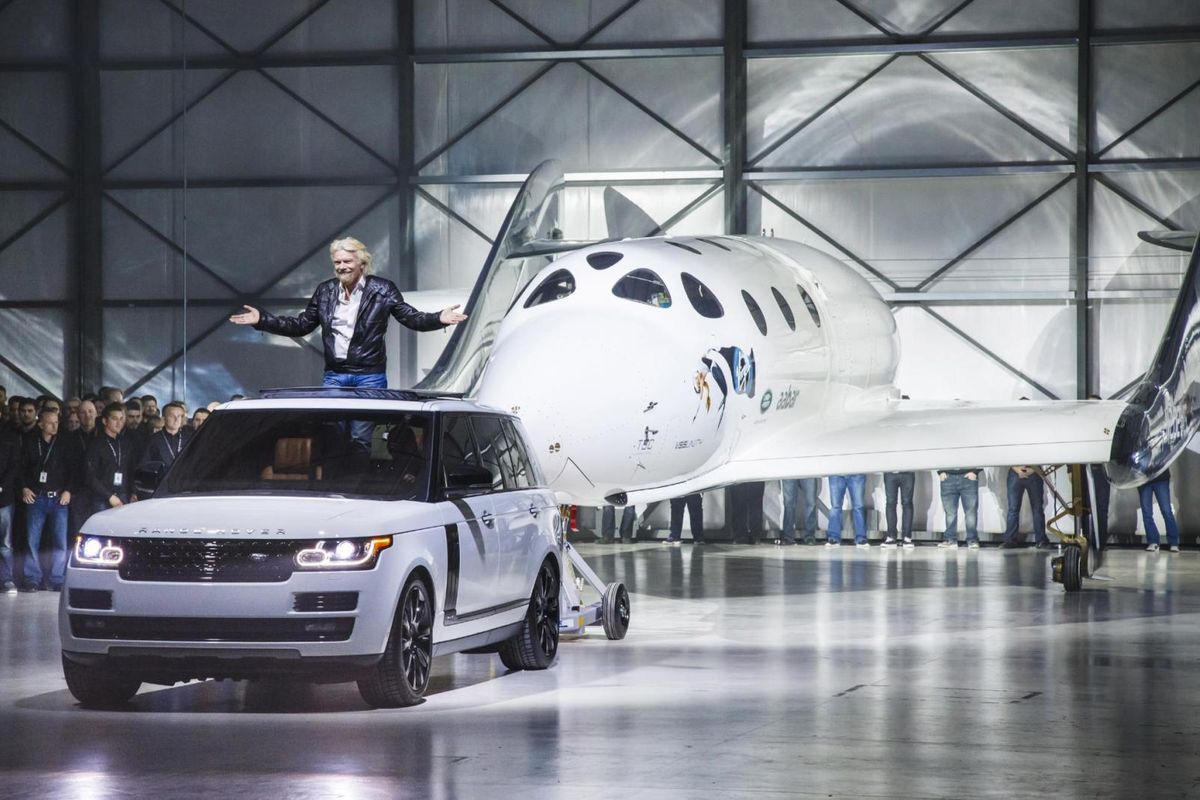
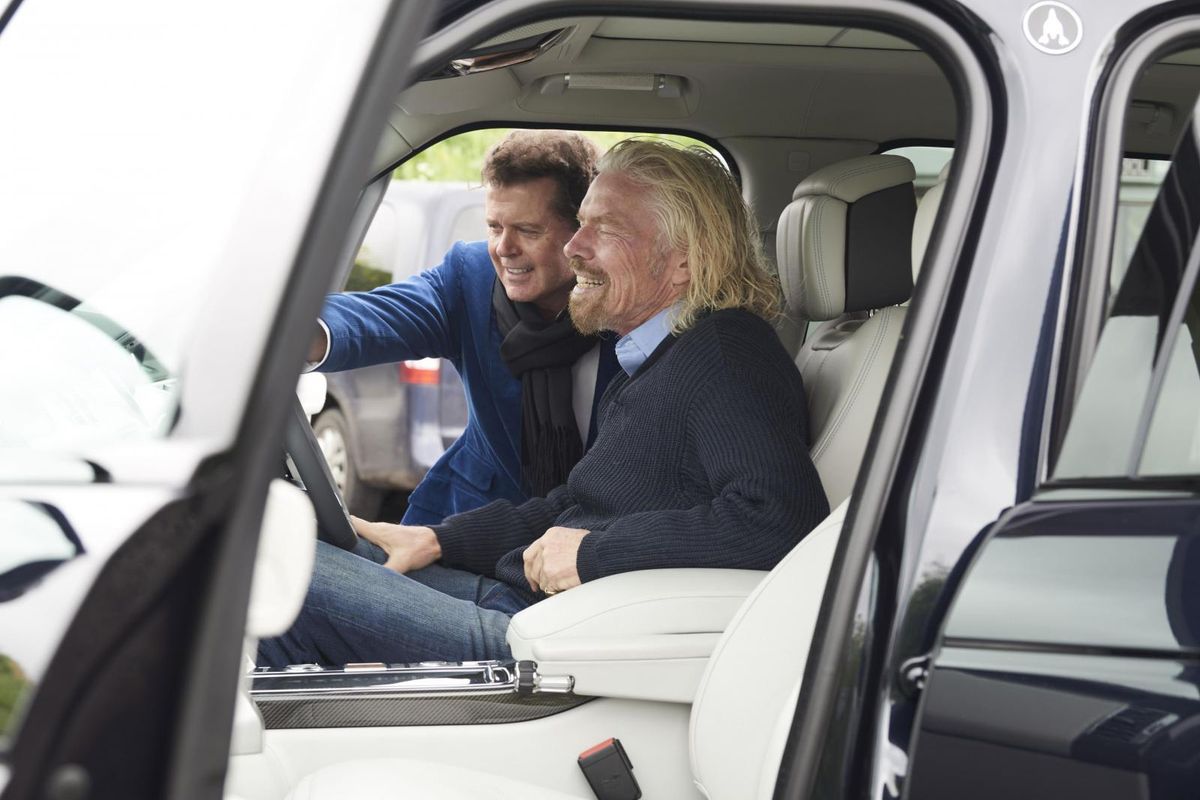
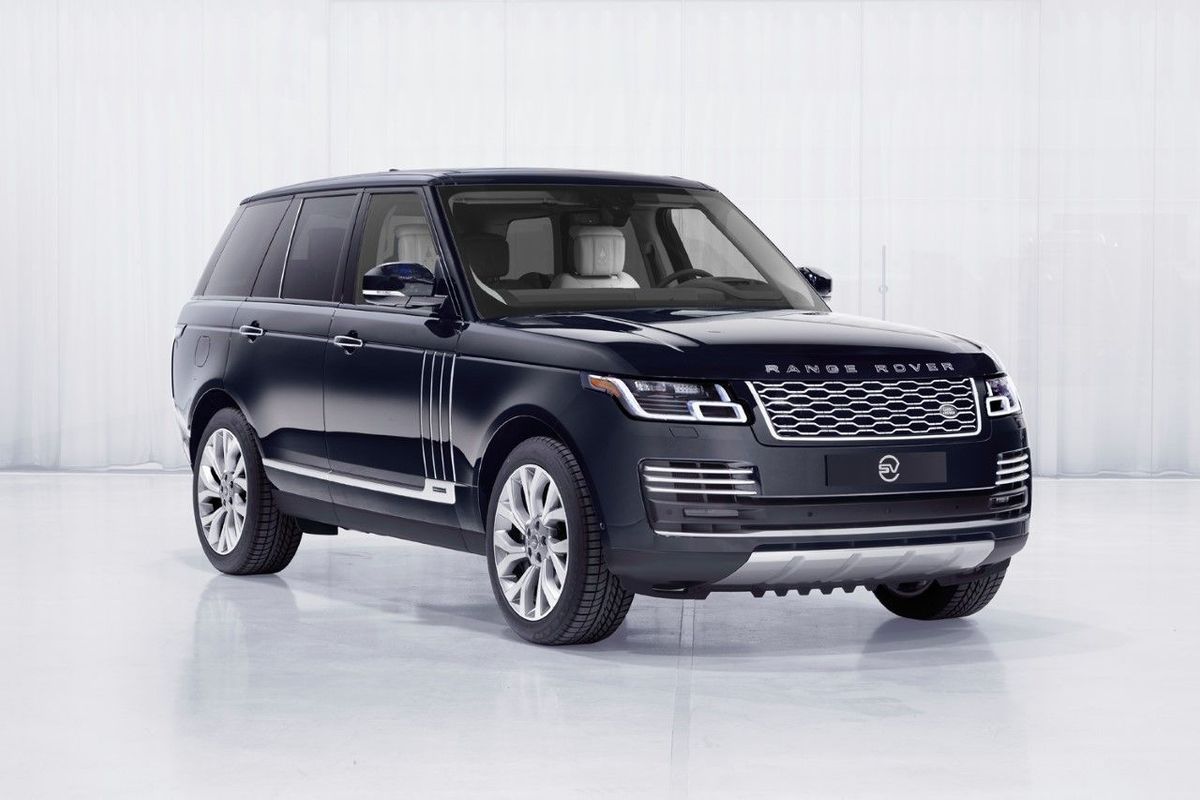
In a joint venture celebration of all things British and entrepreneurial, Land Rover and Richard Branson are now offering the most exclusive Range Rovers imaginable. Developed as a collaboration between Land Rover’s Special Vehicles Operation team and Virgin Galactic, Branson’s private space and exploration agency, these Range Rovers can only be ordered and owned by prospective astronauts.
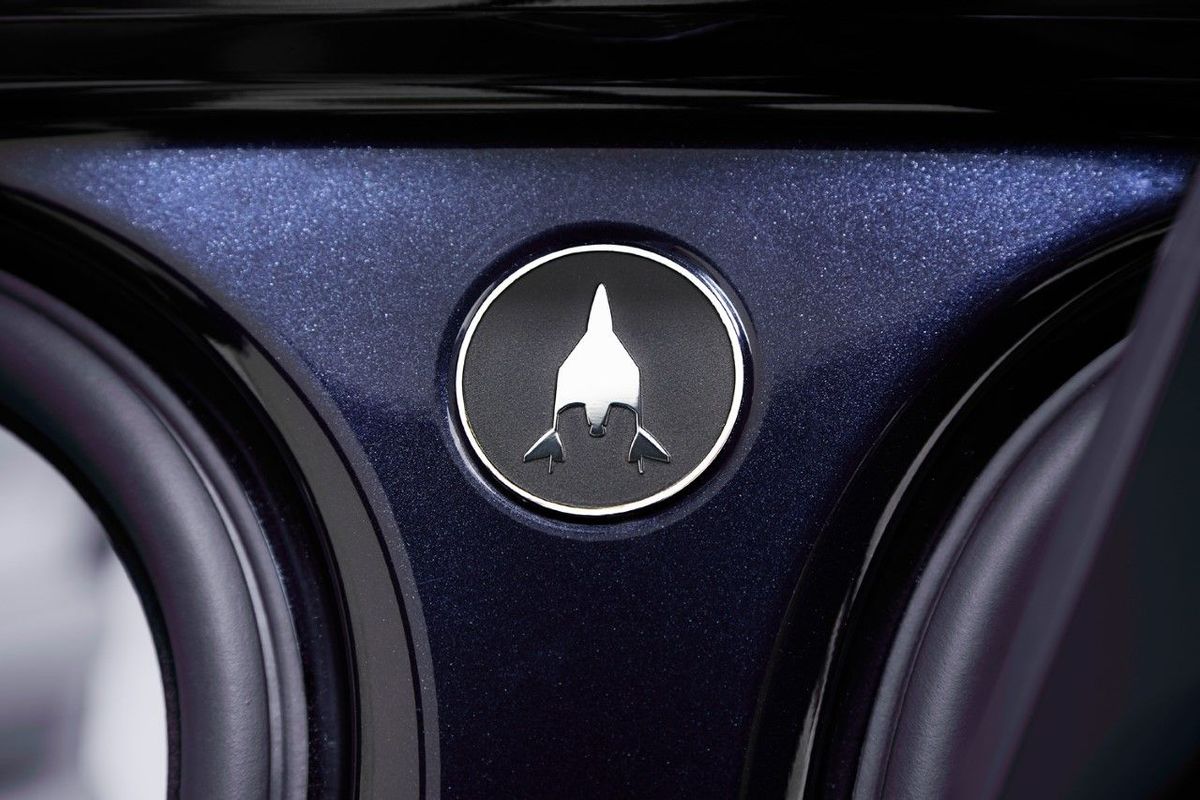
Distinguished by a unique blue exterior hue, which Land Rover stylists refer to as Zero Gravity Blue, these limited-edition Range Rovers also project an outline of the Virgin Galactic’s SpaceShipTwo from their puddle lamps. Astronaut Edition badging completes the surface styling upgrades.
Inside there are a host of subtle but significant upgrades. Between the two front cupholders is a miniaturized spacecraft landing skid, with an inspirational ‘See you up there’ quote engraved to it. Alternatively, Land Rover can use a skid from the potential astronaut owner’s very own spaceflight, engraved with details of their journey.
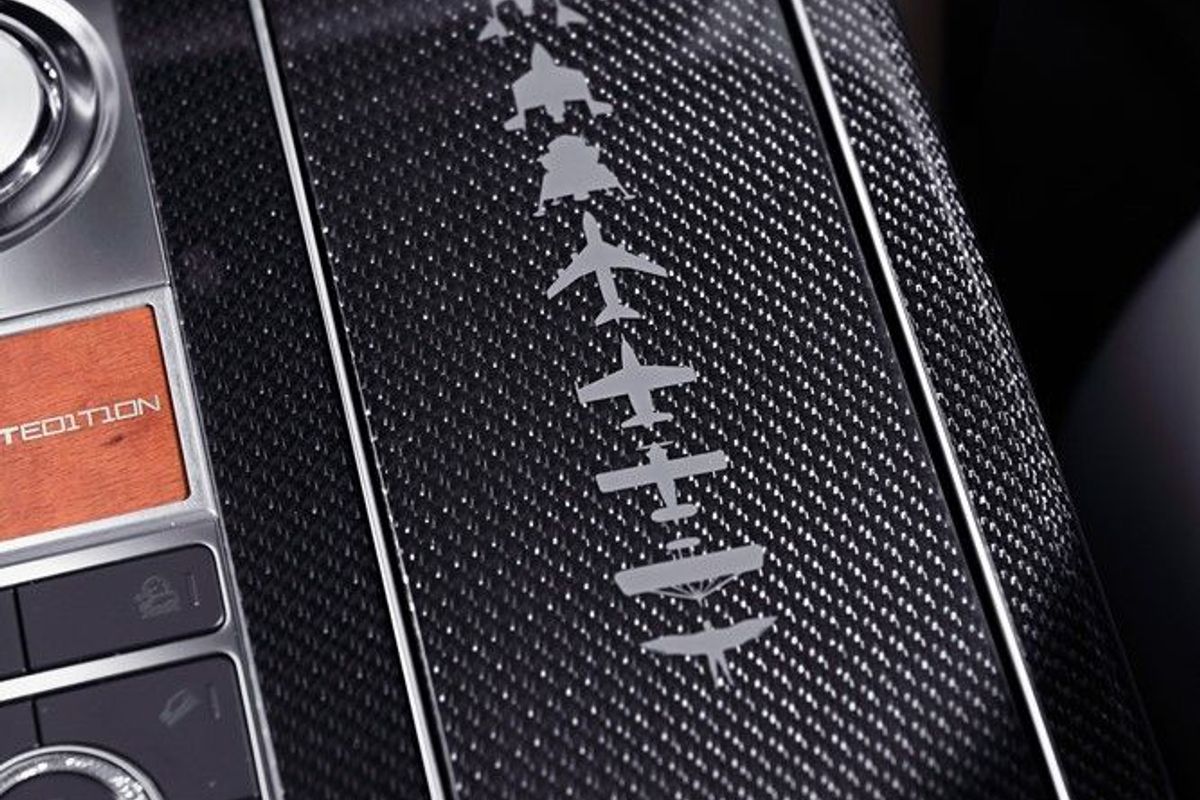
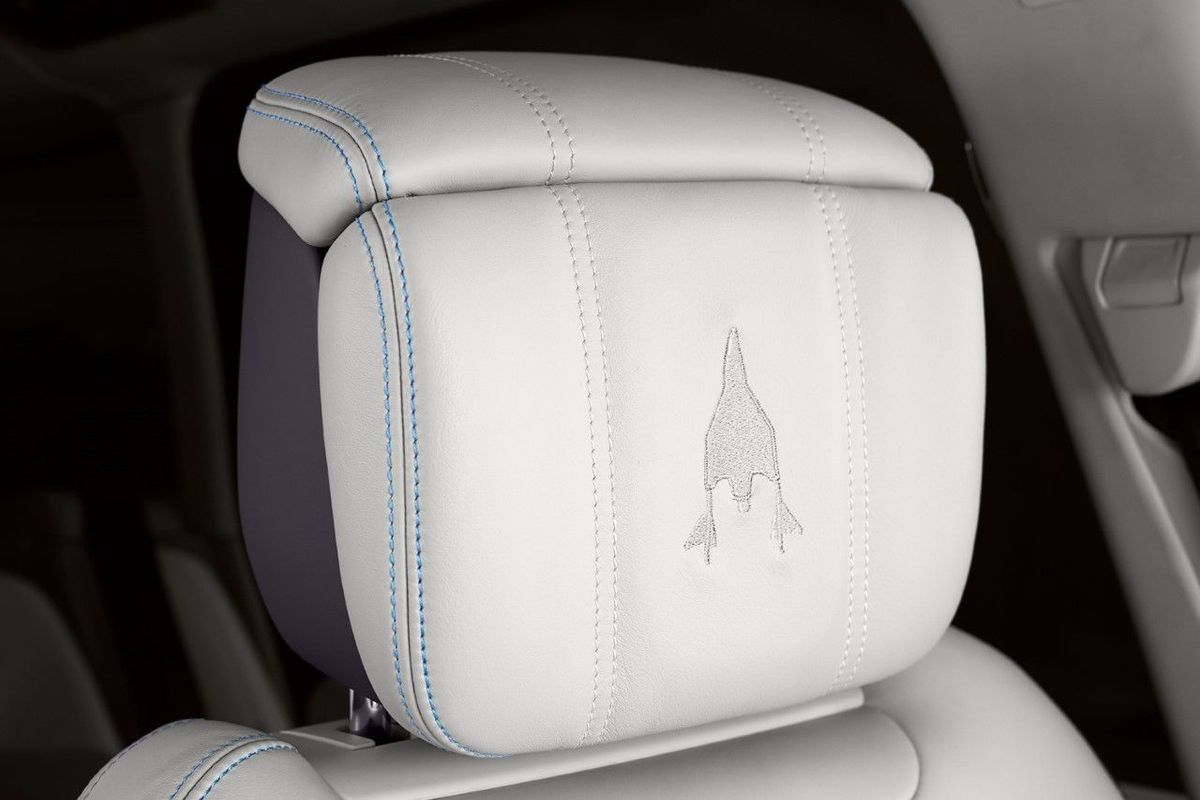
On the carbon-fibre centre console, there is an evolution of flight graphic, which details eight craft, from the first gliders through the jet age to the current Virgin Galactic spaceship. This design theme is repeated on the leather armrests too. Further Virgin Galactic branding is added to the glovebox and behind the front seat headrests. Customers, who will all by implication have to be astronauts too, can have their initials stitched to the front of the headrests.
Beyond all the styling trinkets these Range Rover Astronaut edition SUVs are all powered by a choice of two rather different engines, either Land Rover’s latest hybridized in-line six or the brand’s more performance orientated 5-litre supercharged V8.
The Range Rover Astronaut will only be available to one of the 700 individuals who have paid the R3m ticket price to go on one of Virgin Galactic’s space journeys, the first of which is set to commence later this year.
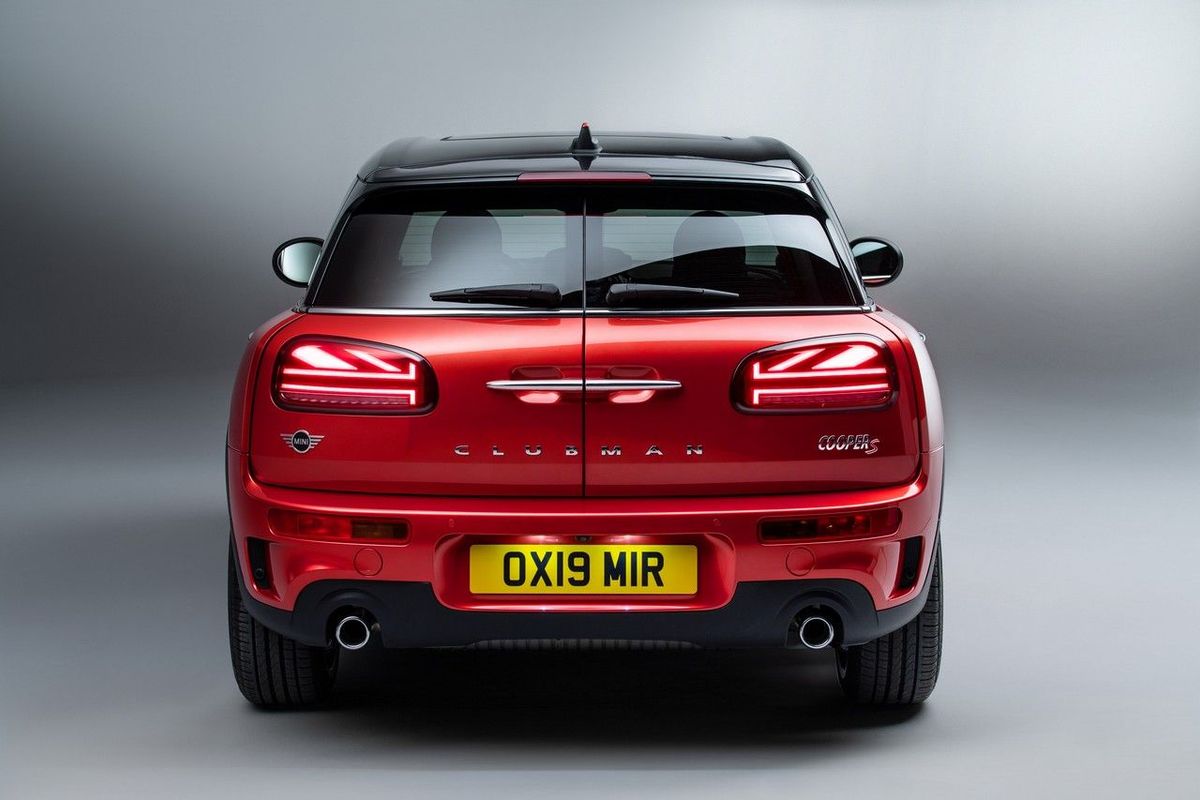
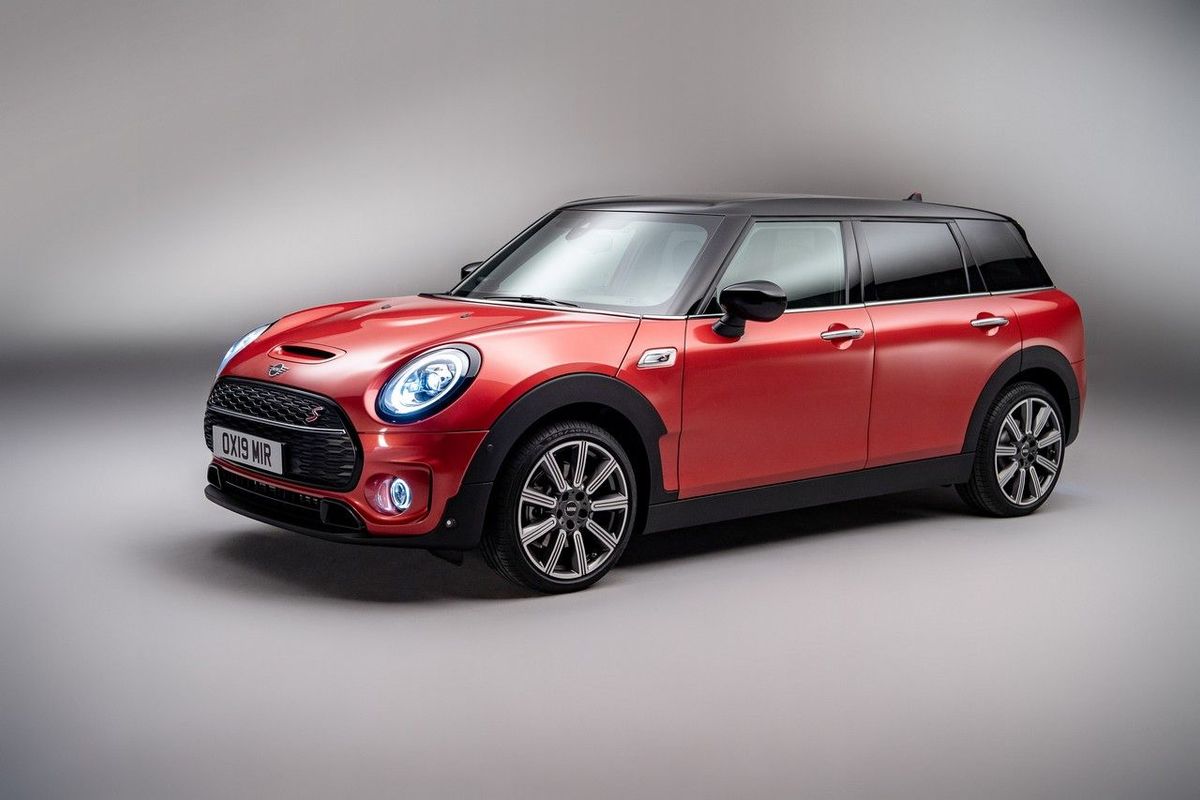
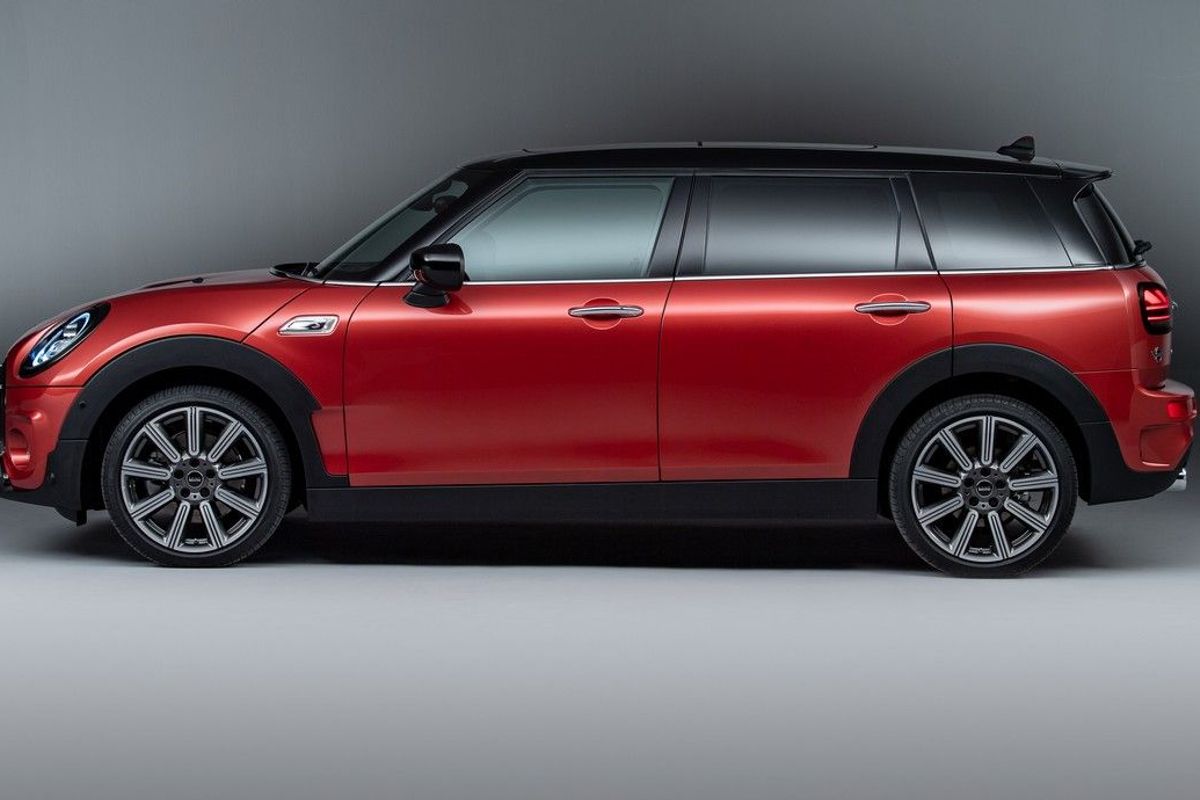
There have been some updates to the Mini Clubman and the 2020 iteration has been revealed. Let's see what's new.
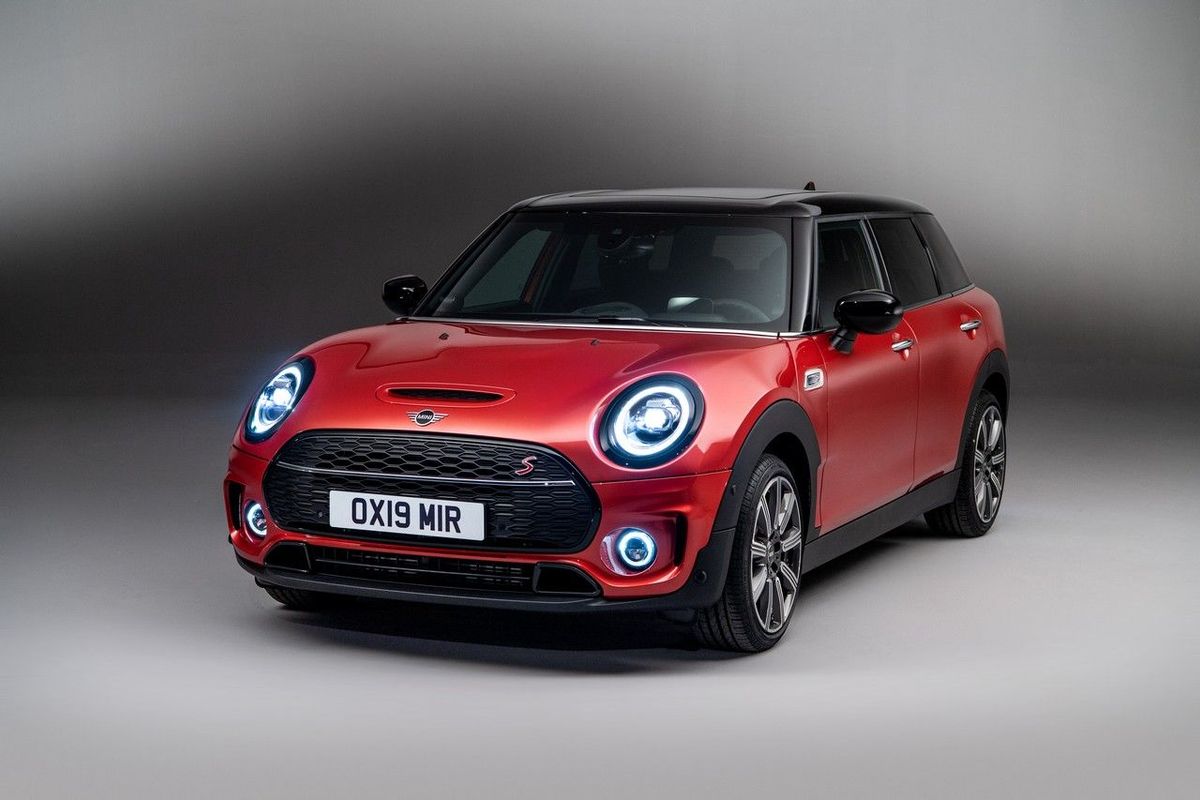
The Mini Clubman is an interesting model in the hierarchy. Substantially more spacious than the hatches, yet a touch smaller than the family-focused Countryman, there's always been some left-field appeal to the Clubman. It's oozing coolness and more than a few members of the Cars.co.za team have a soft spot for this model.
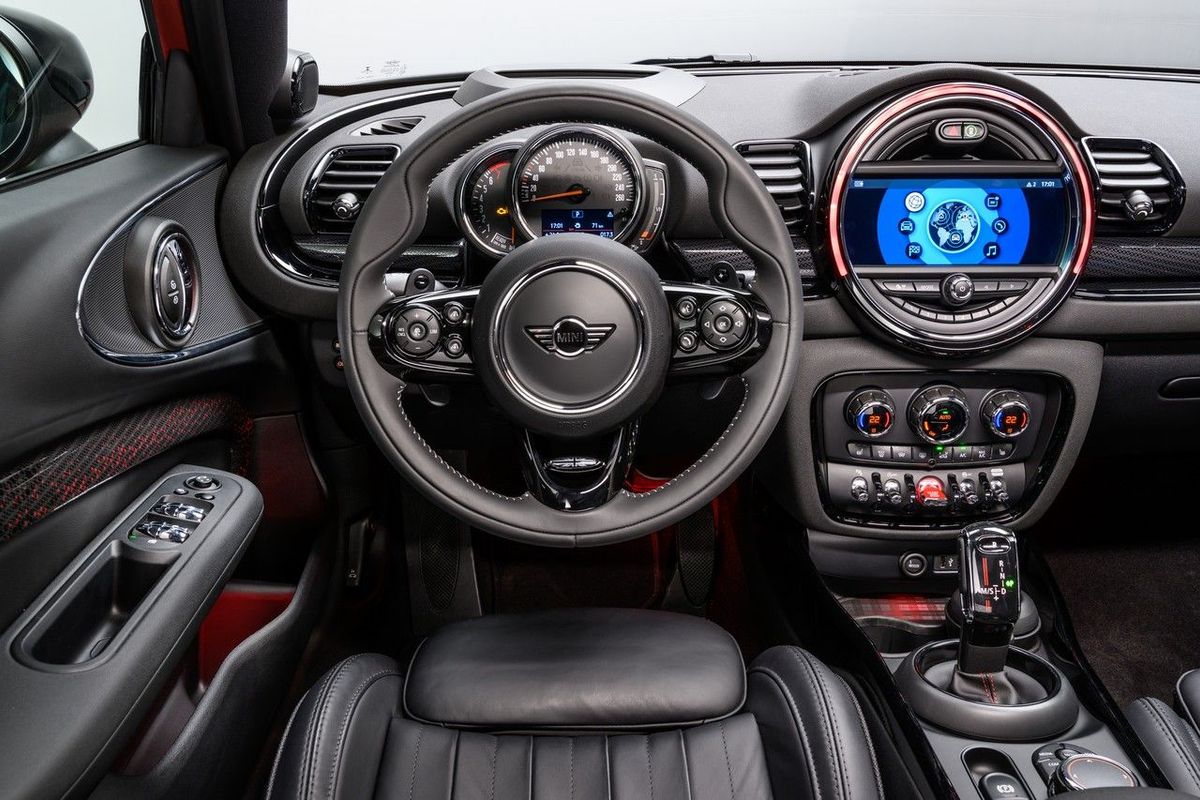
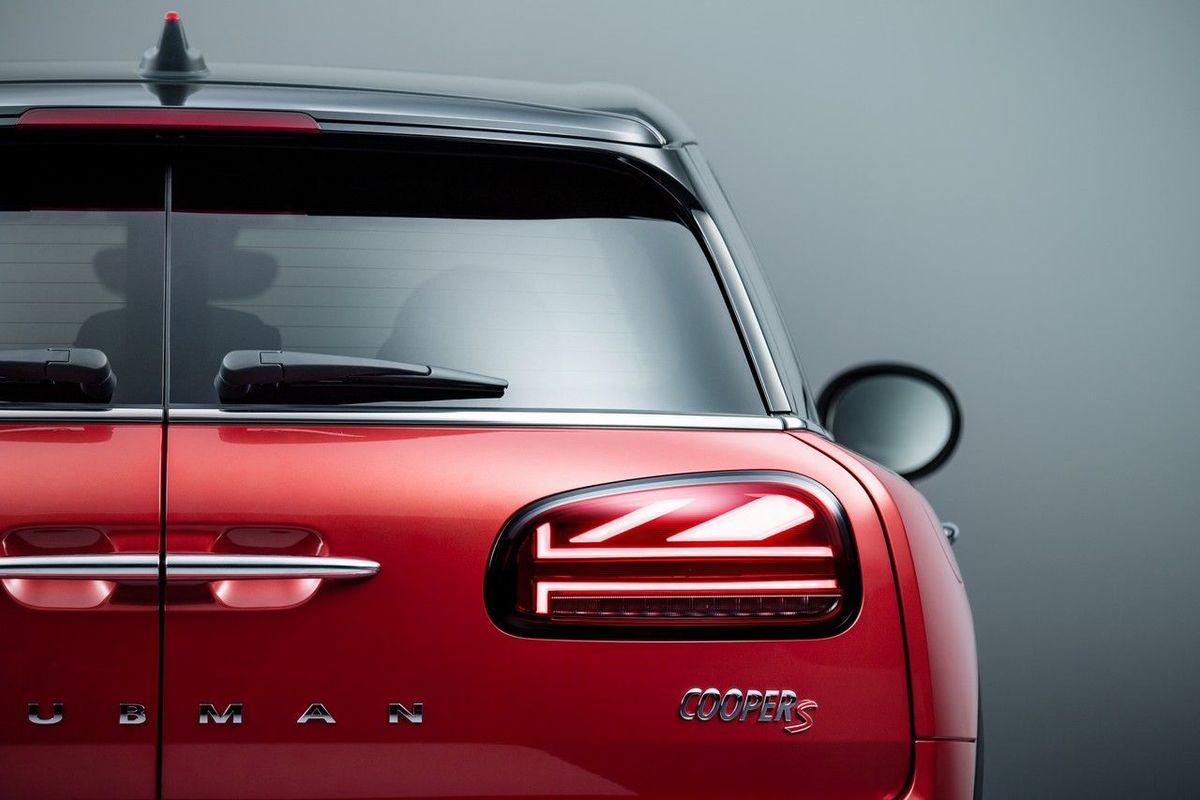
For 2020, the Mini Clubman has received some changes. Visually, there's a new-look front end with new grille, LED headlights, LED foglights and optionally you can spec the Union Jack design as LED rear lights. There are new wheels too, and the sports suspension has resulted in a 10mm drop. Inside, there are new leather trims and interior surfaces as well as a Mini Yours equipment program and more accessories than ever before.
There is a choice of two engines with output ranging from 100 kW to 141 kW, with a potent John Cooper Works Clubman joining the range later. This model will feature ALL4 all-wheel drive. From launch, the 2 models are the Cooper Clubman with 100 kW / 220 Nm from a 1.5-litre 3-cylinder engine. It's good for 9.2 seconds to 100 kph and it's said to consume around 5.4 L / 100 km. The Cooper S Clubman boasts a turbocharged 2.0-litre 4-cylinder engine pushing out 141 kW and 280 Nm. It's a tad quicker at 7.2 second for the 0-100 kph run and thirstier at 5.6 L/100 km.
Standard specification appears fair with a 6-speaker audio system featuring USB and Bluetooth connectivity. The standard operating system includes a 6.5-inch colour screen in the central instrument and the MINI Controller on the centre console. The Connected Media option comprises the Radio MINI Visual Boost and a 6.5-inch colour screen with touchscreen function and a newly design graphic display. It is also possible to use numerous online-based MINI Connected services.
The new Mini Clubman is expected to land in South Africa before the end of 2019.