Next Land Rover Defender: Why the long wait?

Land Rover showed us a concept of the new Defender as long ago as 2011, but the production version will only arrive in 2020. Why is the next iteration of an off-road icon taking so long to come to fruition?

Imagine if Toyota stopped production of the current Fortuner, without a successor in sight, and then informed the market there was no certainty when a new Fortuner would arrive. It would be an unfathomable scenario, for a product of Fortuner’s success, to be discontinued without a successor. But that’s exactly what's happened with Land Rover’s iconic Defender.

After 67 years of production the vehicle, which is more synonymous with adventure journeying than any other, ceased production. Born in a post-war Britain short on crucial engineering materials, Land Rover embraced aluminium construction decades before most other vehicle manufacturers even considered it. Despite abysmal quality issues each time Land Rover neared bankruptcy – which has been often – the company’s Defenders remain some of the most collectable vehicles around.
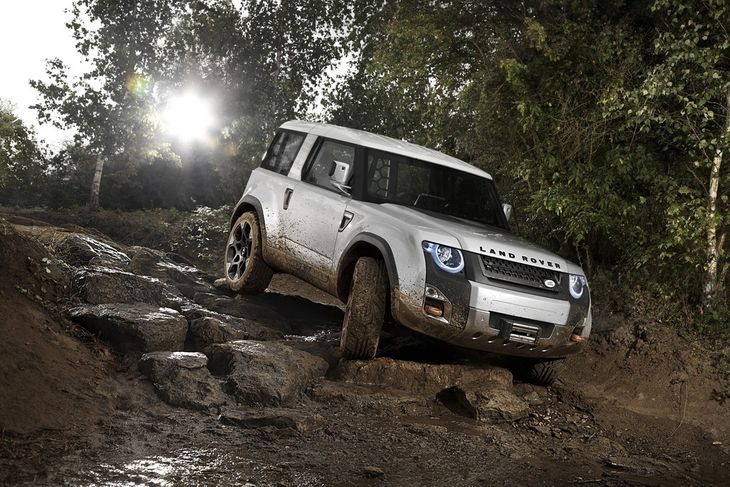

The DC100 concept caused a stir at the 2011 Frankfurt Show, but it didn't excite traditionalists or hardcore off-road enthusiasts.

The Defender’s reputation is such that it ranks as a virtually depreciation proof investment – which is unusual, for a Land Rover, or any SUV that isn’t a Toyota. If you possess such a flood of product perception equity, built over decades, why didn’t Land Rover have a proper Defender 2.0 plan in place to keep harvesting the profits?

Fear of the new

Tata has been the saviour of Land Rover, allowing British engineers to do what they do best without the dreadful input of British automotive industry financial managers. Indian cash revitalised the industrial base around Coventry and birthed a Land Rover product portfolio that is now rated as both stylish and sophisticated in the realm of SUVs, both adjectives which have never applied to any Defender.

Land Rover's Defender might be iconic and an off-road institution to South Africans, but globally it has very little commercial resonance. Defender sales were discontinued in America by the mid-1990s and in Australia their presence is negligible. And these are two of the world’s anchor markets for serious off-road vehicles.
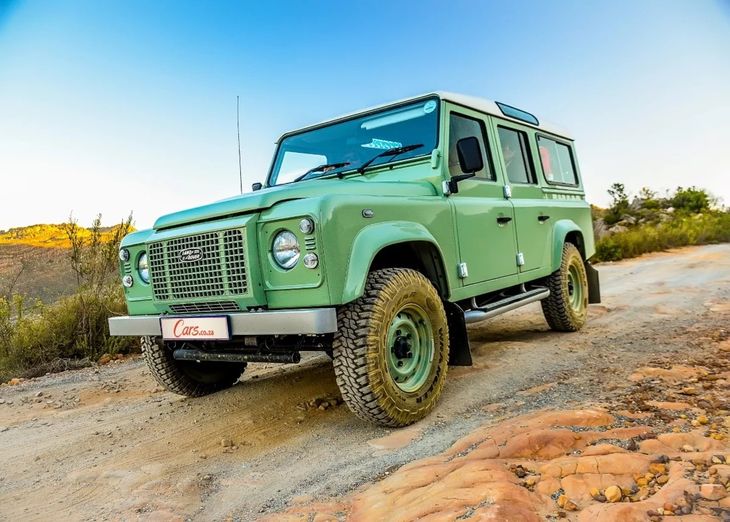

We reviewed the Defender 110 Heritage Edition in early 2016. To read the article, see the links at the bottom of this write-up.

As Ranger Rovers, Evoques and Discoveries flooded geographies where Land Rover was once struggling (America and Australia), the case for replacing the Defender has become progressively weaker. By the late 2000s, when Land Rover engineers were required to table a successor concept, Defender sales were a fraction of the brand’s overall business.

September 2011 is when things went awry for the Defender 2.0 project. At the Frankfurt Show, Land Rover revealed its DC100. It was a very daring Defender concept, which promised to combine rugged cabin materials, which you easily could hose clean, and safari-proof electronics. Unfortunately, public reaction wasn’t quite so welcoming. Defender traditionalists hated on it with an abundance of venom usually reserved for those who raise Land Rover 110 County reliability issues at a club meeting.
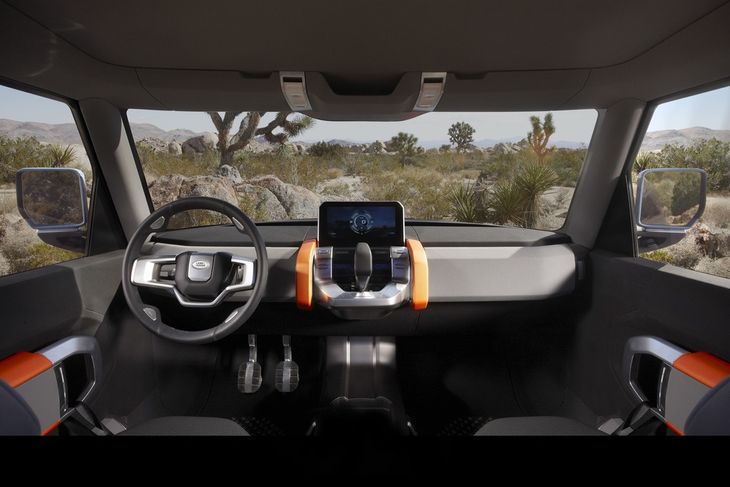

Whereas the DC100 concept's exterior at least looked blocky, its interior design marked a clear departure from Defender tradition.

Land Rover’s flaw with an attempt at replacing the Defender is that the vehicle’s design was allowed to diverge from modern trends for so long, that the compound shock of a revised design, conforming with current vehicle standards, was always going to be far too radical an evolution. Sensible people lose their grasp of logic when Defenders are discussed and after DC100, the Defender project was stillborn.

Rugged SUVs not quite a straightforward business case

Last month hopes were revived that Land Rover has finally committed to 2020 as a delivery date for its new Defender – which might be a few years late, but it’s better than never. Images of a disguised prototype were released, which clearly showed high-capacity roof proportions and a square silhouette.

Industry analysists have always predicted that any modernised Defender could possibly divorce itself from the commercial vehicle heritage of a steel ladder frame construction, opting instead for a Discovery platform of hydroformed aluminium in a 1-piece monocoque. The idea is to improve Defender’s ergonomics, which have always been comically awful, whilst retaining its load capacity and ruggedness.
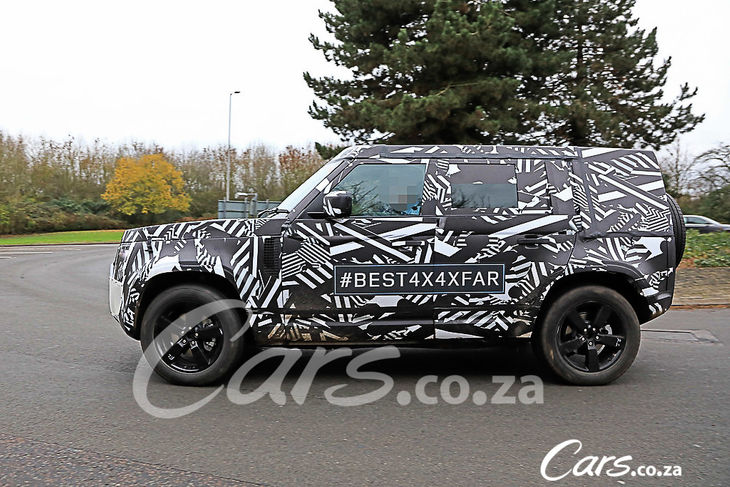

Spy photographs of the next-generation Defender undergoing testing prove that the newcomer will, in fact, see the light soon.

A radically repackaged Defender would greatly improve passenger comfort, without sacrificing load carrying ability. Expectations are for a lower than contemporary threshold of driver aids and infotainment functionality, yet still featuring an electronics architecture which is more advanced than anything Defender owners have ever encountered before.

The business case for a rugged, expedition grade SUV is very difficult to formulate in 2018, despite macro demand for SUVs continuing unabated. Toyota, Nissan and Mercedes-Benz effectively own the serious off-road expedition vehicle market and they all field exceptionally capable vehicles to claim their individual market share. How good would a new Defender have to be, to displace Patrol in the Middle-East or Land-Cruiser 70 in South Africa or Australia?

The engine issue

If public indifference to the DC100 concept delayed development of the new Defender, and its niche business case reranked the project within Land Rover’s R&D hierarchy, the global diesel issue hasn’t helped.
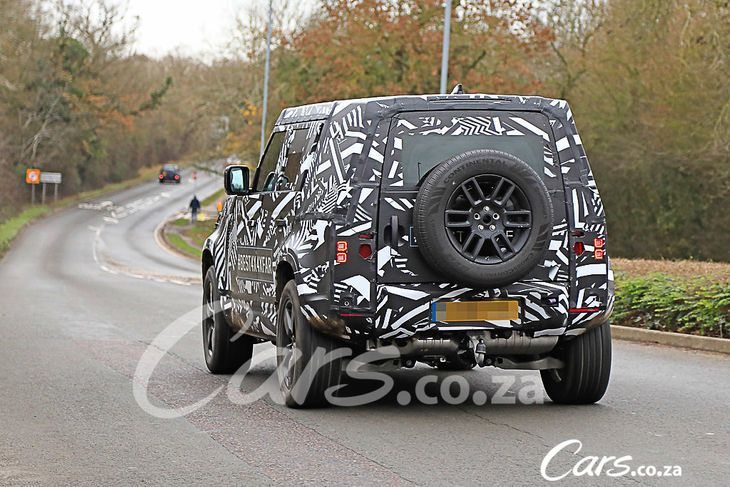

The raised ride height, truncated overhangs and high roof suggest that the new Defender will not be piecemeal. 

Although Defender has, over its lifetime, often featured petrol engines, those were discontinued in the late 1990s. And in a world where diesel engine development has effectively been curtailed, Land Rover faces a problem. It doesn’t have the scaling of Toyota, where a global bakkie business provides the numbers to justify independent diesel engine development in an expensive and hostile regulatory environment.

Diesel no longer the darling

The United Kingdom, despite its geographically small size and absence of adventuring terrain, has always been fiercely patriotic regarding anything Land Rover and has demonstrated (by far and away) the biggest demand market for the Defender. Attitudes toward turbodiesel have reversed radically in the last 2 years, with UK Discovery sales suffering terribly as a result. An all-diesel Defender line-up would be very problematic.

Land Rover could effectively be forced into alternatives quite late in its development project, requiring a complete reconsideration of engine options. Petrol powered Defenders simply won’t do for any owners who wish to explore Africa or Asia, where diesel's fuel network is far more extensive than that of petrol. What also needs to be considered is that when transporting additional fuel onboard for extreme driving distances, petrol presents a much greater fire hazard, which is best avoided altogether.


We rented a Land Rover 110 Ultimate Puma to travel from Johannesburg to Pomene in Mozambique.

A great irony in all of this is that towards the end of the its lifecycle, South Africa was the environment which provided proof of concept for a battery powered Defender game viewing vehicle. A 2011 project by British electrical engineering specialist, Axeon, saw much success. These battery-powered Defenders had nearly equal performance to their turbodiesel siblings (300 Nm versus 360 Nm), with the benefit of superior drivetrain refinement. I even drove an all-electric Defender on Land Rover’s swampy test track in the UK and it proved wonderfully capable.

Could a confluence of factors, the rejection of diesel and a possible move away from ladder-frame construction, enable Land Rover to do the unthinkable, but very necessary, and market new Defender as the first true hardcore hybrid 4×4? My feeling is that Land Rover owners would be less hostile to a radical change of engine configuration, as Defender has never been a large-capacity vehicle. The last models were powered by mere 2.2-litre turbodiesel engines. There is no legacy which binds Defender to a specific engine size or number of cylinders.
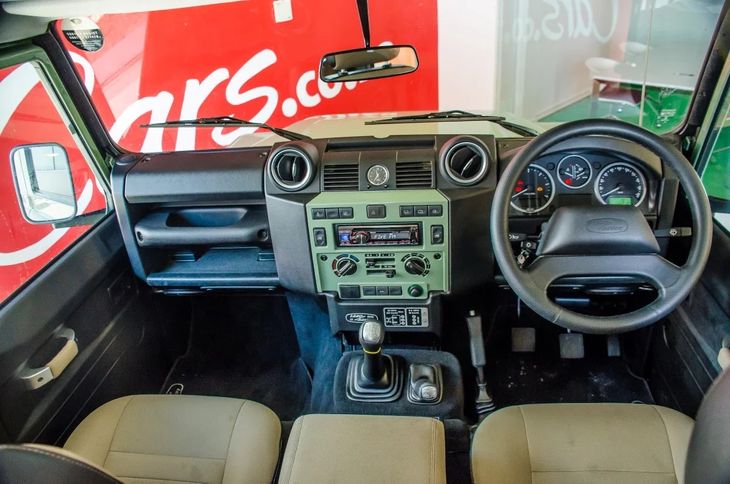

For the sake of occupant safety, Land Rover has no choice but to depart from the current Defender's cabin architecture. 

When you are tasked with redesigning an iconic vehicle, there is no winning. Traditionalists will judge it for being too modern at the cost of its legacy purpose and contemporary customers will always feel it isn’t progressive enough. With the pressure of contemporary crash safety and emissions regulations, a Defender 2.0 would by implication be a huge departure from anything that had gone before – and that’s not a case of Land Rover inadvertently antagonising legacy owners.

Whatever 2020 delivers, the new Defender will be niche, and very important. Especially as Defender’s launch will follow shortly after the initiation of Brexit, which looms ominously over the British automotive industry – of which Land Rover now has the biggest stake, and most to lose.

Related content:

Understanding the Nissan NP300 Zero-Star Crash Test

The Journey Mozambique – The Search for Sunken Land Rovers

Land Rover Defender 110 Heritage Edition (2016) Review

Land Rover Defender Heritage Edition Video Review
Interested in buying a Land Rover Defender?

Find a used example on Cars.co.za

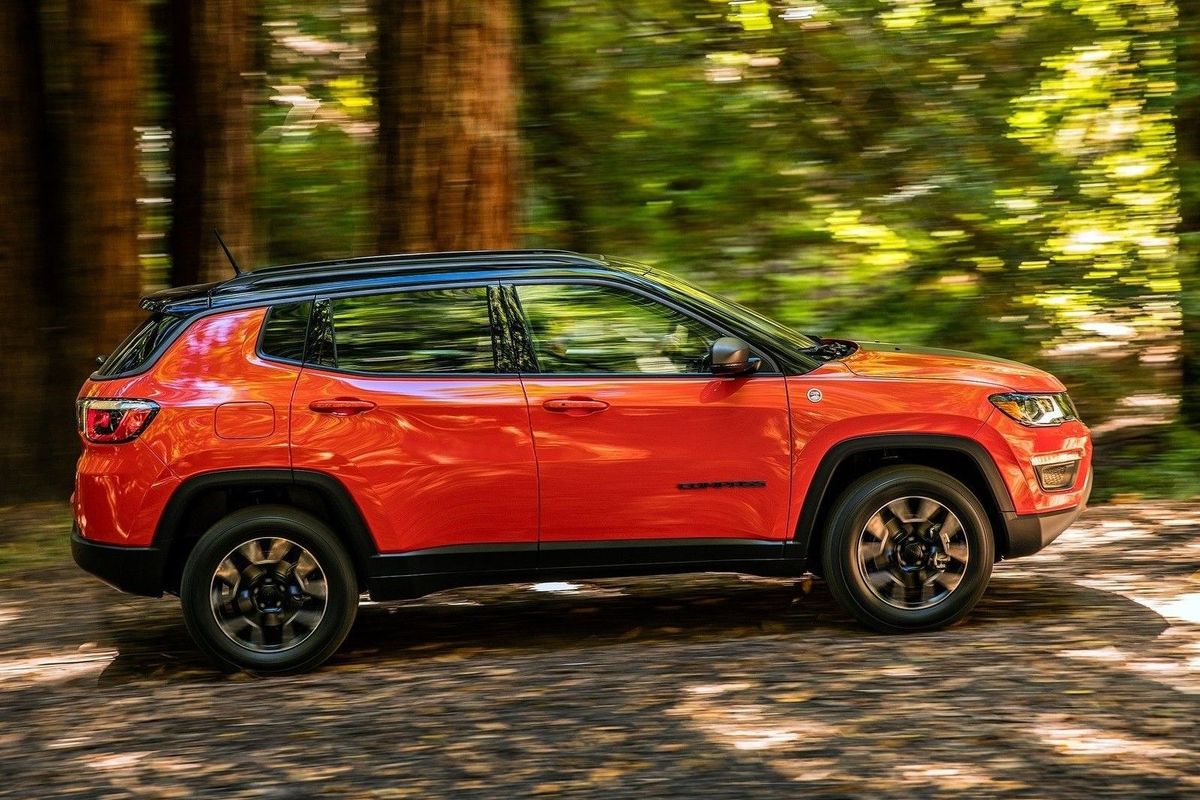
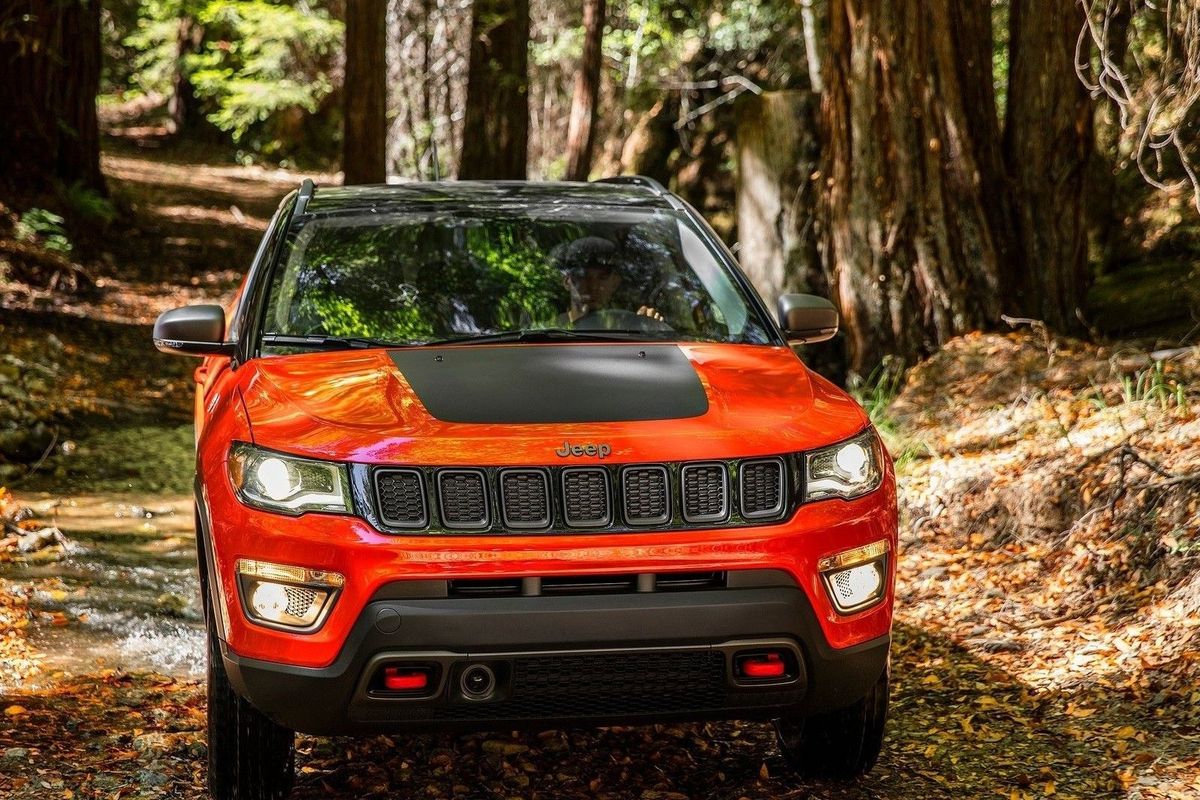
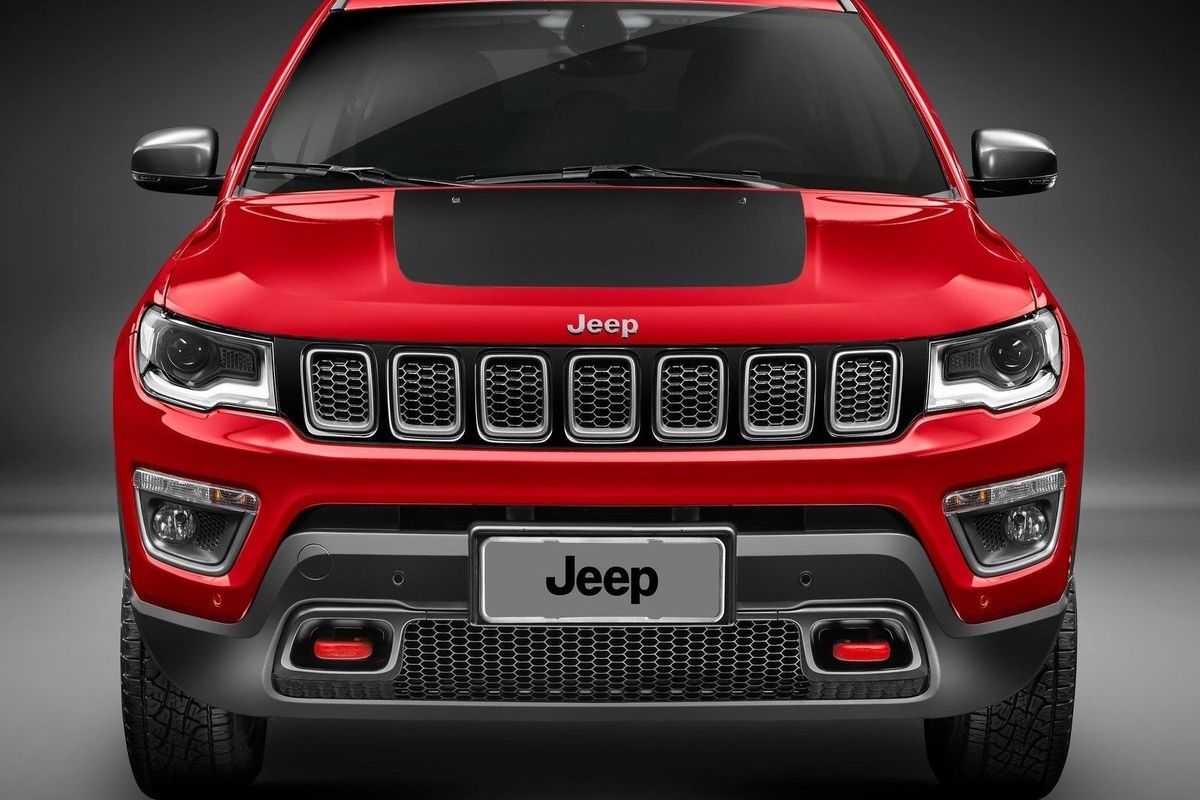
Jeep Compass (2019) Specs and Price

The Jeep Compass has gone on sale! Take a look at specification and pricing for the new Compass below…

The Jeep Compass is not the smallest Jeep in the family anymore as the Renegade currently occupies that slot. The latest iteration of Compass has taken some time to get to South Africa and thanks to a dealership bulletin which was sent to us, we can confirm which model we're getting and how much it'll cost.

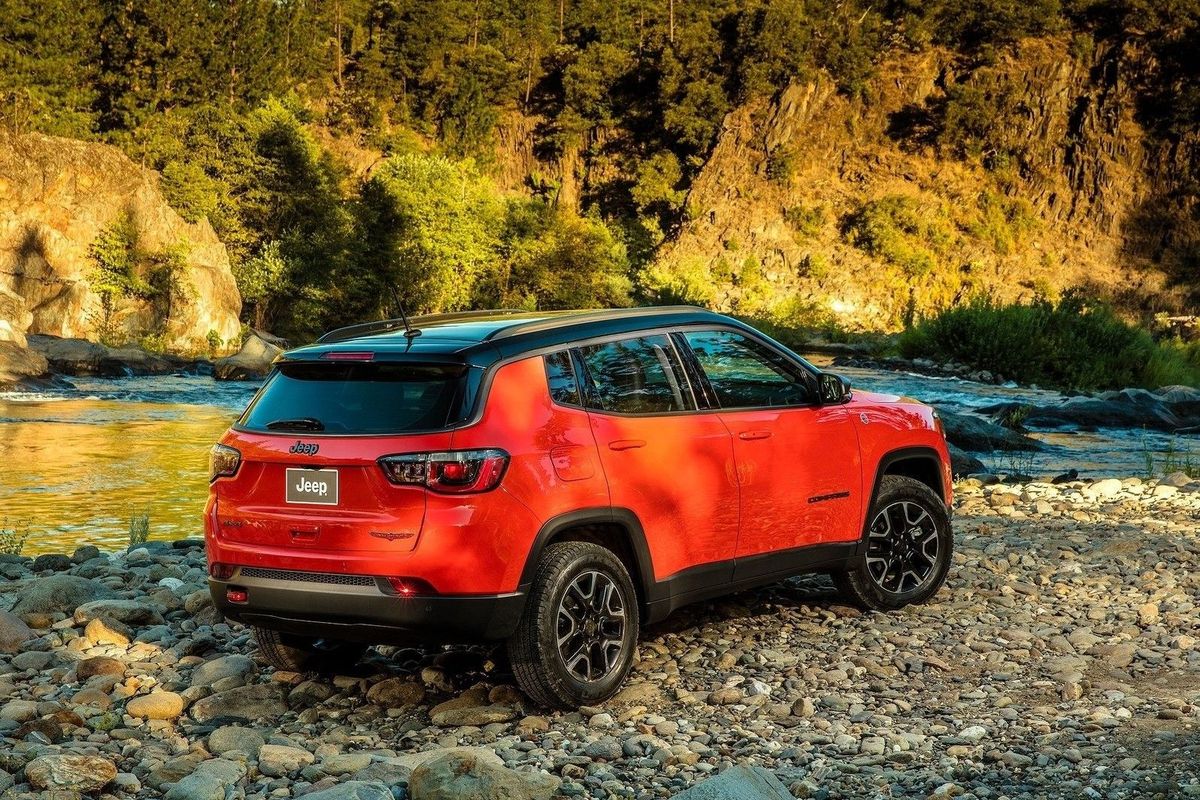
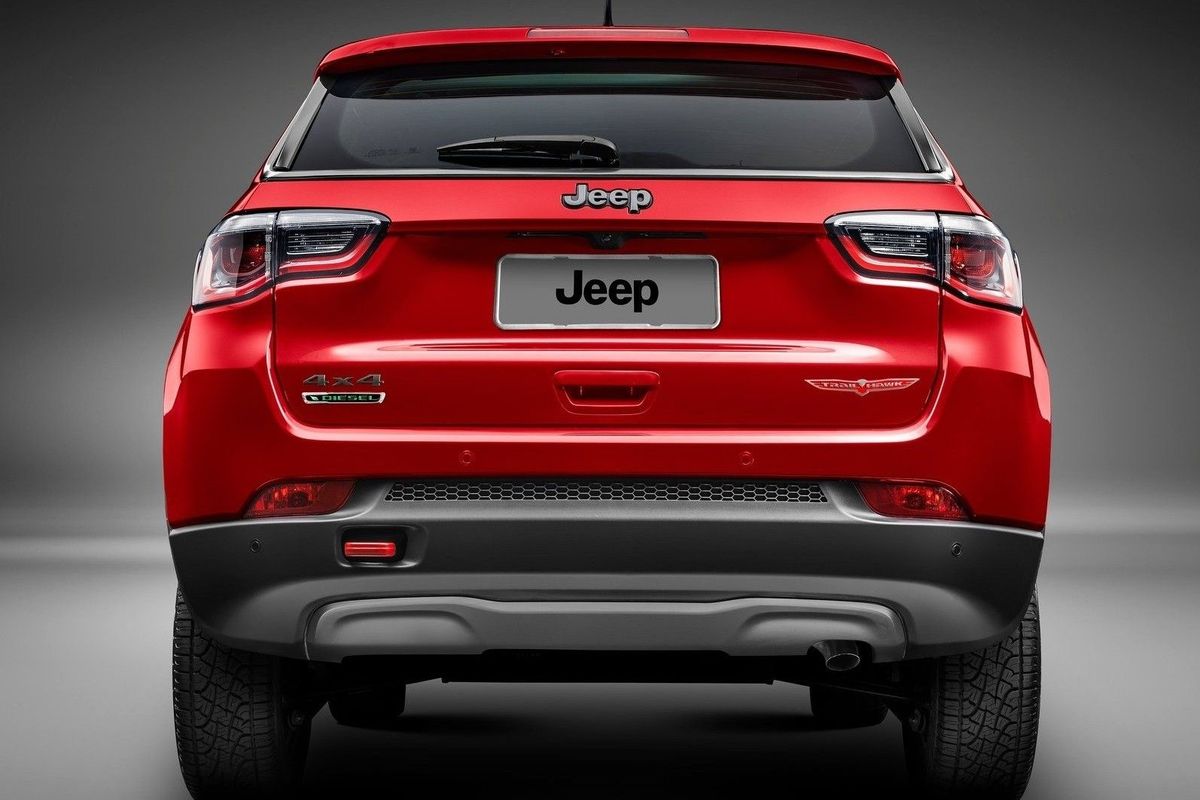
Yes, you read right. Sadly, South Africa will be getting just the single derivative; the Compass Trailhawk, the 4×4-focused top of the range model. Powered by the naturally-aspirated 2.4-litre 4-cylinder engine with 130 kW and 229 Nm, the Jeep Compass also features a 9-speed automatic transmission. It's not going to be the fastest Jeep around, with the Compass hitting 100 kph in just under 10 seconds.

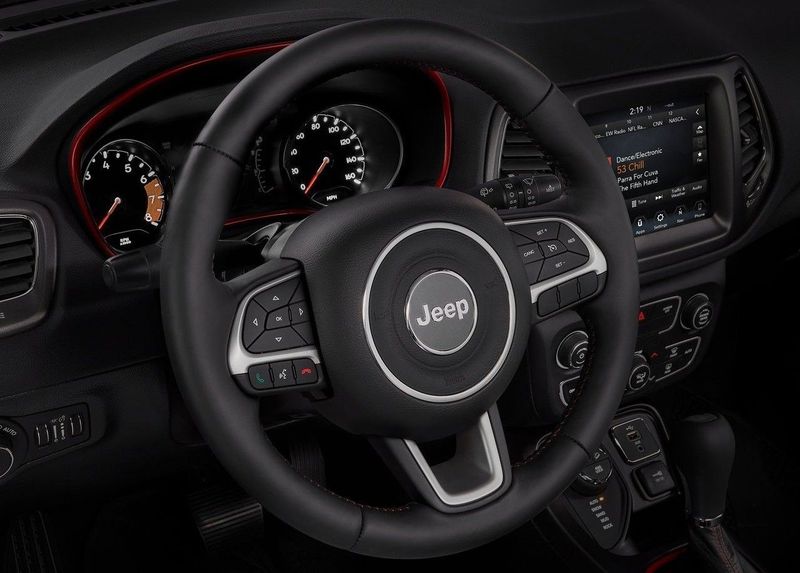
Being the flagship offering, you do get a commendable amount of standard features such as an automated tailgate, keyless entry and start button functionality. There's also a new infotainment screen which is 8.4-inches in size and it features navigation, Apple CarPlay and Android Auto. There are 7 airbags and the vehicle received 5 stars in the Euro NCAP test. There's also a 438-litre boot.

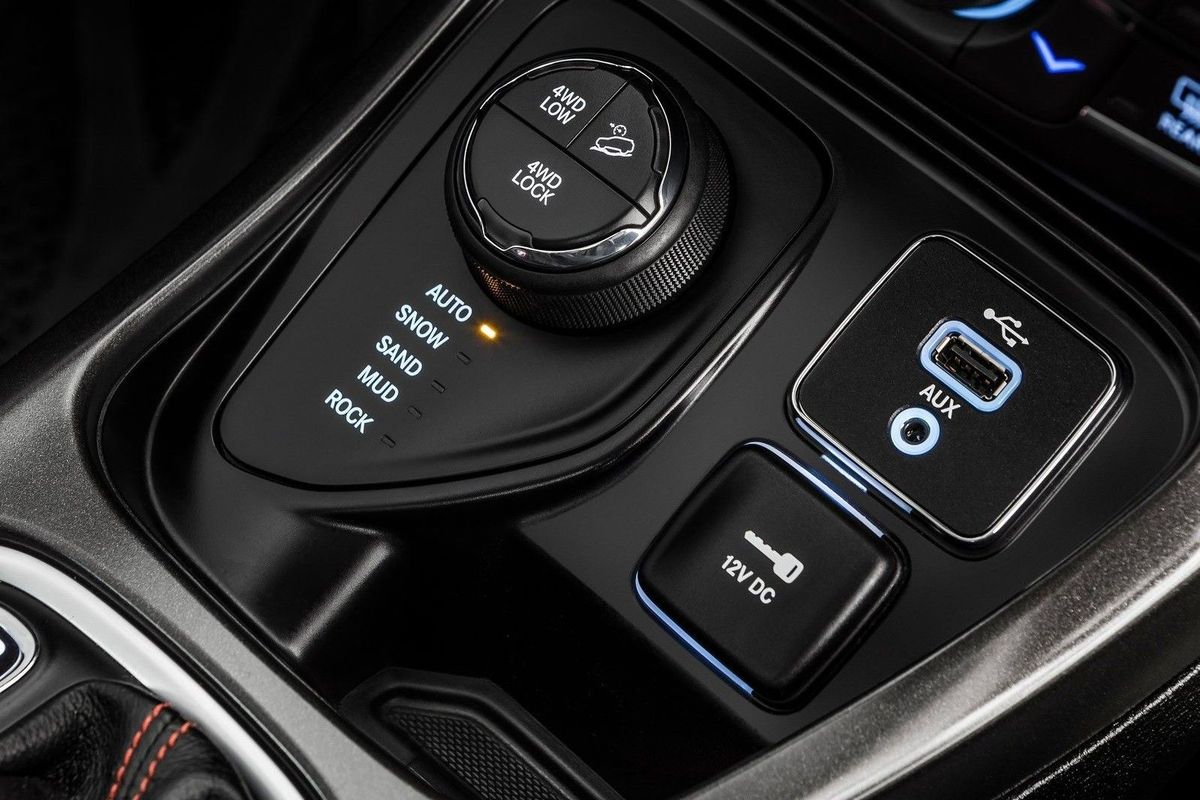
The Trailhawk nomenclature means that this is the 4×4-focused derivative in the Compass family. To enable traversing rough terrain, the Compass features many offroad modes such as Snow, Rock, Sand and Mud. You can also leave the car in Auto mode and it'll do the dirty work automatically. There's also Hill Descent Control and Standard Jeep Active Drive Low 4×4 20:1 crawl ratio. The Compass Trailhawk features 30-degree approach angle, 24-degree breakover angle and a 34-degree departure angle, as well as a ground clearance of 225 mm. It can also wade through 405 mm of water.


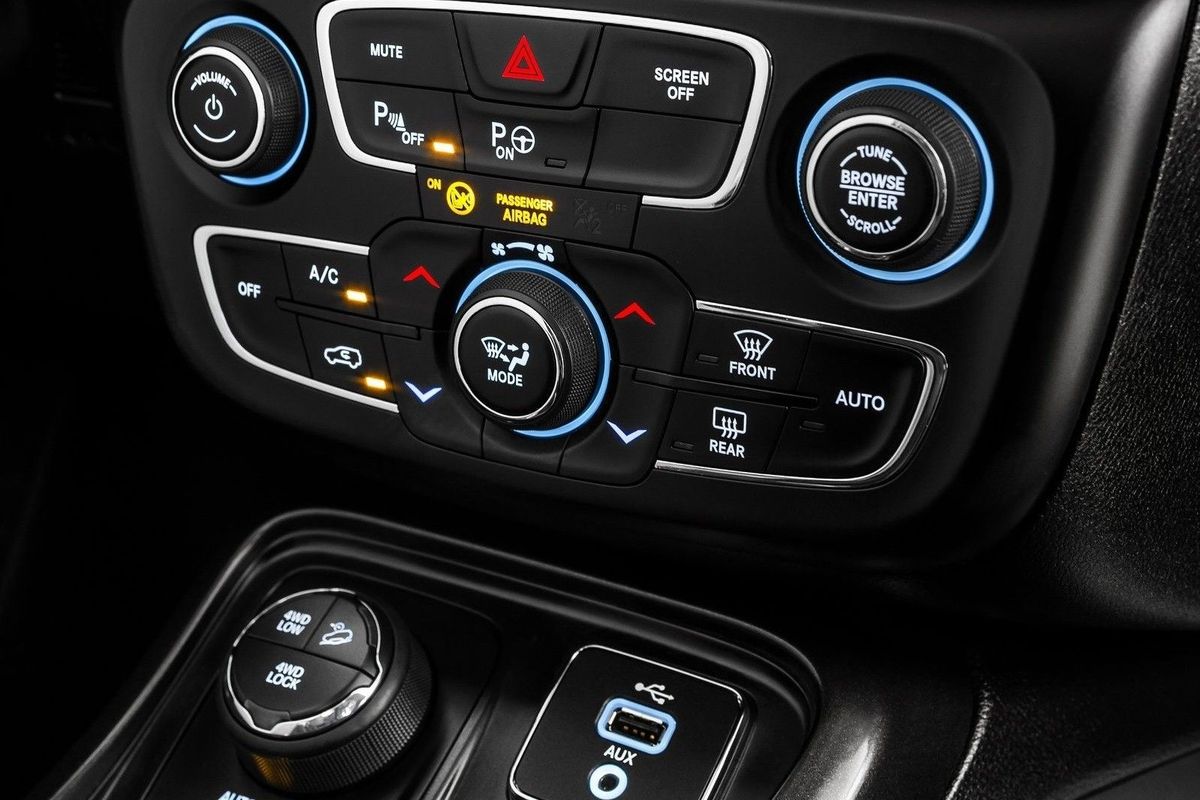
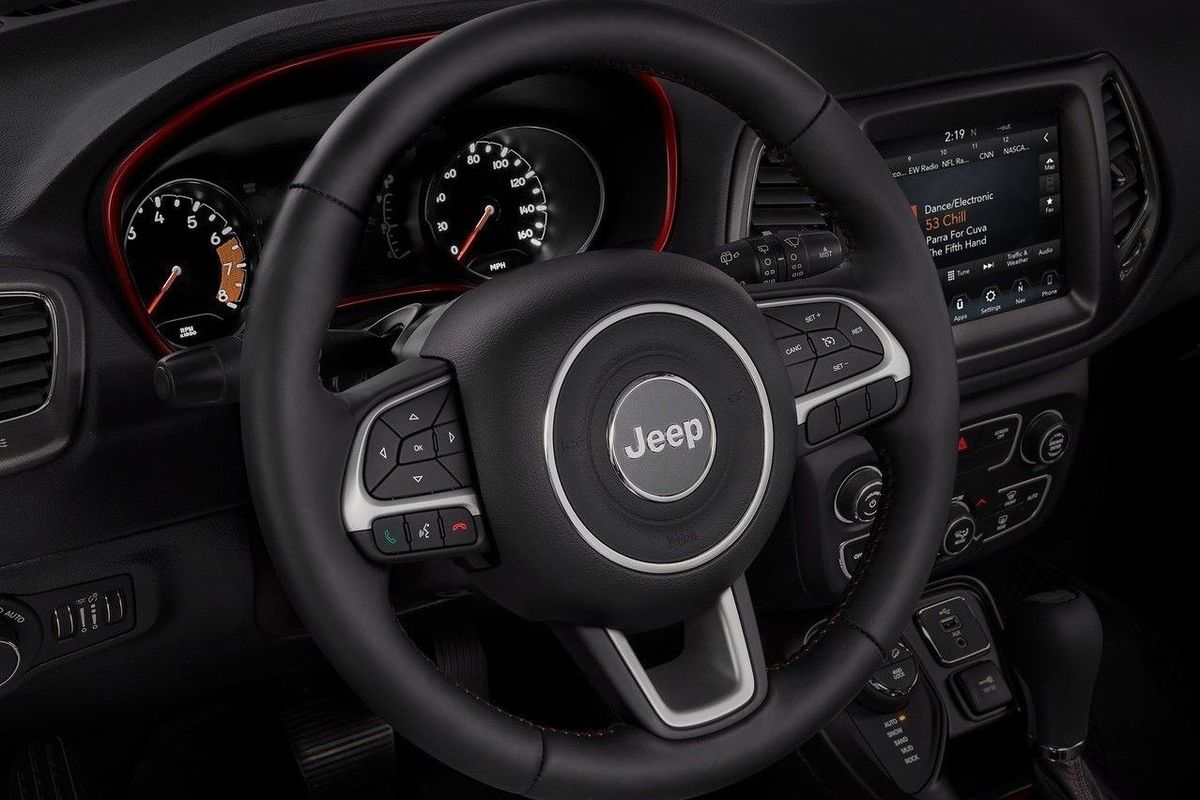
The Jeep Compass Trailhawk cabin, ready to tackle the outdoors.

Jeep Compass Price in South Africa (December 2018)

The Jeep Compass is sold with a 3 year/100 000 km service and maintenance plan.

Jeep Compass Trailhawk – R599 999

Want to buy a Jeep?

Browse through stock here

Further Reading

New Jeep Gladiator Bakkie Revealed

Jeep Cherokee (2019) International Launch Review

Jeep Renegade facelifted for 2019

Updated Ford Tourneo Custom (2018) Specs & Price

Ford has updated its Tourneo Custom people mover in South Africa. Herewith specification and pricing details…

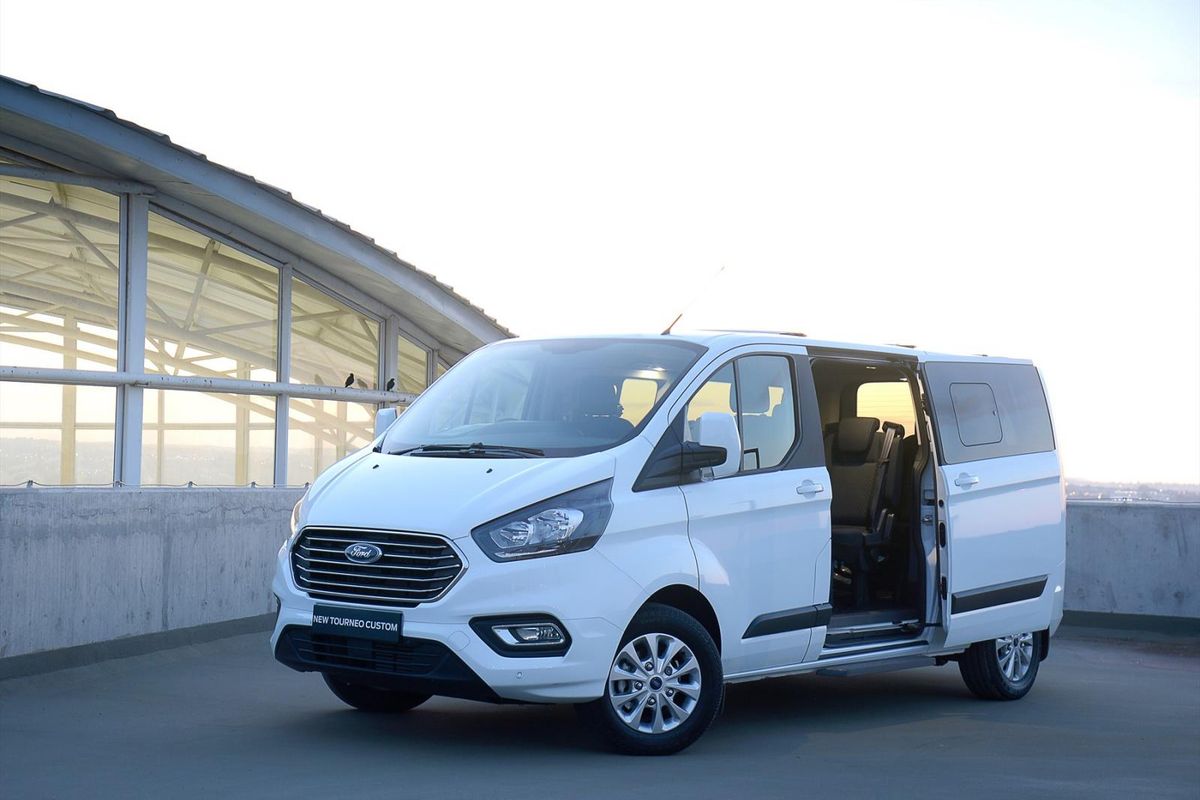
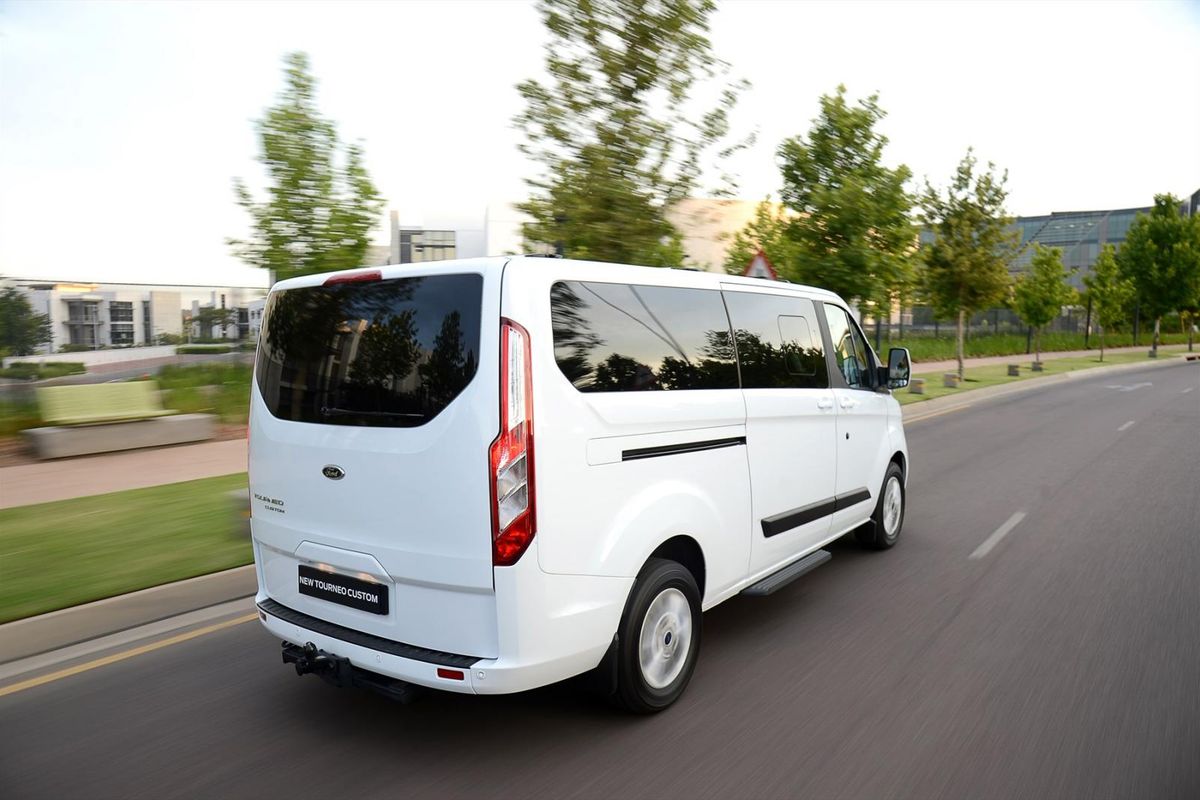
Now featuring revised exterior and interior styling, the facelifted Ford Tourneo Custom is now available in South Africa.

"With the new Tourneo Custom, every passenger can enjoy the best seat in the house," said Doreen Mashinini, General Manager, Marketing at FMCSA. "This versatile people mover has been refreshed with attractive new exterior styling and an interior that combines the comfort and quality of a luxury car with outstanding space and practicality."

Key changes


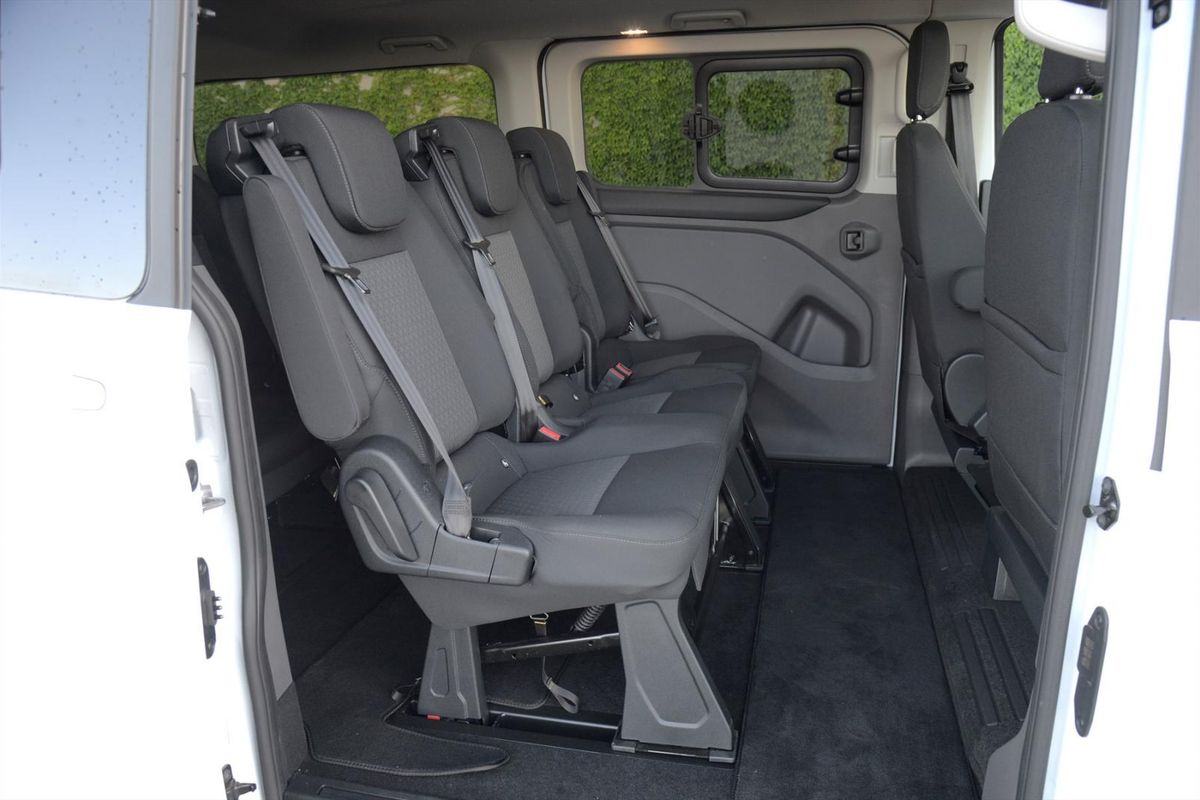
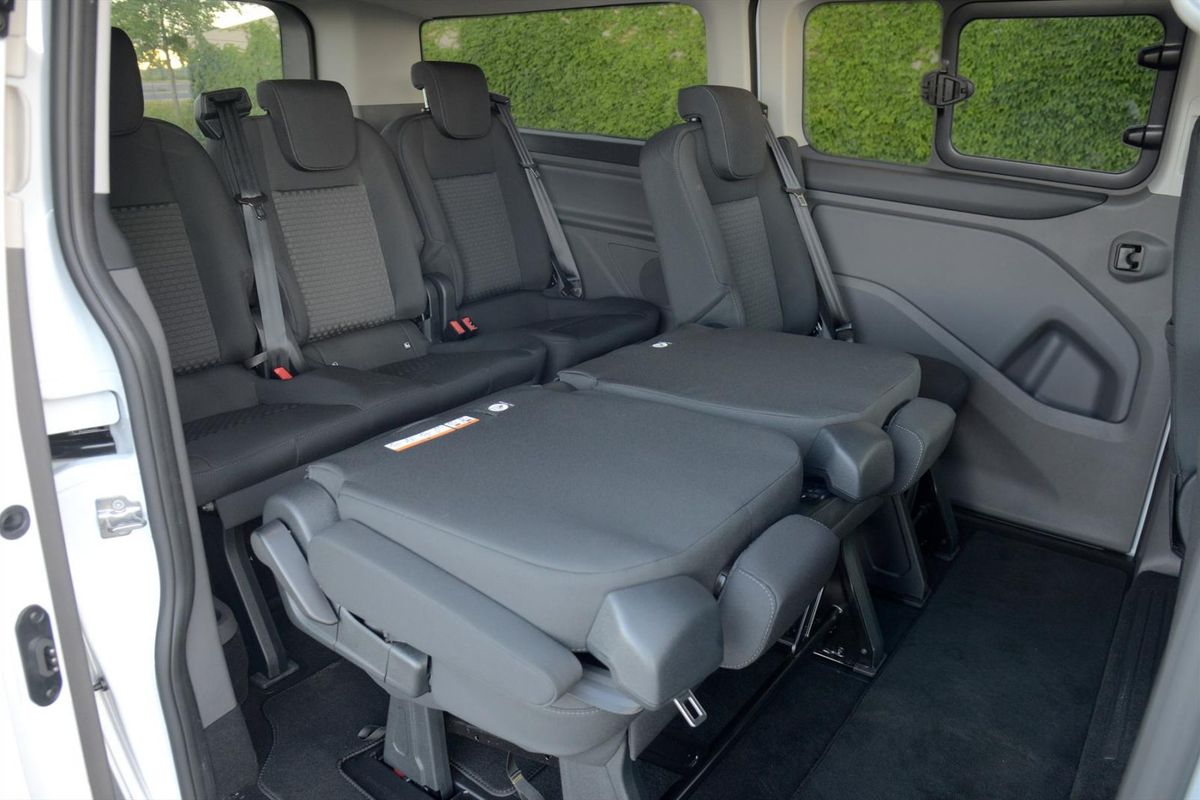
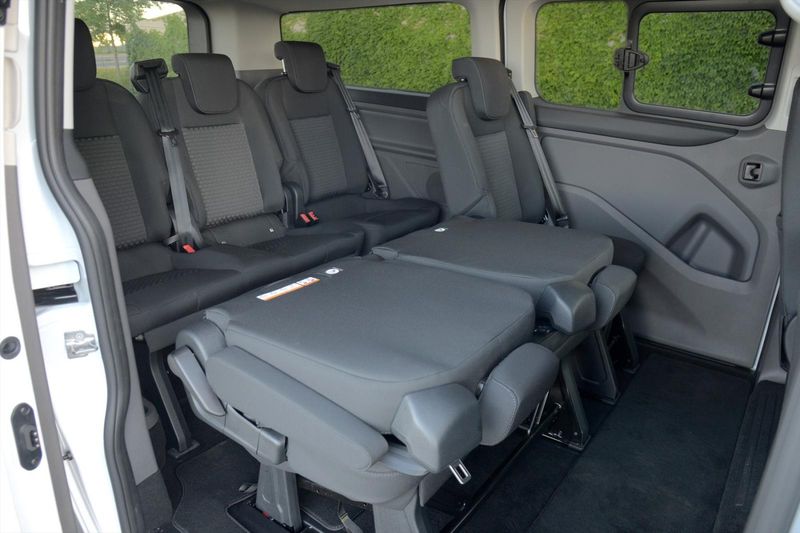
The Tourneo Custom offers flexible seating arrangements depending on what you need. 

The front-end now sports a 5-bar, trapezoidal chrome grille that’s in line with Ford’s passenger car design language. The automatic headlight units are slimmer and all derivatives feature signature daytime running lights and front fog lights.

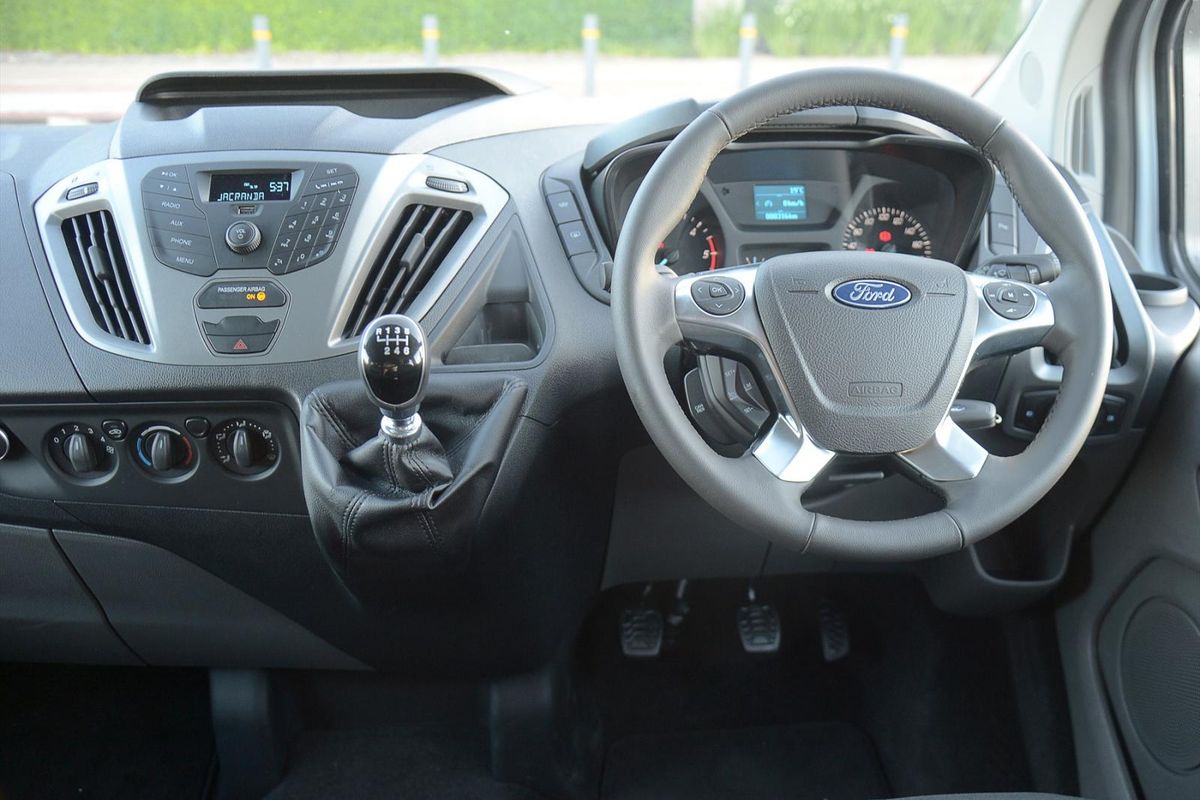
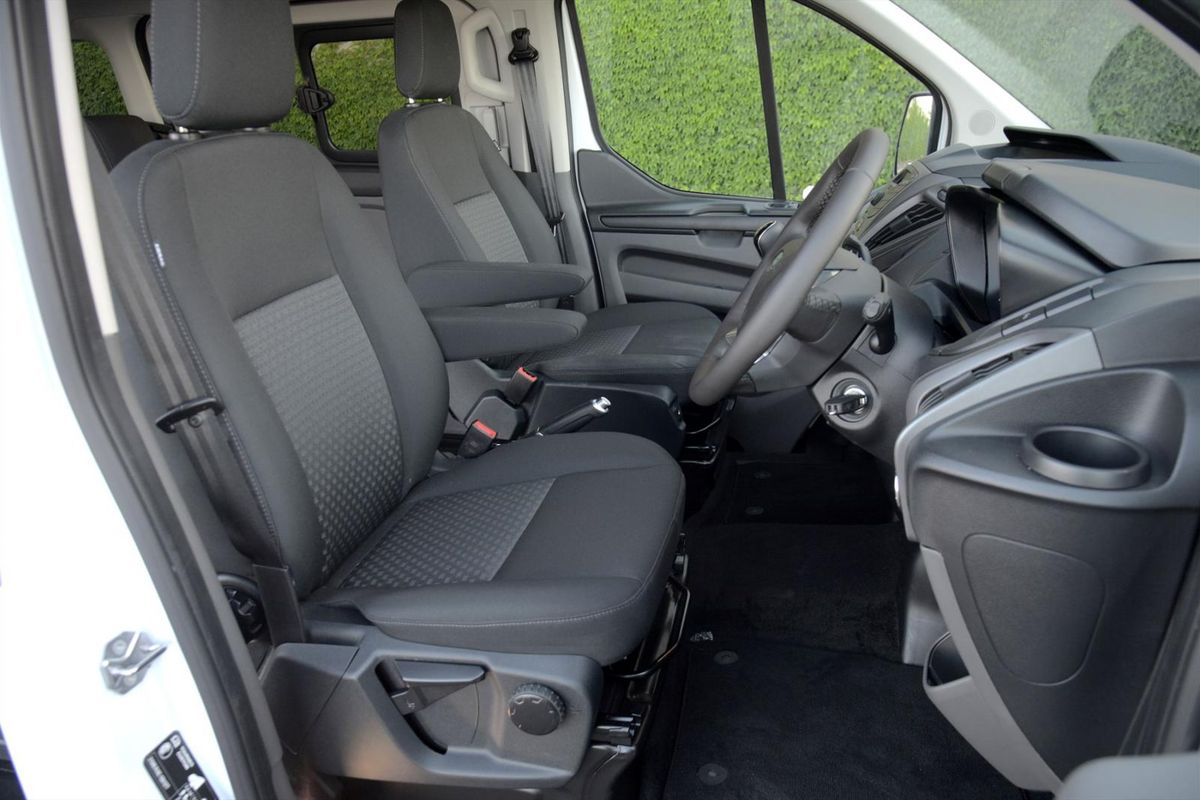
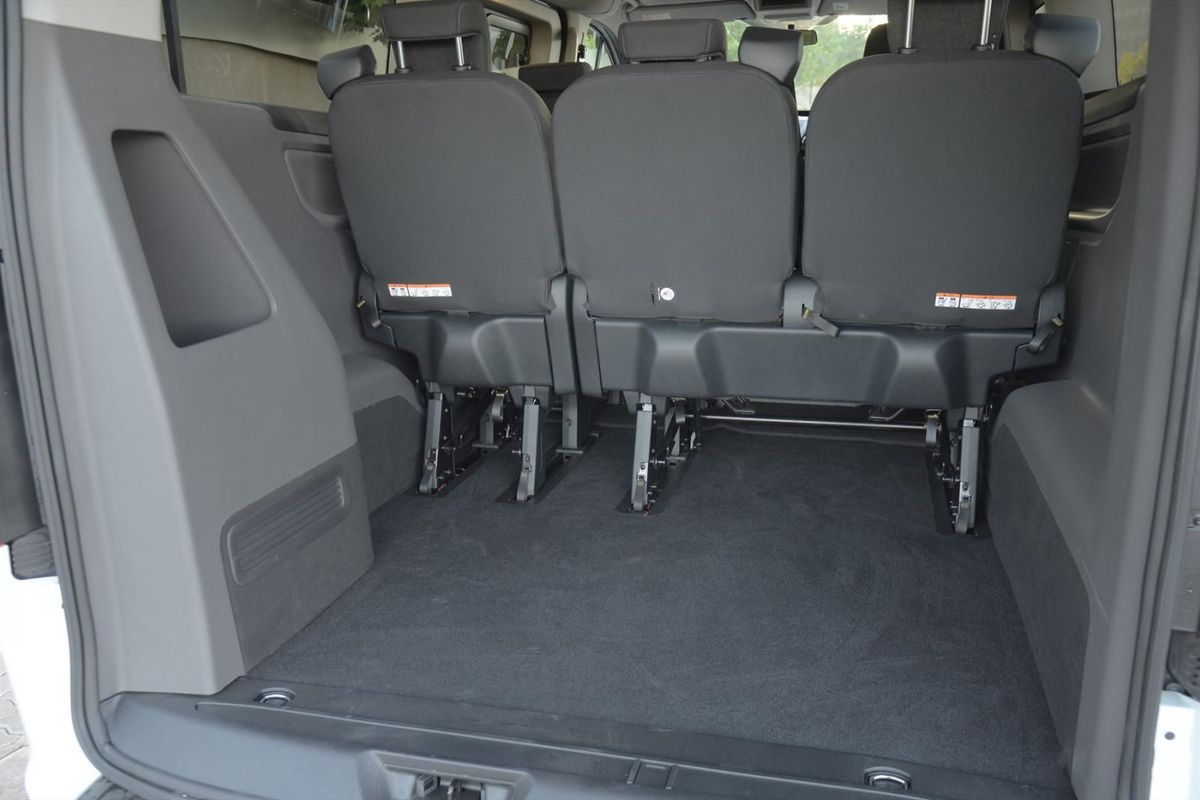
The interior has been extensively revised with the use of higher quality materials seen on the headliner, seats, side panels and carpets. The seat designs have been updated to offer better support while sound reduction has improved in the rear cabin. The air conditioning system has also been updated. Up to 6 passengers can be seated in the rear. The seats themselves can be folded flat, tumbled, stowed or even removed, depending on the requirement.

A 6-speaker sound system is standard across the range, offering Bluetooth, Aux input and mounted steering wheel controls.

Standard driver assistance features include Electronic Stability Programme (ESP) with Hill Launch Assist (HLA), Load Adaptive Control (LAC), Roll-Over Mitigation (ROM) and Trailer Sway Control (TSC), the latter of which is activated when you fit an approved tow bar at a Ford dealer.

Other safety features include 6 airbags and ISOFIX child seat mounts found on the second row of seats.

Engine Power

The Tourneo Custom is powered by a range of 2.2-litre turbodiesel engines in various states of tune including a 74 kW/310 Nm version for the entry-level Ambiente derivative and a more powerful 92 kW/350 Nm engine for the Trend derivative. Both derivatives make use of a 6-speed manual transmission and both are in long wheelbase format.

The Tourneo Custom is rated to carry a gross payload of 915 kg and it can tow an unbraked trailer weighing 750 kg or a braked trailer weighing 1 400 kg.

Ford Tourneo Custom – Price in SA

2.2 TDCi LWB Ambiente 74kW 6MT – R546 000

2.2 TDCi LWB Trend 92kW 6MT – R567 300

The Tourneo Custom is sold with a 4-year/120 000km warranty, 6-year/90 000 km service plan, 3-year/unlimited km roadside assistance and a 5-year/unlimited km corrosion warranty.  


BMW 3 Series – International Launch Review DO NOT MAKE LIVE

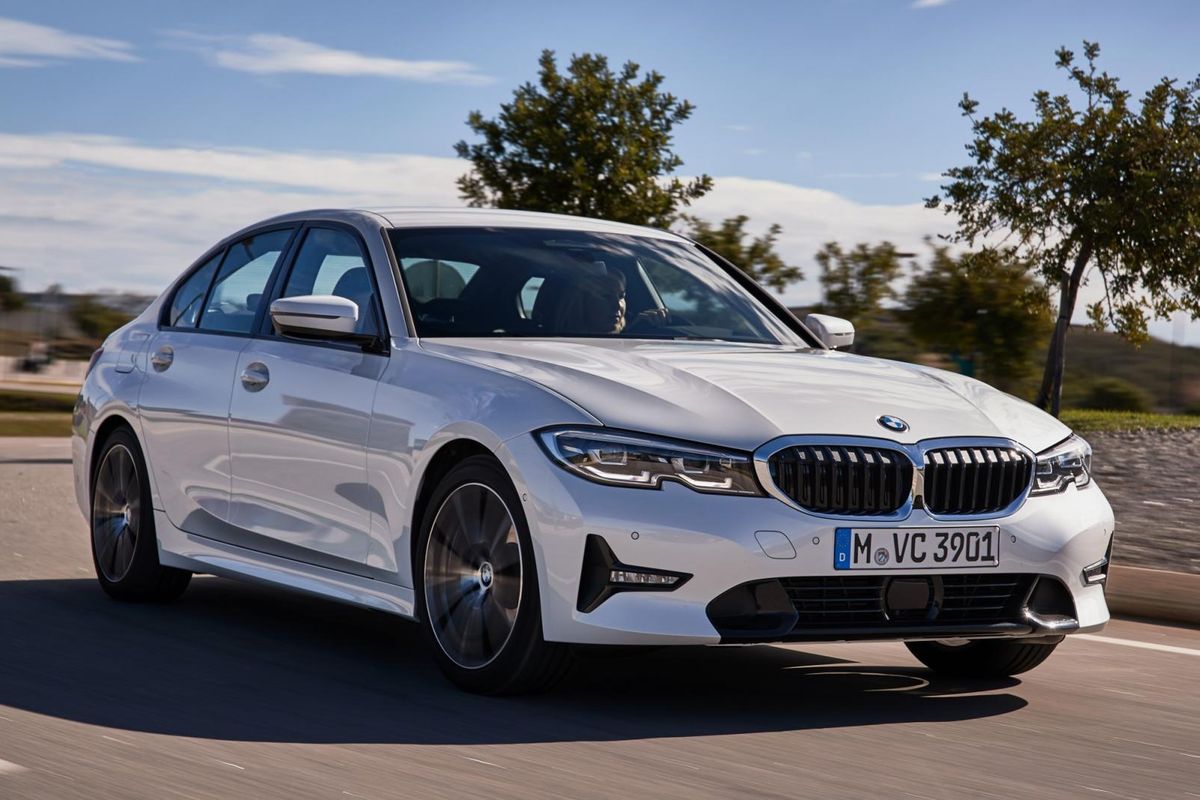
The sports sedan is not dead. In fact, BMW says, its 3 Series will remain the most important car in its lineup for the foreseeable future. This was the bold message as the Munich-based carmaker rolled out the 7th-generation (G20) of its iconic "3er". How can it be so confident? Ah… that's because the new 3 Series significantly shifts the goalposts in this cut-throat segment.

South Africans love the BMW 3 Series. Though we missed out on the first-generation (E21) car, it's a love affair that started with the E30 and is rooted in performance, motorsport success and, in general, a more youthful appeal than what its main rivals from Audi and Mercedes-Benz have ever been able to offer. This golden thread of dynamism and performance is something BMW is acutely aware of, and while the latest G20-generation car offers more on-board and autonomous tech than any of its current rivals, it is clear that when it came to defining the project direction of the new 3 Series, BMW wanted to make sure that the new car again put clean air between itself and its rivals in terms of being superb to drive.

> ALSO READ: New BMW 3 Series pricing released for South Africa

So, fret not… while the new 3 Series can reverse itself out of trouble, drive you autonomously longer distances and even chit-chat with you after a tough day at the office, BMW promises it remains a blast to drive. And that's why I find myself on the stunning, near empty Algarve roads around Porches in Portugal, to figure out whether it's all just hot air…

Challenge Nr.1 – Best-in-class dynamics


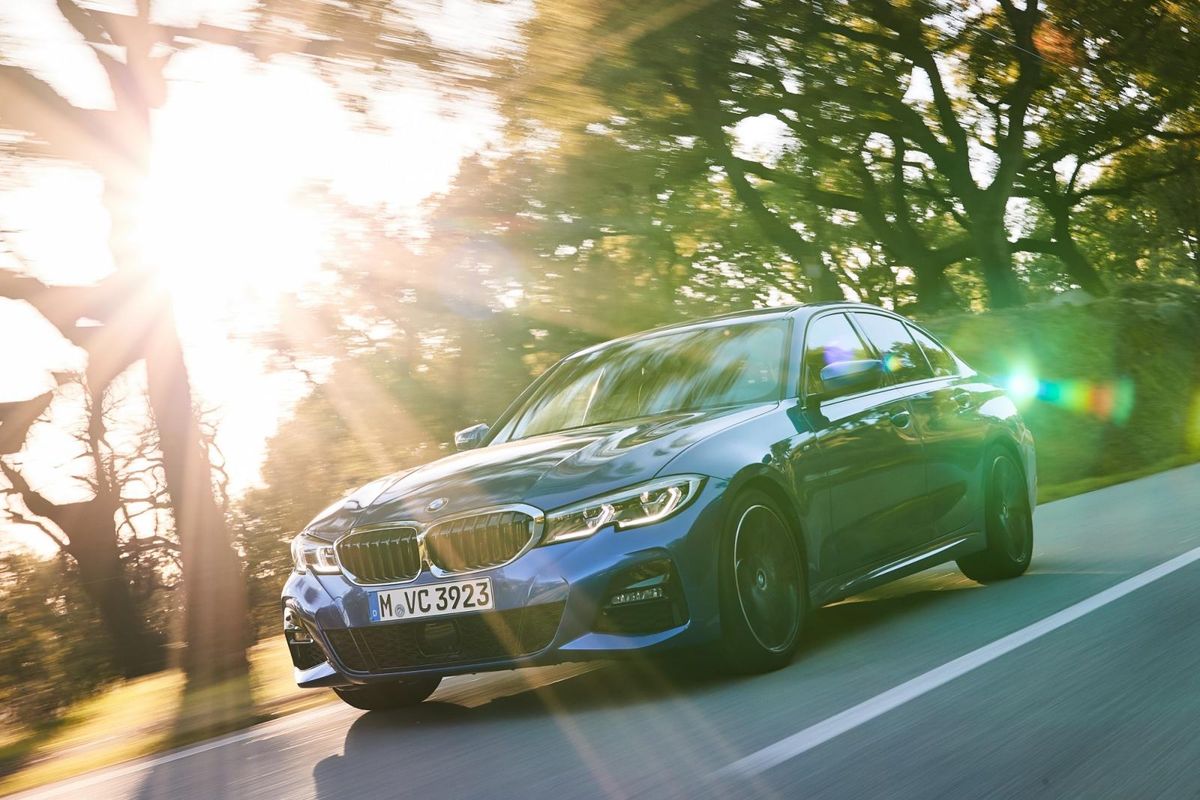
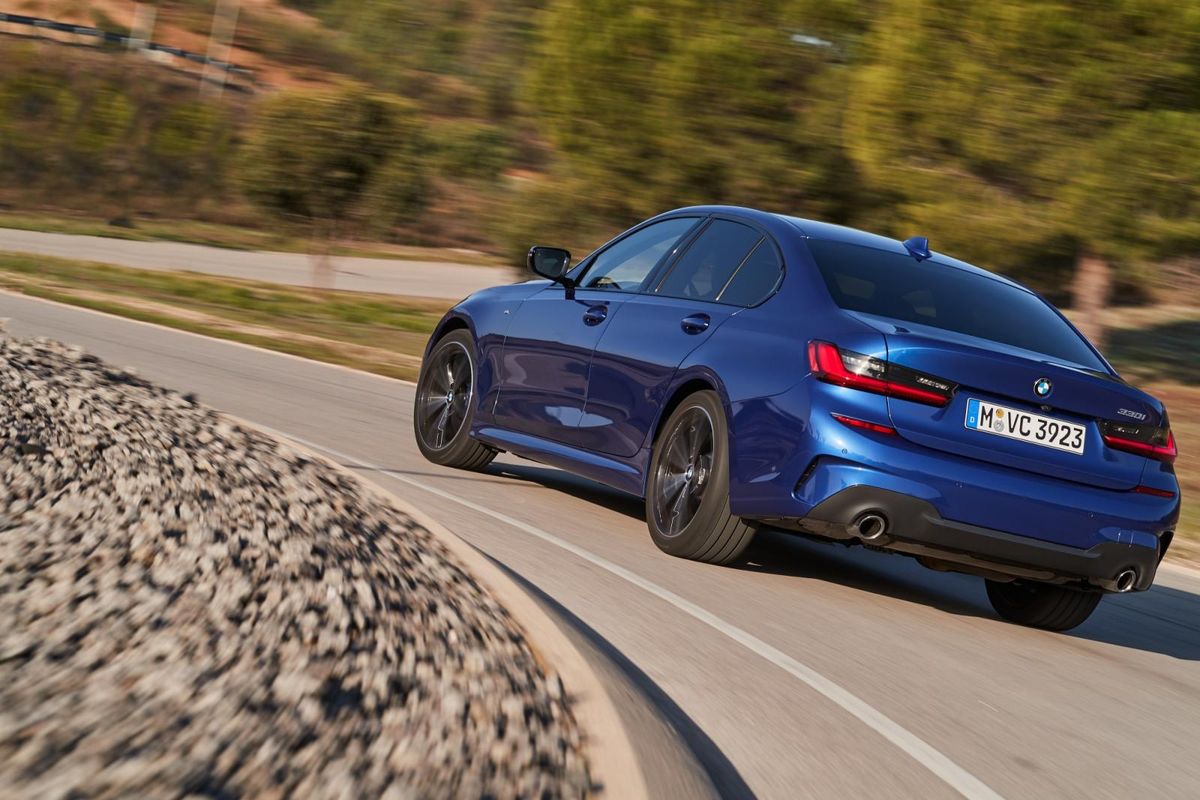
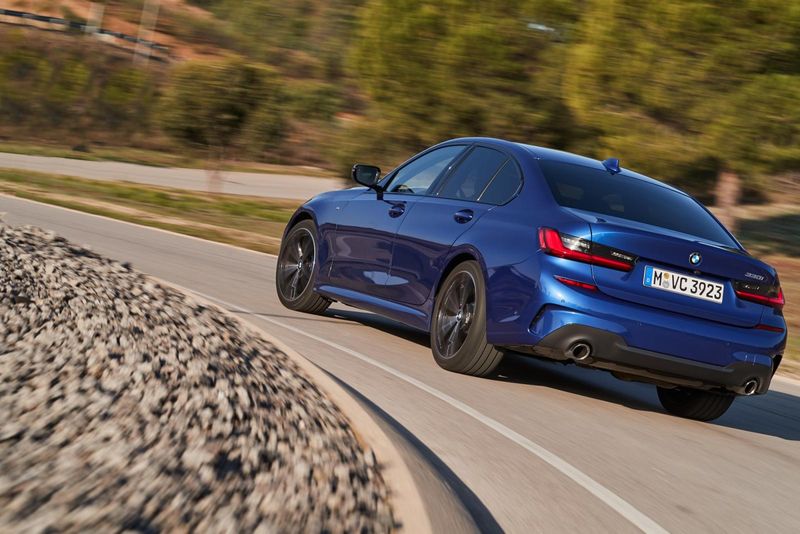
This 330i M-Sport proved a blast to drive on the near-empty Portuguese roads. Excellent body control, yet refined on rough surfaces.

The emphasis on dynamics and very clear and bold road-holding/refinement targets were set right at the start of the project and significantly impacted decisions around the car's footprint. Consequently, it has grown in some key areas – the front (+43mm) and rear (+21mm) tracks are wider, the wheelbase (+41mm) longer and the weight (up to 55kg) is down. The centre of gravity has come down, too, and the structure is up to 50% stiffer than before (and the previous car was far from flimsy in that regard). Finally, it's worth pointing out that BMW has again achieved the desired 50/50 front to rear weight distribution. All of this sounds like a great base to work from, doesn't it?

But that's not all. There are essentially three different suspension set-ups on offer and, given the above, the standard comfort-oriented suspension should still deliver very crisp handling. The cars we drove in Portugal had the firmer, lower M-Sport set-up, and BMW also offers optional adaptive dampers (R11 400). Whether the latter is even really necessary is difficult to say at this point, seeing as the standard, passive dampers are also very clever. They feature hydraulic bump-stops and theoretically should allow for increased stiffness towards the end of their stroke. The pièce-de-résistance for the more hardcore drivers that like to let the rear end hang out will be the optional electronically controlled limited-slip differential that is offered on some of the pricier models. The latter is a R19 500 option in South Africa.


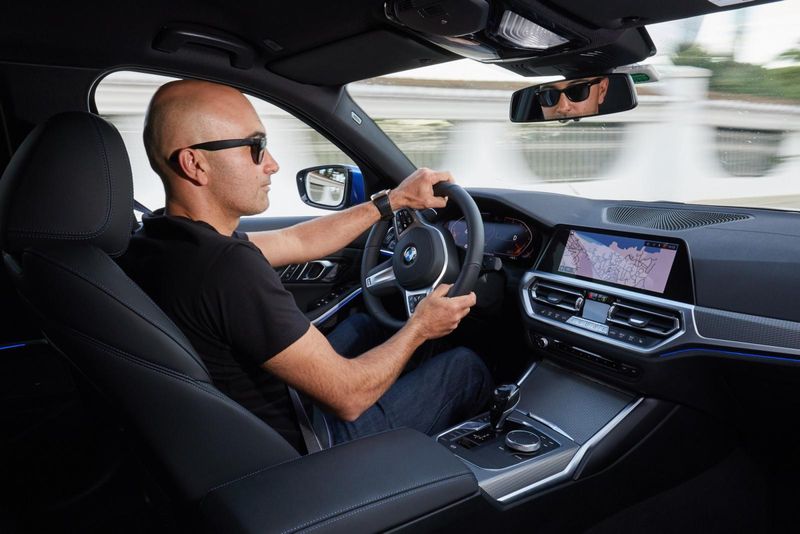
Precise steering and nice, thick-rimmed wheel make the 3 Series a pleasure to pilot.

Very conveniently BMW wheeled out the two derivatives South Africa will be getting from March, the 320d and 330i. I jump into the 320d first. Its engine has the same outputs as before (140kW/400Nm), but efficiency has been improved to meet new (and much tougher) emissions legislation. It's no slouch, either… coupled with the optional 8-speed automatic transmission it can get to 100kph in only 6.8sec. But I take it easy on my first run on the unfamiliar (and very curvy) Algarve roads. First impressions are good… the steering feels very precise and responsive and the car's body stays reassuringly flat in the corners. I'm also impressed by the refinement. BMW says it worked hard to reduce noise levels in the cabin, and resultantly all 3 Series models are fitted with a special "acoustic" windscreen to cut windnoise. You can also have similar front side windows. I'm not sure whether my test unit had these optional windows, but I can vouch for it being very quiet in there, even when the road surface deteriorated.


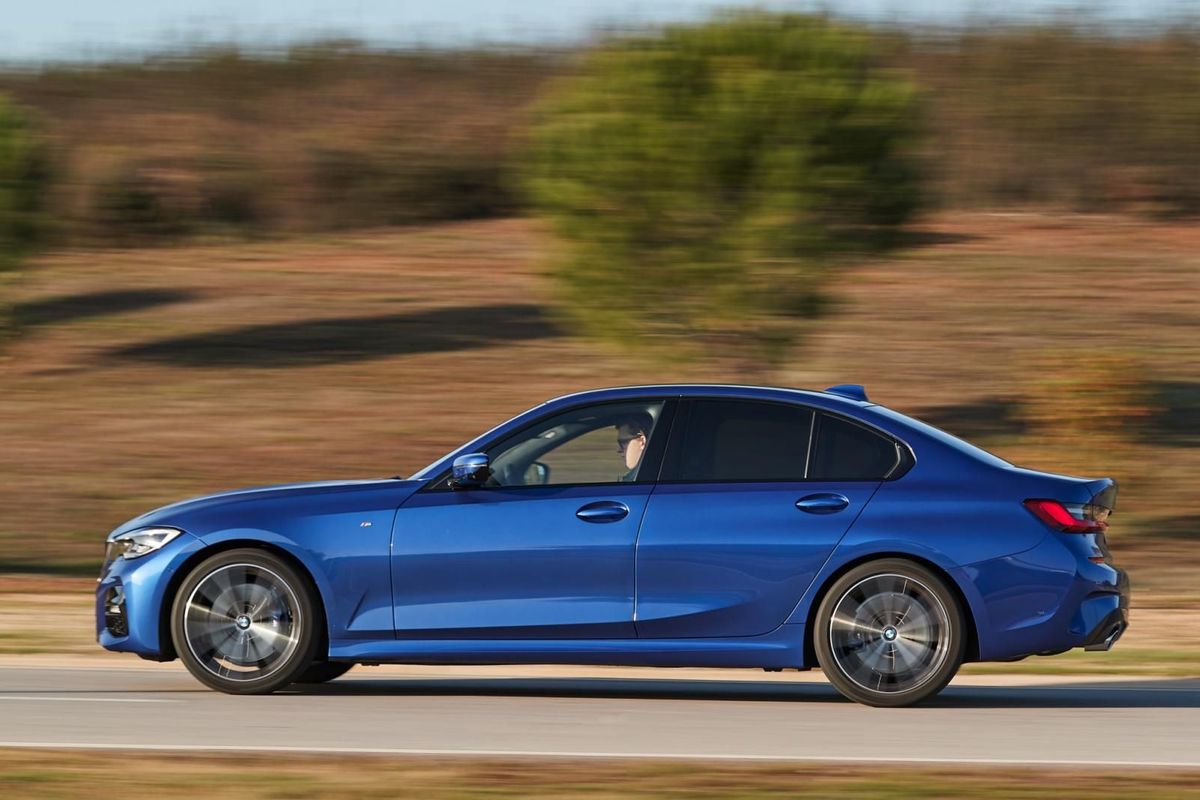
M-Sport package adds bigger wheels and a lower ride height. Also looks the part.

The 330i M-Sport is next. It gets slightly more power than the outgoing car (190kW/400Nm) and is claimed to sprint to 100kph in only 5.8 seconds. On my second run, I find the roads that hug the Algarve hills even emptier. That, combined with greater familiarity, allows me to push significantly harder on the second run. The 330i responds beautifully. To me, the hallmarks of a great driver's car are responsiveness and control harmonisation. The latter is rarely achieved… I want a similar weighting/feel to the major controls (steering, brakes, throttle) and the new 3 Series does seem to get very close to achieving this feat. Back from the drive, I ask the Driving Dynamics Project Manager Albert Maier why the steering in the 330i had more feel than in the 320d, thinking that there must be a spec difference. He suggests that it is down to tyres… And maybe I just pushed a lot harder on the second run… 

There's nothing in this segment right now that can match the G20 3 Series for its ability to not only to be superbly agile in the corners, resist body roll and yet also offer suppleness during everyday driving. Oh… and while purists will continue to lament the lack of a 6-cylinder engine underneath the 330i's bonnet, considerable acoustic tuning does give it a nice, throaty sound. 

Challenge Nr.2 – More "evocative" design


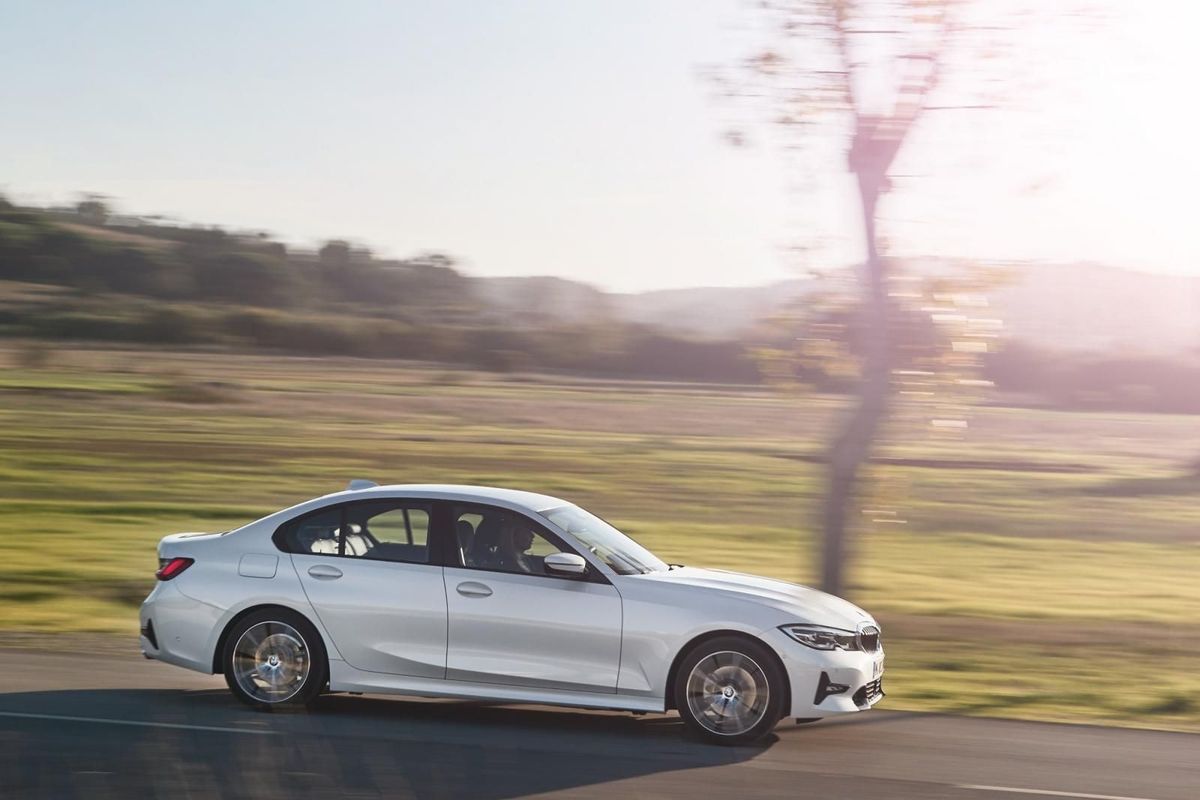
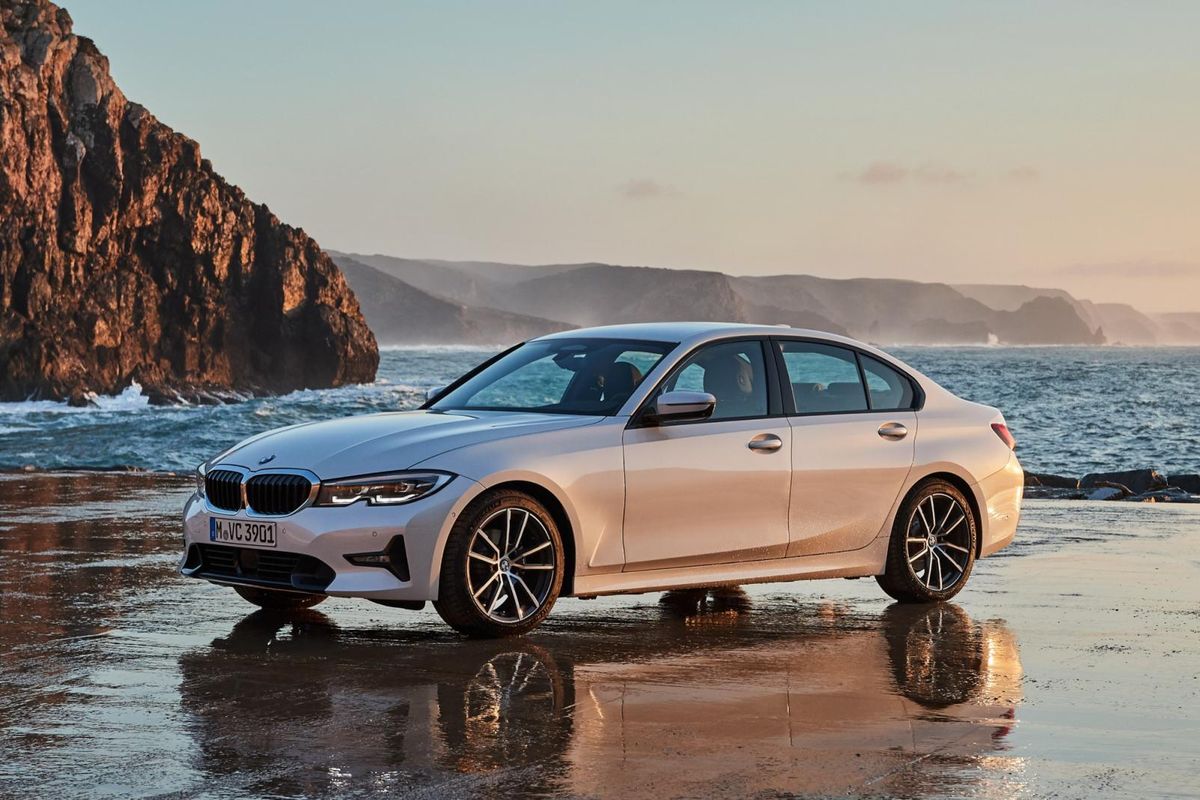
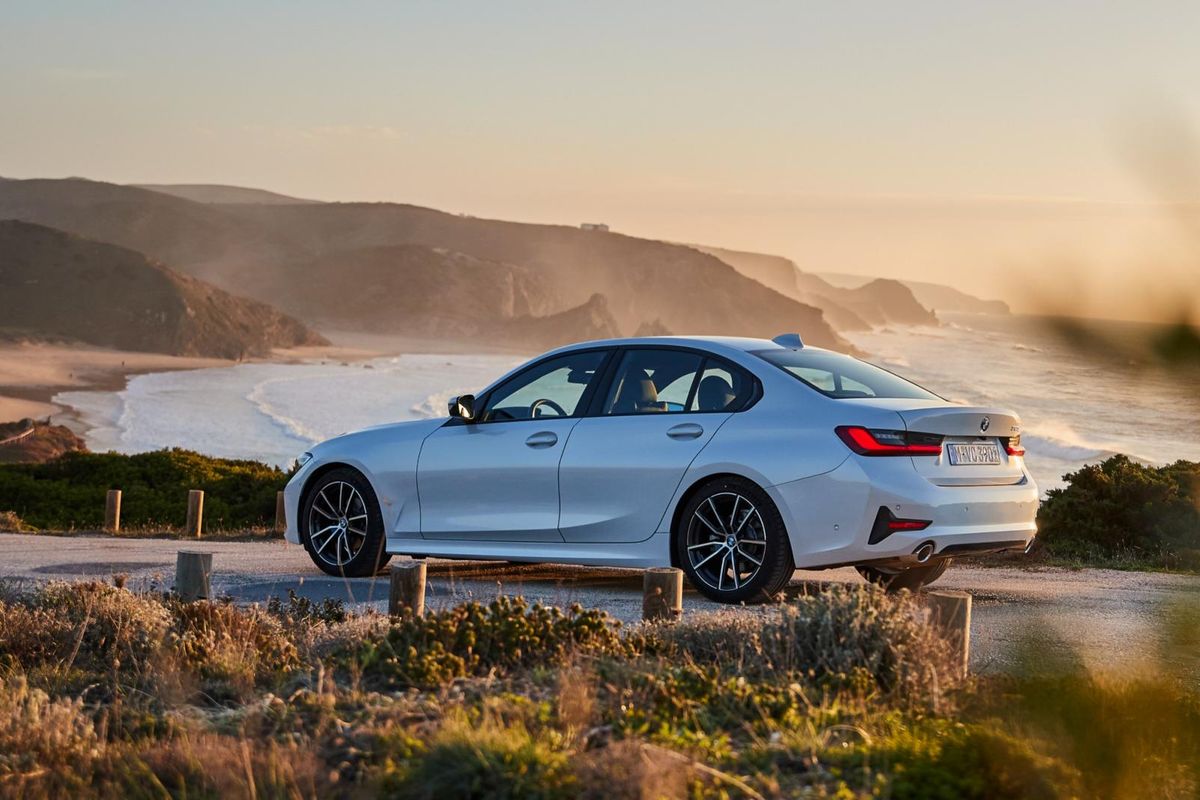
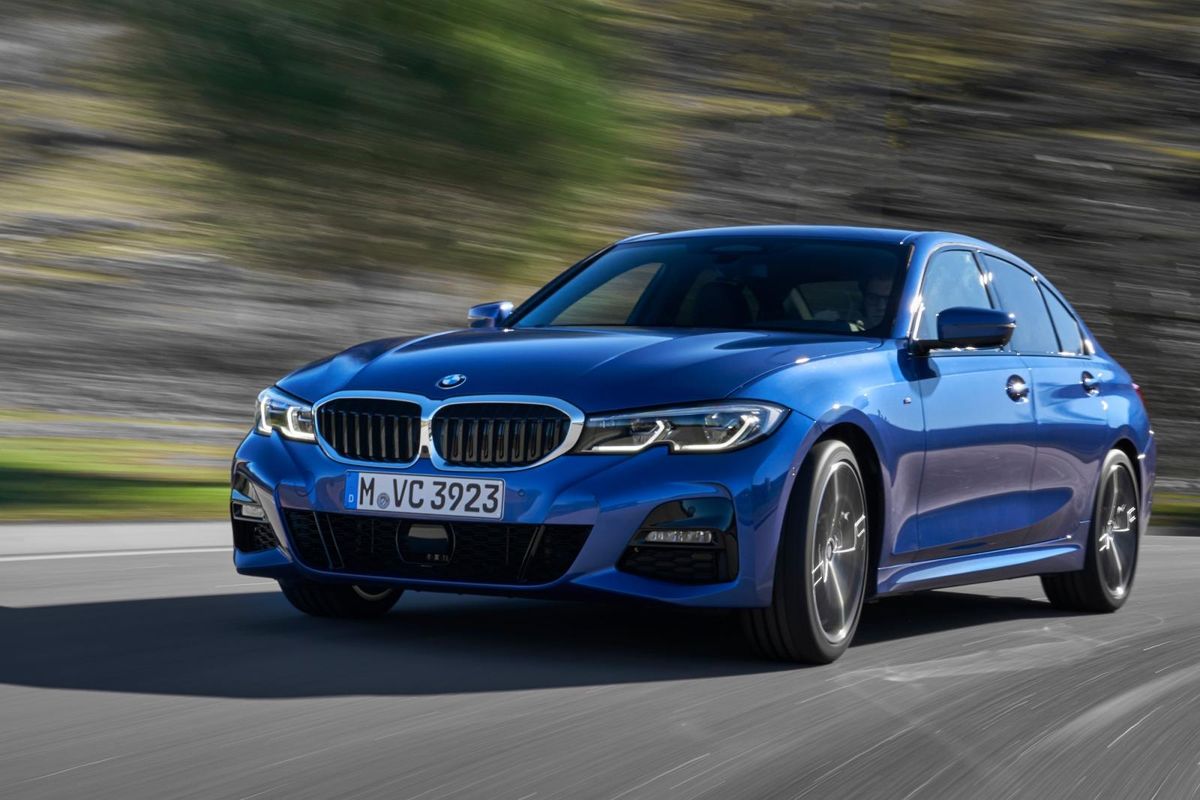
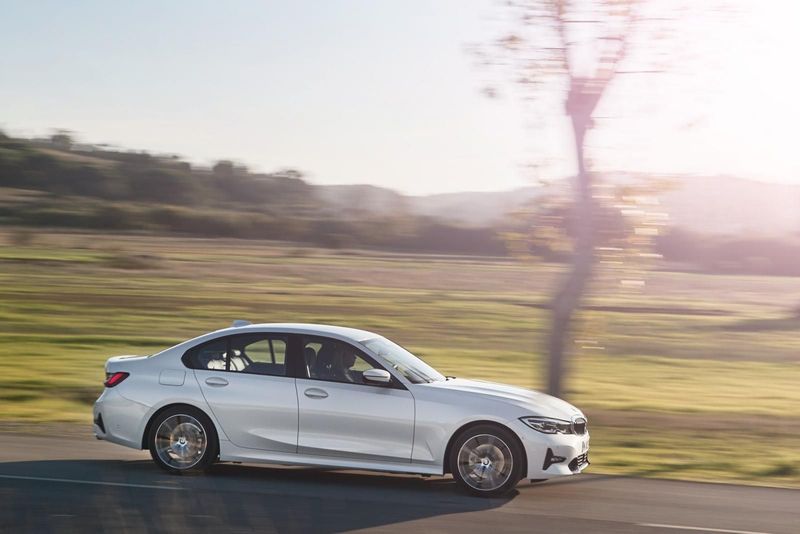
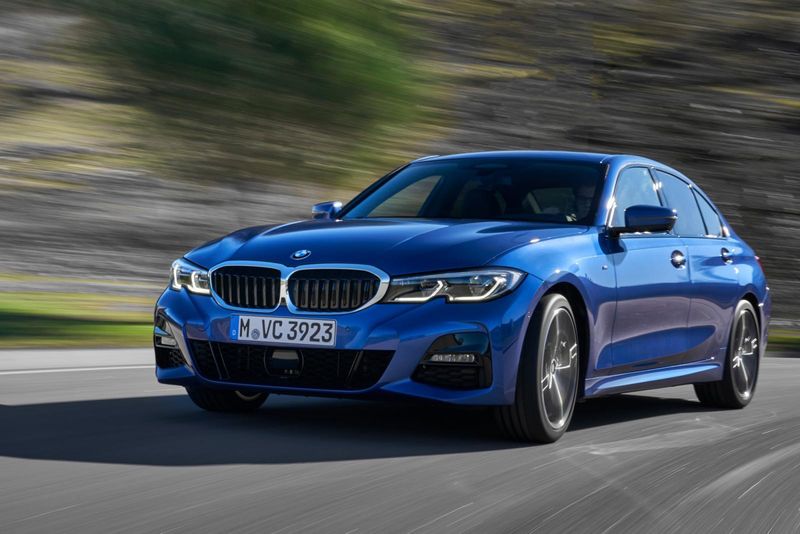
With its long nose and rear-set cabin, the 3 Series retains the sporty persona of its predecessors. But the beauty is in the details.

Much like Porsche's designers will tell you at the birth of every new generation of 911, designing a new 3 Series is a major challenge. There is a lot of heritage that is valuable, yet there is also a lot of pressure to make more decisive steps than before. Design being a very subjective thing, I'm going to leave it up to you to decide (as you will, anyway) whether you like the look of the new 3 Series or not, but as ever I must caution that seeing it in the metal may change your mind.


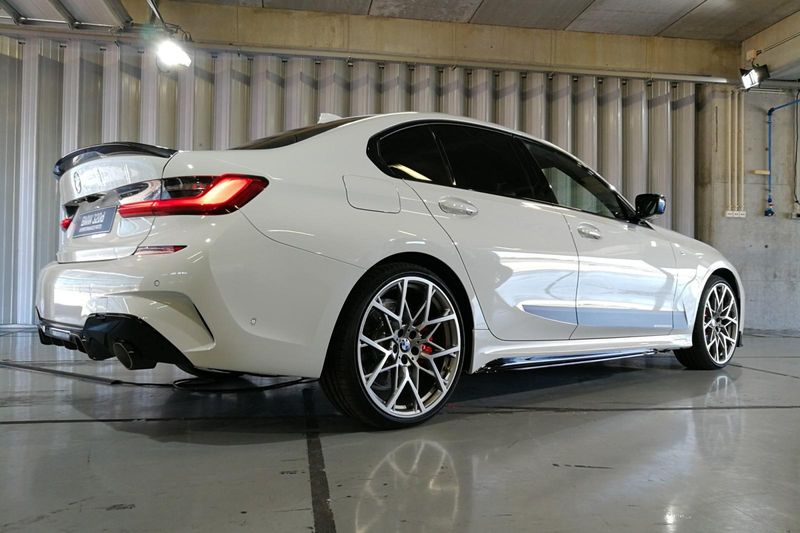
Believe it or not… this is a 320d. It's kitted out with M Performance Parts and set our Instagram account on fire.

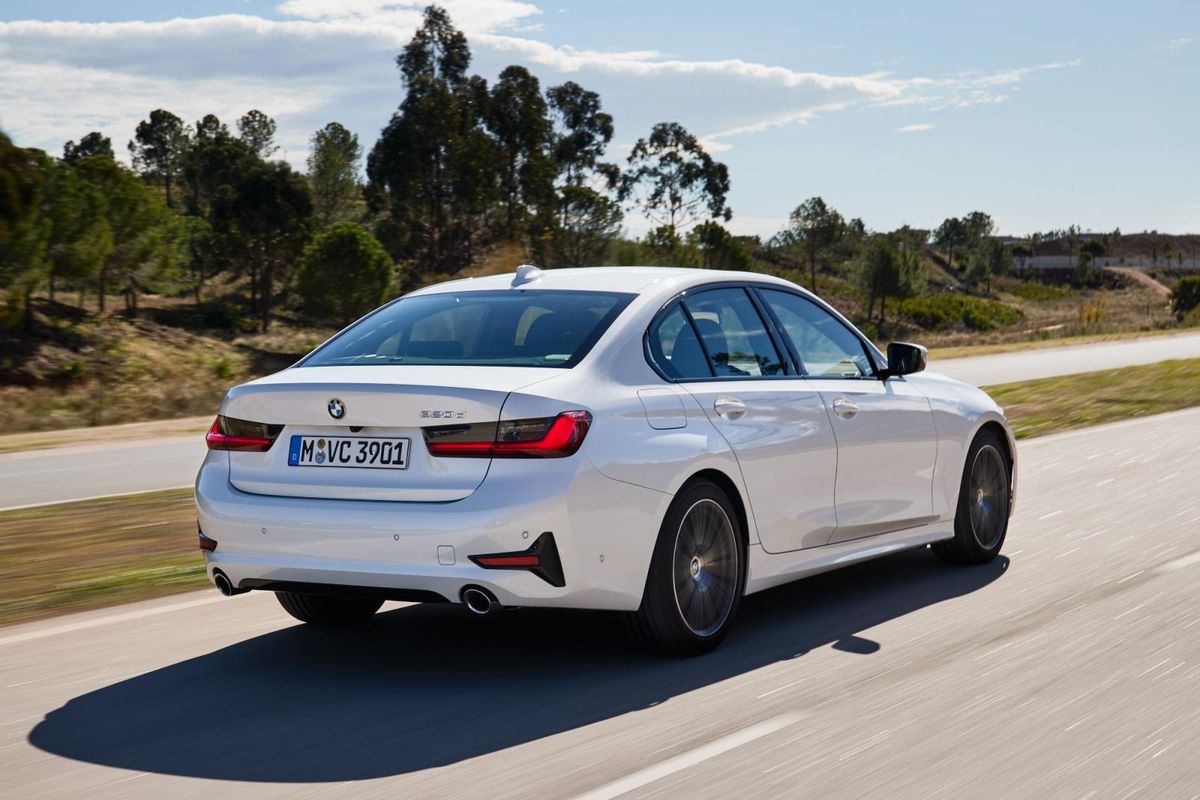
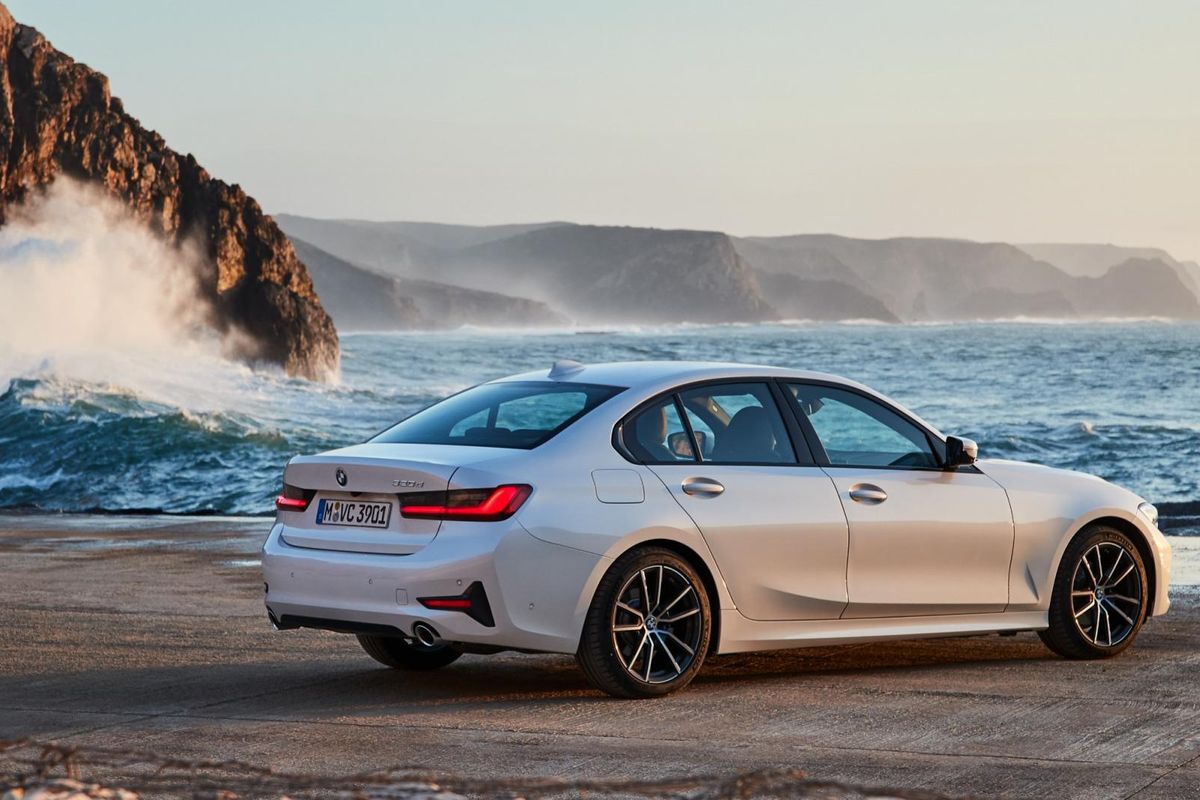
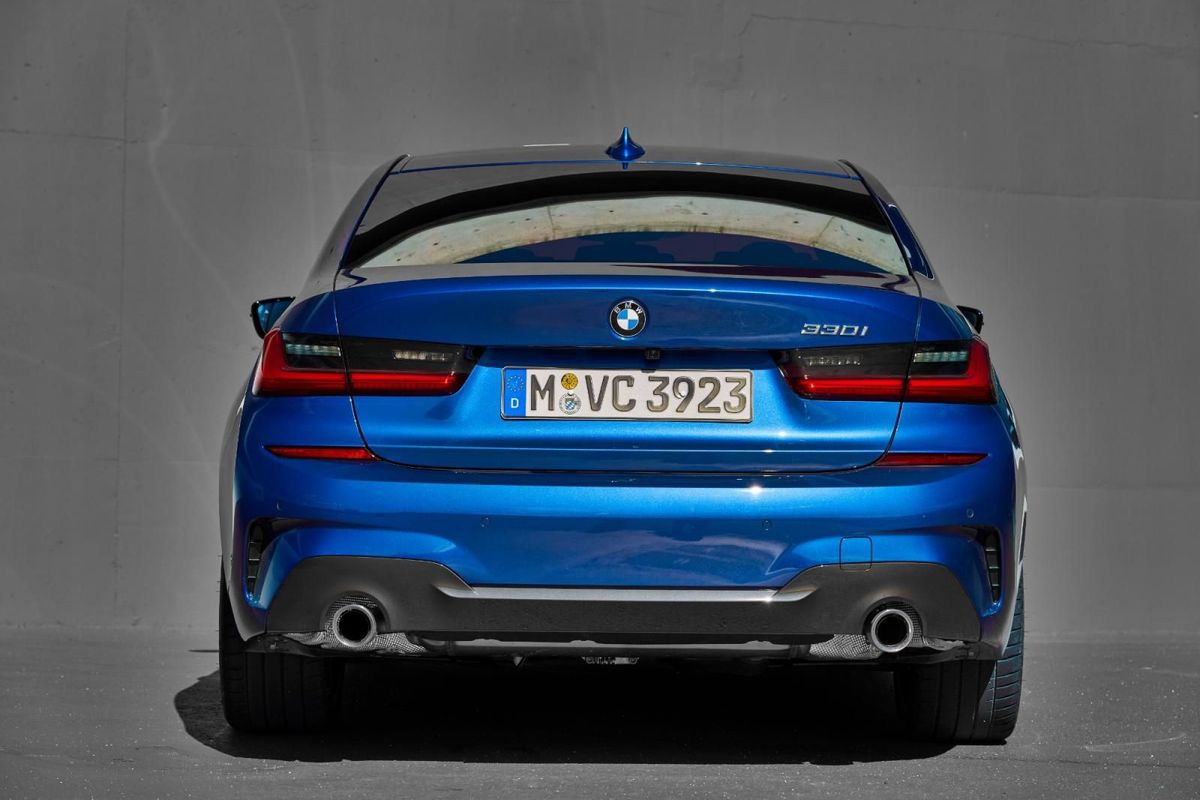
It retains the sporty, low-slung and cab-to-the-rear stance of its predecessors and although there's nothing particularly radical about its appearance, there has been an awful amount of detail work. These elements come to life when you take the time to study them. It's also a lot more aerodynamically efficient than before (Cd figure 0,23 as opposed to 0,26). The surfaces are cleaner, the lines more abrupt and defined and nods to the past clever. The L-shaped taillamps are particularly attractive, and I do love the nod to the E46 headlamps, though the treatment is far more angular on the G20. Of course, much of a modern car's facial persona is defined by the design of its headlamps and the detailing of what's contained within. The LED signature of the new 3 is particularly menacing… which I like. Furthermore, the M-Sport package really ups the drama and when fitted with items from the M Performance Parts catalogue, then you can turn even your 320d into a head-turner of M3-like proportions.


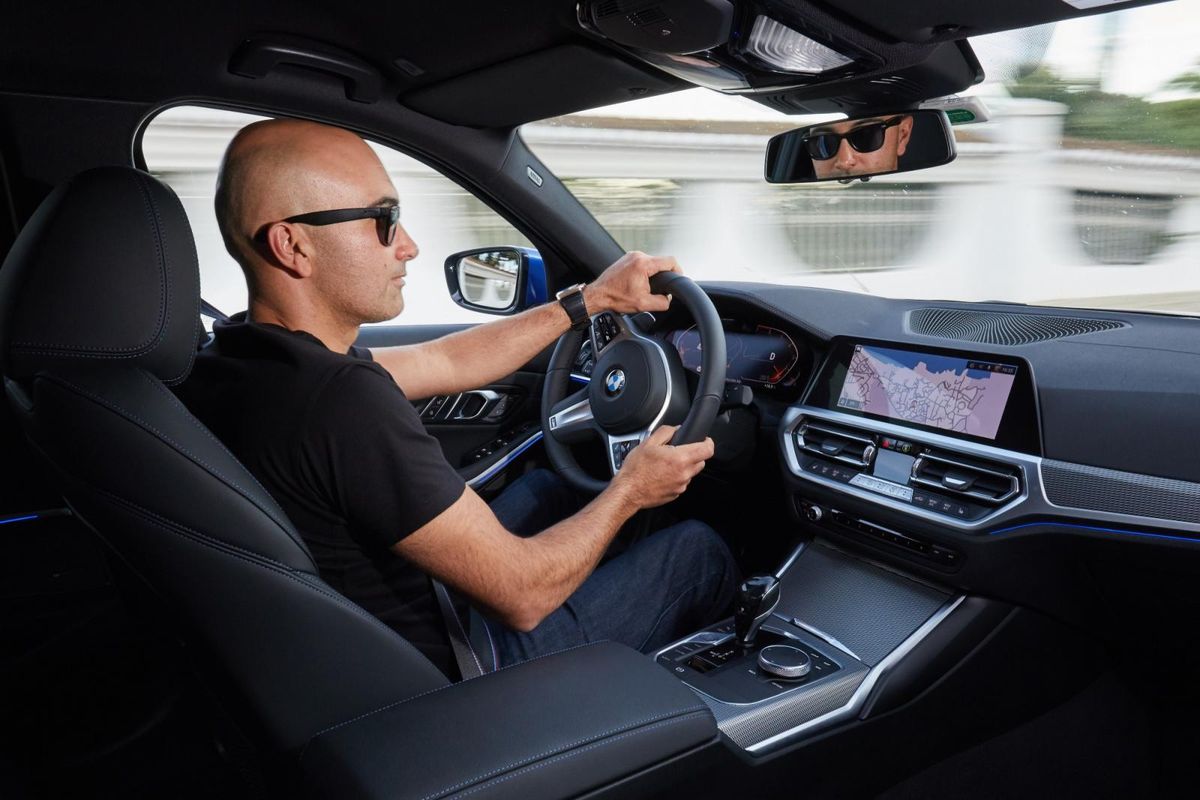
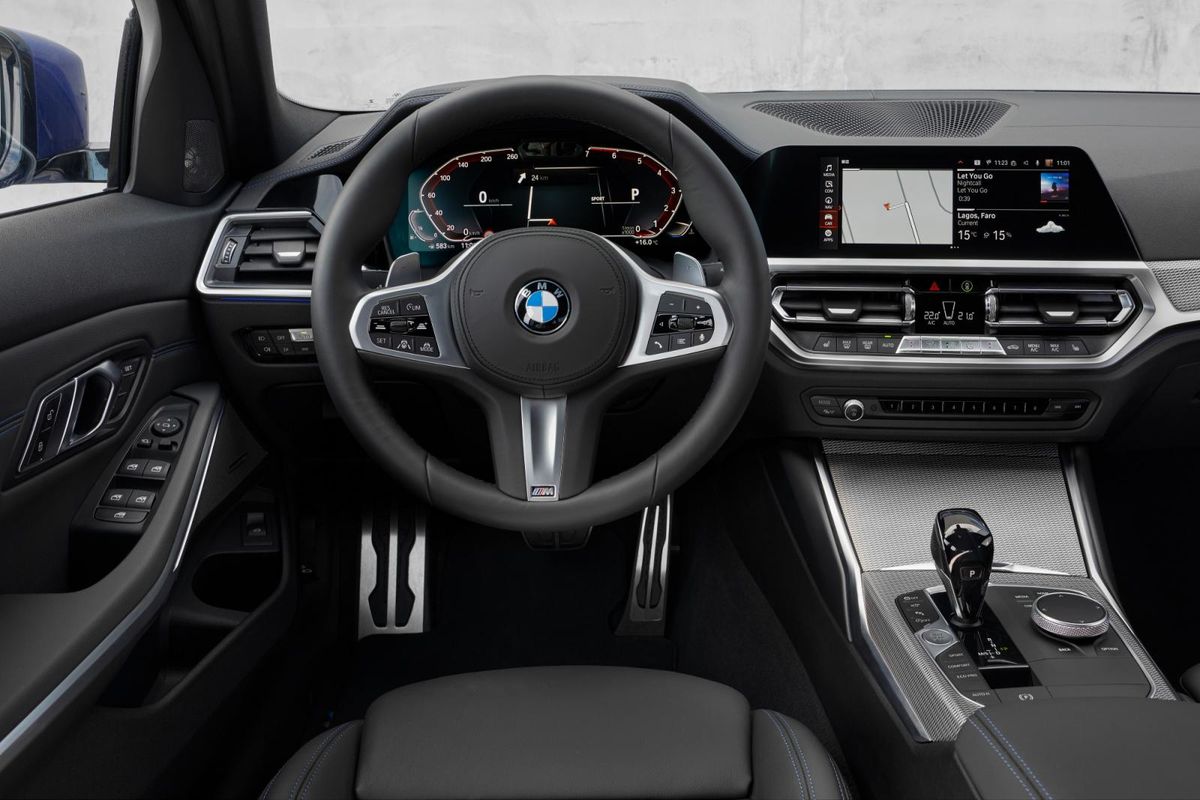
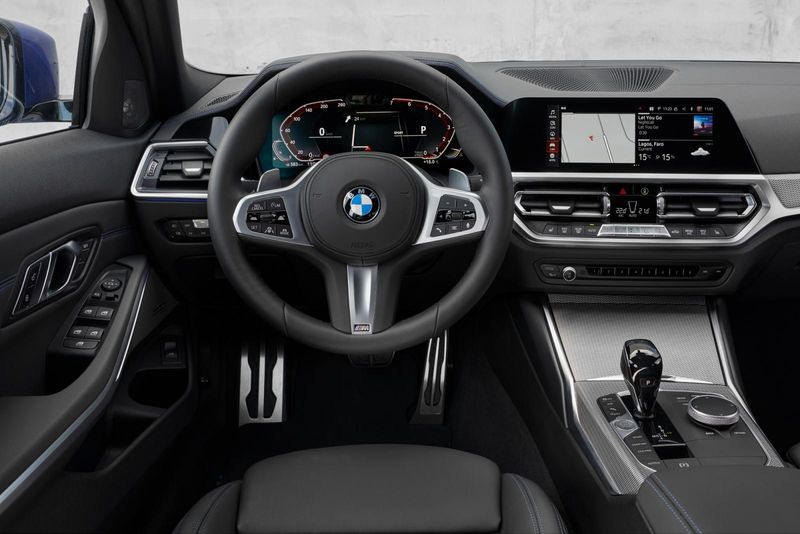
Clean, crisp and very modern… the new 3 Series cabin may not look that different at first glance, but it is a big step forward.

To me the interior has taken a more significant step forward, though it may not appear that way based on photographs. The "outlines" of almost everything will be familiar to BMW owners, but in terms of detailing and surfacing the G20 has moved forward, a lot. I happened to sit across from the man who led the interior design team during lunch, and he mentioned that BMW wanted to achieve a "two generational step" for the cabin. Much of that will come down the tech (see the next point lower down), but in terms of design, he says, this has been achieved by cleaning up the surfaces and even cutting back on the number of different types of materials used, to avoid clashes and unwanted contrasts. A particular favourite of mine are the knurled finish of the ventilation outlet controls, inspired he says, by one of the buildings at BMW HQ in Munich. 

It's a modern cabin, in the way it looks and functions, and when I look at the representatives that BMW made available for the launch in Portugal, it's easy to see why. It was created by a young team. 

Challenge Nr.3 – Groundbreaking tech


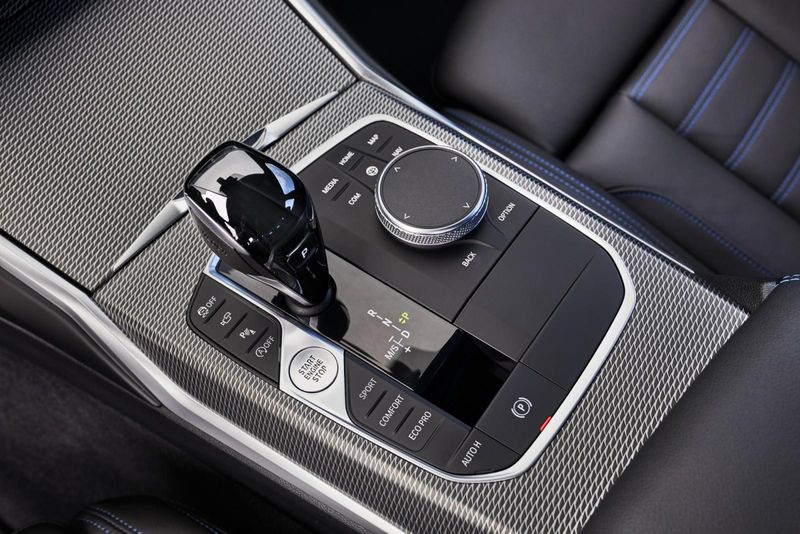
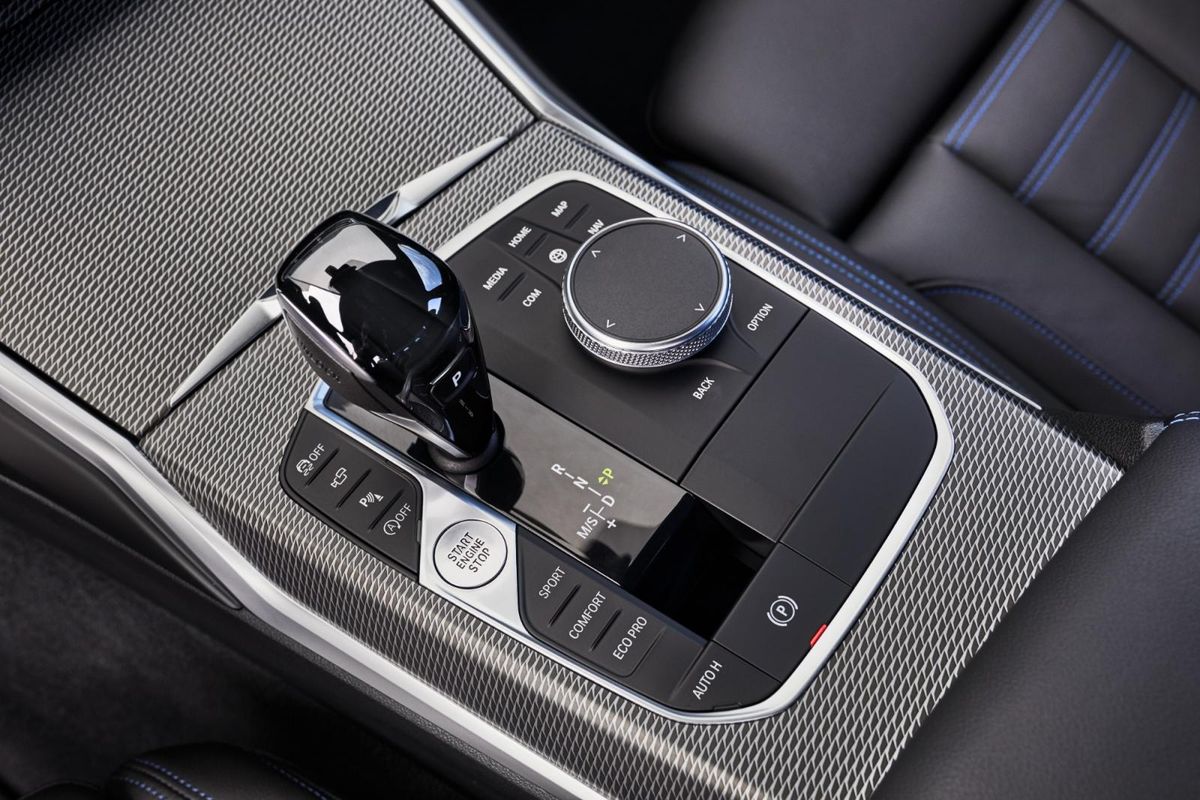
Neatly clustered on the transmission tunnel – BMW's latest iDrive controller has become a very familiar and easy to use item.

There's no space here to go into detail on all the various comfort, safety and connectivity systems offered by the new 3 Series, but there are definite highlights that I'd like to point out. The first is the new BMW Personal Assistant system – essentially a digital "co-driver" that you can interact with. As standard, you call your Assistant's attention by saying "Hey BMW", but you can also rename him/her. And what can your assistant help you with? Well, the list is already long, and courtesy of remote updates, will continue to expand. The system also learns your habits and favourites, so can respond within appropriate context. So, whether you need to find an Italian restaurant nearby, or want to know what the remaining range is, or the weather… the Assistant can provide you with that information. You can also call up certain functions through simple conversation. Say, "Hey BMW, I'm tired" and it will activate a music/lighting/air-conditioning routine to give you some energy. But perhaps most importantly, the Assistant knows how all the functions in the car work, and given that there are so many, it's cool having "someone" in the car with you to explain how High Beam Assist works, for example.


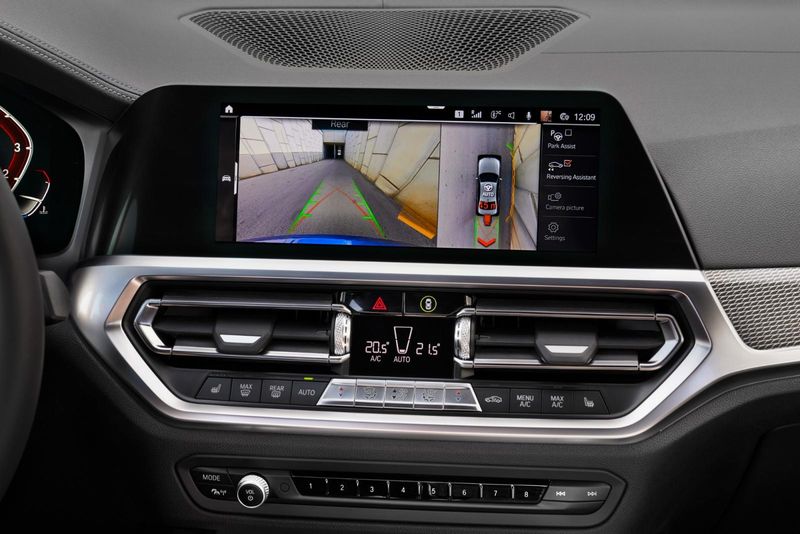
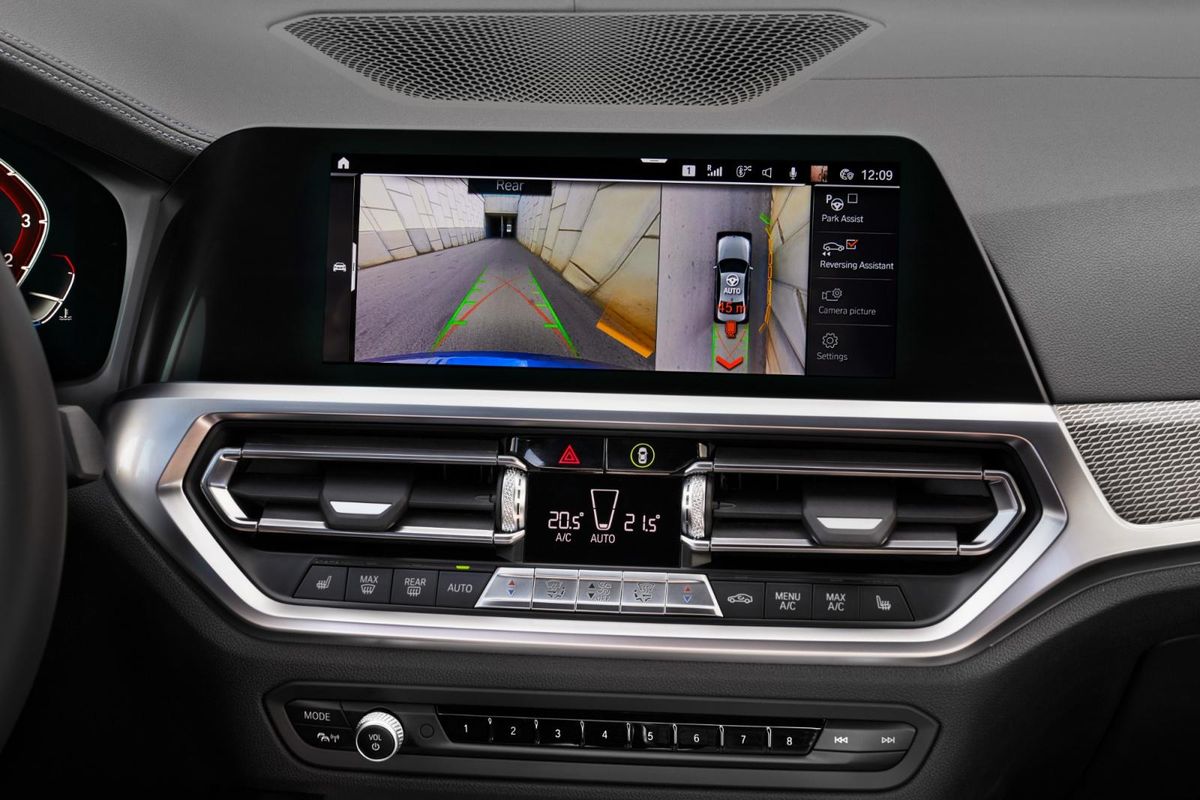
Find yourself in a tight spot? Don't worry, the new 3 Series can reverse out of trouble (almost) all by itself.

The new 3 Series is fitted with a raft of monitoring equipment, including radar, cameras and ultrasonic sensors. It therefore comes as no surprise that it offers such impressive autonomous ability. In markets where it is allowed (such as the USA and China), the 3 Series will drive its occupants at speeds of below 60kph for much bigger distances than before, simply because it is so far more aware of its surroundings. I particularly enjoyed the ease-of-use of BMW's latest Active Cruise Control. I hit only one button on the steering wheel to indicate that I'm ready to go "virtually hands-off" and automatically following distances, lane assist, set speed etc. were selected. No fuss. BMW has also been able to add some other interesting features, including a Reverse Assistant. How many times have you driven into a narrow, confined space with limited visibility, only to find that you can't continue and have to reverse? Well, activate this new system and the 3 Series will reverse you out trouble automatically (you only have to use throttle and brake). 

In terms of connectivity and digitization, BMW has not held back. The screens in the new 3 Series are every bit as large and sophisticated as those in the 7 Series. Voice control and the more controversial gesture control are part of the package, too. Interesting, Apple CarPlay will be available but BMW hasn't quite cracked a deal with Google yet for Android Auto. Another cool feature (ironically for Android 8.0 and higher, NFC-enabled Samsung Galaxy phones, not iPhones) is the ability to open the car with your mobile device. 

As ever, many features are optional extras, and I urge interested buyers to head for BMW's online configurator to spec the 3 Series of their dreams and to get a clear idea of cost.

Summary


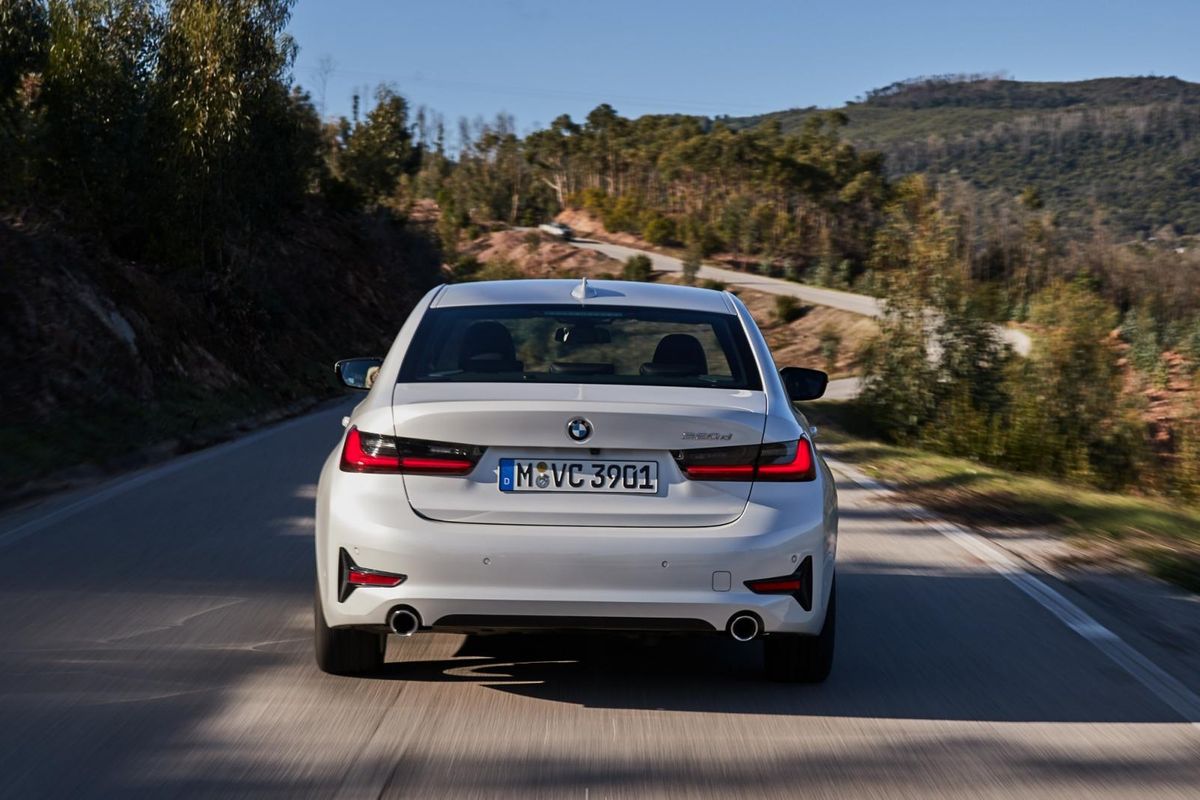
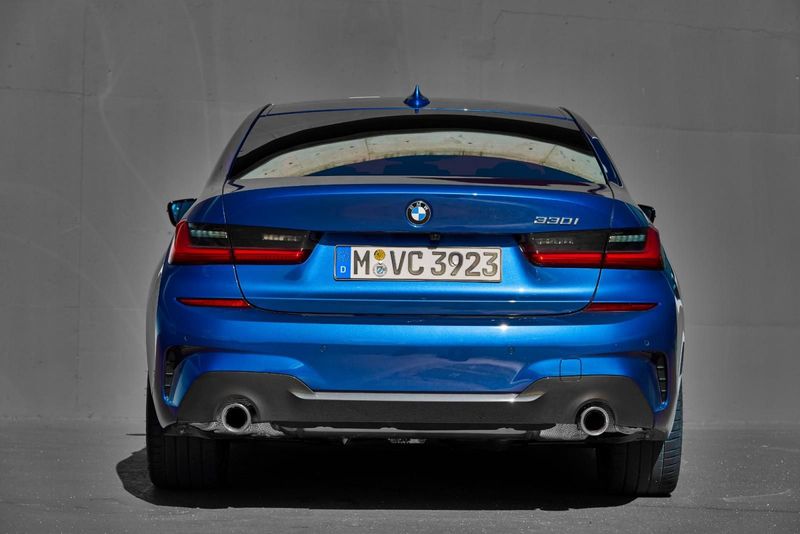
The end… twin tailpipes will be standard on all new 3 Series models.

You could argue that saying BMW's new 3 Series has shot to the top of its class is damning it with faint praise – after all, the current Mercedes-Benz C-Class may still be an attractive car and a recently facelifted one at that, but at its core it is old. And the latest Audi A4 (itself due for a facelift in SA soon), has not quite received the welcome its maker may have hoped. Alfa Romeo's Giulia is a painfully slow seller locally, as is the Lexus IS. Infiniti has disappeared and local consumers must still get their heads around paying premium-badge money for a Volkswagen (Arteon). So… the opposition is not at its strongest.

Even so and within that context, I do think that the G20 represents a much bolder generational step than what we've become used to from BMW with this model. Remote updates will ensure that it can stay in the tech game in the coming years and design wise it looks the part, inside and out, right now. These are areas where its rivals may find it easiest to catch up, but when it comes to the driving experience the challenge to match the new 3 Series will be much harder. Once more, the BMW 3 Series stands apart as the most dynamic, sporting car in its class. But this talent no longer comes at the cost of refinement… or ride quality… or anything much else I can think of. 

Looking for a new / used BMW 3 Series to buy?

Find one today on Cars.co.za by clicking here


Updated: Ford Figo (2018) Specs & Price

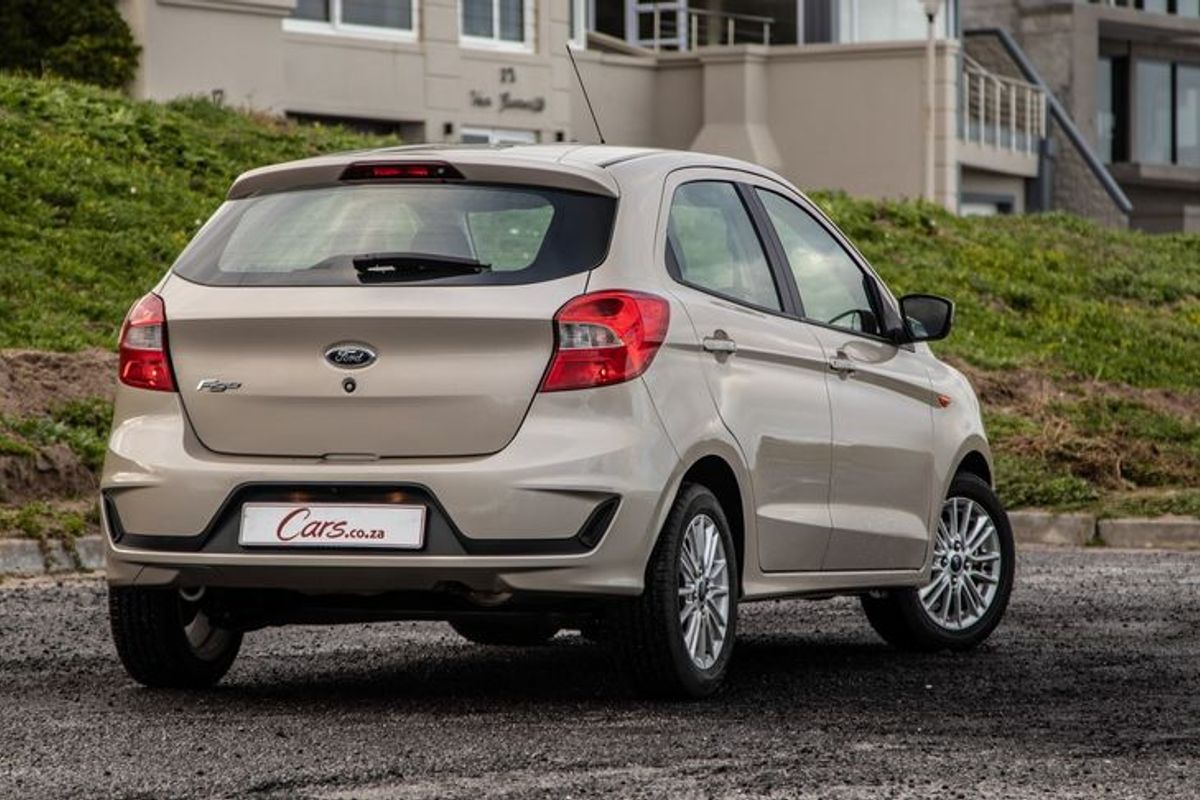
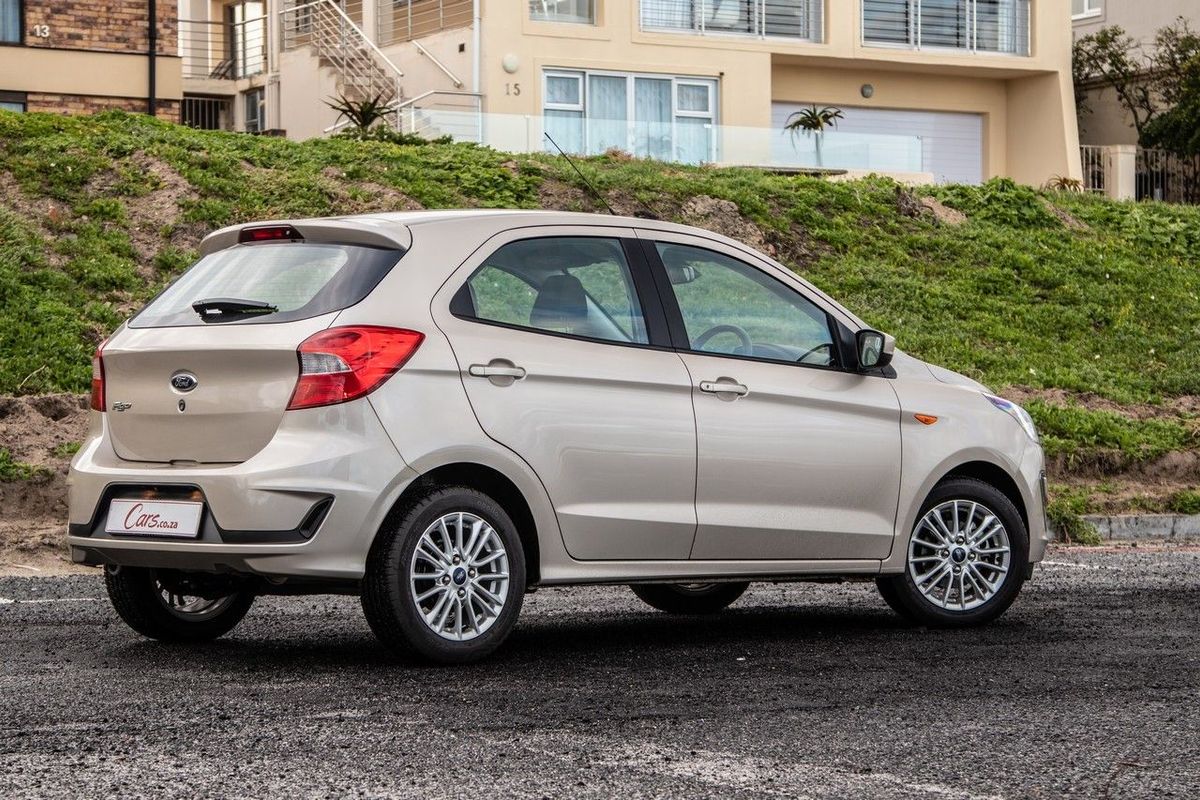
Ford has expanded its Figo budget car range through the introduction of range-topping 1.5 Titanium hatchback derivative, which features, inter alia, a SYNC3 infotainment system and upgraded safety specification. Herewith the range's spec and pricing details. 

The new (also Indian-made) Figo incorporates a number of improvements, both in terms of product packaging and after-sales support. 

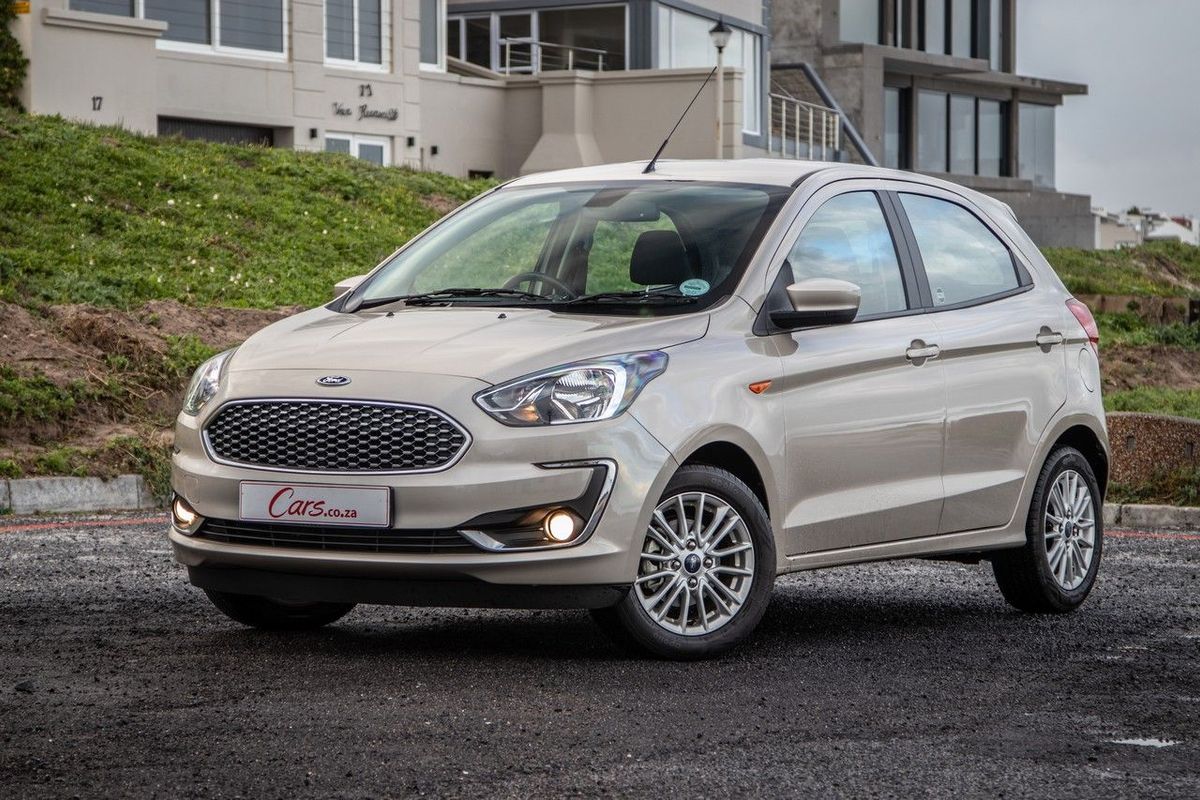
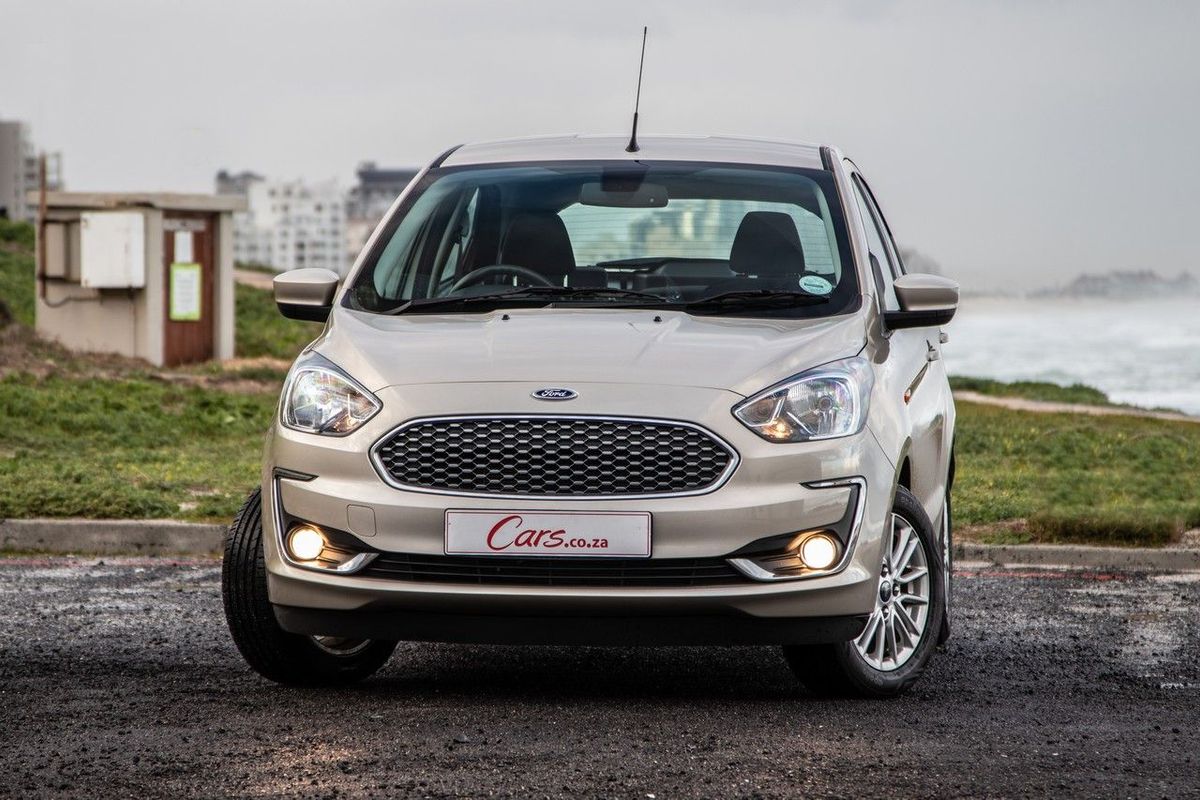
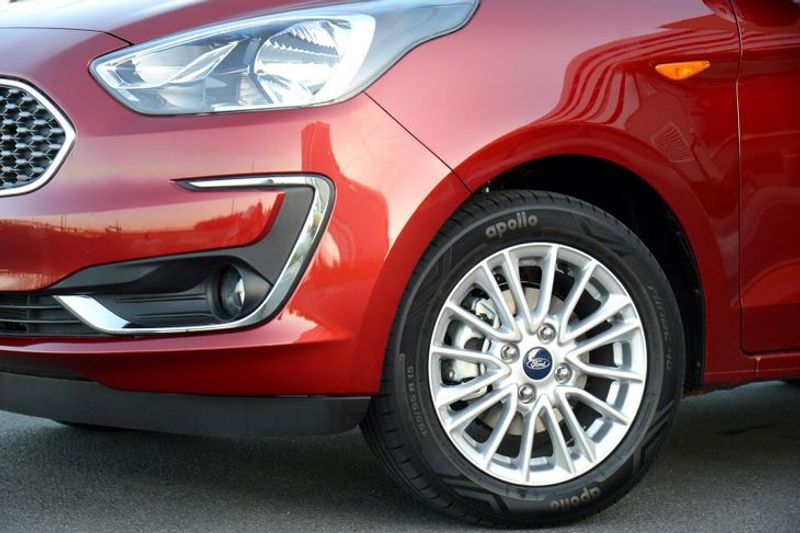
As ever, the lower end of the compact hatchback/sedan market is ultra competitive thanks to the recent introductions of the new Volkswagen Polo Vivo and Suzuki Swift. In fact, many manufacturers are all fighting to keep products under the R200 000 barrier. The new Ford Figo comes to market with a fresh face featuring a new-look grille, revised bumpers and redesigned tail lamps. There are splashes of chrome and whereas the Ambiente versions have 14-inch steel rims, Trend derivatives come fitted with 14-inch alloy wheels, while the flagship Titanium hatchback has additional chrome accents (for the front foglamp bezels and grille surround), plus15-inch alloys.


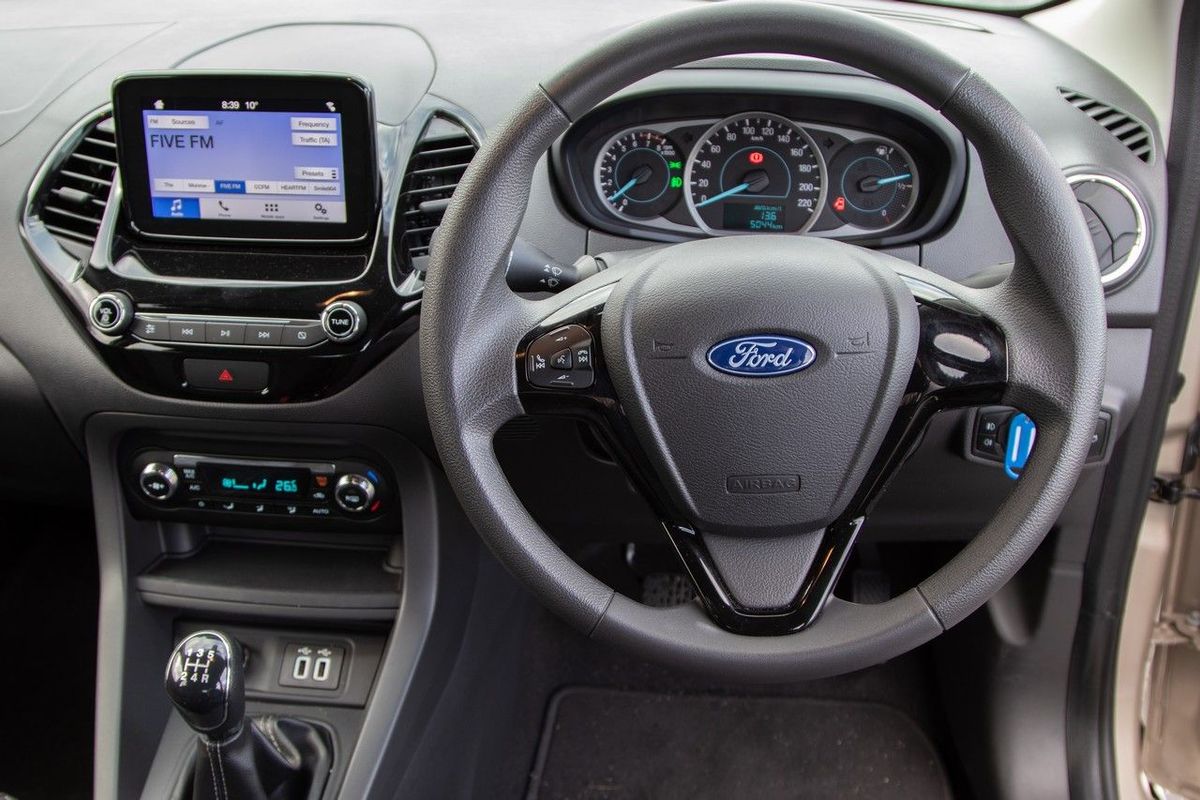
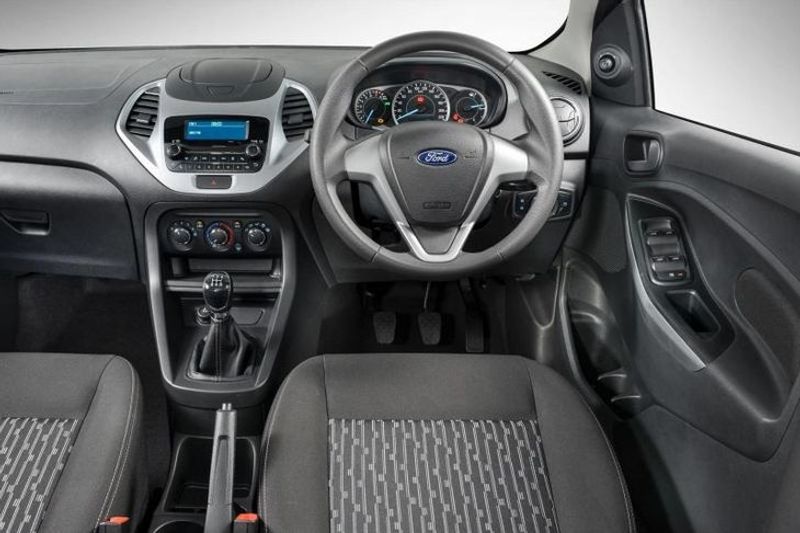
The 2018 Ford Figo cabin, featuring new fabrics and new materials.

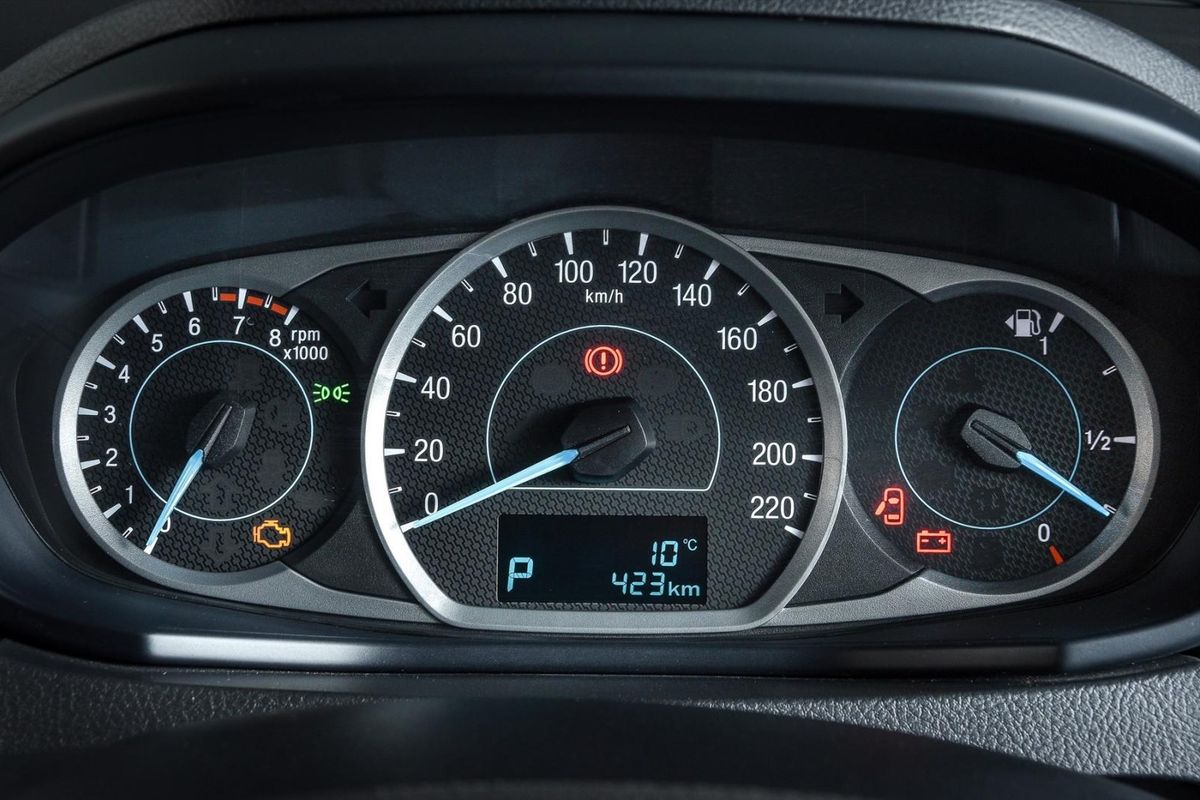
Inside, the Ford Figo's cabin has been upgraded with new materials and fabric in the door inserts and seat upholstery. The newcomer is available in 2 body styles and 3 trim levels. Despite it being the entry point for the Ford Figo, the Ambiente derivative comes with reasonable specification. There are electric front windows, an immobiliser, electric power-assisted steering, tilt adjustment for the steering column and manual headlight level adjustment. It also features a built-in Ford Audio radio with 4 speakers, Bluetooth connectivity, a USB slot and a docking station for your smartphone.

Trend derivatives come equipped with, inter alia, central locking, power windows all round, a rear-screen demister, upgraded alarm and some cosmetic upgrades in the form of alloy wheels, a chrome-finished grille, front fog lamps and colour-coded door handles and side mirrors. A nice-to-have feature is hill launch assist, which helps when pulling away on steep inclines.


The range-topping 1.5 Titanium hatchback features 15-inch alloys and chrome accents in the front bumper and around the grille.

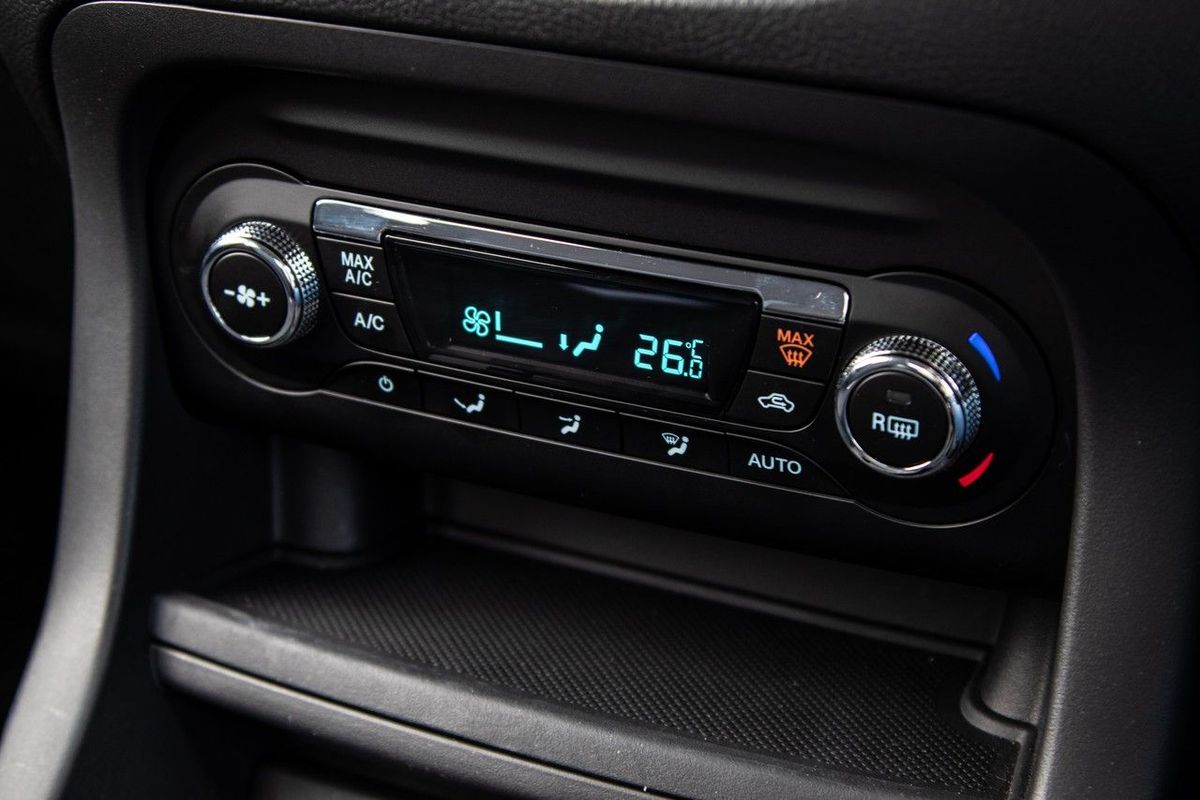
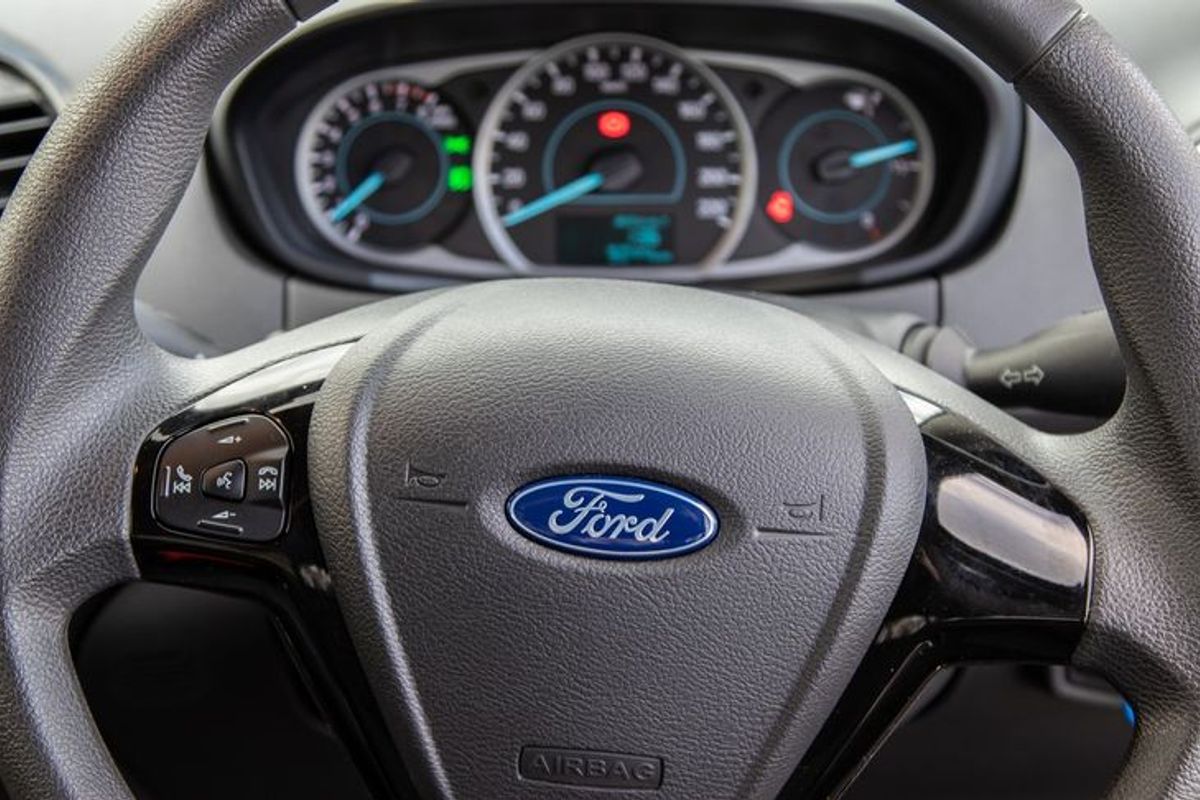
Apart from its distinctive exterior execution, the Titanium hatchback is specced with a multifunction steering wheel, climate control, automatic headlamp activation and rain-sensing windscreen wipers, an auto-dimming rear-view mirror, a reverse-view camera, "follow me home" lighting, and 4-way adjustment for the driver's seat. 

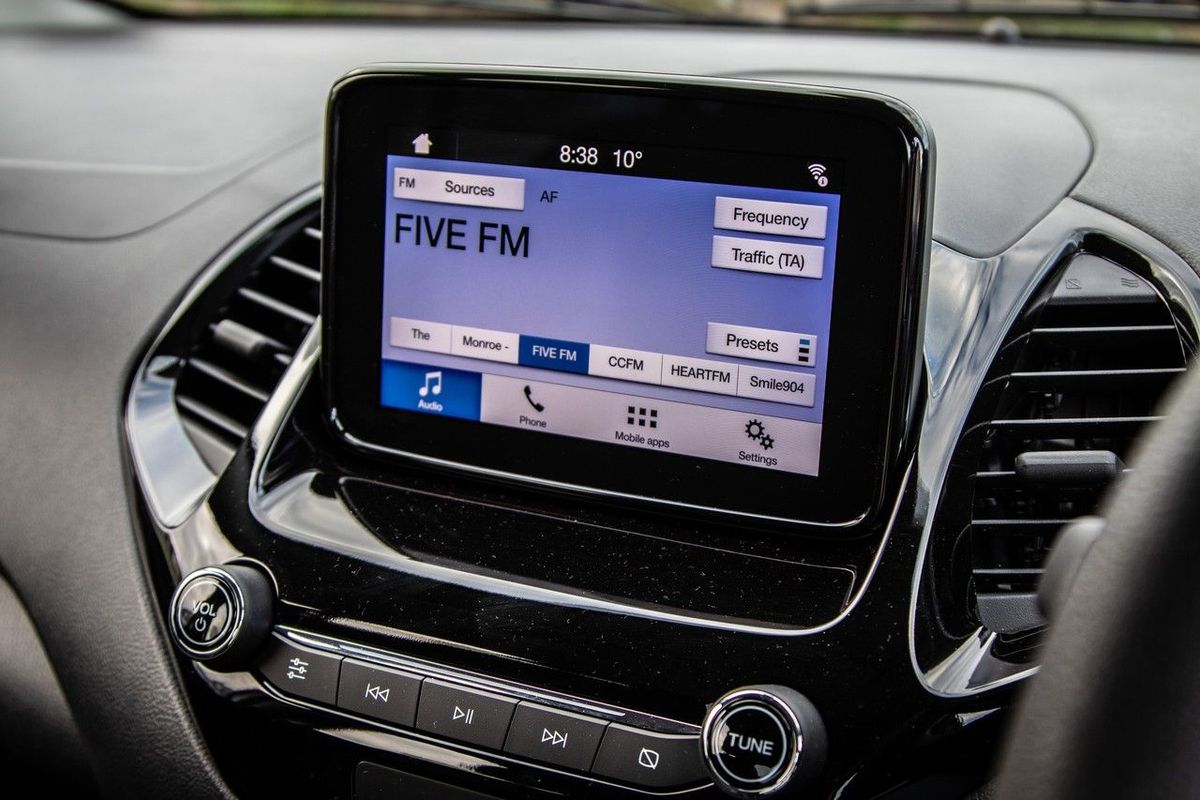
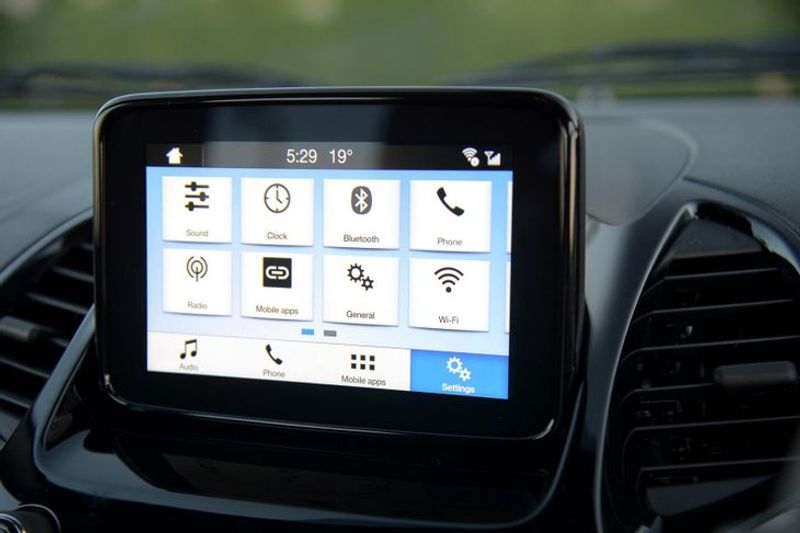
Its fascia features an integrated 6.5-inch colour touchscreen with SYNC3 technology, which is compatible with Apple CarPlay and Google Android (once it becomes available in our region). Furthermore, the Ford MyKey feature allows owners to programme a key for younger drivers that can inhibit incoming phone calls, restrict top speed, reduce audio system maximum volume and disable the audio system altogether if occupants are not using safety belts.


The 6.5-inch colour touchscreen with Sync3 greatly modernises the 1.5 Titanium's fascia and is Apple CarPlay compatible.

Powering the new Ford Figo is an all-new 1.5-litre petrol engine with outputs of 88 kW and 150 Nm. Power goes to the front wheels through either a 5-speed manual gearbox or 6-speed automatic transmission.

In terms of safety, a pair of airbags and ABS are standard on Ambiente and Trend derivatives, while the Titanium version gains additional side and curtain airbags.

Ford Figo (2018) Prices in South Africa

Adding to its appeal is the introduction of an all-new standard service plan, which expands the 2-year/40 000 km coverage offered on the previous iteration of the Figo to a comprehensive 4-year/60 000 km plan. The service plan covers the vehicle for up to 4 services over a period of 4 years – a unique offering in this class that is quite likely to create a stir in the local market.

All models come standard with Ford Protect, comprising a 4-year/120 000 km comprehensive warranty, 3-year/unlimited distance roadside assistance and 5-year/unlimited km corrosion warranty. The service interval is 15 000 km.

Figo 1.5 TiVCT Ambiente Hatch 5MT             R182 900

Figo 1.5 TiVCT Ambiente Sedan 5MT            R187 200

Figo 1.5 TiVCT Trend Hatch 5MT                   R192 900

Figo 1.5 TiVCT Trend Sedan 5MT                  R197 950

Figo 1.5 TiVCT Trend Hatch 6AT                    R207 900

Figo 1.5 TiVCT Titanium Hatch 5MT                   R215 900

Further Reading:

2018 Ford Figo: What we know so far

Next-generation Ford Figo Spyshot

Should Ford's New Freestyle Come to SA? [w/Video]

The Next 5 Ford Models Coming to SA (2018)

Want to buy a Figo?

Buy a Ford Figo on Cars.co.za

5 of the Most Brutal Mercedes-AMGs Ever Made (and One with Wings)

Two men. Three letters. One vision. AMG has a reputation for building some of the world's most alluring sportscars. Mercedes-Benz's Affalterbach-based performance division has indeed produced a multitude of potent machines, but none more brutal than these…

Few can dispute the fact that Mercedes-AMG cars are all about noise, emotion and aggressively-shaped sheetmetal. Those 3 venerable letters, often accompanied by an outrageously bold numerical number on a Benz's boot lid, have always signified the most visceral models in Mercedes-Benz's portfolio. It all started in the 1960s, when Mercedes engineers, Hans Werner Aufrecht and Erhard Melcher were forced to start their thing after Daimler-Benz ceased all motorsport activities at the firm.

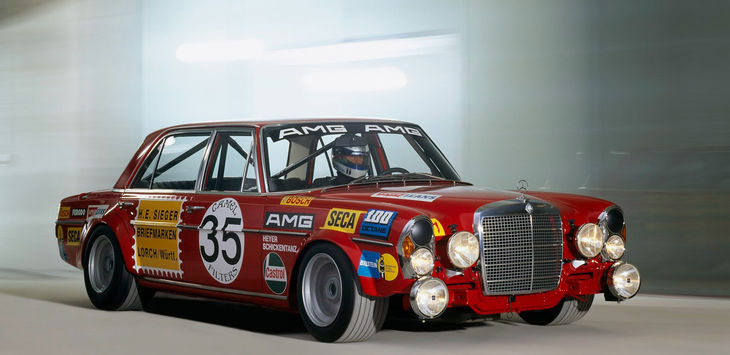
Their very first job was to ensure the 300 SEL's engine was powerful and responsive enough to compete in the German Touring Car Championships (DTM). In 1965, the AMG 300 SEL 6.8 won that very Championship in the hands of former colleague Manfred Schiek – it went on to win another 10 times and was dubbed the Red Pig due to its somewhat unorthodox appearance. In 1967, Aufrecht and Melcher officially founded AMG skunkworks, which was eventually acquired by Mercedes-Benz in 1999.

1. Mercedes-Benz AMG 300 SEL 6.8 Red Pig

The 300 SEL was by no means a slug in its original state. In fact, it was the fastest road-going German road car of its era, but its near-2-tonne kerb weight would put it at a disadvantage in a racetrack environment. Still, the factory M100 6.3-litre V8 engine was good for 184 kW/588 Nm and a sub-7-second 0-100 kph sprint time.

With the goal of making it faster, more responsive and capable of competing with purpose-built race cars, Aufrecht and Melcher bored out the engine to 6.8 litres, which increased power and torque to 315 kW and 610 Nm respectively. Lightweight measures such as aluminium doors were added while the track was widened to maximise grip and traction. Other modifications included such additions as flared arches (to accommodate the protruding wheels_, racing suspension and the introduction of the AMG nomenclature. The car went on to perform incredibly on the race track, where it won its class and finished 2nd overall at the 24 Hours of Spa in 1971.

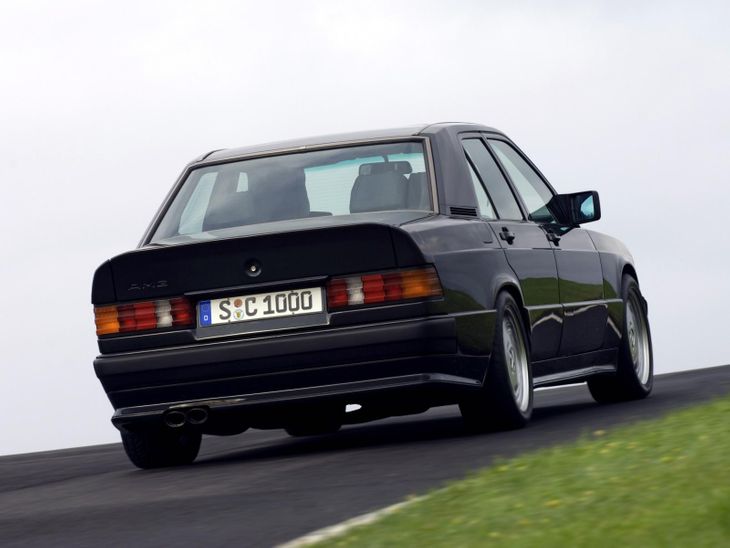
2. Mercedes-Benz 190E 3.2 AMG

Affectionately known as the "Baby Hammer" due to its position as a more attainable version of the original the 300CE 6.0 AMG, the 190E 3.2 AMG offered more power and a far bigger AMG-fettled engine than any of its stablemates, including the winged 190E 2.5 16V Evolution I. It was produced in limited numbers (only around 200 were produced) and was the first AMG sold through Mercedes-Benz dealerships replete with a full manufacturer's warranty.

It came fitted with a raft of AMG-honed paraphernalia and hardware, such as an aggressively tempered AMG body kit and wheels, a tweaked suspension and braking system, an AMG-tuned 172 kW 3.2-litre in-line 6-cylinder motor and full Zebrano wood-trimmed interior. While by no means as feral as some of its descendants, the 190E 3.2 AMG paved the way for the contemporary, luxury-clad AMG. For those unable to secure one due to its limited availability, Mercedes-Benz sold the AMG body kits and engines separately, which could either be factory- or retrofitted.

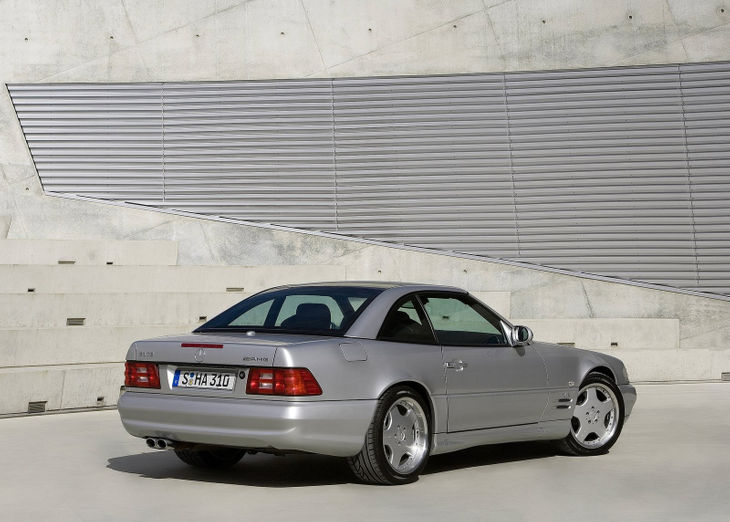
3. Mercedes-Benz SL73 AMG

It may not have been particularly dynamic, but the SL73 AMG was more about that formidable lump in its engine bay than anything else, in this case, a 7.3-litre V12 good for 386 kW and 750 Nm. Naturally, this was a limited-edition model – only around 85 were built by AMG. Yip, customers had to buy a regular SL600 and pay AMG a handsome sum (around $50 000) to bore and stroke its monolithic V12 from 6.0- to 7.3-litres.

The result was a complete barbarian capable if rampaging from 0 to 100 kph in a blistering (for the time) 4.8 seconds and reaching a maximum speed of no less than 300 kph: those performance figures could embarrass Ferraris and the T-Rex-rivalling soundtrack sent shivers up people's spines. So impressive was the engine and its titanium internals that Horacio Pagani came in search of something substantial enough to power his Zonda supercar concept. Pagani’s relationship with Mercedes gave the big 7.3-litre V12 a new lease of life where it served in various states of tune, the most powerful of which was the Zonda HP Barchetta rated at 590 kW and 850 Nm!

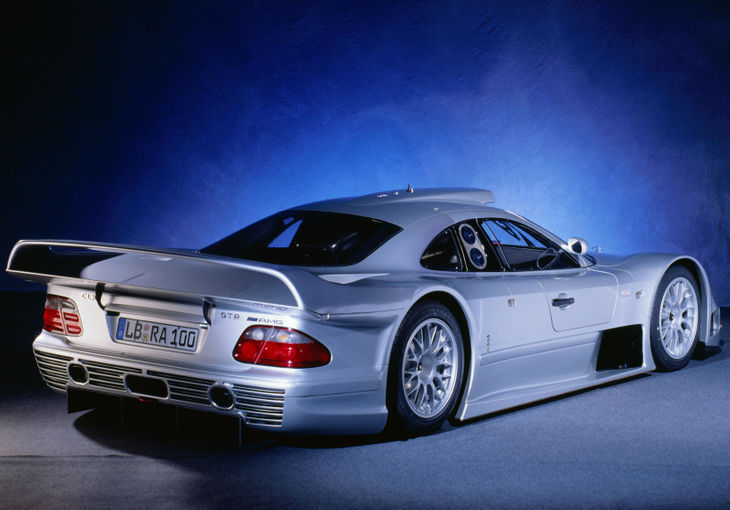
4. Mercedes-Benz CLK GTR

No model in the Mercedes-AMG history is as feral, as pure and as racy as the CLK GTR – and no car has since replicated its bewildering presence. The CLK GTR was a road-going version of the Le Mans GT racer – a complete and utter hooligan that was described by many as one of the most difficult cars to drive. Those with claustrophobic tendencies would struggle to come to terms with the cabin which was more race cockpit than anything else – prospective customers were encouraged to come for personal fittings to ensure some semblance of comfort.

The interior, however, did include touches of the original CLK with scatterings of switchgear and instrumentation but that’s where the similarities ended (yep, no insulation or luxurious cocooning were availed. The analogue 450 kW/750 Nm 6.8-litre V12 mill revved freely and was not regulated by emissions laws and the like – here it lived in freedom, growling, snarling and shouting its credentials to the world.

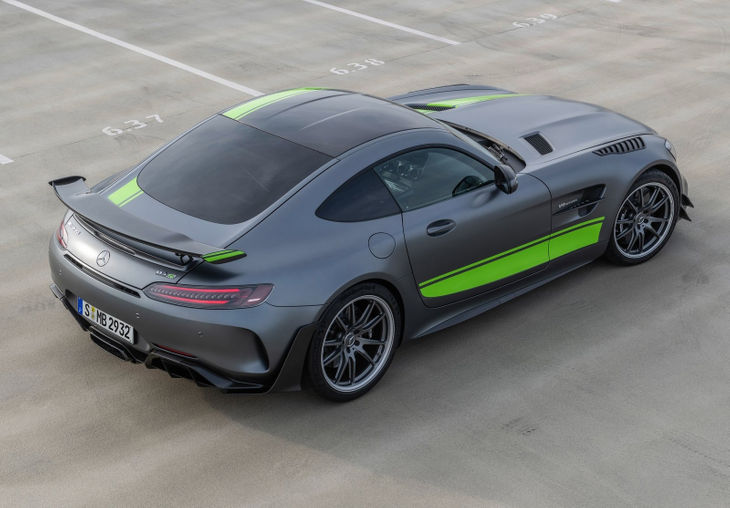
5. Mercedes-AMG GT R Pro

Modern Mercedes-AMG offerings might not employ the big-bore mills of yesteryear, but they're just as ferocious, if not more so. In fact, modern technology has allowed engineers to eke out more power and performance thanks to a combination of turbocharging and AMG sorcery. The Mercedes-AMG GT R is one such example and has been described by the firm’s chairman and CEO, Tobias Moers, as the fastest car in its class. Faster than the Porsche 911 GT3 RS. The Pro builds on these tenets by way of exclusive parts breathed on by AMG – new coil-over suspension, lighter torsion bars, composite ceramic brakes and special alloy wheels.

While the same 430kW/700Nm 4.0-litre V8 twin-turbocharged engine powers the rear wheels through a seven-speed dual-clutch transmission, it’s the newly calibrated AMG Dynamic Stability Control (DSC) that equips it with a new-found sense of agility, particularly in a track environment. And yes, its bark is as lethal as its bite – sonorous and granular it pays homage to its natural aspirated forefathers with a soundtrack engineered to instil in its driver a sense of fear and respect, just like the models that came before it.

Mercedes-Benz SLS AMG GT ‘Gullwing’

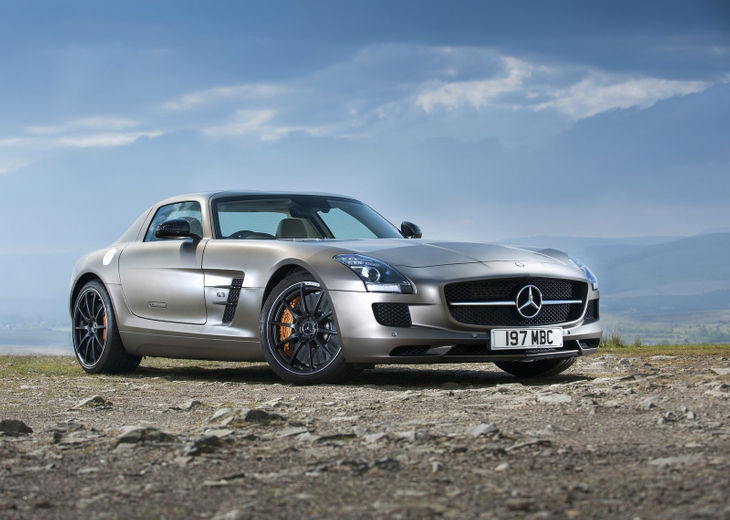
The SLS may have represented the first complete car built by AMG but it was also the last of the naturally aspirated era. During its five-year production run it the took the form of many iterations but just two attributes stand out – its gullwing door configuration, something that made for an incredible display of kerbside theatre, and its naturally aspirated 6.2-litre V8. Available in myriad states of tune it was more the engine’s noisemaking abilities than performance credentials that tugged at the heartstrings of enthusiasts across the globe. Unsullied and pure, it filled the cabin with a rich, deep gut-churning thrum that culminated at just under 7000rpm. This often made it feel a helluva lot faster and more responsive than it actually was – something that subsequently forced many a driver to lift-off the throttle for fear of making contact with the horizon. Armed with 435kW, a 3.5 second 0-100kph sprint time and 320kph top speed it had a propensity for drinking gluttonous amounts of petrol but nobody cared.

Related content:

6 Highly Collectable SA Special Editions

The Conquest & Our Love Affair with Toyota Hatchbacks

5 South African Summer-Driving SUVs

5 moments that defined the A-Class story

Celebrating BMW M3 [with Easter Eggs & Videos]

Interested in buying a Mercedes-AMG?

Check out the brand's Specs & Prices in South Africa

Honda HR-V 1.8 Elegance (2019) Quick Review

Honda recently updated its HR-V compact family car range by adding more interior features and applying a slight nip/tuck in the looks department. Are the revisions sufficient for the Japanese firm to garner a bigger share of this fiercely-contested segment? 

We like: Practicality, fuel economy, ride comfort, surprisingly competent on gravel

We don't like: Average infotainment system, frustrating powertrain

Fast Facts

  • Price: R419 900 (Dec 2018)
  • Engine: 1.8-litre 4-cylinder naturally aspirated petrol
  • Gearbox: 7-step CVT 
  • Fuel economy: 6.8 L/100 km (claimed)
  • Power/Torque: 105 kW/172 Nm

SERIOUS ABOUT BUYING?

Where does it fit in?


There aren't many changes to the Honda HR-V, but it's a practical offering in a segment where style sometimes trumps function.

If you're a volume producer without a crossover or SUV in your line-up, you may as well close up shop! Almost every passenger vehicle brand listed on Cars.co.za's New Car Specs & Test Drives page offers an SUV in some or other price bracket (Abarth, Datsun, Smart and Tata are the exceptions) in South Africa. Suffice to say, then, that competition for market share is high and it's going to take something special, or the right set of circumstances, for a product to really stand out above its rivals. 

Honda has been at the SUV game for some time now and has won many awards for its CR-V family car. Below that sits the HR-V, a smaller, yet almost-as-practical offering. It was recently facelifted for 2018 and we got a chance to sample the newcomer. 

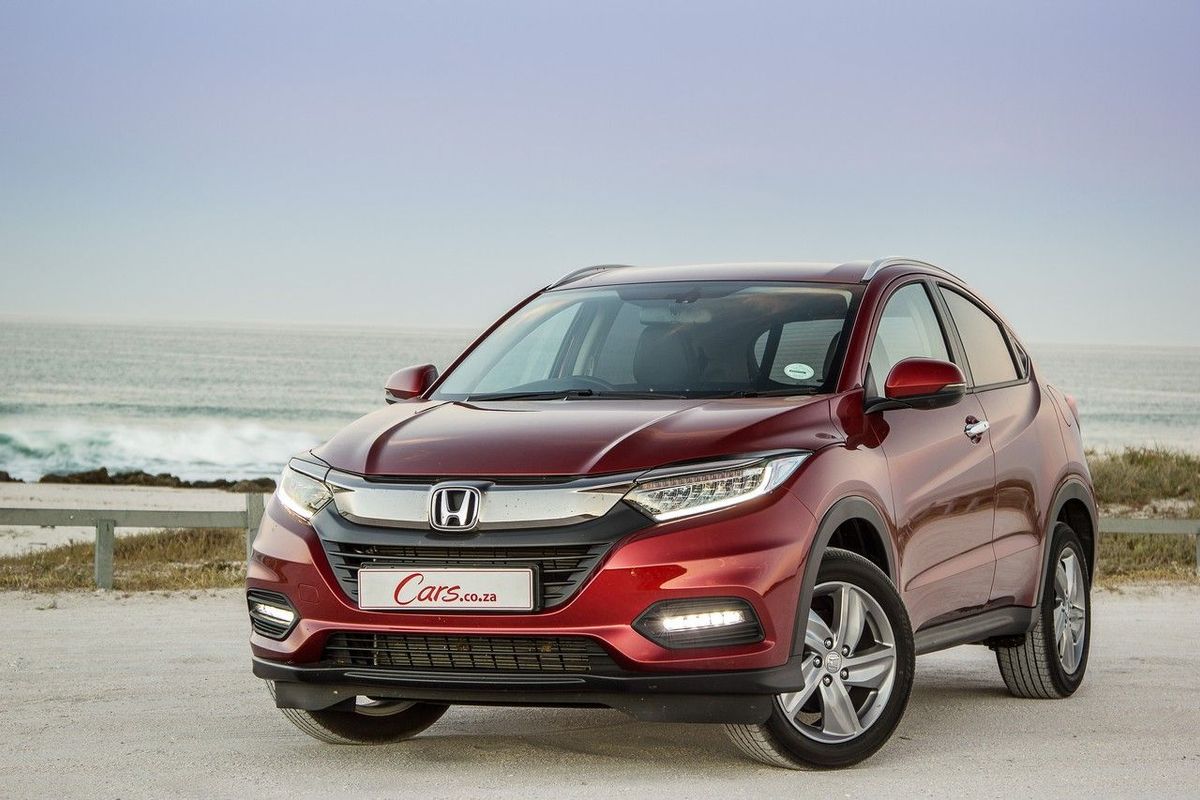
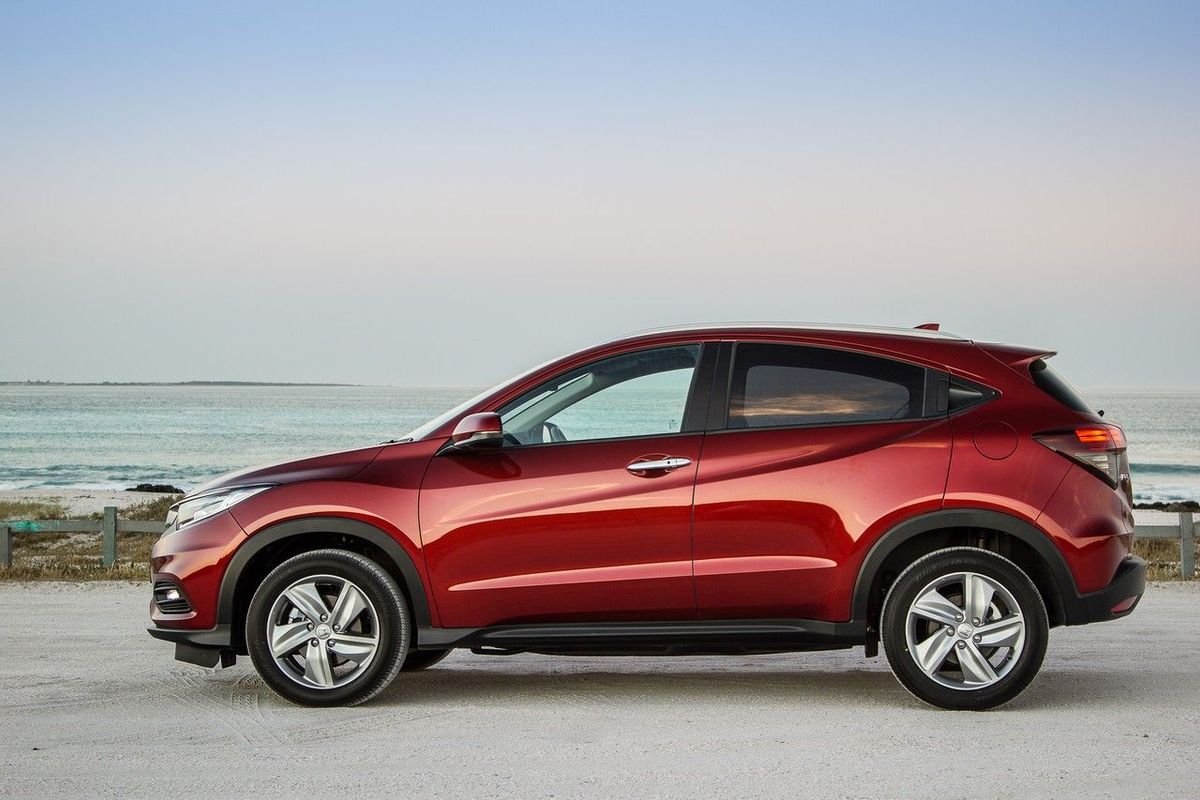
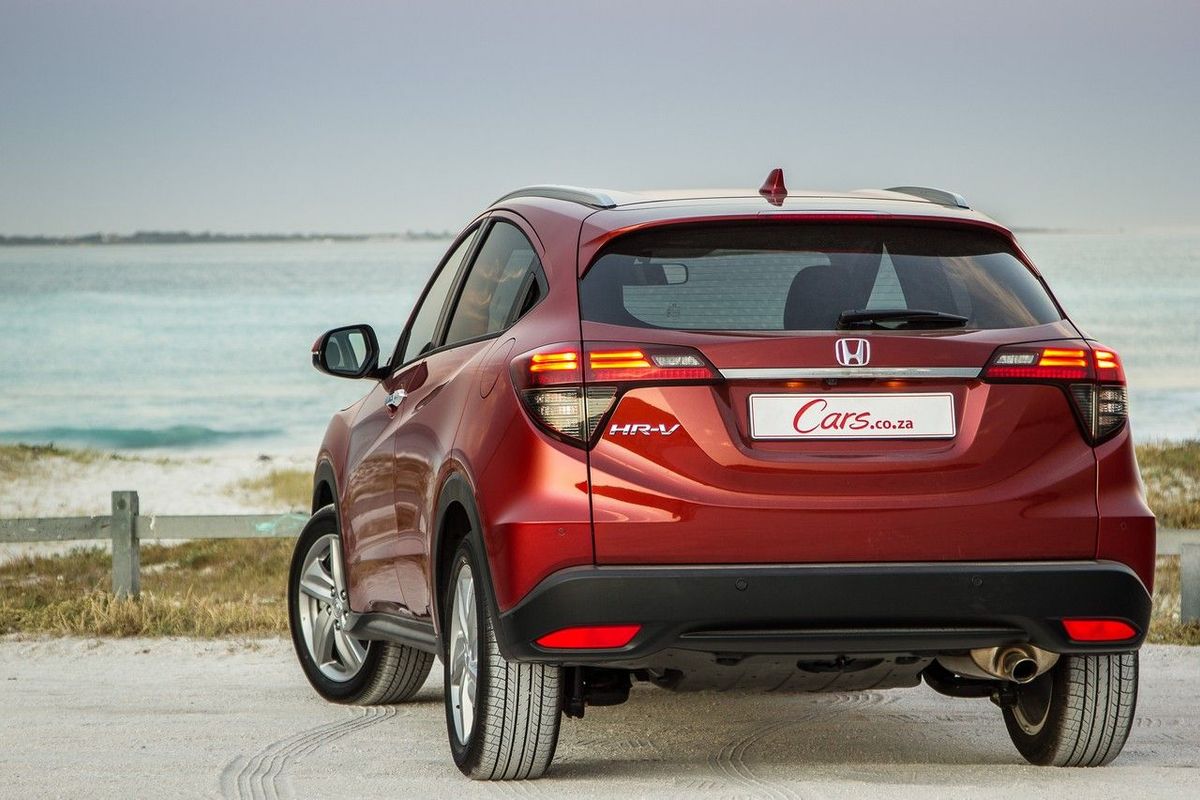
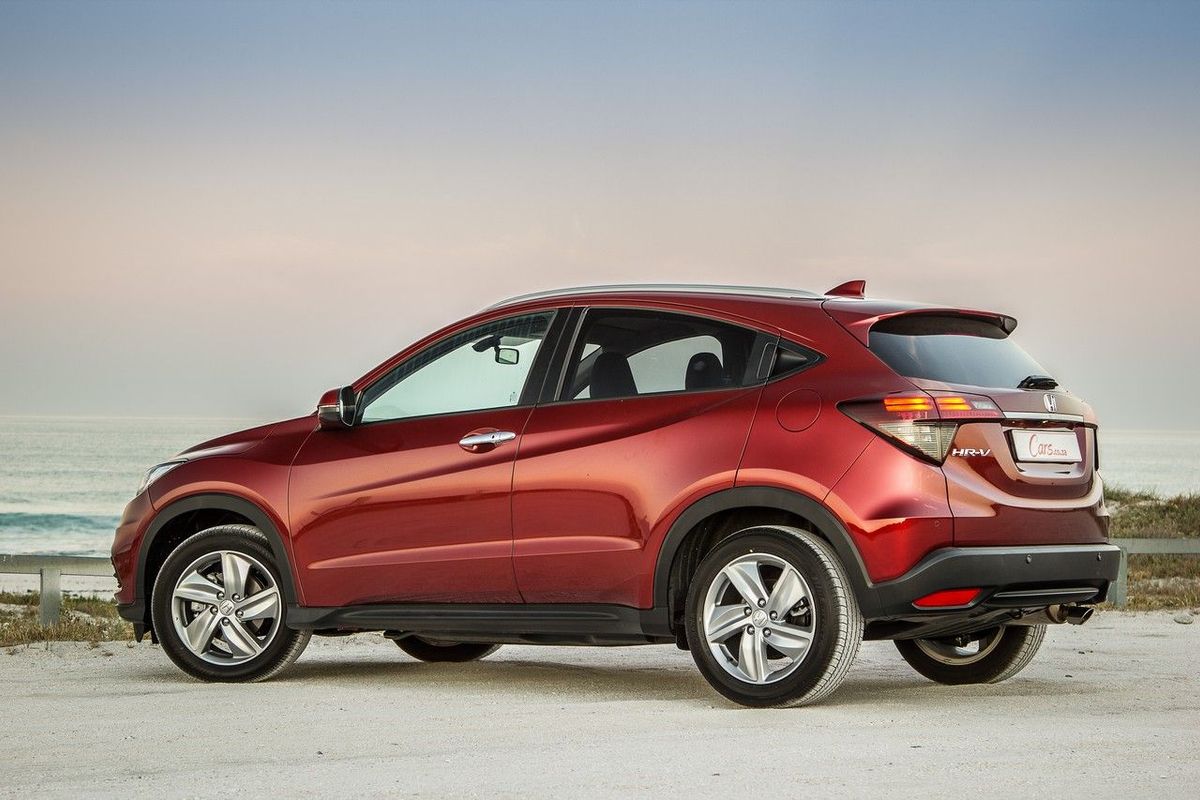
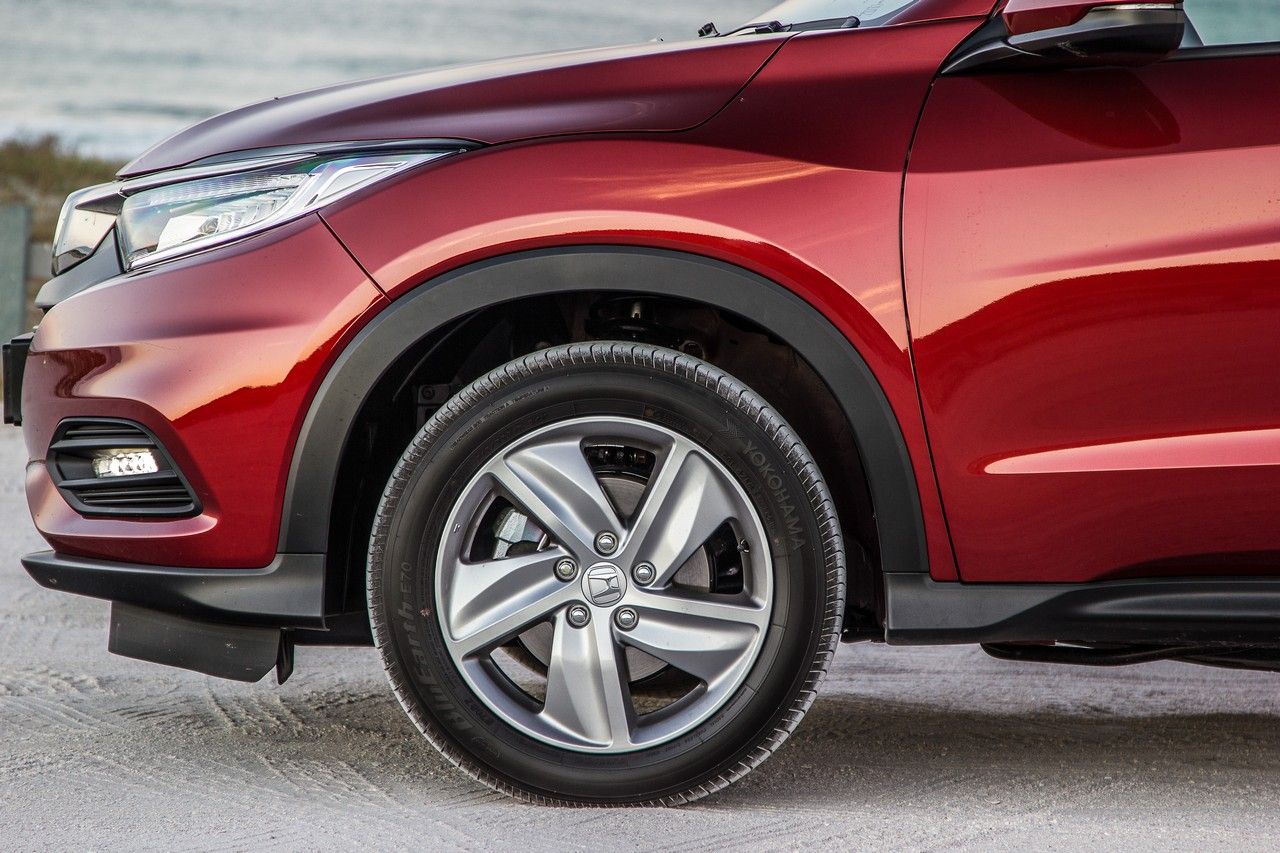
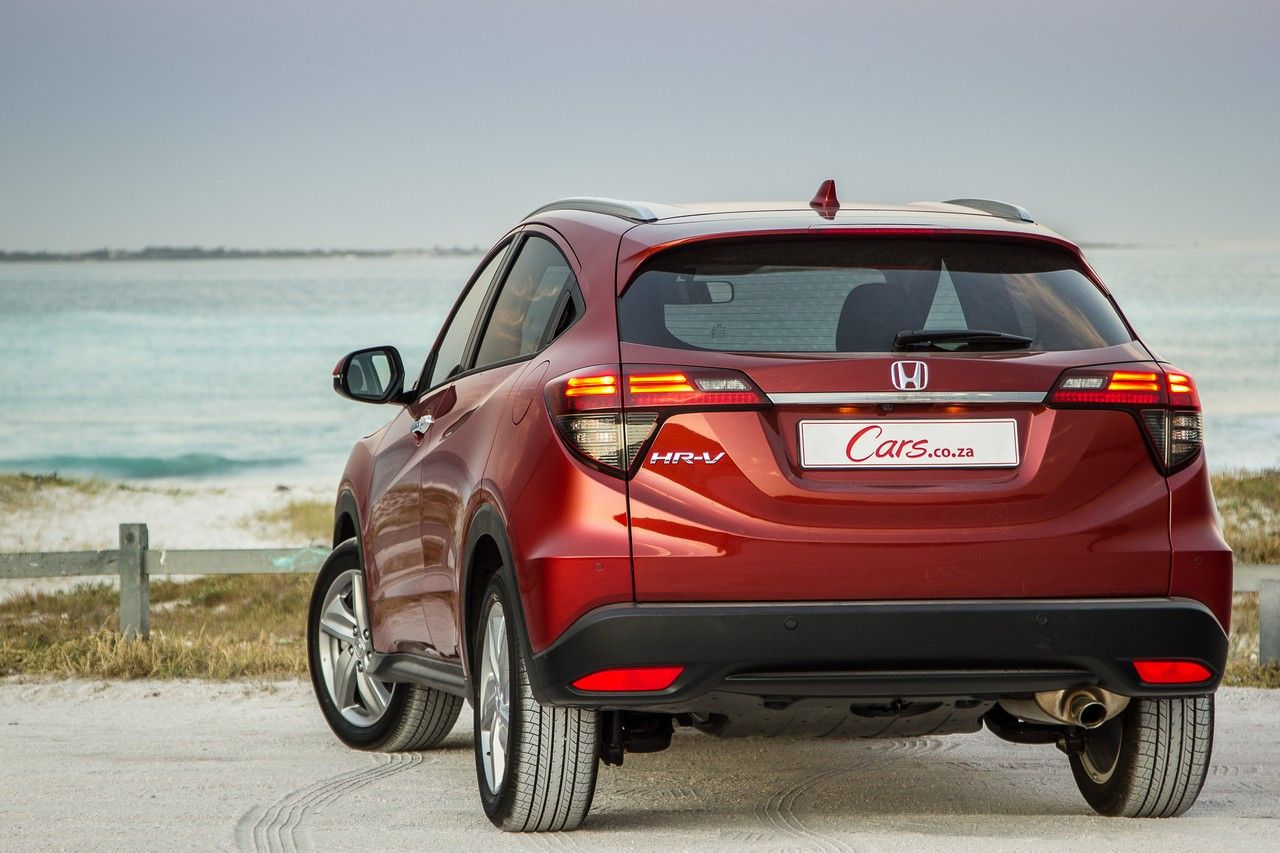
There are mild changes to the look of the HR-V to bring it in line with Honda's global brand identity, such as a new front bumper, reshaped bonnet and redesigned headlights. LED fog lamps feature on this top-spec derivative, as do LED daytime running lamps. Inside, there's nicer leather trim, along with some spec upgrades.

The good stuff

Practicality galore


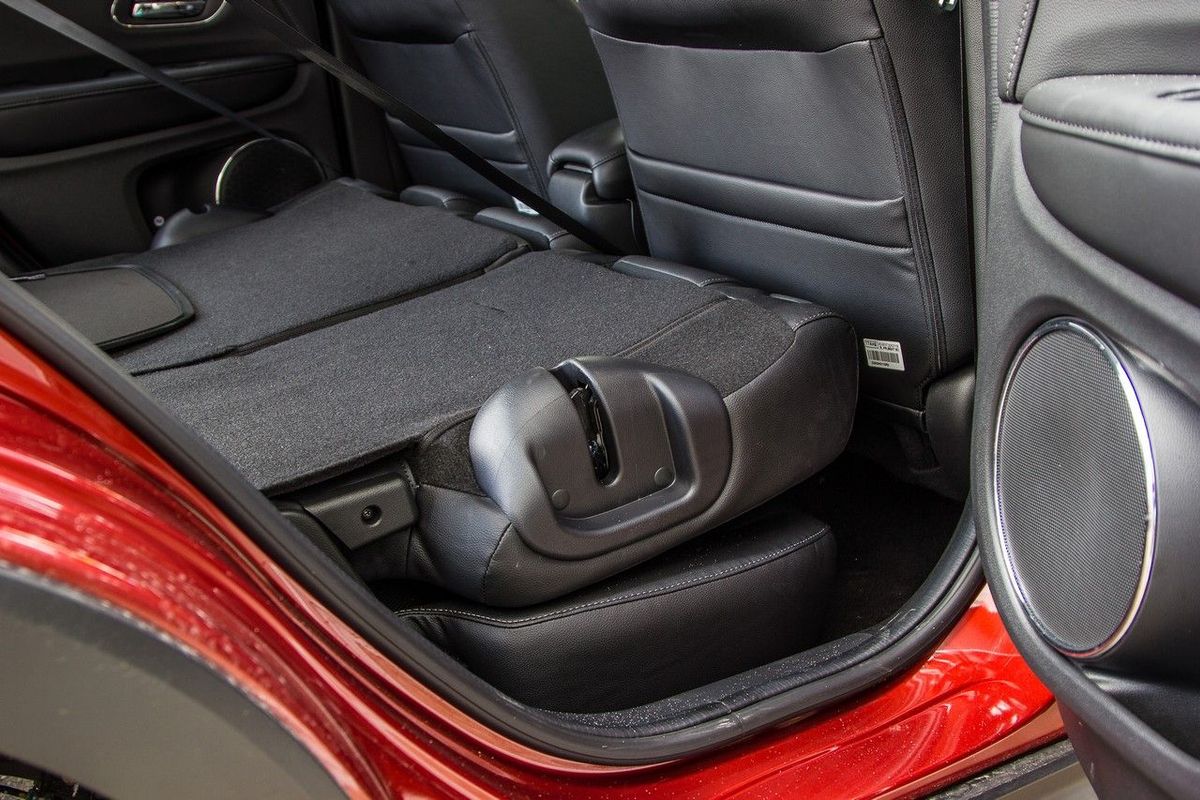
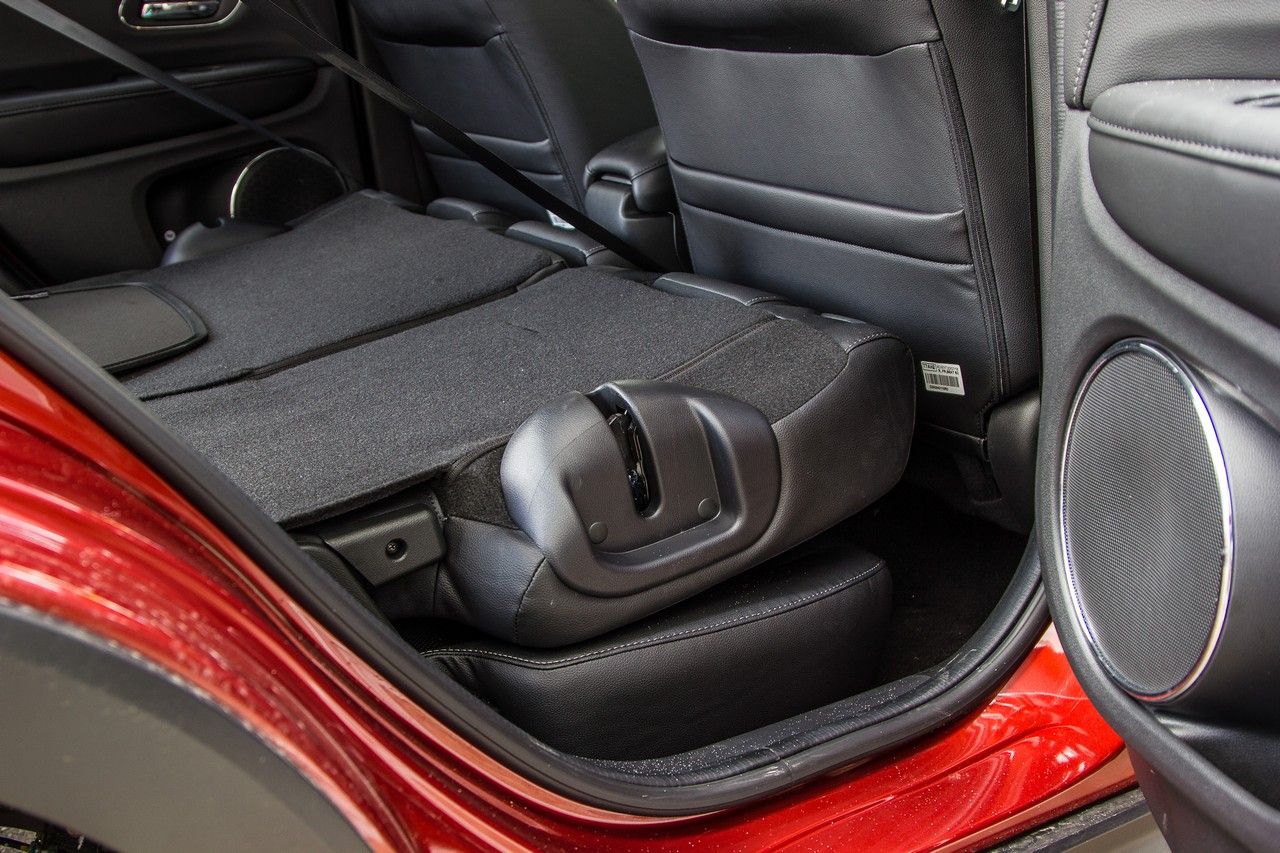
Honda's Magic Seat system in action. 

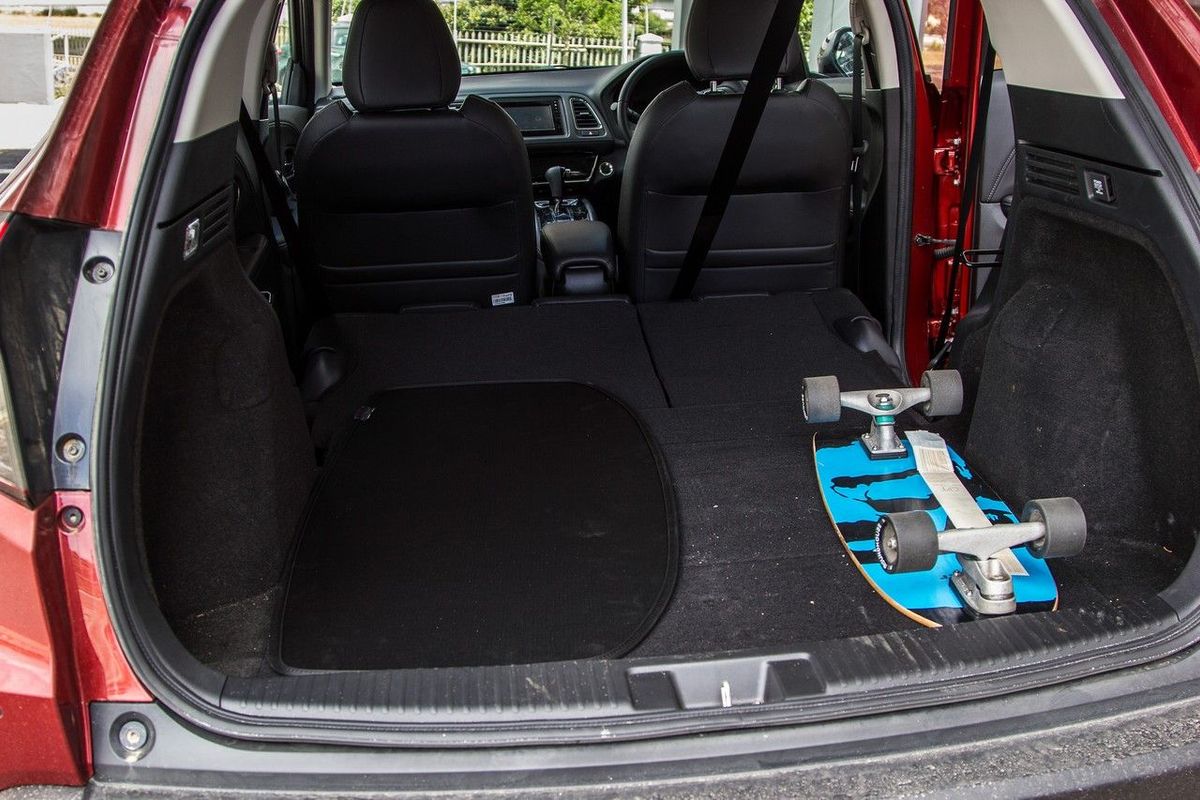
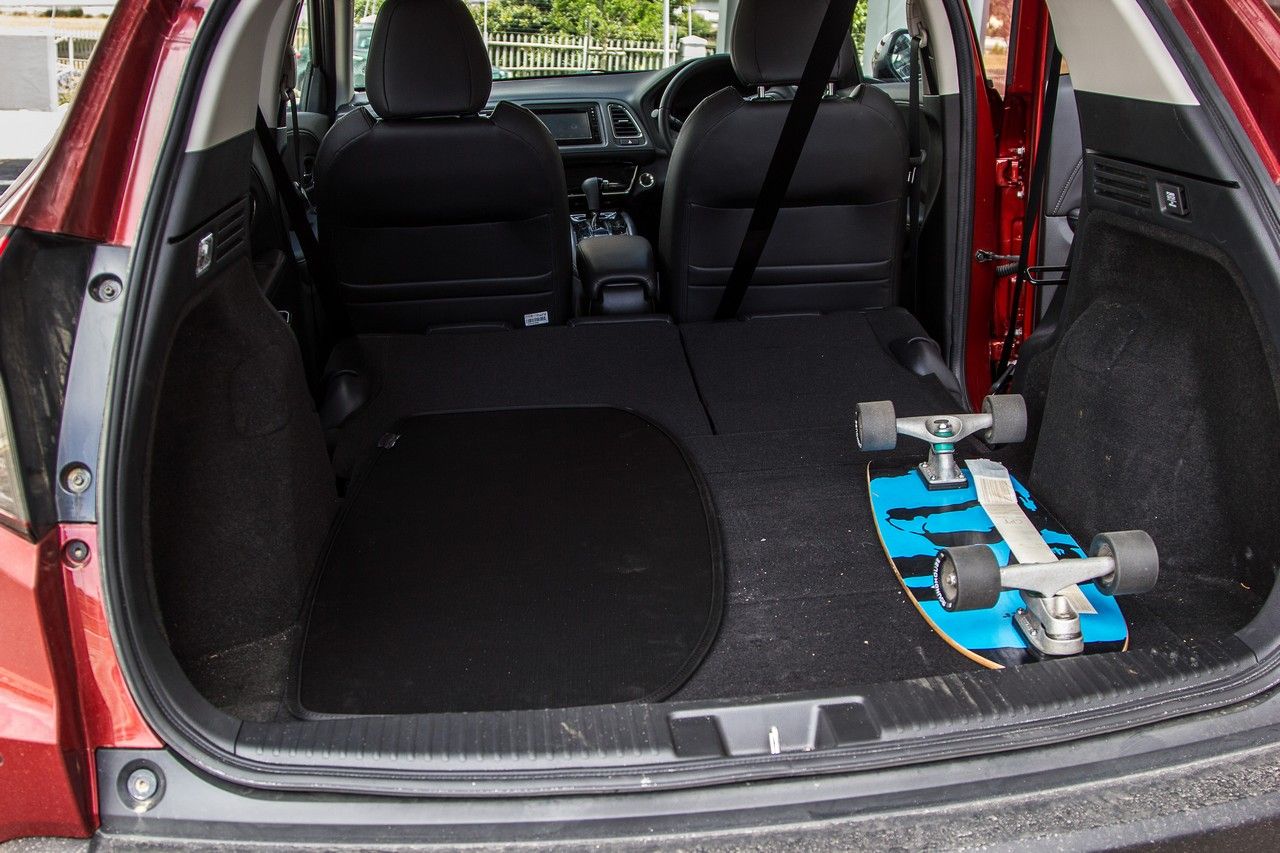
The Honda HR-V has never skimped on space and practicality, and this latest iteration remains right up there among the best in the compact family car class in terms of seating versatility and load capacity. The HR-V makes the Mazda CX-3 and Toyota CH-R's rear occupant space feel cramped by comparison, and it's just a whisker behind the segment-leading Nissan Qashqai in terms of luggage capacity. At a claimed 393 litres, the HR-V's bay has enough space for large suitcases for a weekend away. Fold the seats down flat (by using Honda's Magic Seat system) and you can happily fit in a full-size mountain bike without taking its front wheel off.  


Look at all the room for activities. Honda's Magic Seats convert the HR-V into a panel van (well, you know what we mean). 

Generous standard spec

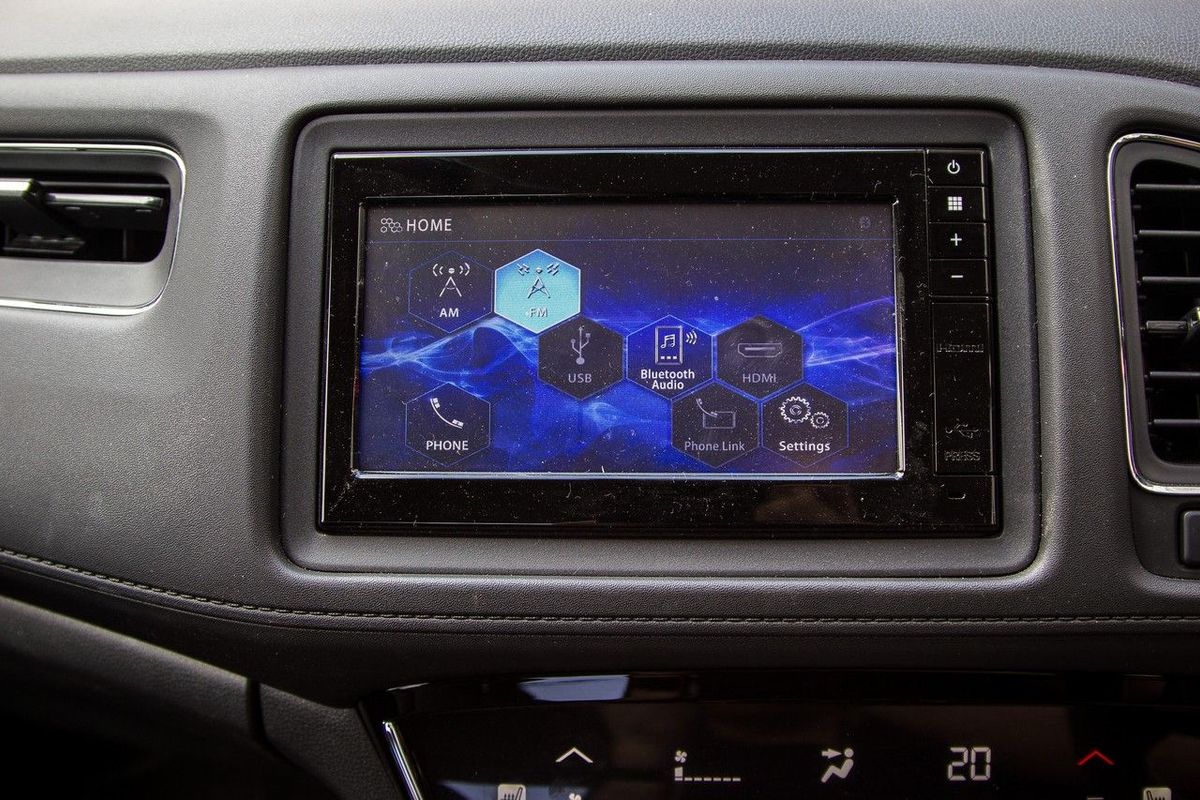
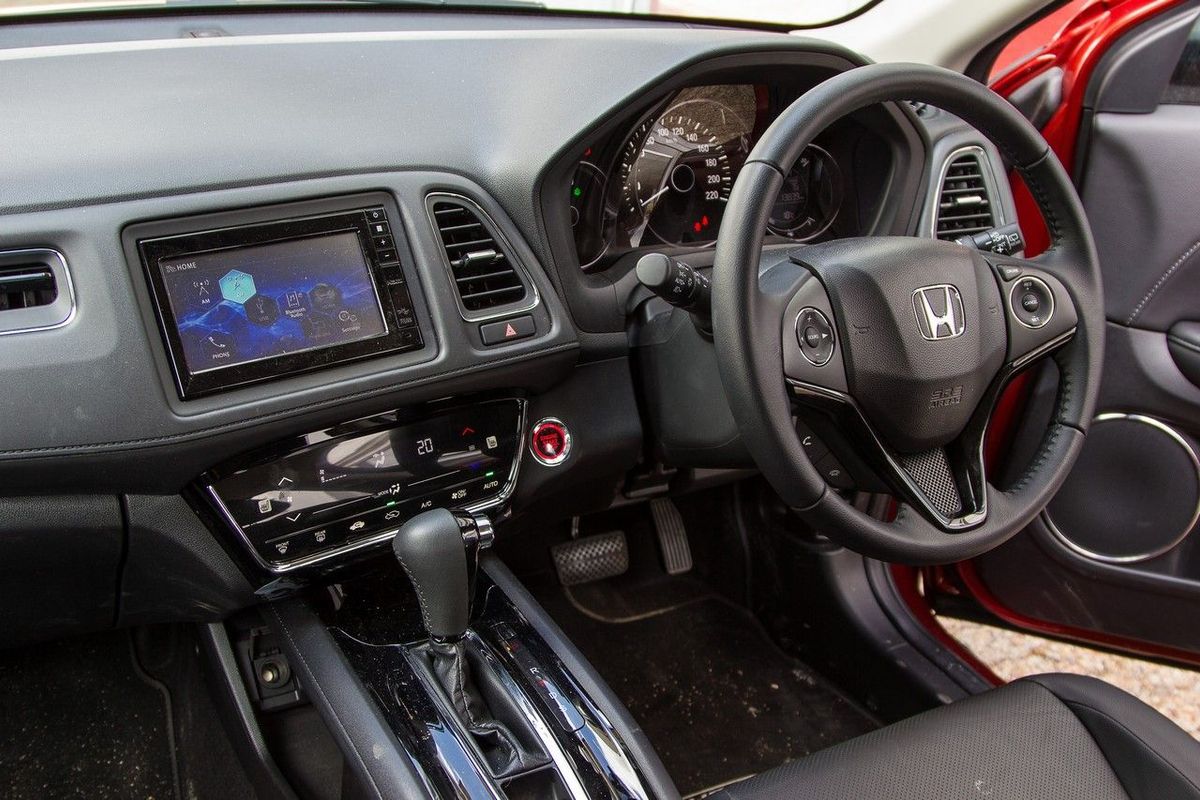
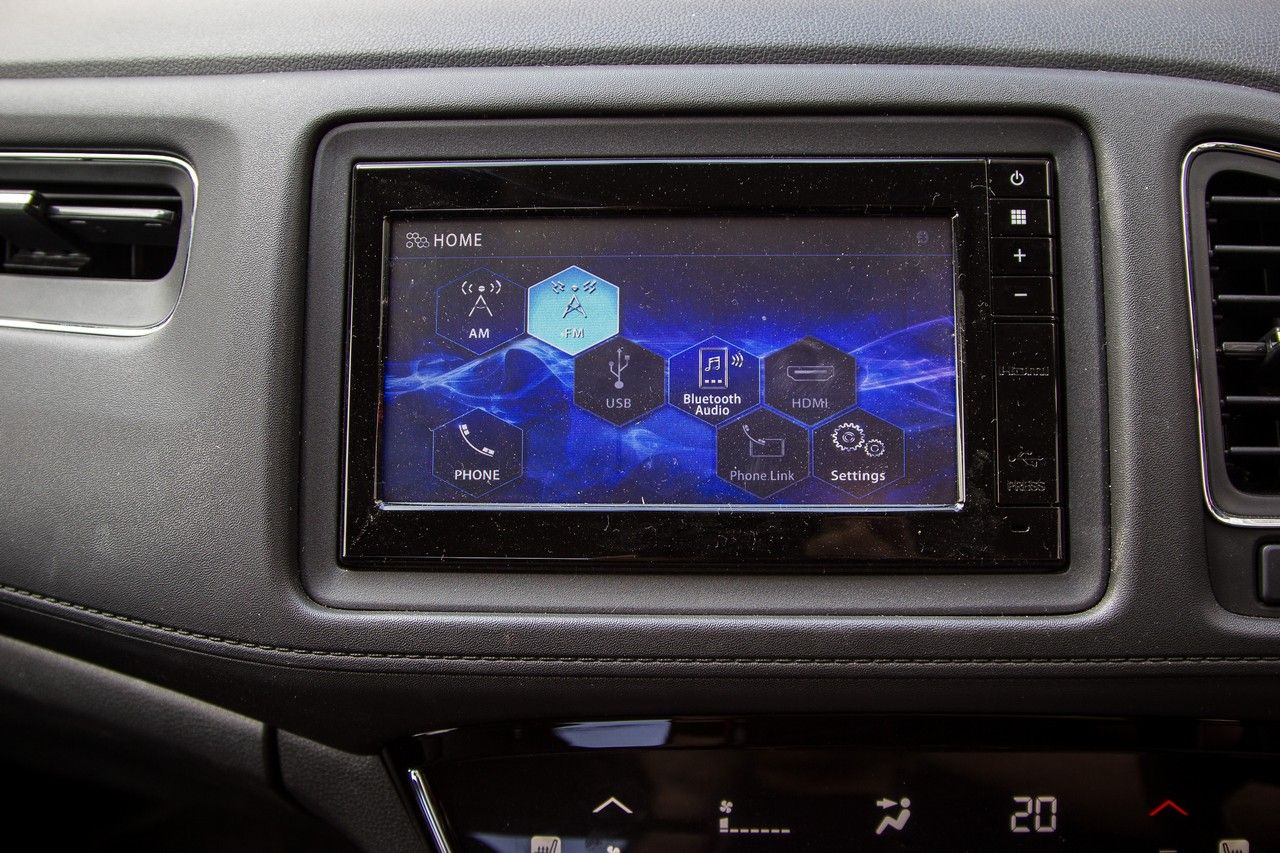
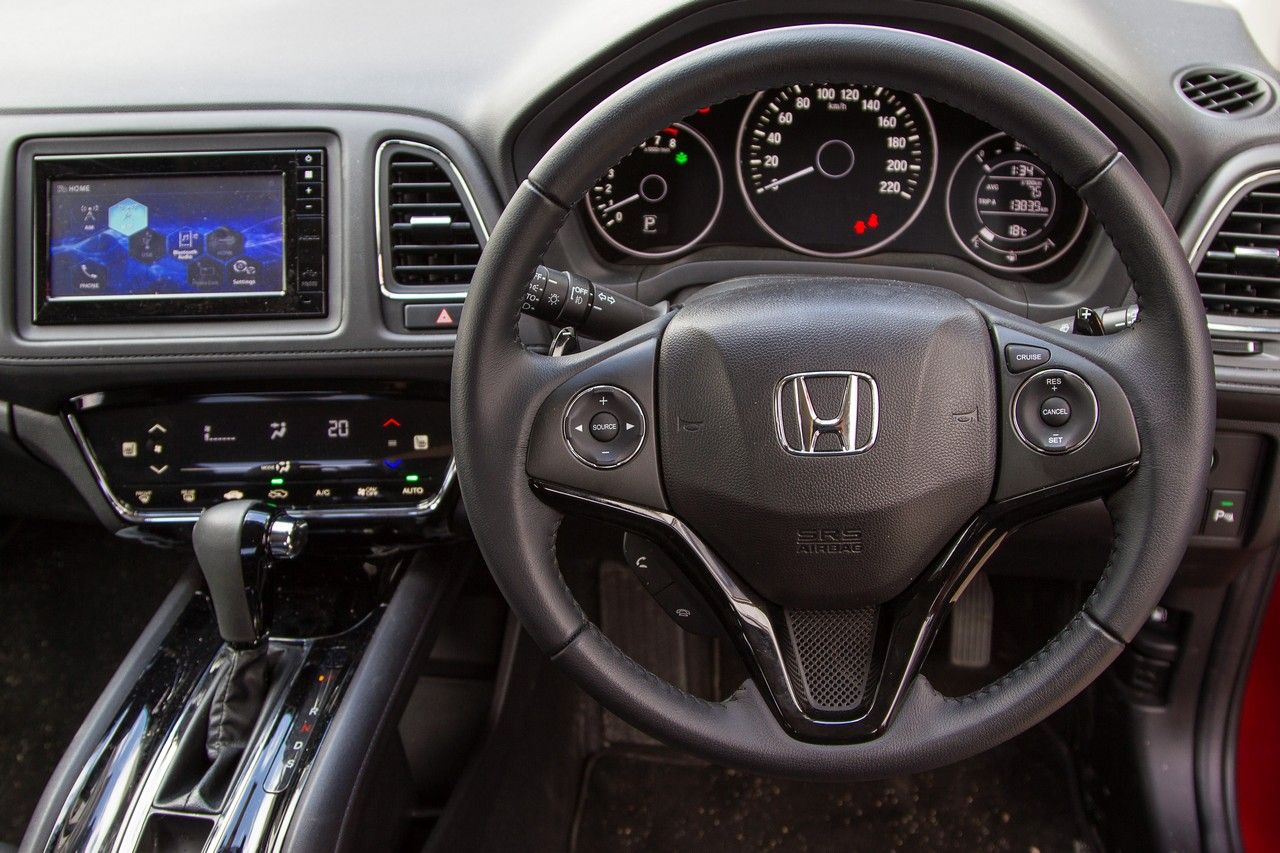
In this top-spec 1.8-litre Elegance derivative, a commendable set of interior features is availed. There are heated seats, keyless entry/start, reverse-view camera (and rear parking sensors), climate control, 17-inch alloys, leather interior, auto headlights, auto wipers and a 6.8-inch touchscreen infotainment system. The latter has USB and HDMI ports and supports screen mirroring for a connected device. Android Auto/Apple CarPlay is not supported, despite it being available on Euro-spec versions.

In terms of safety features, the HR-V offers a comprehensive suite: ABS with EBD, emergency brake assist (EBA) and emergency stop signal (ESS) activation. Stability control is standard, as are Hill Start Assist and a high-mounted, 3rd brake light. ISOfix child seat anchor points and 6 passenger airbags are fitted.


The basic infotainment system. It's not the most intuitive setup; it took us some time to access the Bluetooth connectivity for music streaming.

Pliant ride quality

Our test period coincided with a road trip along Route 62 in the Western Cape. In the sub-R500k segment, there are few cars as relaxing to drive as the HR-V. Not only does it offer a comfortable ride quality, but it's also pretty quiet, disproving the myth that many of Honda's contemporary models are poorly finished and unrefined. 

The HR-V's steering has a reassuringly solid feel to it and, in terms of general road-holding, it feels sure-footed, both on and off the asphalt. During a sojourn up the astonishing Swartberg pass, which features gravel roads at best and rutted "routes" at worst, the little Honda felt completely at home despite its lack of all-wheel drive. 

Overall, the test unit demonstrated its versatility as weekday people-mover and weekend gravel grinder (within reason) to our satisfaction. Admittedly some of the larger rocks on the off-road route were unavoidable and the Honda's ground clearance wasn't quite sufficient at times, but the HR-V showed no signs of wear and tear.


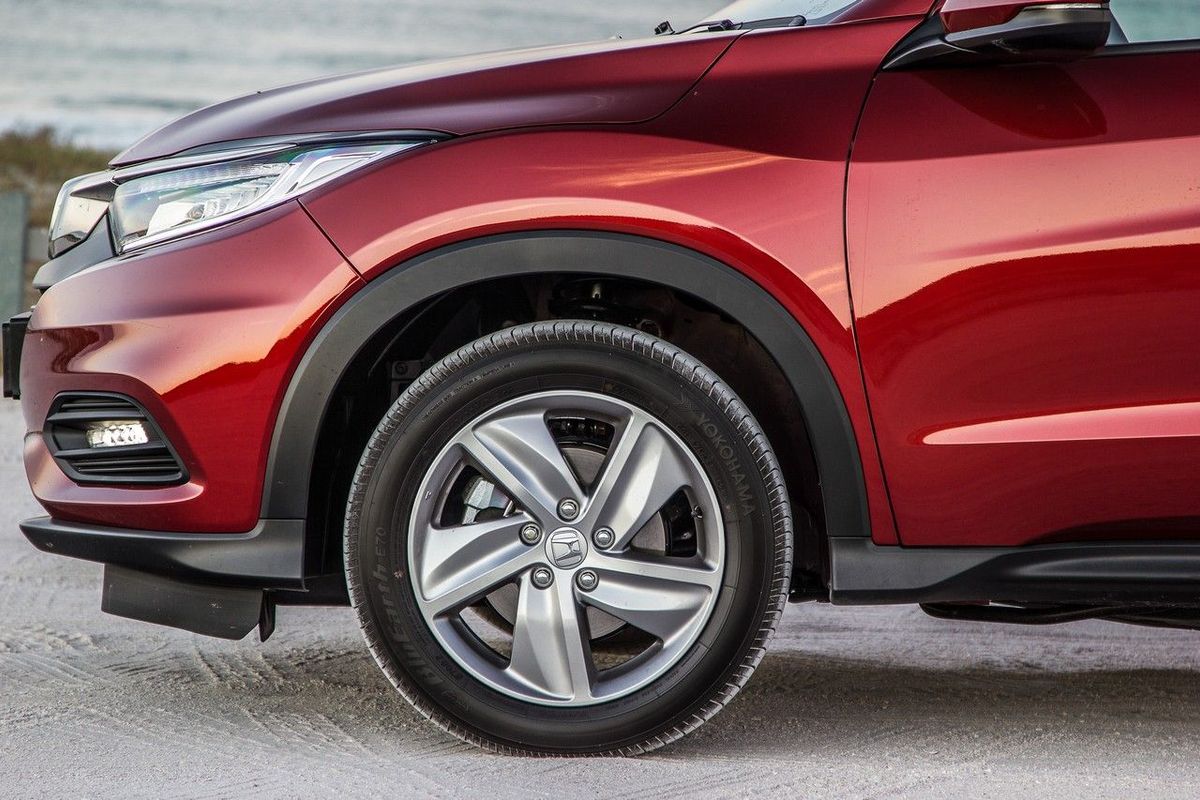
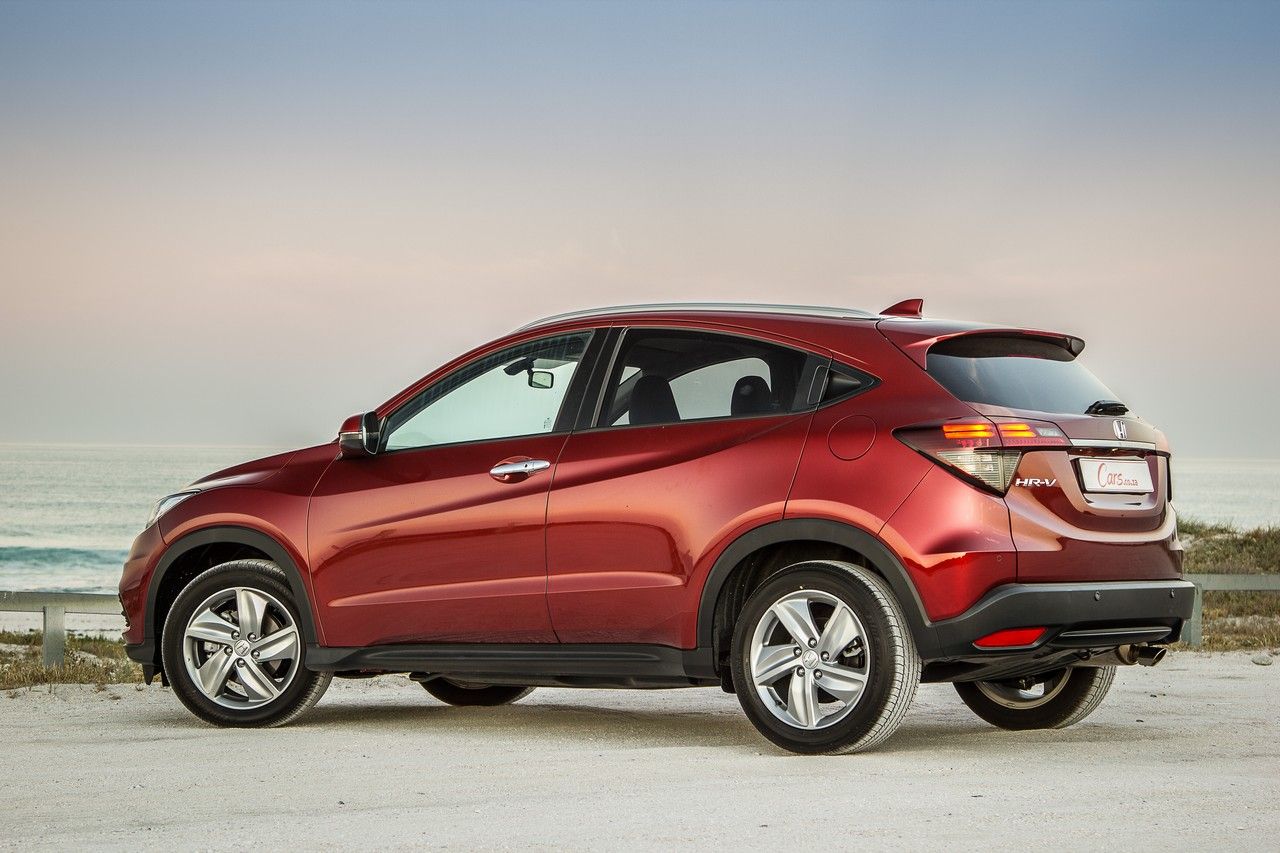
The HR-V in 1.8 Elegance trim rides on 17-inch alloy wheels which offer a great balance of ride quality and style.

The not so good

Poor powertrain refinement

The naturally-aspirated 1.8-litre 4-cylinder petrol motor at the heart of the HR-V isn't fundamentally a bad engine – it's a willing powerplant, but in typical Honda fashion, you need to explore the upper reaches of its rev range to get the best out of it. However, we think it's counter-intuitive to combine a middling torque output (172 Nm) with a continuously variable transmission, which is conservatively mapped to keep the engine low in its rev range to satisfy fuel economy and emissions requirements.

It's adequate around town, but you'll encounter some harsh engine noise when executing overtaking manoeuvres on the open road. Honda SA doesn't offer any engines other than the 1.5-litre and 1.8-litre units, which is a shame as a 1.6-litre turbodiesel and all-new 1.5-litre turbopetrol engine feature in the UK's HR-V lineup.


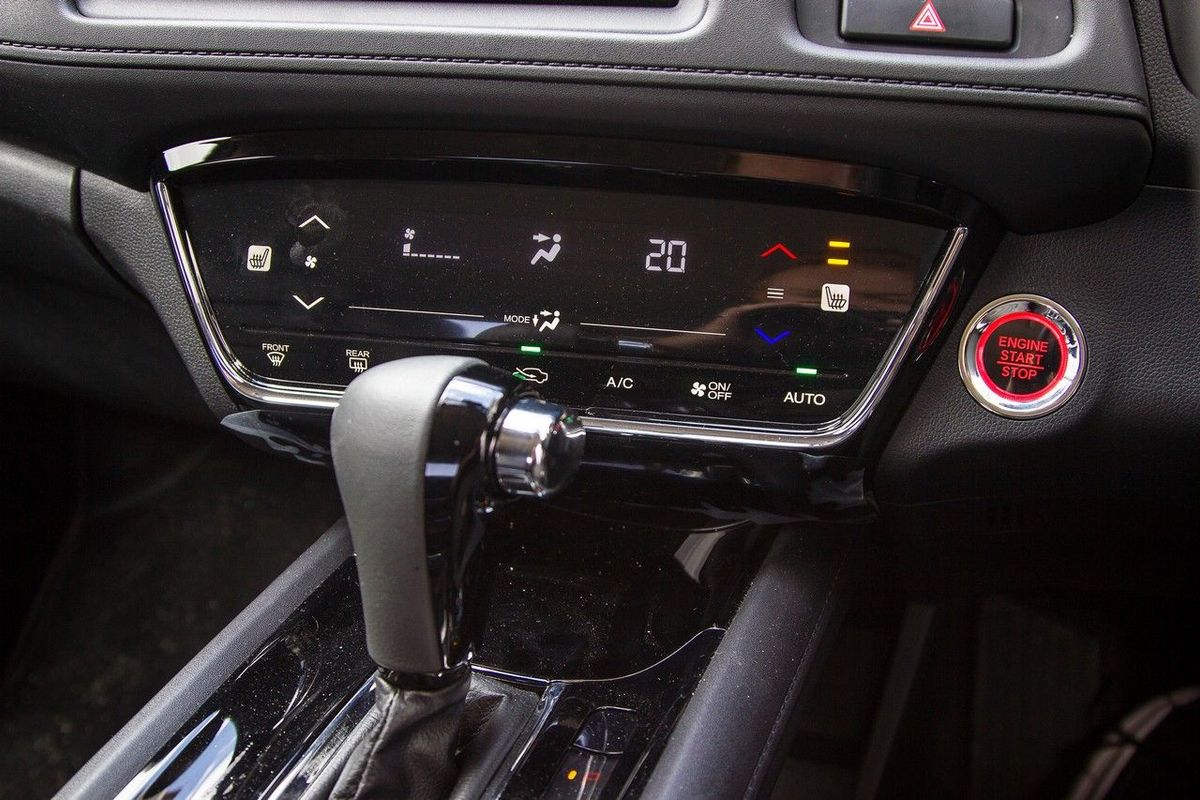
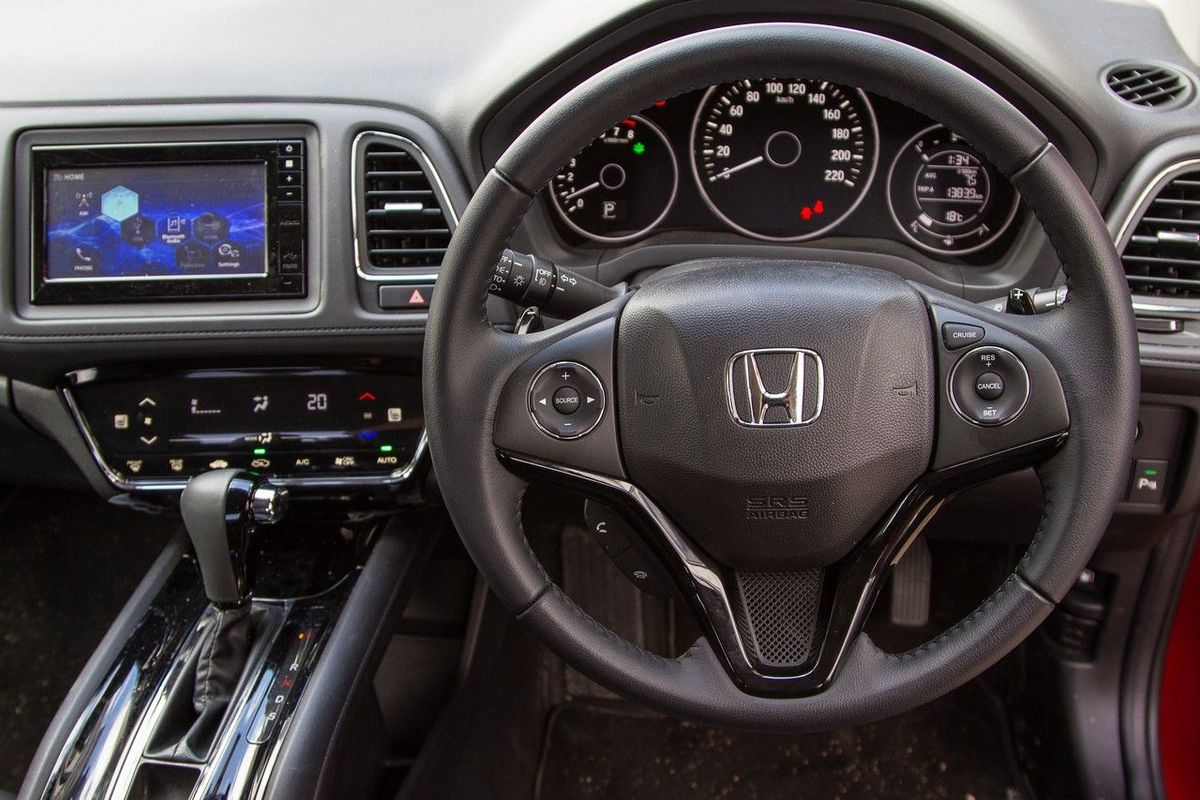
The Honda HR-V cabin is neatly laid out and dotted with many practical solutions, such as the phone/key recess under the transmission.

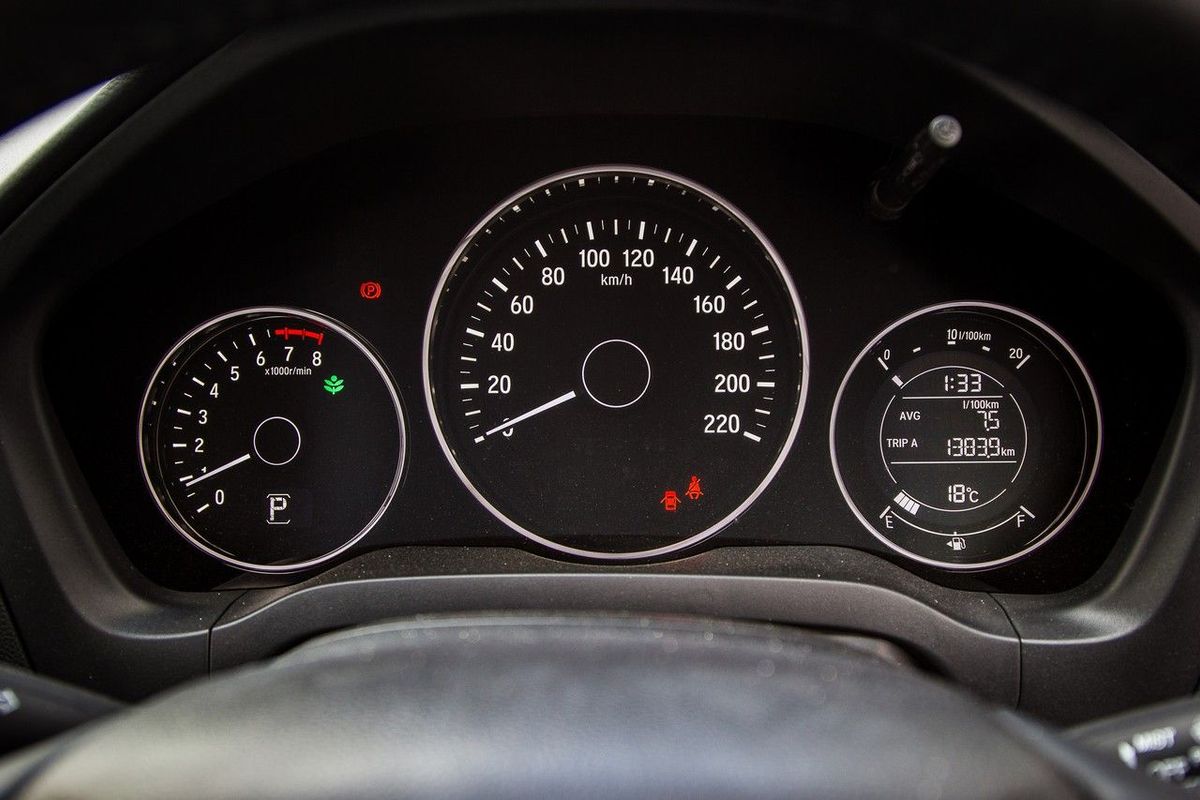
That said, the 1.8 Elegance returned impressive fuel economy figures during its tenure in our test fleet. After a combination of open road cruising to Prince Albert and negotiating gridlock traffic jam conditions in Cape Town, our HR-V test unit went home with 7.5 L/100 km on its trip computer, which is better than we expected.

Pricing and Warranty

The Honda HR-V range starts at R354 900 for the 1.5 Comfort, while this 1.8 Elegance derivative costs R419 900. The prices include a 5-year/200 000 km warranty, a 4-year/60 000 km service plan. Services remain at 15 000 km intervals.

Verdict


The Honda HR-V is an honest and practical family SUV

If you regularly bundle the family and the proverbial kitchen sink into your vehicle, you should add the HR-V to your car shortlist. It's a well thought-out and practical SUV, which is great in and around town. The build quality isn't quite up to that of its rivals, but given its price and breadth of abilities, it's just about forgivable. Open roads and national highways are its Achilles Heel, however, and the engine's talents are neutered by the economy-at-all costs CVT. The Honda HR-V makes a good case for itself at this price, however, as its two key rivals can't match it in terms of outright practicality. We also think the Honda reliability factor should result in trouble-free ownership.

Alternatives (click on the names for specification details)

Toyota C-HR

Toyota's most stylish newcomer burst onto the scene with a perky turbocharged engine and commendable driving dynamics. However, it was initially lacking in safety (since rectified with a Plus model) and its luggage space is limited.

Mazda CX-3

The Mazda suffers the same malaise as the C-HR. In an effort to offer compact dimensions and fun-to-drive dynamics, the luggage bay is small and rear legroom frustratingly cramped. The Mazda does offer a more spirited naturally-aspirated engine than the Honda, however.

Nissan Qashqai 

The winner of this lineup. Not only does it offer a variety of engines, but its the most practical model here. It's also the most refined and pleasant to drive.

Looking for a new/used Honda HR-V to buy?

Find one on Cars.co.za today by clicking here

Related content

Facelift Honda HR-V (2018) Spec and Price

Honda HR-V Facelifted for 2018

Honda HR-V Video Review and Comparison
Announcement: 2018/19 Cars.co.za Consumer Awards – Powered by WesBank

Search for a used Honda HR-V here

Drift The City – Cape Town Edition

The City of Cape Town was shut down for an entire weekend to play host to some rather impressive driving. Sanchez Labs teamed up with Liqui Moly to pull off something quite special. Featuring a South African car, piloted by a South African driver, this is Cape Town as you've never seen or heard it before.

This video was conceived and directed by Justin Pinto of Sanchez Labs, who produces our SentiMETAL series.

www.sanchez.co.za

https://vimeo.com/channels/sanchezlabs

And, this video was made possible by Liqui Moly. Check them out at:

www.liqui-moly.co.za

https://twitter.com/LiquiMolyZA

https://www.instagram.com/liquimolyza/

Produced by Bounceboard Productions

www.bounceboardproductions.com

Related content:

Nissan S14 200 SX Rocket Bunny "Boss" Drift Build – Launch Control Ep2

Kia Stinger Review: Sideways in Kia's rear-wheel-drive Saloon

Ferrari Testarossa: SentiMETAL Ep7 (Video)

McLaren 720S Video Review | The Big Mac Attacks
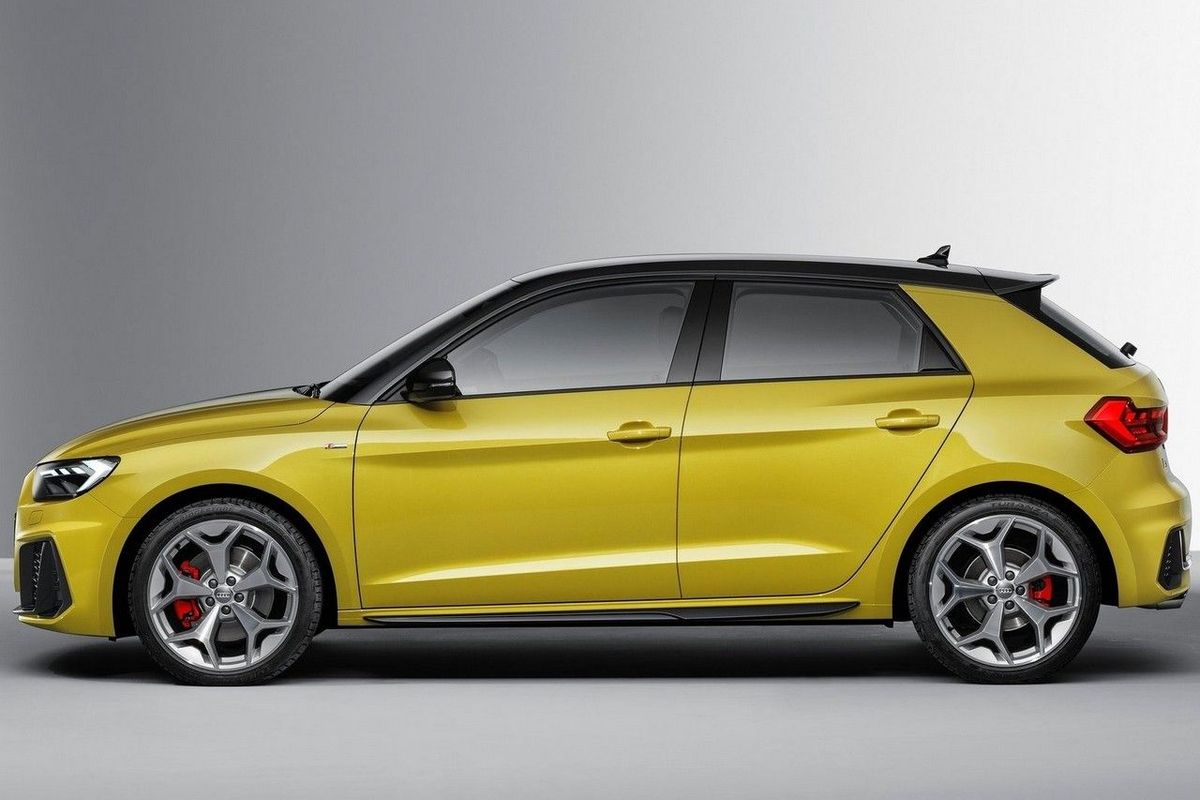
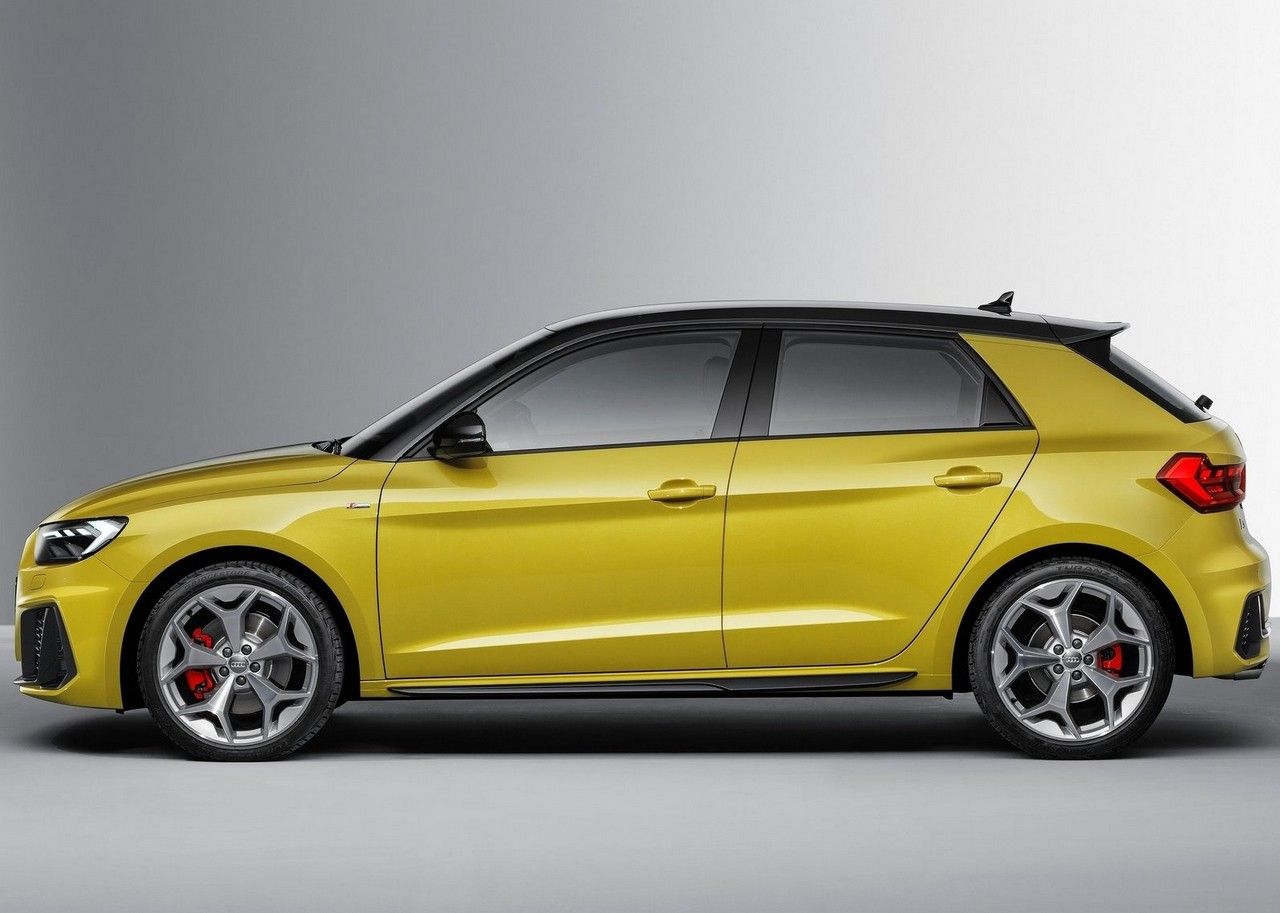
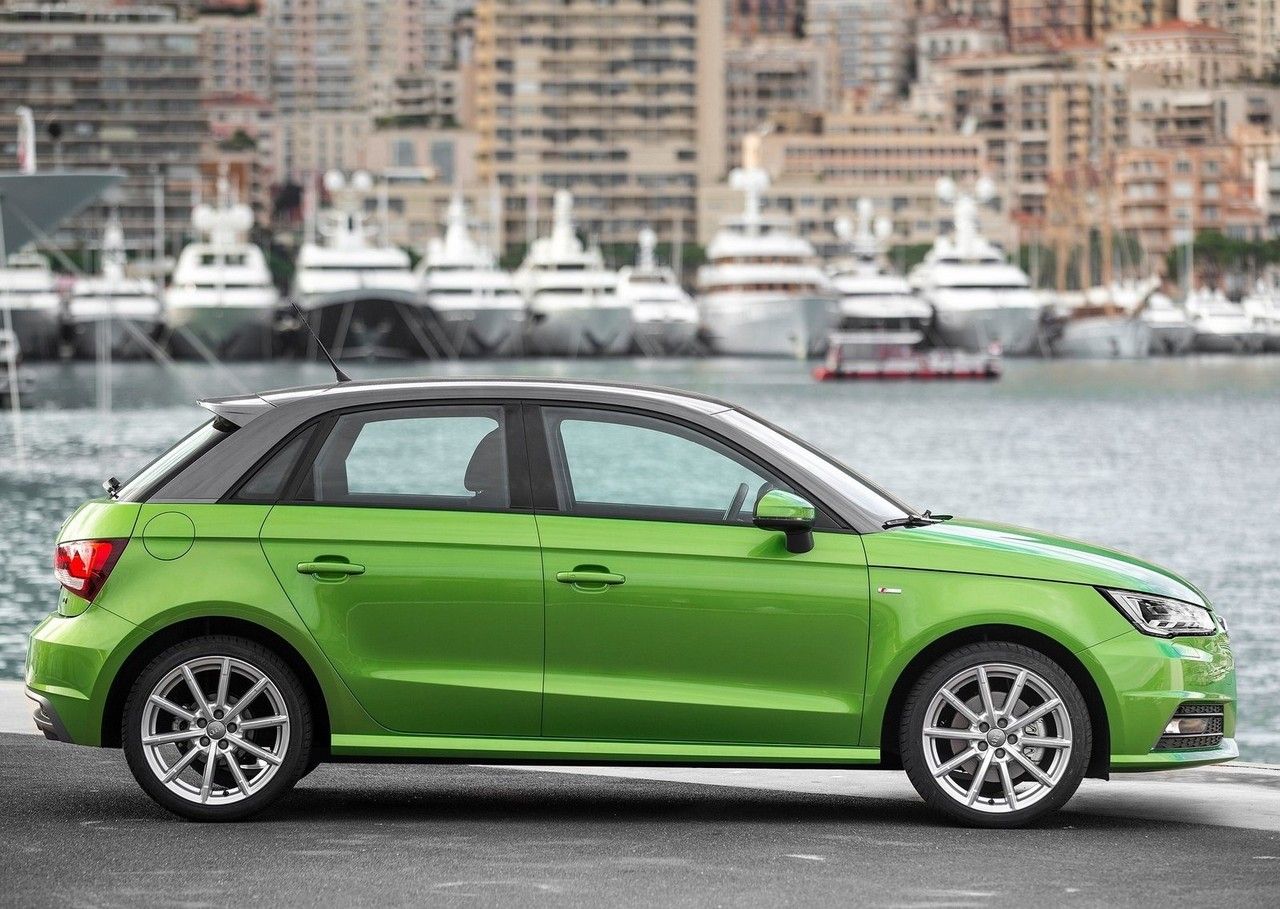
Audi A1: Old vs New

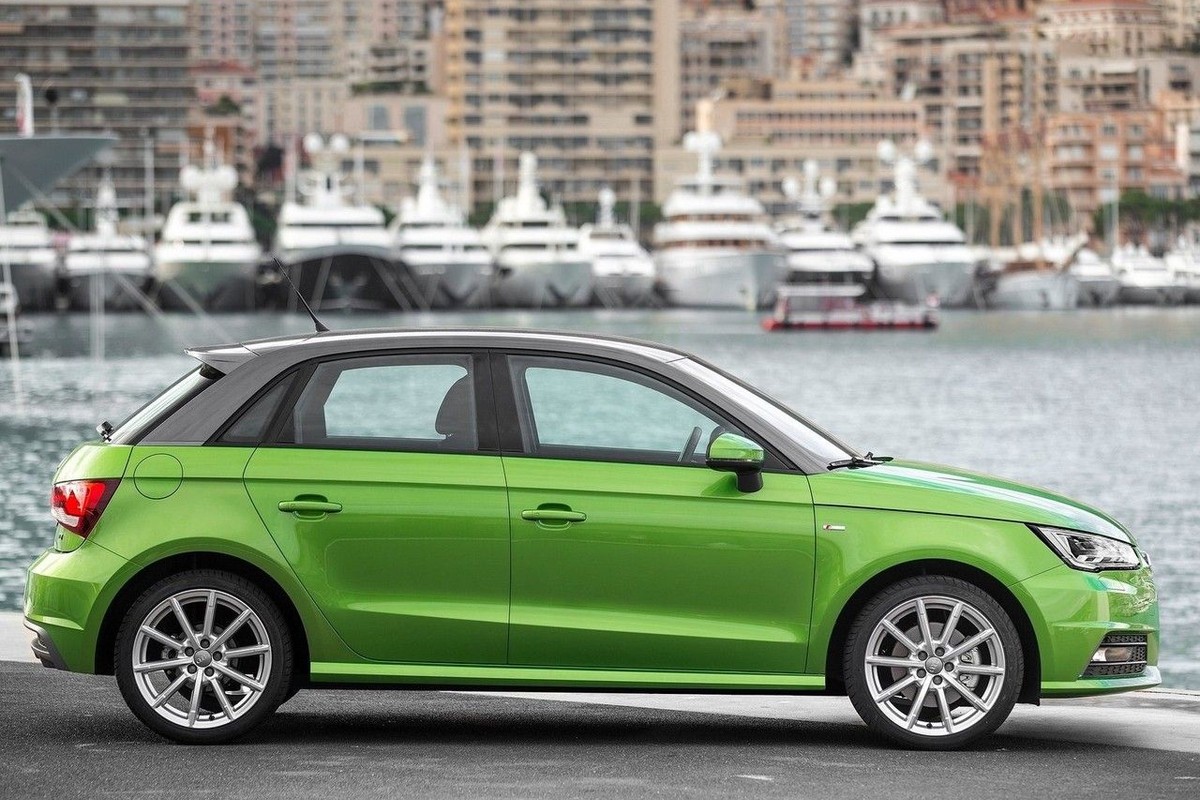
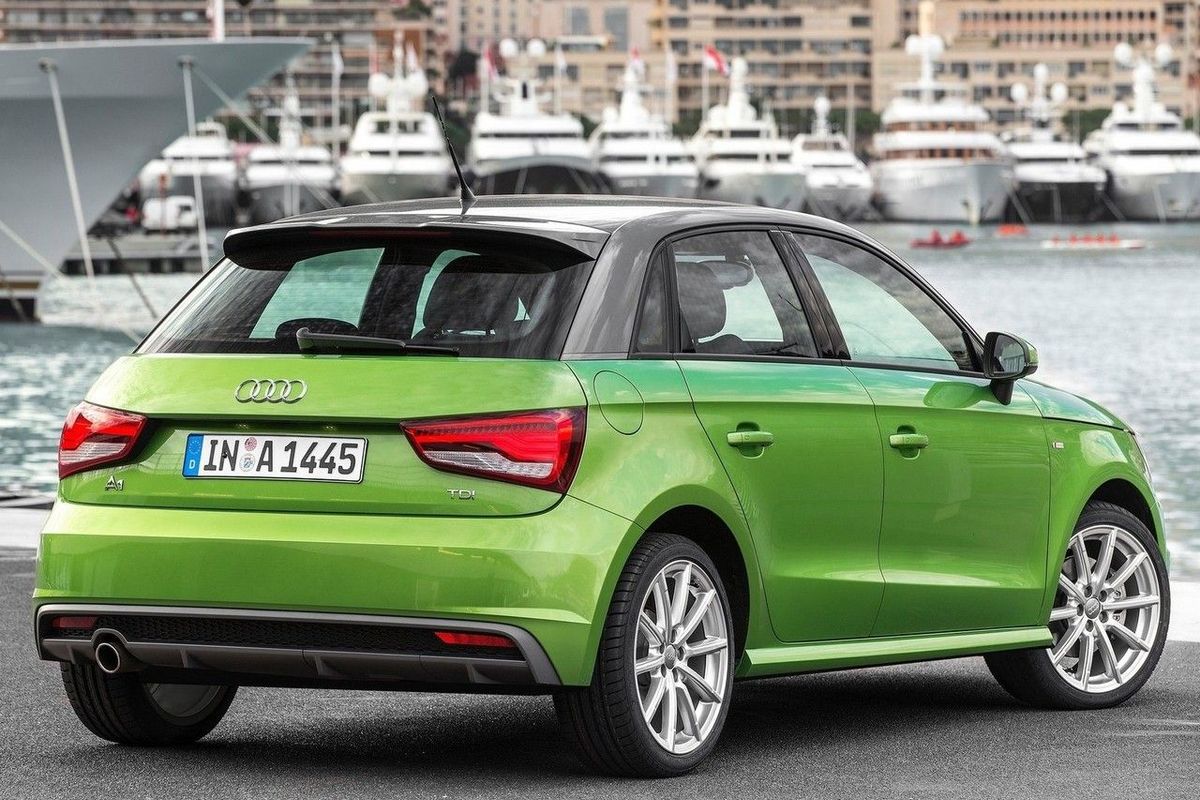
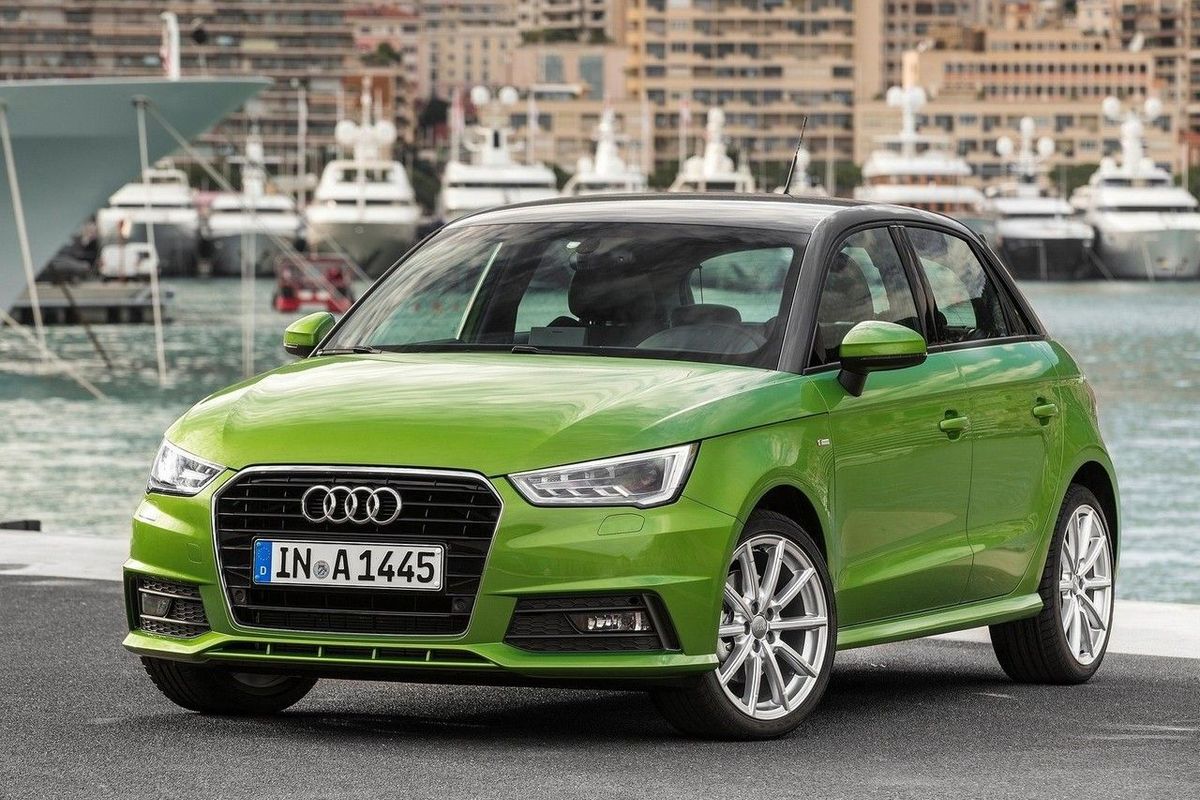
We recently attended the international launch of the all-new Audi A1, which is expected to arrive in South Africa midway through 2019. So, what are the key differences between the outgoing A1 and its successor? 

The Audi A1 gives consumers an entry point to the Ingolstadt-based brand ownership and the premium hatchback offers a variety of engines packed into a compact body. The Audi A1 was offered in both petrol and diesel models and even included a flagship S1 performance variant. Launched in SA in late 2010, the Audi A1 has racked up a reasonable amount of sales. Globally, it has been a popular model, with the 500 000 Audi A1 rolling off the line back in 2014.

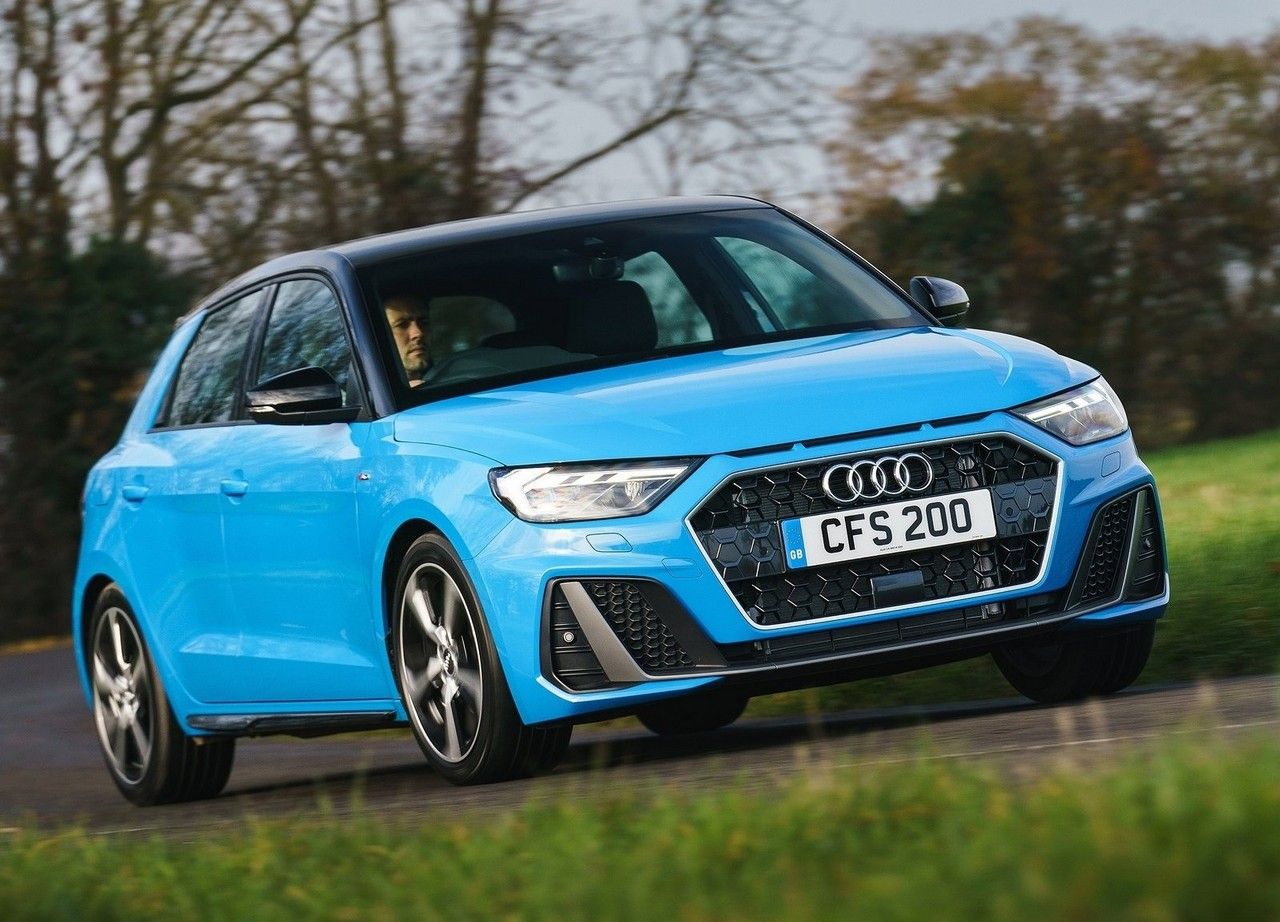
For 2019, the Audi A1 has been substantially overhauled and boasts new engines, new tech and a new look for the cabin. What are the key changes between the 2nd-generation Audi A1 and the outgoing model?

Dimensions

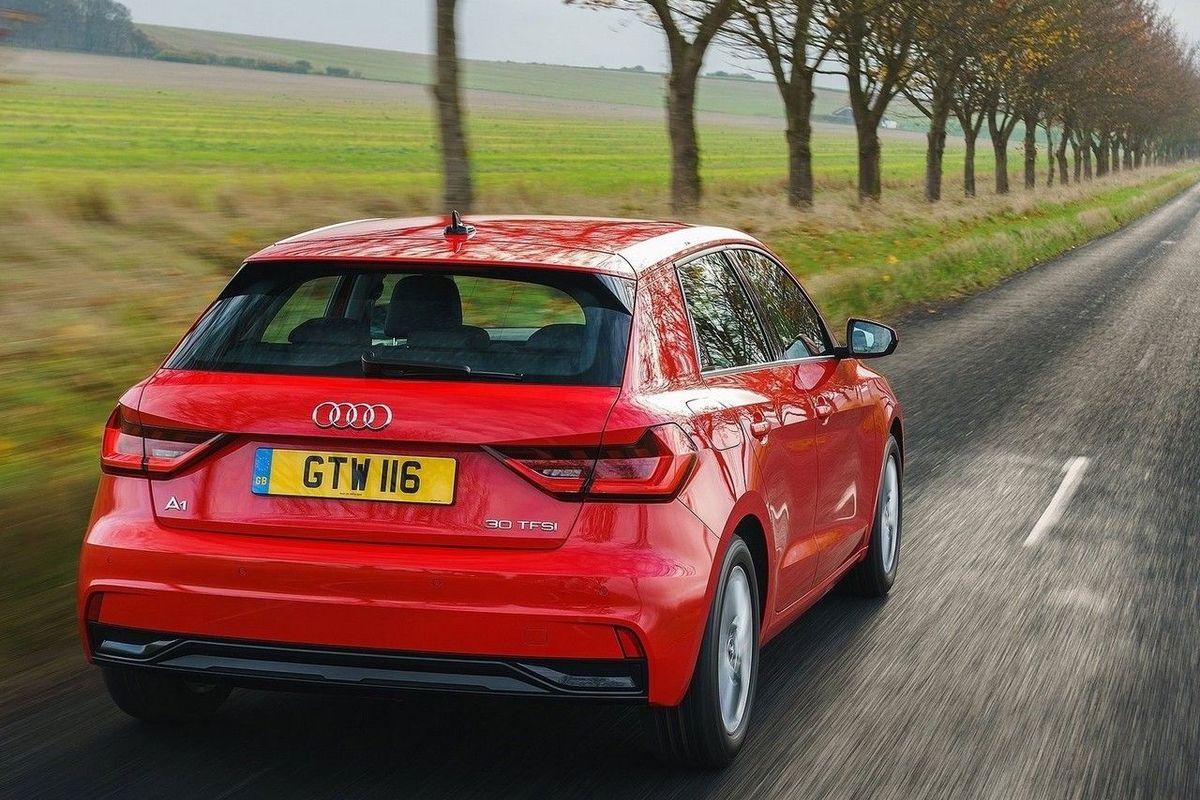
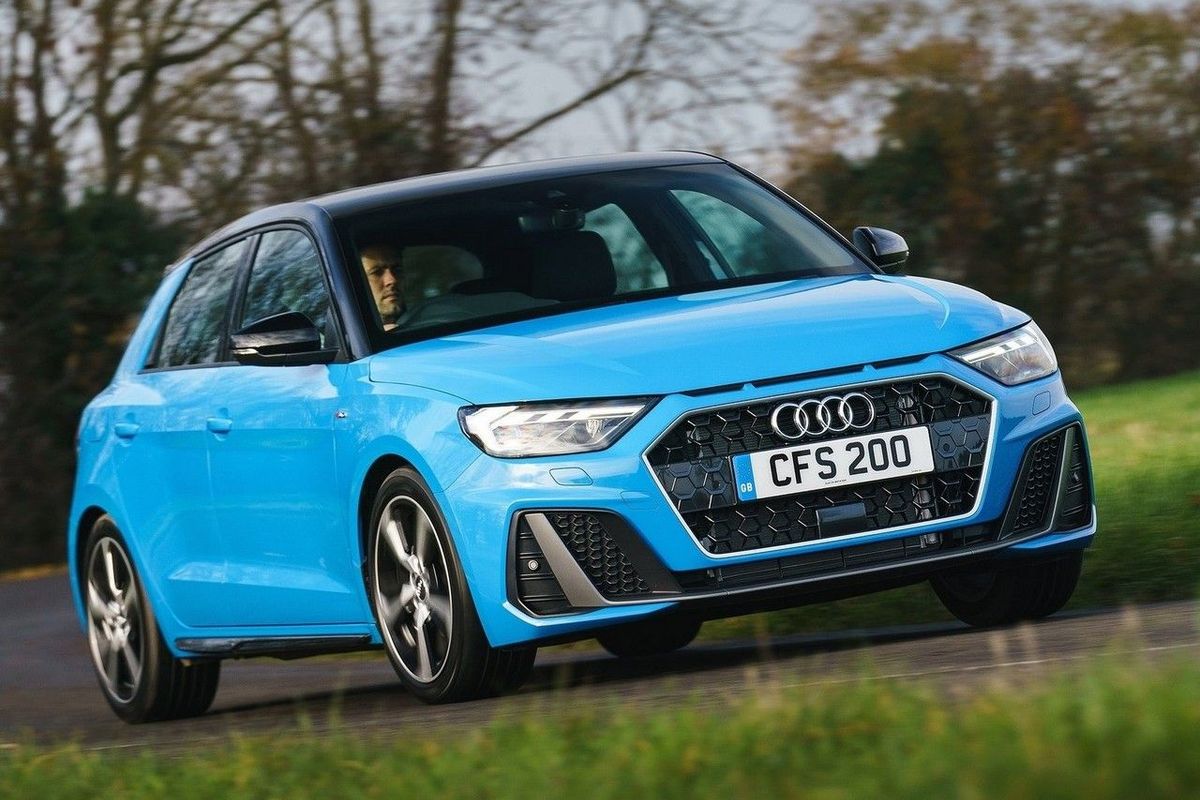
The new Audi A1 is bigger than the outgoing model, thanks to the all-new platform. Riding on MQB, the new Audi A1 is 56 mm longer and has a 94 mm longer wheelbase. The new platform gives the Audi A1 a lot more cabin space and given that it underpins the current A3/Volkswagen Golf, some would even argue that the refinement and road holding has improved.

Engines

The current Audi A1 is only available with 2 turbocharged petrol engines. Kicking off the range is a 1.0-litre turbocharged 3-cylinder producing 70 kW and 160 Nm, followed by a 1.4-litre turbocharged 4-cylinder with 92 kW and 200 Nm. Just before this current iteration, there was also a 1.8-litre turbocharged 4-cylinder motor pumping out 141 kW and 250 Nm. Petrolheads will spot that this is essentially a previous-generation Polo GTI and after the S1 was discontinued, this was the most powerful A1 you could buy. 

The new Audi A1 will be coming to SA with new engines and new model designations. At the bottom of the range is the A1 25 TFSI packing 70 kW and 175 Nm. Next up is the A1 30 TFSI, featuring the same powerplant, but in a higher state of tune (it produces 85 kW and 200 Nm). Both of the 1.0-litre motors are 3-cylinder mills. There is also a 1.5-litre petrol motor with 110 kW and 250 Nm, which we'll be getting from launch and it comes with an A1 35 TFSI designation. The range-topping version is the 2.0-litre turbocharged motor producing 147 kW and 320 Nm in the A1 40 TFSI which is shared with the current Volkswagen Polo GTI. 

Cabin

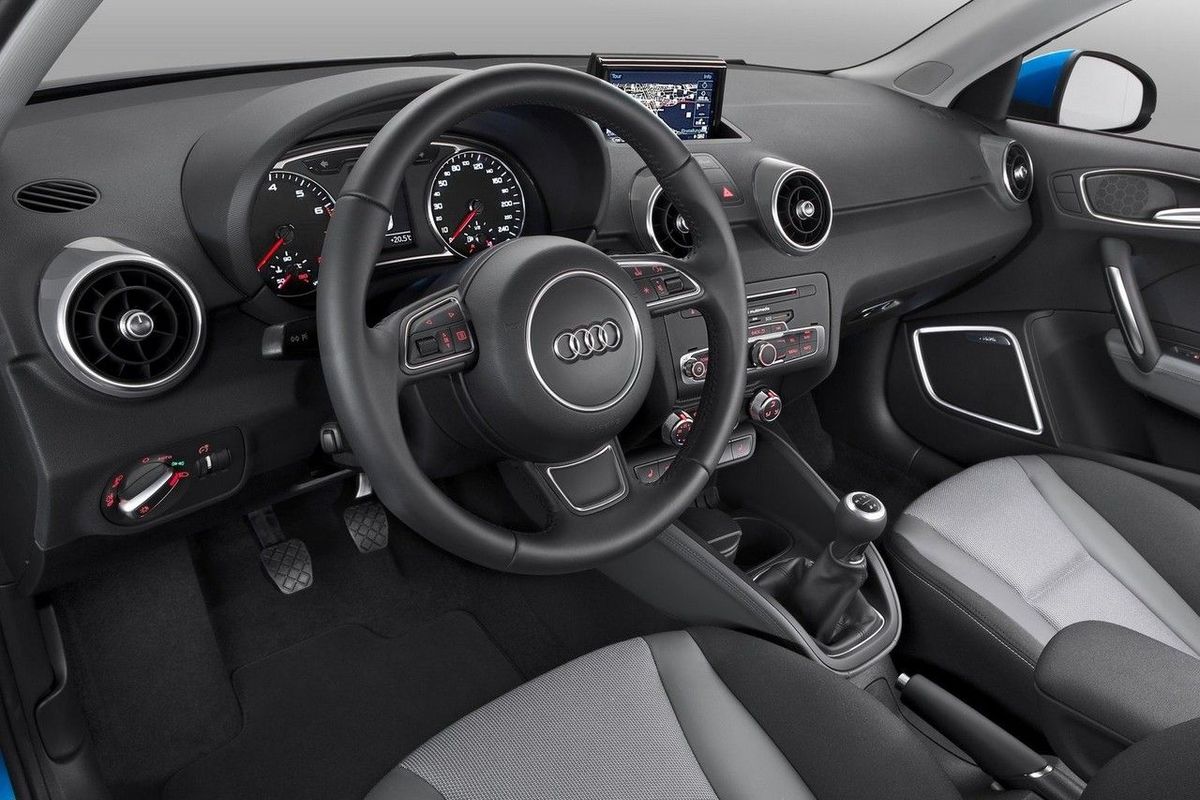
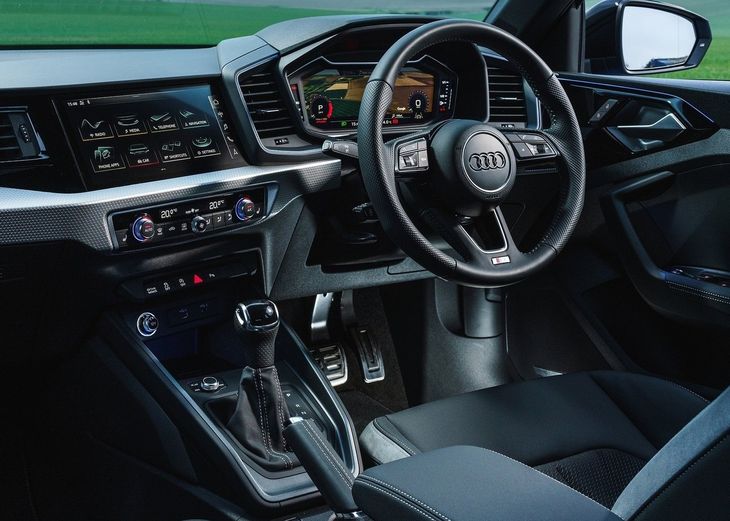
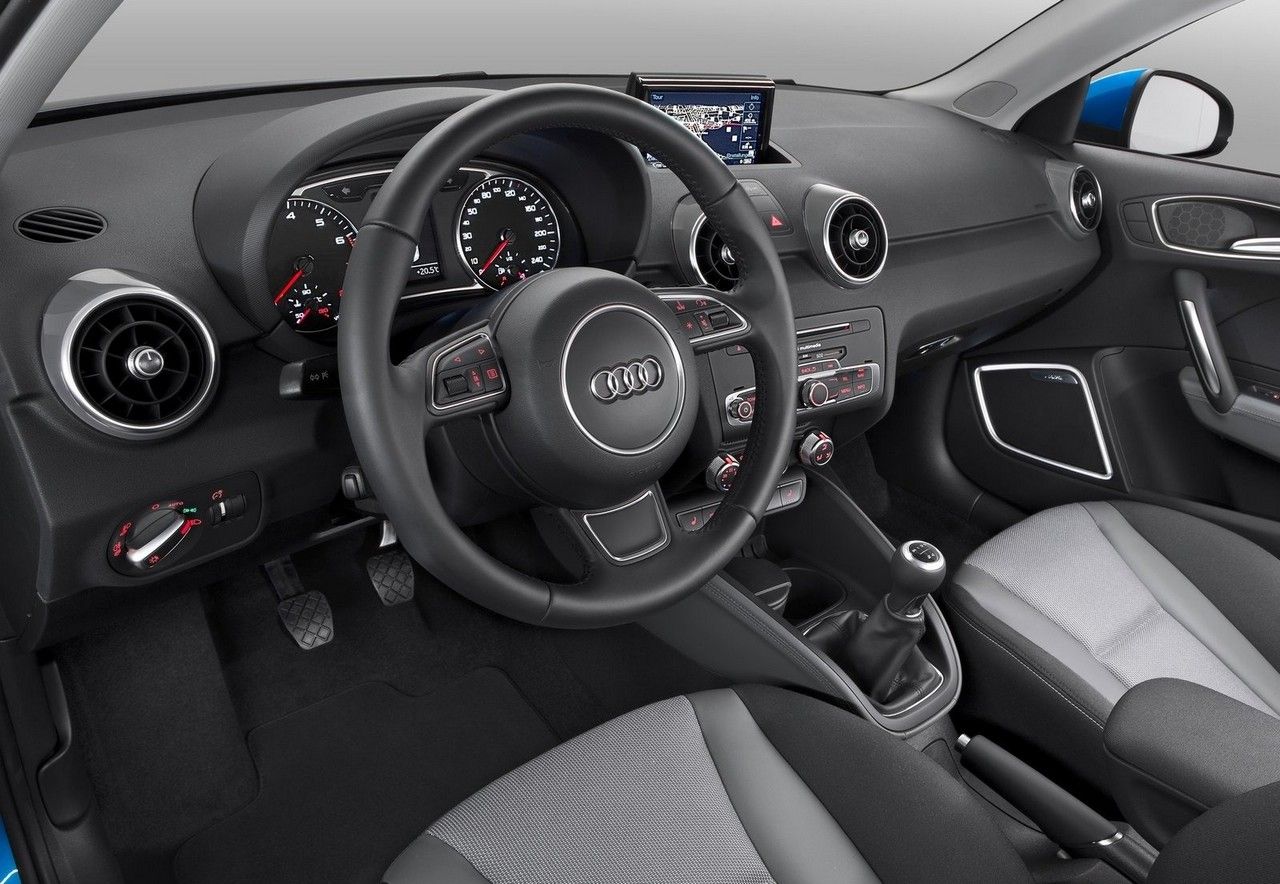
There are some big changes in the cabin as you can see. The new Audi A1 positively brims with many features pinched from the bigger models such as the A8. The first thing you'll notice when you step inside the new A1 is the completely overhauled cabin, which shows an impressive level of attention to detail. The infotainment screen is angled towards the driver, the air vent positioning forms part of the dashboard and there's the option of Audi Virtual Cockpit, which we think is a peerless infotainment system in this segment. 

Final Thoughts

Moving to the MQB platform can only mean good things for the 2nd generation Audi A1. Not only is it great to drive, but it also looks good too. The highlight has to be the cabin layout and finish, which we think is class-leading in this segment. At the time of writing, the previous generation Audi A1 price started from R304 500 and went up to R363 000. Given the improvements across the board for the Audi A1, the price will go up considerably, but not unrealistically. At this stage, we think the 2nd generation Audi A1 will come to market around the R340 000 mark.

Related content:

Audi A1 (2019) International Launch Review
Most Fuel Efficient Budget Cars in SA

Fastest Accelerating Cars under R500k in SA (2018)

Audi A1 1.8T FSI (2015) Review
Audi S1 (2015) Review
Want to buy an Audi A1?

Buy a new or used Audi A1 on Cars.co.za

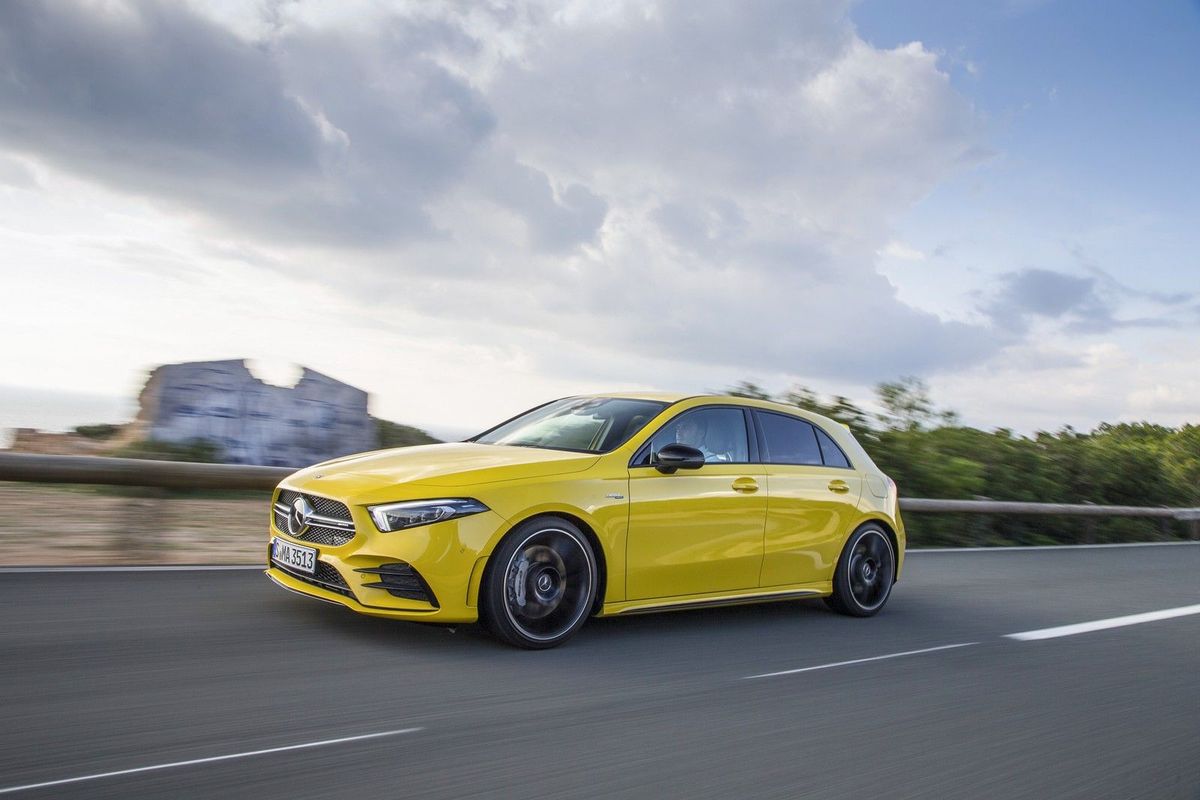
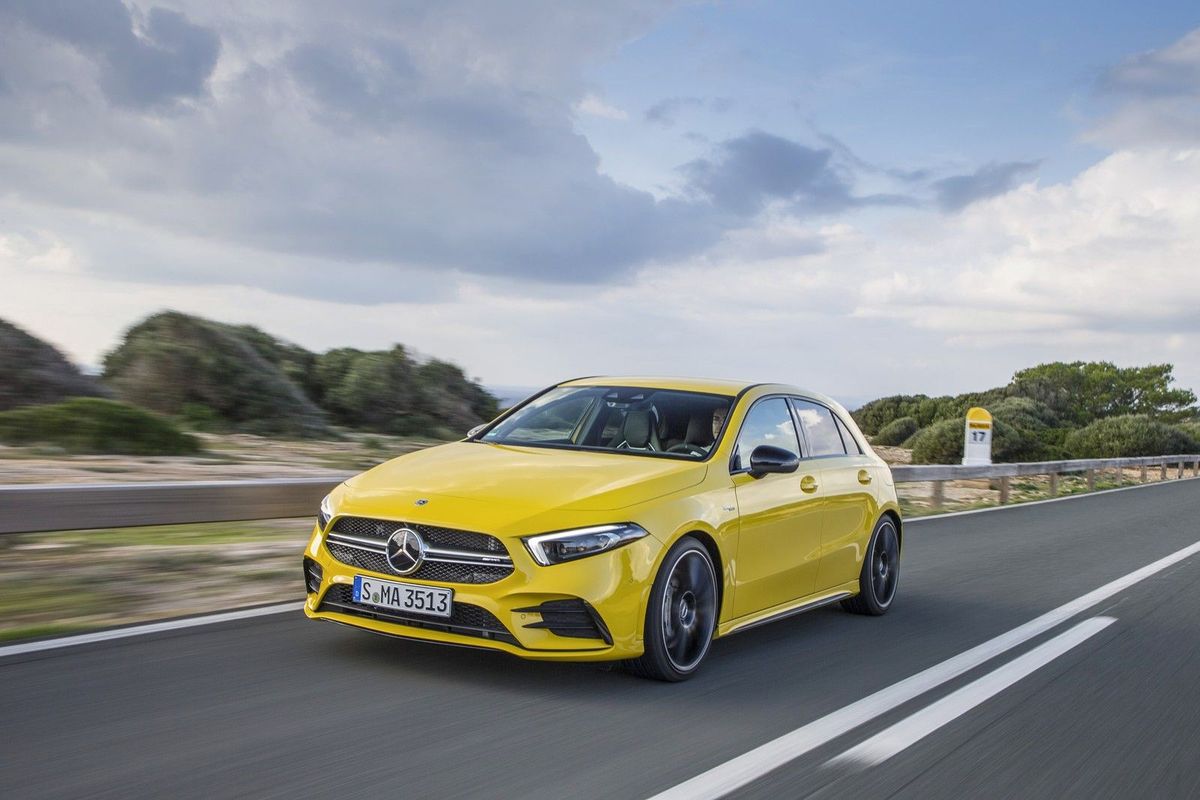
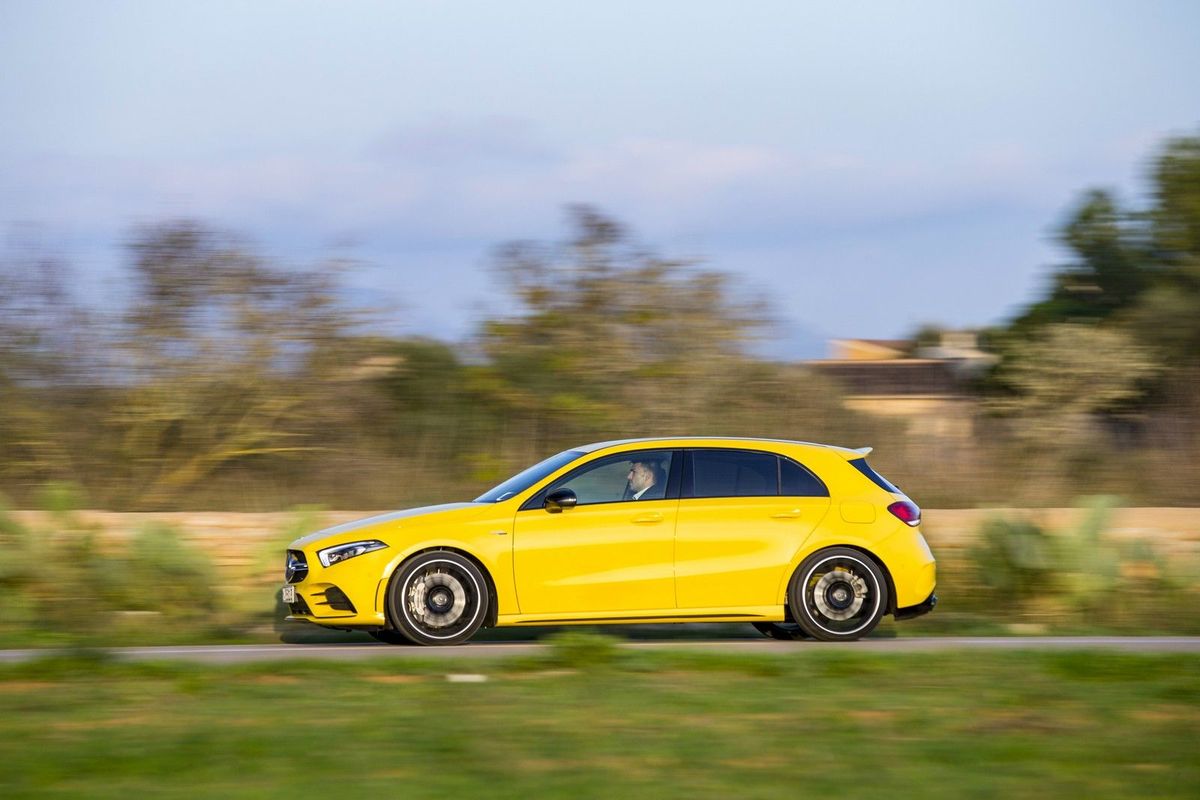
Mercedes-AMG A35 4Matic (2019) International Launch Drive

Mercedes-Benz wants to offer you more than 1 AMG-fettled A-Class derivative to choose from. The A35 4Matic, which will arrive in South Africa early in 2019, rivals the Volkswagen Golf R, Audi S3 and BMW 140i in the premium ranks, but is it a real AMG model or just an exercise in a bit of badge engineering for marketing's sake? International correspondent Neil Briscoe reports.

With GTI and R derivatives making up more than half of all Golf new vehicle sales in South Africa, Mercedes is clearly keen on stealing some of Volkswagen’s pie with the new AMG A35. It’s the furthest-down that the mighty AMG brand has yet reached — yes, there has been a hot AMG A-Class before, but that was the more powerful (and, of course, expensive) A45. This new A35 is a spot-on Golf R rival, right down to the power output, but it also faces a challenge from the likes of Audi’s ageing-but-game S3 and the utterly brilliant (and much more affordable) Honda Civic Type R.

From A to AMG

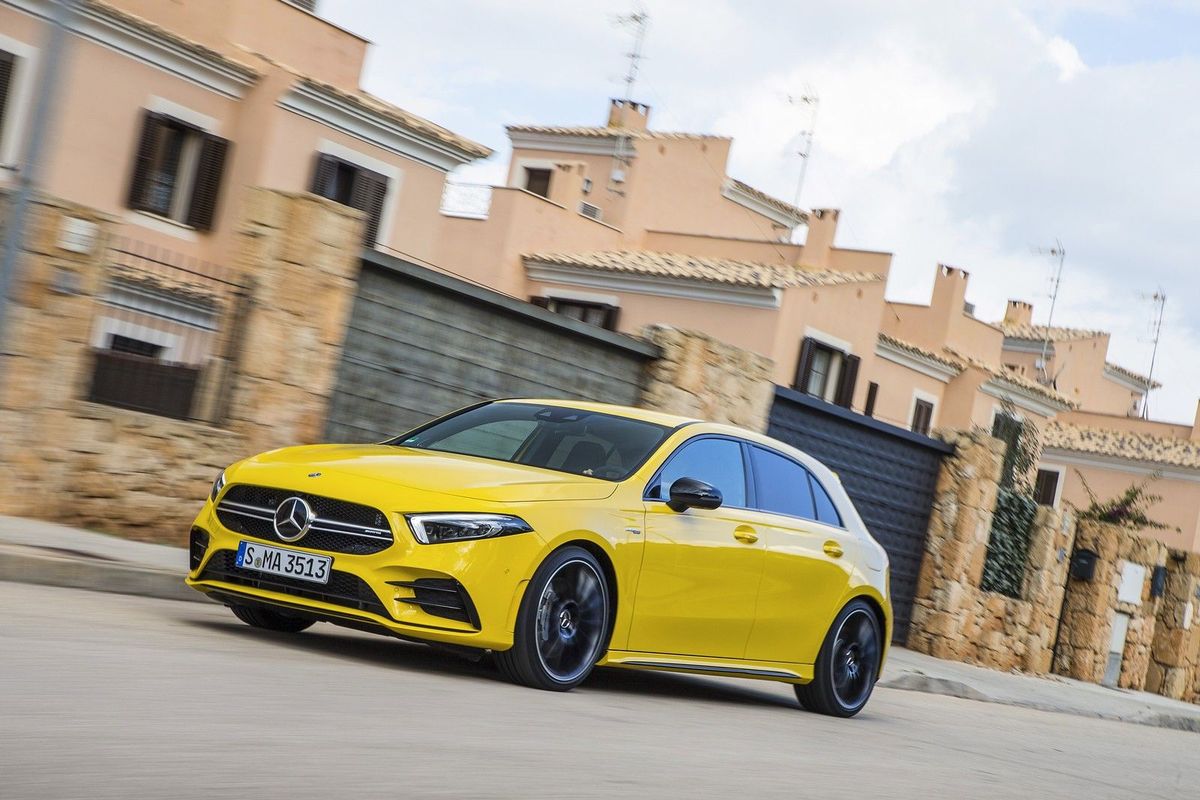
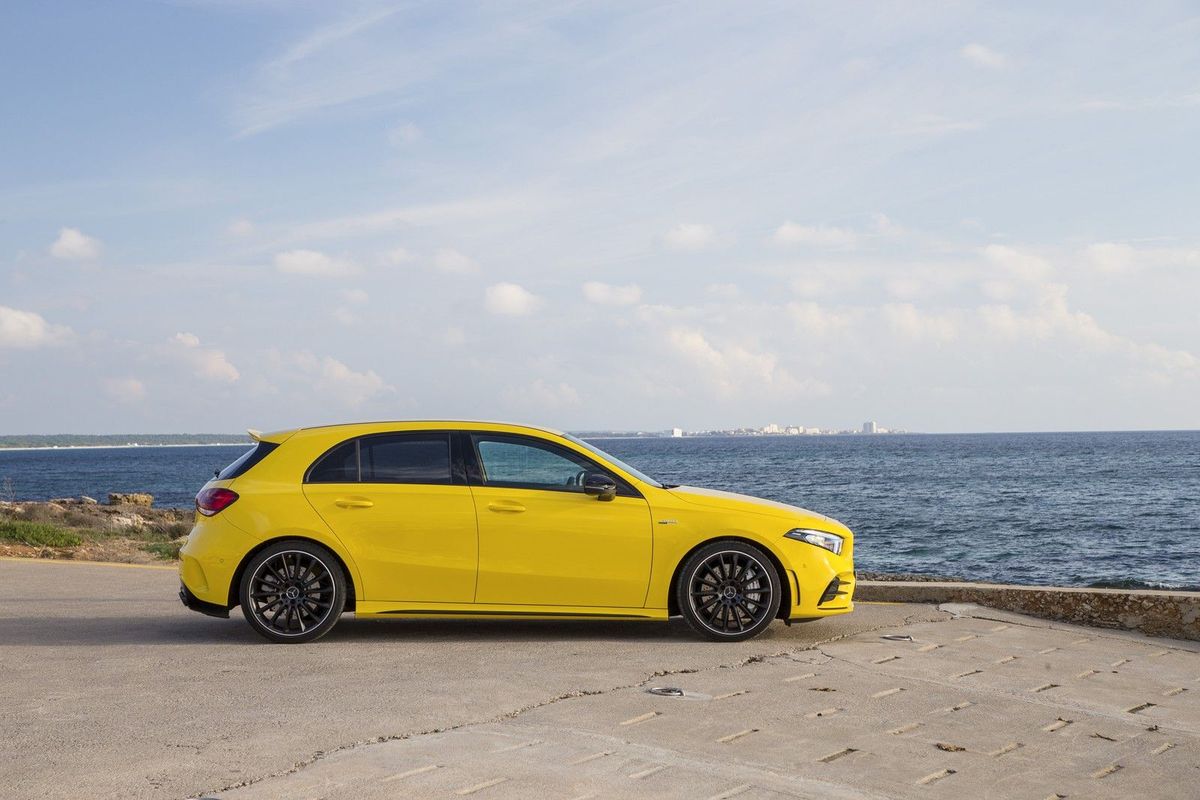
So, how do you turn an A-Class into an AMG model? Well, starting with the new A-Class hatchback certainly seems like a good kick-off point. The A-Class is a seriously good-looking car, with more than a few design cues taken from the gorgeous CLS "4-door coupe". 

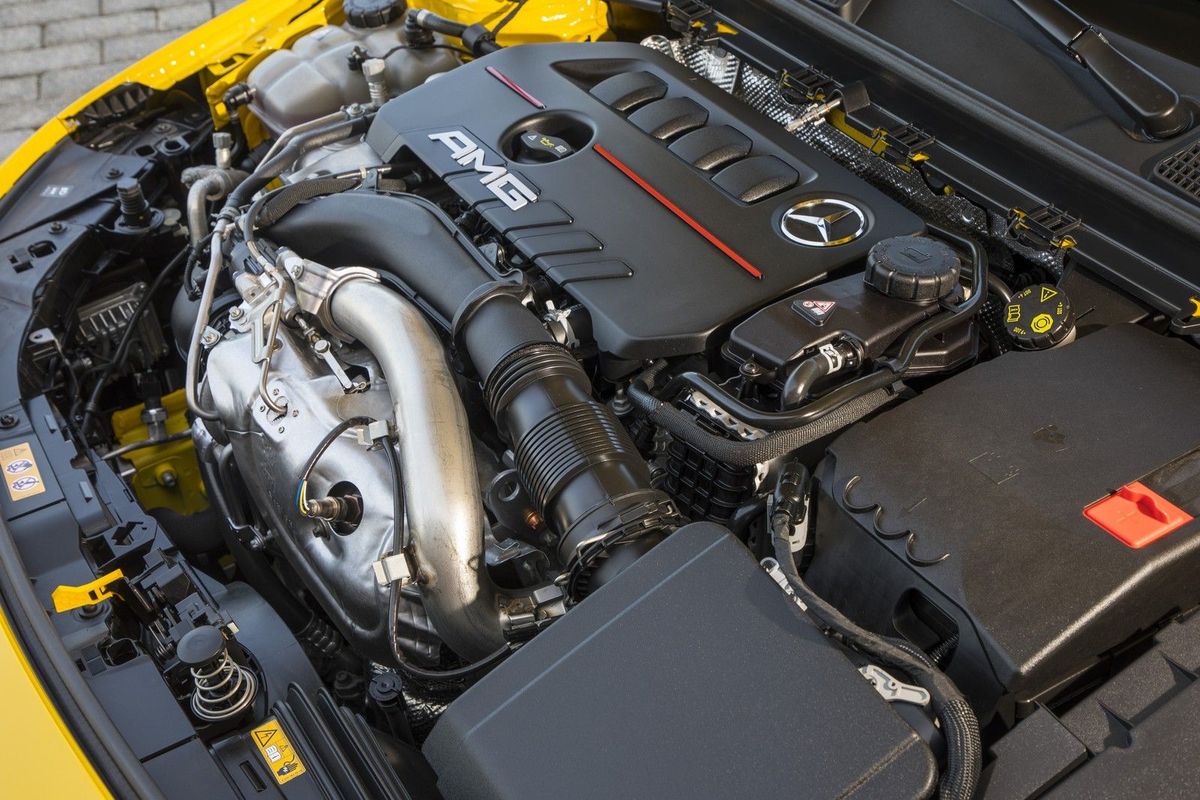
To facilitate the premium compact hatchback's transformation into an AMG, the 2.0-litre, 4-cylinder engine gets a boost, to a very healthy 225 kW, with 400 Nm of torque on offer. That’s all thanks to a twin-scroll turbocharger, some clever low-friction work on the cylinders and a variable camshaft setup.


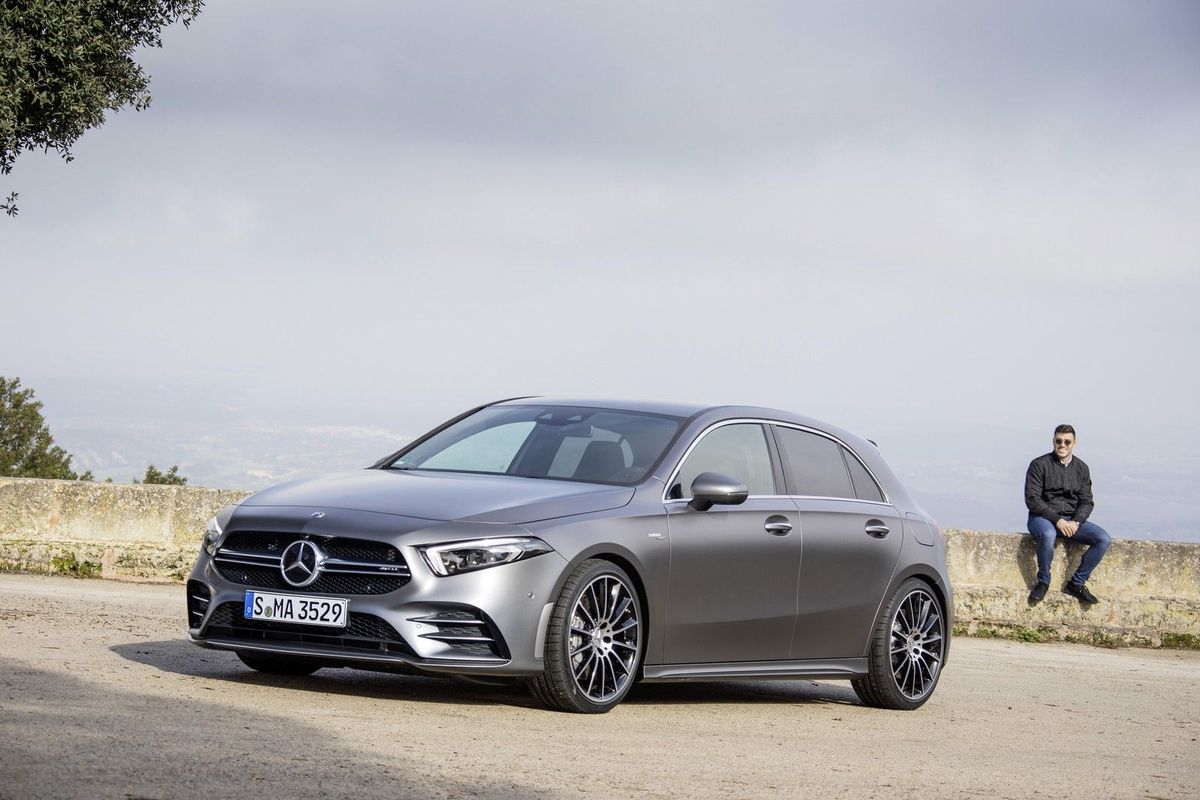
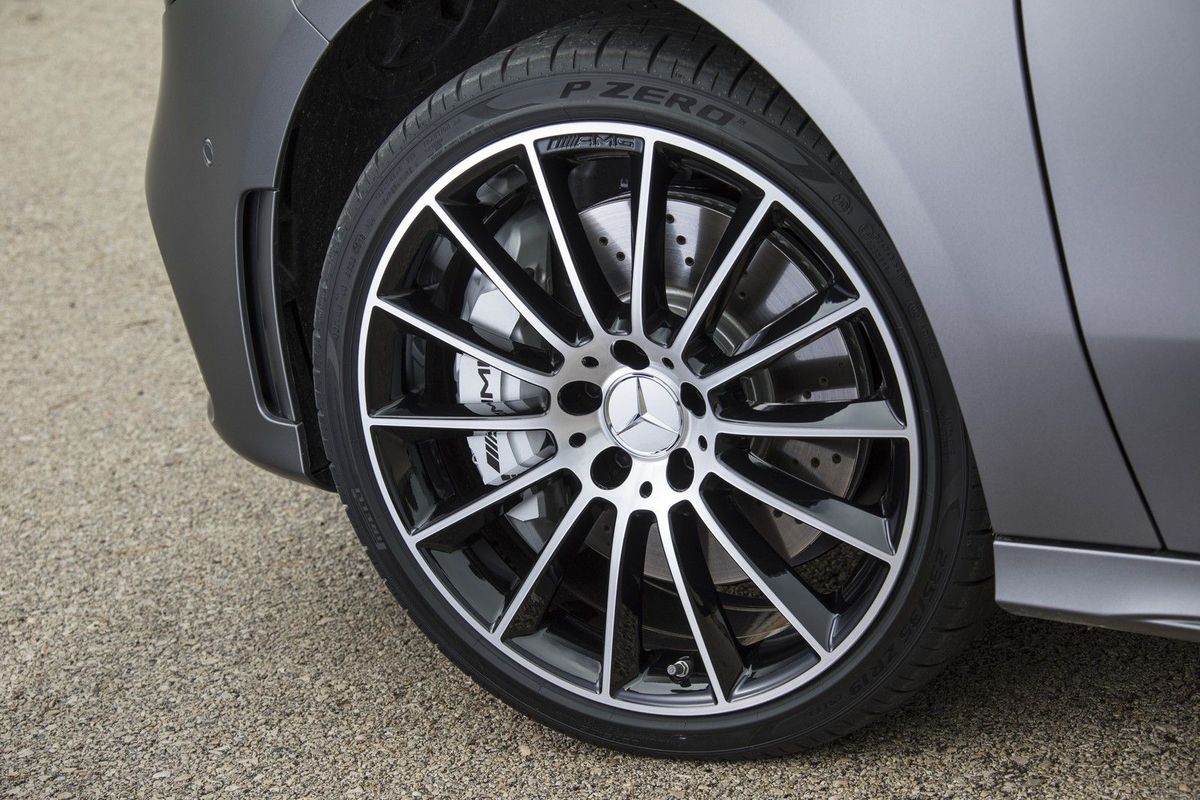
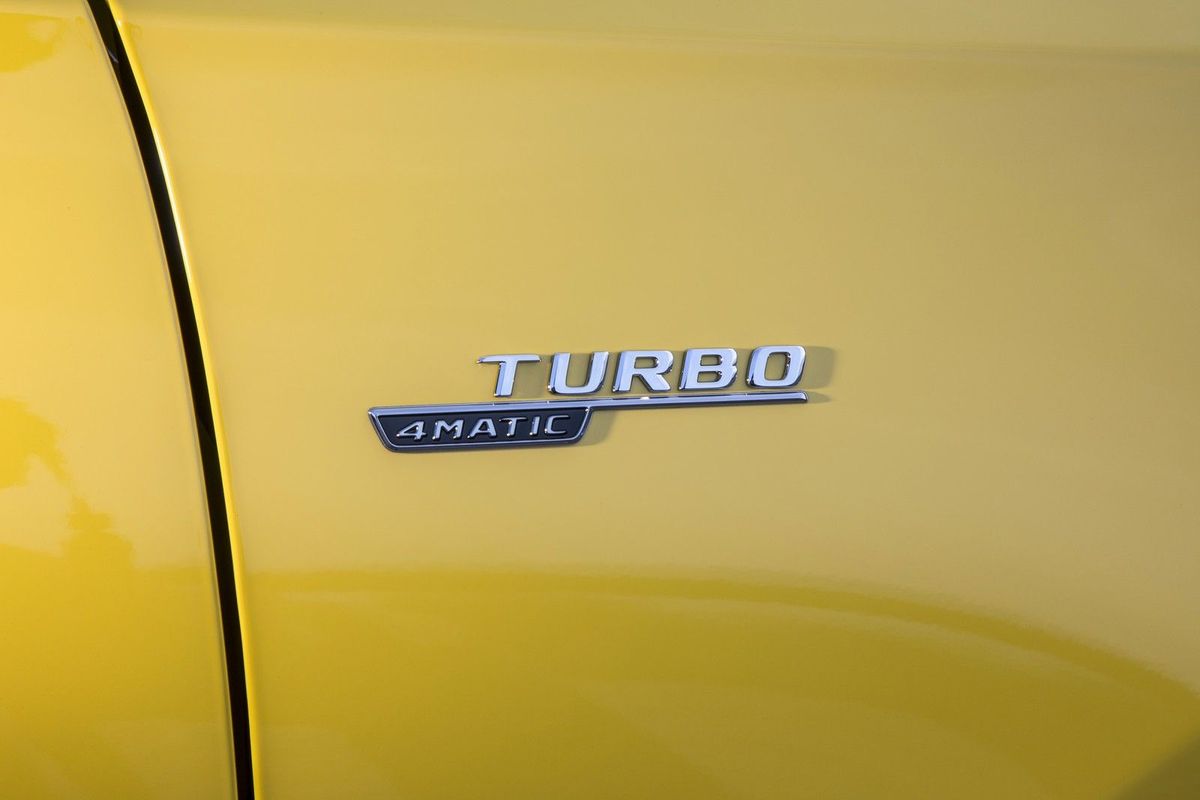
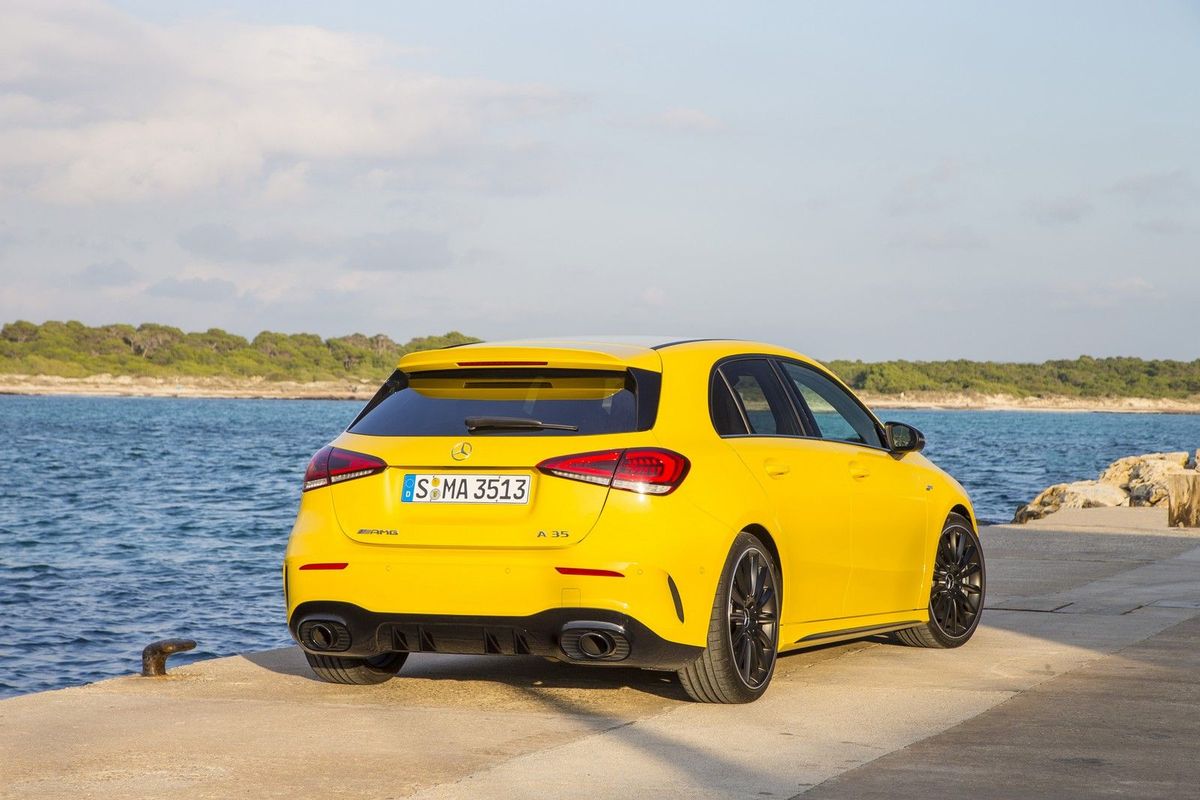
You do need to add some parts to the A35 to make it look like a real AMG.

All of which powers all four wheels through a 7-speed dual-clutch gearbox. There’s no front-drive option; more’s the pity – we’d love to see what AMG could do with a stripped-back, lightweight version of this car… The suspension is basically the same as that of the regular A-Class in layout, but lower and stiffer. The body’s stiffer too, thanks to a "shear panel" welded in under the front end, and extra triangular stiffening panels elsewhere in the body structure. 

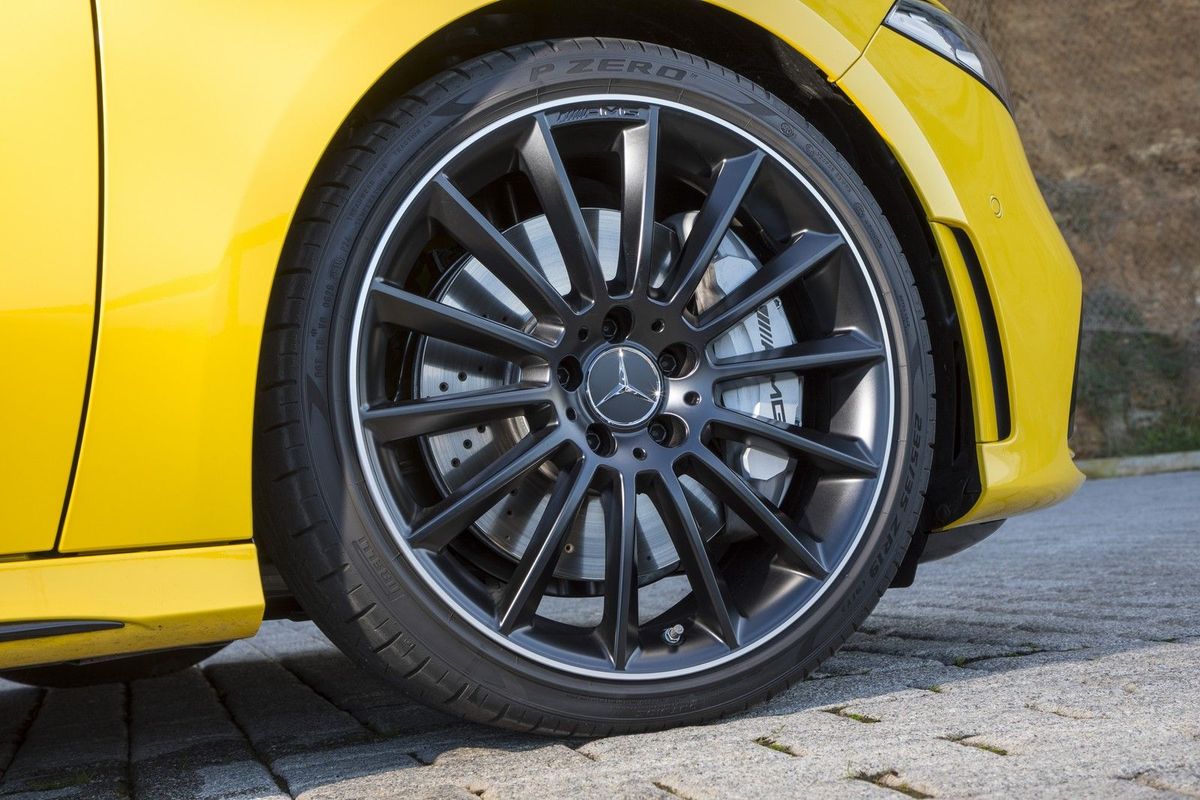
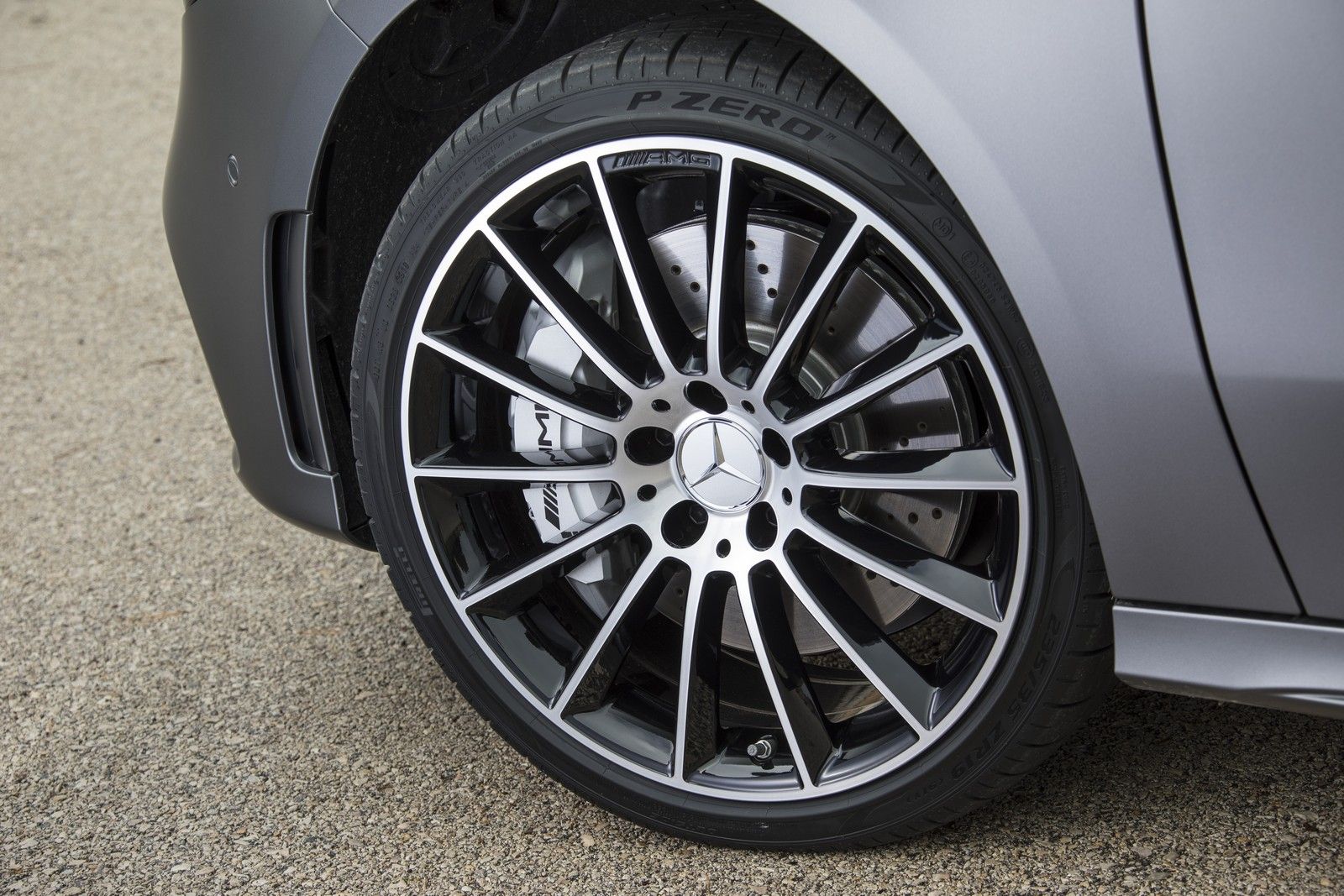
That suspension comes as standard with adaptive dampers, which can switch between Comfort, Sport and Sport+ modes thanks to the AMG Ride Control system, which monitors the suspension’s reactions to the road surface in millisecond snapshots. There are big brakes too – 350 mm-discs at the front, with monoblock 4-piston callipers, and 330-mm discs at the back.

Oh, and there’s one important modification to the front suspension: a special AMG-specific steering knuckle…

She's got the look


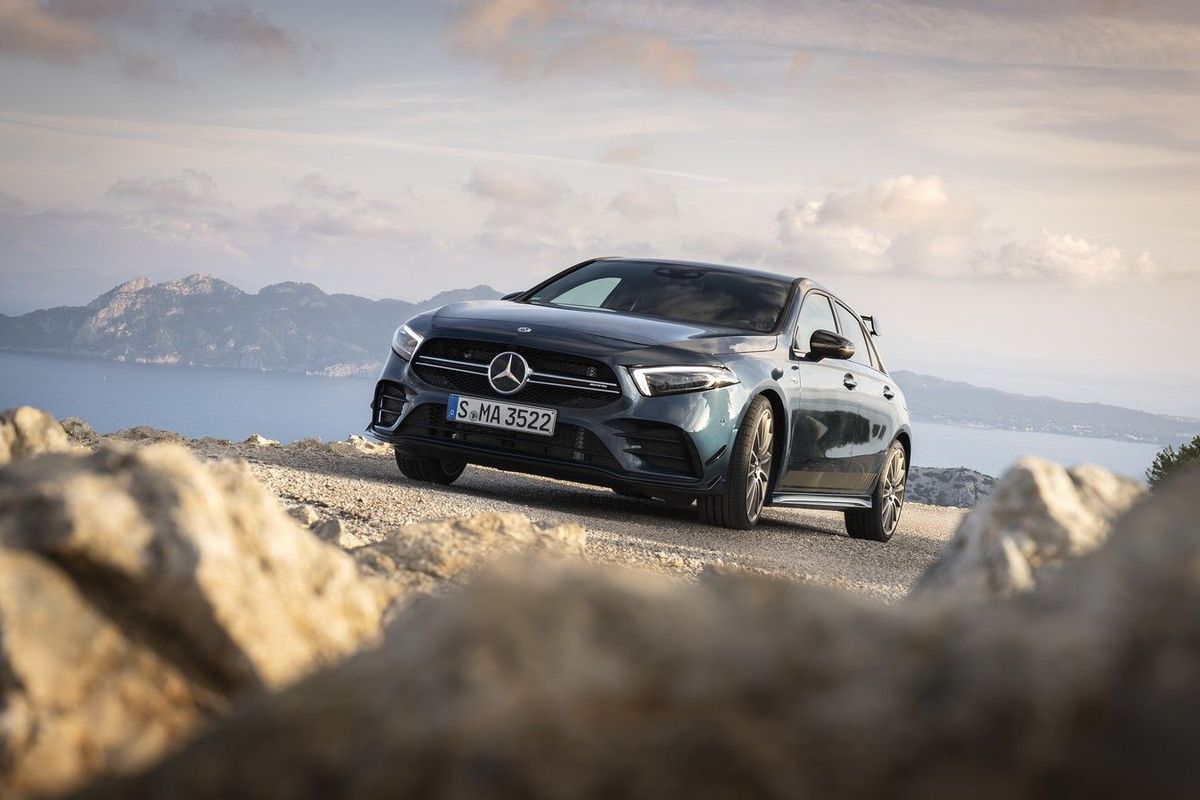
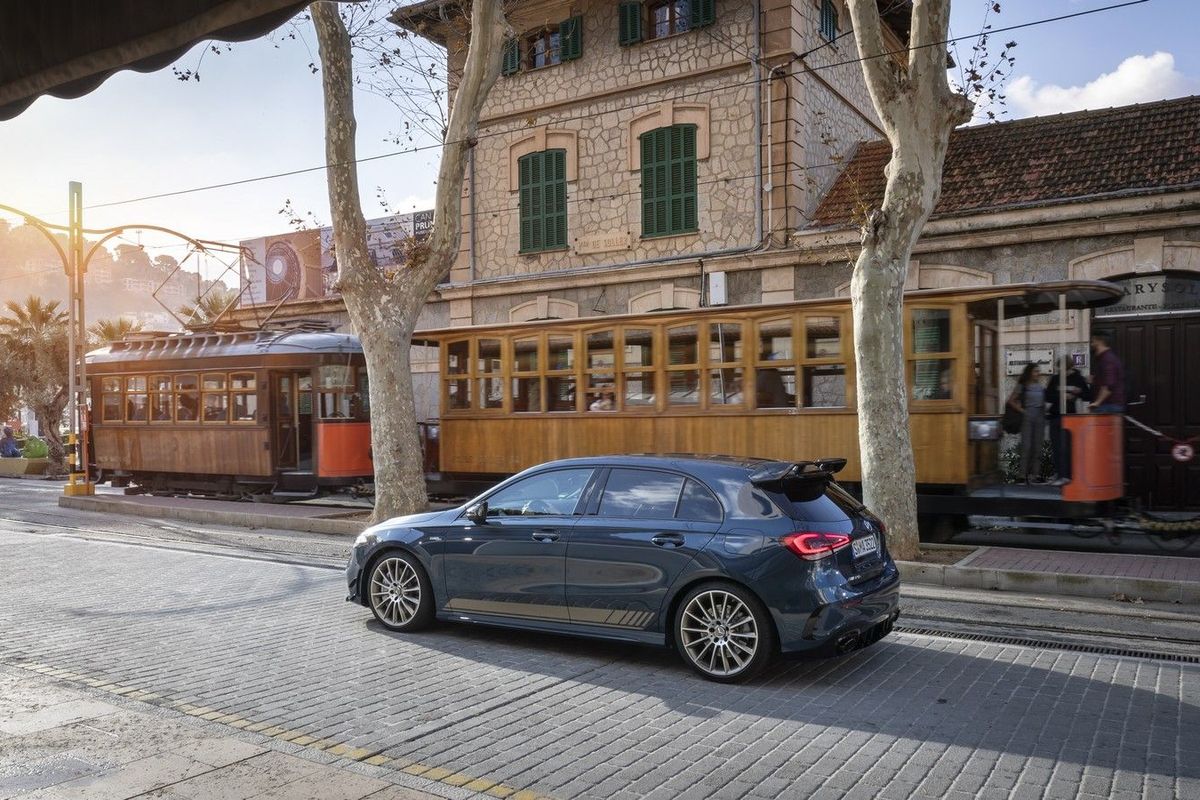
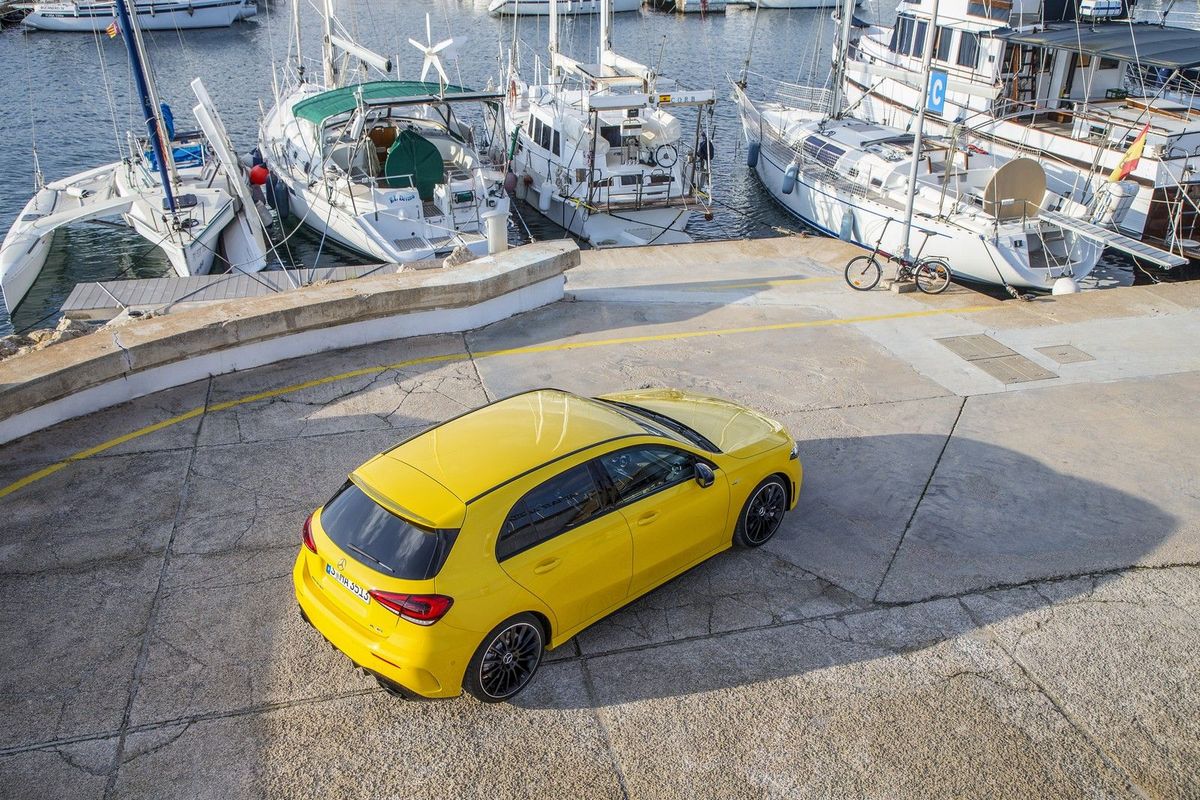
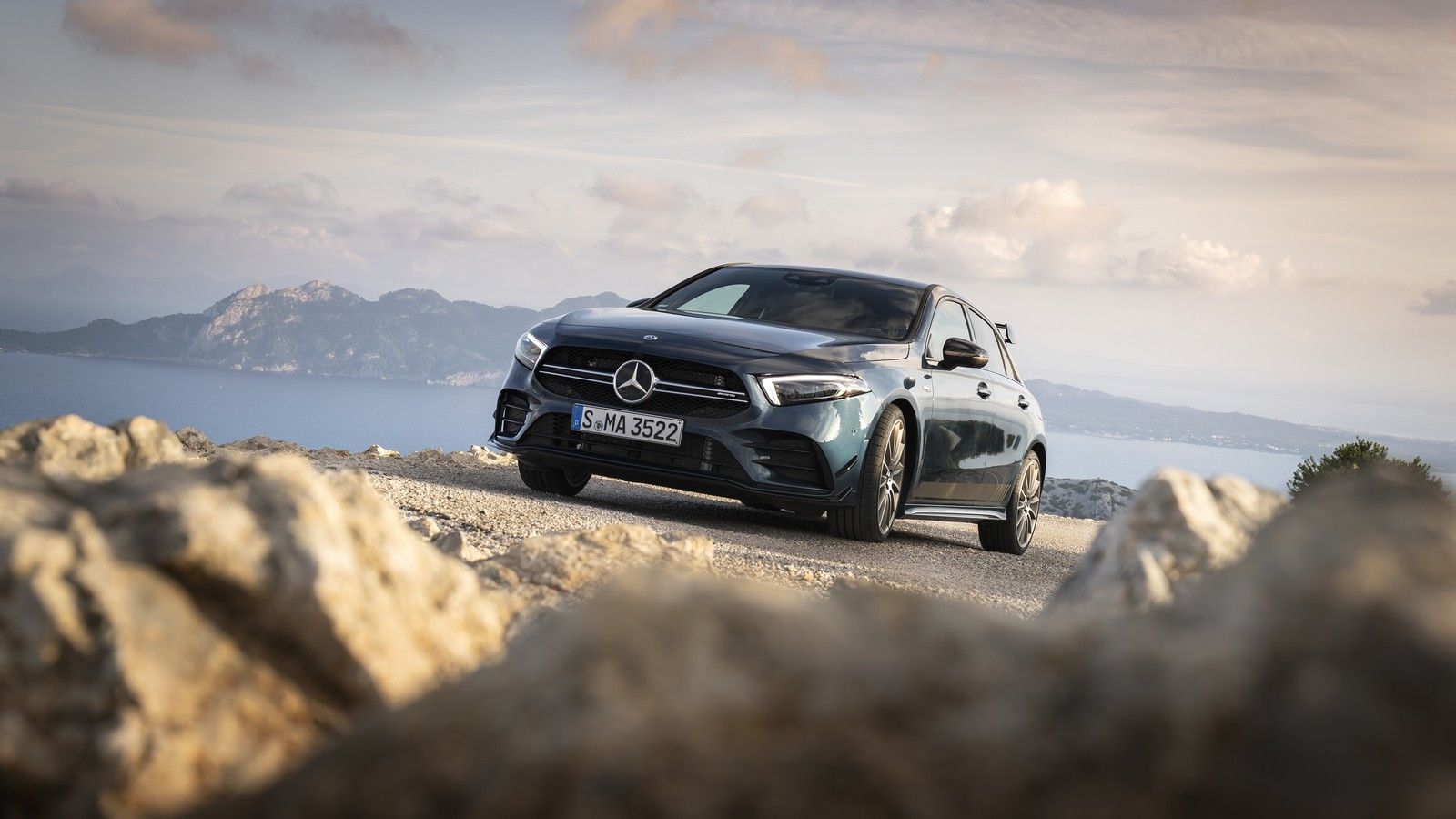
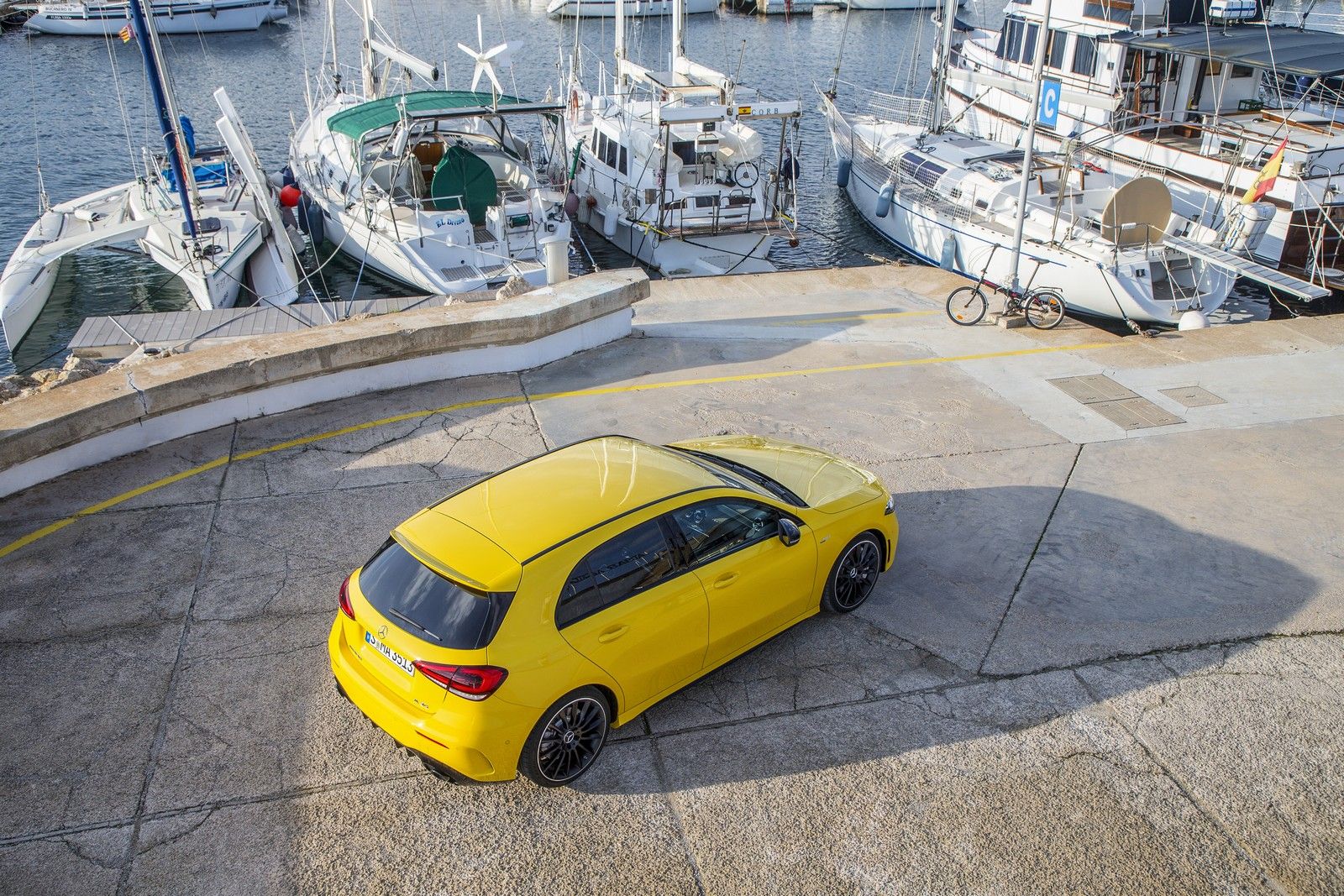
Adorned with AMG parts, the A35 starts to look like the tar-shredder it is.

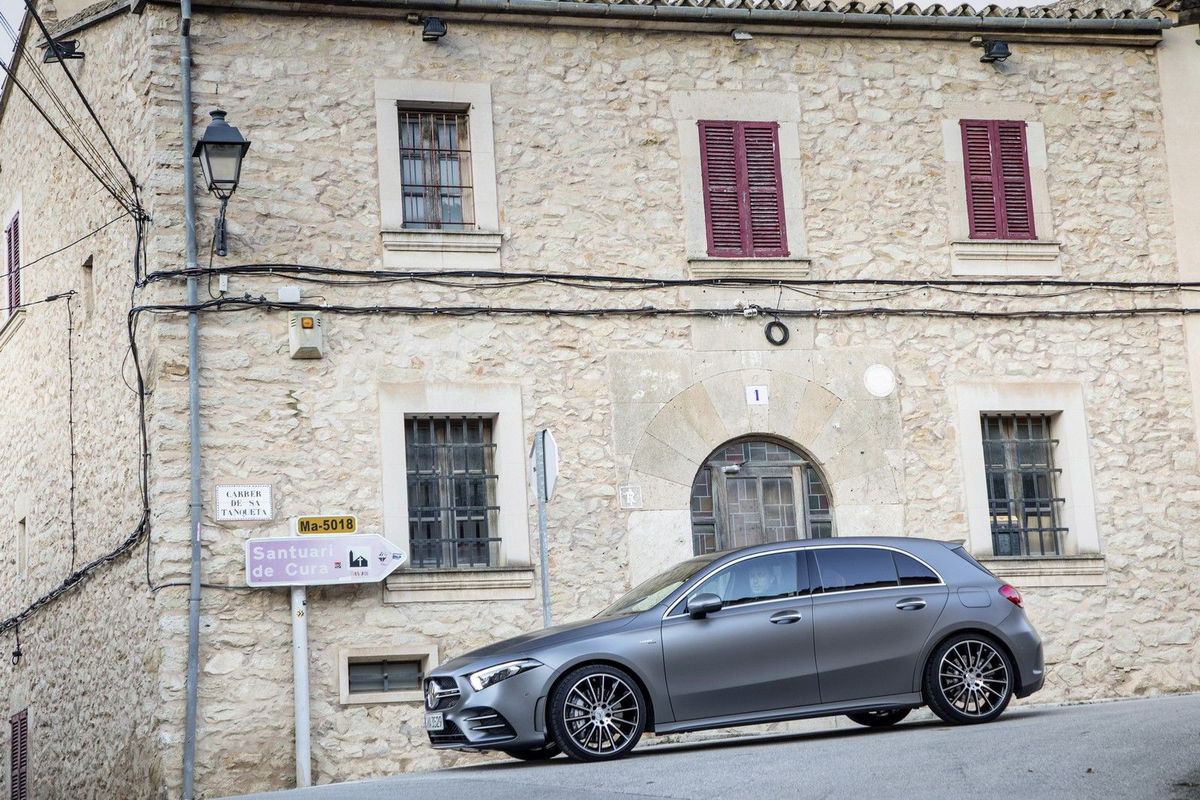
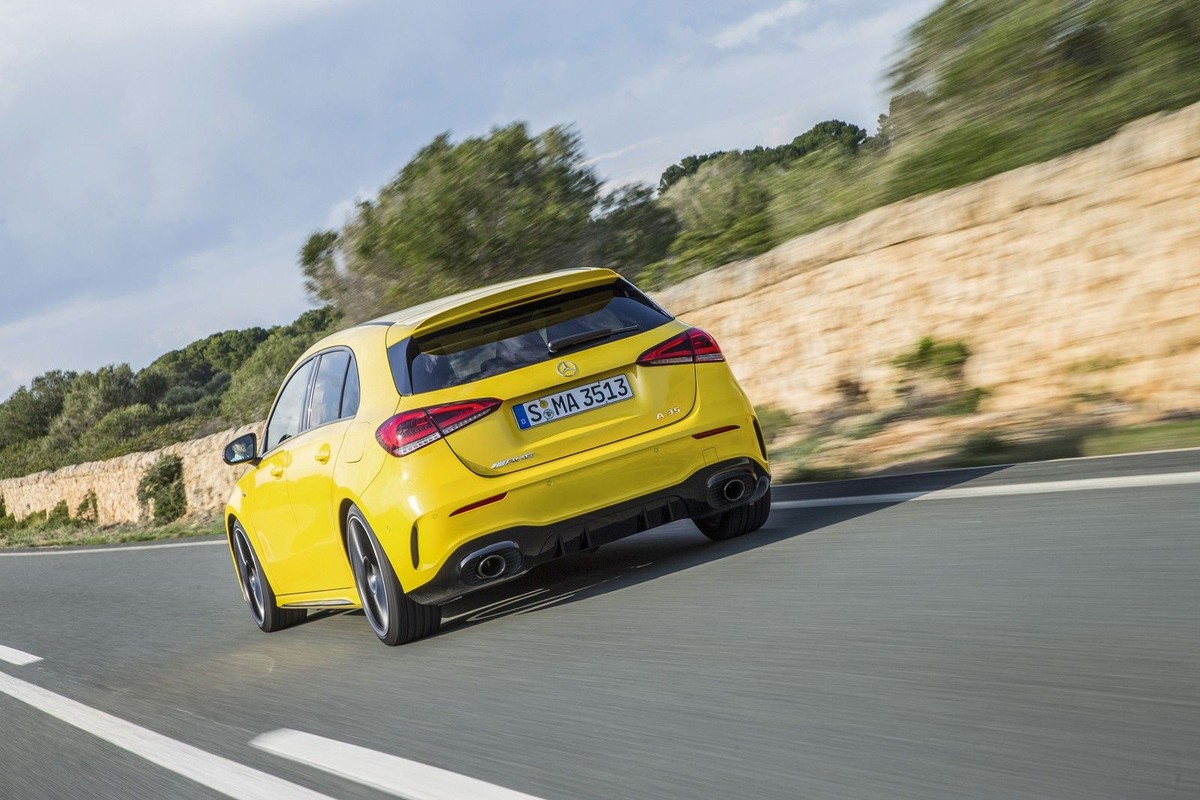
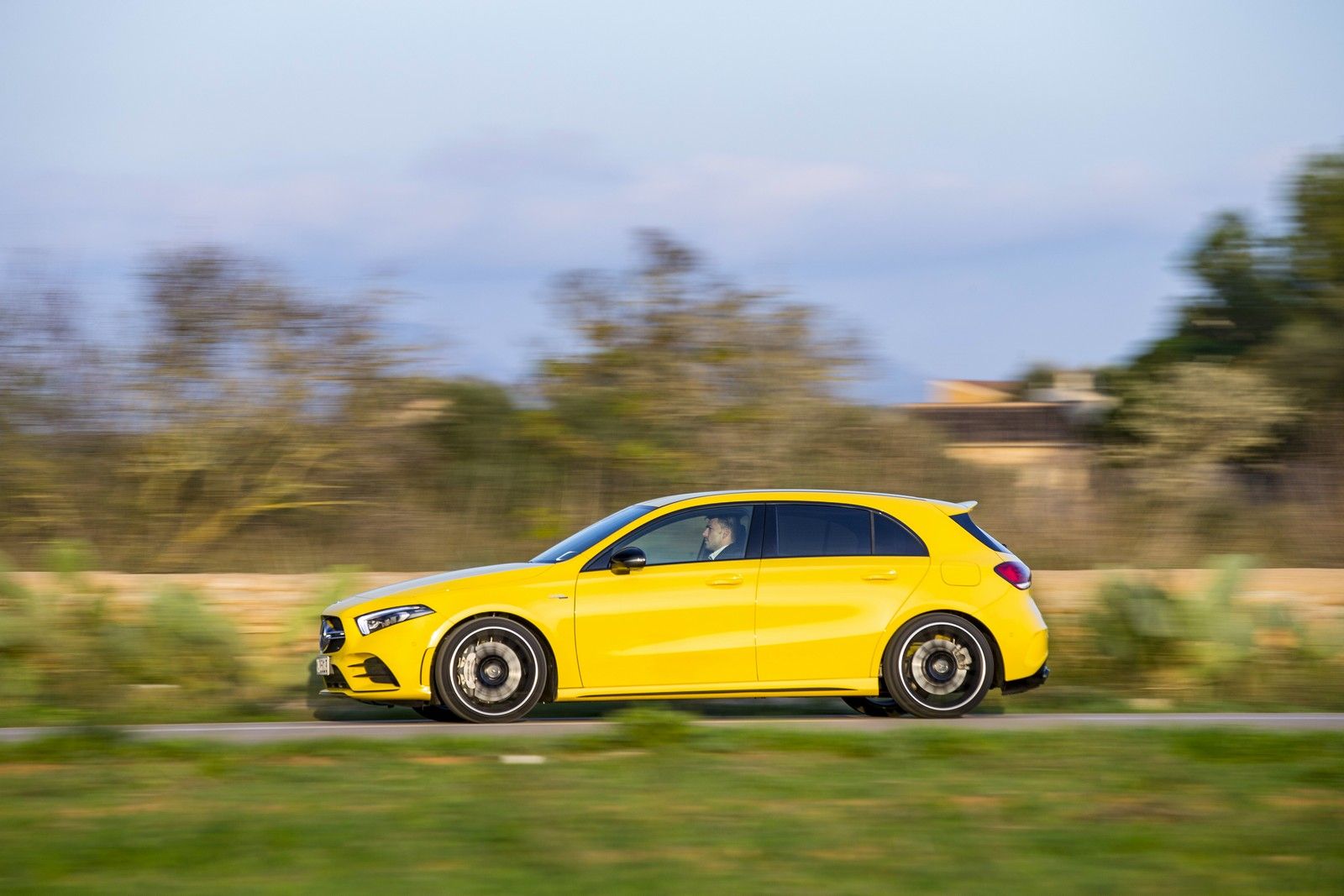
More about that in a minute, but first let’s talk about the looks. Not surprisingly, AMG has given the A35 a bodykit with a deep front bumper, extra air intakes and the twin-blade AMG badge. It all looks smart and pleasant, but there’s a problem – it also looks too much like a regular A-Class wearing an AMG-Line body kit.

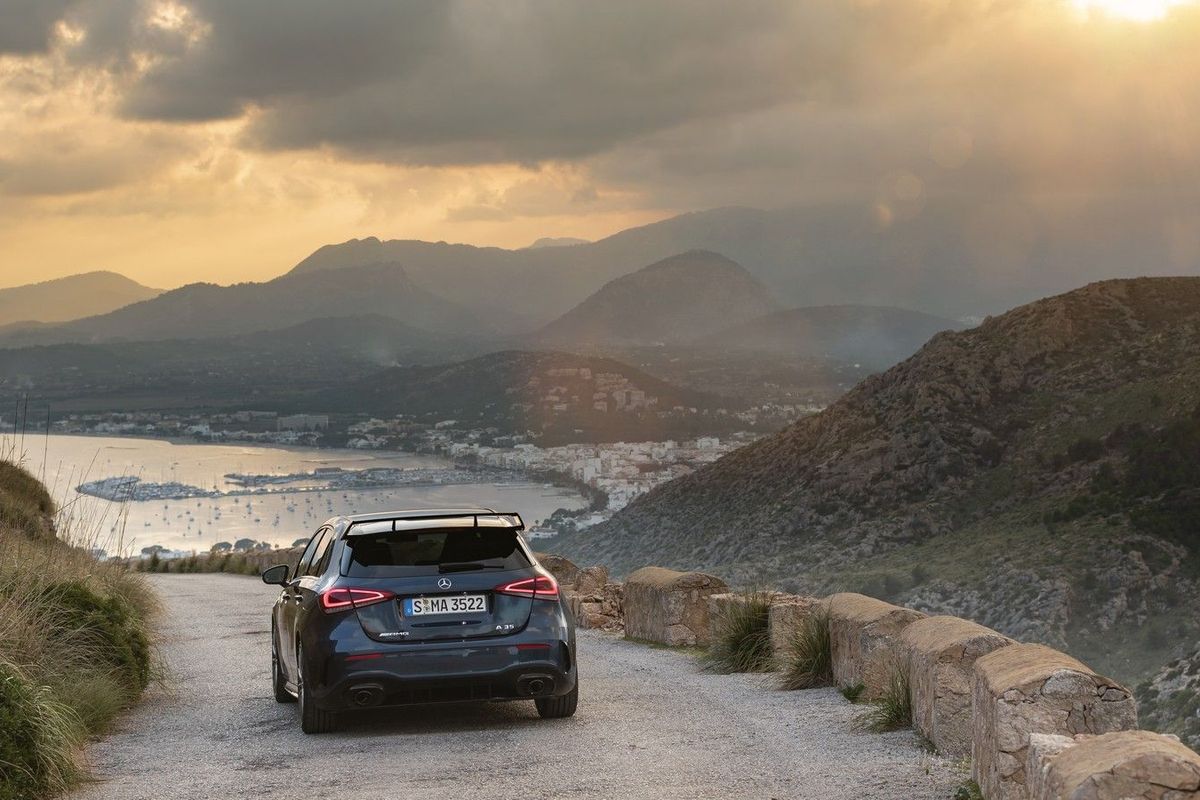
So, if you want your AMG to come with the visual menace appropriate to the brand, you’re either going to have to raid the options list or go for the limited Edition 1 version. That gets you a big spoiler at the top of the rear hatch, gorgeous deep-blue "Denim" paintwork, 19-inch "Livorno" alloys, which have a faint gold sheen to them, and some oh-so-eighties (but in a good way) body graphics. Now the A35 starts to look like a proper AMG.

It starts to drive like one too, and this is where that steering knuckle comes in. The standard A-Class’ steering is a touch remote and lacking in feel, but not the A35’s. While it’s not quite at the standard of the rack in Honda’s brilliant Civic Type R, it’s still pretty good. Actually, it seems to mimic the feel and weight of the steering in the V8-engined C63 AMG business class sedan… and you’ll hear any complaints from us in that regard.


The A35 features bigger disc brakes and a trick suspension knuckle to help its 1.5-tonnes handle better.

Attack a series of tight, twisting, switchback corners (and on our test route around the Spanish island of Mallorca, there are hardly any other forms of tarmac) and you’d expect a four-wheel-drive hatch, with a hefty 1 500-kg kerb weight, to run out of grip and, eventually, run out of road. But the A35 just tucks its nose in and goes.

Even provoking it in an utterly stupid fashion (nailing the throttle to the carpet halfway around a tight hairpin), the smallest AMG just obediently follows your steering commands and only begins to push wide from the apex in absolute extremes.

So it's all good, then?

Now, there’s a slight sense (as you get with the Golf R and the Audi S3) that the A35 is brilliantly engineered, but not quite at the pinnacle of engagement. It’s true to say, for instance, that the Honda Civic Type R would have been more laugh-out-loud fun on these roads. But would the Honda have been quicker? Somehow, I doubt it. The A35’s limits are so staggeringly high that you just keep pressing on harder and harder, waiting to find the chink in its dynamic armour… but you're unlikely to find it.

It’s even comfortable. Okay, so Mallorca’s roads have been pressed and ironed like a Cary Grant suit (partly to please the flocks of cyclists who visit the island every year), so they were always going to flatter the Benz’s ride quality, but on the few bumpy stretches we found, it still seemed well-damped, and firm rather than harsh.


Even with the tuned suspension, the A35 still feels comfortable on standard roads.

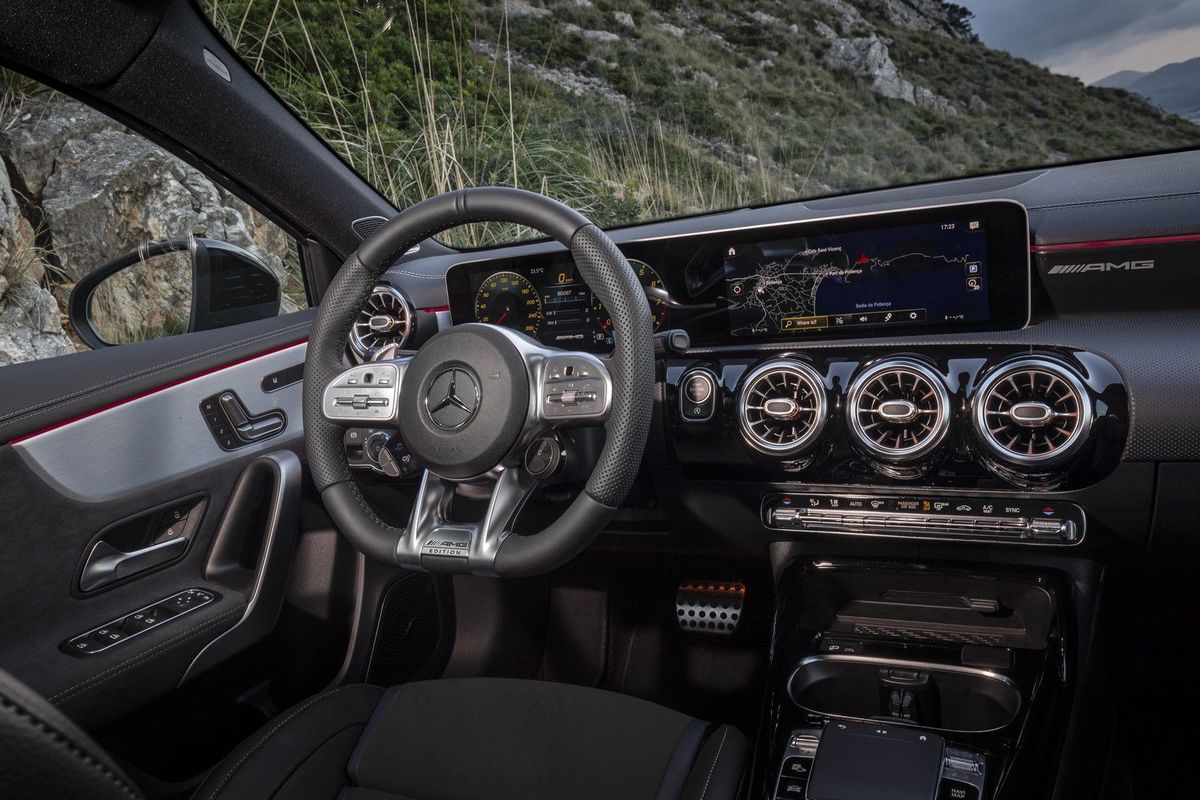
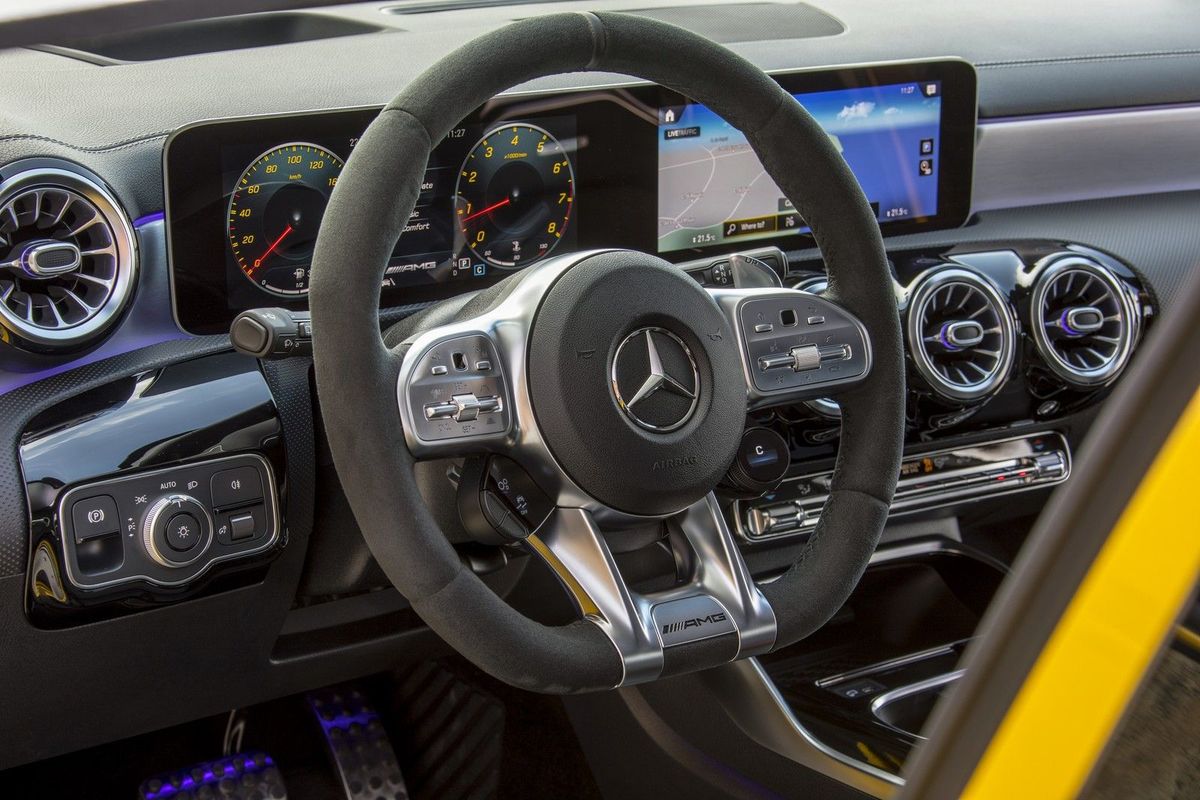
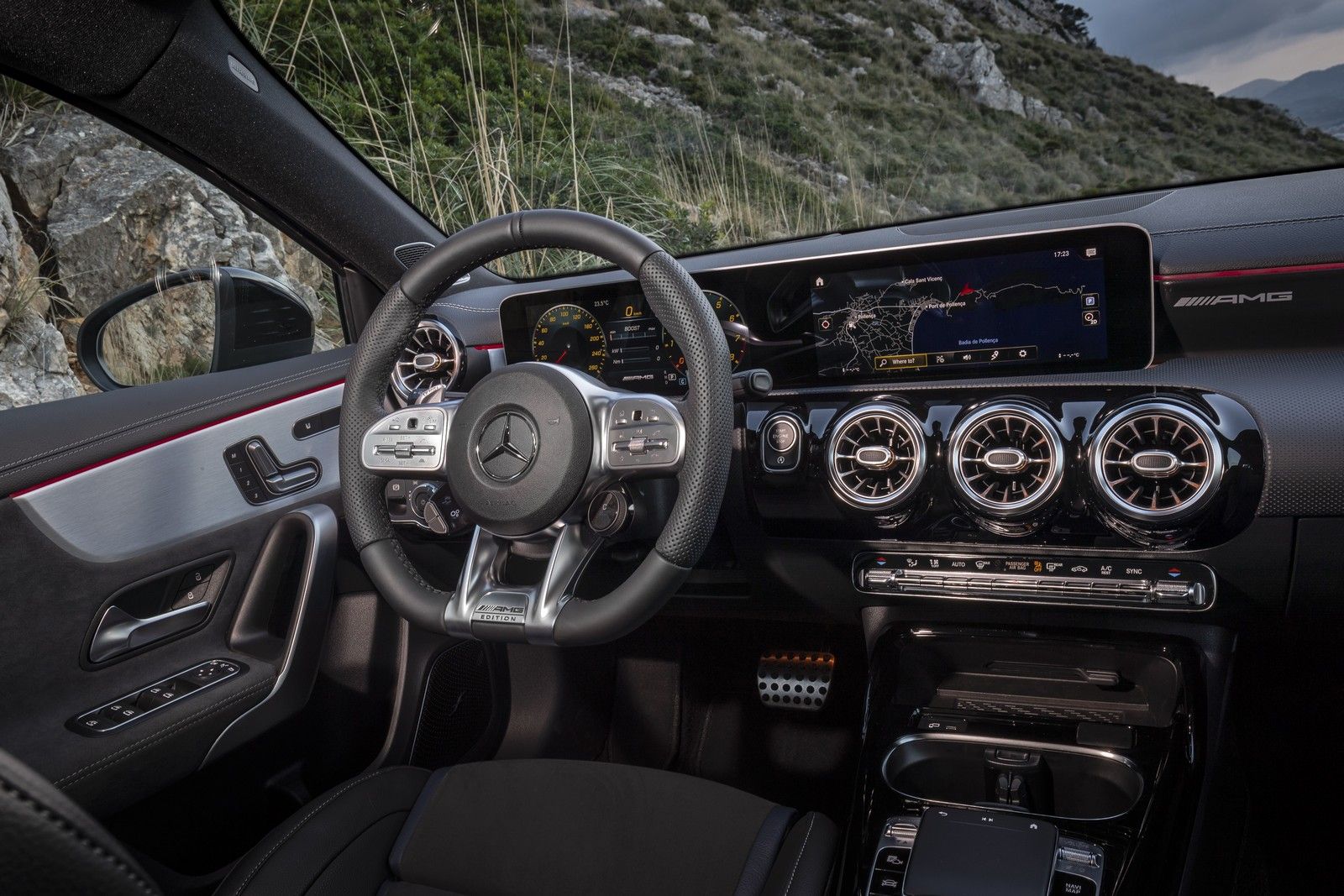
The interior is a thing of rare beauty too. In fact, with what widescreen MBUX digital dashboard we’d be tempted to call this the best current automotive interior. That digital dash is clever: you can set the dials up to look like those of an eighties 190E Cosworth (and why would you ever not want them to look like that?) and the satnav can now take a live feed from the front camera and overlay augmented reality arrows on top of the image, just to make sure you take the right turning at the right time.

The "Hey Mercedes" voice control digital assistant is occasionally useful, occasionally hopeless, but we love the fact that there’s a full data-logging telemetry system and built-in circuit maps for such tracks as the Nürburgring and Hockenheim. Useful? probably not. Cool, in a deeply nerdy sense? Oh yes…

You may have noticed at this point that we haven’t made much mention of the engine. That’s unusual in a review of an AMG car. Usually, an AMG has some kind of massive, bombastic, obnoxiously sonorous engine that hurls you at the horizon. Um, yeah. About that…

The A-Class interior really is a thing of beauty and tech.

There’s nothing wrong, and a lot right, with the A35’s engine, but at the end of the day it’s a 4-pot 2.0-litre with a turbo, and there are a lot of those around. It rasps reasonably nicely when you rev it hard, and the on-paper 0-100 kph time of 4.7 seconds is impressive, but that’s kind of where it ends. We suspect that brisk acceleration time is more down to the traction-finding abilities of the 4Matic all-wheel-drive system, because frankly for the rest of the time it feels as if this engine is struggling a bit with the A35’s kerb weight. Its performance feels strongly brisk, rather than outright fast. Certainly, a Civic Type R feels far, far more thrilling, and at a lower cost too.

So, is the A35’s hefty price tag (likely to be R850 000, when it arrives in the 1st quarter of 2019) worth it? Well, just about. Yes, if you buy it because of the chassis and its brilliant responses and excellent steering. Yes, if you buy it because of the cabin's excellent quality, clever instrumentation and infotainment system, and yes, if you’re determined to buy into the reputations of both the Mercedes-Benz and AMG brands. But should you buy it for traditional AMG-levels of excitement? Not really…

Related content:

Mercedes-AMG to launch A45 and A45 S

5 moments that defined the A-Class story

5 Cool Tech Features of New Mercedes-Benz A-Class
Searching for a used A-Class?

Browse models for sale here