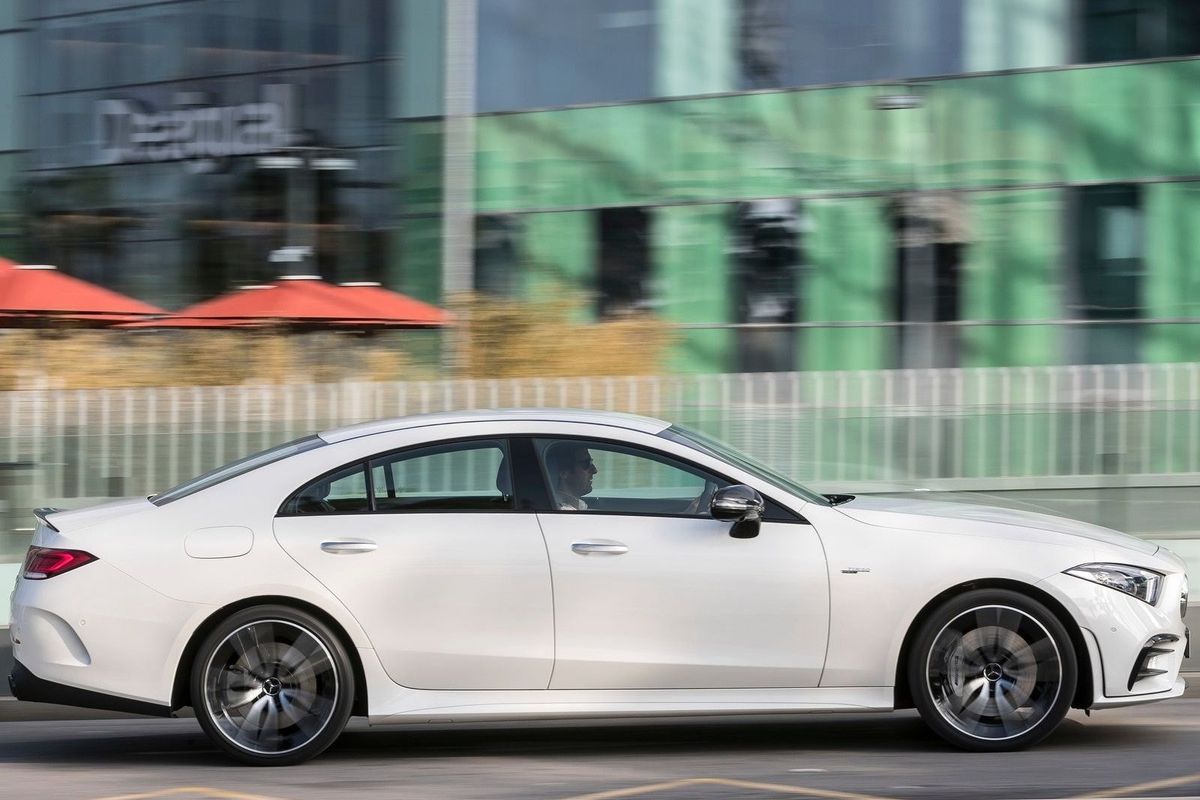
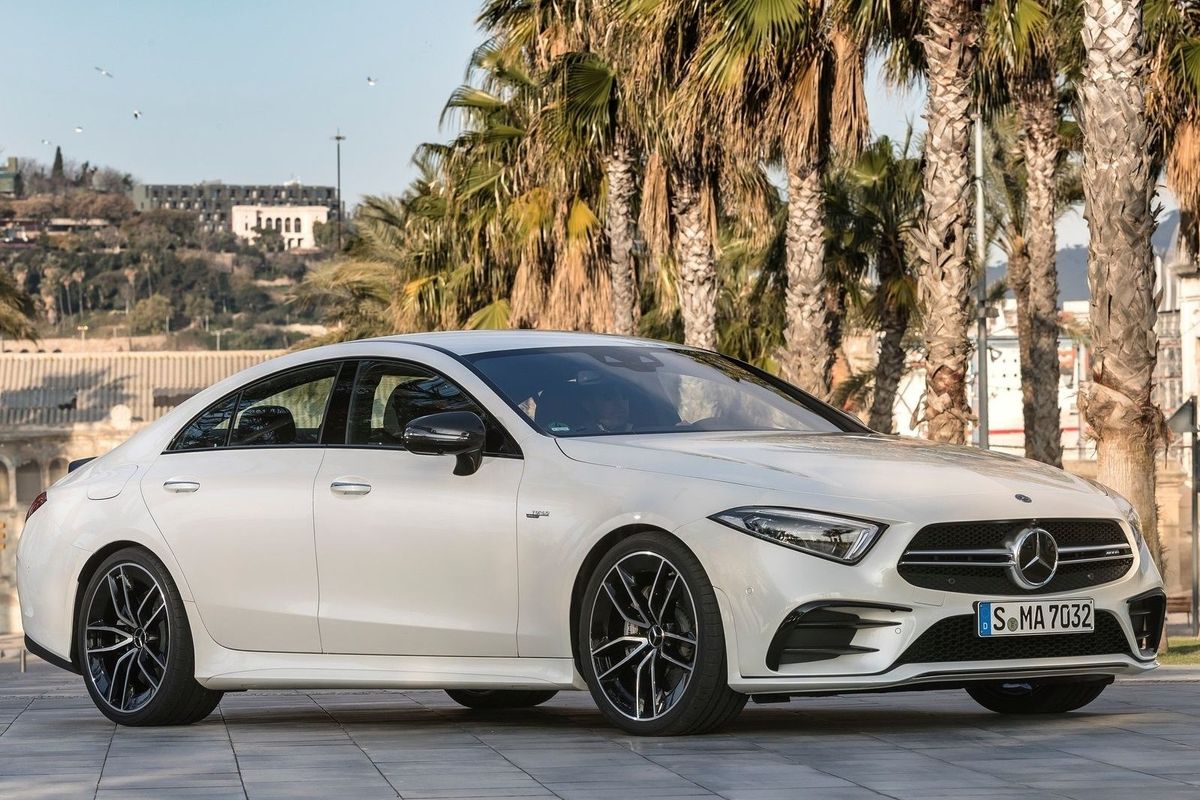
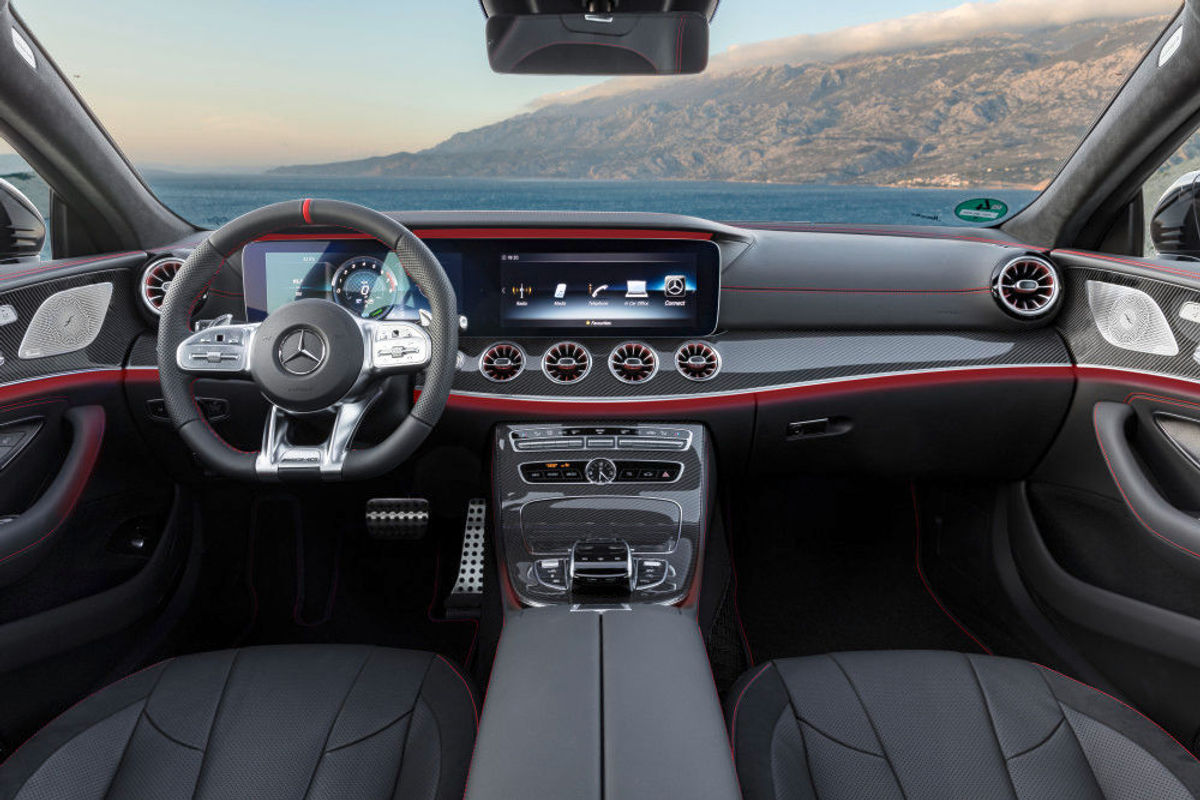
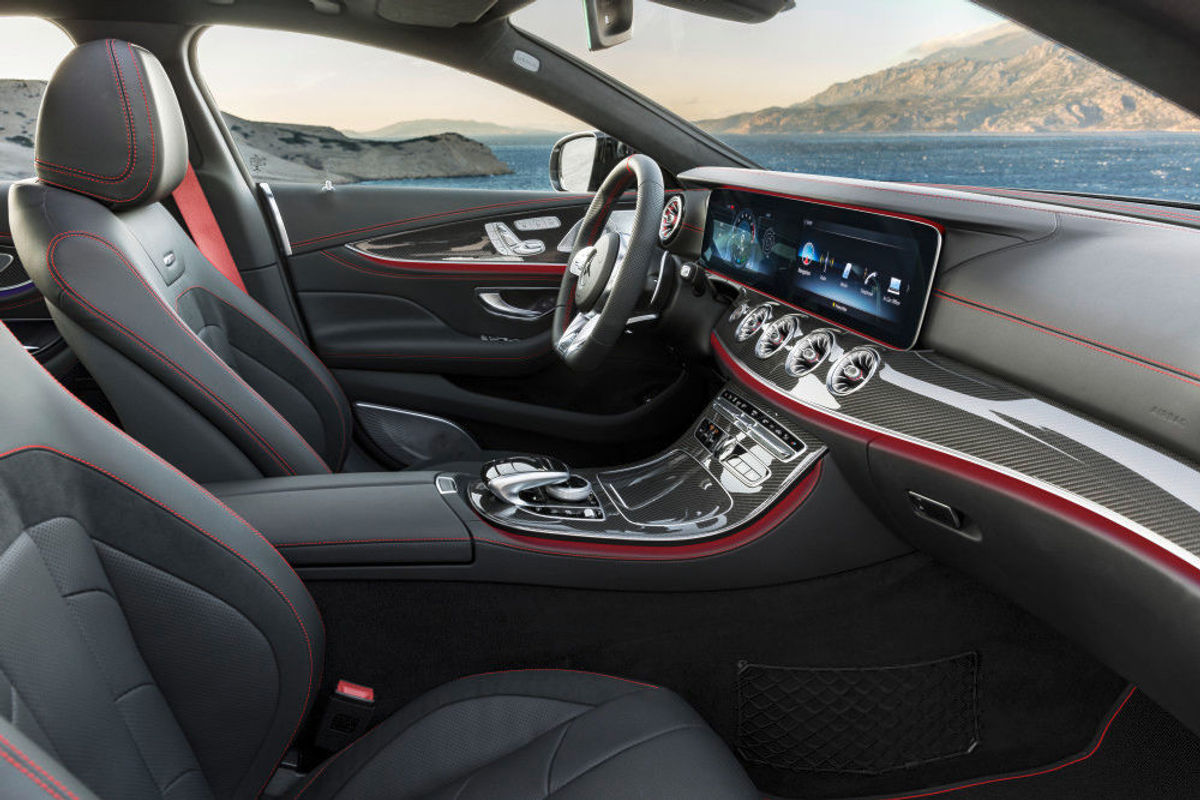
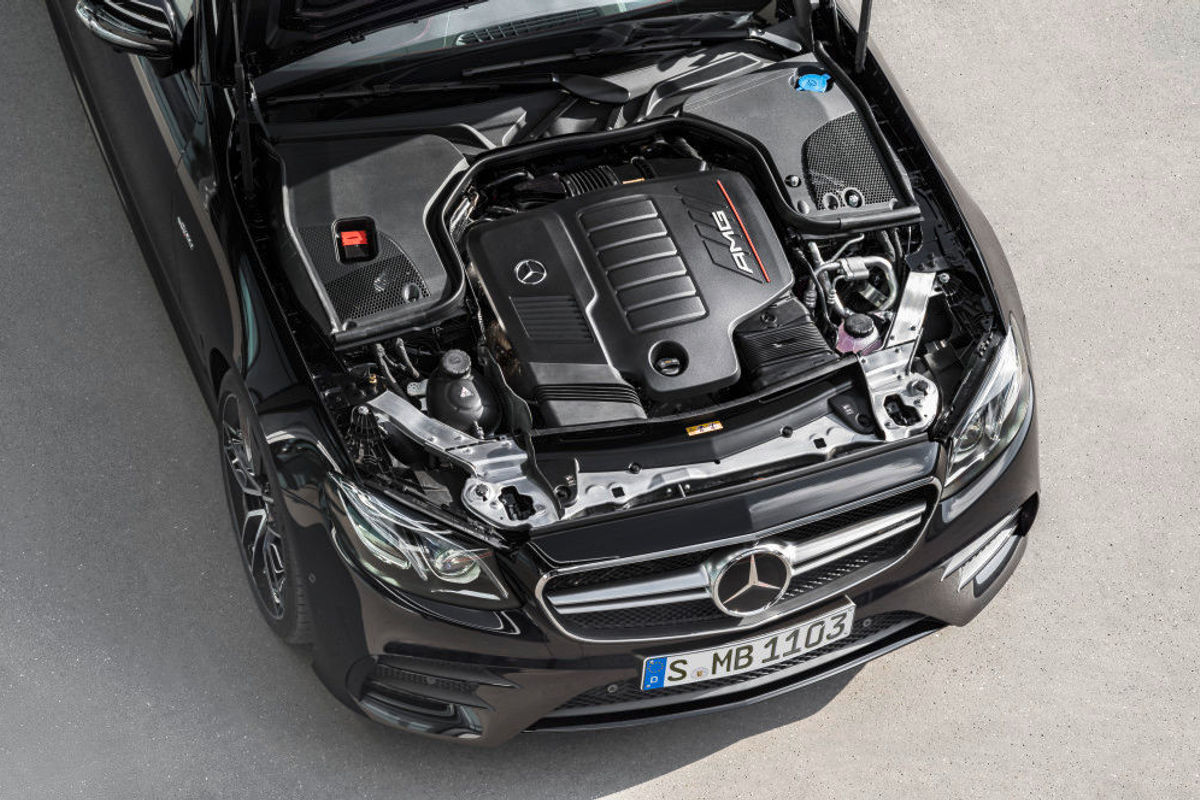
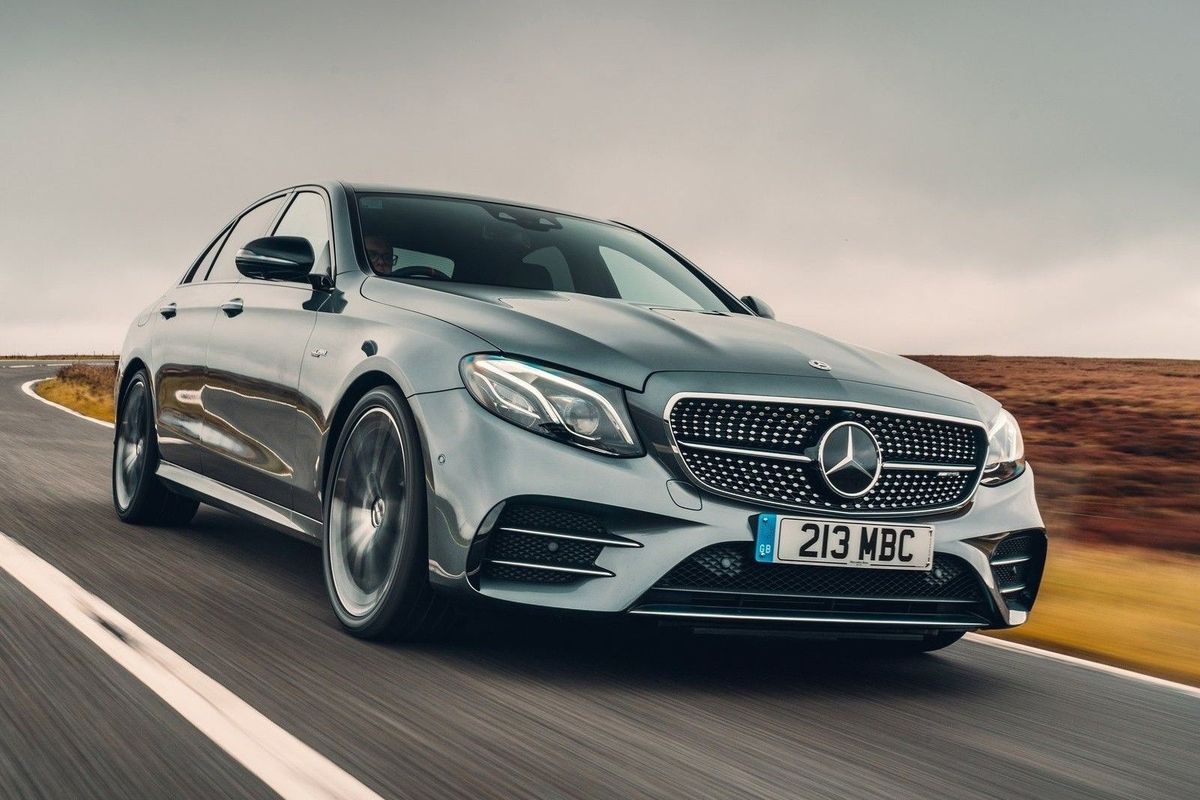
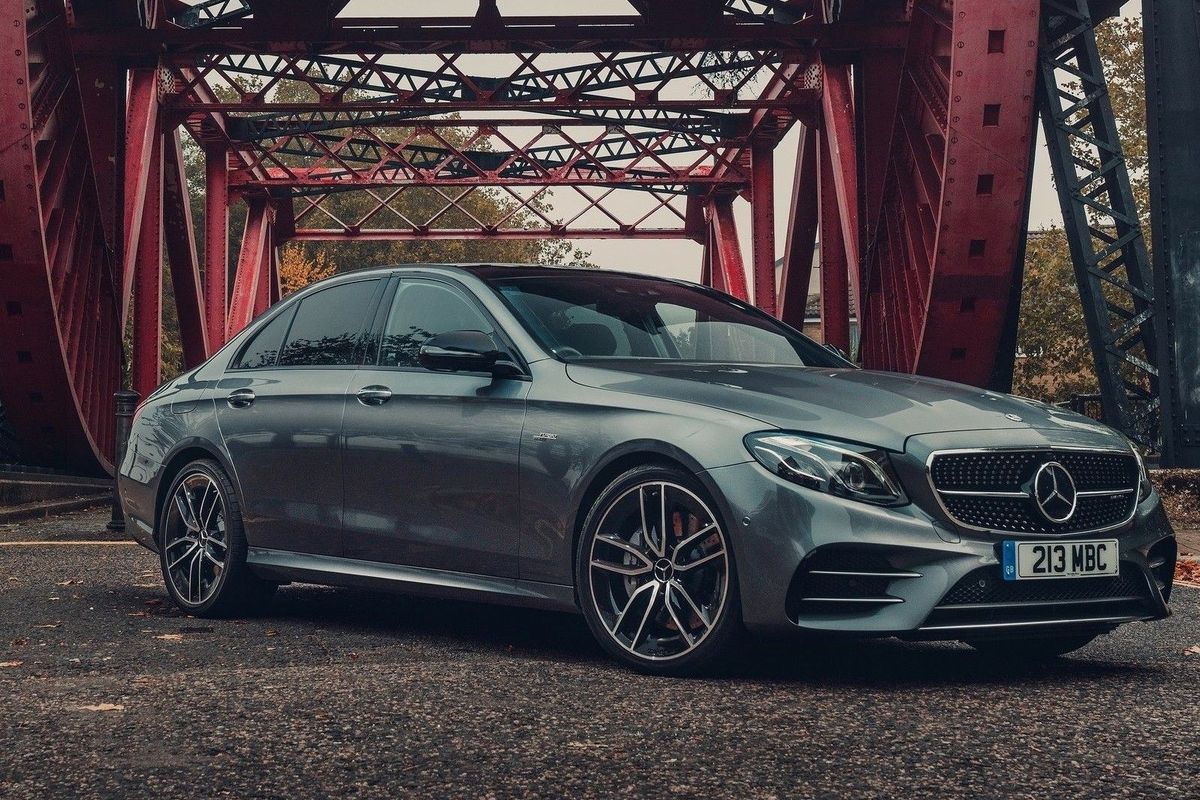
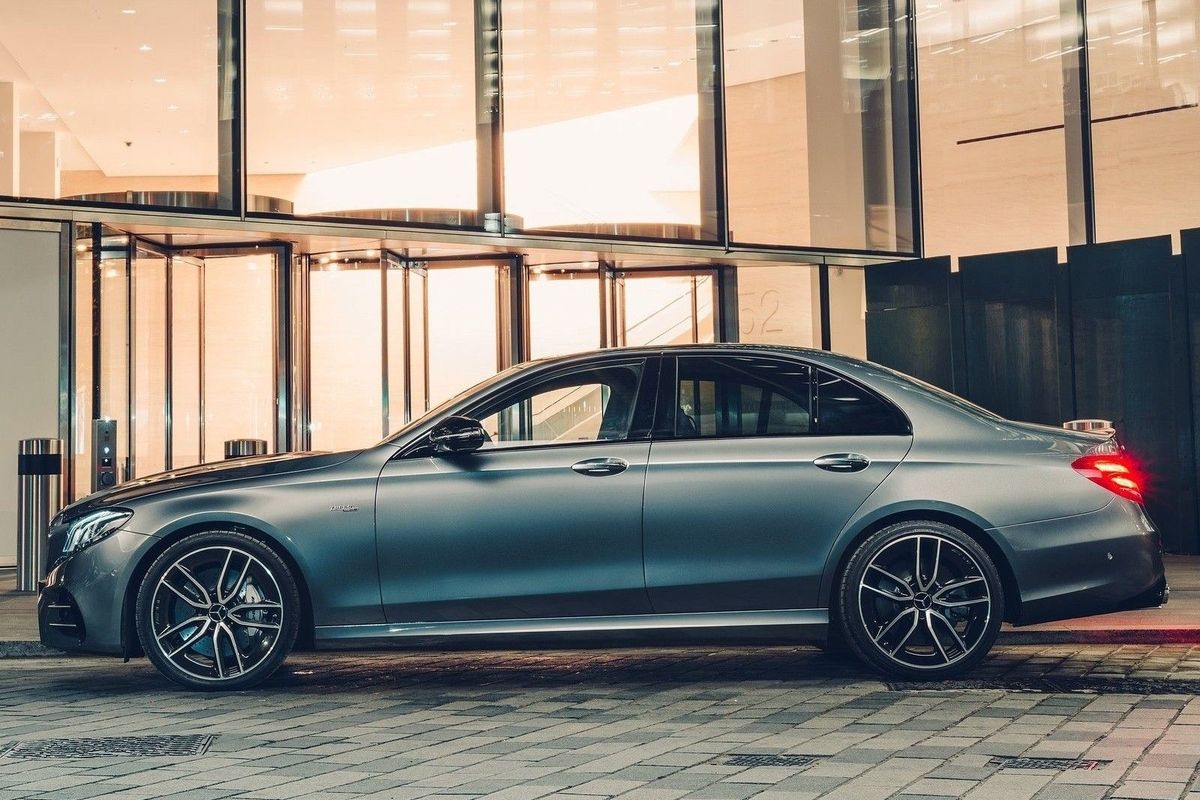
AMG’s next 45-Series car leaks in Mercedes configurator error.
An overly ambitious gallery upload to Mercedes-Benz’s online configurator has accidentally leaked the future CLA 45 AMG.
Although the image is low-resolution, as one would expect from an online configurator, there is little doubt that this CLA is not a 35-Series AMG car. With its bootlid spoiler, quad exhausts, substantial rear diffusor and different alloy wheels it can only be a CLA 45. The red brake callipers and larger discs serve as additional evidence.
Mercedes-Benz only revealed its CLA 35 in April, so an official information release regarding CLA 45 could still be some months in the future. The technical specification for the new car is unconfirmed, although certain details have been alluded to by AMG staff.
The CLA45 AMG is expected to be marketed in two different engine output grades, with a ‘standard’ version boosting 286 kW from its 2-litre turbo motor, whilst an even more potent ‘S’ derivative should peak at 310 kW. South Africa has proven to be a strong S market and will likely be the single unit introduced to our market in 2020.
Both engines will drive all four wheels. Expect a rear-wheel biased drift mode configuration too, as AMG has become expertly skilled at tinkering with Mercedes-Benz’s 4Matic system to deliver safe thrills for the ambitious driving enthusiast.
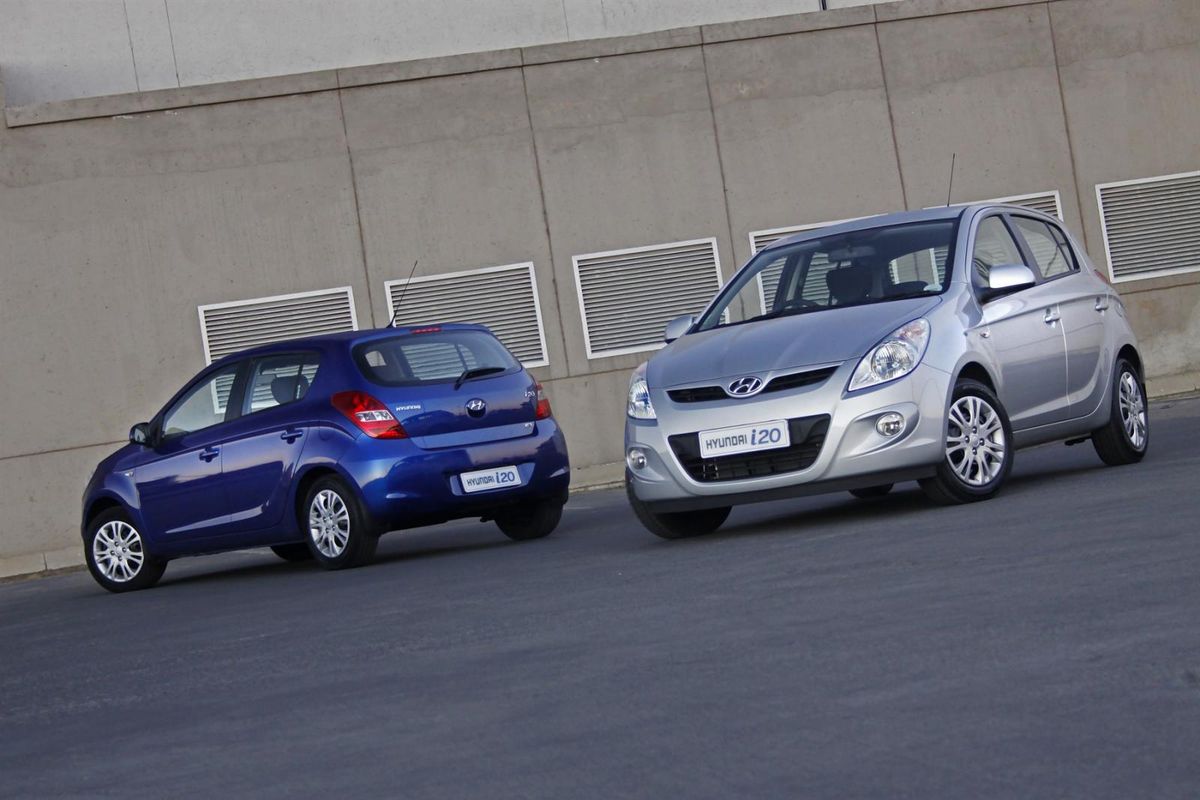
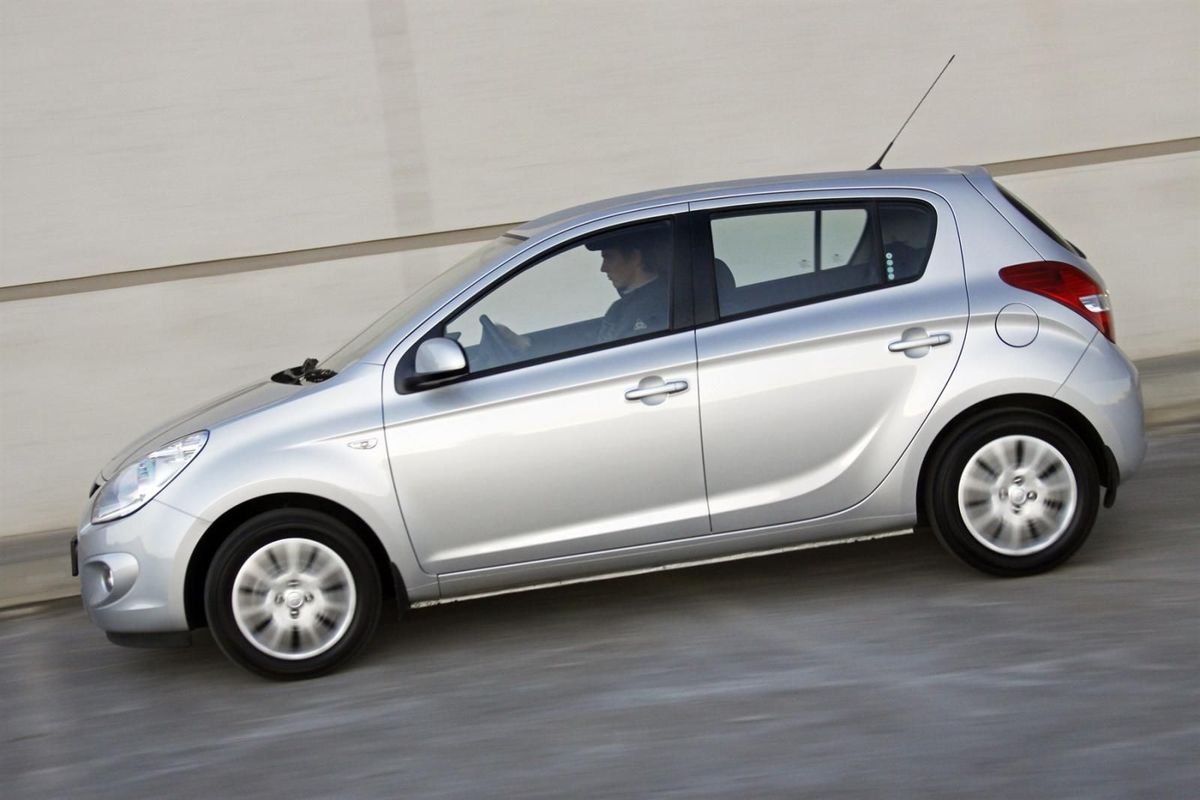
The 1st-generation Hyundai i20, which eventually replaced the Getz, moved the Korean marque into competition with the market’s B-segment leaders. It was massively popular… and remains in high demand in the used-car market.
While many would argue that it was the Getz, not the Elantra (Hyundai’s first offering in Mzansi) that really got South Africans to fall in love with Hyundai, the Korean marque’s 1st-generation i20 certainly strengthened (and continued) that love affair. Boasting modern looks, a spacious, practical cabin and good standard spec (let alone a long warranty) at a price that undercut the competition, the i20 was a strong seller. These days the 1st-generation i20 (in both pre- and post-facelift guises) remains a popular used-car buy – let’s see what you should spend, and look out for.
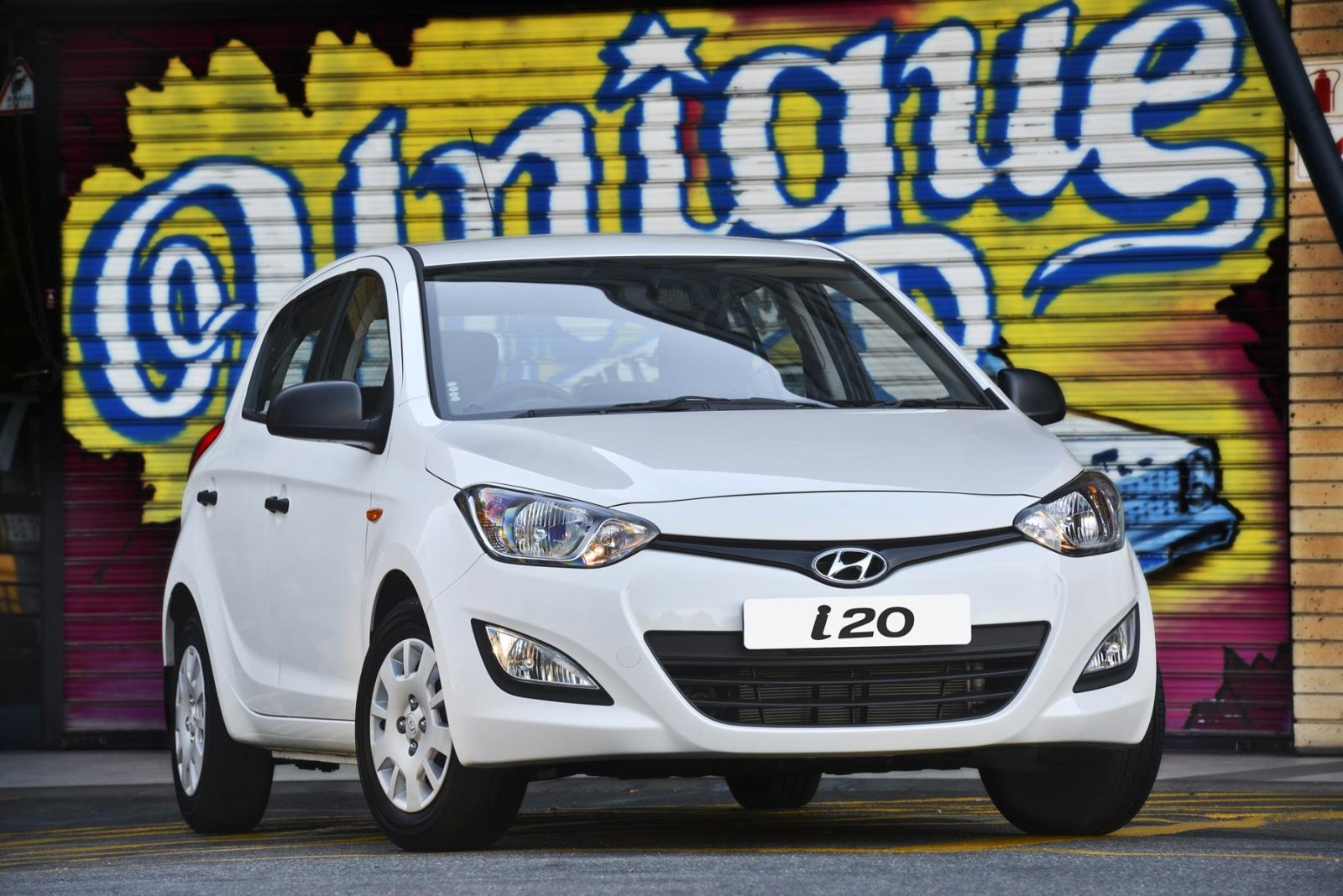
Modern styling, a spacious cabin and generous standard features coupled with a high-value price ensured the i20 immediate sales success.
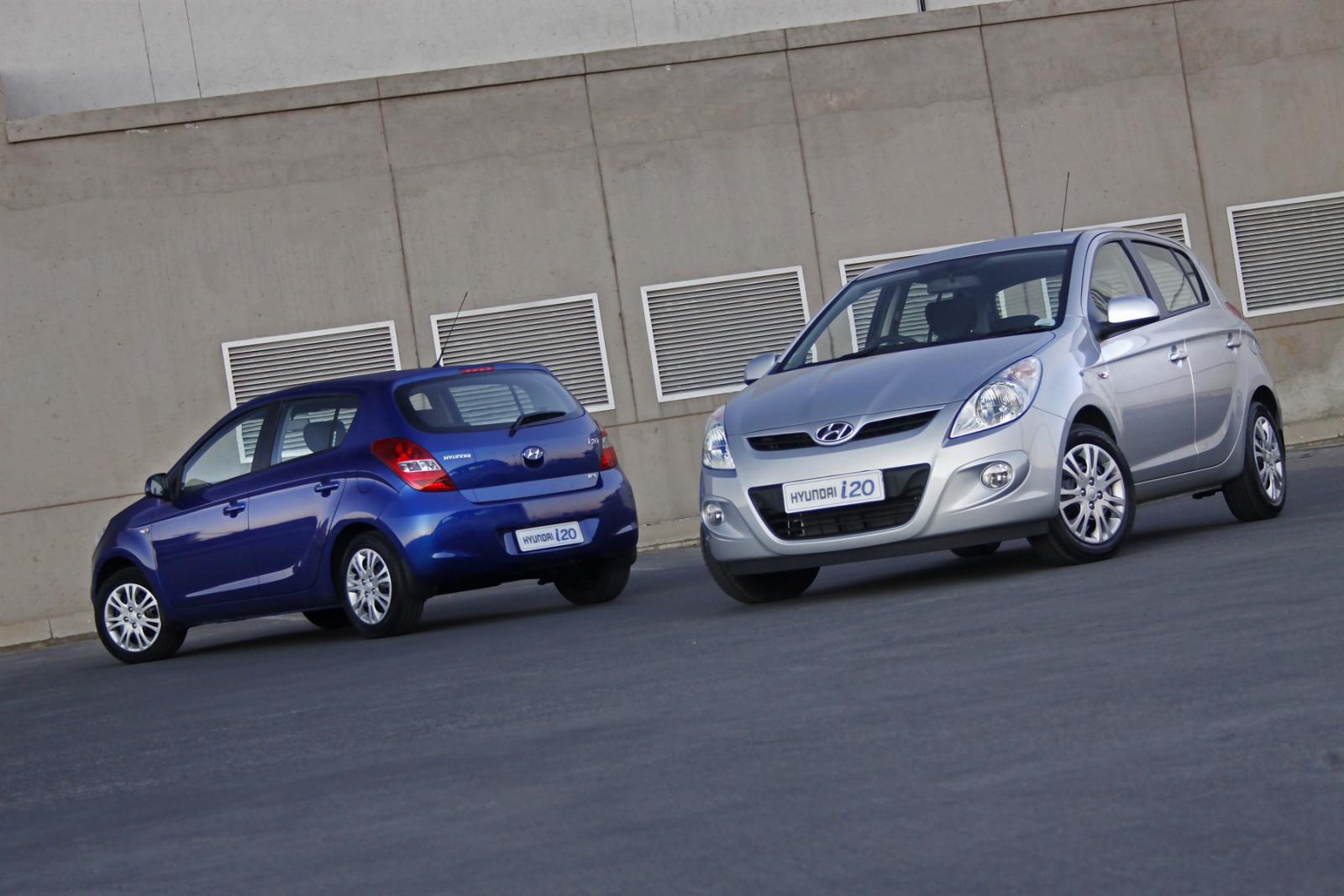
Developed to appeal to European tastes, the i20 arrived in South Africa in July 2009, but it didn’t replace the popular Getz, at least not immediately. Compared with the Getz, the i20 featured more modern design and a spacious cabin, while the underpinnings were developed in Germany to give the car a more “European-car feel” on the road. The model’s initial line-up featured only a pair of Gamma-engined petrol-fed derivatives: a 1.4 litre (74 kW/136 Nm) and a plucky 1.6-litre (91 kW/156 Nm), both fitted with a 5-speed manual transmission (a 1.4 GL automatic joined the line-up early in 2010). The equipment levels for the launch versions were similar, with electric windows, remote central locking, a multifunction steering wheel, air-conditioning, an audio system with USB/aux support, ABS with EBD and dual front airbags standard.
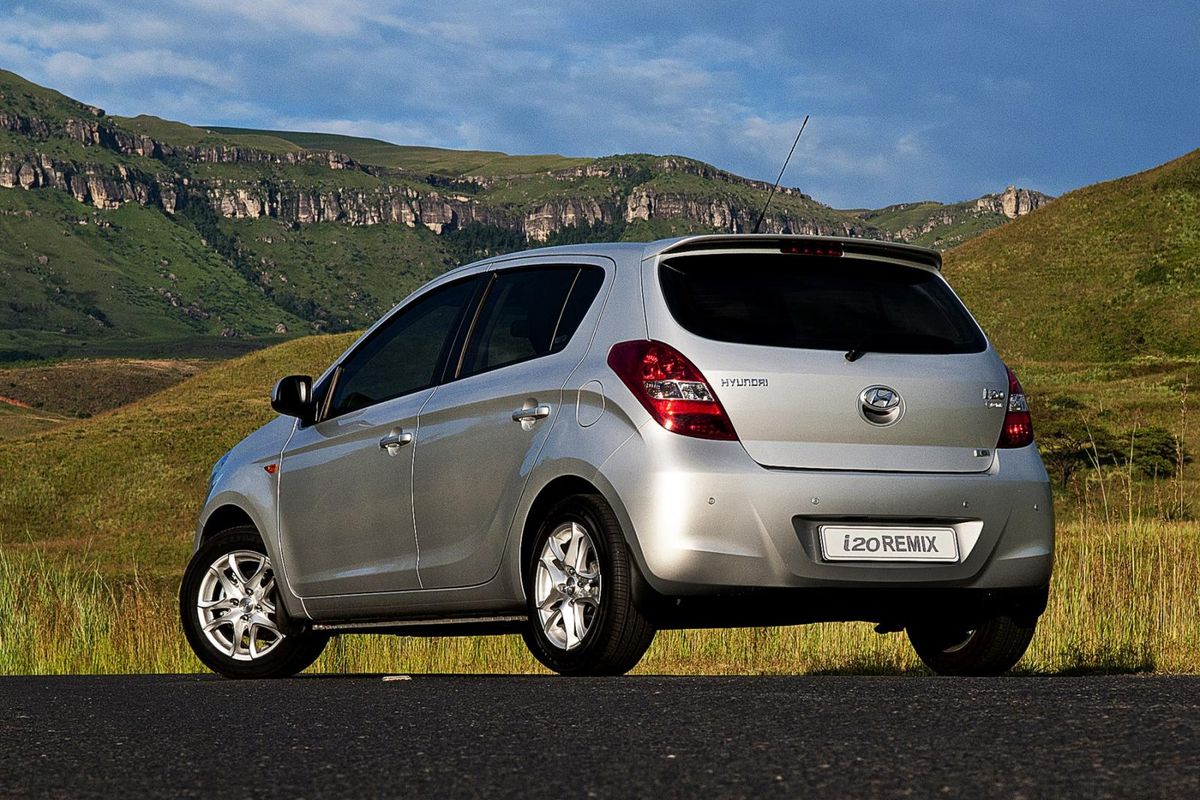
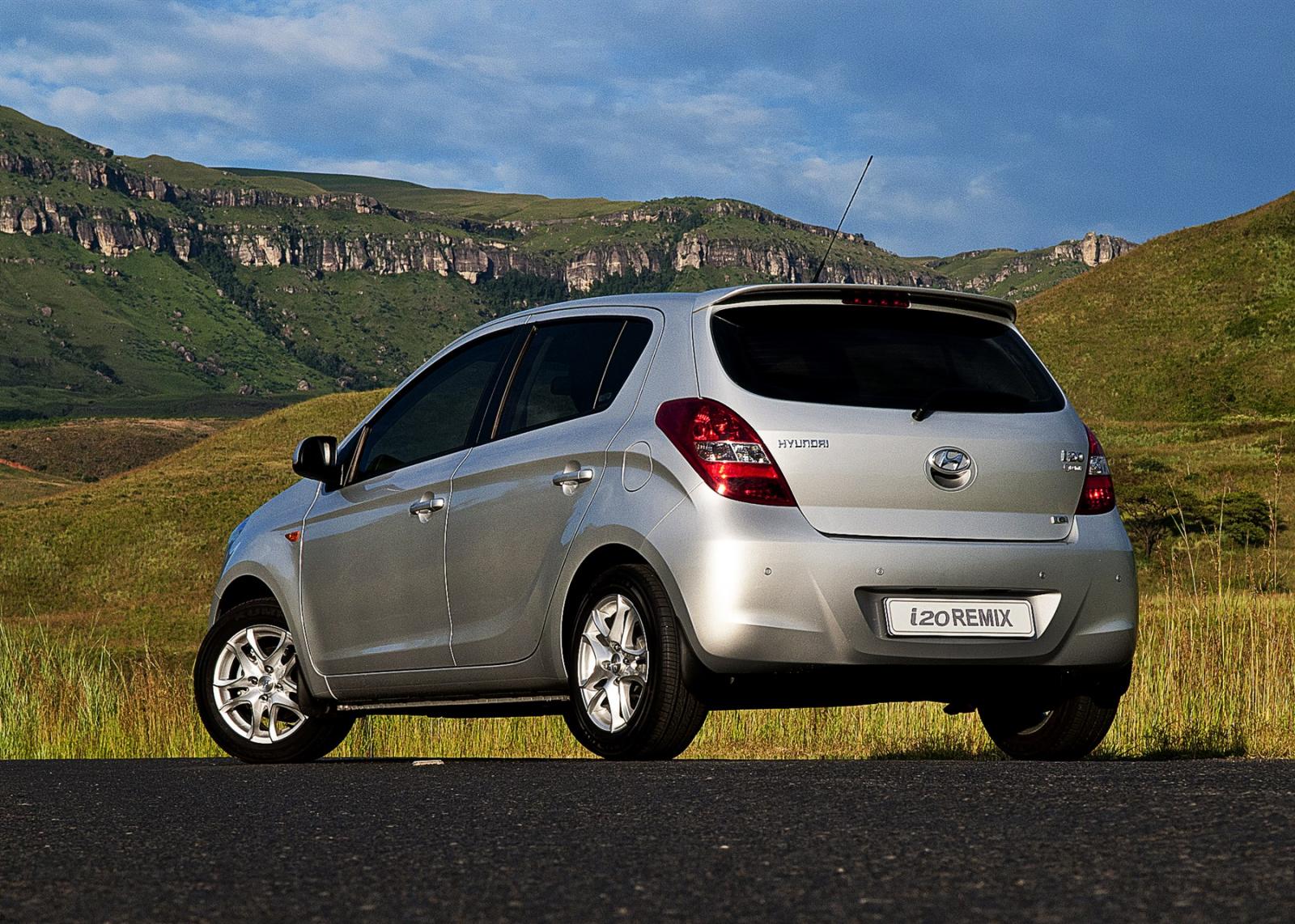
As part of the pre-facelift car’s run-out phase, Hyundai launched the i20 Remix special edition early in 2012. The Remix was based on the 1.6, but added extras such as 15-inch alloy wheels, a tailgate spoiler, Bluetooth/iPod connectivity, rear parking sensors and a 6-speaker audio system.
The i20 Remix can be identified by its 15-inch alloy wheels, tailgate spoiler and rear park sensors.
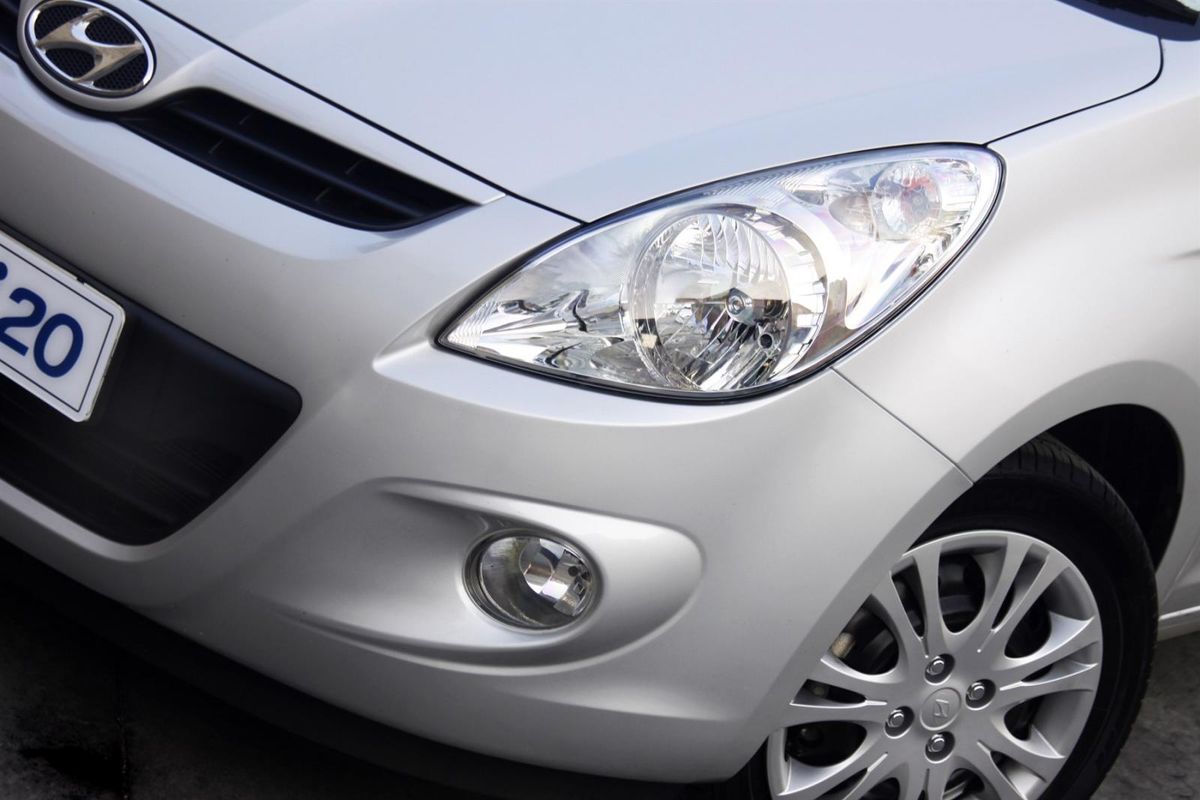
Soon after the Remix, Hyundai launched a significantly refreshed i20. It featured the brand’s “Fluidic Sculpture” styling that gave the i20 a far more youthful appearance (it still looks good today) and a cabin with better-quality finishes. The facelifted car’s line-up included 1.4 Fluid (manual and automatic) and 1.4 Glide derivatives and debuted the brand’s new 6-speed manual transmission. The 1.4 Fluid’s automatic transmission was a 4-speed unit. Compared with its predecessor, Hyundai added even more features to the facelifted i20, including Bluetooth connectivity and side (front) and curtain airbags (on Glide derivatives). Major improvements were claimed for the car’s NVH (noise, vibration, harshness) suppression.
Later in 2012, a new entry-level derivative called the 1.2 Motion arrived. The 64 kW/120 Nm base version may have featured black door handles and steel wheels with plastic covers, but it nevertheless boasted ABS/EBD and a sound system with aux/USB support. A turbodiesel 1.4 CRDi Glide turbodiesel derivative with 66 kW/220 Nm debuted relatively late in the car’s model life, but its premium pricing limited sales potential.
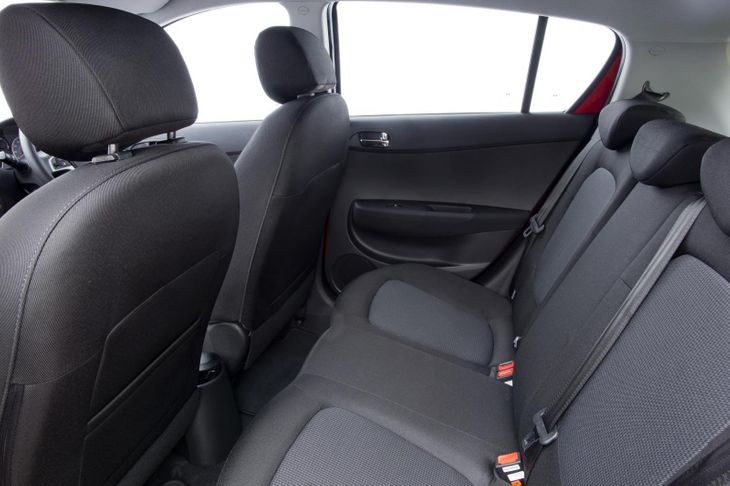
The i20 is a spacious car with good rear legroom, as well as a capacious load bay (with a full-size spare).
Space and Practicality: Featuring a longer and wider body than the Getz, the i20 competed well with its Ford Fiesta, Kia Rio, VW Polo and Toyota Yaris contemporaries in terms of spaciousness. It also had a large load bay compared with most of its rivals (again, from the same era), so if occupant/luggage space is important, the i20 might just be what you’re looking for.
A very handy feature of the i20 is its folding rear seatback, which can be split in a 60:40 configuration and folded forward to create a large and, importantly, completely flat load area that can accommodate items of up to 1.35m in length. Oh, and there is a multitude of storage spaces for your keys, phones, wallets etc. It’s also worth noting the standard fitment of a full-sized spare wheel.
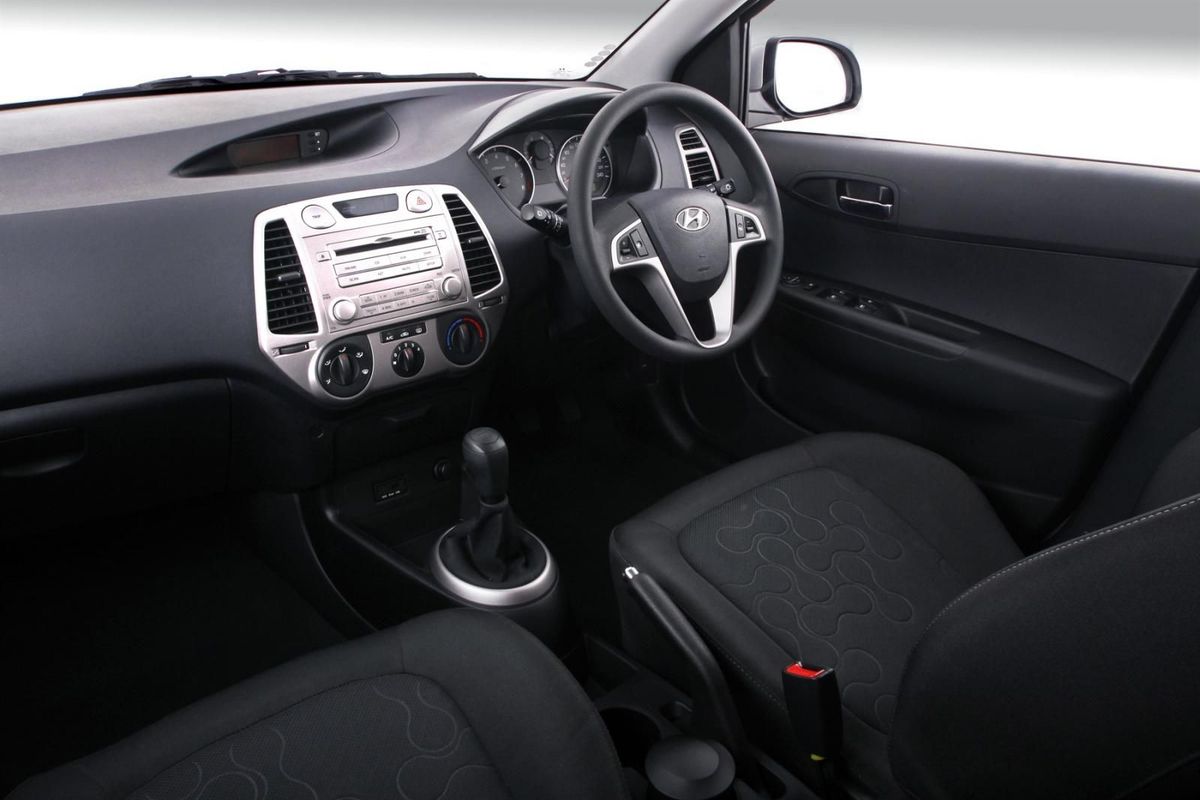
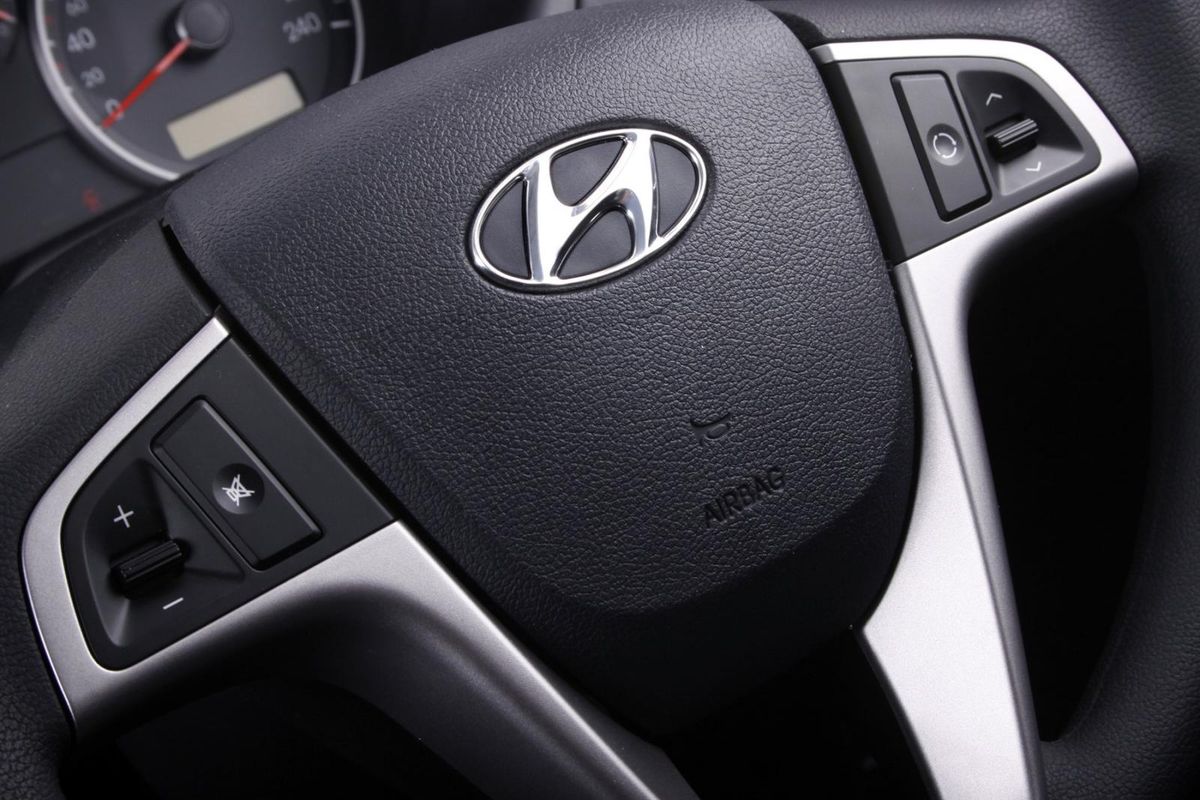
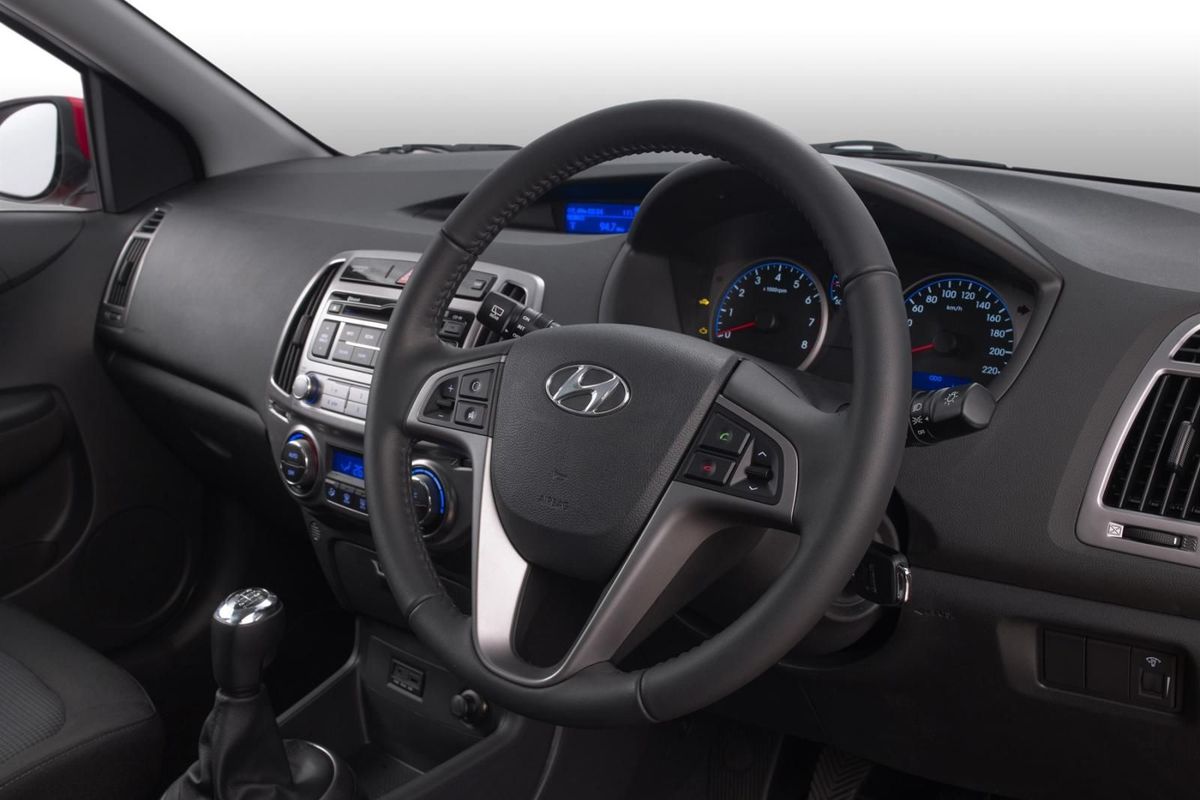
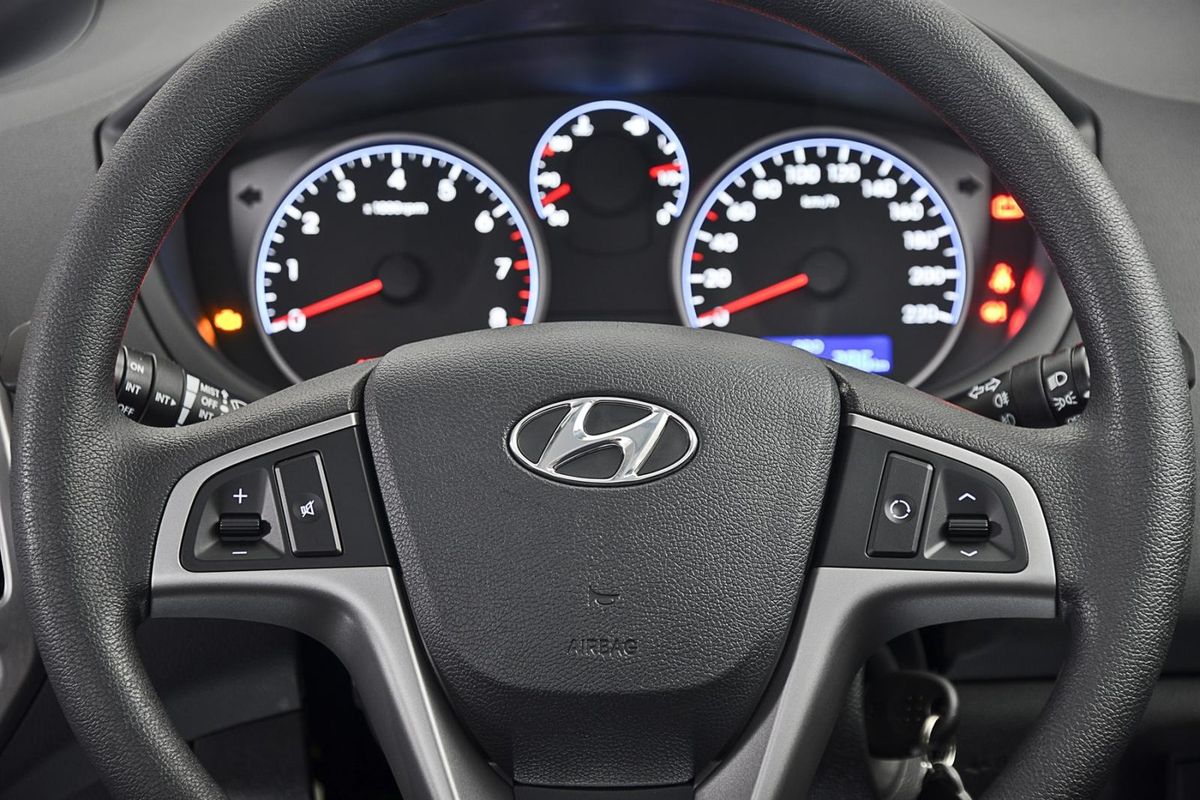
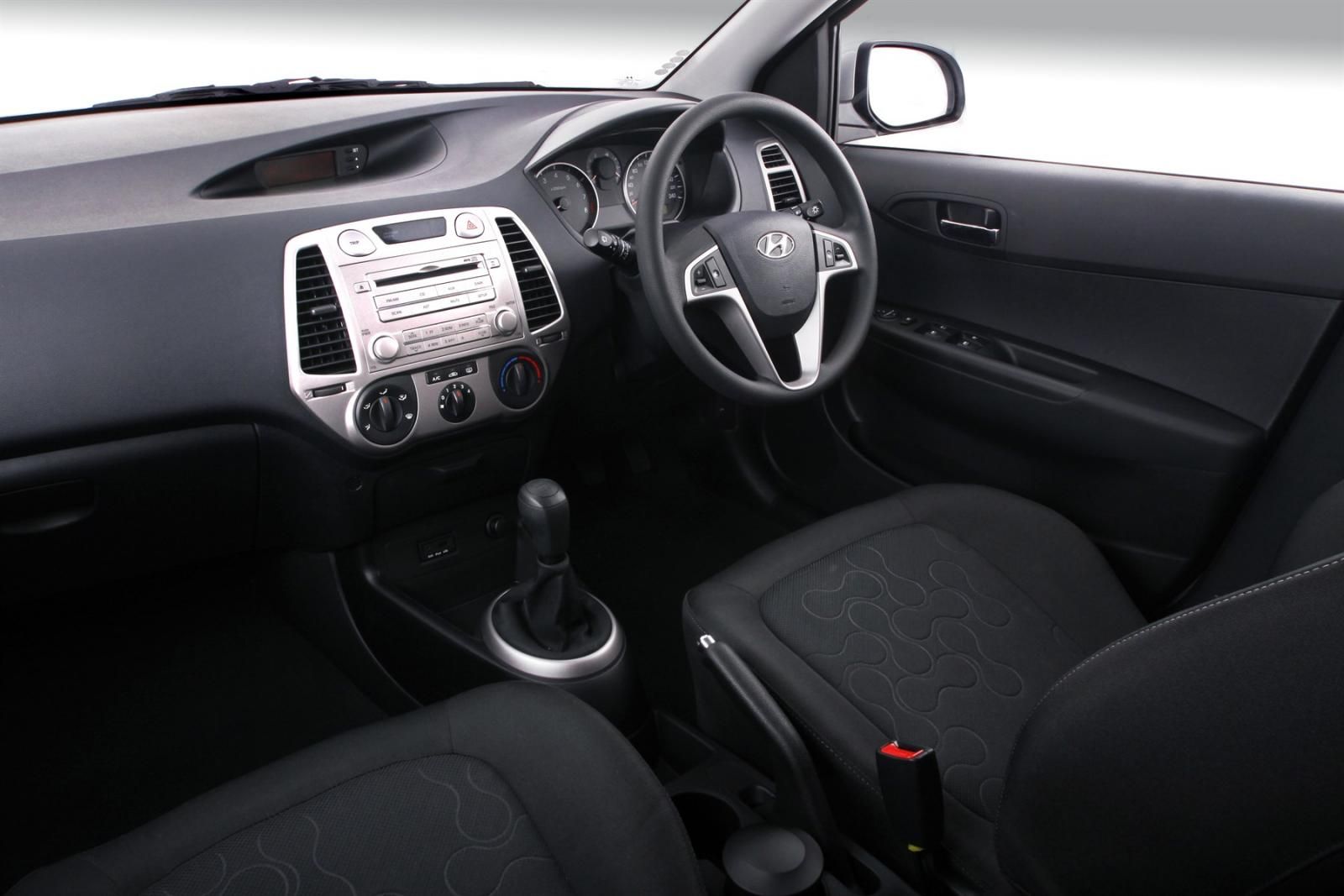
The i20 cabin looks upmarket, but look for wear on some of the touch points (steering wheel, door pulls etc.). Pre-facelift car shown.
Good standard specification: At the time of its launch, the i20’s interior made a good quality impression even though the plastics were of the hard variety. It featured such rarities (in this segment) as a height-adjustable driver’s seat and rake- and reach-adjustable steering column. In fact, the level of standard equipment was very decent, with items such as dual front airbags and ABS with EBD fitted to all derivatives. The built-in radio/CD player also featured USB/aux connectivity. After the facelift, all derivatives (except the entry-level 1.2 Motion) boasted Bluetooth functionality.
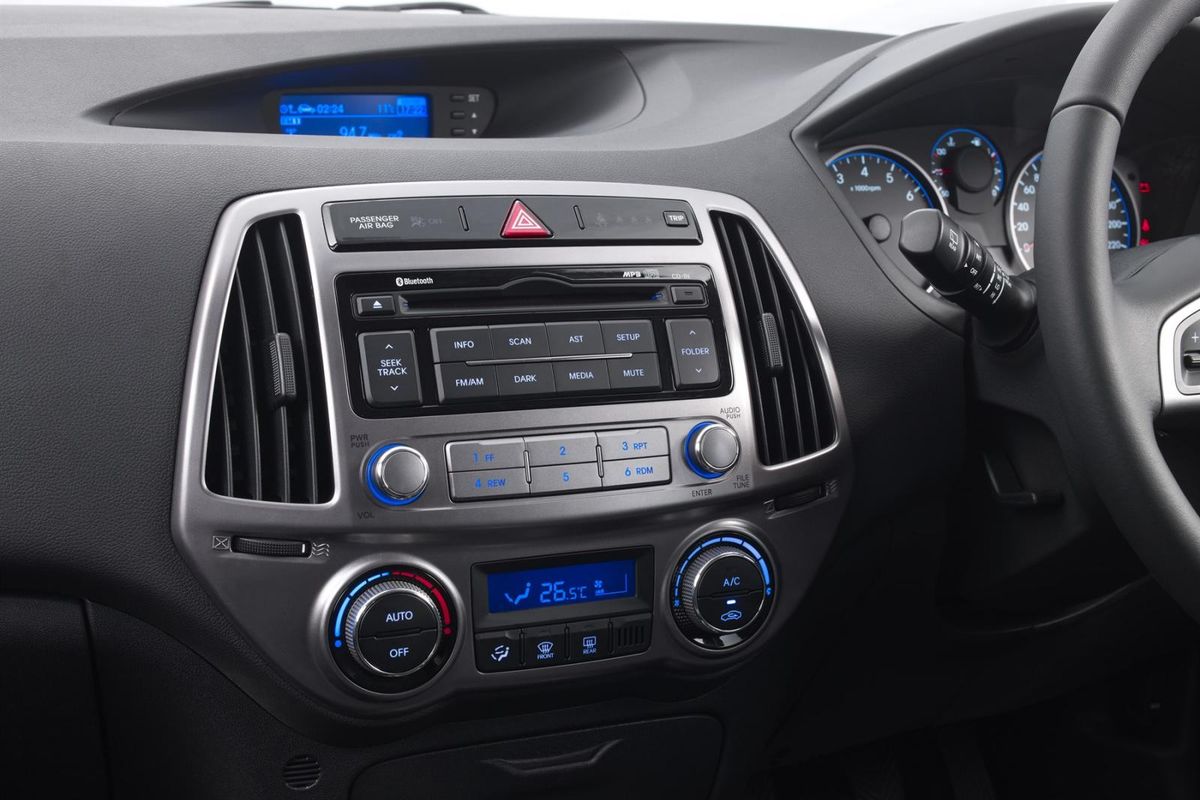
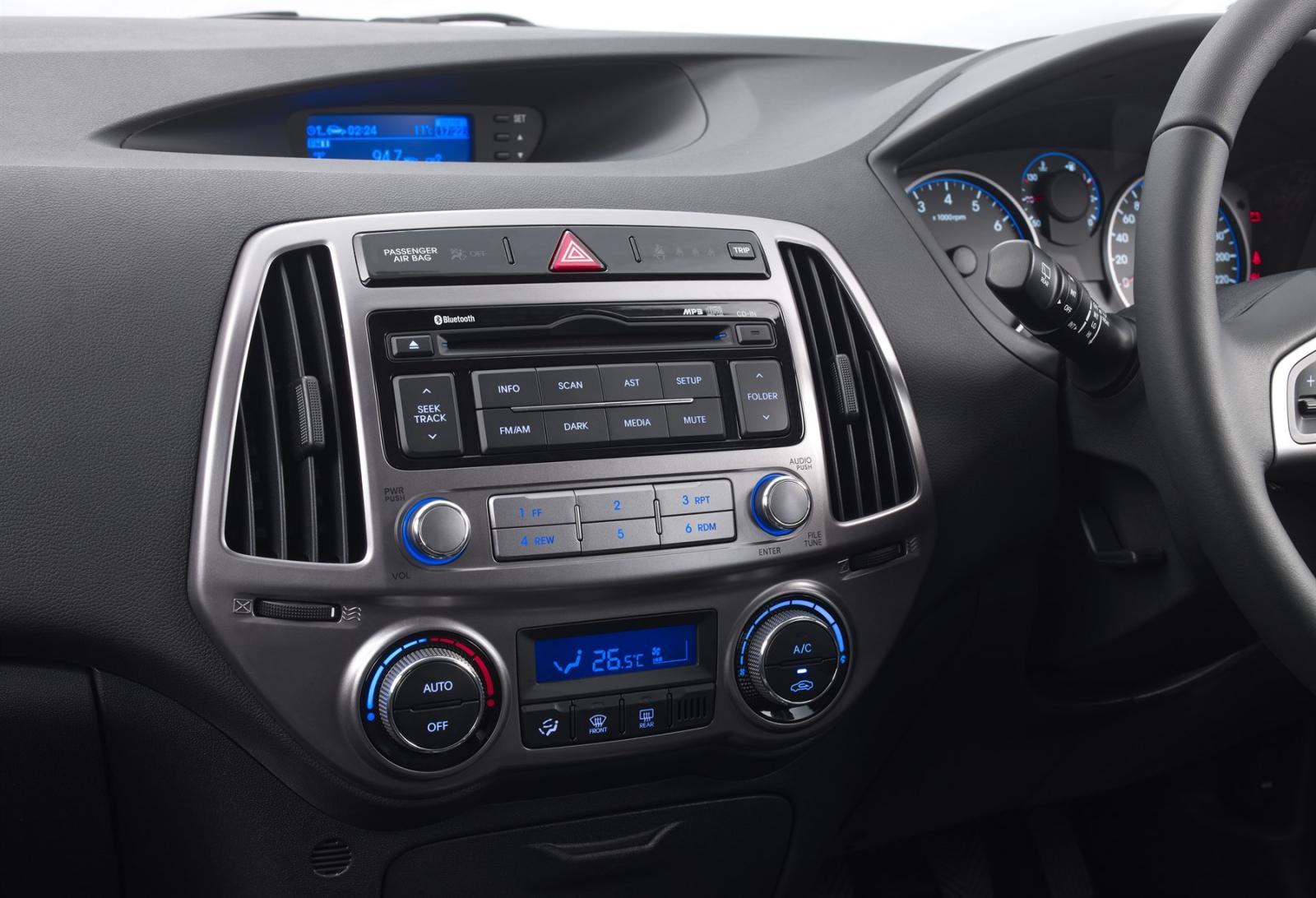
Hyundai upgraded the centre console’s styling significantly for the facelifted car, shown here.
Easygoing nature: Out on the road, the i20 is an easy-going car with light controls. The electrically assisted steering may not offer much in the way of feel or feedback, but it’s reasonably accurate and makes parking easy. The clutch and gearshift actions are also light. You sit relatively high in the i20 (an attribute carried over from the Getz), which, coupled with the generous glass area, facilitates good visibility out of the vehicle.
Performance and Efficiency: The engines offered in the i20 were also generally very good in terms of offering decent performance coupled with good efficiency. The 1.2 (64 kW/120 Nm) may look a bit shy on power, but it’s more than good enough for general town-driving duties and also very economical (5.6 L/100 km). If you’re going to be heading out of town and onto the open road often, the 1.4 would be a better bet and the 1.6 offers surprisingly punchy performance, combined with good fuel economy. The diesel was sold in relatively low numbers and would be hard to find.
Reliability: Finally, that long warranty… while none of the cars that are offered for sale today will still be covered by Hyundai’s initial 5-year/150 000 km warranty, it’s comforting to know that the Korean marque had enough faith in its product to offer that level of after-sales support in the first place. And indeed, from what we hear, these cars don’t generally give serious mechanical trouble.
Product weaknesses
While the i20 matched its period competitors (particularly at the start of its model life) in terms of performance/economy, spaciousness and features, it did lag the best in terms of NVH (noise, vibration, harshness), or, to put it another way, refinement. On coarse surfaces, the cabin could become quite noisy, and on rippled surfaces it could also feel skittish. At the time of the facelift (2012) the overall refinement was markedly improved.
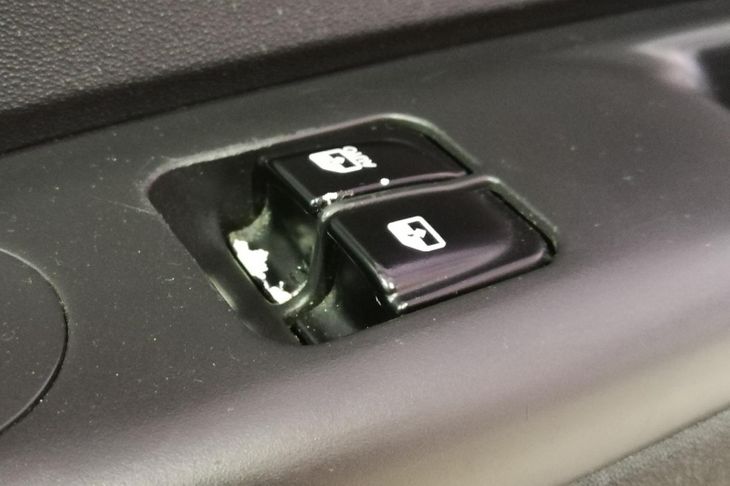
Some of the i20’s interior items seem to show wear quite quickly, like these window switches on a 1.2 Motion with less than 100 000km on the odo.
Although the basic safety features are present and accounted for (dual airbags, ABS/EBD etc.), the 1st-generation i20 was never offered with ESP (electronic stability control). If you’re a novice driver (or buying this car for an inexperienced driver), it’s worth taking note of this – ESP is one of the most valuable safety aids out there, and the i20 doesn’t offer it.
Apart from that, the Hyundai i20 is generally a problem-free car without major faults. But, as ever, there are some (primarily wear-and-tear) issues to look out for. When you’re out test driving one of these Hyundais, take note of the following:
Worn interior fittings: Some of the i20’s interior trim fittings don’t wear particularly well. We spotted many sad-looking i20s, due to scratched/damaged door pulls, worn gear-lever knobs/steering wheels and seat cushions that are worse for wear. Granted, these aren’t always indicative of the presence of serious mechanical maladies, but they could indicate that a car has had a hard life.
Folding key: The i20 boasts quite a smart folding key (a novelty in its class at the time of its introduction), but as is the case with most wear-and-tear items, it can become fragile with age and break.
Clutch issues: We noted a few comments about the clutch (again a wear-and-tear item), so make sure gearshifts are smooth and that there’s no slip/stiffness of the leftmost pedal.
Fuel pump: Several cases noted during our research. Most often you can pick up this problem during the test drive if the car “bogs” down during acceleration or cuts out when coasting to a stop, but then starts again first time at the turn of the key.
Steering column/rack knock: Be sure to check for this (apparently quite common) knocking sound by turning the steering wheel to full lock. If the sound is present, then a part (located lower down the steering column/rack) might need replacement. You may also need to check the “yoke plug” – if there’s a knocking sound when you move the steering wheel slightly when parked (and the car is switched on), then that item might need replacement (it costs less than R1 000, however).
What to pay?
There were more than 800 i20s listed on Cars.co.za during the time this article was being researched, so there should be lots to choose from.
Below R100 000: Listings start at around R70 000, but then you’re not getting the most sprightly, well-cared-for car. Many i20s have done hard service in fleets, and you can easily spot a car that’s not been loved – the touchpoints in the i20’s cabin wear quite badly, so take note of shabby-looking steering wheels, door pulls, seats and gear knobs. You may, however, find the odd gem, which at this price level would be a pre-facelift (before 2012) 1.4L derivative with low mileage. We spotted a very clean 2010 car with only 55 000 km for R78 000. If you want the refinement and looks of the post-facelift car, and you’re willing to make do with less power, then there are some neat 1.2 Motions available from around R90 000.
R100k – R120k: Surprisingly, there are still many pre-facelift i20s in this price range, but if you’re spending this much you really need to get the post-facelift car, and preferably in at least 1.4 Fluid guise. There are many out there, but as ever, they vary a lot in terms of condition and mileage. We did, however, find a very clean 1.4 Fluid (with a towbar) with low mileage (60 000 km) for around R110k. If you require an automatic transmission, this is also the kind of price range you’re looking at for a relatively neat, low-mileage car.
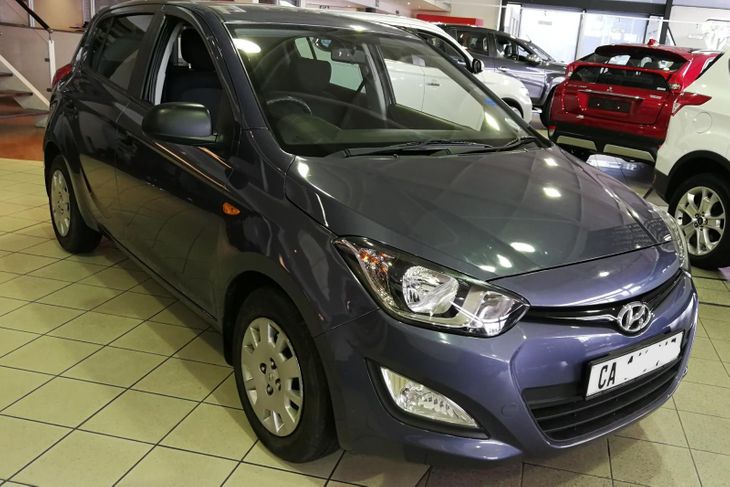
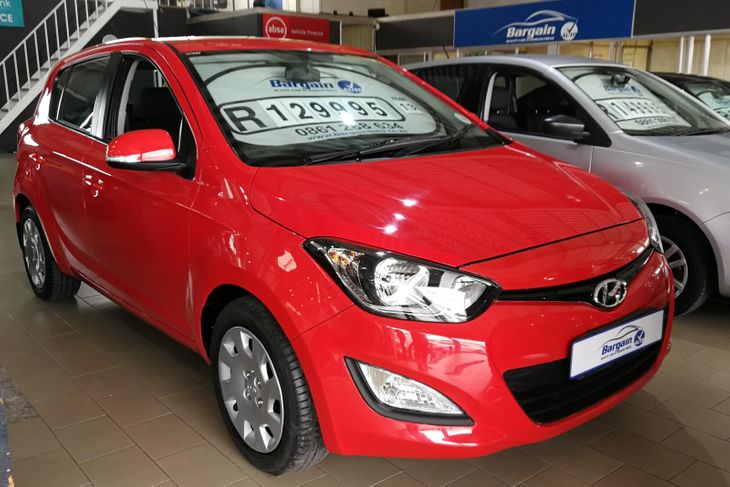
Probably the best example of an i20 Fluid we found, but that’s because Bargain Auto in Cape Town spent money to recondition it. Consequently, it demands a higher price.
R120k+: The only reason to spend this much on a previous-generation i20 would be an exceptionally low-mileage car in perfect condition (and only 1.4 Fluid or 1.4 Glide derivatives).
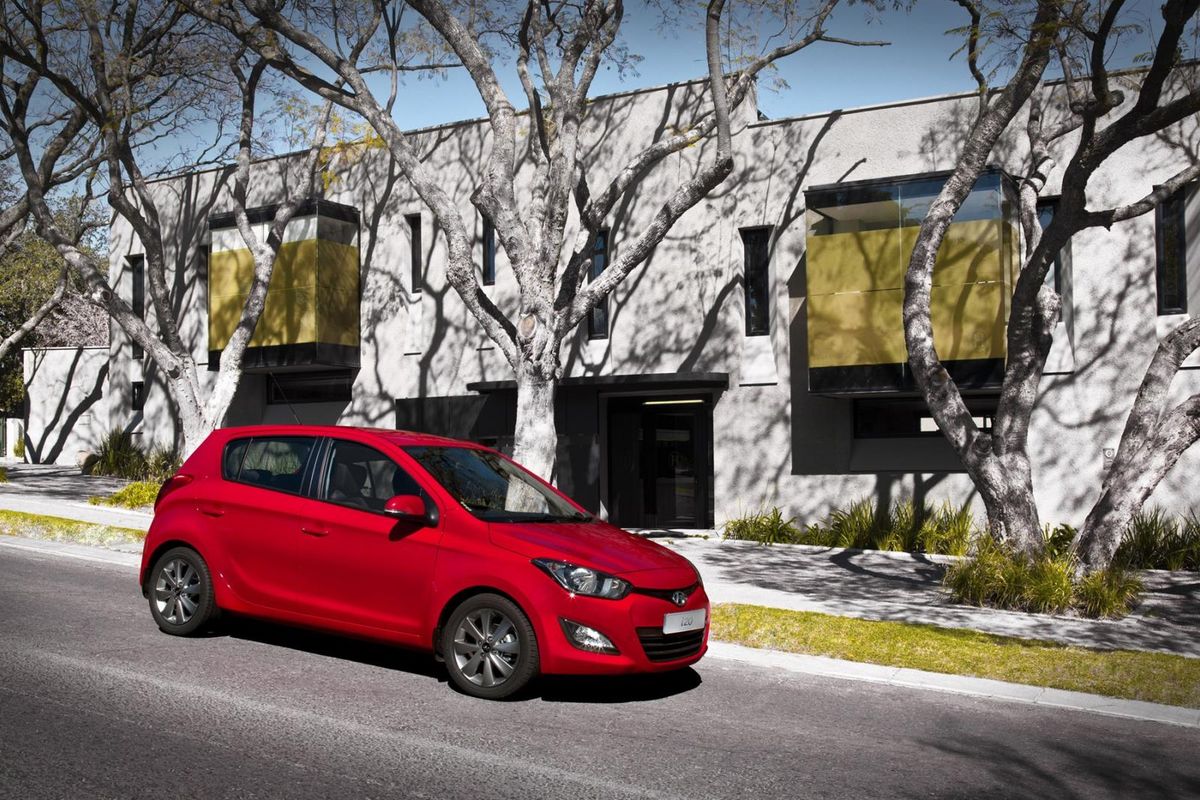
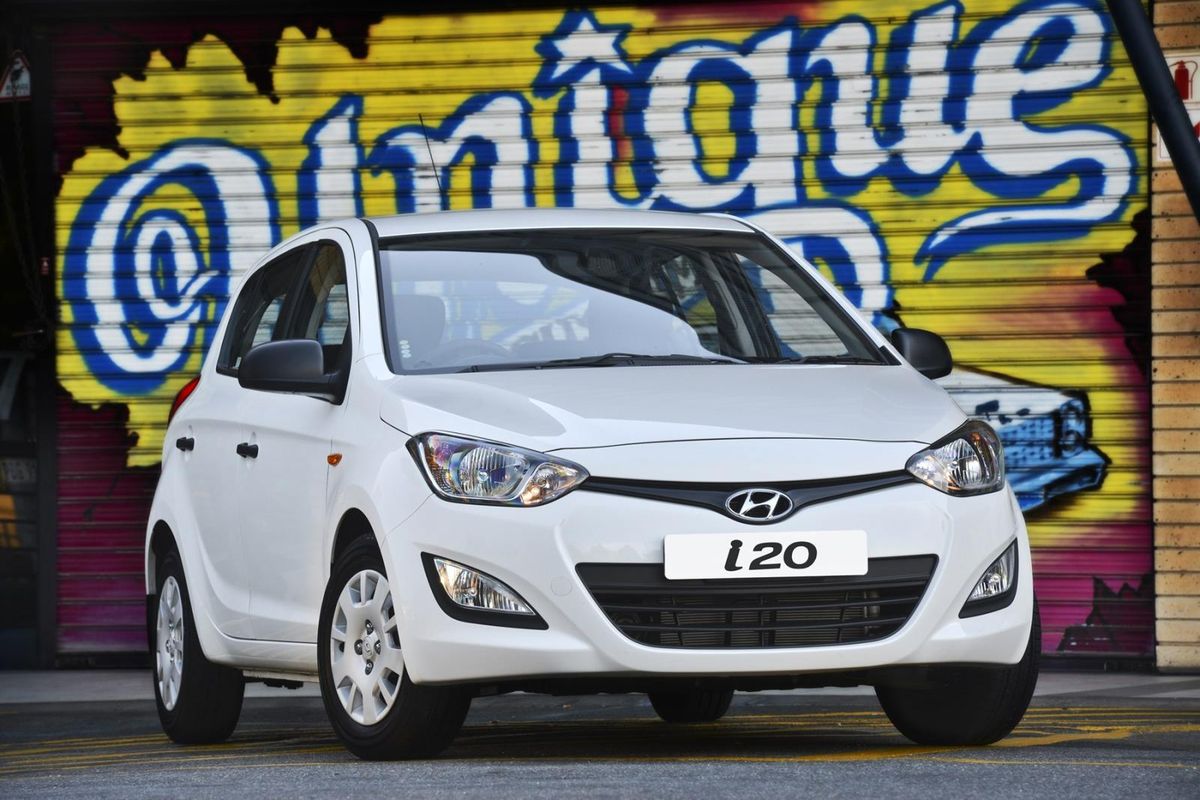
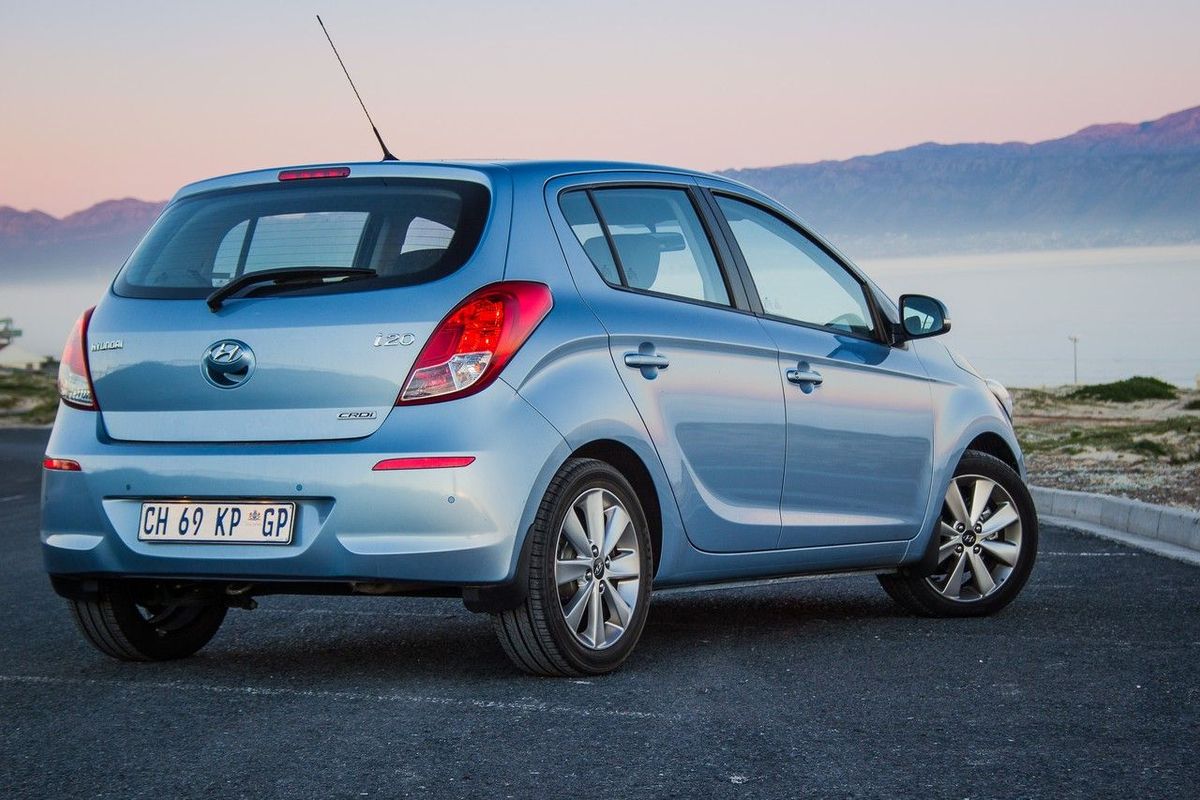
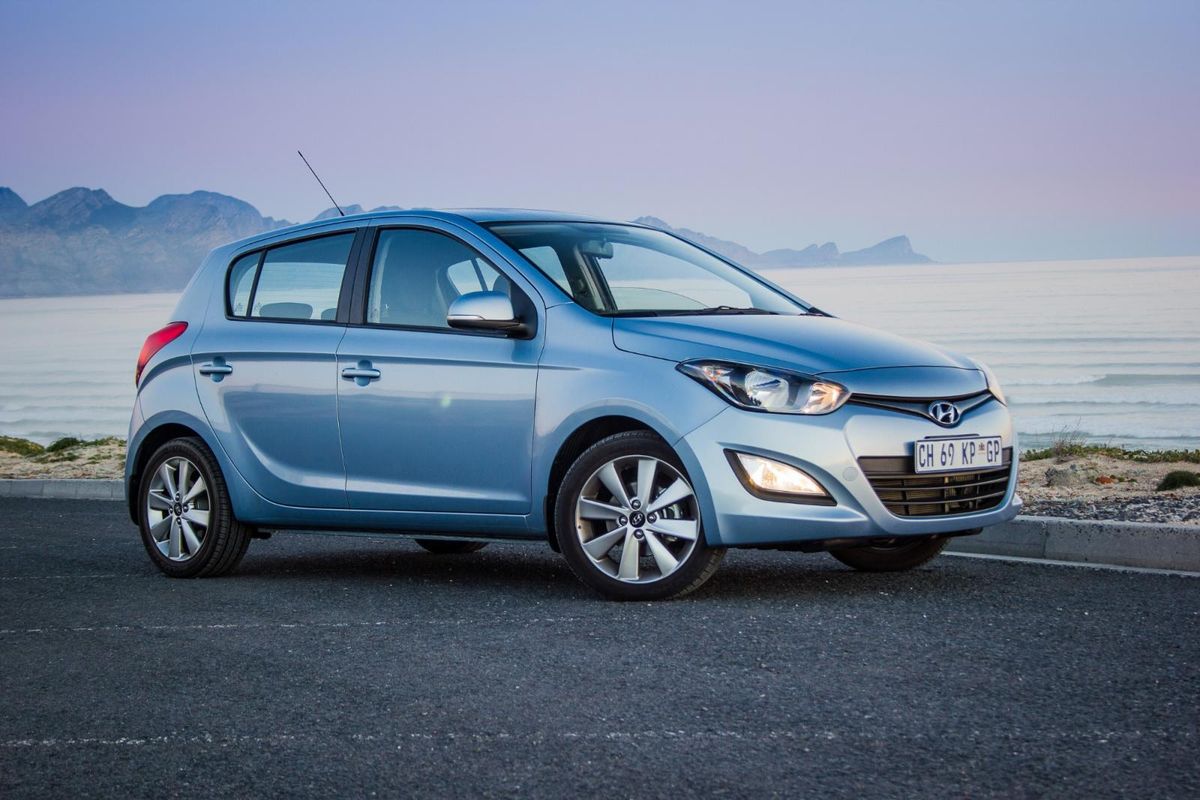
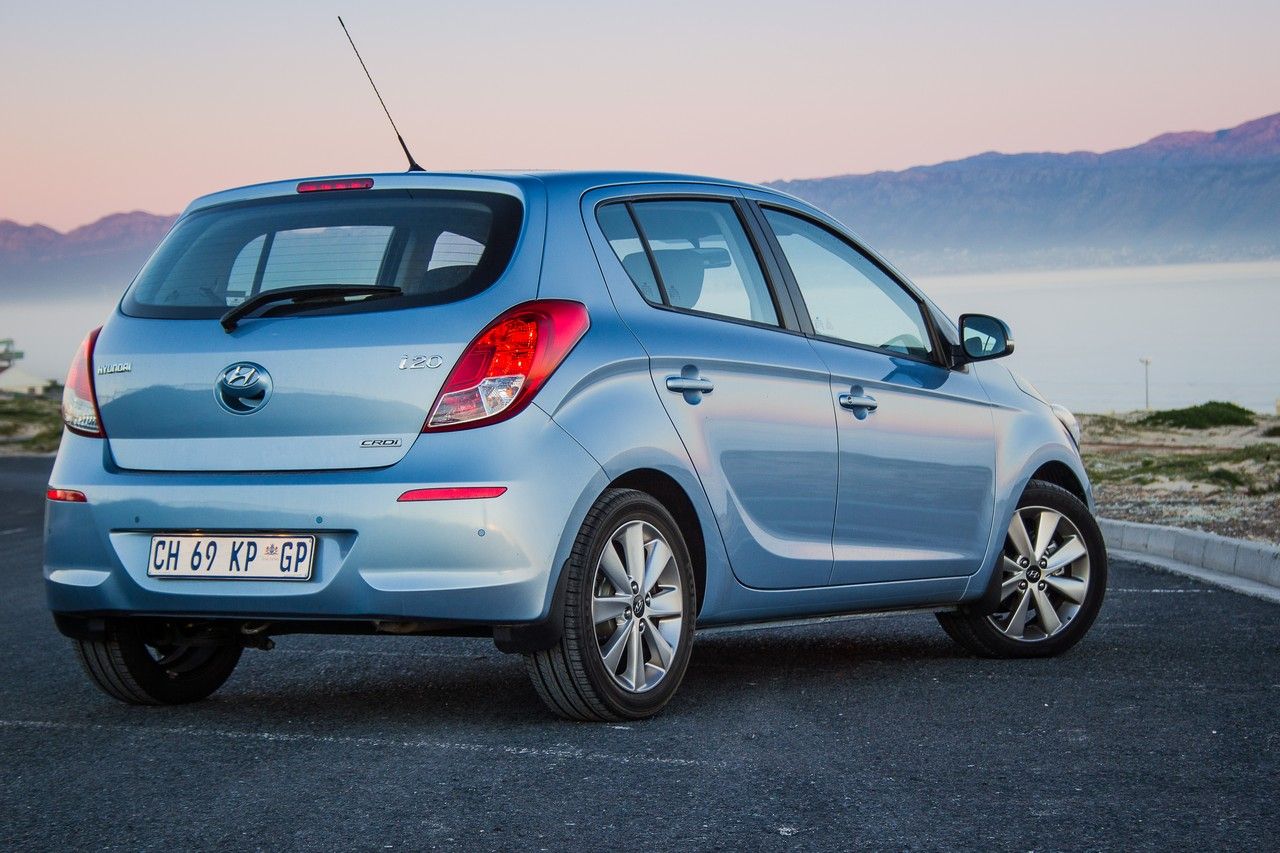
The looks of the facelifted i20 have aged well, particularly in flagship Glide specification.
We think the best choice would be a clean 1.4 Glide derivative. Not as popular when new as its cheaper 1.4 Fluid sibling, the Glide included some worthwhile extras, notably side/curtain airbags, auto locking doors, (imitation) leather steering-wheel trim and attractive 16-inch alloy wheels, which make it worth considering now, especially as it’s possible to find such an example for similar money to a Fluid.
Perhaps more importantly, the 1.4 Glide was part of the post-facelift line-up, so benefits from a significant NVH improvement/improved on-road refinement compared with the older cars. Yes, there are also 1.2-, 1.6- and even 1.4-litre turbodiesel derivatives to consider, but in our view, the 1.4 is the best-balanced offering in terms of performance/fuel economy. You can find 1.4 Glides in decent condition from around R125 000 – some are admittedly listed at cheaper prices, but from what we’ve seen, most of those look quite worn inside.
Verdict
Attractive, reliable and spacious, the popularity of the Hyundai i20 in the used car market is easy to understand.
The 1st-generation Hyundai i20 is a no-nonsense compact hatchback that doesn’t appear to have any major flaws. It is, therefore, a very easy car to recommend. As ever, it’s important to ensure that you research the full history of your car and be wary of cars that seem too cheap (compared with other, similar i20s). If low running costs, spacious and reliable motoring are what you’re after, the Hyundai i20 definitely should be on your shopping list. These days, they also demand good resale values, so selling a Hyundai i20 on later shouldn’t be a problem.
Rivals? Well, Volkswagen’s Polo is an obvious one, but is generally more expensive (to buy and to maintain), which leaves the Ford Fiesta as a strong candidate. But there are many others. We rate the Mazda2, Kia Rio, Opel Corsa and Suzuki Swift as viable alternatives, too.
Parts pricing
We asked Hyundai for the prices (incl. VAT) of some of the major parts for 2 of the most popular models: the 2011 1.4 GL and 2013 1.2 Motion.
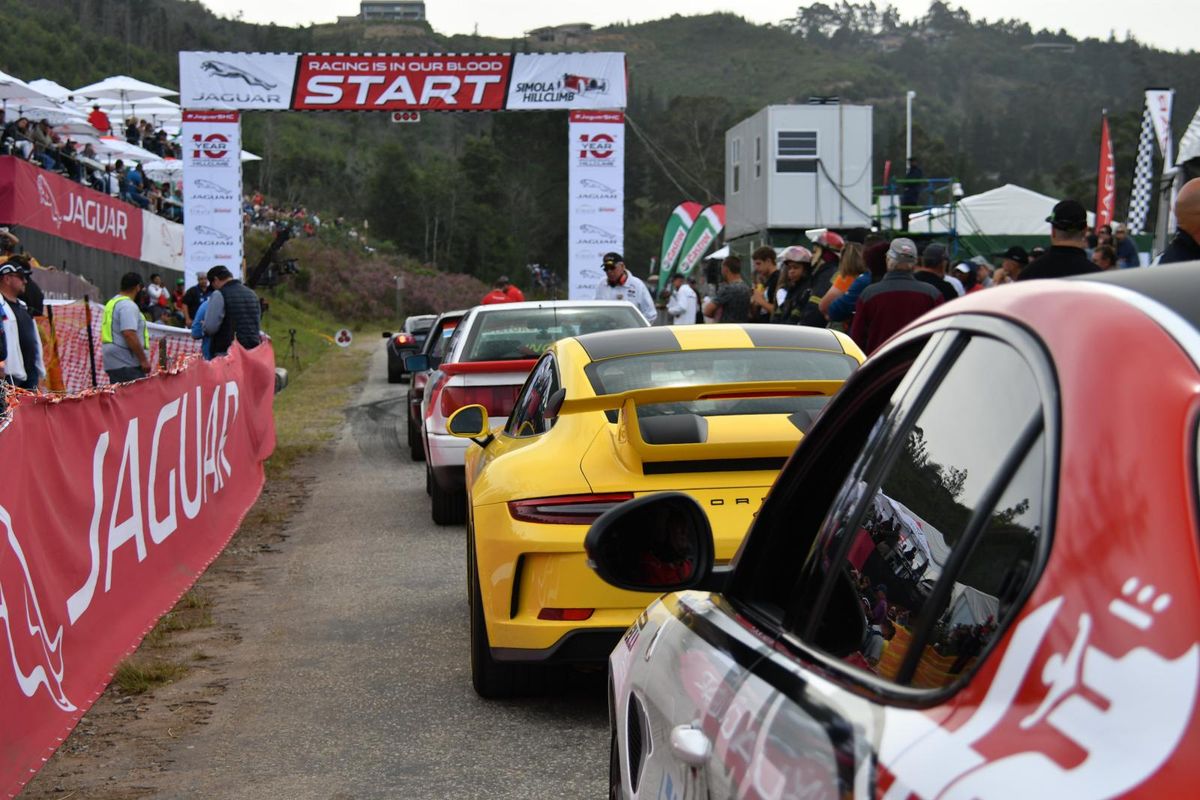
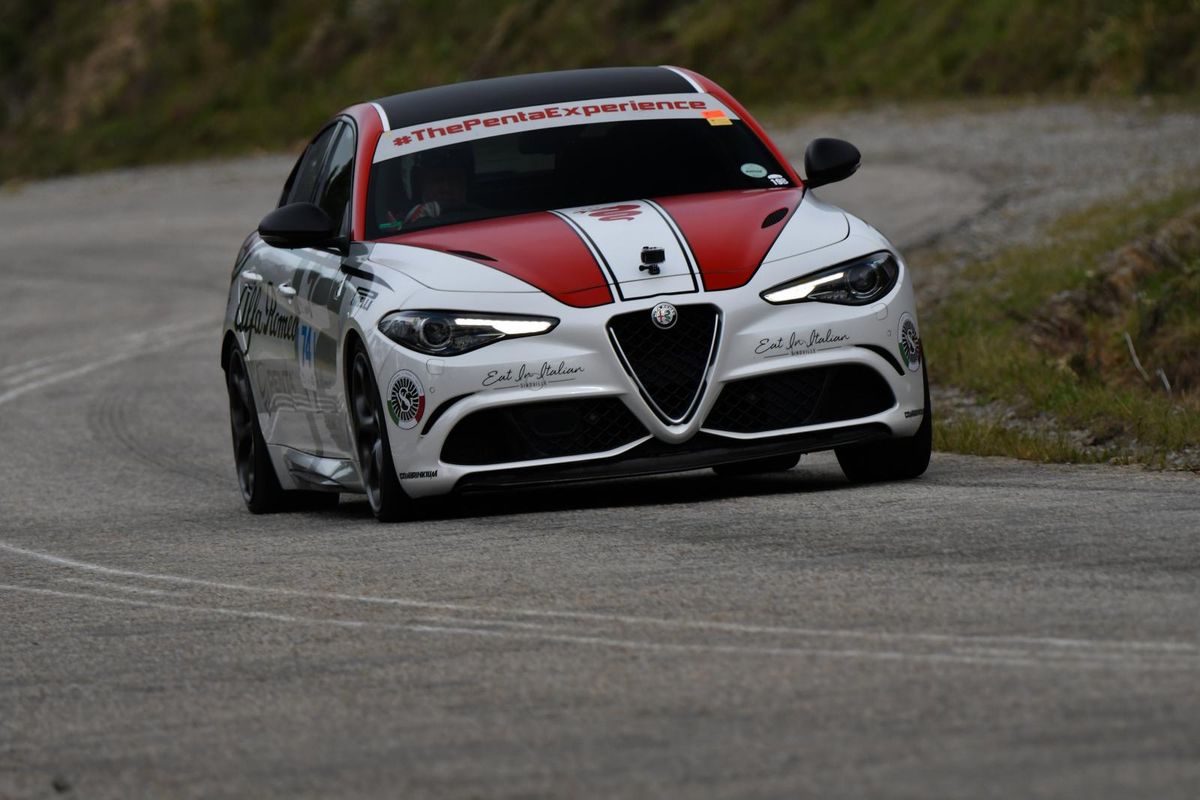
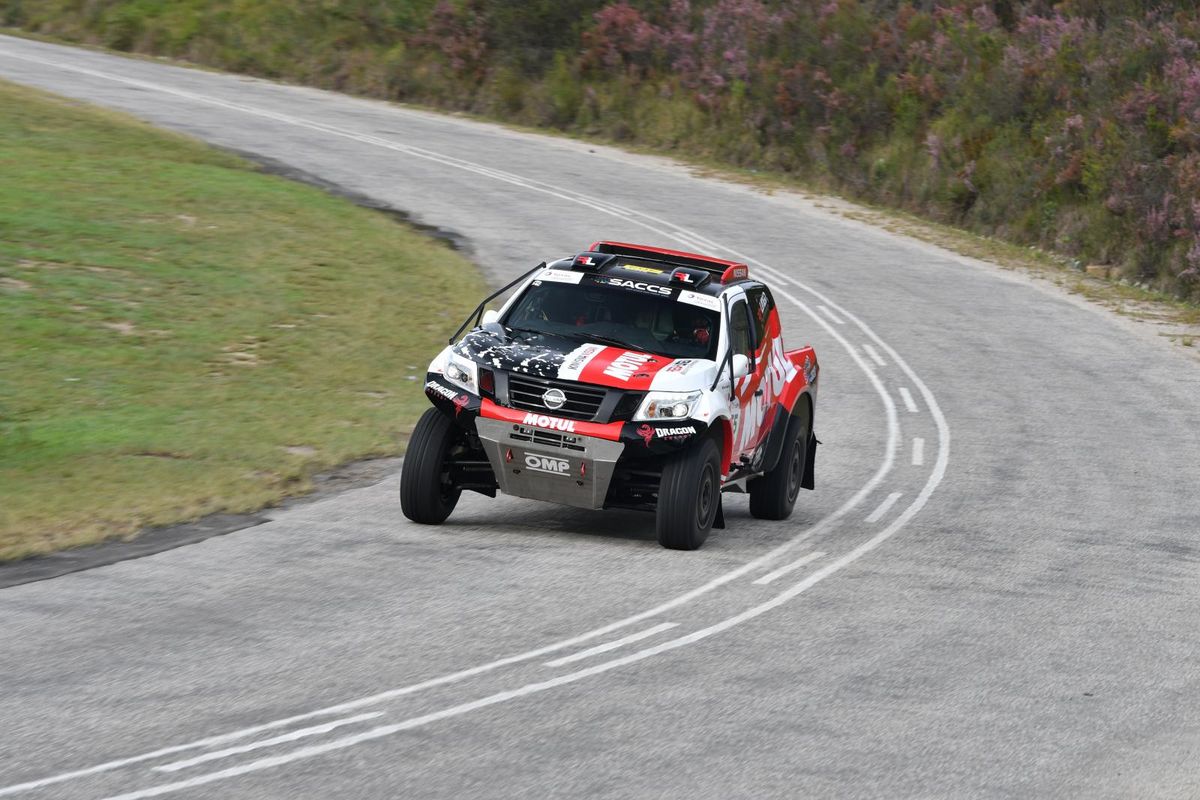
The 2019 edition of the Jaguar Simola Hillclimb, which took place in Knysna at the weekend, marked the 10th running of the event. Competitors faced tricky conditions throughout the 2-day programme and here’s how it all unfolded…
Every year, the Jaguar Hillclimb presents different challenges to its participants; this year it was inclement weather and daylight, or the lack thereof. Saturday’s practice sessions were run in mixed conditions that ranged from damp to wet and eventually dry in the afternoon. Dialling in a perfect setup was always going to be tricky with so few comparable runs to work with.
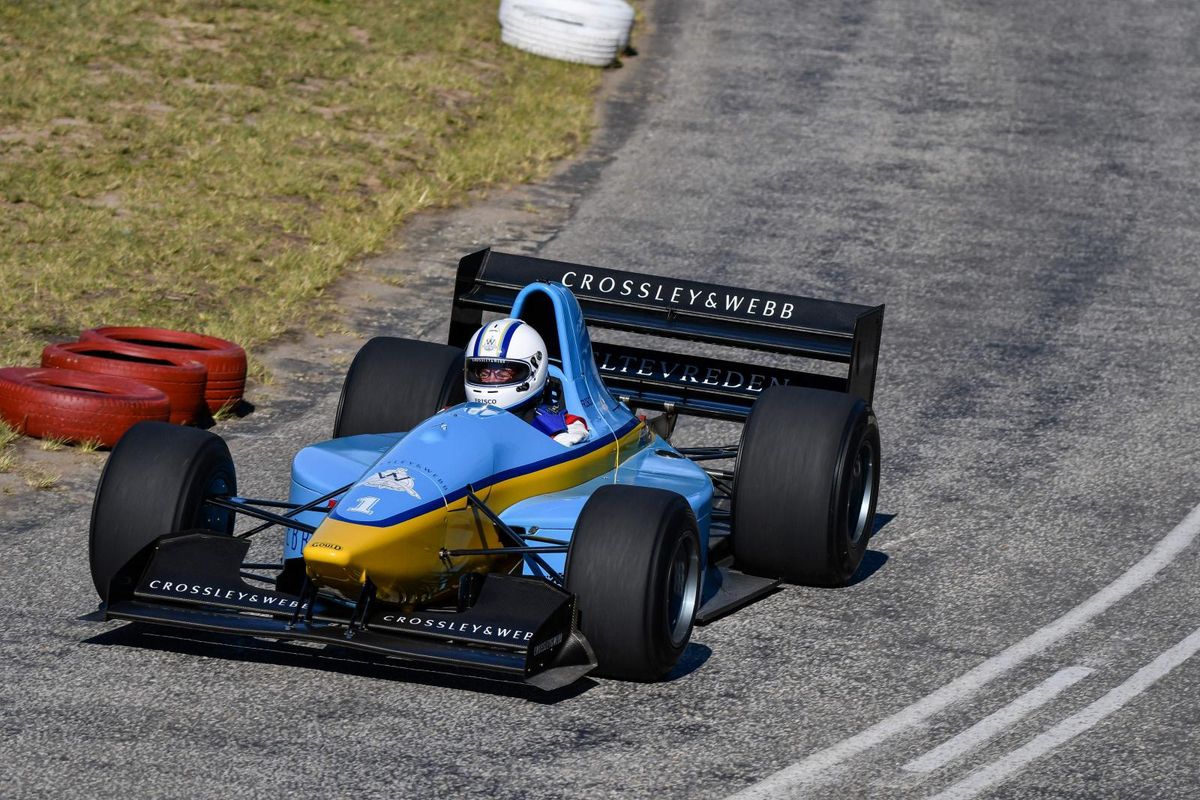
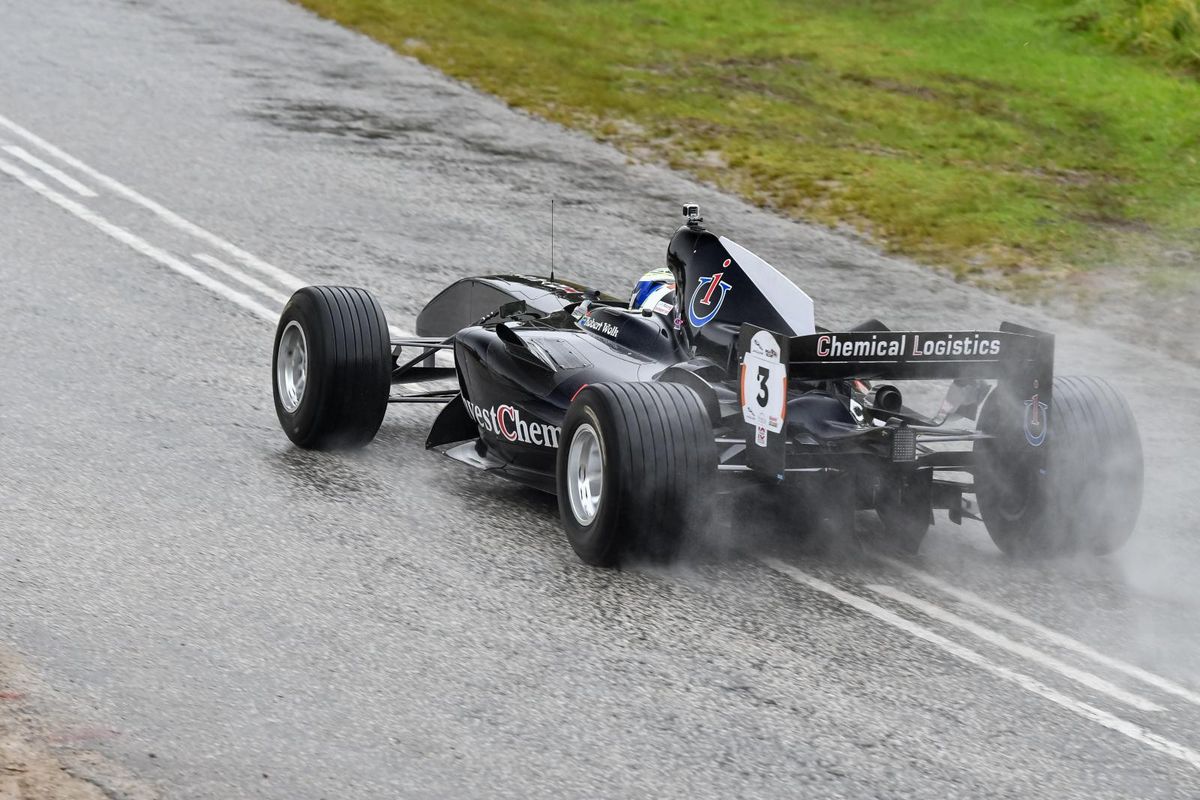
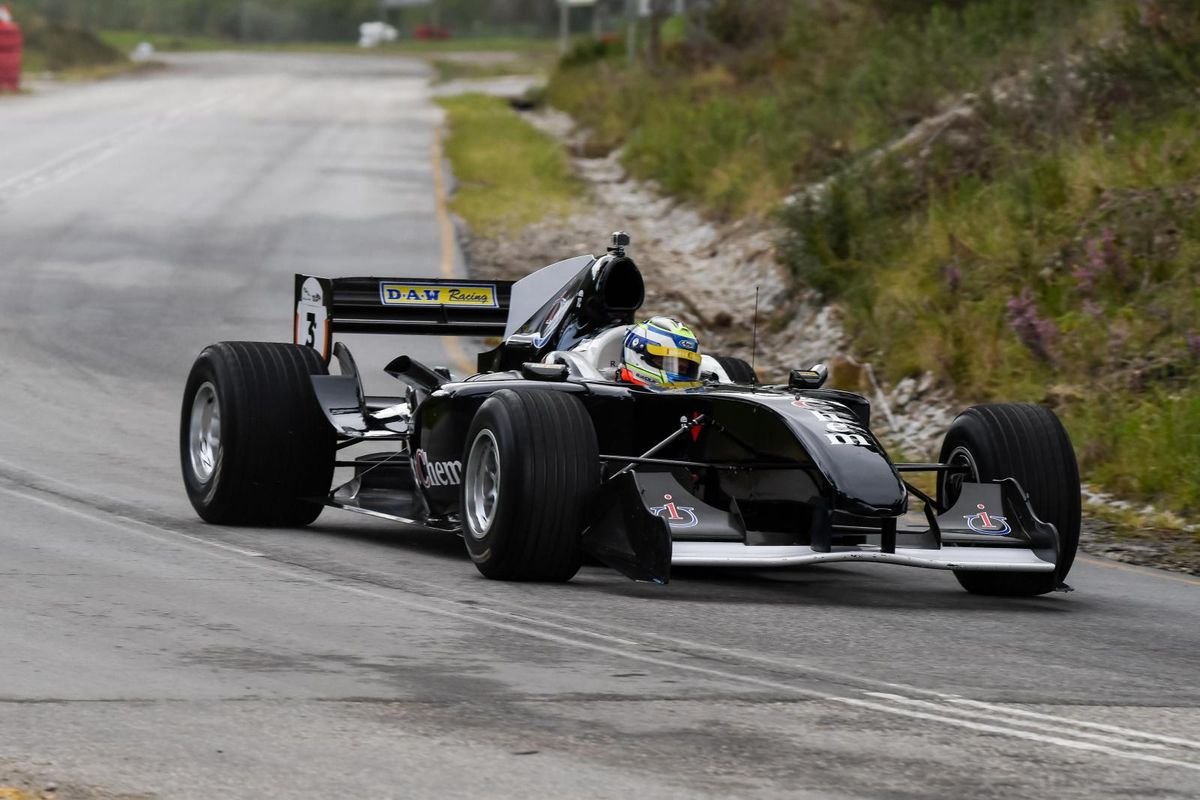
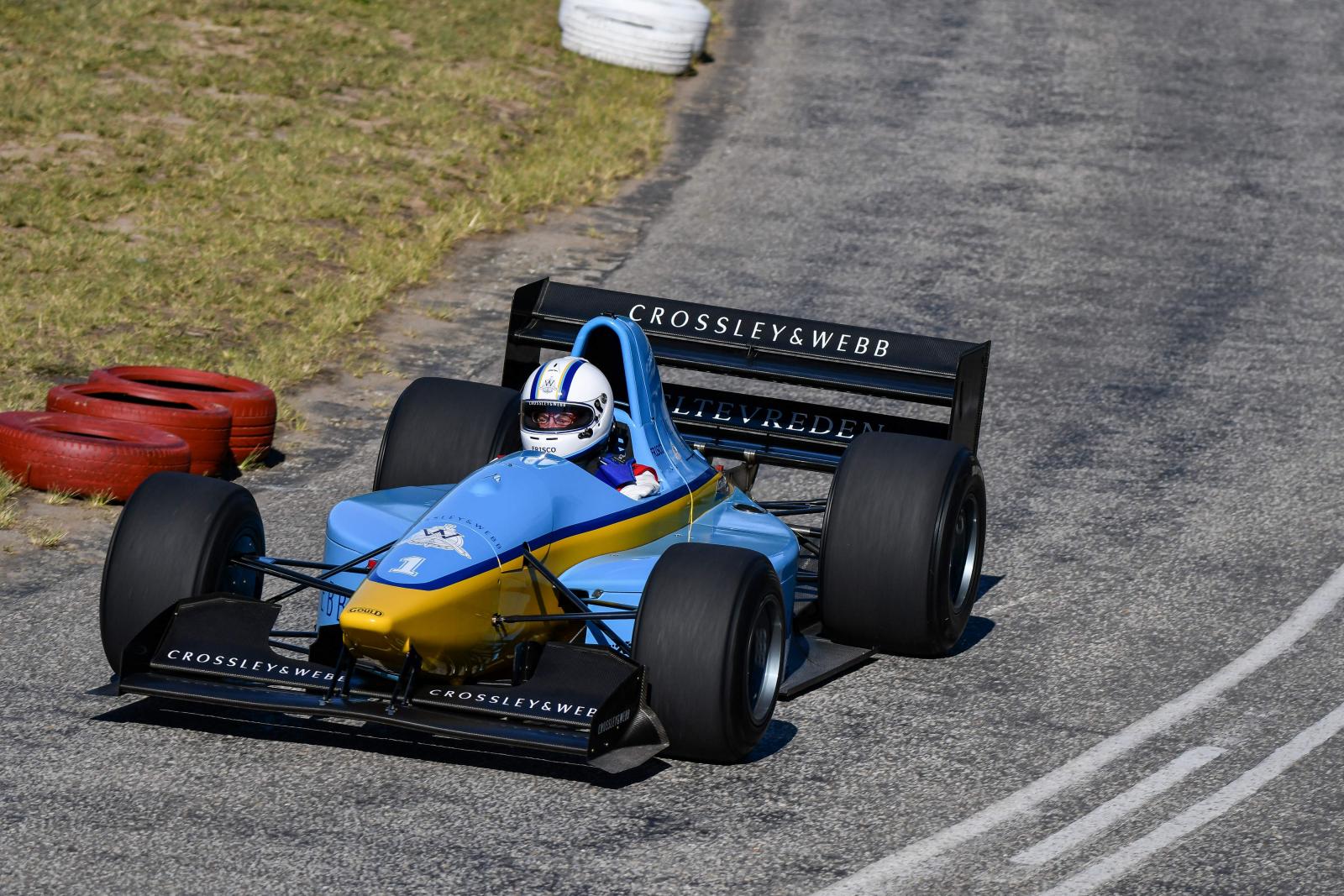
The regular frontrunners all set close to record times late on Saturday, which consists of 5 practice sessions and 2 qualifying runs. Robert Wolk had set a blistering time of 37.279 sec in his Ferrari-powered A1 GP car, but with only the qualifying times counting towards the final, reigning King of the Hill Andre Bezuidenhout laid down the 1st marker with a time of 37.692 sec in his Gould GR55 single-seater, which was specially designed to take on hill climbs like this one. His average speed over the run was 181 kph (from a standing start).
Andre Bezuidenhout in his hill-climb special Gould GR55.
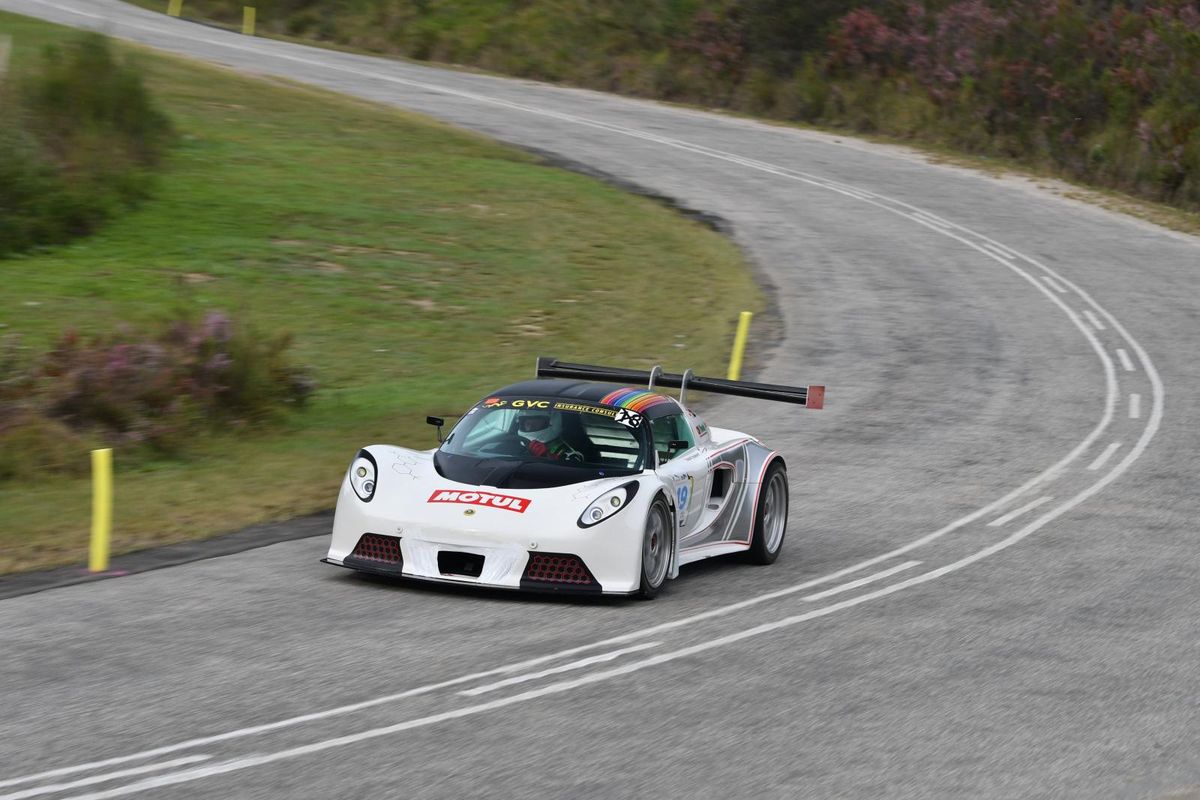
For the modified saloons, the waters were a little muddy; several teams were struggling with mechanical issues. Charl Joubert claimed the award for the unluckiest person on the hill as, during his run, his car spun on some oil (that had leaked from a previous car) and barrel-rolled into the embankment. Charl was okay, but his very modified Lotus Elise was irreparable.
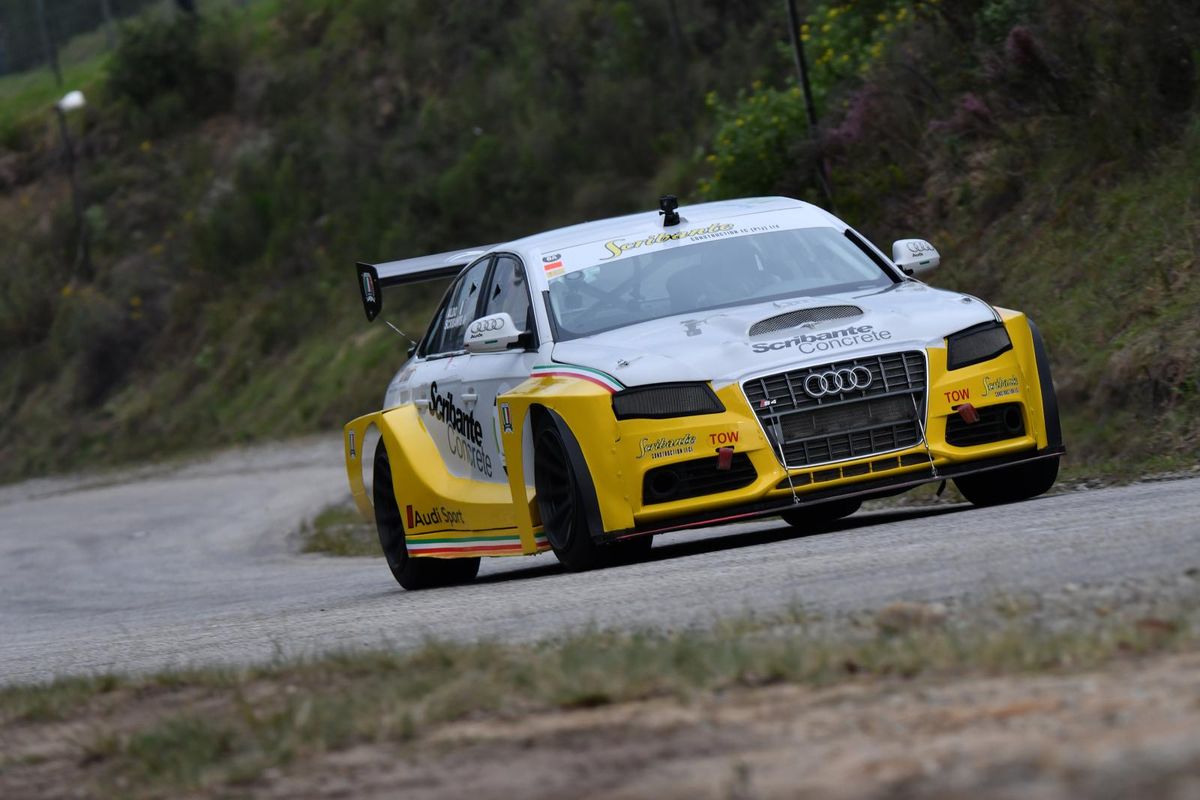
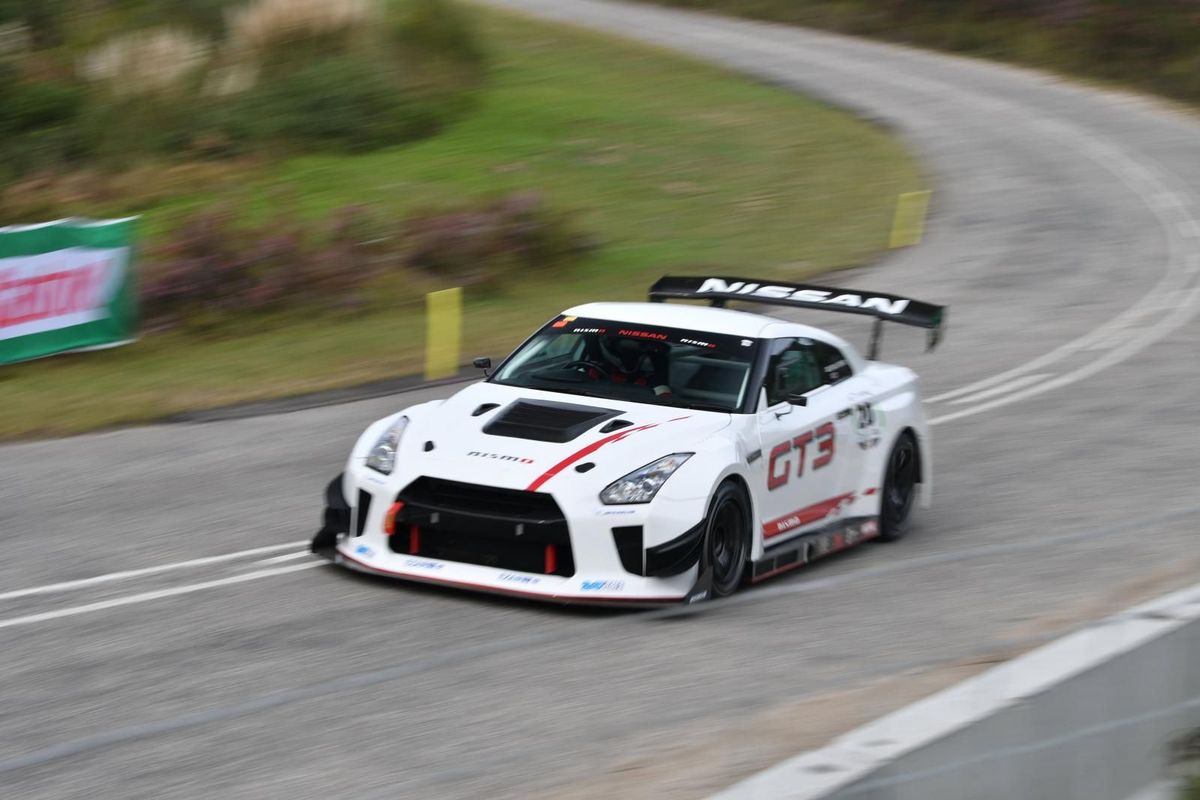
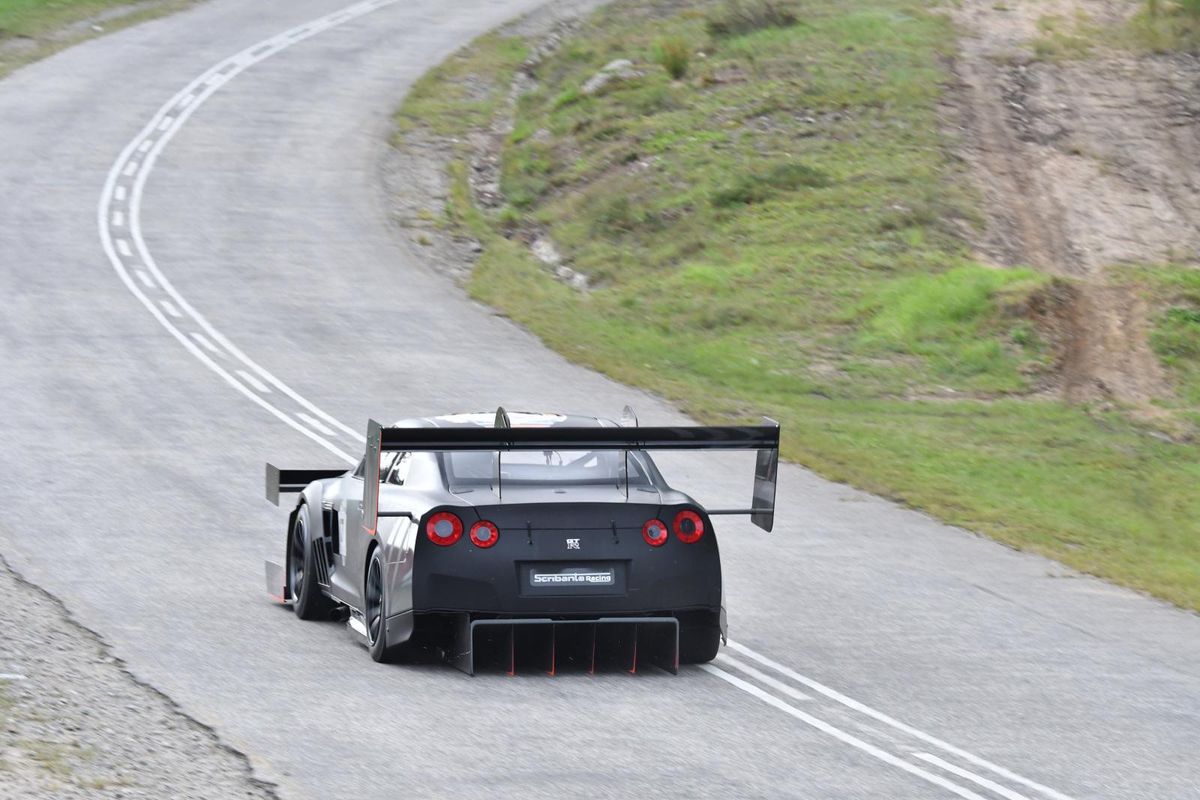
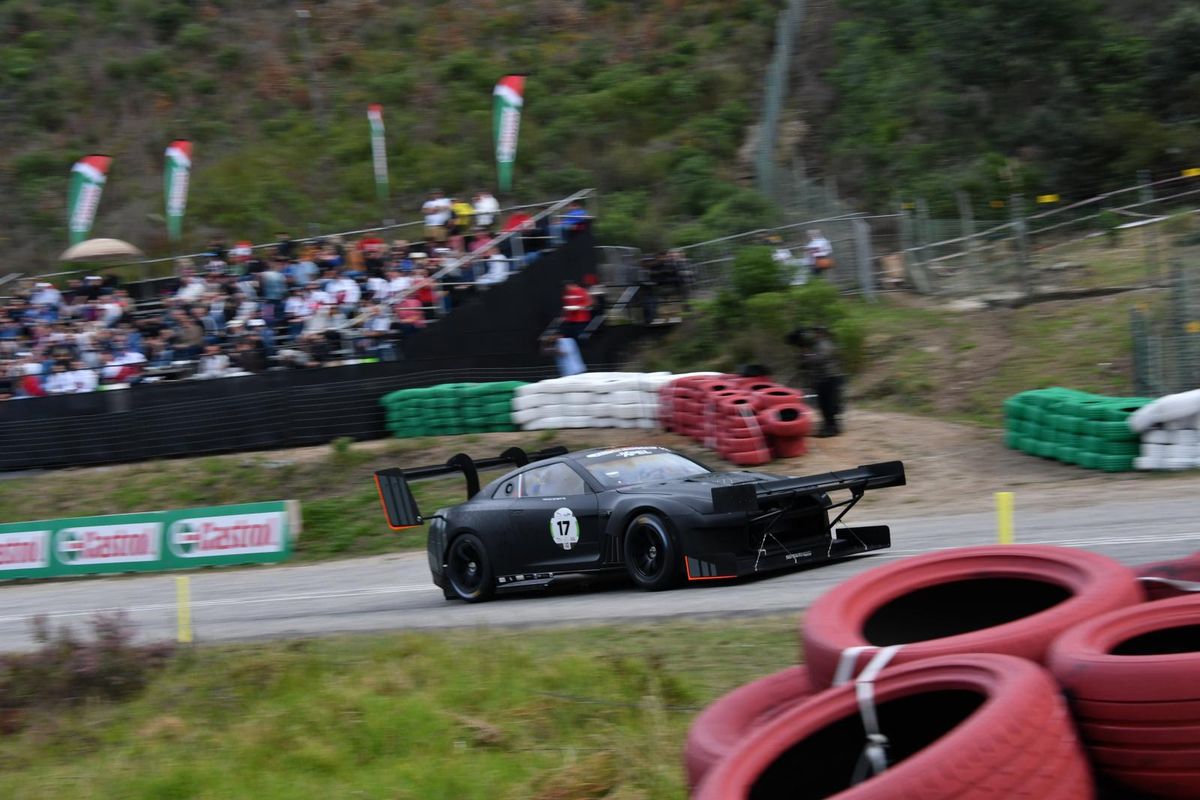
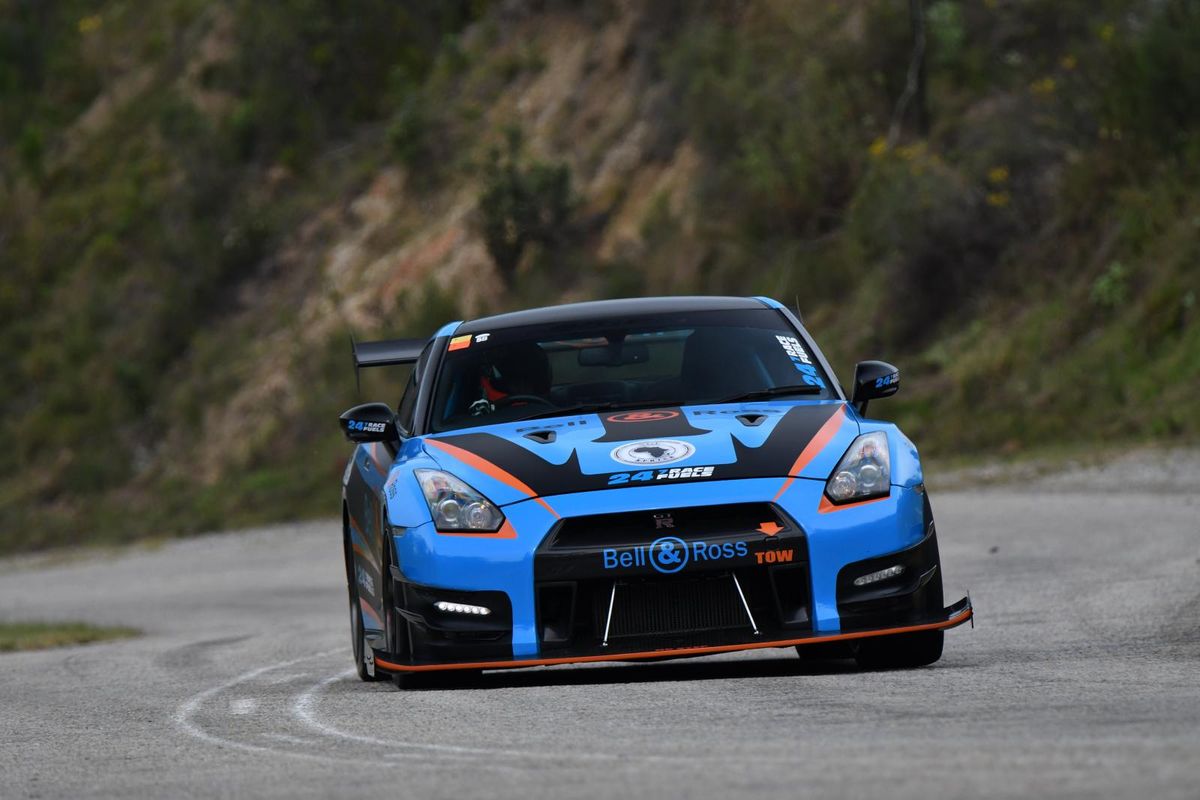
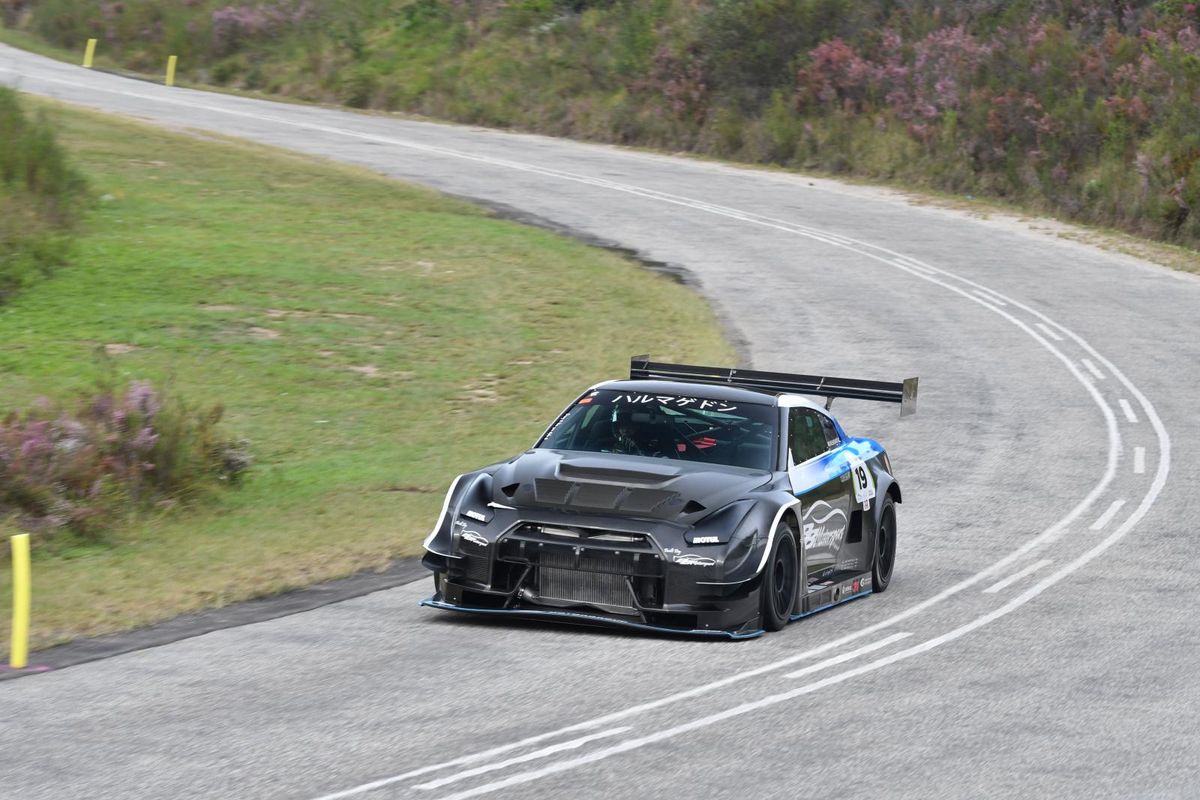
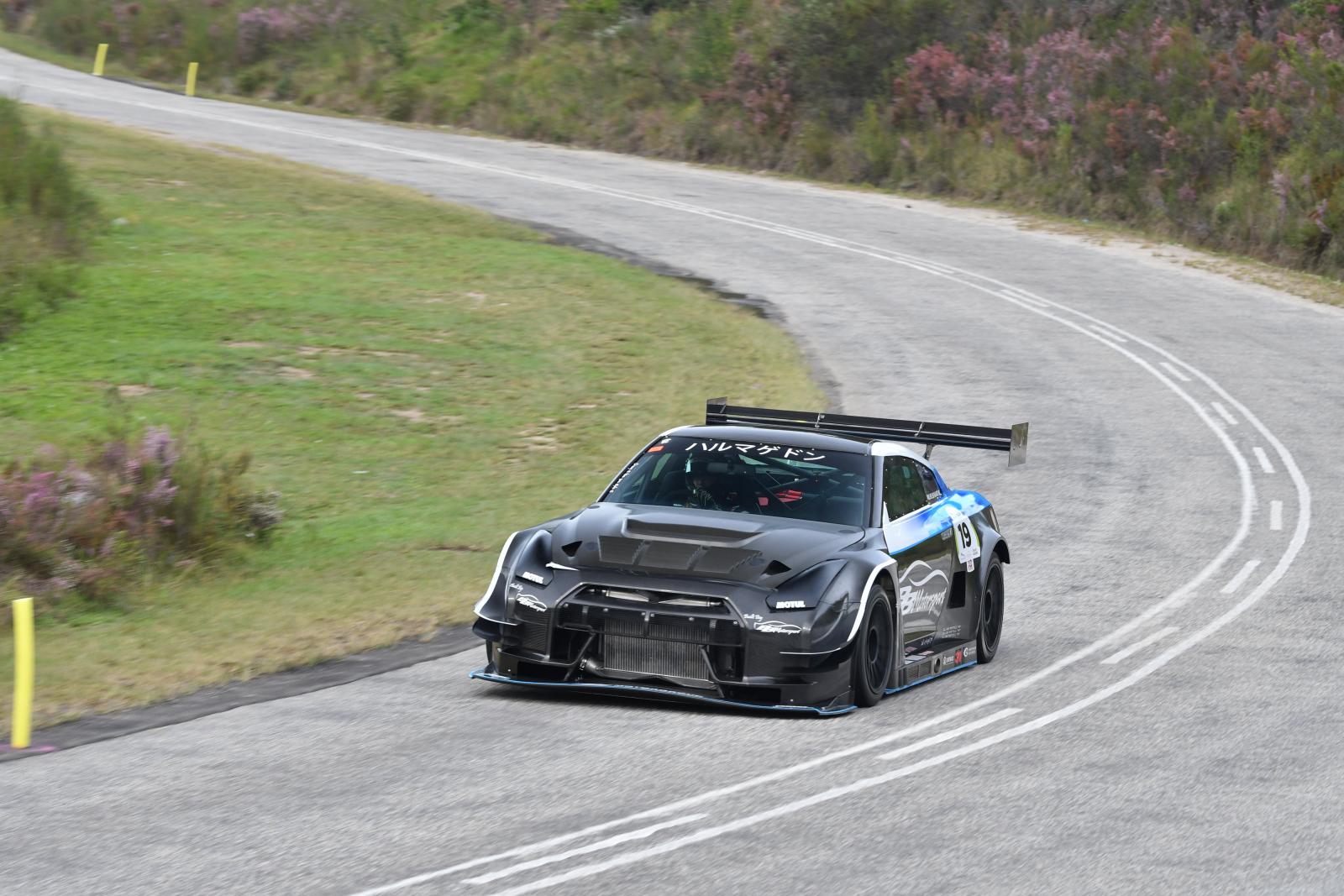
Topping the times on Saturday was Franco Scribante’s multi-winged Nissan GT-R, which looked to be in a class of its own (38.551 sec). The next best was Martin van Zummeren in a 2002 Nissan Skyline (40.732 sec). A previous winner of the category, Wilhelm Baard struggled to get a clean run in his Nissan GT-R and opted not to run in the wet conditions, only to see his car suffer a drive-shaft failure during a qualifying run.
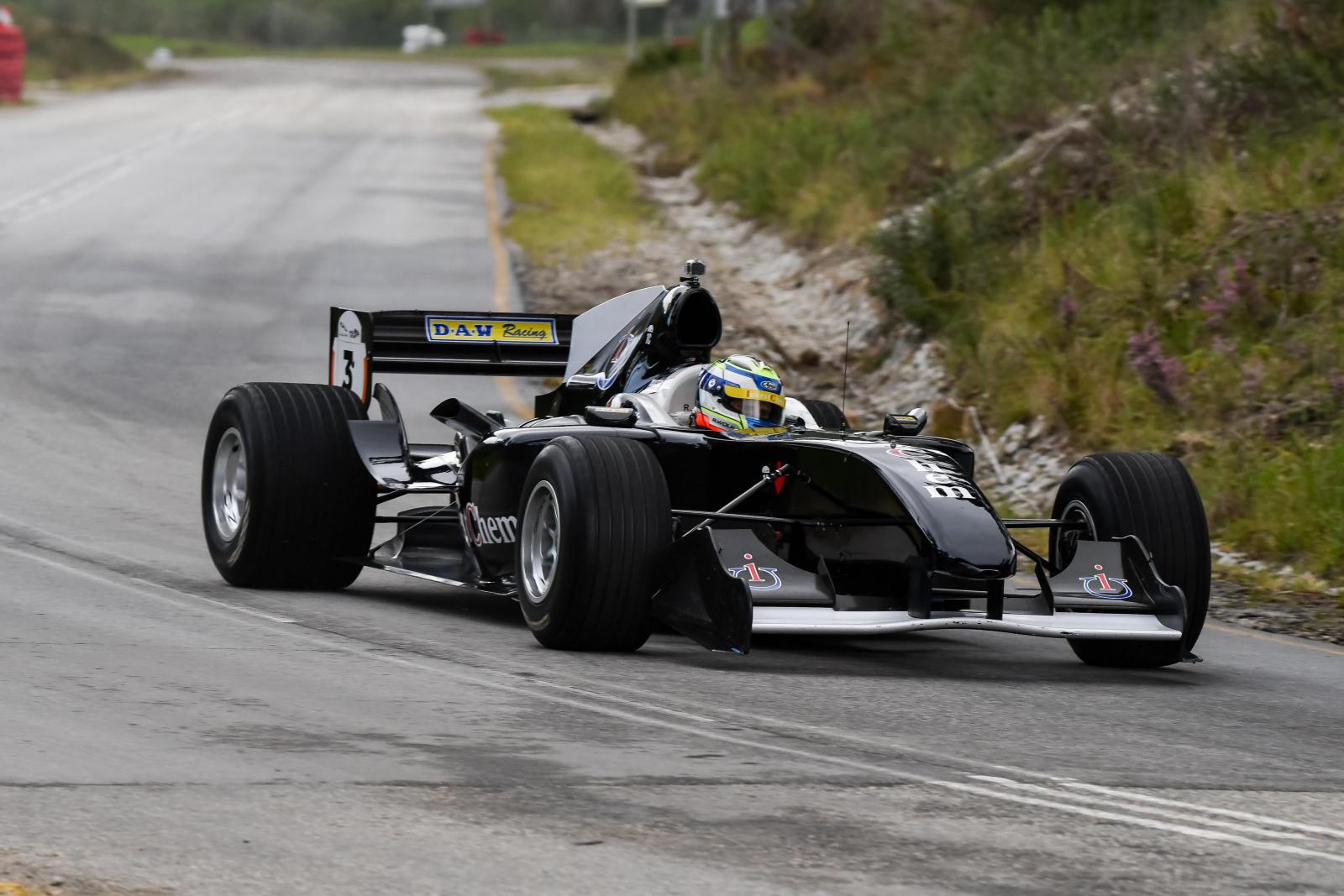
Robert Wolk set the fastest time in practice in his A1 GP single seater.
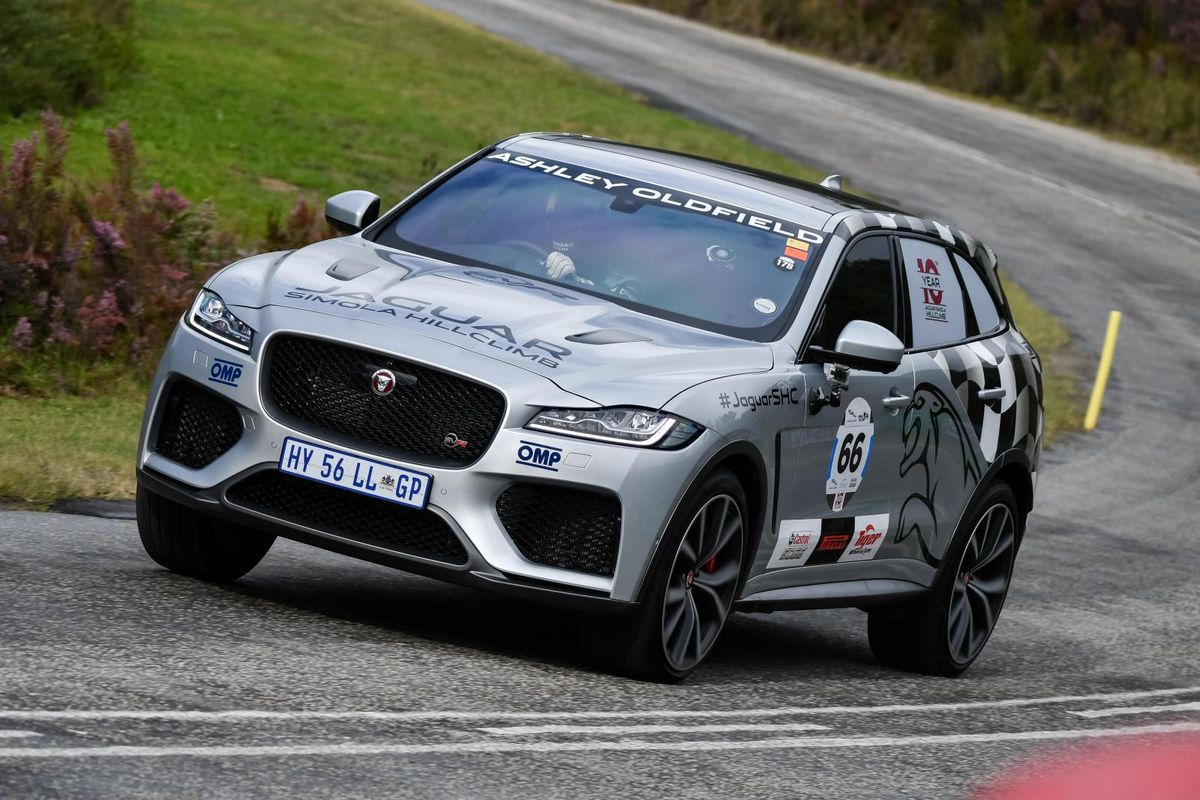
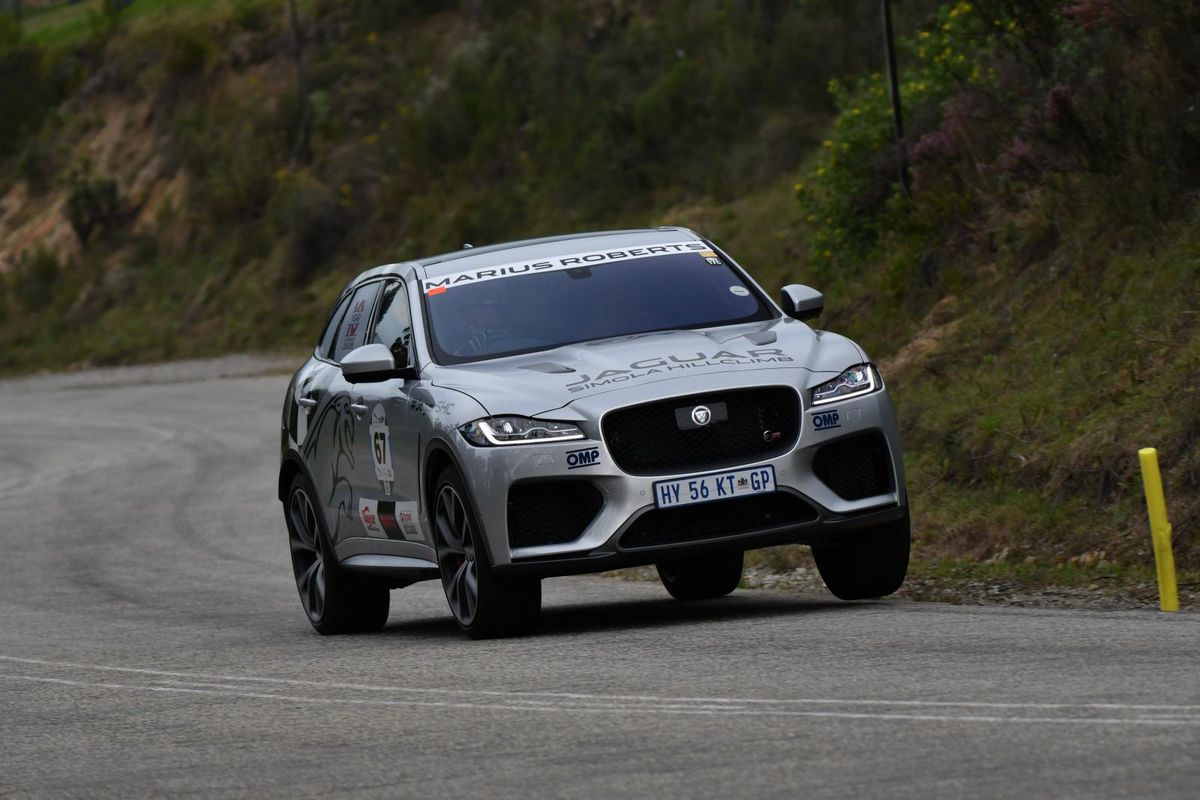
Back in the road car category, the Cronje brothers (Mark and Gavin) were consistently improving their times in equally specced, showroom standard Jaguar F-Type SVRs. They didn’t seem to have an answer, however for Reghardt Roets in his not quite standard Nissan GT-R, with a second separating him from Mark Cronje.
Day 2 ("Payday")
Hazy sunshine kept the rain at bay throughout Sunday, giving the competitors a full morning’s running before the finals in the afternoon. That was until the timing system failed, causing a delay of a few hours relegating the final showdown to dusk/sundown.
It took some serious guts for the single-seater guys to go full bore up a misty mountain with not much light to work with. Still, it provided an extremely close finish in the top-10 shootout: Bezuidenhout clocked in at 36.764 sec, just over a 10th quicker than Wolk (36.920 sec). Third place went to Garth de Villiers in his 2002 Formula Volkswagen.
Wilhelm Baard was unable to match the Scribante with his less-winged GT-R.
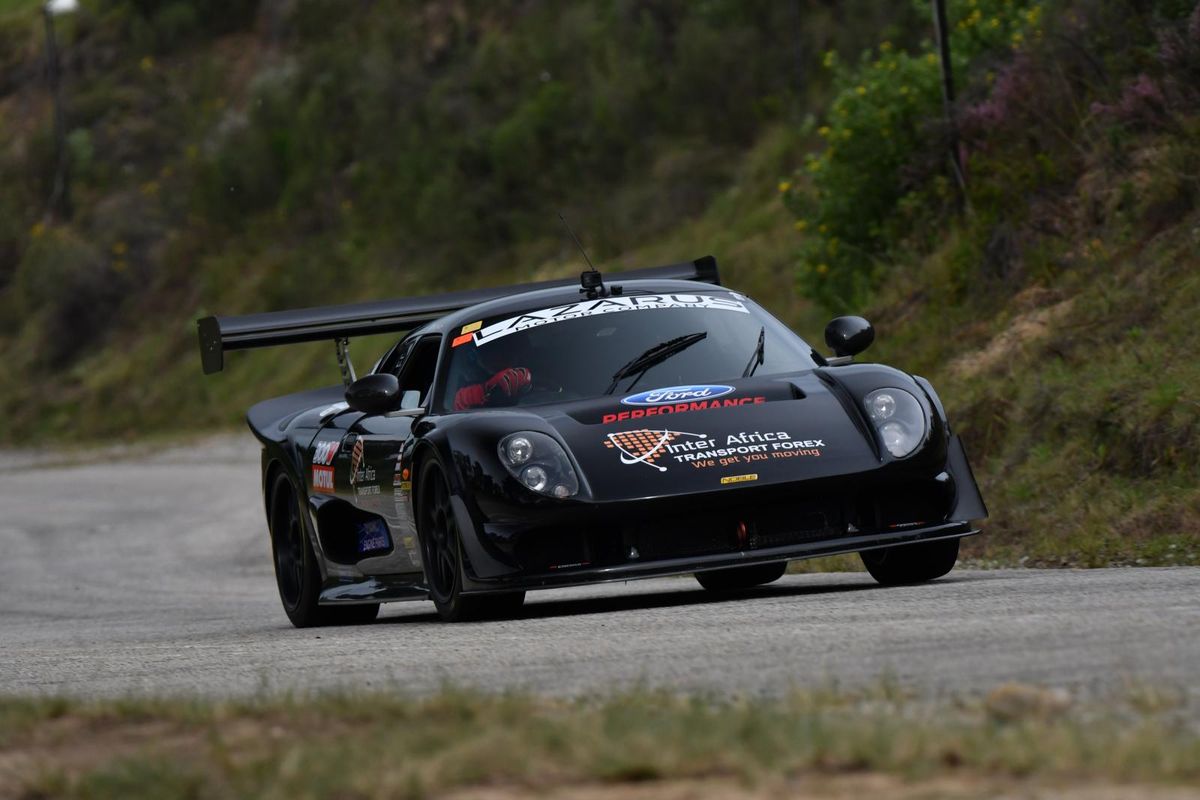
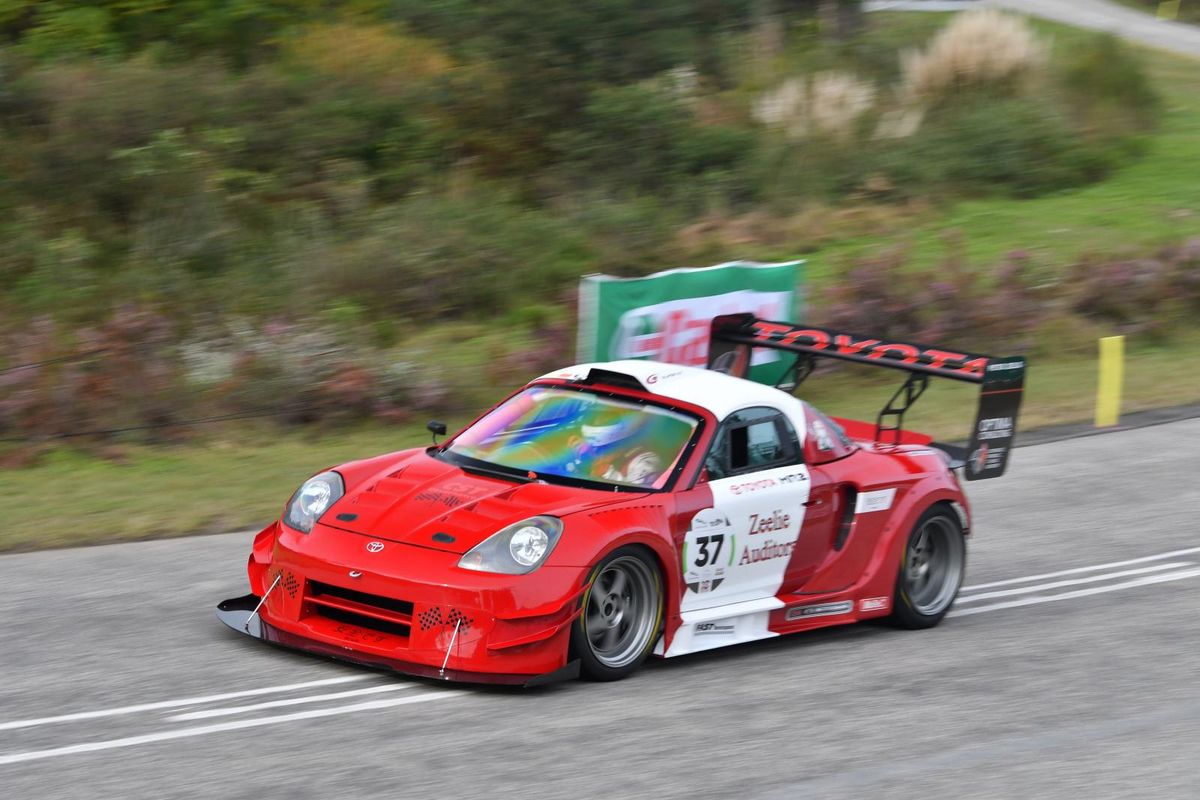
The modified saloons appeared to garner the most eyeballs as the crowd tried to get their minds around all the winglets, canards and snow-ploughs fitted to regular sportscars. Downforce and outright power proved to be enough for Franco Scribante to stay ahead of the pack – his GT-R dipped well below the magical 40-second mark with a 39.342. Second-placed Wilhelm Baard couldn’t get within a second of Scribante, notching up a time of 40.349 sec, but still half a second ahead of Franco Di Matteo (2000 Jaguar V8 Supercar) with a 40.862.
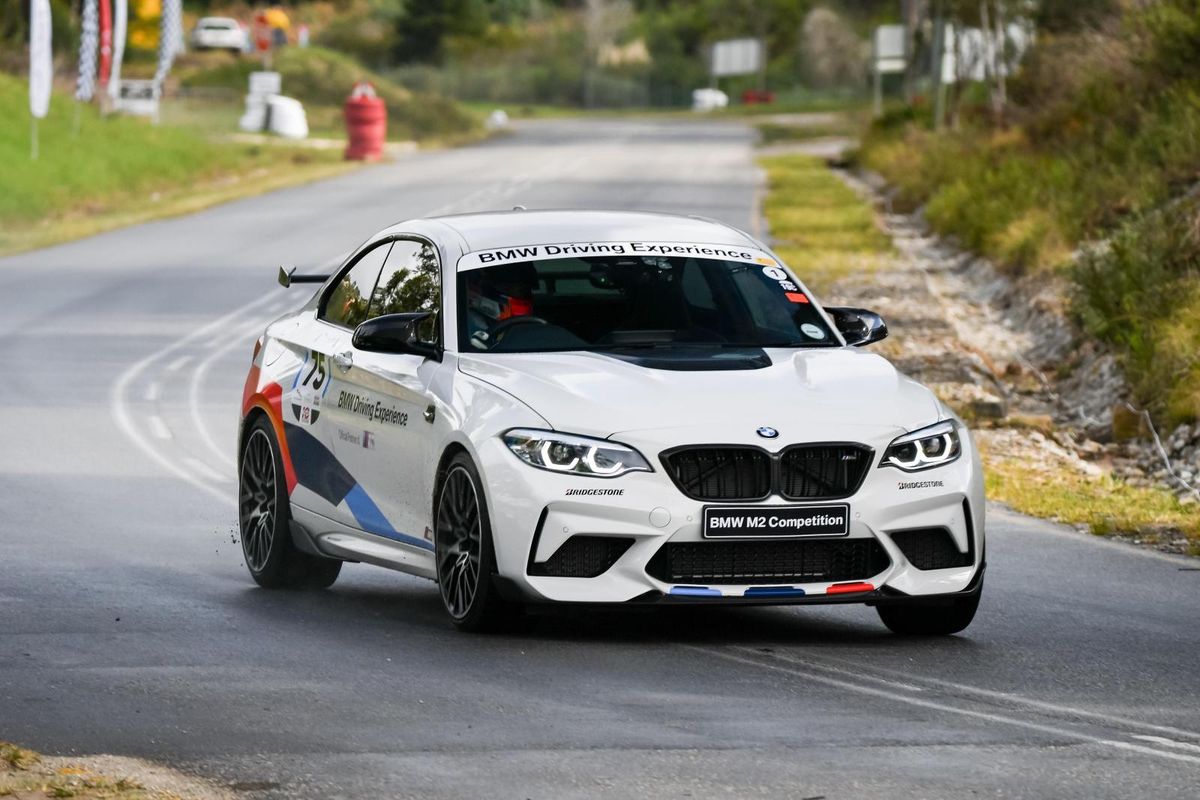
In the roadgoing supercar shootout, Reghard Roets maintained his 1-second gap over the standard cars, clocking a 44.094 ahead of Gavin Cronje’s F-Type SVR that managed a 45.040. Gennaro Bonafede managed to collect 3rd place in a BMW M2 Competition (45.938) after Mark Cronje picked up time penalties for clipping a few bollards in his final run.
The old guard
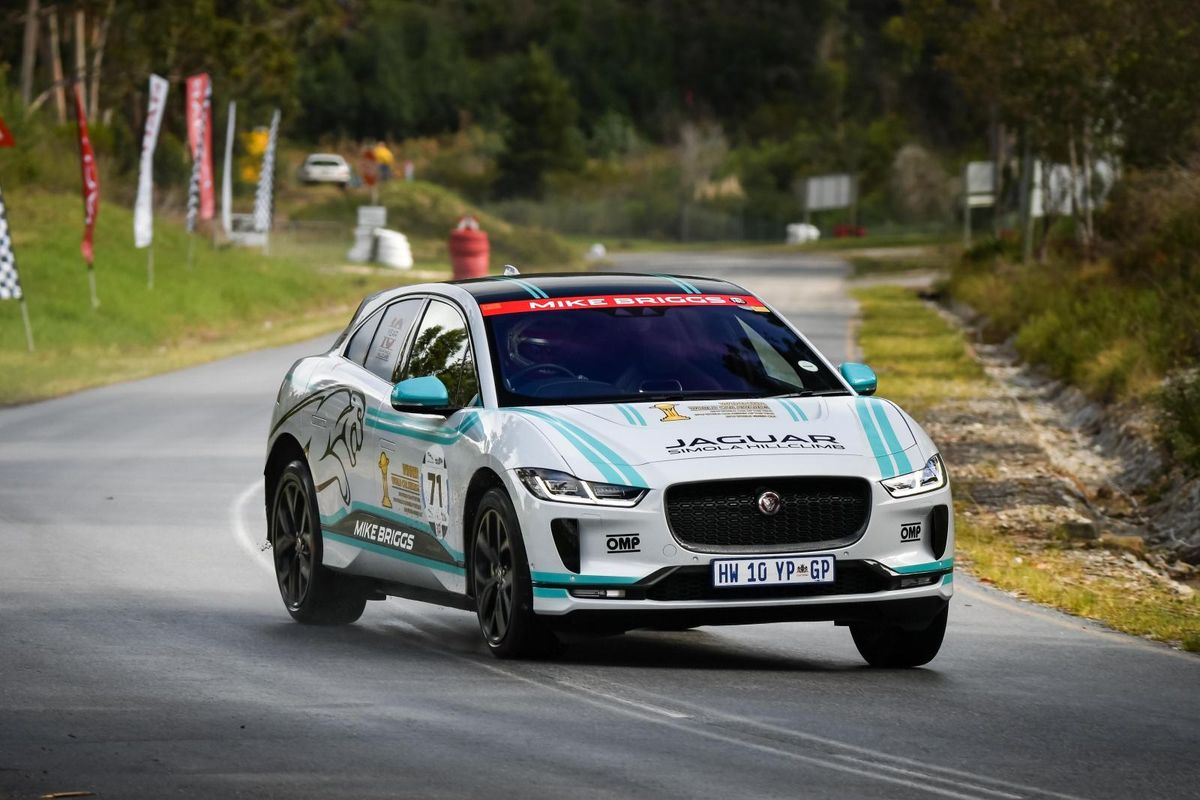
Mike Briggs turned back the clock and proved he was still the fastest of the old guard.
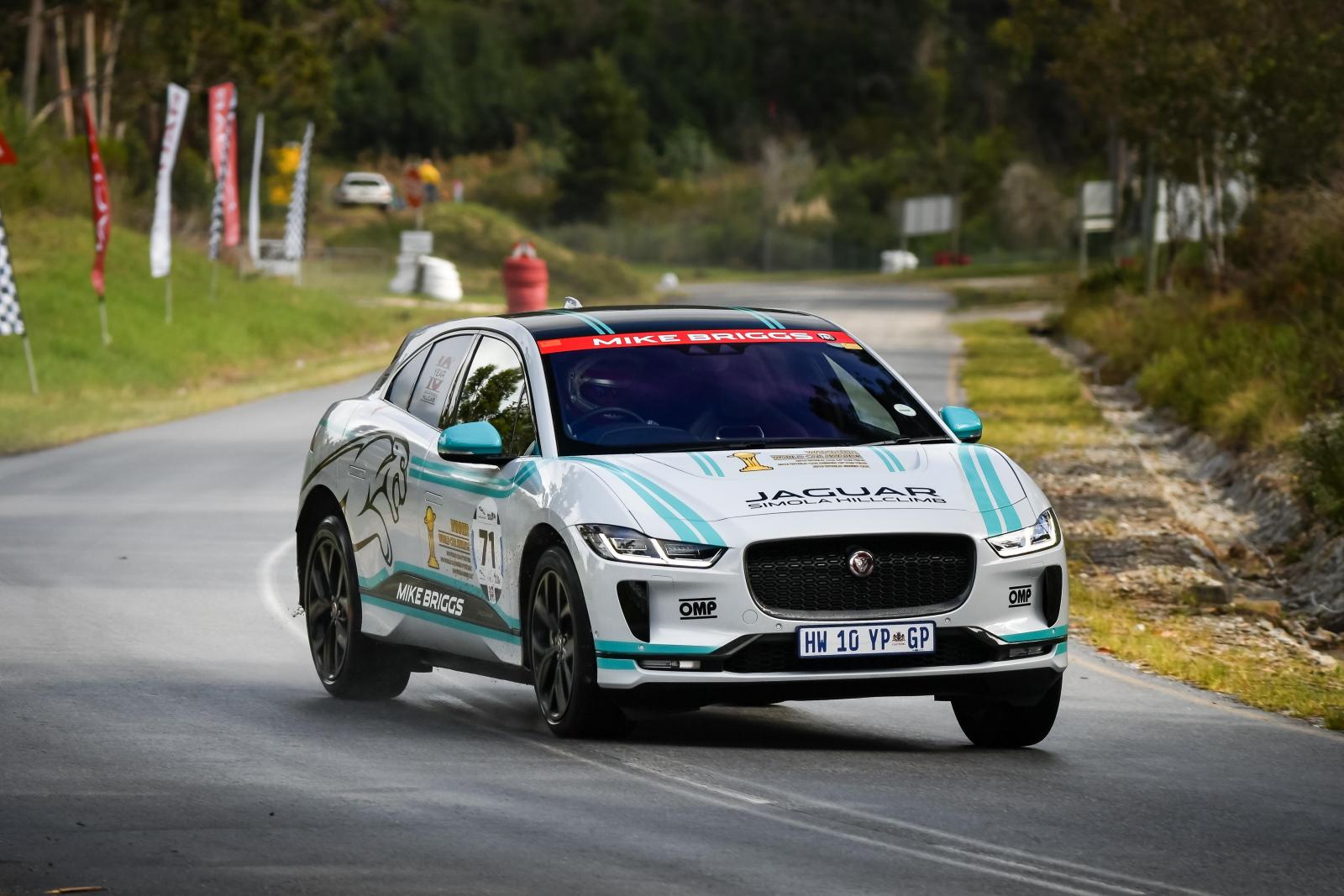
One of the great highlights of the event was watching 3 of South Africa's touring car greats – Mike Briggs, Deon Joubert and Shaun Watson-Smith – go head-to-head in new-school, all-electric cars. The brand new Jaguar I-Pace posed a unique challenge for the 3 stalwarts of SA motor racing as they would use maximum power available on the climb up the hill and then recoup the energy on the way down the hill. Briggs managed to beat his old rivals, with Deon Joubert 2nd and Watson-Smith 3rd.
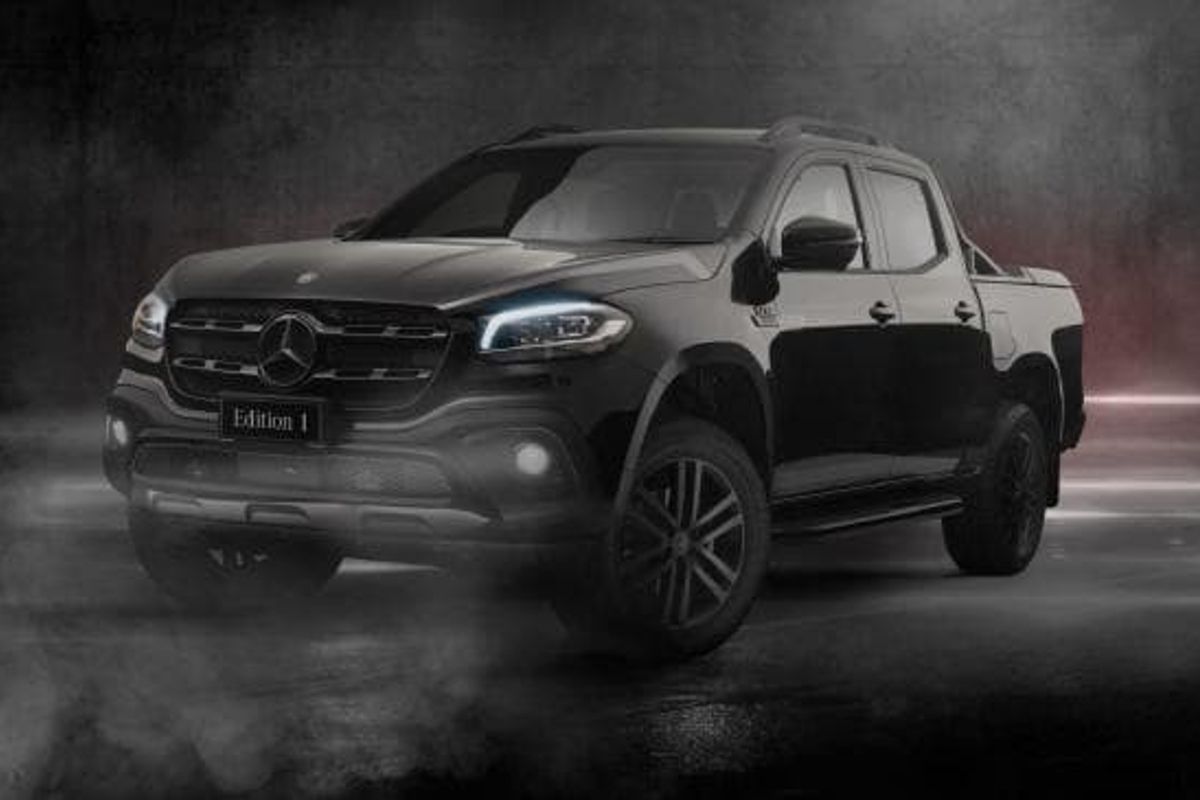
Mercedes-Benz has moved over to the dark side and revealed details of the X-Class Edition 1.
Despite disappointing overall sales Mercedes-Benz is increasing the marketing effort behind its X-Class double-cab bakkie. The premium German car brand has released images and details of the X350d Edition 1.
Mercedes-Benz usually launches AMG models with an Edition 1 variant, as an incentive supporting exclusivity by including optional extras and unique styling components. In the case of X-Class, adding an Edition 1 option more than a year after its launch appears curious.
The X350d Edition 1 is powered by 3.0-litre turbodiesel engine with 190 kW and 550 Nm of torque and is mated with a 7-speed automatic transmission.
Love Black?
Black detailing gives the X350d Edition 1 a menacing appearance.
The X350d Edition 1 is expected to trade at a 10% price premium over an X350d Power and what you get for that increased purchase price, is a lot of black detailing.
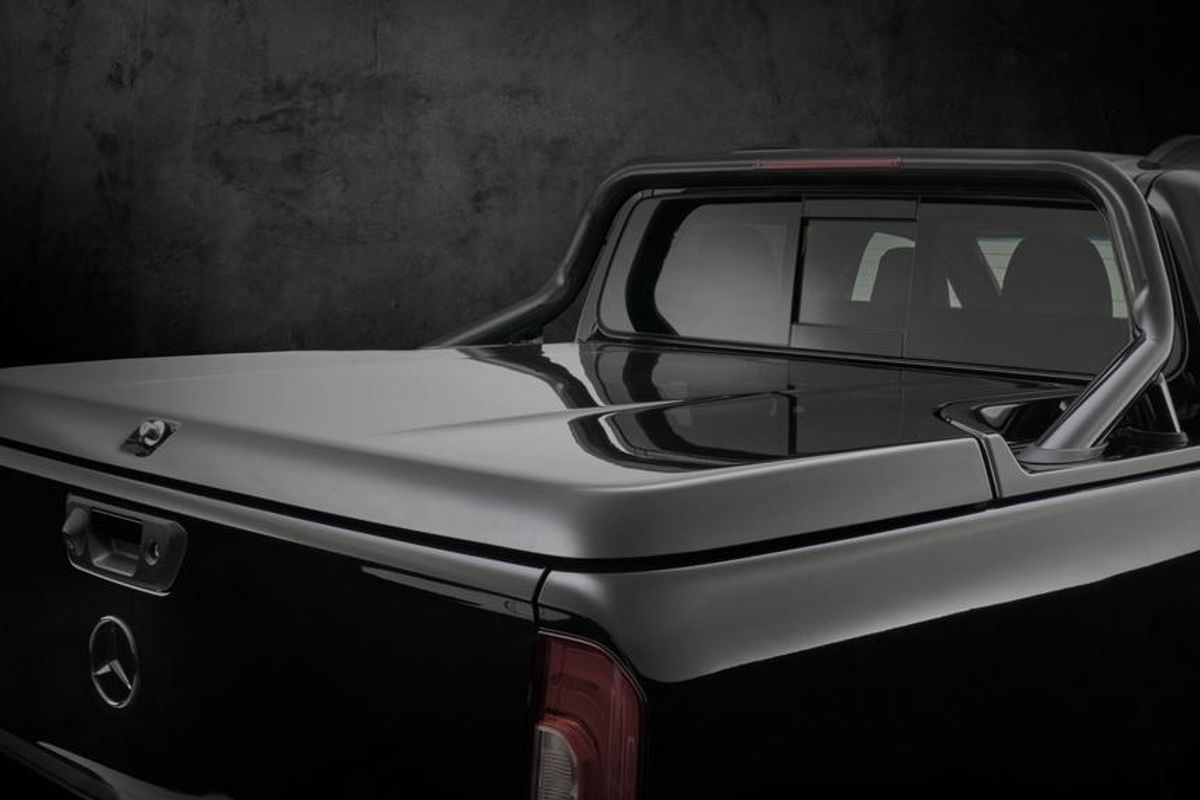
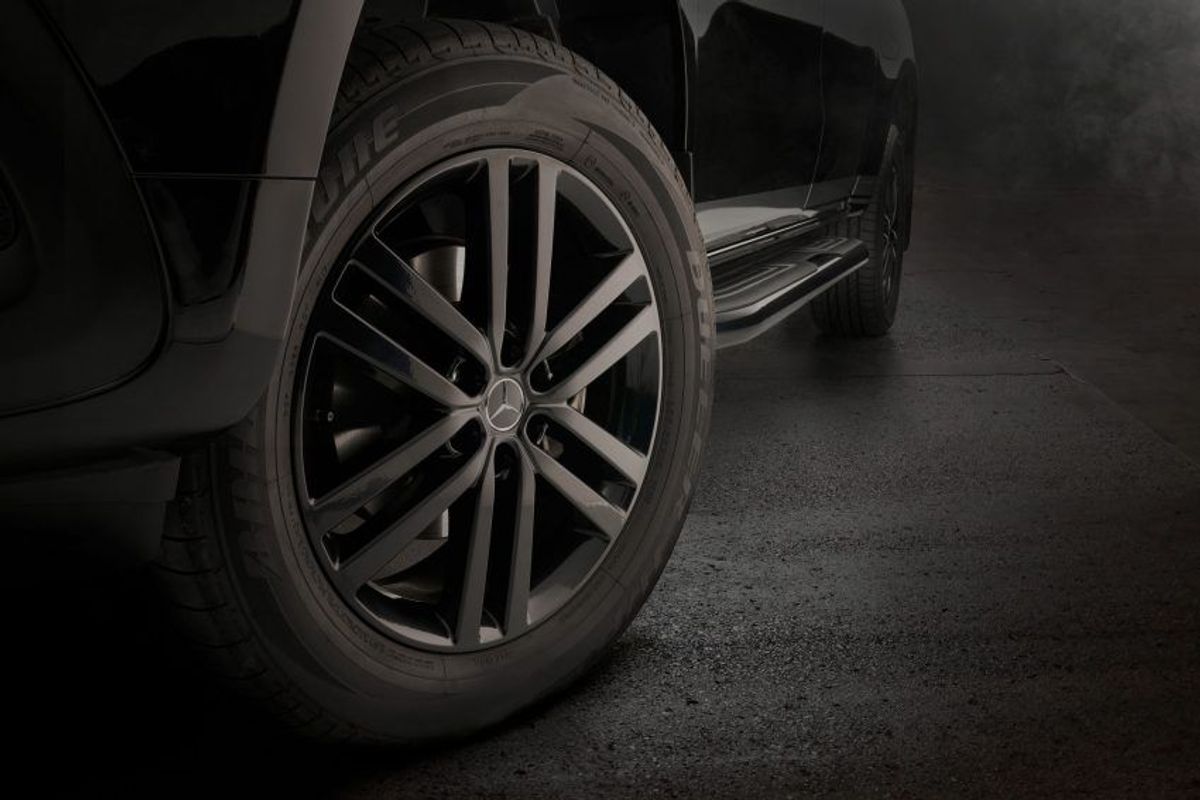
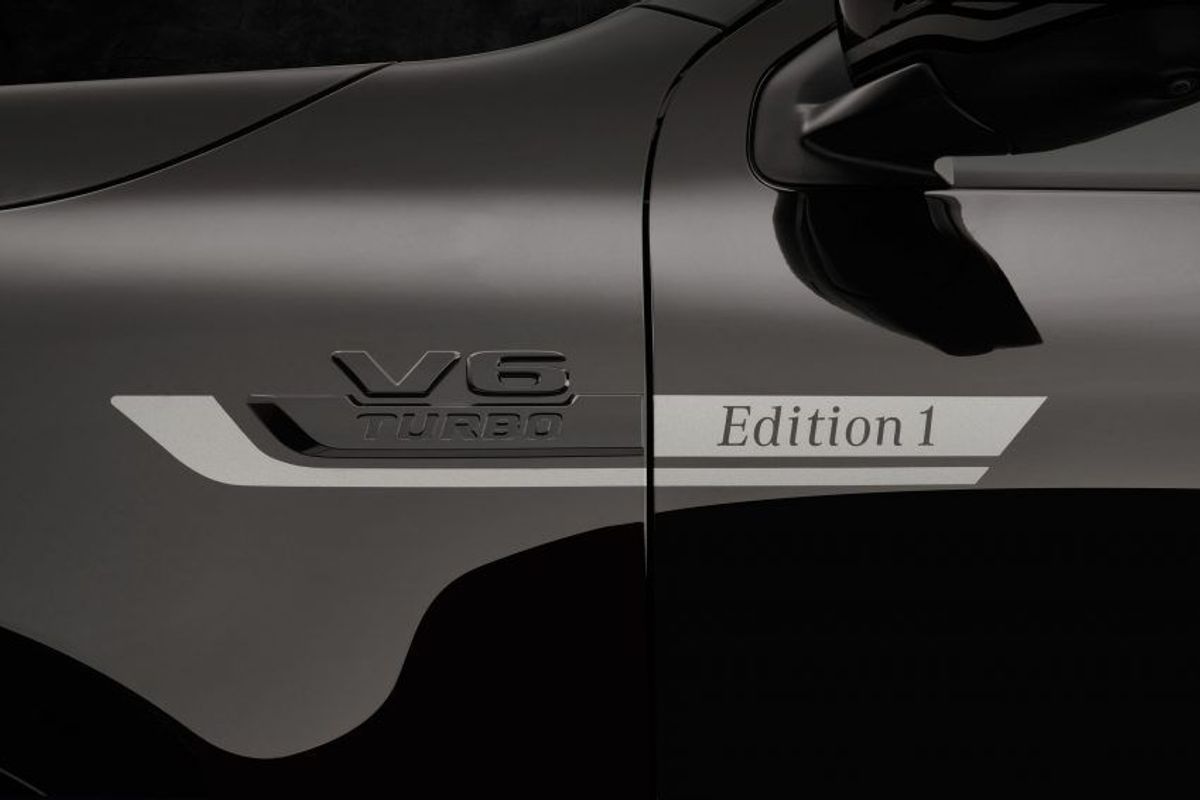
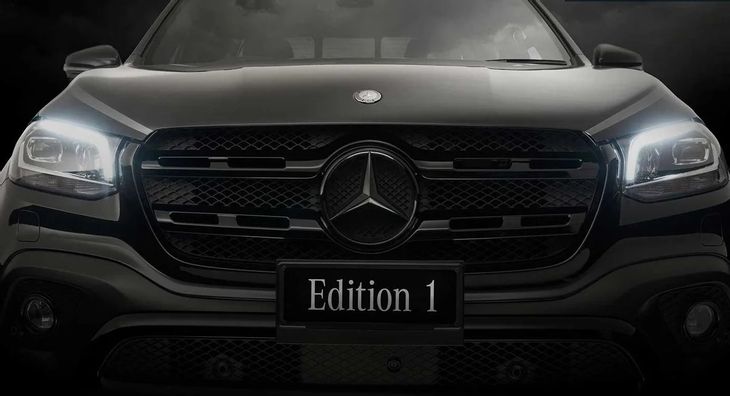
Edition 1 sees the X350d’s grille, lockable plastic tonneau cover, door and tailgate handles, wheels and all model designation badges finished in black. This new special edition X-Class will also only be available in 3 primary colours: white, grey and you guessed it, black. This Edition 1 bakkie also features grey vinyl go-faster stripes on the bonnet, tailgate and around the front quarter panel badging.
Showing off its Edition 1 attributes inside, are heated front seats, rear privacy glass (with an electrically operated sliding window) and Edition 1 badging.
Due for to commence delivery and sales in one of the world’s most important bakkie geographies – Australia – from July 2019, plans for this Edition 1 in other X-Class markets are unknown. Would you like to see the X350d Edition 1 on offer in South Africa?
BMW has dropped a teaser for the forthcoming 8 Series Gran Coupe which is expected to be revealed in June 2019.
We recently sampled the 8 Series Coupe at its local launch in M850i guise and came away impressed with the overall product and of course, its 390 kW/750 Nm 4.4-litre V8 engine. The 8 Series Convertible was also introduced earlier this year and now our attention shifts to the 4-door 8 Series Gran Coupe.
We have seen spy shots of the 8 Series Gran Coupe testing at the Nurburgring but now BMW has released a teaser image and has confirmed that the latest 8 will make its world premiere at the BMW NextGen event to be held in Munich on 25-27 June 2019 before being launched worldwide in September this year.
You can expect high levels of luxury and technology inside the 8 Series Gran Coupe and rear passengers will have ample space thanks to an extended wheelbase and it will employ the same twin-turbocharged 4.4-litre V8 engine as its coupe sibling and mated with an 8-speed automatic transmission in conjunction with all-wheel drive.
The highly-anticipated M8 Gran Coupe, which was shown in concept form at the 2017 Geneva Motor Show, is currently in development and it will top the 8 Series range when it arrives in 2020.
We will keep you informed as soon as more information becomes available.
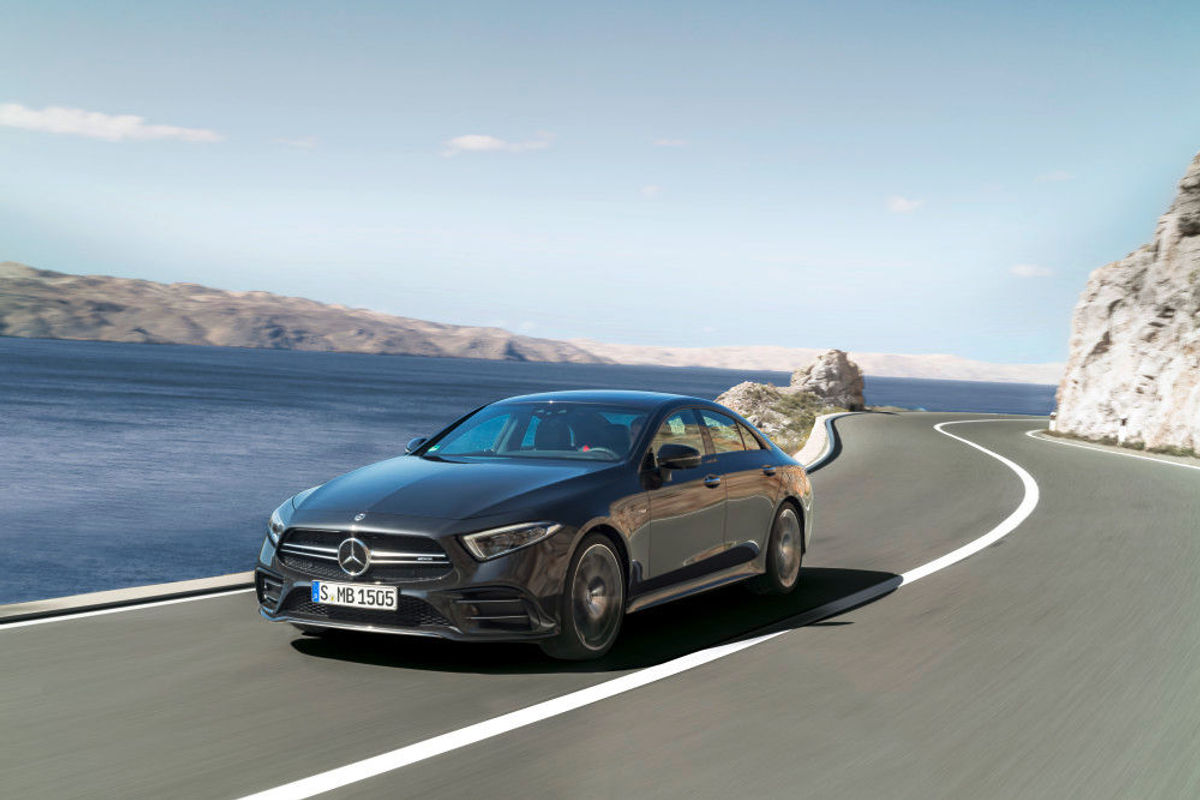
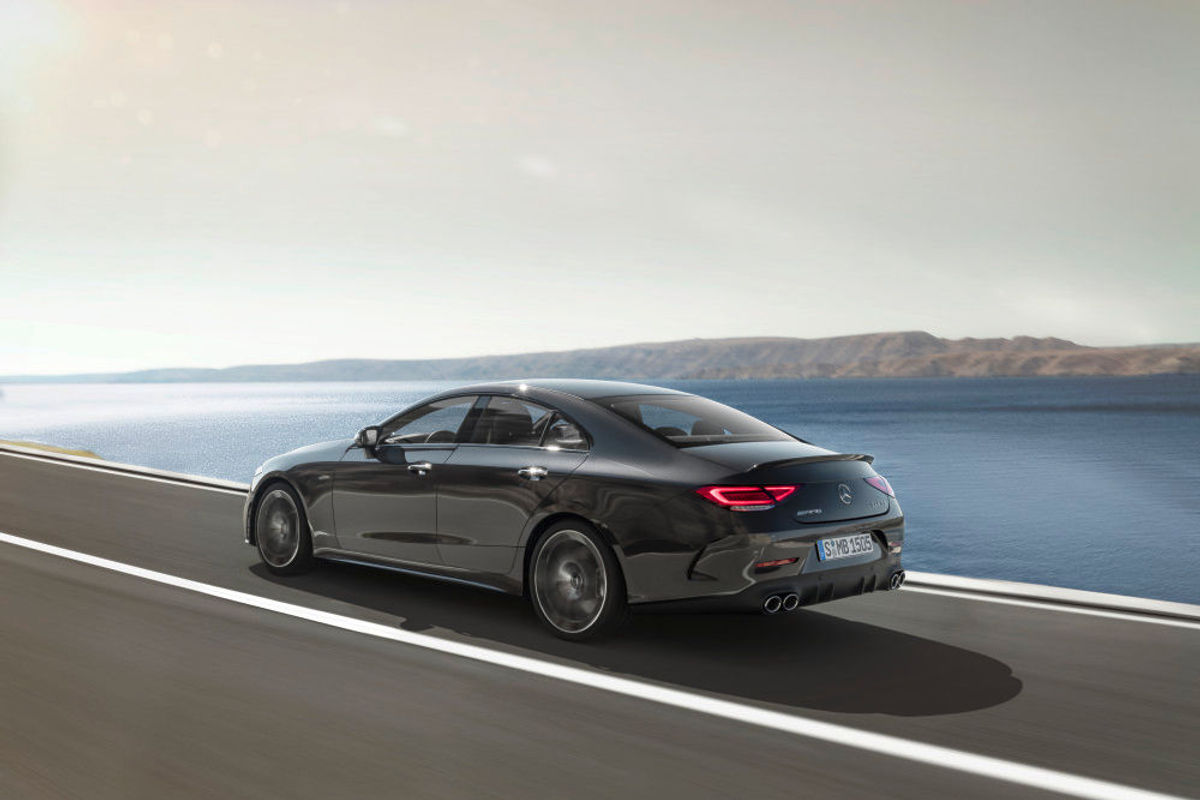
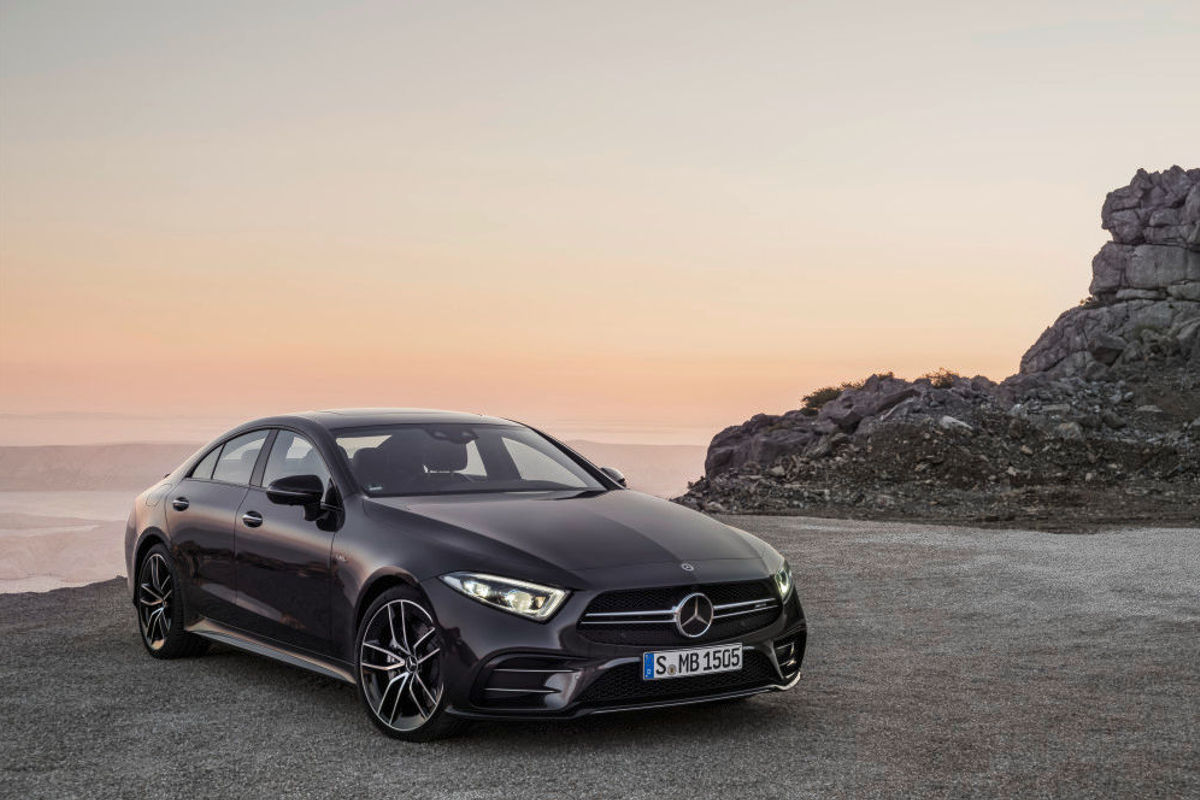
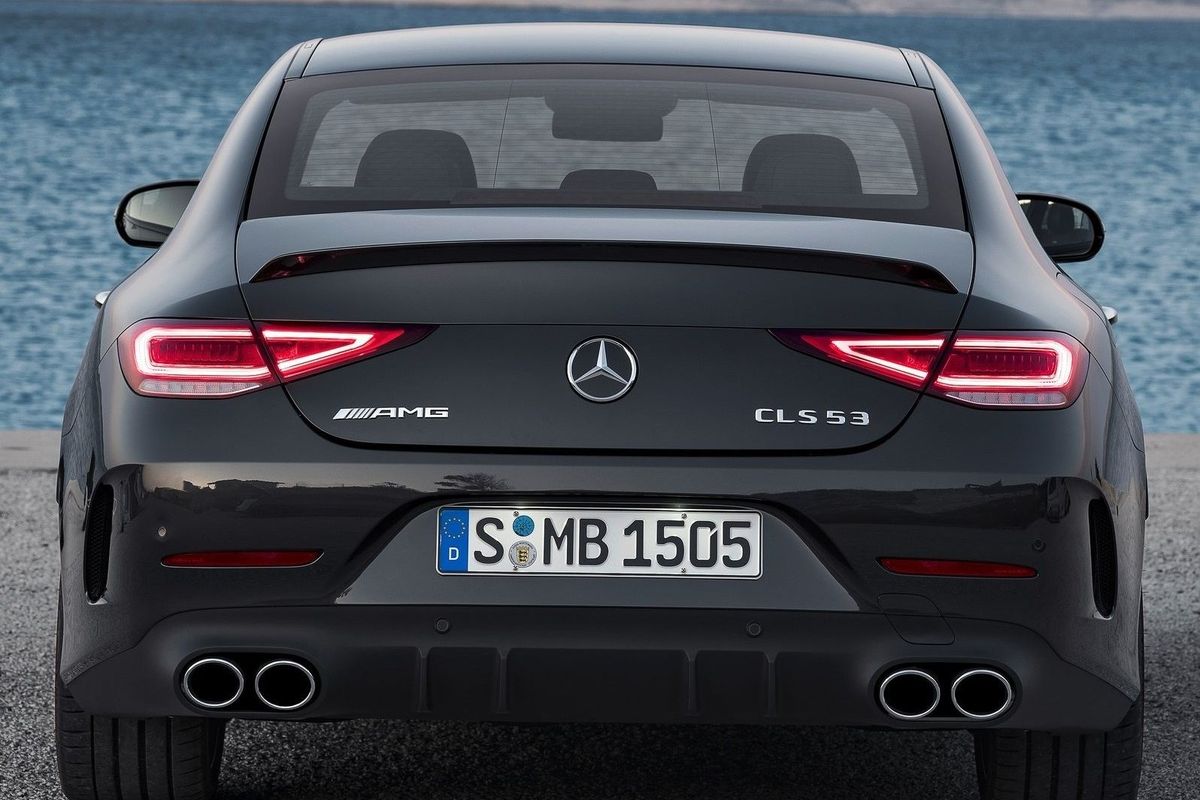
Mercedes-AMG welcomes the CLS 53 4Matic+ to South Africa! Take a look at the specification and pricing details below…
The Mercedes-Benz CLS, which is built on the E-Class platform, is a stylish 4-door coupe that's available in 2 flavours locally, now including an AMG version in the form of the CLS 53 4Matic+.
The CLS range kicks off with the CLS 400d, which is powered by a 3.0-litre turbodiesel inline 6 cylinder engine and it produces 250 kW and 700 Nm. Mated to a 4Matic all-wheel-drive setup, the CLS400d can sprint from zero to 100 kph in a claimed 5 seconds flat. Despite its impressive performance, it's quite frugal and Merc claims it'll sip just 5.8-6.0 L/100 km of diesel.
For those seeking more performance can consider the Mercedes-AMG CLS 53 4Matic. The 53 is powered by a 3.0-litre turbocharged 6-cylinder engine which offers 320 kW and 520 Nm. It also features a clever 48-volt onboard electrical system mounted between the engine and the 9-speed automatic gearbox. The integrated starter/generator (ISG), an alternator/starter motor and flywheel combo contribute 16 kW and no less than 250 Nm to the engine’s already imposing output. The CLS 53 features an AMG Speedshift TCT 9G gearbox and is claimed to sprint from zero to 100 kph in a claimed 4.5 seconds.
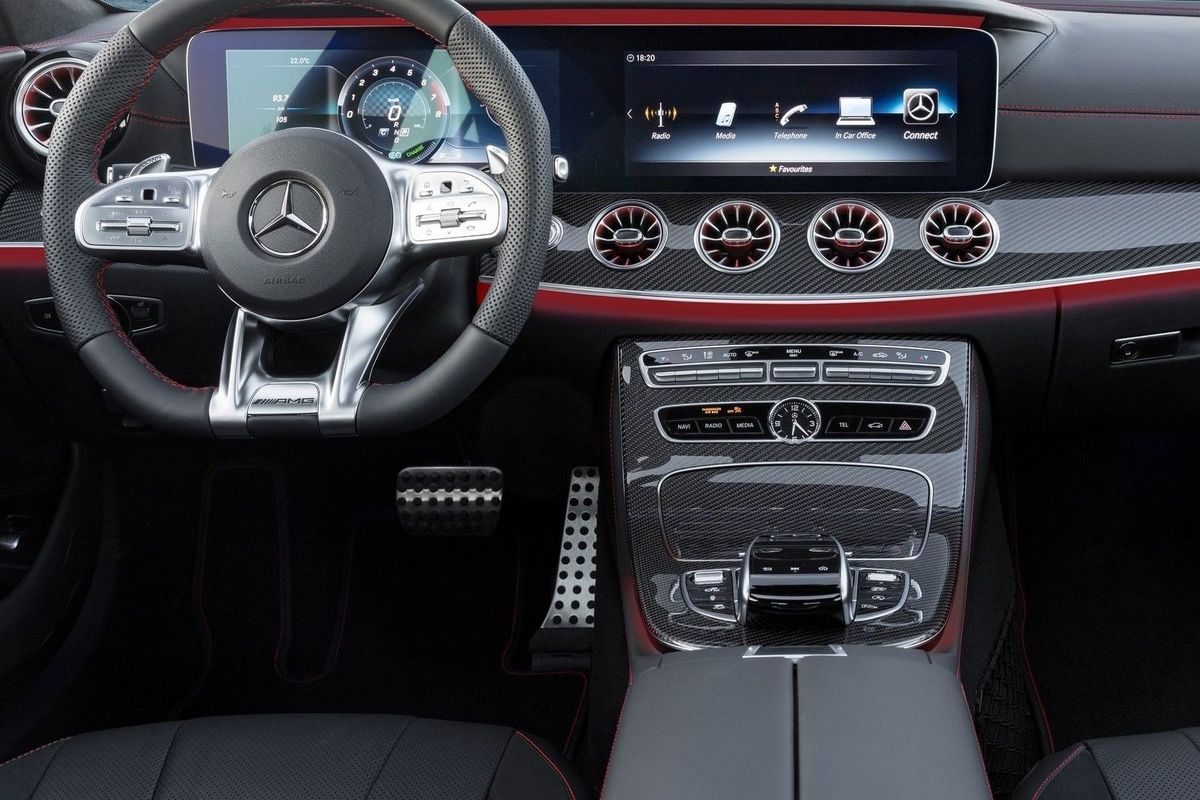
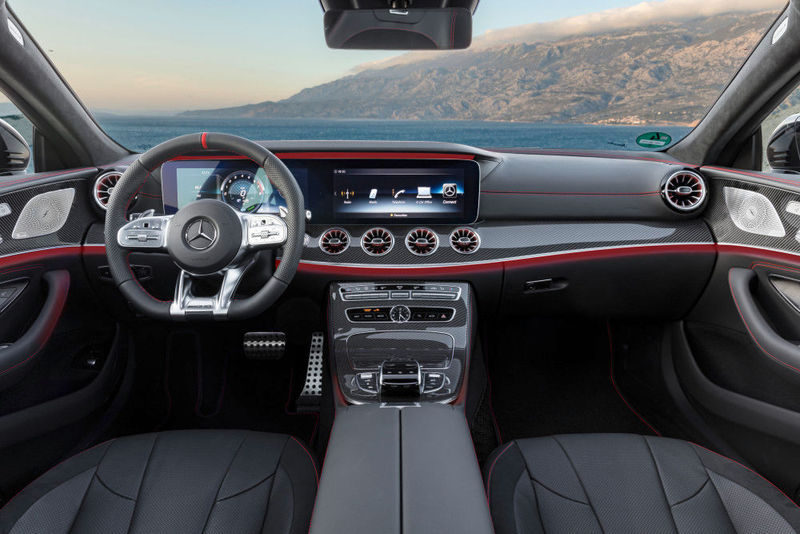
The interior of the Mercedes-AMG CLS 53 4Matic+ is both sporty and sophisticated with luxury finishes including an optional Widescreen Cockpit.
As for the interior, an optional Widescreen Cockpit is offered which adds luxury and visual appeal to the interior with the digital instrument dials and a large central infotainment display creating an impressive user interface.
An AMG CLS 53 4Matic+ Edition 1 is also on offer and features a Copper Art interior design which includes copper-colour highlights, black Nappa leather upholstery with contrasting copper stitching which is also seen on the instrument panel, armrests, door panels and floor mat piping. There are also carbon fibre trim elements and a performance steering wheel with Edition 1 badging.
Look out for our launch review of the Mercedes-AMG CLS 53 4Matic+ coming your way later this week.
Mercedes-Benz CLS Price in South Africa (February 2019)
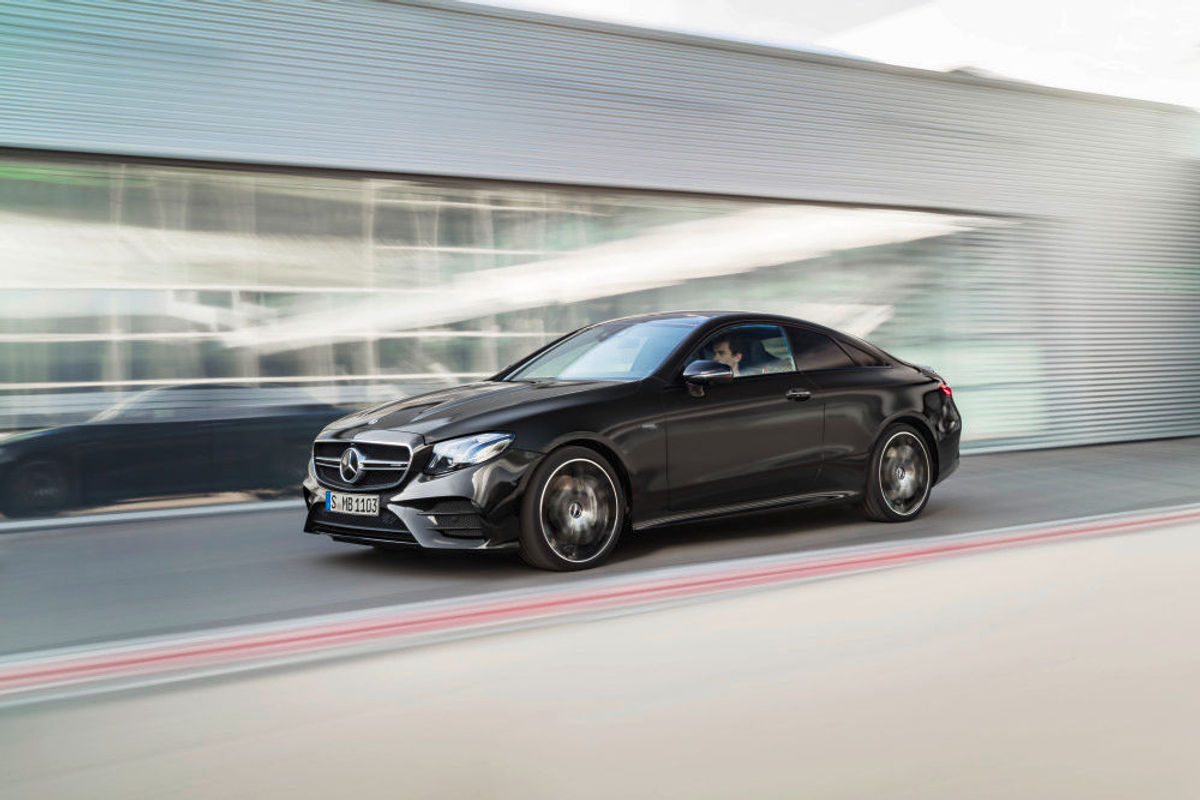
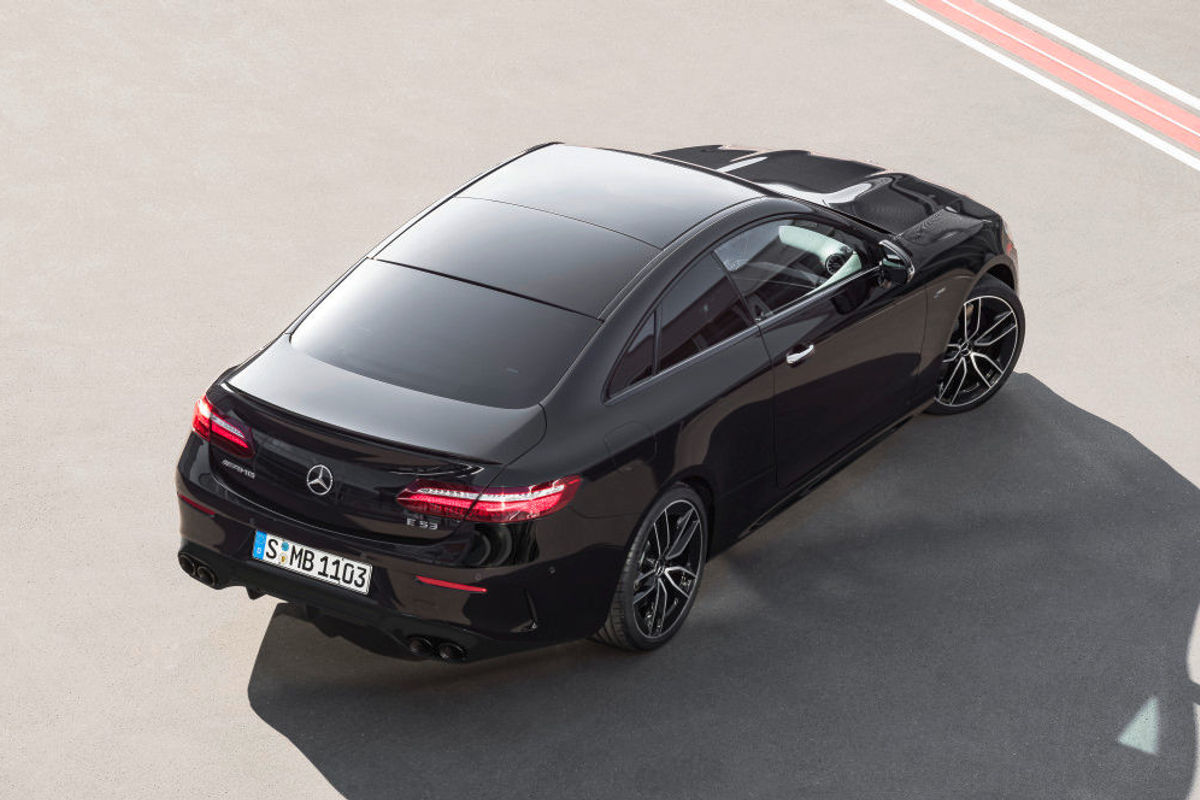
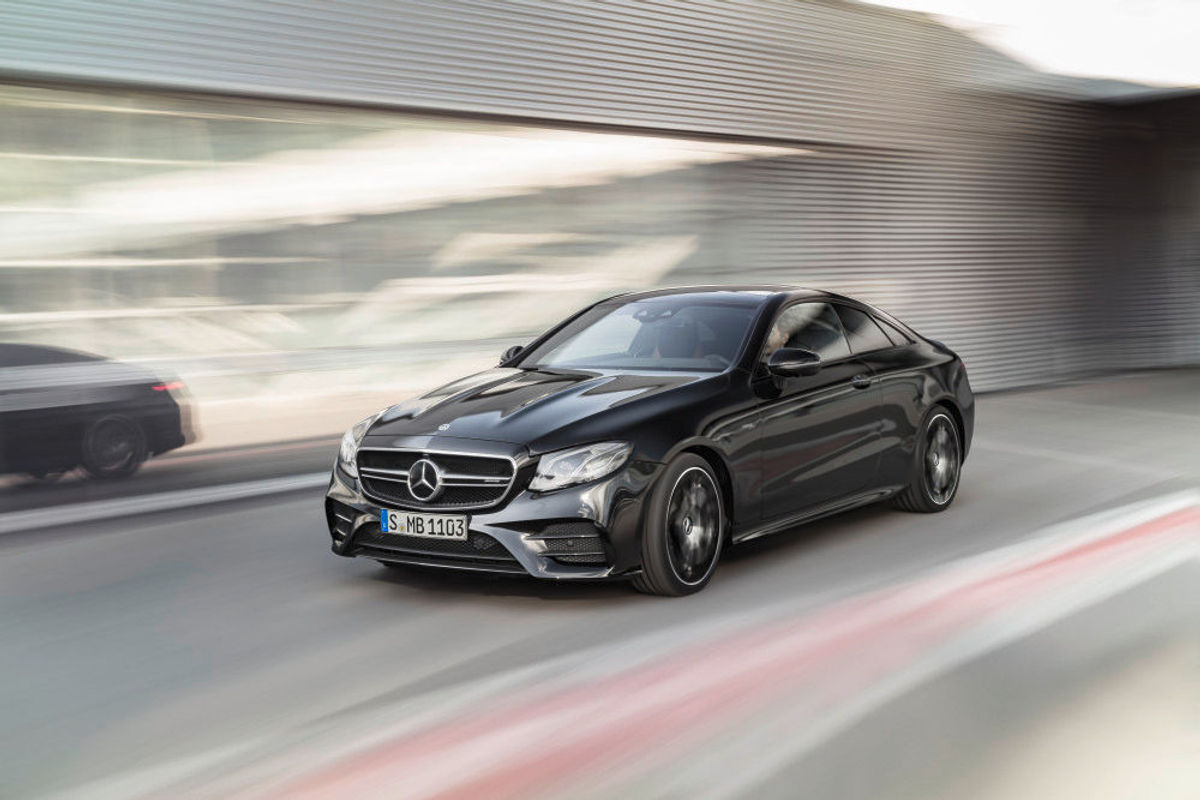
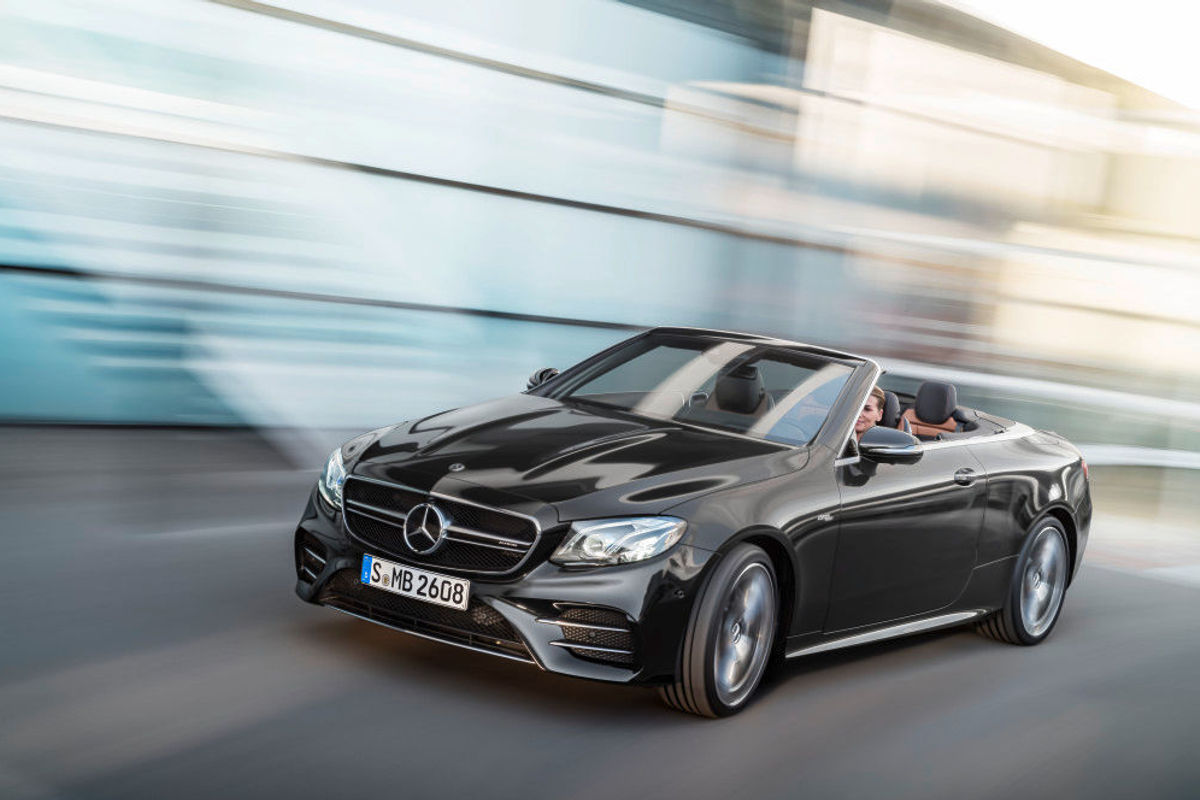
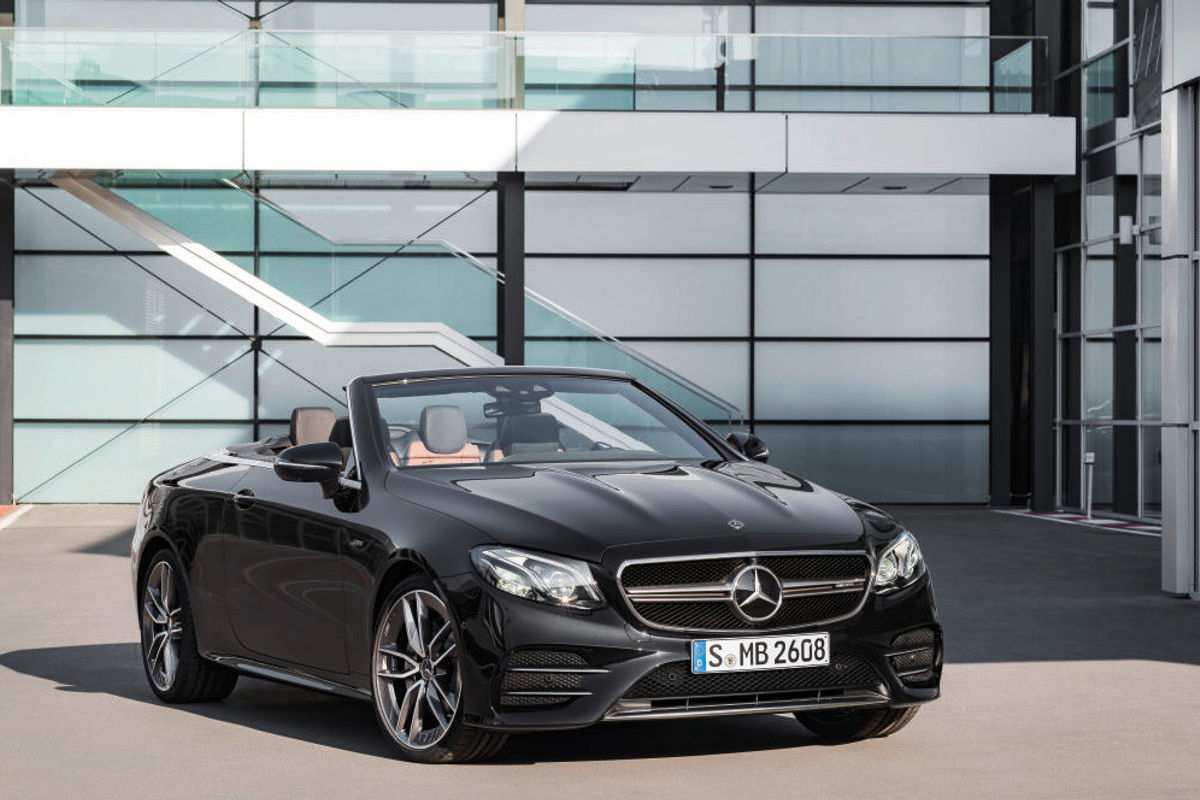
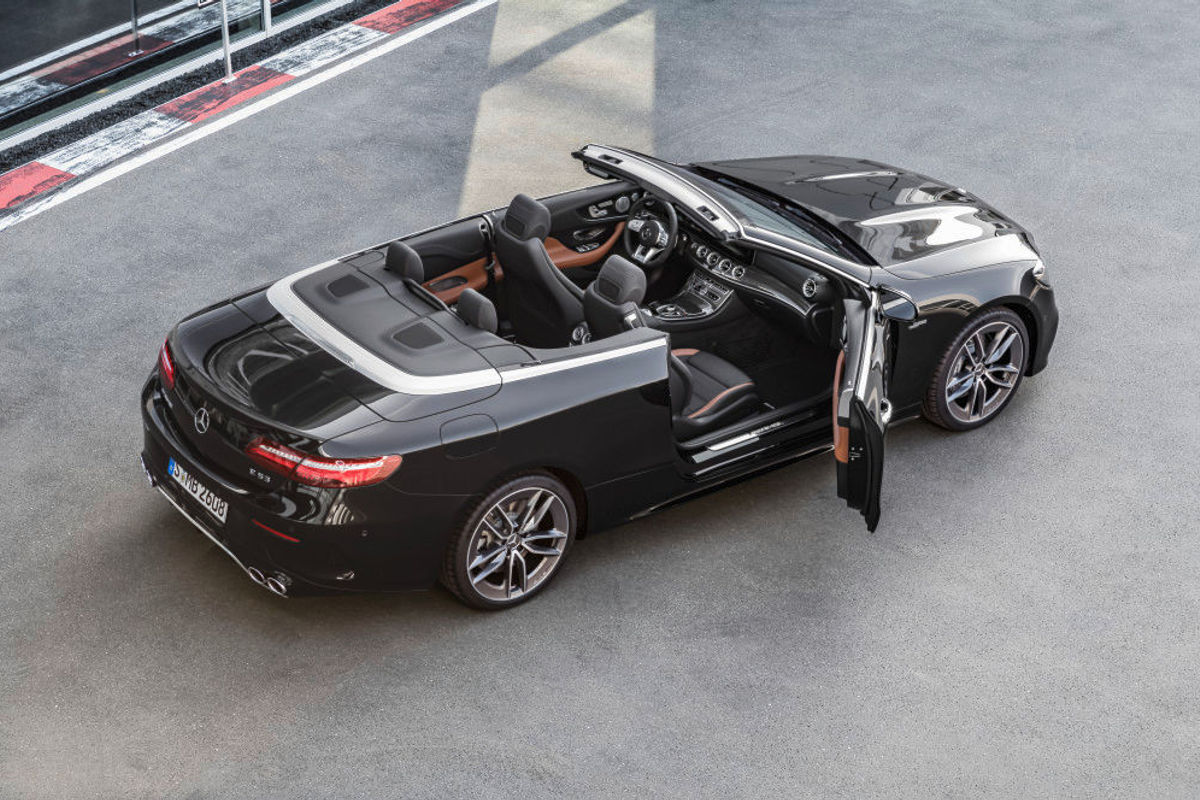
The Mercedes-AMG E53 4Matic+ has arrived in South Africa and is now offered in both coupe and cabriolet guises. See specification and pricing below…
The Mercedes-Benz E-Class range has been expanded to include a new performance model which effectively replaces the E43 and slots in below the fiery E63 S. It's called the E53 and it boasts an advanced and electrically-assisted bi-turbo straight-6 engine.
High-tech engine
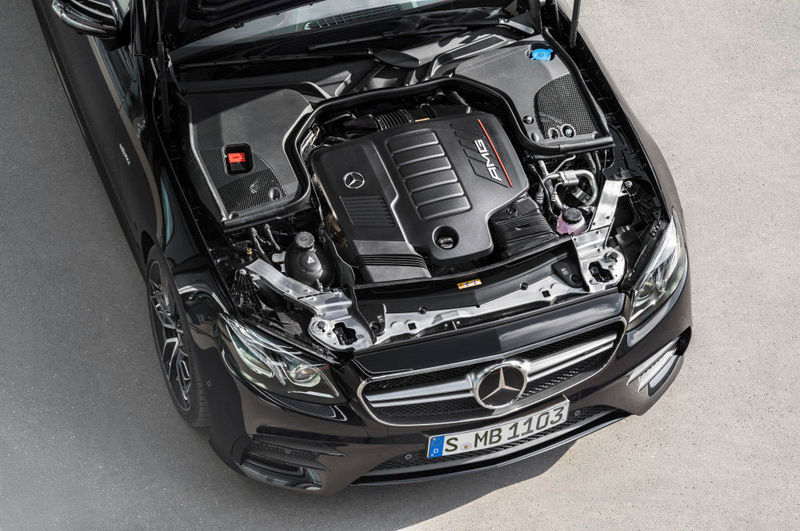
A powerful, electrically-assisted 3.0-litre 6-cylinder does service in the E53 with 320kW and 520 Nm of torque.
The 53 is powered by a turbocharged 3.0-litre engine of extraordinary complexity. Deep breath. It’s an in-line 6-cylinder turbopetrol, mounted longitudinally, the exhaust outlets pass through a single, large, twin-scroll turbocharger. To cover the inevitable turbo lag from this, there is also an electrically powered compressor, located on the other side of the block, just before an intercooler right next to the inlet ports, which can help suck air through the induction tract while the turbocharger builds up enough boost.
It makes 320 kW and 520 Nm, which is a lot in itself. But in addition to both of these forced inductors, mounted between the engine and the 9-speed automatic gearbox sits an integrated starter/generator (ISG), an alternator/starter motor and flywheel combo, which can contribute 16 kW and no less than 250 Nm to the engine’s already imposing output.
All of this power goes to the E53's rear wheels most of the time, with a standard all-wheel-drive system on all models diverting it to four wheels when the rears threaten to slip. Performance is impressive for a big luxury barge. Expect zero to 100 kph to come up in a claimed 4.4 seconds and it'll run onto a top speed of 250 kph while the Cabriolet is only 1 second slower. Fit the optional AMG Drivers Package and it'll go to 270 kph. The new Mercedes-AMG E53 features a 9-speed automatic gearbox. In terms of fuel consumption, Mercedes-AMG claims a combined figure of 8.7 L/100 km for the E53 Coupe while the E53 Cabriolet claims a figure of 8.8 L/100km.
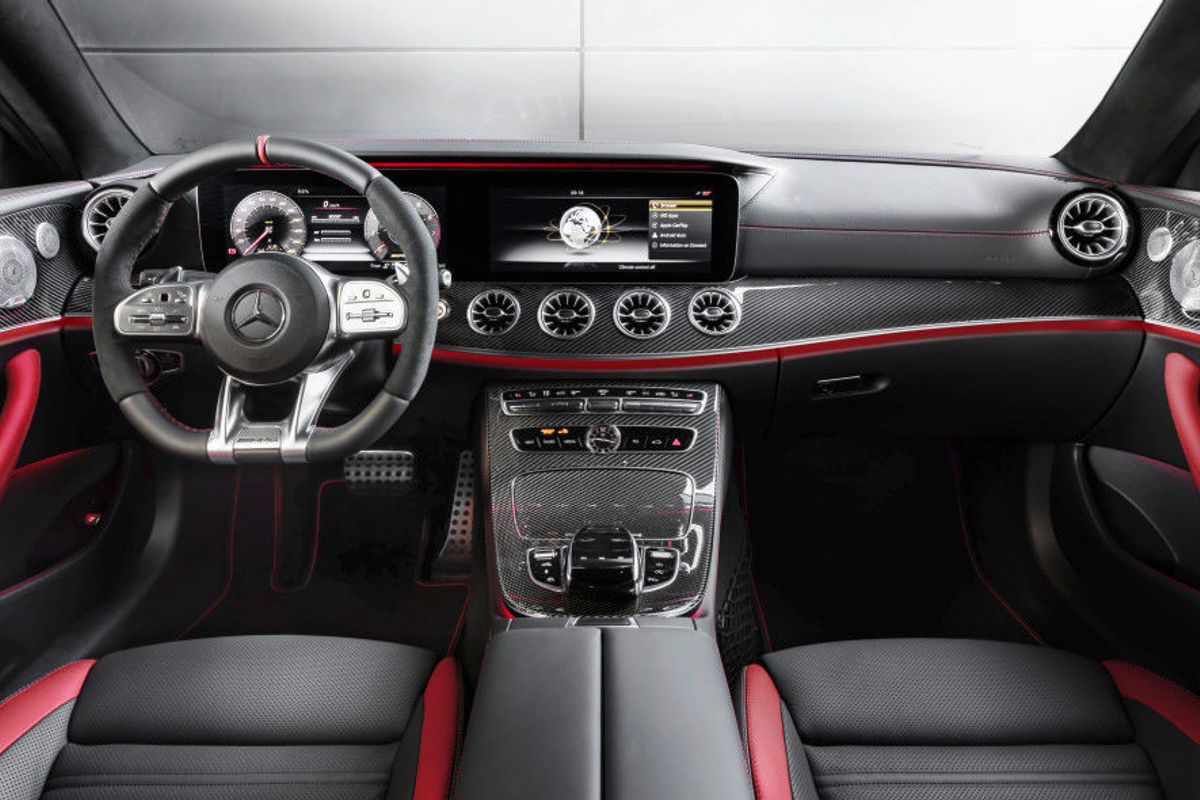
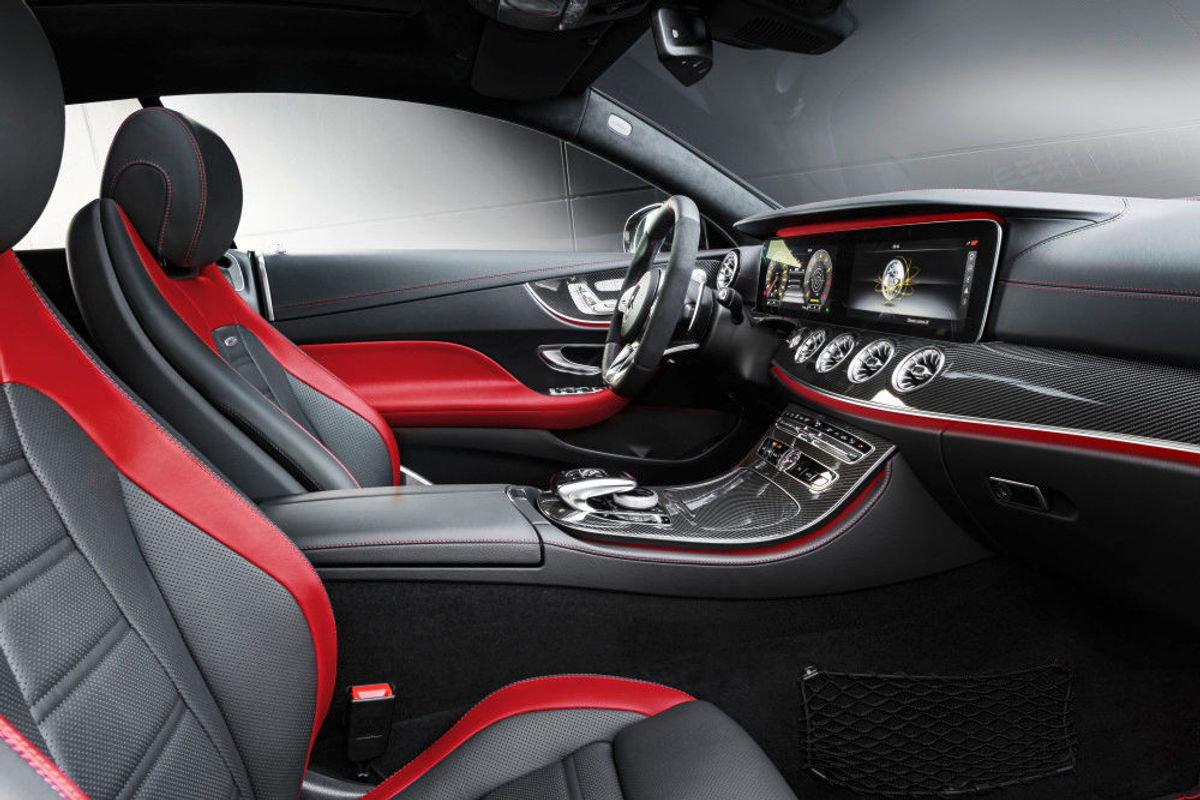
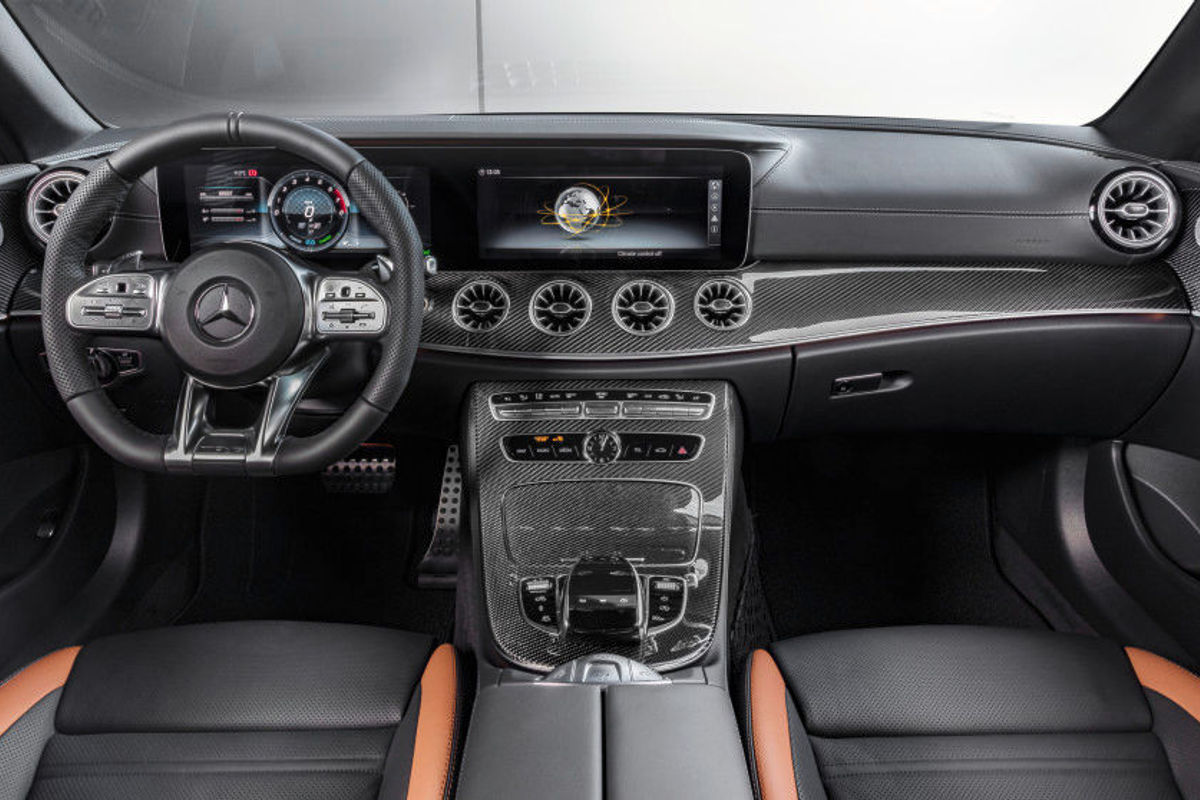
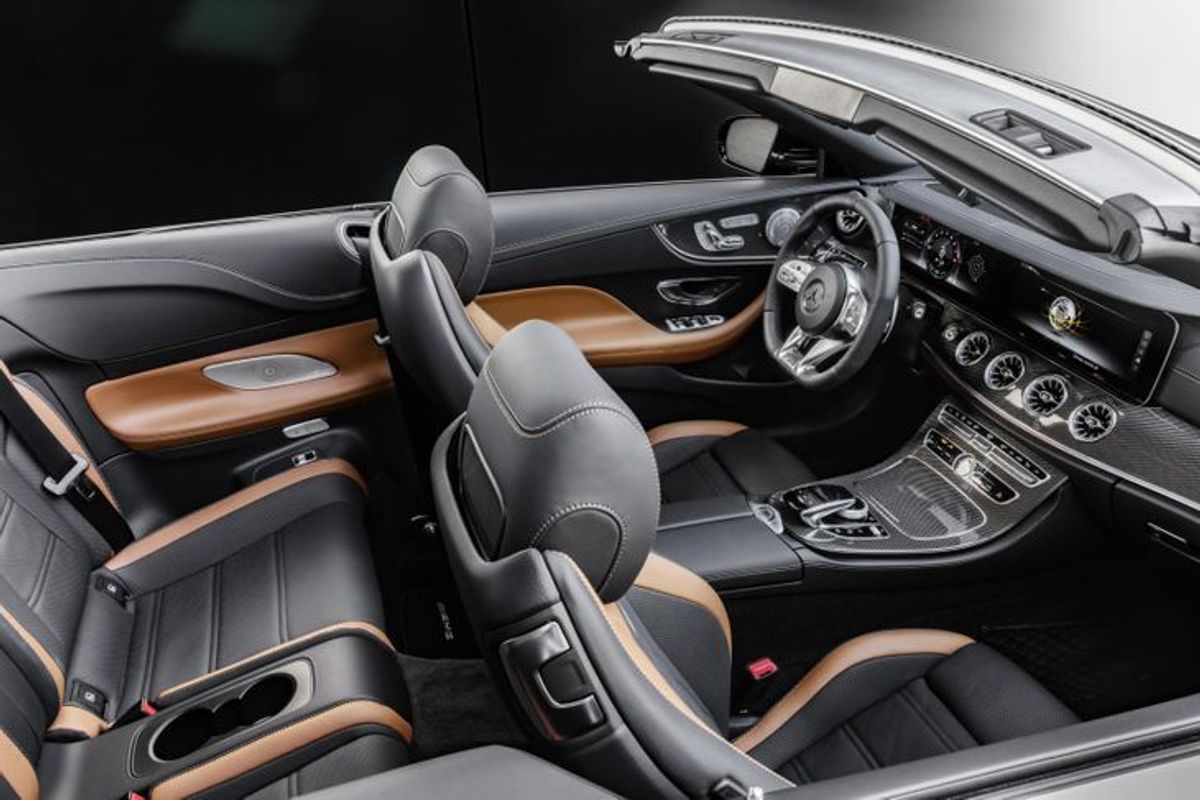
As for the interior, an optional Widescreen Cockpit is offered which adds luxury and visual appeal to the interior with the digital instrument dials and a large central infotainment display creating an impressive user interface. Buyers can choose from a variety of trims and finishes to suit your taste, see pricing below.
Look out for our launch review of the Mercedes-AMG E53 4Matic+ coming your way this week!
In this review, Ciro De Siena explores the all-new Toyota RAV4 in depth on Cape Town's scenic roads.
It may come as some surprise to you that in 2018, the Toyota RAV4 was the 5th best selling car in the entire world. There is a lot at stake here and Toyota must have felt some pressure to get this one right.
So, have they? We take a detailed look at the interior, the infotainment system, the ride quality and all-important boot space. We also discuss the engine and transmission choices for the new range and the fact that there will be no diesel or hybrid variants available in South Africa.
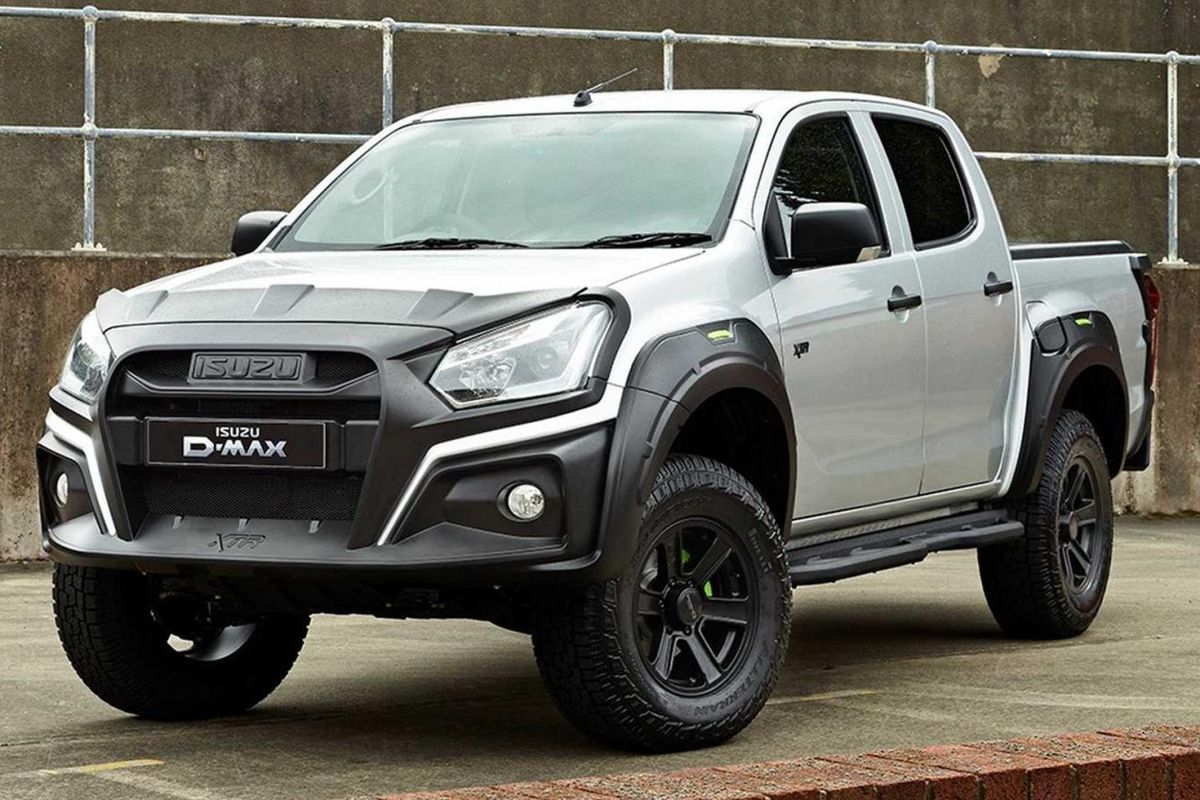
Isuzu has inadvertently built a bakkie for Darth Vader. Meet the XTR!
As the global bakkie market shows absolutely no signs of product saturation, Isuzu is the latest brand to add a special edition double-cab derivative.
It’s called the XTR and Isuzu’s designers and engineers have attempted to create a Japanese double-cab bakkie with enormous presence and improved off-road ability.
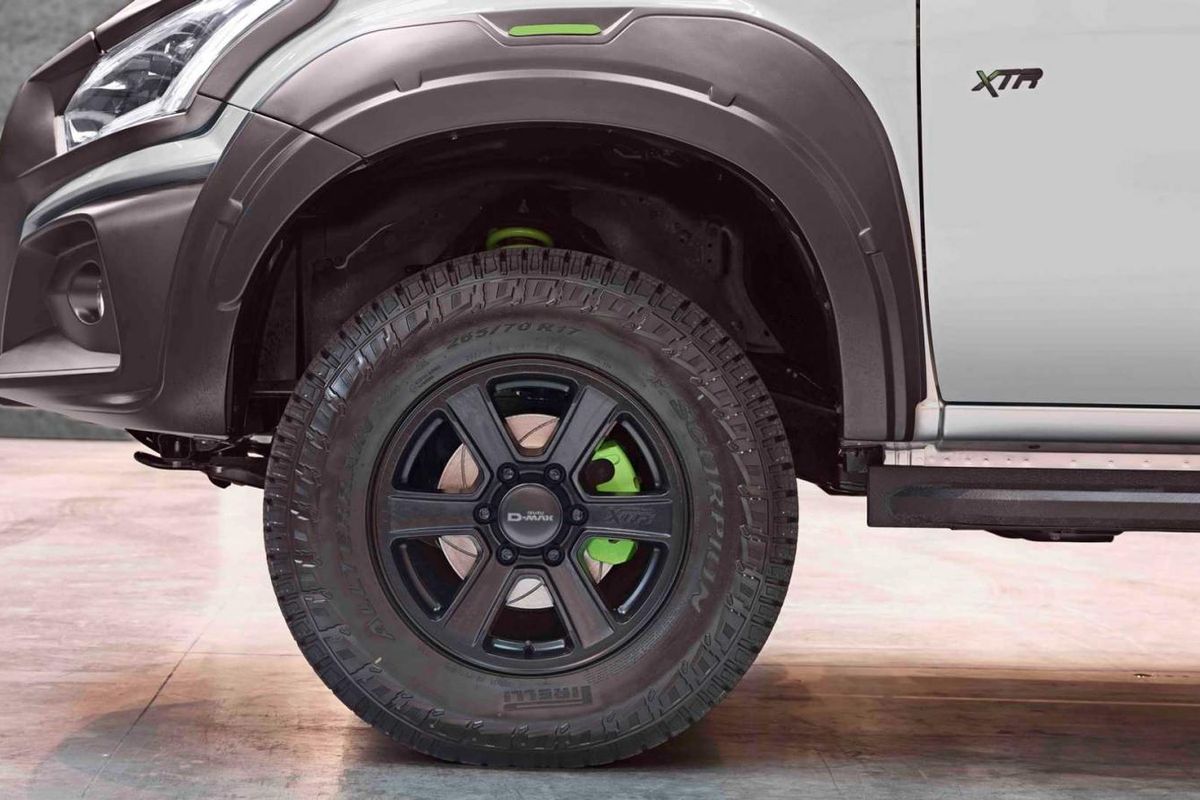
The appearance is striking, with substantial black protective cladding added to the wheel arches and D-Max grille, which transforms into something unlike anything seen on any other bakkie.
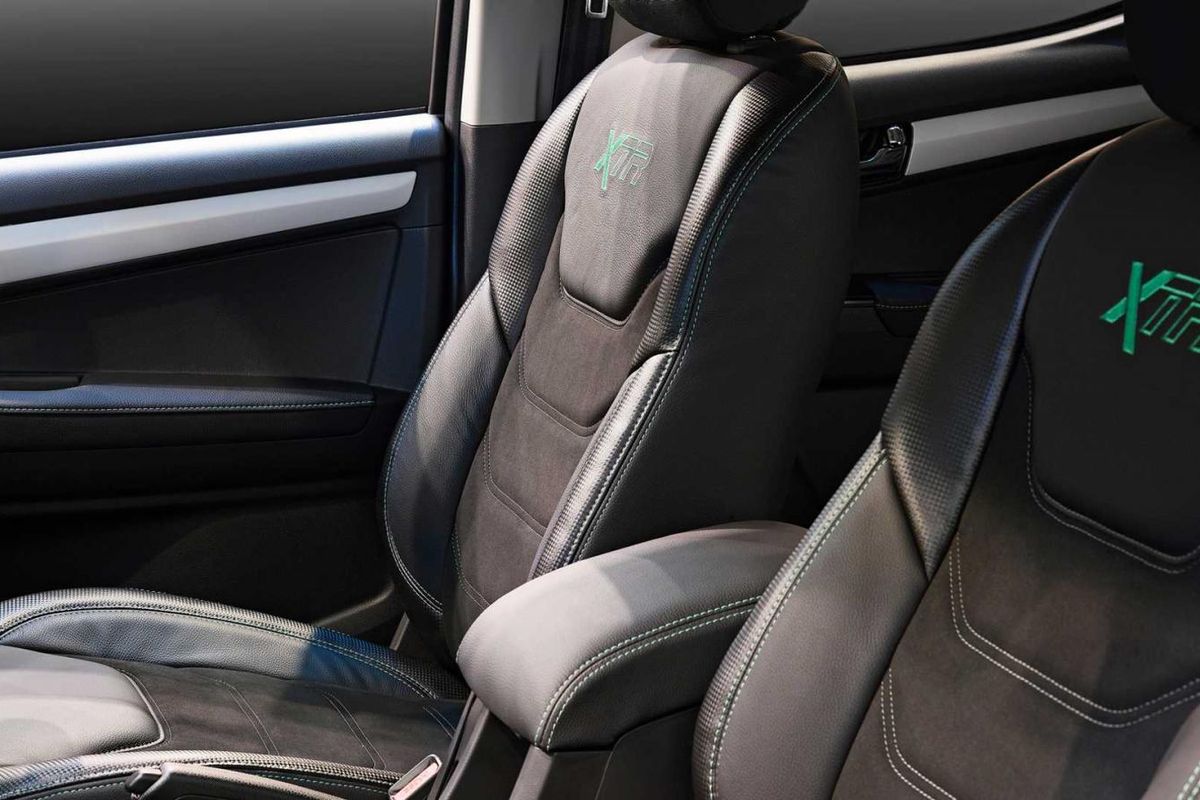
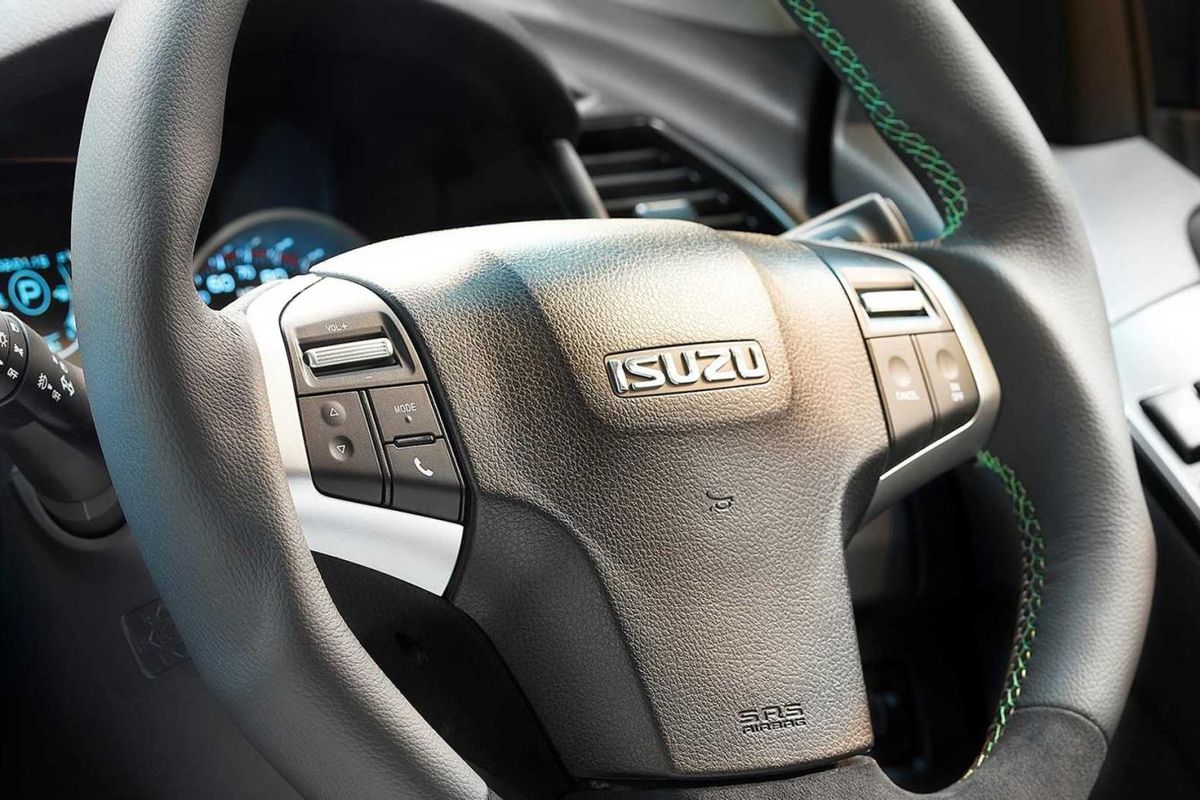
Contrasting with the black plastic protection bits are green brake callipers and fender details. This green theme is repeated in the XTR’s cabin too, with lime steering wheel stitching and similarly hued ‘XTR’ seat logos.
Rolling Isuzu’s XTR along are 17-inch wheels wrapped in Pirelli Scorpion all-terrain tyres and the stance is substantially more imposing than a conventional D-Max double-cab 4×4. An off-road appropriate suspension kit from Pedders raises ground clearance to 250mm and improves ride quality in severely technical off-road terrain.
One detail concerning the Isuzu XTR which might underwhelm South African followers of the Japanese bakkie brand, is its engine. This most purposeful Isuzu double-cab is powered by the brand’s latest turbodiesel engine technology, which is significantly downsized, at only 1.9-litres of capacity. Peak power rates 120 kW, supported by 360 Nm of torque.
The Isuzu XTR is initially planned for delivery in the United Kingdom, but other bakkies markets where Isuzu does a brisk trade – such as South Africa – should be ideal candidates for it too but its arrival in SA has yet to be confirmed.
How to watch the 2019 Jaguar Simola Hillclimb event
This weekend marks 10 years of the Jaguar Simola Hillclimb event. If you can't be in Knysna this weekend, here's how to watch it.
Kicking off on Friday with Classic Car and ending with the King of the Hill on Sunday afternoon, the Jaguar Simola Hillclimb has become one of the most prestigious motorsport events in South Africa.
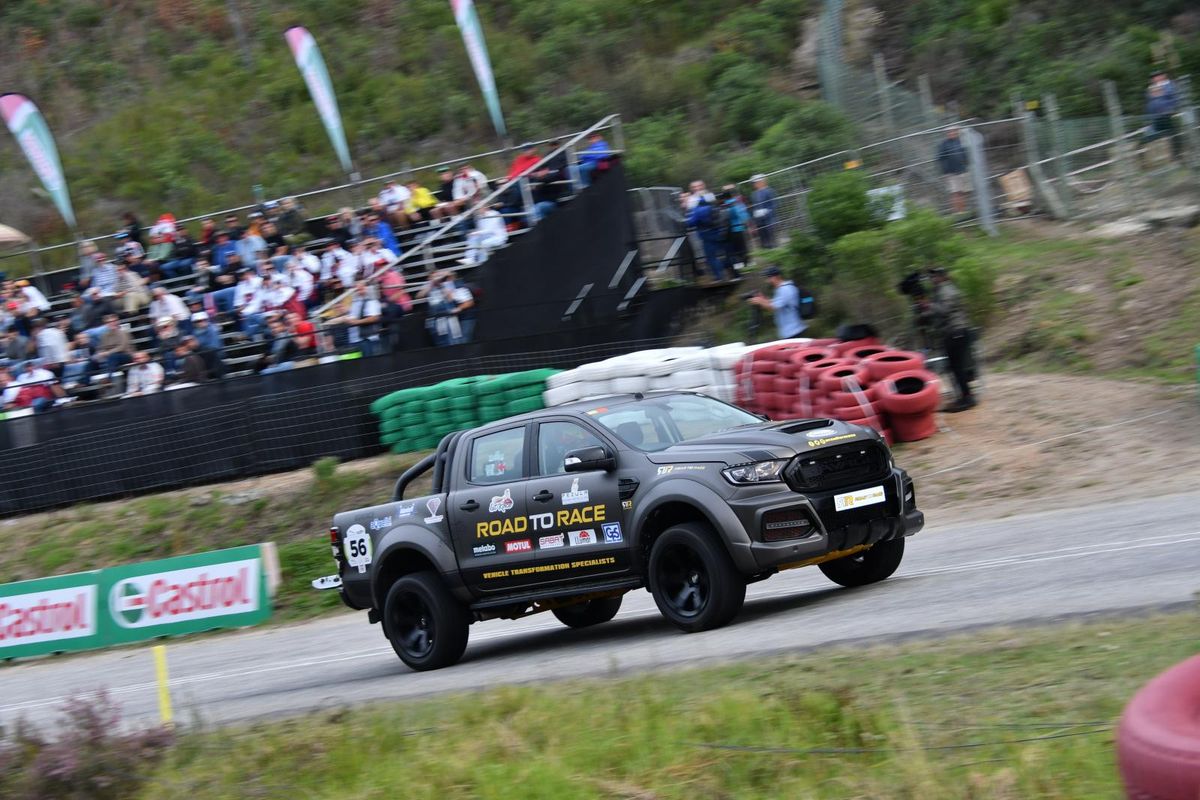
There'll be an array of hot machinery racing up the hill, ranging from electric Jaguar I-Paces to some monstrously tuned Nissan GTRs. Our very own Ashley Oldfield will be racing up the hill in the Bakkie and SUV categories in the recently-launched Jaguar F-Pace SVR.
All three days of the race, starting on Classic Car Friday and wrapping up with the King of the Hill Finale on Sunday Afternoon, will be available online for any viewer with an internet connection. Twelve cameras will be placed alongside the 1.9km Simola track to catch every moment of action, while a dedicated camera at the start will broadcast every competitor’s launch off the line. The broadcast will be running 24-hours a day.