A Gazoo Racing Toyota Hilux has been revealed at the São Paulo Motor Show for the Brazilian market and we like it…
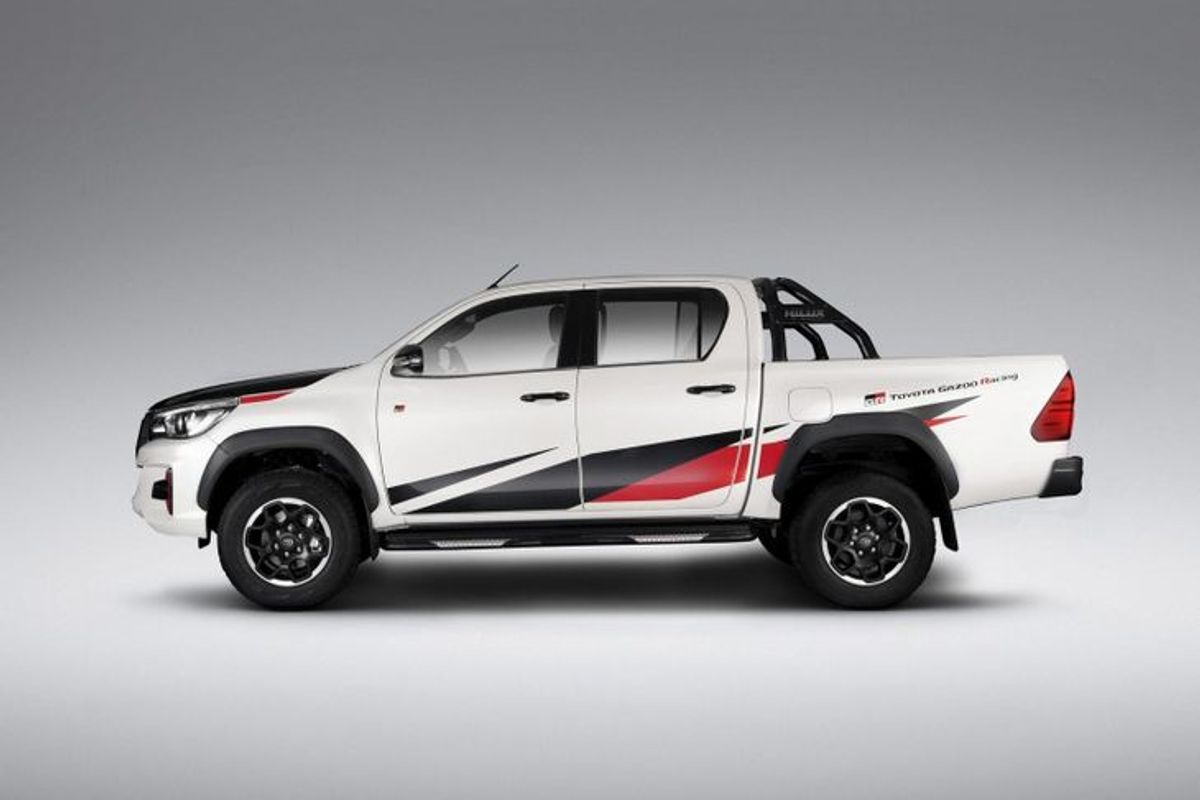
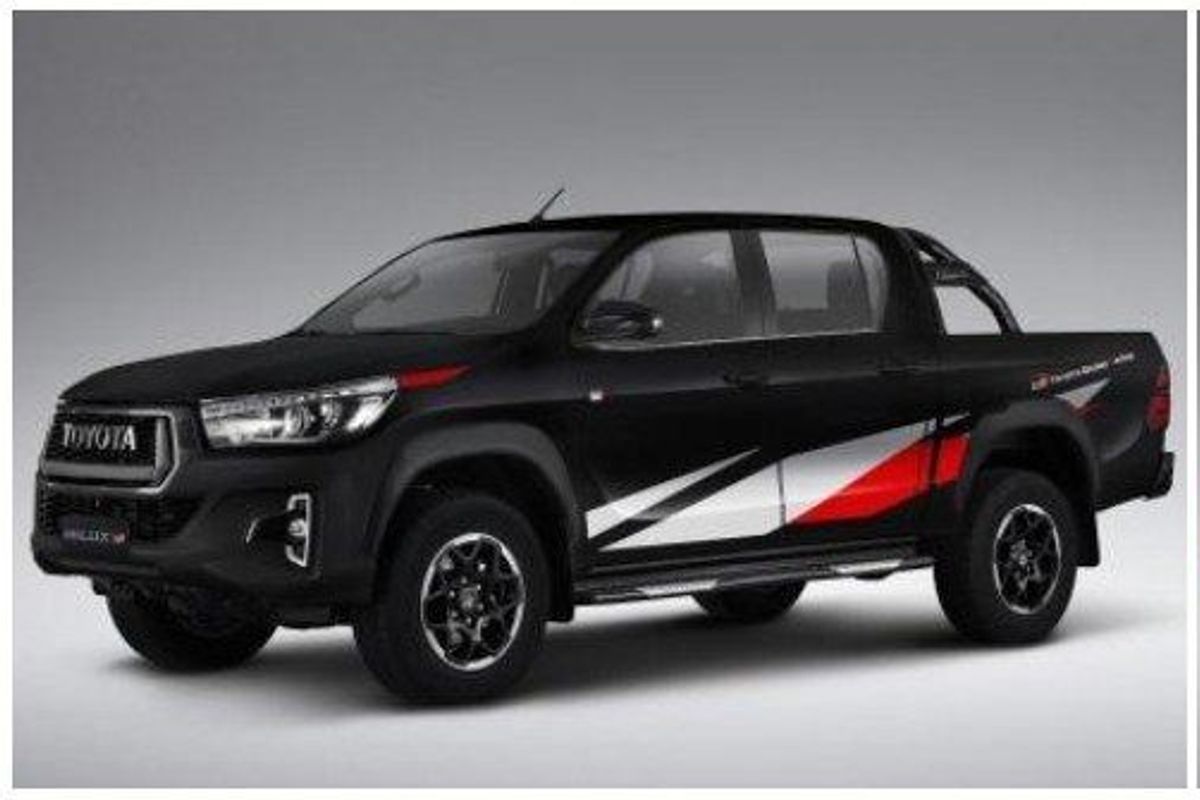
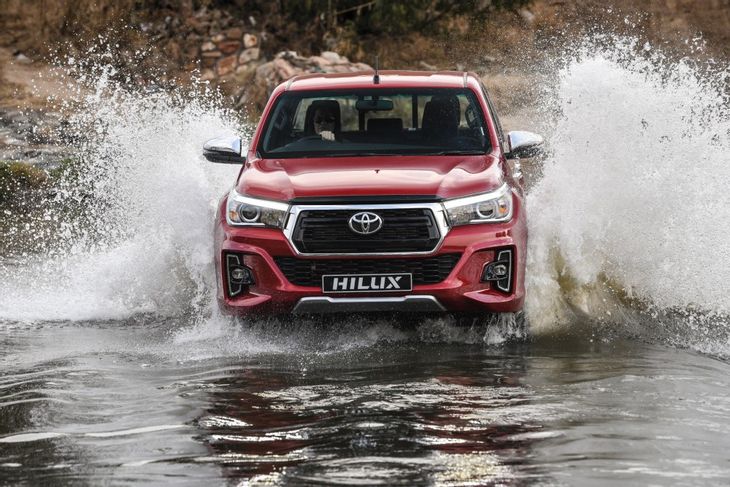
This is the Toyota Hilux GR Sport which has been shown at the São Paulo Motor Show in Brazil and it has been specifically designed for off-road use. It’s powered by the same 2.8-litre turbodiesel engine with 130 kW and 450 Nm of torque and comes equipped with a 6-speed manual transmission driving all-four wheels.
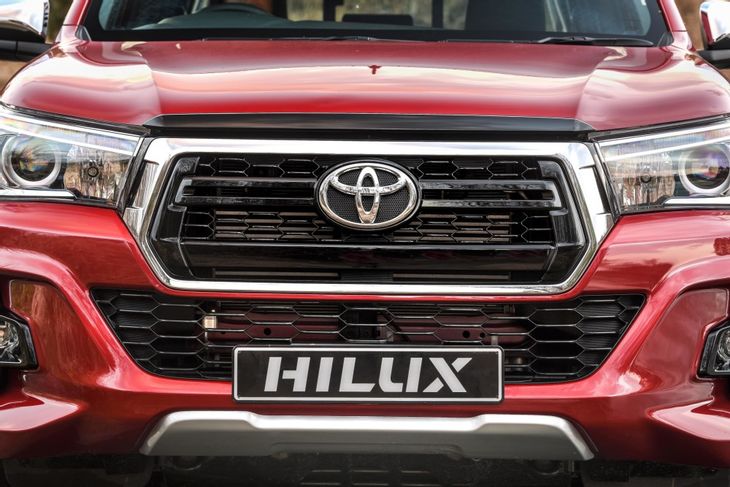
In terms of design, the model gains a unique grille with Toyota lettering replacing the Toyota badge on the nose. The bonnet has been blacked out for contrast and the model is fitted with flaring wheel arches housing 17-inch aluminium wheels, tube side steps and a sports bar. The vehicle is finished off with sporty Gazoo Racing graphics.
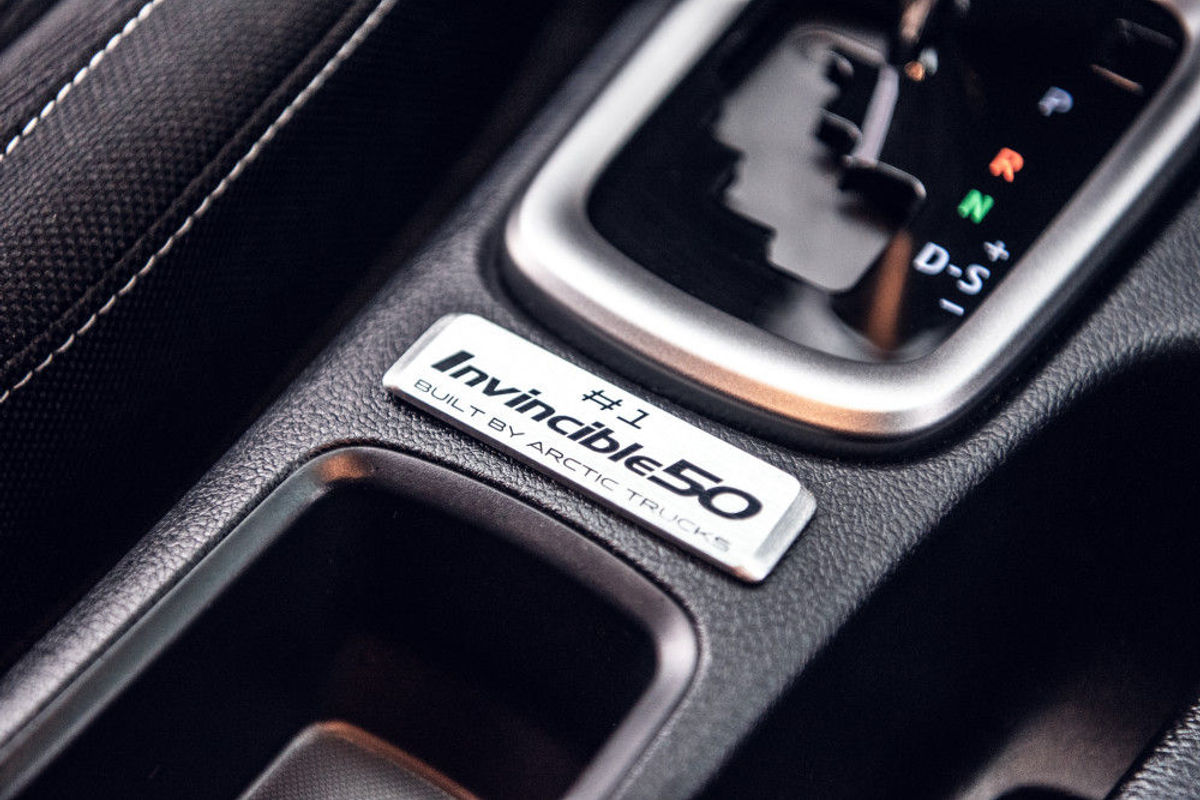
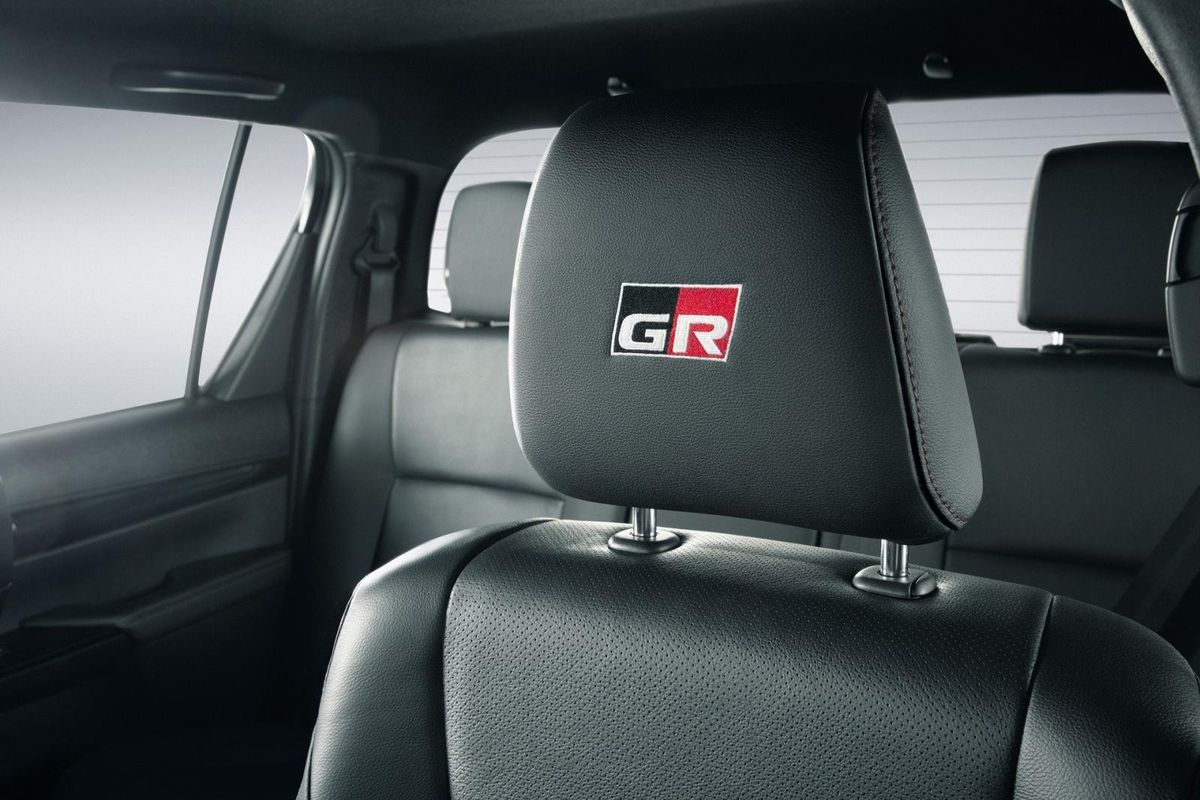
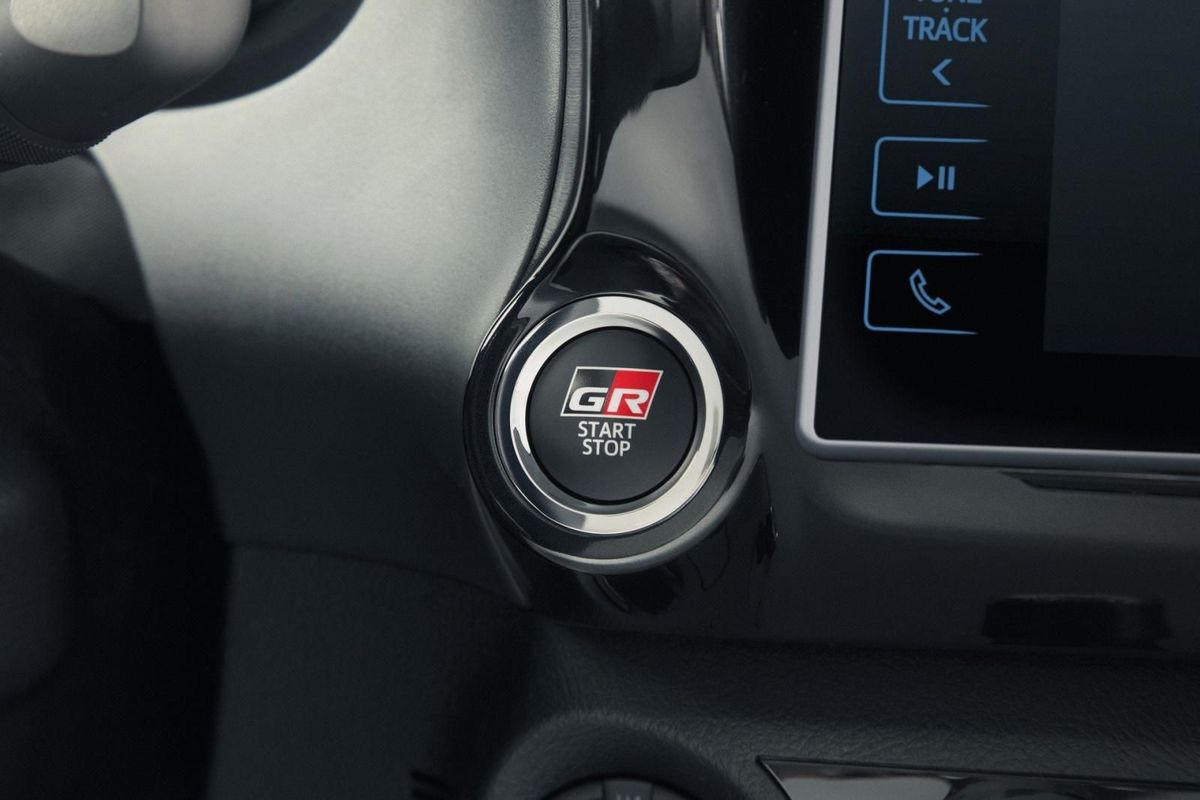
On the inside, the driver is welcomed with black leather upholstery with red contrasting stitching and GR logos seen on the headrests. The instrument cluster has been redesigned and a GR start/stop button is included. Each model gets special GR branded floor mats as well as a numbered badge on the centre console.
Technical upgrades include a retuned suspension with stiffer front springs and new dampers. The steering has also been revised to offer a more “linear and progressive response” according to Toyota.
Sadly, the Toyota Hilux GR Sport will not be offered in South Africa and only 420 will be available to customers in Brazil. Update: Toyota South Africa will be launching the Hilux GR Sport in limited numbers!
However, after recently experiencing the Yaris GRMN on local soil, we look forward to more performance Gazoo Racing road cars becoming more widely available in the future. We are holding thumbs…
SEMA-Tuned Toyota Corolla Previews Potential Hot Hatch
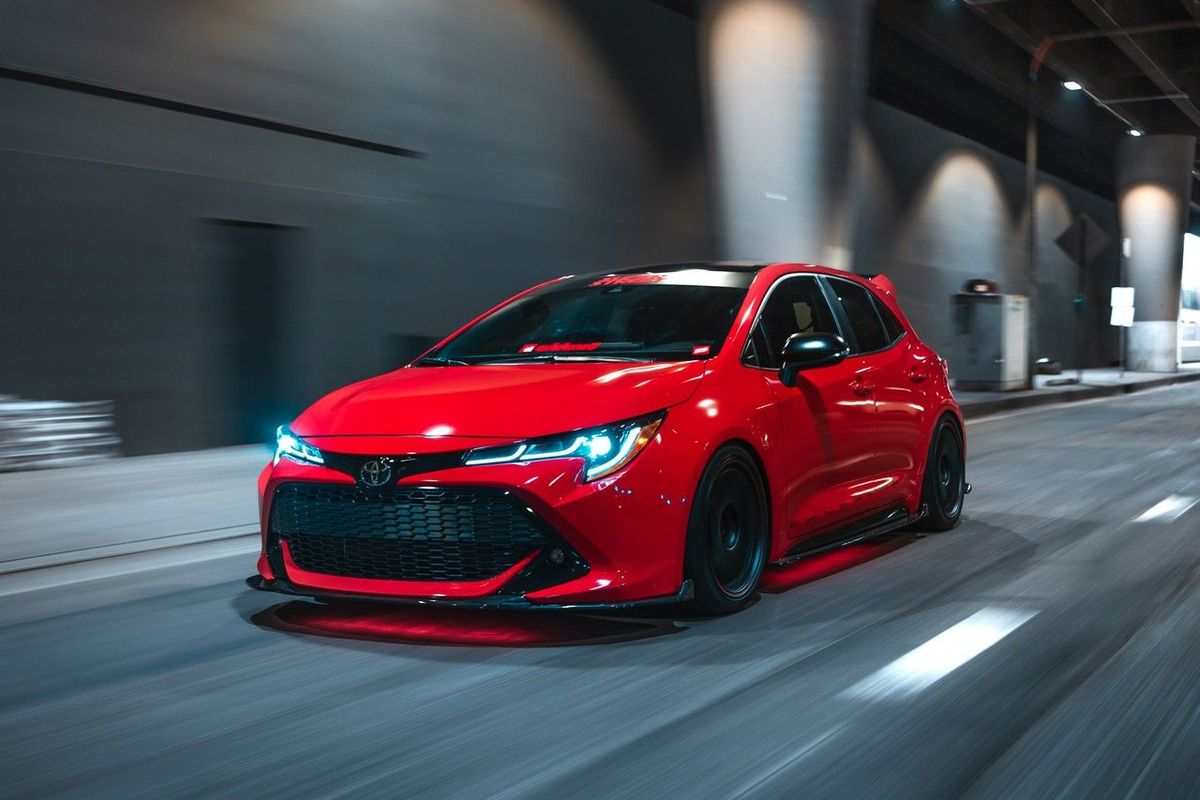
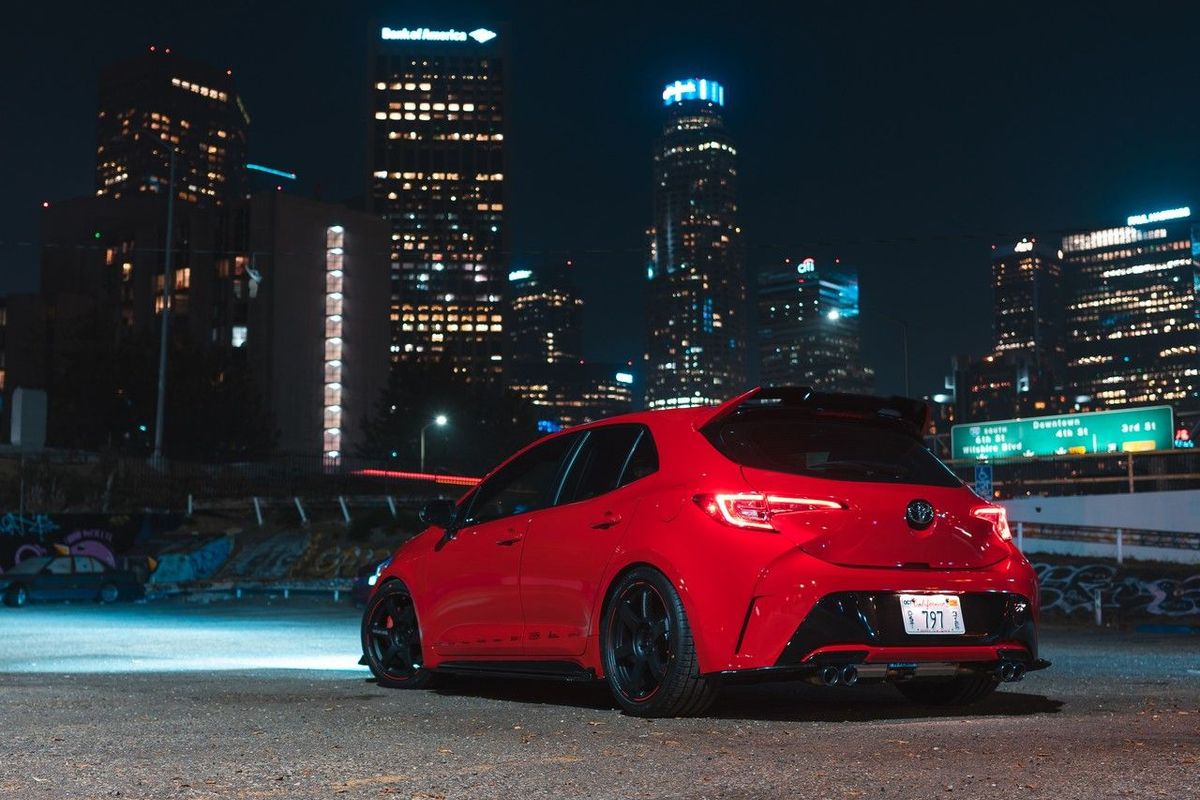
The 2018 SEMA show has come and gone, and one of the highlights was this visually striking Toyota Corolla. Should Toyota enter the hot hatch segment with a potent Corolla?
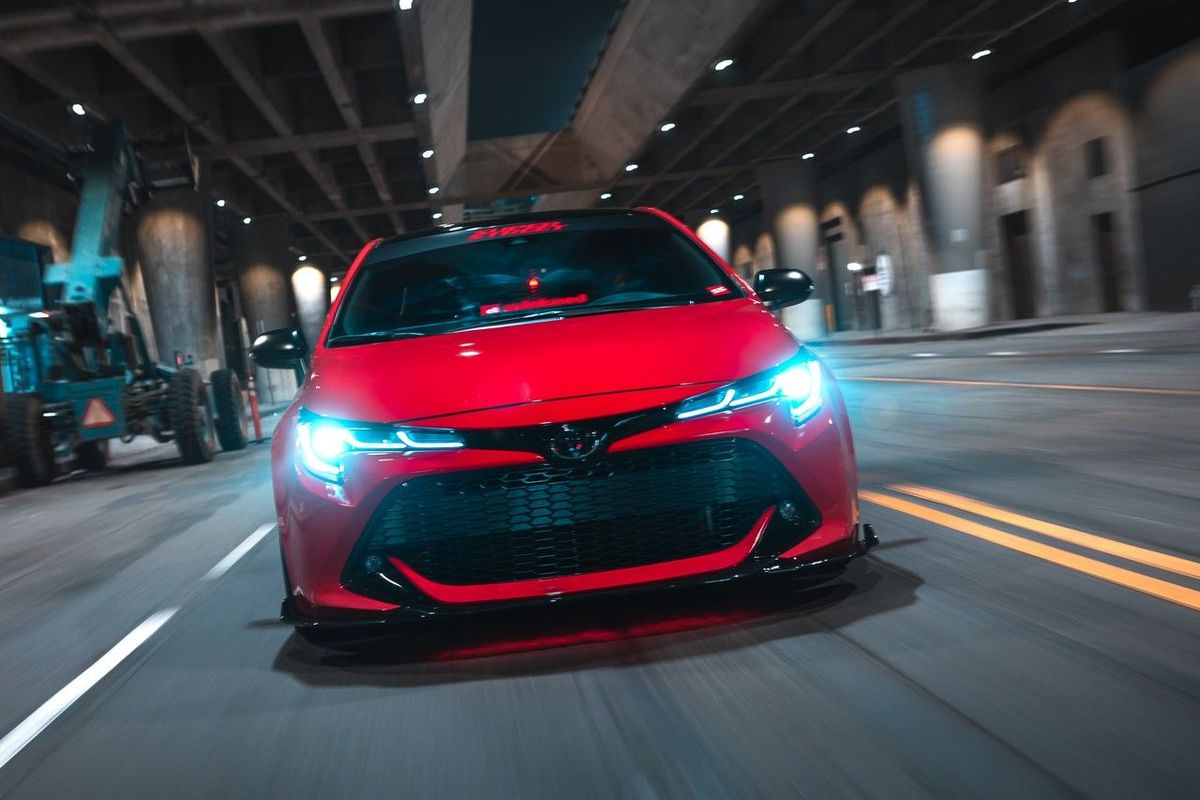
The Speciality Equipment Market Association (SEMA) show is held annually in Las Vegas and represents the custom automotive segment of the market. It's almost impossible to gain access to as it's a trade show, but nevertheless, motor manufacturers support it. One such motor manufacturer is Toyota which gave 3 of its 2019 Corolla Hatchbacks to tuners and aftermarket publications to use as a blank canvas. One publication, Super Street, built something quite remarkable and we think this could inspire Toyota to craft a proper hot hatch out of the new Corolla hatchback.
“Corolla Hatchback is at the forefront of Toyota’s current interaction with automotive enthusiasts,” said Ed Laukes, Group Vice President – Toyota Division Marketing. “The all-new Hatchback is well-suited to customization and personalization, be it for appearance or performance.” Super Street's goal was to turn the factory Corolla into something that looked like a track-ready hot hatch. While engine modifications are regarded as very mild by tuner standards, the HPS intake and A'PEXi quad exhausts give the engine a bit more noise.
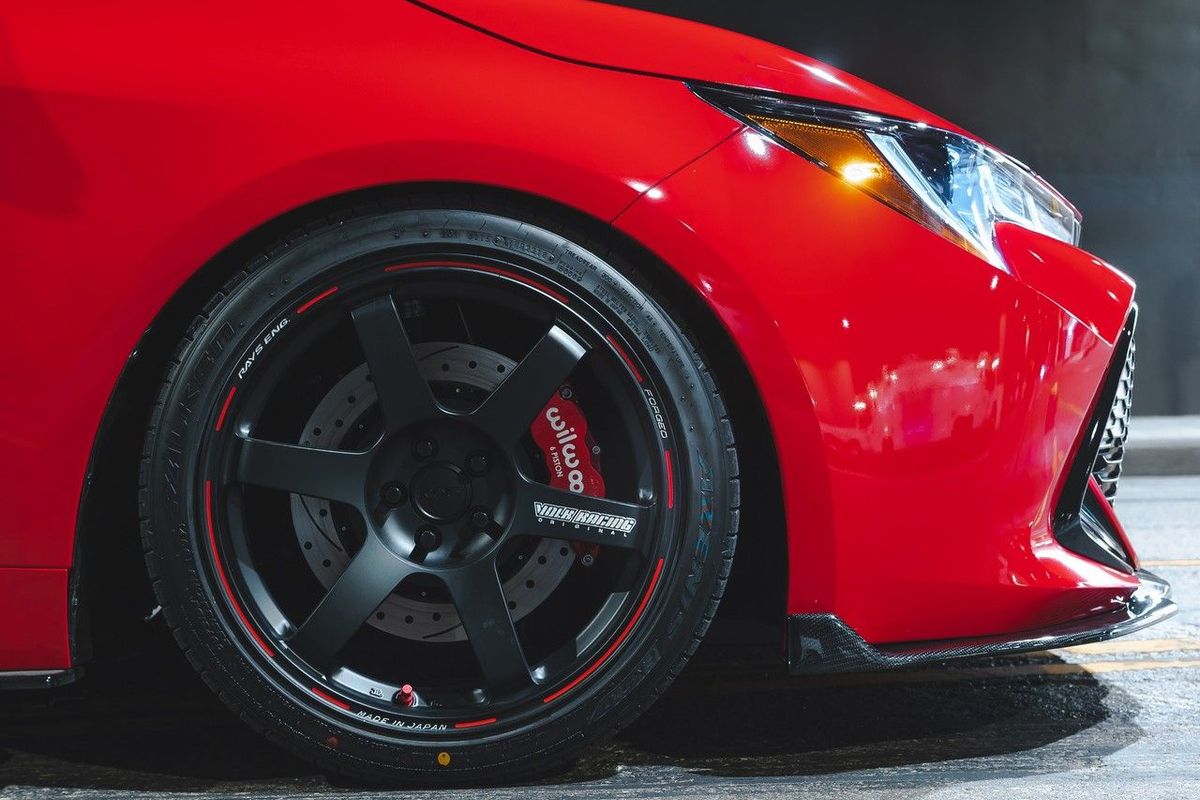
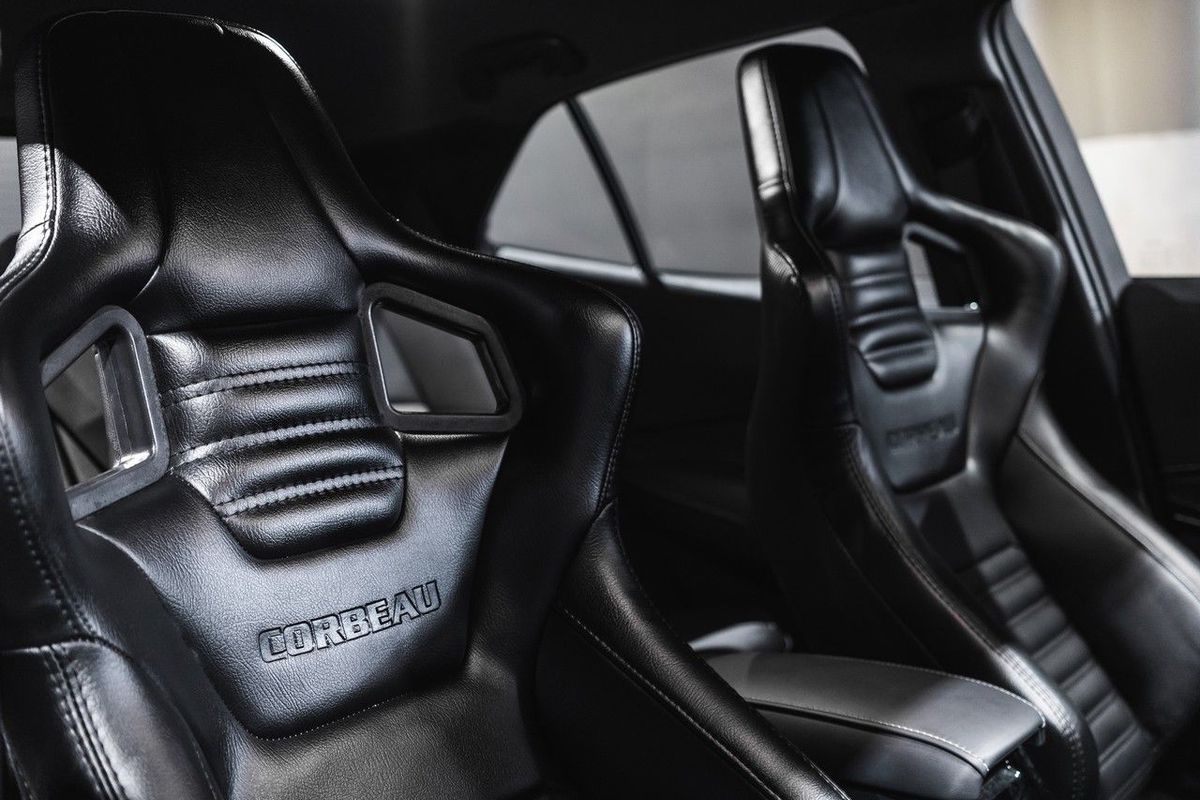
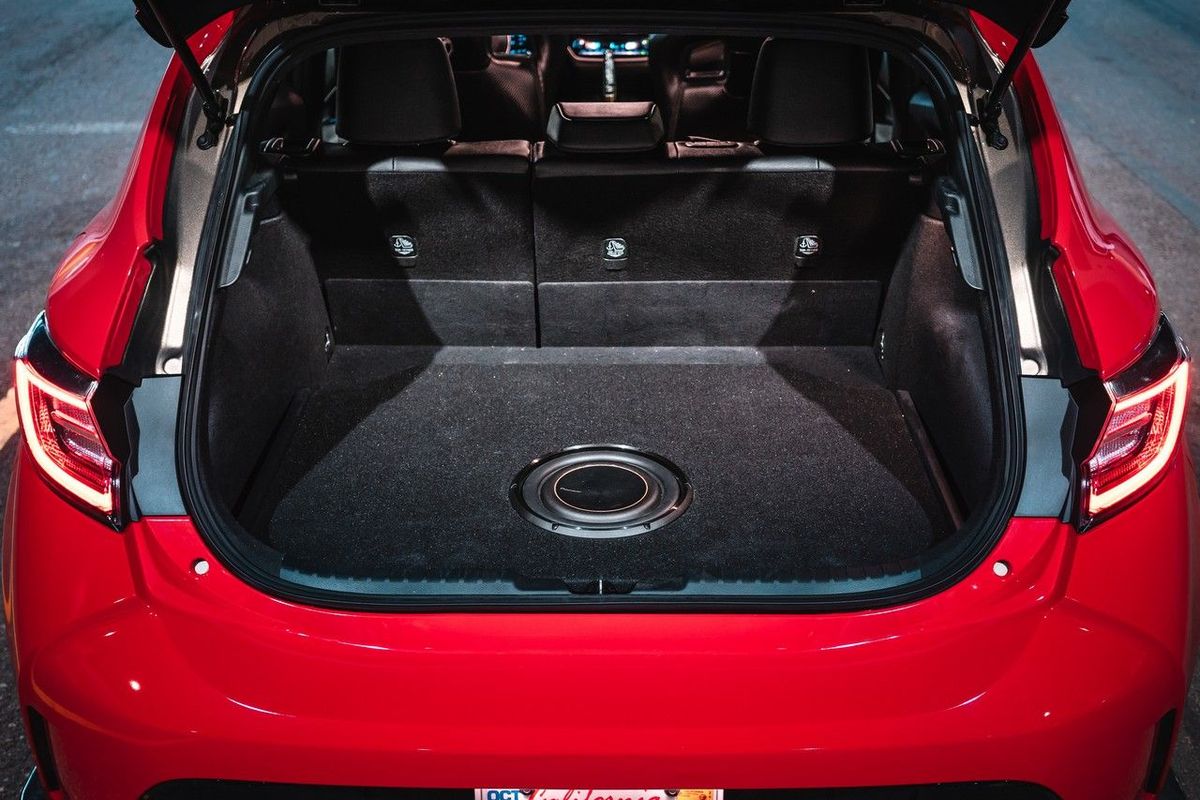
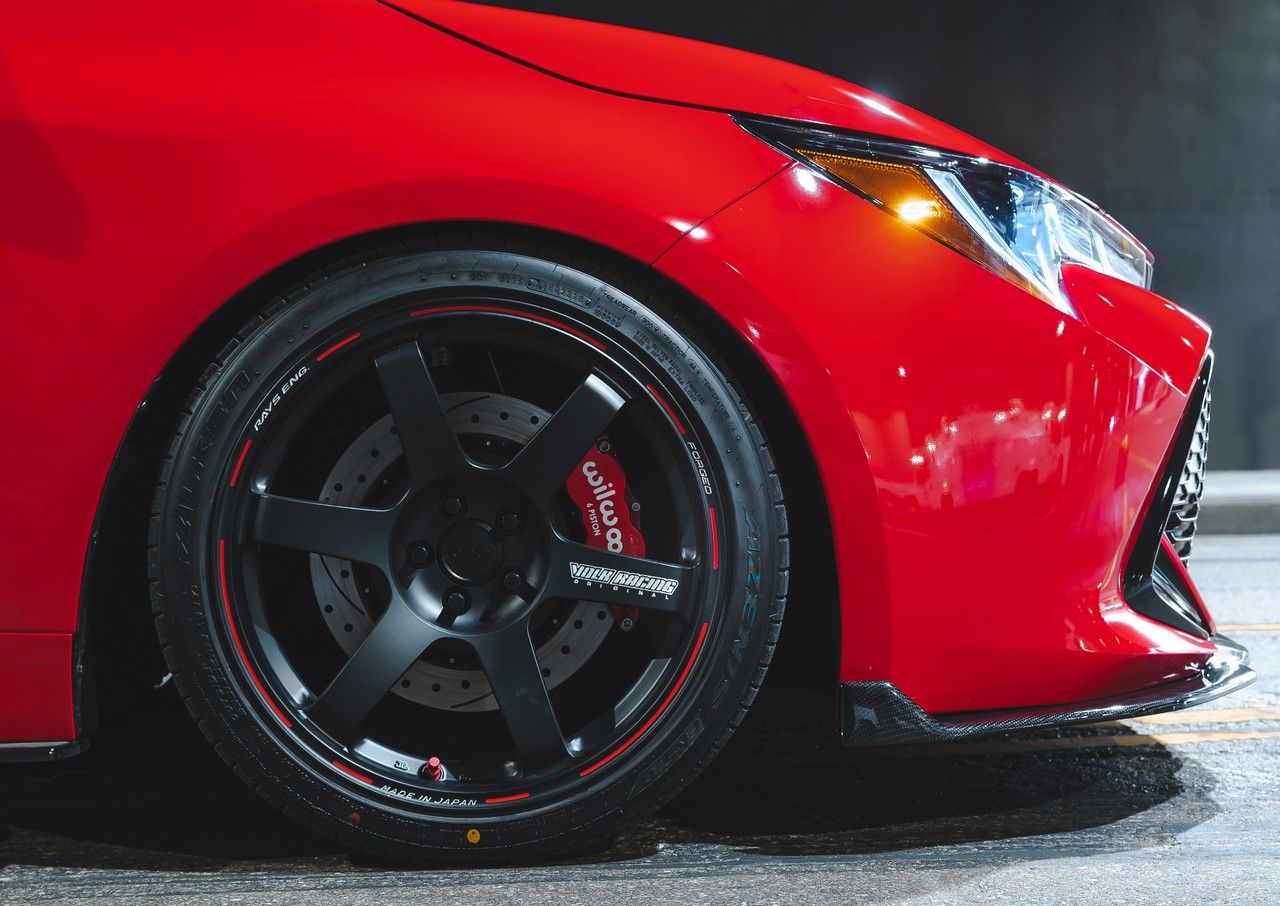
Stopping power has been increased with Wilwood Superlite calipers and the rotors have been drilled and slotted. In terms of suspension, there is an RS-R coilover upgrade. This Toyota Corolla rides on tasty Volk Racing alloy wheels wrapped in Falken performance rubber. There are some tasty bodywork upgrades in the form of a carbon fibre lip, side skirts, and rear spats. Inside, the Super Street Toyota Corolla boasts heated Corbeau bucket seats and sporty pedals, with a considerable audio upgrade from Pioneer neatly fitted into the boot.
While this Corolla is a one-off project, we can't help but think that the potential for a GRMN-tuned Corolla is massive? After seeing the success of the GRMN Yaris both locally (it decimated its competition in a drag race) and internationally, surely Toyota is in the process of returning to the performance segment? Nothing is set in stone yet, but you can be sure we'll be asking the hard questions when the Corolla launches in SA in early 2019.
This Toyota Corolla is not just for show as it features a racing suspension and performance brakes
2018/19 #CarsAwards Testing Days a Resounding Success
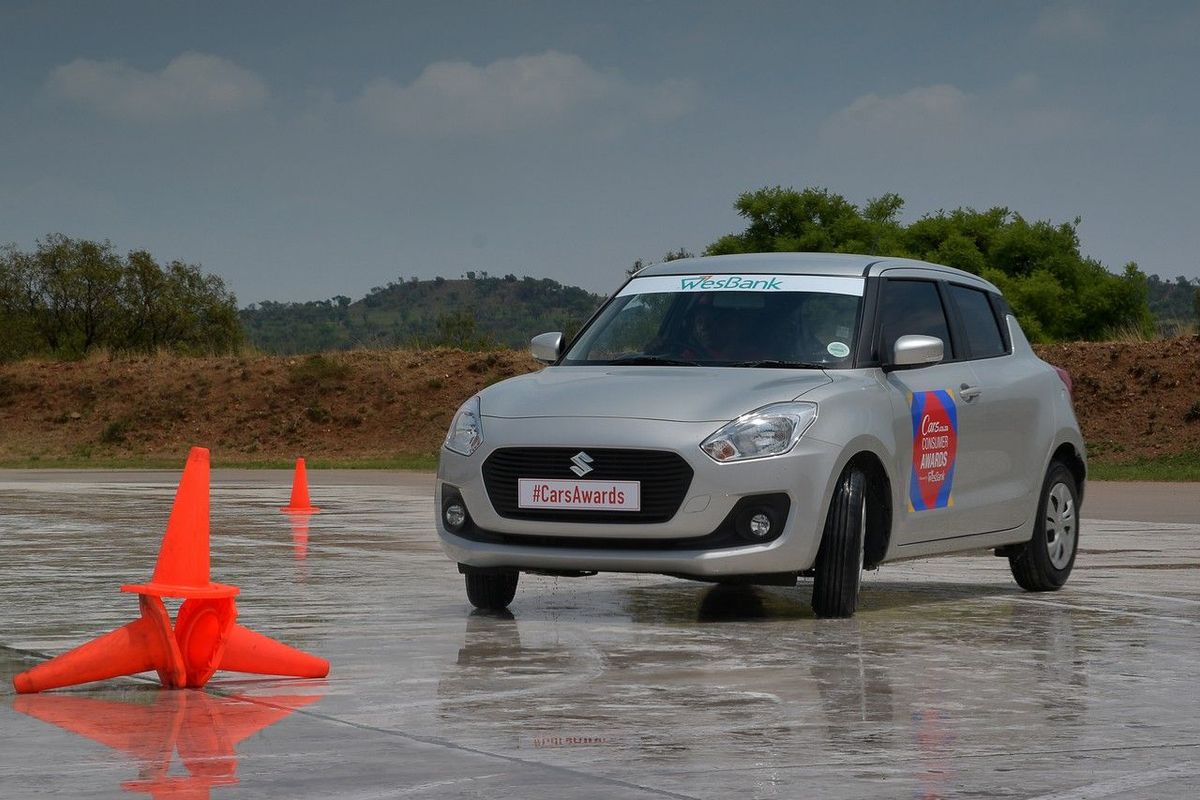
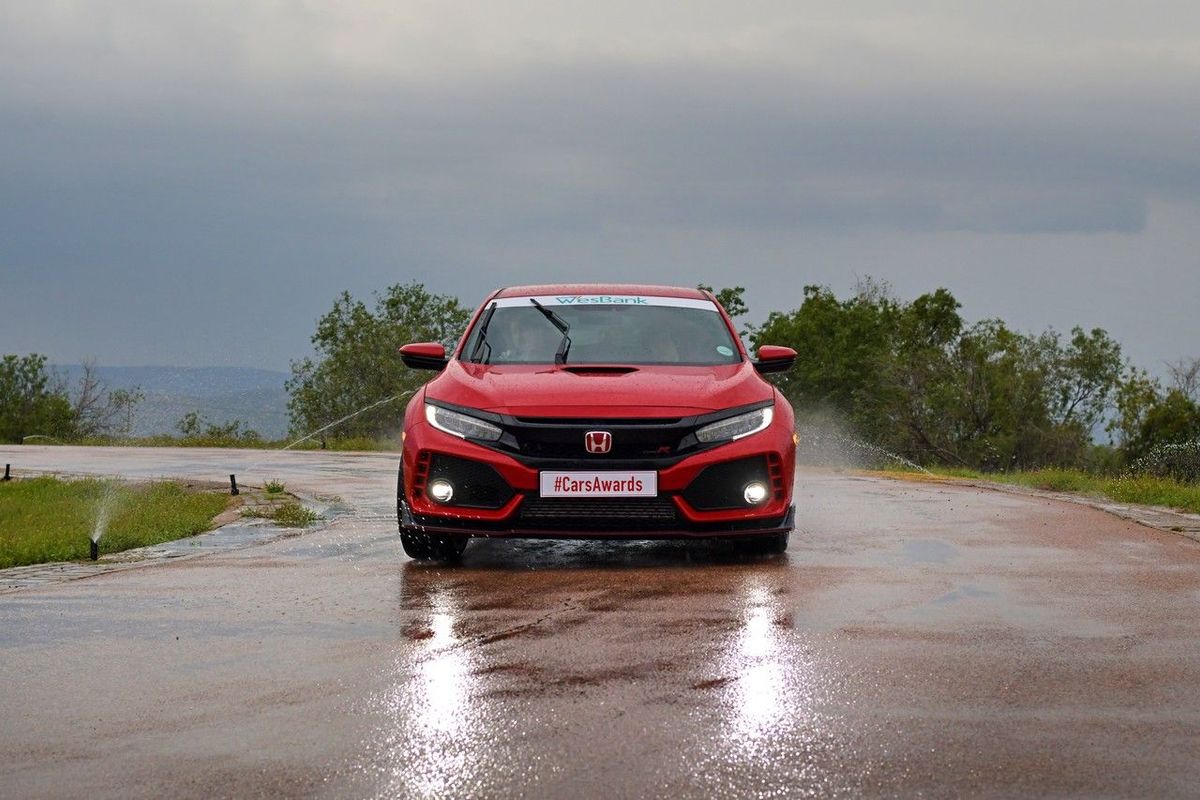
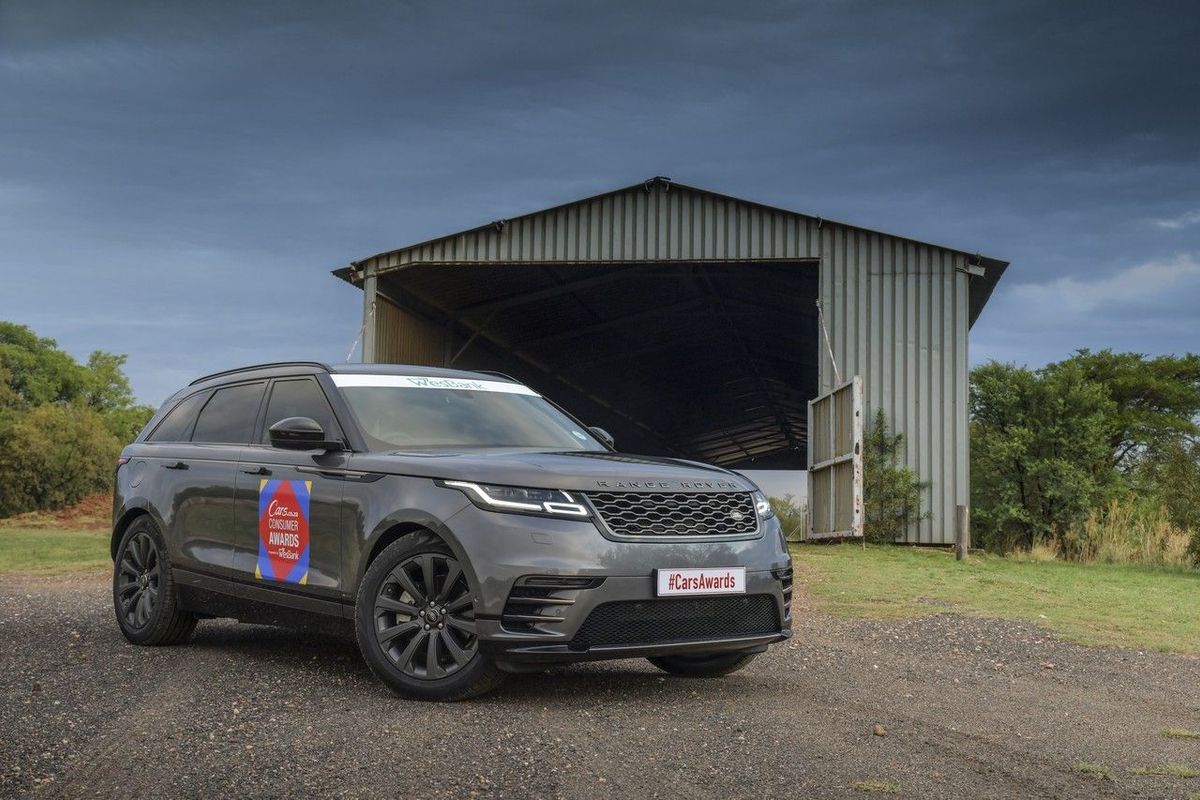
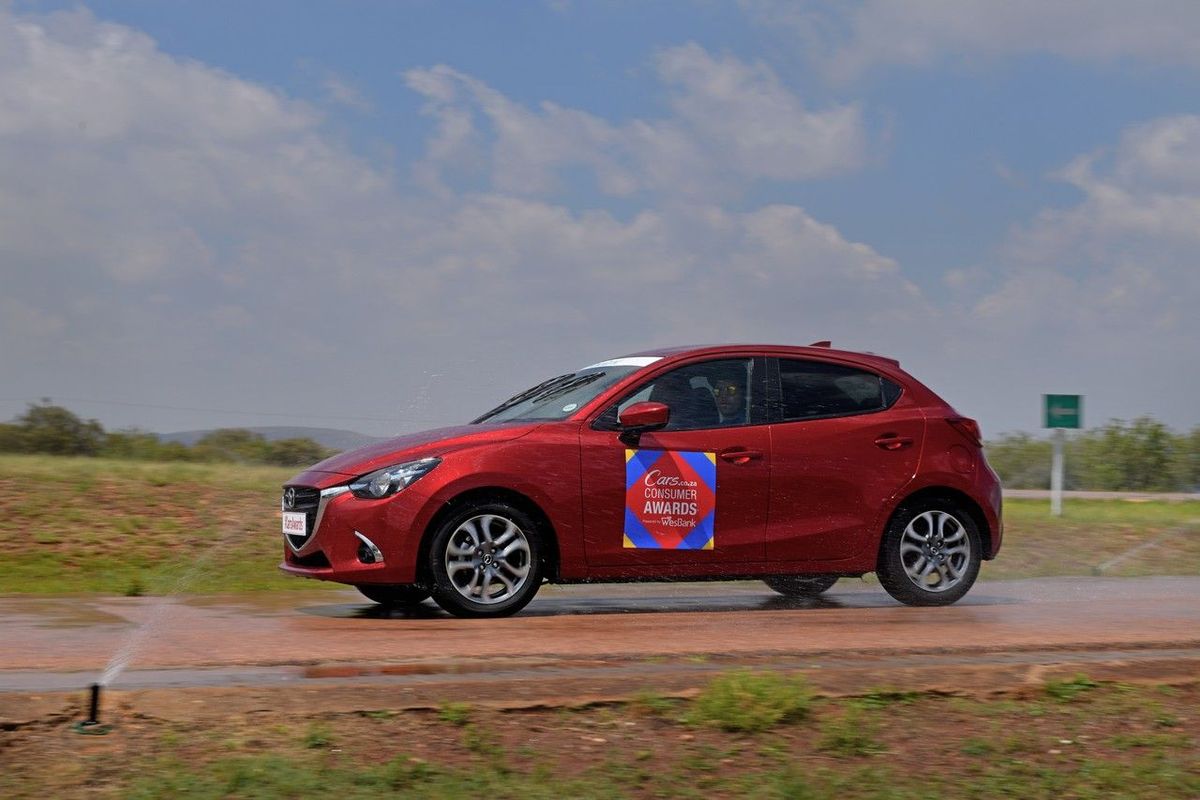
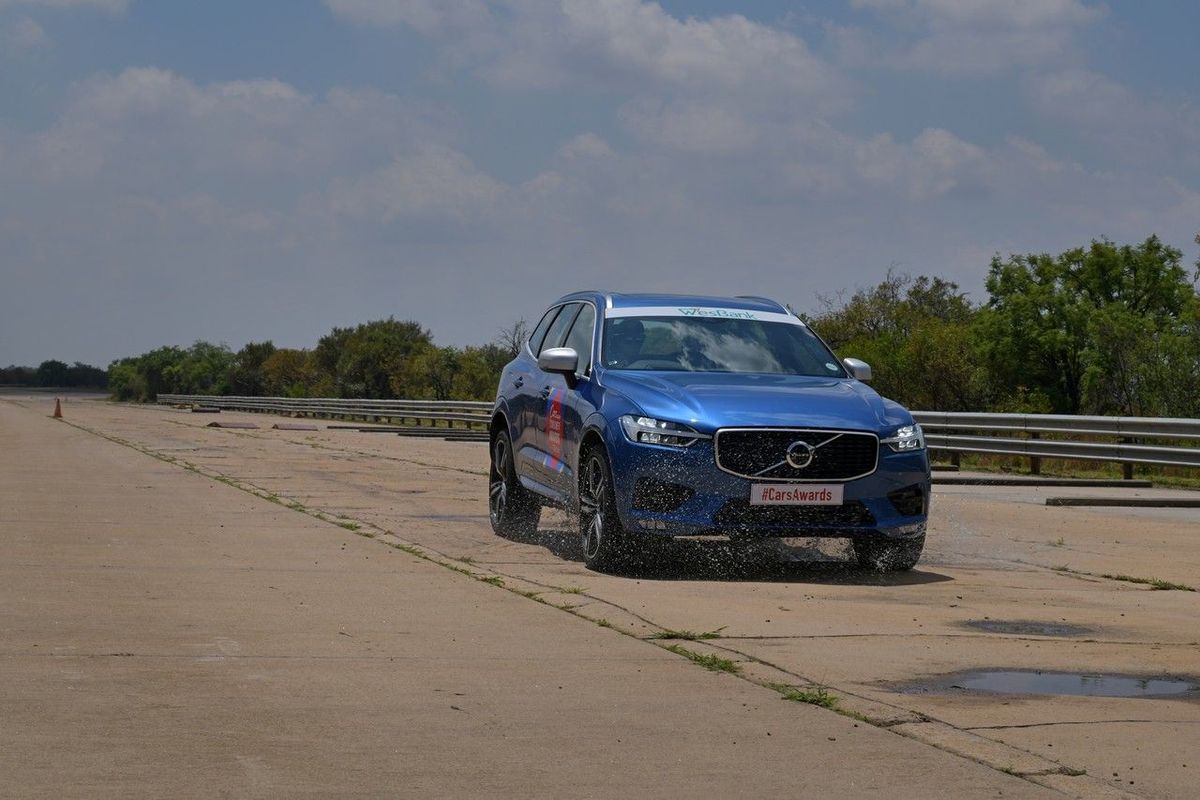
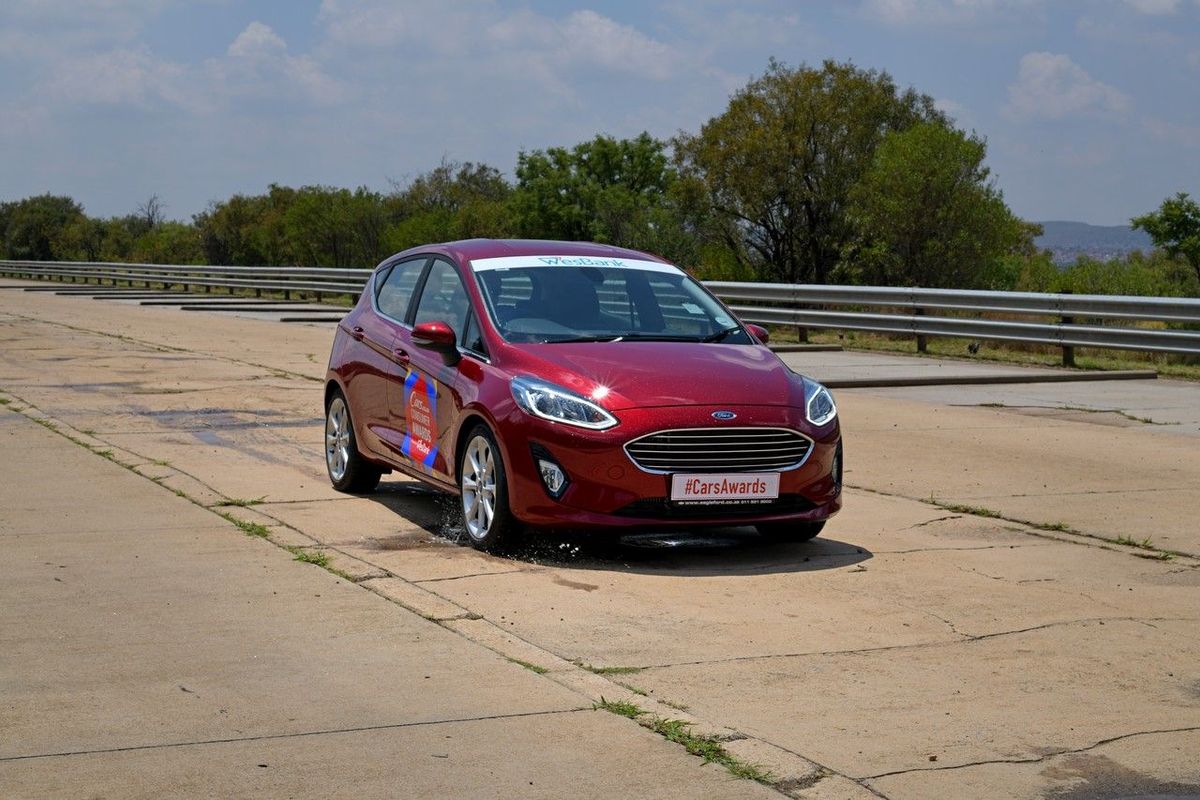
An experienced panel of judges recently put the finalists of the 2018/2019 Cars.co.za Consumer Awards – powered by WesBank – through a series of rigorous tests at the Gerotek proving ground, located west of Pretoria. Here's how this critical phase of the #CarsAwards worked.
Whereas 50% of the final outcome of the programme (the announcement of 13 winners in their respective categories of the new vehicle market), will be determined by the findings of the Cars.co.za Consumer Satisfaction Survey (based on feedback received from thousands of vehicle owners), the other half is made up of scores allocated by 20 judges during 2 days of thorough testing at Gerotek. Gerotek is an internationally-rated test facility and this year (the 4th iteration of #CarsAwards) marked the 3rd time we have used this proving ground.
Why Gerotek? The primary benefits of using the facility to test the vehicles' respective abilities are safety and consistency. While the need for safety requires no explanation, consistency is critical to #CarsAwards testing; in the interest of fairness and accuracy, finalists are evaluated back-to-back against their peers under controlled circumstances and in similar conditions.
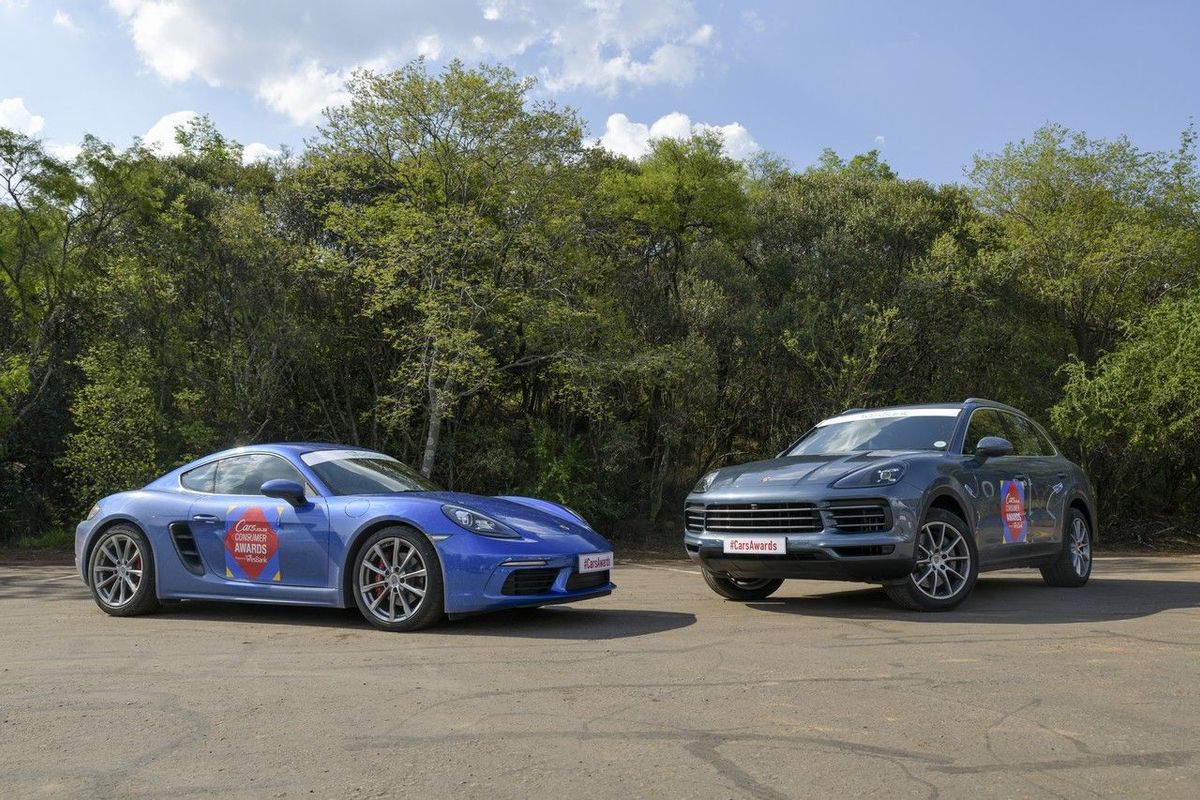
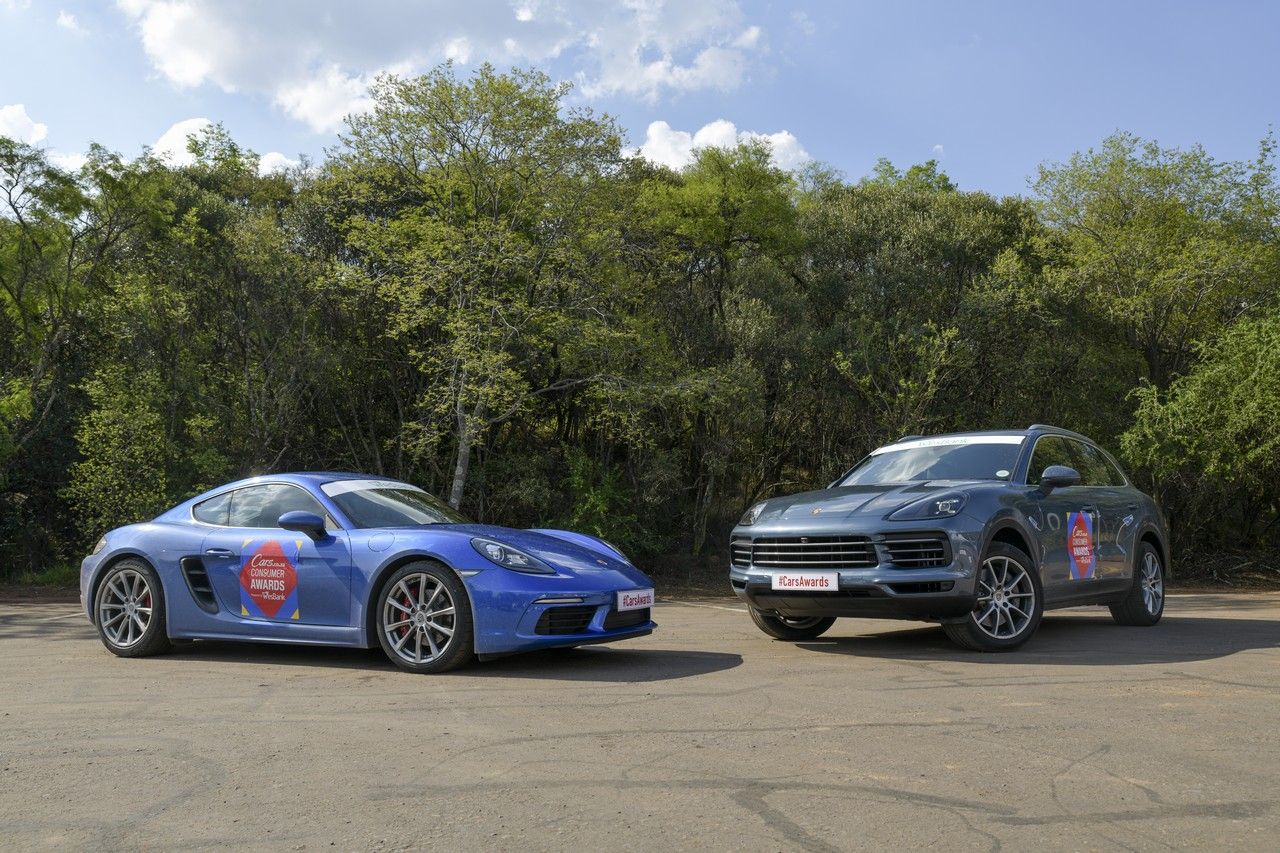
Porsche had 2 entries in the 2017/2018 #CarsAwards: the 718 Cayman S and the Cayenne S.
Testing Processes
Over the 2 days of testing, the #CarsAwards judges evaluated the final group of passenger and off-road vehicles on pre-determined routes. These routes comprised sequences of tests that gave the judges opportunities to evaluate and score various aspects of the finalists' packaging and performance, based on the respective pillars of success of each category.
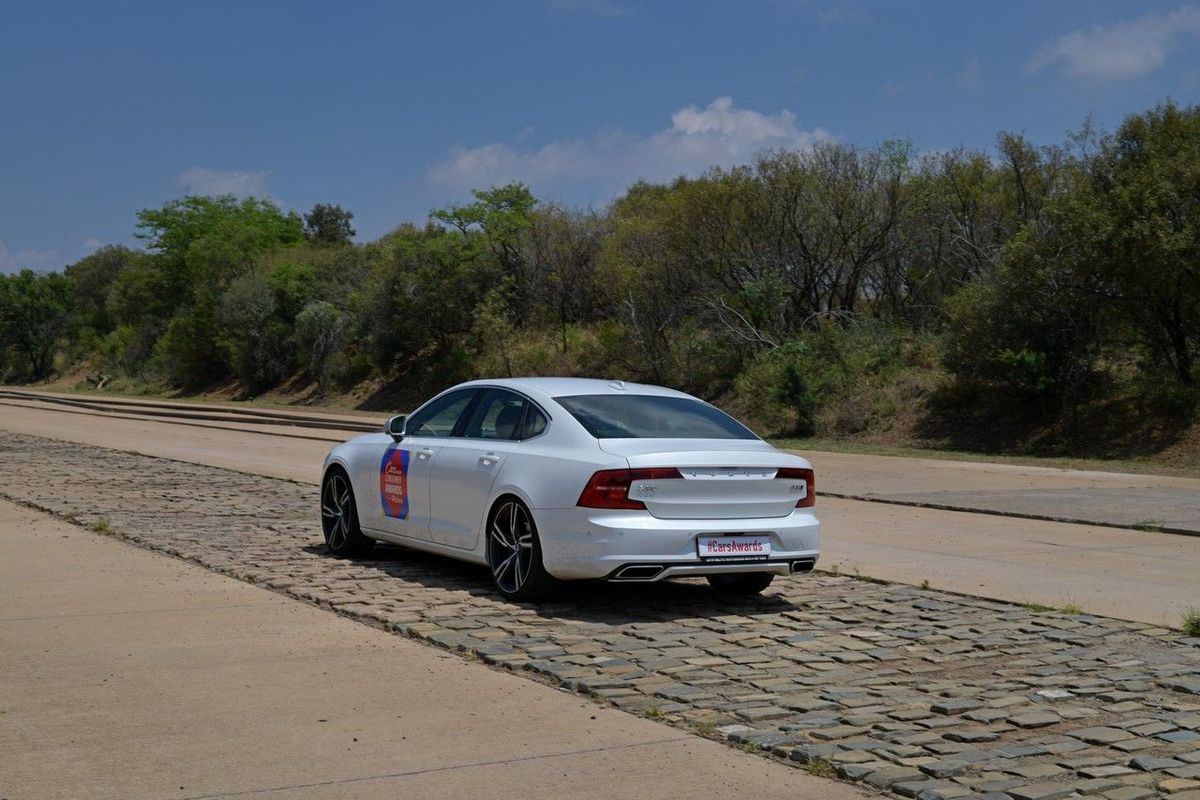
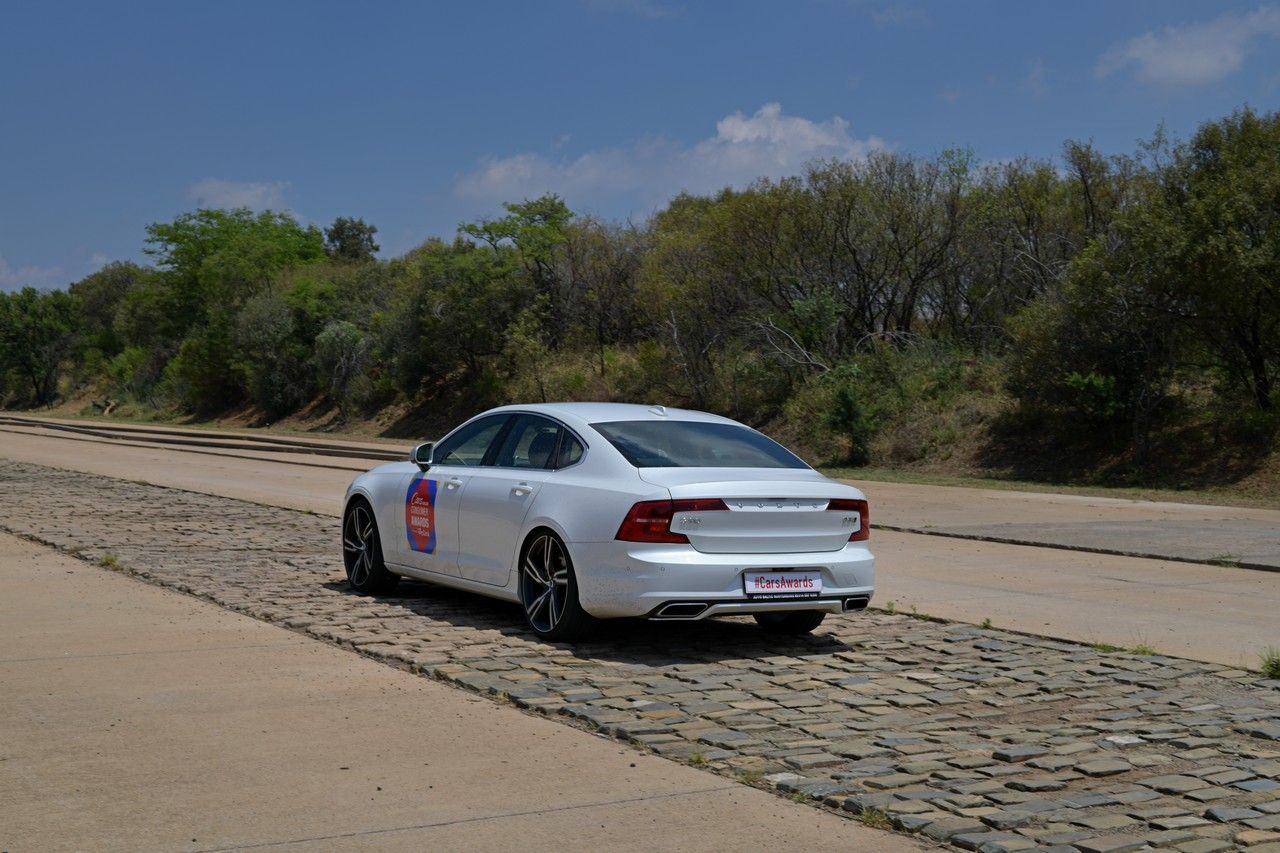
Cobblestone roads expose any underlying flaws in a vehicle's ride refinement and build quality.
Passenger vehicles
Passenger cars and road-biased SUVs faced an assortment of tests designed to exploit any weaknesses (if any) in ride quality, handling, refinement and build quality. Let's not forget the static evaluations; they exist to test seating comfort, features and connectivity, storage solutions and the effort required to load bulky items into the vehicles (overall practicality).
Skid Pan: to test front-end grip, the effectiveness of anti-lock brakes and stability control systems.
Long straight track: acceleration from a standstill, in-gear acceleration, gearshift quality assessment, emergency braking, body-roll slalom test, emergency lane change test.
Suspension track: Belgian cobblestones, potholed and rutted roads (to evaluate build quality, suspension pliancy, and ride quality).
Dynamic handling track: to test steering responsiveness, handling, cornering ability, body-roll test, powertrain responsiveness, gearshift quality, and wet-weather handling.
Concrete handling track: to test steering, handling, body control/suspension behaviour in corners with variable cambers and radii on steep ascents and descents.
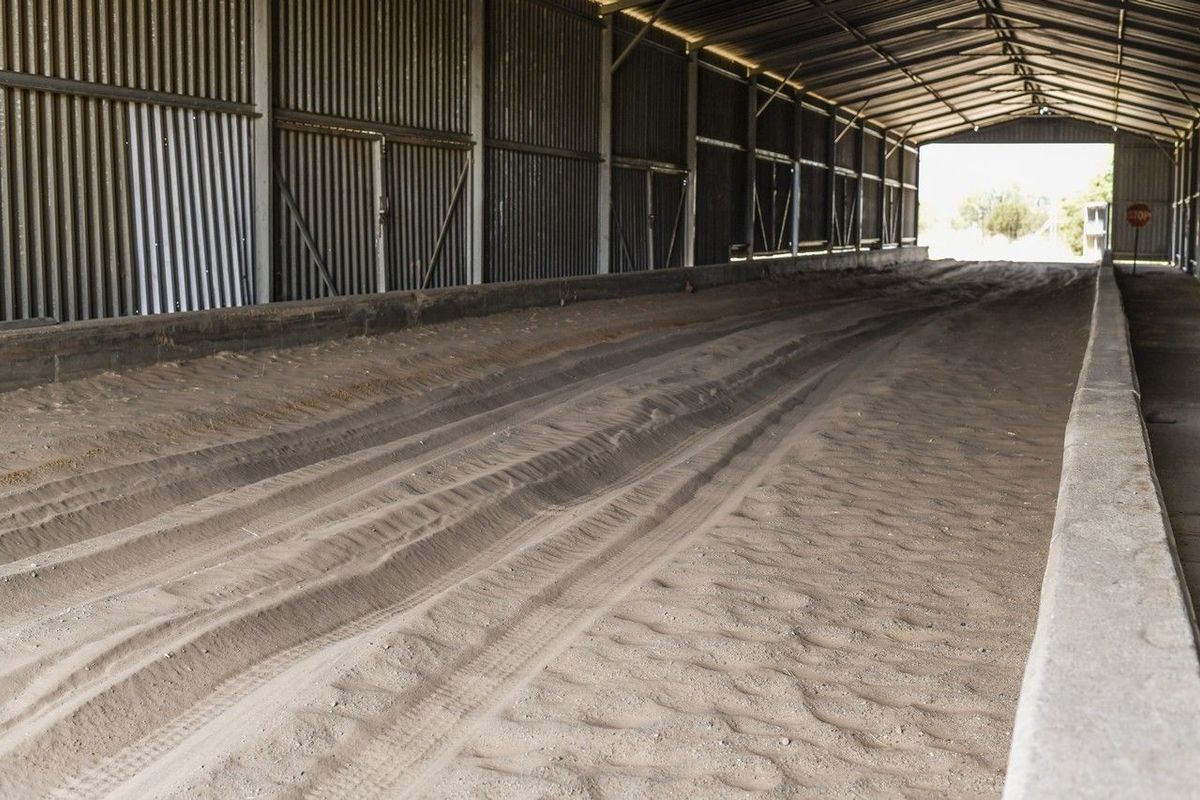
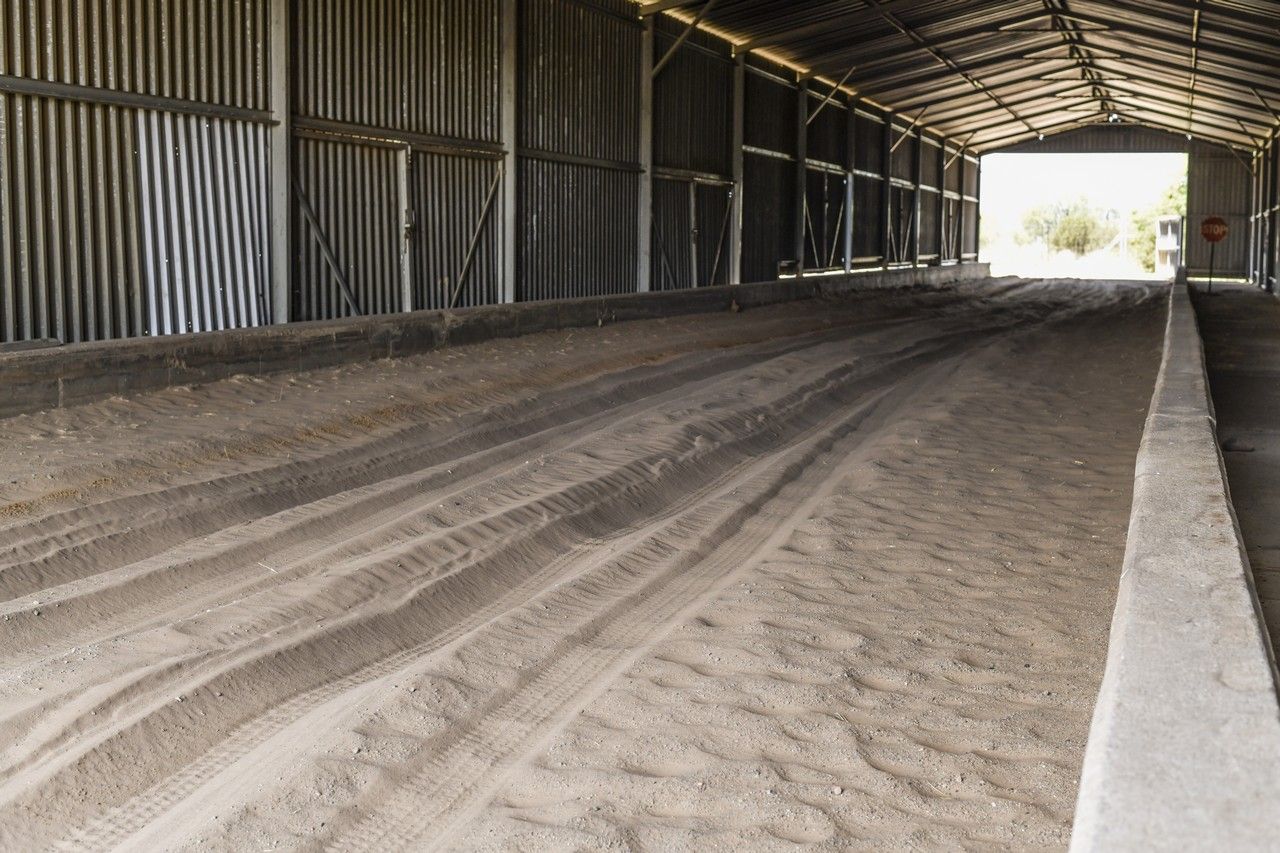
The sand trough was a test for the offroaders and bakkies.
Bakkies and Adventure SUVs
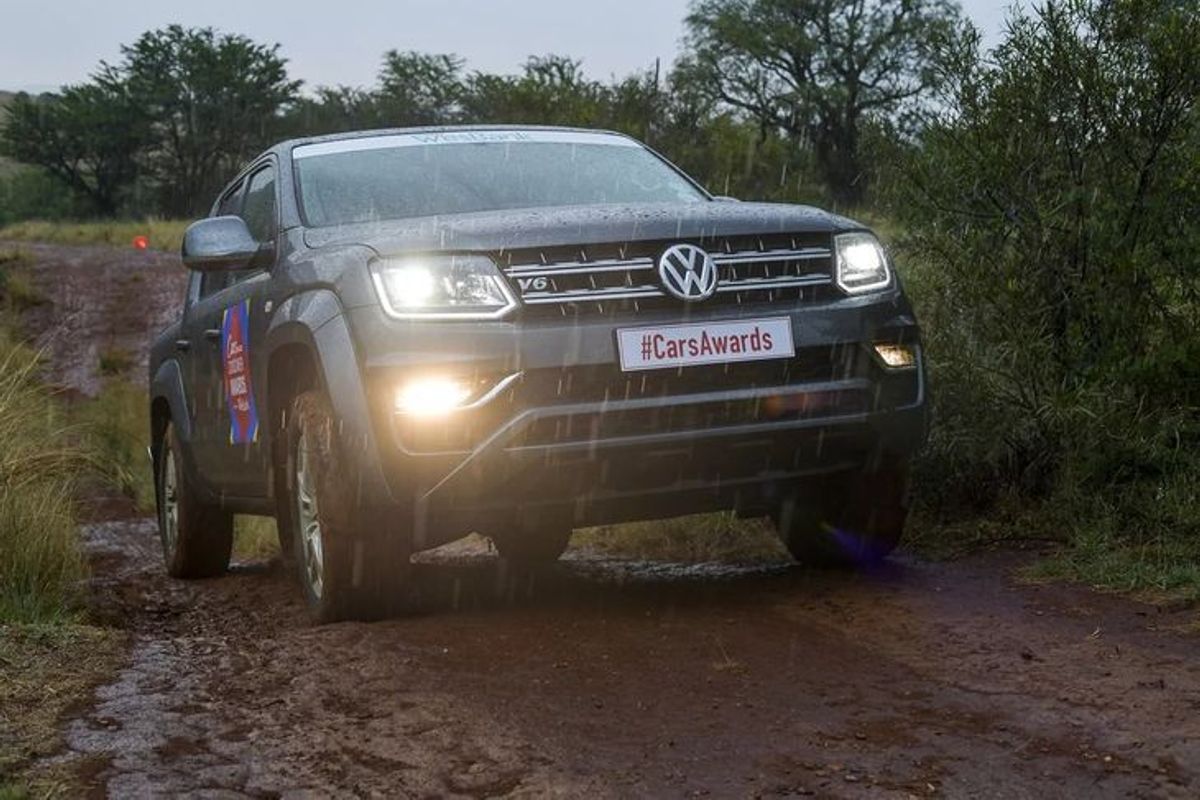
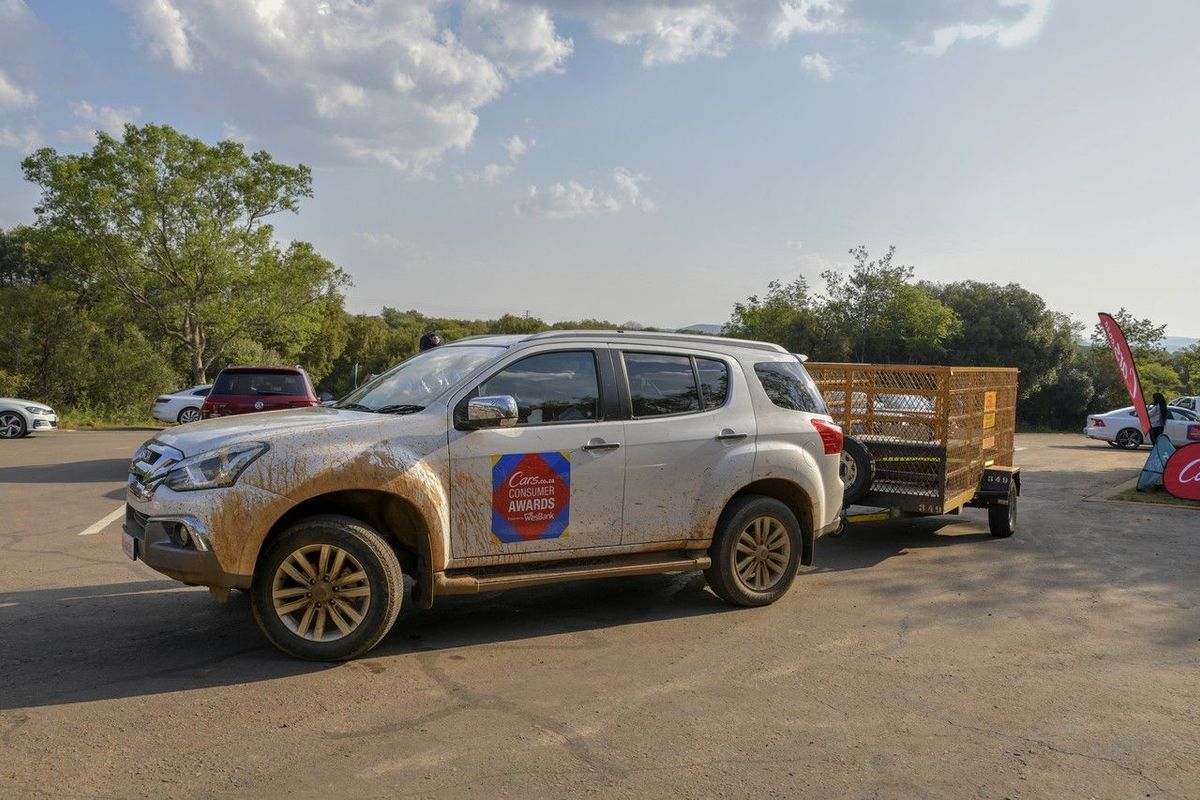
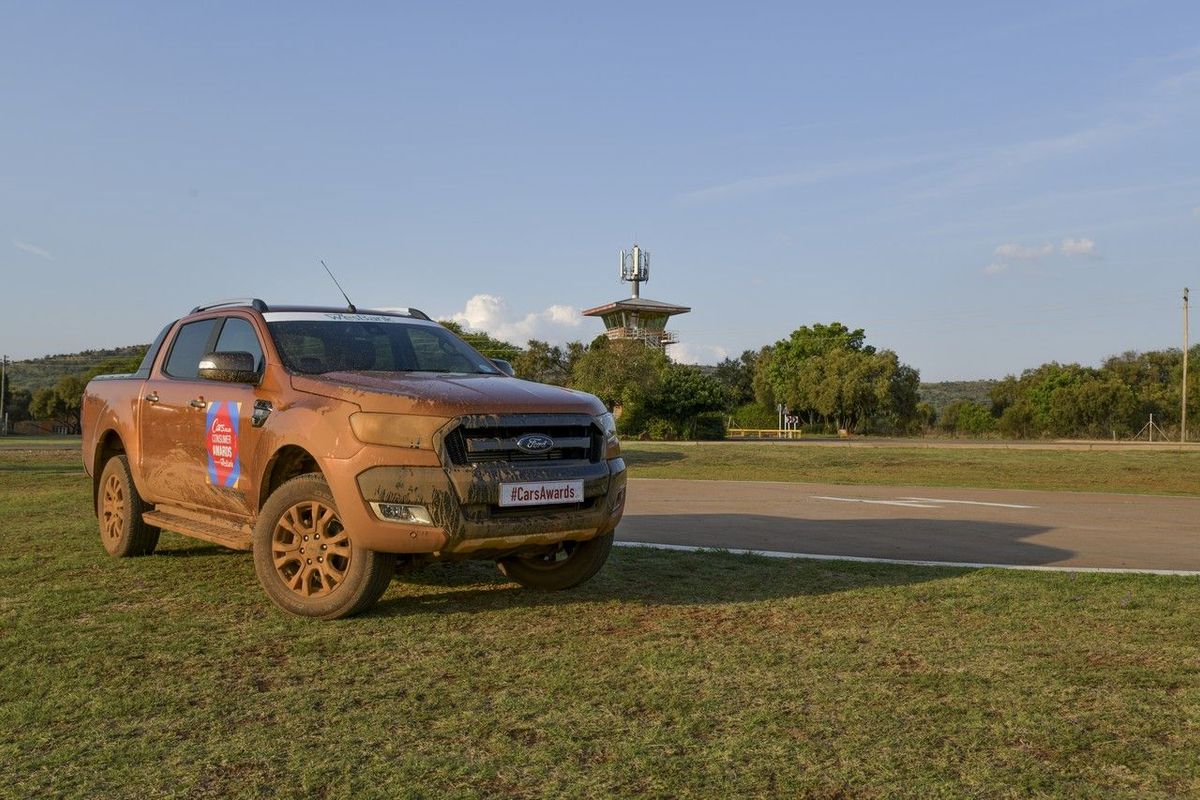
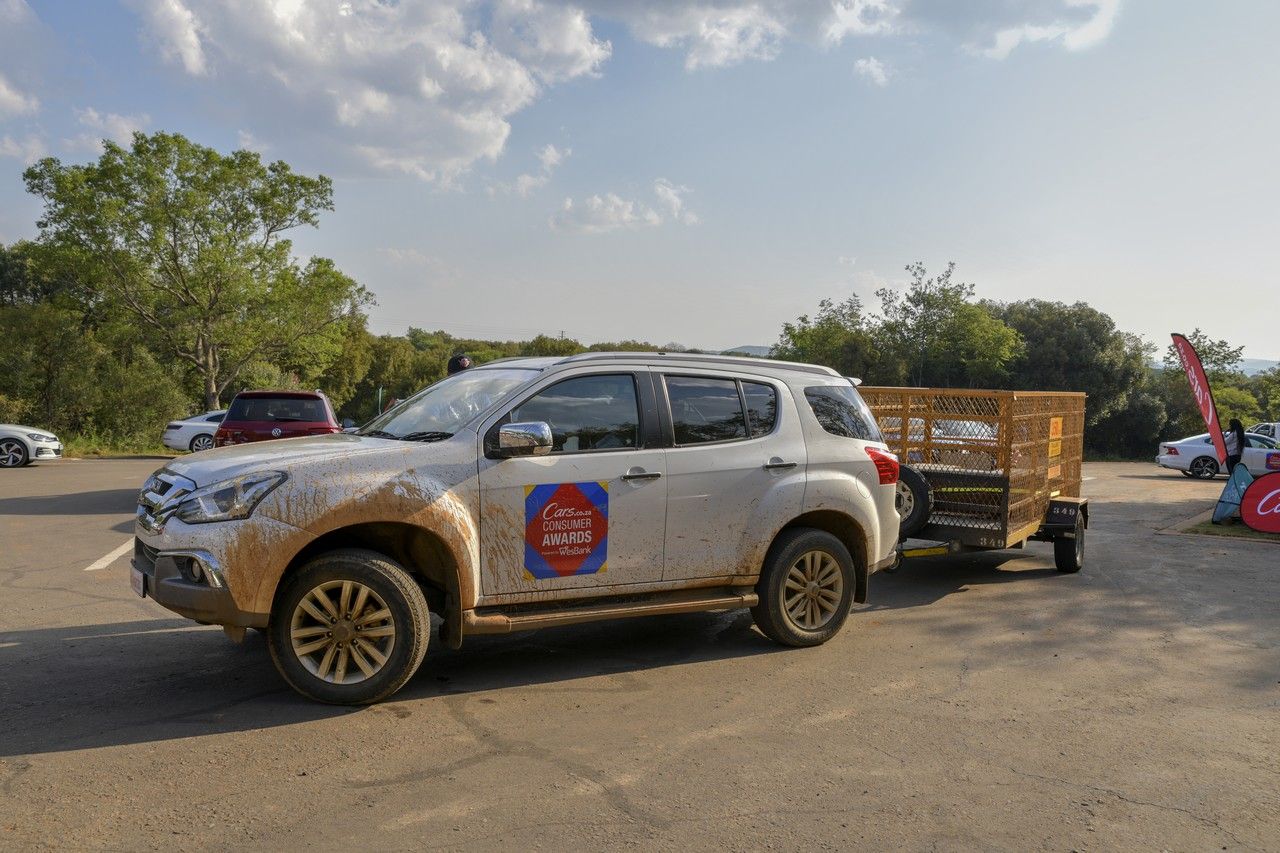
Double-cab bakkies and bakkie-based 4×4 SUVs not only did they have to pass a series of off-road tests through tough terrain; they had to tow a trailer loaded with concrete weights.
60-degree descent and 70-degree ascent (conditions permitting) to test hill descent control system and the low-range transmission.
Sand trough: to test 4×4 systems and off-road modes.
Mud pools: to test 4×4 systems and off-road modes.
Concrete handling track: to test engine responsiveness, uphill performance, suspension test, ride quality and refinement assessment.
Off-road track: to evaluate the sufficiency of ground clearance, differential lock efficiency, low-range transfer case, off-road modes.
Concrete handling track: to test engine responsiveness, and performance on slopes while pulling a trailer loaded with concrete weights (to simulate towing a caravan).
The importance of after-sales service
Offroading is one thing, but how about having to tow a trailer loaded with concrete weights up a mountain? The Isuzu MU-X in action.
To reiterate, the findings of the 20 judges will only count for half of the finalists’ total scores – the remaining 50% will be based on rankings that the respective vehicles’ brands achieved in the Cars.co.za Ownership Satisfaction Survey, which is conducted in partnership with leading data specialists Lightstone Consumer. The data incorporates feedback from thousands of vehicle owners, based on their experiences of their own vehicles, which are less than five years old and serviced through franchised outlets.
In other words, the experiences and perceptions of South African vehicle owners have a significant impact on which 13 category winners will be announced early next year, and, importantly, their feedback will completely determine the 2018/19 Brand of the Year, won for the past two years by Suzuki.
Members of the public can follow developments of the Cars.co.za Consumer Awards – powered by WesBank on Cars.co.za and its social media channels (with related content bearing the now-ubiquitous #CarsAwards hashtag). To participate in the Cars.co.za Ownership Satisfaction Survey or access more information about the programme (including categories, judges and finalists) visit http://www.carsawards.co.za
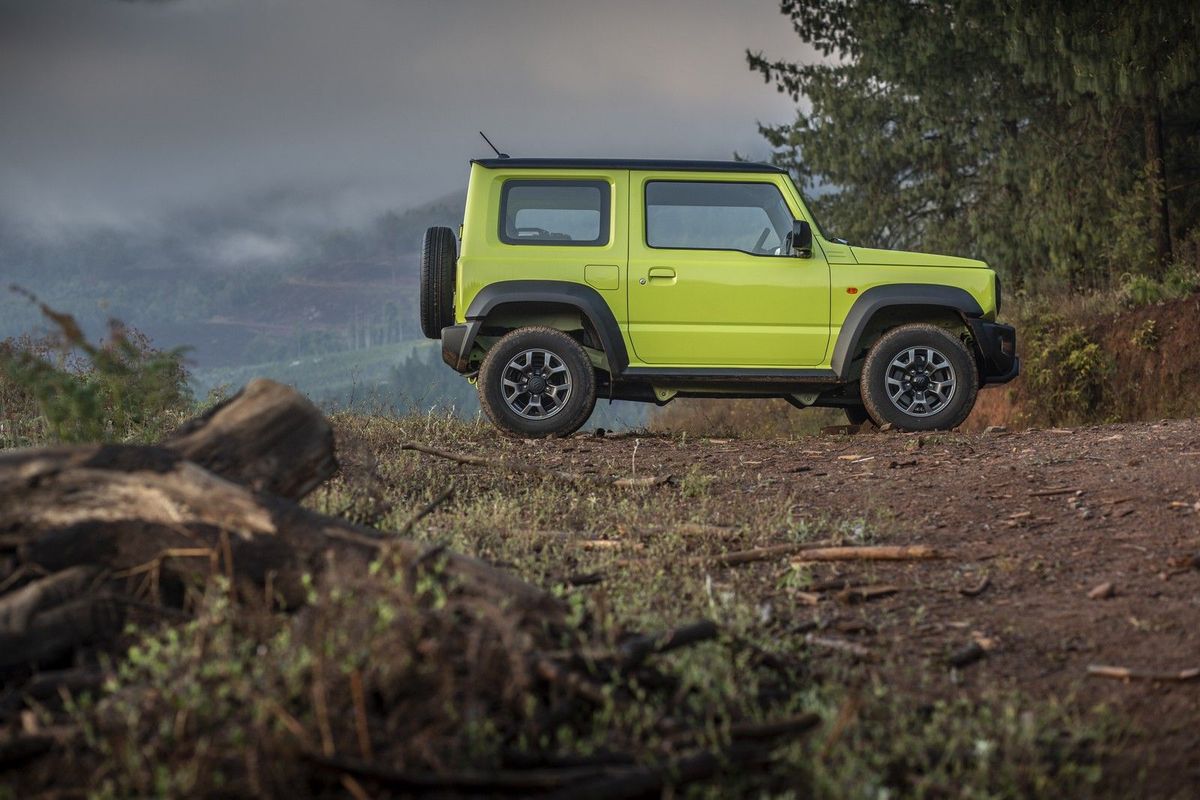
The smallest pukka off-roader in the world just got a whole lot better, writes Aaron Borrill.
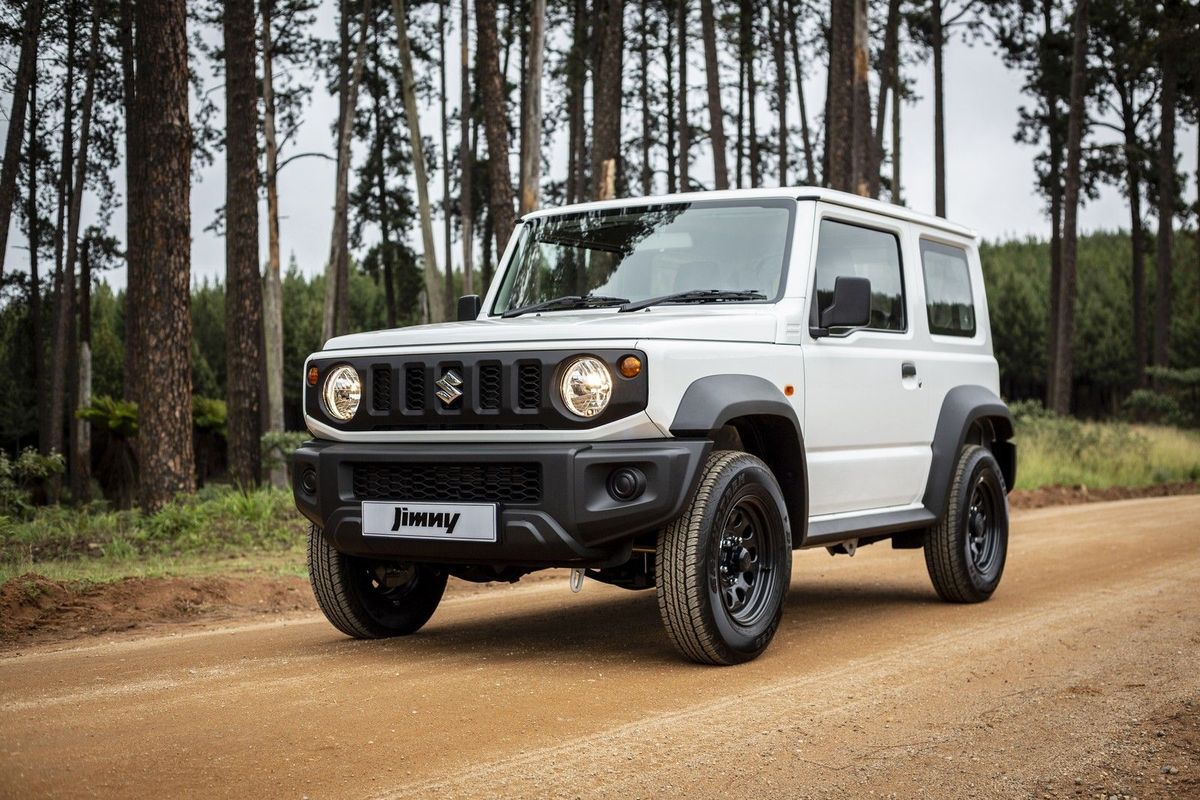
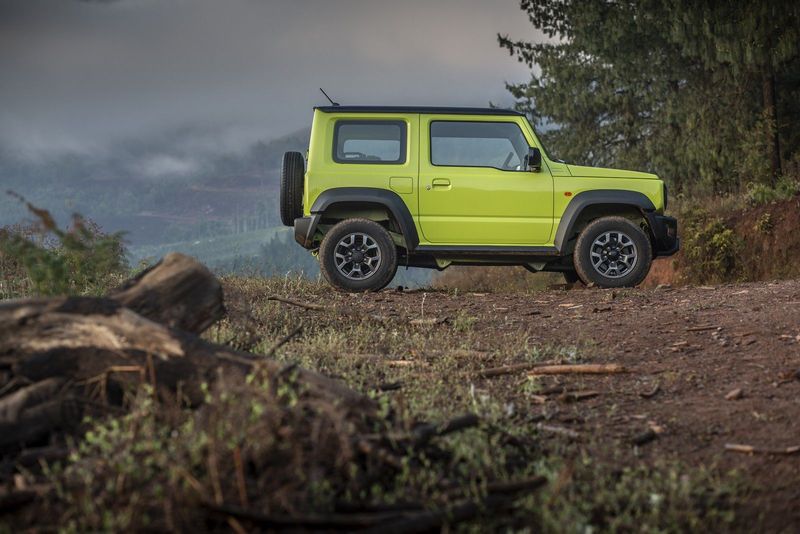
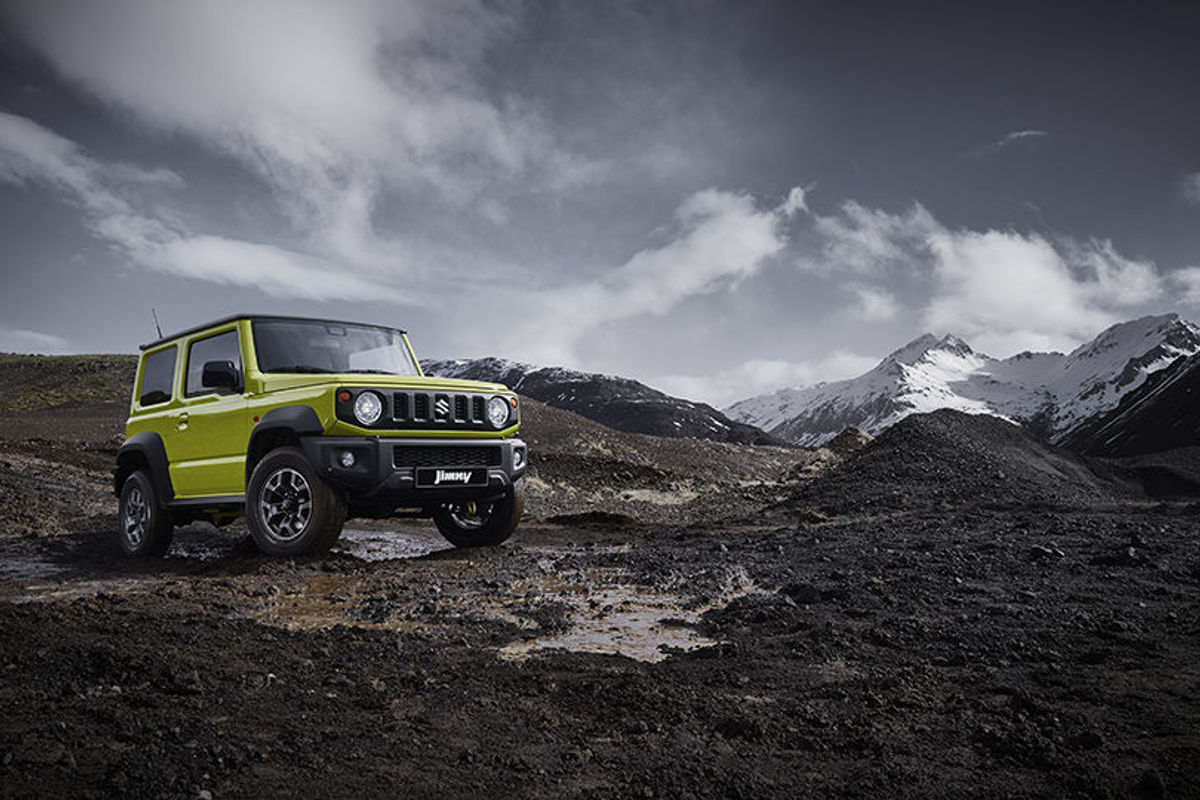
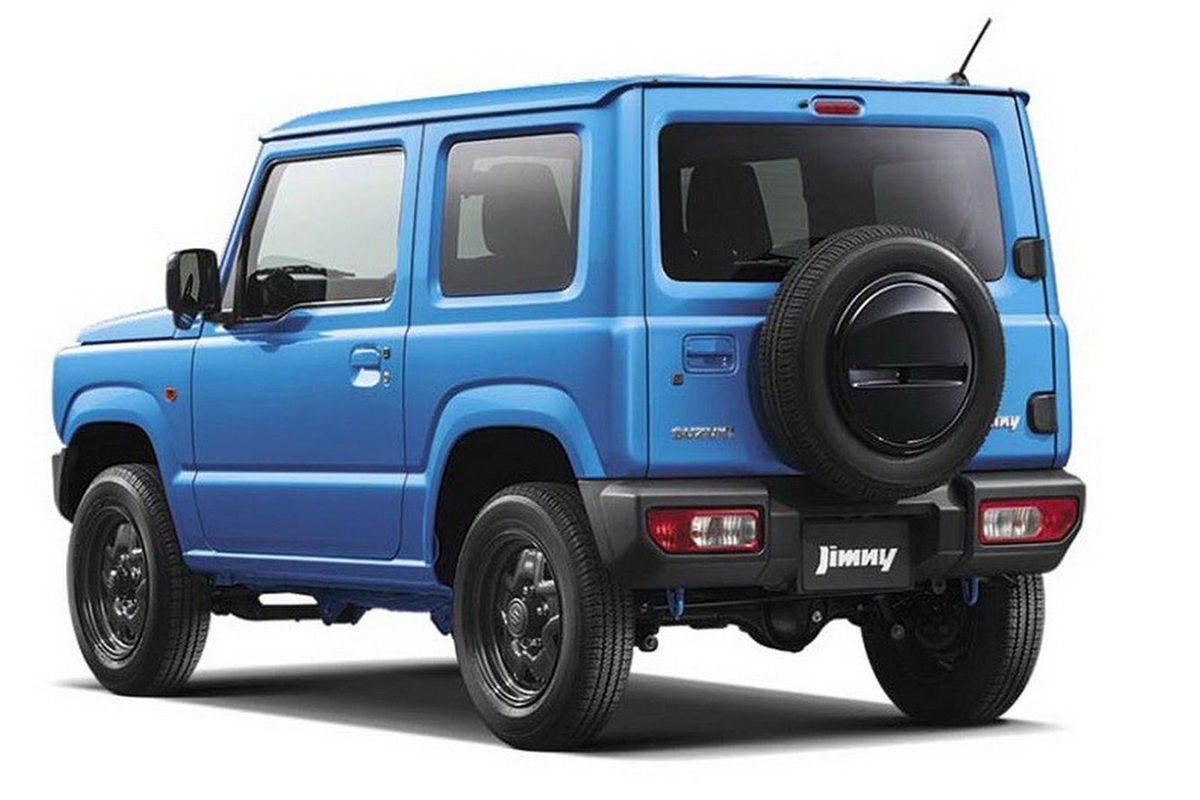
The new retro-styled Jimny; the GA derivative rides on 15-inch steel wheels.
What is it?
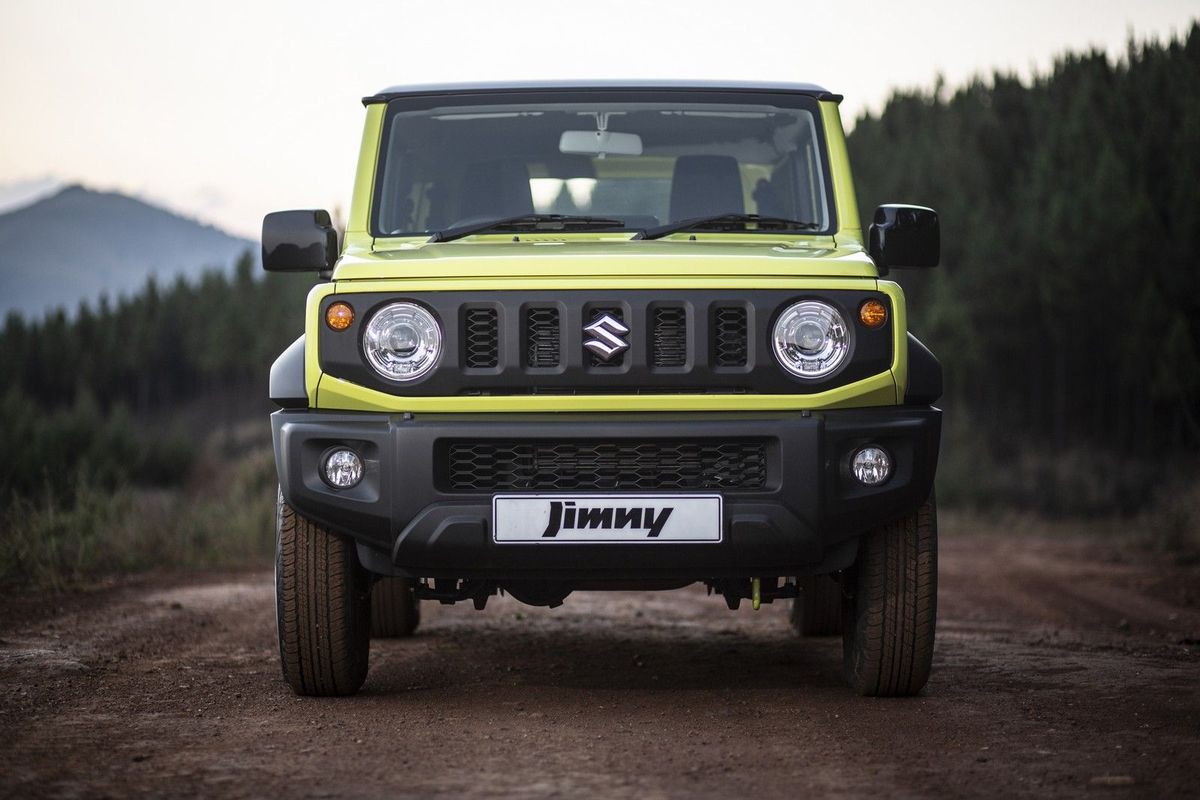
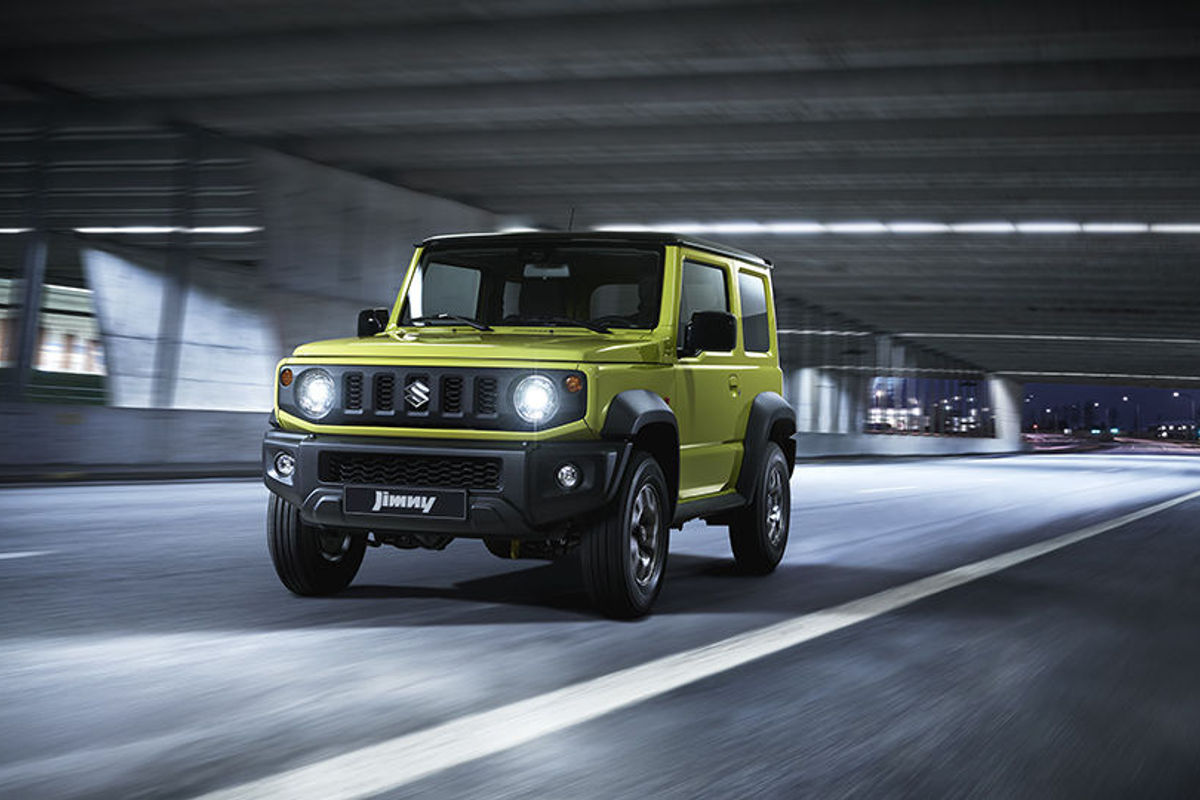
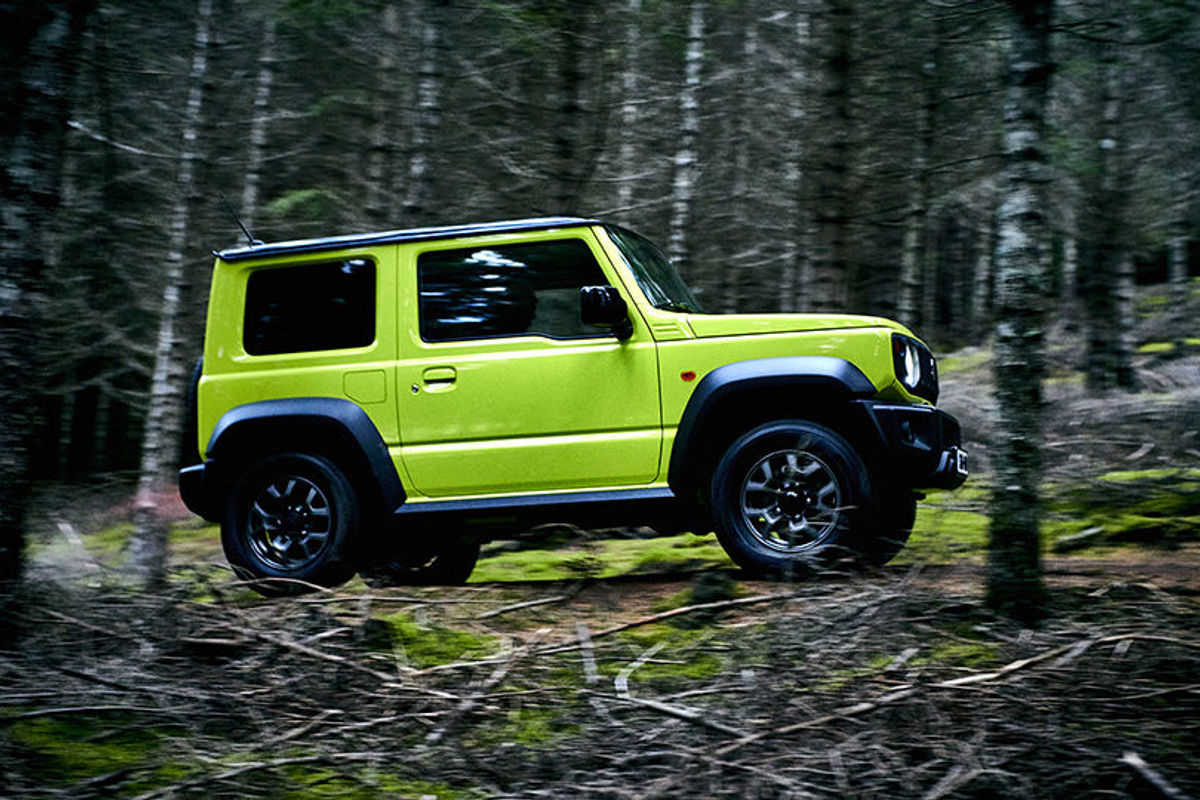
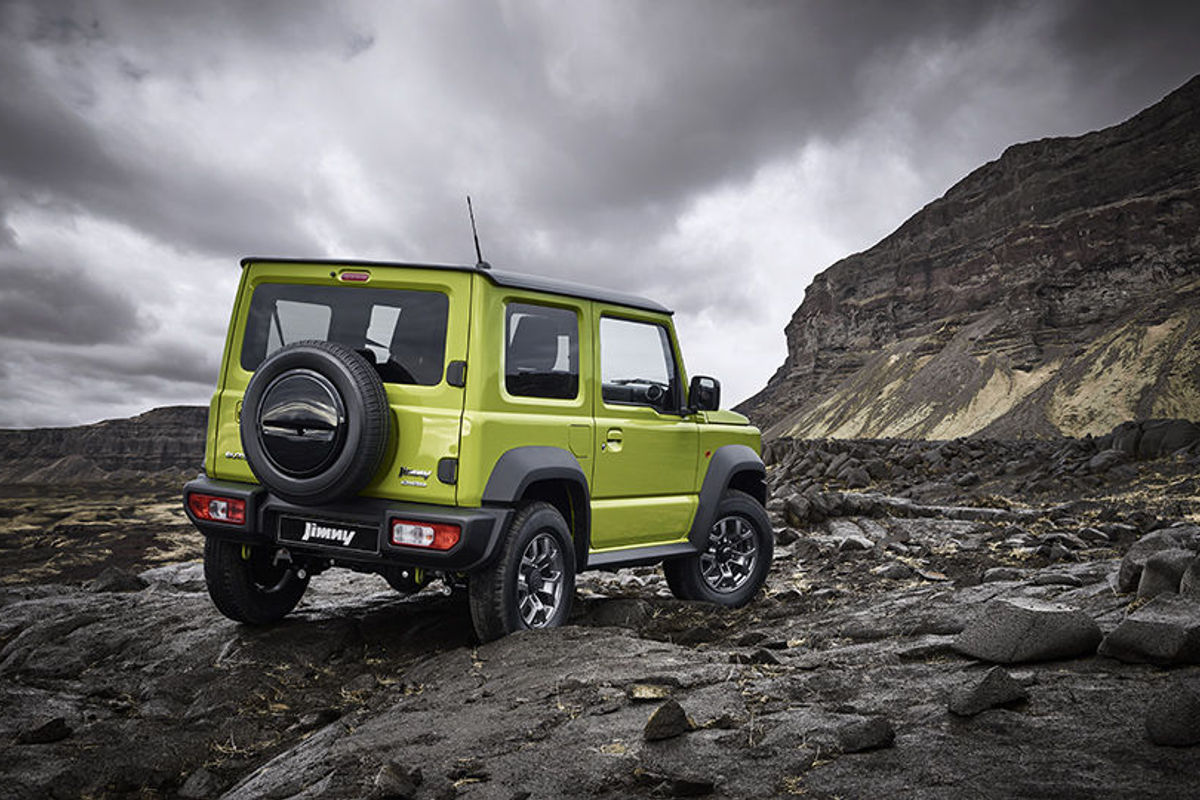
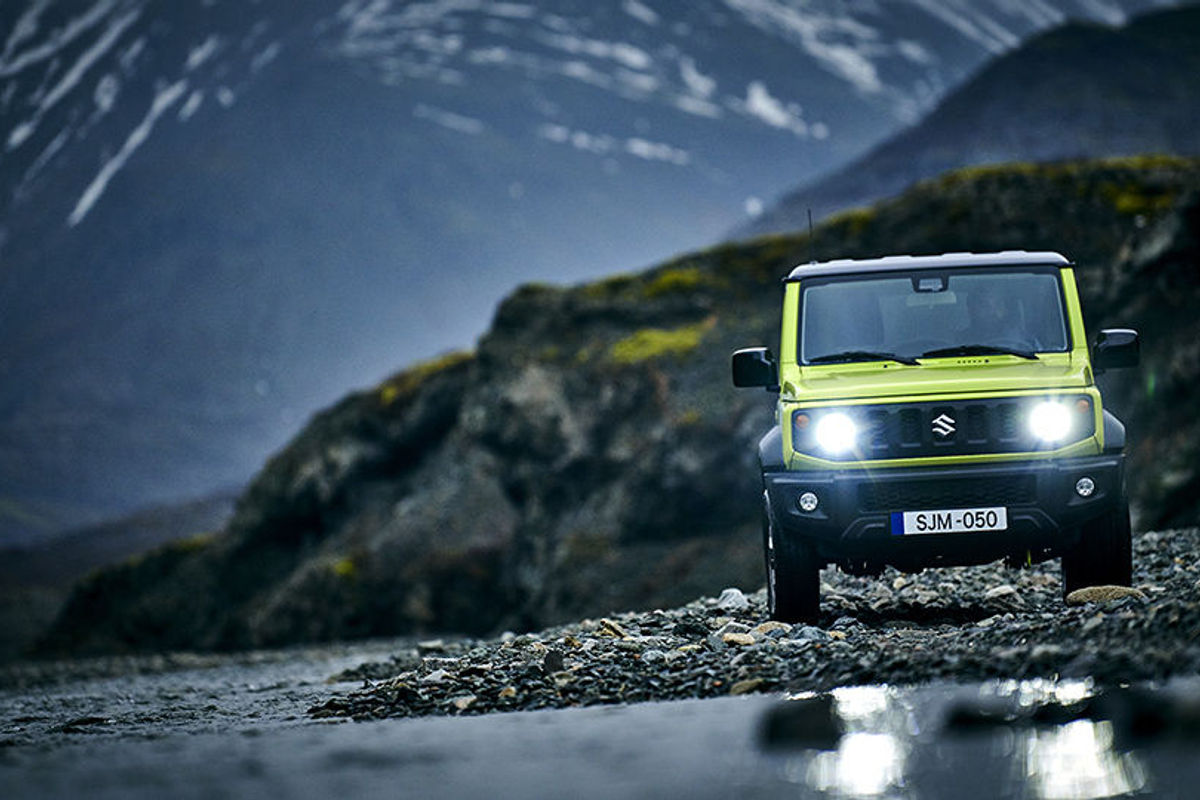
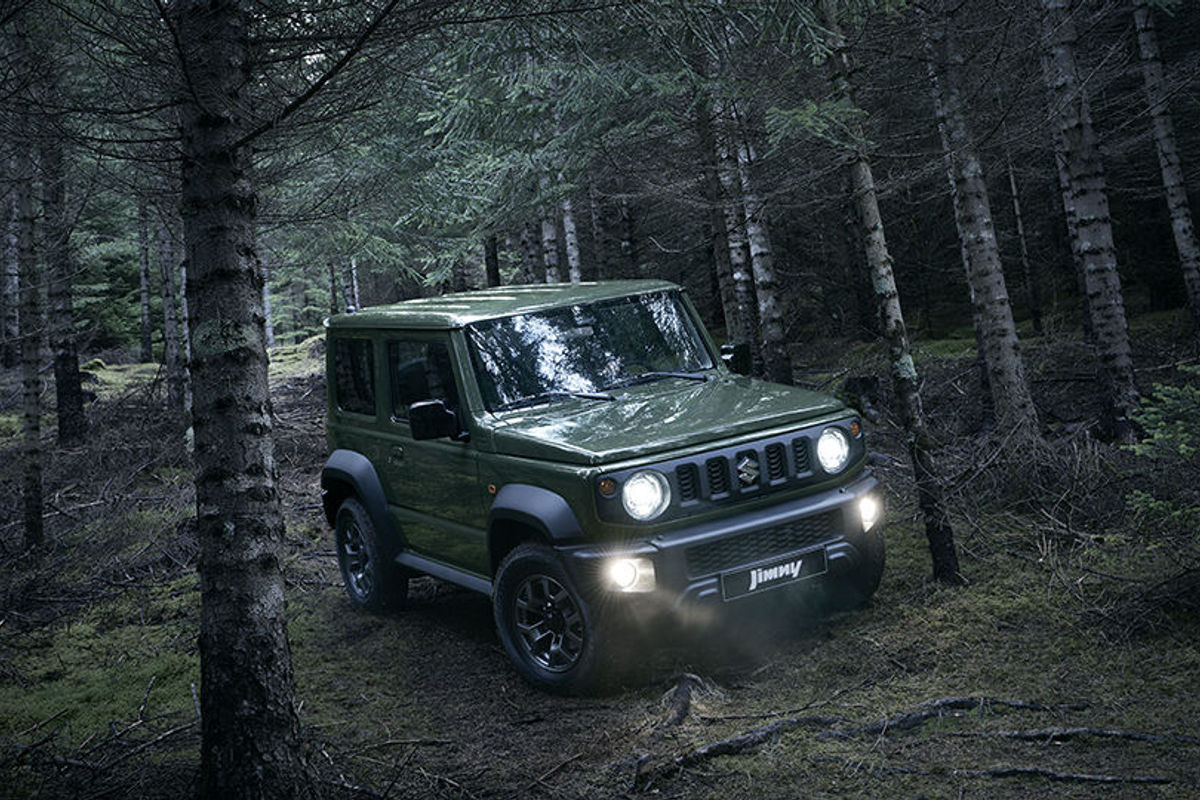
We've had to wait 20 years for an all-new Suzuki Jimny to arrive, but it's finally here. With this fine-looking successor to the ever-popular Mk3, Suzuki hopes to attract a whole new demographic altogether thanks (largely) to the newcomer's funky, retro aesthetics that pay homage to the original LJ and SJ Series – not to mention its much-improved cabin space.
It’s available in 2 trim options: GA and GLX, the former of which comes with a 5-speed manual 'box and the latter of which is available with either a clutch pedal or with a 4-speed automatic transmission. While the new model follows very much the same diminutive Kei-car recipe of its forebears, the dimensions have grown marginally (30 mm shorter, 45 mm wider and 20 mm taller) to improve the extent of the vehicle's off-road articulation, as well as overall interior space. The engine, although slightly bigger in capacity than before, has foregone the turbocharged route and remained naturally aspirated – in this case, a 4-cylinder 1.5-litre unit powering all four wheels.
Visual revolution
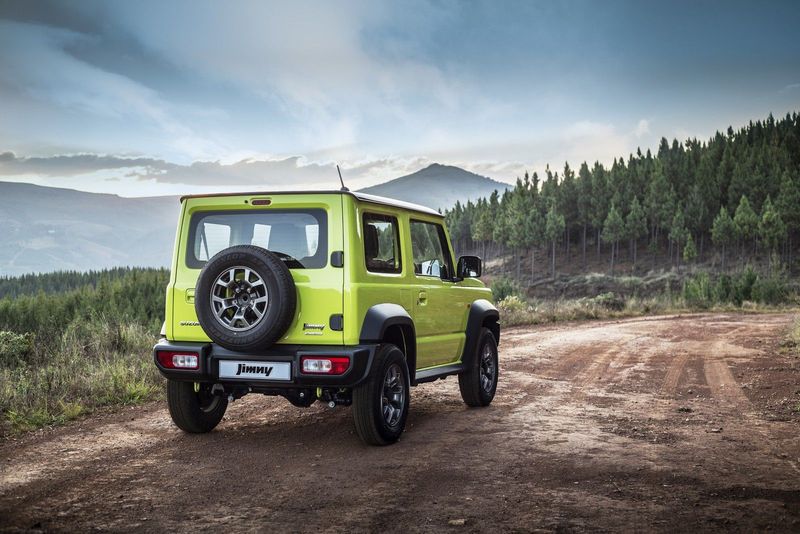
Somehow the new Jimny is shorter than its forebear, even though its interior space has been improved…
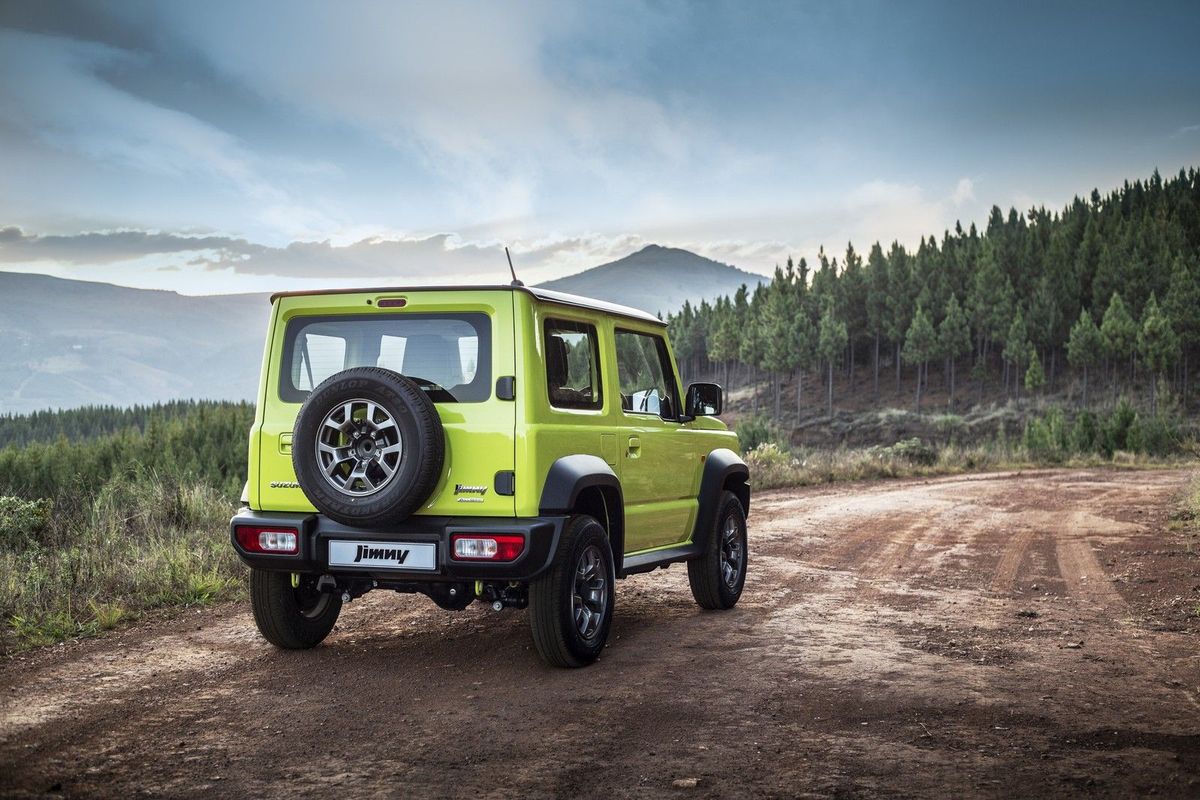
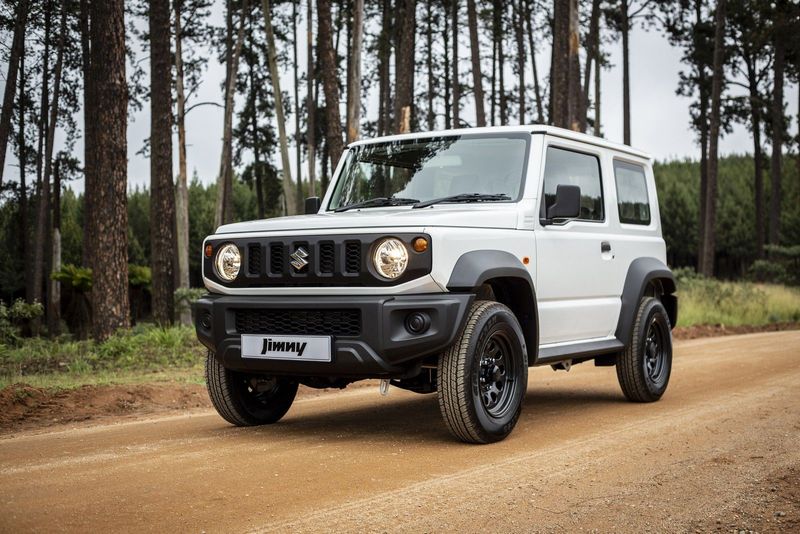
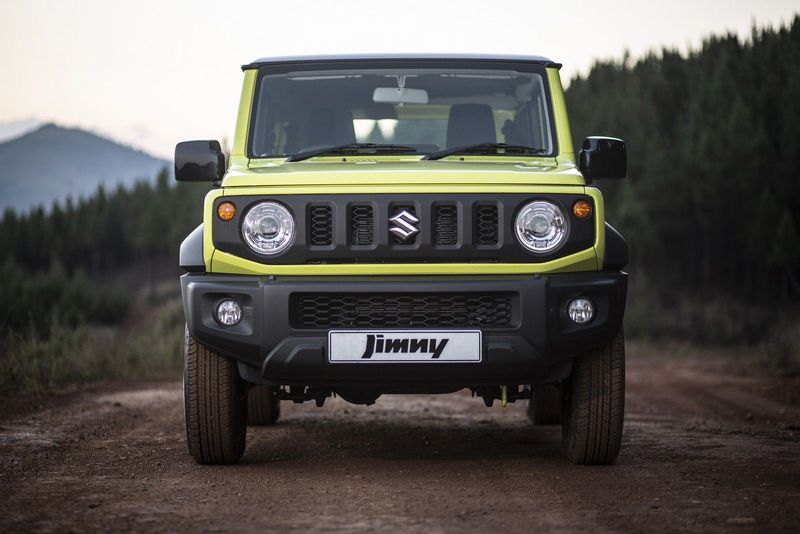
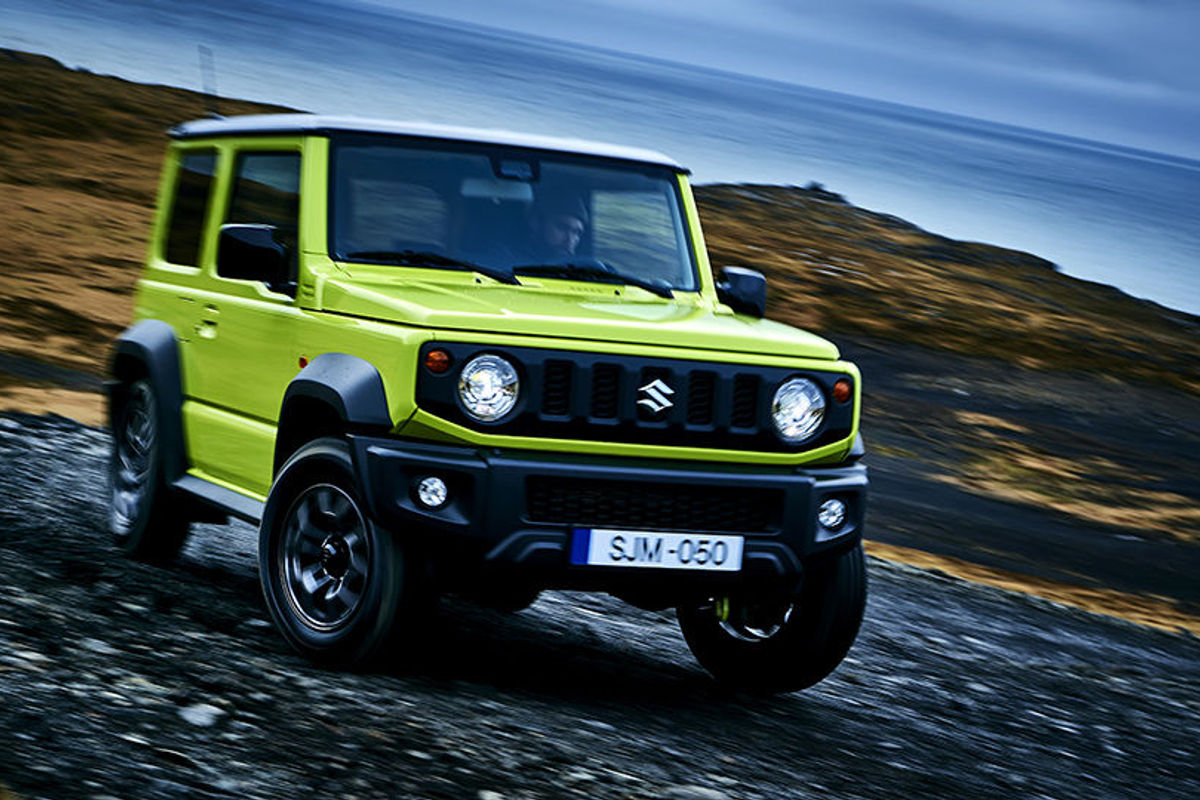
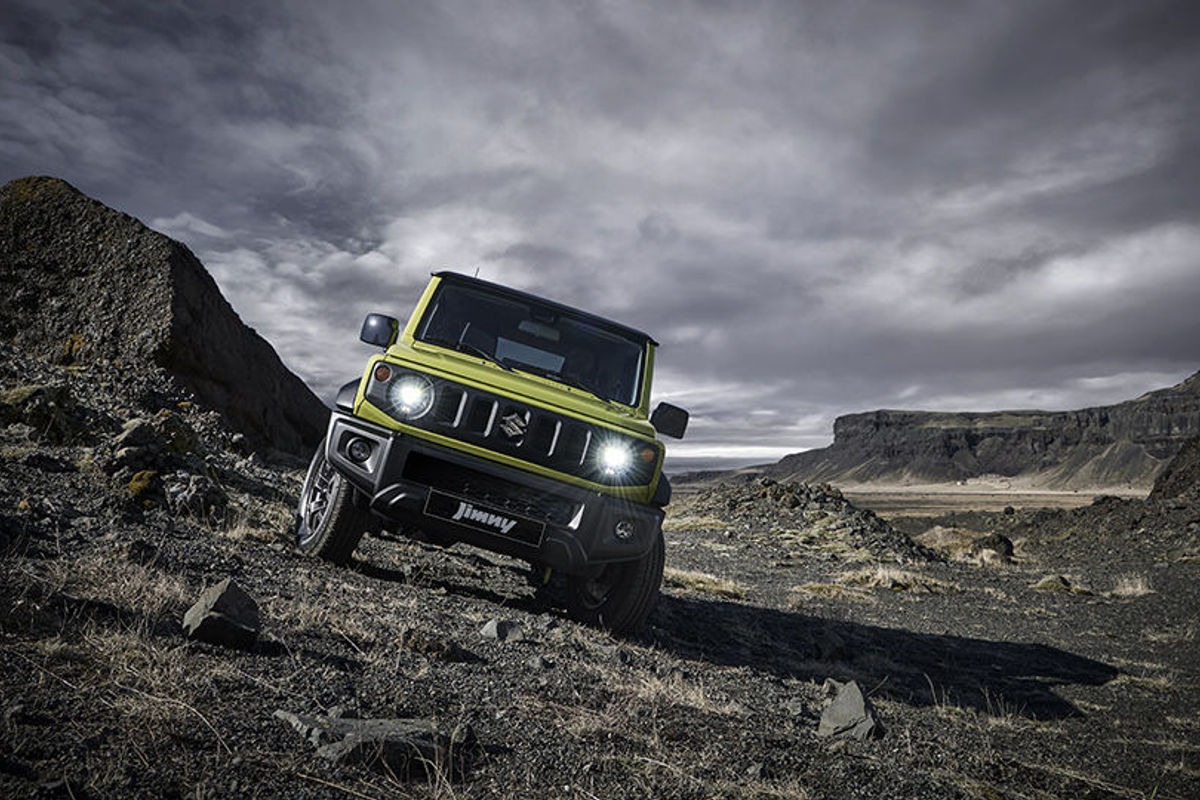
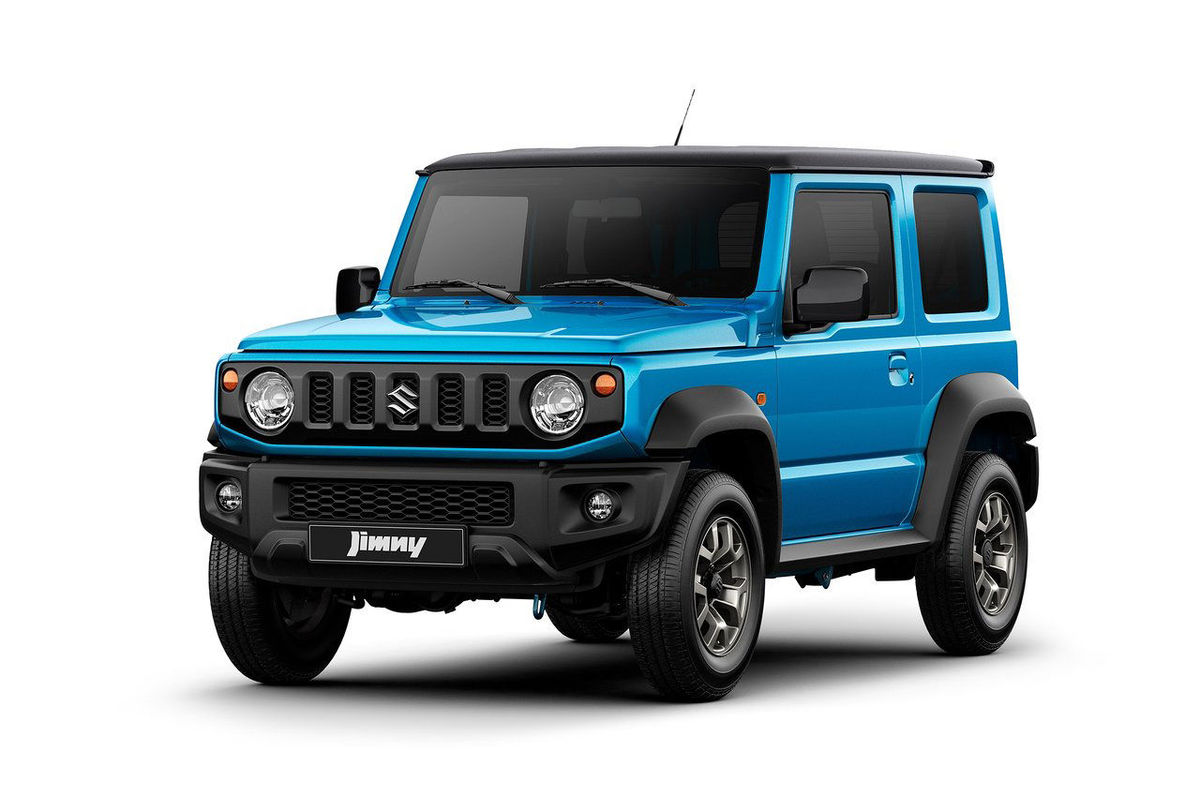
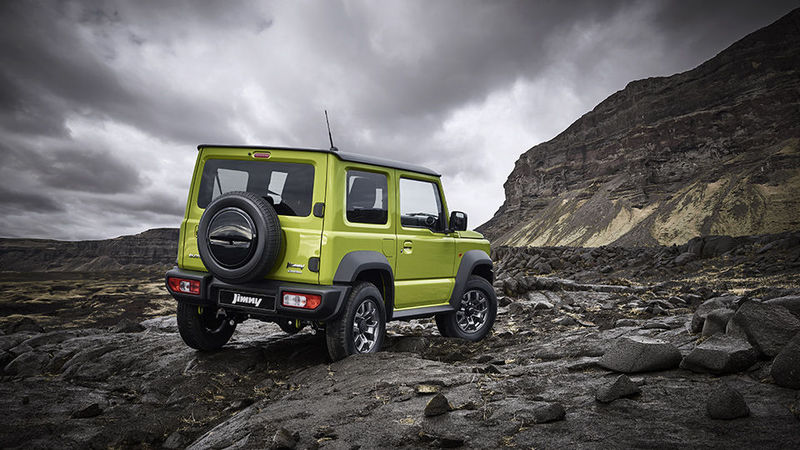
With version 4.0, it is clear that Suzuki wanted to recreate the legend of the original LJ and SJ and the Japanese firm has done a pretty decent job. The new Jimny's dinky-car-like appearance endows it with a truly charming quality that does little to compromise any of the ruggedness it's become famous for over the years. As such, it gets rounded headlamps with standalone indicators, a clamshell bonnet with side slits and pronounced fenders – all elaborations of features seen on the original LJ model. In fact, look closely enough and you’re bound to see elements of every iteration scattered about – consider the 5-bar grille, for example, it's a subtle, but contemporary, nod to the Mk3 Jimny.
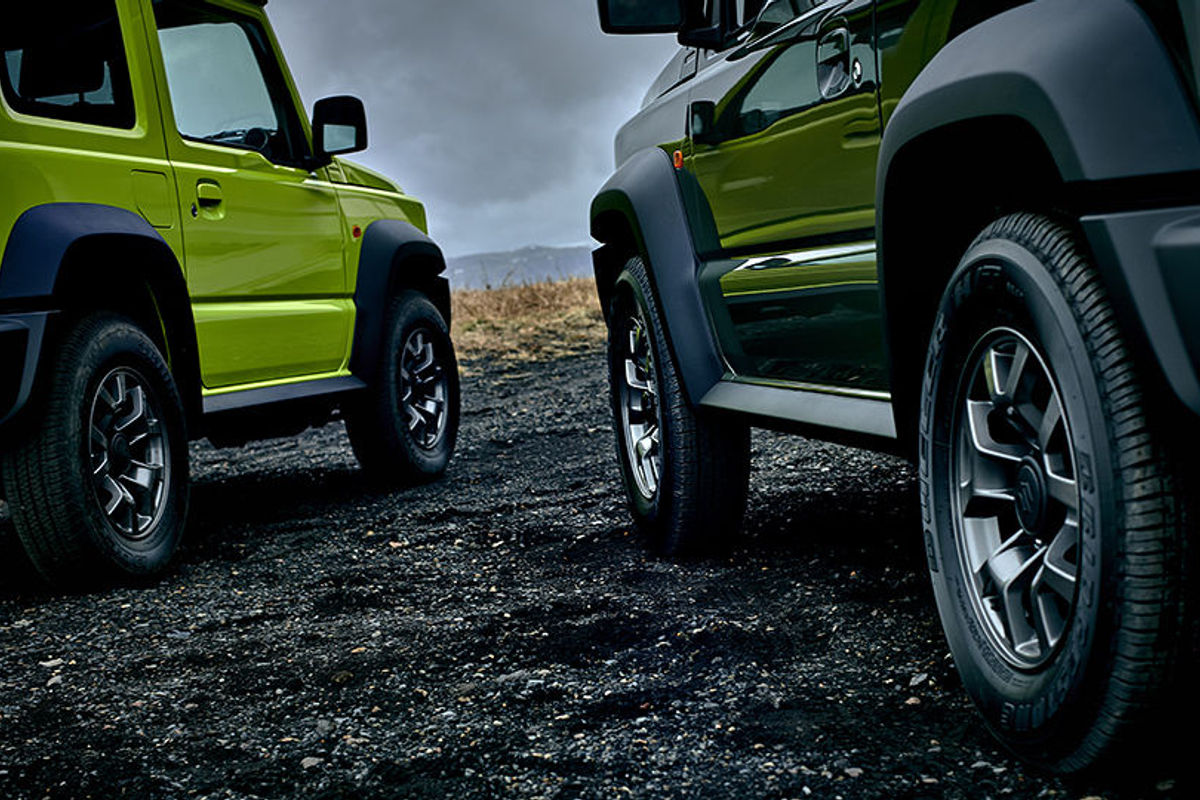
The exterior is, of course, super practical; the squared-off body shell and moulded black bumper cladding are just some of the visual clues that point towards the Suzuki's off-road bent. Depending on which derivative your choose, 15-inch wheels are standard – the only difference is whether they’re steel or alloy (we do prefer the utilitarian look of the steel wheels).
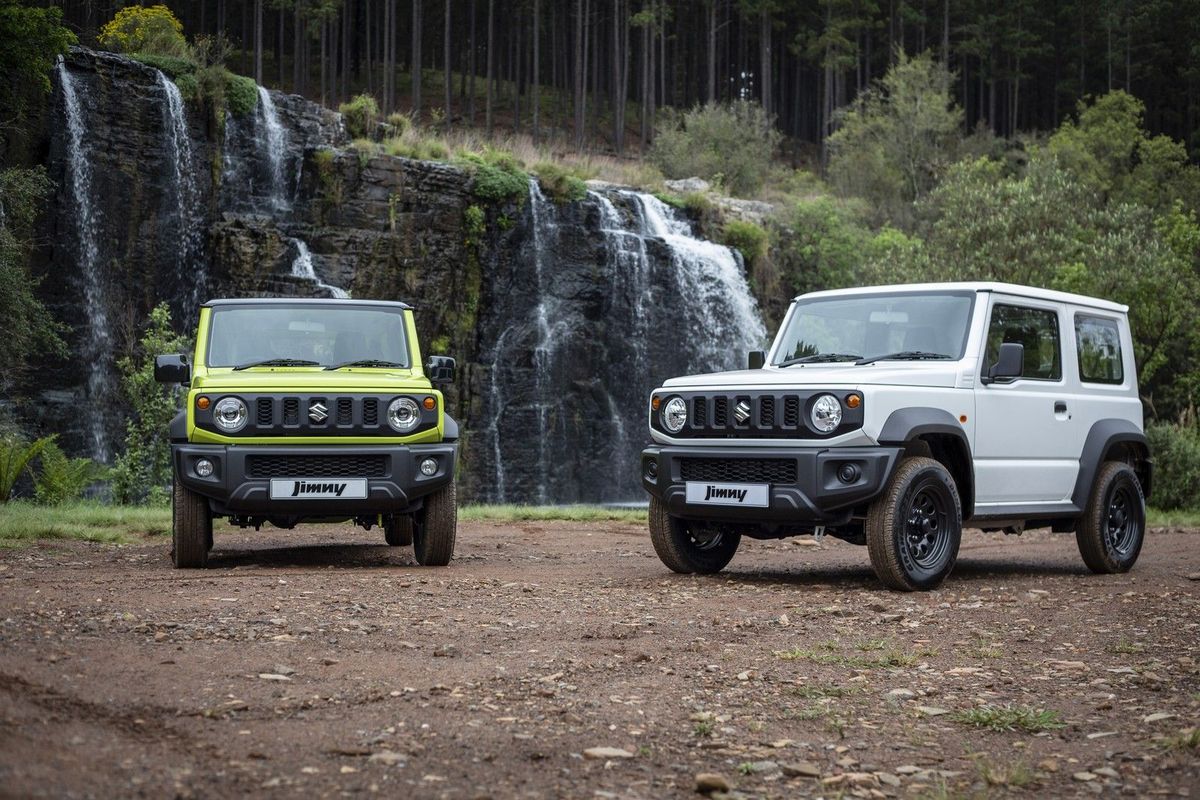
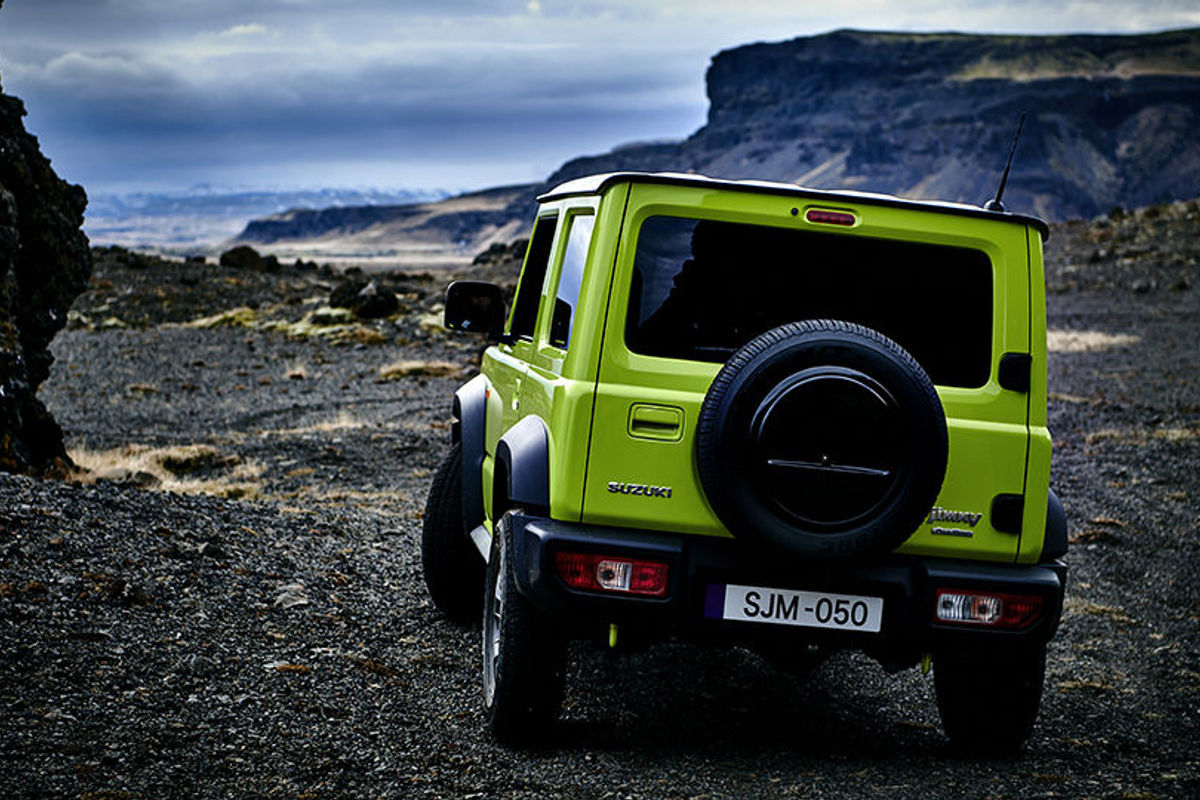
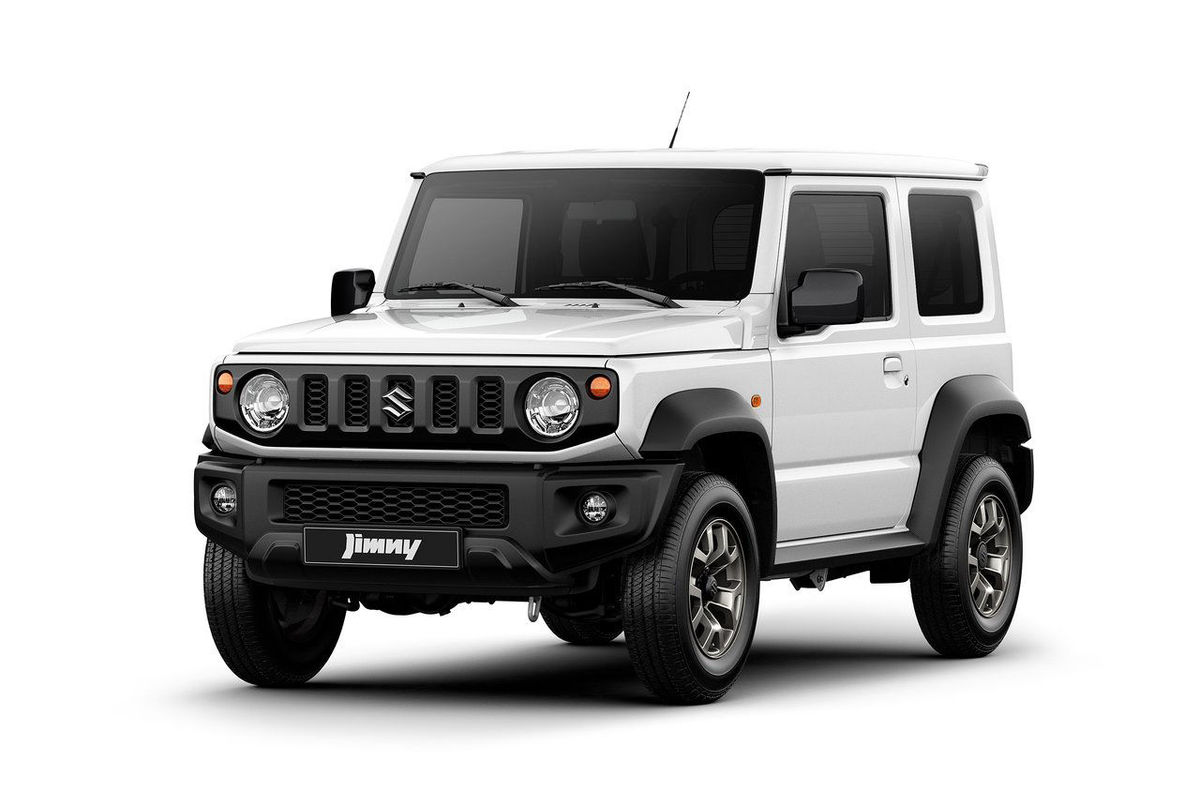
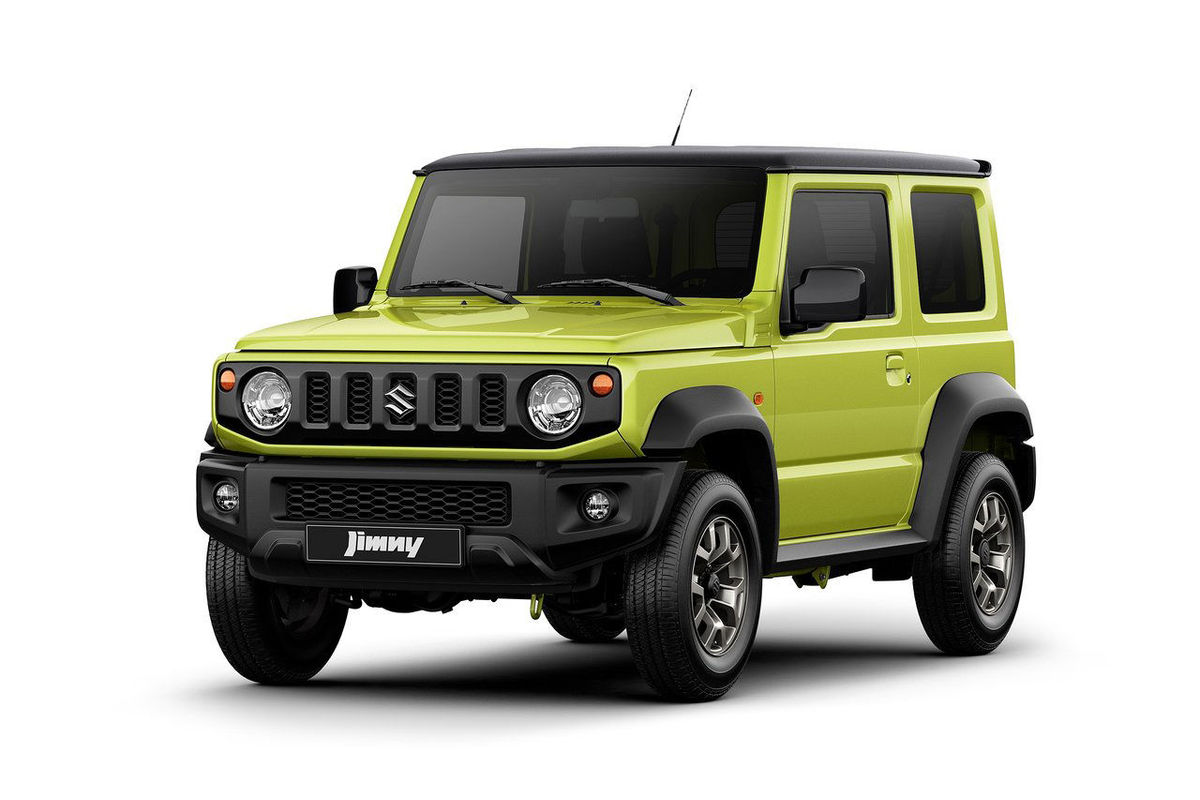
In terms of colours, there are a host of combinations to pick from. The available 2-tone colour schemes include a new high-visibility Kinetic Yellow, Brisk Blue Metallic and Chiffon Ivory Metallic finished off with a complementing gloss-black roof. The single-tone colours are Jungle Green, Bluish Black Pearl, Medium Grey, Silky Silver Metallic and White.
Retrospective cabin
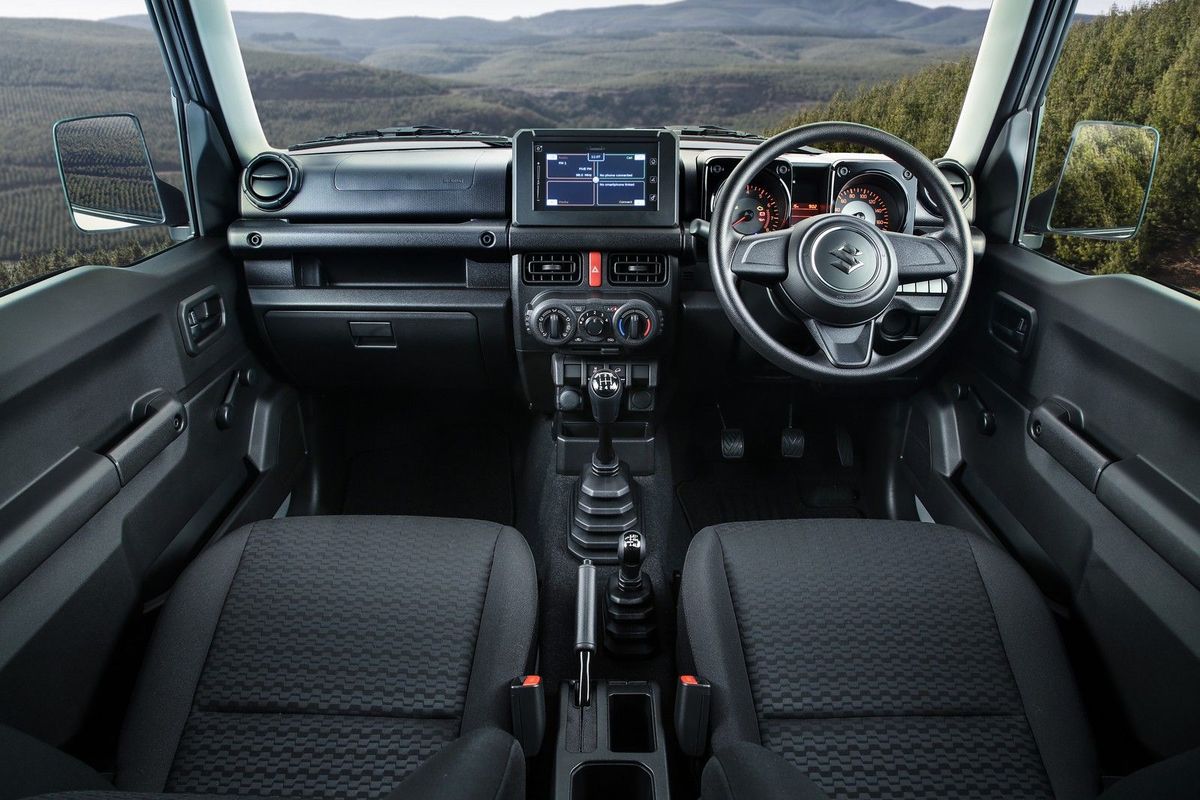
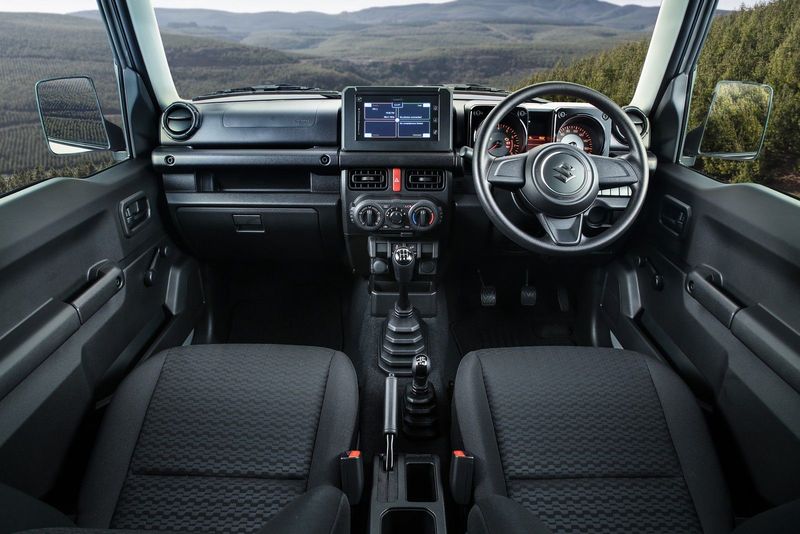
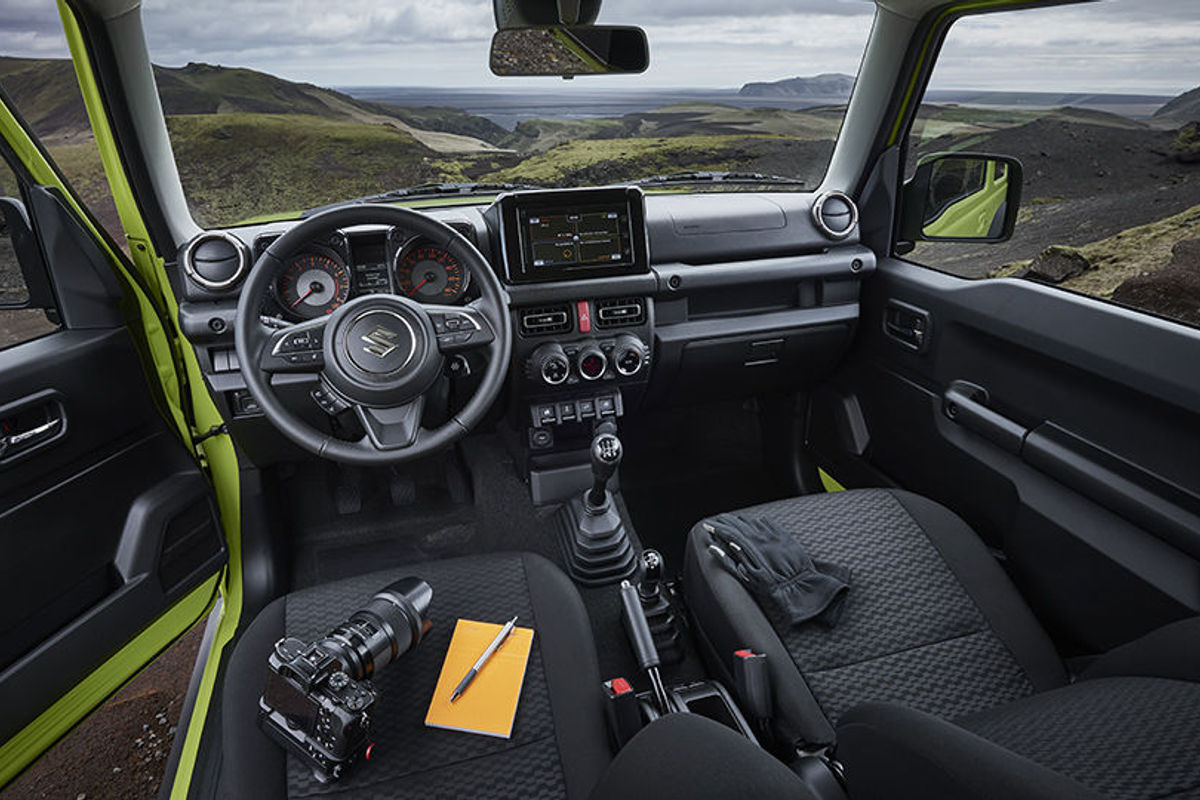
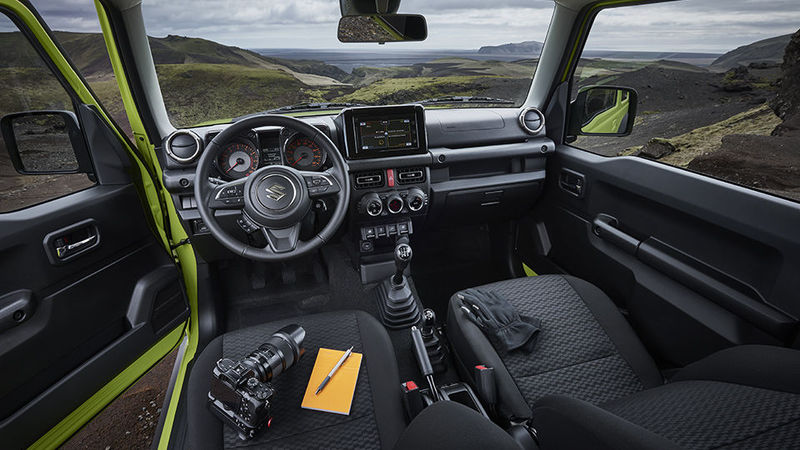
A more modern cabin technically, but still full of rugged and hard-wearing materials.
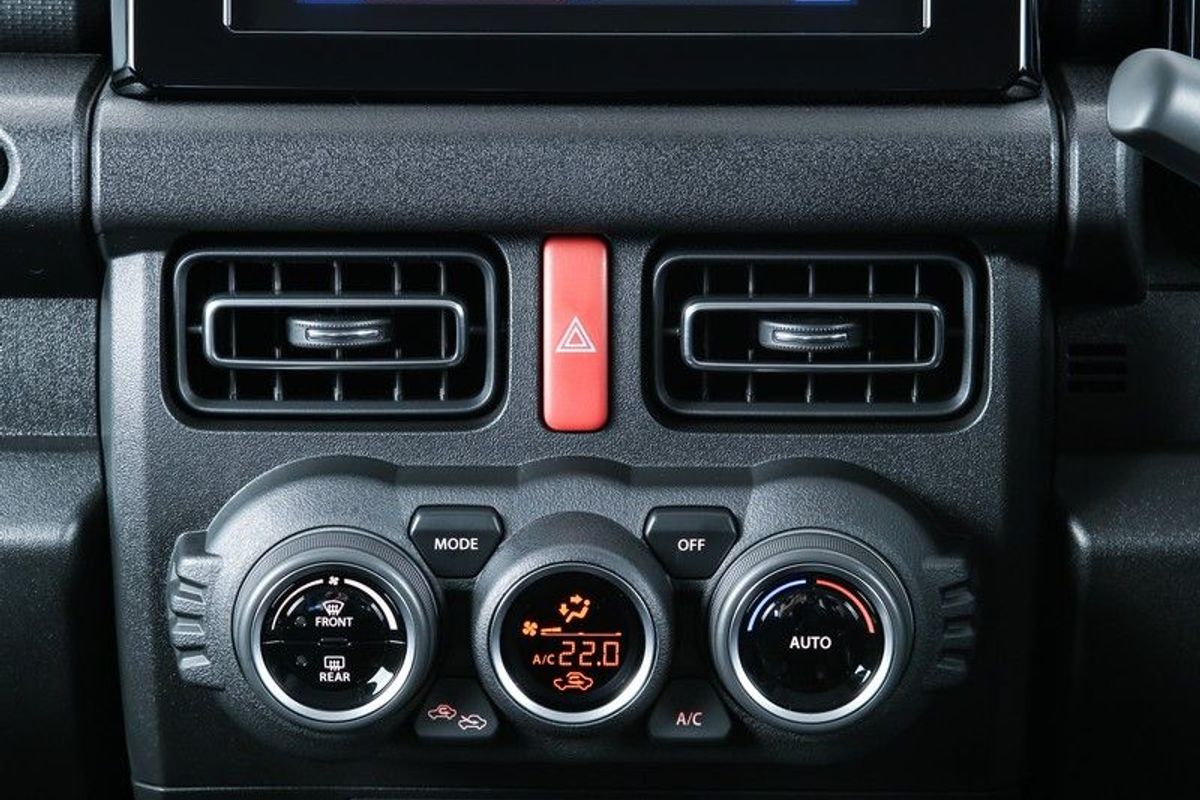
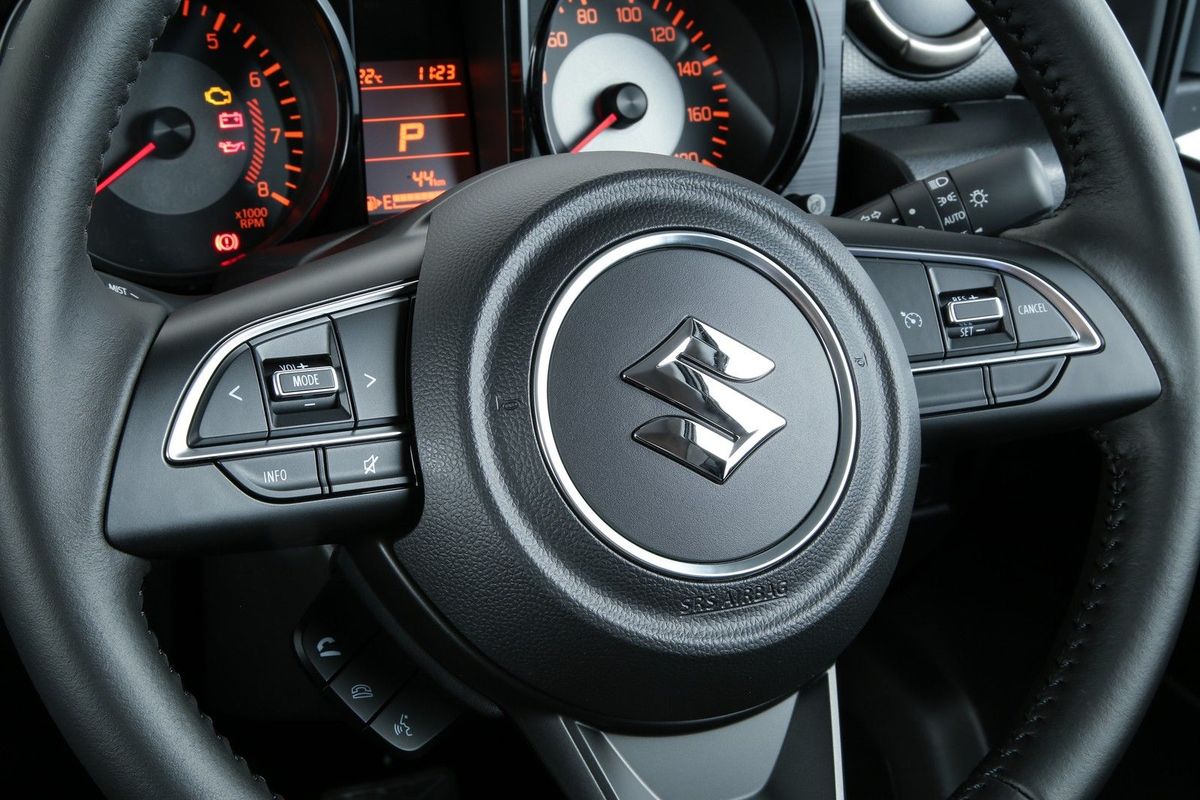
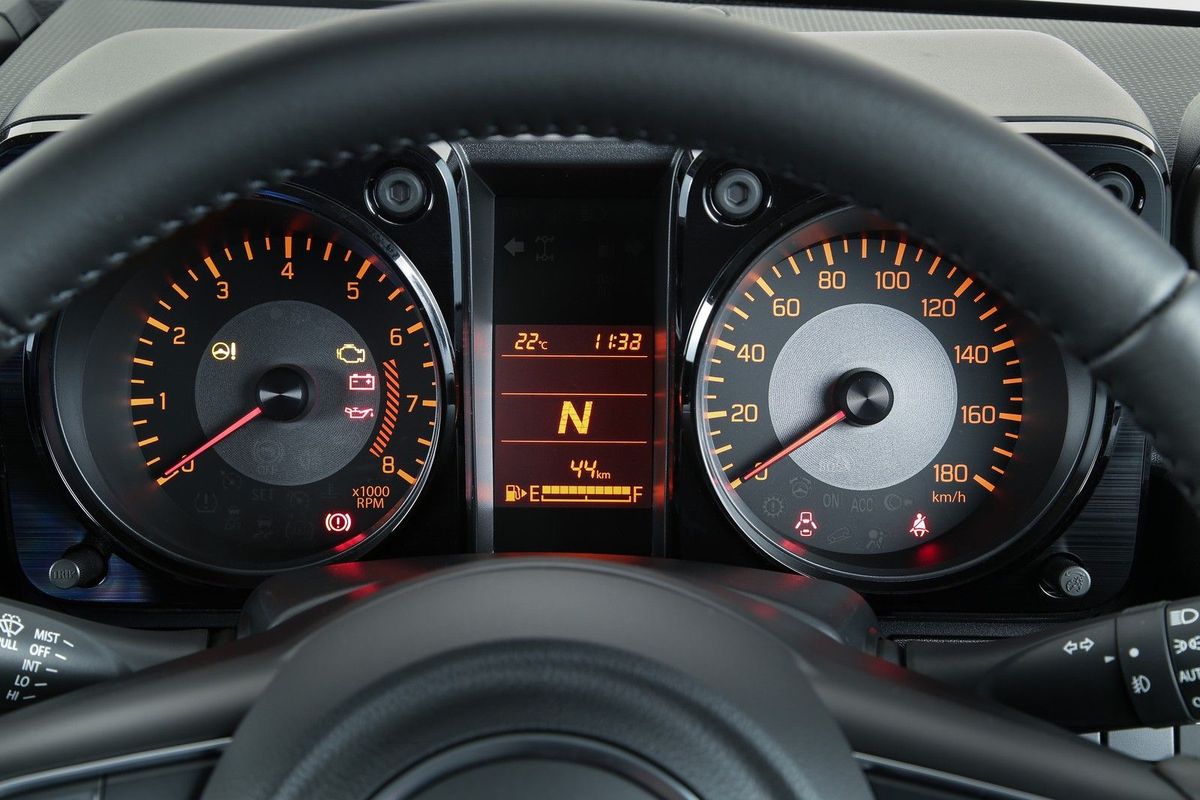
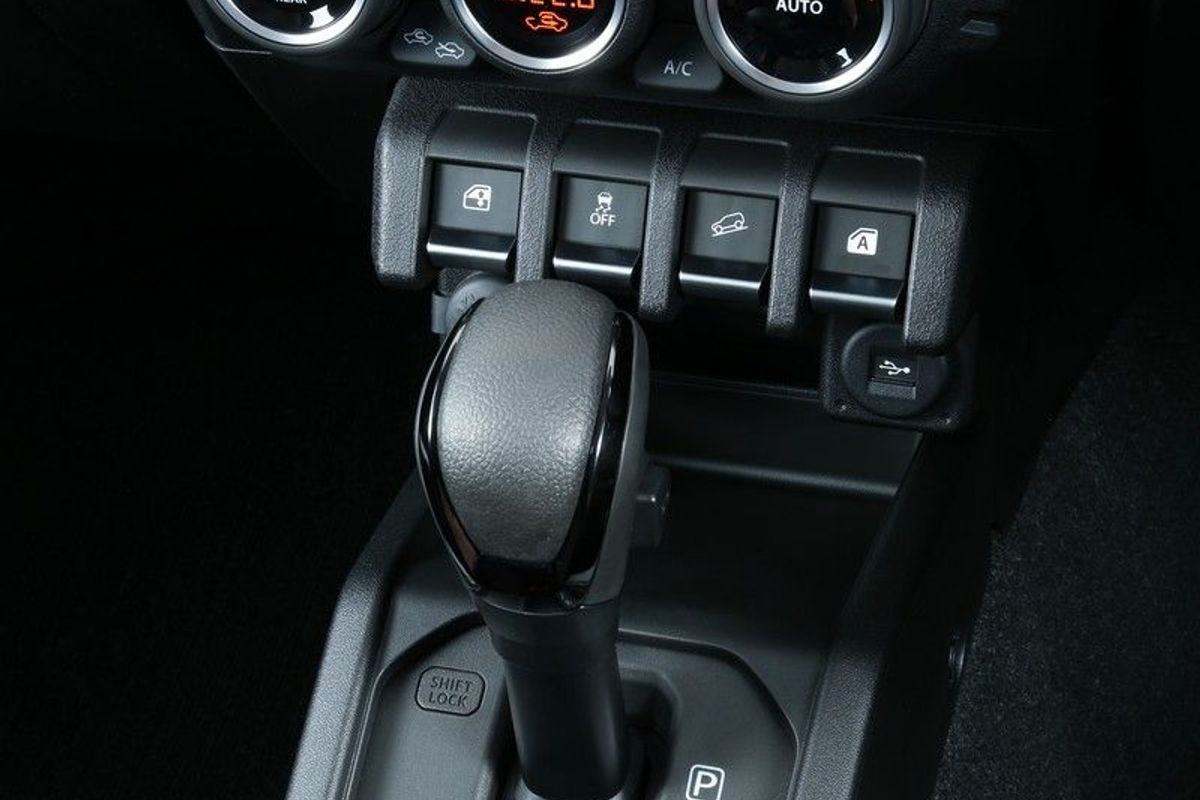
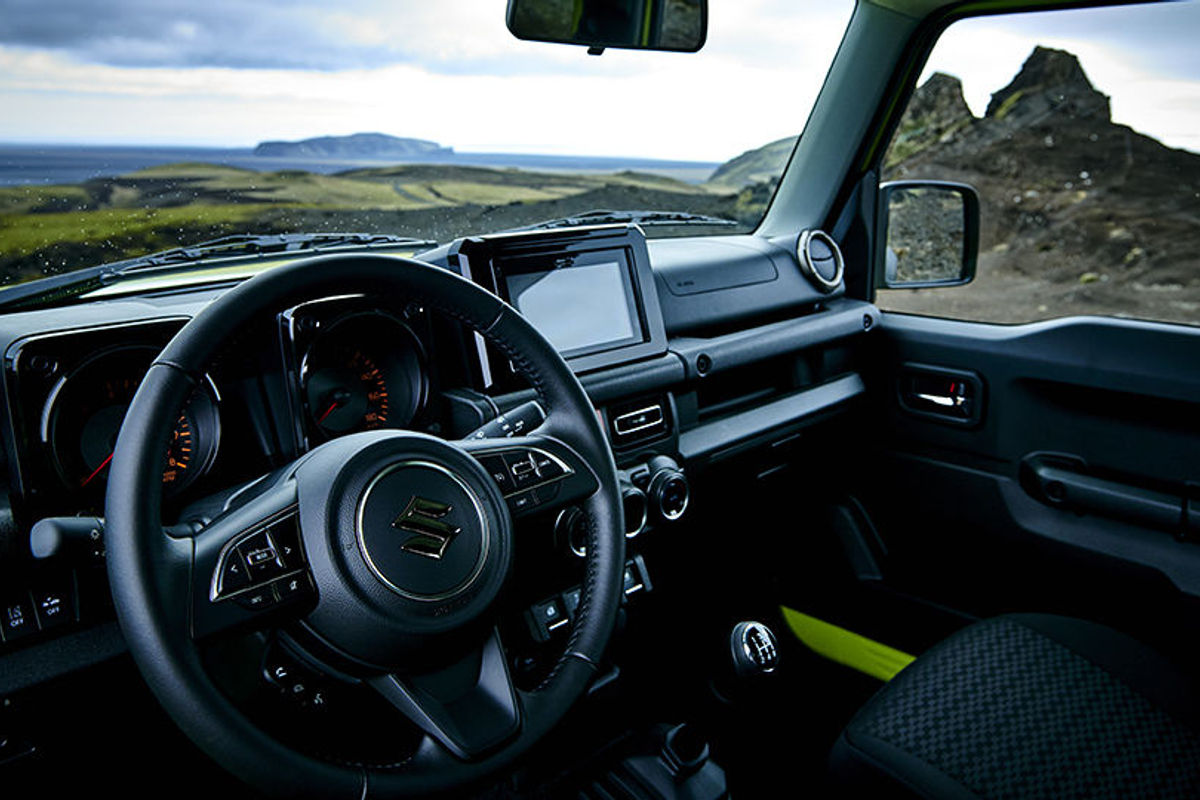
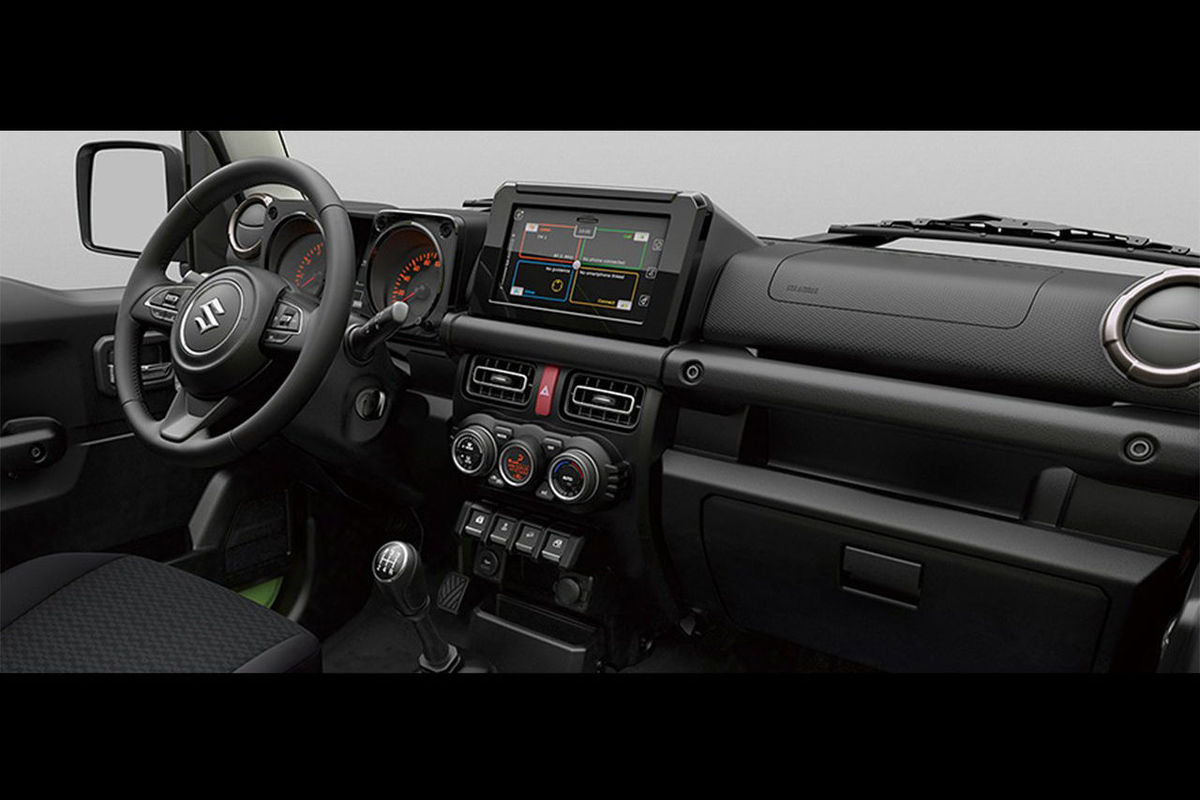
Like the exterior, the cabin has a retro twist to it. The colour palette is predominantly black to minimise distraction for the driver, but several metallic surfaces add a somewhat premium feel. The angular and geometric dashboard layout, while old-school, is said to aid the driver with orientation in heavy off-roading manoeuvres. There’s no soft-touch panelling (that would go against the Jimny’s core ethos!). Instead, the cabin is practical rather than precious with scratch resistant plastic featuring heavily in the composition. These surfaces are claimed to reduce glare and "enhance concentration". Okay, then. The dashboard arrangement references the SJ Series with the speedo and rev counter housed within 2 separate binnacles. Space is much improved over its predecessors and despite the 2-door body layout, ingress/egress is relatively easy owing to the improved sliding range of the front seats (240 mm).
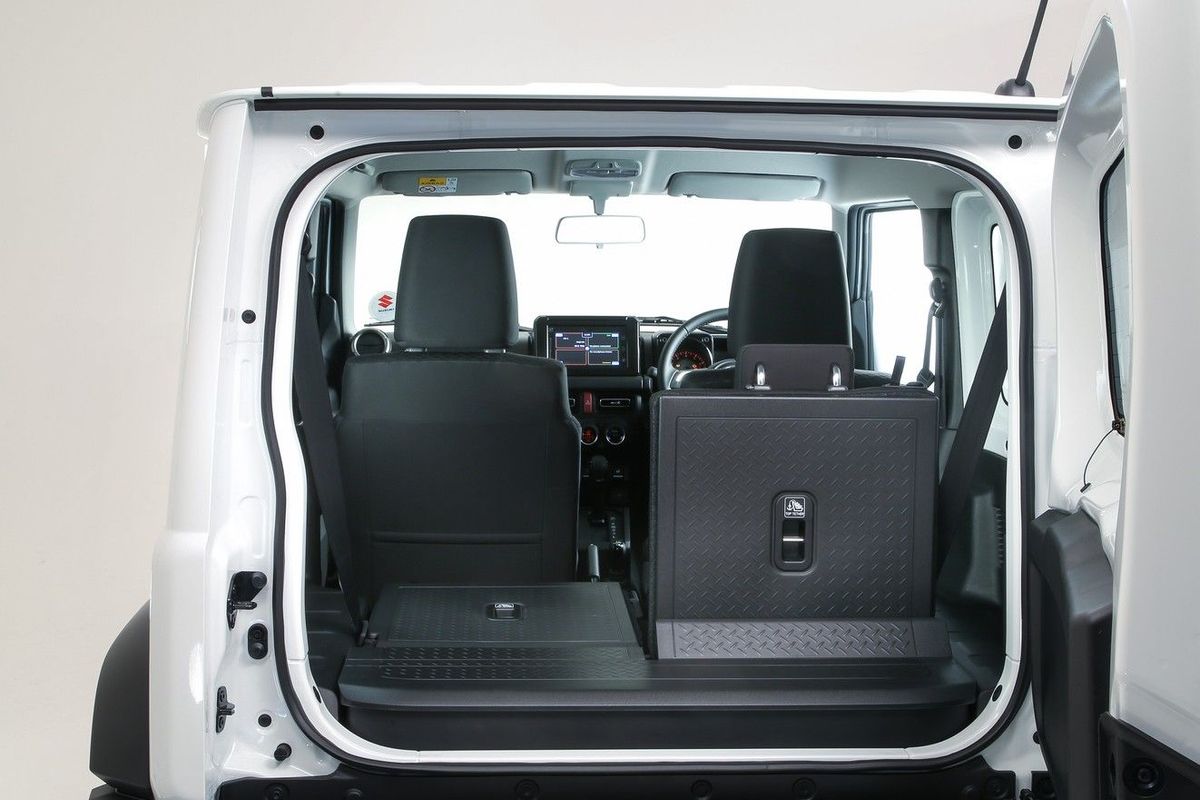
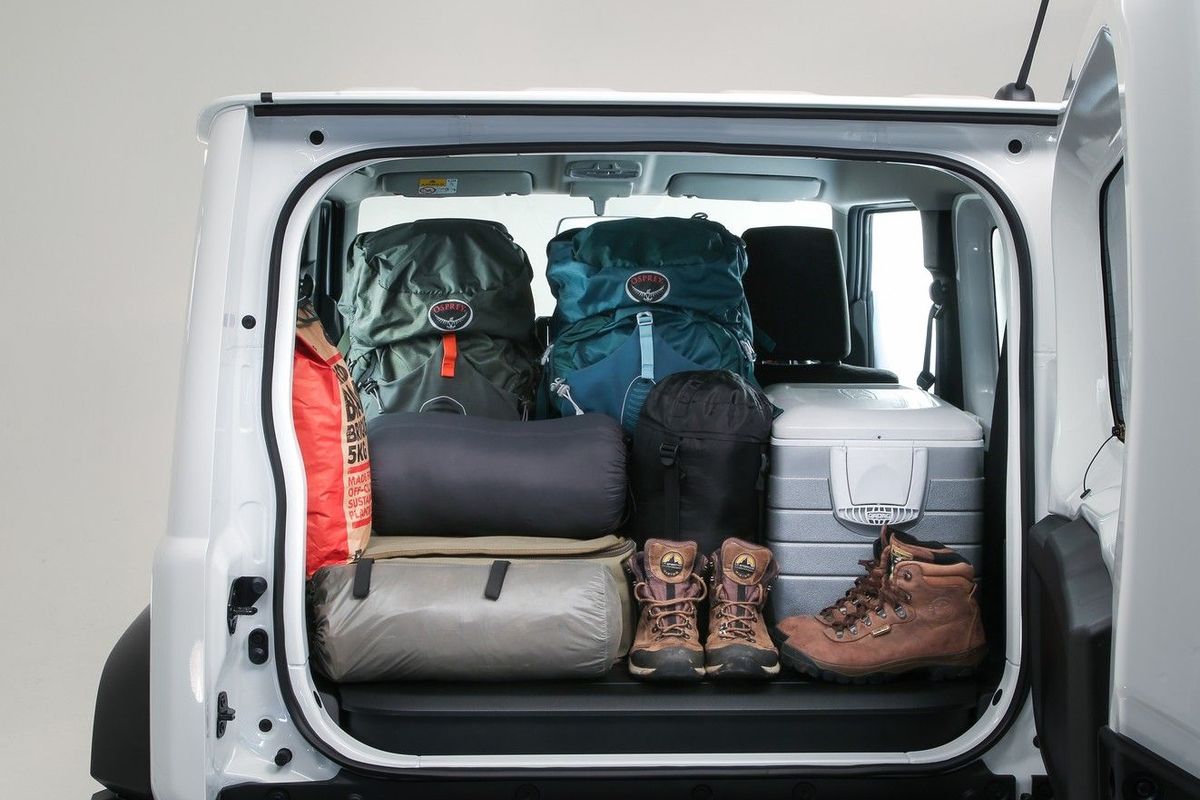
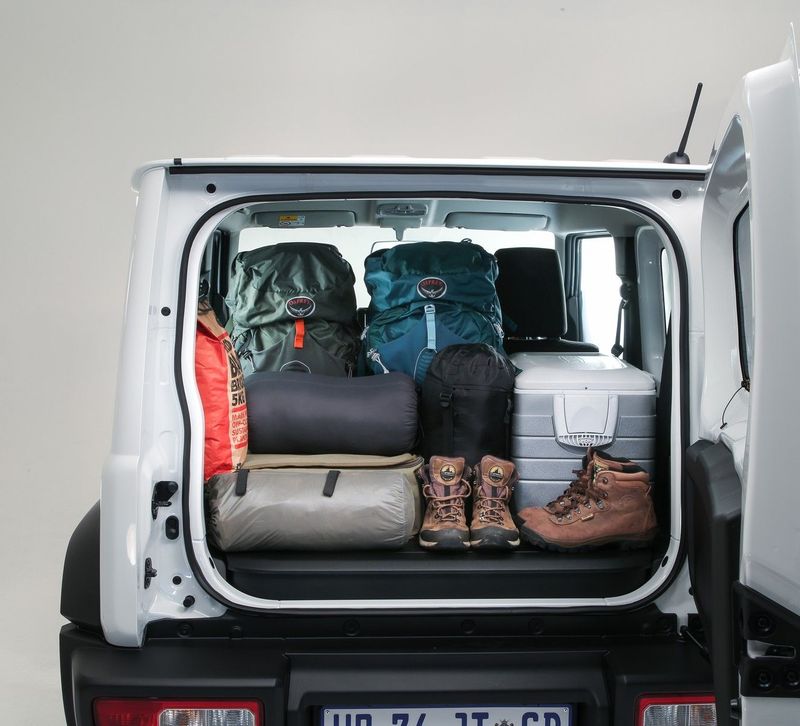
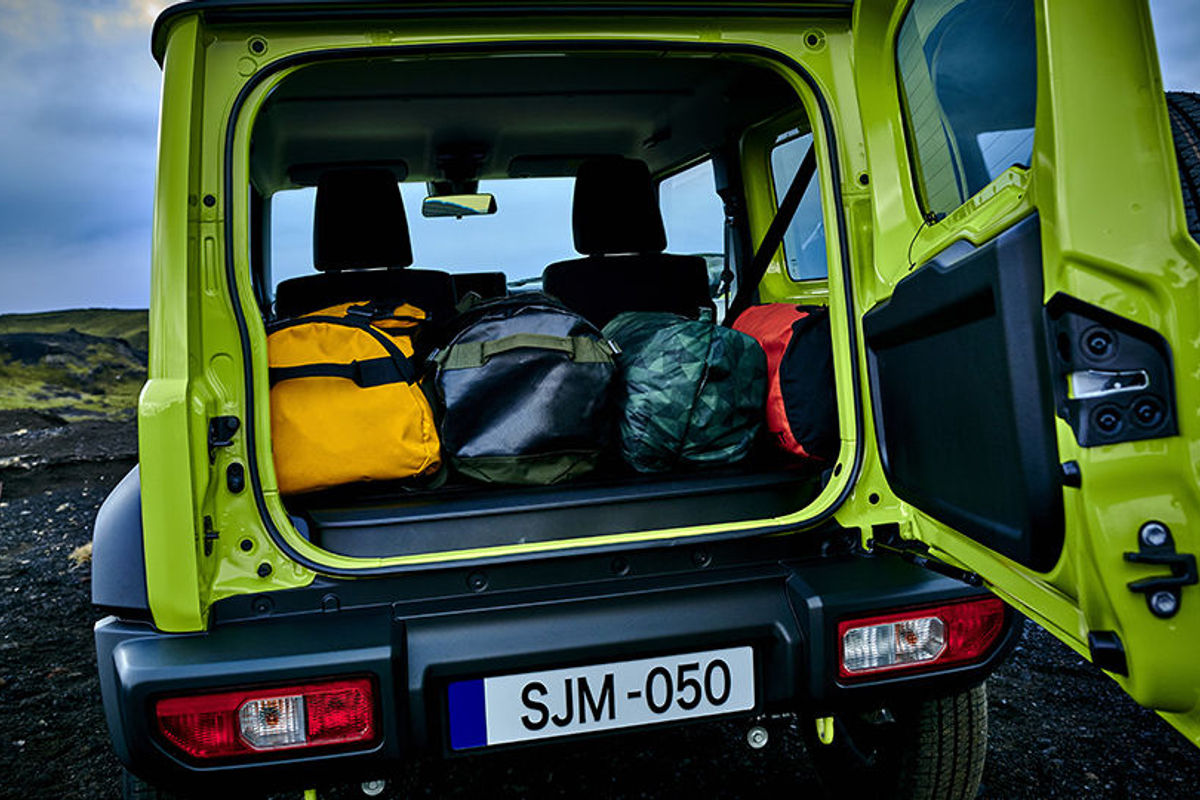
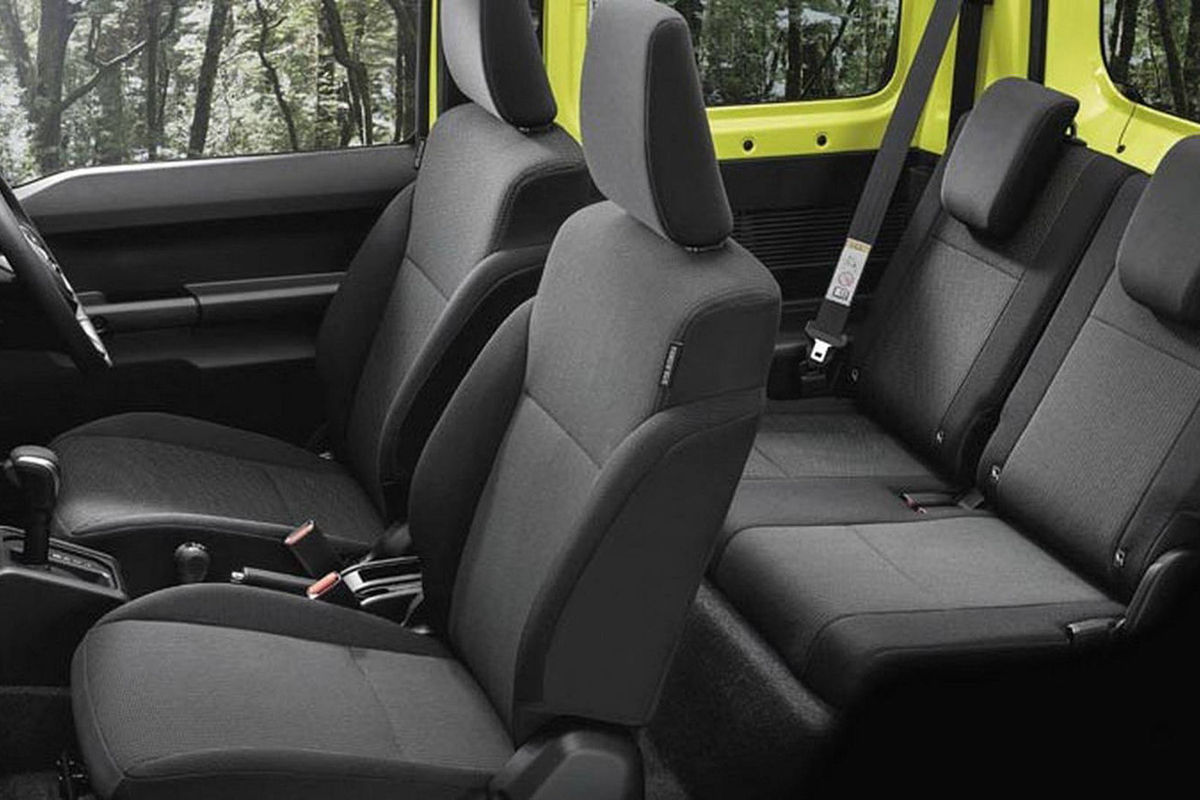
Speaking of the seats, they are 55 mm taller and have wider cushion frames than before (for the sake of improved seating comfort and shock absorption), plus rear legroom has increased by 40 mm, so it’s now far more comfortable for adults to travel in the back of a Jimny. Furthermore, the Suzuki offers 377 litres of luggage space, but that figure's misleading because the load bay can only accommodate 85 litres' worth of cargo when the rear seats are in their upright position – that's barely enough room for a couple of grocery bags.
That said, the squarer geometry of the roofline has freed up additional headroom. Meanwhile, in terms of creature comforts, the GLX comes standard with a 7-inch touchscreen infotainment system with smartphone integration, electric windows and mirrors, climate control, auto LED projector headlamps, remote central locking and cruise control. Other than those mod-cons and the 15-inch alloys, there’s no tangible difference between the GLX and the GA. In fact, I found the GA more appealing and more hearty, especially in manual guise.
1 engine, 2 transmission choices
A new 1.5-litre engine offers way more power and torque than the old 1.3-litre unit.
Suzuki engineers have finally scrapped the 1.3-litre petrol unit that powered the Jimny's predecessor and replaced it with an all-new 1.5-litre K15B powerplant. By virtue of delivering peak outputs of 75 kW and 130 Nm of torque, it’s not the fastest set of wheels around, but the engine is still perky enough to deliver a reasonably fun experience when scooting around town. As a result, it will complete the 0-100 kph sprint in around 13 seconds, before topping out at a middling 145 kph.
While both transmissions supply decent gear ratios, particularly for off-roading adventures, an extra gear in both formats would radically aid fuel economy and reduce some engine-whine at higher revolutions. In terms of fuel efficiency, Suzuki claims the Jimny will register a combined cycle figure of 6.3- and 6.8 L/100 km respectively for the manual and automatic.
What's it like to drive?
Still fitted with low range, the Jimny offers go-anywhere ability at a diminutive price tag.
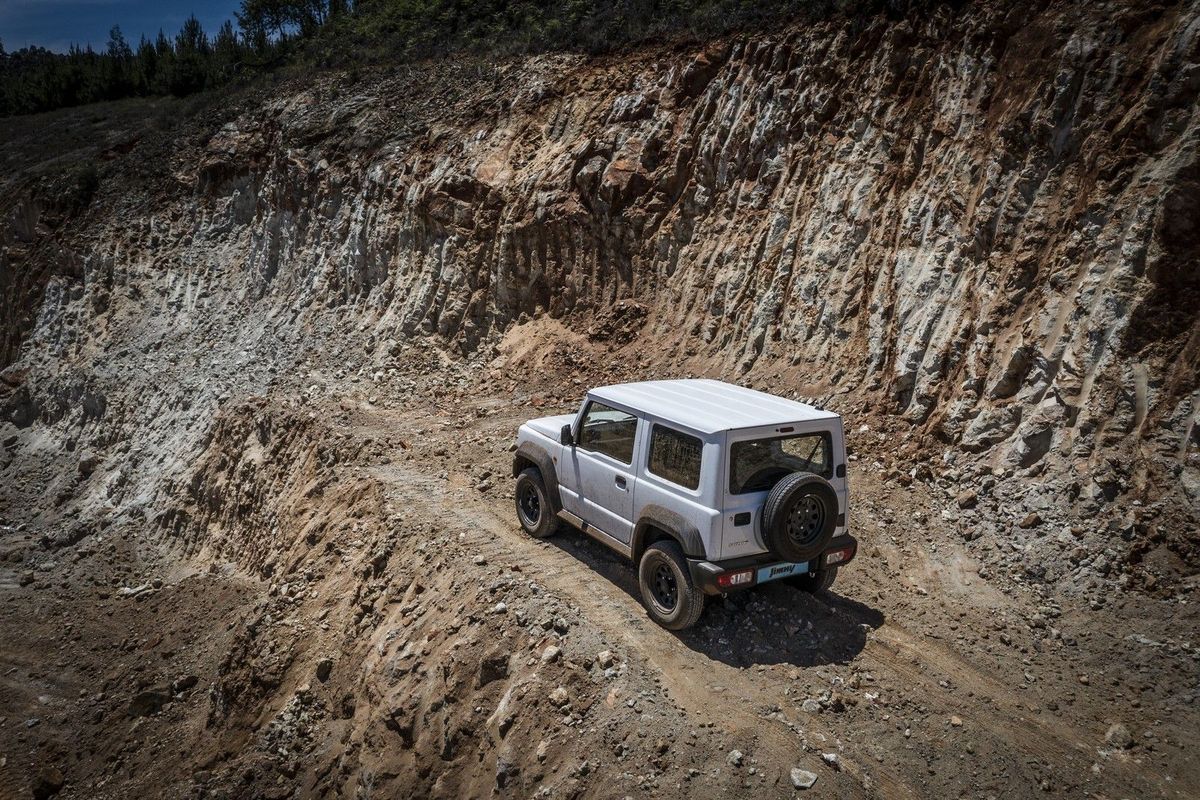
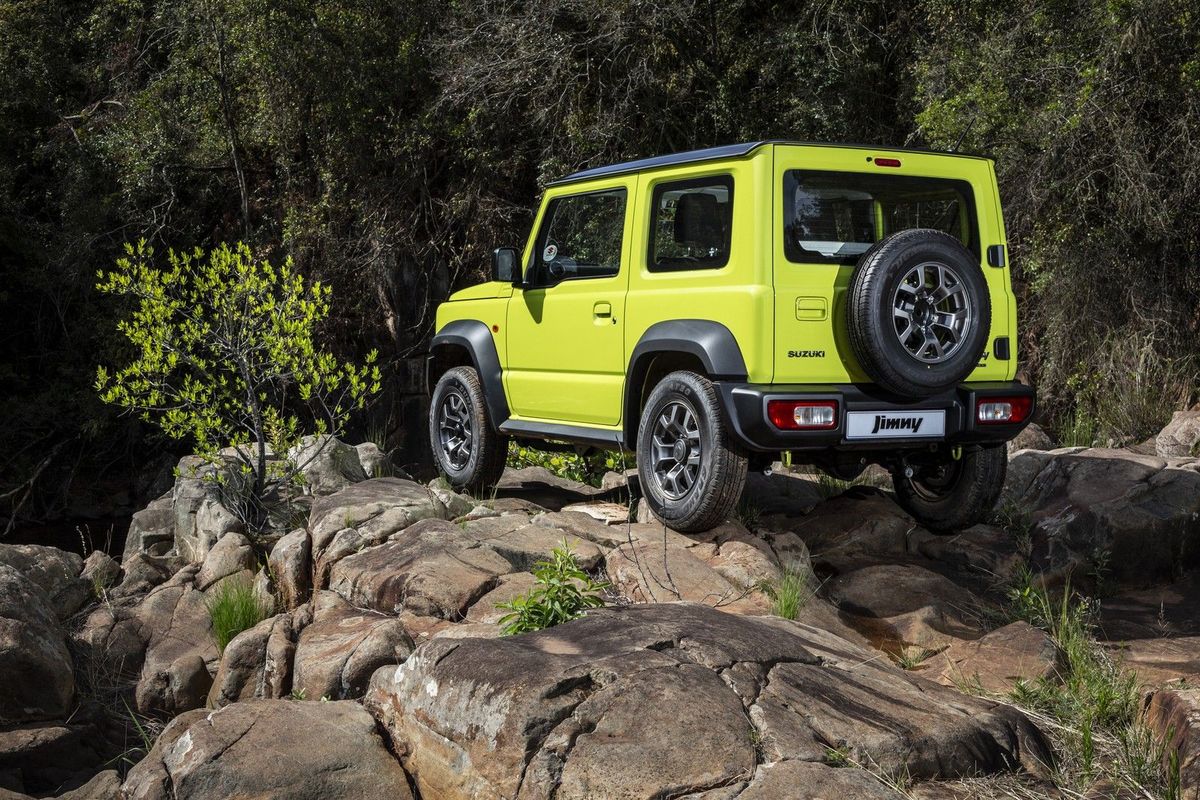
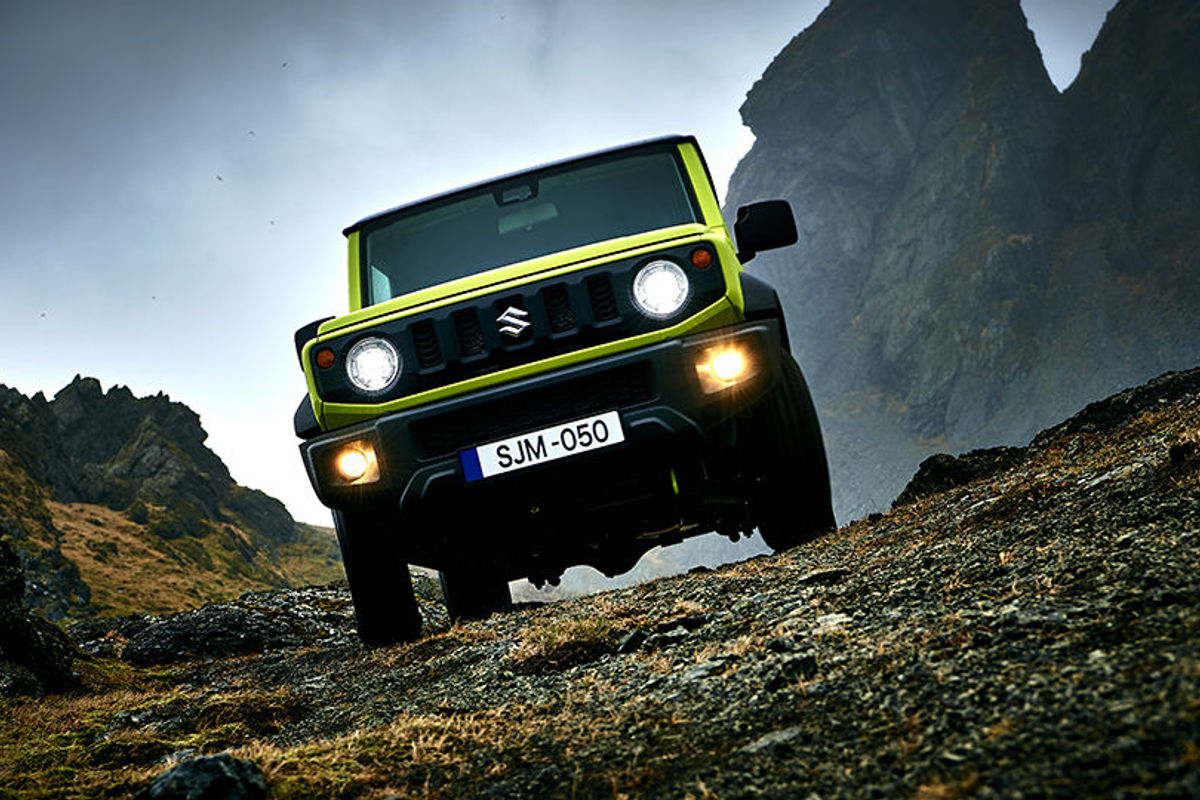
While the Jimny is a competent performer on the road, it truly excels in an off-road environment. In terms of the suspension layout, there is a 3-link rigid axle arrangement with coil springs. It’s a fairly compliant set-up and (in most circumstances) it does a fine job of ironing out imperfections and bumps. Its underpinnings have been radically altered with an improved cross-braced ladder frame chassis to increase torsional rigidity. Point the Suzuki's nose towards a trail and it immediately comes alive – even with the standard Dunlop AT20 195/80 R15 tyres. Grip is always in abundance and this comes down to the clever use of the traction control system, as well as the Jimny’s appreciably low kerb weight of 1 090 kg (manual model).
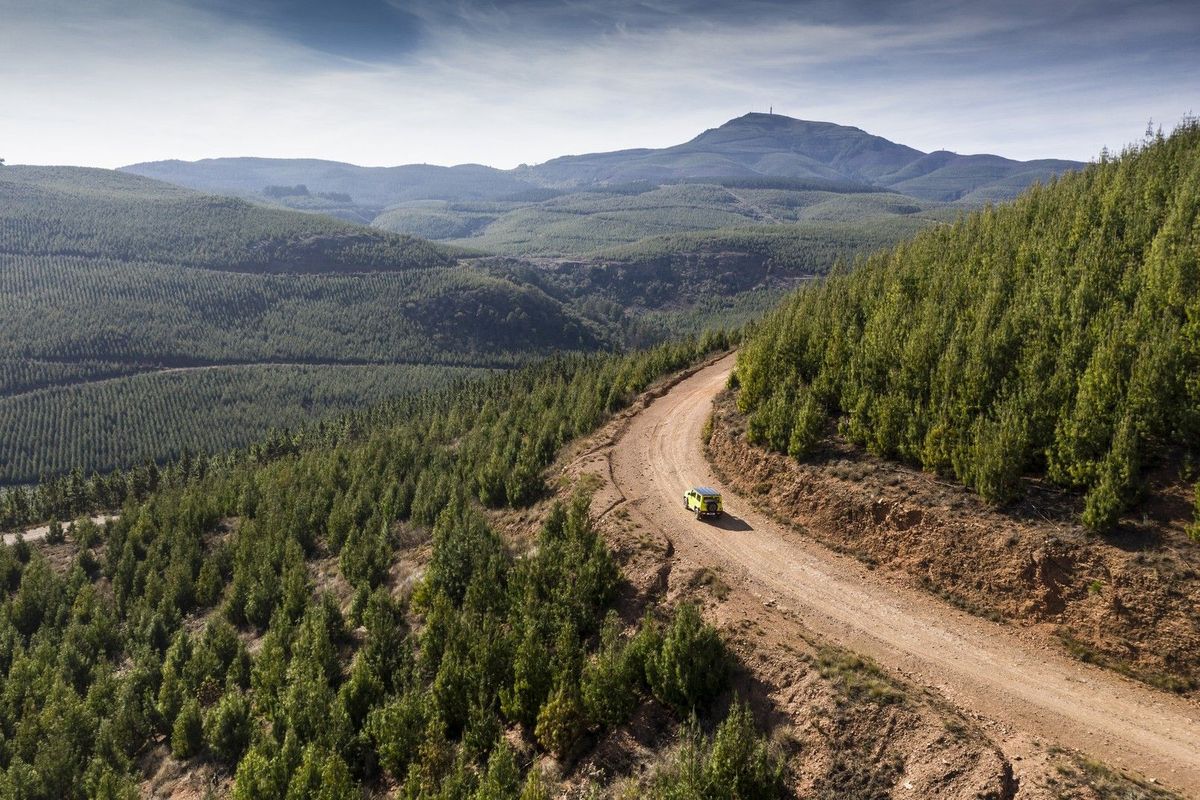
Tested in the forest roads of the Sappi plantations near Sabie, Mpumalanga, the Jimny impressed us with its superb off-road pliancy and impressive grip levels. Shifting between 4×2 and 4×4 High can be done on the fly, while 4×4 Low has to be selected at standstill by way of the low-range transfer case. There’s also a Hill-Descent Control function, which makes negotiating steep descents a relatively easy exercise. Much of the Suzuki's off-road finesse can be attributed to its improved approach (37 degrees), break over (28 degrees), departure angles (49 degrees) and impressive ground clearance (which is 20 mm higher than before). The mechanical 4-wheel-drive arrangement comprises a Brake LSD system that apportions torque away from the wheels with slip to the wheels with grip. This system is assisted by Hill Hold Control, which is a standard feature on both GA and GLX derivatives.
Safer than ever
As a 2-seater, it offers reasonable packing space, but when the rear seats are in use, there's not much room for things.
Safety was a big priority with the new Jimny and some impressive measures have been implemented to ensure passengers are well looked after in the event of a vehicular accident. The new model benefits from improved impact-absorbing zones in the bumpers, wipers, bonnet and hinges, and the fenders (to latter to protect pedestrians). For occupant protection, additional side impact bars and dual front airbags are fitted. There’s a bouquet of active onboard safety systems, which includes such innovations (for the Jimny!) as ABS with emergency brakeforce distribution, ESC, ISOfix child seat anchor points, a high-mounted rear brake light and an emergency pedal release system.
Summary
The all-new Suzuki Jimny has taken all the winning qualities of its predecessors and shoehorned them into a retro-looking, yet contemporary-feeling, package. There's no question that the Jimny 4 is desirable on myriad fronts; the combination of nonconformist styling, a superbly crafted and functional cabin, plus robust (but reasonably modern) engineering is a tribute to every Jimny that's come before it. Add its proficiency off the beaten track and the new Jimny makes an intriguing case for itself. Whether you’re belting along the motorway or threading it through your favourite trail there’s always fun to be had and, while it’s a little rough around the edges as far as refinement is concerned, it’s this no-frills experience that has endeared it to fans all over the world. Does it live up to its forebears? Without a doubt. In fact, this 4th-generation dirt tracker is, in many ways, the most complete Jimny ever produced. We want one.
Pricing and after sales
The GLX model comes standard with a 4-year/60 000km service plan while the GA specification gets a 2-year/30 000 km service plan. All models feature a 5-year/200 000 km technical warranty.
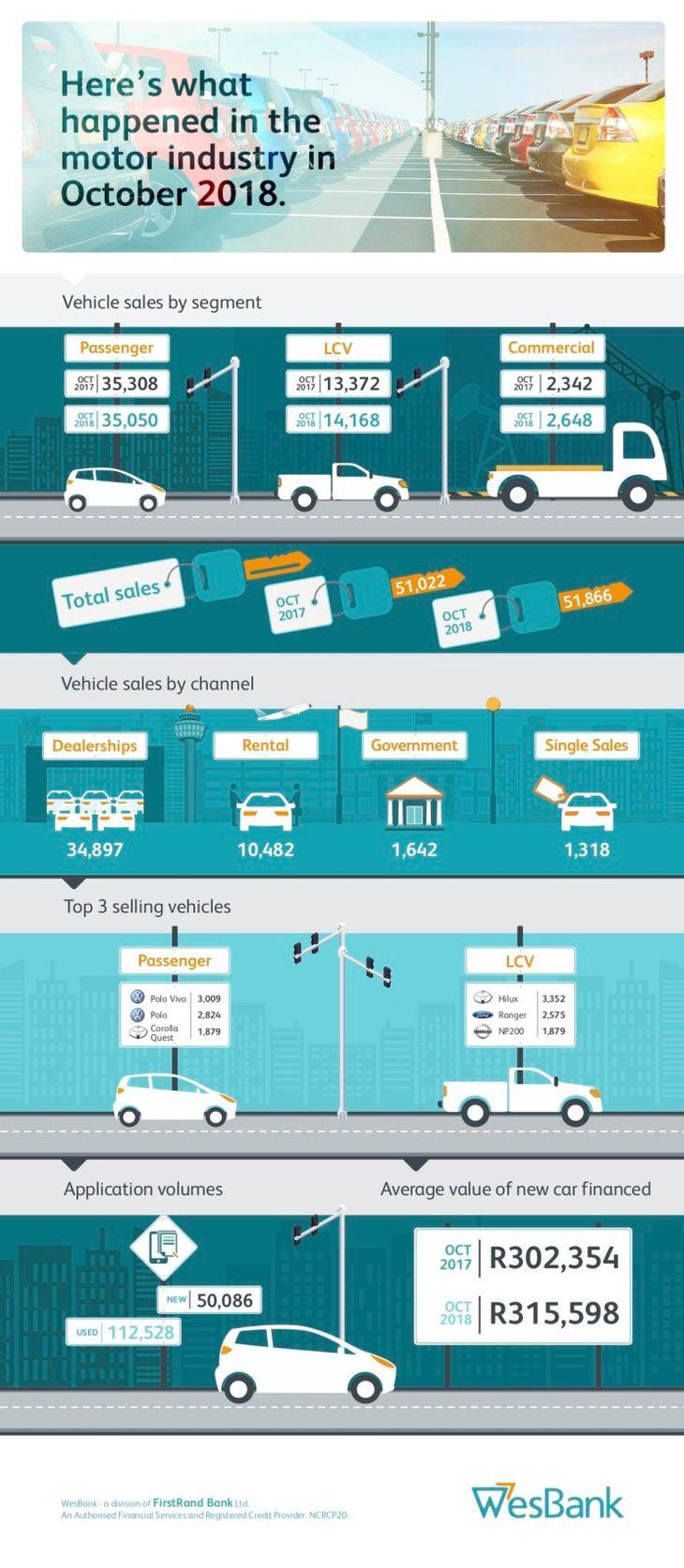
The month of October 2018 yielded positive results in terms of local new car sales with aggregate industry sales reaching a 3-year high. However, passenger car sales declined marginally during the period. See details below…
Total domestic sales reached levels last seen in October 2015 while exports showed strong gains in October 2018. According to the National Association of Automobile Manufacturers of South Africa (NAAMSA), the uptick in sales was largely due to growth in the various commercial vehicle segments.
Ghana Msibi, WesBank Executive Head of Sales and Marketing commented, “Earlier this year, WesBank made a prediction that new vehicle sales would grow by a conservative 0.75% by the end of 2018. To date, new vehicle sales have tracked in line with our forecast. Looking at WesBank’s application data, we were pleased to see a significant spike in finance applications in October which may be indicative of an increase in consumer appetite that could translate into growth in the coming months.”
Toyota continues to dominate the local market and has recorded its highest monthly sales figure to date, racking up a total of 13 342 units sold in October 2018 with the Hilux dominating the LCV segment with 3 352 unit sales. Toyota has now captured 25.7% of the local market.
New Car Sales Summary: October 2018
Aggregate new car sales of 51 866 up by 1.7% (+ 844 units) compared to October 2017
Passenger car sales of 35 050 down by 0.7% (- 258 units) compared to October 2017
Light Commercial Vehicle (LCV) sales of 14 168 up by 5.9% (+ 794 units) compared to October 2017
Export sales of 34 134 up by 20.9% (+ 5 901 units) compared to October 2017
According to NAAMSA, consumers’ disposable income remains under pressure against a backdrop of tough economic conditions. Difficult business conditions are expected to remain for the short term.
However, new vehicle affordability continues to improve as new car price inflation has remained well below the Consumer Price Index for the past 15 months while attractive sales incentives will help to boost sales.
Higher economic growth is expected to materialise over the medium term following the recent investment summit which aimed to restore confidence and credibility in South Africa. Furthermore, exports are expected to improve substantially in the coming months.
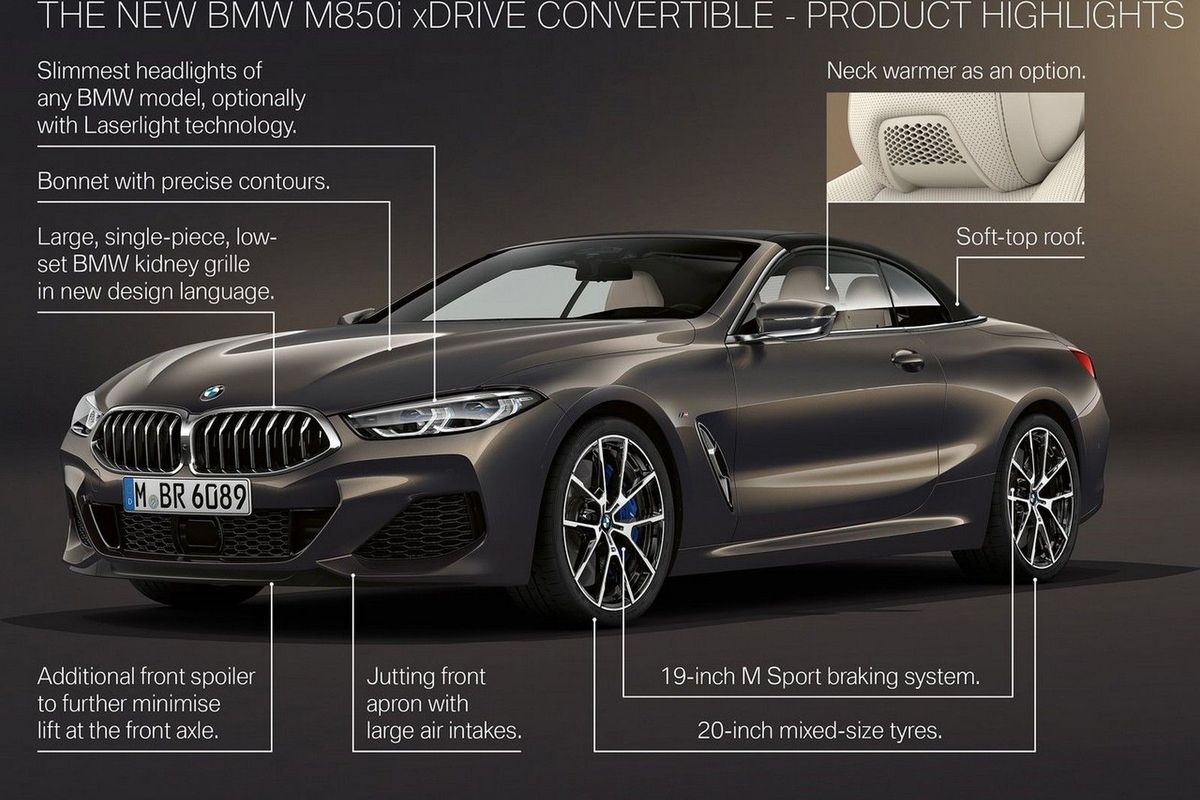
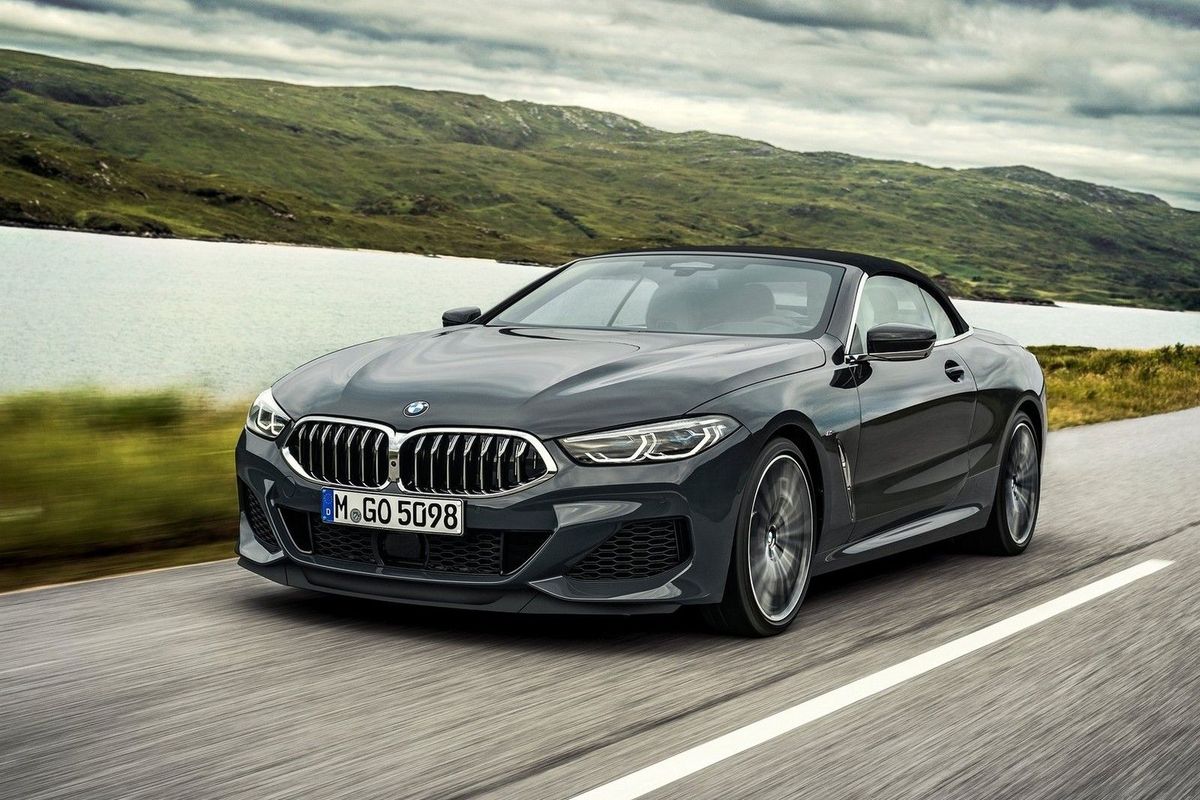
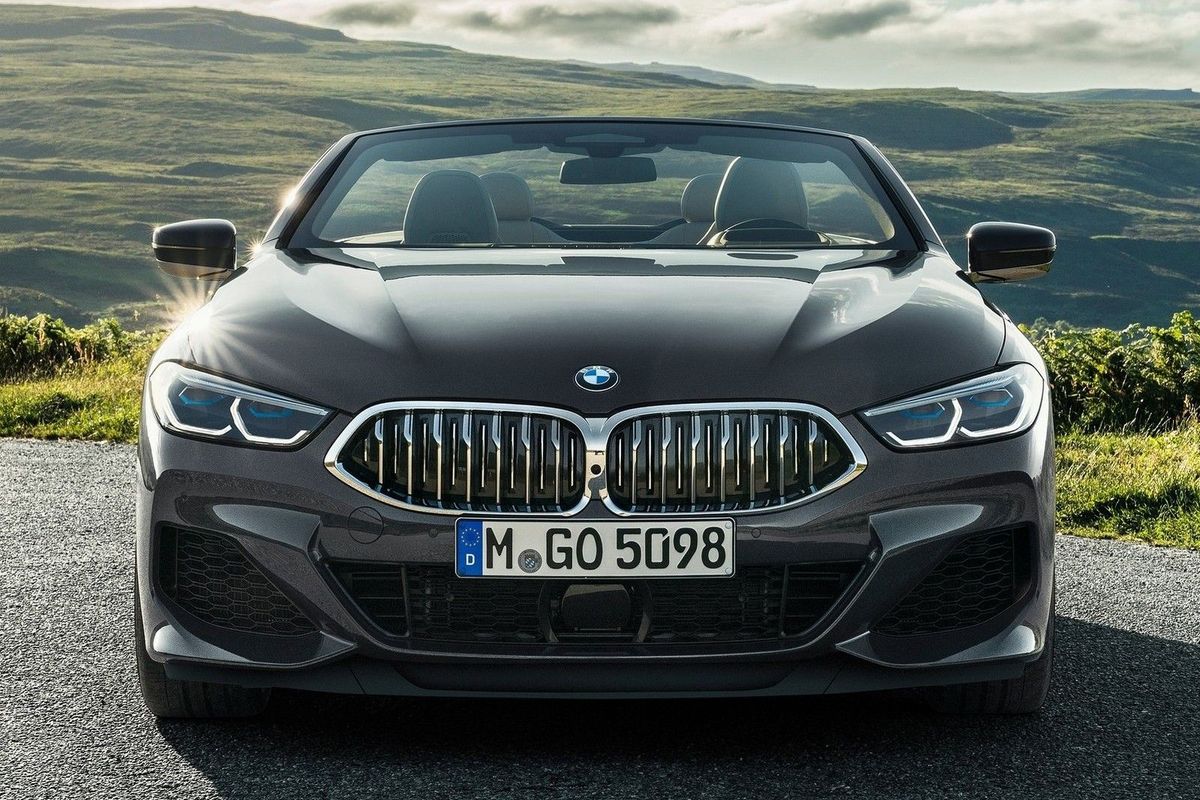
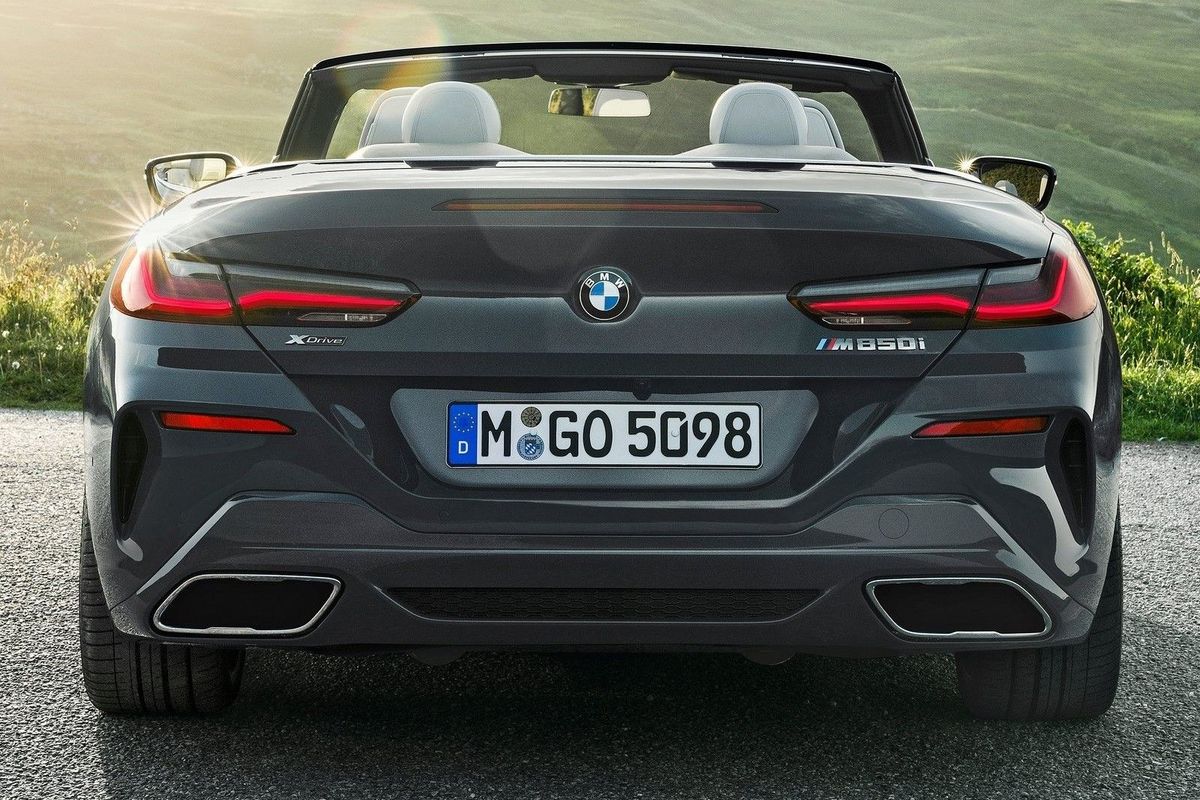
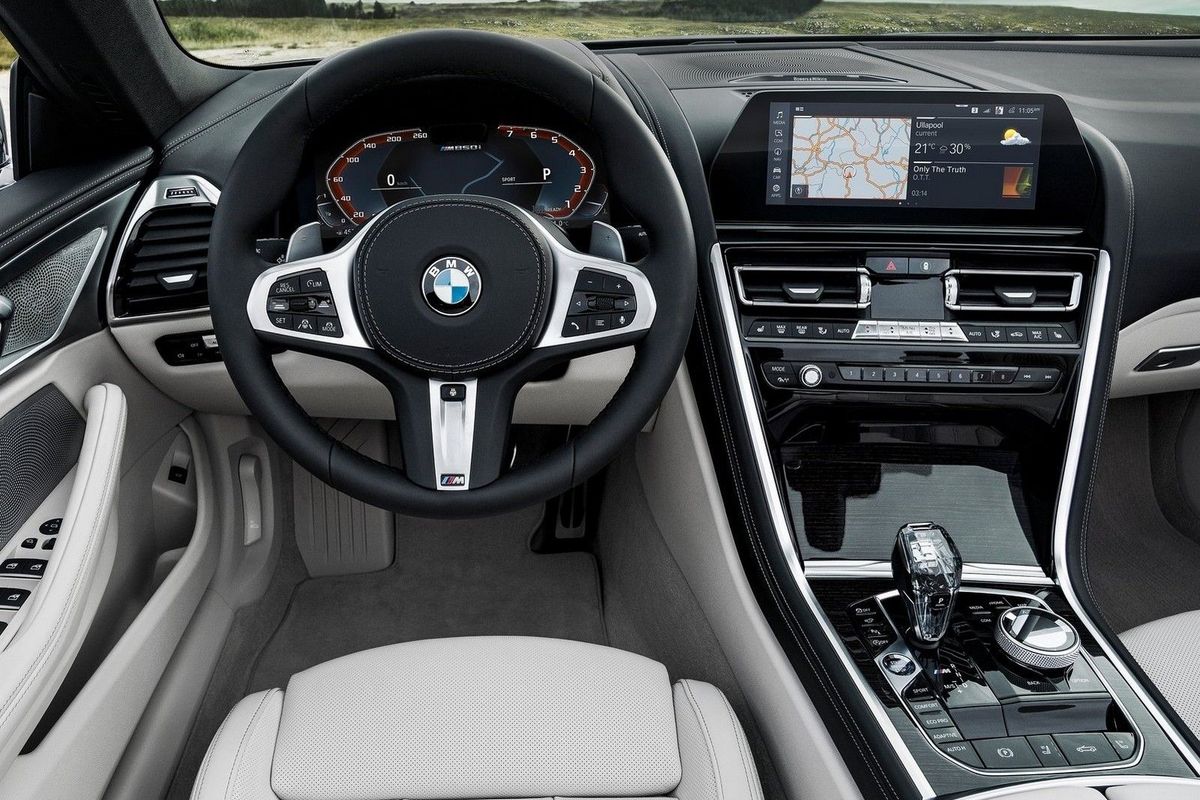
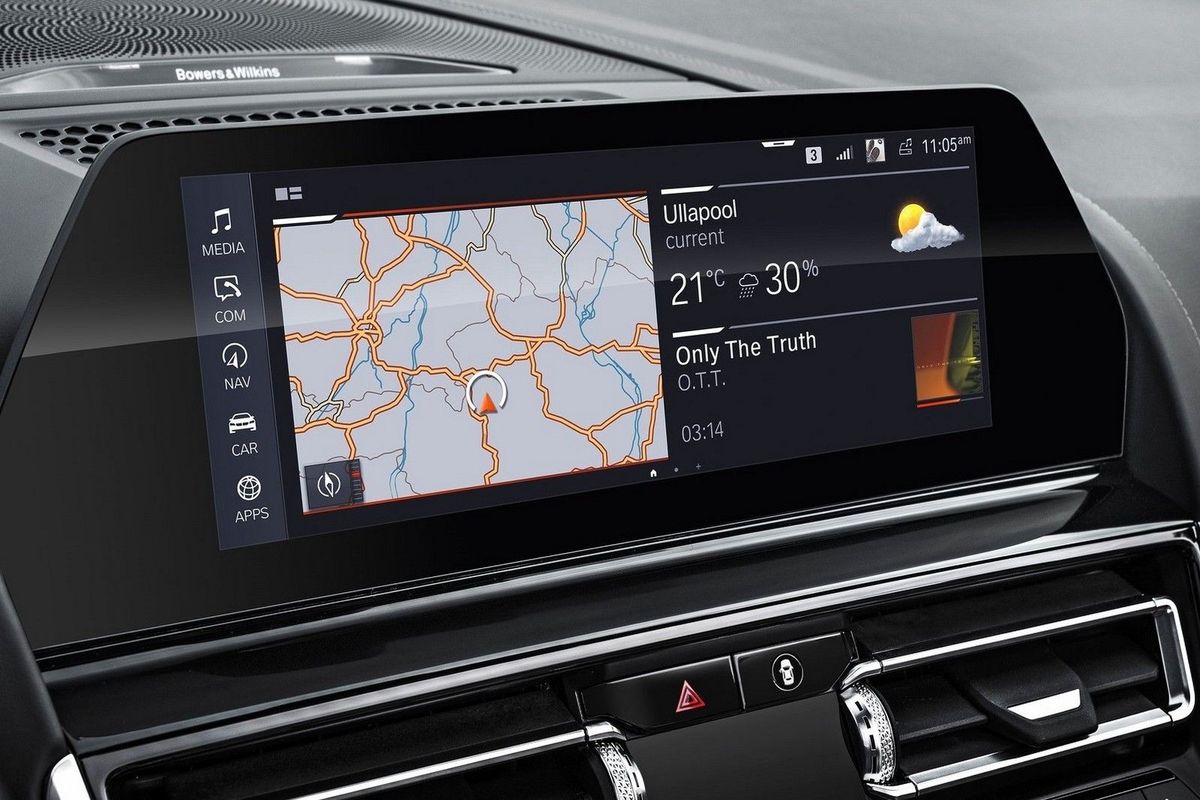
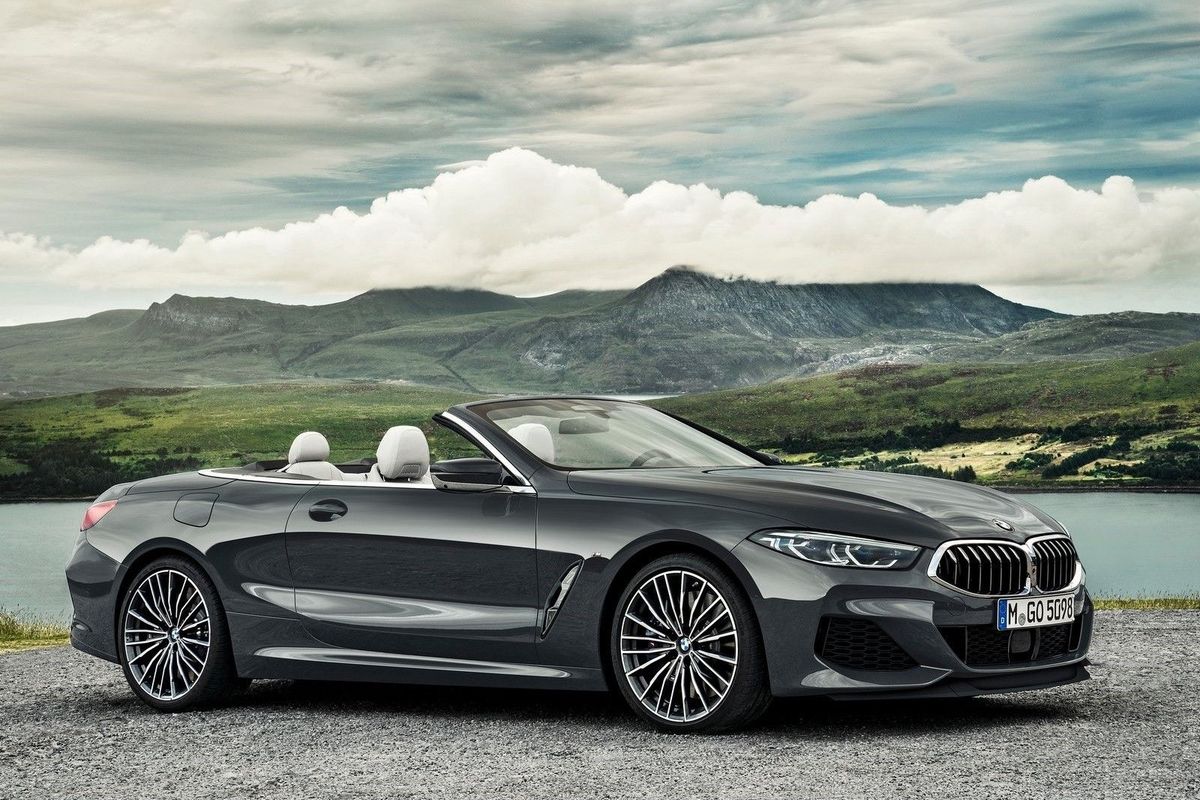
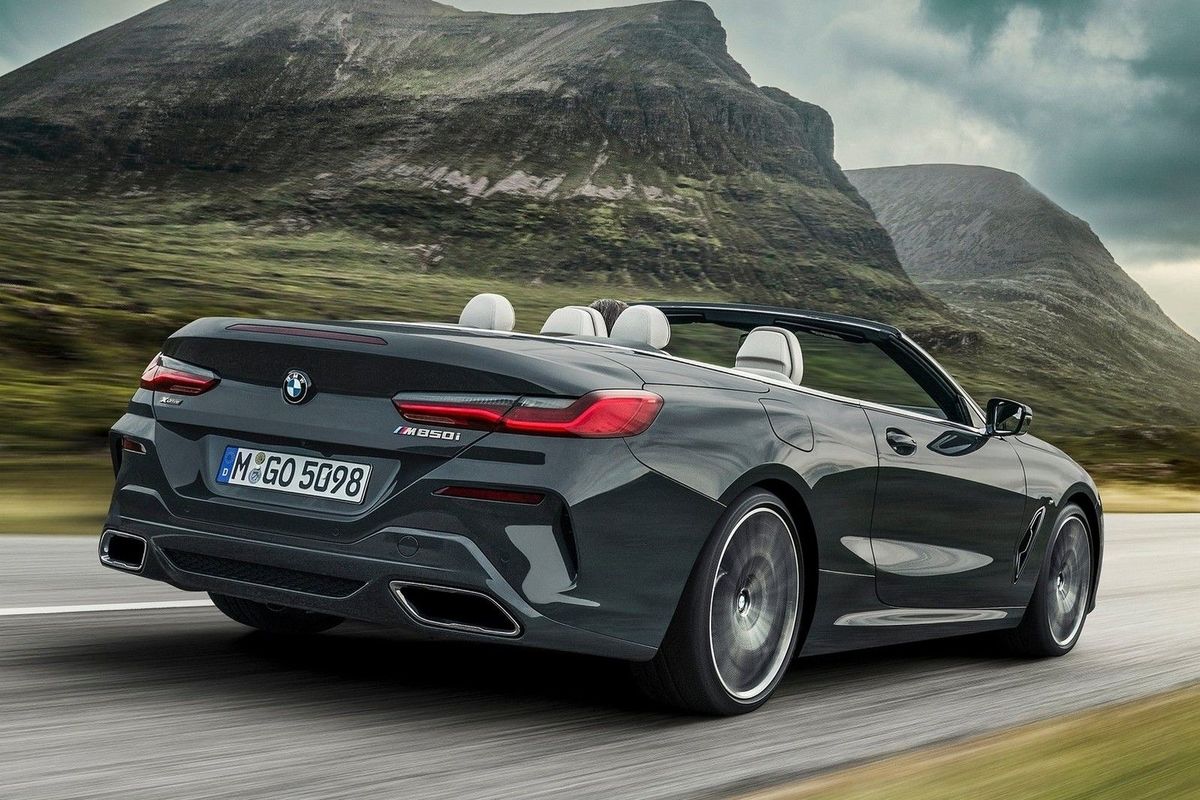
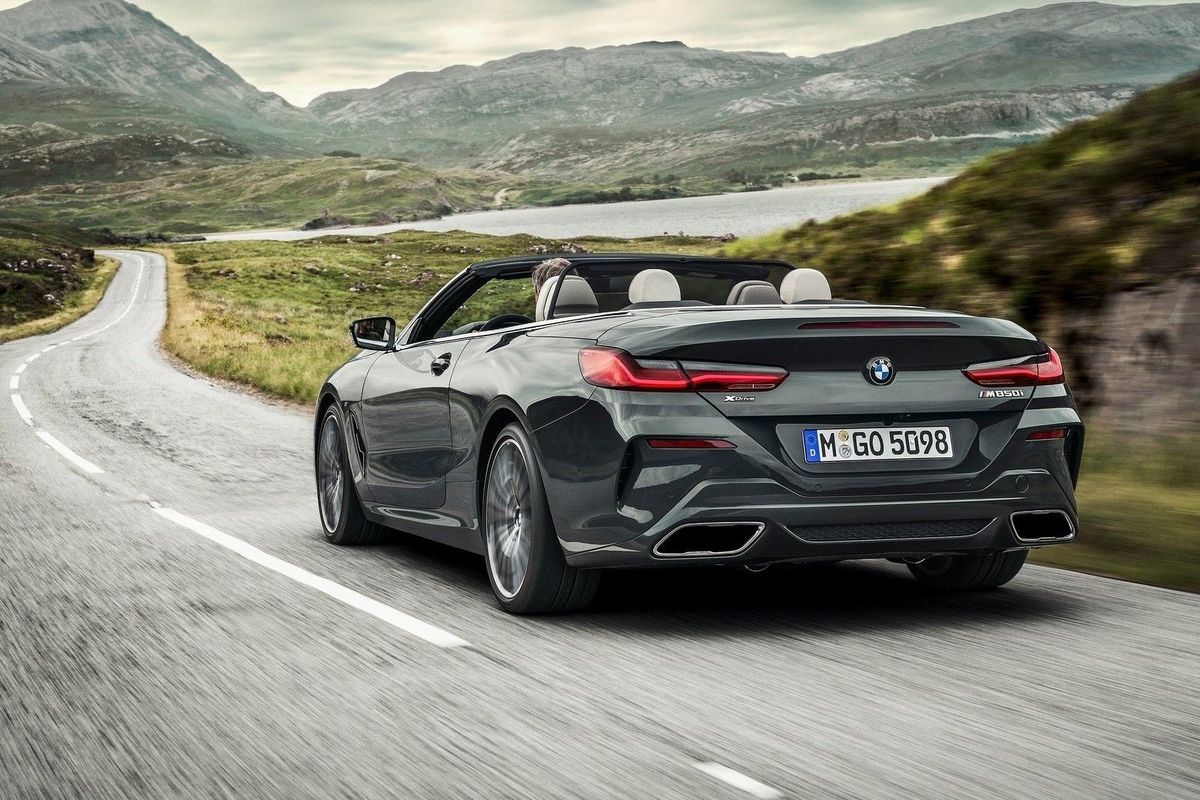
BMW has chopped the top off of its 8 Series and created a gorgeous convertible. The good news is that it's coming to South Africa in early 2019. Let's find out more.
The striking BMW 8 Series family has been joined by a convertible version. We knew it was coming as there were a handful of pre-production units floating around which our spy photographers snapped and our render done by our in-house artist was pretty much spot on.
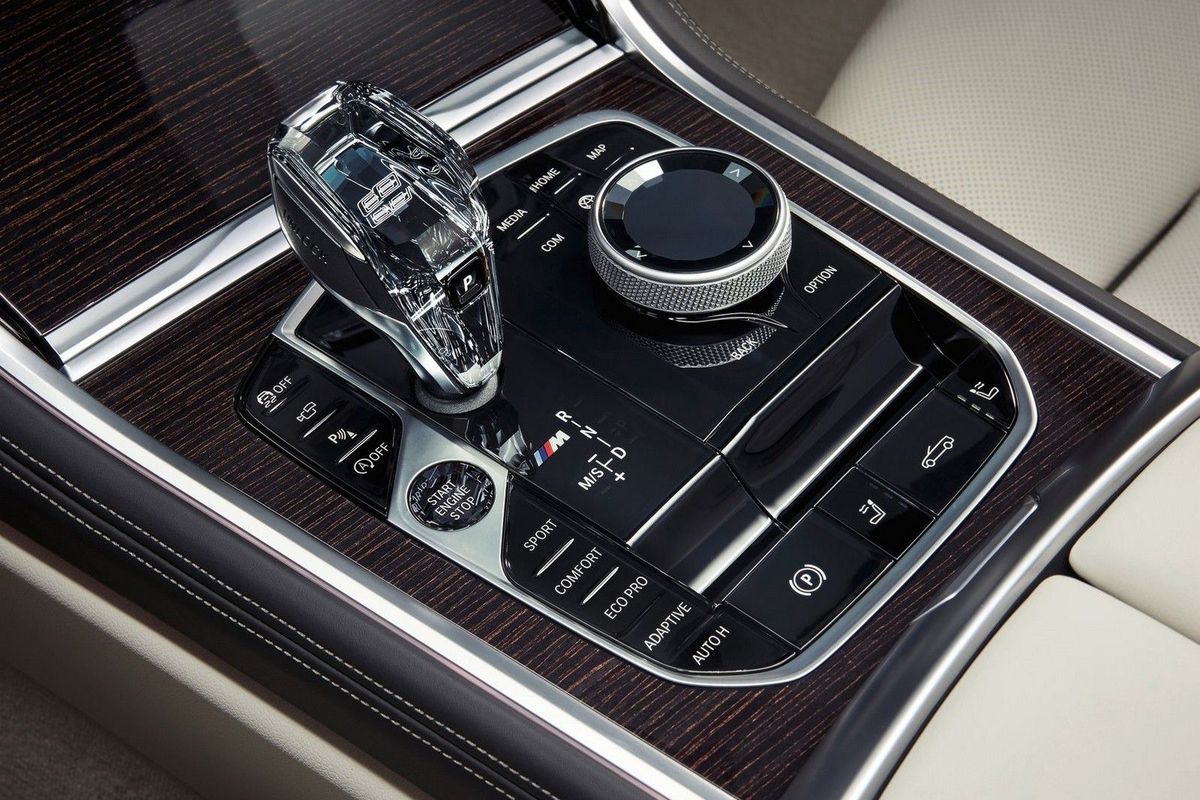
BMW claims this open-top sports car "explores the highest reaches of dynamic flair, emotionality and exclusivity." The BMW 8 Series convertible is a two-door, four-seater grand tourer and is assembled alongside its coupe sibling in Dingolfing, Germany. From launch, there are two engines; a petrol and a diesel, but the South African market will only be receiving the fire-breathing M850i xDrive derivative. This 4.4-litre twin-turbocharged V8 engine produces a stonking 390 kW and 750 Nm, giving it serious performance credentials. BMW claims its new convertible can hit 100 kph in a claimed 3.9 seconds. Power goes to BMW's xDrive all-wheel-drive setup, via the latest version of the 8-speed Steptronic Sport gearbox, with gearshift paddles located on the steering wheel.
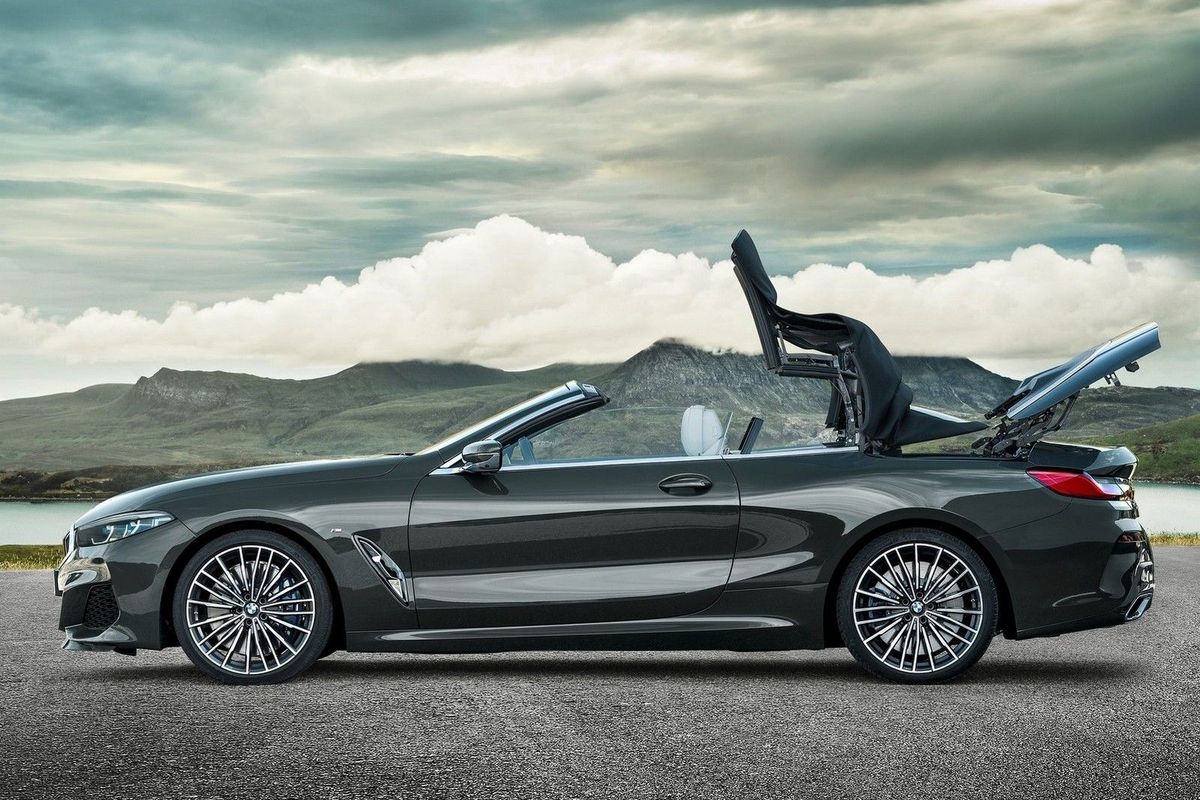
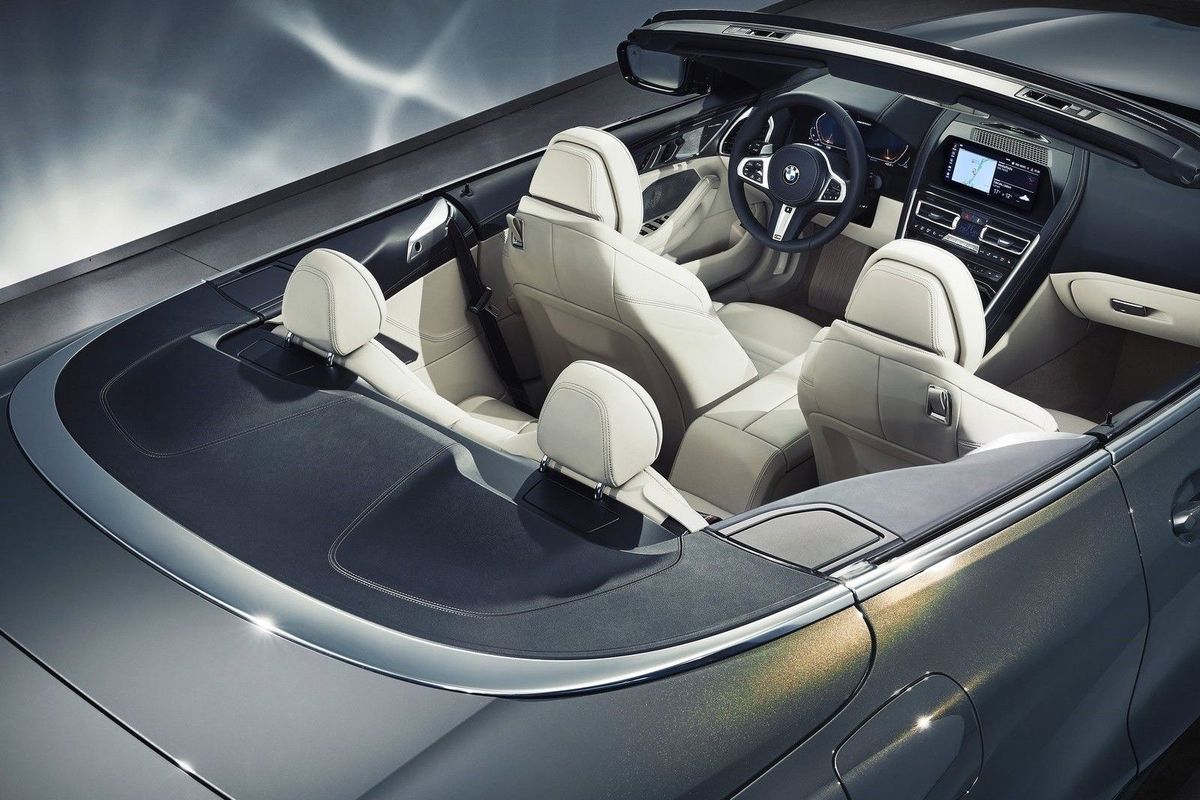
The soft-top roof is electrically operated and can open and close in 15 seconds at speeds of up to 50 kph. BMW is offering a wind deflector as standard, with neck warmers available as an option for those customers who wish to experience open-top motoring in cold conditions. Most convertibles lose their practicality thanks to the roof mechanism, but BMW claims that its new 8 Series Convertible retains a usable amount of storage space thanks to a folding rear seat backrest which folds down in 50:50 fashion. With the roof closed, the storage capacity is rated at 350 litres.
BMW SA says its new 8 Series Convertible will go on sale in the first quarter of 2019.
Global NCAP slams Hardbody safety, Yaris & i20 ‘unstable’
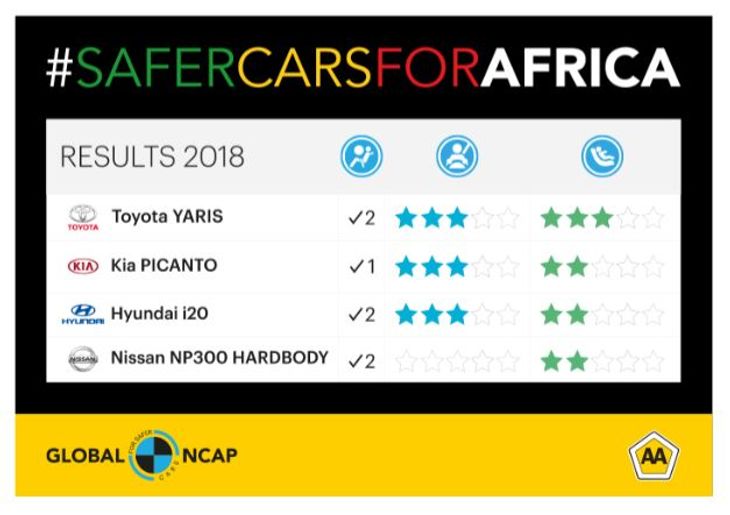
As if the abysmal performance of the Nissan NP300 "Hardbody" in recent Global NCAP crash testing abroad was not enough cause for concern, the inability of locally sourced Toyota Yaris, Hyundai i20 and Kia Rio to score more than 3 stars for occupant safety suggests that South African consumers are paying exorbitant prices for vehicles that are either under-specced in terms of safety (compared with their European counterparts)… or generally of inferior quality.
"We think it’s misleading for Nissan to call its NP300 bakkie "Hardbody” ". Alejandro Furas, technical director of Global NCAP (New Car Assessment Programme) had good reason for saying that at a press conference at Kyalami, Johannesburg, earlier today. (FRIDAY) He witnessed the bakkie – the country’s sixth bestselling light commercial vehicle in October, with 704 sales – crumple alarmingly in a near head-on impact with a barrier representing a vehicle of similar size and weight at a crash test facility outside Munich some 6 weeks ago.
Made in Nissan’s Rosslyn, Pretoria plant, the 1-tonne double-cab is also exported to other African countries. The one which was propelled into that barrier at 64 kph was bought from a South African dealership, the buyer not letting on what was to become of it. Nissan calls the NP300 “Africa tough”, but the crash data revealed that it’s anything but. The front end was destroyed, its crumpled remains protecting the children (dummies simulating three and 18 month-olds) in the back, hence the bakkie’s 2-star safety rating for children.
While the data gleaned from the dummies leads to the safety rating – trauma to the head and chest indicating life-threatening injuries – it’s the vehicle wrecks that tell the NCAP engineers whether the body shells are stable or not.
Only 1 of out the 4 SA vehicles which were crashed tested in that Munich facility in September was found to be stable – the Kia Picanto. And even then, the Picanto’s front passengers’ footwell area was rated as unstable. Both the Hyundai i20 and Toyota Yaris (with the Picanto, they account for 65% of the sub-R200 000 passenger vehicles sold in South Africa) were found to have an “unstable” body shell. None of them scored more than 3 out of a potential 5 stars for adult or child protection. Both the Hyundai i20 and the Kia Picanto were given a 3-star safety rating for adults and two stars for children, the seat carrying the 3-year-old in the Picanto having come loose from its fastening on impact.
Best of the 4 in terms of ratings was the Toyota Yaris, scoring a 3-star safety rating for both adult and child passengers. Only the Yaris had three-point belts in all seating positions, the seatbelt being any car’s primary safety mechanism.
“That’s of high concern to us,” Furas said. What’s also of concern to the organisation, and should be for all South Africans, is the fact that the manufacturers wouldn’t (and couldn’t) put the SA versions of the i20, Yaris and Picanto on sale in the US, Europe or Australia.
The legislation wouldn’t allow it, and consumers wouldn’t stand for it. No vehicle should be sold anywhere in 2018 without electronic stability control (ESC) – the technology that prevents cars from skidding out of control – and both front and side airbags, Furas said. Particularly when you consider that an ESC module for a car in production (if it has ABS brakes) costs no more than 60 USD (the equivalent of R866) and an airbag even less.
And how’s this for outrage-inducing? A version of the Hyundai i20 sells in Europe with ESC as a standard feature, along with 6 airbags, for (the Euro equivalent) less than the SA model, which has just 2 airbags and no stability control.
As for the issue of stable versus unstable body shells, Furas said those same cars, sold in the developed world, were found to have stable body shells during crash tests. “Some manufacturers sacrifice structural performance to save money,” he said.
“It can be inferior steel quality, a sped-up assembly line to save costs, poor welding or lack of production control,” he added.
Whatever, the situation was summed up by one of the local journalists at the press conference when he asked: “So international manufacturers are offering less safety to us in their cars, for more money… in other words, deliberately taking advantage of 3rd-world consumers?”
Yes, said Furas. “They are taking advantage of those consumers' lack of knowledge about vehicle safety features.”
So it stands to reason that the solution lies in consumer awareness and activism. “We expect that as we test more cars in developing countries, and the media publishes our findings, which get shared on social media, consumers will start demanding better safety,” he added.
In countries such as Australia, the shift was massively influenced by fleet managers – both State and corporate – who began insisting that they only buy 4- or 5-star cars, Furas said.
“South African consumers are no less important than Europeans, Australians, Japanese or Americans, so why should they receive inferior safety features?” he asked. “Lower production costs led to higher profits for manufacturers in developing countries, financed by a high rate of fatalities and injured people.”
Volkswagen has released a design sketch of a bakkie concept, which it will unveil at the upcoming Sao Paulo Motor Show. It won't preview a successor to the Amarok, but a vehicle that will be based on the Volkswagen Group's ubiquitous MQB passenger car platform… and slot in below the Wolfsburg-based brand's double-cab range.
The image presents a rugged-looking, yet sophisticated double cab with a high waistline and blistered wheel arches.
It also appears to be free of chrome strips and other jewellery apart from a bold metallic brightwork panel that links both C-pillars via the roof. It’s probably there to add some visual ‘steel’ while highlighting the vehicle’s clever variable loading area – the double cab’s rear panel folds down for increased cargo room. Deep-tread tyres reflect the inclusion of all-wheel drive to the specification but this is no Dakar-friendly rock climber.
We all know how misleading design sketches can sometimes be so expect the body-to-glasshouse proportions to be normalised on the real concept car. Despite this, it’s encouraging that Volkswagen says the show car is scheduled to enter production with “just a few minor tweaks”.
As the bakkie will be based on MQB, which also underpins the Tiguan, the newcomer is likely to share many components with its family car sibling.
Featuring toughened-up Tiguan style, all-wheel drive and that load bay trick, the “urban-oriented” pickup has all the potential to be an easy sell. The good news is that although production and sales start in Brazil, Volkswagen says it’ll be suitable for other (equally pickup-friendly) regions as well.
Brazil is a pivotal pickup truck market for Volkswagen which already has both ends of the market covered with the Polo-based Saveiro and the Amarok. This new model slots neatly between the two. With the German company’s other recent pickup concept, the Tanoak, also a dead-cert for production Volkswagen really is making a bid for global bakkie glory.
What is the likelihood of the newcomer being made available in South Africa in future, however?
When asked for comment, Andile Dlamini (Head of Group Communications at Volkswagen SA) told Cars.co.za the bakkie would, in all likelihood, be produced for left-hand-drive South American markets, if not exclusively for Brazil. Once the vehicle is unveiled in production form, feasibility studies will be conducted to determine the viability of producing it for export to right-hand-drive markets. It goes without saying that should the production version of this concept be available in RHD, and VWSA could make a business case for its introduction, its arrival cannot be ruled out.
Its predecessor had been on the market for 20 years, but the eagerly-awaited Suzuki Jimny is now finally available in South Africa. However, be prepared to wait to get your hands on one, at least initially…
The 2018 Suzuki Jimny arrives here with the choice of 2 specification levels (GA and GLX), 2 transmission options (5-speed manual and 4-speed automatic) and a host of made-for-adventure accessories. What is not optional, is the in-built off-road capability with AllGrip Pro mechanical shifting 4×2, 4×4 and 4×4 low-range transfer case, the rigid ladder frame chassis and patented Suzuki X-member (cross member) between the rigid axles.
The "bad" news for prospective buyers, however, is that a local Suzuki spokesperson confirmed last month that the first 2 consignments of the new Jimny have already sold out, which indicates that demand will outstrip supply in the short to medium term as more stock arrives from Japan.
The Jimny is powered by an all-new 1.5-litre petrol engine, which produces peak outputs of 75 kW and 130 Nm of torque and is mated with either a 5-speed manual or 4-speed automatic transmission. This lighter engine with its higher compression ratio helps to reduce fuel consumption by as much as 14%, Suzuki says. The claimed consumption figure for the manual derivative is 6.3 L/100 km and 6.8 for the automatic.
Suzuki has retained the Jimny's boxy shape but has refined and modernised the overall design.
The new model looks much like a miniature Land Rover Defender or Benz G-Wagon, with its block-like design and ‘Postman Pat’ shape. It’s nice to see that Suzuki hasn’t softened the Jimny in any way as many an off-roader will attest to its ability to bounce over just about any obstacle in its path.
The new Jimny is actually 45 mm wider, but 50 mm shorter in length while the wheelbase of 2 250 mm has remained unchanged. The front and rear tracks have been increased by 40 mm. The Jimny’s approach angle has improved from 35 degrees to 37 degrees while the breakover angle has increased from 27 degrees to 28 degrees. Lastly, the departure angle has improved significantly from 46 degrees to 49 degrees.
The Jimny's AllGrip Pro 4×4 system enables the driver to easily switch between 4×2, 4×4 high and 4×4 low range with a secondary gear lever. The system will be backed up by vehicle stability control (ESC) and a new brake-enabled Limited Slip Differential.
The Jimny has good ground clearance at 210 mm which is a 20 mm improvement over the outgoing Jimny. Other useful features such as Hill Hold Control, Hill Descent Control and Brake LSD Traction Control will prove to be invaluable in offroad situations.
The cabin features a modern look and a touchscreen infotainment system is a possibility for SA, but has not yet been confirmed.
The new Jimny will be offered in GA and GLX specification and Suzuki has modernised the interior substantially. The front seats are now 55 mm longer than before with wider cushion frames. The front seats can now also slide up to 240 mm to accommodate taller drivers. Front passengers are afforded 30 mm more legroom while rear passengers will appreciate an extra 40 mm. The good news is that a 7-inch touchscreen infotainment system will be offered on the top-spec Jimny GLX and it will offer Mirror Link as well as Android Auto and Apple CarPlay.
Two grades available
The manual derivative with GA specification level has:
Air conditioning
Power steering
Immobiliser
ABS brakes, BAS and ISOfix
Dual SRS airbags
AllGrip Pro 4WD system with low range
Brake LSD
ESP
Hill Hold and Hill Descent Control
15-inch steel wheels with full-size spare wheel
Double DIN radio preparation with 2 speakers and antennae
The GLX specification level is available with the choice of manual and automatic gearbox and has the following additional specifications:
Colour-coded door handles and painted exterior mirrors
Electric windows and mirrors
Automatic climate control
15-inch alloy wheels
Remote central locking
Auto LED projector headlamps
Front fog lights
SLDA touch screen infotainment system
Multifunction leather steering wheel
Cruise control
Additional 12V socket in luggage area
50:50 folding rear seat
Luggage area box
Suzuki will offer a wide range of accessories for both city-dwellers and off-road enthusiasts. These include mud flaps, side under-garnish strips, under-garnish for the front bumper, front and rear differential guards, utility and luggage hooks and side body mouldings.
All derivatives are sold with a comprehensive 5-year/200 000 km mechanical warranty. .
Suzuki Jimny Price in SA
1.5 4×4 GA Manual: (2-year/60 000km service plan) R264 900
1.5 4×4 GLX (4-year/60 000 km service plan) R299 900
1.5 4×4 GLX Automatic (4-year/60 000 km service plan) R319 900
BMW M850i xDrive Coupe (2019) International Launch Review
By resurrecting the 8 Series, BMW has returned to the rarefied grand tourer (GT) segment, but does the newcomer strike a perfect balance between sportscar and cruiser? Our Irish correspondent Shane O' Donoghue drove the M850i xDrive (the only derivative that will be available in South Africa in March 2019) on road and track in Portugal.
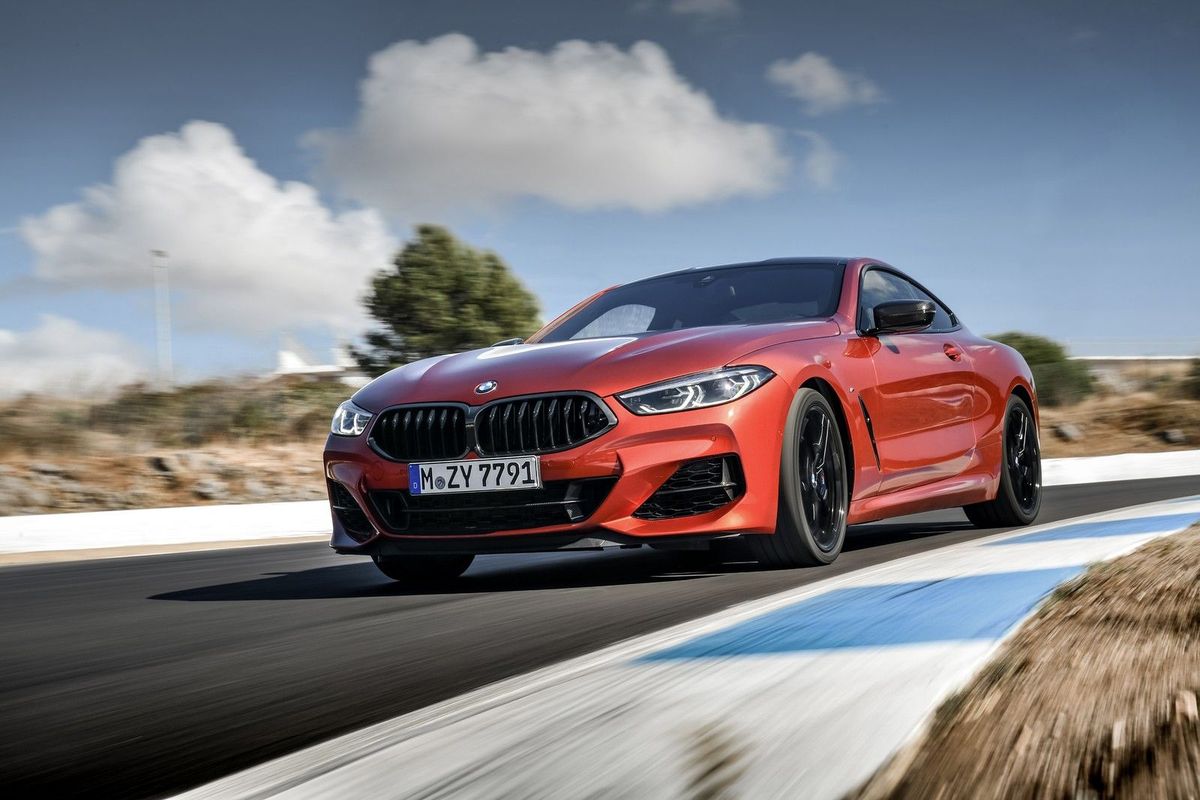
Just as it did in 1990 (when the E31 made its debut), the 8 Series has replaced the 6 Series. However, the Munich-based company has much loftier goals for its GT (not to be confused with the still-on-sale 6 Series GT…) than it did for its executive predecessor. Aimed directly at rivals such as the Mercedes-Benz S-Class Coupe, the M850i xDrive Coupe is a car that packs serious technical firepower under its aggressively sporty sheet metal.
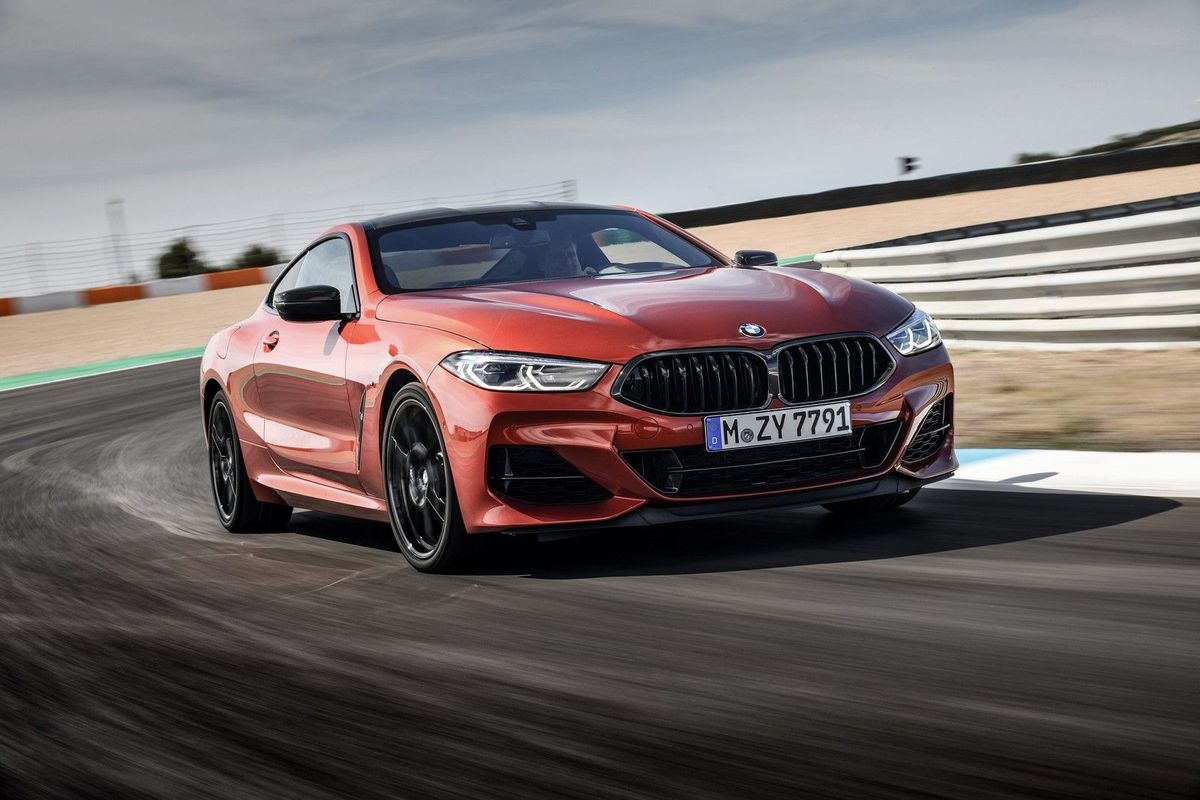
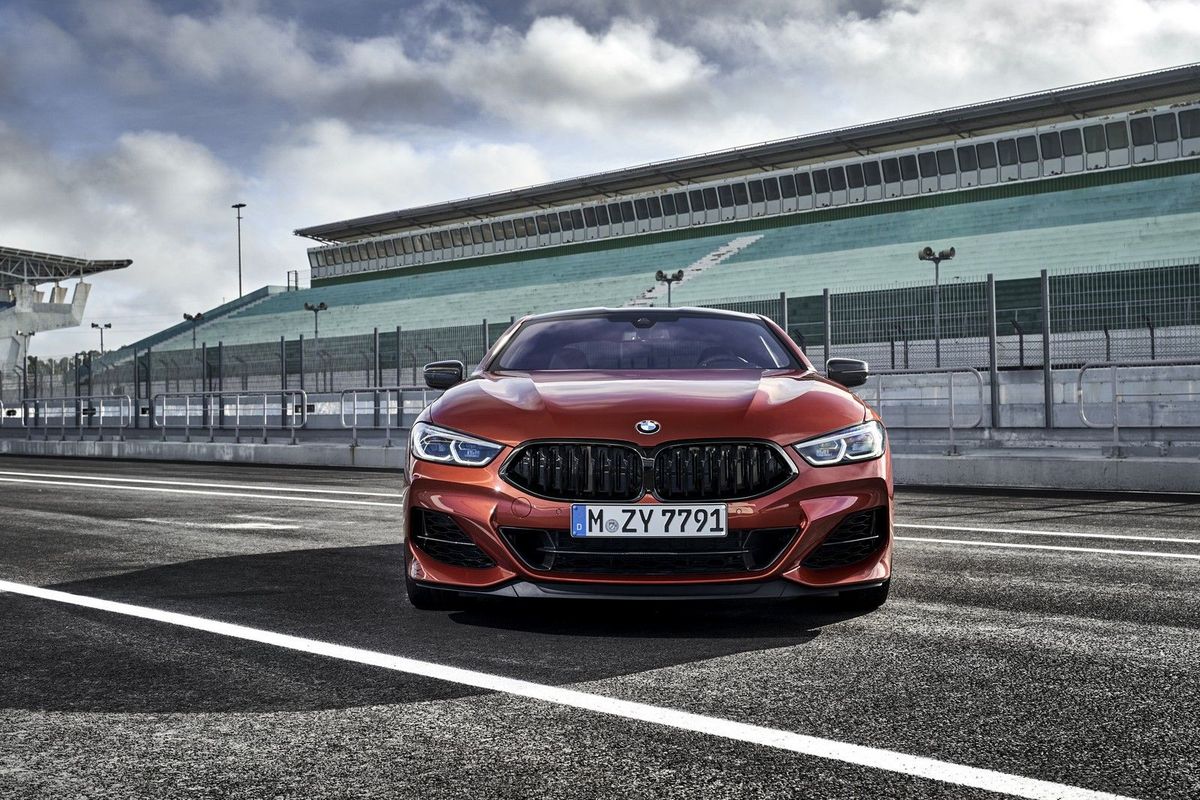
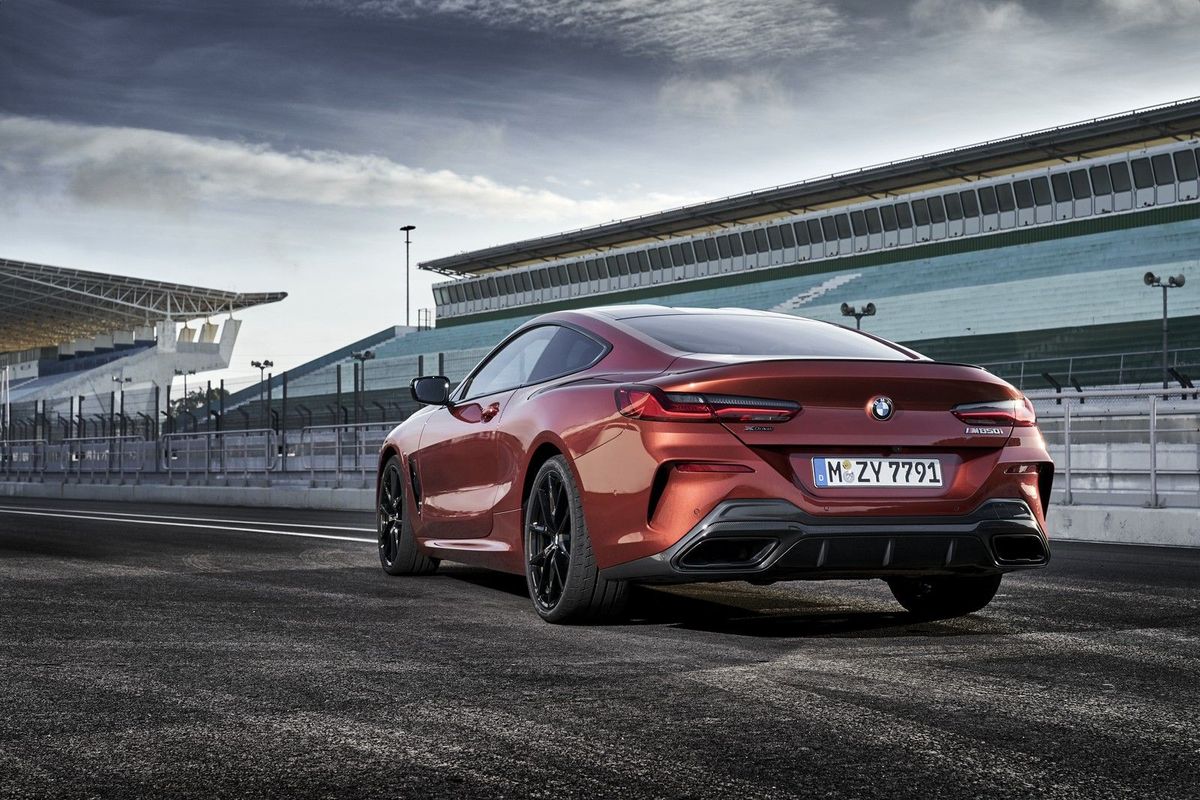
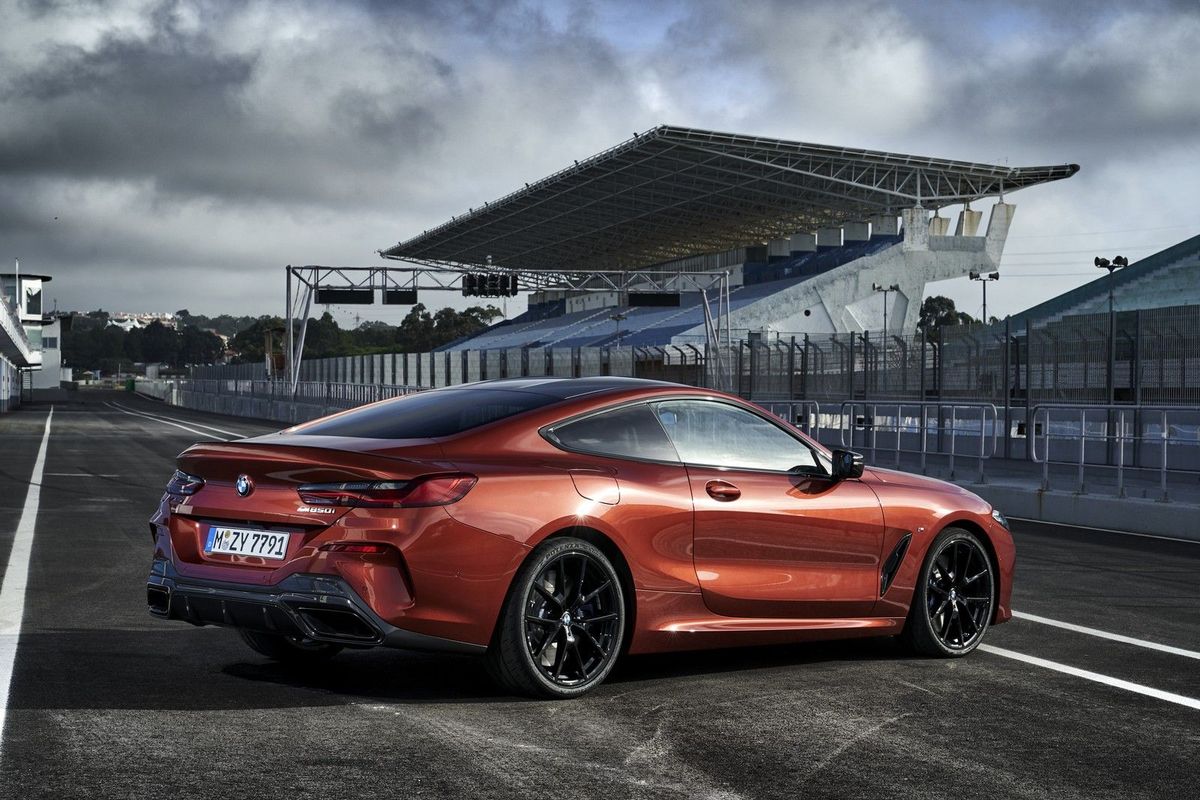
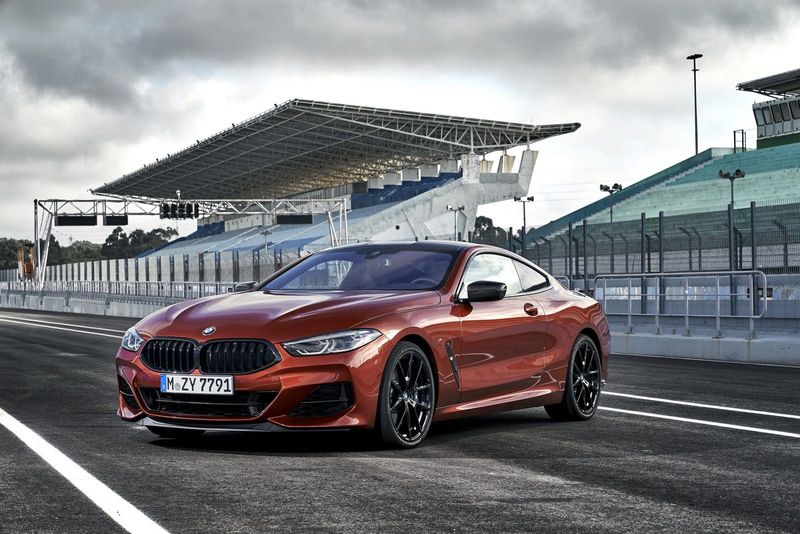
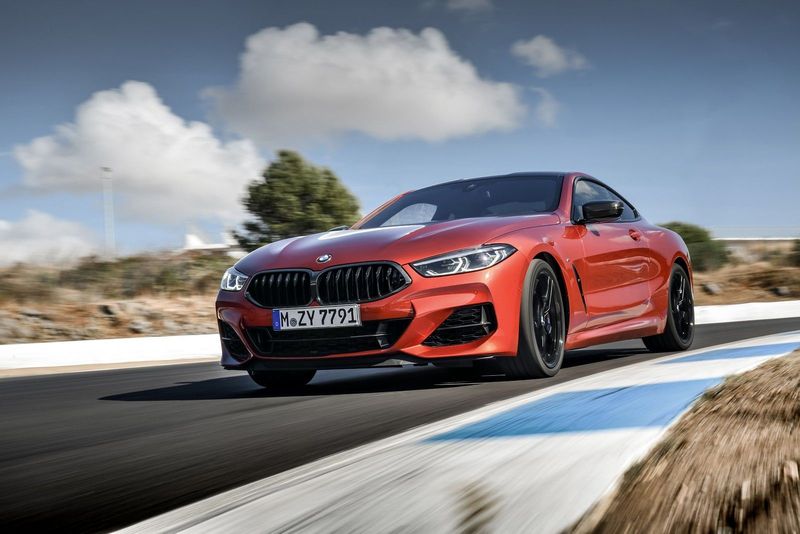
The 8 Series' swooping bodywork combines with the snarling nose and slim headlights to give it serious presence.
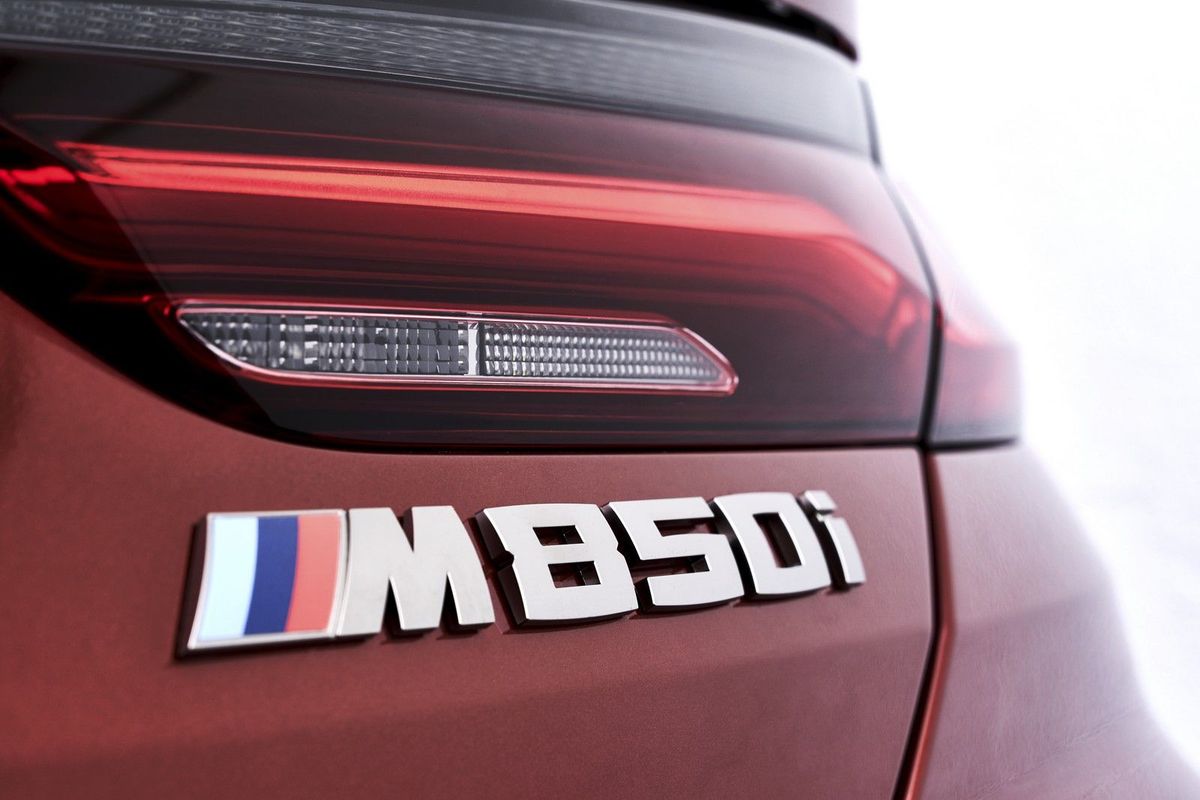
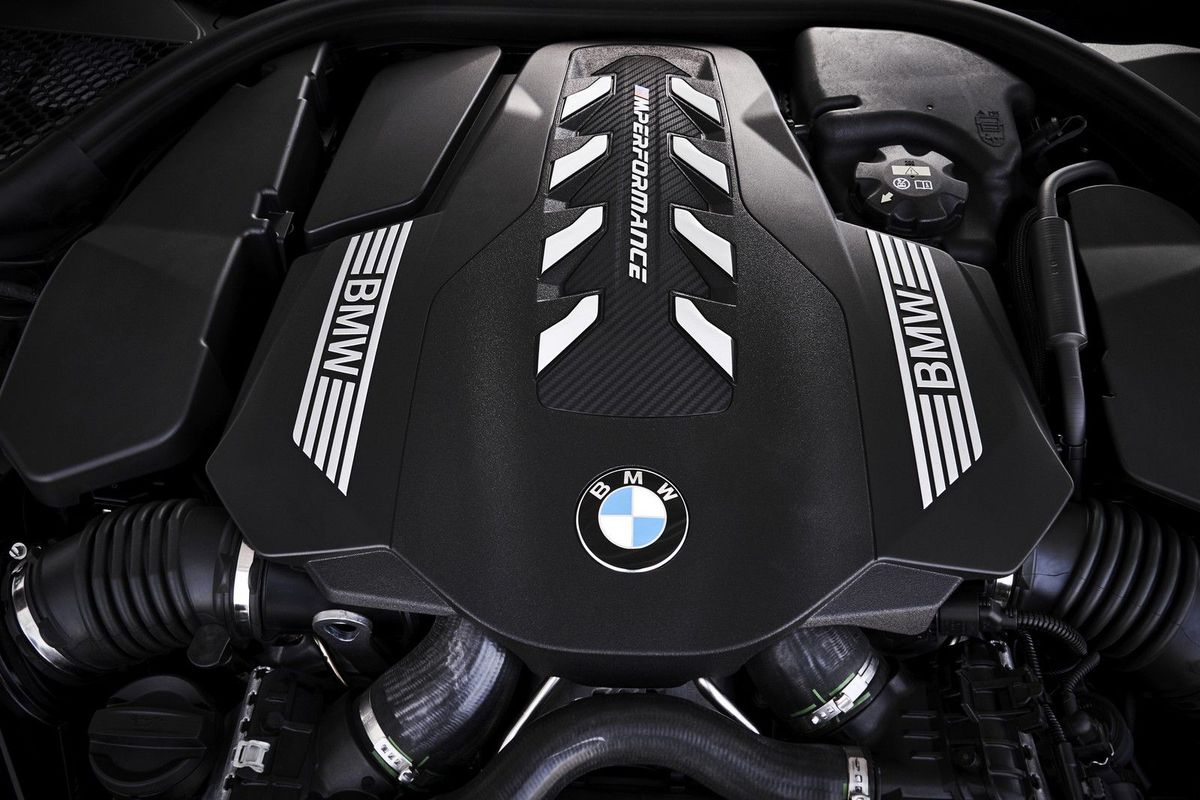
For starters, there is a new 4.4-litre twin-turbo V8, which produces 390 kW and 750 Nm of torque, mated with the latest-generation 8-speed Steptronic automatic transmission and a redeveloped xDrive all-wheel-drive system. This is tasked with sending most of the power to the rear wheels most of the time and actually, BMW’s engineers don’t like calling the car all-wheel drive, instead referring to it as rear-drive with added traction…
Regardless, the fun factor should be dialled up further by the inclusion of an electronically-controlled rear differential lock, which is mapped with the usual driving modes. Big brakes, adaptive damping and four-wheel steering round out the key chassis components, although buyers can optionally upgrade to active roll stabilisation, too.
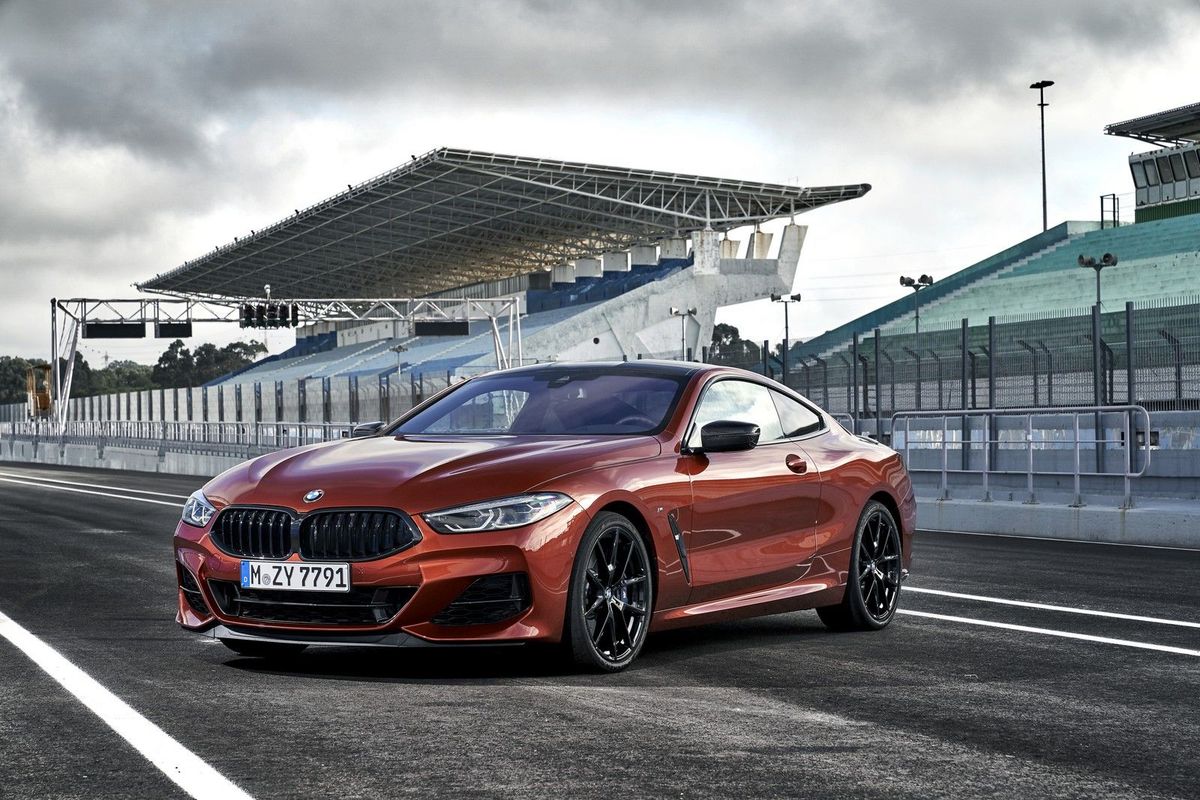
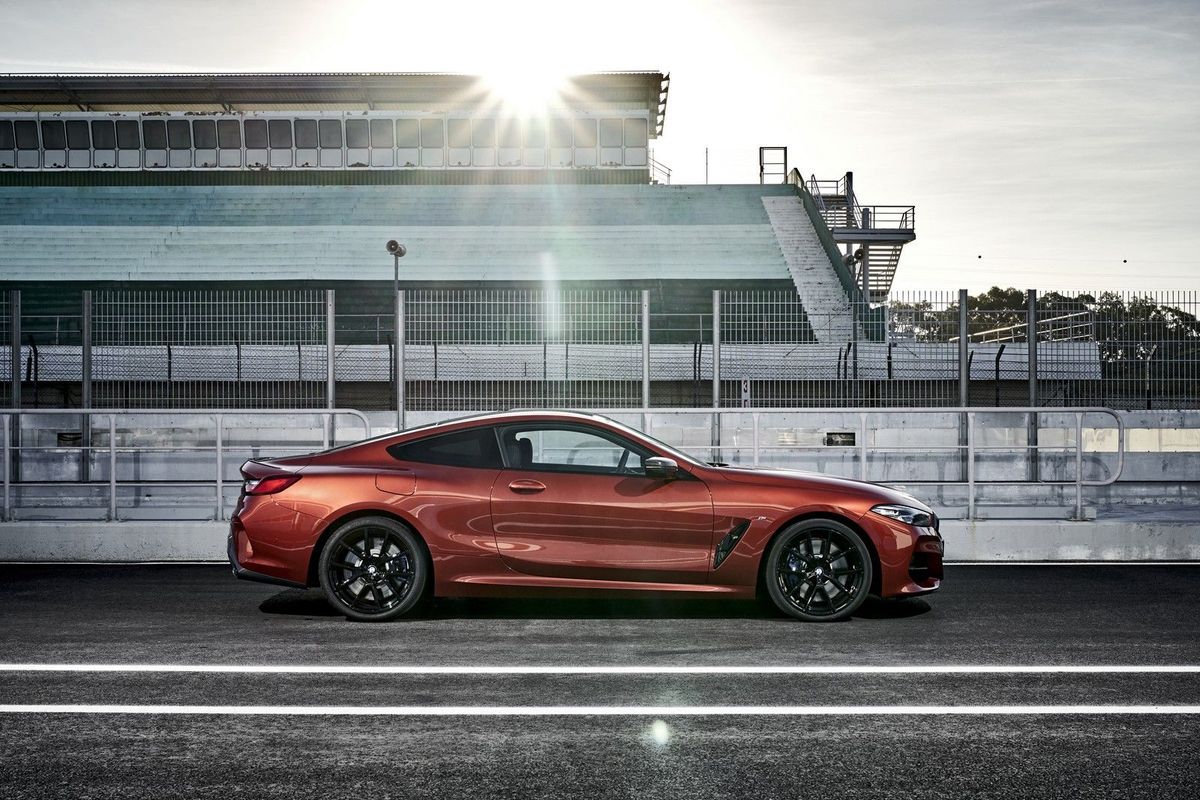
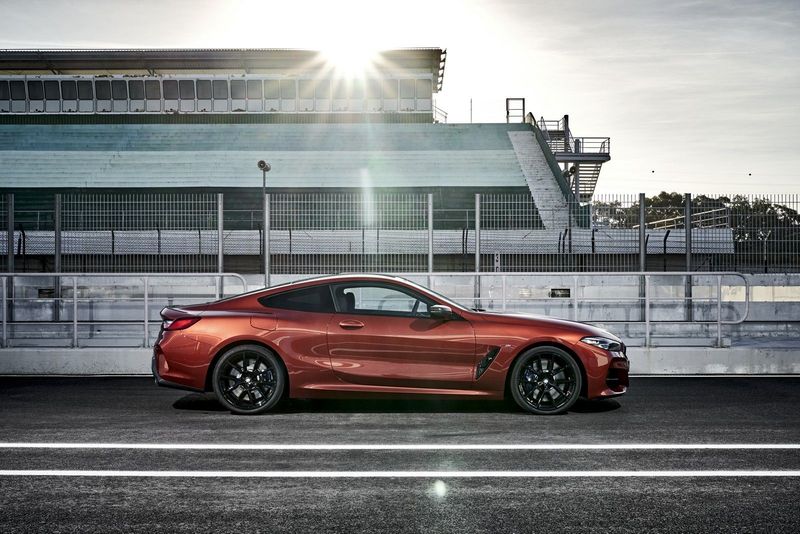
The newcomer sports classic coupe proportions, but it's shorter than a 5 Series, believe it or not!
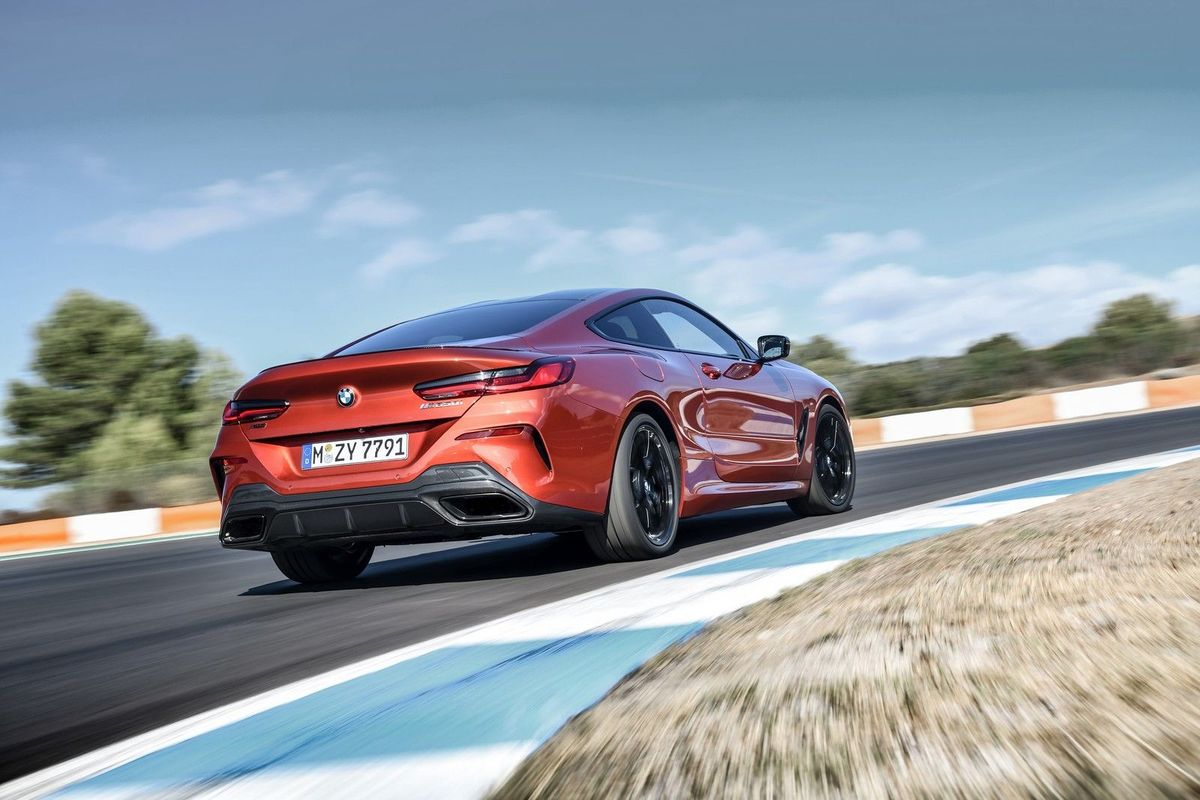
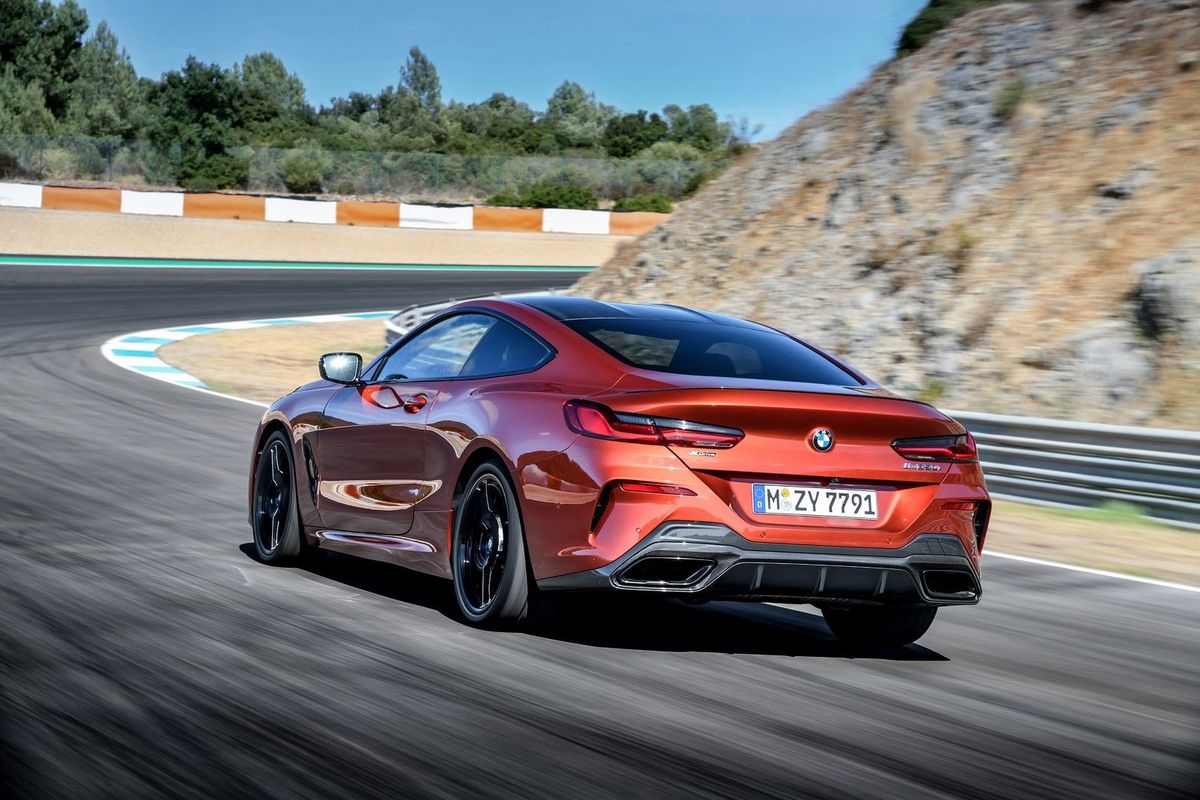
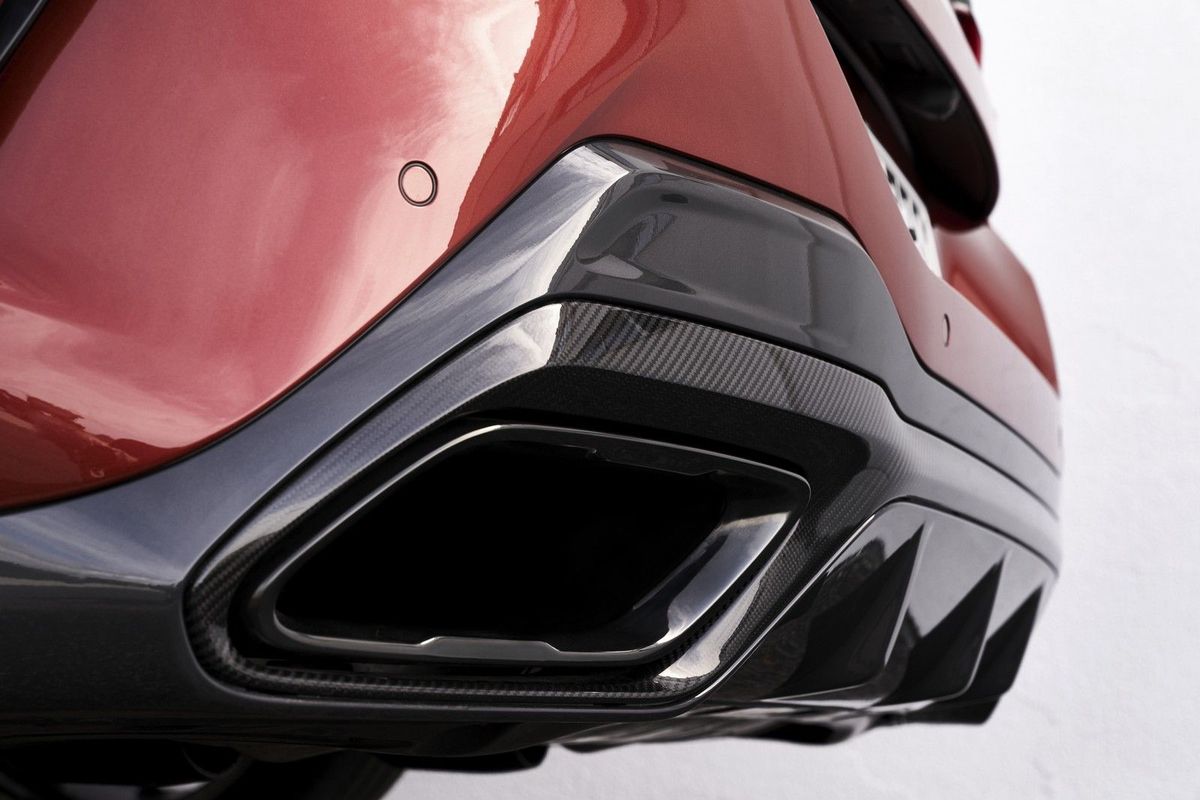
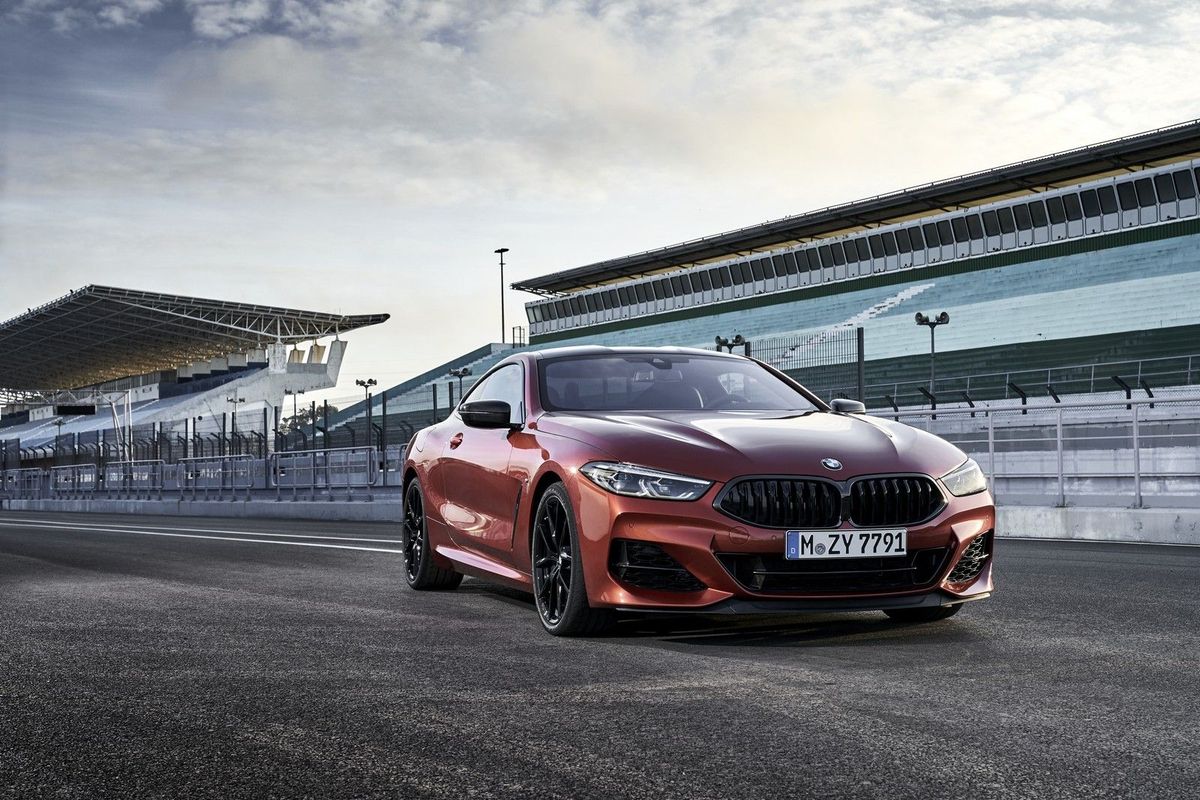
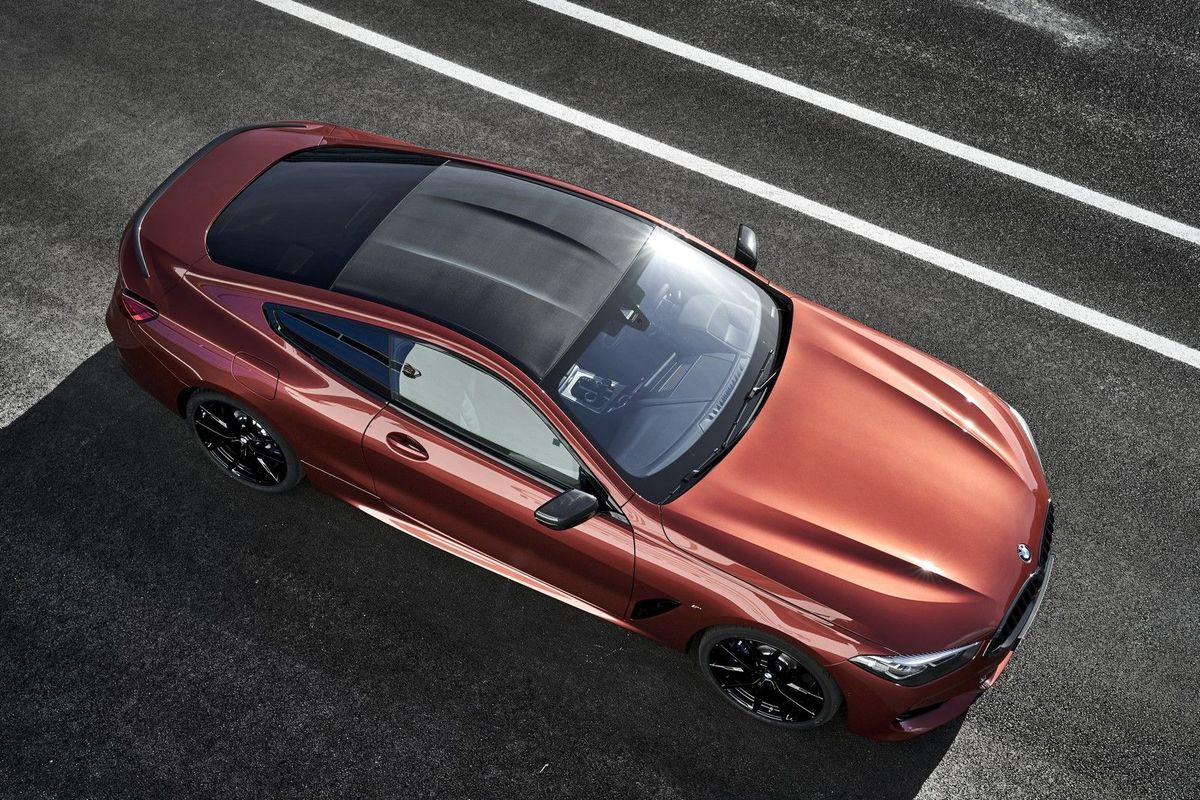
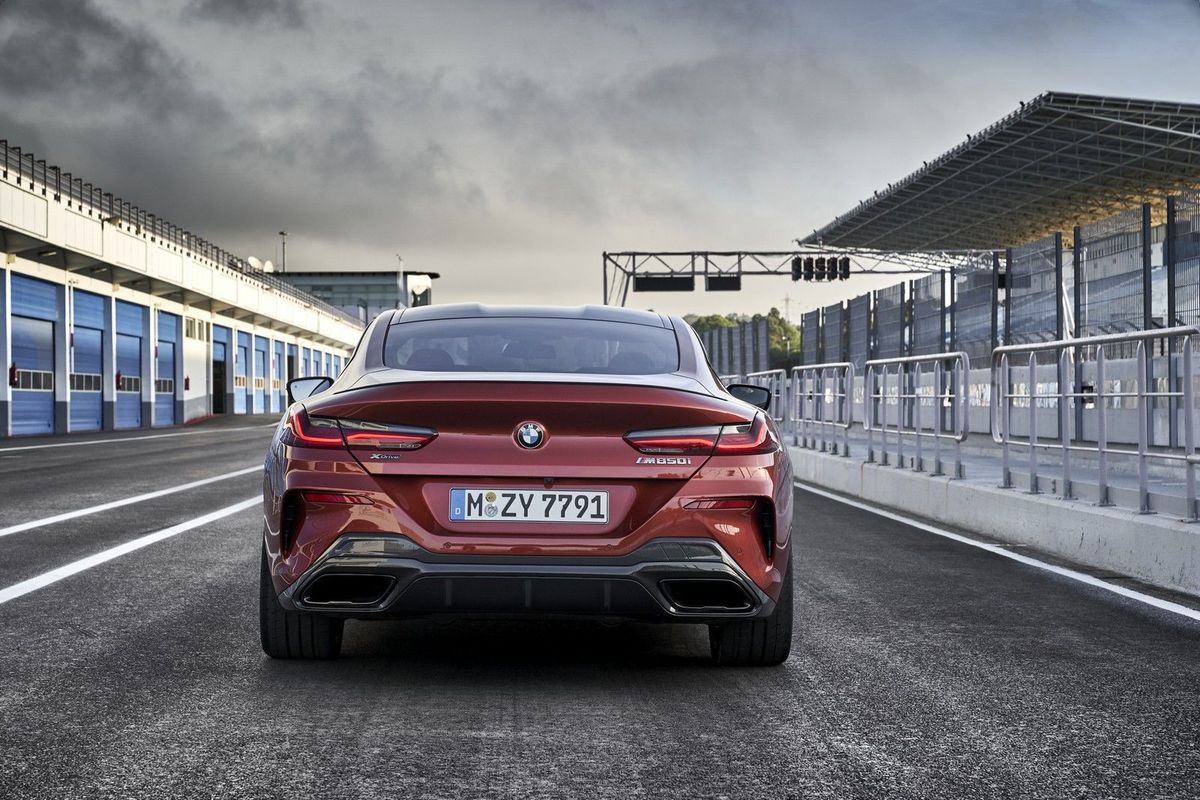
At 4 851 mm long, 1 902 mm wide and 1 346 mm high, the 8 Series is shorter, wider and lower than, for example, the BMW 5 Series sedan, and its swooping bodywork combines with the snarling nose and slim headlights to give it serious presence. That was ramped up a touch in our test cars by the addition of a carbon fibre exterior styling pack and a carbon fibre roof – the first time such a thing has been offered by BMW for cars outside the full-on M range. It highlights the "double bubble" shape of the roof, the sloping rear window and muscular back end. This may "only" be what BMW calls an M Performance vehicle, but it already looks the part, taking a distinctly sportier design route than its number one rival, the S-Class Coupe.
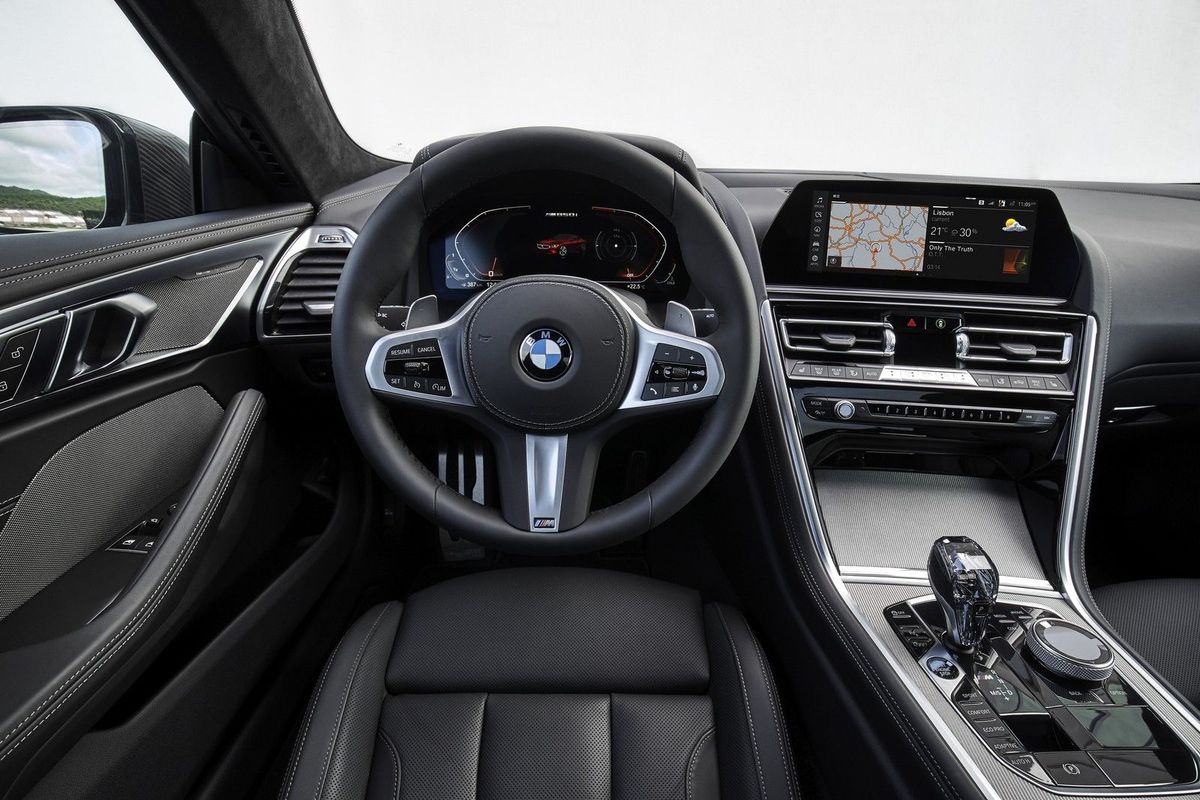
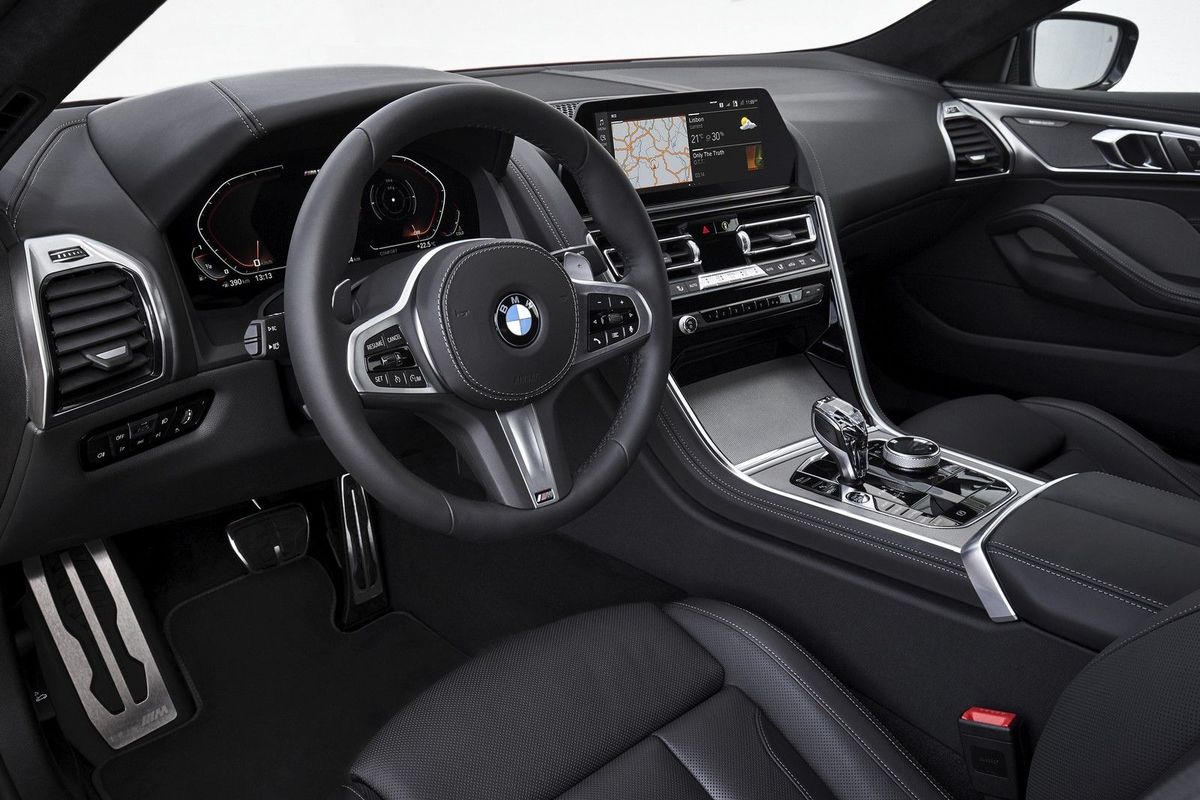
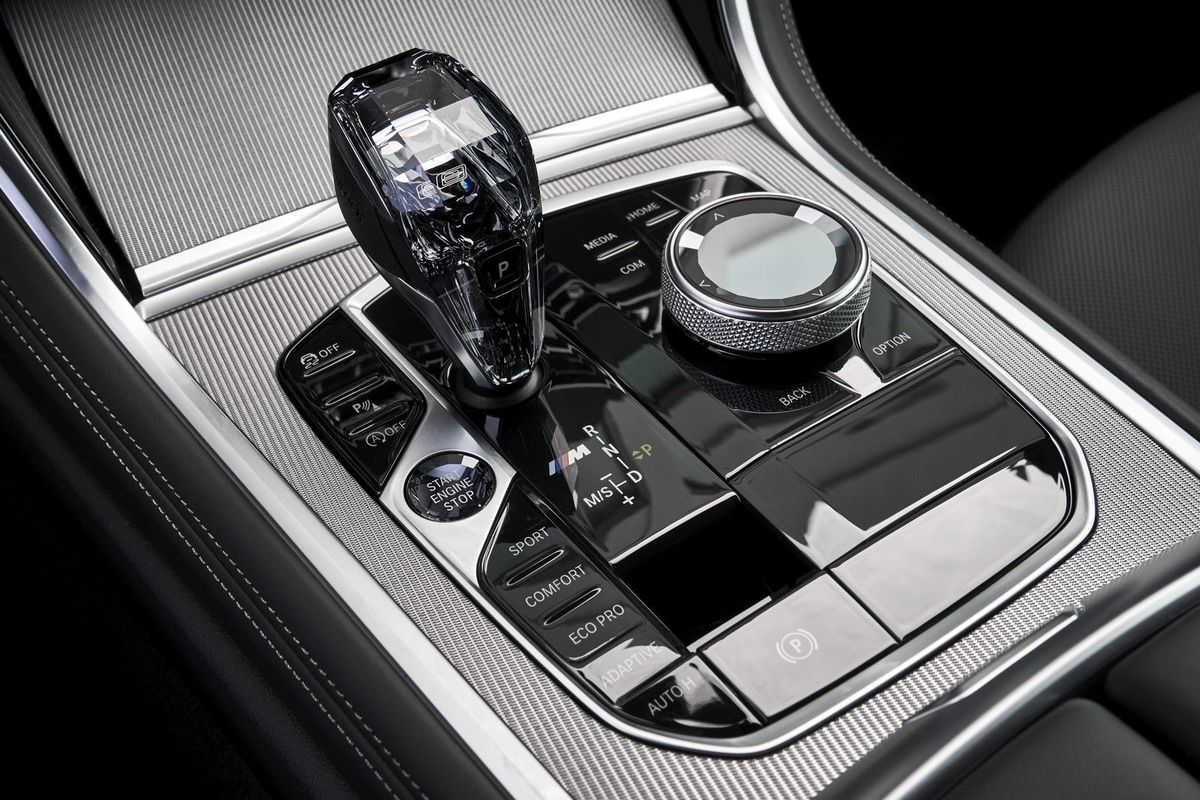
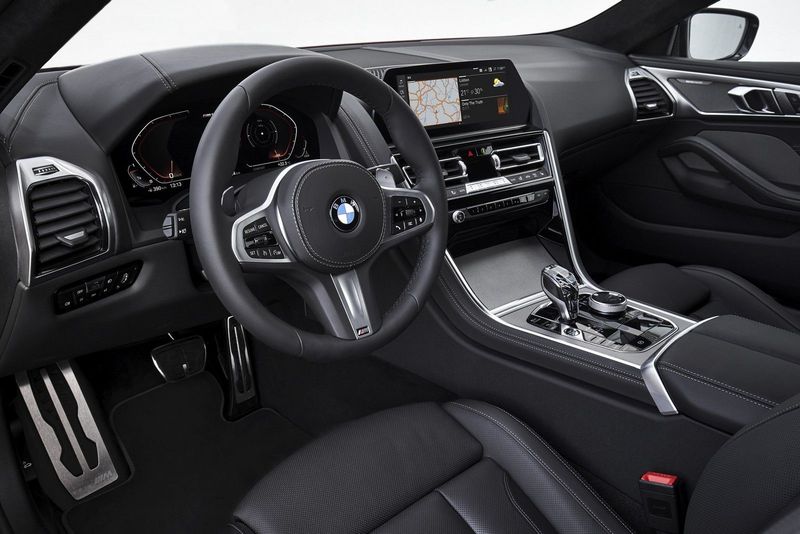
BMW has thrown its whole arsenal of high-quality materials and in-car technology at the cabin to help it live up to its position in the line-up and it’s largely successful thanks to raised stitching leather everywhere, tactile metallic trim surfaces and the usual perfectly weighted BMW controls and switchgear. After the new X5, the 8 Series is the 2nd BMW to gain the company’s fresh dual-screen dashboard set-up and it looks slick.
The driver-centric cockpit design features a dual screen layout, but it does not feel fussy and dominated by the electronic interface.
The centrally-mounted touchscreen is quick to respond to touch or you can use the latest rotary iDrive controller on the centre console. Voice and gesture control are available too, but they seem unnecessary most of the time. Unlike Audi’s migration to (oversized) touchscreen operation of its climate control, BMW has shrunk it all down and retained physical buttons. This has the benefit of freeing up more space for all your bits and pieces.
Speaking of space, the front seats are comfortable and there’s loads of room for the front occupants, plus tonnes of adjustability to the driving position, but the rear seats are woefully small thanks to the combination of the sloping roof, upright seat backs and pitiful kneeroom. Thankfully, most buyers of cars like the 8 Series don’t buy it to transport adults in the back.
If you like everything else about the 8 Series, but need rear legroom, hang around for the 4-door 8 Series Gran Coupe variant to launch, as it’ll have a longer wheelbase. The boot in the Coupe, meanwhile, is accessed by an automatic lid and holds a useful 420 litres of golf clubs or whatever.
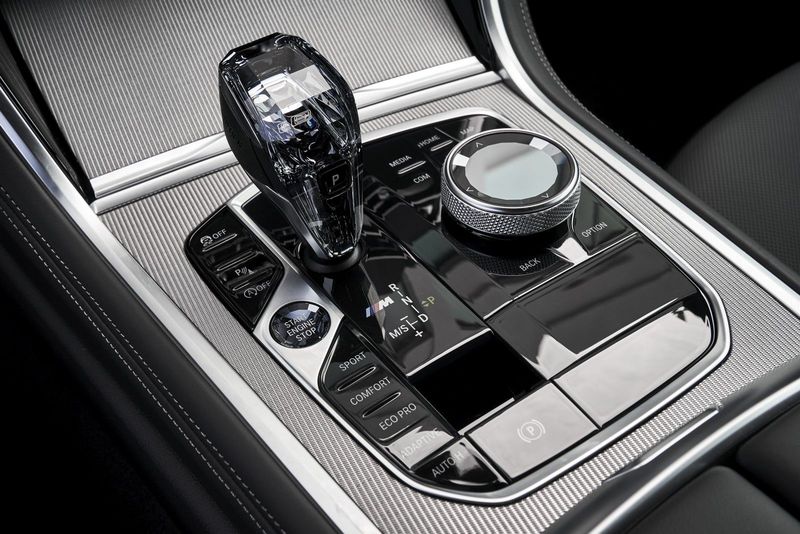
The M850i's bejewelled transmission lever is an acquired taste, but the centre console is otherwise tastefully appointed.
What’s it like to drive?
We reckon that the standard 4-wheel steering (Integral Active Steer in BMW-speak) is potentially the most important aspect of the M850i. As the rear wheels turn in the opposite direction to the fronts at low speeds, it makes the 8 Series feel much smaller and more agile than it has any right to. That’s a massive help when negotiating packed car parks and city streets, but it also gives the coupe a delicious nimbleness in tight corners.
The flip side of it is that, at high speeds, the rear wheels turn in the same direction as the fronts, making for stable and precise lane changes. Because of this characteristic, BMW could fit a more direct steering rack to the front axle (it’s a variable ratio and assistance unit) and the nett result is a coupe that nips into tight curves eagerly, while feeling as composed as any luxury car on the highway (without any high-speed nervousness).
The introduction of rear-wheel steering (and a beefed-up braking setup) helps the M850i to compensate for its heft in the twisties.
Now, all that comes with a proviso, and that’s the fact that the M850i is distinctly sporty all of the time. Ok, you can press the Comfort button to soften throttle response, quieten the exhaust (it has active flaps), smoothen out the excellent transmission and put the damping into its most comfortable setting. And in this guise, the 8 Series whisks you along at high speed effortlessly, with great bump absorption and commendably well-subdued wind and road noise (despite the lack of double glazing on the side windows, we noted). The V8 rides its considerable torque with a calm, distant rumble.
But there is a pair of Sport modes to explore, and BMW has noticeably ramped up the aggressiveness of the Sport Plus setting. Choose that and the throttle is super-sharp (too much for stop-start traffic), the exhaust pops and bangs boisterously on the overrun and the transmission seemingly hunts for as low a ratio as it can get away with, giving you maximum performance at all times and a suitably raucous V8 soundtrack.
Although the 8 Series offers a plethora of driving modes, through which a driver can adjust the car's settings, its default attitude is certainly sporty…
Naturally, you can use the tactile paddles behind the (still too thick-rimmed) steering wheel to take control of the transmission. There’s no need to do that when in the regular Sport setting though, as it’s perfectly judged, so it seems like the most usable driving mode. It’s possible to customise the Sport mode to your liking as well. Through all this, while the damping does firm up, it’s never quite teeth-shattering.
On the road, you’ll not broach the M850i’s limits without attracting the attention of the authorities, which is perhaps why BMW let us loose on the Estoril race track in Portugal. On the track, the 8 Series committed itself better than you’d reasonably expect of a near-2 000 kg car and it certainly revealed that it can feel more like a rear-drive sports car, as opposed to an all-wheel-drive luxury model, to pilot. The balance is exceptional, notably under extremely heavy braking, while the active rear differential helps to point the big coupe's nose into a turn when you’re squeezing back on the power. We doubt many owners will bring this particular model to a circuit, but it bodes very well indeed for the imminent M8 derivative.
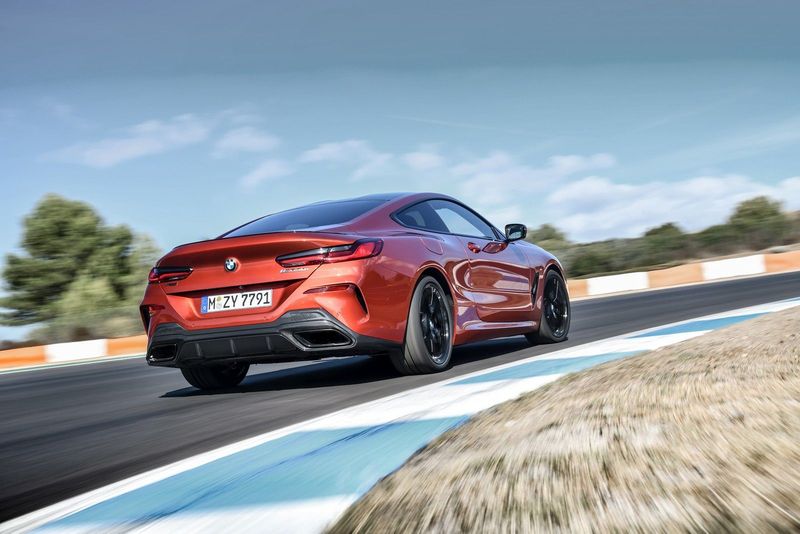
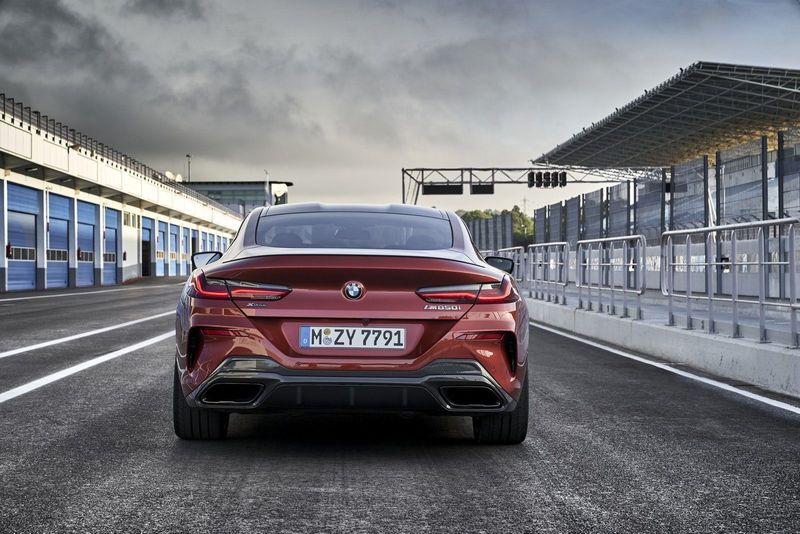
In M Performance garb, the 8 Series looks purposeful, but not quite as elegant as we believe it could be. The rear bumper detailing is a trifle fussy.
Verdict
The M850i is an expensive car by any measure, but it offers a plethora of talents for the price. While there will be an entry-level, rear-drive 8 Series later on, this (current) range-topper puts a sharply designed stake in the ground, undoubtedly justifying the change in name for BMW’s GT. It marries long-legged civility and comfort with seriously sporty dynamics and performance. The only question is: how special will the 2019 BMW M8 be?
BMW 8 Series Price in South Africa
This is the basic price, with CO2 tax and a 5-year/100 000 km maintenance plan included.