This BMW X4 M prototype was spotted doing some performance testing at the Nurburgring recently and the newcomer will give the X4 range a massive performance boost. Here's what you need to know and what the forthcoming BMW X4 M will sound like.
The performance SUV market continues to grow and this time it appears that BMW will be launching an X4 M. Spotted at the Nurburgring was a prototype BMW X4 M undergoing performance testing. The all-new BMW X4 was recently launched and we got a taste of what's to come as we got behind the wheel of the new M40d. However, this new X4 M model takes things up a notch.
The step up from X4 M40 to X4 M will be considerable, and the new car is set to get a revised chassis with a sportier suspension setup, tweaks to the steering and the fitment of bigger brakes. In terms of engines, we think the BMW X4 M will use the current S58 motor, which is a 3.0-litre straight six motor based on the mill which powers the current M3 and M4. Outputs are estimated around the 340 kW mark and thanks to a combination of xDrive and launch control, it should be able to hit 100 kph in under 4 seconds.
In terms of rivals, this new BMW X4 M will be going up against the Mercedes-AMG GLC 63 and the Audi SQ5. It is expected that this powertrain will also spawn an X3 M derivative.
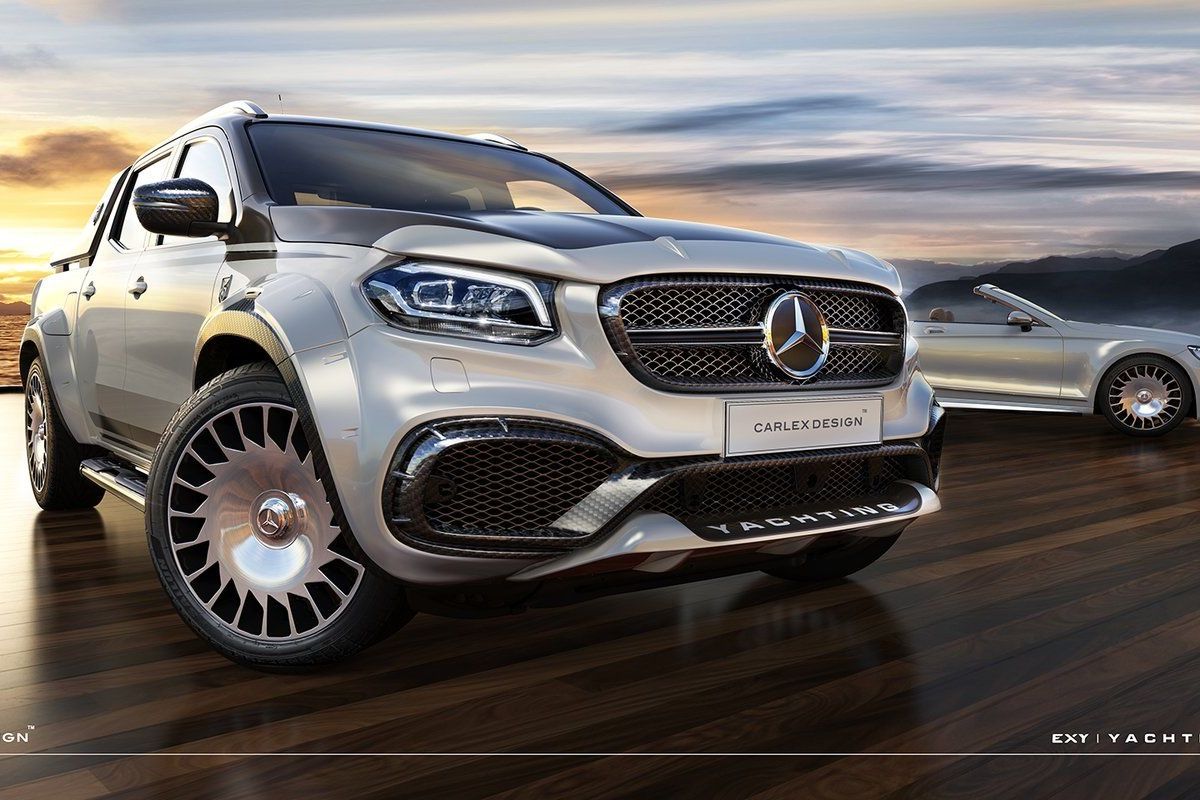
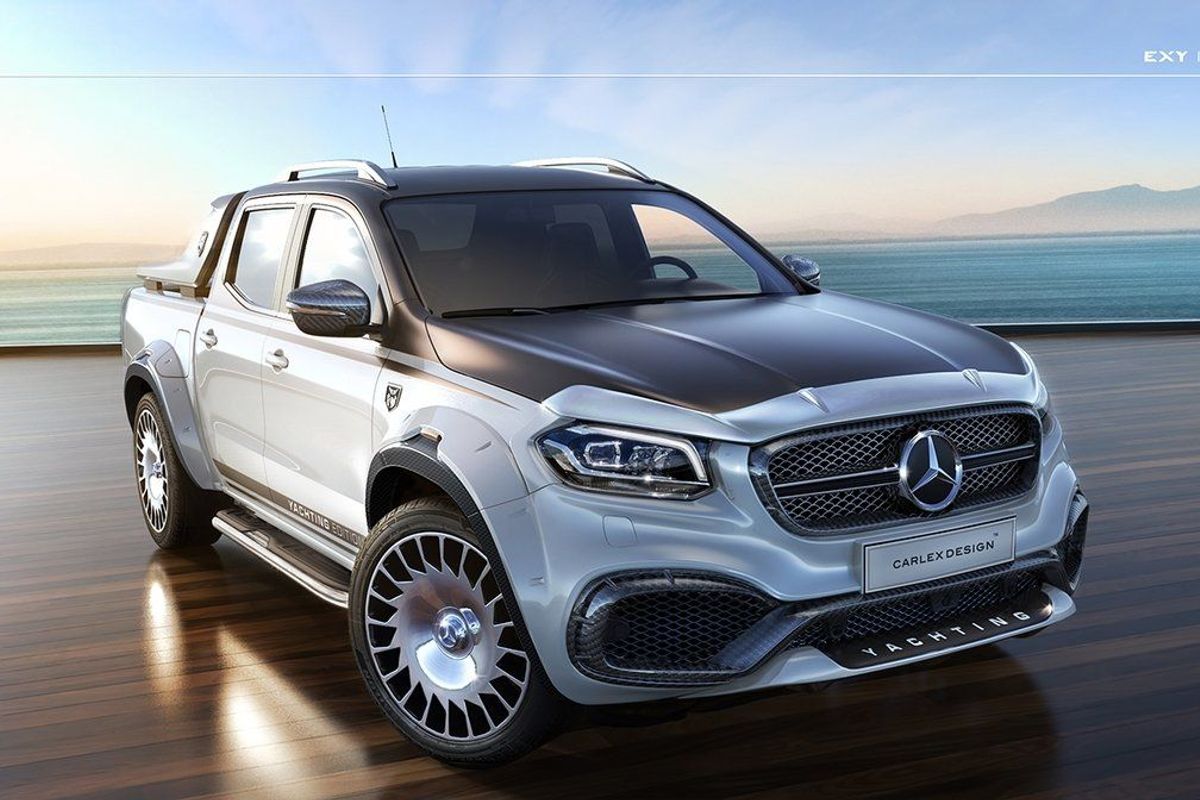
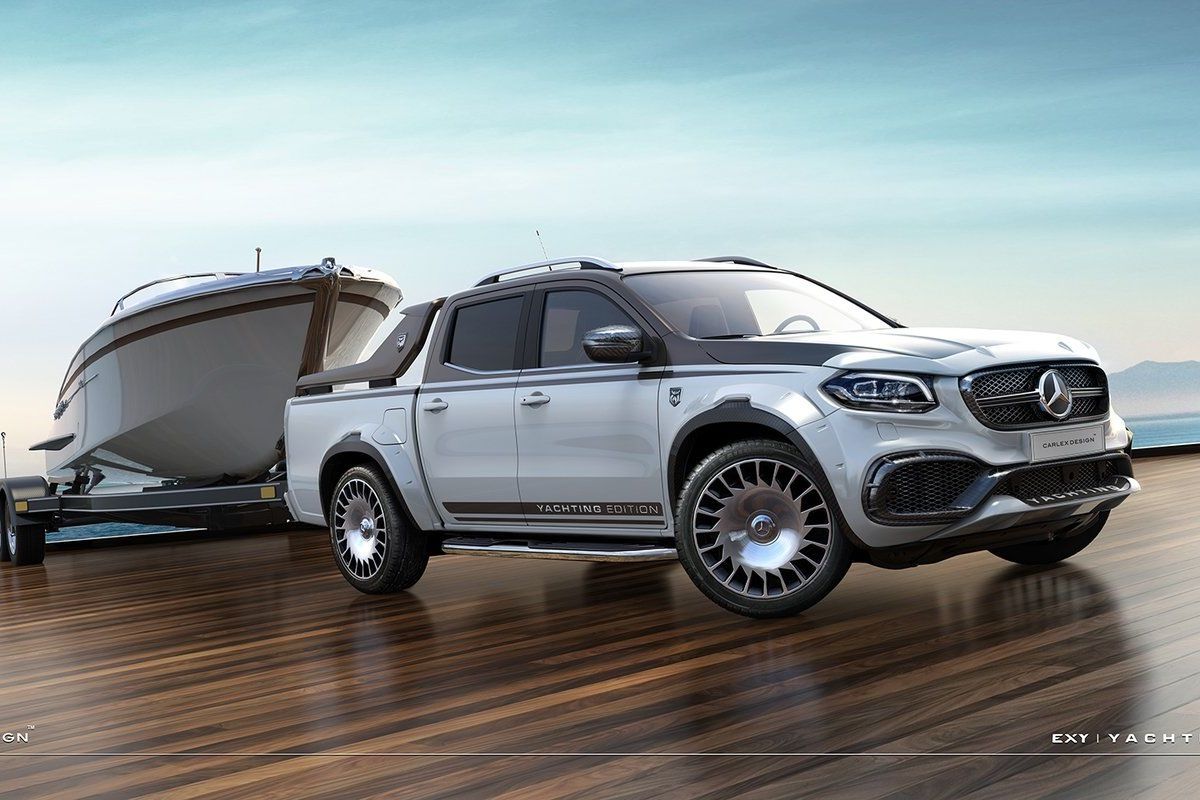
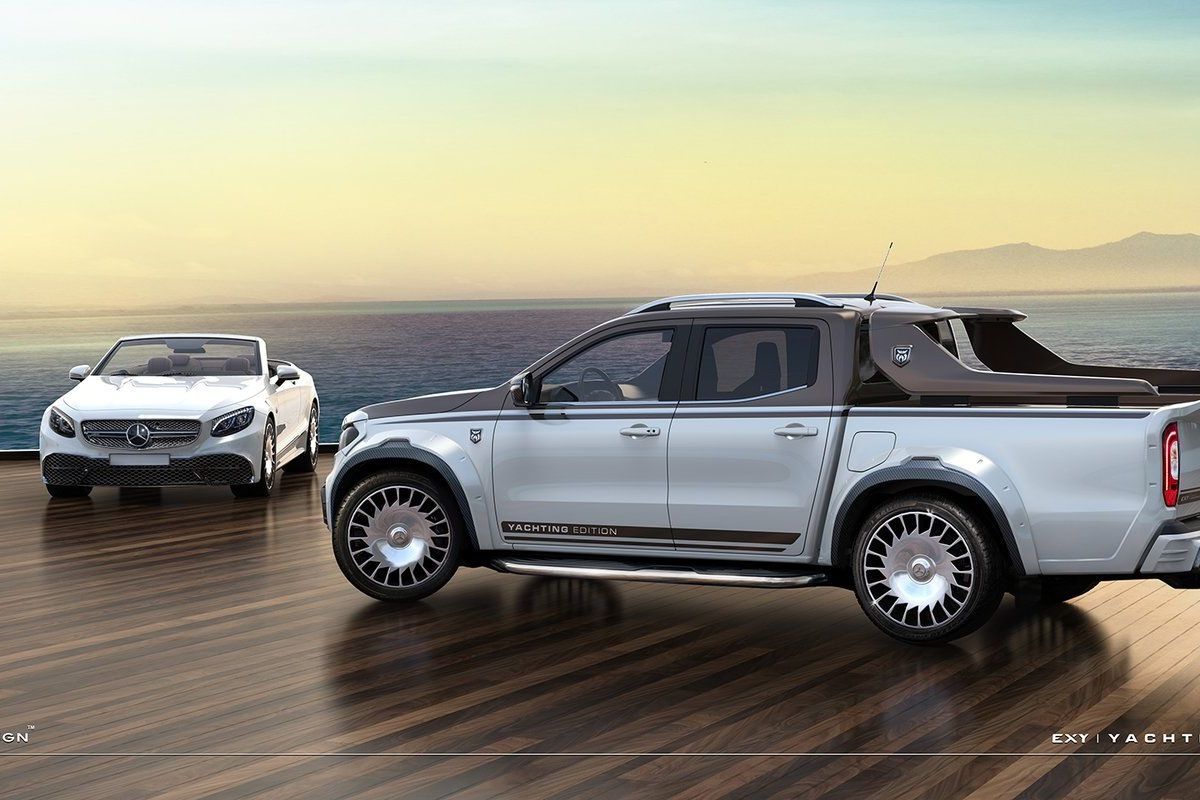
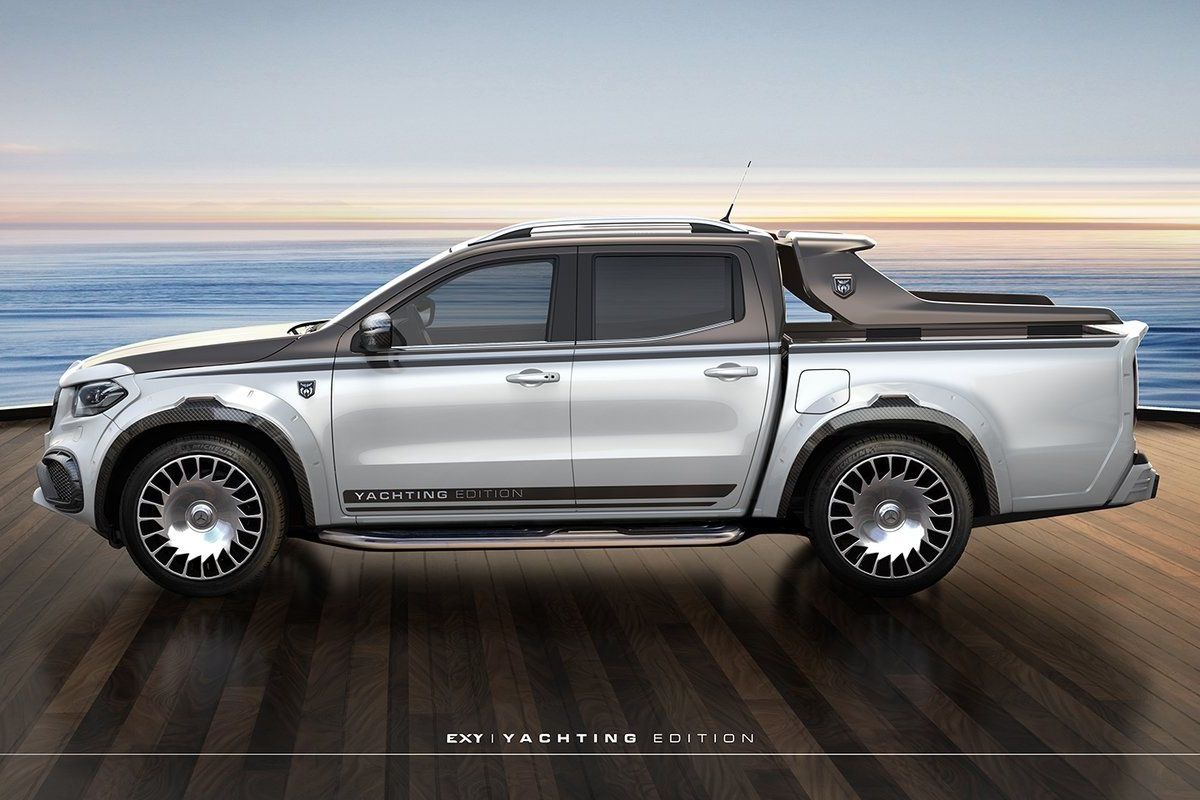
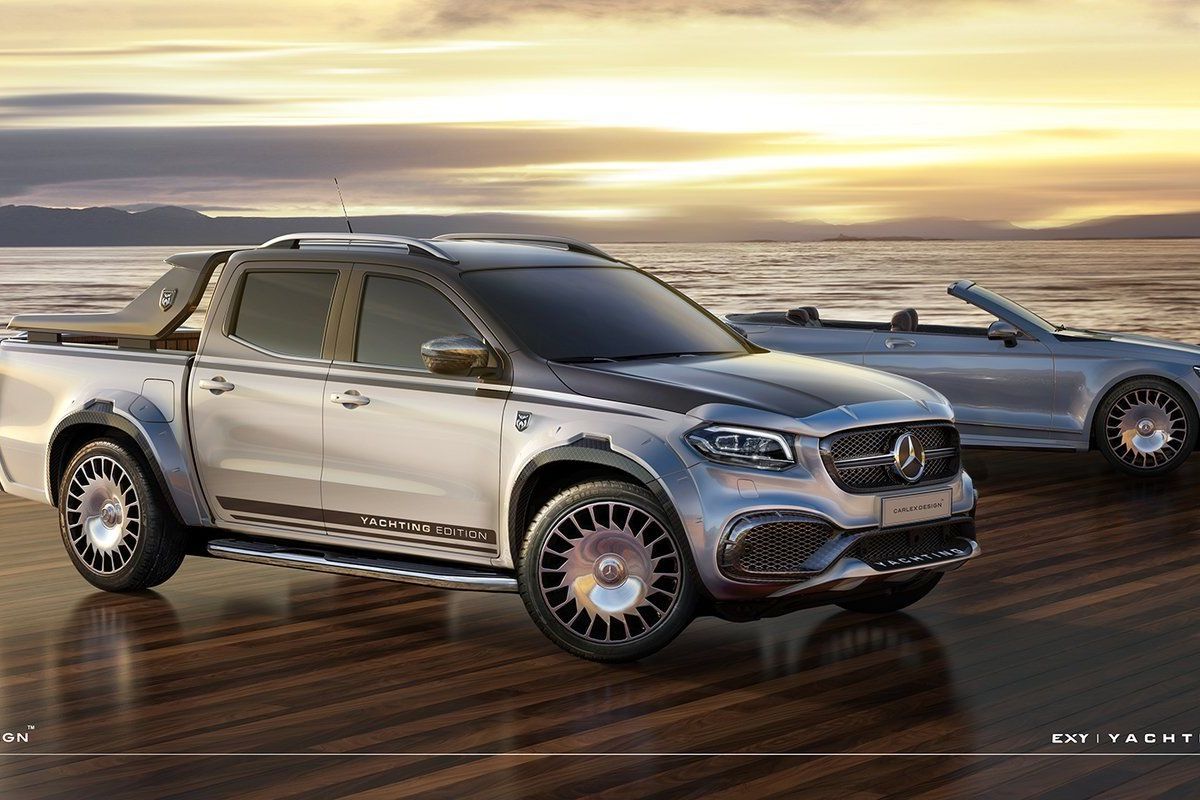
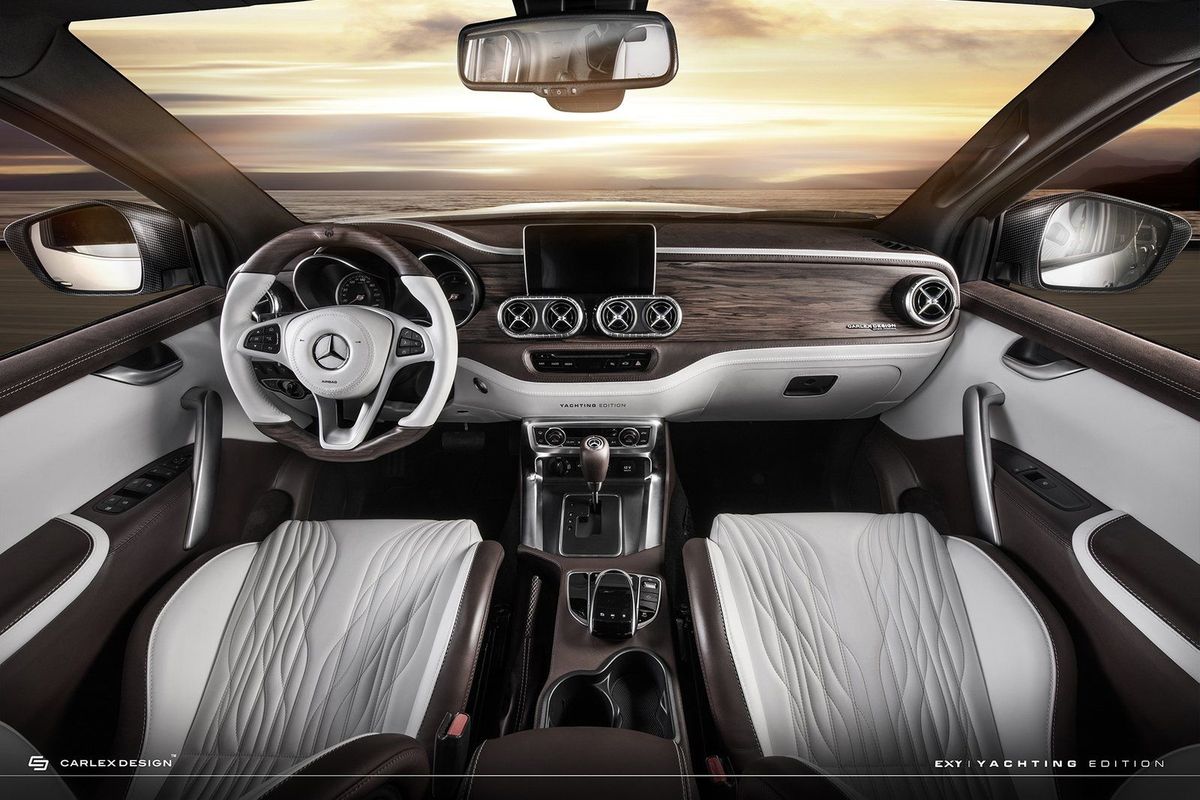
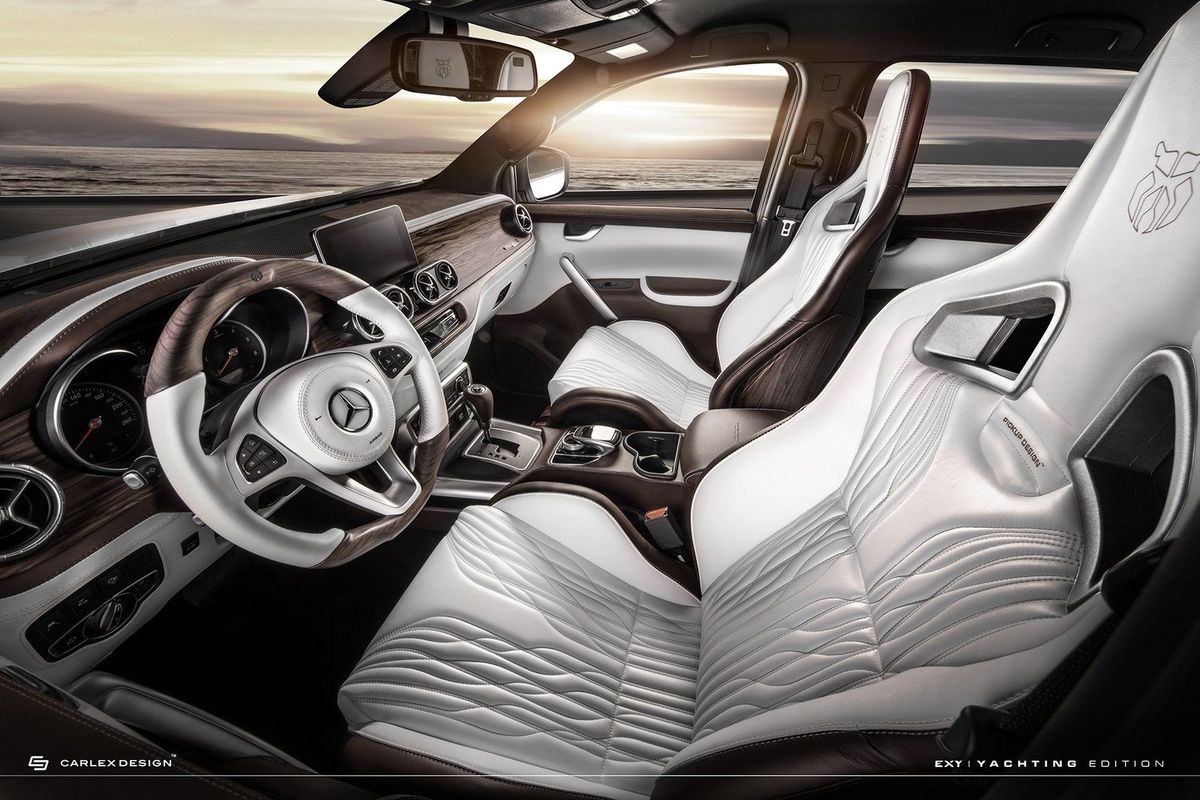
The X-Class is Merc’s first attempt at a luxury bakkie, but this Maybach-inspired version by Carlex Design adds a lot more to the package.
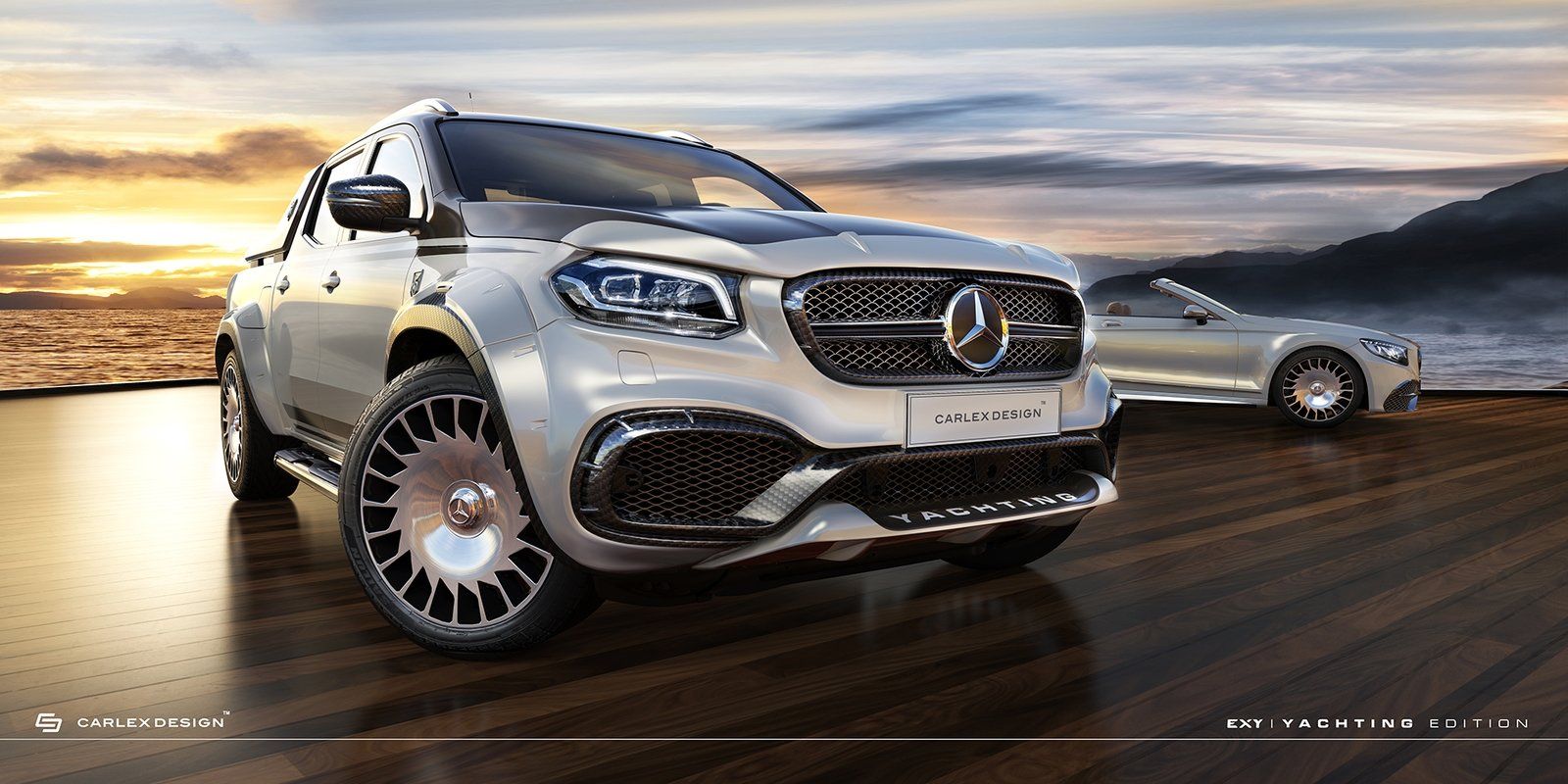
We recently showed you the Brabus Mercedes-Benz X-Class and based on reactions on social media, people weren’t too convinced by it. Well, perhaps this X-Class Yachting Edition by Carlex Design will do the trick?
Does the idea of a blinged-up Mercedes-Benz X-class appeal to you?
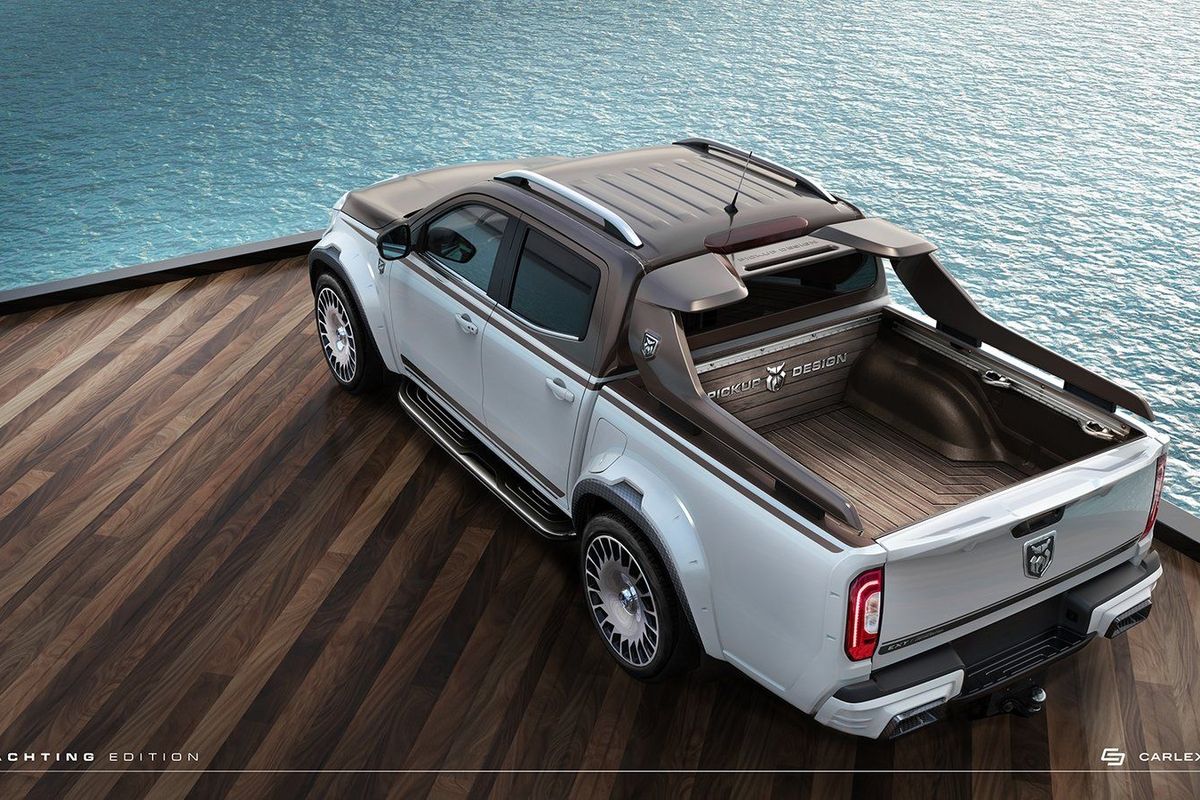
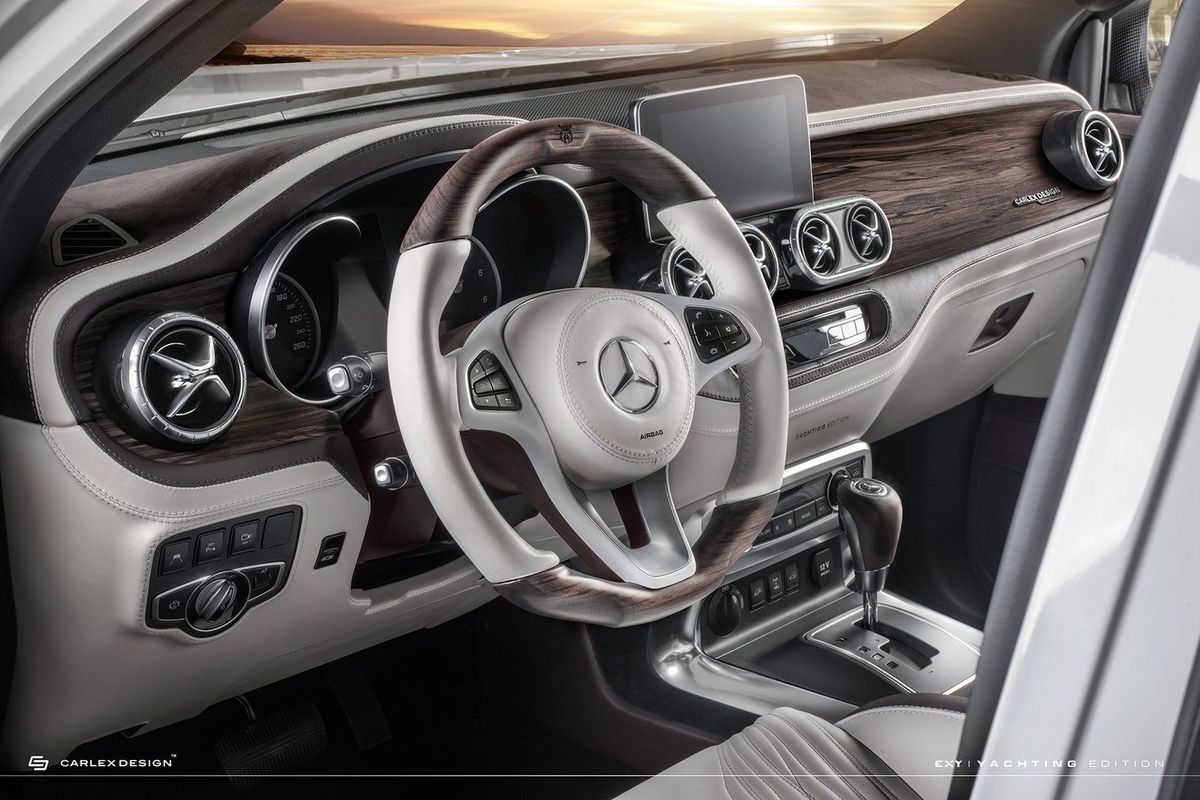
Carlex took a standard X-Class and fitted it with features inspired by ultra-luxurious Mercedes-Maybach vehicles. In this particular case, the X-Class’ grille and wheels took inspiration from the Maybach S650 Coupe and it comes fitted with a carbon fibre body kit which includes the bumpers, wheel arches, mirror casings, rear tail light housings, roof-mounted spoiler and bonnet cover. The bespoke look is finished off with a load bed featuring a teak floor.
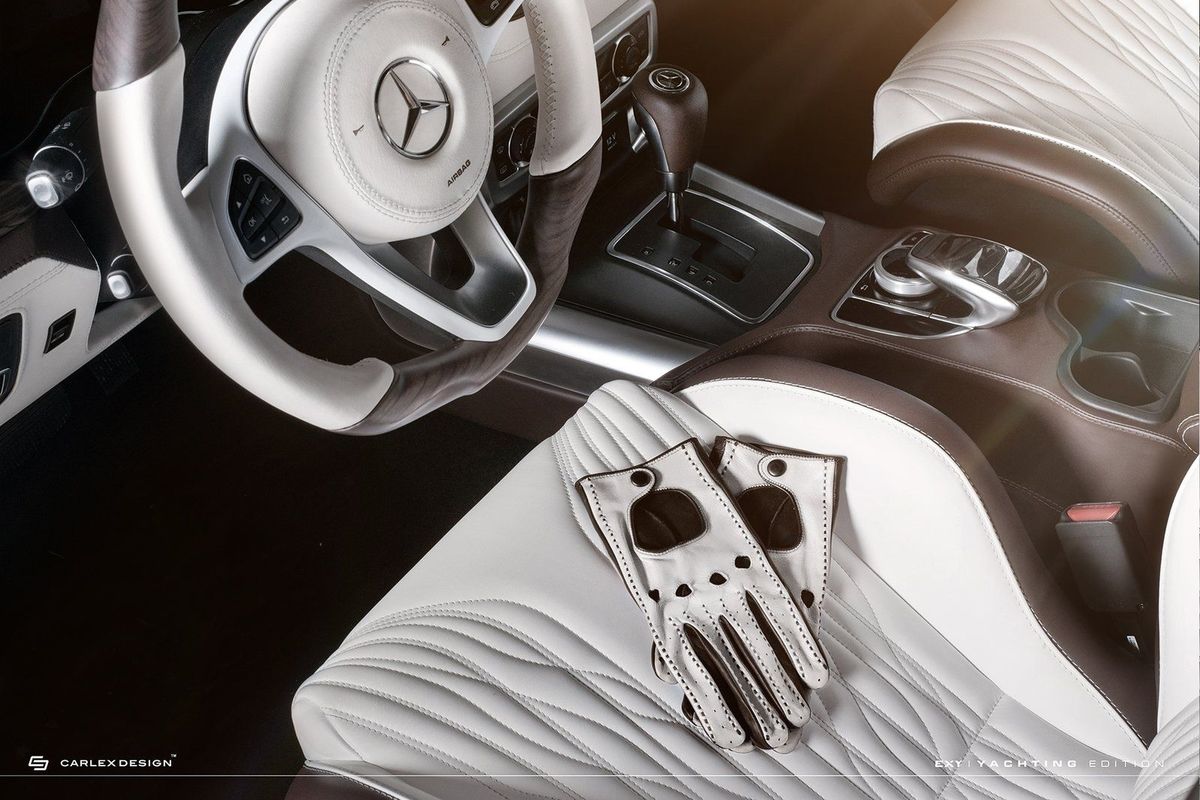
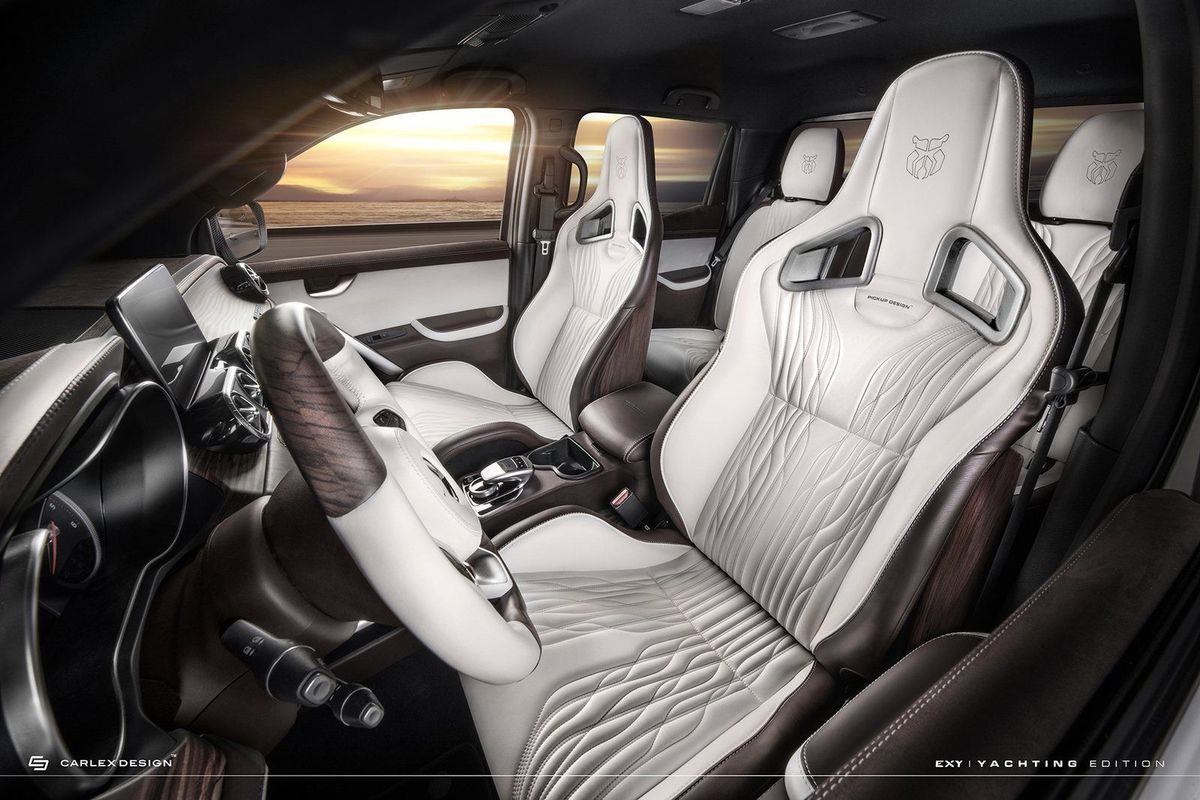
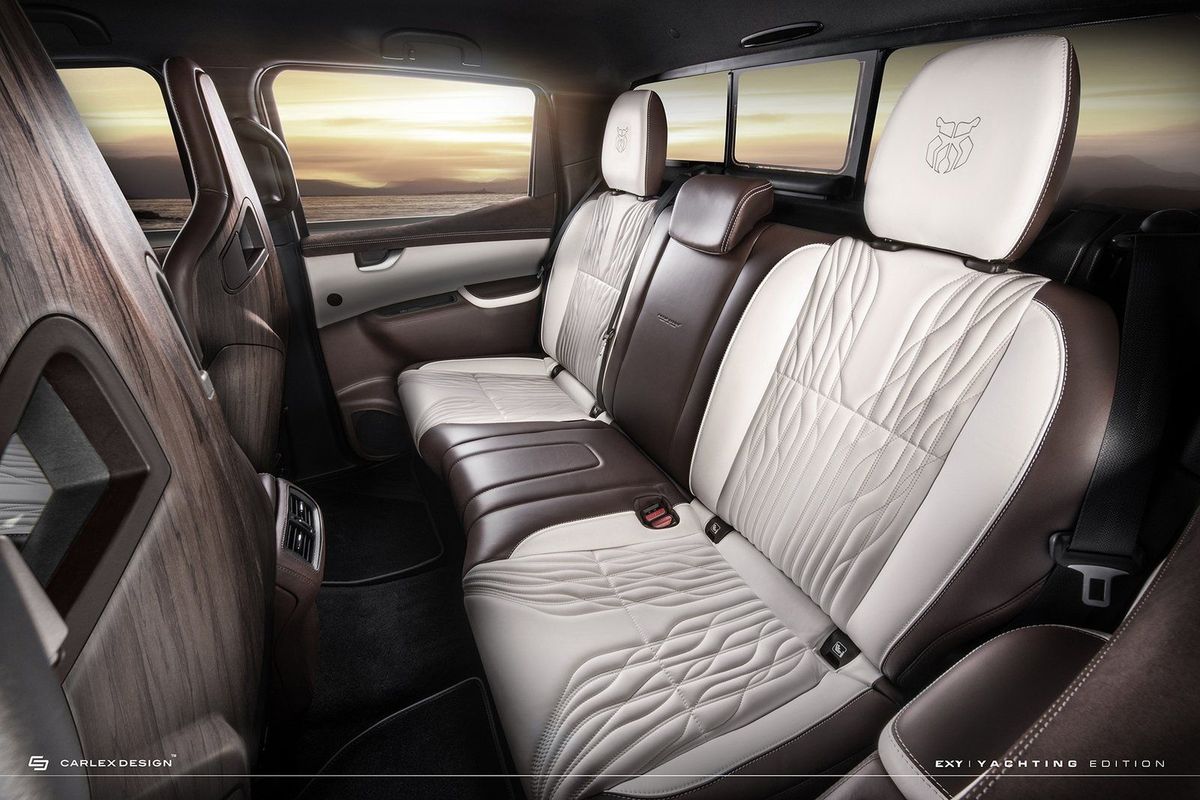
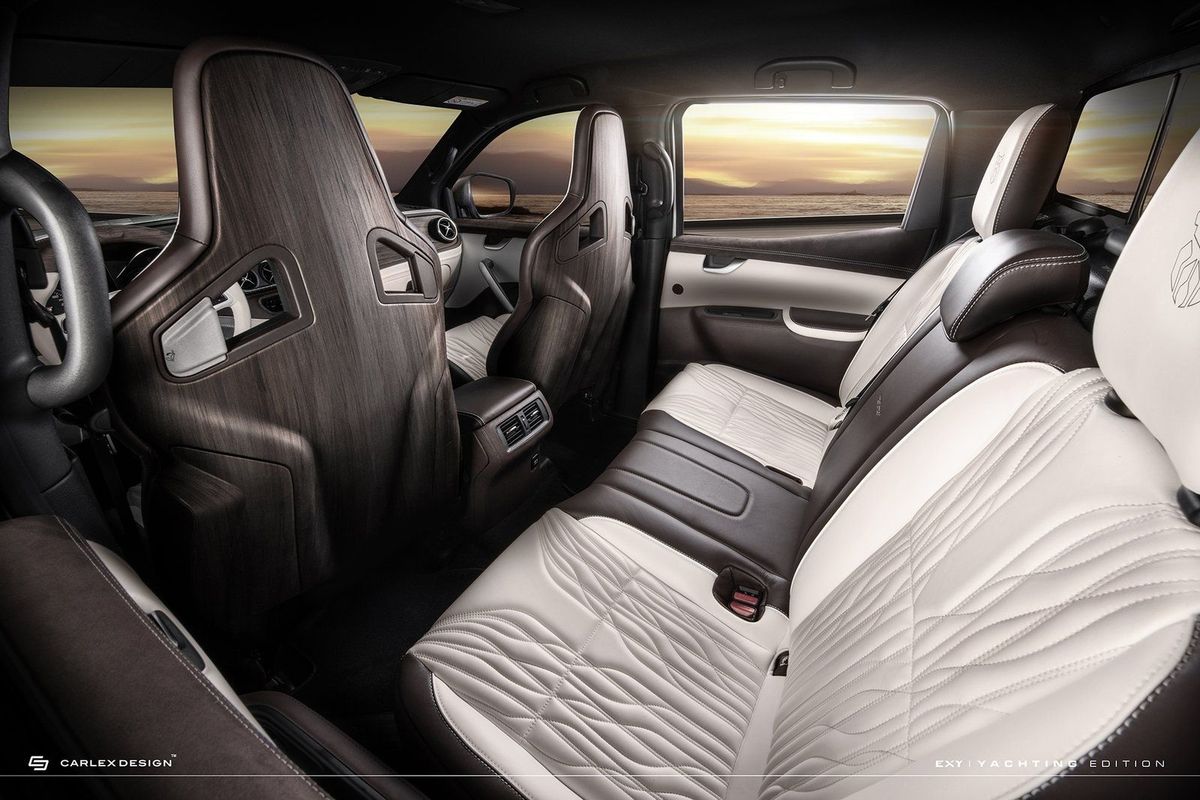
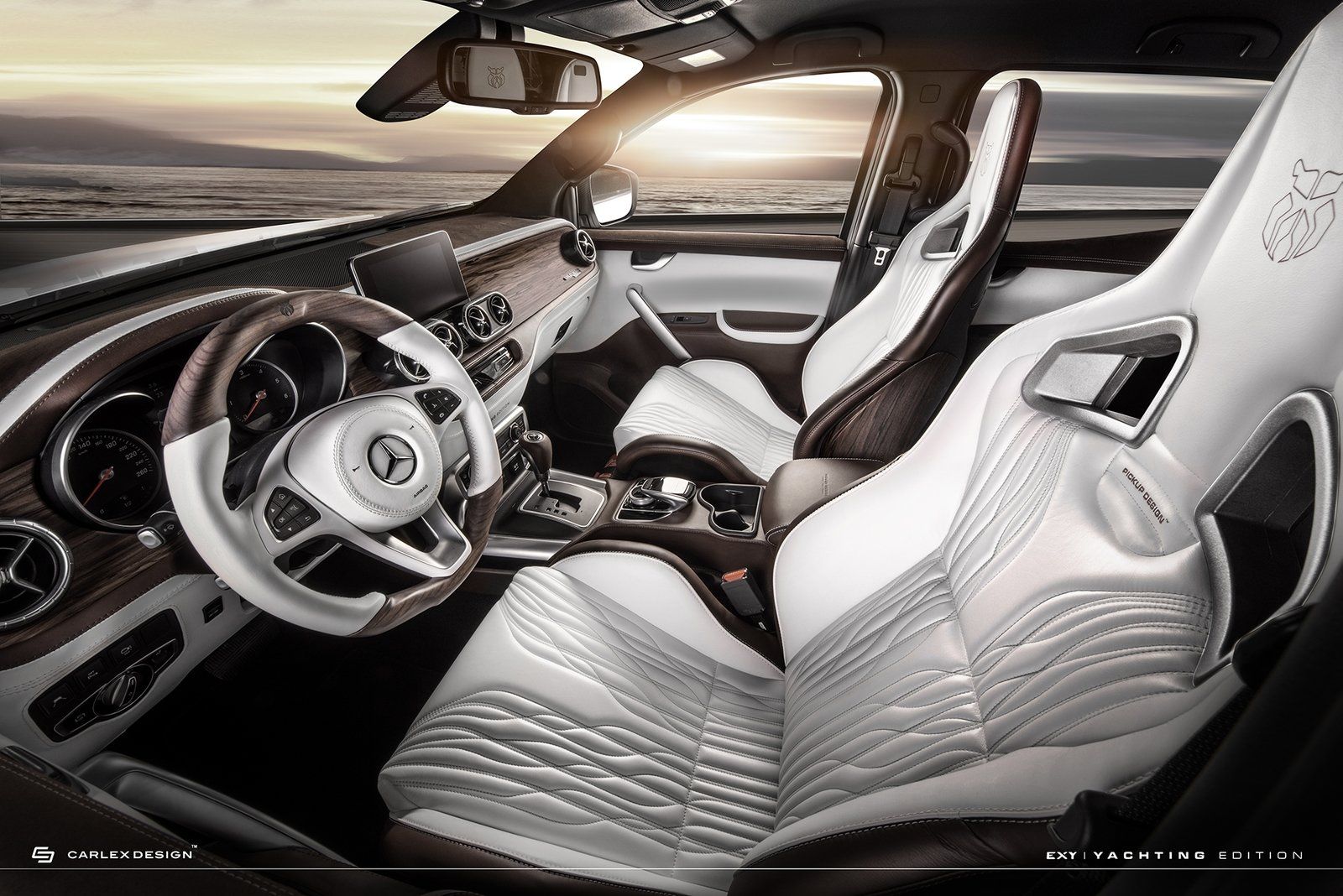
The combination of wood, leather and sporty Recaro seats seems to work well in this X-Class Yachting Edition.
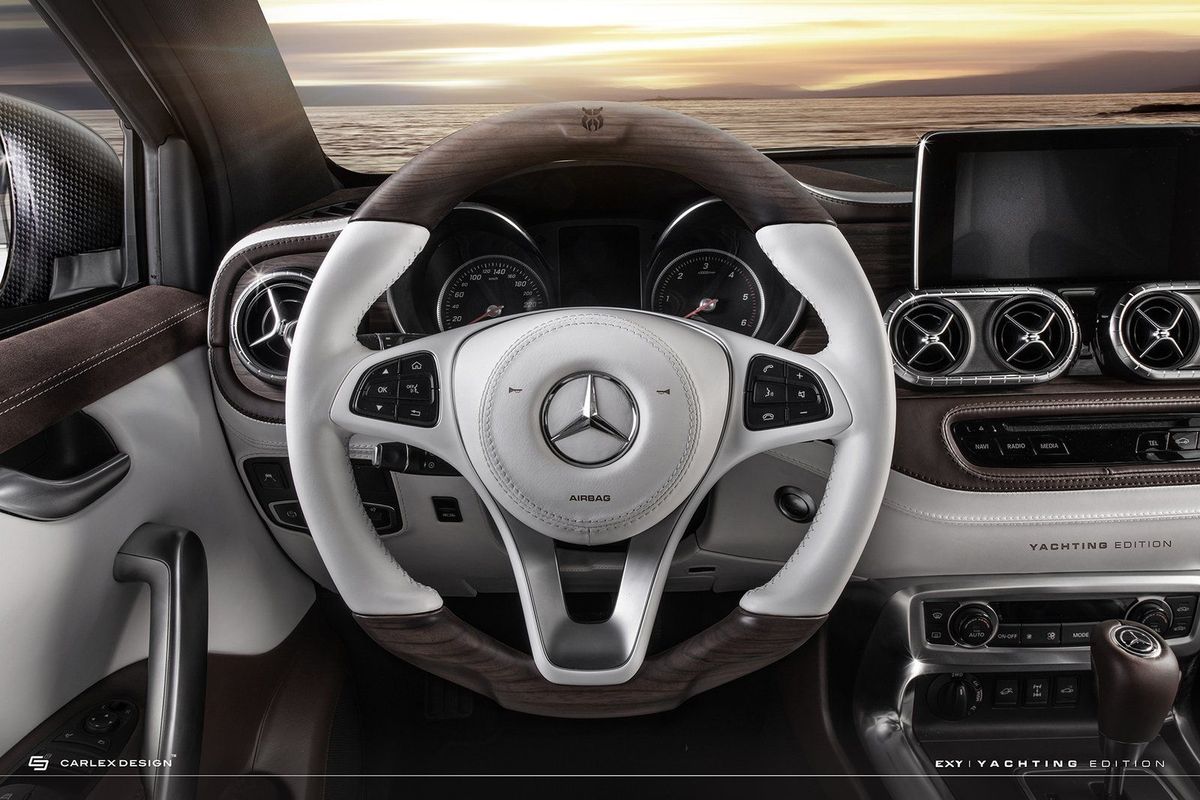
On the inside, Recaro seats give the X-Class a sportier feel while the wood theme is carried over to the dashboard. Leather is used extensively throughout the cabin including the seats and door panels while the headliner is in Alcantara. The steering wheel has been reshaped and laser-engraved emblems are found throughout the cabin.
How much does will the X-Class Yachting Edition treatment set you back? A whopping R1.65 million, which includes the cost of the X-Class, of course.
These are two of the latest vehicles to tackle the new premium compact SUV segment. Which one does it better? We test out Jag's E-Pace against Volvo's XC40.
In this shootout, Jaguar’s newest SUV takes on the even newer Volvo XC40.
Both cars compete in the compact premium SUV space and cost between R600k and R900k.
The E-Pace is based on the Evoque chassis and weighs in at nearly 2-tonnes.
The Volvo, on the other hand, rides on an all-new platform developed especially for the XC40.
Both are powered by 2.0-litre turbodiesel engines but the Jag is more powerful than the Volvo and claims the performance accolades.
The Swedes have been very clever in packaging the XC40, it’s practical and feels very spacious inside.
The Jag is quite upmarket in its interior and tries to justify its higher price tag with luxury leather and wow factor.
We put the 2 cars head-to-head to decide which one is the better buy.
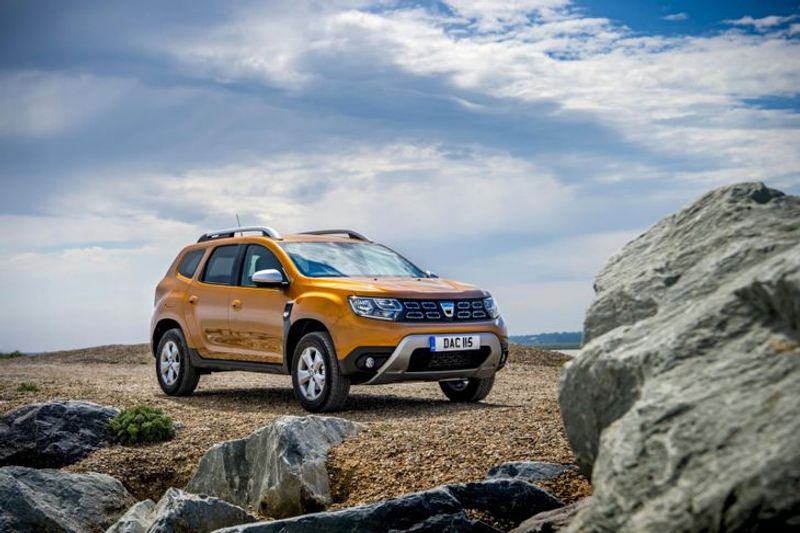
The Renault Duster SUV has been comprehensively updated, replete with fresh styling and extra kit. Our UK correspondent recently spent some time with the new Duster along the South Hampshire coast…
The Duster compact family car has been produced jointly by Renault and its Romanian subsidiary, Dacia, since 2010. In the UK, it is marketed under the Dacia brand, but in many parts of the world – including South Africa – it bears Renault’s more widely recognised, diamond badge.
Renault introduced the Duster in South Africa in October 2013. Those early models were imported from India, where it is still produced for other right-hand drive markets, but since September 2015, when South Africa received the facelifted Duster, units were imported from Pitesti, Romania.
The 2018 Renault Duster is expected to be introduced to the South African media in the coming weeks/months, at which time the order books for the new model will open to the public. First deliveries can be expected later in the year and into early 2019.
Exterior Styling
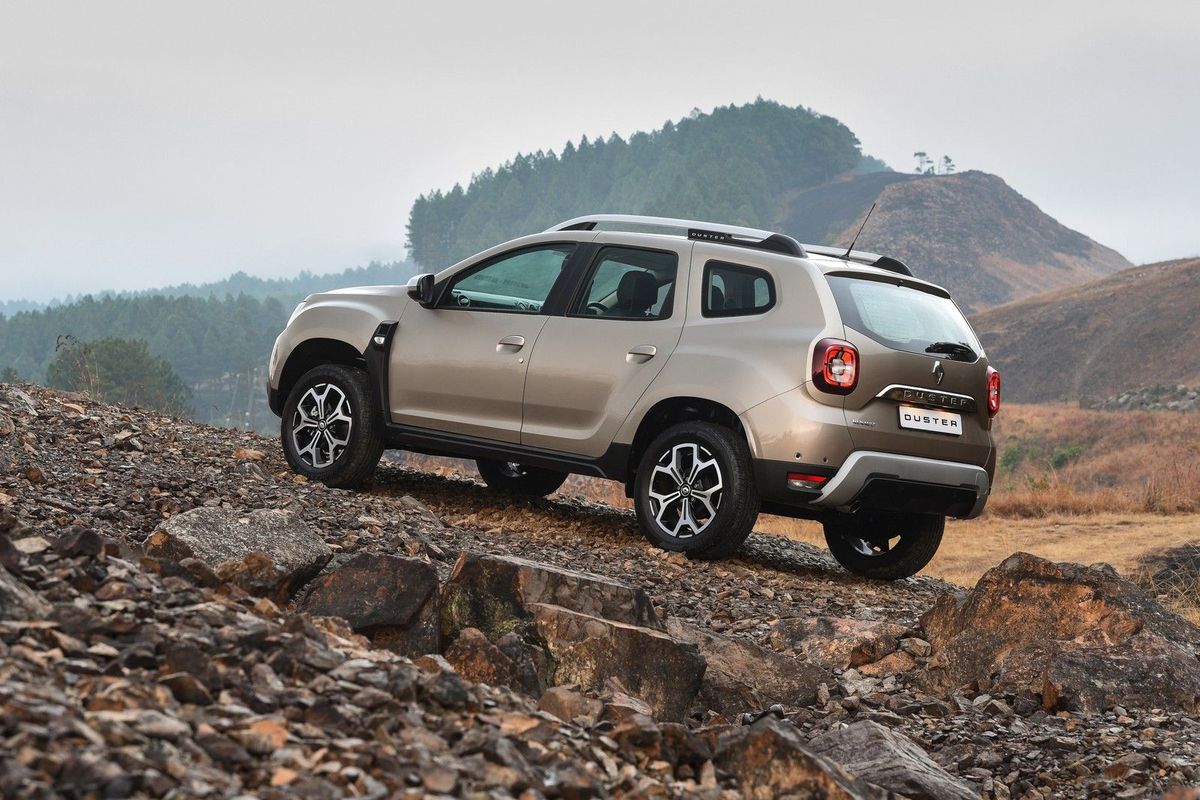
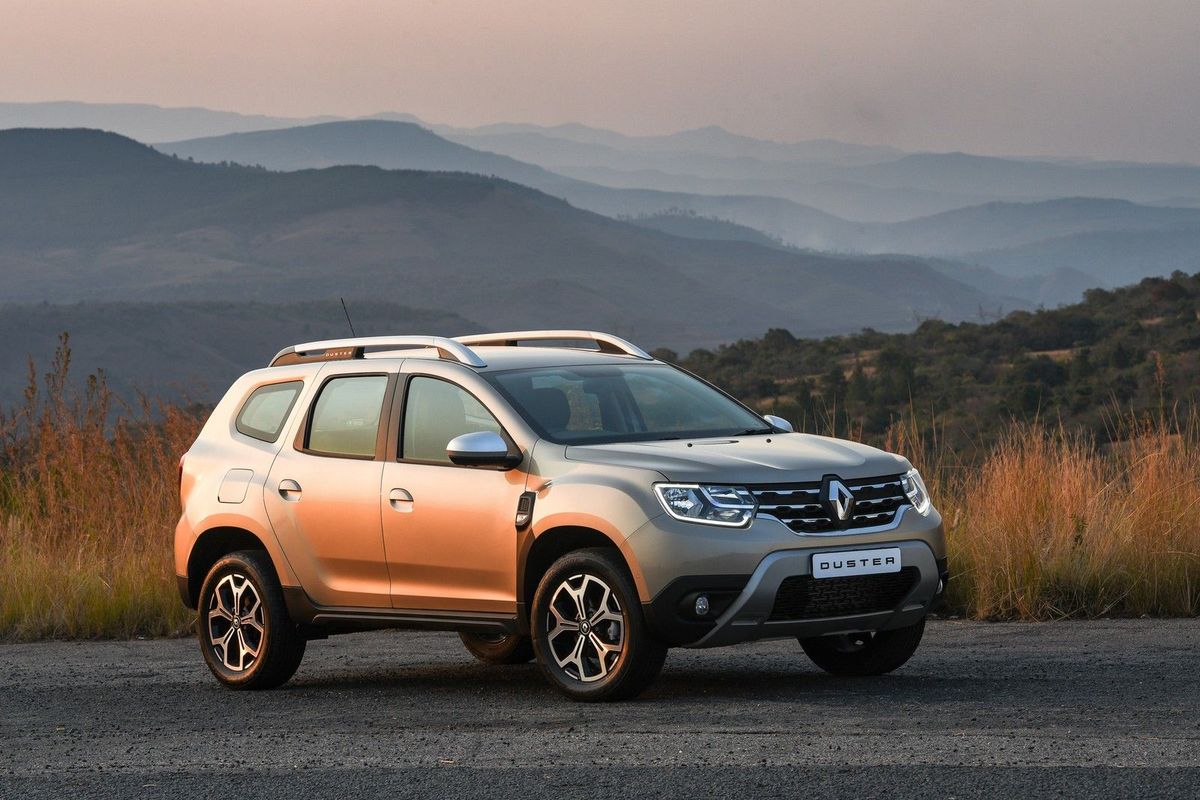
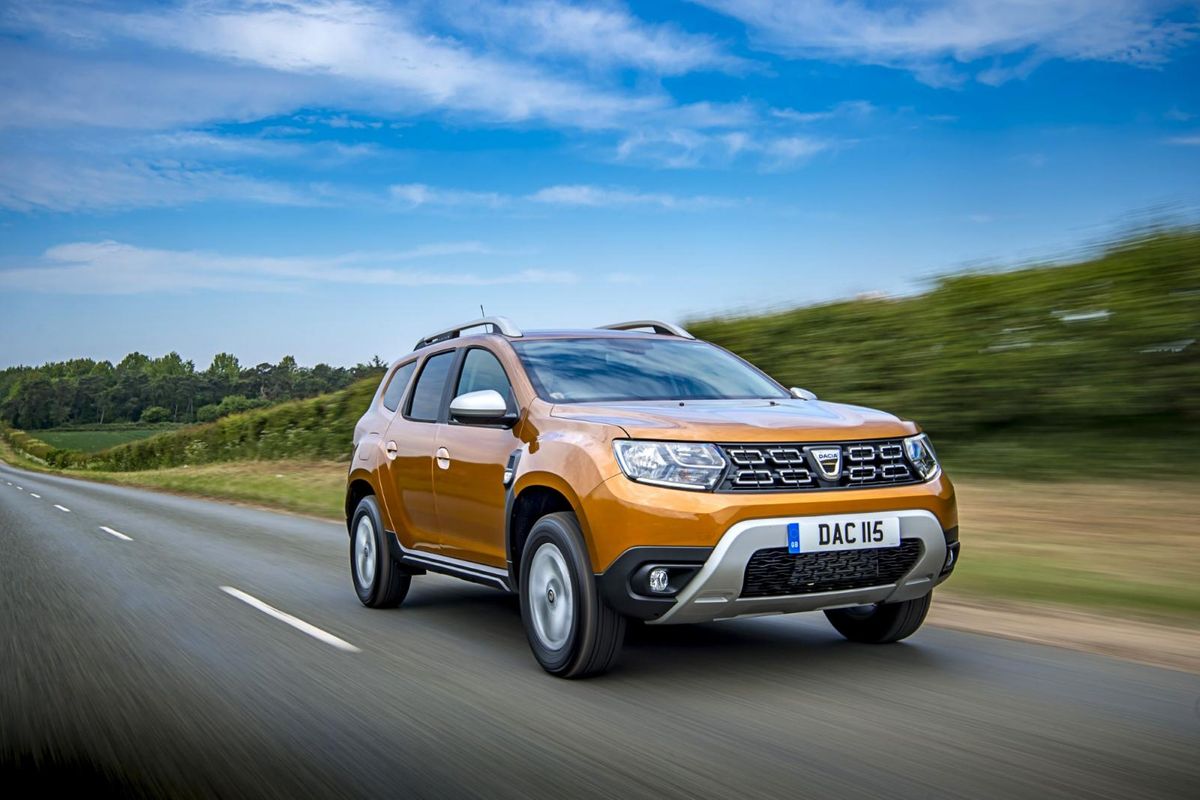
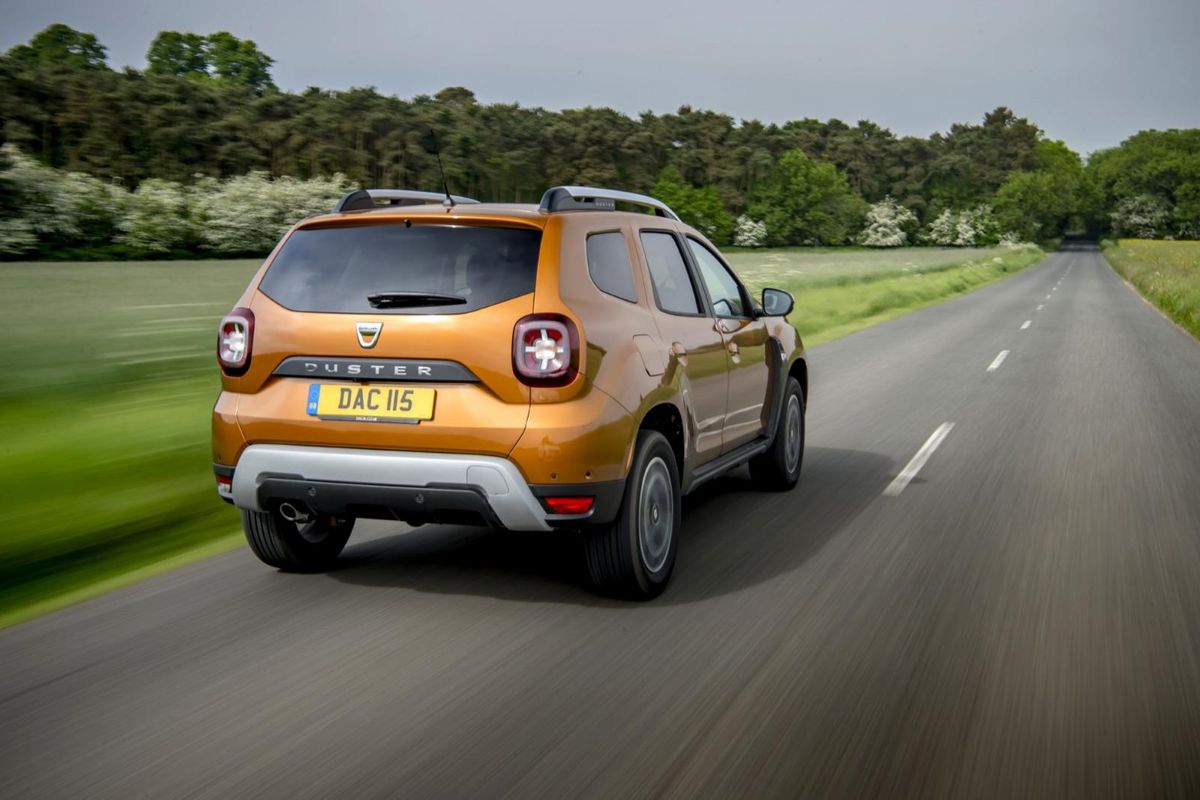
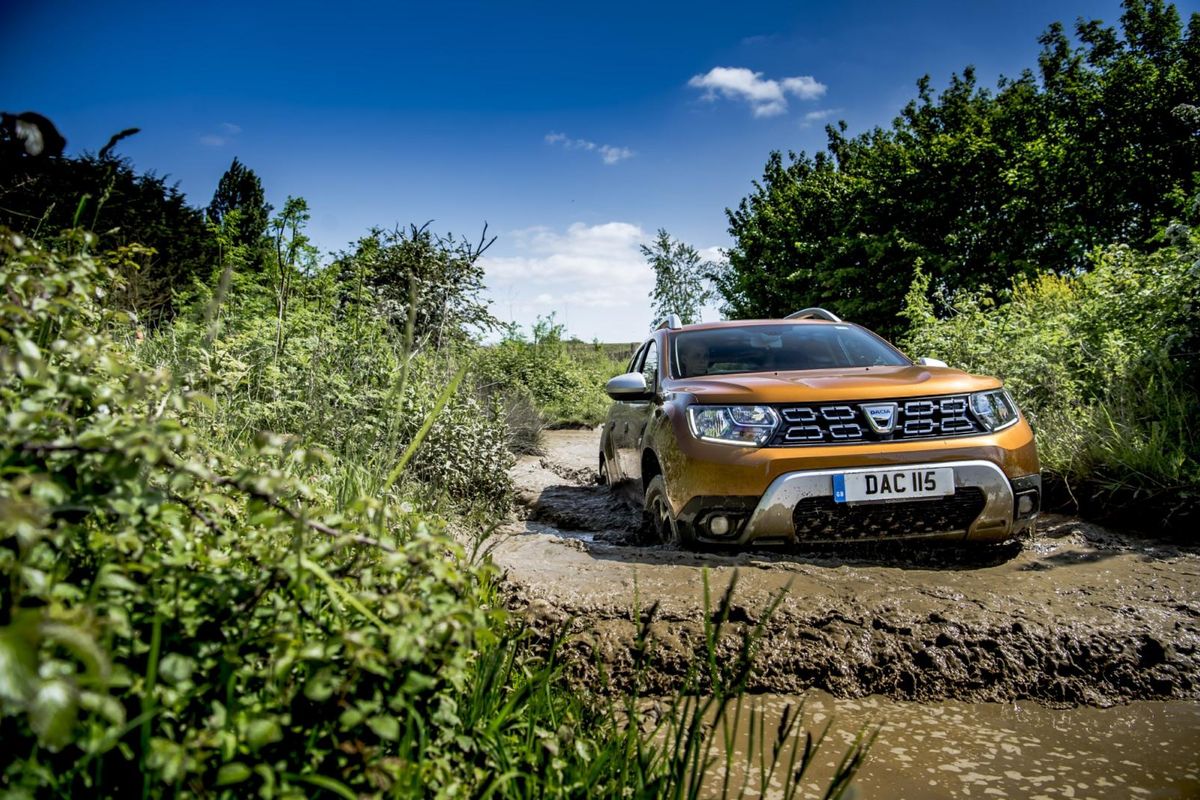
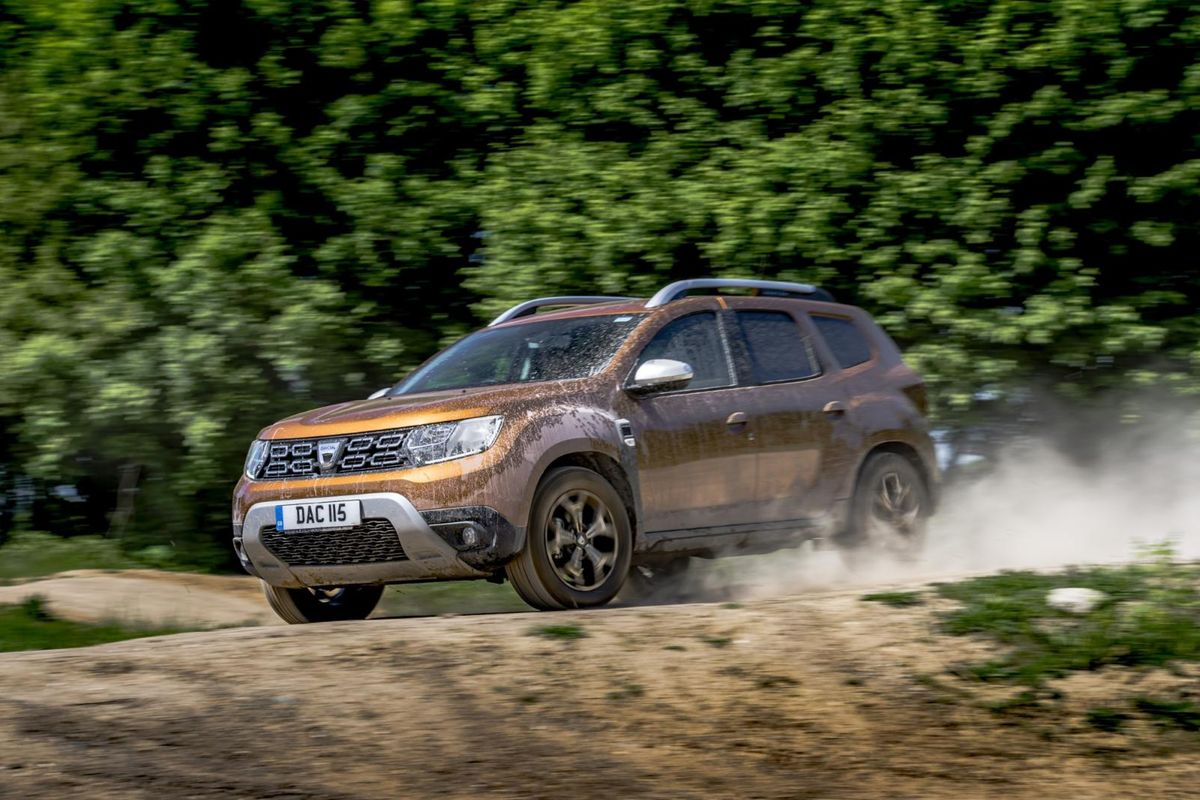
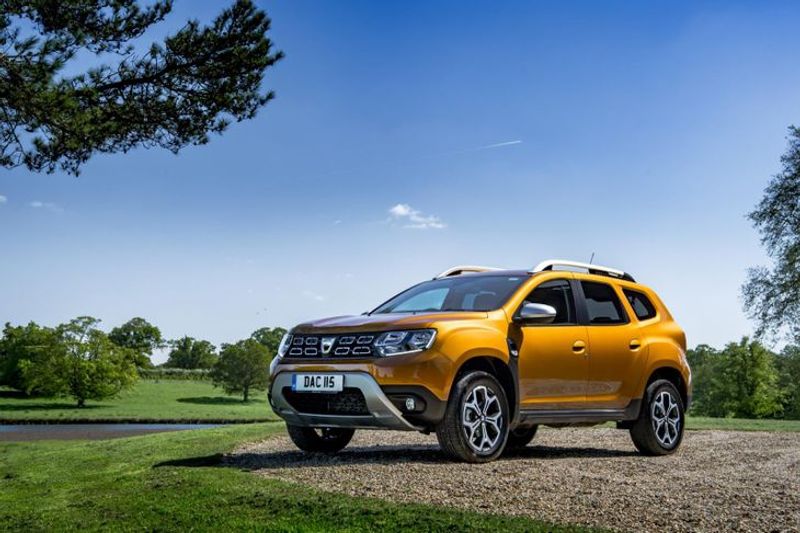
Easily still distinguishable as a Duster, but with distinctive new features, including the front grille.
This second-generation 2018 Renault Duster was first revealed at the Frankfurt Motor Show in September 2017 and builds on the notable success of the first iteration. It represents a more evolutionary jump as it rides on the same BO platform as the old car and is near-identical in terms of dimensions. But, according to the brand’s design boss, Laurens van den Acker, each and every body panel is new.
Unlike many rivals in its class, the Duster is not about looking cool or funky. It’s about function and affordability. There is a Tonka-like rugged appeal to the Duster that has helped to earn it something of a cult following despite (what could easily be argued) a rather visually-challenged design.
Entry-level Dusters still have black bumpers and door handles and yes, the dinky 16-inch steel wheels also remain which, oddly, is how many Duster fans think it looks best. Higher spec models do look more up to date, with alloy wheels, and body-coloured bumpers and door handles.
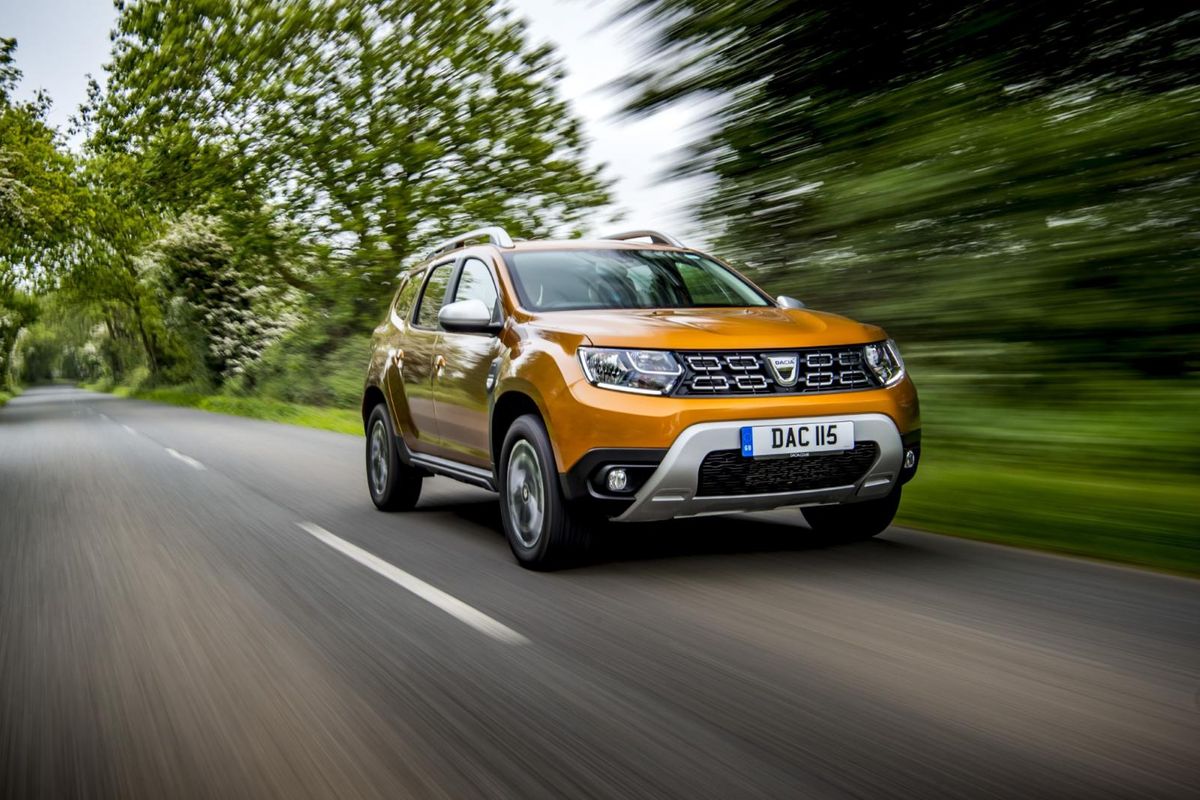
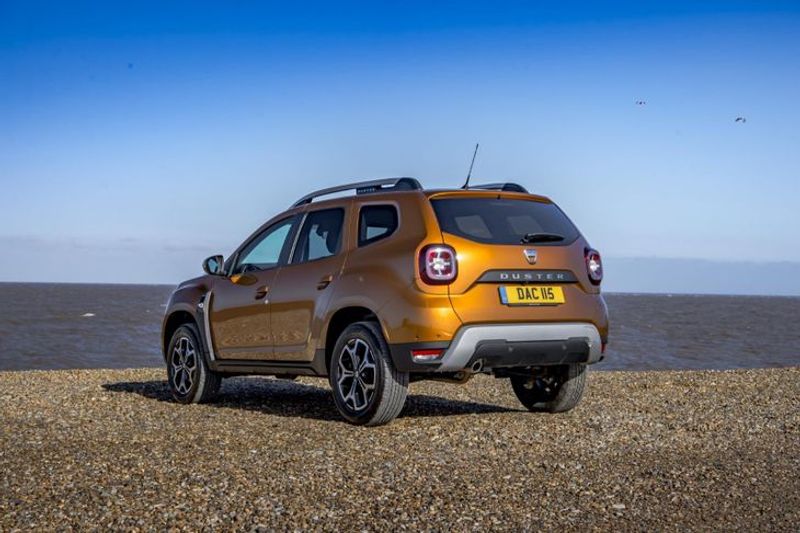
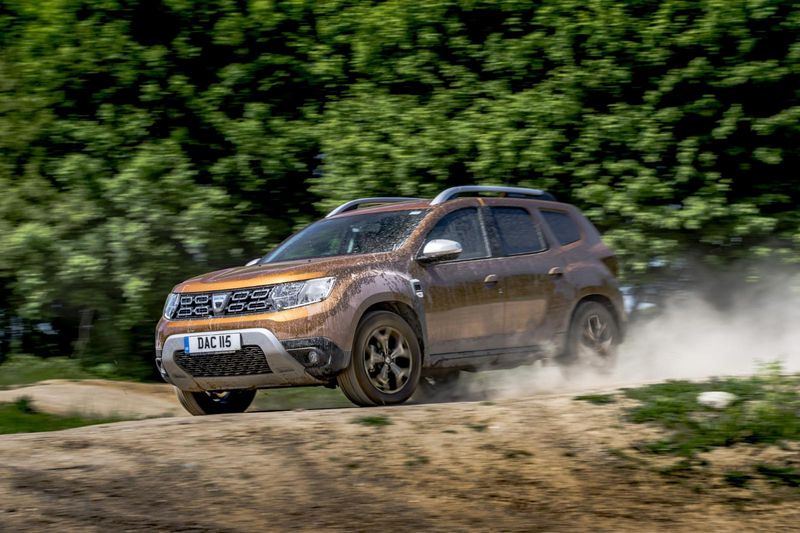
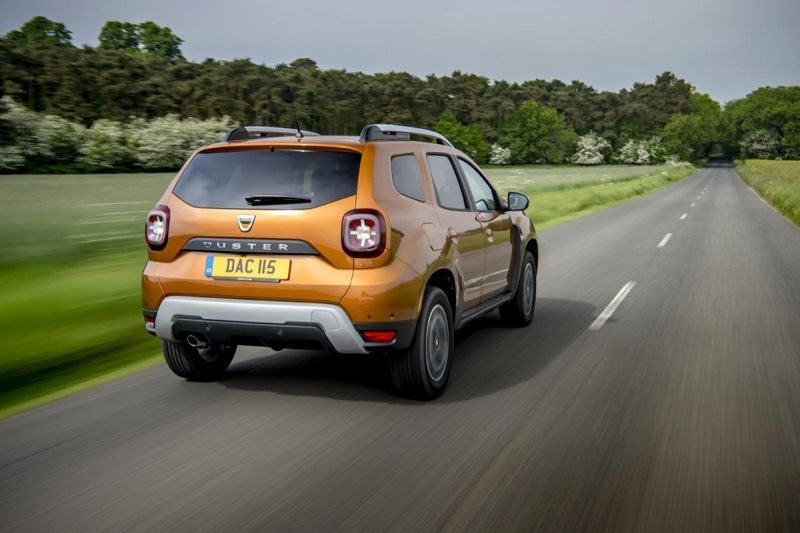
To be honest, the changes are easier to spot than you might think. The new headlights are more widely spaced to better emphasise the width of the vehicle, the bonnet features more contours, while the enlarged 8-oblong grille predominates. The old front and rear silver scuff plates have been replaced by ‘skid skis’ instead, the doors are longer and the waist of the vehicle has been raised. At the rear are new square light clusters in a tailgate that’s reminiscent of the old one, but once again, completely different in size, shape and placement of certain features.
The Duster still rides on the same platform, but has had a full redesign.
That vertical strip of black plastic under the A-pillar is a necessary design ploy because fashioning that stepped trailing edge to the bulging front arch was impossible in metal, certainly in the space given from the wheel housing to the leading edge of the front door… Renault did toy with painting the resulting plastic insert in body colours, but decided it looked good in contrast black. Finally, the largest wheel size you can now have on a Duster is a set of 17-inch alloys, whereas 16-inch items were the max on the old car.
There’s no question the new Duster looks better than its predecessor from every angle. It appears fresh, better proportioned and more contemporary. What matters is that people will instantly recognize it as a Duster, which is praise indeed for the design team.
The Interior
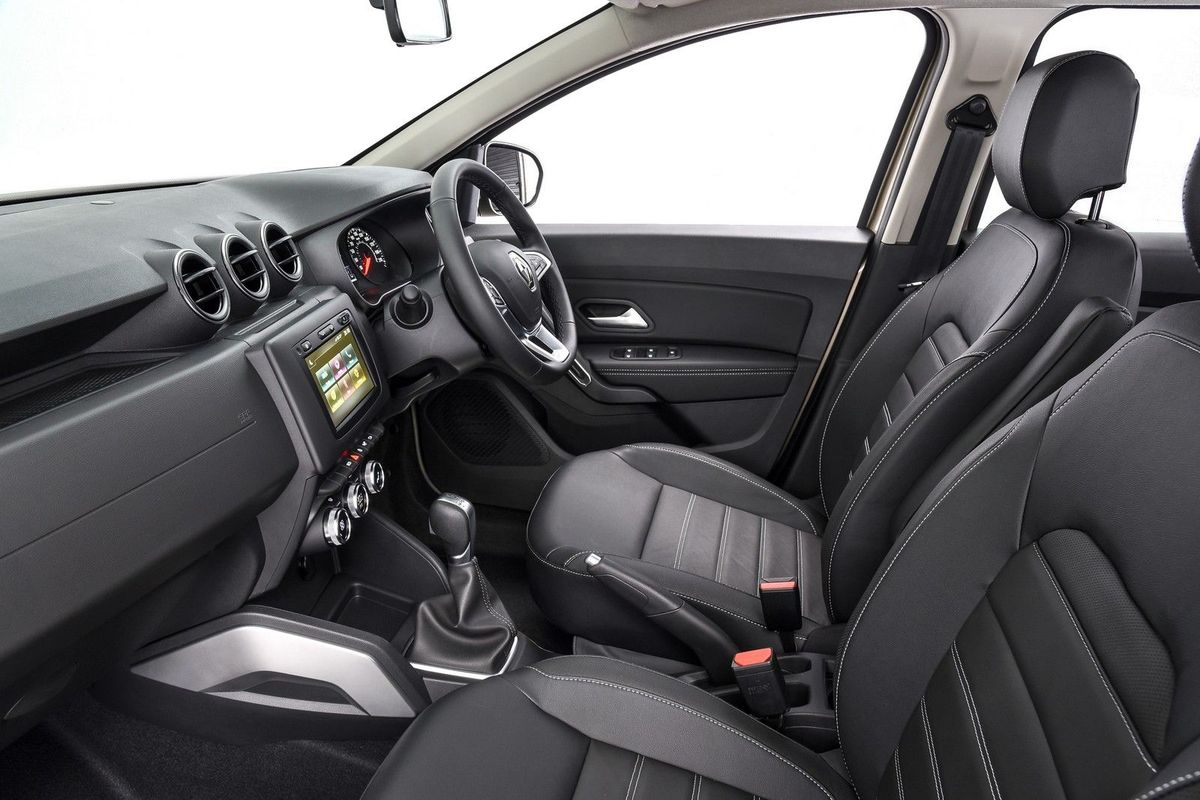
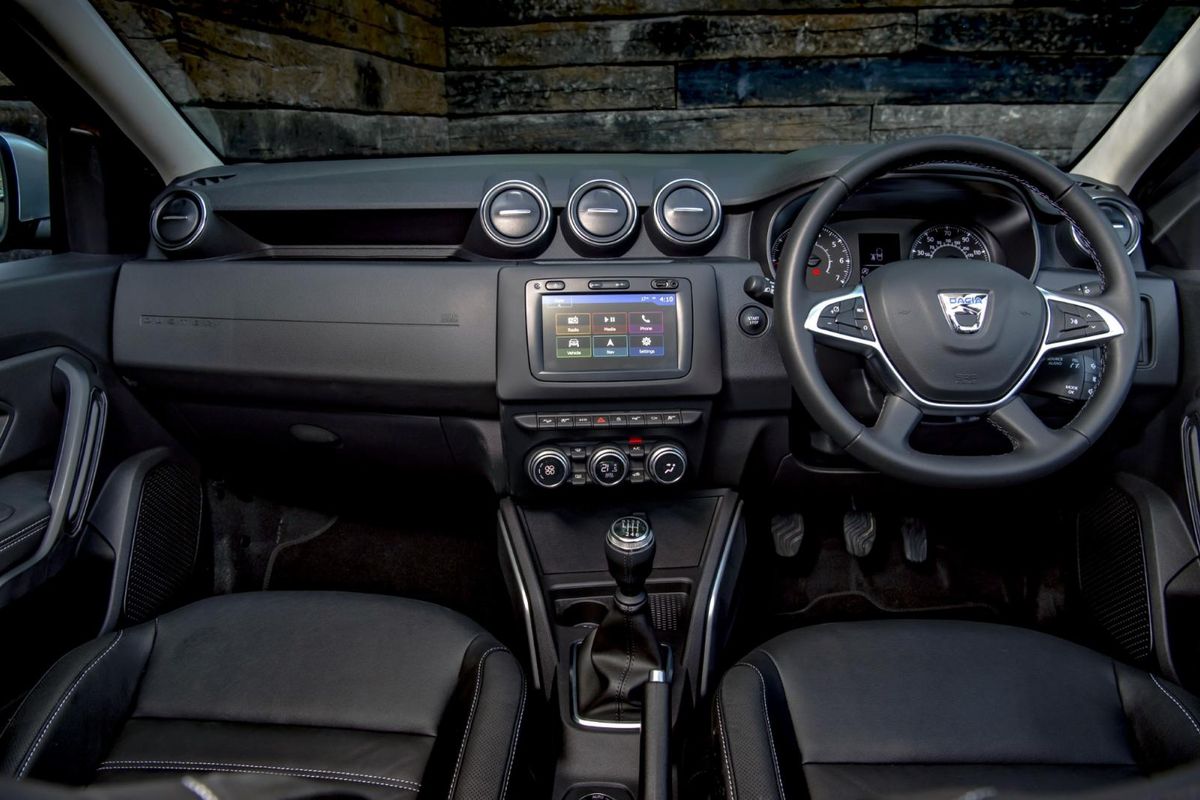
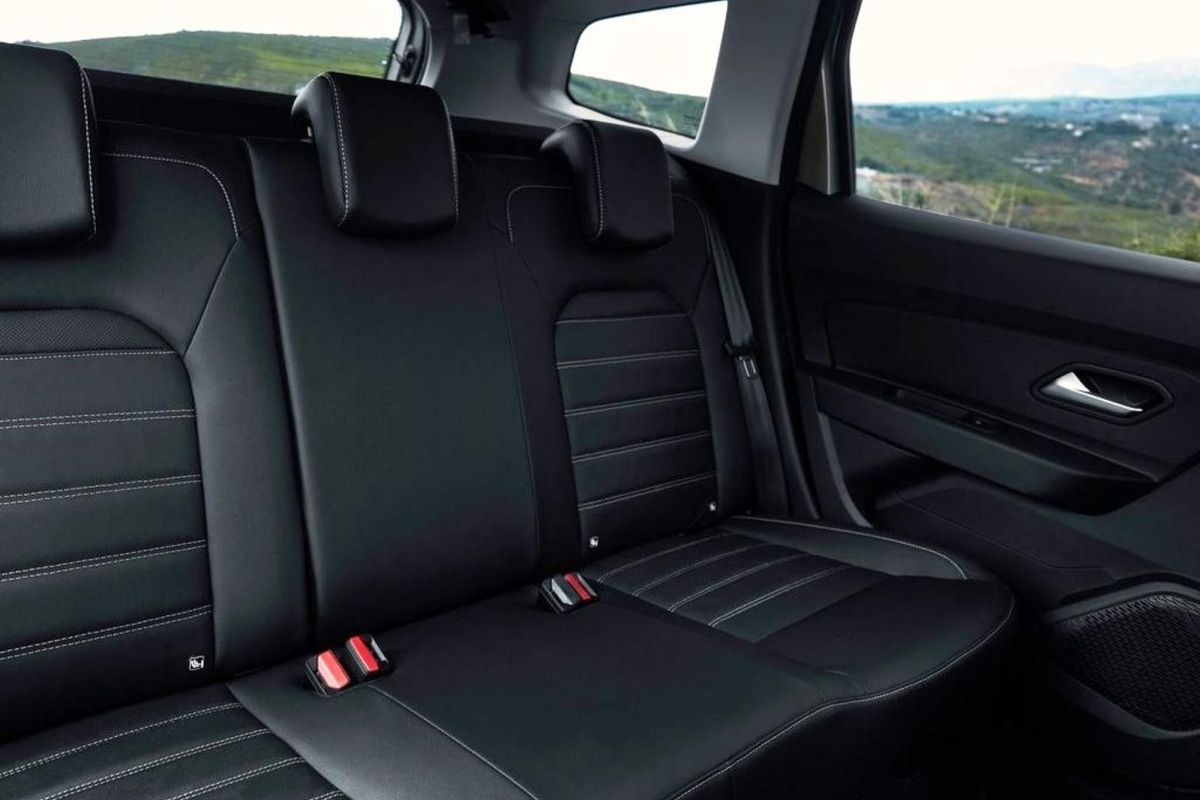
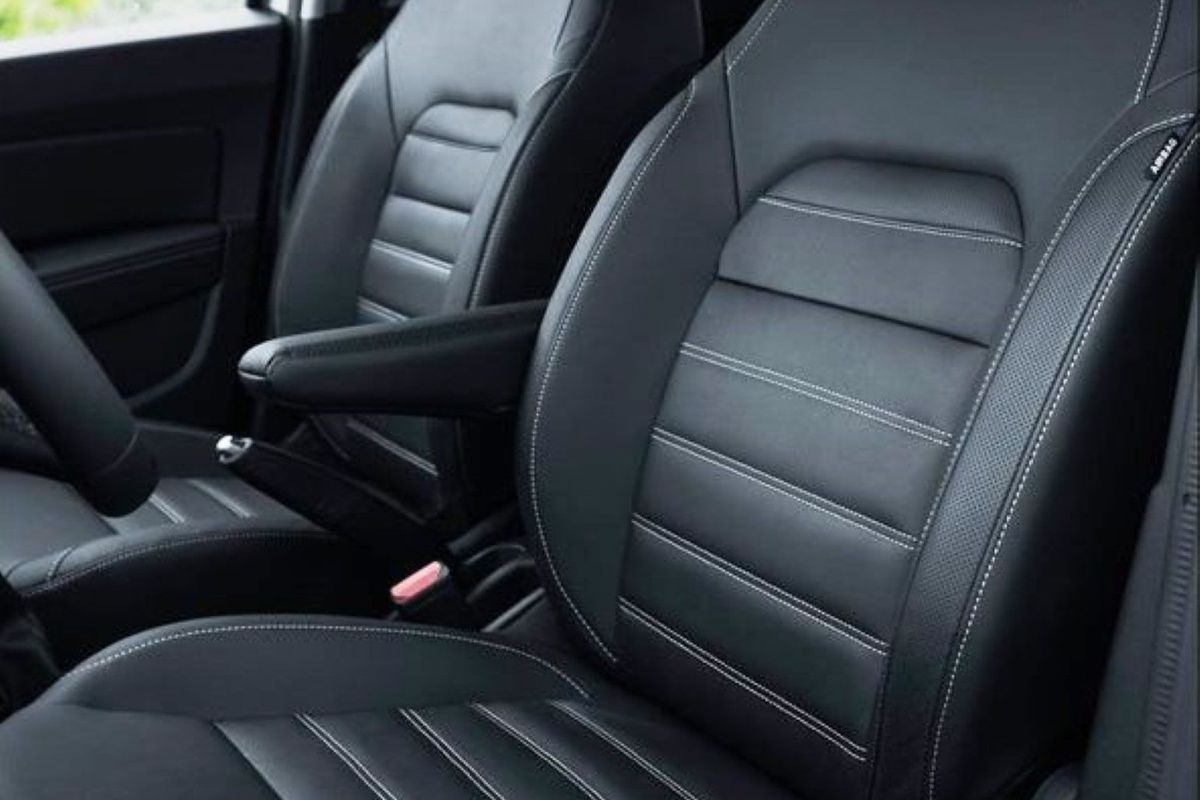
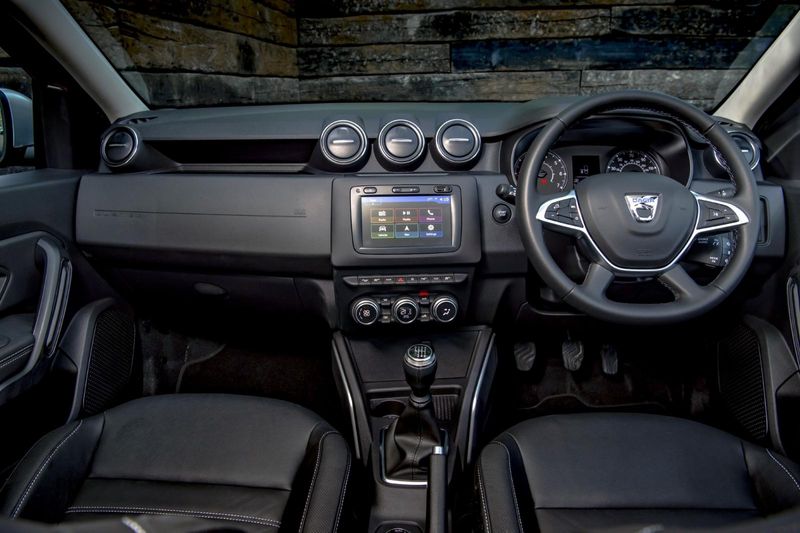
Inside, the Renault Duster has received a much-needed makeover in terms of comfort and styling. The SUV has come a long way since it was first introduced and its interior reflects this: the quality of materials still feels hard-wearing, if not particularly luxurious, but build quality has evidently improved. The Duster’s seats are more comfortable than before, offering better support, extra padding and more adjustability.
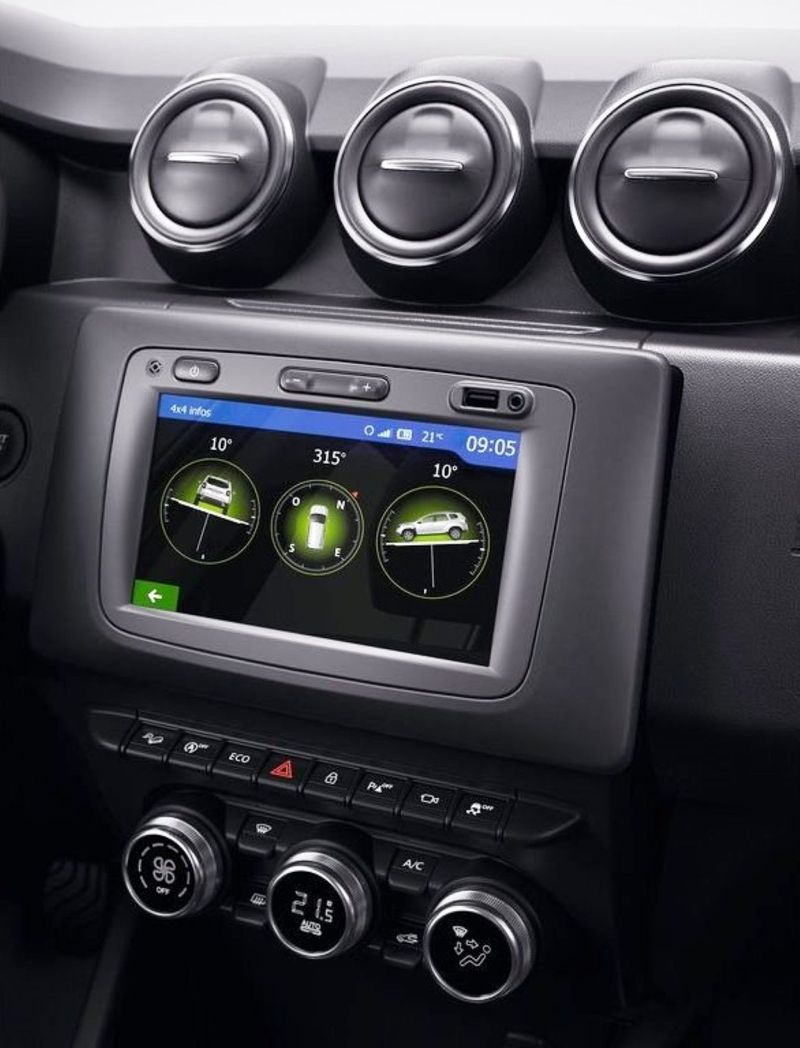
The infotainment system sits much higher in the cabin now. Before you had to look down in the cabin to use it.
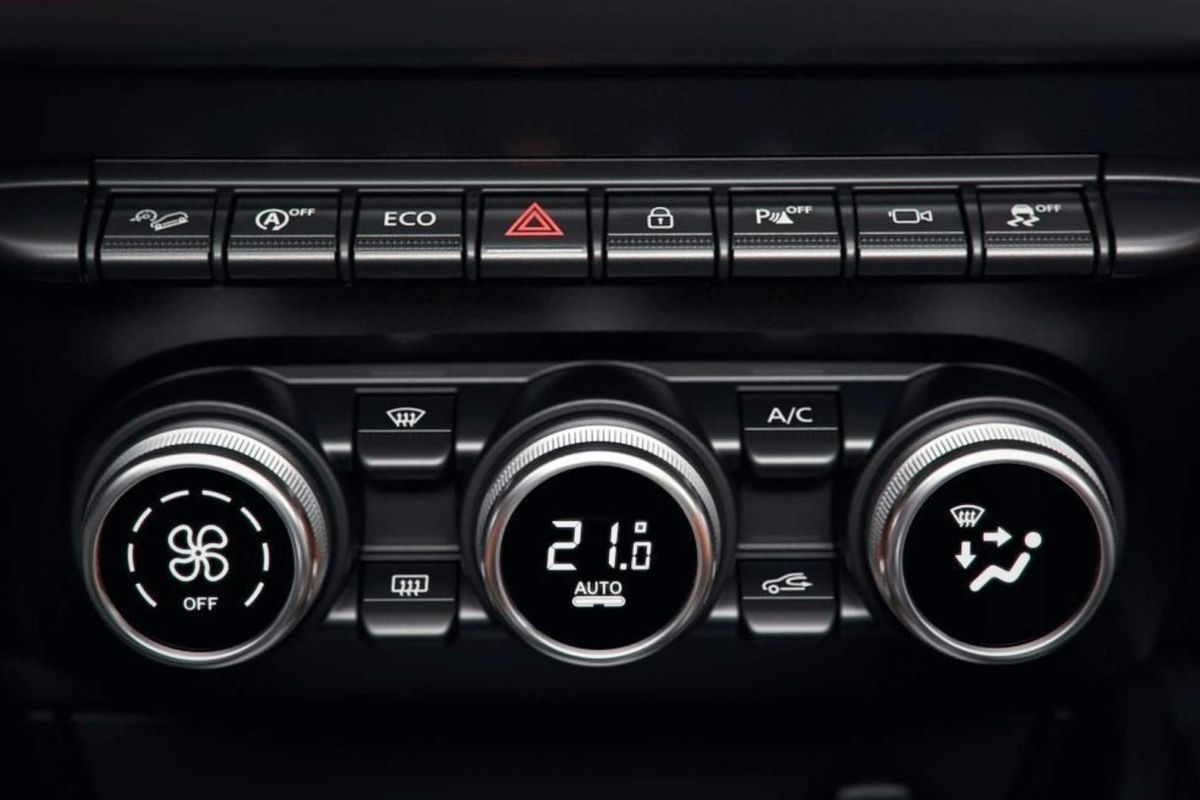
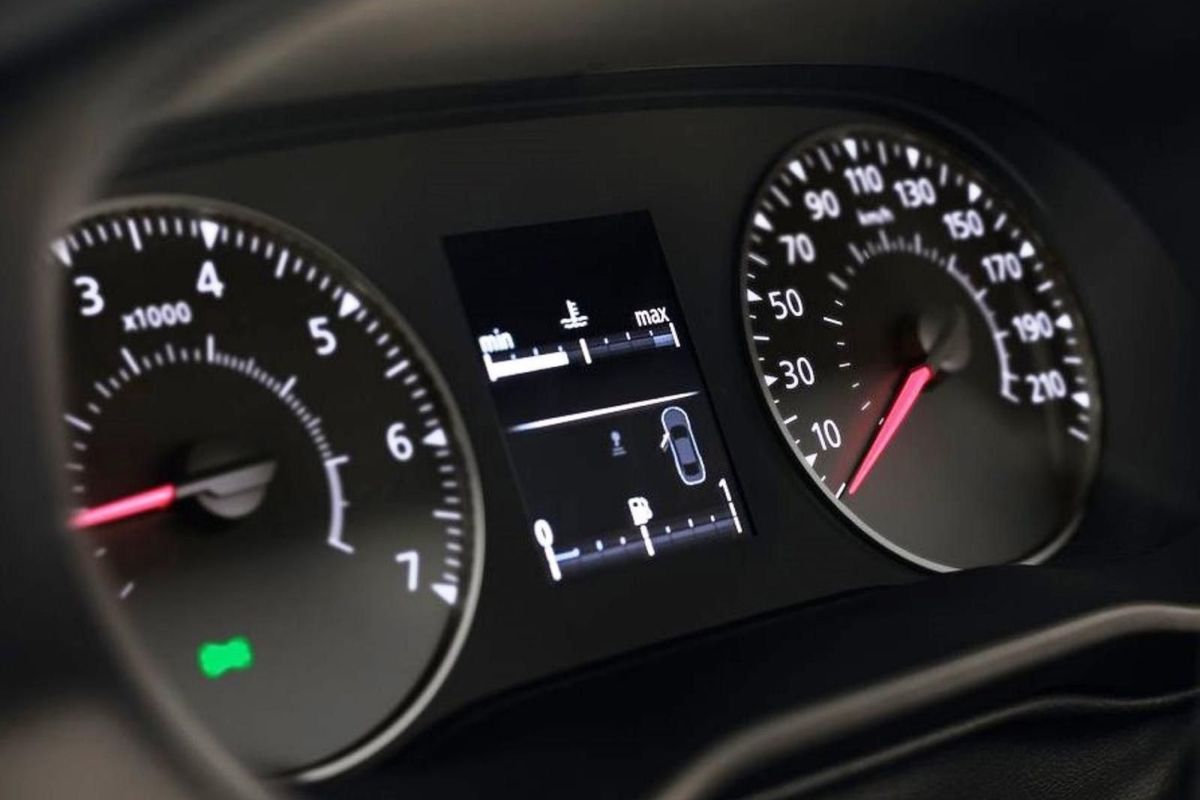
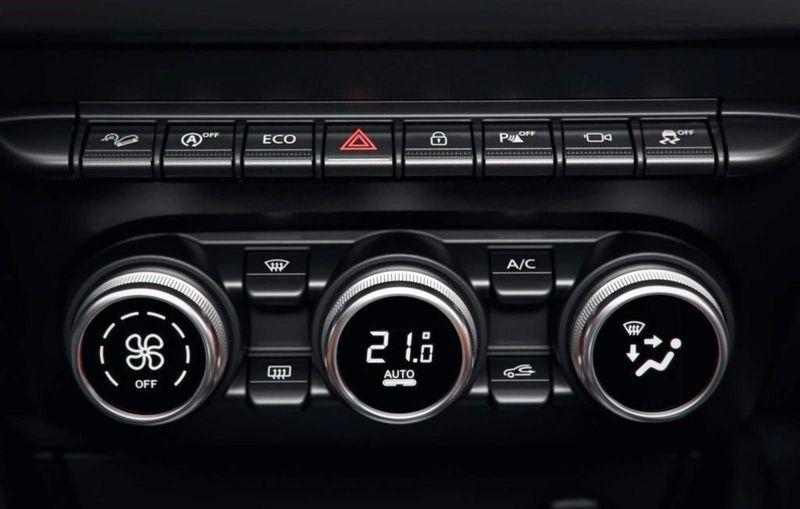
Renault has wisely invested in a much-needed all-new dashboard for this new Duster, which incorporates a higher-mounted infotainment screen, “piano-type” buttons and better-quality materials. It’s not the most exciting design, but makes up for its plain appearance with a reassuringly solid feel. The conventional dials behind the steering wheel are easy to read, while all of the controls are within easy reach.
Increasing the sound-absorbing surfaces in the cabin and engine compartment from 20 to 50 per cent, improved sealants and plugs and using 0.35-mm thicker glass for the front windows has just about halved cabin noise.
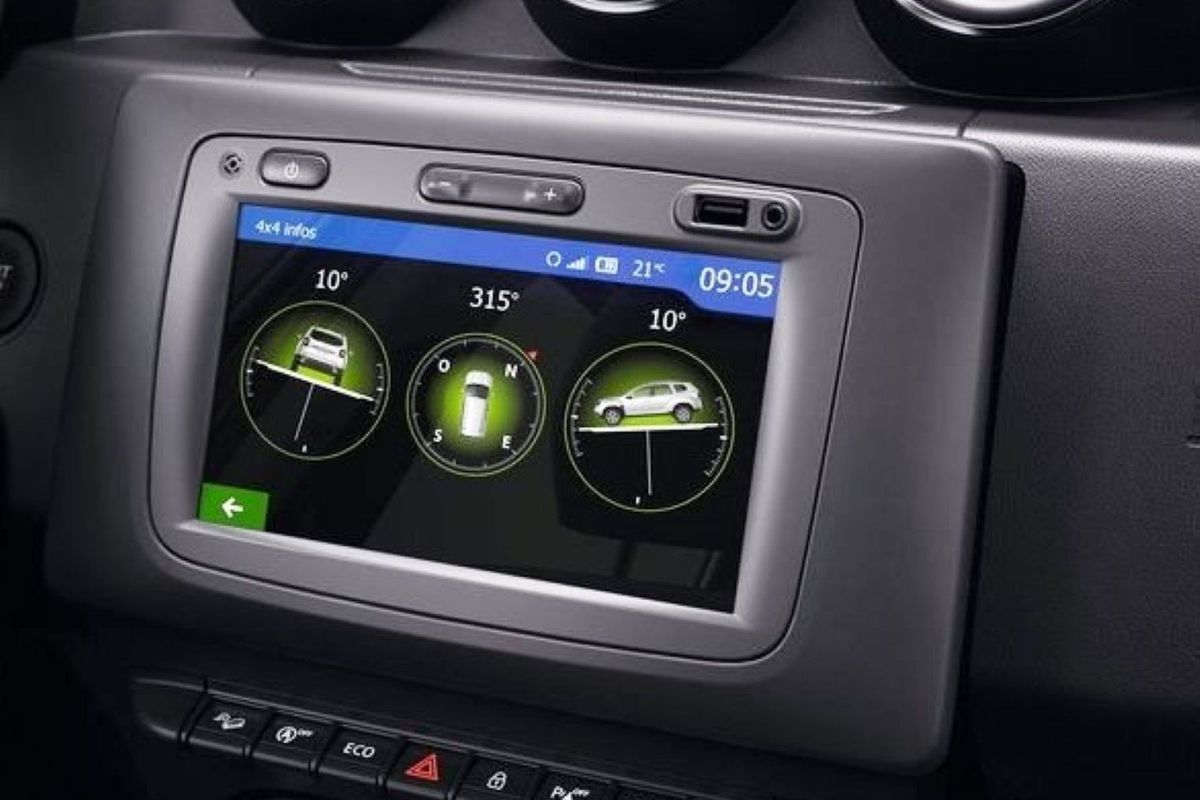
Cabin controls are more modern and carry more features than before. It still lacks phone connectivity apps from Apple and Android, however.
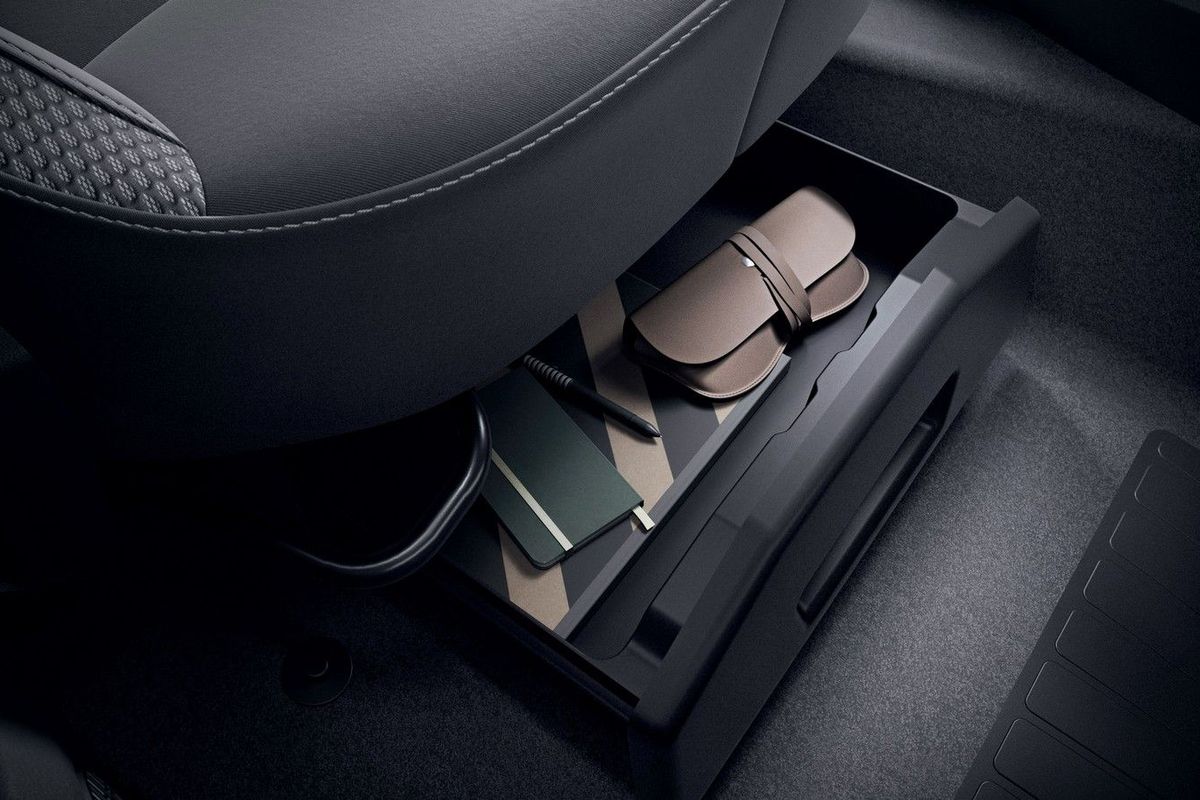
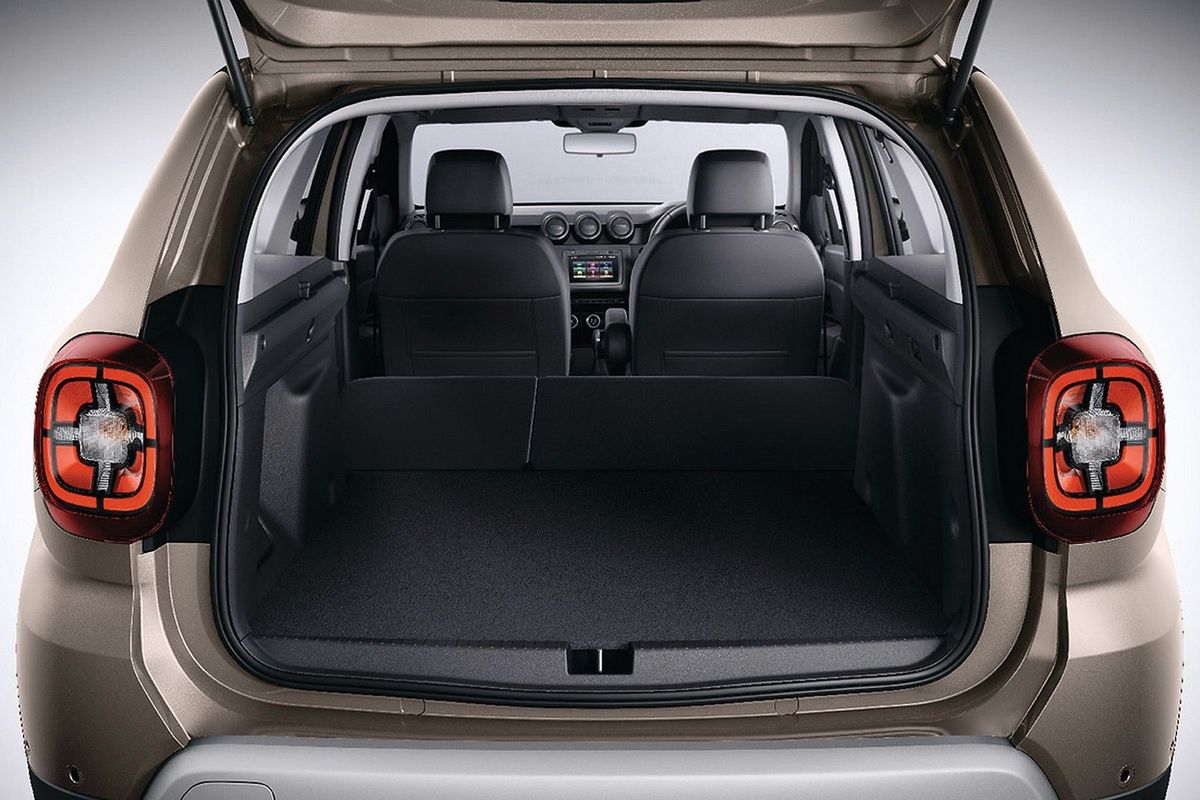
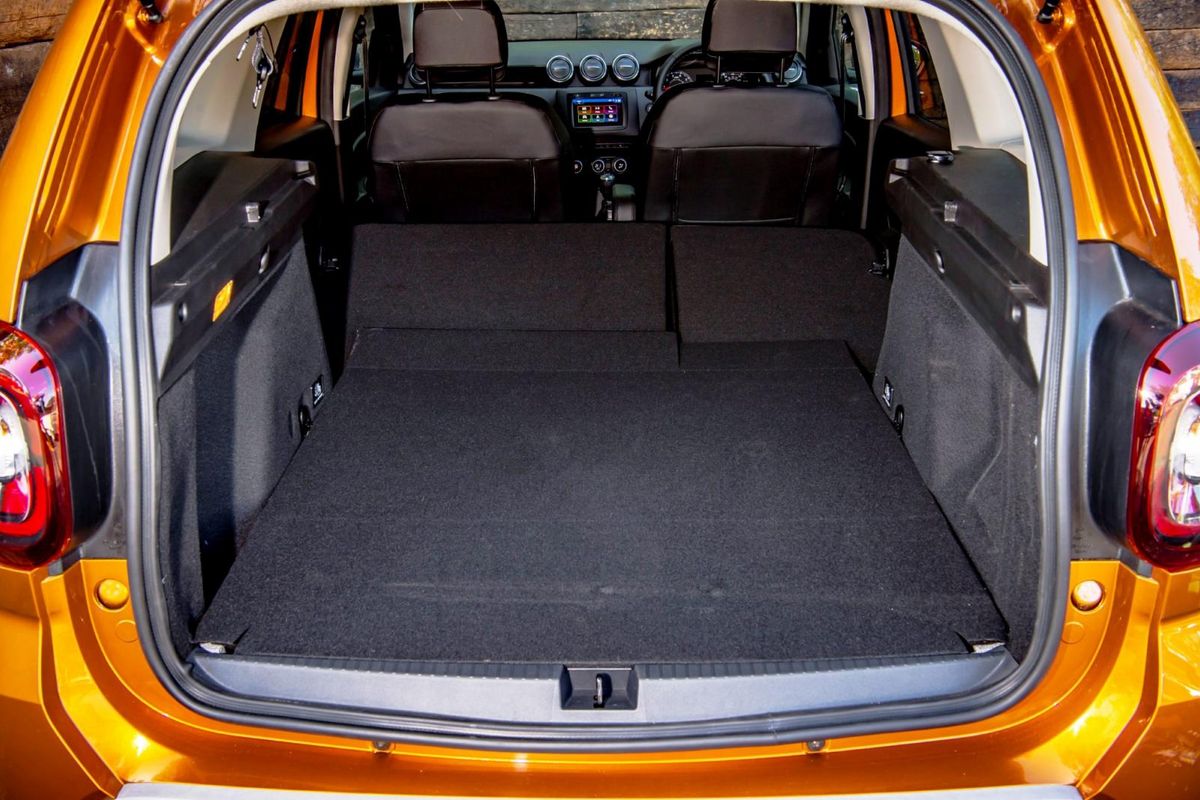
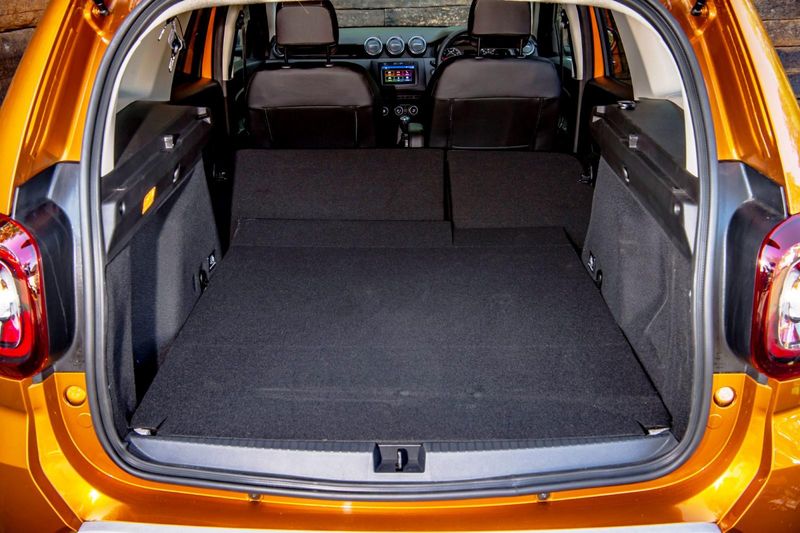
Cabin storage for your daily detritus is now 28.6 litres, while load compartment capacity remains 445 litres for the 2WD and 376 litres for the 4WD.
What’s more, the new Duster now has a much-improved electric power steering setup that reduces the effort required to turn the wheel by 35%, which is particularly useful when parking.
Audio, Infotainment and Navigation
The UK’s entry-level Access model doesn’t even have a radio – just some wiring and a slot to fit an after-market unit of your choice – so there are minimal controls with which to acquaint yourself. Mid-spec cars gain a user-friendly Bluetooth system and a radio that’s linked to remote controls mounted on the steering column. There are also USB and auxiliary audio sockets for media players, but these are mounted within the stereo on the centre console, meaning wires are left dangling inconveniently.
The infotainment system feels a little old compared to modern competitors but navigation is standard.
Higher-spec Comfort trim has an onboard computer that displays useful information, including average fuel consumption and range and you can also specify the optional 7-inch touchscreen navigation system. This feels quite old-fashioned next to the best systems out there, both in terms of graphics and usability.
You can’t specify Apple CarPlay or Android Auto, but given that navigation is standard if you add the touchscreen (in the UK), then it’s not such a drastic issue. Ultimately, the Renault Duster remains behind the times when it comes to Smartphone connectivity and infotainment standards.
There should be no reason why Renault South Africa would move away from the trim line-up of Expression and Dynamique. They are familiar trims deployed throughout the local Renault range and customers by and large know what to expect from each of them. However, Renault SA wasn’t forthcoming on trims and respective specifications of the 2nd-generation Duster at the time of writing.
Engines and Drivetrains
In the UK (as is in South Africa), the new Duster is available with two 4-cylinder engines: a 1.6-litre naturally-aspirated petrol and a 1.5-litre turbo-diesel. Both offer a practical 85 kW, with the petrol rated at 156 Nm (at 4 000 rpm) and the diesel 260 Nm of torque (from just 1 750 rpm).
The same engines are carried over from the previous generation, which some may find a little disappointing.
The petrol unit is rather lacklustre off the mark and hangs onto the revs between gear shifts, so it has a tendency to make you feel like a clumsy driver when shifting gears, especially when changing between 1st and 2nd. Outright performance is acceptable, but the engine builds revs quite slowly compared with more up-to-date turbocharged engines.
For those who do more miles, the more durable and reasonably thrifty 1.5-litre turbodiesel is a better bet. It pulls strongly, so you’ll have no problem accelerating up to motorway speeds and it feels relaxed once settled in top gear.
A 5-speed manual gearbox is standard on the petrol two-wheel-drive version, with a 6-speed manual ’box standard on all other derivatives. There’s an option of a 6-speed (dual-clutch) auto ’box, but only for the 2WD diesel.
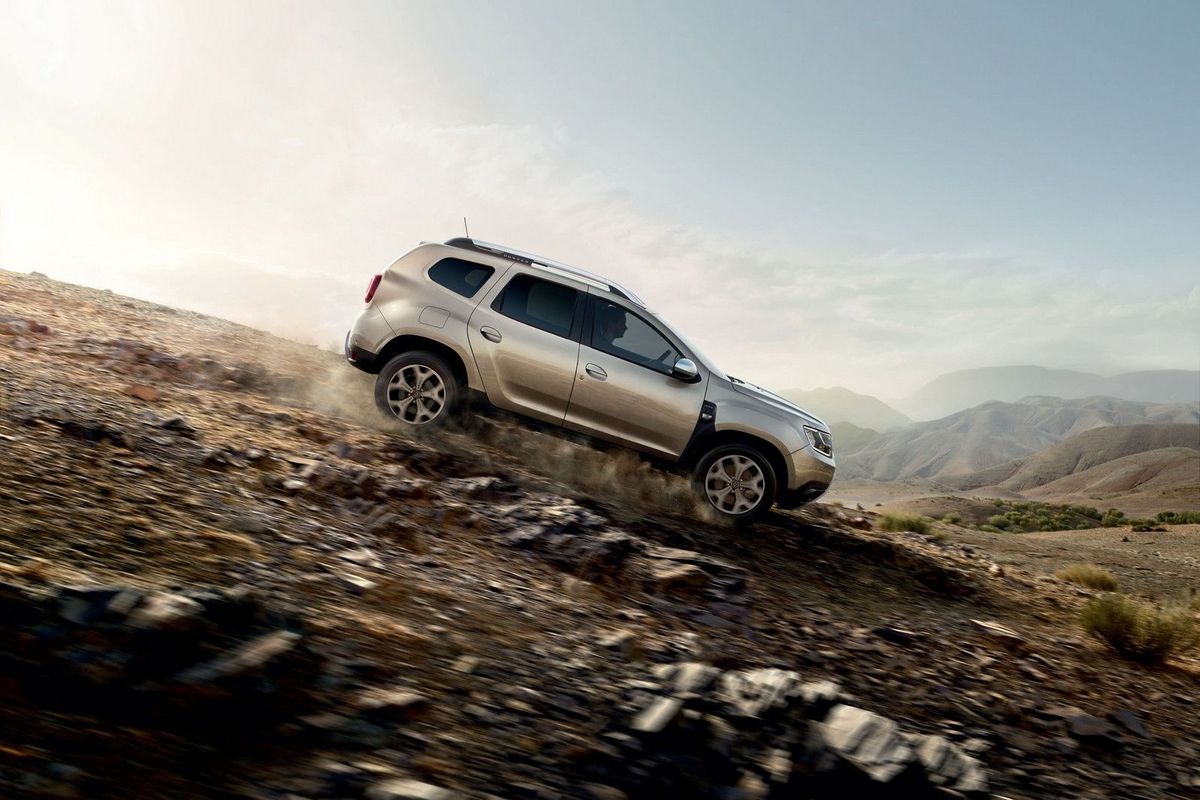
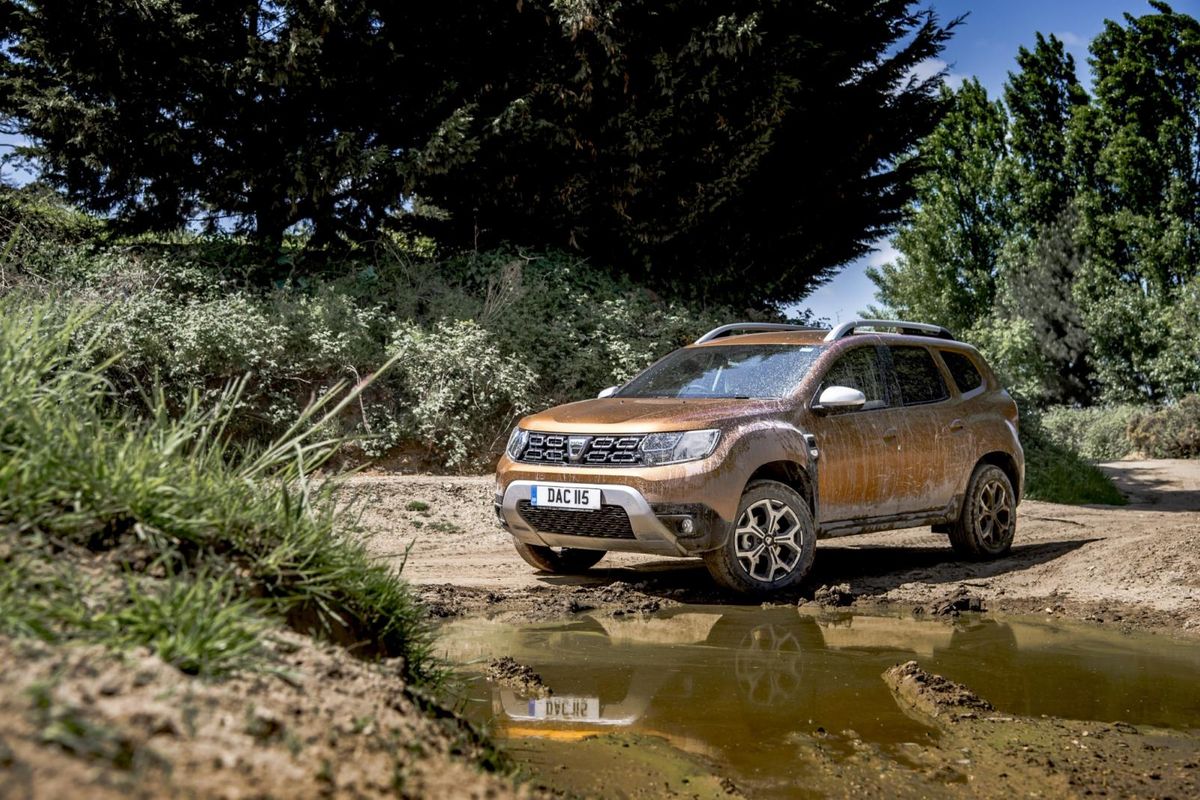
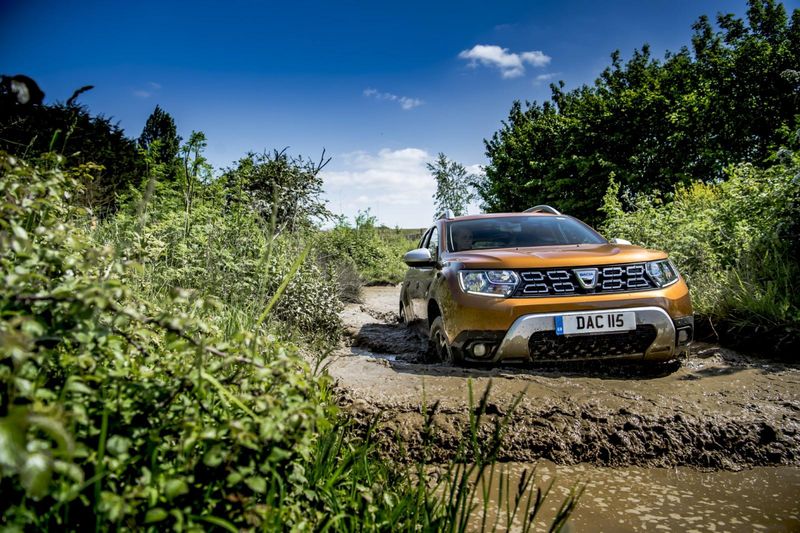
As an affordable off-roader, the Duster excels with good levels of spec and a capable, simple drivetrain setup.
To be honest, I would expect no change to the current engine and transmission line-up for the new SA-bound Renault Duster, but Renault SA has yet to confirm any technical details. Both here in the UK (as it is in South Africa), the 2WD manual diesel derivative proves to be the most popular pick of the line-up thanks to its keen pricing and increasing level of reliability since its introduction.
Ride and Handling
Renault has done a great job of adding sound deadening on the still budget-oriented Duster. Consequently, the newcomer feels far more refined on the road than you’d expect for such an inexpensive car, with not much engine noise from the 1.6-litre petrol and little wind noise on the go.
Work the petrol engine hard – as you must to summon-up strong acceleration from this motor, especially as it only has a quintet of gears – and it is quite loud, though this is nothing out of the ordinary and perfectly acceptable considering the Duster’s price tag.
On the road, the Duster is a rather stodgy-feeling car to drive. The steering is reasonably weighted, but has a rather rubbery feel as you turn into corners. It doesn’t encourage any kind of spirited driving.
Renault has improved the ride quality and cabin insulation considerably with the new model.
Predictably, there’s lots of body roll from the soft suspension, but to be honest the Duster is the sort of car that encourages controlled progress anyway. Ride comfort settles at higher speeds, but the Duster bumps and shudders over sharp-edged potholes and rutted surfaces.
Unless you regularly tackle muddy fields or spend much of time traipsing across the Drakensberg, a front-wheel-drive Duster will suffice. The raised ride height in a boon when dealing with rural tracks or awkward driveways and in terms of on-road stability, you won’t notice much difference.
Ultimately, the Duster remains an oddly charming car to drive thanks largely to its honesty and fuss-free technical setup. However, some may find it a bit wearing to drive on longer journeys.
Safety
The lack of basic safety kit on the current South African Duster has clearly been the car’s weakness and would undoubtedly have contributed to a decline in local Duster sales over the past couple of years.
The duster packs a 445-litre boot in 2wd guise and 376 litres in 4wd spec.
Thanks to rigid legal safety laws here in the UK, Dacia has addressed the issue of active and passive safety head-on. Standard features include ABS and Emergency Brake Assist, ESC/ASR (electronic stability control and traction control), driver’s airbag, passenger airbag with deactivation function, front side airbags, front seatbelt pre-tensioners, Isofix child seat anchor points, child locks in rear doors and a tyre pressure warning light.
Quite how much of that will make its way into the South African-bound Renault Dusters at range-entry point remains to be seen. Again, Renault South Africa is keeping schtum and no details have been made available to us here at Cars.co.za.
Summary
The new Duster persists with its no fuss, value for money off-roader ethos. Hopefully, local pricing remains in tune with that.
The current Renault Duster continues to sell around 150 units a month in South Africa as it draws towards the end of its current lifecycle; in its heyday, the Duster enjoyed monthly sales of around twice that number. Active and passive safety kit shortfalls are largely to blame as competitors continue to enhance their safety offerings – mostly due to market-driven concerns.
However, this new, much more cheerful Duster is expected to re-energise demand. It’s more refined, visibly better built and can easily hold its own against pricier rivals such as the Renault Captur and Nissan Juke – just don’t expect quite the same level of polish – you get what you pay for.
Despite its bargain-basement price, the 2018 Renault Duster makes for perfectly comfortable everyday transport. Hopefully, when Renault introduces the new Duster later this year, the French marque will be able to keep pricing as keen as it is: in an around the R300k mark.
The Mercedes-Benz X-Class V6 is on its way to South Africa, but what if you're wanting something different and unique? Introducing the Brabus X-Class!
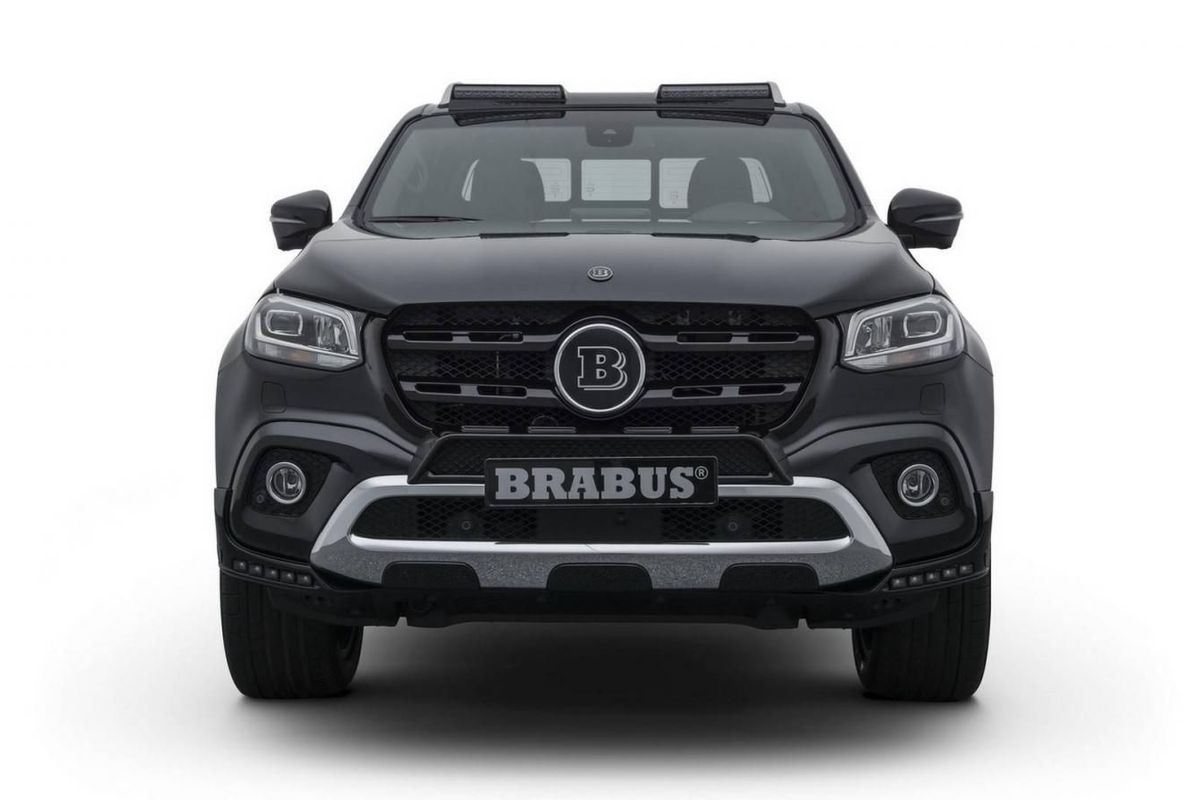
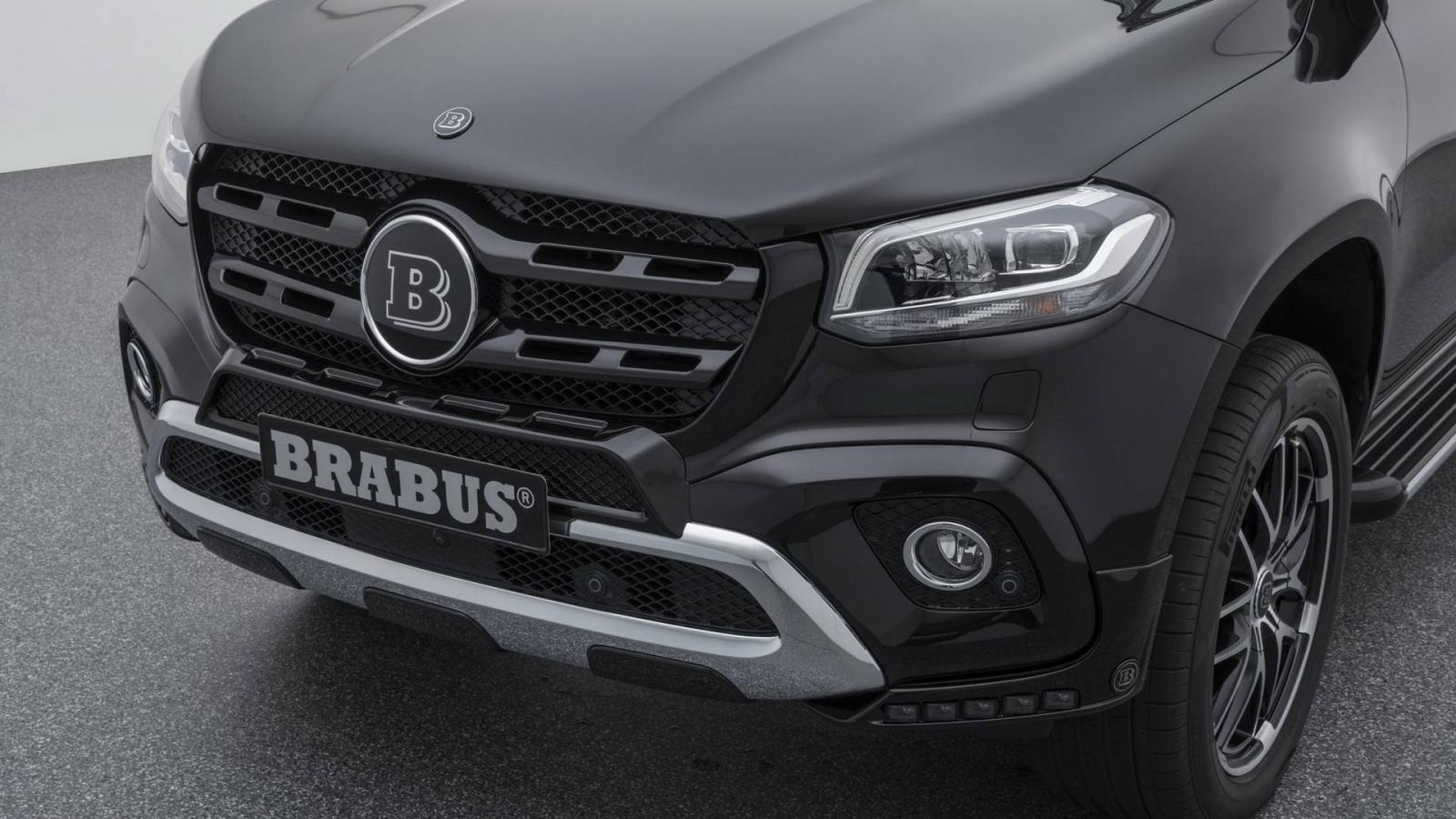
We know that an AMG version of the Mercedes-Benz X-Class is unlikely, but what options do you have if you are looking to make your X-Class stand out from the crowd? Well, you might be happy to know that aftermarket tuner, Brabus, is offering an exclusive visual and mechanical upgrade for the X-Class to give it something extra.
Design details
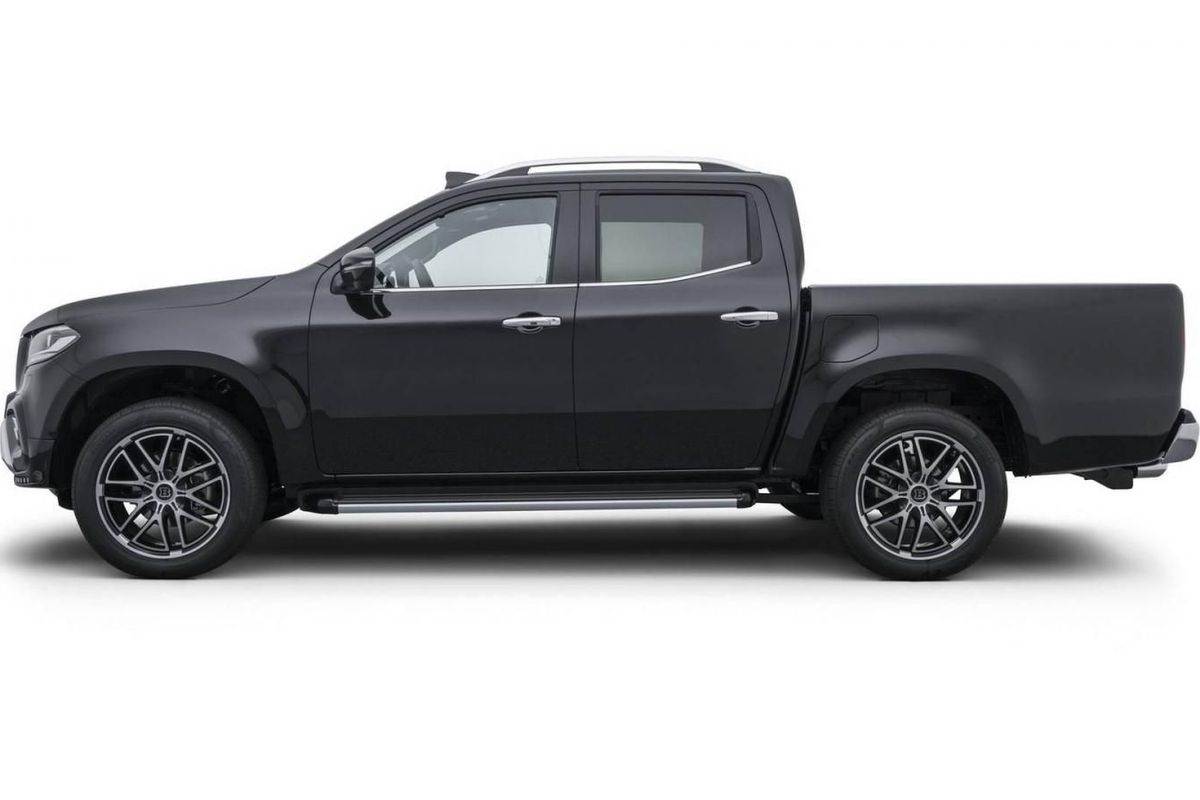
The Brabus treatment gives the X-Class a more brawny appearance.
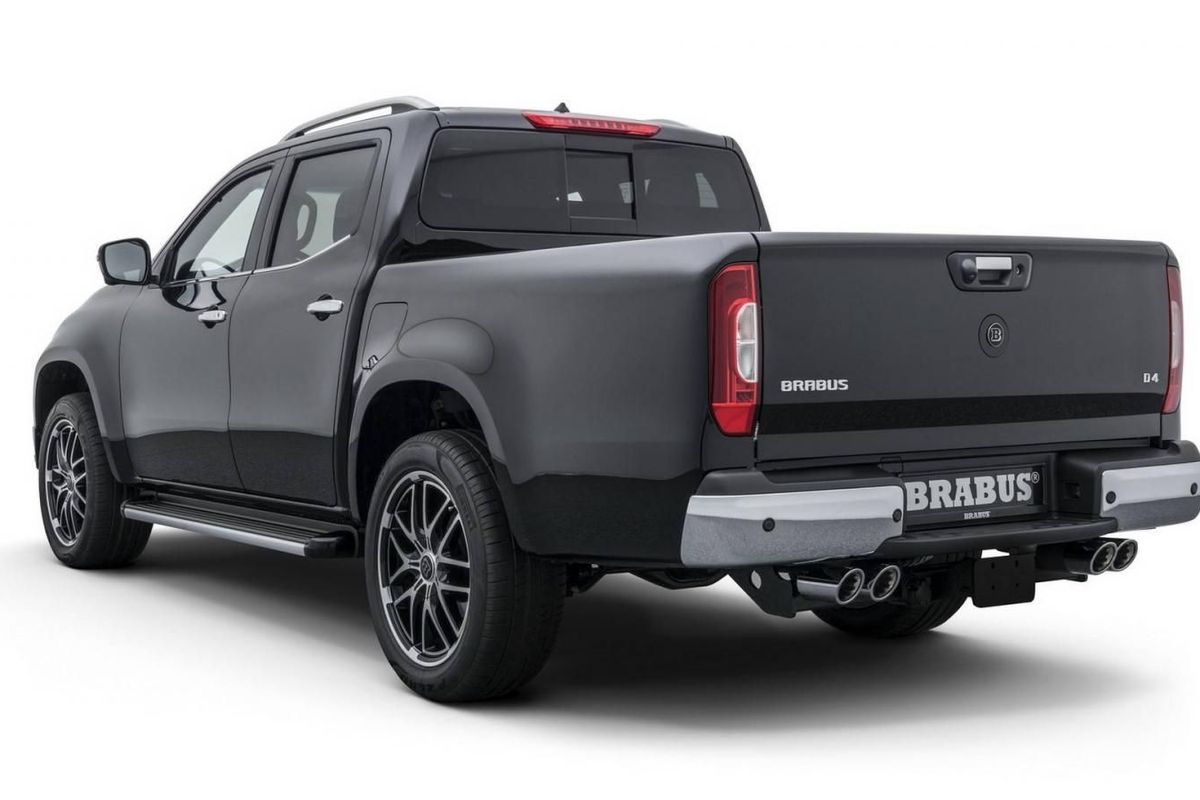
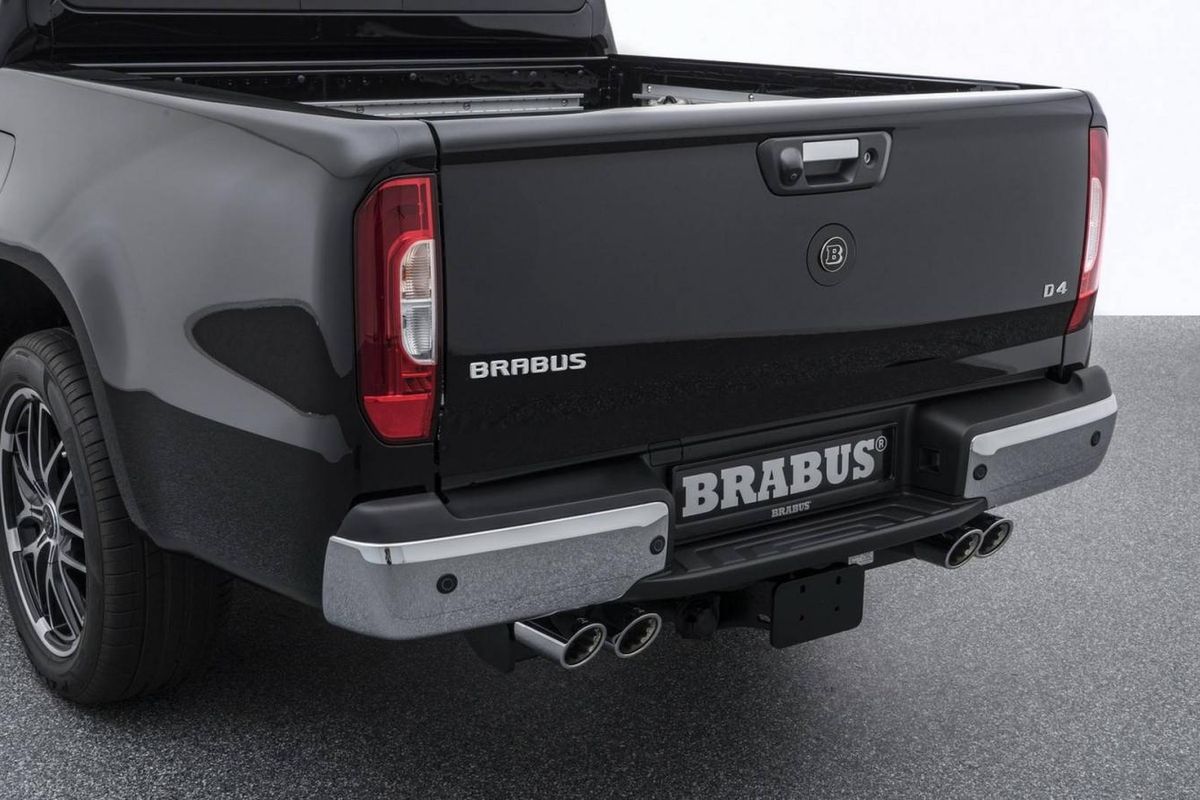
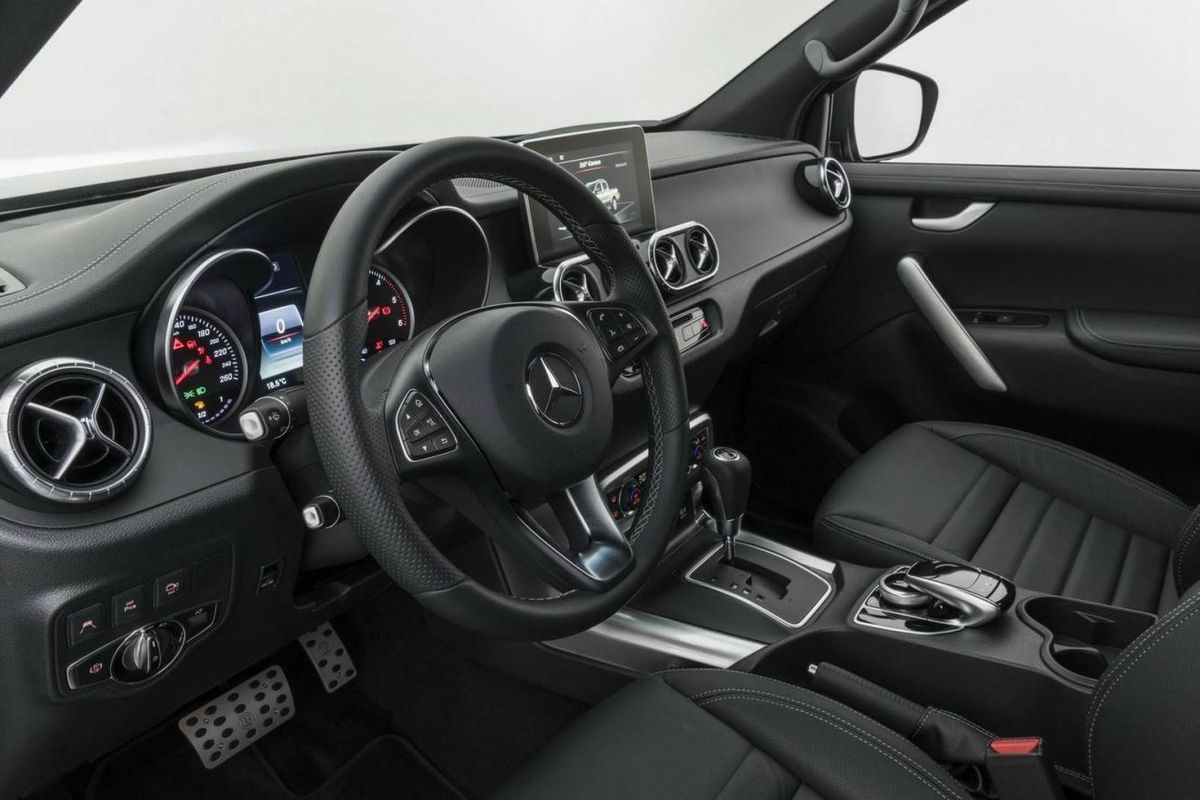
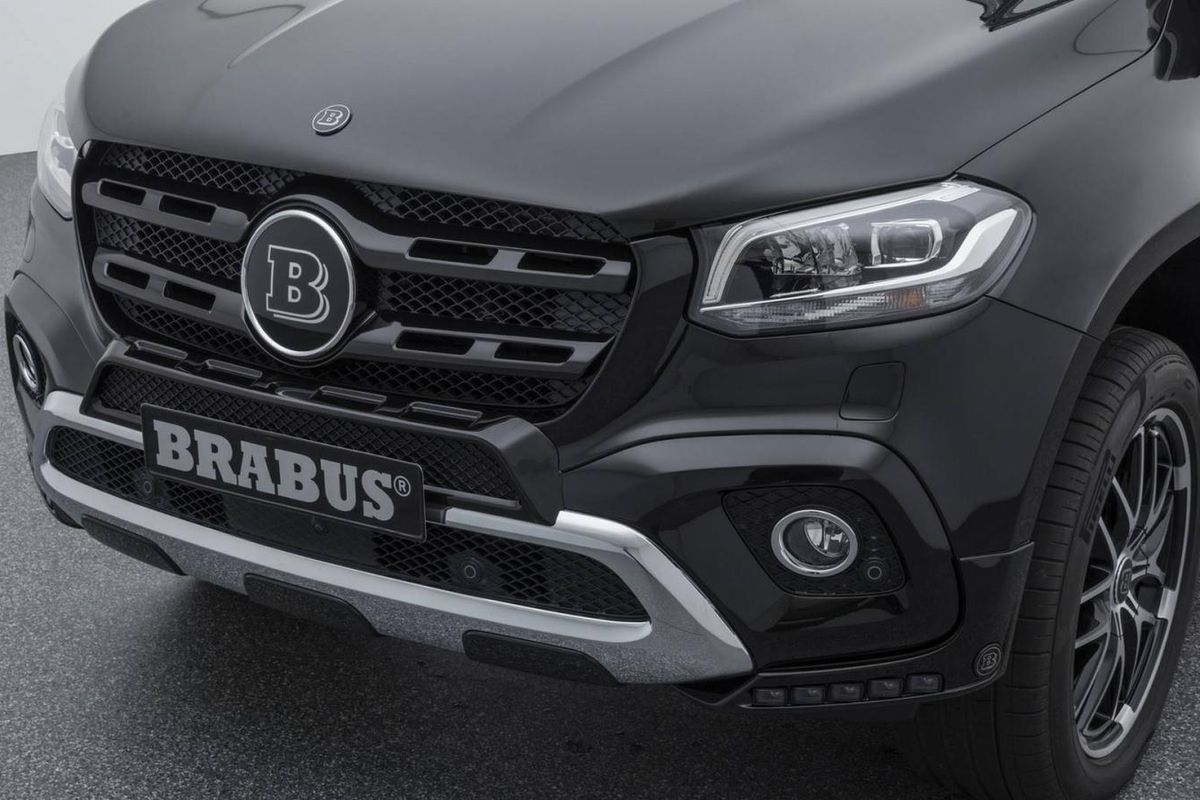
Visually, the Brabus X-Class rides on striking 20-inch twin-spoke alloy wheels and features a centrally-mounted Brabus element seen on the front grille with a honeycomb design. Furthermore, Brabus detailing is also fitted to the front diffuser to give the X-Class a more distinct look. An additional roof-mounted lighting module which comprises 12 high-power LEDs that come on in conjunction with the high beam headlights is also fitted. A Brabus sports exhaust system with 4 tailpipes adds additional visual character. On the inside, a wide range of upholstery options are available and details such as stainless steel scuff plates and pedals are also offered.
More Power
As part of the upgrade, Brabus has increased the output of the standard 140 kW /450 Nm 2.3-litre turbodiesel engine in the X-Class 250d by an additional 15 kW and 60 Nm of torque. As a result, outputs are 155 kW at 3 500 rpm and 510 Nm at between 1 500 – 2 500 rpm resulting in a zero to 100 kph sprint time of 11.5 seconds. Brabus is also currently developing an upgrade specifically for the range-topping X-Class 350d.
Brabus has an outlet in South Africa and upgrades are available through the Daytona Group. We reached out to Brabus SA for an indication of pricing for the Mercedes-Benz X-Class, but had yet to receive a response.
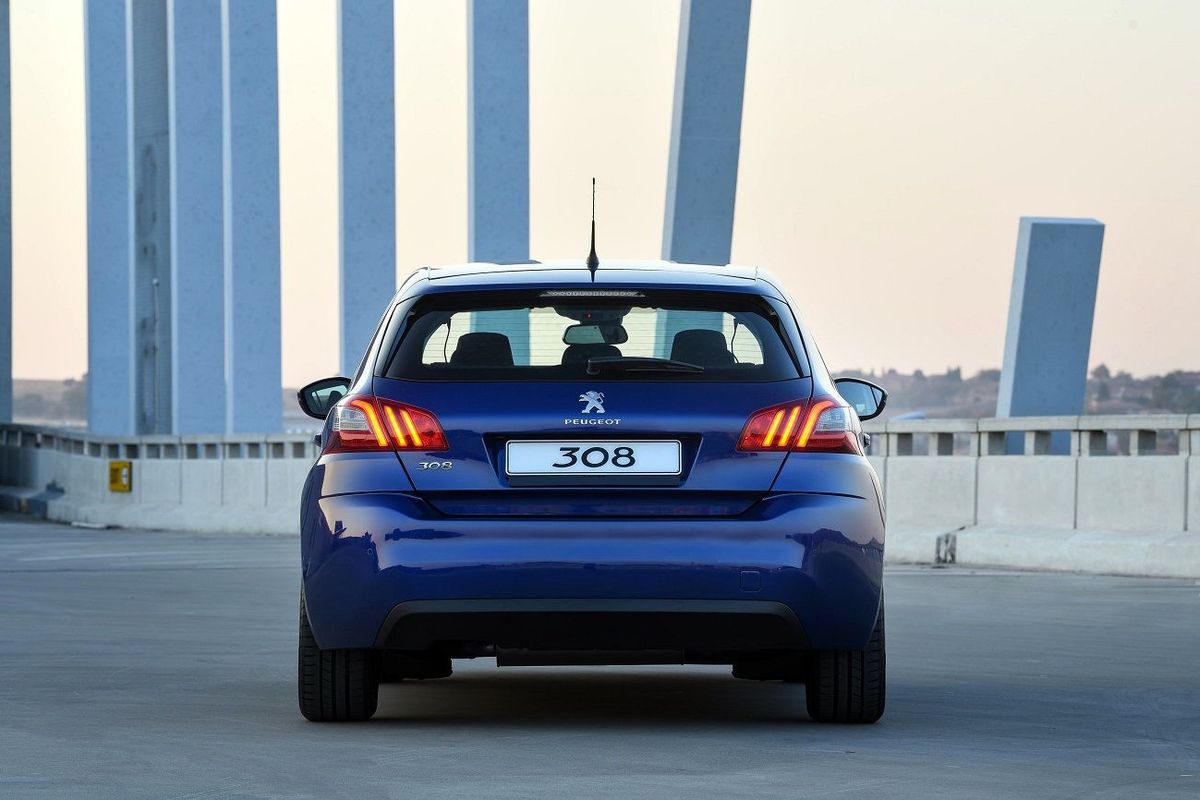
Peugeot has facelifted its 308 hatchback and the newcomer has gone on sale in South Africa. Here are the pricing and specifications for the new model.
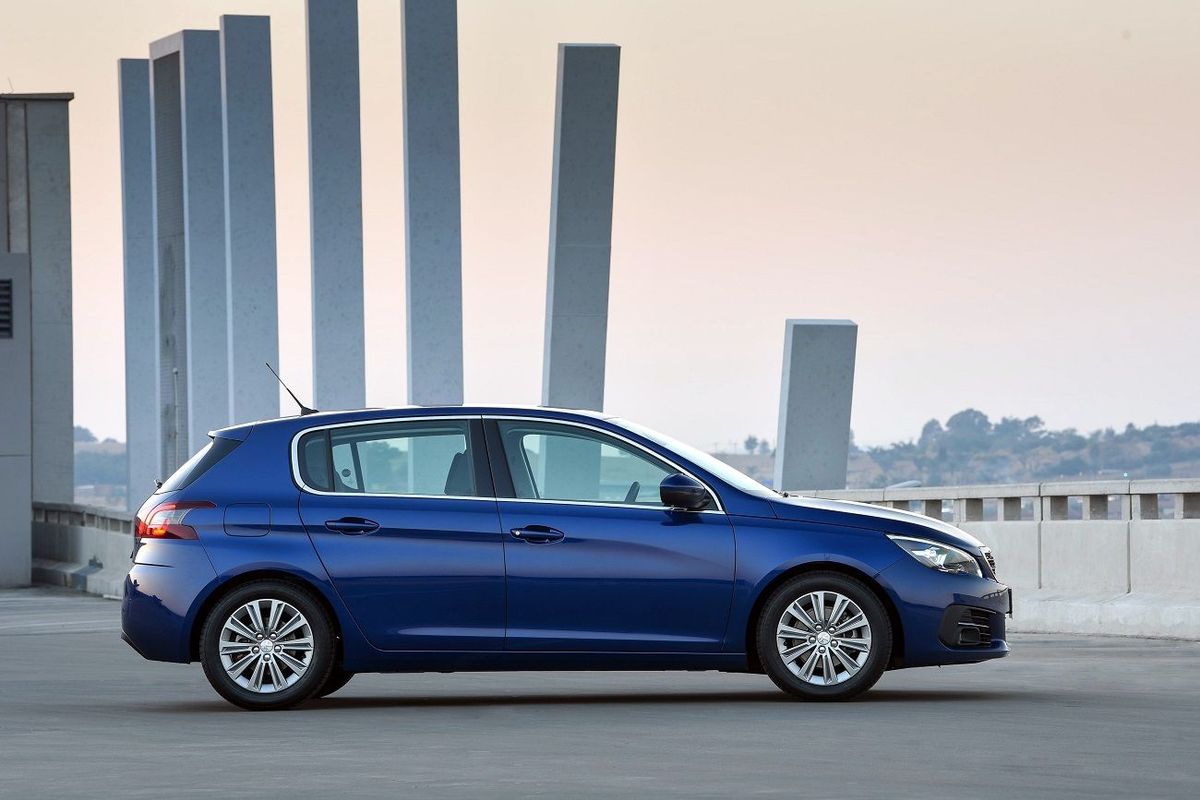
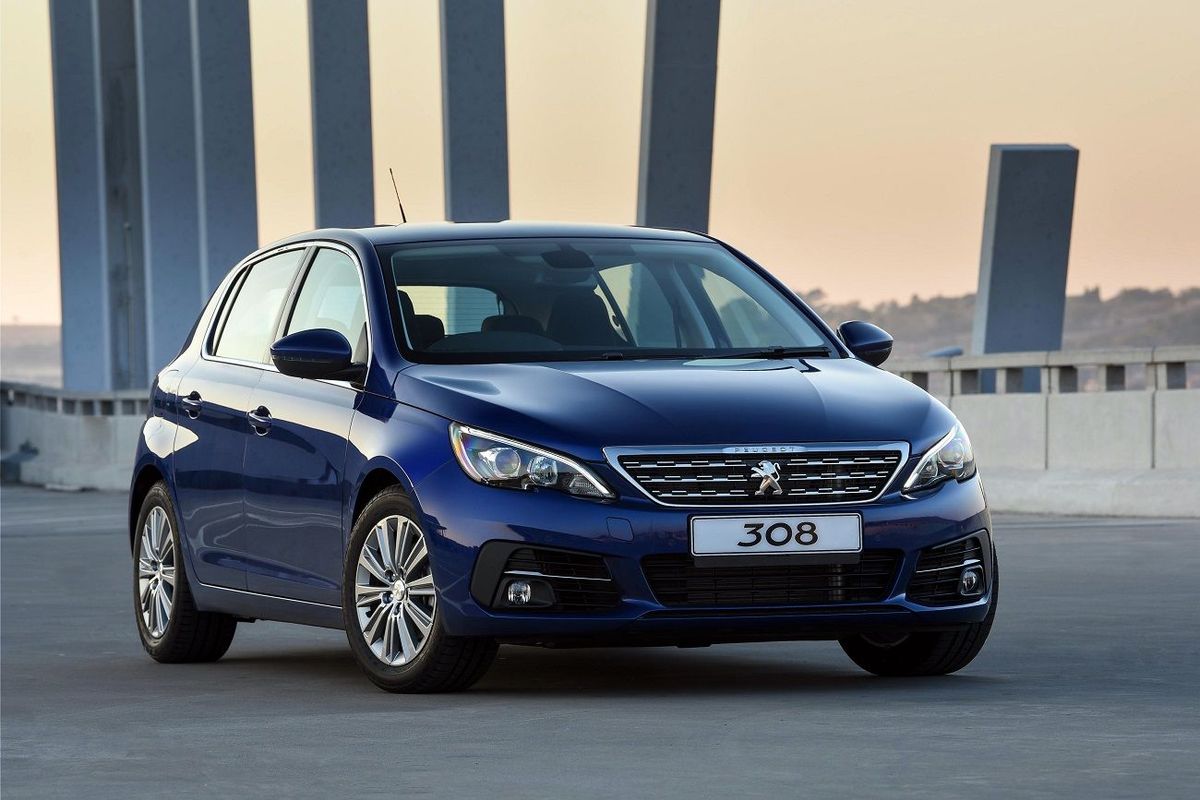
The Peugeot 308 is one of the brand's better vehicles and we really liked what it brought to the table. It had a fantastic 1.2-litre turbocharged engine and as a result, drove well. For 2018, this model has been revised. Visually, the new Peugeot 308 has been tweaked slightly and the range has been cut to just the one model, with the choice of either a manual transmission or automatic gearbox. Mechanically, the second generation of 308 is up to 140 kg lighter than the outgoing model.
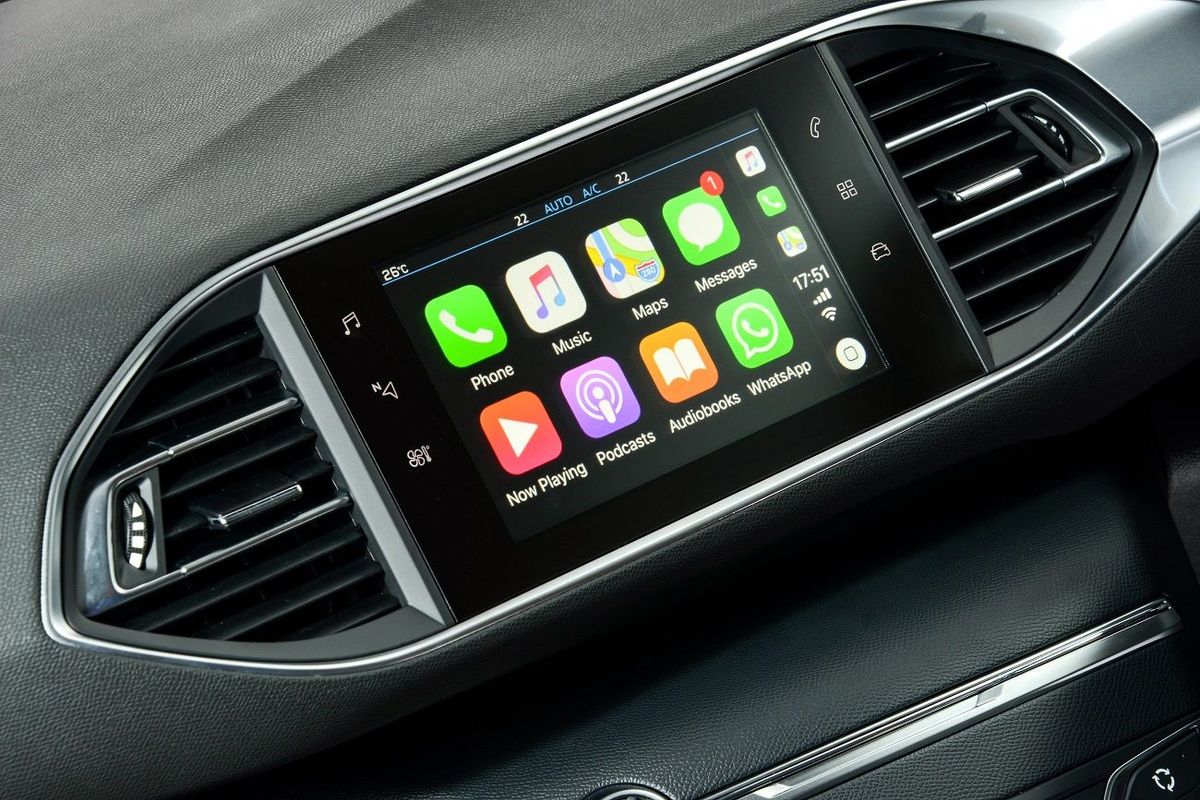
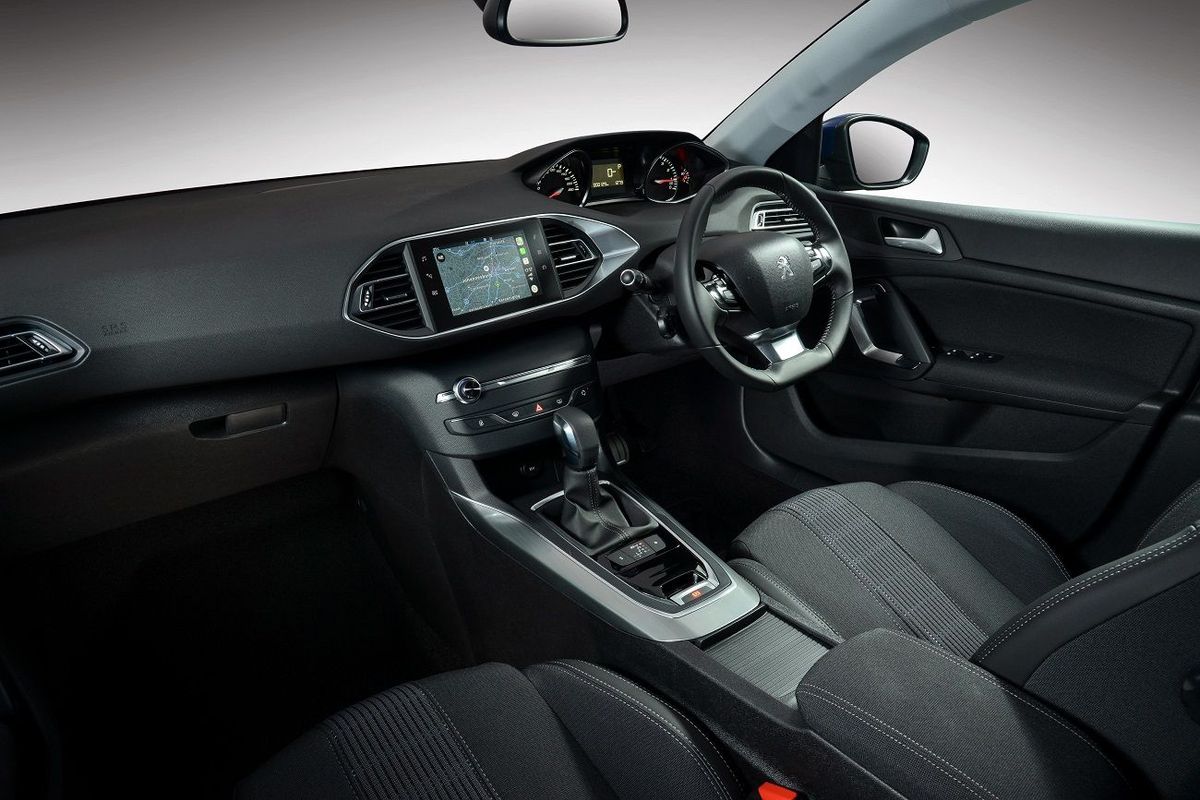
One of the highlights of the new Peugeot 308 are the safety features which include ABS with EBD, Electronic Stability Program (ESP) and Traction Control System (ASR), Emergency brake assist (EBA) with emergency brake flashing hazard lights,attention alert, automatic drive-away locking, central locking, dead locking, anti-theft alarm and super locking (2 pips) systems, child lock system, unfastened seatbelt warning, and ISOFIX mounts for child seats are all standard. The 308 has never been short on standard features and these range from cruise control, satellite navigation, auto wipers/lights and it appears that Apple CarPlay is now also available.
The engine has been carried over into the second generation Peugeot 308. The Puretech 1.2-litre engine has won numerous Engine of the Year titles in its category. With outputs of 96 kW and 230 Nm, there's ample performance on tap, plus it's going to be reasonably thrifty too. Peugeot claims a top speed of 204 kph and a fuel economy figure of 5.1 L/100 km.
Peugeot 308 (2018) Price in South Africa
The facelifted Peugeot 308 comes with a 3-year/60 000km Service Plan, 3-year/100 000km Manufacturer’s warranty, 3-year/100 000km Roadside assistance, 12-year anti-perforation and 3-year paint warranty. Servicing is recommended every 12 months or 15 000km
Volkswagen has released a teaser video and photo, detailing its forthcoming MQB-based baby SUV.
The Volkswagen T-Cross is expected to be fully revealed before the year is out. It'll be underpinned by the MQB platform, the same one as the latest generation Polo. Inspired by the radical T-Cross concept which was first shown at the 2016 Paris Auto Show, the Volkswagen T-Cross will be the Germans' smallest SUV.
We expect an array of compact engines for the Volkswagen T-Cross. The 1.0-litre three-cylinder turbo petrol motor from the Polo is expected to be carried over and the well-used 1.4 TFSI motor could also make an introduction. We wouldn't put it past Volkswagen to throw in the new 2.0 132 kW motor either. We first experienced this engine in the Volkswagen Tiguan Allspace and we think its a better fit in the smaller SUV. As always, you'll have a choice of either a manual or DSG transmission.
The big news is that Volkswagen South Africa confirmed that T-Cross will be coming to our shores. We'll have more info when the vehicle is fully revealed.
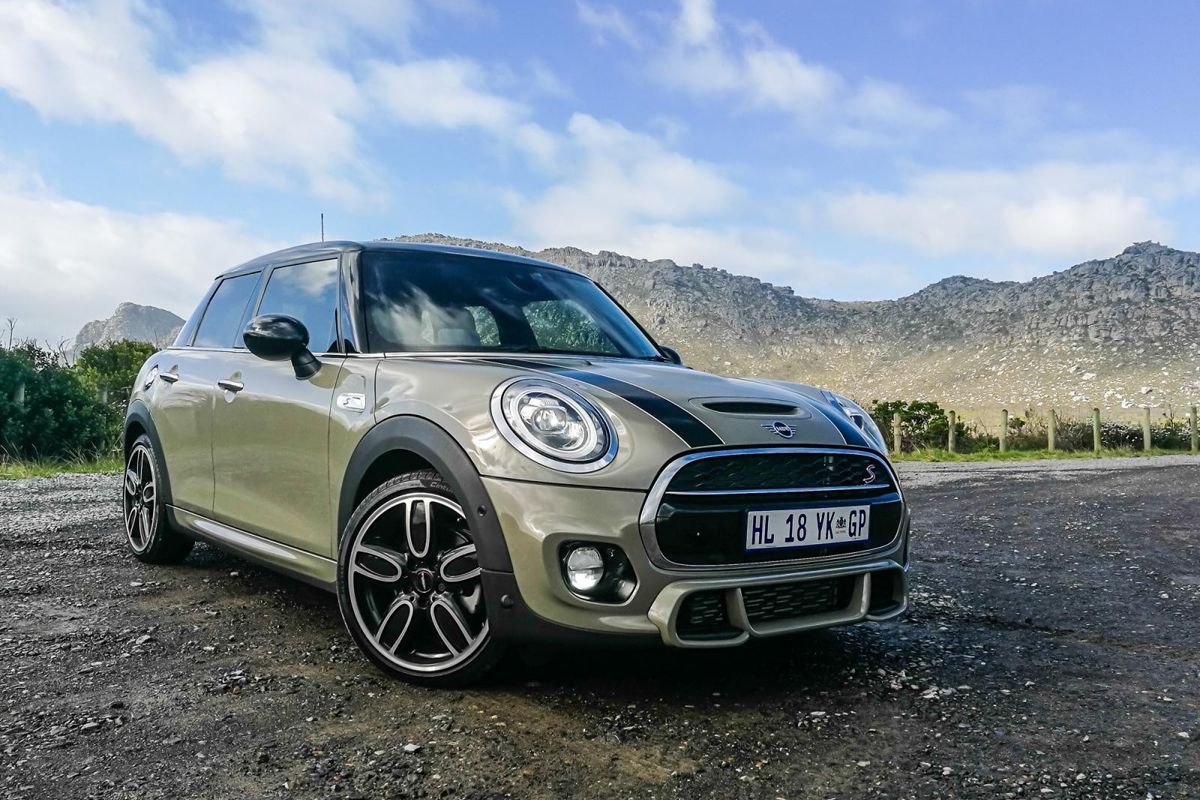
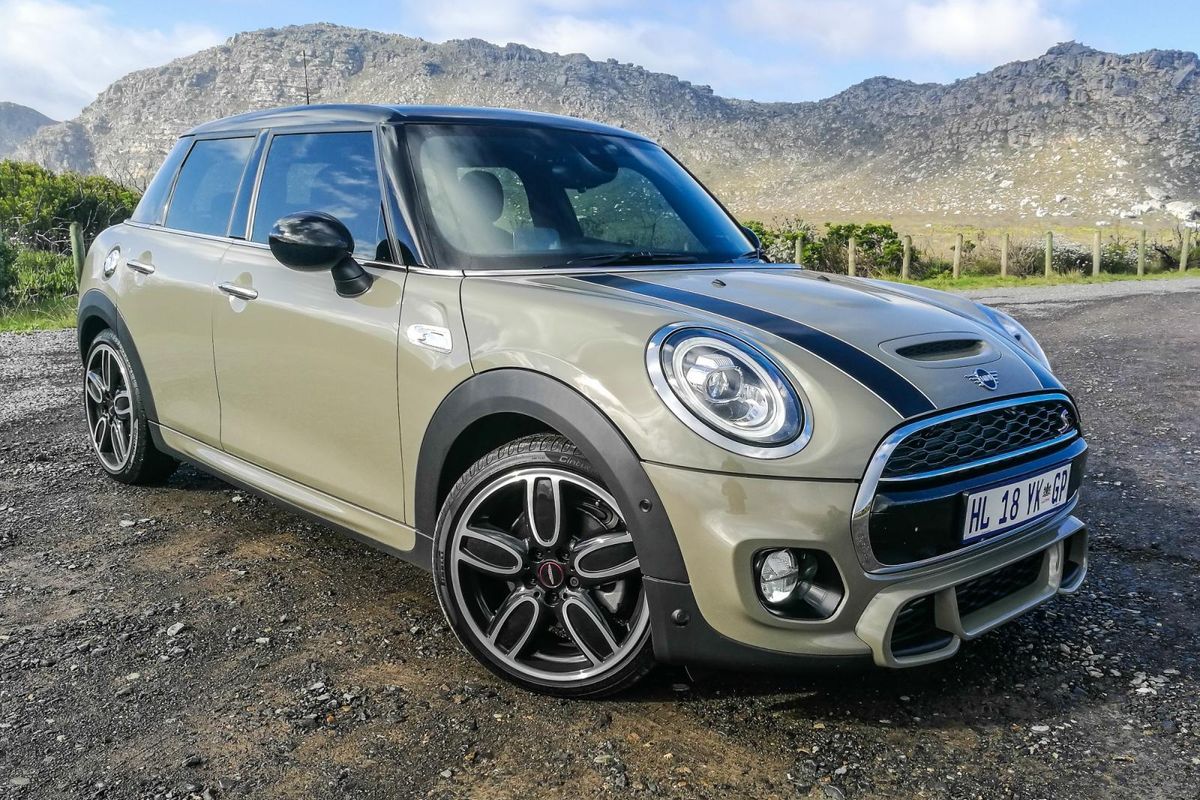
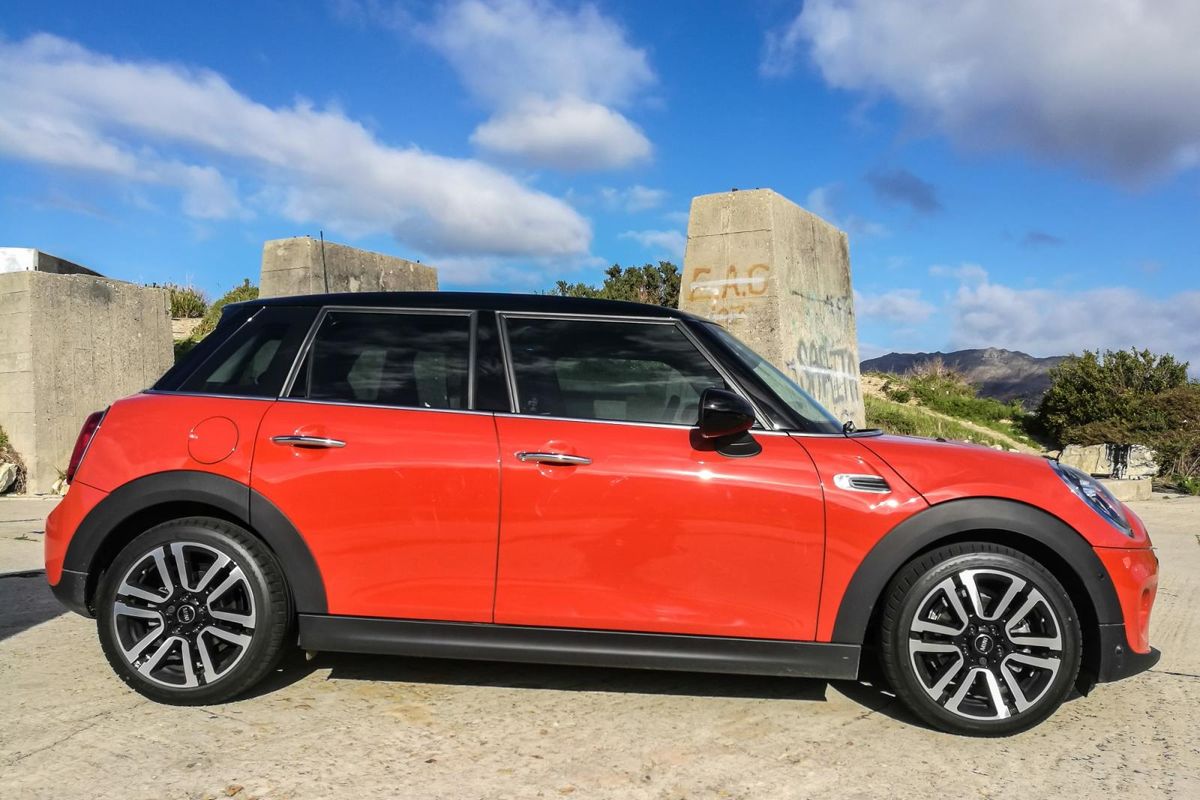
We had a taste of the latest iteration of the Mini in Mallorca, Spain, earlier this year, but the fun-loving Mini Cooper has now arrived in South Africa to woo buyers with updated styling and a more comprehensive feature offering. We took the Mini Cooper for a whirl at its local launch this week, herewith our findings…
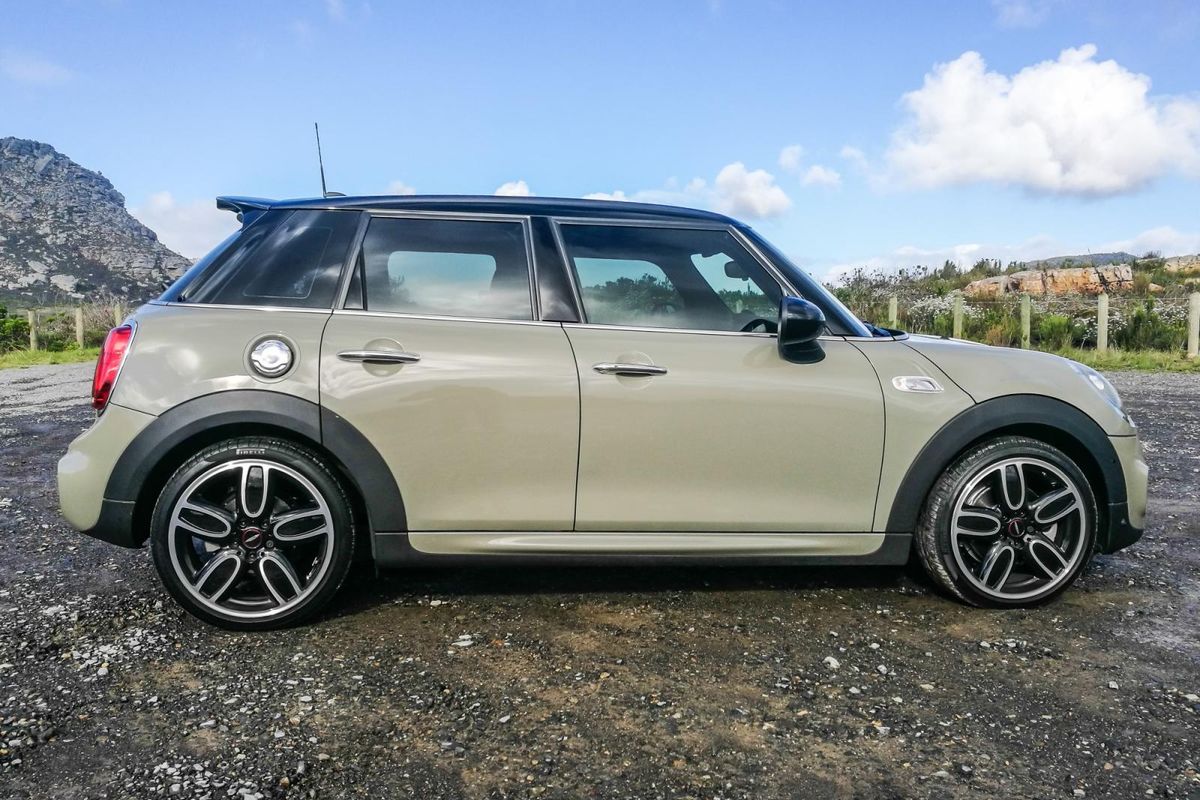
Few brands have as much youthful appeal as Mini does and with the introduction of the facelifted Cooper, which is now available in 3 body styles, including 3- and 5-door hatchback and convertible guise, Mini will look to entrench its influence in the premium compact car segment.
Key changes:
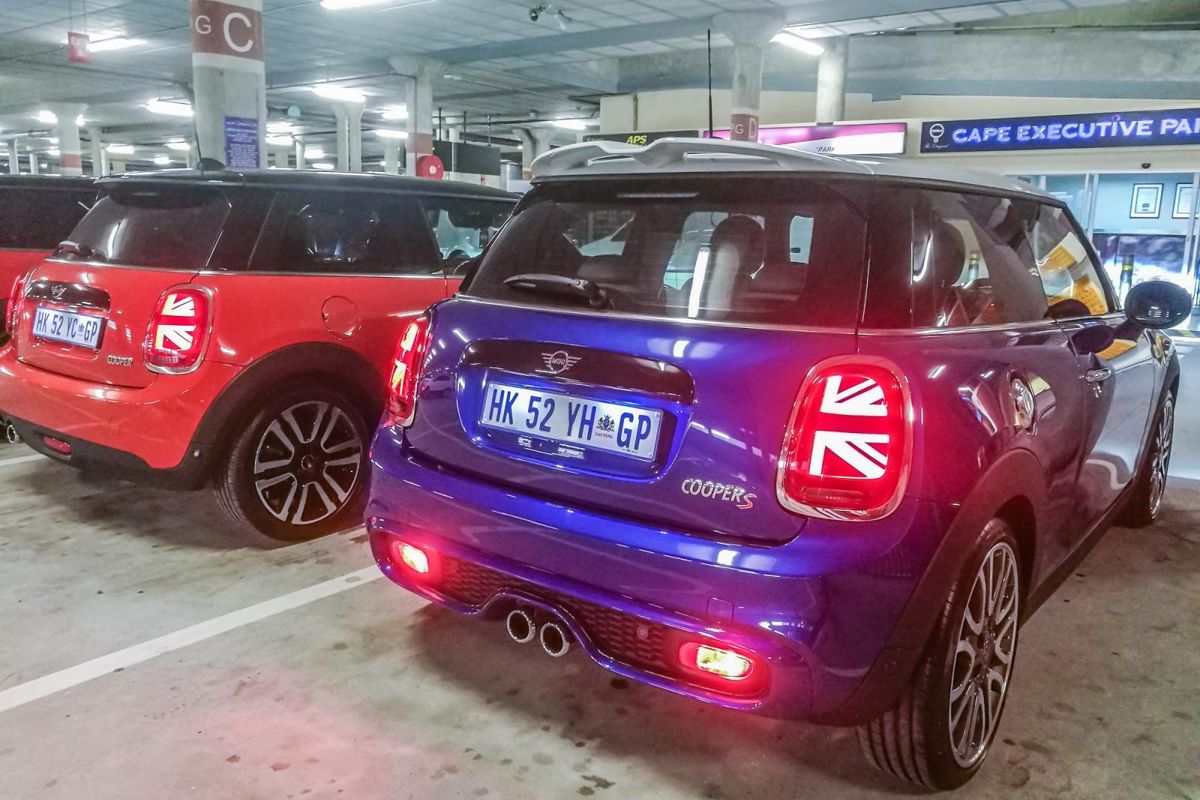
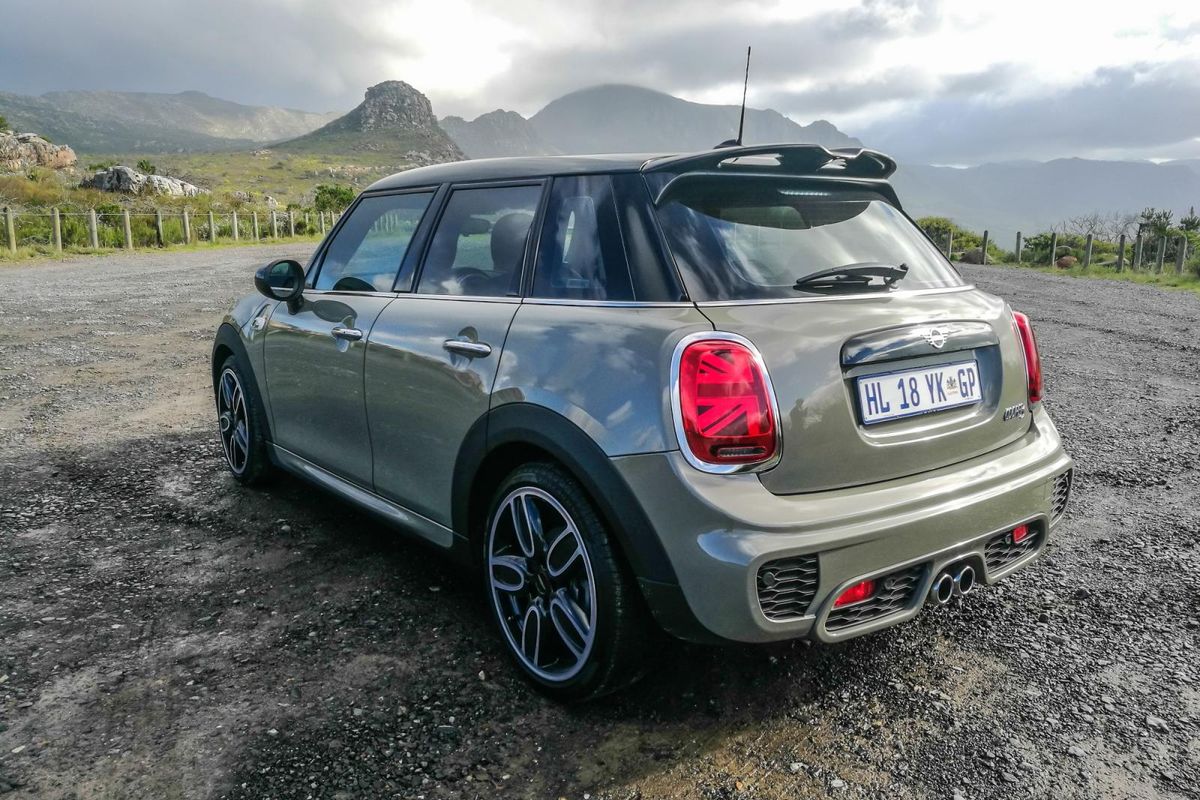
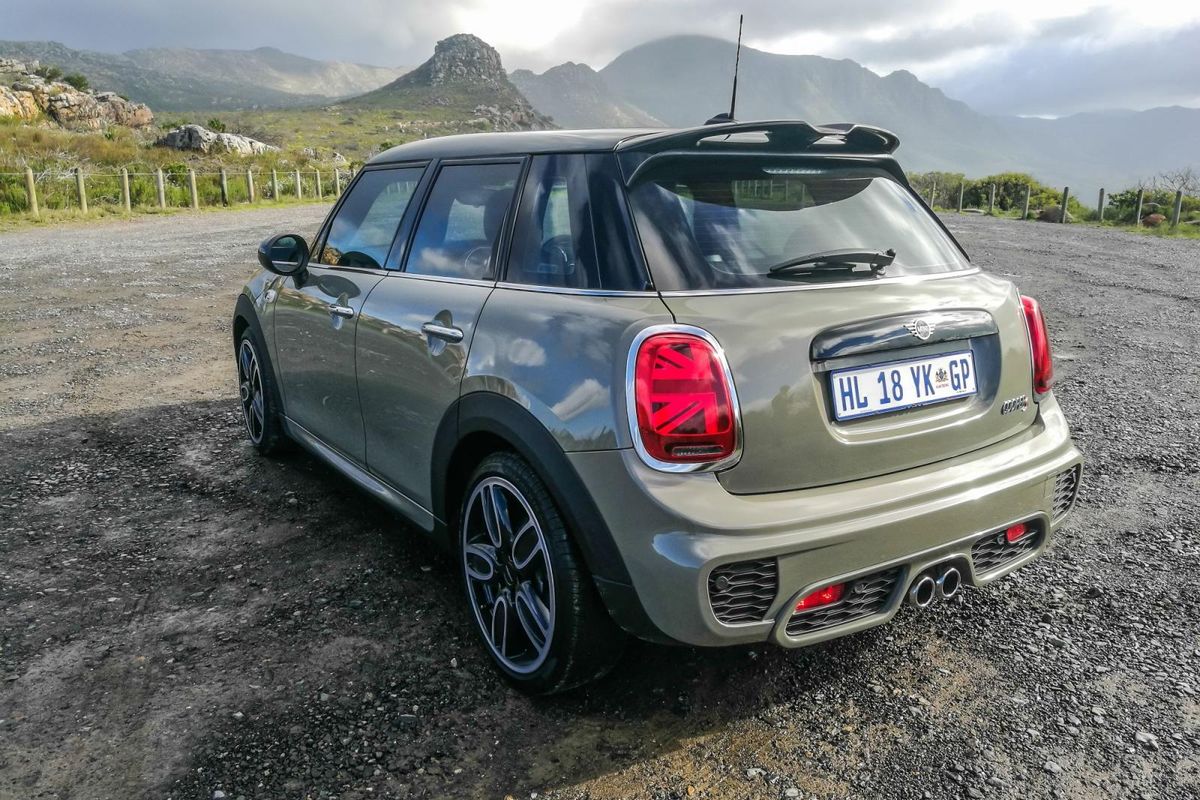
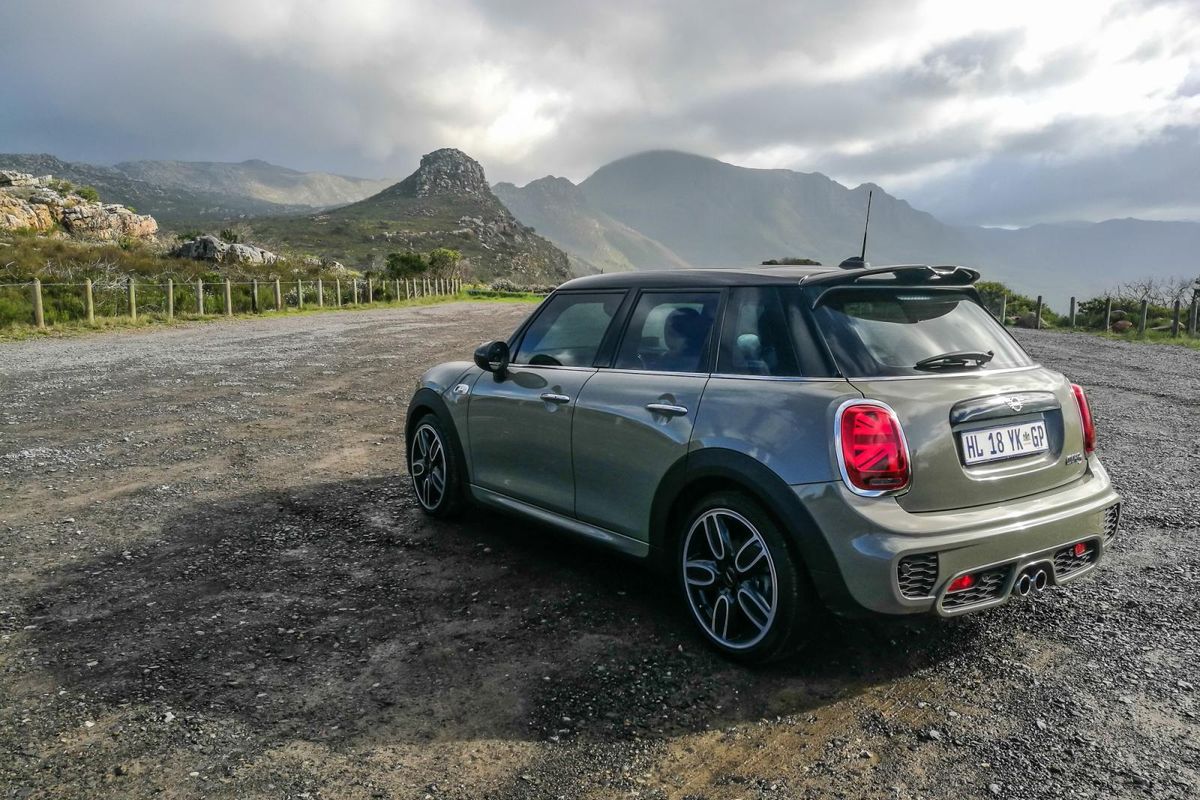
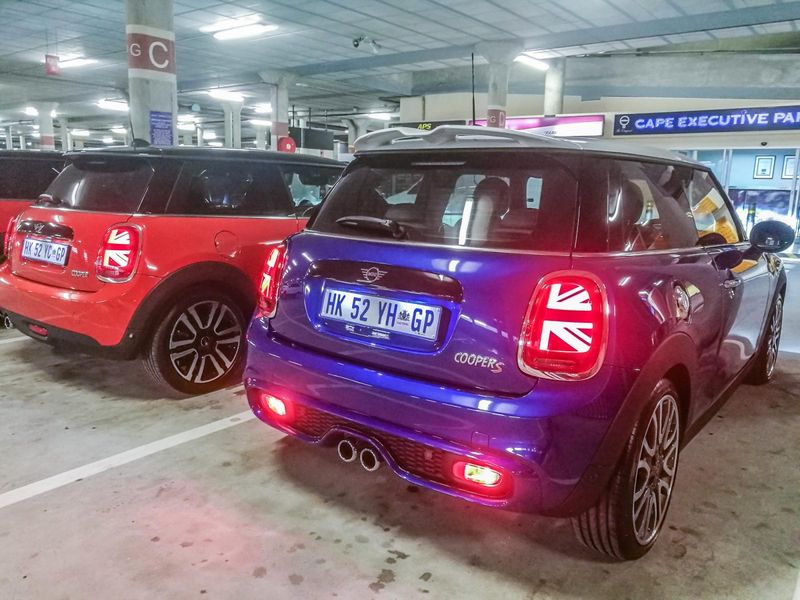
The LED Union Jack-pattern tail lights distinguish this Cooper from its predecessor.
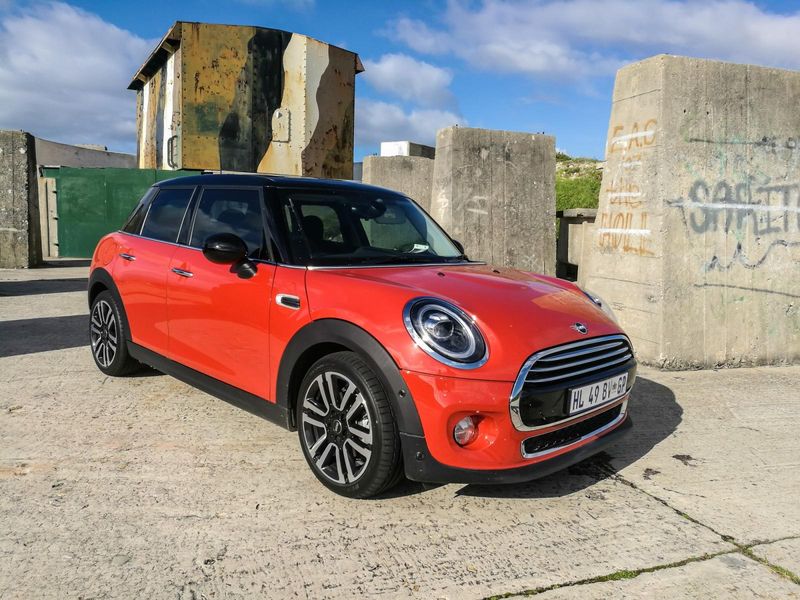
There are a number of visual indicators that set this latest Cooper apart and perhaps the most obvious cue is the striking LED Union Jack-pattern tail-light design that seems to have found favour with many commentators. You may also notice that the LED daytime running lights are now circular and there’s also a newly designed Mini logo on the nose, which looks quite posh.
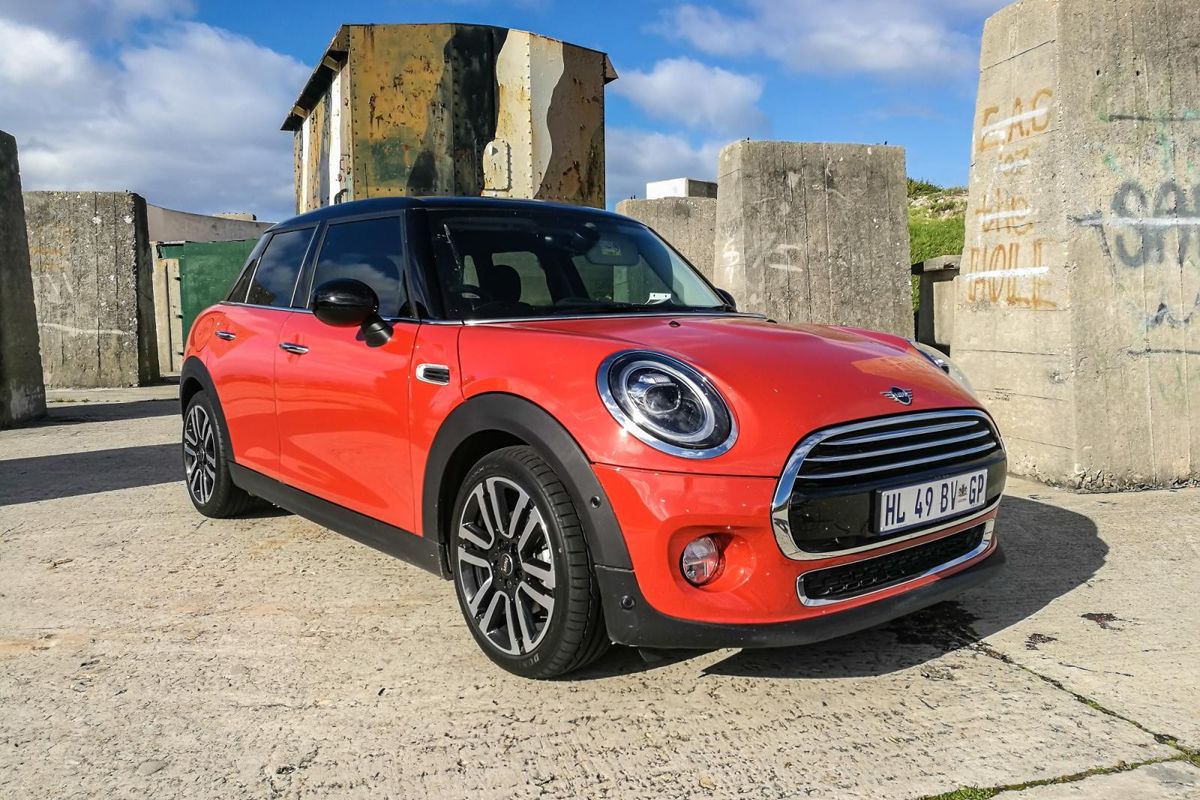
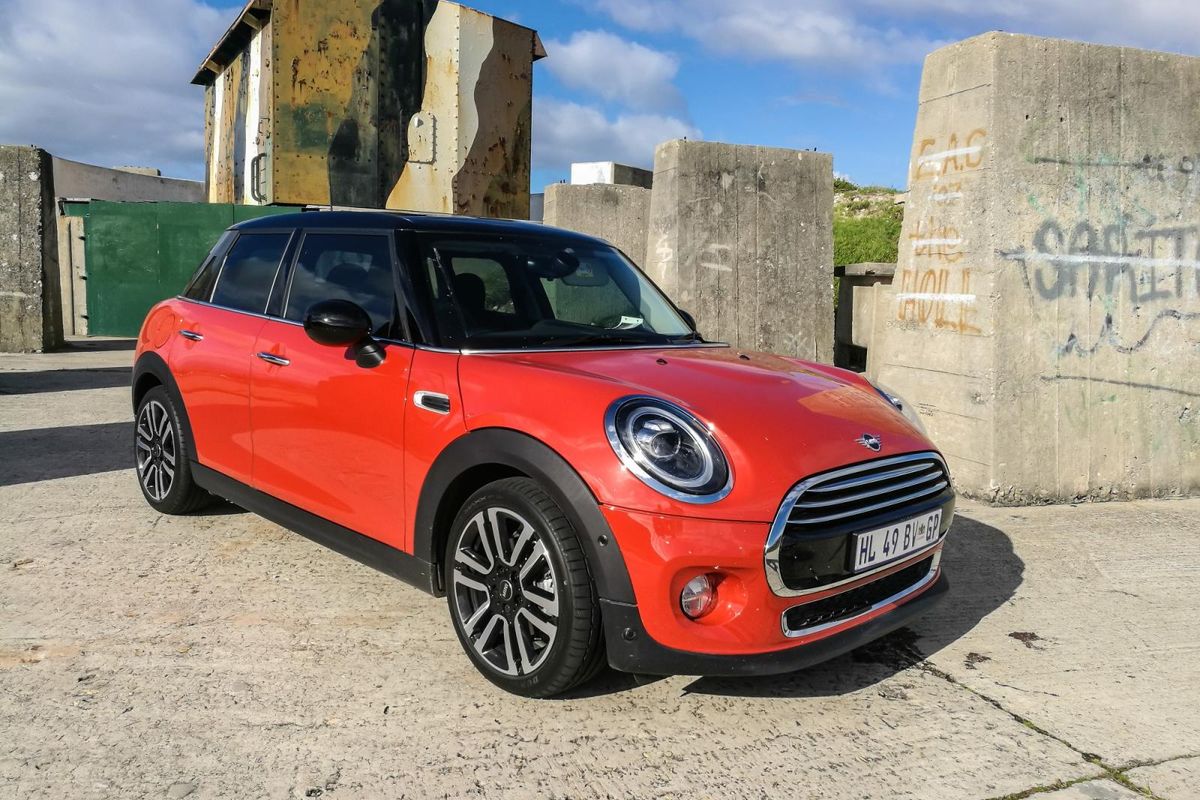
The choice of exterior colours has also expanded with the addition of vibrant hues such as Emerald Grey metallic, Starlight Blue metallic and Solaris Orange. There’s also a range of new 17-inch light alloy wheel designs on offer.
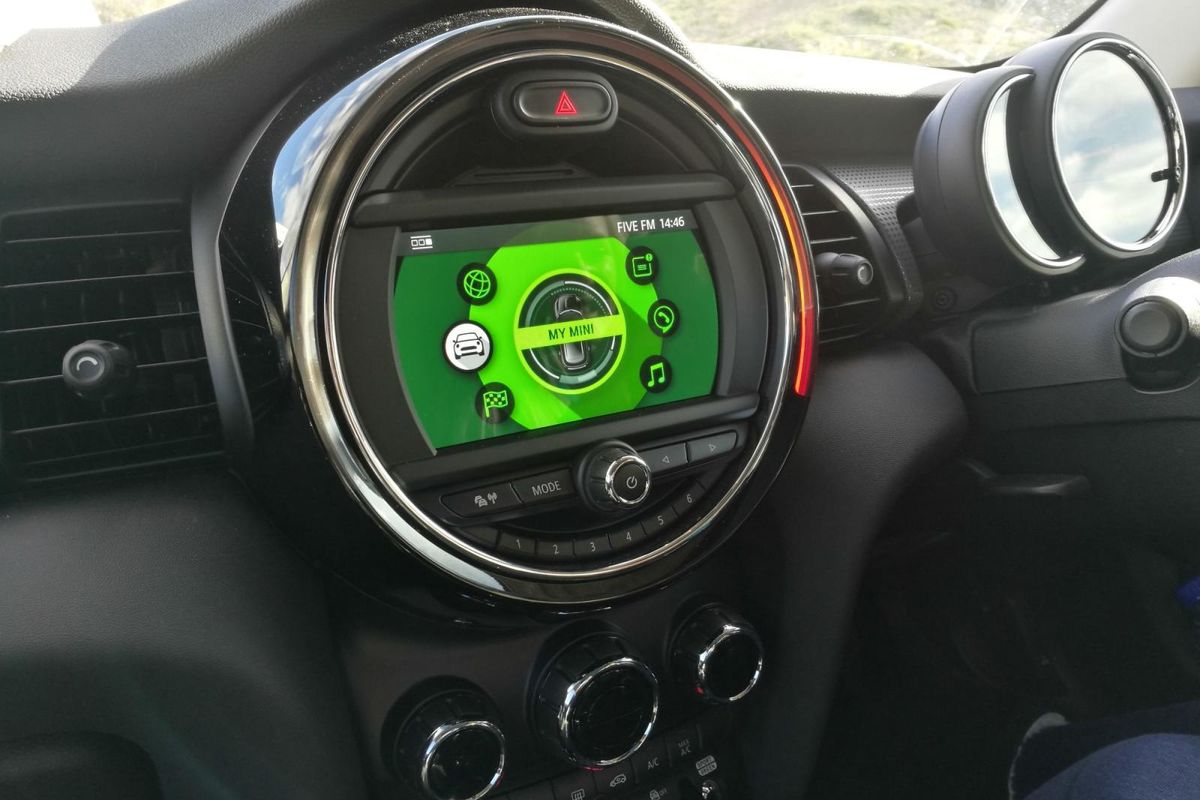
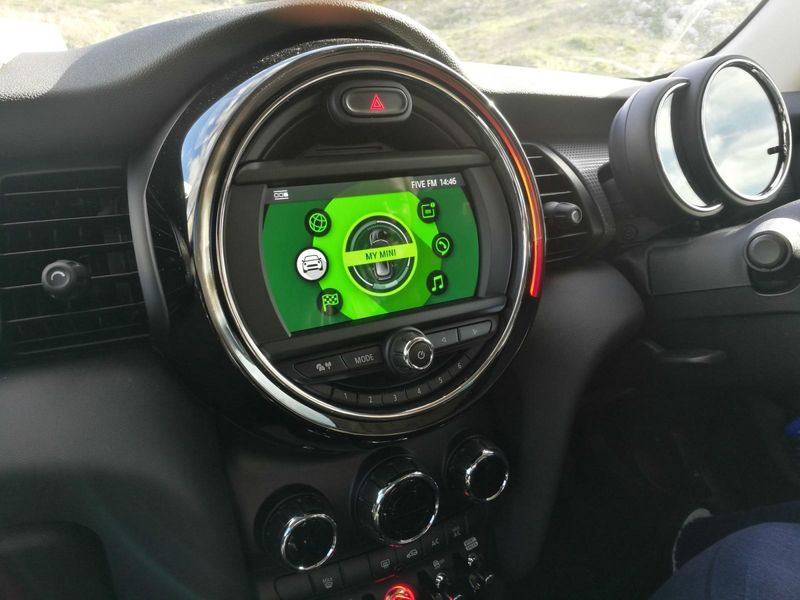
Apple CarPlay is now offered as an option, as well as other useful infotainment features.
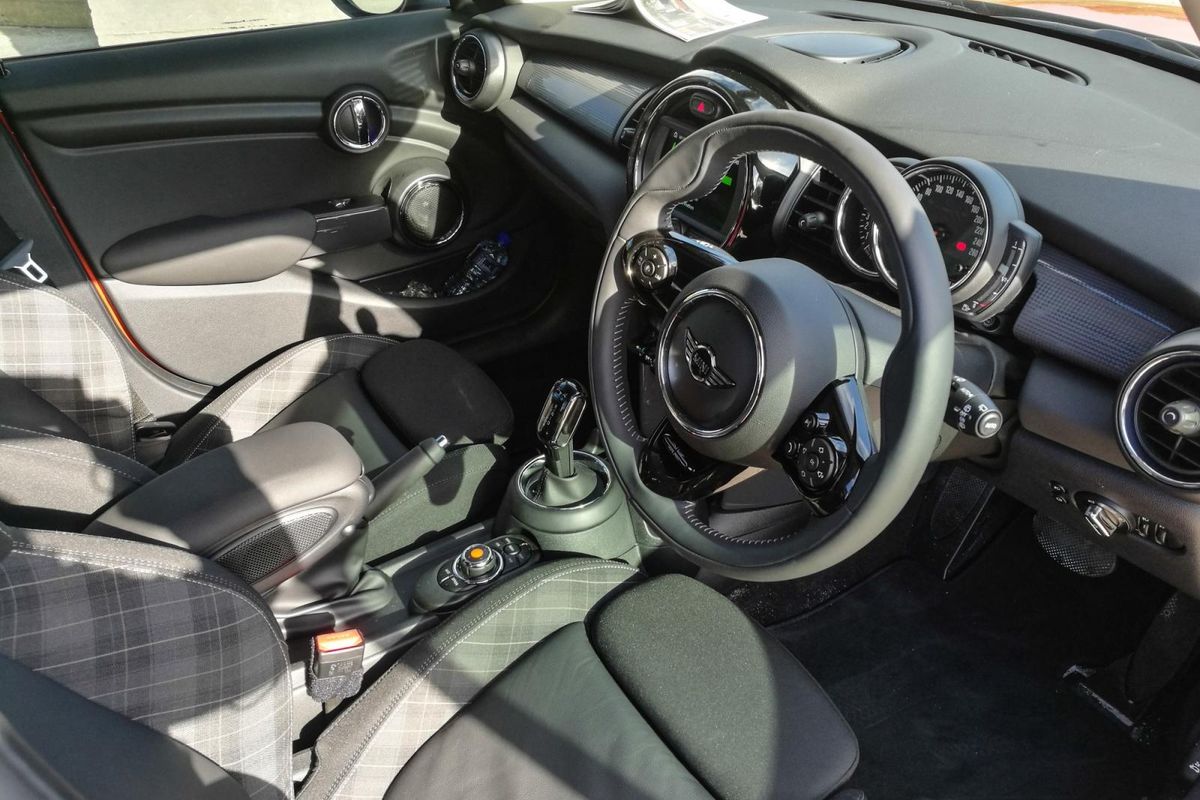
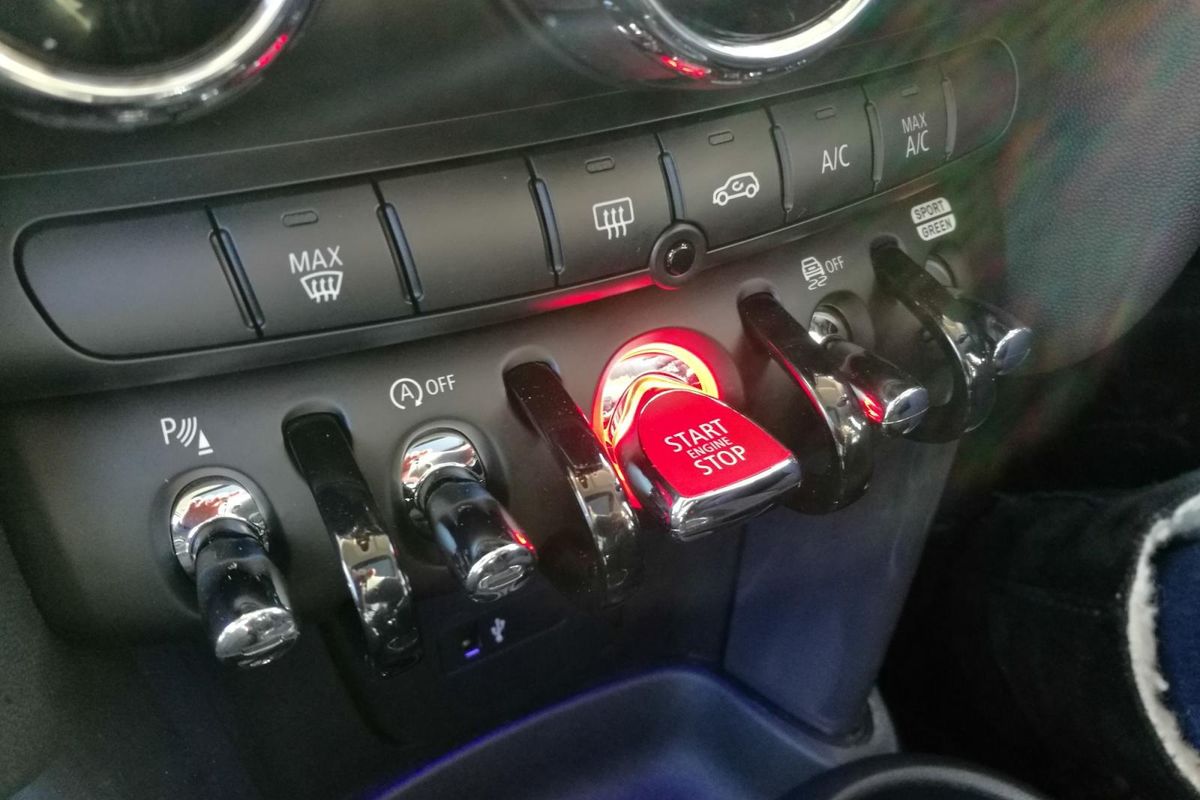
A new 3-spoke, multi-function steering wheel is fitted across the range and a radio with a 6.5-inch colour screen with smartphone integration and Bluetooth is standard. New features such as real-time traffic, concierge services, internet Mini Online and Apple CarPlay are also available. In addition to this, there is a wide range of optional equipment on offer to customise the vehicle to your specific needs.
Customisation is at the core of the Mini brand and buyers can go to town with the interior specification: a variety of distinct trim finishes and upholstery options are available. Customers are now also able to design certain interior and exterior elements themselves and the components will be delivered to your door and you can fit them yourself. Some of the elements you can design include side scuttles, fascia strips, LED door sill finishers and LED door protectors. That way, you can stamp your personality on the vehicle and make it your own, which is pretty cool…
What’s it like to drive?
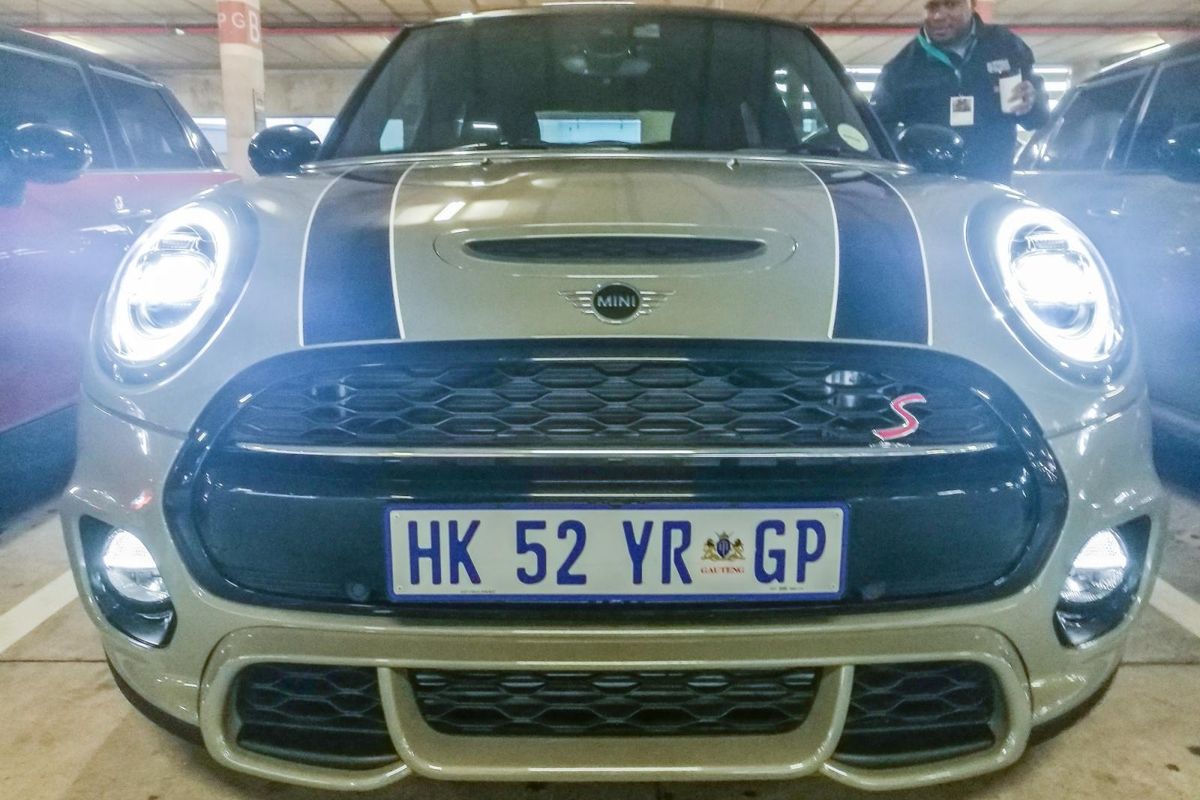
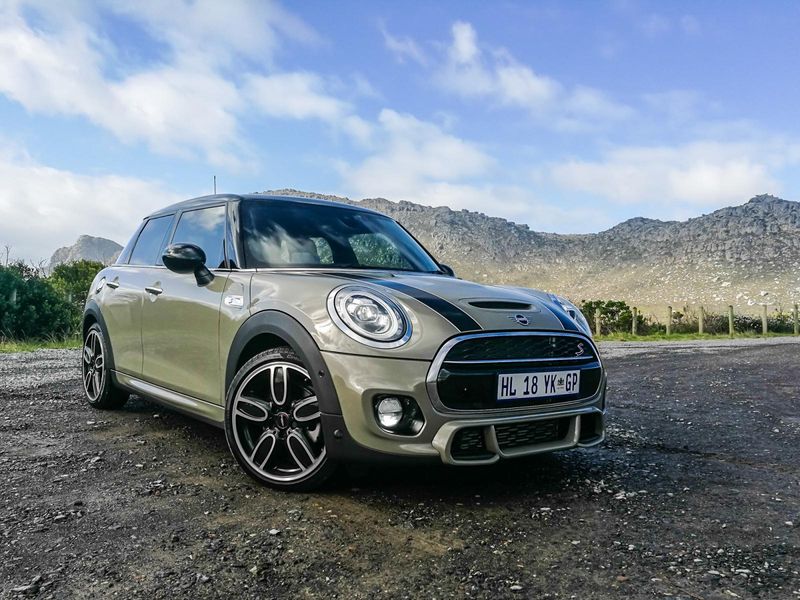
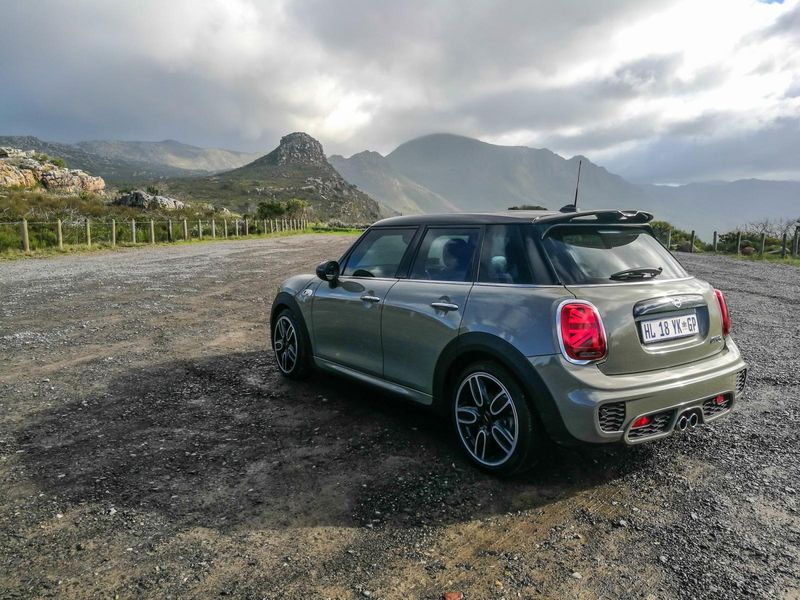
The Cooper S has a more menacing look and offers more punch over the standard Cooper.
The launch route combined 135 km of both rural and urban driving and our first leg of the drive took place behind the wheel of the decisively sporty 5-door Cooper S automatic in Emerald Grey metallic. The front-end treatment is more aggressive than that of the standard Cooper and it delivers more punch too, thanks to its turbocharged 2.0-litre engine that whips up 141 kW and 300 Nm of torque.
The automatic transmission is now a 7-speed dual-clutch unit, and our test unit was equipped with the sportier "Steptronic" sports transmission option with 'wheel-mounted shift paddles. The new transmission is a boon to driving engagement, because it allowed us to flick through the gears manually… and merrily. The transmission is particularly responsive in action and while some initial torque steer is evident when you mash the accelerator pedal, the steering soon settles and the Cooper S surges forward with a fair degree of pace (it is said to sprint from 0 to 100 kph in 6.8 seconds). The occasional turbo flutter also adds some aural pleasure to the Cooper S when you are driving spiritedly, which is wonderful.
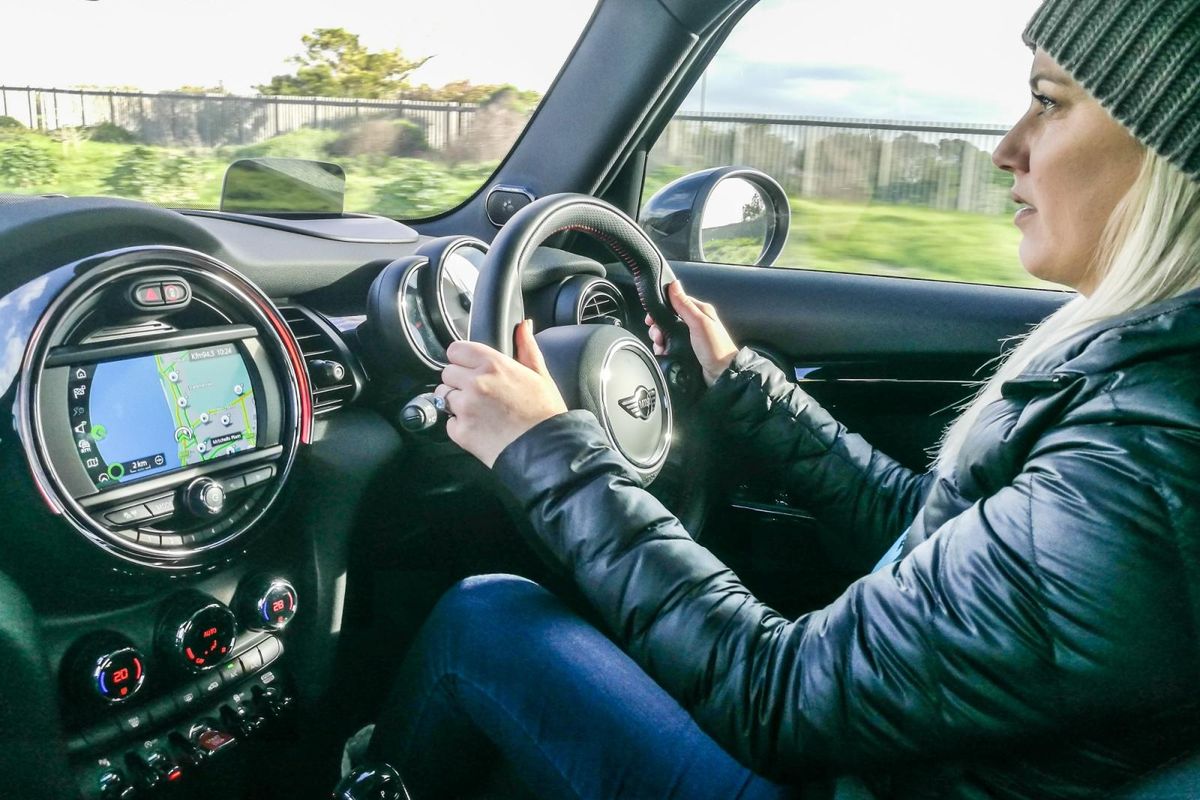
The Cooper S is great fun to drive (#CarsAwards judge Juliet McGuire is behind the wheel) courtesy of its stiffly-sprung suspension.
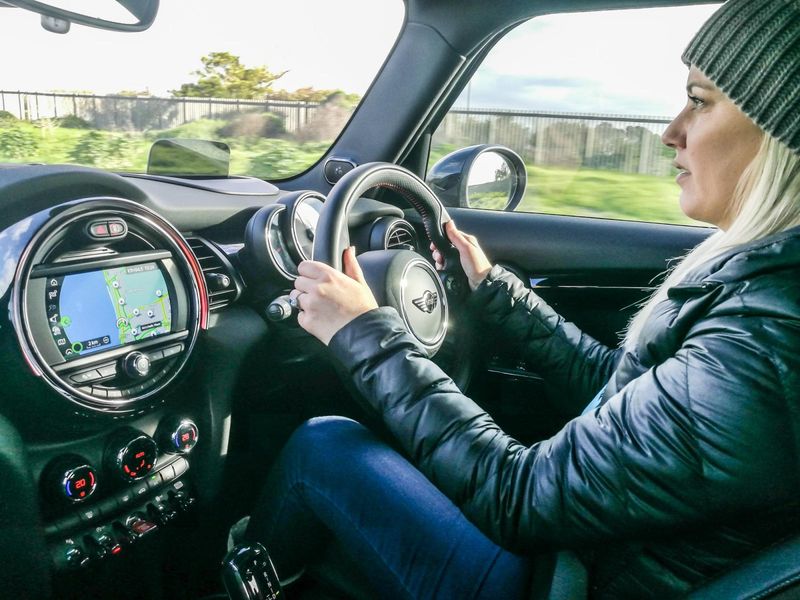
In terms of handling, the Cooper S feels solidly planted on the tar and coupled with its well-weighted and responsive steering, it can be coaxed through corners at heady speeds with relatively little fuss. In fact, the Cooper S is hugely entertaining to drive and you can toggle through 3 driving modes (Green, Mid and Sport) depending on your preference. There has to be a downside to all that nimbleness and that's the ride quality, which is on the firmer side of pliant; all the potholes created by the recent rains in the Cape tended to unsettle the Mini (shod with 17-inch wheels, no less).
The standard 5-door Cooper offers good performance and its ride quality is a bit more forgiving.
We then hopped into the more civilised 5-door Cooper automatic in Solaris Orange for the second half of our test drive. It too was fitted with an automatic 7-speed double-clutch transmission, but without the mounted paddles.
In the case of the Cooper, a 3-cylinder, 1.5-litre turbopetrol engine (with outputs of 100 kW and 230 Nm of torque) does duty under the bonnet. The former is obviously not as sprightly as the S, but we were pleasantly surprised by the liberal gusto this engine offers; it never felt underpowered. This derivative is capable of 0 to 100 kph in 8.2 seconds. Like the Cooper S, the 5-door Cooper felt equally dextrous through corners, but its ride was a bit more forgiving thanks to its smaller 16-inch alloy wheels.
Final thoughts
The latest Cooper offers thrills and a degree of boutique exclusivity, but it doesn't come cheap.
Mini fans will undoubtedly welcome the latest changes to the Cooper range and its expanded feature offering, higher levels of customisation, robust build quality and fun-to-drive character will only solidify the Cooper’s appeal in the premium compact car market.
However, all these niceties come at a premium and in standard form, the Mini Cooper commands a significantly higher price tag than rivals such as the Audi A1, Volkswagen Polo and Ford Fiesta. Other rivals worth considering in the upper end of the scale include the Abarth 500, Mercedes-Benz A-Class and BMW 1 Series. Once you start ticking off options and dabbling in customisation, the Mini Cooper can become a very pricey proposition, which in today’s economic climate, means that the newcomer will probably become more exclusive/niche/aspirational, rather than more familiar.
As an example, you can get the recently launched Polo GTI priced at R375 900, while the Cooper S sports automatic is priced from R459 400. That’s a massive R84 000 difference before ticking options, which some buyers might find a bit difficult to swallow. Having said that, remember that every Mini derivative is offered with a 5-year/100 000 km maintenance plan, which is longer/more encompassing than those of most of its rivals.
We will have the latest Mini Cooper on test soon, so look out for our full evaluation in the near future.
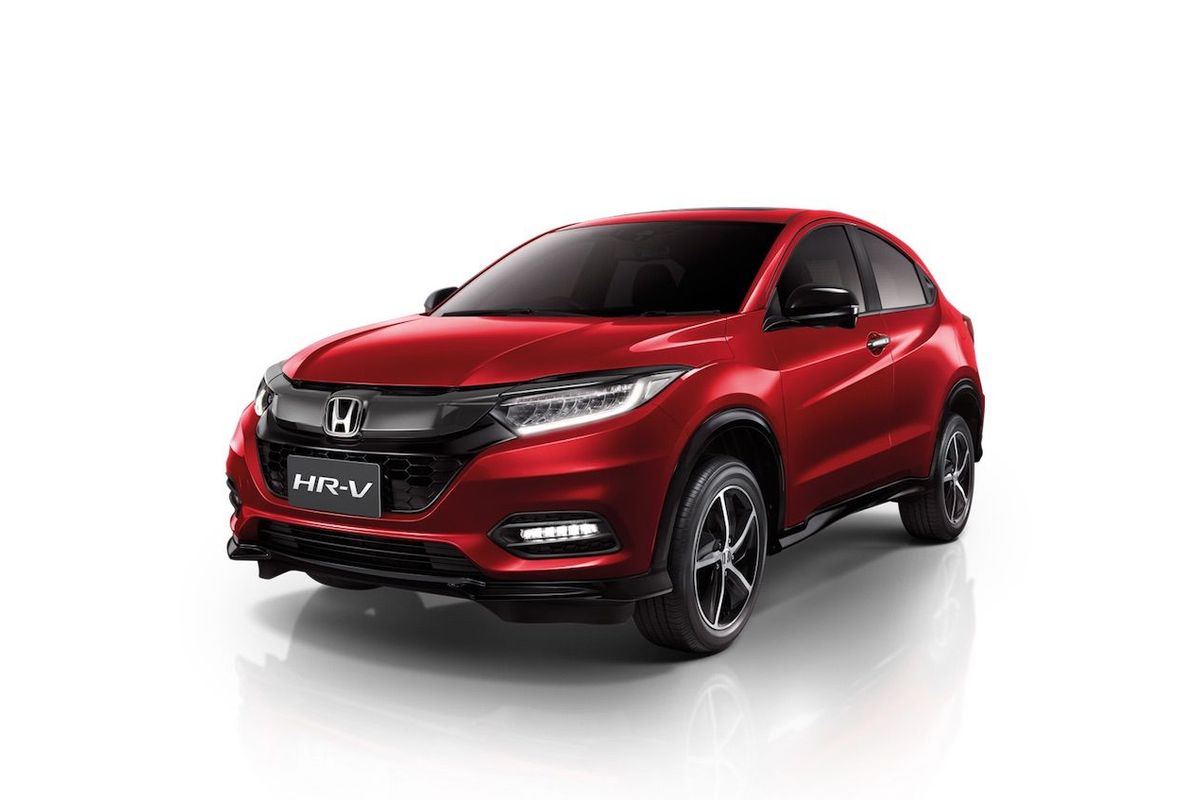
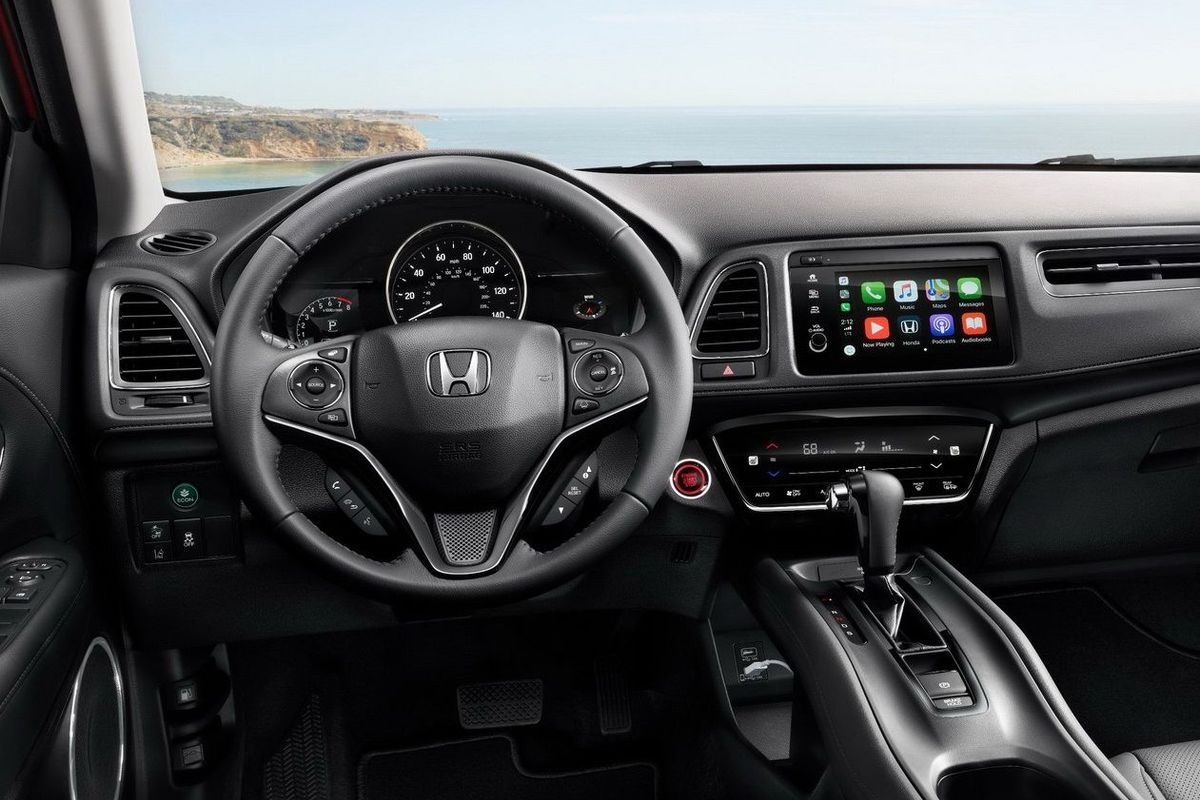
The Honda HR-V has been facelifted for should be launched in South Africa shortly before the end of 2018. As one of the more spacious contenders in the highly competitive compact family car category, the Honda has broad appeal…
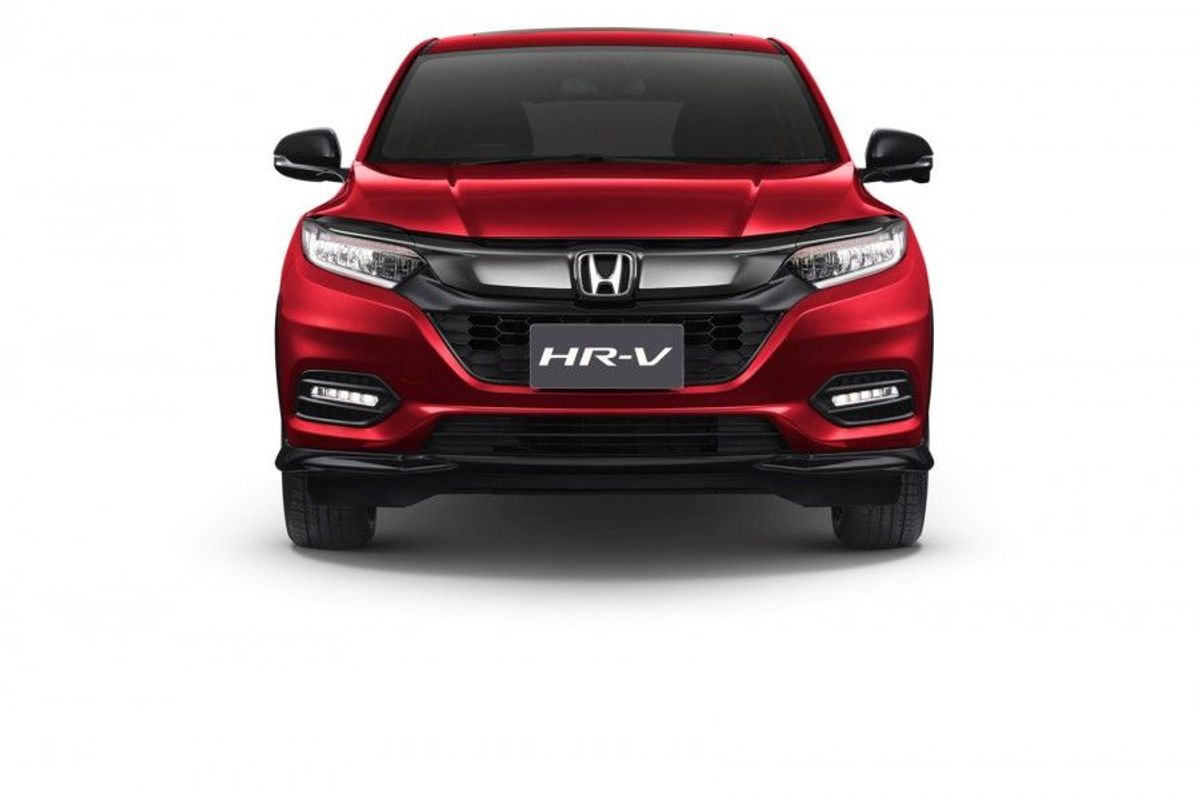
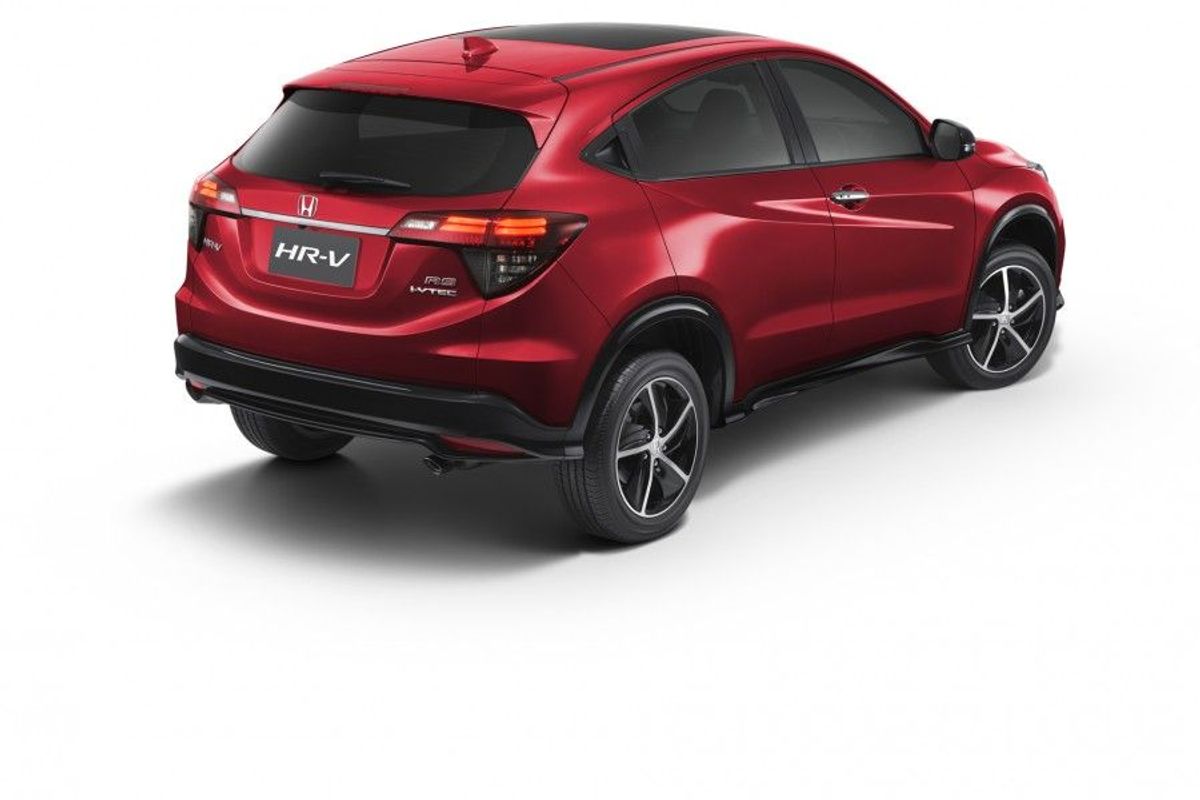
The facelifted Honda HR-V has already gone on sale in some countries, such as Thailand and Japan, and incorporates some small changes to the exterior design, additional specification and new safety technology, although the exact specification for our market has yet to be confirmed. When the HR-V was launched in South Africa back in 2015, it impressed us with its practical Magic Seat system, good looks and reasonable spec. It was priced competitively too and so well-received that it was named a semifinalist in the Compact Family Car category of the Cars.co.za Consumer Awards – powered by WesBank for both the 2016/17 and 2017/18 instalments of the awards programme.
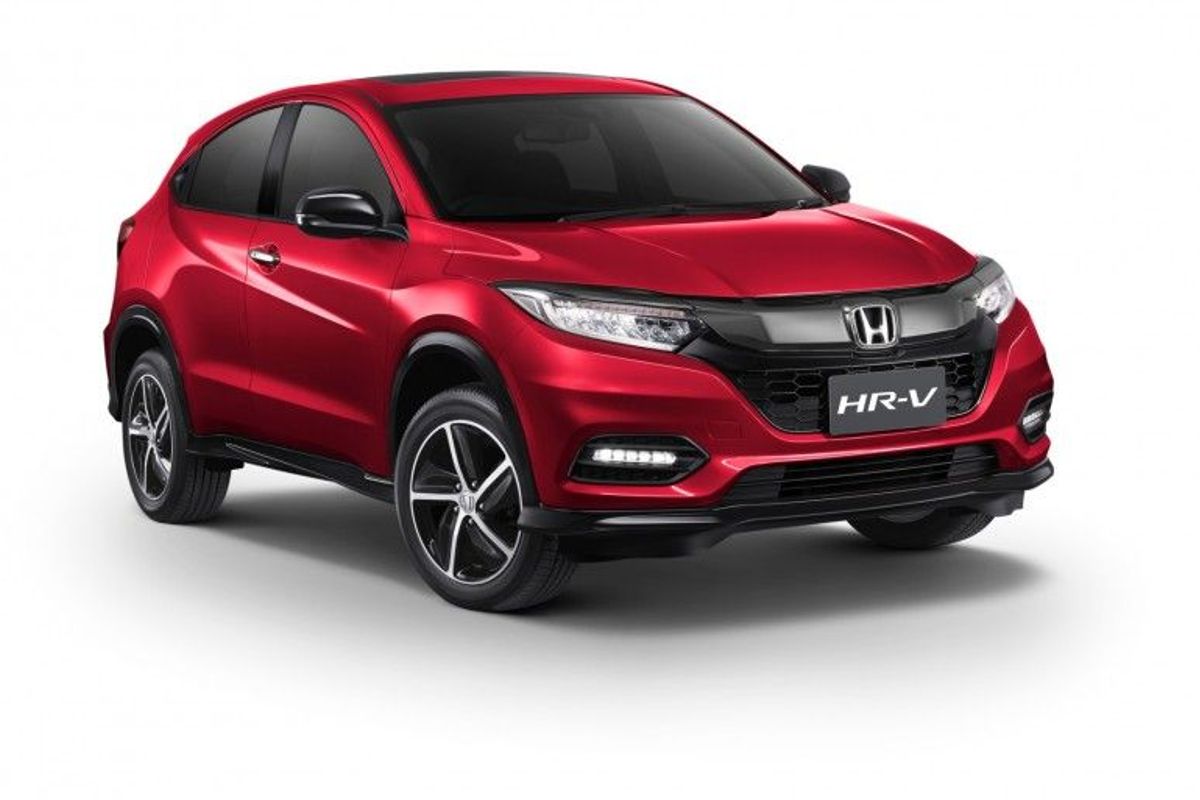
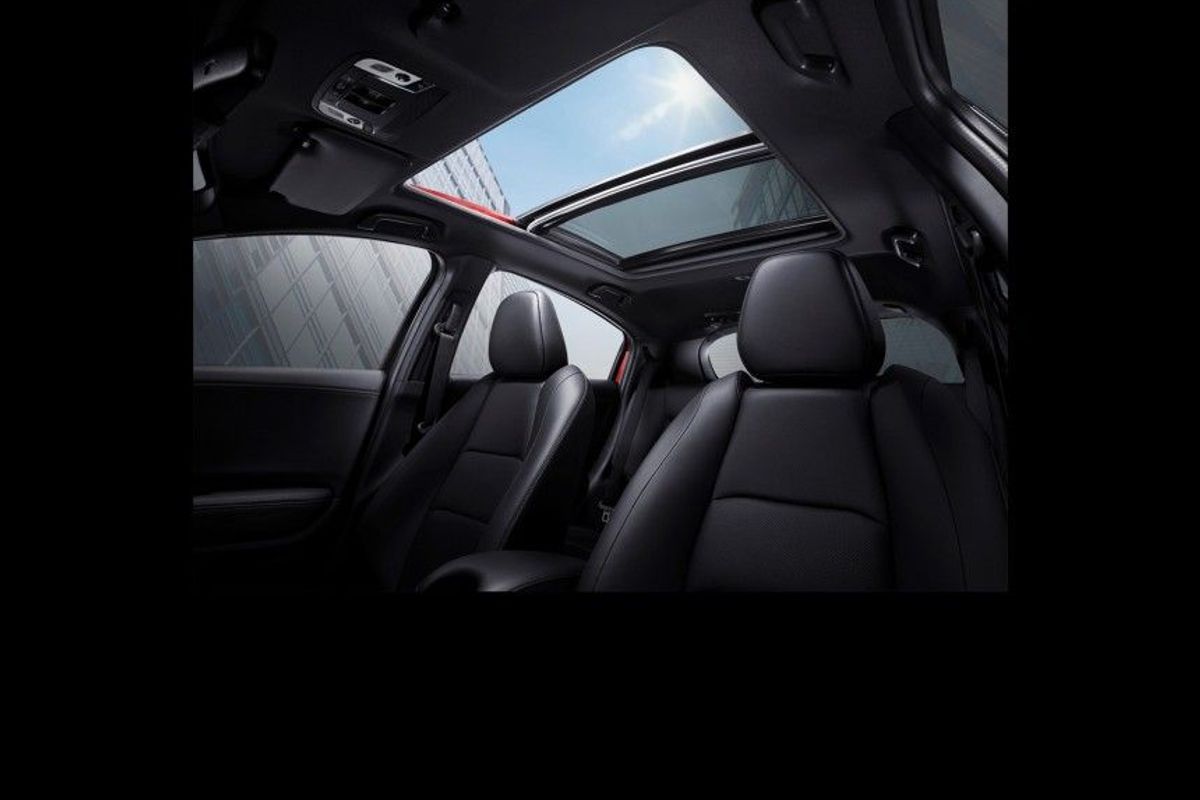
For 2018, the Honda HR-V has gained a bolder, more contemporary front end, replete with a honeycomb mesh grille, new headlights (ostensibly full LED units), repositioned daytime running lights and a new colour called Passion Red Pearl, seen here. There are also new 17-inch dual-tone alloy wheels and optional panoramic sunroof.
The updated specification (in overseas markets) sees the addition of blind spot warning and autonomous emergency braking system. It appears that the infotainment system has also received a makeover – we'd be very surprised if it won't be Android Auto/Apple Carplay compatible.
There's no mention of whether the 1.5-litre engine is still available, but the 104 kW/172 Nm 1.8-litre naturally-aspirated four-cylinder petrol motor appears to have been carried over. Power goes to the front wheels via a continuously variable transmission (CVT).
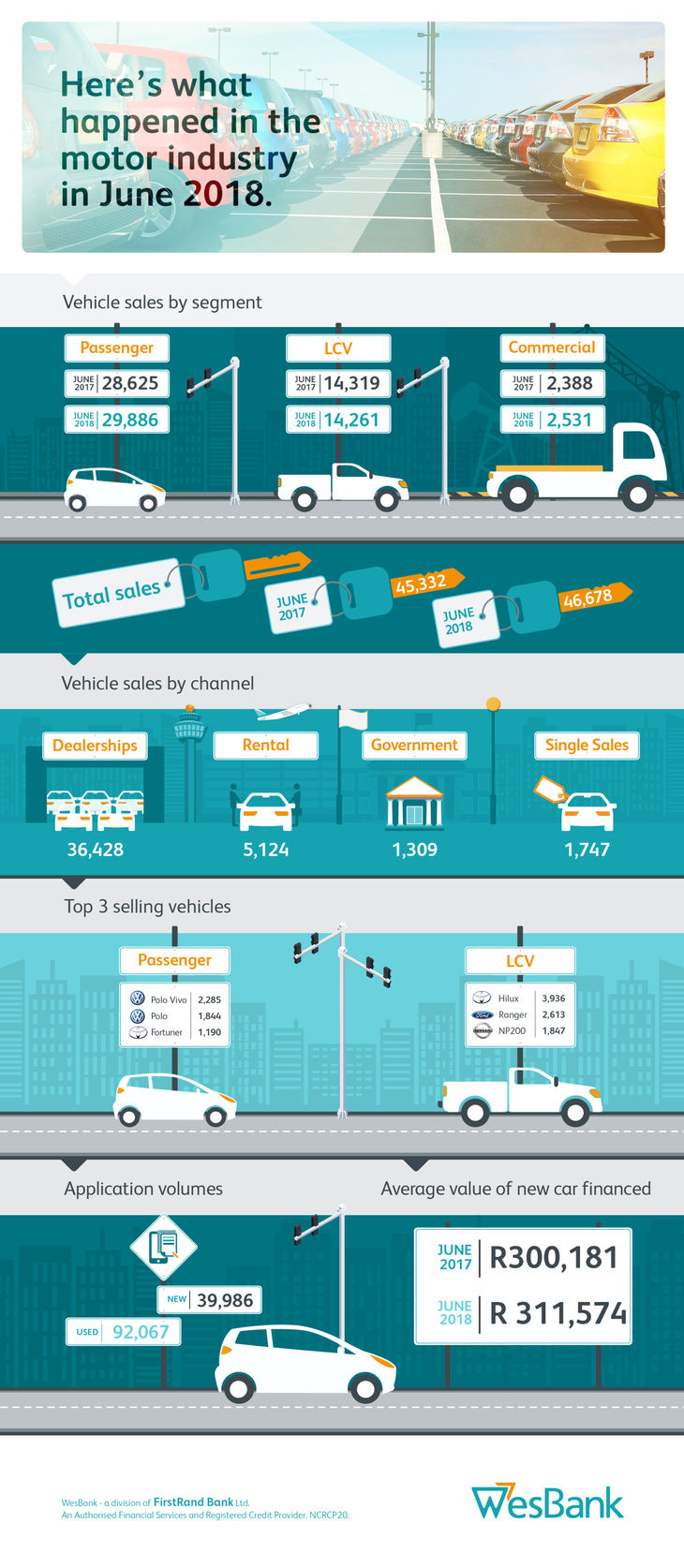
New vehicle sales and exports improved during June 2018 according to the National Association of Automobile Manufacturers of South Africa (NAAMSA).
New car sales in South Africa during June 2018 recorded a slight increase of 2.9% compared with the same period last year while export sales reflected a large decline of 22%. Exports appear to be down due to the Mercedes-Benz and Volkswagen plants undergoing improvements and refurbishments.
WesBank’s Executive Head for Sales and Marketing, Ghana Msibi says that results are in line with forecasts and that historical data shows that the second half of the year is generally stronger than the first half for vehicle sales. “Consumers are generally more cautious with big-ticket purchases early in the year, often because of lingering December spending hangovers. Shorter months and fewer working days due to public holidays over the first six months also contribute to less sales activity.” Wesbank expects the motor industry to grow by 0.75% in 2018.
New Car Sales Summary – June 2018
Aggregate new vehicle sales of 46 678 up by 2.9% (+1 346 units) compared to June 2017
Passenger car sales of 29 886 up by 4.4% (+1 261 units) compared to June 2017
Light Commercial Vehicle (LCV) sales of 14 261 down by 0.4% (-58 units) compared to June 2017
Export sales of 26 790 down by 15.3% (-4 841 units) compared to June 2017
NAAMSA expects new vehicles sales to improve gradually over the medium term as demand for new vehicles recover. Factors contributing to the positive outlook include moderate new vehicle price inflation, improved political/policy environment, reduced interest rates and unchanged international credit ratings.
Economic growth, as well as business and consumer confidence, is also expected to improve for the remainder of 2018 and into 2019 with NAAMSA predicting an overall annual sales improvement of 3% in 2018. Furthermore, global growth will continue to support exports going forward. NAAMSA, however, warns that the current wave of protectionism could have a negative impact on the global economy.