2017’s New Cars: How They Fare in Terms of Sales

We look at some of the new cars that landed in South Africa in 2017 and see if they are selling as well as predicted.

It’s difficult to tell if a new car is going to be a hit with the public or not – unless it’s a Volkswagen or Toyota, in which case it probably will be. What we as members of the motoring media do after we've reviewed new products is to sign off with a final line about letting the sales charts do the talking… But how are the new cars of 2017 actually doing? Looking through the list of new vehicles for 2017, Audi went large brought 3 new models to market with an all-new Q5, A5 and the refreshed A3. Other large introductions this year included the Golf 7.5, BMW 5 Series and Kia Picanto.

As for the rest, we’ve picked a selection of interesting new vehicles across various segments to see which models are doing well and which are flopping. A few things to note, however, are that the overall market a mixed bag at the moment, with sales in the last few months on the up, but earlier in 2017, things did not look bright at all. Also, the supply of certain models may be limited – sales figures may suffer as a result of this. Also note, BMW and Mercedes-Benz do not release sales figures, but Kia and Hyundai now do.

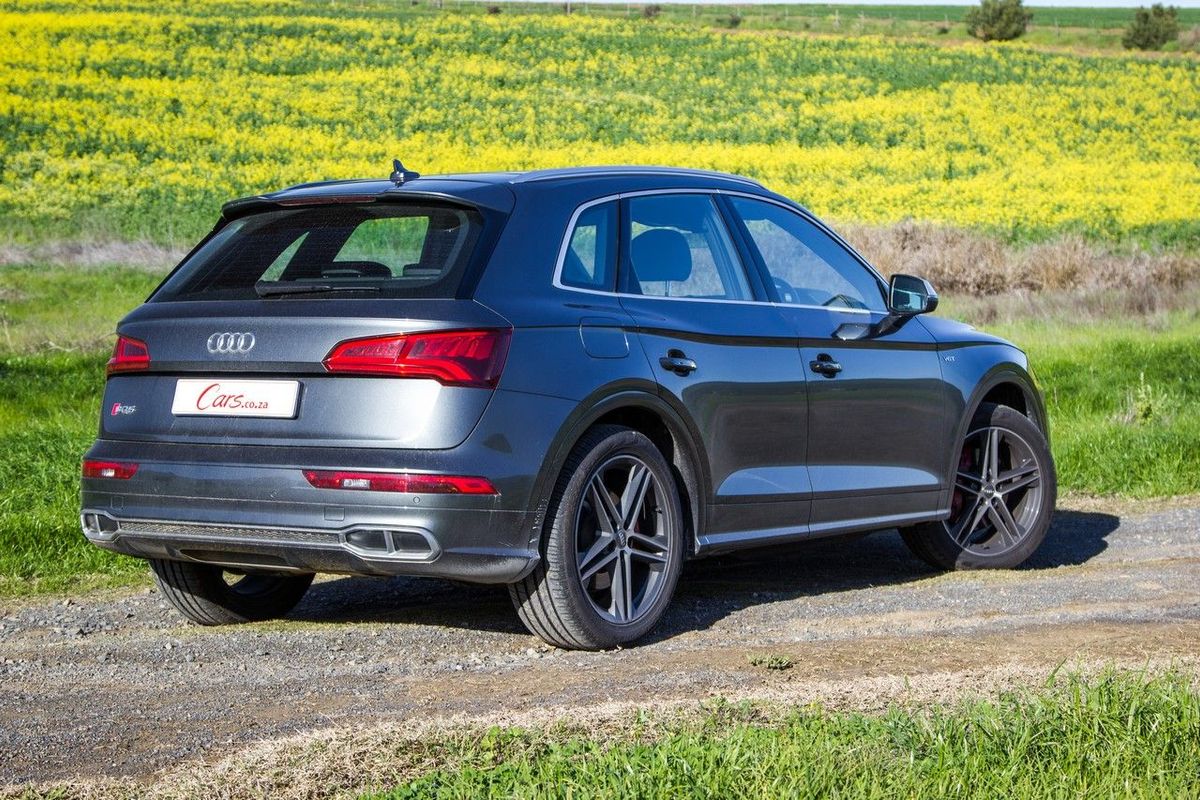
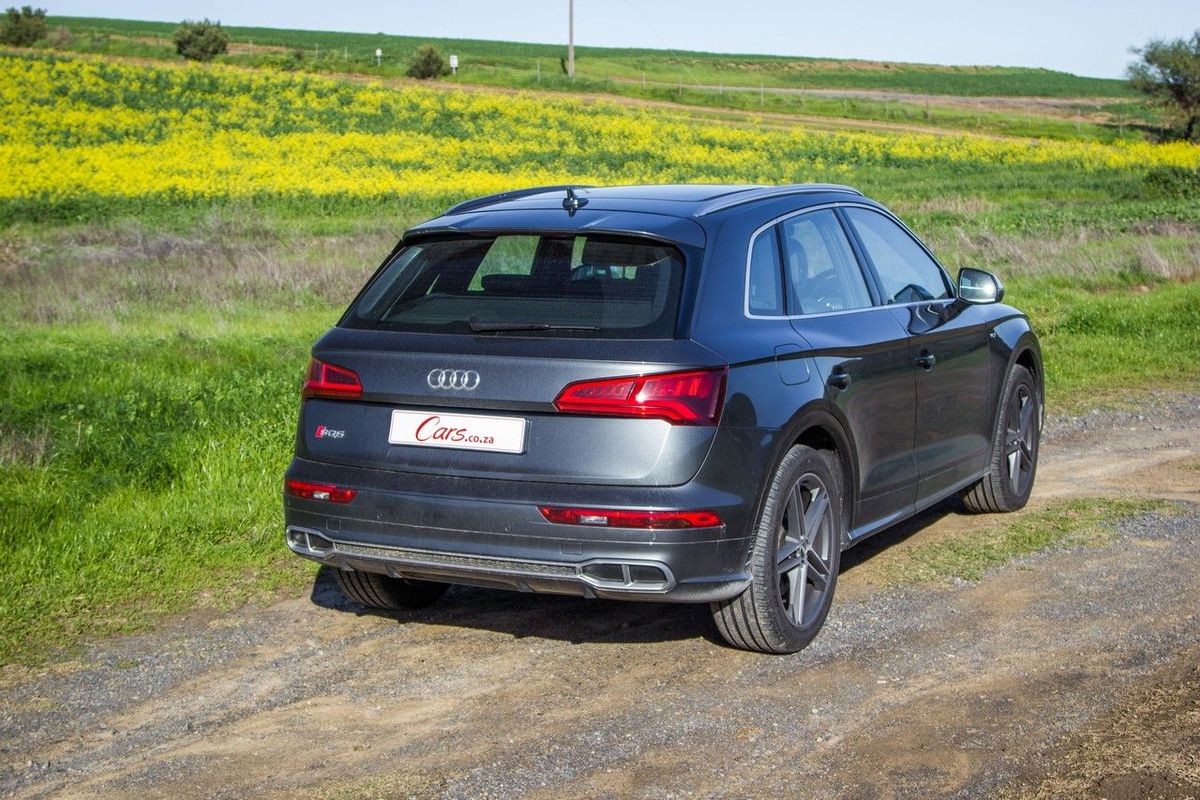
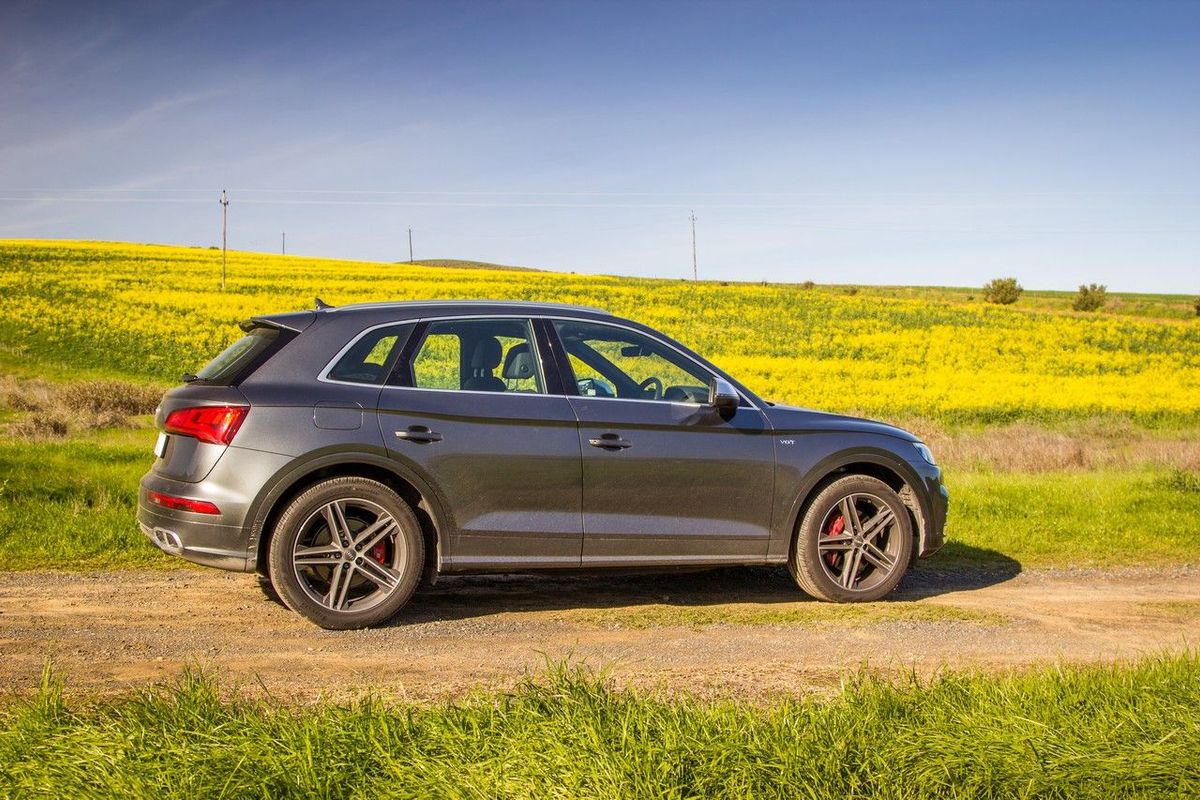
Audi Q5
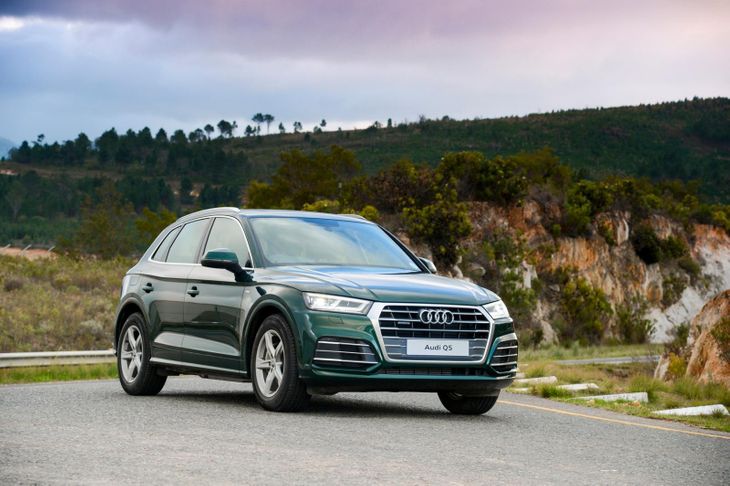
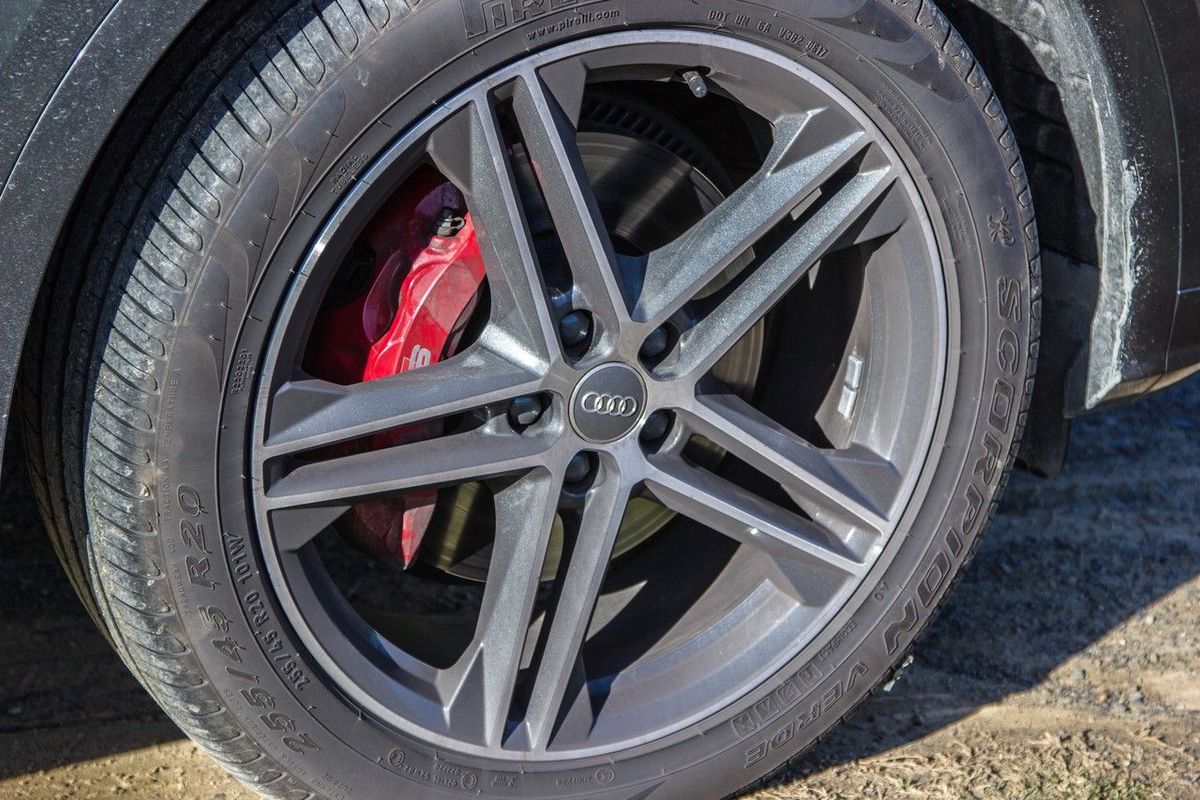
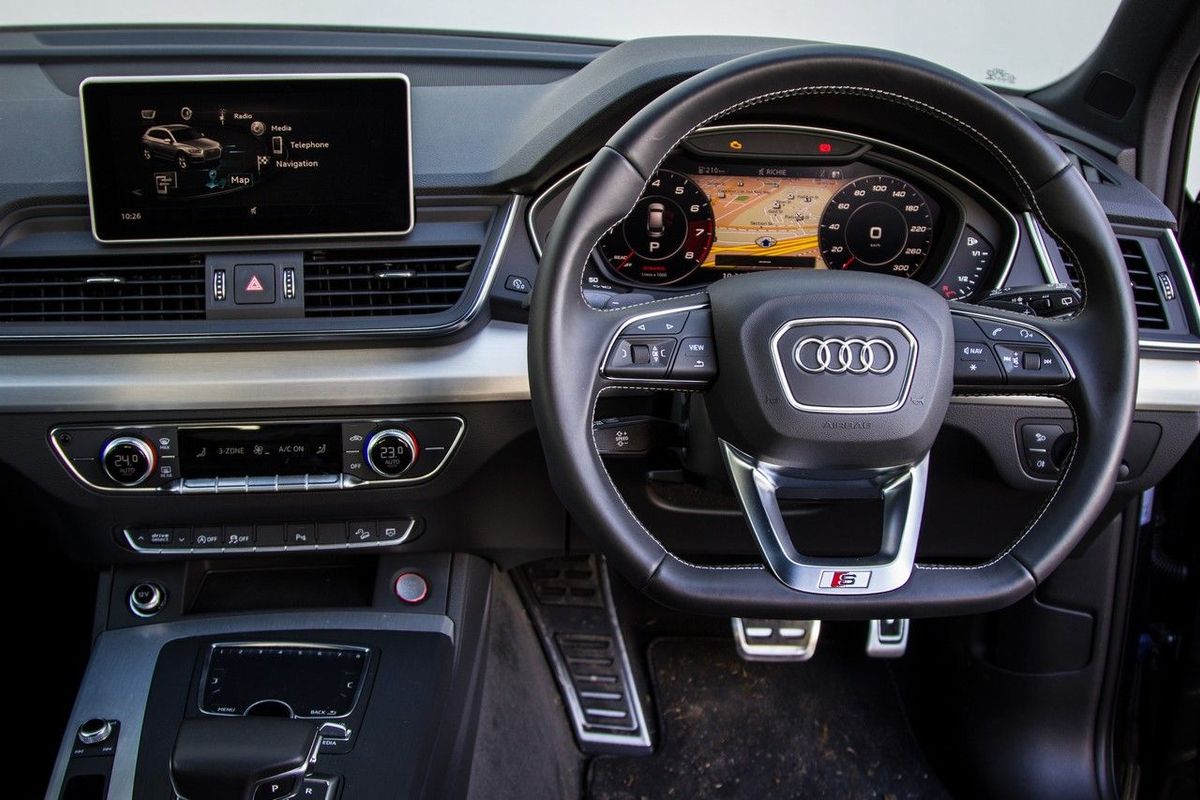
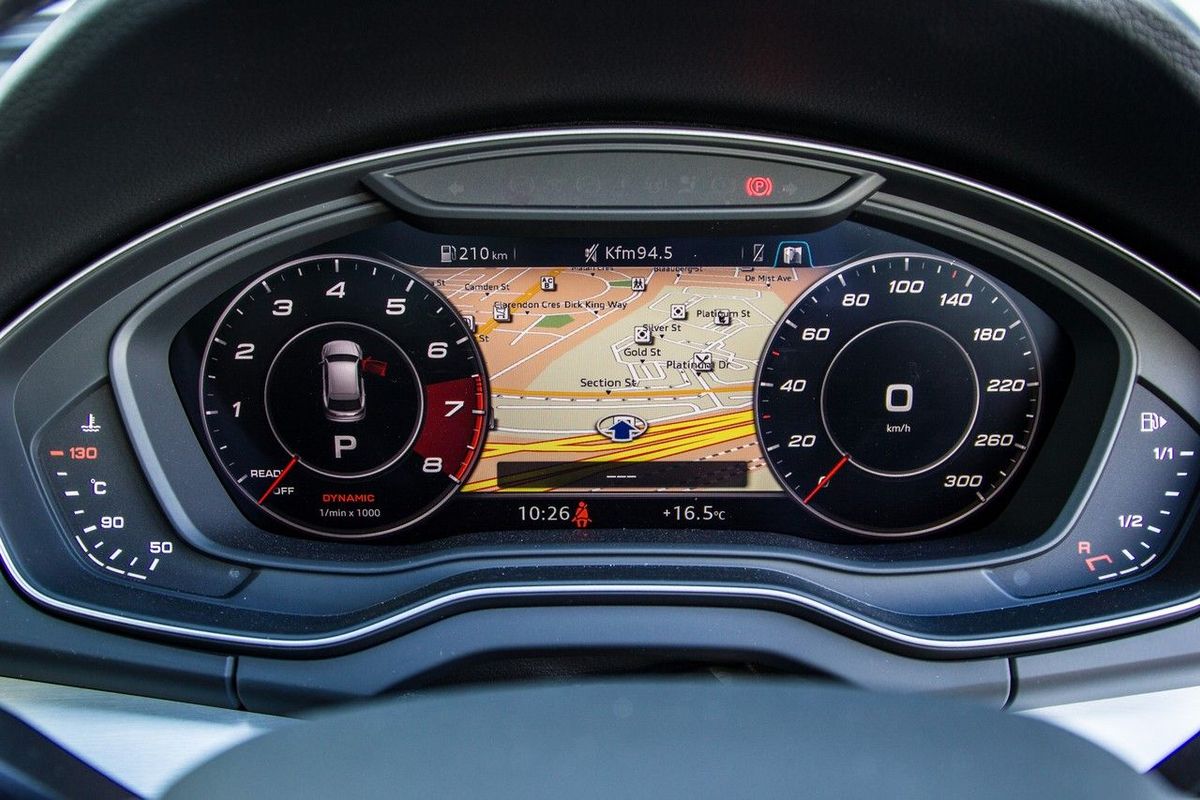
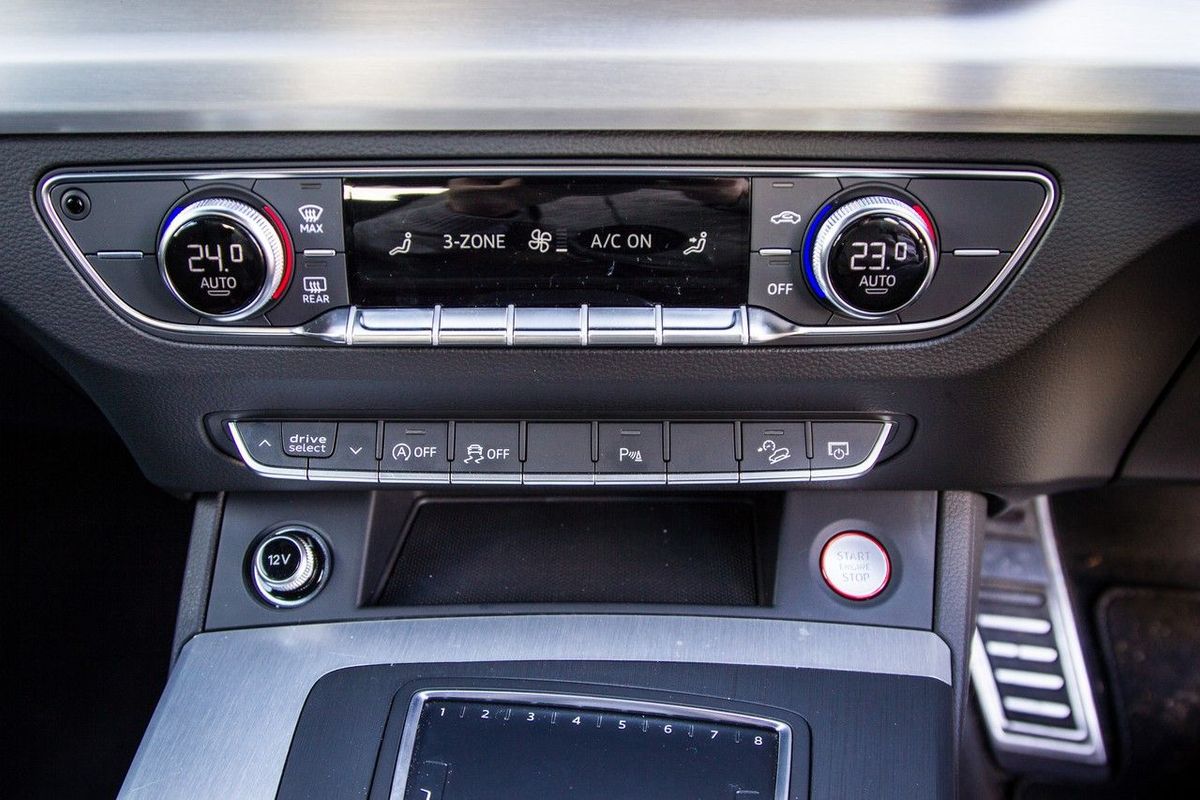
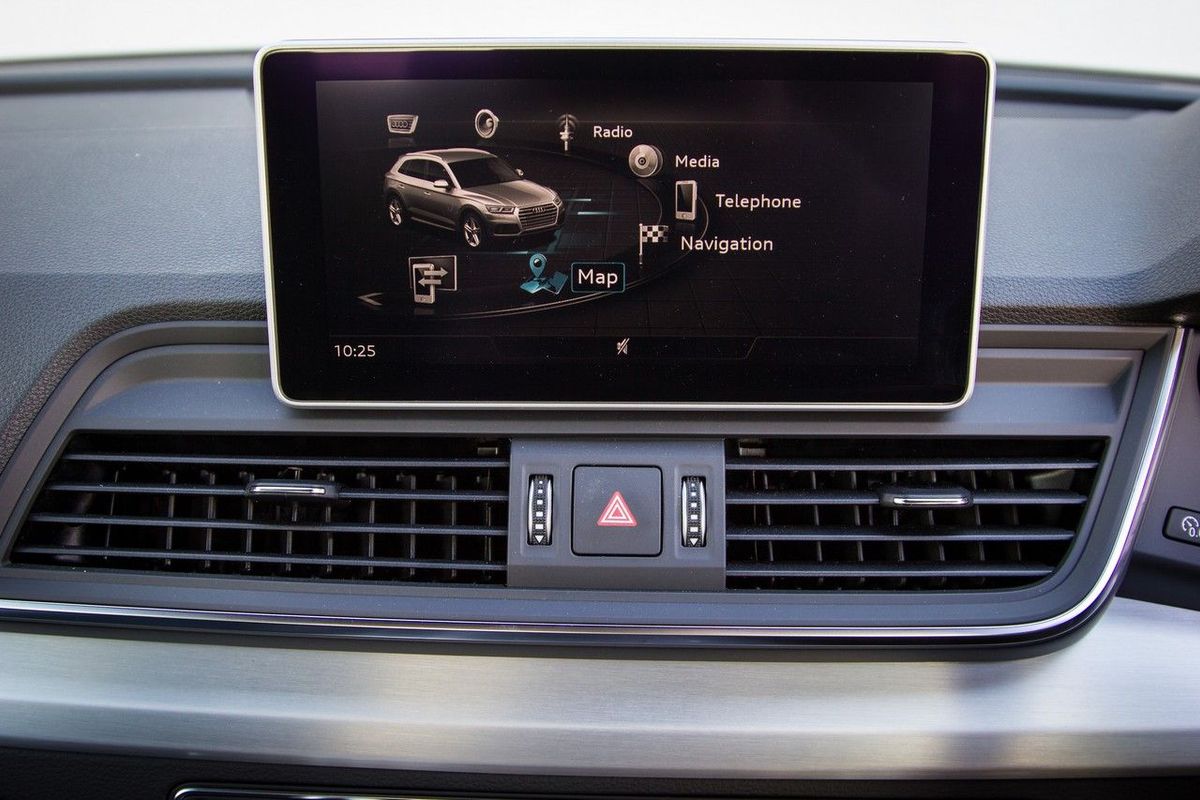
The all-new Q5 has only been on sale since July this year. The Q5 takes major steps in ride refinement and comfort levels inside, at a cost. The entry-level model is expensive as are the options, but it is the best of the current German mid-size SUVs. Sales for the new model appear to be on the up as it has jumped from below 100 units to over 150 units per month during August 2017.

The Audi Q7 3.0 TDI Quattro is a semi-finalist in its category of the 2017/18 Cars.co.za Consumer Awards

Audi SQ5 quattro (2017) Review

New Audi Q5 (2017) Launch Review

Search for a used Q5 here

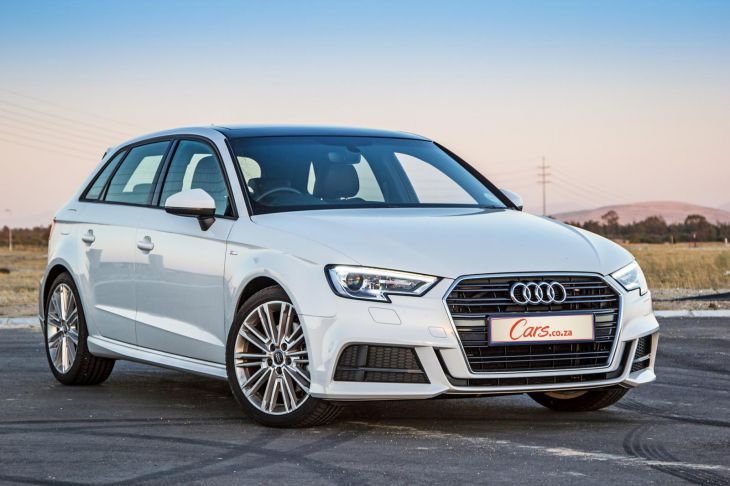
Audi A3

The facelifted A3 arrived right at the tail end of 2016 featuring a plusher interior as well as the option of Audi's Virtual Cockpit dashboard. The ride has also improved and throughout the year we've seen the introduction of the RS models to both the hatch and sedan derivatives. The A3 has done well so far in 2017, pushing well over 200 units a month and on the odd occasion, 300 units. It makes it one of the top sellers in the C-segment hatch market.

The Audi 2.0T FSI Sportback S Line Auto is a semi-finalist in its category of the 2017/18 Cars.co.za Consumer Awards

Audi A3 2.0T Sportback Auto (2017) Review

Audi S3 Sedan (2017) Quick Review

Search for a used Audi A3 here

Audi A5
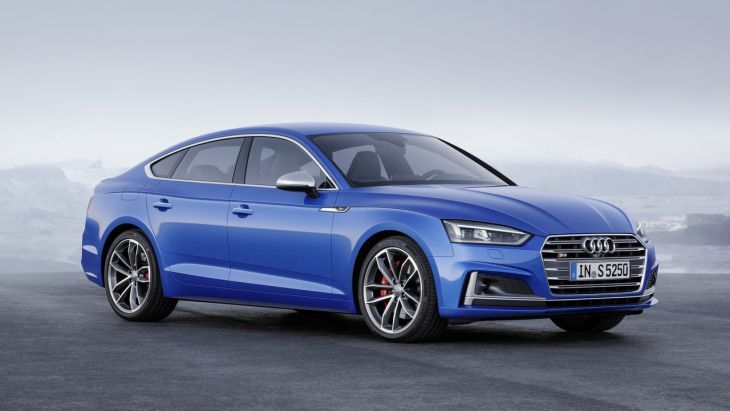
The A5 is never going to shift huge numbers with its premium price tag and niche-segment placement. Even with the addition of the Sportback 5-door models, allowing for more practicality the A5 is a heart-over- head purchase. It seems to be doing reasonably well in its first 4 months of sales, as it turns between 70 and 90 units per month, which is not bad considering the starting price is R600k.

Audi A5 (2017) Specs & Pricing

Audi S5 (2017) Review

Search for a used Audi A5 here

Hyundai Creta
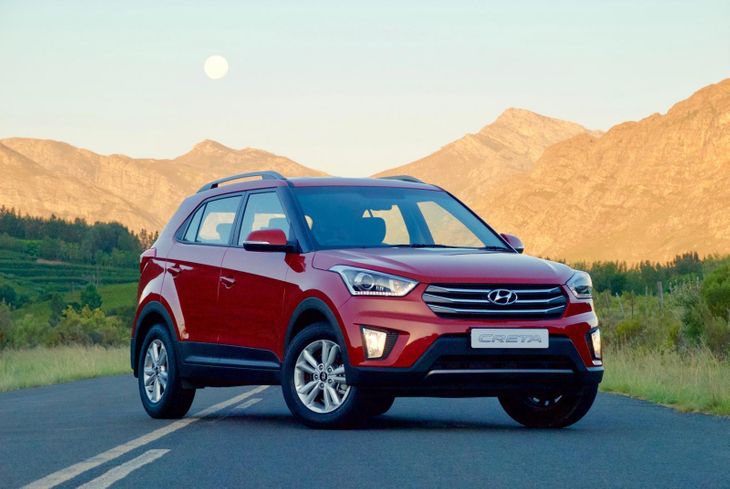
The Creta is a new product from Hyundai in the compact family car/crossover segment. Rivals are the likes of the Renault Captur, Suzuki Vitara, Nissan Juke, Toyota C-HR, Honda HR-V and the Mazda CX-3 – to name but a few in this tightly fought segment. The Creta is very popular as it's spacious and very practical. Like a few of the Korean models, it skimps a bit on the active safety systems, but that hasn't hampered its sales at all. We only have sales figures for the Korean brands for July and August, but the Creta is romping away with the segment, notching up 514 and 438 units a month.

The Hyundai Creta 1.6 Exec Auto is a semi-finalist in its category of the 2017/18 Cars.co.za Consumer Awards

Hyundai Creta vs Suzuki Vitara vs Renault Captur (2017) Comparative Video Review

Hyundai Creta (2017) Video Review

Search for a used Hyundai Creta here

Jaguar F-Pace
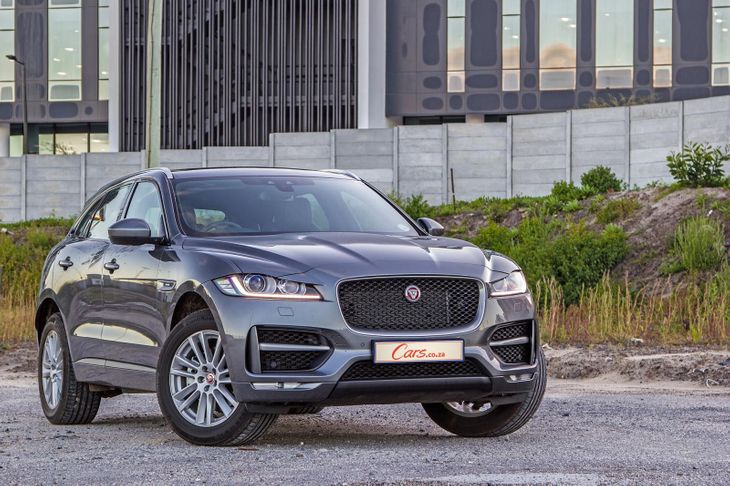
We didn't include the Jag F-Pace in last year's article as it was too new. How's the fastest-selling Jaguar of all time doing in our market? Okay it seems. The F-Pace is quite expensive and certainly pins itself as a road-biased SUV with a sporty demeanour. The F-Pace is certainly outselling the XF and XE sedans and appears to be keeping the brand on the up and up. The F-Pace sells an average of 64 units a month.

The Jaguar F-Pace 35t AWD S is a semi-finalist in its category of the 2017/18 Cars.co.za Consumer Awards

Pedalling an F-Pace: a cyclist's jaunt to Oudtshoorn

World Car of Year (2017) Jaguar F-PACE [Review]

Search for a used F-Pace here

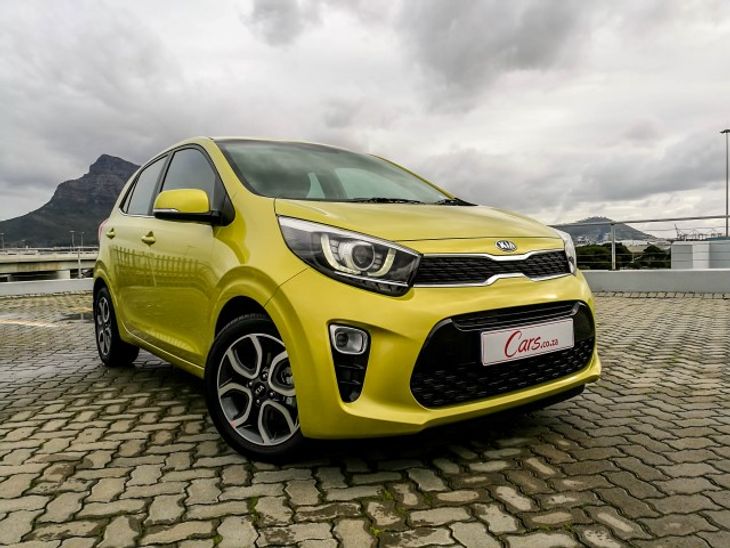
Kia Picanto

The new Picanto has been on sale since early July and appears to be doing quite well. The improved build quality of Kia is certainly noticeable, but the meagre safety spec on certain models is a bit bewildering. The new car retains the previous model's engines, but appears well-suited as a city runabout. Its keen pricing and reputation appear to be helping it on the sales front as the first 2 months of sales have yielded 659 and 846 units. It outsells competition like the Toyota Aygo and VW up! by some margin.

The Kia Picanto 1.0 Style is a semi-finalist in its category of the 2017/18 Cars.co.za Consumer Awards

New Kia Picanto (2017) Launch Review

Kia Picanto (2017) Specs & Price [with Video]

Search for a used Kia Picanto here

Kia Rio
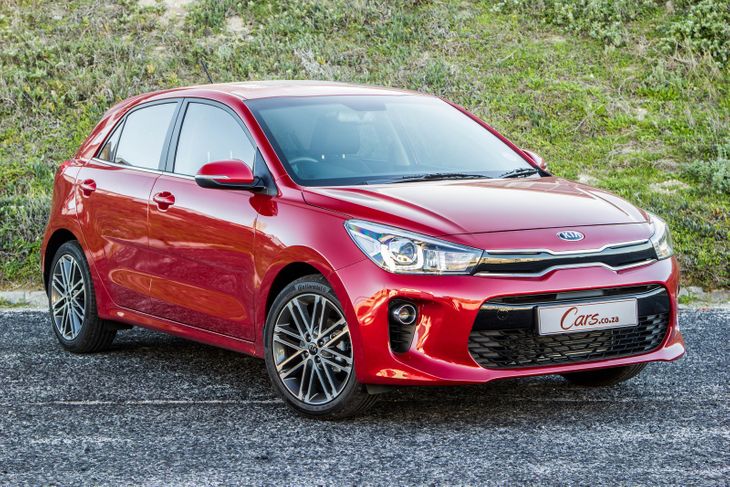
The Rio is another new entrant from the Korean brand; the compact hatchback arrived in early June. The previous generation was a top seller for Kia and it's really hoping the new model will continue the sales momentum. It may suffer next year against perennial favourites in the form of an all-new Ford Fiesta and Volkswagen Polo, but we'll have to wait and see how things shape up. Sales appear to be good for the Rio, with 635 and 504 units in the last 2 months. That's better than the Hyundai i20 and Mazda2, but not quite as much as the Fiesta or Polo.

The Kia Rio 1.4 EX is a semi-finalist in its category of the 2017/18 Cars.co.za Consumer Awards

Kia Rio (2017) Launch Review

Kia Rio 1.4 Tec (2017) Review [with Video]

Search for a used Kia Rio here

Mazda CX-5
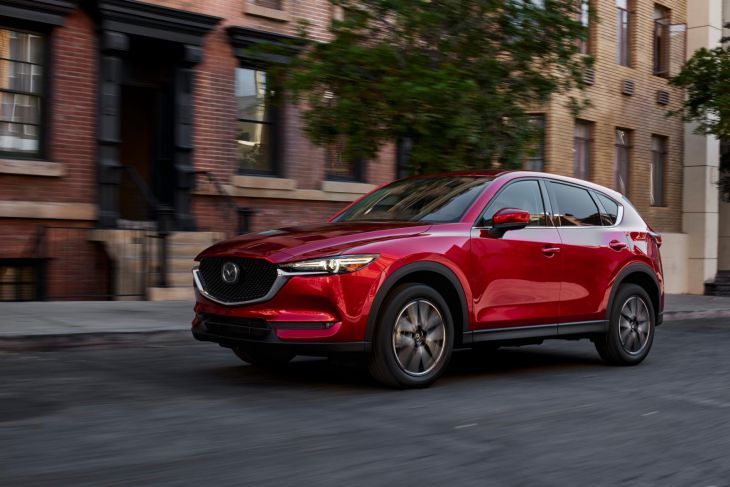
The previous Mazda CX-5 continued to sell extraordinarily well right up until it was replaced with this all-new model. The CX-5 is often ranked as one of the best-selling SUVs in the country and the new model is more stylish with a more premium cabin, excellent sound insulation is excellent. We tip it to continue selling well. Currently, it's selling upward of 350 units a month, which is excellent for an importing brand.

The Mazda CX-5 2.5 Individual is a semi-finalist in its category of the 2017/18 Cars.co.za Consumer Awards

Mazda CX-5 (2017) First Drive

Comparative Review: Mazda CX-5 Akera AWD vs Hyundai Tucson 2.0CRDi Elite [with Video]

Search for a used Mazda CX-5 here

Mitsubishi Triton
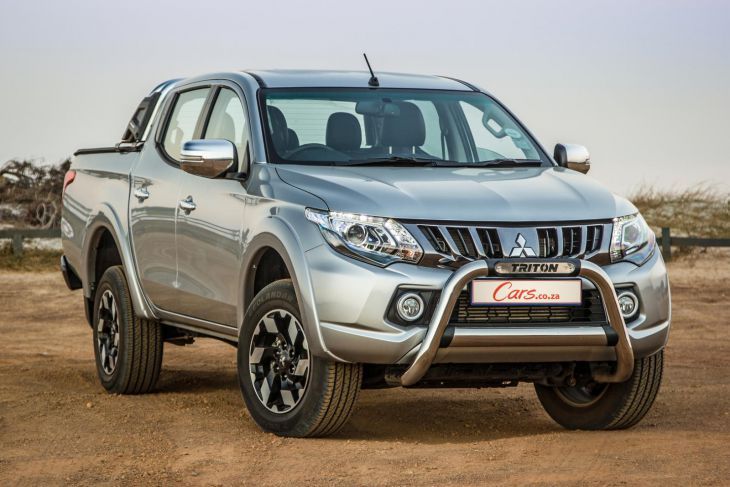
Mitsubishi waited a long time to release the new Triton. It wanted the new 2.4-litre turbodiesel engine, so had to wait a little longer than the introduction of Fiat's Fullback, which makes do with the older 2.5-litre unit. Sales haven't exactly been good for the Triton as the double-cab market has moved further into leisure vehicle territory, while Mitsubishi still appeals to those who like the utilitarian nature of a 4-door bakkie. That said, it's still a very capable bakkie and a worthy contender in the segment. The Triton sells between 25 and 40 units a month, well below par for what it's capabilities suggest.

The Mitsubishi Triton 2.4DI-D 4×4 Auto is a semi-finalist in its category of the 2017/18 Cars.co.za Consumer Awards

Mitsubishi Triton (2017) Video Review

Mitsubishi Triton (2017) First Drive

Search for a used Triton here

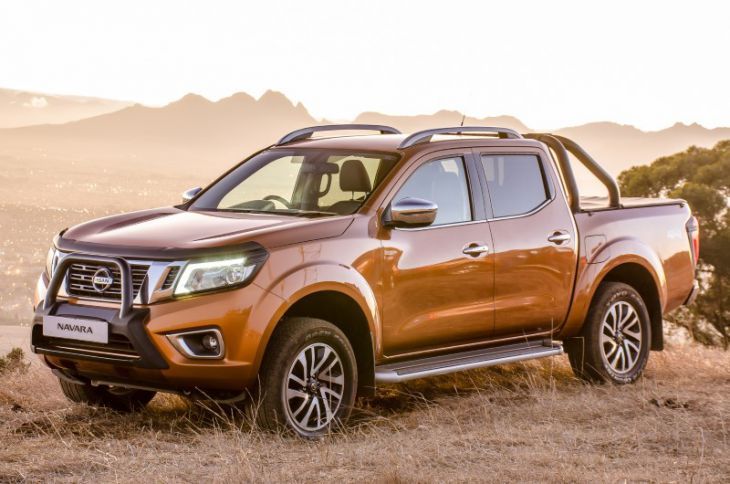
Nissan Navara

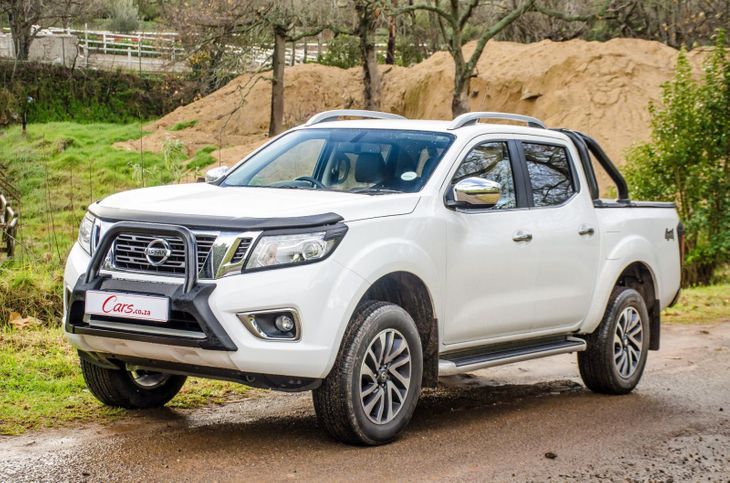
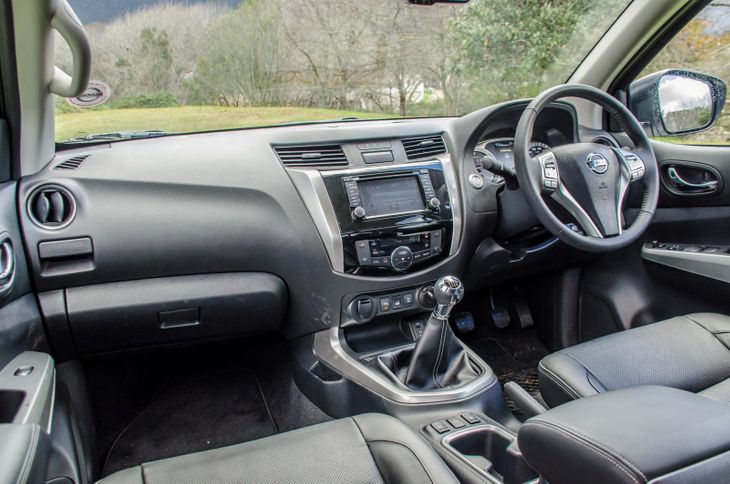
There has been a lot spoken about the new Navara's suspension setup and how it would revolutionise the segment. Unfortunately, the rest of the Navara hasn't managed to match the competition with its plasticy interior and lack of a real infotainment system. Pricing is keen, however and it will be locally built, which may bode well for the provision of more competitive offerings down the line. Sales do appear to be on the up as stock becomes more freely available. The first 3 full months of sales resulted in 110, 137 and 175 Navaras finding homes.

The Nissan Navara 2.3D 4×4 LE Auto is a semi-finalist in its category of the 2017/18 Cars.co.za Consumer Awards

Bakkie Comparison: Nissan Navara vs Ford Ranger Fx4 [with Video]

Nissan Navara 2.3D 4×4 LE (2017) Review

Search for a used Navara here

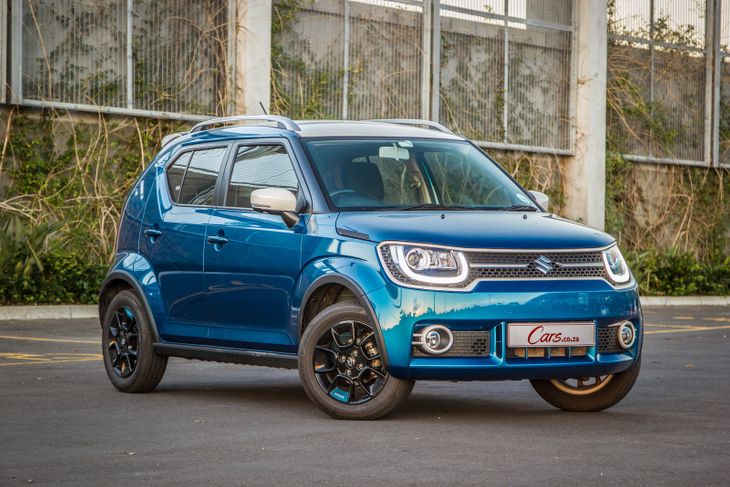
Suzuki Ignis

The Suzuki Ignis is an all-new offering from the Japanese brand. It rivals vehicles like the Volkswagen Up!, Kia Picanto, Toyota Aygo and Renault Sandero. It continues Suzuki's local philosophy of cheerful and keenly priced A- and B-segment offerings. Suzuki has been on the up for almost the duration of 2017 after winning the Brand of the Year title at the 2016/17 Cars.co.za Consumer Awards. It's still early days for the Ignis but after 3 months of sales, it appears to be doing around 110 units a month, which is certainly competitive.

The Suzuki Ignis 1.2 GL is a semi-finalist in its category of the 2017/18 Cars.co.za Consumer Awards

Suzuki Ignis (2017) Specs & Prices

Suzuki Ignis 1.2 GLX (2017) Video Review

Search for a used Ignis here

Volkswagen Golf

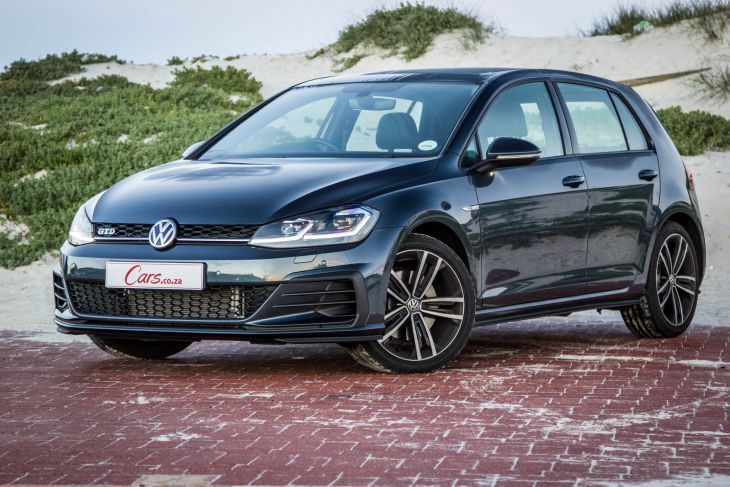
The Volkswagen Golf 7.5 or facelift arrived this year with GTI and R models added to the range almost immediately. The Golf is the go-to vehicle in the C-segment, but this segment has seen a downfall in sales of late as buyers are moving towards SUVs/crossovers. Even with a much higher price, the GTI still turns excellent sales numbers. Currently, the Golf sells around 470 units a month, most of which are GTI and R derivatives.

The Volkswagen Golf 1.4 TSI Comfortline R-Line is a semi-finalist in its category of the 2017/18 Cars.co.za Consumer Awards

Drag Race: VW Golf R vs Golf GTI [Video]

Hillclimb Shootout: Volkswagen Golf GTI vs Toyota 86

Search for a used Golf here

Volkswagen Tiguan

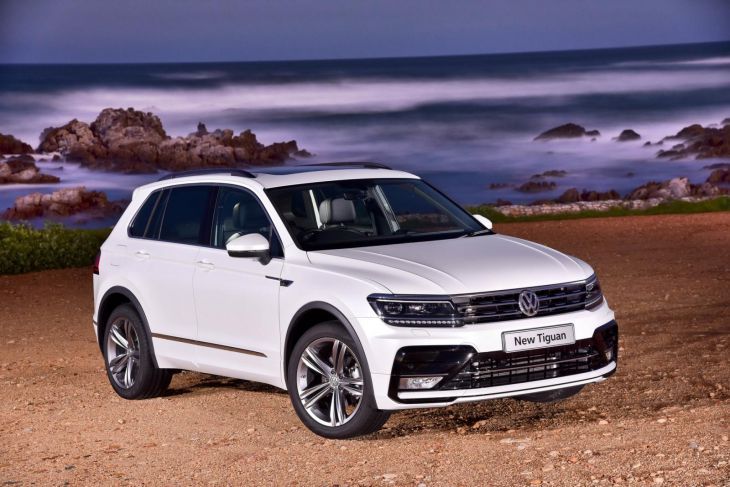
The Volkswagen Tiguan was officially launched in South Africa late in 2016, but with a full year of sales under its belt, it's interesting to see how it has done. We expected it to rocket away with the segment, but hasn't been able to match the Hyundai Tucson or the Toyota RAV4 in terms of outright numbers. It sits alongside the Mazda CX-5 in the second tier of medium SUV sales averaging 340 sales per month.

The Volkswagen Tiguan 1.4 TSI Comfortline R-Line DSG is a semi-finalist in its category of the 2017/18 Cars.co.za Consumer Awards

Volkswagen Tiguan 2.0 TDI (2017) First Drive

Volkswagen Tiguan 2.0 TDI Highline 4Motion DSG (2017) Quick Review

Search for a used Tiguan here

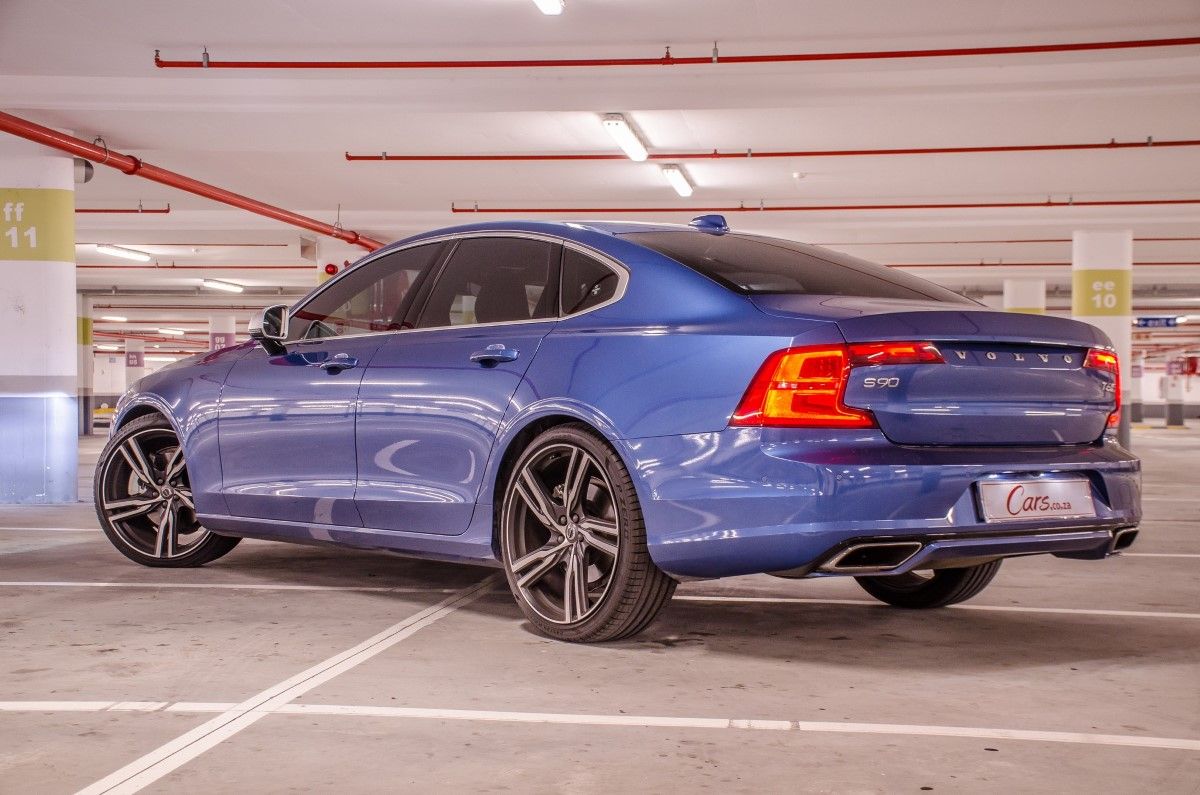
Volvo S90

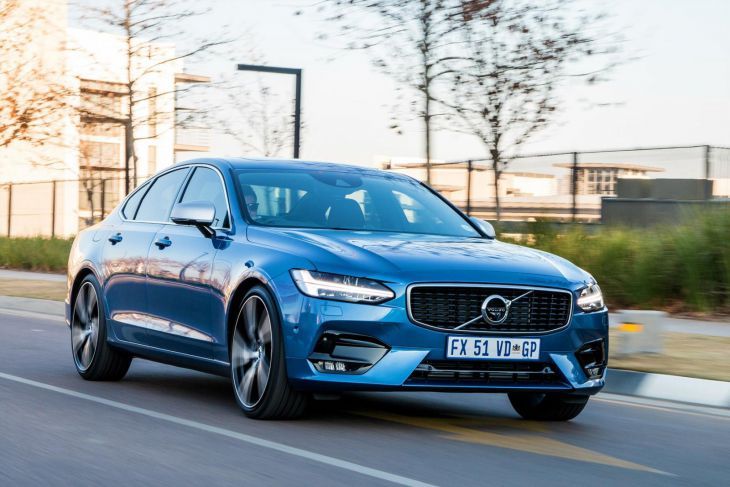
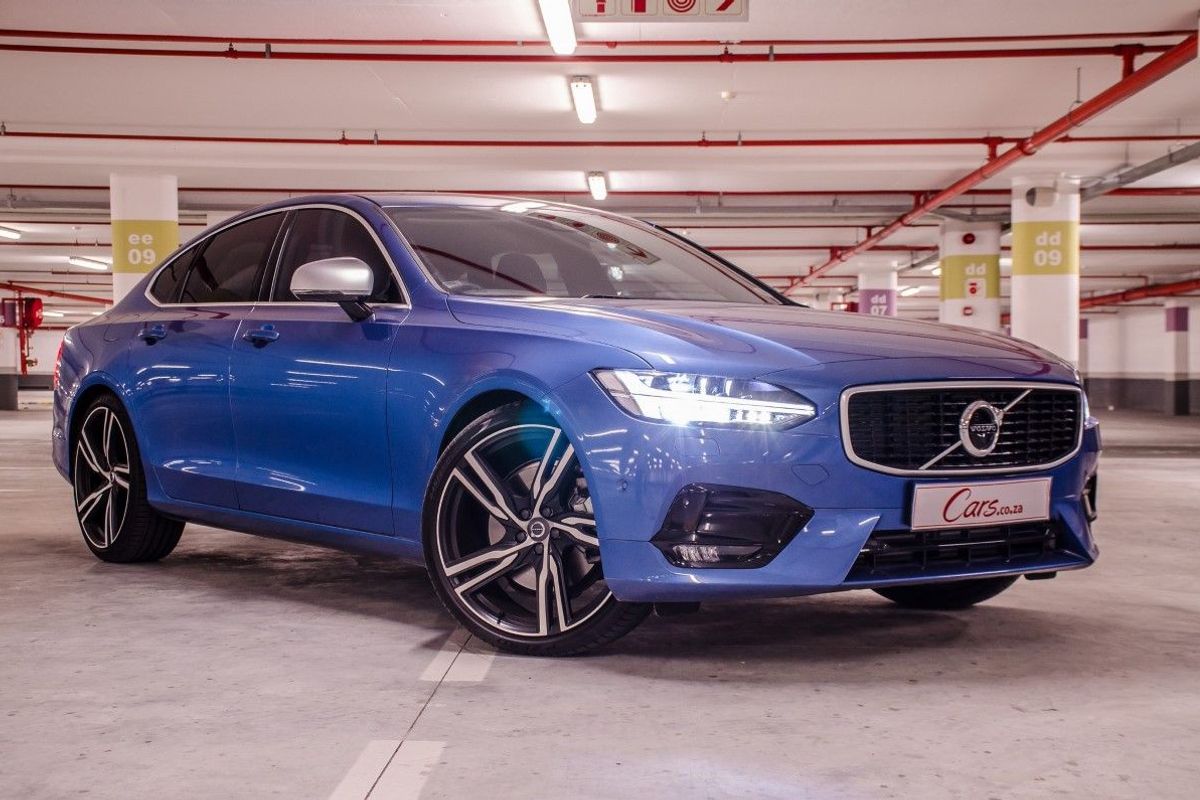
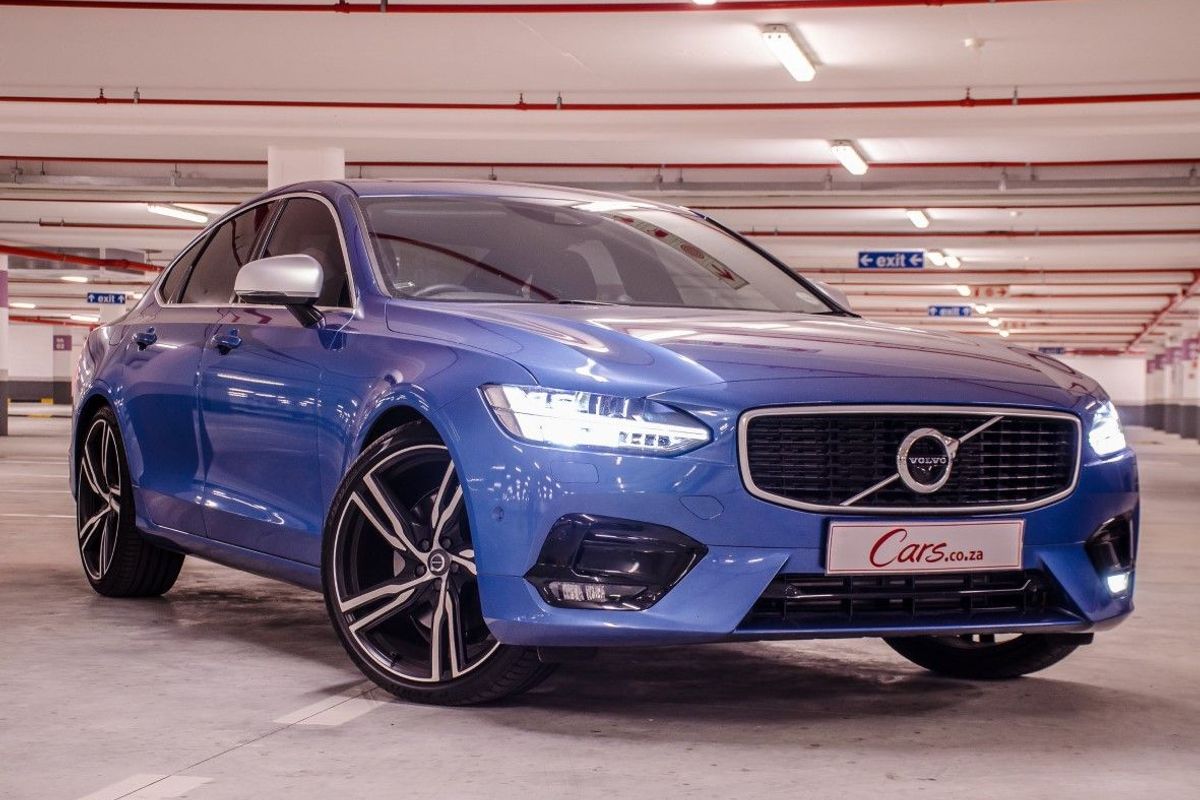
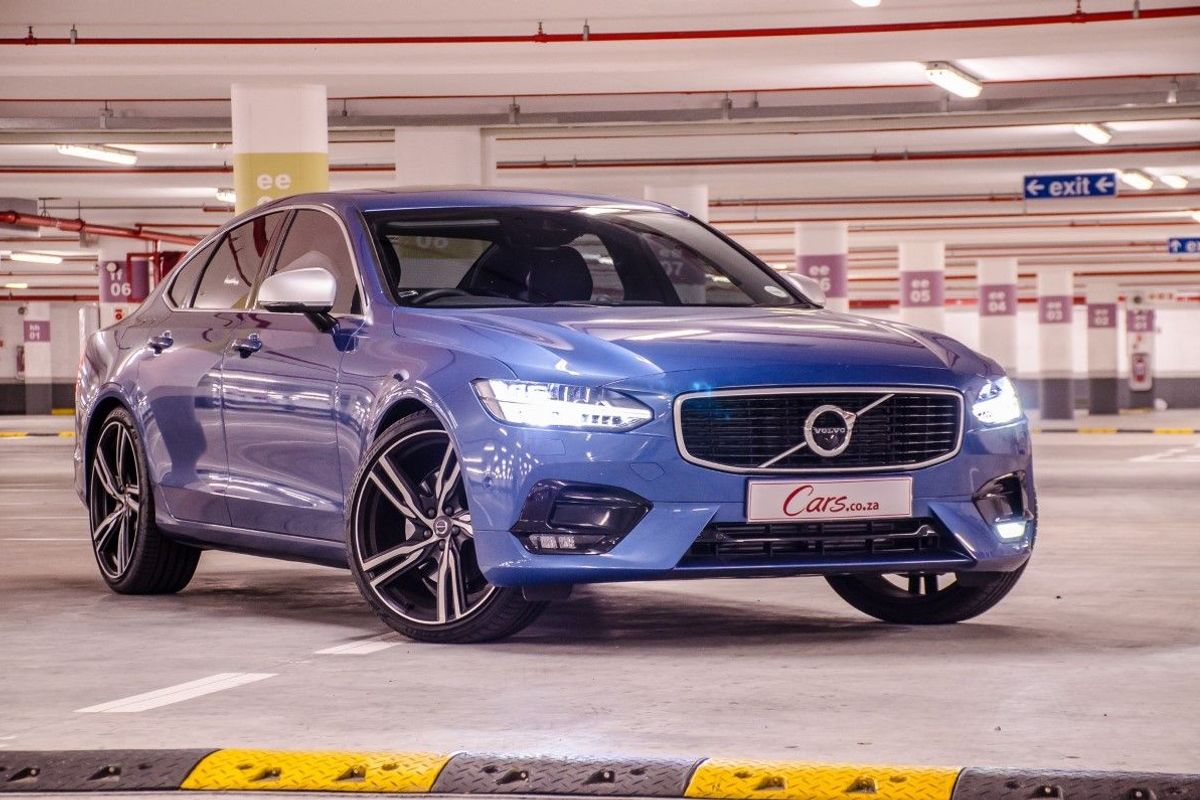
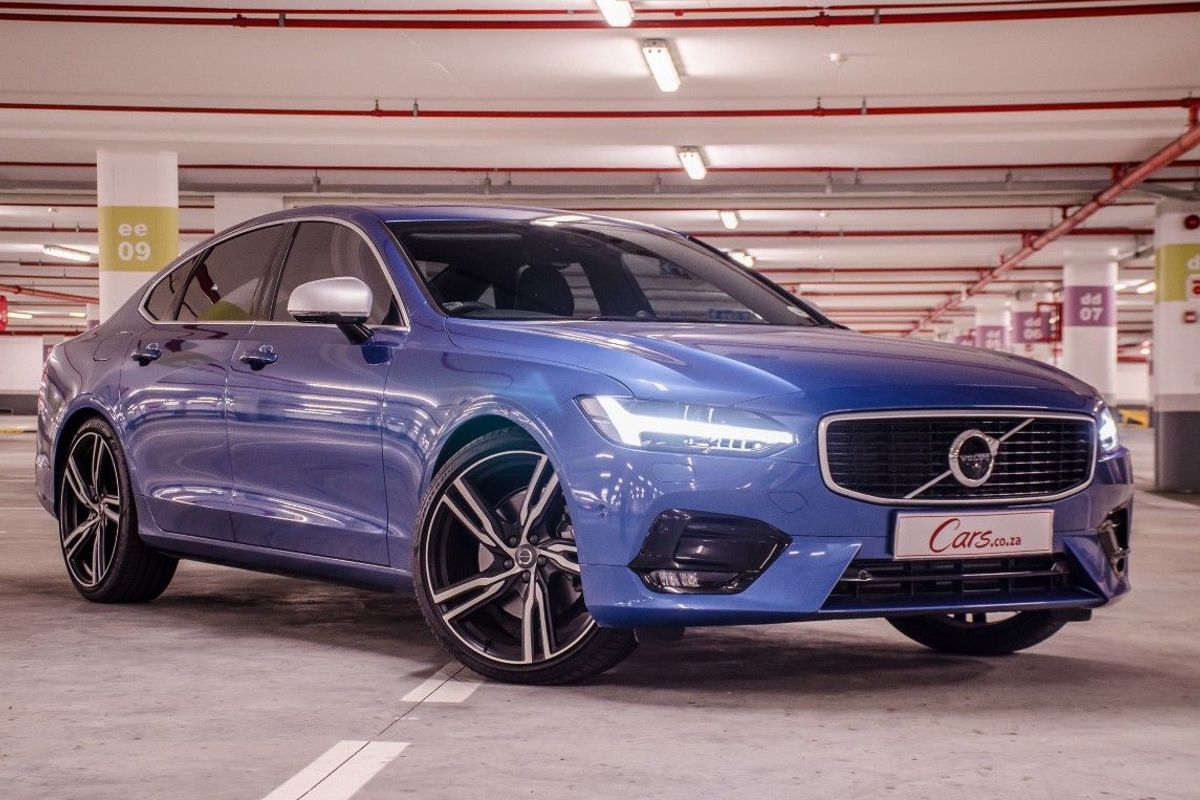
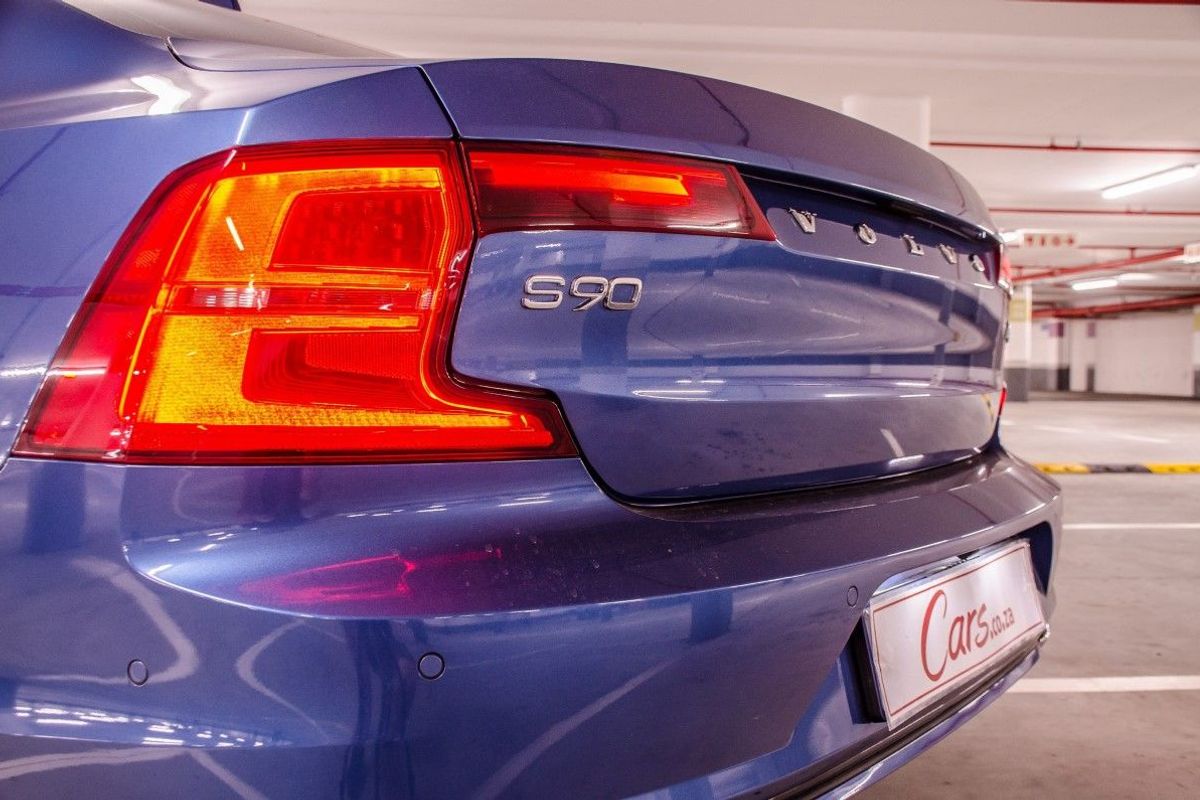
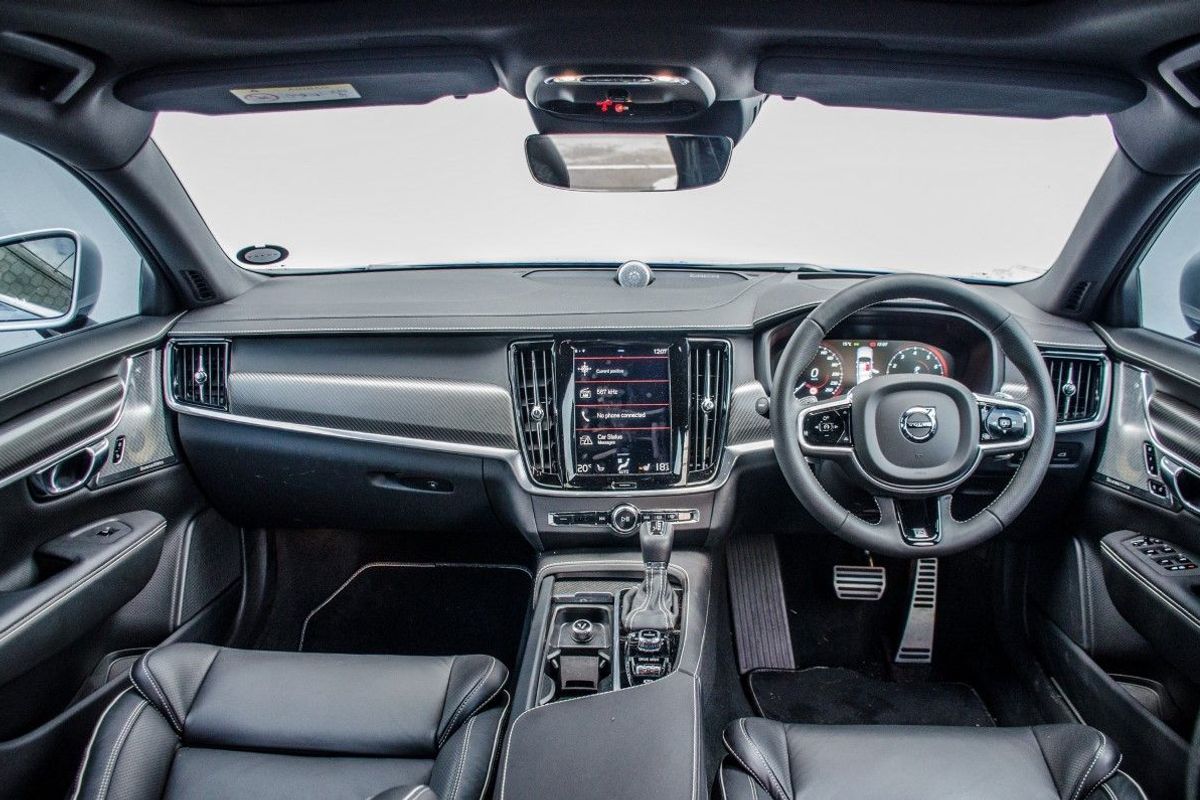
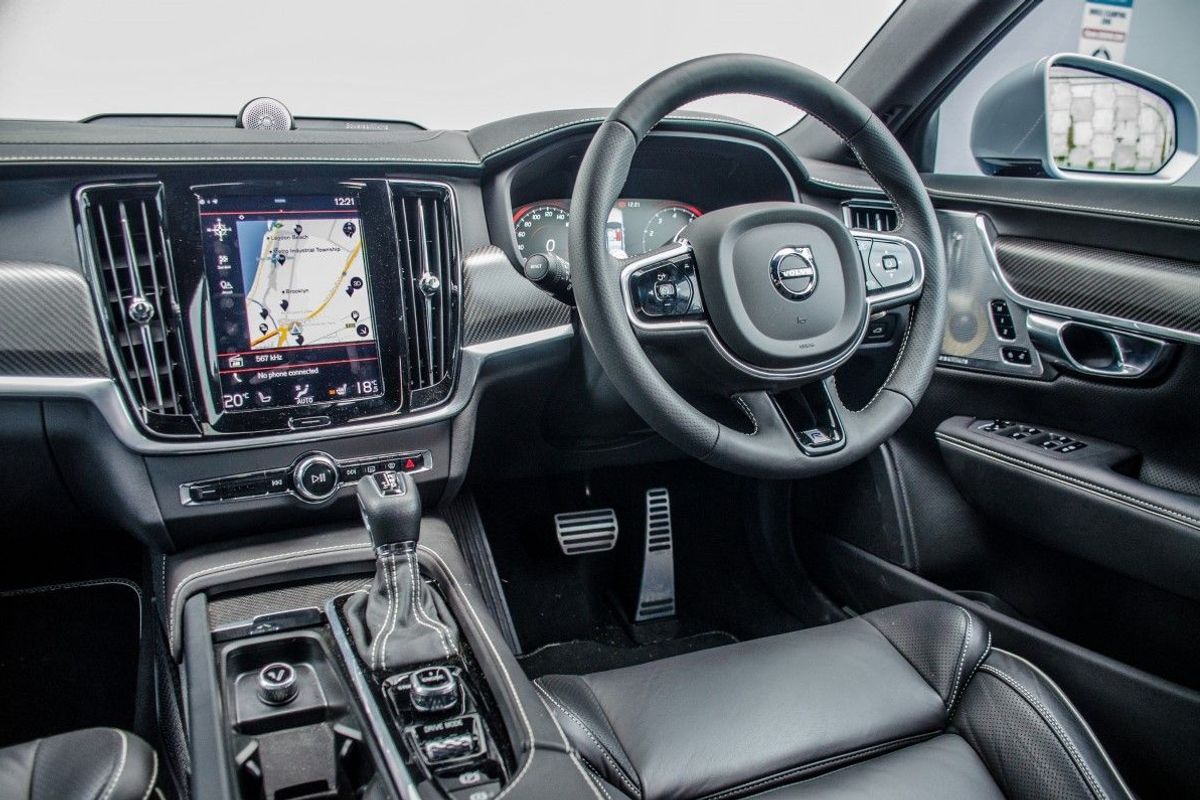
The S90 is an excellent offering in the executive sedan market. It uses Volvo's new styling and technologies in a plush, premium and very different way to what we're used to from the Germans. This segment is sadly in decline, however, even though Volvo offers guaranteed future value financing deals and preferential insurance rates for buyers, the S90 still hasn't lit up the sales charts – it averages 7 units a month.  
The Volvo S90 D5 R Design Comfortline R-Line DSG is a semi-finalist in its category of the 2017/18 Cars.co.za Consumer Awards

Volvo S90 T6 R-Design (2017) Quick Review

Volvo S90 T6 Inscription AWD (2017) Review

Search for a used Volvo S90 here

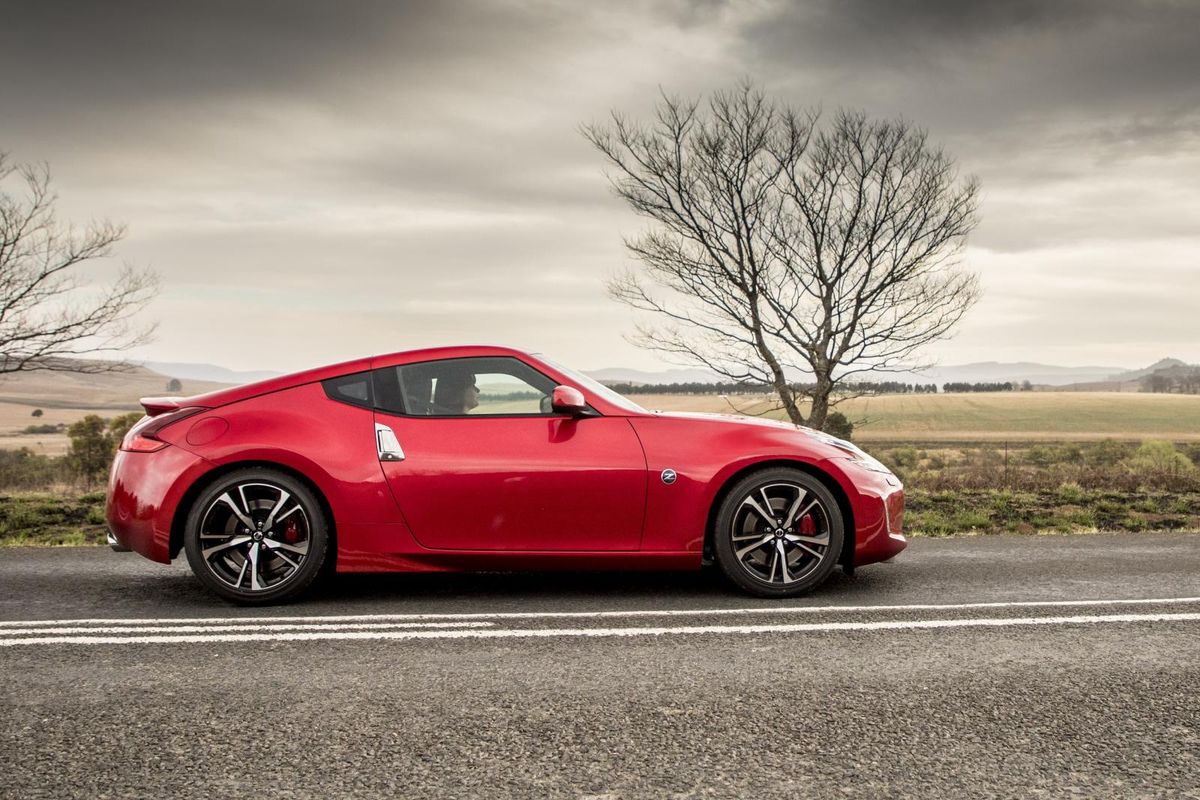
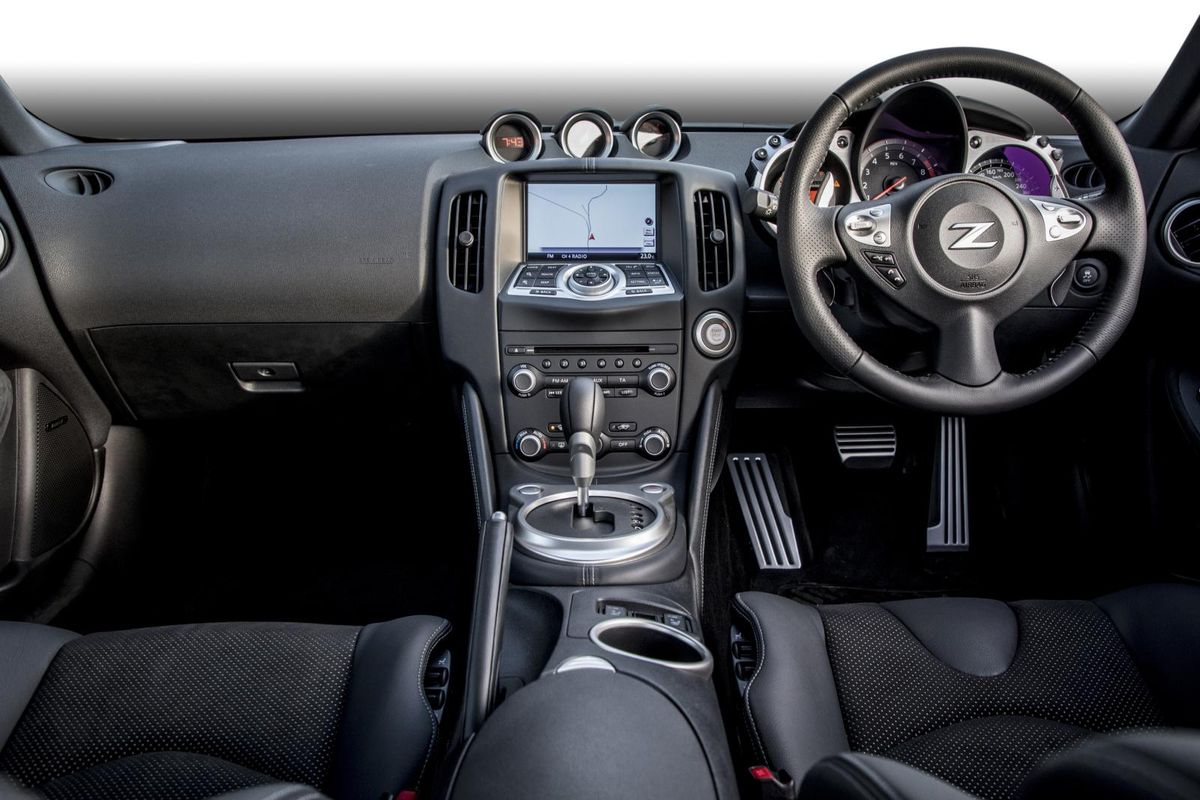
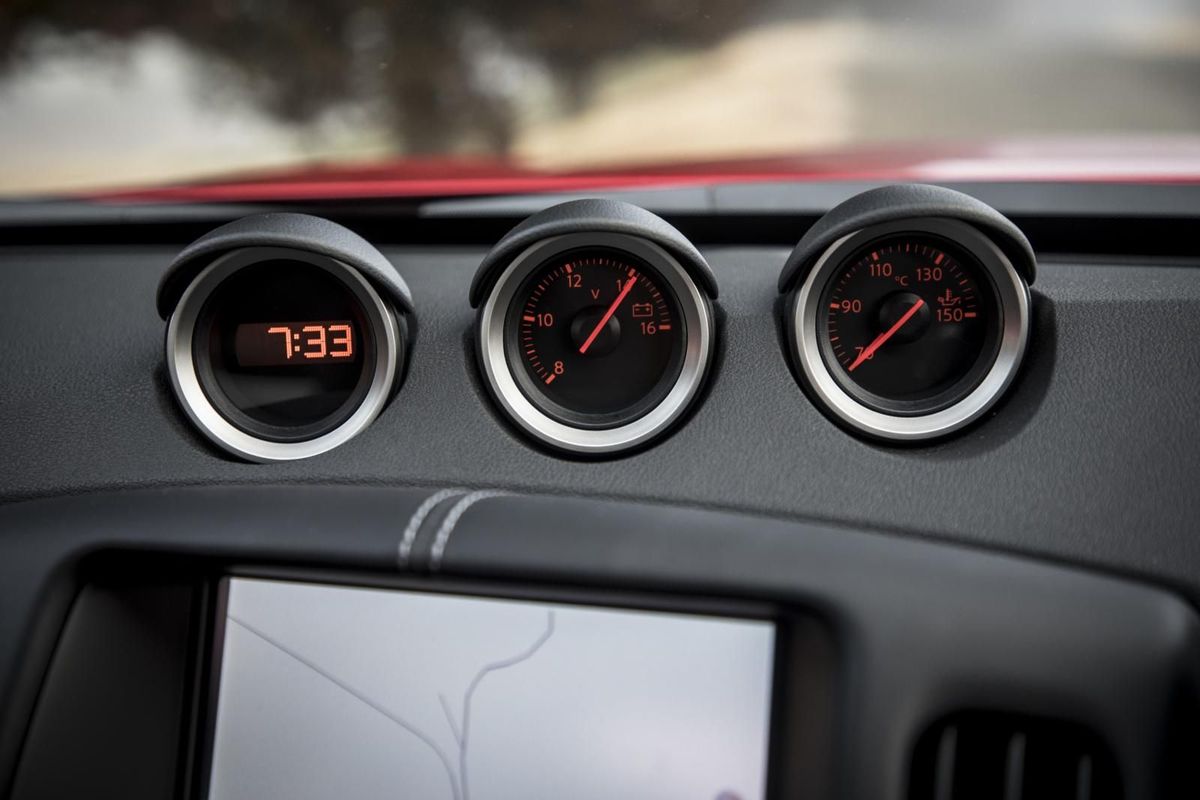
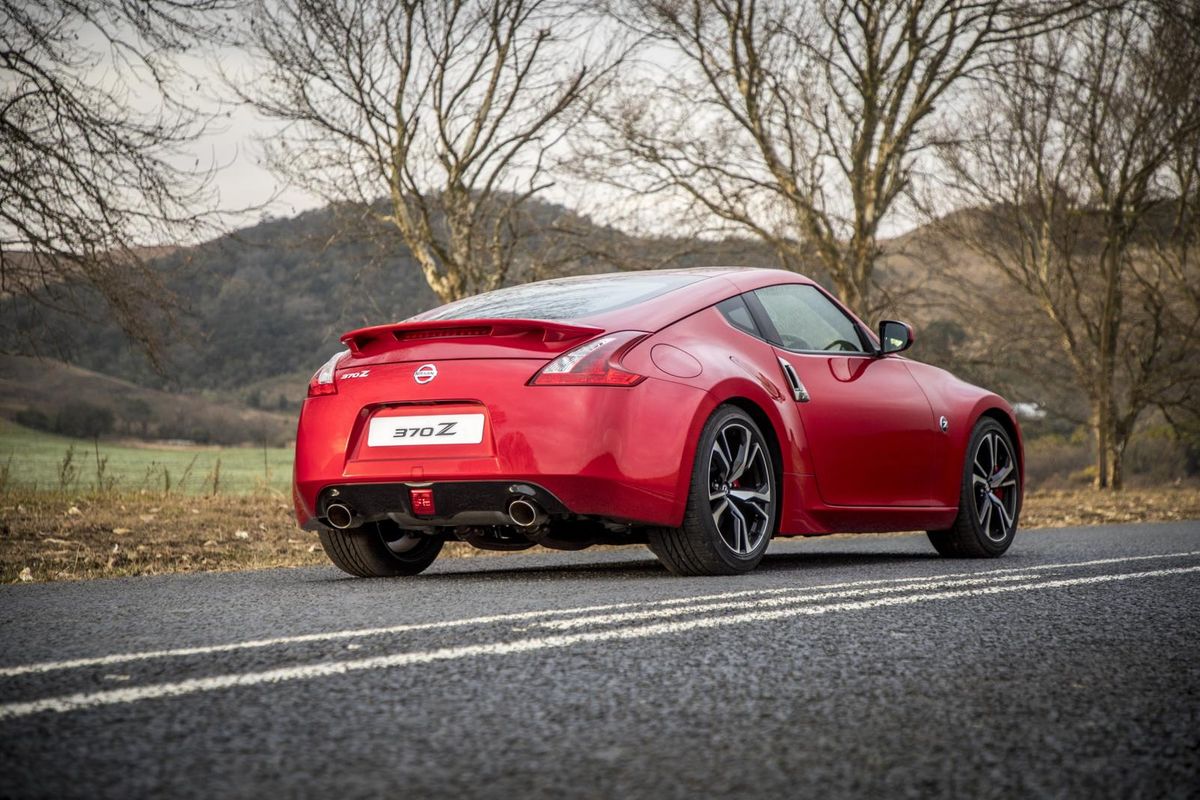
Nissan 370Z (2017) Specs & Price

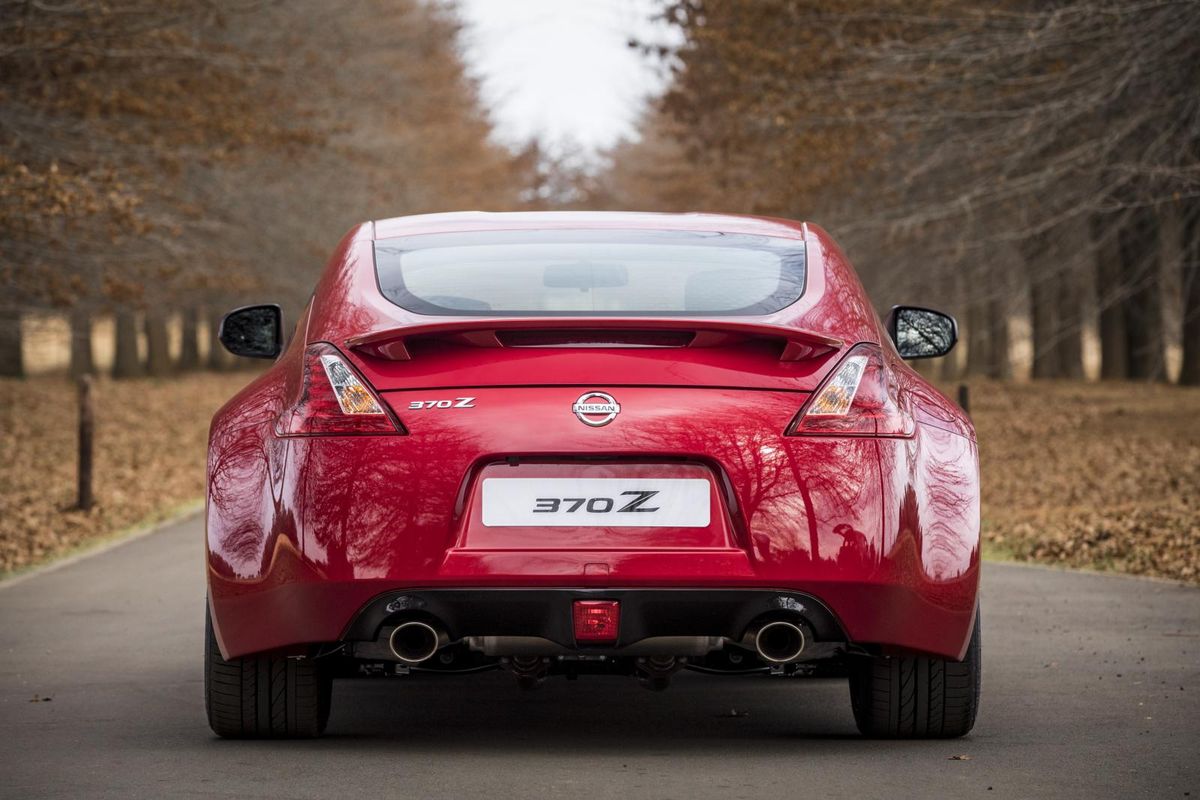
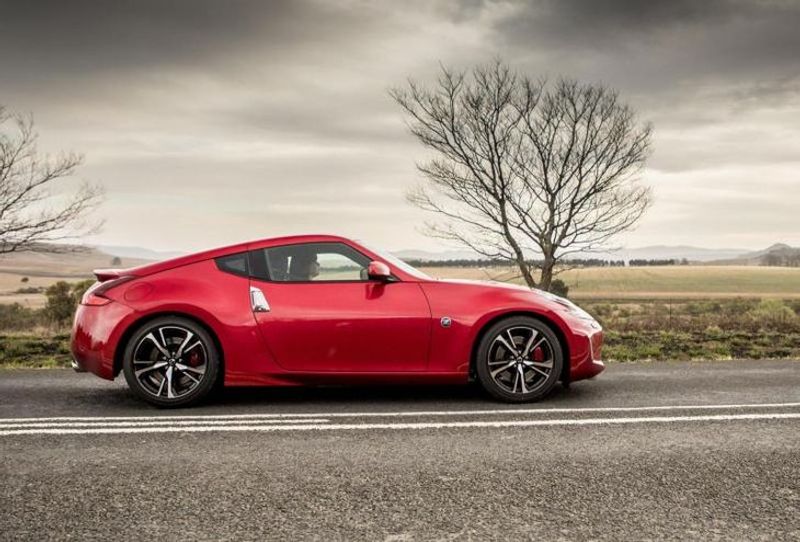
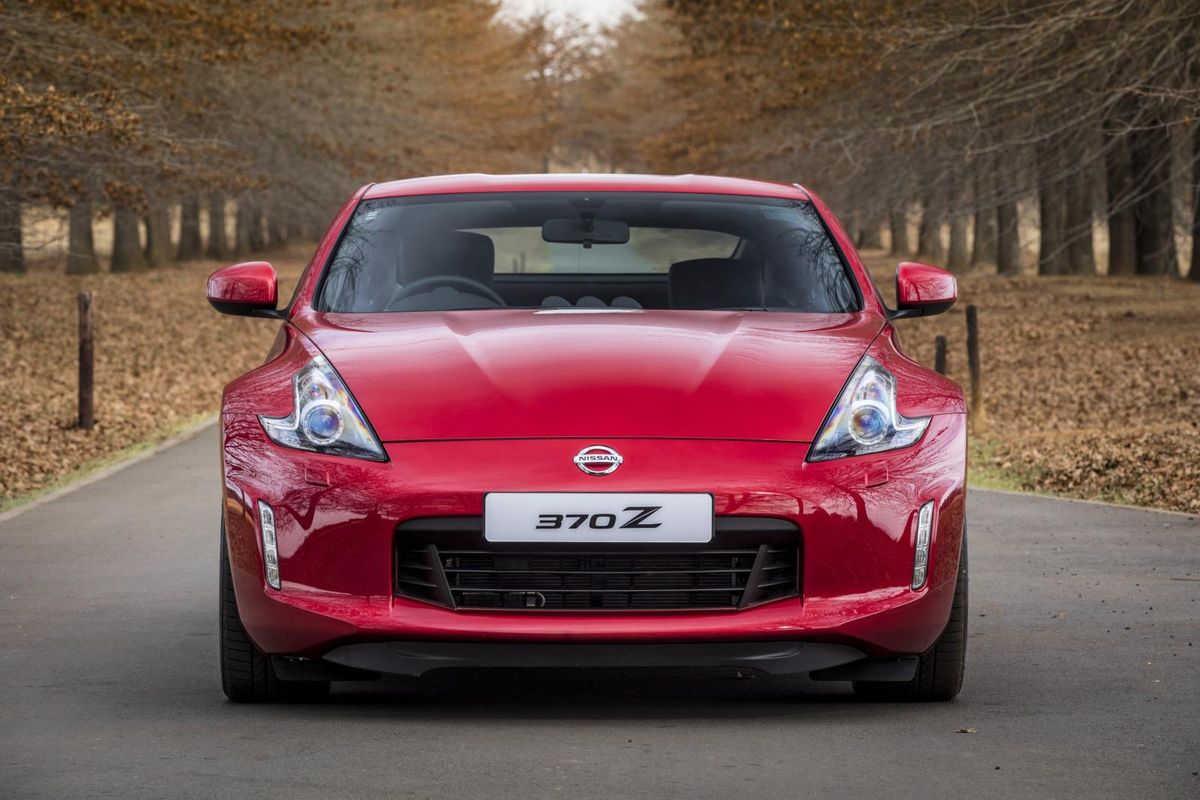
The current iteration of the Nissan 370Z sportscar has been around for some time and while there's no immediate replacement on the cards, a facelift was desperately needed to bring in line with 2017/2018 trends…

The Nissan Z range has a phenomenal heritage stretching all the way back from the 60s. For 2017, the long-serving Nissan 370Z has been facelifted and it brings a number of updates to the table. According to Nissan South Africa, "the enhancements create a contemporary new finish to the coupe’s classic design as well as dynamic improvements including a sports-clutch from well-known performance brand EXEDY."

"The heritage of Nissan’s Z-car series means unparalleled quality and performance, providing drivers with the quintessential sports car experience,” said Xavier Gobille, Managing Director, Sales, Marketing and Aftersales, Nissan Group of Africa. “The Nissan 370Z MY18 is no different and is sure to provide a thrill for the Z’s cult following as well as new customers who are willing to explore living life in the red…”

The changes on the exterior comprise metal chrome door handles and a black rear bumper fascia. Dark-tinted headlamps and rear combination lights, which were previously only available on the Nismo derivative, are now standard. There are also new 19-inch alloy wheels and a new Red Metallic exterior paint finish. For those technically included, Nissan has fitted a new high-performance clutch into manual versions. This clutch results in less driver pedal effort and the claim is that there's more precision, comfort and feel. 

The engine remains unchanged and for the record, it's a 3.7-litre naturally aspirated petrol V6 with peak outputs of 245 kW and 363 Nm. Power goes to the rear wheels via either a 6x-speed manual 'box or a 7-speed automatic. 


A new Exedy clutch for the manual gearbox is the main technical change for the facelifted Nissan 370Z

Nissan 370Z Price in South Africa (September 2017)

R661 900 for manual transmission

R680 900 for automatic transmission 

The facelifted Nissan 370Z comes standard with Nissan’s 3yr/90 000km service plan and 6yr/150 000km warranty.

Further reading:

All the latest Nissan news here

First Look: Facelifted Nissan Qashqai

Nissan Navara (2017) Specs & Pricing

Nissan Micra (2017) International First Drive

Nissan Reveals Hardcore GT-R Track Edition

Want to buy a Nissan sportscar? 

Search through new and used cars here

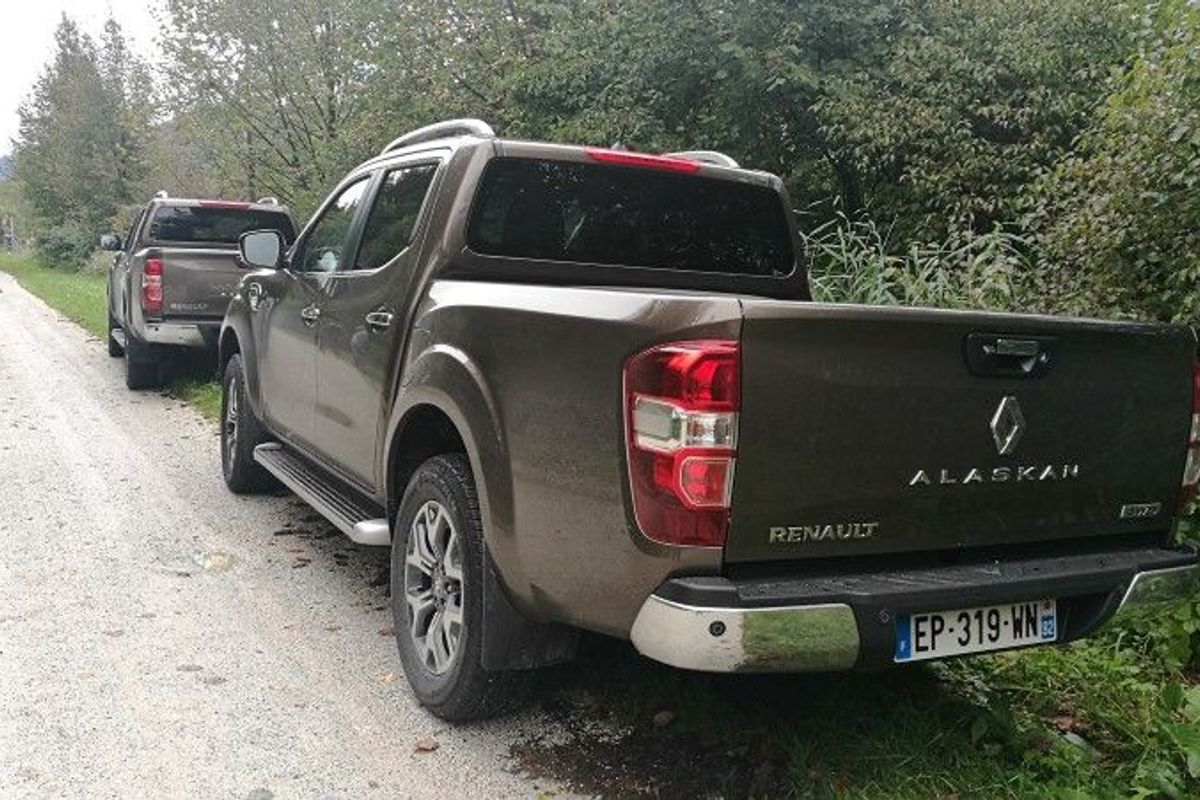
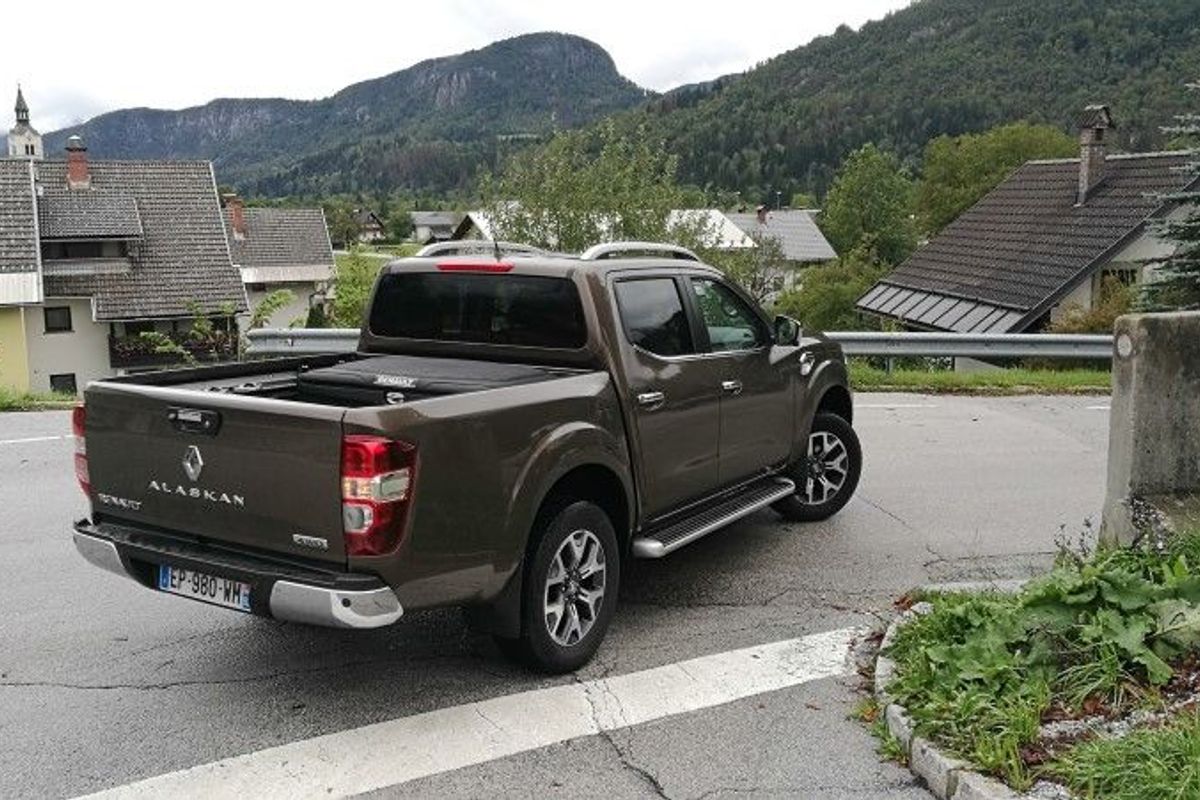
Renault Alaskan (2017) International Launch Review [Video]

Renault has launched its Alaskan medium-size bakkie in Europe and the South African market can expect the newcomer to arrive on local soil in the second half of 2018. We attended the bakkie's international test drive event in Ljubljana, Slovenia to put the Alaskan through its paces…

"What? Renault's building a bakkie? Are they crazy! It will never be as good as the Ranger, Hilux, Navara, Amarok or any other bakkie for that matter. Stop die lorrie, hier kom groot… konsternasie!" 

That was – and probably still is – the general sentiment when the Renault Alaskan creeps into conversation around the braai on a Saturday afternoon with a brandy and coke in hand. Am I wrong? I think not. Comment threads on social media are rife with insults hurled at a bakkie that, until now, had not been driven or tested by any South African motoring journalist. And let's not forget… South Africans are a bakkie-mad bunch, and fiercely brand loyal. So, the Alaskan certainly has a huge mountain to climb.


The Alaskan is coming to South Africa in 2018 and we think it has the potential to upset the 'popular' local bakkie establishment.  

Like many cars, the Navara-based Alaskan first appeared in concept guise (in September 2015). That was also the moment when consumer doubt and scepticism spread faster than wildfire and much of that doubt still persists to this day. If you are an Alaskan sceptic reading these words, then I must ask you: "What if you are wrong?" More importantly, what if I told you that the Alaskan is as good (if not better) than most of the bakkies currently on sale in South Africa? What would your response be? Would you believe me? 

For context, bear in mind that the Alaskan only went on sale in Latin America towards the end of 2016 and has recorded strong sales there ever since. Now, the Alaskan has arrived in Europe where the pick-up market has grown by as much as 51% since 2009 and Renault is a leading brand in the Light Commercial Vehicle (LCV) segment, which all bodes well for the Alaskan. Only time will reveal how the European market will respond to the newcomer.  

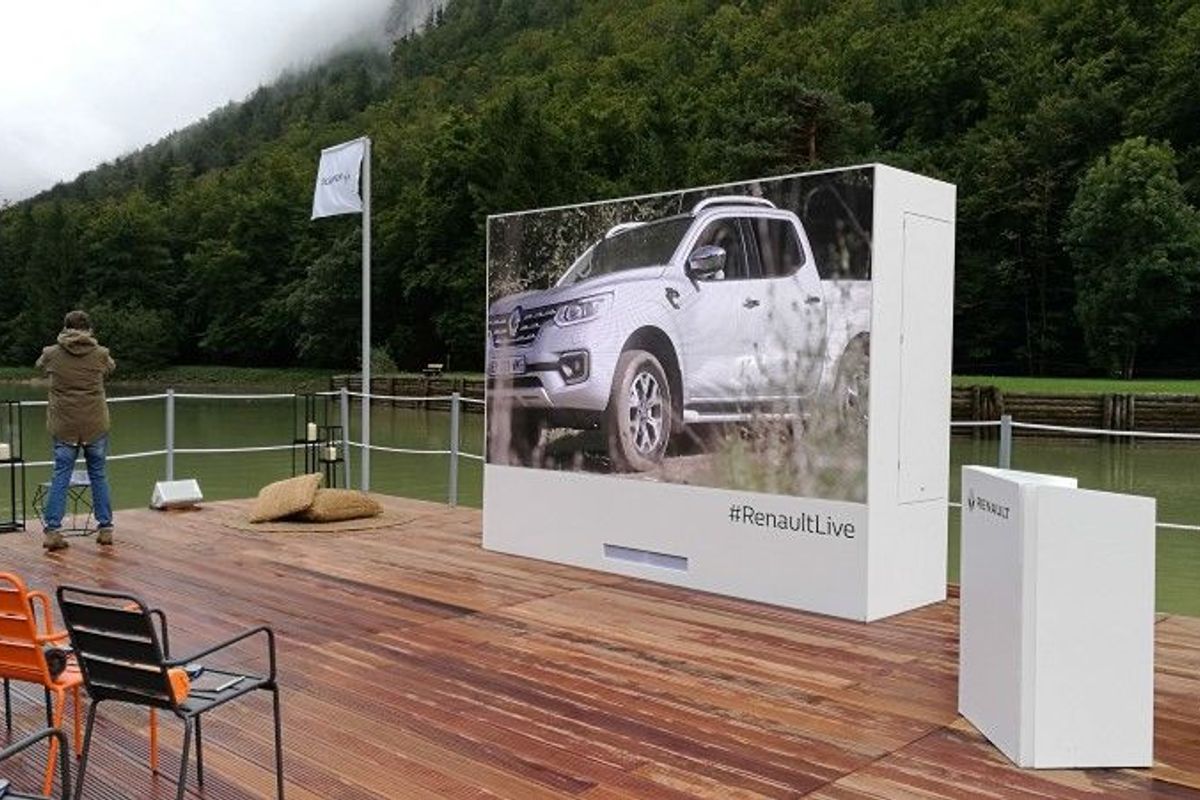
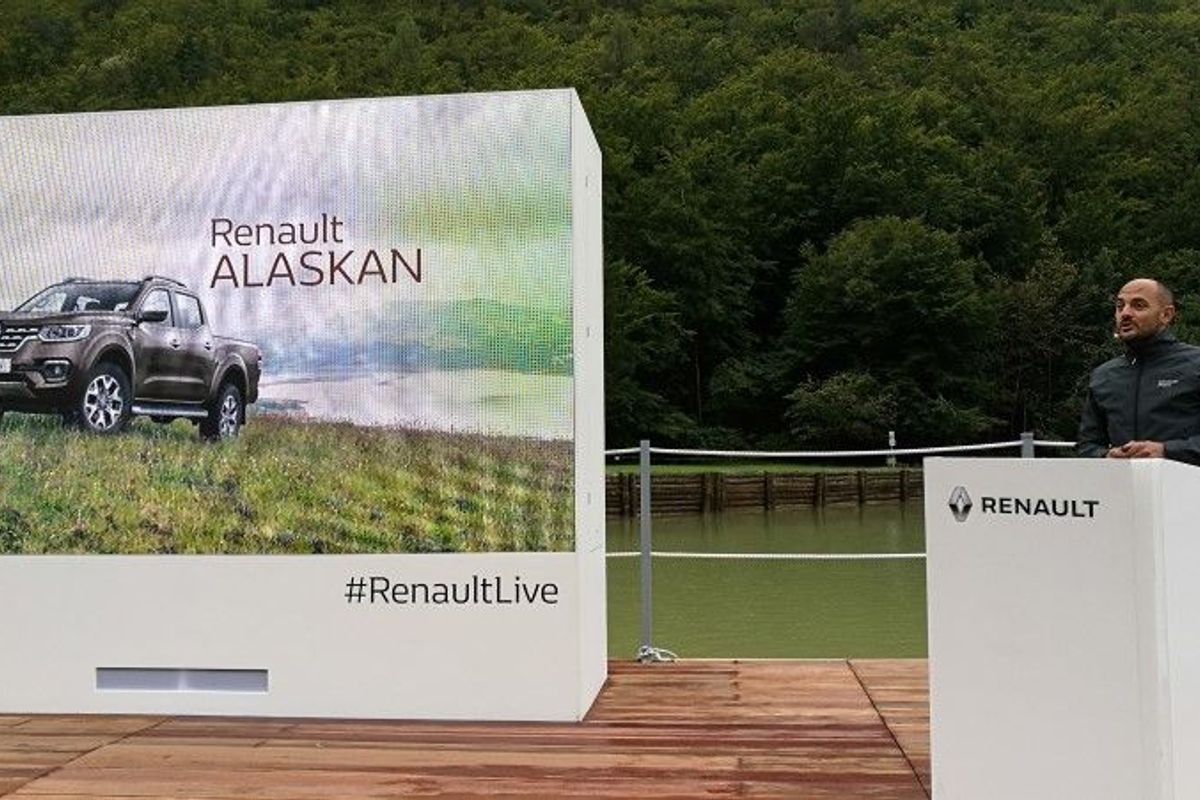
As part of the Alaskan's arrival in Europe, Renault hosted a month-long international test drive event in scenic Slovenia and we joined members of the motoring media and bloggers from all over the world to finally drive and experience the new Alaskan in the metal. This is what we discovered…

First impressions


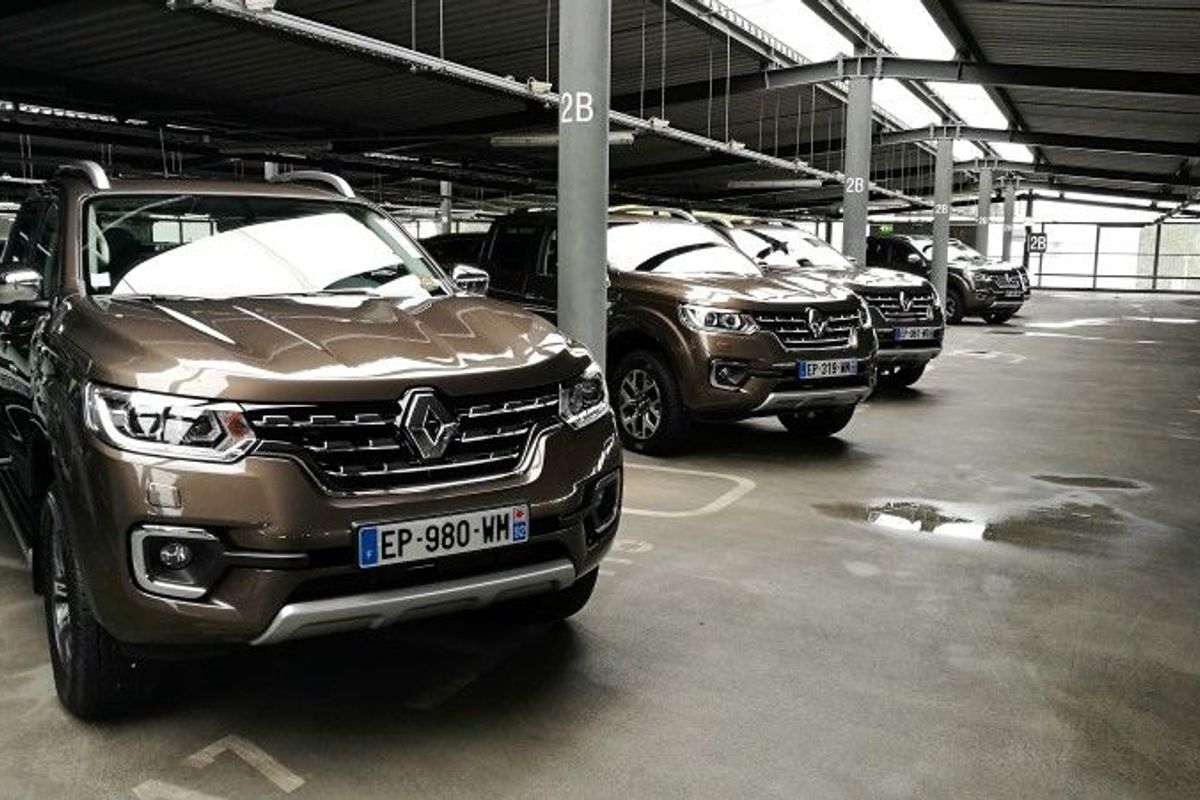
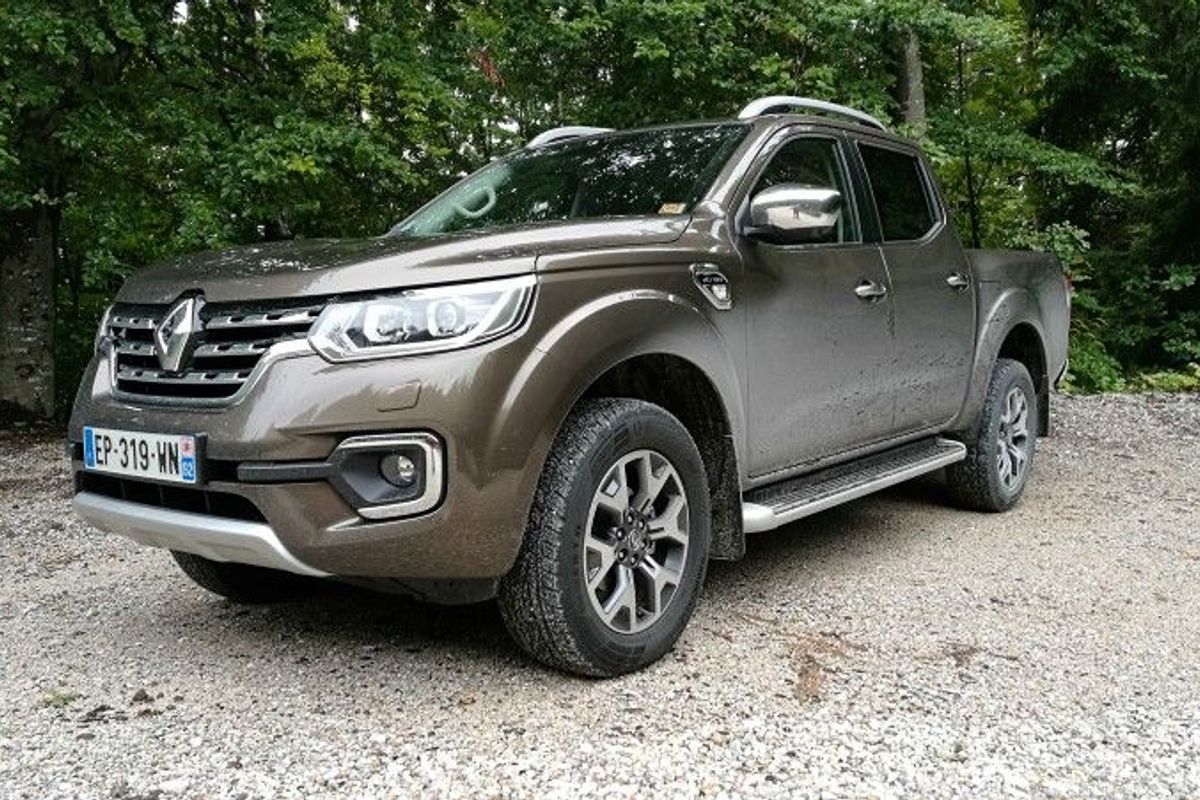
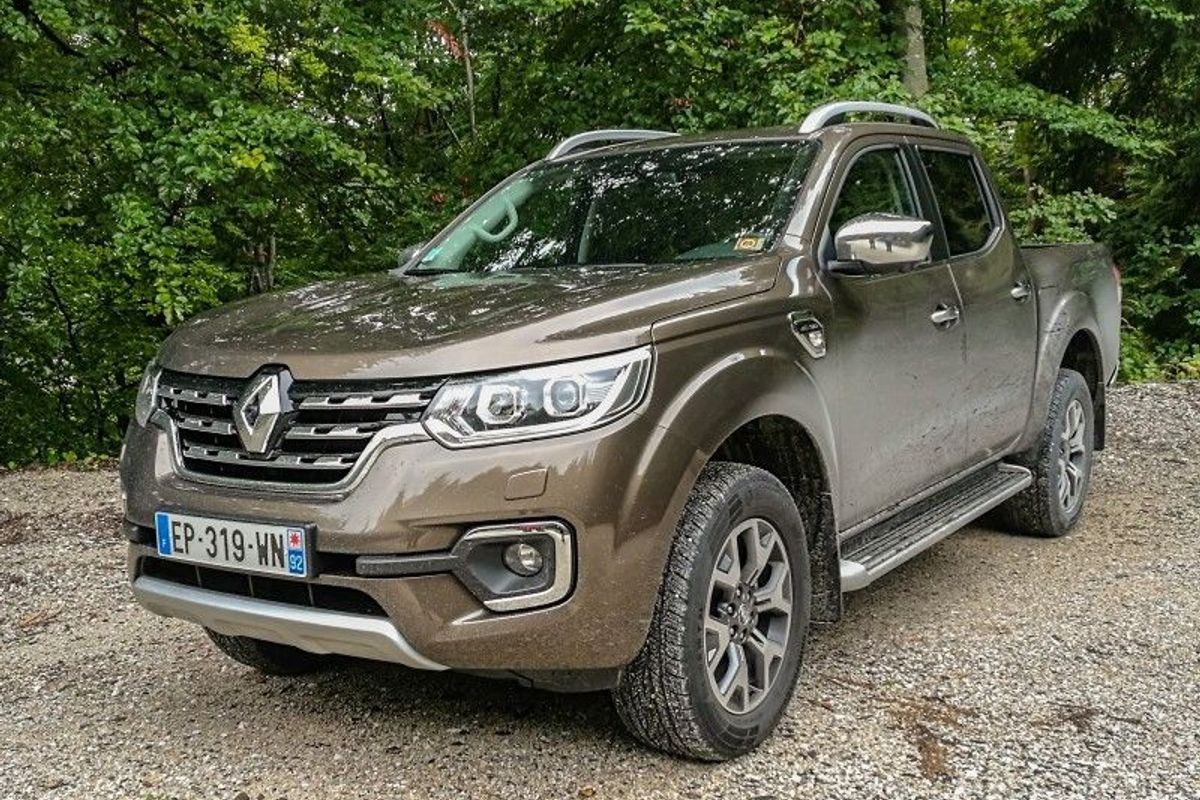
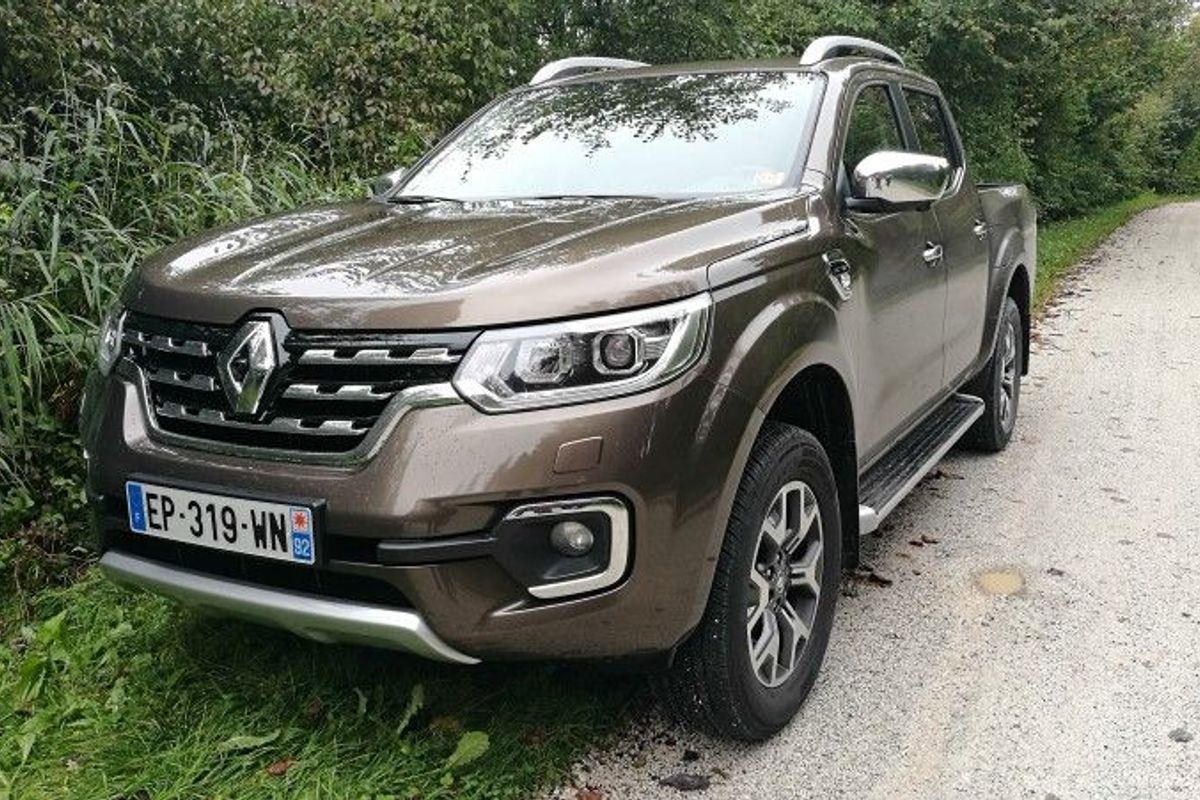
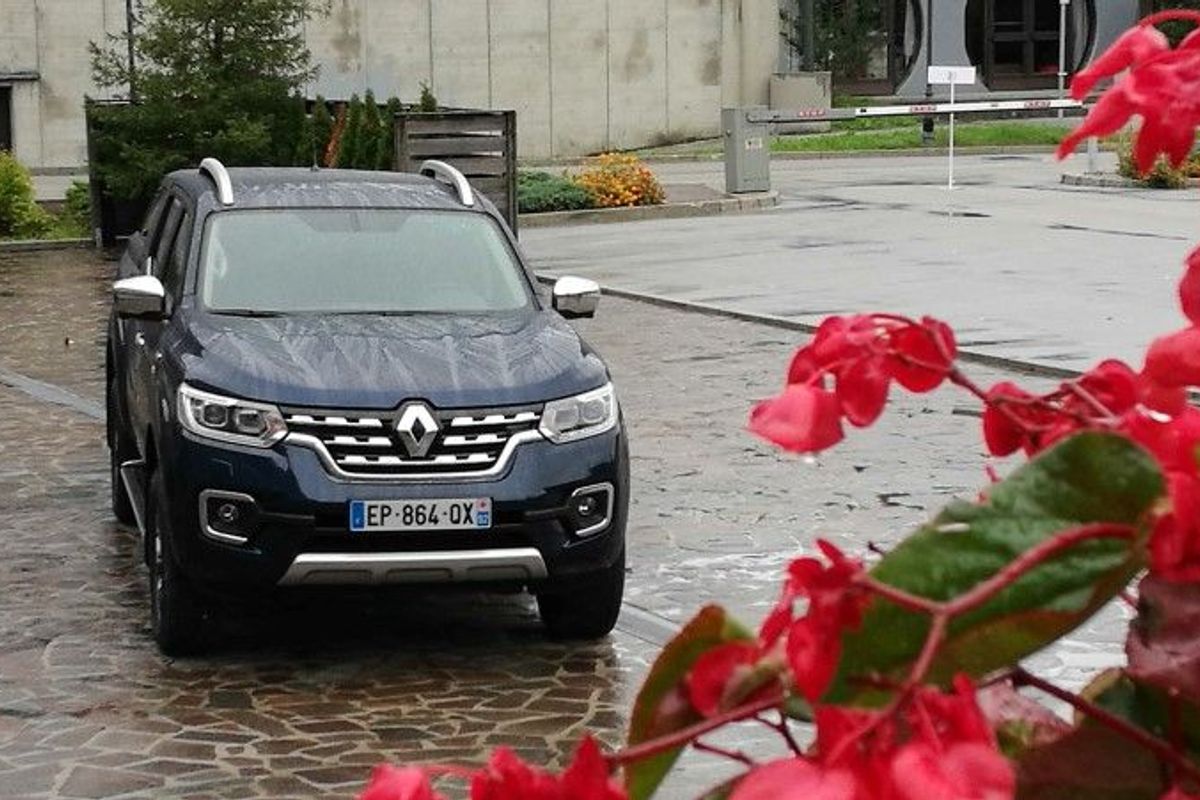
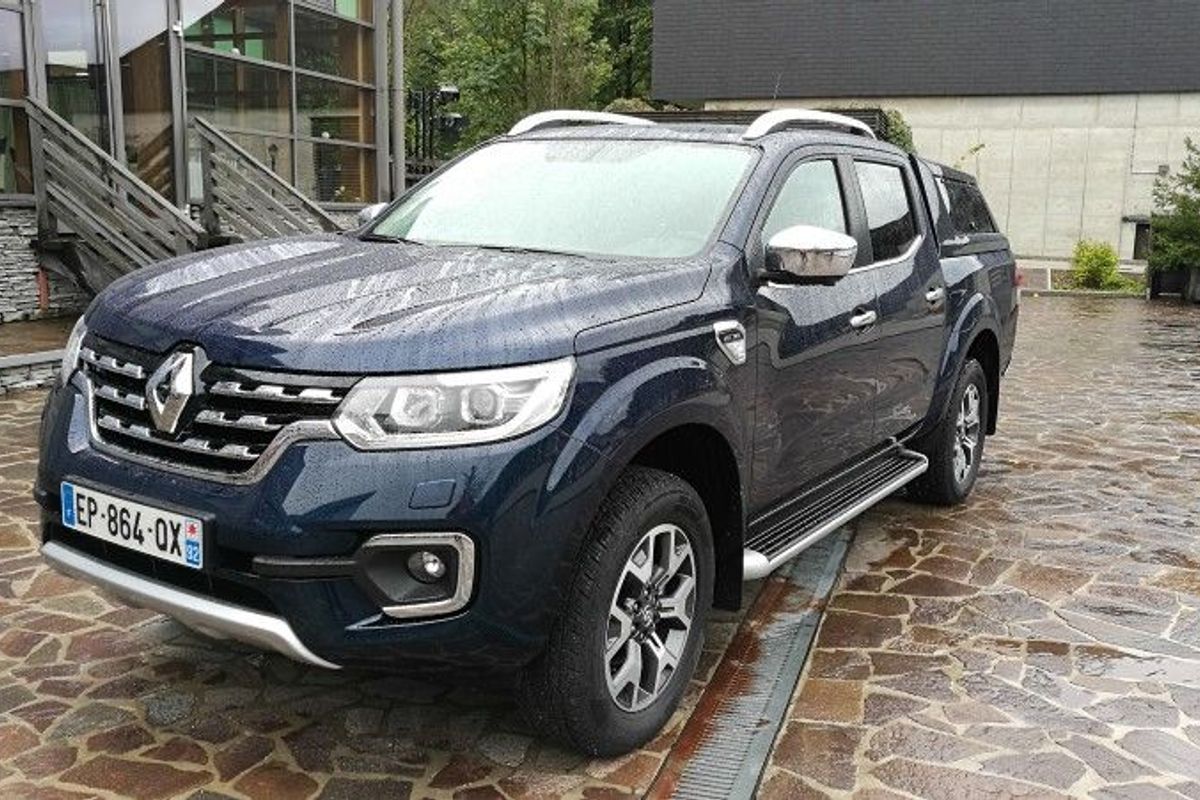
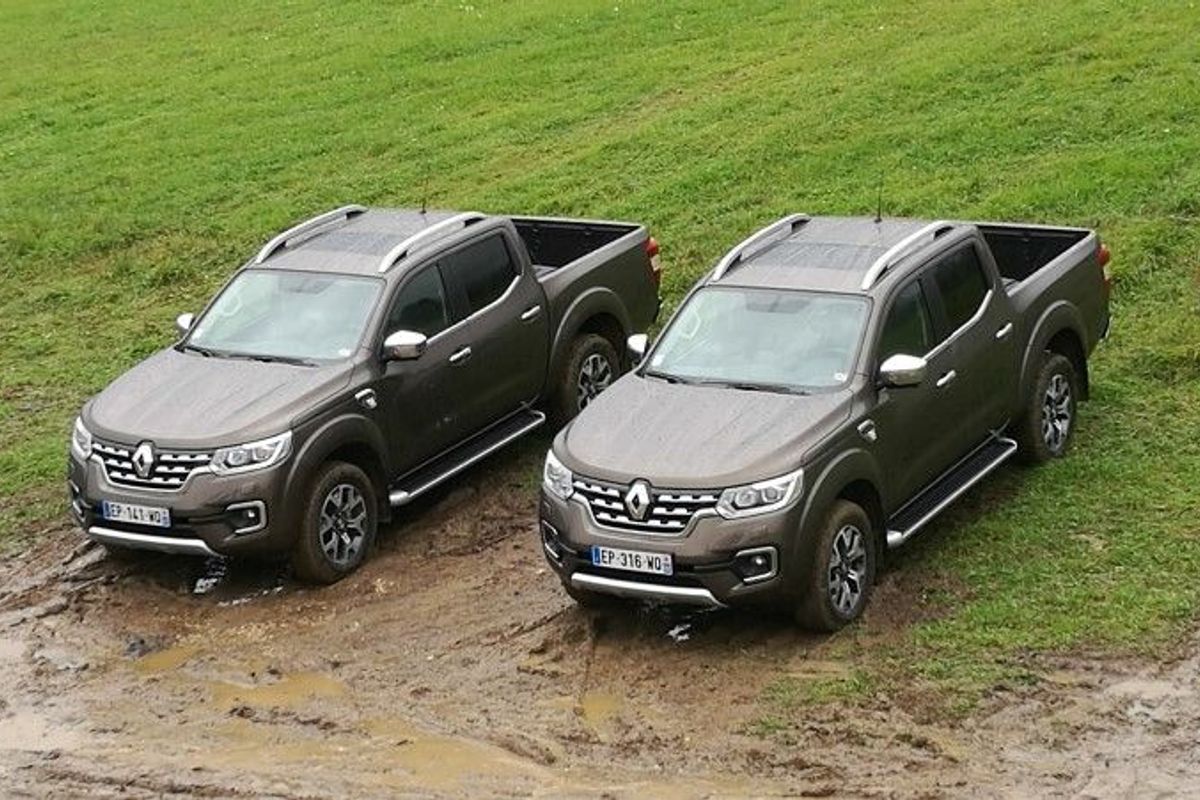
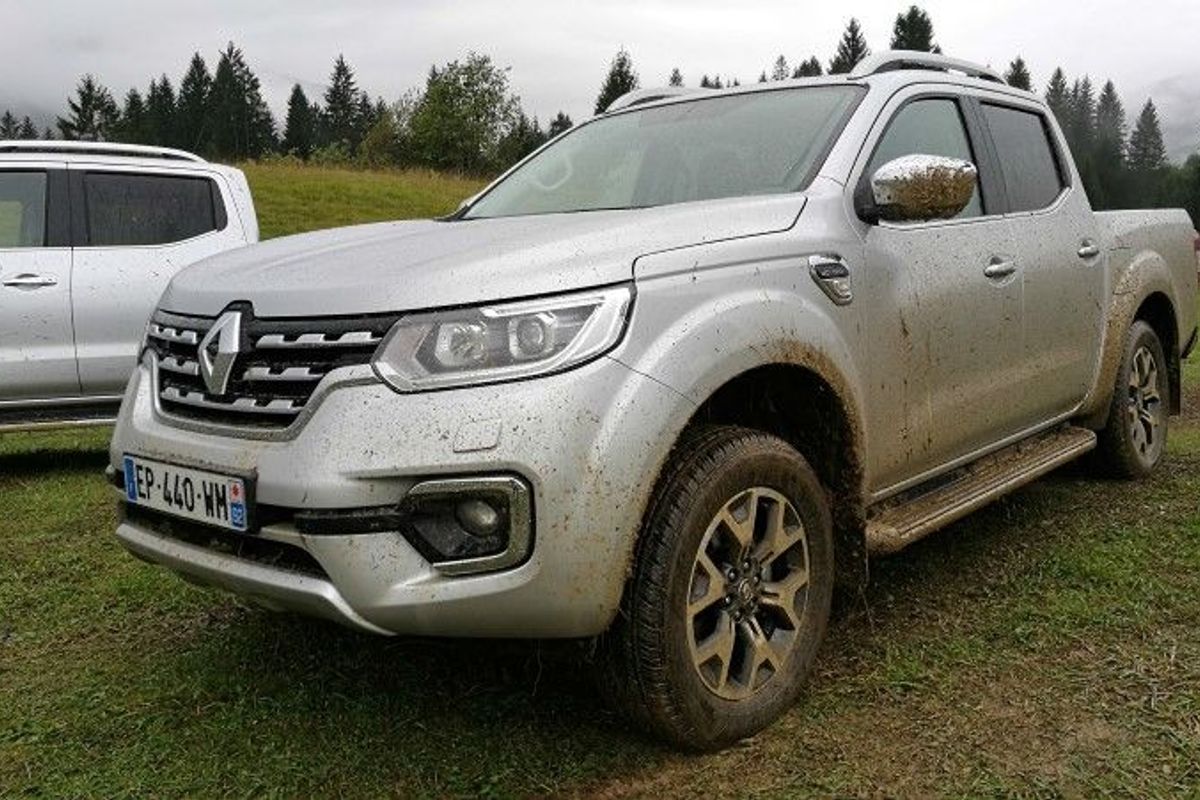
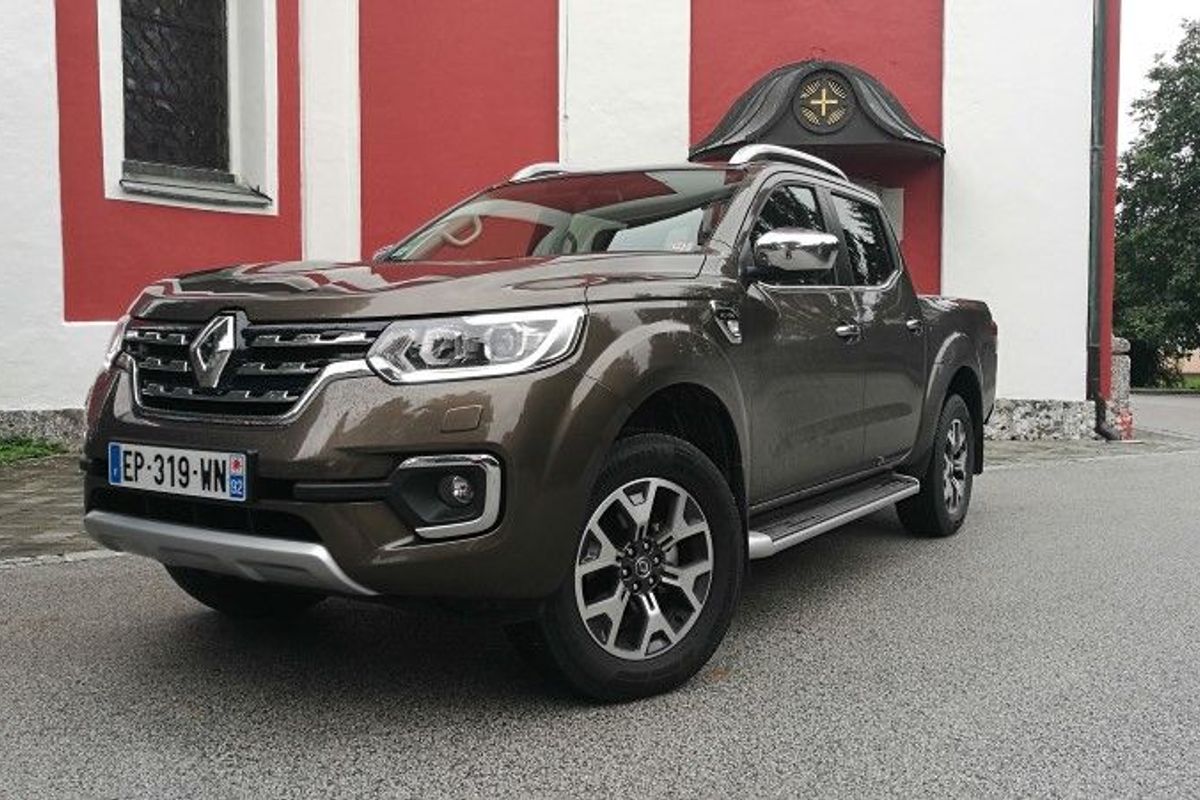
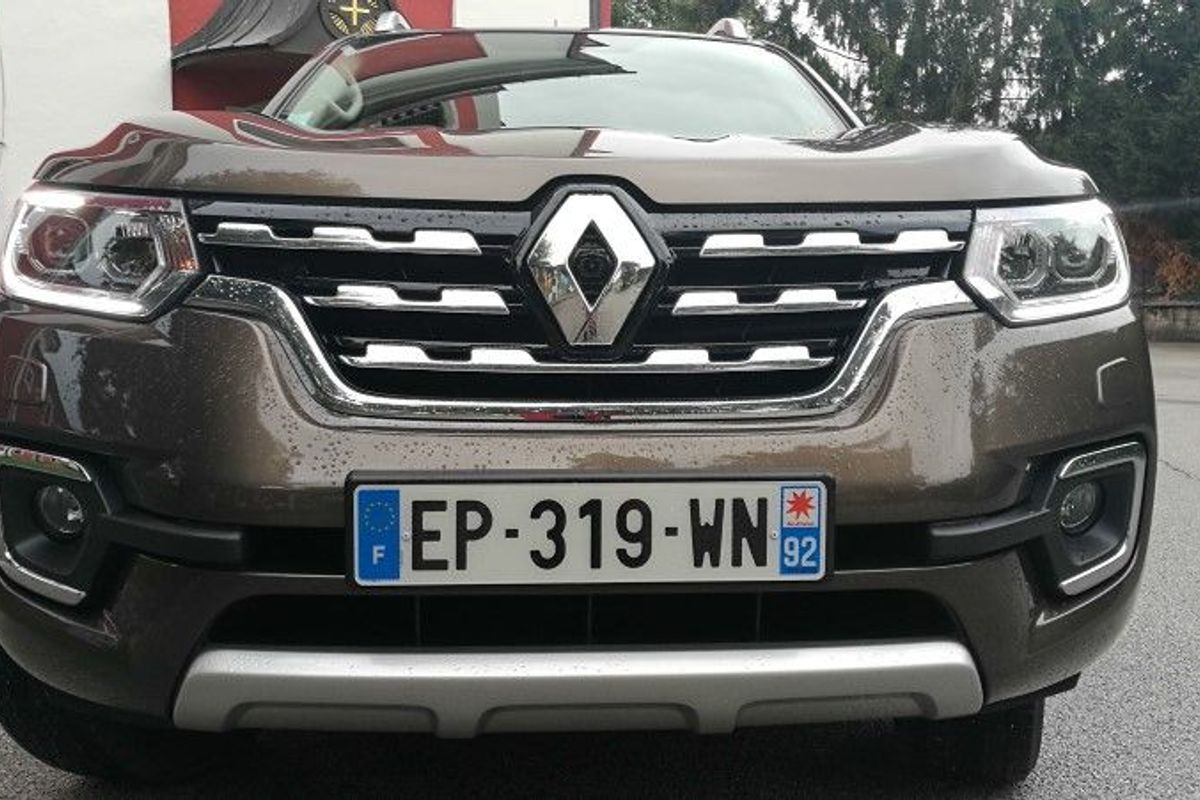
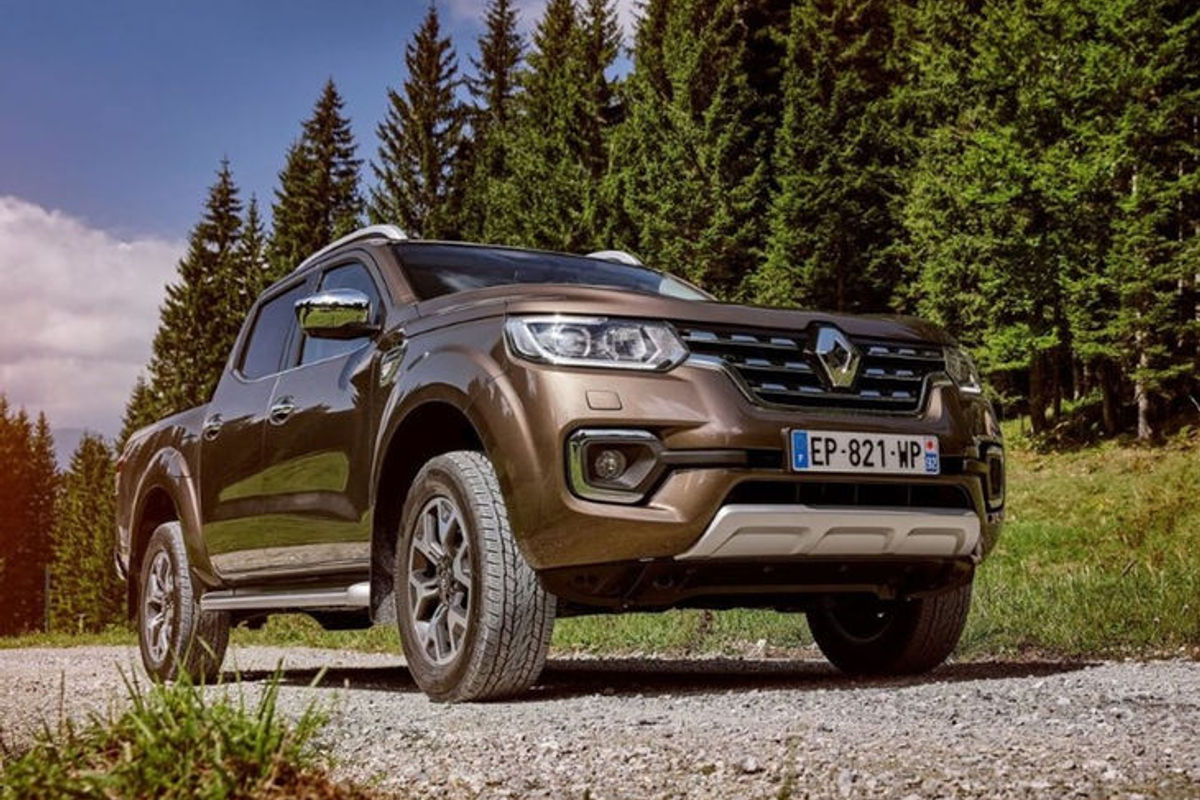
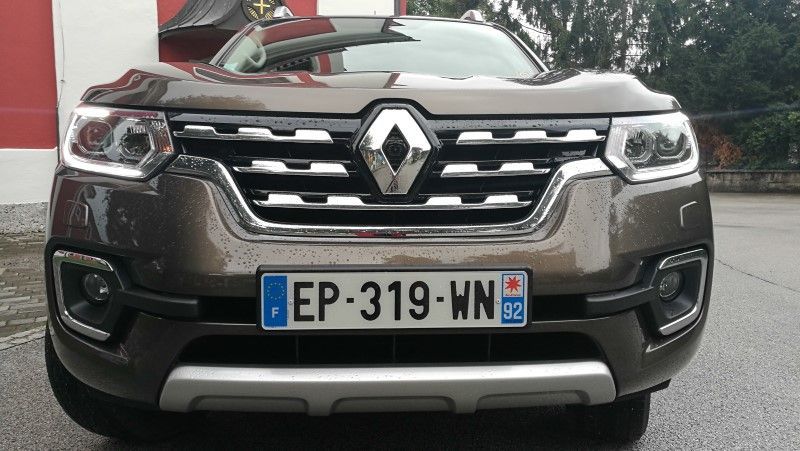
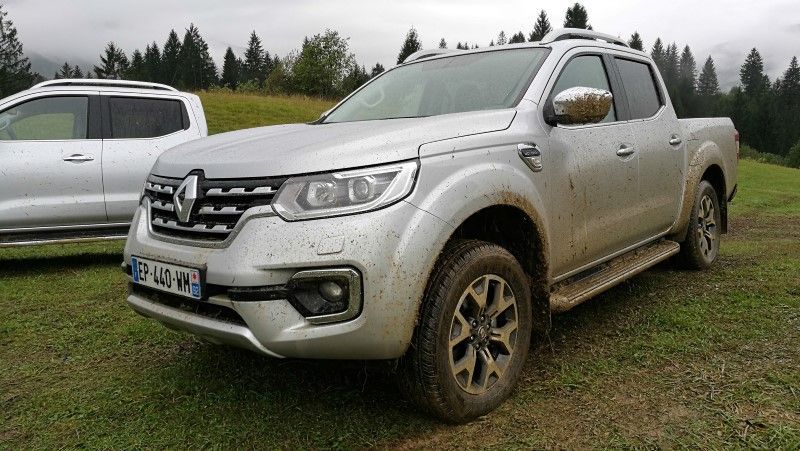
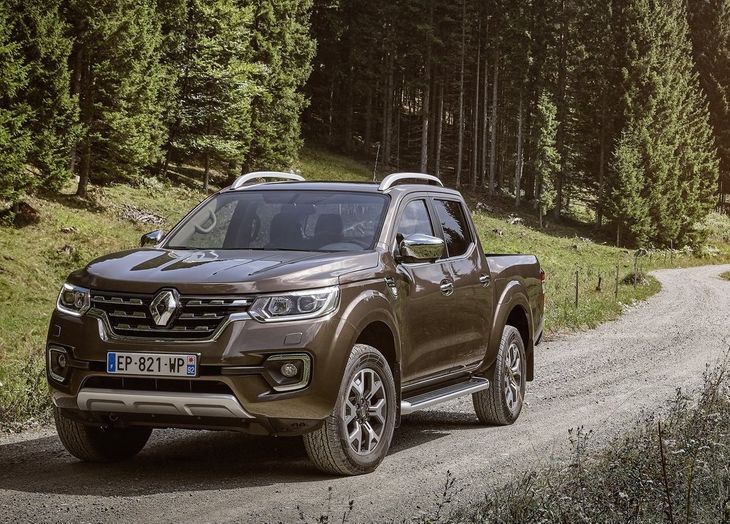
The Renault Alaskan has a powerful face with familiar Renault C-shaped design cues seen in the headlight and fog light design.

Design strength

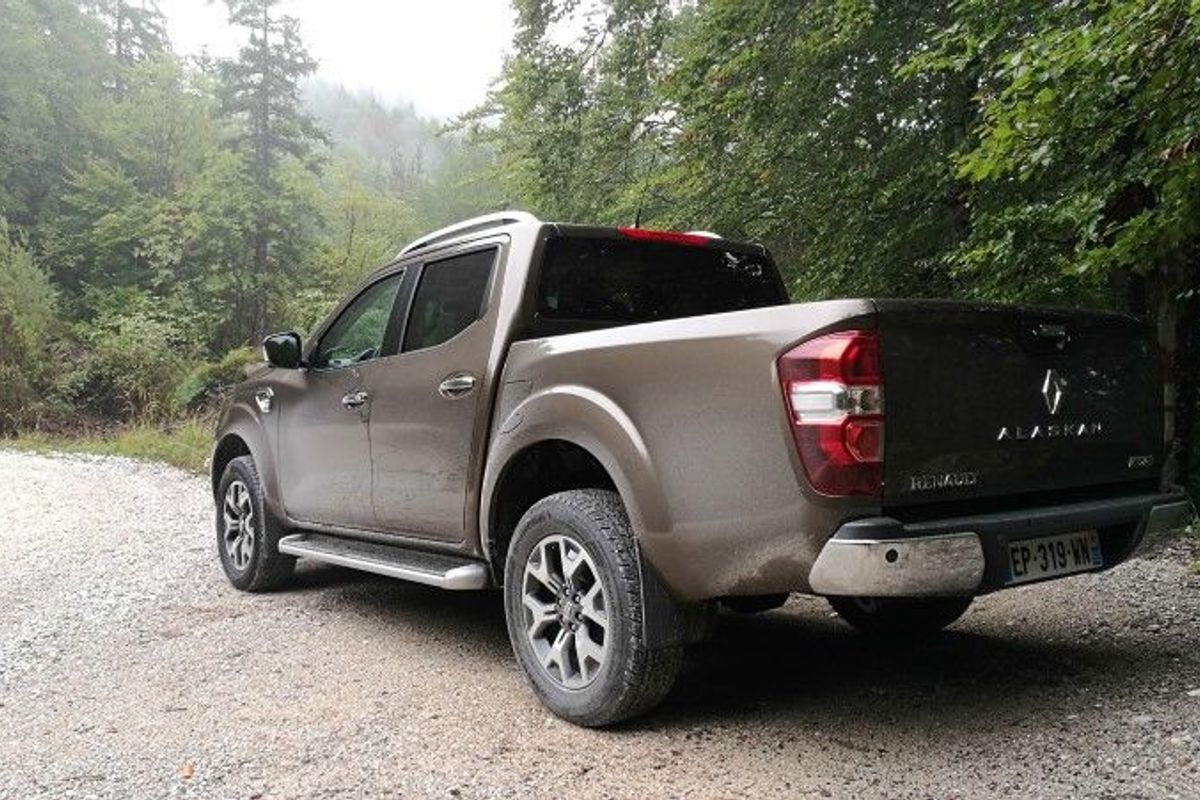
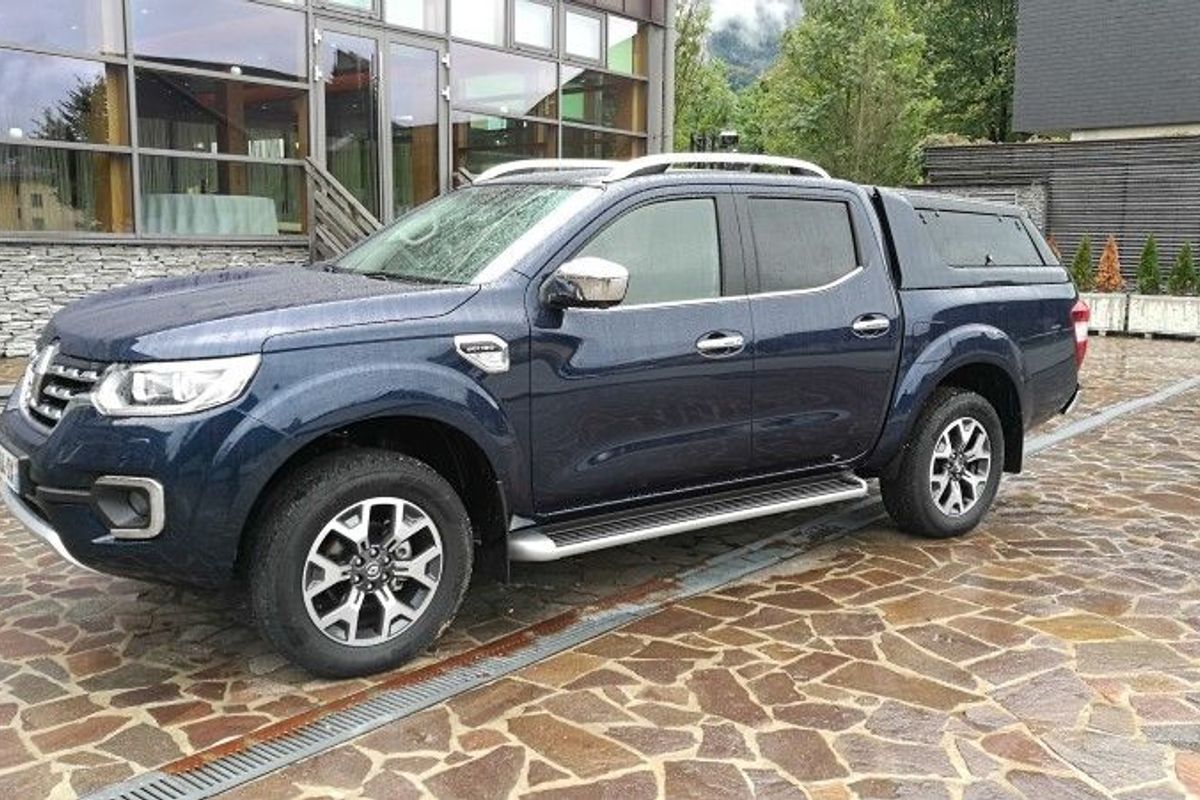
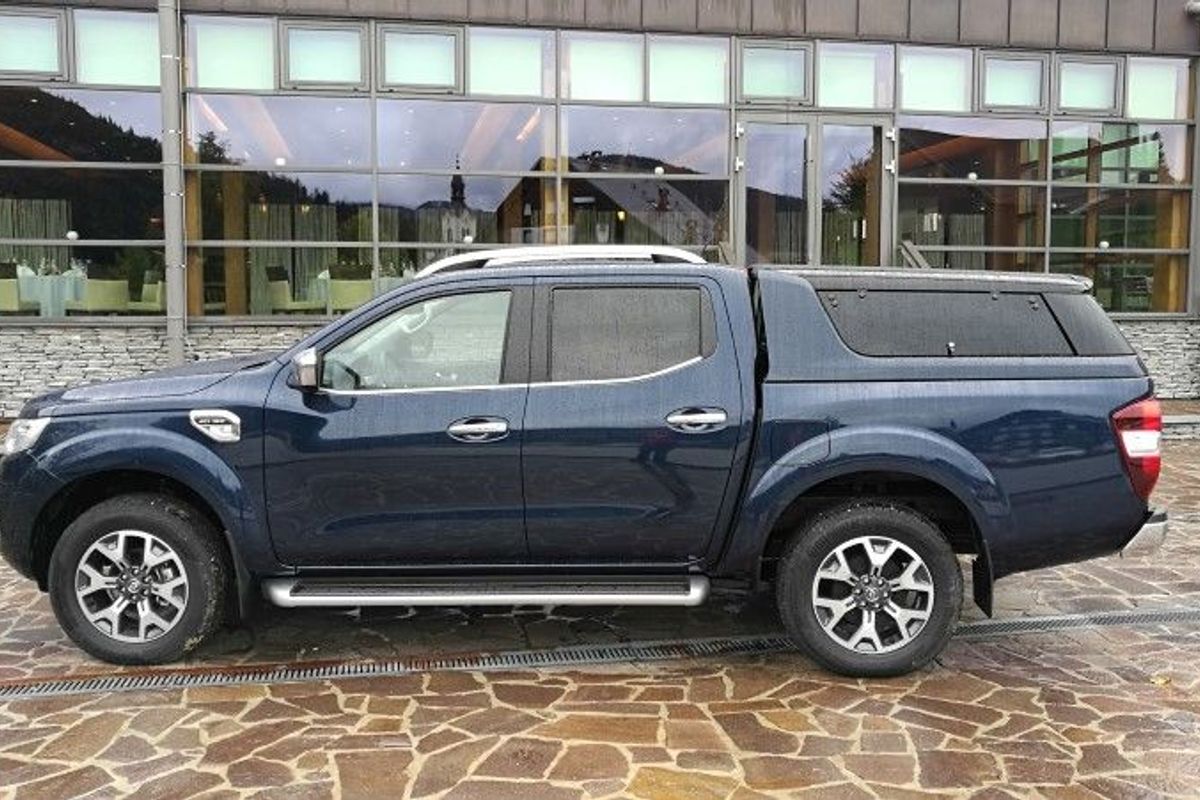
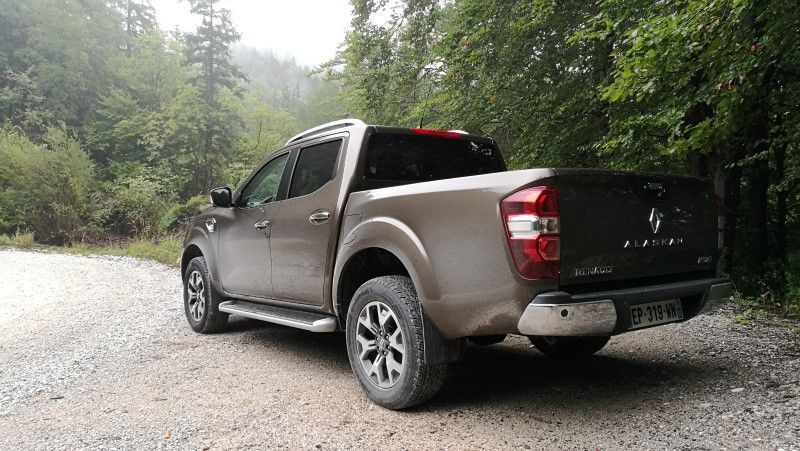
Although Navara genes are clearly evident in the design of the Alaskan, don't be fooled into thinking that the Alaskan is merely a Navara wearing a Renault badge. In fact, the Alaskan is more boldly styled (and far more handsome, in terms of exterior design) than many of its rivals

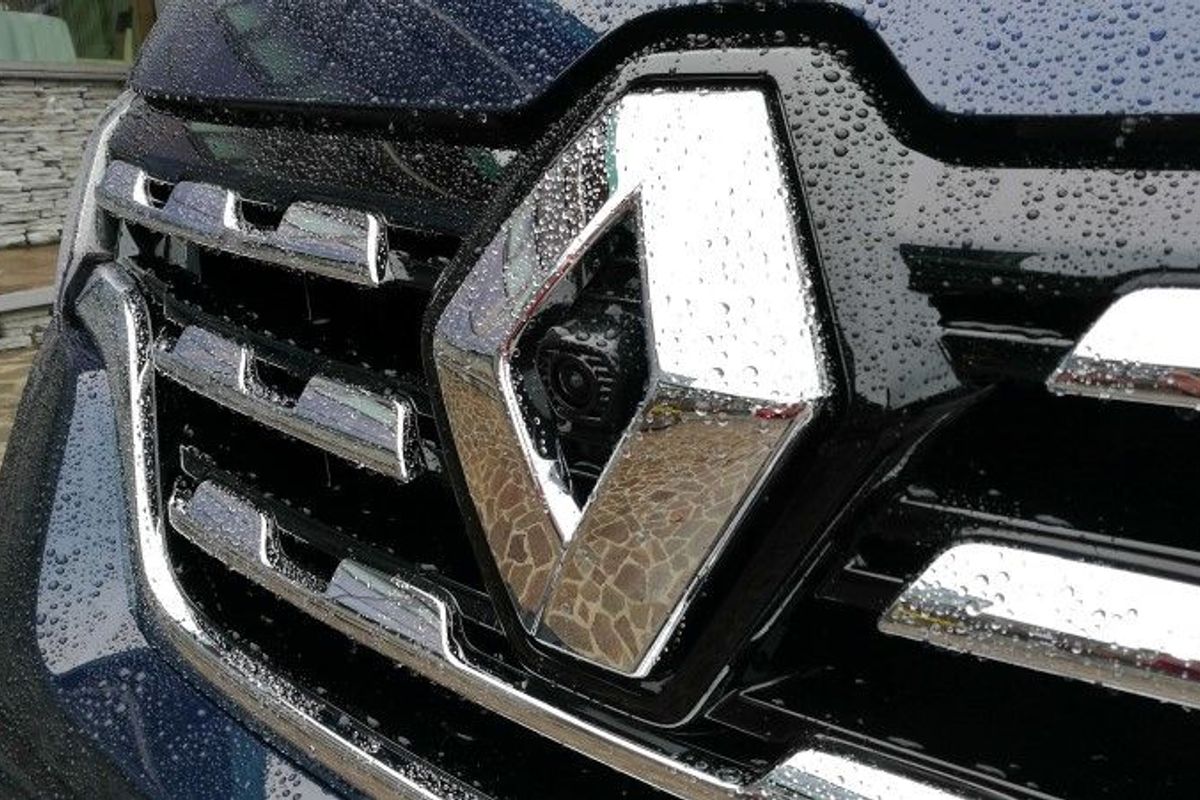
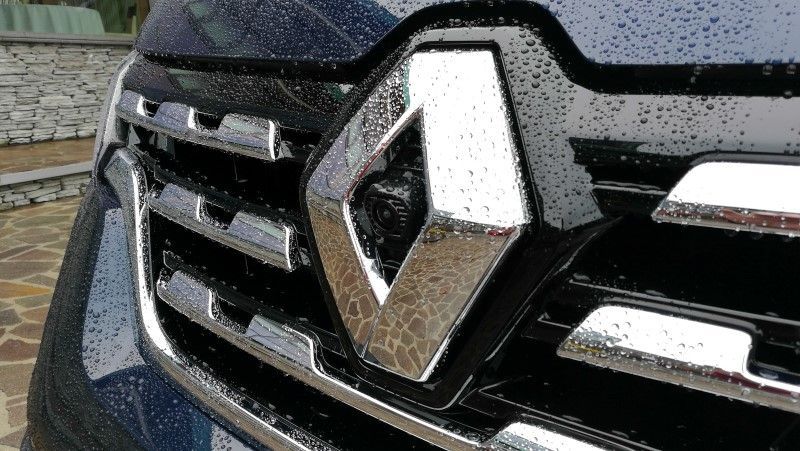
Wearing its large Renault logo with pride, complemented with a striking grille with chrome accents and a powerfully sculpted bonnet, the Alaskan exudes strength in its design and adopts a muscular stance.

In addition to this, the Alaskan features Renault's signature C-shaped lighting signature seen in both the LED daytime running lights and C-shaped fog light surrounds. The flared wheel arches further add to its exterior appeal and attractive 16- or 18-inch diamond-cut alloy wheels can be fitted.

This is indeed a Renault and the Alaskan is, in our opinion, one of the best-looking bakkies out there. Don't agree with us? Share your opinion in the comment section below. 


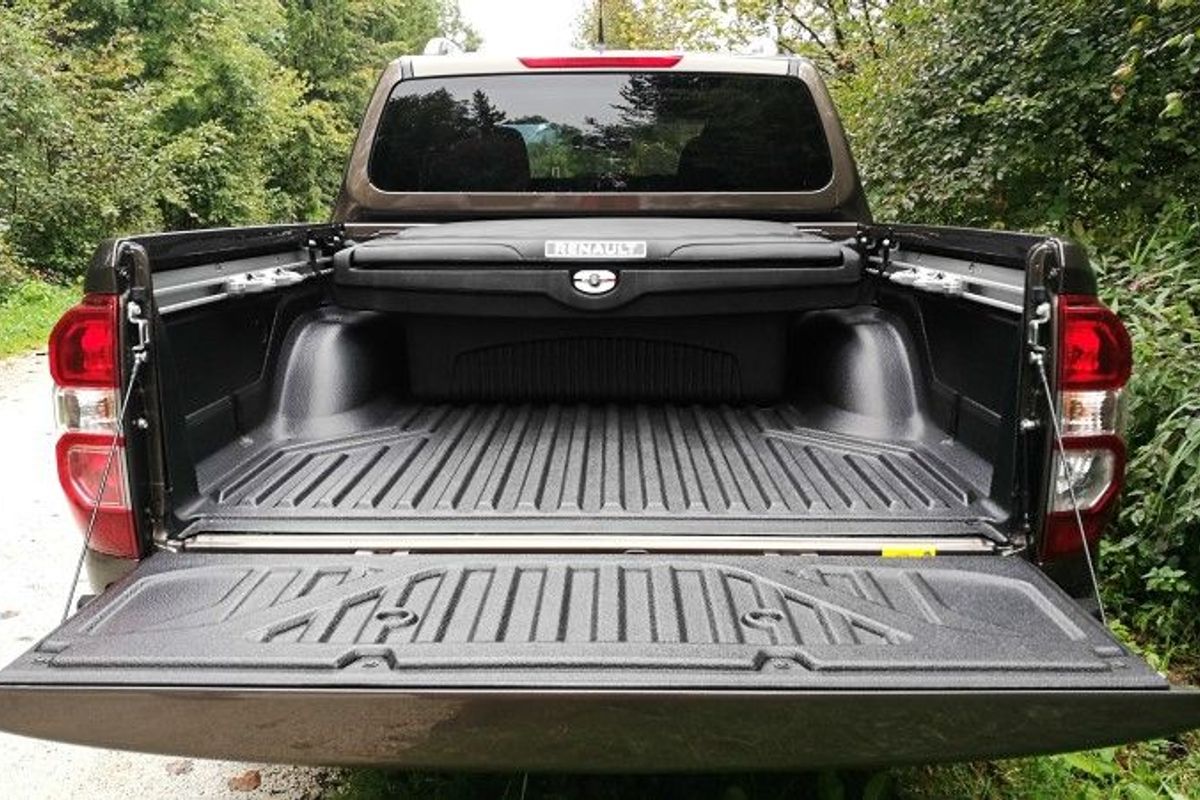
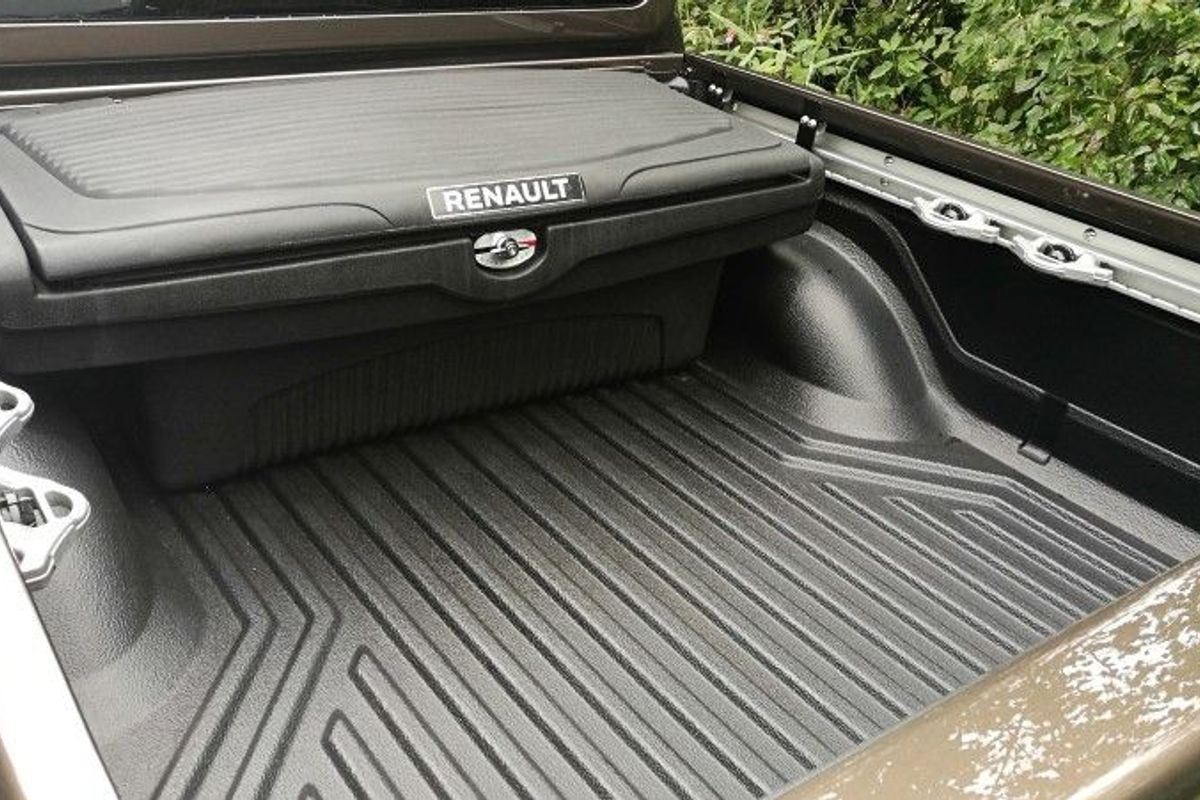
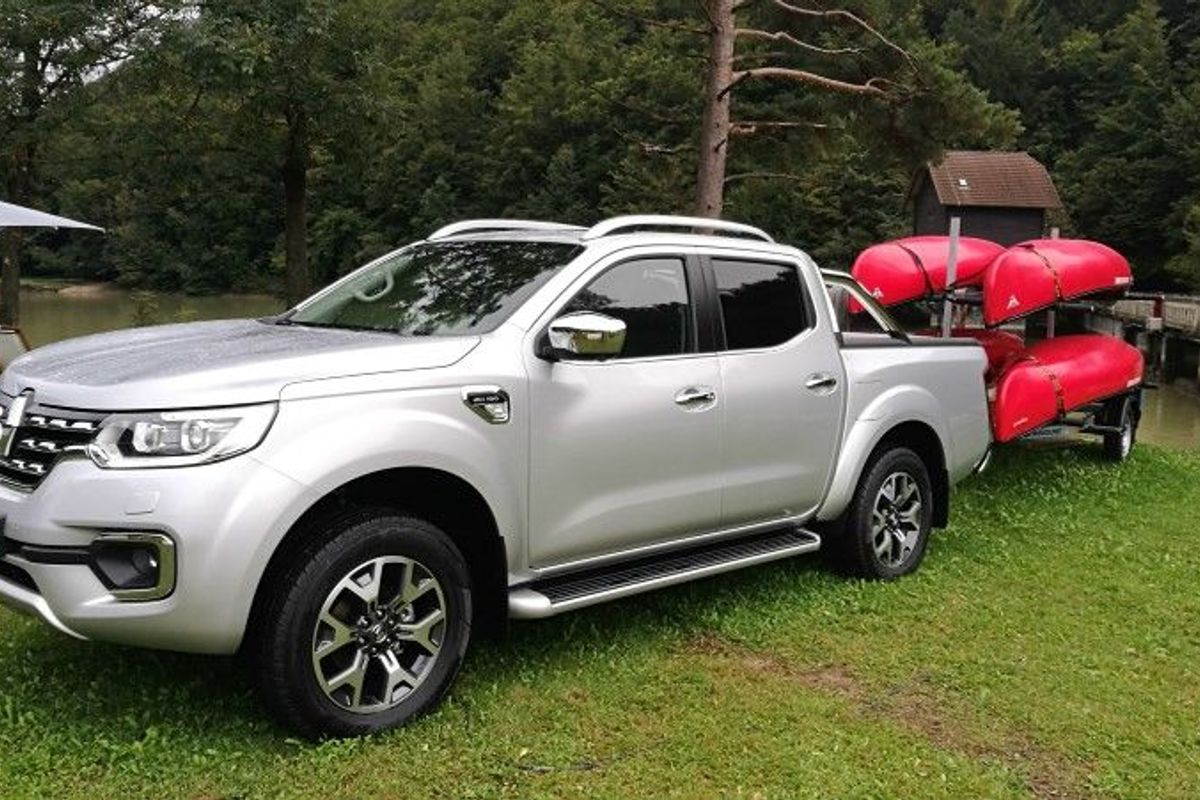
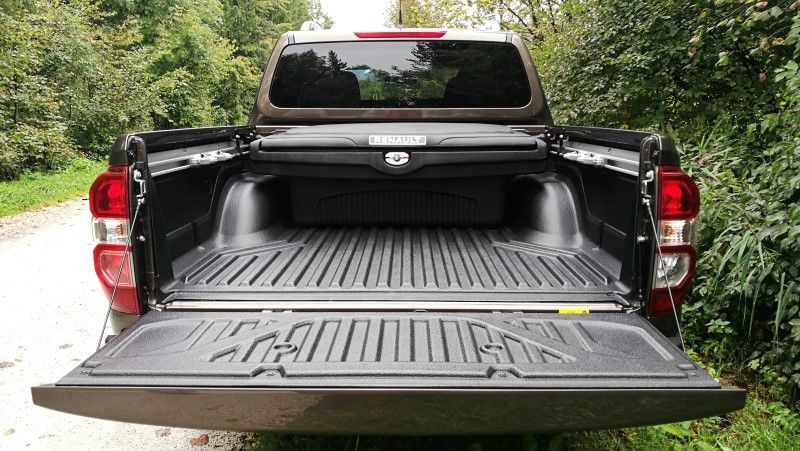
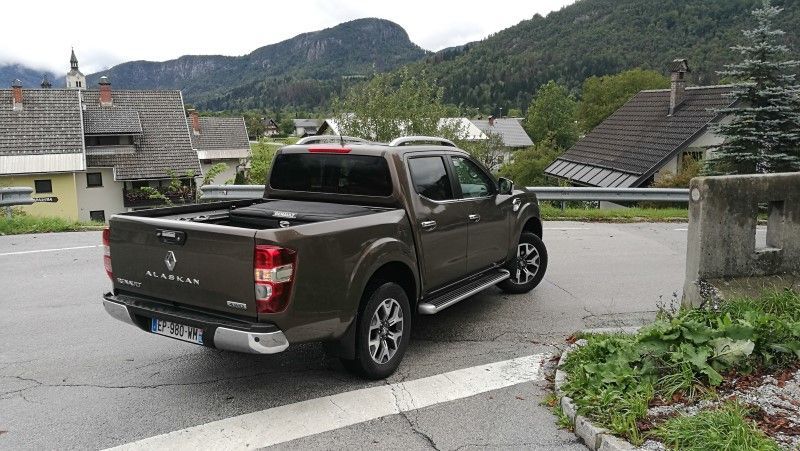
The Alaskan has a practical load bay with a nifty tie-down system. A handy load box is a great option too. 

In terms of practicality, the Alaskan's load bay is fitted with a C-channel tie-down system that comprises fixed rails with 4 sliding hooks that allow you to effectively tie-down all types of cargo. The tailgate can withstand weights of up to 500 kg and the Alaskan has an unbraked towing capacity of 3 500 kg.  

Interior execution and comfort

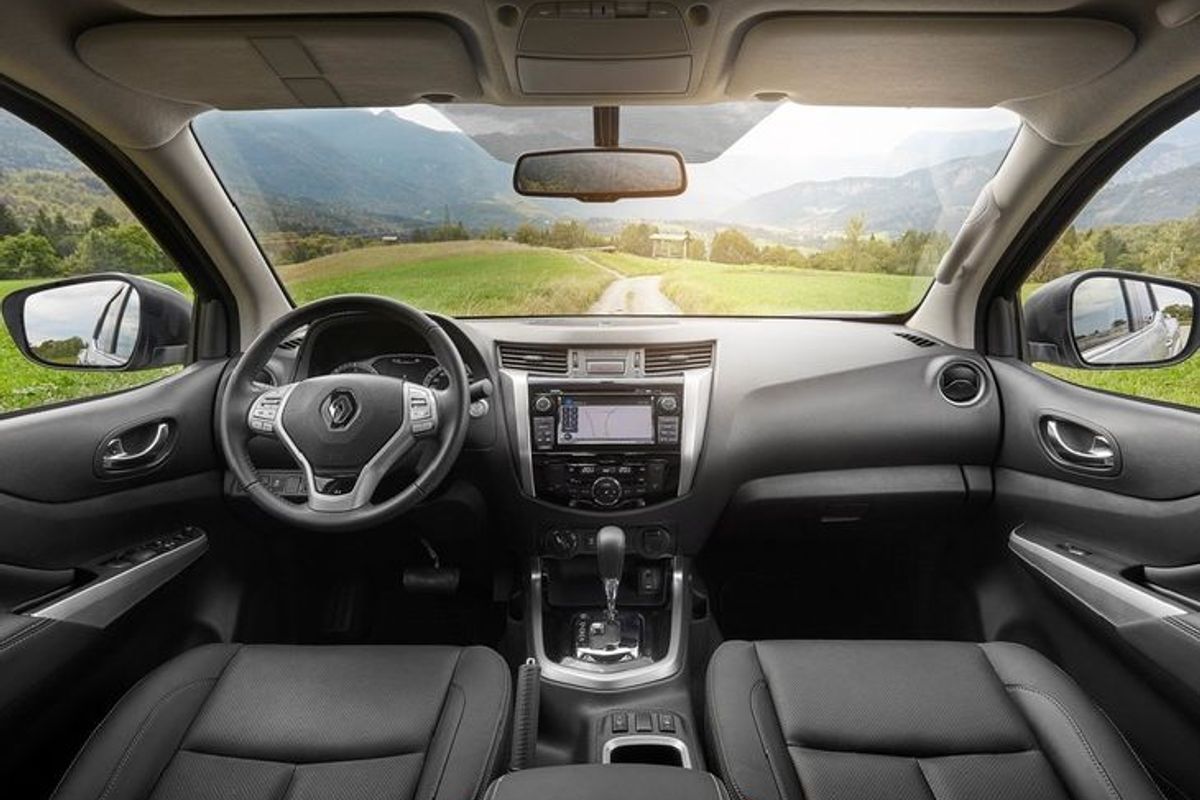
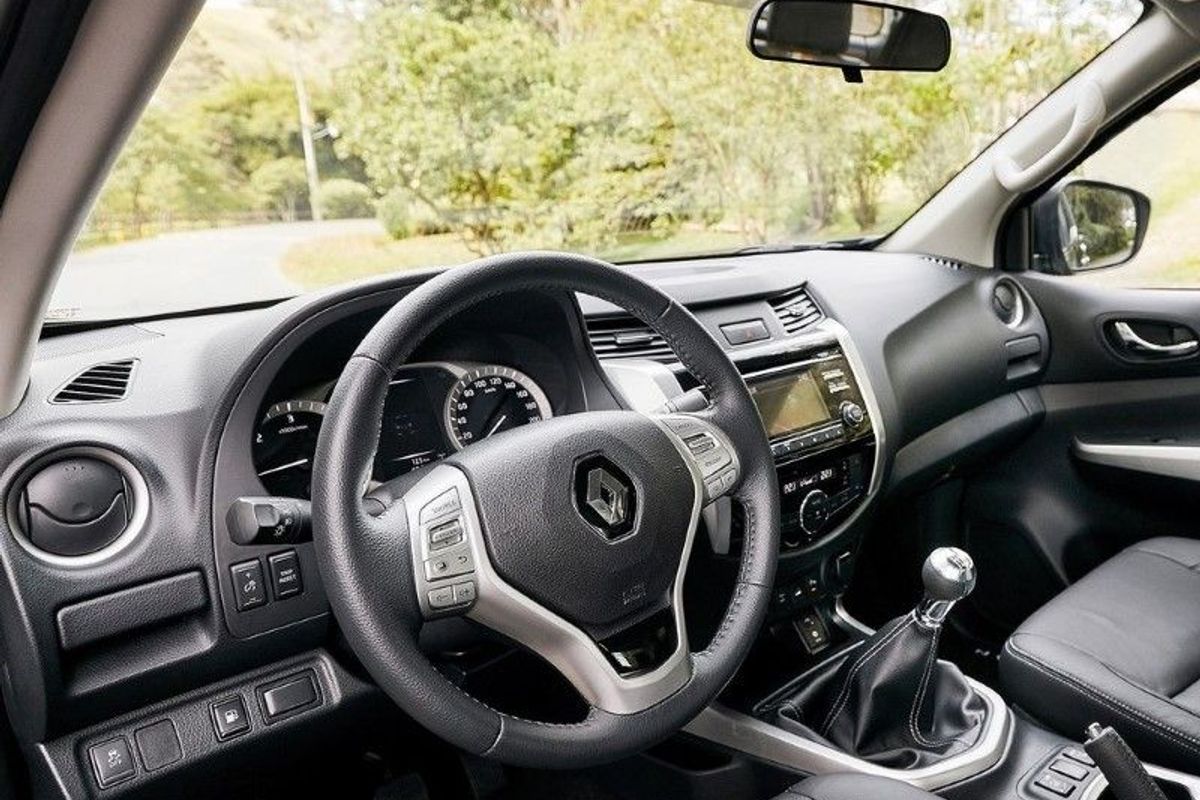
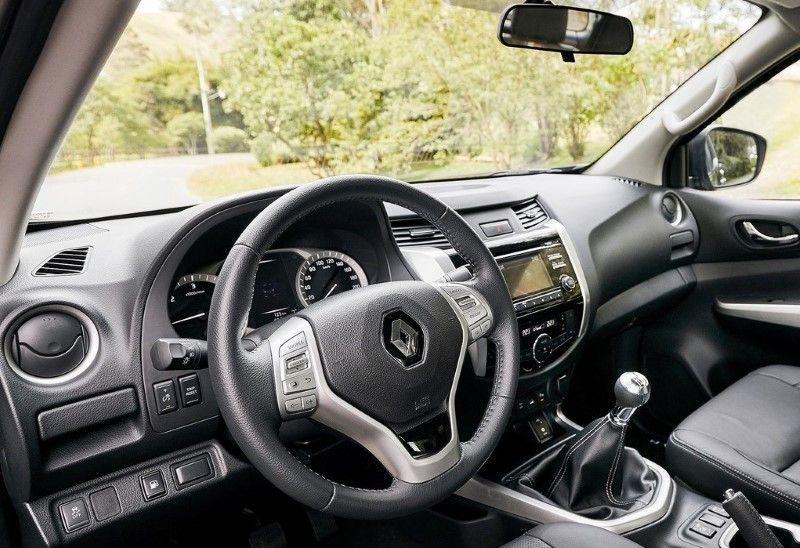
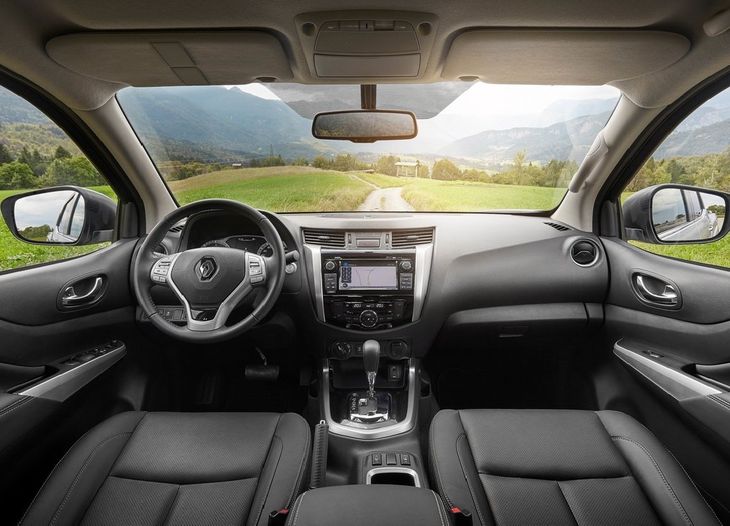
Stepping inside, the Alaskan's interior is distinctly Navara-esque in design, and unashamedly so. Some critics will be quick to lambaste the Alaskan for this fact, but the reality is that the Alaskan's cabin is robust with good to excellent build quality.


Solid build quality and a comprehensively-equipped interior are hallmarks of the Renault Alaskan.

Indeed, it's a solidly-made cabin and the hard-wearing dashboard feels like it's built to last a lifetime. It's worth mentioning that the quality of the switchgear and overall fit and finish is good too and although the materials are by no means extravagant, the cabin has a fair degree of "premiumness" to it.  

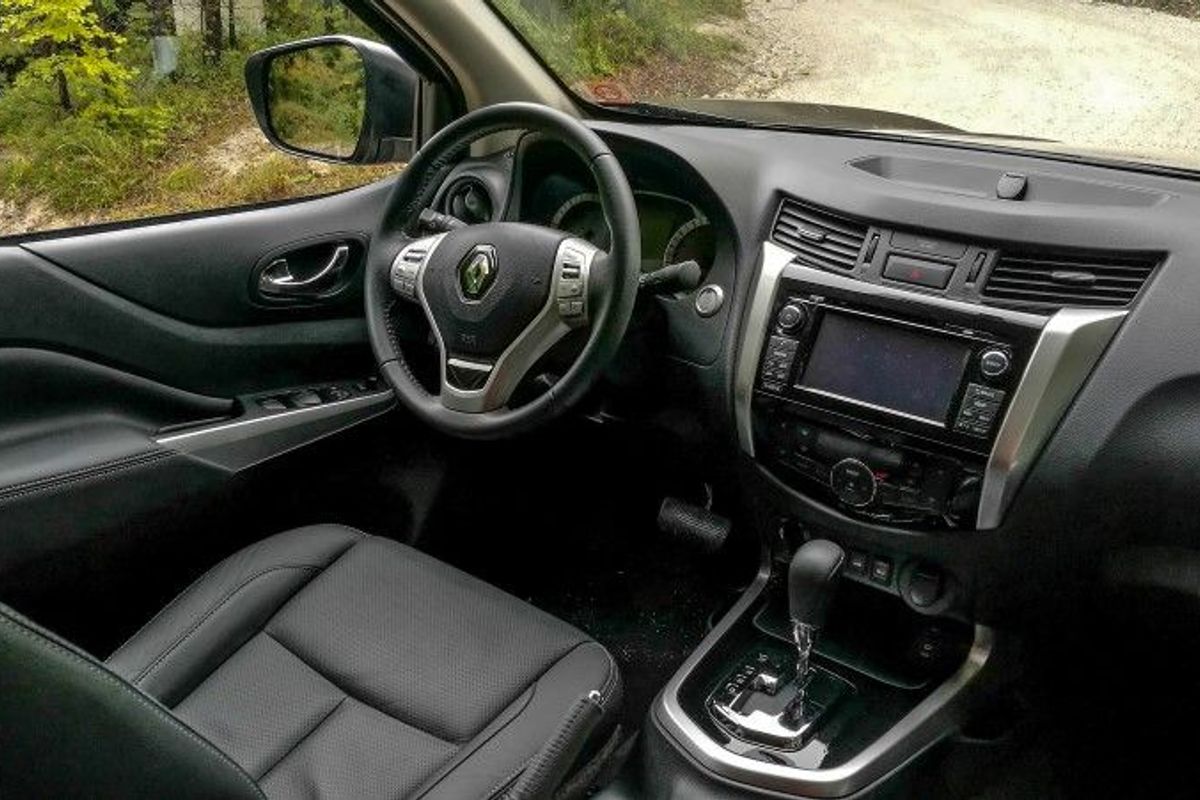
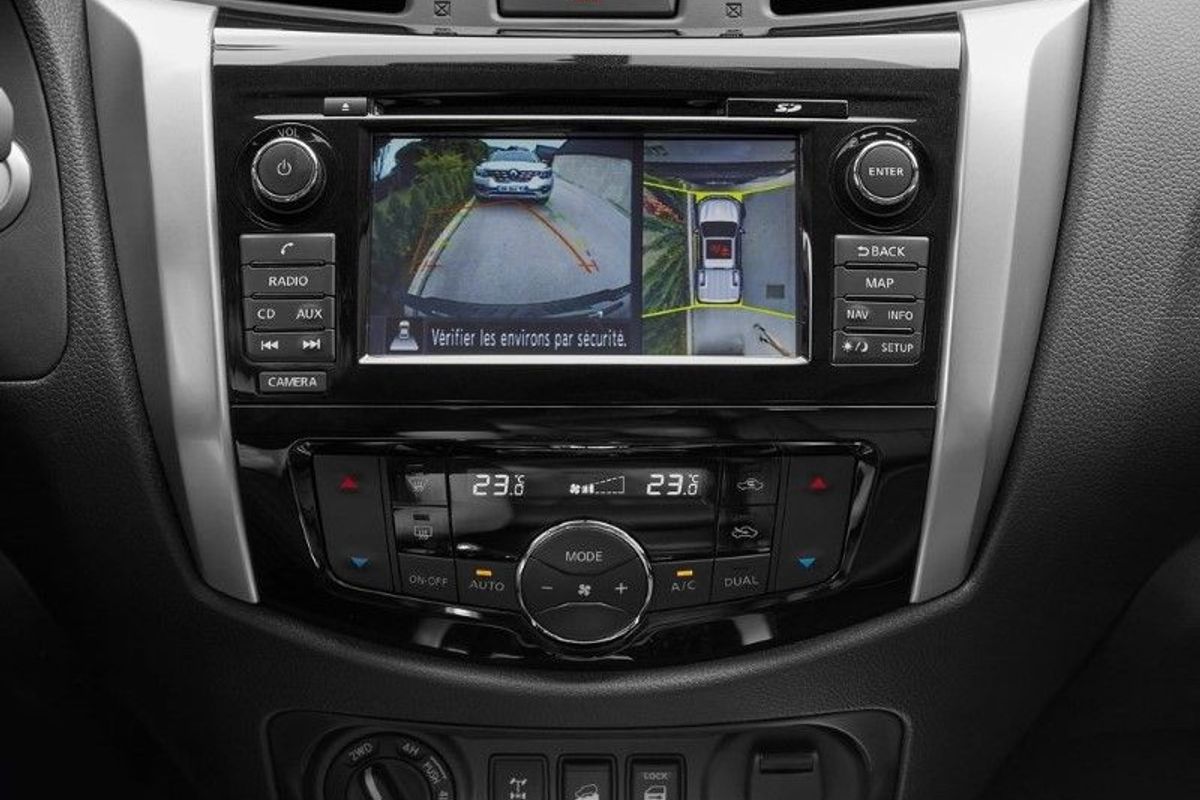
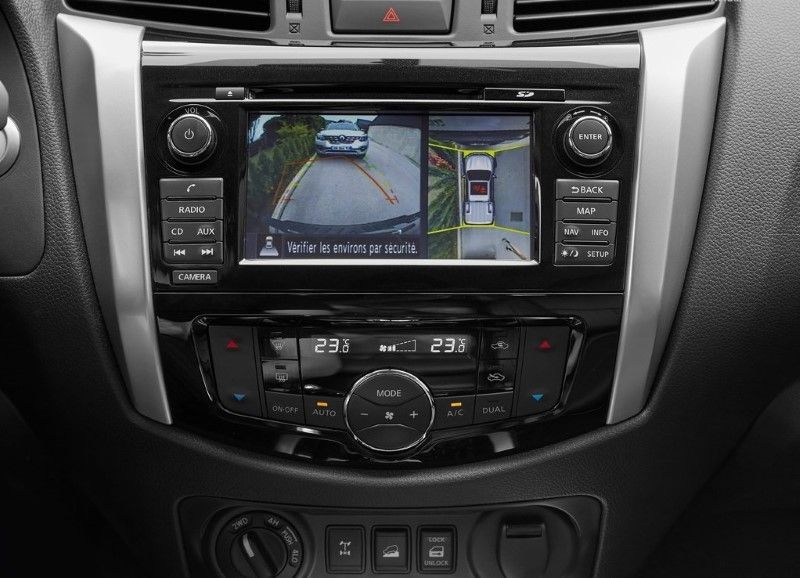
The Alaskan we drove was well-specced and came equipped with a 7-inch touchscreen infotainment system with a CD player, Bluetooth capability and satellite navigation, but fitted with only a solitary USB- and auxiliary audio port.  


The 7-inch touchscreen is good and features a useful 360-degree camera for ease of manoeuvrability. 

Another cool feature is the 360-degree camera display that works using 4 external cameras that provide an all-around view of the vehicle's surroundings, which is very useful in avoiding obstacles while off-roading or when parking the Alaskan in your driveway.

Rear park distance control will also give the driver audible alerts while parking and this feature is bolstered with a rear-view camera with guidelines to make parking easier. 

The driver can access vehicle information using a 5-inch 3D TFT colour display, which provides information such as fuel economy, navigational instructions, driver-aid settings, compass and USB device controls. 

The steering wheel, which is just about identical to that found in the Navara, is adjustable for rake only and features mounted controls for the audio, Bluetooth and cruise control. Our test unit was equipped with leather upholstery and the NASA-inspired seats were particularly comfortable; they should provide high levels of comfort on longer journeys. Both the driver and passenger have the luxury of heated seats and the driver's seat is electrically height-adjustable with 8-way power adjustment.   

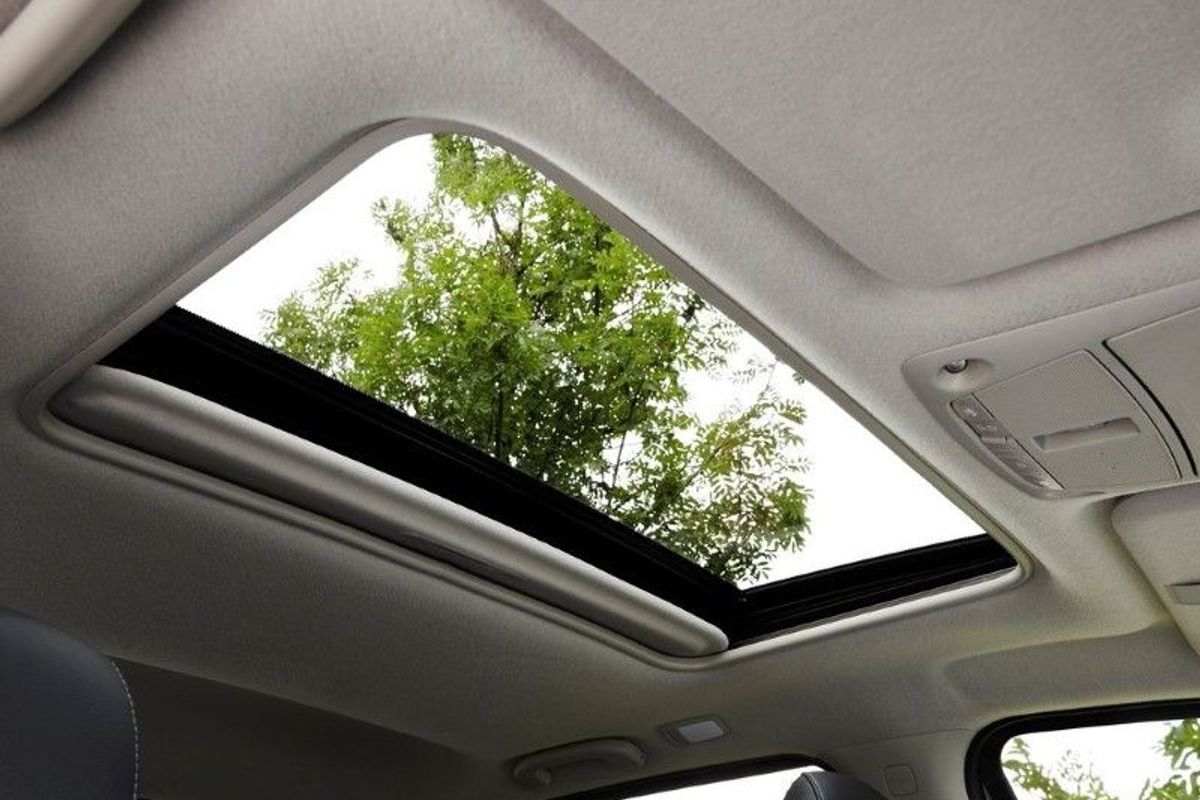
Other notable features include automatic dual-zone climate control with independent air conditioning for front and rear passengers and ample storage space including a centre console and storage bins underneath the rear seats and in the doors. We also liked the electrically retractable sunroof, which bathed the cabin with light. 


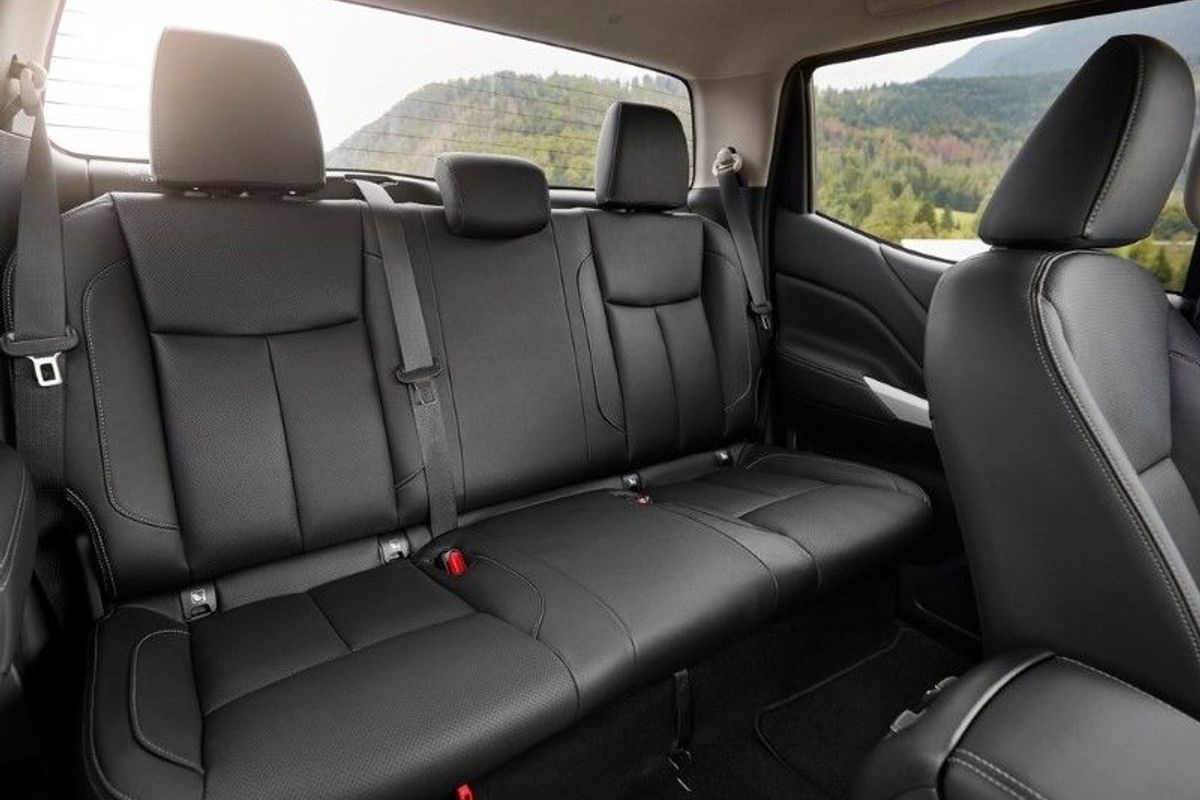
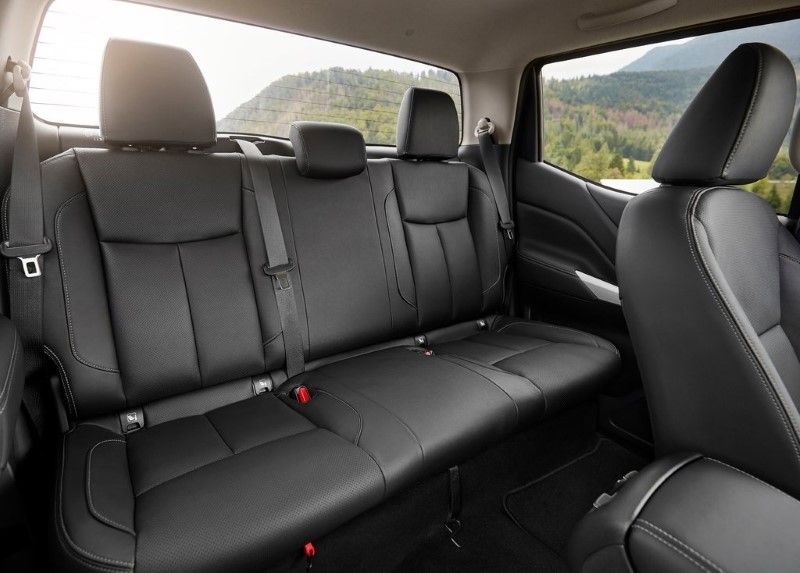
A comfortable space to occupy on a journey to your favorite fishing spot on the river.

Rear passenger comfort is good with sufficient leg-, knee-, shoulder- and headroom and it must be noted that the cabin is well insulated; noise, vibration, and harshness (NVH) levels are kept to a minimum, even at speed. Based on our first exposure to Renault's double-cab, the Alaskan's interior is on par with rival offerings, and in some cases, is noticeably better.   

Performance and ride comfort  


Ride quality and refinement are key strengths of the Alaskan. Fuel economy is good too…

Our test drive started at Labjhiana airport where we hopped into the high-powered Alaskan 190 DCi 4×4 fitted with a 7-speed automatic transmission.

As its name suggests, the Renault-tuned, 4-cylinder 2.3-litre twin-turbodiesel engine offers peak outputs of 140 kW at 3 600 rpm and 450 Nm of torque at 2 000 rpm. A 120 kW version with a single turbocharger is also offered, but it was not available for the test drive. 

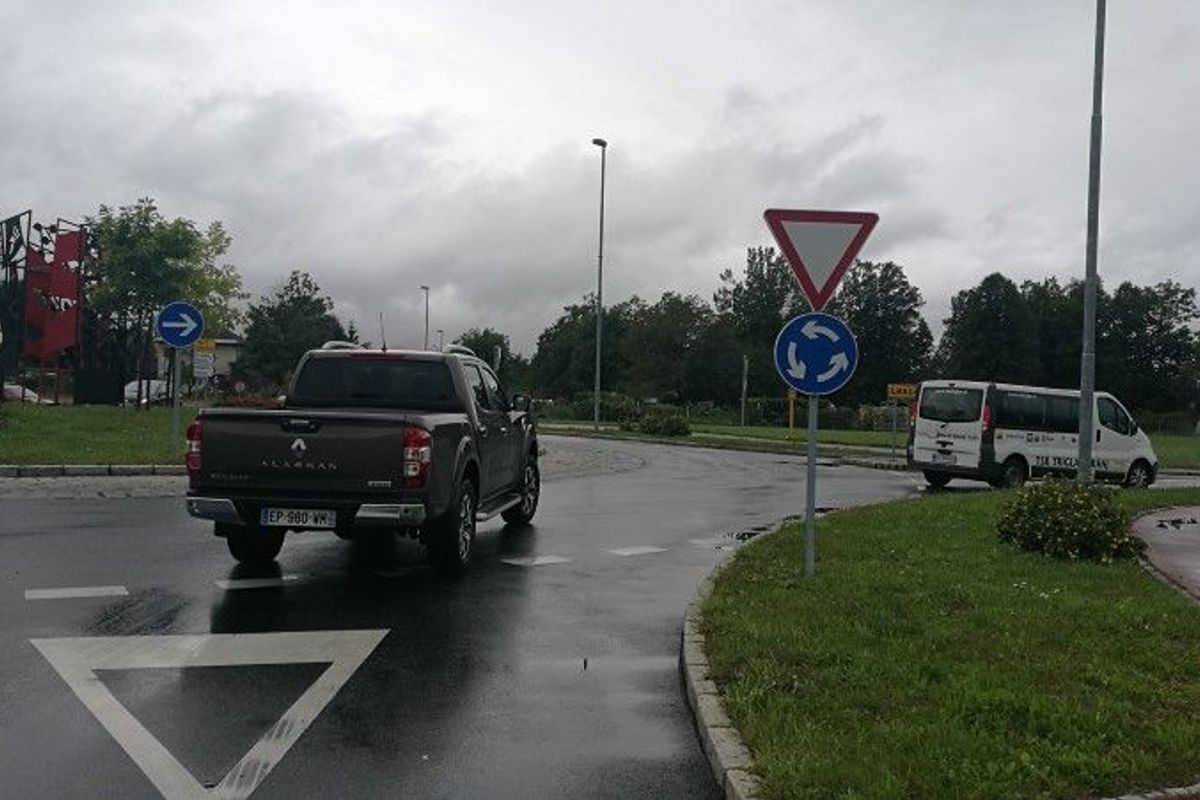
In Slovenia, like most countries in Europe, you drive on the right-hand side and it took a few minutes to feel confident behind the wheel of the left-hand drive Alaskan. The first major highlight of Alaskan was its engine refinement, which quickly became apparent as we set off on the freeway towards the picturesque town of Bled. Engine noise at highway speed is noticeably muted and remains relatively constant, even when you mash the pedal.

In comparison, the Navara's engine is much noisier overall, especially as the revs climb. Renault has really done a sterling job in terms of refinement in the Alaskan and it appears to be superior to its rivals in this regard, including Hilux and Ranger.


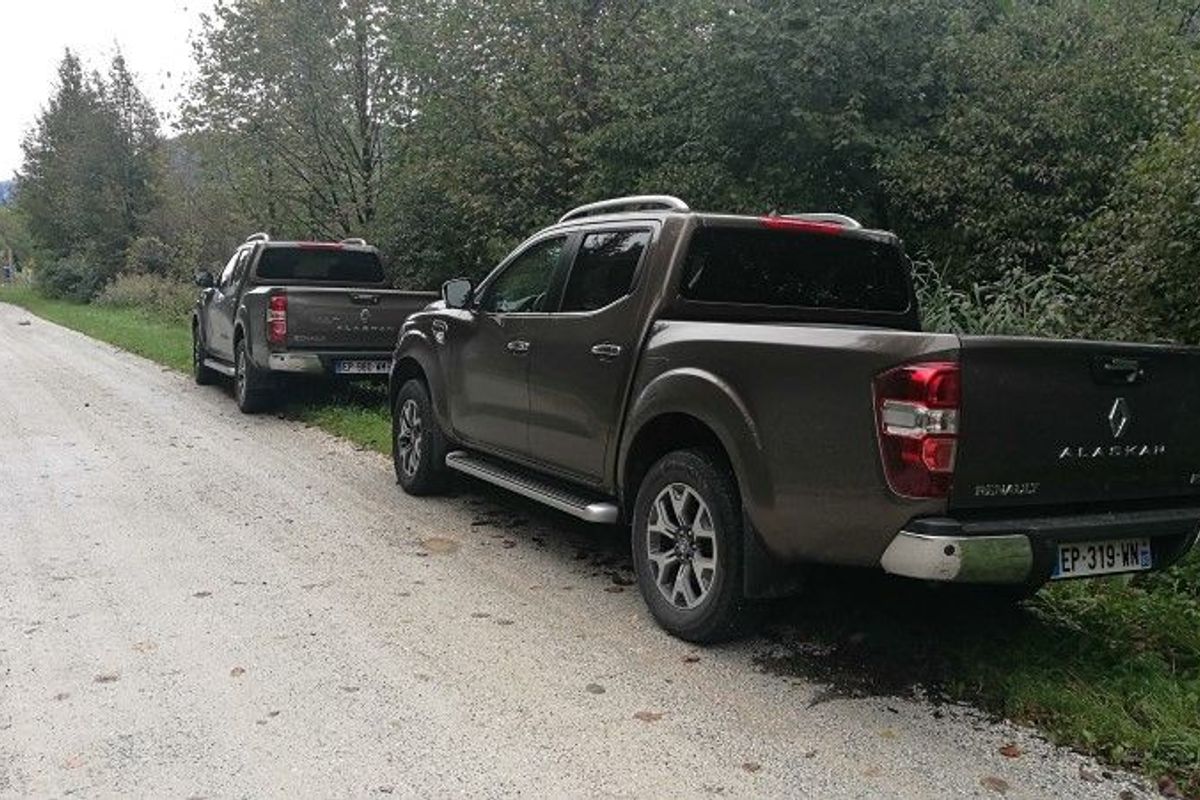
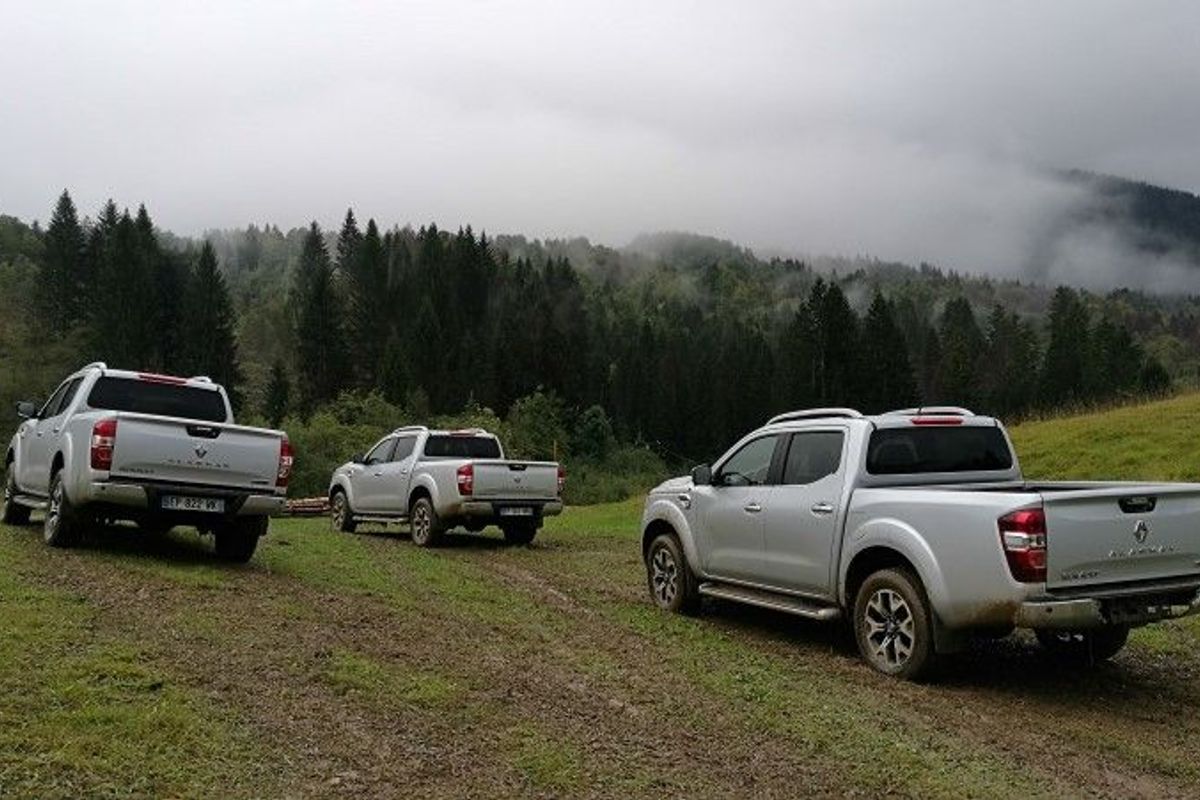
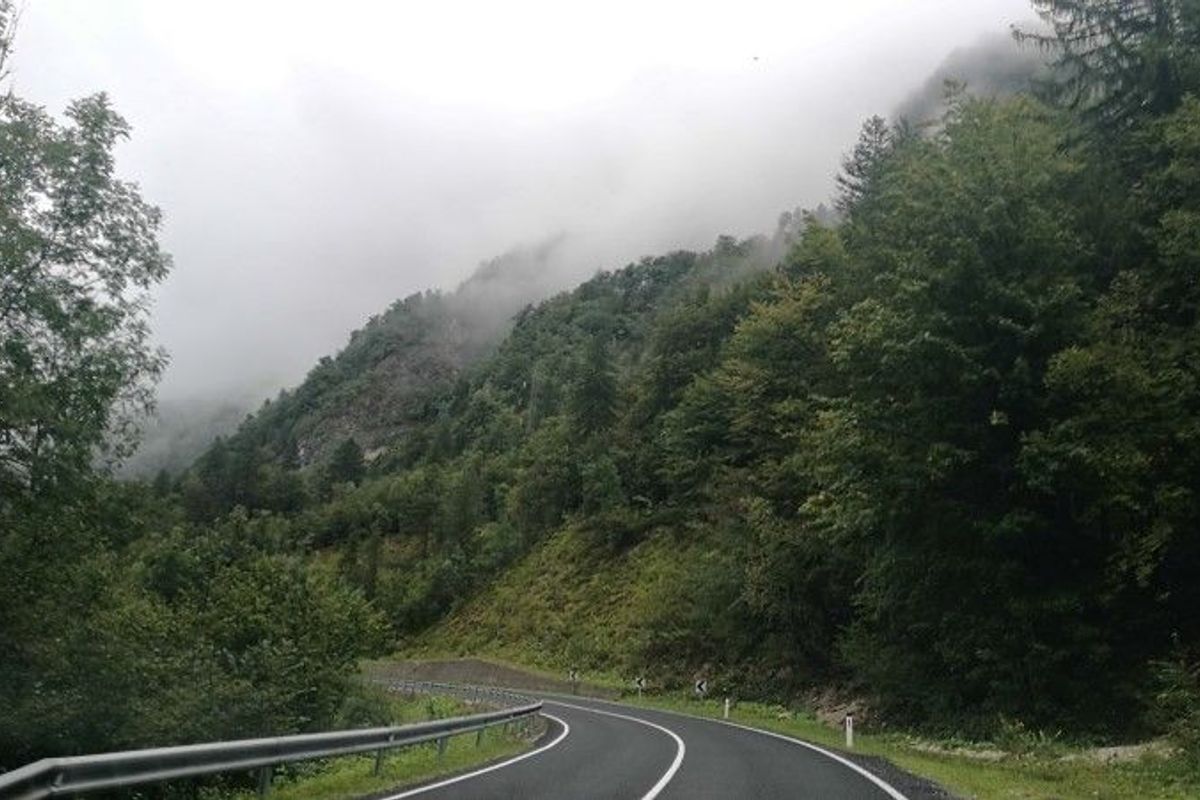
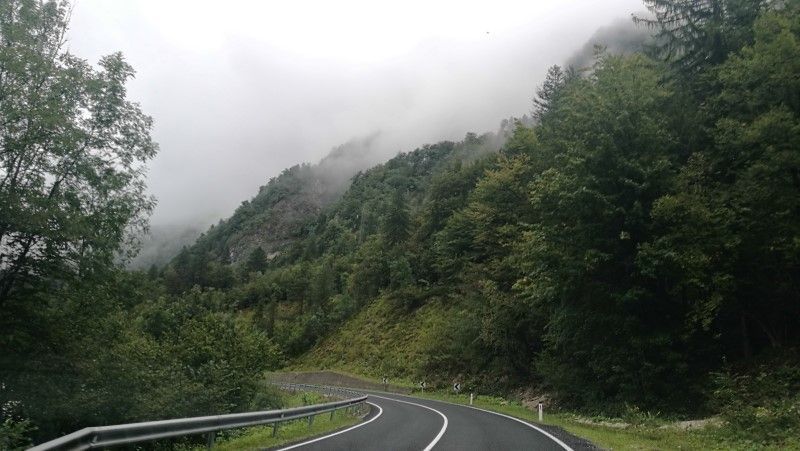
Slovenian roads are much like South African roads. The Alaskan will be right at home here.

We were also particularly impressed by the way in which the Alaskan transferred its power to the asphalt. Not only was it responsive to throttle inputs, but we also found the transmission to be smooth, unobtrusive and well-matched to the engine's performance characteristics.
 
You don't really notice how quickly the Alaskan gathers pace under harder acceleration and this may very well be due to the combination of engine refinement and the suspension setup. Much like the Navara, and unlike conventional leaf spring suspension setups found on most bakkies, the Alaskan also adopts a 5-link rear coil suspension that's said to alleviate the intrusions of road noise and vibrations to the cabin while enhancing overall ride and handling.

Our experience in the Alaskan is congruent with this claim and we found it to offer good ride comfort on tar and dirt roads alike. Perhaps the enhanced ride comfort was aided by the 100 kg of sand loaded in a lockable storage bin in the load bay to serve as ballast, but either way, we came away impressed with the Alaskan's ride comfort on different surfaces. 

Its ride comfort is even more encouraging considering that Slovenian roads are quite similar to South African roads. In terms of fuel consumption, Renault claims a figure of 6.3 L/100 km and during our test drive, the Alaskan easily returned a respectable 9.6 L/100 km, which is fair. 
 
After driving over 200 km, we were suitably impressed with the Alaskan's overall engine performance, refinement and comfortable ride quality on both tar and gravel. 
   
How good is it off-road? 


There's only one way to test a bakkie!

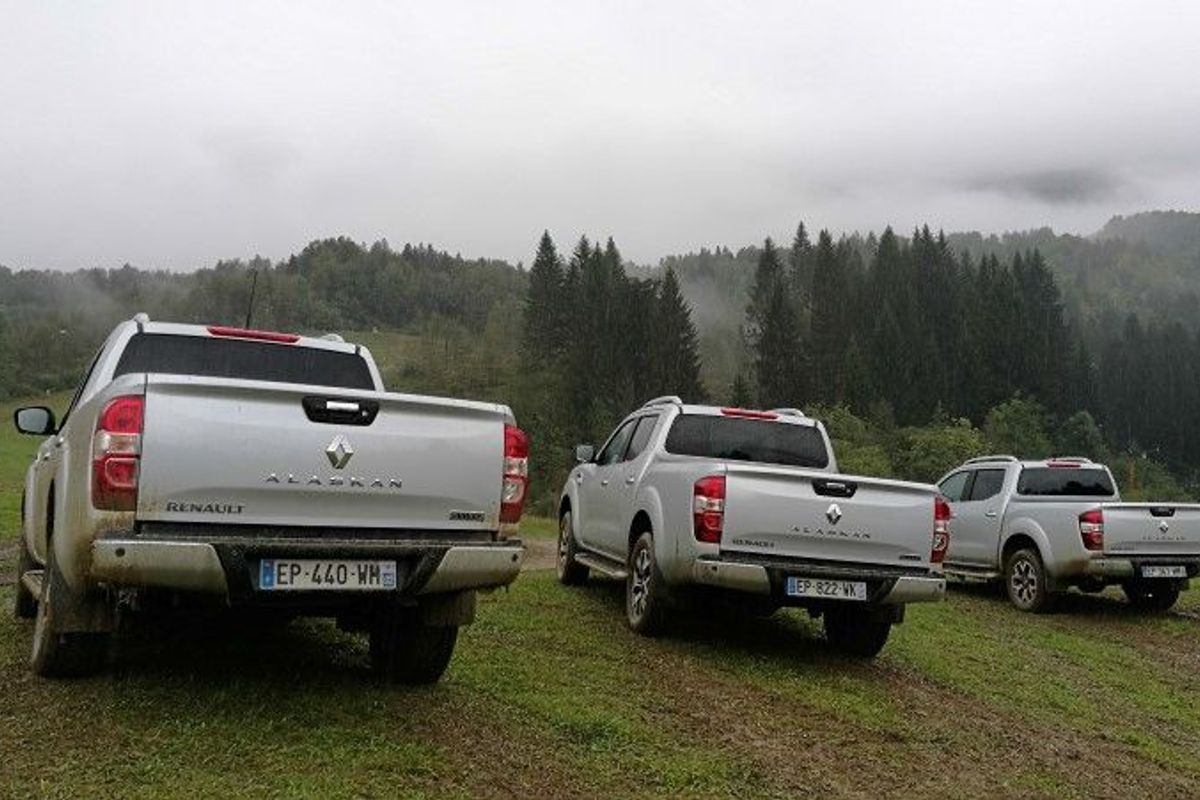
Most bakkie aficionados are probably more curious about the Alaskan's off-road ability and Renault made sure to demonstrate that its bakkie's more than capable of tackling the rough stuff. To do this, the Alaskan was put to the test on a 4×4 obstacle course on an out-of-season ski resort. The combination of excessive rain, mud and slippery grass provided a stern challenge and to make things even more difficult, the Alaskan was fitted with road tyres, which would make the task of completing the course even more demanding. 

Off-roading in the Alaskan is made easy with 3 driving modes that can be quickly activated using a dial. 2WD is used under normal driving conditions with power sent to the rear wheels. In more demanding terrain, high-ratio 4-wheel drive (4H) can be engaged "on the fly" at speeds up to 60 kph and you can remain in 4H at speeds up to 100 kph, making it ideal for optimum traction on gravel or in slippery conditions.


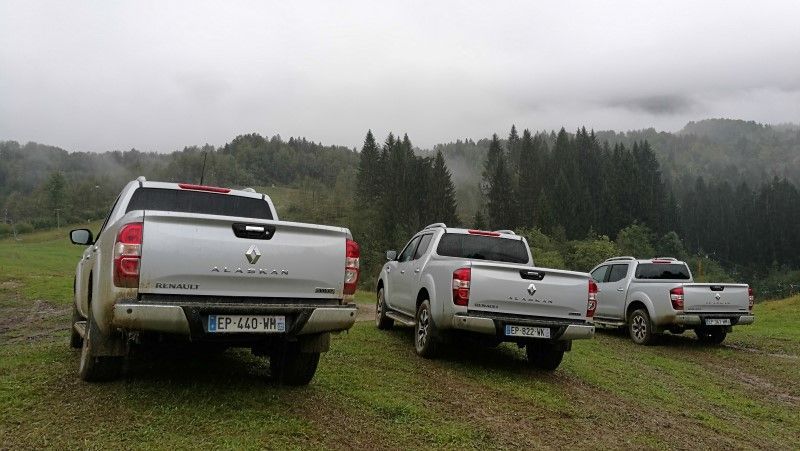
The Alaskan conquered rain and mud in Slovenia. What will it conquer in South Africa?

When things get seriously slippery, you can engage low-ratio 4-wheel drive (4LO) to maximise traction in severe terrain. This mode is activated while stationary and uses a supplementary torque transfer box to enhance traction. Further offroad assistance is offered in the form of an electronic limited-slip differential that provides increased stability by monitoring and braking individual wheels as required.  In addition to this, a mechanically-controlled, self-locking rear differential directs power equally to the rear wheels, providing maximum traction when traversing tough obstacles. Hill Descent Control and Hill Start Assist provide further reassurance. 

Despite the challenging conditions, the Alaskan completed the course with confidence, clambering over logs, punching up steep inclines and declines and it even successfully navigated a section of river, all in the pouring rain and with enough mud to keep every pig in the world happy.

The standard capability of just about any bakkie is pretty good these days and most bakkies would have, or should, complete a course like this with relative ease. The Alaskan did it with road tyres, which makes a strong case for its capability.

Safety Features

The Alsakan is equipped with comprehensive safety features which include ABS with EBD, electronic stability program (ESP), emergency brake assist (EBA), traction control system (TCS) and active emergency braking (AEB) with audible and visual alerts. A total of 7 airbags and rear ISOfix child-seat mounting points are standard.

Renault Alaskan – Availability and Pricing


If the South African economy plays ball, the arrival of the Alaskan has the potential to upset the bakkie apple-cart in the local market. 

A spokesperson from Renault South Africa has confirmed that the Alaskan will be introduced locally in the second half of 2018. At this stage, local Alaskan specification is yet to be confirmed and it's not yet clear if both engine options will be offered in South Africa.

However, we can speculate that the range-topping 140 kW version will be offered in 7-speed automatic guise. High-spec automatic double cab bakkies constitute the majority of sales in the leisure double cab segment in South Africa and a flagship Alaskan automatic would, theoretically, make strong business sense. In addition to this, Renault will, in all likelihood, offer a mid-spec Alaskan which may very well be powered by the 120 kW Renault-tuned 2.3-litre turbodiesel engine with both a 7-speed automatic and 6-speed manual transmission on offer.  

Like many manufacturers in South Africa,  Renault is at the mercy of the exchange rate and the potential success of the Alaskan will depend on its price point in relation to its rivals. Renault SA has indicated that pricing will likely be similar to that of the Nissan Navara, which means that pricing may start from about R520 000 for the entry-level Alaskan and going up to approximately R600 000 for the top-spec automatic version. We expect that the bakkie will be offered with a 5-year/150 000 km warranty and a competitive service plan to boot. 

Based on our experience in Slovenia, the Alaskan is a strong product that is superior to many double-cab products currently on sale in South Africa. We'd even go so far to say the Alaskan eclipses its Navara cousin in terms of its overall product execution…. it arguably has more road presence, and somehow its power delivery, engine refinement and even ride quality seem superior by comparison, which is quite an achievement, because the bakkies' underpinnings are the same. Also, the Alaskan's infotainment system is far better and it appears to be a robust offroad offering.  If Renault SA can introduce the Alaskan with comprehensive specification and attractive pricing, it should, in theory, be well-received.  

Perhaps the Alaskan's greatest challenge is to overcome the way in which it is perceived in the minds of typically stubborn brand-loyal consumers who may find it difficult to justify spending their money on the Alaskan. The Alaskan's performance speaks for itself and we can't wait for it to arrive on local soil so that we can put it to the test against all of its rivals. We believe the Alaskan has the ability to shatter and redefine public perception. Furthermore, we wouldn't be at all surprised if the Renault Alaskan becomes a finalist in the Leisure Double Cab category of the Cars.co.za Consumer Awards – powered by WesBank – in 2018/2019.

Watch this space, the Alaskan is coming for you! Enjoy the braai…

Related Content

Renault Alaskan Officially Revealed

Nissan Navara 2.3D 4×4 LE (2017) Review

Why Navara shakes up the double-cab market

6 Most Fuel-Efficient Double-Cab Bakkies in SA

Mercedes-Benz X-Class: Finally Revealed

Mercedes-Benz X-Class: Off-road demo & video wrap

X-Class & rival double cabs it needs to beat [with Video]

The Fairest 4×4 Truck by far?

2016 Toyota Hilux vs Ford Ranger – Offroad & Review

In-Depth Comparison: New Hilux vs Ranger vs KB vs Amarok (video)

Want to buy a Renault? 

Find a new or used Renault on Cars.co.za

Volvo S90 T6 R-Design (2017) Quick Review

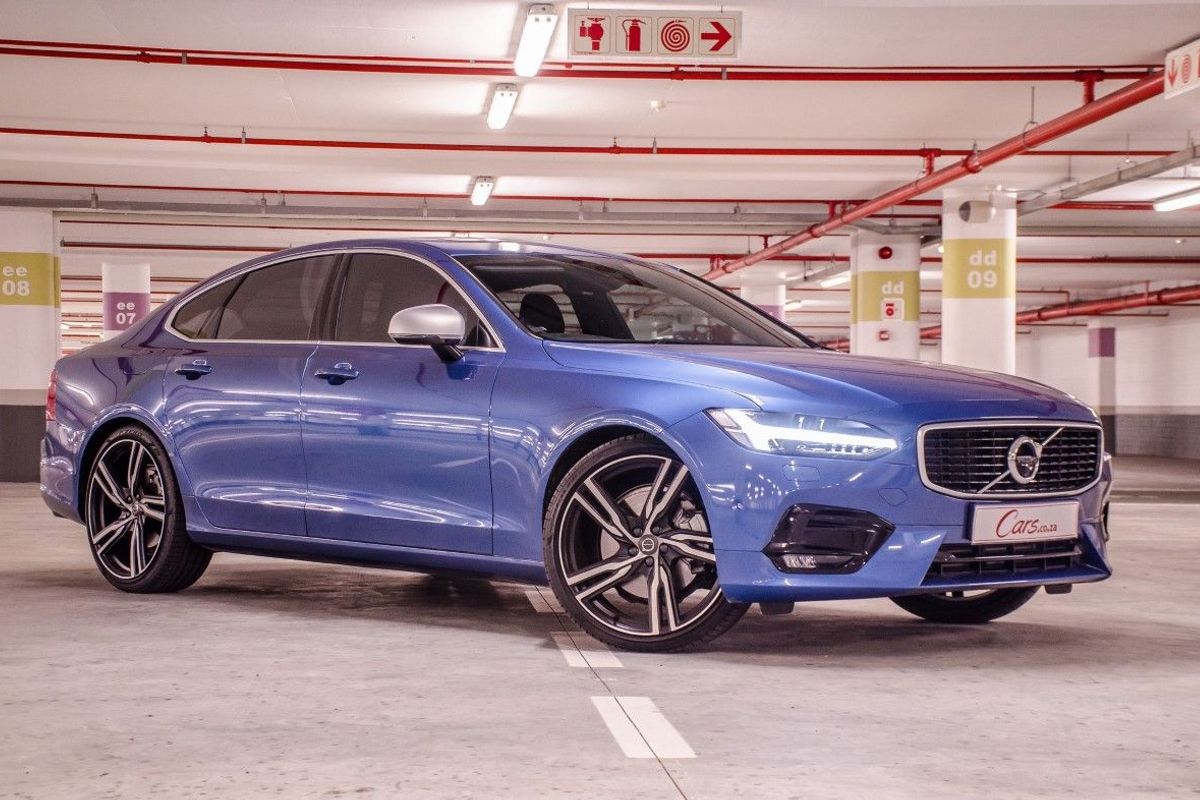
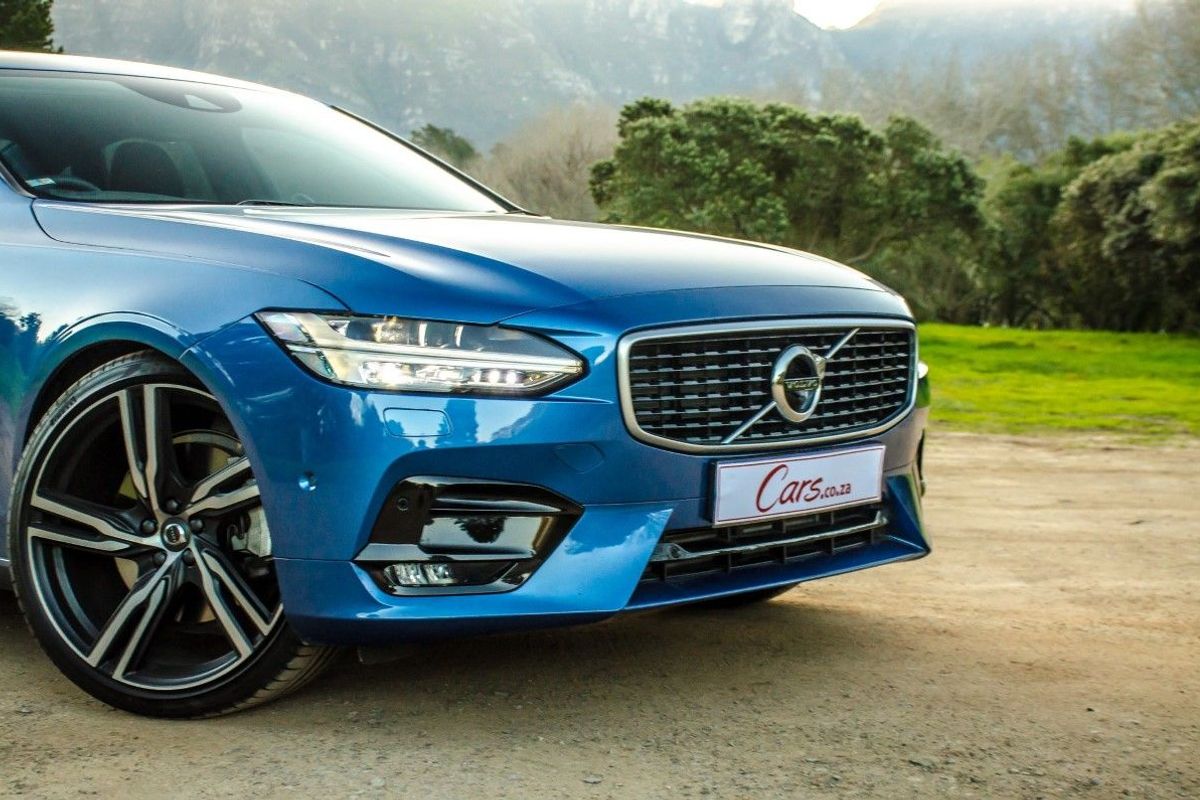
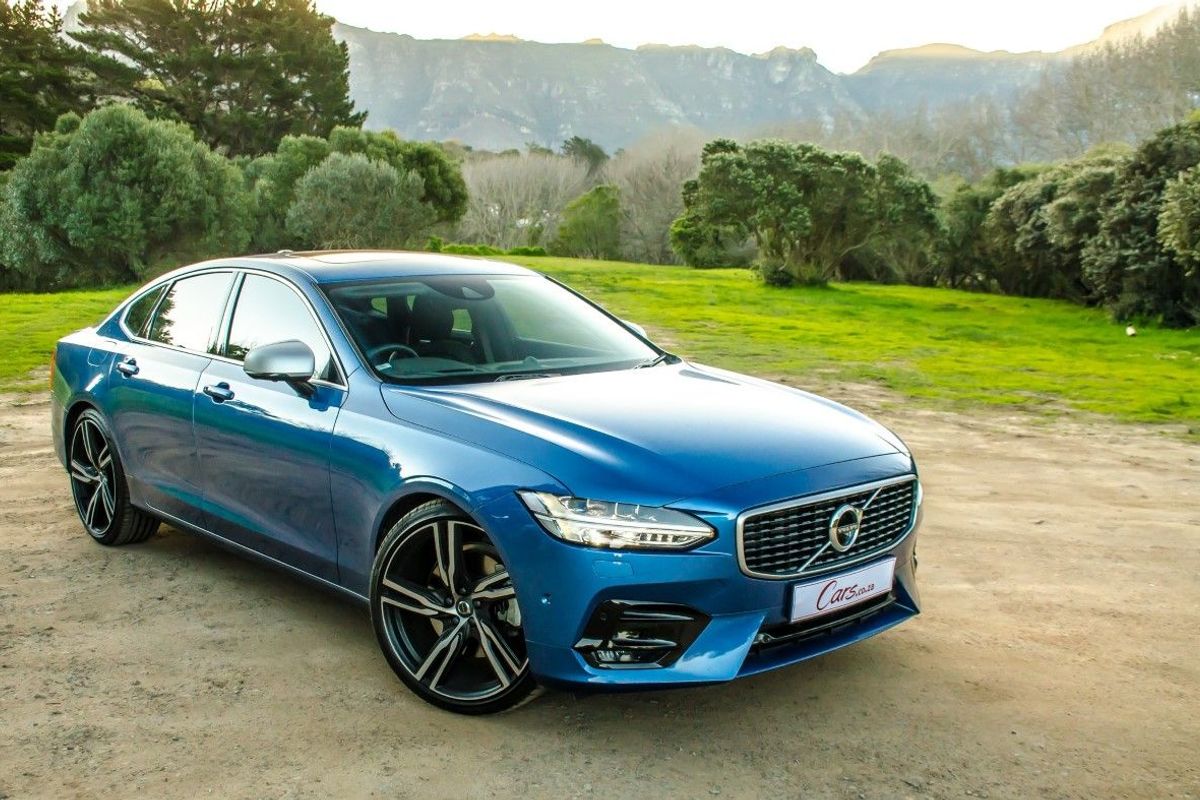
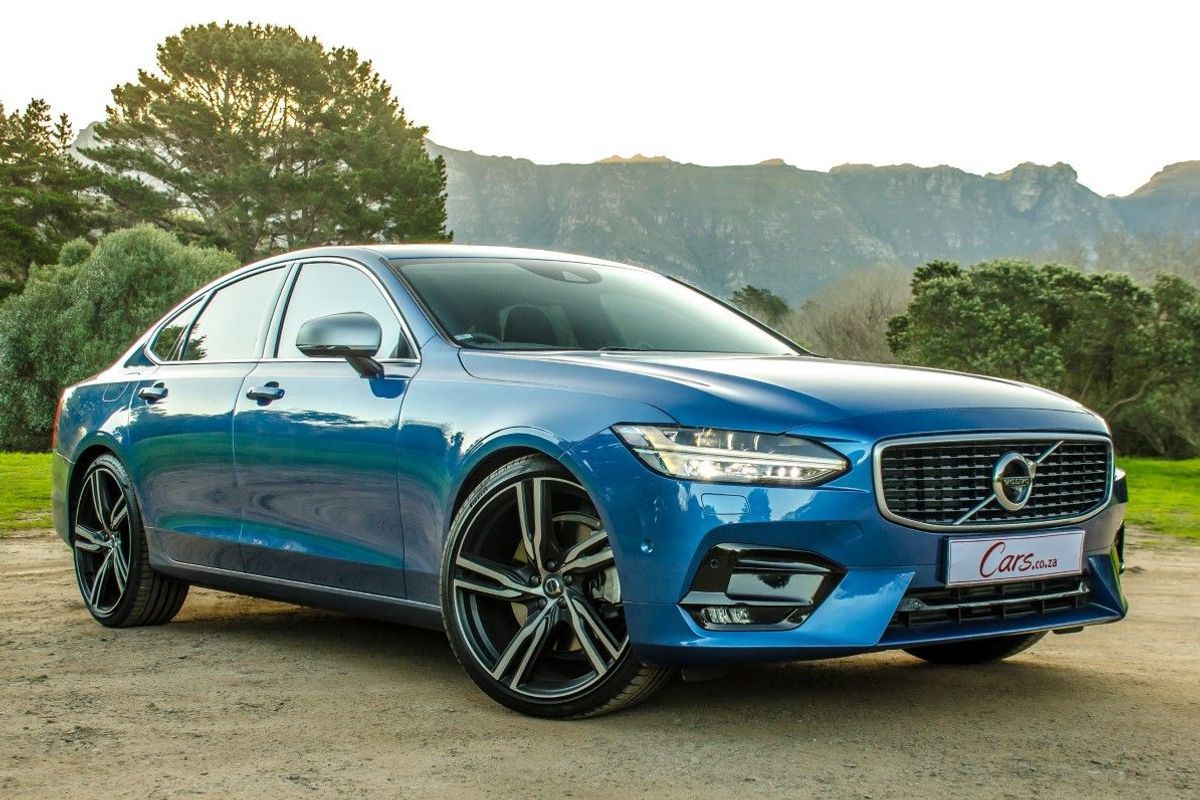
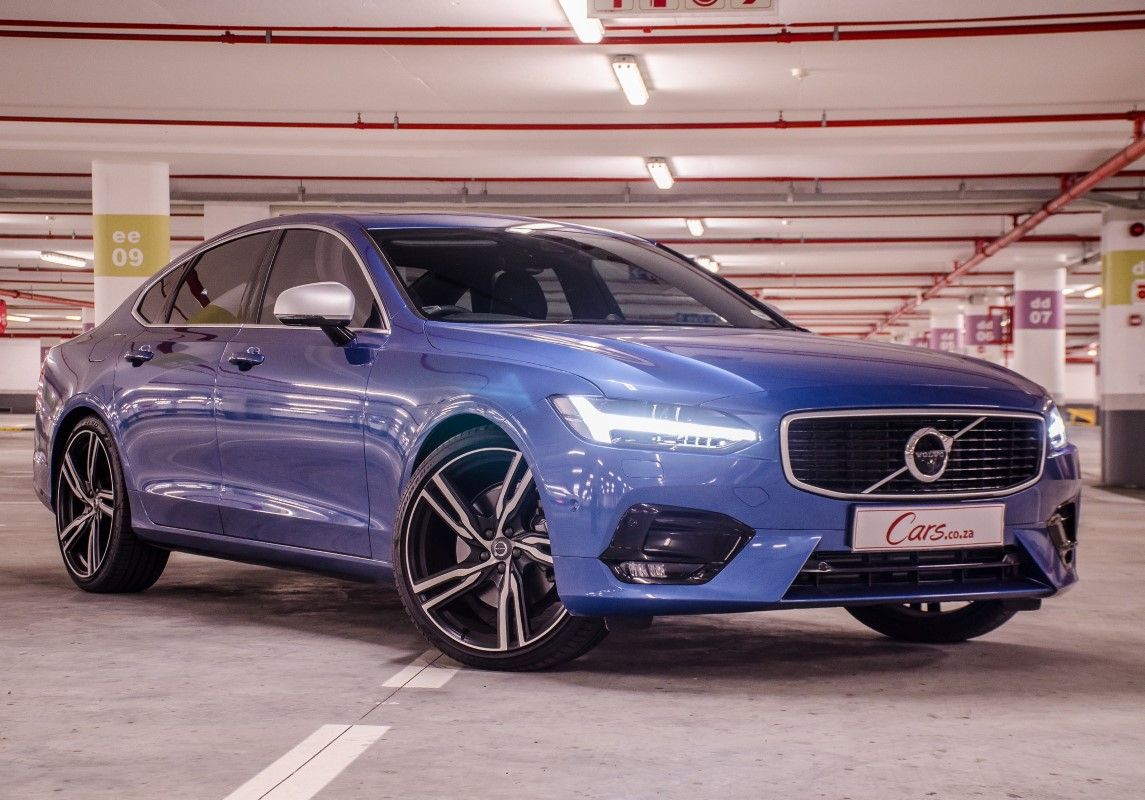
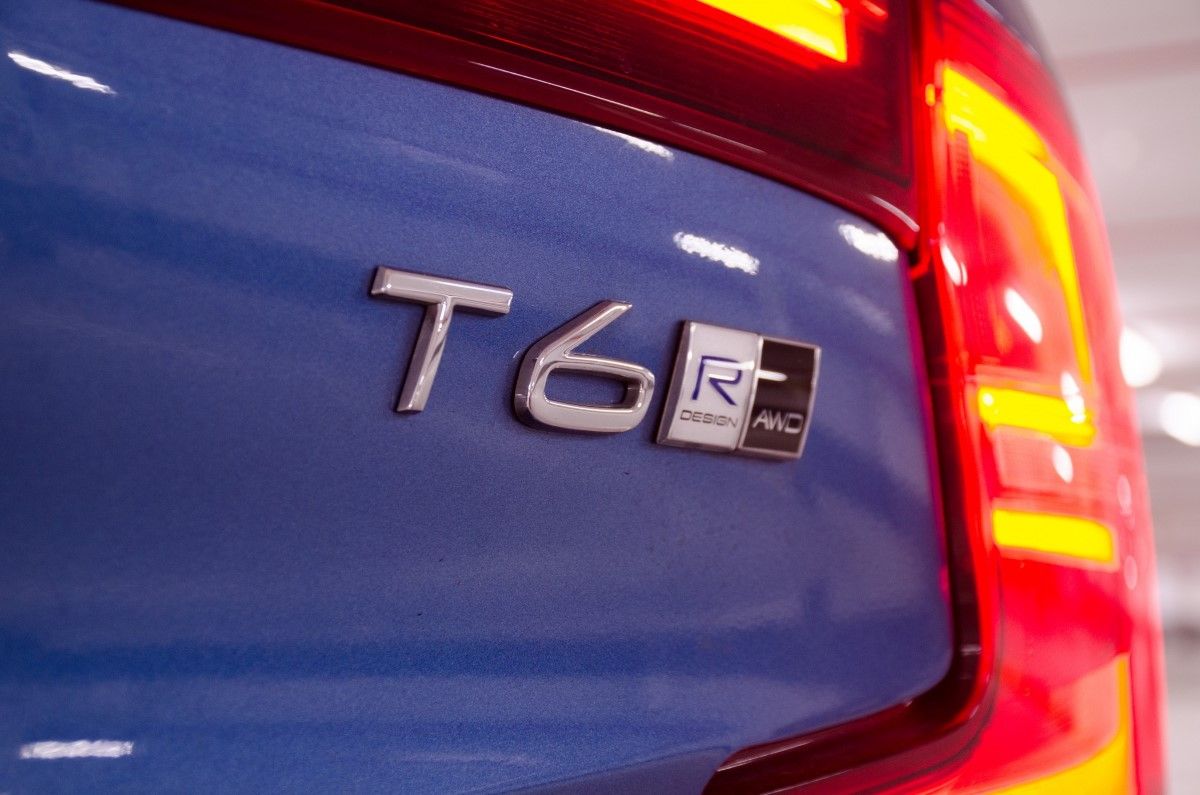
Going up against key rivals such the Mercedes-Benz E-Class and new BMW 5 Series, the Volvo S90 needs to make a bold statement and this new S90 R-Design –resplendent in Bursting Blue paintwork – counters its rivals with inimitable Swedish style! Let's take a look at what this S90 R-Design has to offer. 

We Like: Styling, powerful engine, infotainment and technology

We Don't Like: Difficult to fault, boot is slightly smaller than rivals

Alternatives

  • Classy choice: Consider the Mercedes-Benz E400 AMG Line 4Matic priced from R1 037 526. The E400 offers more power and torque than the S90 and is powered by a 6-cylinder, 3.0-litre turbocharged petrol engine with 245 kW and 480 Nm of torque. The E-Class arguably offers the best-in-class ride comfort too and is equipped with a wide range of impressive technology. However, many of the desirable optional extra's are quite pricey. 
  • Enter the new 5: The latest BMW 5 Series has much to offer and the 540i M Sport priced at R1 055 016 has the power to match both the S90 and Merc E400. The 540i is equipped with a 6-cylinder, 3.0-litre turbocharged petrol engine with 250 kW and 450 Nm of torque and is more gifted in terms of dynamic performance than its S90 rival. 
  • Something more extroverted: The Cars.co.za Consumer Awards-winning Jaguar XF 25t Portfolio is a dynamic, stylish and luxurious alternative, but doesn't have the engine power to compete with the vehicles listed here. In 35t and S guises it is simply too expensive.

Compare the Volvo S90 T6 R-Design AWD with the Mercedes-Benz E400 AMG Line 4Matic and BMW 540i M Sport


The S90 T6 R-Design offers good looks and admirable performance. A striking alternative to its German rivals. 

Facts & figures 

Price: R879 730 (September 2017)
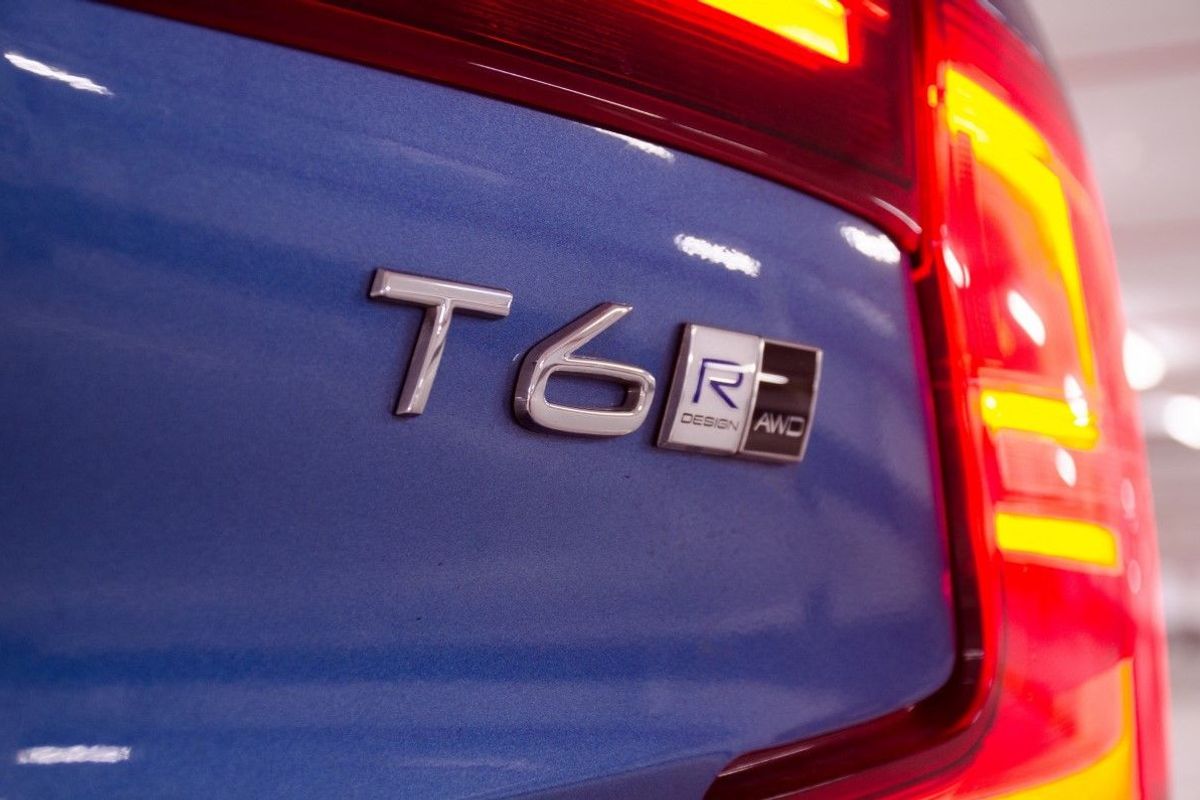
Engine: 2.0-litre turbopetrol
Transmission: 8-speed automatic 
Power: 235 kW 
Torque: 400 Nm 
Fuel consumption: 7.2 L/100 km (claimed)
0-100 kph: 5.9 secs
Top speed: 250 kph  

What is it?

In a segment traditionally dominated by ze Germans, Volvo has well and truly risen to the occasion with its S90 executive sedan. The local S90 lineup was recently bolstered with the introduction of 4 sporty R-Line derivatives and we recently spent some time with the most powerful T6 R-Design. Should you consider the S90 T6 R-Design AWD over its German & British rivals? This quick review could help you decide…

The Good

Attention-grabbing exterior styling


Pretty from all angles, the S90 T6 R-Design exudes style and luxury.

Visually, this S90 R-Design is distinguished by its deeper front bumper with menacing air dams and a glossy grille with satin chrome detailing. We really like the striking effect of Volvo’s "Thor’s Hammer" LED headlights too.

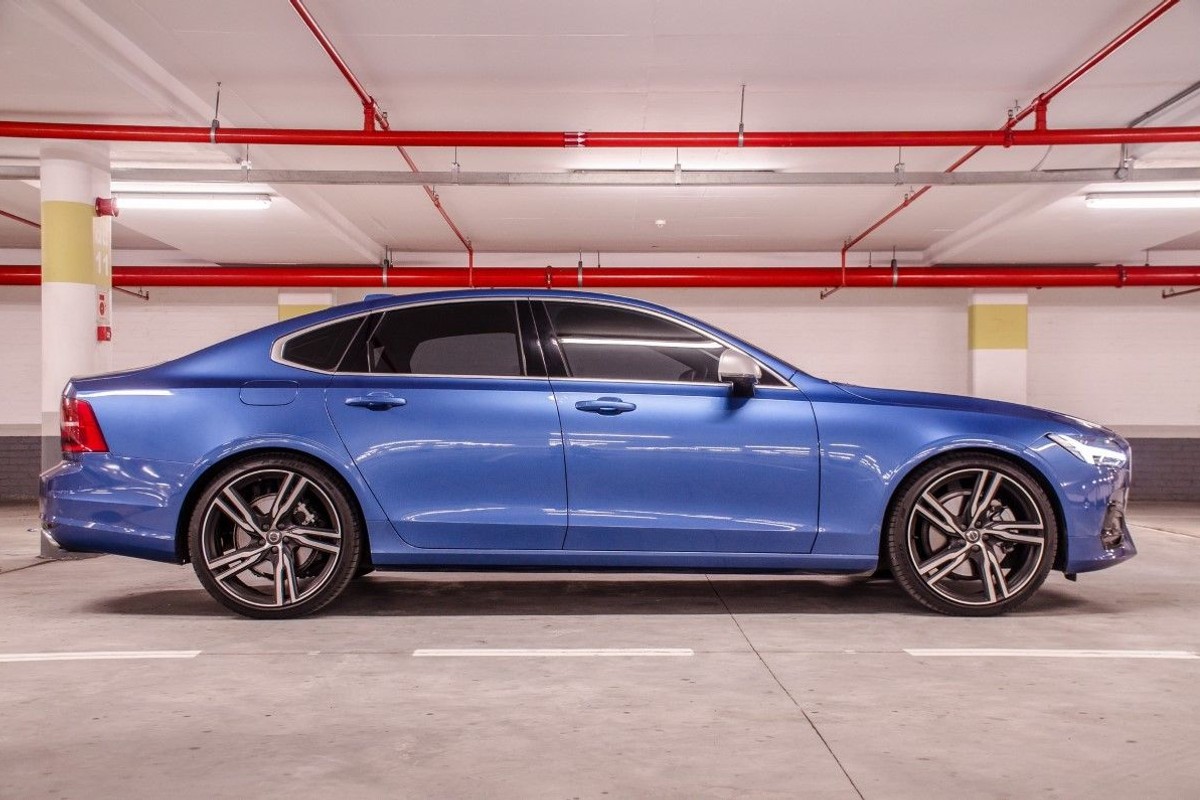
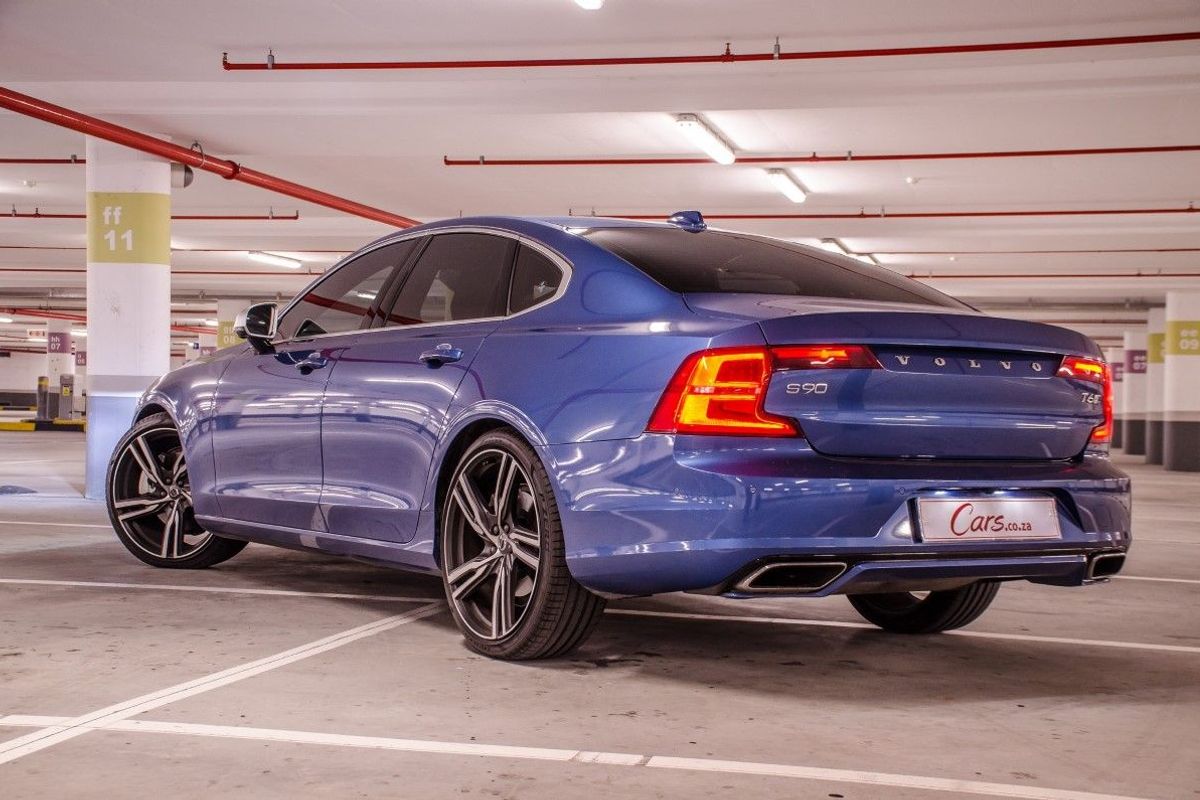
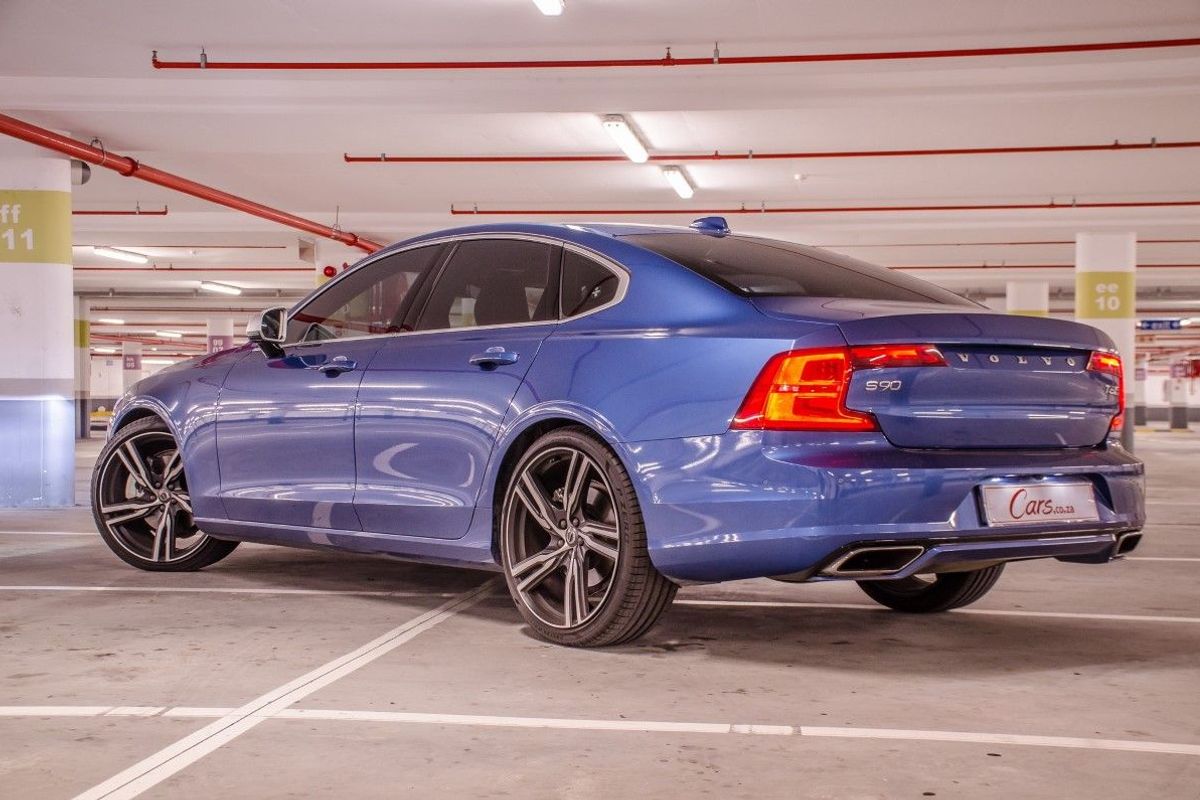
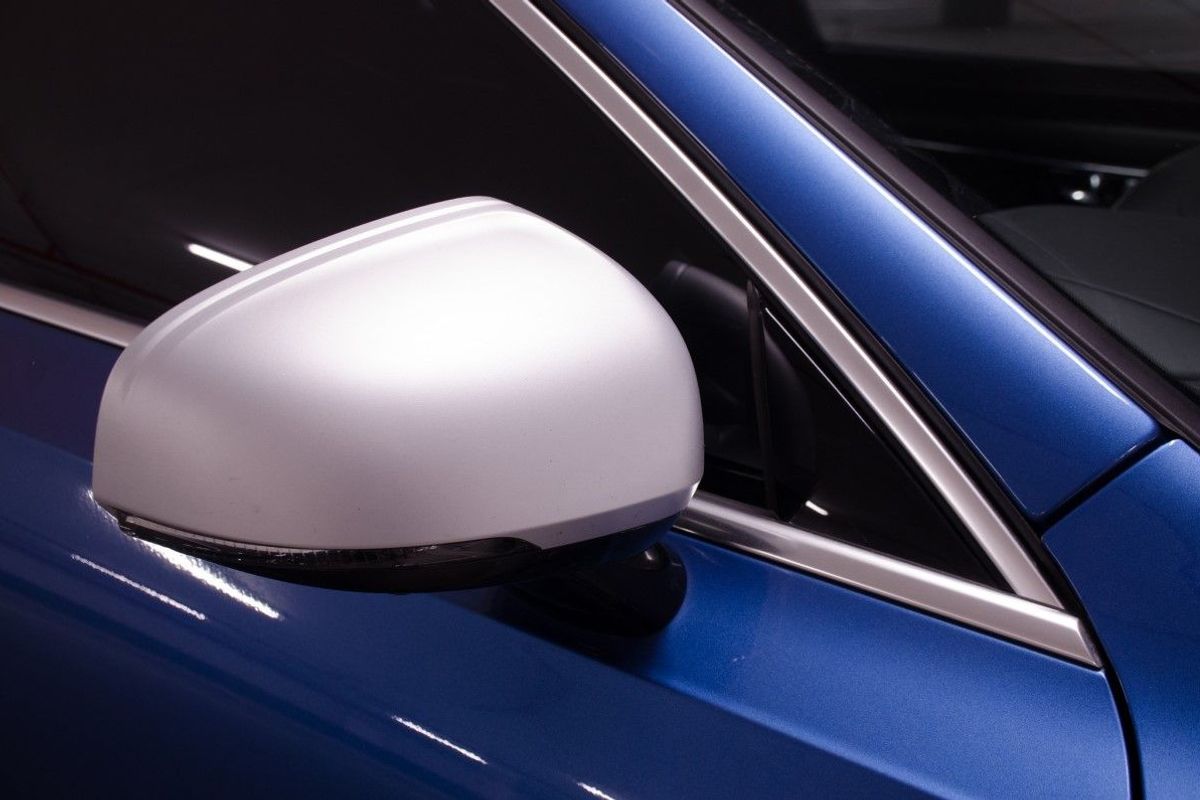
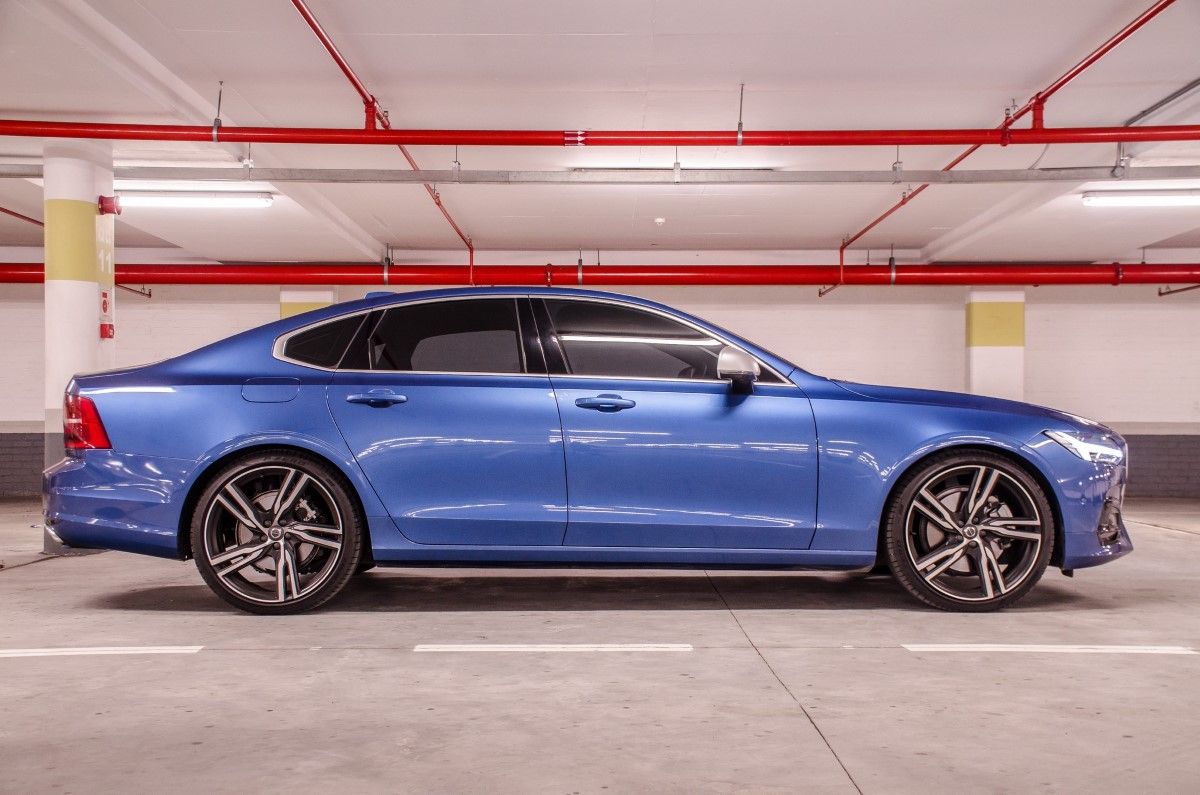
A satin chrome finish frames the windows, and the side mirrors are finished in matt-silver. At the rear, rhomboid tailpipes add to the sportiness and the colour-coded diffuser rounds off the dashing rear-end. Those large 21-inch diamond cut wheels (a R15 500 optional extra) complement the stylish bodywork and, although taste is subjective, we think that this S90 T6 R-Design is an attractive alternative to its German rivals.

Impressive interior features


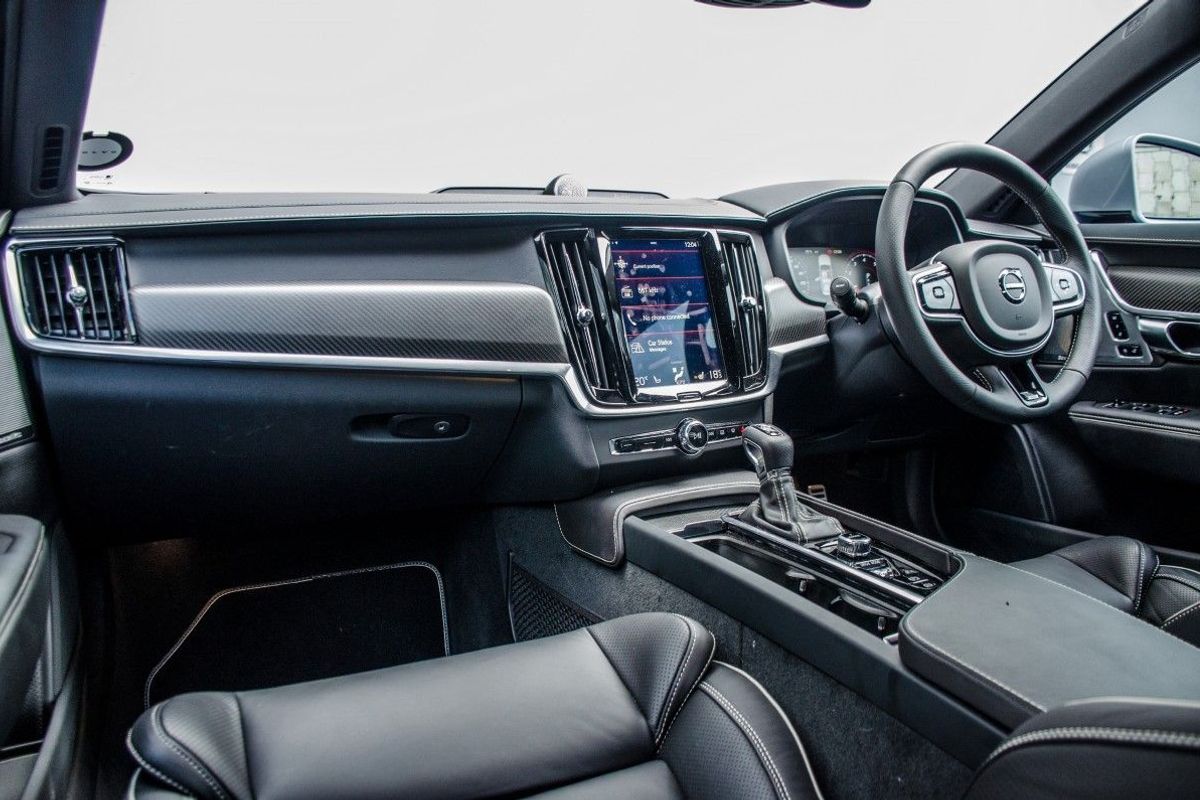
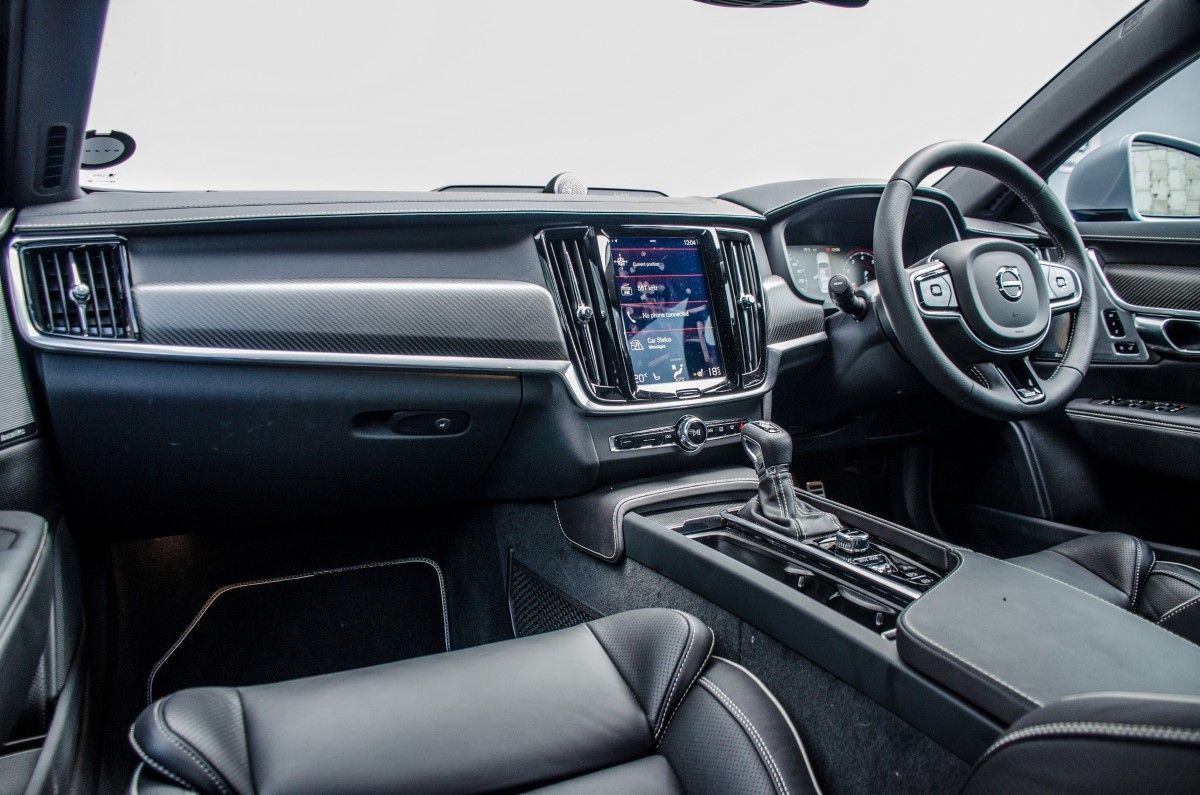
A central tablet-like infotainment system houses most of the S90's functions and settings. Interior build quality is right up there too. 

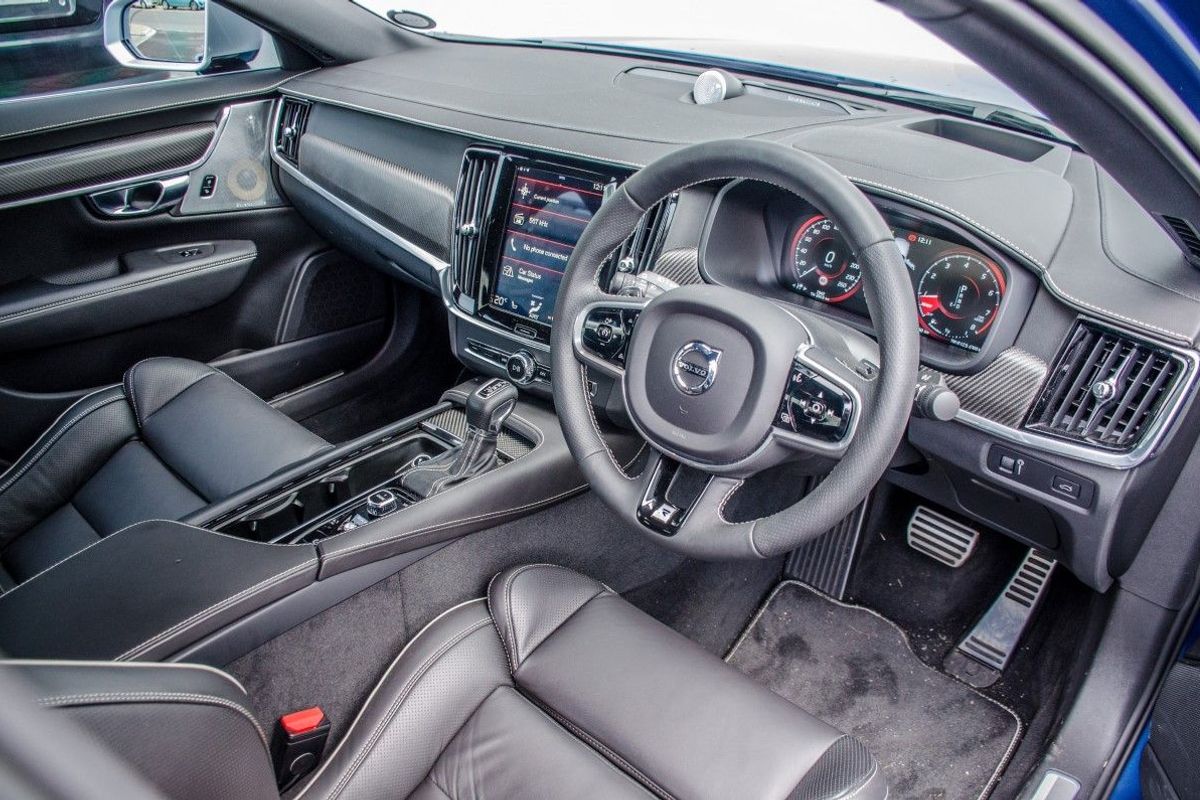
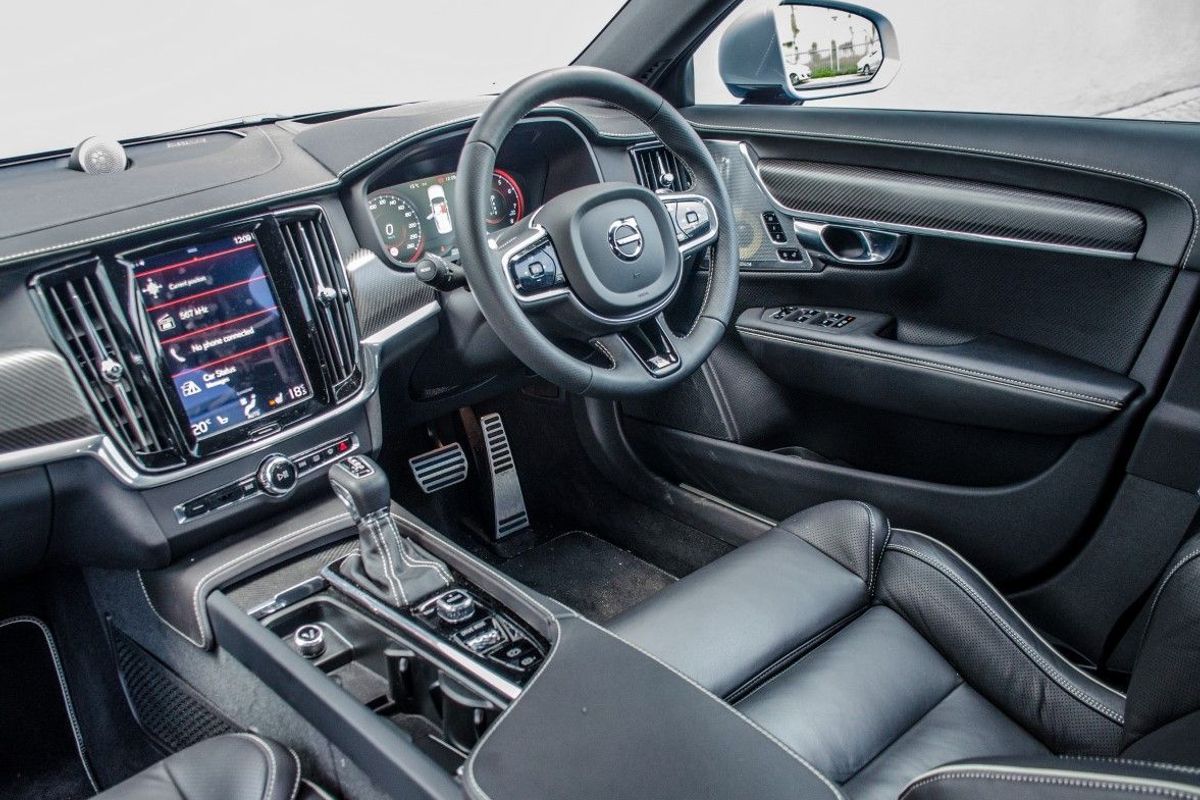
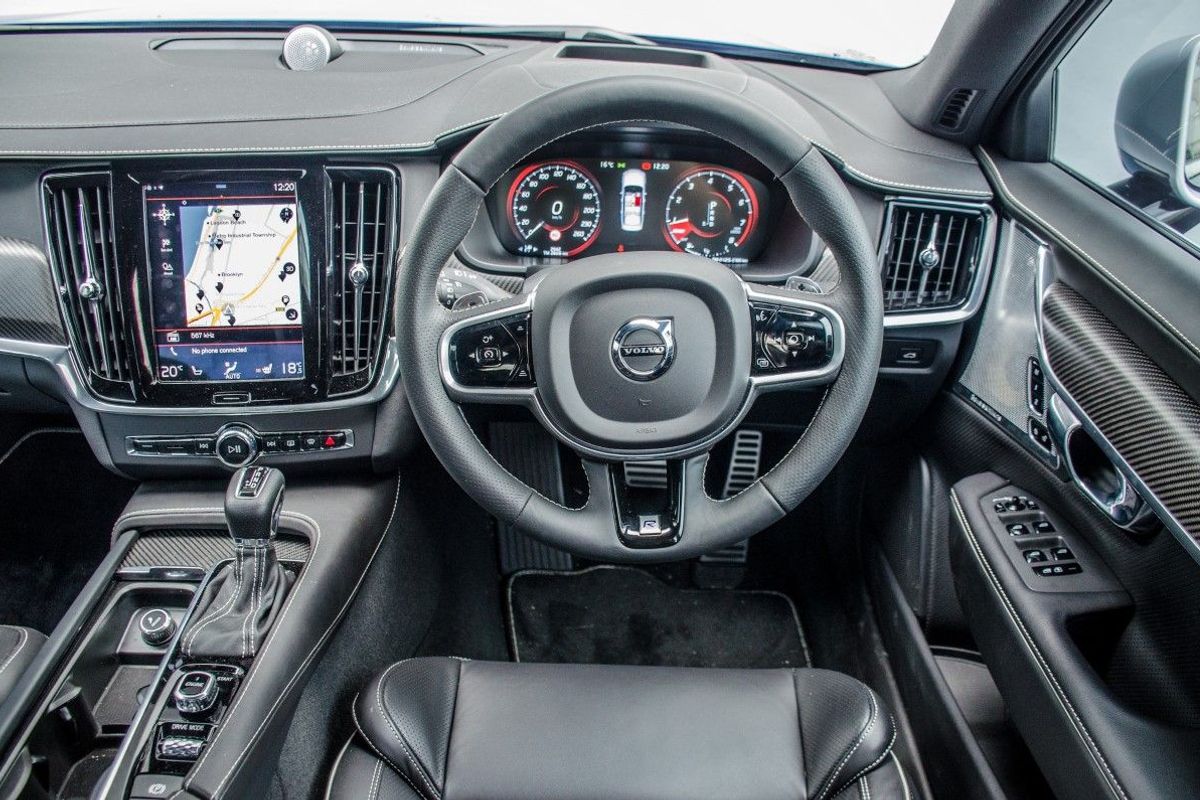
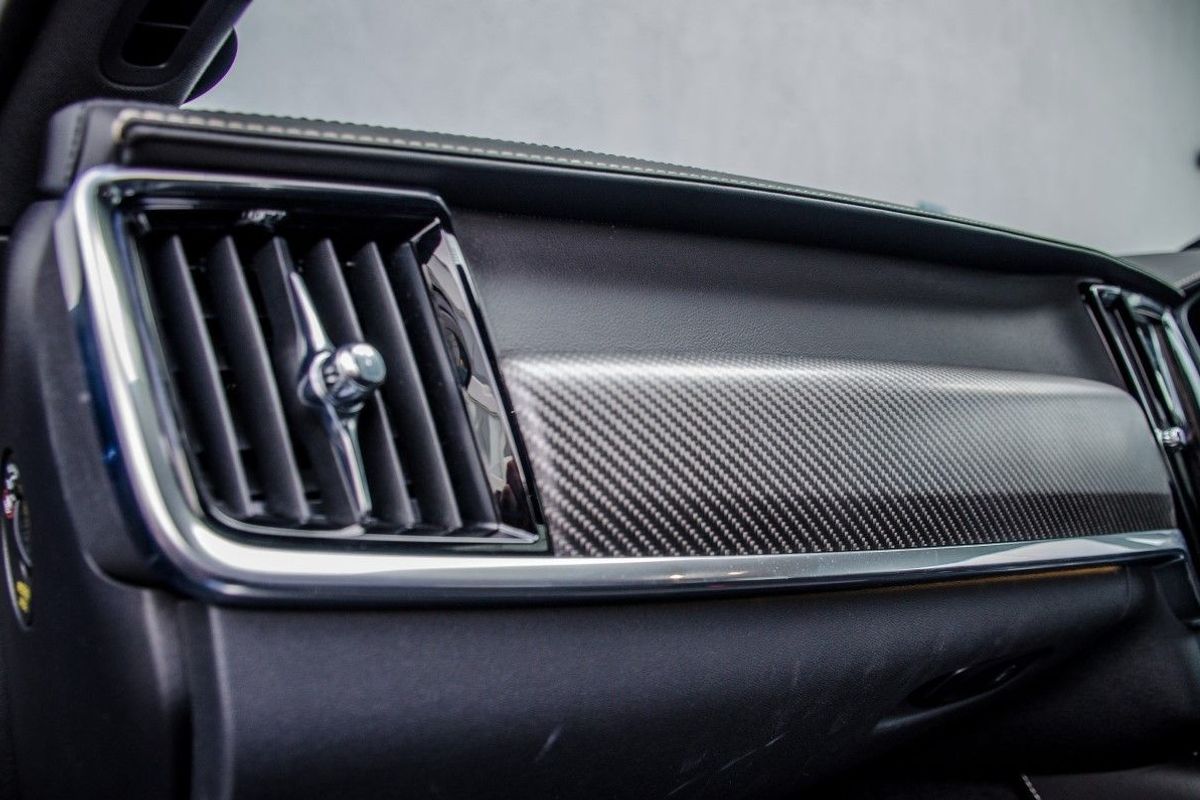
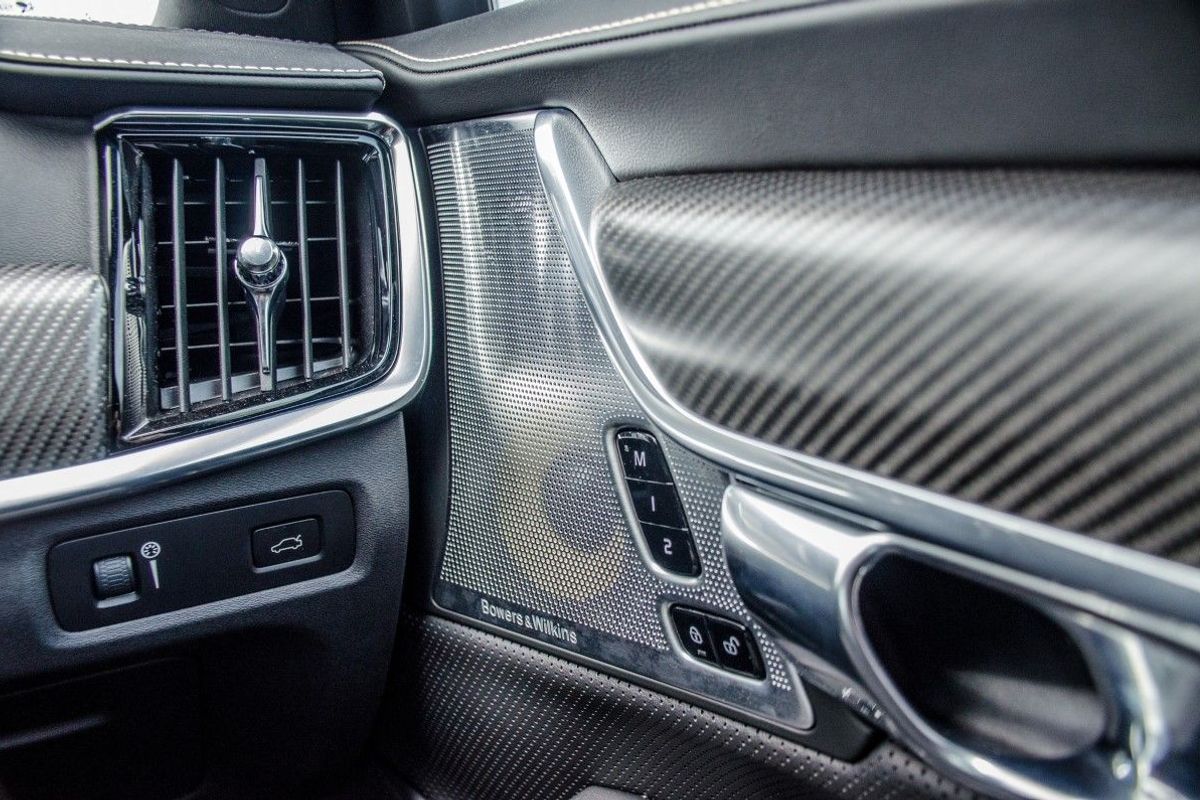
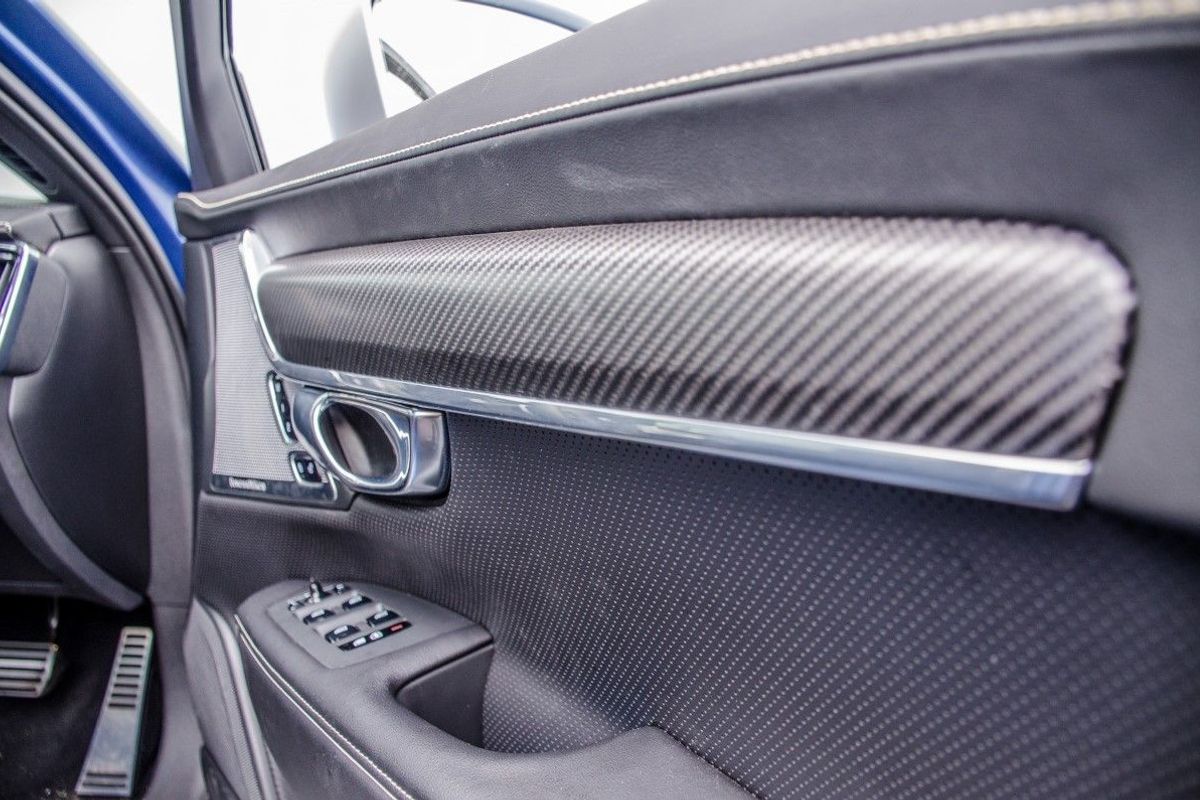
Moving inside, the S90 R-Design strikes a tasteful balance between opulent luxury and high-end technology. The driver and passenger are treated to comfortable, electrically adjustable and heated contoured Nappa leather sports seats. Further R-Design details can be seen on the sports steering wheel wrapped in perforated leather, aluminium sports pedals, R-Design door sills and carbon-fibre decor inlays.

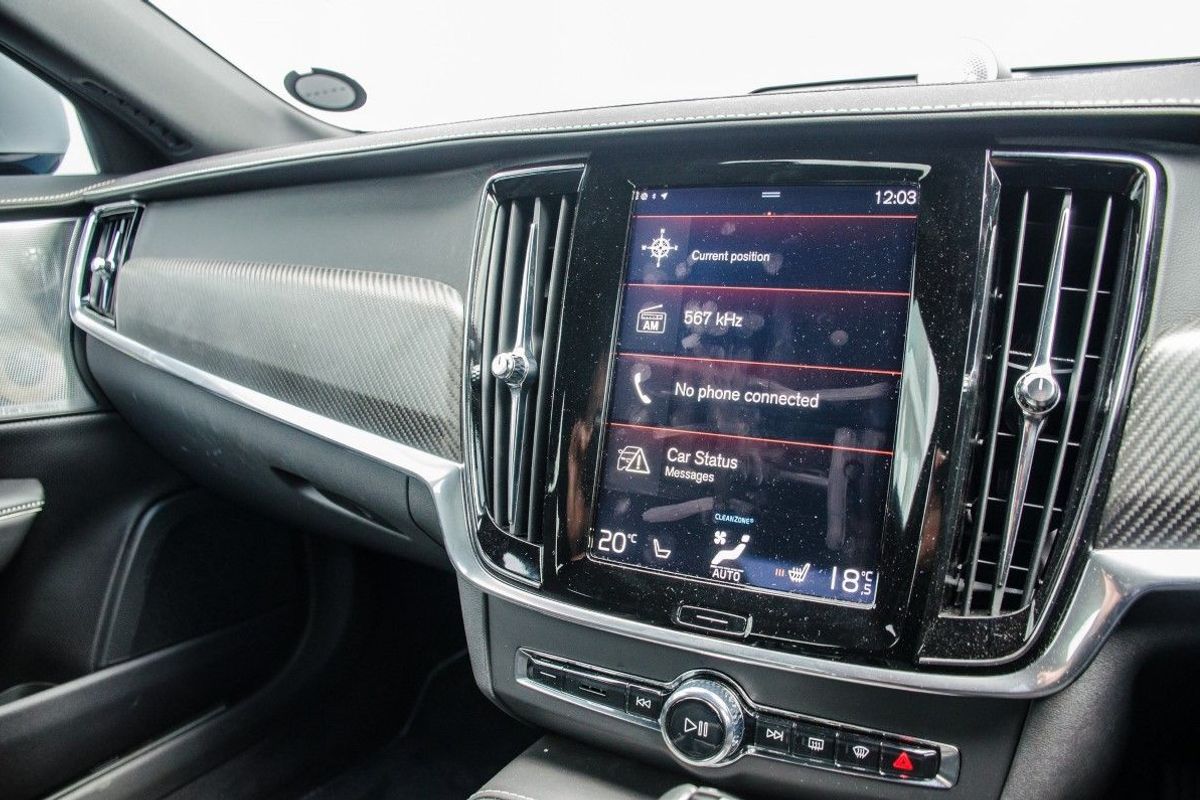
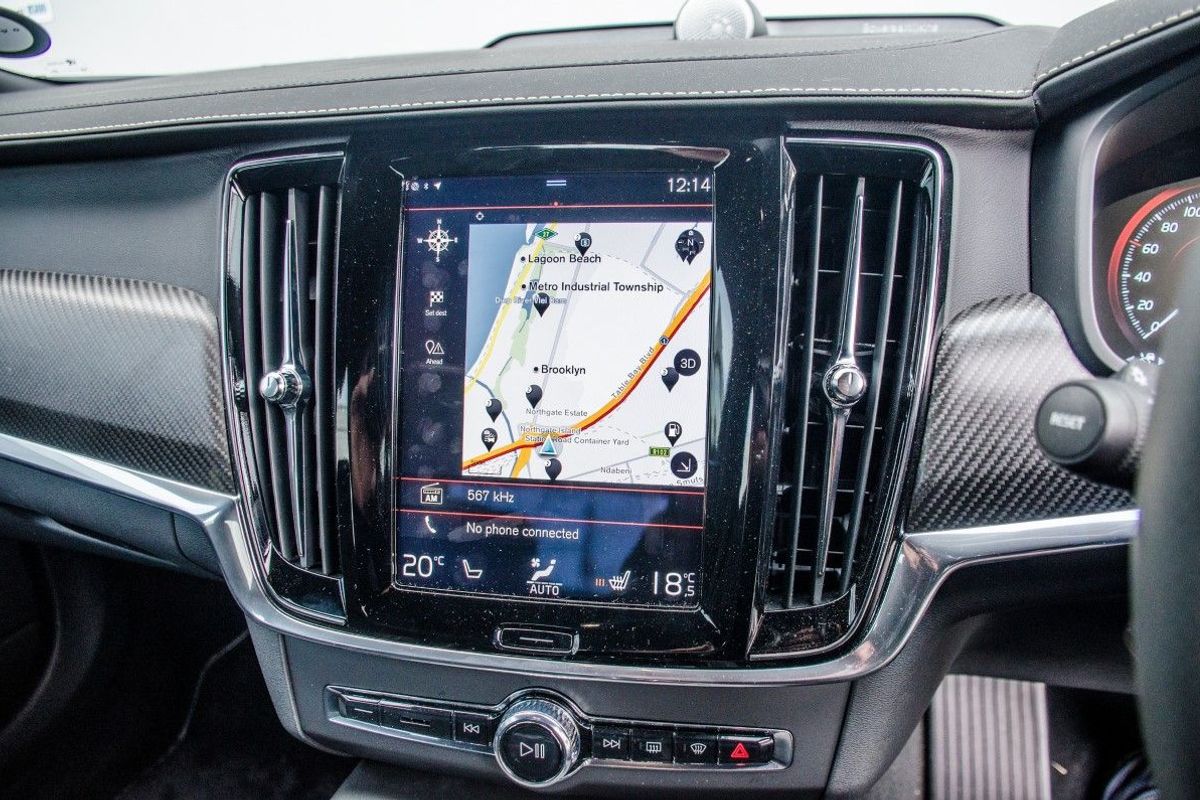
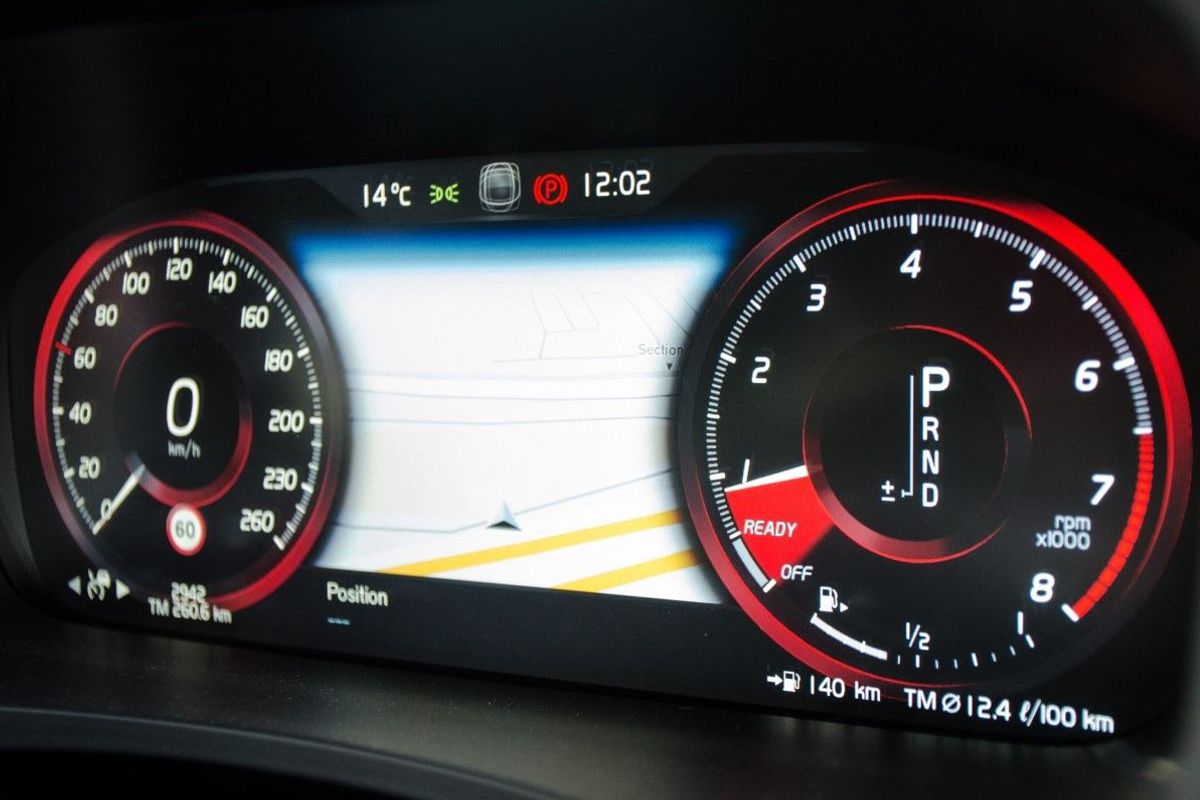
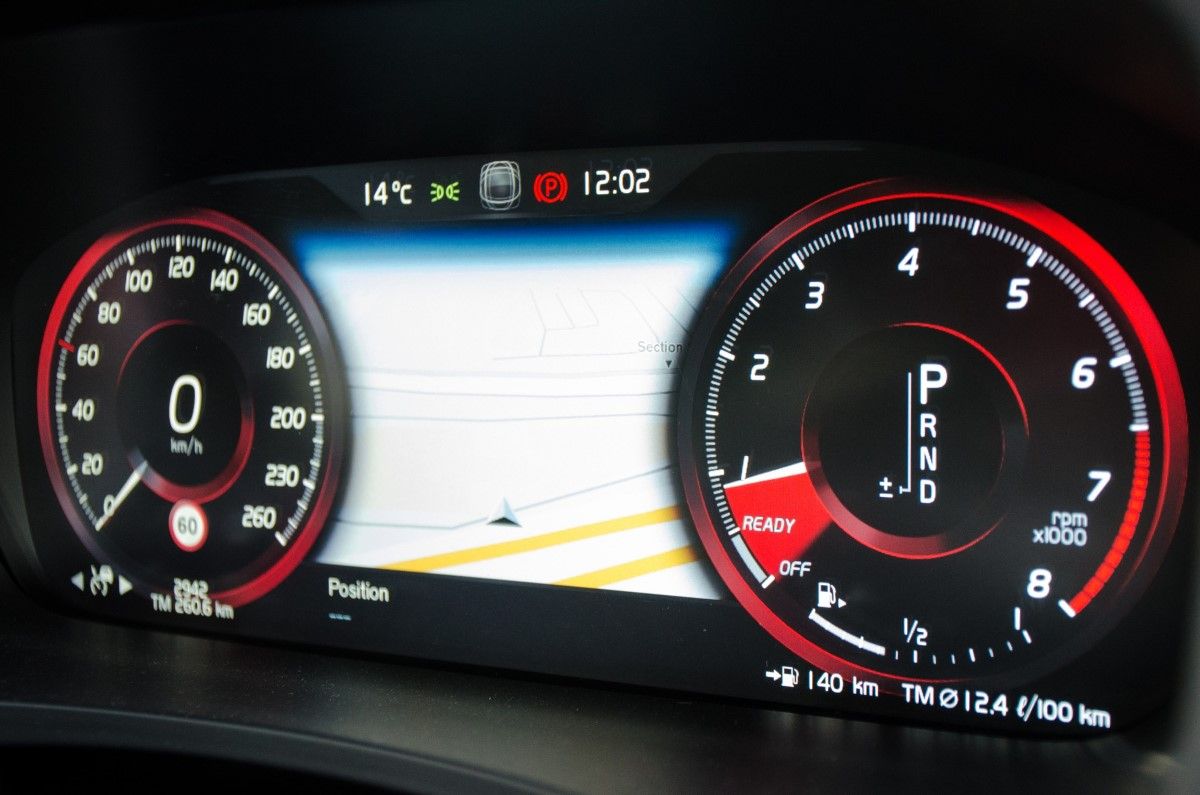
The interior build quality is excellent and a major highlight is Volvo’s Sensus infotainment system. Working much like a tablet, the system houses most of the vehicle’s functions and is very easy to use thanks to swipe-and-pinch functionality. It’s one of the best systems currently available in this segment. Another highlight is the 12.3-inch digital instrument cluster featuring a crisp, integrated navigation display.


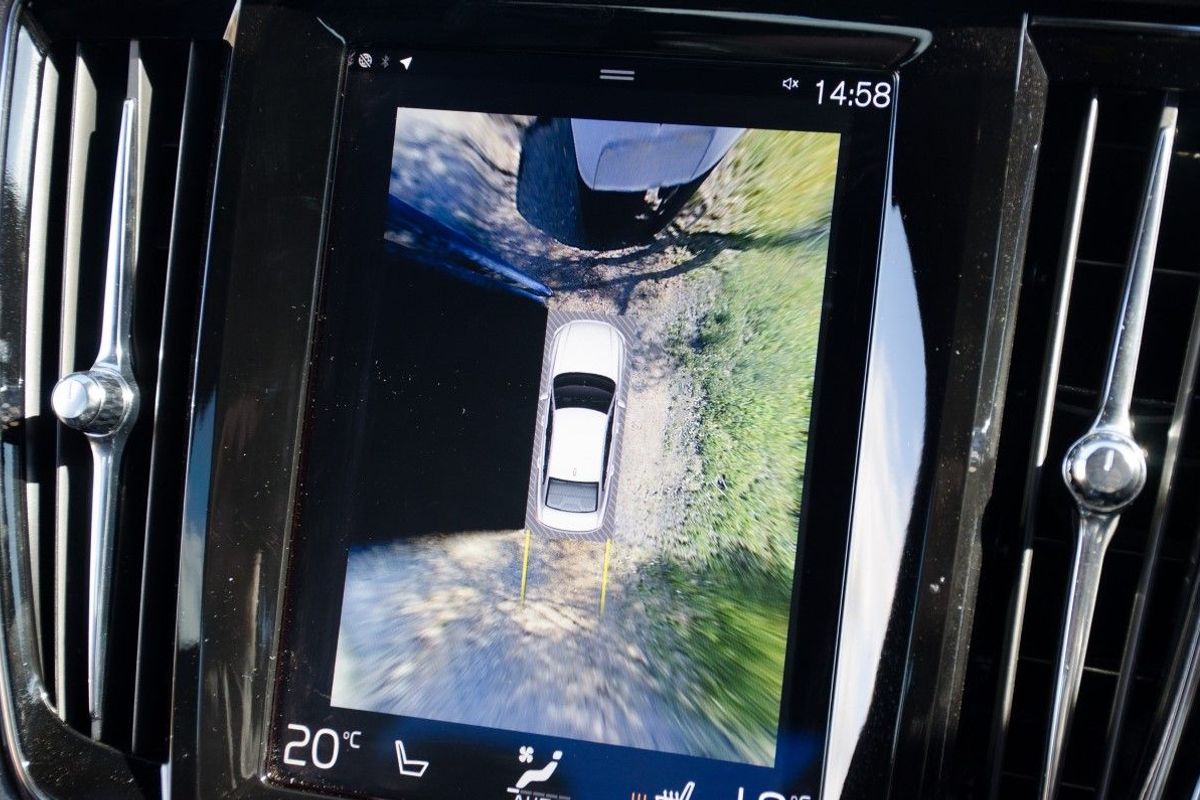
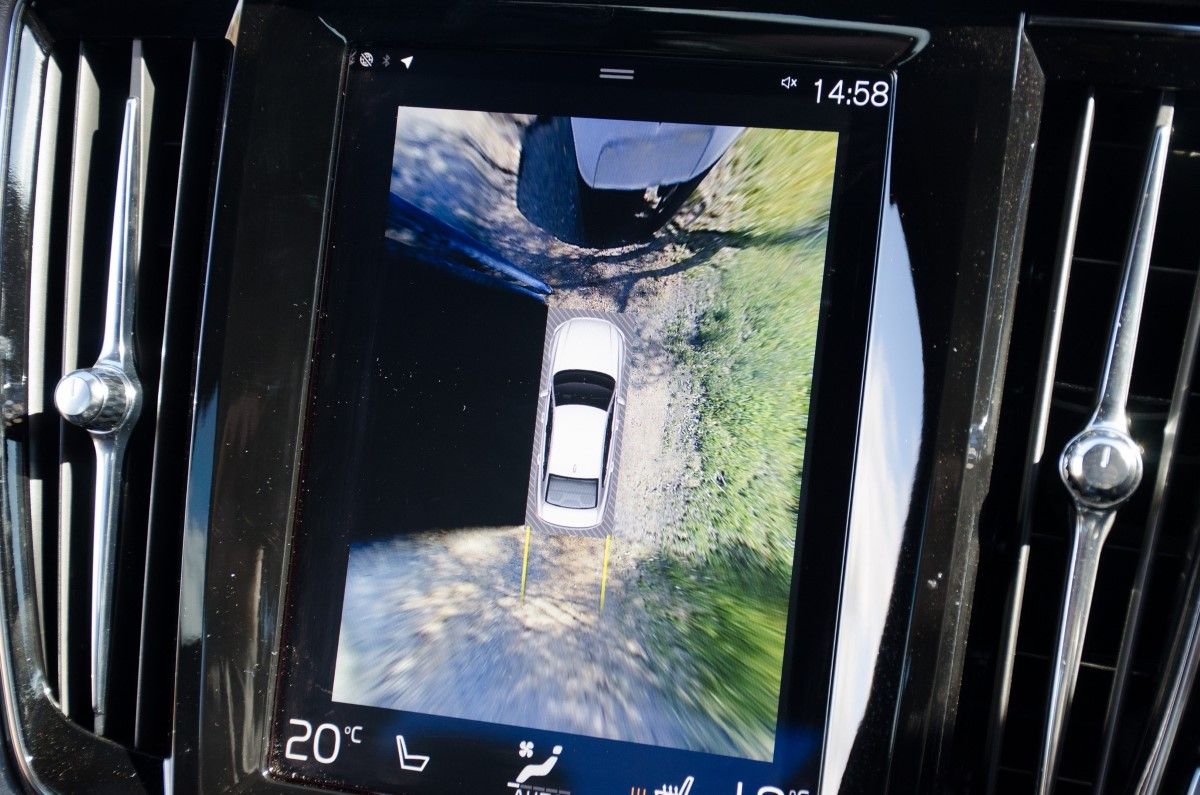
A 360-degree camera is a useful aid when manoeuvring in tight spaces.

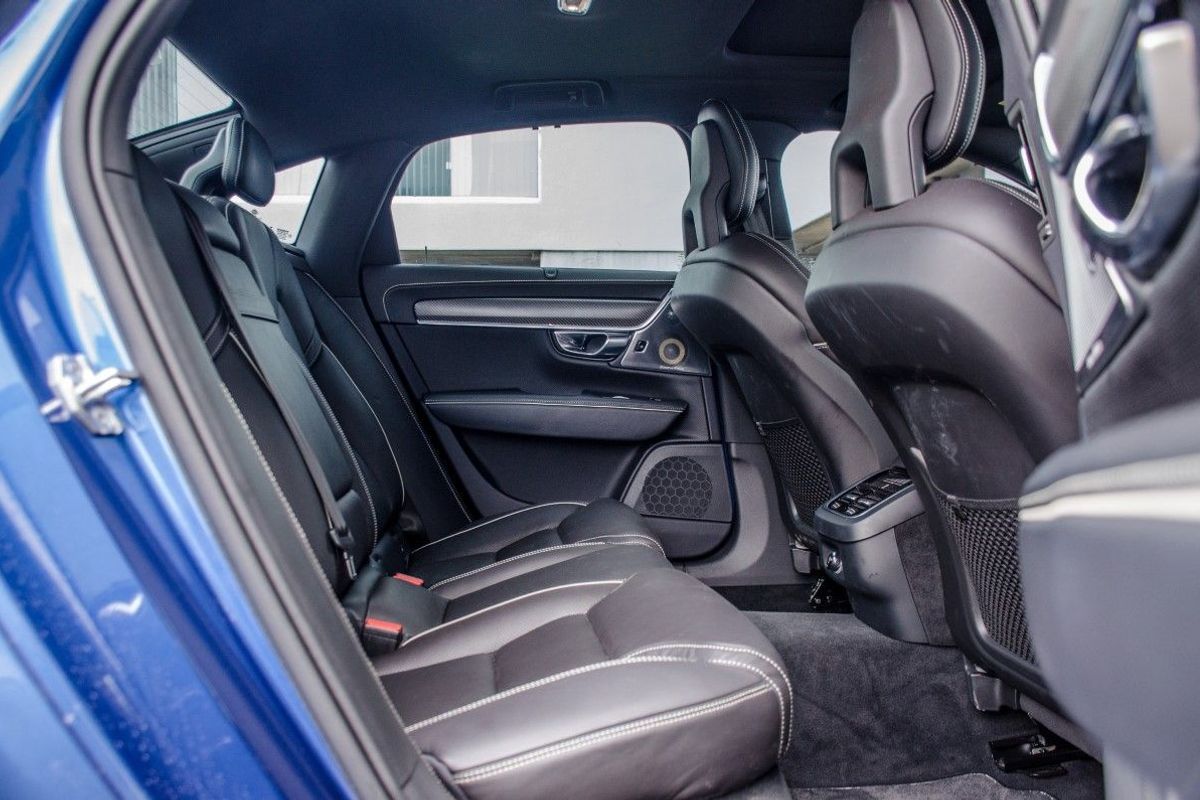
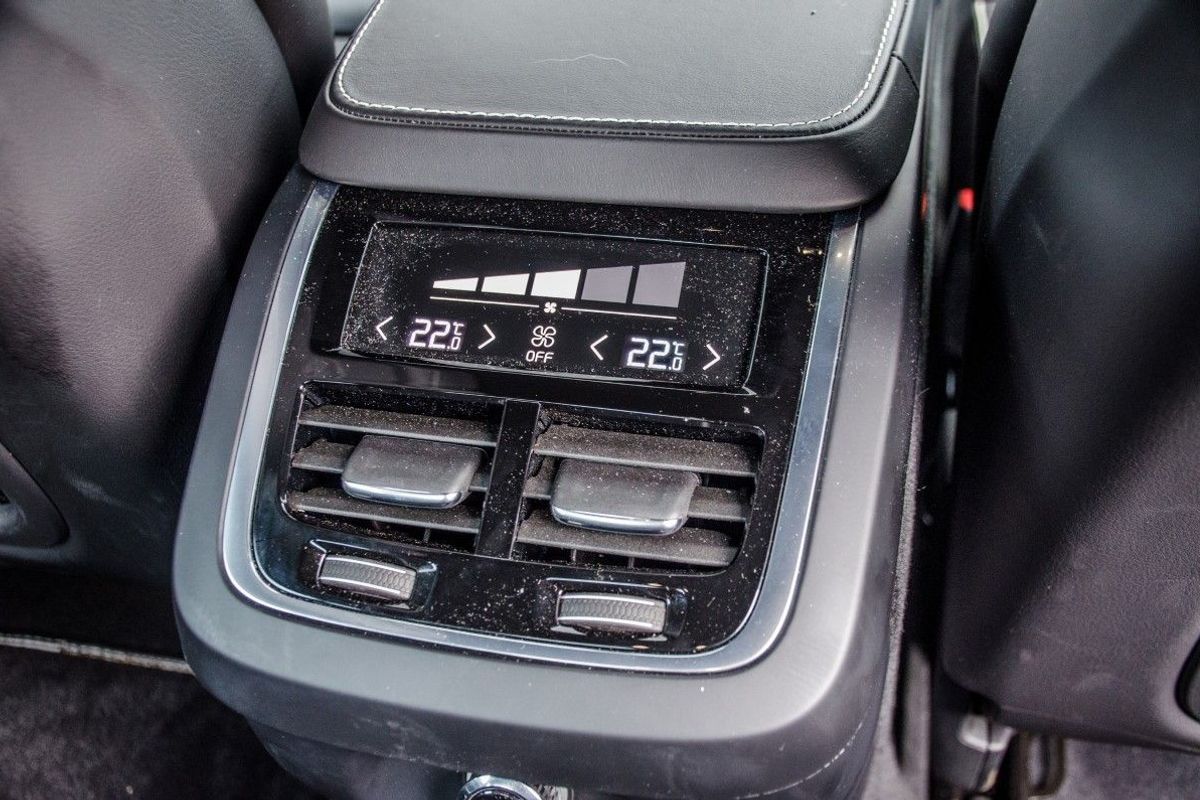
Optional extras fitted to this test vehicle include Visual Park Assist with a 360-degree camera, head-up display, 4-zone climate control air conditioning and a 19-speaker Bowers and Wilkins premium sound system. As with other S90 derivatives, rear passengers are comfortably accommodated courtesy of more than adequate head-, shoulder-, leg and knee room.

Willing performance


A digital instrument cluster with integrated navigation further adds to the S90's interior appeal.

This S90 T6 R-design is powered by a turbocharged and supercharged 2.0-litre petrol engine with 235 kW and 400 Nm of torque, driving all-four wheels through an 8-speed automatic transmission. Although the 4-cylinder motor is less than sonorous, it's very responsive to throttle inputs and in-gear acceleration is plentiful and brisk. Volvo claims a zero to 100 kph sprint time of 5.9 seconds with a top speed of 250 kph.

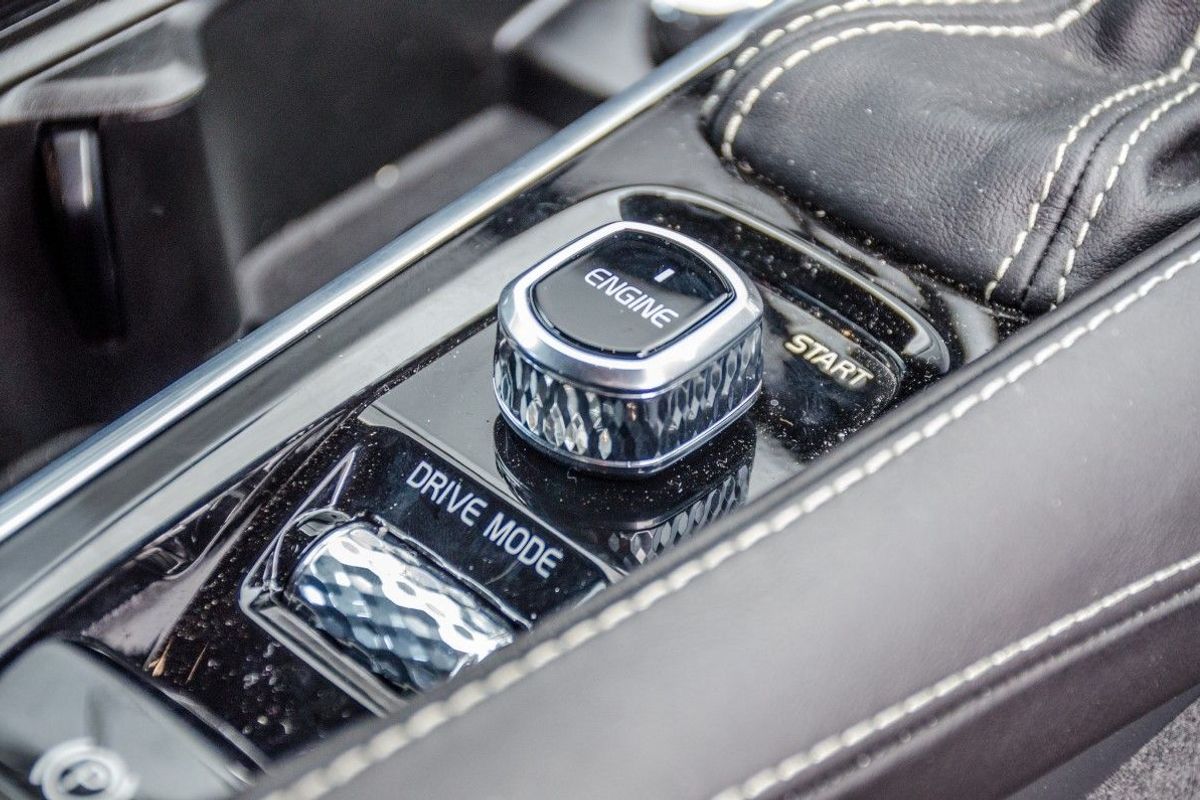
The 8-speed automatic transmission is well-matched to this engine and delivers relatively seamless transitions with steering wheel mounted paddle shifters provided for manual override. There are 3 driving modes (including Eco, Comfort and Sport) at your disposal too.

Volvo claims an average fuel consumption figure of 7.2 L/100km and we averaged in the region of 11.0 L/100 km during our test. But with a conservative driving style, figures below 10.0 L/100 km should be achievable.

Good balance between ride quality and handling


Power and comfort are key strengths of the S90 T6 R-Design.

The R-Design’s chassis is stiffer than that of the standard S90 in a bid to offer enhanced dynamic ability. It does feel very capable at tackling corners at speed and remains wonderfully composed and planted to the tar when you weave together a set of bends.

Although the suspension is noticeably stiffer, it’s still forgiving. Yes, it absorbs and eradicates most imperfections in the road relatively well, but it can become marginally crashy over harsher surfaces. The 19-inch will offer more comfort, but are not as striking as the 21-inch examples. Although the S90 delivers a refined ride, we don’t think it quite matches the sublime ride offered by the class-leading E-Class, however.

Safety and driver assistance systems

As you would expect from Volvo, this S90 T6 R-Design is packed with the latest safety technology and driver assistance systems. Aside from the basics, the S90 is also equipped with pedestrian-, cyclist- and large animal detection, run-off-road mitigation, automatic braking at intersections for oncoming traffic, front collision warning with full automatic braking, lane keeping aid, lane departure warning and driver alert control.

But perhaps the most impressive driver assistance system offered on the S90 is the semi-autonomous Pilot Assist feature, which is an extension of the adaptive cruise control system that can be activated using the mounted steering-wheel controls. Once activated, the system will take care of accelerating, braking and steering at speeds up to 130 kph. Pilot Assist still requires full attention on behalf of the driver as our local lane markings can confuse the system, but it affords the driver higher levels of relaxation and we found it particularly effective in heavy traffic jams and when cruising on the highway.

The Bad

Middling luggage space


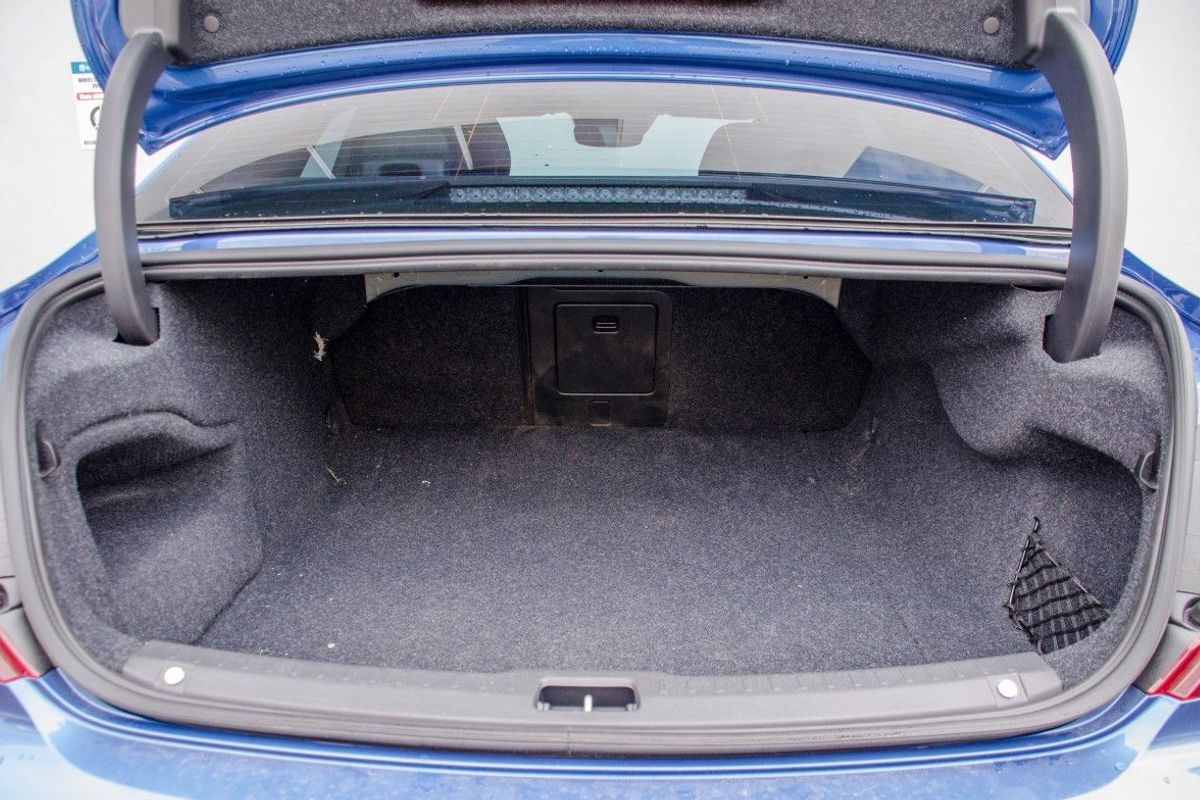
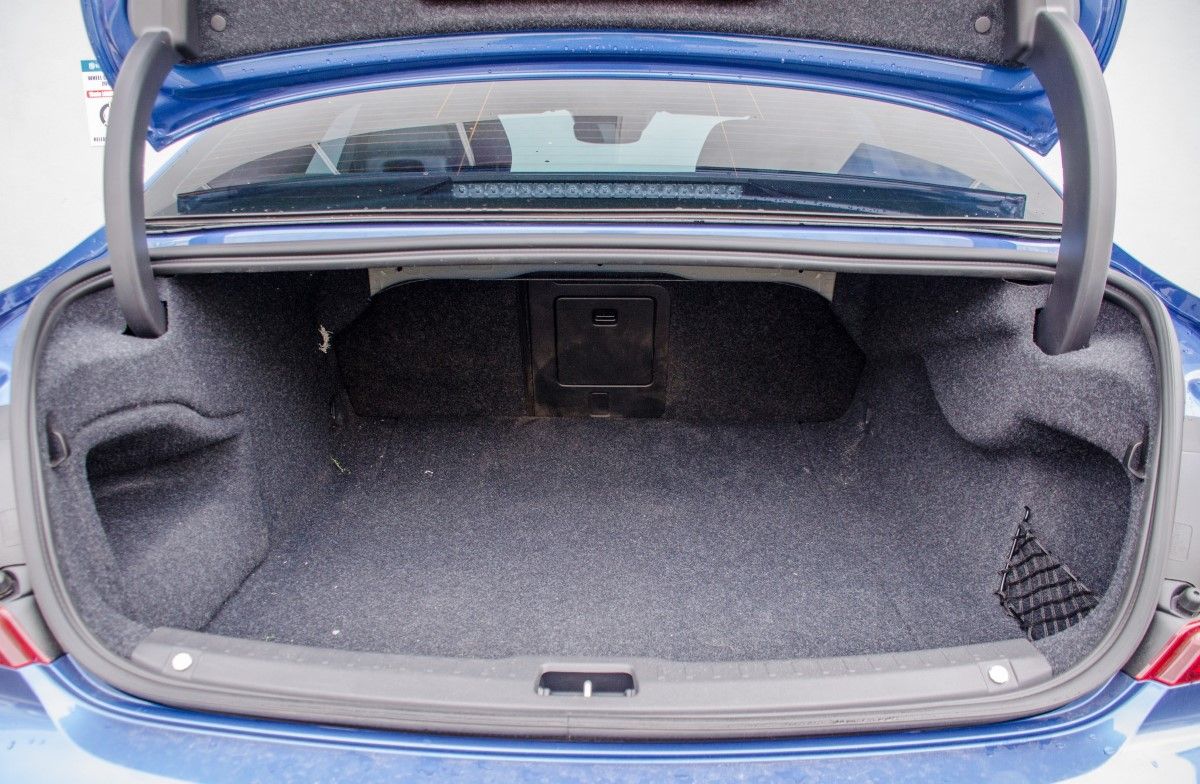
Although the boot is large, it's still not as big as the rivalling E-Class or 5 Series.

We are nitpicking here as the S90 is difficult to fault, but it's worth noting that the luggage bay is smaller than that of the equivalent E-Class and 5 Series. At 500 litres, the S90's boot is still capacious but falls short of the E-Class (540 litres) and the 5 Series (530 litres). For most buyers, however, this fact shouldn't be a deal breaker.  

Pricing and warranty 

This S90 T6 AWD R-Design is attractively-priced against the equivalent Mercedes-Benz E-Class or BMW 5-Series with a starting price of R879 730, but once you start ticking off some of the desirable options, the price can quickly escalate to over a R1 million (as is the case with the test unit shown here). A fully-equipped S90, however, is still more affordable than a similarly specced E-Class or 5 Series. 

A 5-year/100 000 km warranty and 5-year/100 000 km maintenance plan is standard. 

Find a Volvo S90 fort sale on Cars.co.za


Attractive pricing and solid capability make the S90 T6 R-Design worth considering.

If you are in the market for a stylish executive sedan that offers everything from sporty looks, performance, comfort, luxury and heaps of safety and driver assistance technology, then this Volvo S90 T6 R-Design makes a strong case for itself. Yes, some rivalling products may offer more thrills behind the wheel or a more resolved ride quality – and arguably more prestige – but the Volvo’s styling execution inside and out is to be admired and it has an air of sophisticated quality in the way that it drives that can’t be ignored. In a premium segment like this, the S90 R-Design says so much more about you than the more traditional rivals and we like that as it shows that Volvo has taken a big step towards carving itself a piece of the premium car pie.

Related content:

Volvo S90 (2017) First Drive [Video]

Volvo S90 (2016) First Drive

5 reasons why the Volvo S90 matters

Volvo Sweetens Deal on S90 & Other Ranges

Volvo S90 D5 Inscription AWD (2017) Quick Review

Volvo S90 T6 Inscription AWD (2017) Review

Can new BMW 5 Series match Mercedes-Benz E-Class for tech?

BMW 540i M Sport (2017) Review [with Video]

Comparative Review: BMW 520d vs Mercedes-Benz E220d (2016)

5 Amazing pieces of tech in the New E-Class

Drag Race: New VW Golf R vs Golf GTD

Welcome to the final episode in our Golf-themed serries… A game of Golfs. In this episode, the mighty Golf R takes on the little GTD in a battle of David vs Gloiath.
Previous videos:

Volkswagen Golf GTD (2017) Video Review

Drag Race: VW Golf R vs Golf GTI [Video]

New Golf R vs Golf GTI vs Golf GTD – Track Race Shootout

Drag Race: VW Golf GTI vs Golf GTD

In this video, we line up the latest Volkswagen Golf R with the latest Golf GTD for a good ol' fashioned quarter-mile drag race.

Power outputs from the latest Golf R have been beefed up to 213 kW and 380 Nm, and while those figures are impressive, the model is detuned for the South African market, due to our hot climate. Power figures for the new GTD are not in the same ballpark at 130 kW and 350 Nm.

Acceleration figures of 0-100km/h are claimed at a rapid 4.6 seconds for the R, and a less impressive 7.4 seconds for the GTI.

The GTD is unlikely to win but in its previous race, it lept off the line, could it even beat the AWD Golf R off the line?

Related content

6 Alternatives to the Volkswagen Golf GTI

Volkswagen Golf GTD (2017) Quick Review

Volkswagen Golf (2017) Video Review

Volkswagen Golf R + GTD (2017) Launch Review

Looking to buy a new/used Golf GTI?

Start your search here on Cars.co.za

Audi RS4 Returns with V6 biturbo power [Video]

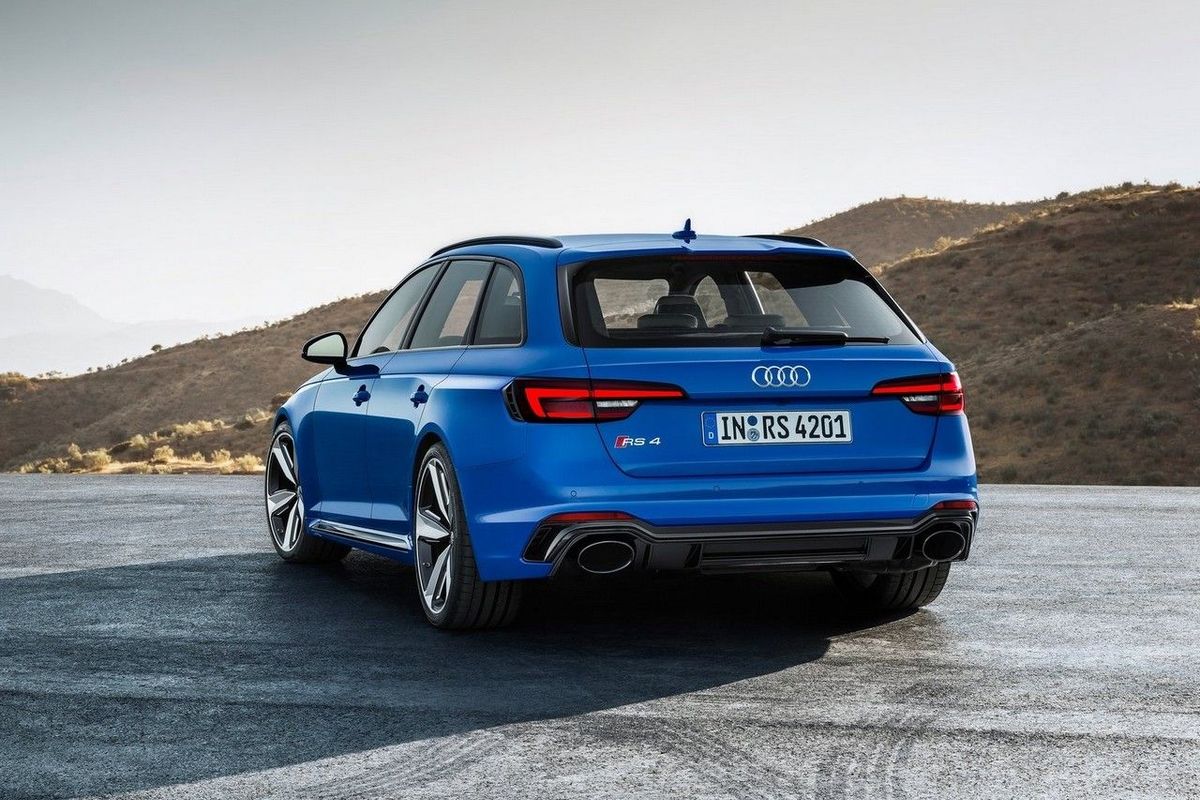
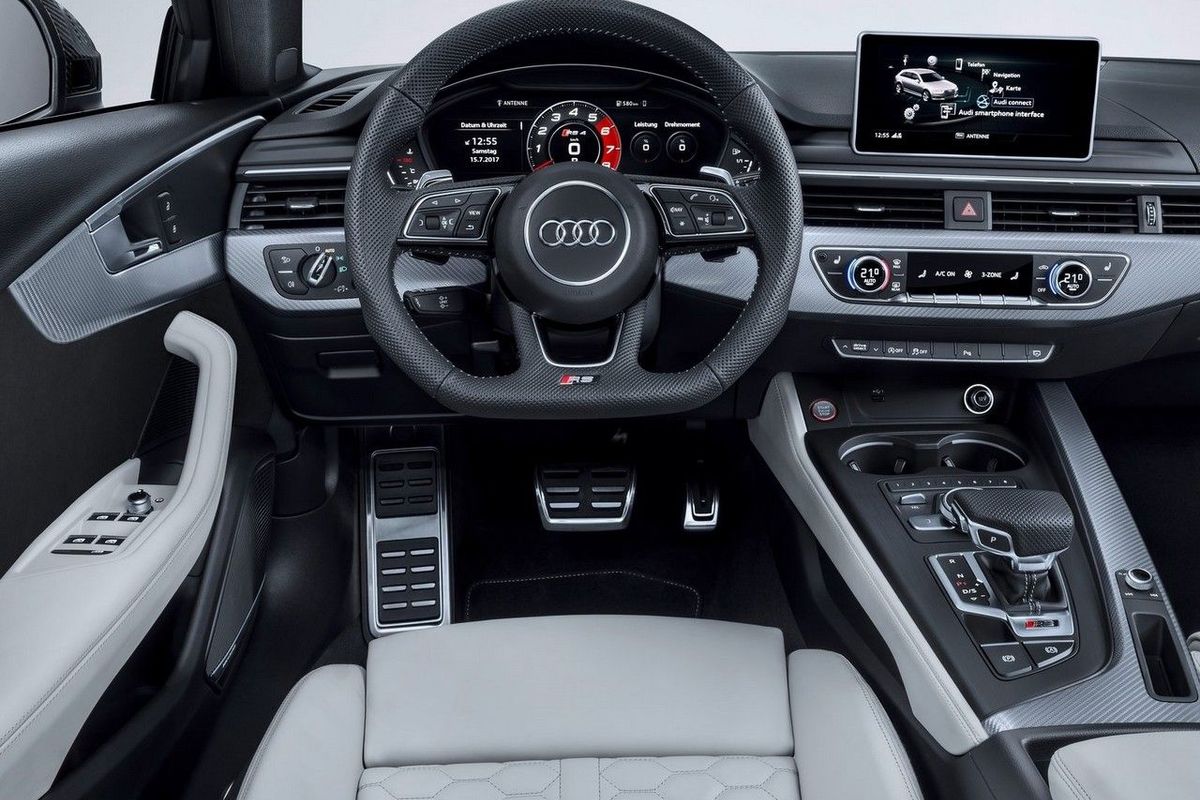
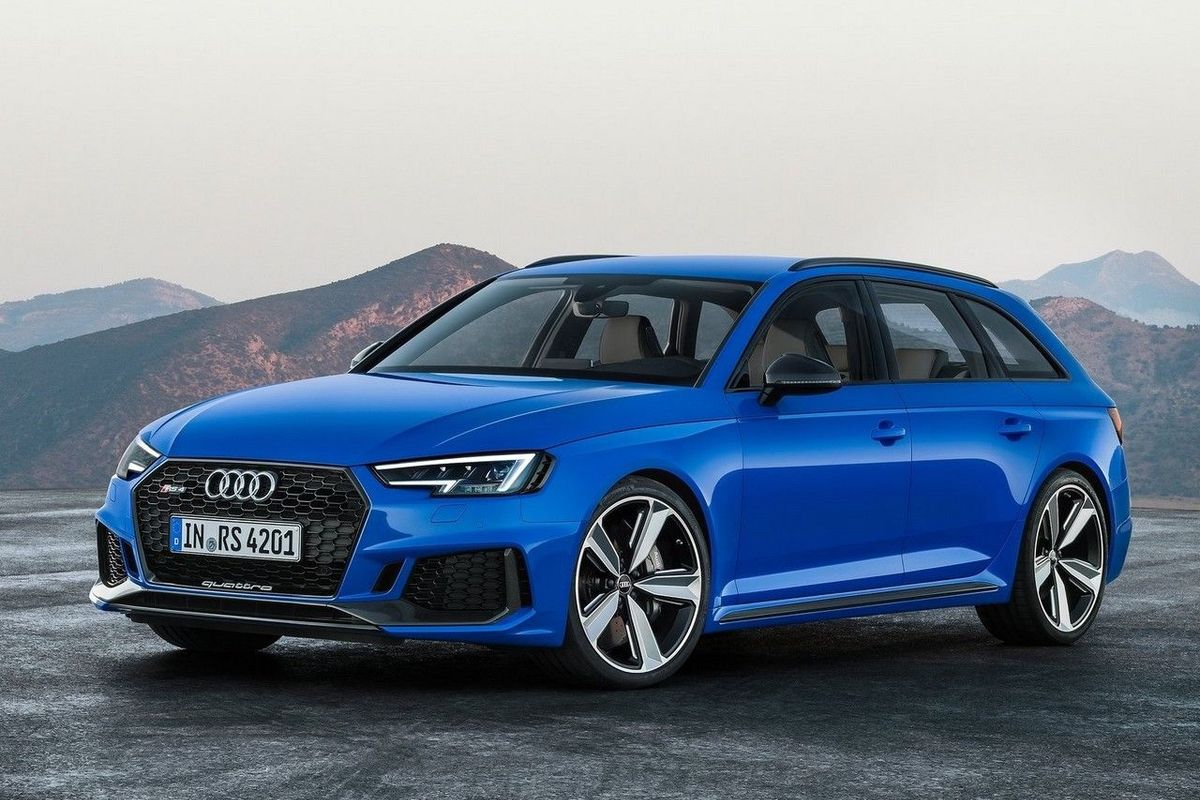
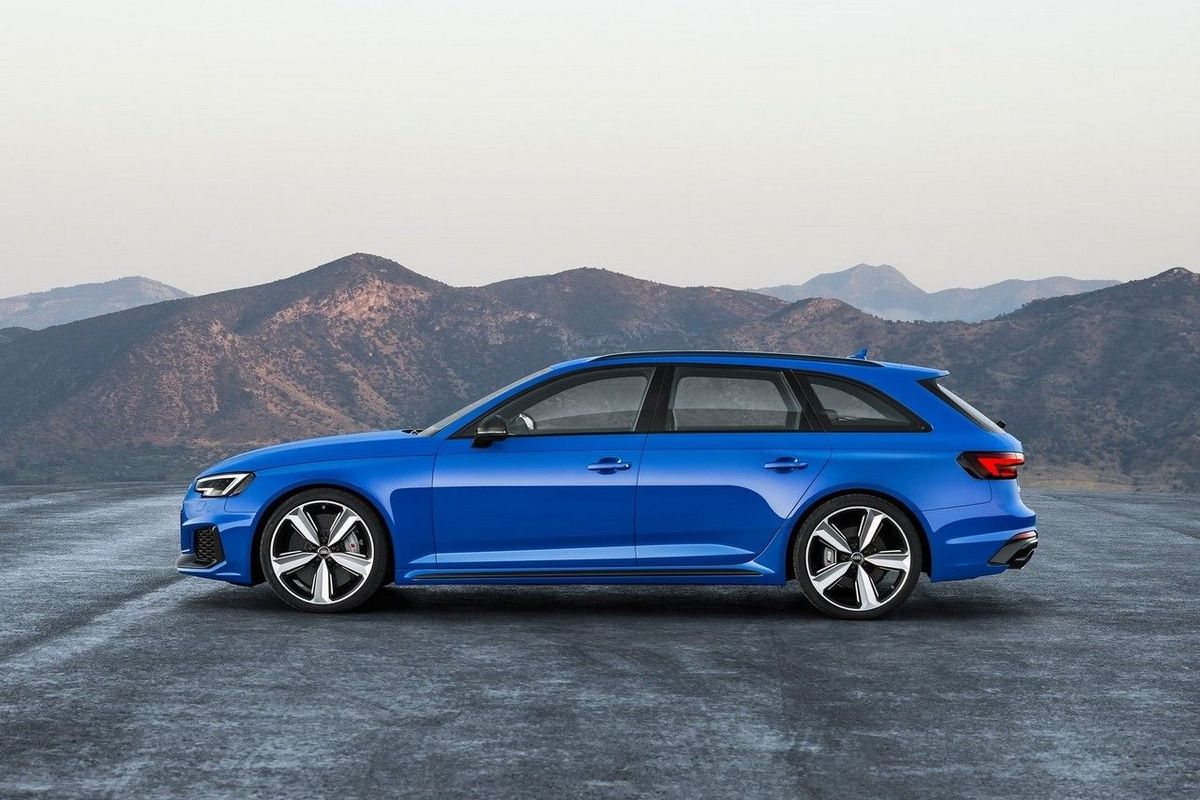
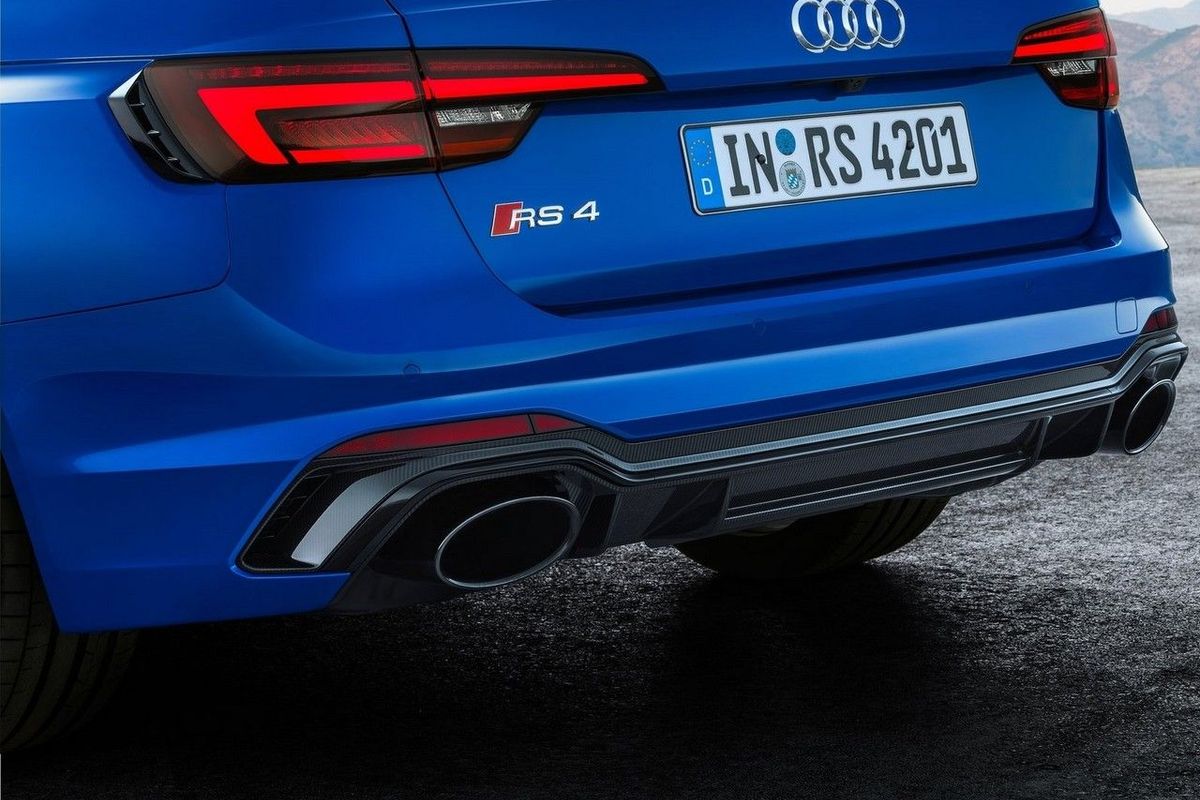
Audi unveiled the all-new RS4 Avant at the 2017 Frankfurt Motor Show and although Audi South Africa says "the model is still under consideration" for the local market, we wouldn't bet against the thunder 'wagon being introduced here in 2018. Now powered by a twin-turbocharged V6 – instead of a throbbing V8 – the RS4 is primed to battle BMW's M3/M4 and the Mercedes-AMG C63…

Downsizing has claimed yet another victim. The lovely V8 in the previous generation Audi RS4 was a marvel both in terms of performance and aural satisfaction, and now it's gone. However, the new Audi RS4 Avant comes to market with a new motor and we're very interested… It's the same engine in the new Audi RS5 and the numbers make for interesting prospects. It's a 2.9 TFSI engine with 331 kW and 600 Nm, with power going to all four wheels through an 8-speed Tiptronic transmission. 

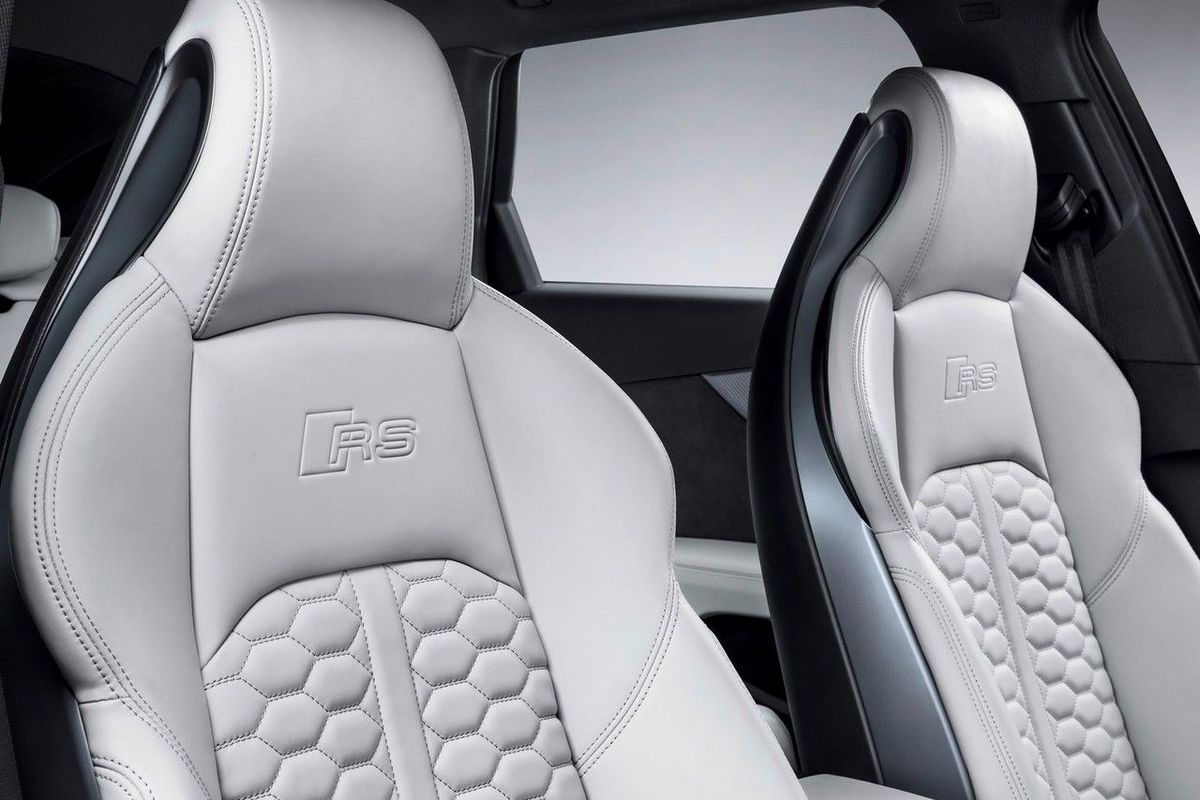
Audi claims that the new RS4 Avant is capable of sprinting from zero to 100 kph in just 4.1 seconds and it'll go onto a limited top speed of 250 kph. If you tick the optional RS dynamic package, the top speed goes up to 280 kph. The big benefits of this V6 twin-turbocharged engine are that it'll be a bit more responsive and that it is more fuel efficient, with Audi Sport claiming a fuel economy figure of 8.8 L/100 km. Inside, it's all hardcore Audi Sport fittings here, with a pretty flat-bottomed steering wheel and extensive use of carbon and aluminium inserts. 

"The Audi RS4 Avant is our RS icon with an incomparable history," commented Stephan Winkelmann, Managing Director of Audi Sport GmbH. "In common with all our RS models, it blends immense power output with superlative everyday utility. In China, the Audi RS4 will provide fresh impetus for growth as the only high-performance Avant in its segment."

In terms of the international market, the new Audi RS4 Avant will reach its first customers at the start of 2018 and in South Africa… hopefully not too long thereafter.

Related content:

Update: Audi RS3 Sedan (2017) First Drive

Audi RS3 (2016) Review

Drag Race: Audi RS3 vs Mercedes A45 AMG [Video]

Track Race: Audi RS3 vs Merc-AMG A45 vs Honda Civic Type R vs BMW M2 [Video]

BMW M2 vs Mercedes-AMG A45 vs Audi RS3 vs Honda Civic Type-R: On-track analysis (Video)

Audi A3 2.0T Sportback Auto (2017) Review

10 New Audis Coming to SA in 2017

Want to buy an Audi RS? 

Find a new or used Audi RS on Cars.co.za 

Land Rover Road Rover Coming in 2020?

Land Rover is reportedly planning on introducing a new vehicle range that will be called "Road Rover", with the first model due to be shown in late 2019.

If rumours ring true, then we may very well see the introduction of the new Land Rover Road Rover come 2019/2020.

Reports indicate that the Road Rover will be an electric crossover and unlike other Land Rover products, it will be more road bias with minimal offroad capability. With a focus on efficient electric mobility, you can expect the Road Rover to adopt sleek proportions to maximise range. After the initial launch of the first Road Rover model, Land Rover will likely introduce other electric Road Rover models as part of an expanding electric vehicle lineup within Land Rover.

The Road Rover will reportedly be built on the same platform as the next-generation Jaguar XJ which means it should be larger than the recently revealed Jaguar I-Pace EV and will likely feature 2 electric motors that would allow for an all-wheel-drive configuration. The Road Rover’s range may be in upwards of 480 km.

The first Road Rover model might make an appearance at the Los Angeles Motor Show in 2019 before going on sale in 2020. Further details are scarce at this point but we will keep you informed as soon as more information becomes available.

Related content:

Jaguar I-Pace Concept (2018) International First Drive

Jaguar Shows Electric I-PACE SUV Concept [Updated]

Jaguar Confirms E-Pace Compact SUV

5 Interesting things about the new Jaguar E-Pace

Jaguar Land Rover South Africa talks electric

The Problem With Electric Mobility

2040: The End of the Car (As We Know It)?

Tesla Model 3 (2019) Pre-Launch Review

Is Tesla better than BMW?

Interested in buying a Land Rover product?

Search for one on Cars.co.za

5 Rivals the Renault Alaskan Needs to Beat

The new Renault Alaskan is coming to South Africa in 2018 and when it arrives it will have to face-off against some stiff competition in the local leisure double cab segment. Take a look at 5 double-cab bakkies that the Renault Alaskan will have to beat…

We have returned from Slovenia where we drove the new Renault Alaskan for the first time. Do yourself a favour and read our Alaskan International First Drive report! We came away quite impressed with the Alaskan, but in South Africa, any new leisure double-cab faces a tough battle against established offerings. Convincing buyers to consider new product over tried-and-tested offerings is perhaps the most difficult challenge for any new bakkie joining the local bakkie fray and with double-cab bakkie prices soaring, the gauntlet is well and truly laid down for the Alaskan.


The Renault Alaskan will join a competitive segment against formidable rivals. Will it succeed?

The Alaskan is powered by a Renault-tuned 2.3-litre twin-turbodiesel engine offering 140 kW and 450 Nm of torque. A 7-speed automatic or 6-speed manual will likely be offered in South Africa and there is a possibility of Renault introducing a 120 kW / 403 Nm version of the same engine too, albeit with only one turbocharger. Pricing and specification is yet to be determined.  


The Alaskan's interior is not only robust and comfortable, it's also well-equipped with useful features.

Here are 5 double-cab bakkies that the Renault Alaskan will have to beat in South Africa when it arrives next year.

Mercedes-Benz X-Class


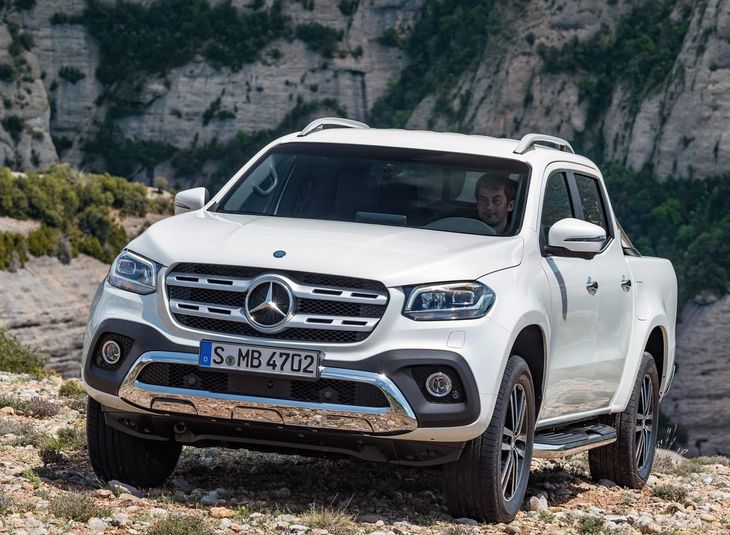
The X-Class will bring higher levels of luxury to the bakkie segment, but will buyers be willing to fork out for it? Time will tell. 

The production version of the new Mercedes-Benz X-Class was unveiled in Cape Town earlier this year and it already has, to some extent, shattered current perceptions of what a leisure bakkie should and can offer. The X-Class is based on the new Nissan Navara and forthcoming Renault Alaskan and it is expected to arrive in South Africa in 2018.

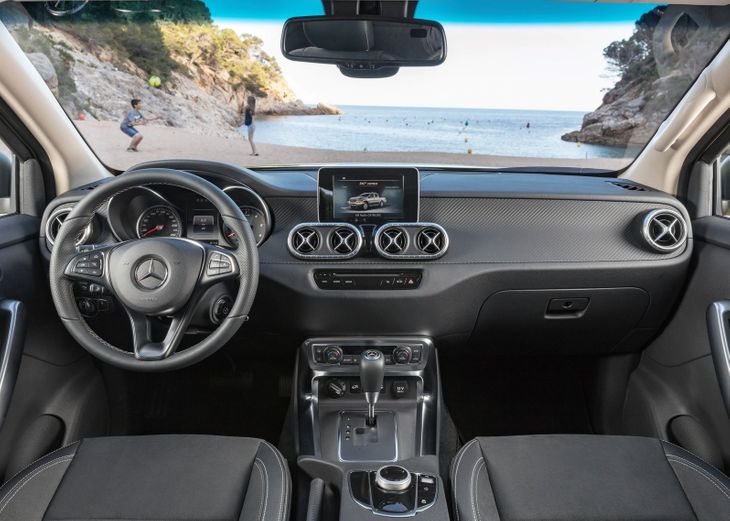
Combining an appealing exterior design with a modern and luxurious interior, the X-Class is perhaps the best example of what the future holds for the leisure double-cab bakkie. Plush surfaces, a comprehensive infotainment system and a range of driver assistance aids, similar to those found in current Mercedes-Benz models, will feature in the new X-Class.


The X-Class interior has distinct Merc styling cues and features found on other products in the brand's portfolio.

The X-Class will be offered with 3 model variants namely Pure, Progressive and Power and will initially be powered by a 2.3-litre turbodiesel engine with 2 output choices on offer. The X220d will generate 120 kW, while the bi-turbo X250d will offer up 140 kW. Furthermore, a 190 kW / 550 Nm V6 turbodiesel engine is expected to join the range later in 2018 in the form of the X350d 4Matic.A 6-speed manual transmission will be standard while a 6-speed automatic will be offered on request for the X250d and X350d 4Matic.

The X-Class is expected to be ambitiously priced and will sit in the premium end of the double-cab bakkie segment.  The X-Class, much like the Alaskan, will have an uphill battle trying to win buyers from other estabished offerings, but perhaps the allure of a 3-pointed star on the nose will have more appeal than a French diamond.


 Buy a new / used Mercedes-Benz on Cars.co.za

More Mercedes-Benz X-Class content:

Mercedes-Benz X-Class: Finally Revealed

Mercedes-Benz X-Class: Off-road demo & video wrap

The Fairest 4×4 Truck by far?

No Demand for Mercedes-AMG X-Class

Mercedes-Benz X-Class: Social media reaction

Double-cab bakkies are the new SUVs

Mercedes-Benz X-Class Reveal: LIVE BLOG

Spy Shots: Mercedes-Benz X-Class

X-Class & rival double cabs it needs to beat [with Video]

Volkswagen Amarok


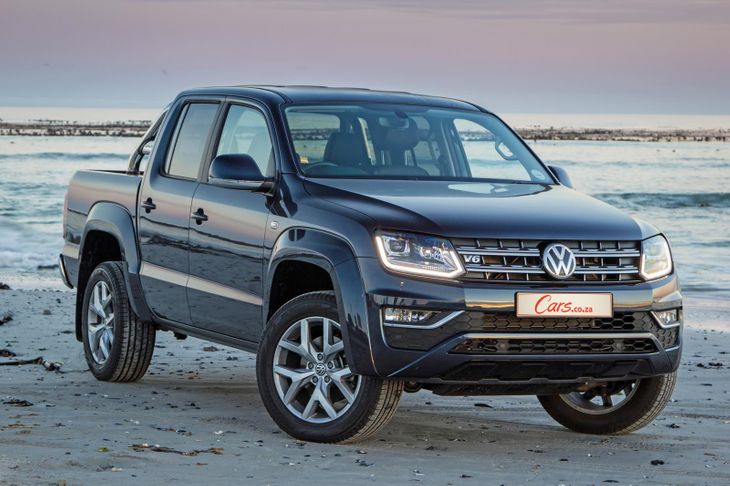
Tha Amarok V6 is currently leading in the premium stakes and it's the most powerful double-cab currently available.

The facelifted Volkswagen Amarok arrived in South Africa earlier this year and apart from its handsomely revised looks, it too features a revised and modern interior closely resembling that of the Touareg SUV, which should resonate well with lifestyle-orientated buyers. Higher-spec versions are fitted with a larger touchscreen infotainment system equipped with the latest satnav software. The Amarok’s interior boasts excellent build quality and comfort not typically associated with a bakkie and it’s new Servotronic power steering system has also improved on-road drivability, making it feel and drive more like an SUV.


A modern, SUV-like interior sets the Amarok apart from most offerings in this segment. 

In terms of engines, Volkswagen’s 3.0-litre V6 turbodiesel engine is a highlight in the range and offers 165 kW and 550 Nm of torque with an overboost function that temporarily bumps outputs up to 180 kW and 580 Nm of torque. The familiar 2.0-litre turbodiesel and 2.0-litre bi-turbodiesel engines are on offer too. The Volkswagen Amarok is arguably the most premium double-cab bakkie currently on offer in South Africa. Watch our video review below!

Buy a new or used Volkswagen Amarok on Cars.co.za

More Volkswagen Amarok content:

Volkswagen Amarok 3.0 V6 TDI (2017) Video Review

Special Edition Volkswagen Amaroks for Frankfurt

Double-cab bakkies are the new SUVs

Volkswagen Amarok 3.0 V6 TDI (2017) First Drive

Volkswagen Amarok (2017) Specs & Pricing

VW Amarok 3.0 V6 TDI: 5 Things We've Learnt

Most Powerful Double-Cab Bakkies in SA

Ford Ranger Fx4 (2017) – a Raptor Kit with a Warranty

Toyota Hilux vs Ford Ranger vs Isuzu KB vs Volkswagen Amarok (2016) Comparative Review

Nissan Navara


The new Navara is a much-improved product and like the Alaskan, it's 5-link coil suspension differentiates it from the pack.

The new Nissan Navara arrived in South Africa in March 2017 with new exterior styling as well as a significantly improved interior design, replete with a touchscreen infotainment system, satnav and a surround view monitor. Perhaps more importantly, the new Navara double cab features a new, independent 5-link coil suspension system that has improved ride quality substantially over its predecessor.


The Alaskan and Navara share a similar interior design, but the Alaskan's infotainment system is better.

The Navara is powered by a new 2.3-litre twin-turbodiesel engine offering 140 kW and 450 Nm of torque. Buyers have a choice of either a 6-speed manual or 7-speed automatic transmission. In the Alaskan, however, engine refinement is better than the Navara thanks to Renault's tuning skills.

The top-spec Navara is generously-equipped and competitively priced against its rivals and even beats them in some respects. The option to equip the Navara with electrically-operated leather seats with a heating function is a real boon in this segment too.

As mentioned earlier, both the Renault Alaskan and Mercedes-Benz X-Class will be built on the Navara’s platform and will therefore inherit many of the Navara’s underpinnings. Nissan’s extensive experience in the double-cab market will no doubt influence the execution of these products, for better or for worse.

Search for a new / used Nissan Navara on Cars.co.za

More Nissan Navara Content

Nissan Navara vs Ford Ranger (2017) Comparative Review Video Part 1

Nissan Navara vs Ford Ranger (2017) Comparative Review Video Part 2

6 Most Fuel-Efficient Double-Cab Bakkies in SA

Nissan Navara 2.3D 4×4 LE (2017) Review

Nissan Navara (2017) First Drive

What People Think of the New Nissan Navara

Why Navara shakes up the double-cab market

Toyota Hilux


Perhaps not the prettiest bakkie in this company, but the Hilux's capability is unquestionable. 

The latest generation of Toyota Hilux has been a runaway success and continues to top the sales charts on a monthly basis. The Hilux 2.8 GD-6 4×4 automatic or manual with 130 kW and 450 Nm will be a formidable rival to the Renault Alaskan. The Hilux offers a refined, smooth ride on tar and it’s equally proficient on gravel.

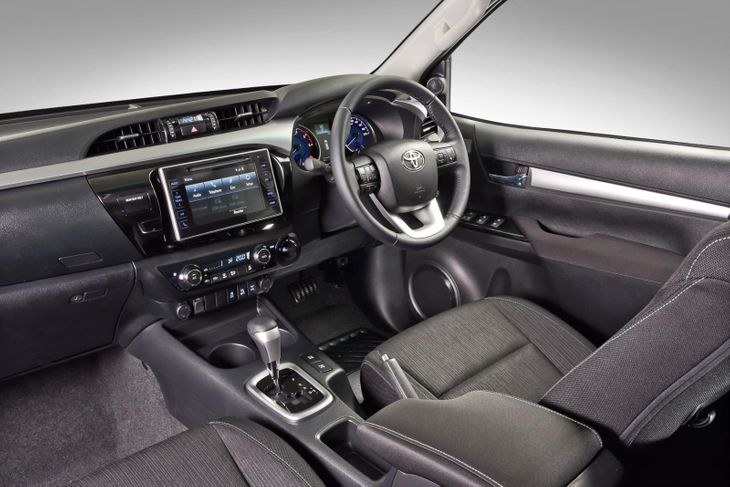
Its cabin is well-stocked with features and the neat instrumentation with its Lexus-like TFT multi-info driver display elevates the Hilux to a more "premium" position. There's also a "floating" tablet-like touchscreen interface for the infotainment system and the general fit and finish of the cabin is right up there with the best of them.


The Hilux offers comfort and modern features with solid interior build quality. 

In terms of capability, the Hilux is one of the most versatile offroad bakkies on the market and it’s a major reason why it has sold so well in our market.

The Alaskan is unlikely to outsell its Hilux rival, but it might convince new bakkie buyers who would otherwise simply walk into a Toyota dealership to purchase a Hilux.


Search for a new / used Toyota Hilux on Cars.co.za

More Toyota Hilux content:

Toyota Hilux 2.8GD-6 DC 4×4 Raider Auto (2016) Review

The World's Most Badass Toyota Hilux [with Video]

Toyota Hilux 2.4 GD-6 4×4 SRX (2016) First Drive

In-Depth Comparison: New Hilux vs Ranger vs KB vs Amarok (video)

Drag Race: Hilux vs Ranger vs Amarok vs KB

2016 Toyota Hilux vs Ford Ranger – Offroad & Review

New Hilux vs Old Hilux – An Expert’s Opinion on What’s Changed

2016 Toyota Hilux – 5 Things You Need To Know (Video)

Ford Ranger


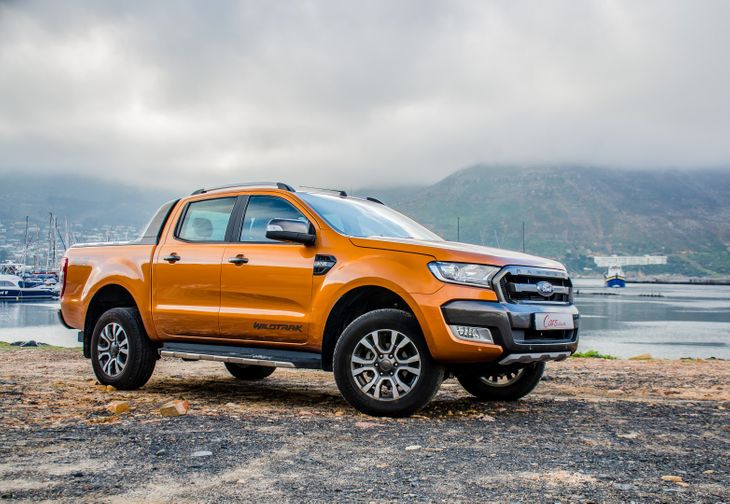
The Ranger Wildtrak is a stylish double-cab bakkie, but so is the Alaskan…

The Ford Ranger, like the Hilux, is an immensely popular vehicle that sells consistently well on the local market. The Ranger Wildtrak in particular has loads of appeal in terms of styling and boasts some impressive in-car technology such as Ford’s SYNC3 infotainment system with integrated navigation. It's arguably the best-looking bakkie on sale in South Africa and the Ranger/Hilux duo represent tough competition for the Renault Alaskan.


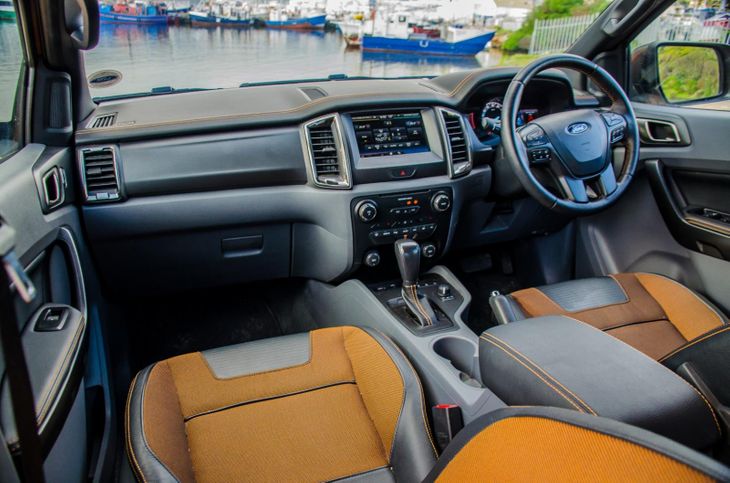
SYNC3 is a major highlight in the Ranger Wildtrak but the Alaskan's interior feels more robust. 

The Ranger Wildtrak is powered by Ford’s powerful 3.2-litre turbodiesel engine with a heady 147 kW and 470 Nm of torque on offer. This engine is mated to either a 6-speed manual or 6-speed automatic transmission. However, based on our recent experience with the Alaskan, the Ranger Wildtrak is thirstier than its French rival.

The Wildtrak excels off the beaten track. It has loads of torque and it can surge through the thickest sand or clamber over terrain only suitable for mountain goats. The Wildtrak is smooth and well-mannered on the road irrespective of how much cargo/number of passengers it is transporting. The Wildtrak copes well on gravel roads and manages to deliver a relatively smooth drive in the dirt.

The Alaskan, with its good looks and muscular stance, compares favourably against the Ranger in the style stakes and may very well steal a few sales from would-be Ranger buyers.


Buy a new or used Ford Ranger on Cars.co.za

More Ford Ranger Content:

Ford Ranger 3.2 4×4 Wildtrak (2016) Review

Ford Ranger 2.2 XLS 4×4 Automatic (2016) Review

Ford Ranger 3.2 XLT (2016) Review

Ford Confirms Ranger Raptor Bakkie (Video)

Ford Ranger Fx4 (2017) – a Raptor Kit with a Warranty

Nissan Navara vs Ford Ranger (2017) Comparative Review Video Part 1

Nissan Navara vs Ford Ranger (2017) Comparative Review Video Part 2

Spec upgrades to Ford Ranger & Everest


Audi SQ5 quattro (2017) Review

By offering sizzling performance, surprising agility and practical, luxurious cabins, vehicles such as Audi's SQ5, Porsche's Macan and the Mercedes-AMG GLC43 are today's equivalents of '80s performance sedans. We spent a week with Ingolstadt's square-jawed newcomer to figure out whether it sets a new benchmark.

We like: Powerful and refined, rock-solid cabin, grip and agility

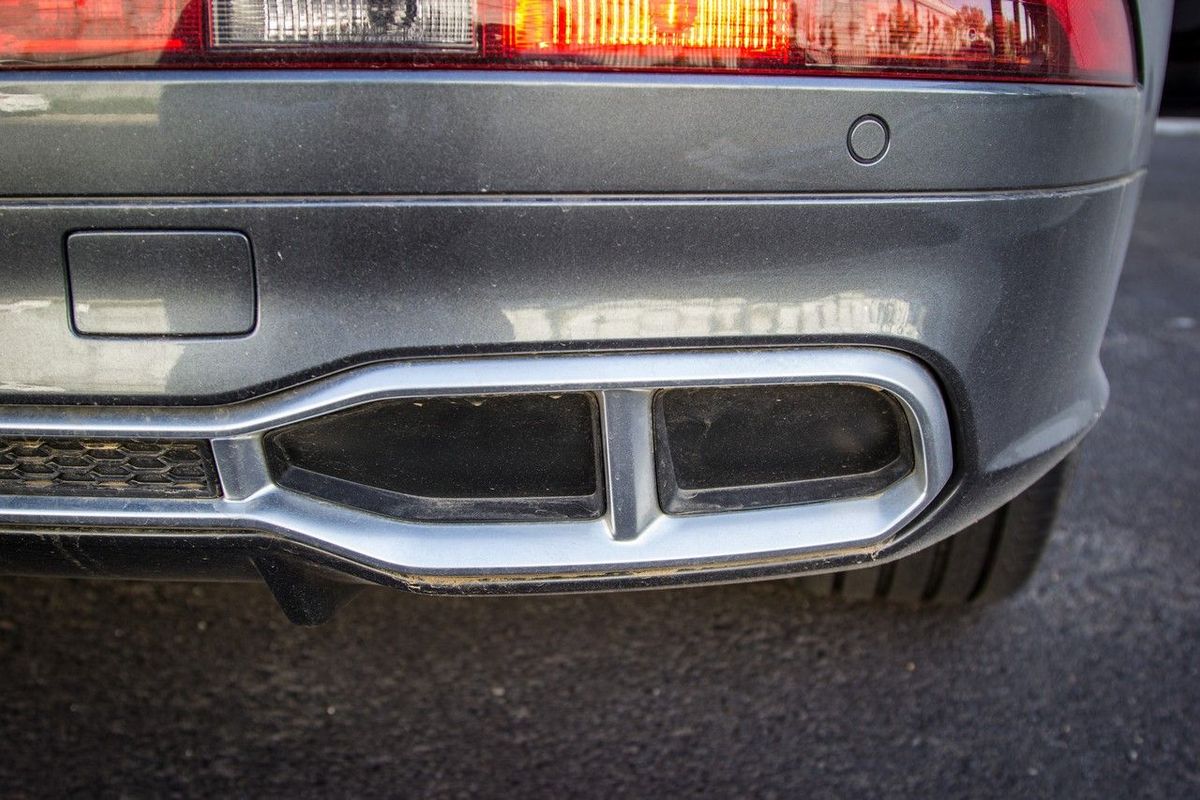
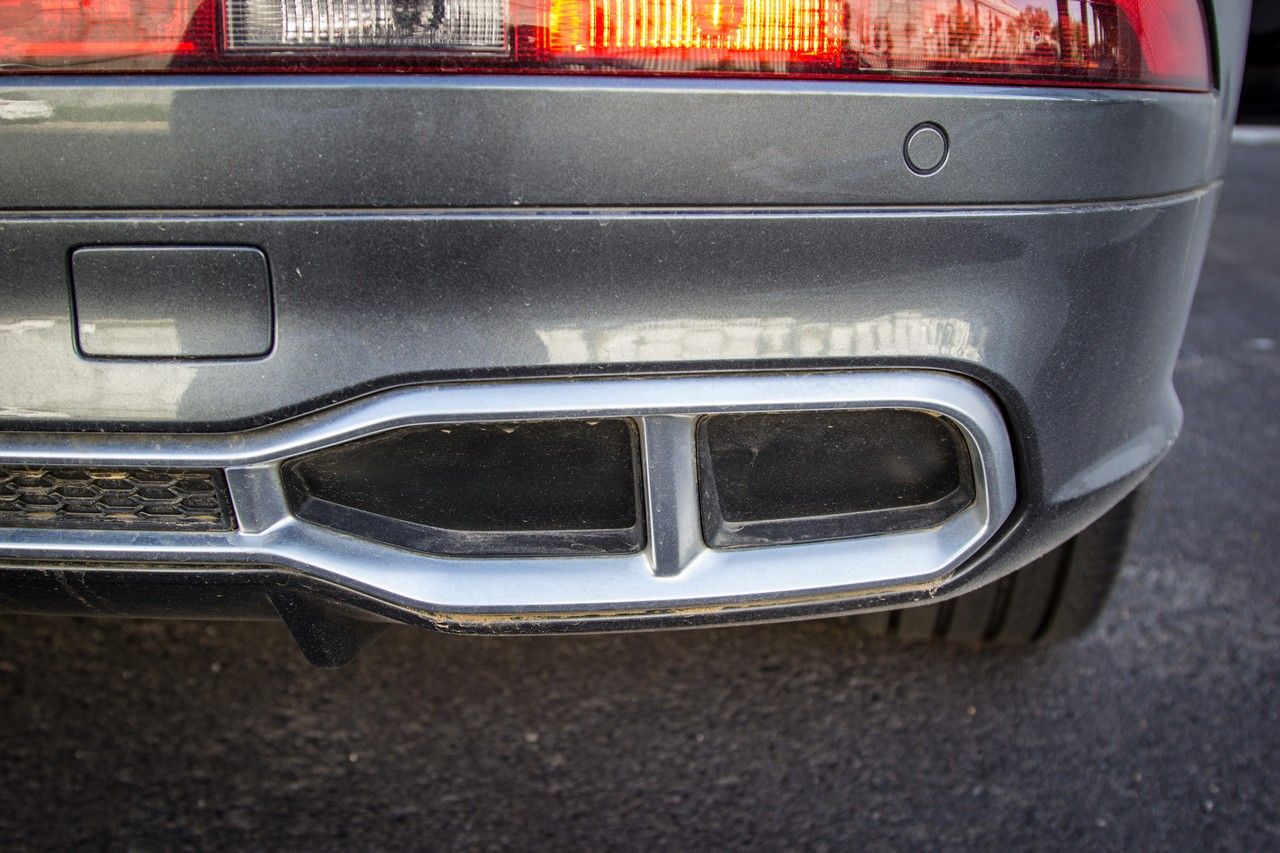
We don’t like: Fake exhaust tips!

Alternatives

  • For the ultimate badge: The Porsche Macan S may be about R80 000 more expensive when comparing base prices, but if you want what is still perceived as a more exclusive vehicle, you may very well be okay with sacrificing some of the options on the SQ5 and stretching for a more basic Porsche (in terms of features). With similar power but less torque, the Macan still posts comparable performance figures. It's ultimately it not as practically packaged as the SQ5, but is still a very useful – and entertaining – daily runner. A Macan facelift comes next year (2018).
  • Something faster: The Mercedes-AMG GLC43 4Matic is cheaper and packs a harder punch courtesy of its charismatic 3.0-litre V6 turbopetrol, but it doesn't feel as solid as the SQ5 and Macan. The GLC's underpinnings don't offer as well-balanced a combination of ride refinement and dynamic ability, and inside, it lacks the almost excruciating attention to build quality detail of the Audi. 

Compare the Audi SQ5 with the Mercedes-AMG GLC 43 4 Matic and Porsche Macan S by clicking here

What is it?


Fancy your premium SUV to have a high-performance bent? But don't want it too flashy? Audi's SQ5 is for you.

The fragmentation of (what started out as) the SUV segment, which initially exclusively catered for people who placed practicality and rough-road ability at the top of their list of requirements, continues unabated. But the SUV or crossover sales swell can no longer be regarded as a "trend" that will grow in significance in the future. It is the default, most-desired body shape of the moment and that means manufacturers must cater to whatever tastes or requirements there may be, whether it is to go off-road, to make a statement or… go fast in the lap of luxury.

Enter vehicles such as Audi's SQ5… high-performance, premium-badged and super-luxurious crossovers that seem far removed from their SUV ancestors, but very much in tune with the present. If compact crossovers are the most desired modes of personal transport of the masses, these are the halo products that feature at the top of the "when I've made it" wishlists… Could the SQ5 be the most desirable of all?

How does it fare in terms of…

Design & Packaging?


Fake, blanked out exhaust tips on a high-performance machine? No Audi… just no.

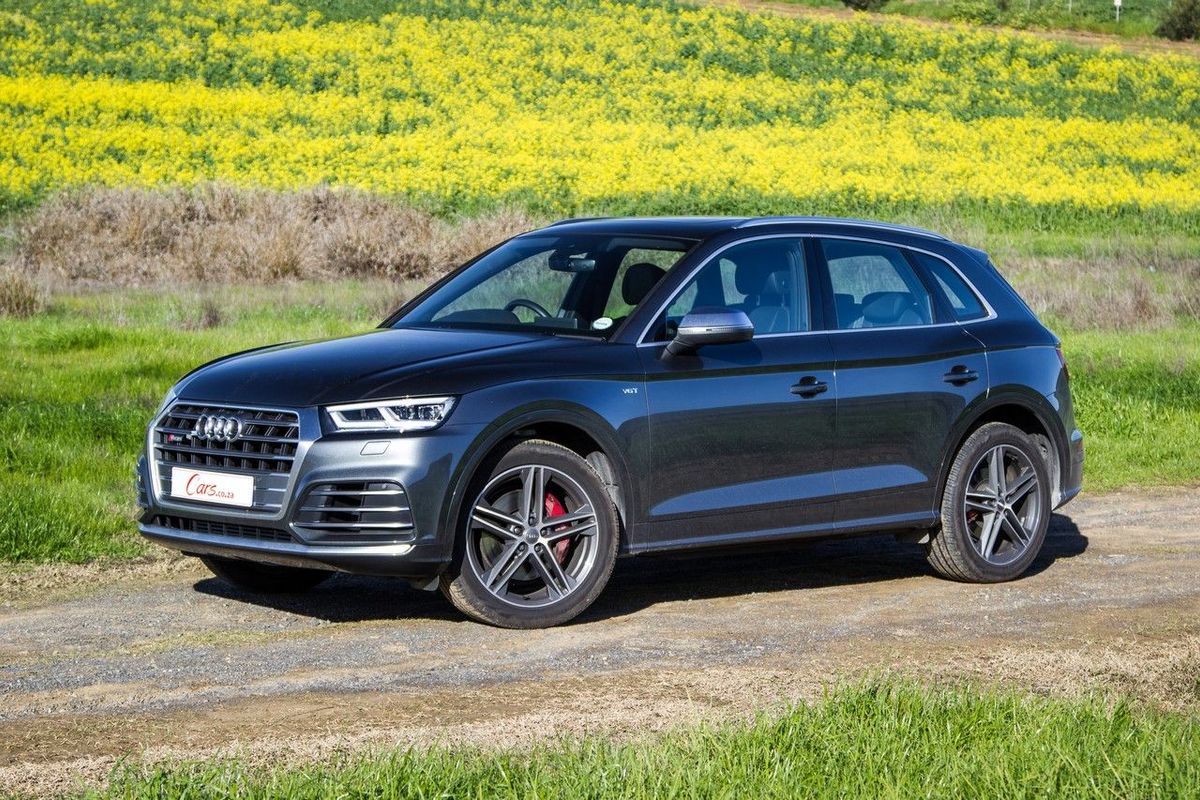
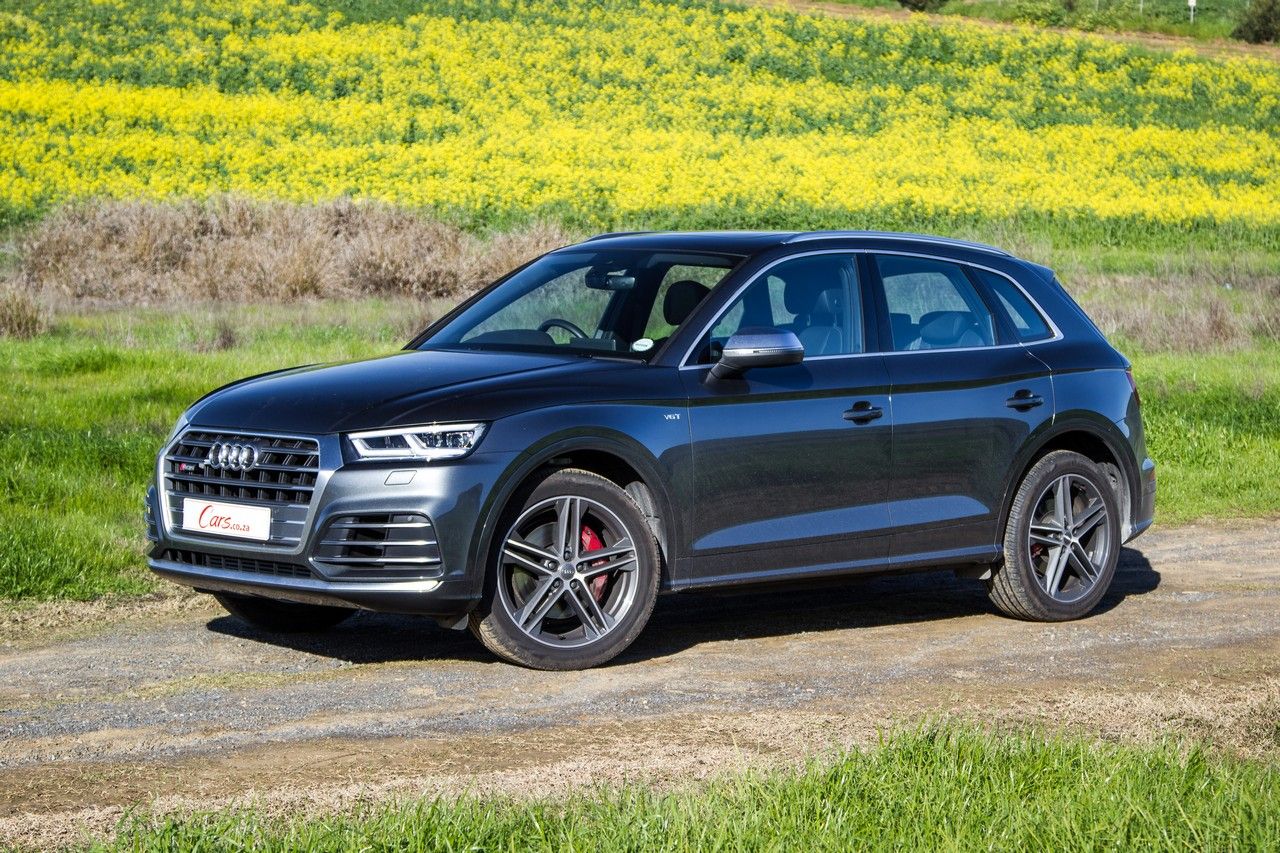
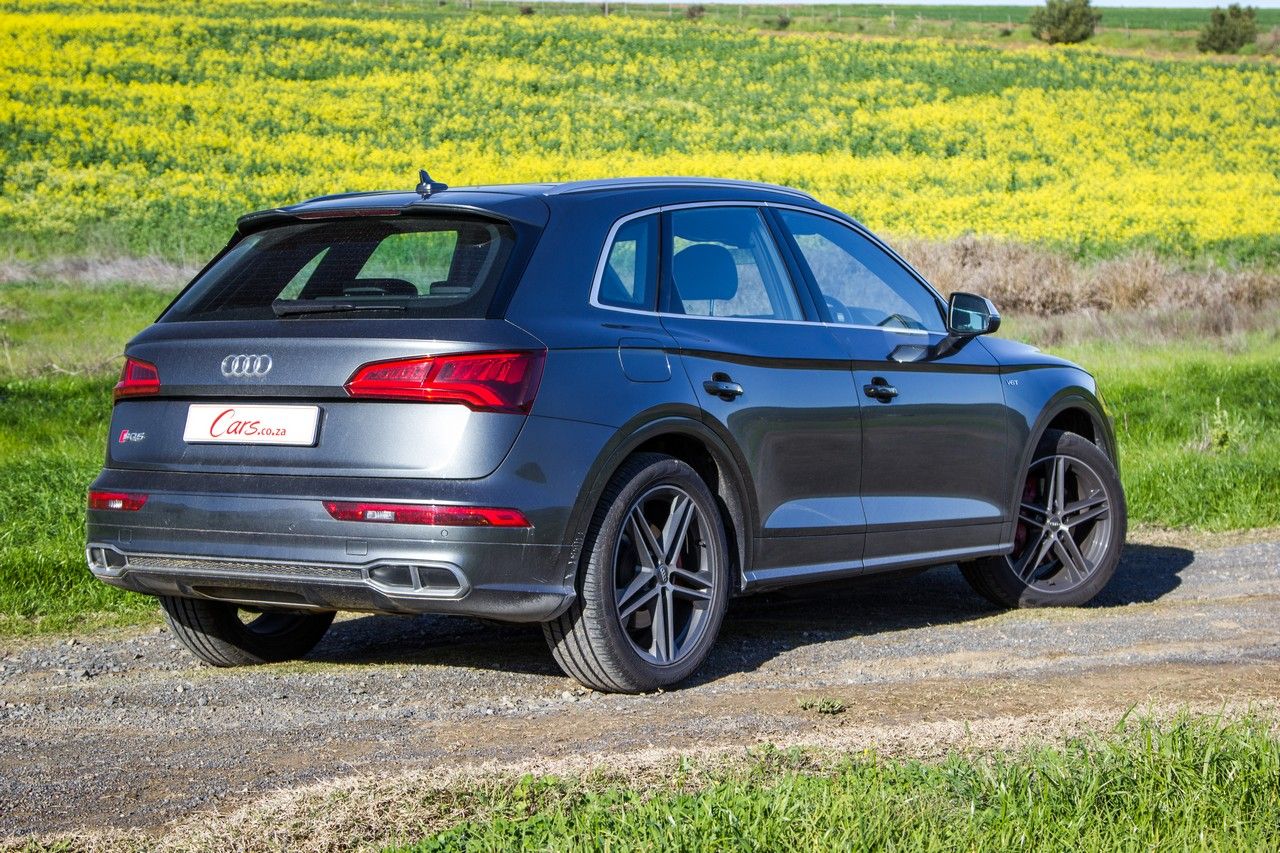
Audi's new Q5 has been criticised (from the moment the very first image emerged) for looking very similar to its predecessor. While the overall design has not moved on significantly, it is a far "edgier" car in its detailing and the differences are highlighted when you park the two generations of vehicles next to one another and make a direct comparison. During its test term, the SQ5, even in a conservative metallic grey paint, attracted a number of positive comments and most onlookers didn't seem to care all that much about its fake exhaust outlets, which were, however, an irritant to our (admittedly petrolheaded) test team. 

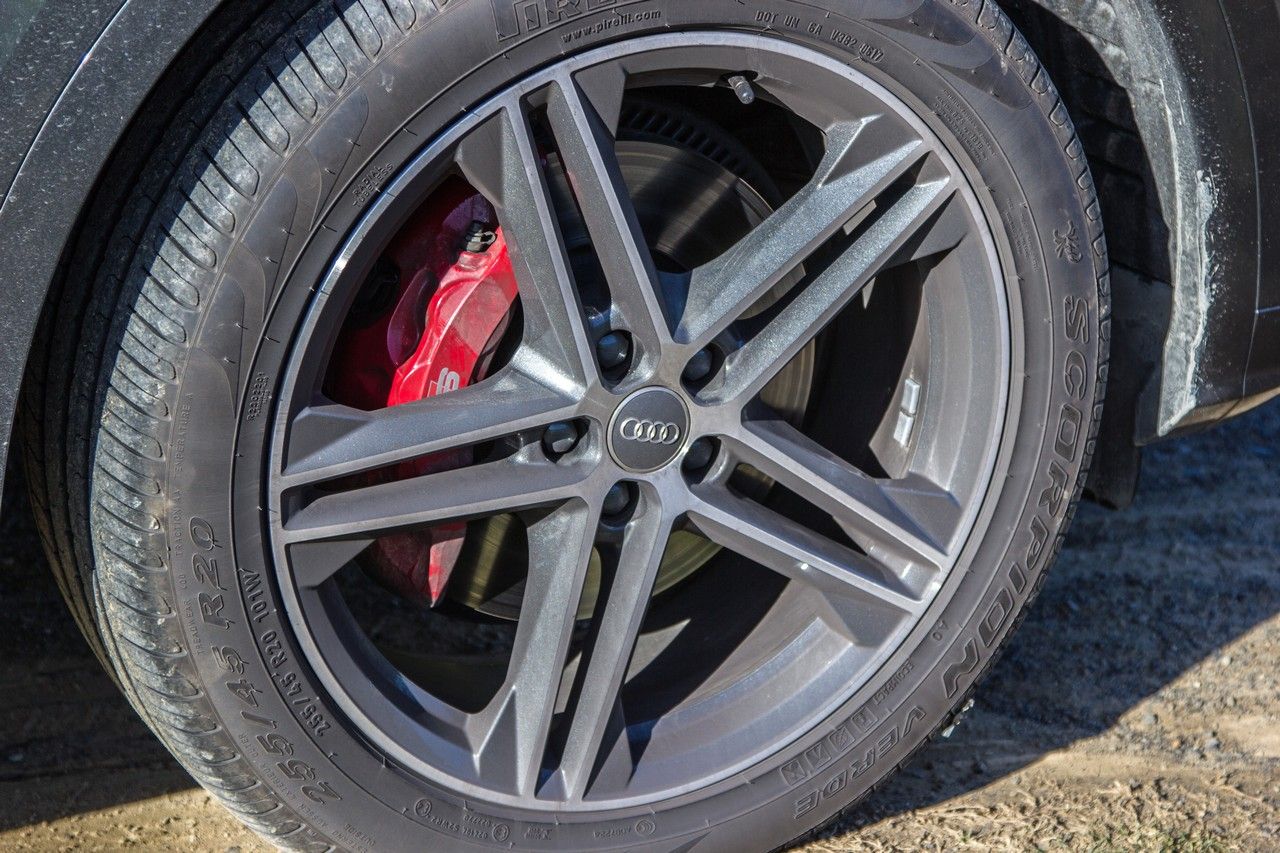
As is to be expected, the über Q5 gets a number of distinguishing features, mostly centred around its more aggressive bumper treatments (front and rear), and striking standard 20-inch alloy wheels. Our test unit also featured an optional sunroof. We think the SQ5's design is quite colour sensitive, and that a brigher hue (or even white), would make it "pop" considerably more. That said, this is not a "shouty" design and, consequently, the SQ5 has considerable Q-car (flying under the radar) appeal.


SQ5 boasts levels of fit and finish, as well as attention to detail that is easily best in class.

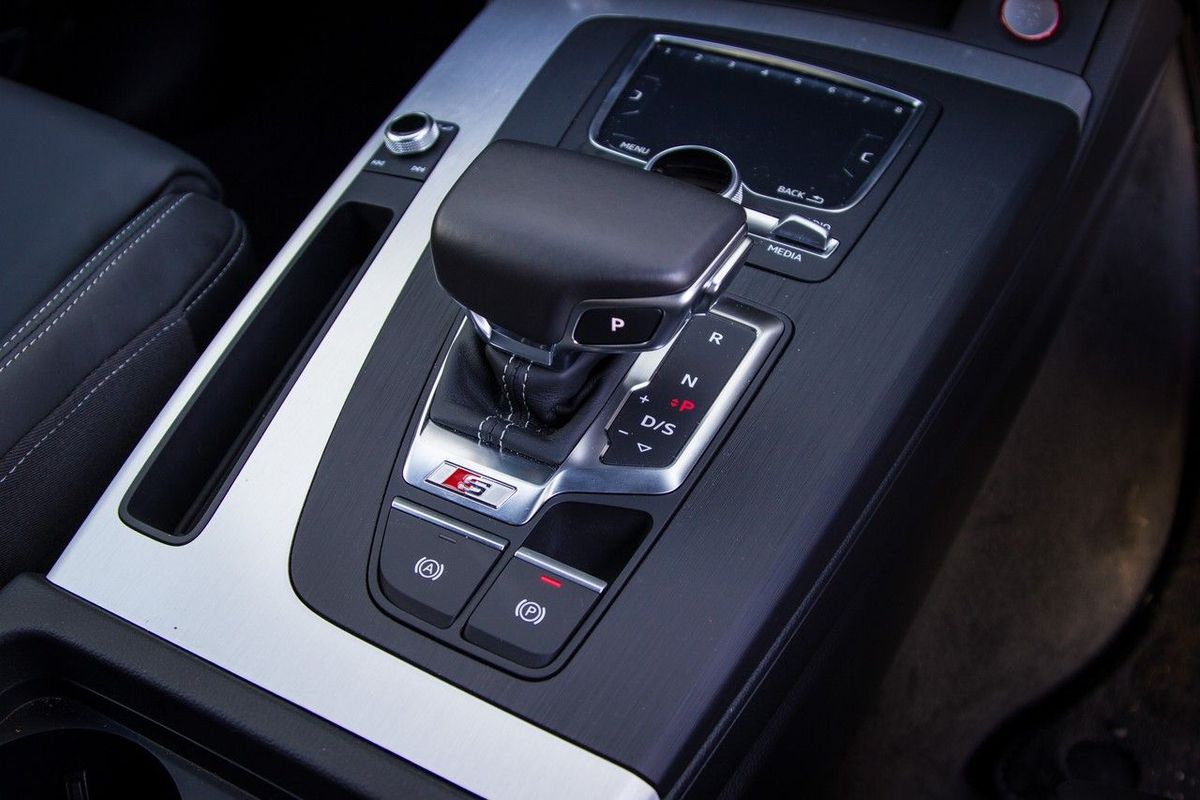
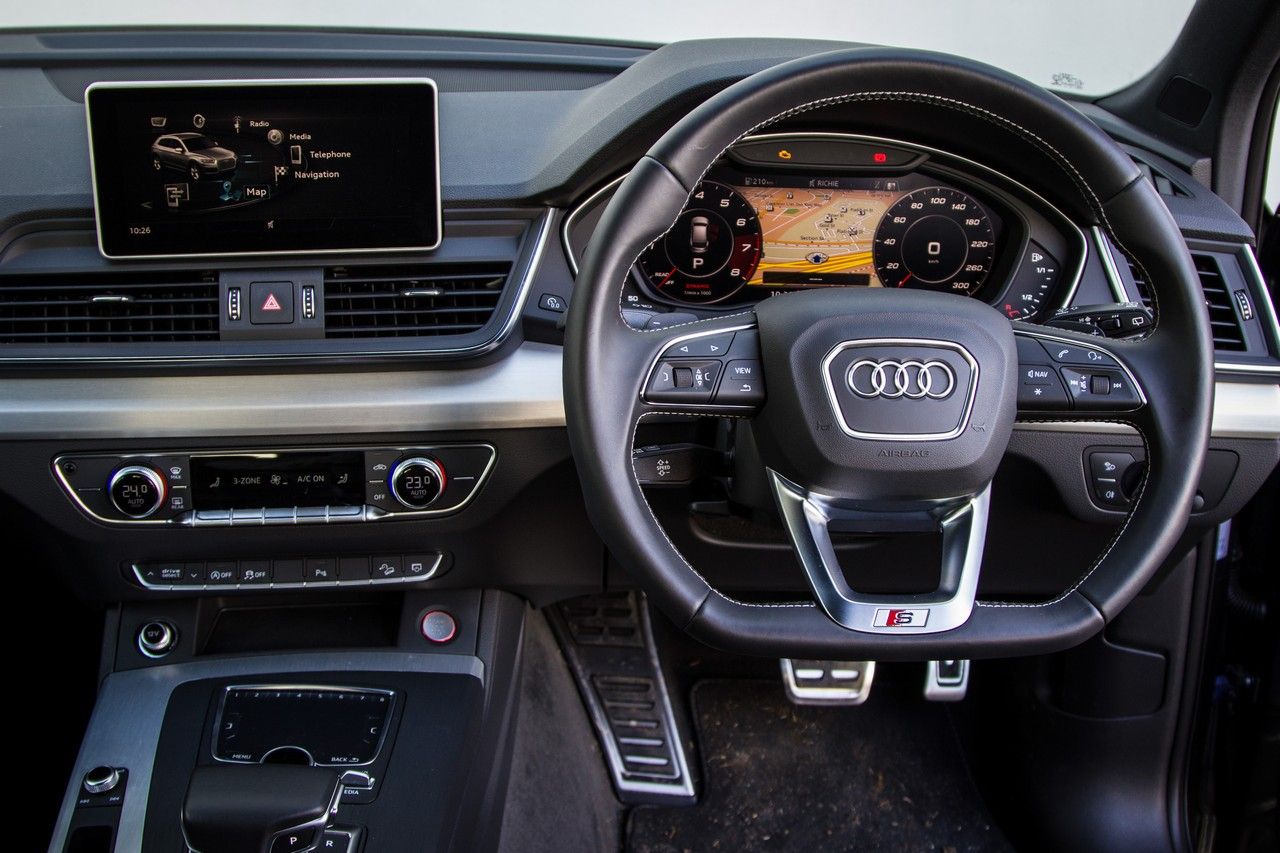
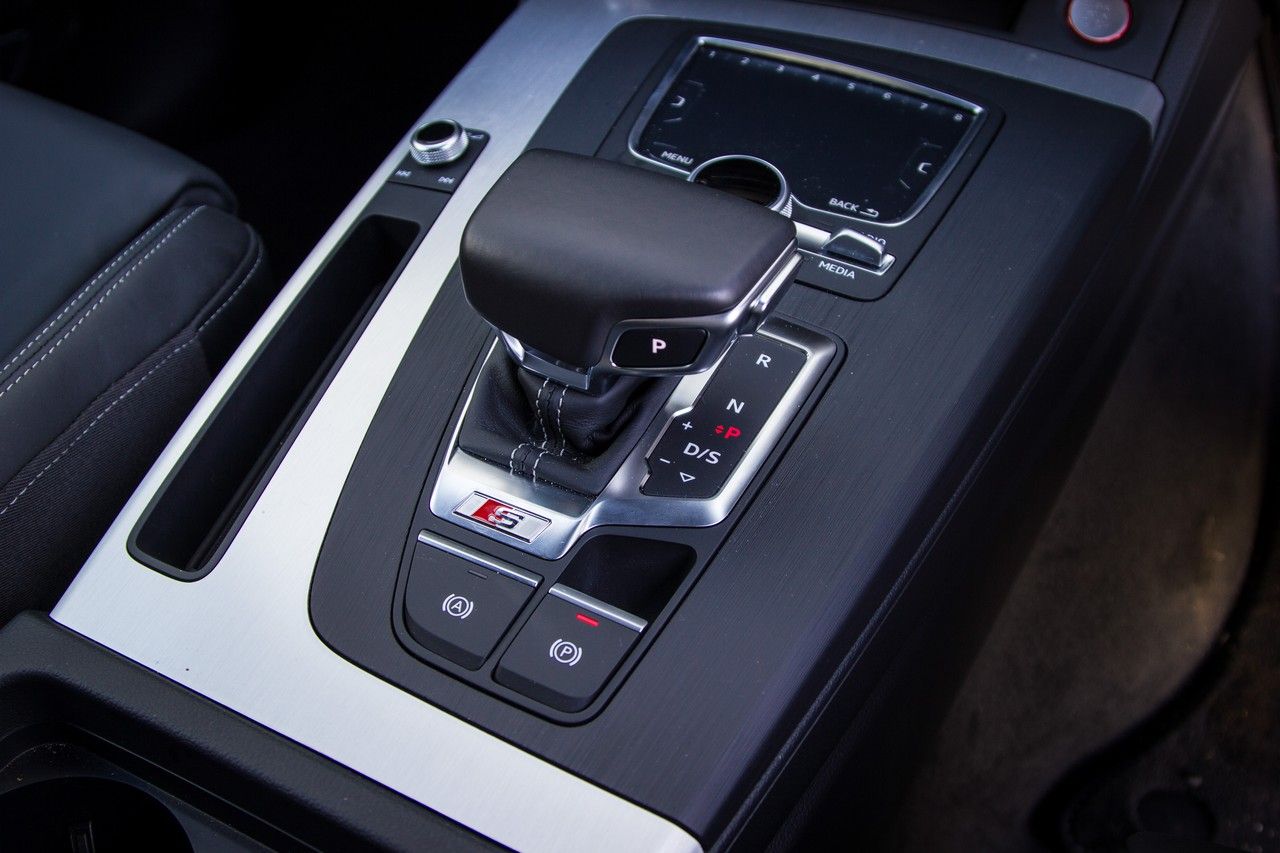
The cabin follows in the tradition of most recent Audis in being very minimalist in appearance, but with build quality and attention to detail that is beyond anything else in this class. There is a reassuring solidity to every button or switch movement, and the satin silver inlays, in particular, are both tasteful and lift the otherwise rather sombre cabin ambience (dominated by grey surfaces). The quilted sports seats are a real highlight, and the T-bar gear selector with its flat top, which doubles as a place to rest your wrist while using the touchpad, is an example of the great attention to detail in this cabin.

There really is no reason for complaint in the front, then, particularly because the SQ5 has the same generous steering rake/reach adjustability, combined with multi-way adjustable driver's seat, that Audis are so admired for. Occupants in the rear of the cabin are also well-catered for, with generous legroom and their own ventilation controls. Our test unit was further fitted with the optional Rear Seat Bench Plus, which affords greater adjustment, including fore/aft sliding to tailor legroom/luggage space as required. In this regard (rear passenger comfort), the SQ5 is considerably better than the Porsche Macan, for example. 


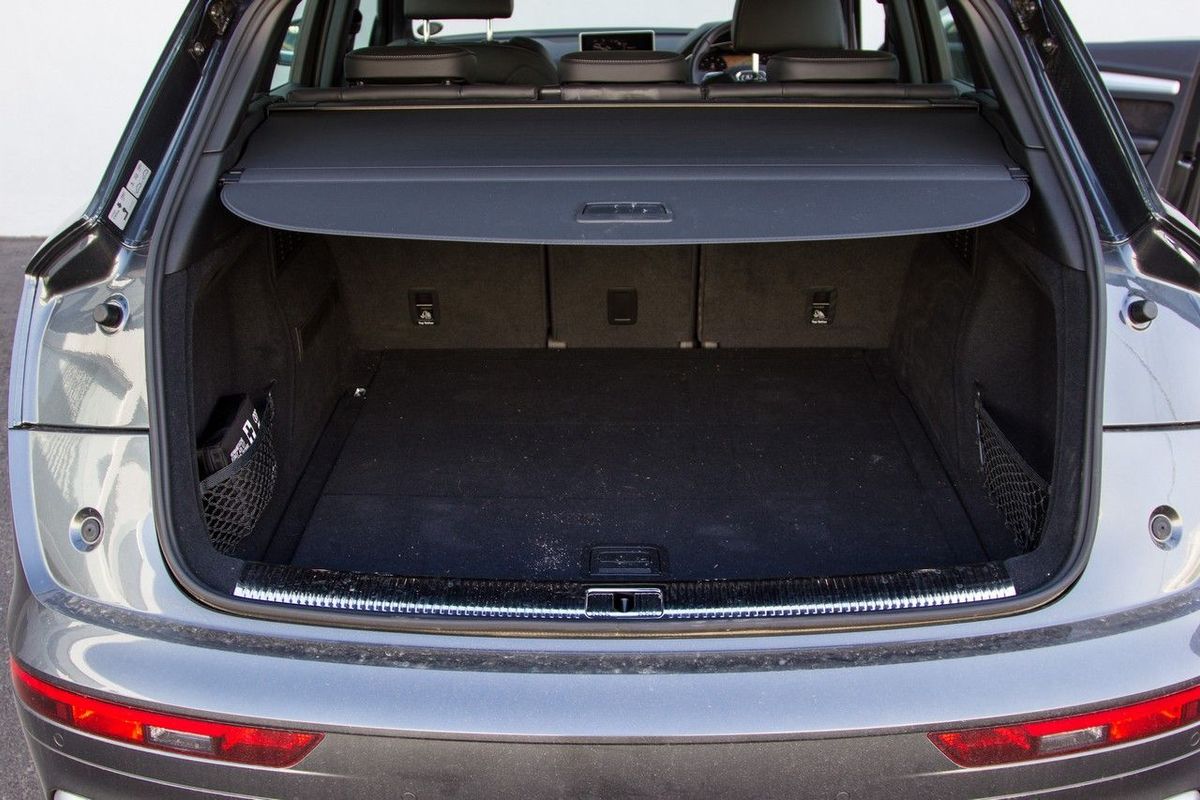
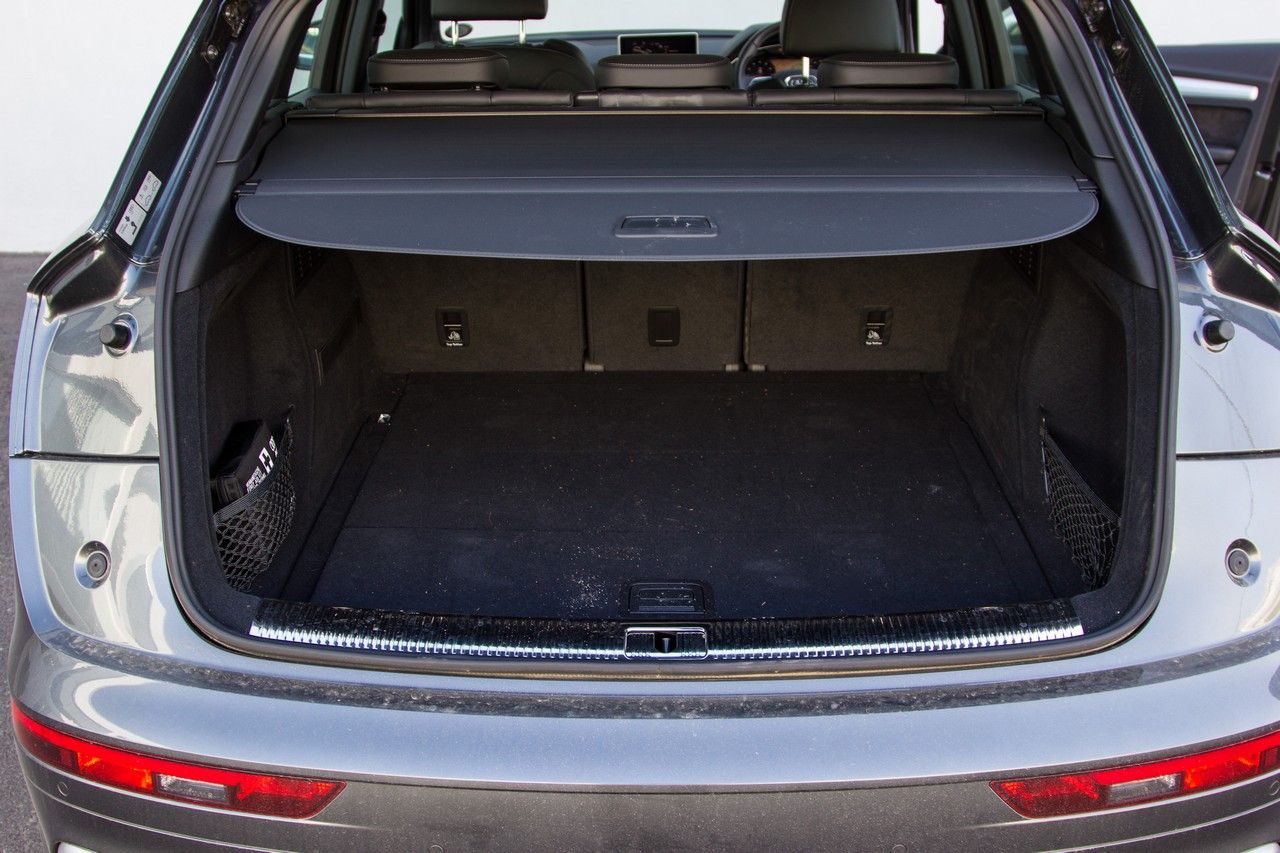
The luggage area is large and rear seats can be folded forward by pulling levers reachable by standing behind the vehicle. Automated tailgate is standard.

The SQ5's boot is rated at 550 litres in volume, which is identical to the GLC and slightly bigger than the Macan. The rear seatbacks can be tipped forward by pulling on conveniently placed levers in the bay and maximum utility space is 1 550 litres, slightly smaller than the Benz, but a bit more than in the Porsche. An electric tailgate is standard. Overall, then, this may be the "fast" Q5, but it's lost none of its practicality. 

Performance & Efficiency?

Unlike the first SQ5, which was sold in South Africa exclusively as a turbodiesel derivative, the newcomer is powered by Audi's turbocharged 3.0-litre V6 petrol that delivers 260 kW and 500 Nm of torque. The latter figure may not be as impressive as its predecessor's, but remains very competitive, only being outpunched by the GLC43's powerplant to the extent of 20 Nm. The maximum torque is available from 1 370 to 4 500 rpm, which makes the car feel ever-keen and always responsive. Audi claims a 0-100 kph sprint time of 5.4 seconds, which is slightly slower than the GLC43, but which matches the claim for the Macan S. It's plenty fast enough, and the 8-speed transmission is a good match for it, generally providing decisive and slick shifts.


Eight-speed gearbox is well-matched to the engine's characteristics. Drive modes make a real impact on overall "feel" of the car.

Of course, as you cycle through the various drive modes the car's character changes noticeably, and so does the engine sound. It becomes quite vocal in its sportier modes, which is nice, but traditionalists will lament the fact that much of this sound is "fake". In the default driving mode the engine muted, and you'll marvel at the refinement of it all.

For the record, the engine is remarkably efficient and refined given its performance credentials. Audi claims a combined cycle consumption figure of 8.3 L/100 km, which you'll undoubtedly struggle to match, but, even so, it is significantly more fuel efficient in the real world than its Mercedes-Benz rival. We achieved a figure of around 10.0 L/100 km.

Ride & Handling?


Standard 20-inch wheels do not negatively impact ride quality and composure.

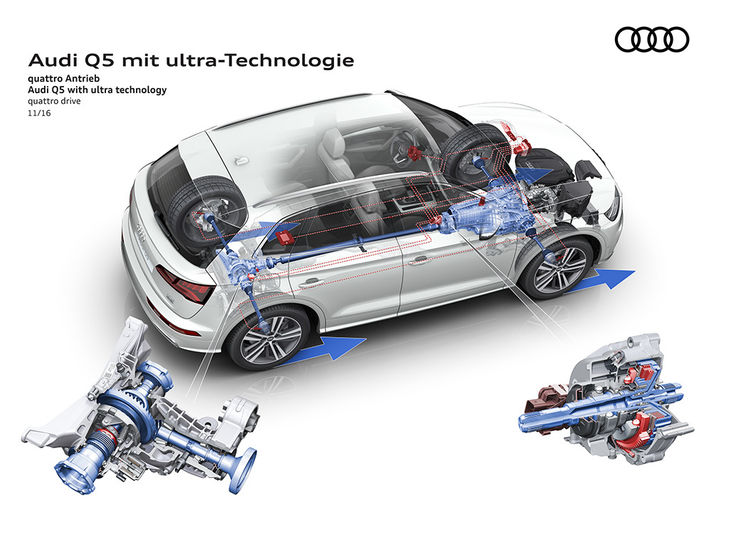
Based on Audi's acclaimed MLB-Evo platform (which also underpins the A4), the Q5 rides with a mix of composure and agility that is quite rare in this segment. Fitted as standard with sports suspension and damping control, the SQ5 possesses downright remarkable ride comfort, especially given its uncompromising footwear. The SQ5 uses a relatively new type of quattro configuration, which is called quattro ultra. One of the main goals with quattro ultra was efficiency, and given the fuel-consumption we achieved during our test, we've got no reason to doubt Audi's claims.

For a high-performance vehicle such as the SQ5, some enthusiasts may be worried that the new system, which favours front-wheel drive operation in no-slip conditions, could be detrimental to dynamic ability. In our experience, however, the system operates so imperceptibly that few would notice the difference.


The SQ5 features quattro ultra, which brings major efficiency gains. It shifts power imperceptibly. 

How does it work? Well, although the SQ5 starts off in all-wheel drive mode when pulling away, if no slip is detected it will switch to front-wheel drive. When slip is detected at the front, it will channel power to the rear wheels using two clutches (one behind the gearbox and another in the rear axle). The system also takes into account the drive settings and the manner in which the vehicle is being driven.

Does it all work? Well, in short, the SQ5 is as ruthlessly efficient in the roadholding department as it is in virtually every aspect of its package. Grip levels are high, it turns in well and body control is superb. It is not, however, the most engaging of vehicles to drive fast and the steering feel can be inconsistent in terms of its weighting and is generally devoid of real feedback. Nevertheless, when it comes to this type of fast SUV, we suspect that the ability to cover ground (of various surface quality) fast will rank higher on buyers' lists of requirements than the provision of driving engagement on a challenging ribbon of asphalt. 

Pricing and warranty


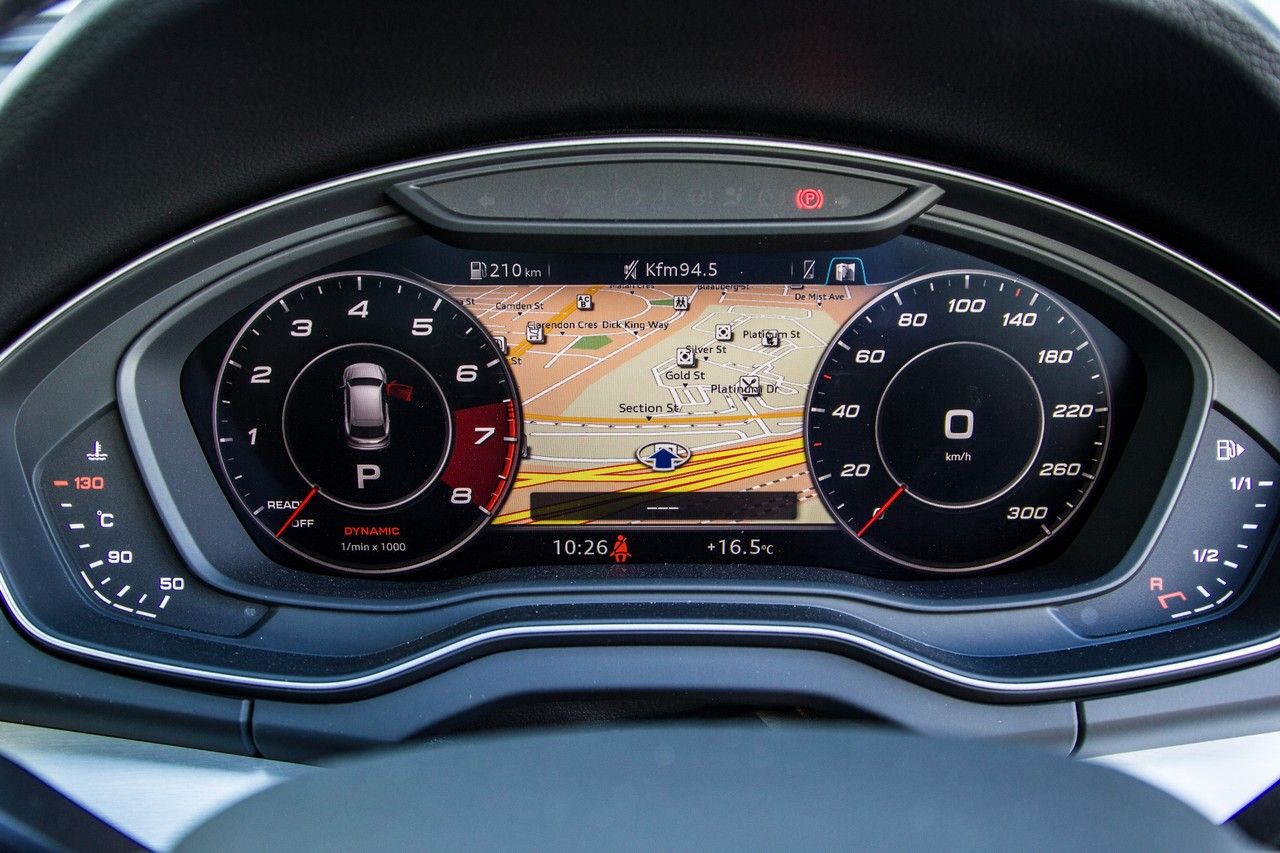
Sadly, the really smart Virtual Cockpit is not standard and costs R7 000 extra. Worth having, though.
The Audi SQ5 currently (September 2017) sells for R1 044 000 without options. The price includes a 1-year/unlimited km warranty and 5-year/100 000 maintenance plan. As the flagship of the Q5 range, this model is comprehensively specified with niceties such as three-zone climate control, electrically adjustable front seats, park assist (including parking plus), auto lights/wipers, cruise control, automated tailgate, LED head- and taillamps and MMI Navigation Plus with touch input, amongst other items. 
Our test unit also featured the following options; panoramic glass sunroof (R19 900), trailer tow hitch (R13 950), Bang&Olufsen sound system (R11 850), virtual cockpit (R7 000), fine nappa leather (R6 960), Matrix LED headlamps (R6 200), Rear seat bench plus (R4 900) and Audi smartphone interface (R4 180). The additional R74 940-worth of options bumps up the price to R1 118 940 as tested.

Verdict


Ruthlessly efficient and excellent at what it does, the SQ5 is arguably the most-complete vehicle of its type.

At this end of the market, and in this niche specifically, there aren't really any bad choices and personal brand preference will largely determine which products buyers will choose. However, ignoring such subjective matters for a moment, we rate the SQ5 as a more refined and better-built offering than the Mercedes-AMG GLC43 4Matic, but the AMG has the edge in terms of practicality and outright performance. The Benz arguably also has the more charismatic engine. Add a number of high-cost options to the SQ5 and Jaguar's slightly bigger F-Pace also comes into play, as well as the Porsche Macan. So, ultimately, the SQ5 appears to straddle a middle ground, mirroring the best capabilities of its cheaper or pricier rivals, but seemingly without any of their (small) flaws.

But, it's almost robotic in the way that it ticks all the boxes. Does this mean the SQ5 lacks the personality or desirability a high-performance flagship should offer? That question brings us back into the realm of subjective matters, and that's something only the individual doing the buying will be able to answer.

You may also be interested in:

New Audi Q5 (2017) Launch Review

BMW X3 Revealed with video (2017)

5 Interesting Things about the new Jaguar E-Pace

Looking for a new / used Audi SQ5 to buy?

Find one on Cars.co.za today by clicking here

Volkswagen Golf GTD (2017) Video Review

The Volkswagen Golf GTI is regarded as the King of the compact hot hatchbacks, but it has become pricey, so much so that it’s out of reach of many consumers. What if there was something cheaper that could offer a comparable ownership experience and most of the performance, but importantly, consume less fuel?

The Golf GTD is similarly styled to its GTI sibling, but it’s powered by a 2.0-litre turbodiesel engine that produces 350 N.m of torque is mated with a 6-speed dual-clutch transmission. Volkswagen claims a brisk 0-100 kph time of 7.4 sec and a claimed fuel consumption of only 5.0 L/100 km. It sounds like the best of both worlds, but is it?

We take to the track with the GTD to see if it has enough GT to make up for the “D” (if you, like most enthusiasts, would prefer to have the “I”). Is this the thinking-person’s GTI, or a piecemeal car?

Related content:

Volkswagen Golf GTD (2017) Quick Review

Volkswagen Golf R, GTI & GTD (2017) Track Comparison Video

Drag Race: Volkswagen Golf GTI vs Golf GTD [Video]

Drag Race: VW Golf R vs Golf GTI [Video]

Volkswagen Golf GTI (2017) Quick Review

Update: Renault Shows New Megane RS [with Video]

Ford Focus RS (2016) Review

Extended Test: Ford Focus ST [with Video]

Volkswagen Golf GTI Clubsport S (2016) First Drive

Volkswagen Golf GTI Clubsport (2016) Video Review

Searching for a new/used Golf GTD?

Search for one on Cars.co.za