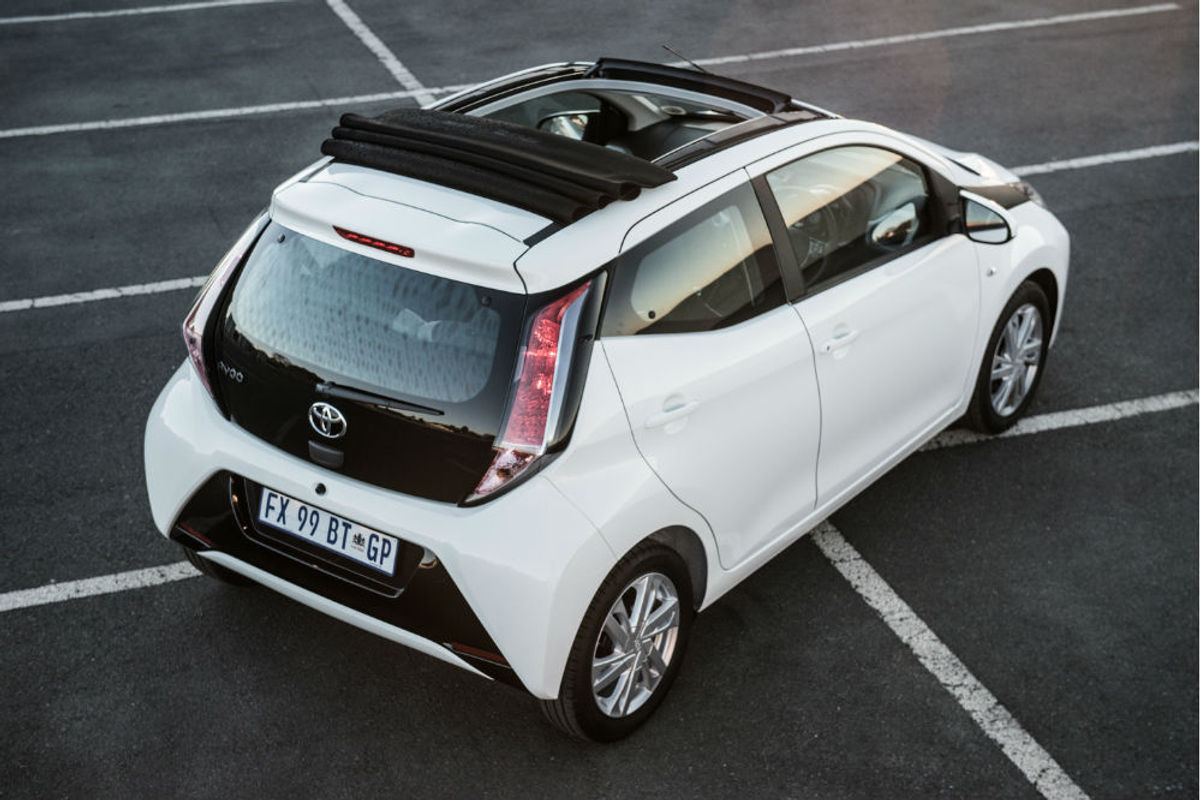
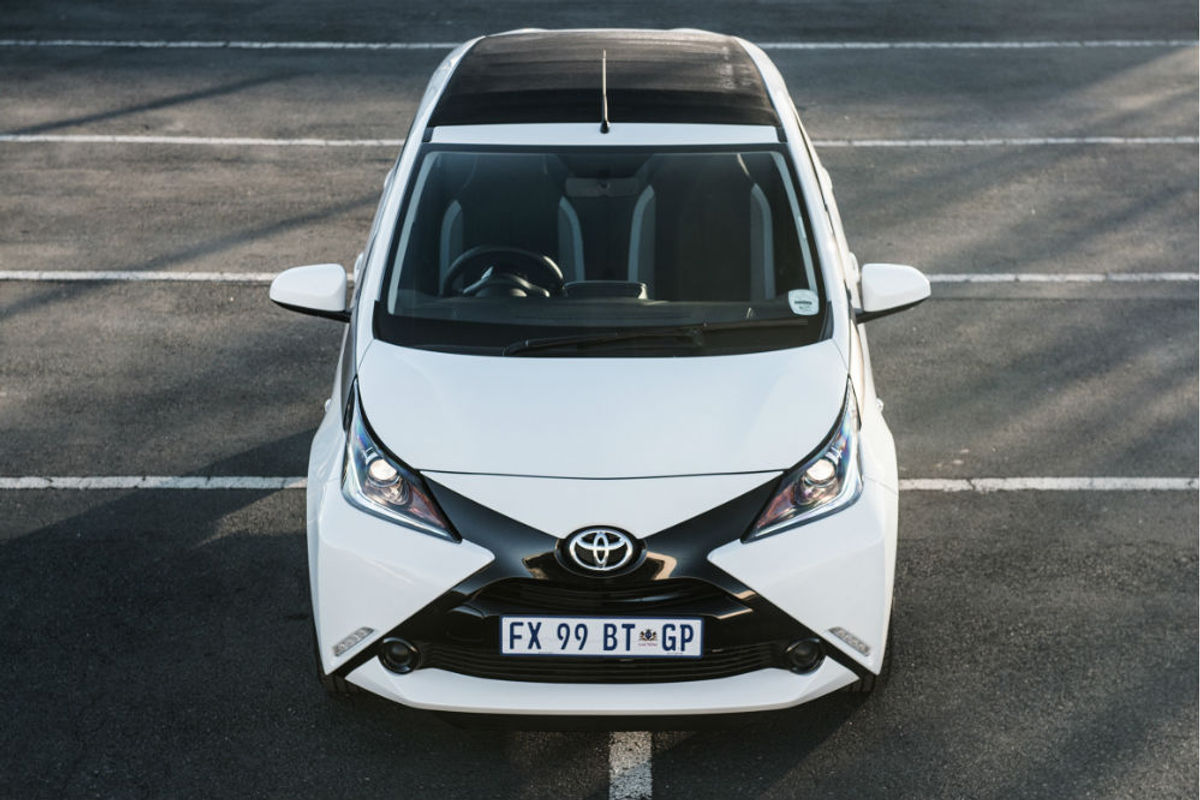
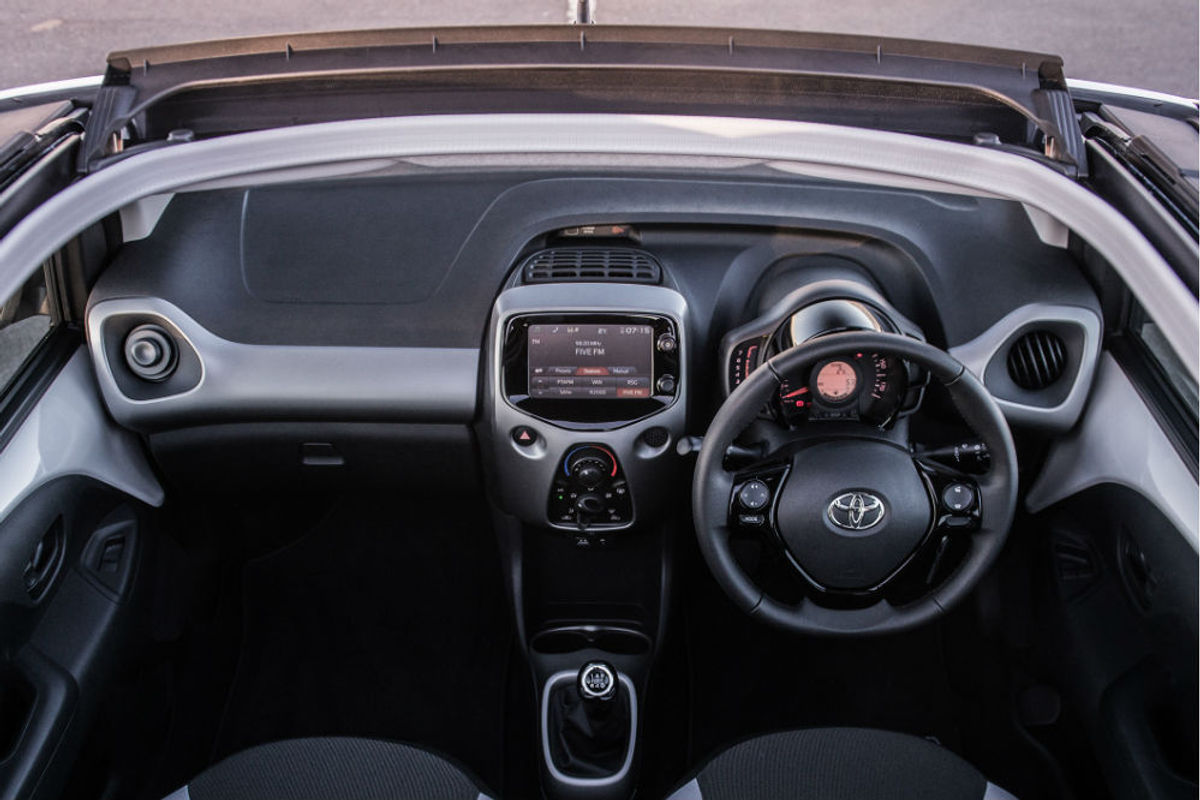
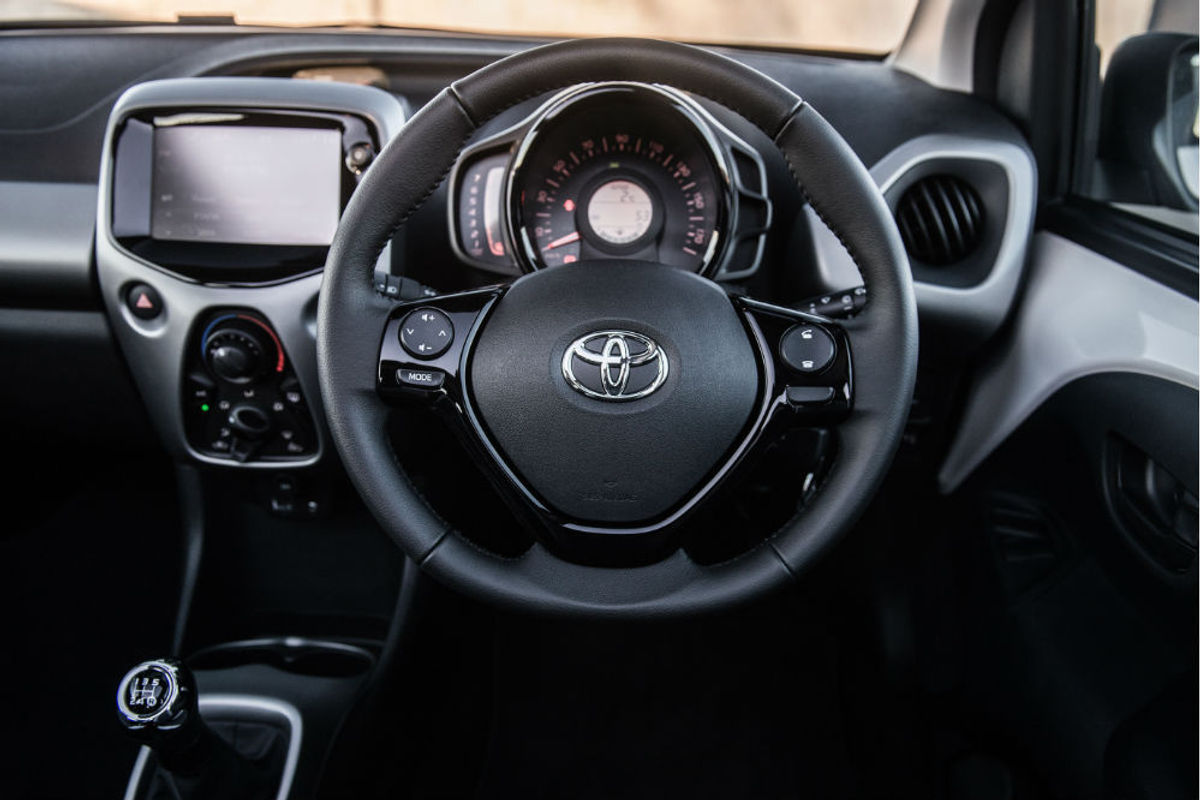
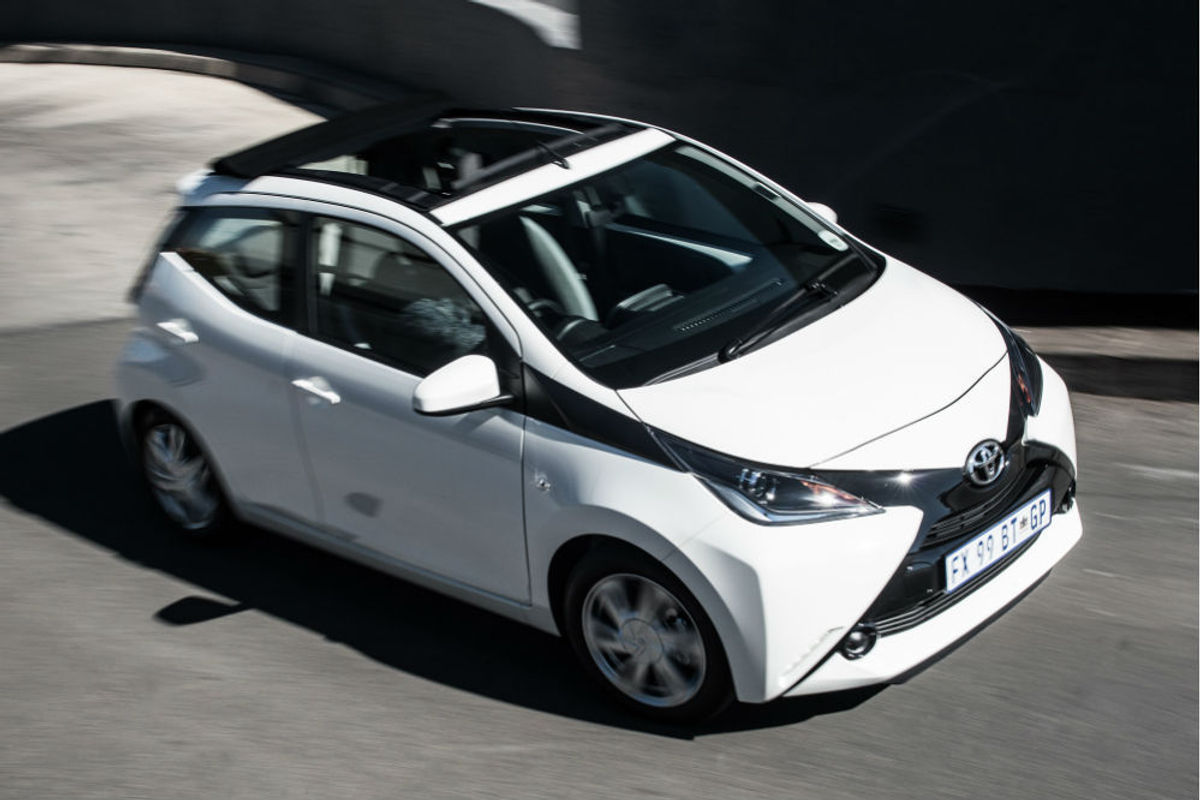
The Toyota Aygo compact hatchback range has been expanded to now include a convertible version. Here are the specs and pricing for the new Aygo X-Cite.
Toyota's Aygo is a budget-friendly hatchback which was a finalist in the Cars.co.za Consumer Awards as we were impressed with its value offering.
The Aygo is the result of a three-way tie in between Toyota, Peugeot and Citroen to build a compact city car. Peugeot has the 107 (although not offered in our market) and Citroen the C1 – the latter was available in South Africa until the brand was discontinued on the local market last year. Interestingly, the Citroen version was sold right from the beginning with the option of the convertible roof, while the Aygo was not.
Now Toyota sees a business case in offering its Aygo with a retractable roof and it's called the Aygo X-Cite. Locally, the Toyota Aygo X-Cite is only available with a black canvas roof. This roof is full-length, factory fitted and electronically operated.
In terms of power delivery, the 1.0-litre petrol engine is mated to a manual gearbox. This X-Cite comes standard with 15-inch alloy wheels, LED daytime running lights, Vehicle Stability Control and four airbags.
Toyota Aygo X-Cite Price in South Africa (July 2017)
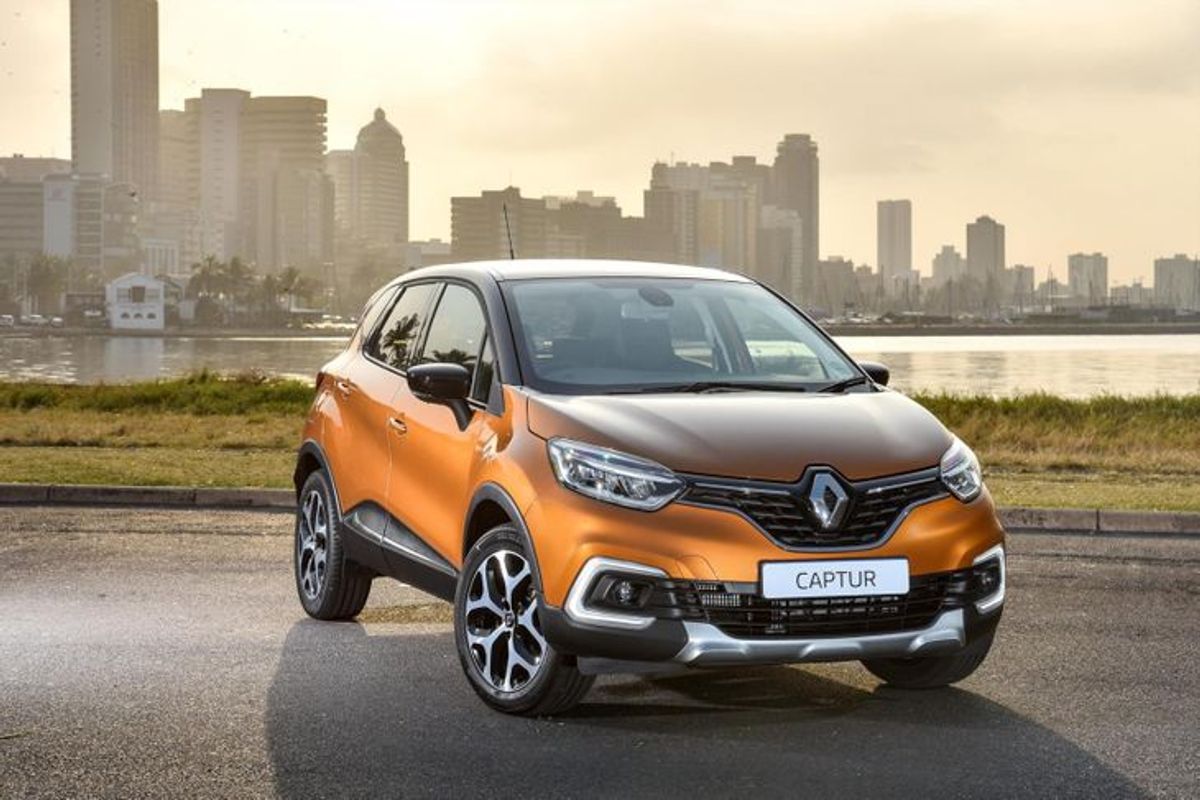
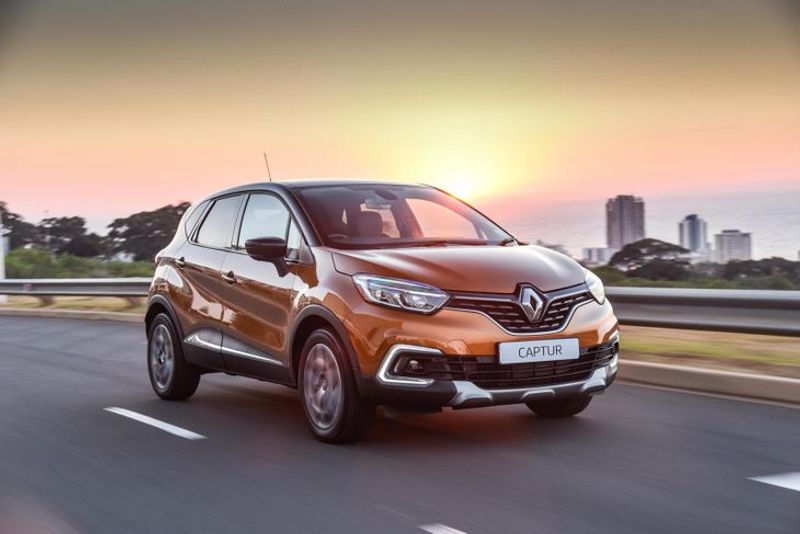
The popular compact crossover segment in South Africa is fiercely contested, with no less than 14 competitors vying for the buying public’s attention. The Renault Captur has been a strong contender since its launch in 2015 and a refreshed and revised model has just been revealed. We attended the launch in Gauteng.
What’s new?
The big news is the introduction of the “Blaze” trim level; an entry level variant which undercuts the outgoing entry level variant by R20 000. The Blaze also introduces a new infotainment system to the line-up, in the form of Renault’s R&Go. While more expensive Captur’s retain the MediaNav touchscreen infotainment system found in the Duster, Clio and Kwid, the new system features sophisticated smartphone integration.
New gearbox, same engines
The Captur range will still be powered by a trio of engines, however the 1.2-litre 88 kW turbo petrol motor is now offered with a 6-spd manual transmission, in addition to the 6-spd automatic EDC ‘box. Buyers can also choose from a 0.9-litre, 3-cylinder 66 kW turbo petrol motor, offered exclusively with a 5-spd manual, or the 1.5dCi turbo diesel motor, which is also offered exclusively with a 5-spd manual.
1.2 turbo now features a manual gearbox option
What’s it like to drive?
On launch, we drove the petrol-powered 88 kW 1.2-litre manual and 1.5 dCi manual. The petrol-powered Captur, with power and torque figures of 88 kW and 190 Nm, offers impressive ride quality, with very little noise and vibrations making their way into the cabin – in fact, it’s often hard to tell if the engine is actually on without glancing at the rev needle. On the highways around Gauteng, the little crossover acted as a comfortable cruiser with the tall sixth gear bringing the engine rpm down and improving fuel consumption. However overtaking manoeuvres require some down changing; acceleration from 0-60 kph is fairly brisk but the motor does require some encouraging from 80 – 120 kph.
The diesel, in our limited experience, is a much better all-rounder. The extra 30 Nm of torque seems to be more usable more of the time – curious for a diesel motor. Even though the diesel is only offered with a 5-spd manual, it remains a capable cruiser while being nippy off the line. But its strong suit is undoubtedly the fuel consumption. While Renault claims a rather incredible average figure of 3.6 L/100 km, we achieved 4.7 L/100 km during our roughly 40 km drive on mostly flowing country roads. And it did feel as though with some careful driving in Eco mode, that figure could quite easily hover around the 4.0 mark.
What’s it like to drive on gravel?
Credit to Renault SA, they included a 15 km stretch of gravel on the test route, a stretch which was not in the best condition. While crossover manufacturers often boast of their product’s increased ride height, it is very rare that we’re offered the opportunity to put that useful feature to the test.
Ride quality of the Captur has improved as has the cabin NVH levels.
The Captur coped admirably on the rough surface, dealing with the ruts and bumps and letting very little harshness through into the cabin, and there were no squeaks or rattles to speak of. This is certainly helped by the Captur’s relatively high-sidewall tyres; while the high spec models are fitted as standard with 17 inch alloy wheels, the 205/55 profile Michelin Primacy tyres still provide some cushioning from the harsh conditions. While the Captur is certainly not the car for covering hundreds of gravel kilometres, it is reassuring to know that it can easily cope with the odd adventure off the tarmac. Bear in mind that the Captur is only offered with front wheel drive.
Interior improvements
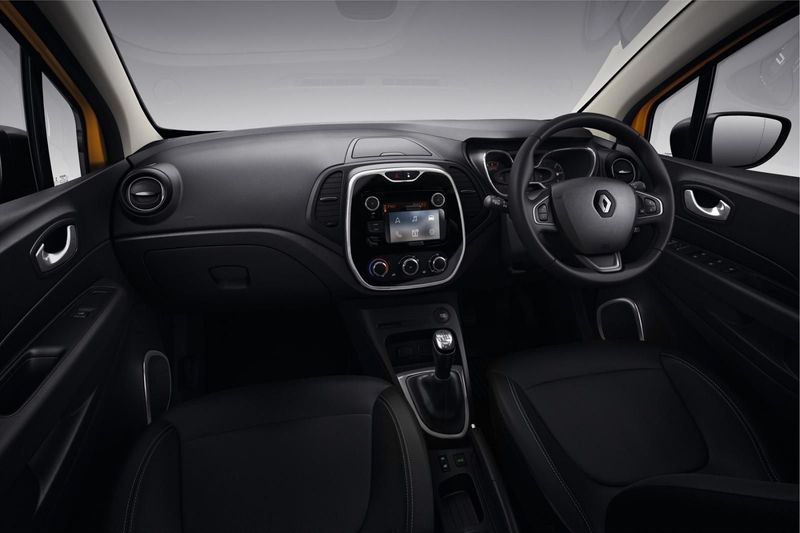
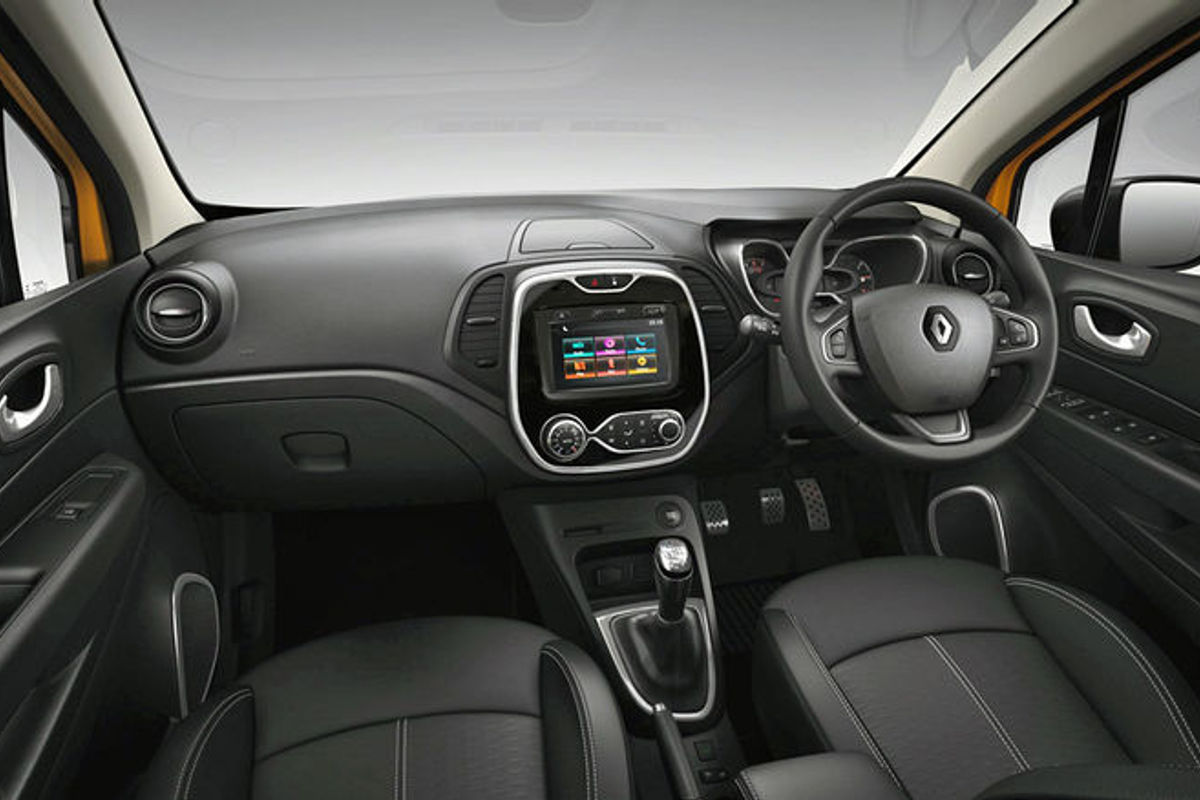
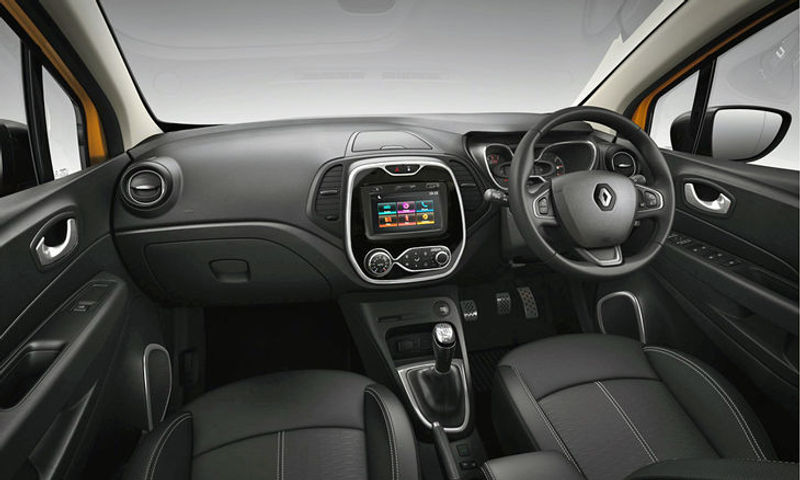
Renault tells us that the fit and finish of the interior has been refined and upgraded. There is a new soft-touch material on the dashboard and door-lining which does look and feel more upmarket. Satin chrome accents on the dash are subtle but effective and there’s a new, smaller steering wheel which you’d be hard-pressed to tell apart from the one it replaces. The gearlever from the larger Megane hatchback has been thrown into the mix and there’s an optional fixed glass sunroof, which integrates neatly with the diamond black roof colour.
Removable seat covers allow them to be washed in a washing machine. This is the Blaze with its 'light' infotainment system.
New seat designs with a choice of three covers round off the changes to the cabin. Those seat covers are removable – a clever concept that allows you to unzip the seat covers and wash them at home in a standard washing machine – there’s also the option of heated seats. While the seats are comfy, they are a little compact and if you’re the sort of person who could confidently tackle a Springbok forward, you’ll probably find them a little tight. They are height adjustable though if you’re more of a champion jockey.
The new infotainment system
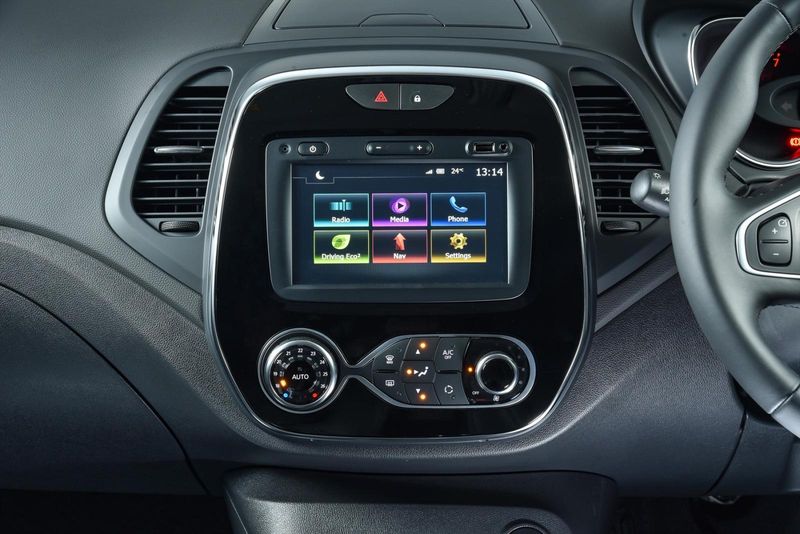
Renault’s entry level infotainment system, offered in the Blaze trim level, actually seems anything but entry level. The system features a standard radio/CD player with Bluetooth functionality but just below the radio’s display is an adjustable smartphone cradle. By plugging in your iPhone or Android smartphone, and installing the free R&Go app, your smartphone essentially becomes the car’s custom infotainment system. You can choose up to six homescreen shortcuts, from your favourite music service to your favourite maps app. The car will even send fuel consumption figures and your eco-score (a measure of your efficient or not-so efficient driving) to the app.
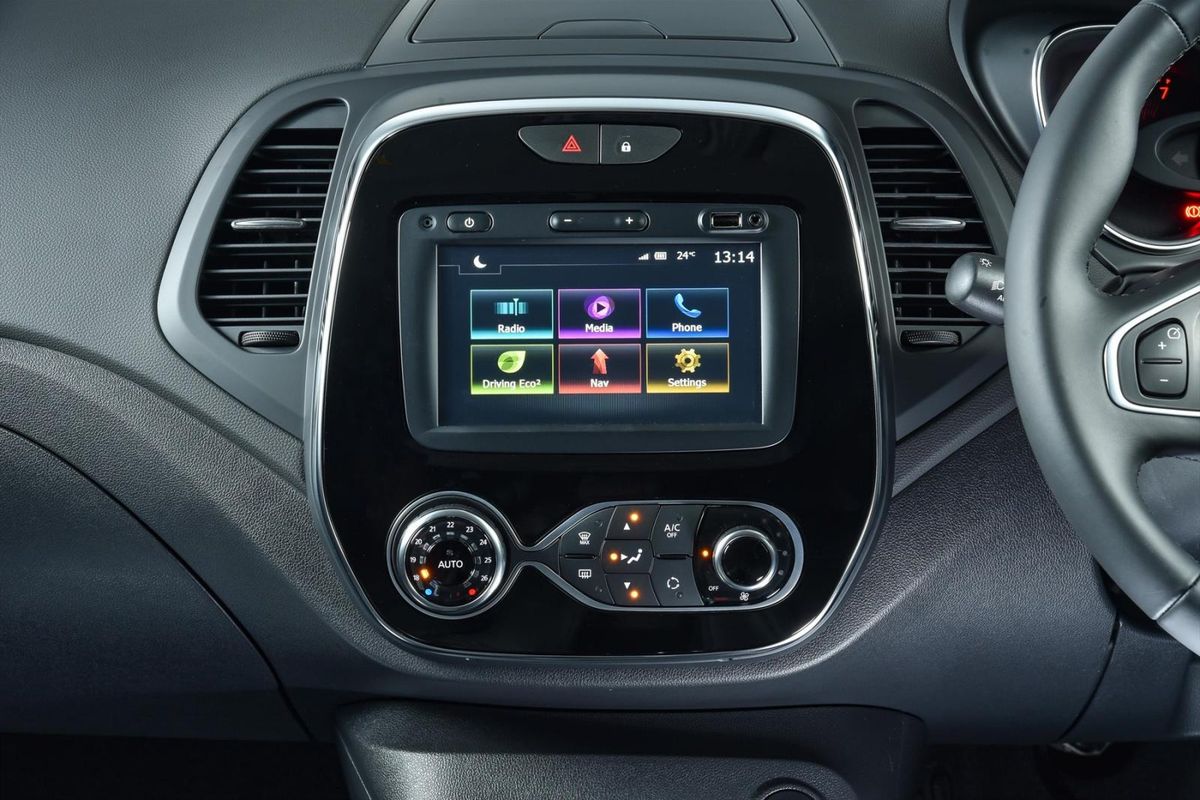
The full infotainment system includes navigation but doesn't have the app suite that the Blaze model has.
One of the smartest features is Find My Renault. When you unplug the phone and leave the car, the app automatically drops a GPS pin, marking the car’s location. You can then use your phone to locate your car and be guided to it. Useful for those big sporting events where you’re forced to park and walk in from the next province.
All other variants of the Captur feature Renault’s tried and tested MediaNav touchscreen system. With a 7-inch colour touchscreen, SatNav and Bluetooth telephony/music playback, it is a comprehensive system. But this tester couldn’t help but feel that with the pace of smartphone and app development, and the added bonus of live-traffic monitoring and information provided by apps such as Waze and Google Maps, that perhaps the more expensive infotainment system will prove less of a useful driving companion than the “basic” R&Go system.
Practicality
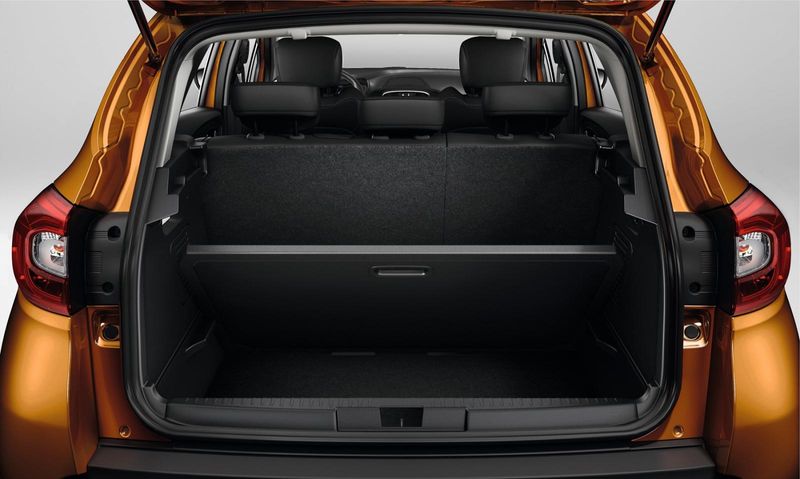
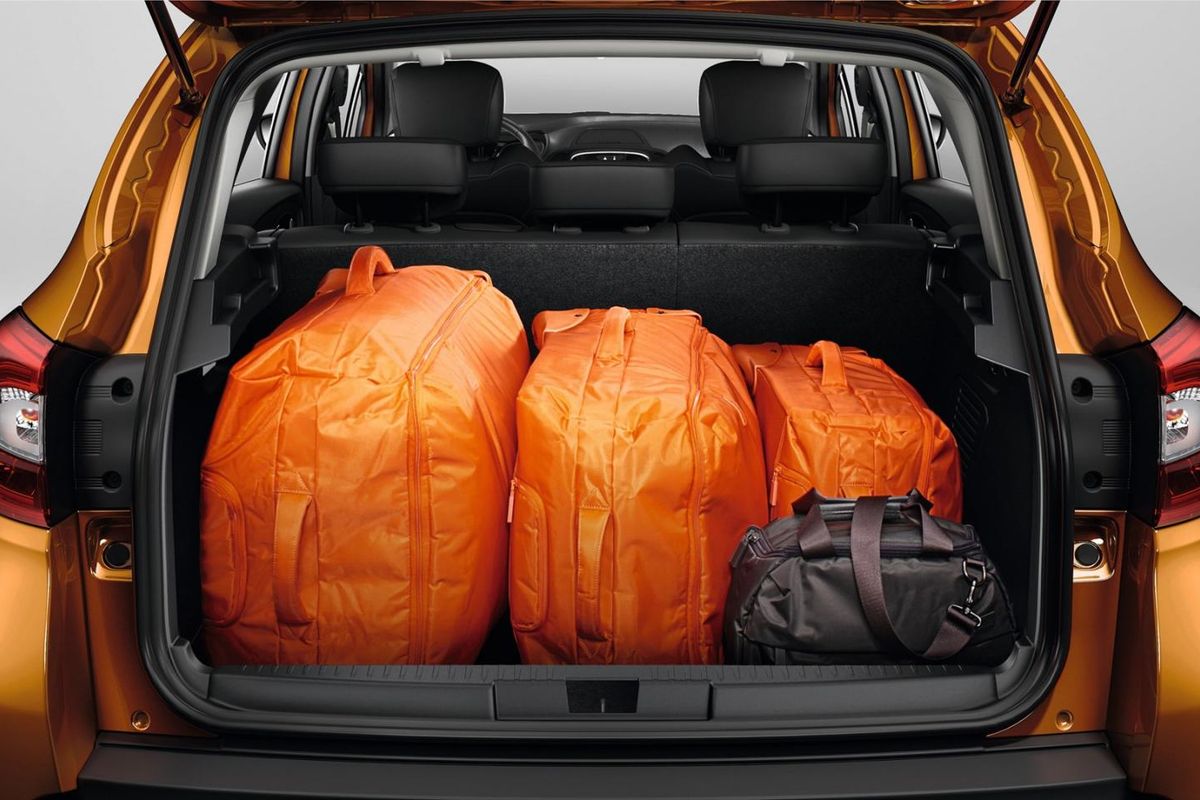
The Captur features a few nifty features to make the most of the car’s compact proportions. The boot is split in two by a false floor and totals 377-litres, which compares favourably to rivals such as the Toyota C-HR, with 328-litres and the Ford Ecosport with 362-litres, but falls a bit short of the Hyundai Creta, which offers 402-litres.
Two tier boot opens up 377-litres of boot space. The rear seats can slide forward increasing it to 455-litres.
A particularly useful feature which is rarely found is that the back bench of seats is mounted on rails, and can slide forward by as much as 16 cm, opening up the boot space to 455-litres. A handle is located in the boot area to facilitate this. The back bench also folds flat in 60/40 split, all of which combines to make the interior space very useful and usable.
Safety
Hill start assist is featured as standard on all manual variants, and all trim levels feature an electronic stability control programme (ESP), a critical safety system which is not found as standard on some rivals. Four airbags, ABS, EBD and Isofix child seat mounts are also standard. The Captur carries a 5 star EuroNCAP safety rating.
Pricing and trim levels
While most prices have increased marginally across the range, as mentioned, the new entry level variant is R20 000 cheaper than the model it replaces.
The 66 kW Turbo Expression model becomes the 66 kW Turbo Blaze, with a new price of R229 900. All other models see an increase of R5 000 over the outgoing range, with the top of the range 88 kW Turbo Dynamique EDC priced at R309 900.
All Capturs are sold with a 5-year/150 000km warranty and 3-year/45 000km service plan.
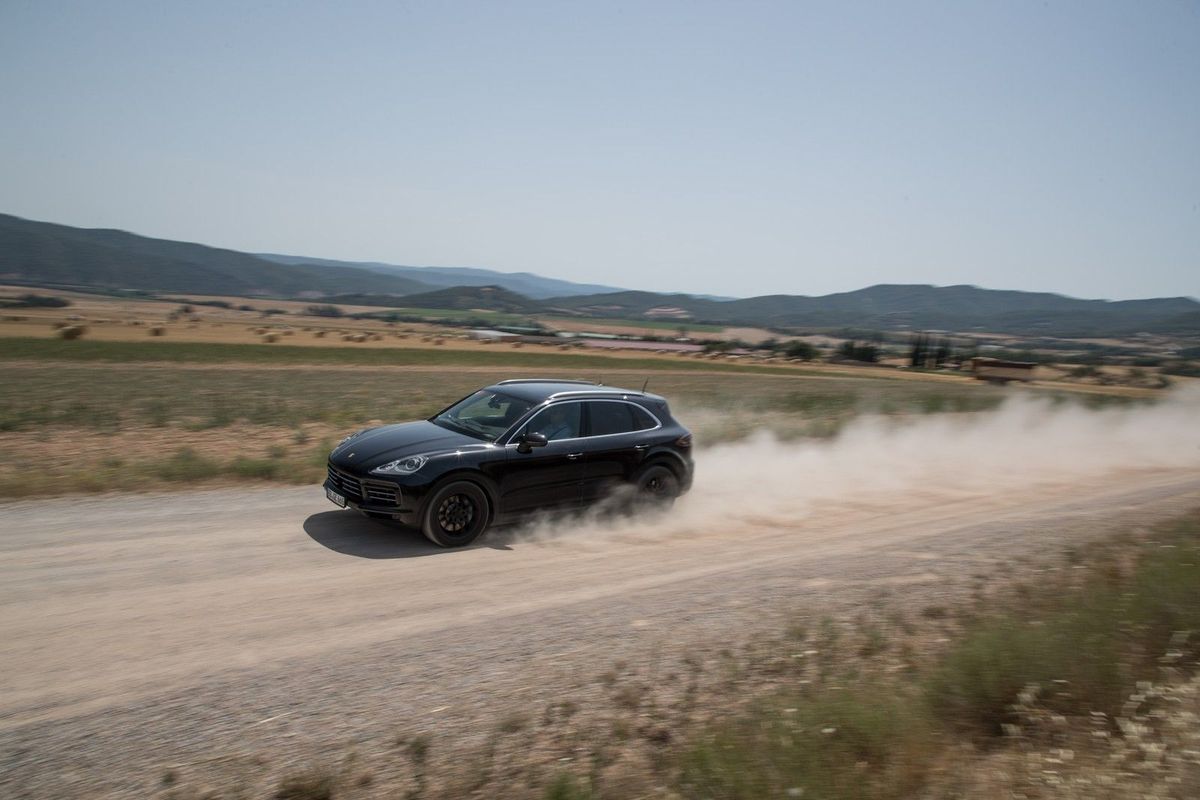
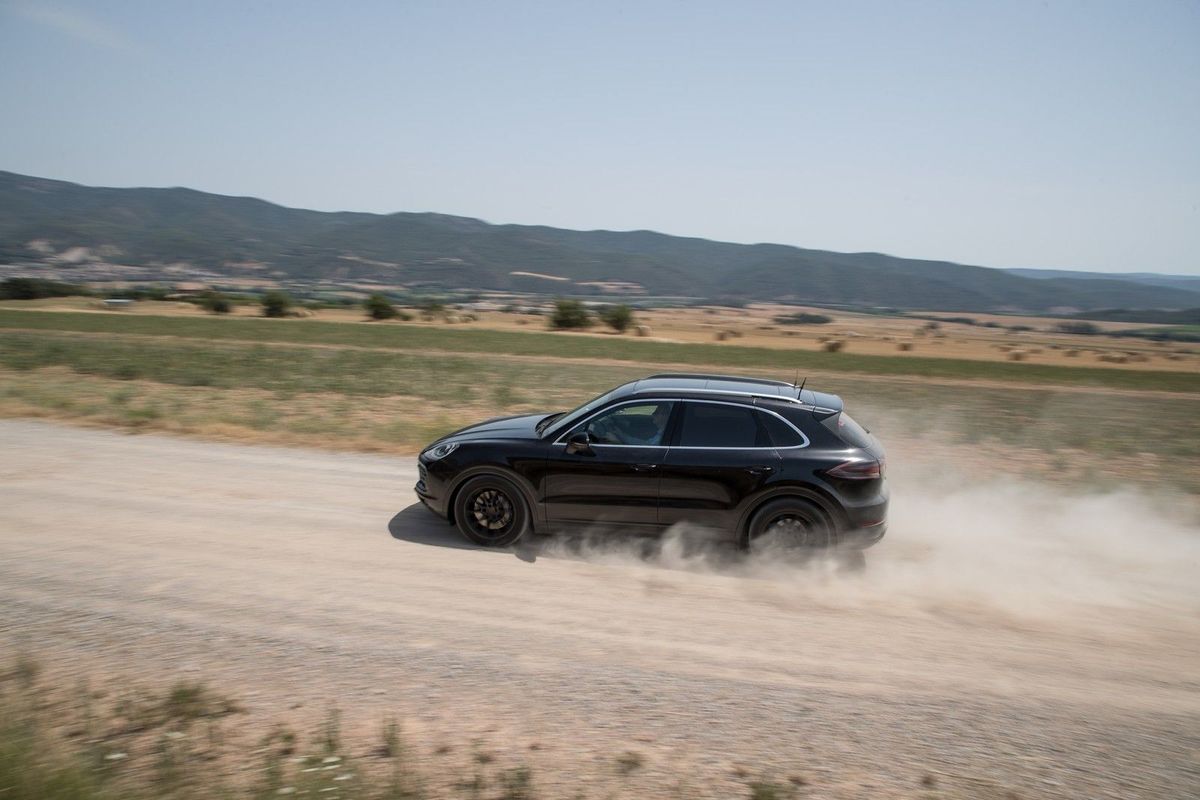
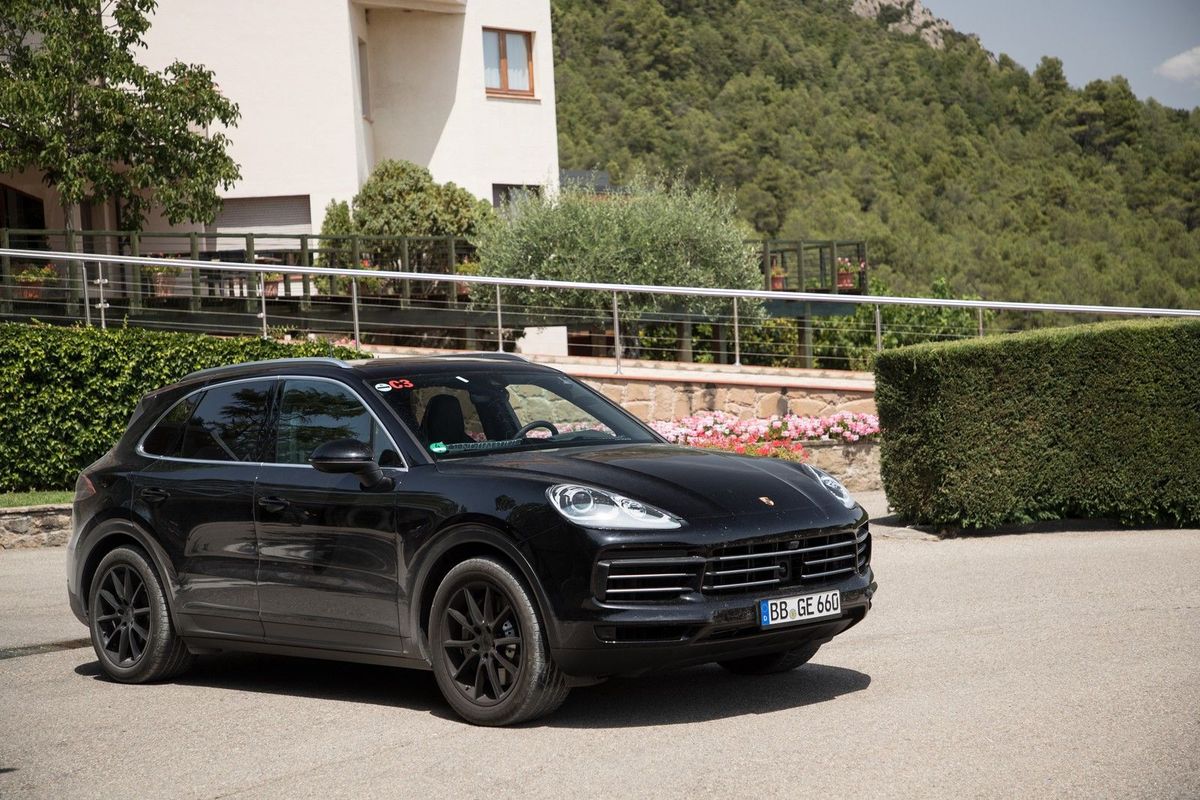
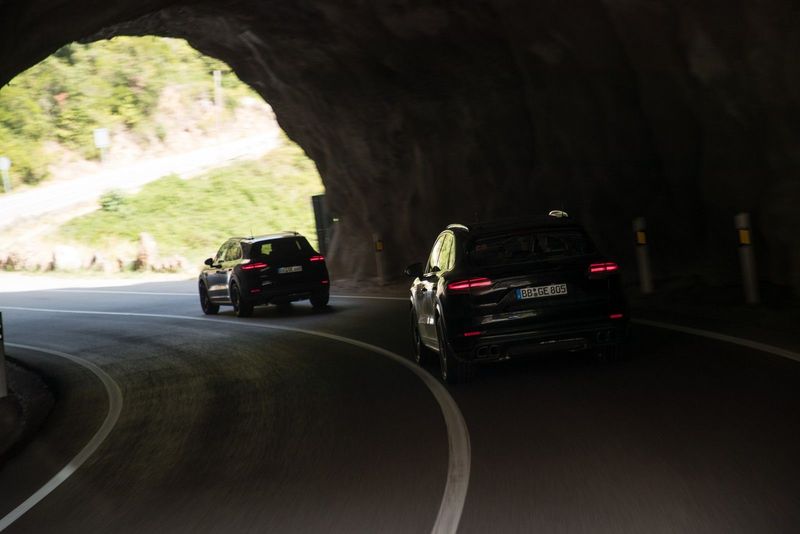
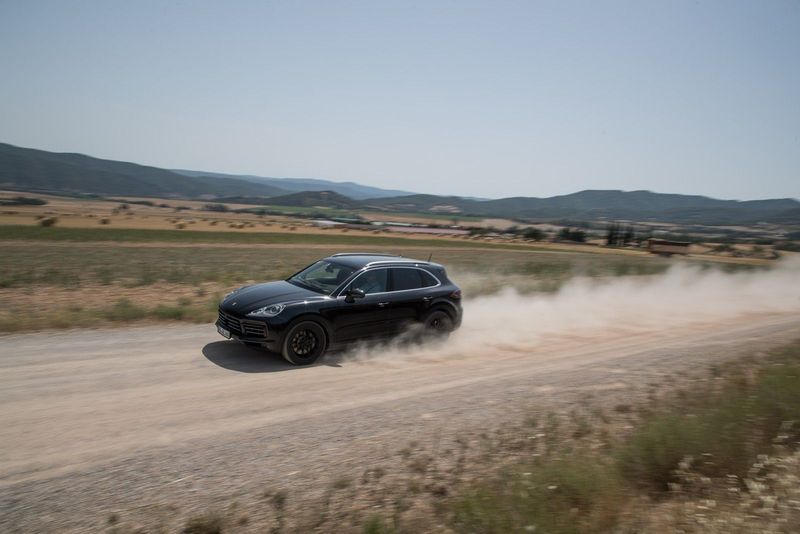
Porsche doesn't normally let the media drive its pre-production cars, but on this very rare occasion, we were allowed to drive the upcoming Cayenne in the foothills of the Pyrenees. Could the 3rd iteration of the car that single-handedly saved Porsche from the doldrums be ready to trump its competition in the premium SUV market?
By Andrew Frankel
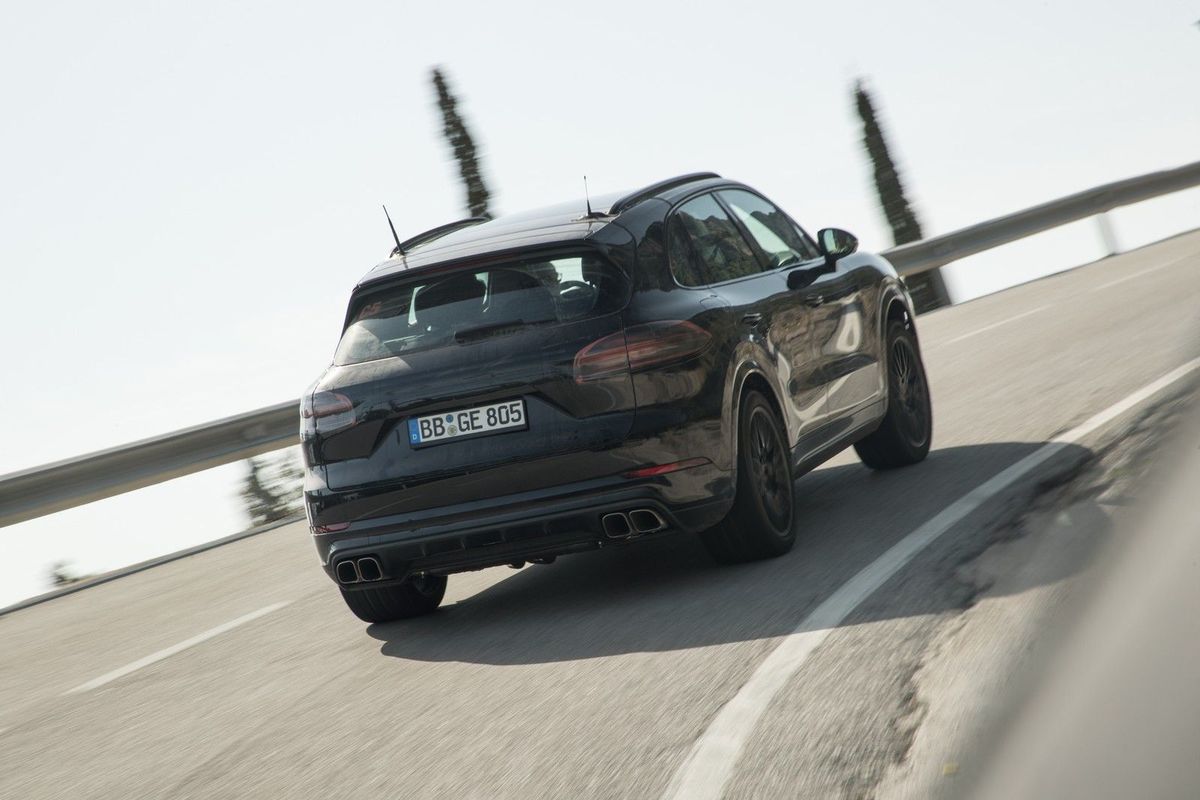
There were times when I knew I should be concentrating on recording what the all new, yet-to-be-unveiled Porsche Cayenne was like to drive when, in fact, my mind was more occupied with wondering what on earth the locals must have made of us.
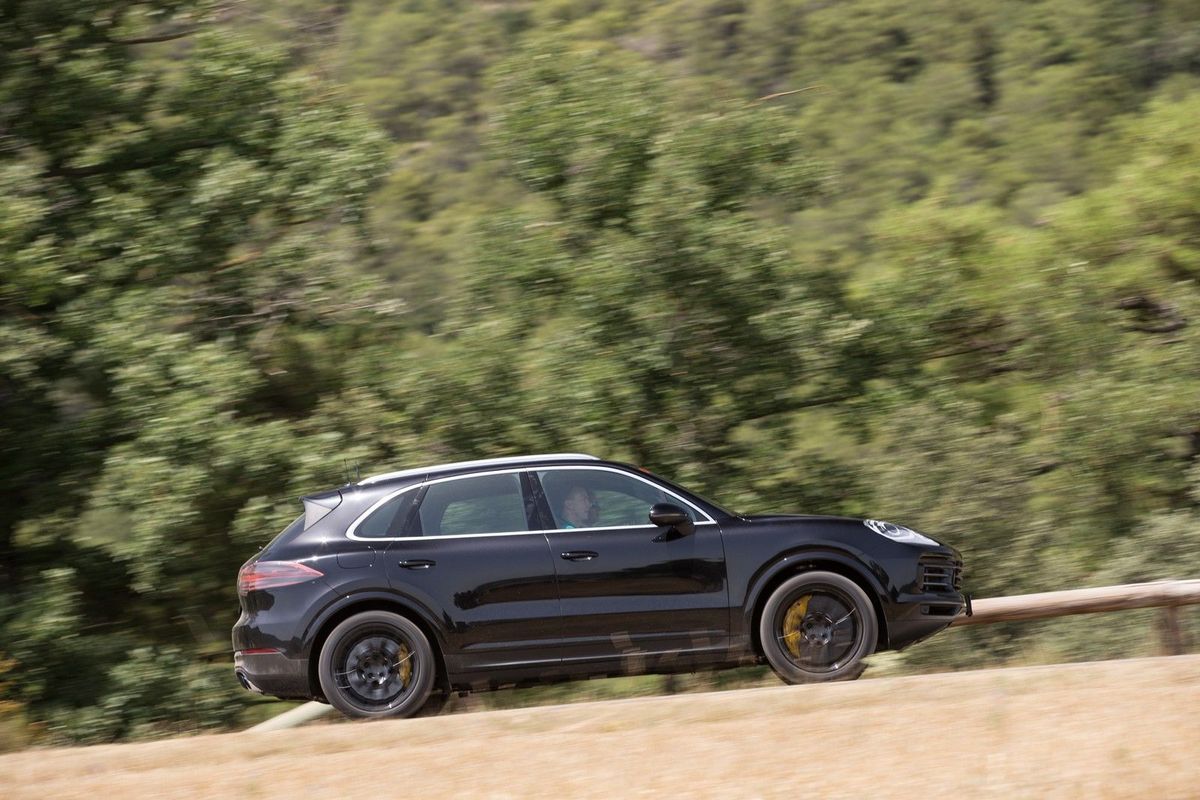
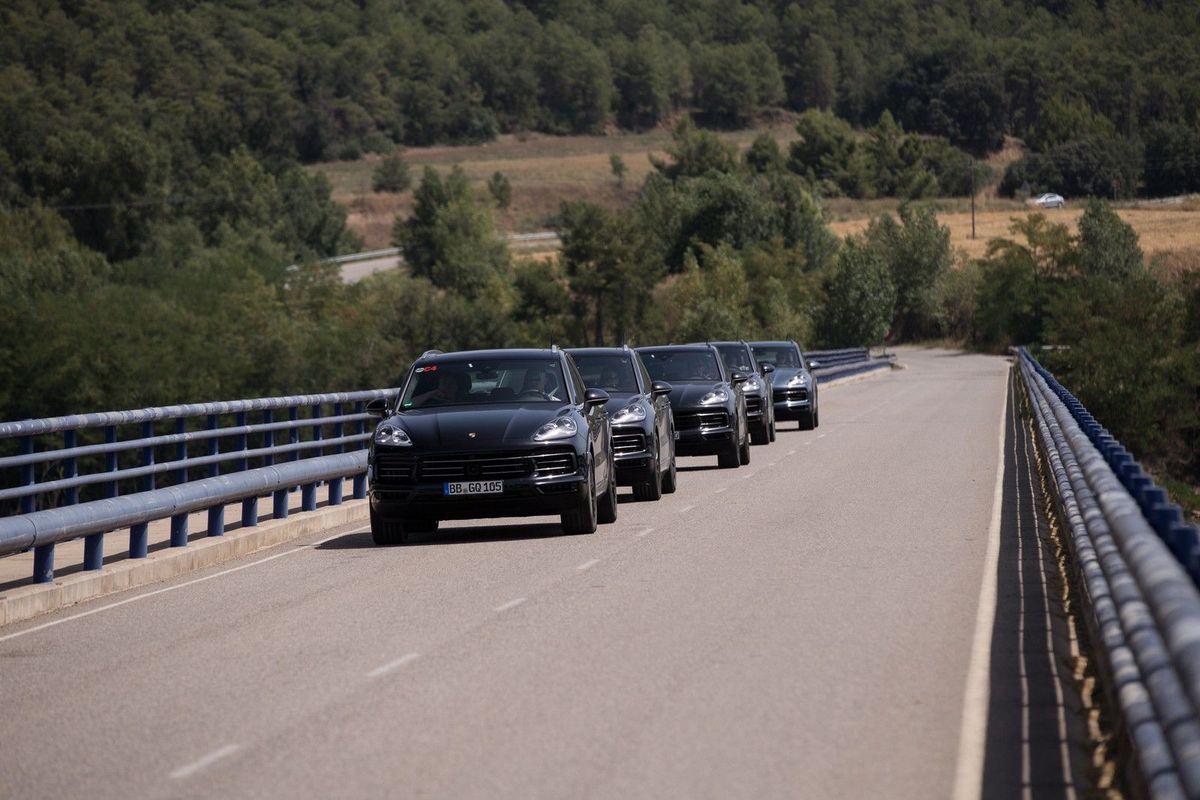
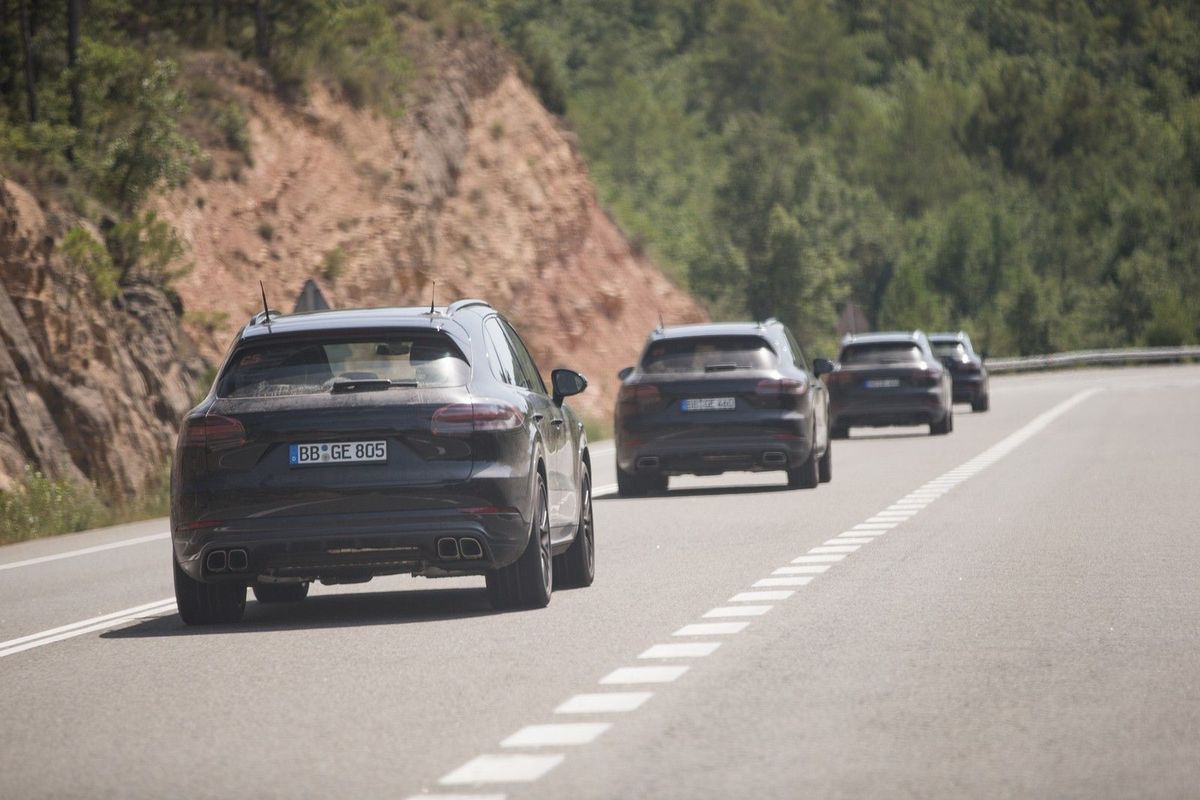
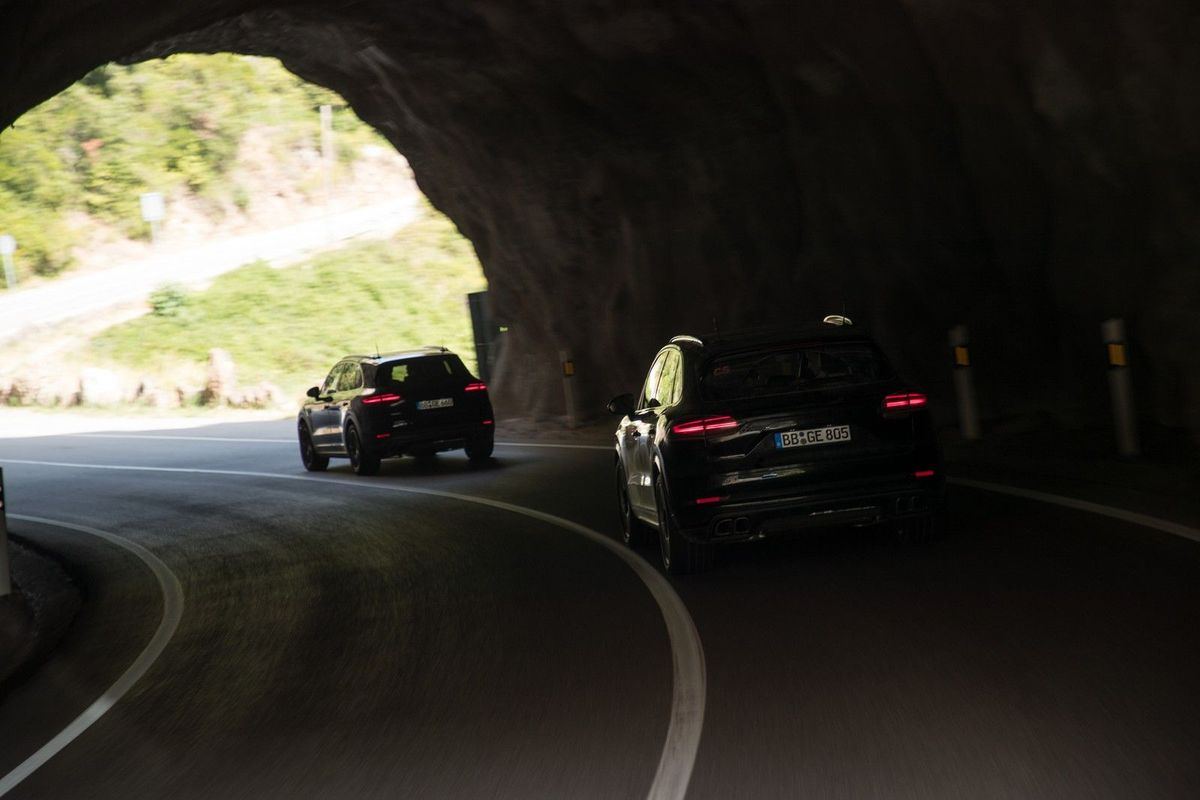
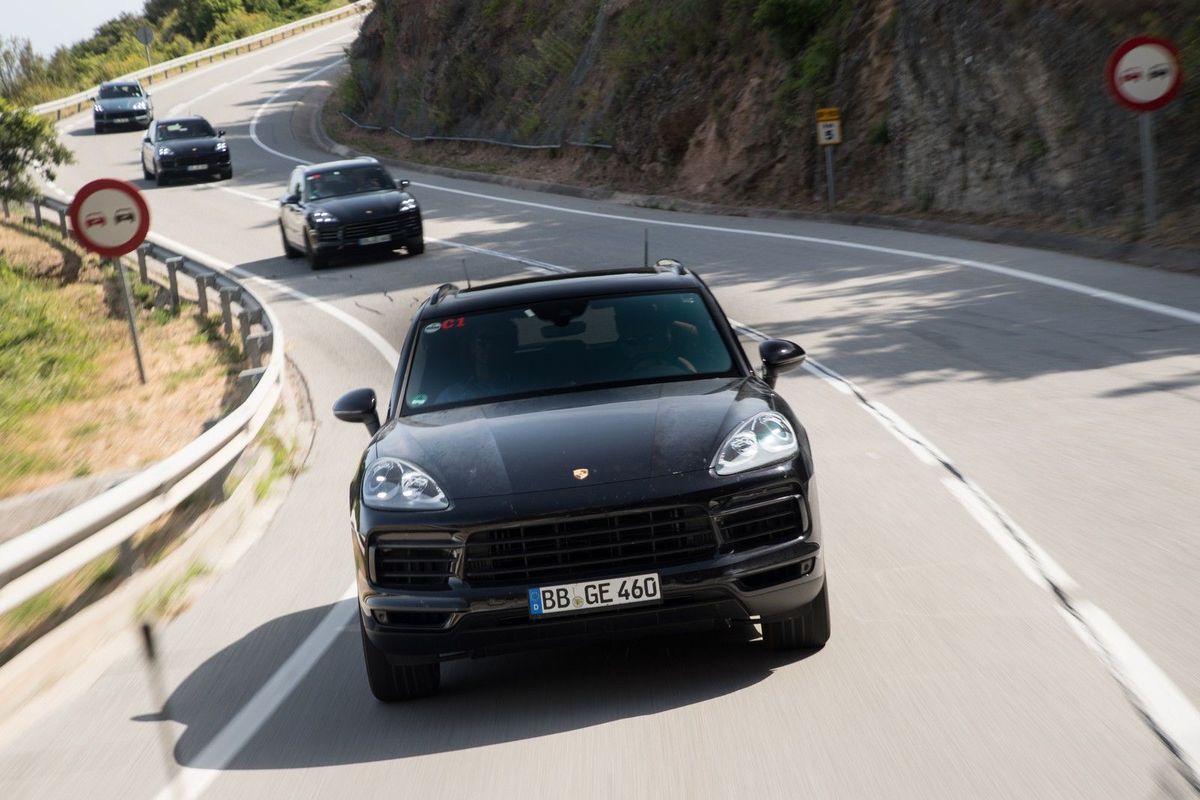
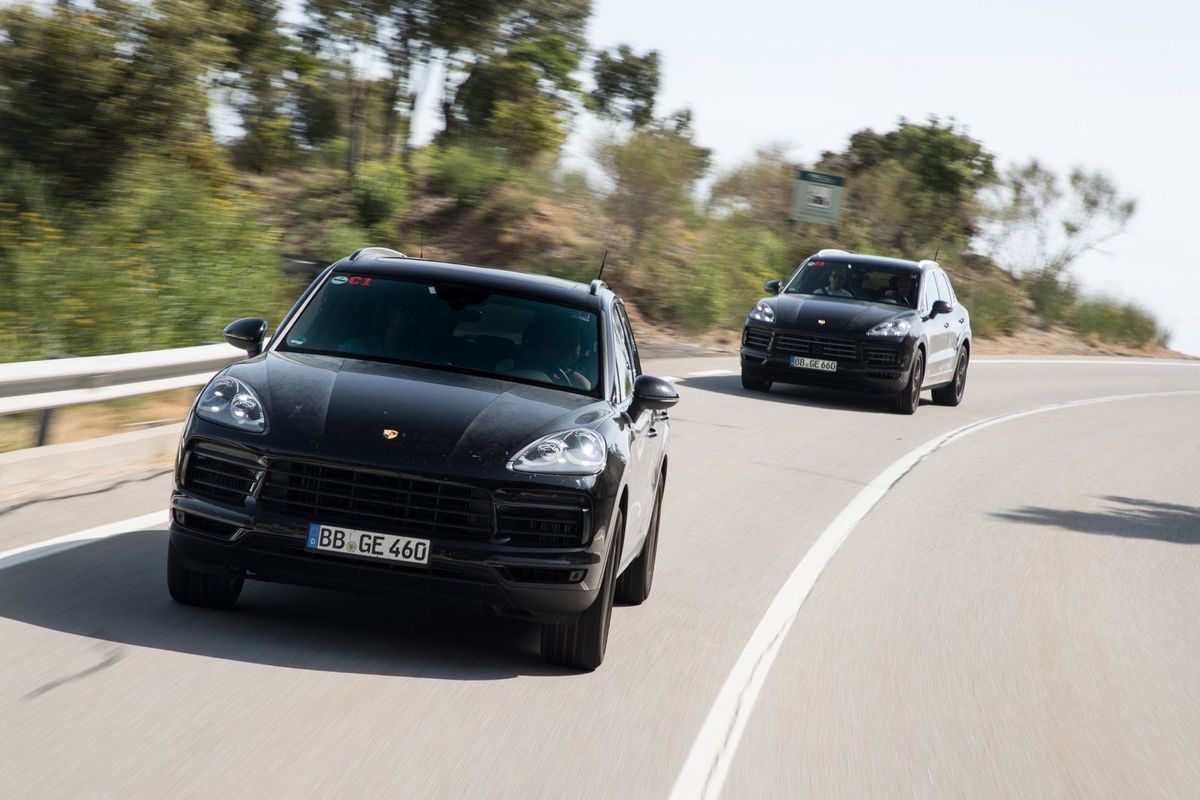
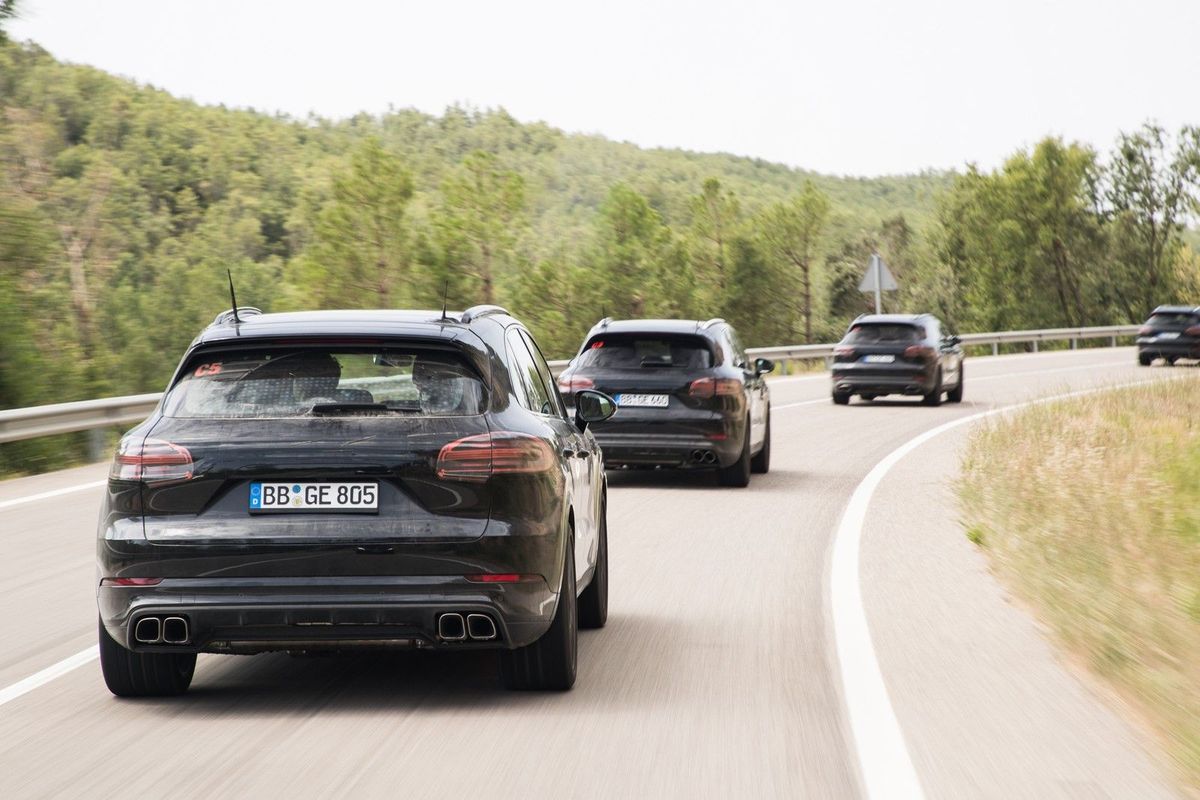
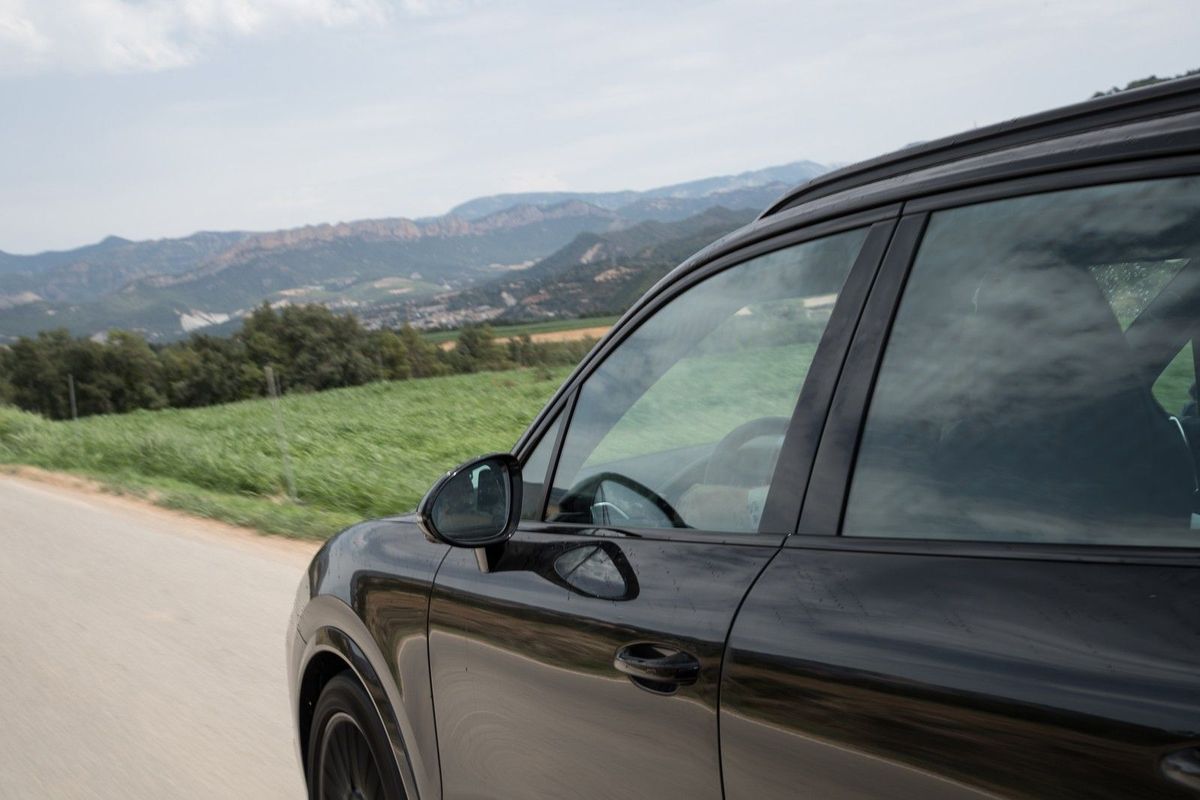
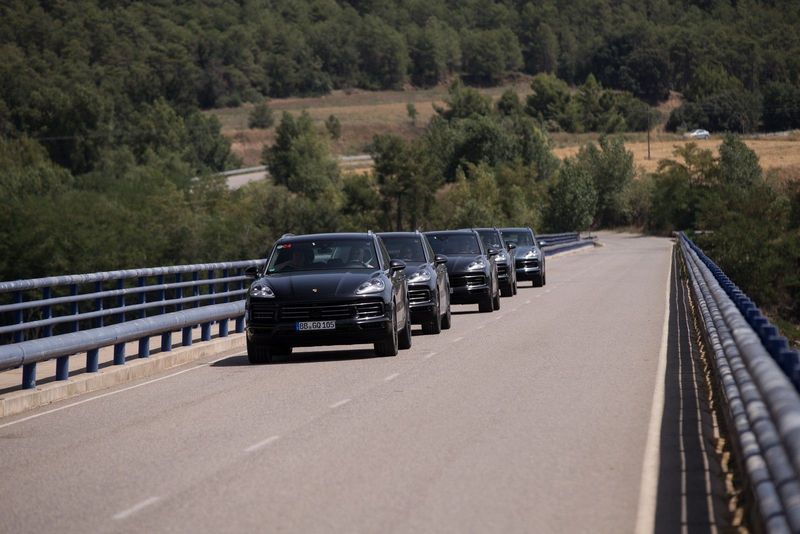
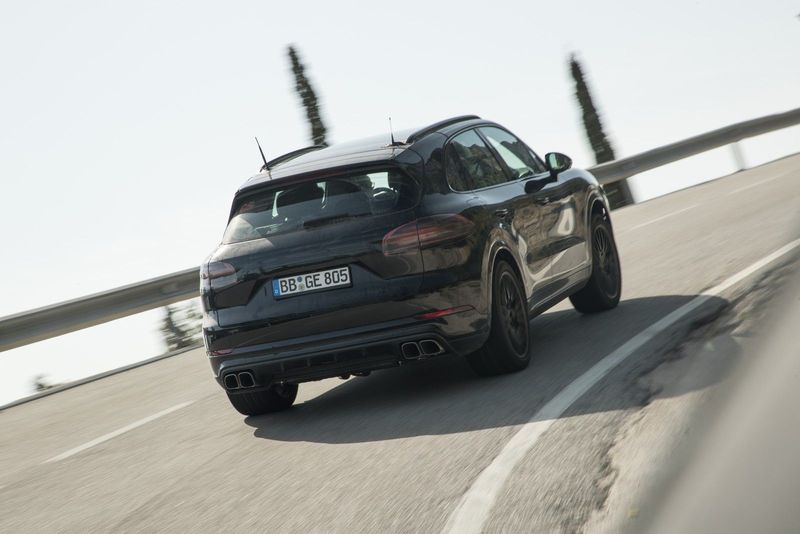
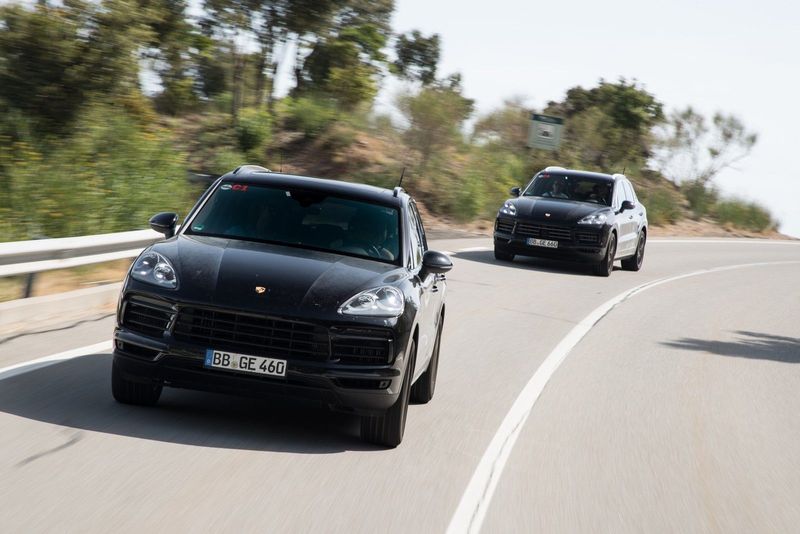
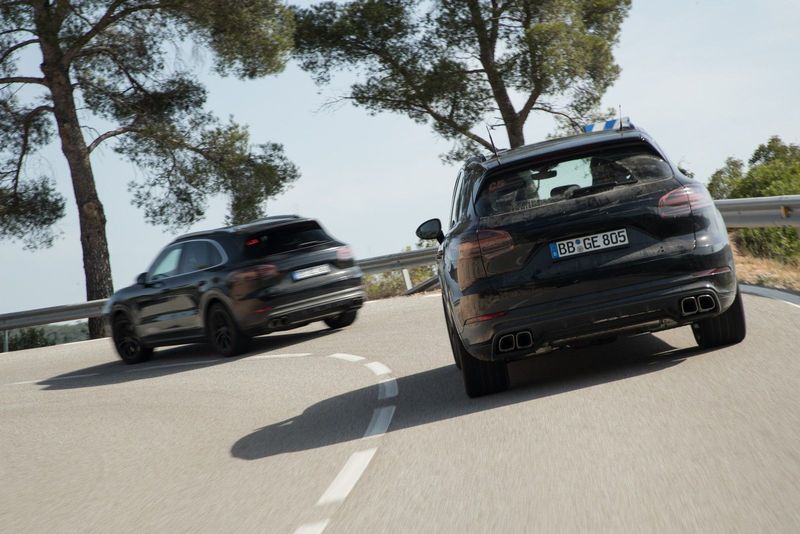
Imagine this: 5 large SUVs, all in dark colours and most of them black, sweeping across the countryside in convoy, tape covering their badges, strange plastic coverings concealing their headlights and rear lamps. The silhouette of any one of these shark-nosed cars was pretty sinister, but to watch five of them thunder by, escorted by a small fleet of Volkswagen Transporters struggling to keep up must have made curious onlookers wonder what on Earth the convoy was doing out here in the foothills of the Pyrenees.
The convoy, line astern at the foot of the Pyrenees. These cars are in their last stages of testing before the global reveal at Frankfurt's motor show.
The answer was just a bit of everyday ho-hum sign-off testing for a car that will receive its public unveiling in Frankfurt in September, be driven by the rest of the world’s press later in the year and become available in the South African market in 2018. Quite why I am the only English speaker to have been allowed to drive the new Cayenne to date never becomes clear… I’m just glad to have had the opportunity.
These jobs are rare and, before now in Porsche’s world, non-existent. It’s allowed journalists in prototypes before, but only as passengers. I once flew overnight to Cape Town to sit beside an engineer in a new 911 for a few minutes before catching the same plane home that afternoon, much to the bemusement of the same immigration official who stamped me both in and out of the country.
Warts-and-all prototype experience, replete with glitches
So to come merely to Catalunya and be able to drive for hours on end makes a welcome change. There’s also something rather real about doing this: normal car launches have such a pre-orchestrated feel to them as we glide between mirror-finish cars prepared to within an inch of their lives.
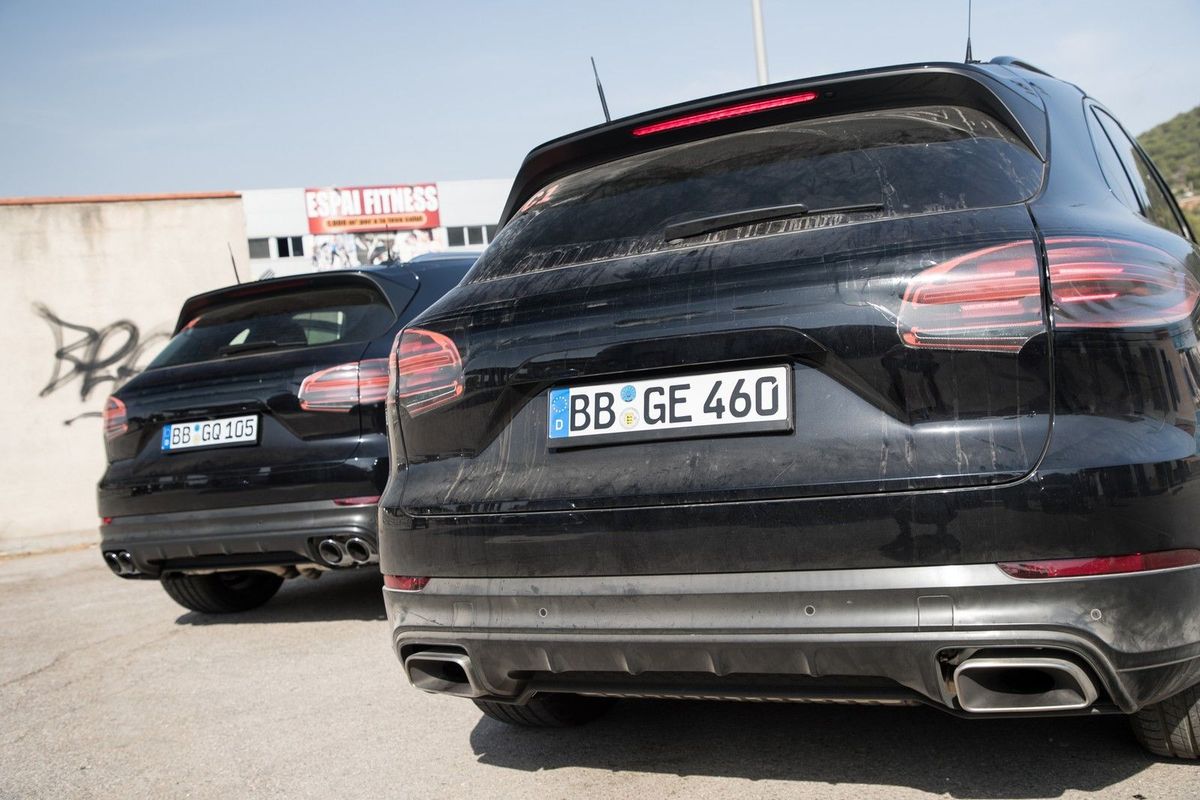
This is not like that: the cars are filthy and, horror of horrors, one of them refused to release its handbrake when we pulled away from a stop. It took Porsche technicians (armed, interestingly, not with a jack and wheel wrench, but a laptop) almost 5 minutes to interrogate the offending ECU and persuade it to desist. These cars are prototypes; finding/ironing out tiny niggles is precisely why the cars are on this final European sign-off drive.
Most of the Porsche Cayenne's engines have been developed by Audi, save the twin-turbo V8 petrol, which Porsche developed itself.
Disguised and with their interiors cloaked in black felt, there is plenty about the Cayenne we cannot tell you either because that’s not part of the deal that got me into the cars in the first place or because Porsche hasn’t told me. But there’s plenty more that I can.
Unsurprisingly the new Cayenne sits on the same Volkswagen Group MLB platform as the Audi Q7 and Bentley Bentayga. It will, in time, also provide the structural basis for the forthcoming Lamborghini Urus. But the platform has been modified for the Cayenne, its wheelbase shortened by no less than 100 mm because Porsche rates the agility this will gain above the interior space it will lose.
Unlike in its sports cars, there is no such thing as a purely Porsche engine for cars like this anymore. The way the world works within the Volkswagen group is that one company gets to develop an engine which is then made available to all the others. In this case, the Cayenne will get all its V6 engines from Audi as well as the V8 turbodiesel, while the twin-turbo V8 petrol motor is Porsche’s own engine. There will be hybrids with both V6 and V8 engines, but as the car will be launched only with non-hybrid petrol engines, the Zuffenhausen-based firm isn’t talking about them at all.
It's never been the greatest looking SUV, but it has always had performance, comfort and badge appeal on its side.
But nor does it really need to. Porsche engineers confirm that the Cayenne will use the same powertrain line-up as the Panamera with the important – and significant – difference that while the Panamera uses the lighter, faster PDK double clutch transmission, the Cayenne uses a new conventional 8-speed automatic gearbox from ZF. The reason? The gear shifts may be a touch more luxurious, but really it’s all about ensuring the Cayenne continues to be able to tow the maximum 3 500 kg load allowed by law. The PDK used in both the Panamera and Macan is rated only to 2 400 kg.
So, using the Panamera as our guide, a base specification 3.0-litre Cayenne V6 should have around 246 kW. Even this slowest of the petrol-engined Cayennes will hit 100 kph from 0 in under 6 sec (that’s a staggering 1.9 sec faster than the car it replaces). The S uses the same engine, but with twin turbos and a 2.9-litre capacity (the stroke is a fraction shorter because of the need for an uprated crankshaft) and should pump out an impressive 328 kW with the 4-litre V8 Turbo offering 75 kW more even than that…
I travel in the Turbo first. I say "travel", because it’s the one car here I am not allowed to drive because the engineers say it’s not close enough to production-ready to represent what the derivative will be like to drive once it appears on showroom floors. That said, while all these cars are pre-production prototypes, they were built on the main line using production tools, so should be indistinguishable from the finished items.
The slowest of the Cayennes is said to reach 100 kph in under 6 seconds, with the Turbo S likely to break into the 4s.
This is naturally frustrating. Show me someone who can tell you what a car is like from the passenger seat and I will show you, at best, a fantasist, at worst, someone who has put their desire to earn money ahead of their journalistic obligation to tell the truth. It does feel bloody fast and effortlessly so, and with 22 kW more than the old Cayenne Turbo – and a small weight reduction of around 60 kg, so it should. But cars also always feel much faster to those not driving them. I can tell you with rather greater authority that on standard air springs, this is the best riding Cayenne – ever.
But soon I have what I really want: a steering wheel in my hand, albeit that of a Cayenne S. I don’t think I’m meant to give you precise details of the new interior but if you’ve read anything about the new Panamera cabin you’ll not find the interior architecture in here too surprising. It’s all TFT screens and pressure sensitive labels in place of proud standing buttons. And it looks brilliant, at least until covered in grubby fingerprints.
And the car goes hard too, sensationally so given this is the one-off-the-bottom petrol model. Considering all there is to come – 2 more powerful hybrids, a GTS, Turbo and Turbo S versions – the performance of this S is incredible. I’m told it will reach 100 kph in under 5 sec and believe it.
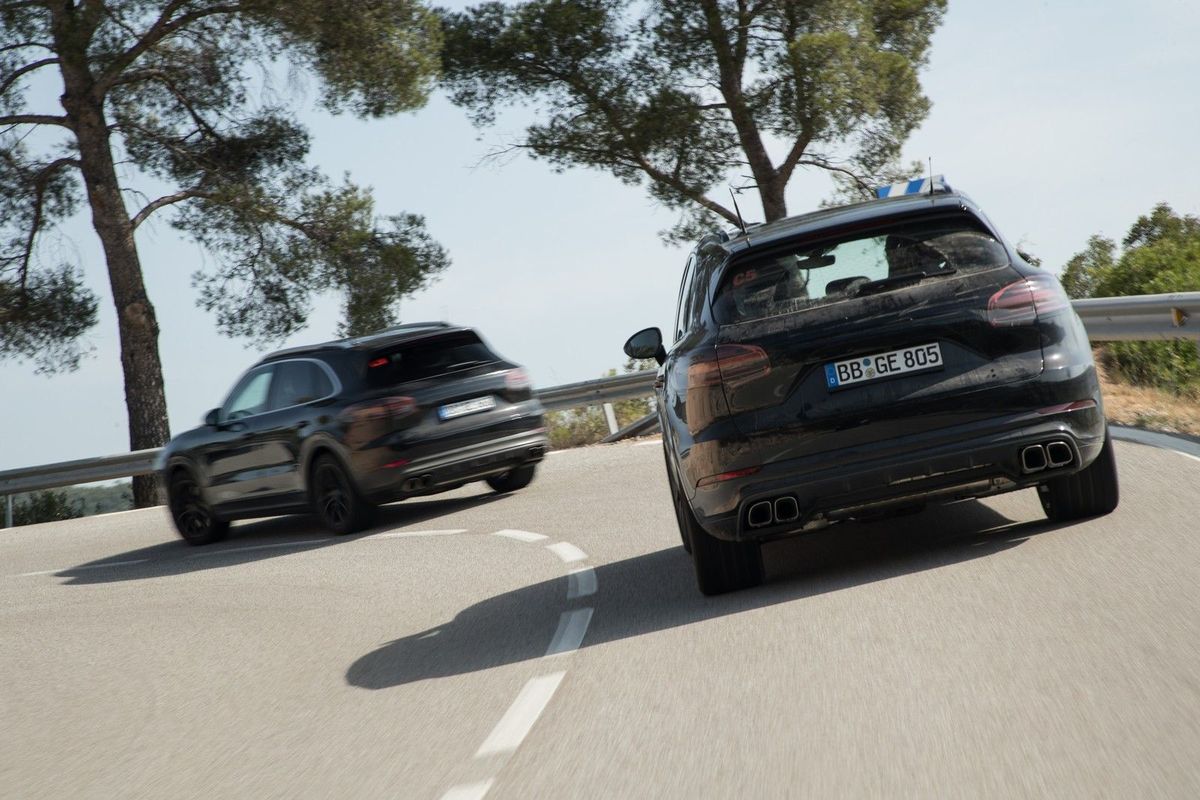
Air suspension on the higher spec models is the way to go on this sort of terrain, but the standard coil springs give better feel when driven sportily.
The way in which its performance is delivered is, however, a little less convincing. This is quite a small engine with quite a large output and, as ever with such motors, it needs to be worked to give its best. I have no problems with such an approach in Porsche sportscars, but in its SUVs I feel something more effortless based on low down torque rather than top-end power would suit the character of the car better. But the engine note is pleasant unless you rev the motor to the redline and the new gearbox works ceaselessly to make the most of the resources placed at its disposal.
And on air springs with PASM (mere options on the S, unlike the Turbo) its road behaviour is close to impeccable. Its ride quality is serene and handling accurate and impressively capable. You don’t expect tall 2-tonne SUVs to cling doggedly to every corner into which they are flung, but this one does. My biggest concern was for the new electric steering system, the first to do without hydraulic-assistance in Cayenne history. As it turns out, the set-up is superb: sensibly geared, accurate and properly weighted too.
There's a sense of driving fun… if you're happy to unearth it
All that was missing was that heightened sense of fun, something I think should be expected of all Porsches, even those as heavy and domestically-oriented as this. I found it lurking, of all places, inside the base spec Cayenne V6. Though clearly slower than the S, I liked the lazier attitude of its less-stressed engine. There’s less torque, but it's developed further down the rev-range. I think it sounds a little better too.
But the really big difference was on quick roads where the standard car turned out to be considerably more involving and therefore, fun, to drive. There was better feel from the chassis, an augmented sense of connection to the road, an approach that said not only that it could take anything you could ask of it, but it would rather enjoy the challenge.
Diesels tend to be the best engines for SUVs, we didn't get to drive them but with added torque, they're likely to highlight the new Cayennes best attributes.
Why? To me the answer is simple: standard steel springs. Air suspension is excellent for high-speed ride and invaluable for towing and going off road because of its ability to maintain a number of different preset ride heights, but if you want to have fun behind the wheel, coil springs will not only bring you far closer to the action, they’ll cost a lot less too.
Summary
Overall I’d say the Porsche Cayenne – insofar as it is the best car in the class for those who appreciate driving – just got a whole lot better. Correctly specified the new Cayenne is at least as much fun as is predecessor (currently on sale), but with a transformed interior and notably better ride and refinement. It is a premium SUV that still appeals more to the head than the heart, but you can say as much about every conventional SUV on sale.
Then again, I’d wait at least until we see the spec of the turbodiesels before choosing my favourite derivative. I expect the new V6 turbodiesel will have little less power than the petrol V6, but a stack more torque, which is exactly what cars like these respond to best. But whichever you chose, you can do so confident in the knowledge that the Cayenne remains today what it has always been: the best car… of its kind… in the world.
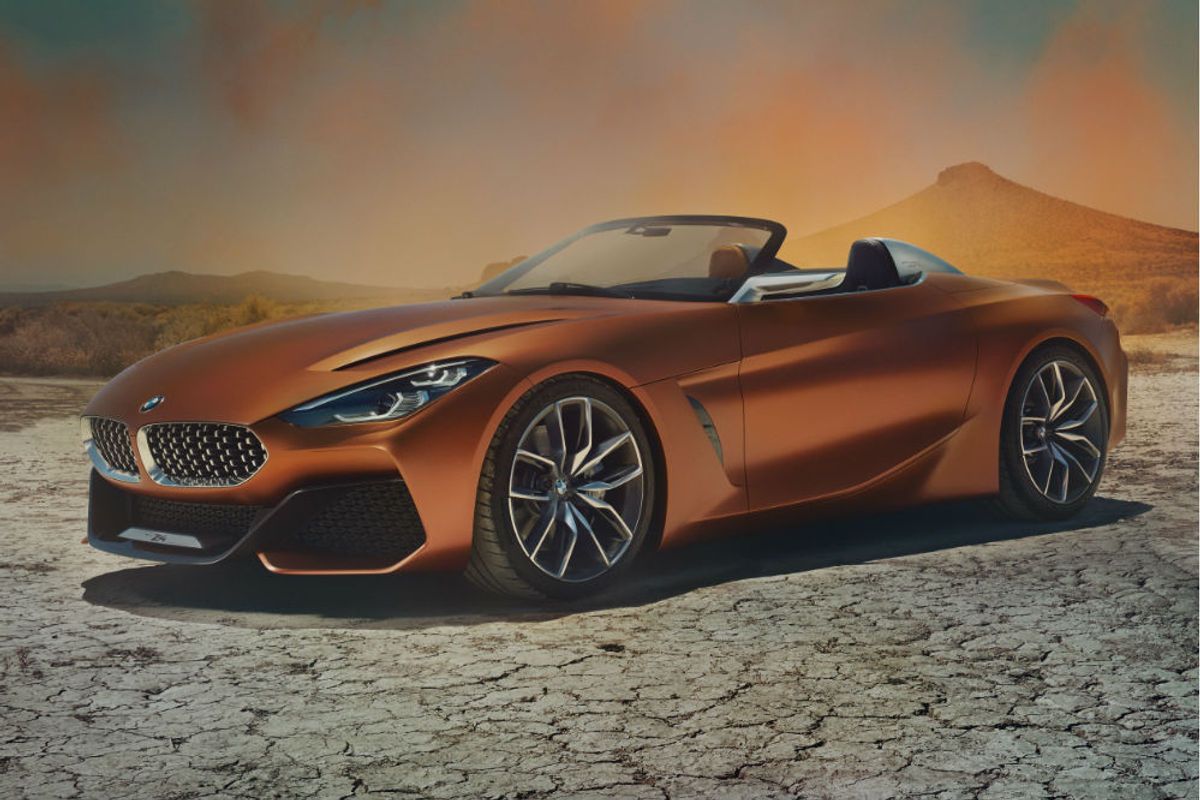
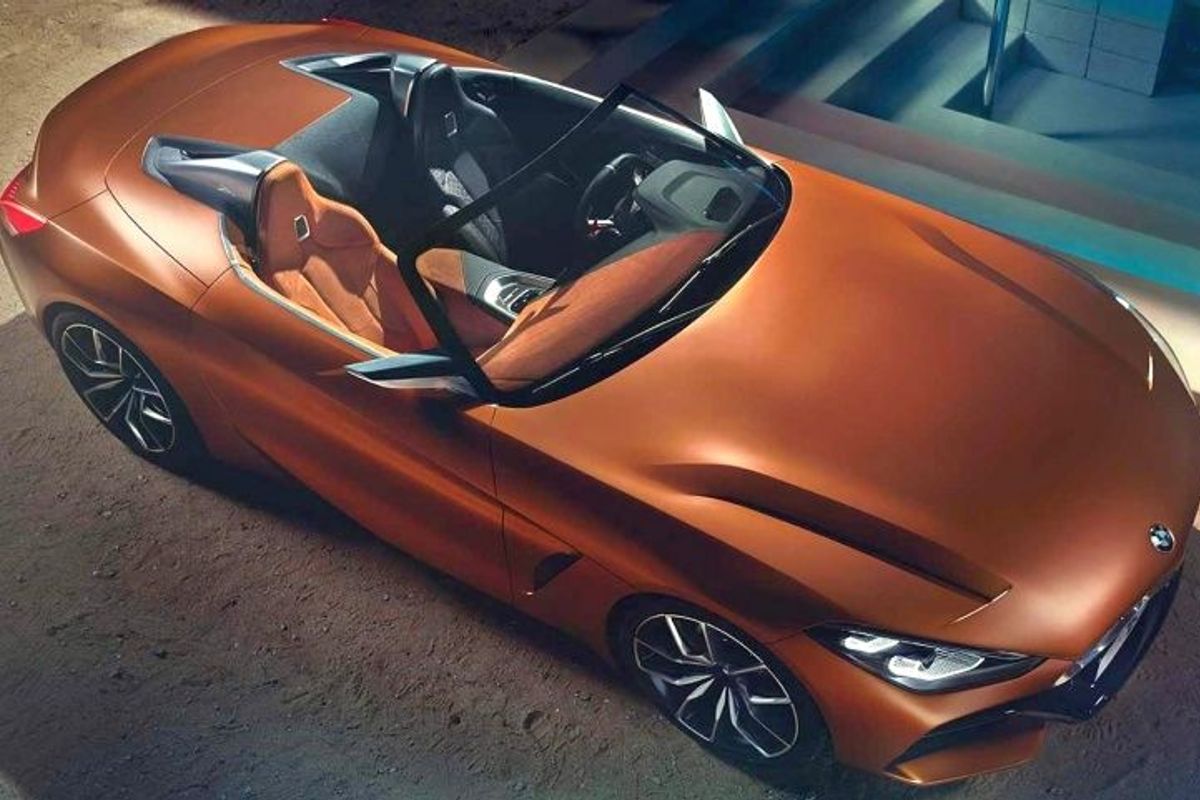
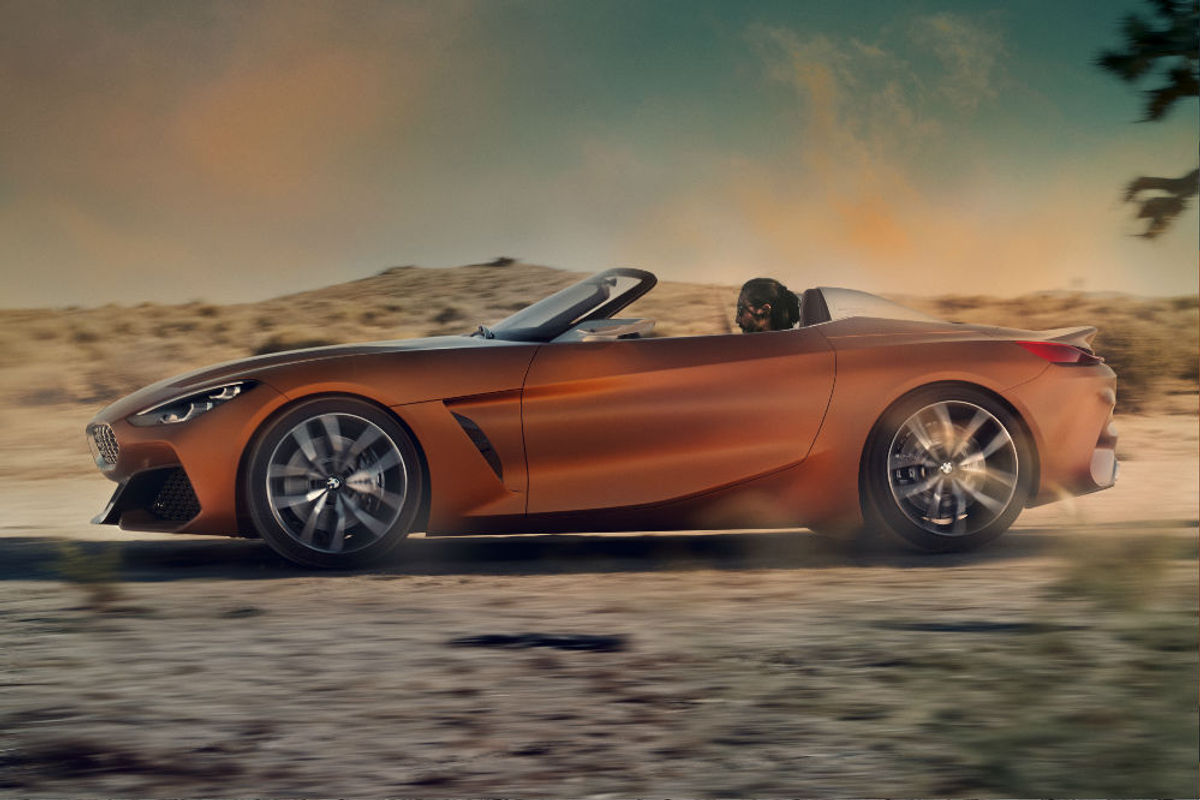
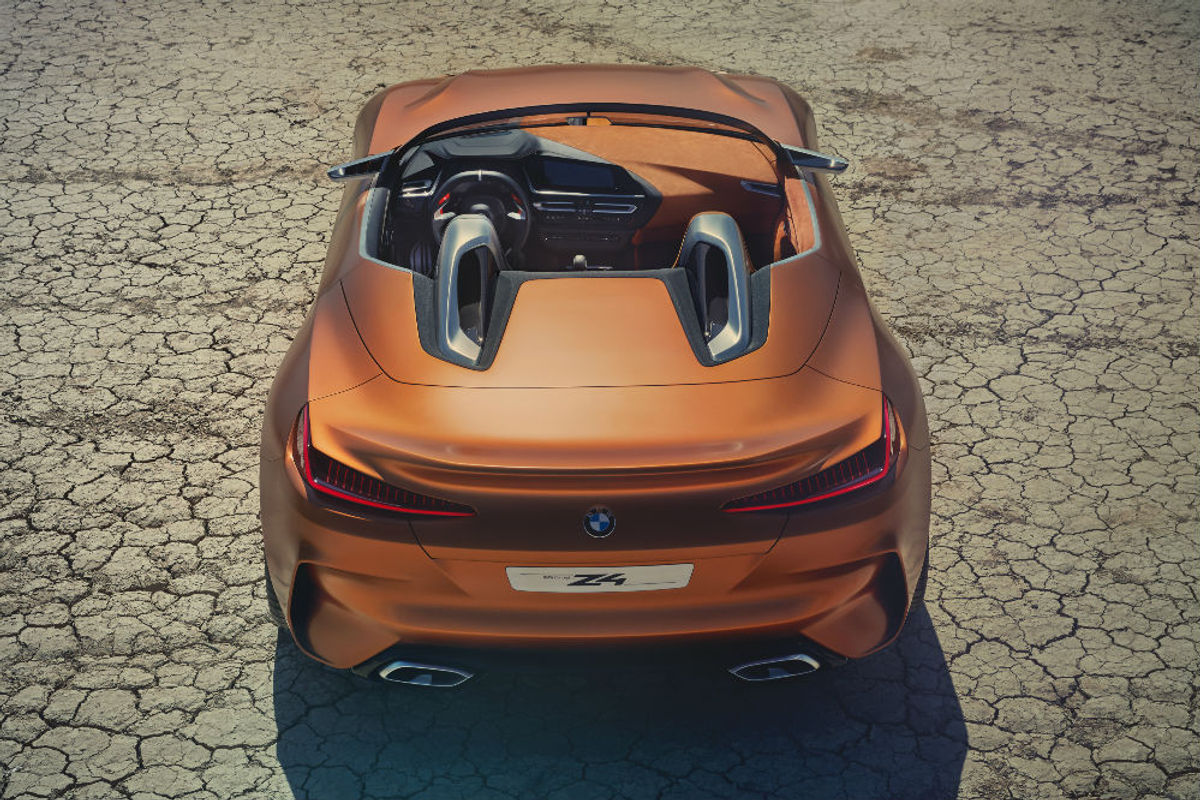
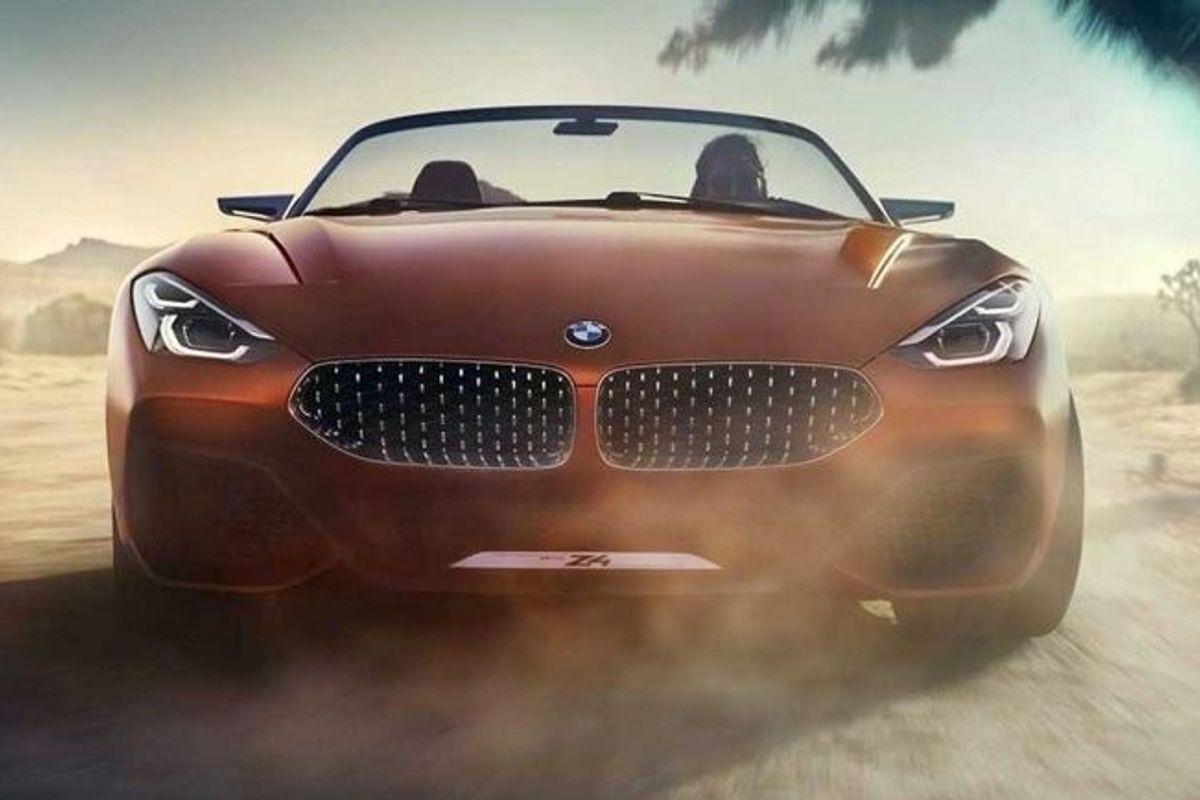
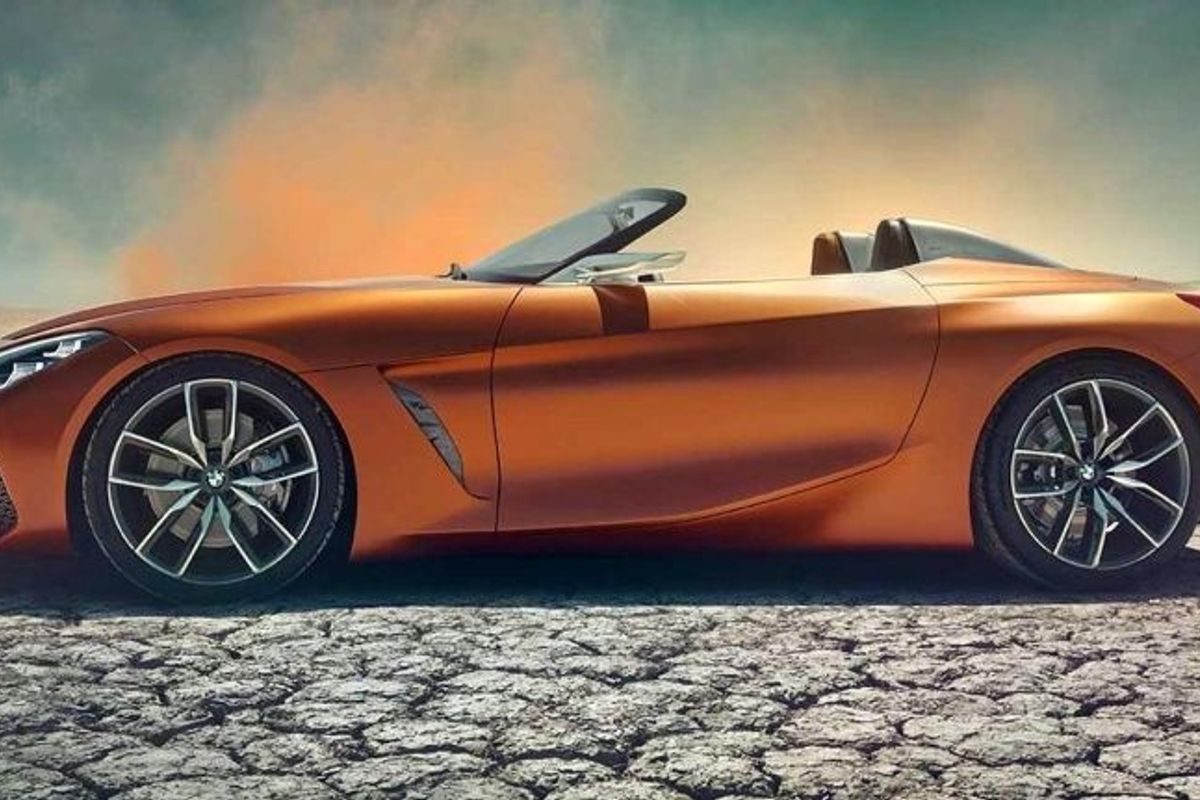
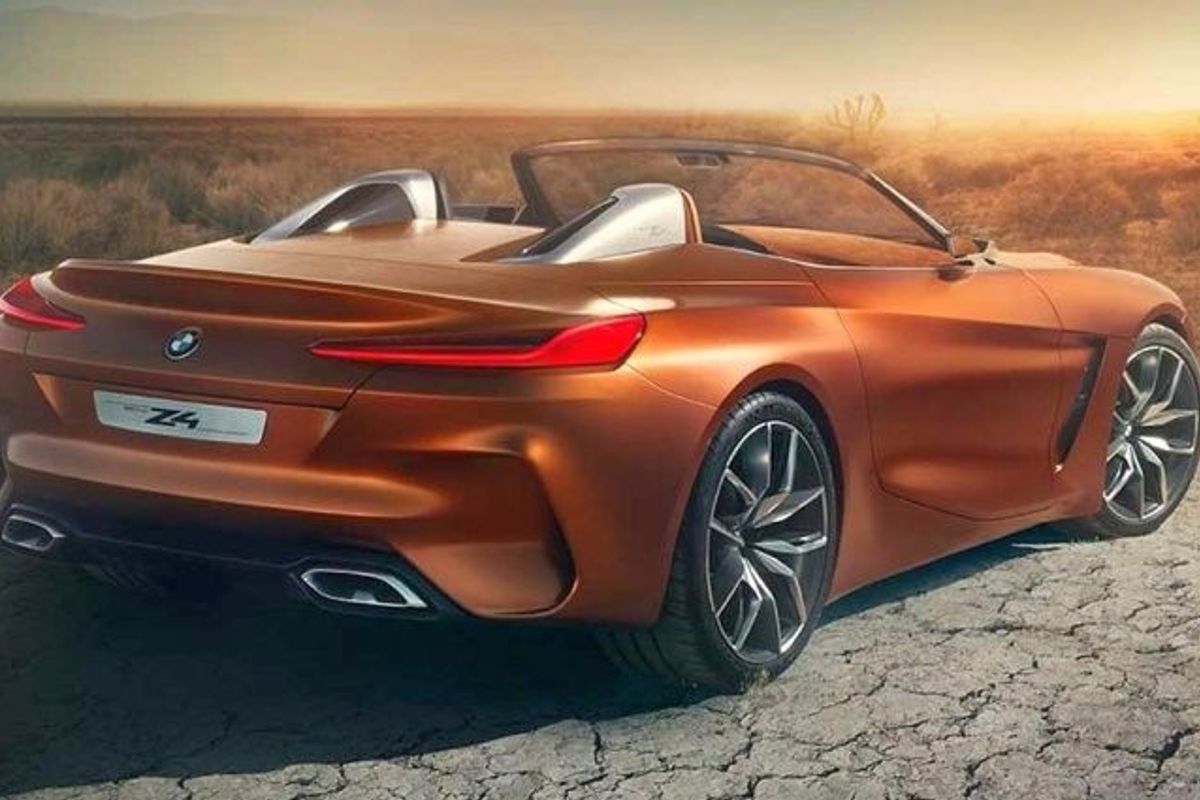
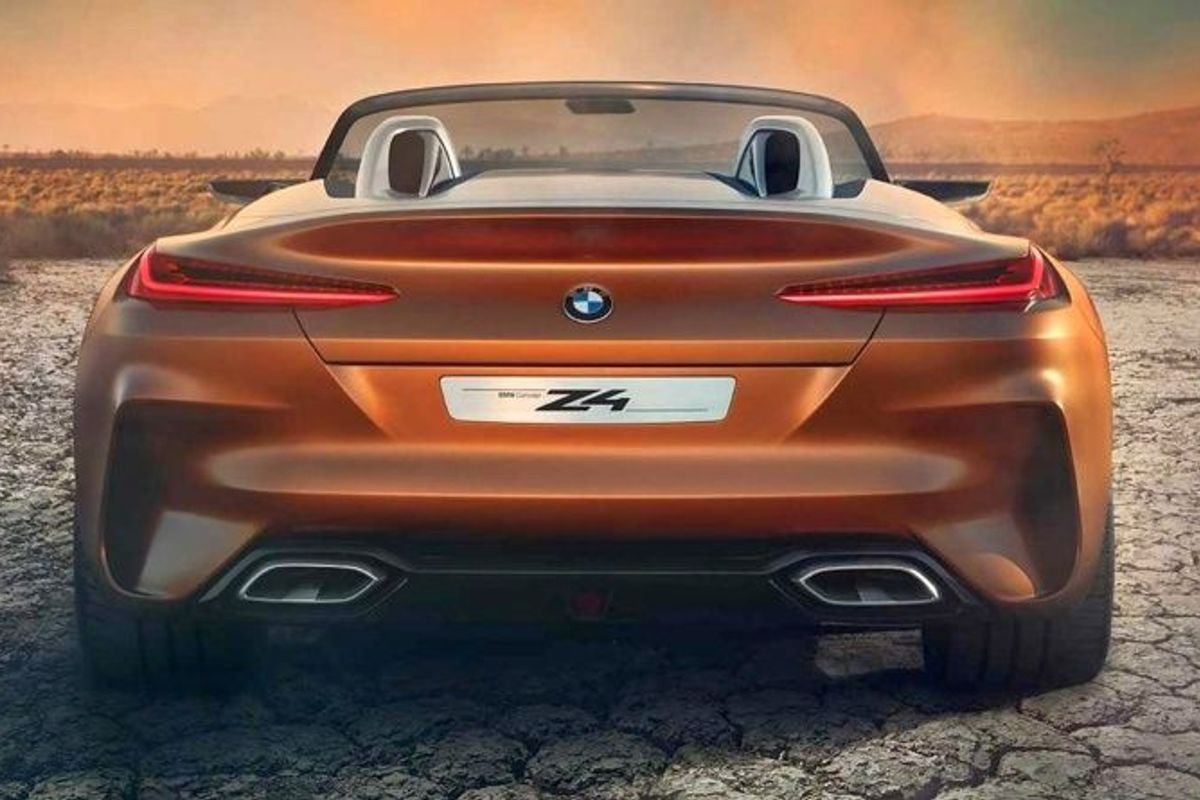
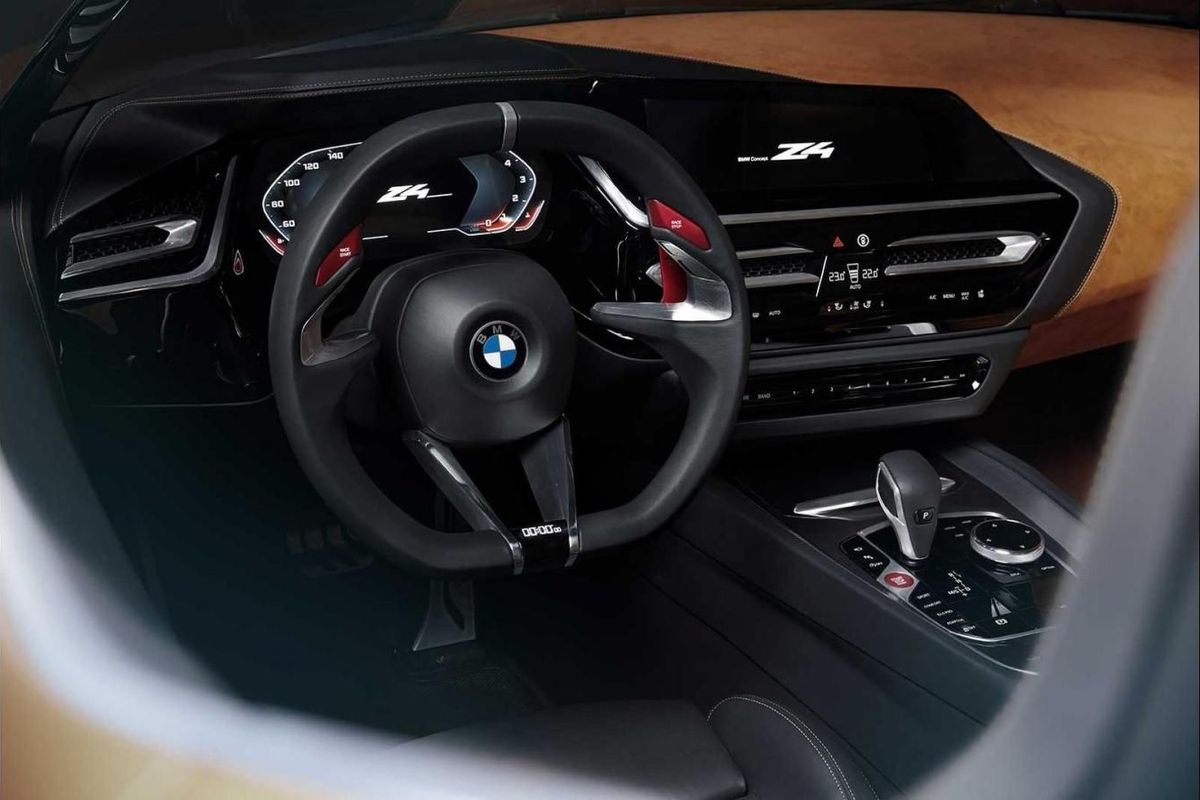
BMW has unveiled the concept for its next-generation Z4 roadster at the Pebble Beach Concourse d’Elegance.
Although the successor to the E89-generation BMW Z4 was been spied undergoing testing on a number of occasions in the past 12 months, technical details regarding the new roadster are scant. The Z4 and forthcoming Toyota Supra are the result of a collaboration (announced in 2012) between BMW and Toyota to each co-develop and build a new mid-size sportscar on the same platform.
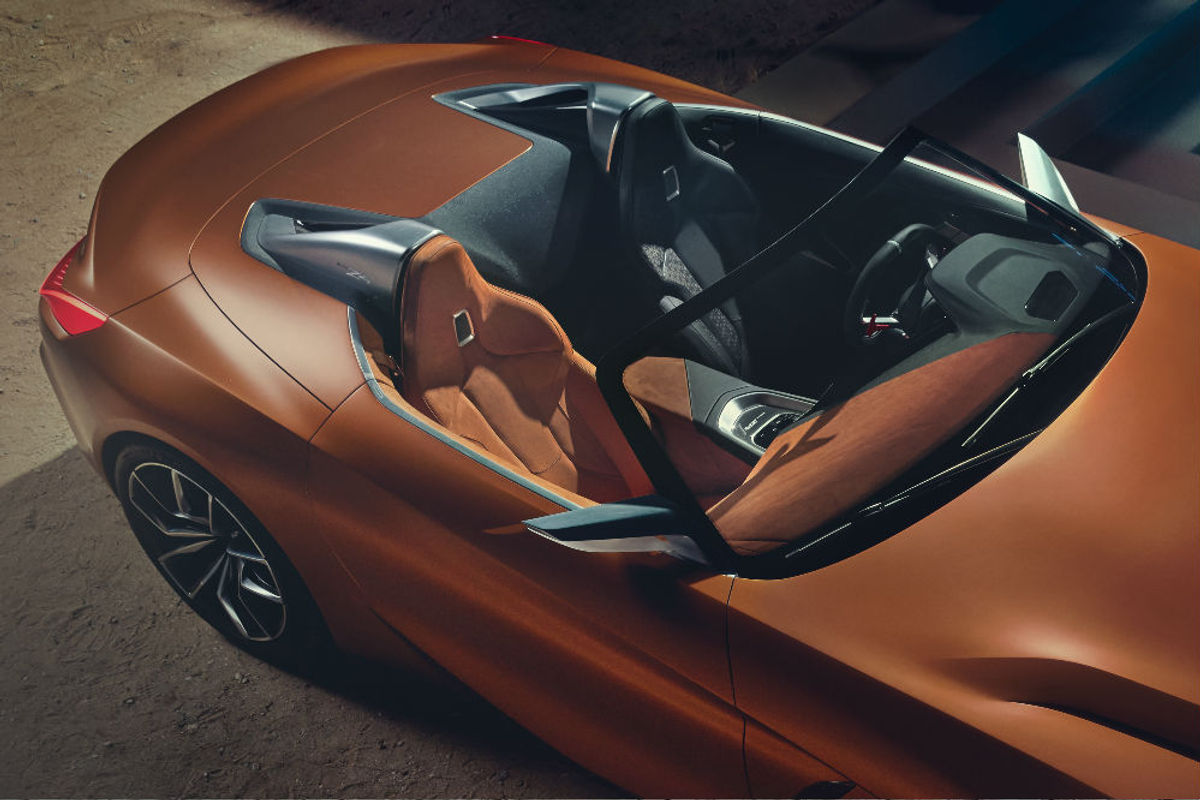
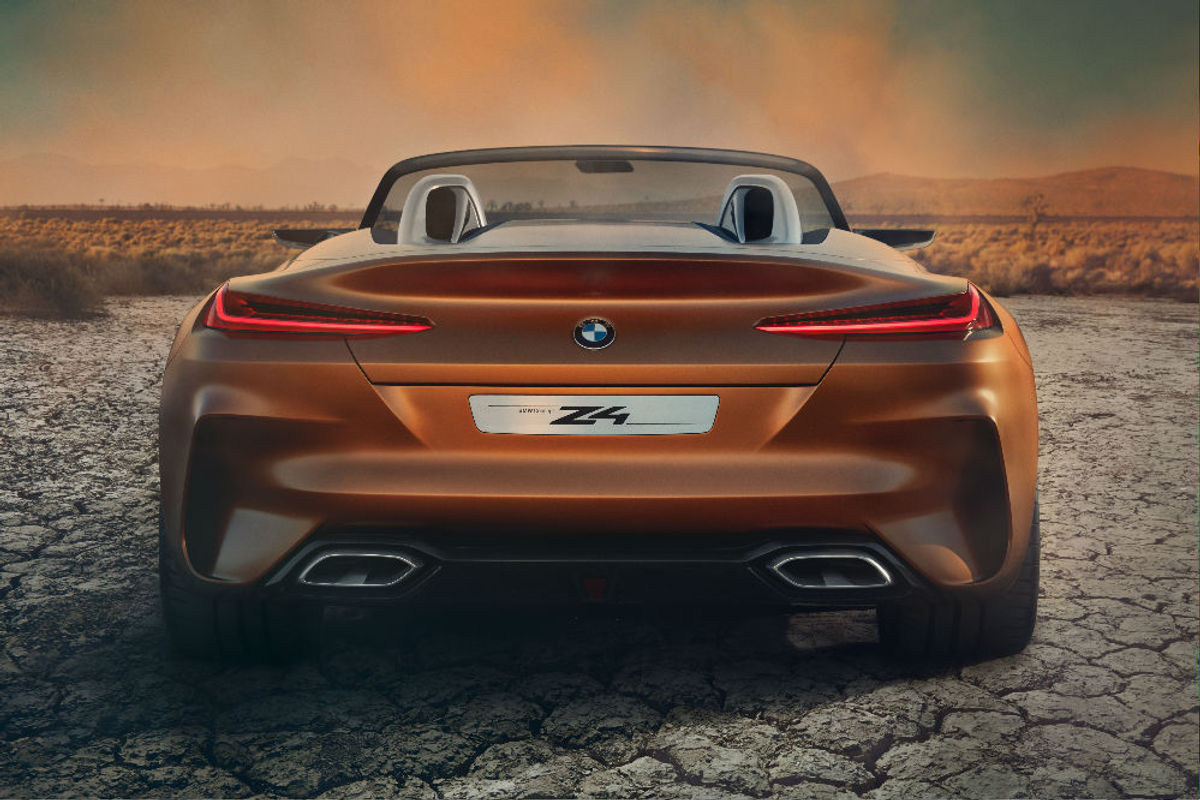
BMW appears to have reverted to classic low-slung roadster styling (and a soft top configuration) with the newcomer, which sports, a long bonnet, acutely-angled windscreen, flared wheel arches, a pronounced rear spoiler and slim taillights. The new model also features slim side mirrors and a muscular rear end with large alloy wheels filling the wheel arches. The rollover hoops behind the headrests add a stylish touch to the overall design.
BMW's Senior Vice President of Design, Adrian van Hooydonk, commented: "The concept expresses the new BMW design language from all perspectives and in all details. From the dynamic-looking front to the striking flanks to the clean-cut tail end: a few lines and the subtle interplay between surfaces are enough to generate a sense of power and emotion."
In terms of engine power, the Z4 is likely to employ a 2.0-litre 4-cylinder and 3.0-litre, 6-cylinder turbopetrol engines. Exact details have yet to be confirmed. We will keep you updated as soon as more information becomes available, but for now, enjoy the gallery.
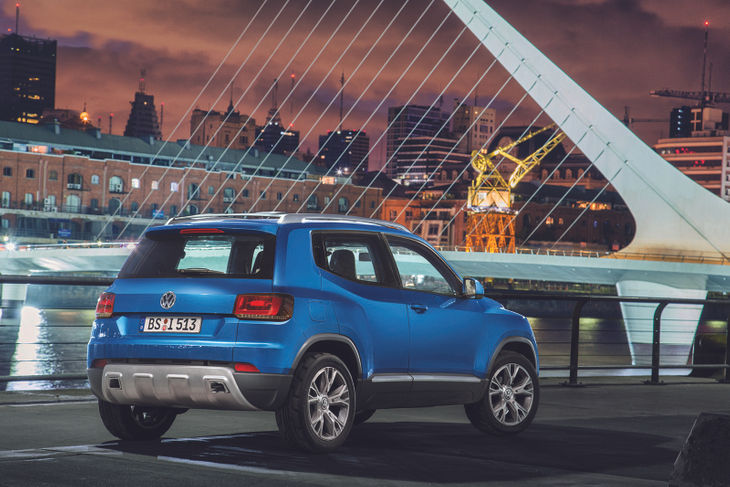
Reports are indicating that Volkswagen will put the 2012 Up!-based Taigun SUV into production. The new small SUV is expected to go on sale at the end of the decade (2020) and will likely be called the T-Track.
Back in 2012, Volkswagen showcased a Taigun SUV design study at the Sao Paulo Motor Show and now reports are suggesting that the Up!-based SUV will go into production carrying the T-Track moniker. The T-Track will join new SUV models such as the forthcoming Golf-based T-Roc SUV and the Polo-based T-Cross.
The model is destined for the Brazilian market to rival the likes of the Dacia Duster and Ford Ecosport. It’s unclear at this stage whether the T-Track will be offered in other markets or if it will make it to South African shores.
The Volkswagen T-Track is a small Up!-based SUV that will share design cues from the 2012 Taigun concept.
The delayed decision to produce the T-Track is because it’s expensive to produce as the model doesn’t share many parts with other vehicles in Volkswagen’s stable.
To give you an idea of the T-Track’s likely dimensions, the Taigun SUV concept measures 3 859 mm long, 1 728 mm wide and 1 570 mm in height with a wheelbase of 2 470 mm. The concept is some 50 mm longer than the Up! City on which it is based.
The Taigun concept has seating for 4 people and the luggage bay offers 280 litres of space, expanding to 987 litres with the rear seats folded down.
As an SUV that will primarily be used in the city, the Volkswagen T-Track will likely be powered by a small-capacity, turbocharged 1.0-litre engine with power being sent to the front wheels.
We will keep you updated as more details become available.
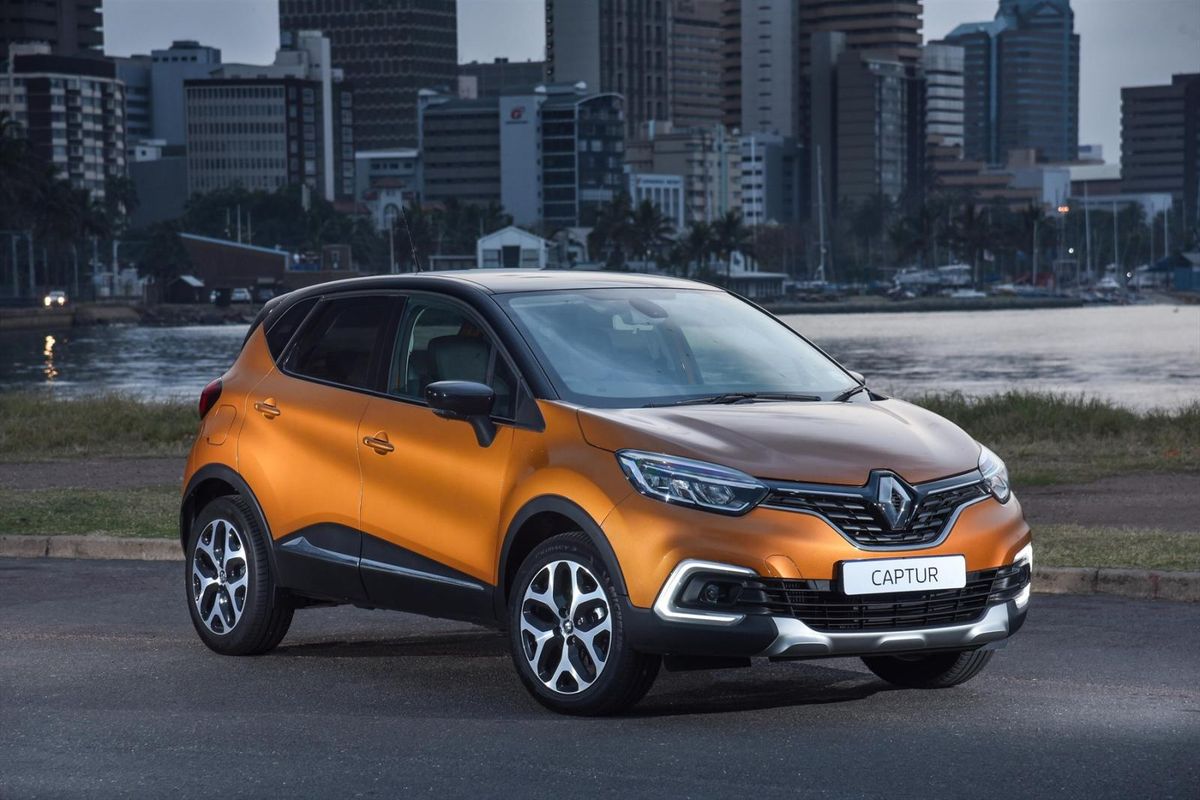
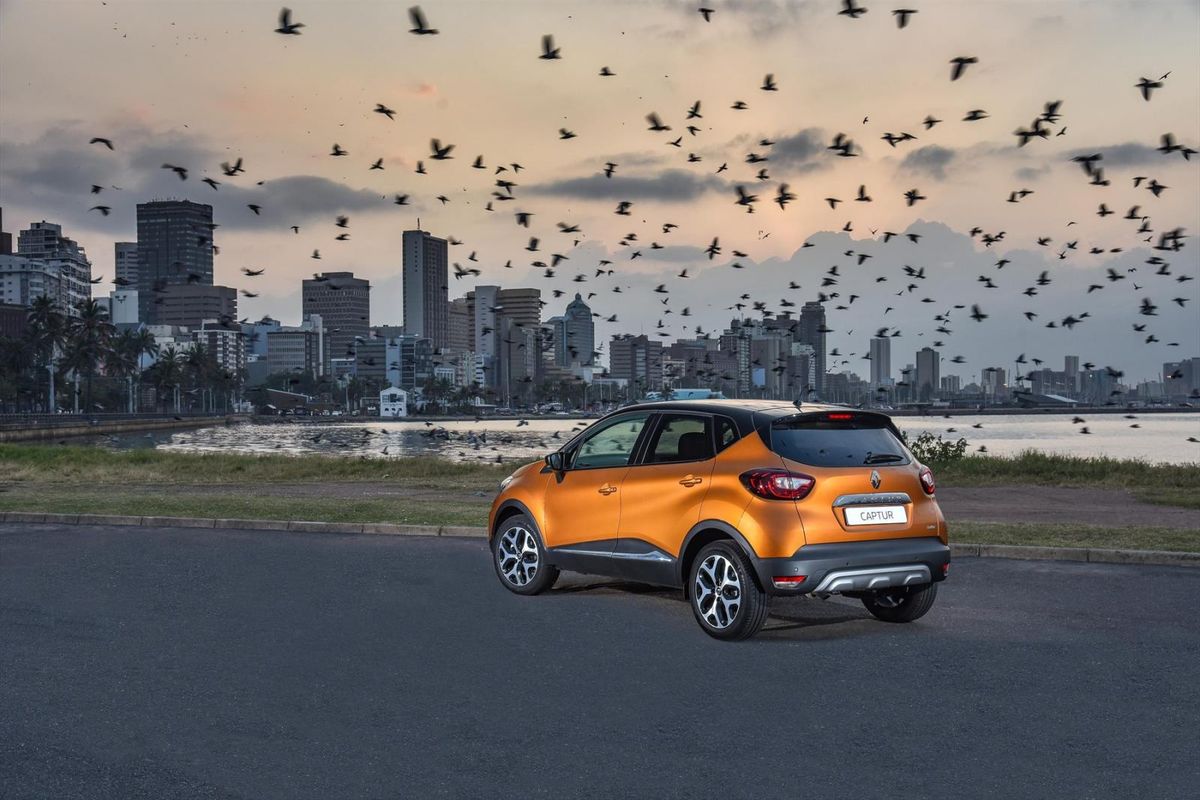
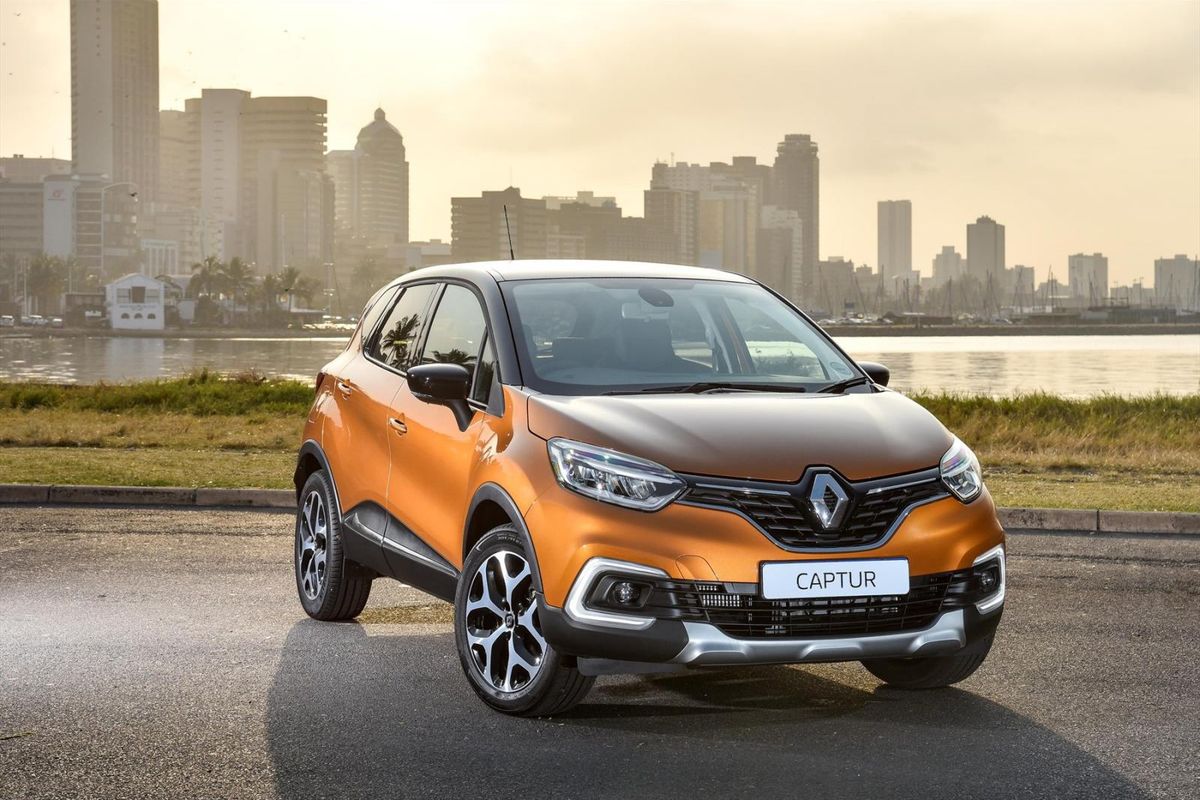
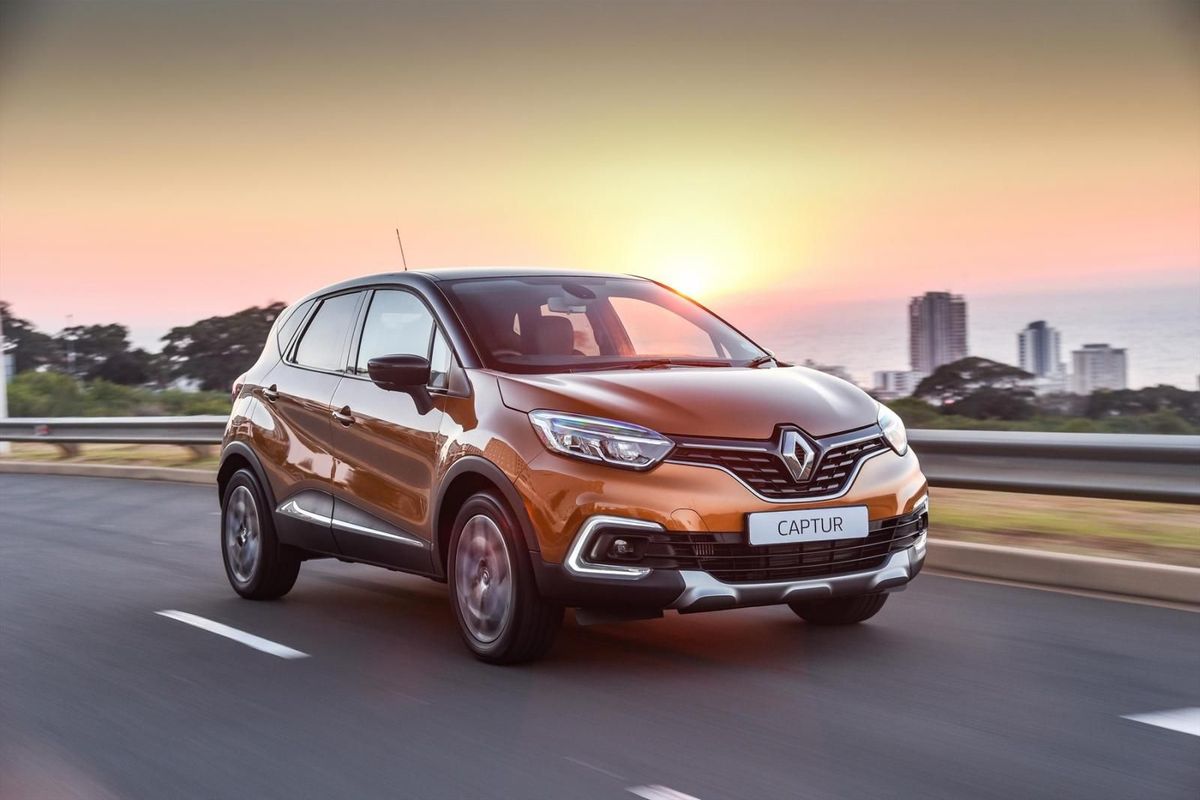
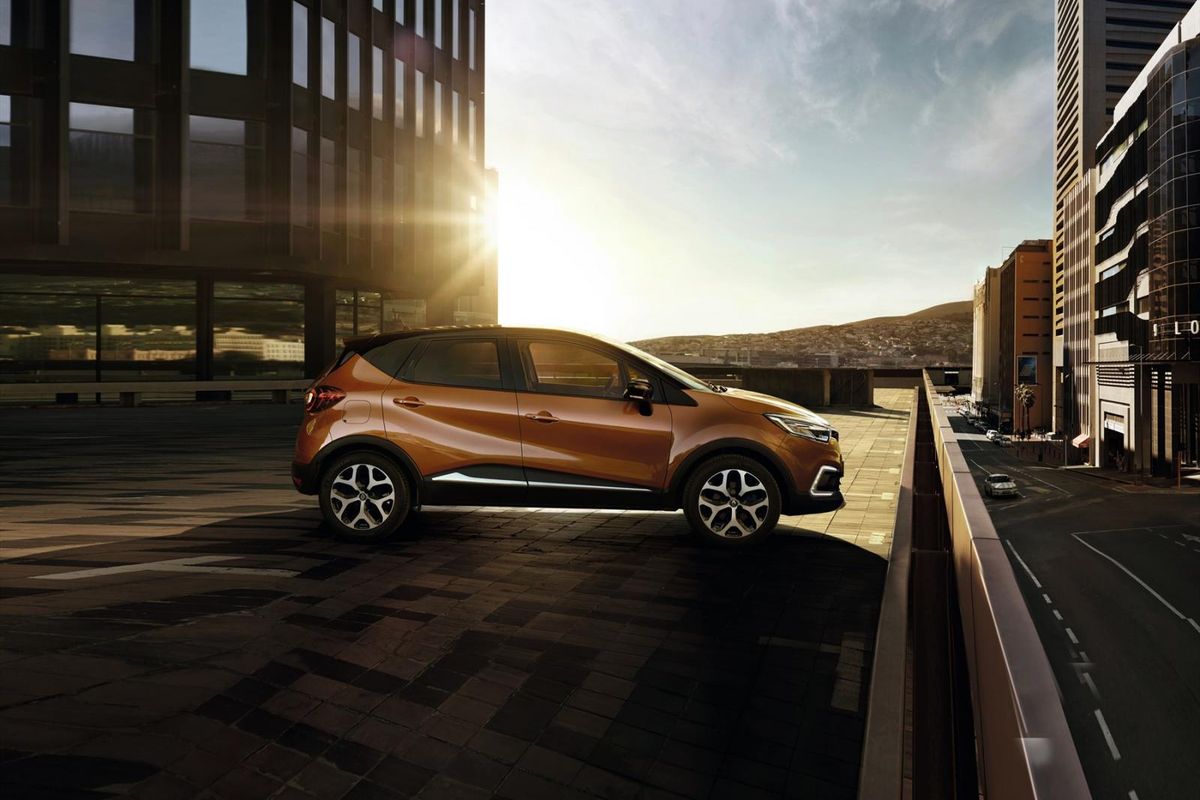
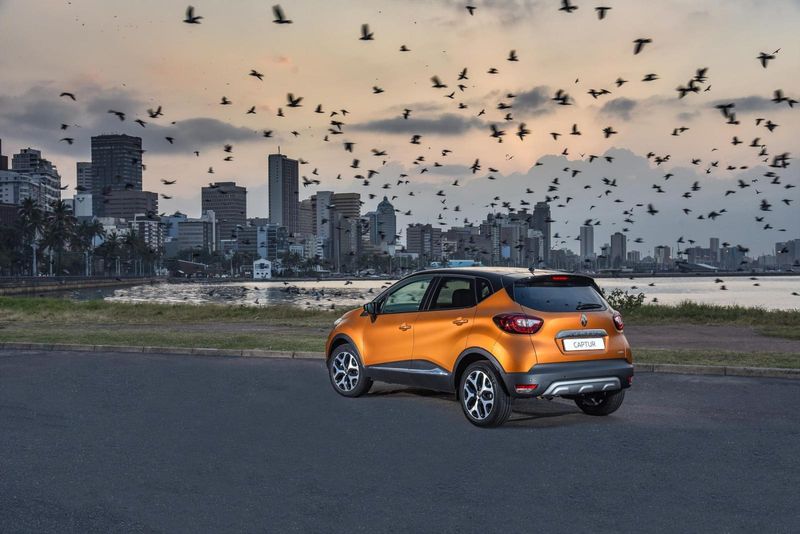
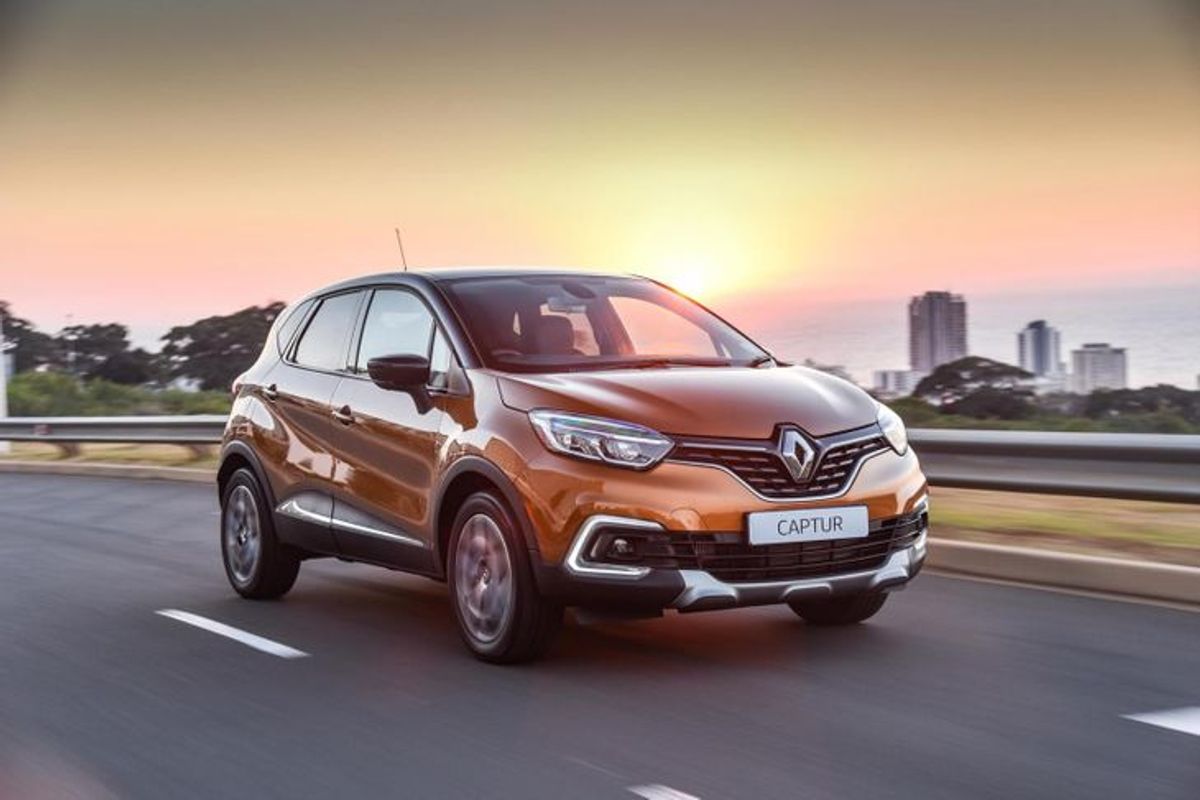
Renault has launched the facelifted Captur compact crossover in South Africa! Take a look at specification and pricing for the updated Captur range below…
The Renault Captur is a popular model in South Africa and since its local introduction has sold over 6 500 units. Now, the facelifted Captur has arrived to ensure its continued success on the local market.
What’s changed?
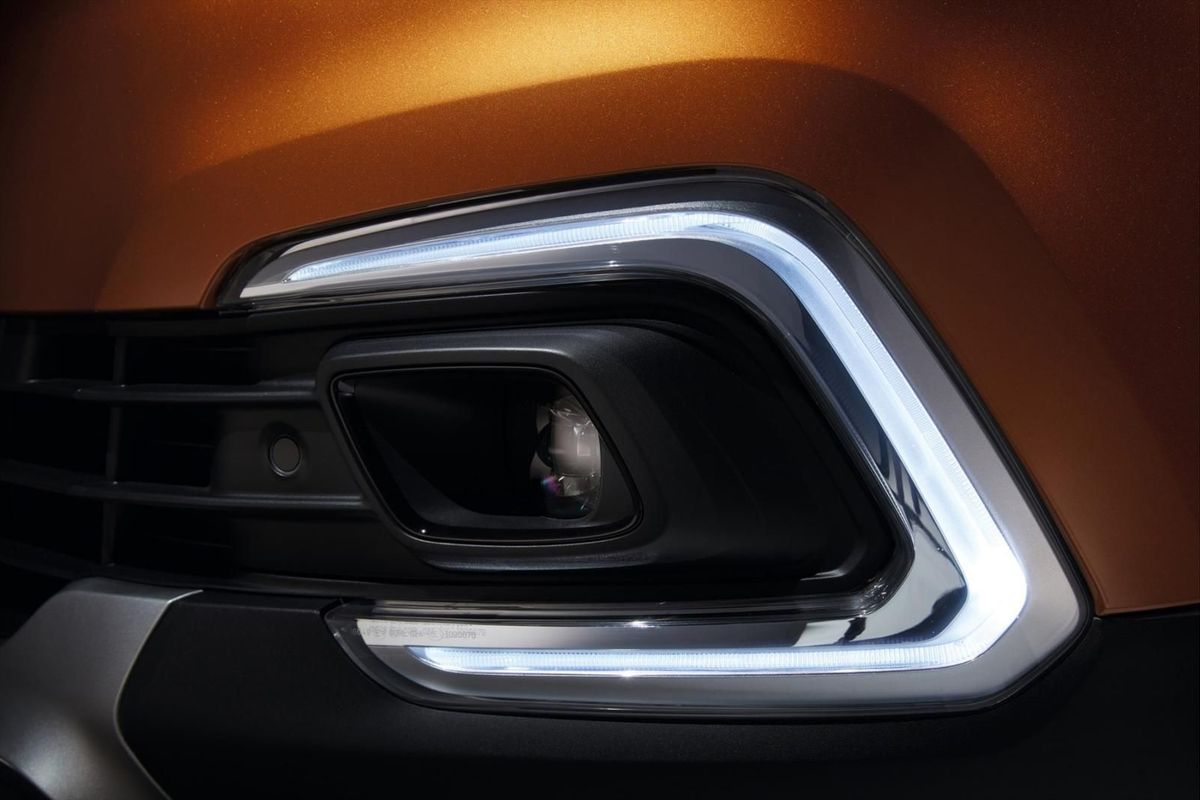
In terms of styling, the facelifted Captur wears a redesigned upper grille with chrome edging and its front-end look is complemented with LED headlights and C-shaped daytime running lights. The front and rear bumpers also feature new skid plates. The Captur is now offered with new exterior colour choices as well as new 17-inch Black & Chrome alloy wheels. Dynamique derivatives are offered with 2-tone paintwork as standard.
The Captur range welcomes a more affordable Blaze derivative to the range, replacing the outgoing Expression derivative.
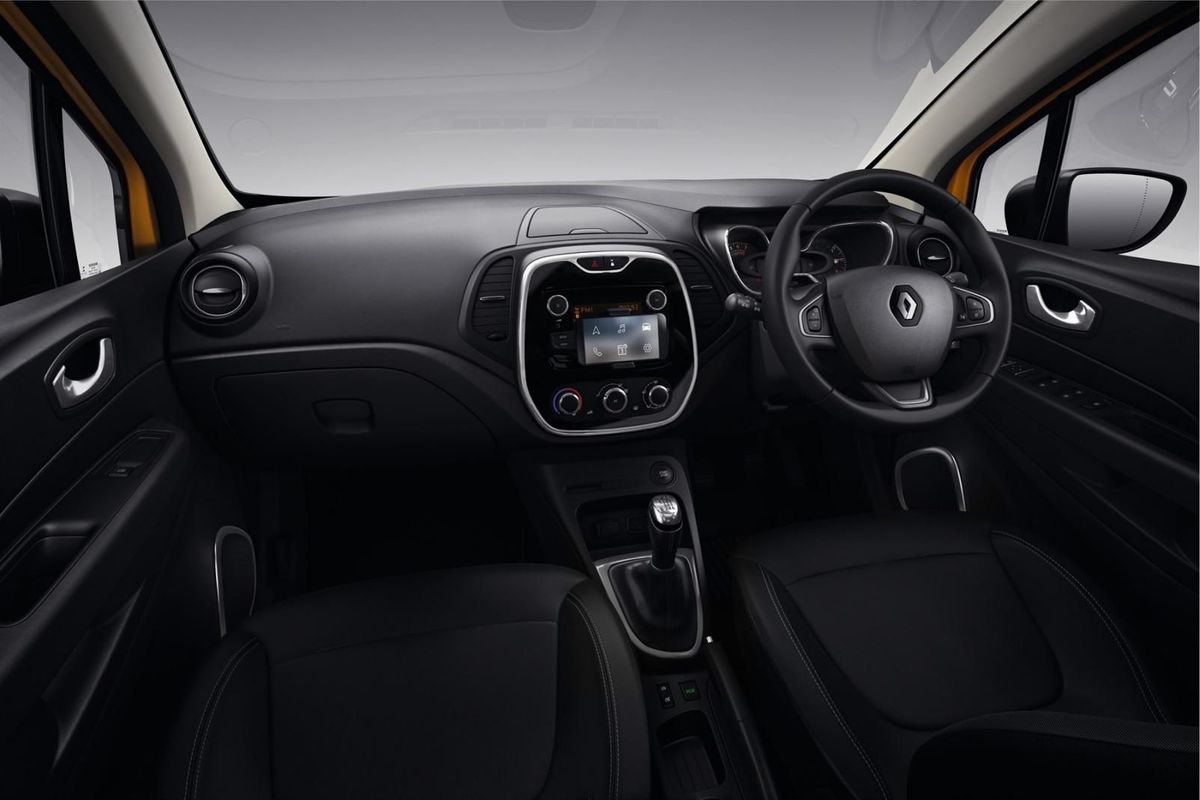
On the inside, the Captur features a new leather steering wheel and the seats have been redesigned to offer higher levels of comfort. Heated leather seats are offered as an option on Dynamique derivatives.
Other notable improvements include satin chrome trim, a new continuous-shaped soft-touch dashboard, newly designed gear lever and multi-purpose storage solutions including a new central armrest with a useful storage section offered on Dynamique derivatives.
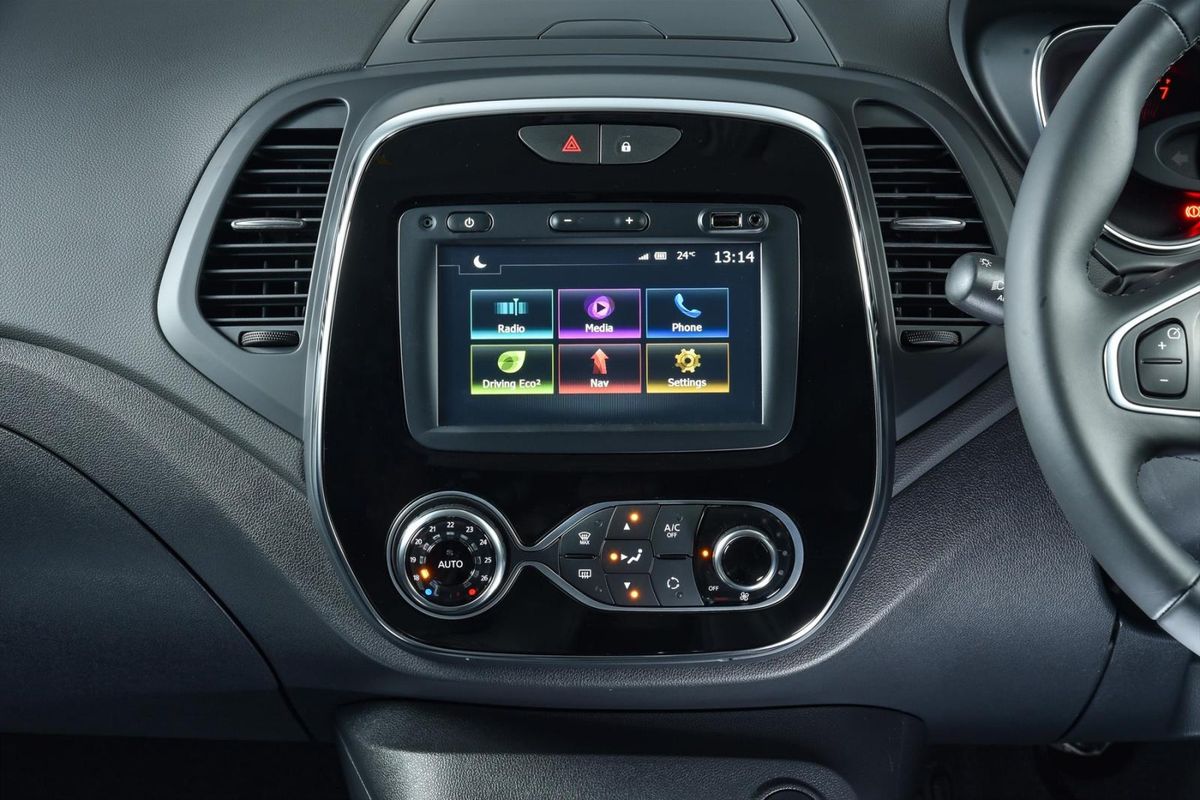
Key features include a Renault MediaNav touchscreen with Bluetooth, hill start assist, keyless entry, front and rear electric windows, rear parking sensors, automatic headlights and windscreen wipers, cornering headlights, cruise control and fingertip controls located behind the steering wheel.
The facelifted Captur features a mildly revised interior but Renault's MediaNav infotainment system is still a highlight.
The new entry-level Captur Blaze derivative is equipped with the R&Go application which is a multi-function smartphone/tablet application connected through the radio via Bluetooth. It enables remote control of the radio with a smartphone offering an extended dashboard display on the screen and comes with a cradle to ensure comfortable use. The R&Go application offers functionality including multimedia, phone, vehicle and navigation.
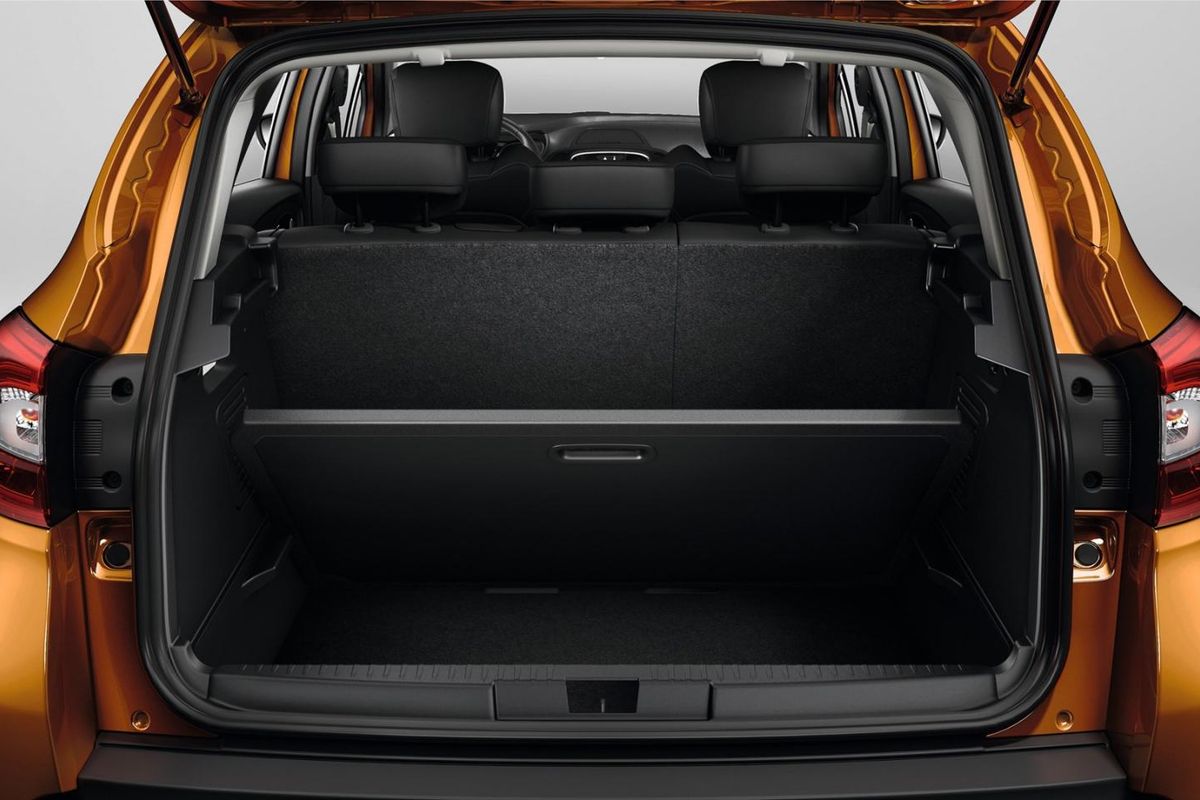
In terms of practicality, the Captur offers 377 litres, or 455 litres with the rear seats pushed all the way forward. With the rear seats folded flat, space increases to 1 235 litres. The rear seats are split into 3 sections, making the Captur quite flexible depending on your luggage needs. The Captur also features a reversible, 2-position boot floor, allowing you to store items out of sight.
Engine choice
The Renault Captur is offered with 3 engine choices. The Captur range kicks off with the 3-cylinder, 0.9-litre turbopetrol engine offering 66 kW and 135 Nm of torque. Renault claims 5.4 L/100km for this engine.
A 1.2-litre turbopetrol engine is also available with 88 kW and 190 Nm of torque. This engine is now offered with either a 6-speed manual or 6-speed automatic EDC transmission. Fuel consumption is claimed at 5.4 L/100km.
Lastly, a 1.5-litre turbodiesel engine with 66 kW and 220 Nm of torque round off the engine offering with a claimed fuel consumption figure of 3.6 L/100km.
In terms of safety, the Captur is fitted with 4 airbags, ABS with EBD, Electronic Stability Program (ESP) and Hill Start Assist (HSA). ISOFIX child seat mounts are standard.
Renault Captur – Price in South Africa
Renault Captur 66kW Blaze – R229 900
Renault Captur 66kW Dynamique – R269 900
Renault Captur 1.5 dCi Dynamique – R294 900
Renault Captur 88kW Dynamique – R294 900
Renault Captur 88kW EDC Dynamique – R309 900
The Renault Captur is sold with a 5-year/150 000km mechanical warranty, 3-year/45 000km service plan and 6-year anti-corrosion warranty.
Volkswagen is gearing up for the reveal of its new T-Roc crossover and the firm has released a teaser video showing off some its design details.
Based on the T-Roc Concept shown back in 2014, Volkswagen will debut its latest creation in production guise on 23 August 2017. The T-Roc will slot in below the Tiguan in Volkswagen’s lineup and it will look to shake-up the crossover segment with its edgy and progressive styling.
Volkswagen says the T-Roc will feature "crisp proportions, a progressive design, and a wealth of innovations." The model will also have sporty features and all-wheel drive to make it somewhat offroad capable.
This latest teaser video reveals some of the T-Roc’s design details including a wide grille with sharp-looking integrated LED headlights, a creased bonnet, plastic body cladding, metallic window surrounds, a stylised tailgate with a rear spoiler and smart, wrap-around LED taillight units. As for the interior, it looks smart and features colour-coded trim and a digital instrument cluster will give the interior a modern feel.
The T-Roc rides on Volkswagen’s MQB platform and will likely be offered with a choice of turbocharged 4-cylinder engines with both manual and dual-clutch transmissions. A 48 V mild hybrid version is also likely and Volkswagen may also introduce an R variant at a later stage that could employ the 228 kW 2.0-litre turbopetrol engine that does service in the Golf R.
We will keep you updated as soon as Volkswagen provides definitive details on 23 August 2017, so stay tuned!
Volkswagen Golf R, GTI & GTD (2017) Track Comparison Video
A racetrack. Three new Volkswagen Golf 7.5s. One racing driver. And, one particularly excited presenter with a stopwatch. This is episode 1 in a new series of videos from Cars.co.za. Welcome to Game of Golfs…
Volkswagen recently released a bevy of new 7.5-generation Golfs in South Africa. Earlier in the year we reviewed the latest iteration of the Golf GTI and now the venerable performance hatchback has been joined by its more hardcore sibling, in the form of the Golf R, and for the first time on the local market, the GTD – "a turbodiesel-powered GTI".
In this video, we send our race-ace Ashley Oldfield out onto the track in a bid to set the fastest time in each car. With the Golf R's exceptional power and all-wheel-drive, it will certainly set the pace, but how close can the GTI get to the R? And, how well will the GTD compare with the petrol-powered GTI?
All of these questions will be answered, and all without the use of any dragons.
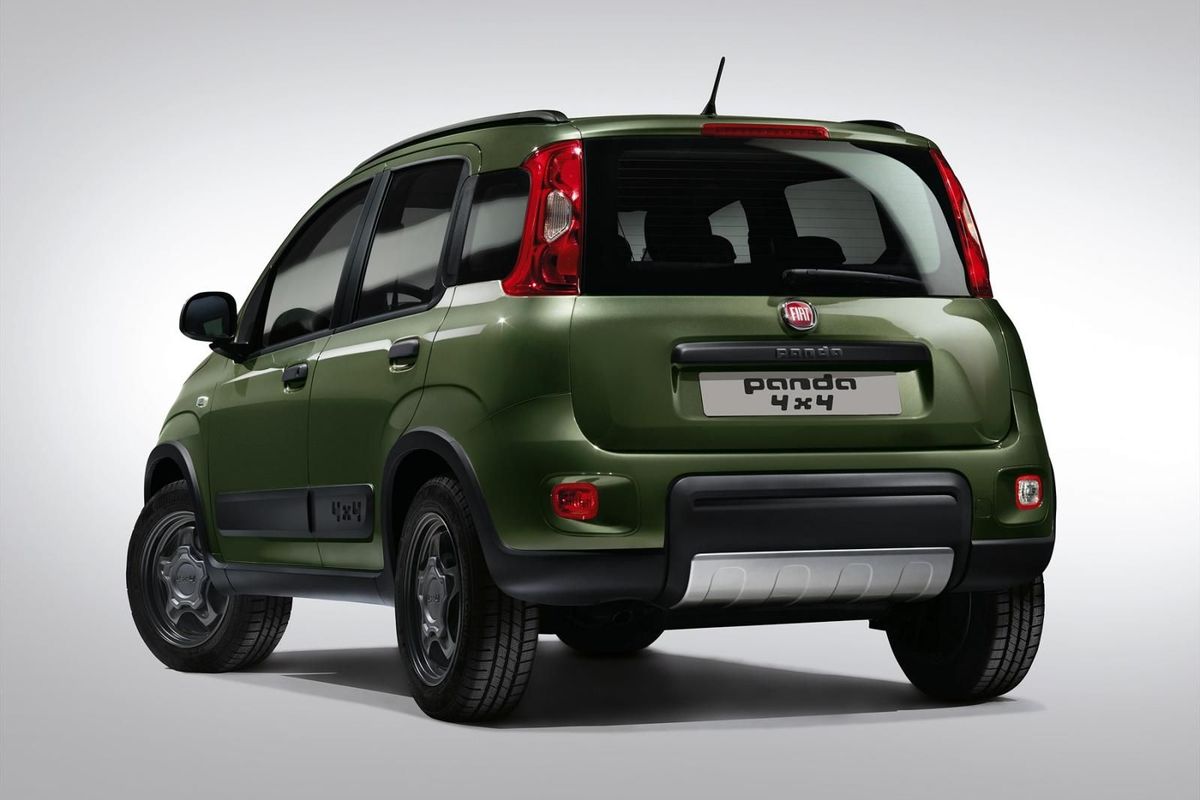
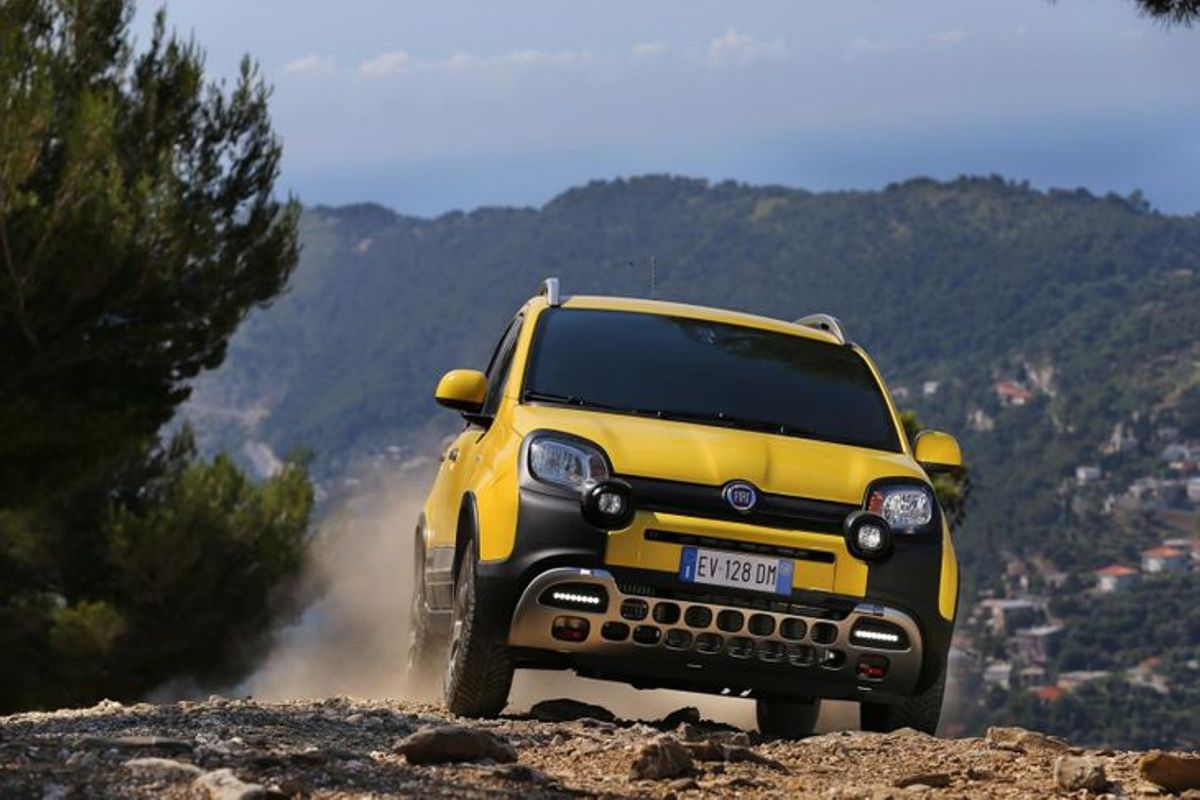
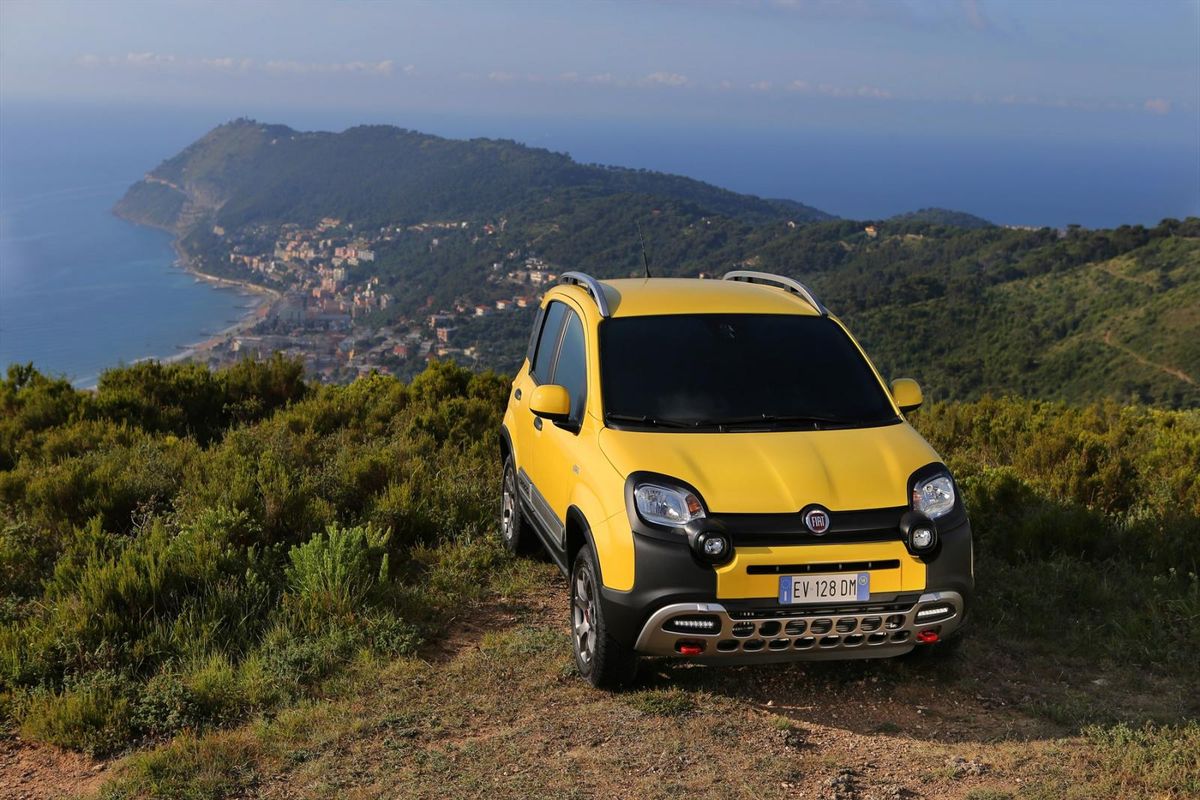
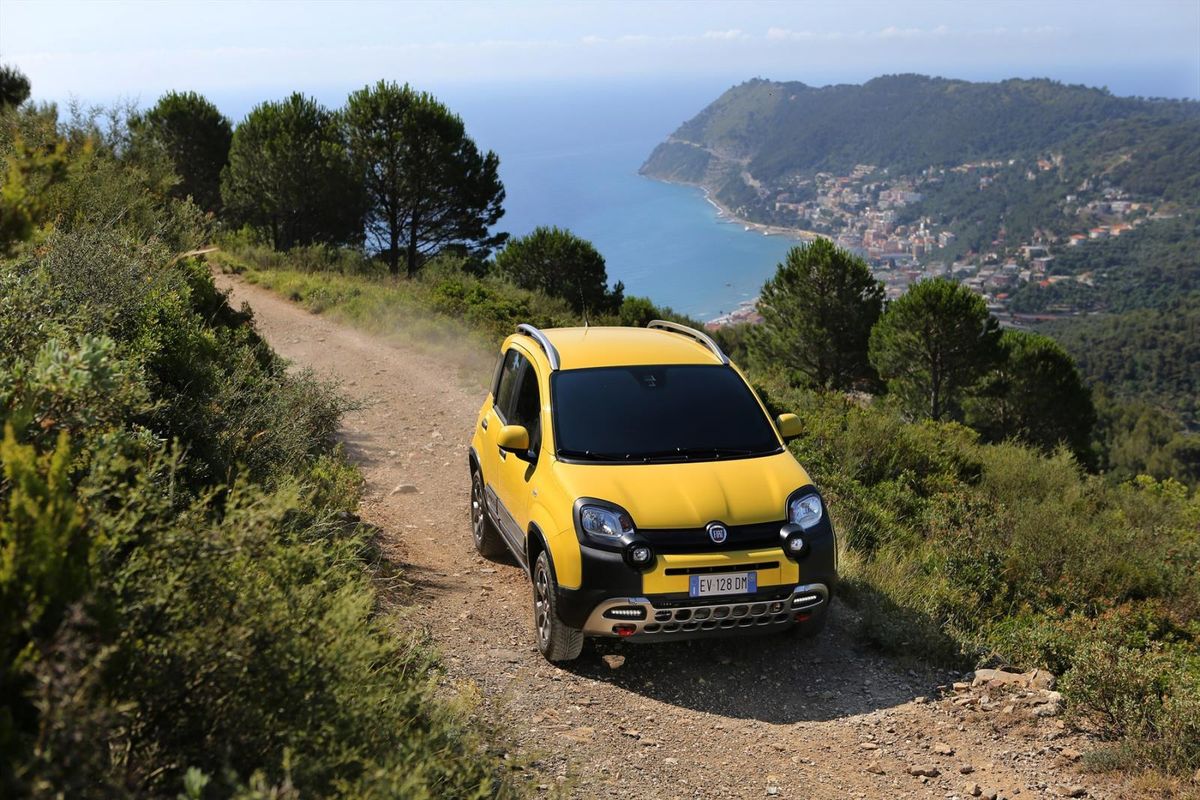
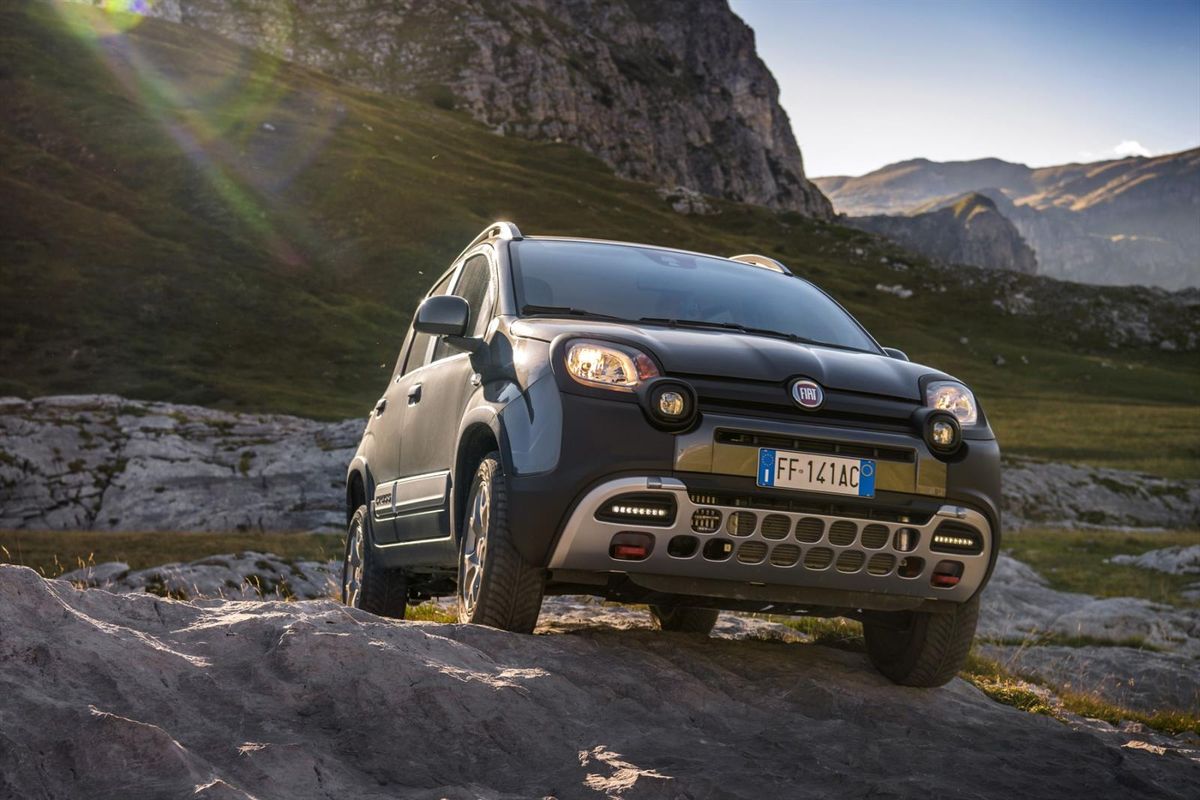
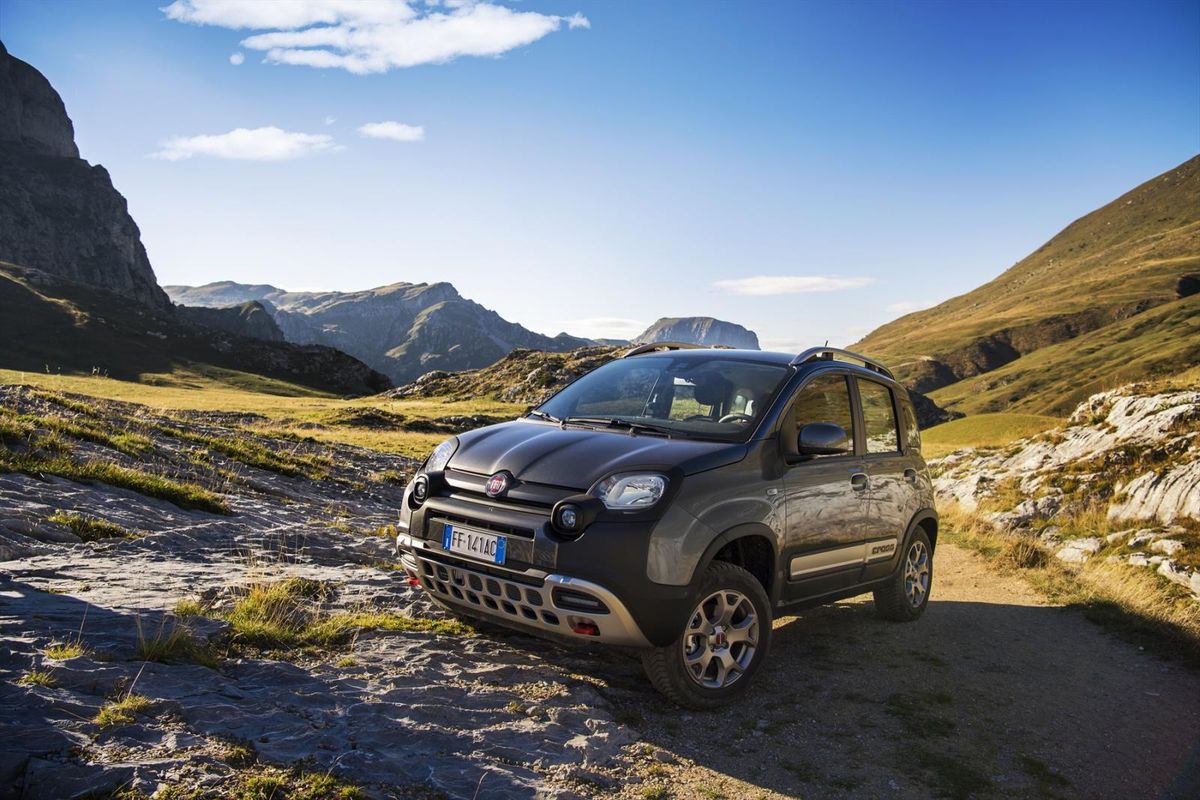
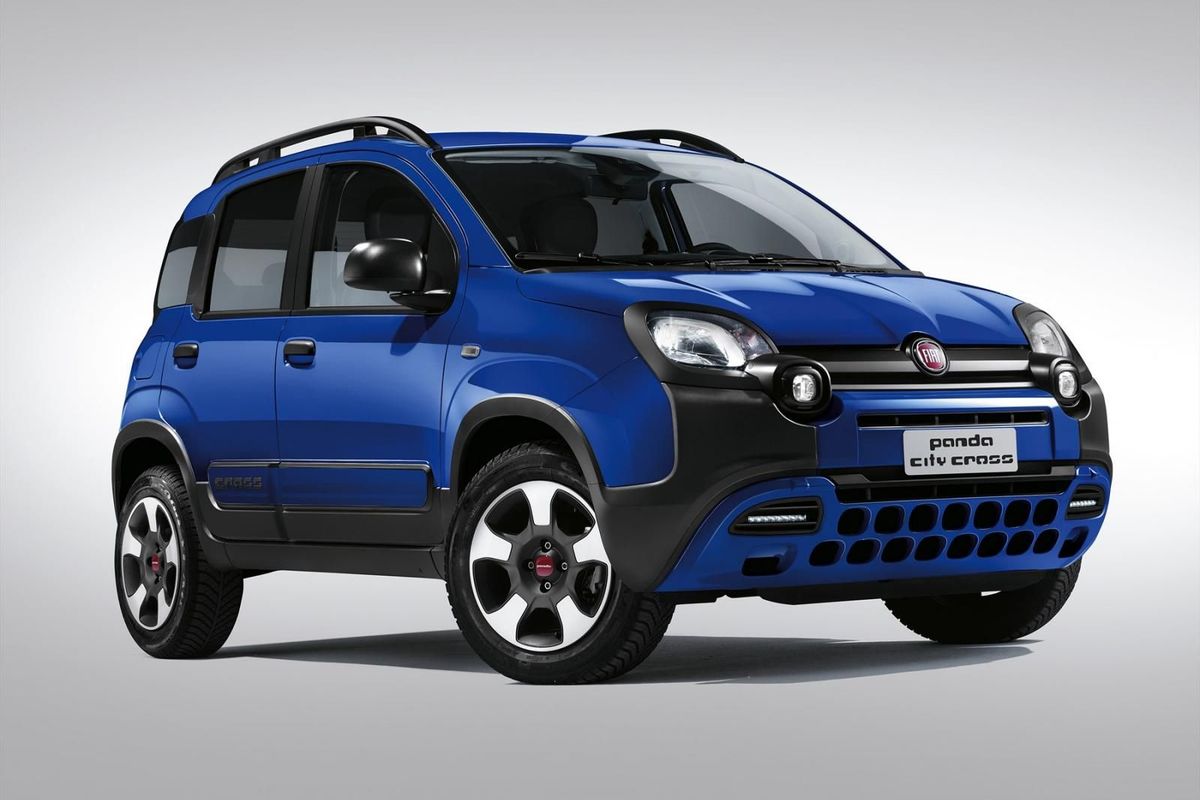
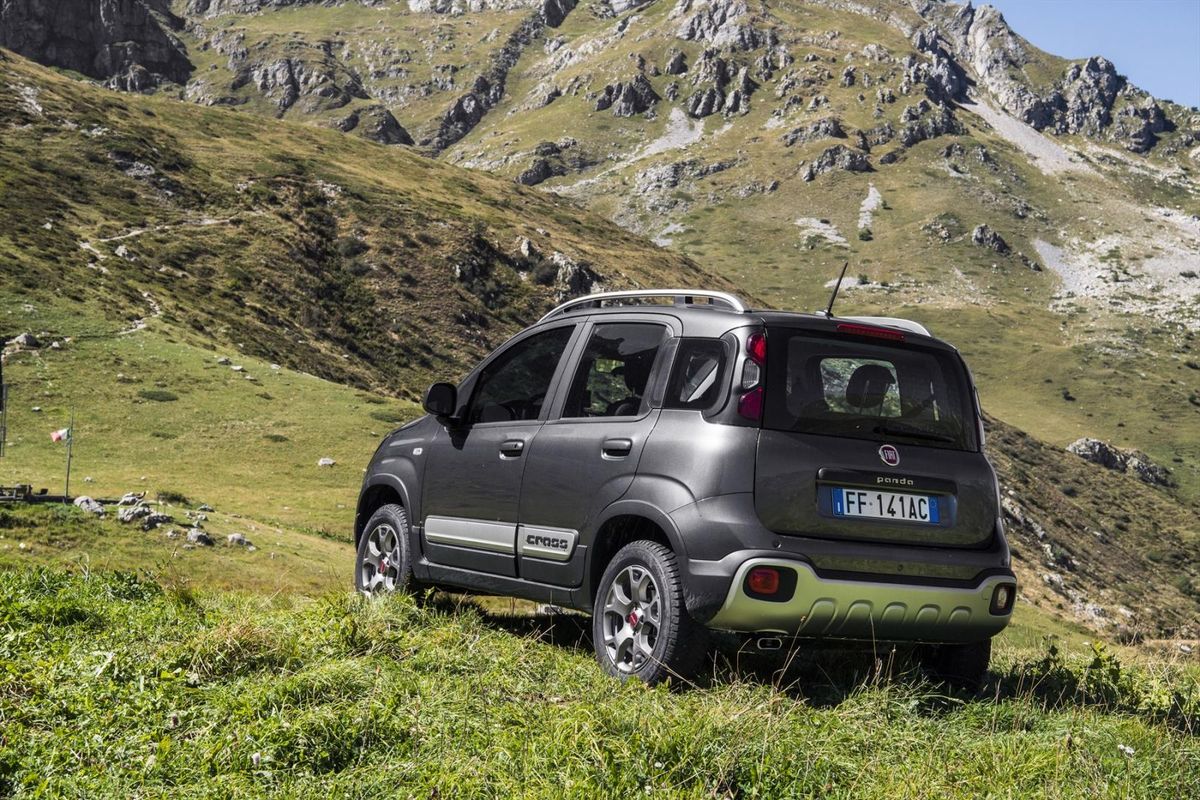
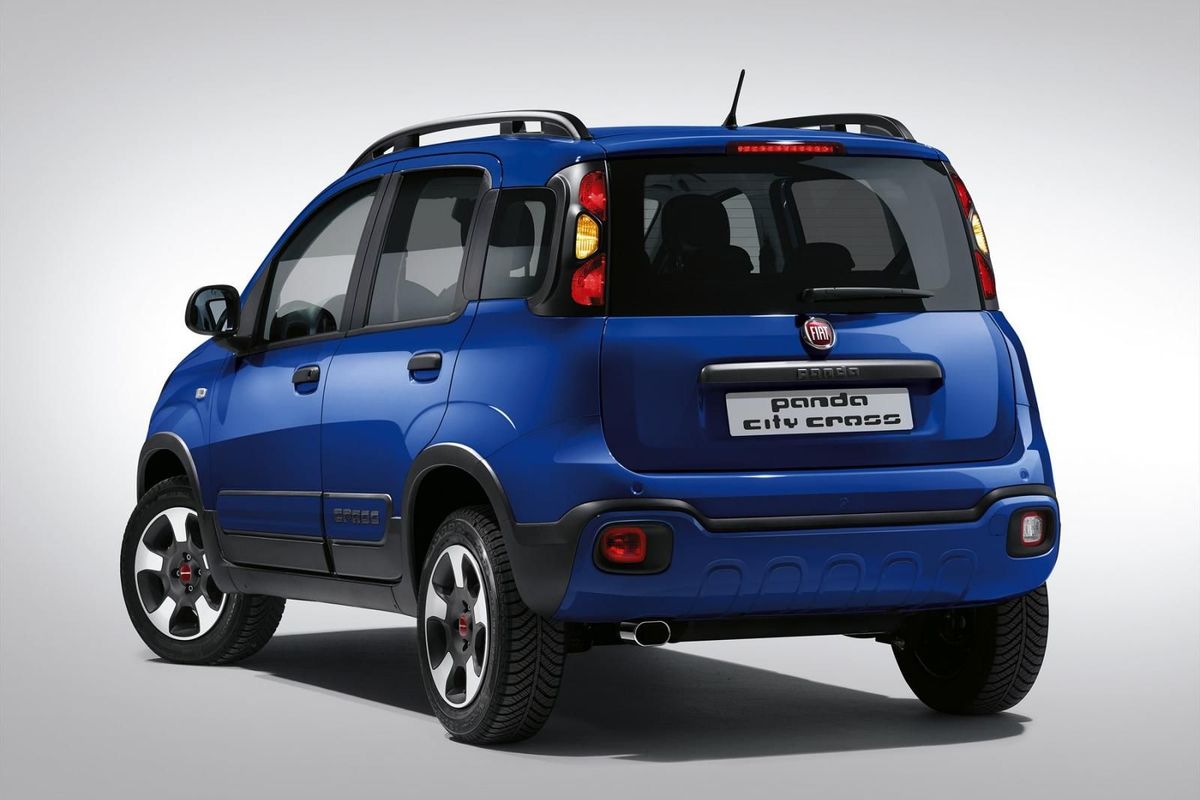
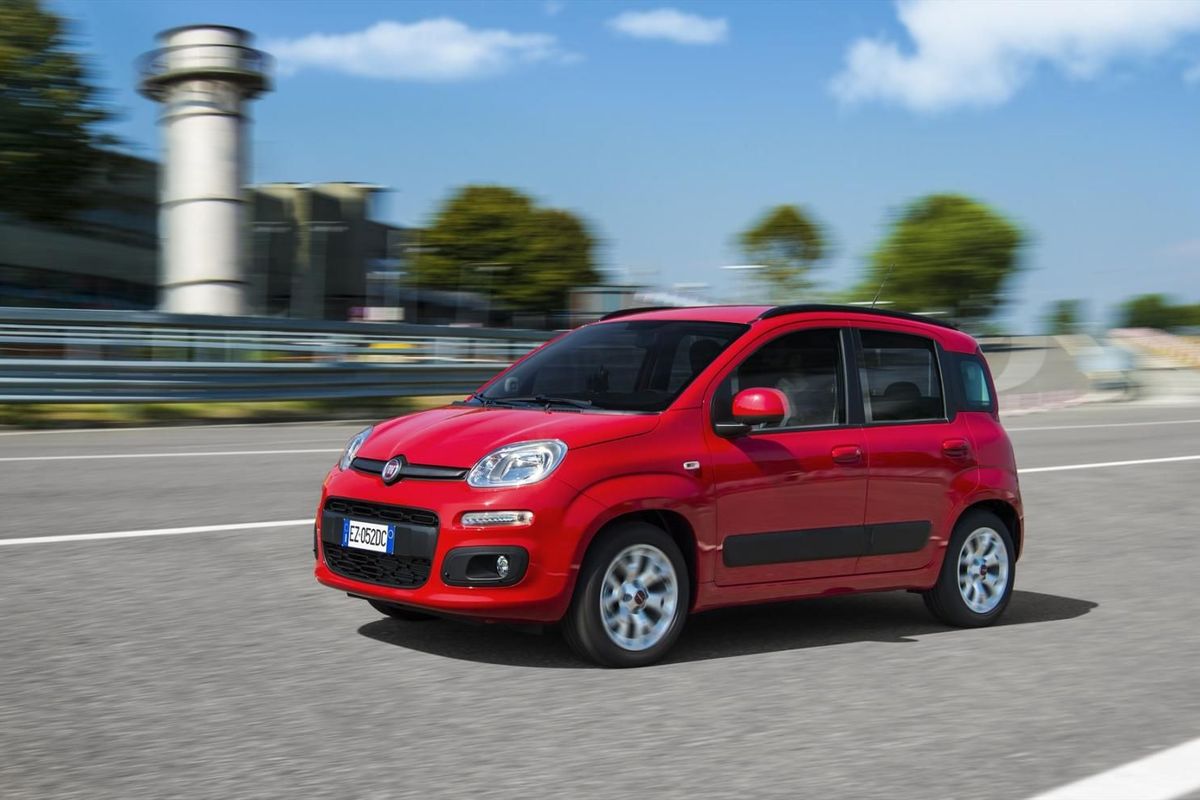
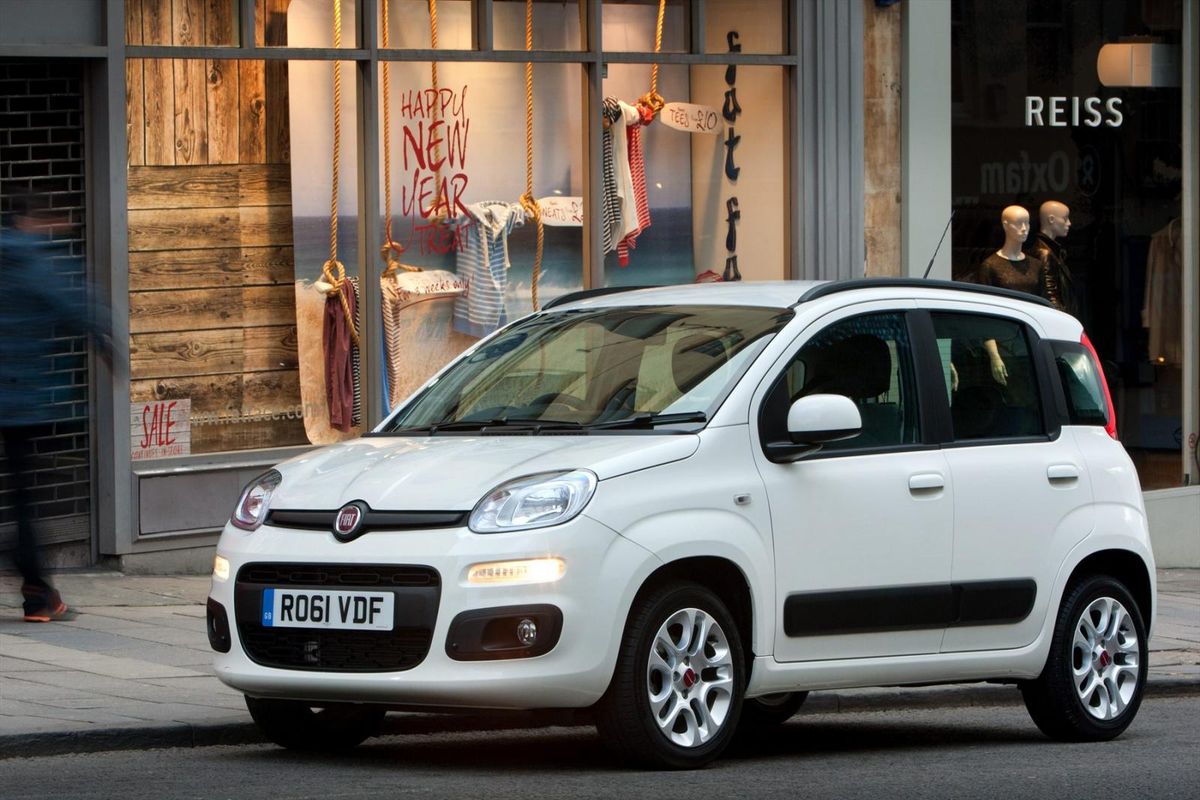
Postman Pat's hatchback of choice has returned, replete with a brace of capable off-roader derivatives with heaps of go-anywhere attitude. Can the Panda's diversified line-up allow Fiat to increase its foothold at the budget end of the market?
What's new?
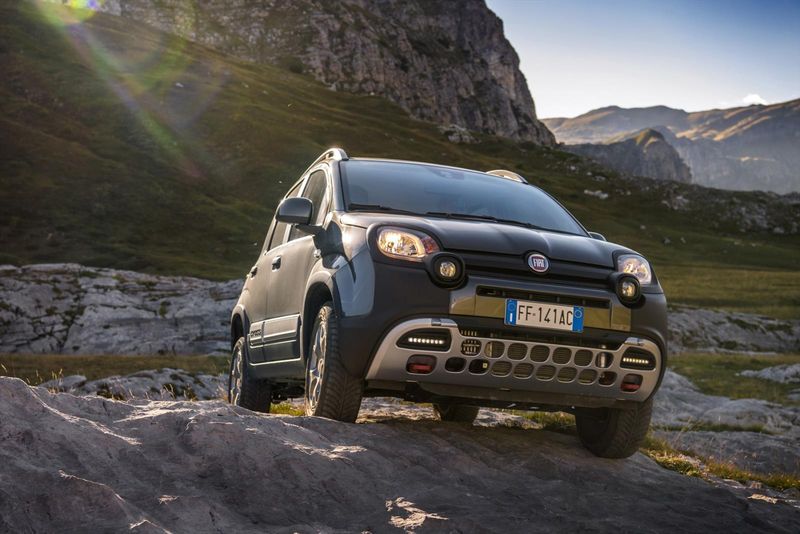
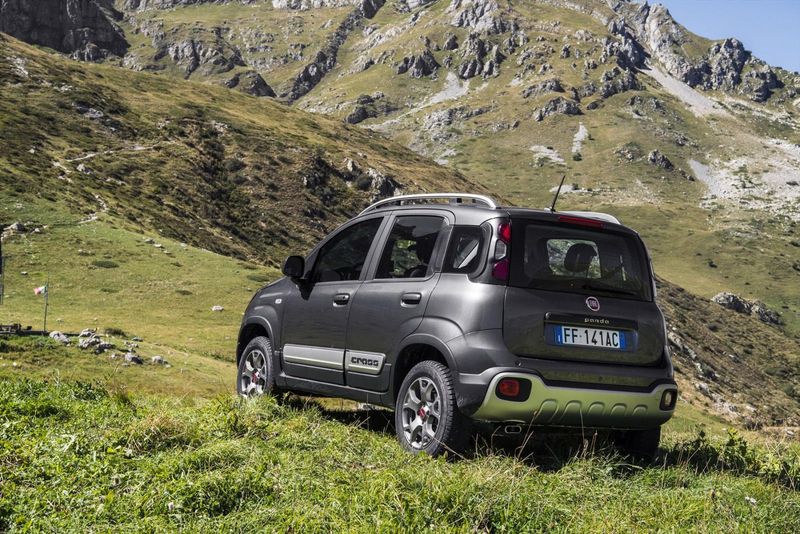
The Panda, 4×4 and Cross follow a similar formula as before. You get a vibrant city car that's fun to drive, but then, with the 4×4 versions, a sense of adventure and off-road capability for much less price than an actual off-roader. The newcomer's exterior styling suggests the Panda's a car that doesn't take itself too seriously (there are few aesthetic individualisation options available) and Fiat's quest to reduce emissions (a move in line with efforts by the global motor industry) sees a 2-cylinder 875 cc turbopetrol engine under the bonnet.
Can a 2-cylinder do the job?
Yes, it can. You either get a 63 kW/120 Nm engine or, in the top spec Cross, 66 kW/120 Nm. Those outputs are on par with the 3-cylinder engines it competes with in cars like the Renault Sandero and the Volkswagen Up!. The engine sounds quite rorty (in an entertaining way) and apart from peppy performance it delivers round town, there's reasonable power available out on the open road too; the early torque delivery courtesy of the petrol motor gives the Fiat reasonable overtaking capabilities.
The 2-cylinder turbopetrol provides the Panda just (about) enough open-road overtaking ability.
The engine is mated with either a 5-speed manual (in the regular Panda) or a six-speed manual in the 4×4 and Cross models. Fuel efficiency is claimed to be the 2-cylinder's strong point with a claimed figure of between 4.1 and 4.9 L/100 km. Our trip of 200 km, which included some off-roading and steep climbing in the hills of Pietermaritzburg yielded a less-than-stellar 8.9 L/100 km, however. I ran a previous generation Panda for a couple years and averaged out at 5.9 L/100 km, so if you end up with more than that, you may feel hard done by.
The inside
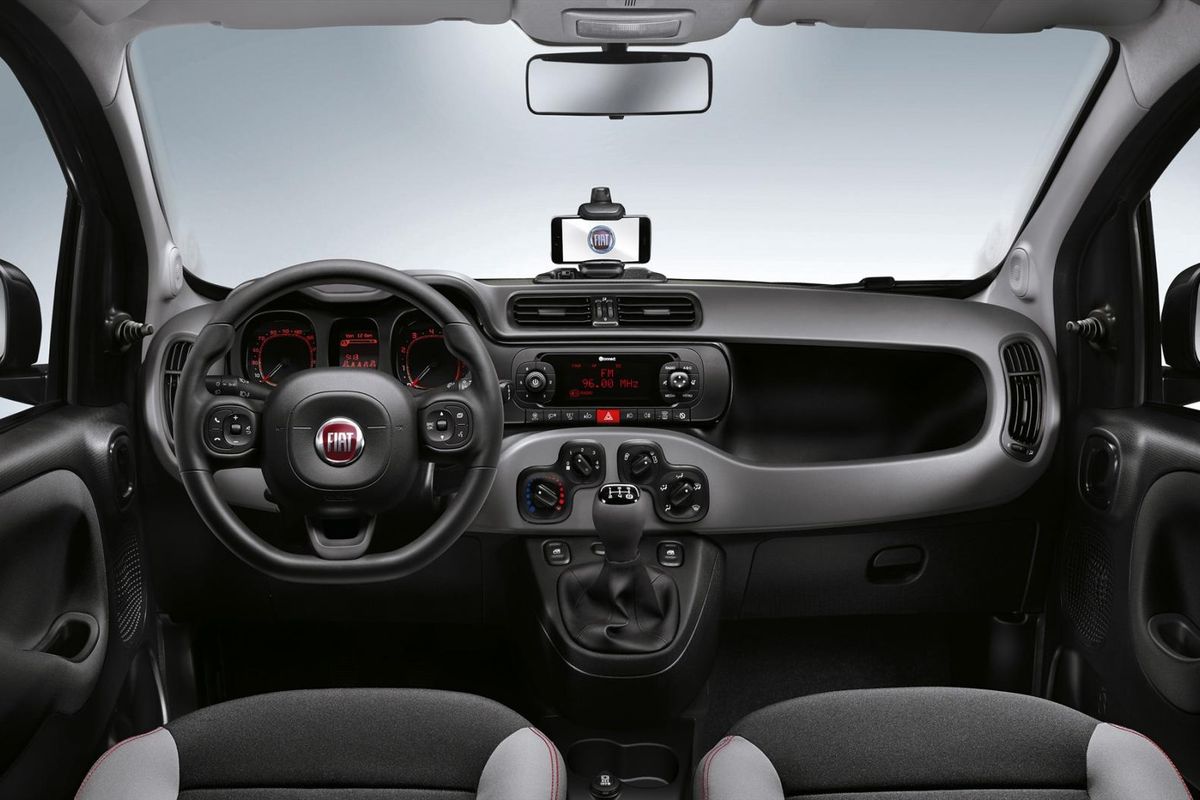
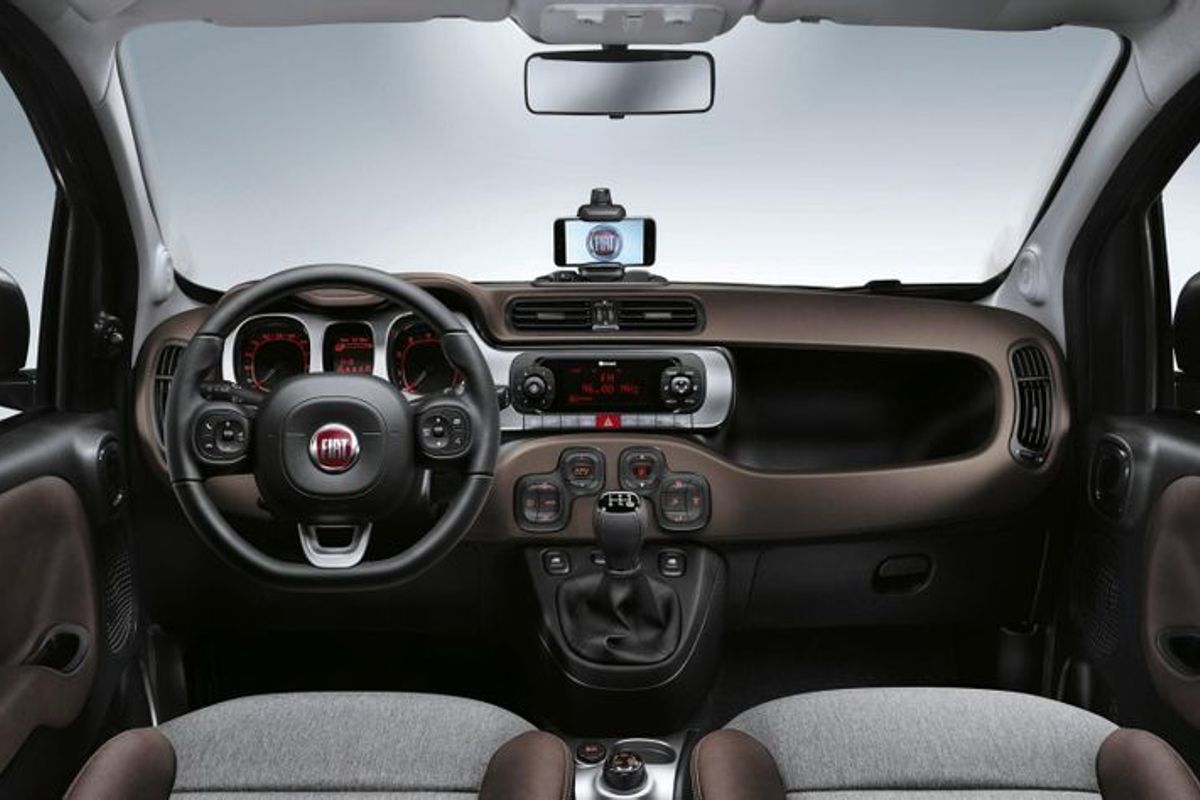
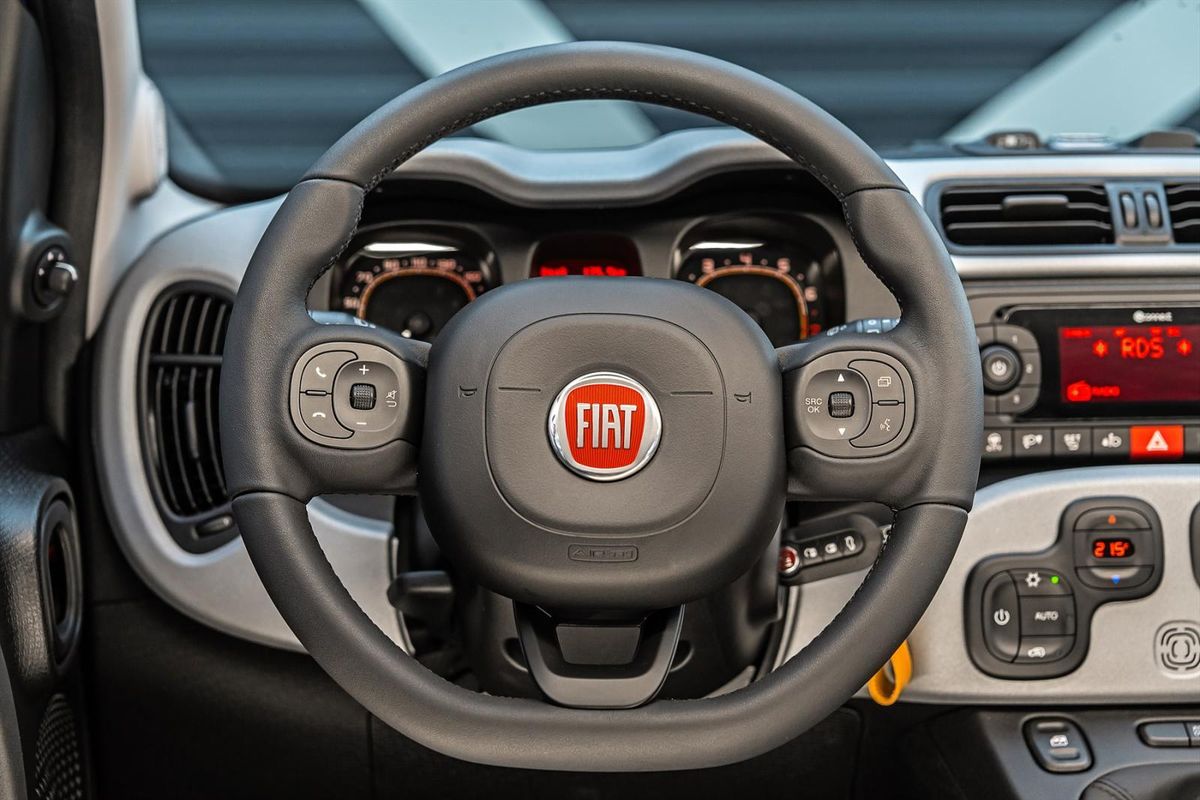
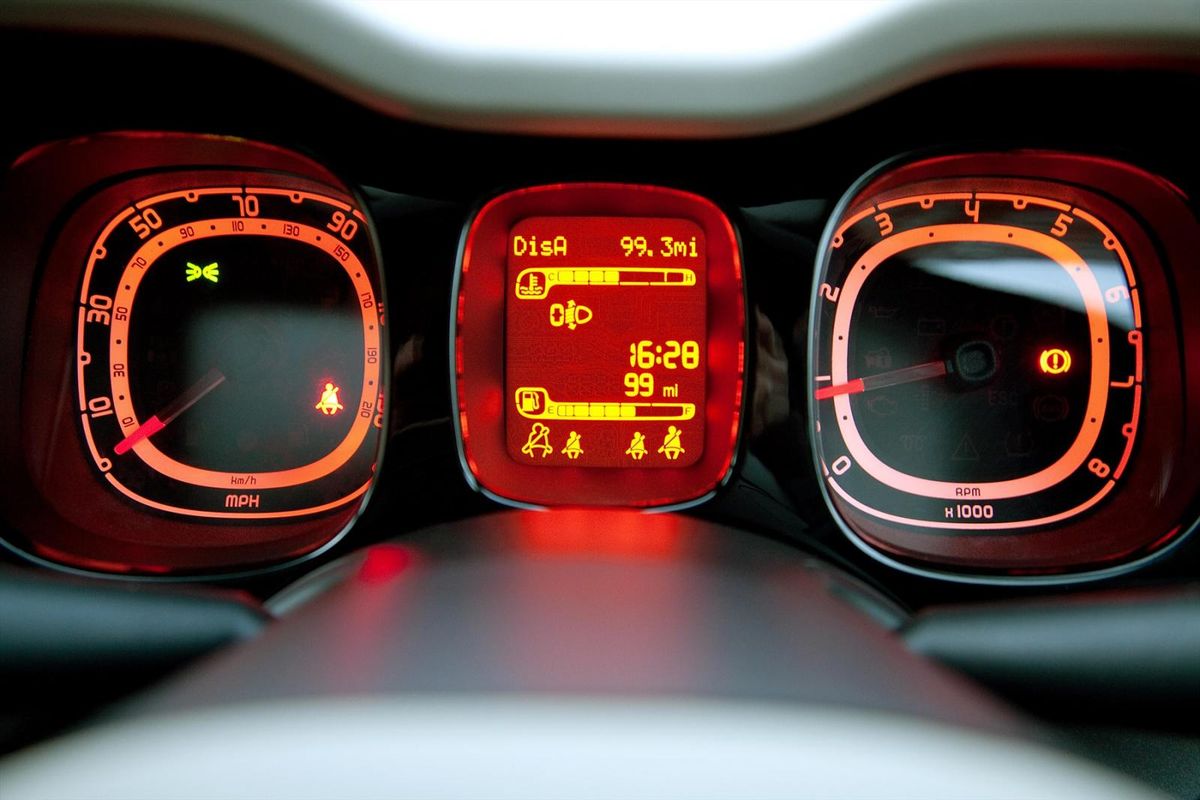
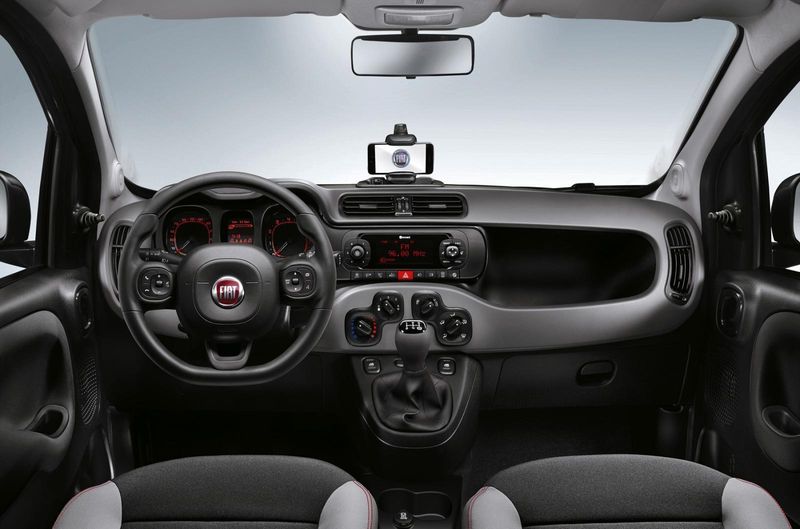
Fiat has ensured that the Panda's cheeky exterior design cues are echoed inside the cabin. The finished product is full of squircles ("square circles"), oblong air vents and cubed surfaces. The door trim is made from a durable plastic, which, upon closer inspection, was found to sport countless P, A, N, D and A letters on its surface. The cabin isn't what you would call premium, but at least the panels are not scratchy or gaudy-looking. The lack of reach adjustment on the steering wheel makes the perfect driving position very difficult to find, though.
No derivative econobox detailing in the Panda's interior; the quality of the finish is unremarkable, but feels suitably hard-wearing.
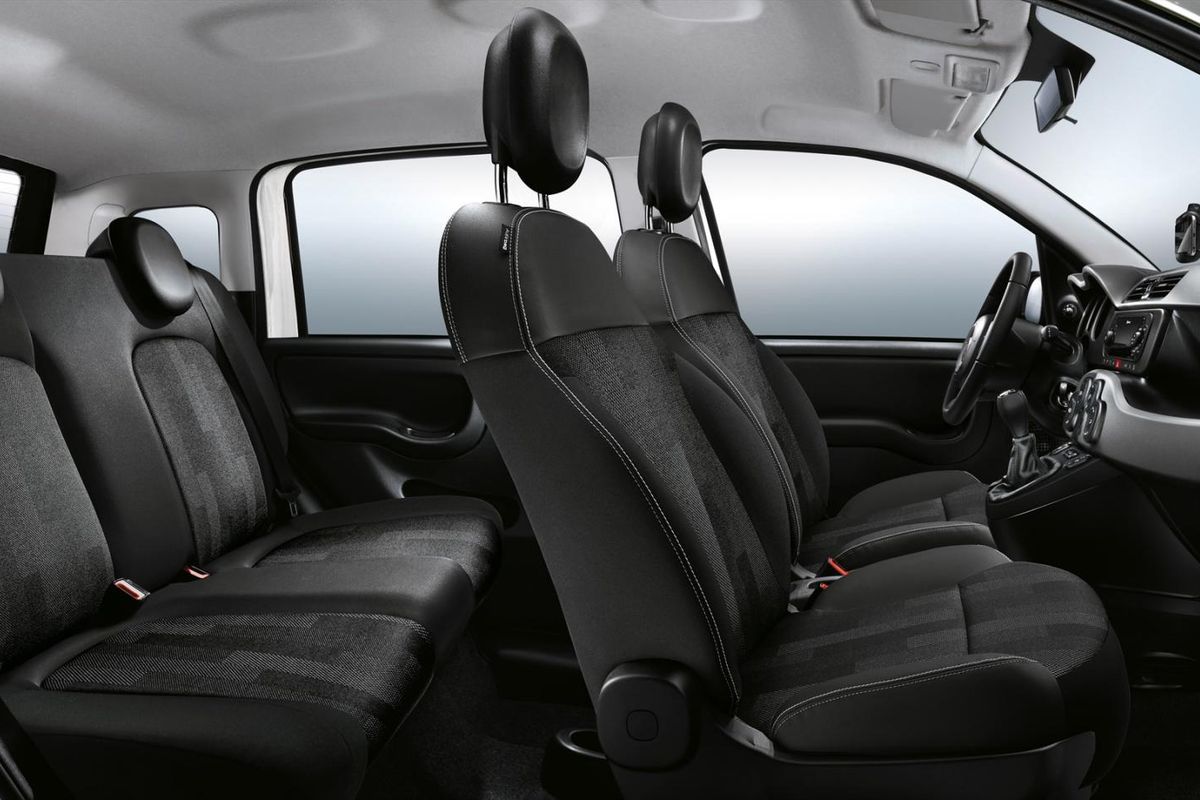
The passenger space, meanwhile, is cosy (as you'd expect from a city car), but it accommodated 4 adults with reasonable ease. What's more, the luggage bay is one of the biggest in its class (at 225 litres) and the rear seats can easily be folded down to provide no less than 870 litres of utility space.
In all but the entry-level Easy-spec Panda, a USB port and a smartphone cradle (at the top of the dash) are fitted. For those who choose to use their 'phones as in-car touchscreens, Fiat avails an app available that allows applications such as navigation, a fuel efficiency monitor and media playback.
Safety
It's a rarity in this segment to find a car with stability control, but the Panda comes standard with it as well as ABS and EBD. A compliment of at least 4 airbags can also be found in the cabin. A tyre pressure monitor is also standard across the range and all (but the Easy) have front and rear parking sensors. As with most Fiats, hill-hold is also standard on the Panda.
The safety specification of the Panda range is extensive – it even includes stability control.
Pricing and warranty
Pricing is quite competitive (the range starts at R184 900) although the standard Panda may find it difficult going against stalwarts like the Toyota Aygo, plus the aforementioned Sandero and Up! The Panda does trump the competition with its 3-year/100 000 km warranty and 3-year/100 000 service plan, however.
Summary
Like with its predecessors, fun, nimble handling is still inherent to the Panda's platform. It's an eager city car; in fact, it's almost as if that deep exhaust note wills the driver to point and squirt the Fiat round town. The ride is surprisingly good for a short wheelbase car and it handled the pothole ridden roads around the sugar cane fields of KZN with aplomb.
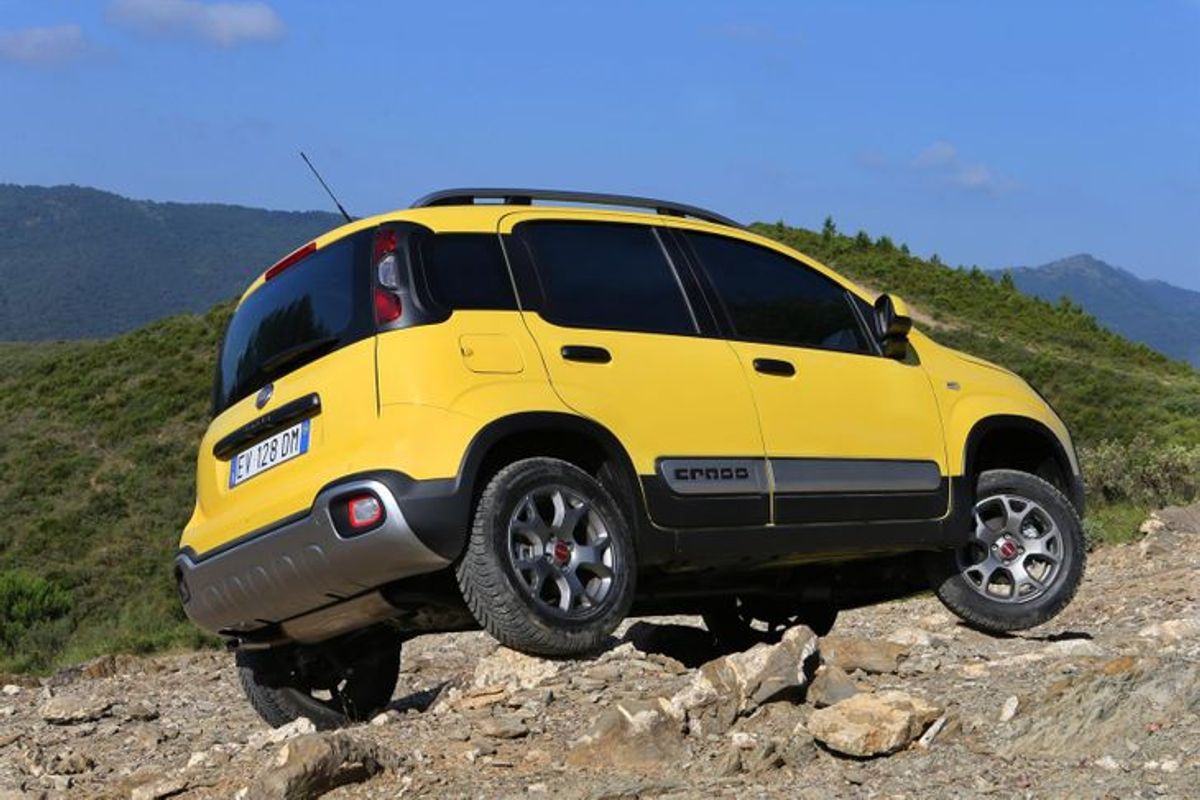
The Panda off-road derivatives are more than capable of dealing with sporadic low-grip road conditions…
A quick spin around an off-road course in the area proved that short wheelbase cars are the king of climbing. The 4×4 Panda has an automatic all-wheel drive system that sends power to the rear wheels when it deems necessary. The Cross model has selectable off-road modes and a hill descent control mode.
The centre diff can be locked and the rear diff is electronically controlled to provide traction where needed. The Panda popped up and over all in its path, maybe not with the grace of a Land Rover Discovery, but with relative ease. If you regard yourself an outdoor enthusiast who likes to traverse the bundu from time to time, the Fiat will probably exceed your expectations…
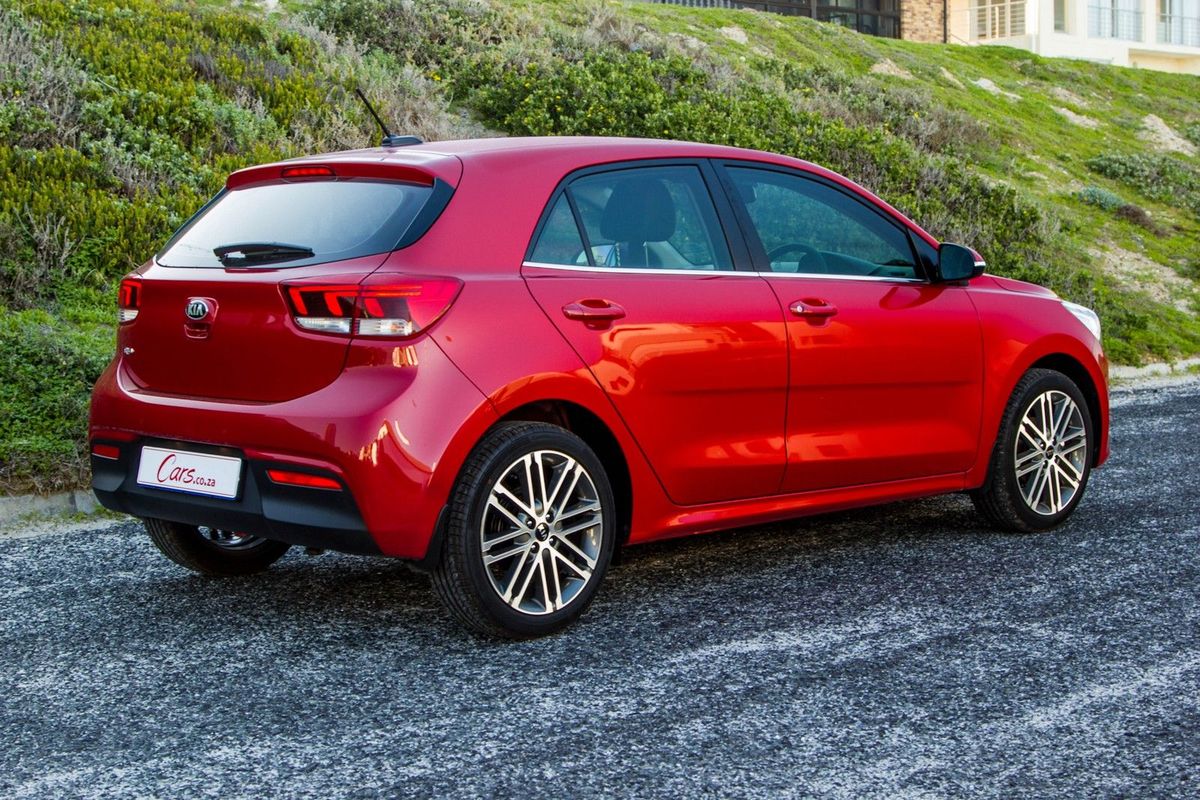
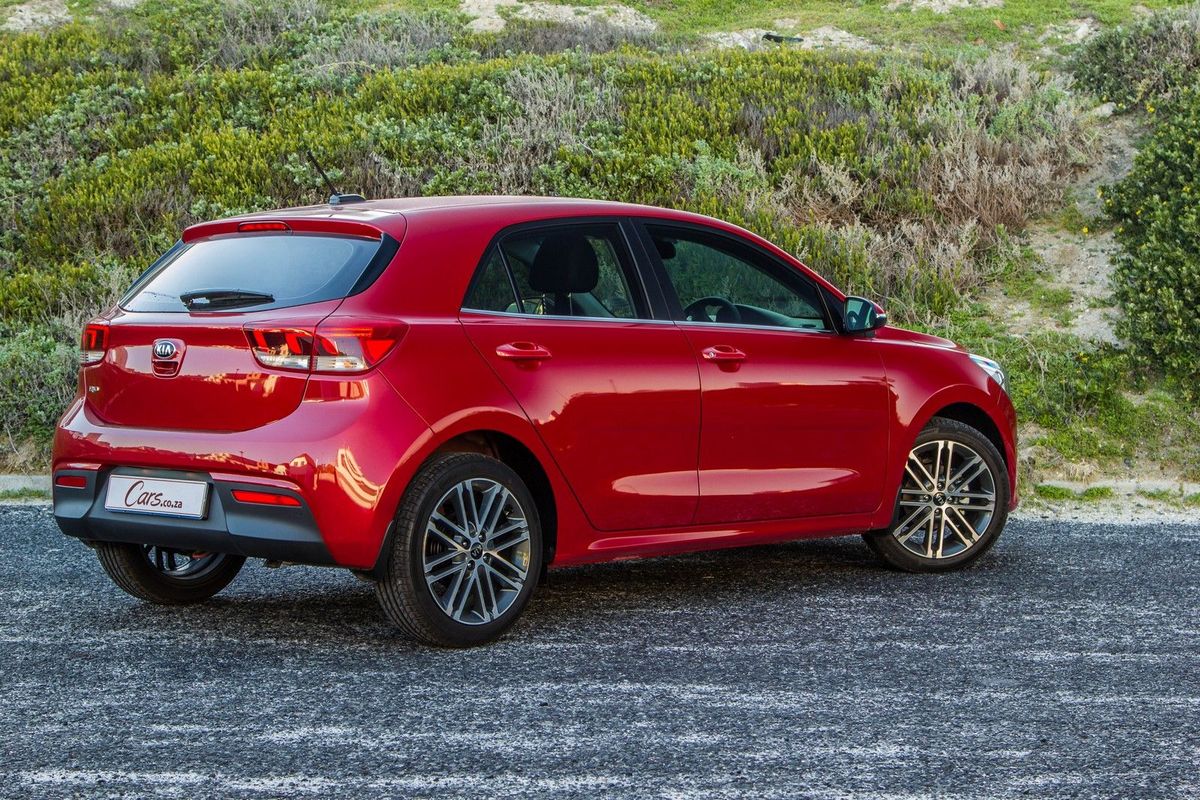
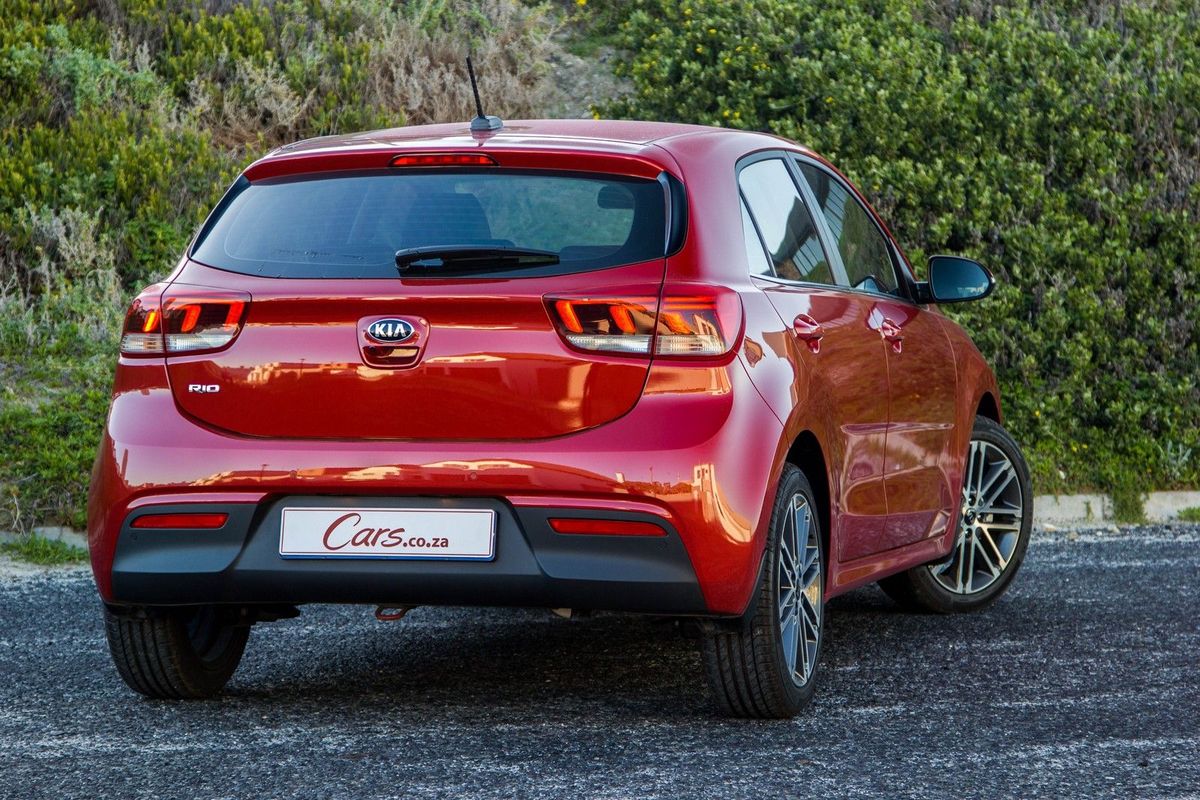
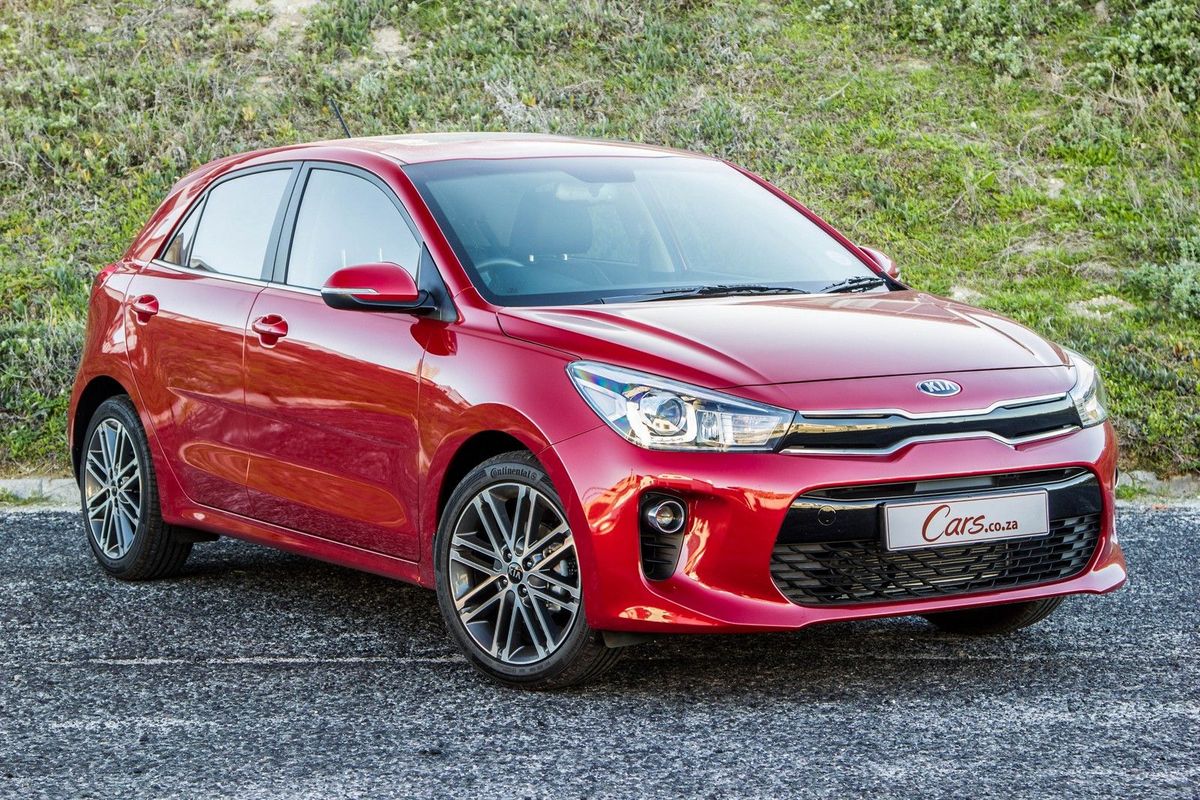
The all-new Kia Rio aims to solidify its success as a top-seller in the compact hatchback market. Next year, it will have to compete with new iterations of the Ford Fiesta and Volkswagen Polo. We test the top-spec Rio 1.4 Tec to see how it’s likely to fare against its upcoming rivals.
This review will provide you with insight on the new fourth-generation Kia Rio. Is it a good car? Read on!
We like: Practical and spacious, good infotainment system
We don’t like: Firm ride, lacklustre engine performance
Alternatives:
For better value for money: The Renault Clio GT-Line has better safety spec than the Rio and its torquey 1.2-turbo engine won’t have you holding up traffic as much as the Rio. It’s R10k cheaper too.
The obvious choice: The Volkswagen Polo 1.2TSI Highline is the top seller in the segment and despite its age, it still feels up to date. It’s marginally more expensive than the Rio but again, its turbo engine is more useable.
For a bit of fun at the same price: Opel Corsa 1.4 Turbo Sport makes mincemeat of the competition in terms of bang-for-buck and offers the most sporty looks in the segment.
What is the Kia Rio?
The Kia Rio has been around for a while and this is actually the fourth generation Rio. Only the third generation Rio managed to break into the market with any real significance.
This latest Kia Rio is claimed to have been improved in vital areas such as safety, in-car technology and ride and handling dynamics. If those assertions prove accurate, the Rio seems destined for further sales-chart success, but as we dig a little deeper, it’s not clear if the gains the Korean firm are crowing about are as substantial as Kia would like us to believe…
How does the Kia Rio fare in terms of…
Kerbside appeal?
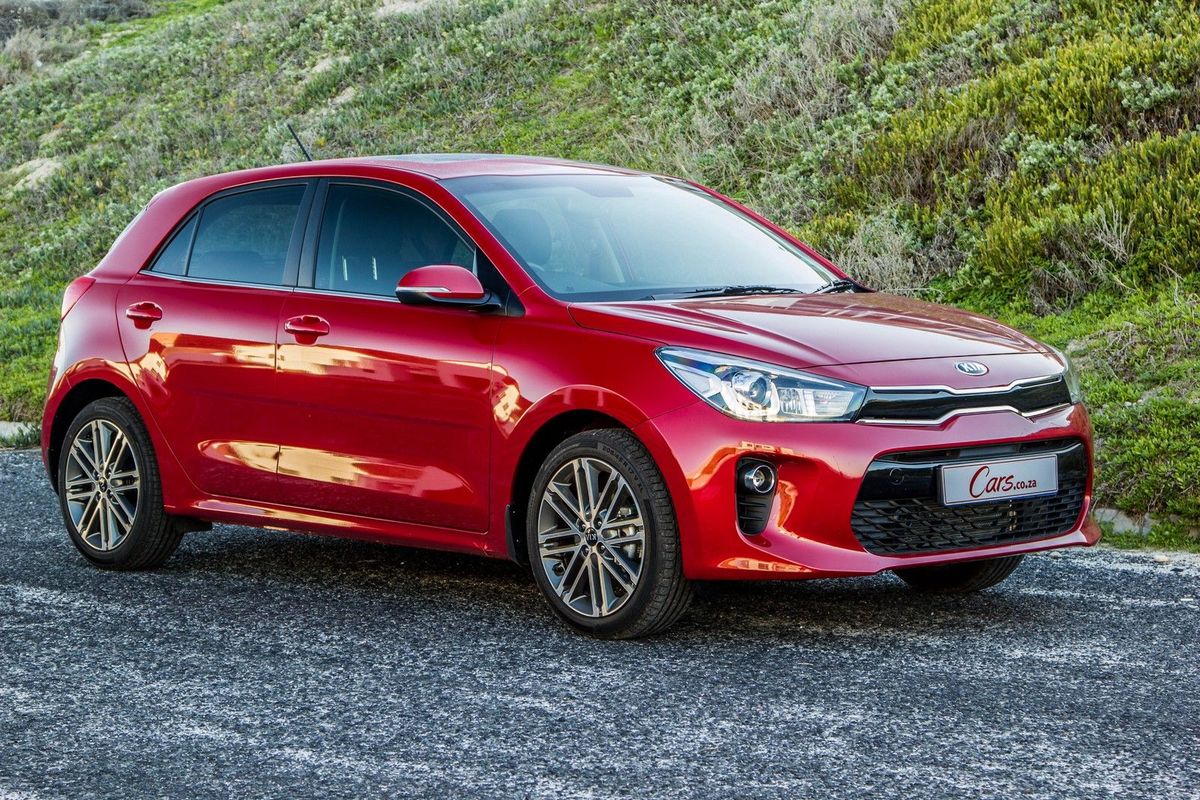
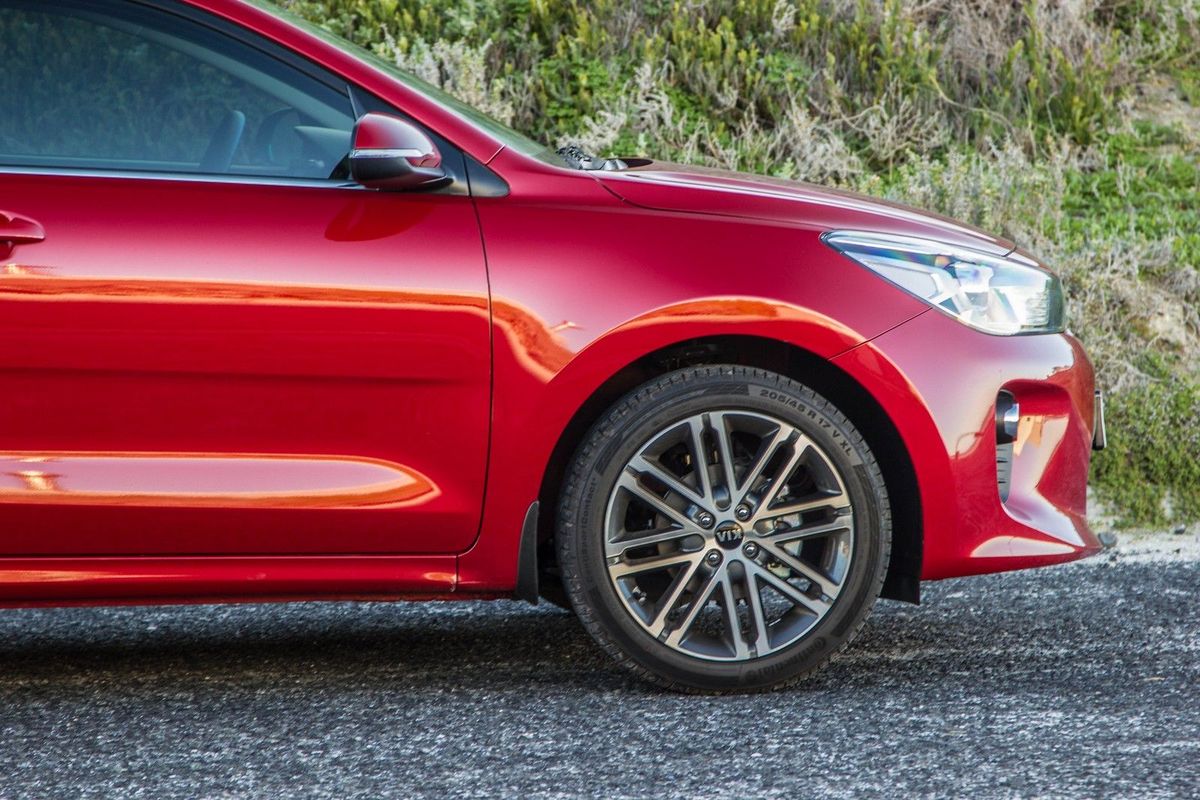
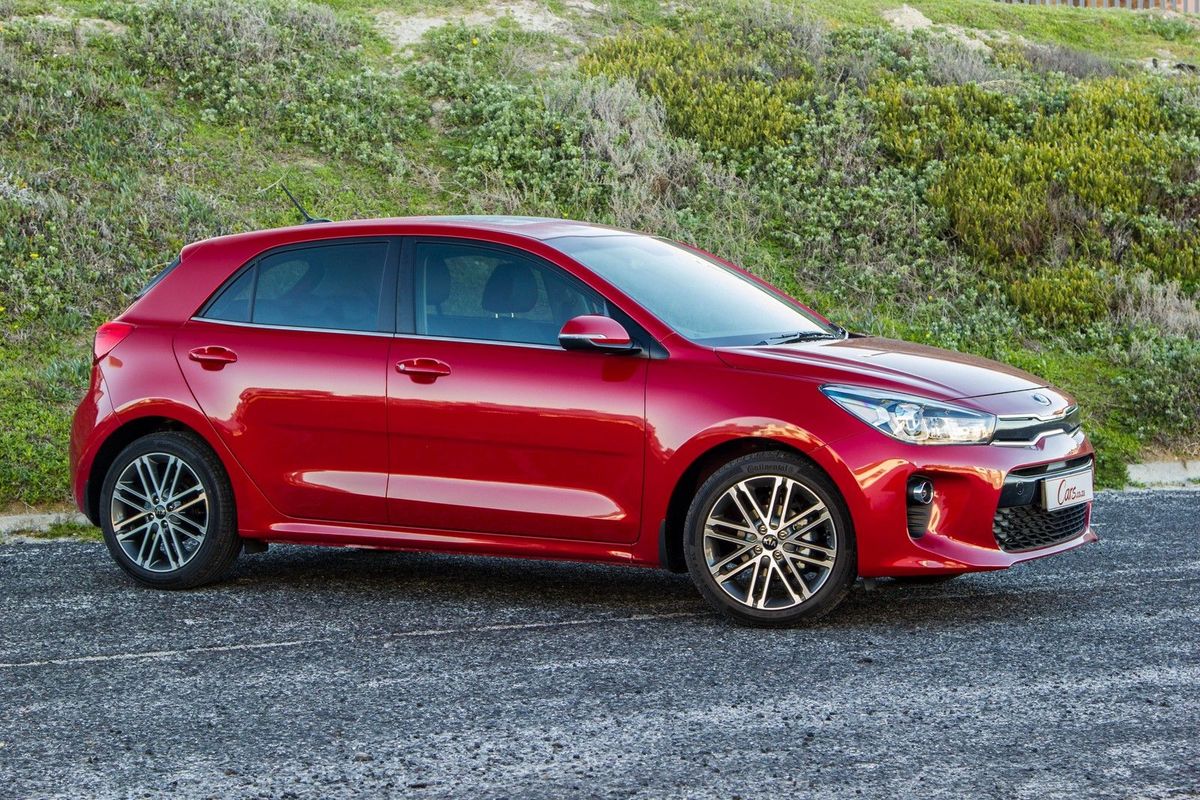
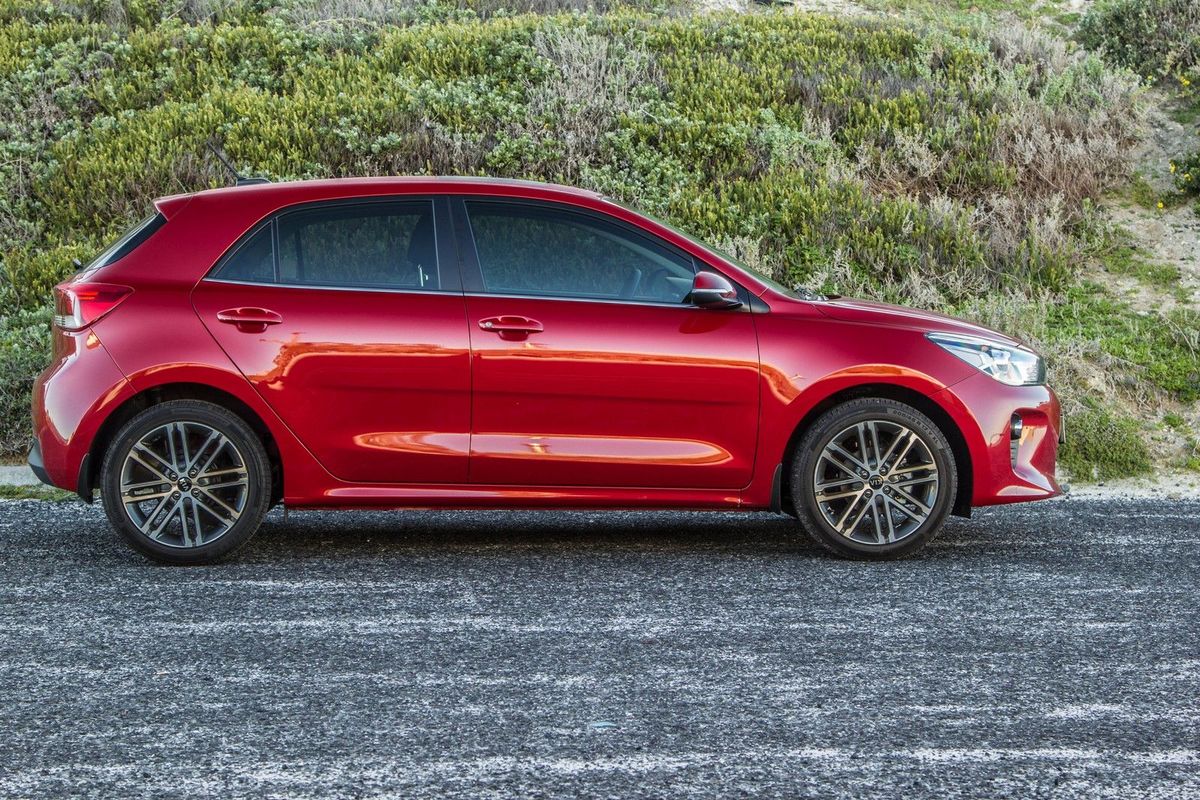
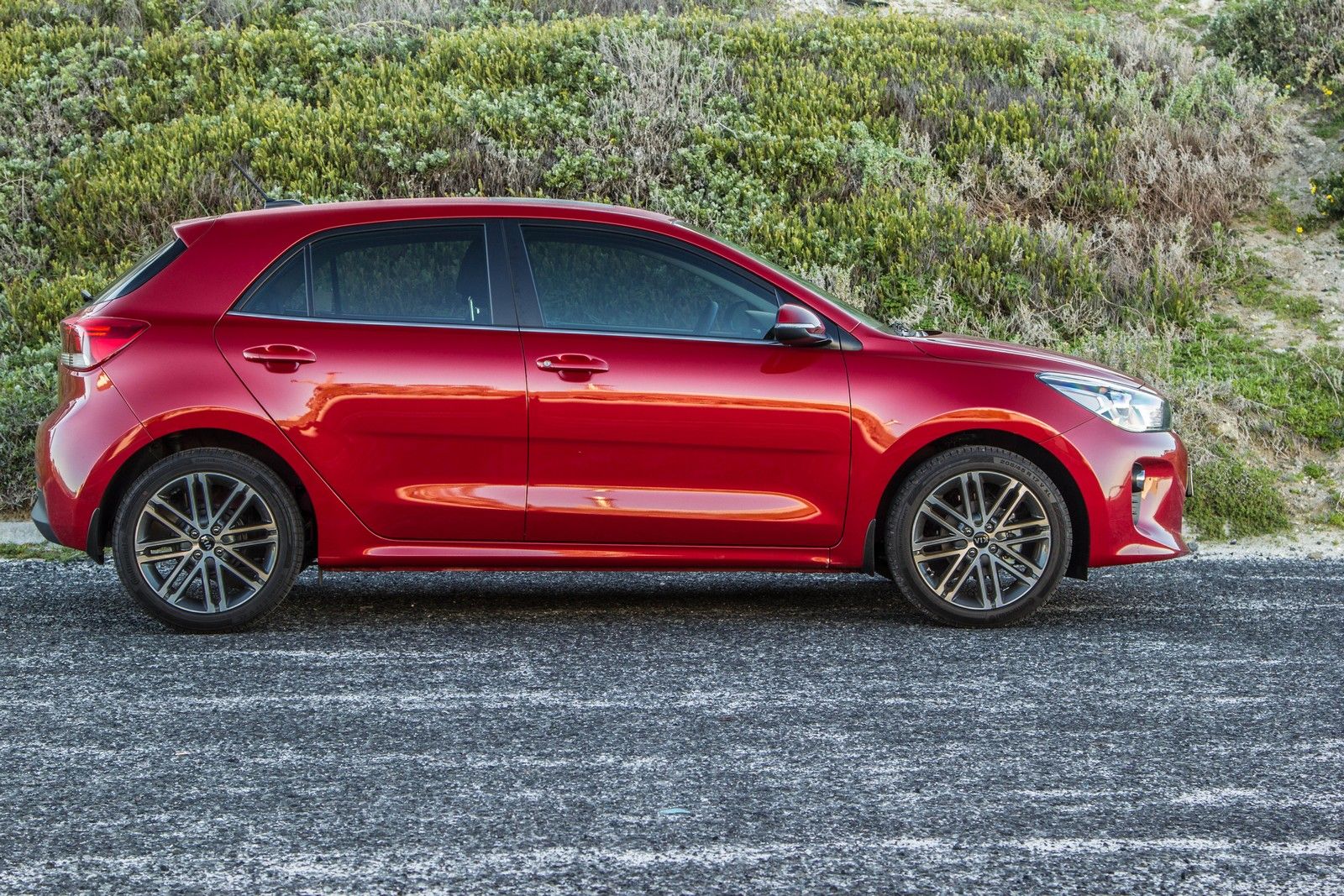
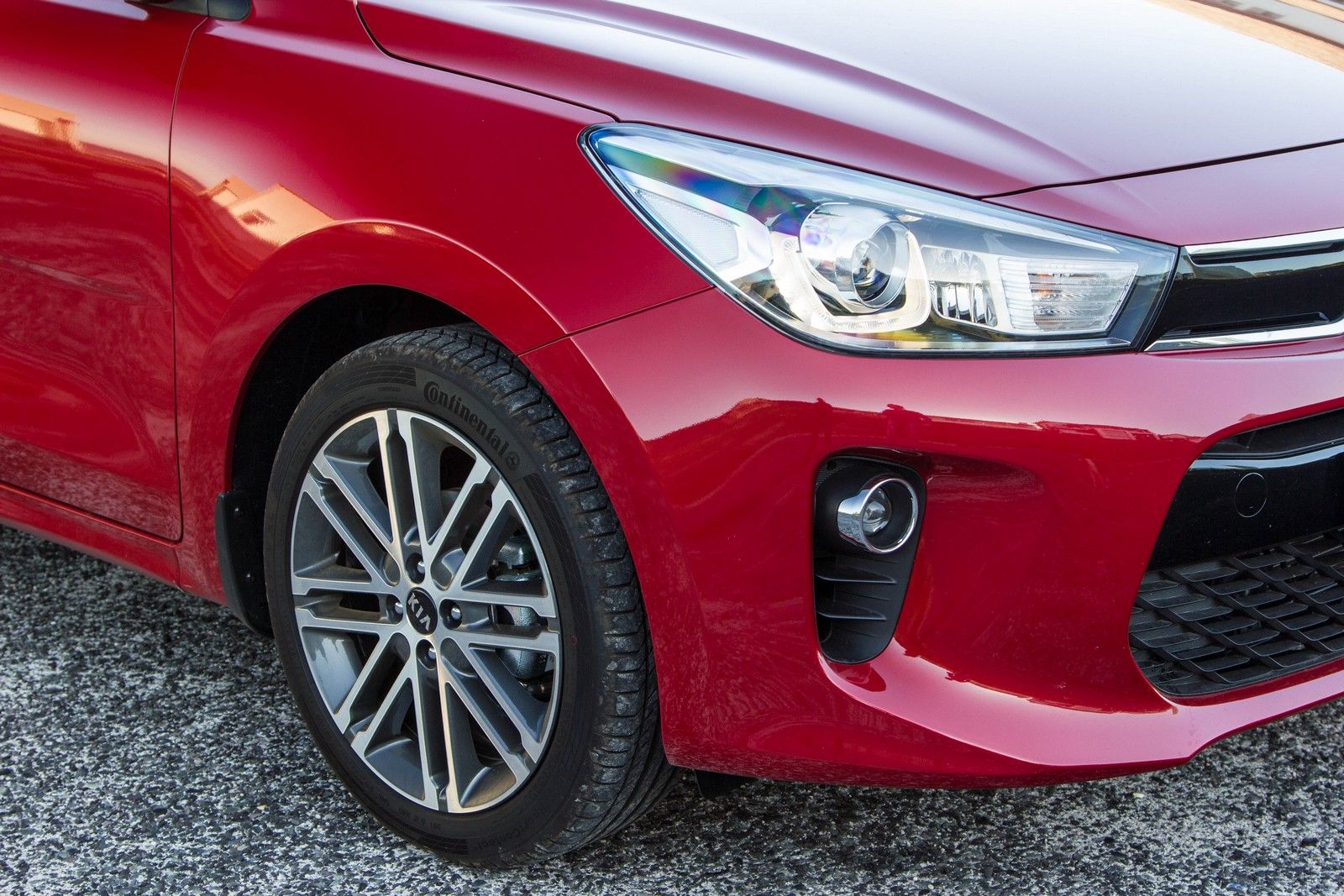
Slightly grown-up design, but it’s a good looker. 17-inch wheels and fog lights are standard on this 1.4 Tec derivative.
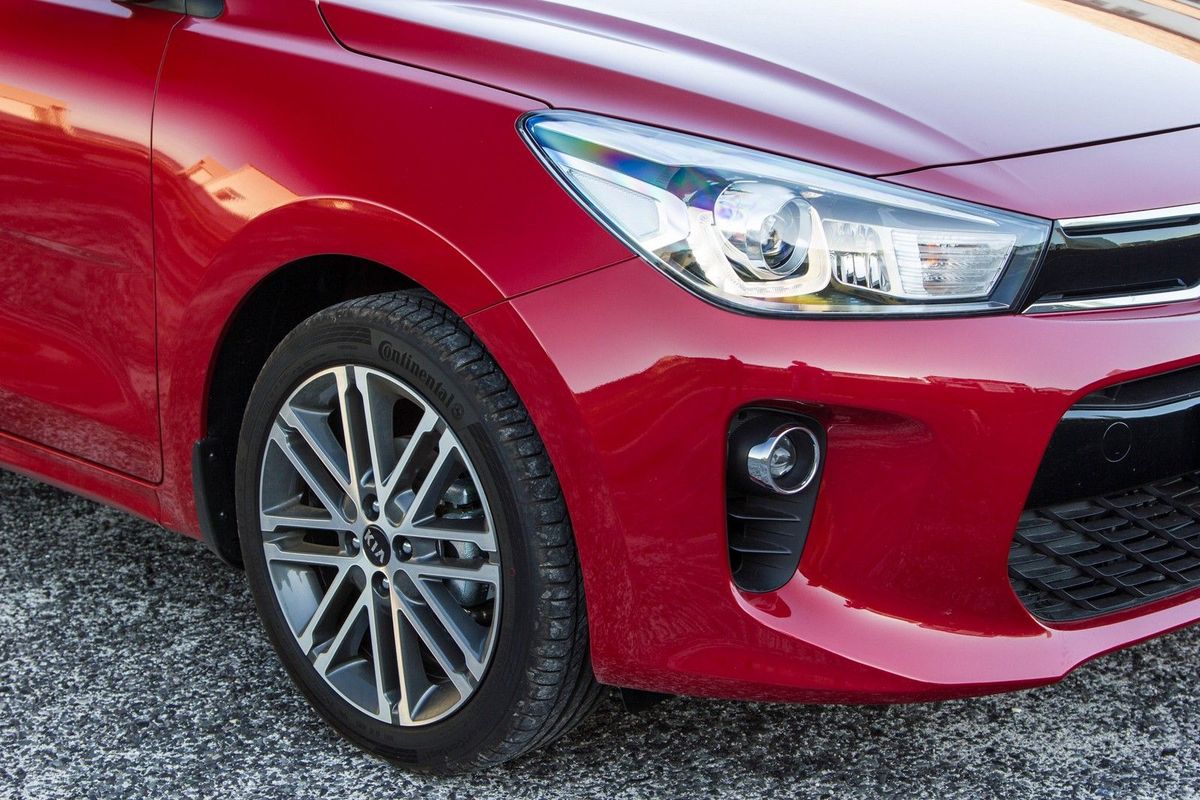
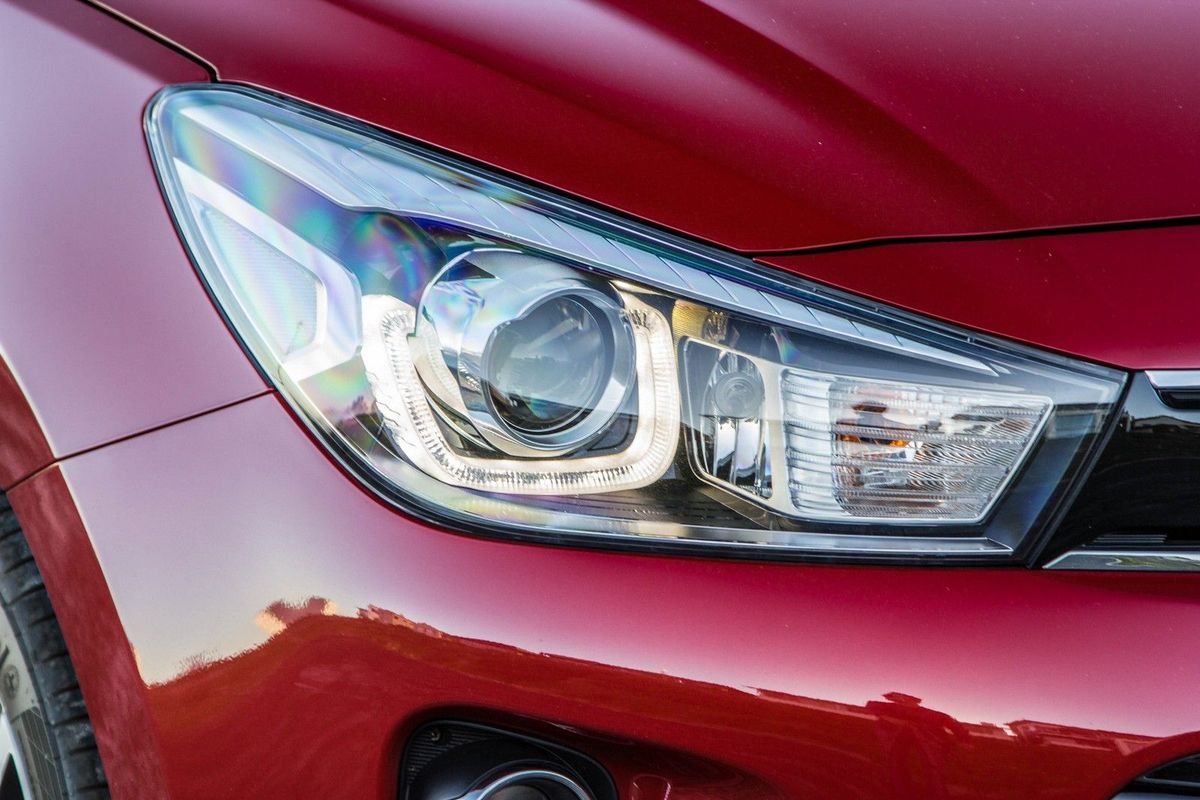
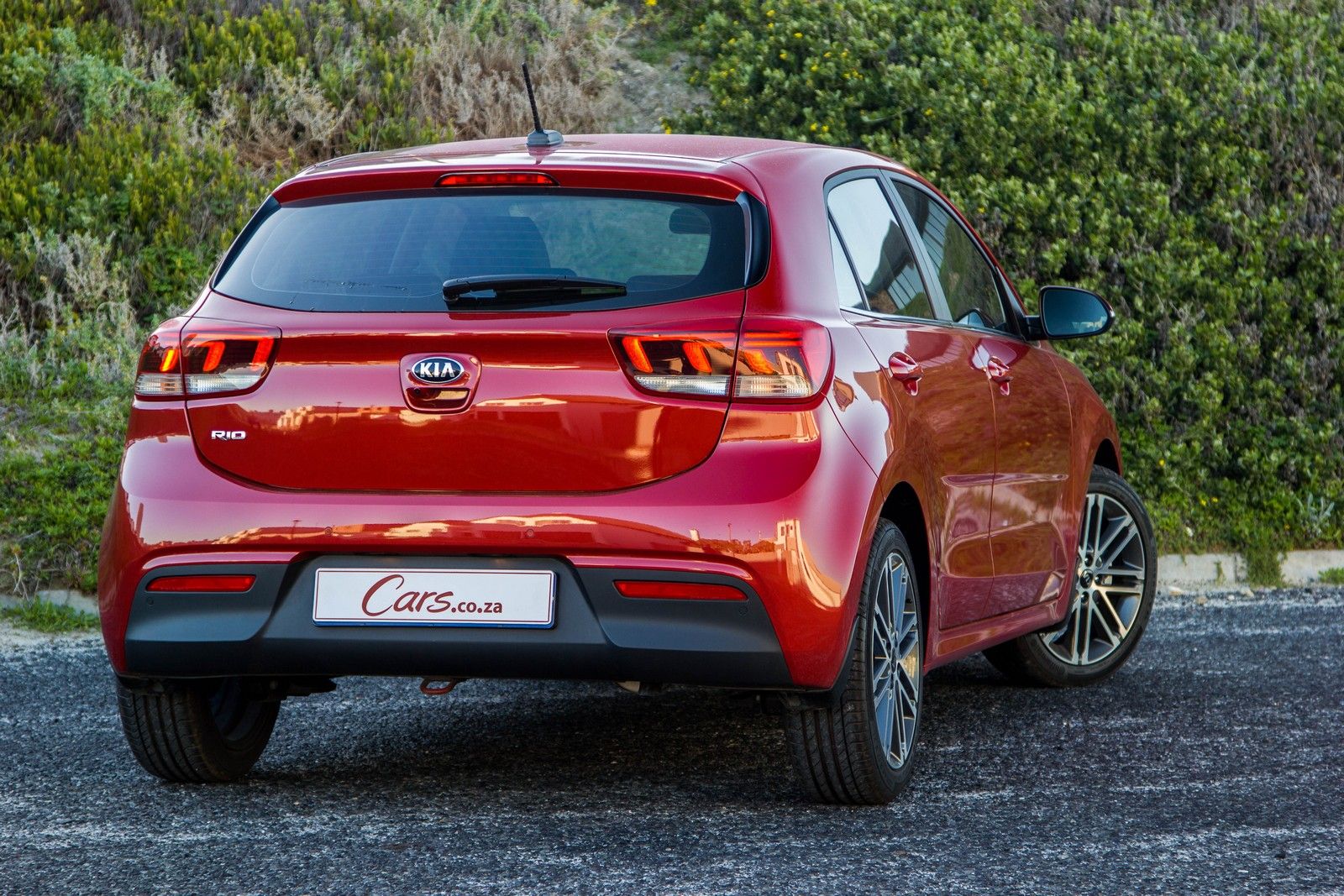
The Rio’s design seems grown up with nothing flashy or extremely stylish like we saw from previous designs of the 2010 Sportage or Optima. Its exterior treatment is inoffensive, a bit like the Polo, with no real standout “wow factor”. It does have some good standard kit on offer in this Tec trim though. You get 17-inch wheels, LED headlights, fog lights and electrically folding mirrors. A lot of those features sit on the optional extras list of the competition. The new, thinner ‘tiger nose grille’ is the only real indicator that this is, in fact, a Kia.
What is the Kia Rio like to drive?
Kia has persisted with naturally aspirated motors for the new-generation Rio where almost all of the competition feature turbocharged engines. As a result, the 74 kW and 135 Nm of torque offered by its 1.4-litre engine is well below what we have become accustomed to. The lack of torque means the engine feels lifeless at the bottom of the rev range and only delivers meaningful acceleration when you get nearer to 4 000 rpm.
Of course, you don’t always need to race everywhere like you’re in a Fast & Furious film; for pottering around in traffic and sticking (mostly) to the left lane, the Rio’s engine will suit commuters just fine.
LED headlights are a premium feature and unfortunately, what’s under the bonnet hasn’t got the go to match the show.
You would expect the fuel consumption figure to be impressive considering the lack of grunt, but the claimed consumption figure of 5.8L/100 km is actually higher than those quoted for the comparable Polo and Clio. However, we did find that the real life figure we experienced (6.3 L/100 km), is a bit lower than what those rivals managed.
Practicality?
While the Rio’s styling has grown up, so has its external size and interior space. For a small hatchback, the 325-litre luggage capactiy is bigger than those of its closest rivals. The rear seats also fold flat to provide useful utility space. Rear passenger space is fair, but it can be a bit of a squeeze to sit behind a taller driver.
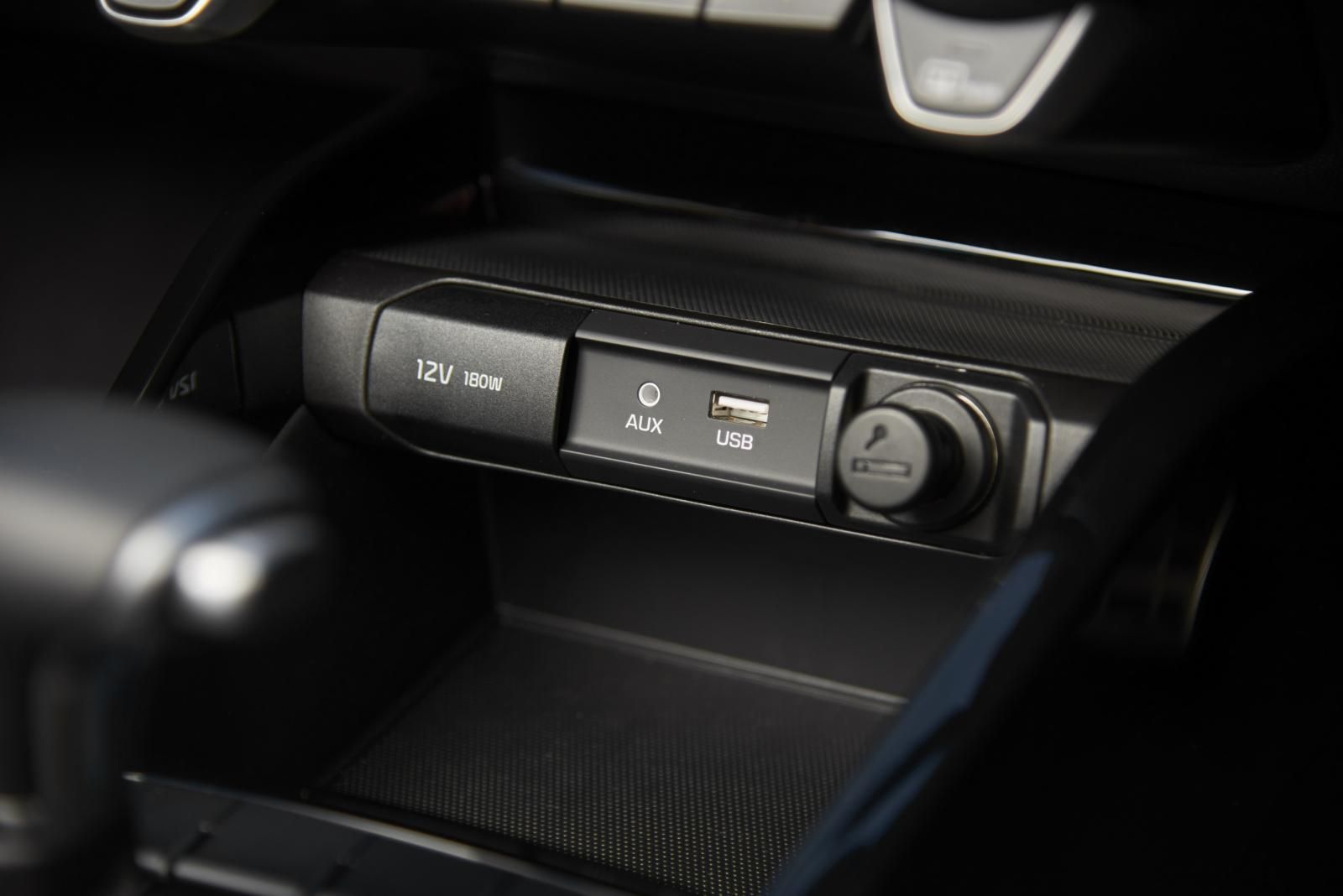
Neat two-tier storage solution means you can separate your phone from scratchy items like keys.
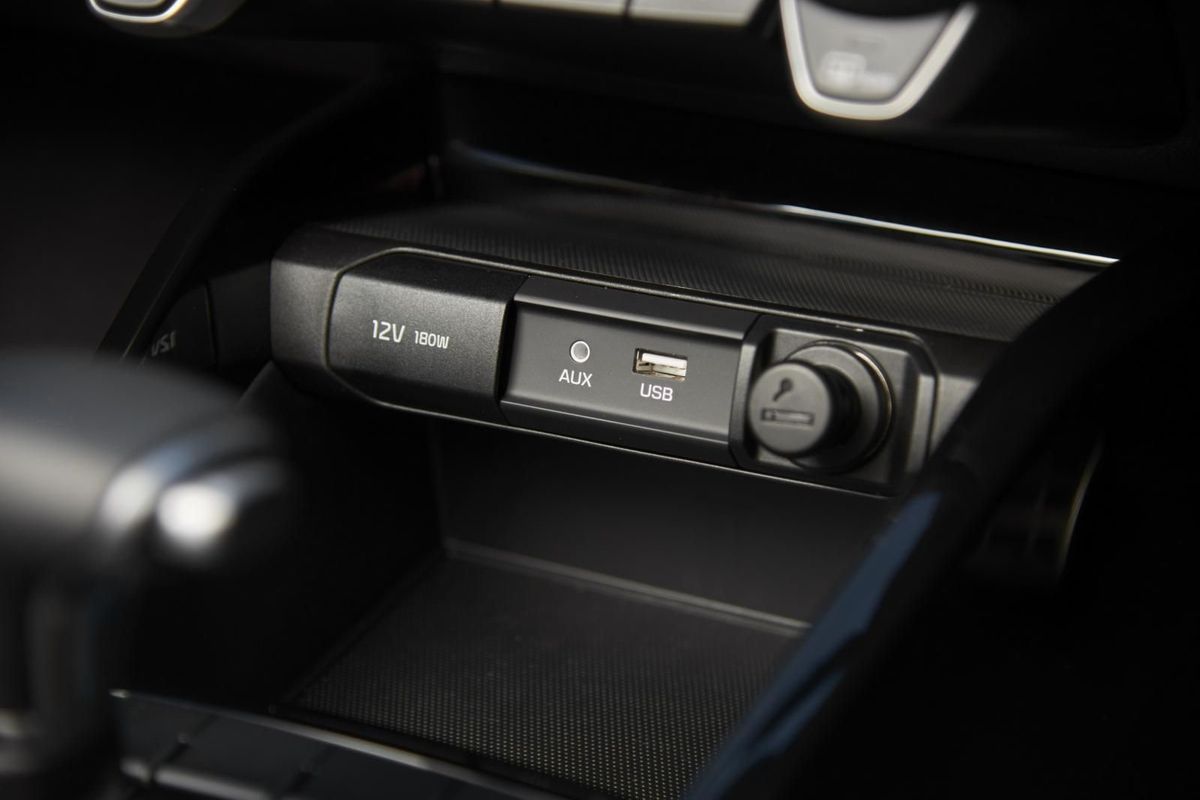
There are 2 cupholders in the centre console and a large, two-tiered storage area in front of the gear lever. This means you can place your phone on the top tier and then keys and other paraphernalia below, which means the danger of scratching your smartphone’s screen is greatly diminished and there is no need to fumble around when you’re trying to grab the item you want. It would be nice if that storage bin liner was a little grippier though as keys tend to slide from side to side as the car corners or brakes, which generates an annoying sound.
Ride quality and driving experience?
In trying to improve the driving experience of the new Rio by stiffening the front end up, Kia has made the ride a trifle too stiff. The 1.4 Tec is jarring to drive on a bumpy road and you feel every crease in the tarmac through the firm suspension. The extra stiffness has made the front-end quite responsive and it turns in quickly with well-weighted steering. Unfortunately, the Rio doesn’t really have the power to deliver an exciting drive, in spite of its sporty bent. We think that a focus on comfort or a more sporty engine would have suited the Rio better.
Interior ambience?
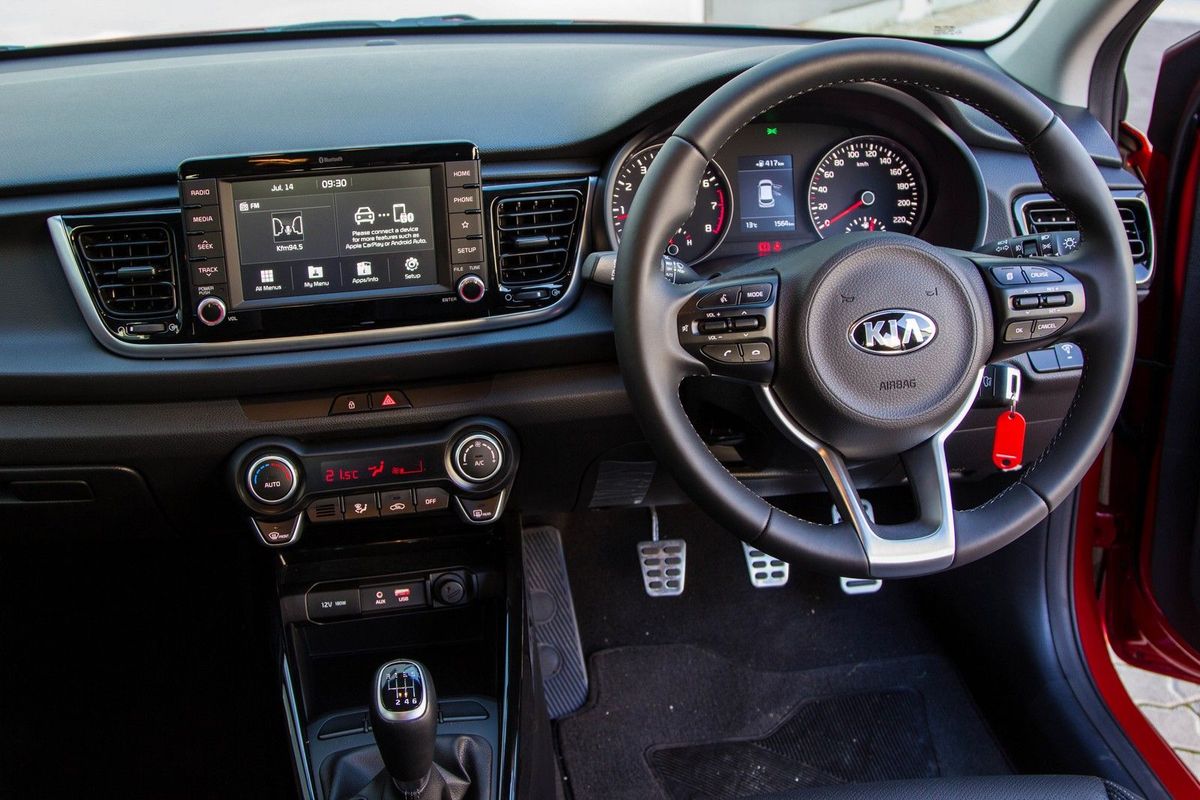
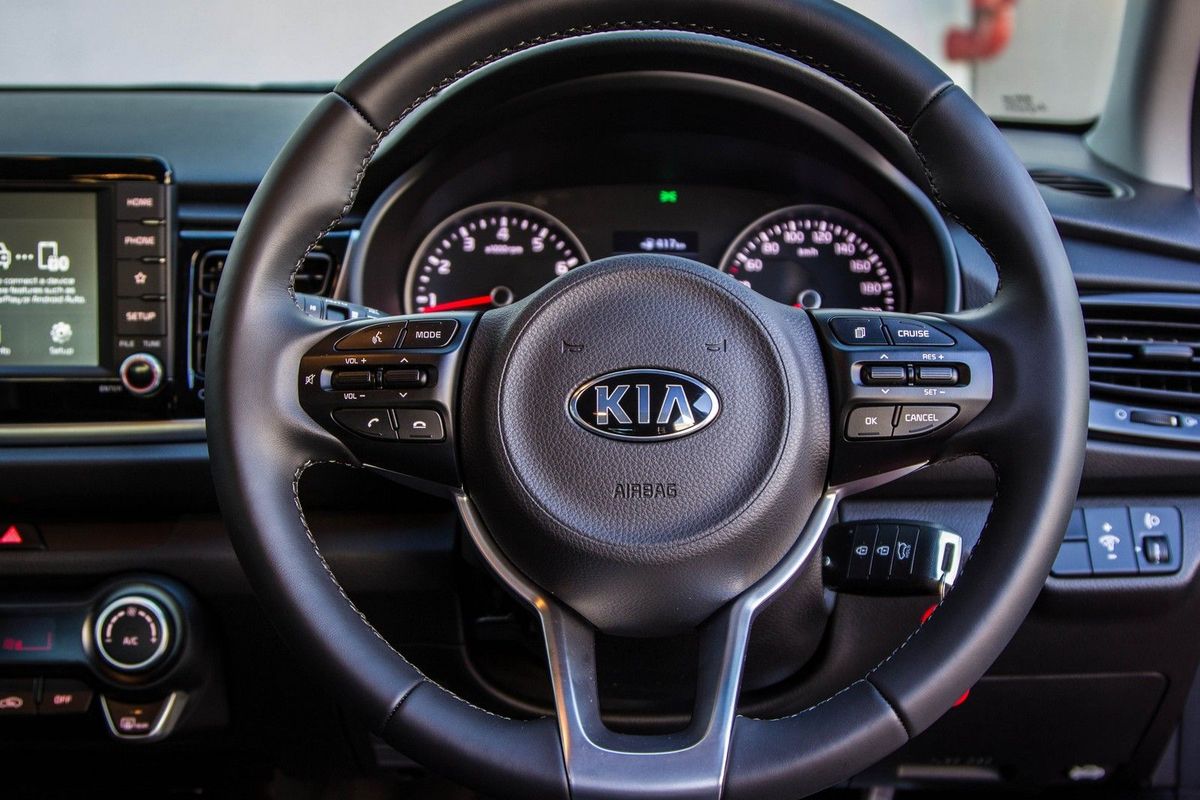
The continued improvements in build quality and upmarket materials have trickled down to the Rio well. It feels solidly put together and the shut lines are the tightest and most structurally rigid in the segment. Leather trim is standard in the Tec and that’s a one-up on its rivals. The steering wheel and its controls feel more substantial/premium than the previous model’s too.
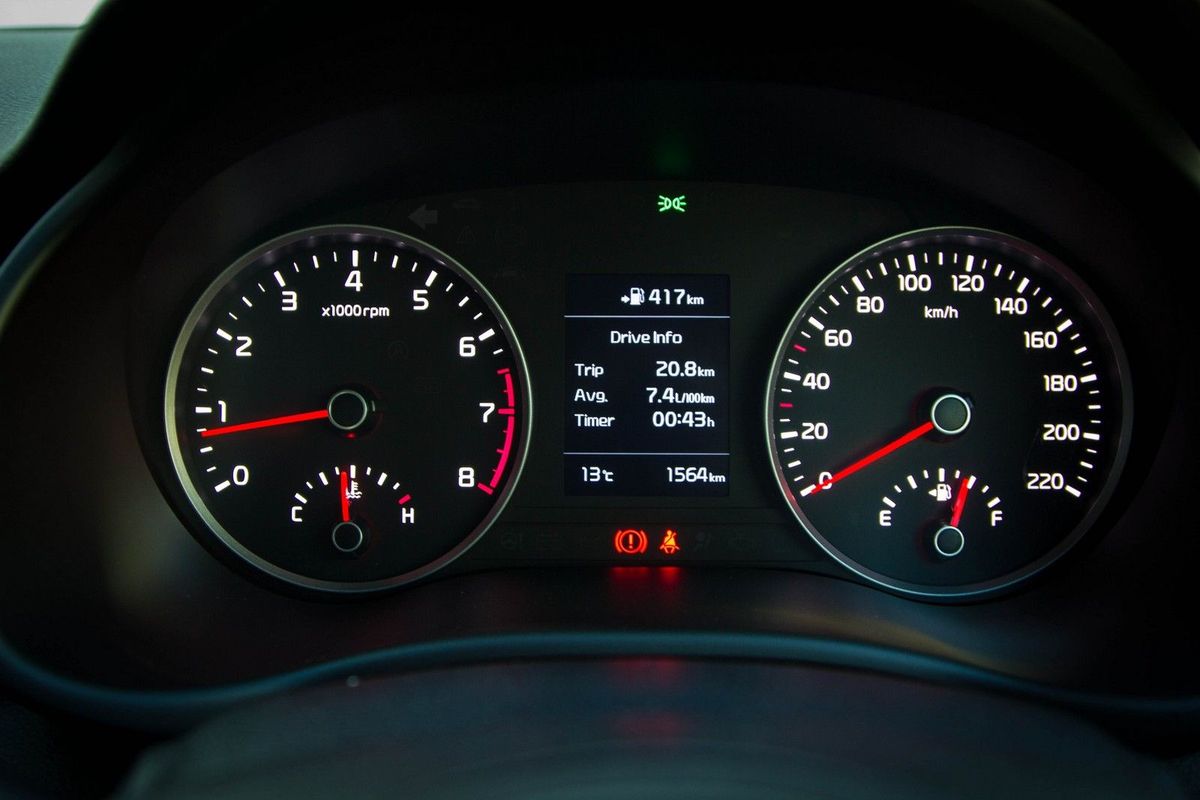
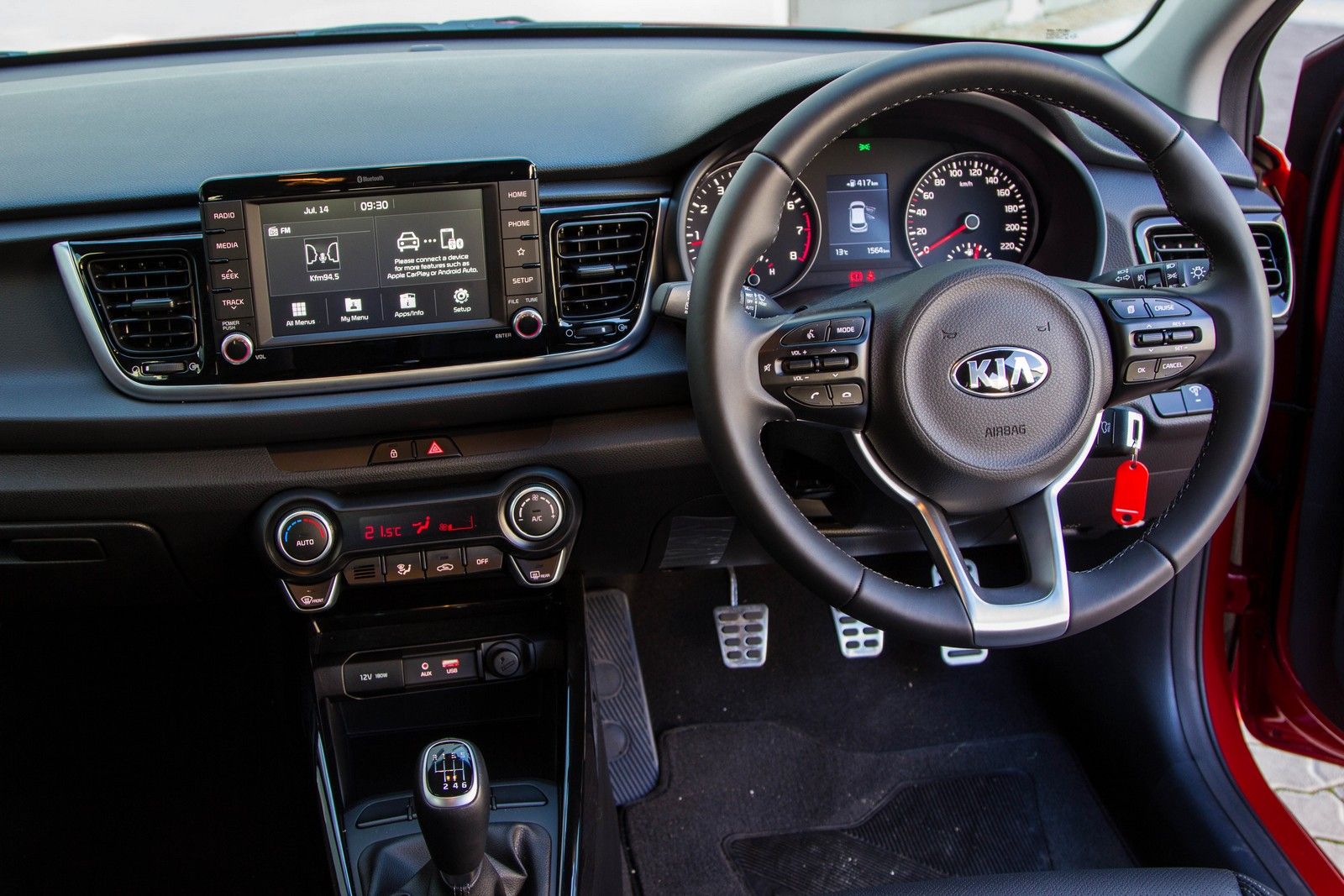
Well-specced interior with a good infotainment system and solid build quality. It’s the highlight of the new Rio.
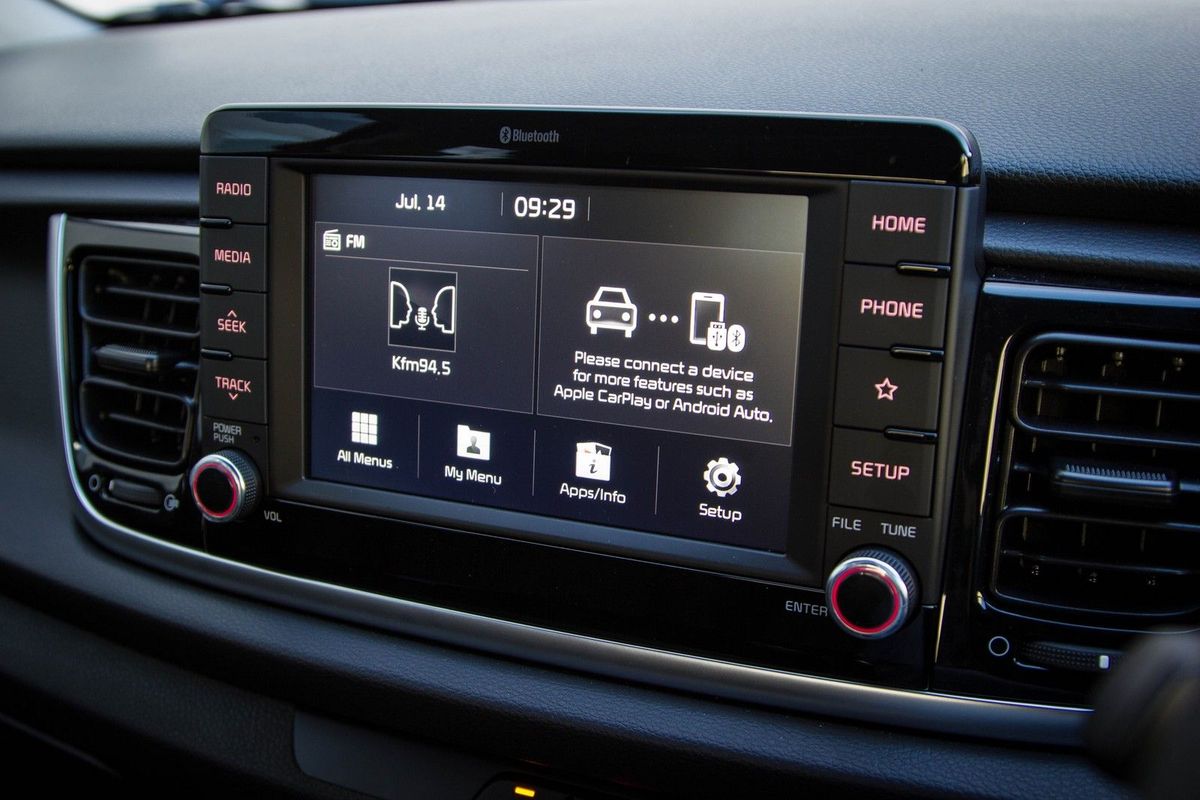
The (touchscreen) infotainment screen is now as up-to-date is it gets with Apple Carplay and Android Auto functionality available. The menus are simple to navigate and its unique operating system doesn’t make it feel like the generic Windows system that Kia’s sibling Hyundai uses in many of its products.
Watch Cars.co.za technical contributor and #CarsAwards judge Nafisa Akabor demonstrate Android Auto in the new Rio (clip courtesy ofnafisa.co.za)
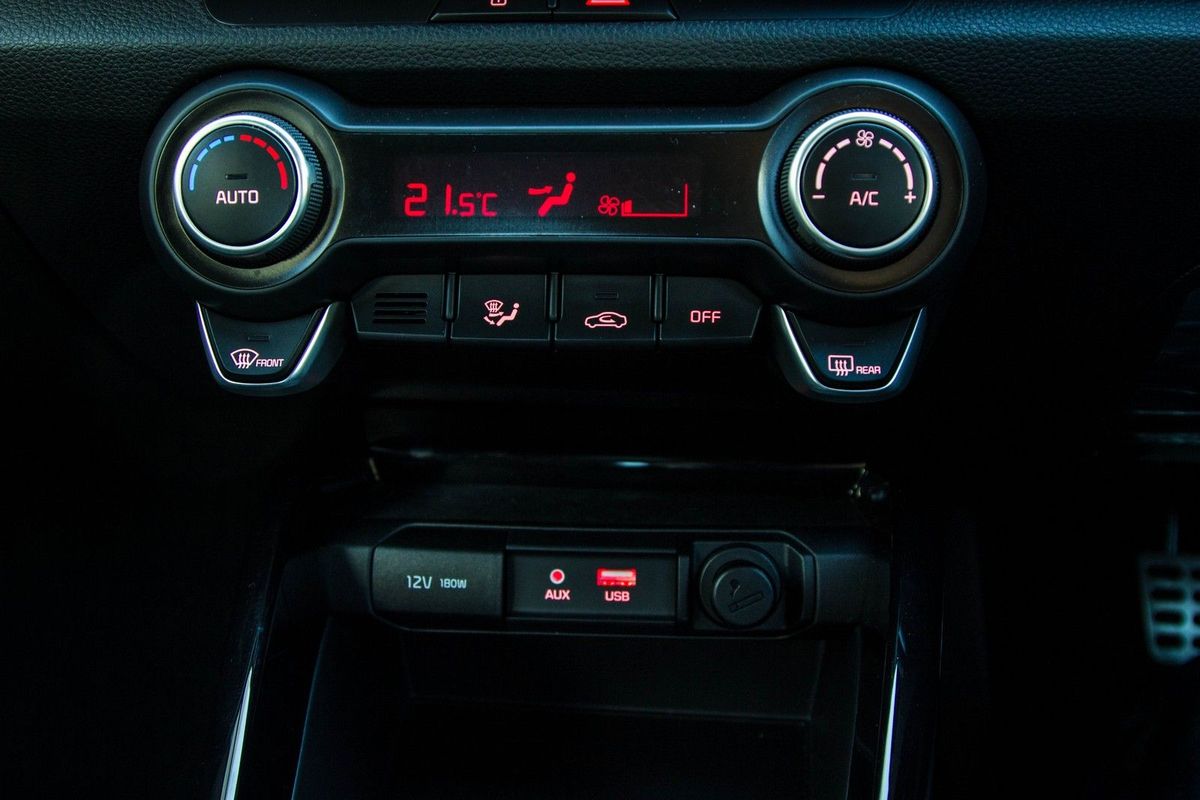
The only real criticism of the interior is the apparent lack of specification on our local models. Just in front of the gear lever is a plastic section of switches, all of which have been disconnected/blanked-out from use. We’d imagine that if you’ve paid dearly for a top-spec Rio and then have to look at that bare console every day you may feel a little short changed…
Safety
Kia South Africa does have its problems in getting well-specced cars from Korea. That means that none of Kia’s local models have stability control, and that’s a big mistake. The Tec comes with 6 airbags, but wouldn’t you want to avoid an accident rather than having to rely on airbags to save your life? ABS and EBD are also standard across the range.
Some of the less talked about safety features like automatic sensing lights, rain sensing wipers, park distance control and cruise control are all standard on the Rio Tec.
Overall, the Rio may just be good enough to sell well, but by the time the new Polo and Fiesta get here, it will struggle unless the package is enhanced.
Pricing and warranty
Kia no longer sees itself as a budget-beating brand and is proud to say that it competes at the top of the price cap in the segment. The 1.4 Tec manual is priced at R274 995, which is nearly the same as a Polo Highline and R20k more than the Renault Clio GT-Line.
Kia offers an excellent warranty and service plan on the Rio with a 5-year/unlimited km warranty and a 4-year/60 000 km service plan.
Verdict
The new Kia Rio’s most outstanding feature is its interior. It may not be as flashy as something like the Clio, but it’s solidly built, covered in leather and the infotainment system is bang up to date. The engine doesn’t deliver enough torque to make overtaking or acceleration particularly brisk, but it has just enough grunt to get around town comfortably.
Also consider that the 1.4 Tec’s ride quality is on the less-than-absorbent side for what is essentially a city car, which could become annoying to live with on a daily basis. And, if safety is high on your priority list, then the lack of stability control is disappointing.
For now, the Rio offers reasonable value-for-money, albeit at the upper end of the price spectrum. With what the upcoming Fiesta and Polo have to offer, the Rio will likely find itself in a sales battle with superior products in about a year’s time. It’s an impressive product, but it does not move the compact hatchback market forward in a significant enough manner.
No, the Kia Rio was discontinued in South Africa in the first quarter of 2024. The 4th-generation model’s production did not include a right-hand-drive version for the South African market. It is now only available as a used vehicle.
What engines were available in the Kia Rio in South Africa?
The Kia Rio in South Africa was sold with two naturally aspirated petrol engine options: a 1.2-litre (62 kW, 120 Nm) and a 1.4-litre (73 kW, 135 Nm).
Is the Kia Rio a good used car to buy in South Africa?
The Kia Rio has a reputation for being a reliable and economical choice, making it a popular option on the used car market. Many late-model examples may still have the balance of a 5-year/unlimited-kilometre warranty, which provides extra peace of mind for buyers.
What are the main alternatives to the Kia Rio?
Direct competitors and similar alternatives to the Kia Rio in South Africa include the Volkswagen Polo, Hyundai i20, and Ford Fiesta.