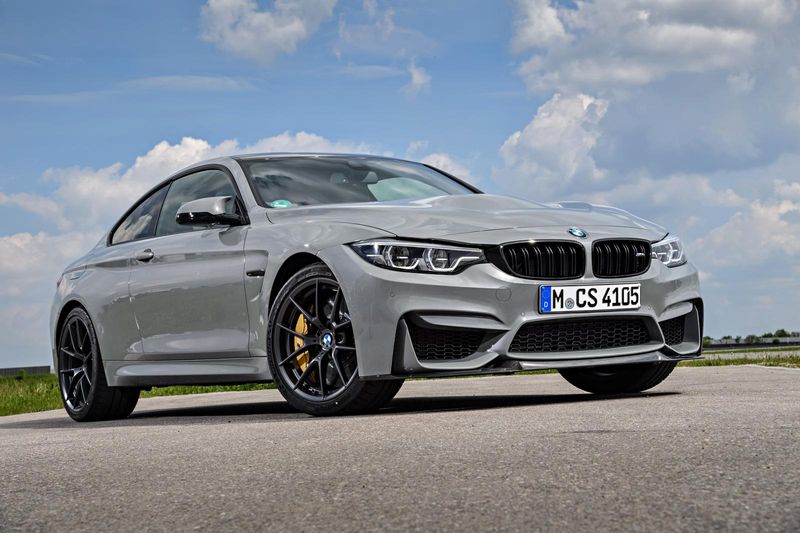
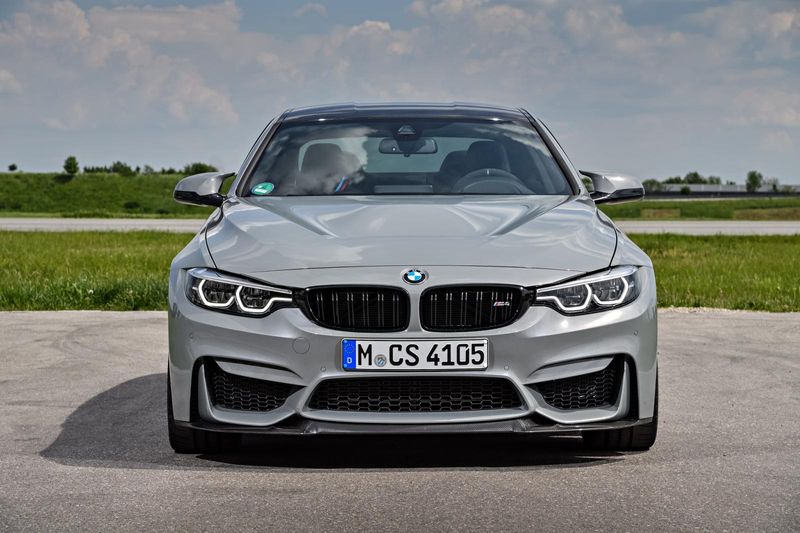
The Mini JCW Clubman is now available in South Africa! Take a look at specs and pricing for the newcomer…
Mini South Africa has expanded its Clubman range in South Africa with the addition of the John Cooper Works Clubman. According to Mini, the JCW Clubman “combines authentic race feeling with the most space, everyday practicality and long-distance suitability" ever seen in a JCW model.
The JCW Clubman is powered by a turbocharged 2.0-litre petrol engine offering 170 kW and 350 Nm of torque and it’s mated to a 6-speed manual transmission while an 8-speed automatic transmission is offered as an option. The JCW Clubman also features a new generation ALL4 all-wheel drive system to ensure maximum traction. Both the manual and automatic accelerate from zero to 100 kph in 6.3 seconds. Mini claims a fuel consumption figure of 7.4 L/100 km for the manual while the automatic is more frugal with a fuel consumption figure of 6.8 L/100 km.
Key Features
The MINI JCW Clubman's rear doors open automatically and the optional 40:20:40 split rear seats offer additional practicality.
The JCW Clubman rides on 18-inch light alloy wheels as standard while 19-inch light alloy wheels are offered as an option. Stopping power comes courtesy of a Brembo sports brake system and a sports exhaust system is also fitted.
In terms of practicality, the JCW Clubman luggage compartment offers 360-litres of space and the optional 40:20:40 rear seats can be folded down to increase capacity to 1 250-litres. The split doors open automatically and a storage package, roof rails and a tow bar with a removable ball head is offered as an option.
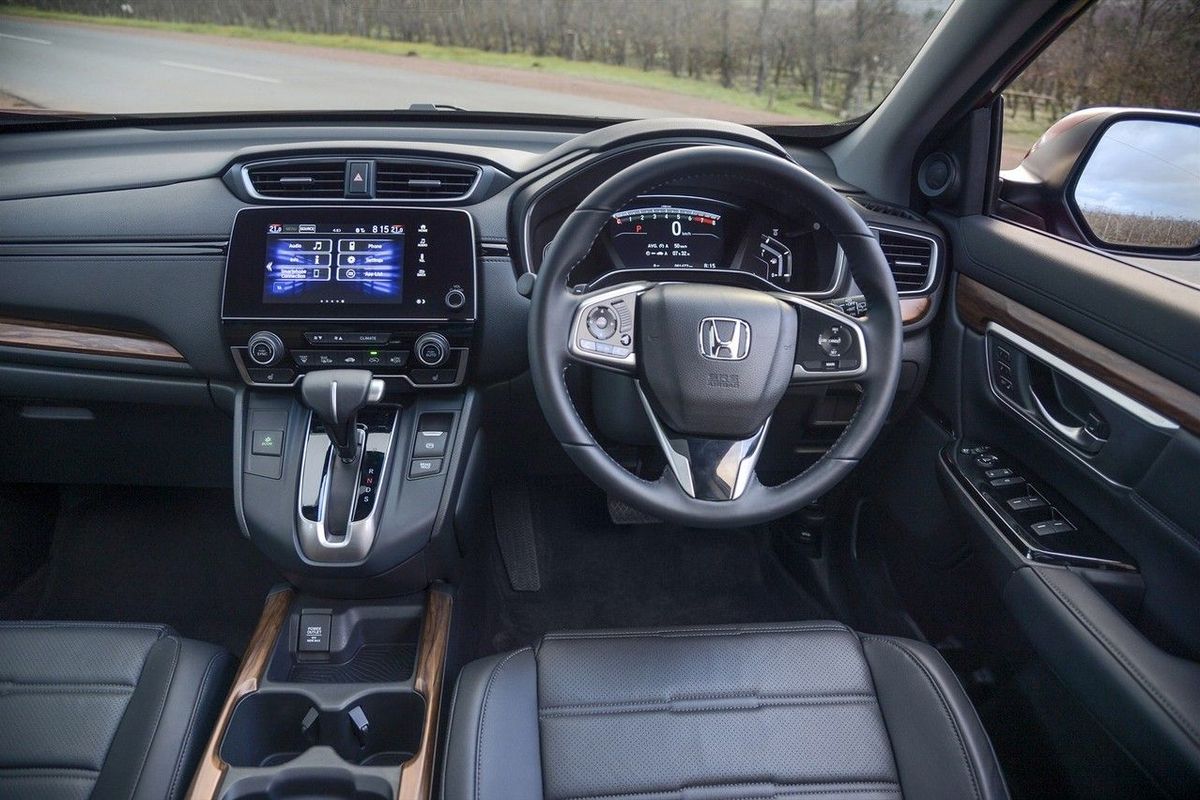
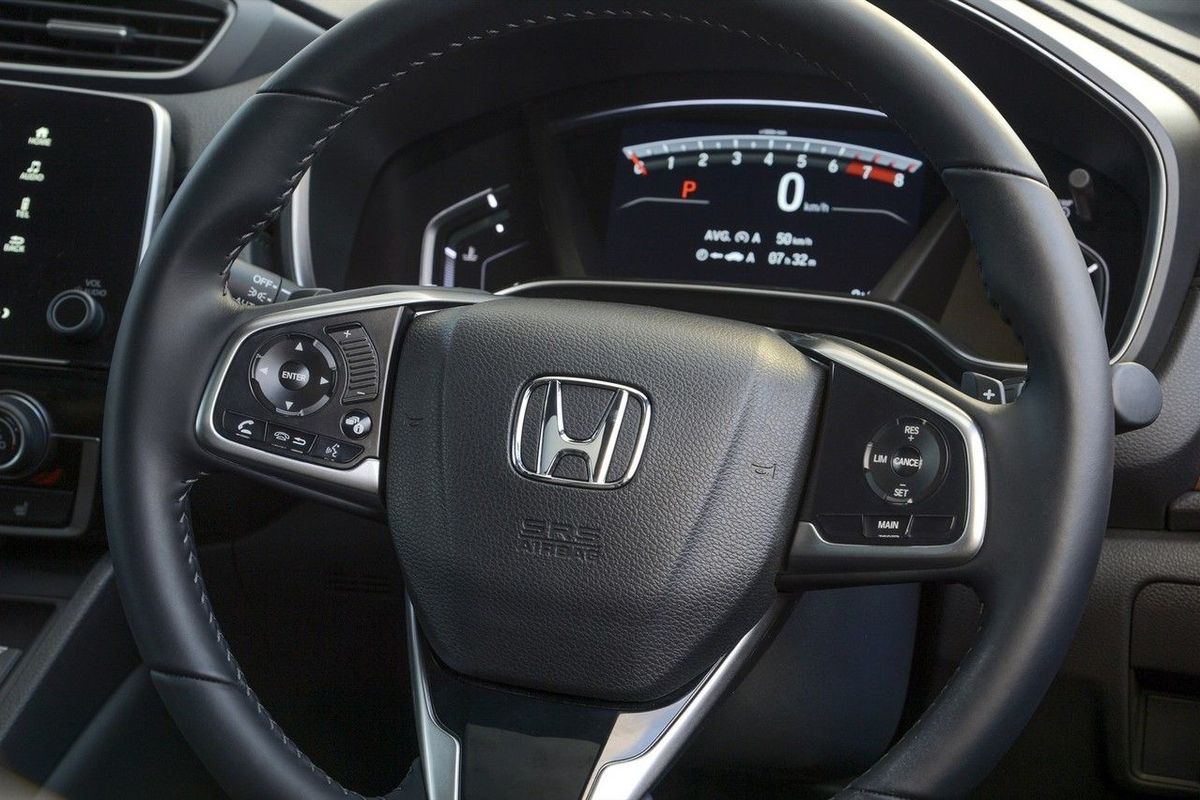
The central colour instrument display is 6.5-inches in size which can be increased to an 8.8-inch colour display as an option. The familiar start/stop button and familiar toggle switches are found in the cabin as well as a central console with armrest, Mini Controller, electronic parking brake and 2 cup holders. A Head-Up display is offered as an option. The Radio Mini Visual Boost system is fitted as standard and a USB and Aux port are also offered. Mini offers a wide range of options to further customise your JCW Clubman.
The JCW Clubman is also equipped with a parking assistant, park distance control, rear view camera, driving assistant with camera-based active cruise control, collision and pedestrian warning, high beam assistant and road sign detection.
Other safety features include 6 airbags, ABS with EBD, brake assist, stability control with traction control, electronic differential lock and rear ISOFIX mounts.
MINI Clubman – Price in South Africa (May 2017)
MINI Cooper Clubman M/T – R376 070
MINI Cooper Clubman A/T – R394 070
MINI Cooper S Clubman M/T – R456 692
MINI Cooper S Clubman A/T – R475 052
MINI John Cooper Works Clubman M/T – R558 612
MINI John Cooper Works Clubman A/T – R584 516
The MINI Clubman is sold with a 2-year/unlimited km warranty as well as a 5-year/100 000 km service plan with service intervals set at 20 000 km.
Mercedes-AMG has revealed technical details of its much-anticipated hypercar that will bring F1 technology to the road and it's expected to make its debut later this year at the Frankfurt Motor Show in September 2017.
You’ll want to save the date for this ‘One’! Mercedes-Benz is planning on showing its latest hypercar creation, dubbed Project One, at the 2017 Frankfurt Motor Show later this year. The Project One hypercar will essentially be a Formula One car fit for the road and according to AMG, it will feature a “perfect” and “stunning” design. Furthermore, AMG says that its new hypercar will probably be “the most fascinating two-seater that will ever hit the road.”
Powertrain details
With no less than 745 kW and a redline limit set at 13 500 rpm, the Project One hypercar is a technological marvel.
The Project One hypercar will feature a hybrid powertrain comprising an F1-derived, turbocharged 1.6-litre V6 engine from the championship-winning WO7 Hybrid, coupled with a “purely electric and wheel-selective front axle drive concept”. The engine will idle at 4 000 rpm and will redline at an eye-watering 13 500 rpm. According to reports, the engine will be good for at least 50 000 km before needing a rebuild
The engine will work in conjunction with 2 electric motors. The first 80 kW electric motor is tasked with keeping the turbocharger on the boil at all times while the second 120 kW motor is linked directly to the crankshaft. An additional 2 electric motors at the front axle will allow for pure electric driving with a range up to 24 km on electric power alone.
The Project One hypercar will develop more than 746 kW and will make use of a single clutch 8-speed transmission to lay power to the road.
Mercedes-AMG celebrated its 50th Anniversary over the weekend and the Project One hypercar is the perfect way to commemorate this milestone. Production is limited to 275 examples and all of them are already sold. Testing is due to commence soon before the big reveal at the Frankfurt Motor Show later this year. The price tag for the Project One hypercar is estimated at about $2.5 million, or almost R34 million.
We will keep you updated as more details are revealed, so stay tuned!
Although the compact sedan market has shrunk due to the public's growing predilection for hatchbacks and compact family cars/crossovers, cars such as the value-oriented, spacious Suzuki Ciaz still offer a lot of appeal if you're urban-based and need to cart around people and their luggage.
What's more, because it is powered by the same naturally aspirated 1.4-litre petrol engine found in the popular Swift hatchback, the Ciaz is particularly fuel-efficient, as we found.
In this video we take a detailed look at the standard features of this GLX derivative (compared to the base-spec GL), as well as boot capacity, rear seat space, fuel consumption and a few issues that we've experienced in our time with the car.
The Suzuki Ignis is due for introduction in South Africa in May 2017. We had a chance to get behind of the wheel of this mould-breaking compact family car/crossover at its European launch in Italy. British Correspondent, Wayne Gorrett reports.
Firstly and most importantly, what this ISN’T, is the Jimny replacement…just so you know.
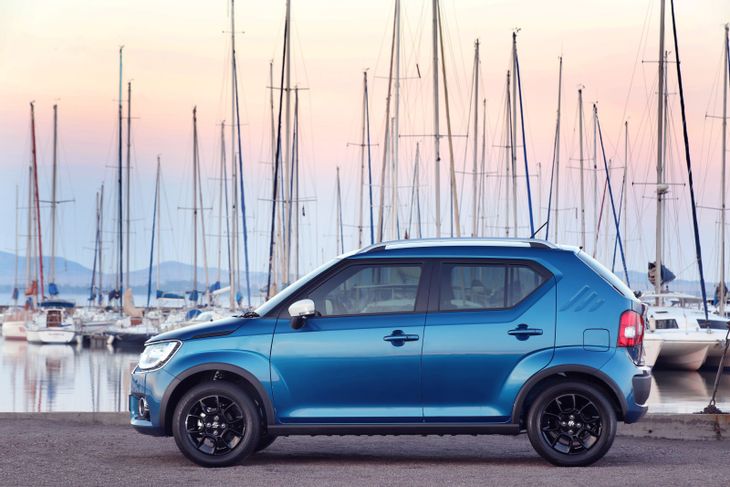
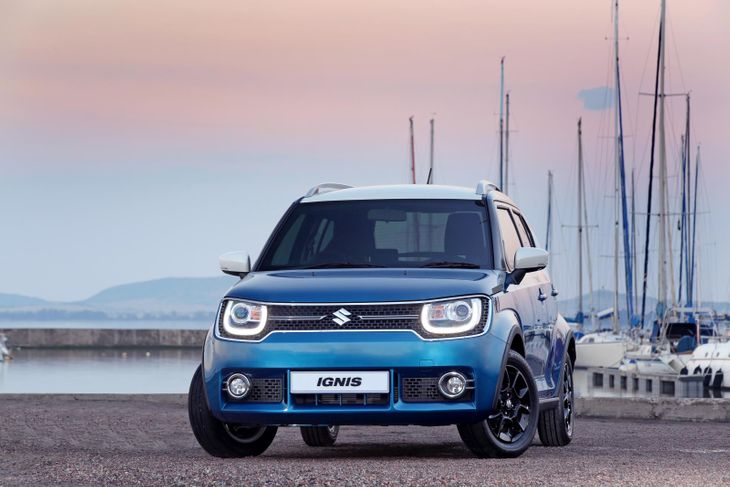
What it is, is the all-new Suzuki Ignis – a car the automaker describes as an ultra-compact crossover. But, irrespective of whichever market niche the majority of car buyers will ultimately classify this oddball newcomer, the Ignis constitutes an original piece of automotive design — deftly blended with multi-purpose functionality.
Built at Suzuki’s Sagara plant in Japan, the Ignis is rooted in affordability, practicality and youthful style.
By utilising Suzuki’s new platform strategy that was revealed last year, the Ignis forms part of a bigger picture for future Suzuki models. The new strategy focuses strongly on weight reduction and increased rigidity, something that has already been applied to the new Baleno and the upcoming all-new Swift, due in 2018. To demonstrate this, the Ignis weighs a mere 810 kg.
The Ignis has been on sale in Japan since January 2016 and has sold over 18,000 units there in its first 10 months.
The designer’s work
Staying true in many respects to the iM-4 concept first revealed at the 2015 Geneva Motor Show, the Ignis wears chunky Tonka Toy styling and looks cool, VERY cool. Sure, it’s small but it will cope with far more than city streets, particularly when you choose Suzuki’s own “always on” AllGrip four-wheel-drive system.
Suzuki Ignis brings a fresh look to the new A-segment crossover.
With its flared arches, bluff nose and jacked-up stance, there’s no mistaking it for anything other than a radically designed and eye-catching baby crossover.
Exterior design highlights include a chrome grille surround, muscular bodywork and blacked-out A and B pillars, the latter being a nod to the aforementioned Swift. Other design traits include the clam-shell bonnet from the Vitara and a trio of creases on the C-pillar which pays homage to the crimped air intakes on the rear-engined Suzuki SC100 “Whizzkid” from the late 1970’s.
Suzuki hopes that the Ignis will attract a new breed of customer to the brand, with young women who enjoy stylish models like the Fiat 500 and Mini Cooper, being the key target demographic.
The interior
Suzuki’s new generation platform strategy allows the engine compartment of the Ignis to be significantly minimised, the benefits of which transfer directly to the cabin which is surprisingly roomy both front and rear, with all four occupants well catered for in head and leg room.
Boot capacity stands at 270 litres (front-wheel-drive models), which is slightly below the supermini average. This can, however, extend to 514 litres by folding the rear seats down, although doing so results in a large hump between the boot and rear seat.
Customers choosing the AllGrip all-wheel-drive transmission will have their boot space reduced to 204-litres thanks to the rear differential.
Rear seats feature 50/50 split and individual sliders.
The front seats are surprisingly comfortable (although more lateral support would be welcome), and the steering wheel is adjustable for rake, not reach. Along with folding uprights, the rear seats are split 50/50 and slide individually forwards and backwards for greater functionality for when awkward-shaped loads need shifting.
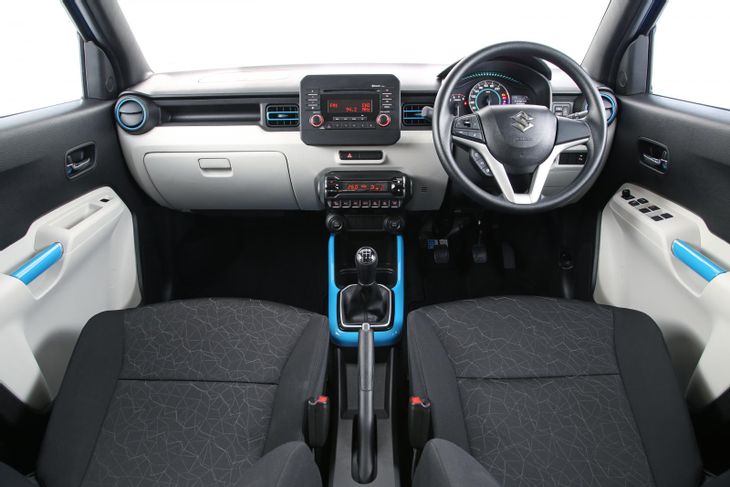
Along with the Swift and new Baleno models, the Ignis focuses more on funky design and functionality rather than outright quality. Scratchy plastics abound throughout the cabin but are offset with quirky design features such as the linear dashboard, two-tone colour schemes and colourful inserts on the tubular door handles, air vent surrounds and centre console, which contrast with the body colour. Even the air-con and ancillary buttons get cool aviator-style switches.
The updated version of the Suzuki interior would be a welcome addition to SA models.
The seven-inch touchscreen that dominates the dashboard looks the part but could do with being a tad more responsive. The flagship models at the Italian launch came with everything from navigation, reversing camera, automatic air-con to LED daytime running lights. Safety kit is a big deal with the Ignis too, with top models getting dual camera brake support (DCBS), which allows for autonomous braking if your attention strays, lane keep assist and a weave alert function that detects fatigue.
But even for those looking to come in at entry-level, kit on the Ignis is still generous, with manual air-con and Bluetooth thrown in.
Engines and transmissions
At its Italian media launch, all Ignis models were fitted with the 1.2-litre DualJet (K12C) four-cylinder petrol engine which generates 67 kW and 120 Nm of torque at 4 400 rpm. It was mated to an excellent five-speed manual ‘box.
South Africa will get this engine and gearbox pairing at launch next year, and possibly a five-speed automatic, but this has not yet been confirmed.
Performance
Due to the Ignis’ lightweight disposition, performance from the 1.2-litre four-pot is more than adequate for most driving conditions, be it short urban stints or inter-city motorway slogs (for which you should plan sufficiently in advance for overtaking manoeuvres). The five-speed manual is well-matched too, with snappy and accurate shifts.
A new 1.2-litre naturally aspirated engine will be used in the Ignis locally.
The linear power delivery of the peppy 1.2-litre is one of its best attributes and you may even find yourself flooring it to the rev limiter just for the delight in hearing the growl of the engine as it smoothly builds up speed.
Ride and handling
Being a boxy, high-sided car, you may expect the Ignis to nervously wallow about the place but, it doesn’t.
Take an urban corner or roundabout at speed and it is surprisingly well planted and composed. Chuck it into a tight rural bend and it may not stay as hooked to the tarmac as a lower supermini, but body roll is minimal and grip remains plentiful. You can certainly feel the Baleno DNA intertwined within it.
The balanced ride of the Ignis is to thank here. Engineered to be slightly on the firm side, it helps maintain the car’s composure in the corners and yet delivers a comfortable ride. However, it can become a little undone and shake when hitting a few bumps in quick succession, so beware of potholes.
Despite only weighing 810 kg, the Ignis feels quite sturdy.
The electronic steering is a tad odd at first. For such a nippy city car, the steering is unusually weighty – which when cruising around the city feels unnecessary. This is an attribute that makes it entertaining to drive on outer urban roads though, and when it comes to difficult manoeuvres like parking, the steering does lighten up at a three-quarter turn, making things a little less physical.
In terms of convenience and comfort, the seating position is great, the large windscreen makes the cabin feel airy for both driver and passenger and it has a town-friendly turning circle of just 4.7-metres. On the ultra-smooth Italian motorways, I encountered wind whistle around the B-pillar. It’s one of those things that, once you’ve noticed it…
As you would expect for a car of this nature, fuel consumption is very reasonable with an official figure of 4.6l/100 km. During the nearly 300 km test drive over a variety of roads and elevations, I averaged 5.8l/100 km, which is still impressive.
Pricing
No prices are available on the South African Ignis models yet, but in the UK the Ignis range starts from a mightily impressive £9 995, which if the Rand and Yen both behave themselves for the next few months, should translate to around R180 000.
Summary
A chap at Suzuki UK described the Ignis to me as being a ‘typical Suzuki-ish product’, which is pretty apt, to be fair. It oozes Suzuki aesthetic, it’s very affordable and enjoys a spirited interior design and drive characteristics. It may not offer the most conventional styling, but for anyone after an ultra-compact crossover that offers an endearing quality – just look at the success of the Nissan Juke.
The Ignis’ only local rival in SA is likely to be the cheaper but debatably-cheerful Renault Sandero Stepway. But that would do the Ignis an injustice. In many ways the Ignis is a far superior offering; it is better equipped at entry level, offers far higher levels of safety and is a superior driving and handling car (particularly at speed). The only area the Sandero should beat the Ignis is likely to be on price, but that says more about the Ignis than it does the Stepway.
In many ways, the Ignis feels quite grown up – a tasty proposition for those looking for the next fashion trend to sink their teeth into.
Fiat has partnered with premium speedboat builder Riva to produce a limited run of 500 hatch and convertible models.
Some may question why it would be necessary for Fiat to produced yet another edition of its 500 hatchback, but for those who love wood trim (yes, we know you're out there) and bespoke finishes, the Italian marque has combined with boat builder Riva to add some boat themed-additions to both the hatchback and convertible. The Riva 500 is limited to just 20 models in SA.
Some of the unique touches include the Sera Blue paintwork, a double aquamarine stripe along the bodywork and 20-spoke 16-inch wheels. The central dashboard has hand painted mahogany inlays and a Riva logo. The door sills and gear knob are also crafted from mahogany and there’s Sera Blue piping along the seats.
The only engine available is the 2-cylinder 0.9-litre TwinAir unit. There’s 62 kW on tap and it’s available either a manual or automatic gearbox.
Pricing
It is on sale immediately. The hatchback version costs R267 900, the convertible R303 900 and a 3-yr/100 000 km warranty and maintenance plan are standard.
With the ultimate goal of establishing a globally recognised event, the second annual Concours South Africa looks set to attract some of the finest automobiles in Mzansi this year.
“Concours South Africa was the realisation of a dream we had nurtured for a number of years,” says organiser Ross Crichton. “The amazing response we had to the first event has seen special-interest car owners, sponsors, finance houses and the classic car fraternity already embrace the event for 2017. This has encouraged us to bring the event to an even higher level for 2017.”
Venue and Dates
Manana Nhlanhla, with Concours South Africa organiser Ross Crichton and her 2016 Show & Shine-winning Mercedes-Benz 190 SL.
The event is scheduled to take place from 3 to 6 August 2017 at Sun City. In its debut year, the Concours attracted 60 vehicles, but this year the number looks set to be double at the very least in the Concours-proper, with the Show & Shine category swelling the overall number towards the limit of around 150.
“We feel this is a realistic figure for our judges to cope with. Incidentally, we are retaining the same judging team headed up by Wayne Harley, curator of the Franschhoek Motor Museum, but (and we are very excited about this) augmented by judges with vast internationalconcours experience! They will be especially flown into South Africa for the event," said Chricton.
A surprise category winner in 2016, and third overall, was this 1970 Pontiac GTO, otherwise known as "The Judge".
Fellow organiser Paul Kennard agrees. “The buzz created by this year’s judging panel including the likes of Chris Routledge, CEO of Coys of Kensington, the international classic car auction house, and Robert Coucher, Editor of Octane Magazine, has put extra pressure on car owners to have their machines prepared to the highest of levels,” Kennard added.
“The likes of Mr Routledge and Mr Coucher are exposed to the world’s finest cars every day of their working lives.”
Concours SA will give the public the opportunity to view some of South Africa's most valuable and rarest cars.
Heading up the Judging Panel once again for 2017 is the Curator of the Franschhoek Motor Museum, Wayne Harley, who has been steeped in the classic car ethos for decades, and has also witnessed some of the world’s great Concours D’ Elegance events in Europe.
For the 2017 event the categories have been slightly changed to make them easier to understand for the entrants and the public.
Conference on classic car trends
The renowned classic car index company , HAGI – The Historic Automobile Group International – will be hosting a special conference on trends in international classic car values at Sun City on Thursday 3 August. So, if you're keen to know what classic car values are doing within a South African context, it would be well worth attending.
Find out more about the Concours South Africa here.
Some M Car aficionados will declare the 2018 BMW M5 an abomination because it utilses an all-wheel drive configuration for the first time in the illustrious Bavarian super sedan's history. However, they should try out the new M xDrive system themselves before making a hasty judgement, as our drive in a prototype version reveals that it makes the new M5 a better and still more enjoyable sports saloon to drive than ever before.
Specifications
Engine: 4.4-litre twin-turbocharged V8 petrol Transmission: all-wheel drive, eight-speed automatic Top speed: 250 kph (limited) 0-100 kph: "less than 3.5 seconds" Power: 462 kW at 6 200 rpm (estimated) Torque: 750 Nm from 1 900 rpm (estimated)
By Shane O' Donahue
This is our first taste of the 2018 BMW M5, and the big news is that it'll feature four-wheel drive for the first time in the nameplate's now 6-generation history. BMW calls it M xDrive and it has a lot of promise… the mechanical bits include an updated Active M Differential at the back that can apportion output to the rear wheels in any split whatsoever; a transfer case in the middle that uses an electromechanically activated multi-plate clutch to divide torque between the front and rear axles (again to any percentage whatsoever, from fully front-wheel drive to completely rear-wheel drive); and the use of a new development of the company's 8-speed automatic transmission in place of the old dual-clutch M DCT.
Controlling all that is a new in-house programmed brain, which also works with the Dynamic Stability Control (DSC) system. The target is a real M car driving experience, but with a much wider breadth of capability, especially when it comes to less than perfect weather.
The new M5 has a completely adjustable drivetrain. You choose where you want the drive to go via the iDrive selector.
By default, the DSC system is on and M xDrive is simply in "4WD" mode. Pressing the DSC button briefly activates M Dynamic Mode (MDM) and 4WD Sport for the xDrive, while the driver can choose between those 2 xDrive settings and full-on 2WD if they hold down the DSC button long enough to disable it completely.
Under the bonnet is an updated version of the previous M5's twin-turbocharged 4.4-litre V8, which BMW is staying tight-lipped about, suggesting it's only a little more powerful than before, if a lot torquier. We're estimating 460 kW and 750 Nm, though with a claimed 0-100 kph time of "less than 3.5 seconds", that latter figure might turn out to be a little pessimistic.
After all, the new M5 is only a smidgen lighter than the old one (the xDrive hardware adds weight, while the carbon roof and new G30 body take it away again) so even with all-wheel drive we think it'd need a good deal more torque to achieve that off-the-line acceleration.
Most of the interior of the prototype model is covered, expect the old DCT gearknob to look a little different this time around.
The interior of the prototype was covered up for the most part, but the usual M trinkets are present and correct, including a lovely new steering wheel with repositioned M1 and M2 buttons, gorgeous bucket seats trimmed in leather and a chunky new gear selector with the Drivelogic toggle switch built in. The instruments have been restyled too and the centre console is a little different to that of the regular 5 Series.
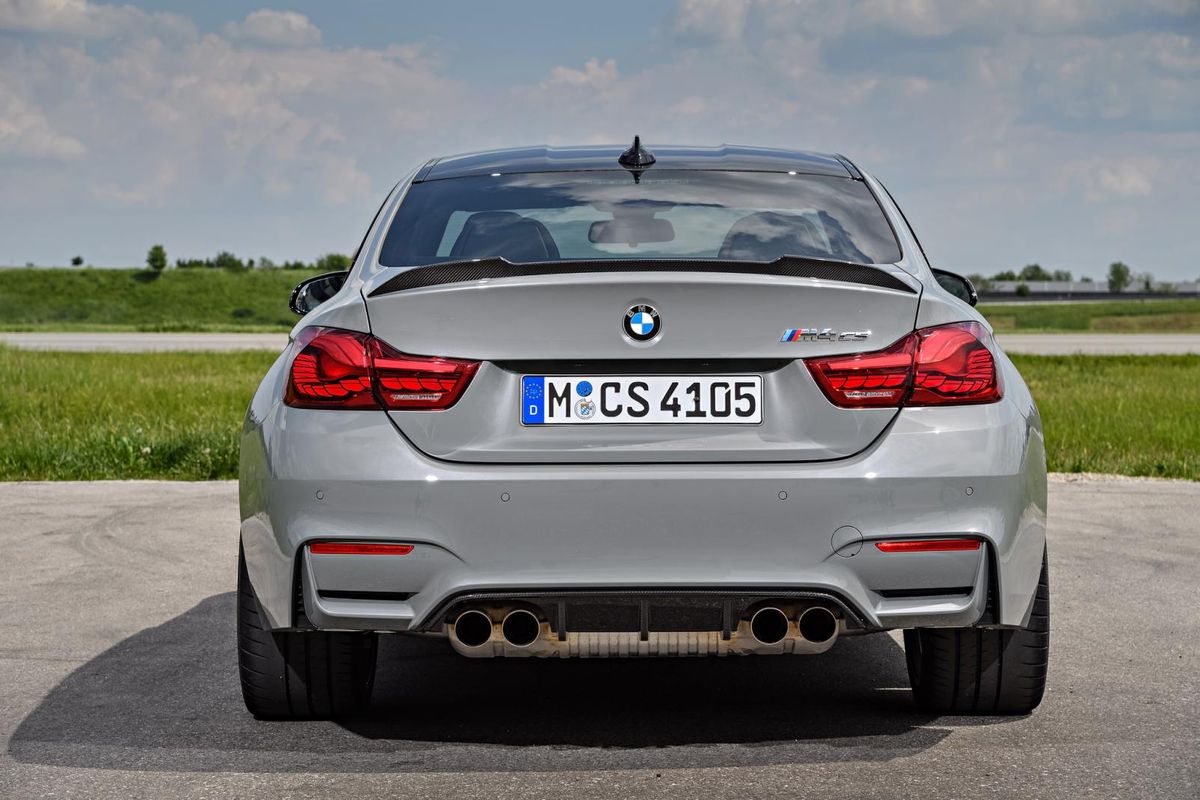
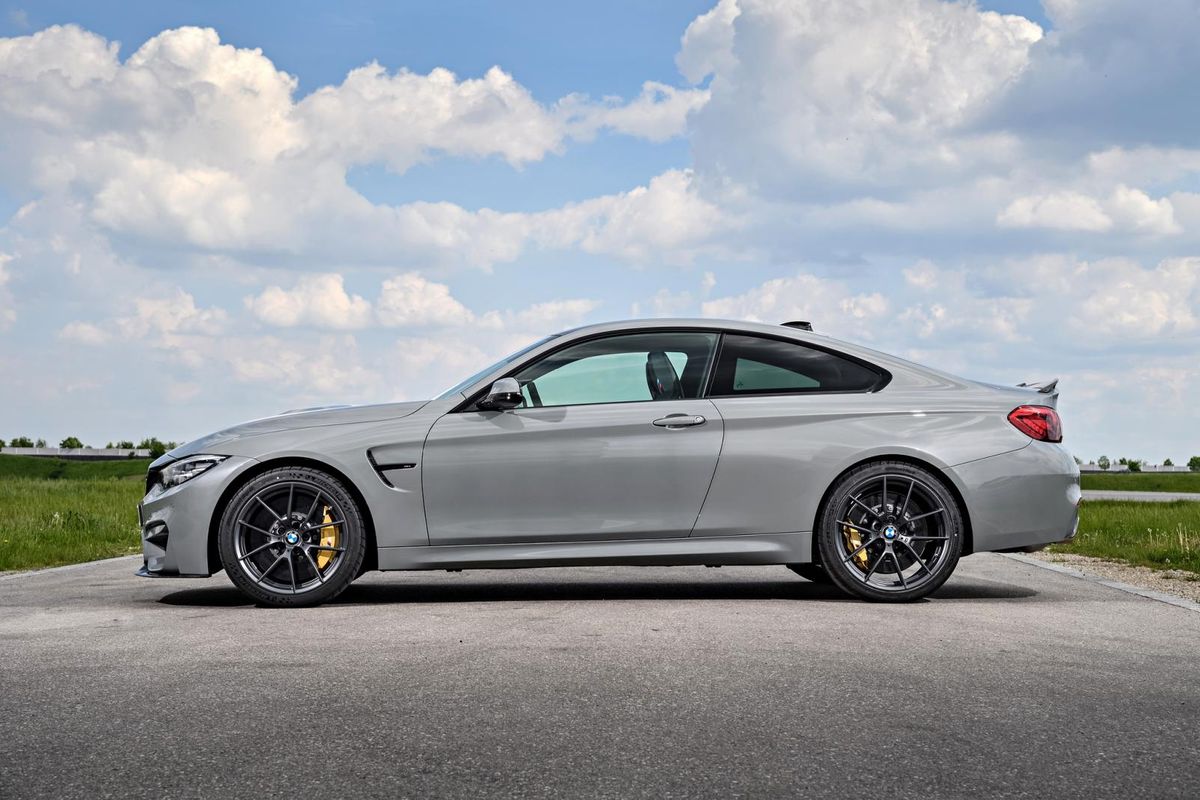
We're going to focus mostly on the xDrive system here, as details about the rest of the car are scant and we only tested the M5 on track. First up was a few laps of a high-speed circuit on a damp, but slowly drying track, following a BMW M4 GTS driven by none other than Timo Glock, one of BMW's works DTM race drivers. He wasn't hanging about, but the M5 made it relatively easy to hang on to his tail thanks to the lusty V8 of course, but also the traction afforded by the chassis.
DSC intervenes subtly
In 4WD mode with the DSC turned on, progress is swift and effortless, and very safe. The DSC kicks in early, reacting quickly to changes in grip level, though it's so smooth that the only tell-tale is the orange light flickering in the dashboard. This set-up will be great for everyday use in all conditions on the road.
Keeping up with ex F1 driver Timo Glock in an M4 GTS was easier than expected with the huge torque delivery of the M5.
Moving into the MDM and 4WD Sport setting, the M5 feels much more like you'd expect a car bearing that hallowed badge would. More power is sent to the rear axle by default and it undoubtedly feels like a rear-wheel-drive car to start with. Only when you considerably exceed the grip levels of the rear tyres do you detect a smooth transition of torque to the front axle, but you need to be trying pretty hard to get to that stage, and the DSC system allows a gratifying amount of slip too, which is enough to get a bit of a thrill from the car without relying completely on your own skill level. This is the setting keener drivers are likely to use most of the time, even on the public road.
Huge amounts of traction and grip
We'd expect only the more experienced drivers to turn off the DSC completely, but it can be done without any fear, as our test on a soaking wet handling circuit revealed. There are huge amounts of traction and grip and the new M5 really does telegraph its limits remarkably well, whether the surface underneath is wet or dry. In 4WD mode, it still grips and behaves relatively neutrally. Indeed, if you want to slide it about in this setting then you really have to provoke it.
The 4WD Sport mode is rather different, as the car can easily be coaxed into a controllable, yet lurid-looking, power slide at will. It's huge fun in the right conditions and it's possible to push things very far and still recover the slide. That's probably partly to do with the new electrically assisted power steering system, which is more direct than before, but also, reckons BMW M's engineers, the revised Active M Differential. Whatever they've done, it's simply brilliant…
Even in the wet the M5 wasn't much of a handful. We look forward to a drive on regular roads to see how easy it really is to drive.
And the controllability of the base chassis is underlined when you switch it into 2WD mode and tackle the same piece of track at the same speed. Sure, it goes more sideways quicker if you want it to and you need to be ready with the opposite lock sooner, but it's still relatively friendly to drive fast in wet conditions.
Summary
Now, we have not yet driven the new BMW M5 on the public road, we don't yet know all its technical specifications and it may turn out quite expensive, but one thing we can categorically state is that the new M xDrive four-wheel-drive system enhances the driving experience no end, potentially helping the M division create the… best… M5… yet.
Watch the BMW M division's promotional video for the 2018 M5 Prototype:
BMW has reinvented its 8 Series first class sports coupe and showcased the concept car at the 2017 Concorso d’Eleganza Villa d’Este…
The 8 Series Concept takes its cue from the 6 Series, but with much more design flair and sweeping lines courtesy of its elongated wheelbase. The 8, arguably the best-looking BMW since the Z8, will replace the 6 Series coupe in BMW’s model lineup, but the 6 Series Gran Coupe (4-door) will remain.
The 8 Series, when it comes to fruition, is likely to be built on the current 5 and 7 Series platform. The design looks like an interesting departure from the humdrum design we have seen of late from BMW. It sits very low, with an acutely raked windscreen that screams GT cruiser, much like the long-discontinued late Eighties original 8 Series did.
The headlights look a little too narrow to be production-ready, but expect the front end to remain aggressively-styled, if less ornate. The kidney grille with its boomerang slats is certainly polarising, too.
BMW has trademarked the nameplates 825i, 830i, 835i, 845i, 850i, 860i, M850i and M8; we would not be surprised if the 448 kW/800 N.m 6.6-litre V12 turbopetrol from the M760Li xDrive featured in the 860i!. The new 8 Series’ production is expected to kick off in 2018. Watch this space…
Children on the back of a bakkie new law falls short
It is now against the law to transport school children on the back of a bakkie for reward. However, the real problem lies in the vague regulations that prescribe the manner in which vulnerable young people can be transported on the back of LCVs, writes consumer journalist Wendy Knowler.
Just the thought of it makes first-world parents shudder with horror – young children routinely being ferried to school in places designed for goods, not humans – mainly the back of bakkies. Too many parents have buried children who’ve died after being ejected from bakkies during accidents; accidents that children securely strapped into the back seats of passenger vehicles would have survived.
Newspaper reports carry eyewitness reports that sound heartbreakingly similar to this one after 8 Pietermaritzburg primary school children were killed in early 2015: “The driver was going so fast and I saw the bakkie swaying and then I just heard screams and saw children flying off the bakkie…”
The law does not prescribe a limit the number of people who can be transported on the back of a bakkie.
It’s illegal to transport children in the goods compartment of any vehicle for reward, including the back of a hatchback and the boot of a car. However, the bakkie driver who tells his kids and their mates to hop in the back for a drive to the beach is not breaking the law – because he’s not charging them for the service, it’s legal, if not responsible.
The recent amendment targets the bakkies-as-paid-school-transport industry. But the practice didn’t become illegal on May 11, despite many media reports saying so, says Howard Dembovsky of Justice Project South Africa.
A commercial (goods-carrying) vehicle cannot be a 'taxi'
“Ever since the promulgation of the National Road Traffic Regulations in 2000, Regulation 250 has prescribed that: “No person shall on a public road carry any person for reward in the goods compartment of a motor vehicle," Dembovsky has been quoted as saying.
The amendment to Regulation 250 which came into effect on 11 May 2017 states: "No person shall on a public road convey school children in the goods compartment of a motor vehicle for reward."
Simply put, it has previously been illegal to transport anyone at all for reward in the goods compartment of a vehicle – but since 11 May 2017 it’s been illegal to transport school children and/or any other people in the goods compartment of a vehicle unless, in the latter instance, the transport operator has applied and paid for a permit to do so in compliance with the National Land Transport Act.
Then there’s Regulation 247, which lists the circumstances under which people may be transported in the goods compartment of a vehicle:
The back is enclosed to a height of at least 350 mm above the surface upon which such person is seated; or,
At least 900 mm above the surface on which such person is standing, in a manner and with a material of sufficient strength to prevent such person from falling from such vehicle when it is in motion.
'As many passengers on the back as the GVM allows'
But, as Dembovsky points out, there is no limitation on the number of people which may be transported in the goods compartment of a vehicle, provided the gross vehicle mass (GVM) of the vehicle is not exceeded. There’s also no legal need to have a canopy on the bakkie.
“All too often one sees people standing on the back of bakkies and/or sitting on top of the sidewalls of bakkies, or on top of other stuff in the back of a bakkie, such as furniture," Dembrovsky says. “This practice is completely unlawful and yet it is rarely enforced."
Parents should condition their offspring to become accustomed to being secured in child seats.
Speaking of a lack of enforcement, there’s another law designed to protect the lives of very young children being driven on our roads – not that you’d know it by observing families in transit. In terms of the National Road Traffic Act, children – defined as being between the age of 3 and 14 except, where they are taller than 1.5 metres – must be restrained in a car, by at least a seatbelt, and those younger than 3 years of age have to be restrained in a specialist child seat.
Too few motorists utilise child seats
The child car seat regulation came into force in May 2015, which gave rise to a spike in baby seat sales, but a year later, major baby goods retailers reported that there’d been no meaningful growth in baby seat sales as a result of the regulation. Many South African parents hold young children on their laps, believing that to be adequate restraint in the event of an accident, but no matter how tight their grip, the child is in grave danger, said paramedic Robert Mckenzie, media liaison officer for KZN EMS (Emergency Medical Service).
As recently as May 2017, a 7-month-old baby girl died after being flung from a car that left the N2 near Umhlali on the KZN north coast and rolled. The mother had been holding the baby at the time of the accident. She survived, along with another two adults in the car.
Unrestrained small child can fly around inside a car
“The forces involved in a crash, even a minor crash, are excessive, making the child too heavy to hold on to when there’s a sudden impact at speed,” McKenzie said. “An unrestrained small child flies around inside of the car, colliding with solid objects like the dashboard and windscreen. “Their little soft-boned bodies and disproportionally big heads and organs make children much more prone to serious injury in a car crash than adults.”
McKenzie said despite the new legal requirement, his team was still attending accidents where unrestrained young children had been flung from car windows and through windscreens. To those parents who say their toddlers “won’t” sit in a car seat, McKenzie has this to say: “Children have to be taught to sit in a car seat; it’s not a natural instinct for them.
“Often parents don’t put their children in a car seat because the child is not used to it and they start to cry. But as parents, we need to be firm with this and very quickly a child will learn how to sit in a child seat and become accustomed to it, " he concluded.
Range Rover Evoque Convertible (2017) Quick Review
The Range Rover Evoque Convertible is the first of its kind in South Africa. Well, okay, if you discount the very utilitarian Jeep Wrangler, this derivative can lay claim to being our market's only convertible SUV. Does this eccentric Rangey make any sense? We put it to the test to find out.
We like: Jaw-dropping looks, still capable as an offroad vehicle, has all the luxury features from the Range Rover arsenal
We don’t like: Expensive, heavy fuel consumption, flawed ride quality, cramped rear legroom
Alternatives
The Range Rover Evoque Convertible has no direct rivals, but if you want the full cabriolet experience for similar money, then we'd recommend you consider the Mercedes-AMG SLC 43 (for a spirited roadster experience) and BMW 440i Convertible (if you'd like to have a sporty drive combined with nominal rear seating).
Believe it or not, the Evoque Convertible is not the first ever convertible version of a unibodied SUV. That honour, unfortunately, belongs to the Nissan Murano CrossCabriolet. Spend 2 minutes researching overseas reviews of that product and you'll read dire descriptions such as "atrocious", "woeful" and "hopeless". Yes, the Nissan was an outrageous, expensive flop.
The sad lore of the CrossCabriolet suggests that it is either brave or foolhardy for a company to attempt to produce a car that combines 2 very specific, seemingly divergent, purposes. However, that was exactly what Range Rover did with the Evoque Convertible, which seems to offer open-top appeal while retaining the luxury, practicality and capability of an SUV.
Styling is striking, head-turning and odd upon first glance. With the roof up there's a return to normality, but for best results keep it down.
The Good
Ravishing looks
Few test units have garnered as much attention as the Evoque Convertible. In this spec, complete with Dayglo Orange paint and gloss black wheels, it's very hard to miss and when the fabric top is down, onlookers stare at the Range Rover in amazement. Kerb appeal is off the charts: throngs of fascinated onlookers clamoured to get a closer look at the vehicle. There were some suggestions from observers that the chopped roof was an aftermarket conversion… very few of them readily accepted that this was a pukka standard production unit!
Boot size has been reduced to accommodate the roof mechanism. The rear seats don't fold down either.
Yes, it can go off-road
The Convertible name does not mean this Range Rover holds back in the off-road stakes. It features all-wheel drive and impressive approach, break over and departure angles of 19, 18 and 31 degrees, as well being able to wade through 500-mm deep water. The vehicle comes with Land Rover's Terrain Response system that offers modes like Grass/Gravel/Snow, Mud and Ruts, plus Sand; we put the Evoque Convertible through its paces at our local 4×4 track and it proved quite capable. Click here or watch the video at the end of the article.
Forget the convertible aspect for a minute. This is business as usual for the Range Rover Evoque: luxury and quality galore.
The specification is exceptional
Range Rover offers its Evoque Convertible in HSE Dynamic specification, which means it is comprehensively equipped. Xenon headlights, In Control Touch Pro (with navigation) and a Meridian audio system are some of the notable adornments, but we'd be remiss not to mention the optional Tech Pack, which includes: driver assist plus, adaptive LED headlights, adaptive cruise control, and head-up display. Meanwhile, the leather-trimmed cabin is impressively finished and quality surfaces and luxury trim accents abound.
When you get into the vehicle, you'd be forgiven for forgetting that you're ensconced in something as outlandish as a convertible SUV. This Evoque is still a Range Rover – a quality offering in terms of cabin appeal, front passenger comfort and features. Rear legroom has been sacrificed in the vehicle's repackaging: the rear bench is only suitable for children.
The not so good
Indifferent ride quality
Despite its manufacturer's attempts to compensate for a loss of structural rigidity (due to the absence of a fixed roof), the Evoque emits trim rattles when it traverses uneven surfaces and resonances present themselves at higher speeds. Drive over a pothole or a rut in the road, and you'll hear creaks. The car also doesn't like to be driven hard; it's best suited to slower, more gentle drives. This is difficult for us to understand, because the 3- and 5-door Evoques offer good on-road composure, with refinement gently melded with a touch of dynamism.
The lack of a solid roof means the car can rattle across poor roads. Stylish gloss black alloys add even more presence.
It's thirsty and less practical
There's only 1 engine in the range: a familiar 2.0-litre turbocharged 4-cylinder petrol motor with peak outputs of 177 kW and 340 Nm. However, the aforementioned under-the-skin reinforcement adds to the kerb weight and with 2 tonnes to lug around, the car isn't going to deliver the sporty drive we were hoping for. Still, Range Rover claims 7.0 seconds for the 0-100 kph sprint, but it felt closer to 8.5 seconds. However, we can understand why this engine was preferred to a turbodiesel, who wants to endure the sound/smell of the latter with the top down?
The biggest gripe we have with this motor is that it's not economical. Past experience with a similarly-engined Jaguar XF highlighted how thirsty this mill can be. It's claimed to return 8.6 L/100 km, but that's a highly unlikely figure. We could only manage around 12.0 L/100 km, but if you can afford to buy the beast, you can probably afford to feed it too… as they say.
Meanwhile, the boot space has been reduced in order to make space for the folding roof mechanism (it can be deployed and retracted in 18 and 21 seconds, respectively), but the loading space is deep enough to swallow a big suitcase loaded sideways.
Price and warranty
The Range Rover Evoque Convertible retails for R1 031 634, which includes a 3-year/100 000 km warranty and 5-year/100 000 km maintenance plan.
Verdict
An Evoque Convertible in its natural habitat: at the beach and watching the sunset in style.
First and foremost, we applaud Jaguar Land Rover for being so bold as to produce the Evoque Convertible. It is certainly an oddball in terms of the brand's broader product offering, but if this Range Rover looks smart with the roof up, it's nothing short of breathtaking with its top down. While we initially scoffed at the idea of the Convertible, we came to like and appreciate the vehicle during its week-long tenure: its eccentricities are charming at best and subjective at worst. We knew it wasn't going to be perfect, but somehow, the car endeared itself to us.
The price raised a few eyebrows, especially because the package is so compromised, but in a rarefied market where the novelty factor and exclusive luxury are important, buyers who fall in love with the Evoque Contvertible will be quite prepared to pay for it… and live with its quirks. We've seen a few Evoque drop-tops in and around Cape Town, which underlines the fact that this low-volume car is very desirable. Indifferent ride quality, rattles and poor fuel consumption aside, you're still getting the badge appeal of a Range Rover, which is what many crave.
Watch Ciro de Siena put the Range Rover Evoque Convertible through its paces below: