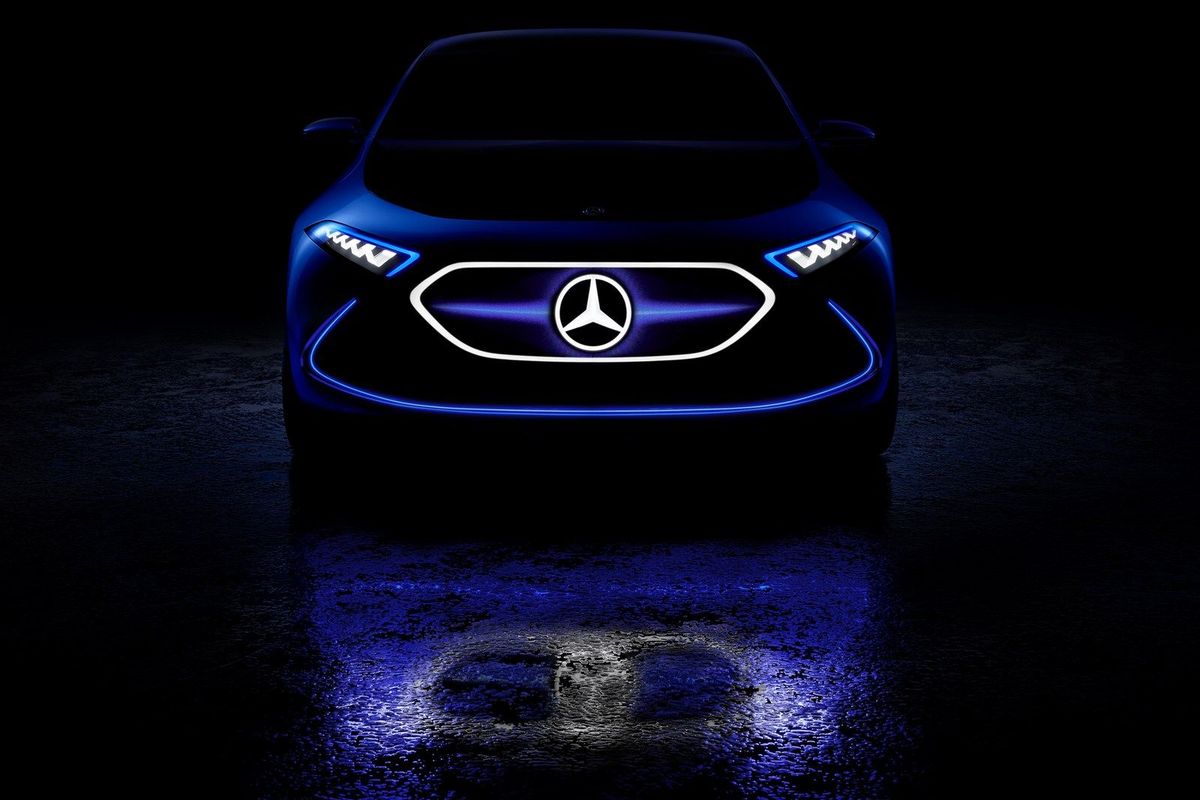
Mercedes-Benz has released a new teaser image and a video of its EQ A concept, ahead of its official reveal at the 2017 Frankfurt Motor Show.
Mercedes-Benz is embarking on a full electric campaign for the future and the EQ Concept previews this future. Mercedes-Benz confirmed that EQ will be a brand, but exact details have yet to be revealed.
What we do know is that Mercedes-Benz is planning an assault on the electric car market and it's easy to see why, as products from BMW and Tesla have captured a portion of the market. Naturally, Mercedes-Benz will want a slice of that pie and the EQ brand is set to take its rivals head-on. Rumours suggest a production version of the EQ A will be potentially hitting the streets in 2019 and will feature a single electric motor driving the front wheels.
There will be a few EQ models on the cards, with EQ A being a hatchback and EQ C being an SUV. Mercedes-Benz has, in the past, claimed that it will be launching 10 new electric vehicles before 2025. Watch this space as Mercedes-Benz makes a big move into the electric car market.
Renault Alaskan Launches in Europe, Coming to SA in 2018
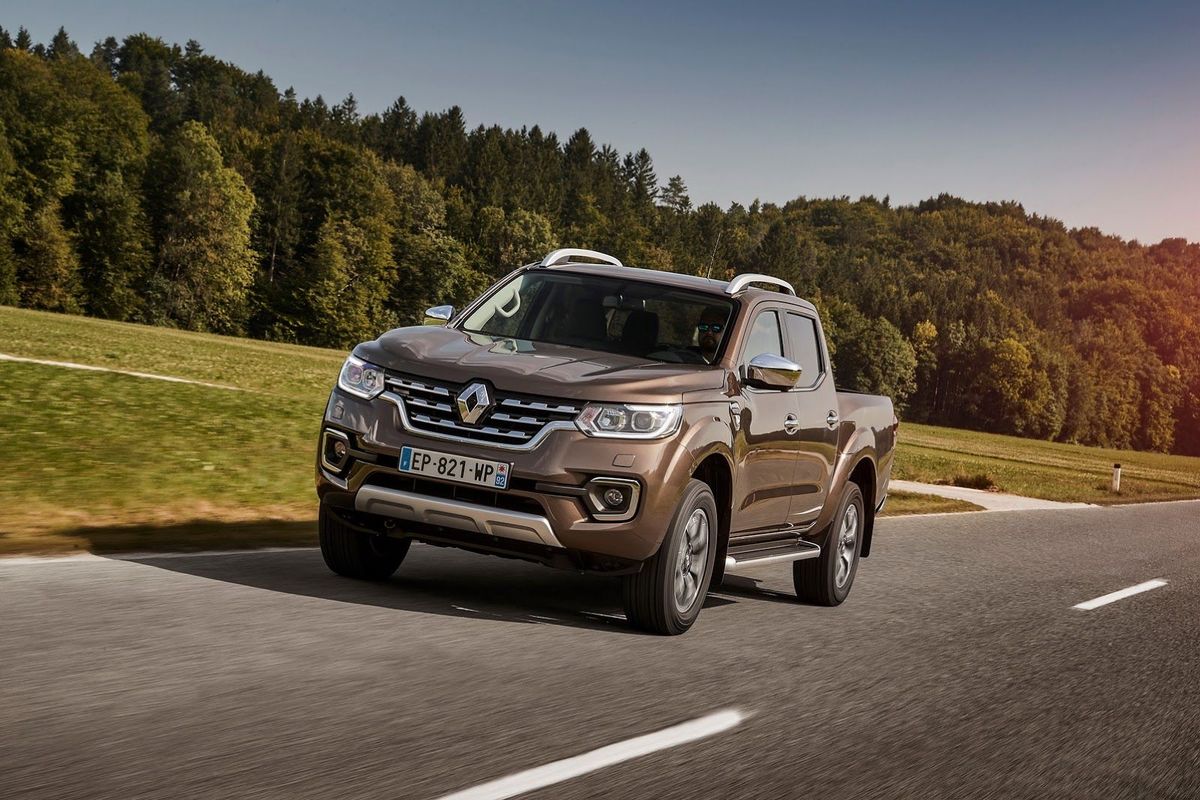
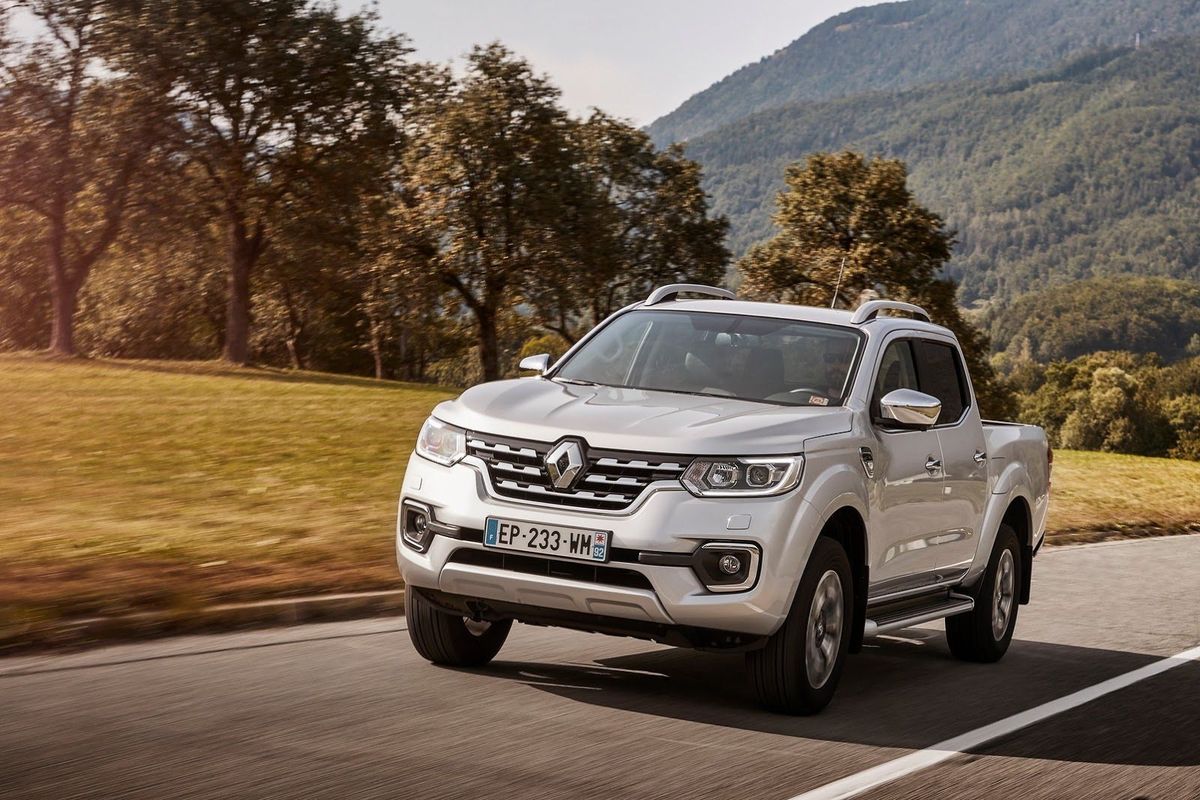
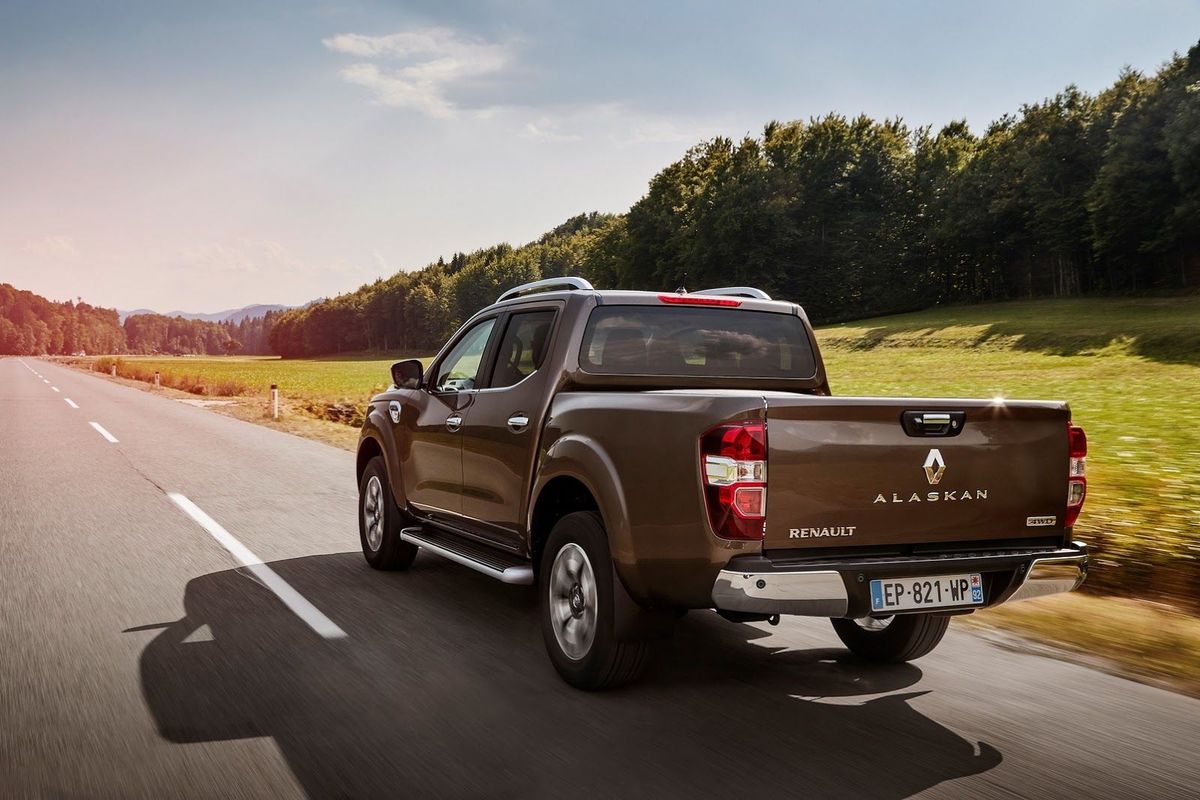
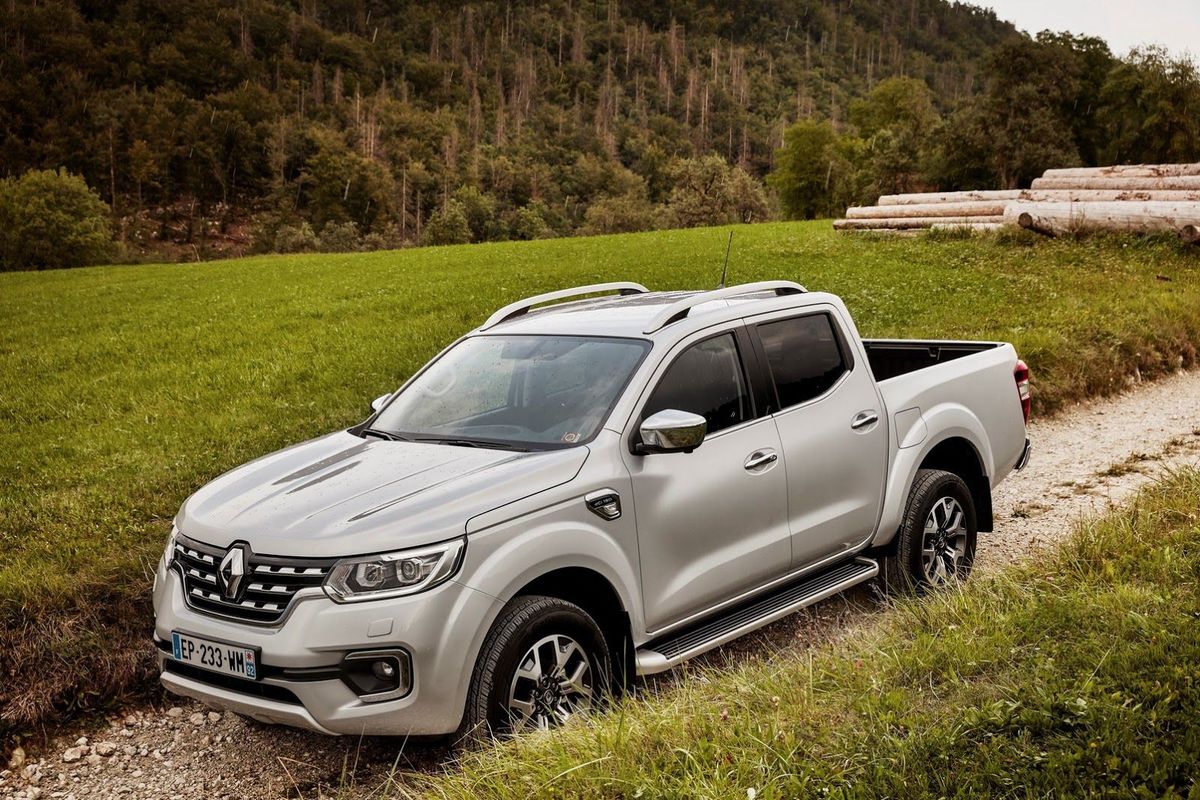
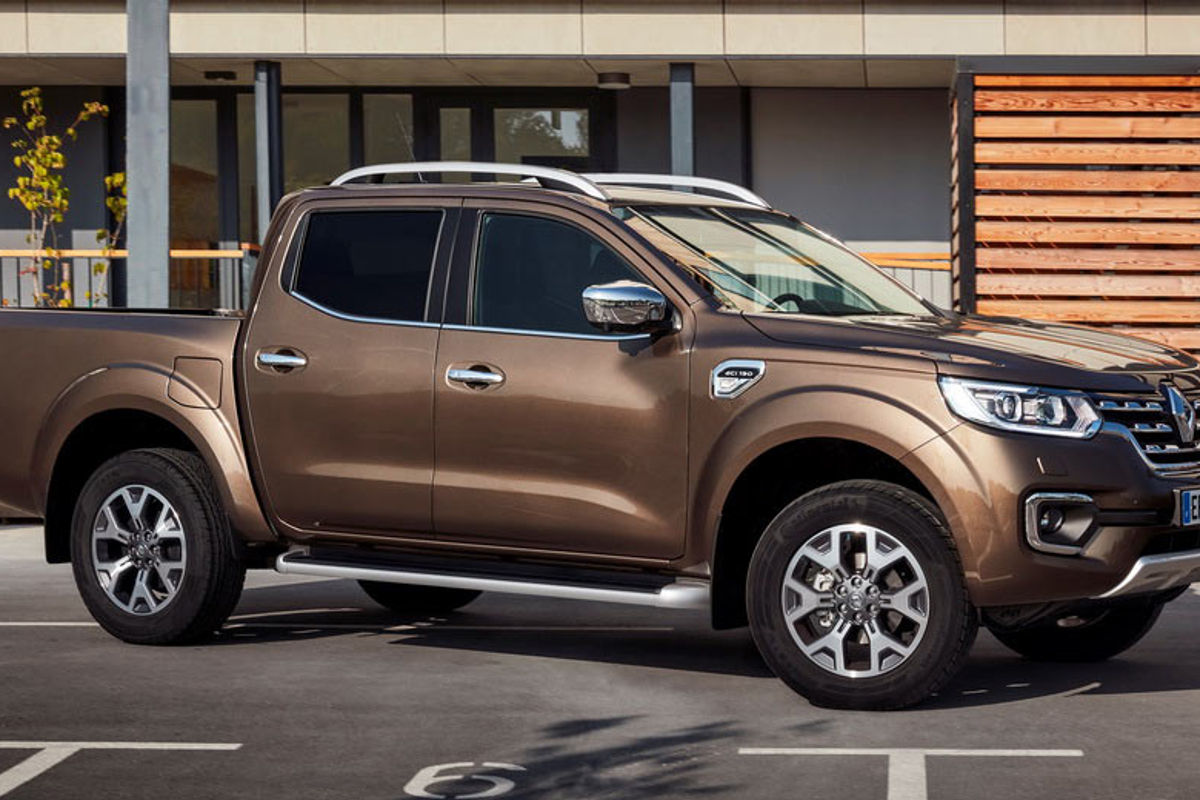
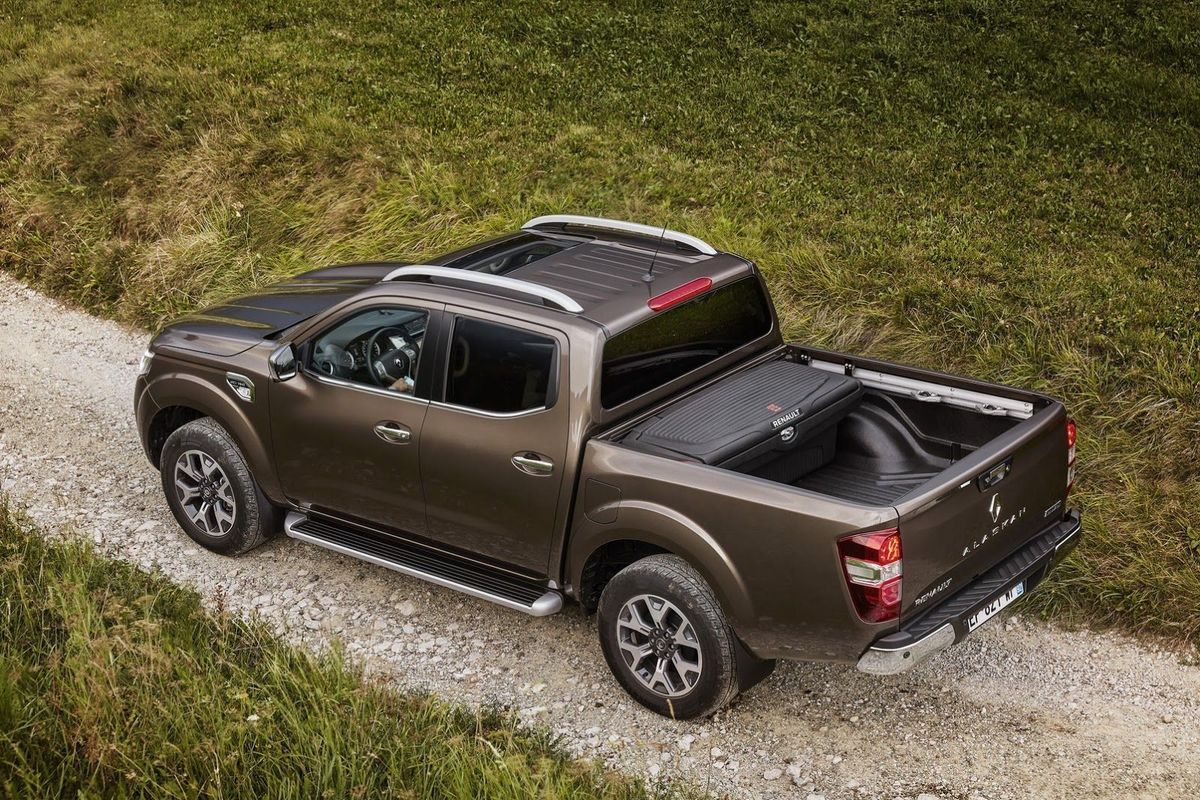
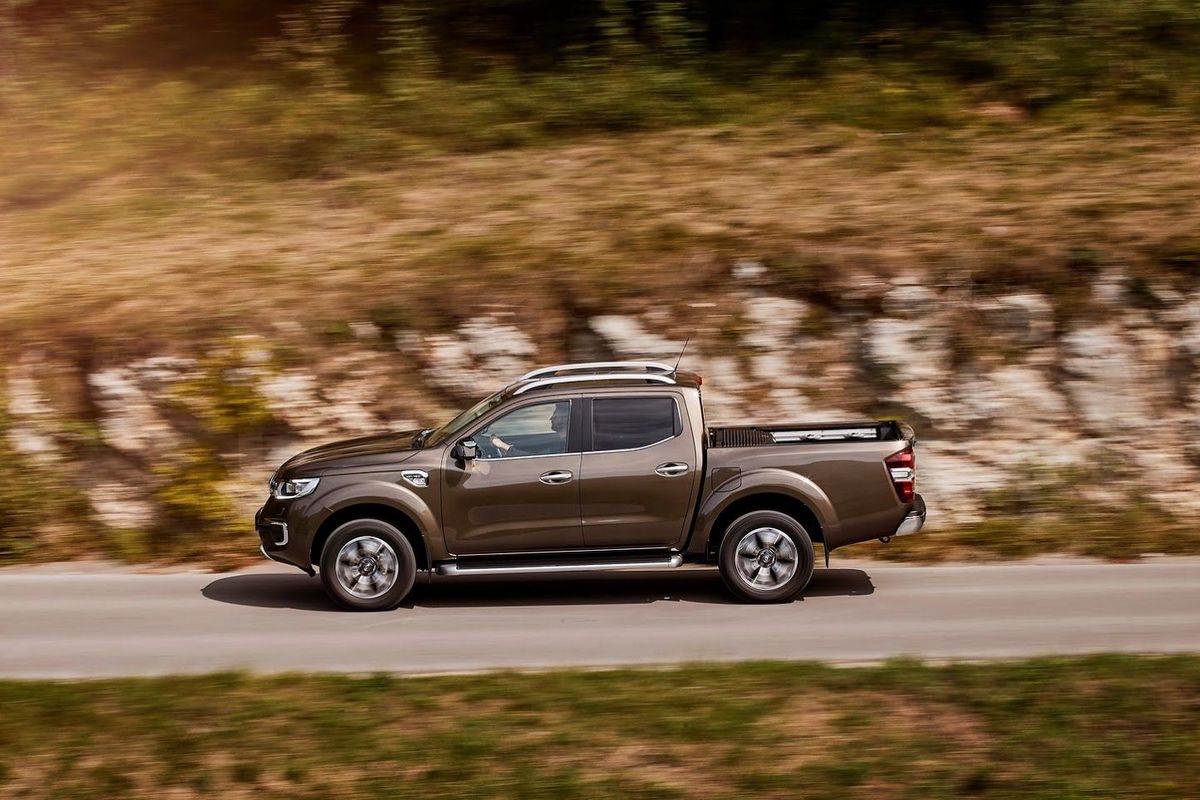
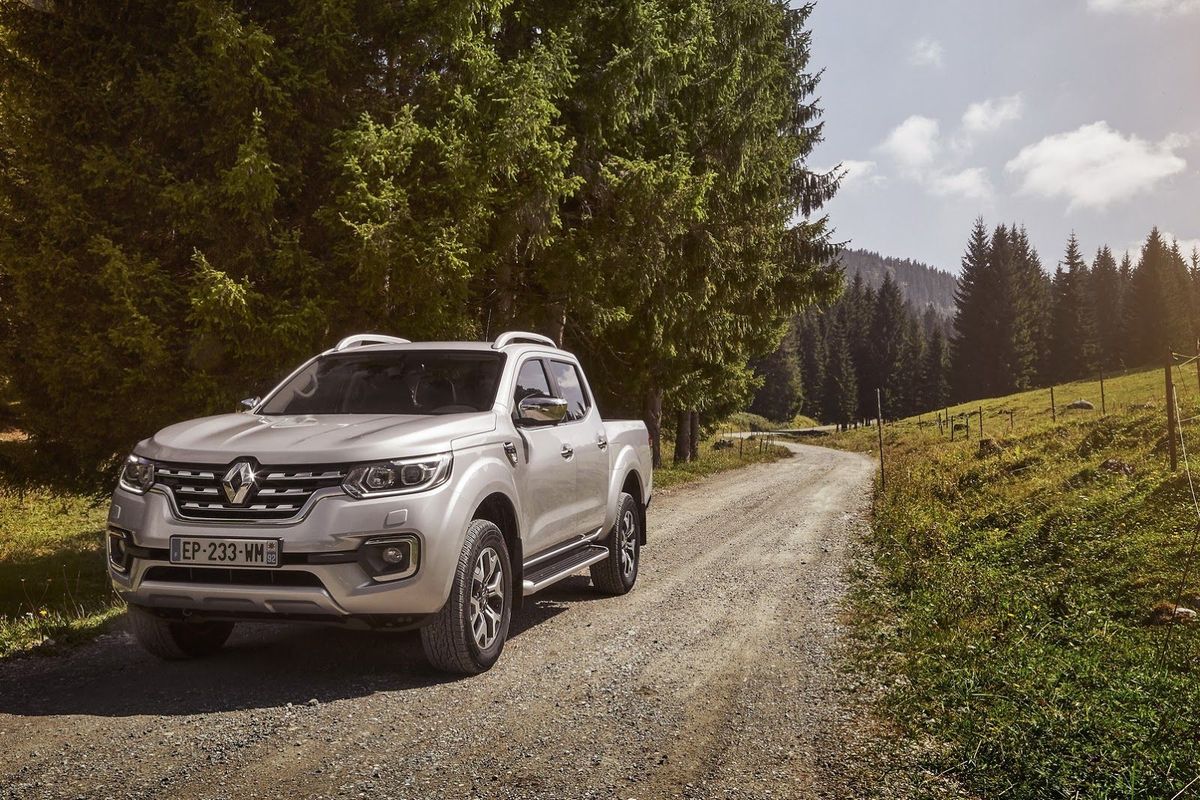
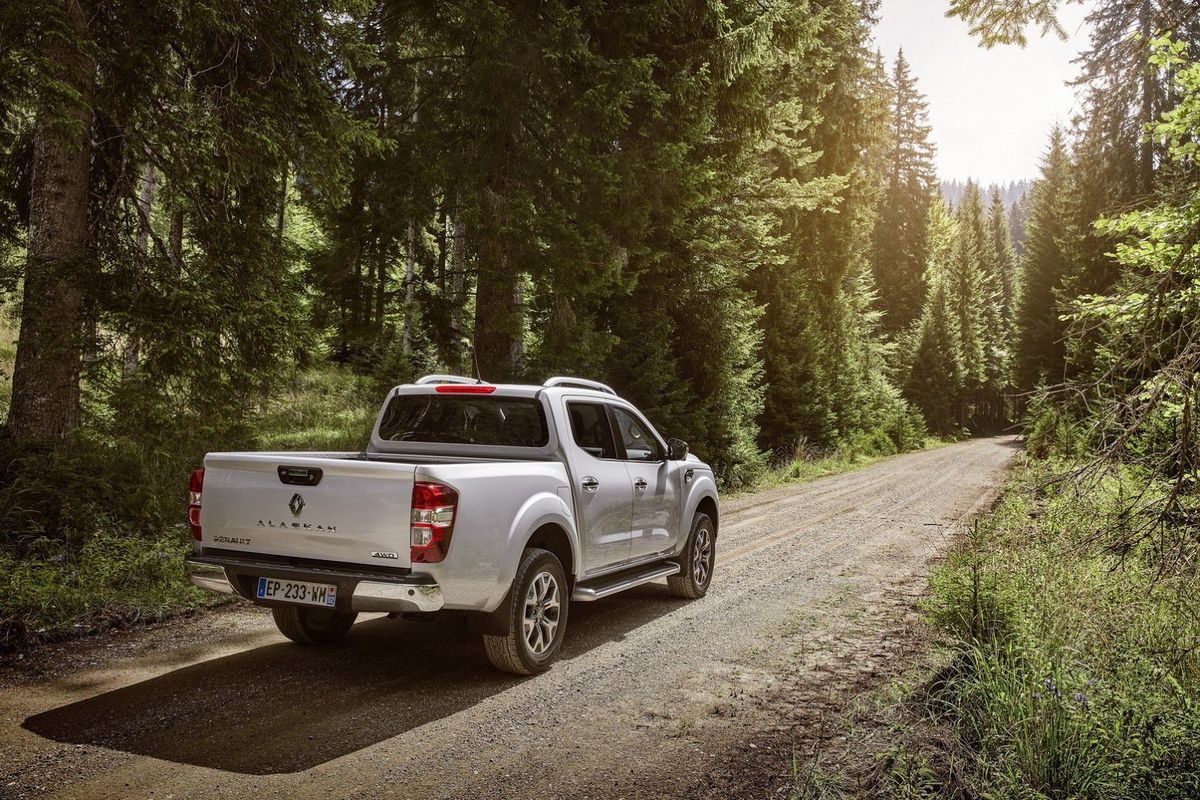
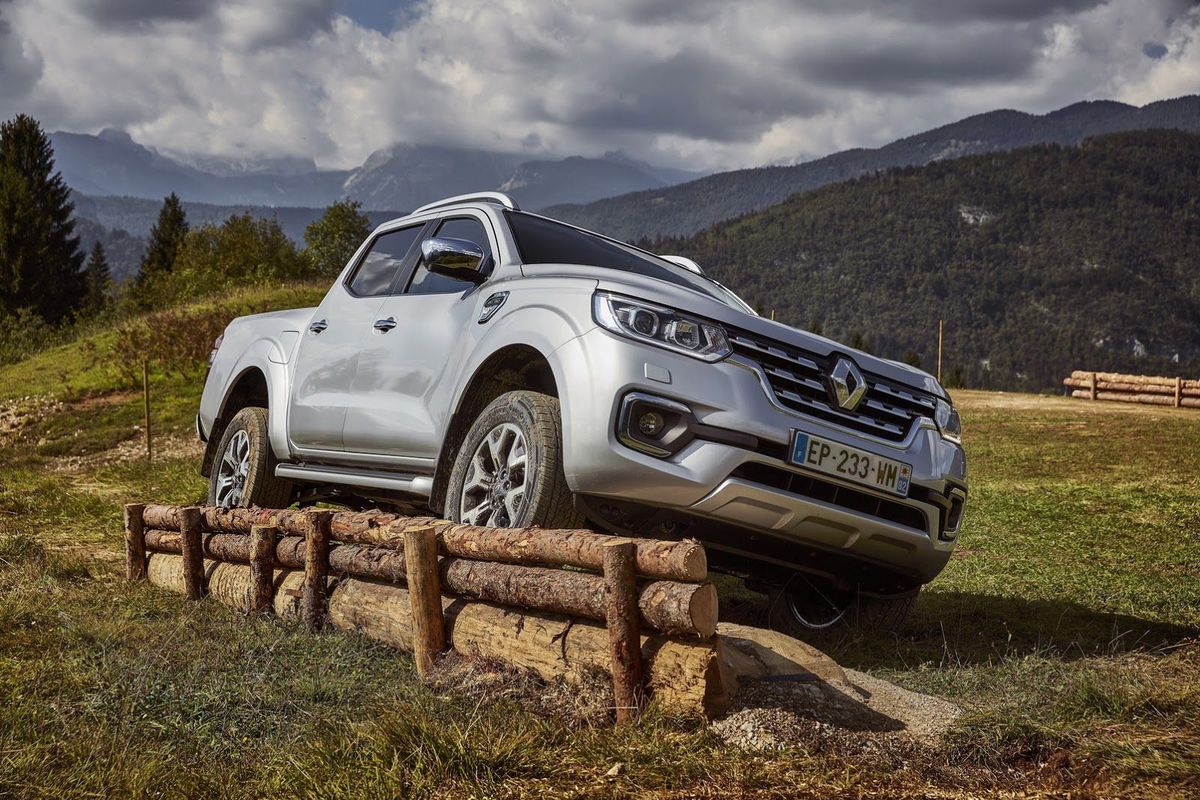
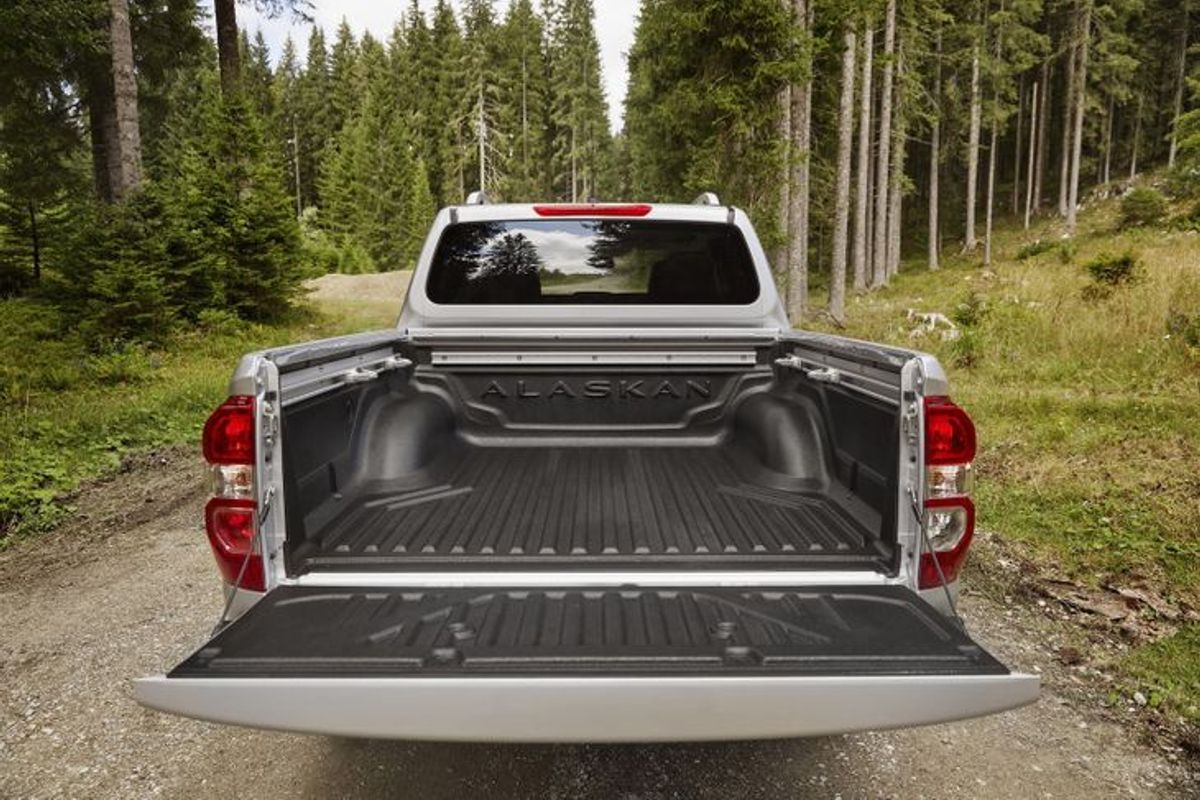
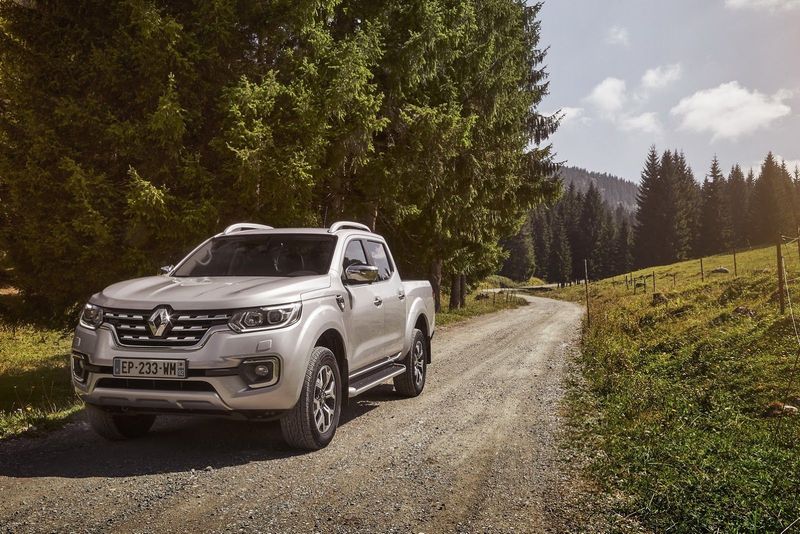
After launching the Alaskan double-cab bakkie in Latin America, Renault has now set its sights on the European market where it hopes to capitalise on growing demand. Renault plans to introduce the Alaskan double cab bakkie to South Africa in 2018.
Renault is launching its Navara-based bakkie in Europe and the model is expected for South African introduction next year. When it arrives, the Alaskan will take on a host of leisure double cab products such as the Toyota Hilux, Ford Ranger, Nissan Navara, Volkswagen Amarok and forthcoming Mercedes-Benz X-Class, to name a few.
The Alaskan will have much to prove in a segment filled with established products.
The Alaskan uses the same platform as the Navara and Merc X-Class, so Renault has a good foundation to work from. How it plans to position the Alaskan among the above competitors will be of paramount importance. The 5-link rear suspension setup lends itself towards comfort, so we expect it to be more of a leisure or lifestyle bakkie than a workhorse.
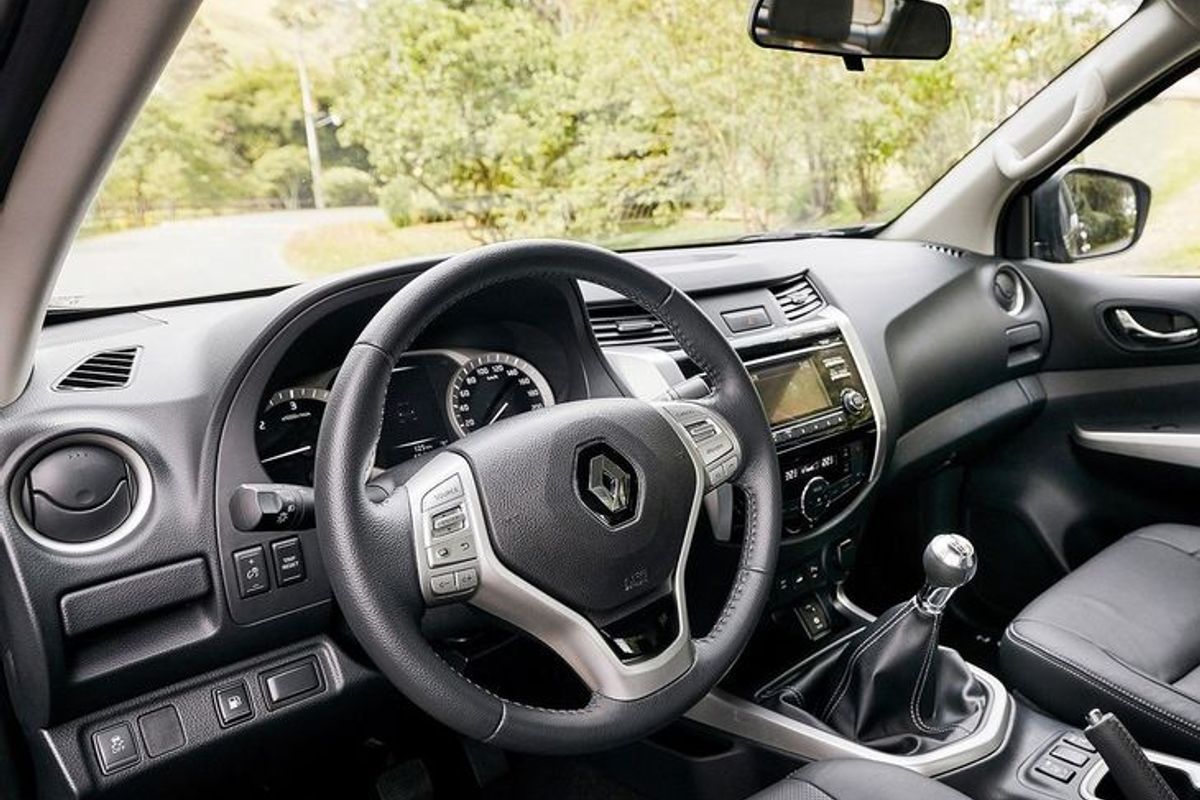
The Alaskan is powered by a 2.3-litre diesel engine offering either a single turbocharger with 120 kW or a twin-turbo with 140 kW. A small turbo will provide strong torque at low revs and a larger turbo provides more power at higher revs. Renault claims a fuel consumption figure of 6.3 L/100 km. A 6-speed manual or 7-speed automatic transmission will be offered.
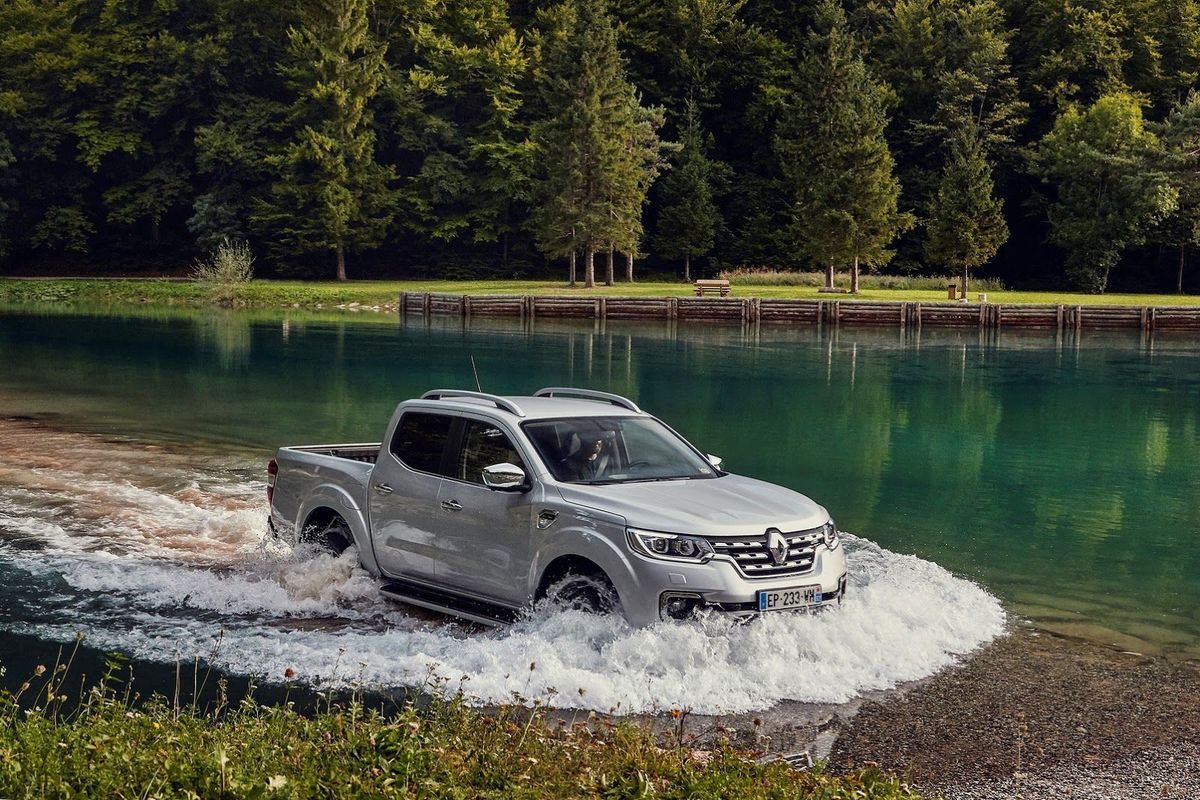
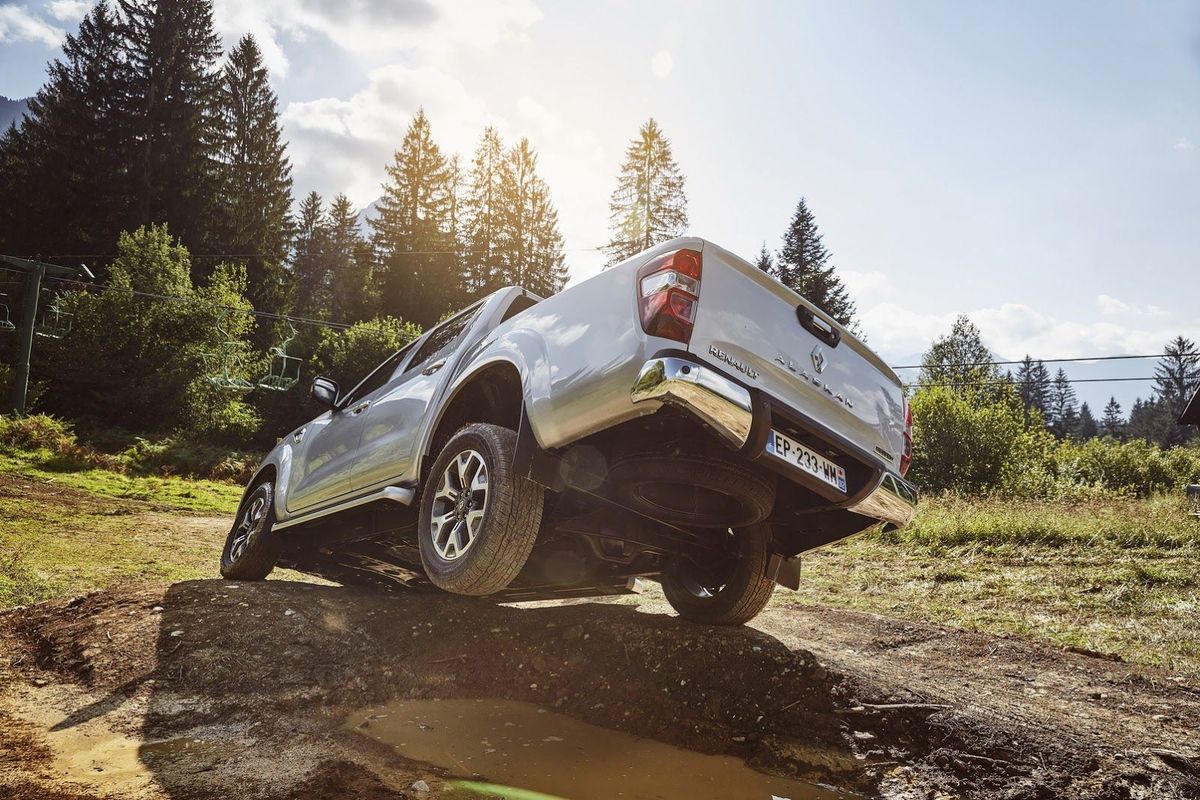
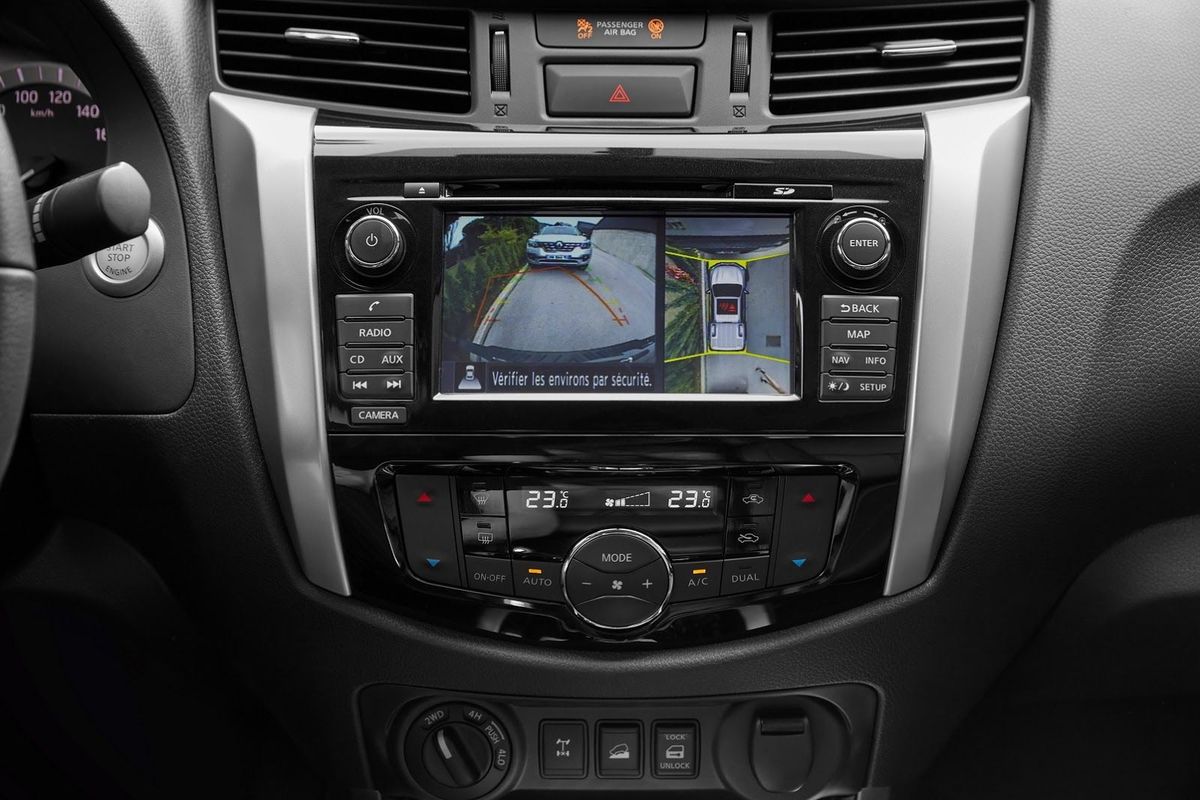
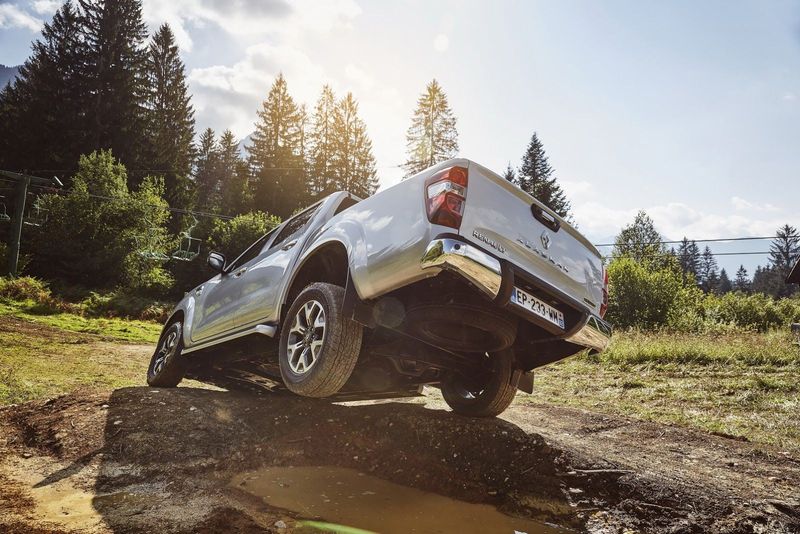
A choice of 3 driving modes will be at the driver's disposal including 2WD, 4H and 4LO, depending on the terrain. The Alaskan is equipped with an electronic limited-slip differential, self-locking rear differential (manually engaged), hill start assist and hill descent control.
Based on the Nissan Navara, the Renault Alaskan inherits some strong offroad genes.
Key safety features include ABS with EBD, brake assist, electronic stability program, traction control and a total of 7 airbags as standard.
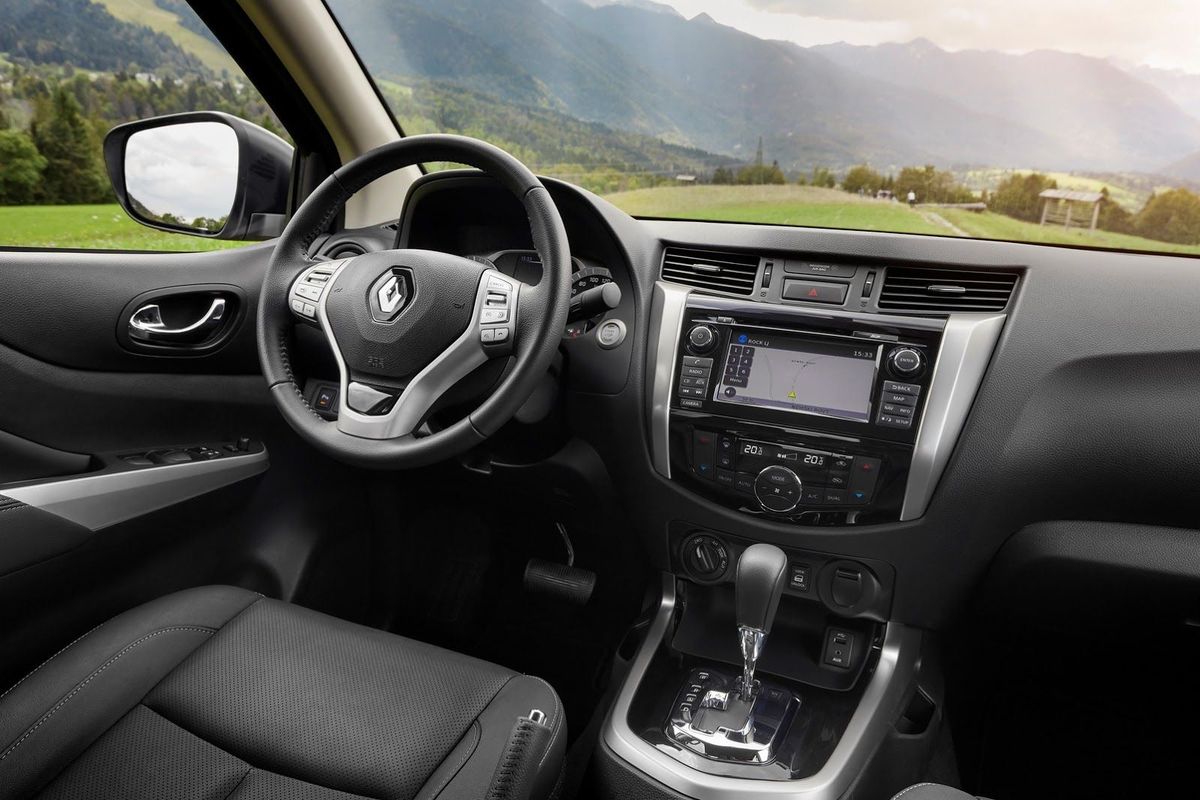
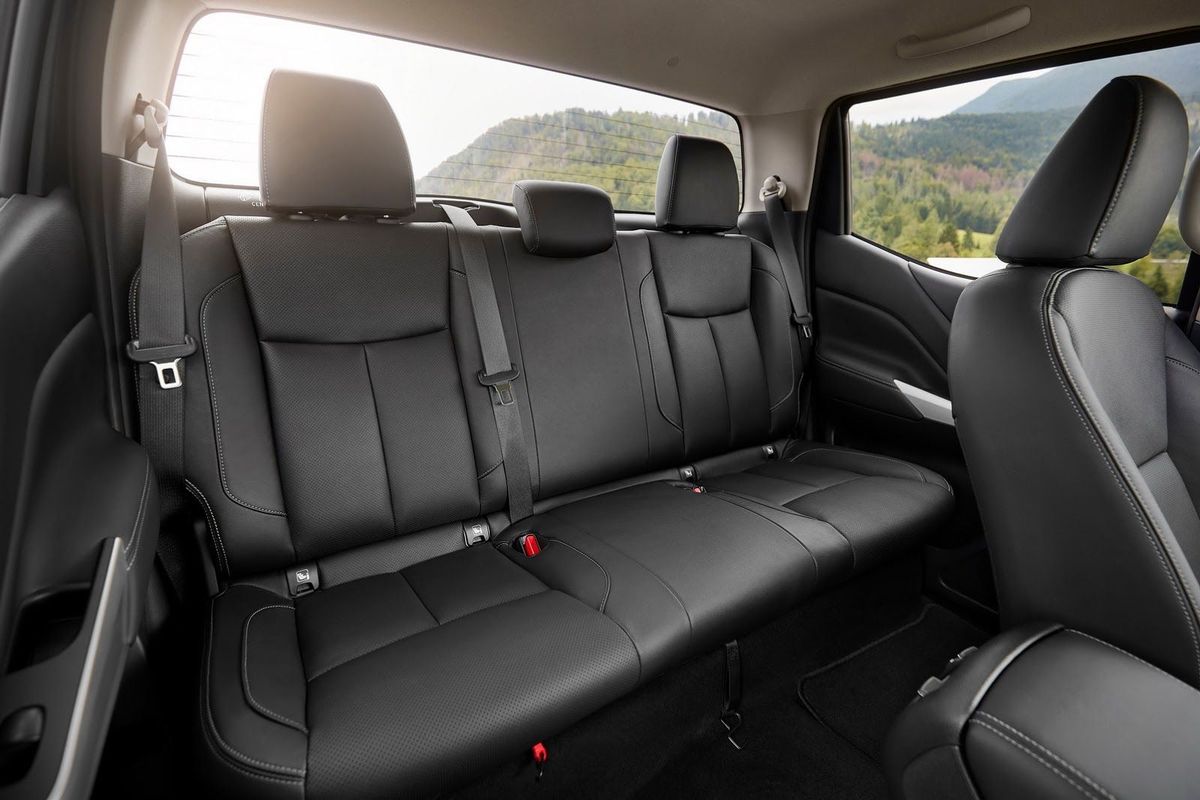
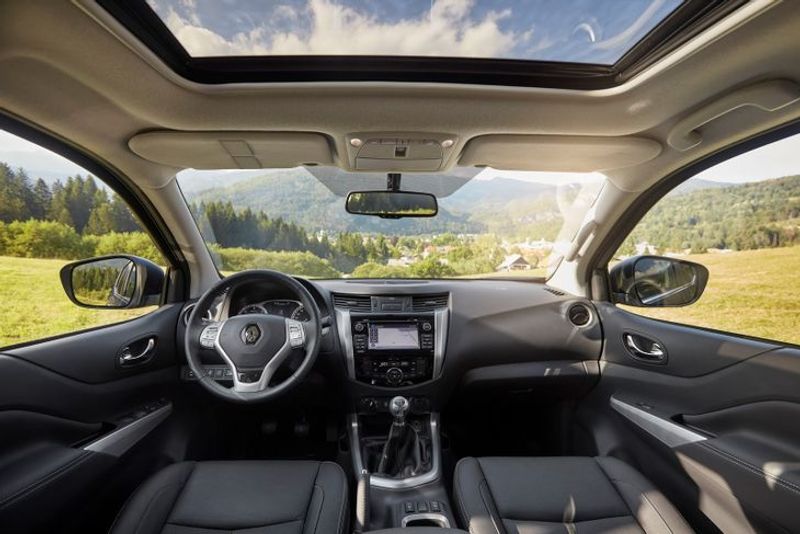
Interior features include a 7-inch touchscreen infotainment system with navigation, 360-degree camera and Bluetooth functionality. A 5-inch TFT 3D colour display is also fitted, giving the driver vital information such as fuel economy, navigation instructions, driver aid settings, compass, USB device controls and so forth. The Alaskan is fitted with NASA-inspired zero gravity seats with heating function while the driver's seat is 8-way electrically operated. Leather upholstery will be offered on specific derivatives along with automatic dual-zone climate control with independent air conditioning for front and rear passengers.
A number of storage solutions will be available to passengers, including storage bins underneath the rear seats. Local specification, however, may differ from what is offered in Europe and specification will be confirmed closer to the Alaskan's arrival in 2018.
The Alaskan will be offered with a range of comfort and convenience features including a 7-inch touchscreen infotainment system.
We will be driving the new Renault Alaskan in Europe in the near future, so stay tuned to our social channels (Facebook, Twitter and Instagram) for more details.
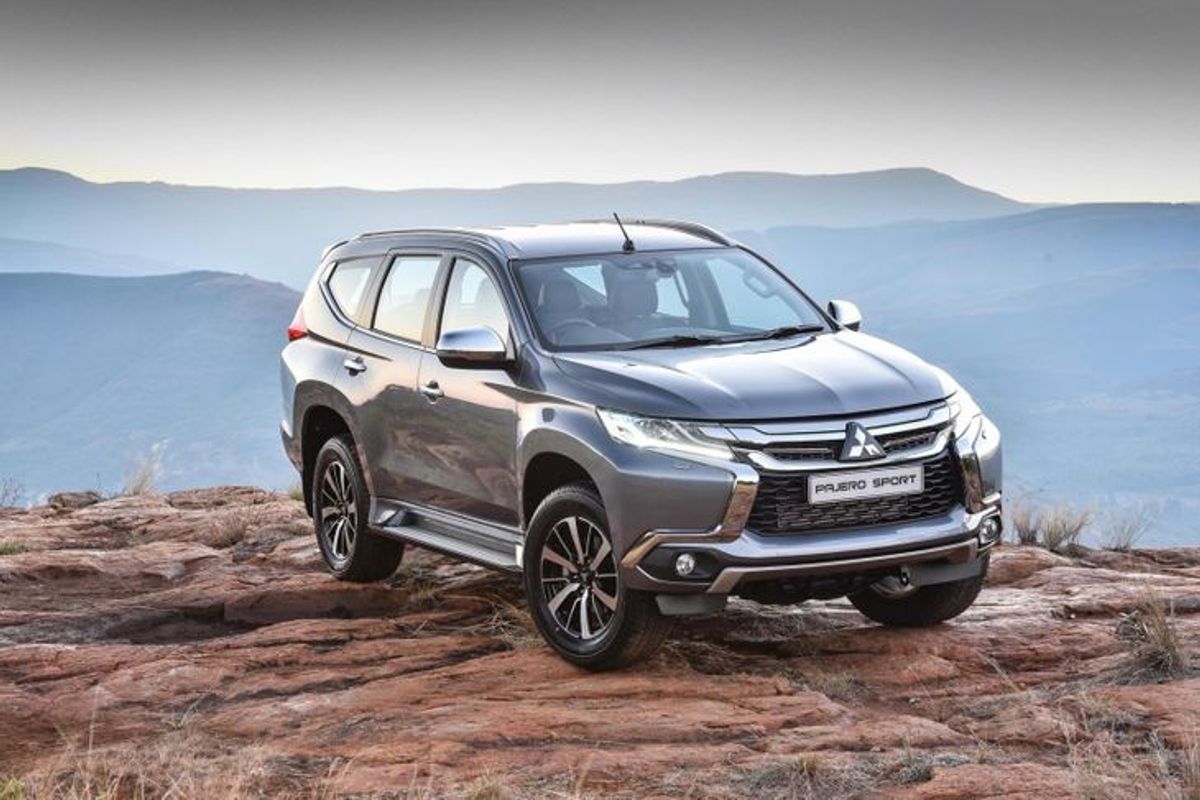
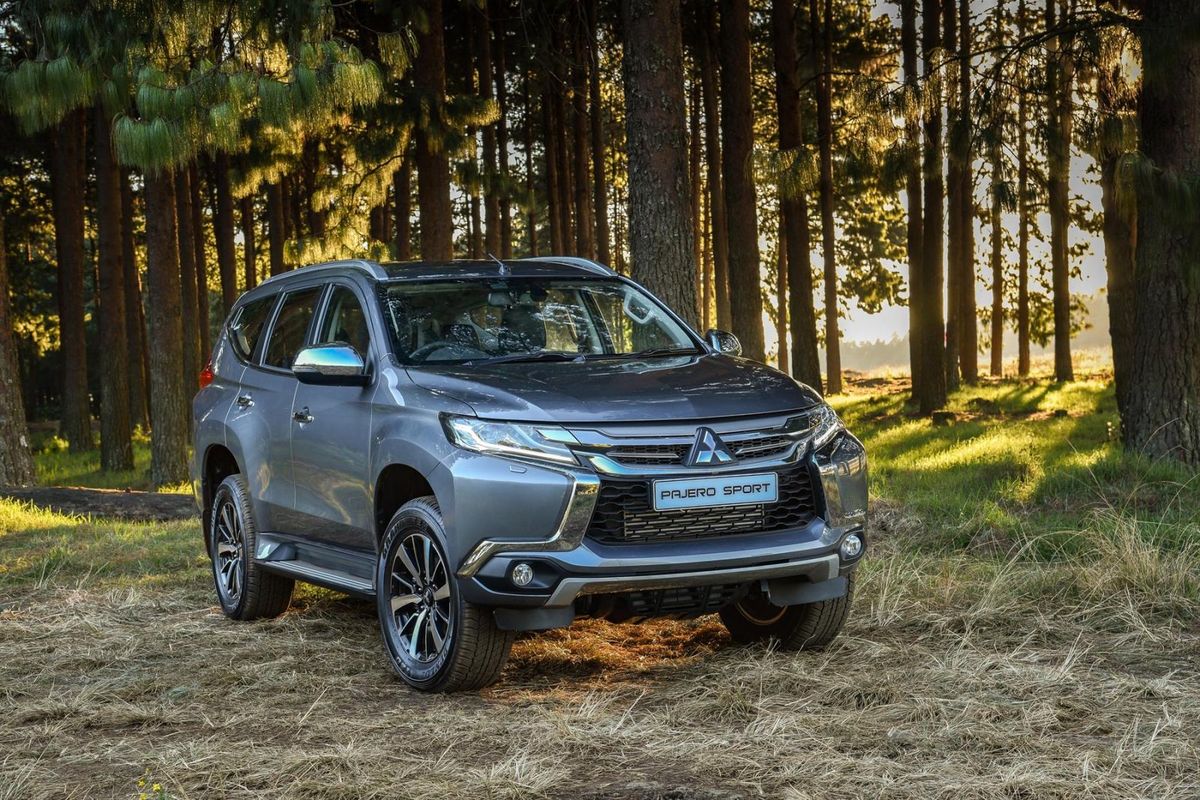
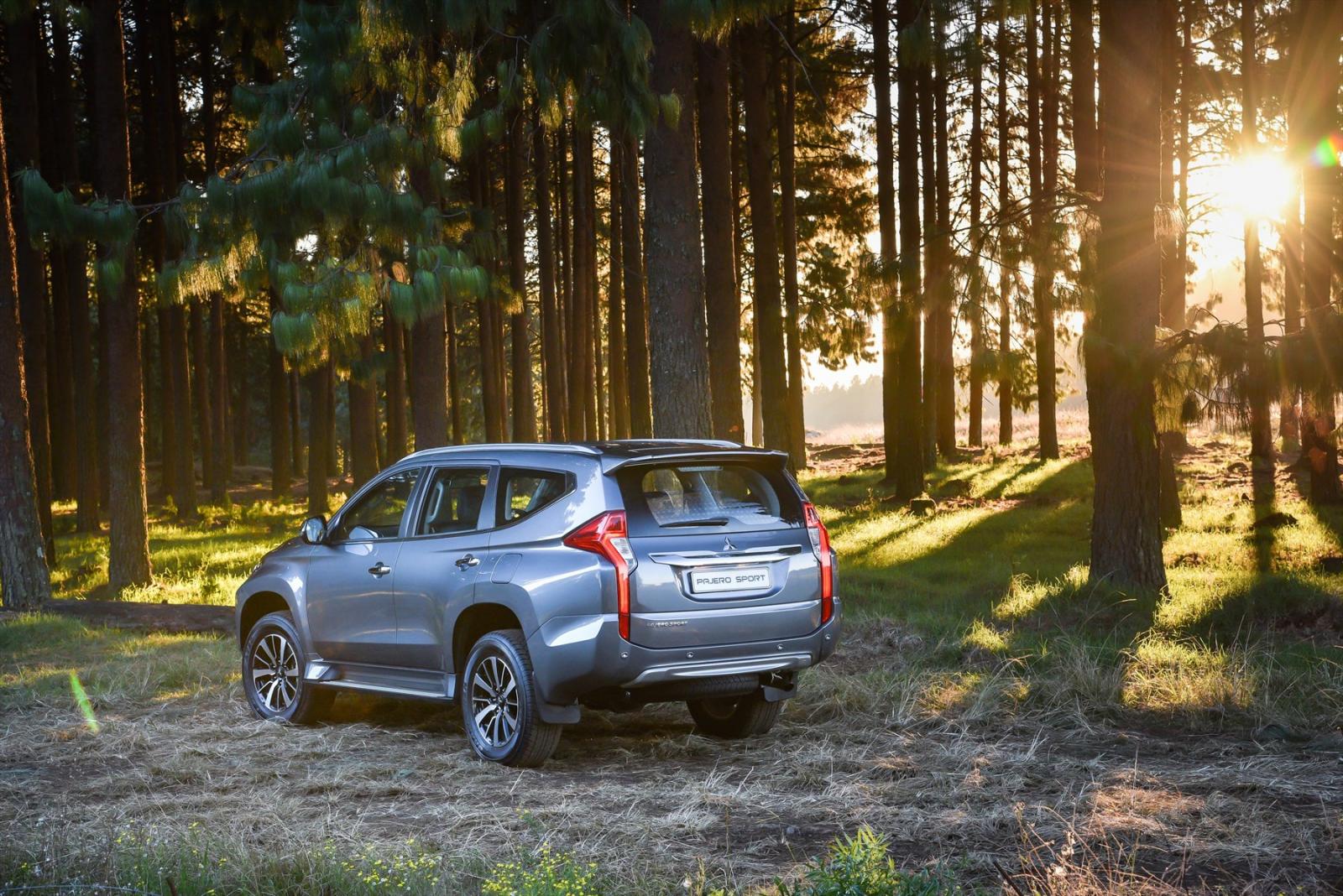
It's been a long time coming, but the new Mitsubishi Pajero Sport has finally arrived in South Africa! Take a look at specification and pricing for the new Pajero Sport.
Mitsubishi welcomes its next generation Pajero Sport 7-seat SUV to the South African market and it will go up against formidable rivals such as the popular Toyota Fortuner and Ford Everest.
Nic Campbell, General Manager at Mitsubishi Motors South Africa says, "Under the new design concept, labelled 'Dynamic Cruising Off-Roader', Mitsubishi engineers have combined the best of both worlds with the all-new Pajero Sport – an accomplished four-wheel drive sport utility one can confidently show off to the world. If it's value for money you crave, you'd be hard pressed to look beyond the keenly priced and well-equipped Pajero Sport 4WD derivative. We are confident that the all-new Pajero Sport will fit in nicely with our existing product line-up and customer base, while luring new lifestyle customers with its sophisticated car-like driving dynamics, luxurious comfort and elegant style as well as its admirable off-road reputation."
Engine power
The new Mitsubishi Pajero sport arrives in SA to take on the Toyota Fortuner and Ford Everest.
Powering the Pajero Sport is a new-generation, 4-cylinder 2.4-litre turbodiesel engine producing 133 kW at 3 500 rpm and 430 Nm of torque at 2 500 rpm.
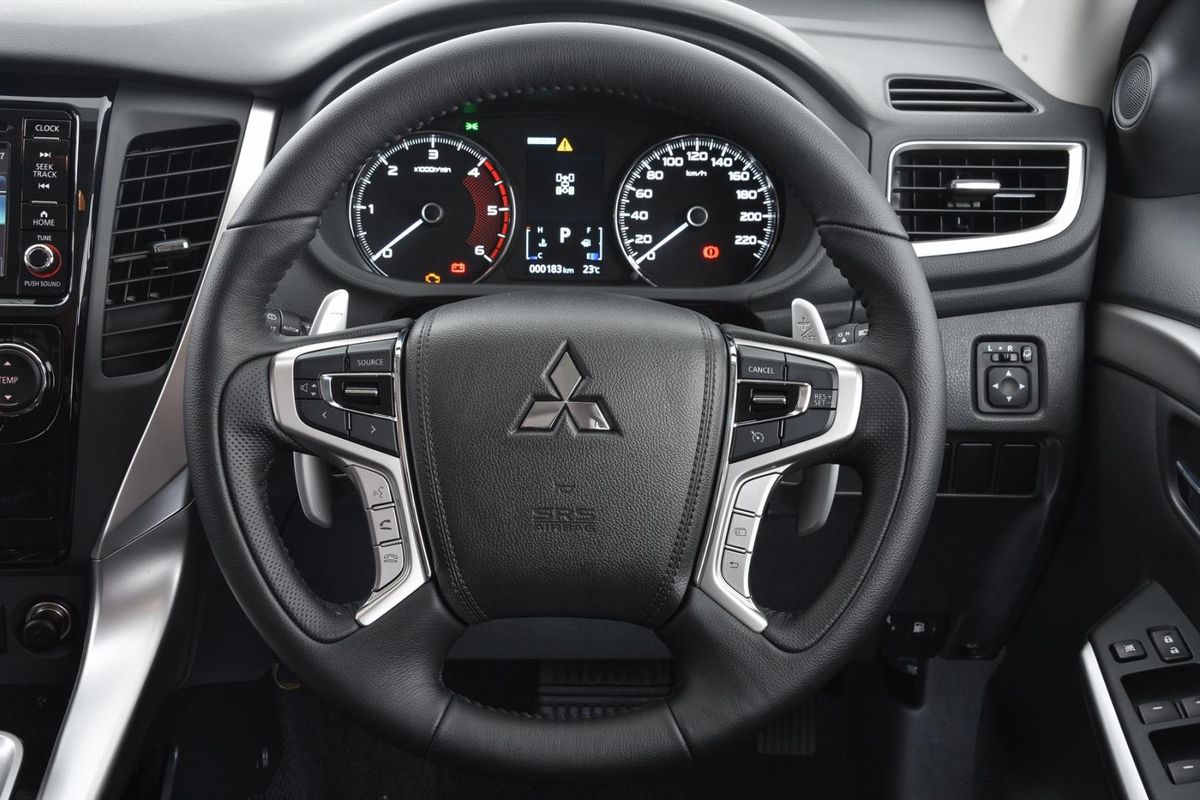
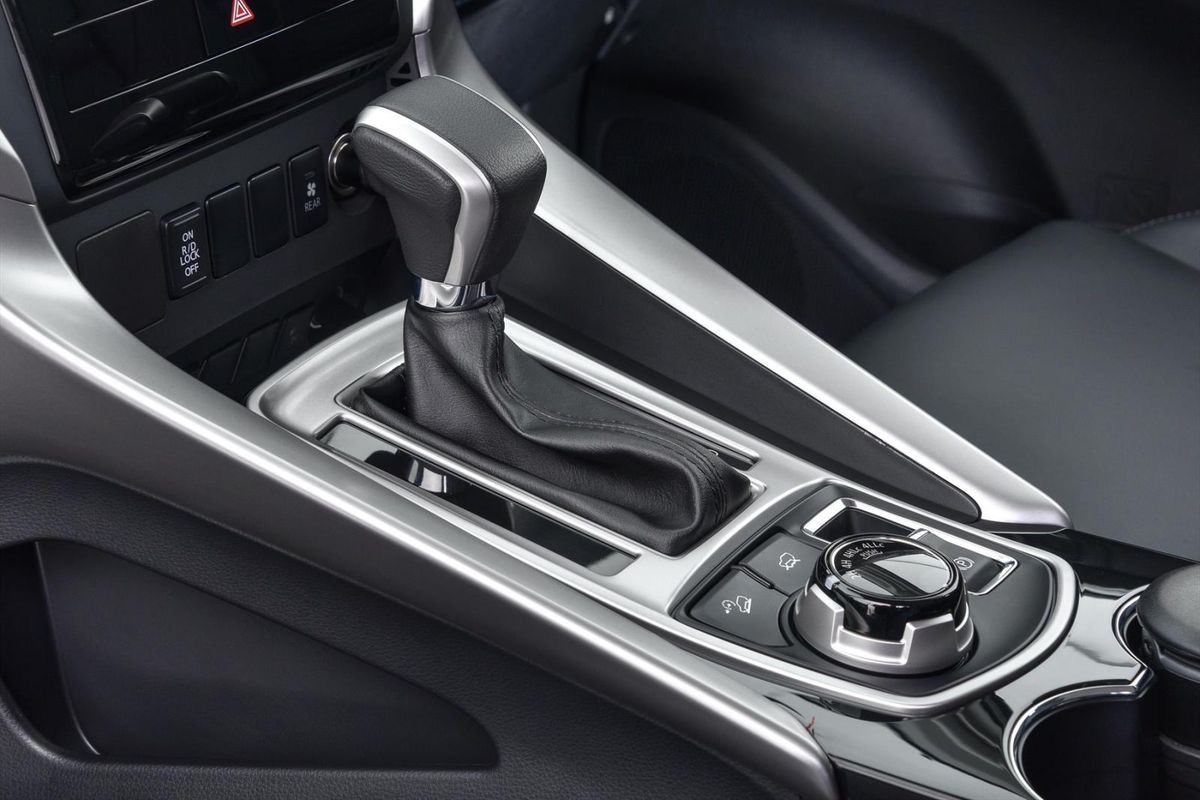
An all-new 8-speed automatic transmission is standard and Mitsubishi claims that the setup contributes to up to 17% improvement in fuel consumption with CO2 emissions under 200 g/km. The new Pajero Sport is offered in high-specification 4×2 and 4×4 guise and the former is claimed to consume 8.0 L/100km while the latter carries a claimed consumption figure of 8.1 L/100km. The transmission also offers a Sport Mode with manual shifting and shift paddles behind the steering wheel for added convenience.
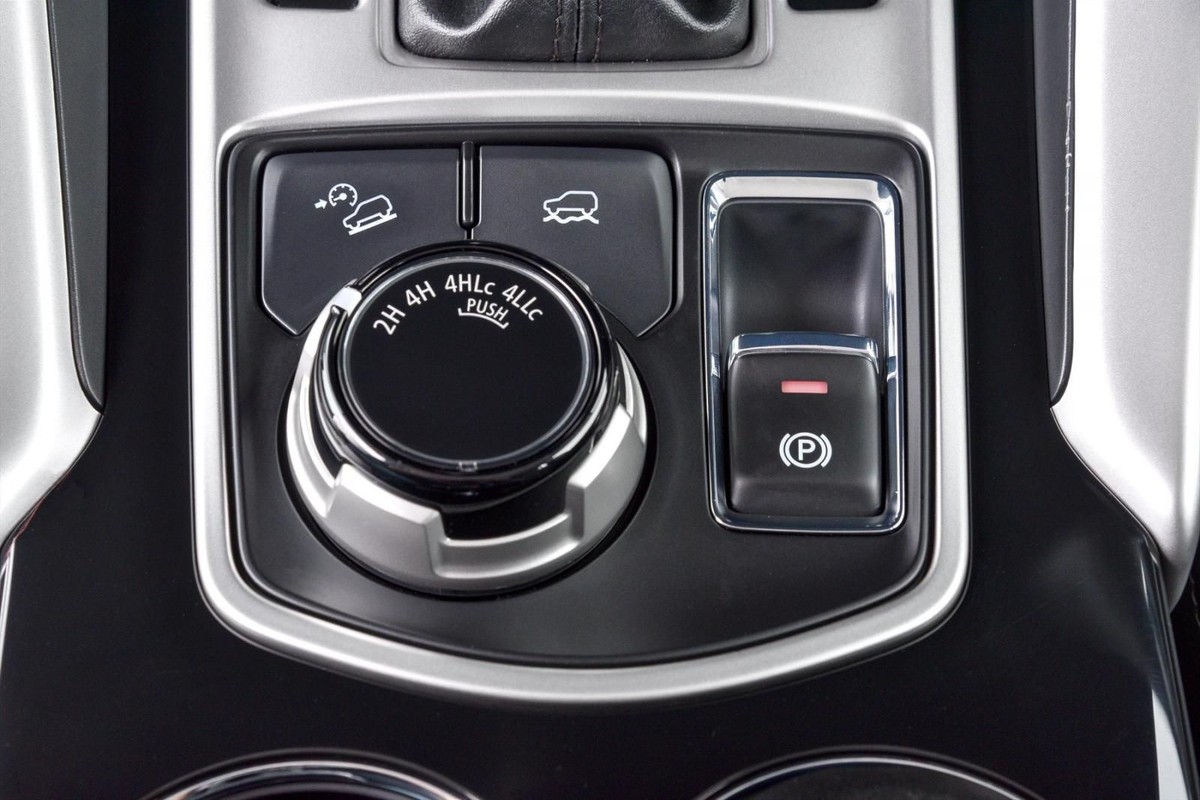
The Pajero Sport is fitted with the latest-generation Super-Select 4WD-II four-wheel drive system which includes Off-road Mode and Hill Descent Control, making it a capable adventure vehicle too. Driving modes available to the driver include Gravel, Mud/Snow and Sand or Rock to optimise traction in various terrains and the 4-wheel drive system is also coupled with a lockable rear differential.
Standard safety features include 6 airbags, ABS with EBD, brake assist, active stability control with traction control and a brake override system.
Pajero Sport Design
The Pajero Sport is offered in either 4×2 or 4×4 guise and comes packed with a host of standard features.
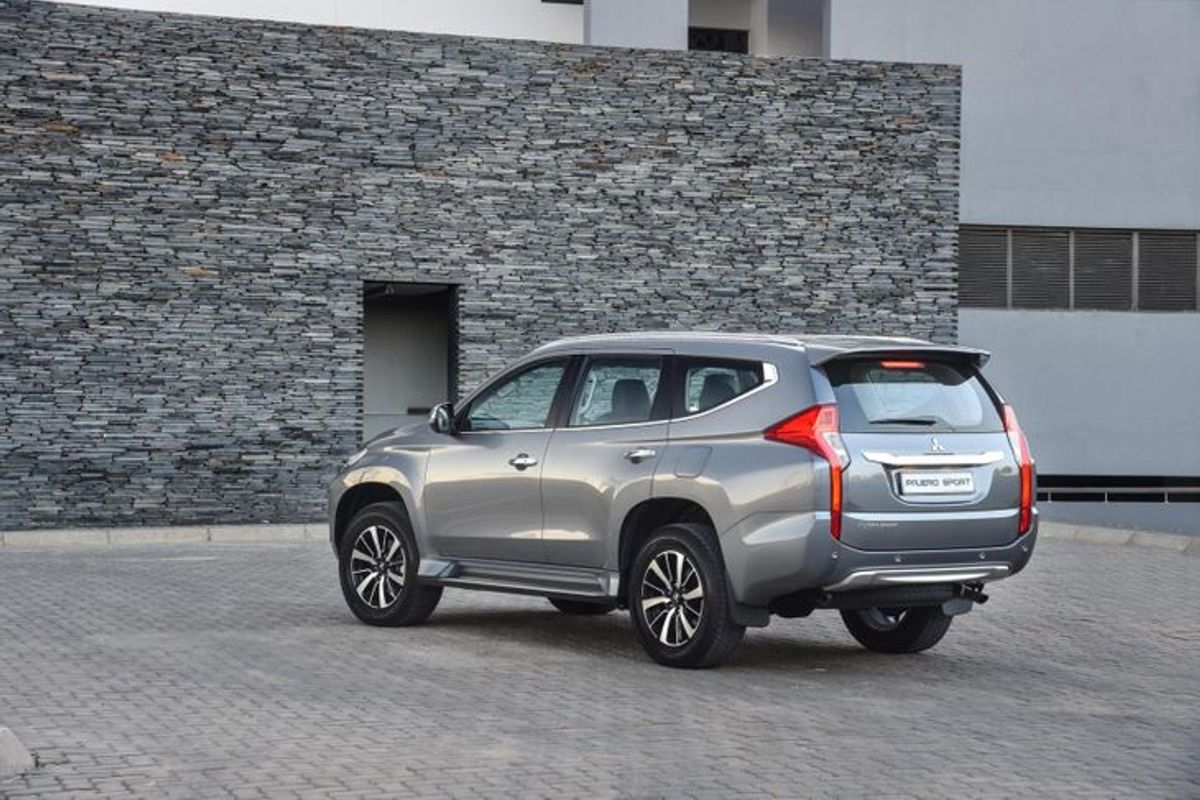
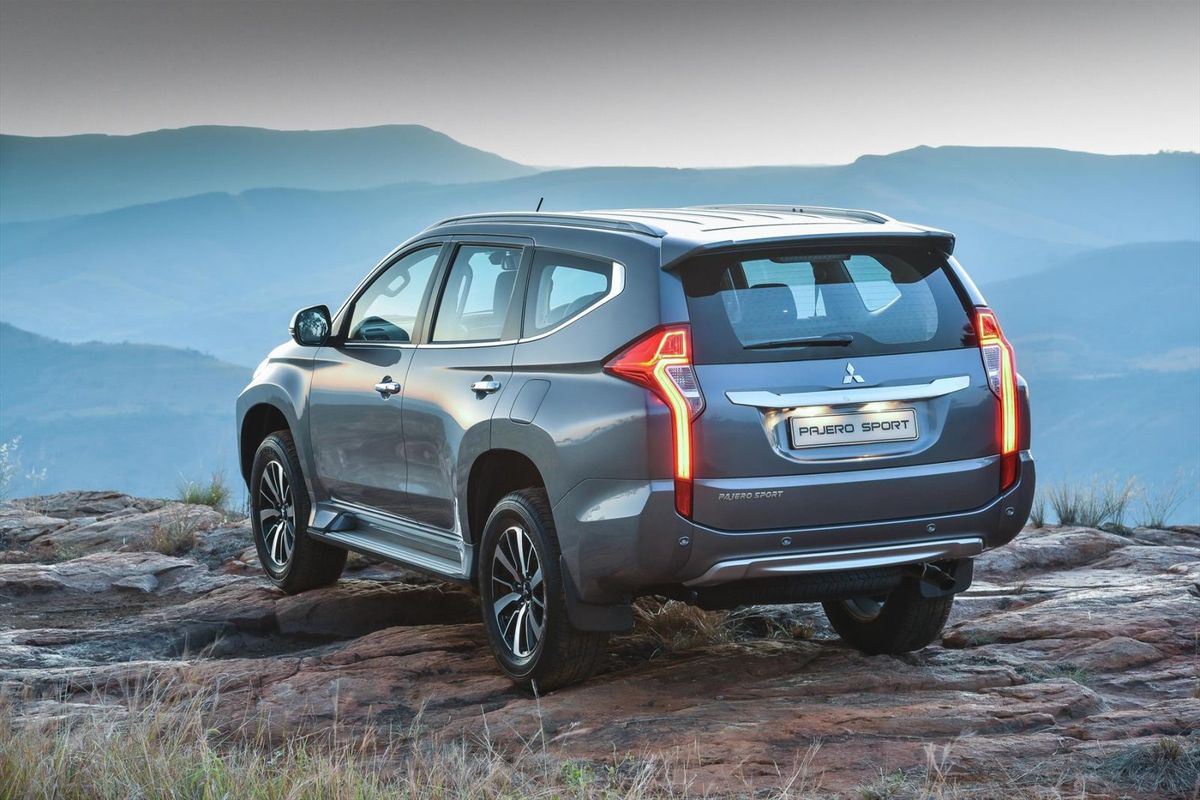
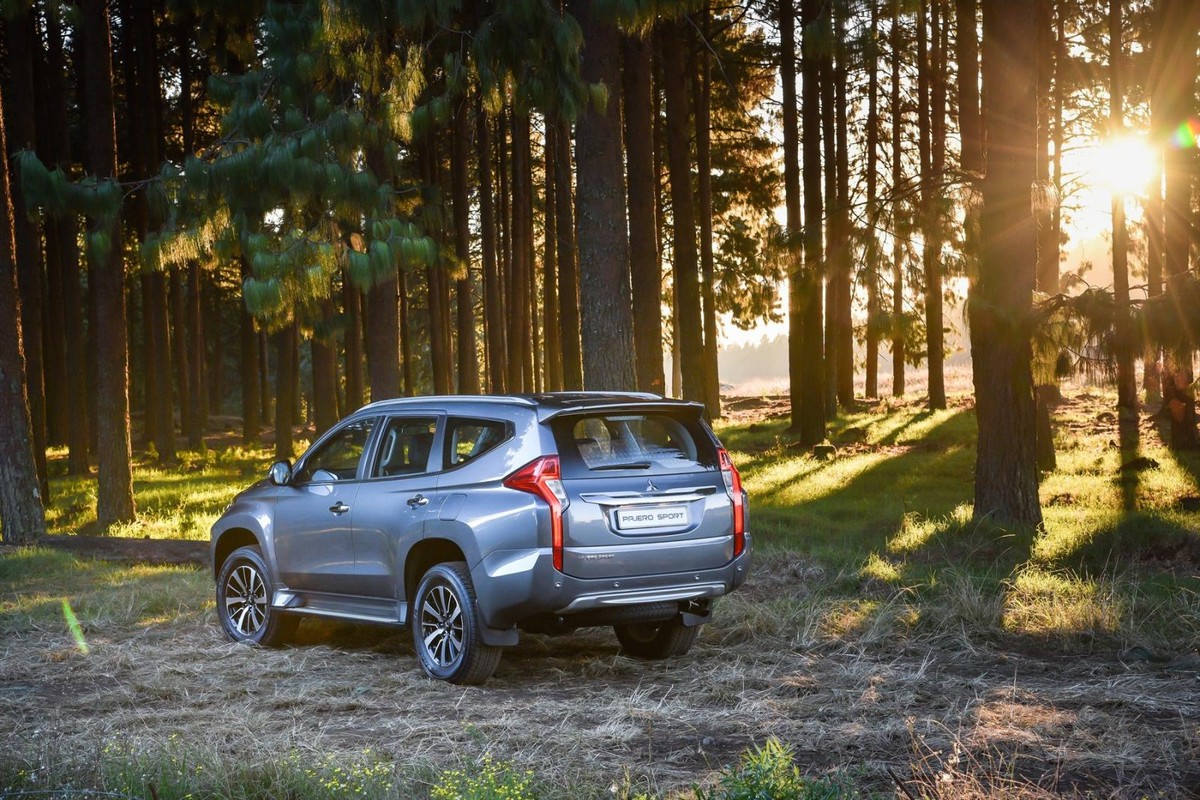
The most striking design element is surely the front-end, which features a new 'Dynamic Shield' incorporating chrome trim. The new model also features slim headlights as well as LED Daytime Running Lights with the fog lights set low on the front bumper. At the rear, vertical tail lights stretch all the way down to the rear bumper. It's an interesting take on a rear design and we'll have to see how the South African market takes to it.
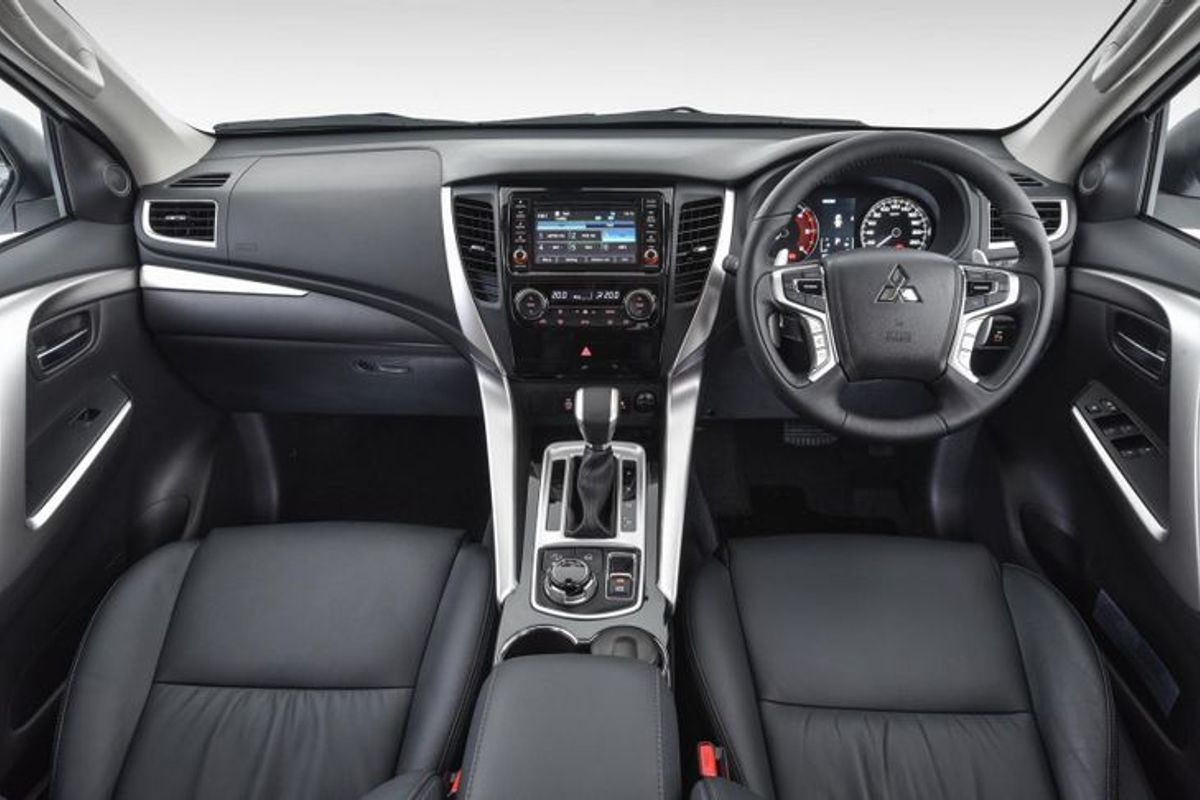
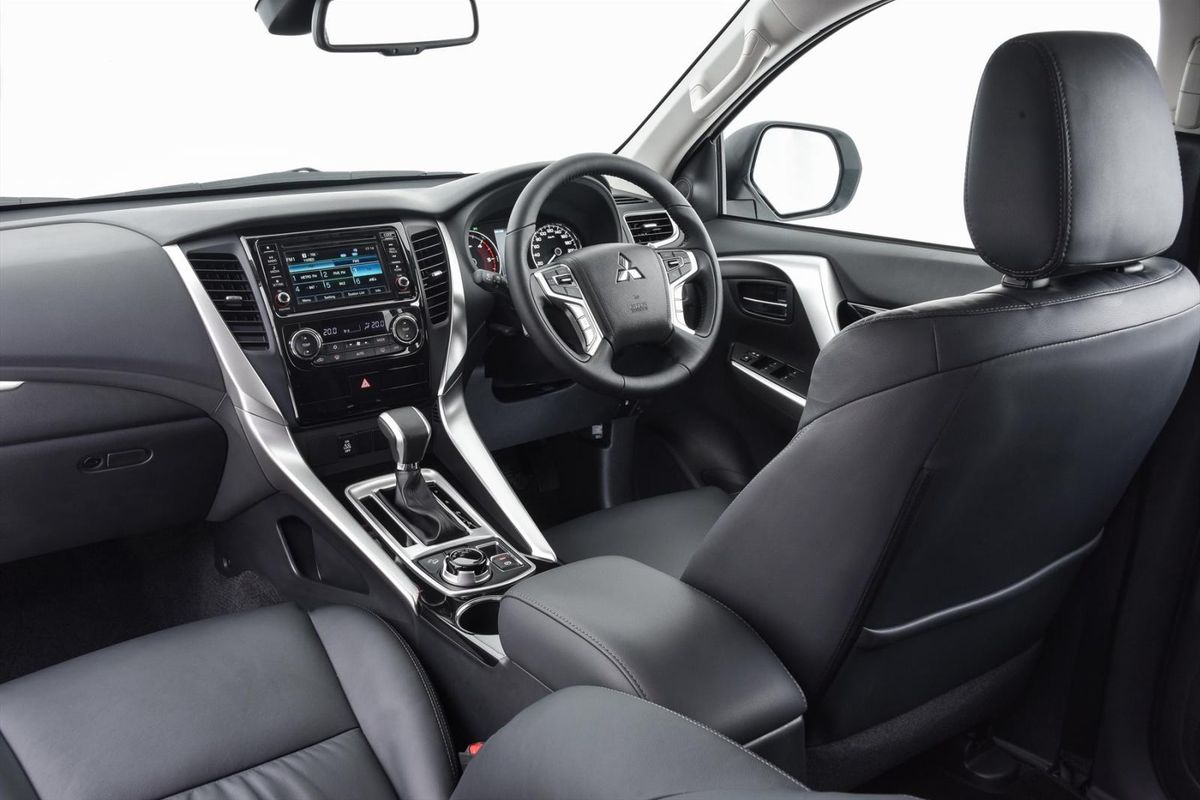
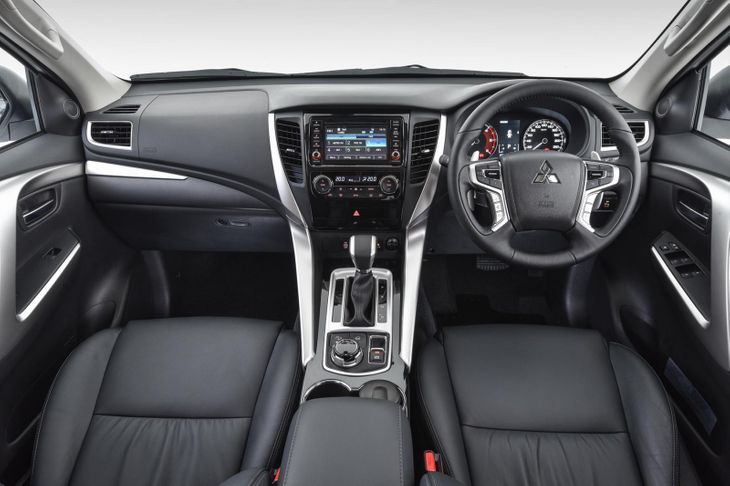
The interior draws inspiration from the Triton, on which it's based, and features a 'high console proportion' dashboard with elements in silver-finish throughout. The soft leather seats have been upgraded too, adding more luxury to the vehicle.
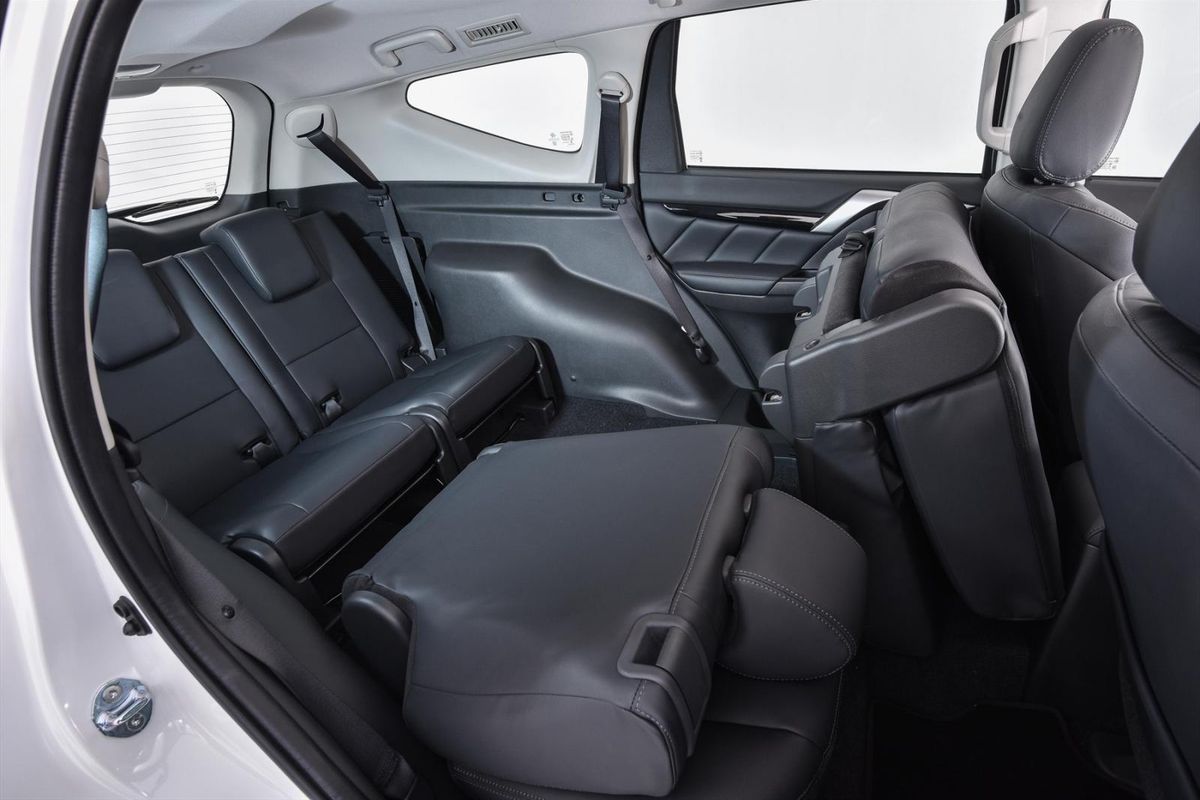
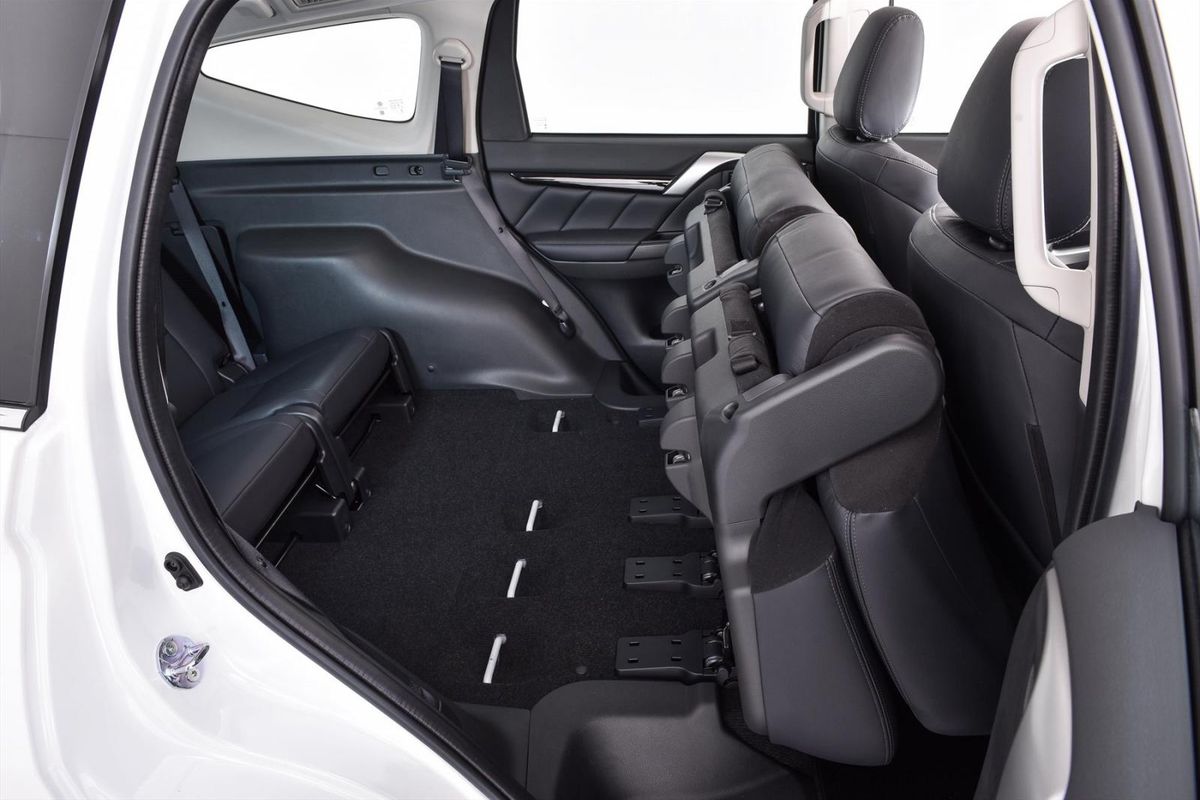
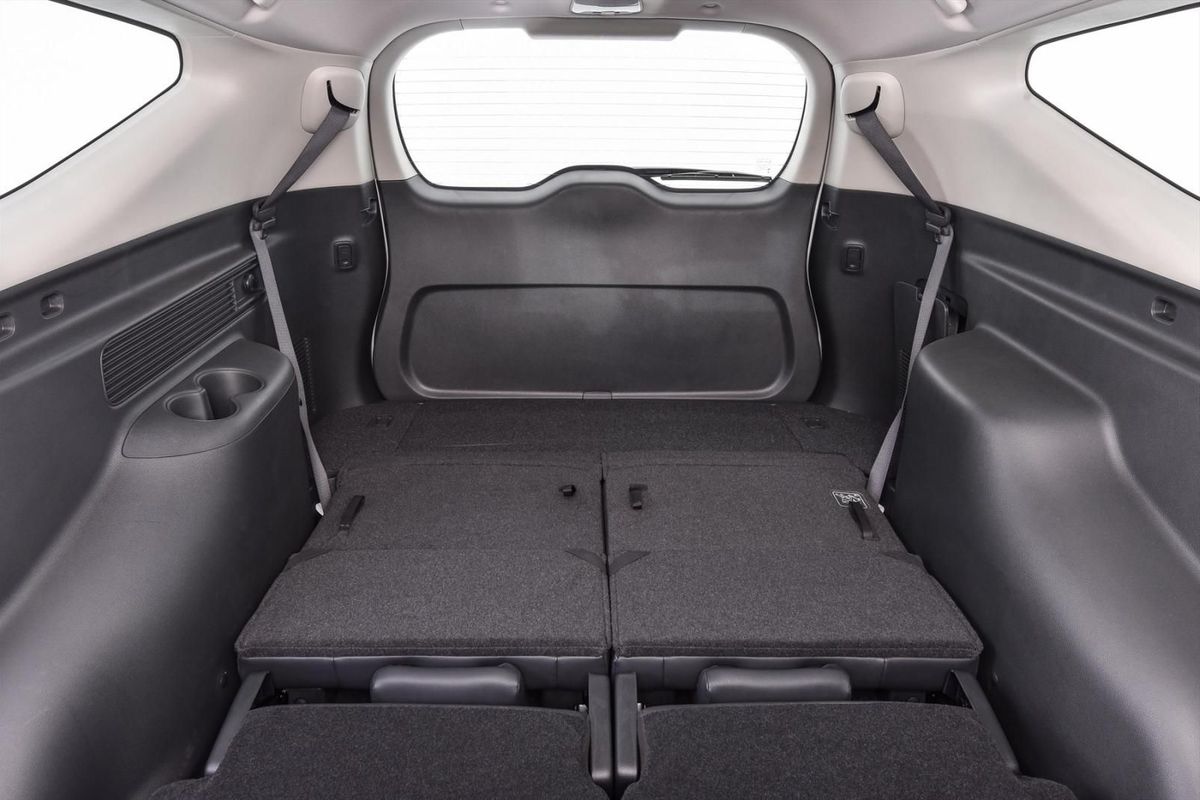
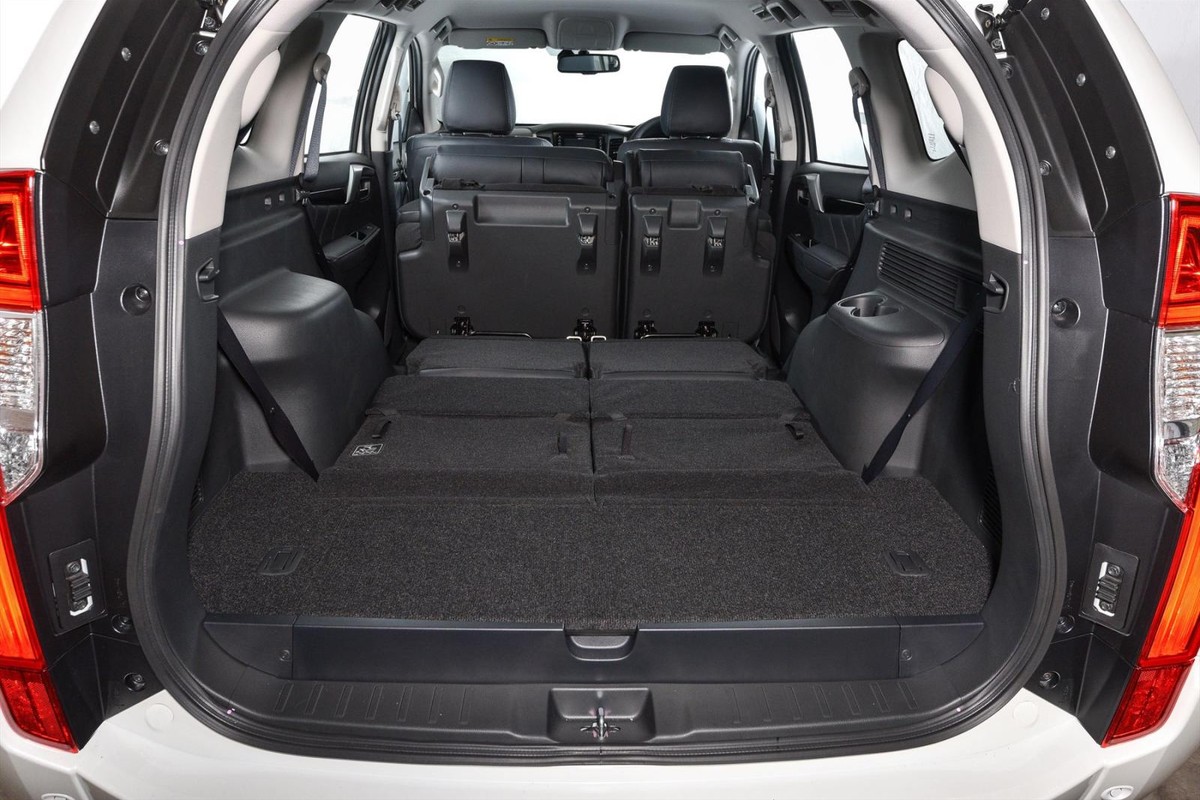
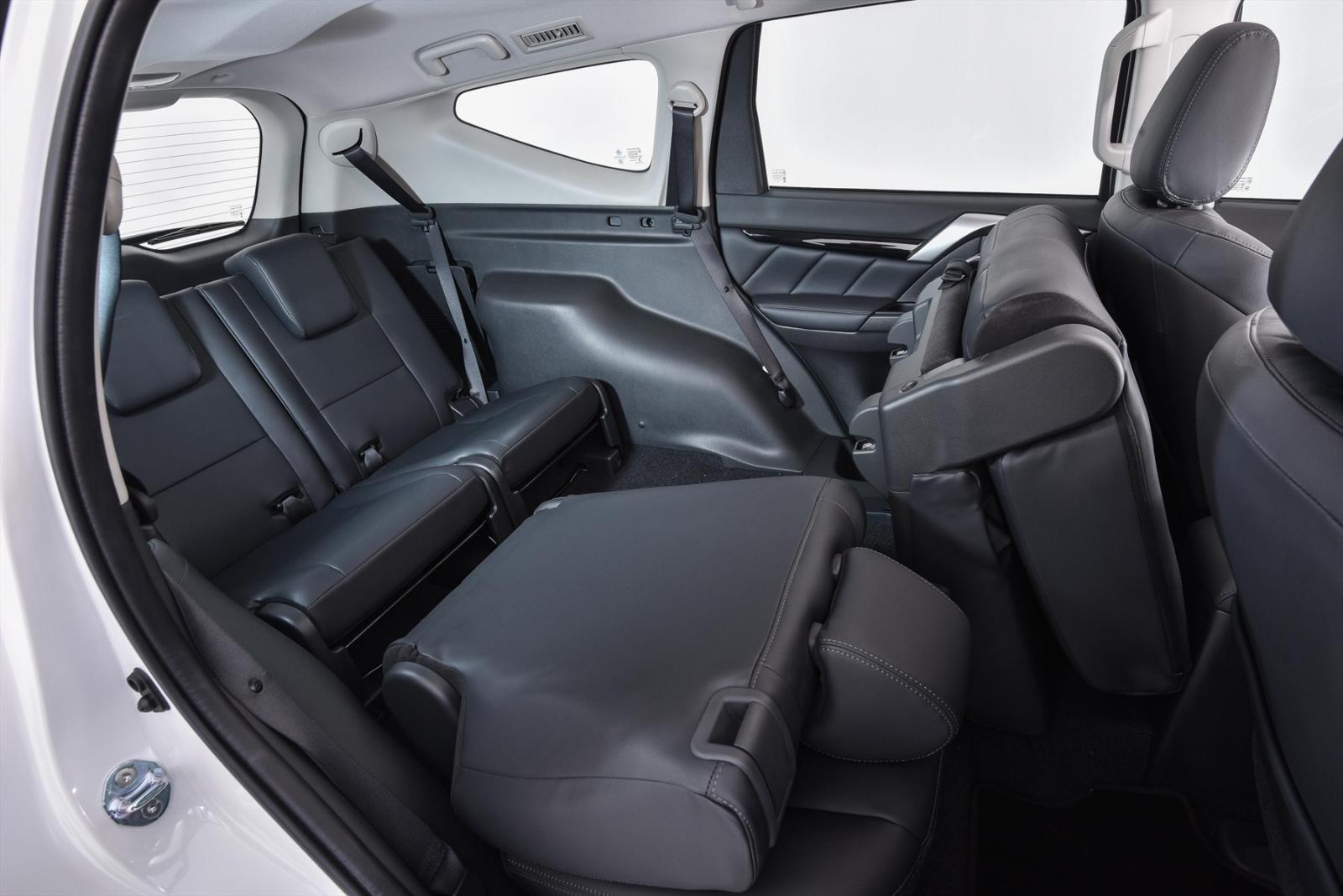
The driver's seat is electrically adjustable and the second row of seats are split in a 60:40 configuration and recline, slide or tumble, depending on your needs. A centre armrest with cup holders and air vents all the way to the rear give passengers added comfort. The third row of seats can fold flat into the floor to minimise intrusion in the load bay.
The seats can be folded and tumbled in various configurations to suit your loading requirements.
The multifunction steering wheel is adjustable for rake and reach while rear park distance control with a rear-view camera makes reversing safer. Other standard features include dual automatic air conditioning with rear temperature controls, electronic parking brake, cruise control and a Bluetooth-capable infotainment system with voice control.
"Something that adds huge value to the new Pajero Sport is the fact that many additional features come as standard as opposed to most of its competitors where it attracts an extra cost, making our new SUV even more attractive," adds Campbell.
Mitsubishi says ride comfort and NVH levels have improved too with enhancements to the suspension and body mounts. Ride quality is provided by double wishbone coil springs with a stabilizer bar in the front and multi-link suspension with stabilizer bar in the back.
Volvo V90 Cross Country D5 AWD Inscription (2017) Quick Review
Possibly as expected, the Volvo V90 Cross Country has not set sales charts alight. In a market where buyers prefer SUVs, including Volvo's own highly acclaimed XC90, a high-riding station wagon was always going to be an eclectic choice. Nevertheless, it remains one of the underestimated gems on the market, especially so in D5 form…
We like: Practicality, understated prestige, superb cabin, exclusivity, safety
We don’t like: Overly firm low-speed ride, pricey
Alternatives:
A road-biased premium SUV: Jaguar's entry into the SUV market has not only been highly successful (the F-PACE is the reigning World Car of the Year), but it has been achieved while retaining a distinct Jaguar character. As such, the F-PACE is one of the more dynamic SUVs, yet doesn't mind getting its boots dirty. At this price level you can have the F-PACE 20d R-Sport, which looks the part and is similarly equipped as standard, but lacks the Volvo's grunt and load space.
A smaller, but prestigious German: The Mercedes-Benz GLC is one of our favourite offerings from the stable of the 3-pointed star and marries all that remains class-leading of the C-Class with greater versatility, stylish looks and a modicum of off-road ability. No wonder the GLC is such a strong seller! At this price level you can get the 350d 4Matic Exclusive which out punches the Volvo in performance terms, but lacks the Swede's boot space and a few other features.
Do you own a Volvo? We'd like to hear from you! By completing our in-depth Ownership Satisfaction Survey, you will be contributing to next year's Cars.co.za Consumer Awards – Powered by WesBank. Click here to have your say!
Market oddball
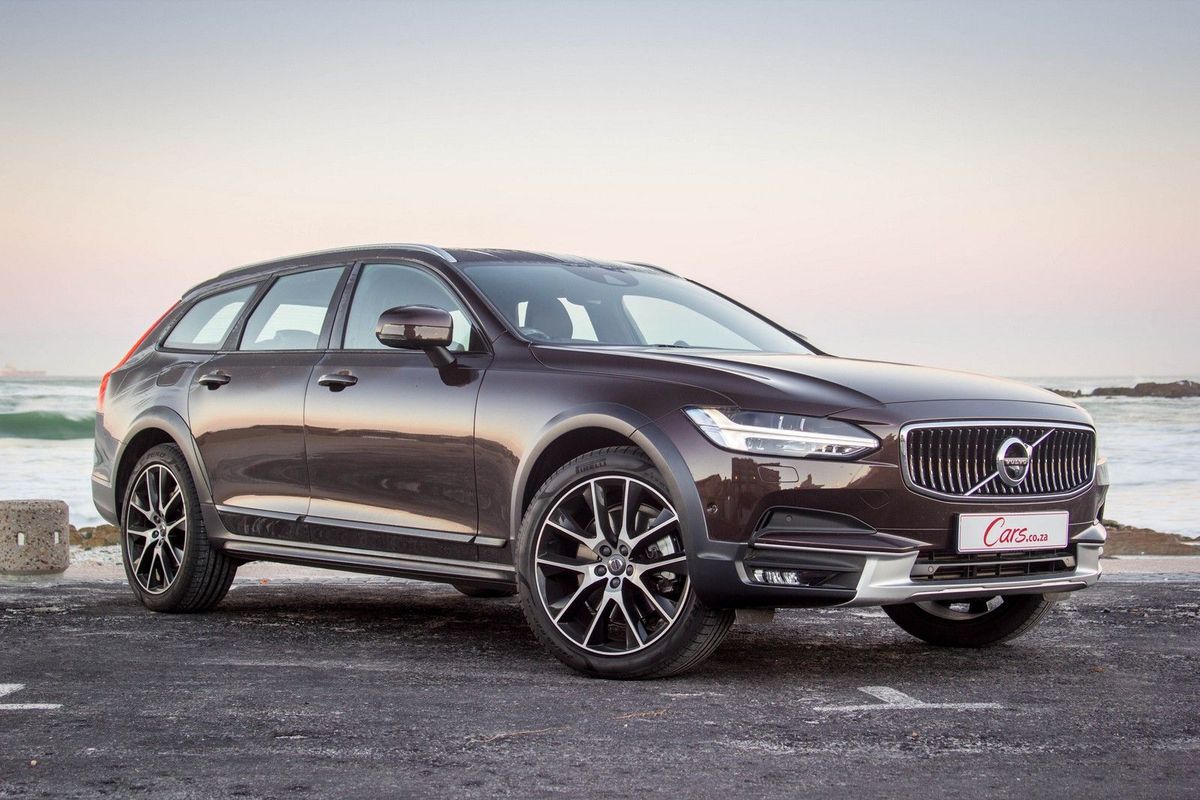
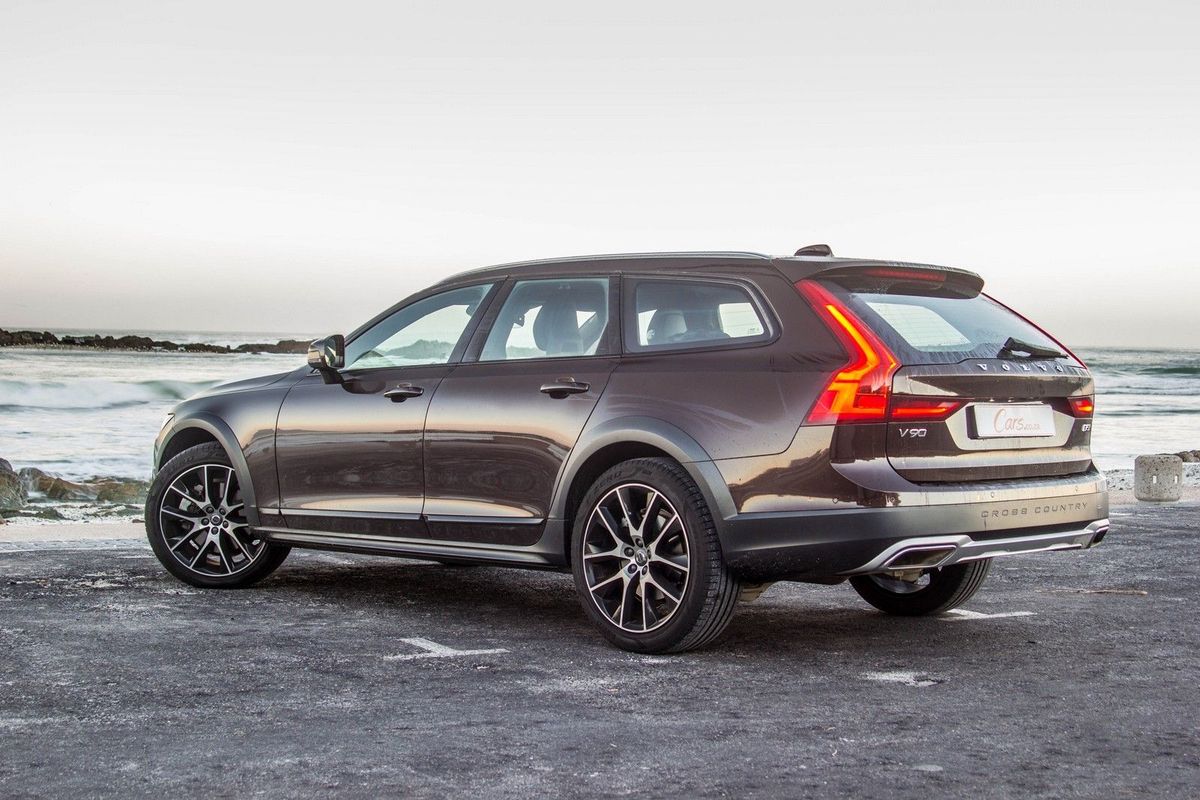
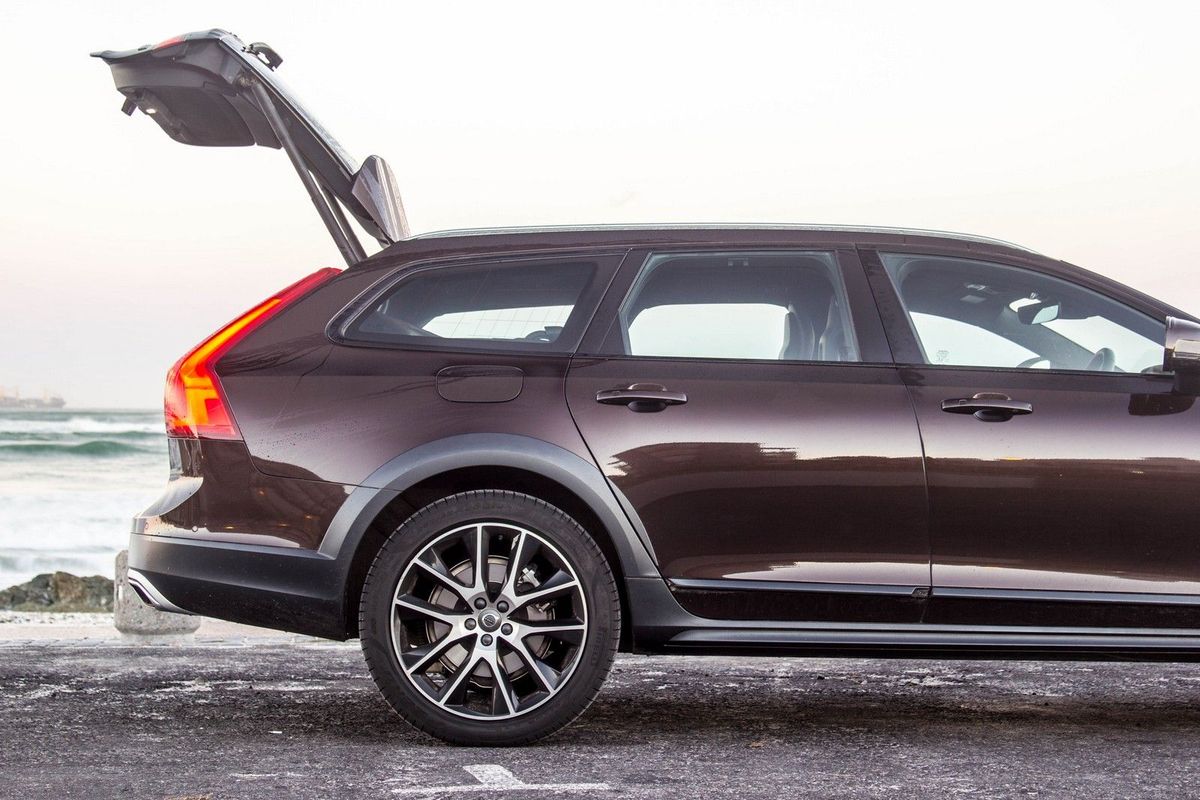
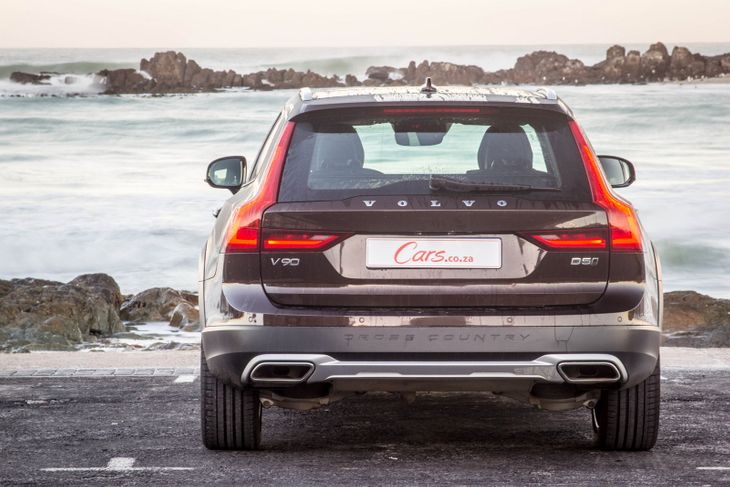
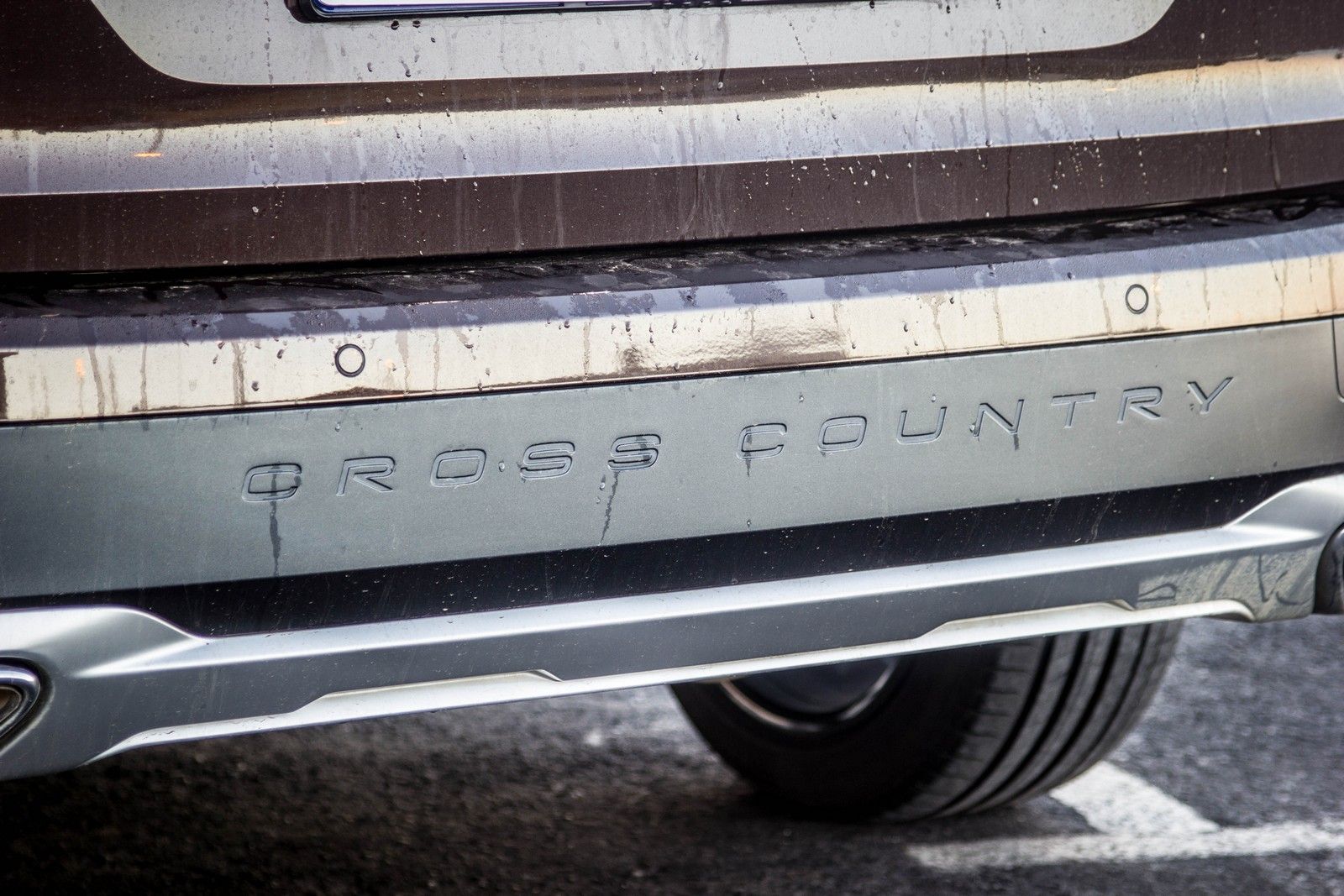
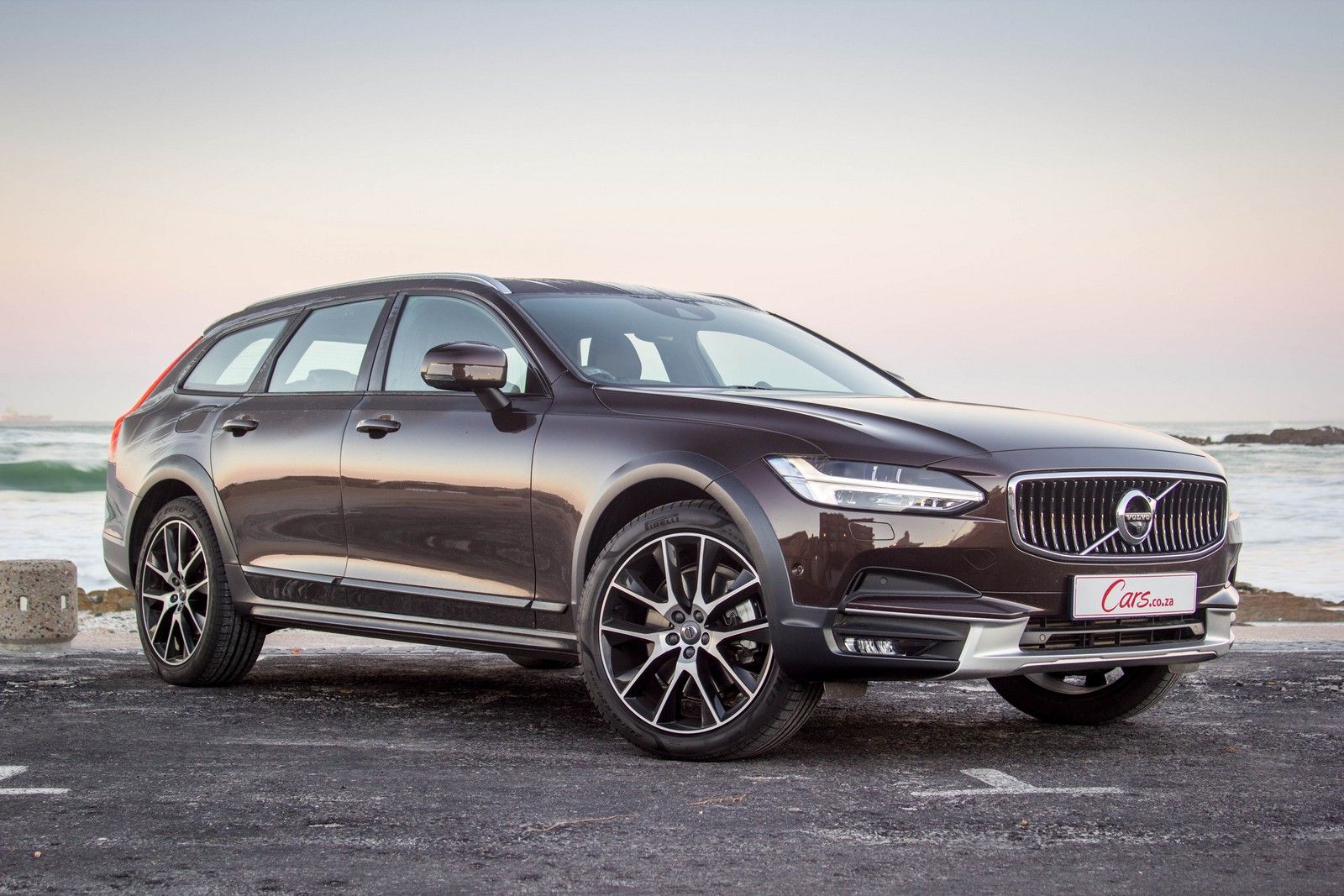
Excellent ground clearance, all-wheel drive and SUV cladding add to the V90 Cross Country's presence and ability.
With fewer than a dozen V90s having found new homes in the first half of this year, Volvo's handsome new premium, all-wheel drive station wagon is clearly not for everyone. That said, it was never meant to be. What we have here is an entirely practical, eminently stylish and thoroughly up-to-date product that can fulfill a staggeringly wide variety of roles. Let's see how it shapes up in D5 turbodiesel form, which is likely to be the "top-seller" in the lineup.
The Good
Classy looks, inside and out
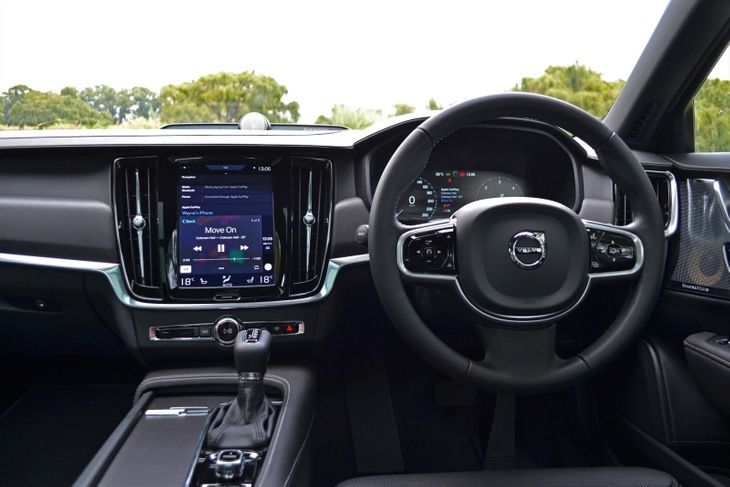
Premium finishes, elegant design and high-tech features are characteristics of all modern Volvos.
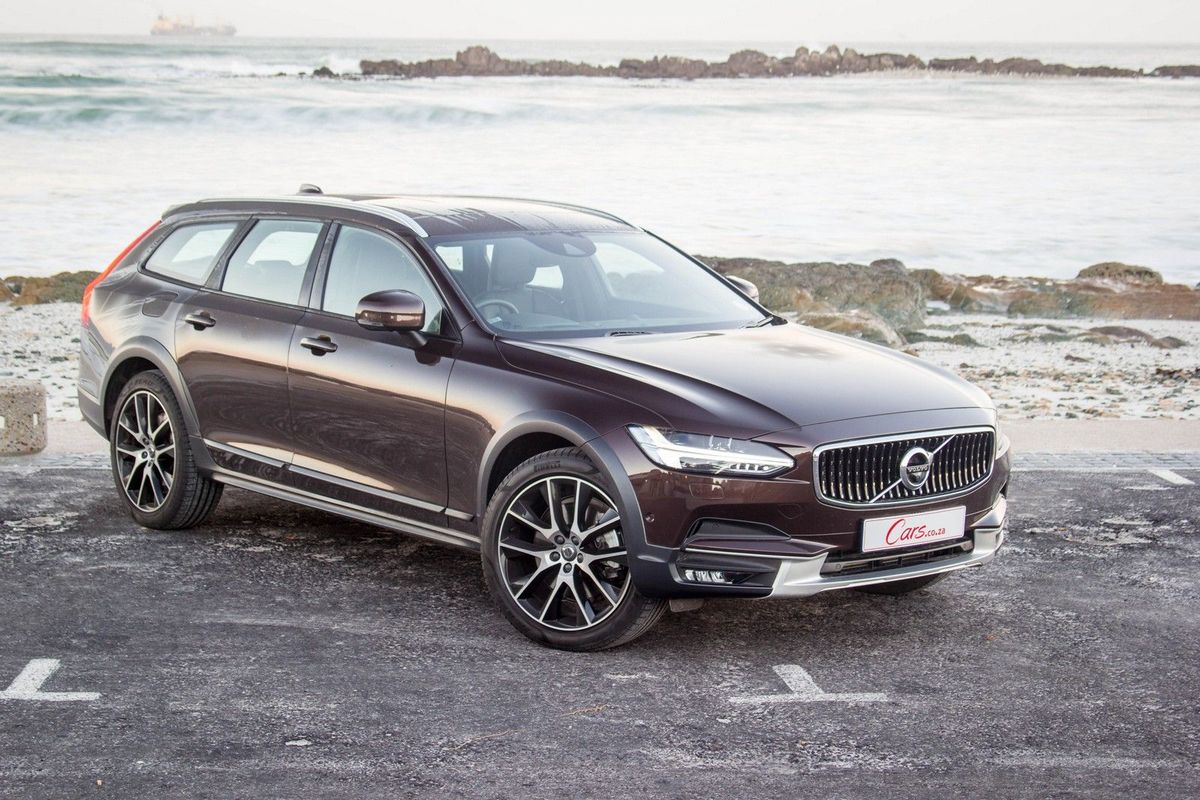
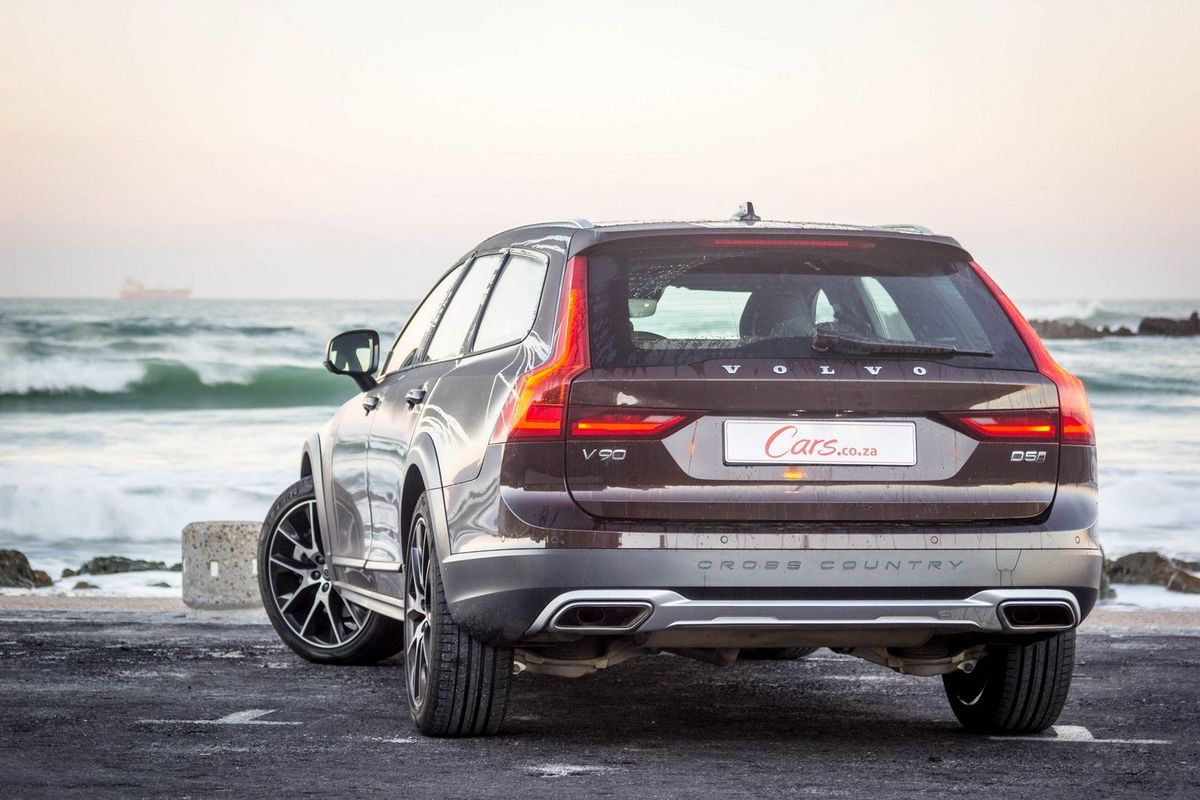
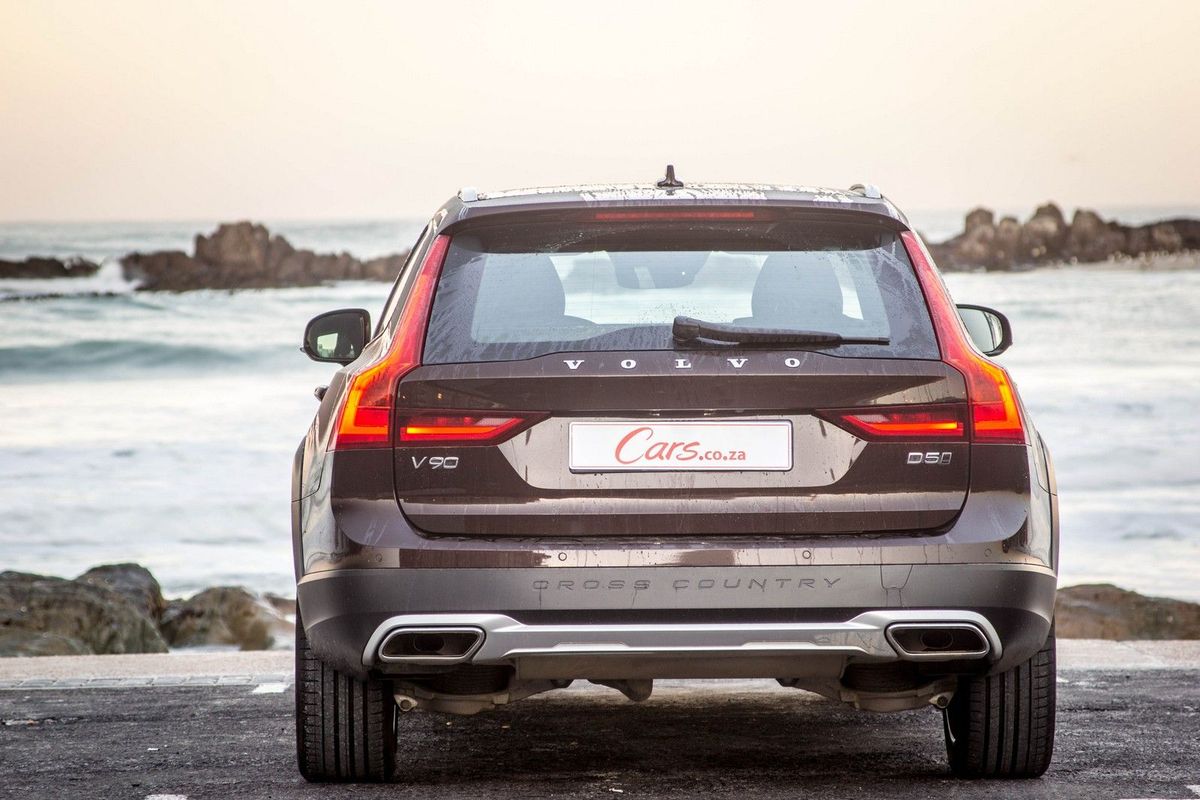
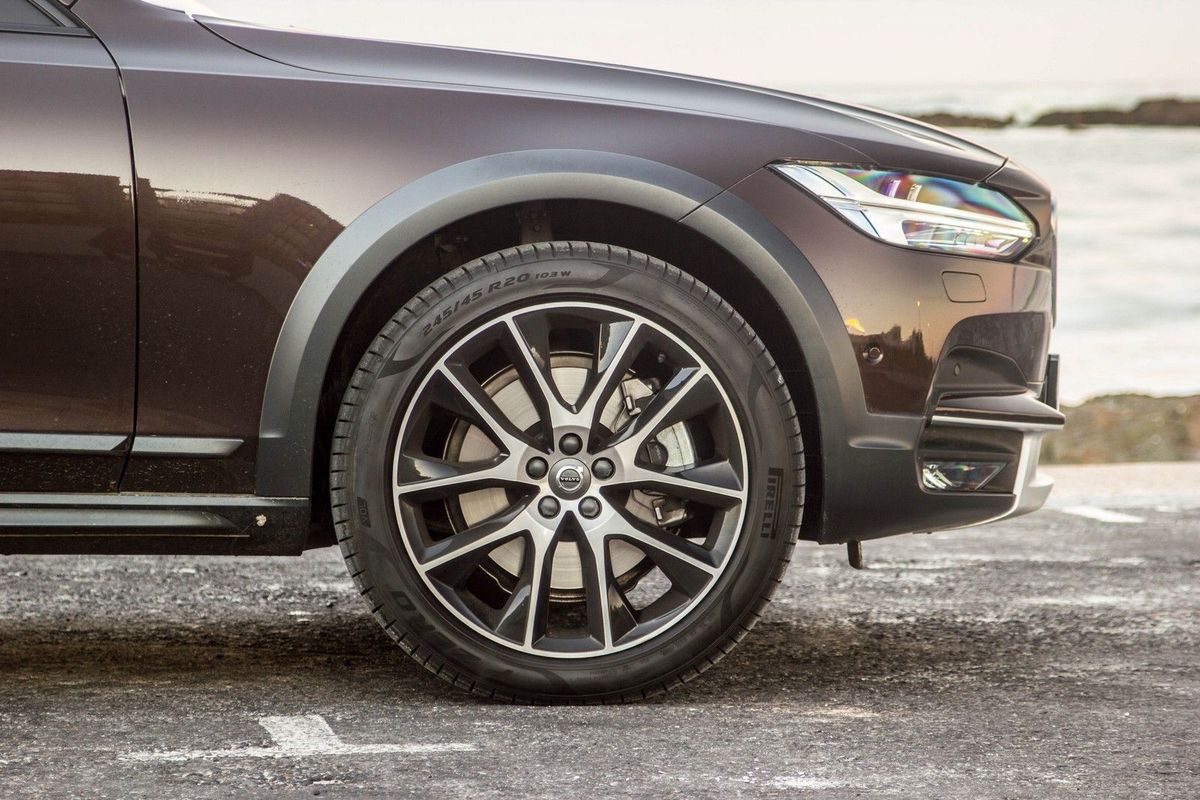
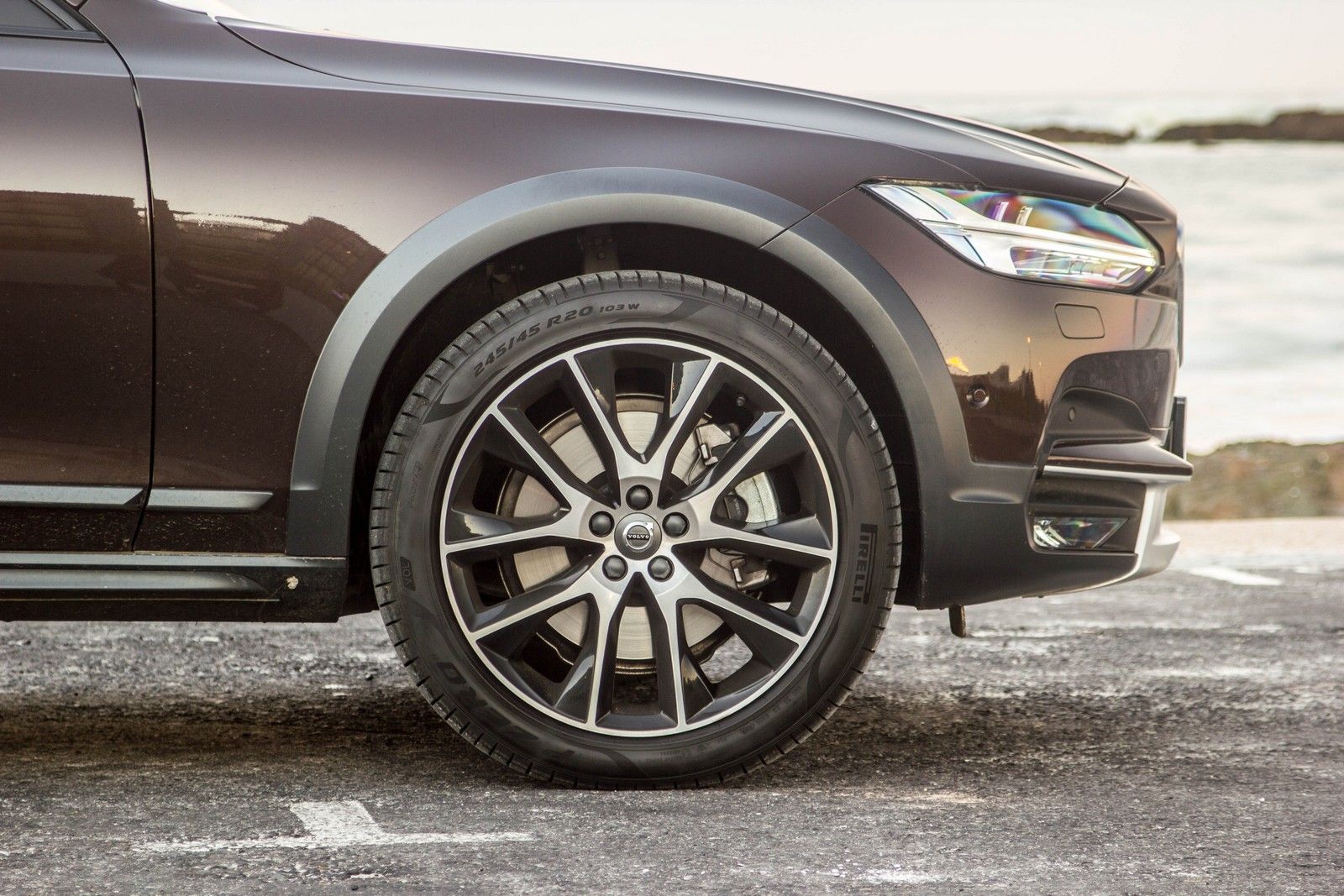
Station wagons are often described as "fuddy-duddy", but this V90 Cross Country garnered plenty of praise for its looks as well as plenty of stares in traffic. It's a big car, rides high and looks particularly handsome when fitted with these big 20-inch wheels (R12 750). All the SUV-inspired addenda has been tastefully applied and the result is a car that would equally look the part on a dirt road to a far-off adventure, on the school run, or dropping guests at a luxury, exclusive event.
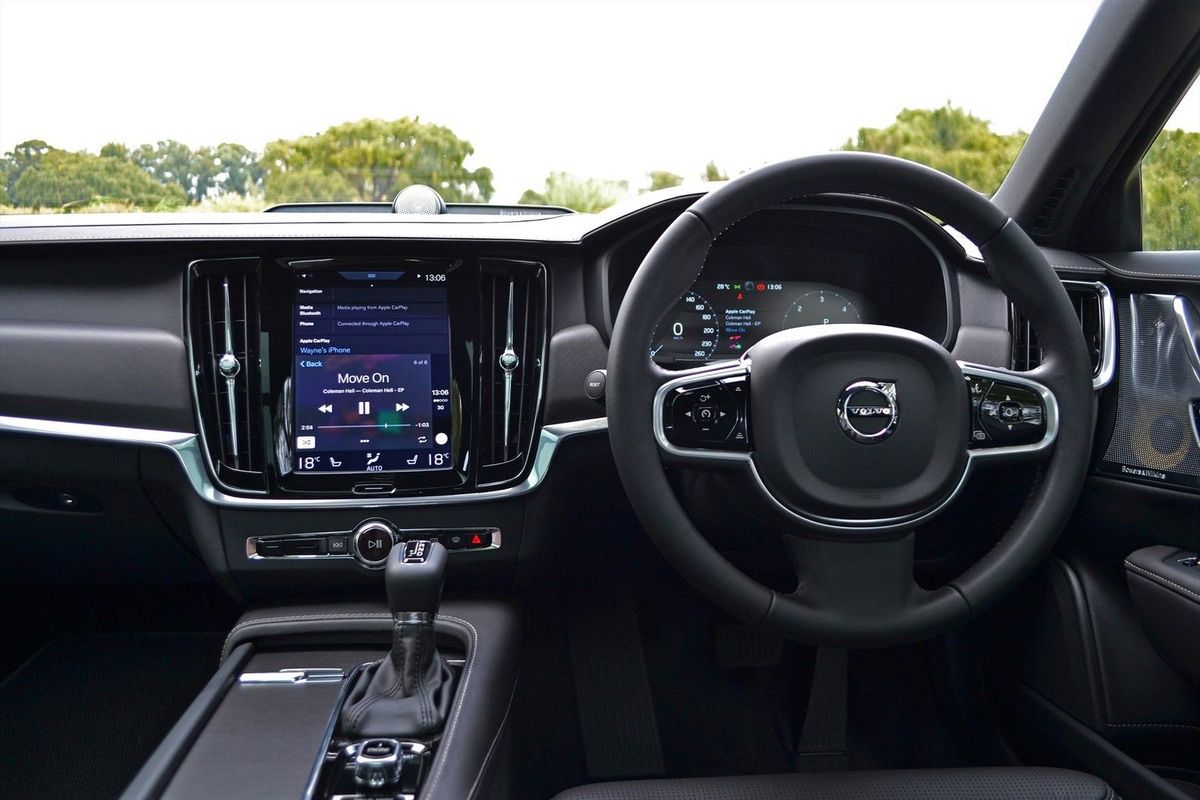
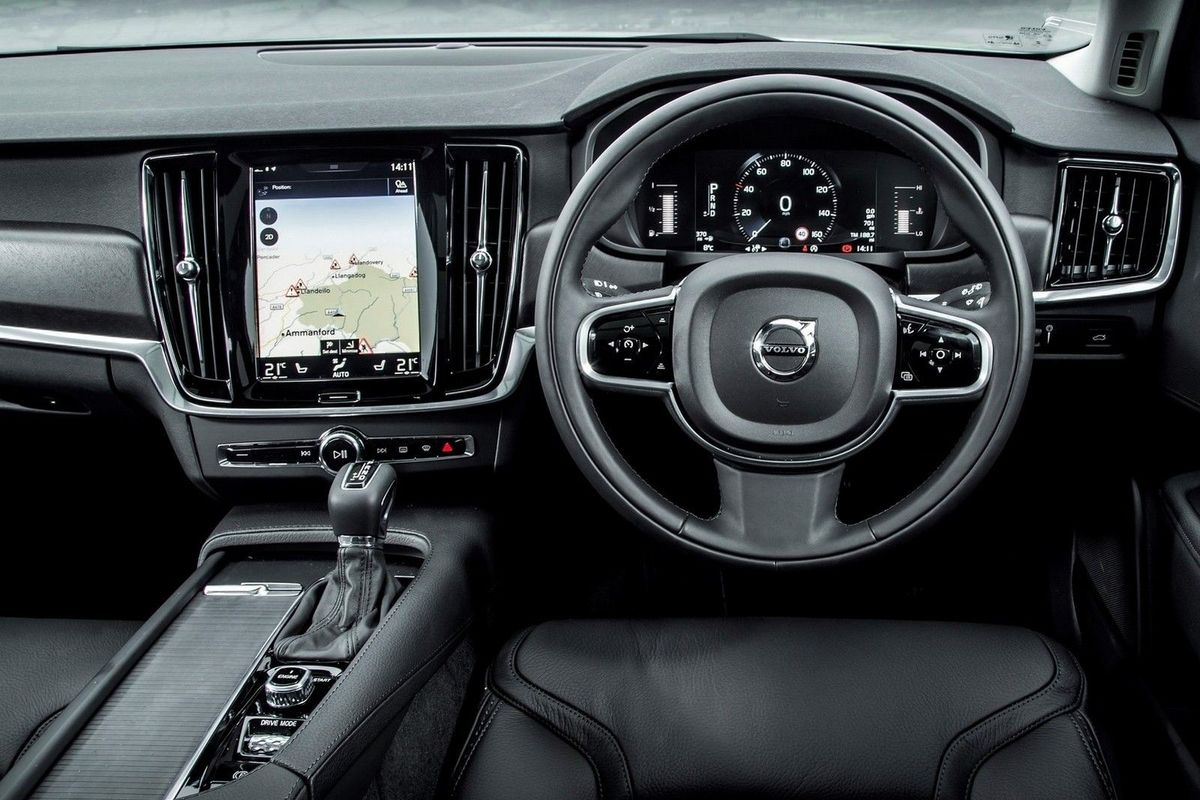
Inside, we can think of few cars at this price level that can match the V90 Cross Country's combination of modern technology, build quality and overall design. The attention to detail is simply staggering with authentic materials being used for all the touch points, including the knurled starter switch and drive mode selector. The perforated Nappa leather (R11 000) feels of a superior quality, too, and in this test unit extended to the fascia (R15 500).
Pride of place goes to the digital displays, particularly the large 9-inch Sensus Connect infotainment system with its tablet-like functionality. It remains a talking point for anyone travelling in the vehicle, and while it takes a while to get used to it, it certainly contributes to the theme of cutting edge technology married with traditional materials that make modern Volvos so desirable.
Spaciousness and Practicality
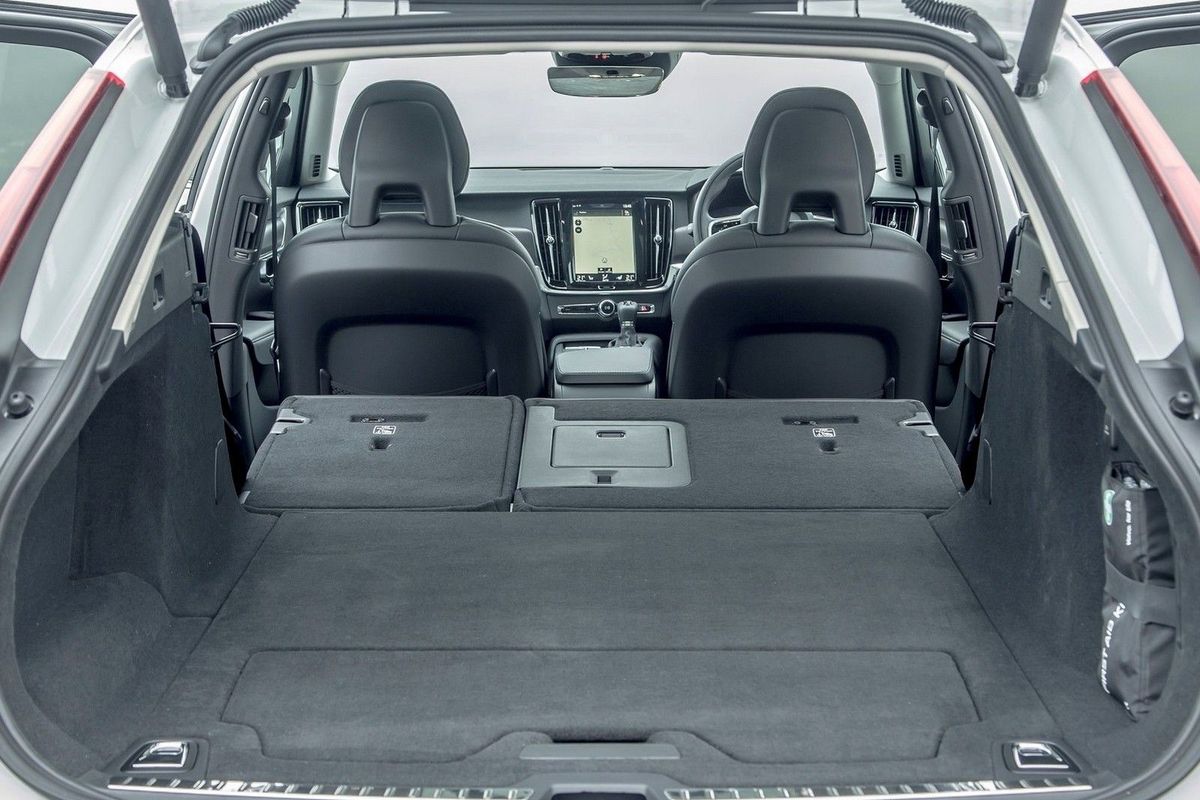
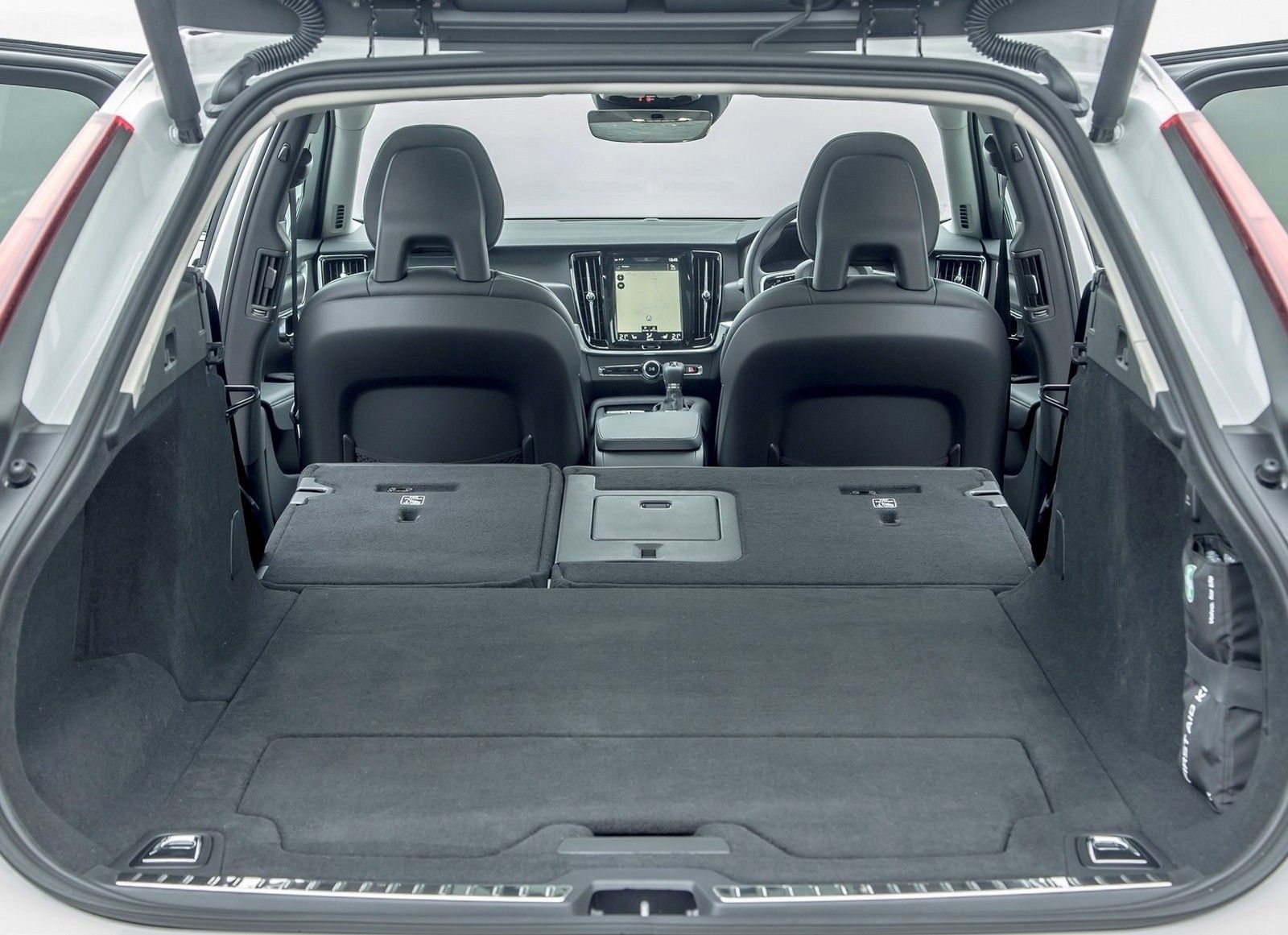
The boot is large and with the rear seats folded flat, total utility space is very impressive.
Riding on a long wheelbase (2 941 mm) the V90 Cross Country offers plenty space, even for 5 passengers. Rear legroom is unlikely to ever be a concern, and with 5 adults in the cabin, comfort levels are high. Rear ventilation outlets are fitted, too. Boot space is generous, with Volvo claiming a volume of 560 litres as a minimum (loaded to the tonneau cover). This can be expanded by folding the rear seats to a commodious 1 526 litres, which compares very favourably with large premium SUVs. Power folding rear seats are optional and are very handy as they allow the rear seats to be folded without any fumbling or stretching into the loadbay.
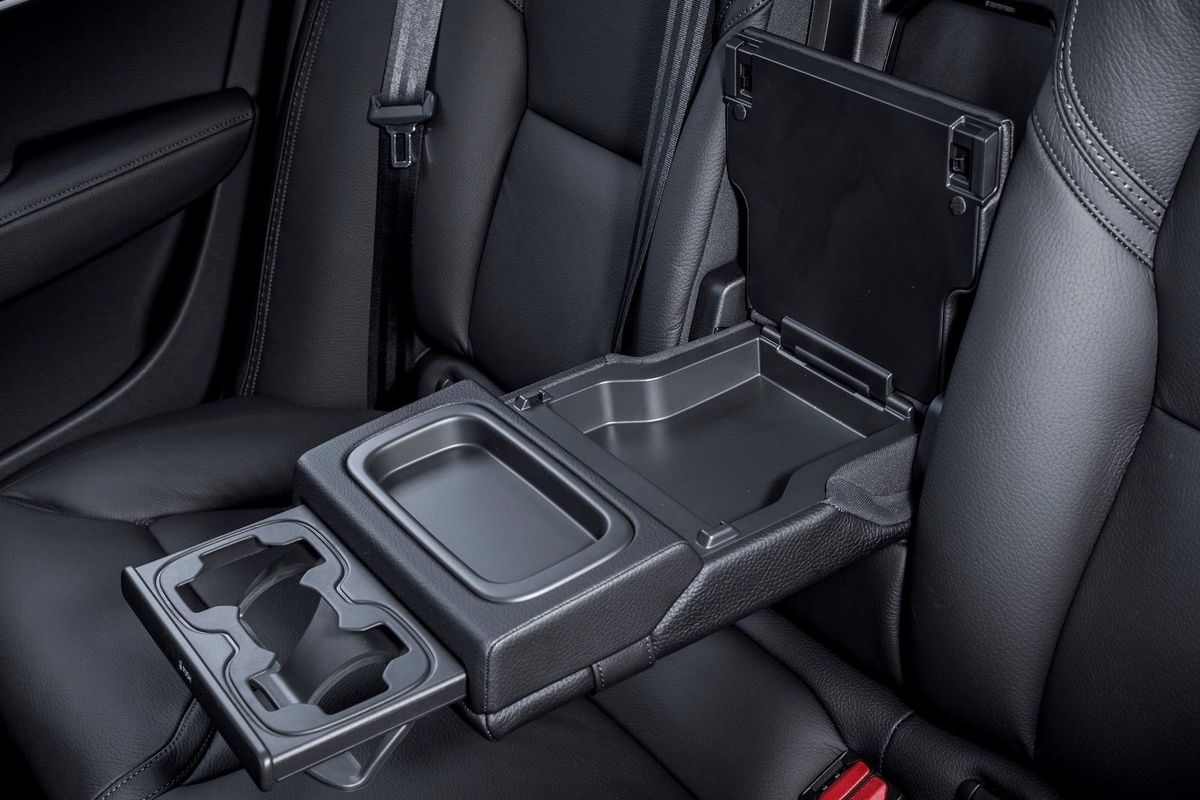
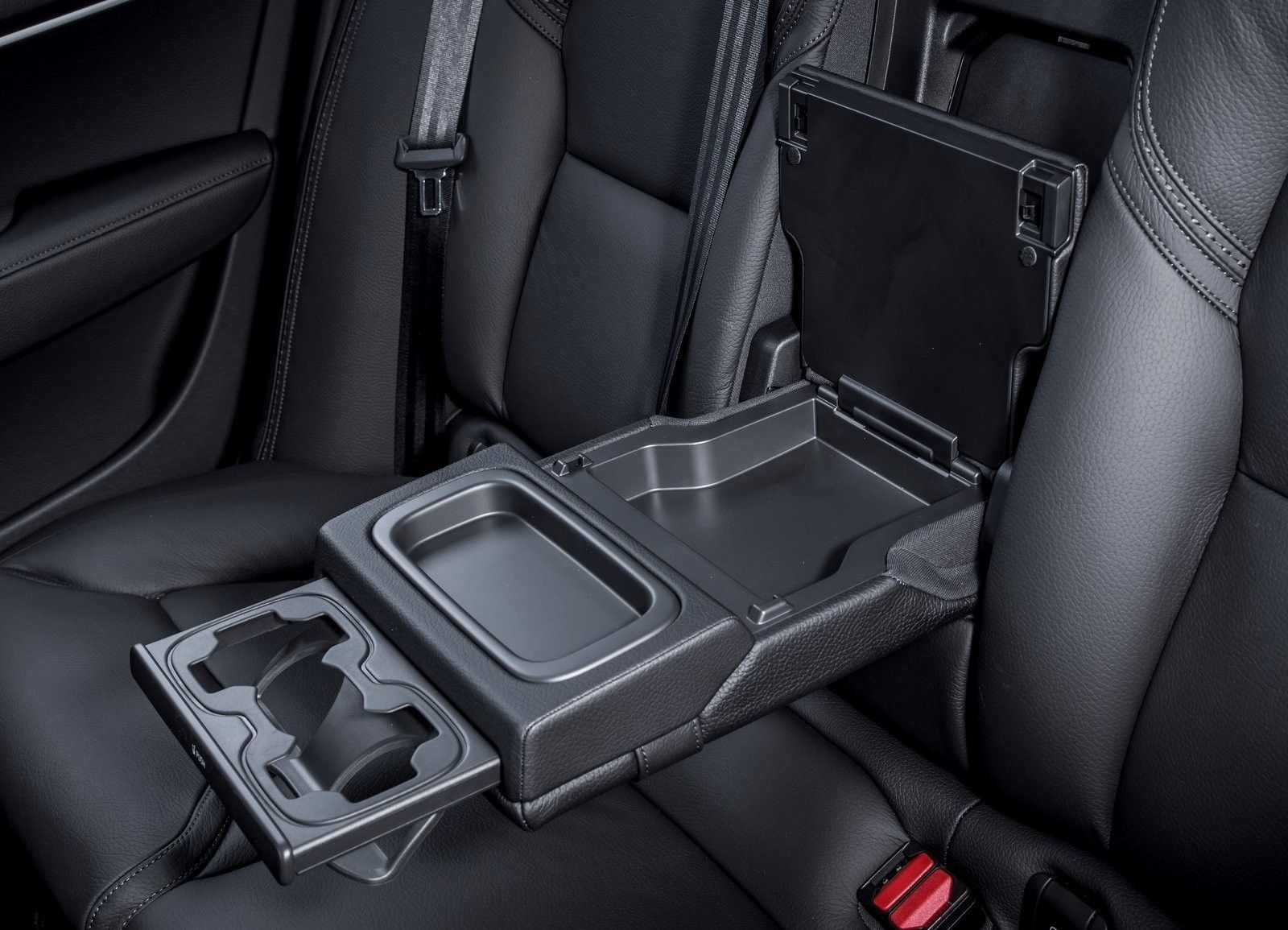
A large rear fold-out armrest with sliding drinks holders and extra storage is provided at the rear.
In the V90's case, however, we must also highlight the actual shape of the load area – the rear seats fold completely flat and the shape of the load area is relatively free of intrusions, so very large box-shaped items can easily be accommodated. A powered tailgate is an optional extra, as is an automated luggage bay cover (R2 000).
With its latest products, Volvo has upped its technology game significantly, even in aspects beyond the brand's traditional strengths in the various safety departments. As illustrated in the Instagram video above, it is worth highlighting some of the safety features again, however, as they do contribute significantly to the overall appeal (and cost) of the vehicle.
Adaptive Cruise control with Pilot Assist, which can facilitate autonymous driving at speeds of up to 130 kph in certain conditions, is standard fitment. By the way, the V90 Cross Country was recently announced as one of the 3 safest cars ever tested by EuroNCAP, with the other 2 being from Volvo as well and sibling vehicles based on the same architecture (XC90 and S90). Impressive stuff…
Also standard is City Safety (with automaking braking when required) which incorporates a host of features, including pedestrian, cyclist and large animal detection as well as auto-braking at intersections (when turning into the direction of oncoming vehicles) etc. View the video (on the new XC60) below to see all its functions in action.
An underrated feature remains Cross Traffic Alert, which warns when vehicles approach the rear of the vehicle from a position where they are hard to see from the driver's seat (such as reversing out of a parking spot). This option was fitted to our test unit and in one situation, certainly assisted in avoiding a pricey accident.
With regards to infotainment, the aforementioned Sensus system is comprehensive and includes navigation as standard. Based on the functionality of a modern smart device, the system is simple to use once it has become familiar to the operator. Pinch, zoom, slide, select… all these actions will be familiar to most modern consumers and in the case of the V90 Cross Country, allows you to access or control pretty much everything in the car, including the climate control (4-zone as an option in this test unit).
A 10-speaker sound system is standard but our test unit also featured a 19-speaker Bowers & Wilkins premium sound system that costs R39 500 and which delivers magificent sound quality. The infotainment system also offers Voice Control as standard and Apple CarPlay and Android Auto (not available in SA yet, Aug 2017) are offered through the optional Smartphone integration package (R4 000).
Powerful and Efficient
The Cross Country's off-road mode adjusts throttle and gearbox mapping to better suit likely challenges off the beaten track.
The V90, like all new-generation Volvos, is powered by a relatively small capacity 2.0-litre turbocharged engine, in this instance a diesel. It is likely to be the most popular choice in the lineup and develops impressive outputs of 173 kW and 480 Nm of torque. Consequently, the large V90 never feels like it's struggling for performance, and is claimed to be able to sprint to 100 kph in 7.5 seconds and to reach a top speed of 230 kph. In comparison with the turbopetrol engine on offer from Volvo, we found this diesel to be significantly less laggy at the bottom end of the rev range, so the V90 feels responsive even when pottering around. The 8-speed 'box is well-matched to the engine, too, and generally finds the correct gear without fuss or delay.
Another area where the diesel convincingly defeats its petrol sibling is in terms of fuel economy. Volvo claims a combined cycle consumption figure of 5.3 L/100 km, which we obviously couldn't match, but the achieved 7.0 L//100 km was nevertheless impressive for such a large vehicle. With a full 60 litre fuel tank, you should be able to travel up to around 1 000 km between fill-ups, further enhancing the V90's touring appeal. Due to what we presume is exemplary cabin insulation, the diesel engine is remarkably muted throughout.
The (not so) Good
Firm low-speed ride
Low-profile 245/45 tyres on large 20-inch alloy wheels may contribute to an overly firm low-speed ride.
Our previous review of the T6 (read it here) highlighted surprising ability off the beaten track. The 210mm of ground clearance actually rivals many SUVs and the air suspension with active chassis (fitted as part of the R75 000 Adventure Pack) copes well with rough gravel surfaces and also allows for greater wheel articulation compared with the standard set-up which uses the integral axle/transverse composite leaf spring set-up of the XC90 at the rear. By selecting the Off-Road drive mode, the ride characteristics are further enhanced to better suit off-roading conditions. So, in terms of offering the type of varying road-surface versatility that the Cross Country name promises, this V90 certainly delivers.
Furthermore, while always on the firm side, the V90 Cross Country is a quiet, comfortable cruiser that makes touring particularly pleasant. We only found the damping at low speeds to be too firm, which means that on really poor surfaces and over speed bumps and the like, the V90 CC can come across as "thumpy".
Pricing and Warranty
As standard the Volvo V90 Cross Country D5 AWD Inscription sells for R880 466, but our test unit was equipped with a number of optional extras, pushing the price to R1 063 785. A noteworthy addition is the Adventure Pack (R75 000) which comprises a number of items such as heated seats, panoramic sunroof, powered tailgate, power-folding rear seats and air suspension with active chassis among many more. The striking 20-inch wheels cost a reasonable R12 750 while the banging 19-speaker Bowers & Wilkins premium sound system adds R39 500. The standard warranty is for 5-years/100 000 km and the V90 also comes with a full maintenance plan of 5-years/100 000 km.
Verdict
Handsome, luxurious, practical and… eccentric? Can the V90 CC help make station wagons cool again?
As likeable as the V90 Cross Country is, it will remain an odd-ball (and slow seller) in the local market. As it stands it has no direct rivals, but could appeal to someone who would otherwise buy an SUV, but is looking for something less run-of-the-mill, but without sacrificing any functionality. It is also worth noting that even with its high ground clearance and off-road optimised suspension, the V90 Cross Country still feels more like a traditional car on the road, which in some regards is a major benefit. Does it offer the widest spread of talents at the price point? We think it's certainly in the running…
So, ironically, in a world that slavishly follows the SUV market trend, Volvo's slick new spin on the station wagon formula could be seen as avant-garde and borderline eccentric. For whatever reason it is ultimately purchased, practical or emotional, those buyers are settling into a very desirable, excellent car.
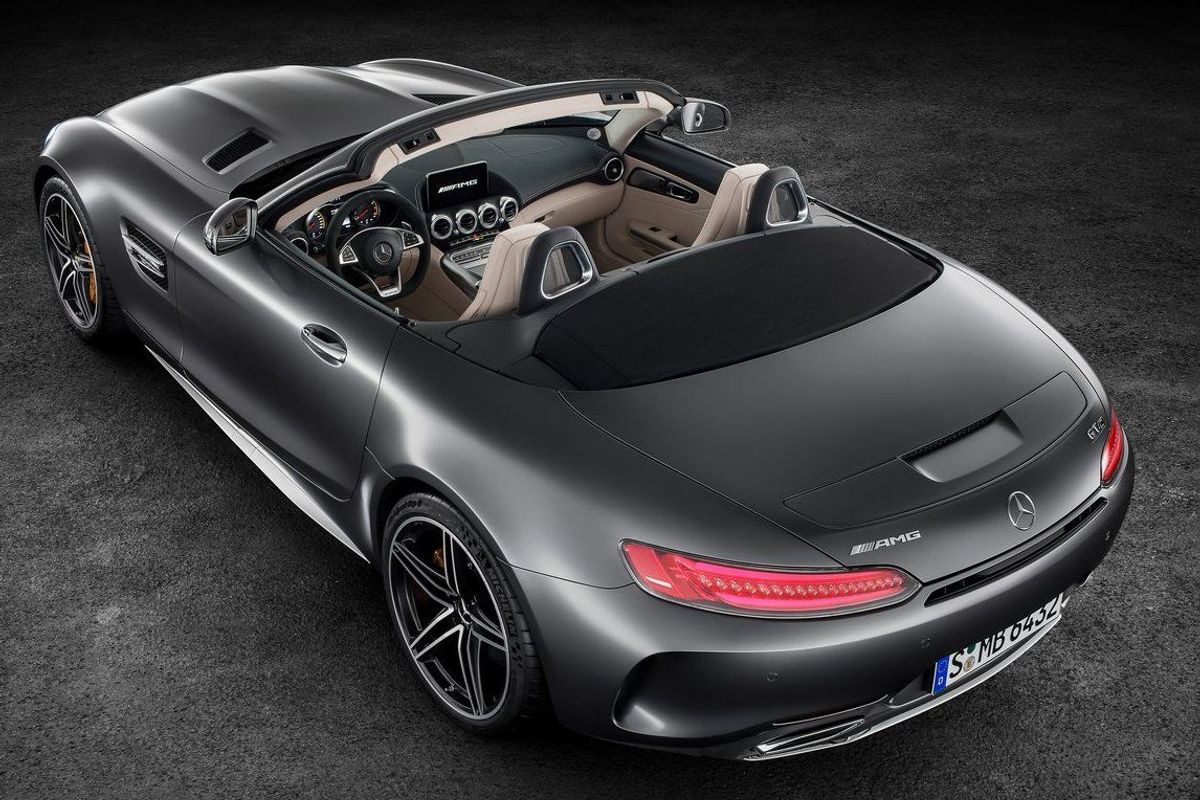
More Mercedes-AMG GT Derivatives (2017) Specs & Price
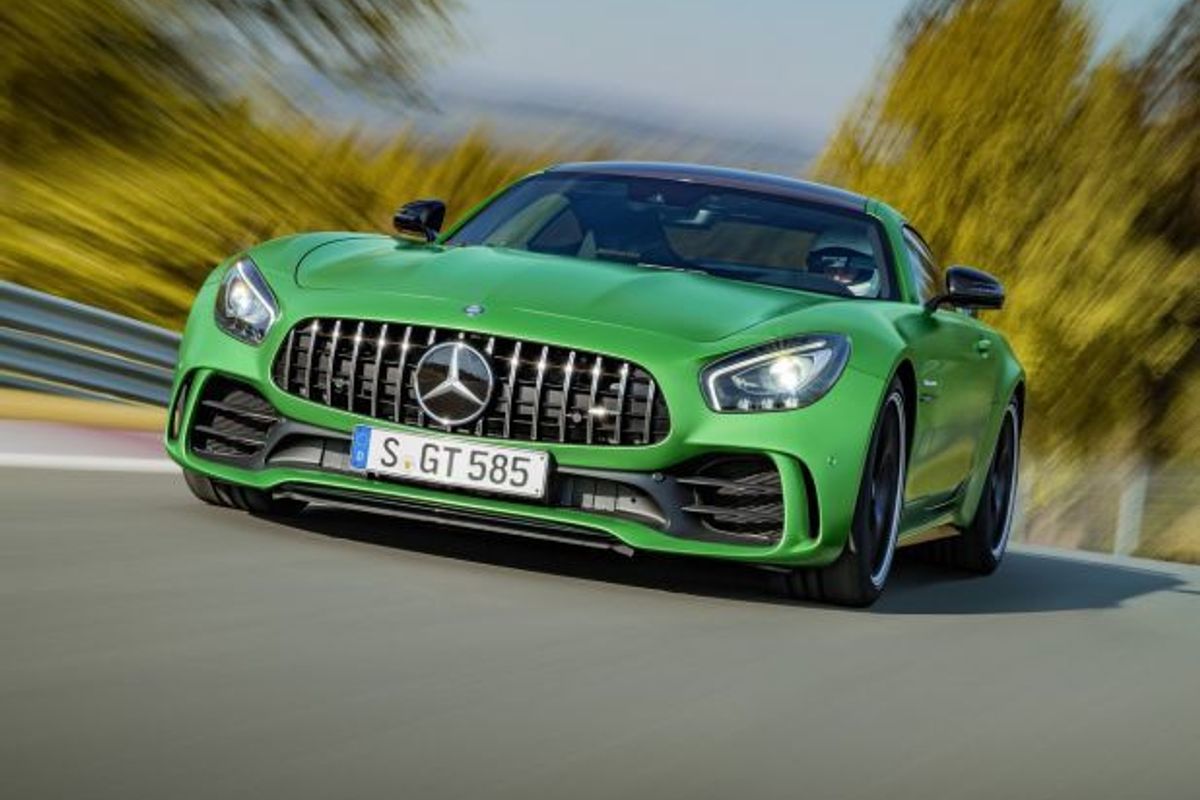
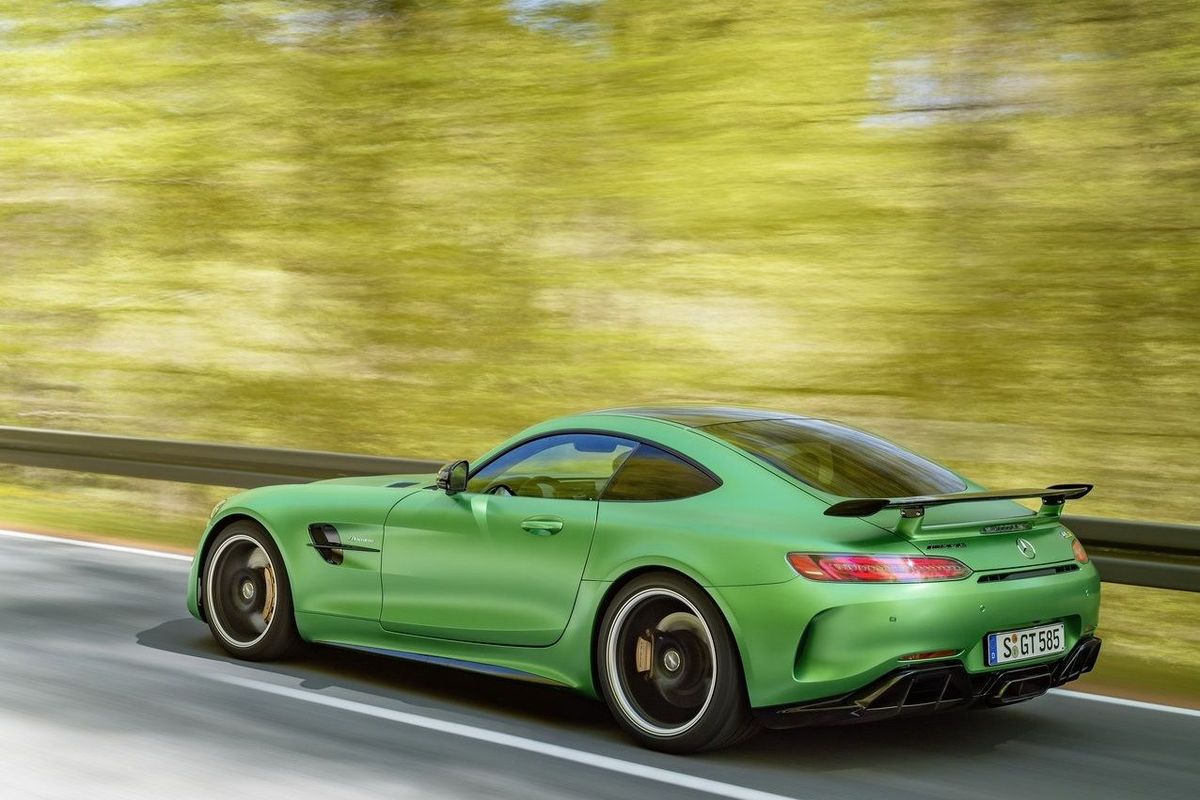
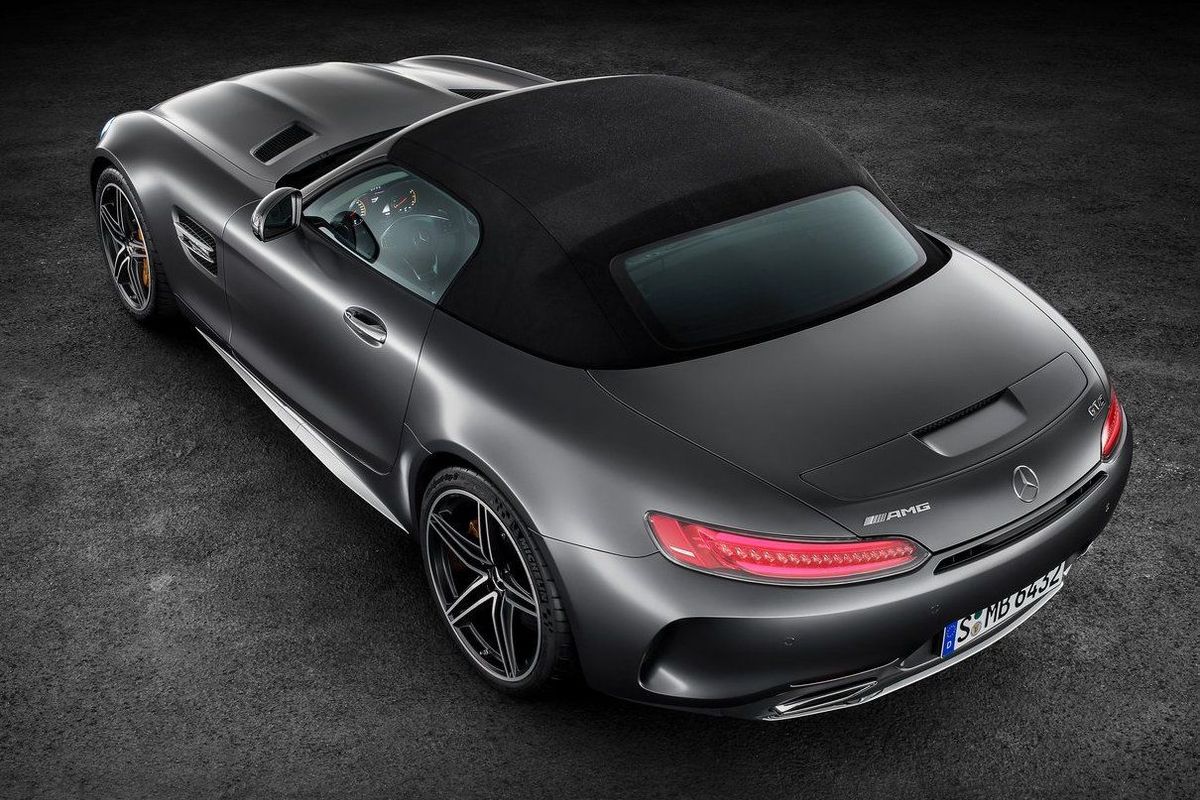
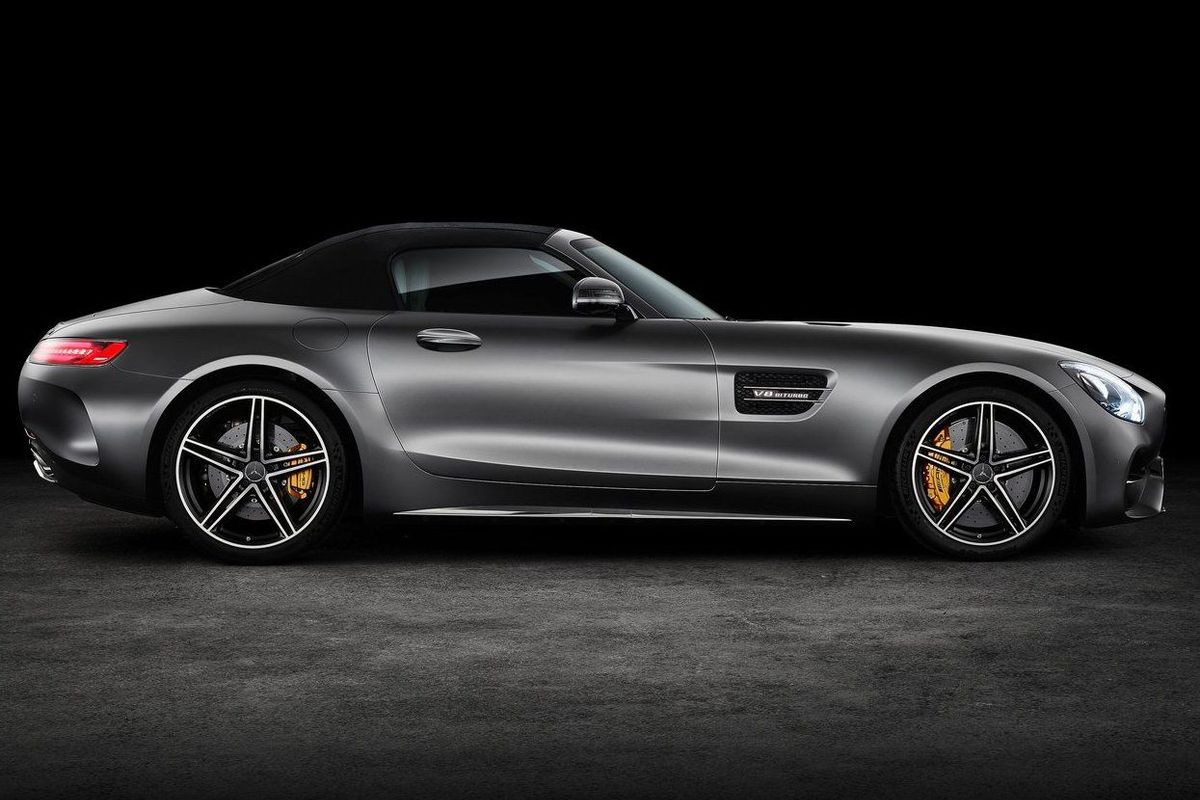
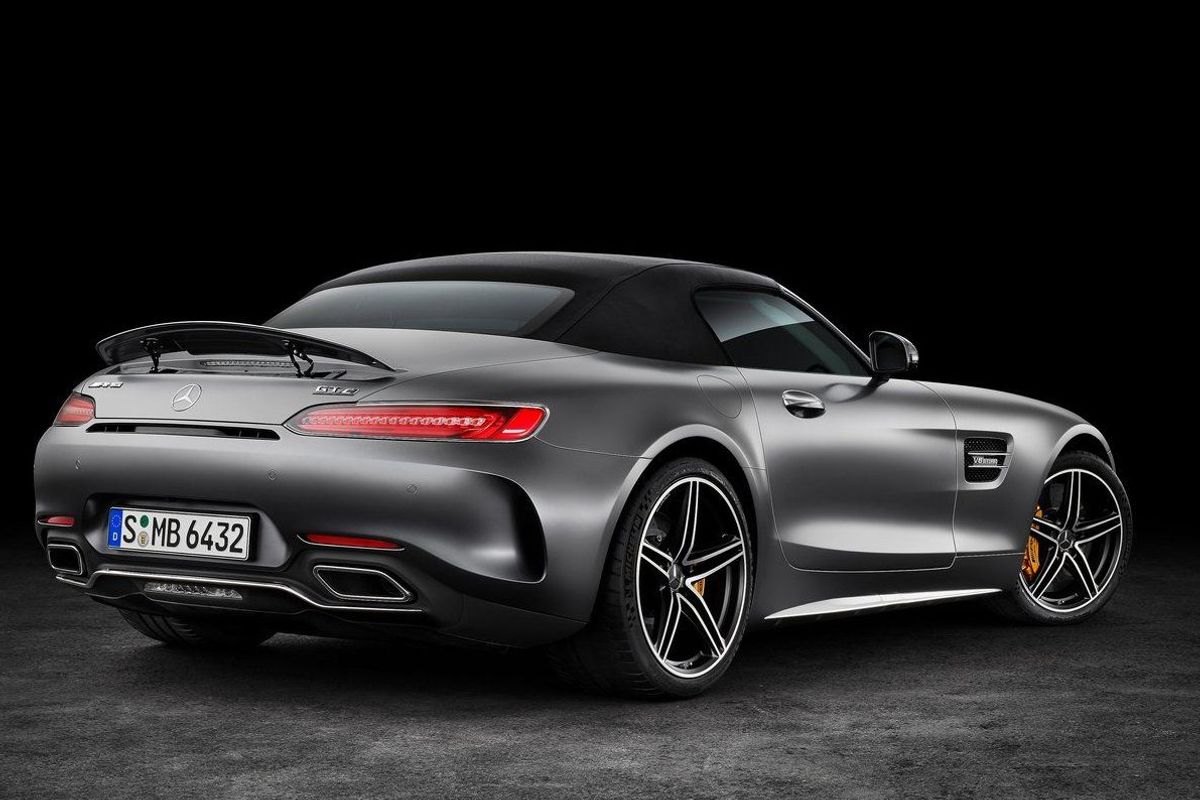
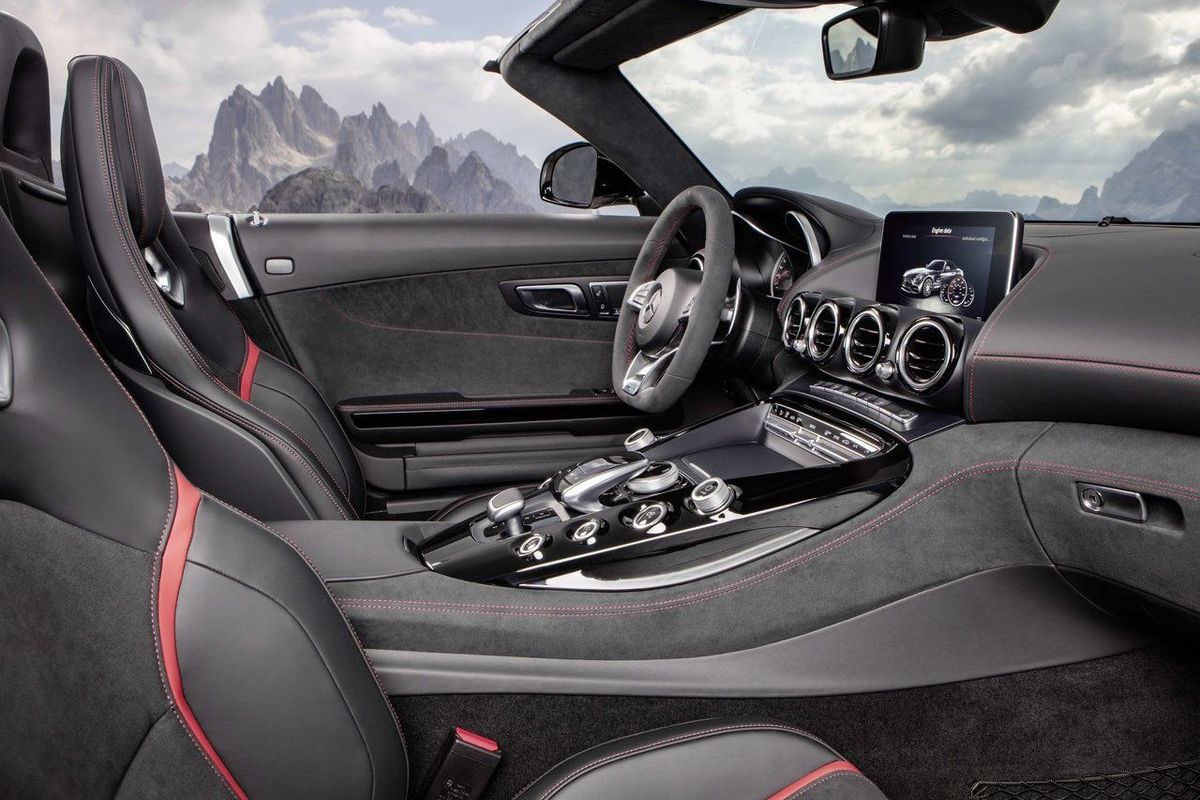
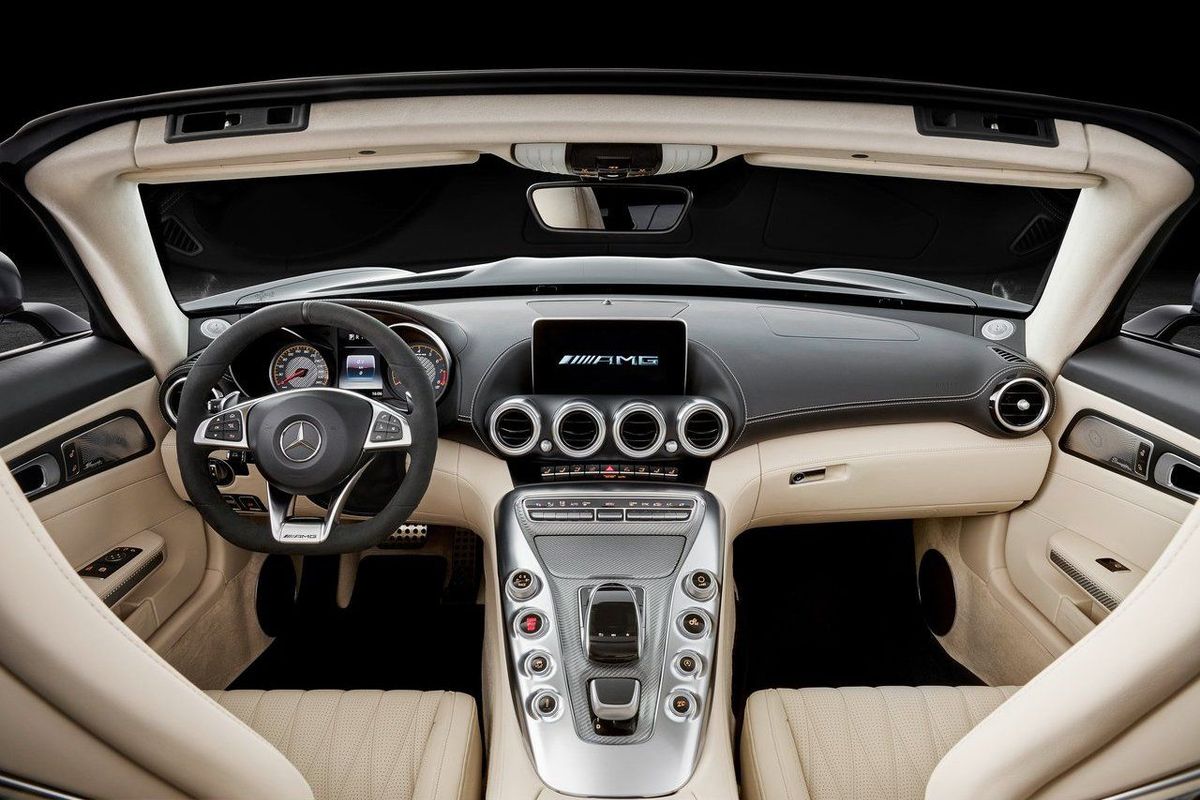
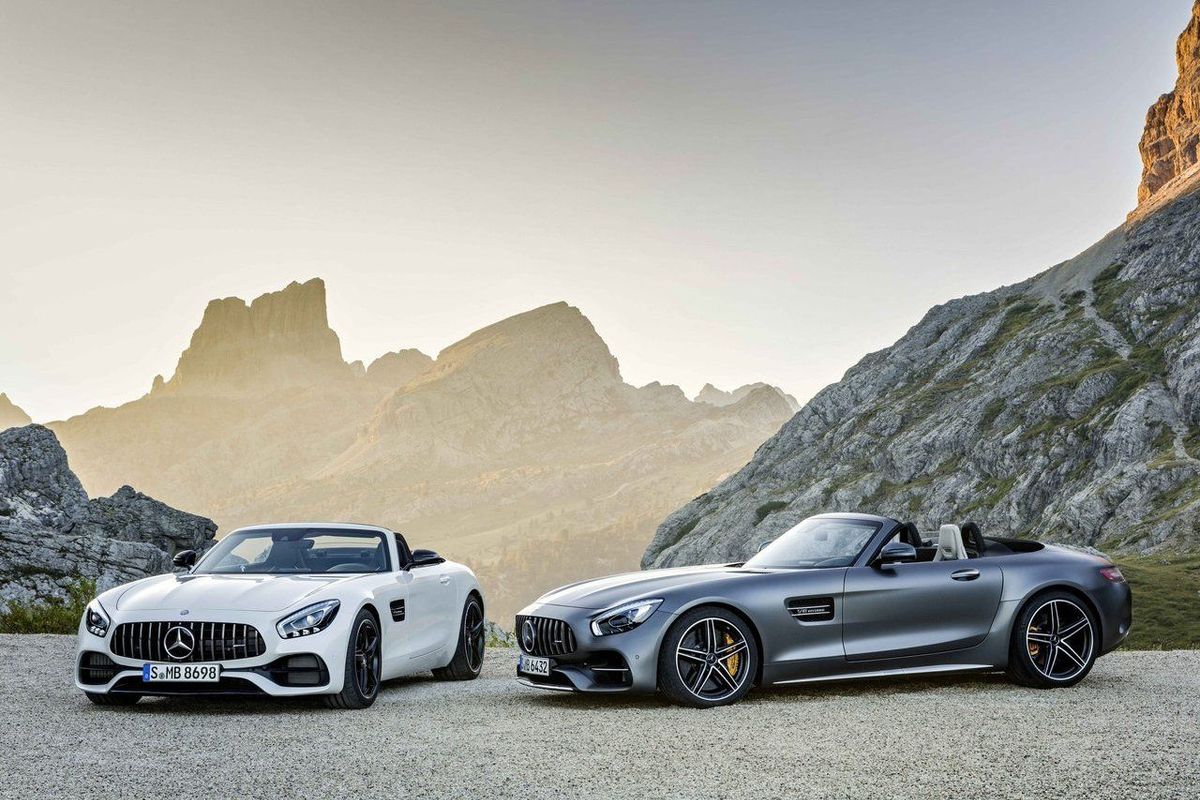
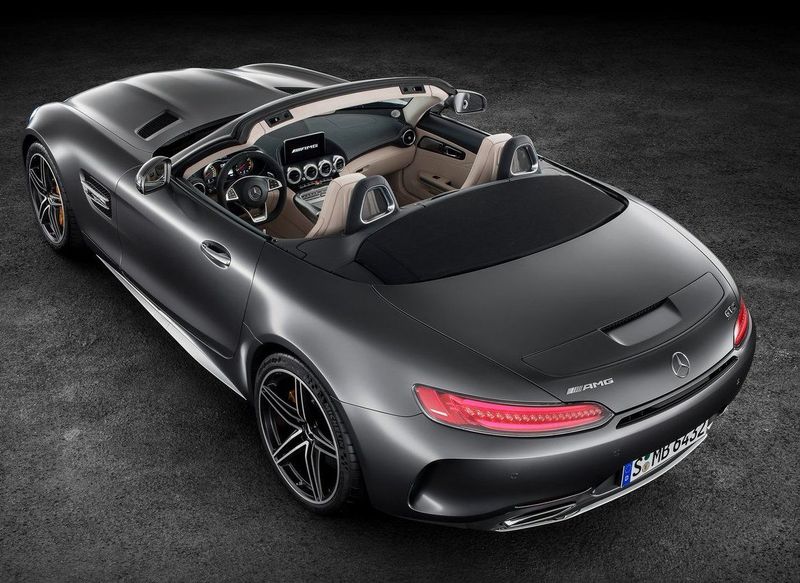
Mercedes-AMG has welcomed new derivatives to its desirable GT family in South Africa – the AMG GT and GT C Roadster, as well as the potent AMG GT R Coupe are now available to local customers. There's even a limited edition AMG GT C Roadster Edition 50 on offer to commemorate AMG's 50th anniversary!
Mercedes-AMG is expanding its GT family of sports cars. Apart from the Mercedes-AMG GT and AMG GT S on offer in South Africa, buyers can now opt for 3 new AMG GT models. The new AMG GT models include the AMG GT Roadster, AMG GT C Roadster and the range-topping GT R Coupe. A special edition AMG GT C Edition 50 is also available in limited numbers in celebration of Mercedes-AMG's 50th anniversary.
Take a look at the details!
The numbers
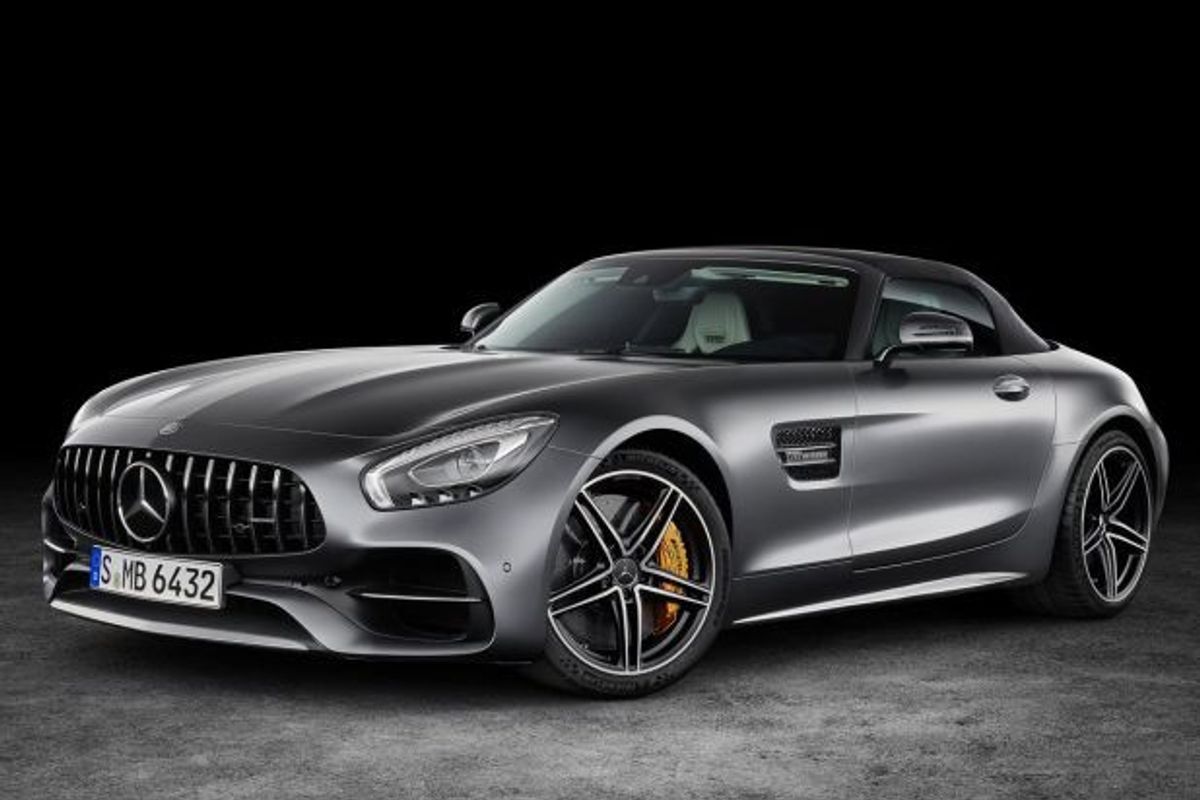
The Mercedes-AMG GT and GT C Roadster will offer sports car performance with the luxury of a soft top.
If it's sports car pleasure you’re after, then these new AMG GT models should satisfy your needs.
The entry-level AMG GT Roadster is powered by a twin turbocharged 4.0-litre V8 engine with 350 kW and 630 Nm of torque, using a 7-speed dual-clutch transmission to drive the rear wheels. Acceleration from zero to 100 kph takes just 4 seconds before reaching a top speed of 302 kph.
If that’s not enough, then you might want to consider the uprated AMG GT C Roadster, which borrows some technology from the range-topping GT R Coupe such as active rear axle steering, electronically controlled rear axle locking differential and AMG Ride Control suspension. The GT C Roadster is also fitted with a twin turbocharged 4.0-litre V8 engine, but outputs are higher at 410 kW and 680 Nm of torque. The rear wheels are driven by a 7-speed dual-clutch transmission and acceleration from zero to 100 kph is dispatched in 3.7 seconds before cracking a top speed of 316 kph.
Both AMG GT and GT C Roadster variants are fitted with a soft top that can open and close in approximately 11 seconds at speeds up to 50 kph. The AMG GT C variant gains features such as a Nappa leather interior, AMG performance steering wheel and RACE mode. Optional AMG performance seats will also be on offer with AIRSCARF neck-level heating and seat ventilation to keep you warm in the winter months.
Mercedes-AMG is celebrating its 50th anniversary with a limited edition AMG GT C Roadster Edition 50, with only 4 on offer in South Africa. The Edition 50 is available in either designo graphite grey magno or designo cashmere white magno. Exterior details include black chrome highlights seen on the side skirts, front splitter, trim strips in the Panamericana grille, side air outlet fins, rear diffuser and the tailpipe trims. The black and silver interior features Nappa leather in silver pearl and black with grey diamond contrasting stitching. An AMG performance steering wheel in DINAMICA microfibre with grey stitching and 'Edition' lettering with a 12 o'clock mark in silver pearl. The AMG interior night package is standard and the seatbelts are in silver with the AMG sports seats embossed with 'GT Edition 50' badges.
The highly sought after AMG GT R Coupe tops the ranks with its twin-turbocharged 4.0-litre V8 engine developing 430 kW and 700 Nm of torque. Power is laid down using a 7-speed dual-clutch transmission and acceleration from zero to 100 kph will take 3.6 seconds with a top speed of 318 kph.
Watch as we take the AMG GT R for a spin on track!
If you want to read more about the AMG GT models, simply check out the links below.
Here is what you can expect to pay for the new AMG GT models.
New Mercedes-AMG GT models – Price in South Africa
Mercedes-AMG GT Roadster – R2 199 900
Mercedes-AMG GT C Roadster – R2 599 000
Mercedes-AMG GT R Coupé – R2 689 900
Mercedes-AMG GT C Roadster Edition 50 – R2 864 000
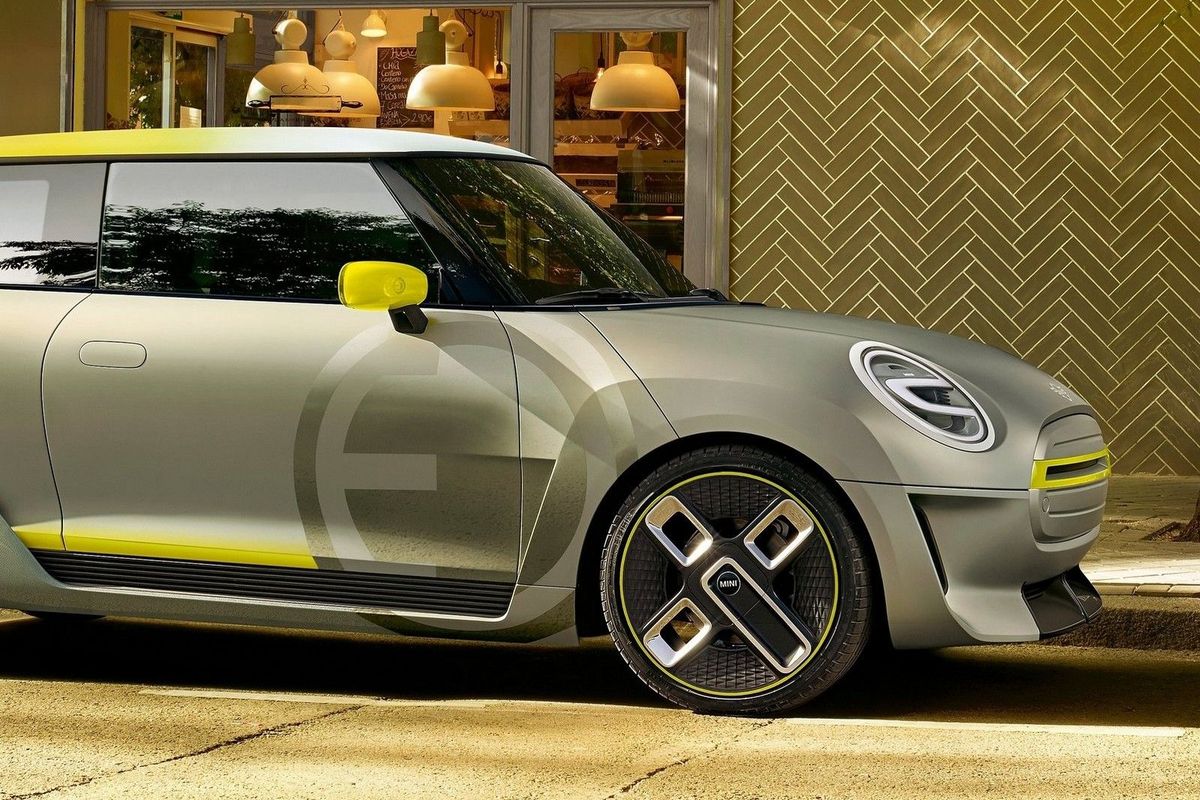
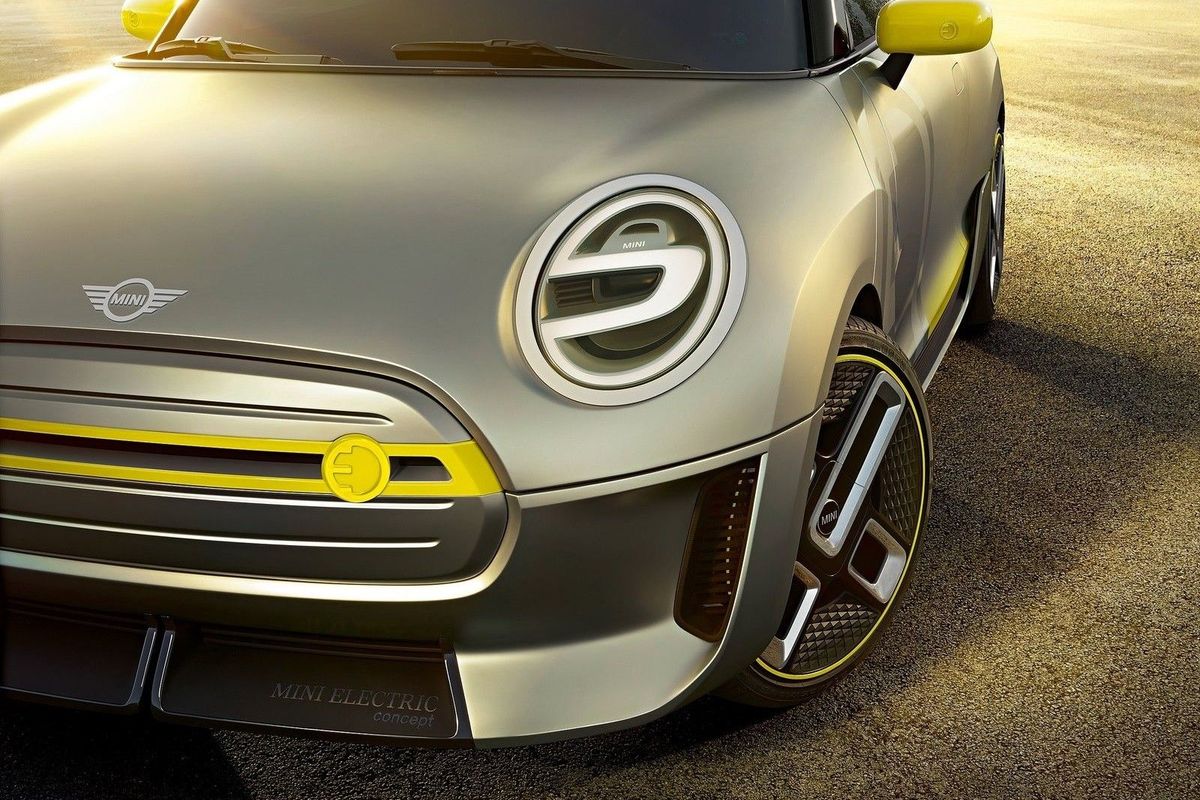
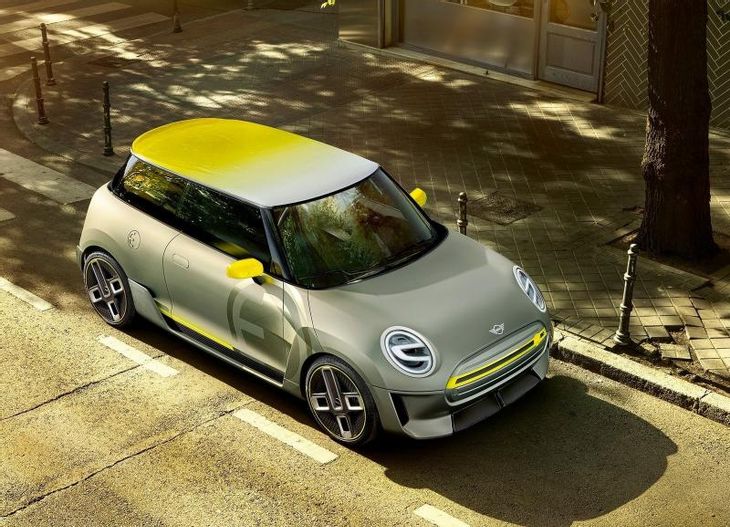
Mini Releases Electric Concept Ahead of Frankfurt Motor Show
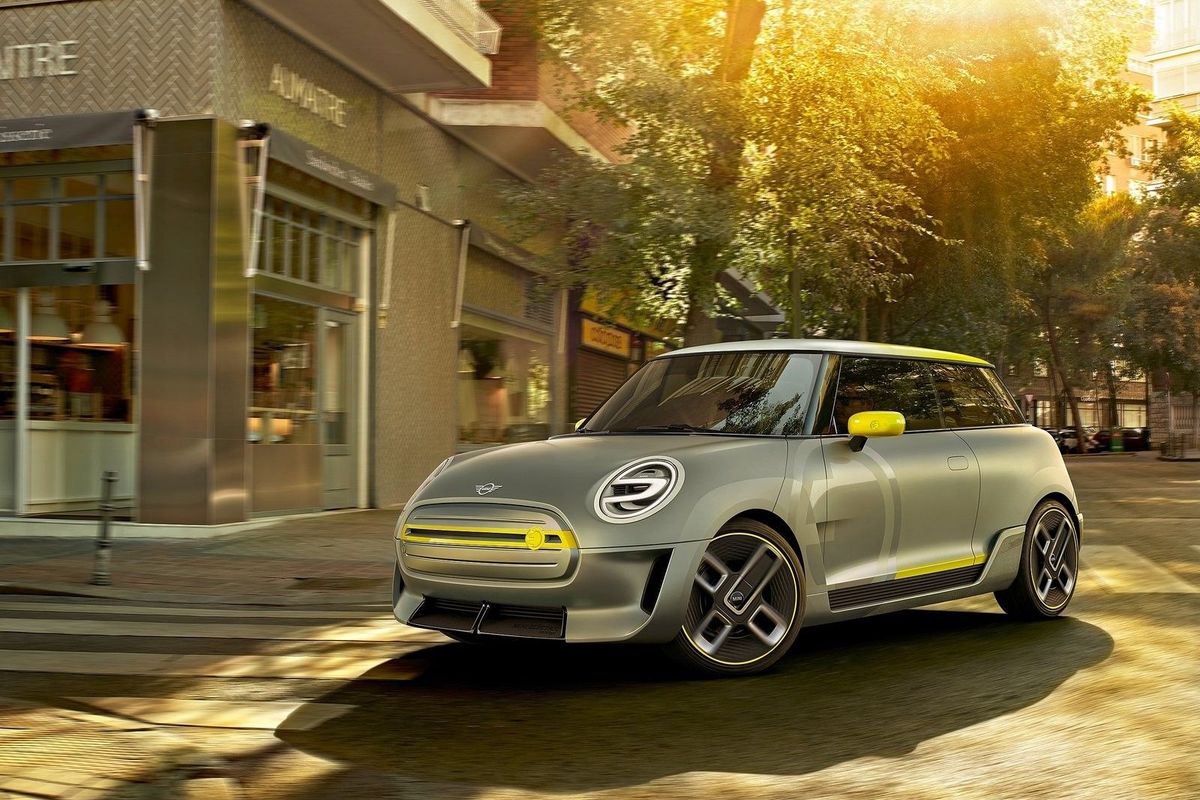
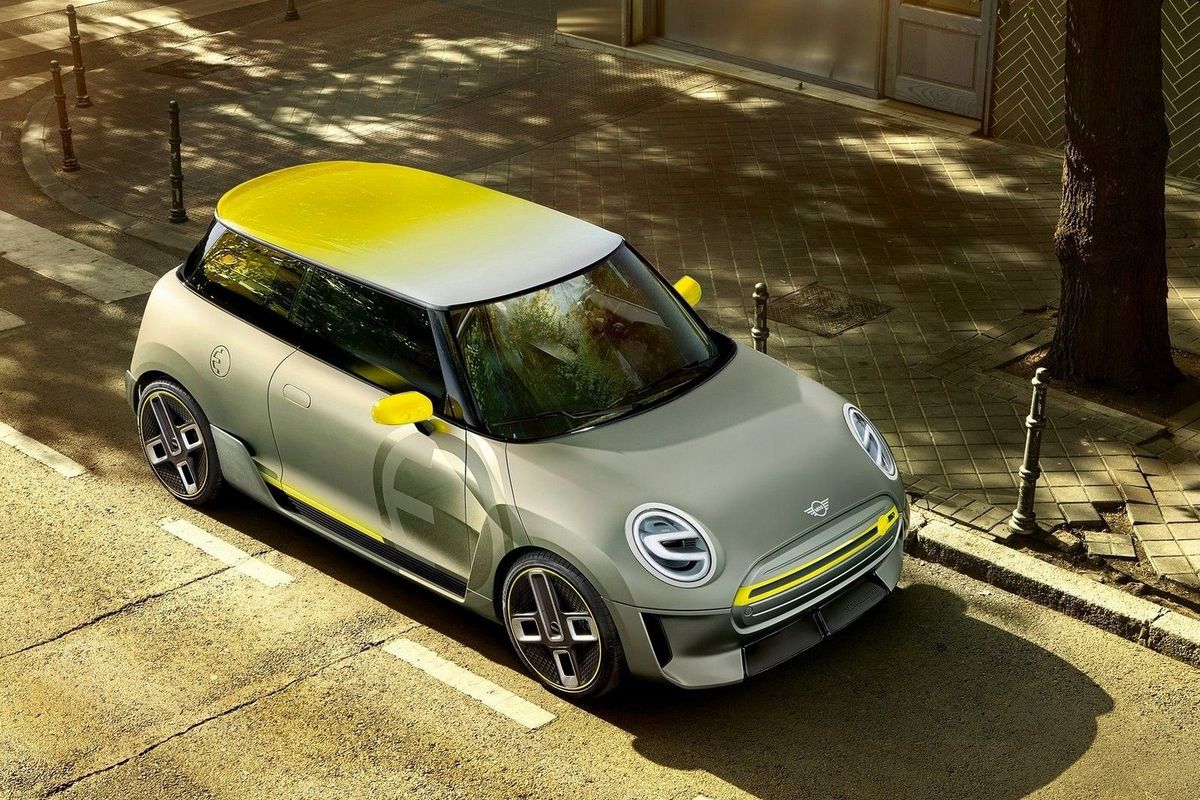
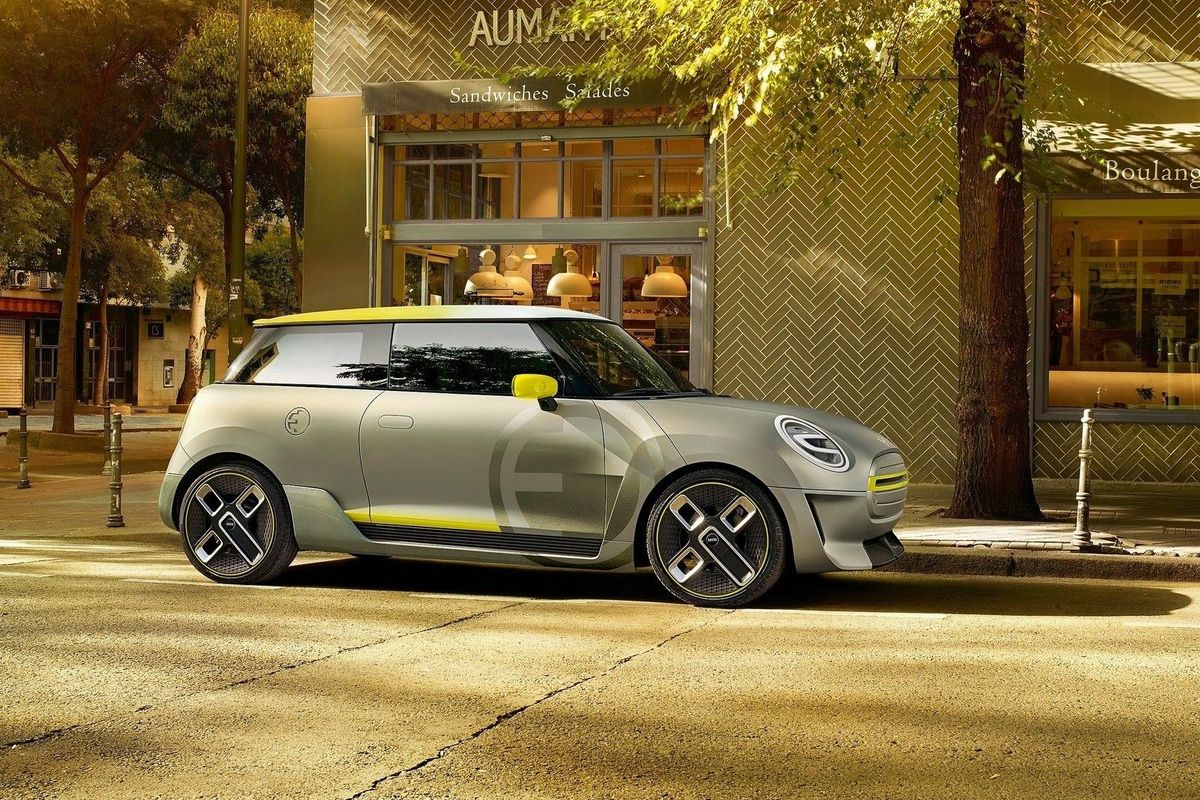
Mini has released details and photos of its Electric Concept vehicle ahead of the vehicle's debut at the 2017 Frankfurt Motor Show. The aim of Mini's creation is to show people how the future may look in terms of pure electric cars, but more importantly, there'll be a production version in 2019.
BMW believes that going electric is one of the most important strategies and the Mini brand is perfect for this. "With its characteristic go-kart feeling and powerful electric motor, the Mini Electric Concept is great fun to drive while also being completely suitable for everyday use – and producing zero emissions to boot. That's how we at Mini envisage electric mobility in tomorrow's world," says Peter Schwarzenbauer, Member of the Board of Management of BMW AG, responsible for Mini.
This is not Mini's first rodeo (as the saying goes) when it comes to electrification of its products. It was in 2008 when the Mini E was unveiled and it formed part of an extensive field trial with over 600 units entering service globally, purely for feasibility studies. Of course, the tech and the experience garnered from the experiment were included in parent brand BMW's i3 electric car. Fast forward to 2017 and we have a plug-in hybrid Mini on its way in the form of the Countryman. However, this concept is radically different to what the Countryman offers.
Mini thinks that small electric cars are the future and this Electric Concept shows where the brand is going
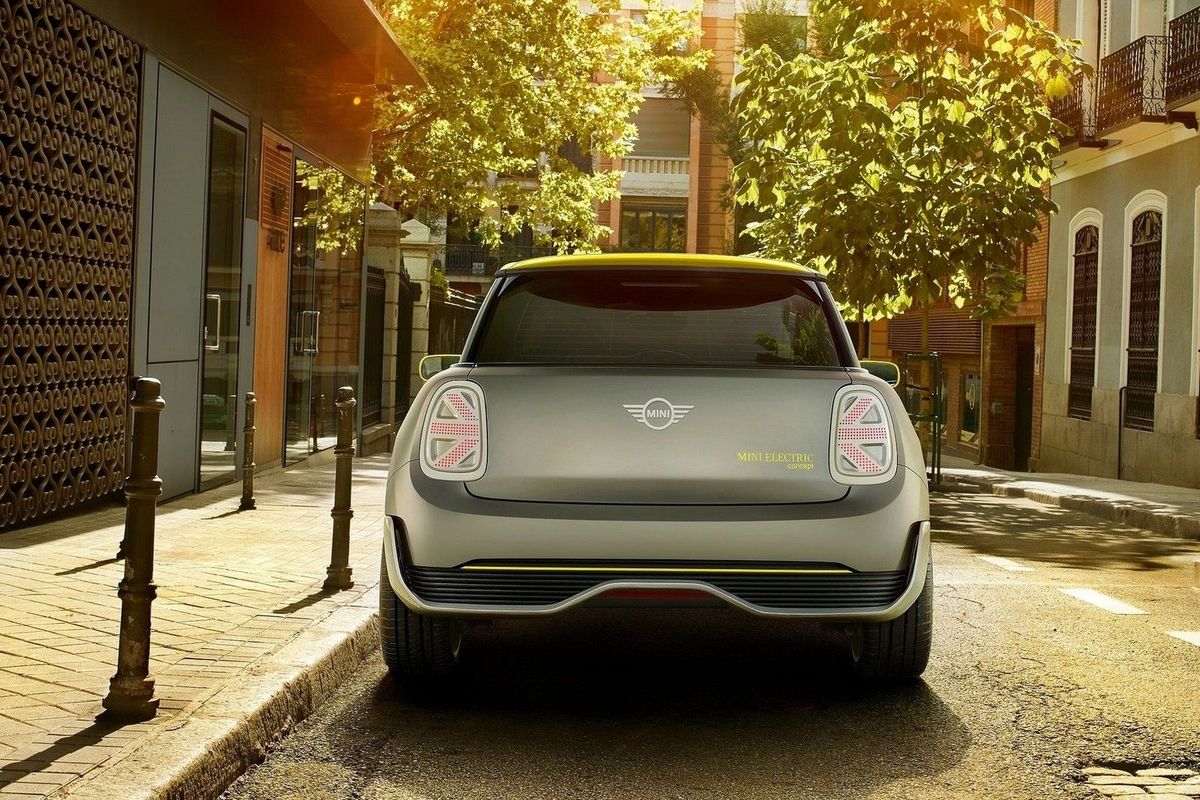
Mini Electric will become a standalone brand and, in many ways, this Electric Concept showcases Mini at its best: compact for the confines of a city, agile for some fun driving dynamics, but with zero emissions. There are few design elements suggesting it's an electric vehicle, but it's definitely a Mini thanks to the trademark cues such as round headlights and body shape. We're also big fans of the Union Jack tail lights!
There's some clever use of 3D printing, which will help minimise production costs down when the road-going version comes along. Under the skin, we're likely to see the BMW i3's powertrain grafted straight into the Mini, which will give the newcomer a range of around 290 to 300 km per charge.
Drag Race: Volkswagen Golf GTI vs Golf GTD [Video]
In our latest episode of Game of Golfs, we head to the quarter-mile drag strip for another Volkswagen sibling face-off. This time it's the 7.5 iteration of the #CarsAwards-winning Golf GTI versus the brand new turbodiesel-engined Golf GTD.
Interestingly, the duelling Golfs offer the same peak torque figure of 350 Nm and tip the scales at just under 1 400 kg. However, the petrol-burning GTI produces 39 kW more than the GTD; we think the turbodiesel-powered hatchback certainly has its work cut out for it.
Subscribe to your Youtube channel to be the first to see our next episode in the series, another drag race between the Golf GTI and the new Golf R.
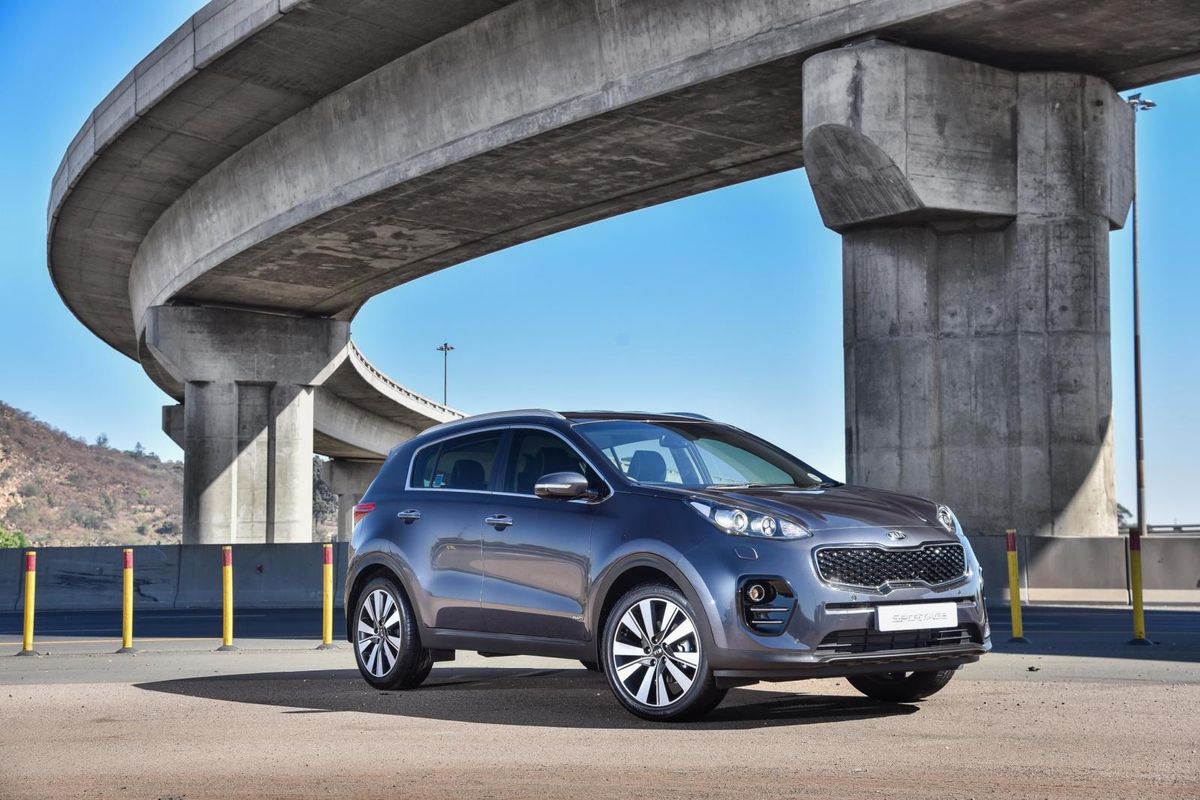
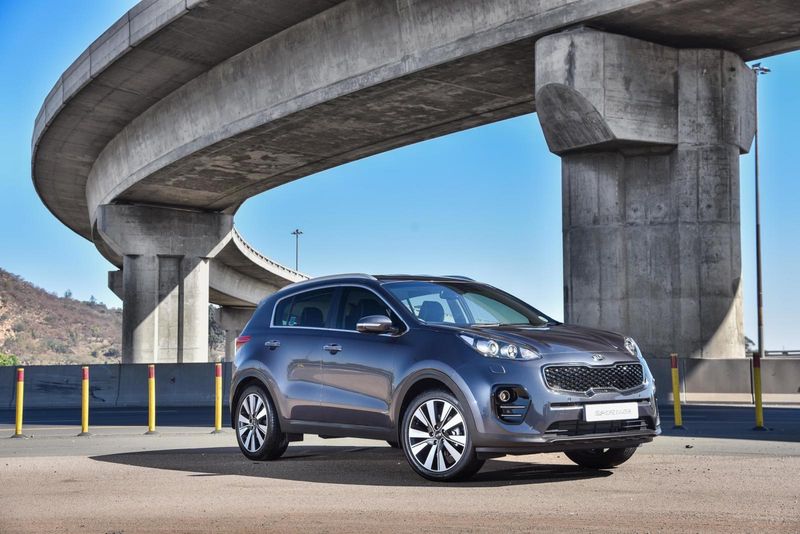
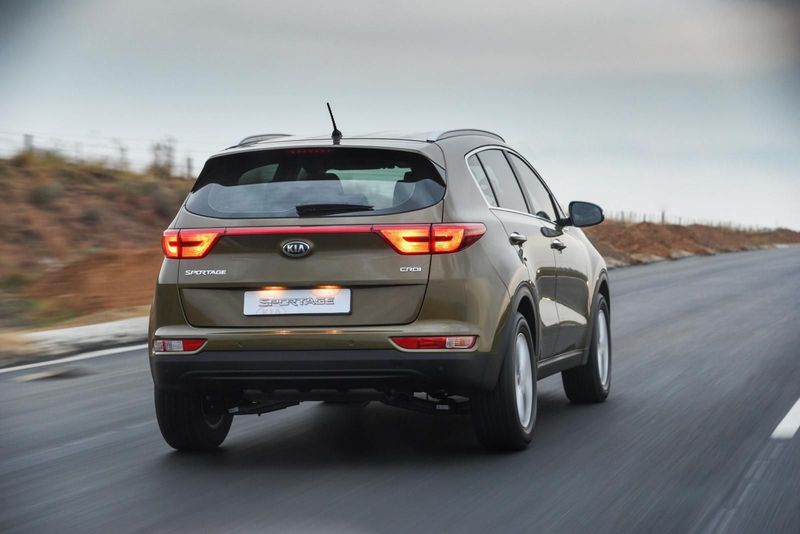
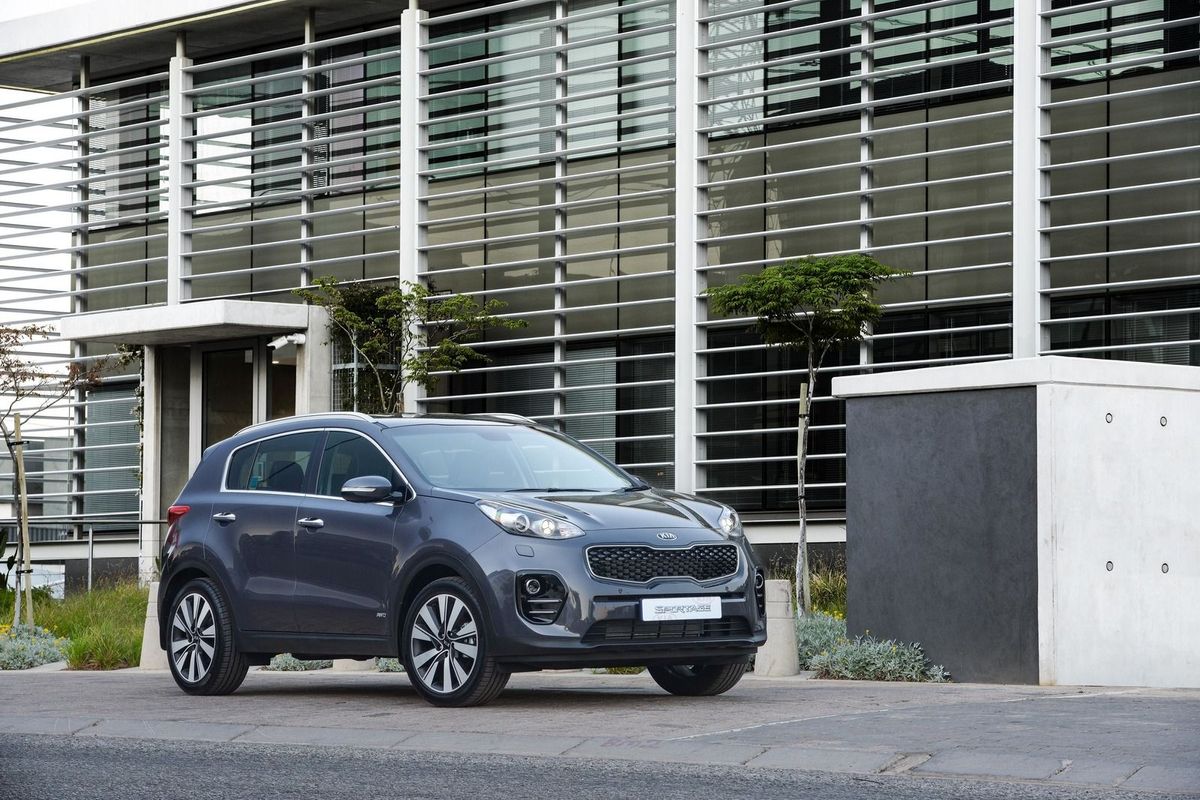
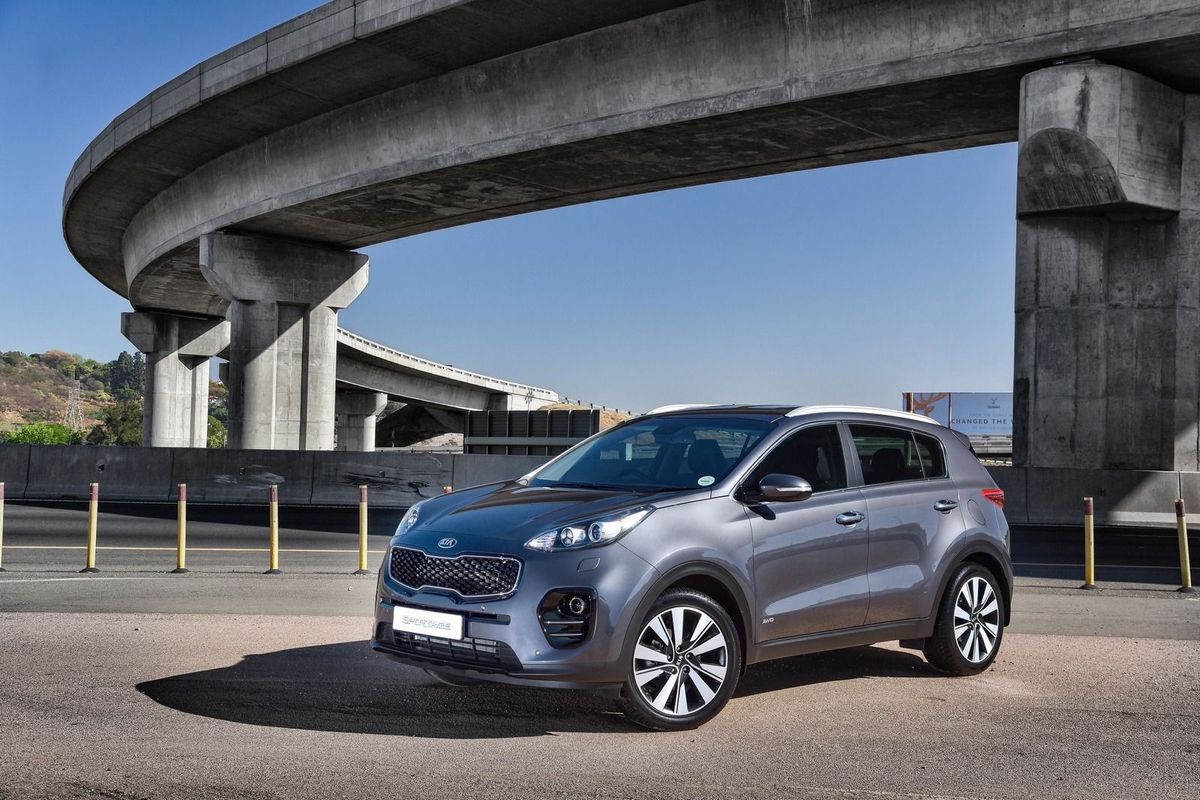
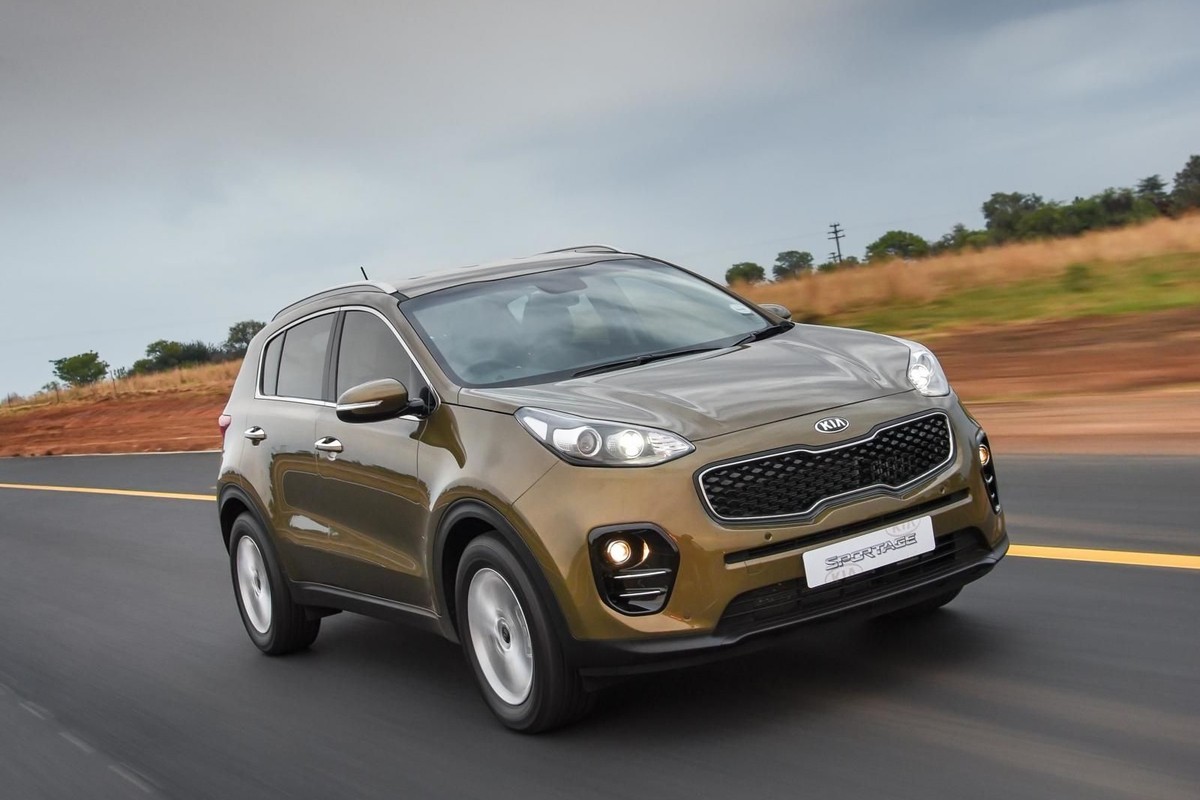
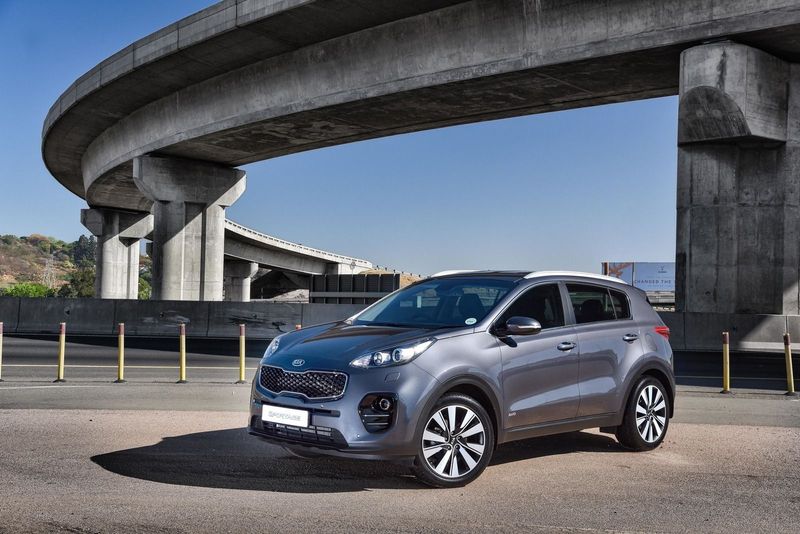
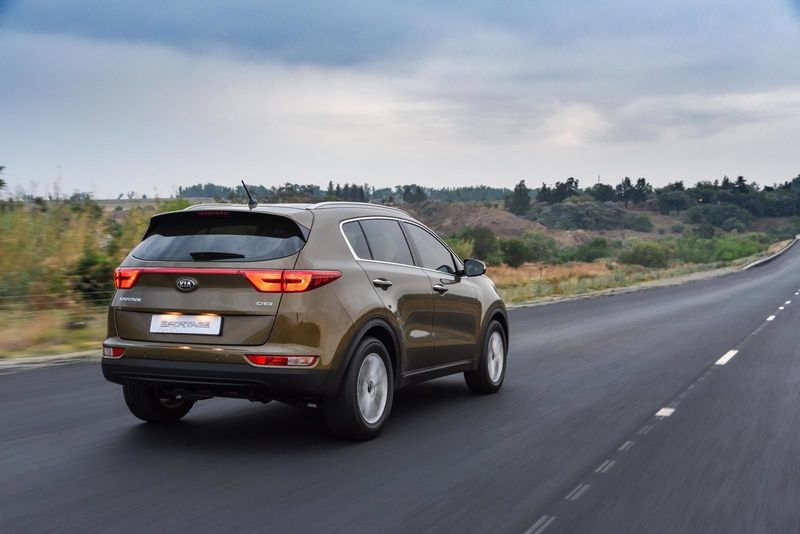
Kia Motors SA has expanded its Sportage family SUV line-up with no fewer than 7 new and/or enhanced derivatives and we recently sampled the latest addition, the diesel-powered Sportage 1.7 Ignite PLUS. Take a look at specification and pricing for the latest Sportage range below.
Customers looking to buy a Kia Sportage are spoilt for choice as the Korean carmaker has now bolstered the local Sportage range with 7 additional derivatives.
“Starting at a very competitive R369,995, we launched the all-new Sportage last year with a compact, five-model range spanning four specification grades. But, being a brand known for its ‘power to surprise’, our product planning did not stop there,” says David Sieff, Marketing Director, KIA Motors South Africa. “We now expand the model range with 7 additional derivatives, not only giving our customers more choice but, more importantly, also creating more value.”
What's new in the Sportage range?
The Sportage range now features 12 derivatives, giving buyers a comprehensive choice of engines and trim grades.
For starters, the entry-level Sportage 2.0 Ignite model, which was previously only available with a manual transmission, is now offered with a 6-speed automatic transmission.
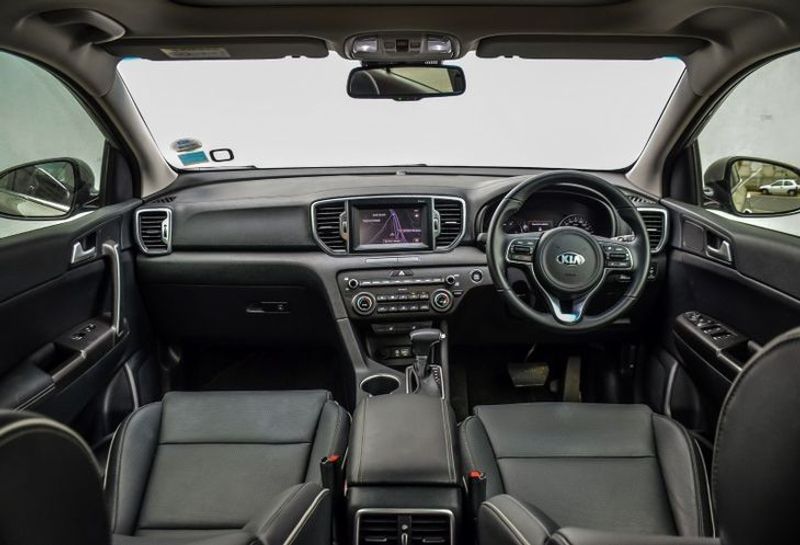
Standard features on the Ignite derivatives include LED daytime running lights, automatic headlight control, rear park distance control, Bluetooth connectivity, and steering wheel-mounted remote controls, to name but a few.
“Many customers value the size, space, practicality and versatility of an SUV, but have no real need or desire for too many bells and whistles,” says Gary Scott, CEO Designate, KIA Motors South Africa. “The Sportage Ignite ticks those boxes, and now also the ‘convenience’ box thanks to the addition of the automatic derivative,” he adds.
Customers also have the choice of new Sportage Ignite PLUS derivatives that add several exterior enhancements such as front fog lights and larger 17-inch wheels while the interior features an electrochromatic rearview mirror. Powering the Sportage Ignite PLUS is the familiar 2.0-litre petrol engine with 114 kW and 192 Nm of torque with a choice of either a 6-speed manual or 6-speed automatic transmission.
The Ignite PLUS derivative also welcomes a 1.7-litre CRDI engine to the Sportage range as an alternative engine option. The new 1.7-litre turbodiesel engine develops 85 kW and 280 Nm of torque and is offered with a 6-speed manual transmission. We recently drove this derivative at launch, read our report!
A new 1.7-litre turbodiesel joins the range and is offered on the Sportage Ignite Plus derivative.
The Sportage 2.0 CRDI EX was the only mid-spec offering in the range at launch, featuring a 2.0-litre turbodiesel engine and a six-speed automatic transmission. KIA has now expanded the EX offering with the addition of a 2.0-litre petrol option. The EX derivatives offer all of the features found on the Ignite variant, but adds useful features such as an electric parking brake, front park distance control, rain-sensing wipers, cruise control, a Smart Key with Start/Stop button, leather upholstery, a leather-wrapped steering wheel and gear knob, and electric folding side mirrors with integrated indicators.
In addition to this, two new EX PLUS derivatives are also available, slotting in between the EX and range-topping SX all-wheel drive derivatives and customers can choose between the 2.0-litre petrol and 2.0-litre turbodiesel engine. In terms of specification, all of the standard features of the EX models are included in on EX Plus derivatives but additional features including 19-inch alloy wheels, electric front seats, a rear-view camera as well as a 7-inch touchscreen with integrated satellite navigation form part of the package.
The remainder of the Sportage line-up remains unchanged, with the 2.4 GDI and 2.0 CRDI SX AWD models and 1.6 T-GDI GT Line model rounding off the range.
Kia Sportage – Price in South Africa
*See new derivatives in bold
2.0 Ignite Manual
R369 995
2.0 Ignite PLUS Manual
R376 995
2.0 Ignite Automatic
R382 995
2.0 Ignite PLUS Automatic
R389 995
1.7 Ignite PLUS Manual
R406 995
2.0 EX Automatic
R429,995
2.0 EX PLUS Automatic
R459 995
2.0 CRDI EX Automatic
R487 995
2.0 CRDI EX PLUS Automatic
R517 995
2.4 GDI SX AWD Automatic
R557 995
2.0 CRDI SX AWD Automatic
R567 995
1.6 T-GDI GT Line AWD DCT
R599 995
The Kia Sportage is sold with a 5-year/unlimited km warranty, 5-year/90 000 km service plan and 5-year/unlimited km roadside assistance.
Kia continues its model onslaught in 2017 with a raft of additions to the Sportage family car line-up, including a 1.7-litre turbodiesel derivative. We headed to the local launch of it for a quick drive.
The thought of Toyota garnering the majority of sales in a segment where the Sportage is perched seems a bitter pill to swallow for Kia’s marketing team. David Sieff – the captain of the team – mentions that traditional buying trends indicate customers like their cars to be Toyotas… it is the chief reason the Sportage isn’t the leader of the pack. Those, of course, are the words of a man with Kia blood coursing through his veins. In his opinion, the Sportage is packed to the rafters with astute specification and, on those grounds alone, it's the better buy.
Offering more versions of the Sportage in the local market will hopefully help them catch up lost ground.
When quizzed about the simpler route of an options list to allow clients to customise their cars according to needs and desires, Sieff points out to Kia’s importer status and the fact that essentially, theirs is a business that distributes cars instead of being a fully-fledged subsidiary of the Korean brand and thus, its models arrive pre-packaged with studied specification for our market.
By Kia South Africa’s own admission, a search for answers through customer feedback revealed that despite a concerted effort to furnish the lineup well enough with specification at the same time ensuring competitive asking prices to give consumers a good shot at credit rating approval, they’d actually been short-changing models in the moving R376 000 – R500 000 price range where the Toyota is cleaning up. Raiding the kit shop, Kia SA has introduced a new Sportage Ignite PLUS specification grade and has applied it to virtually all of Sportage models except for the 2.4 GDI SX AWD 6AT; the 2.0 CRDi SX AWD 6AT and the top line 1.6 GT Line AWD 7DCT. This blows the initial five model range into a robust 12 derivative line up. With these additional models, Sieff reckons the Sportage is now ready to trade real blows with its Japanese rival.
There are now 12 models of the Sportage available including the new 1.7-litre turbodiesel engine we first saw on the Hyundai Tucson.
Despite the Sportage range being plump with bells and whistles, this new Ignite Plus spec upgrade brings with it a strategic improvement to fill up the identified gaps and enhance its appeal at a variety of price points. The entry-level 2.0 Ignite which, although boasts as standard equipment; Bluetooth connectivity; steering wheel-mounted remote controls; LED daytime running lights with automatic headlight control and rear park distance control, was previously only available with a manual transmission, but now gains a 6-speed automatic ’box. It’s a comprehensive upgrade for the Sportage and in addition to presenting this new grade, Kia has for the first time also introduced the 1.7-litre CRDI engine that produces 85 kW at 4 000 rpm and 280 Nm between 1 250 and 2 750 rpm found in sister brand Hyundai. However, this Ignite Plus CRDI model is available exclusively with a 6-speed manual transmission.
Though not blue-blooded, it’s a peach of an engine. The revs climb with typical diesel unhurriedness and all but the slightest hint of engine clatter is heard. It’ll require earlier gear-changes rather than to extend the engine revs to take advantage of its torque for definitive all-round pace. The demure 1.7-litre engine designation is actually deceptive and although peer petrol-powered Sportages may outgun it on top whack they will nevertheless struggle to match its stronger lashes of early power and sensible fuel economy.
Kia sees the Toyota Rav4 as the segment leader and has its eyes focussed on taking its spot at the top.
It is not what I’d call furious or electrifying to drive. Then again, what SUV in this segment is? There are certain chassis expectations from a car in this segment and the Sportage glides sturdily and surely even on less than perfect road surfaces. Be it petrol or diesel, manual or automatic, the Sportage quietly and efficiently reels in the miles.
Though the only off road sojourn was a short little drive through a small orchard towards the lunch venue, the cars are high and sturdy enough to handle long stretches of gravel track. You need only do your homework on which all-terrain tyres to fit.
First impressions on whether Kia has thrown a weighty gauntlet at the feet of that anodyne Toyota RAV4 are inconclusive at the moment. Kia’s theory that spec is King will be tested heavily against the Japanese brand’s strength. History suggests that during depressed economic times consumers prefer to invest in tried and tested solutions, such as the Toyota.
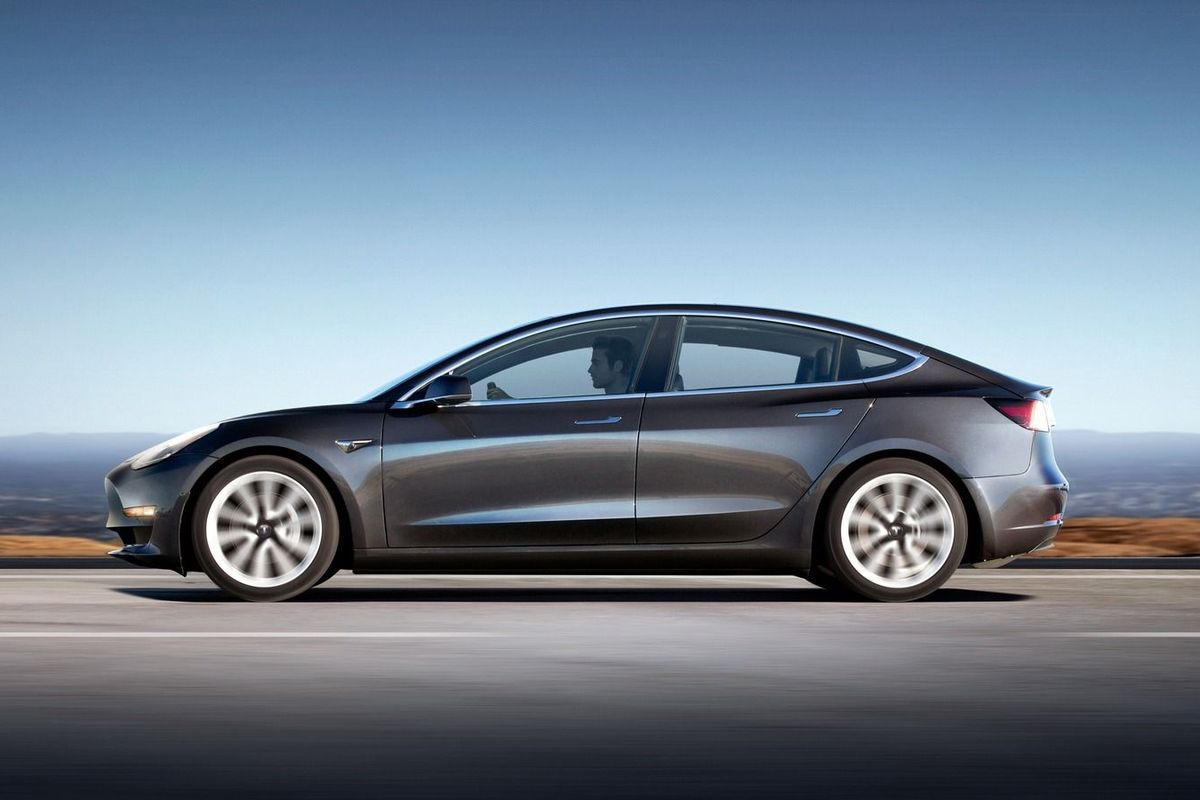
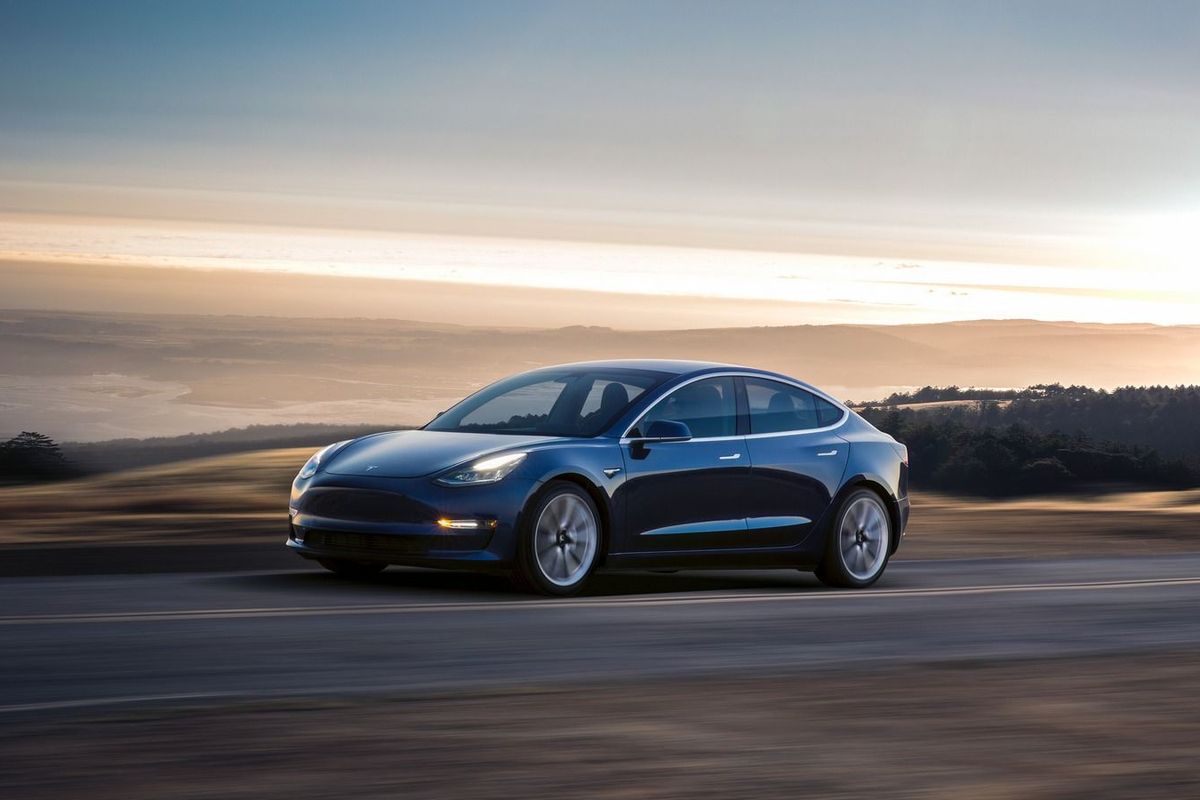
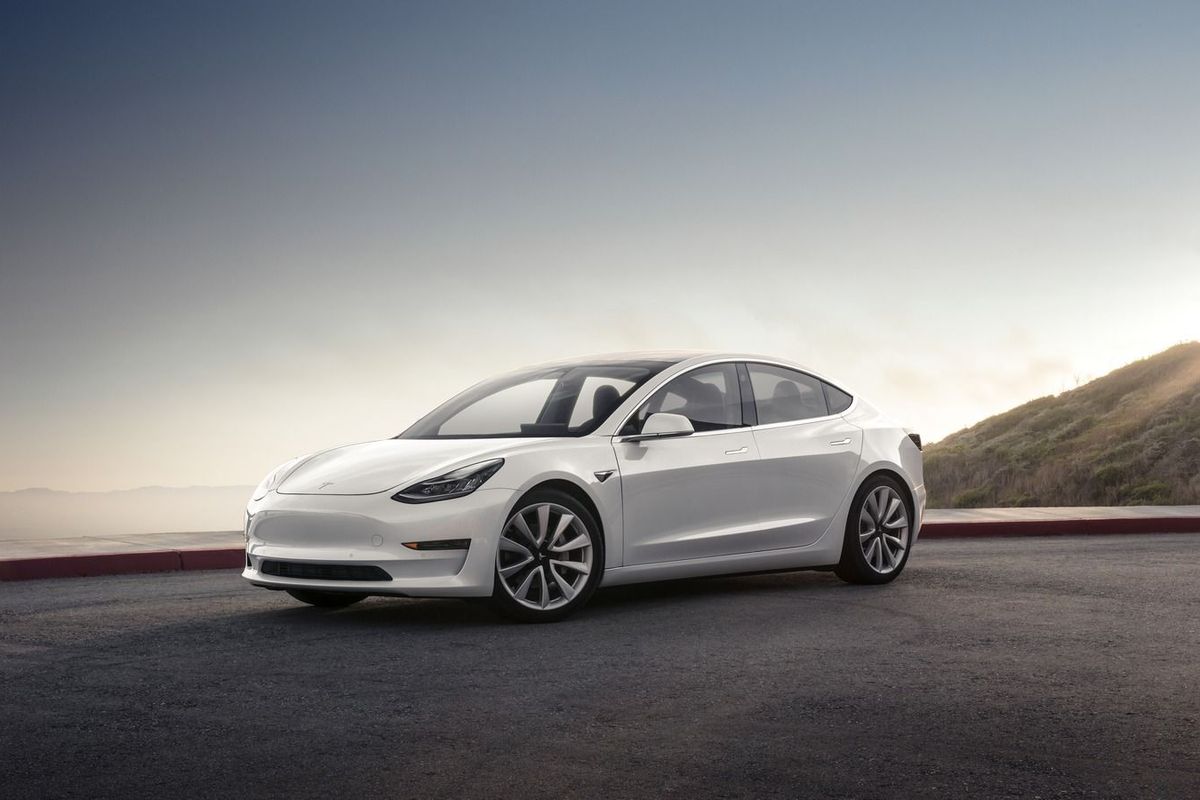
The Tesla Model 3 is making huge waves in the States, however it's only likely to be available internationally in 2019 and its arrival date in South Africa is yet to be announced. We sent US correspondent Mark Harris to give Tesla's smallest car a whirl and see what it's all about.
Unless you were born this millennium, Elon Musk did not build the Model 3 for you. He built it for kids just learning to drive who have never known a world without touchscreen smartphones, wireless internet and streaming video.
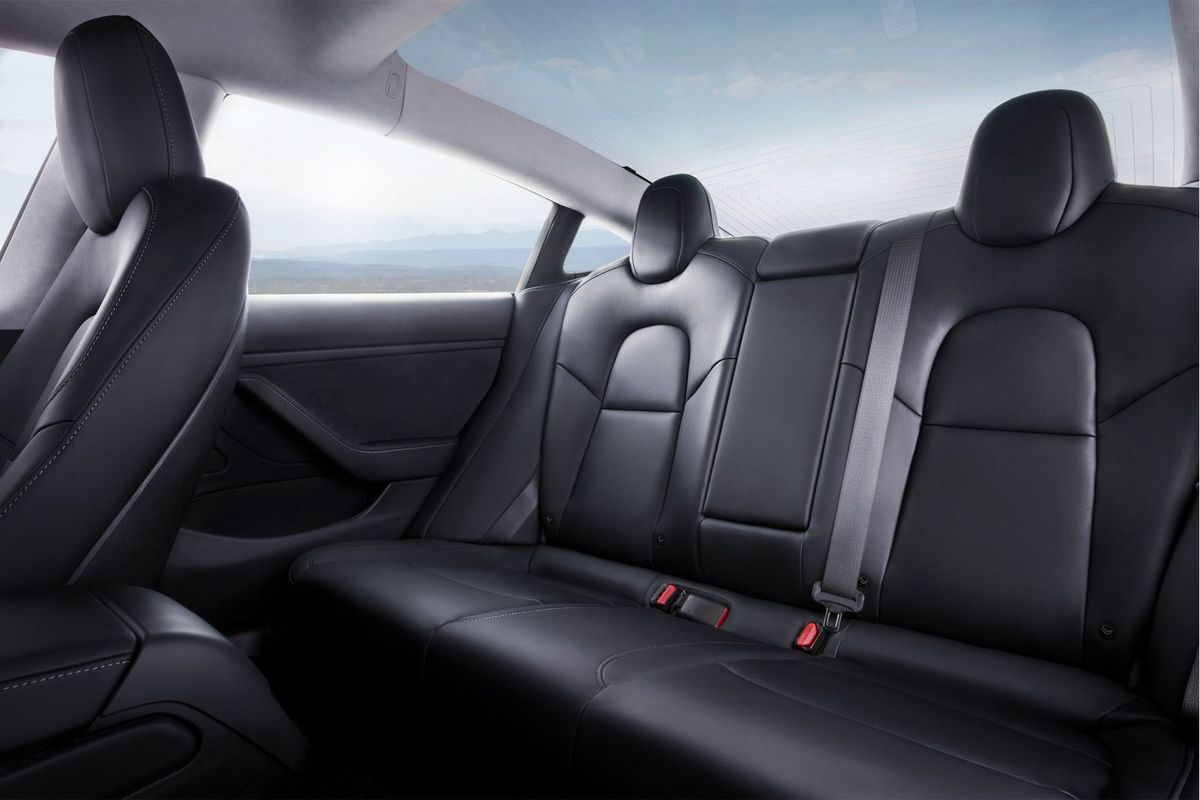
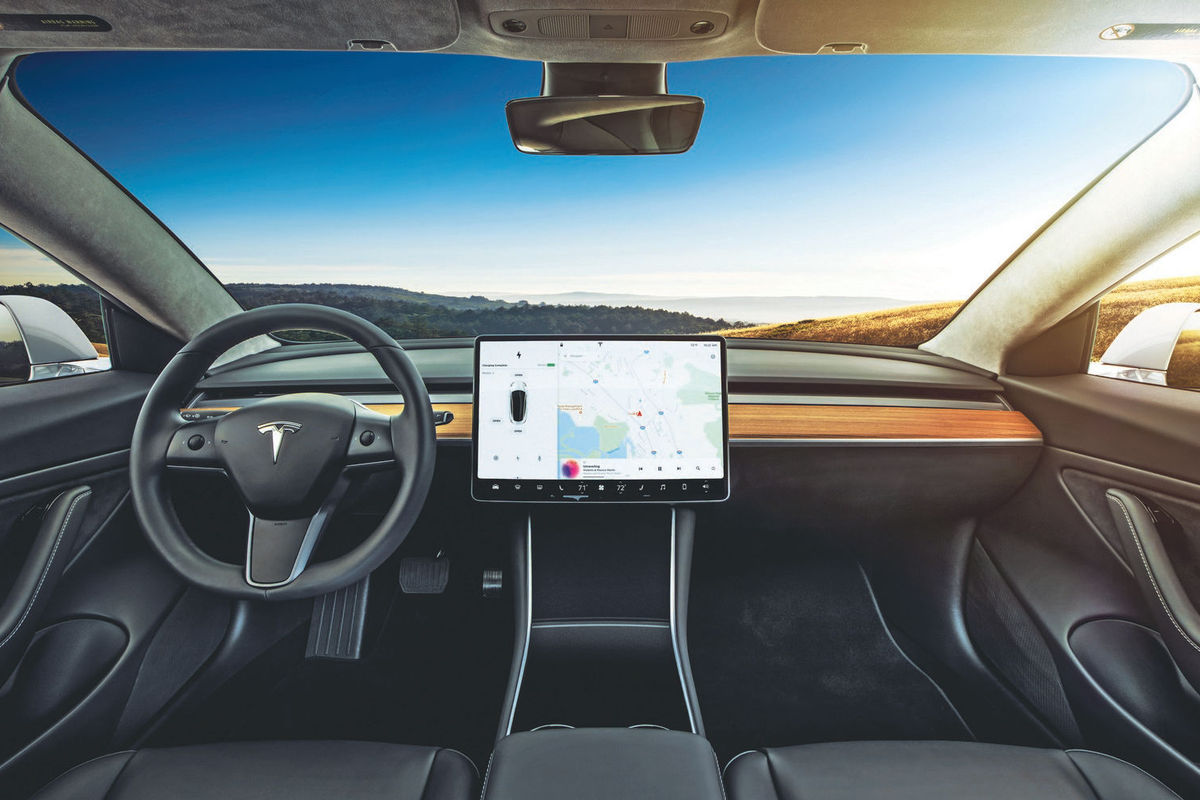
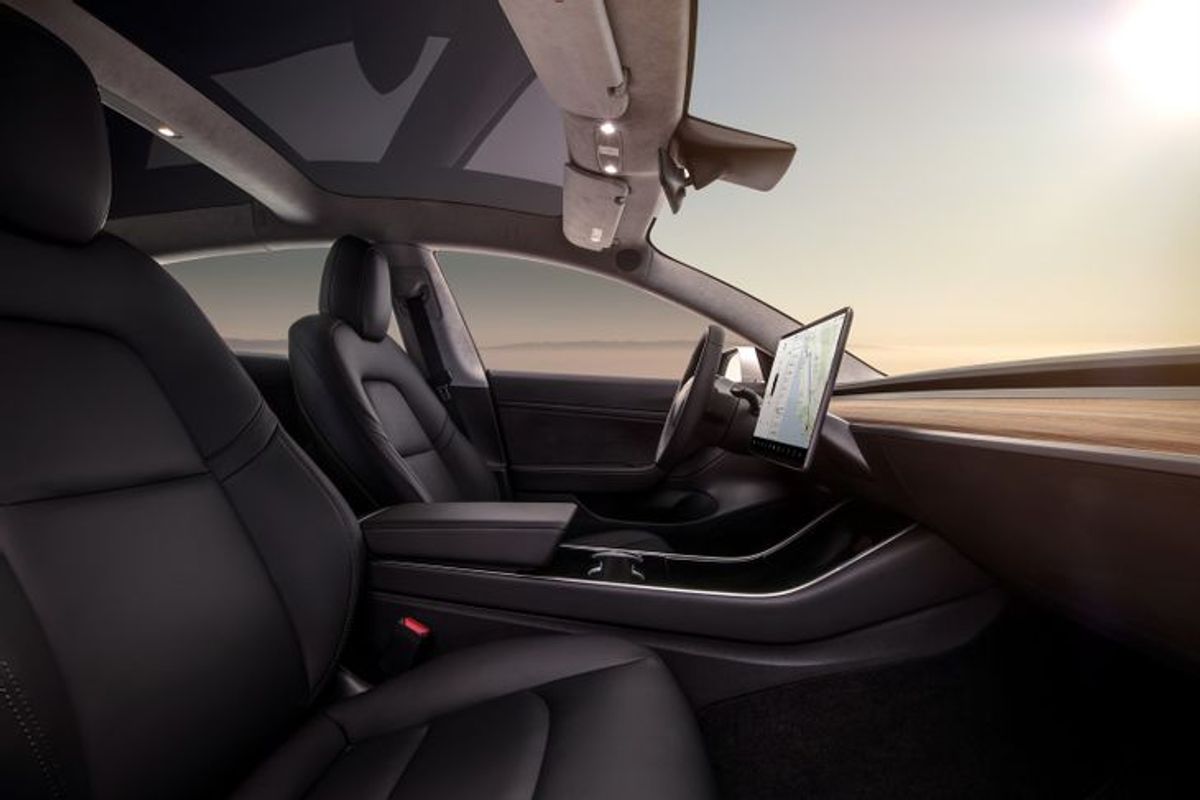
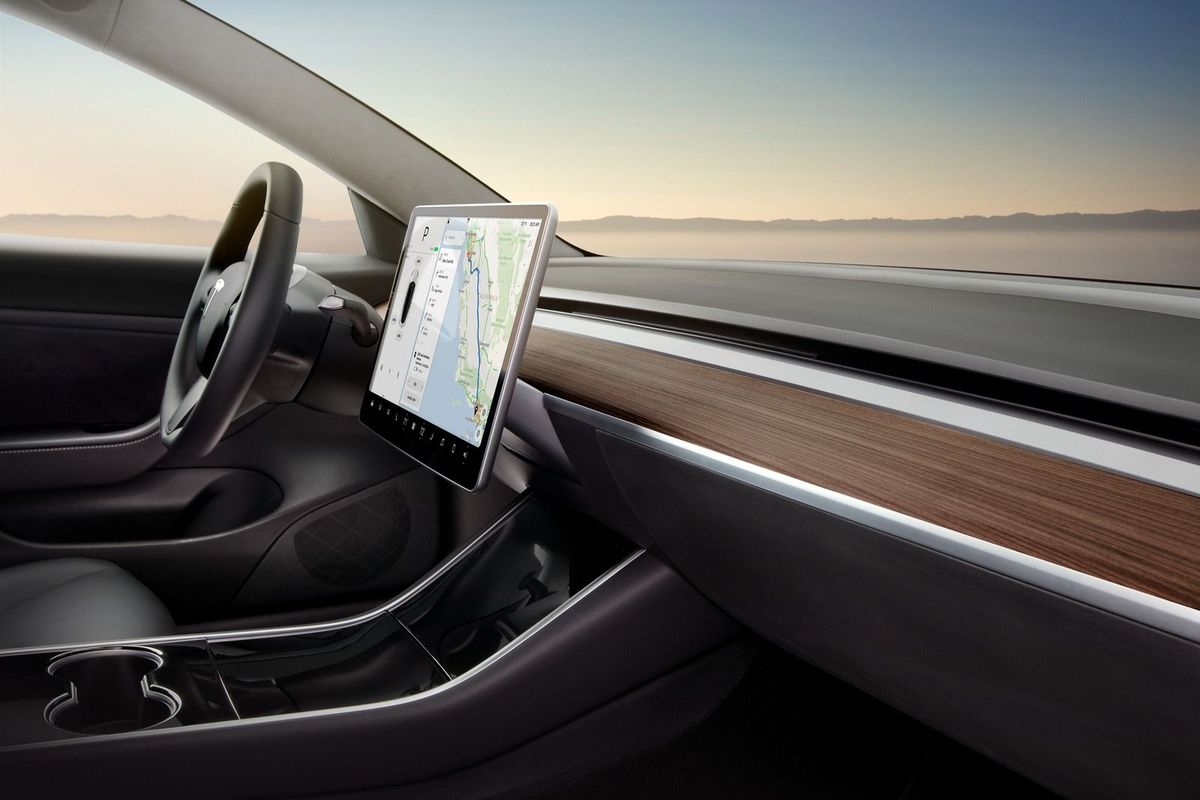
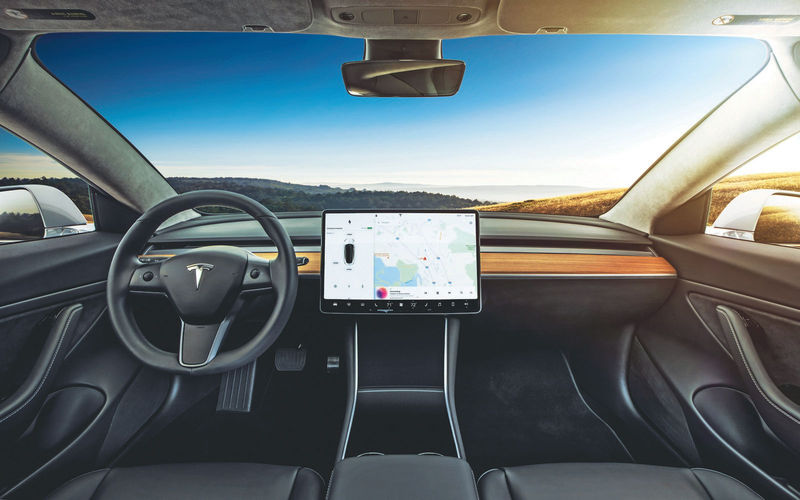
Slipping behind the wheel of Tesla’s latest electric vehicle is like playing the world’s most stylish racing game. The cabin is spacious and bright, thanks to a panoramic rear window arcing forward. There is nothing so clumsy as a key or even a start button – the Model 3 wakes and unlocks when your smartphone approaches. Small dials on the steering wheel let you adjust it to suit but almost everything else is controlled on the 15-inch touchscreen.
Screen overload
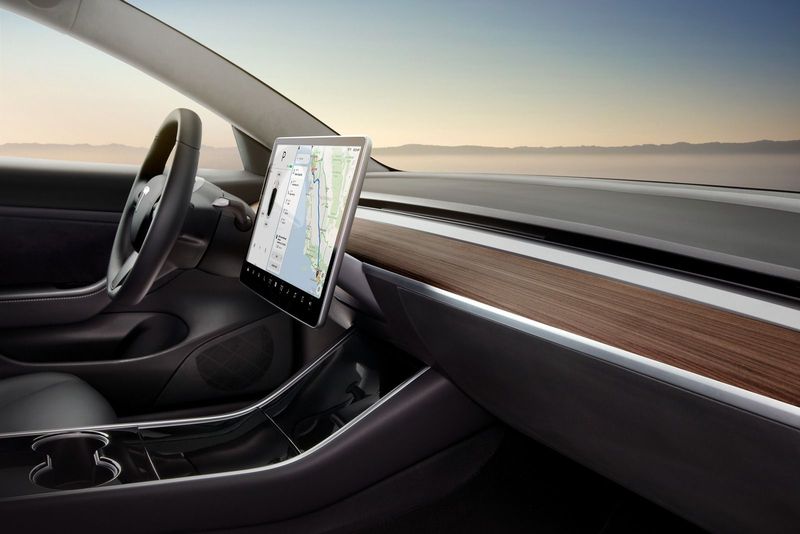
Huge 15-inch touchscreen controls absolutely everything in the car.
Even if you work on a laptop all day, finding an identical display in a car is a jarring experience. The place where your eyes naturally look for the speedometer is just a plain expanse of sanded wood. Instinctively reach for the climate or audio controls and there’s nothing but plastic fascia. Maps look beautiful and streaming a podcast are effortless but no matter how clear the display or logical its menus, a touchscreen will never be as fast and intuitive as simply flicking open an air vent by hand.
Lucky, then, that nothing in the Model 3’s price range is as fast and intuitive as its glorious electric drivetrain. Even without the raw adrenaline punch of the Model S’s ‘Ludicrous Mode’ acceleration, the Model 3 is every bit as easy and fun to drive as its luxury predecessor. Floor the accelerator and the Model 3 springs into action with an enthusiastic hum. Steering is assured and road handling rock solid, the Tesla whipping around corners and shifting lanes with a mature confidence that belies its youthful styling.
Let up on the accelerator and the Model 3’s electric motor automatically slows the car, feeding the energy back into the battery. If you’re new to EVs, this strong regenerative braking can take a little getting used to, but it extends the car’s range and lets you negotiate urban streets without ever tapping the actual brakes.
Upgradable systems
You won't find a less fussy interior anywhere else.
Of course, Elon Musk’s ultimate aim is to have you moving around cities without touching any pedals at all. All Model 3s come with a suite of sensors to enable collision avoidance and emergency braking. If you’ve paid for the upgrade, a quick double-pull on the gear shift lever activates Enhanced Autopilot, Tesla’s state of the art semi-autonomous driving system.
In my brief drive near Tesla’s factory in Fremont, California, the Autopilot worked well rather than perfectly. Its radars and ultrasonic sensors detected some workers digging a hole by the side of the road but the car passed closer to them, and at a higher speed than I would have. The cameras also followed road lanes flawlessly, until the lane markings faded on the approach to a corner, forcing me to tap the brakes to take back control.
Tesla insists that today’s Autopilot is merely a driver assistance system, requiring you to pay attention and keep your hands on the wheel at all times. But the stripped-back interior and central touchscreen suggest something different – that fully self-driving technology is on the horizon and that the Model 3 is eager to serve as one of the very first autonomous taxis.
There is even a driver-facing camera mounted above the rear view mirror. This is not currently activated but it might be used to ensure drivers are staying alert, or further out to monitor passengers in a futuristic autonomous ride-sharing scenario.
Future proof
Make no mistake. If you buy a Model 3 today, you are investing in the future – and not just because Tesla’s notoriously sluggish production means you may not receive it for a year or two. Elon Musk has pioneered the idea of the car as something constantly evolving. Today’s Model 3 is a hardware platform that will probably receive dozens of software updates in the years ahead. Expect the ability to unlock new features – perhaps even faster performance or longer range – as well as changes to the display, safety improvements, and eventually Musk’s ride-sharing program to help you earn back some of the Model 3’s sticker price.
Tesla sells you the hardware, like a laptop and then the software the car runs is constantly updated remotely.
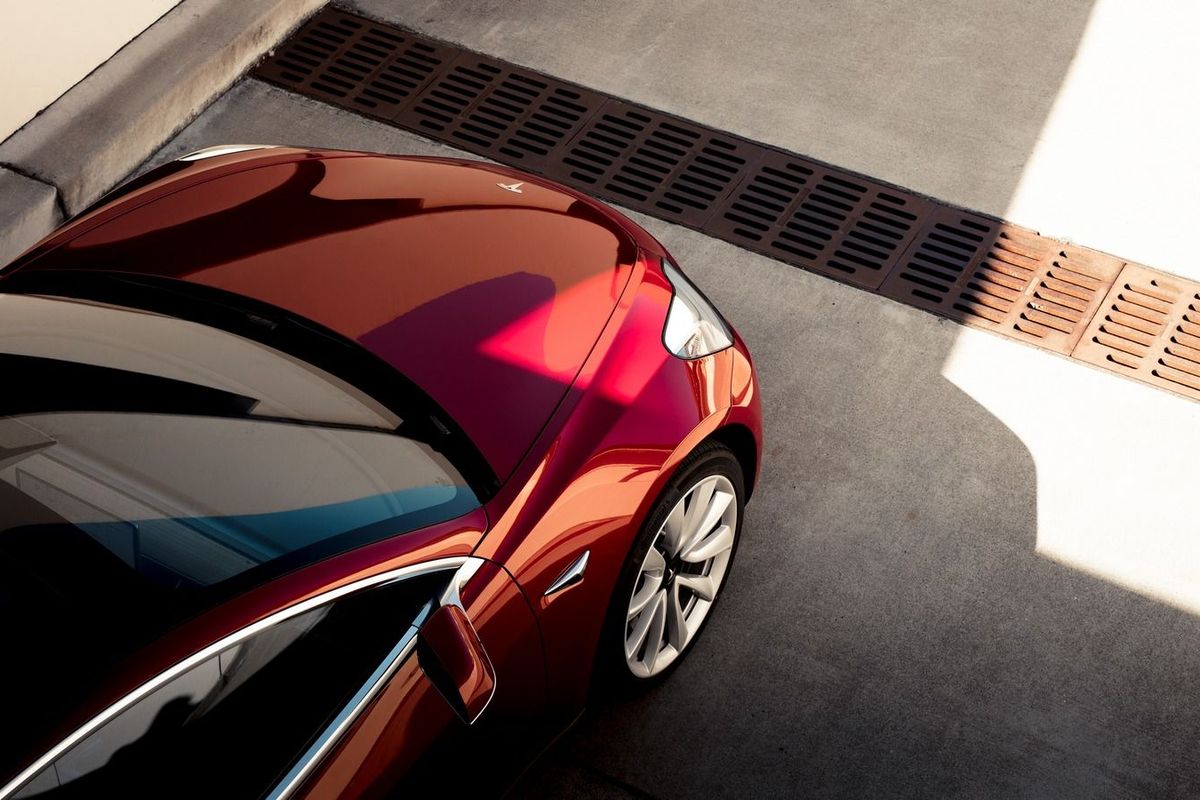
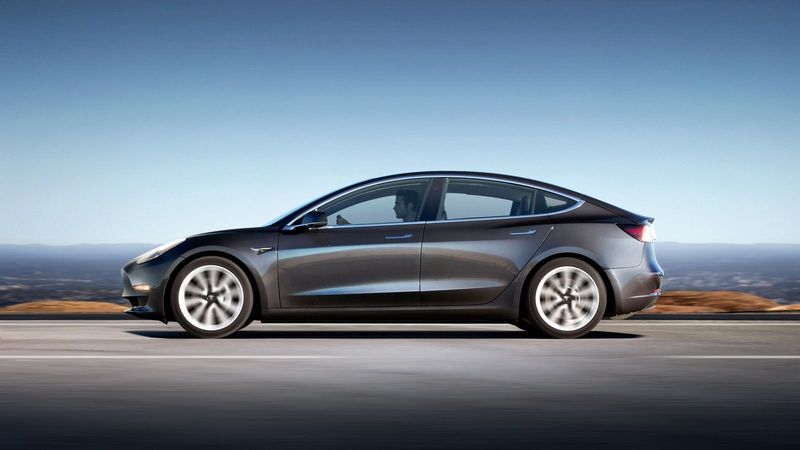
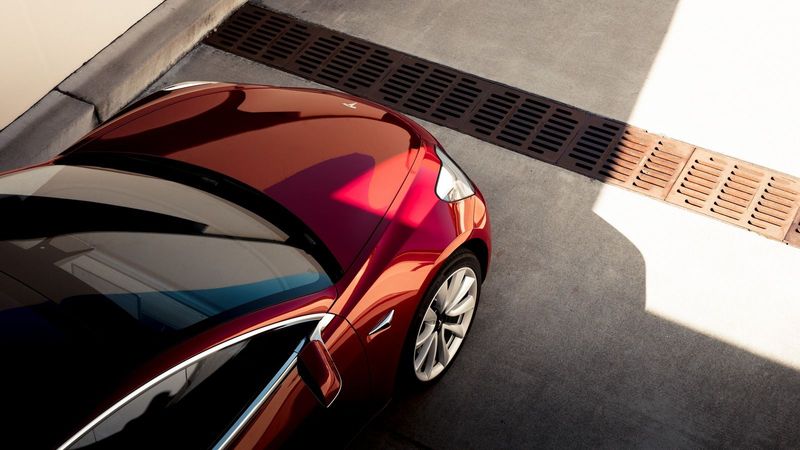
But for all this technology, Musk’s smartest move might have been wrapping up the Model 3’s mind-bending innovation in a modest, mass-market design. Anyone can appreciate the 3’s graceful curves, and its short, even stubby, nose is about as unthreatening as can be. Splash out on Tesla’s sporty wheels and metallic paint options and you’ve got a credible street racer but there is nothing here to scare off a suburban family. In fact, the generous rear seating, together with front and rear trunks, make the Model 3 a very practical choice for most.
More questions than answers
There are still many questions around the Model 3. What size are its batteries (Musk isn’t saying)? How much will using its global networks of Superchargers cost? What will the story be with servicing? When will full self-driving actually arrive? And if you’re fine coping with these uncertainties, there remains the biggest question of all: with around half a million pre-orders to fulfil, when will you be able to actually drive one home?
Musk hasn't given much in the way of details about the Model 3 or servicing or charging. People still flocked to buy one online.
Driving the Tesla Model 3 is like reviewing a shiny new laptop computer. The hardware is gorgeous, the finish is fine and it runs extremely smoothly. However, the Model 3’s success will ultimately come down to the software it runs – and that is still a work in progress. One thing is for sure. This is already the mid-range electric car to beat, and it’s getting better all the time.
Editor's note: Even though Elon Musk famously tweeted in 2016 that the Model 3 was earmarked for release in South Africa, the firm had not committed to an introduction date (and the establishment of local sales/service infrastructure) at the time this article was published. We have it on good authority that a handful of local motorists had put down deposits for the 3
Tesla Model 3 specifications
Engine: Electric motor, lithium-ion battery pack (kWh not stated)
Transmission: Single-speed direct drive, rear-wheel drive
Performance: Standard 5.8secs 0-100 kph, 210 kph top speed, 350 km range; Long Range version 5.3 secs 0-100 kph, 225 kph top speed, 500km range