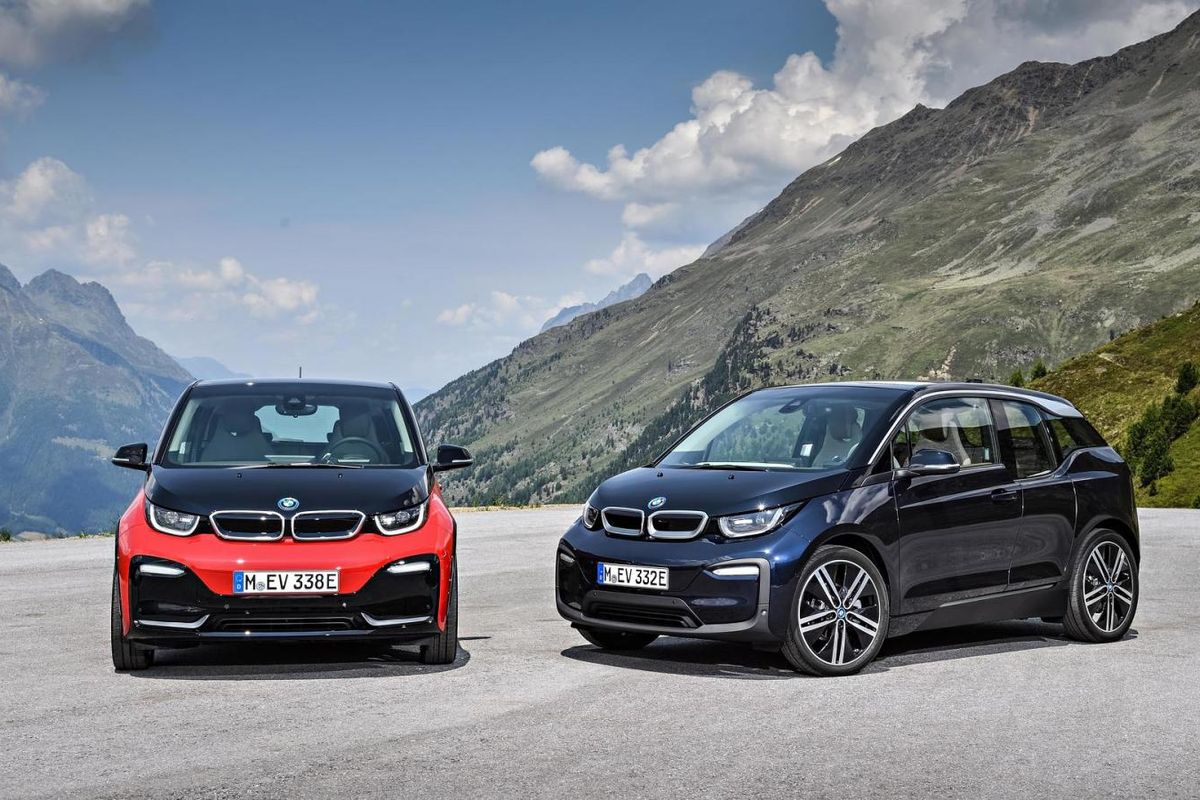
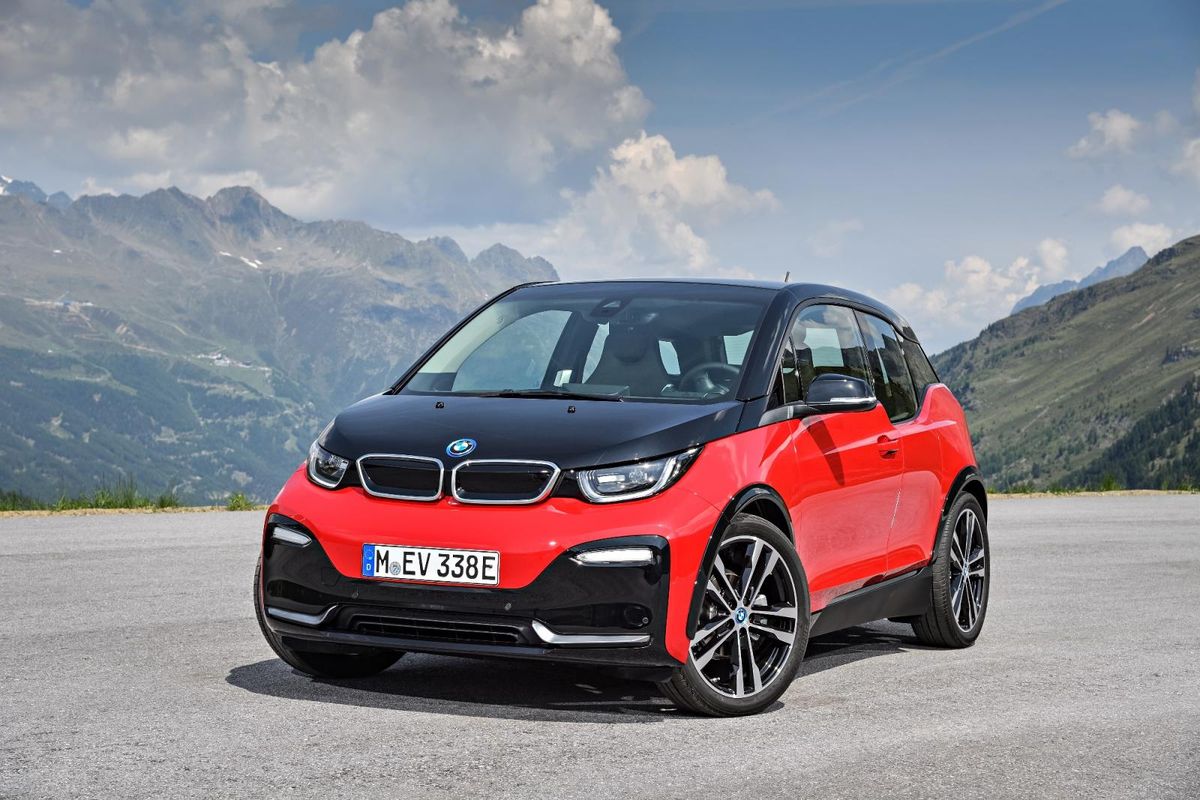
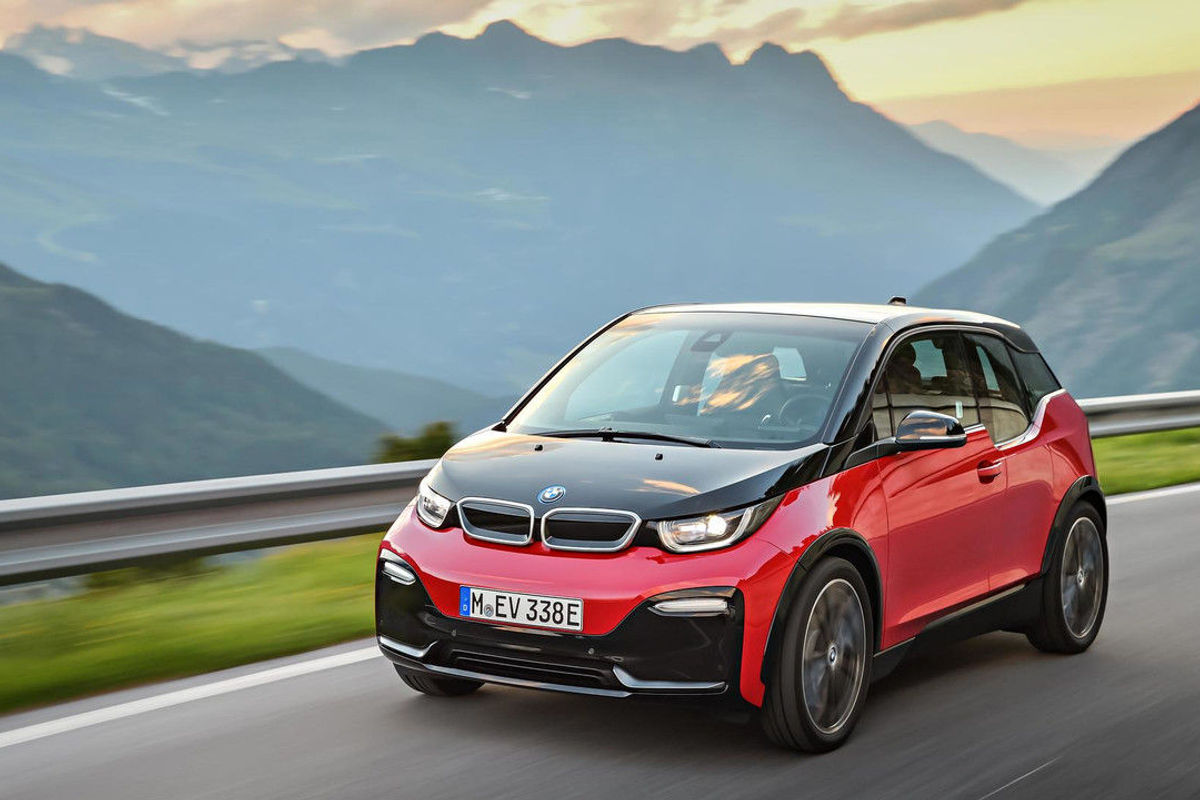
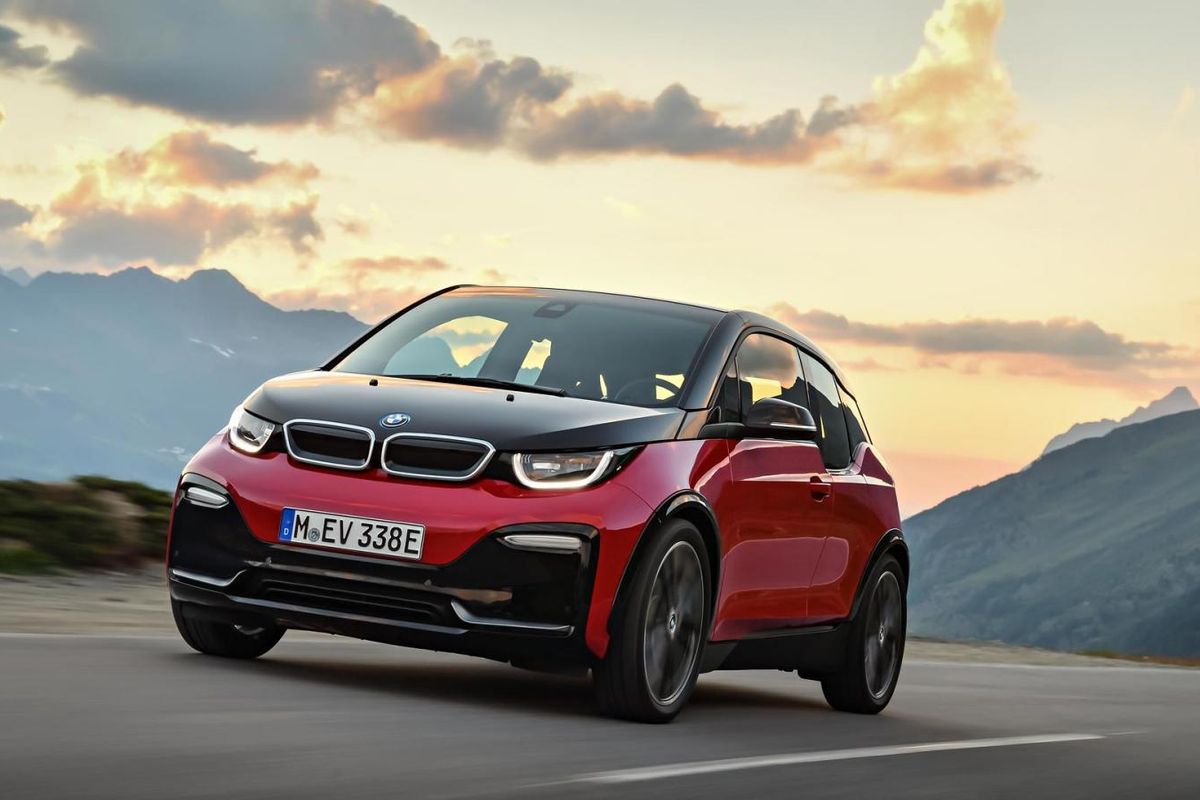
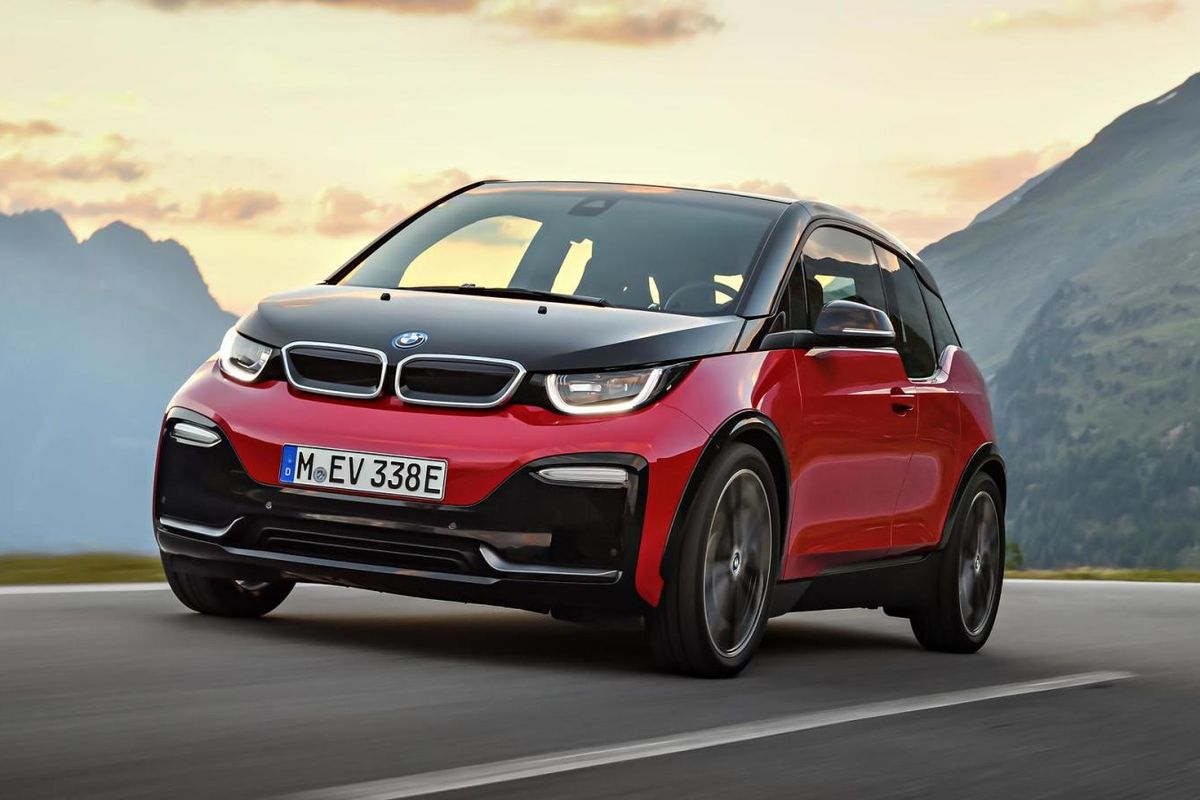
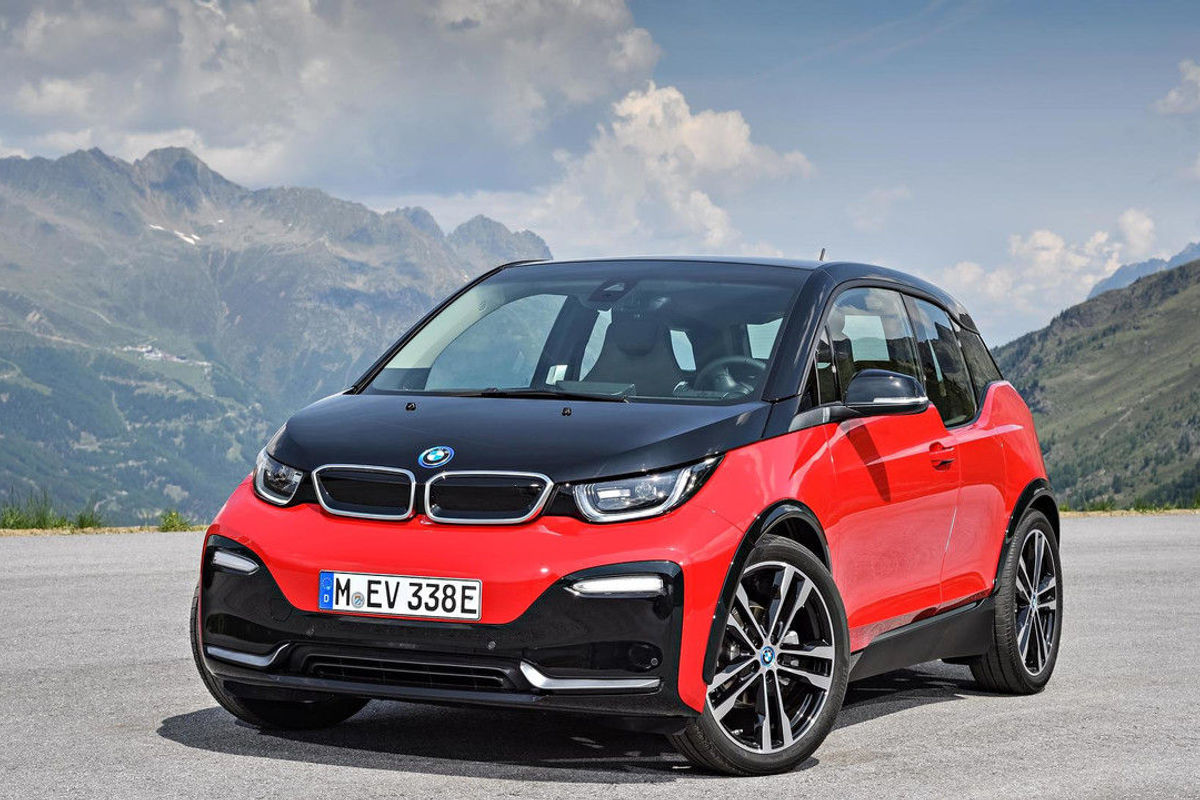
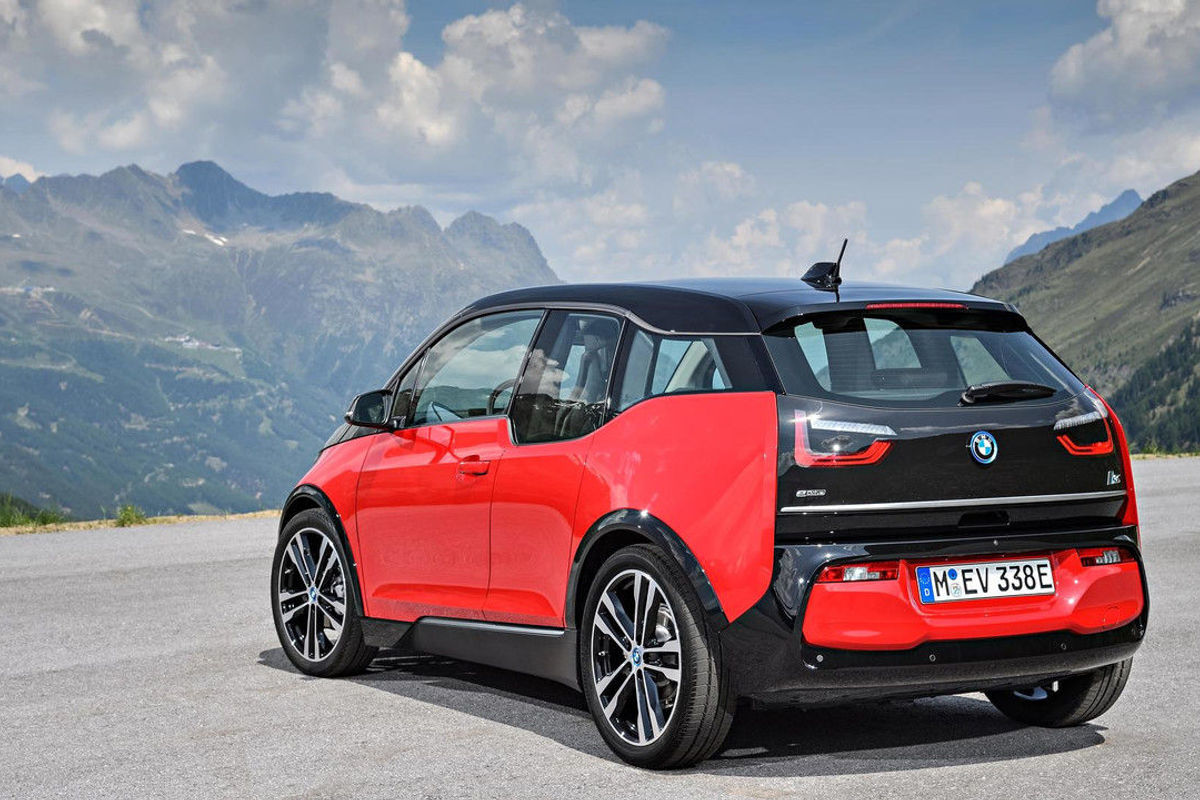
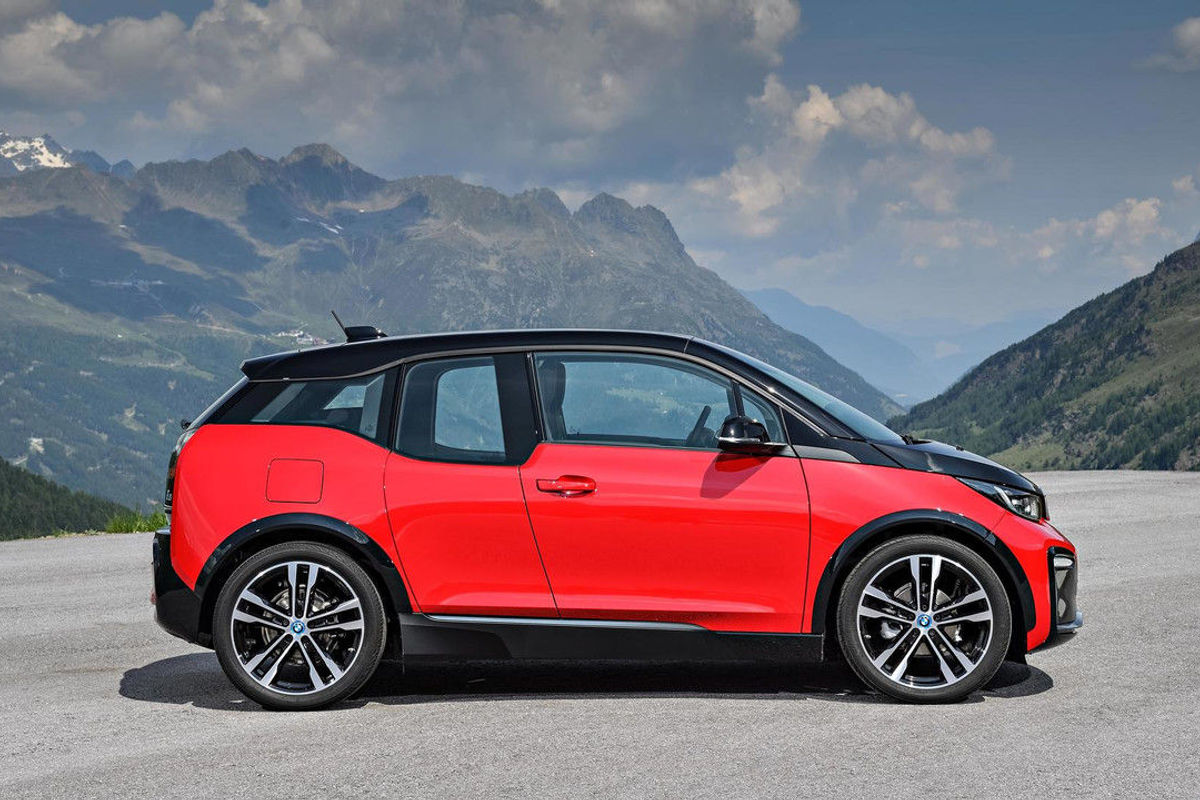
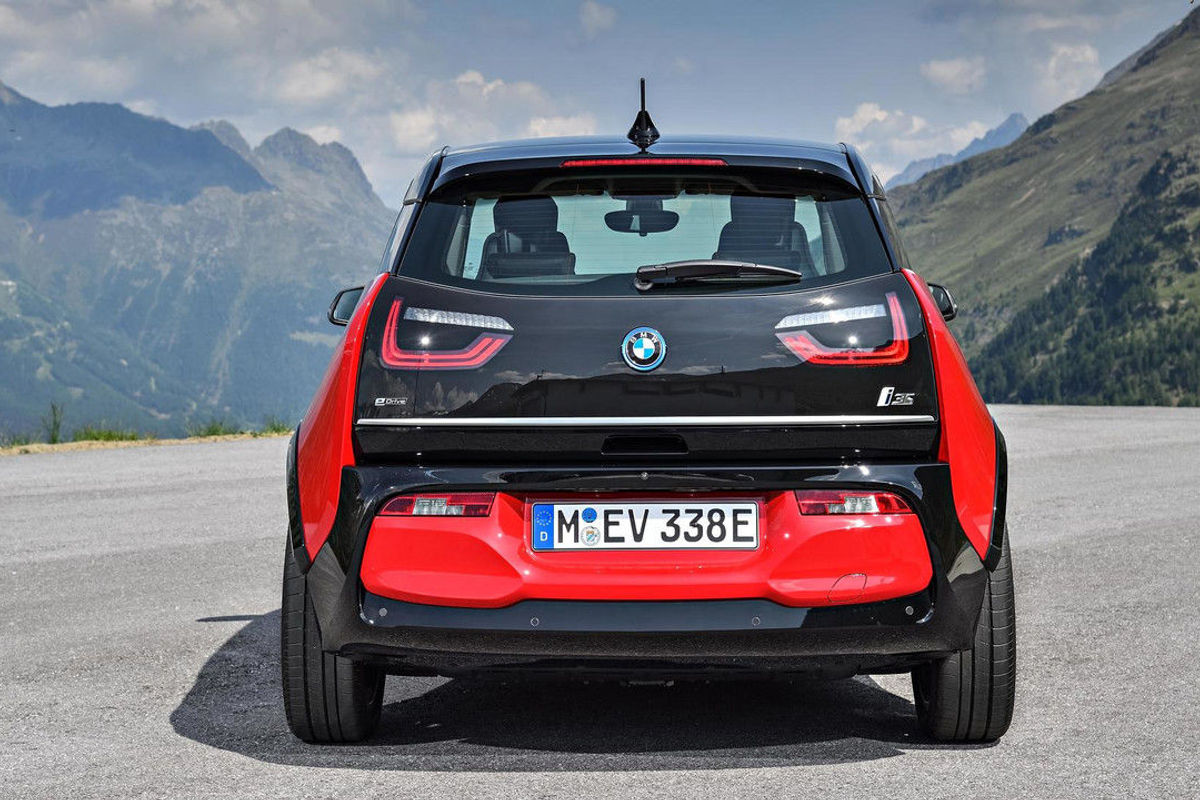
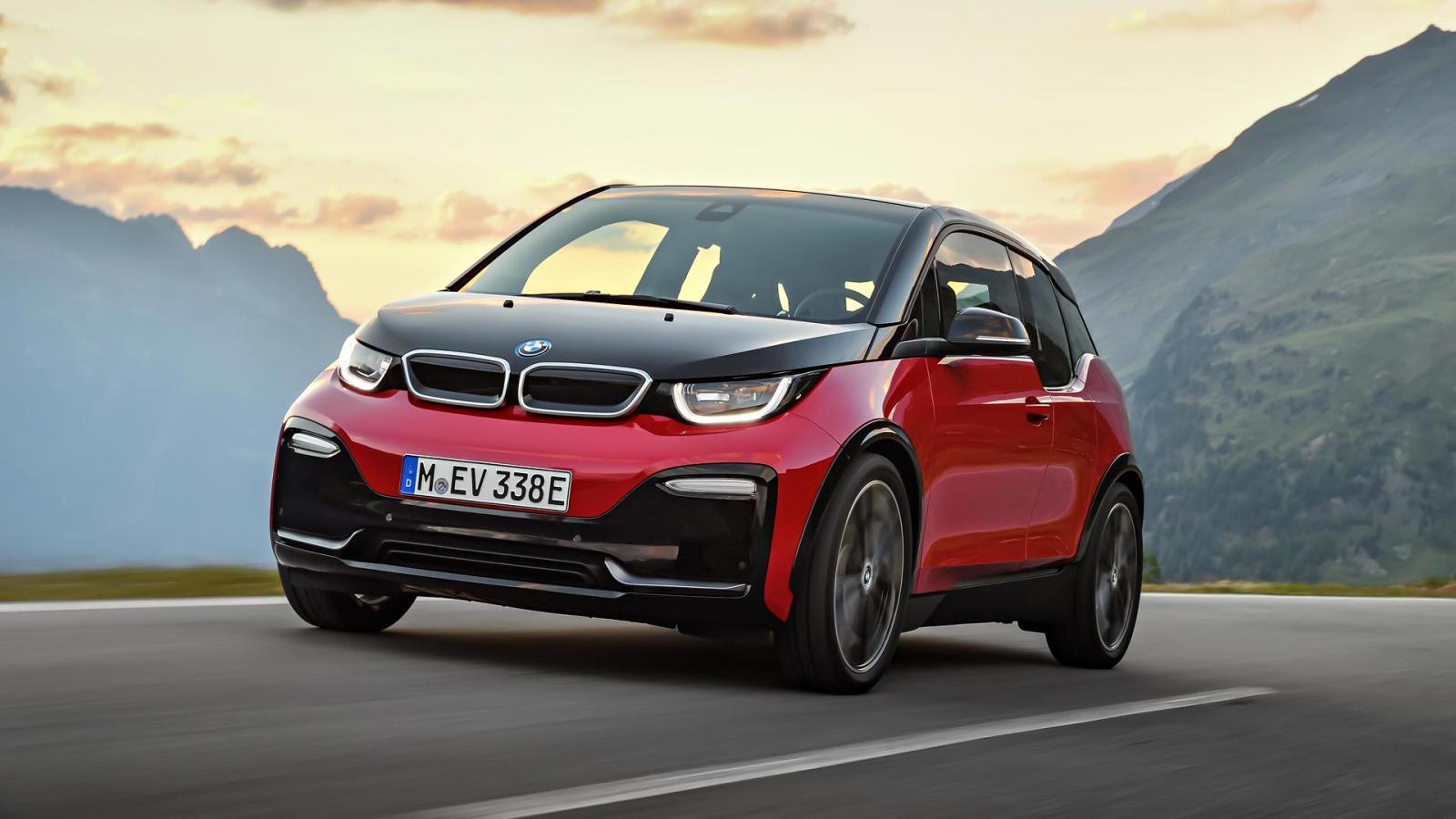
BMW has revealed details of the facelifted i3, which includes a new i3S, which is due to be shown at the upcoming Frankfurt Motor Show. Take a look at the details…
If there is one thing BMW has achieved with the i3, it’s made electric mobility attractive, not only in terms of its styling but also in terms of its driving experience. It’s not surprising then that the i3 is the world’s best-selling electric car in premium compact segment. The charming BMW i3 electric car has been updated and a new i3S joins the lineup.
What’s changed?
Electric power
A more powerful i3S will be offered with 135 kW and 270 Nm of torque, capable of 0-100 kph in 6.9 seconds.
Both the i3 and i3S are powered by a synchronous electric motor and a high voltage lithium-ion battery with a capacity of 94 Ah or 33 kWh allowing for emission-free driving. A range extender engine will be offered as an option for both the i3 and i3S.
The electric motor boasts instantaneous outputs of 125 kW and 250 Nm of torque in the i3 allowing for a zero to 100 kph sprint time of 7.3 seconds with a top speed of 150 kph.
The i3S features a high-performance electric motor with outputs of 135 kW and 270 Nm of torque. Acceleration from zero to 100 kph in the i3S takes 6.9 seconds with a top speed of 160 kph. BMW has also optimised the Dynamic Stability Control for improved handling and the Dynamic Traction Control (DTC) is said to boost agility at higher speeds and during cornering, allowing for the i3 to achieve "mild and safely controllable drifts when grip levels are reduced".
The lithium ion battery stored in the vehicle floor provides an electric range of 290 to 300 km (NEDC) for the standard i3 while the i3S offers 280 km.
The optional range extender comprises a 28 kW, 2-cylinder petrol engine which drives a generator to maintain a constant charge for the battery. With the Range Extender, daily range increases by 150 km to a maximum of 330 km. All-electric range is pegged at 225 to 235 km. For the i3 Range Extender, BMW claims a fuel consumption figure of 0.6 L/100 km.
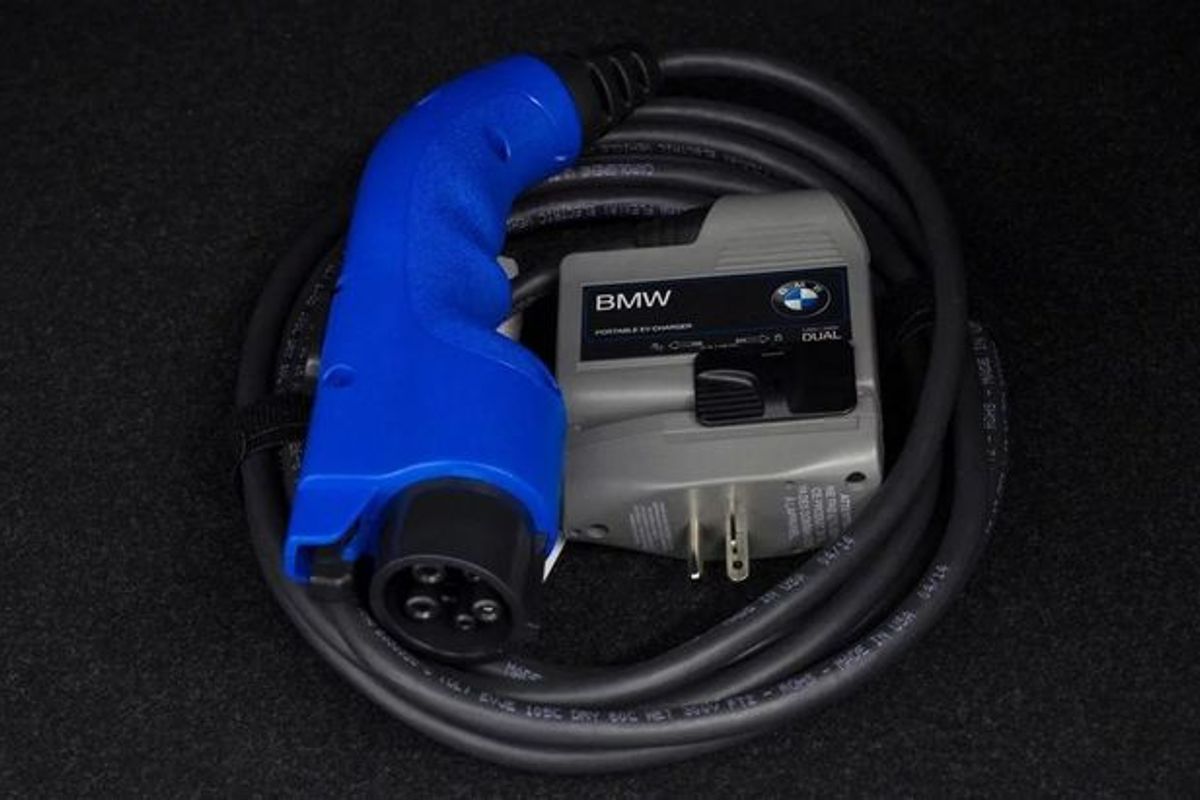
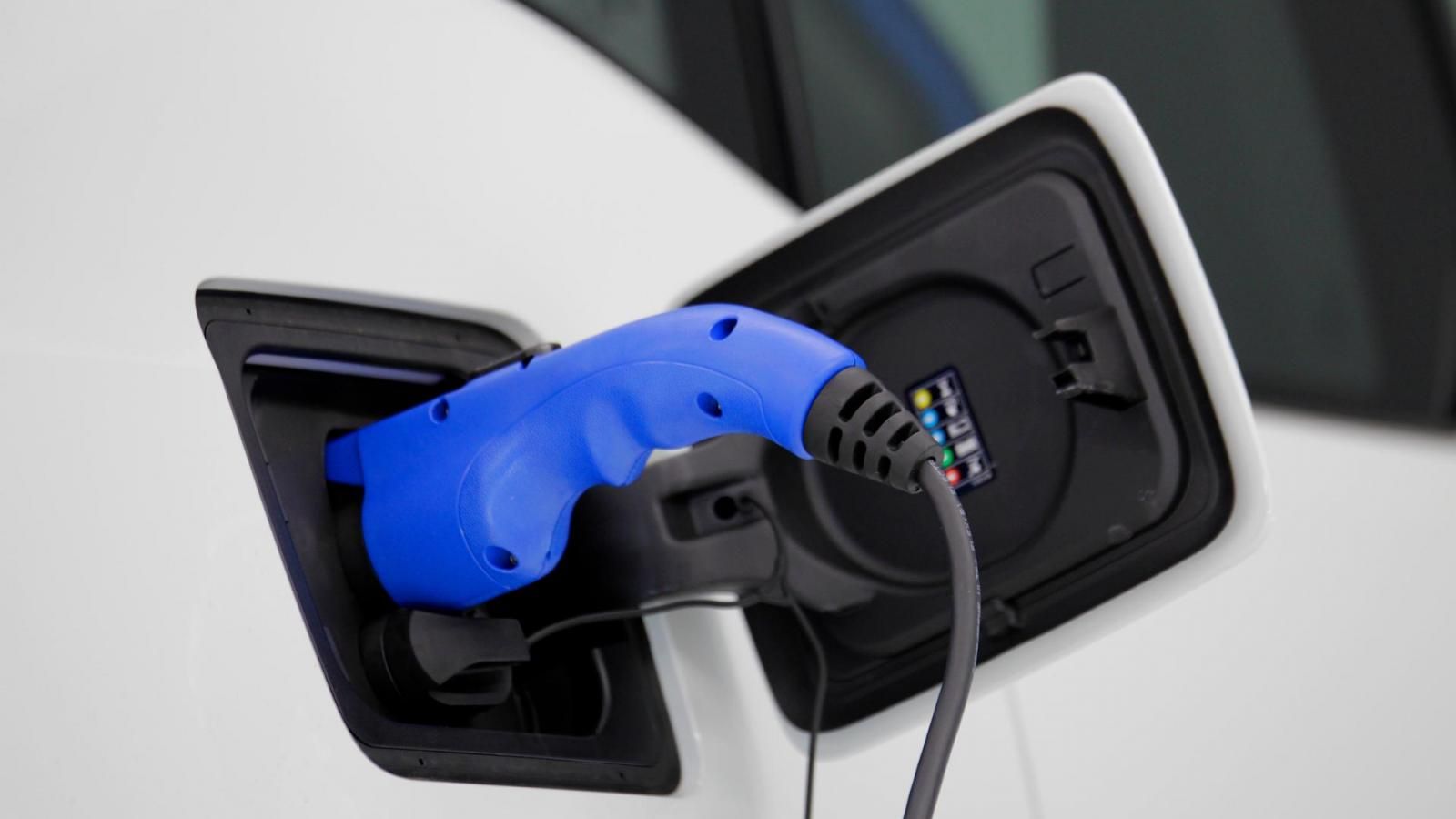
A new charging cable allows for a charge rate that's 5 times faster than before with 180 km range charged in under 3 hours.
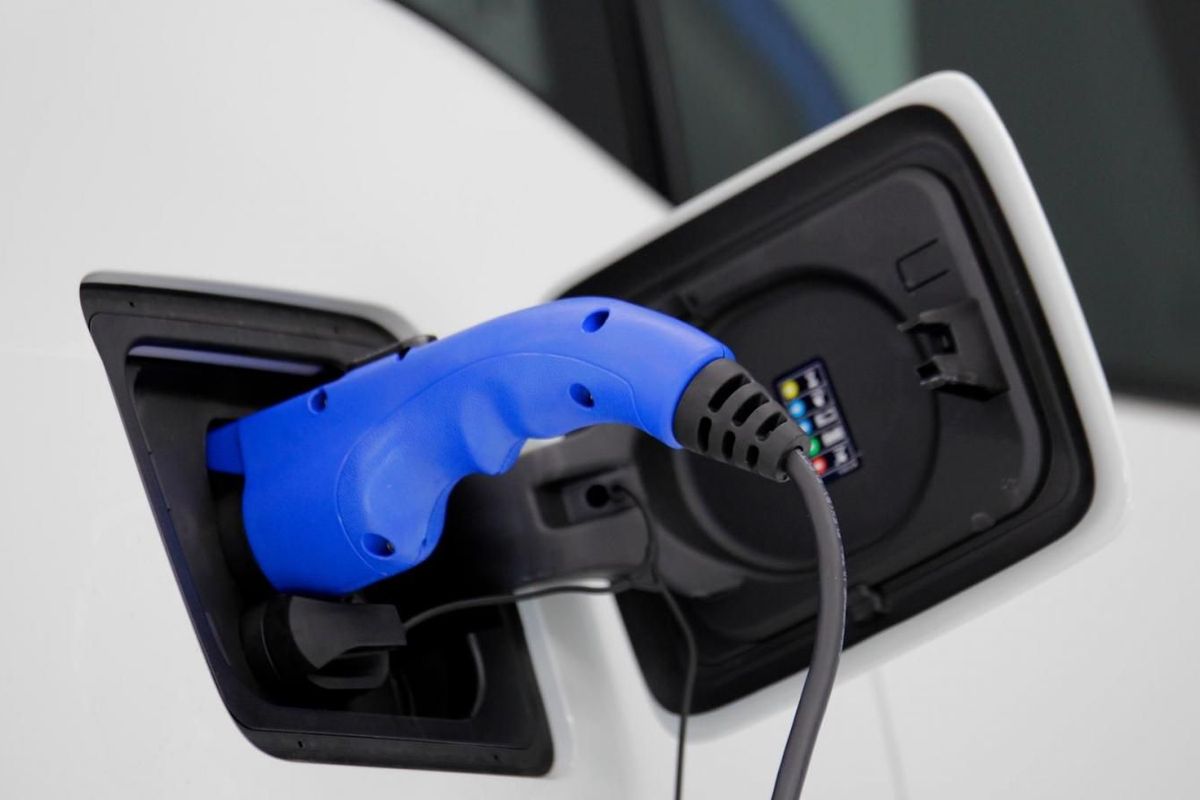
Charging the i3 is achieved using a BMW i Wallbox that will charge a range of 180 km in under 3 hours using a revised cable featuring a temperature sensor. The charge rate is some 5 times quicker than the standard cable. The i Wallbox Connect also extends the functionality of the unique Digital Charging Service to provide intelligent charging for optimal cost efficiency and allows customers to make best use of self-generated solar energy. The charging process can also be controlled using a smartphone app and usage can be managed using a ChargeNow access card.
Styling
In terms of styling, the facelifted i3 features enhancements that convey the sporty side of the vehicle. The i3 and i3S feature redesigned bumpers that emphasise the car’s width, giving the i3 a more sporting character. The fog lights have been restyled and LED headlights with daytime running lights are standard. New LED indicators are seen as horizontal strips integrated into the front apron. A new silver-coloured roof line accent gives the i3 an elegant touch. Two new paint options will be offered including Melbourne Red metallic and Imperial Blue metallic.
In the case of the new i3S, the front and rear aprons feature a model-specific contoured design. The front-end features black finishes while the roof line accent is in the same high-gloss black finish seen on the A-pillars.
The i3S is fitted with a sports suspension as standard and rides 10 mm lower, with an increased track width of 40 mm over the standard i3. The i3S rides on 20-inch wheels with a double-spoke design and they are also 20 mm wider than previously offered.
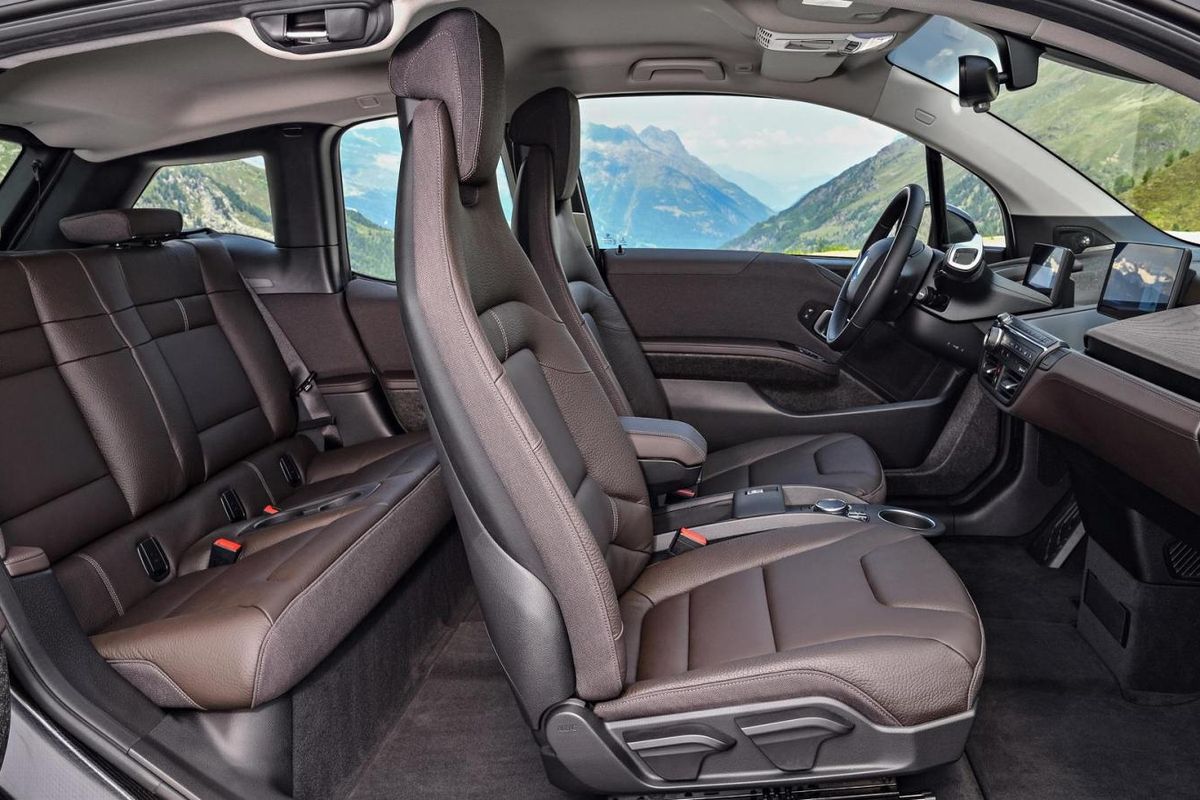
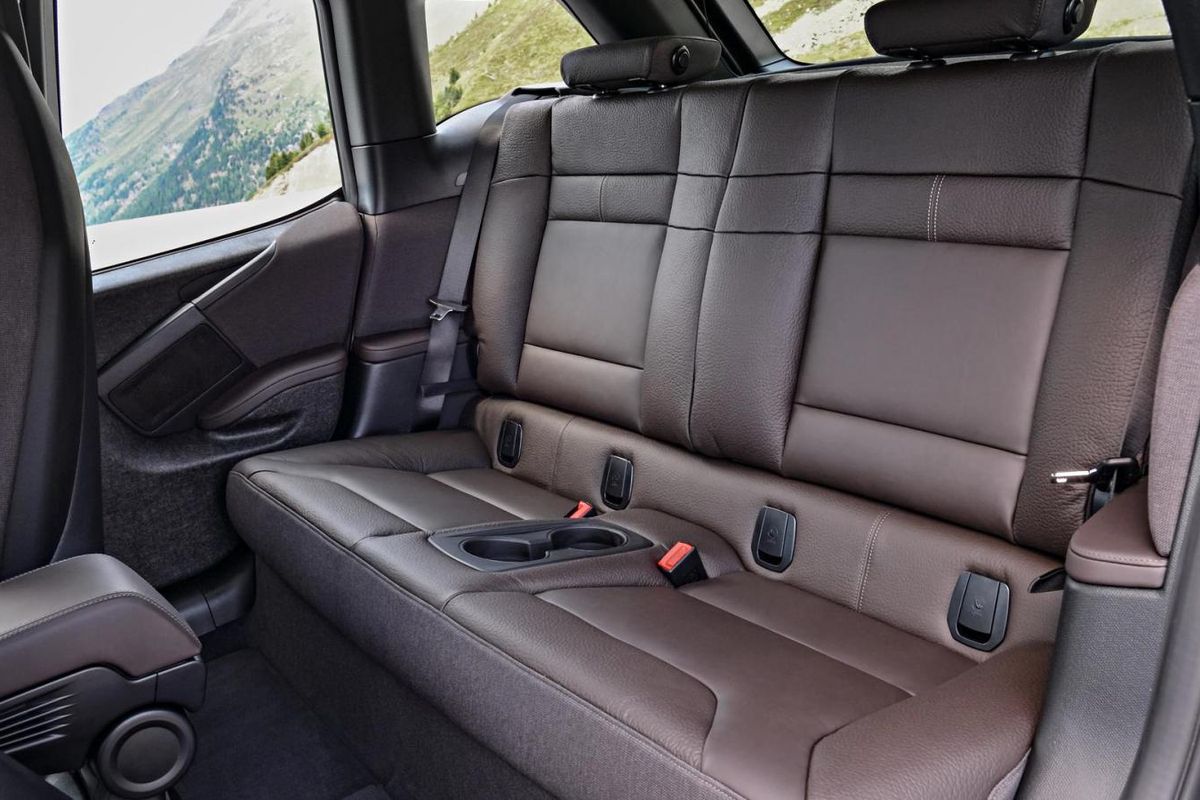
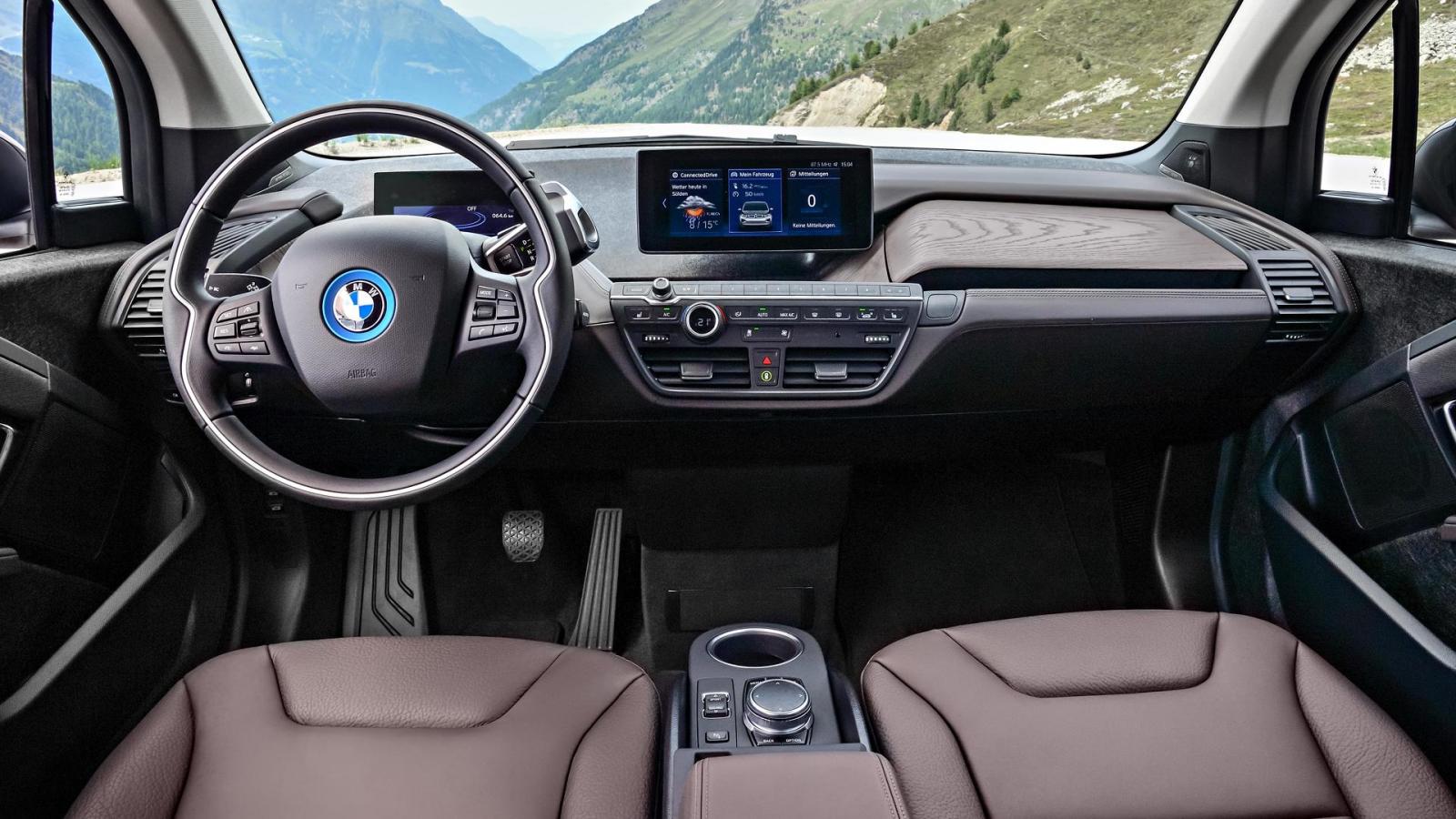
The i3's interior uses up to 80% recycled and renewable material in its construction.
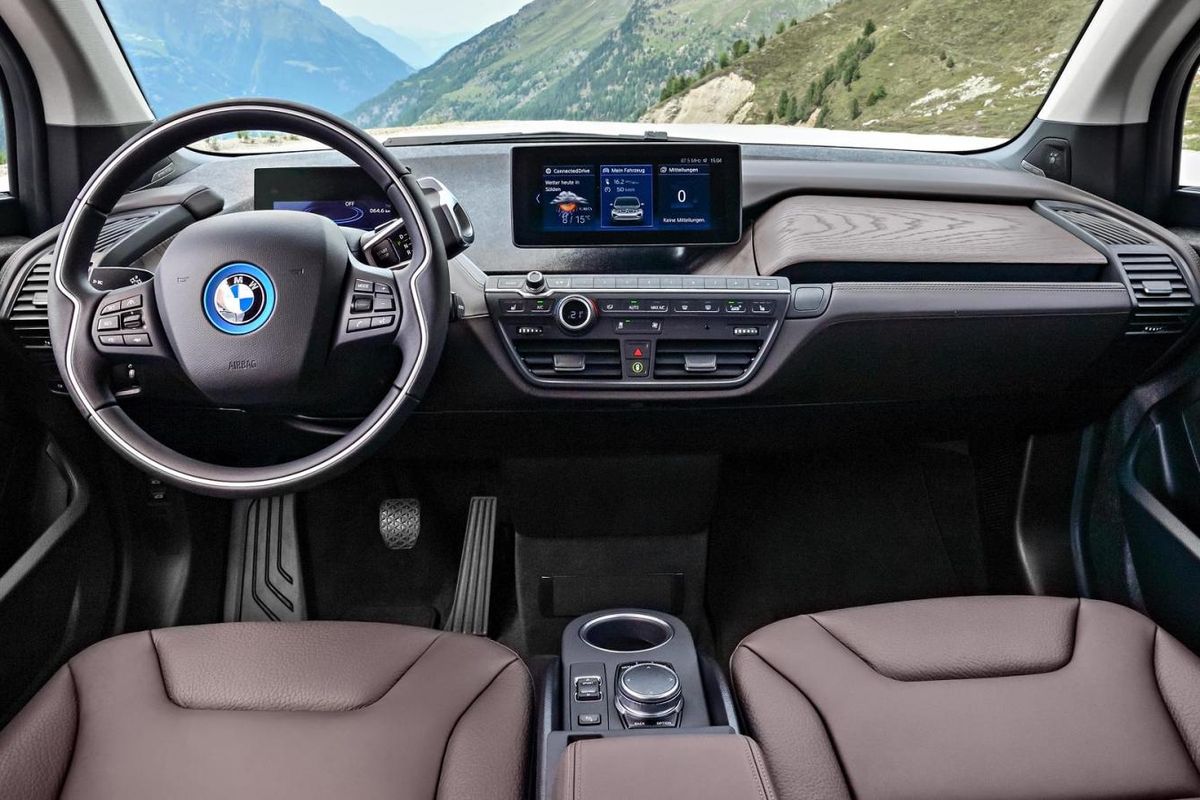
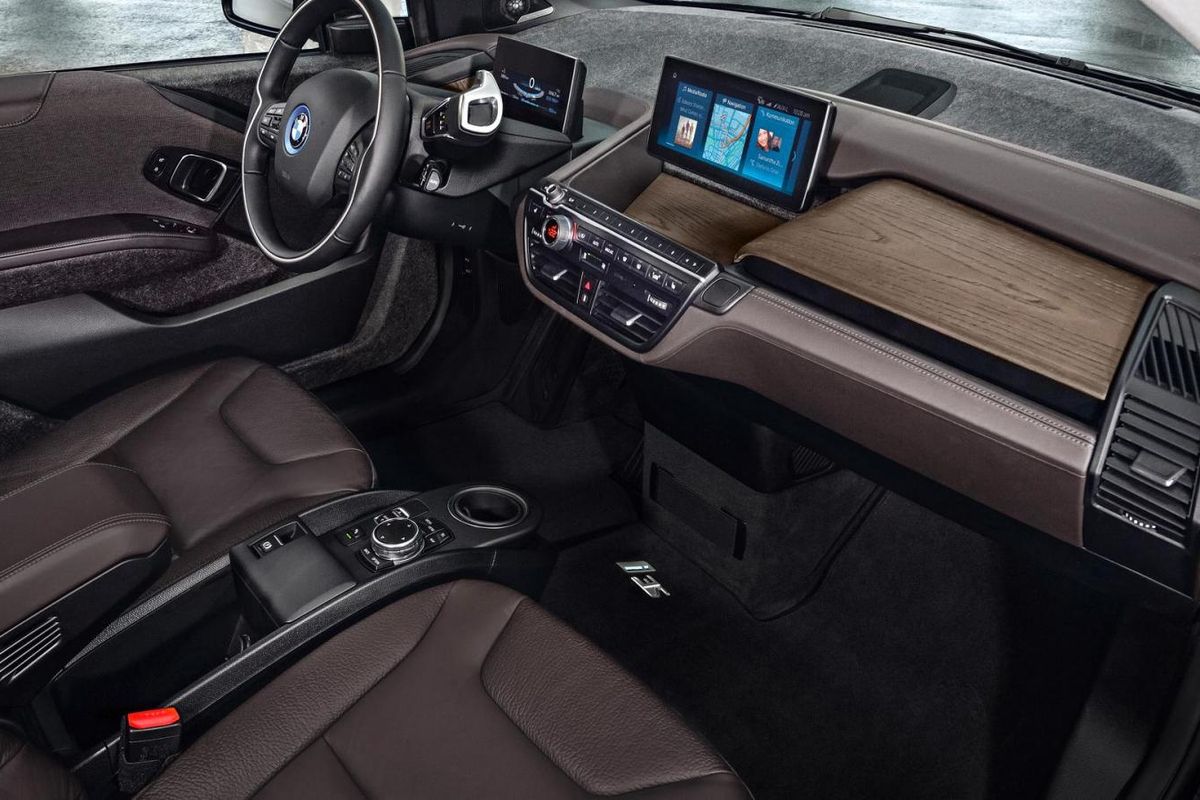
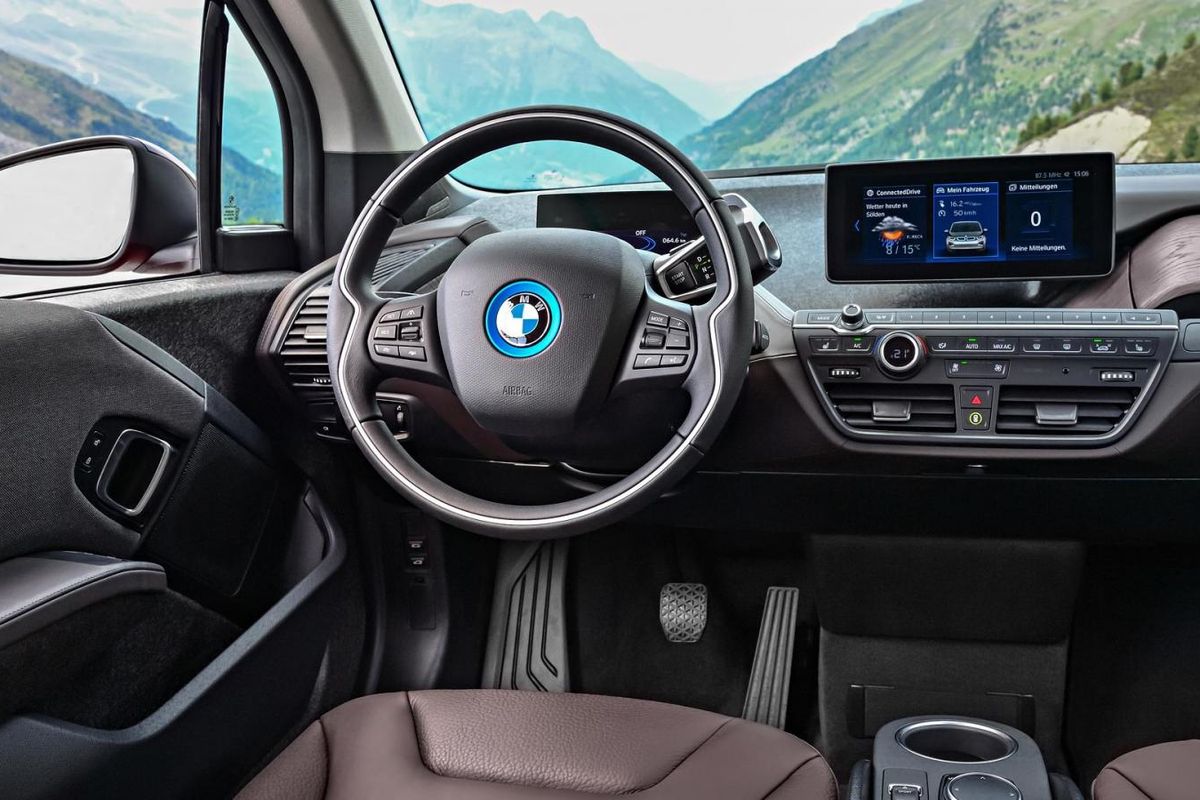
As for the interior, it largely carries over from the previous iteration and will be offered with 3 equipment lines including Loft, Lodge and Suite. A new Solaric Brown upholstery is offered in Lodge trim and features leather tanned in olive leaf extract with a wool-based textile material. As much as 80% of the i3’s interior is made from recycled materials or renewable materials including plastics, natural fibres, renewable raw materials and open-pore unbleached eucalyptus wood. New blue seat belts add a dash of colour to the interior. The i3 will feature an updated iDrive operating system to control vehicle, infotainment, navigation and communication functions.
The facelifted BMW i3 will go on sale in 2018 and can be expected in South Africa in the fourth quarter. The latest BMW i3 will be shown at the upcoming Frankfurt Motor Show next month.’
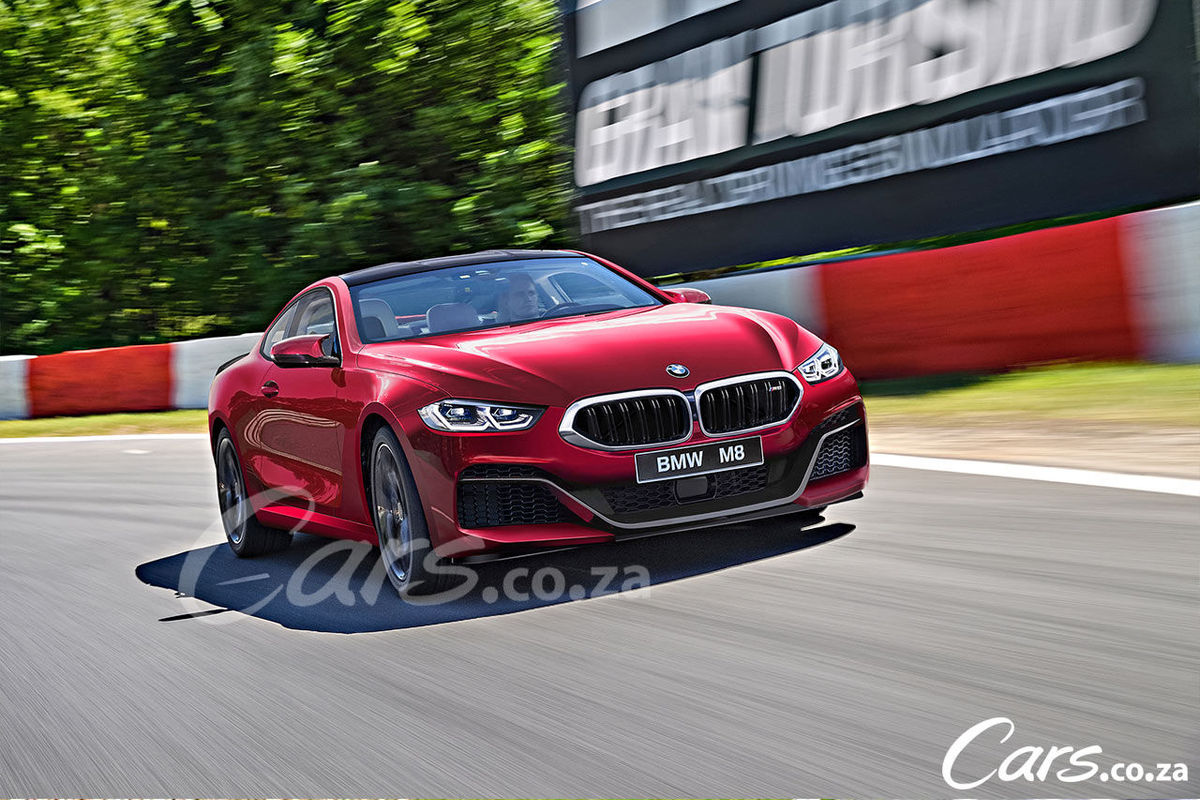
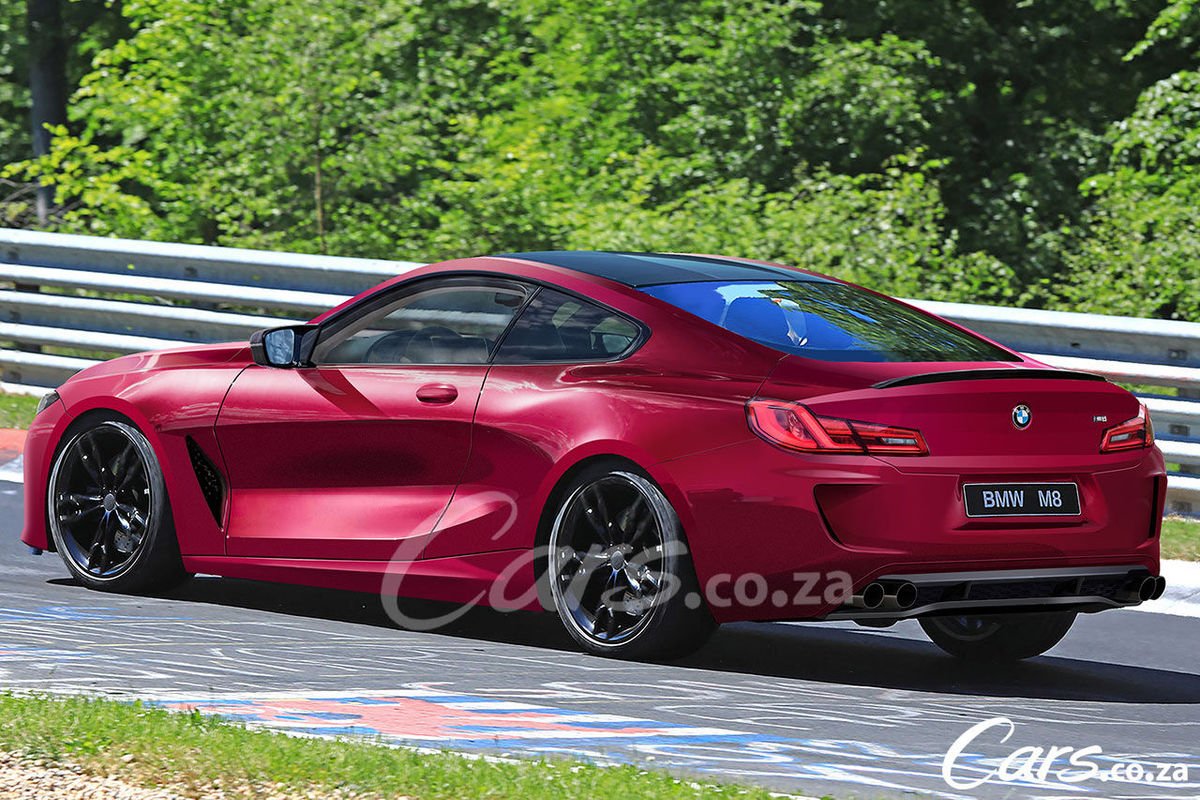
The next BMW M car in the pipeline (now that we have officially seen the M5) is the M8. Our speculative renderings, produced exclusively for Cars.co.za by a Cape Town-based artist, provides some insights into what the performance derivative of the 8 Series will look like.
The artist's impressions were created using official photographs of the pre-production test units, with surfacing and details influenced by the BMW Concept 8 Series that was unveiled at the 2017 Villa d’Este Concours.
While using the images of the camouflaged car as a base reference allows accurate portrayal of the proportion, volume and stance of the final production car, certain details, such as the carefully concealed door surfacing and "air breather" vents, are open to interpretation. Expect a contoured carbon roof and carbon bootlid spoiler along with M-specific door mirrors and bumpers plus quad-exhaust tailpipes.
It’s worth mentioning that although new BMW design chief Jozef Kaban joined way too late (Feb 2017) to influence the overall style of the new 8 Series, his new head of BMW M vehicle design, Domagoj Dukec, may yet have an impact on the now-familiar M-car look.
So, instead of a somewhat samey, samey airdam and front bumper design seen on all the current M cars, including the just-launched M5 F90, an all-new design that takes cues from the latest BMW concepts may be lurking beneath the swirly patterned prototype. Who knows? What's certain is that the new M8 will be a wide, elegantly proportioned, yet muscularly surfaced GT that promises to add yet more shine to the well-loved 8 Series moniker.
The 8 Series is expected to go into production in 2018 with the M8 surfacing around a year later. Details on powertrain and dynamic tweaks aren't available yet, but in all likelihood, we'll see the M5's motor transplanted into the M8. That means 441 kW and 800 Nm of torque sent to the ground via an xDrive (all-wheel-drive) system. The system has a built in manual override button that turns it into a purely rear driven car as well.
BMW is also developing a convertible version of the 8 Series, which will no doubt carry over to an M8 Convertible after the coupe.
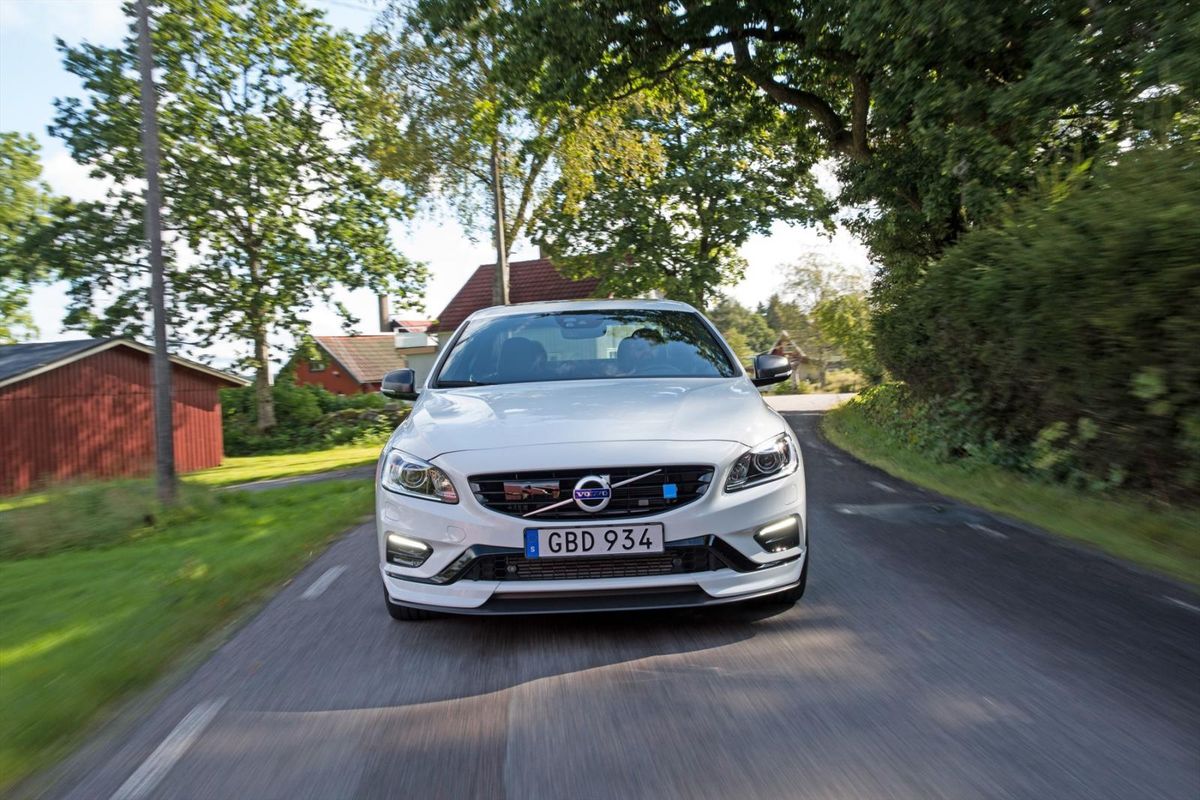
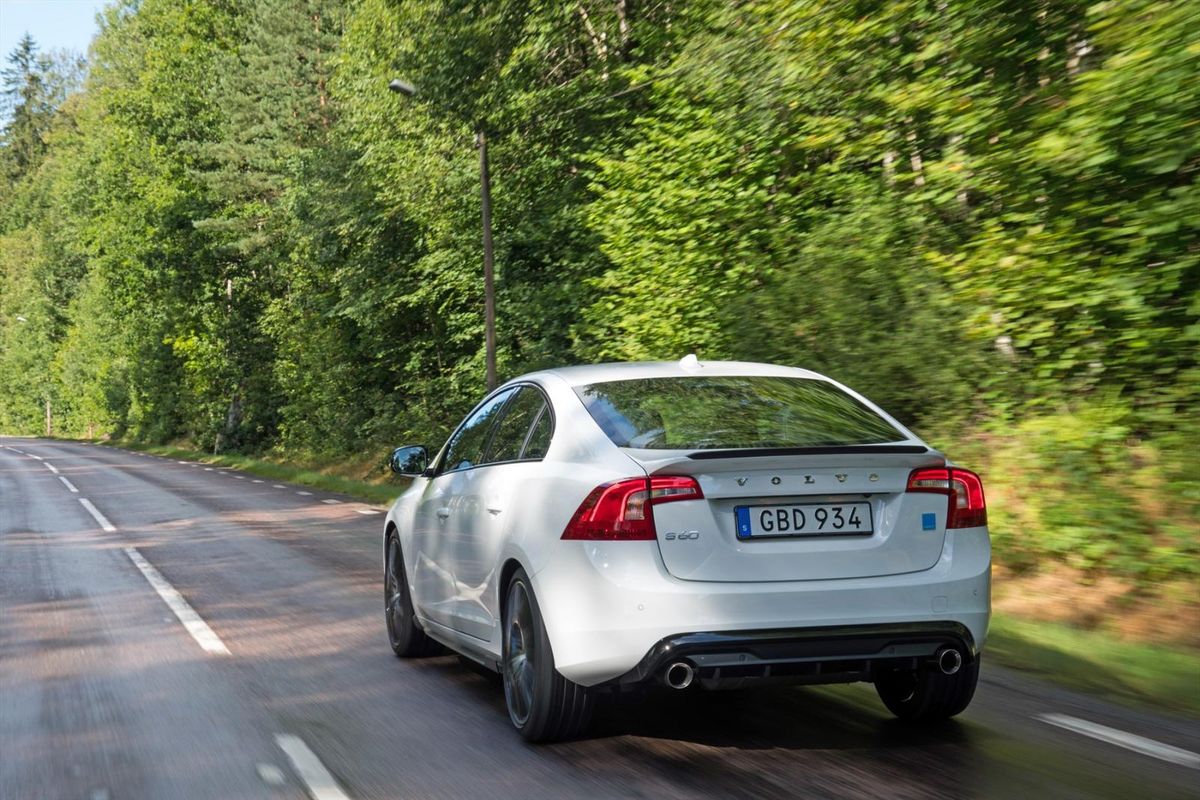
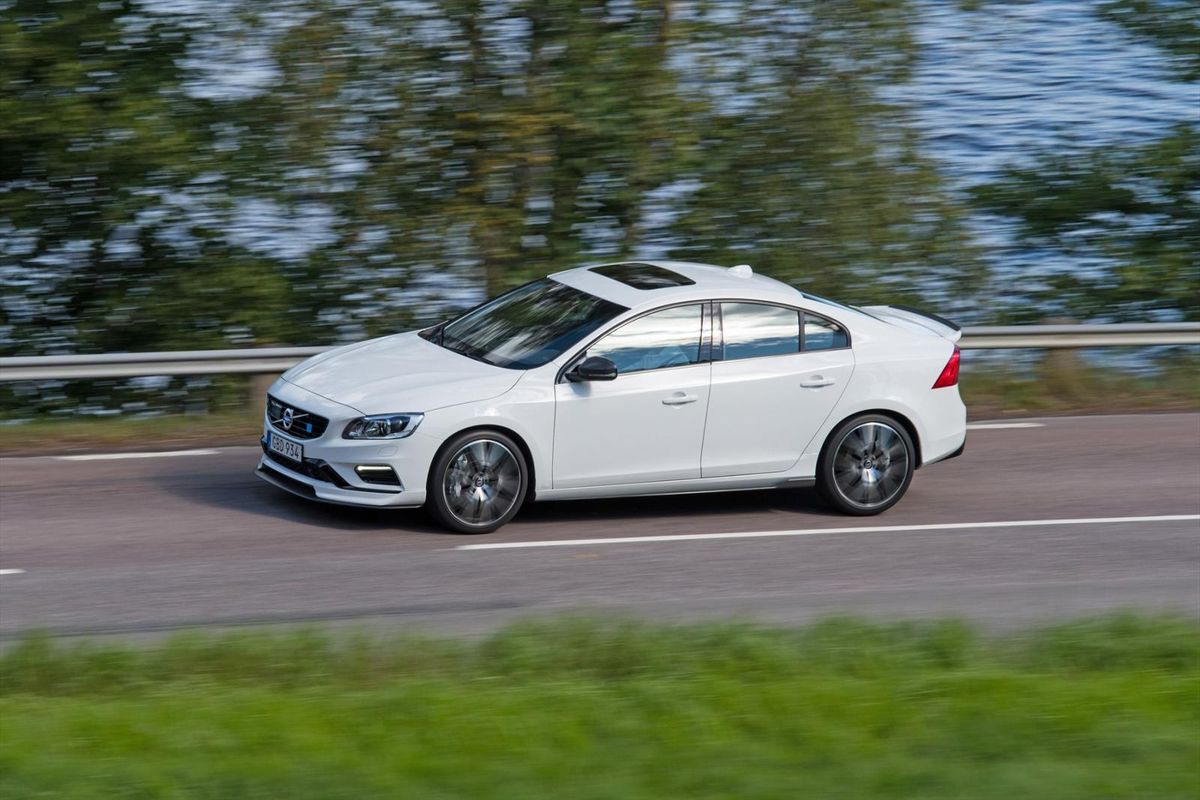
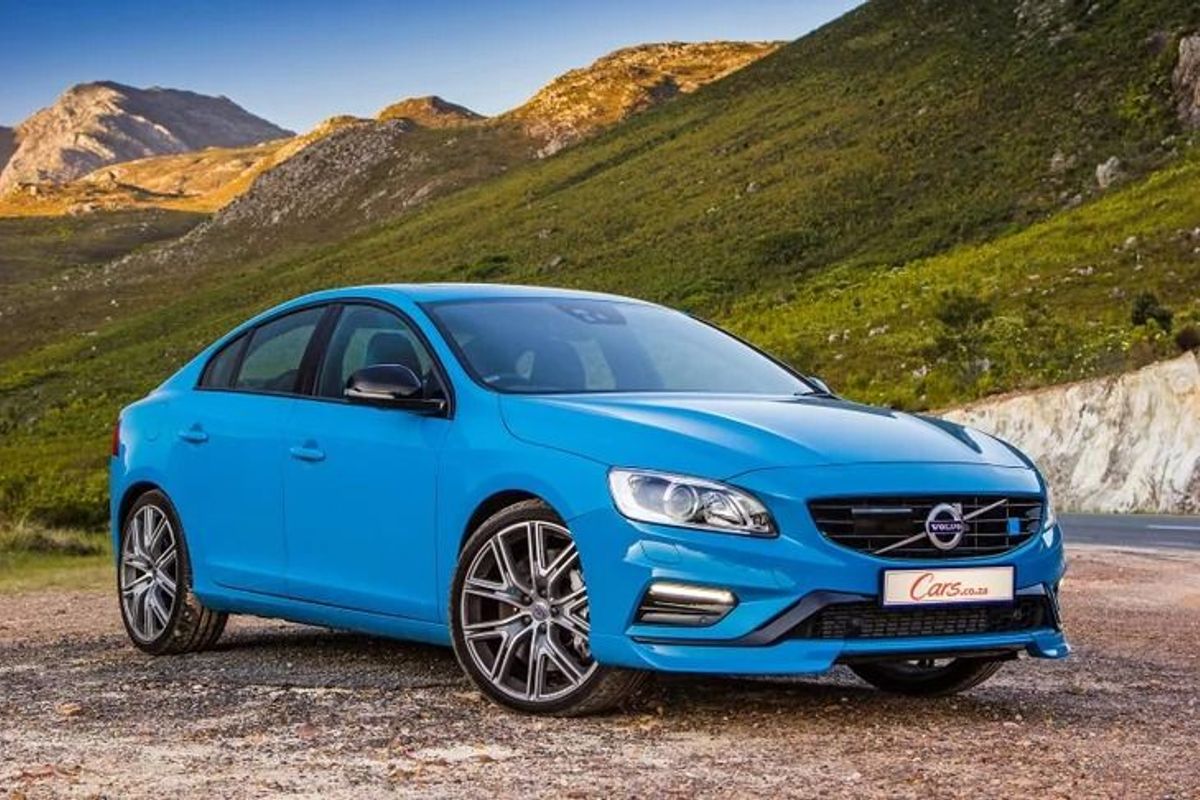
The updated Volvo S60 and V60 Polestar has been revealed and only 23 units of the S60 Polestar and 1 special-order V60 Polestar will be offered in South Africa at the end of 2017. Take a look at the details…
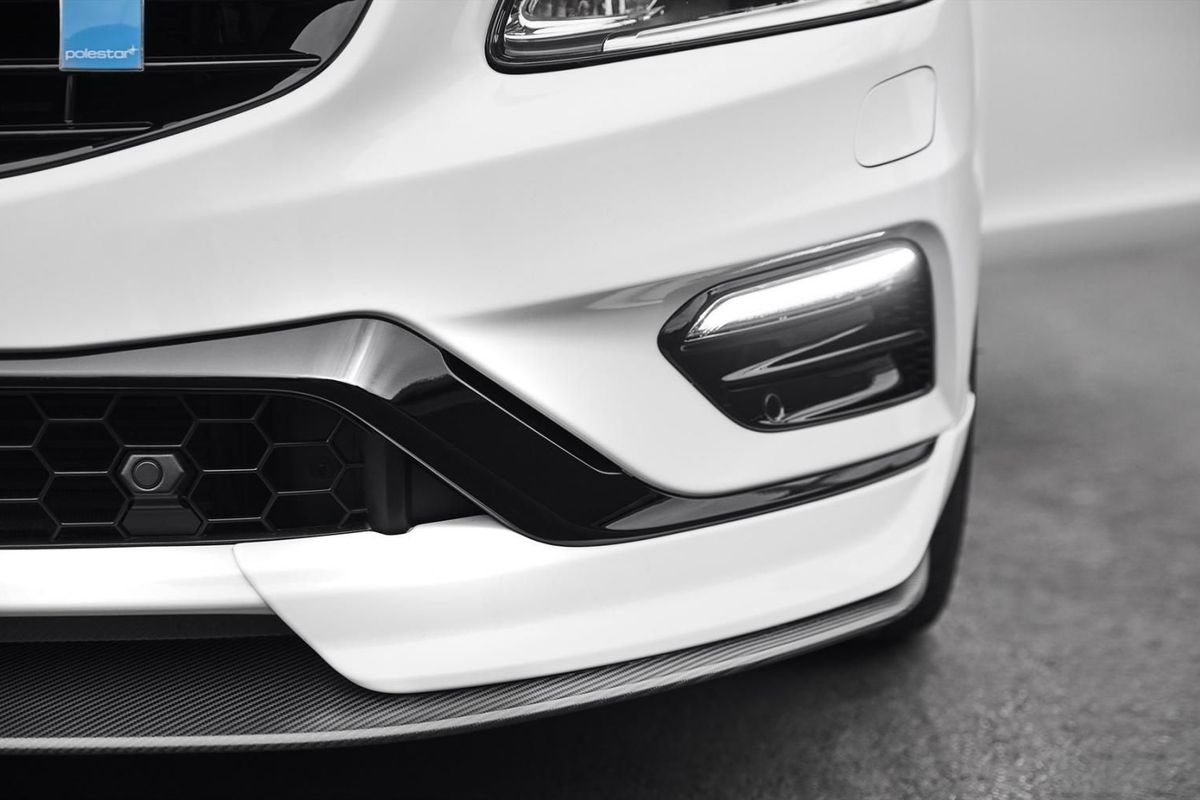
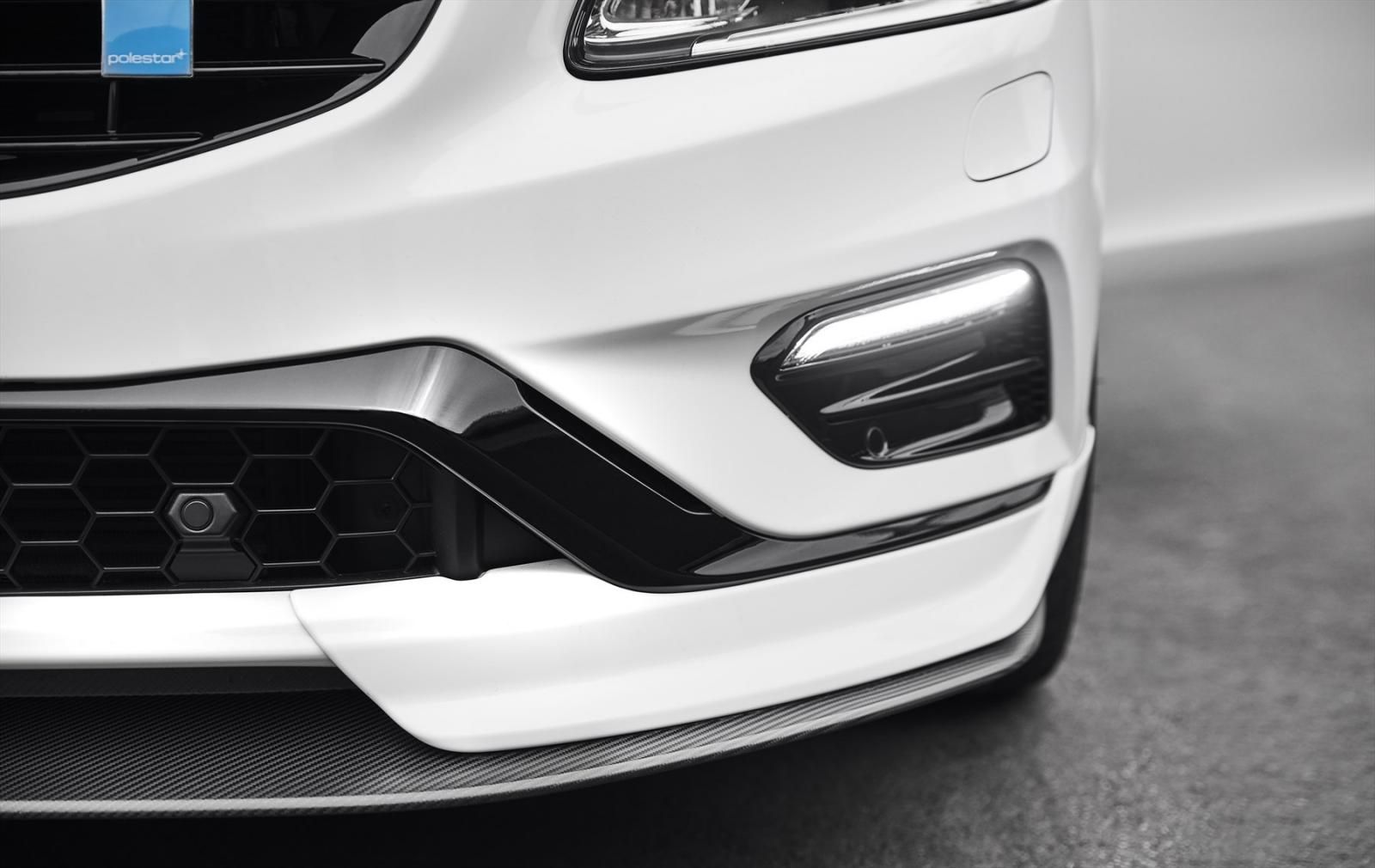
Featuring additional lightweight carbon fibre components to aid aerodynamic and handling performance, the updated Volvo S60 Polestar and V60 Polestar now offers 30% extra downforce.
"The updated S60 and V60 Polestar models are the pinnacle of our road car programmes that we have been developing successfully since our first road car was launched in 2013," says Jörgen Ronstad, Vice President, Product Strategy & Management at Polestar. "The aerodynamic enhancements, combined with other small but important changes, further enhances our base philosophy of a performance car for all roads and conditions, transferring technology and learnings from track to road."
The new aerodynamic exterior package for the S60 and C60 Polestar was jointly developed by Volvo’s performance brand, Polestar, and its motorsport partner, Cyan Racing.
Key design details
The updated S60 and V60 Polestar are fitted with more than 250 different parts compared with the standard models.
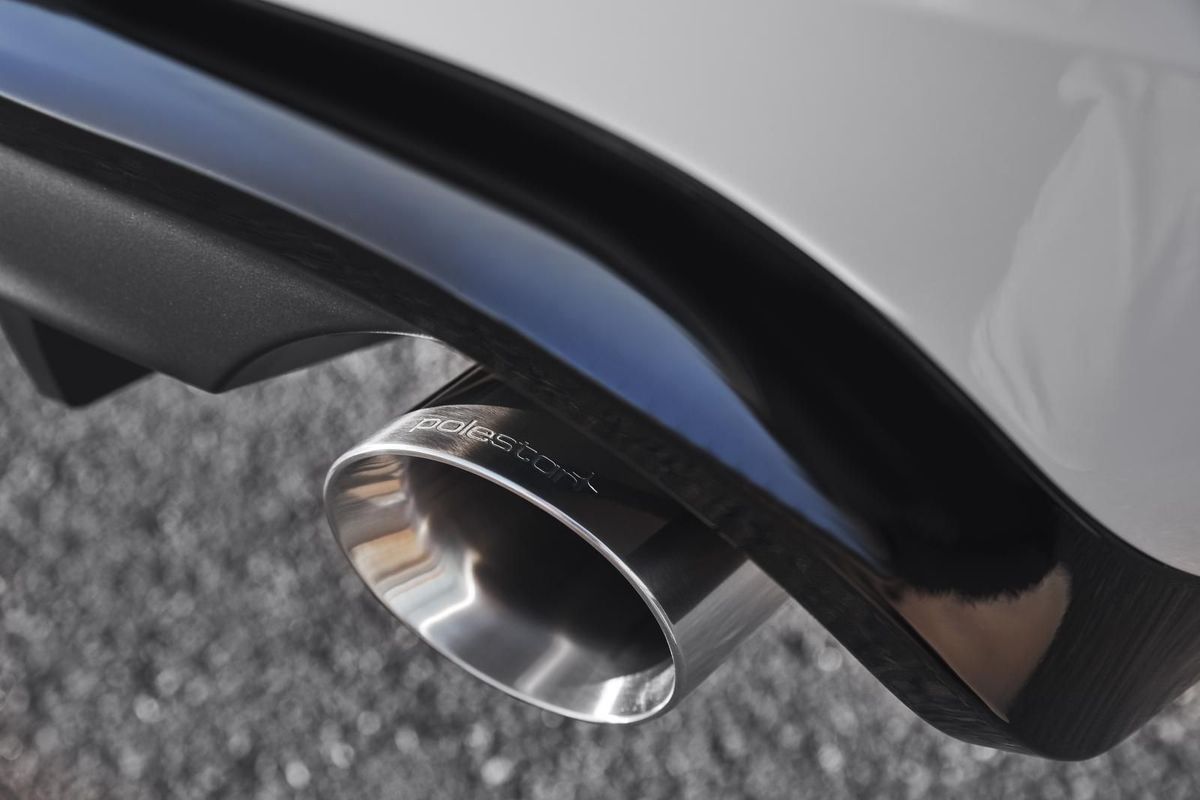
The added components include a new front splitter, rear spoiler extension and side sills all in carbon fibre. These components provide higher levels of grip and high-speed stability. Other updates include 20-inch high-gloss black Polestar diamond cut wheels, carbon fibre side mirror housings and a new exterior colour called Bursting BLue metallic. Other colours on offer include Cyan Racing Blue (Rebel Blue), Onyx Black metallic, Bright Silver metallic and Ice White.
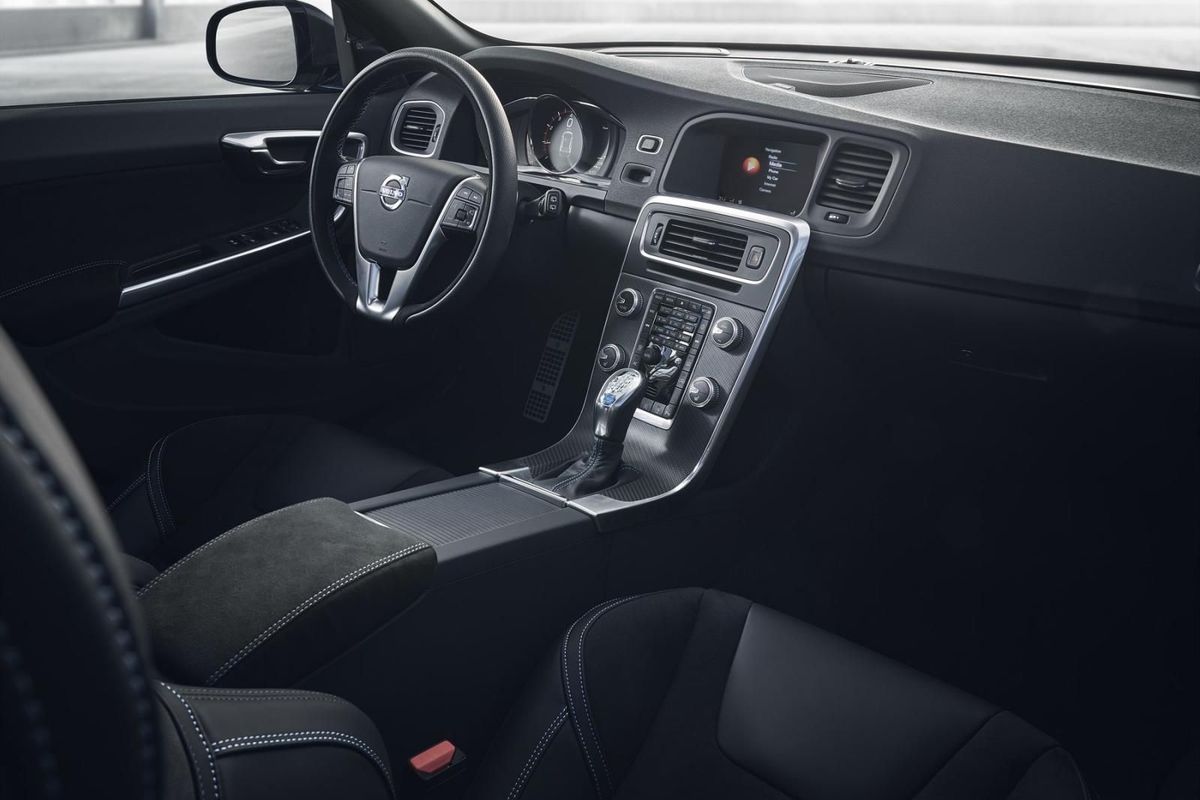
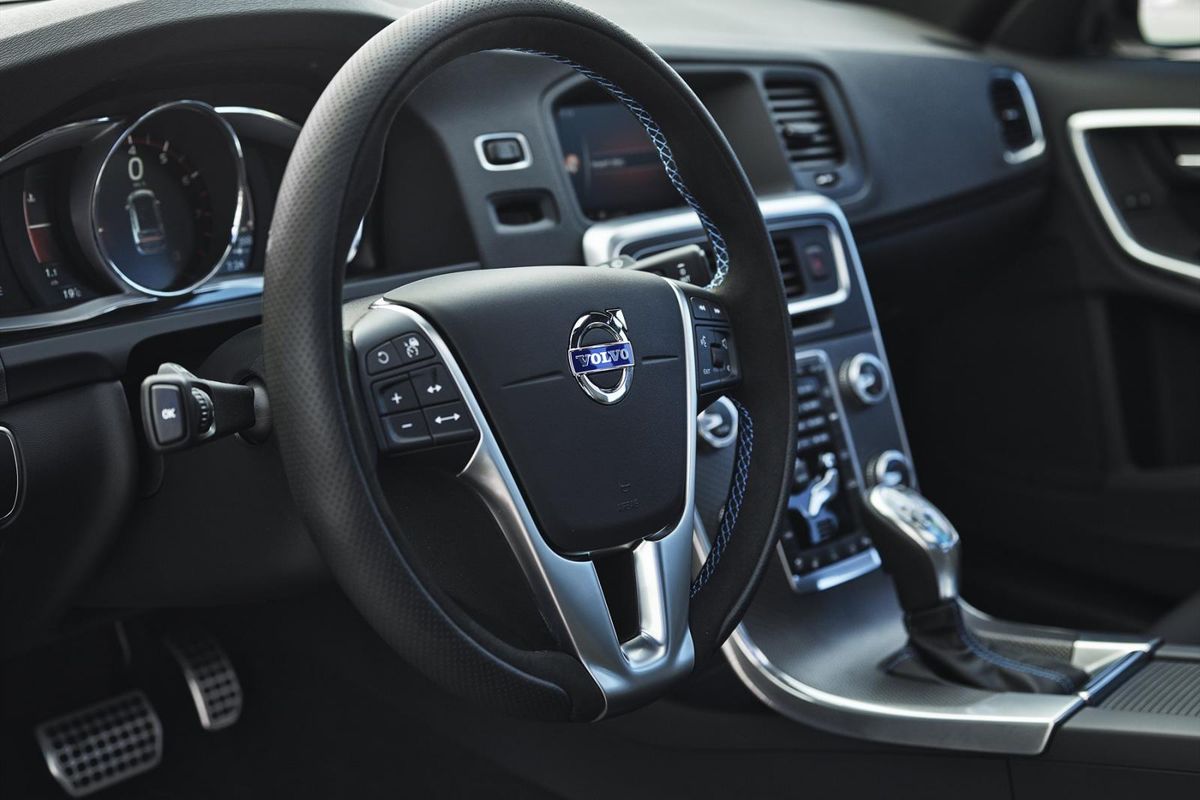
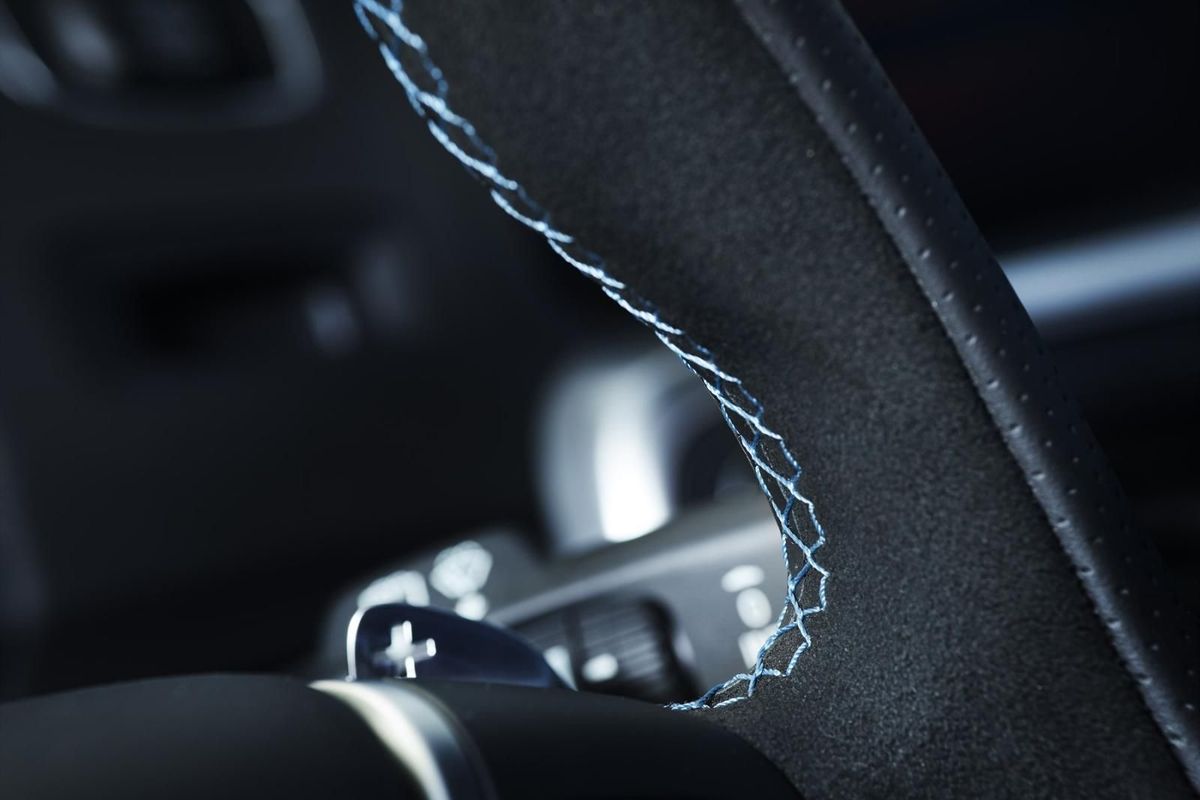
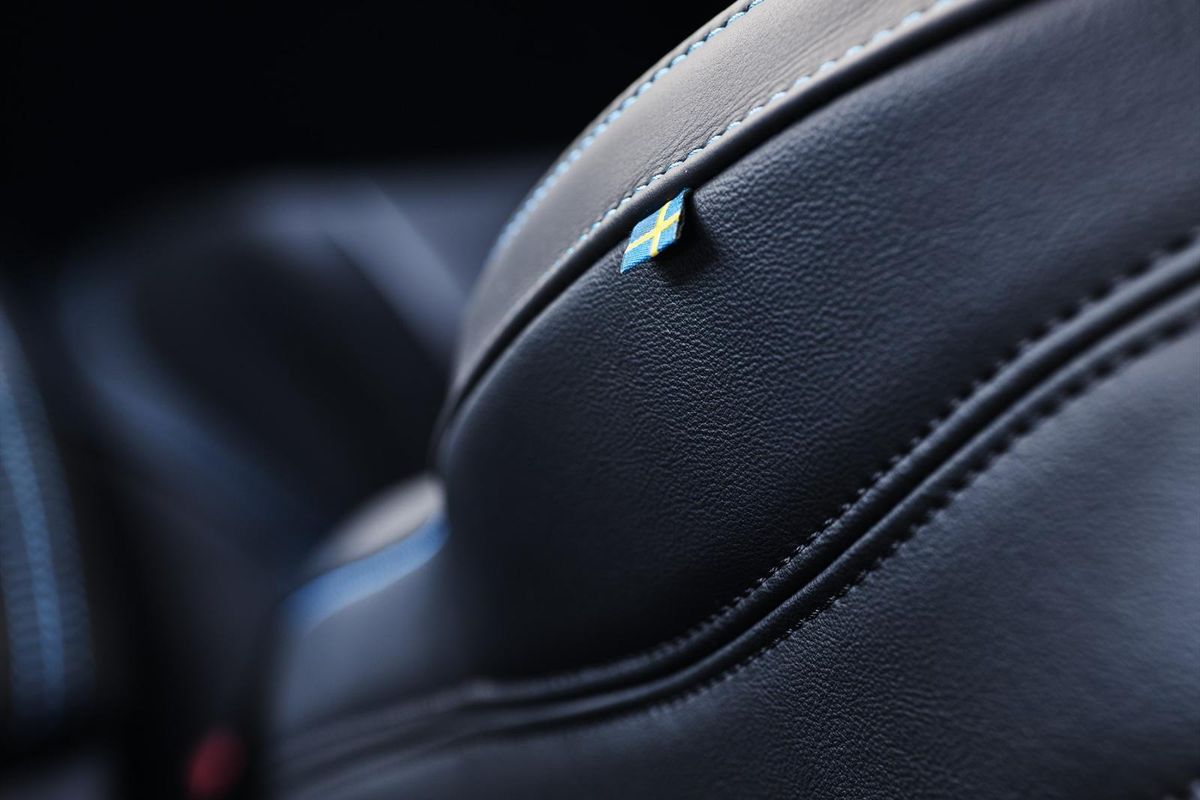
On the inside, the seats feature new charcoal leather upholstery with Polestar embroidery and contrasting blue stitching. Overall, these Polestar versions of the S60 and V60 feature more than 250 new or changed components over the standard version.
Engine power
The S60 Polestar and V60 Polestar are powered by a turbocharged and supercharged 2.0-litre petrol engine offering 270 kW and 470 Nm of torque. Volvo claims a zero to 100 kph sprint time of 4.7 seconds with a limited top speed of 250 kph. An 8-speed automatic transmission with paddle shifters is standard. Fuel consumption is claimed at 7.8 L/100 km.
Pricing for the Volvo S60 and V60 Polestar will be announced closer to launch later this year. We will keep you updated as more details become available.
Jaguar Land Rover's Global CEO, Dr Ralf Speth, recently visited South Africa and hosted a round-table discussion with some of South Africa's motoring media. The topic? Electrification, within in a South African context.
In line with several other brands, JLR recently announced that as of 2020, all newly introduced Jaguar and Land Rover products will be offered with a choice of traditional or electrified (including hybrids) powertrains. This, in itself, is an indication of just how swiftly the electric motoring future will be upon us. Perhaps even more exciting from a product point of view is the confirmation that Jaguar's first all-electric vehicle, the I-PACE will arrive in South Africa late 2018 or early 2019. ?This, Speth says, forms part of the brand’s global goal of reducing emissions, as well as working towards its timetable of offering autonomous, connected electric vehicles.
Speaking at the brand's impressive new Waterford dealership, Speth stated that, "electrification will come faster than we expect." Yet, he pointed out that several challenges remain, particularly in a country such as South Africa where tax benefits for electric car owners are non-existent and electricity production is still heavily coal-based. In fact, while the other BRICS nations appear to have embraced the dawn of the EV era in terms of infrastructure roll-out and tax cuts, South Africa is lagging.
Range anxiety addressed?
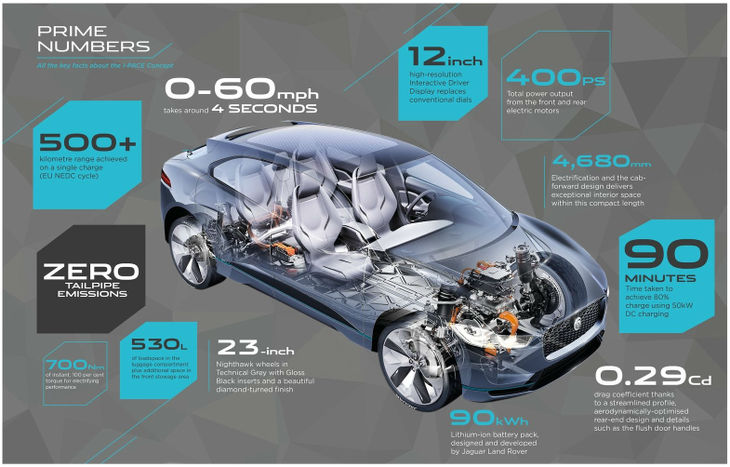
The Jaguar I-PACE will arrive in South Africa towards the end of 2018 or early 2019, complete with 500km range.
When it comes to the frequently discussed topic of range anxiety, it is worth noting that the I-PACE will have a range of up to 500km between charges, and that an 8-minute charge could add another 100km. Though there will always be certain consumers for whom an electric car would not be practical, such impressive range does neatly address 2 issues… not only range anxiety within a daily driver context, but also to a large extent recharge infrastructure – given the fact that most South African premium car owners would have an electrical outlet capable of charging the car overnight, and in the European context most city workers/drivers travel less than 90km per day, the necessity for charging facilities away from home diminishes greatly.
Infrastructure roll-out
Also speaking at the round-table discussion, Richard Gouverneur, MD of Jaguar Land Rover South Africa and sub-Sahara Africa added that the company intends cooperating with the Electric Vehicle Industry Association (EVIA), which represents local vehicle manufacturers focusing on electrification. Through EVIA, JLR will engage with government on various EV-related topics, including charging standards and opportunities to develop infrastructure.
“Our rollout plan for I-PACE includes installing electric infrastructure at all our dealers and ensuring our retail network can support these products in every way," said Gouverneur. "At the moment, there are no incentives for EVs, and we are in full support of the motor industry’s push for lower taxes on these vehicles. We will work with EVIA on this, as well as its efforts to have shared charging infrastructure in public areas.”
Expect more diesels and hybrids, too
"Electrification will come faster than we expect", says global Jaguar Land Rover CEO, Ralf Speth.
According to Speth, Jaguar Land Rover continues developing more efficient new-generation Ingenium internal combustion engines as well as hybrids because there are consumers for whom a pure EV would simply not be practical. JLR already offers hybrid derivatives in some markets and we can expect to see some hybrid options to be introduced in South Africa during 2018, too. Electric vehicles will be evaluated for South African suitability and decisions will also factor in customer demand.
At present, international sales volumes of hybrids and EVs are still very small, but according to Speth both are likely to increase substantially, driven by increased model availability and infrastructure improvements. JLR has has invested R1.1 billion in South Africa on updating its retail network to not only offer customers a more premium retail experience but to also start preparing for future product. It claims that by 2019 all local dealers will boast the brand’s global identity and be prepared to sell and service electric vehicles.
Have a look at how Jaguar is using the electric racing car series, Formula E, to hone its electric car technologies in the video below;
The visionary Elon Musk might have missed a trick with his new Model 3, while Volkswagen has hit the jackpot – presumably – with the electric reincarnation of their iconic Microbus. The Beetle is dead, long live the Buzz.
Electric Ladyland, The Electric Horseman, The Free Electric Band… The list goes on.
But from Jimi Hendrix’s final studio album, through a cinematic tale of setting a thoroughbred free among wild canyon horses, to Albert Hammond’s total rejection of suburbia, the pivotal word is "electric". It generates a certain frisson, a thrill, an excitement, a vibe, a buzz. It powers us to the next level; it delivers the future.
We had candles at one point. Now we can flick a switch, and – magically – have light. The cosmos ain’t dark anymore and the revolution ain’t restricted to illumination either. Hendrix could rasp on a string (or rip it with his teeth) and electricity would mysteriously amplify his Fender Stratocaster to set the universe in motion and rearrange it, just as Volkswagen’s iconic Microbus did for a generation of people who identified with the Free Electric Band.
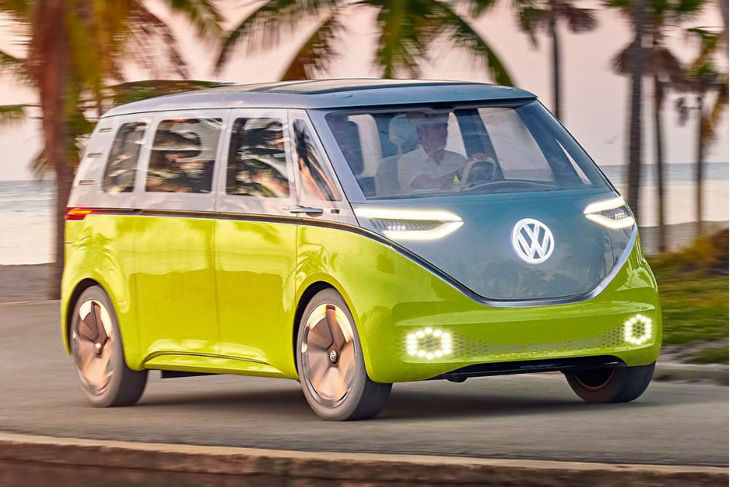
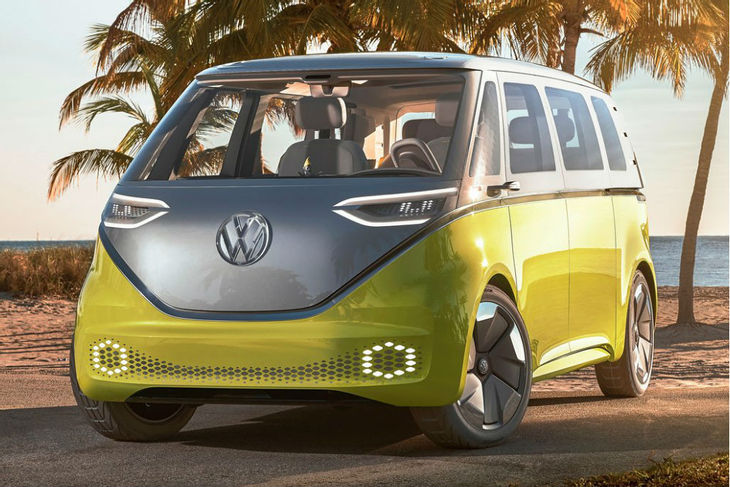
Volkswagen recently announced the return of the legendary Kombi, which will be reincarnated in 2022 as the I.D. Buzz, with I.D. denoting “intelligent design” or “iconic design”.
That's right, kids, the next-generation "Mystery Machine" will go into series production in five years' time.
Think tank keeps VW on cutting edge
Yet, it also sounds suspiciously similar to "idea", like in "great idea", of which Wolfburg’s future electric portfolio boasts a couple: I.D. Crozz, for example, Volkswagen’s upcoming electric cross-over (get it?) or perhaps even I.D. Luxzz, for a luxury vehicle, but who knowzz?
Yet, great ideas cannot live in isolation. That’s why Wolfsburg has created an I.D. think tank of fresh young minds, not to mention experienced old souls, to perpetually keep the Volkswagen brand at the cutting edge of what’s yet to come, when cars will be so much more than just cars, because people will be able to individualise and personalize vehicles to reflect how they view themselves (or, more to the point, how they'd like to be regarded).
It's quite clever then, the naming of the upcoming bus… it reminds me of how Toyota tried to be clever with the extreme form-follows-function shape of the Prius.
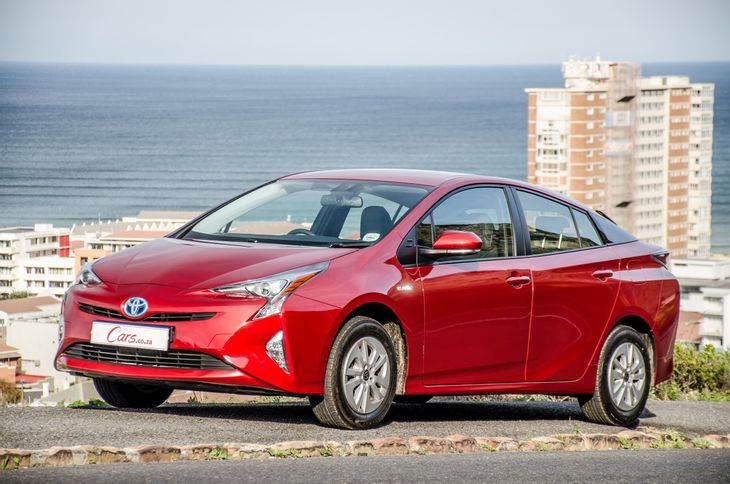
There’s a rationale behind the latter, of course: it's in the best interest of aerodynamic efficiency. Coupled to a hybrid drivetrain, the Prius’s Cd of 0.25 was set to save the planet and Hollywood unashamedly plugged in. Robert Redford might have been The Electric Horseman, but Brad Pitt and Leonardo di Caprio are The Electric Priusmen.
Not everyone's a fan of the Prius' acute wedge shape, but enhanced aerodynamics are key to achieving optimal fuel efficiency.
Yet, people didn’t take to the unsexy flat-iron look. Was it really imperative that cars propelled by alternative fuels should look like a Prius or Honda Insight?
Tesla caters for top-end consumers
Enter Elon Musk. In 2008 one of his companies, Tesla Motors, put the first all-electric production car fuelled by lithium-ion batteries on the road. Known as the Tesla Roadster, it looked like a conventionally sexy sports car and for good reason: it was based on the Lotus Elise.
Lithium-ion was lighter than lead-acid and yielded a substantially better range, with the Roadster’s ESS (Energy Storage System) able to deliver nearly 400 km on a single charge of its almost 7 000 lithium-ion cells, according to the United States' Environmental Protection Agency (EPA).
Impressive? Yep. But the battery range also plummeted when you exploited the raison d’être of a sportscar and drove the Roadster pedal to the metal. Combined with excruciatingly long recharging times – anything from 4 to 48 hours, depending on the available voltage and amp rating, plus the ESS’s state-of-charge – the Roadster was in a spot of bother, notwithstanding massive torque delivered instantly, which made for electrifying, pollution-free acceleration.
But here was the real killer: the Roadster cost $100 000.
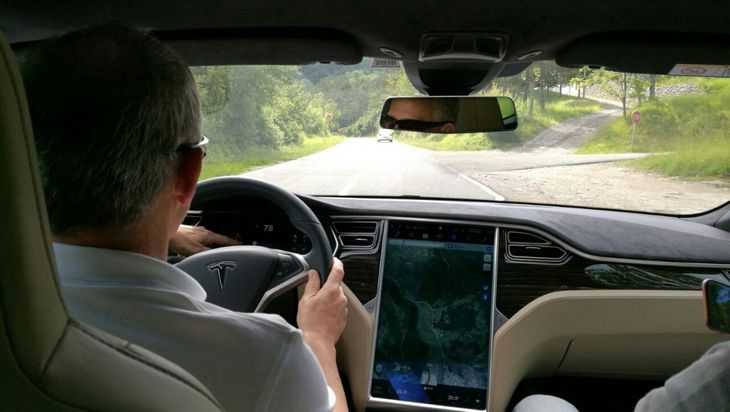
Cars.co.za published its first driving impression of a Tesla in 2016, with a contributor's write-up on the Tesla Model S.
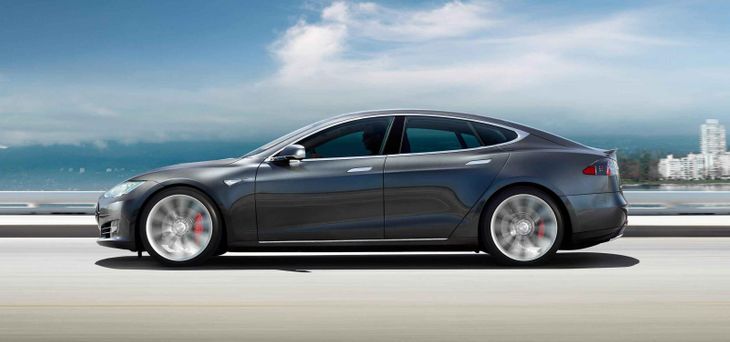
The car exited stage left just as the Model S entered stage right, in 2012, also at prices which pitched the all-electric 5-door luxury sedan directly against Mercedes-Benzes, Audis, BMW’s and Buicks, even on the styling front: the Model S looked like a fastback Jaguar, shattering the Prius’ almost faceless facade for good.
Yet, at $100 000 for the P85D variant – with the price quickly inflating to $120 000 if ordered with air springs, a panoramic sunroof, high-capacity onboard chargers, hi-fi sound, Autopilot and the like – the question became: who splashes out like this?
Long-distance journeys still problematic
Certainly not people looking for cheap transport. In a recent test, America’s Car and Driver magazine found Model S running, over long distance trips, to be as expensive as ICE (internal combustion engine) cars burning 6.3 litres/100 km.
That now, when you pay R8.25 per litre of petrol (August 2017), which is about two-thirds of local cost. Long trips in the Model S might thus make more sense on South African soil, except that you’ll run into a different problem, namely the availability – or rather lack – of charging points, plus the long wait when you find one.
During a trip covering 5 600 km – the equivalent of two sojourns from Cape Town to Jo’burg and back – Car and Driver spent 57 hours behind the wheel plus another 15 hours and 20 minutes plugged in (not including overnight charging)!
Long distance driving isn't the Tesla Model S' forte, as a US publication found…
At the back end of 2015, Tesla at long last launched an SUV, yet again a conventionally styled looker with a hefty price tag. Like the Model S, the all-wheel driven Model X targeted rich, tech savvy, early adopting Californians and Norwegians, some perhaps with a bent for conspicuous consumption, others simply – and perhaps even blindly – buying into Musk’s message of environmental concern.
Driving a Tesla to work and back – with recharges in between – will be cheaper and cleaner than a similar drive in equivalent ICE cars.
Production glitches
But you might encounter more build-quality problems: leaking sunroofs, for instance. Or unstable seat frames and attachments. The Model X’s third-row seats unlatching during collisions. Windows not opening or closing all the way. Faulty parking brakes. Moisture in the taillamps. Hardware replacements. Or even outdated in-car technology with slow touchscreen responses.
Tesla quality, thus far, has been shoddy – and then there were a couple of cars catching fire plus last year’s fatal accident in which a Model S operating on autopilot hit a tractor trailer and killed its driver.
With the Model 3, Tesla hopes to achieve sales figures that will underpin the company's long-term goals.
Yet, despite these negatives, despite dodging bankruptcy and despite flirting on the edges of the law, Musk has been hanging onto his dream of using the profits gleaned from luxury car sales to fund the development of an affordable all-electric car, to support the planet in its fight against climate change.
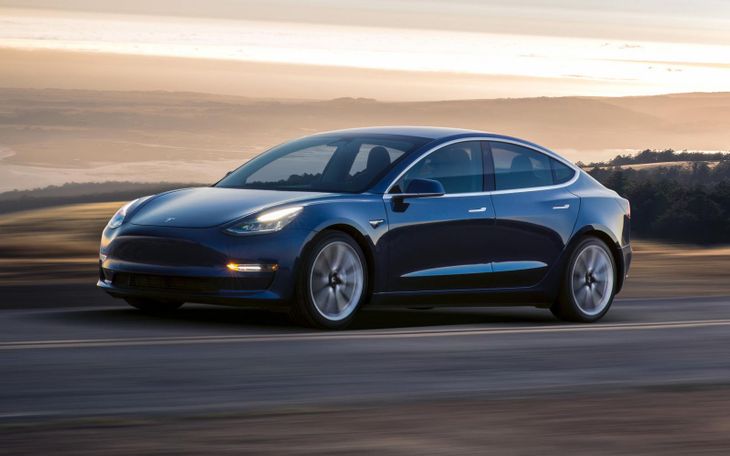
That car is the Model 3, launched a month ago at the end of July to the tune of 455 000 pre-orders, Musk’s zealous fan base perhaps not even realizing that a fully-specced Model 3 (with options like a home charger, long-range battery, 19” sports wheels, deluxe interior trim, enhanced autopilot and the like) will cost $60 000.
Cheap? Ya’ better not bet.
Can Tesla deliver on its promises?
But here’s the real problem: building and delivering all those units on time and up to quality standards, with little to no experience in real volume production nor large-scale global supply chains – not to overlook the need to expand Tesla’s already overcrowded supercharging network.
Do-able? At a profit?
Tesla’s brand new Model 3 is a stylish car, but has Elon Musk missed an opportunity to embrace the future in terms of packaging, by sticking with conventional sedan architecture?
Nissan and Chevrolet, for instance, have lots of ICE models to fall back onto, if their all-electric Leaf or Bolt backfires. They can even afford to sell these cars at a loss, just to build feel-good credits.
But a company lacking the funds to stop-gap will be in real trouble if and when the bread-and-butter model fails, like the Model 3 might, for a variety of reasons:
Tesla might not be able to build and deliver fast enough, which
might lead to dissatisfaction, even among the worshipping clan, and worse: Musk might be staring down the barrel of a number of compensation claims;
not least because of shoddy build quality and potential safety issues if the process is sped up beyond control in order to appease impatient customers; on top of which
Musk is a bit of an aesthete.
Because of the latter, and combined with all-electric versus hybrid car architecture, Tesla managed to break out of boring aesthetics like the Prius’.
Yet, at the same time, Musk has compromised not only his cars (the Model X SUV is space limited, for example), but also the company’s future by locking product into well-established norms and patterns of design, the packaging of which limits seating to a handful of people, all facing forward, like passengers strapped into an aeroplane.
This limitation will not change soon, either, as Musk wants to play big with the Model 3; another conventionally beautiful car which will command all of Tesla’s financial resources over the next 5 years, leaving not a dime to defend the company against the imminent onslaught of electric vehicles packaged to fully exploit the spatial possibilities freed up by autonomous driving.
Yes, the I.D. Buzz concept seems like the fruit of good old California Dreamin', but its spirit still strikes a chord with throngs of motorists.
EVs' biggest drawcard – the option to forego driving
For let’s face it: why would people want a vehicle to take command and drive itself? Well, so that passengers are enabled to do things other than concentrate on the road ahead. They can relax. Talk. Read Talk. Eat. Read. Sleep. Drink. Play games. Have conferences. Watch movies or TV. Stuff like that.
And what kind of space would best provide for this?
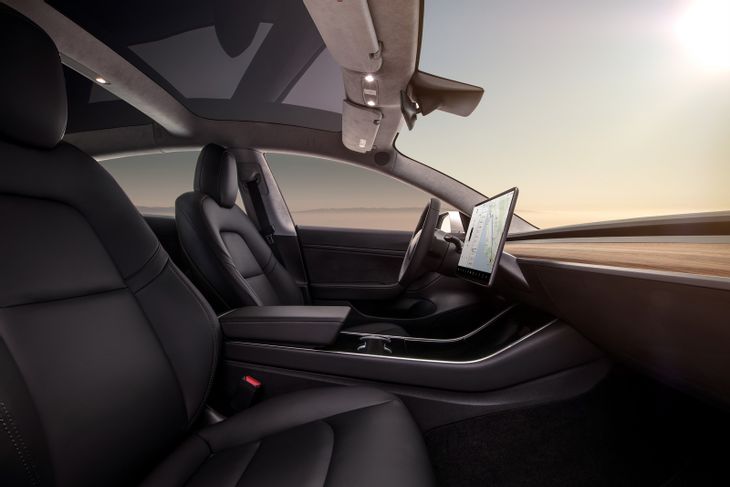
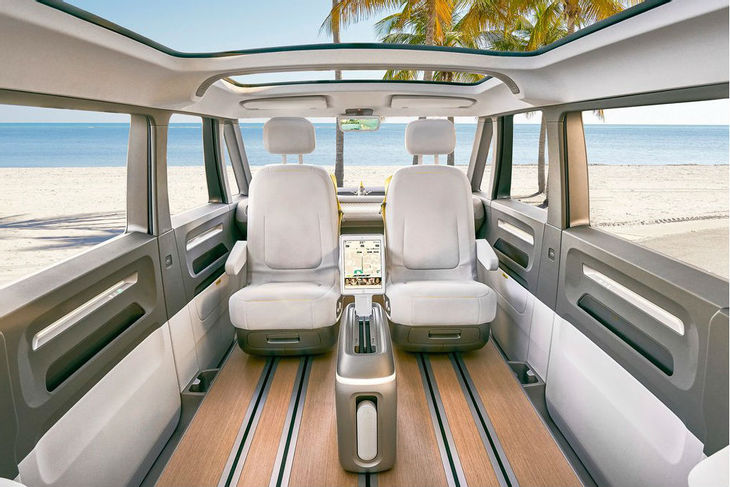
A lounge-like interior seating perhaps eight people via a wealth of seating arrangements, boasting a big panoramic roof plus windows on which one can write using a finger instead of crayon, plus a retractable steering wheel when the car is in autonomous mode and a centre console that can slide around on rails running down the vehicle’s spine, serving different needs at different times; freedoms that will make the Model 3 feel cramped, fettered and old school.
The I.D. Buzz is back to the future, then, especially as one would also be able to rig it as digs on wheels, just like way back in the day when surfers jolled in J Bay or camped out on Bondi Beach or prepared for the Pipeline.
With its highly configurable interior packaging, the I.D. Buzz begs the question: "If you didn't need to drive, what else could you do?"
In simple terms: the Buzz will allow you to I.D. your vehicle by expanding the theatre of utilities way beyond the restrictions currently imposed by conventional car superstructures.
The cult of Kombi reimagined
In the light of Volkswagen’s clout – it boasts decades of experience in mass production – Musk’s Model 3 will face its stiffest competition, not from a couple of smart Audis, Beemers, Benzes and Buicks or even the Leaf and the Bolt, but from VW’s Next Big Thing, plus others of its kind.
Not for nothing does the indomitable rise of the utility-and-lifestyle orientated SUV point to the future of motoring.
Musk has created a fan base that borders on cult, much as Donald Trump has been doing in the US political arena.
But don’t forget that VW’s Microbus was and is an icon with cult status all of its own, a full-on party on wheels that will be again; the buzz around the Buzz is, understandably, electric. So, beam me up, Scotty, to the next level, straight into the belly of that Buzz so that I can plug in my Fender Stratocaster.
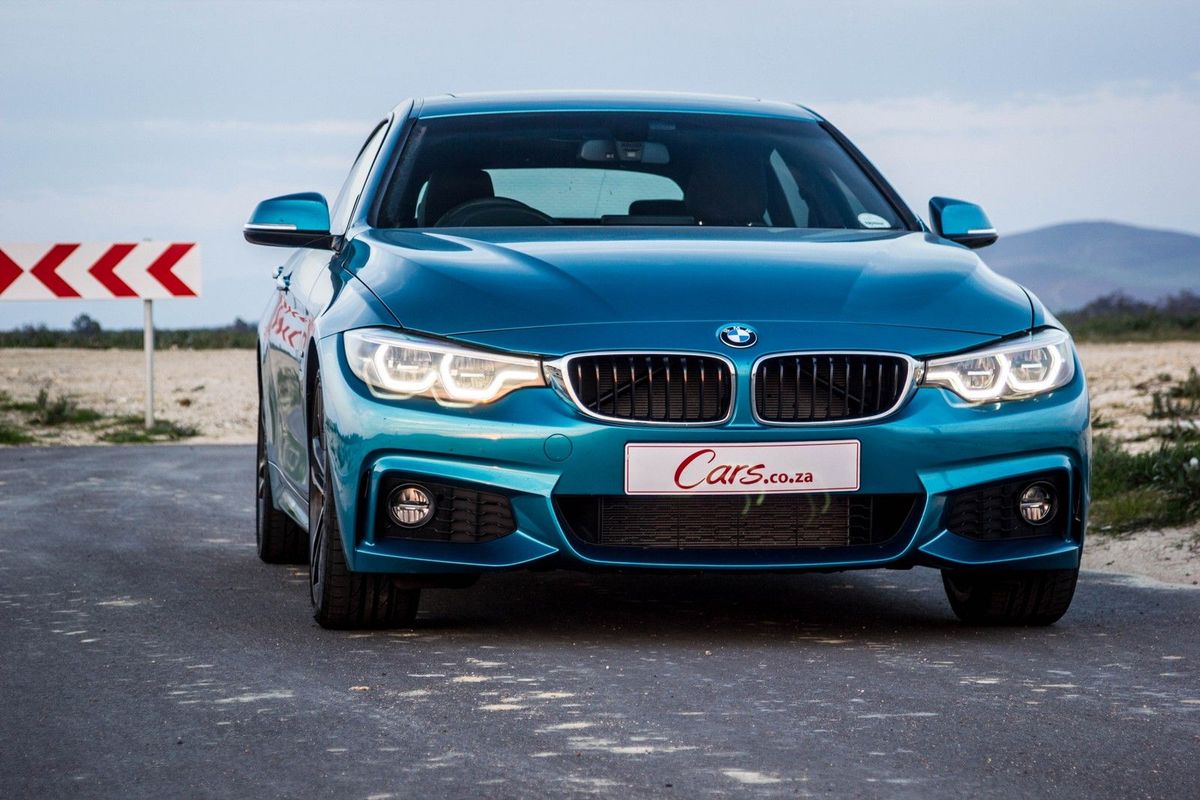
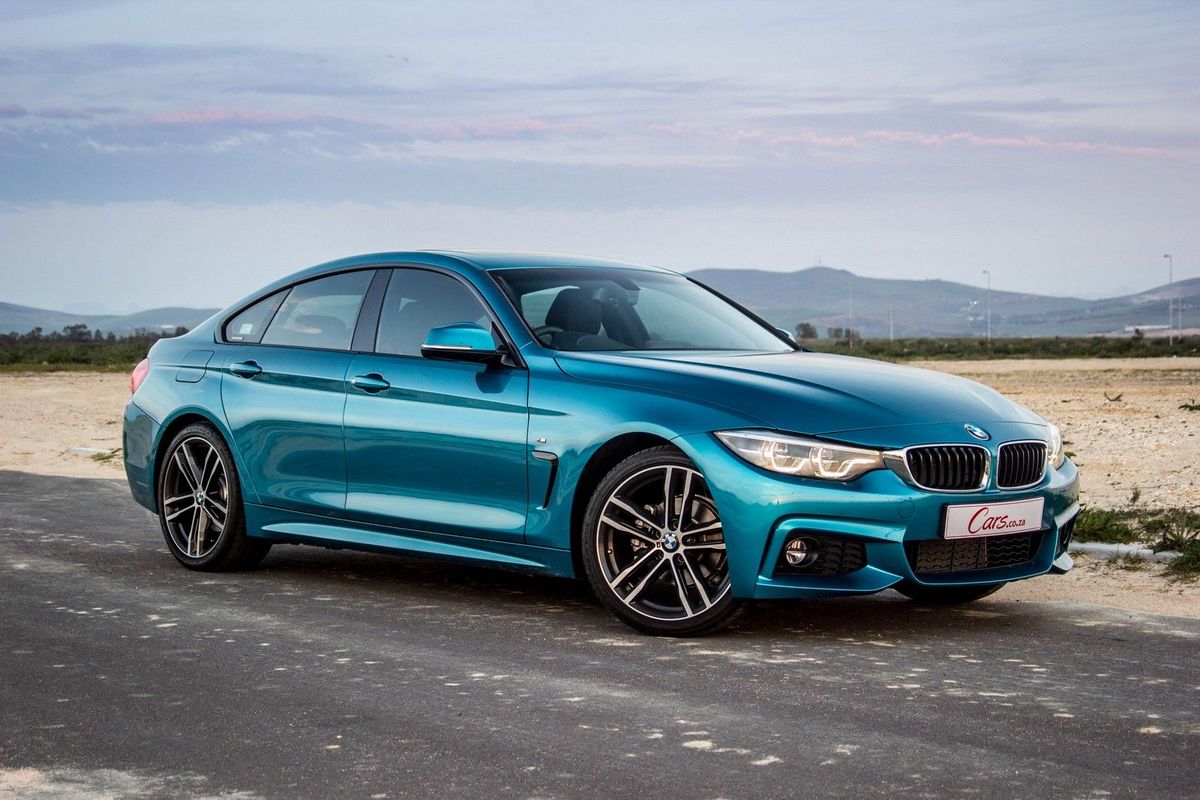
Is the BMW 4 Series Gran Coupe just a 3 Series with a sloping roofline and hatchback tailgate? We spent some time with the turbopetrol-powered 420i to find out…
We like: Better looking than a 3 Series, handling, fuel efficiency
We don’t like: Rear headroom, middling engine performance
Alternatives:
For something similar: The Audi A5 Sportback is an all new car rather than a facelift, like the 4 Series. The A5 has the best interior in class and its chassis is superbly comfortable.
For something with more style: If you’re looking for style then you probably can’t afford to ignore the Alfa Romeo Giulia. The new car is excellent to drive and will no doubt stand out more than its more common German foes.
For something with a different personality: The Jaguar XE appeals to individualists with a well-sorted chassis and comfortable ride. There is a greater sense of occasion to the driving experience, but the interior isn't as well designed or built as the Germans.
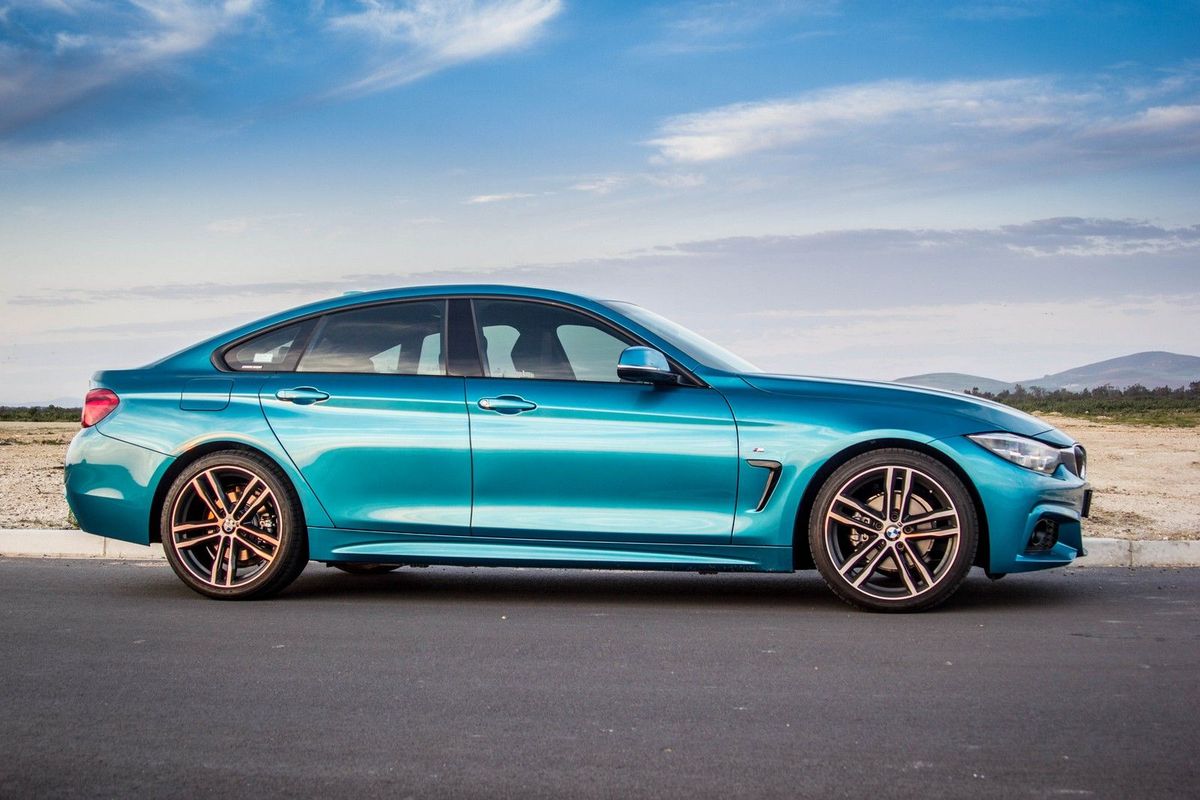
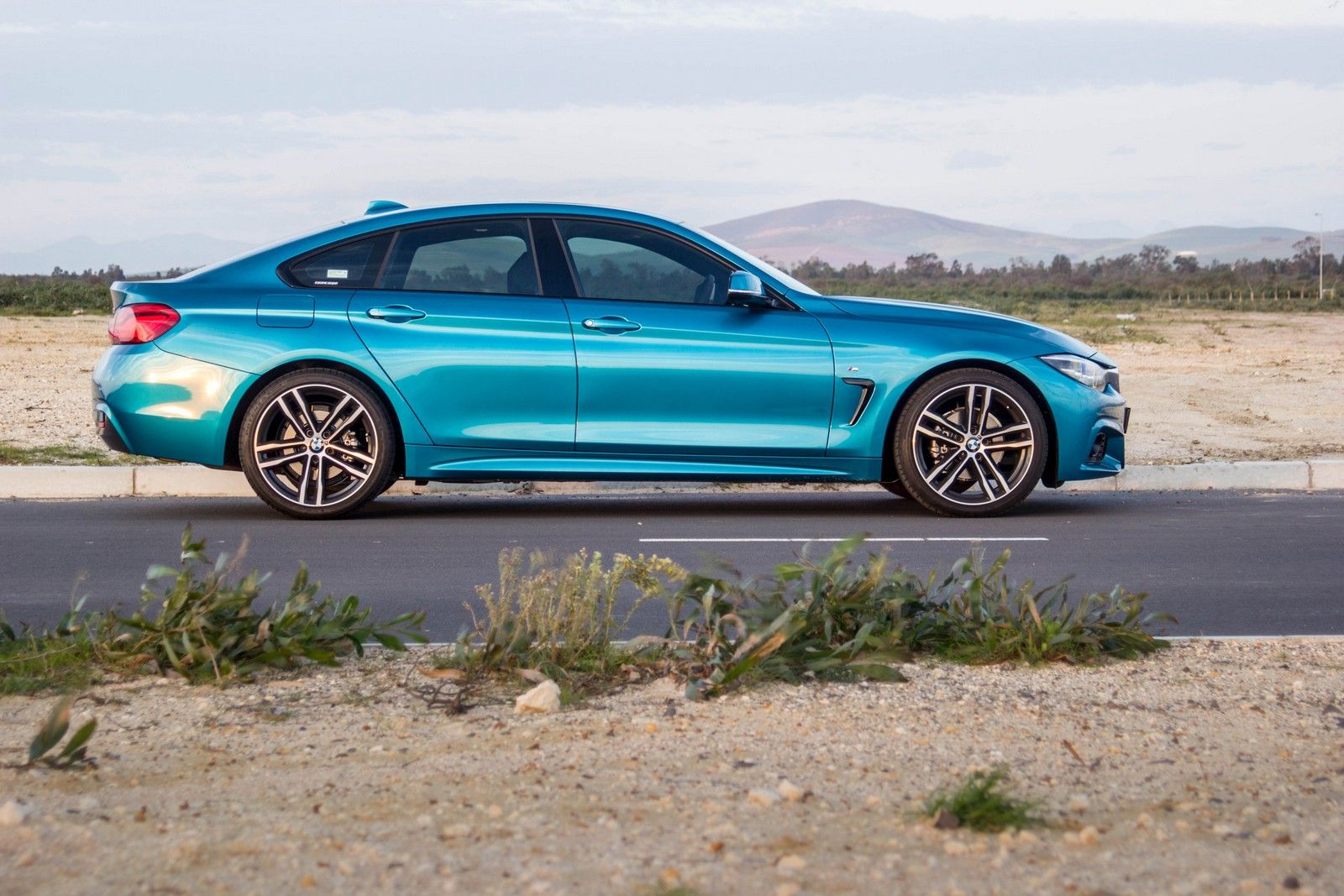
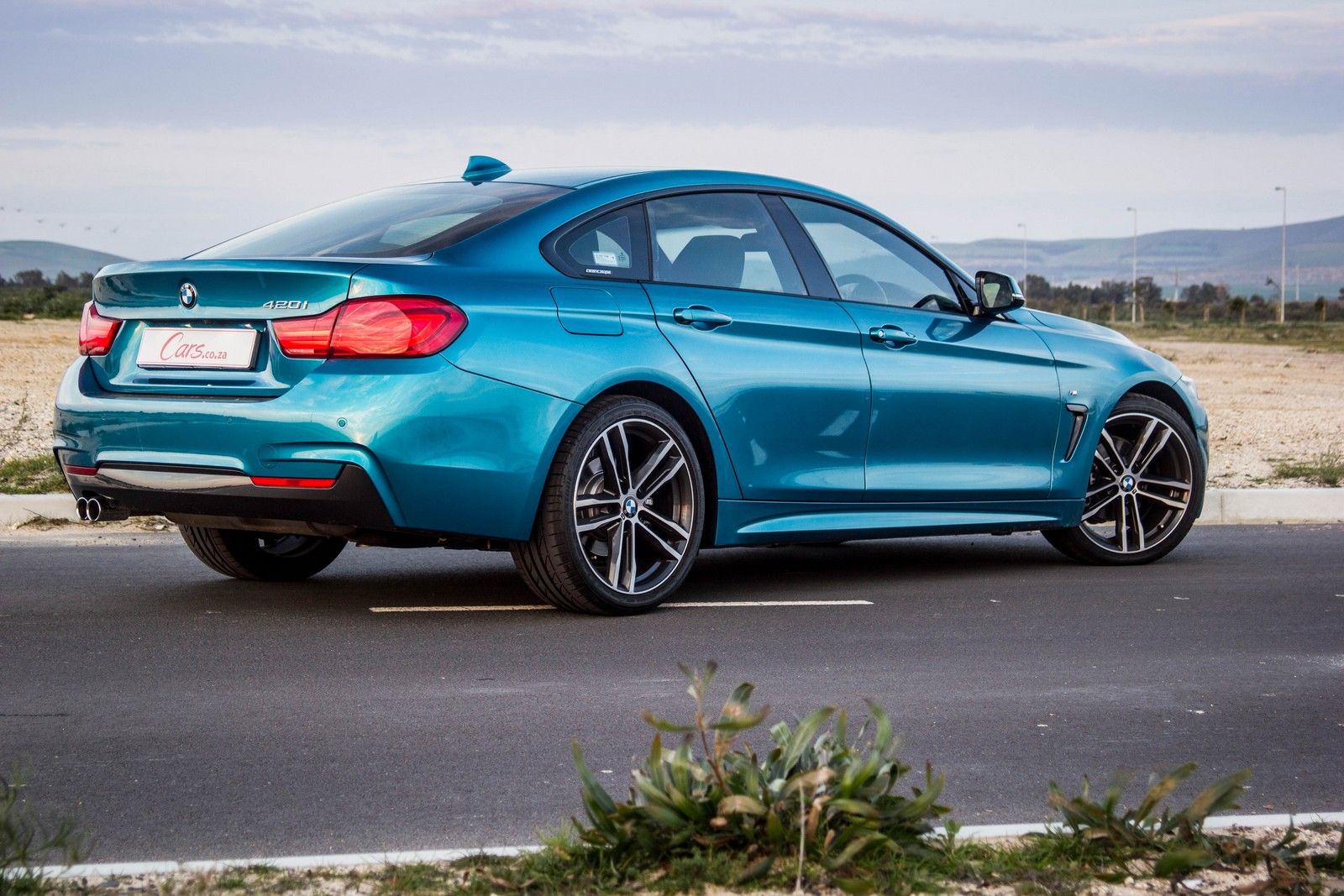
A better looking 3 Series, right? Our test team is surprised that we don't see more of these 4-door coupes on the road…
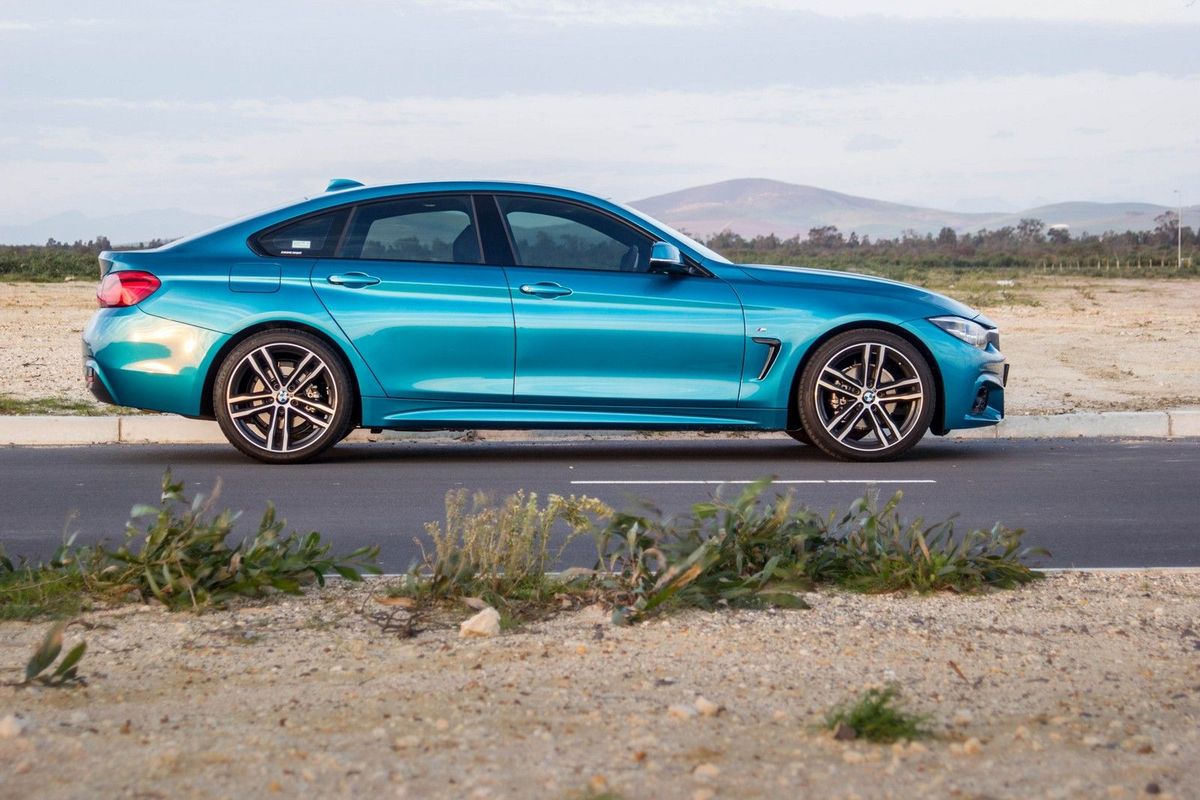
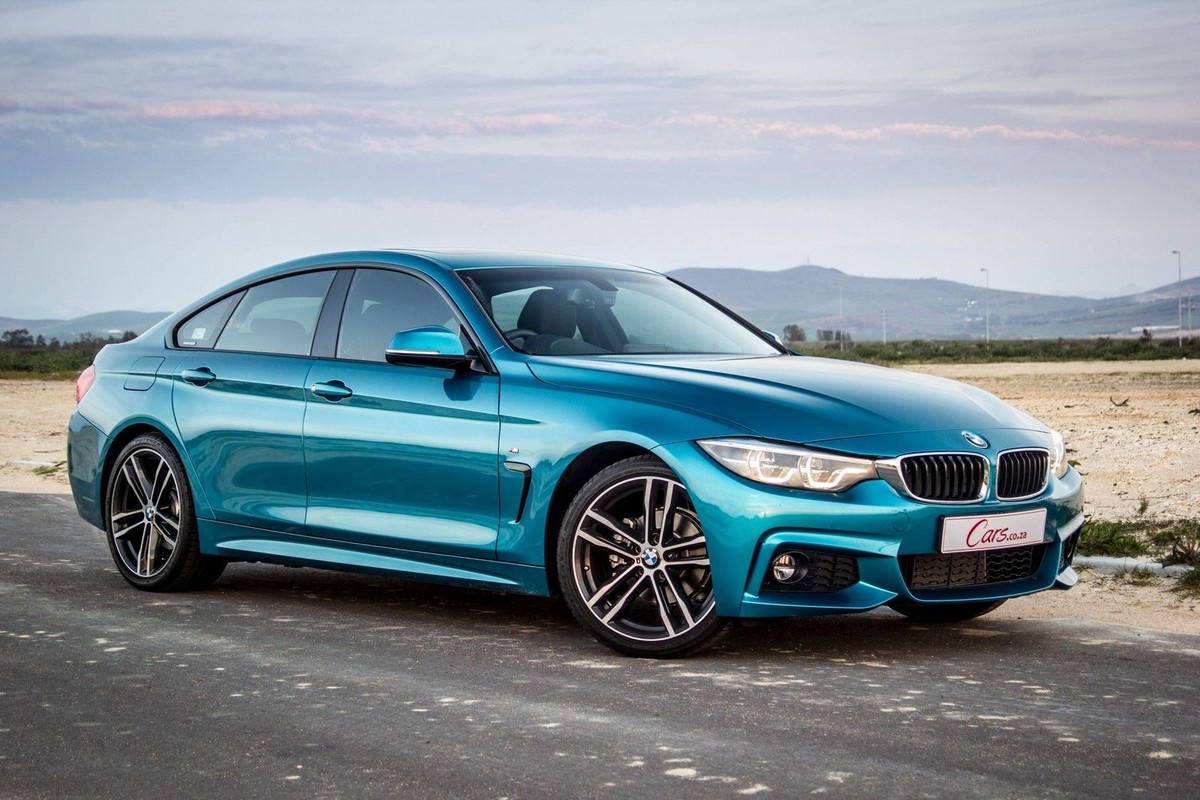
Compared with the popular 3 Series sedan, the BMW 4 Series offers something with a little more style to harness BMW’s famed dynamics. The sloping rear roofline gives it a coupe look, but in the case of this Gran Coupe, BMW still squeezes in 2 rear doors. So yes, it is a 3 Series but in a sexier shape. The facelifted version has tried to separate the two siblings with the 4 featuring stiffer suspension settings and more direct steering.
The idea behind it being to give the 4 Series a more dynamic character to go with its sporty coupe looks. What we have here, on test, is the 420i auto, the entry-level offering into the 4 Series range.
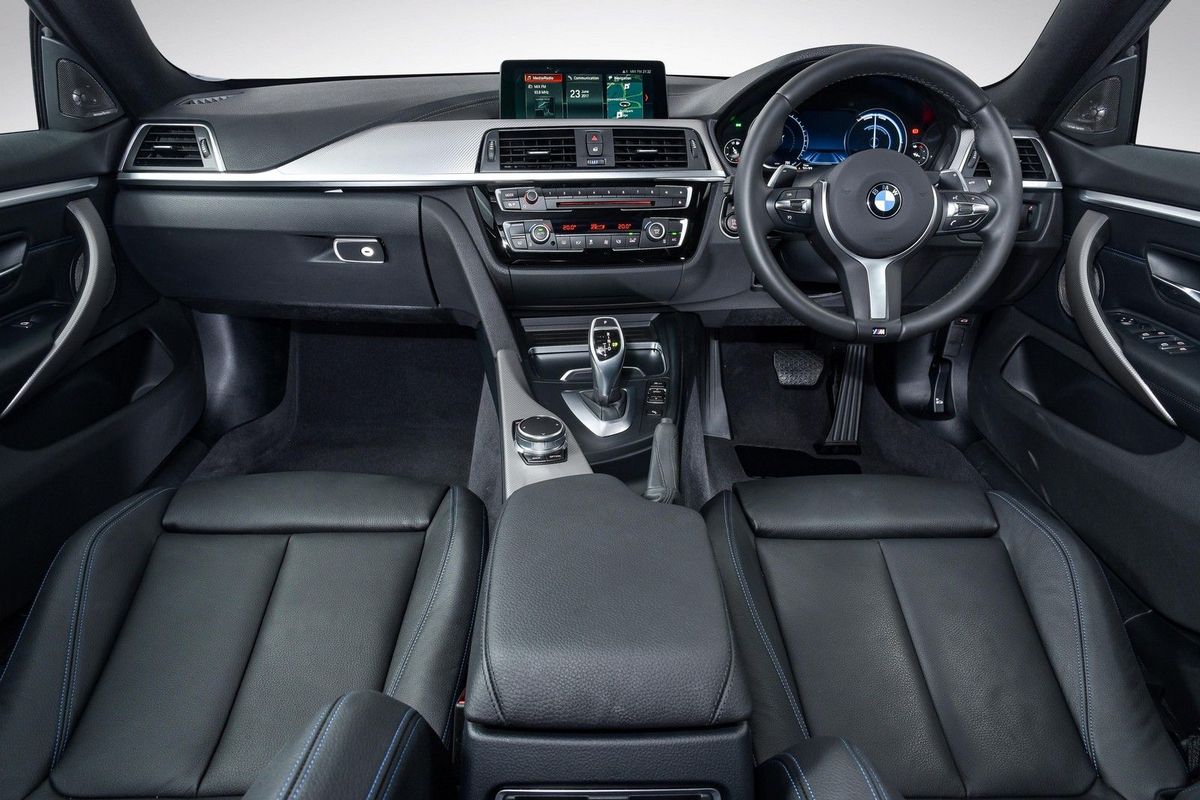
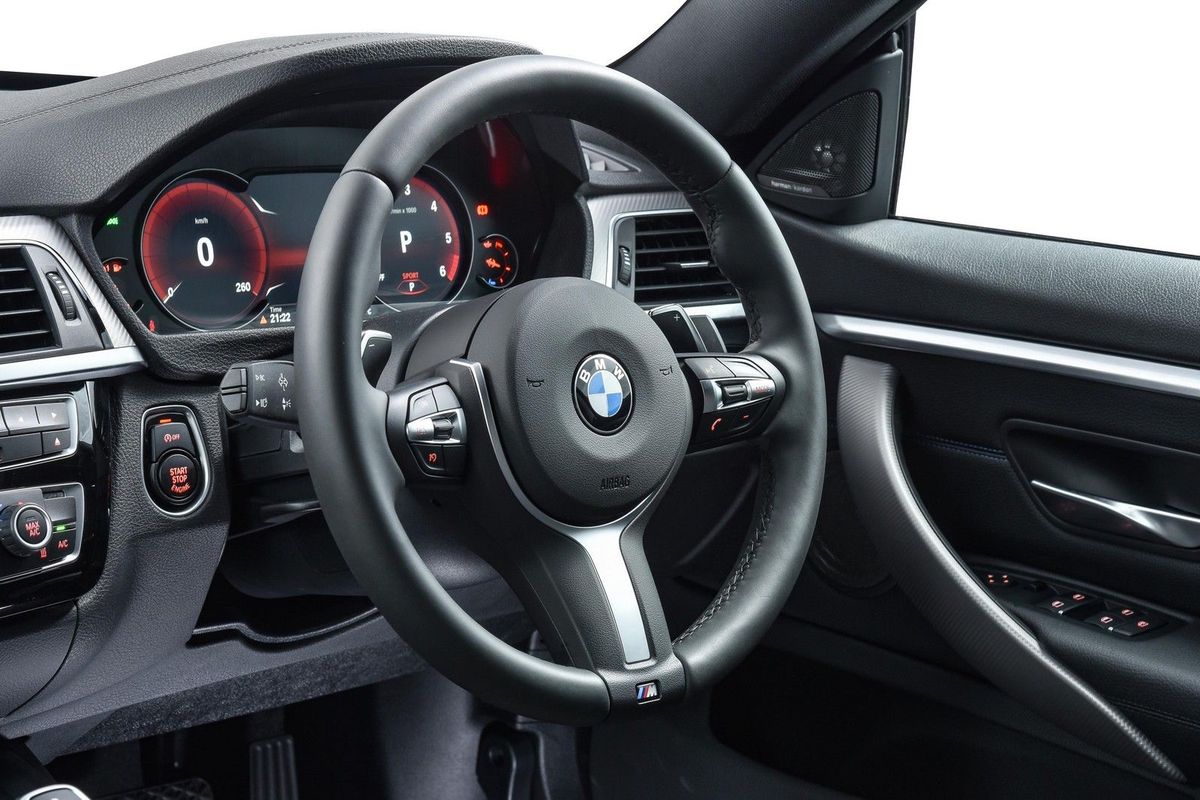
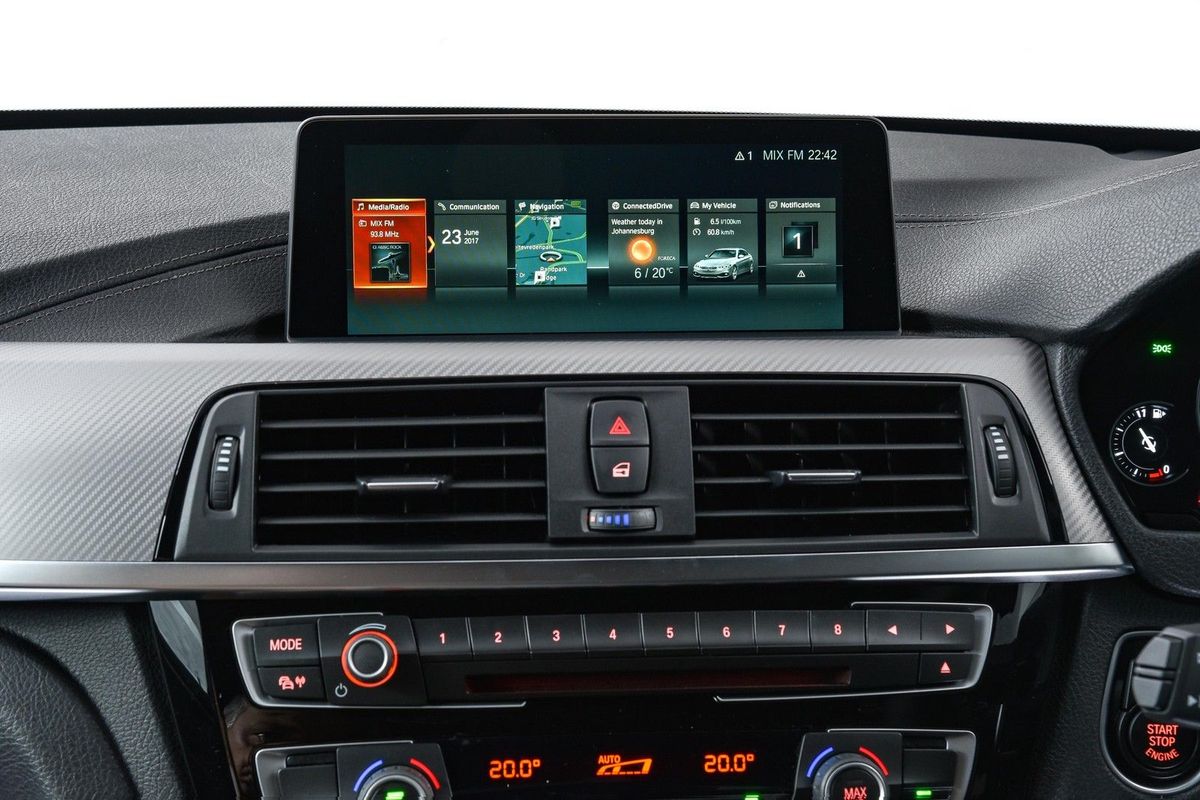
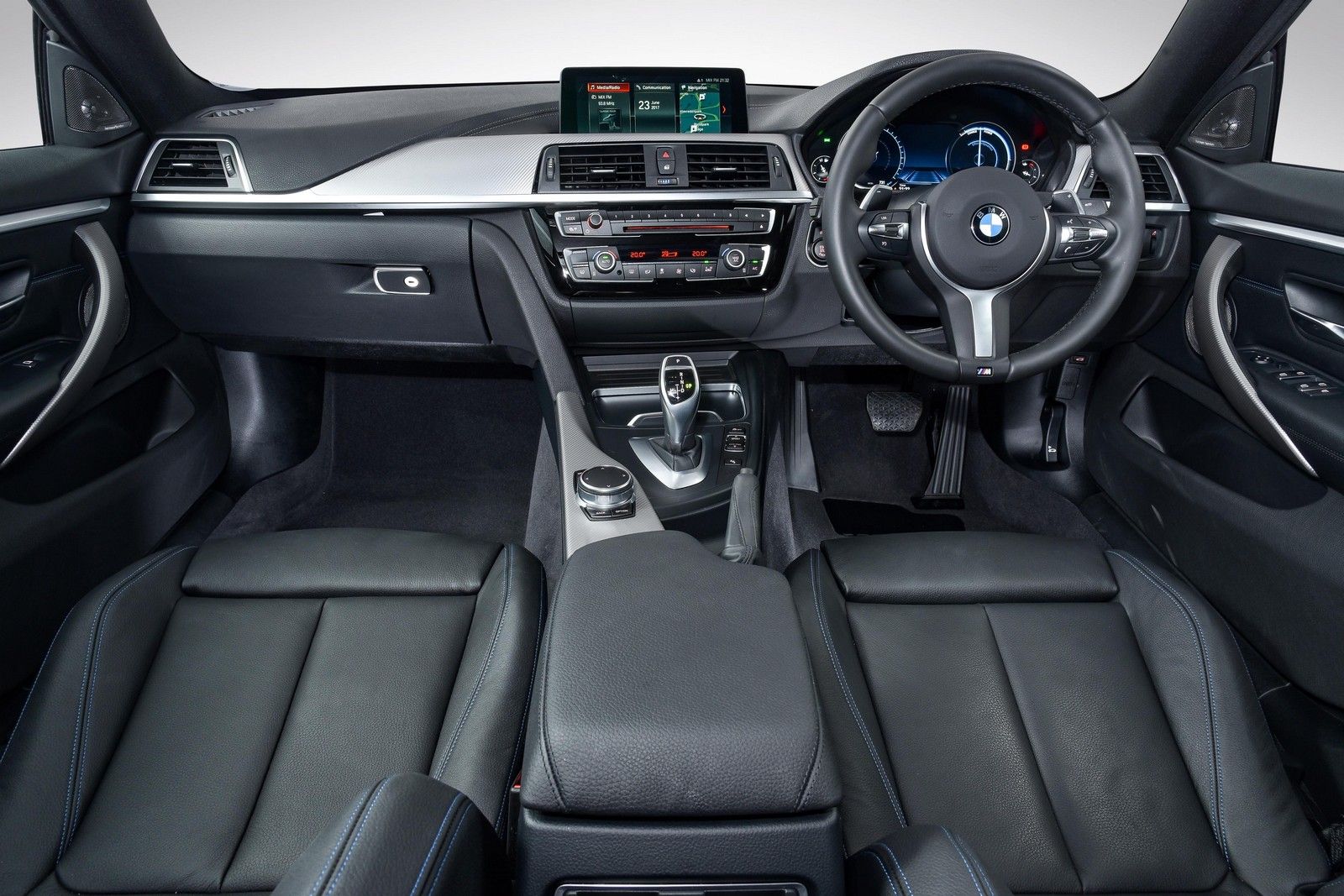
The interior has received a few material upgrades (as is the custom with facelift models). The infotainment screen has improved resolution and graphics, more high gloss material is used to border the centre stack of dials, the sports steering wheel has been upgraded and there’s an optional digital instrument display available – like the one offered in the new 5 Series.
The good
Feel-good factor
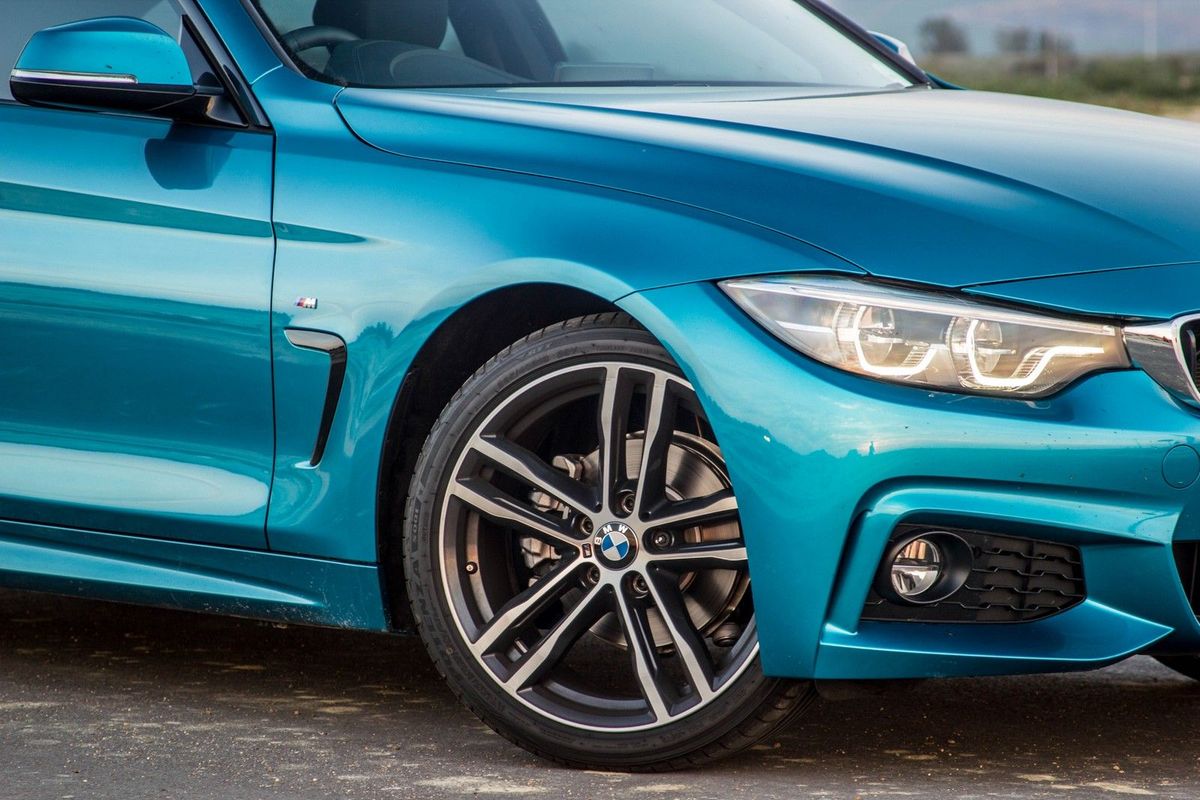
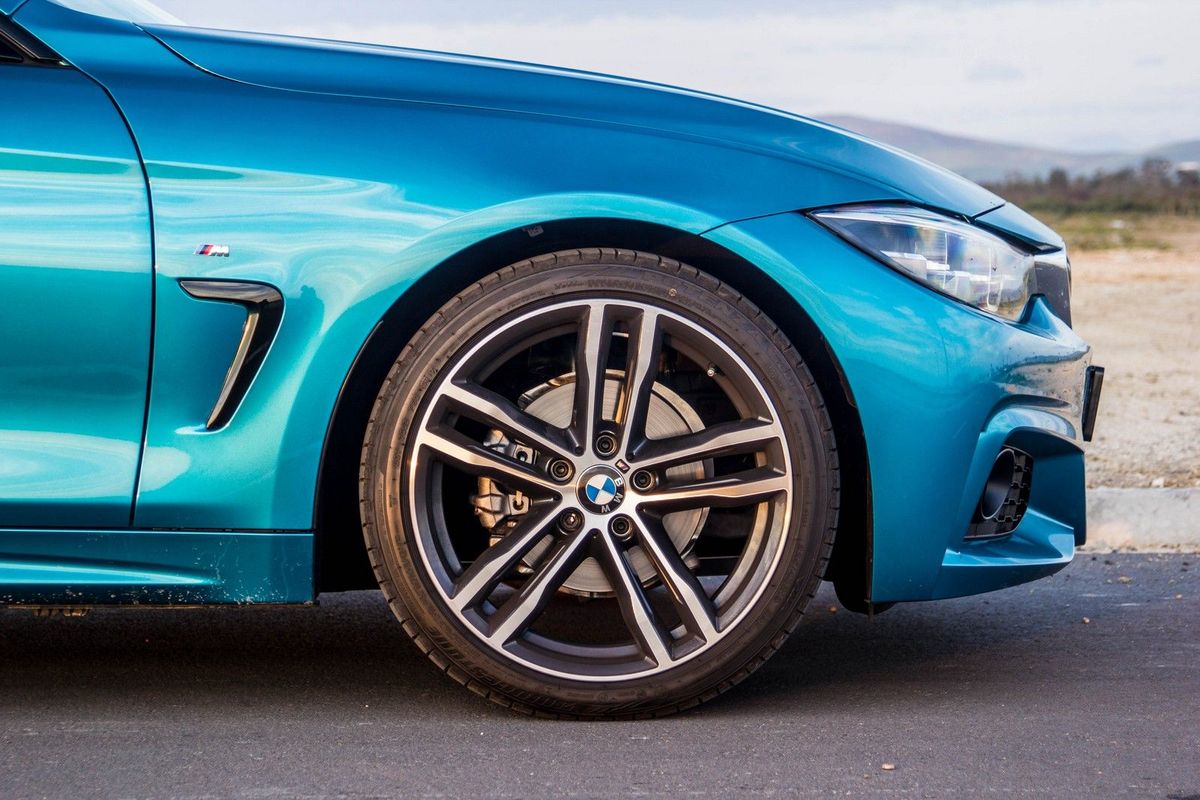
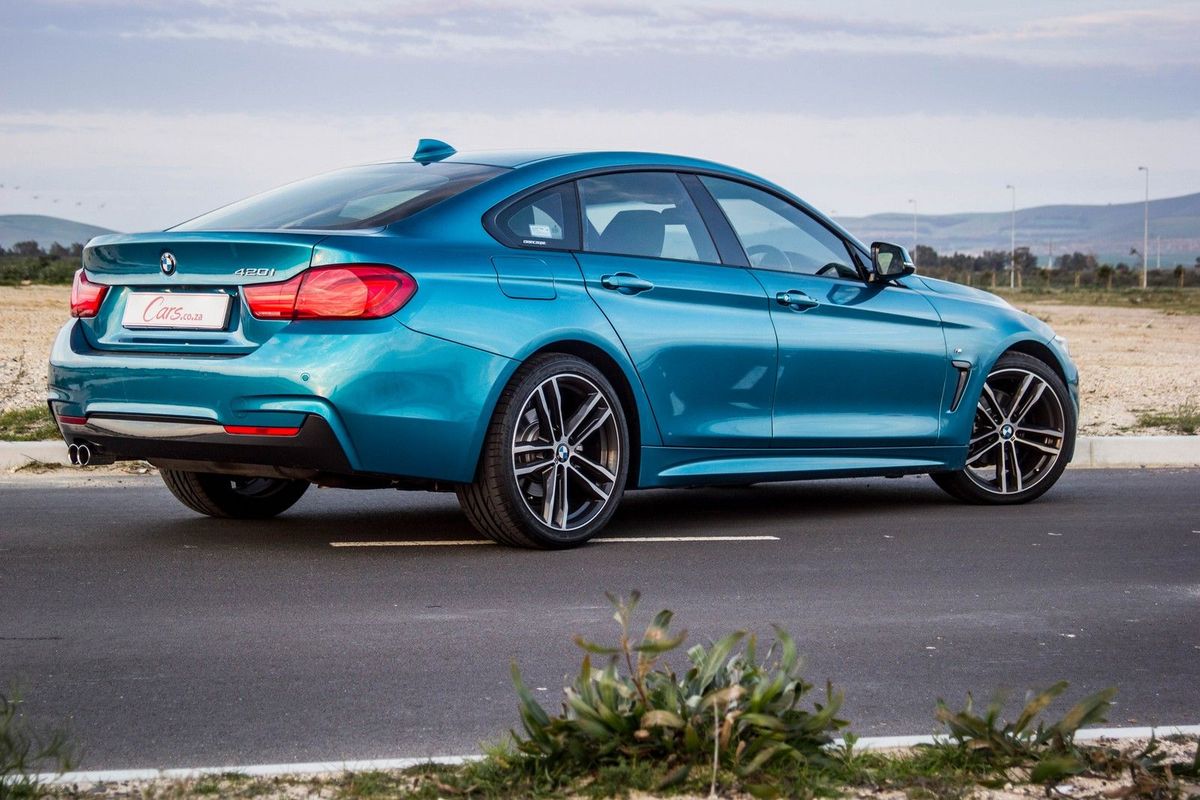
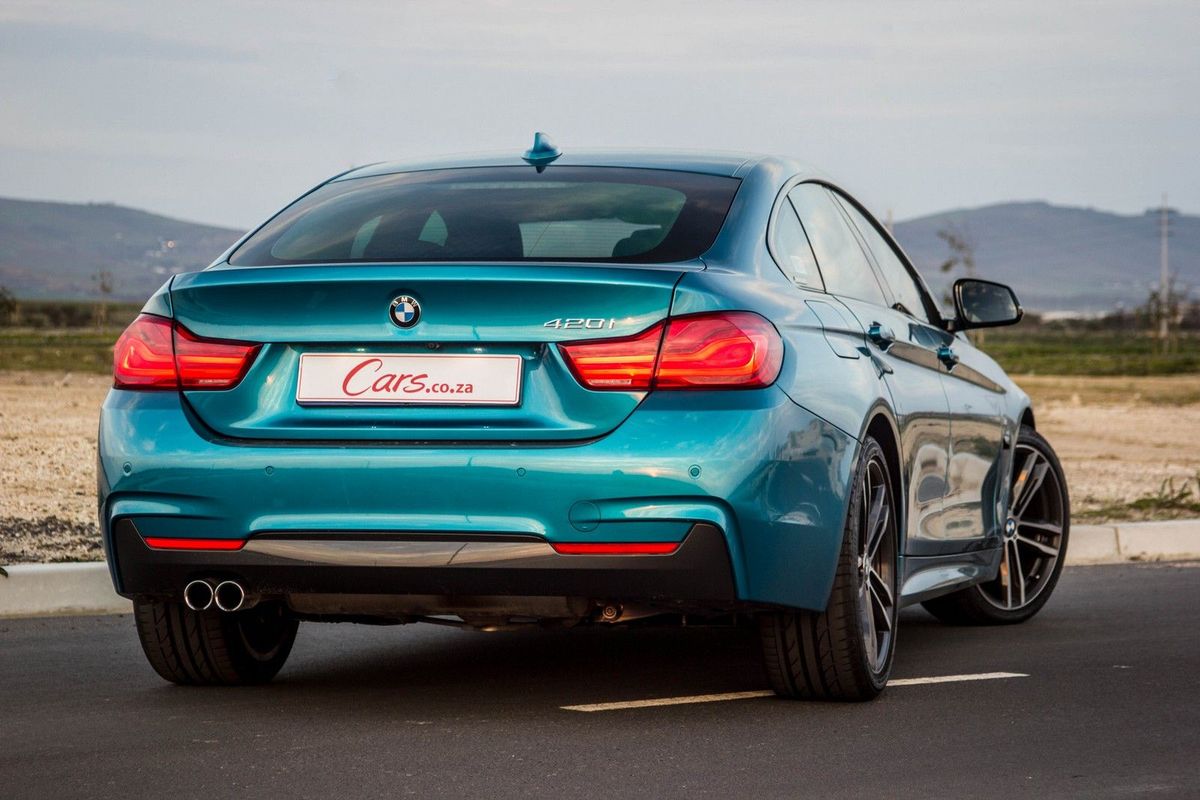
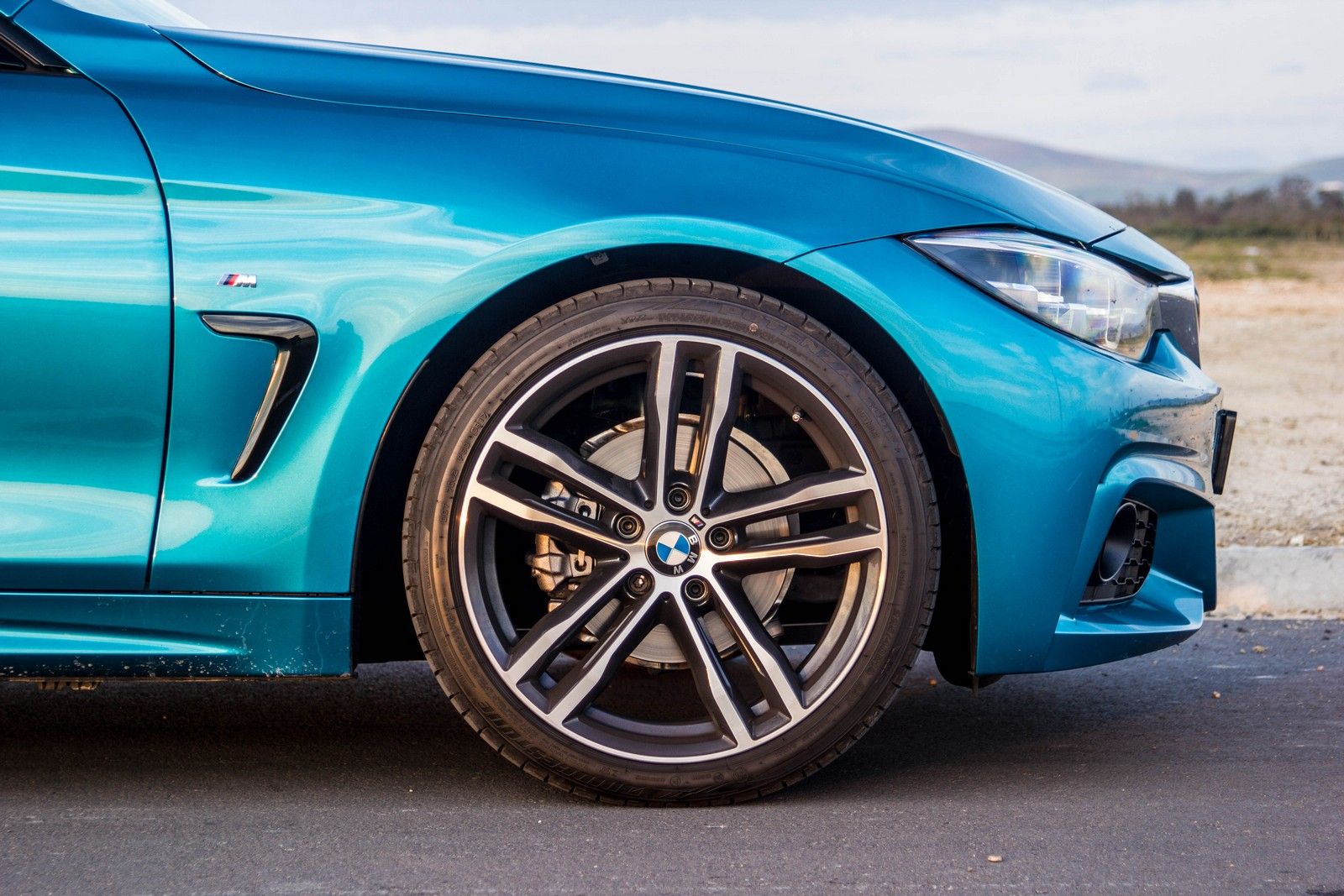
Stepping into a 4 Series evokes a greater sense of excitement than a 3 Series. There’s something about it that says "you did things a little differently" and "didn’t follow the crowd", but you still want to be associated with premium BMW-ness. In this exclusive 4 Series Snapper Rocks blue colour, the 420i Gran Coupe certainly looks the part…
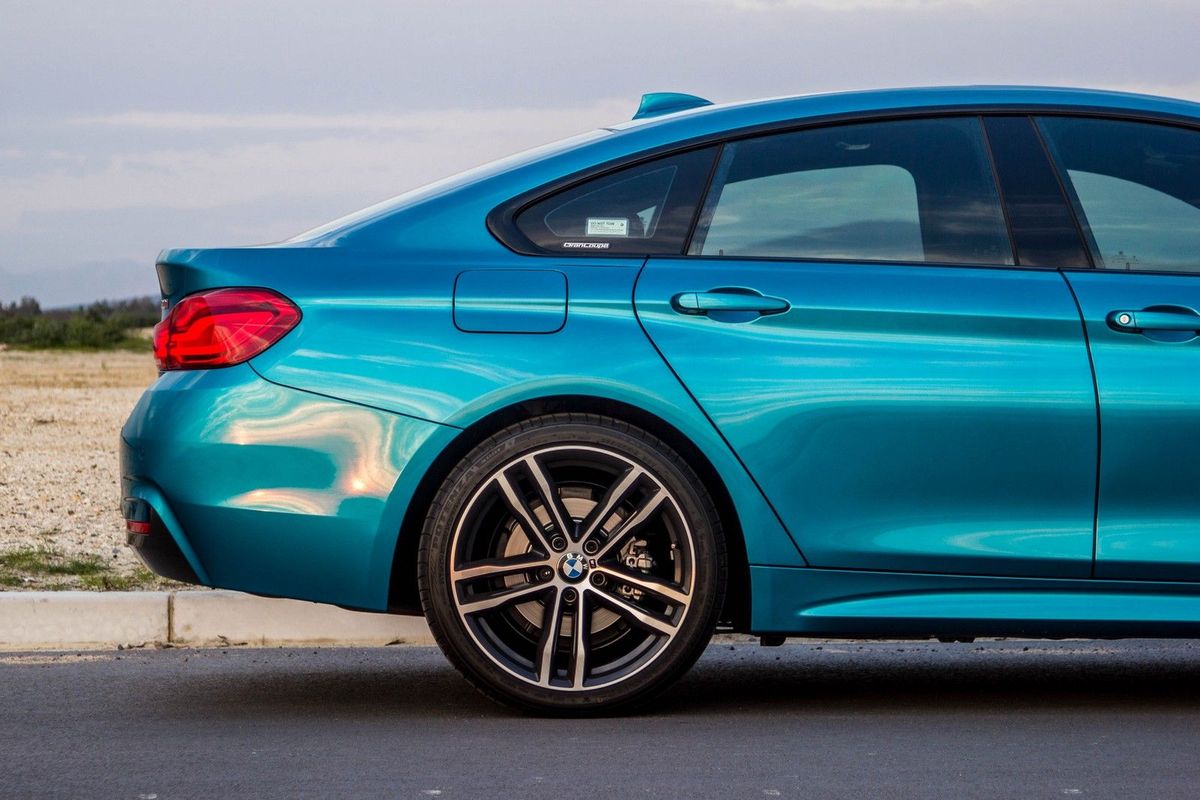
The rear of the 4 Series Gran Coupe acts like a hatchback, offering more loading space than the 3 Series.
True dynamism
The increased suspension stiffness availed by the specification of the M Sport package (on this test unit) has aided the 4 Series’ handling abilities as it corners flatter and faster than its more popular 4-door sibling. The increased agility hasn’t affected the ride comfort at all and, on the average commute, comfort mode is sufficiently pliant. Bumps are neatly soaked up and even with the run-flat tyres, the ride is reasonably forgiving.
The steering has also been improved to deliver more feel to the driver. While an electrically assisted steering setup, in general, is not great at providing feel and feedback to the driver, the 420i felt quite well connected to the road with a meaty weighting to the turn.
Fuel efficiency
Turbopetrol engines have a come a long way since they first hit the mass market around a decade ago (BMW's N54 3.0-litre twin-turbo straight 6 was an early protagonist). In those days, we saw real world consumption figures that were near double that of manufacturers' claims. This 2.0-litre turbo ls claimed to consume 5.5 L/100 km. While we couldn’t quite match it we were impressed with the indicated 6.7 L/100 km after 2 weeks of hard testing.
2.0-litre turbopetrol engine is particularly fuel efficient.
The bad
Sluggish power
It’s not often we say that a BMW feels down on power, but after the initial surge of torque is done, the engine gives up on acceleration and sounds like it’s being overworked. With 135 kW and 270 Nm of torque, the 420i should feel reasonably sporty, but it struggles to deliver performance thrills that can test its dynamic capabilities. It’s 7.7-second claimed 0-100 kph sounds brisk, but the 420i feels stressed and unhappy to be pushed to the redline. That said, the fast-shifting 8-speed Sports Auto ‘box does an excellent job of delivering near imperceptible shifts up and down the gears.
Interior design not quite as exciting as the exterior but feels special enough with the optional digital cluster.
Rear passenger room
You can’t expect to have the same levels of passenger room as a 3 Series with such a provocatively sloping coupe roofline. The 4 Series cuts off some of the headroom of rear passengers and anyone over 1.75 metres tall is likely to notice how close their heads are to the roof lining. Legroom remains fair, however and the luggage bay in a 4 Series is identical to that of a 3 Series at 480 litres. A benefit of the Gran Coupe’s design is that it’s effectively a hatchback and provides you with a much larger loading area once the rear seats are folded down.
Pricing and warranty
BMW offers the same warranty and maintenance plan across all its models. There’s a 2yr/unlimited km warranty and a 5yr/100 000 km maintenance plan. The 420i Gran Coupe range starts from R604 796 and this 420i Gran Coupe M Sport sports auto costs R670 698 before options.
Verdict
Simply put: the 4 Series is a 3 Series for the discerning buyer. BMW makes excellent cars, but given that the 3 Series represents better value for money, it's the better-selling product. The 4 adds a touch of spice into the design and its added sporty handling characteristics are a welcome separation between the 2 models. However, in something that looks as good as a 4 Series it seems the standard 20i (2.0-litre) turbocharged engine doesn’t deliver on the design and chassis’ promise. The 4 Series Gran Coupe commands an R80 000 premium over the 3 Series so it makes sense to choose it with a higher powered version, where the added cost is a smaller percentage of the price and you won’t feel short-changed by the power.
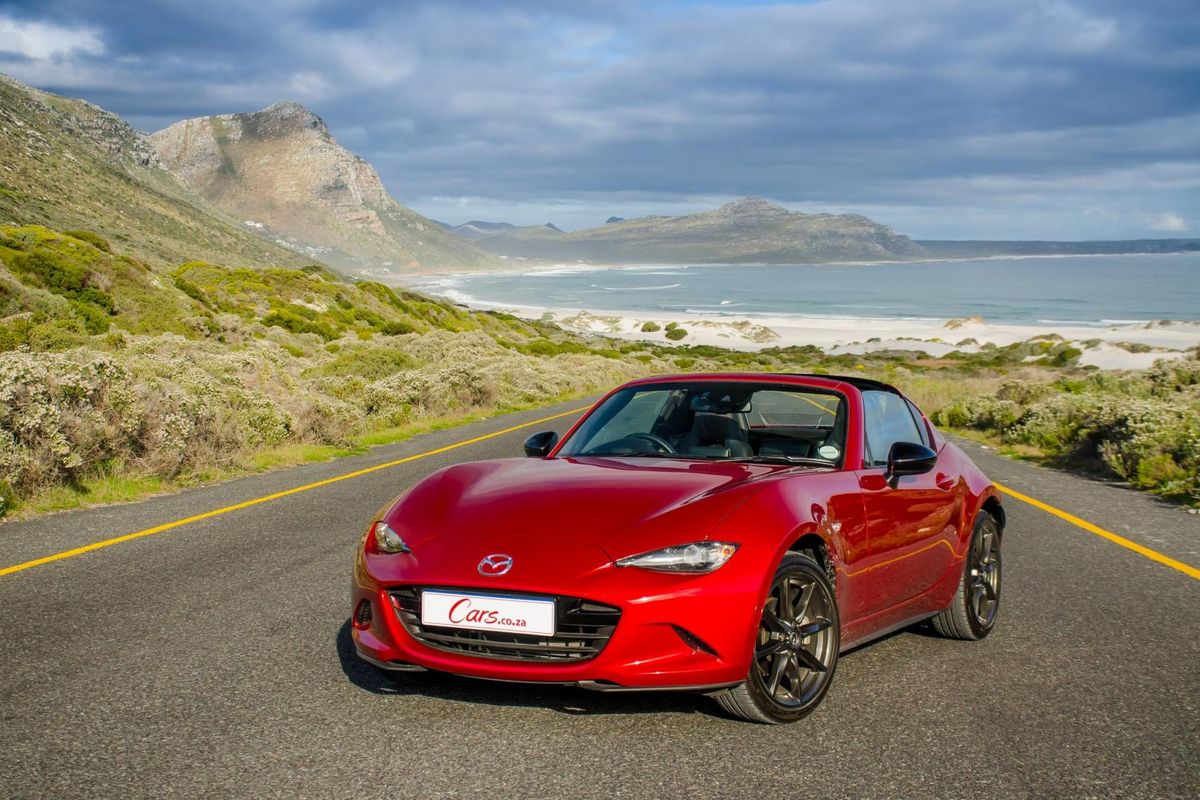
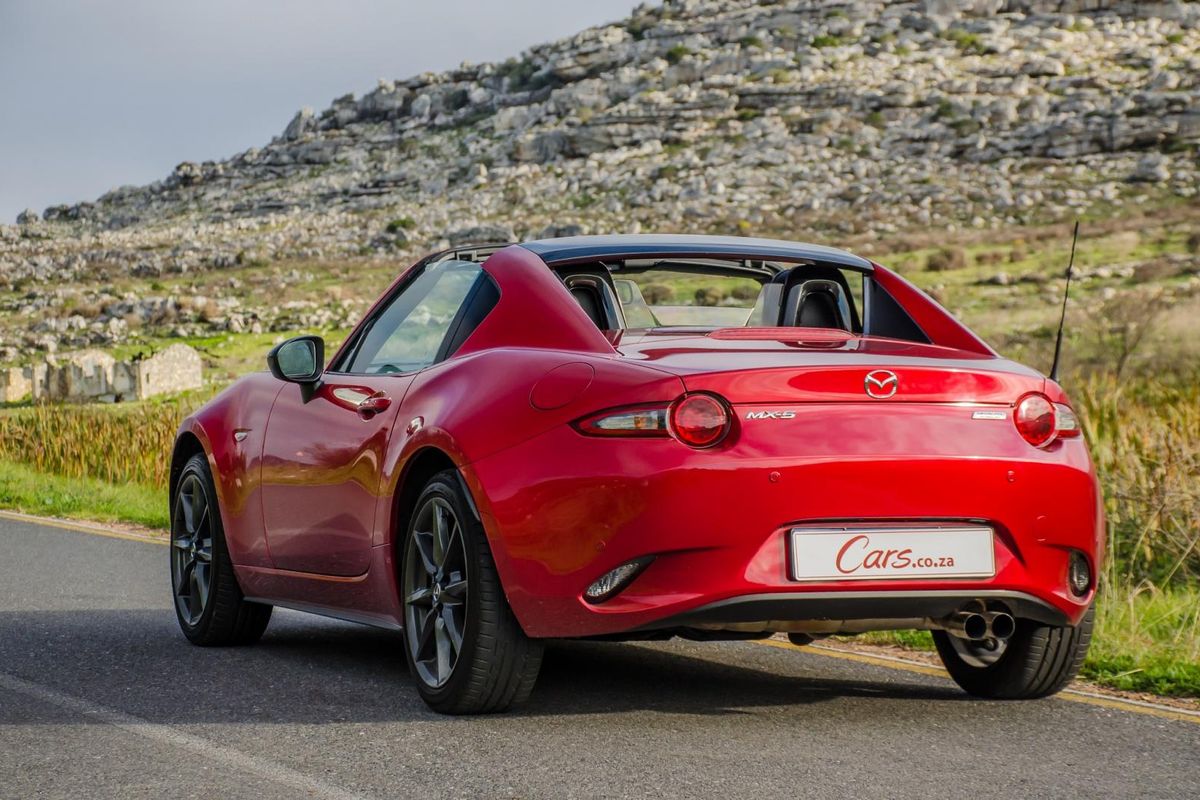
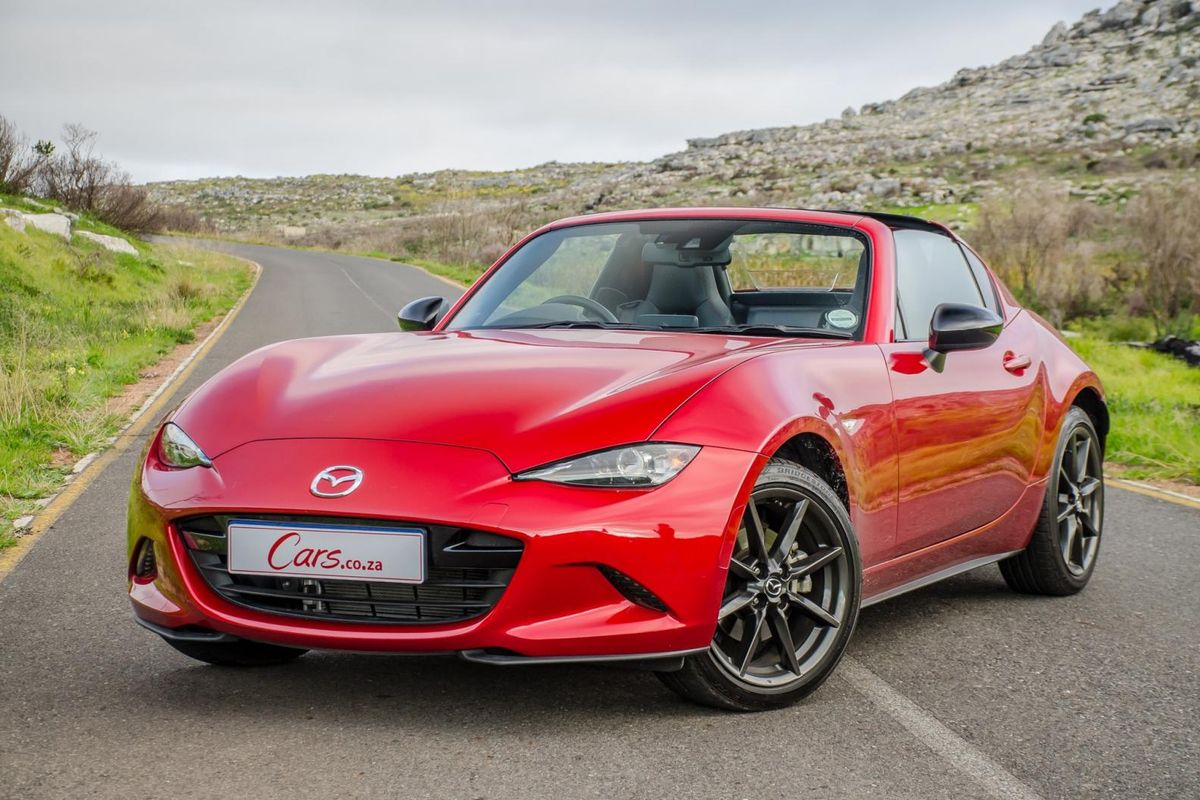
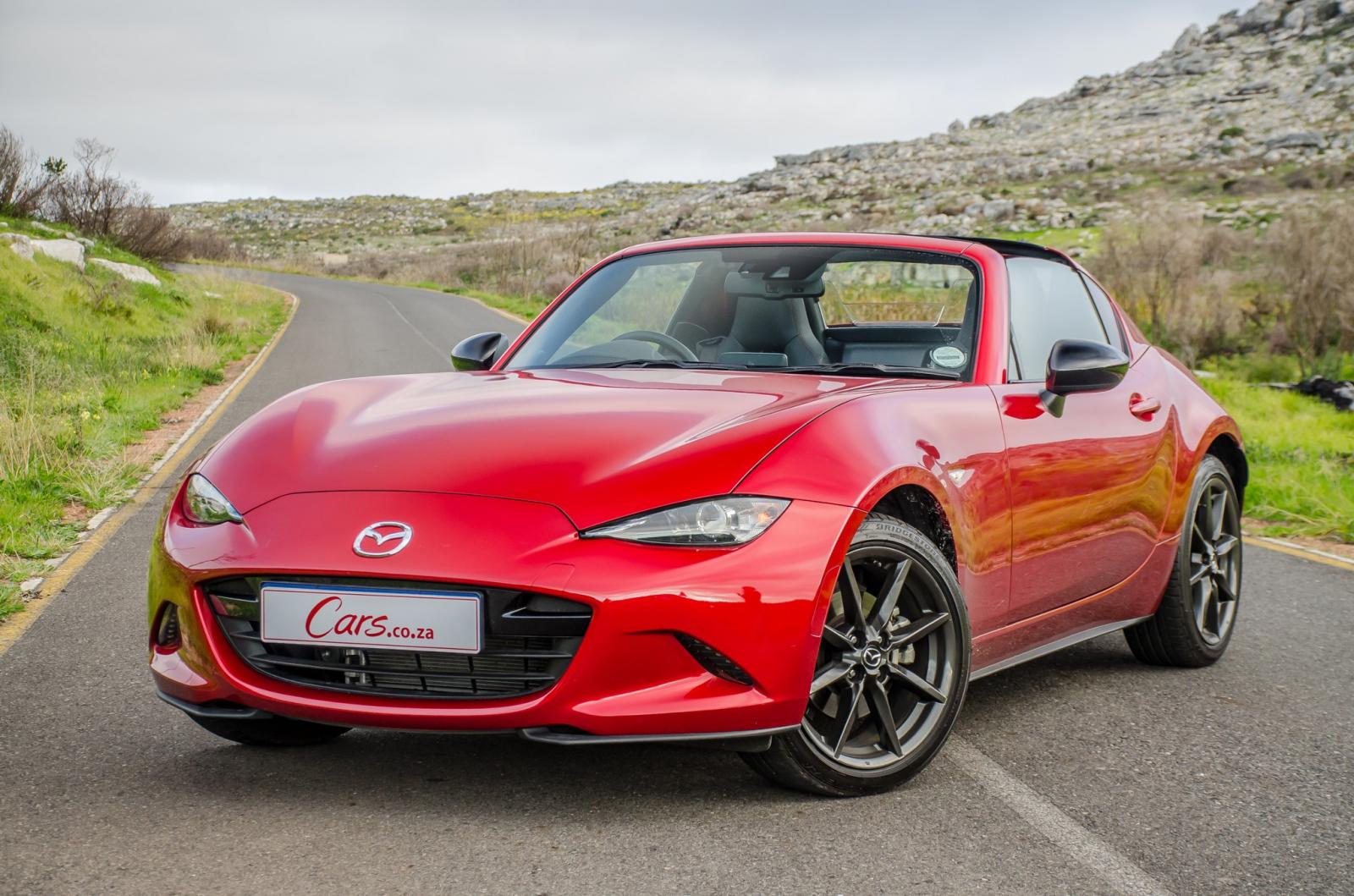
The Mazda MX-5 RF or “Retractable Fastback” was introduced in South Africa earlier this year and we recently tested it to find out if it’s worth considering it over the soft-top MX-5 roadster. Take a look at what the MX-5 RF has to offer…
This review of the Mazda MX-5 RF will provide you with all the need-to-know information if you are considering buying a MX-5 RF.
We like: Stylish design, fun-factor, interior design and features
For similar kicks: Consider the Abarth 124 Spider. Priced from R649 900, it’s a fair whack more expensive than the MX-5 RF and it’s a manual. It does, however, offer more power and torque than the MX-5 RF with 125 kW and 240 Nm of torque from its turbocharged 1.4-litre engine.
For more power: Consider the Toyota 86 2.0 High automatic priced at R519 400. The 86 delivers similar rear-wheel drive thrills to the MX-5 RF but offers 147 kW and 205 Nm of torque from its naturally aspirated 2.0-litre engine.
The MX-5 RF is only offered in automatic guise in South Africa and costs some R91k more than it’s soft-top sibling.
The Mazda MX-5 roadster is a loveable sportscar that’s designed to deliver a fun and engaging driving experience at an accessible price point. It is for this very reason that the MX-5 is adored by enthusiasts the world over and it’s part of the reason why the MX-5 has become an icon in its own right. A key ingredient in the MX-5’s success story is its short-shift manual transmission, which is one of the best transmissions available and contributes greatly to the overall MX-5 driving experience.
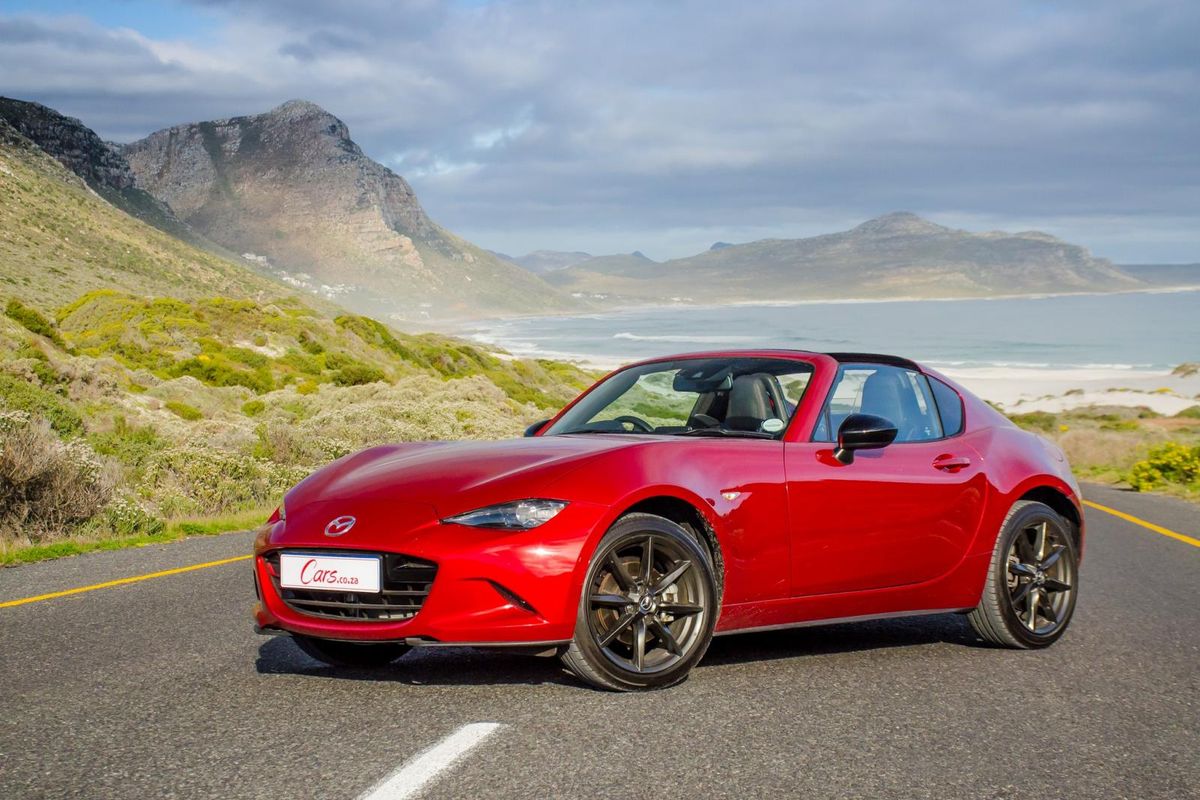
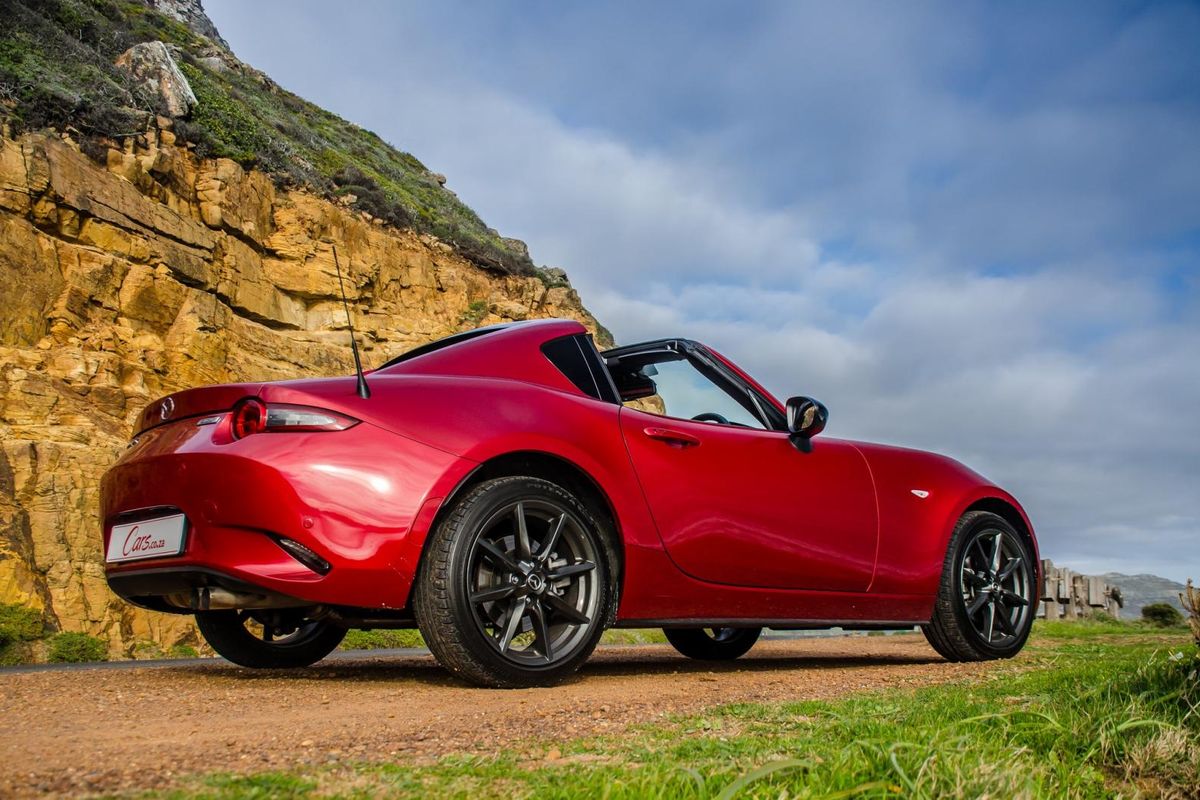
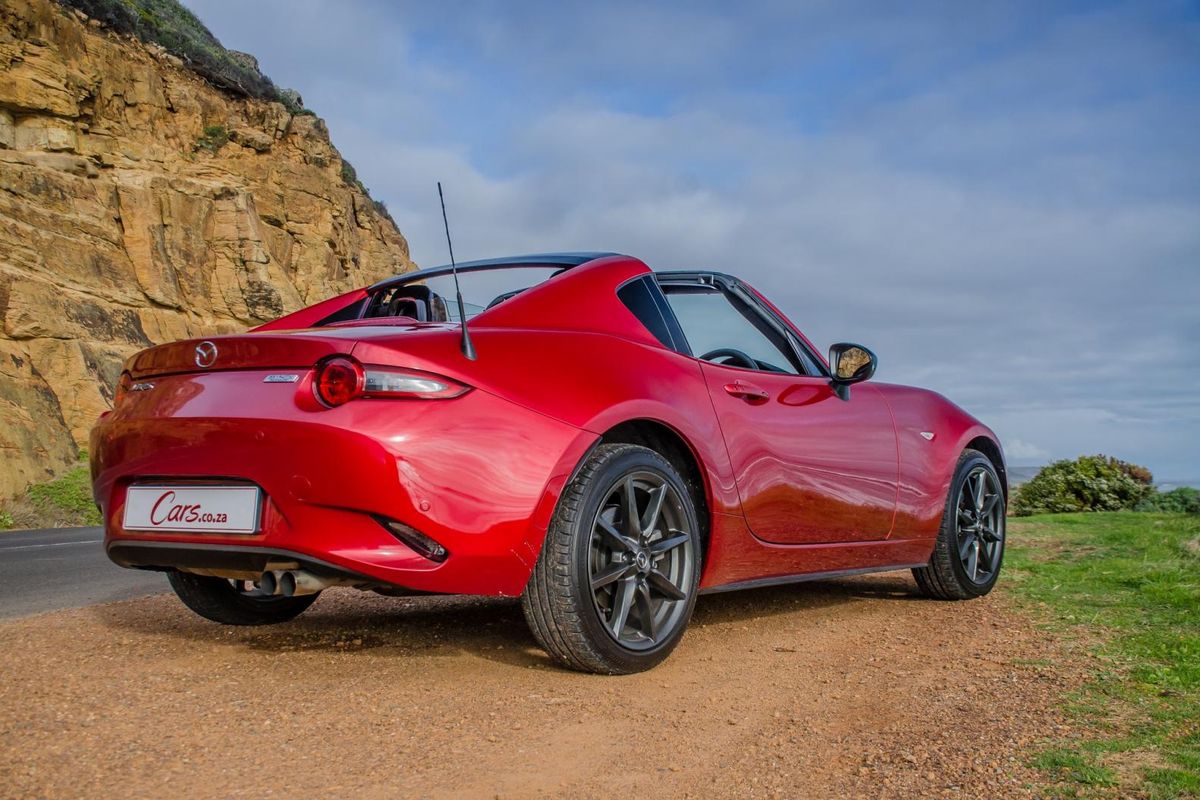
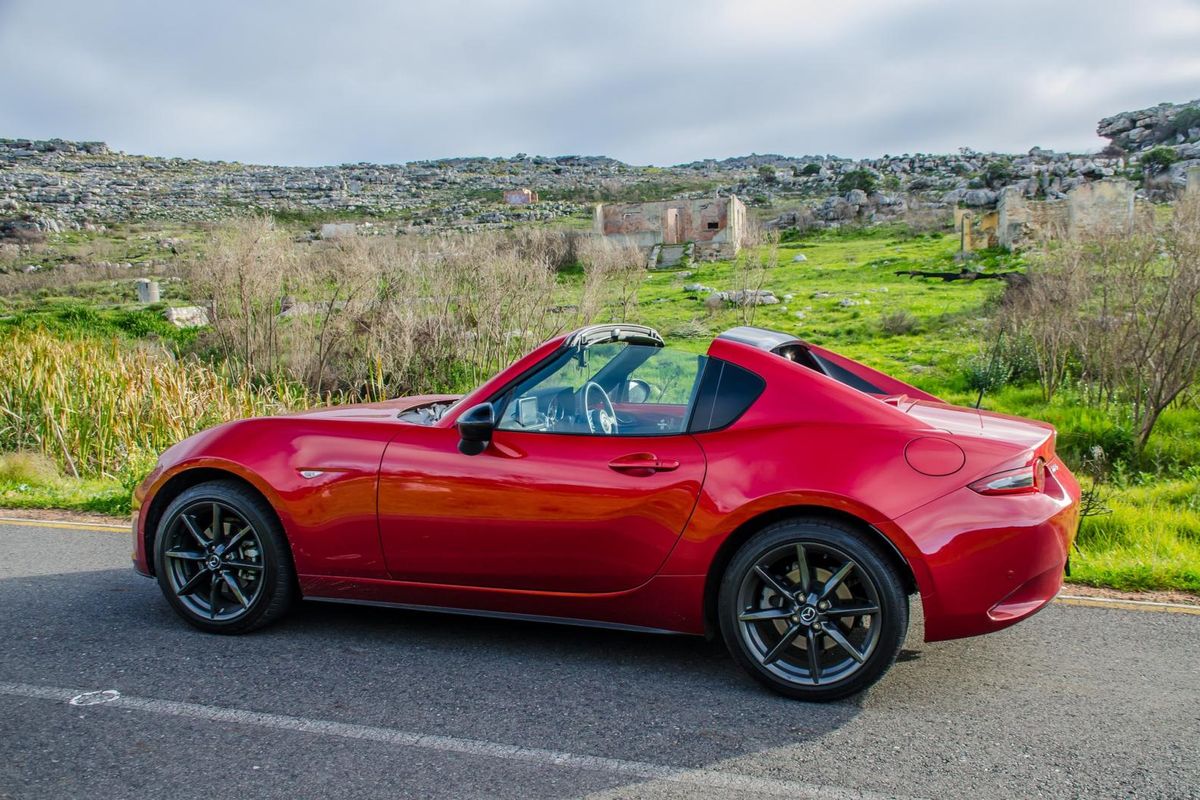
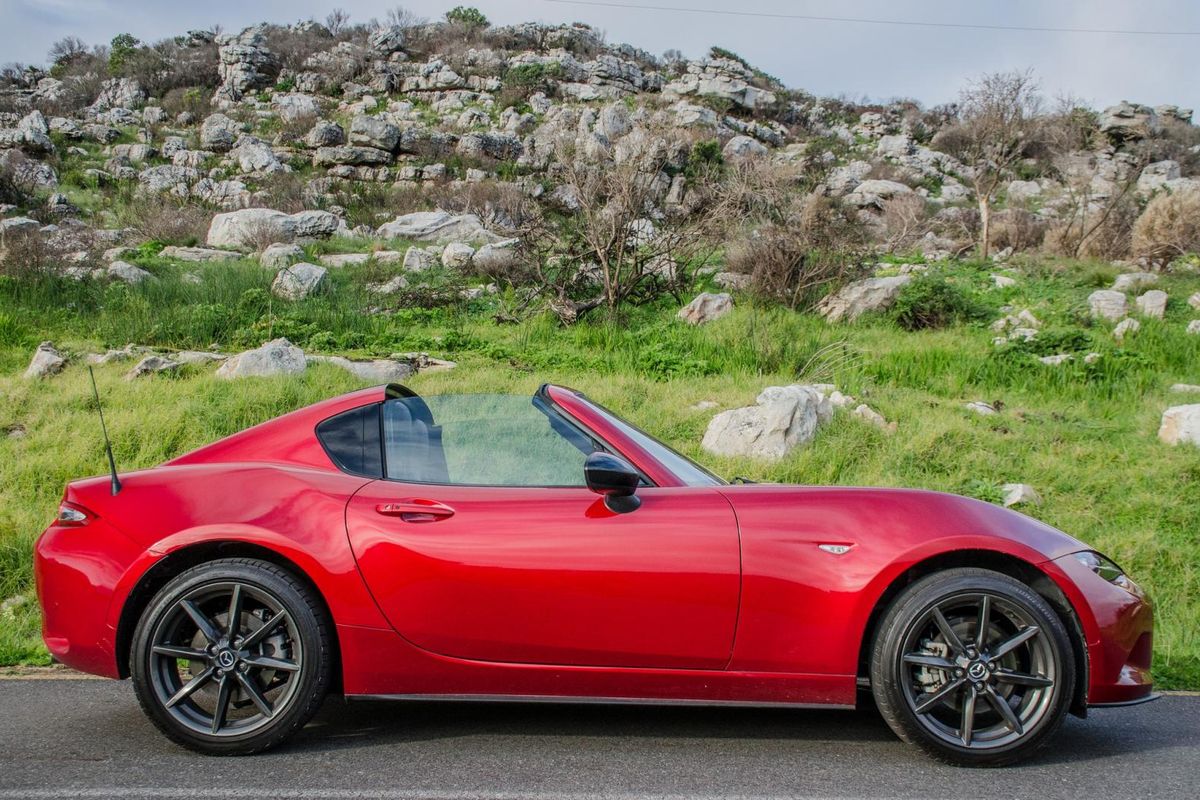
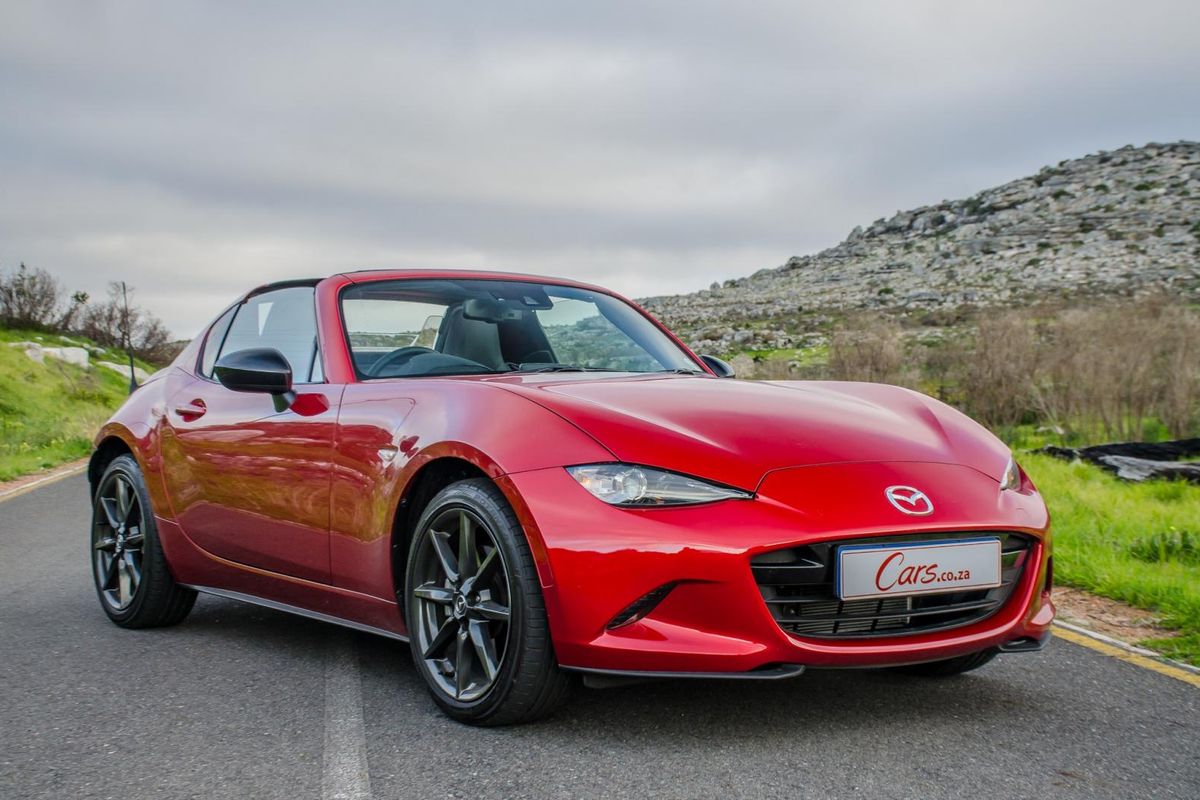
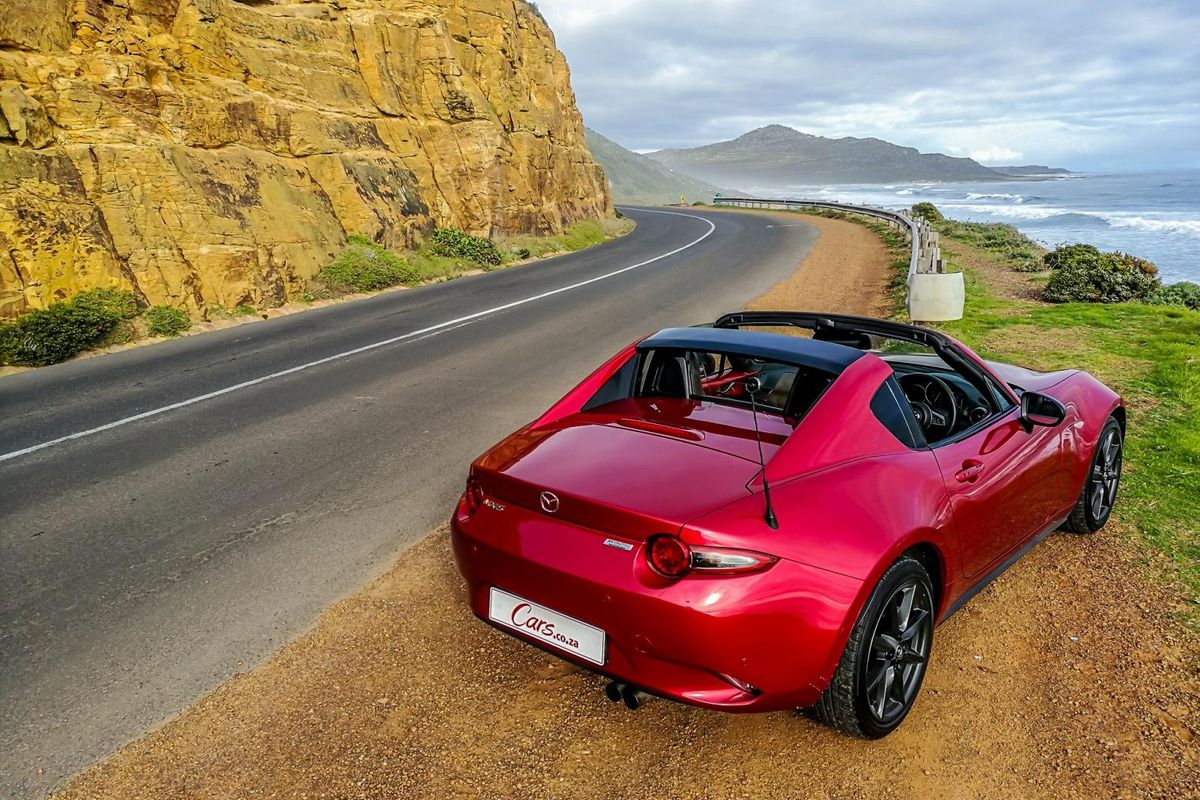
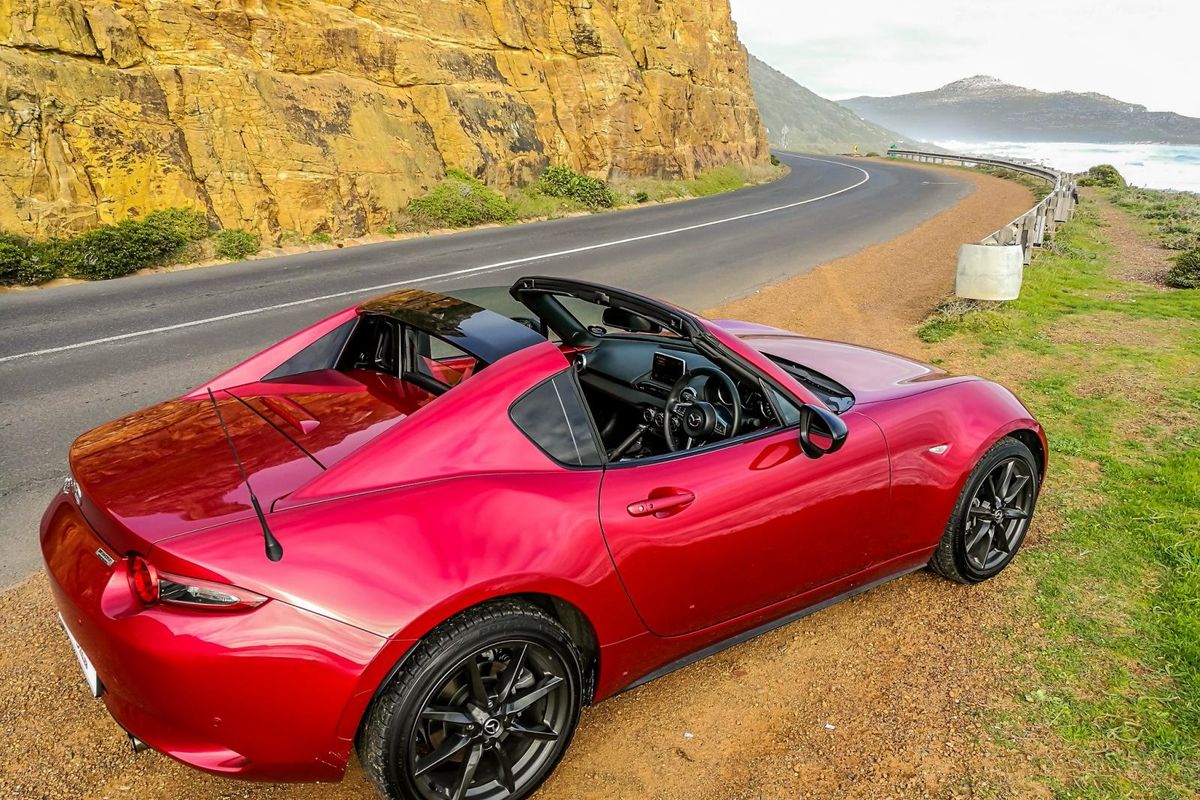
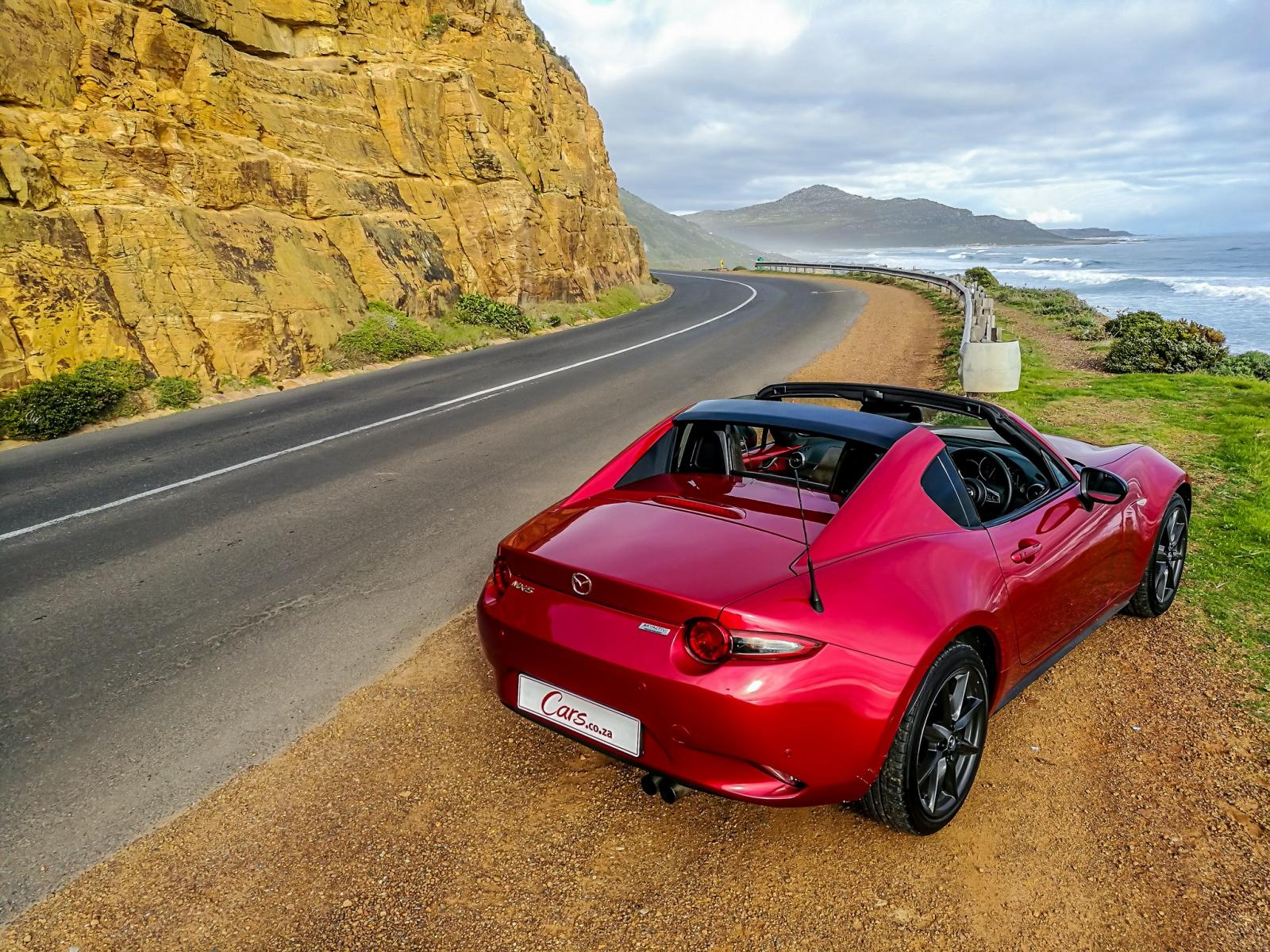
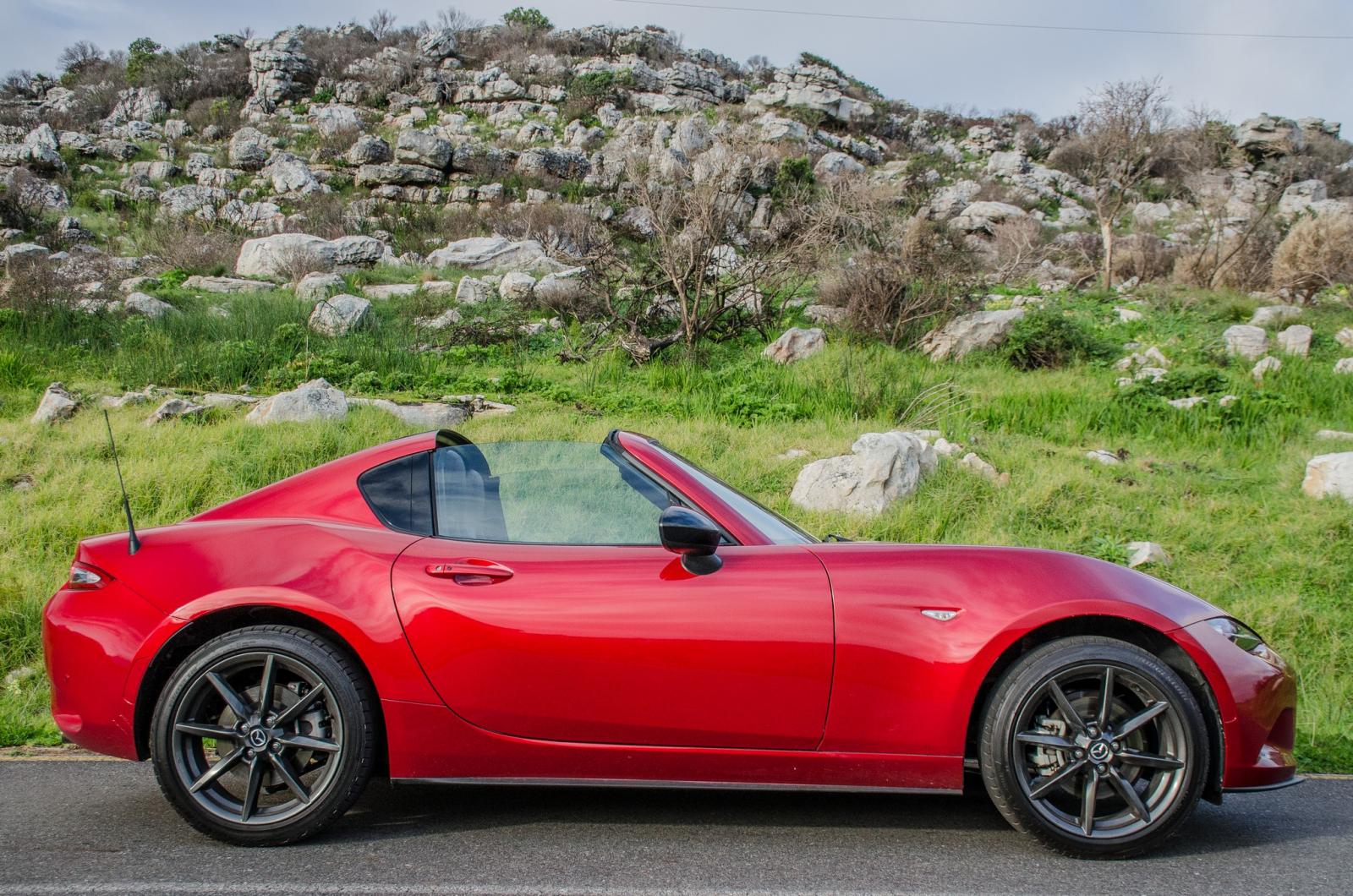
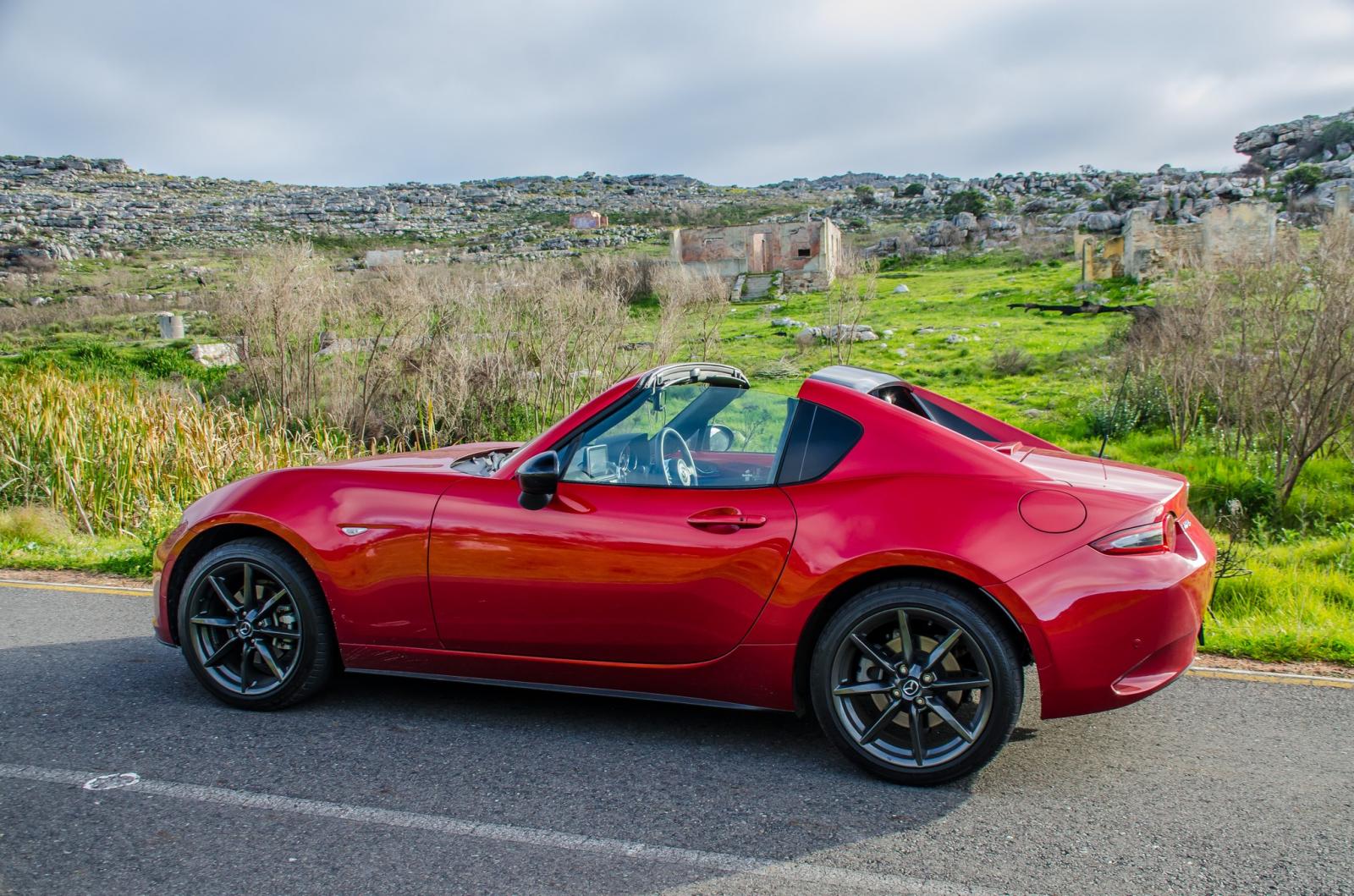
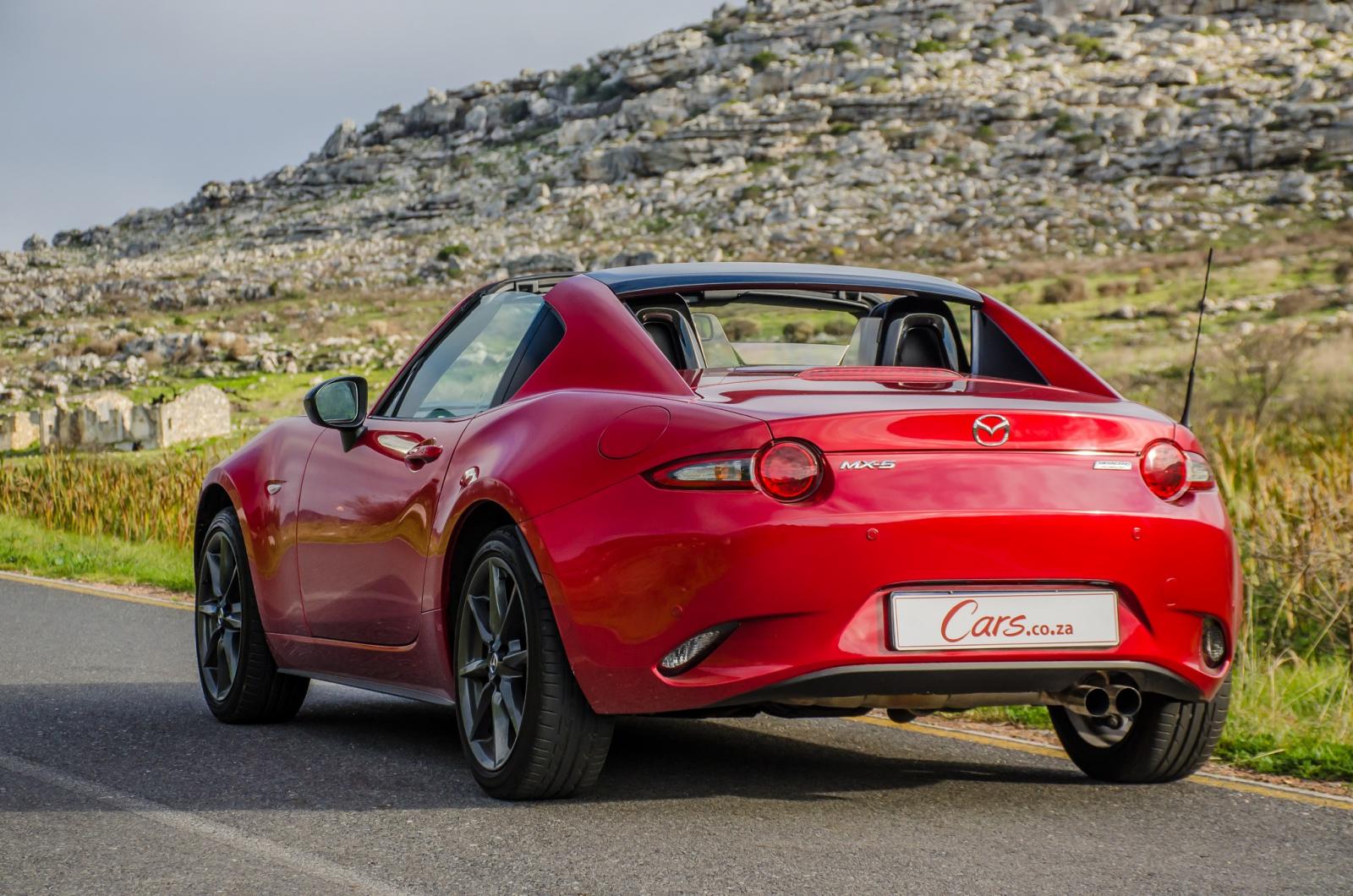
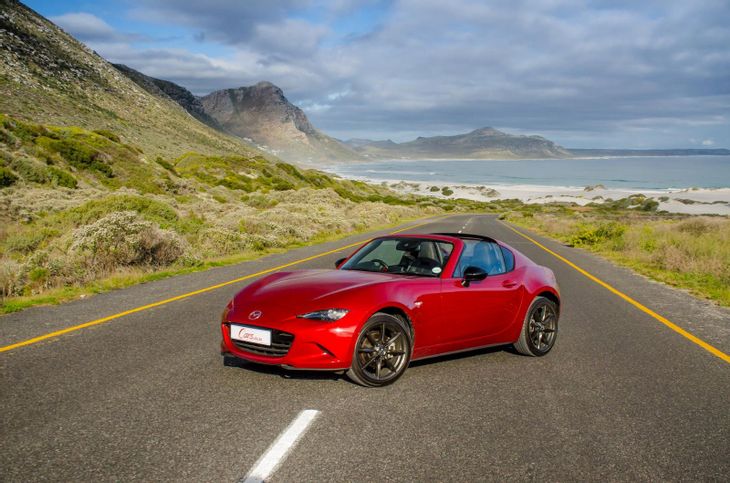
Where the standard MX-5 roadster coupe has a manually deployable fabric roof, the MX-5 Retractable Fastback (RF) has an electrically retractable hardtop. With much of the roof structure still in place once the roof is open, the MX-5 RF actually takes on a targa body style and it actually looks very attractive as a result. In South Africa, however, the MX-5 RF is only offered with a 6-speed automatic transmission and the MX-5 RF is just over R91k more expensive than its manual soft-top sibling. Is this MX-5 RF automatic worth the additional outlay over the standard manual MX-5?
Low and compact, the MX-5’s proportions are appealing and this RF version with its hardtop roof is somewhat more sophisticated to the eye and sits some 15 mm lower than the soft-top MX-5. The targa-style roof seems to garner more interest from onlookers too. By pressing and holding a switch in the cabin, the roof can be retracted in about 13 seconds at speeds up to 10 kph, according to Mazda.
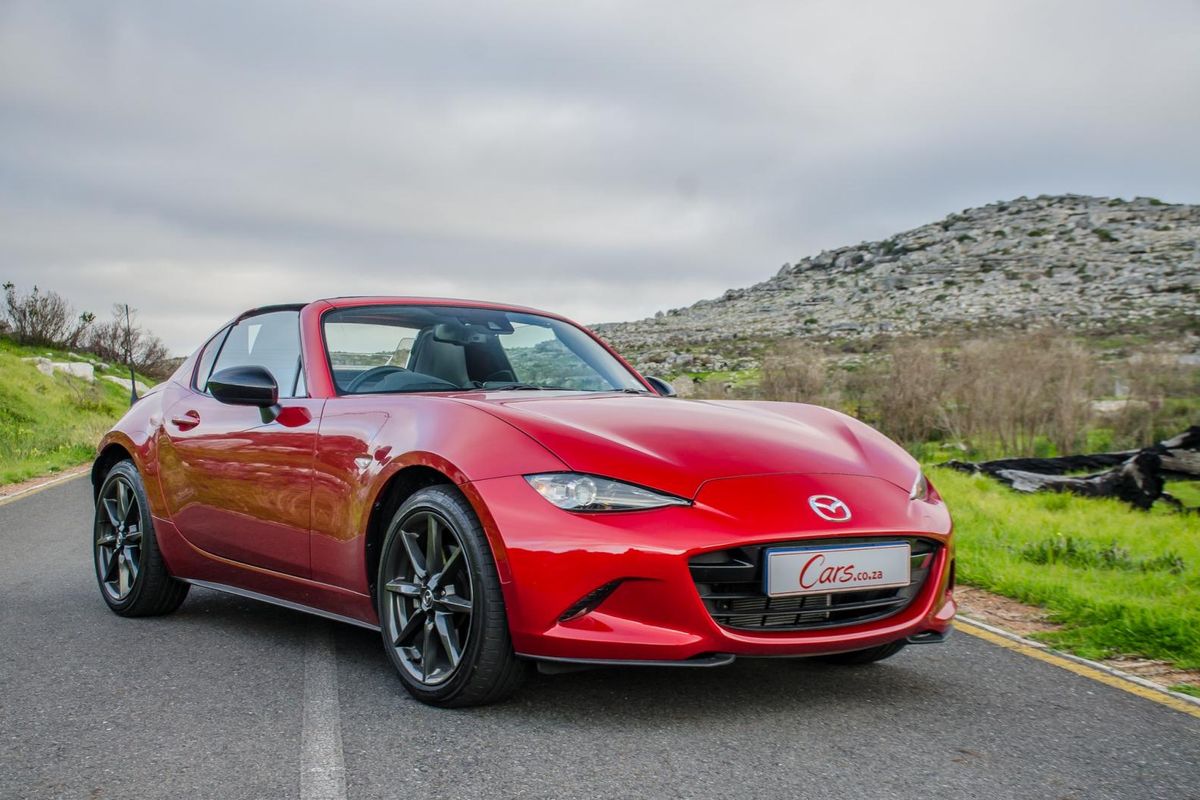
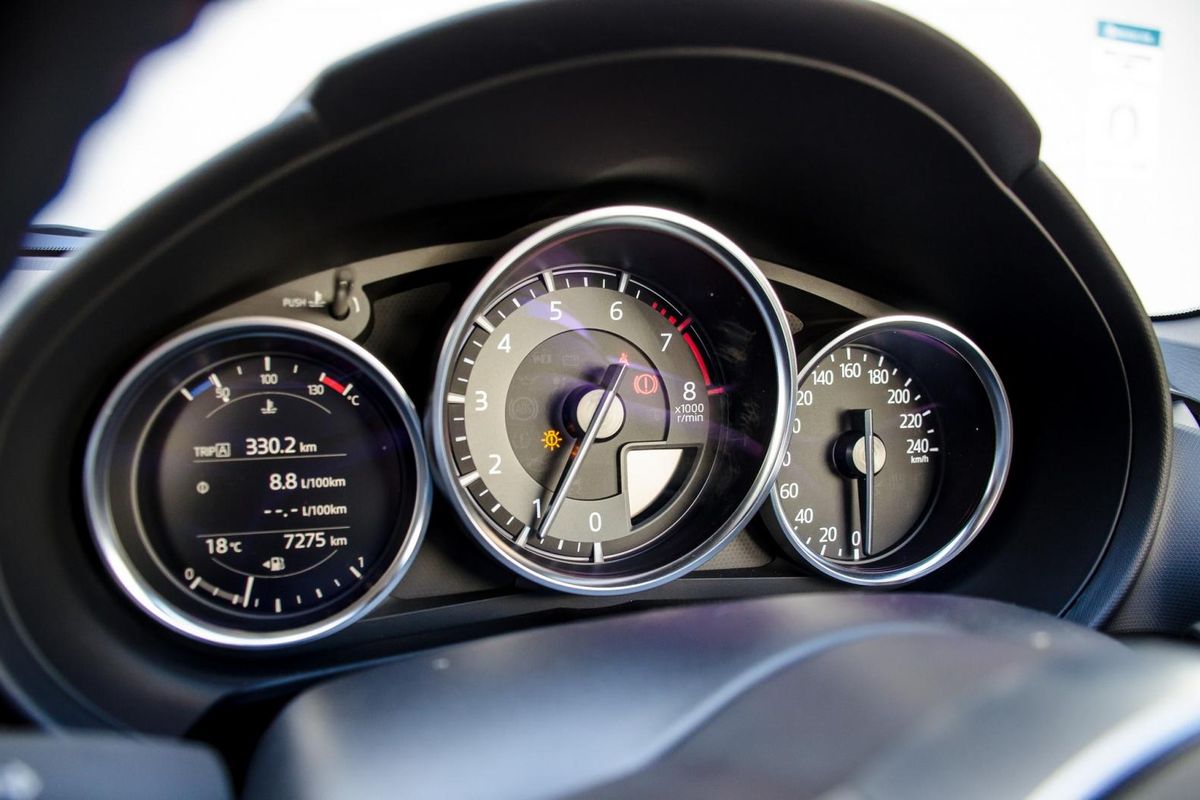
A meter display animation appears in the instrument cluster indicating when the roof operation is complete. Compared with its soft-top sibling, the RF’s cabin is also more insulated and quieter while on the move with the roof in place. From a styling perspective, the MX-5 RF looks good, especially with the tantalising Soul Red Metallic paintwork, but we don’t think it’s necessarily better-looking than its soft-top sibling. You be the judge…
Performance
The MX-5 RF boasts good looks and in automatic guise, is perhaps not as entertaining as the manual driven MX-5.
The MX-5 RF is powered by a high-revving naturally aspirated 2.0-litre petrol engine that offers up 118 kW and 200 Nm of torque. In the case of the RF, power is sent to the rear wheels using a 6-speed automatic transmission. Now, those numbers may not look significant, but when you consider that this MX-5 RF version weighs only 1 126 kg, some 51 kg more than its soft-top sibling, it has more than enough shove for overtaking and is particularly fun to drive on a winding country road.
You have to get the revs up high to get the most out of the MX-5 RF and although acceleration feels brisk, it’s not fast. Mazda claims a 0-100 kph sprint time of 8.6 seconds with a top speed of 194 kph. It’s worth noting that the RF is a fair bit slower than the manual MX-5 (7.3 sec/214 kph). With a steady power feed, the automatic transmission works quite well in getting through the gears, but when driven harder, it’s not as responsive as we hoped it would be.
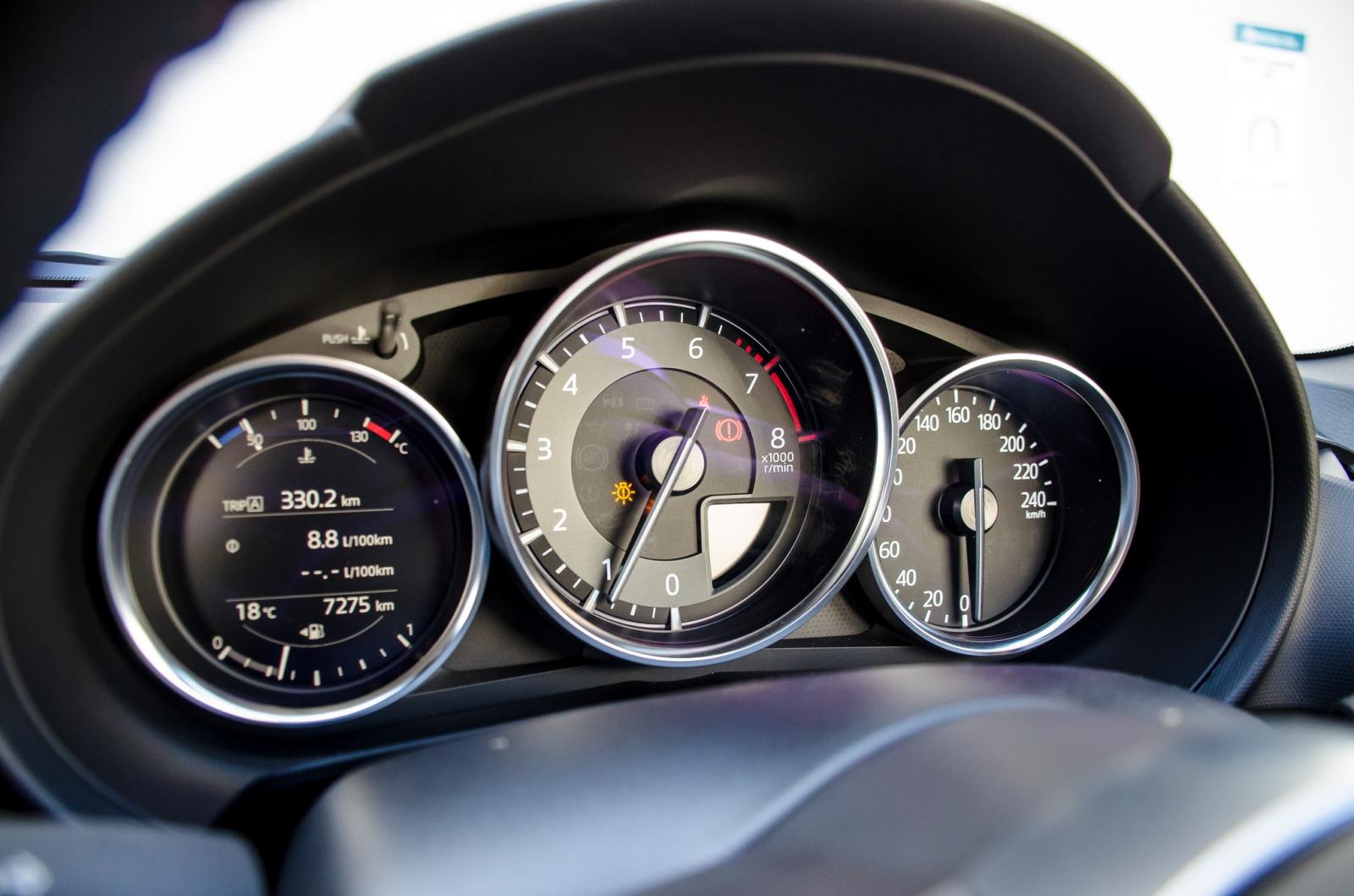
In terms of fuel consumption, Mazda claims a fuel consumption figure of 6.7 L/100km and during our test we averaged in the region of 8.8 L/100km.
Mazda MX-5: Handling and engagement
Fun to drive, easy to love, the MX-5 RF delivers engaging handling dynamics that can be enjoyed on your favourite mountain pass.
The MX-5 shines in terms of handling dynamics and this MX-5 RF is no different. We took the RF for a long drive around the Cape Peninsula and it had no issues diving into corners at pace. The steering is well-weighted and responsive, giving you a good idea of what the wheels are doing and you can have a lot of fun throwing it around in the bends. Coupled with a low driving position, the MX-5 RF offers an engaging drive and you very much feel like you are driving the car as opposed to it driving you, and therein lies the major attraction of the MX-5. Even in automatic guise, this MX-5 is still loads of fun to drive, but perhaps a little less involving compared with its manual sibling.
The suspension is on the firm side and considering the sporty nature of the vehicle, it’s a good thing. However, more severe imperfections in the road send jolts through the cabin and the ride quality deteriorates on poorer surfaces.
Simple, attractive interior
The interior is not very spacious and taller drivers may find it difficult to find the perfect driving position.
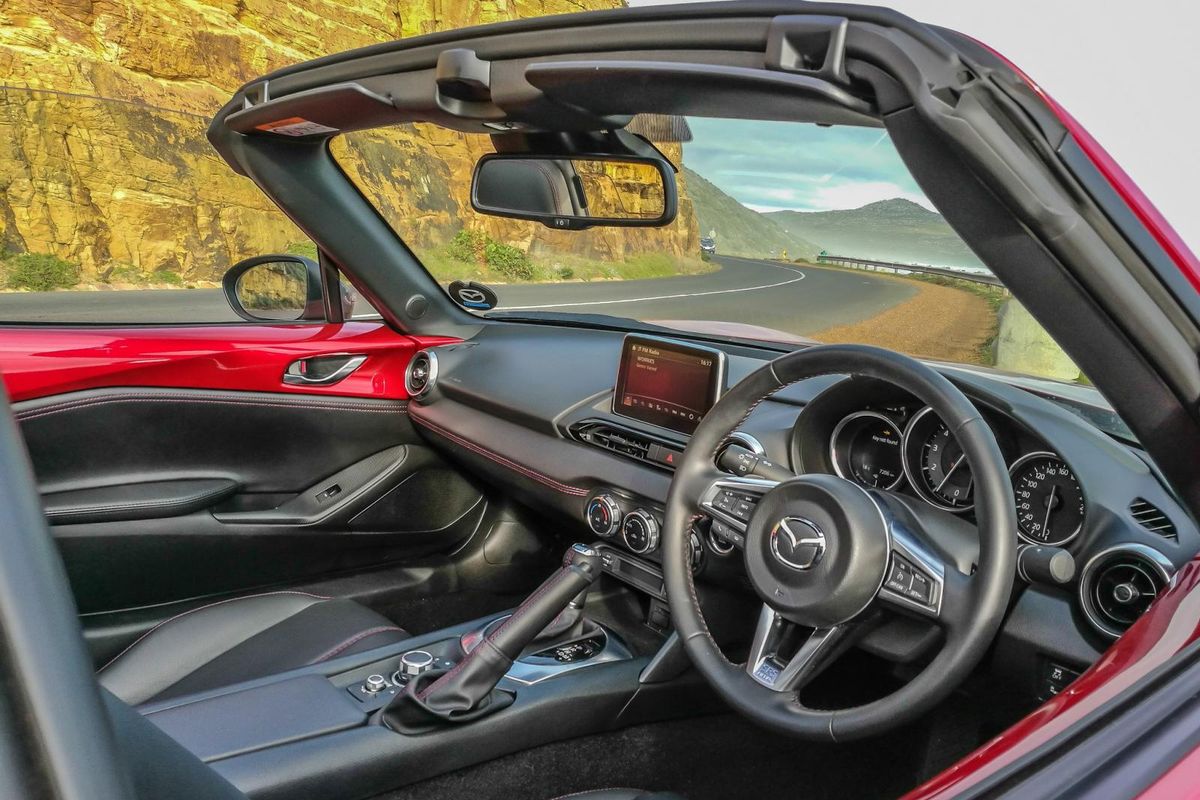
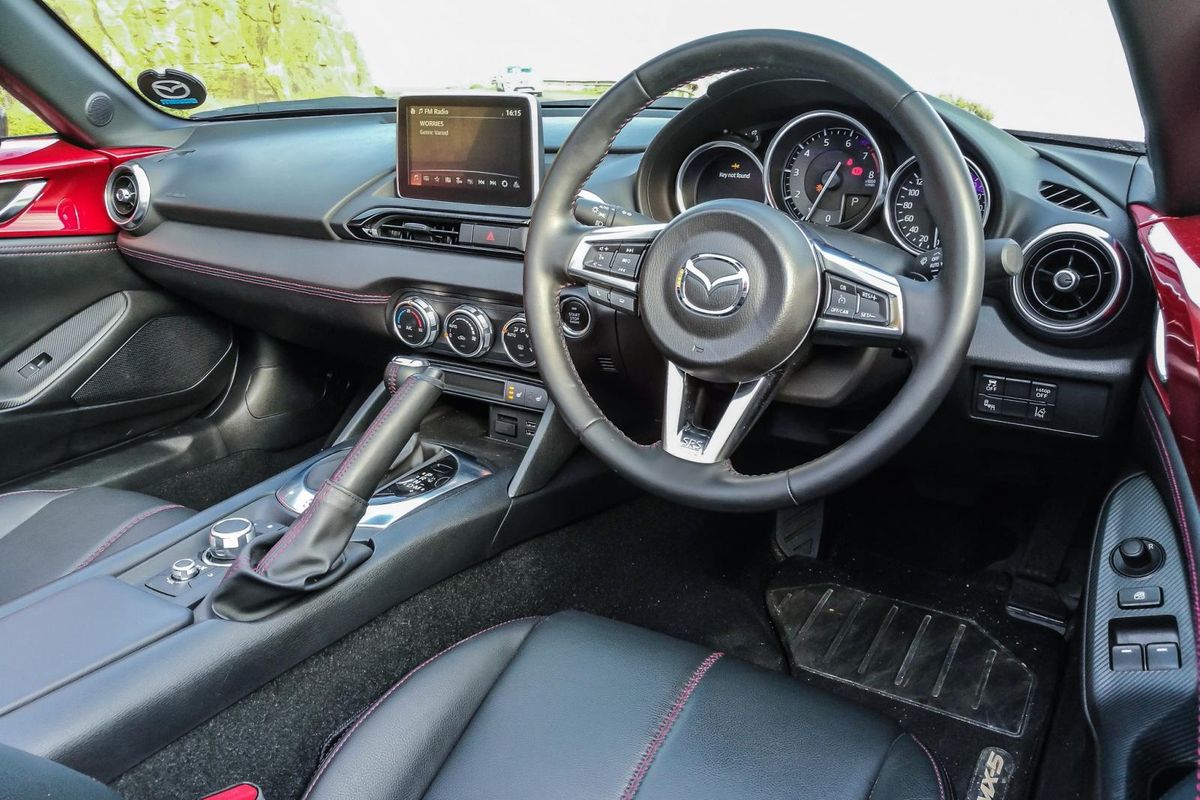
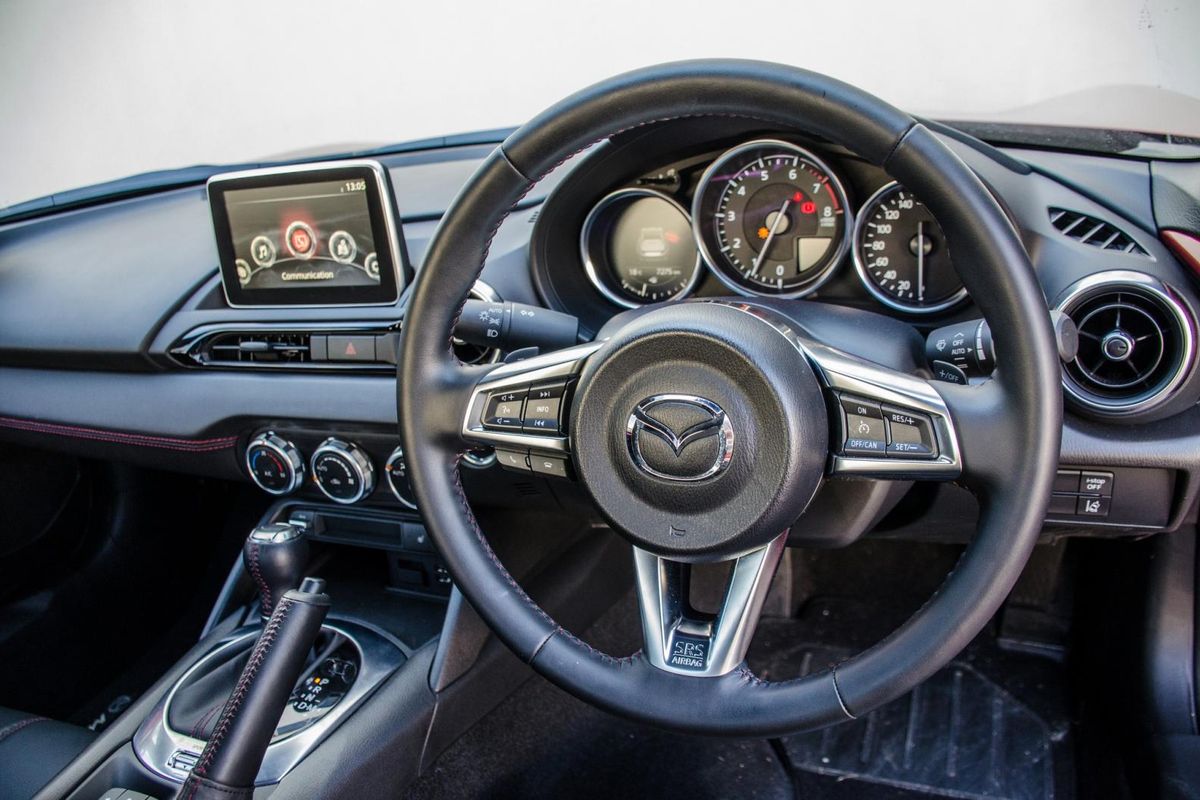
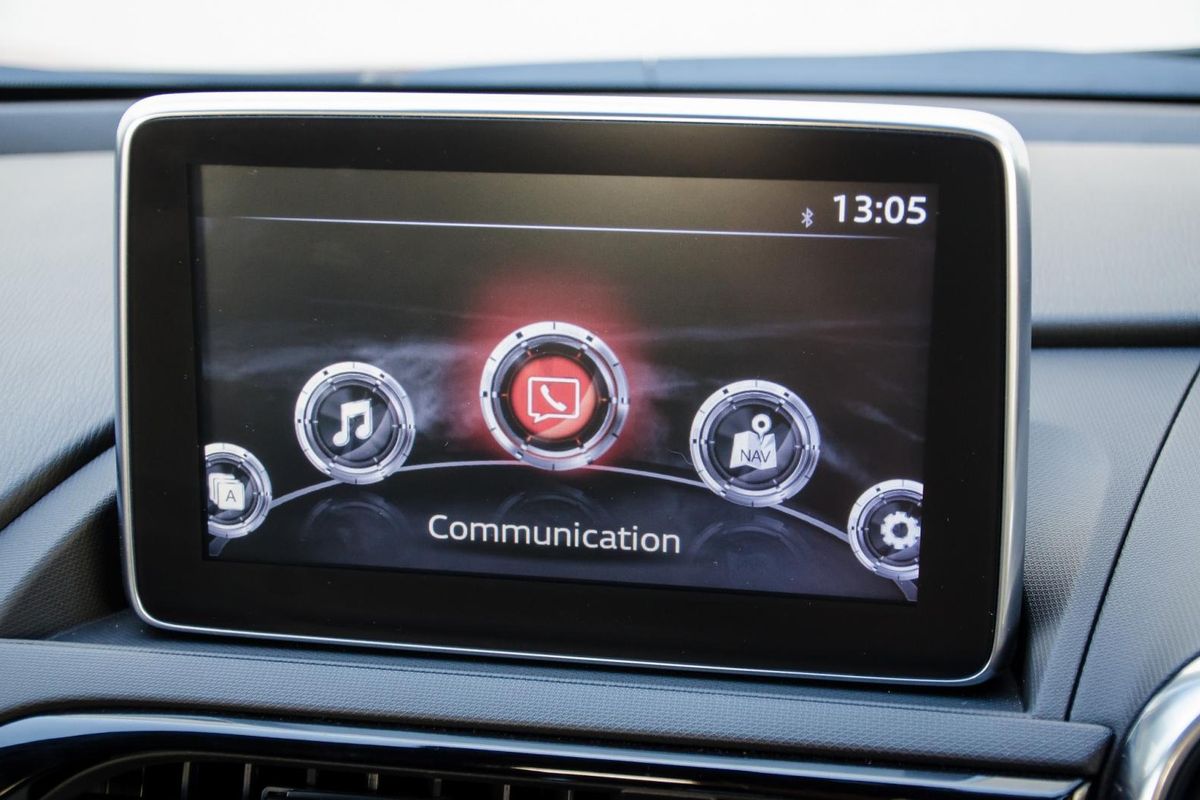
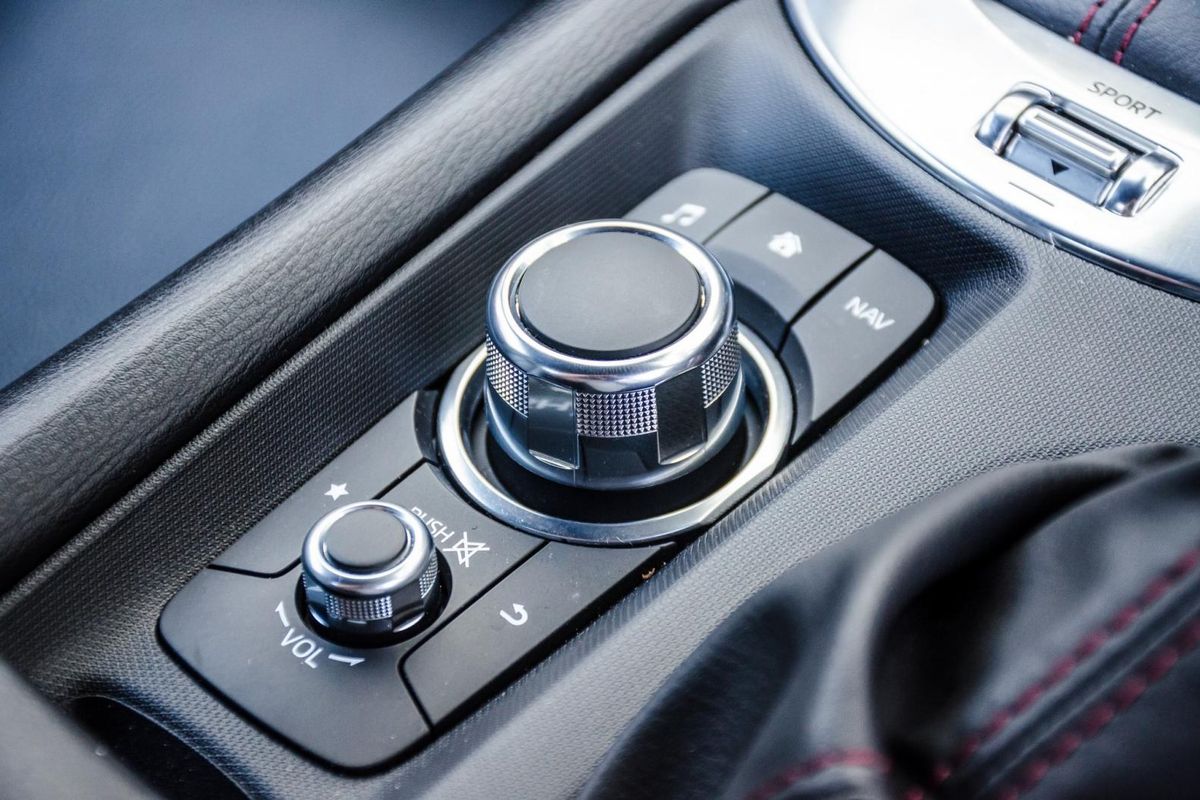
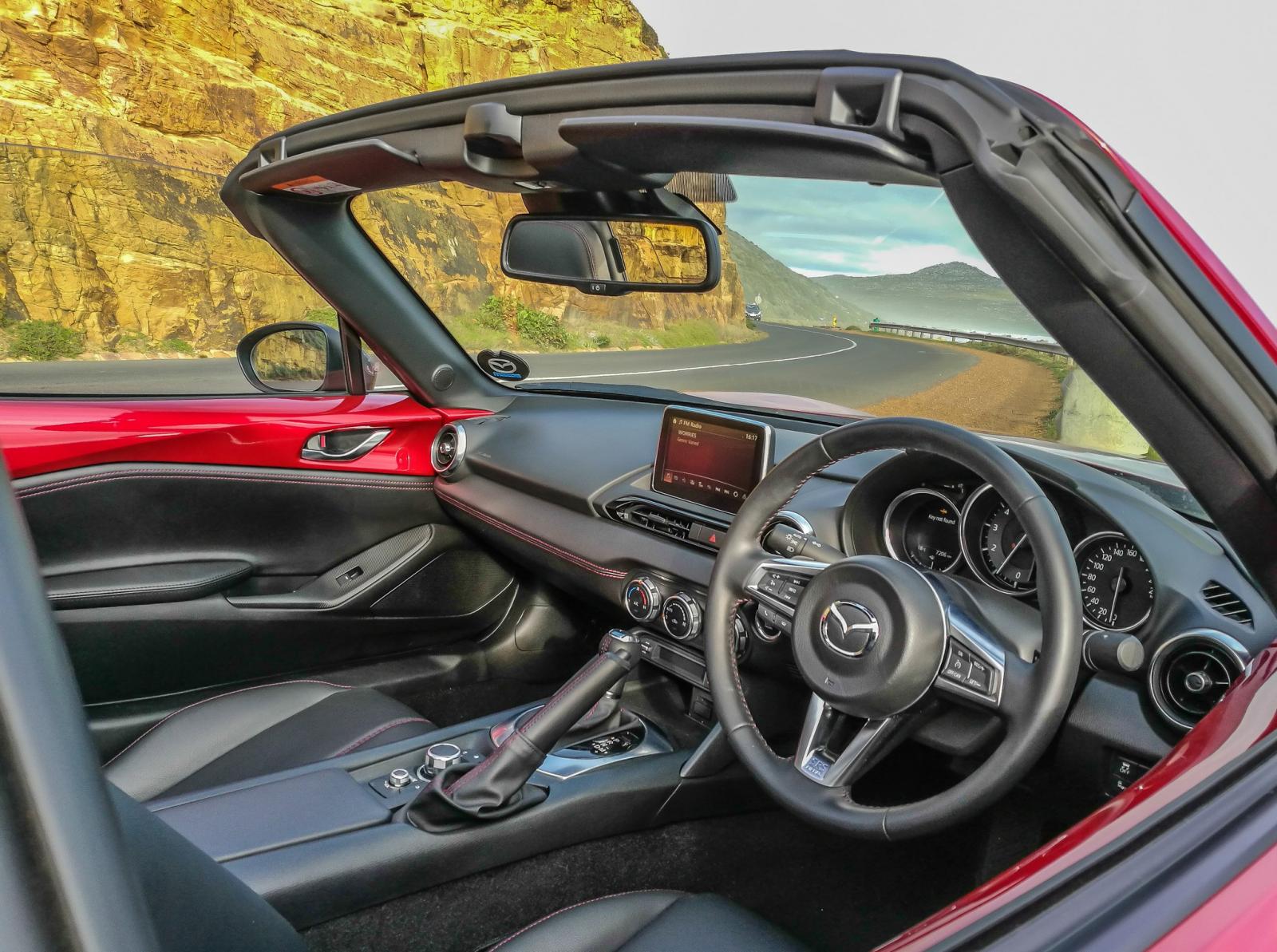
A simple approach to interior design is often the most effective and this is the case inside the MX-5 RF. The design and layout of the interior suits the style of the RF to a tee. The interior is predominantly black and the quality of the switchgear and general build quality is good. The driver has access to a 7-inch touchscreen infotainment display that offers Bluetooth telephony and navigation. The system’s layout is simple and easy-to-use and the rotary dial controller in the centre tunnel makes it easy for the driver to work the system on the go.
The seats are comfortable and upholstered in leather and features such as climate control air conditioning, heated seats, cruise control and a multifunction steering wheel further add to the comfort inside the MX-5 RF. The RF is not short on safety features either and comes equipped with 4 airbags, ABS with EBD, brake assist, stability control with traction control, hill launch assist, lane departure warning and blind spot monitoring.
The not-so-good
Automatic blues
The automatic transmission, although good, detracts from the much-loved character of the manual driven MX-5.
For a car that’s supposed to offer high levels of driver engagement, an automatic transmission, to an extent, does the MX-5 RF a disservice. It’s not that the automatic transmission is bad, it just lacks the involvement offered by the manual MX-5. The MX-5, traditionally, is a car that demands driver involvement, but with the automatic transmission, the driver can’t really attain the same level of involvement and driving pleasure. The mounted paddles are no substitute for the excellent short-shift manual transmission. We can’t help but wish the MX-5 RF was offered with the manual ‘box.
Severe wind noise
Wind noise is severe when travelling at speed, but it’s a problem easily solved with a quality BOSE sound system.
Once the roof is down, we found wind noise to be severe, especially when driving at the highway speed limit. Most of the noise originates from the roof structure just behind the driver. A simple conversation with your passenger will turn into a shouting match when travelling at speed with the roof down. To drown out the wind noise, you can turn the volume up on the 9-speaker Premium BOSE sound system, which produces good sound quality – short of slowing to a cruise, that certainly solves the problem…
One size doesn’t fit all
The compact dimensions of the MX-5 RF mean that interior space is tight and tall drivers will struggle to get comfortable –some really tall or larger-framed drivers may not even fit at all. The seats are manually adjustable, but the range of the fore and aft adjustment is minimal.
The steering wheel is also only adjustable for rake. Added to this, sitting only 135 mm from the road, getting in (and out of) the MX-5 RF is a bit tricky and requires a fair amount of abdominal strength.
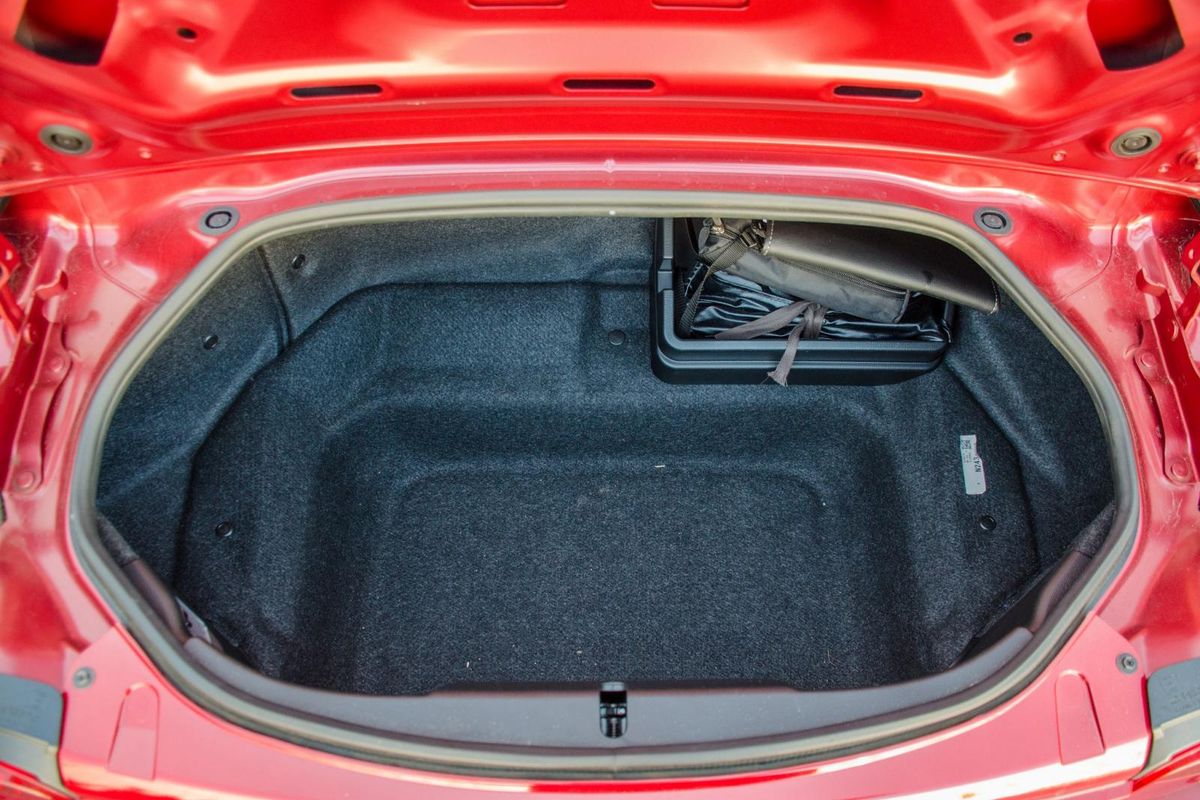
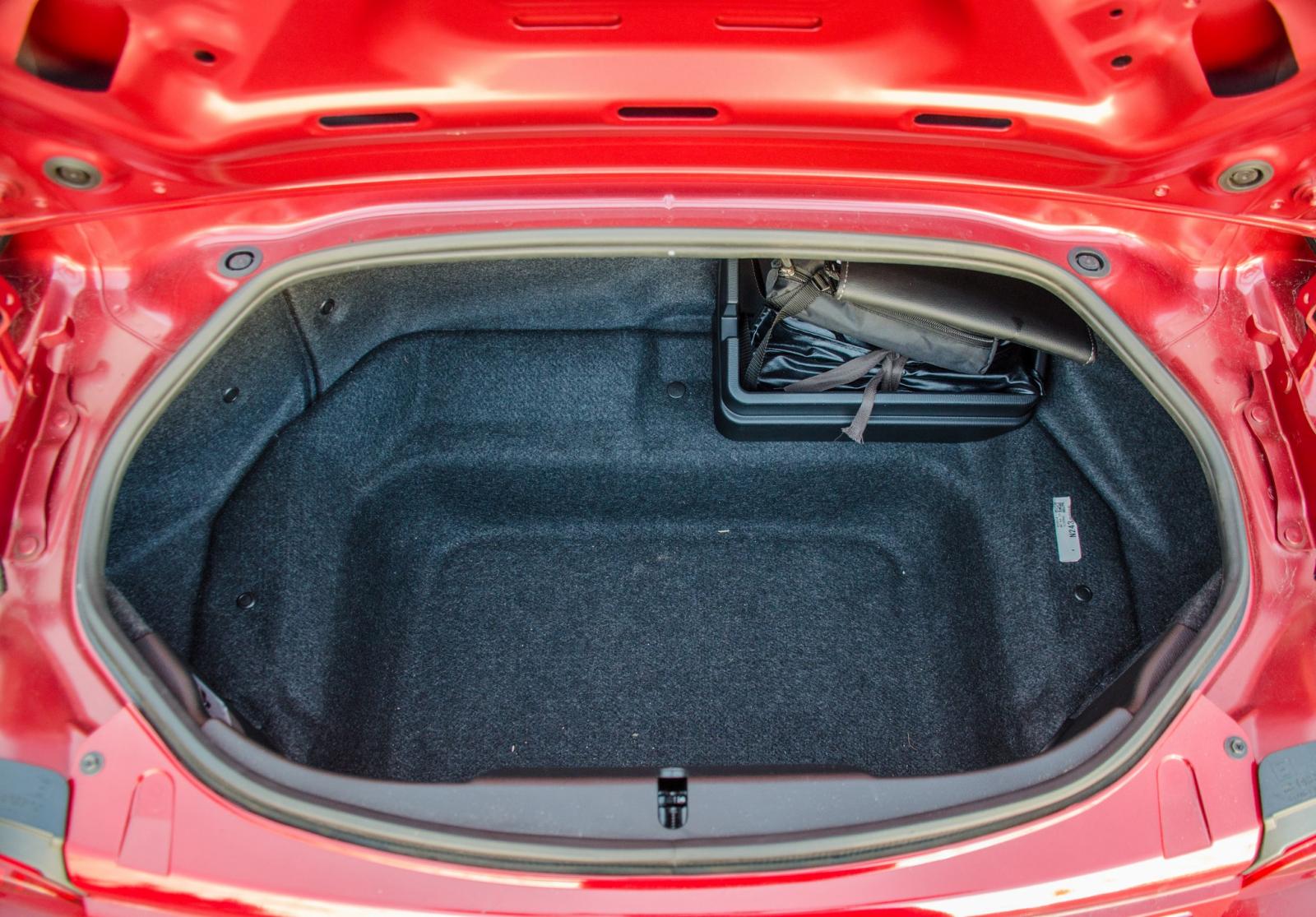
The load bay is small at 127 litres, but only 3 litres smaller than the soft-top MX-5.
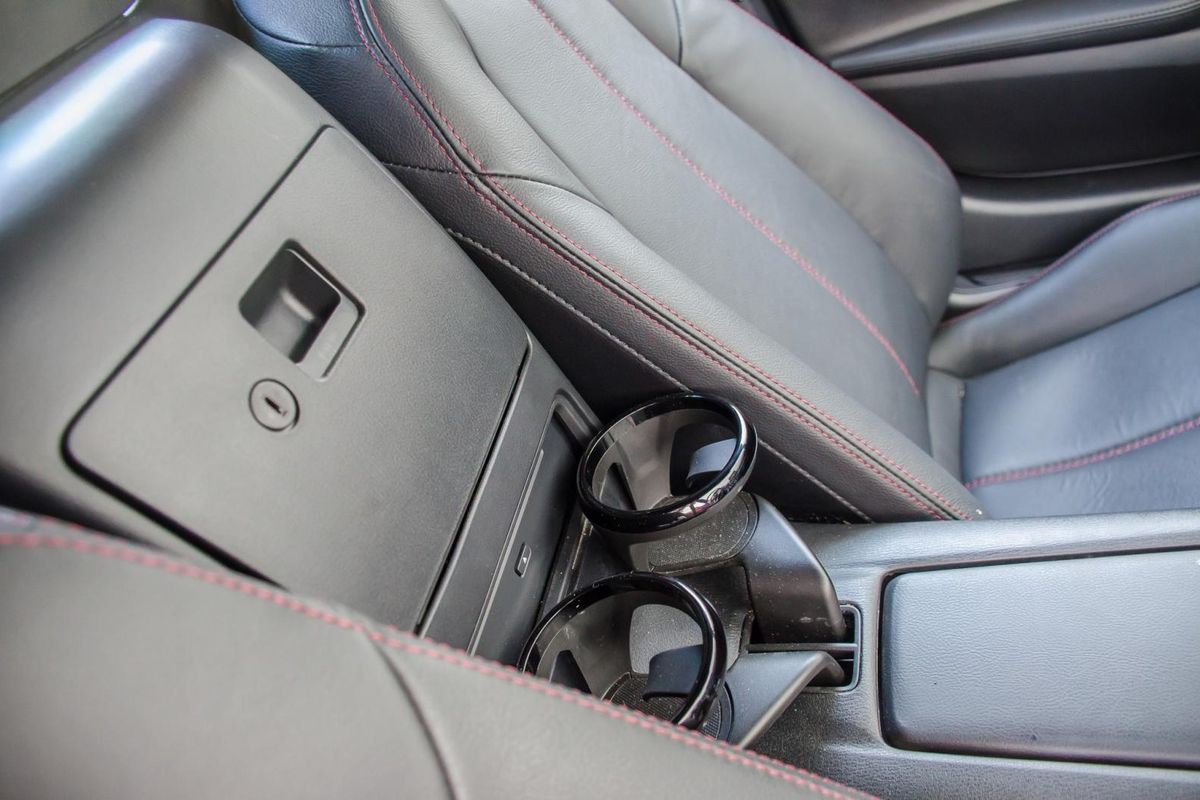
Inside the MX-5 RF, storage space is quite limited. There’s no glove box in the dashboard but there is a lockable storage compartment between the 2 seats, where oddly, you will also find a CD loader!
There is also a bracket-style cup holder between the seats that can accommodate 2 cups or bottles. Small storage areas are found in the centre console and ahead of the gear lever, but that’s it – there are no storage pockets or bottle holders in the doors either.
The luggage bay is small (127 litres) and it’s only big enough to fit a pair of small bags or the day’s shopping. As you may have gathered by this point in the write-up, the MX-5 RF is not very practical and potential buyers will have to consider these issues before making a buying decision.
Mazda MX-5 RF: Price and warranty (2017)
The Mazda MX-5 RF is priced at R532 800 and is sold with a 3-year/unlimited km warranty and a 3-year/unlimited km service plan. Service intervals are set at 15 000km.
The MX-5 RF will appeal to those with a penchant for style, but for the ultimate MX-5 experience, the manual MX-5 still rules.
Yes, practicality is not the MX-5’s strong point, but buyers will be well aware of – and unperturbed by – that fact. It’s undeniably a stylish package and there is much to like about this MX-5 RF automatic, even if its appeal is somewhat eroded by its lofty price tag. There is enough performance available for driving enthusiasts to enjoy themselves, but most purists will probably find the automatic RF less entertaining than its manual sibling.
The MX-5 RF will, therefore, appeal to buyers who want to own a sportscar with head-turning appeal first and foremost. For those seeking the traditional roadster experience, the manual soft-top is not only cheaper, but offers a more entertaining drive with its manual transmission. Compared with hardtop roadsters such as the Mercedes-Benz SLC and BMW Z4, the MX-5 RF is like a palate-cleansing sorbet. Those who get it will love it.
What engine is available in the Mazda MX-5 in South Africa?
The Mazda MX-5 is powered by a 2.0-litre, naturally aspirated petrol engine that produces 118 kW and 200 Nm of torque. It is typically paired with a 6-speed automatic transmission in the South African market, although some models have been sold with a manual gearbox.
Is the Mazda MX-5 a good sports car?
The Mazda MX-5 is considered one of the best affordable sports cars on the market. It is praised for its lightweight design, rear-wheel-drive configuration, and balanced handling, which prioritize the driving experience over outright speed. It is a popular choice for driving enthusiasts and is often a top seller in its class.
Does the Mazda MX-5 come with a service plan and warranty in South Africa?
Yes, all new Mazda models, including the MX-5, come with a 5-year/unlimited-kilometre warranty and a 5-year/unlimited-kilometre service plan in South Africa. This provides comprehensive coverage and peace of mind for owners.
What are the main competitors of the Mazda MX-5?
The Mazda MX-5 competes with other compact sports cars, but due to its unique combination of price, rear-wheel drive, and convertible top, it has few direct rivals. Its closest competitors include the Toyota GR86, Subaru BRZ, and potentially entry-level premium sports cars like the BMW Z4 or Porsche 718 Boxster.
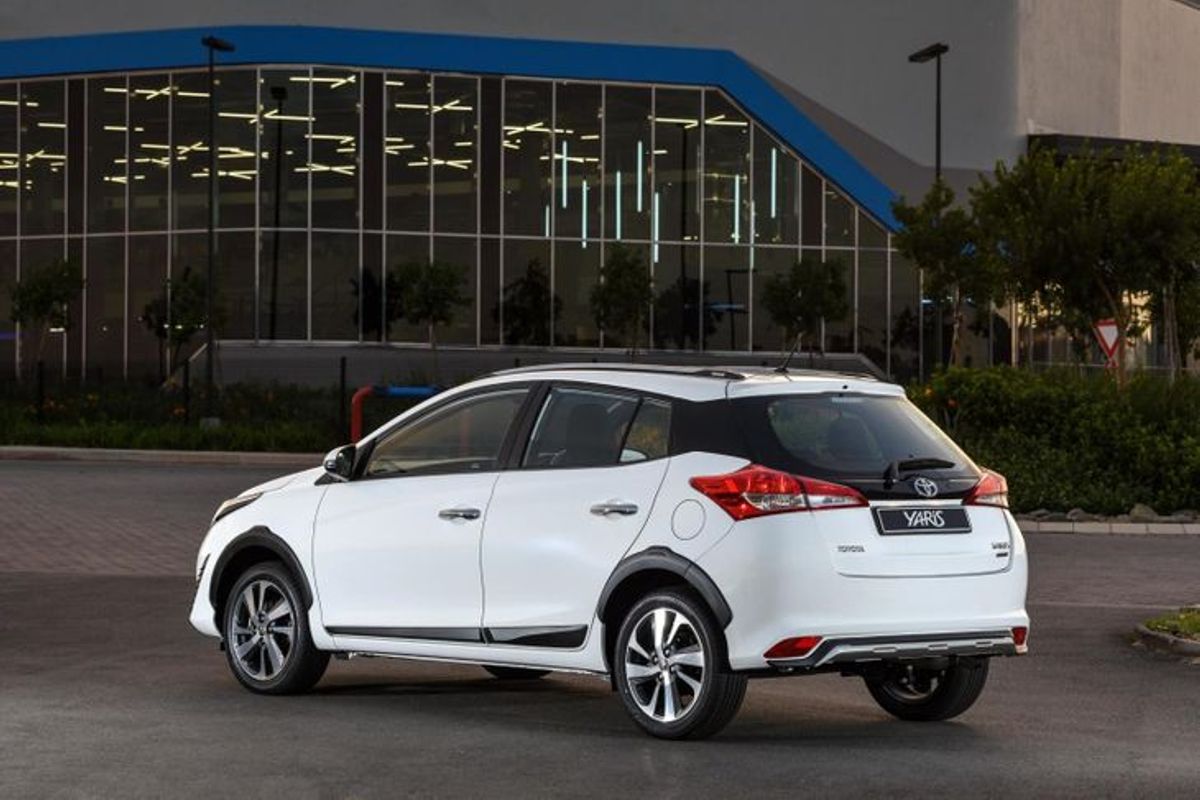
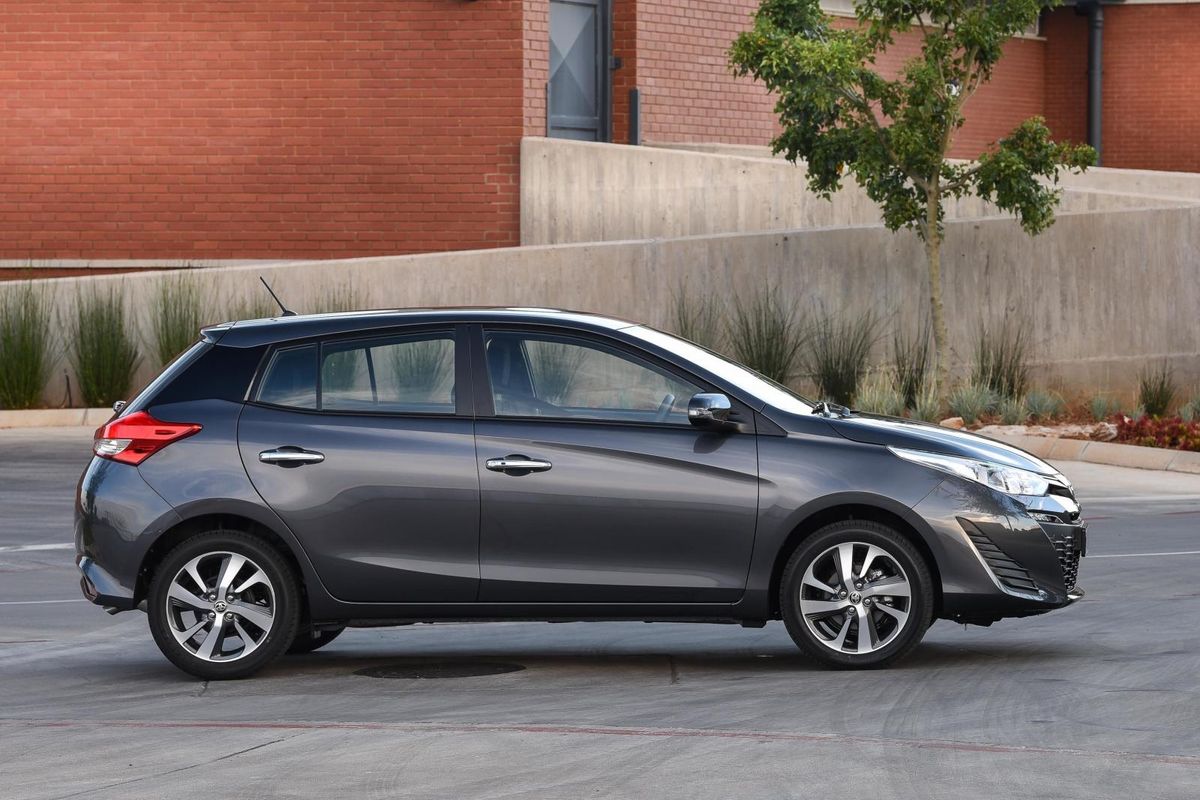
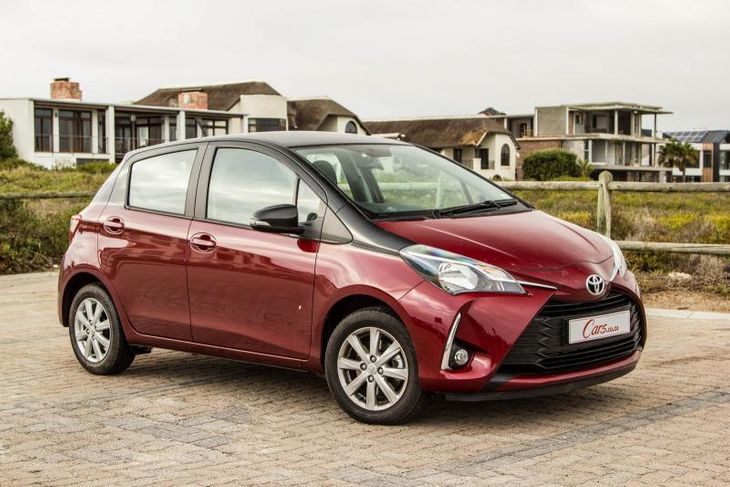
Toyota has refreshed its Yaris for the 2017 model year. While cosmetic changes were expected, an all-new powerplant has made its debut and it bucks the "turbocharged downsized engine" trend. We test the all-new Toyota Yaris in 1.5 Pulse specification.
We like: Willing powerplant, standard specification, refinement
We don’t Like: uninvolving to drive, touchscreen infotainment is clunky
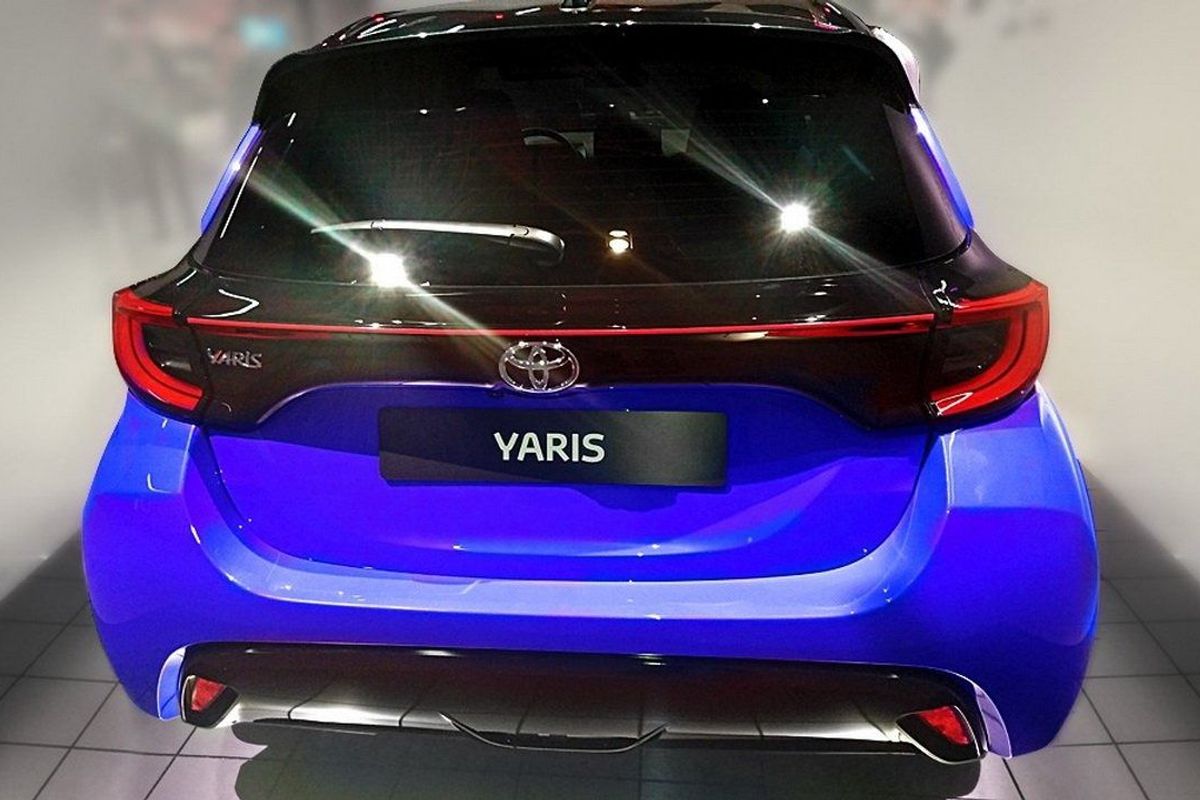
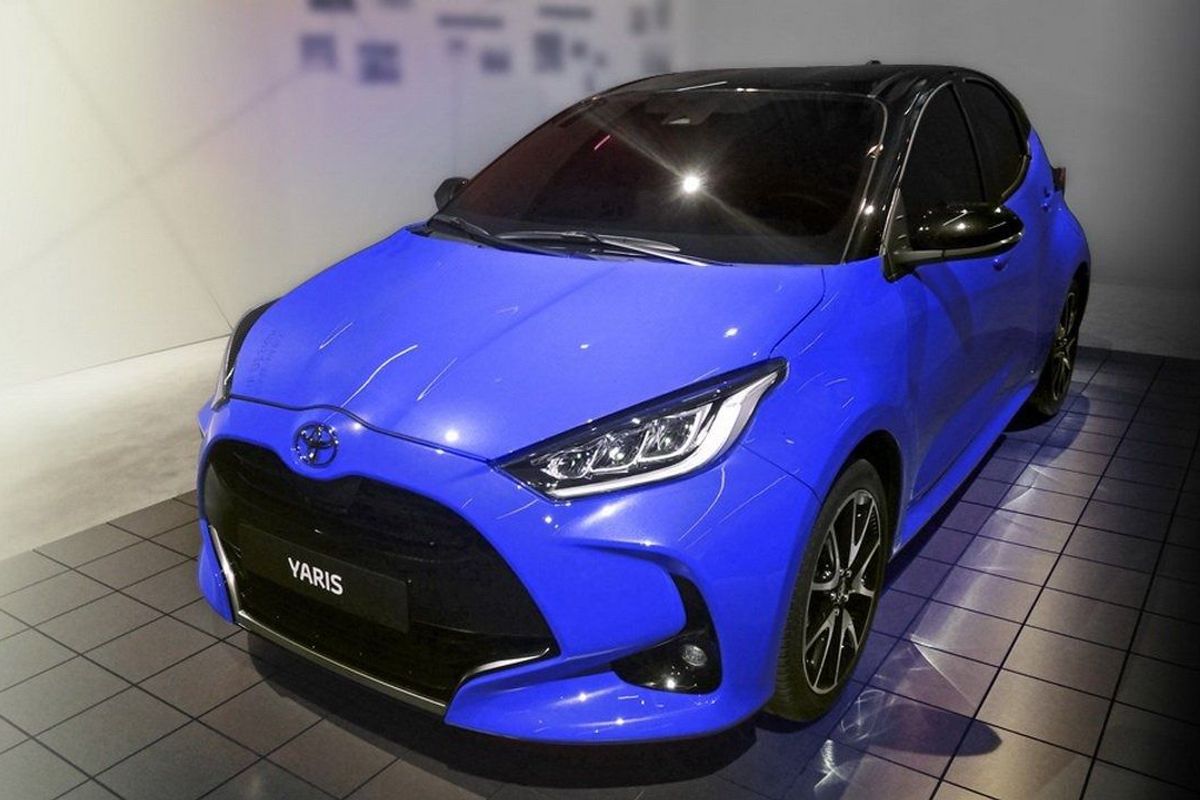
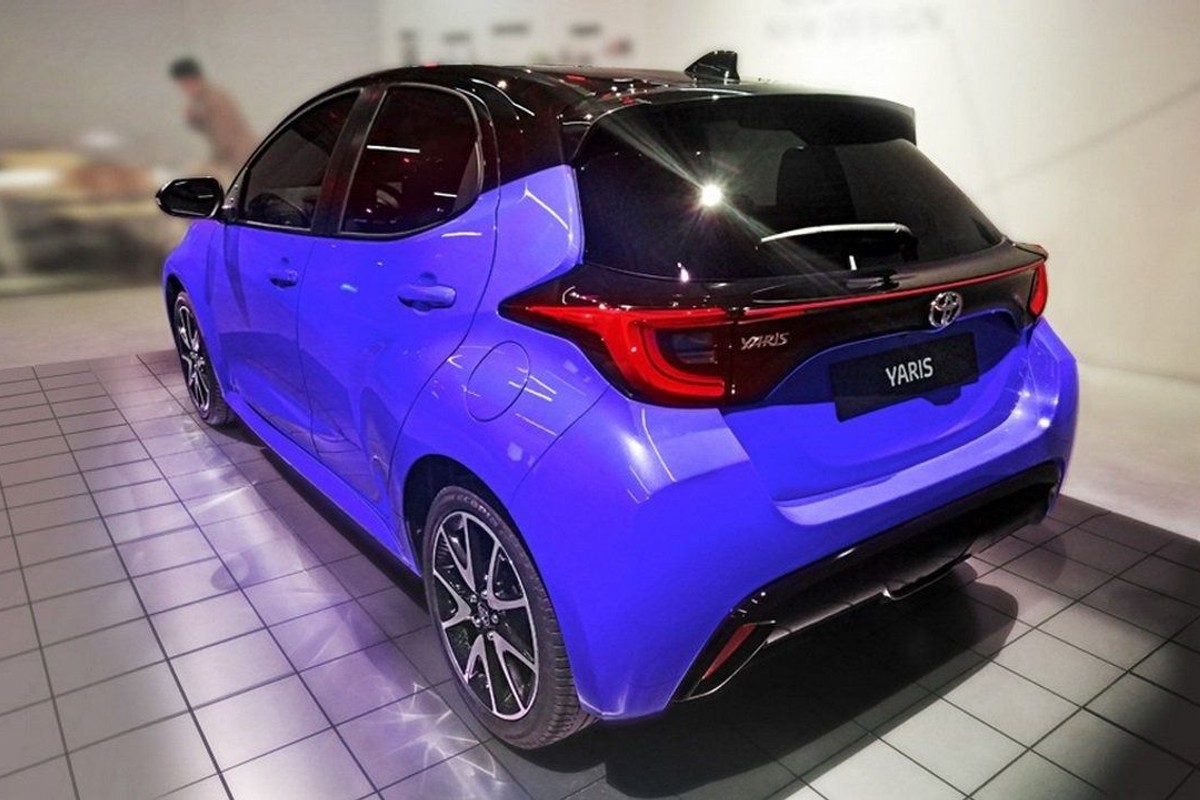
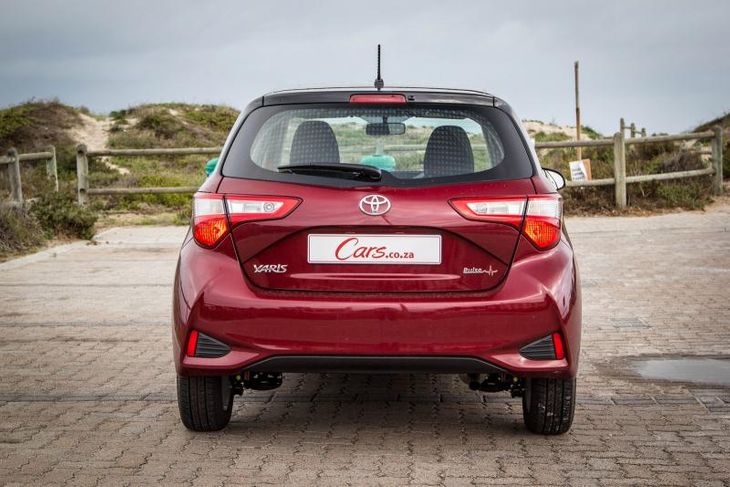
The Yaris Pulse sports the funky (Cinnabar Red) 2-tone look that debuted with the Aygo X-Play. The front end is a lot more distinctive.
Alternatives
The fashionable Frenchman: the Renault Clio sports handsome looks and injects some much-needed personality into this segment. It's brimming with features and safety tech, but its 66 kW turbocharged engine lags behind the punchier Toyota motor.
The segment leader:Volkswagen's Polo brings a modern compact turbocharged motor and excellent build quality. It's down on spec considerably when compared to the Toyota and you'll need to dive into the options to bring it up to spec.
How about a popular Hyundai? The Hyundai i20 has an excellent warranty, good build quality and it's a keen choice in the segment. It offers a fairly refined and uncomplicated driving experience, but does not excel in any particular area.
Looking for a bargain? The Ford Fiesta is due for replacement in 2018, so perhaps now is a good time to bag a bargain. The award-winning 1.0 turbo engine is excellent and the Blue Oval's hatchback arguably has the best chassis in the segment.
This segment is well populated, so also consider: Kia Rio, Opel Corsa, Suzuki Swift, Peugeot 208, Mazda2 and Honda Jazz.
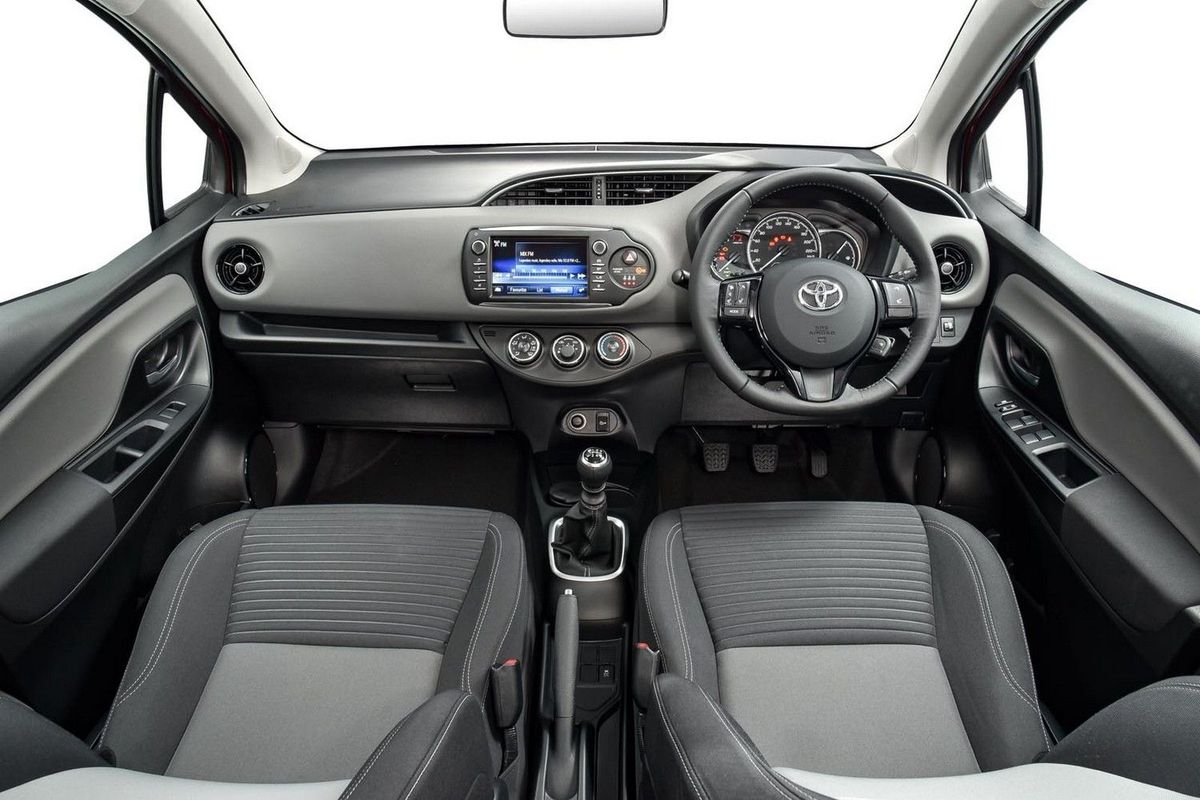
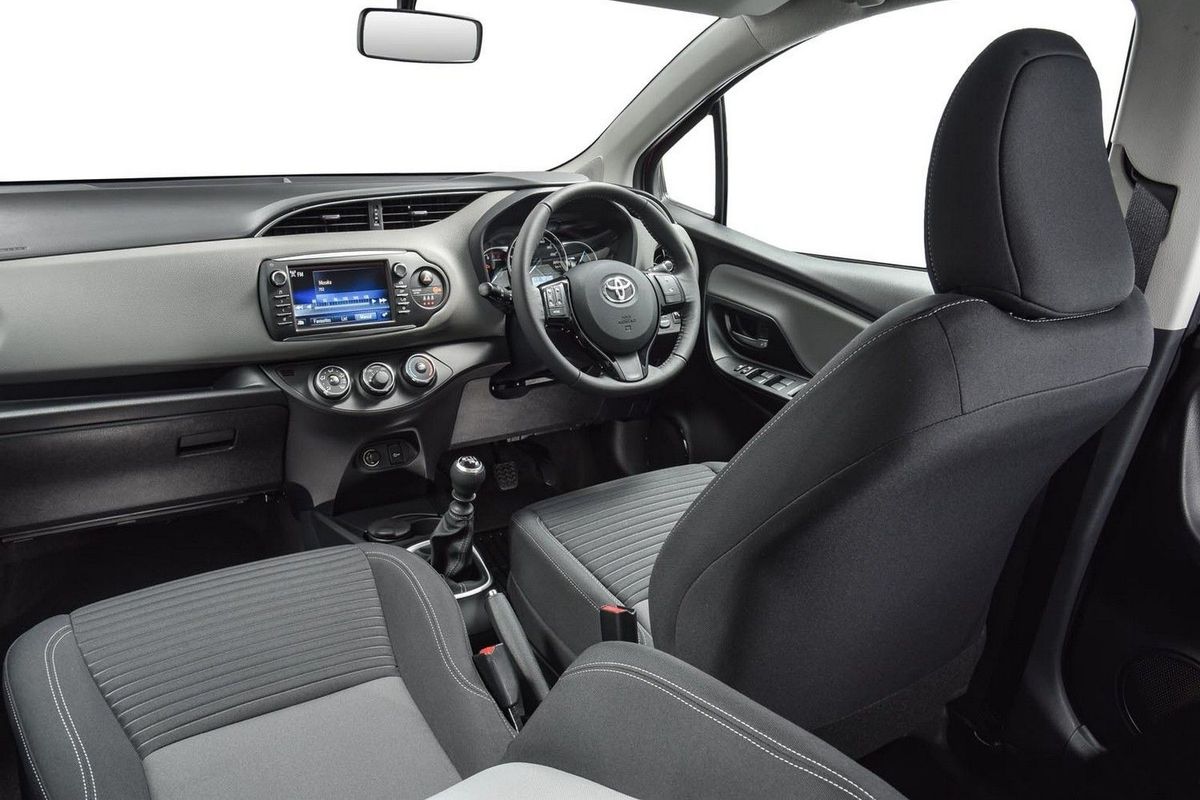
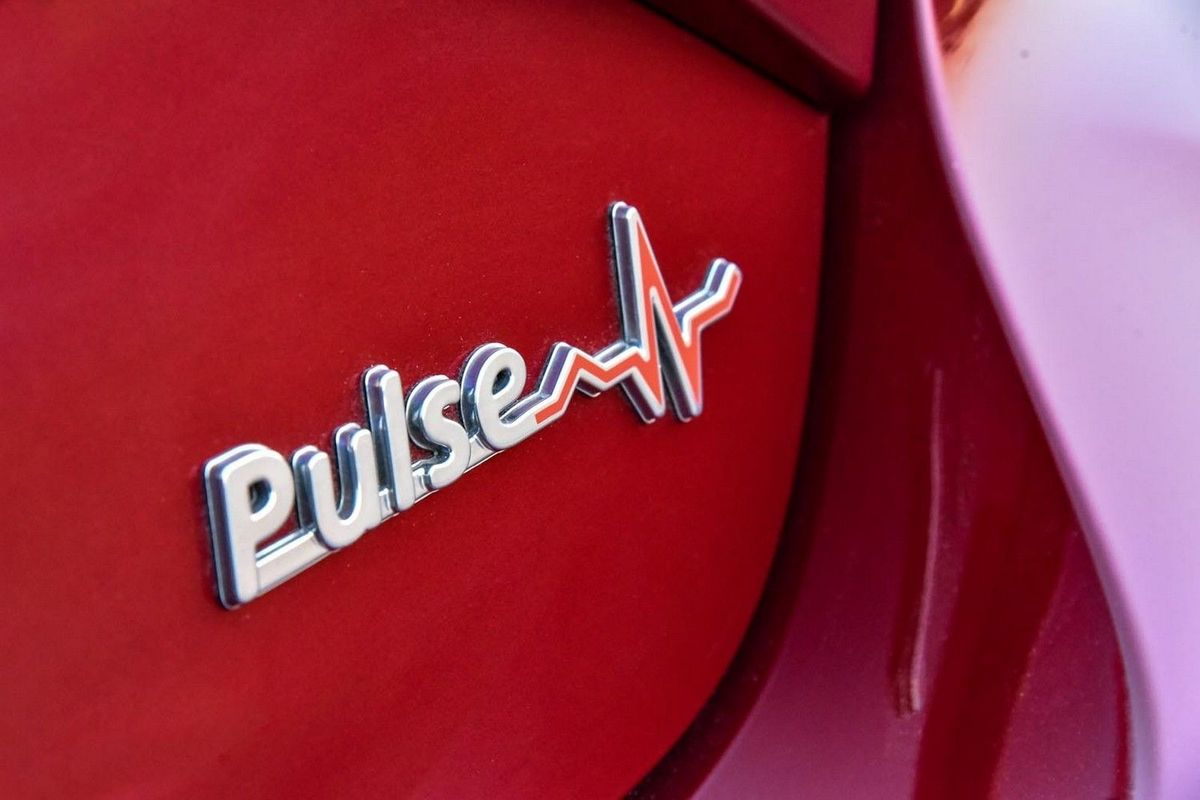
Toyota has improved the purchasing proposition of its compact hatchback offering, which gained a Pulse suffix to coincide with a recent model update. From an aesthetic point of view, there are redesigned bumpers, while the tailgate and -lights are revised. The cabin received some updates in the form of trim and colours, while the fascia has had a makeover too.
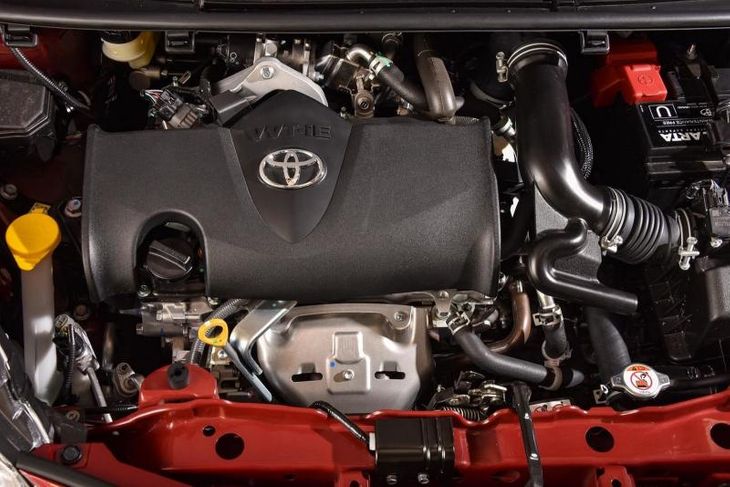
The headline change is the addition of a new 1.5-litre 4-cylinder motor which replaces the below-par 1.3-litre. Interestingly Toyota SA claims this new motor not only offers more power and better performance, but is also thriftier than its predecessor. You have the option of either a manual transmission (as tested) or could go the clutchless route with a CVT.
The Good
Perky new engine
As far as automotive technology is concerned, when 1 or 2 manufacturers move in a certain direction and start a trend, the rest follow soon thereafter. Consider the compact car market, for example… Gone are the days when you got a choice of either a 1.4-litre naturally-aspirated motor, or if you're feeling adventurous, a 1.6-litre. With the downsizing turbocharged trend, we're now presented with an assortment of engines ranging from 0.9 litres to 1.2 litres. Several 4-cylinder powerplants have lost a cylinder and these have become the norm.
Toyota took the compact turbo motor direction only relatively recently: a 1.2-litre turbocharged that made its debut in the C-HR baby SUV. But in the Yaris application, natural aspiration persists for now; perhaps the installation of a high-tech turbo motor would push the Pulse's price up too far anyway and the relative simplicity of the motor bodes well for reliability.
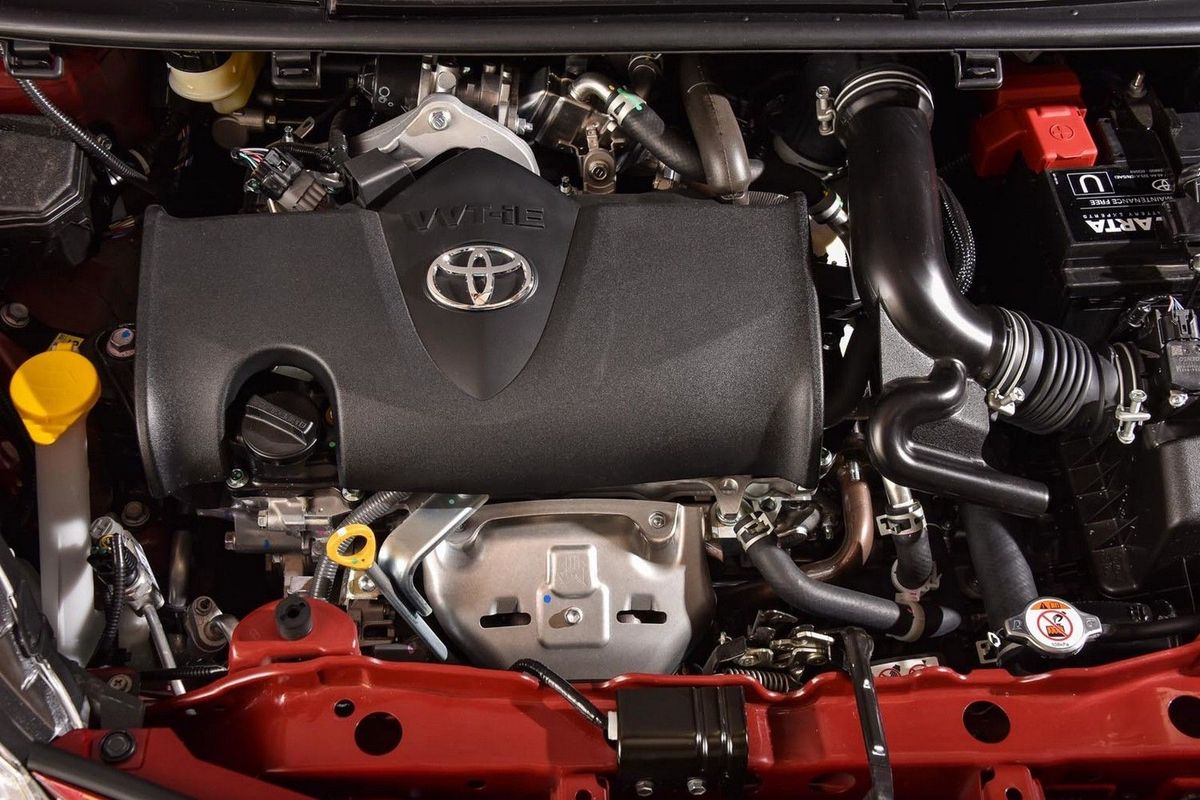
The normally aspirated motor at the heart of the Pulse… levity aside, it's an impressively smooth and willing motor.
Whatever the reason for Toyota's decision to persist with a naturally aspirated engine, it's a cracking motor that evokes memories of eager, free-revving Toyota powerplants of yesteryear. Look, it's not a performance powerplant by any stretch of the imagination, but it's great to see that new-generation non-turbo motors are still being produced. The 1.5-litre unit produces 82 kW and 136 Nm. That torque output may seem a little low, but the motor is pretty responsive and delivers some surprising shove when you need it. In the interest of low cost of ownership, the engine is fairly light on fuel, with Toyota claiming a combined fuel consumption figure of 5.0 L/100 km. During its tenure in our fleet, the test unit's fuel readout hovered in the low 7s.
Standard specification
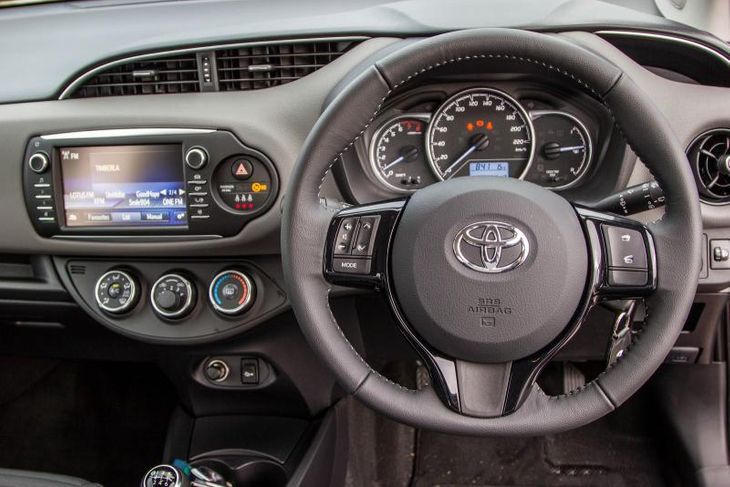
Toyota has strategically positioned the Yaris at the value end of the compact hatchback market and endowed it with a credible amount of standard specification to keep it ahead of its rivals. While it's a tall order to match the Renault Clio pound-for-pound in terms of spec, the 1.5 Pulse derivative offers just about enough to keep both old and young customers happy. Highlights include a 7-inch touchscreen infotainment system, leather-wrapped steering wheel and gearknob, electric windows, air conditioner, front fog lights and 15-inch alloy wheels.
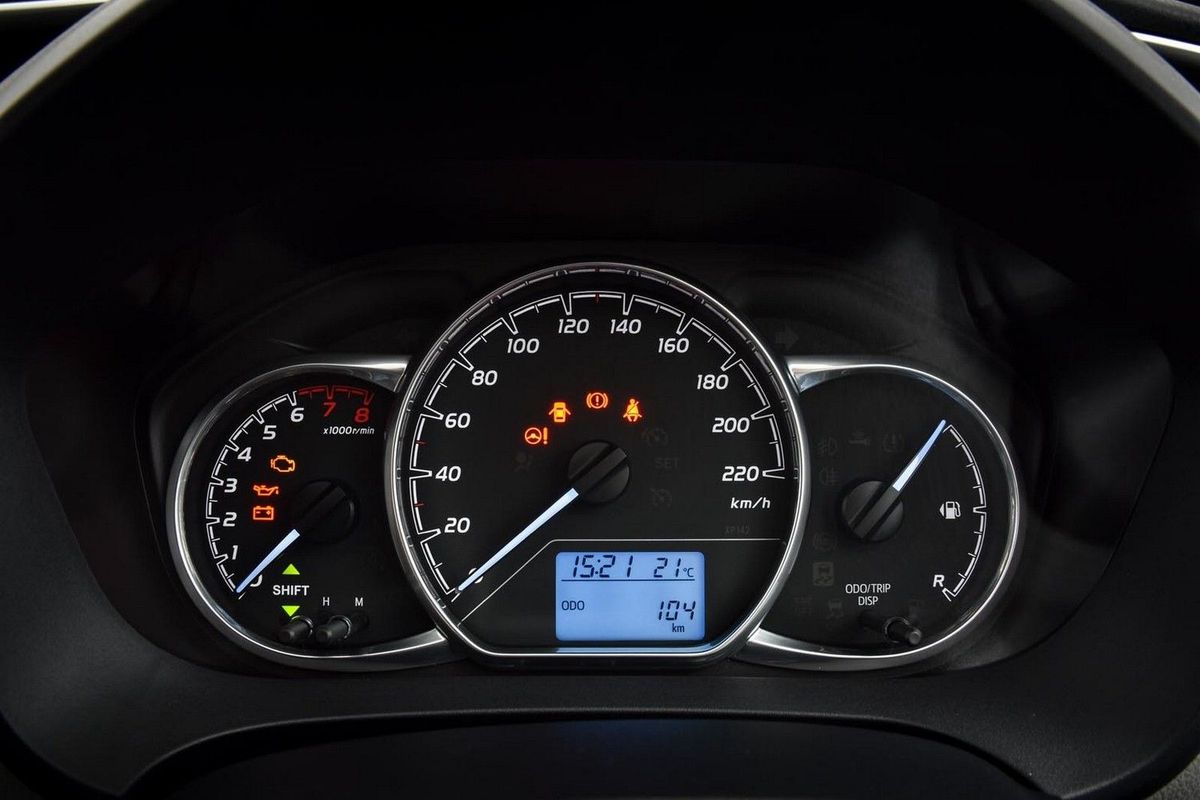
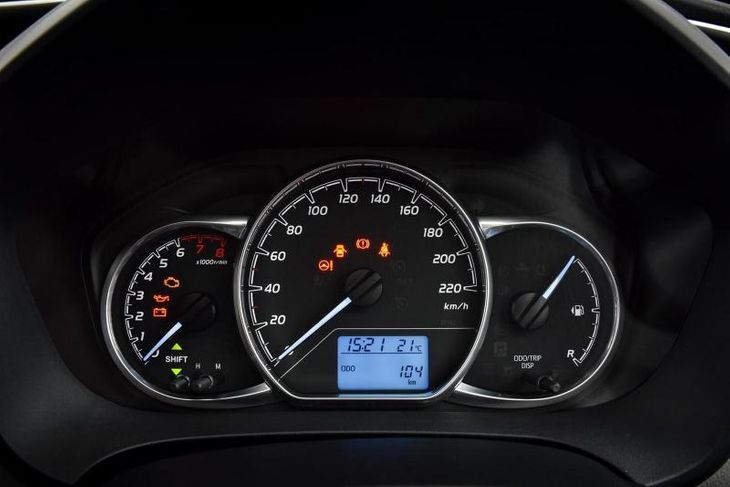
Although the Yaris' instrumentation is very generic, the leather-wrapped gearknob and steering wheel (with piano black inset) feel posh.
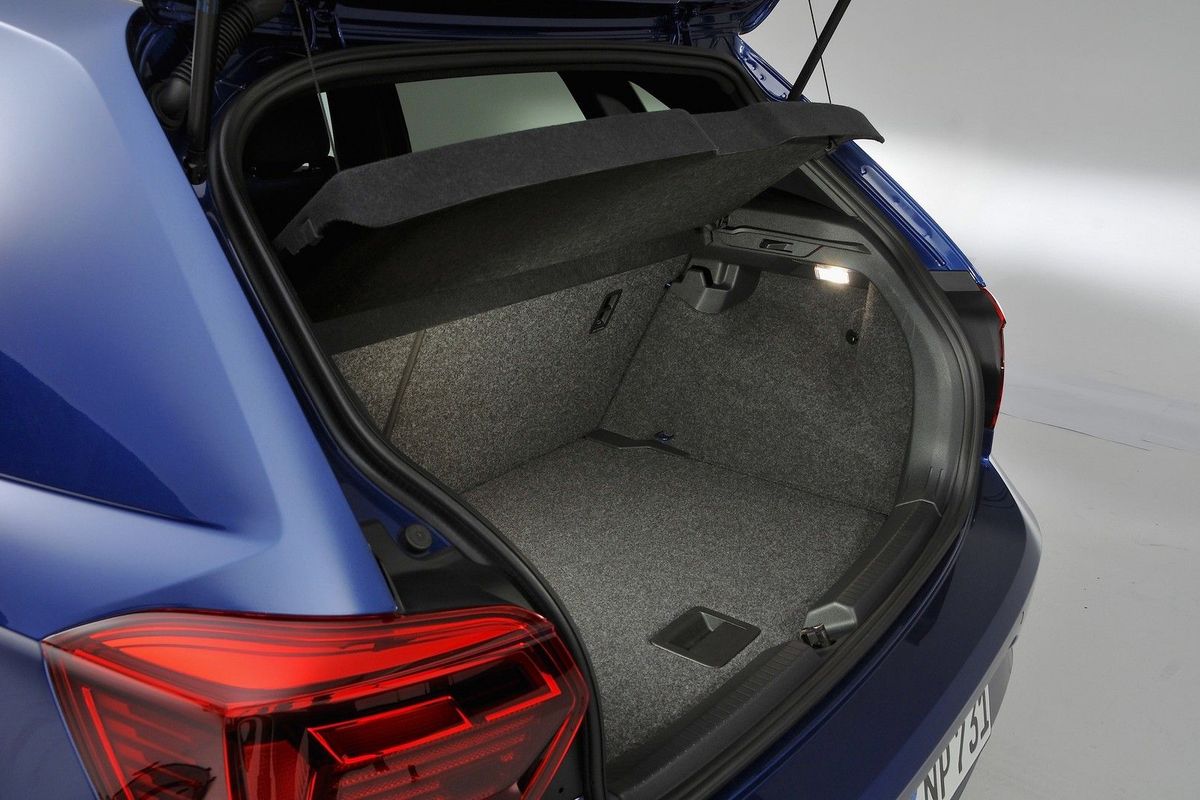
As standard, the Toyota Yaris has a reasonable array of safety features such as an anti-lock braking system (ABS) with brake assist (BA), hill assist control and vehicle stability control (VSC) and dual front and side airbags. Up-spec models gain a few more safety features, but their prices jump substantially. For its asking price, the Yaris satisfies contemporary safety requirements easily. It's also usefully practical, with a big-for-this-class luggage capacity of 286 litres with additional utility capacity thanks to a 60:40 split in the rear seats.
Pleasant to drive
The Yaris' motor is eager to rev right up to its redline, but up/downshift indicators help drivers adopt a more frugal driving style.
Tipping the scales at around 1 000 kg, the Yaris performs eagerly courtesy of its perky 1.5-litre engine. The gearbox-clutch action is light, which is great as you'll be switching cogs often to keep the engine in its sweet spot. It's not down on power per se, but you'll need to rev it a bit to deliver its best. It's a punchy and satisfying motor, so it's a pity that the driving experience is a bit anodyne – it's not for a lack of road-holding and the body control is fair, but the steering wheel is very light, which, in the Toyota's defence, is ideal for city driving.
In this segment, comfort and refinement are pluses and these are areas where the Toyota Yaris delivers admirably. The seats are well cushioned and the ride quality is pleasingly forgiving, while we were substantially impressed with the road-, engine- and interior noise suppression too; only on the harshest of tarmac does road noise became intrusive.
The Bad
The infotainment system
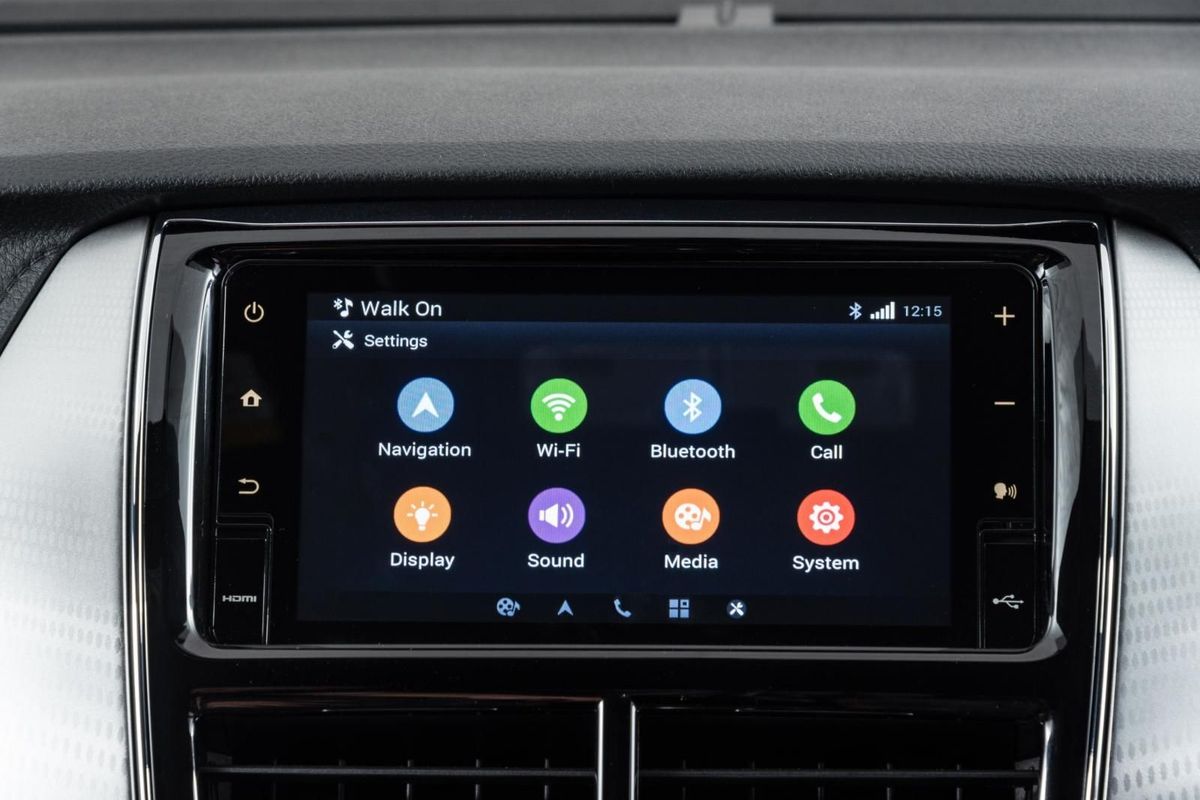
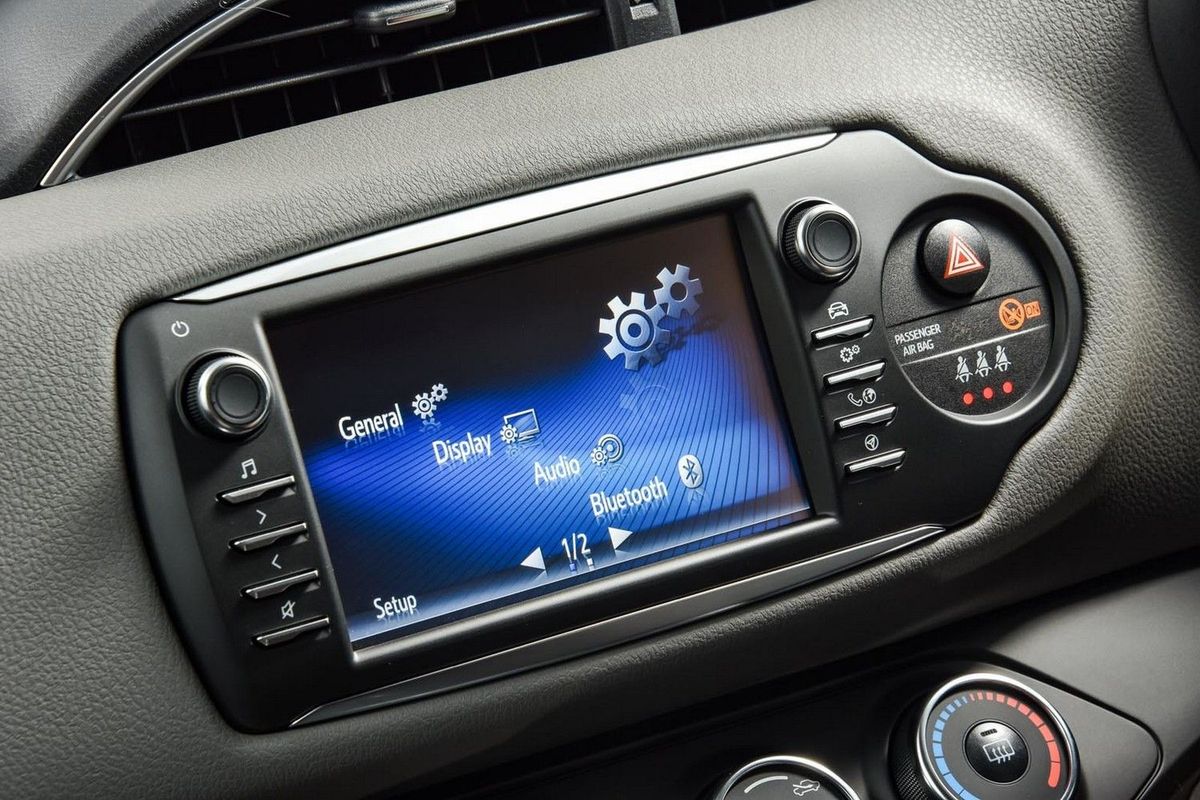
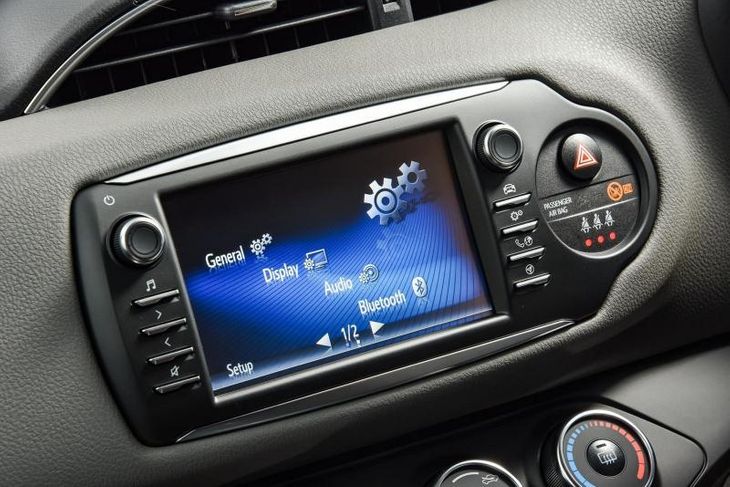
The infotainment system's menu is neat enough, but its functionality is rather basic.
In this corner of the market, where ease-of-use functionality and fascia interfaces reminiscent of mobile phones are key, it's a trifle disappointing to see such a bland setup in the Yaris. The Renault Clio, for example, comes equipped with a tablet-like arrangement that brims with features and is wonderfully easy to use. The Toyota's setup, however, offers only the basic operations and despite its neat graphics and handy size, is largely devoid of any character or features that the tech-savvy generation demand. To be fair, it does the basics right, but in this youthful segment, people now want features such as Apple Carplay and Android Auto, something which Kia picked up on and made available in its (admittedly all-new) Rio.
Verdict
Although the current iteration of the Yaris still doesn't have the charm of its predecessor, it looks less dowdy and bland than before.
In this jam-packed segment, we find the new Toyota Yaris to be a middle-of-the-road offering. In terms of packaging, build quality and performance/efficiency the Japanese hatchback covers all the bases, and its refinement and comfort are surprisingly good as well, but its willing powertrain is the only thing that sets it apart from the crowd. Unlike its rivals, which have outright strengths, but some obvious weaknesses too, the Yaris is virtually faultless, but it's not exactly class-leading in any department, either.
However, for someone who is purely in the market for an affordable compact hatchback that is well-made and reasonably equipped, the Yaris is a good fit. Affordability is the ace up its sleeve as the Yaris is on sale for less money than many of its key rivals. In a cash-strapped market such as ours, it'll make financial sense to pick the Yaris over its rivals as Toyota products generally have robust resale values. But, if you're a millennial who has opted for personal mobility and freedom as opposed to being at the mercy of Uber and other forms of public transport, there's a real possibility you'll find the Yaris dull and appliance-like. If you couldn't care less about image and just want a solid set of wheels, then it'll do nicely.
Following the market arrival of the new Audi A8 luxury sedan, Audi will be introducing a new nomenclature for all its vehicles. Here’s what you need to know…
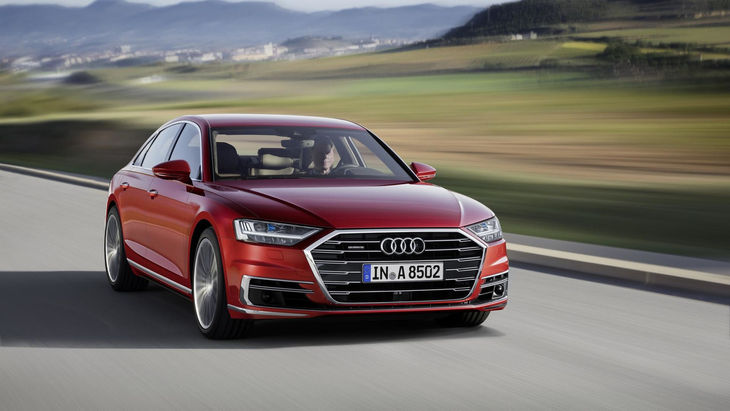
We are all familiar with Audi’s current vehicle naming structure consisting of a single letter and a number, as in A1, A3, A4 and going up to the largest SUV vehicles such as the Q7 and forthcoming Q8. However, Audi’s naming structure will change with the arrival of the new recently-revealed A8 luxury sedan which is due to arrive in South Africa in the middle of 2018.
The forthcoming Audi A8 will be the first vehicle to feature the updated nomenclature.
All new Audi models will feature 2 numbers appearing alongside the current designation and engine type. The numbers will represent power output and will include numbers between 30 and 70.
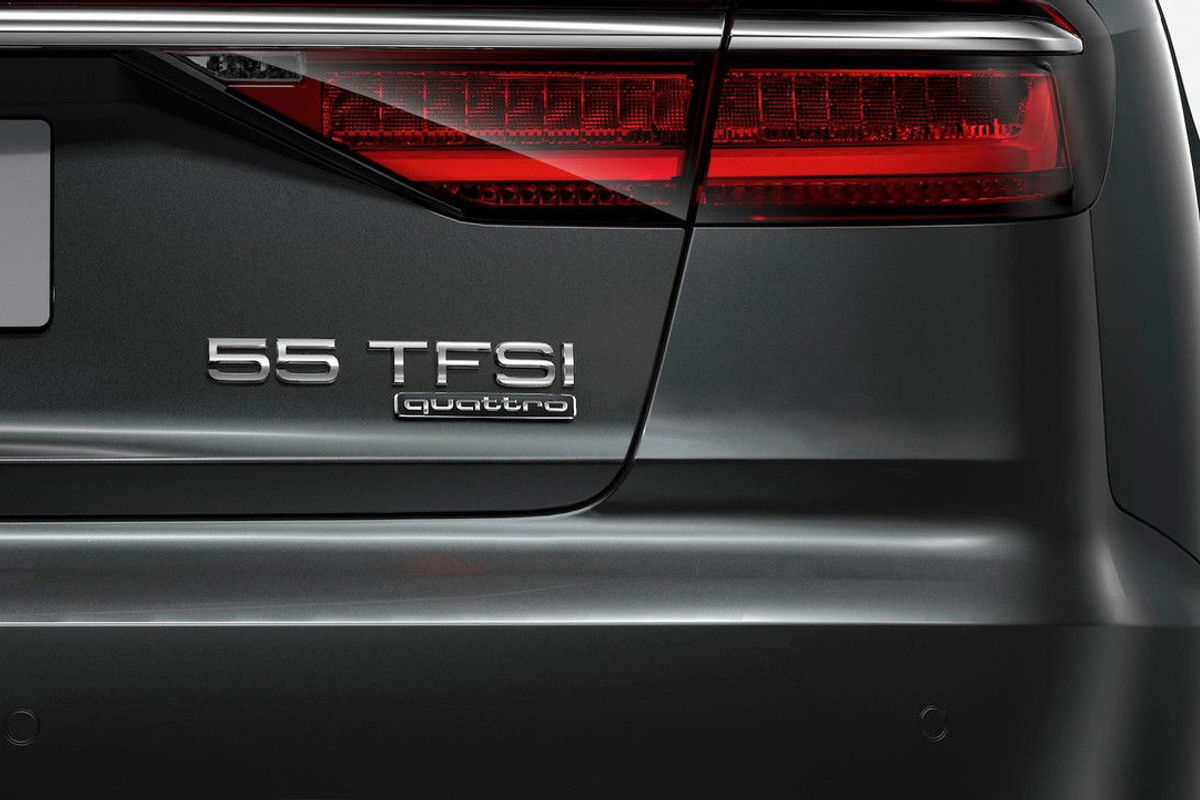
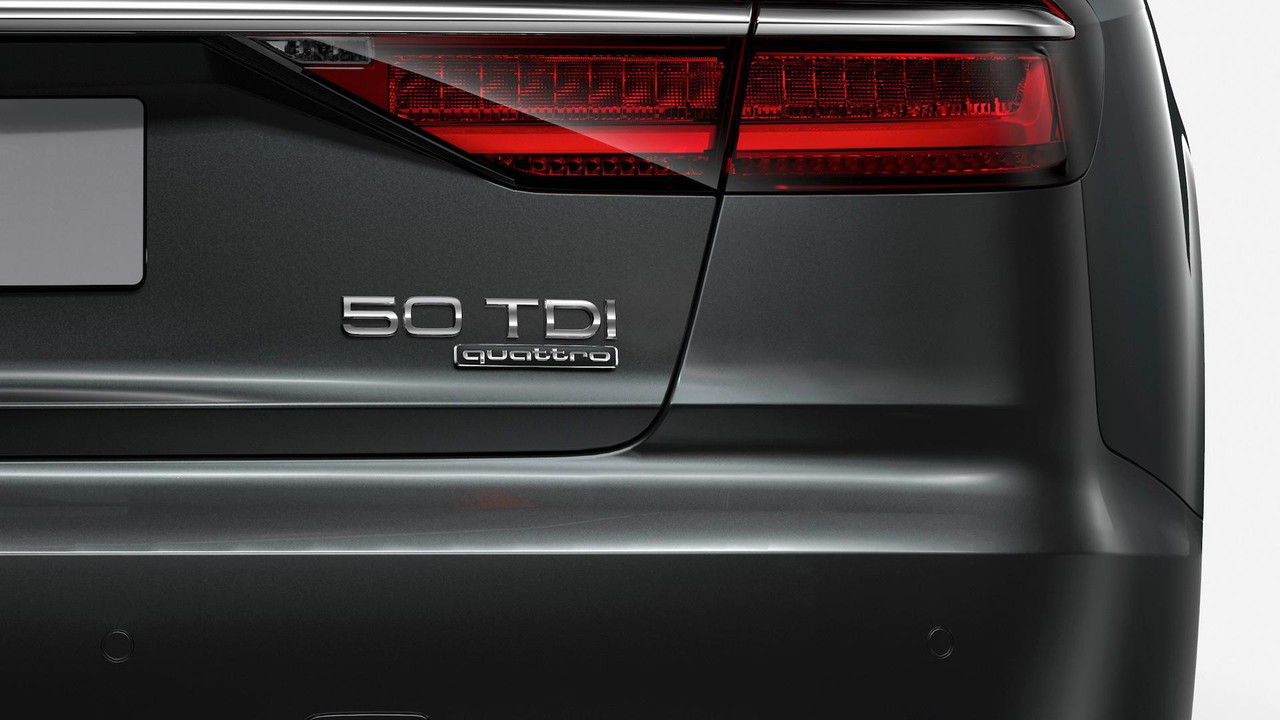
As an example, all models with a power output between 81 kW and 96 kW will wear the ‘30’ designation. The number ‘45’ will be seen on Audi vehicles with outputs between 169 kW and 195 kW. The number ‘50’ represents outputs between 210 kW and 230 kW while ‘55’ will be found on vehicles with 245 kW to 275 kW. Audi performance cars with more than 400 kW will wear the ‘70’ designation. Each number will be accompanied with either TFSI, TDI, G-tron, E-tron and so forth.
The new nomenclature will make it easier to identify models and hierarchy of Audi's vehicle range.
Here is a quick breakdown of the new naming structure:
30 = 109-128 hp (81-96 kW)
35 = 147-160 hp (110-120 kW)
40 = 167-201 hp (125-150 kW)
45 = 226-248 hp (169-185 kW)
50 = 281-308 hp (210-230 kW)
55 = 328-368 hp (245-275 kW)
60 = 429-455 hp (320-340 kW)
70 = 536+ hp (400+ kW)
Audi believes that the new naming structure better represents the hierarchy of its model range and that models will be easier to identify, especially vehicles with electric and hybrid powertrains.
“As alternative drive technologies become increasingly relevant, engine displacement as a performance attribute is becoming less important to our customers," explained Dr. Dietmar Voggenreiter, Board of Management Member for Sales and Marketing at AUDI AG. "The clarity and logic of structuring the designations according to power output makes it possible to distinguish between the various performance levels."
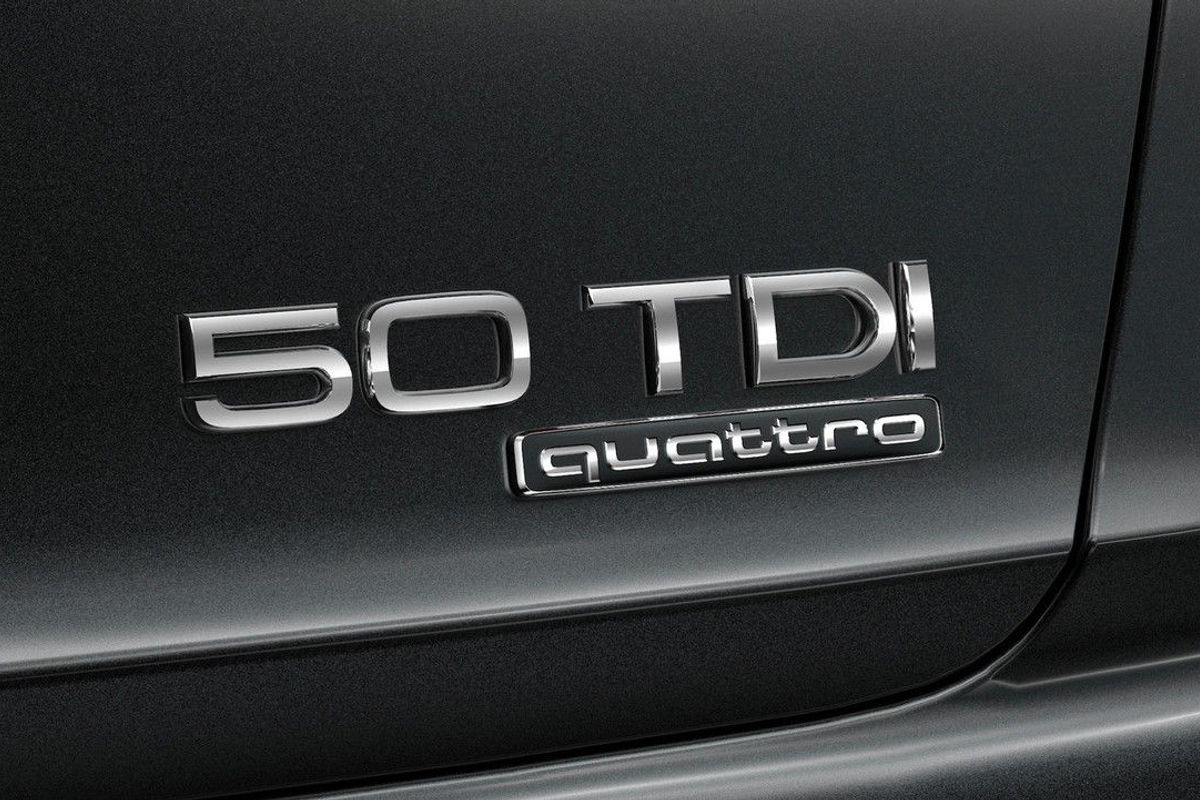
The forthcoming Audi A8 will be the first vehicle to wear the new badges and will arrive with ‘50 TDI’ and ‘55 TFSI’ badges, representing the respective 383 kW and 455 kW of its 6-cylinder engines. After that, all new Audi models will follow this new designation.
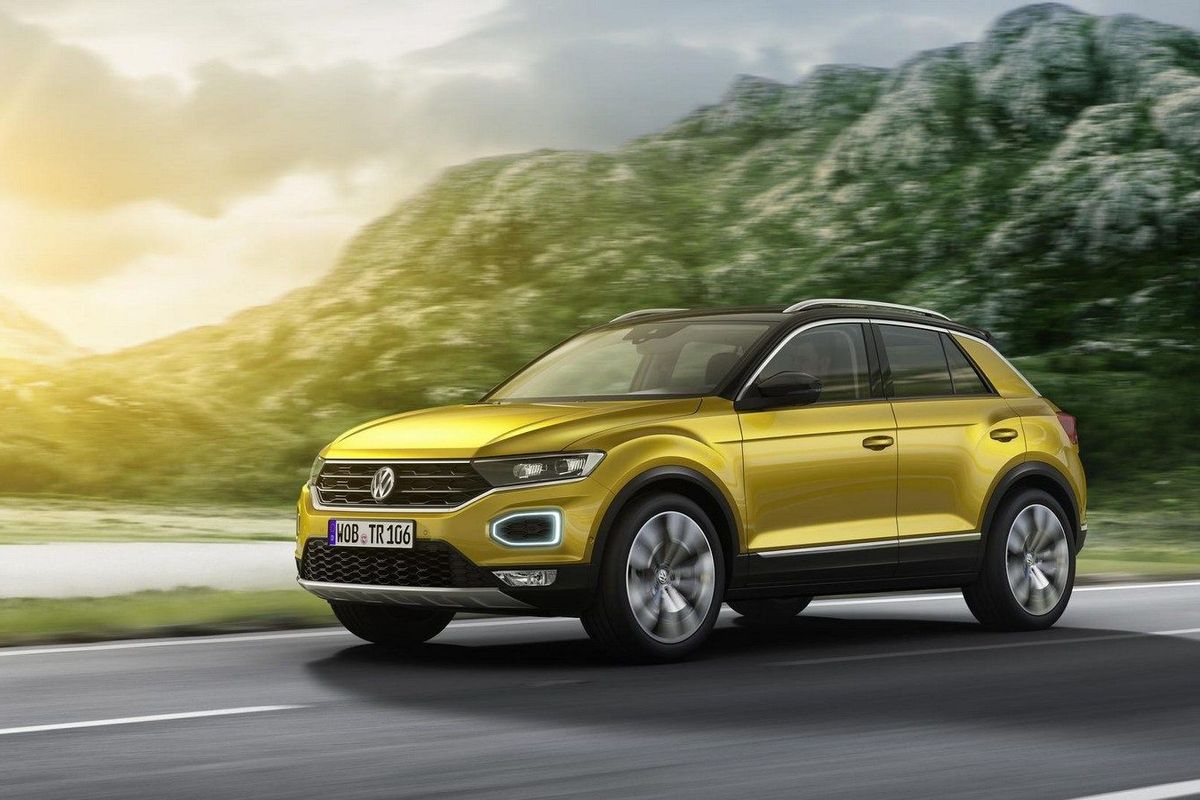
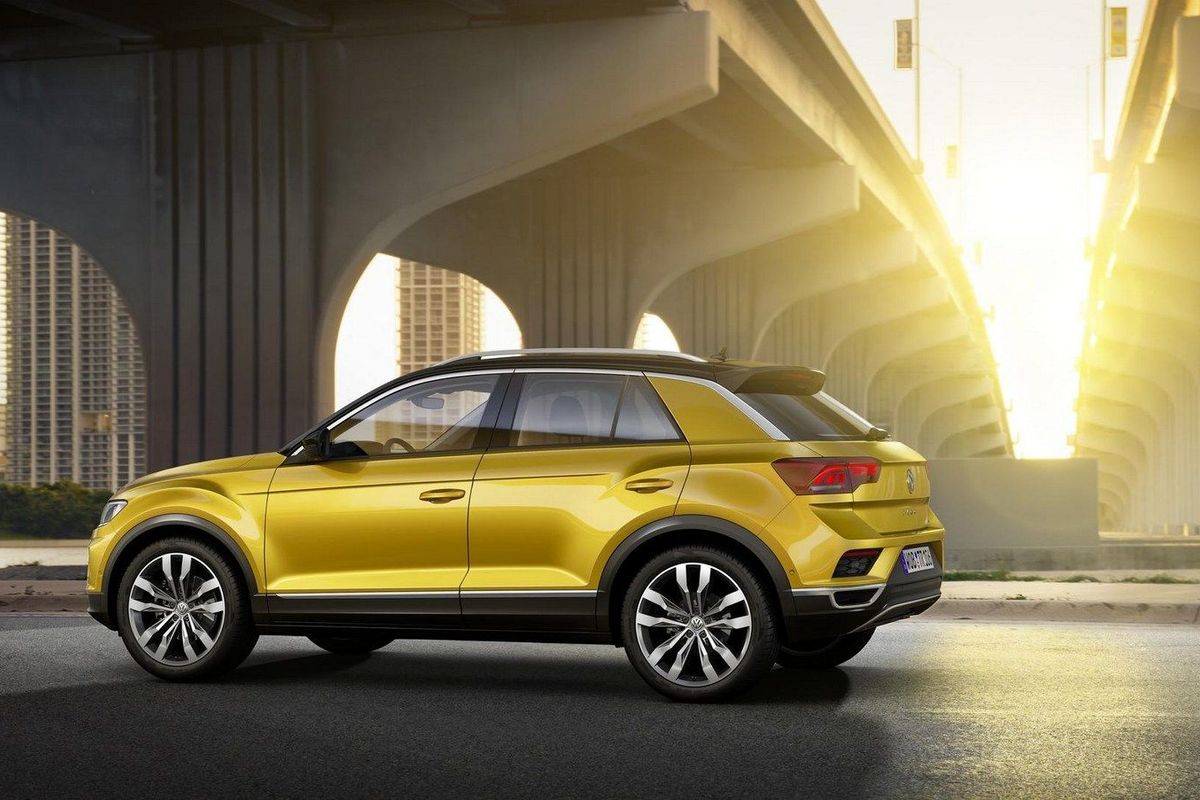
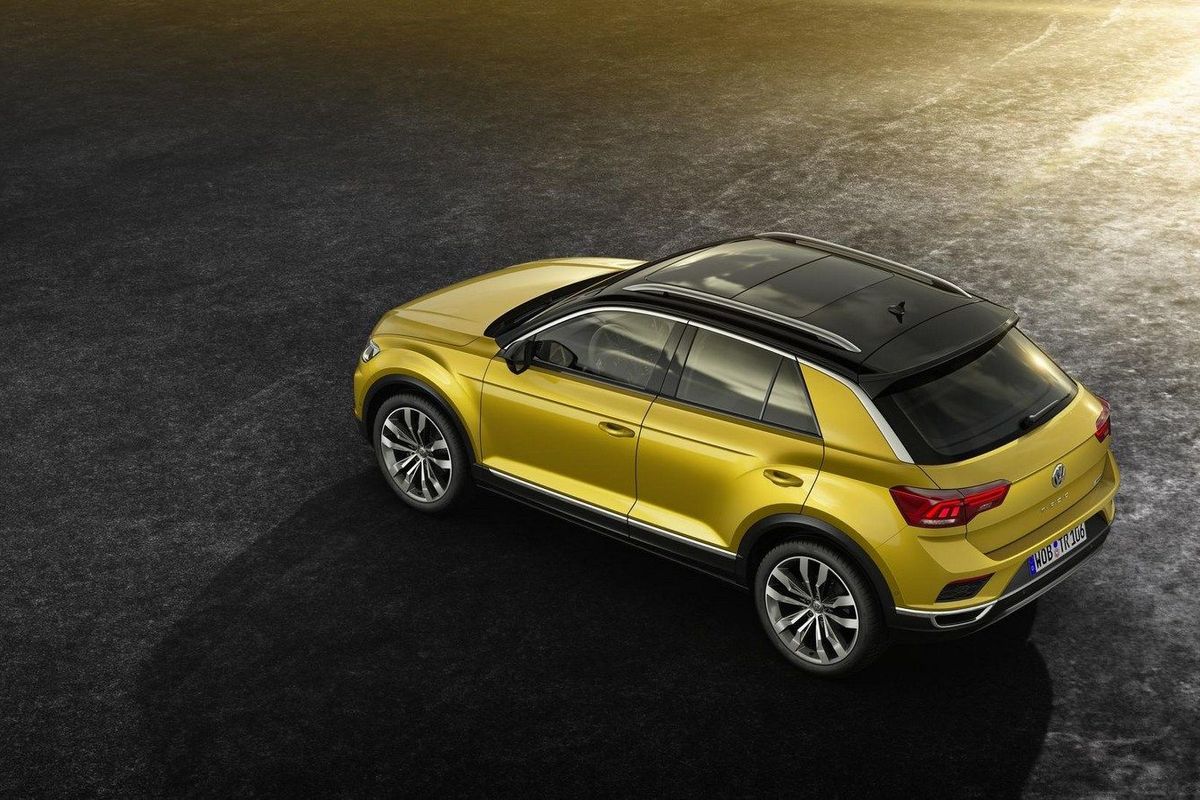
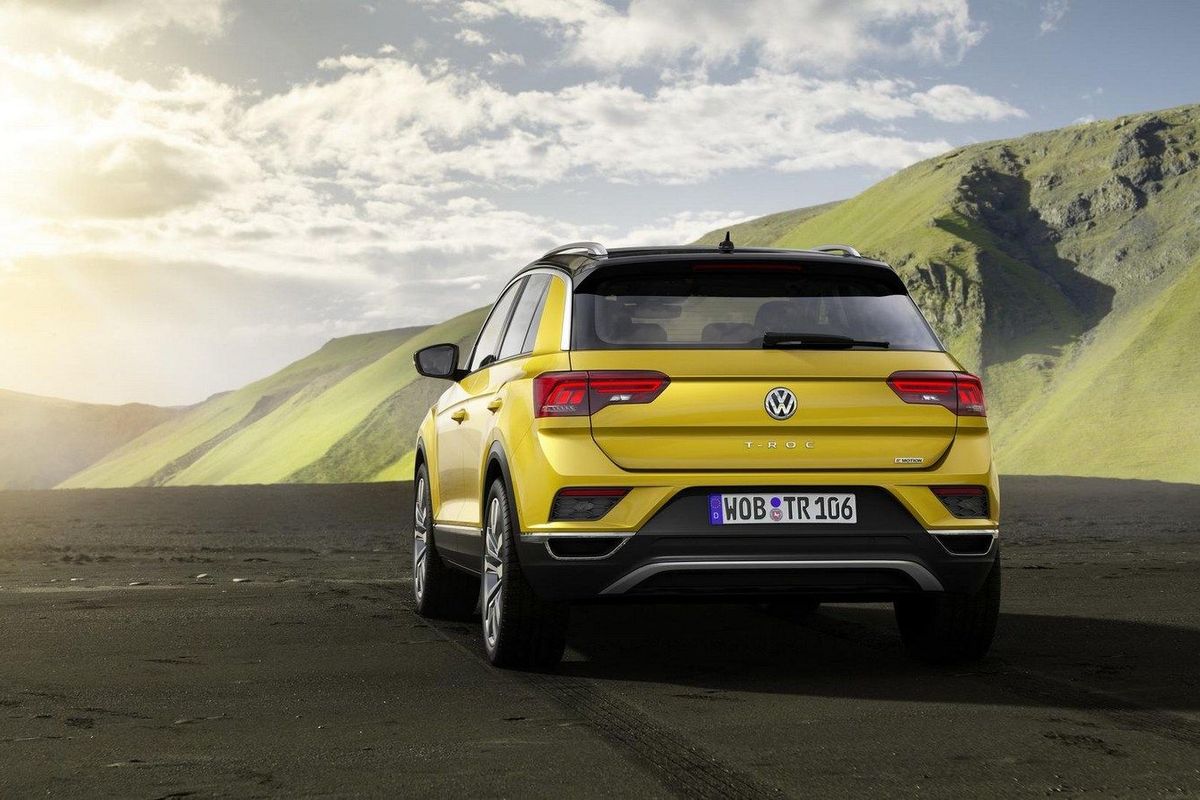
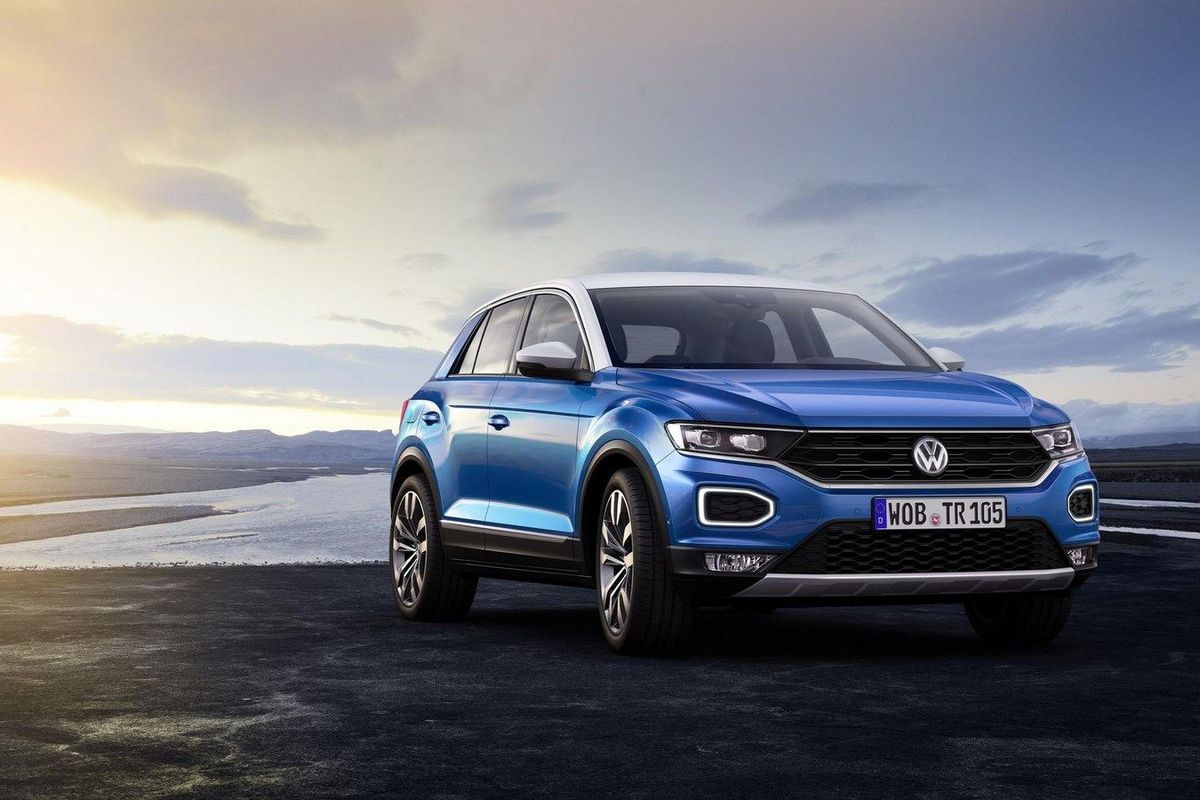
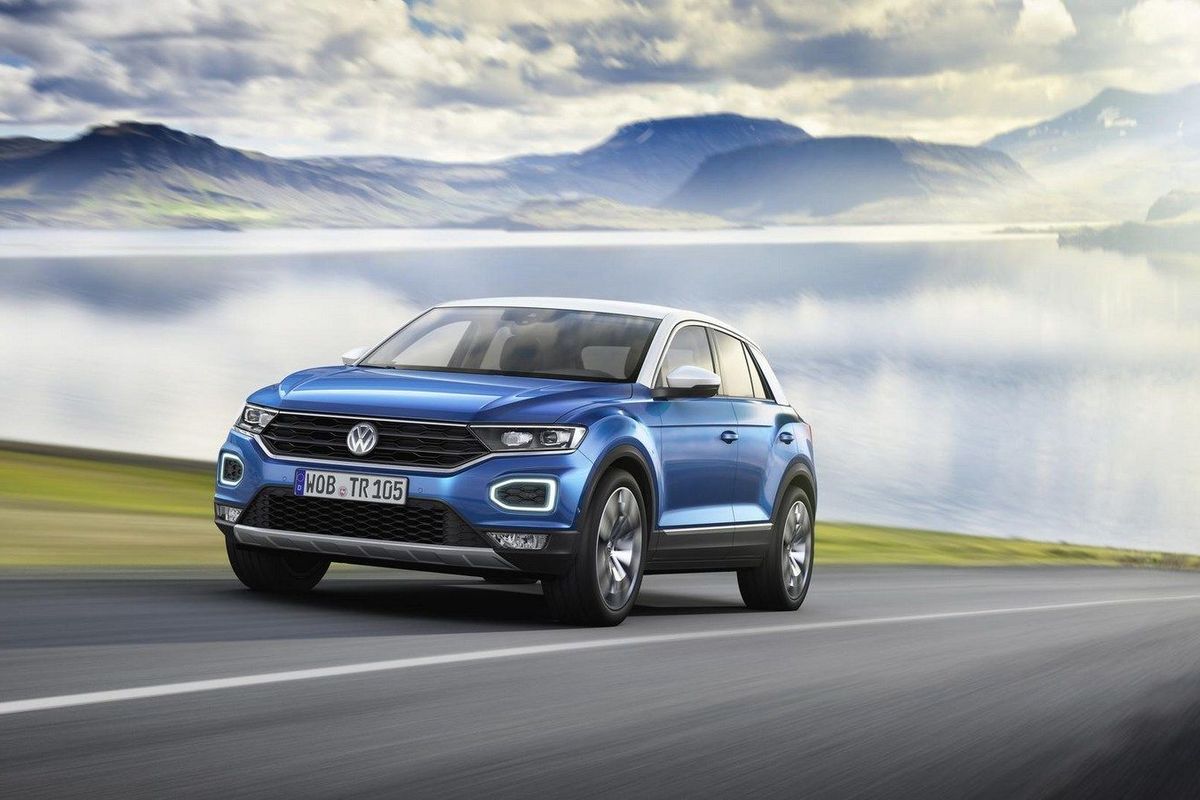
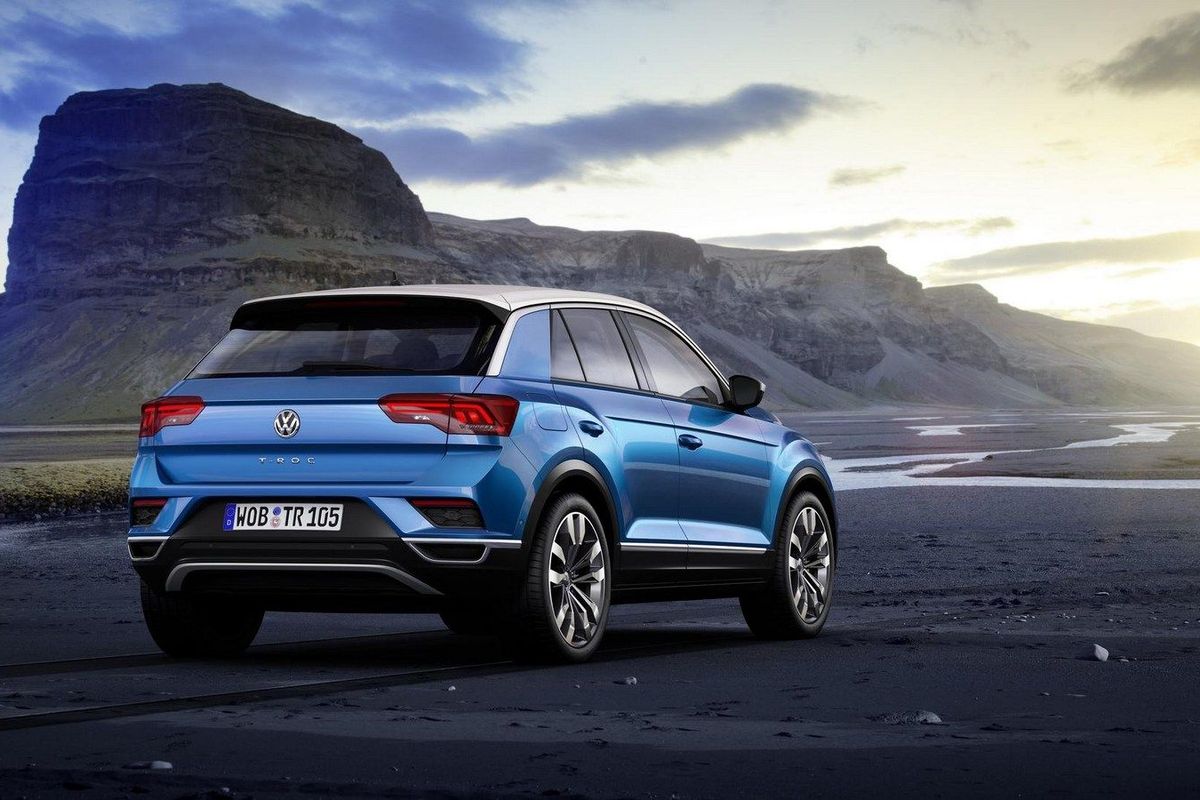
Volkswagen has officially revealed its T-Roc crossover which slots in under the Tiguan. It's a new market for the Germans as Volkswagen is offering extensive personalisation of the T-Roc and it's claimed to be a lifestyle crossover with SUV characteristics. Let's find out more about the newcomer.
First seen as a concept vehicle back in 2014 at the Geneva Auto Show, Volkswagen's T-Roc is now a production reality. Based on the MQB platform which underpins products like the Golf, Audi A3 and Q2, the Volkswagen T-Roc will be positioned below the Tiguan. When it comes to market, it'll be taking on the Toyota CH-R, Nissan Juke, Opel Mokka X and Renault Captur. The top-spec model is likely to rival the Mercedes-Benz GLA and sister product Audi's Q2.
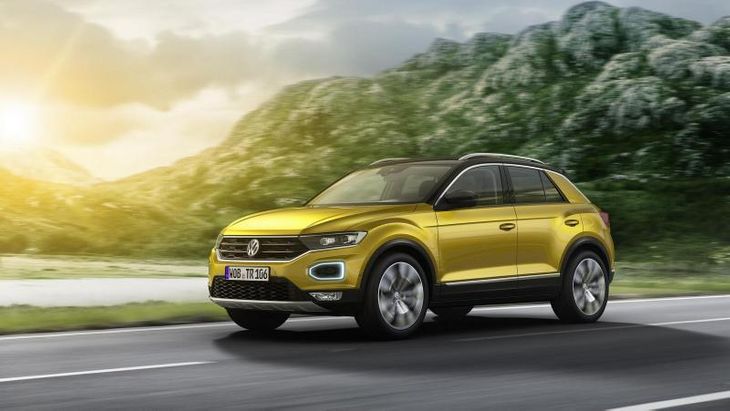
Volkswagen is going on a full SUV offensive, as a smaller-than-T-Roc offering will be coming, as well additional Tiguan models and an all-new Touareg. With the T-Roc however, Volkswagen is clearly aiming at the youthful end of the market and the vehicle will be able to specced with two-tone colours, vibrant interiors and the choice of exterior colours is vast. Lime green anyone?
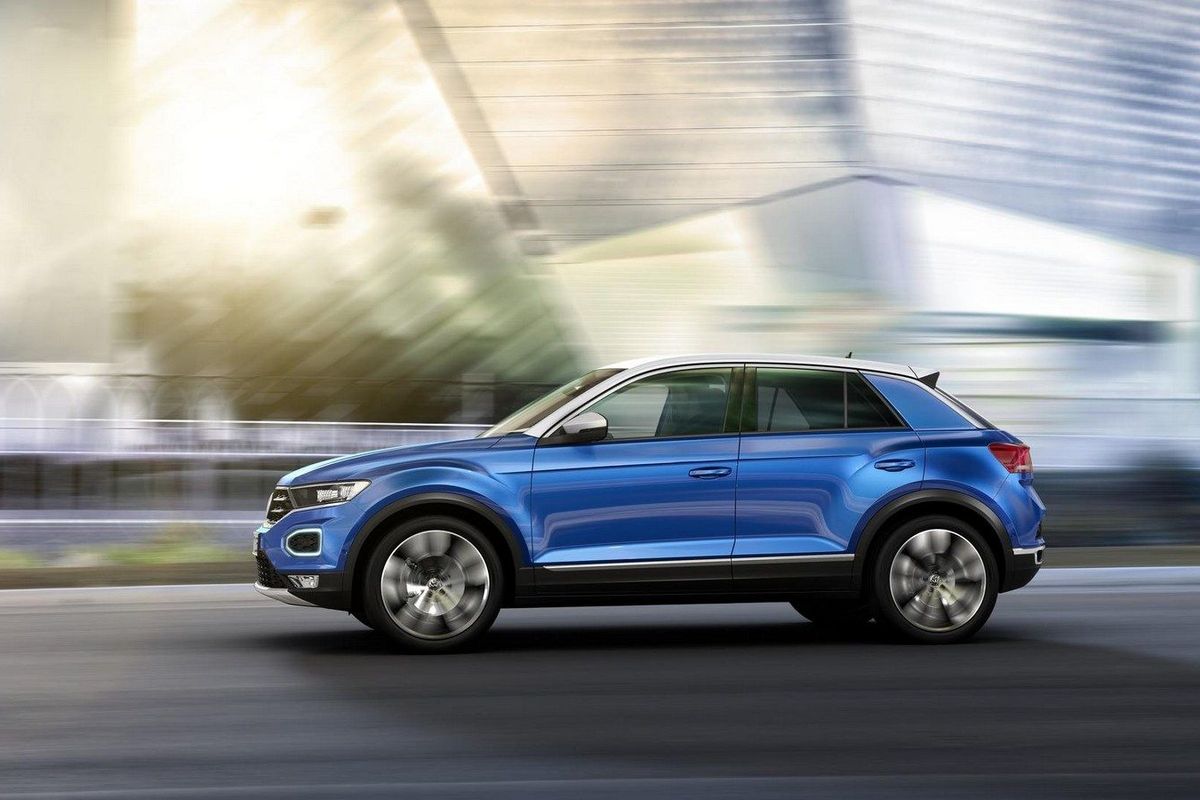
In terms of size, it's similar to that of a Volkswagen Golf, but the T-Roc has a bigger boot (445 litres as opposed to 385 litres in the Golf). Flip the back seats down and you gain up to 1 290 litres.
When it comes to market, it'll be taking on the Toyota CH-R, Nissan Juke, Opel Mokka X and Renault Captur
Volkswagen T-Roc Powertrain
The Volkswagen T-Roc comes with a multitude of turbocharged engines, with both petrol and diesel options. Choose from 1.0-, 1.5- and 2.0-litre petrol units, whereas the diesel choices are 1.6- and 2.0-litre. There will be two- and four-wheel drive derivatives, while in terms of the gearbox, a manual transmission and a dual-clutch automatic are available.
Features
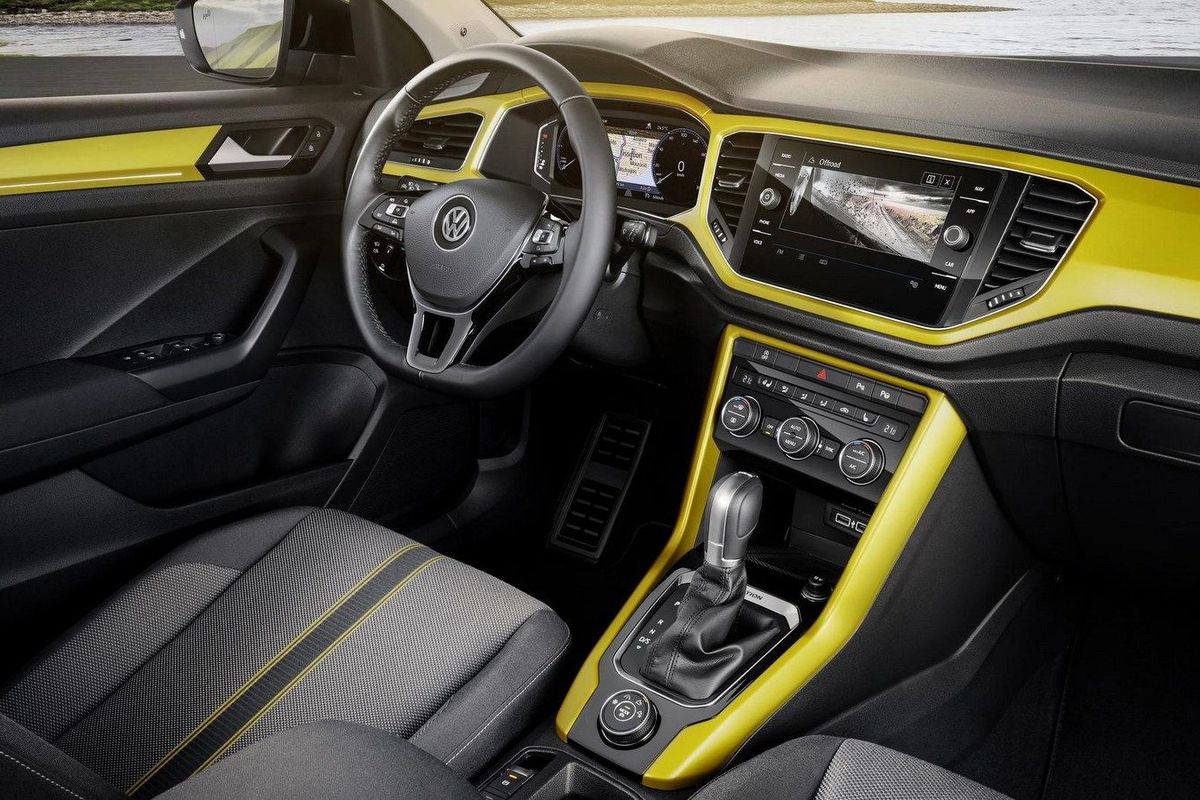
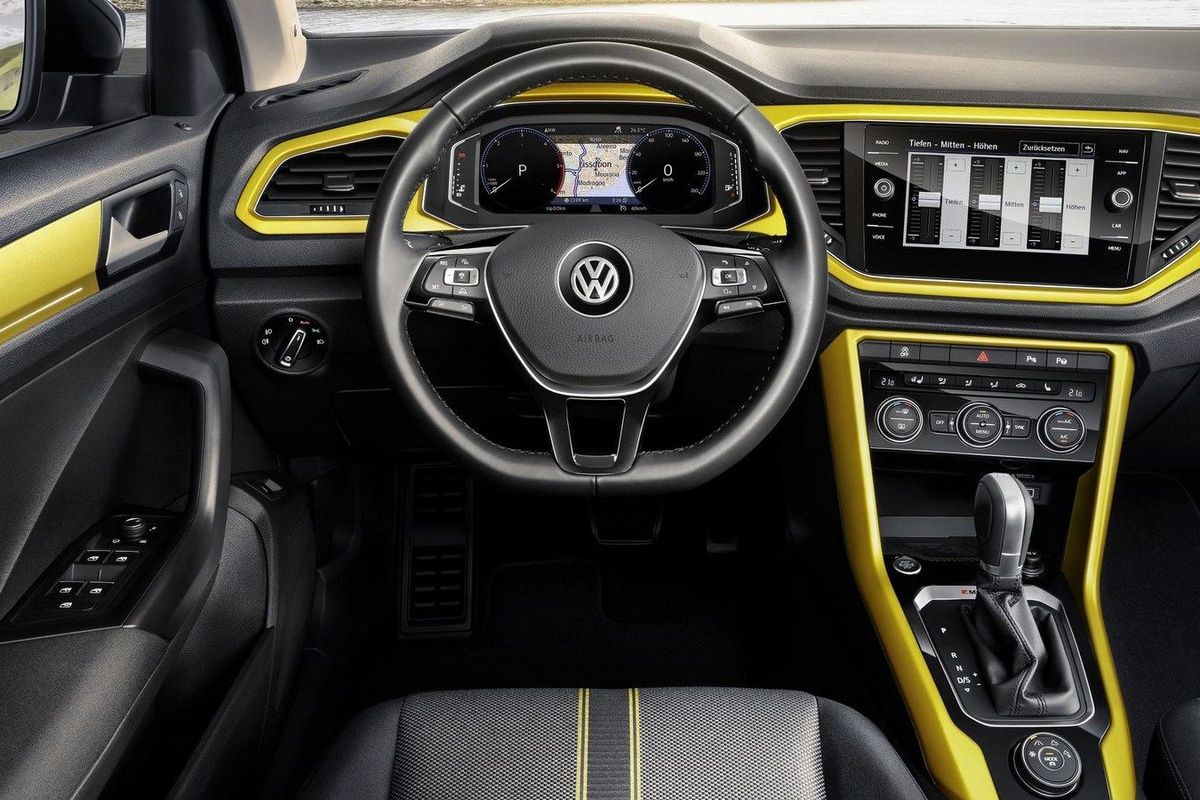
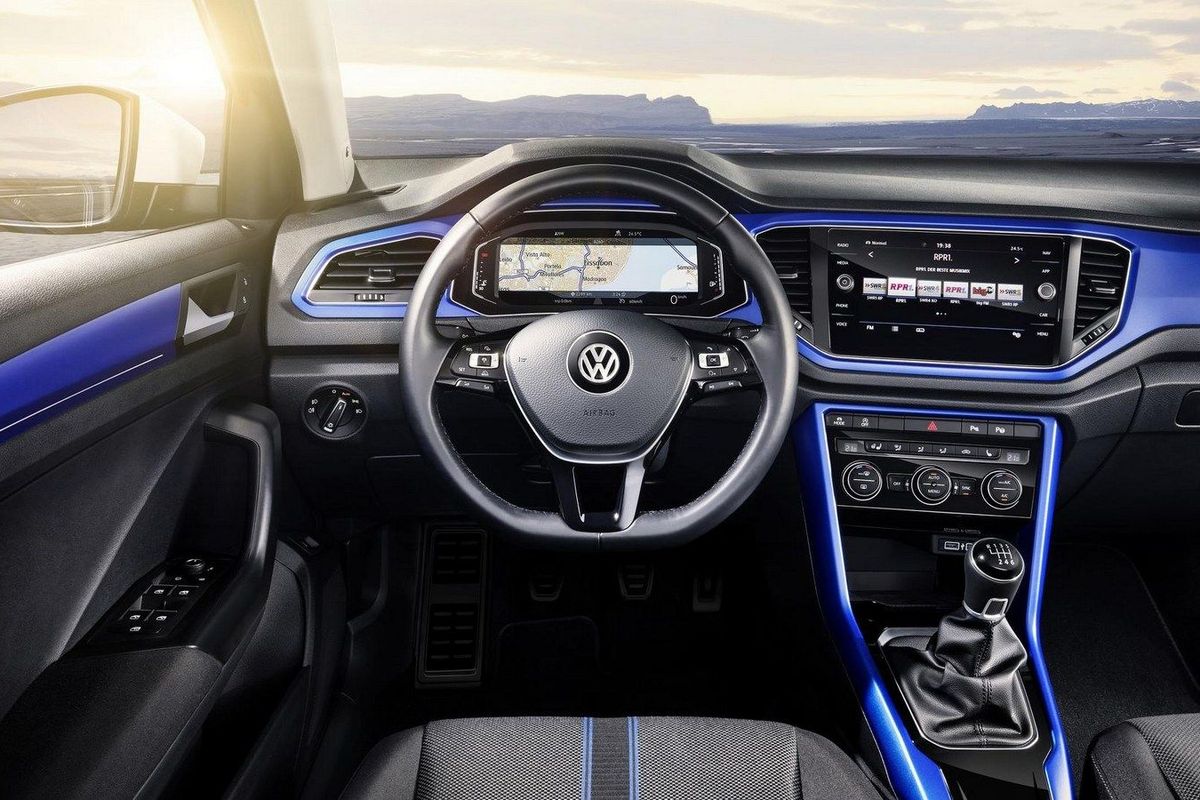
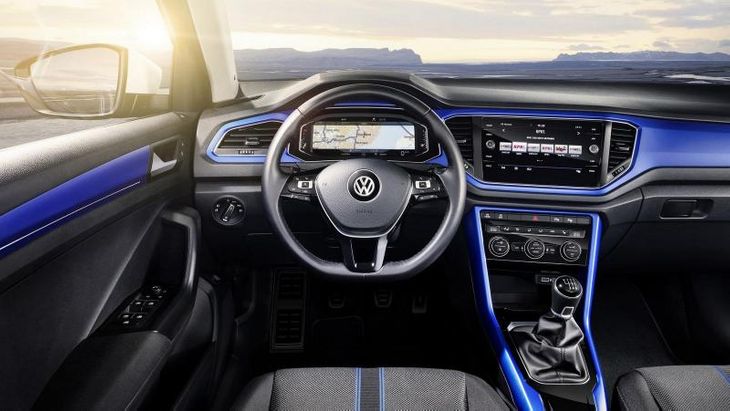
Safety is a core focus in the Volkswagen T-Roc and as standard you get Front Assist with city emergency braking and lane assist. There's also adaptive cruise control, road sign display, blindspot monitor, park assist and a reversing camera. It's good to see the all-digital dashboard present, while it appears top-spec models get fancy LED headlamps. The central-mounted infotainment screen is available in varying sizes and Volkswagen has made sure that the car has all the functionality associated with the smartphone such as App Connect, Apple CarPlay and Android Auto. A wireless charging pad is available as an option.
The new Volkswagen T-Roc gains all the latest safety and connectivity tech the Volkswagen arsenal
There’s the standard car with two higher trims called Style and Sport:
Volkswagen T-Roc Style
Ambient lighting (white)
Connectivity package
Roof in contrasting colour (four colour variants) including A-pillars and exterior mirror housings
Trim strips on instrument panel and door trim panels available in one of four colours