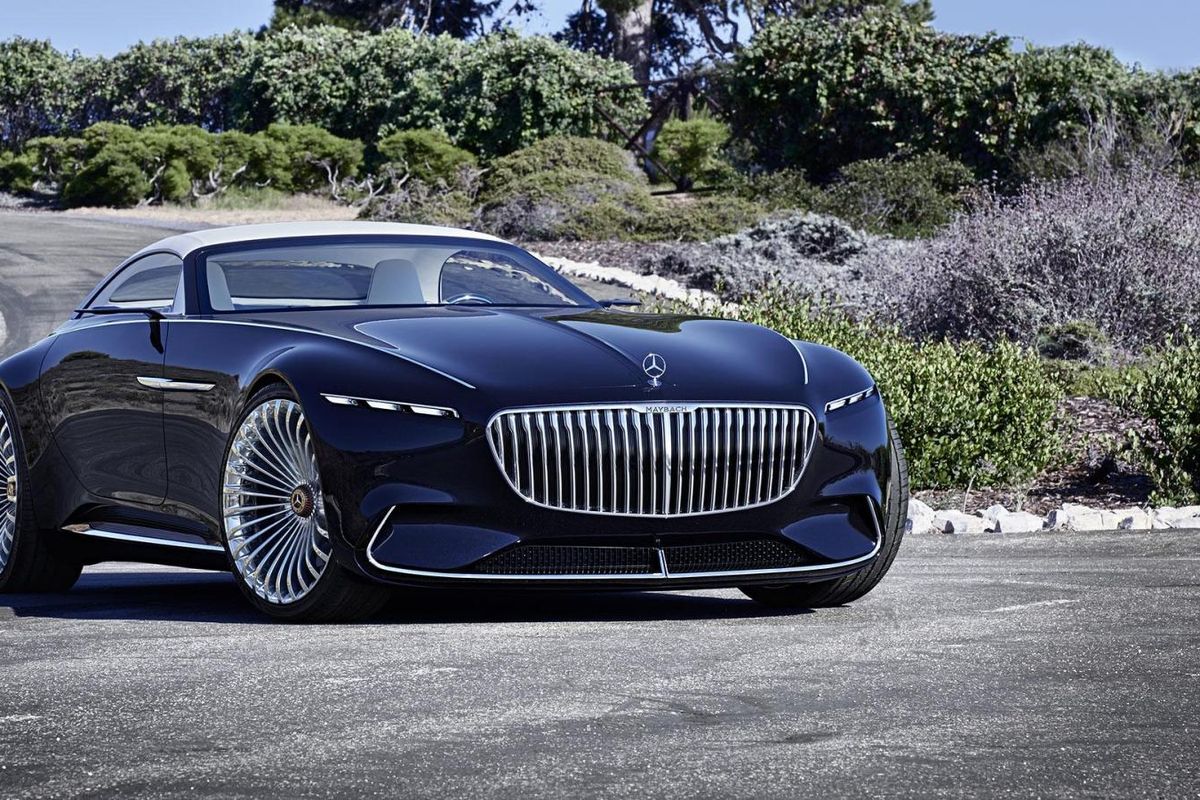
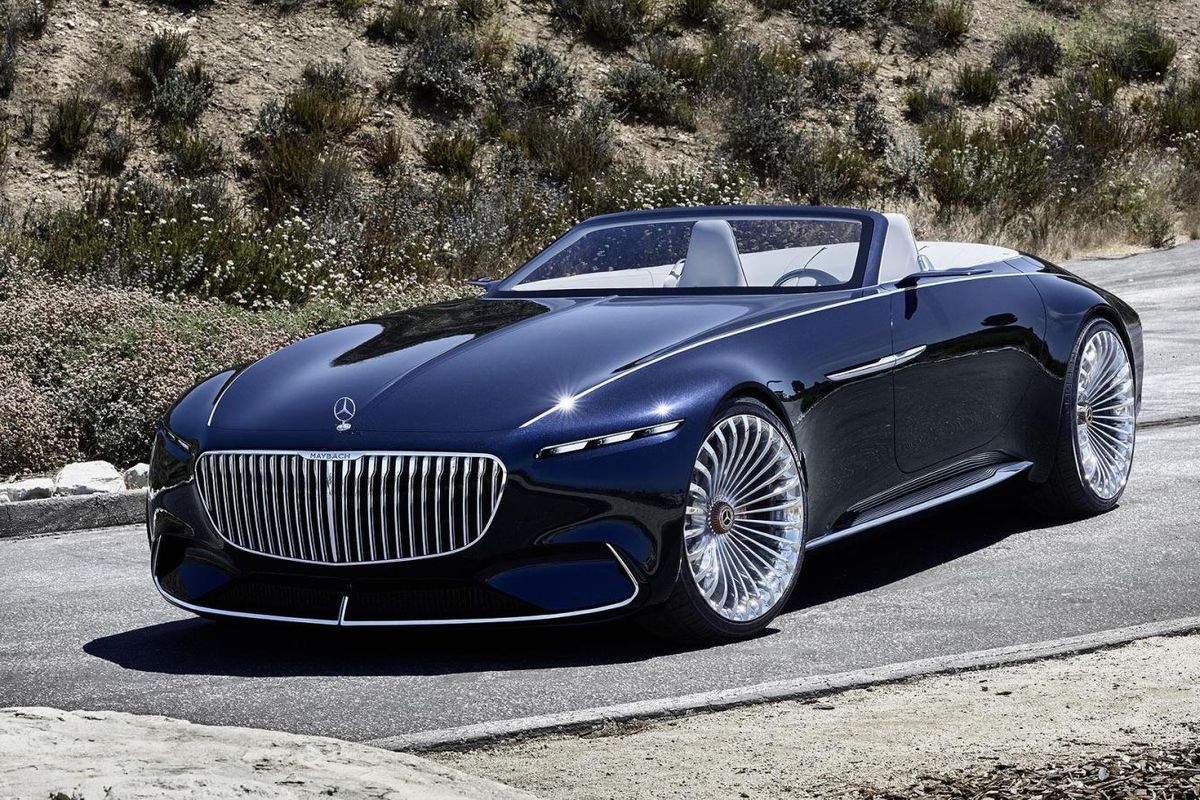
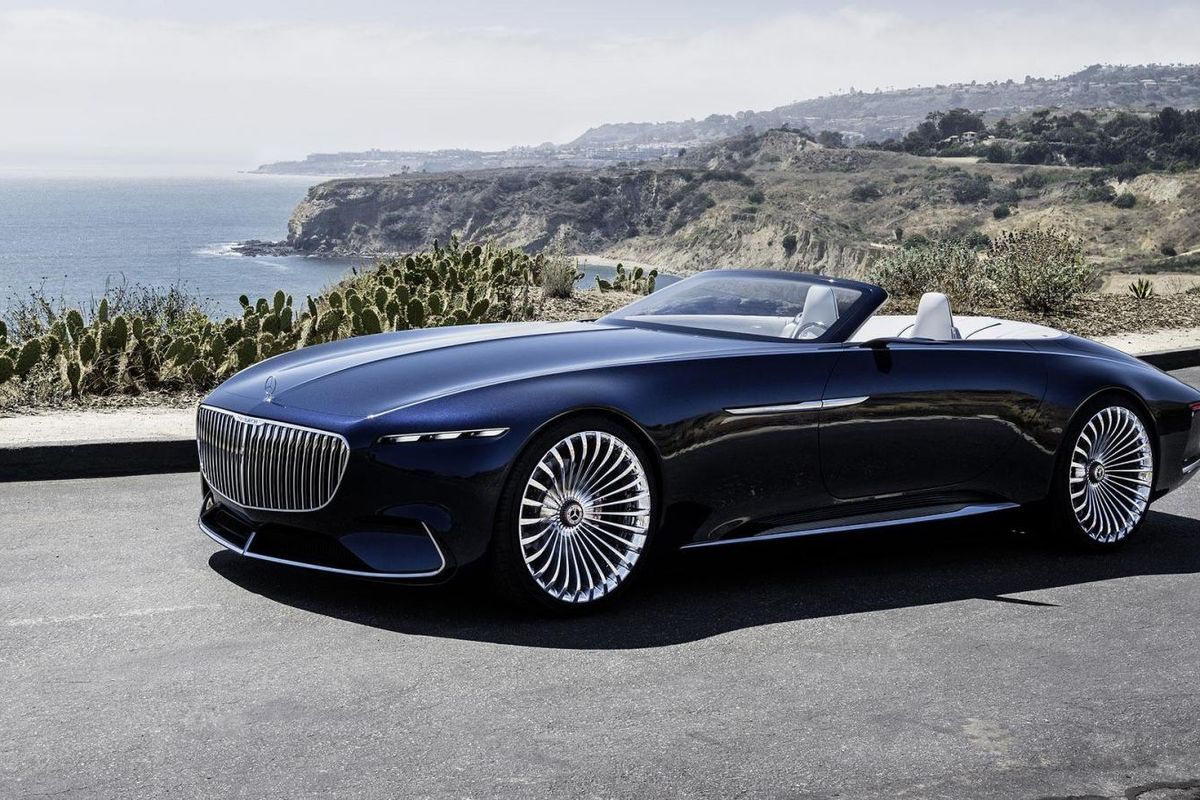
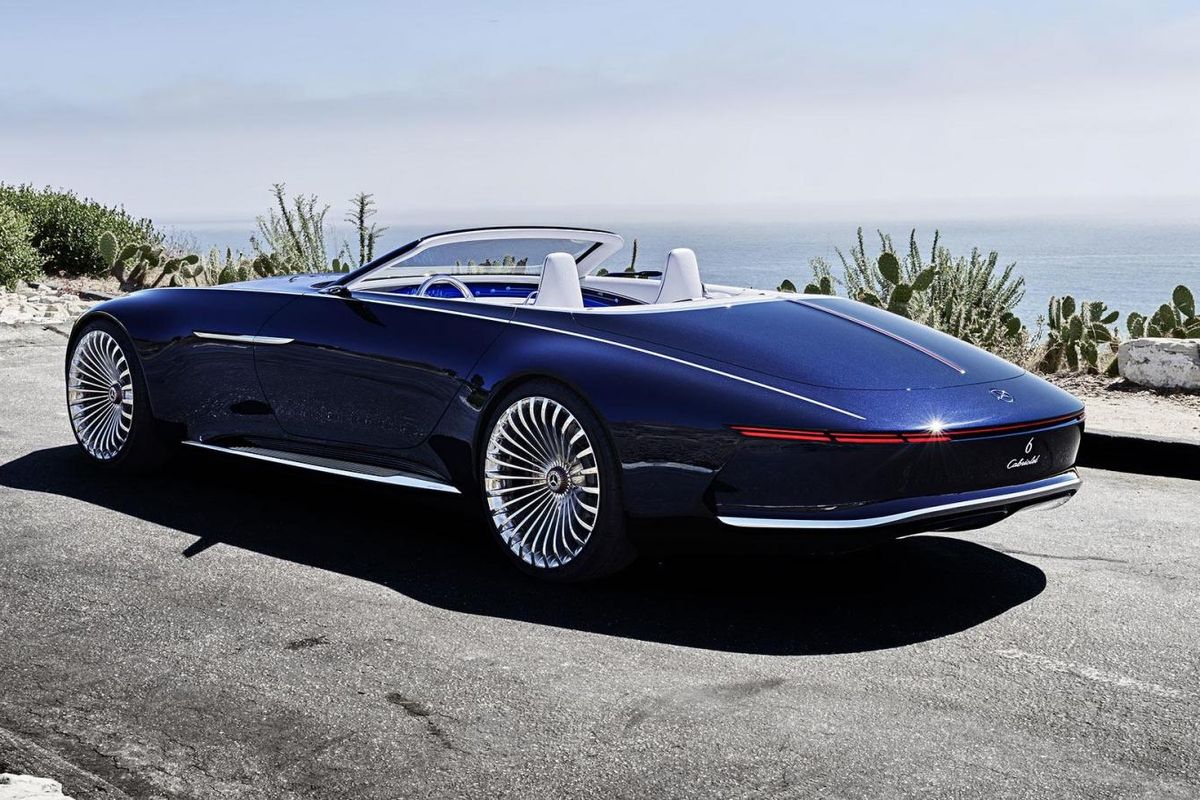
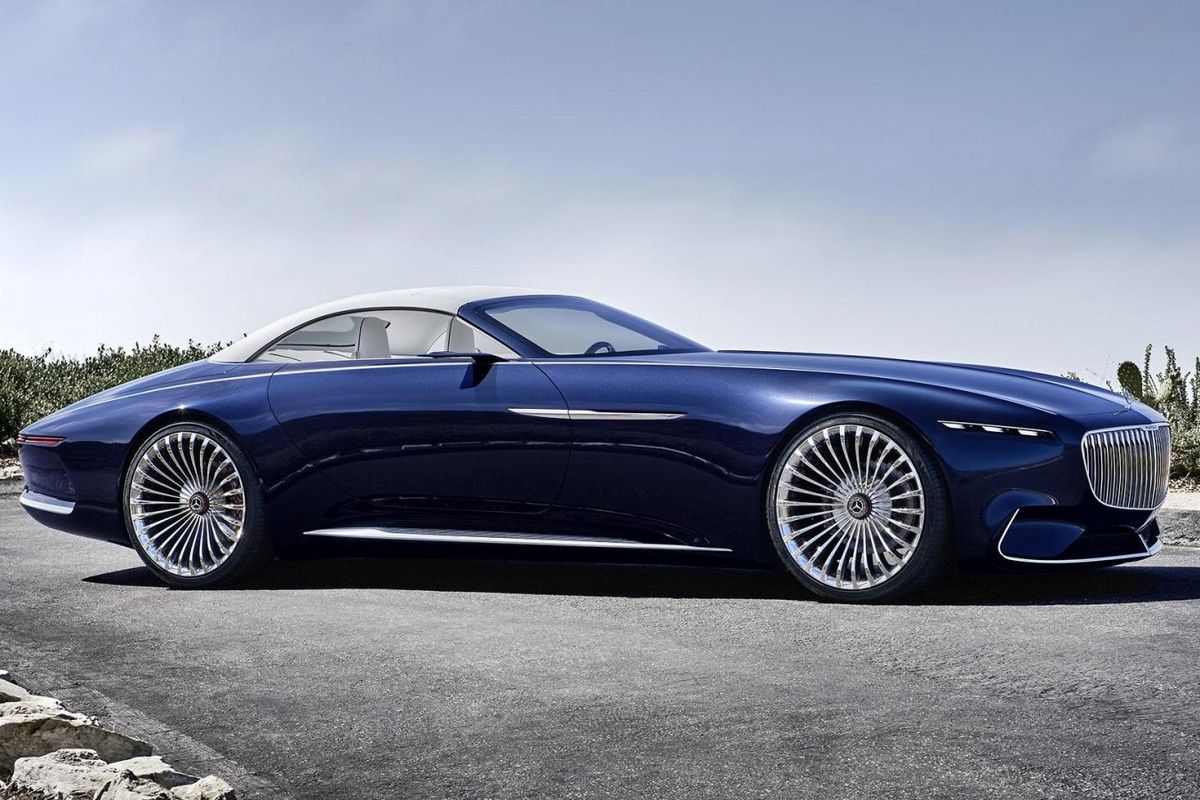
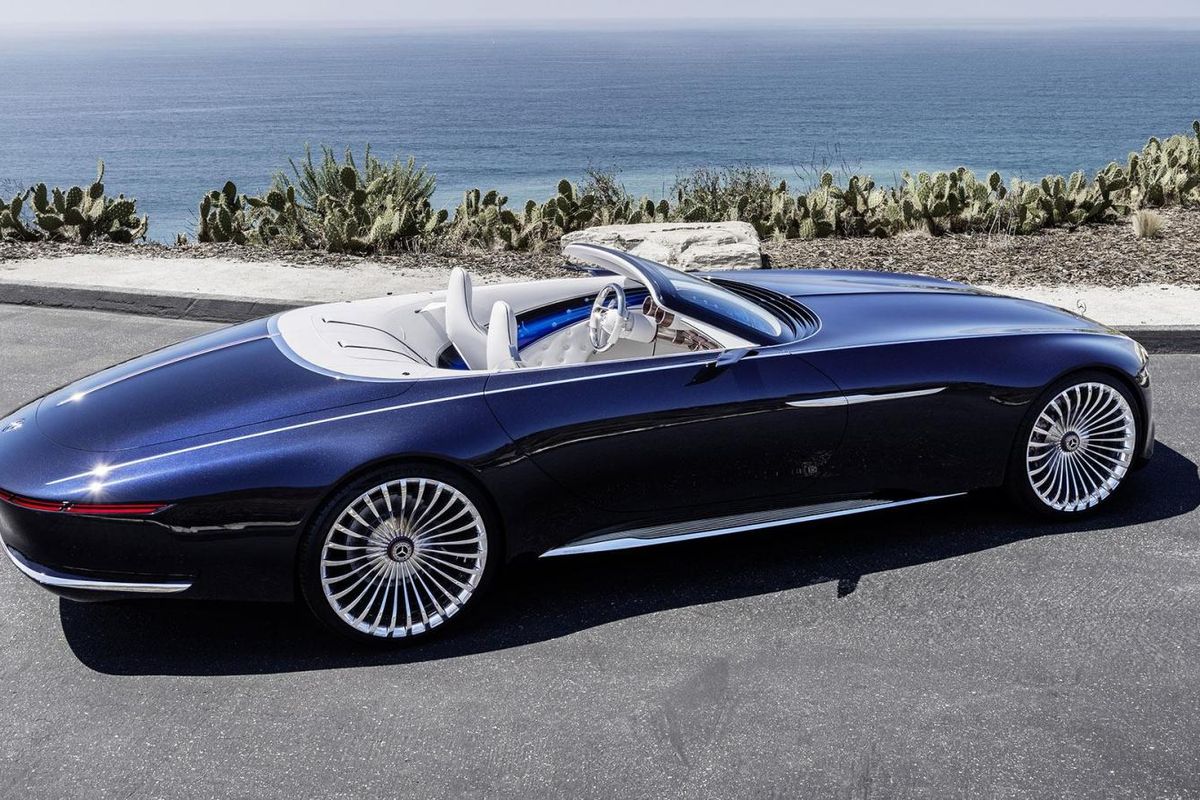
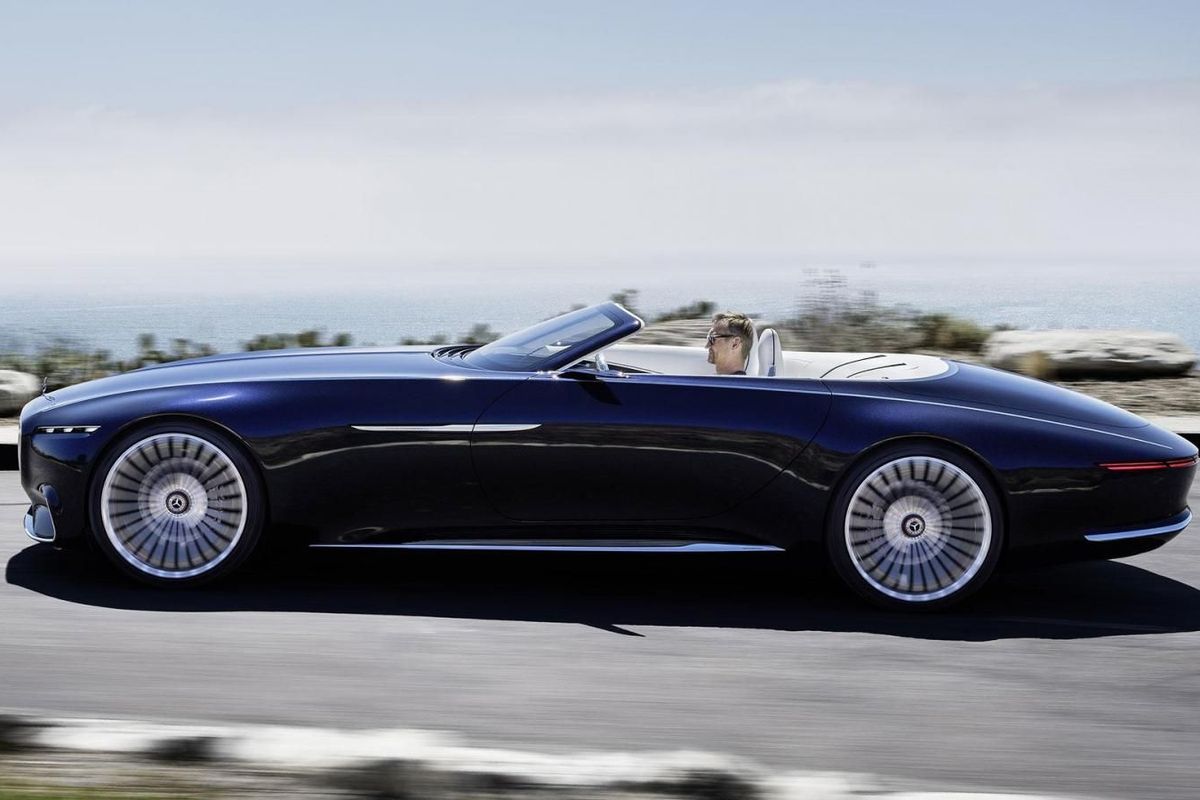
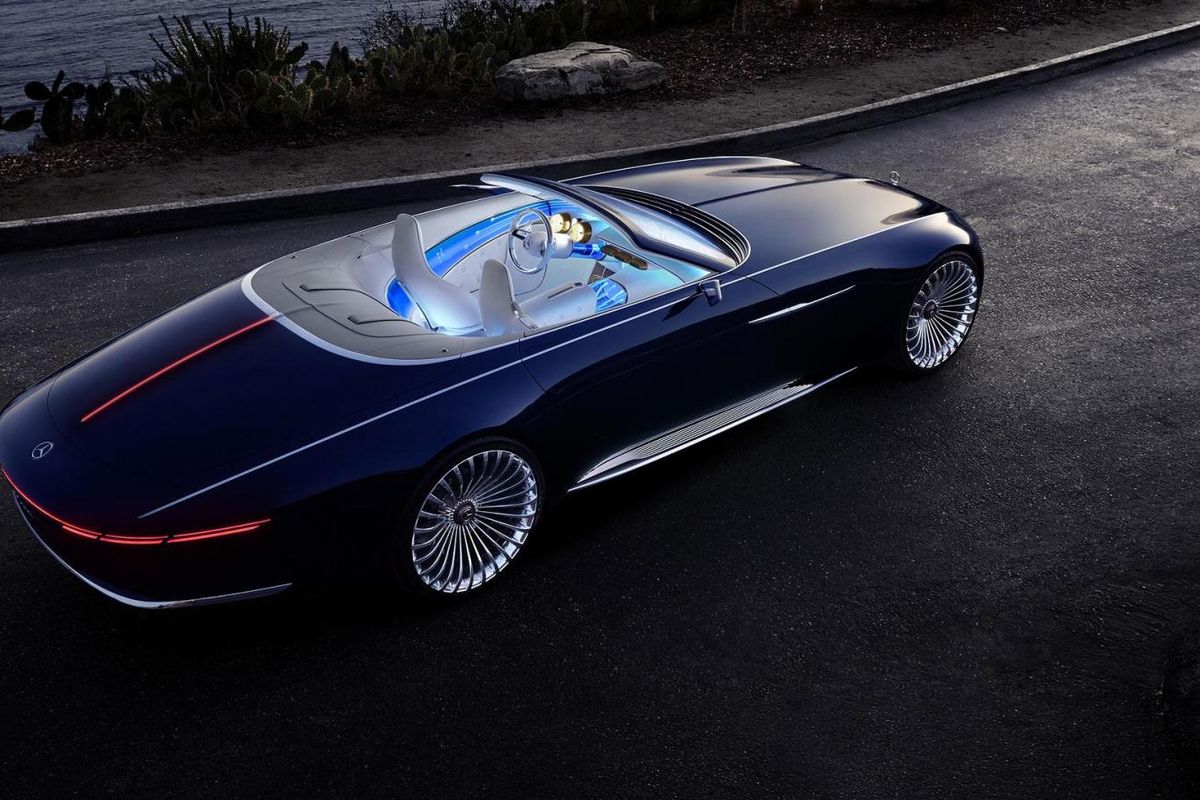
The Vision Mercedes-Maybach 6 Cabriolet has been shown at the Pebble Beach Concours d'Elegance in California and it’s breathtakingly beautiful!
The Vision Mercedes-Maybach 6 Cabriolet concept combines classic styling with modern luxury and the result is a glamourous 2-seater cabriolet that dreams are made of. Designed as an electric car, the Vision Mercedes-Maybach 6 Cabriolet has a combined output of 550 kW and has a driving range of over 500km.
"The Vision Mercedes-Maybach 6 Cabriolet takes modern luxury into the realms of the ultimate in luxury, and is the perfect embodiment of our design strategy. Breathtaking proportions combined with a luxurious "haute couture" interior help to create the ultimate experience," explains Gorden Wagener, Chief Design Officer of Daimler AG.
Key Design Features
The lavishly styled Vision Mercedes-Maybach 6 Cabriolet embodies the classic and ultra-modern design cues.
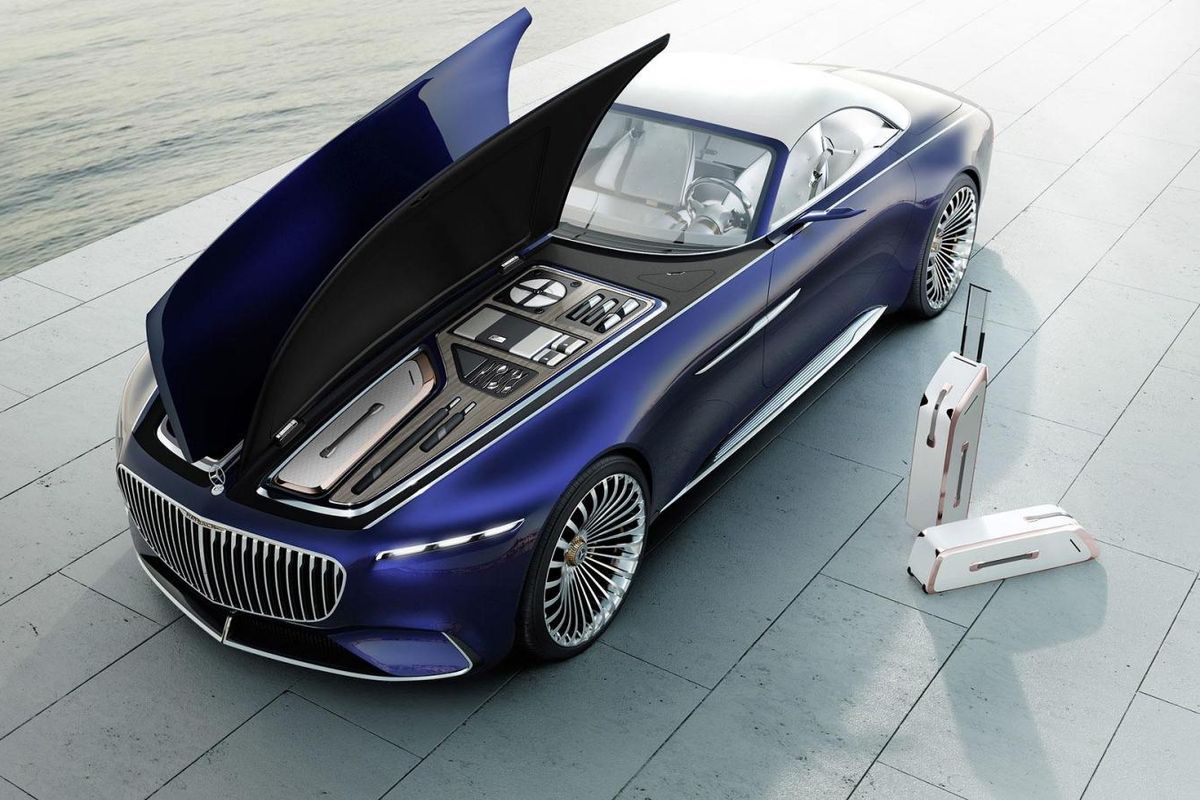
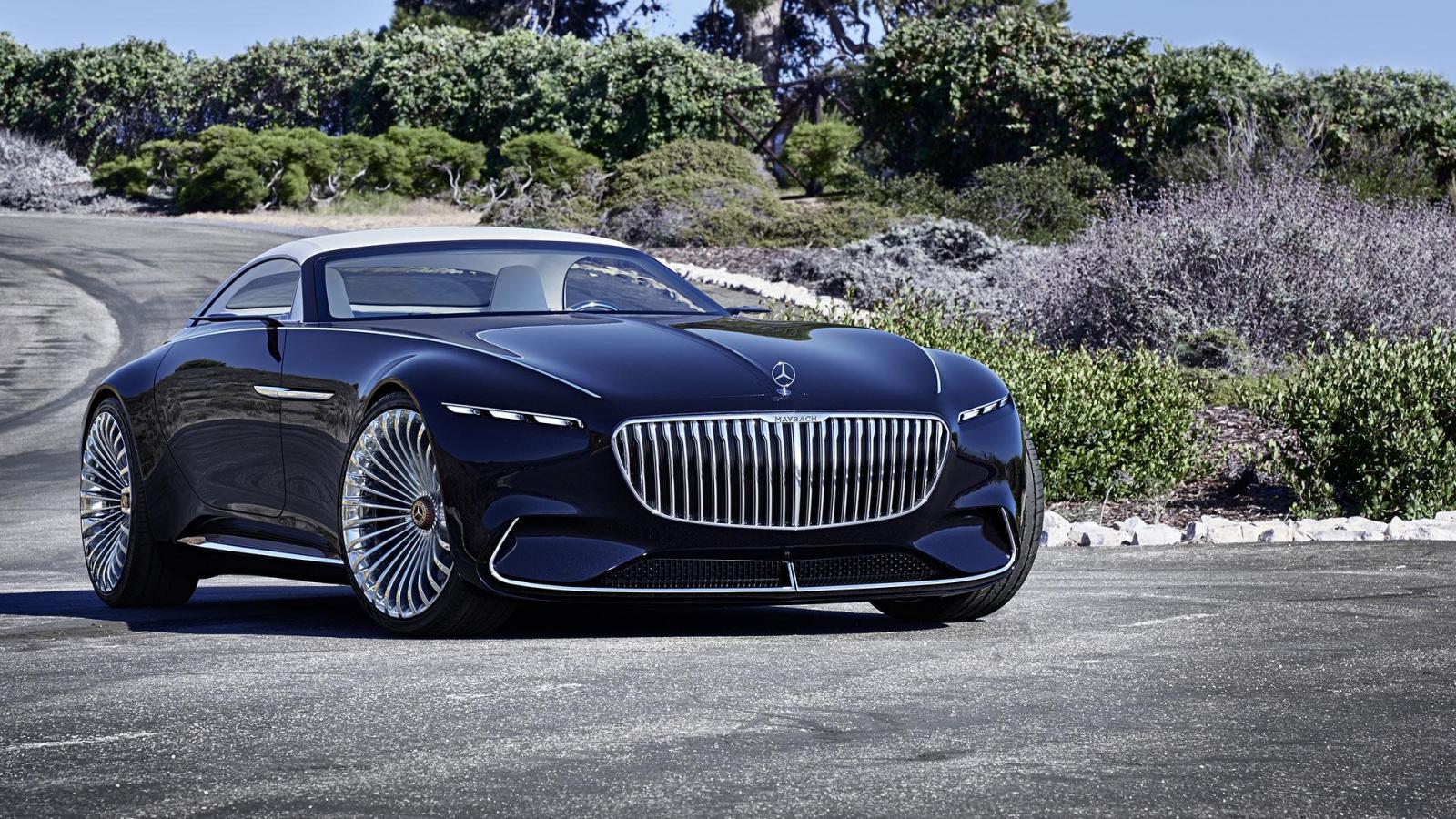
The Vision Mercedes-Maybach 6 Cabriolet measures nearly 6 metres in length and features classic proportions of art deco design with a long hood and flowing lines. Wearing Nautical Blue metallic paint, a large Mercedes-Maybach grille with vertical struts dominate the front-end along with thin headlights. The rear-end, reminiscent of a luxury yacht ‘boat tail’ features vertical tail light clusters and an aluminum-framed diffuser. The Vision Maybach 6 Cabriolet rides on large 24-inch light-alloy wheels with rose gold centre locks. The model is also fitted with a custom-made fabric roof with interwoven rose gold threads.
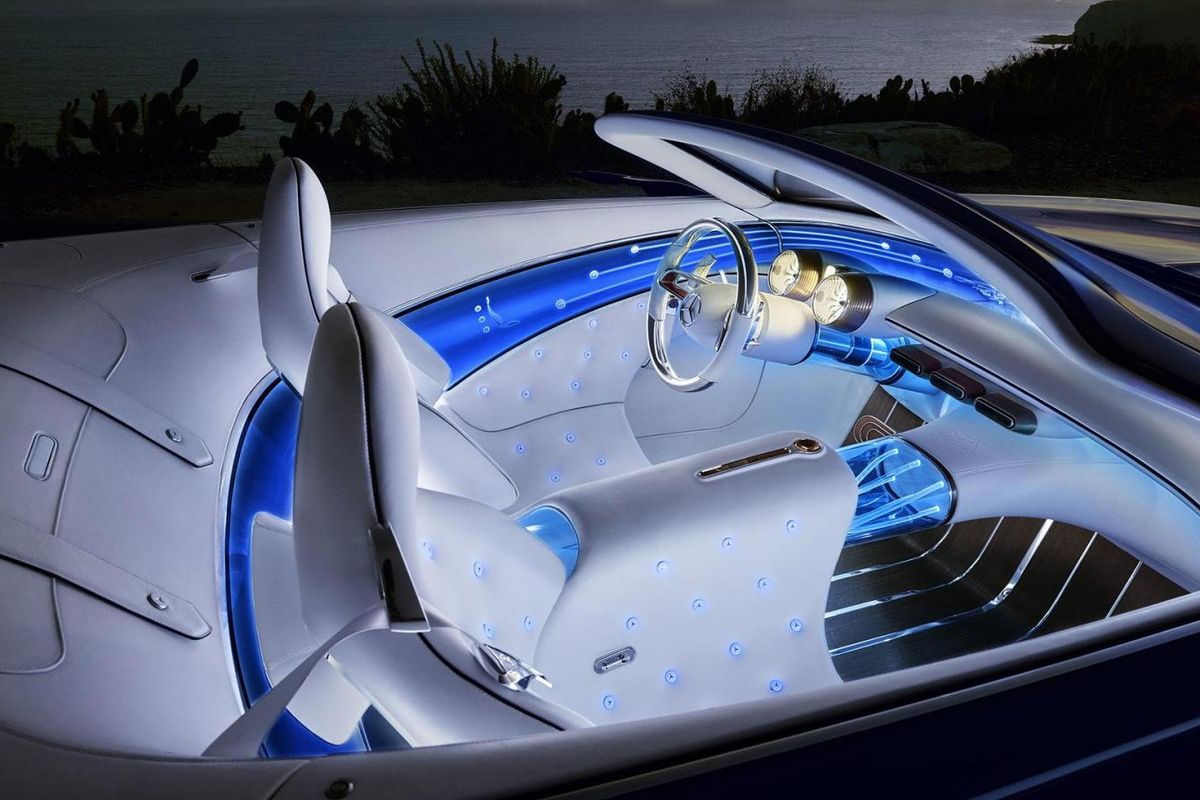
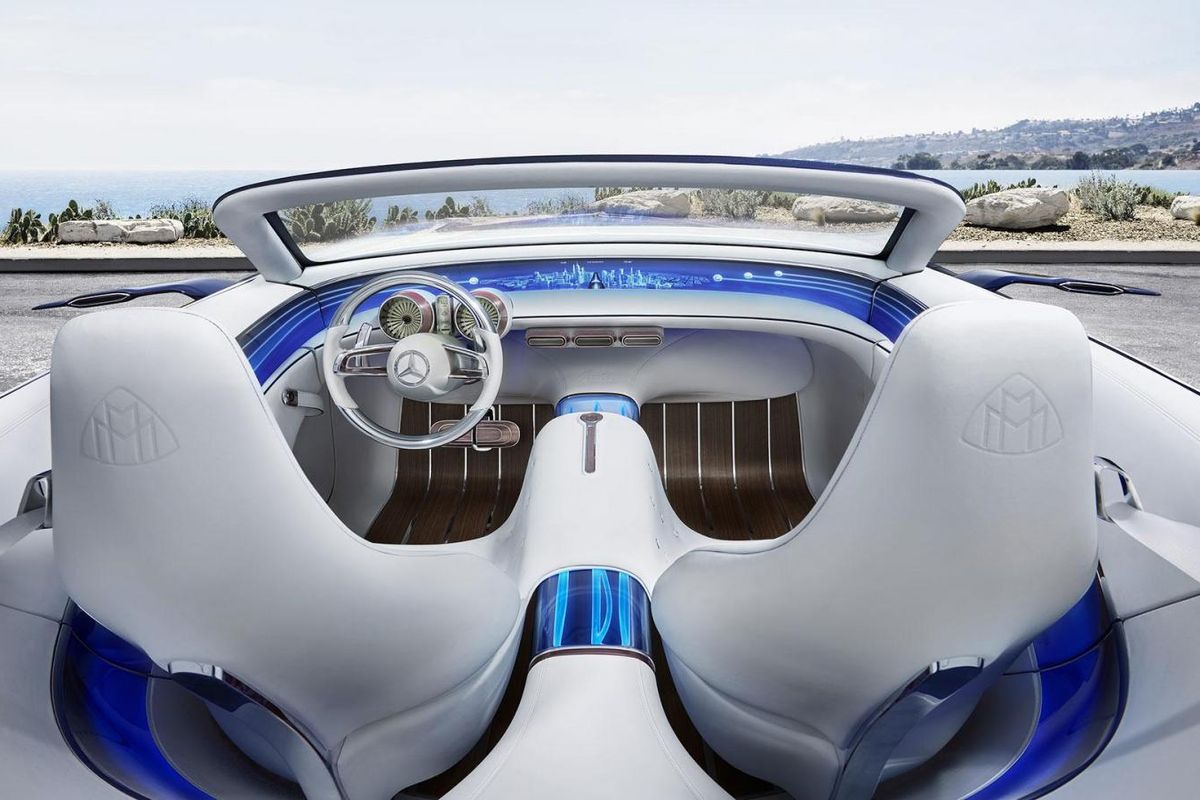
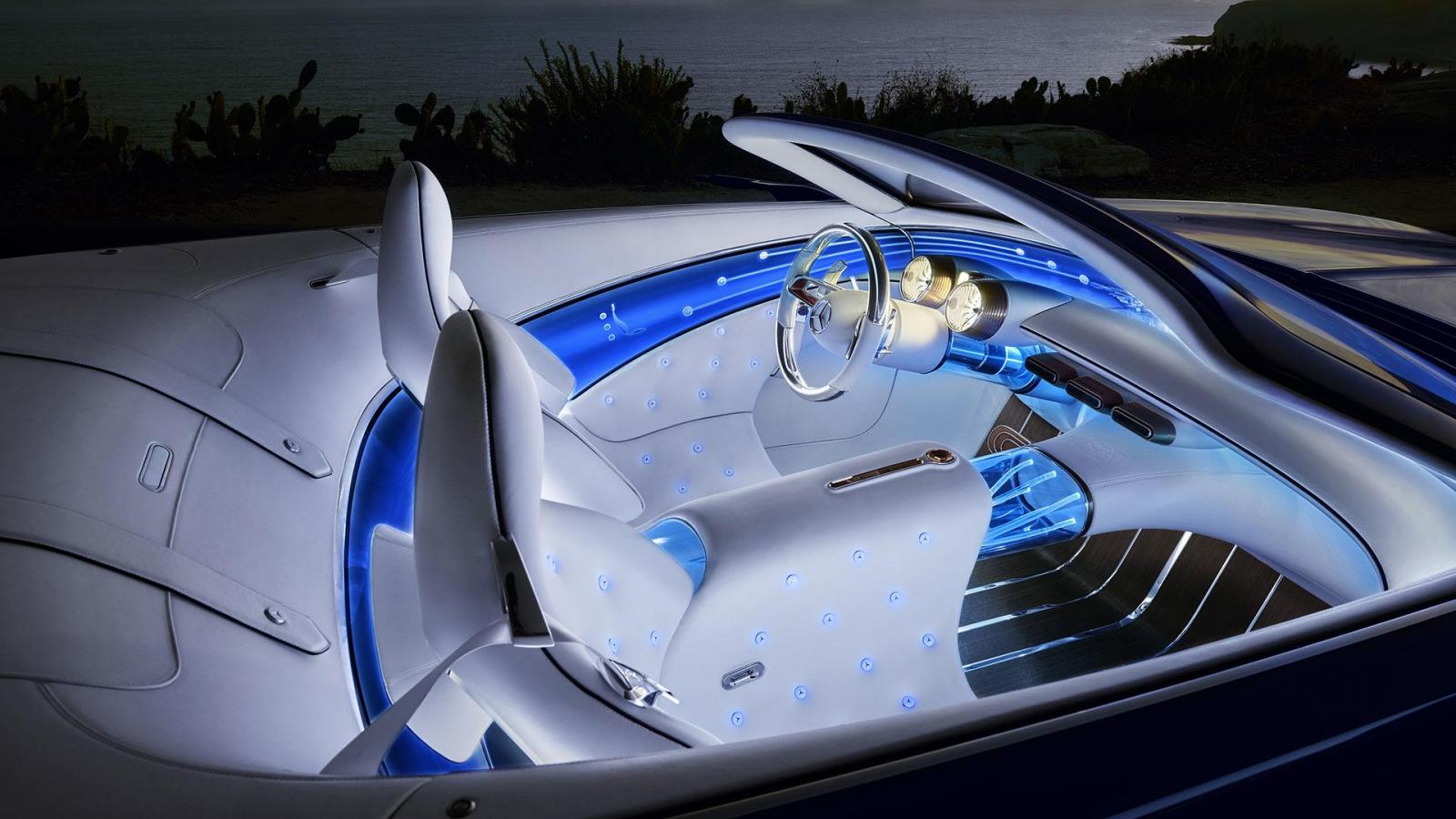
A futuristic interior with white Nappa leather upholstery and open-pore wooden floor creates a luxurious interior ambience.
The interior features a flowing design to create a 360-degree open-air lounge effect. Crystal white Nappa leather with a diamond pattern quilting provide striking contrast and rose gold trim details add to the opulence. Upholstery buttons feature the Mercedes star and all of them are backlit in blue. The yachting theme is further emphasised with the open-pore wood floor with inlaid aluminum.
Two round analogue dials provide a classic look and 3 air vents positioned below the central wing appear as floating engines. Another prominent feature is a ‘floating’ transparent centre tunnel with blue fibre optics hinting at the electrical energy flow provided by the electric motors. Additional vehicle and travel information are displayed via 2 head-up displays projected onto the windscreen.
Electric power
The all-wheel drive Vision Mercedes-Maybach 6 Cabriolet is powered by 4 compact magnet synchronous electric motors with a flat battery positioned in the underbody. Total system output is pegged at 550 kW with acceleration from zero to 100 kph taking place in around 4 seconds before hitting a limited top speed of 250 kph. The vehicle has a range of over 500 km and a quick-charging function allows for 100 km range to be charged in 5 minutes.
The Vision Mercedes-Maybach 6 Cabriolet is a concept that follows from the Coupe version shown last year and imagines what the future of luxurious mobility could look like.
Mercedes-Benz has bolstered its C-Class lineup with the addition of a sportier Edition C derivative. Take a look at specification and pricing for the Edition C below…
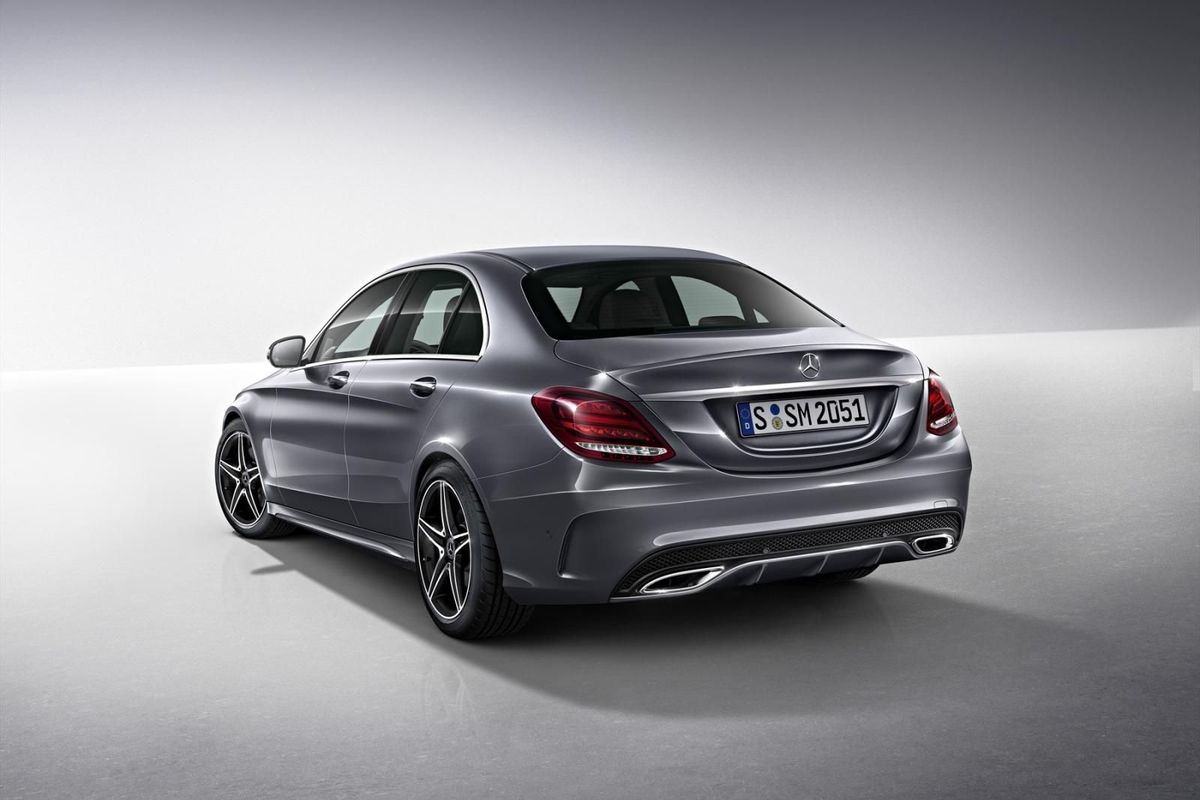
Mercedes-Benz is offering a new C-Class sedan derivative called the Edition C in South Africa that incorporates sporty exterior and interior styling. The Edition C combines an AMG Sports exterior design with an Avantgarde interior equipment line.
The Edition C rides on 18-inch, 5-spoke AMG light-alloy wheels painted in high-sheen gloss black and is fitted with LED headlights and taillights. A sport suspension and 9G-Tronic transmission is fitted as standard.
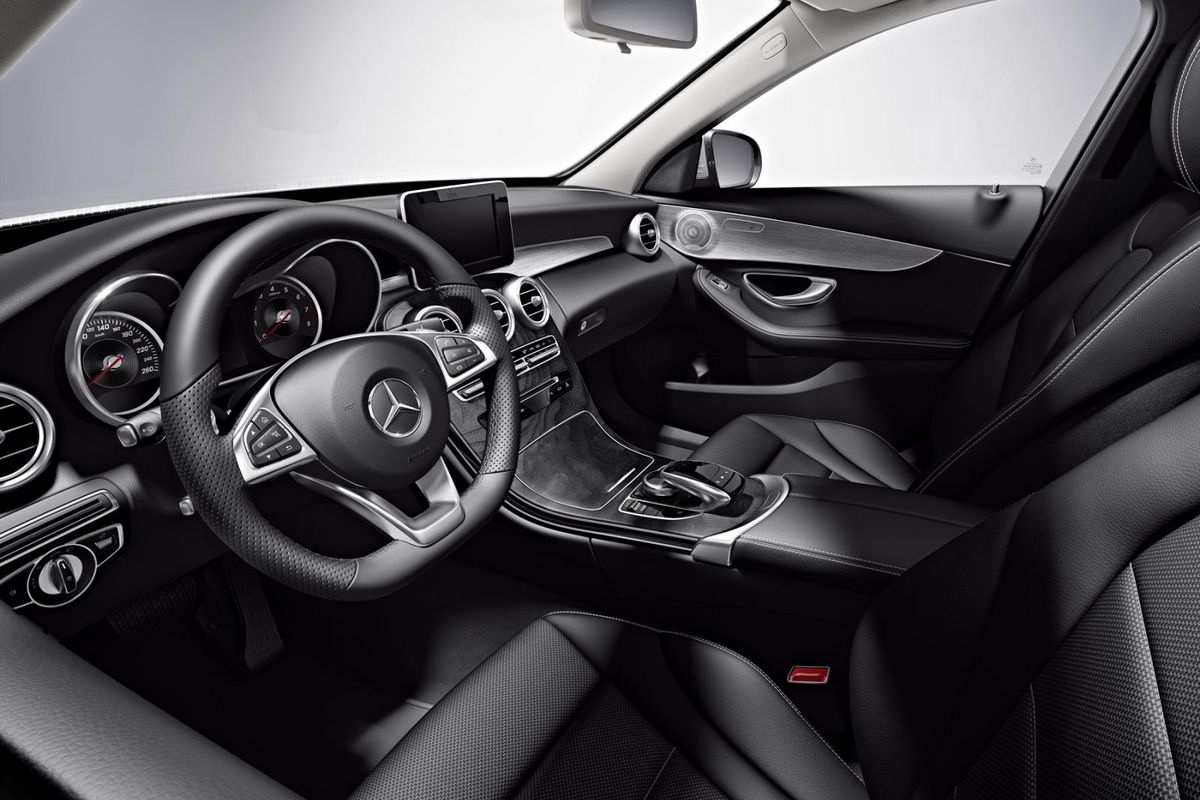
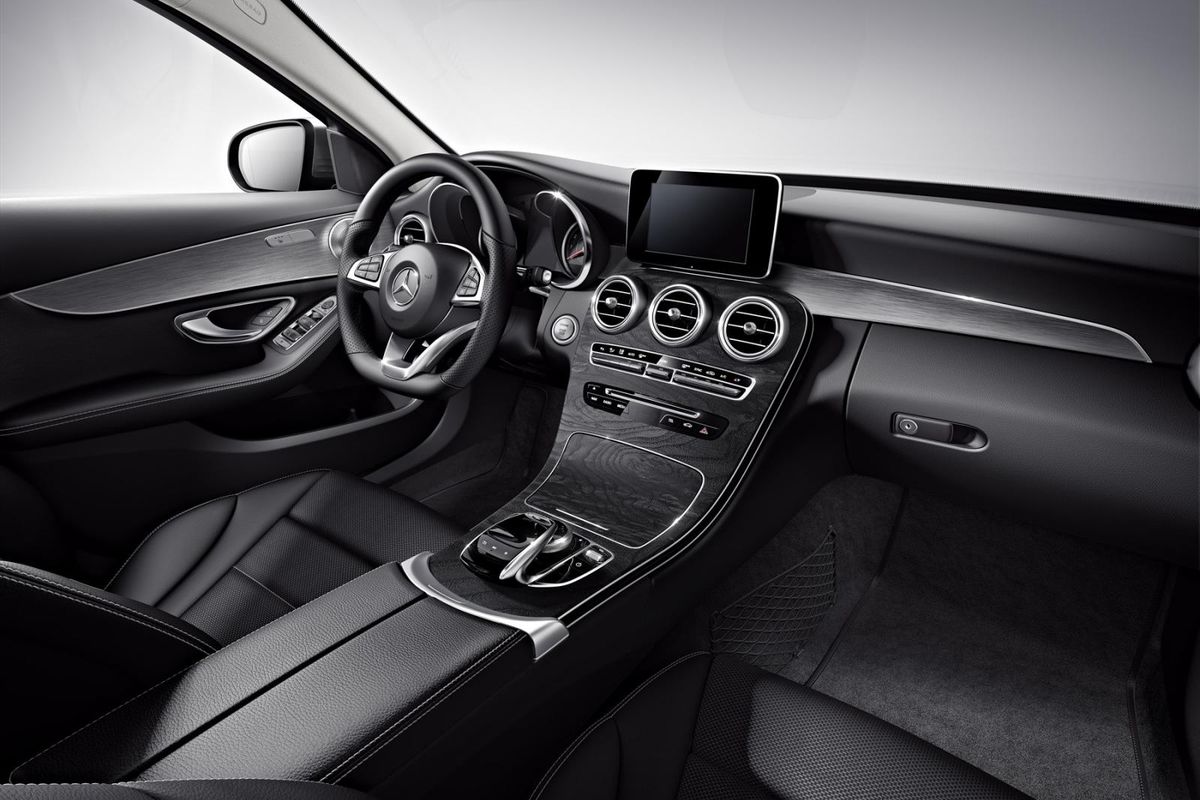
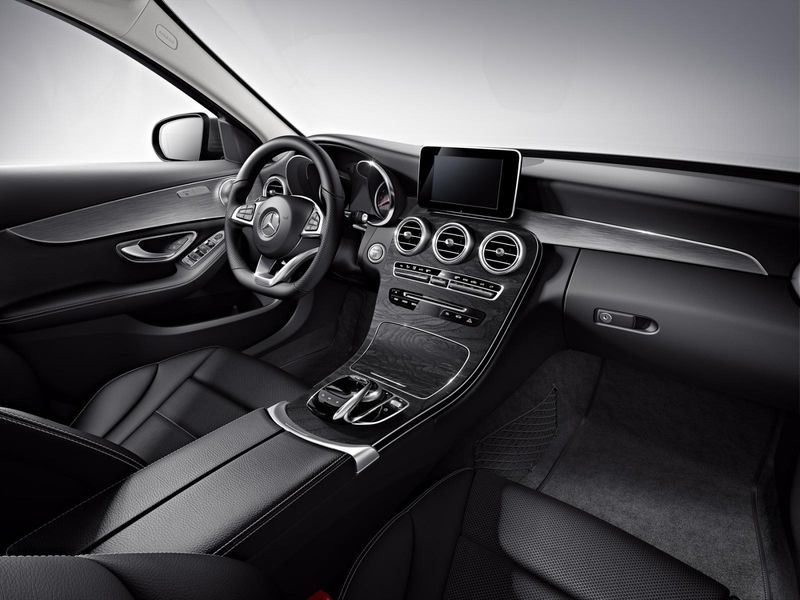
Open-pore black ash trim, aluminium detailing and multifunction sport steering wheel are some of the interior highlights of the Edition C.
On the inside, the Edition C features exclusive open-pore black ash trim on the centre console with light longitudinal-grain aluminium trim seen on the instrument panel and door panels. A multifunction, black leather, flat-bottomed steering wheel further adds to the sporty feel of the Edition C. Comand Online infotainment is an optional extra.
Other nice-to-have features include Active Park Control with Parktronic and Mirror Package which includes an automatic dimming mirror/exterior mirror and electrically folding side mirrors.
The Edition C is available across the C-Class sedan range. Take a look at pricing below.
Mercedes-Benz Edition C – Price in South Africa
C180 Edition C – R614 600
C200 Edition C – R639 900
C250 Edition C – R667 000
C300 Edition C – R707 200
C220d Edition C – R667 100
C250d Edition C – R696 300
The Mercedes-Benz C-Class Edition C is sold with a 2-year/unlimited km warranty and a 6-year/100 000km maintenance plan.
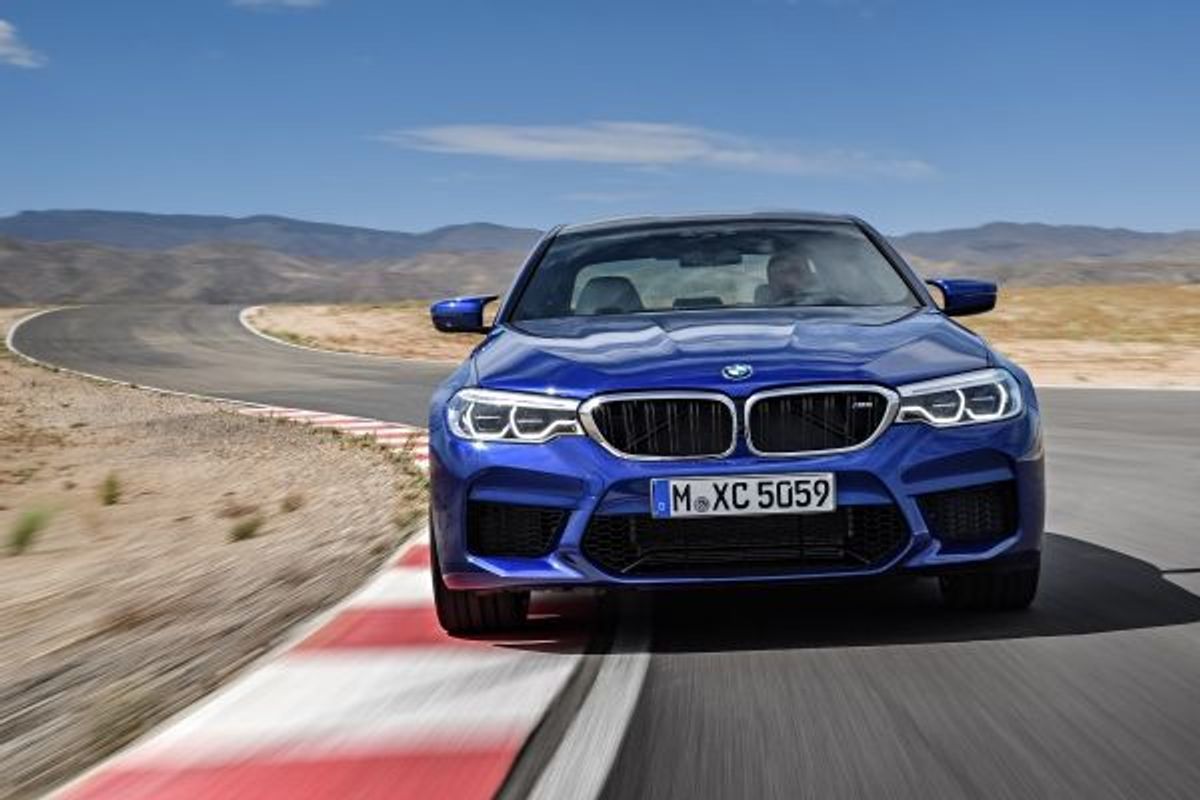
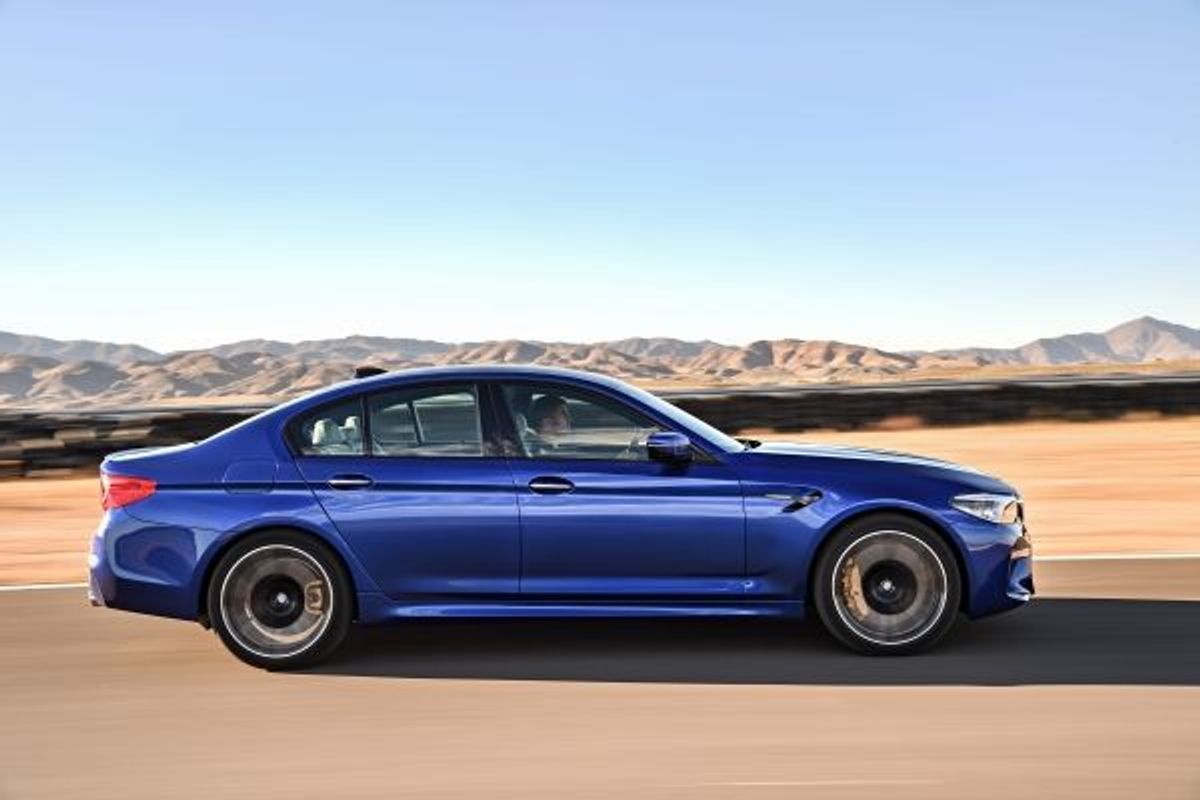
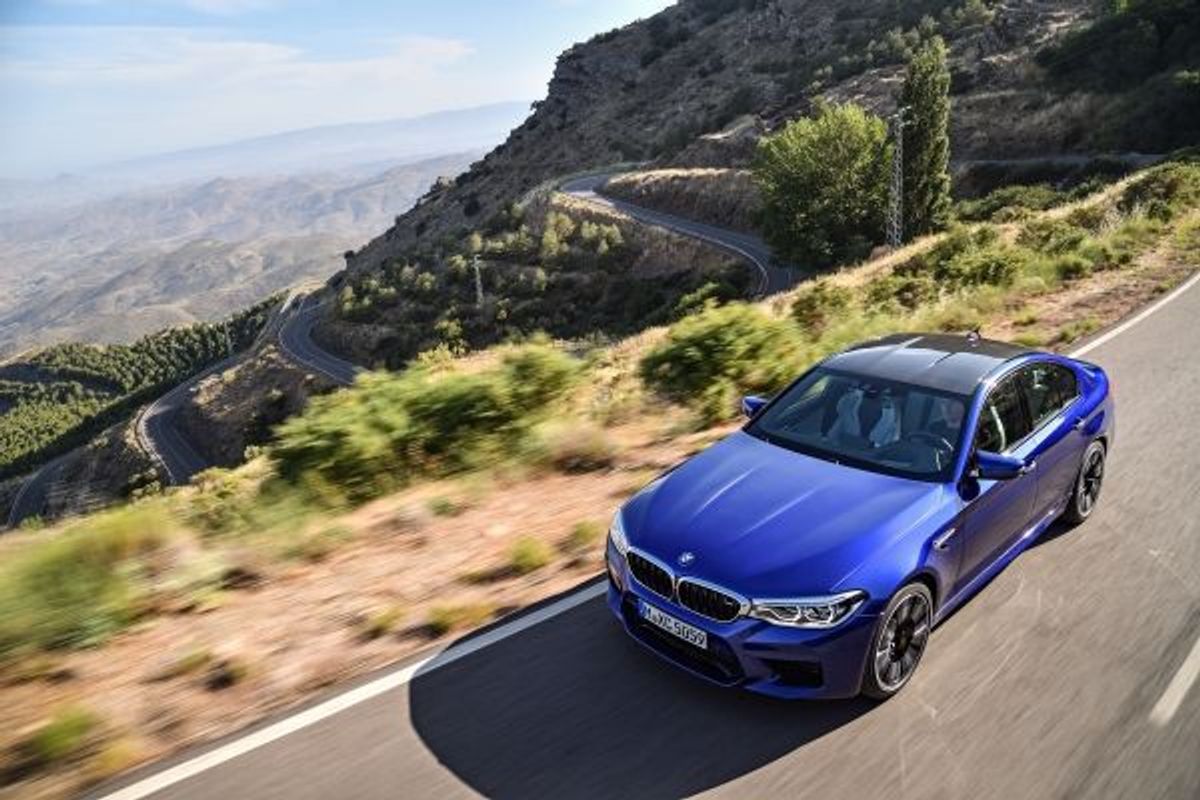
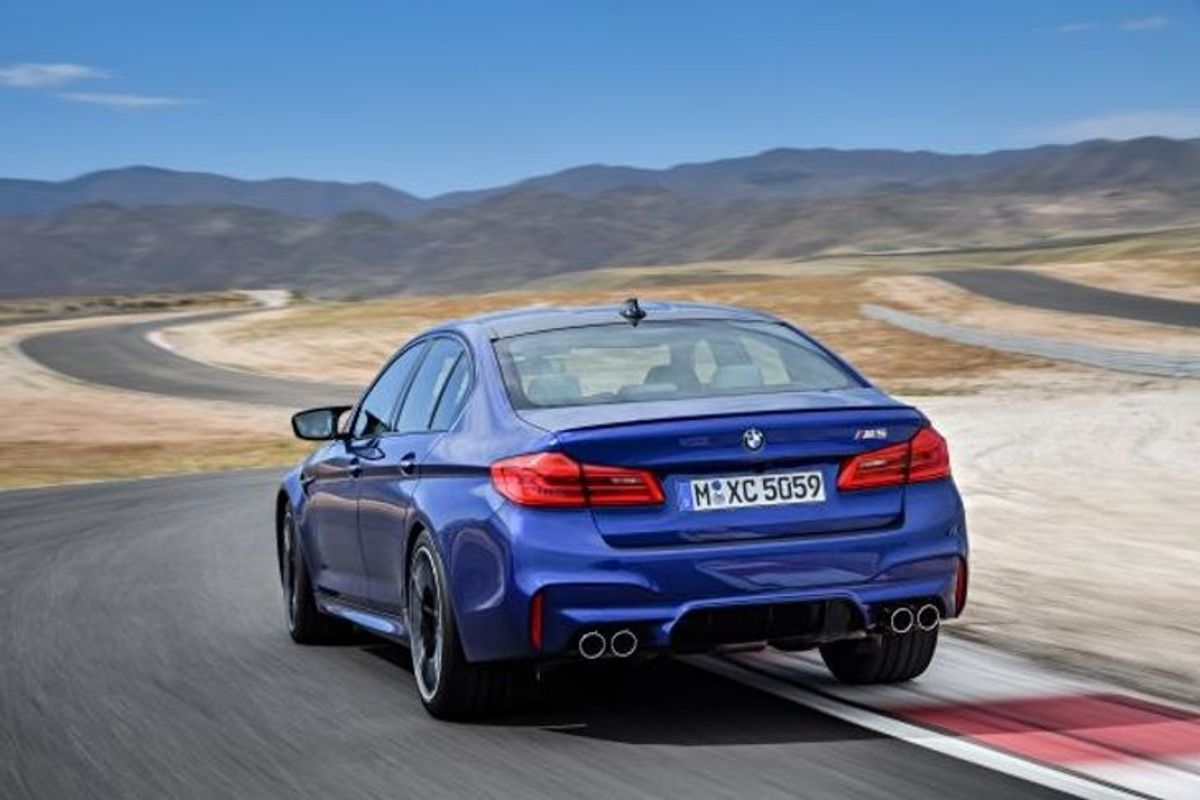
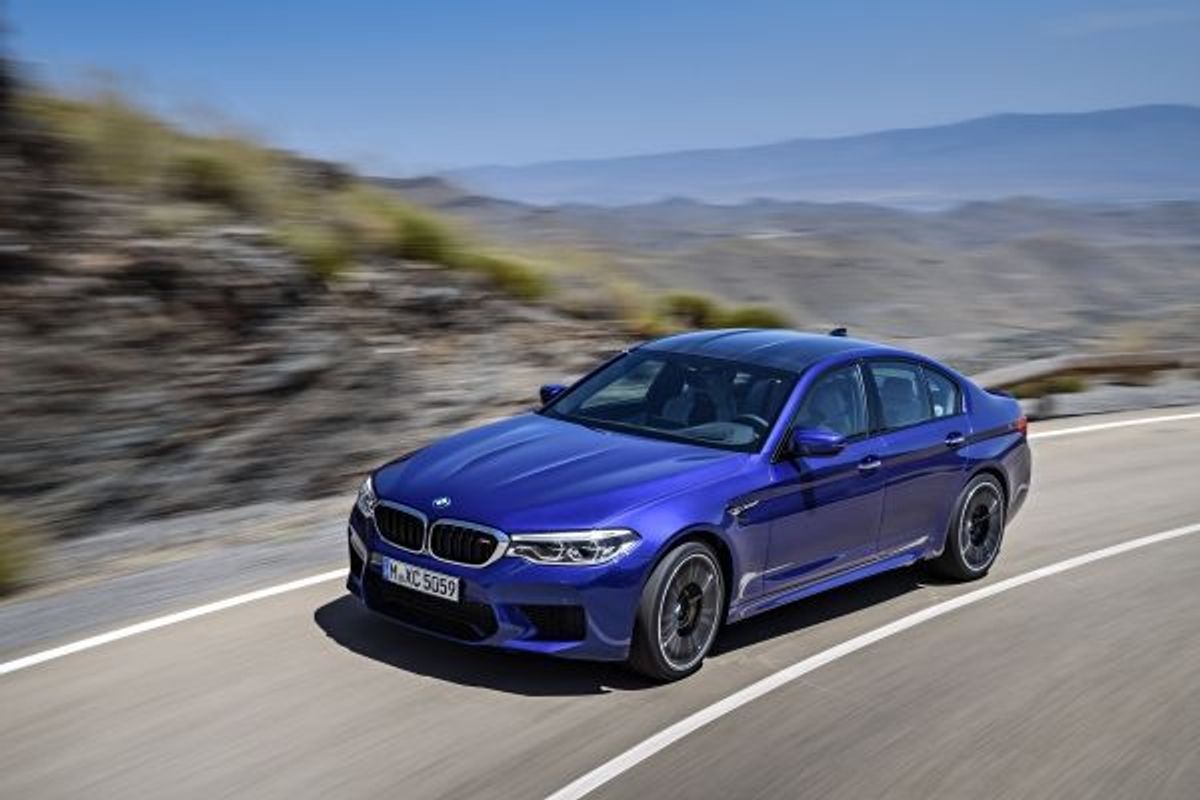
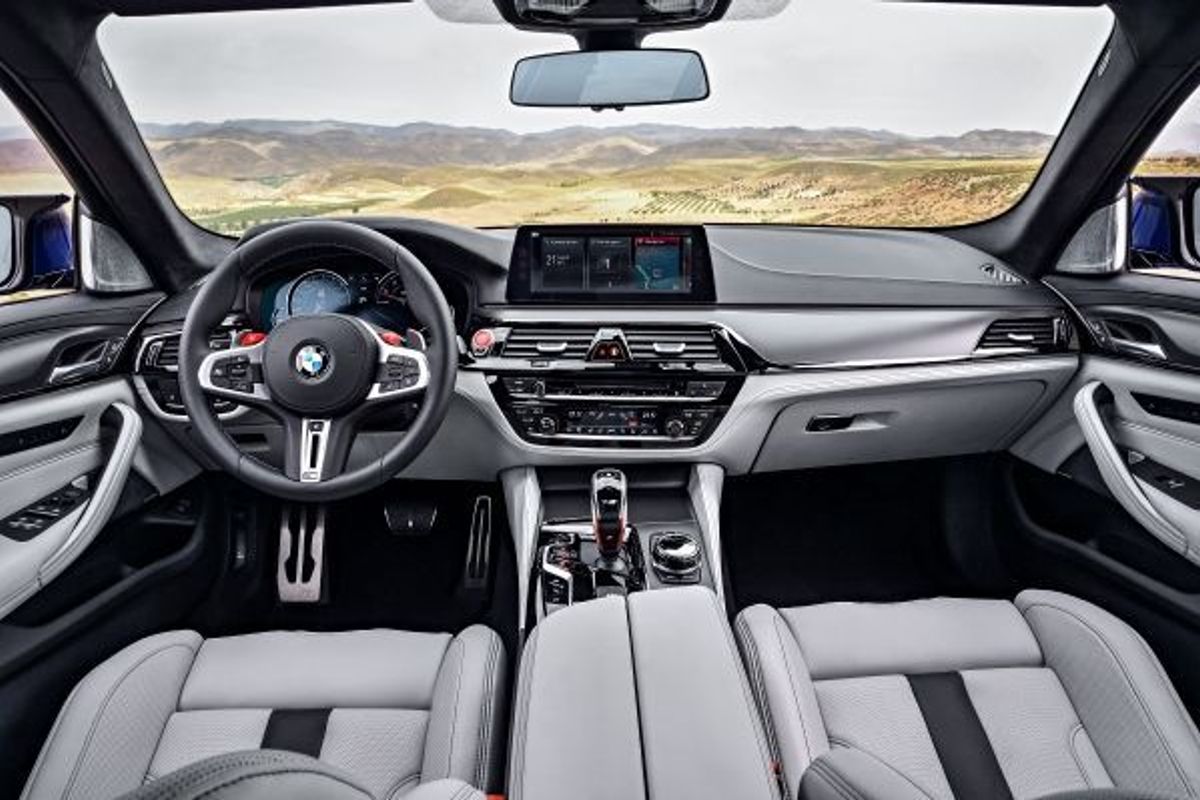
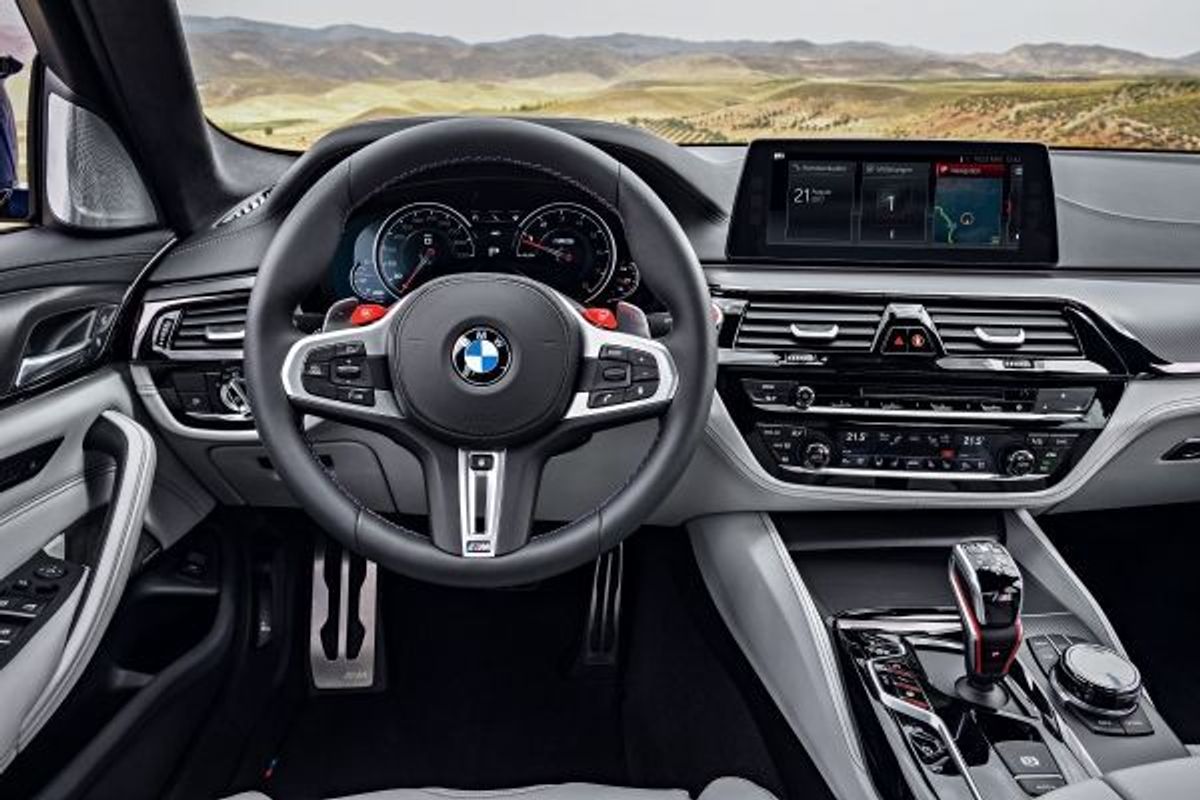
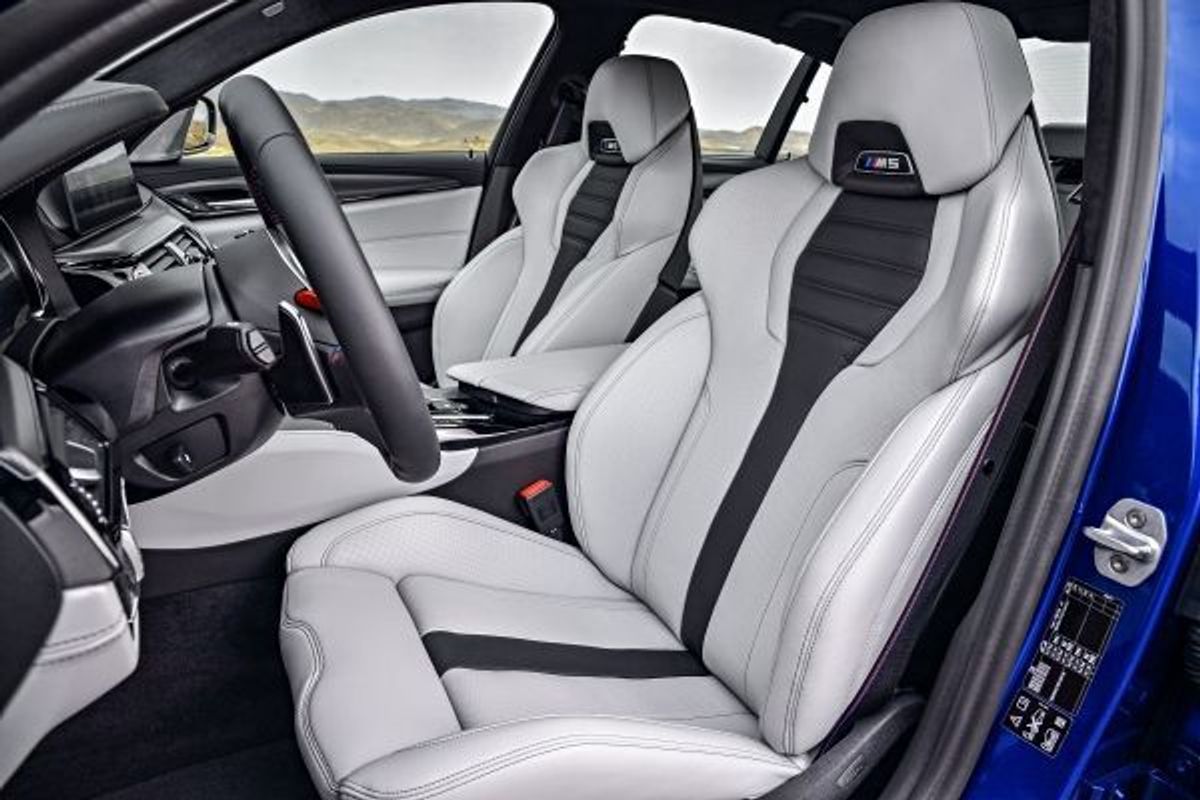
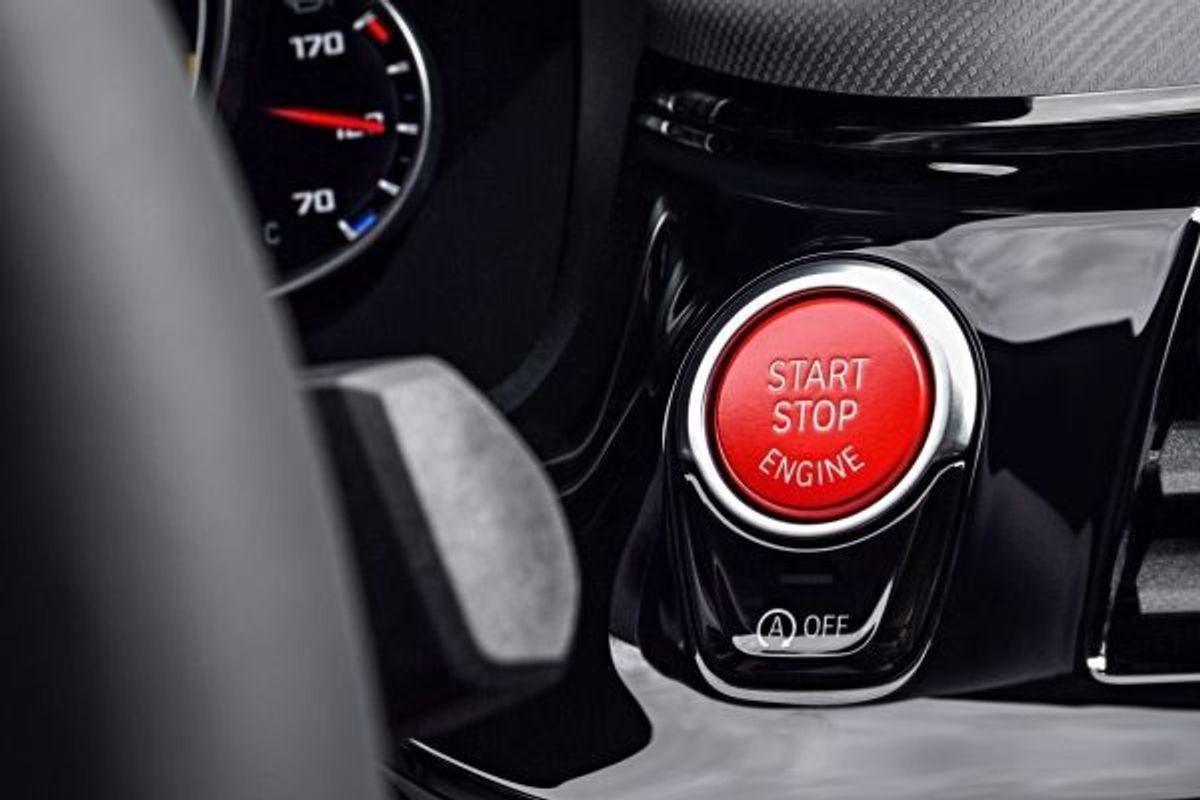
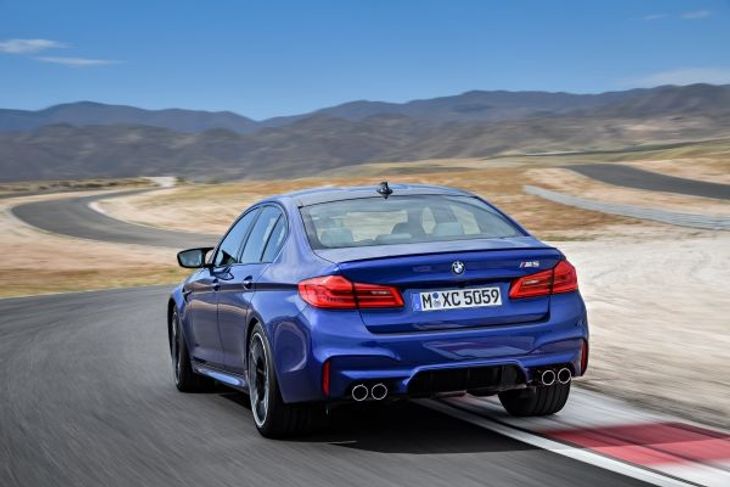
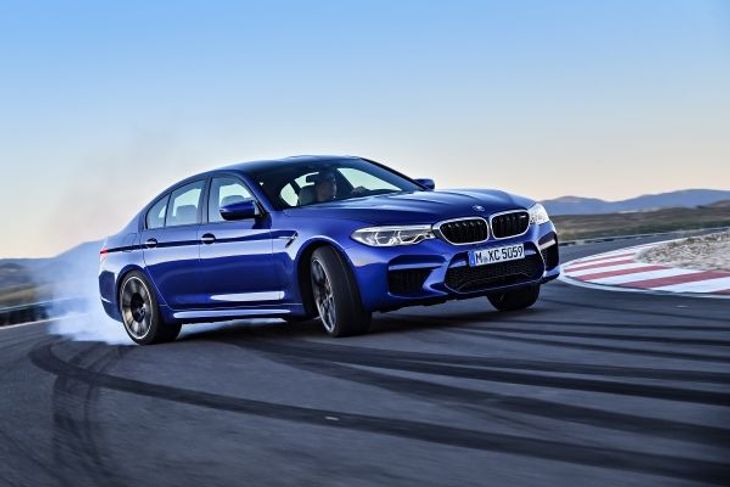
The next-generation BMW M5 has been officially revealed! Here’s what you need to know about the super sedan which will go on sale worldwide early next year.
1. Automatic only
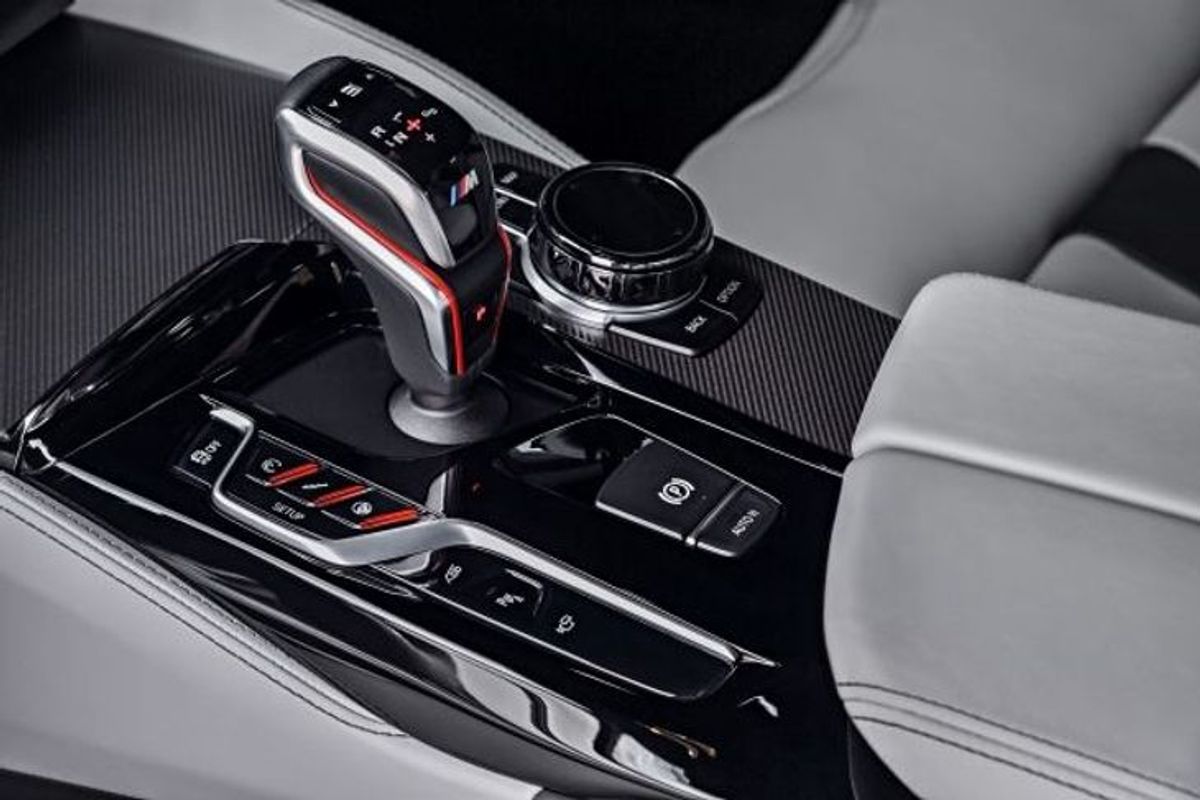
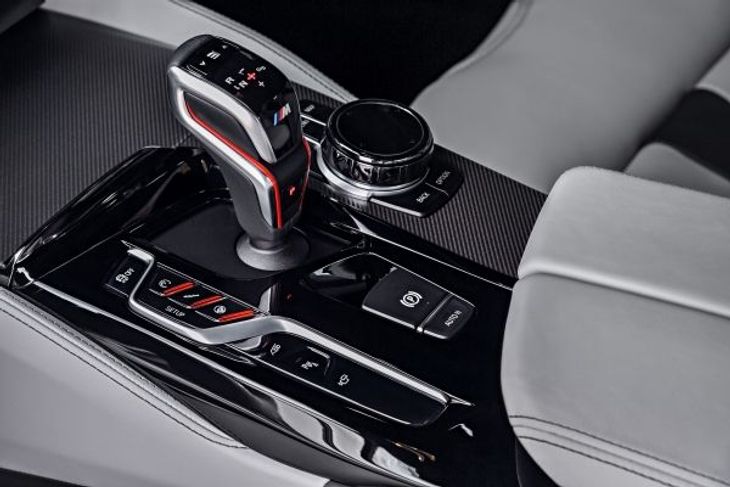
BMW will only offer the M5 in 8-speed automatic (M Steptronic) guise with steering wheel-mounted shift paddles. Gone is the manual version (which was offered in the North American market in the E60- and F10-generation cars) and so too, for that matter, the dual-clutch automatic transmission that did duty in the model that was on sale until last year. The demise of the dual-clutch ‘box can be attributed to the improved quick-shift technology (and supposed better durability) of torque-converter gearboxes, which have negated most of the advantages of the dual-clutch setup.
2. AWD… but also RWD
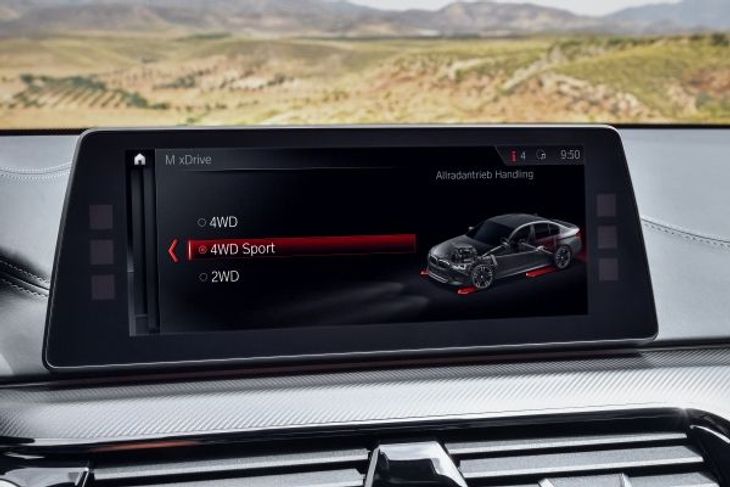
You will be able to select between different driving modes that can switch the M5 from all-wheel drive to rear-wheel drive configuration. The combinations of the dynamic stability control modes are: DSC on, MDM, DSC off… and the M xDrive modes are 4WD, 4WD Sport and 2WD.
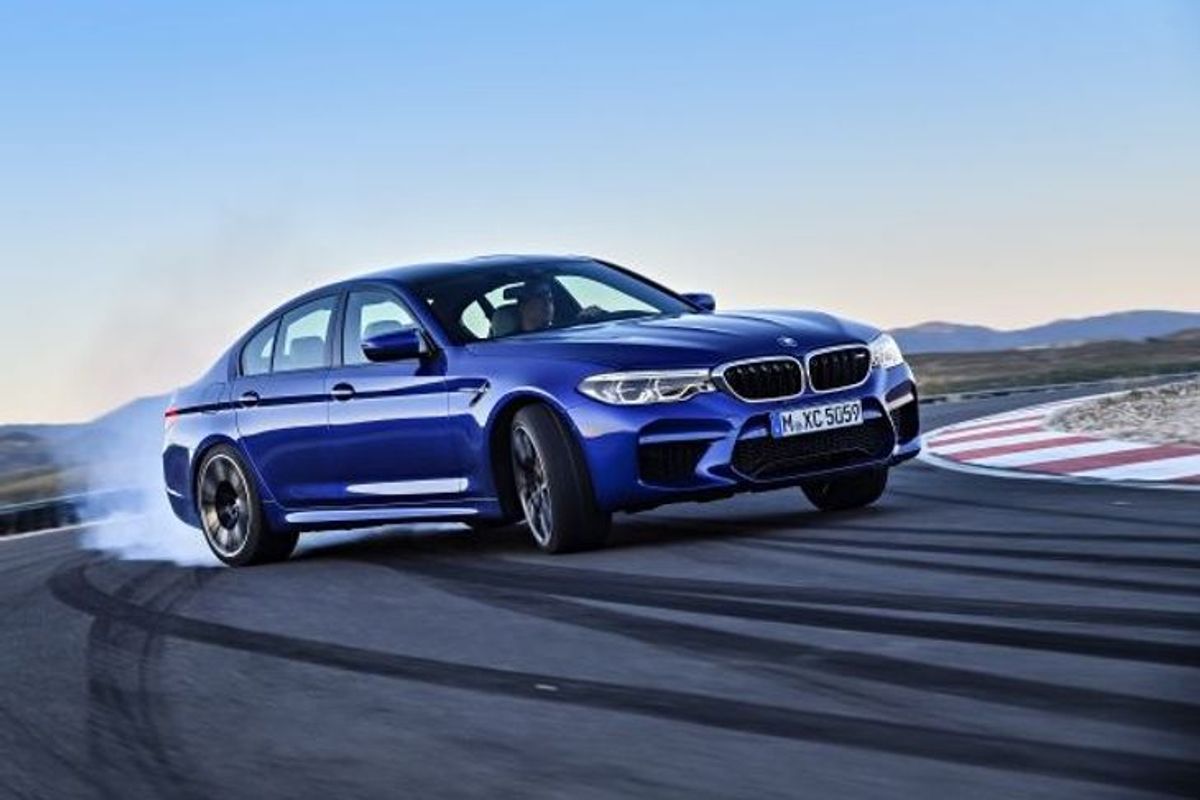
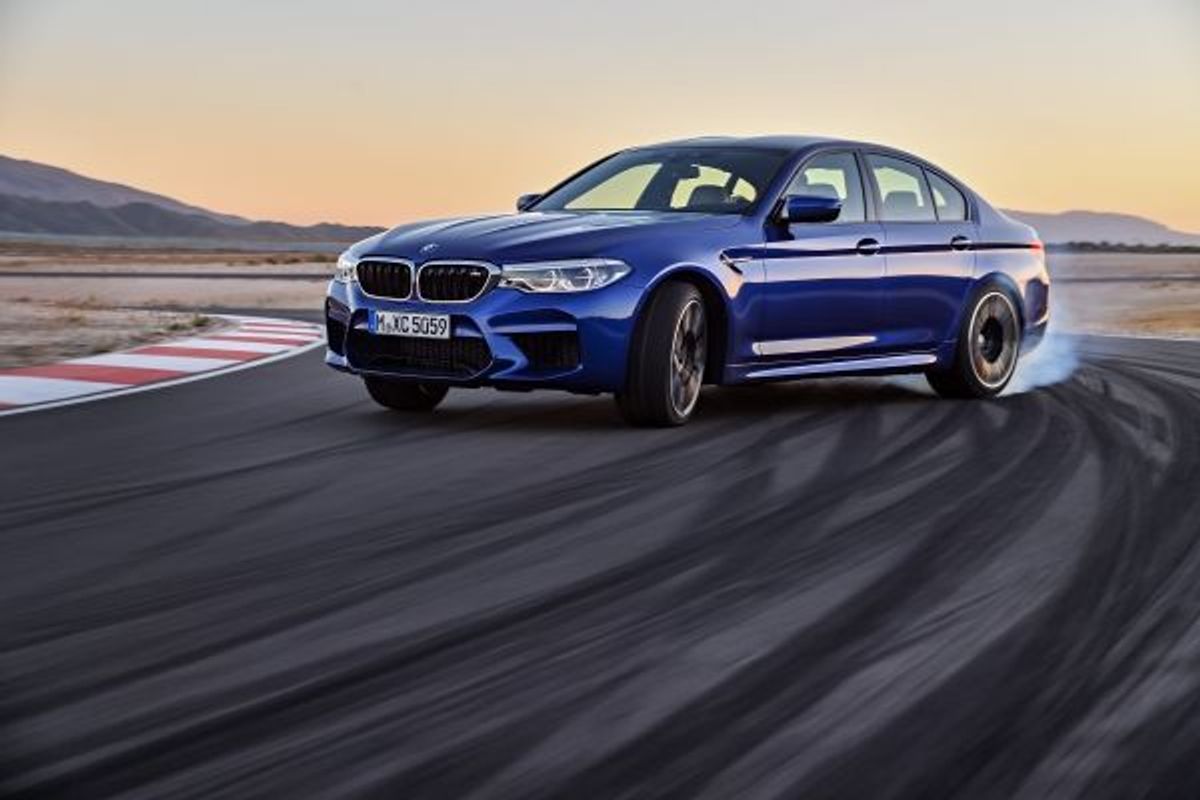
Much like the in the M5-rivalling Mercedes-AMG E63, depending on how you feel like driving, you can select which end(s) you want the power to be sent. All-wheel-drive will allow for more linear acceleration and surefooted handling, whereas rear-wheel-drive will be for driving enthusiasts who enjoy managing oversteer… or those who like to "lay down some rubber"/generate excessive (let alone expensive) tyre smoke.
BMW M5 x-Drive Explained
3. Peak power of 441 kW / 750 Nm
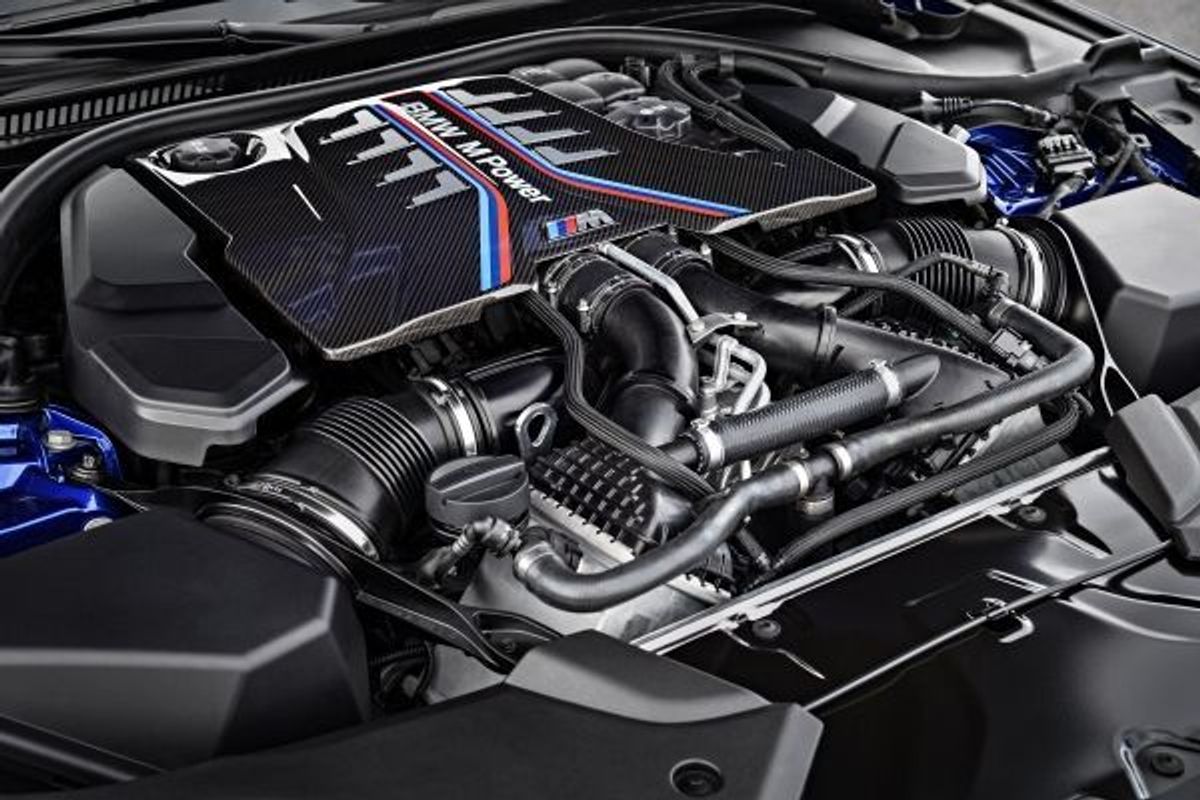
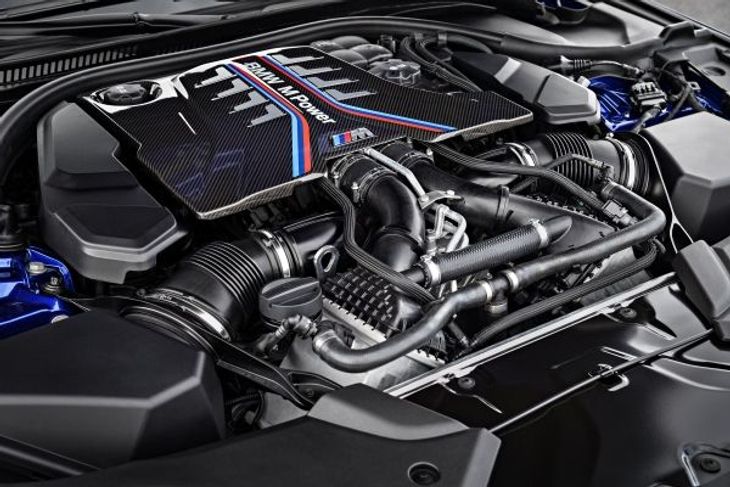
The 4.4-litre twin-turbo V8 motor does duty again, but has been redesigned and -configured to deliver a peak output of 441 kW and 750 Nm of torque. BMW says the enhancements include higher injection pressure, new turbochargers, more powerful lubrication and cooling systems, plus a modified, lighter exhaust system, "which generates an even clearer rendition of the unmistakable M soundtrack".
In terms of acceleration, BMW claims a 0-100 kph sprint time of 3.4 seconds before reaching an electronically limited top speed of 250 kph. An optional M Driver's Package will take the top speed to 305 kph.
4. Carbon bits
BMW has kept the kerb weight of the super sedan as low as possible. The roof is made from lightweight carbon fibre-reinforced plastic (CFRP) and some of the mechanical components are made of the lightweight material too. Less weight has obvious advantages for acceleration and braking, but lowers the car's centre of gravity too, which improves handling agility. The exhaust has been modified and lightened as well, all the while improving the soundtrack.
5. To be revealed in Frankfurt
BMW will show the new M5 at the Frankfurt Motor Show in September this year (2017). It will then go on sale in early 2018 and is coming to South Africa in the first quarter of 2018.
The BMW M3 celebrated its 30th anniversary in 2016. Let's take a closer look at the evolution of an icon. Which is your favourite? Let us know in the comments section below.
It is not often that a single product ends up creating and defining a segment in the way that the BMW M3 has. And yet, it is often forgotten that the original M3 was never developed to be just a fast variant of the 3 Series.
No, the M3 was developed to compete in the Group A series in Germany and participating required 5 000 road-legal cars to be sold within 12 months. This is what drove the development of the original E30-generation car, and embued it and its successors with a unique character and racing spirit, that has been core of BMW's iconic sportscar's since the first day.
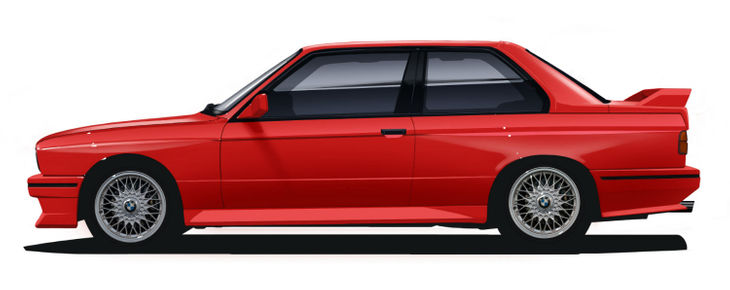
Before we look at the individual derivatives in some detail (the detailed profile images were produced exlcusively for Cars.co.za by our Cape Town-based contributor), it may be of interest to review how the current M3 shapes up compared with the original in terms of some key metrics:
Top Speed: From 235 kph (original E30 M3 coupe) to 280 kph (delimited F80 model). Increase of 19%
Power: Up from 147 kW (original E30 M3 coupe, no cat) to 331 kW (current F80 Competition Pack/30 Jahre). Increase of 125%
Torque: Up from 230 Nm (original E30 M3 coupe) to 550 Nm (current F80 Competition Pack/30 Jahre). Increase of 139%
Weight: Up from 1 200 kg (original E30 M3 coupe) to 1 535 kg (current F80 Competion Pack/30 Yahre). Increase of 28%
0-100 kph acceleration: Down from 6.7 sec (original E30 Coupe), to 4.0 sec (current F80 Competition Pack/30 Yahre). Improvement of 40%
But before we delve into the history, check out this cool animation…
Arrival of the 1ST generation (E30) : 1986–1991
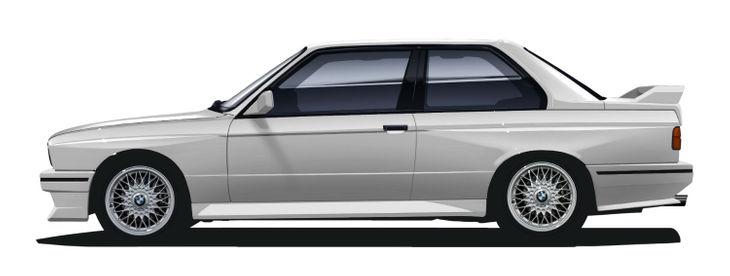
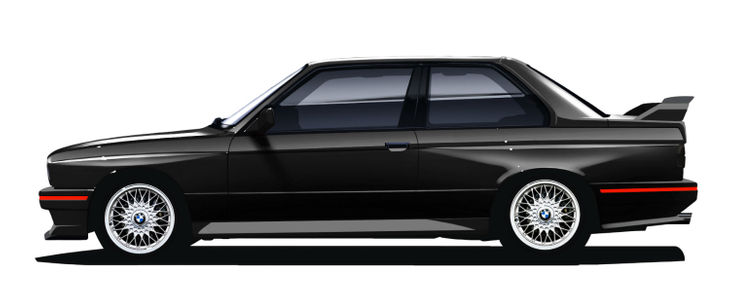
1986 BMW (E30) M3
The original M3 used the underpinnings of the company's E30-generation 3 Series, but for racing purposes it went onto a weight-saving diet and also featured a number of small aerodynamic tweaks, particularly around the C-pillars. Its trademark flared wheel arches were necessary to accomodate the wider tyres required for racing. The engine, a lightweight, high-revving 2.3-litre 4-cylinder from the 3 Series line-up, was chosen as the base, but was modified to utilise a 4-valve set-up. It produced a peak power output of 147 kW (143 kW with a catalytic converter), enough for a 0-100 kph sprint time of 6.7 seconds and a 235-kph top speed. It weighed around 1 200 kg. During its time in production, several special editions were built, including the Europa Meister 88, Johnny Cecotto and Roberto Ravaglia versions.
The original E30 M3 was never officially sold in South Africa, due to it only being available in left-hand drive. BMW South Africa developed its hot 333i and, subsequently, 325iS Evo I and Evo II homologation specials instead.
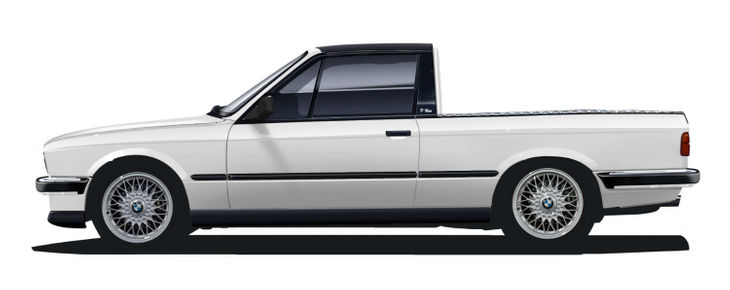
1986 BMW (E30) M3 Pick-Up
This oddity was the idea of passionate M Division factory workers, who converted a 3 Series Convertible body and equipped it with M3 internals, for use around the production facility. The convertible shell was used because it happened to be available at the factory, and secondly because of its built-in bracing, which made it ideal for the pick-up conversion.
Because it was based on the standard 3 Series Convertible, it didn't have the M3 Coupe's flared wings, and at first it used the so-called "Italian M3" engine. This meant fitment of a 2.0-litre engine with lower power, but it was later replaced with the M3's proper 2.3-litre powertrain. With an estimated top speed of 200 kph and a 0-100 kph sprint time of around 7 seconds, this "workhorse" would still give some hot hatches a scare today! The one-off M3 pick-up faithfully served in the factory for more than 26 years!
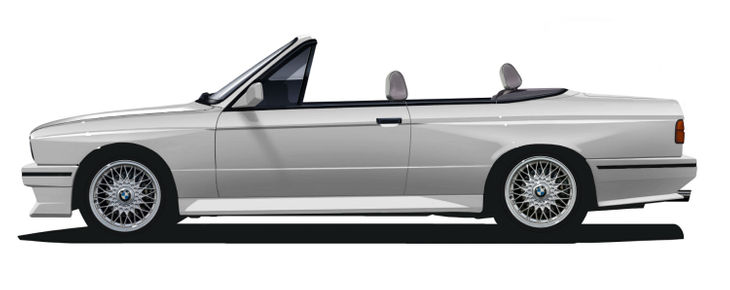
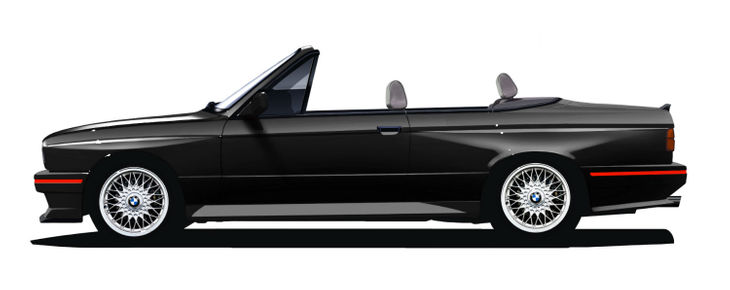
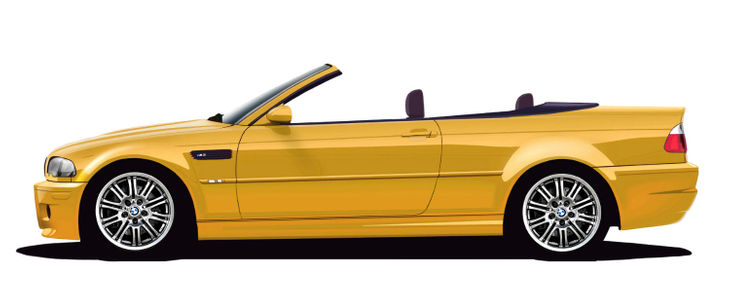
1988 BMW (E30) Convertible
Two years after the debut of the Coupe came the convertible version, powered by the same engine. It was a bit heavier (1 360 kg), so performance suffered a little, with the 0-100 kph sprint being completed in 7.3 seconds.
1988 BMW (E30) M3 Evolution Coupe
Also called the Evo2 by some (and not be confused with the Evo1, which was seen as just a slight variation on the standard car), the introduction of this model saw an uptick in power and torque (to around 162 kW/245 Nm) and some visual changes, including larger (16-inch) wheels, thinner glass and some other weight-saving measures. It also received a deeper front spoiler/splitter and an additional rear spoiler.
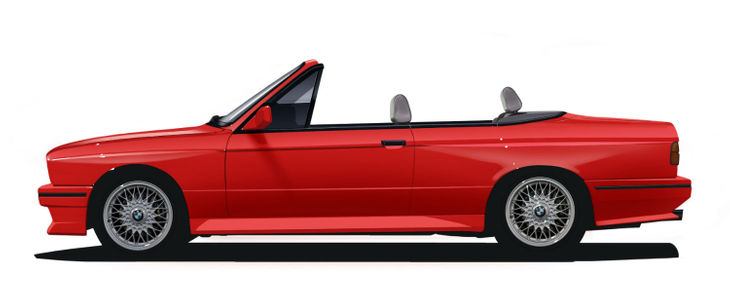
1988 BMW (E30) M3 Evolution Convertible
The changes made to the Coupe were also carried over to the sexy convertible model in 1988.
1990 BMW (E30) M3 Sport Evolution
Nearing the end of its model life, the "ultimate" M3 was unleashed in 1990, featuring significant upgrades. Under the bonnet was a 2.5-litre engine that delivered 175 kW, which improved the 0-100 kph sprint capability to 6.5 seconds and raised the top speed to 248 kph. Only 600 of these Sport Evolution M3 Coupes were made, with other enhancements in the shapes of an adjustable front spoiler/splitter and front brake cooling ducts (the latter at the cost of fog lamps).
1990 BMW (E30) M3 Sport Evolution Convertible
As the E30 M3's last hurrah, a single convertible version of the Sport Evolution was built.
Arrival of the 2nd generation (E36) : 1992–1999
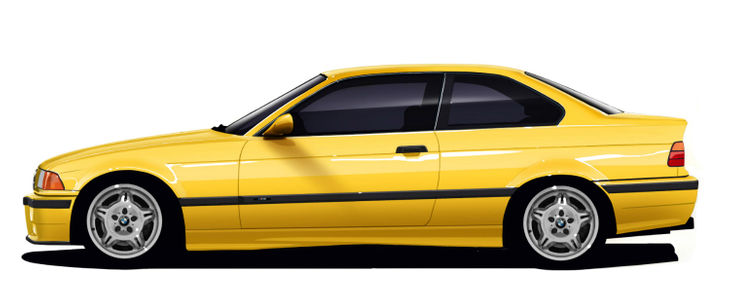
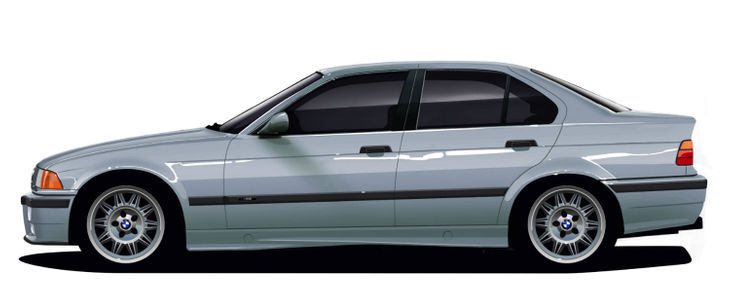
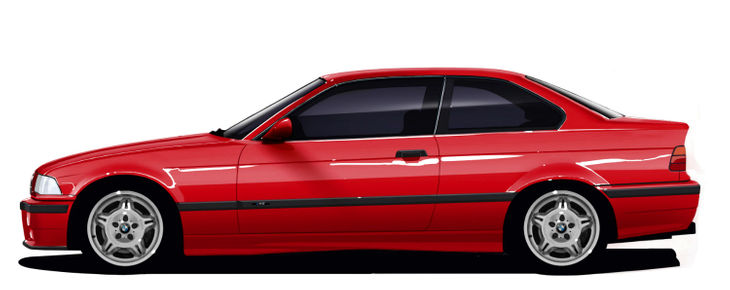
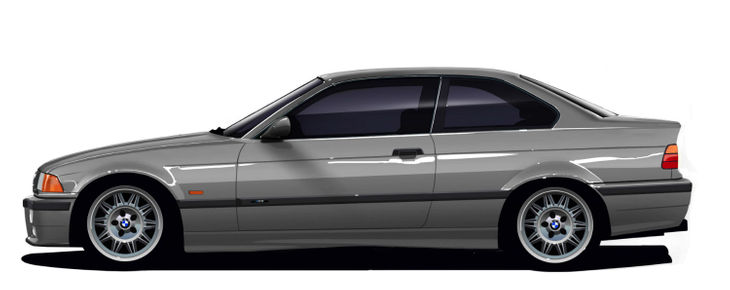
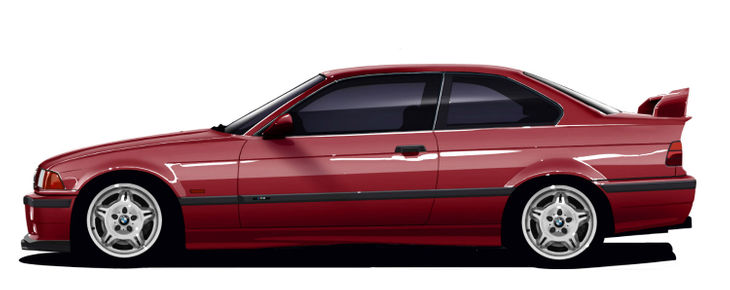
1992 BMW (E36) M3 Coupe
The E36-generation M3 arrived in 1992 and was initially only offered in the coupe body shape. It featured a vocal 3.0-litre straight-6 cylinder engine (S50) that delivered a strong 210 kW and 320 Nm of torque, both output figures being significantly higher than its predecessor, but then it was also about 200 kg heavier than its forebear.
Using a 5-speed manual transmission, the E36 M3 was widely regarded as one of the best handling and most entertaining cars of its generation, and it was also sizzlingly fast, with a 0-100 kph time of 6.0 seconds. It was not only the first M3 to be officially sold in South Africa, it was also assembled here using CKD kits.
South African-made cars featured a slightly different engine set-up devoid of emissions controls and the ability to run on leaded fuel. Our standard specification was also slightly more generous compared with European-spec cars. When it was launched, the E36 M3 set to 2 world records – for the highest output per litre and the highest specific torque from a volume-produced, naturally-aspirated engine.
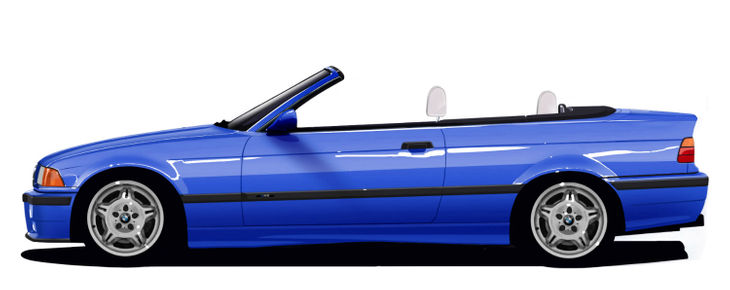
1994 BMW (E36) M3 Convertible
Two years after the introduction of the Coupe, BMW unleashed the M3 Convertible featuring the same drivetrain. Due to the fitment of the soft-top folding roof, however, it was about 100 kg heavier, so acceleration suffered slightly (6.2 sec to 100 kph).
1994 BMW (E36) M3 Sedan
The first M3 sedan arrived in 1994 as BMW attempted to plug a high-performance sedan gap in its line-up. The E34 M5 had come to the end of its lifecycle, and the E39 M5 only launched in 1998. It used the same 3.0-litre straight-6, delivered the same power as the Coupe, and provided similar performance.
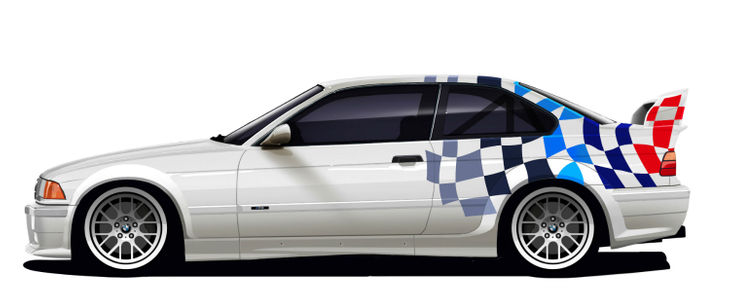
1994 BMW (E36) M3 GTR
The M3 GTR is essentially just a road-legal version of the racing car that BMW entered into the 1994 German GT Cup Touring Car series. As is usually the case with racing cars, the interior was stripped out and lightweight body panels adapted to cut overall weight to around 1 300 kg. It also had wider rear fenders to accommodate 18-inch wheels, adjustable front and rear spoilers and power was rated at just over 220 kW. Only 2 such road-legal M3 GTRs were built.
1994 BMW (E36) M3 Euro-Spec Canada
With a run of only 45 cars, this is one of the rarest E36-generation M3s of all… Its birth was the result of the delayed introduction of a more affordable M3 for the American market, but a loophole in market rules allowed BMW Canada to import European-specification cars in 1994. So, 45 such cars were ordered and specially built for the Canadian market and snapped up within 3 days, even at a heady asking price. The cars were powered by the European-spec engine (210 kW/320 Nm) and featured ventilated brakes with floating rotors. Each car featured a plaque with an engraved number.
1994 BMW (E36) M3 R
Arguably the rarest and most powerful production E36 ever, this was a limited edition special produced for BMW Australia to race in the Super Production Series. Only 15 were made, with final preparation handled by the Frank Gardner team. Four of the cars were reserved for the racing series, while only 11 were sold to the public. You could only buy an M3 R if you were in possession of a CAMS license.
The engine in the M3 R delivered near 240 kW, resulting in a 0-100 kph sprint time of 5.4 seconds and with the electronic speed limiter removed, it would touch 275 kph. Among other race-optimising changes, the M3 R received King springs fitted to Group N adjustable struts, an AP Racing twin-plate clutch, 4-piston brake calipers, AC Schnitzer cams, M5 drive shaft and a cold air snorkel that replaced the left-hand front fog lamp.
As befits its "developed for racing" theme, the M3 R was stripped of most of its luxuries (including the rear seat) and featured aggressive aerodynamic add-ons. An FIA-approved roll-cage was available as an option.
1995 BMW (E36) M3 Coupe North America
The E36 M3 only arrived in the United States as a 1995 model and initially featured the S50B30US engine that delivered 179 kW and 305 Nm of torque, considerably less than the European-spec cars. Nevertheless, it still managed to get to the benchmark sprint mark (0-60 mph) in 6.0 seconds and also featured a slightly different suspension set-up. A 5-speed automatic transmission was offered in the 'States.
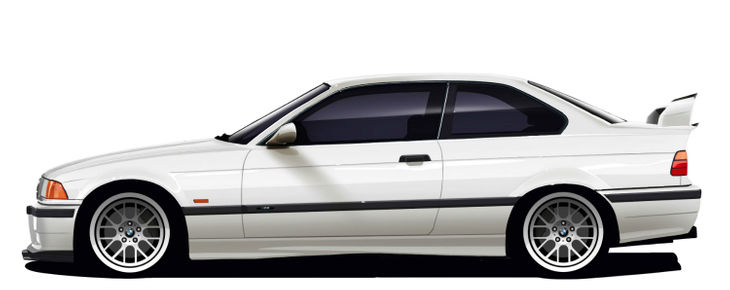
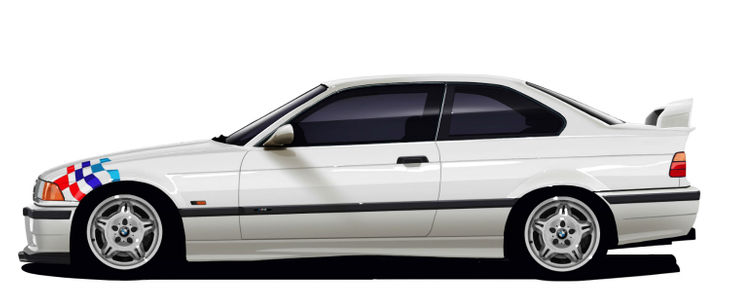
1995 BMW (E36) M3 Lightweight
Weighing in at around 90 kg less than its standard Coupe sibling, the limited-edition M3 Lightweight featured the same outputs as the E36 M3 GT (217 kW and 323 Nm). Essentially built for racing homologation purposes (to compete against the Porsche 911 in America), these cars were stripped of a number of luxuries, including radio, aircon, sunroof etc. Even the carpeting was thinner and the doors had aluminium skins. The top-speed limiter was removed, shorter springs fitted and a different rear axle ratio was implemented. The Lightweight had unique forged 17-inch alloy wheels and wider rear tyres.
Once assembly was completed, the cars were sent to Prototype Technology Group (PTG) Racing in Virginia where a special "trunk kit" was added. This kit comprised of a different oil pan with a special oil pump with dual pickups, front strut bar, lower cross-brace, spacer blocks to raise the rear wing and even an adjustable front splitter. Once fitted, the items in the "trunk kit" voided the new car warranty.
Between 100 and 125 Lightweights were built.
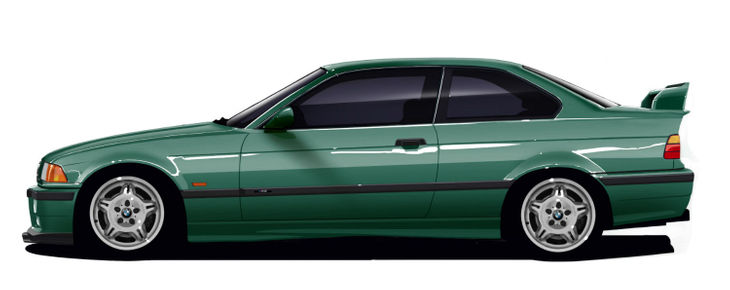
1995 BMW (E36) M3 GT
One of the rarer E36 M3 derivatives was the limited-edition (356 built) GT. Produced as a racing homologation special (for the FIA-GT class II, IMSA GT and International long-distance racing) using the Coupe body, it was only ever painted in British Racing Green. It featured a slightly more powerful engine (217 kW) with a higher compression ratio, motorsport oil pump and special VANOS software, among other smaller engine tweaks. Visually it received a more pronounced, adjustable front splitter/spoiler, higher rear wing and the door skins were in aluminium. It was 30 kg lighter than the standard car and had its top speed limiter removed (could touch 275 kph).
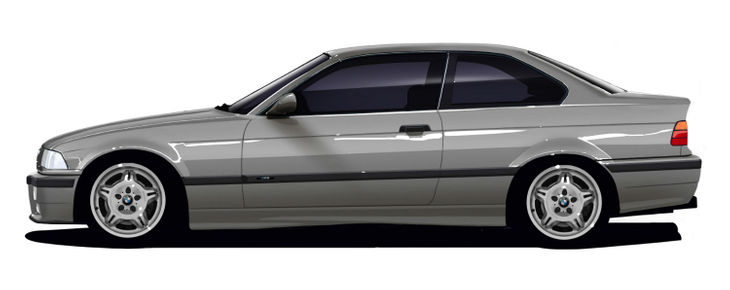
1995 BMW (E36) M3 Coupe
The M3's mid-life facelift happened in late 1995 when all models (barring the Convertible) received a range of visual and mechanical upgrades. Under the bonnet was the S50B32 3.2-litre engine that delivered 236 kW and 350 Nm of torque, enough of a bump to cut the 0-100 kph sprint time to 5.5 seconds. For the first time, a 6-speed manual transmission was standard fitment, and the 6-speed SMG also debuted). Visually, the upgraded M3 could be identified by its clear indicator lenses. The convertible model received these changes only in early 1996.
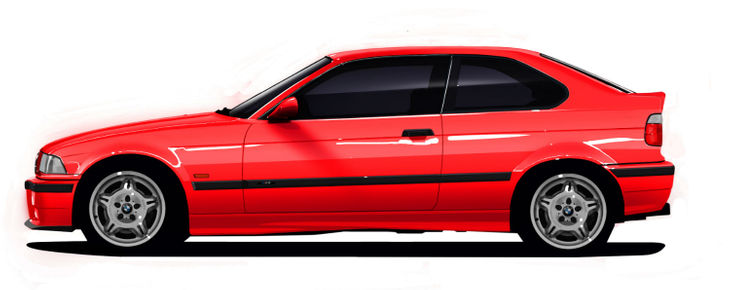
1996 BMW (E36) M3 Compact
Here's a real oddball! Said to have been built to celebrate the 50th anniversary of the leading German motoring magazine, Auto Motor und Sport, in 1996, was a E36 Compact version of the M3, which the magazine road tested for its June issue. The first-generation Compact was never sold in South Africa so it may be difficult to visualise such a thing as an M3 Compact, but BMW essentially shoehorned the mechanicals (and much of the cabin design) into the Compact's body, resulting in what must have been quite the fiery little hot hatch, given the fact that it was significantly lighter (150 kg) than its Coupe, Sedan or Convertible siblings.
1998 BMW (E36) M3 Evolution Imola
Also sometimes called the M3 GT2, only 200 units of the M3 Evolution Imola were built and all of them were finished in Imola red. The "red" theme continued inside on the seats. It was powered by the same engine as the facelifted European-spec M3, but did receive the so-called Class II rear spoiler and front corner splitter aerodynamic extras. Electric seats, side airbags and double-spoke polished alloy wheels were part of the package too.
Arrival of the 3rd generation (E46) : 2000–2006
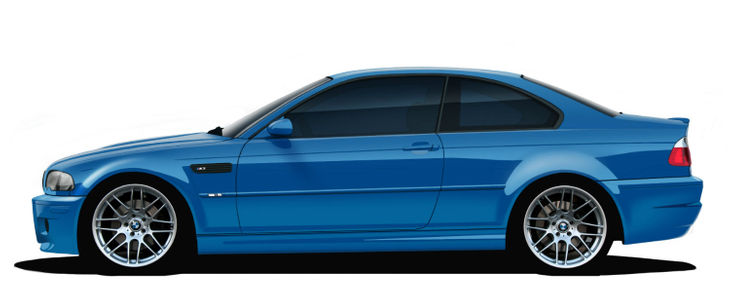
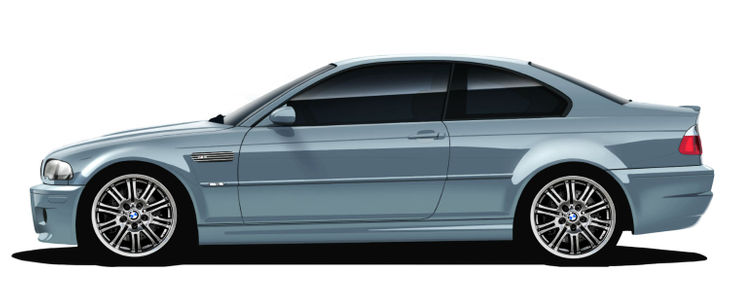
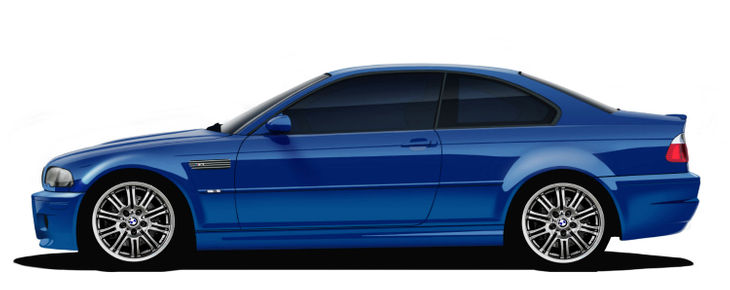
2000 BMW (E46) M3 Coupe
Arriving with much fanfare and to critical acclaim in 2000 was the E46-generation of the M3. Under the bonnet was the charismatic new 252 kW/365 Nm 3.2-litre S54M engine, coupled with either a 6-speed manual Getrag transmission or the automated SMG system (with steering-mounted paddles). With a redline of 8 000 rpm and a stirring engine note, the E46 M3 quickly became an iconic machine. It could blast to 100 kph in 5.2 seconds and was electronically limited to 250 kph.
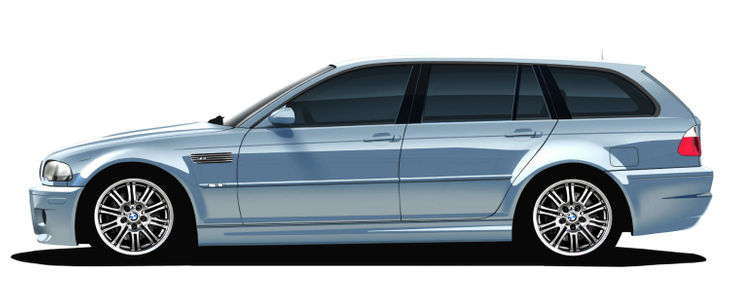
2000 BMW (E46) M3 Touring
Strongly considered as an additional M3 derivative was a station wagon (Touring) version. If it was given the green light for production, it would've entered into battle with the B5-generation Audi RS4 Avant. Sadly, it never received the go-ahead and only one prototype was built.
2001 BMW (E46) M3 Convertible
In the absence of a sedan derivative of the E46 M3 and the Touring version being stillborn, the Convertible was the only other body style on offer. It was around 100 kg heavier than the coupe, and consequently, its 0-100 kph time was affected, with the benchmark sprint completed in a claimed 5.5 seconds.
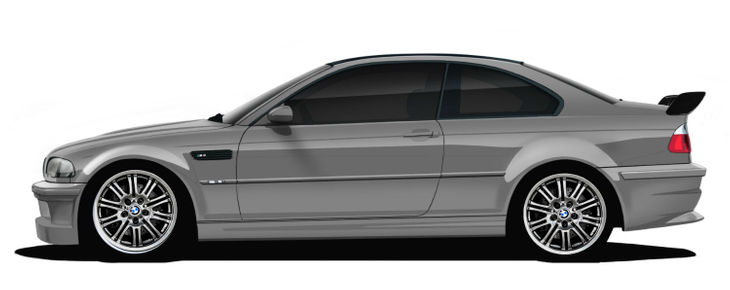
2002 BMW (E46) M3 GTR
A precursor to the E90-generation M3, the E46 M3 GTR featured a 4.0-litre V8 (P60B40) engine producing 368 kW. It was developed to compete in ALMS (American Le Mans Series), which it did successfully, but a rule change forced BMW to build and sell 10 road going GTRs to the public. It is said that only 3 were ultimately built and that they all now reside in the BMW M Division's collection. Either way, the next year the rules changed again, demanding that 100 cars and 1 000 engines had to be built. This was too much for BMW, so it pulled out of ALMS.
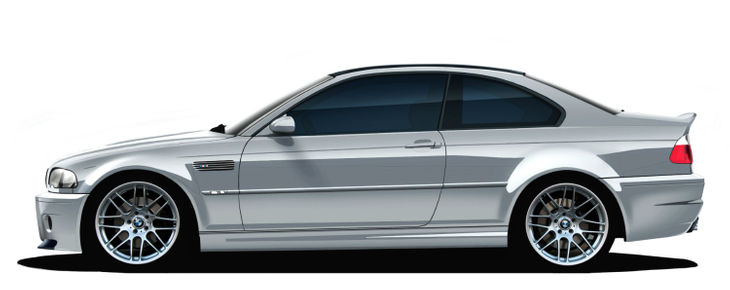
2003 BMW (E46) M3 CSL
The E46 M3 CSL (for Coupe Sport Lightweight) is one of the most desirable M3 models – of any generation – and just short of 1 400 units were built. It featured a number of weight-reducing components (including a carbon fibre-reinforced roof panel) and a plethora of cosmetic, drivetrain and suspension modifications. Even the rear glass was thinner to eke out every little bit of weight saving possible. Overall, the CSL was about 160 kg lighter than the standard car.
The CSL's engine was fettled too and benefited from a different air intake system with larger manifolds, modified camshafts and exhaust valves, and a lightweight exhaust system. Power went up to 265 kW and the 0-100 kph sprint time was reduced to 4.9 seconds. The CSL was only offered with the SMG II transmission that featured a launch control mode. The removal of the top speed limiter was an option offered by the factory.
2004 BMW (E46) M3 Silverstone
Although the M3 Silverstone featured no performance-altering modifications, it was a notable special derivative as 50 examples were produced exclusively for the UK market during 2004. The 50 cars (30 manual, 20 with SMG II) all were painted in Silverstone metallic and had dark Estoril Blue extended Nappa leather interiors.
2005 BMW (E46) M3 CS
The E46 M3's final swan song was the CS, officially given this labelling only for the right-hand drive UK market. It is, however, essentially the same car as the left-hand drive "ZCP" coded model, and featured the Competition Package as standard (275 of the so-called M3 CS derivatives were made for the UK).
The Competition Package included the following items: cross-drilled brake rotors (13.7 inches at the front) with 2-piece compound rotors; reduced steering ratio; M Track Mode setting for DSC; 19-inch cross-spoke alloy wheels; Alcantara-wrapped 3-spoke steering wheel with the M Track Mode button; milled aluminium effect interior trim; Interlagos Blue metallic paint.
Arrival of the 4th generation (E90, E92, E93): 2007–2013
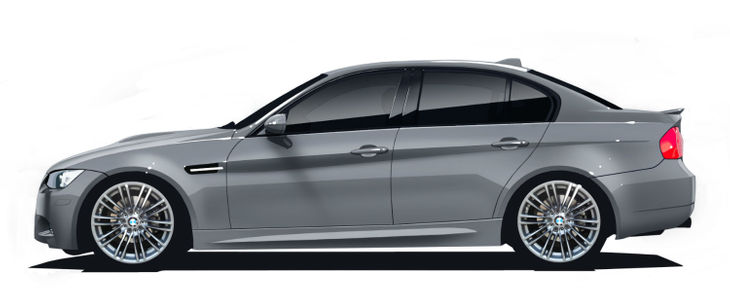
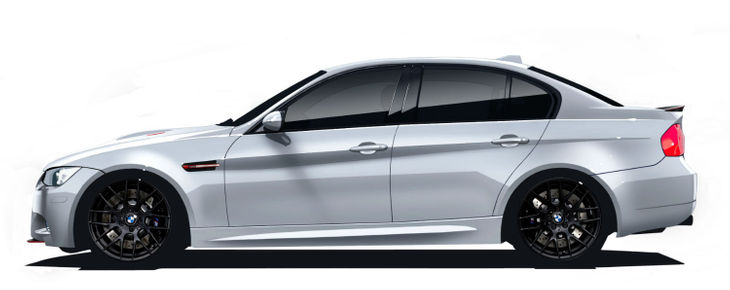
2007 BMW (E90) M3 Sedan
The E90-generation heralded the introduction of a high-revving 4.0-litre V8 engine (S65 B40) for the M3, a powerplant that developed no less than 309 kW and 400 Nm of torque. This gave the M3 blistering performance, with a claimed 0-100 kph time of 4.9 seconds. It was offered with either a 6-speed manual transmission or a 7-speed M-DCT (dual clutch transmission). Although the E9x-generation M3s were heavier than their forebears, they did employ a lot of weight-saving items, including a carbon fibre-reinforced plastic (CFRP) roof and a front axle made almost entirely from aluminium.
The sedan version returned to the M3 lineup, arguably because both Mercedes-Benz and Audi had rival high-powered sedans in their model ranges.
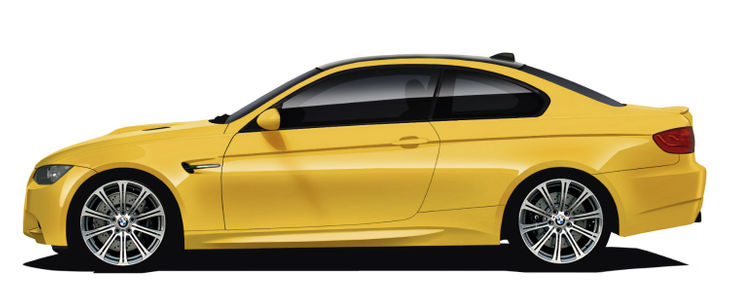
2007 BMW (E92) M3 Coupe
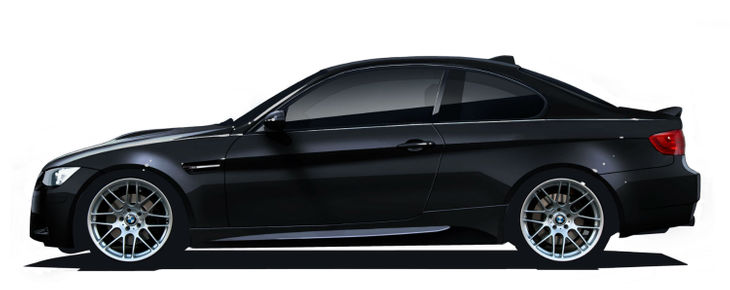
Like its sedan sibling, the Coupe version used the new V8 engine (said to be a truncated version of the E60 M5's 5.0-litre V10) to great effect and was even fractionally faster (0-100 kph in 4.8 seconds). Like its sedan and convertible counterparts, the Coupe had the M Variable Differential (that directs more power to the wheel with greatest traction), MDrive button (that allows driver to store and call up his/her favourite dynamic settings), and Power button (that alters throttle response).
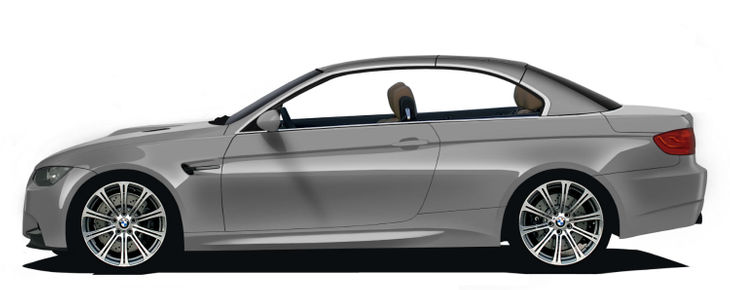
2008 BMW (E93) M3 Convertible
For the first time the M3 Convertible featured a folding hard-top, as was the fashion at the time. Unfortunately, the hardtop and its folding mechanism added around 200 kg of ballast to the car, so performance suffered.
2009 BMW (E92) M3 GTS
This spicy number was a limited production run of around 140 units (coupe only) that offered more power and less weight than the standard car. It emerged from the factory complete with a roll-cage in place of the rear seats. It also featured a larger (4.4-litre) engine and a lightweight exhaust system with titanium silencers.
Power went up to 331 kW and torque to 440 Nm. It scorched to 100 kph in 4.4 seconds and would only run out of puff at 305 kph. It was offered only with the 7-speed M-DCT transmission with unique software and increased oil capacity. Of course, the brakes and wheels were upgraded too, but the big news under the skin was the upgrade to a true coil-over suspension set-up with double-adjustable shock absorbers.
2009 BMW (E92) M3 Edition
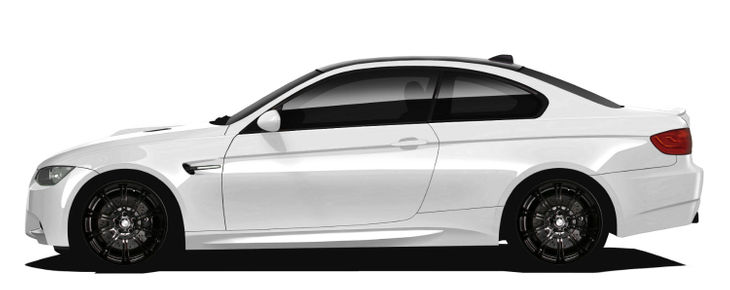
In some markets, such as Russia and Italy, the M3 Edition was known as the "Black & White edition" in reference to its trademark colour scheme, although BMW offered the car in 5 different paint colours. There was only one small mechanical change compared with the standard car – it had shorter (by 10 mm) springs. A total of 707 M3 Editions were manufactured.
2010 BMW (E92) M3 Frozen Edition
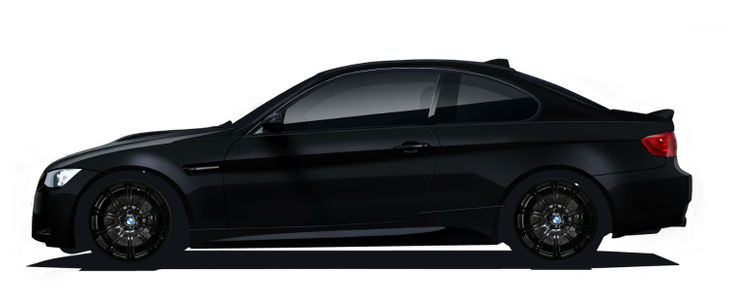
The M3 Frozen Edition, wasn't a unique product to the South African market, as some still believe, but what is true is that the Frozen Edition sold in South Africa was a little more special than those in the rest of the world. Easily identified courtesy of its matte black finish and black wheels, the SA-market Frozen Edition included AC Schnitzer software, air intake and exhaust system as standard, giving it a very memorable sound. With 330 kW and 420 Nm of torque, the M3 Frozen Edition was a scorcher, punching to 100 kph in 4.5 seconds and on towards 290 kph.
2011 BMW (E92) M3 Competition Edition
Fitted as standard with the M-DCT transmission and the Competition Package, the so-called Competition Edition had a long production run but only 385 were ever made, with most of them painted in the Frozen Silver metallic colour. In the UK this model was known as the M3 Frozen Silver Edition. There were no drivetrain upgrades.
2011 BMW (E90) M3 CRT
This is quite a special version and, sadly, one that never came to South Africa. The CRT used the drivetrain and chassis of the track-focused M3 GTS coupe and was reportedly built to show off BMW's expertise in manufacturing Carbon Fibre Reinforced Plastic (CFRP).
Using left-over CFRP pieces from the i3/i8 projects, BMW fashioned a number of items from this material, including the bonnet, front seats etc. Overall, around 45 kg was saved and yet the M3 CRT's standard specification was considered quite generous (automatic climate control, navigation etc.). It did, however, have 2 individual rear seats rather than a bench.
BMW made 67 M3 CRTs, all in the same trim, with only 5 of those being in right-hand drive form.
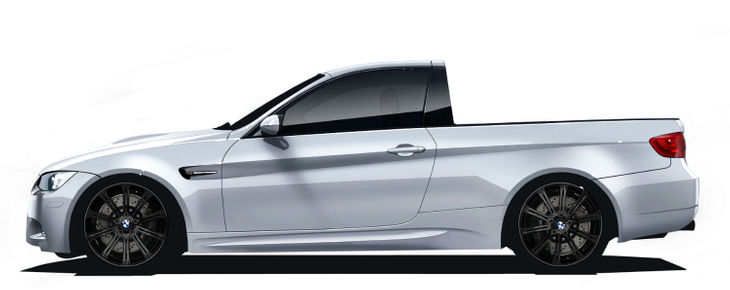
2011 BMW (E92) M3 Pick-Up
For the second time in the M3's history, BMW built a pickup version. Based on the body of the convertible model, the pickup was used to good effect as an April Fool's joke on the world's motoring press. BMW even released images of the pickup pounding the Nurburgring Nordschleife and boasted about a 450 kg payload. The truth, however, was that the original E30 M3 pickup had to be retired, and this E90 pickup was to be pushed into service around the M Division factory. This time, however, it was also licensed for road use.
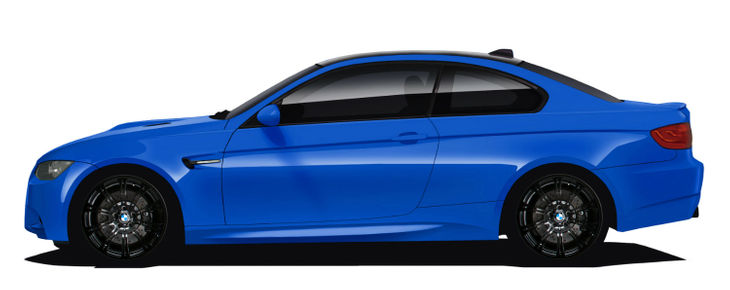
2012 BMW (E92) M3 Limited Edition 500
The Limited Edition 500 was built for the UK market and available in coupe and convertible body styles. As the name suggests, only 500 examples of the car were built. It offered no extra power or enhanced dynamic ability, with the focus instead being on offering extra equipment. It was available in 3 colours: Imola Red, Mineral White and Santorini Blue, the colours of the M Division. All models featured the so-called Shadowline exterior trim and black alloy wheels.
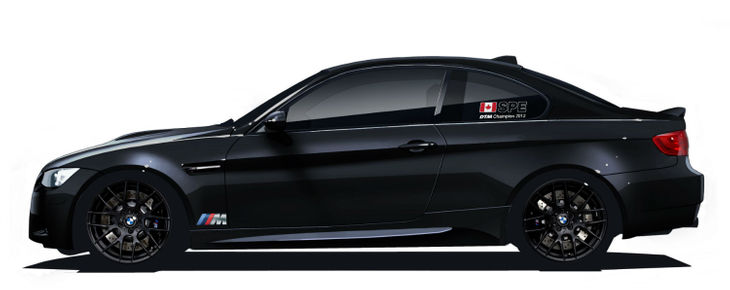
2013 BMW (E92) M3 DTM Champion Edition
To celebrate its triumphant return to DTM racing in 2012, BMW built 54 examples of this DTM Champion Edition, all equipped with the M-DCT transmission and Competition Package. Frozen Black metallic was the colour of choice, with generous use of the M tri-colour strip. It also featured the Canadian flag and the letters SPE on the rear side windows, in reference to Canadian Bruno Spengler, who was the champion driver. There were no drivetrain changes.
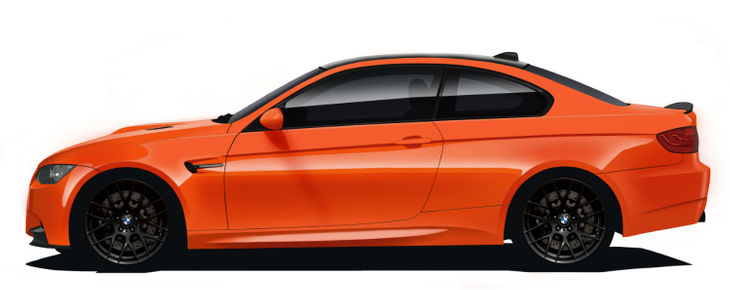
2013 BMW (E92) M3 Lime Rock Park Edition
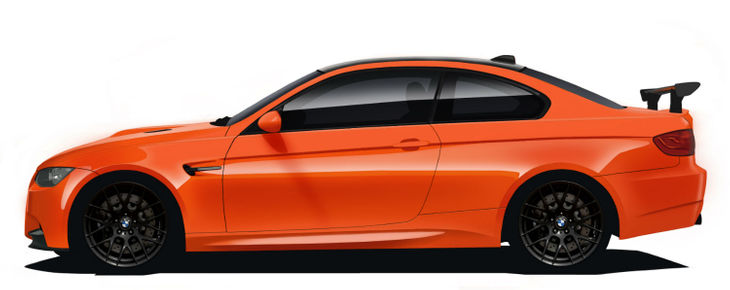
The Lime Rock Park Edition was a US-only derivative with a production run of only 200 cars, all painted in Fire Orange. It featured various carbon fibre bits, including the front splitter and rear spoiler, ran a lowered ride height and had the competition package fitted as standard. You could have it with either a 6-speed manual 'box or the M-DCT dual-clutch, and while there were no changes to the engine, the ECU software was different to create less noticeable interference from the DSC and traction control systems. It could also run all the way to its top-end of 300 kph.
Arrival of the 5th generation (F80)
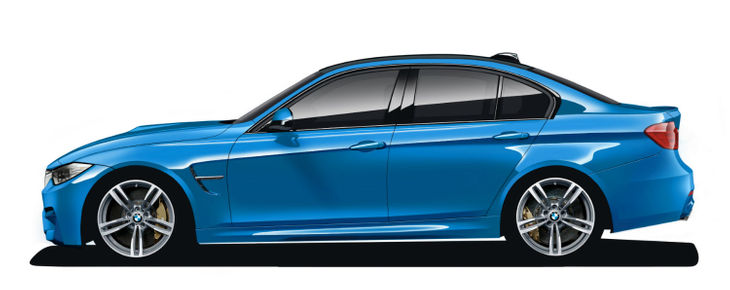
2014 BMW (F80) M3 Sedan
Arriving in 2014, the F80 generation car heralded quite a big shift in BMW's naming policies. For the first time, there was no M3 Coupe (rebadged M4), and the M3 badge would only be applied to the muscular sedan version. The Convertible, based on the Coupe, also received the M4 moniker.
The F80 also saw a return to a free-revving 3.0-litre straight-6 engine, but this time with M TwinPower turbo technology. Power went up to 317 kW and torque to 550 Nm. The 6-speed manual transmission was still offered, along with the more popular M-DCT 7-speed dual-clutch. The use of lightweight components resulted in an overall mass about 80 kg lower than its predecessor. The M3 blitzed the 100 kph sprint in 4.3 seconds (manual) or 4.1 seconds (M-DCT).
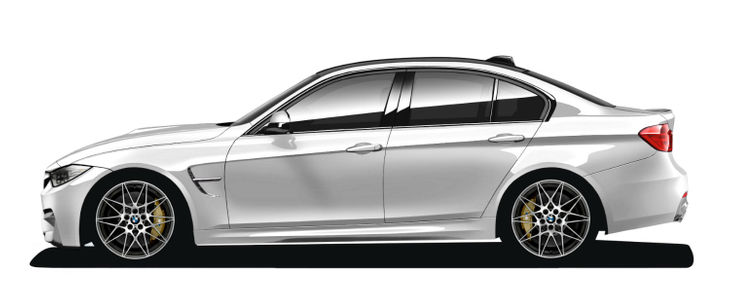
2015 BMW (F80) M3 Competition Pack
The highly acclaimed M3 Competition Pack introduced new springs, dampers and anti-roll bars to supplement the Adaptive M suspension. There were also modifications to the differential and DSC system to further heighten the dynamic (entertainment) capabilities of the vehicle. Visually, the car featured several changes compared with the standard M3, including the M Sports exhaust with black chrome tailpipes and the Shadow Line exterior trim. Most importantly, power was upped to 331 kW, cutting the 0-100 kph time by 0.1 seconds.
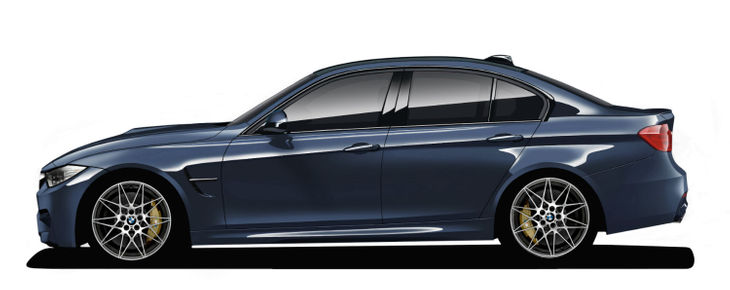
In celebration of the M3's 30th anniversary, BMW introduced the limited-edition 30 Jahre in 2016. Only 500 units were built and 30 allocated to South Africa. It featured the Competition Pack upgrades (including 331 kW power boost) as standard, as well as Macao Blue metallic exterior paint finish, an original M3 colour.
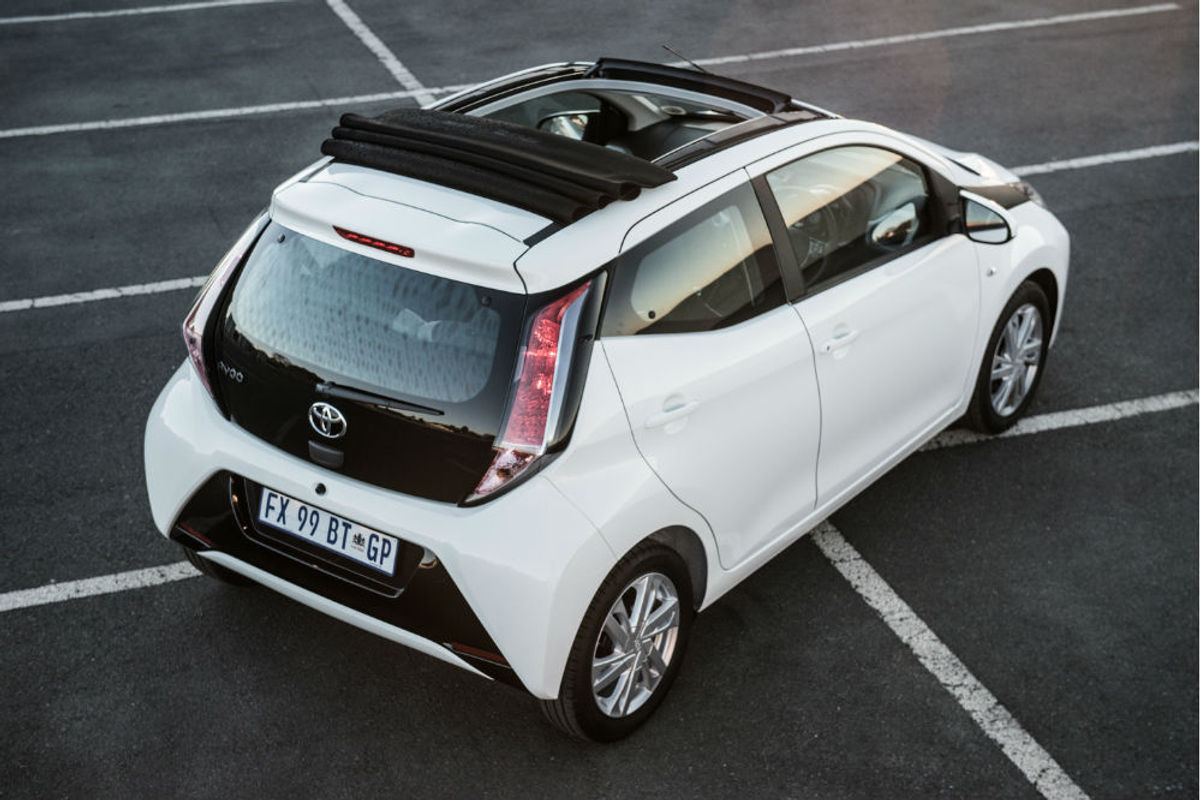
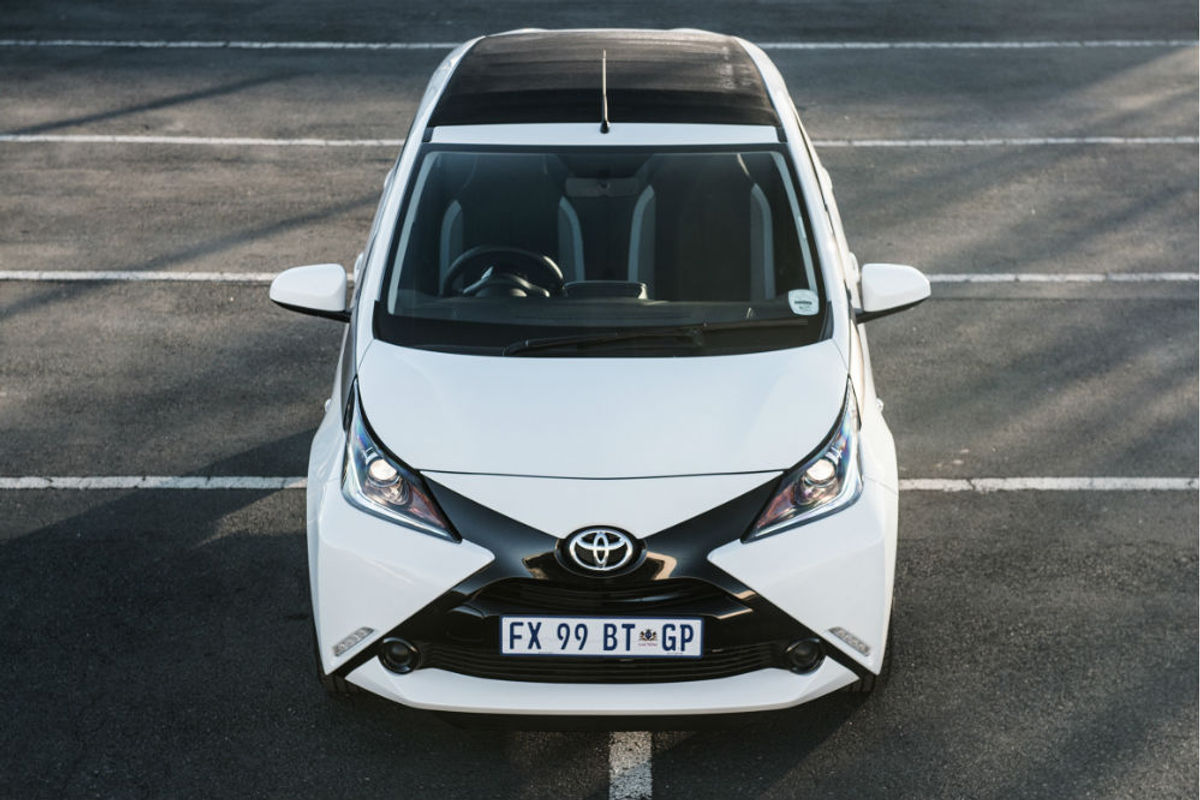
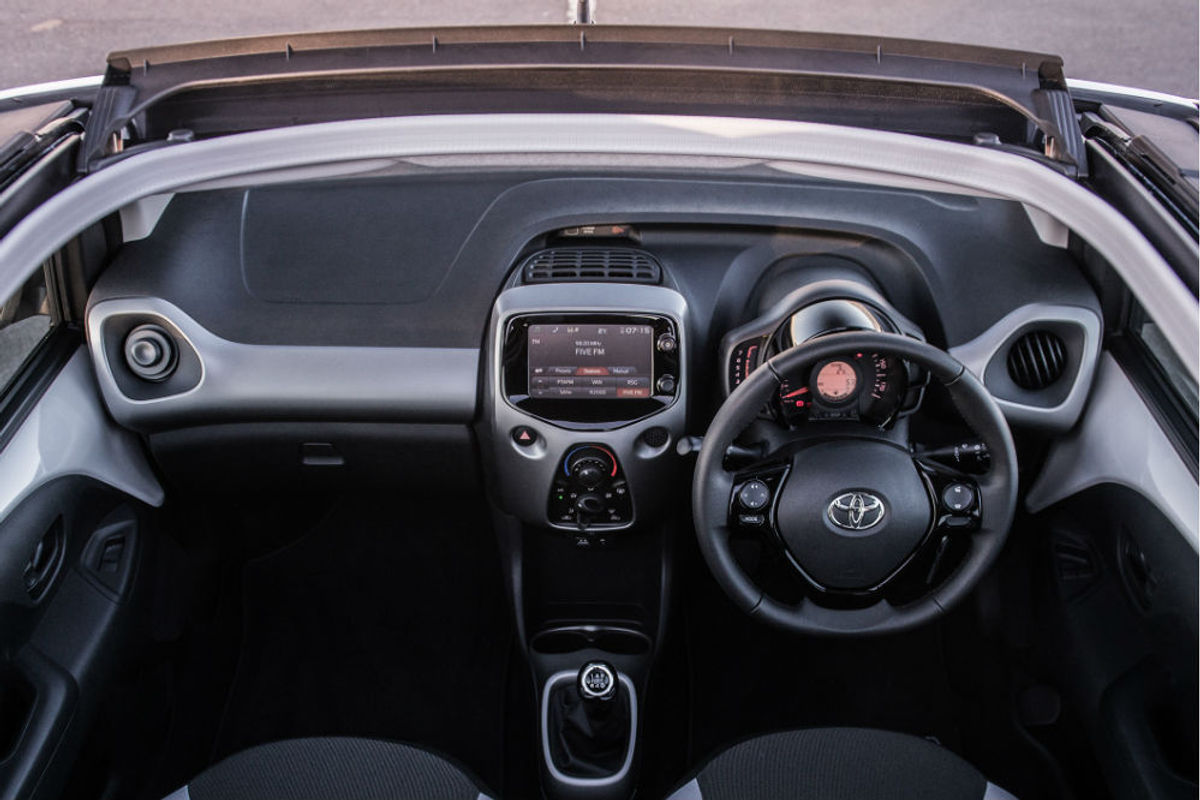
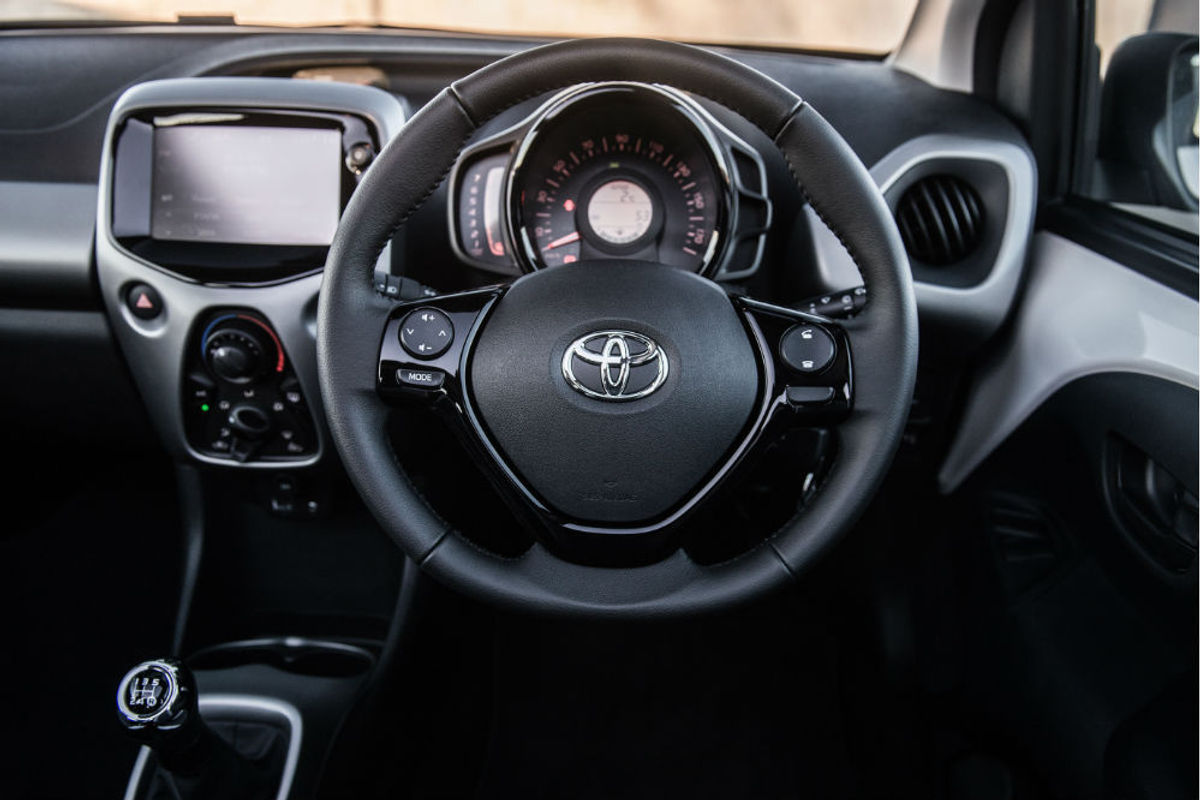
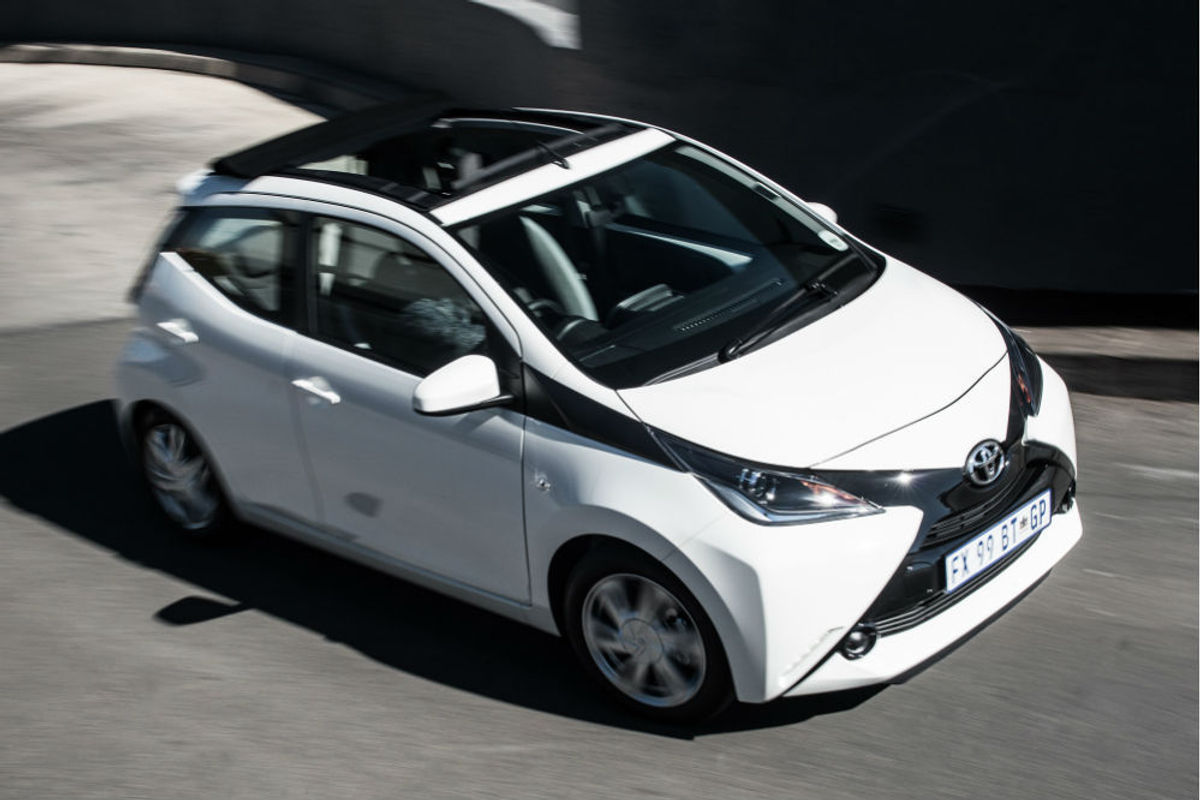
The Toyota Aygo compact hatchback range has been expanded to now include a convertible version. Here are the specs and pricing for the new Aygo X-Cite.
Toyota's Aygo is a budget-friendly hatchback which was a finalist in the Cars.co.za Consumer Awards as we were impressed with its value offering.
The Aygo is the result of a three-way tie in between Toyota, Peugeot and Citroen to build a compact city car. Peugeot has the 107 (although not offered in our market) and Citroen the C1 – the latter was available in South Africa until the brand was discontinued on the local market last year. Interestingly, the Citroen version was sold right from the beginning with the option of the convertible roof, while the Aygo was not.
Now Toyota sees a business case in offering its Aygo with a retractable roof and it's called the Aygo X-Cite. Locally, the Toyota Aygo X-Cite is only available with a black canvas roof. This roof is full-length, factory fitted and electronically operated.
In terms of power delivery, the 1.0-litre petrol engine is mated to a manual gearbox. This X-Cite comes standard with 15-inch alloy wheels, LED daytime running lights, Vehicle Stability Control and four airbags.
Toyota Aygo X-Cite Price in South Africa (July 2017)
The popular compact crossover segment in South Africa is fiercely contested, with no less than 14 competitors vying for the buying public’s attention. The Renault Captur has been a strong contender since its launch in 2015 and a refreshed and revised model has just been revealed. We attended the launch in Gauteng.
What’s new?
The big news is the introduction of the “Blaze” trim level; an entry level variant which undercuts the outgoing entry level variant by R20 000. The Blaze also introduces a new infotainment system to the line-up, in the form of Renault’s R&Go. While more expensive Captur’s retain the MediaNav touchscreen infotainment system found in the Duster, Clio and Kwid, the new system features sophisticated smartphone integration.
New gearbox, same engines
The Captur range will still be powered by a trio of engines, however the 1.2-litre 88 kW turbo petrol motor is now offered with a 6-spd manual transmission, in addition to the 6-spd automatic EDC ‘box. Buyers can also choose from a 0.9-litre, 3-cylinder 66 kW turbo petrol motor, offered exclusively with a 5-spd manual, or the 1.5dCi turbo diesel motor, which is also offered exclusively with a 5-spd manual.
1.2 turbo now features a manual gearbox option
What’s it like to drive?
On launch, we drove the petrol-powered 88 kW 1.2-litre manual and 1.5 dCi manual. The petrol-powered Captur, with power and torque figures of 88 kW and 190 Nm, offers impressive ride quality, with very little noise and vibrations making their way into the cabin – in fact, it’s often hard to tell if the engine is actually on without glancing at the rev needle. On the highways around Gauteng, the little crossover acted as a comfortable cruiser with the tall sixth gear bringing the engine rpm down and improving fuel consumption. However overtaking manoeuvres require some down changing; acceleration from 0-60 kph is fairly brisk but the motor does require some encouraging from 80 – 120 kph.
The diesel, in our limited experience, is a much better all-rounder. The extra 30 Nm of torque seems to be more usable more of the time – curious for a diesel motor. Even though the diesel is only offered with a 5-spd manual, it remains a capable cruiser while being nippy off the line. But its strong suit is undoubtedly the fuel consumption. While Renault claims a rather incredible average figure of 3.6 L/100 km, we achieved 4.7 L/100 km during our roughly 40 km drive on mostly flowing country roads. And it did feel as though with some careful driving in Eco mode, that figure could quite easily hover around the 4.0 mark.
What’s it like to drive on gravel?
Credit to Renault SA, they included a 15 km stretch of gravel on the test route, a stretch which was not in the best condition. While crossover manufacturers often boast of their product’s increased ride height, it is very rare that we’re offered the opportunity to put that useful feature to the test.
Ride quality of the Captur has improved as has the cabin NVH levels.
The Captur coped admirably on the rough surface, dealing with the ruts and bumps and letting very little harshness through into the cabin, and there were no squeaks or rattles to speak of. This is certainly helped by the Captur’s relatively high-sidewall tyres; while the high spec models are fitted as standard with 17 inch alloy wheels, the 205/55 profile Michelin Primacy tyres still provide some cushioning from the harsh conditions. While the Captur is certainly not the car for covering hundreds of gravel kilometres, it is reassuring to know that it can easily cope with the odd adventure off the tarmac. Bear in mind that the Captur is only offered with front wheel drive.
Interior improvements
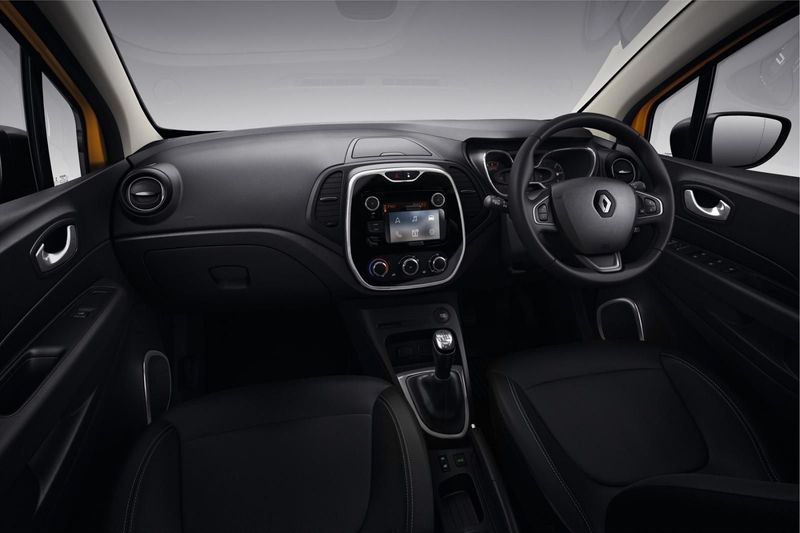
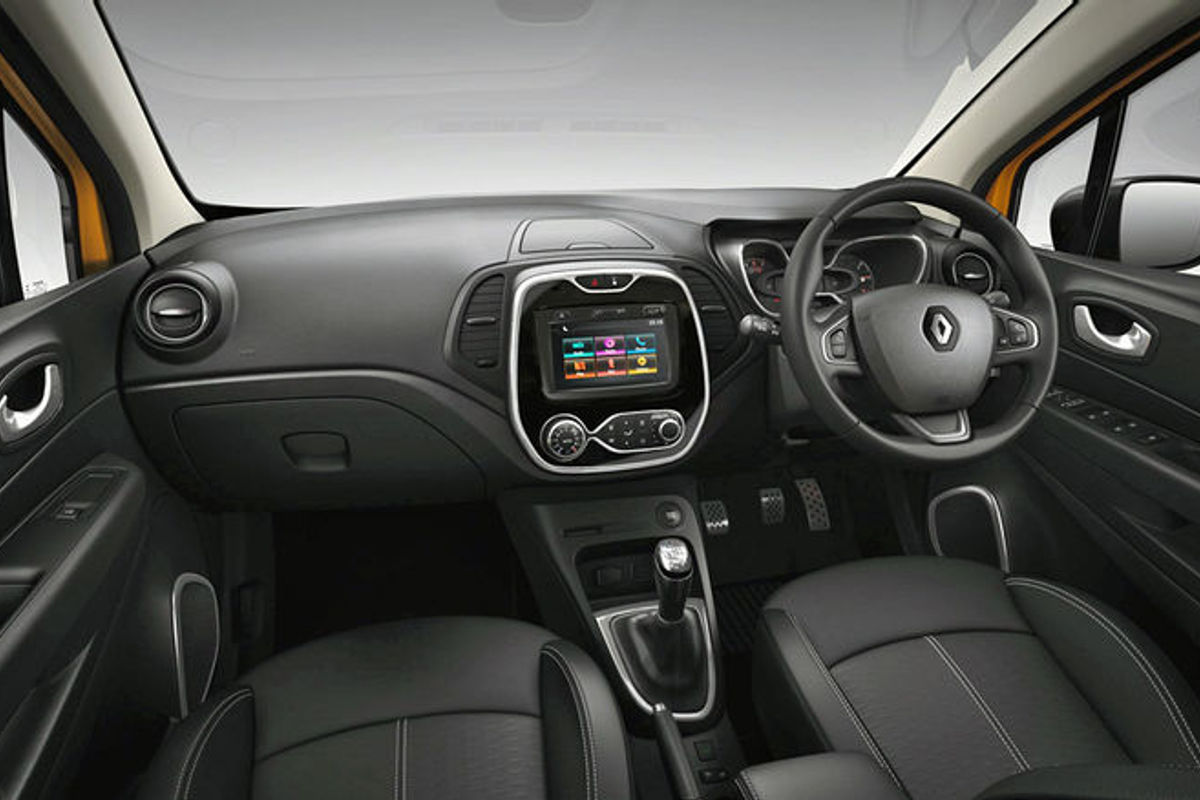
Renault tells us that the fit and finish of the interior has been refined and upgraded. There is a new soft-touch material on the dashboard and door-lining which does look and feel more upmarket. Satin chrome accents on the dash are subtle but effective and there’s a new, smaller steering wheel which you’d be hard-pressed to tell apart from the one it replaces. The gearlever from the larger Megane hatchback has been thrown into the mix and there’s an optional fixed glass sunroof, which integrates neatly with the diamond black roof colour.
Removable seat covers allow them to be washed in a washing machine. This is the Blaze with its 'light' infotainment system.
New seat designs with a choice of three covers round off the changes to the cabin. Those seat covers are removable – a clever concept that allows you to unzip the seat covers and wash them at home in a standard washing machine – there’s also the option of heated seats. While the seats are comfy, they are a little compact and if you’re the sort of person who could confidently tackle a Springbok forward, you’ll probably find them a little tight. They are height adjustable though if you’re more of a champion jockey.
The new infotainment system
Renault’s entry level infotainment system, offered in the Blaze trim level, actually seems anything but entry level. The system features a standard radio/CD player with Bluetooth functionality but just below the radio’s display is an adjustable smartphone cradle. By plugging in your iPhone or Android smartphone, and installing the free R&Go app, your smartphone essentially becomes the car’s custom infotainment system. You can choose up to six homescreen shortcuts, from your favourite music service to your favourite maps app. The car will even send fuel consumption figures and your eco-score (a measure of your efficient or not-so efficient driving) to the app.
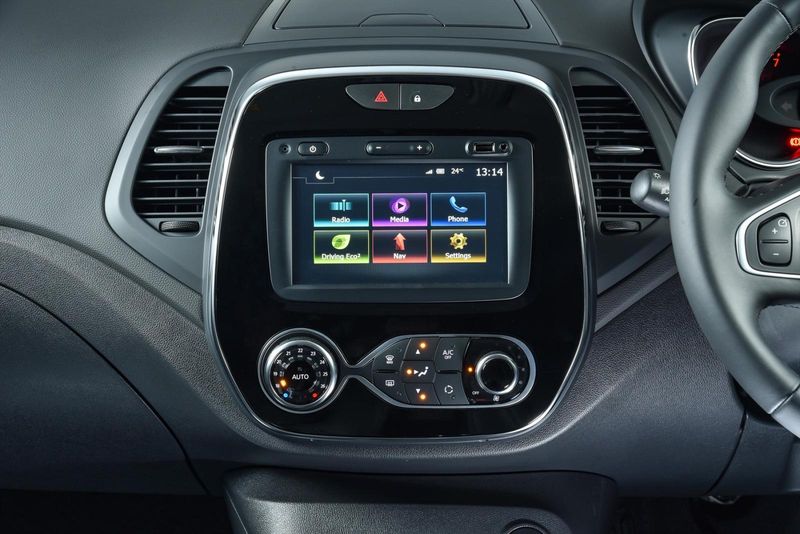
The full infotainment system includes navigation but doesn't have the app suite that the Blaze model has.
One of the smartest features is Find My Renault. When you unplug the phone and leave the car, the app automatically drops a GPS pin, marking the car’s location. You can then use your phone to locate your car and be guided to it. Useful for those big sporting events where you’re forced to park and walk in from the next province.
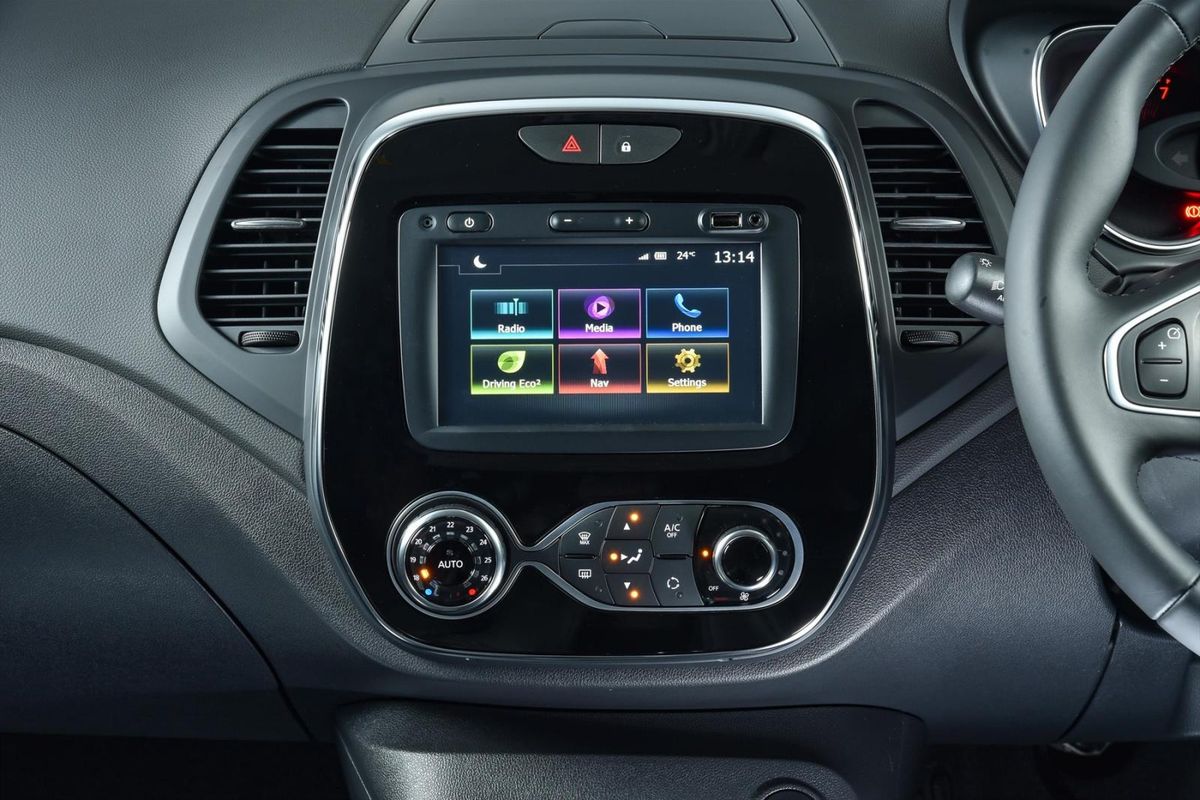
All other variants of the Captur feature Renault’s tried and tested MediaNav touchscreen system. With a 7-inch colour touchscreen, SatNav and Bluetooth telephony/music playback, it is a comprehensive system. But this tester couldn’t help but feel that with the pace of smartphone and app development, and the added bonus of live-traffic monitoring and information provided by apps such as Waze and Google Maps, that perhaps the more expensive infotainment system will prove less of a useful driving companion than the “basic” R&Go system.
Practicality
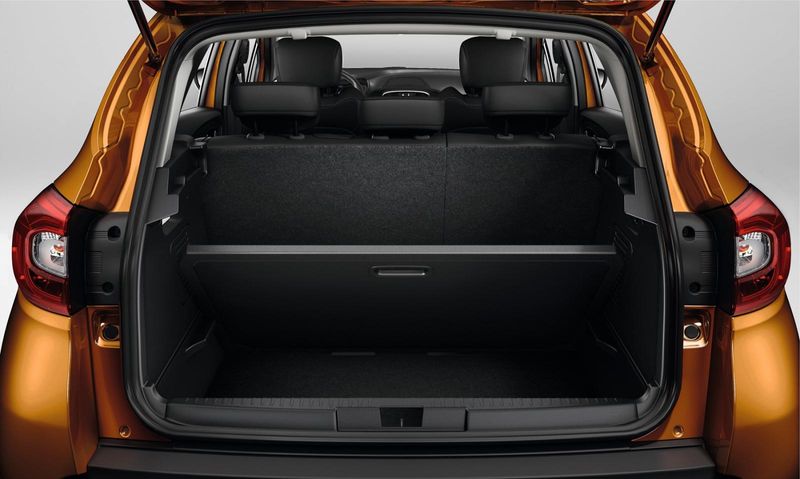
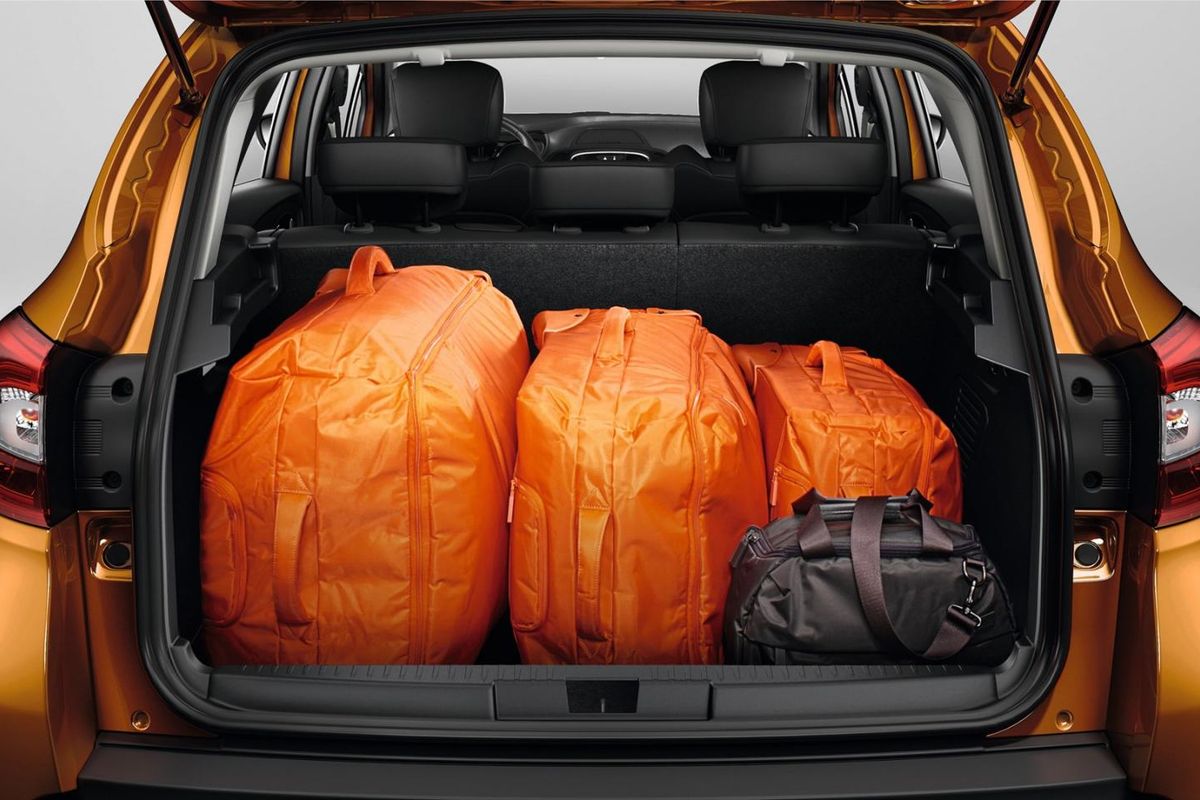
The Captur features a few nifty features to make the most of the car’s compact proportions. The boot is split in two by a false floor and totals 377-litres, which compares favourably to rivals such as the Toyota C-HR, with 328-litres and the Ford Ecosport with 362-litres, but falls a bit short of the Hyundai Creta, which offers 402-litres.
Two tier boot opens up 377-litres of boot space. The rear seats can slide forward increasing it to 455-litres.
A particularly useful feature which is rarely found is that the back bench of seats is mounted on rails, and can slide forward by as much as 16 cm, opening up the boot space to 455-litres. A handle is located in the boot area to facilitate this. The back bench also folds flat in 60/40 split, all of which combines to make the interior space very useful and usable.
Safety
Hill start assist is featured as standard on all manual variants, and all trim levels feature an electronic stability control programme (ESP), a critical safety system which is not found as standard on some rivals. Four airbags, ABS, EBD and Isofix child seat mounts are also standard. The Captur carries a 5 star EuroNCAP safety rating.
Pricing and trim levels
While most prices have increased marginally across the range, as mentioned, the new entry level variant is R20 000 cheaper than the model it replaces.
The 66 kW Turbo Expression model becomes the 66 kW Turbo Blaze, with a new price of R229 900. All other models see an increase of R5 000 over the outgoing range, with the top of the range 88 kW Turbo Dynamique EDC priced at R309 900.
All Capturs are sold with a 5-year/150 000km warranty and 3-year/45 000km service plan.
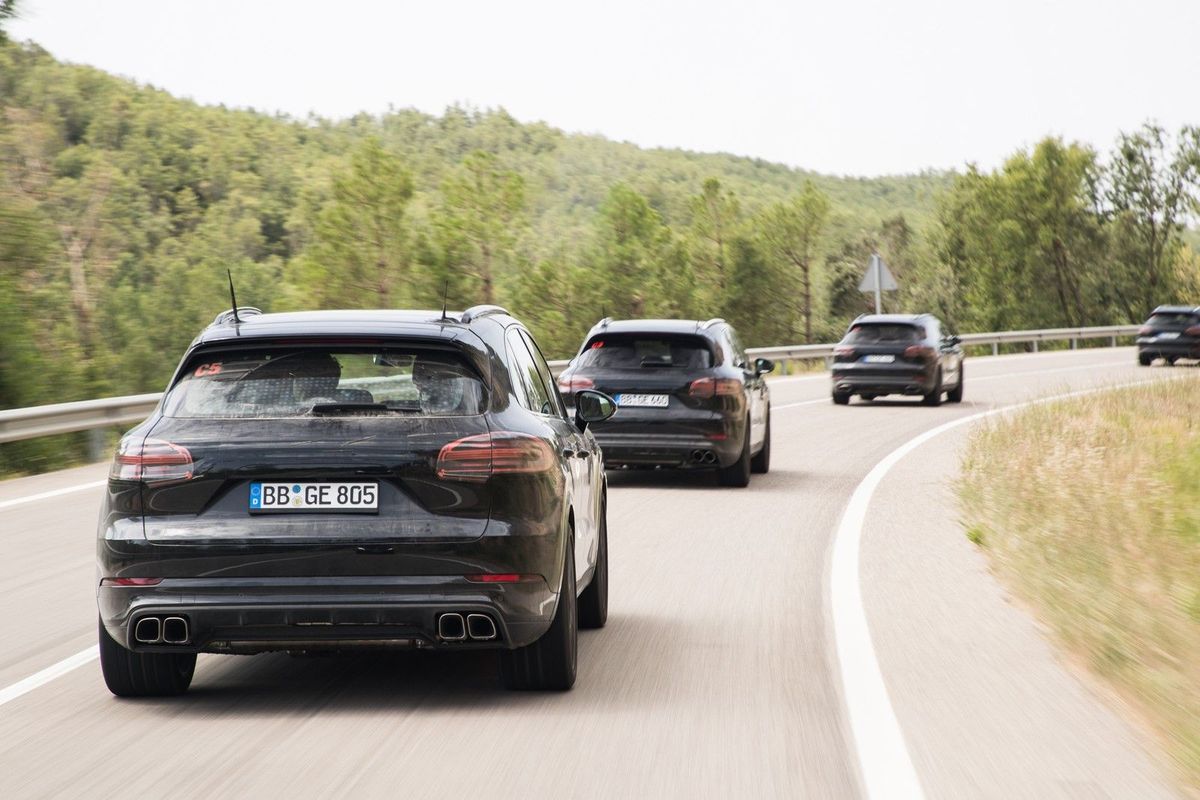
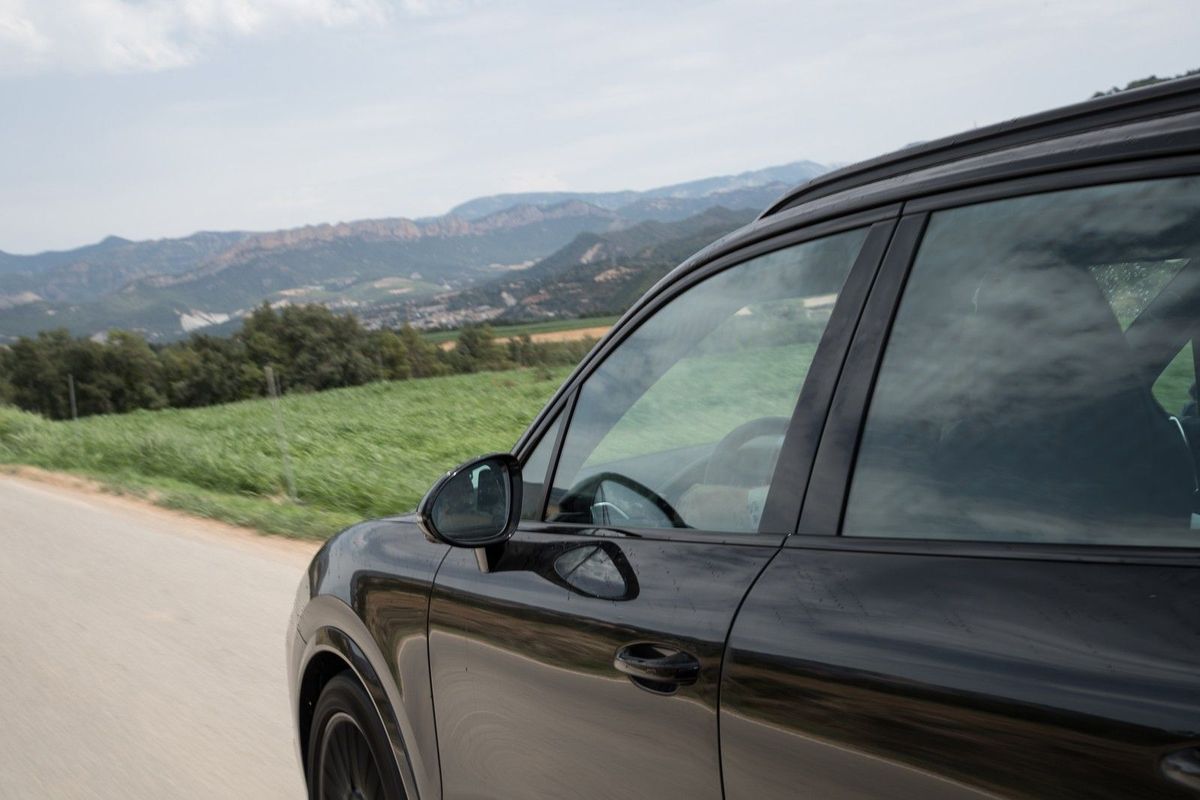
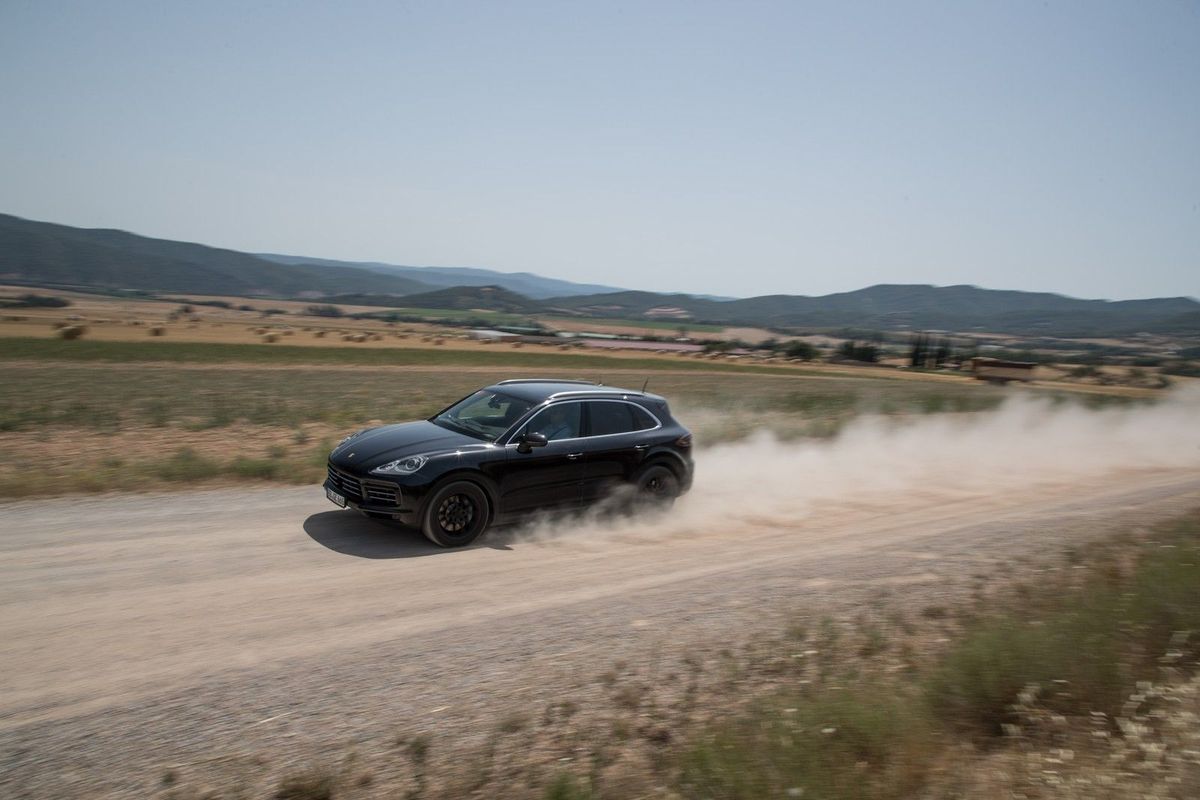
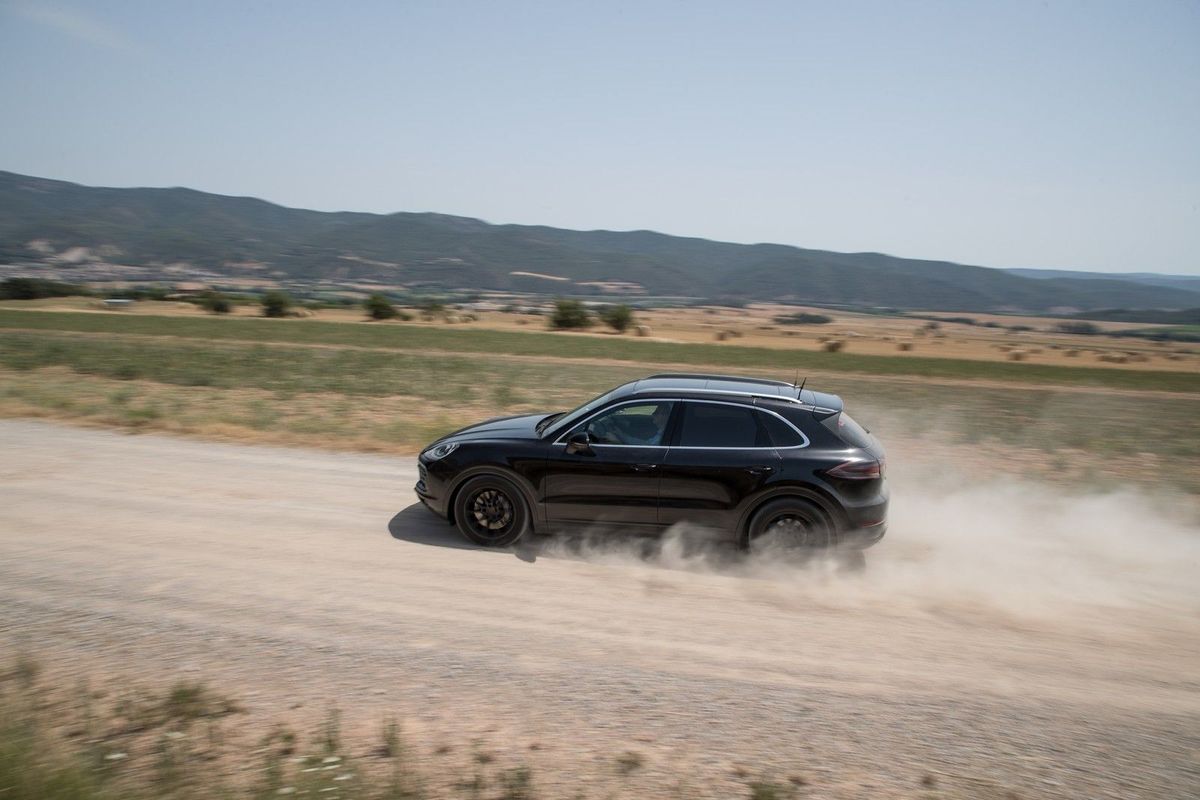
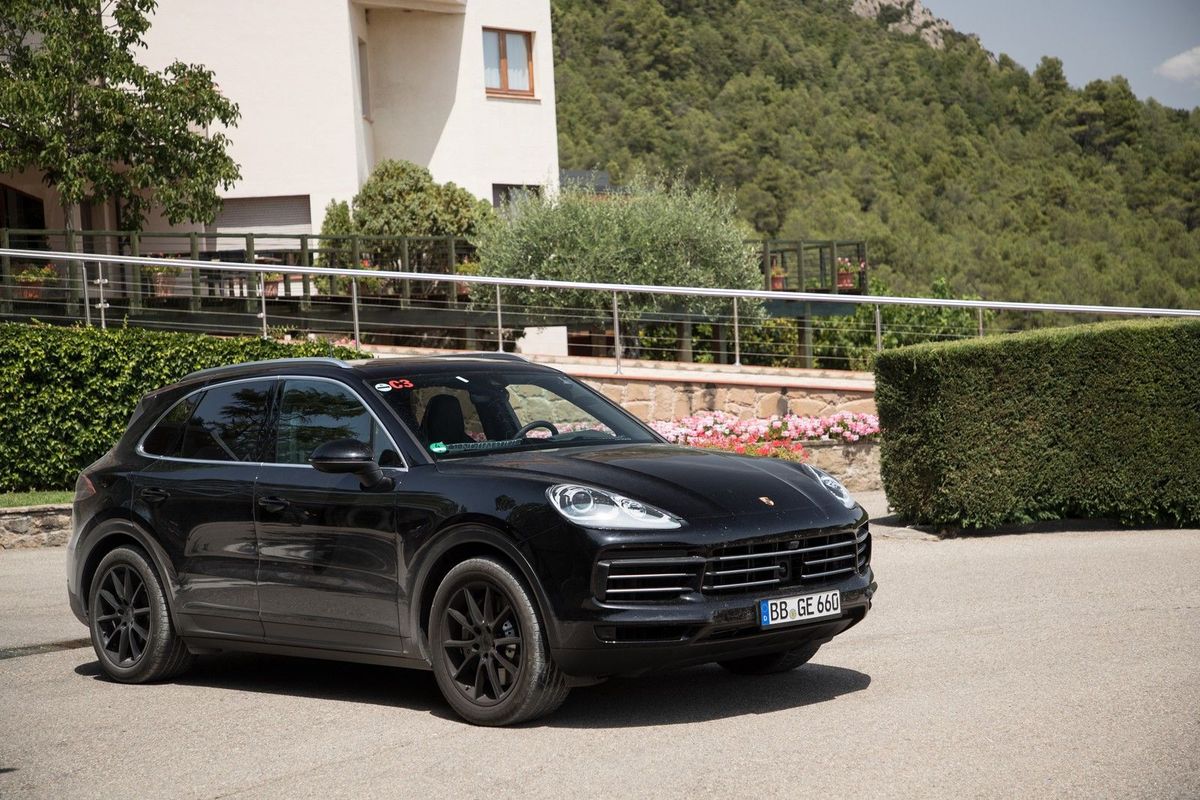
Porsche doesn't normally let the media drive its pre-production cars, but on this very rare occasion, we were allowed to drive the upcoming Cayenne in the foothills of the Pyrenees. Could the 3rd iteration of the car that single-handedly saved Porsche from the doldrums be ready to trump its competition in the premium SUV market?
By Andrew Frankel
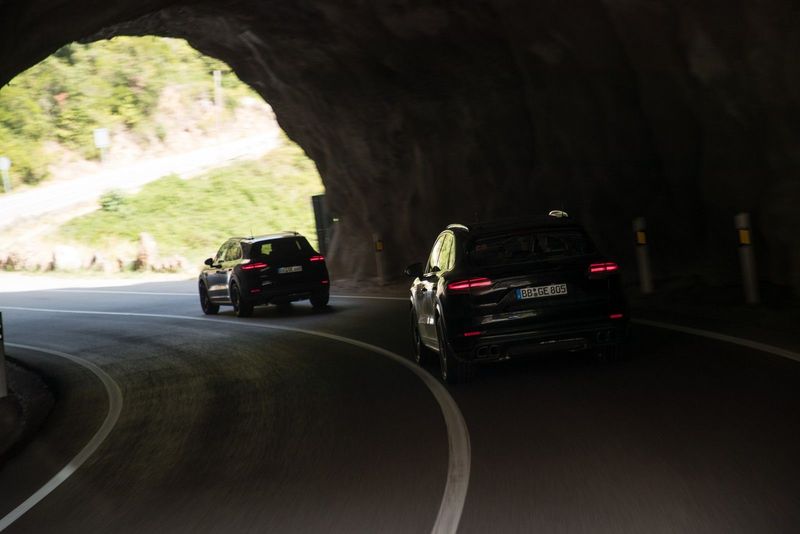
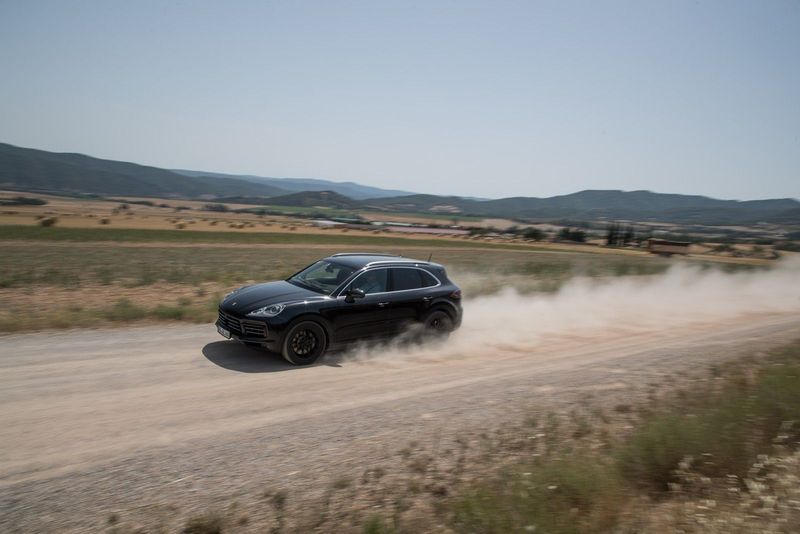
There were times when I knew I should be concentrating on recording what the all new, yet-to-be-unveiled Porsche Cayenne was like to drive when, in fact, my mind was more occupied with wondering what on earth the locals must have made of us.
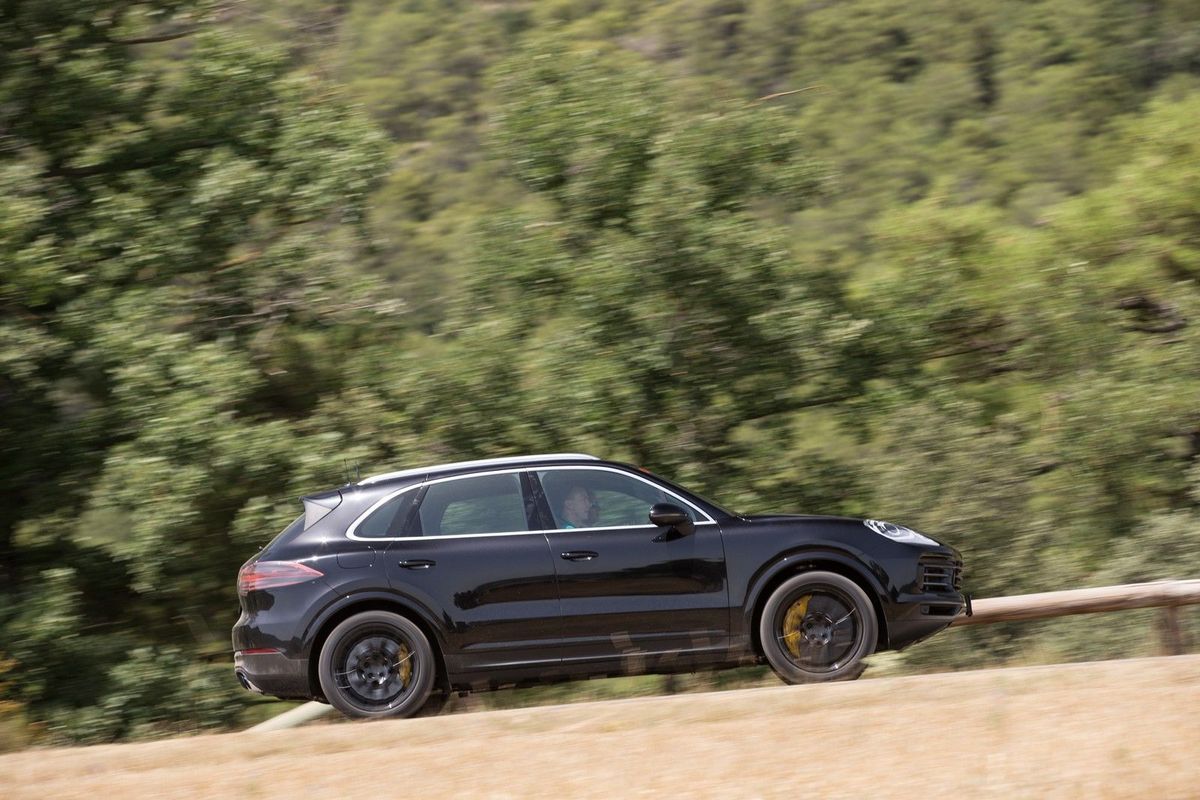
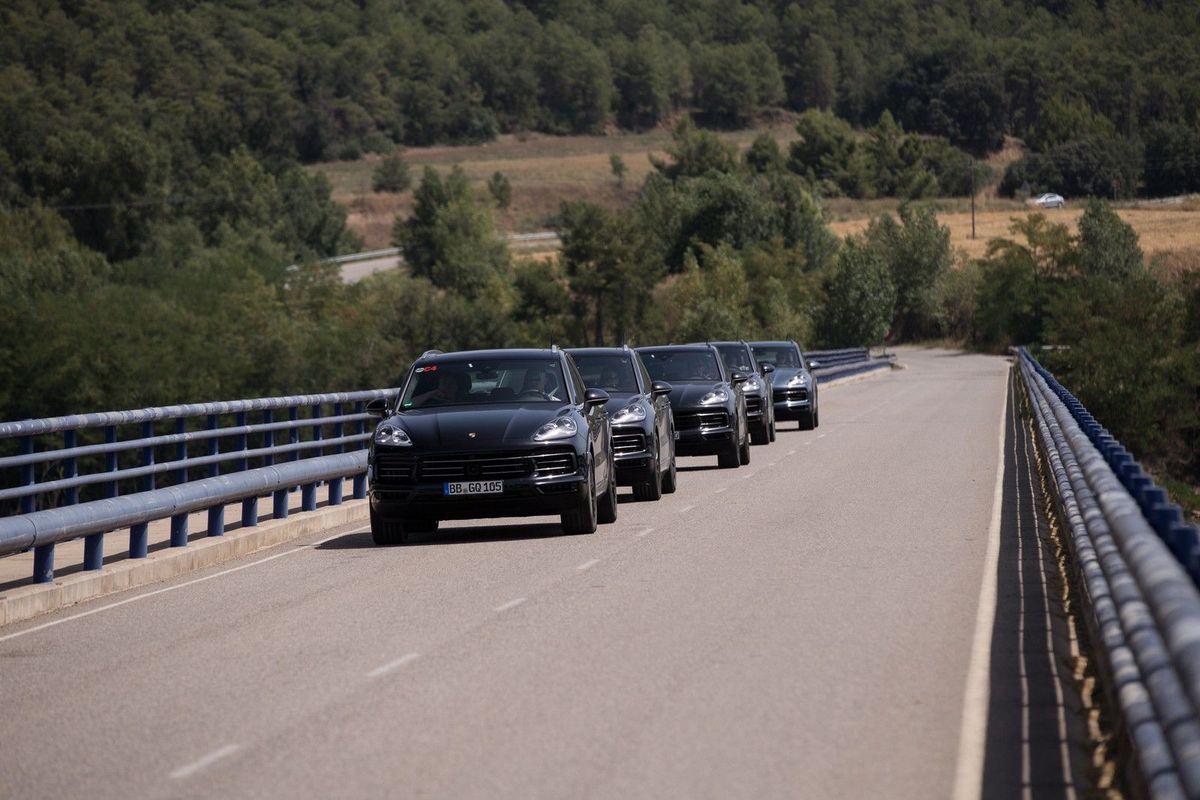
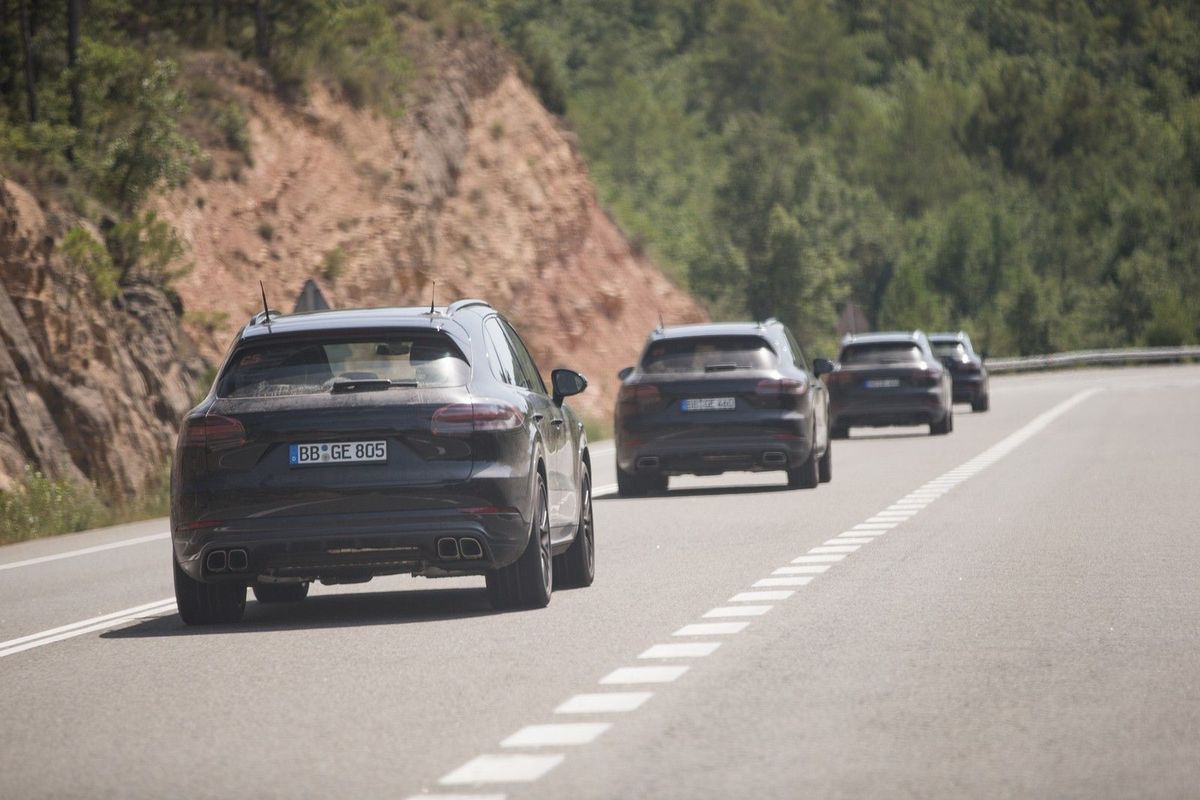
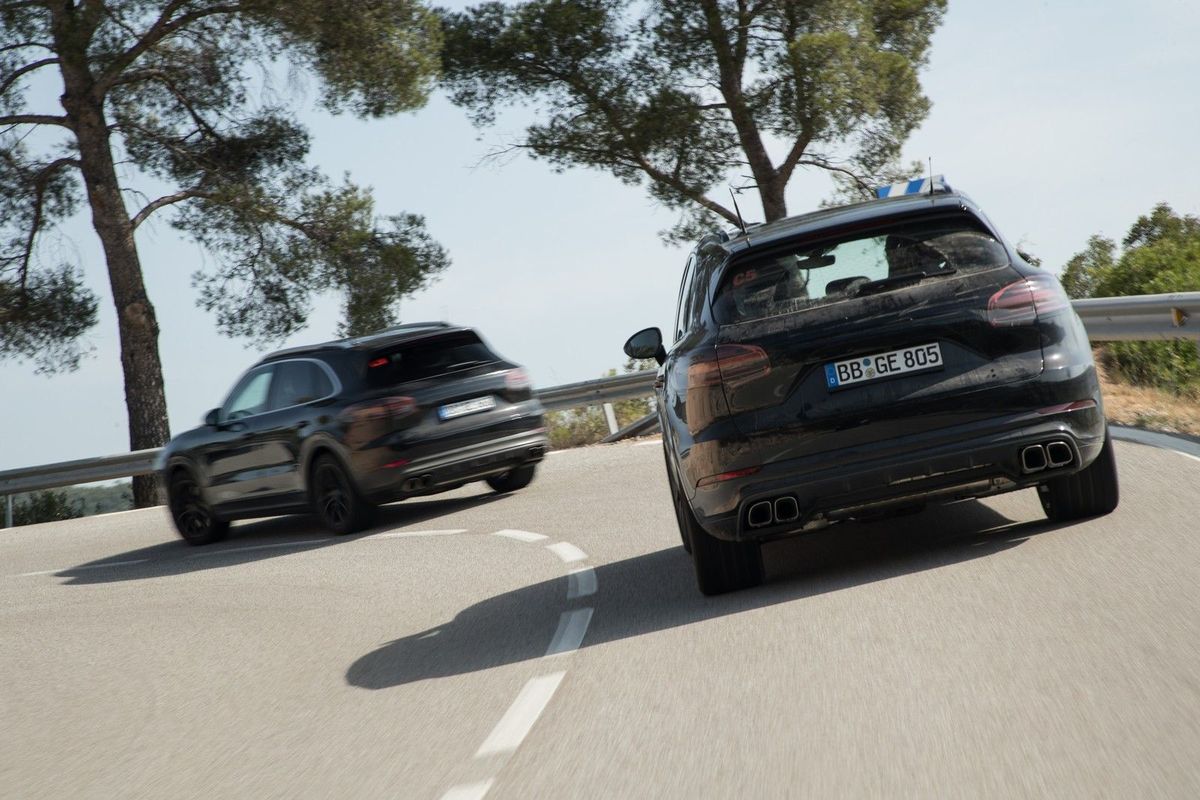
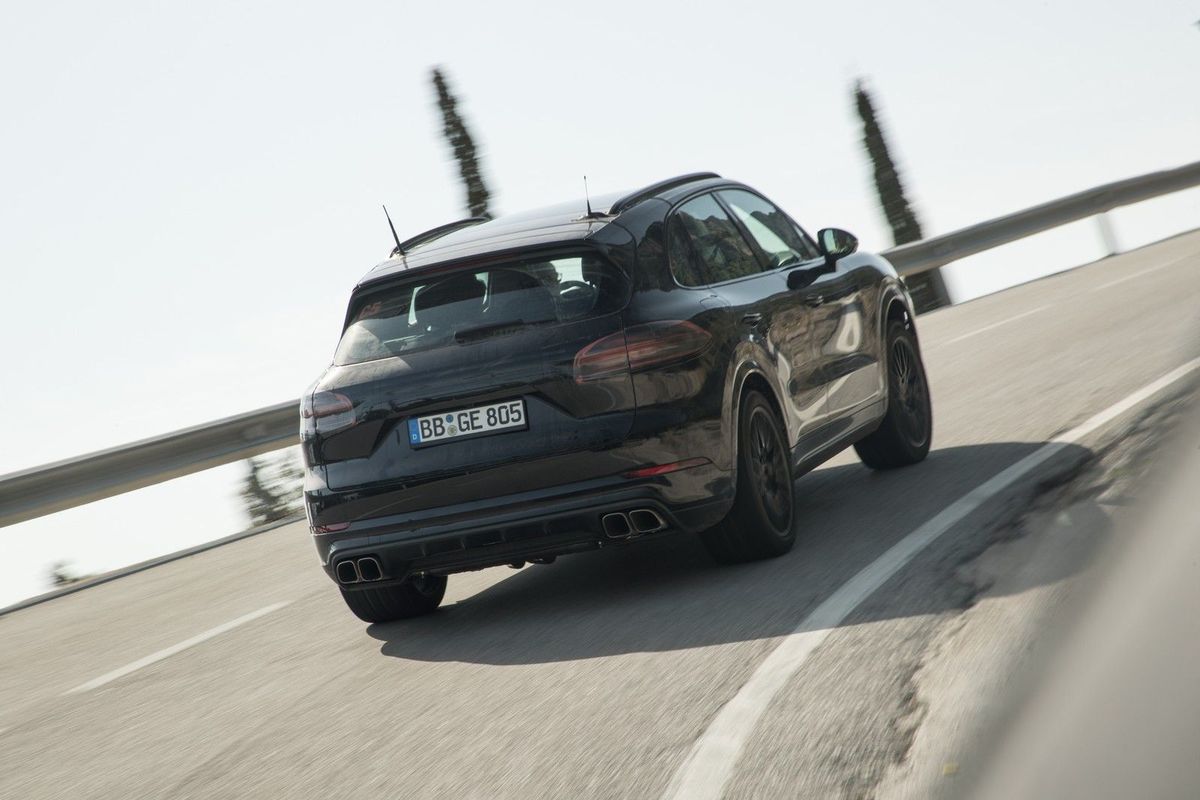
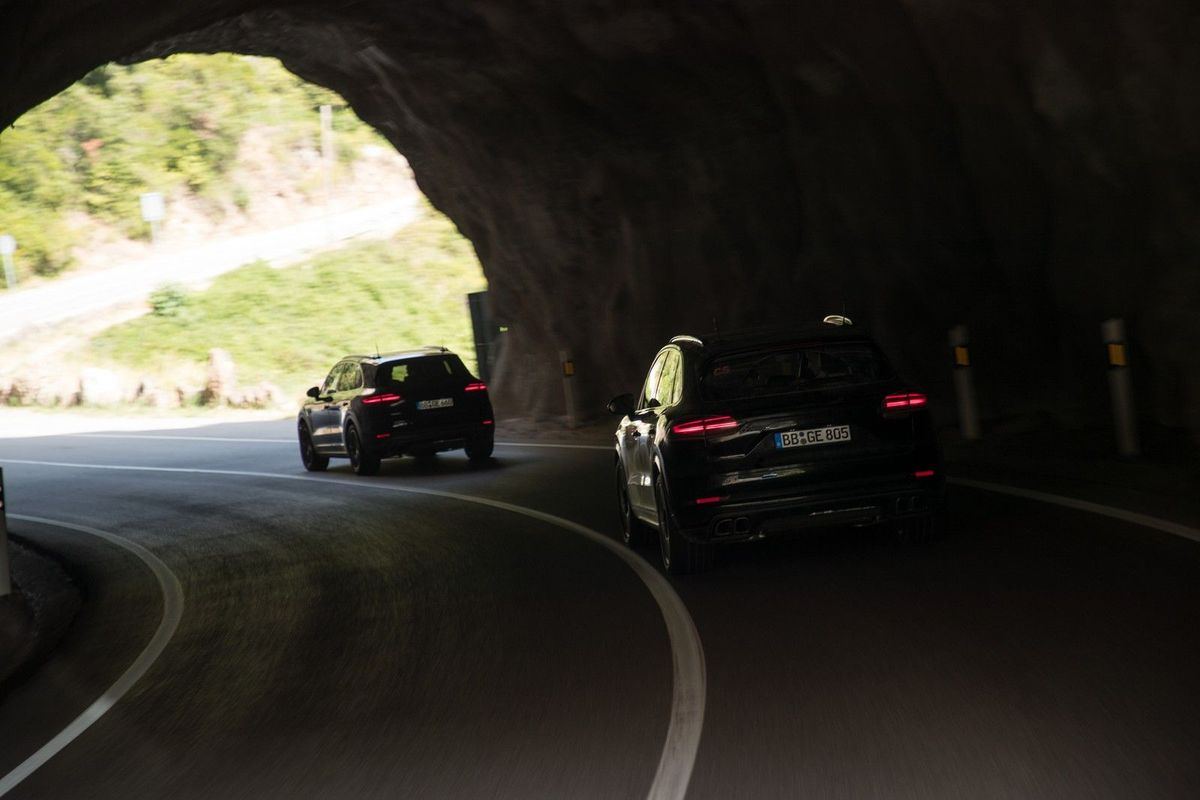
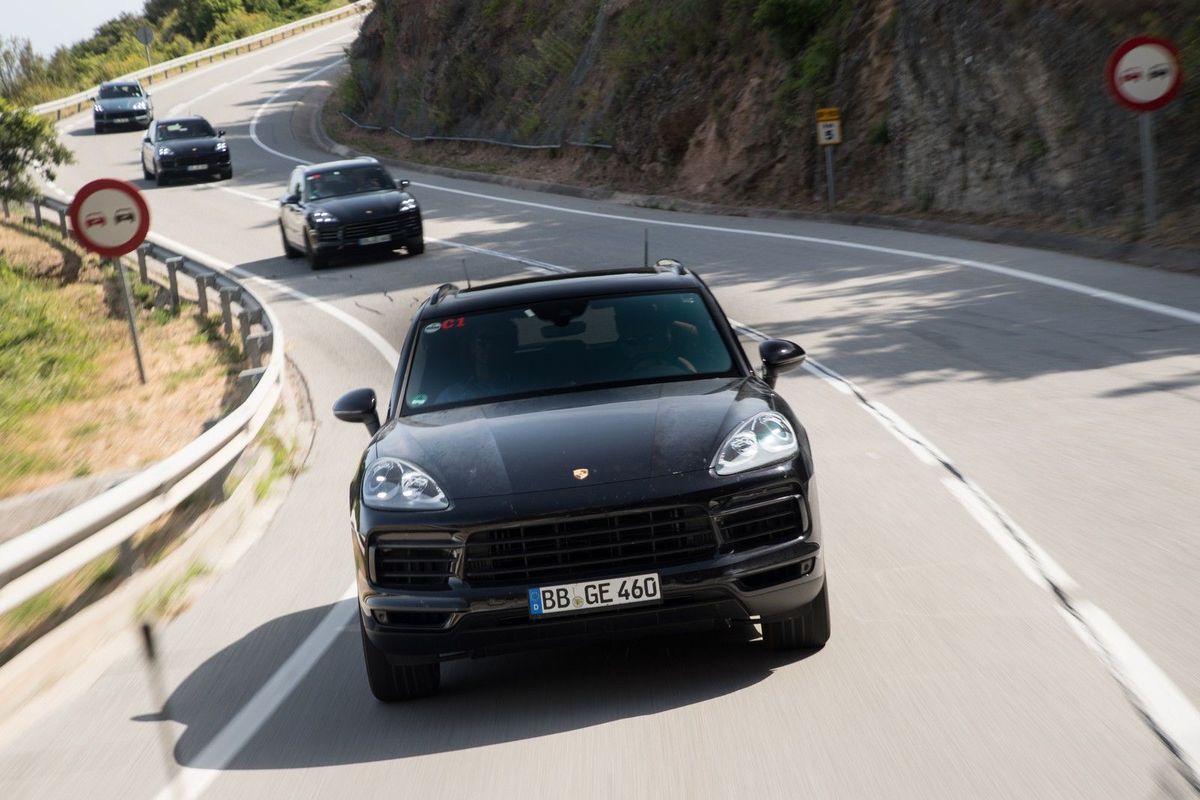
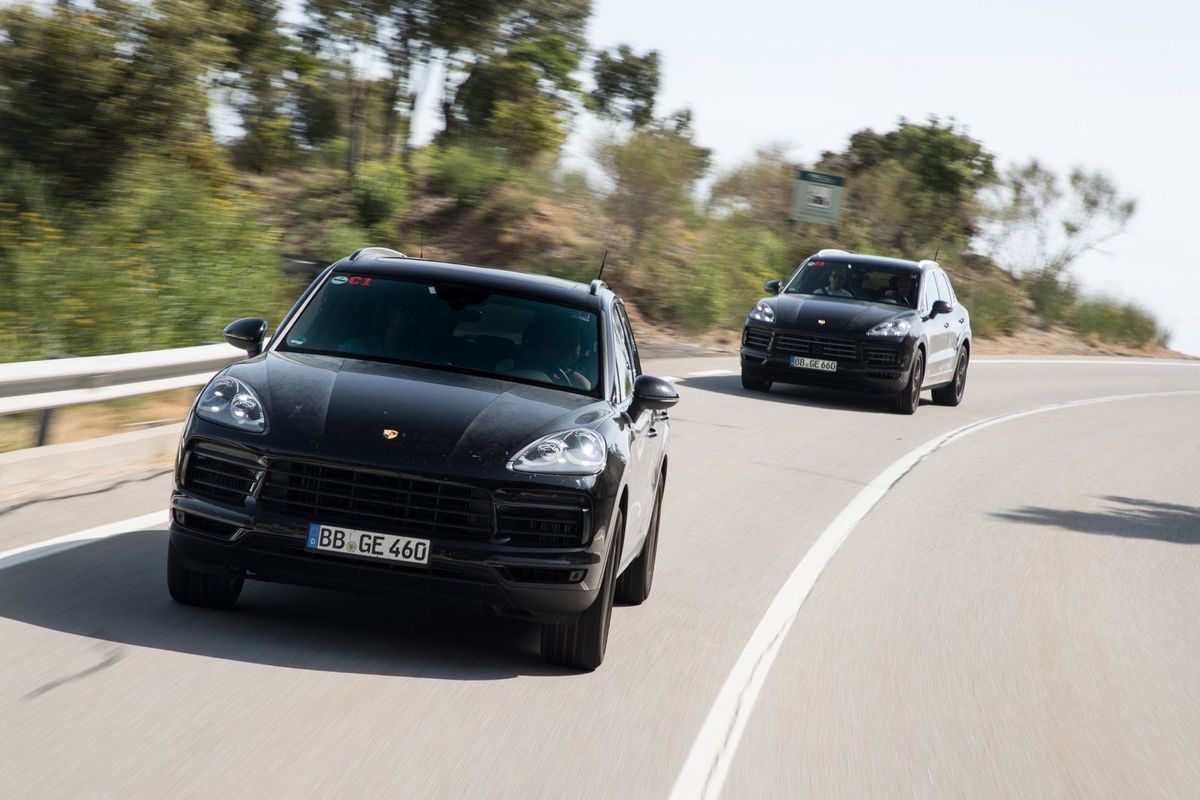
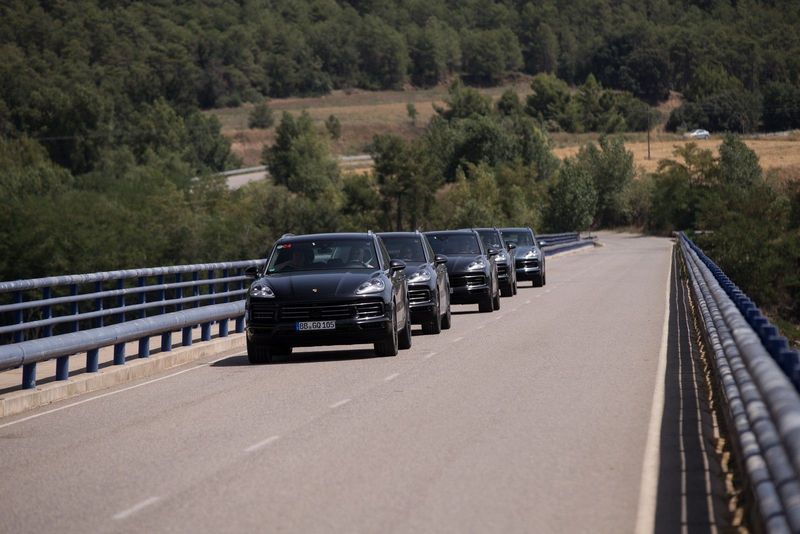
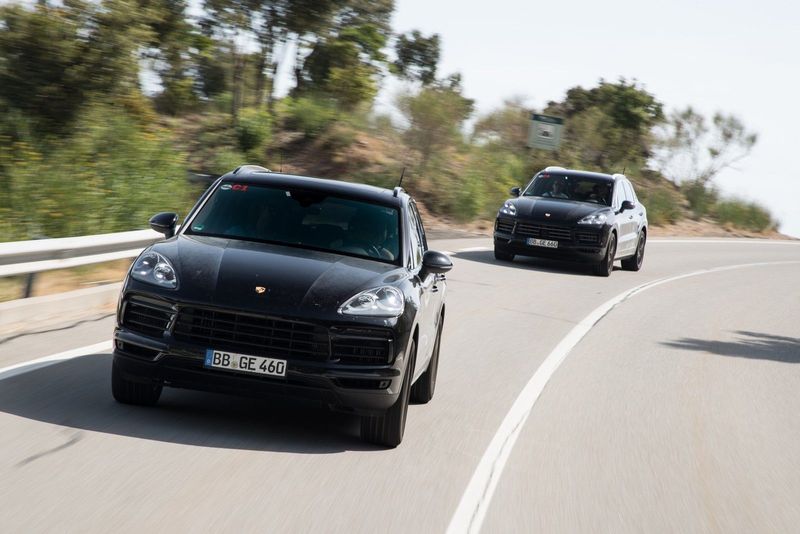
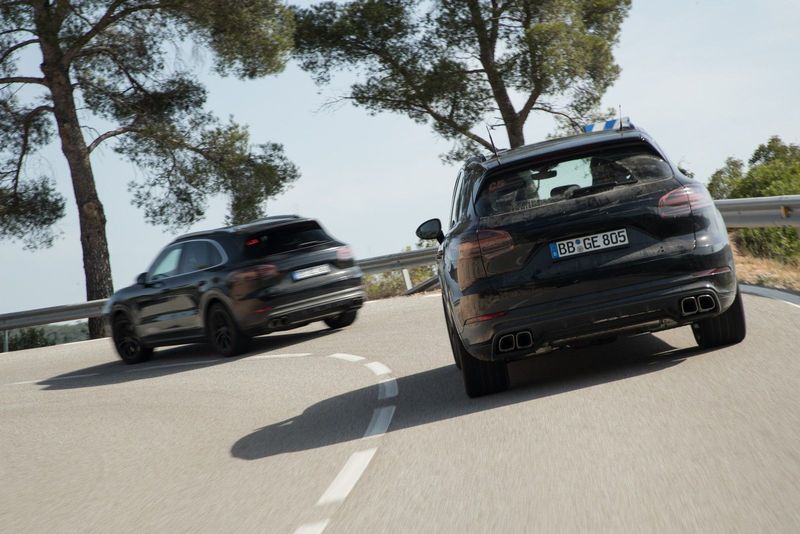
Imagine this: 5 large SUVs, all in dark colours and most of them black, sweeping across the countryside in convoy, tape covering their badges, strange plastic coverings concealing their headlights and rear lamps. The silhouette of any one of these shark-nosed cars was pretty sinister, but to watch five of them thunder by, escorted by a small fleet of Volkswagen Transporters struggling to keep up must have made curious onlookers wonder what on Earth the convoy was doing out here in the foothills of the Pyrenees.
The convoy, line astern at the foot of the Pyrenees. These cars are in their last stages of testing before the global reveal at Frankfurt's motor show.
The answer was just a bit of everyday ho-hum sign-off testing for a car that will receive its public unveiling in Frankfurt in September, be driven by the rest of the world’s press later in the year and become available in the South African market in 2018. Quite why I am the only English speaker to have been allowed to drive the new Cayenne to date never becomes clear… I’m just glad to have had the opportunity.
These jobs are rare and, before now in Porsche’s world, non-existent. It’s allowed journalists in prototypes before, but only as passengers. I once flew overnight to Cape Town to sit beside an engineer in a new 911 for a few minutes before catching the same plane home that afternoon, much to the bemusement of the same immigration official who stamped me both in and out of the country.
Warts-and-all prototype experience, replete with glitches
So to come merely to Catalunya and be able to drive for hours on end makes a welcome change. There’s also something rather real about doing this: normal car launches have such a pre-orchestrated feel to them as we glide between mirror-finish cars prepared to within an inch of their lives.
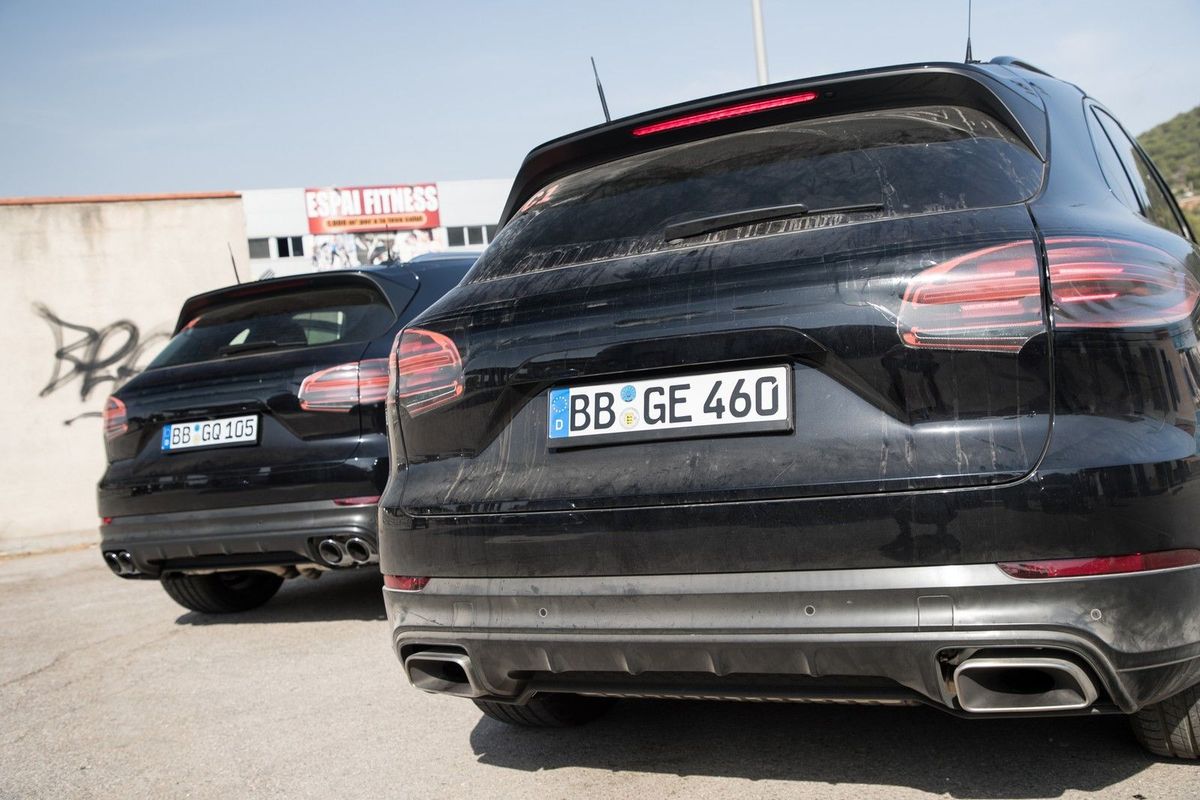
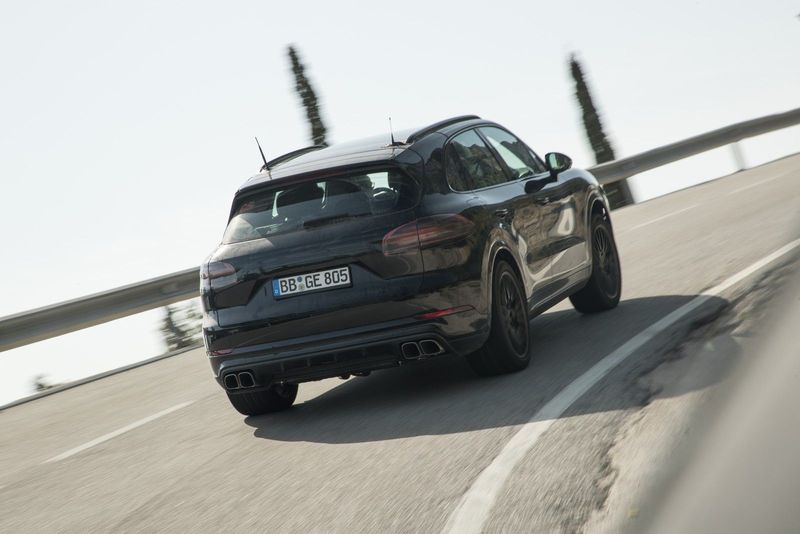
This is not like that: the cars are filthy and, horror of horrors, one of them refused to release its handbrake when we pulled away from a stop. It took Porsche technicians (armed, interestingly, not with a jack and wheel wrench, but a laptop) almost 5 minutes to interrogate the offending ECU and persuade it to desist. These cars are prototypes; finding/ironing out tiny niggles is precisely why the cars are on this final European sign-off drive.
Most of the Porsche Cayenne's engines have been developed by Audi, save the twin-turbo V8 petrol, which Porsche developed itself.
Disguised and with their interiors cloaked in black felt, there is plenty about the Cayenne we cannot tell you either because that’s not part of the deal that got me into the cars in the first place or because Porsche hasn’t told me. But there’s plenty more that I can.
Unsurprisingly the new Cayenne sits on the same Volkswagen Group MLB platform as the Audi Q7 and Bentley Bentayga. It will, in time, also provide the structural basis for the forthcoming Lamborghini Urus. But the platform has been modified for the Cayenne, its wheelbase shortened by no less than 100 mm because Porsche rates the agility this will gain above the interior space it will lose.
Unlike in its sports cars, there is no such thing as a purely Porsche engine for cars like this anymore. The way the world works within the Volkswagen group is that one company gets to develop an engine which is then made available to all the others. In this case, the Cayenne will get all its V6 engines from Audi as well as the V8 turbodiesel, while the twin-turbo V8 petrol motor is Porsche’s own engine. There will be hybrids with both V6 and V8 engines, but as the car will be launched only with non-hybrid petrol engines, the Zuffenhausen-based firm isn’t talking about them at all.
It's never been the greatest looking SUV, but it has always had performance, comfort and badge appeal on its side.
But nor does it really need to. Porsche engineers confirm that the Cayenne will use the same powertrain line-up as the Panamera with the important – and significant – difference that while the Panamera uses the lighter, faster PDK double clutch transmission, the Cayenne uses a new conventional 8-speed automatic gearbox from ZF. The reason? The gear shifts may be a touch more luxurious, but really it’s all about ensuring the Cayenne continues to be able to tow the maximum 3 500 kg load allowed by law. The PDK used in both the Panamera and Macan is rated only to 2 400 kg.
So, using the Panamera as our guide, a base specification 3.0-litre Cayenne V6 should have around 246 kW. Even this slowest of the petrol-engined Cayennes will hit 100 kph from 0 in under 6 sec (that’s a staggering 1.9 sec faster than the car it replaces). The S uses the same engine, but with twin turbos and a 2.9-litre capacity (the stroke is a fraction shorter because of the need for an uprated crankshaft) and should pump out an impressive 328 kW with the 4-litre V8 Turbo offering 75 kW more even than that…
I travel in the Turbo first. I say "travel", because it’s the one car here I am not allowed to drive because the engineers say it’s not close enough to production-ready to represent what the derivative will be like to drive once it appears on showroom floors. That said, while all these cars are pre-production prototypes, they were built on the main line using production tools, so should be indistinguishable from the finished items.
The slowest of the Cayennes is said to reach 100 kph in under 6 seconds, with the Turbo S likely to break into the 4s.
This is naturally frustrating. Show me someone who can tell you what a car is like from the passenger seat and I will show you, at best, a fantasist, at worst, someone who has put their desire to earn money ahead of their journalistic obligation to tell the truth. It does feel bloody fast and effortlessly so, and with 22 kW more than the old Cayenne Turbo – and a small weight reduction of around 60 kg, so it should. But cars also always feel much faster to those not driving them. I can tell you with rather greater authority that on standard air springs, this is the best riding Cayenne – ever.
But soon I have what I really want: a steering wheel in my hand, albeit that of a Cayenne S. I don’t think I’m meant to give you precise details of the new interior but if you’ve read anything about the new Panamera cabin you’ll not find the interior architecture in here too surprising. It’s all TFT screens and pressure sensitive labels in place of proud standing buttons. And it looks brilliant, at least until covered in grubby fingerprints.
And the car goes hard too, sensationally so given this is the one-off-the-bottom petrol model. Considering all there is to come – 2 more powerful hybrids, a GTS, Turbo and Turbo S versions – the performance of this S is incredible. I’m told it will reach 100 kph in under 5 sec and believe it.
Air suspension on the higher spec models is the way to go on this sort of terrain, but the standard coil springs give better feel when driven sportily.
The way in which its performance is delivered is, however, a little less convincing. This is quite a small engine with quite a large output and, as ever with such motors, it needs to be worked to give its best. I have no problems with such an approach in Porsche sportscars, but in its SUVs I feel something more effortless based on low down torque rather than top-end power would suit the character of the car better. But the engine note is pleasant unless you rev the motor to the redline and the new gearbox works ceaselessly to make the most of the resources placed at its disposal.
And on air springs with PASM (mere options on the S, unlike the Turbo) its road behaviour is close to impeccable. Its ride quality is serene and handling accurate and impressively capable. You don’t expect tall 2-tonne SUVs to cling doggedly to every corner into which they are flung, but this one does. My biggest concern was for the new electric steering system, the first to do without hydraulic-assistance in Cayenne history. As it turns out, the set-up is superb: sensibly geared, accurate and properly weighted too.
There's a sense of driving fun… if you're happy to unearth it
All that was missing was that heightened sense of fun, something I think should be expected of all Porsches, even those as heavy and domestically-oriented as this. I found it lurking, of all places, inside the base spec Cayenne V6. Though clearly slower than the S, I liked the lazier attitude of its less-stressed engine. There’s less torque, but it's developed further down the rev-range. I think it sounds a little better too.
But the really big difference was on quick roads where the standard car turned out to be considerably more involving and therefore, fun, to drive. There was better feel from the chassis, an augmented sense of connection to the road, an approach that said not only that it could take anything you could ask of it, but it would rather enjoy the challenge.
Diesels tend to be the best engines for SUVs, we didn't get to drive them but with added torque, they're likely to highlight the new Cayennes best attributes.
Why? To me the answer is simple: standard steel springs. Air suspension is excellent for high-speed ride and invaluable for towing and going off road because of its ability to maintain a number of different preset ride heights, but if you want to have fun behind the wheel, coil springs will not only bring you far closer to the action, they’ll cost a lot less too.
Summary
Overall I’d say the Porsche Cayenne – insofar as it is the best car in the class for those who appreciate driving – just got a whole lot better. Correctly specified the new Cayenne is at least as much fun as is predecessor (currently on sale), but with a transformed interior and notably better ride and refinement. It is a premium SUV that still appeals more to the head than the heart, but you can say as much about every conventional SUV on sale.
Then again, I’d wait at least until we see the spec of the turbodiesels before choosing my favourite derivative. I expect the new V6 turbodiesel will have little less power than the petrol V6, but a stack more torque, which is exactly what cars like these respond to best. But whichever you chose, you can do so confident in the knowledge that the Cayenne remains today what it has always been: the best car… of its kind… in the world.
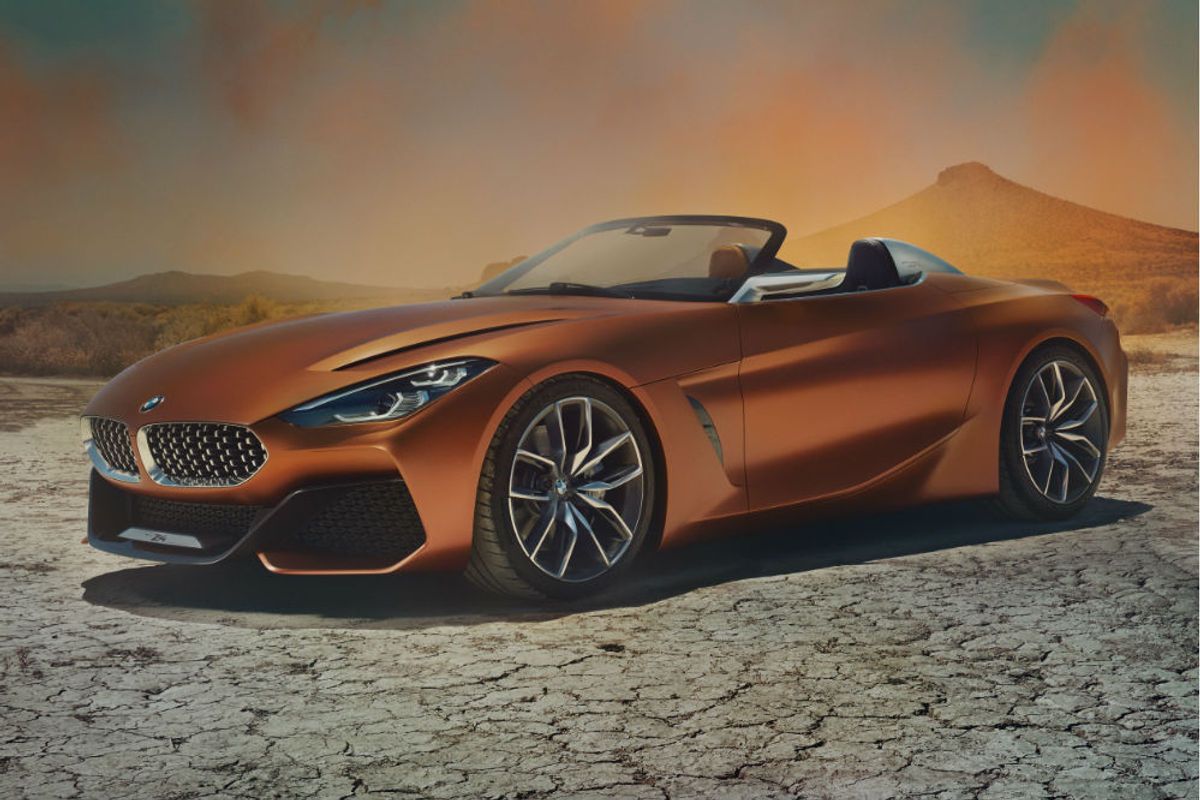
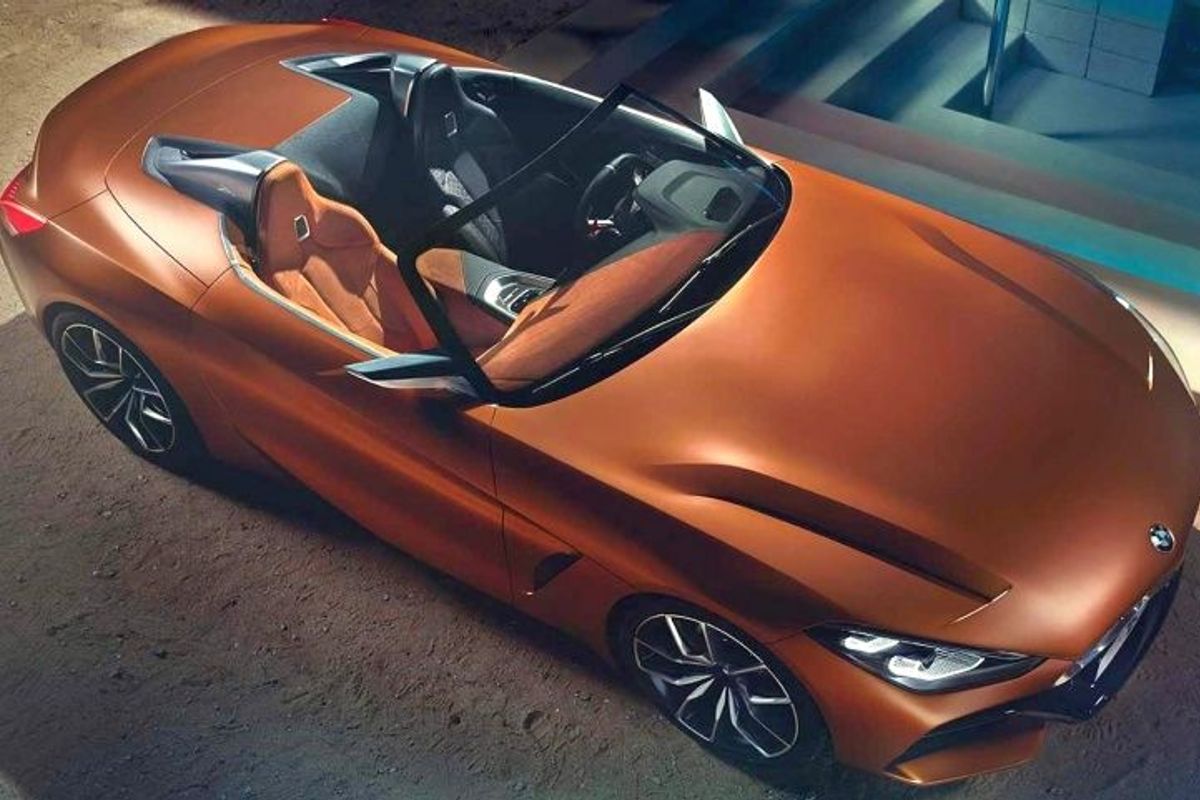
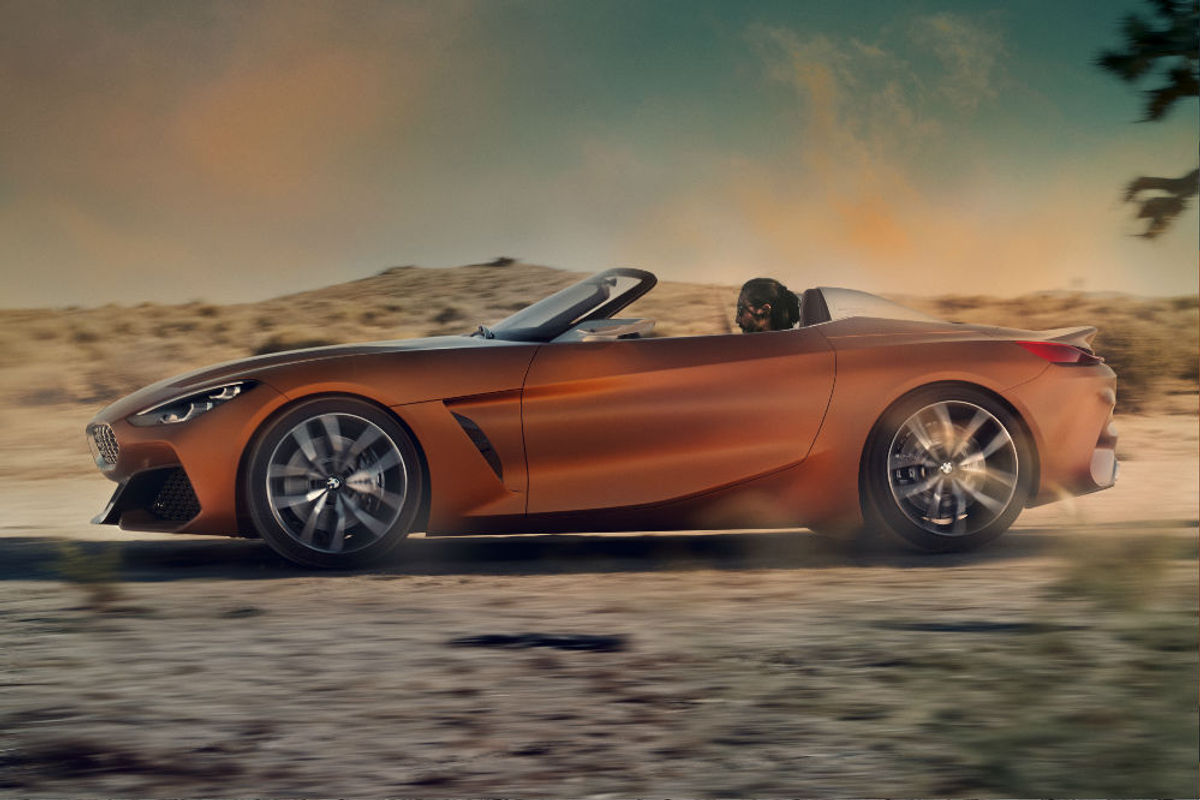
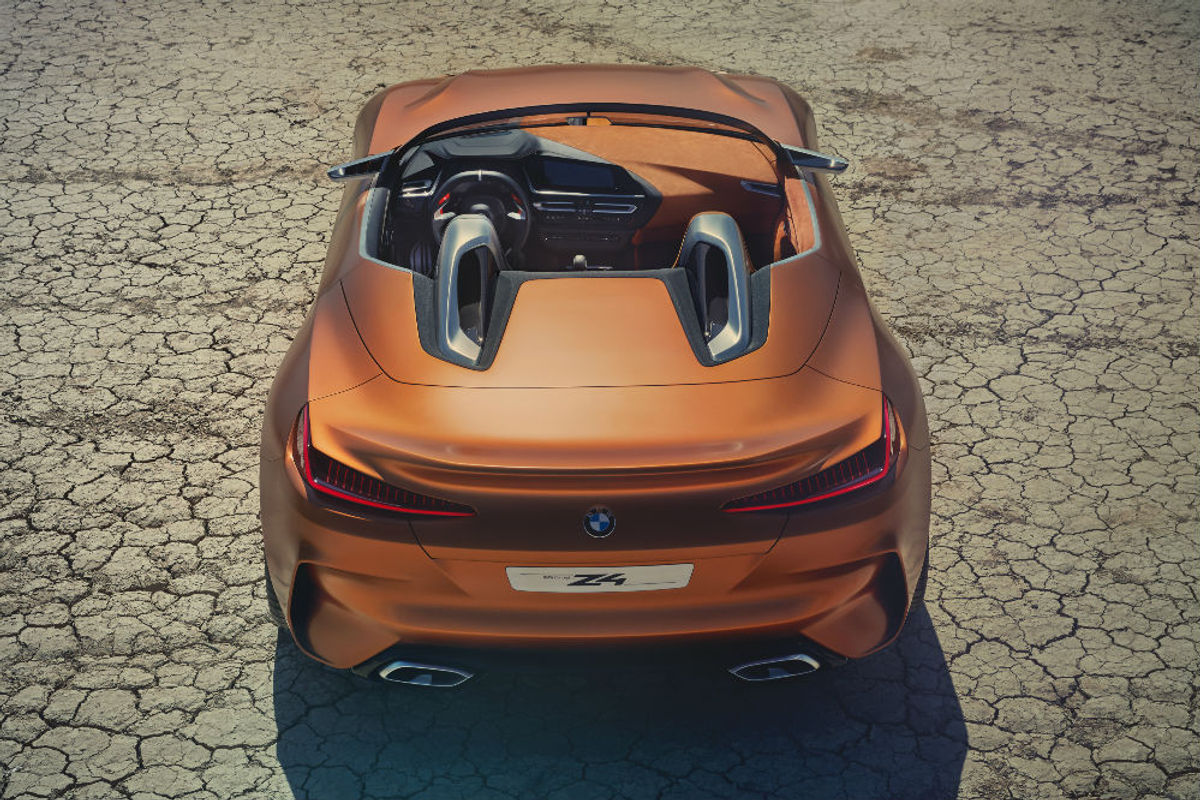
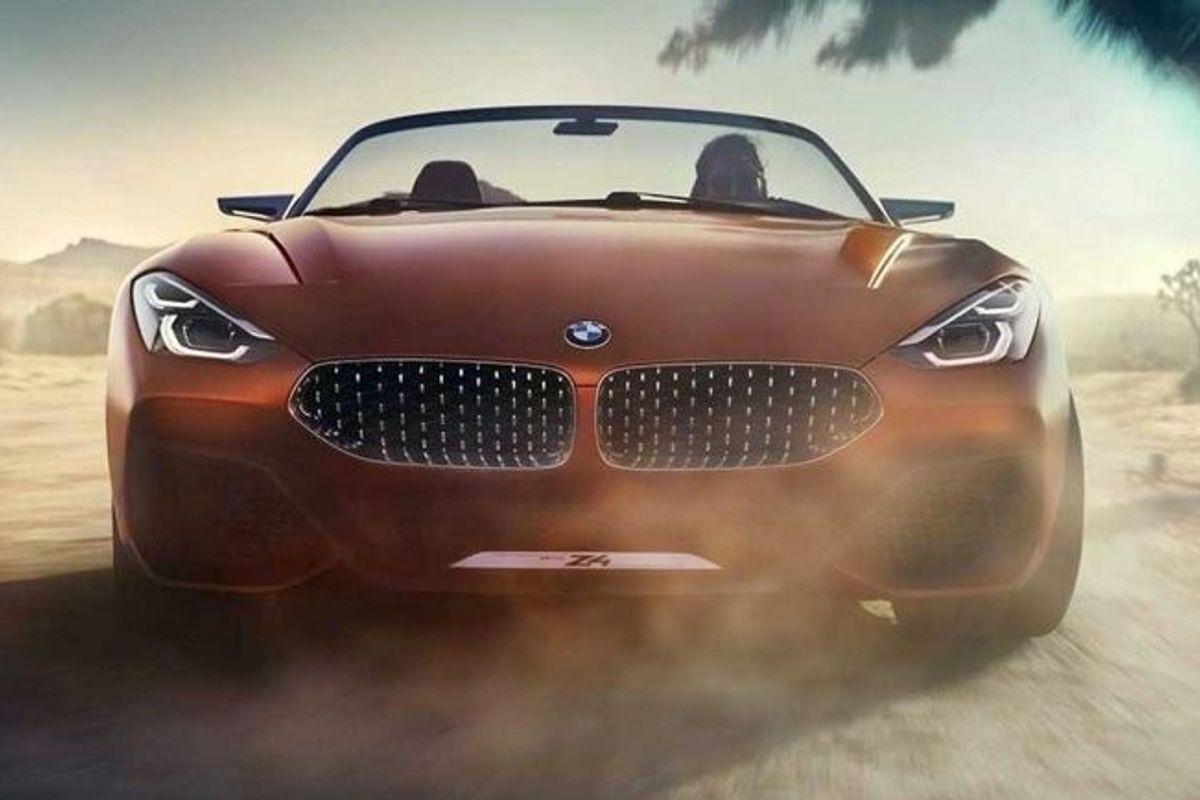
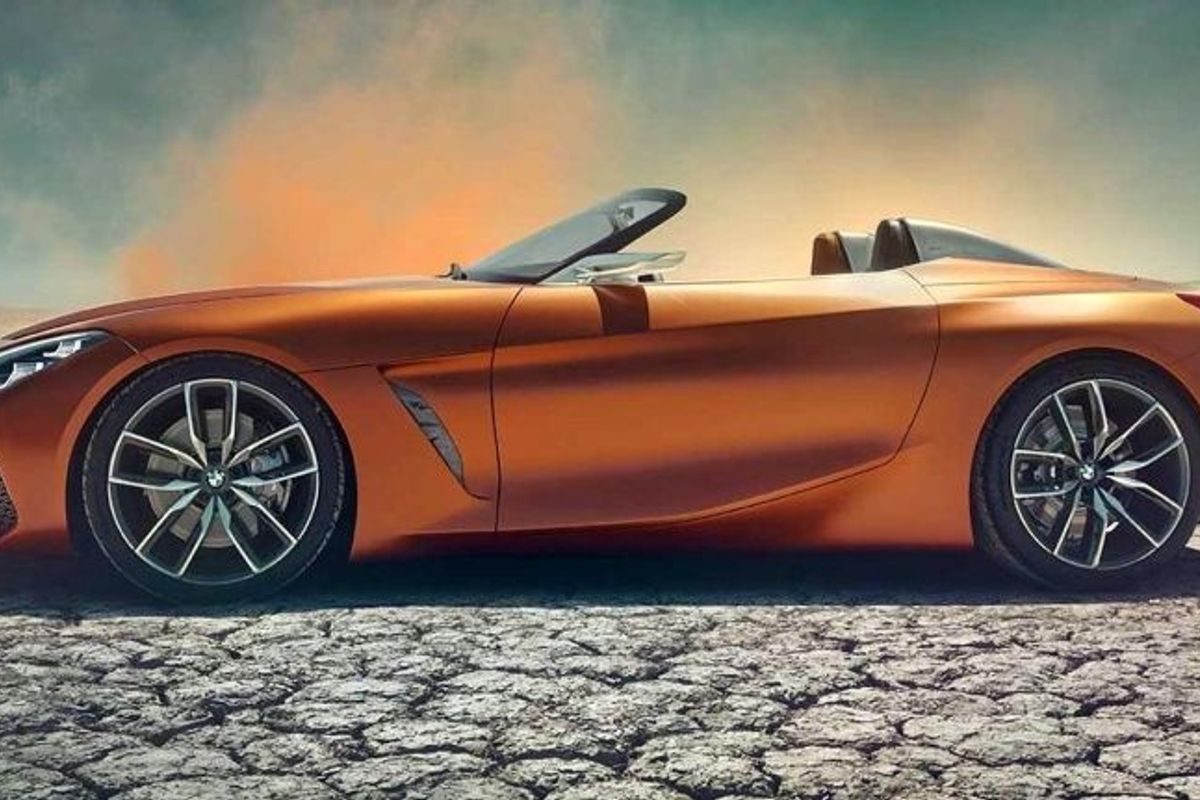
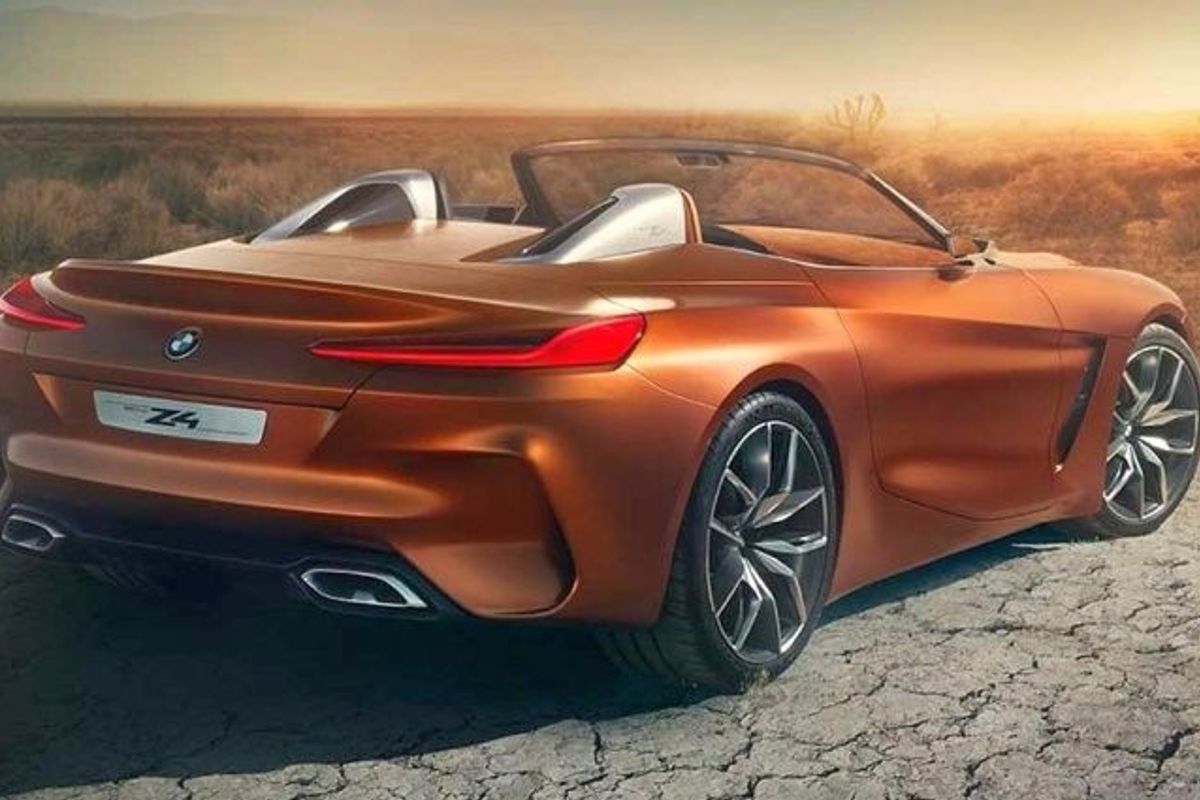
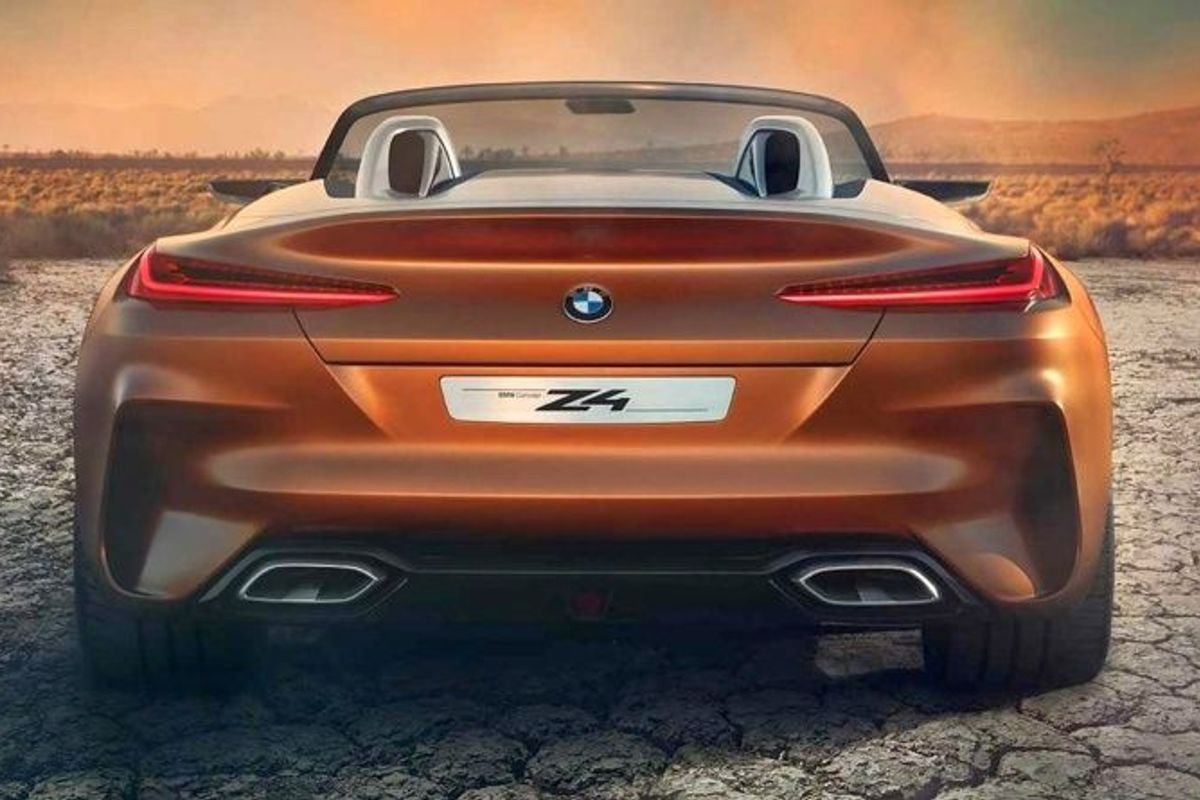
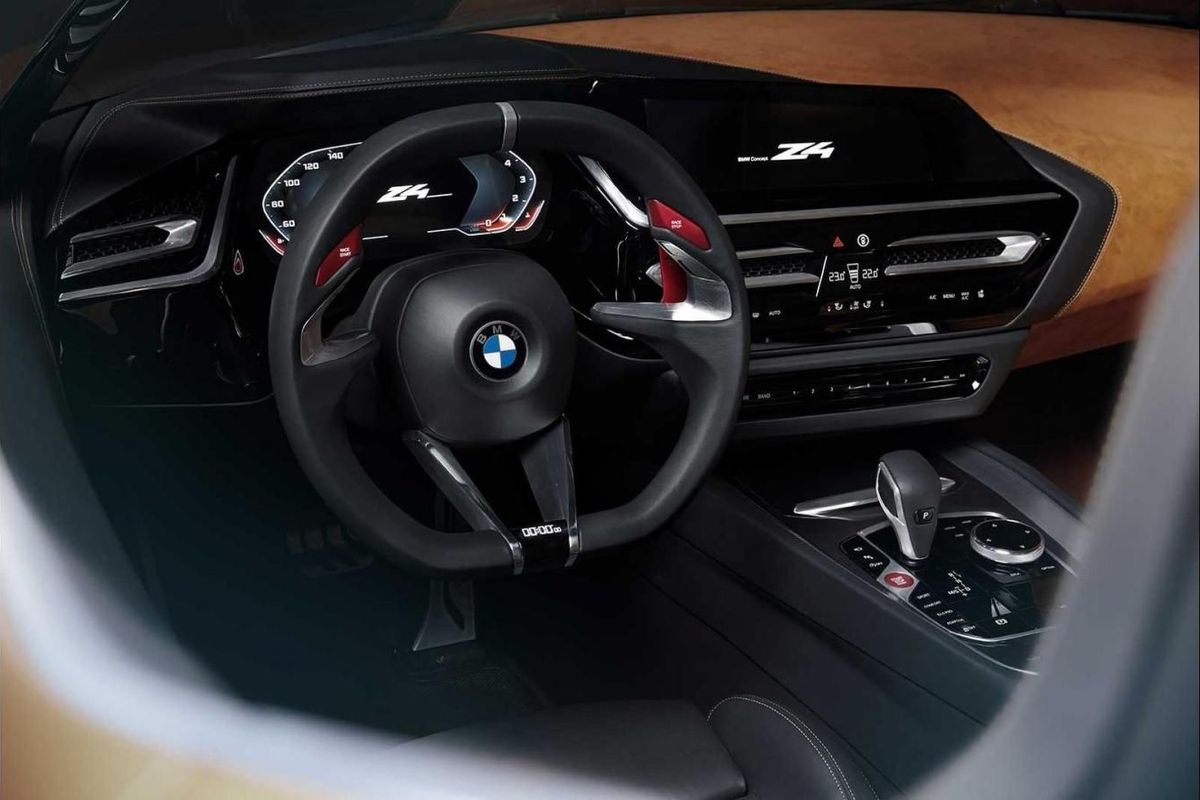
BMW has unveiled the concept for its next-generation Z4 roadster at the Pebble Beach Concourse d’Elegance.
Although the successor to the E89-generation BMW Z4 was been spied undergoing testing on a number of occasions in the past 12 months, technical details regarding the new roadster are scant. The Z4 and forthcoming Toyota Supra are the result of a collaboration (announced in 2012) between BMW and Toyota to each co-develop and build a new mid-size sportscar on the same platform.
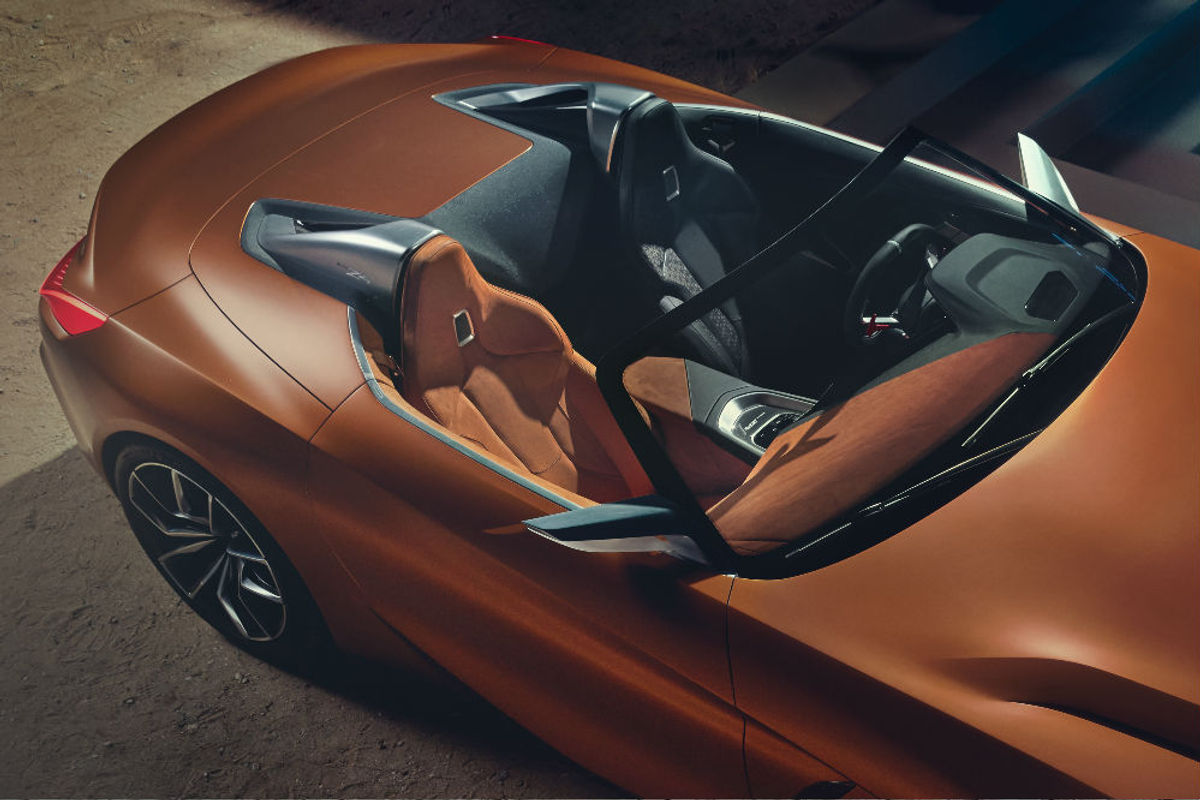
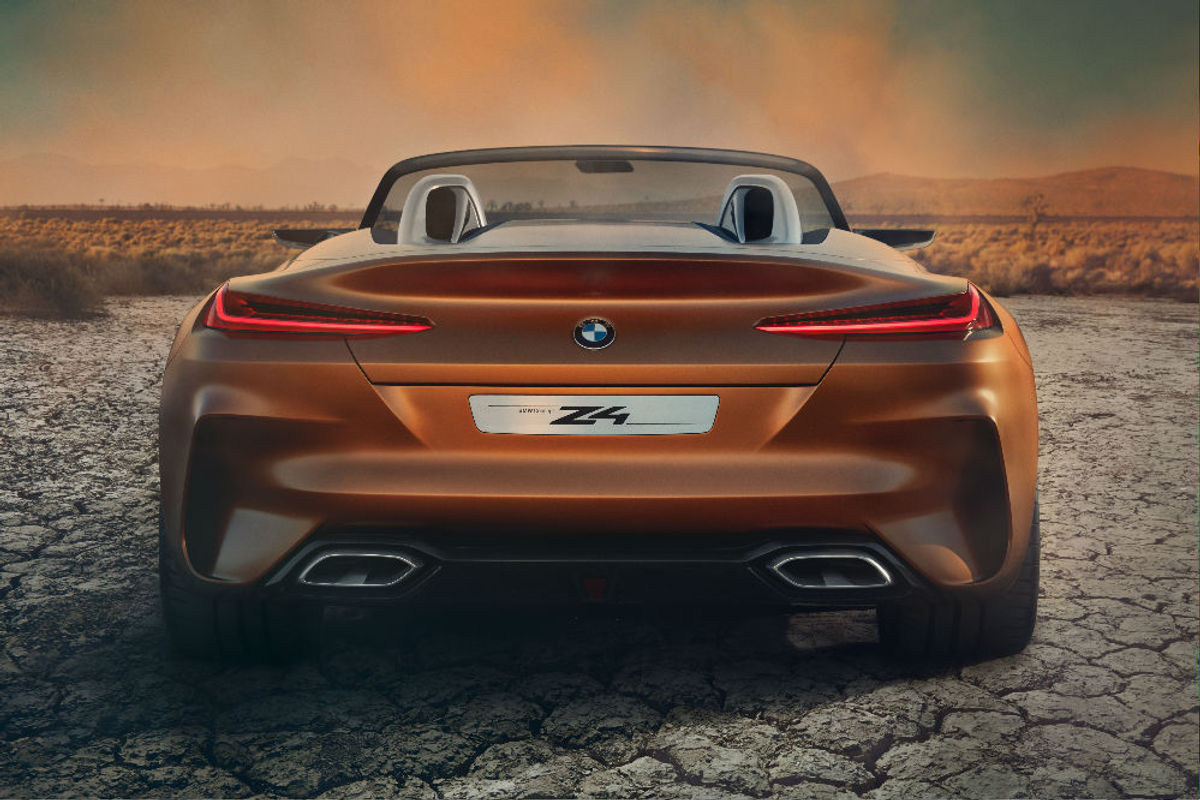
BMW appears to have reverted to classic low-slung roadster styling (and a soft top configuration) with the newcomer, which sports, a long bonnet, acutely-angled windscreen, flared wheel arches, a pronounced rear spoiler and slim taillights. The new model also features slim side mirrors and a muscular rear end with large alloy wheels filling the wheel arches. The rollover hoops behind the headrests add a stylish touch to the overall design.
BMW's Senior Vice President of Design, Adrian van Hooydonk, commented: "The concept expresses the new BMW design language from all perspectives and in all details. From the dynamic-looking front to the striking flanks to the clean-cut tail end: a few lines and the subtle interplay between surfaces are enough to generate a sense of power and emotion."
In terms of engine power, the Z4 is likely to employ a 2.0-litre 4-cylinder and 3.0-litre, 6-cylinder turbopetrol engines. Exact details have yet to be confirmed. We will keep you updated as soon as more information becomes available, but for now, enjoy the gallery.
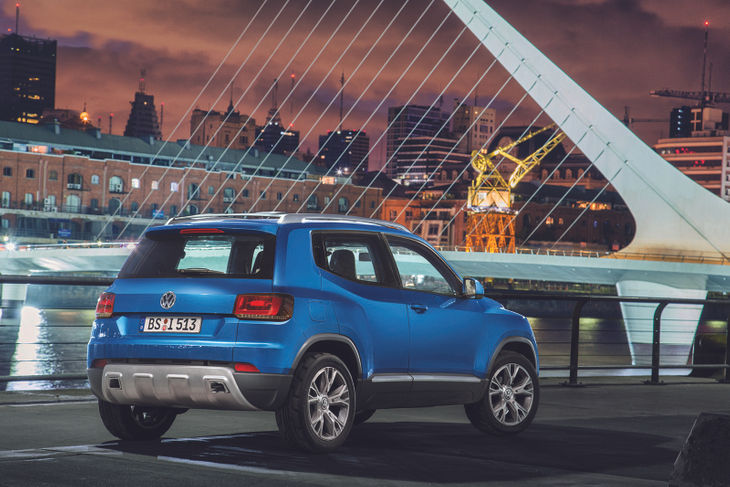
Reports are indicating that Volkswagen will put the 2012 Up!-based Taigun SUV into production. The new small SUV is expected to go on sale at the end of the decade (2020) and will likely be called the T-Track.
Back in 2012, Volkswagen showcased a Taigun SUV design study at the Sao Paulo Motor Show and now reports are suggesting that the Up!-based SUV will go into production carrying the T-Track moniker. The T-Track will join new SUV models such as the forthcoming Golf-based T-Roc SUV and the Polo-based T-Cross.
The model is destined for the Brazilian market to rival the likes of the Dacia Duster and Ford Ecosport. It’s unclear at this stage whether the T-Track will be offered in other markets or if it will make it to South African shores.
The Volkswagen T-Track is a small Up!-based SUV that will share design cues from the 2012 Taigun concept.
The delayed decision to produce the T-Track is because it’s expensive to produce as the model doesn’t share many parts with other vehicles in Volkswagen’s stable.
To give you an idea of the T-Track’s likely dimensions, the Taigun SUV concept measures 3 859 mm long, 1 728 mm wide and 1 570 mm in height with a wheelbase of 2 470 mm. The concept is some 50 mm longer than the Up! City on which it is based.
The Taigun concept has seating for 4 people and the luggage bay offers 280 litres of space, expanding to 987 litres with the rear seats folded down.
As an SUV that will primarily be used in the city, the Volkswagen T-Track will likely be powered by a small-capacity, turbocharged 1.0-litre engine with power being sent to the front wheels.
We will keep you updated as more details become available.
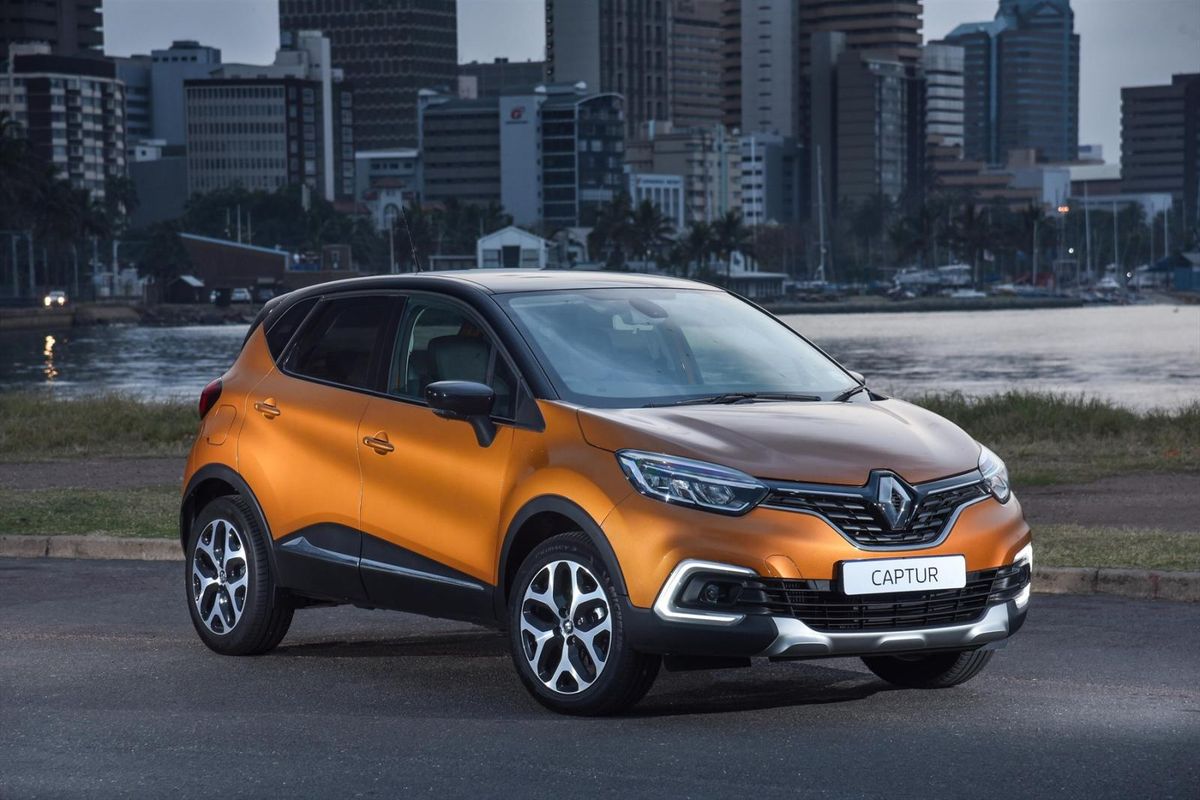
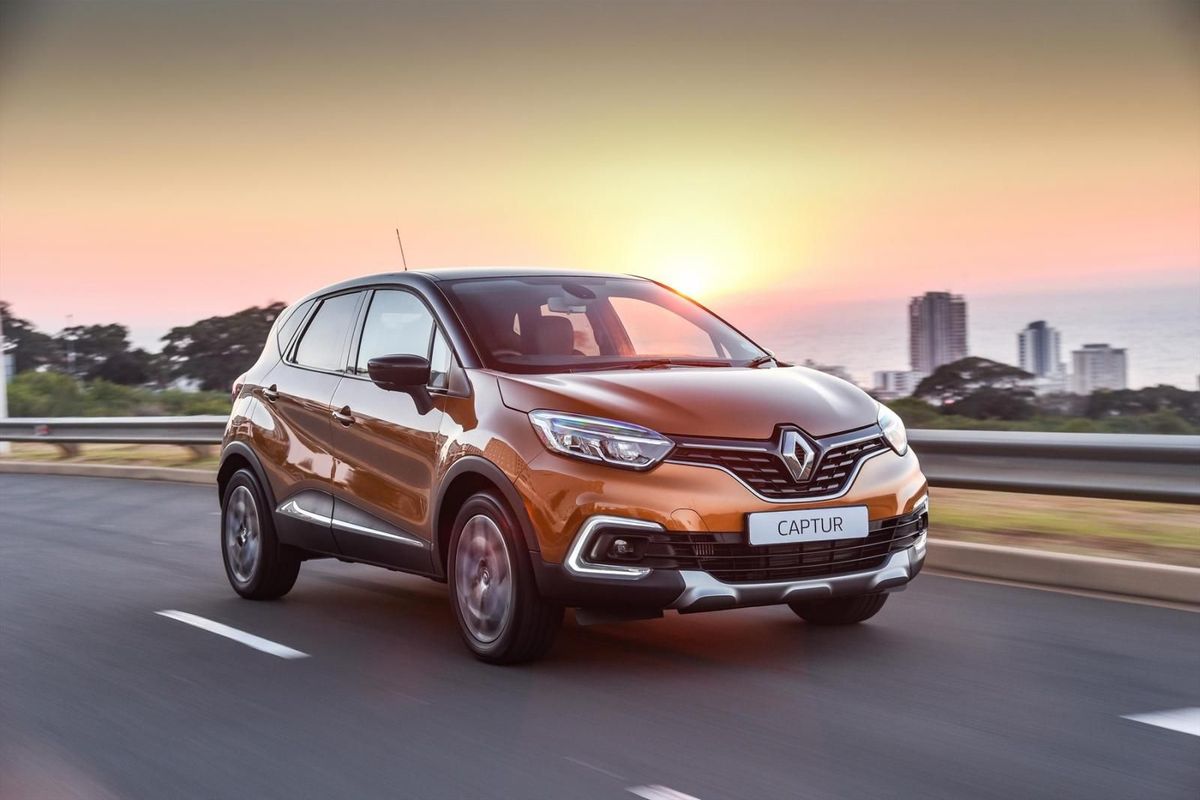
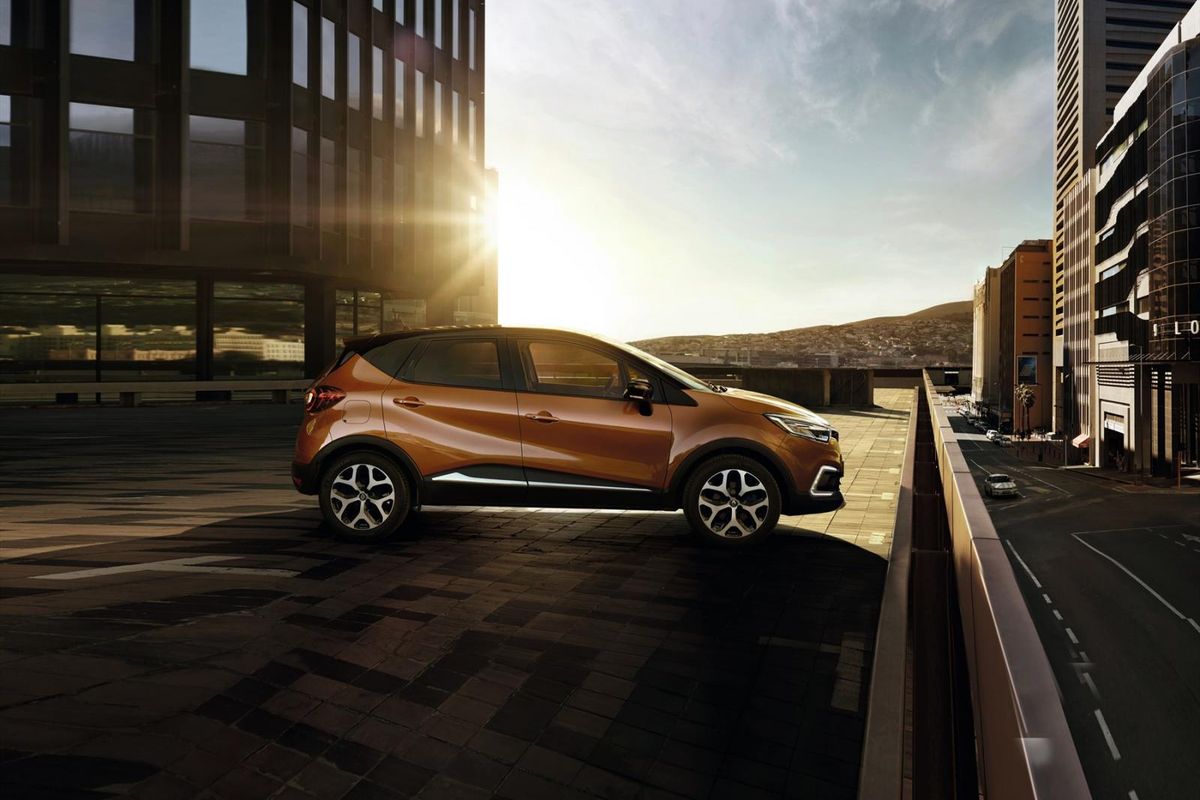
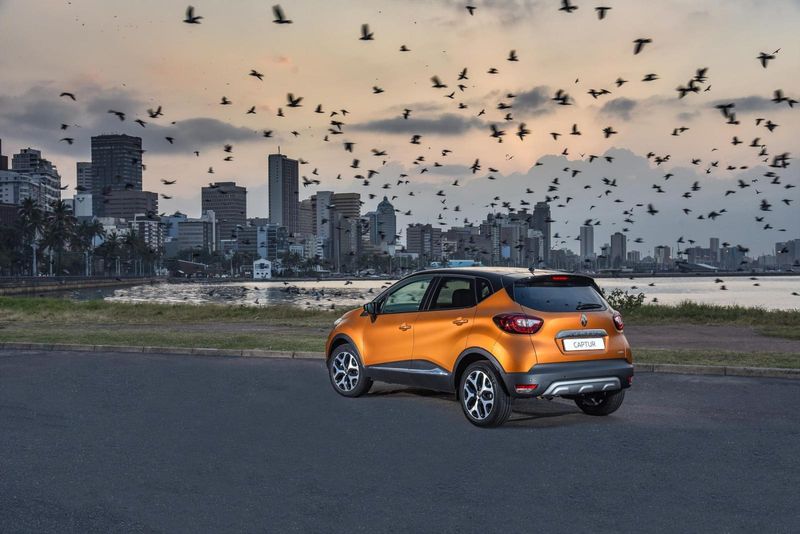
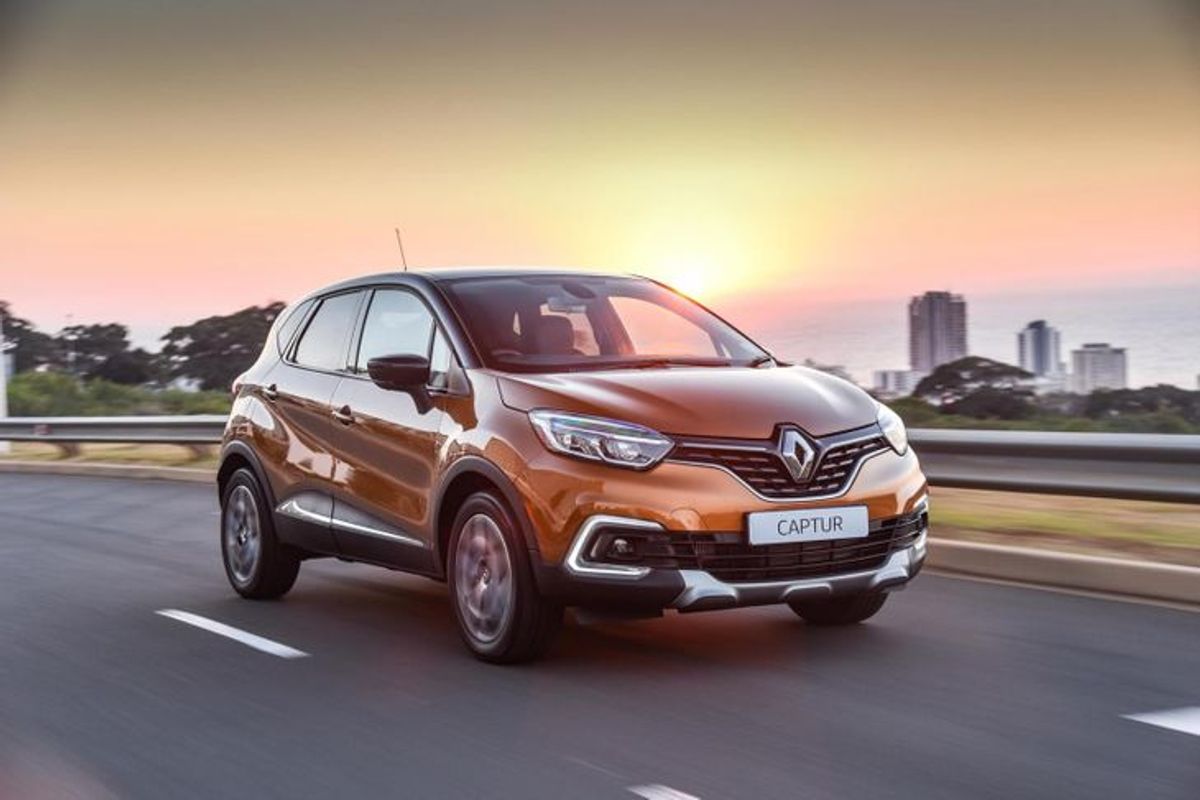
Renault has launched the facelifted Captur compact crossover in South Africa! Take a look at specification and pricing for the updated Captur range below…
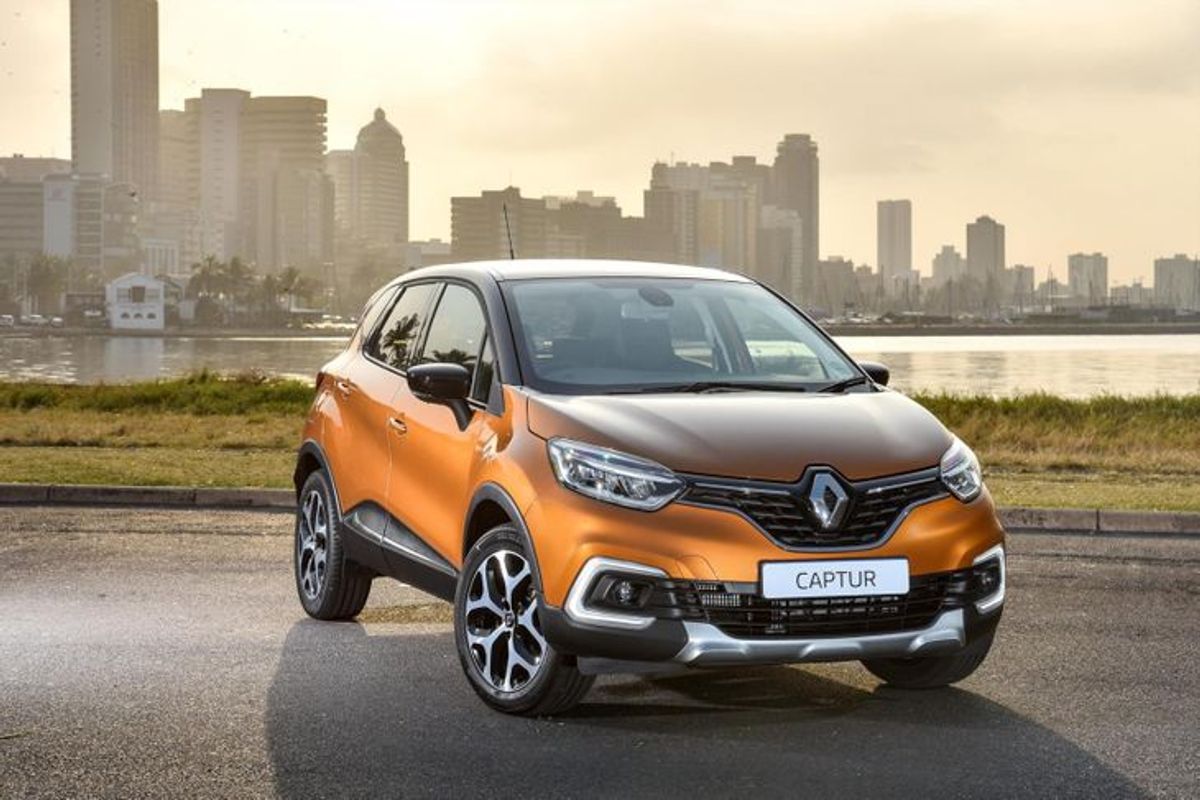
The Renault Captur is a popular model in South Africa and since its local introduction has sold over 6 500 units. Now, the facelifted Captur has arrived to ensure its continued success on the local market.
What’s changed?
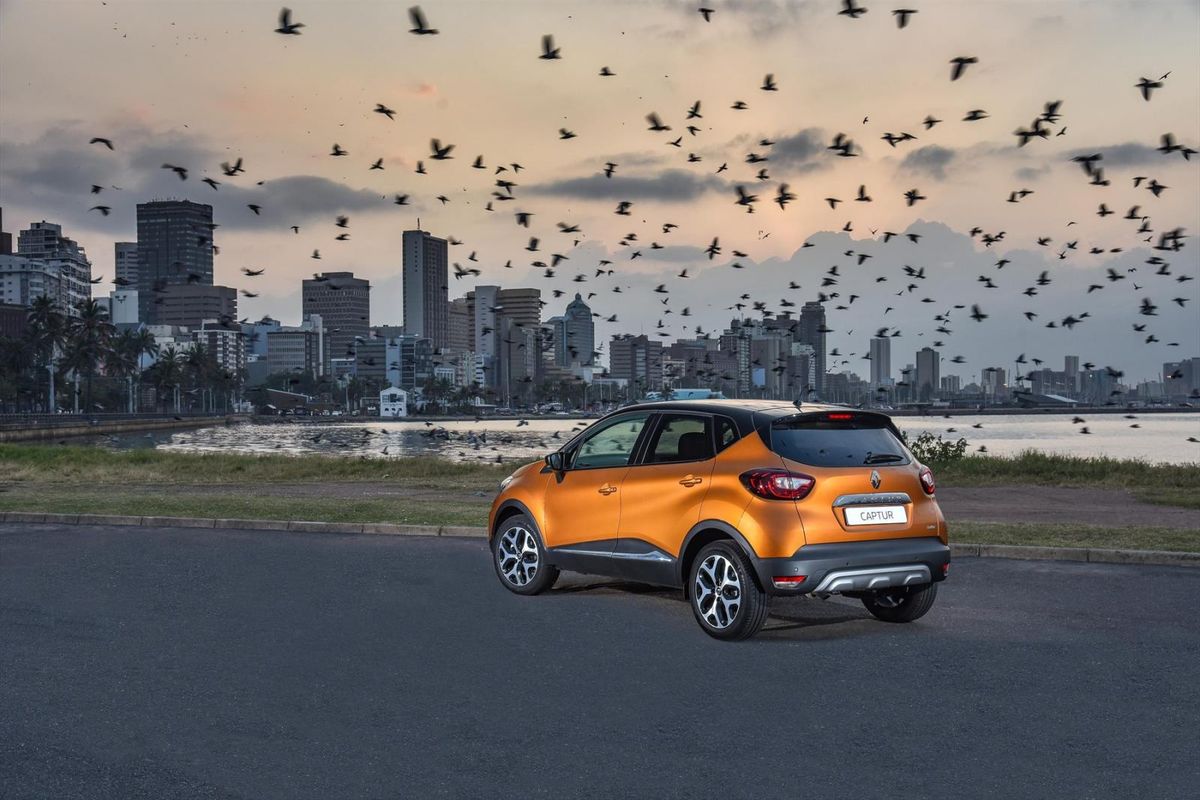
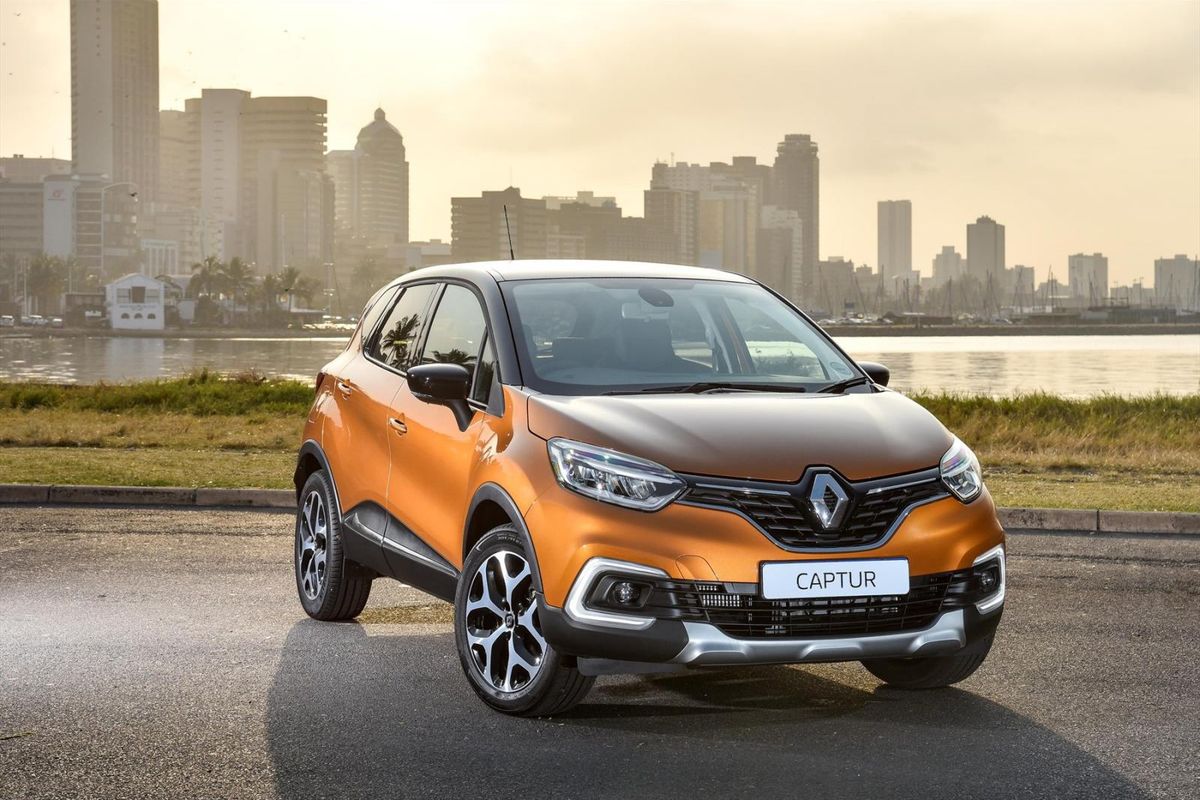
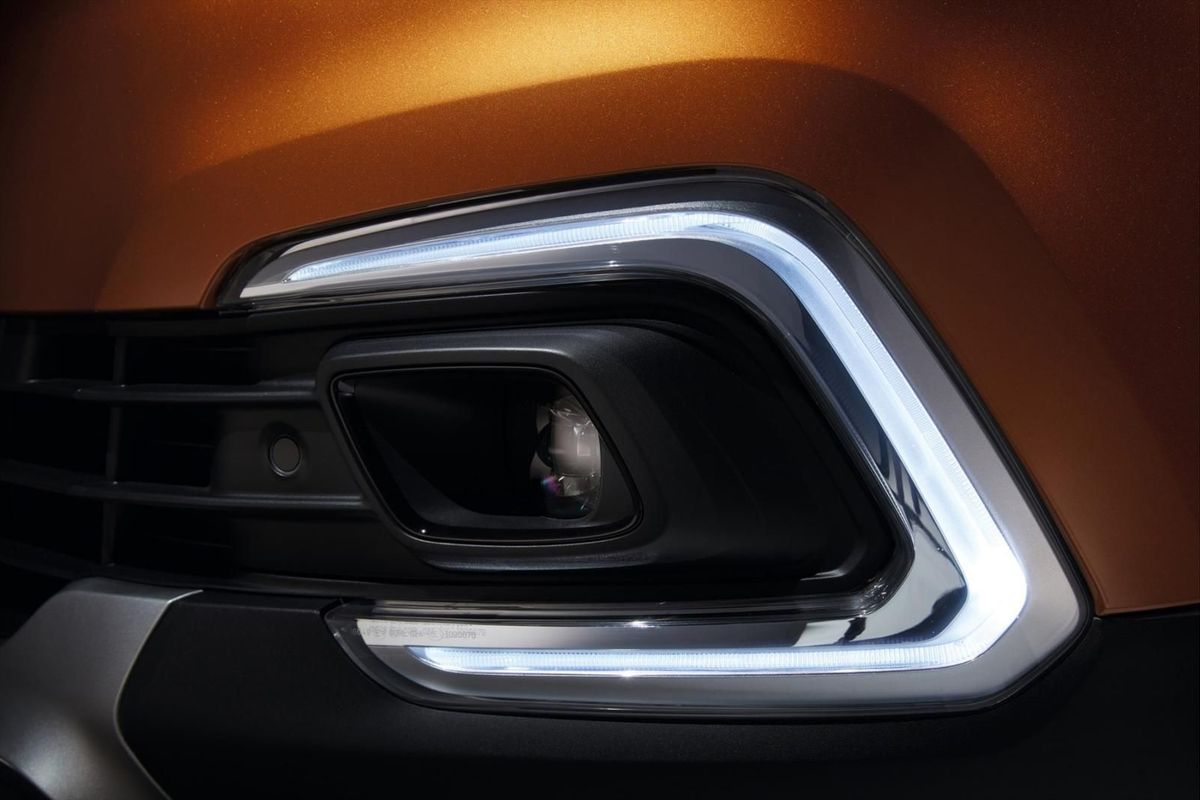
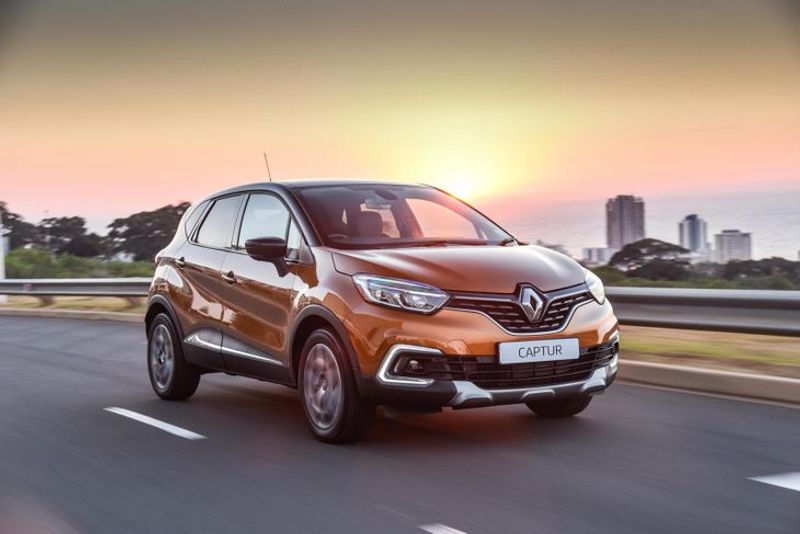
In terms of styling, the facelifted Captur wears a redesigned upper grille with chrome edging and its front-end look is complemented with LED headlights and C-shaped daytime running lights. The front and rear bumpers also feature new skid plates. The Captur is now offered with new exterior colour choices as well as new 17-inch Black & Chrome alloy wheels. Dynamique derivatives are offered with 2-tone paintwork as standard.
The Captur range welcomes a more affordable Blaze derivative to the range, replacing the outgoing Expression derivative.
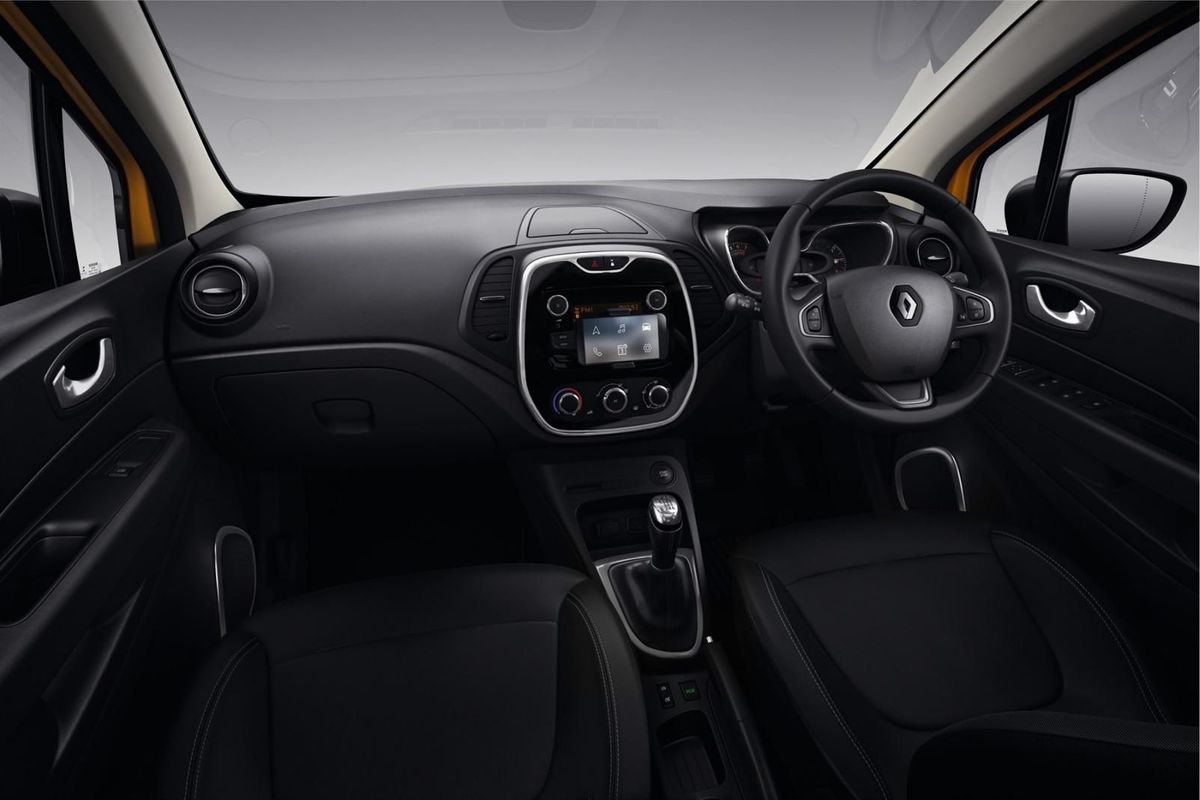
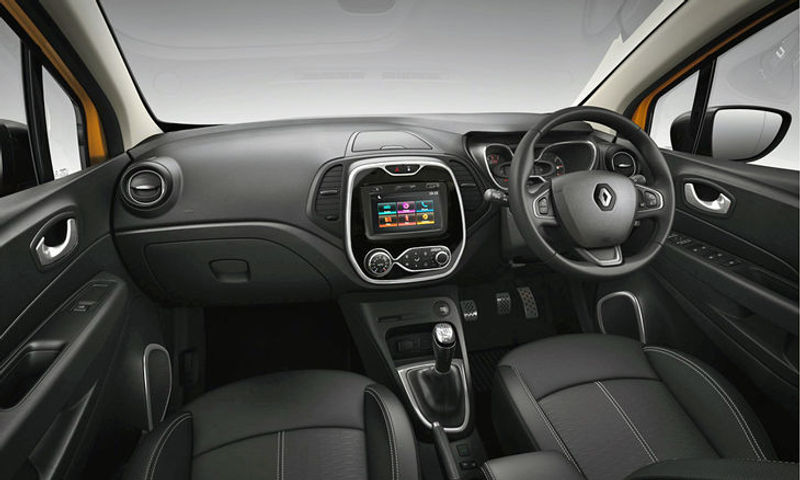
On the inside, the Captur features a new leather steering wheel and the seats have been redesigned to offer higher levels of comfort. Heated leather seats are offered as an option on Dynamique derivatives.
Other notable improvements include satin chrome trim, a new continuous-shaped soft-touch dashboard, newly designed gear lever and multi-purpose storage solutions including a new central armrest with a useful storage section offered on Dynamique derivatives.
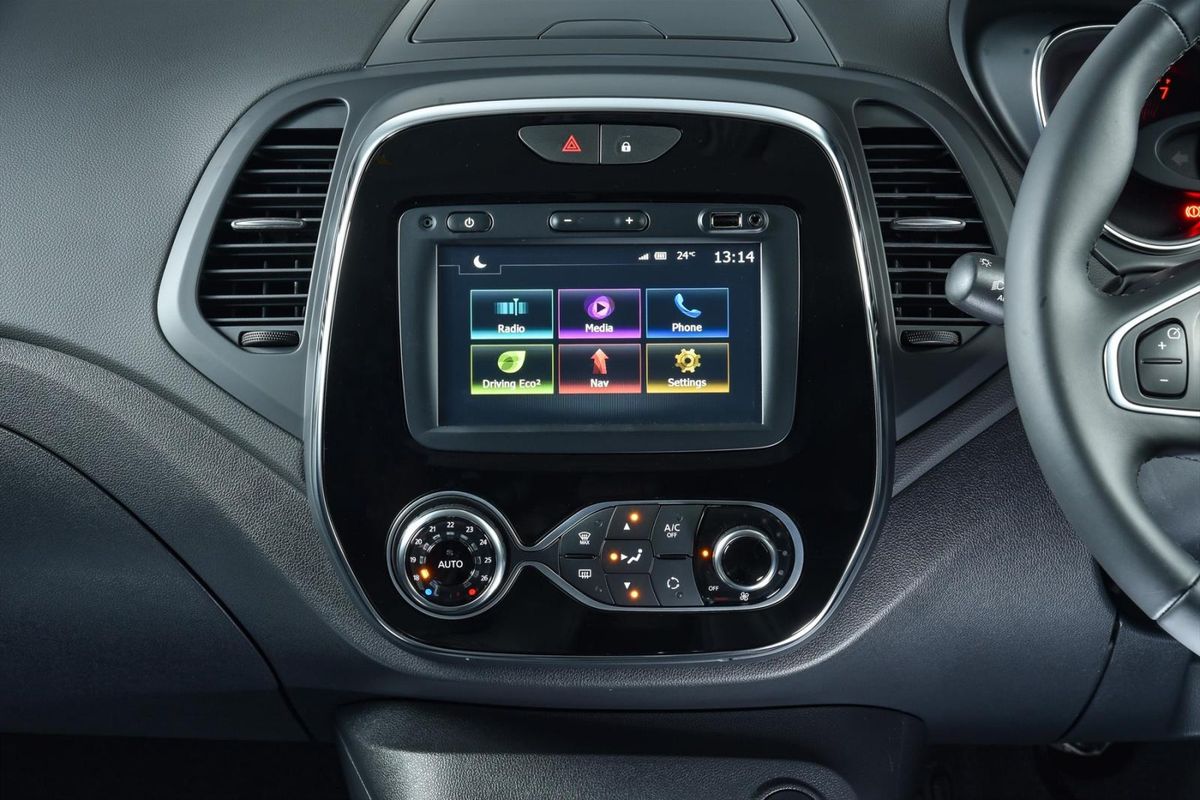
Key features include a Renault MediaNav touchscreen with Bluetooth, hill start assist, keyless entry, front and rear electric windows, rear parking sensors, automatic headlights and windscreen wipers, cornering headlights, cruise control and fingertip controls located behind the steering wheel.
The facelifted Captur features a mildly revised interior but Renault's MediaNav infotainment system is still a highlight.
The new entry-level Captur Blaze derivative is equipped with the R&Go application which is a multi-function smartphone/tablet application connected through the radio via Bluetooth. It enables remote control of the radio with a smartphone offering an extended dashboard display on the screen and comes with a cradle to ensure comfortable use. The R&Go application offers functionality including multimedia, phone, vehicle and navigation.
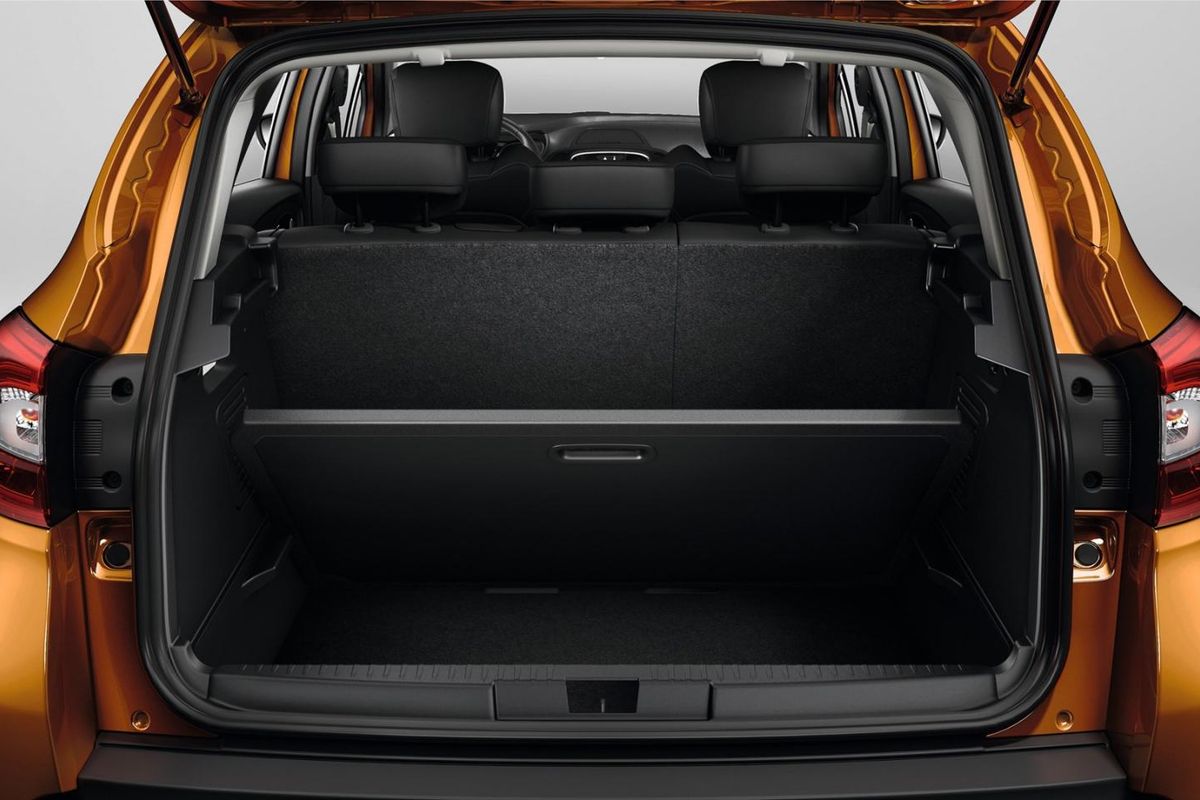
In terms of practicality, the Captur offers 377 litres, or 455 litres with the rear seats pushed all the way forward. With the rear seats folded flat, space increases to 1 235 litres. The rear seats are split into 3 sections, making the Captur quite flexible depending on your luggage needs. The Captur also features a reversible, 2-position boot floor, allowing you to store items out of sight.
Engine choice
The Renault Captur is offered with 3 engine choices. The Captur range kicks off with the 3-cylinder, 0.9-litre turbopetrol engine offering 66 kW and 135 Nm of torque. Renault claims 5.4 L/100km for this engine.
A 1.2-litre turbopetrol engine is also available with 88 kW and 190 Nm of torque. This engine is now offered with either a 6-speed manual or 6-speed automatic EDC transmission. Fuel consumption is claimed at 5.4 L/100km.
Lastly, a 1.5-litre turbodiesel engine with 66 kW and 220 Nm of torque round off the engine offering with a claimed fuel consumption figure of 3.6 L/100km.
In terms of safety, the Captur is fitted with 4 airbags, ABS with EBD, Electronic Stability Program (ESP) and Hill Start Assist (HSA). ISOFIX child seat mounts are standard.
Renault Captur – Price in South Africa
Renault Captur 66kW Blaze – R229 900
Renault Captur 66kW Dynamique – R269 900
Renault Captur 1.5 dCi Dynamique – R294 900
Renault Captur 88kW Dynamique – R294 900
Renault Captur 88kW EDC Dynamique – R309 900
The Renault Captur is sold with a 5-year/150 000km mechanical warranty, 3-year/45 000km service plan and 6-year anti-corrosion warranty.