The Automobile Association (AA) has said that petrol prices will be coming down at the end of June 2017.
According to the AA, our currency has remained mostly stable for the past month, while international petrol prices have carried on declining. This means that the South African petrol price will be coming down.
Petrol is set to drop by up to 69 cents a litre, diesel by 62 cents, and illumination paraffin by 58 cents.
"The drop in paraffin prices will be particularly beneficial to citizens who rely on this fuel for lighting, cooking, and especially heating, in the winter months," says the Association. "As ever, even medium-term predictions of the fuel price remain difficult in the current environment of political instability and weak economic conditions. We advise all fuel users to create space in their budgets for price increases if the picture should deteriorate further," the AA concludes.
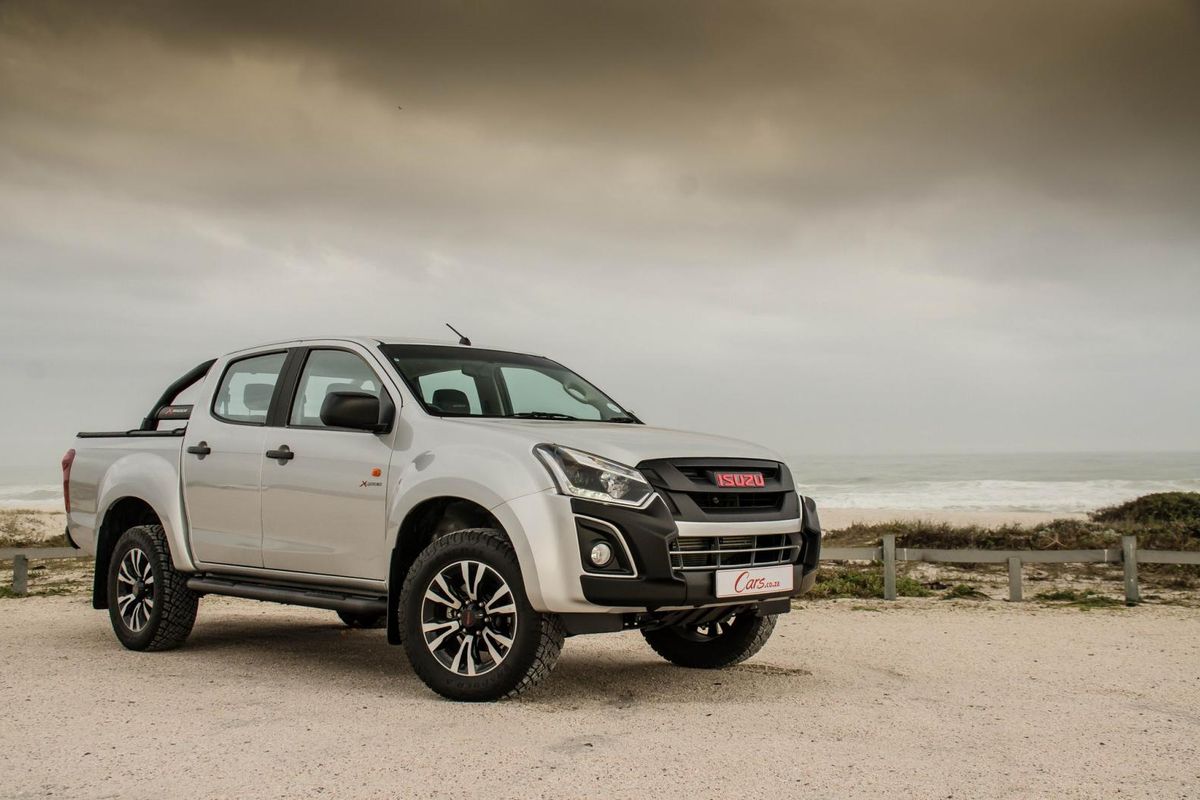
The Isuzu KB X-Rider was initially offered as a limited edition model but after experiencing sales success in the local market, this spruced-up double cab is now a permanent fixture in the KB lineup. Should you consider the KB X-Rider? This quick review will help you decide.
We Like: Styling, ruggedness, power delivery
We Don’t Like: Dated radio system, unrefined engine, no PDC
Alternatives
For more power: Consider the Ford Ranger 2.2 Double Cab Hi-Rider XL, priced from R394 900. This derivative offers 118 kW and, perhaps more importantly, 385 Nm of torque from its 2.2-litre turbodiesel engine. The Ranger offers fewer standard features than the X-Rider, but is arguably more refined. Perceived interior build quality is better too.
For similar value: Consider the Fiat Fullback 2.5 Double Cab SX priced at R402 900. Its 2.5-litre turbodiesel engine offers similar outputs compared with the KB X-Rider with 100 kW and 324 Nm of torque. Standard feature specification is basic, but added comfort features include cruise control and a heated driver's seat.
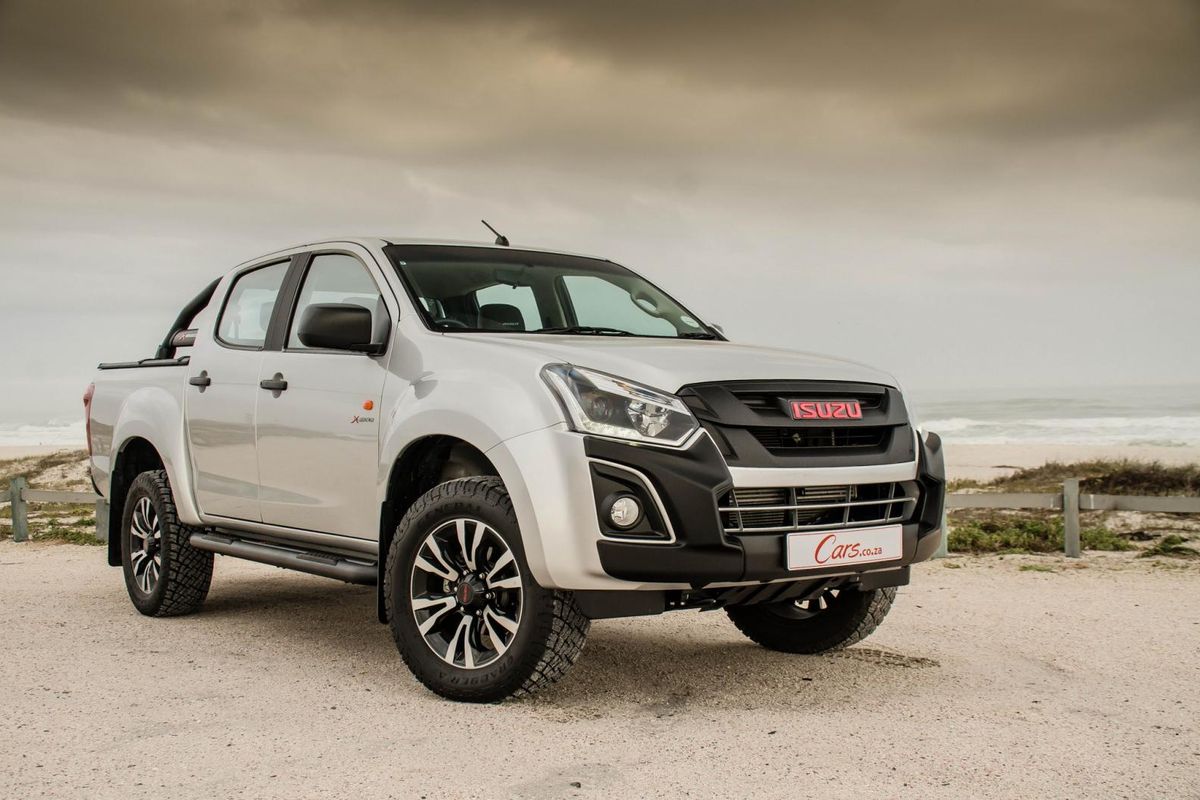
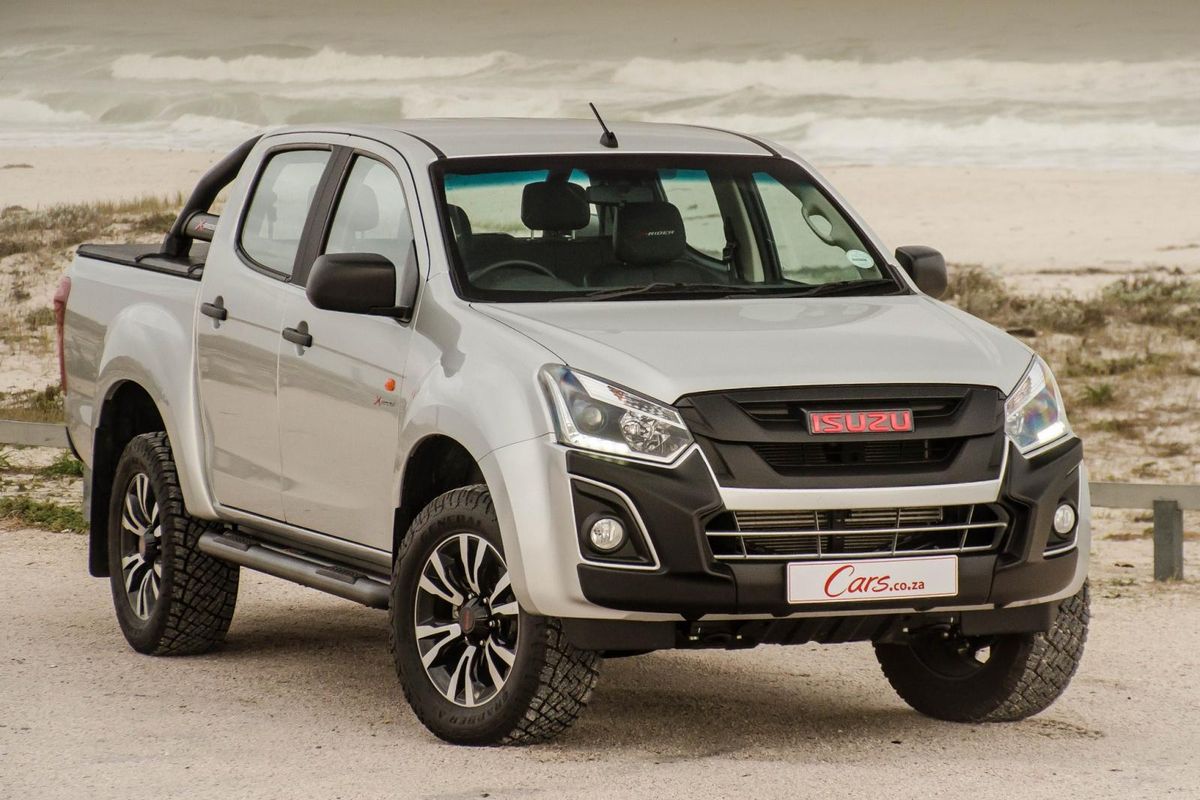
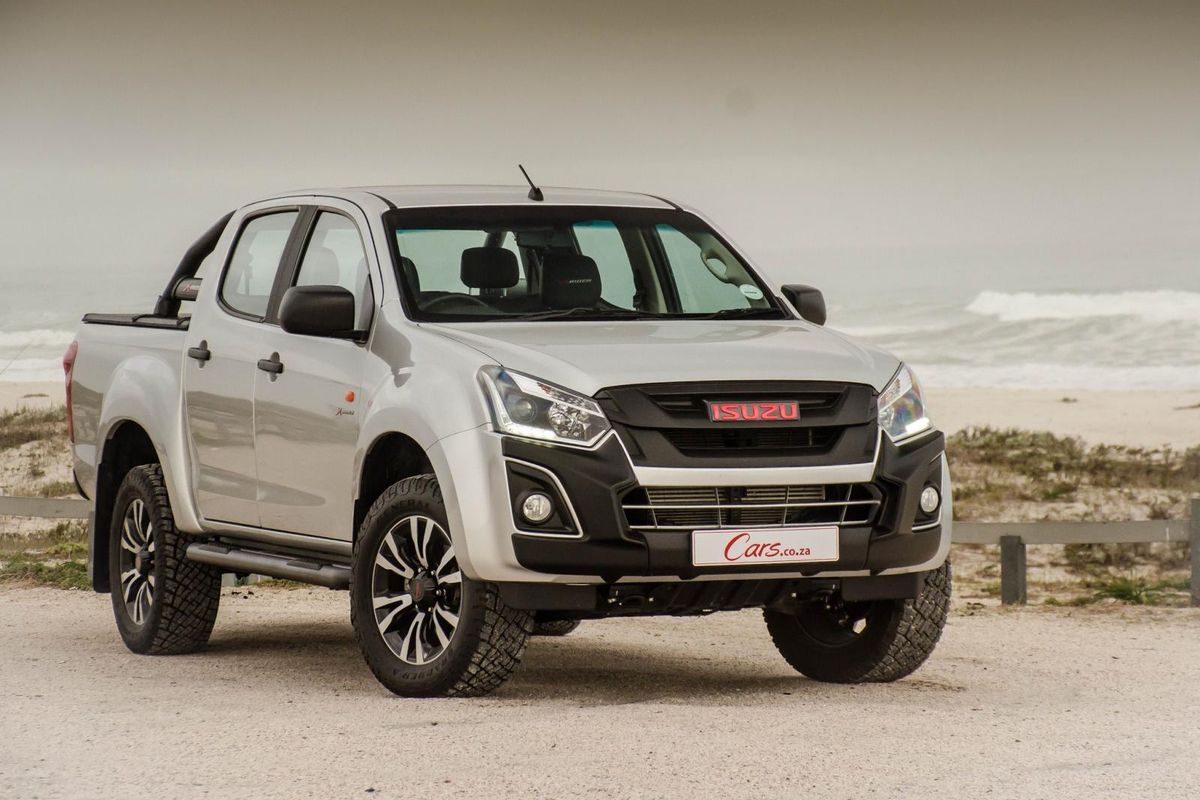
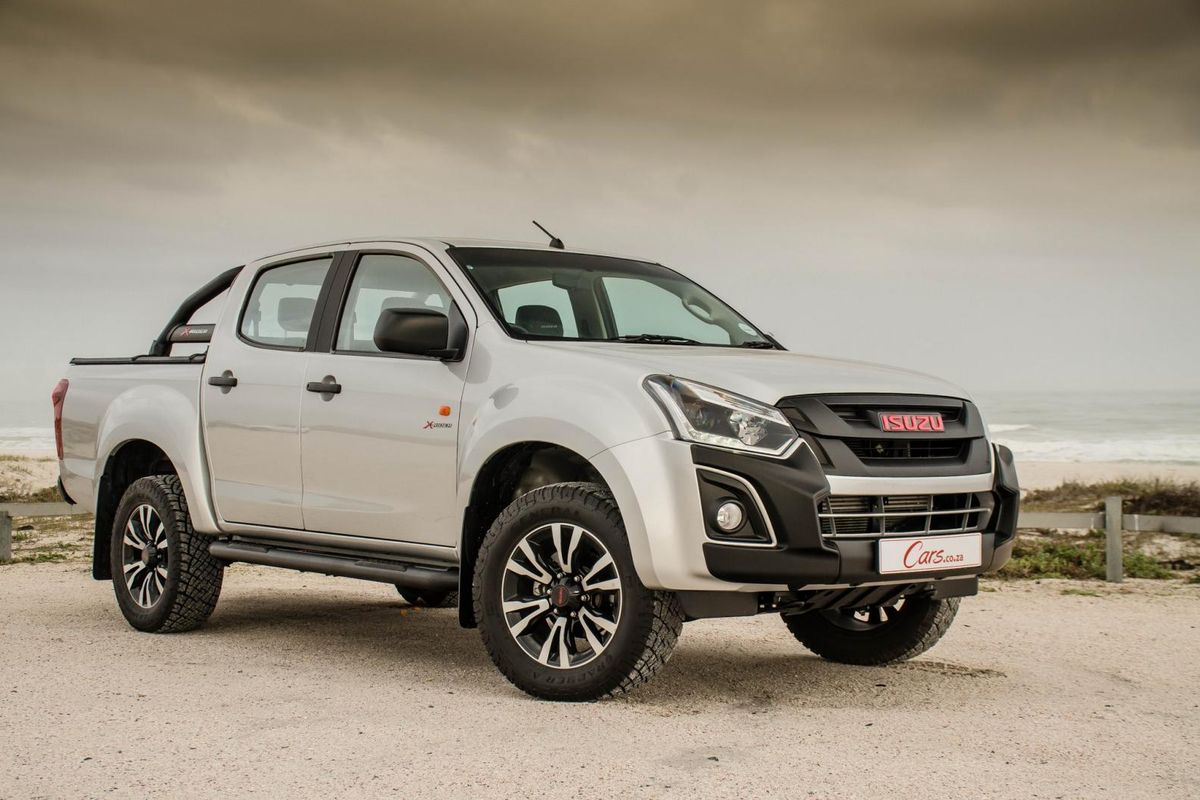
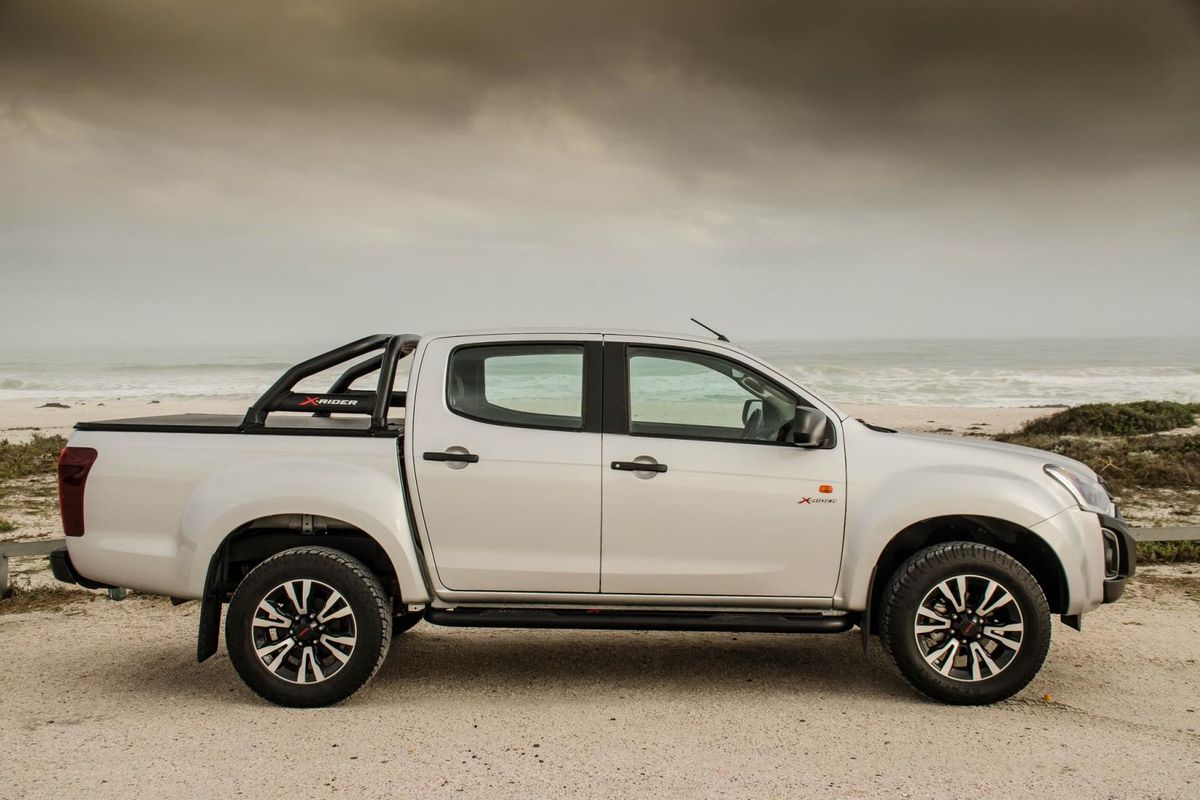
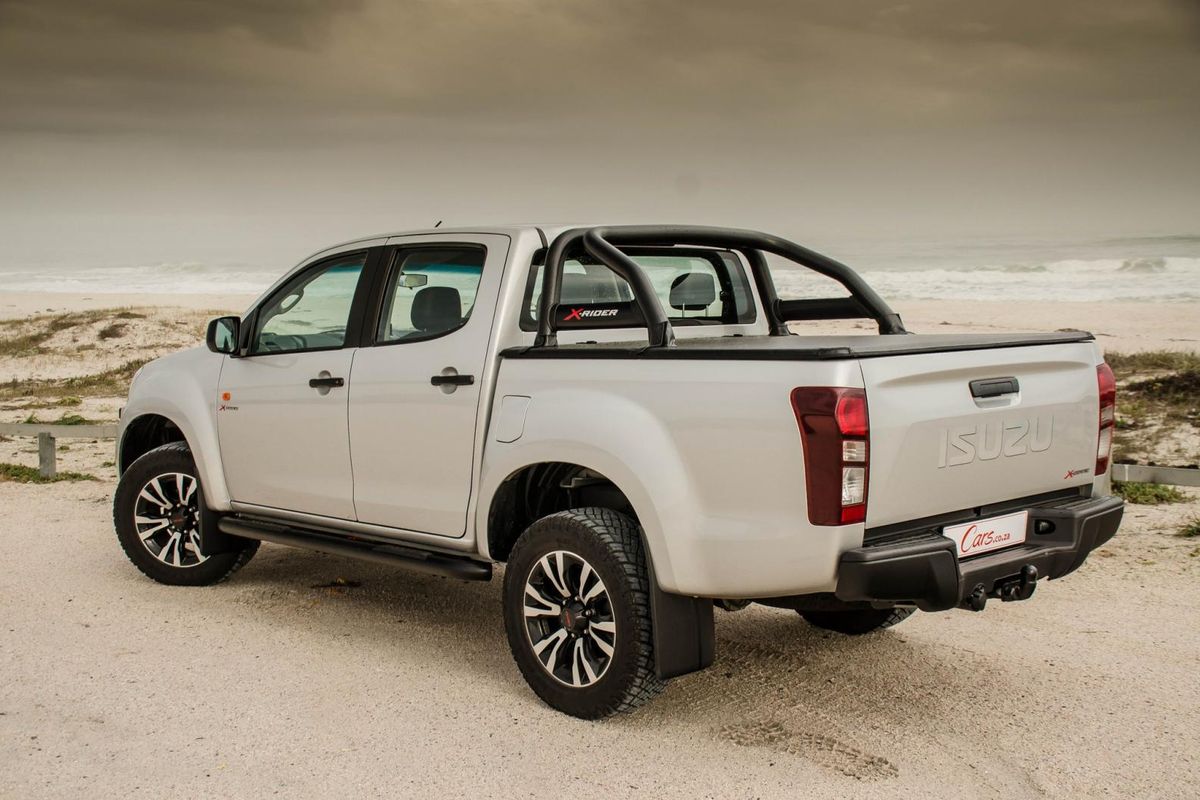
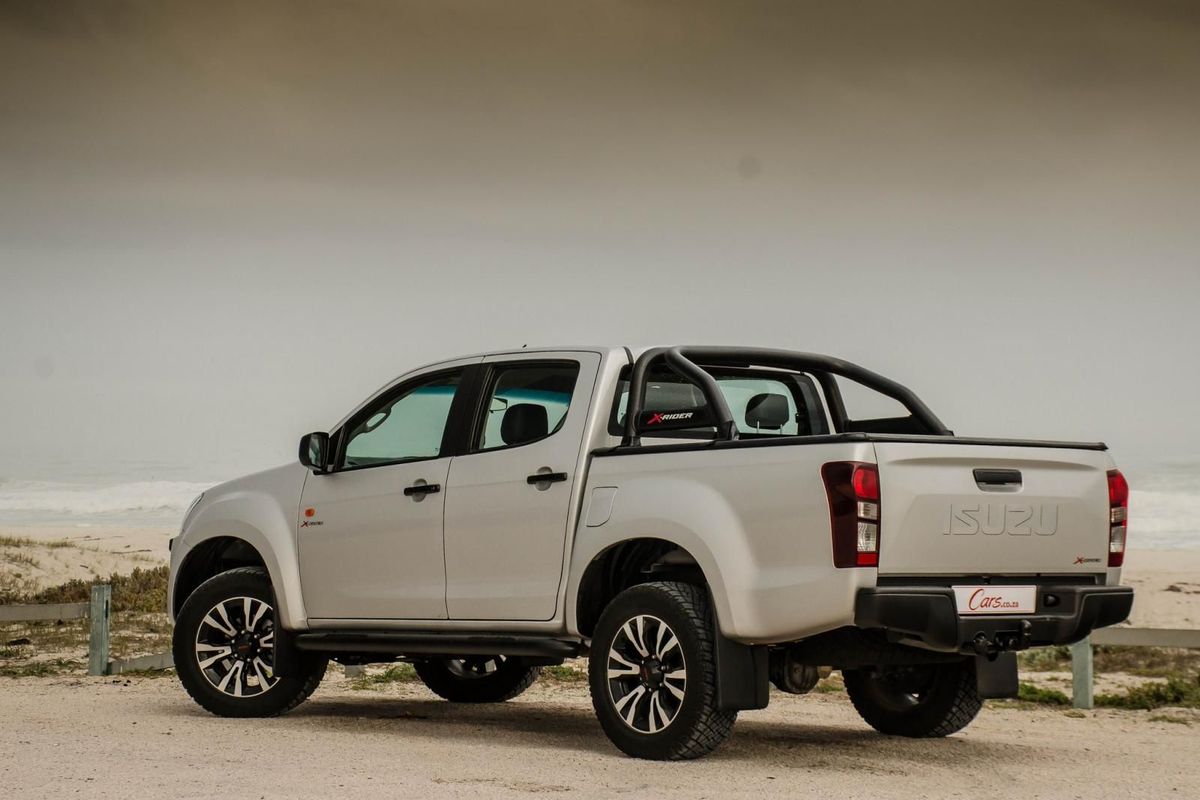
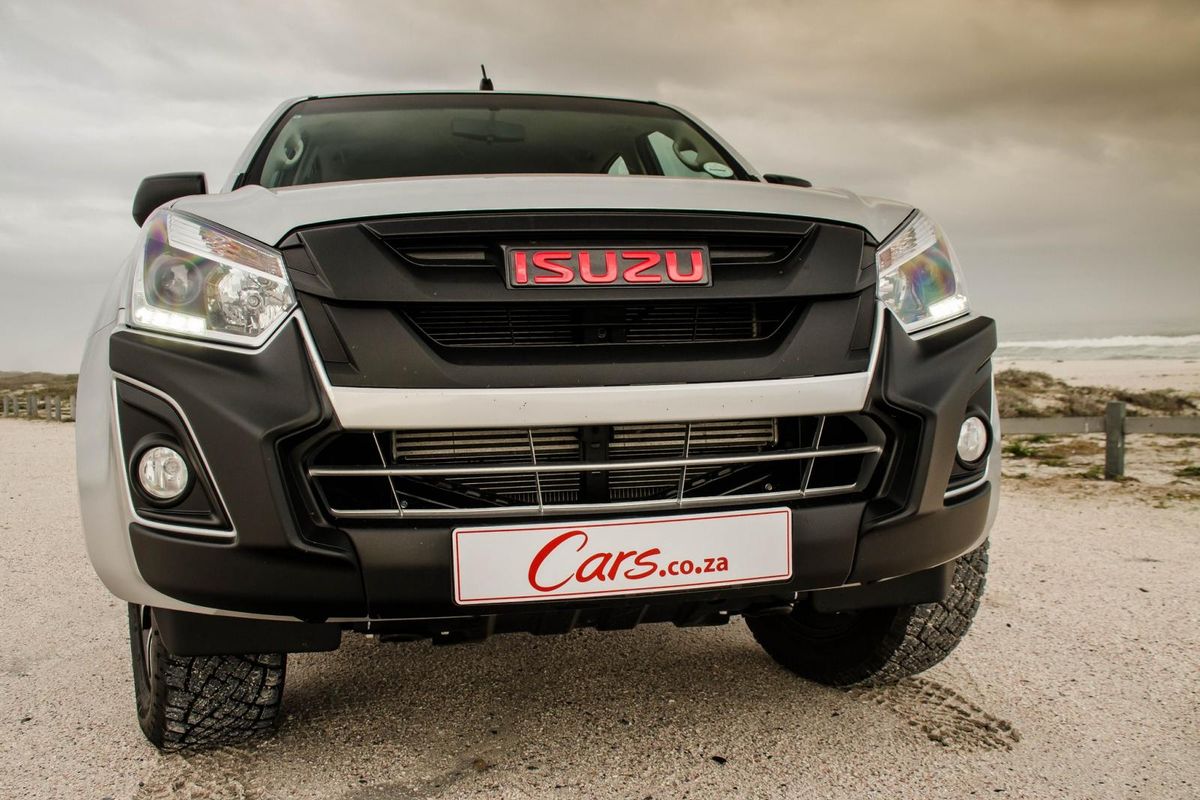
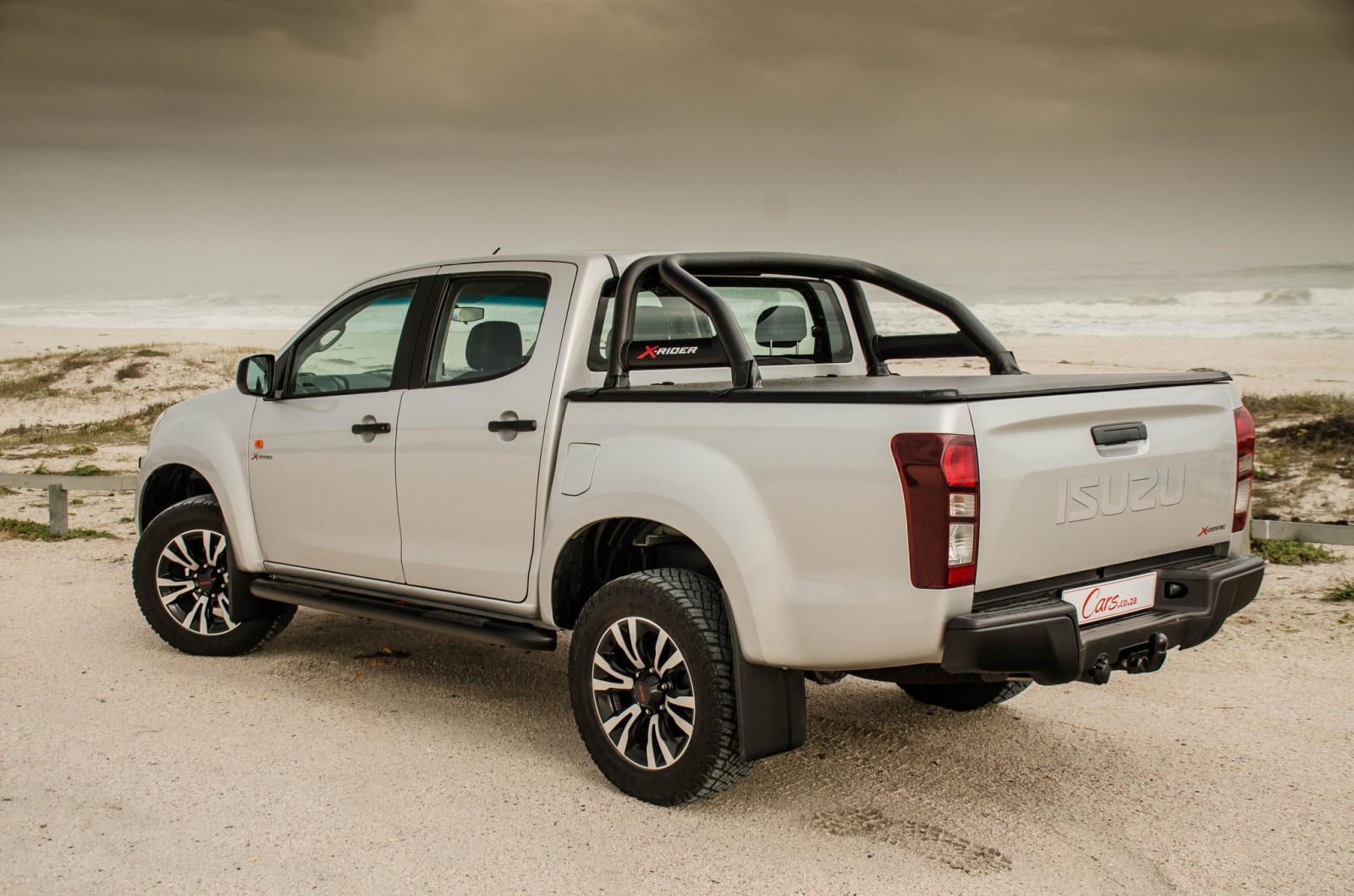
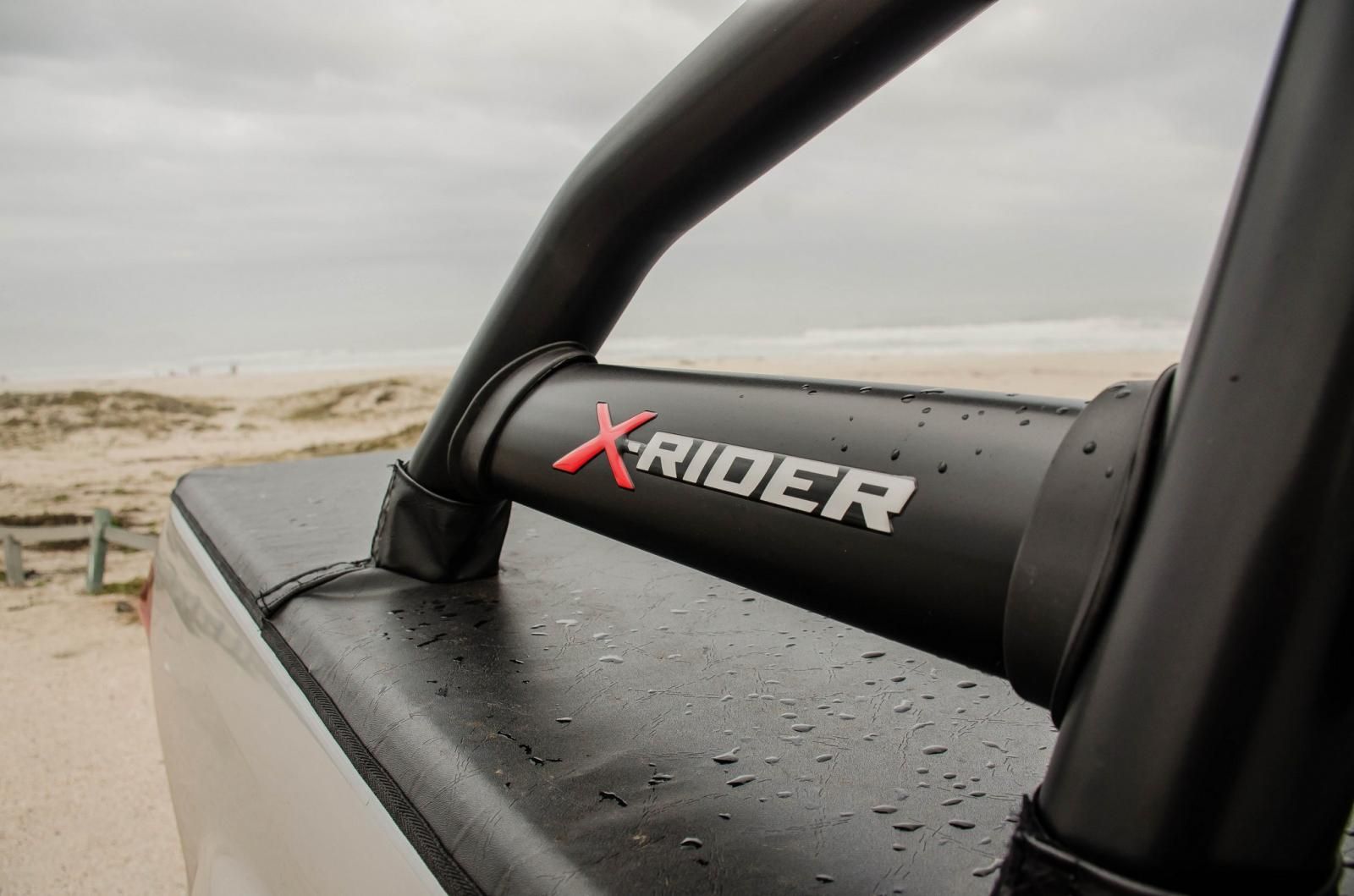
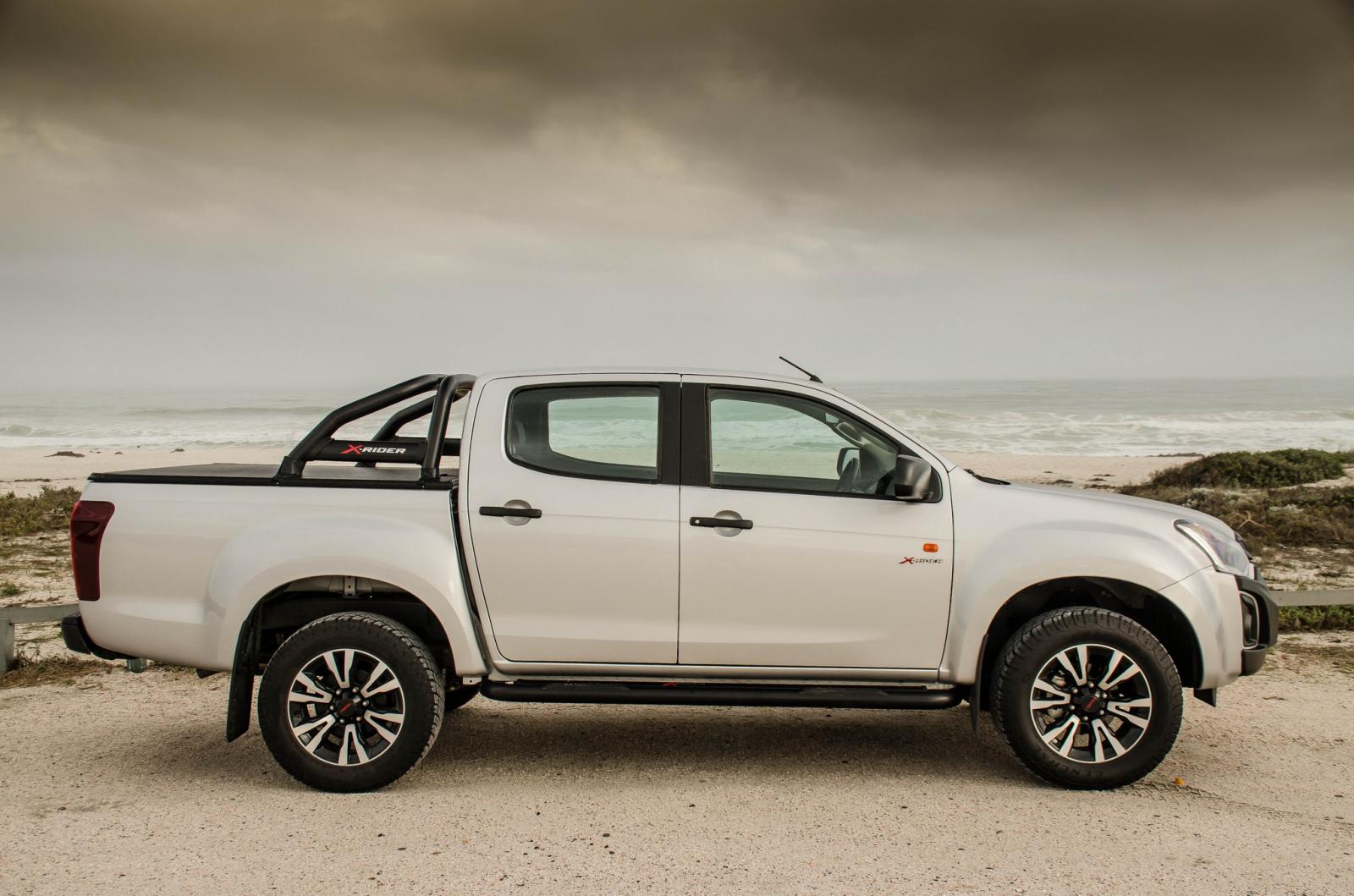
The visually enhanced KB X-Rider is fitted with a sports bar, 18-inch diamond-cut alloy wheels and side steps for added road presence.
The KB X-Rider is based on Isuzu’s entry-level KB 250 Hi-Rider Double Cab derivative, but is differentiated by a number of exterior visual enhancements and interior appointments that will appeal to the image-conscious bakkie buyer looking for an affordable, dual-purpose double cab. Combining attractive pricing with bold looks, while doubling up as a workhorse when it’s required, is the X-Rider worth considering? Let’s find out…
The good
Striking looks
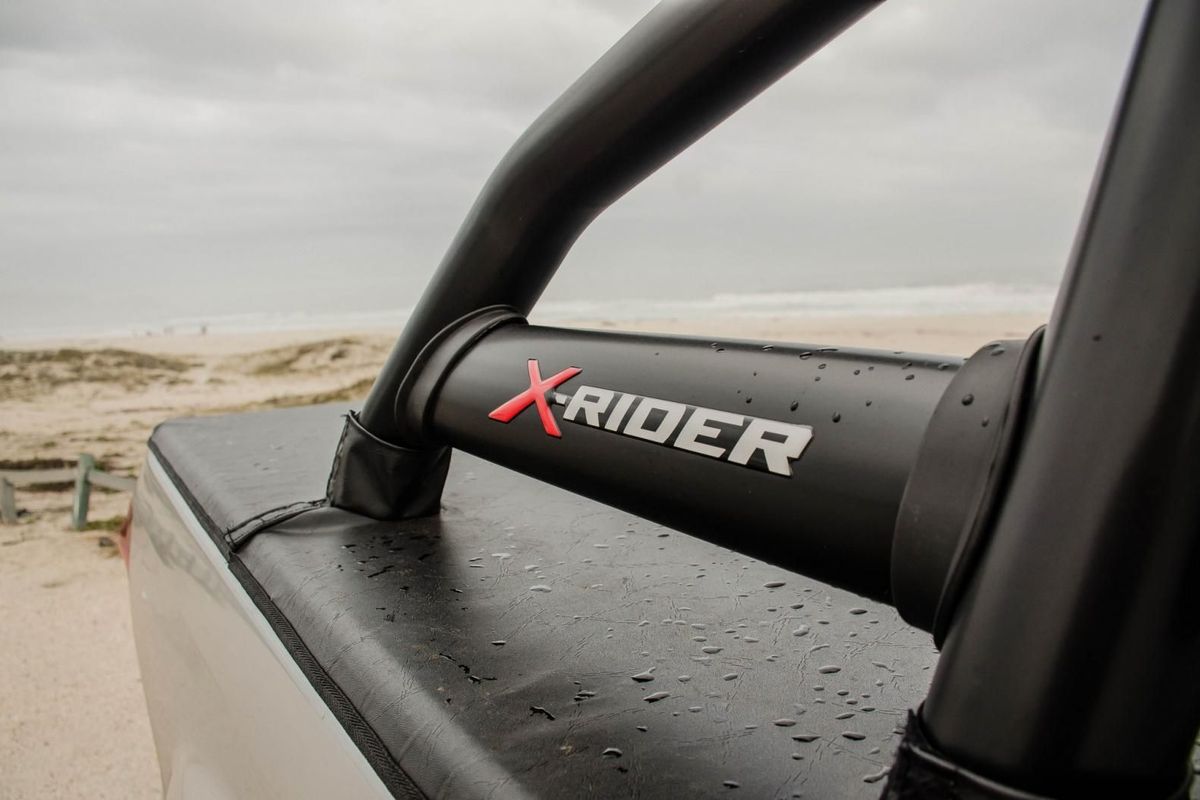
The KB X-Rider excels in the style stakes… as far as looks are concerned, it hits the mark. It comes with 18-inch, diamond-cut alloy wheels (with contrasting red centre caps) shod with all-terrain tyres, while the black bumper guard (with integrated fog lights) and tubular side steps gives the X-Rider added road presence. A beefy sports bar completes the exterior look, plus several X-Rider badges remind you that this is not an ordinary KB.
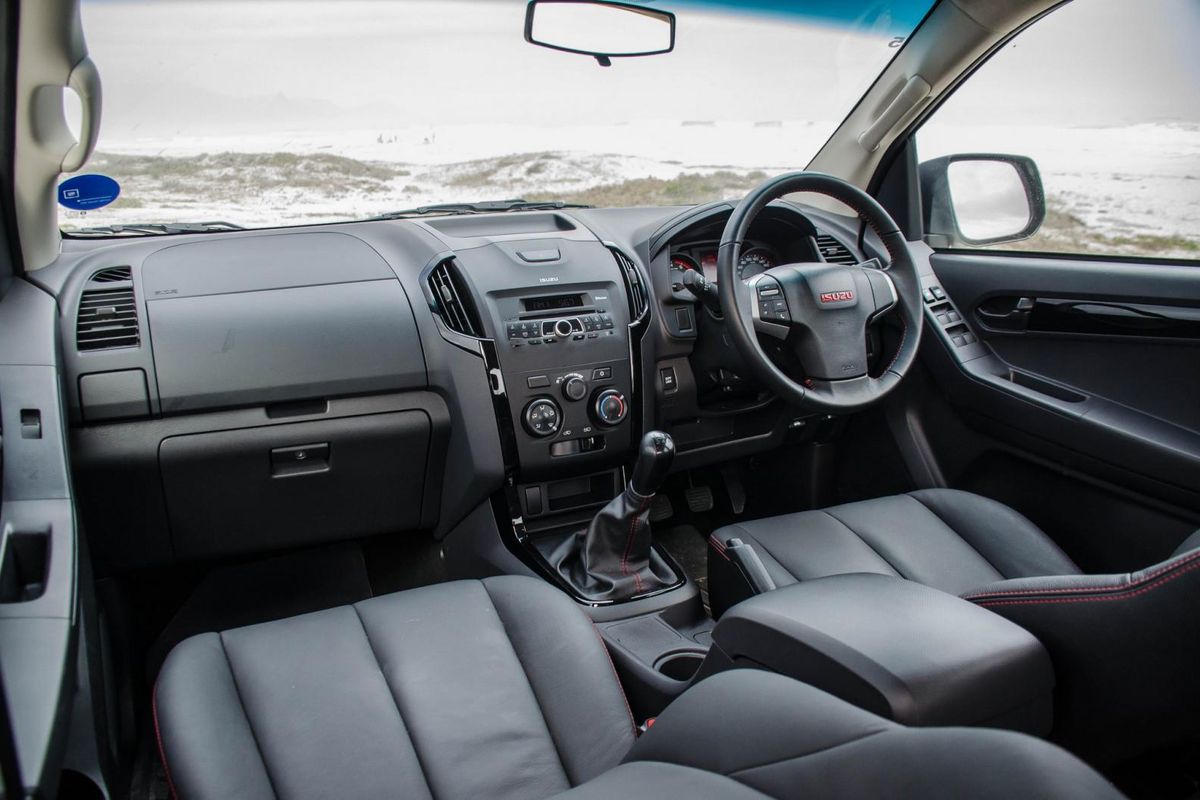
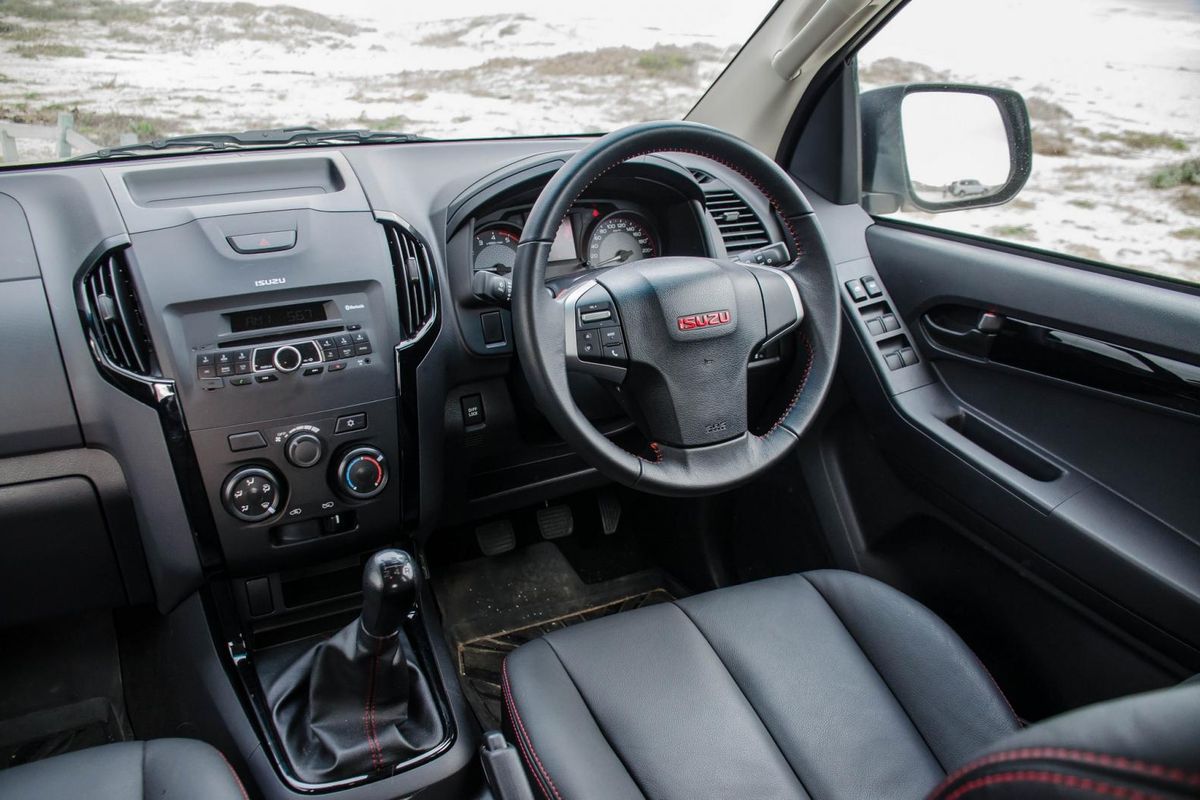
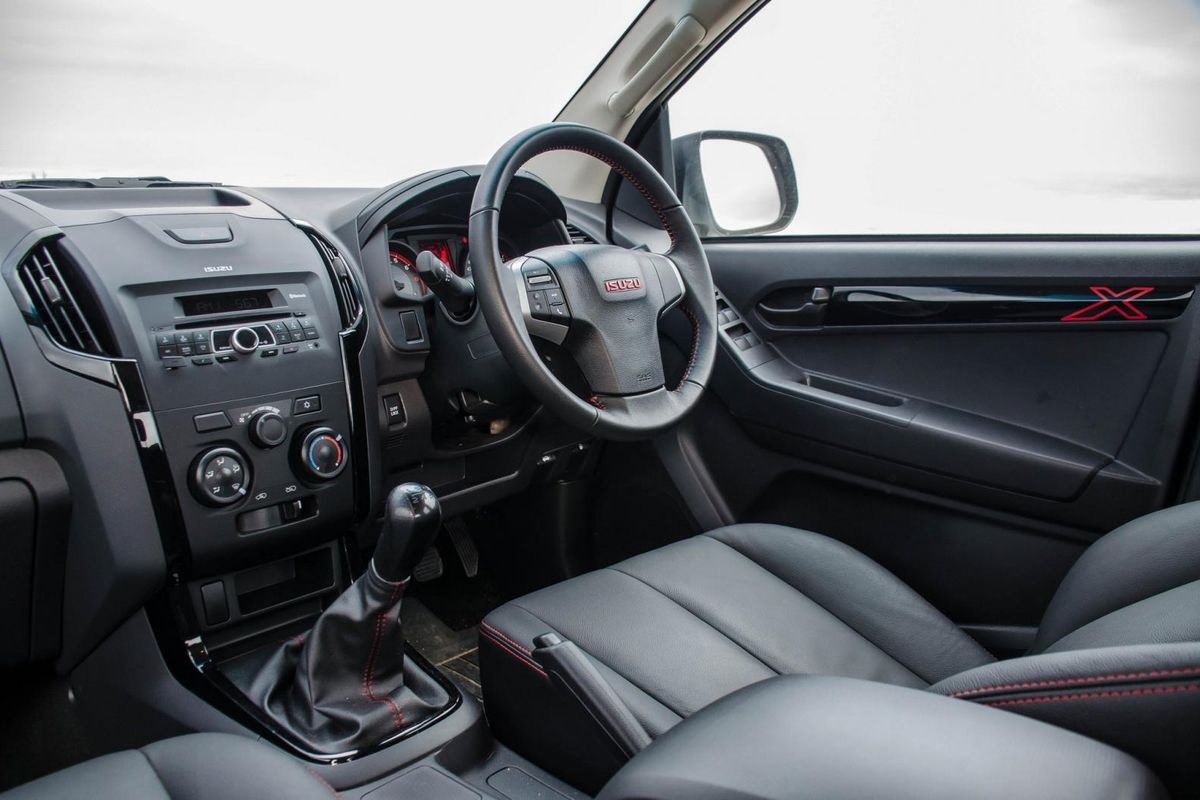
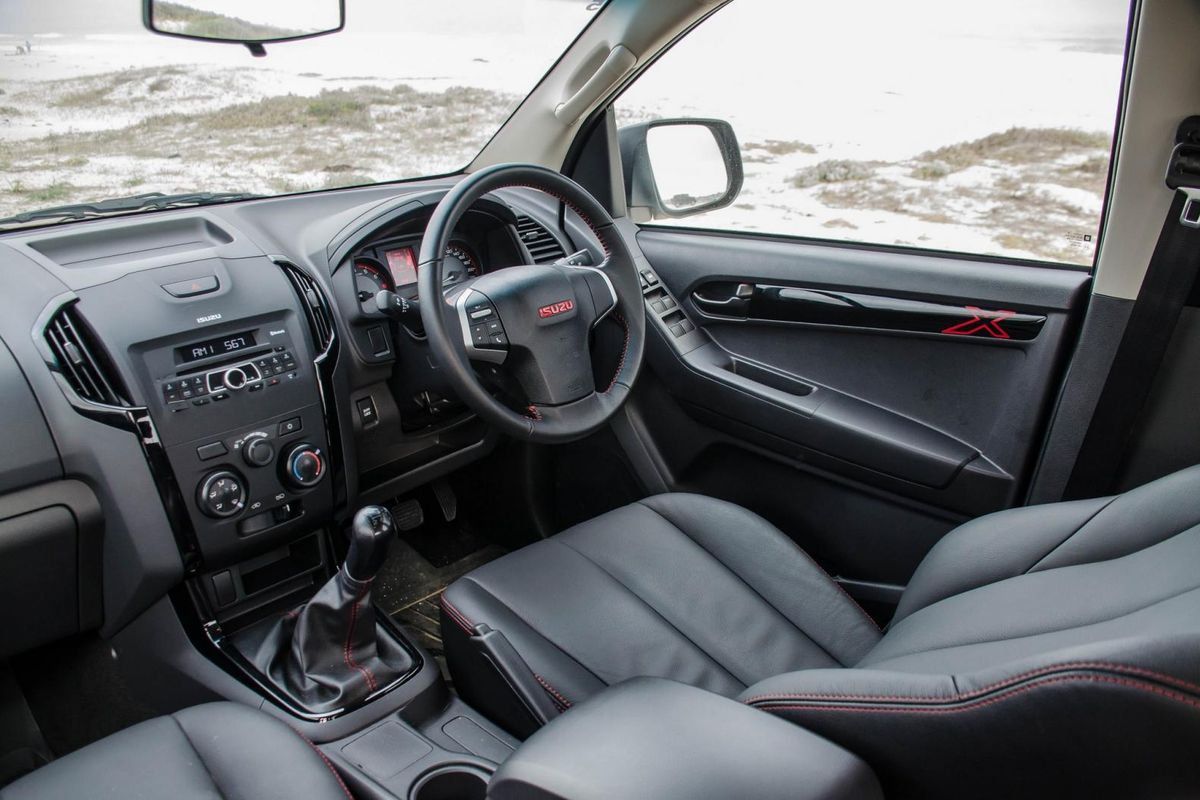
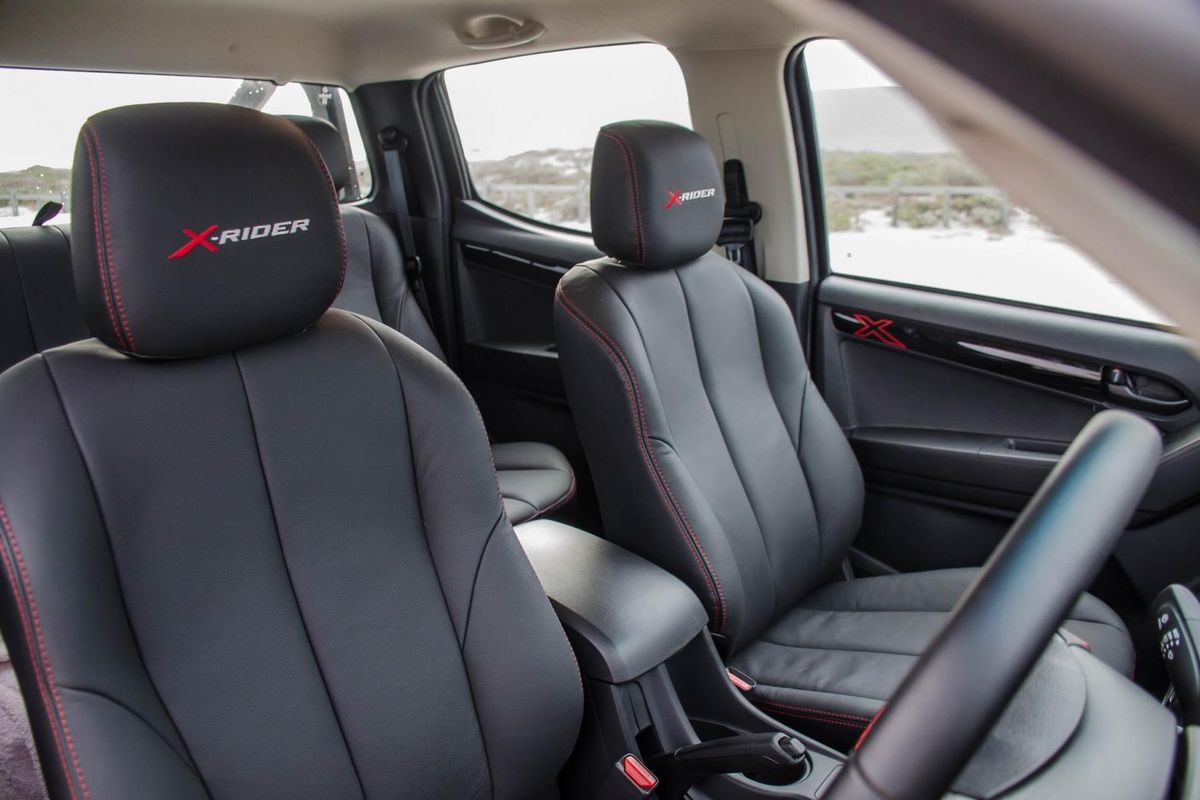
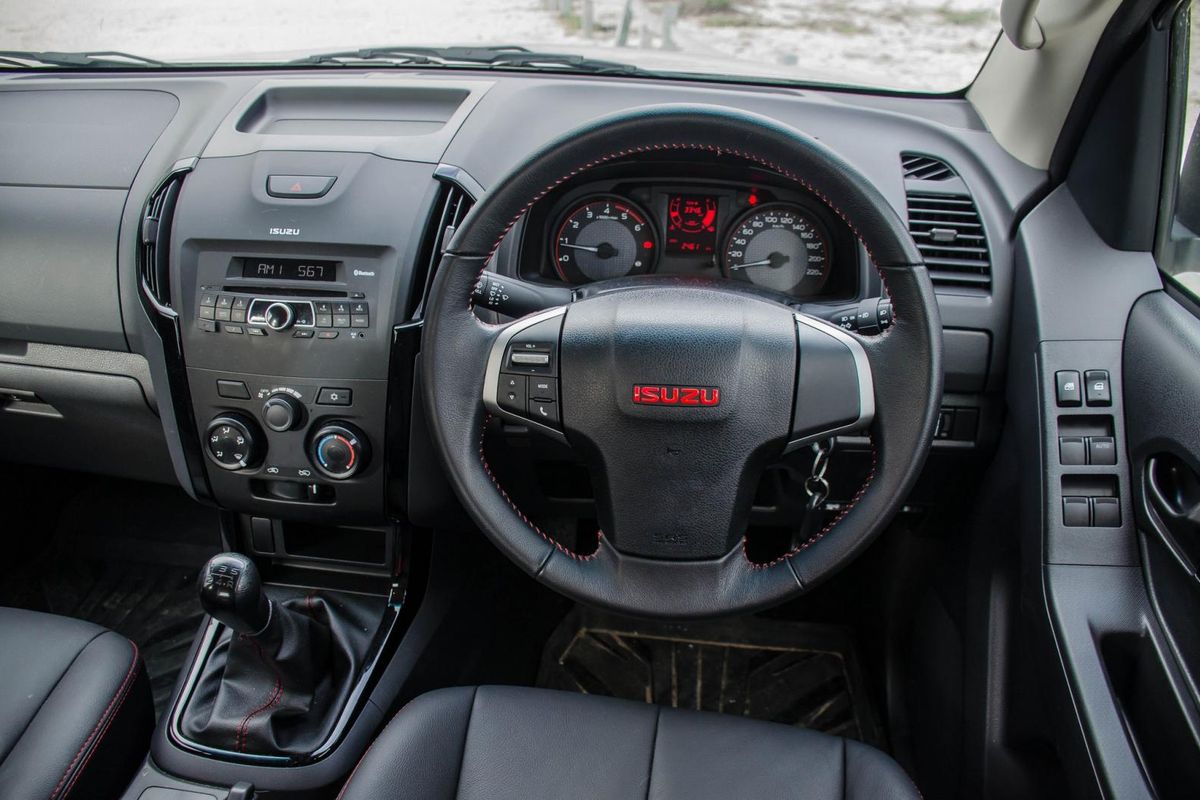
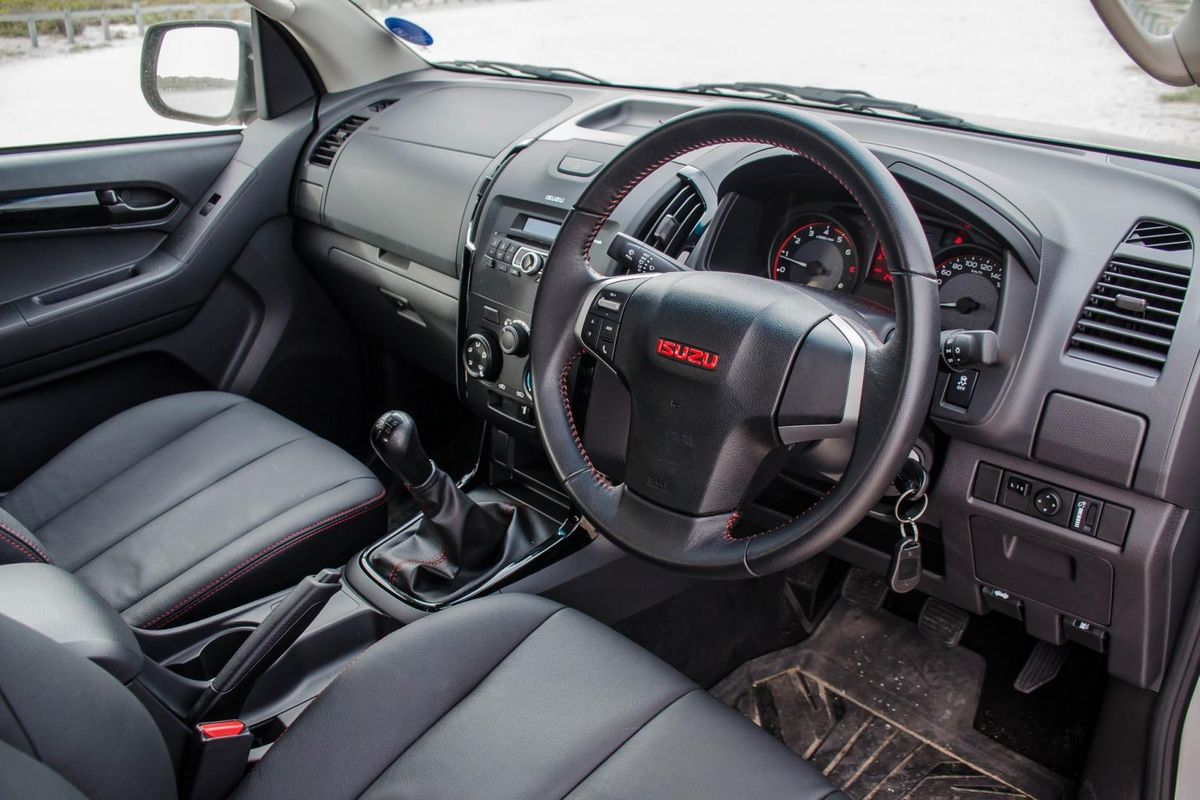
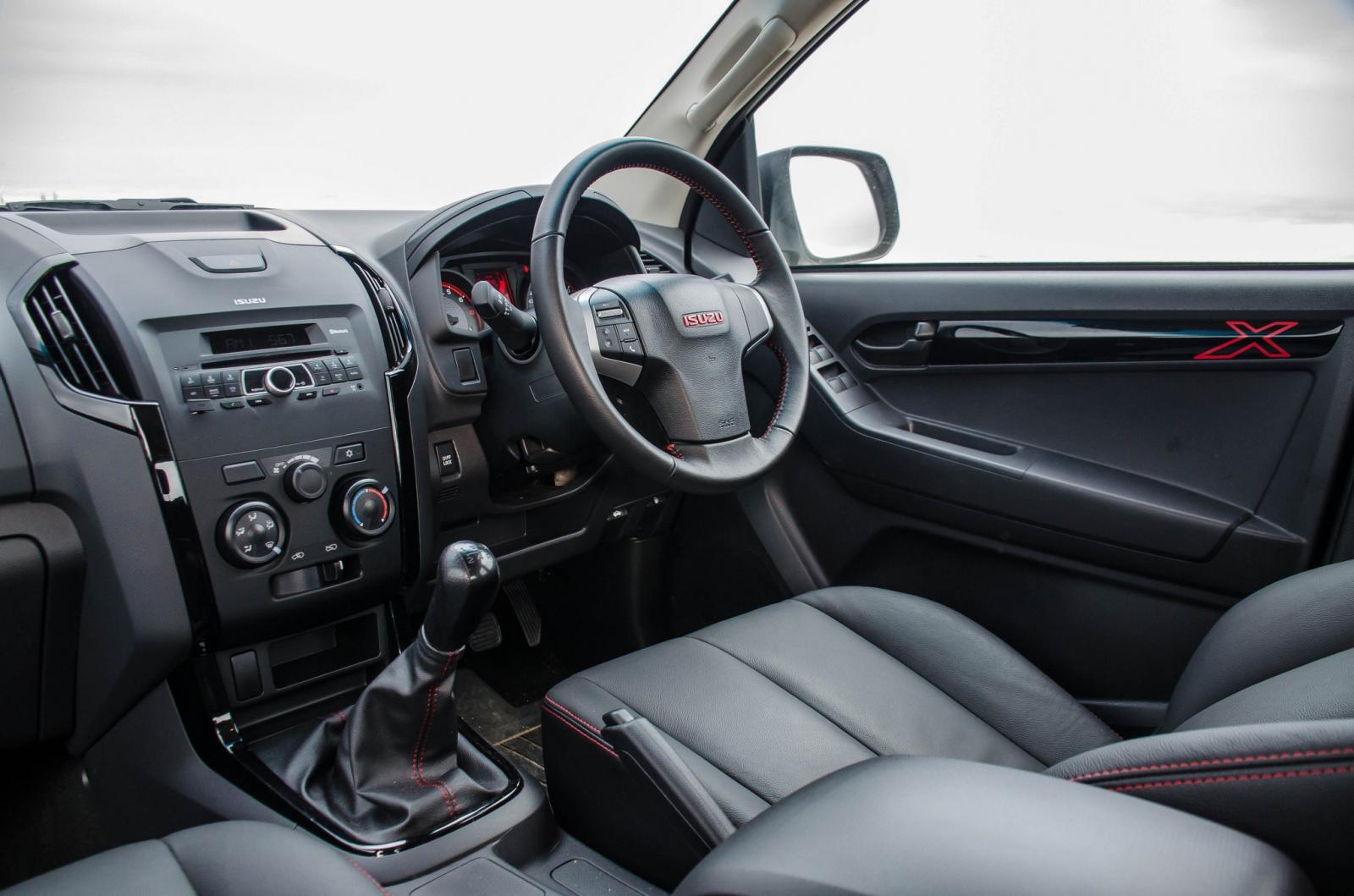
Red stitching, piano black trim and X-Rider badging sets the interior apart from the rest of the KB lineup.
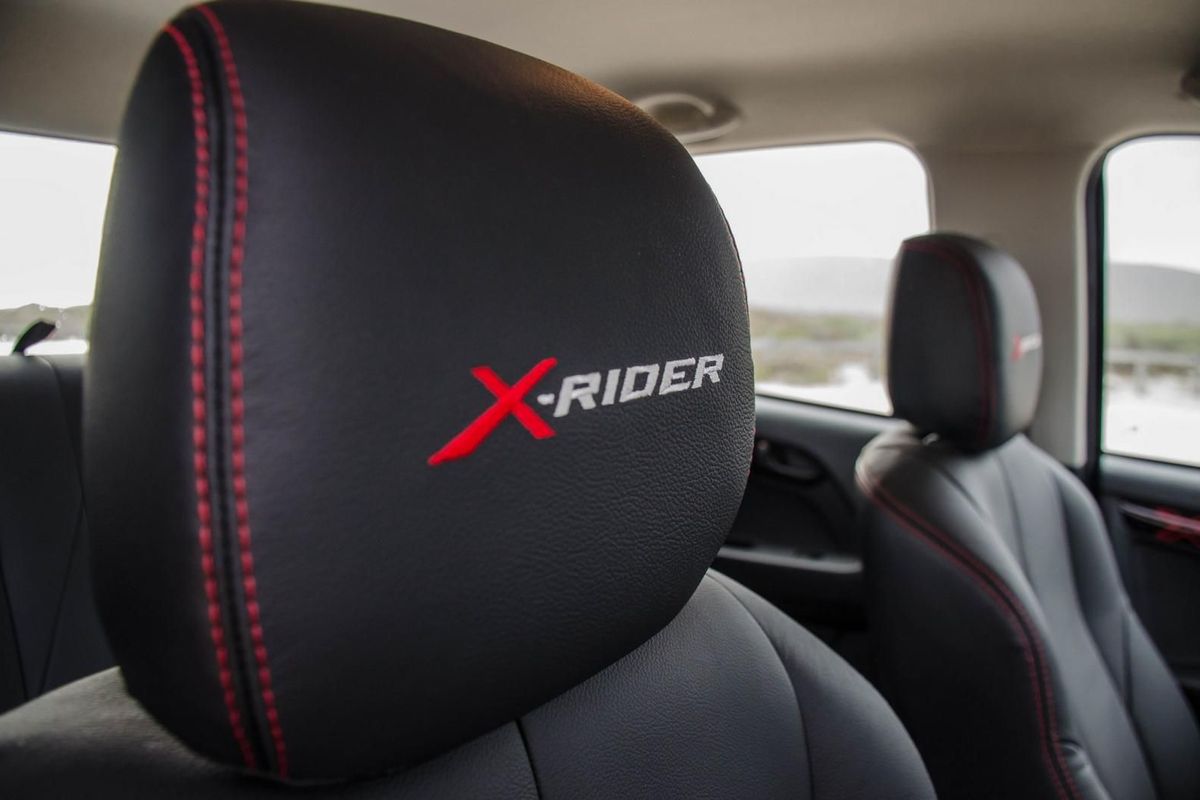
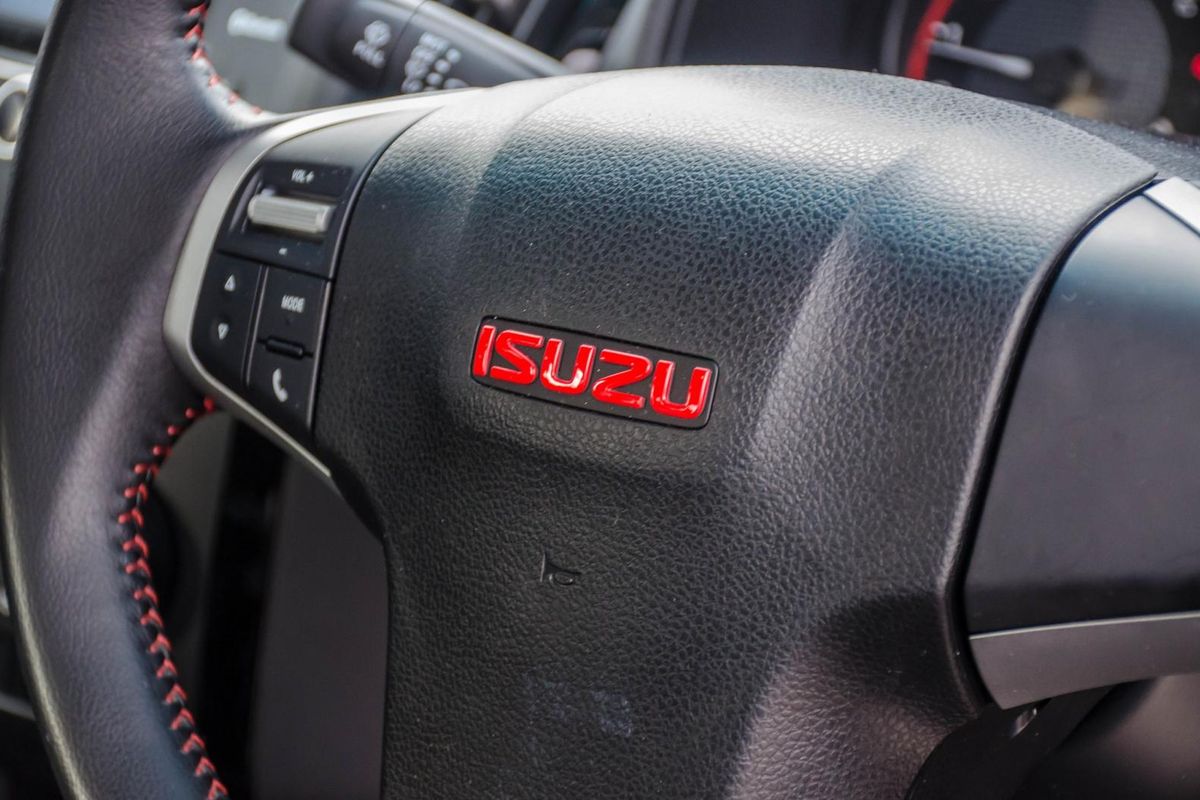
On the inside, you are met with leather-trimmed seats with red contrasting stitching that’s also seen on the leather steering wheel and gear lever boot. The headrests are embroided with ‘X-Rider’ logos and piano black inserts are seen on the centre console, door trim and central air vents.
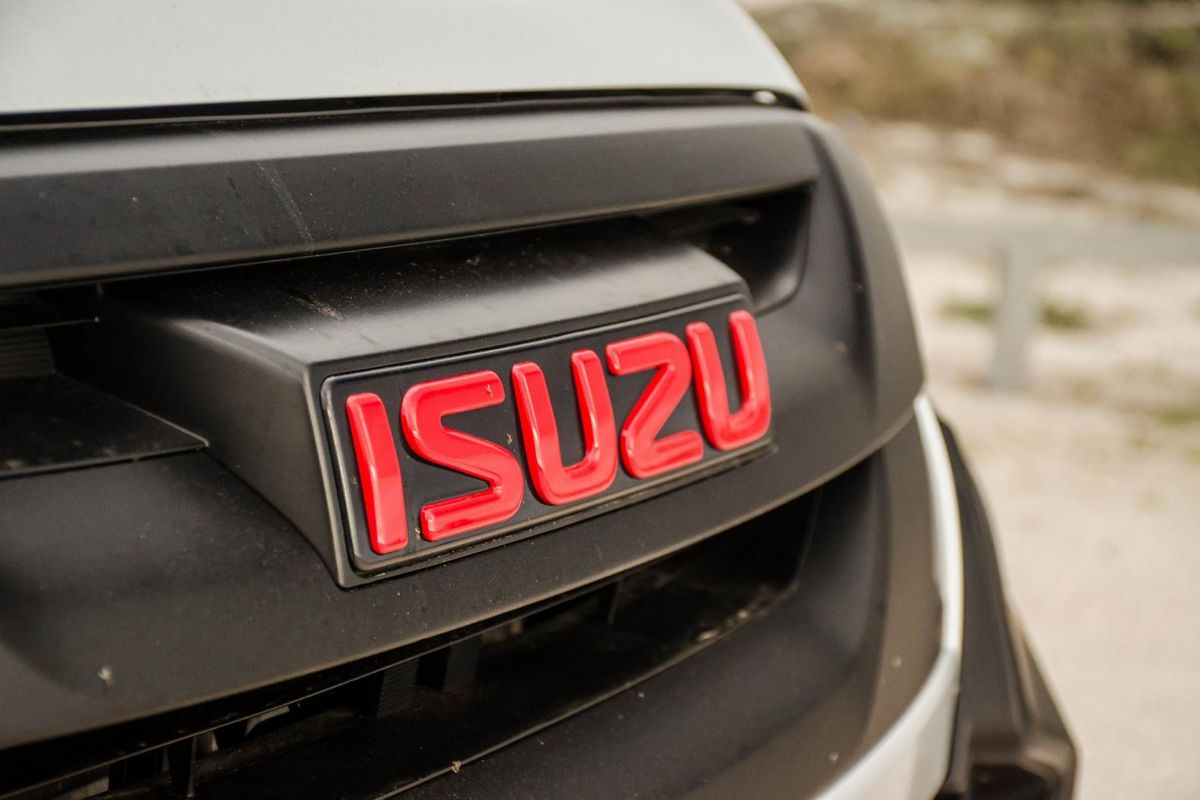
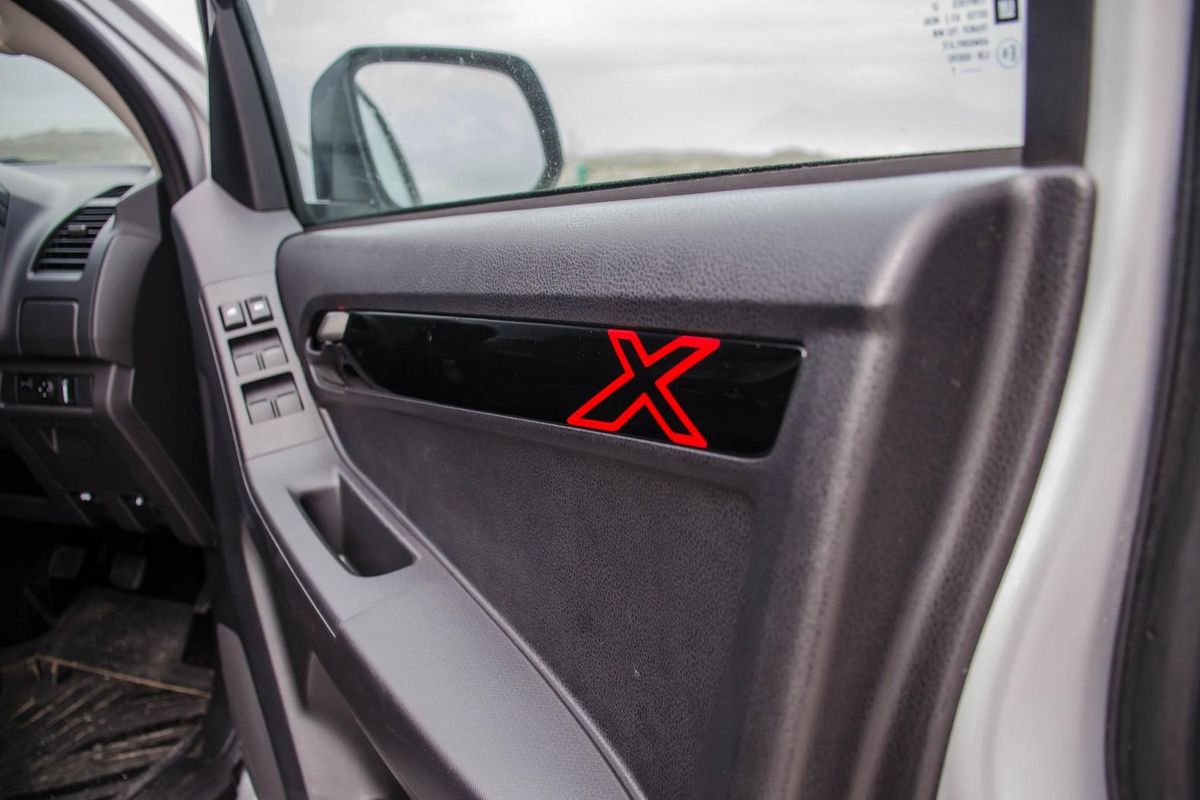
A red Isuzu badge and ‘X’ on the door trim further differentiates the X-Rider’s interior from those of standard KB derivatives.
Practicality
The X-Rider successfully wears two hats, as the well-known expression goes… It’s a good-looking weekend lifestyle vehicle and it’s ready to get to work when you are. Being a 4×2, you won’t be able to venture very far from the beaten track (reasonably well maintained surfaces), but with a ground clearance of 224 mm, you can easily tackle a gravel road or hop the odd pavement if you have to. A differential lock is offered as an option.
The X-Rider is also fitted with a heavy duty tow bar and has a maximum braked towing capacity of 2.1 tonnes. The X-Rider has a payload of 1 020 kg, which means you can transport bulky items with ease.
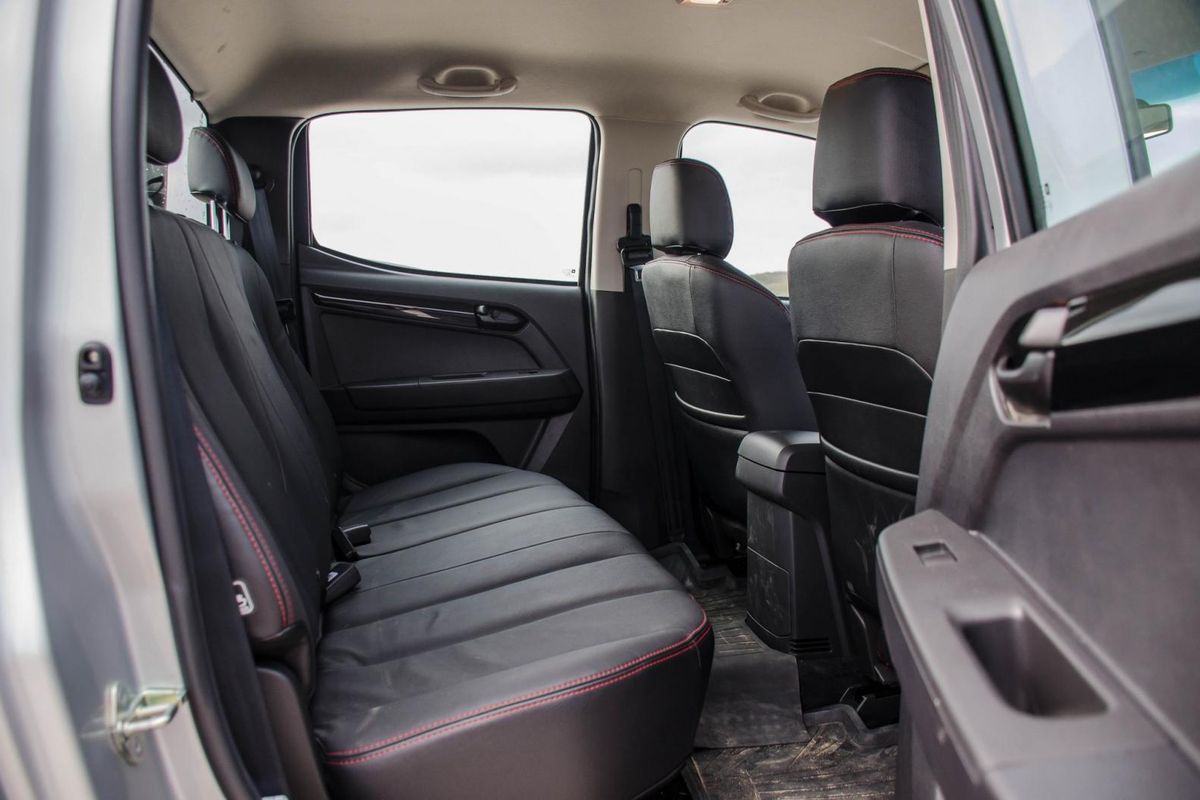
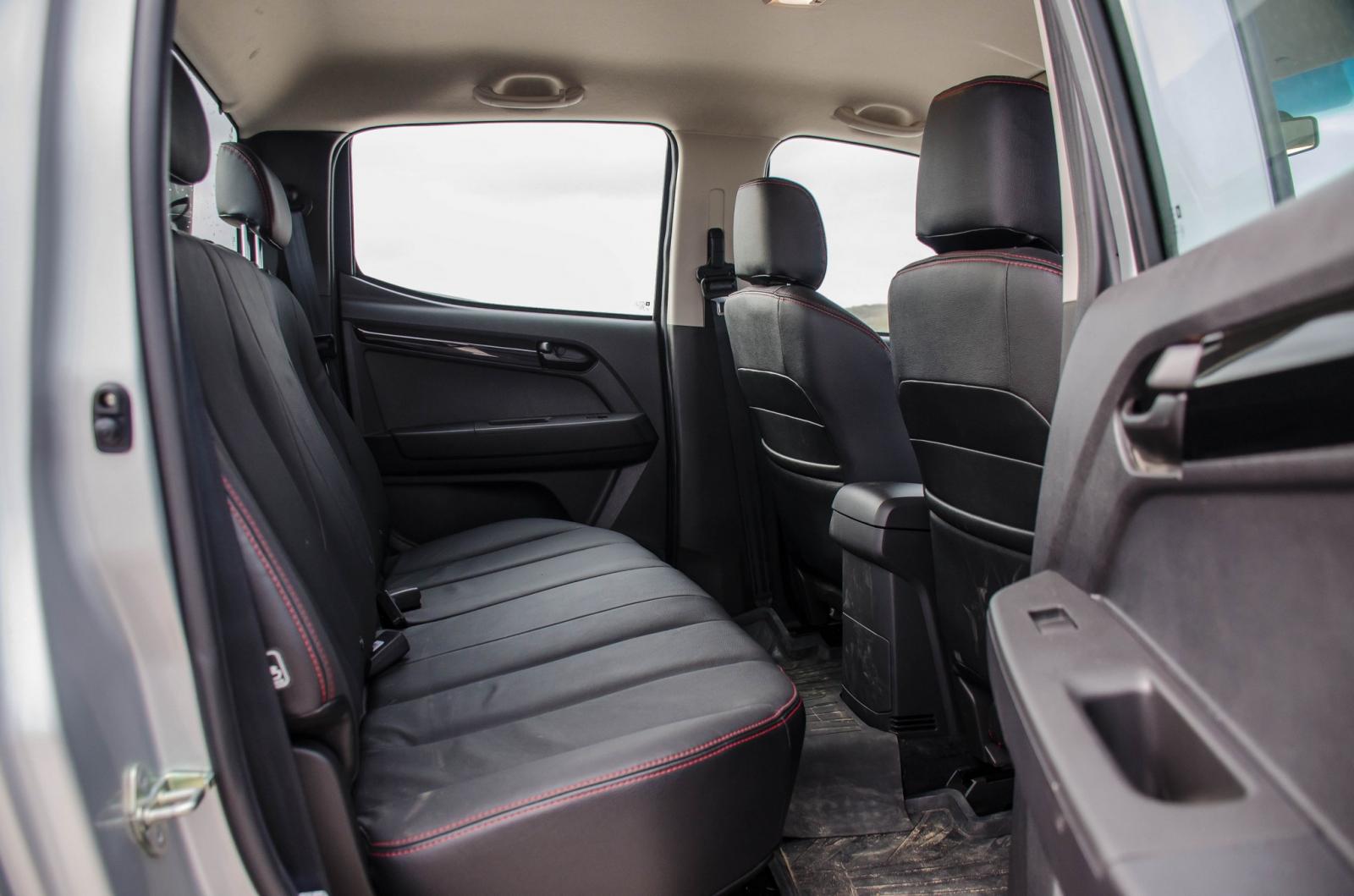
The KB X-Rider offers generous legroom for rear passengers.
Rear passengers will find legroom is more than reasonable and the X-Rider has bottle holders in the door mouldings while a drinks holder is at the driver’s disposal. Additional storage space is available in the centre console, glovebox, ahead of the gear lever and atop the dashboard. The driver’s seat is height-adjustable and the steering column is adjustable for height only. Electric windows and a manual air conditioning system is standard.
The interior is composed of hard-wearing plastic which means that it can withstand daily abuse and can be cleaned with relative ease.
Sufficient performance
The KB X-Rider is powered by a 2.5-litre turbodiesel engine that produces 100 kW and 320 Nm of torque. The rear wheels are driven via a 5 -speed manual gearbox. The engine is noisy at start-up, but settles into a typical diesel thrum out on the open road. With all its torque available from 1 800 rpm, the X-Rider offers good punch between robots and on the highway.
The shift action of the transmission is somewhat notchy, in fact, it feels a trifle stubborn when it is not at optimal operating temperature; to get the most from the engine (like when you need to execute an overtaking manoeuvre), you will find yourself gearing down often to access its sweet spot. To summarise the driving experience, by the standards of double cabs that have been introduced more recently than the KB (many of which are admittedly more expensive than this derivative), the X-Rider feels more "old school bakkie" than modern family car.
The X-Rider's engine is somewhat unrefined but it performs well low in the rev range where it delivers strong perfromance.
In terms of its ride quality, the X-Rider is average, delivering relative driving comfort in most cases. Ride quality deteriorates marginally as the road surface quality worsens, where the ride becomes more jittery. Incidentally, Isuzu claims a fuel consumption figure of 7.7 L/100 km, but you can expect to see figures of around 9.5 L/100 km, depending on your driving style.
The bad
Poor radio quality
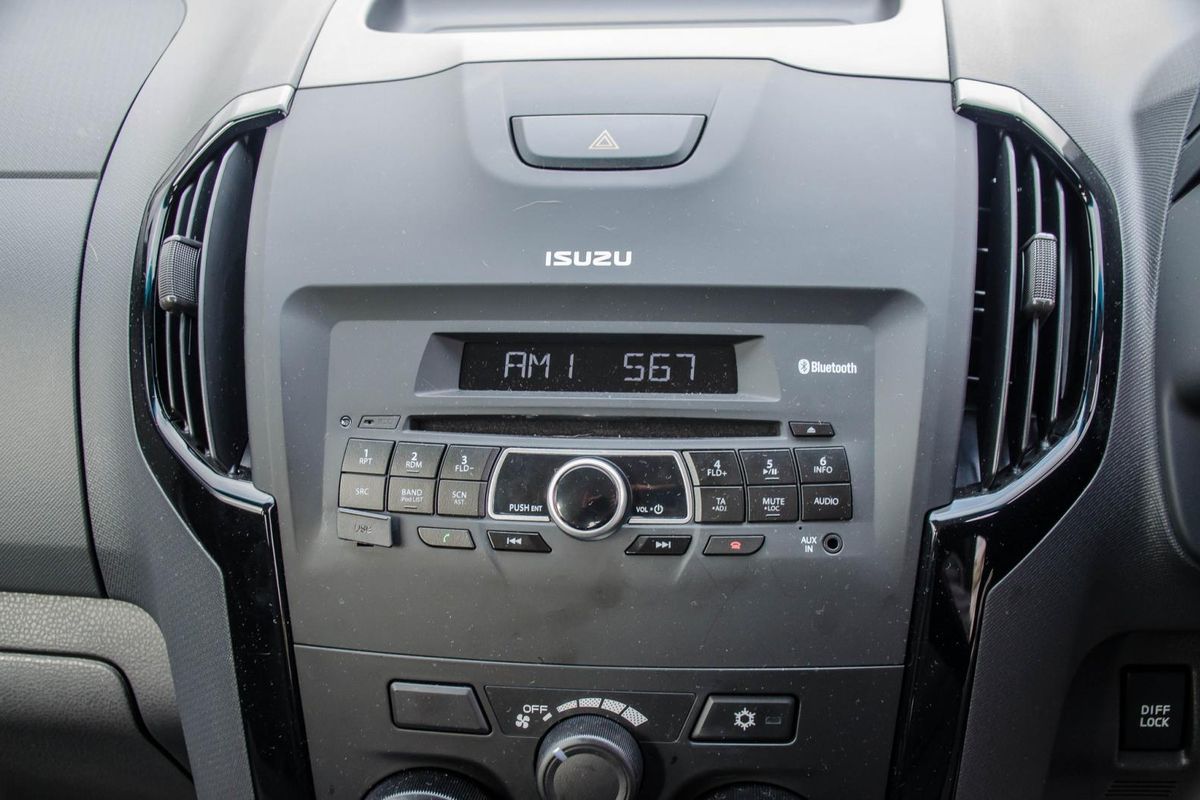
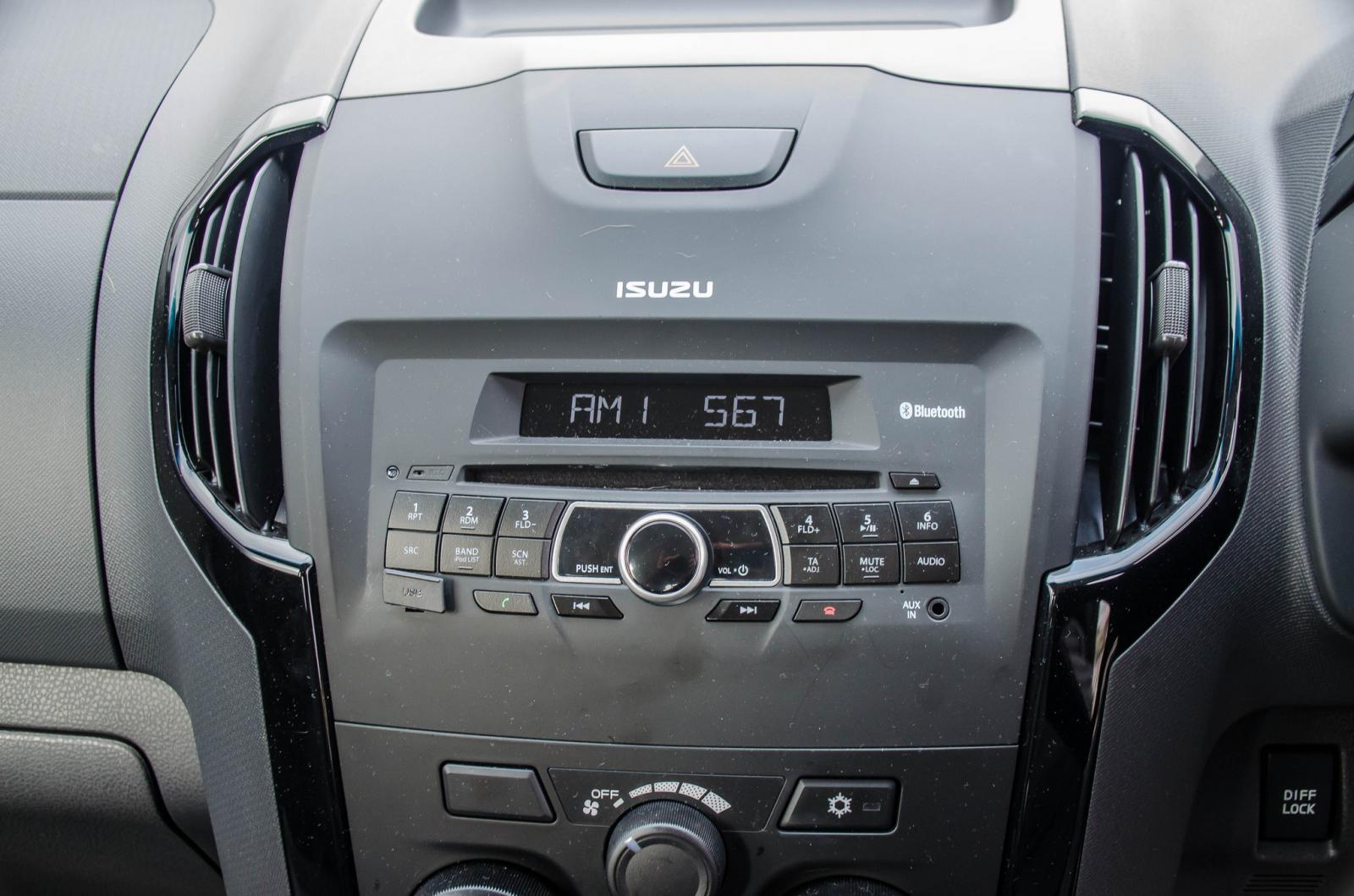
The radio is frustrating to use and is of poor quality. Isuzu can do better here…
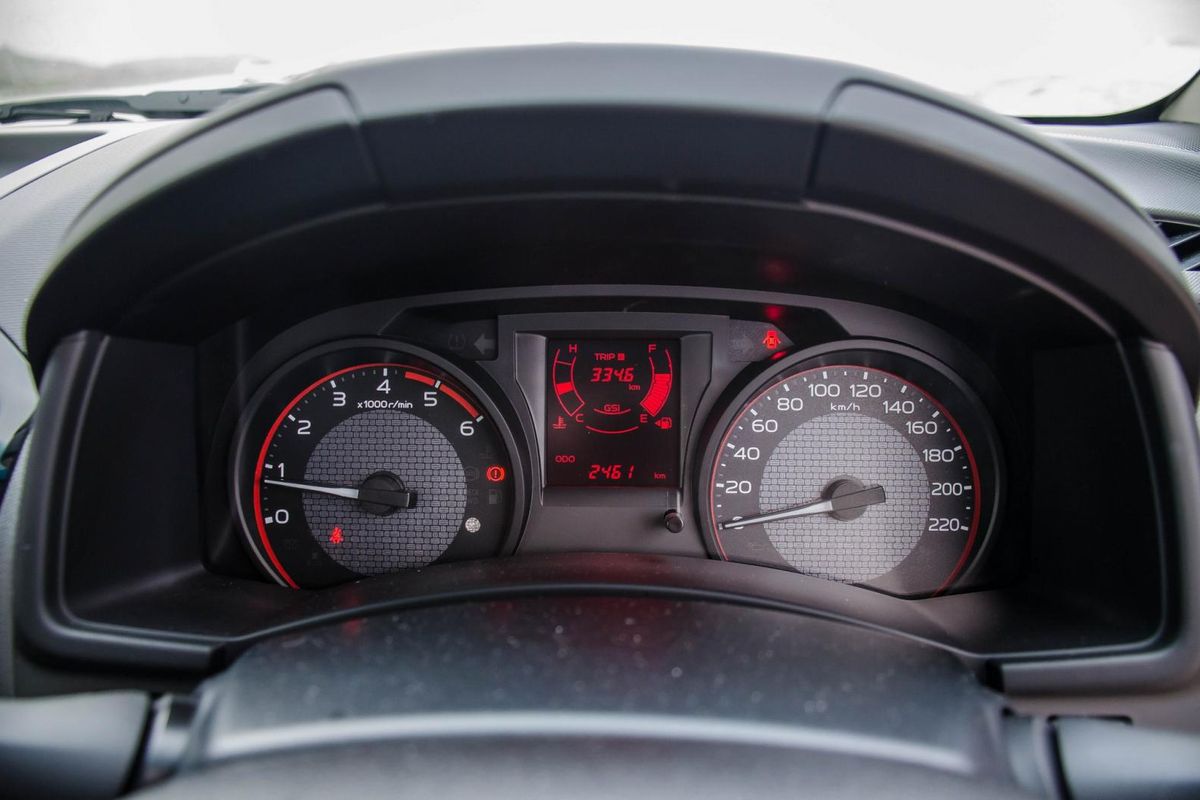
The KB X-Rider is fitted with a basic radio system and although it offers Bluetooth functionality and a USB/Aux port, looks rudimentary. The quality of the buttons and the sound quality produced by the 2 front speakers are poor. We also found the radio to be distracting to use while driving. Steering wheel mounted audio controls are present, however, for convenience.
No PDC
For a vehicle of this size and considering that the large dimensions of the X-Rider make it cumbersome to manoeuvre, Park Distance Control (PDC) would help prevent unnecessary parking mishaps. Careful judgment is required to manoeuvre the X-Rider and without PDC, it’s probably only a matter of time before you bump into something.
Standard safety feature specification is basic and the X-Rider is equipped with ABS and EBD, Brake Assist, Electronic Stability Control with Traction Control and Hill Start Assist. Only 2 airbags for the driver and front passenger are fitted.
Price and warranty
The Isuzu KB X-Rider is priced at R388 400 and is sold with a 5-year/120 000km warranty and a 5-year/90 000km service plan.
Verdict
The KB X-Rider is not perfect, but it's a robust offering and is backed by a comprehensive warranty and service plan.
The Isuzu KB X-Rider is a no-fuss double-cab with attractive styling that bakkie lovers can appreciate. The interior appointments lift the interior's appeal somewhat, but at ultimately, the X-Rider can’t hide its utilitarian roots. Although the interior is fairly well constructed, the quality of the radio system is disappointing.
The X-Rider’s power delivery is good with solid performance low down in the rev range, but you will have to wrestle the notchy gear lever to access it. Its robust build and workmanlike demeanour will make light work of most tasks in its way. As a reasonably affordable, good-looking double-cab bakkie, the KB X-Rider has its appeal and is keenly priced, but buyers will have to come to terms with its limited refinement. The KB X-Rider is, however, backed by a comprehensive warranty and service plan that will go a long way in ensuring peace of mind.
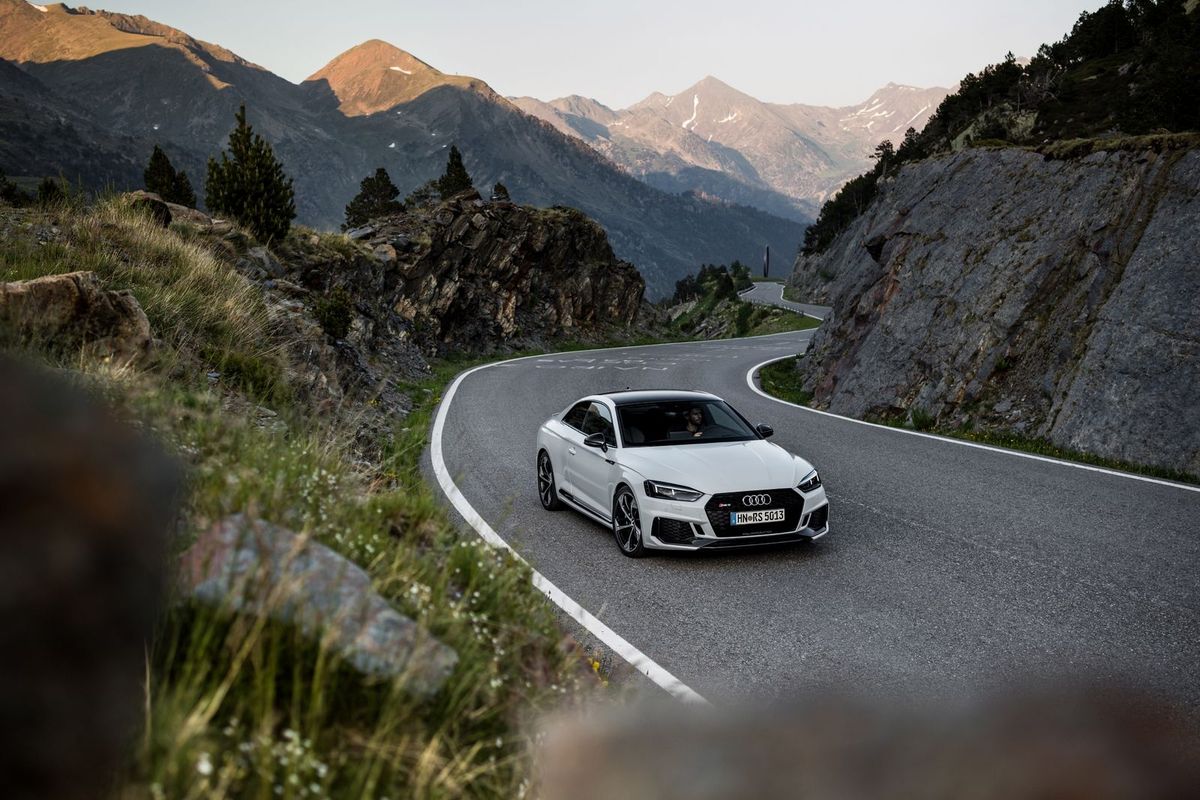
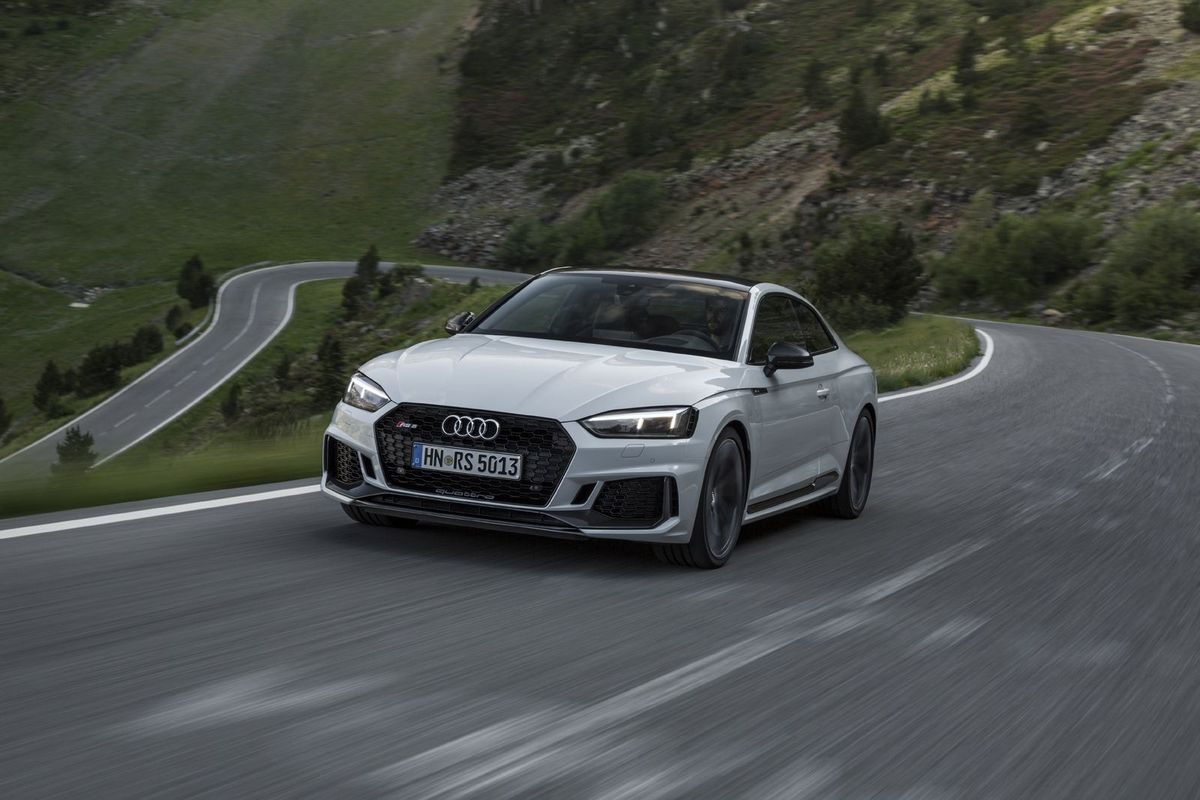
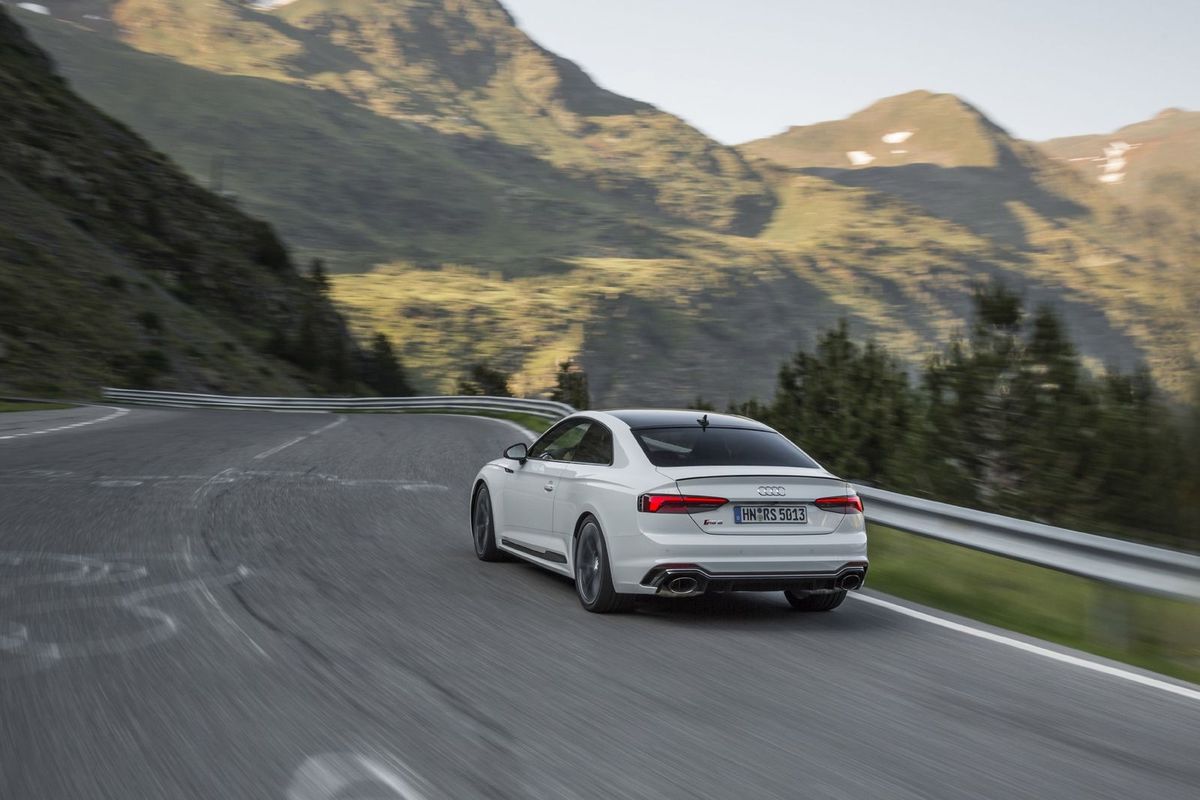
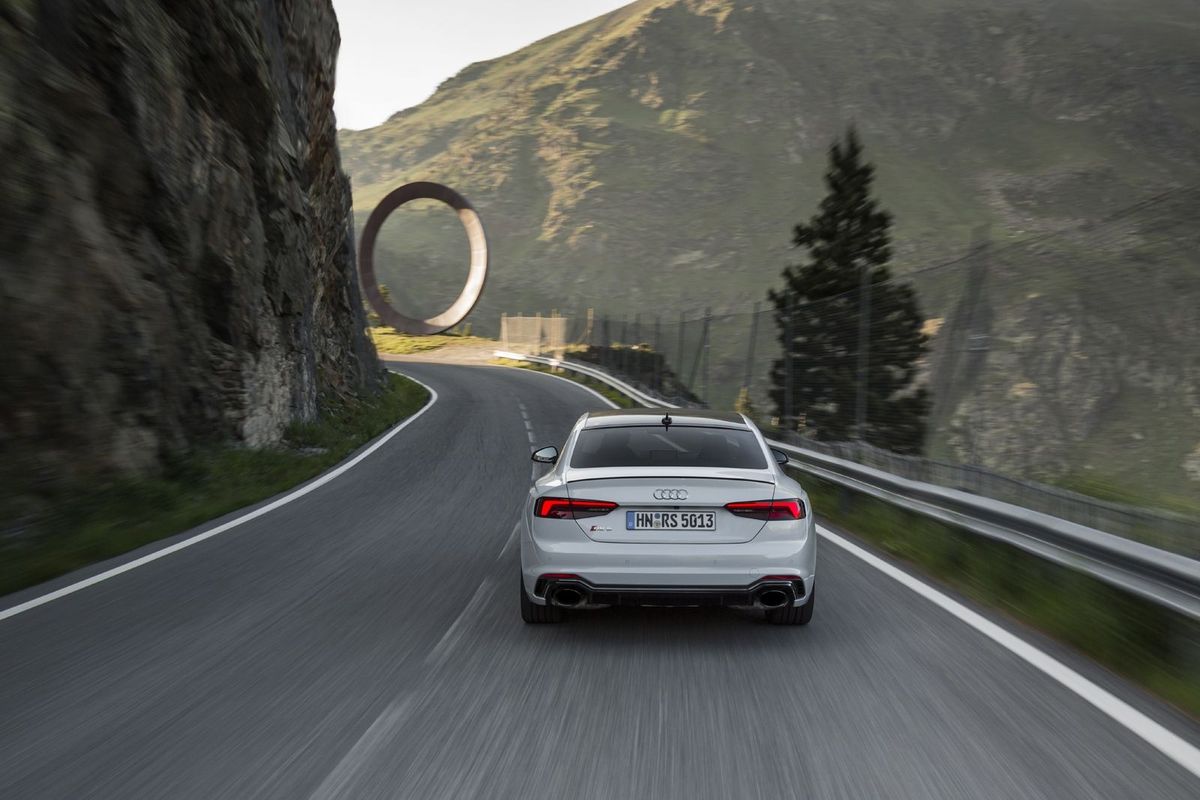
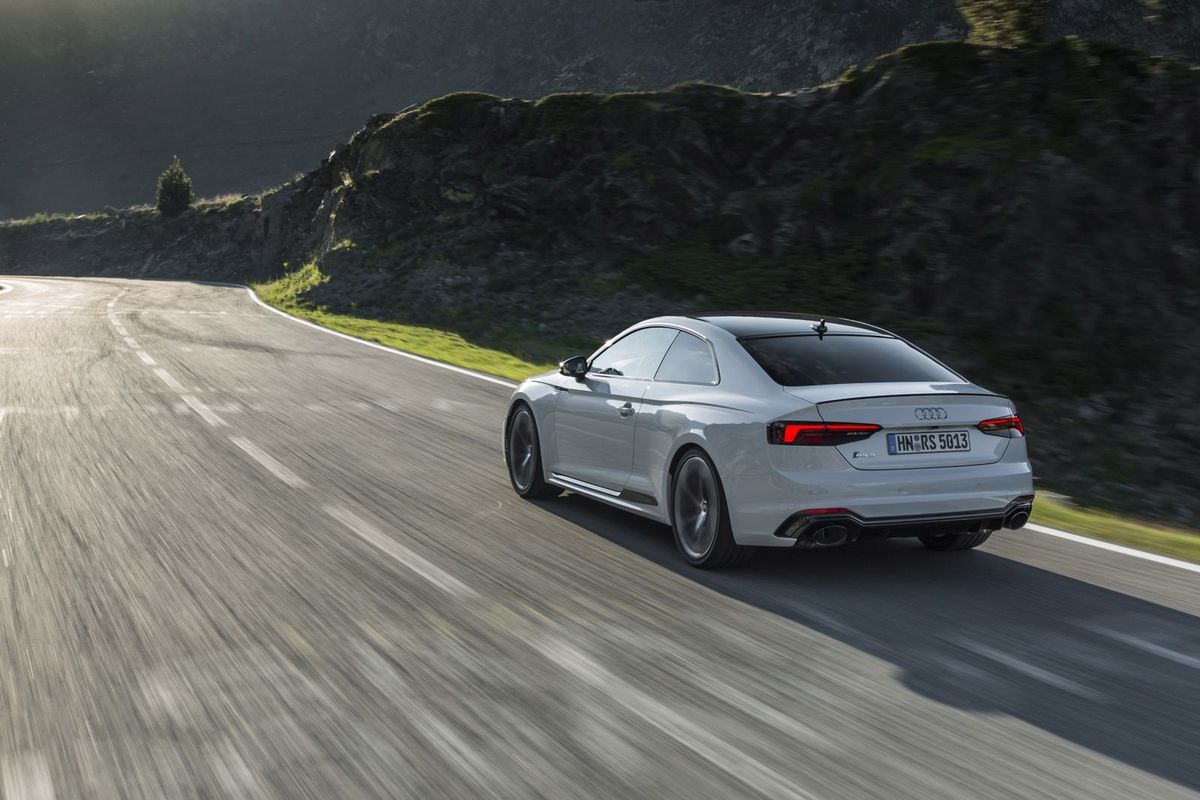
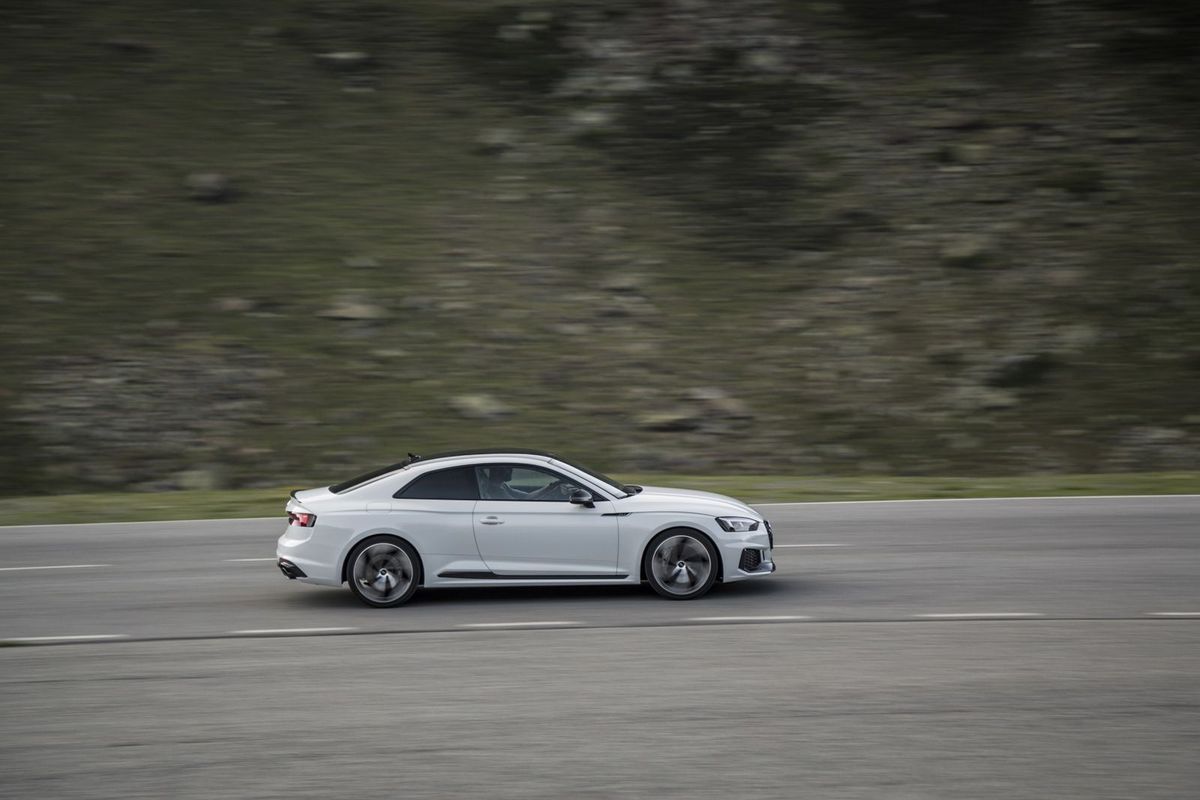
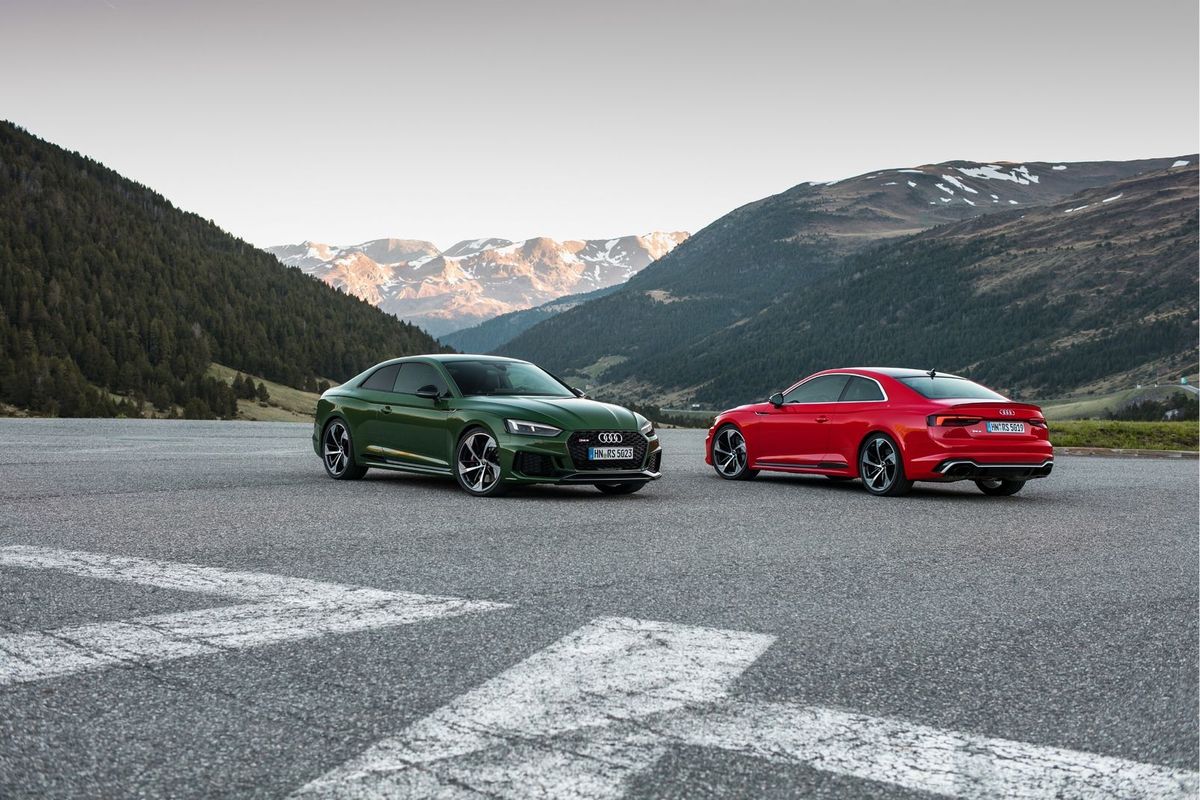
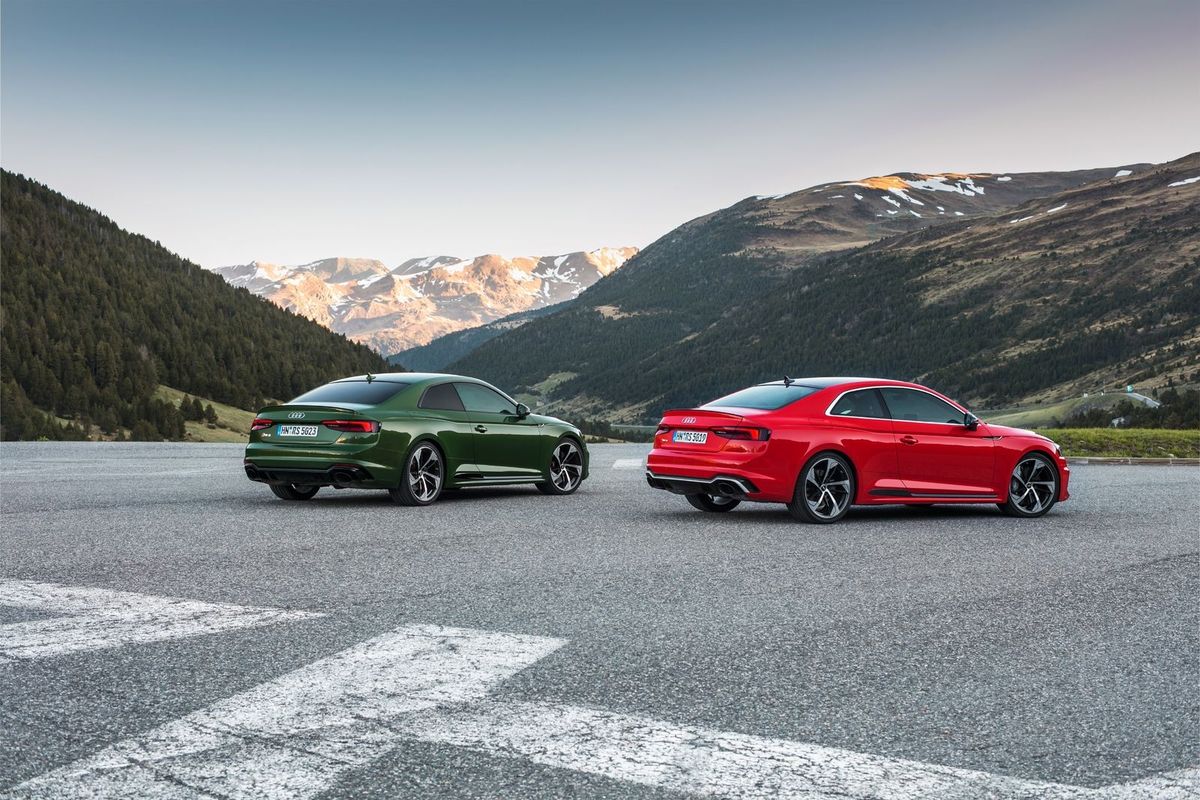
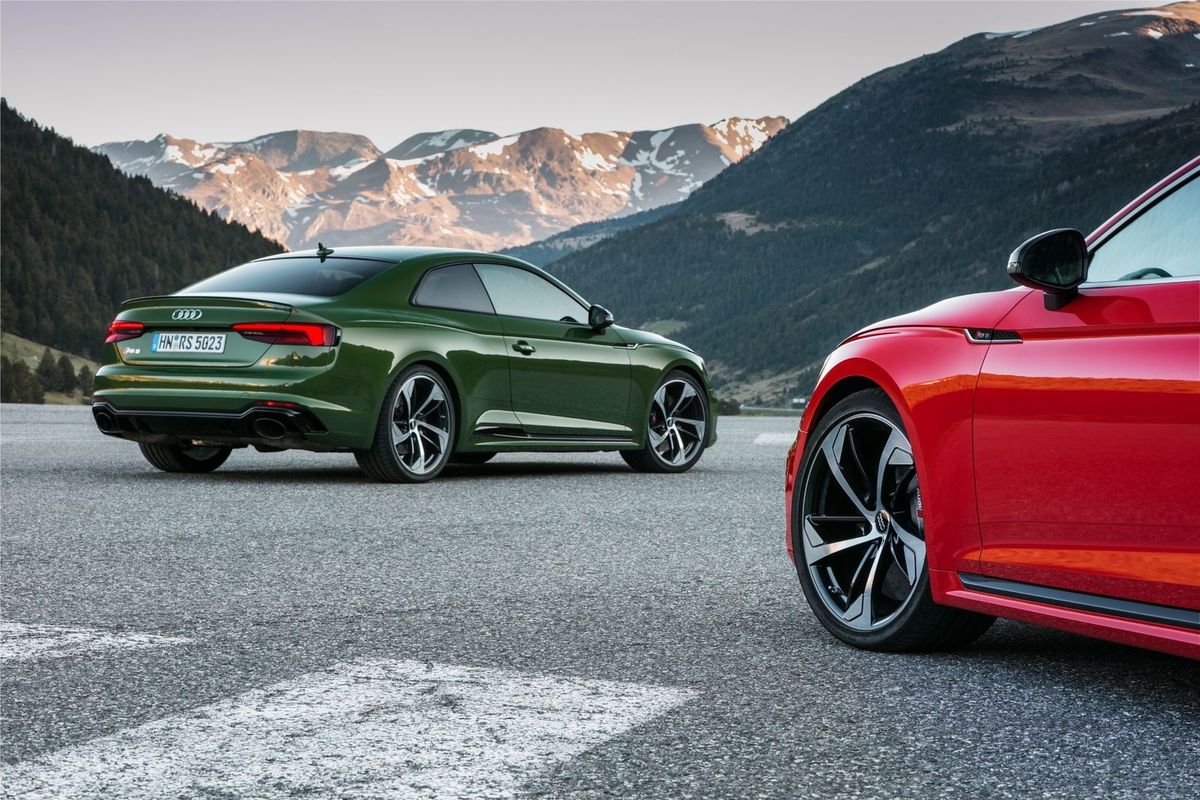
The all-new Audi RS5 gets a biturbo V6 co-developed with Porsche, but that’s just the start of its makeover. International correspondent, Nic Cackett, investigates.
Before we talk about the new RS5, we’d be remiss not to sound a rhetoric last post at the departure of the old model. Not because it was particularly good overall – in fact, it fits Audi’s starchy stereotype about as accurately as a Paulaner brewer probably fits into lederhosen – but rather because it was the final refuge of Ingolstadt’s 4.2-litre V8; arguably the naturally-aspirated multi-cylinder engine of the last decade. Its replacement is the all-new 2.9-litre twin-turbocharged V6 co-developed with Porsche, and already a feature of the latest Panamera lineup.
Naturally, on paper, it's superior in almost every sense, and every improved-upon number counts as a reason to be cheerful. But its predecessor was far more than just a tightly-wound bundle of numbers: it possessed a throttle response to die for as well as the kind of impossibly lean, caterwauling soundtrack that had your pulmonary vein spiked even before a righteous 8 250 rpm turned up on the tachometer.
The new Audi RS5 switches out a V8 for a Porsche-developed 2.9-litre V6.
New bits and bobs
The memory of the departed V8 provides not only a neon signpost to the previous RS5’s most likeable fixture, but also quattro GmbH; the entity which has now morphed into Audi Sport – a branding behemoth and the home of all things hardcore in Ingolstadt’s universe. It is an expanding portfolio, and with the growth spurt of RS-badged models set to continue over the next 18 months, there’s plenty of space within the range for some judicious tweaking. Consequently, the introduction of its latest 2-door, 4-seat coupe has been carefully juxtaposed with the mention of ‘Gran Turismo’; a notable divergence for a car previously expected to fight tooth and nail with the BMW M4 and Mercedes-AMG C63 Coupe.
A couple of the new car’s modifications are notable out of the gate. It's lighter by 60 kg in its cooking format (thanks mostly to the 31 kg-lighter V6) and gets the mechanical rear ‘sport’ differential to better complement the quattro all-wheel-drive system and wheel-selective torque control. The chassis is new, too, with a five-link arrangement at the front and back, paired with adaptive dampers (RS sport suspension with Dynamic Ride Control is an additional option; ditto the RS exhaust system and the traditionally undesirable dynamic steering setup – all fitted to our test car). There’s also a transmission change: the V8’s dual-clutch 7-speed ‘box makes way for an 8-speed torque converter supplied by ZF – already featured in the S5 model, albeit mated to a different engine.
Thanks to the new engine, the RS5 is lighter while an automatic gearbox replaces the dual-clutch unit.
That means the RS5 shares its V6 with the second-generation Panamera 4S, but not an entire driveline (Porsche’s saloon incorporates the eight-speed PDK ‘box). The output is slightly different, too: Audi Sport having eked out 7 kW more so it can claim to match the outgoing V8’s 331 kW. Peak torque, predictably, is dramatically superior, the V6 summoning up 600 Nm from 1 900 rpm. At the same time, emissions have been slashed by 17%.
Head-turning looks, inside and out
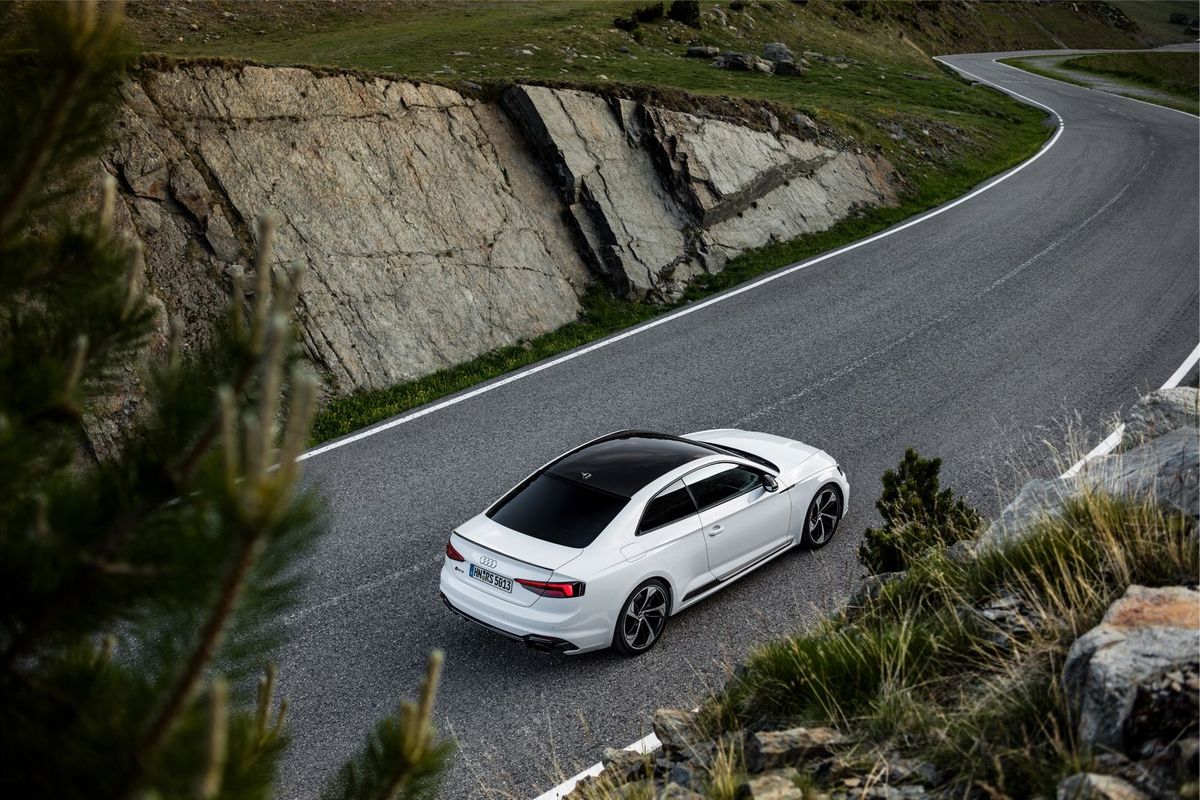
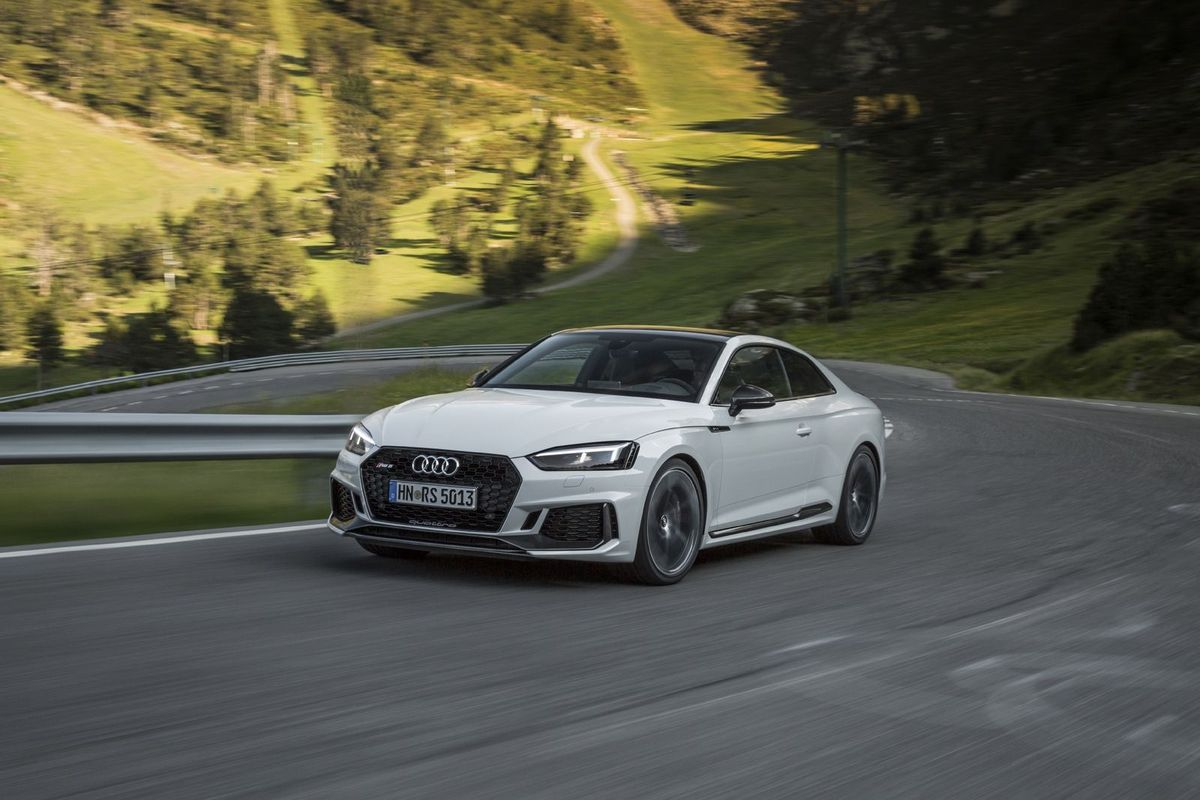
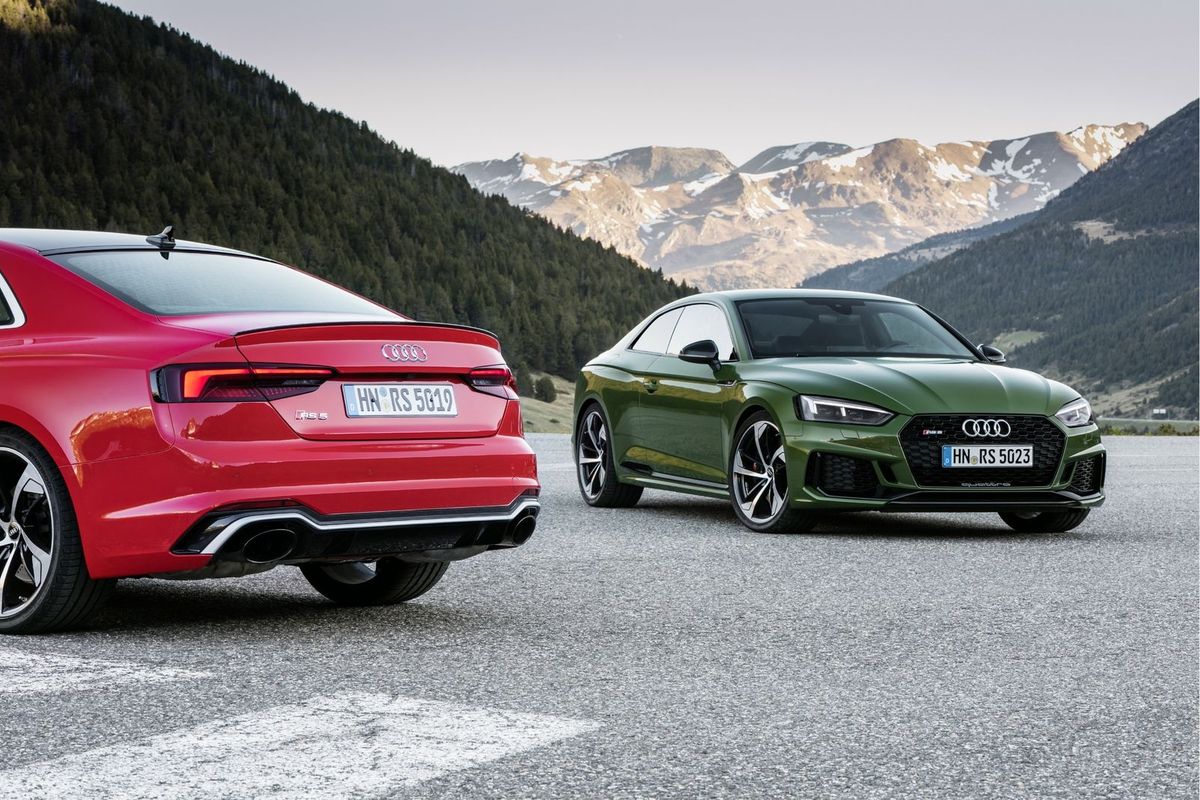
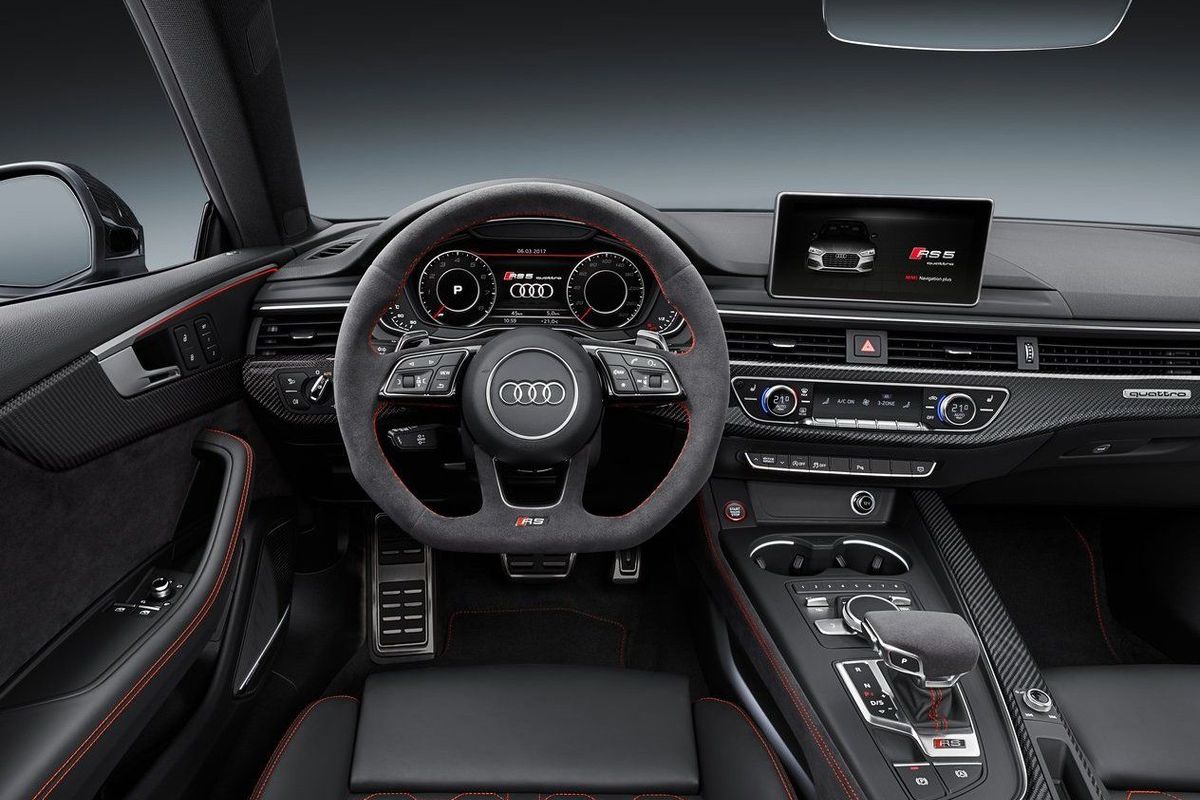
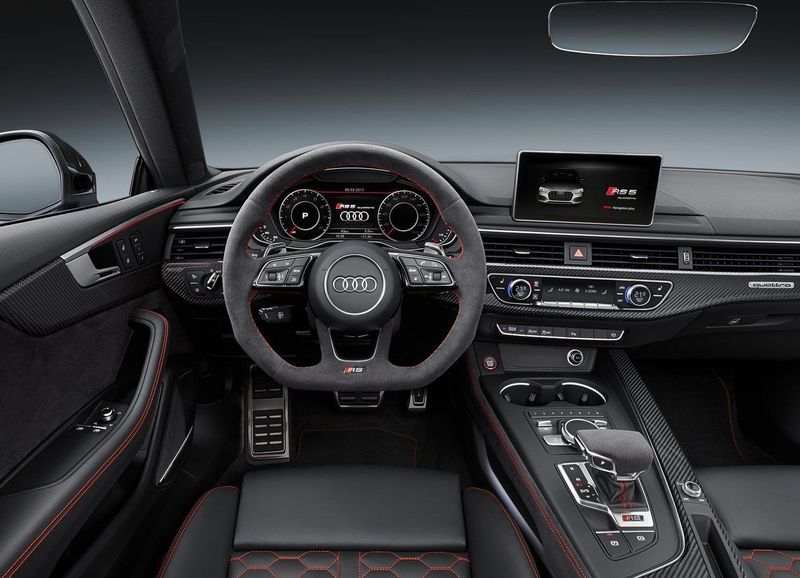
In the metal, it looks the business. The RS5 signals a mild overhaul of the brand’s styling approach – although with its blistered arches, lacerated air intakes and pothole-big oval exhaust pipes, it establishes a familiar scene. The proportions feel about the same, too, despite the 74 mm of additional length predominately donated by the MLB’s larger wheelbase. The inside also conforms to type, which is to say immaculate and brilliantly made and utterly endearing to touch and look at. Virtual Cockpit makes another appearance on in the instrument cluster, and the test car we drove in Andorra had enough alcantara on the door cards, steering wheel and gear shifter to neatly distinguish the RS model from the closely related S5.
The RS5's interior is laced with alcantara and it's another exhibition of how to build an interior properly.
Sumptuous character
Start-up is slightly less auspicious. Audi Sport has persevered with the soundtrack – boldly equating it to the turbocharged V6 that powered the B5-generation RS4 – but its bass-edged waffle doesn’t cover the sound or reality of two substantial blowers whistling away betwixt the cylinder banks. The engine isn’t necessarily captive to the rise and fall of the Scirocco, yet nor is it an unchained melody on the V8’s Richter scale.
That’s to be expected. And so is the type of performance cranked like buttermilk from the distant churn once you’re underway. Where its predecessor dispensed progress in escalating staccato lunges at the redline, the V6 unfurls itself through the medium of the mid-range. Its surge is prodigious, unthreatening and prolonged – any concern about the Tiptronic’s lacklustre showing in the S5 is swept away by its sure handling of the many rhythmic upshifts required.
Around this entirely different sort of engine, Audi has moulded a palpably different sort of car. Tested on super-heated stretches of deserted French autoroute, the RS5 can be characterised as easily the most comfortable car in Neckarsulm’s lineup. In Comfort mode, the traditionally nagging short-wave stiffness has been uncoiled by adaptive dampers with enough latitude to finally deliver a sympathetic and supple primary ride. Claims made of its GT status within the lineup are not (wildly at least) overblown.
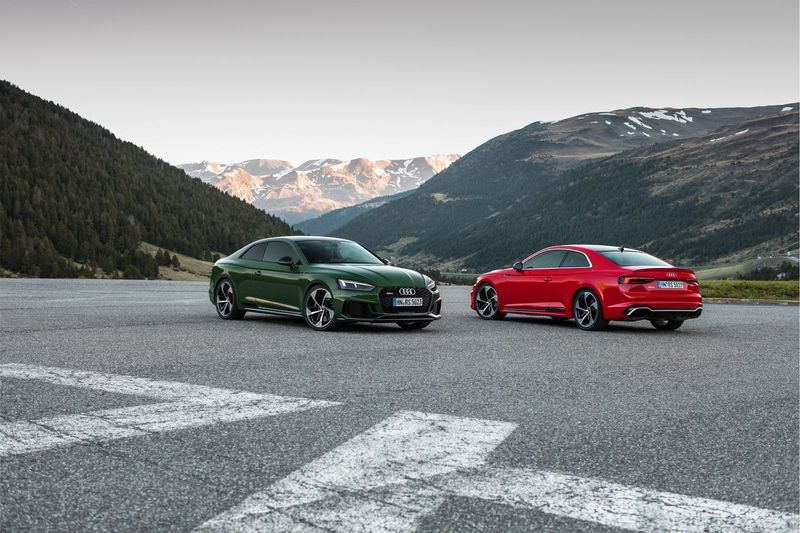
Even in the strange 'army green' colour, the new RS5 look aggressive and ominous.
Imperfectly balanced
Tie in a dynamic steering system which actually comes good at outside-lane motorway speeds – competent and thickly accurate – and suddenly you’ve got a two-door RS car persuasively capable of crossing a continent. That the new V6 plays as compelling a part in that narrative as the V8 did in the old car’s motley charm, is a massive plus in its favour.
Where the drawbacks occur, they do so with a pervading sense of inevitability. It hardly needs saying that the new RS5 is quicker than the old, and feels it (there’s simply too much torque fermenting in the engine bay for it not to be) but there isn’t the same accompanying theatrical fizz to its high-rev function, nor the same pot-marked mechanical shunt to its paddle-operated gear changes.
That it proves less than mesmerising in such moments is hardly startling given the point of comparison – but it does feed into the RS5’s wider shortcomings; specifically in a chassis dynamic which still gently refuses to ever come enthralling to life. That’s not to say that progress hasn’t been confidently made: with less weight over the front axle and the rear diff attached, the car is plainly more agile than it’s ever been and can at least be goaded into delivering more drive to the outside back wheel. But the adjustability is fleeting, and very promptly tidied up by the drivetrain even with the stability control switched out.
Immodest amounts of speed or throttle will simply result in Audi’s age-old understeer remedy. Perhaps that’s all forgivable against the backdrop of its maker’s penchant for massive directional stability – it’s rather less easy to absolve the ‘dynamic’ end of the dampers settings (too firm even for Andorra’s roads) or the steering (too impenetrably frustrating for any road) or the decidedly clumsy pedal feel of the cost-option ceramic brakes.
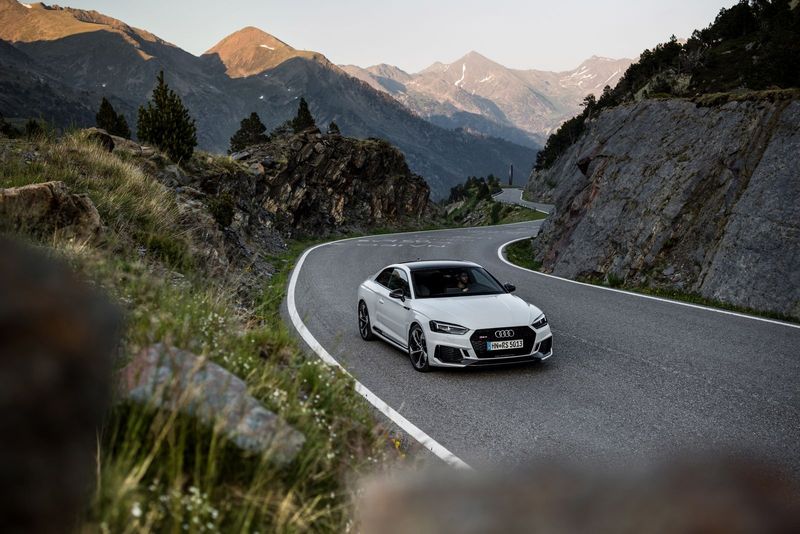
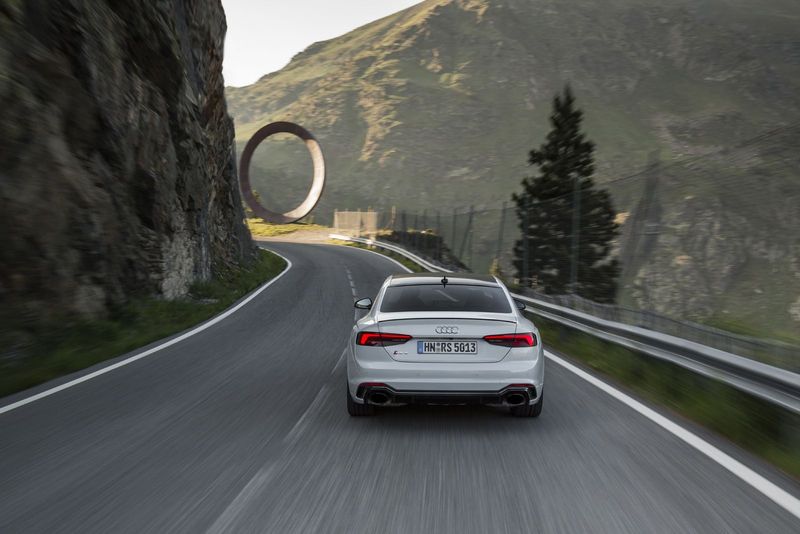
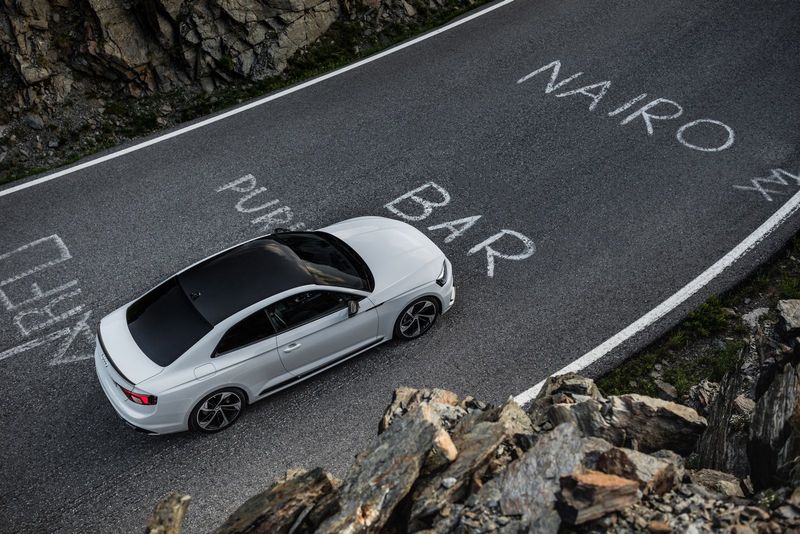
The Audi RS5 makes the most sense as a GT cruiser car, distancing itself from old enemies such as the BMW M4 and Merc C63.
Final say
Ultimately, this leaves the RS5 recognisably imperfect – and persuasively distinct. The prime reason for acquiring one (the V8) has manifestly gone, and while the new V6 is as consistent as treacle and about as satisfying when warmly spooned into your life, it’s not necessarily the kind of engine that stands dramatically out from the broader experience to howl ‘buy me’.
Instead, any deeper appreciation of the prospect rests on a preference for the model’s tactful repositioning. Dig the monster GT vibe, and the car’s established gifts for interior splendour, technical prowess and sharp-edged appearance start to make considerable sense – as does the generosity and seamlessness of the biturbo lump. Seen from this alternative vantage point, which has almost nothing to do with the hard-charging, handling flair that exemplifies its rivals, and the RS5 appears simultaneously limited – and quite possibly more appealing than ever before.
Audi RS5 Quick stats
Price: R1.2 million (est.)
Engine: 6-cylinder, 2.9-litre, twin-turbocharged, petrol
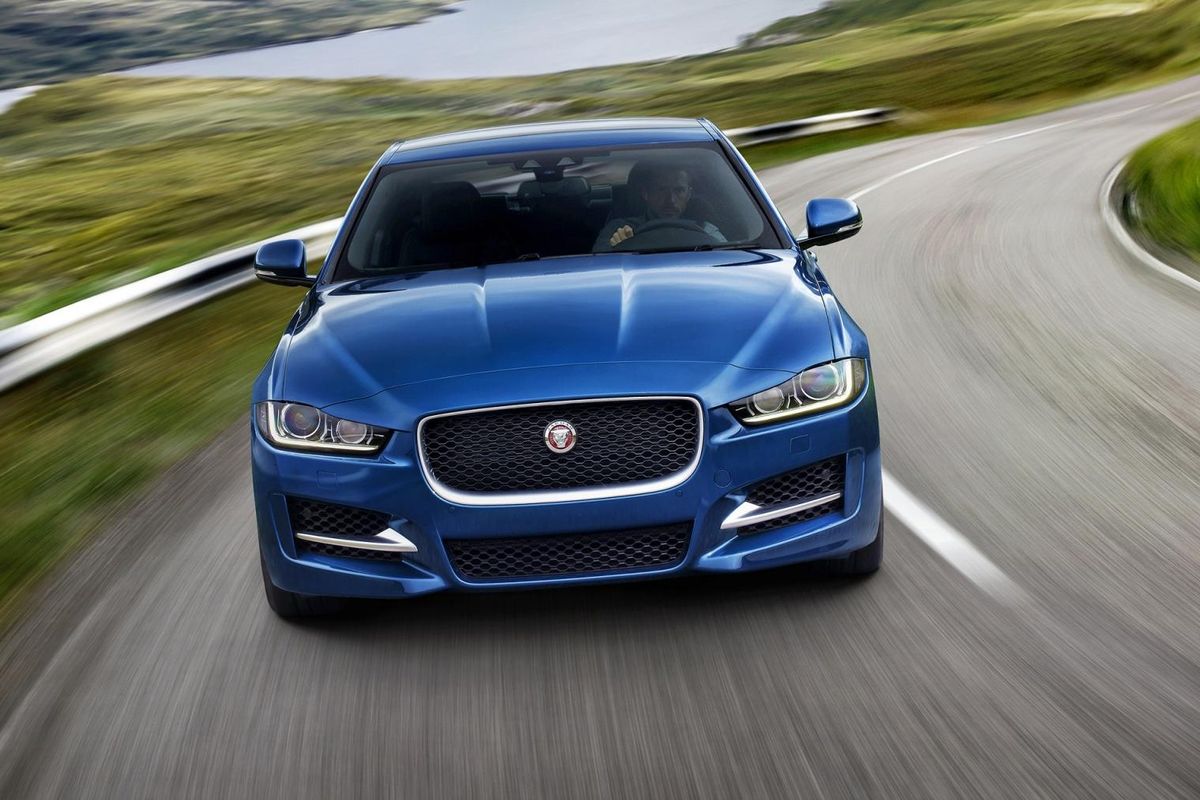
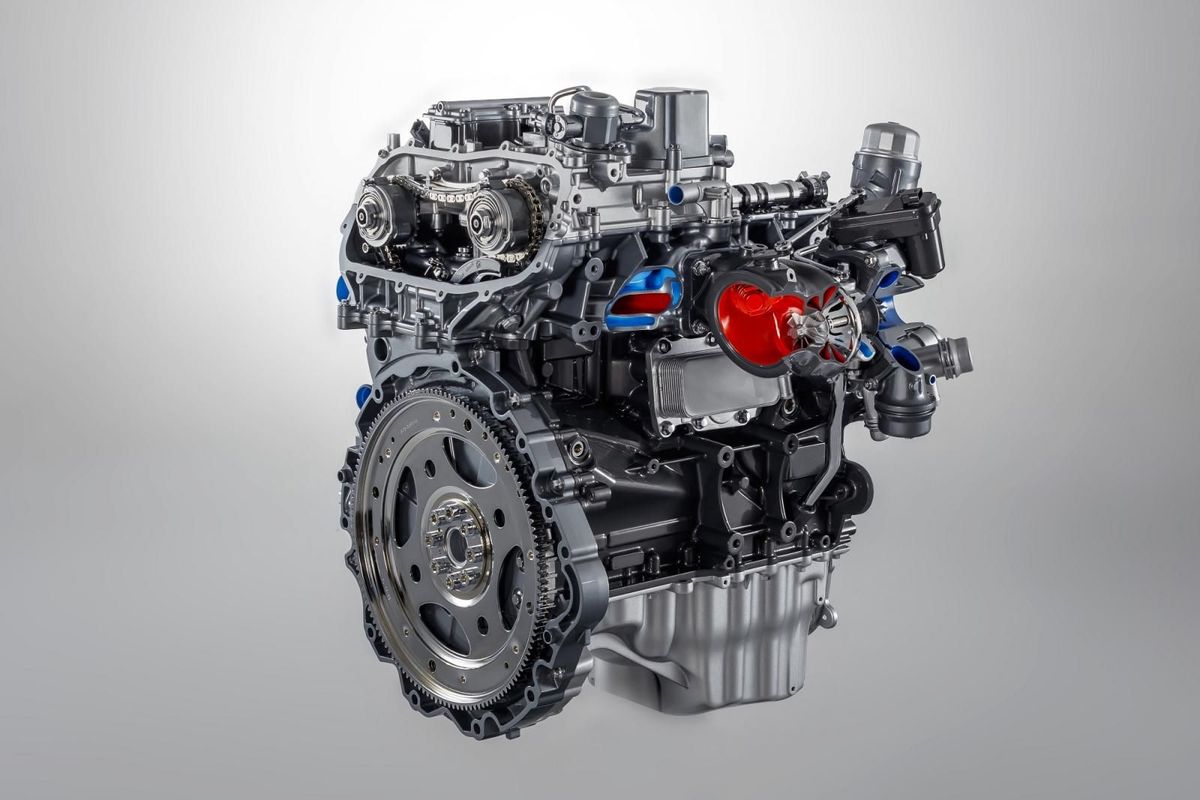
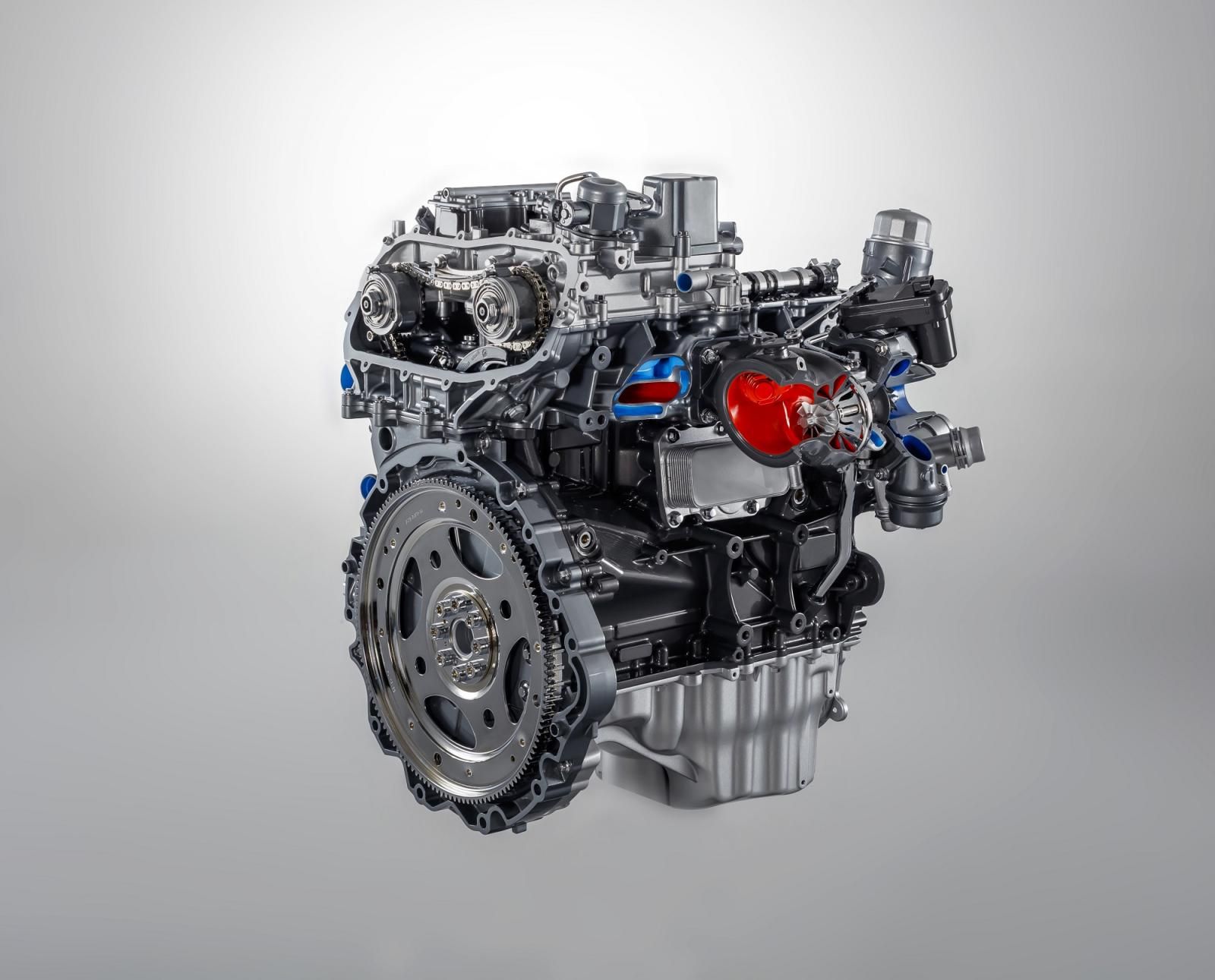
British car maker, Jaguar, has announced the arrival of an all-new engine that will do duty in the XE and XF sedans as well as the F-Pace SUV.
The numbers are looking good for this new powertrain, on paper at least. 221 kW and 400 Nm from a 2.0-litre four-cylinder petrol engine is commendable and it gives its products some respectable, yet efficient performance. The Jaguar F-Pace will hit 100 kph in 6 seconds dead, while returning 7.7 L/100 km.
The Jaguar XF is a fraction faster to 100 kph at 5.9 seconds and returns figures of 6.8 L/100 km. However, the smallest and lightest Jaguar product is likely to benefit the most as the XE will power to 100 kph in 5.7 seconds, while consuming just 6.7 L/100 km. All the products above will be mated to the ZF eight-speed automatic gearbox. Expect to see a 30t badge on the rear of the vehicles and it'll slot between the 25t and the potent S models.
“We continue to broaden the range of our Ingenium engine family, giving customers more choice than ever before. Our new 300PS (221kW) petrol engine provides the performance synonymous with Jaguar, while delivering enhanced fuel economy thanks to its state-of-the-art exhaust technology and pioneering valve train design,” said Nick Rogers, Executive Director, Product Engineering. “This clean and more efficient engine perfectly complements the advanced lightweight aluminium body structure of our XE, XF and F-Pace models.”
This new Jaguar turbocharged 2.0-litre four-cylinder petrol engine boasts outputs of 221 kW and 400 Nm of torque.
Mechanically, this engine is codenamed P300 and features twin-scroll turbos with ceramic ball bearings to reduce friction and a high flow compressor wheel for improved performance. The new engine is manufactured at Jaguar Land Rover’s £500-million Engine Manufacturing Centre in Wolverhampton, UK. This engine upgrade forms part of Jaguar's update to the 2018 model year products, some of which include a Gesture Boot Lid for the XF and XE, as well as Jaguar’s Configurable Dynamics technology, which allows drivers to personalise the automatic gearbox, throttle and steering settings. The XE, XF and F-Pace also gain numerous safety updates such as Forward Vehicle Guidance and Forward Traffic Detection.
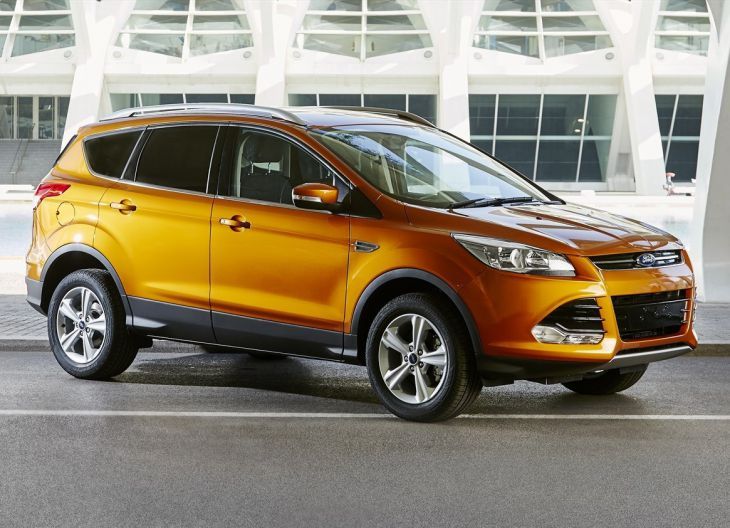
Following the much-publicised recall of 1.6-litre turbopetrol Ford Kuga derivatives earlier this year, Ford South Africa has now issued yet another fire-related recall for its entry-level Figo and Ikon models. Herewith the latest details…
What Ford’s fire-related Figo and Ikon recall this week lacks in drama – images of dozens of vehicles ablaze at roadsides, and a nationally televised recall, a la Kuga – it makes up for in numbers. While the Kuga recall, announced in January, involved “just” 4 556 vehicles, the Figo/Ikon recall Ford put into motion this week applies to 15 600 cars (petrol engines only) built in India between 2004 and 2012.
And while 16 of those cars have caught fire globally, none of those fires happened in South Africa, at least “not that we are aware of”, 2 Ford spokesmen told me on Wednesday.
Some readers may recall footage of a Figo in flames outside the Nelspruit Mediclinic in mid-January, at the height of the Kuga catastrophe, but Ford says it doesn’t know whether or not that fire was linked to the reason for this recall.
Ford SA went about this latest recall very quietly, e-mailing the owners to tell them that their car was part of a “customer service action” to replace the power steering’s high-pressure hose which may split, resulting in a power steering fluid leak.
“A power steering fluid leak could result in fumes being emitted from the engine compartment, and it may also be possible for power steering fluid to come into contact with the vehicle’s exhaust system components, creating the potential for smoke and, in extreme cases, fire. Please contact your Ford dealer immediately…”
There was no press release; not until the first journalist got wind of recall and asked Ford SA for more detail.
Second-hand buyers may be oblivious
Undoubtedly many of those Figo/Ikon owners won’t hear about the recall directly, having bought their cars second-hand and failed to register their details with the manufacturer.
“It’s a big problem,” Ford’s Rella Bernades told me last week, when discussing Phase 2 of the Kuga recall, which rolls out from July. “If the owner of a car that’s part of a recall isn’t on our system, they won’t get the recall notice from us.”
In the case of the Kuga recall, six months down the line, 87% of the affected SUVs have had the fire-proofing modification done, meaning about 500 of them haven’t, despite months of hard-to-miss publicity around the issue. That’s quite a scary amount of “it won’t happen to me” going on, if you ask me.
What you should know, if you own a Figo or Ikon
Note your VIN
Note that the recall applies to cars built between August 9 2004 and March 24 2012, not to the year they were sold or first registered. You may be driving a 2013 model Figo, for example, which was built before March 2012 and is, therefore, part of the recall. To check without calling Ford, note your VIN and click here to find out the month and year your Ford was built.
It won't cost you anything, but a loss of convenience
You won’t have to pay a cent for the replacement of that high-pressure hose with a new “updated” part, and while the work will take “less than a day”, “due to service scheduling requirements” the dealership may need to keep your car longer than that. And you may not get a courtesy car. In its email to owners, Ford SA “respectfully reminded” them that it was up to the dealerships to provide “alternative transport” and this could “unfortunately” not be guaranteed.
Phase 2 of Kuga recall commences
Adding to the chance of that alternative transport not being available for you is the fact that from July, Ford will invite the 4 556 Kuga owners whose vehicles are part of that safety recall to return their cars to dealerships for Phase 2 of the recall – the installation of a sensor to alert the driver when the coolant level drops.
While they will be given latest-model Kugas to drive as courtesy cars during that process, each dealership will only have one or two of those vehicles available, so the SUV recall process will no doubt add to the demand for courtesy cars at Ford dealerships countrywide in the coming weeks.
While it’s alarming to be told your car is a fire risk unless you get it to your dealership, and fast, for a modication, recalls – even fire-related ones – are fairly common.
In February 2015, for example, Mercedes-Benz SA recalled 2 200 cars to fix a problem "with an engine compartment seal that could ignite”.
Finally, this advice applies generally: If you didn’t buy your car new, make sure you register with the OEM (original equipment manufacturer) so that you are notified about any recalls directly.
Recap of earlier this year…
Ford was embroiled in a controversial fire saga pertaining to its 1.6-litre EcoBoost Kuga derivative that eventually resulted in the recall of some 4 556 units in South Africa. In the wake of the recall, Ford is now offering extended cover on all Kuga models sold in South Africa. The newly launched Ford Kuga PremiumCare Extended Plan offers 6 years or 200 000 km cover.
Jeff Nemeth, President and CEO, Ford Motor Company of Southern Africa commented, "“While we cannot make up for any inconvenience or discomfort that our customers may have experienced as a result of the recent events affecting the 1.6-litre Ford Kuga, we want to reassure every Kuga owner that their safety is our first priority, matched by our unwavering commitment to customer satisfaction and ownership peace of mind. Accordingly, we have extended the cover on all Kuga models sold in South Africa to a total of 6 years or 200 000km, whichever comes first. Introduced at no cost to our customers, this extended cover testifies to our confidence in the Kuga and the actions that form part of the safety recall implemented for the 1.6-litre model.”
The Ford Kuga PremiumCare Extended Plan will also be automatically added to Kuga models in Namibia, Botswana, Swaziland and Lesotho. All derivatives, including the Kuga 1.6, 1.5 petrol and 2.0-litre diesel will be covered and the plan will be loaded to each Kuga's Vehicle Identification Number (VIN) based on the original New Vehicle Warranty start date.
Nemeth added, "The extended cover assures that customers will benefit from worry-free motoring long after the Kuga’s standard four-year/120 000km New Vehicle Limited Warranty expires. We trust this will assist in restoring customers’ confidence in our products and the Ford brand.”
Over 1 000 components are covered by the Ford Kuga PremiumCare Extended Plan and some of these include the engine and emissions systems, transmission, drivetrain, electrical components, suspension, brakes, axles and steering. The air-conditioning and heating, audio and safety systems are also covered, along with the Kuga’s driver aids, comfort and convenience features.
Owners are advised to have their vehicles serviced at an authorised Ford dealer according to the specified service schedule and to ensure proper maintenance between services as recommended in the vehicle's owner manual.
Any queries regarding the Ford Kuga PremiumCare Extended Plan can be directed to Ford Customer Service at 0860 011 022 or e-mail [email protected].
Previously…
Ford South Africa has announced it has issued a voluntary recall of 1.6-litre EcoBoost Kuga derivatives that were sold on the local market between December 2012 and February 2014. This comes after reports that at least 45 Ford Kugas have caught fire.
The widely-held public perception that Ford South Africa had unnecessarily delayed action in the matter has caused a backlash on social media, with many wondering how many more would catch fire before the brand would take notice. Sadly one person passed away in his car. Reshall Jimmy was on holiday in Wilderness when his vehicle caught alight. His family reached out and set up a Facebook page called Ford Vehicles Burning. It didn't take long for the page to feature numerous photographs of burning Ford Kugas on the side of the road.
What Now
On the afternoon of 16th January 2017, Ford South Africa held a press conference where it addressed the situation. According to Ford, the fires were caused by, "overheating that can lead to a broken cylinder head & oil leak. If leaking oil reaches hot engine components it can cause a fire." As it stands, the issue surrounding the fire only affects one model. It's the 1.6-litre Ecoboost. If you have a Ford Kuga which is a 1.5 or a 2.0-litre, you do not need to panic or worry as it does not affect you.
The National Consumer Commission didn't hold back at the press conference. “A product that poses any risk to our consumers does not have a place in our market,” said NCC commissioner Ebrahim Mohammed. “It is for this reason that the NCC requested an urgent meeting last week to inform Ford of our decision to authorise a safety recall of the vehicle in terms that will be determined by the NCC,” said the commissioner.
Ford South Africa announced a voluntary recall for this model. All Ford Kuga 1.6 Ecoboost units sold between December 2012 and February 2014 are affected. Currently, this comprises 4 556 units and owners have been urged to get their vehicles checked.
If you own a Ford Kuga 1.6 and you see any indication of overheating, you're instructed to immediately pull over and switch off the engine. Do not open the bonnet at all. Your next action is to phone Ford South Africa on 0860 011 022. If you own a Ford Kuga, you're requested to bring your vehicle into your nearest Ford dealership for the safety recall. The vehicle will have its parts replaced, software updated and oil leak checks conducted. You will be given a courtesy car.
" PRETORIA, South Africa, January 16, 2017 – Ford South Africa is issuing a safety recall for Kuga models equipped with the 1.6-litre engine to address an engine overheating condition that could cause a fire. A total of 4,556 vehicles are affected by this safety recall in South Africa, and were built between December, 2012 and February, 2014. Ford Kuga models with 1.5-litre and 2.0-litre engines are not affected. We have investigated the incidents as they have been reported to us, removing many parts for detailed examination in our engineering facilities in Europe and North America. The data collected from the recent incidents and the maintenance checks we are conducting through our dealers have helped us to determine the root cause of the fires.
While we continue to investigate the Kuga 1.6 engine compartment fires, based on the current data we have determined that the fires are due to engine overheating. This is caused by a lack of coolant circulation which can lead to a cracking in the cylinder head and, therefore, an oil leak. If the leaking oil reaches a hot engine surface, it can potentially catch fire. We are not aware of any injuries resulting from the engine compartment fires. With this safety recall, all affected vehicles, including those that have already been checked, must be taken to a Ford dealership as soon as possible. This safety recall comprises two stages.
The first stage involves replacing affected components on the cooling system, verifying and updating the software and conducting an oil leak check on the cylinder head. If any Kuga 1.6 owner sees any indication that the engine may be overheating or experiences warnings on the instrument cluster, they should pull over as soon as it is safe to do so, switch off the engine and ensure all occupants are safely out of the vehicle. For safety reasons, the bonnet must not be opened. The emergency services should be called first, if required, then Ford’s Roadside Assistance on 0861 150 250. Supported through the AA, this service is available 24/7.
The 1.6 Kuga is safe to drive, provided the integrity of the cooling system is maintained, and this safety recall has been actioned. The next stage will make the cooling system even more robust, and is likely to involve further changes to parts and warning systems. We are currently ensuring that the changes we make are complete and thoroughly tested – and will communicate with our customers as soon as this stage commences. Every effort is being made to minimize inconvenience, and reassure customers that their safety is our top priority. We are committed to keeping our customers mobile. Should a customer experience any engine overheating problem with their 1.6 Kuga, or delays in the repair due to a shortage of parts, arrangements will be made through the nearest Ford dealer and Ford Customer Service to provide a courtesy car while the vehicle is repaired. Any customer concerns or queries can be directed to Ford Customer Service at 0860 011 022."
Tata Bolt 1.2T XT (2017) Video Review
Tata is executing an overhaul of its model line-up and one of its early products of the revival is the Bolt compact hatchback.
How big of an improvement is the budget-oriented Bolt compared with its unrefined predecessors? And, given the competition from top-selling brands, should you consider the Bolt at all?
Renault Clio RS 220 EDC Trophy (2017) Quick Review
A faster and more powerful Renault Clio RS recently landed in South Africa and we could hardly wait to drive the top-of-the-range newcomer. It's called the Renault Clio RS 220 EDC Trophy and right now it's the most hardcore Clio on sale. Is it worthy of your attention? Let's find out…
We don’t like: Gearbox paddle positioning, special high-performance tyres are expensive, ride quality suffers on deteriorating roads
Alternatives:
Hands-on driving fun: In this price-sensitive market, we'd find it a challenge to not recommend the Ford Fiesta ST. Now available in a more potent (and limited edition) ST200 guise, the Fiesta ticks all the boxes for a great all-round performance hatchback. Its manual gearbox is involving enough to put a smile on your face, yet docile enough to make commuting a cinch.
More luxury: The Mini Cooper S offers similar performance to the Clio Trophy, but it's a bit more premium. While it may not offer as the outright thrills and entertainment as the Renault, it's still brisk. We think it suffers from an image problem as it has become a bit softer and cuter. You could opt for the JCW, which is R50k more than the Trophy.
The popular choice: The all-new Volkswagen Polo GTI now features a 147 kW 2.0-litre turbopetrol engine and it should prove popular when it lands in South Africa in 2018. The older 1.8-powered GTI DSG is still on sale, but in terms of driving enjoyment, it's more of a warm hatch than a hot one. We'll happily recommend it as a daily driver, however.
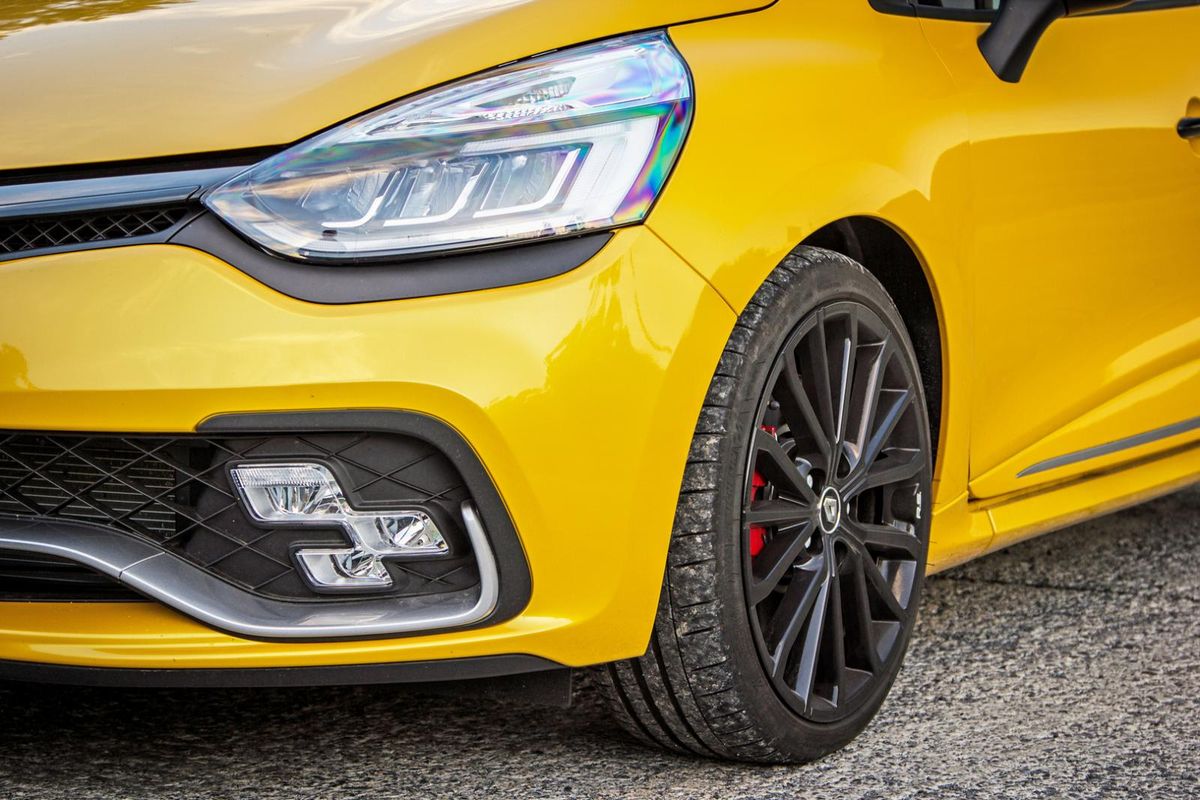
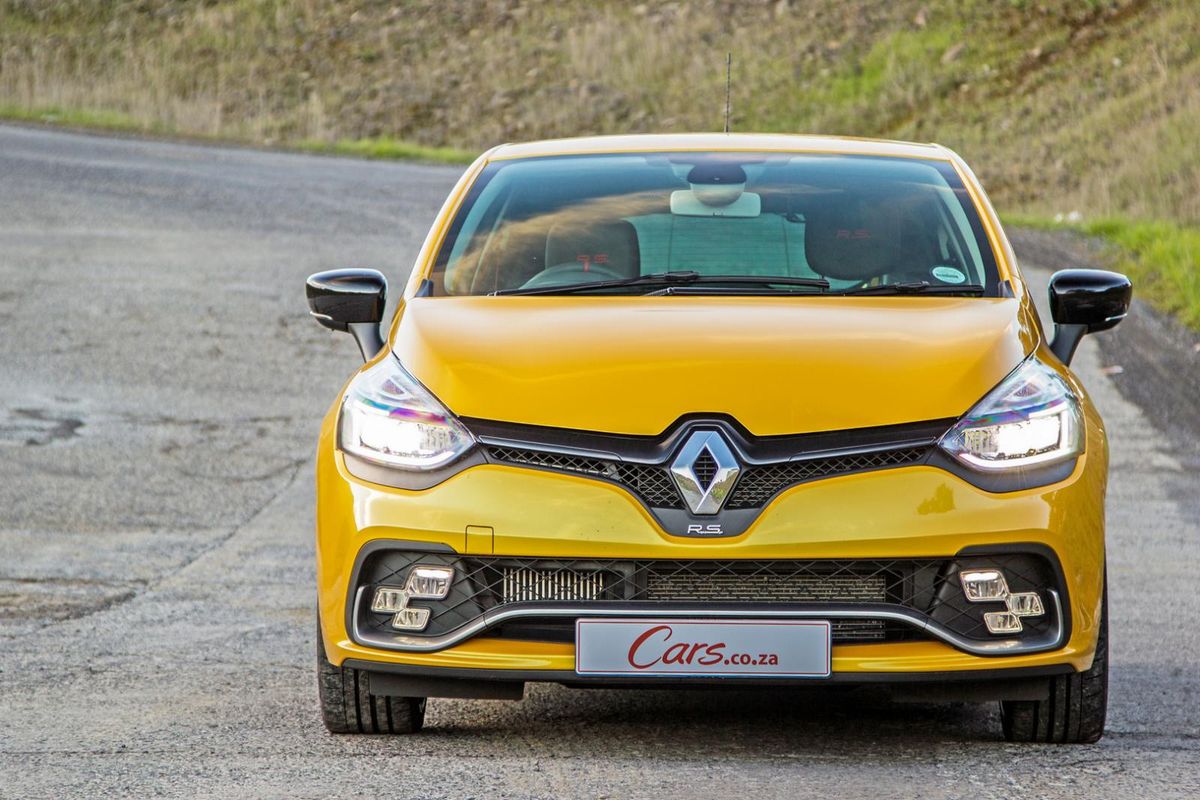
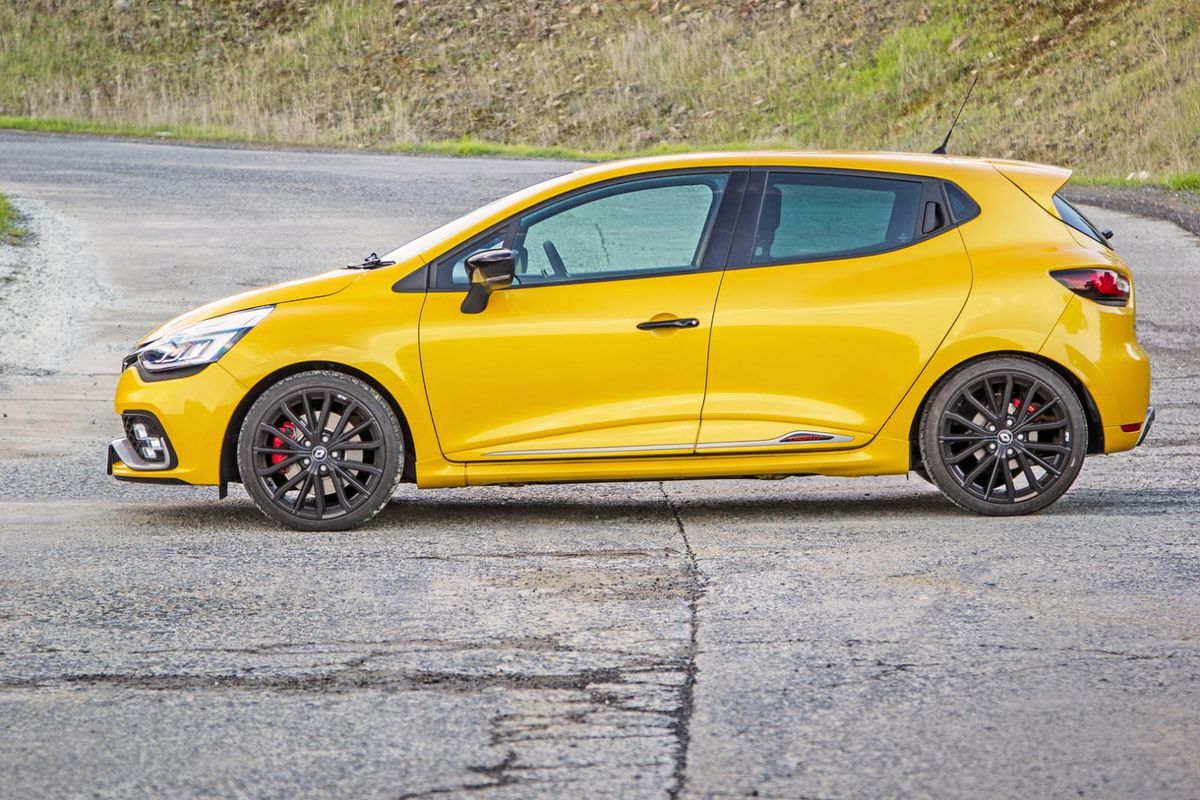
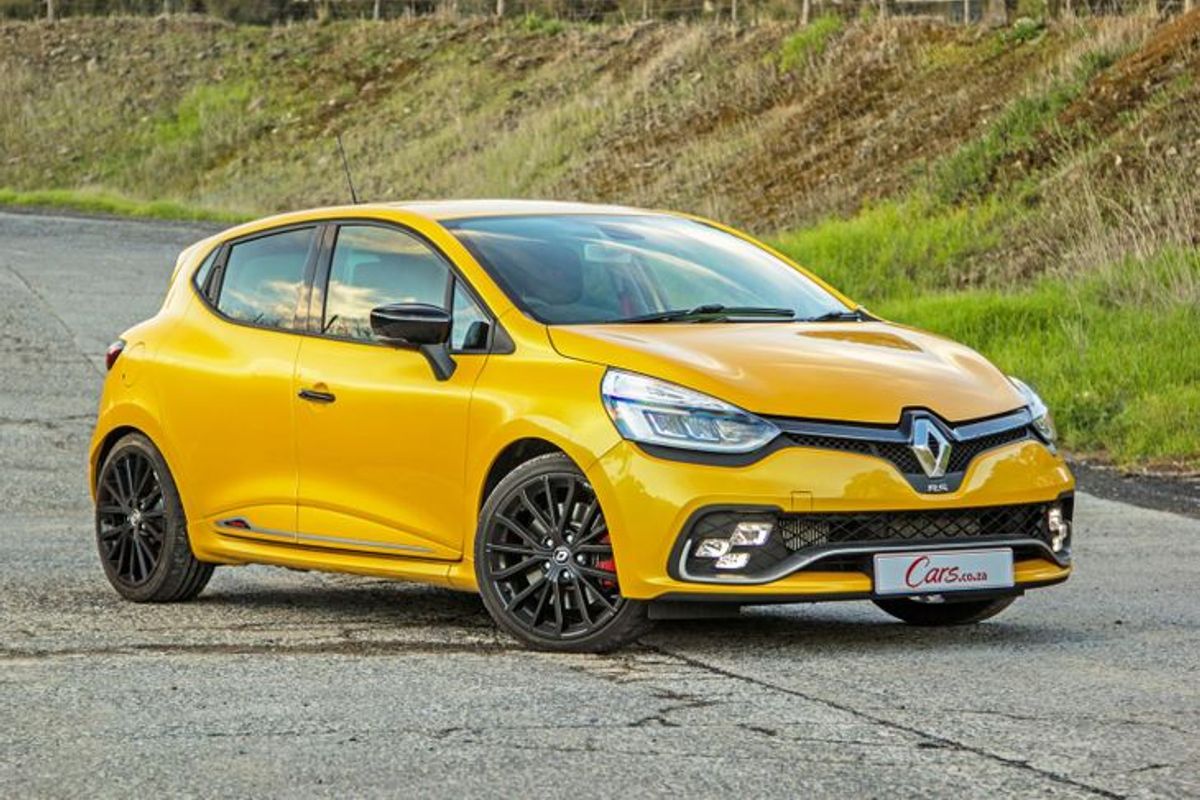
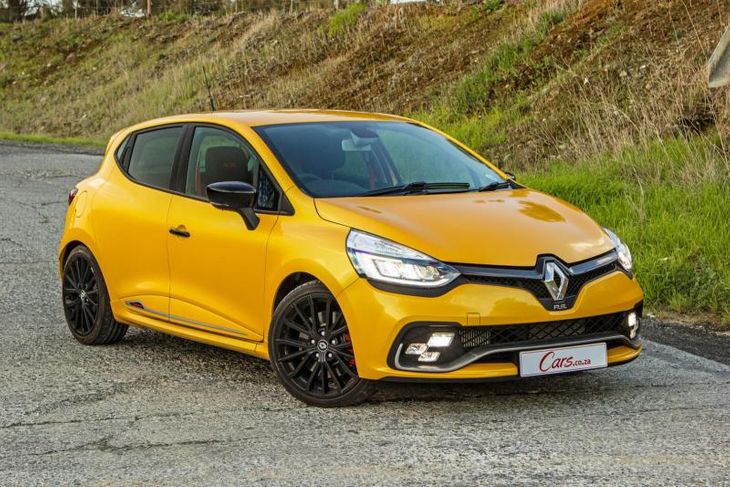
The new Renault Clio Trophy front end is dominated by the RS logo foglights. New LED headlights are potent.
The Renault Clio RS is available in 2 flavours: Lux and Trophy, whereas before it was Lux and Cup. Trophy is a special word in the vocabulary of Renault Sport as it signifies the ultimate performance incarnation of a product. Lux is geared more toward comfort and day-to-day driveability, while Cup ups the ante for a more involving and focused drive.
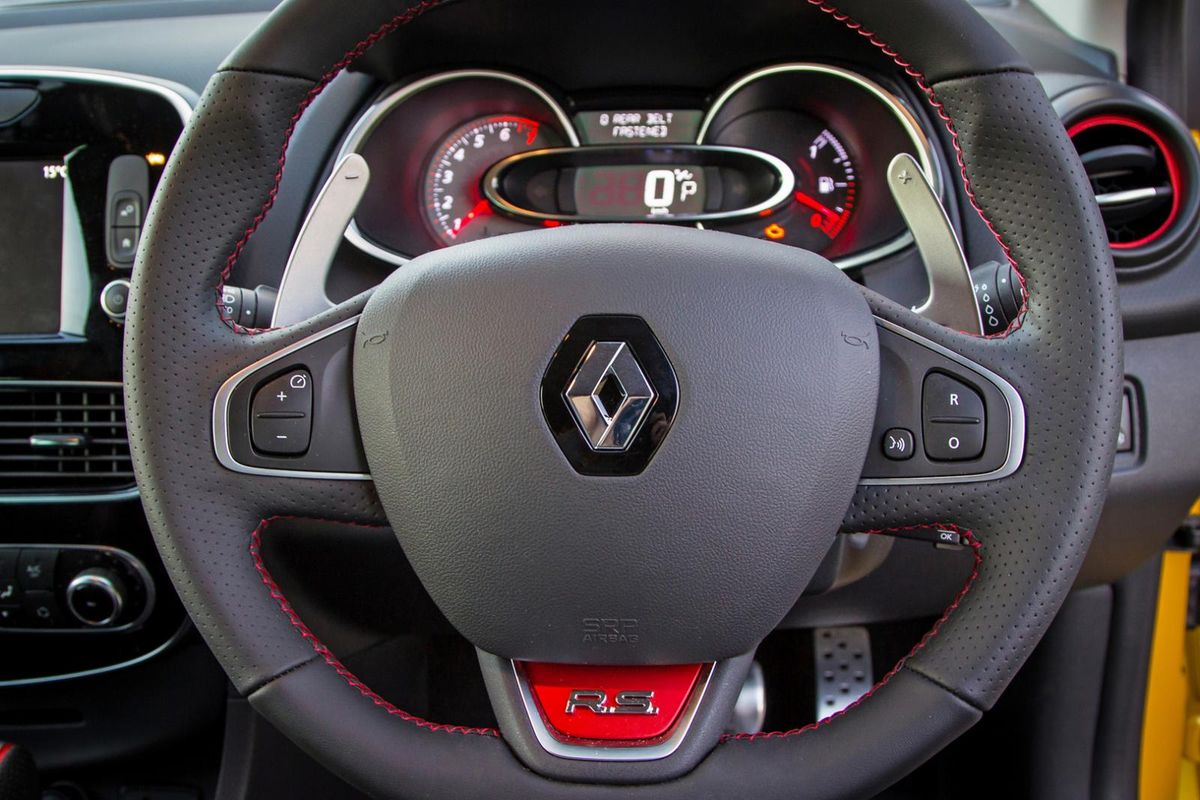
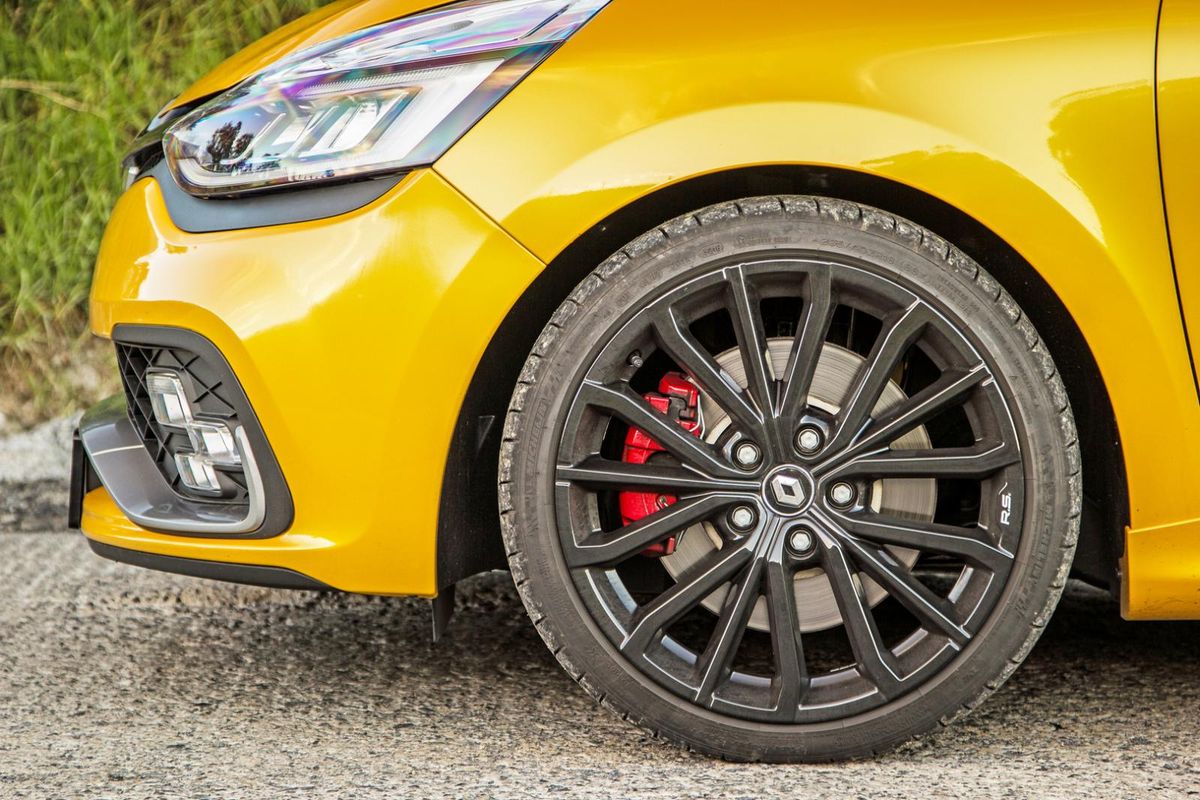
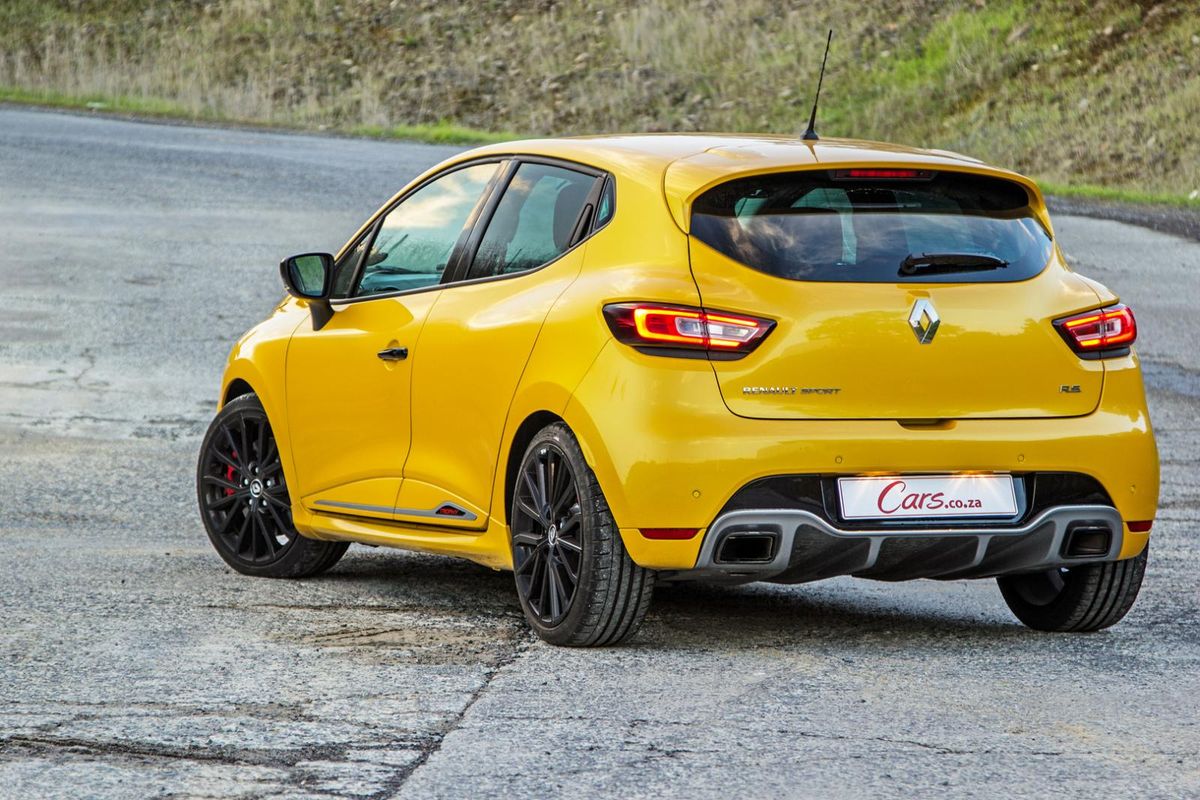
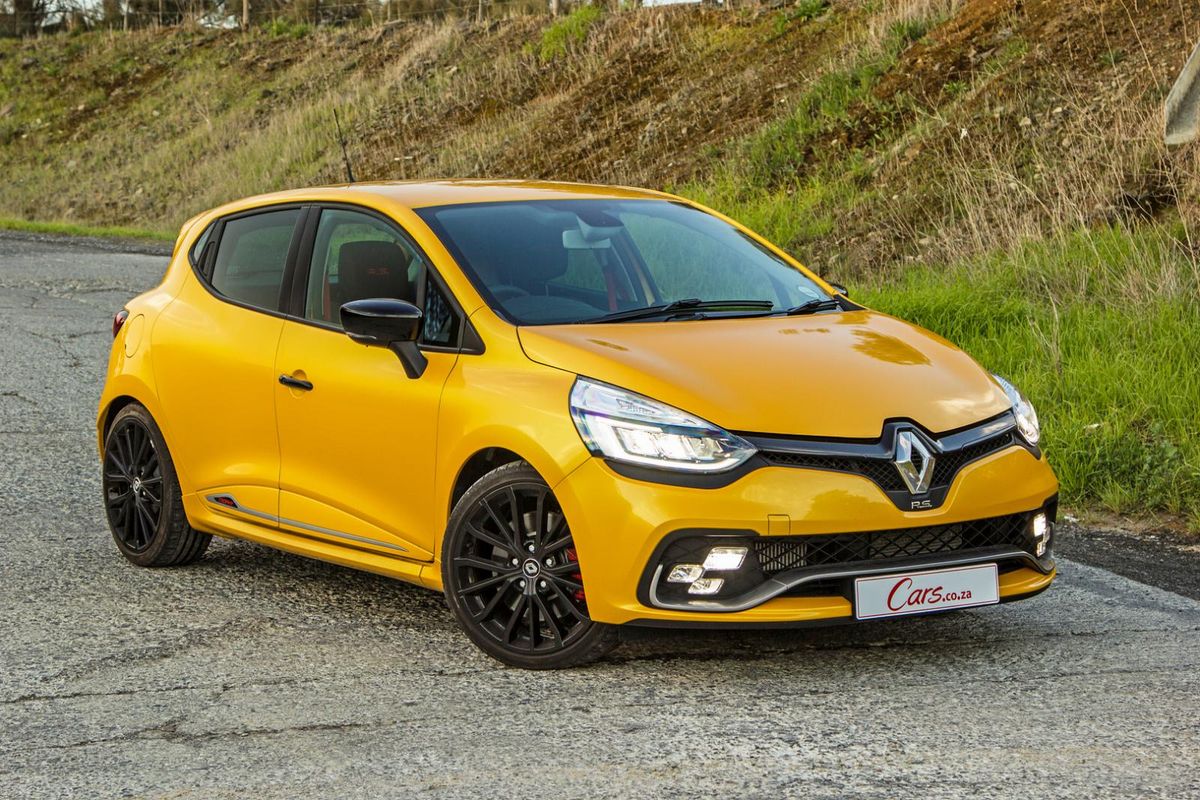
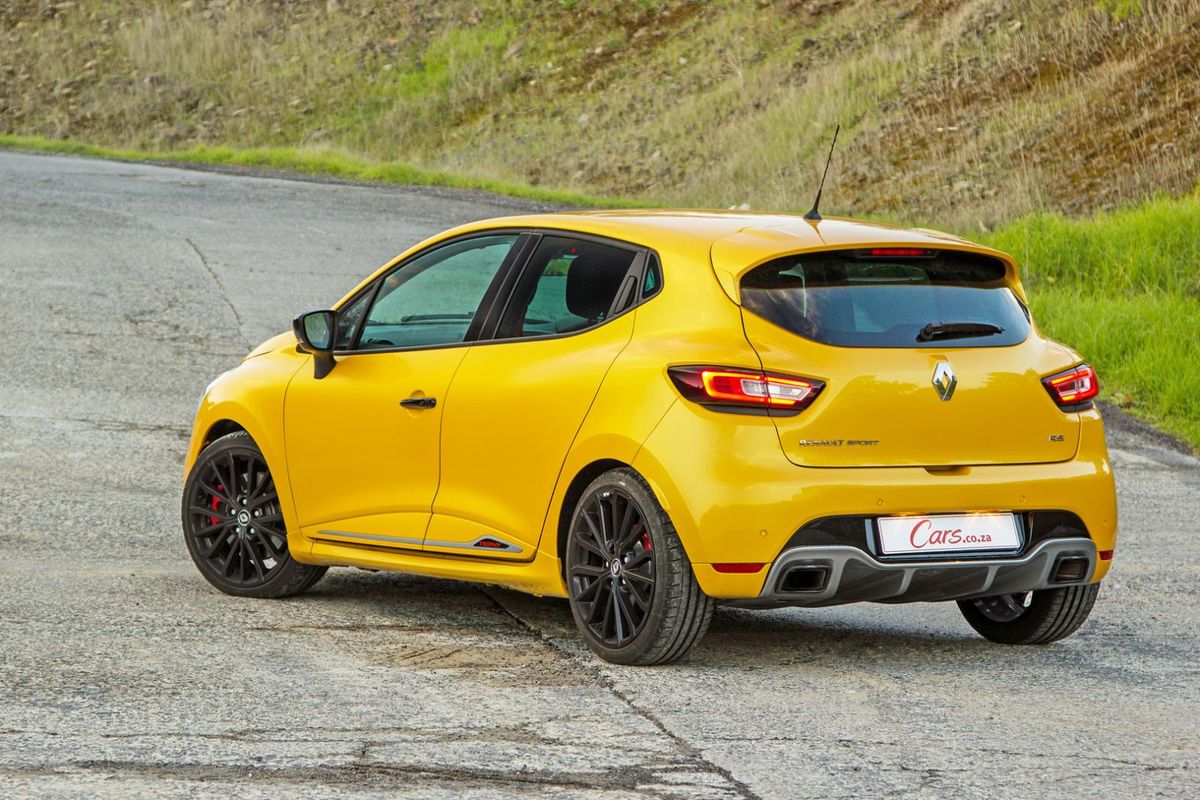
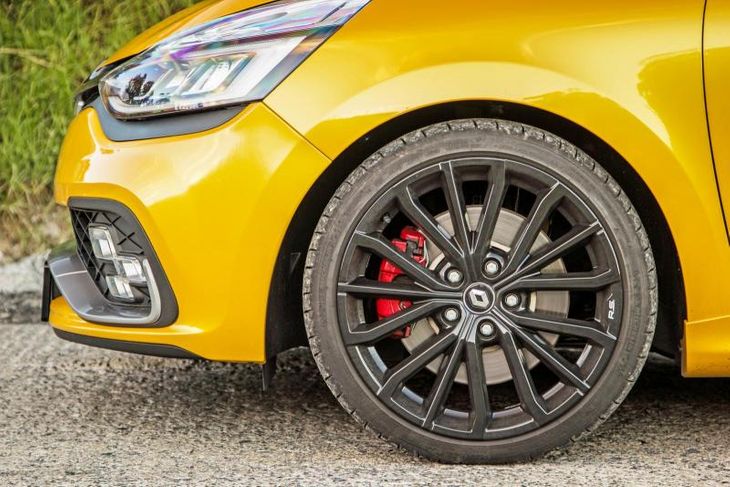
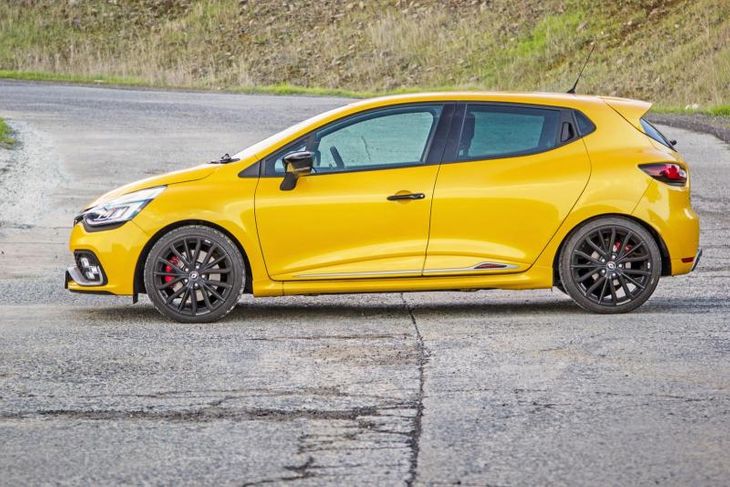
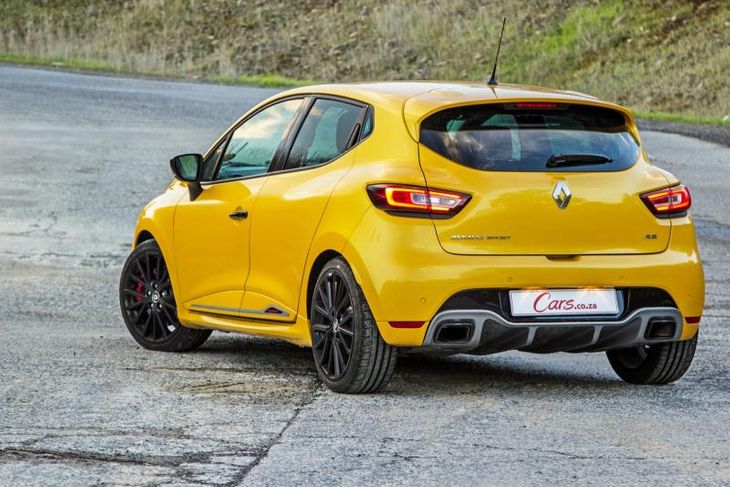
The Trophy, however, is a no-holds-barred road-going track toy. The facelifted Clio RS is recognisable through its revised headlight design, foglights in the shape of the RS logo, LEDs in the tail lights and for the Trophy model, there are red brakes, an Akrapovic exhaust system, 18-inch wheels, Trophy badging and. if you look closely a lower ride height.
The good
That fast feeling
If there's one thing that Renault Sport has managed to consistently get right, it's imbueing its products with that feeling that you're driving something fast. Even when you're not pressing on and just doing a mild overtake, you know you're piloting something quick. Power comes from the Renault-Nissan Alliance 1.6-litre turbocharged 4-cylinder (same motor as the Juke, but with obvious enhancements) and in Trophy application, there's 162 kW and an overboost-assisted 280 Nm. Those are big numbers for something as little as a Clio and the office debate raged about whether the facelifted Volkswagen Golf GTI 7.5 would be able to hold off a Clio Trophy in a quick drag race.
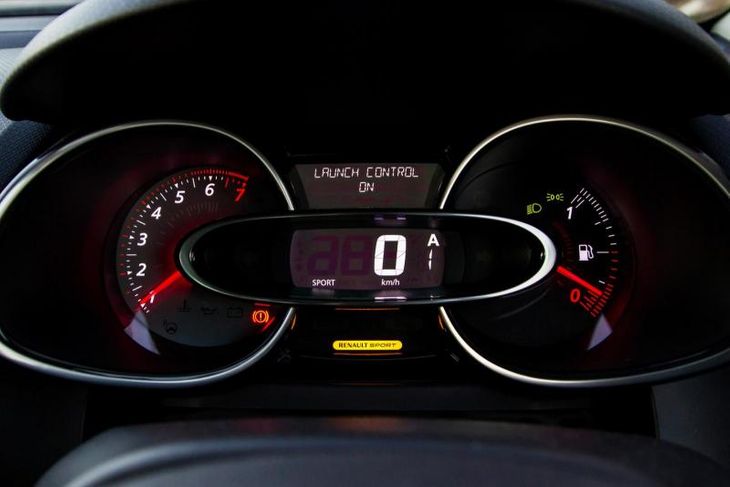
Launch control dialled up and the Clio Trophy is ready to sprint off the line
It's not something we tested, sadly, but the numbers don't lie. The Trophy hits 100 kph in a claimed 6.6 seconds with Launch Control activated. It's all very dramatic as you pull both gearshift paddles towards you and then accelerate hard, and feel the car tense up in anticipation. Hope the specialised Michelin Pilot Super Sport tyres are warm enough (they weren't, often) and release the brakes.
There's a tremendous amount of wheelspin and the Trophy springs off the line with a distinct dual-clutch induced bang accompanying each gearshift. We found that after a few launch starts, the tyres would become stickier and the car turned into a demon off the line. Unlike some hot hatches, there's no torque steer, which is incredible considering the sheer power going through those front tyres
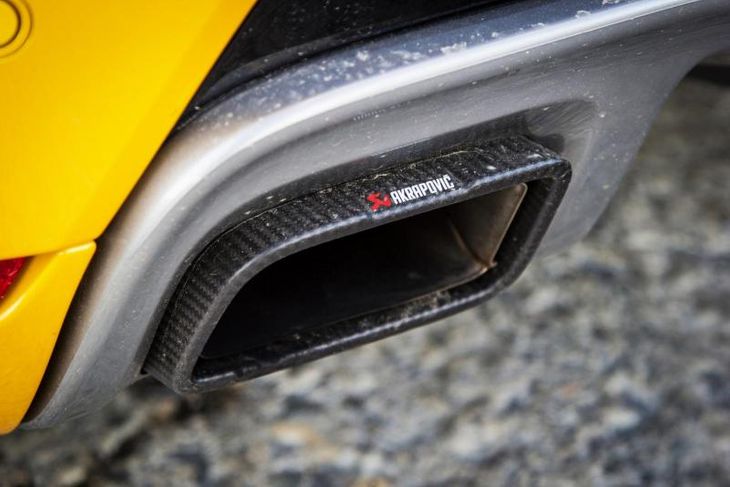
Akrapovic exhausts are beautifully finished in carbon fibre and sound the part.
Throw some corners into the mix and this is where the Trophy comes into its own. The last time I was behind the wheel of something this involving and hands on, it was the Honda Civic Type R, a mad, yet ballistic hatchback. Steering is direct and fast, although we'd note the wheel is a little thick for our liking and not giving us all the feedback we truly desire. You can throw the Clio Trophy into the corners too and it's likely you're going to run out of bravery long before the car runs out of grip. We were very impressed with the brakes and they happily dug into the tarmac and slowed the Trophy down with no fuss.
Michelin Pilot Super Sport tyres and excellent brakes make the Clio Trophy a formidable handling performer
Usually we'd cast a suspicious eye towards a non-OEM performance exhaust upgrade as they always tend to be a bit over the top. We're looking at you, Hyundai i20 Sport… In the Renault Clio Trophy's case, the Akrapovic setup is deviously unassuming in normal mode and it'll take RS (Sport) mode for it to clear its throat. There's a meatier burble and each gearshift gets that distinct bang as each cog is selected. This lovely noise ensured that we spent the majority of our time with the car in RS mode. What's French for vrrrpha? There's a Race Mode too, but seeing as that turns off the electronic stability safety nets, we left it alone.
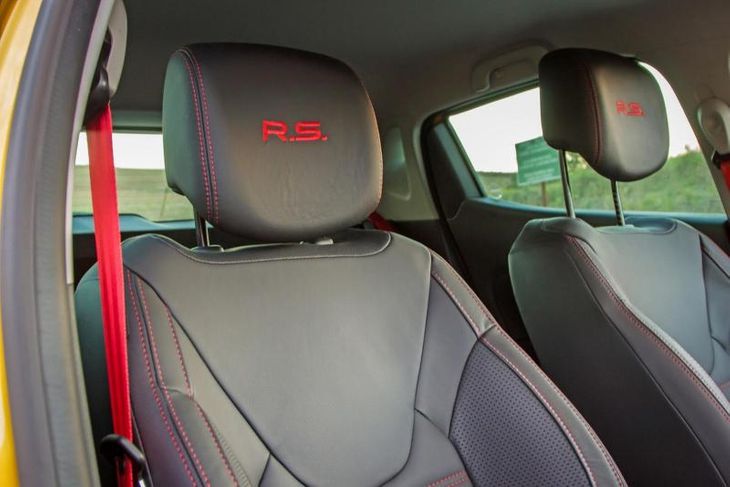
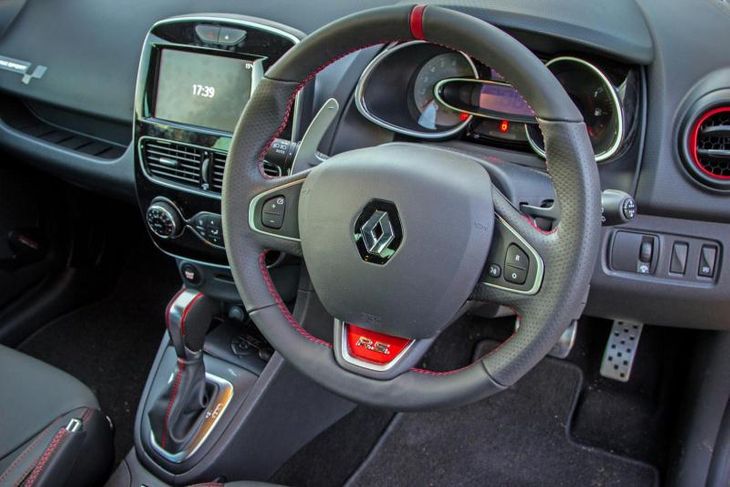
The facelifted Renault Clio interior design has made its way into the Trophy and while there's not immediately different, you'll notice some high-quality materials on the dashboard. It's a simple and unfussy design this, with a smart-looking infotainment screen dominating the centre. The R-link is a great system and it comes with TomTom satellite navigation as standard. It's handy as it'll tell you when there are accidents and jams on your route, and it'll alert you to fixed speed cameras. In terms of seats, the front passengers are in for a treat as these are the Recaro variety and feature heating, which is lovely in winter. It's spacious too, with a generous boot which is on par with class-leading.
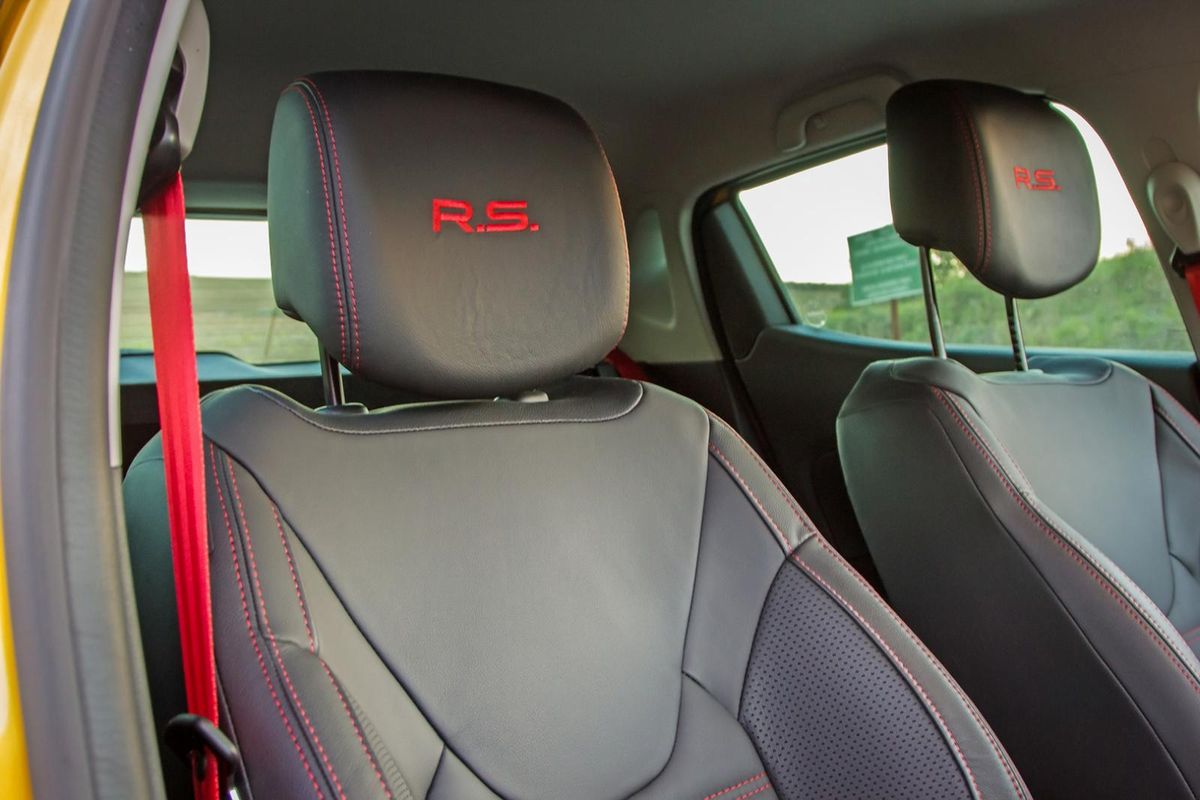
Recaro sporty seats are comfortable and offer heating functionality. There's red stitching and red seat belts to remind you're in a performance vehicle
The levels of specification sets the Clio RS apart from its rivals. There's cruise control, auto lights, auto wipers, Bluetooth connectivity, USB connectivity and the car features a whole bunch of safety features. The Renault Clio Trophy has ABS, EBD and emergency brake assist (EBA), a new generation ESC (Electronic Stability Control) and ASR (Anti-Slip Regulation) active traction control, HSA (Hill Start Assist) and four airbags.
The not-so-good
Gearbox ergonomics
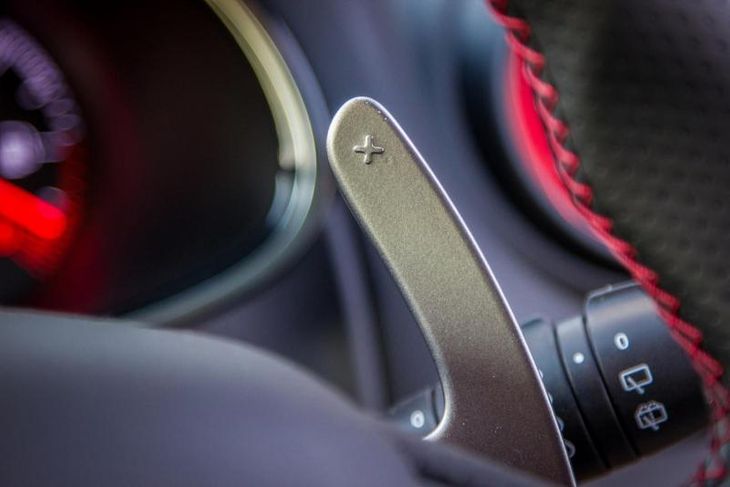
The gearshift paddles have a reassuring feel to them, but they're in the wrong place
The first Renault Clio RS with the EDC transmission was harshly judged. Understandable for 2 reasons. Firstly this model followed the legendary 2.0-litre Clio III Gordini – a magnificent piece of driving kit fitted with a delightful 6-speed manual 'box. Secondly, we've been spoilt with excellent dual-clutch transmissions from other manufacturers and this EDC mark 1 just didn't deliver as hoped. The good news is that this revised EDC is better. Shift times are faster and importantly, the downshifts a bit smoother and predictable.
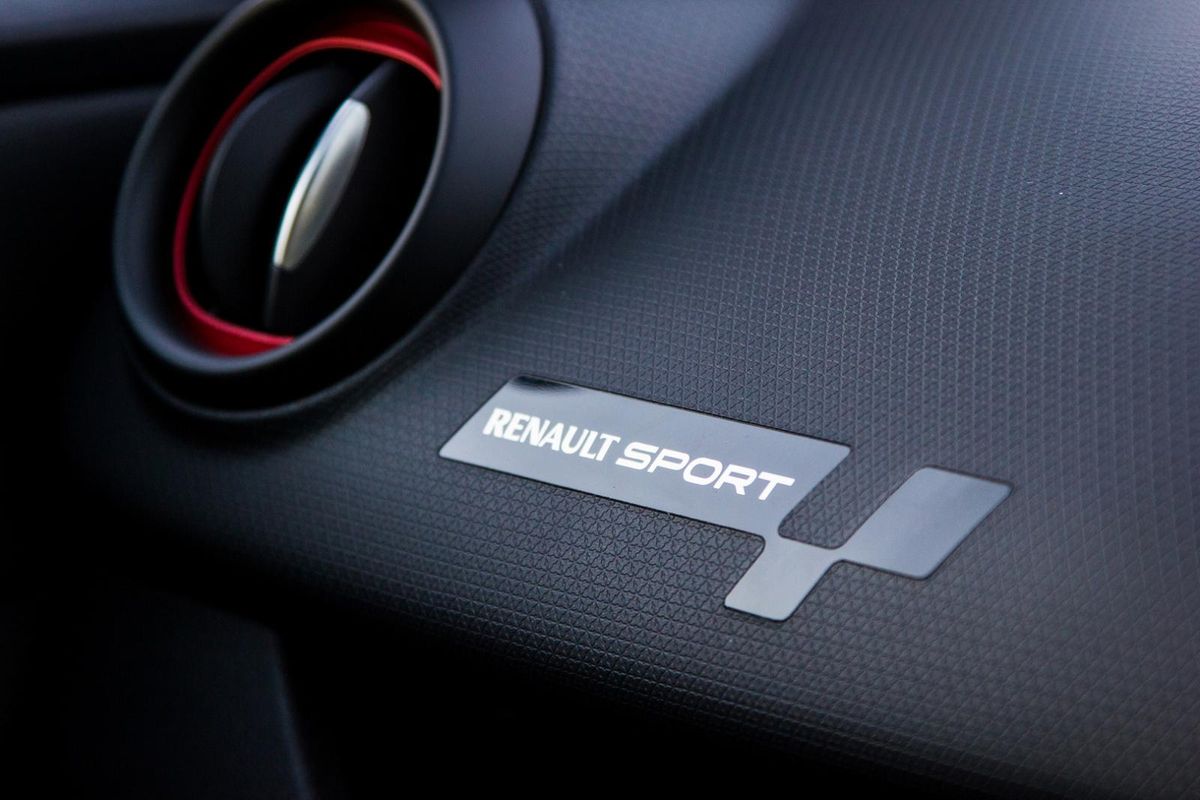
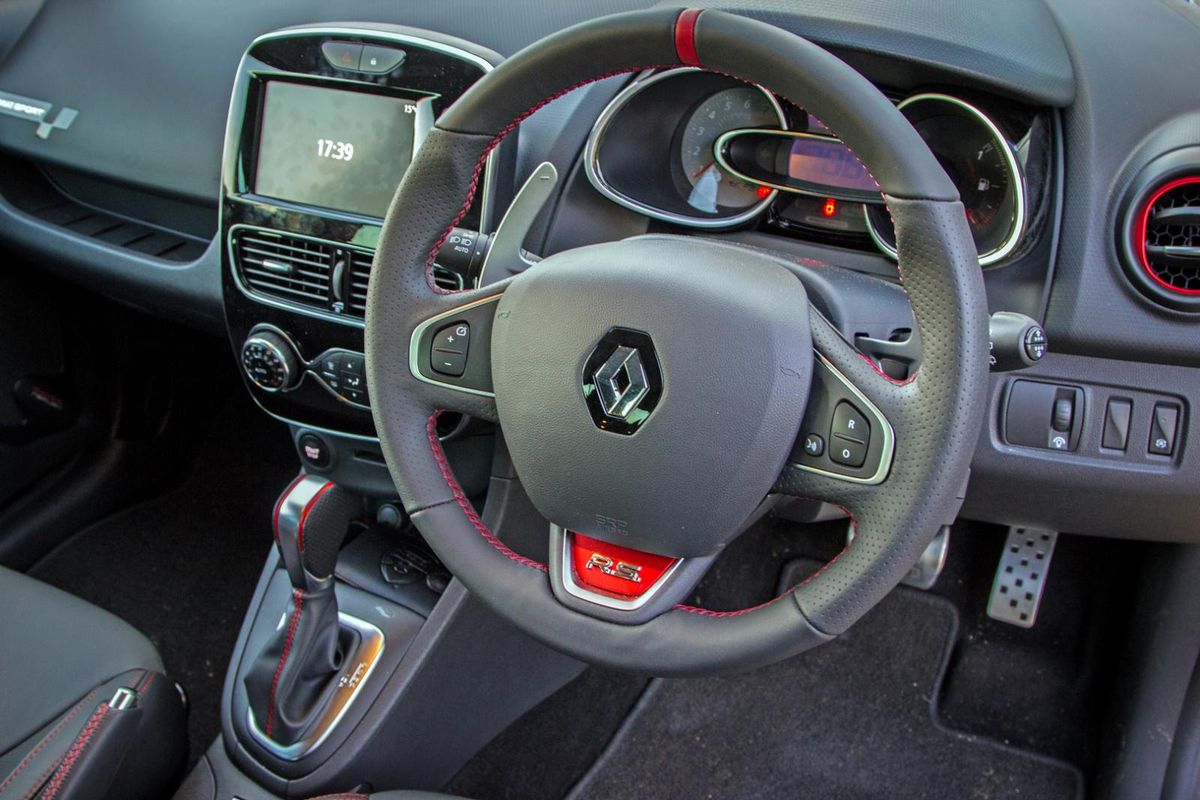
Red detailing and RS badges differentiate this from lesser Clio cabins
However, our gripe comes from the positioning of the gearshift paddles. They're mounted on the steering column, as opposed to the wheel itself and there will be times you will want to exploit that excellent chassis and superb grip and accelerate through a corner. You'll want to shift early and make the most of the grunt, but your right hand will be nowhere near a shift paddle. Frustration. Renault, if you're forcing us to accept EDC, then meet us halfway by placing the paddles in the correct spot.
With the optional yellow paint and in Trophy spec with big wheels and lowered suspension, it really looks the part.
One-trick pony
The Clio Trophy, for all of its compelling performance, is challenging to live with on a daily basis: its ride is harsh, so much so that can feel each and every undulation in the tarmac. In normal mode, the Clio Trophy tries really hard to be docile and sedate, but it's an uneasy truce: you can feel that both the Renault's engine and transmission would far rather be in "maxmum attack mode", as opposed to dealing with the daily drudgery that is the traffic-jam infested road network.
The EDC 'box has come a long way and improved dramatically, but when left to its own devices, it's not smooth in traffic. It's much better to take the reins yourself and use the paddles. The bottom line is that the Clio Trophy is best in RS mode, with the gearbox in manual override and you have a series of beautifully smooth, sweeping tarmac in front of you. As a performance car it's great and will tick the boxes for the enthusiasts, but we think you'd struggle to live with its quirks on a daily basis.
It's fun and fast, but only in specific scenarios. It does not make a great daily driver, but if you're prepared to live with it, you're in for a handful
Pricing & Warranty (June 2017)
The Renault Clio RS costs R419 900 and is sold with a 5-year/150 000 km mechanical warranty and a 6-year anti-corrosion warranty. A 3-year/30 000 km service plan applies, with service intervals at 10 000 km. Metallic paint is an option at R2 500, and you might want the limited edition colours such as Sirius Yellow and Frost Pearl White for an additional R10 000.
Verdict
Renault Sport has again worked its magic into the Clio. It's an improvement on the previous Clio Cup 200 and certainly feels more raw and untamed. The Akrapovic exhaust makes a wonderful noise at full chat, without compromising on aural comfort. It's a devilishly agile thing; you can charge into a corner knowing that the brakes are more than up to the task of stopping the car quickly and, as far as dynamics are concerned, the chassis can deliver whatever is required of it. However performance and enjoyment are just one factor in the decision-making process and while standard specification blows the competition out the water, the Clio Trophy lacks the comfort and day-to-day usability that its rivals muster as second nature.
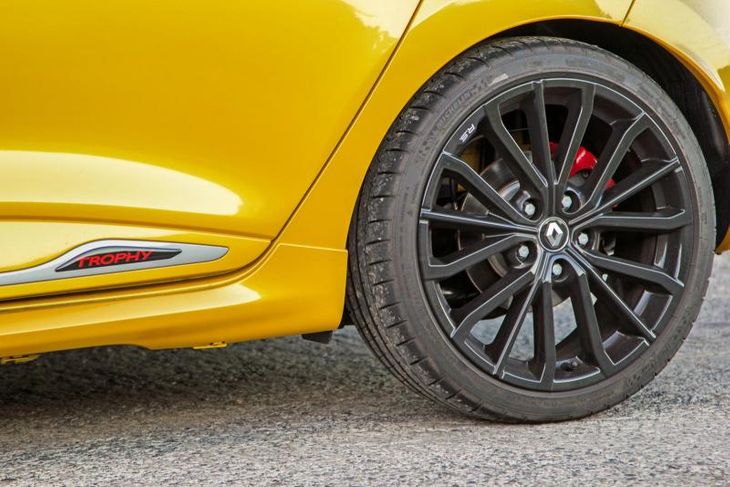
The Trophy badge and red callipers are subtle touches on the Renault Clio RS Trophy 220
There's a lesser Clio RS 200 Lux around that lacks some of the edge of the Trophy and it is fractionally slower and cheaper. However Renault Sport has never been about settling for second best and in this segment, you may as well go all in for the Trophy. You may dislike driving it to work, but if you take a long way home, you'll arrive back with a smile on your face.
Remember this combination: start up, seatbelt on, set transmission into manual mode, activate the RS mode and have fun. At its price, you're getting the market's most focused compact hot hatchback and while the likes of the (limited edition) Ford Fiesta ST200 are under the R400k barrier, we feel that the next generation Volkswagen Polo GTI will be similarly priced. Also, well done to Renault South Africa for adding the heated seats and Akrapovic exhaust to the standard specification; both items are pricey optional extras in other markets.
Audi’s all-new A8 flagship will reportedly make its first appearance on 11 July 2017 at the Audi Summit in Barcelona, Spain before making its official debut at the Frankfurt Motor Show. Leading up to the big reveal, Audi has released 3 videos highlighting the vehicle's fully active suspension system, Traffic Jam Pilot and Remote Parking Pilot. Take a look!
The all-new Audi A8 is around the corner and it's gearing up for its first official appearance in next month at the Audi Summit (11 July 2017) to be held in Barcelona, Spain, before making its official debut at the Frankfurt Motor Show.
Built on Audi’s MLB Evo Platform, the new A8 is expected to borrow styling cues from the Audi Prologue Concept and it will be lighter than the current model. A wide range of top-tech from Audi will make its way into the new A8 including autonomous features such as an updated version of Traffic Jam Assist, which will operate at speeds up to 60 kph without any required input from the driver in congested traffic situations. Audi’s second-generation Virtual Cockpit is also expected to appear in the new A8 for the first time.
Watch the video below for a sneak peak of how Audi A8's Traffic Jam Pilot works!
The new Audi A8 will be equipped with a 48-volt electrical system with each wheel coupled with an electric motor that will help reduce fuel consumption. The A8 will also feature a fully active electromechanical suspension system. The front camera will detect bumps in the road surface and the suspension will adjust itself almost instantaneously to sufficiently iron out the bumps. Audi says that the system is able to nullify vibrations and jolts, resulting in a supremely comfortable ride. Body roll and pitching movements during cornering are also reduced and all-wheel steering will help the A8 achieve maximum agility and stability.
Take a look at what you can expect from Audi's Active suspension system in the teaser video below.
The Audi A8 will also be able to park autonomously and the video below also highlights some of the A8's interior features including a new steering wheel, Audi's Virtual Cockpit and high-quality interior finishes. As for the exterior, the A8 will feature a sleek headlight design, much like that of the Audi Prologue concept. An integrated rear spoiler and striking taillights give the rear-end a unique look.
Watch how the A8 is able to park itself using Audi's remote parking pilot in the video below.
The engine lineup is yet to be confirmed but reports suggest that a range of petrol and diesel engines are likely with a plug-in hybrid model to follow after. Petrol engines may include a 4.0-litre V8 with 343 kW as well as a 6.3-litre W12 engine with 421 kW. On the diesel front, we may see a 3.0-litre V6 TDI with 203 kW, 4.0-litre V8 TDI with 304 kW and a 5.0-litre V10 TDI offering 373 kW.
The new A8 will rival the likes of the BMW 7 Series and Mercedes-Benz S-Class, which is due for a facelift soon. The new Audi A8 will likely go on sale at the end of 2017 and will reach South Africa in 2018. Official details will be revealed in weeks to come and we will keep you updated as they become available.
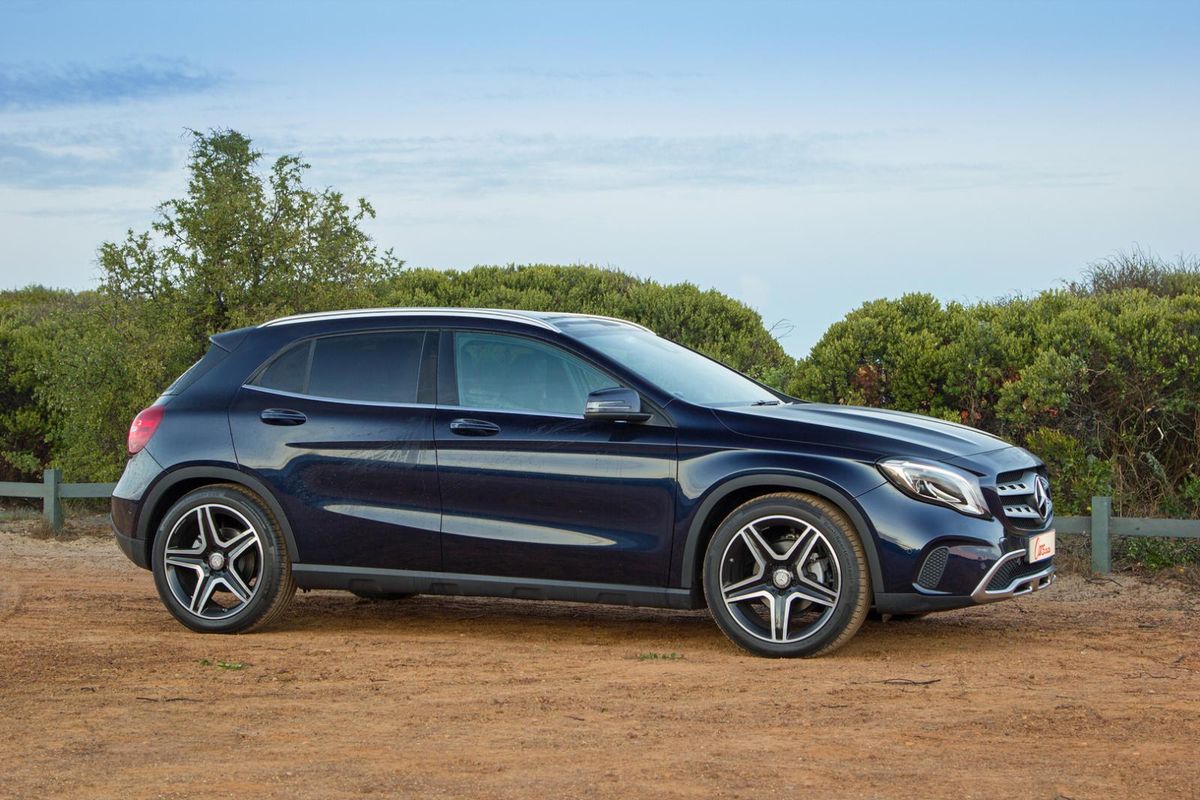
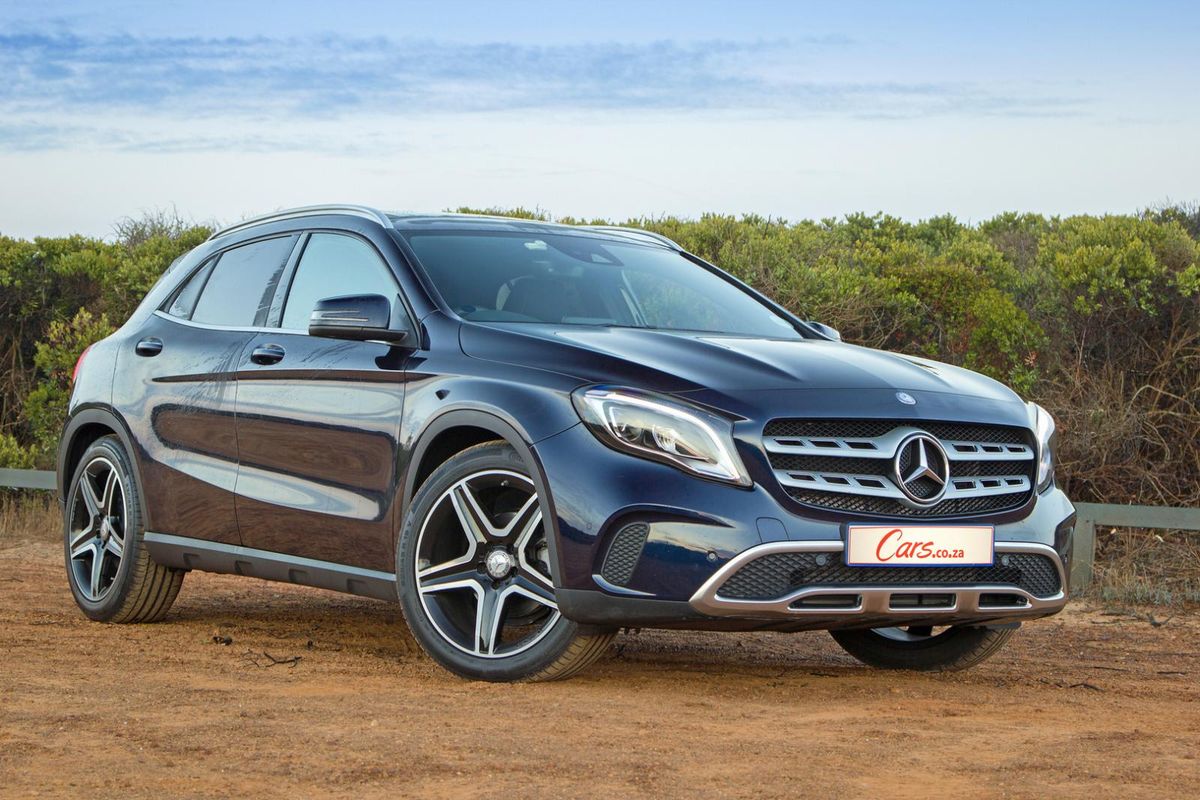
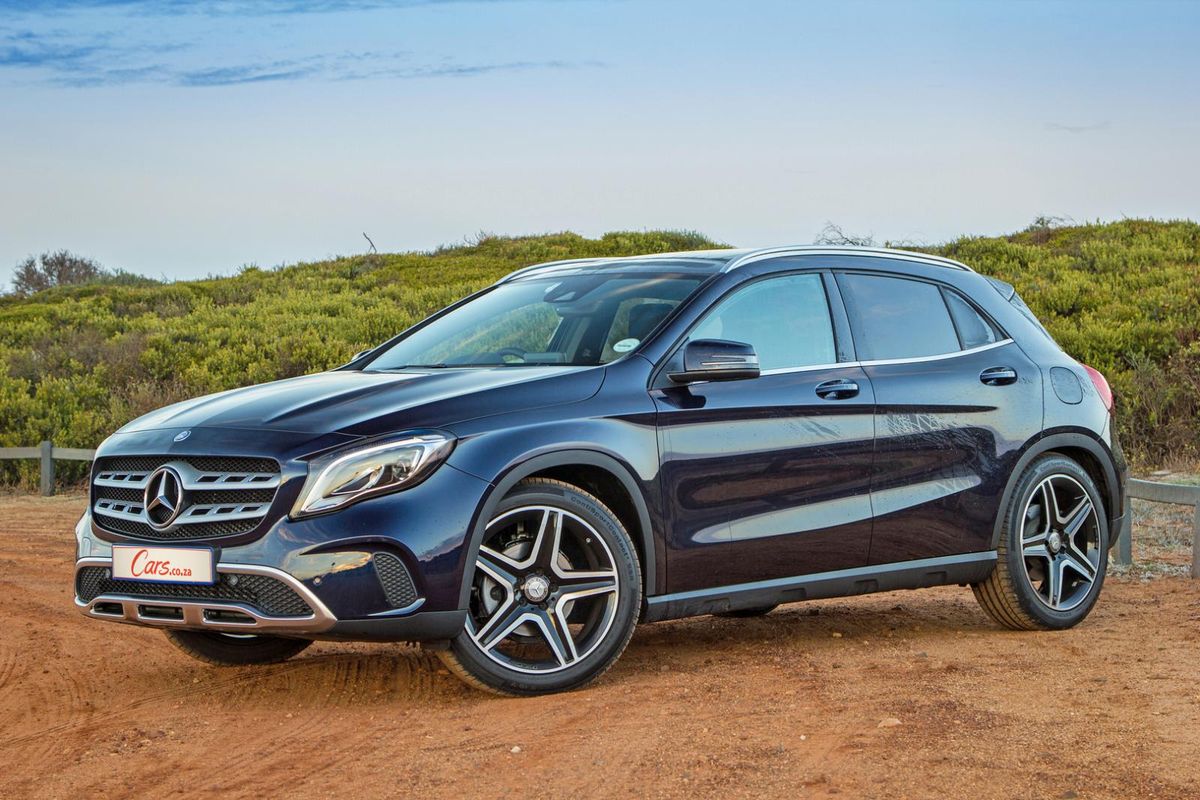
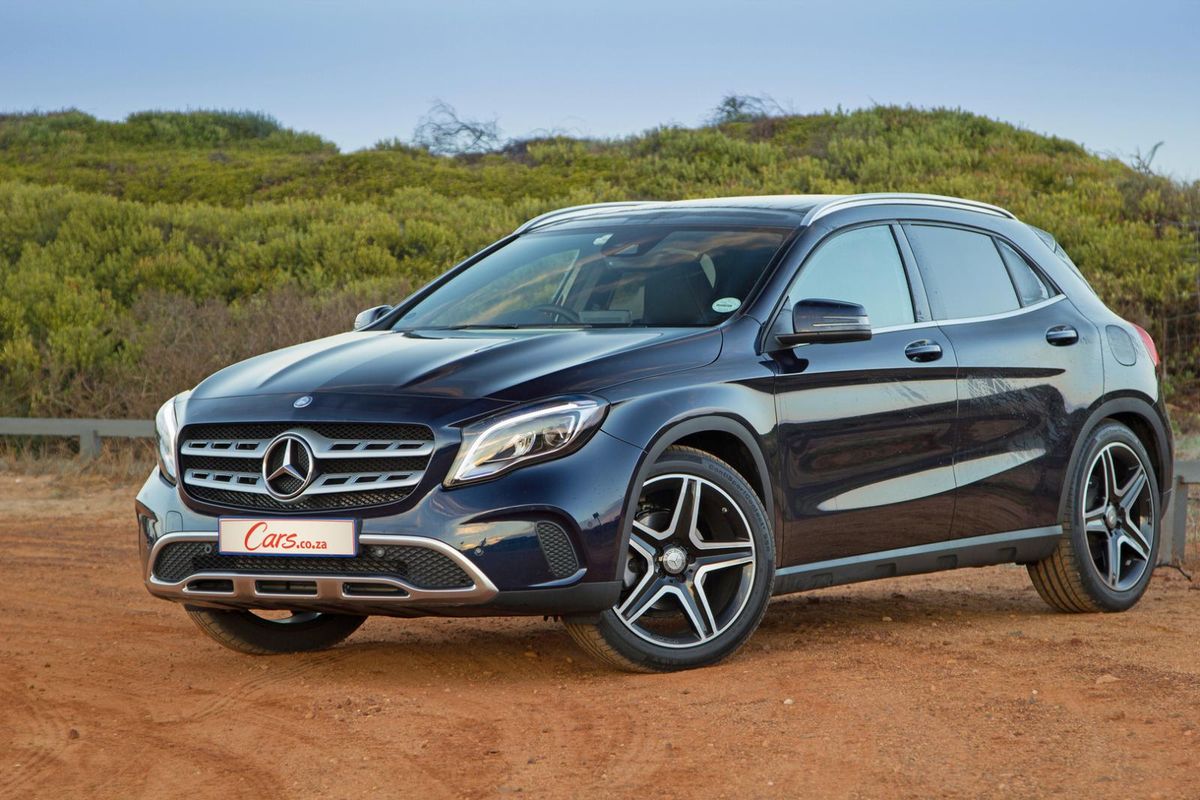
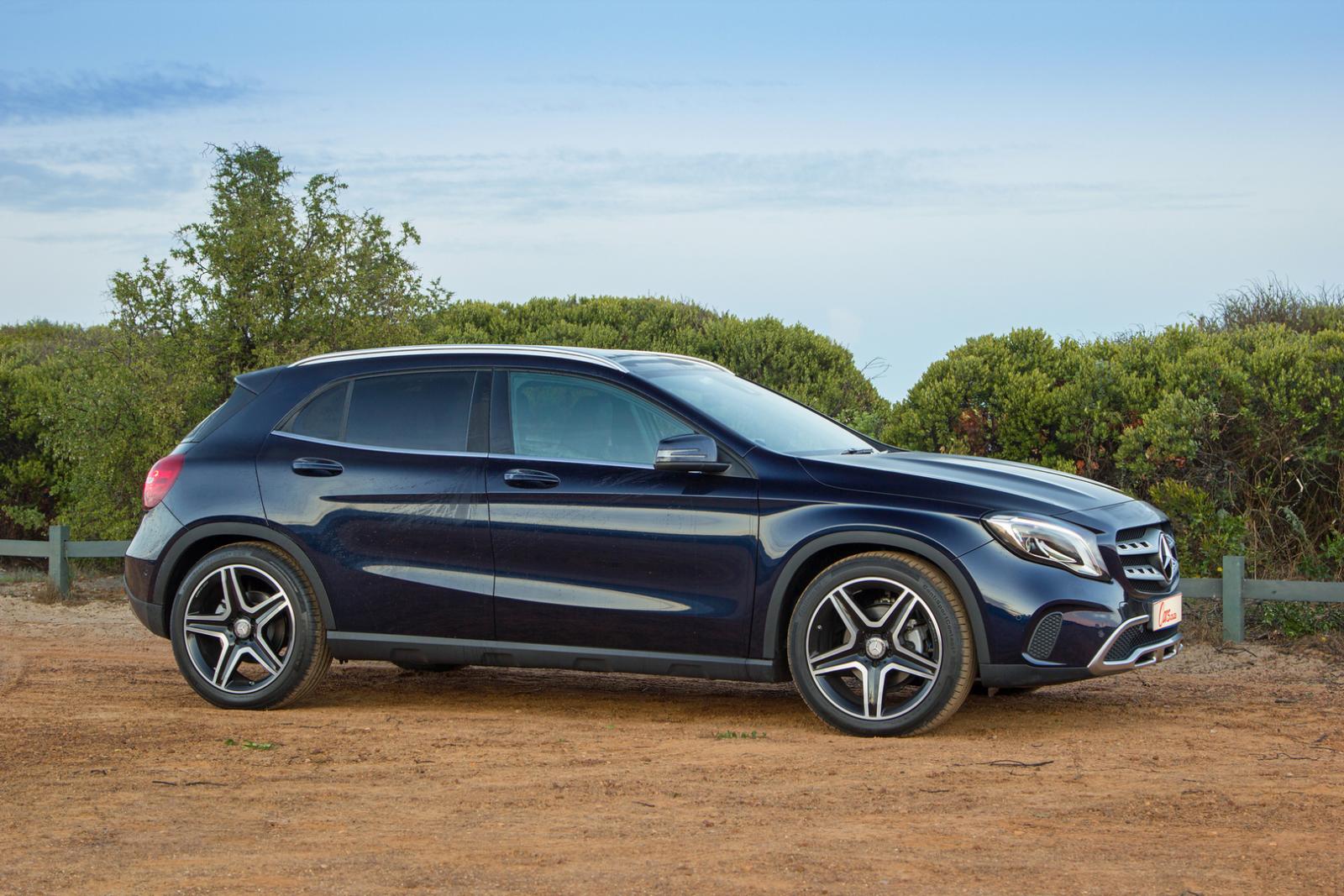
The newly facelifted GLA is paired with the commonsense turbodiesel engine. Is this where you should spend money if you’re in the luxury crossover market?
We like: More spacious than the A-Class, good-looking interior.
We don’t like: Pricey, not for off-roading, unrefined diesel engine, uncomfortable on 19-inch wheels even with adaptive suspension.
Alternatives
If you don’t mind petrol: The new Mini Countryman is a more comfortable and similarly spacious car. For a lot less money, you can get the Countryman S too.
For something more like an SUV: BMW’s X1 offers more ground clearance and ride comfort both on- and off-road but lacks the all-wheel drive of the GLA.
A style over practicality choice: The Audi Q2 is a bit smaller in all areas but rides and drives particularly well. The Q2 is also a very distinctive car.
If you don’t mind waiting: 2018 sees the likely introduction of the larger but not much more expensive new Audi Q3 and Volvo XC60.
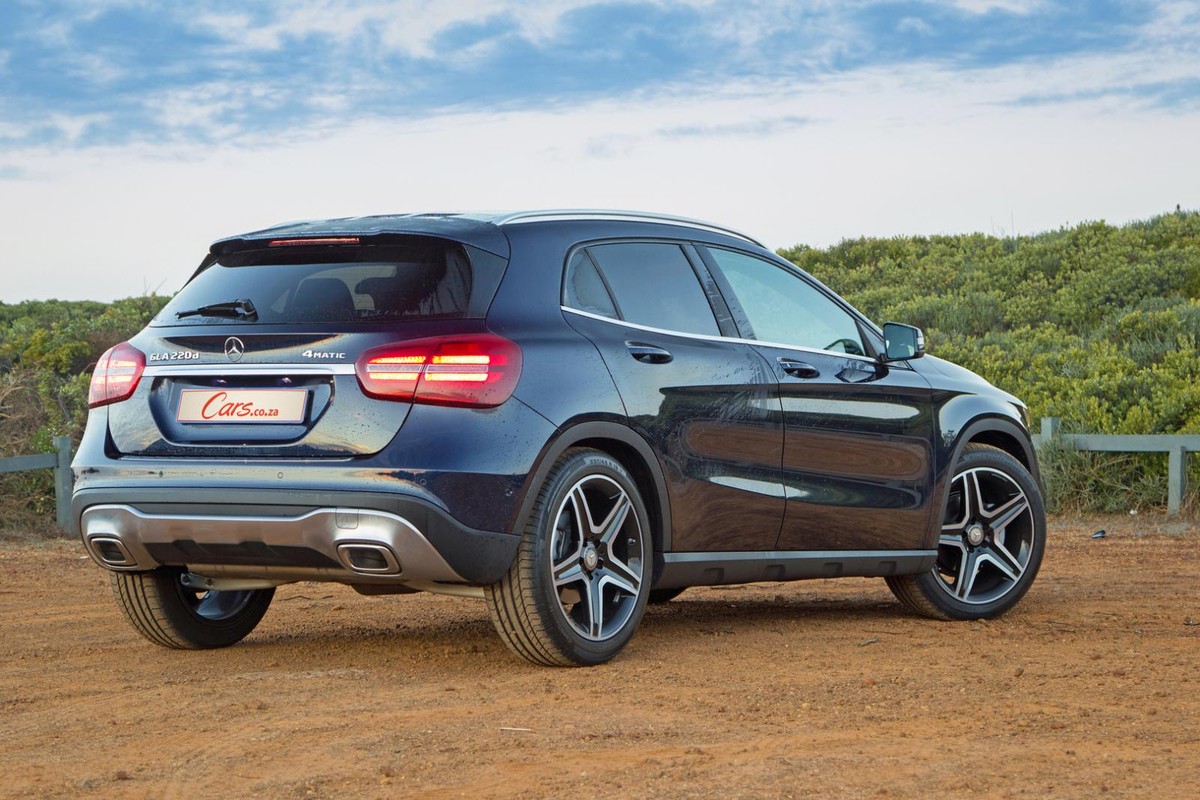
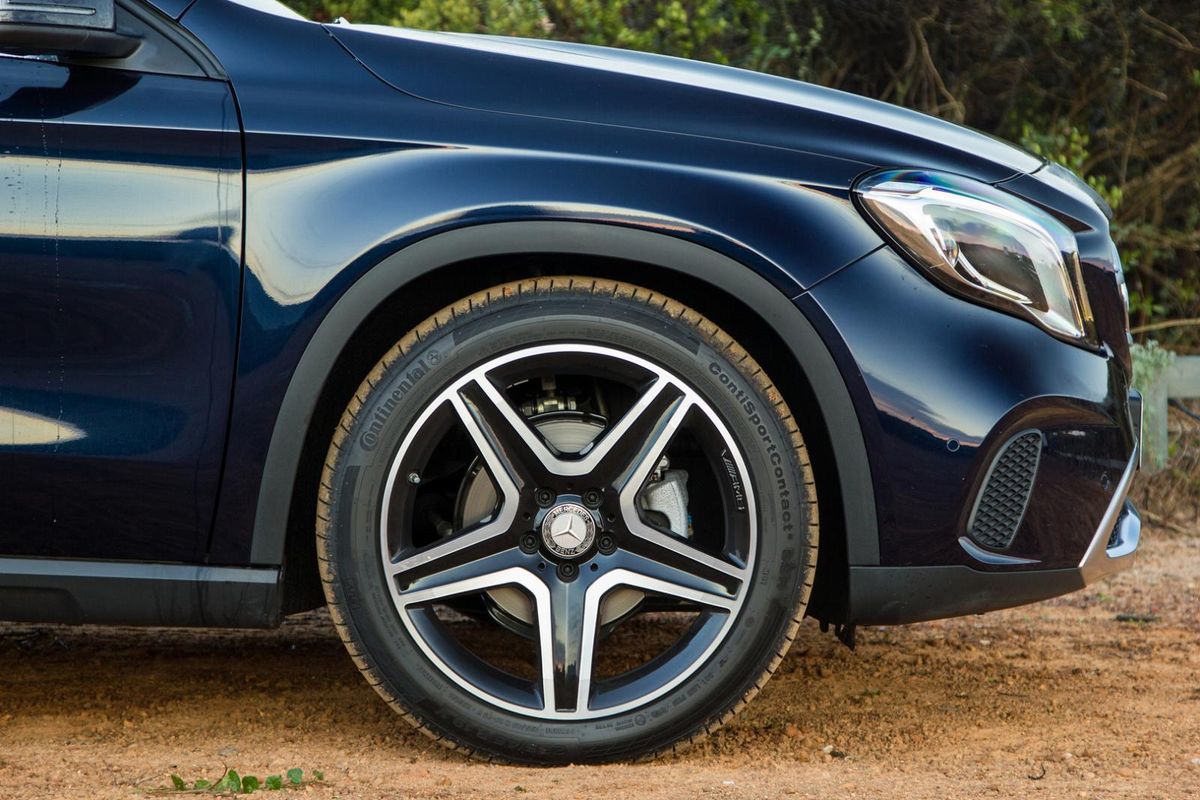
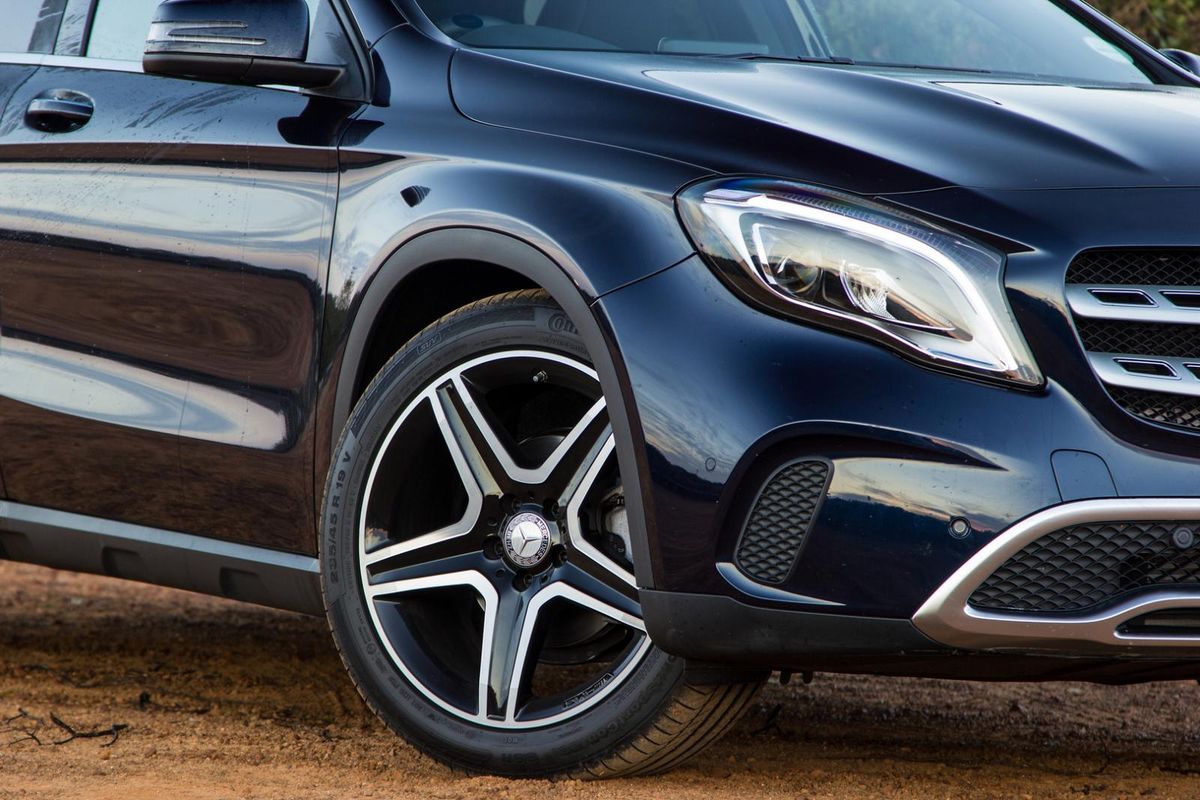
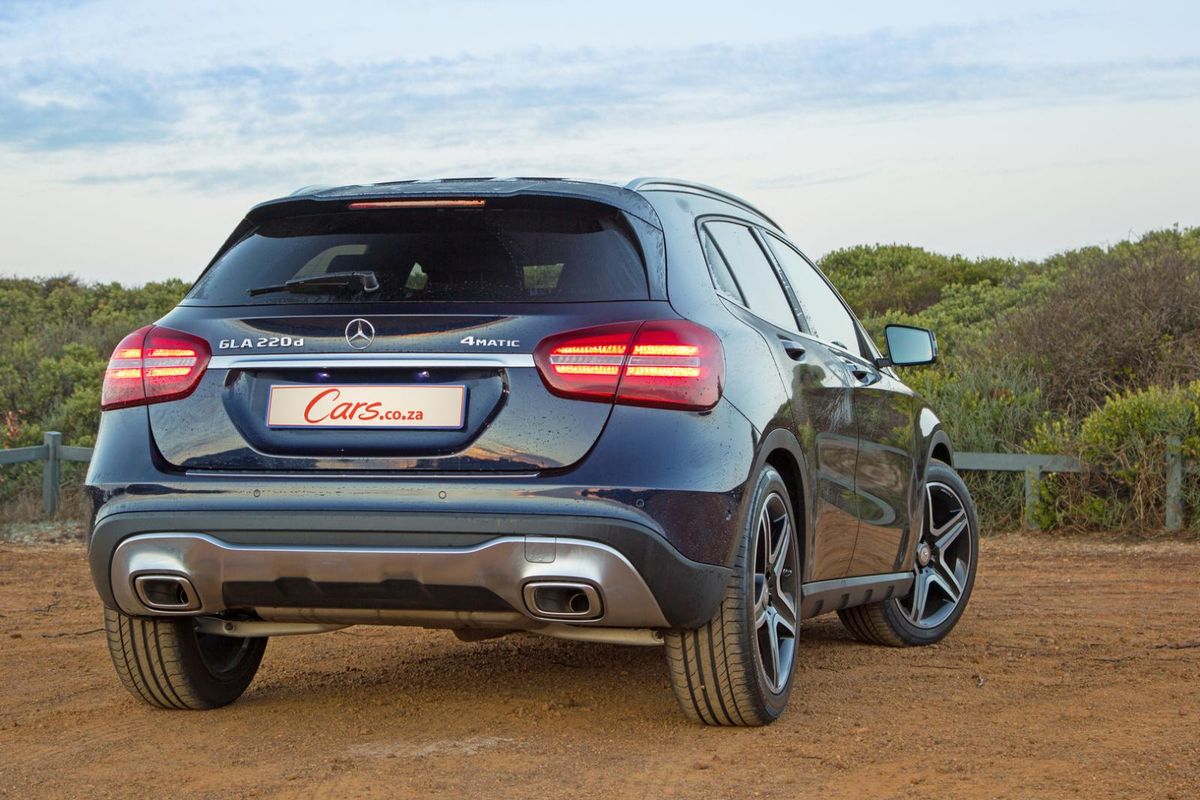
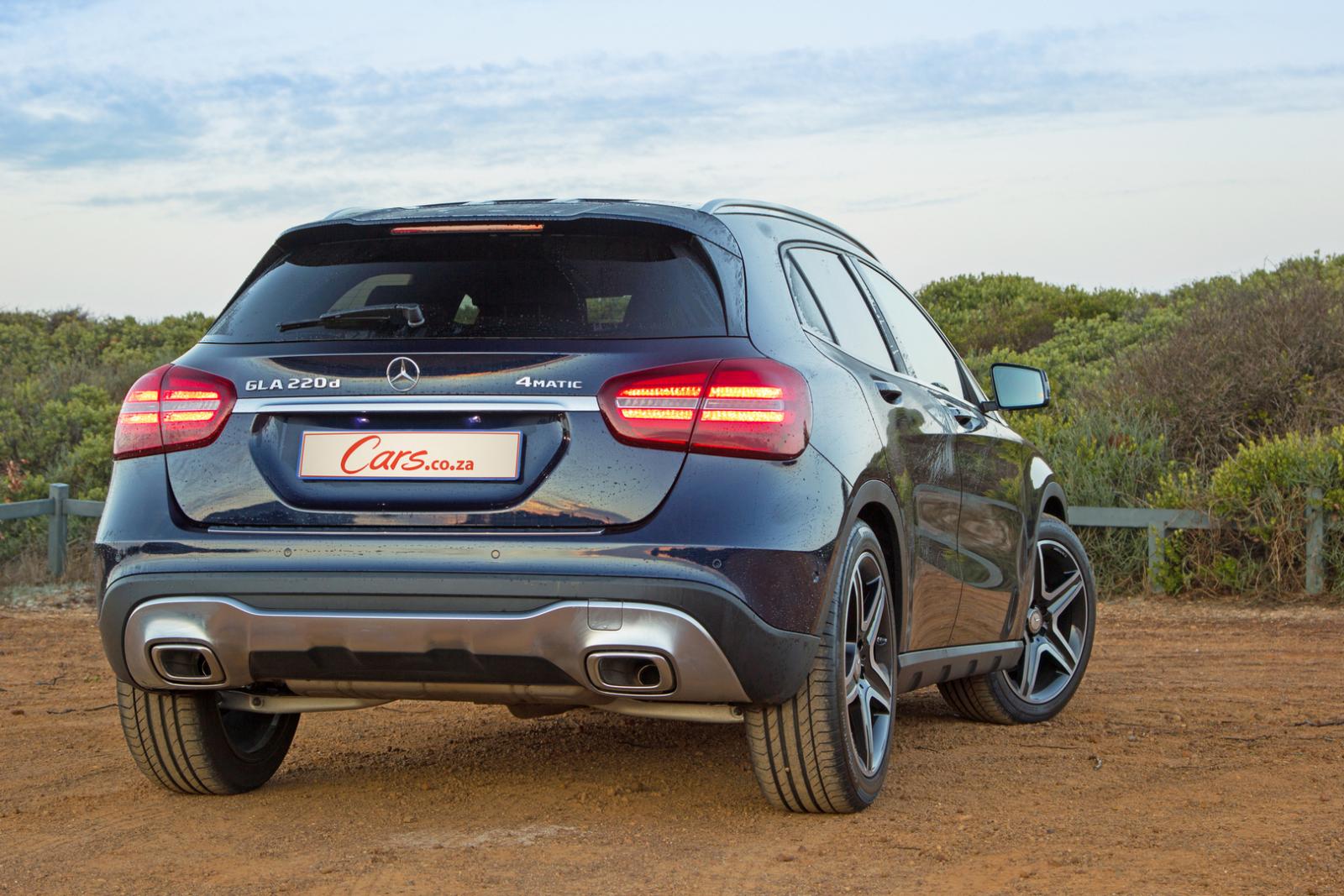
Exterior upgrades to the GLA include lightly reworked front and rear bumpers plus full-LED head- and tail-lights with a more distinctive and higher definition red glow at the rear. The interior is largely the same bar a few subtle touches such as shinier electric seat switches.
Those rear lights have a more visible and sharper red hue with this facelifted model.
The good
Occupant space
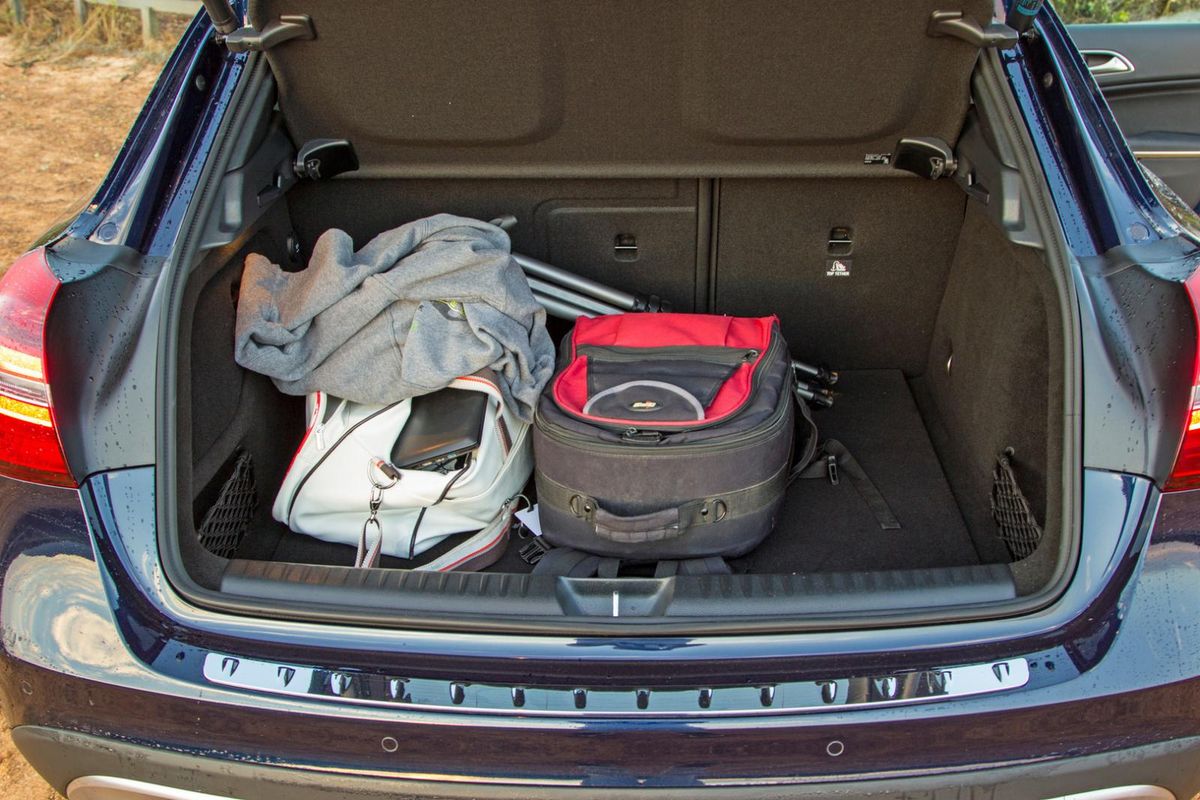
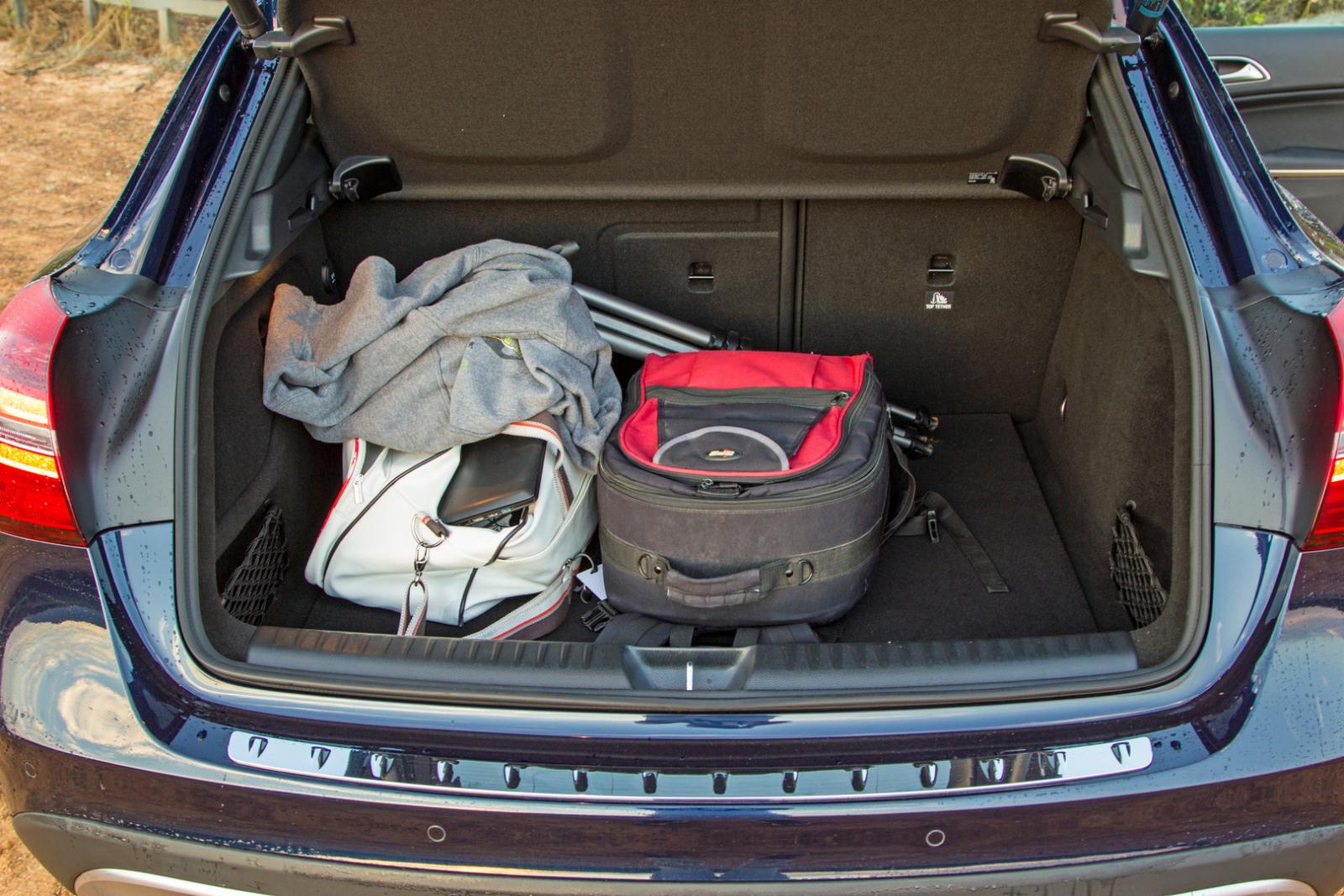
It may share a platform with the A-Class but the larger GLA's taller roofline translates into more head and shoulder room for passengers and increases bootspace by 140 litres to a total of 481. The luggage area can be specced to open electrically with a swing of the foot underneath the rear bumper. It’s quite practical too, with seatbacks that fold almost flat to create a square loading area with a wide boot aperture. Mercedes does now offer a 360-degree camera option which we'd recommend as the fat C-pillars and narrow glass restrict rear visibility.
The GLA's boot is big with shopping hooks and little storage bins for smaller items.
Cabin look and feel
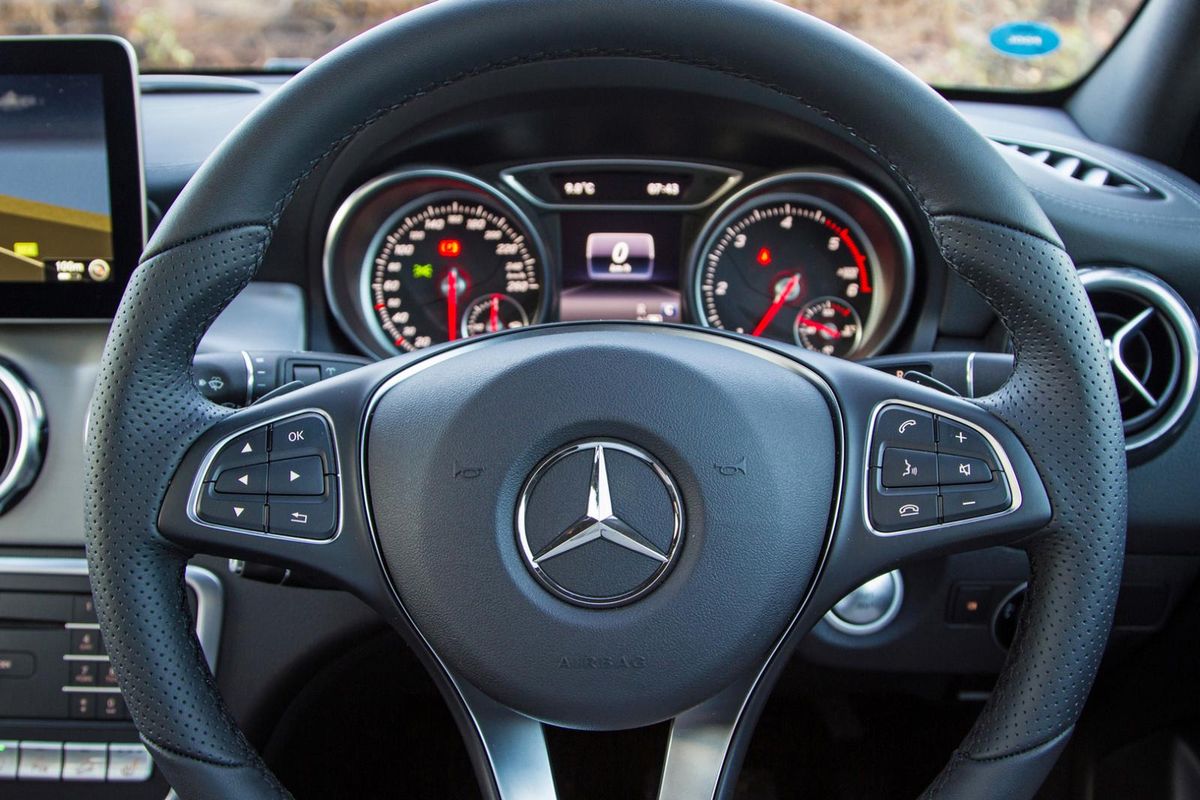
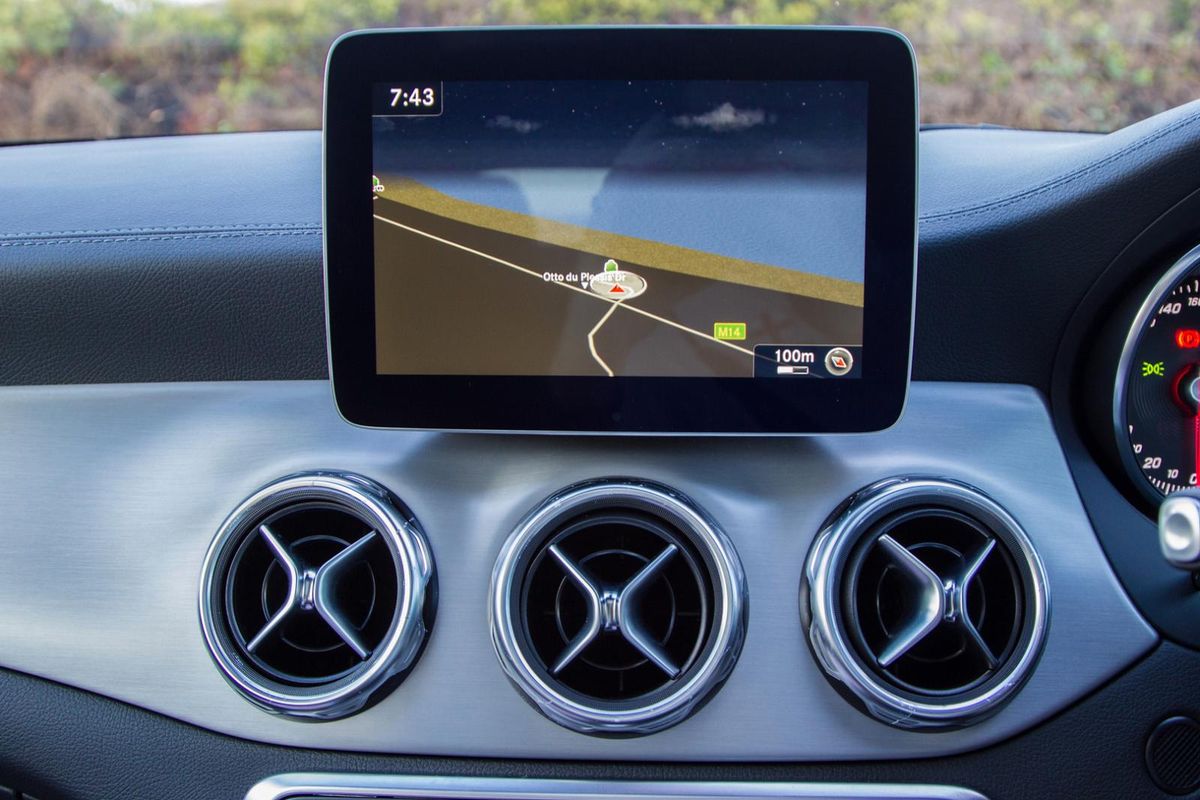
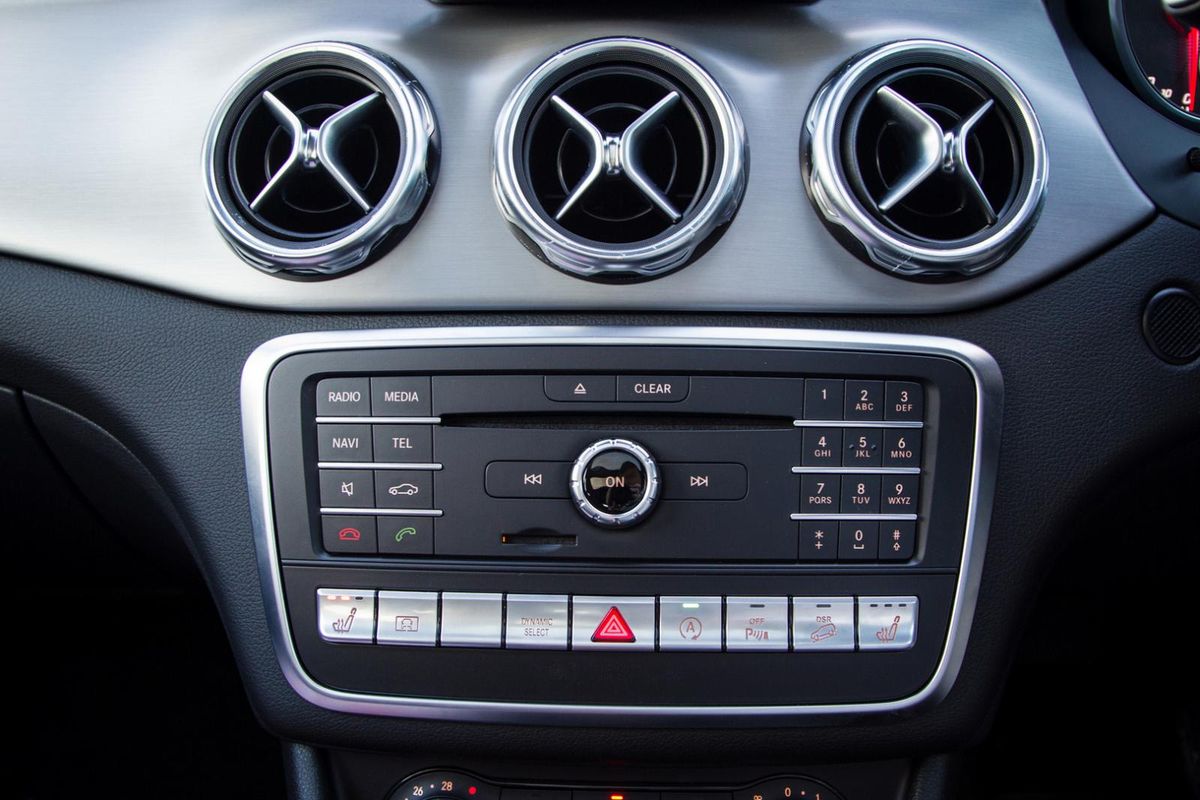
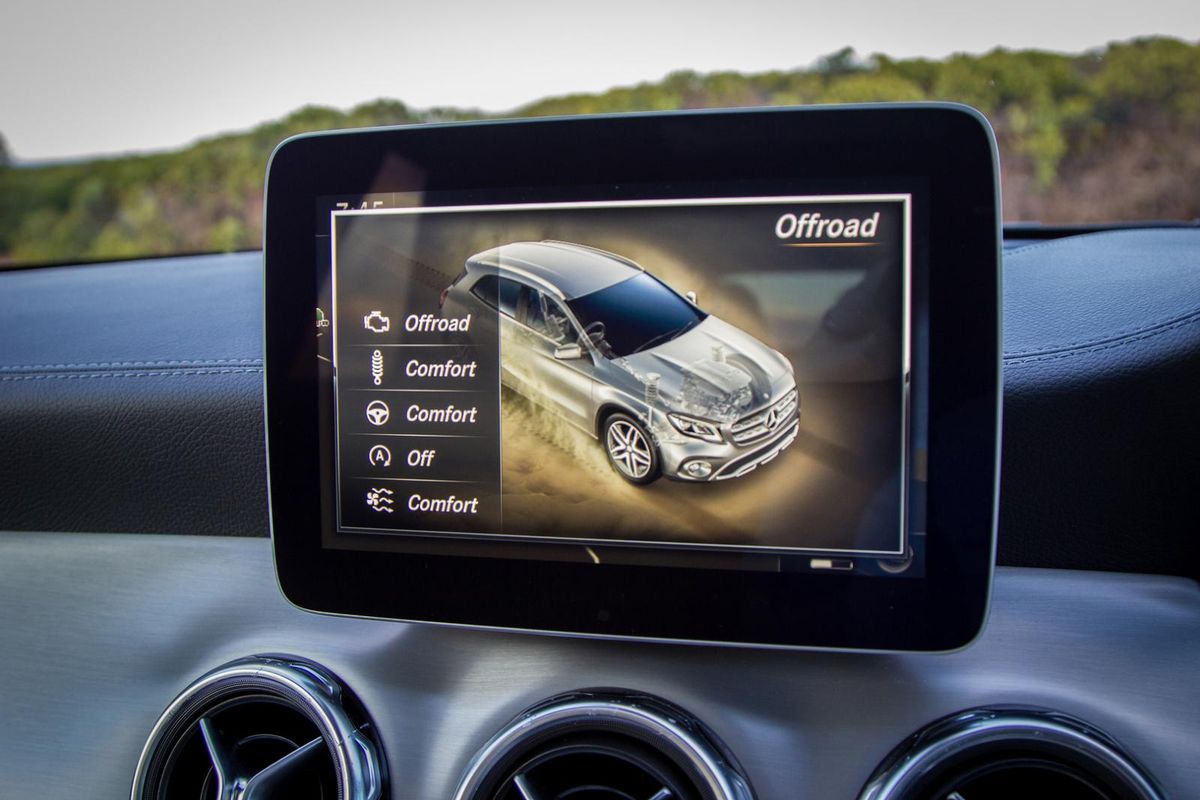
The GLA’s cabin is one of the more stylish cockpits in the segment, with air vents styled as tiny jet engines protruding from the dashboard. The infotainment screen, despite looking like an iPad glued to the centre console, doesn’t obstruct forward vision and offers simple and effective operation. It does feel as if the premium factor drops a little as your eyes wander down the cabin: the transmission tunnel plastic is a bit rough, as are the door pockets. The climate control switches and centre-mounted CD-player unit could also do with an update as they detract from what is otherwise a fresh and stylish interior.
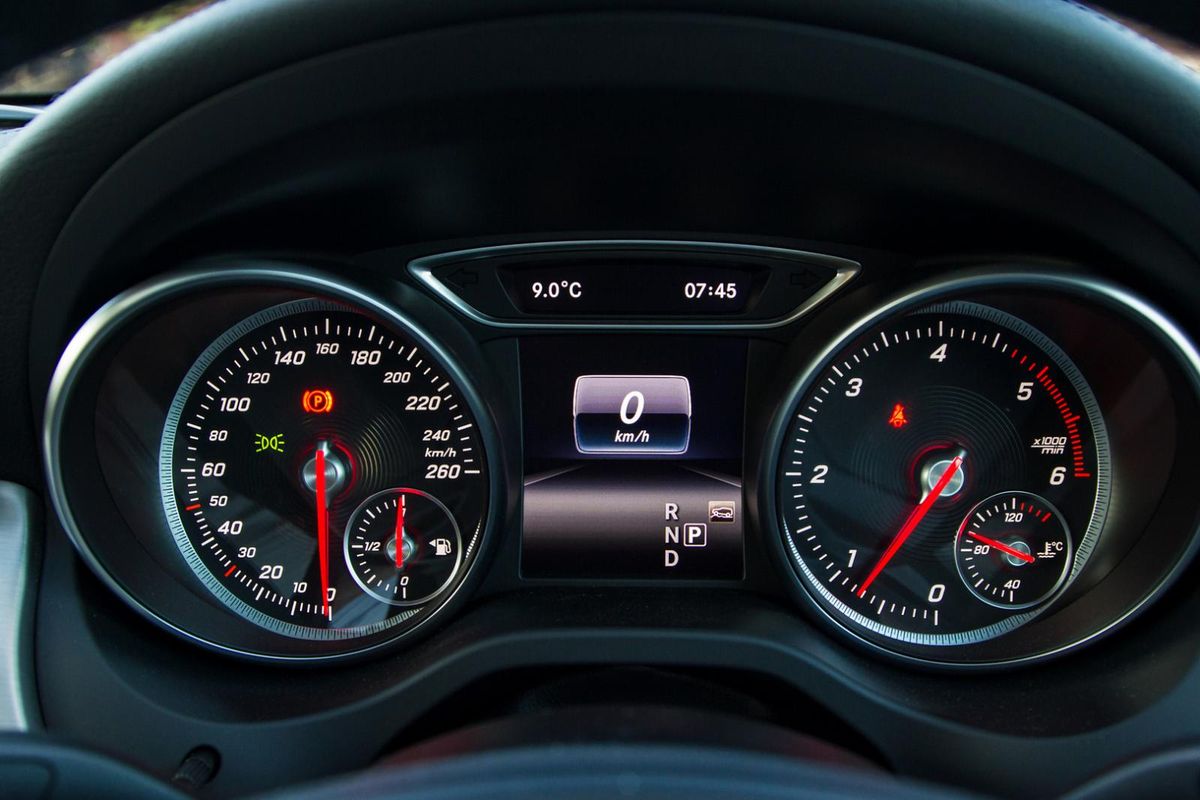
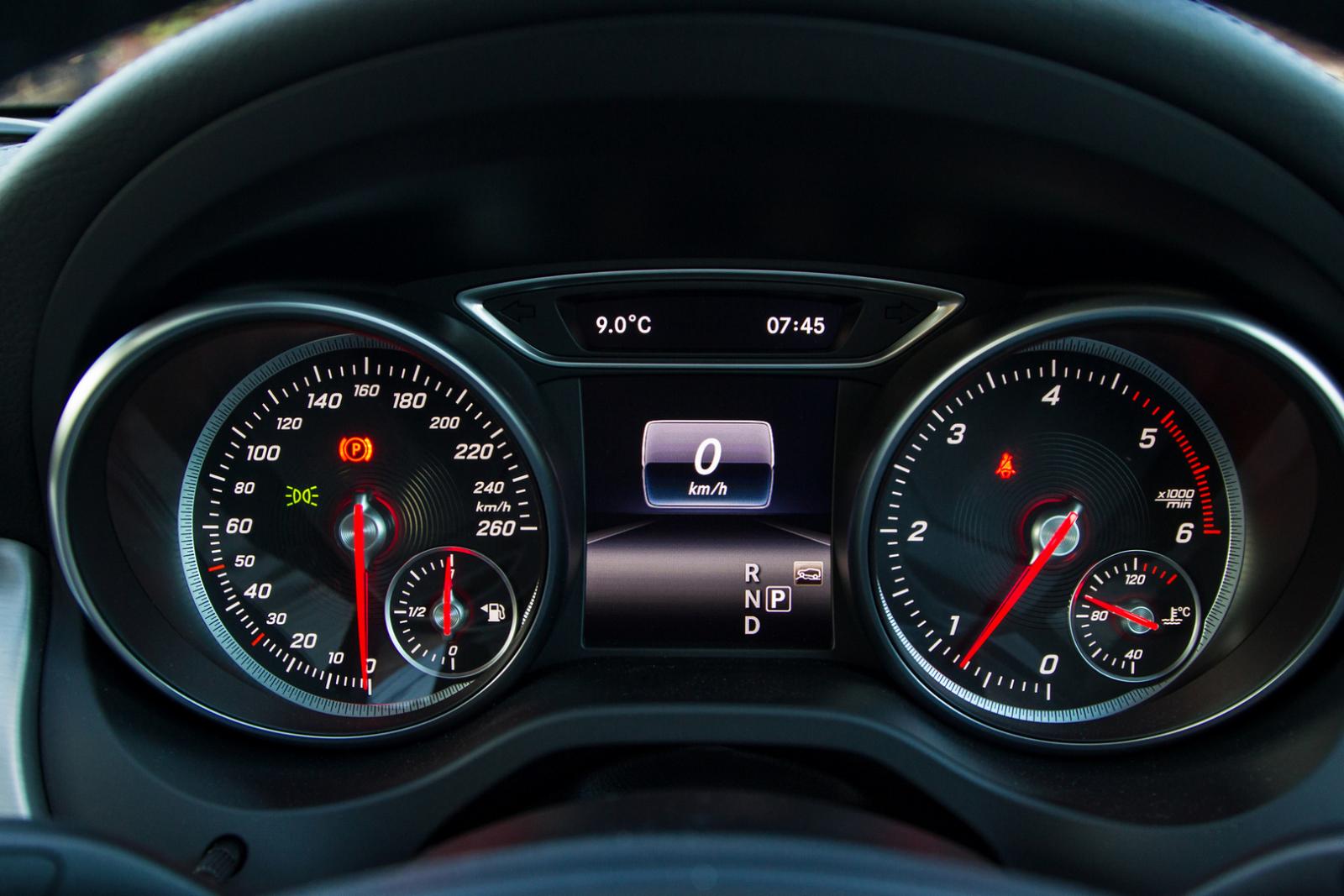
Gaps between the numbers grow in larger increments as the speed goes up – neat little trick by the Germans makes you think you're accelerating faster.
The bad
Rough engine
The 2.1-litre turbodiesel feels ready for retirement. It’s rough at idle and the power and torque delivery doesn’t feel as linear as many of its rivals. Consequently, the 7-speed dual-clutch gearbox can be caught out by the surge of torque which results in choppy progress at times. The 'old' engine does seem to still be particularly fuel efficient, much more so than your average small to medium-sized SUV. We averaged in the mid-6L/100 km range over our 2-week test.
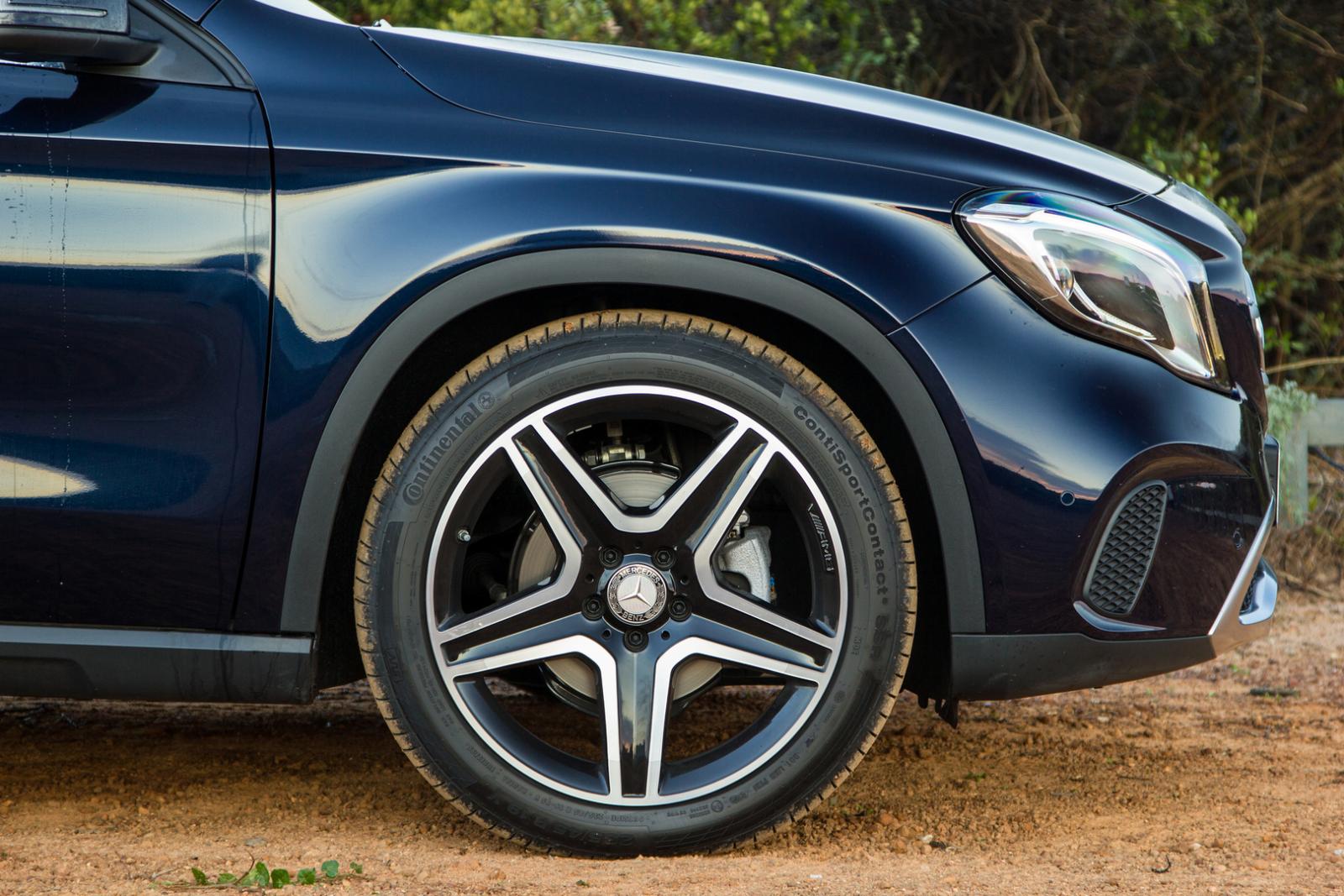
These 19-inch wheels and 45 profile tyres accentuate the harsh ride. Stick with the standard 17s if you prefer comfort.
Ride comfort
This has been a bugbear of the A-Class chassis since its introduction in 2012. Although an improvement on the A-Class, the GLA's suspension is still overly stiff. Increased ride height has allowed for more give in the springs but we expect more comfort given the badge on the nose. The introduction of adaptive suspension to the new model has only made a slight difference – a bit like sticking a plaster on an axe wound. If ride comfort is important to you, opt for the smallest wheel size and tallest tyre profile and spec adaptive dynamics at R20 500.
Not for off-roading
Most buyers looking at a GLA probably don’t intend to do any real off-roading with it, but if you’re tempted to see it as a quasi-off-roader, think again. Despite the increased ride height, a long front overhang is likely to catch on most obstacles before the wheels are able to relieve the scraping sounds. That said, the 4Matic all-wheel-drive system is good and will distribute power and torque effectively if you’re in trouble. There’s also hill descent control on the 4Matic if you’re braving a difficult downhill.
That long nose makes off-roading a tough task as it catches and scrapes easily.
Price and warranty
The GLA 220d starts at R534 00 for a basic auto. This model, with the Style kit and 4Matic, costs R593 640 before extras. It comes with a 2-year/unlimited km warranty and a 6-year/100 000 km maintenance plan.
Verdict
Mercedes-Benz's attempt to improve on some of the GLA's shortcomings by introducing adaptive suspension with comfort modes has failed to fix the platform's inherent flaws. It still doesn’t ride bumps well and anything other than a perfect tarmac surface shows up its deficiencies. The turbodiesel engine is frugal. but raucous with a narrow peak power and torque band that makes for an unsettled ride at times.
Inside it’s reasonably spacious for both front and rear passengers with a decent luggage area out back. You also get a premium-looking cabin with familiar Mercedes design touches and chrome finishes. If you’re willing to throw a lot of money at the options list, you can also get a very technologically advanced car with a long list of safety features.
The facelift and upgrades haven't gone far enough to significantly improve the GLA. If you’re looking for a premium compact crossover, there are more resolved options out there.
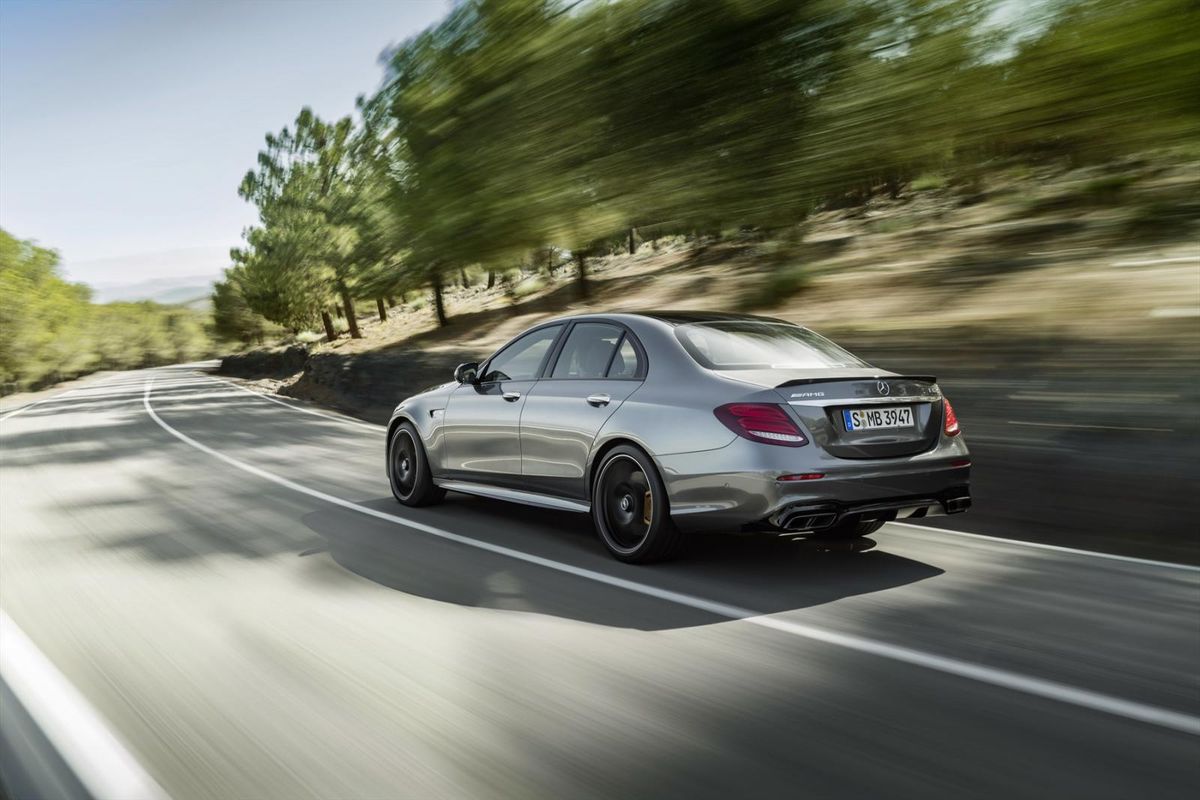
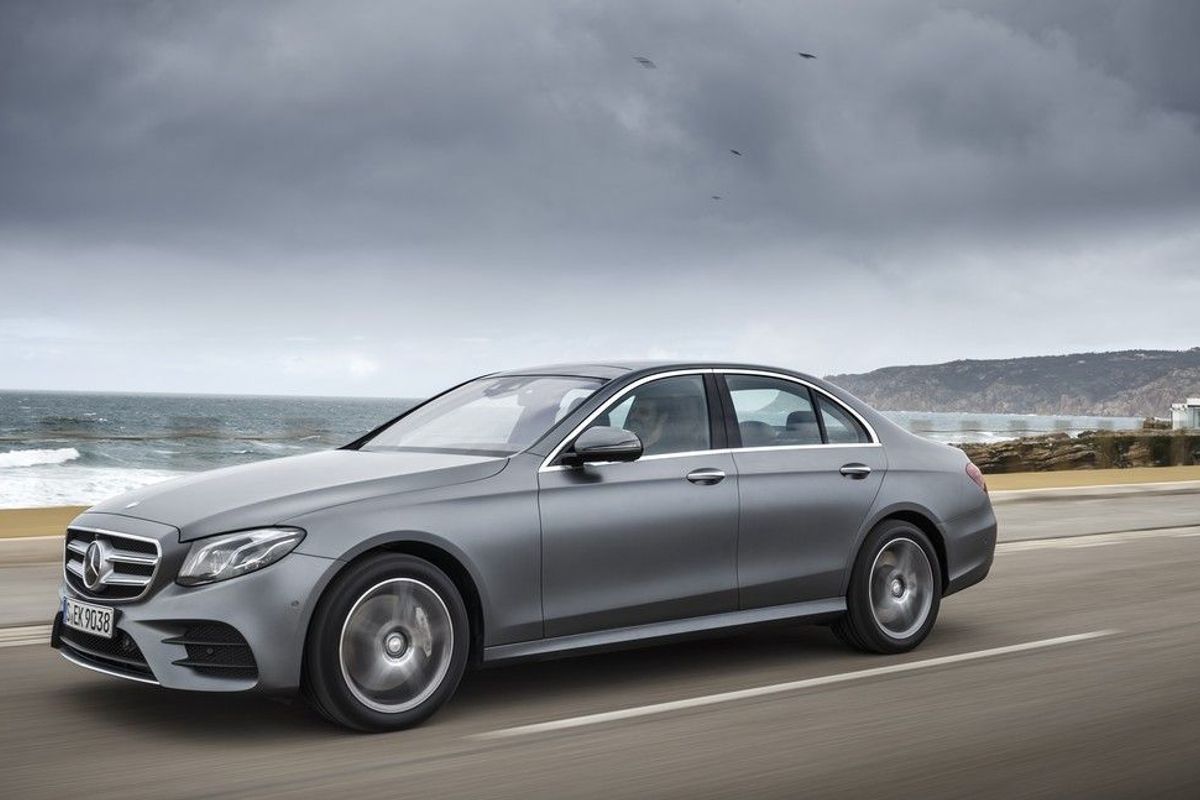
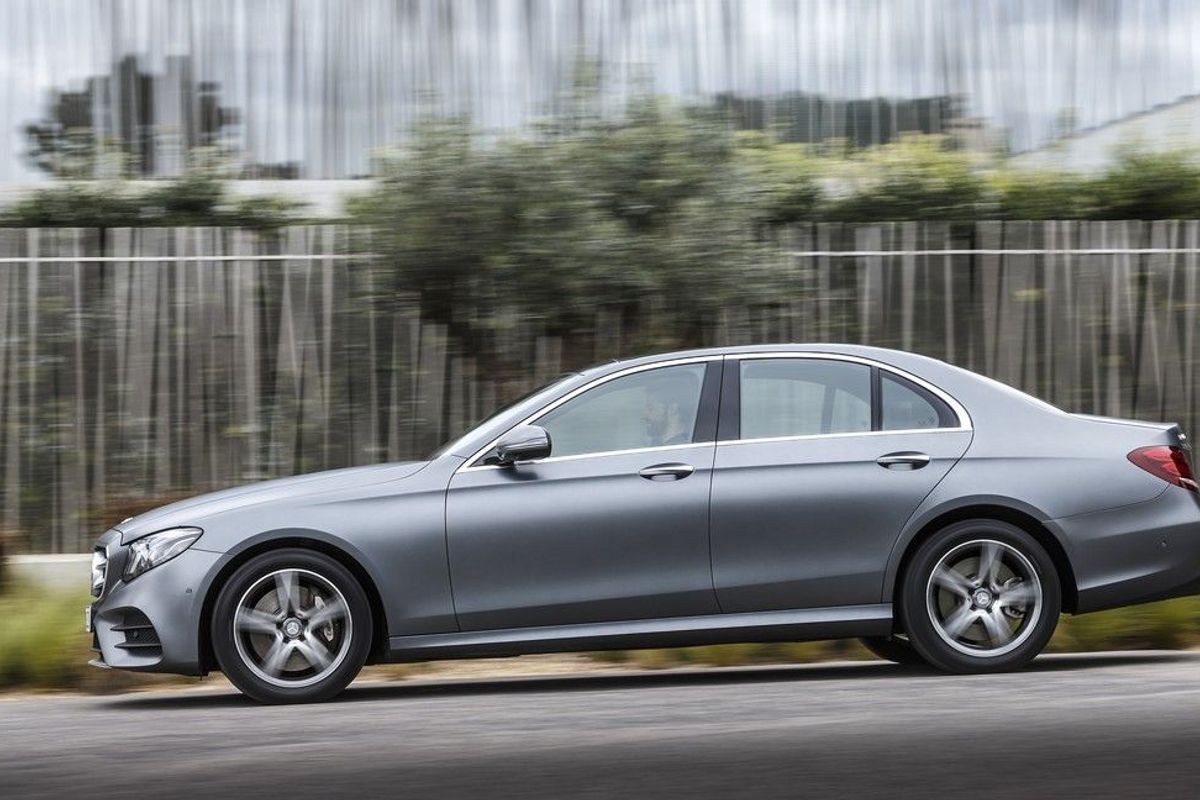
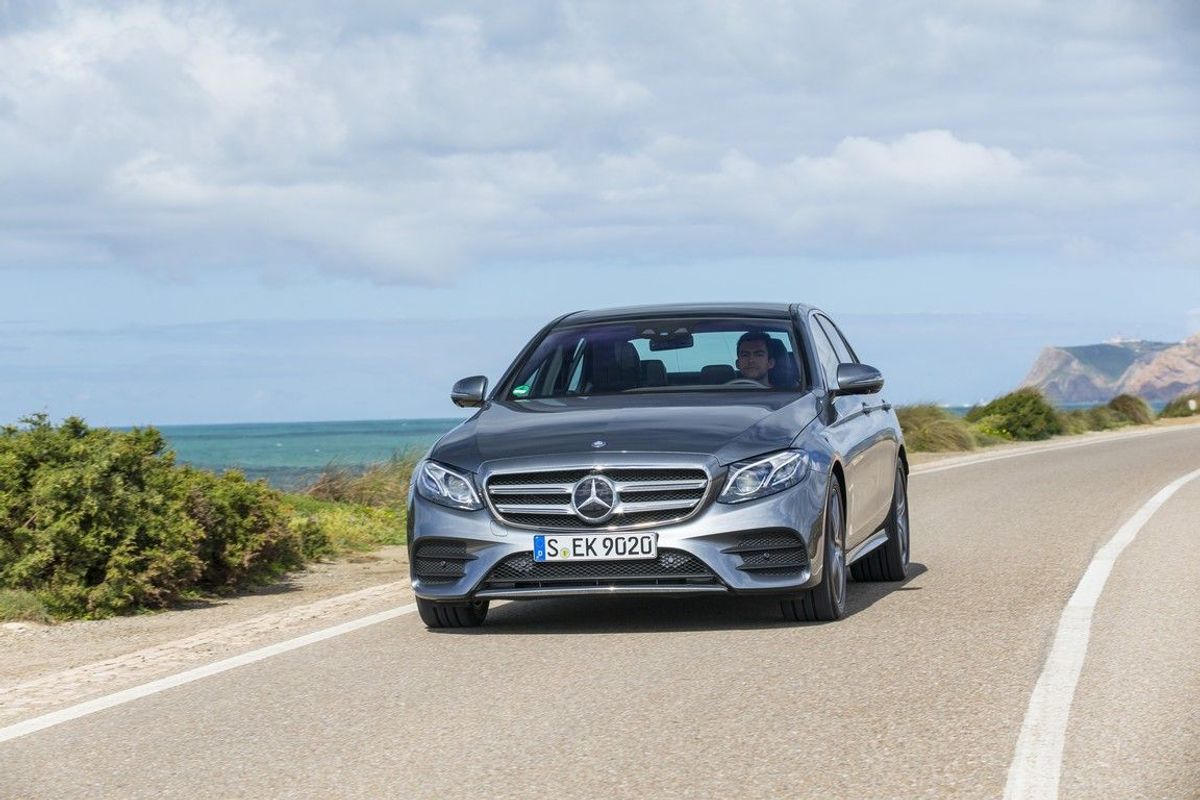
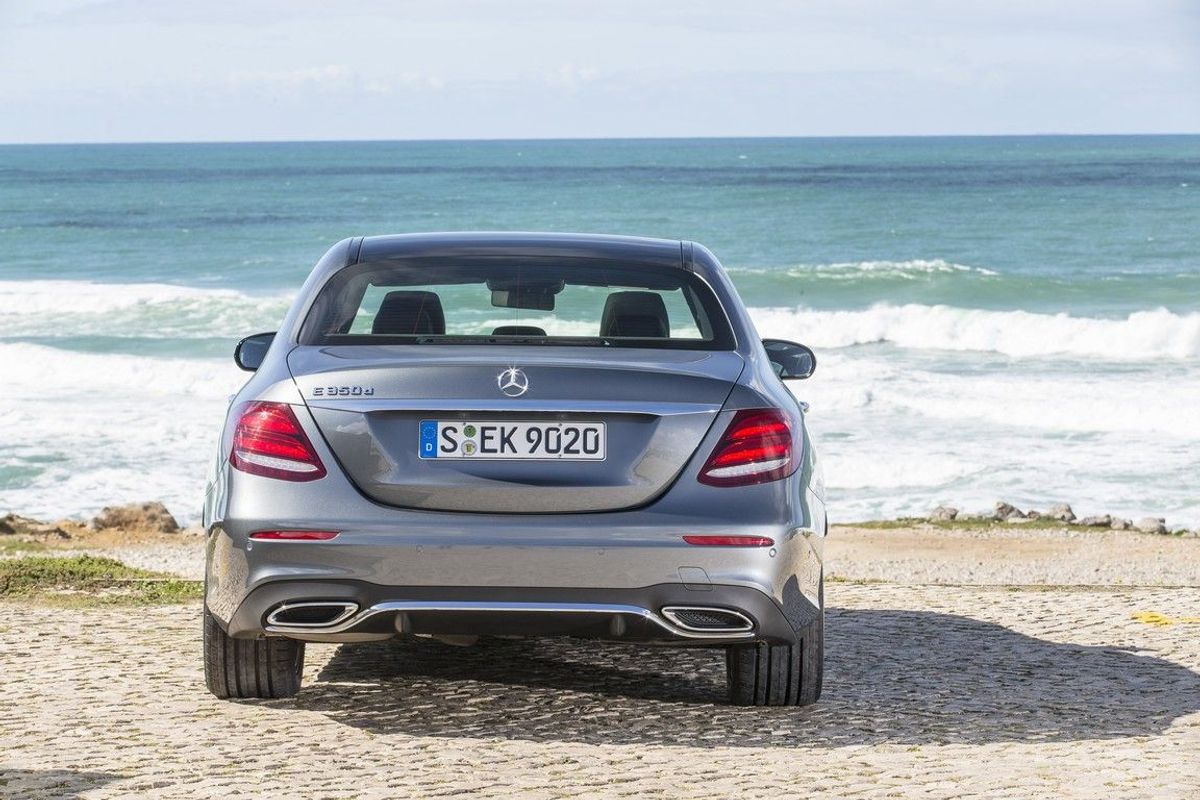
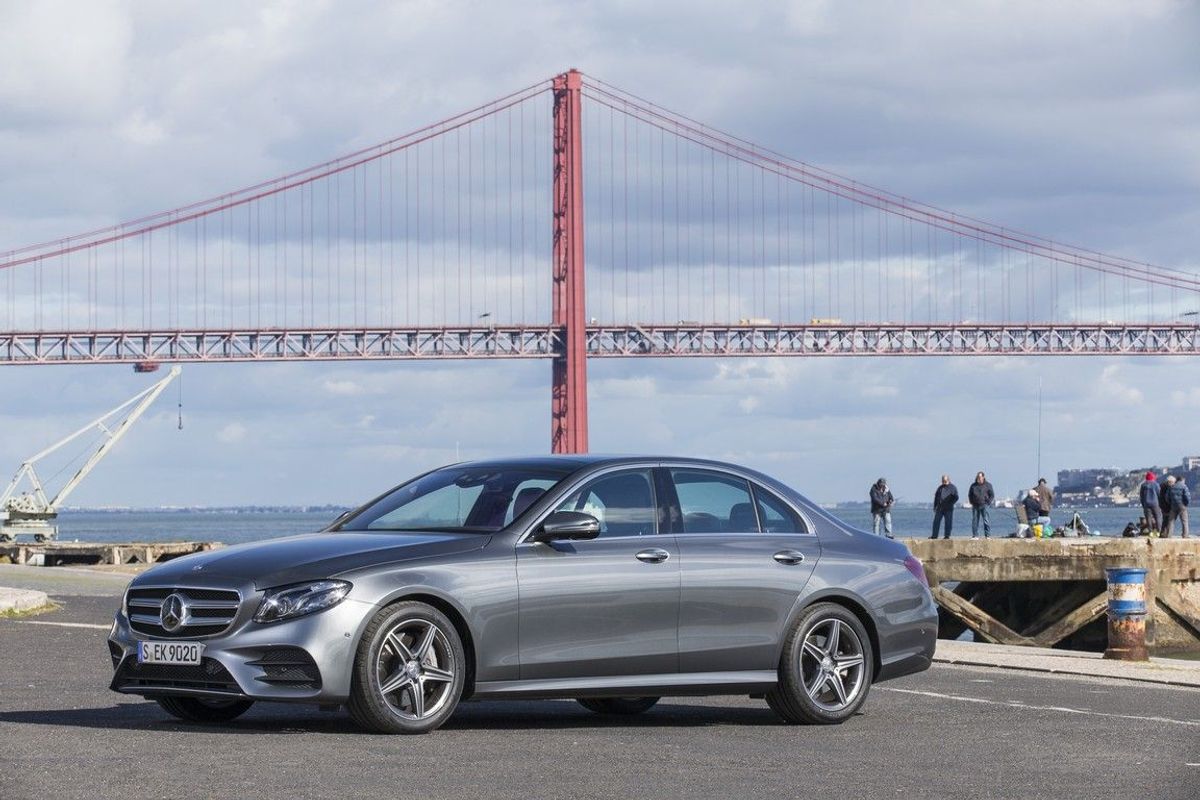
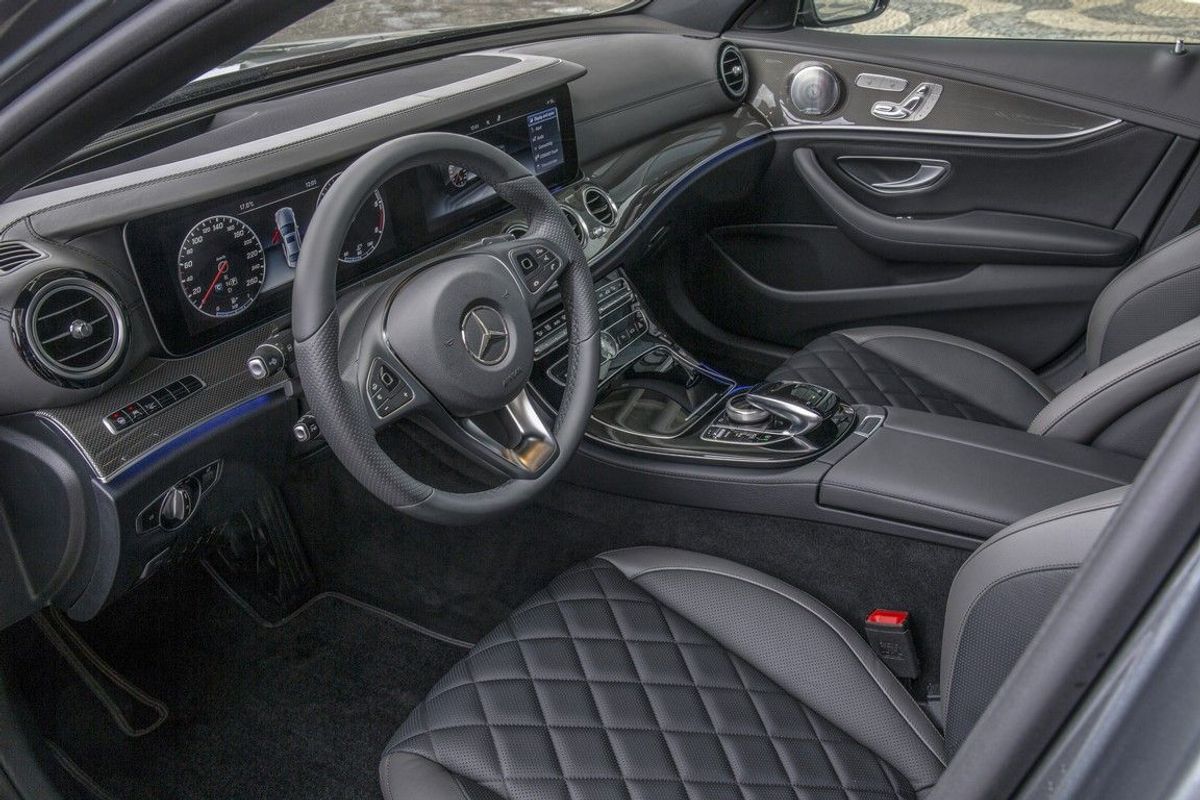
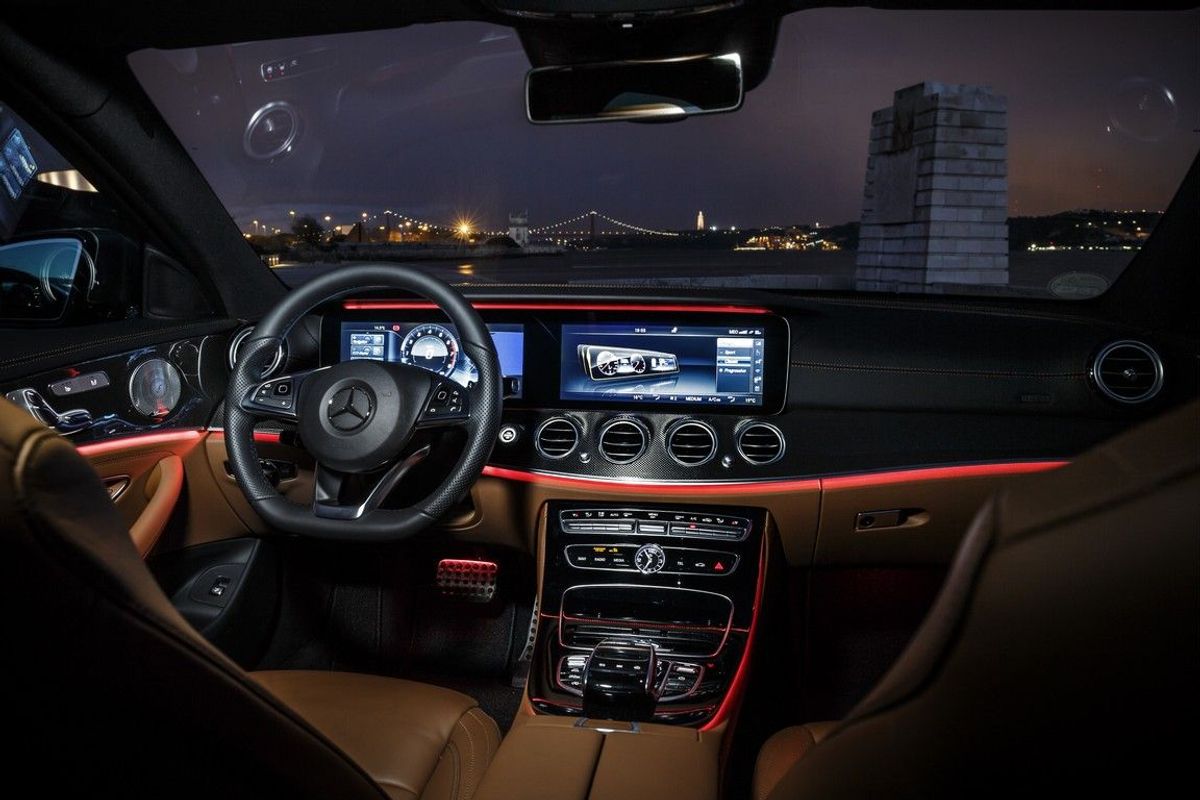
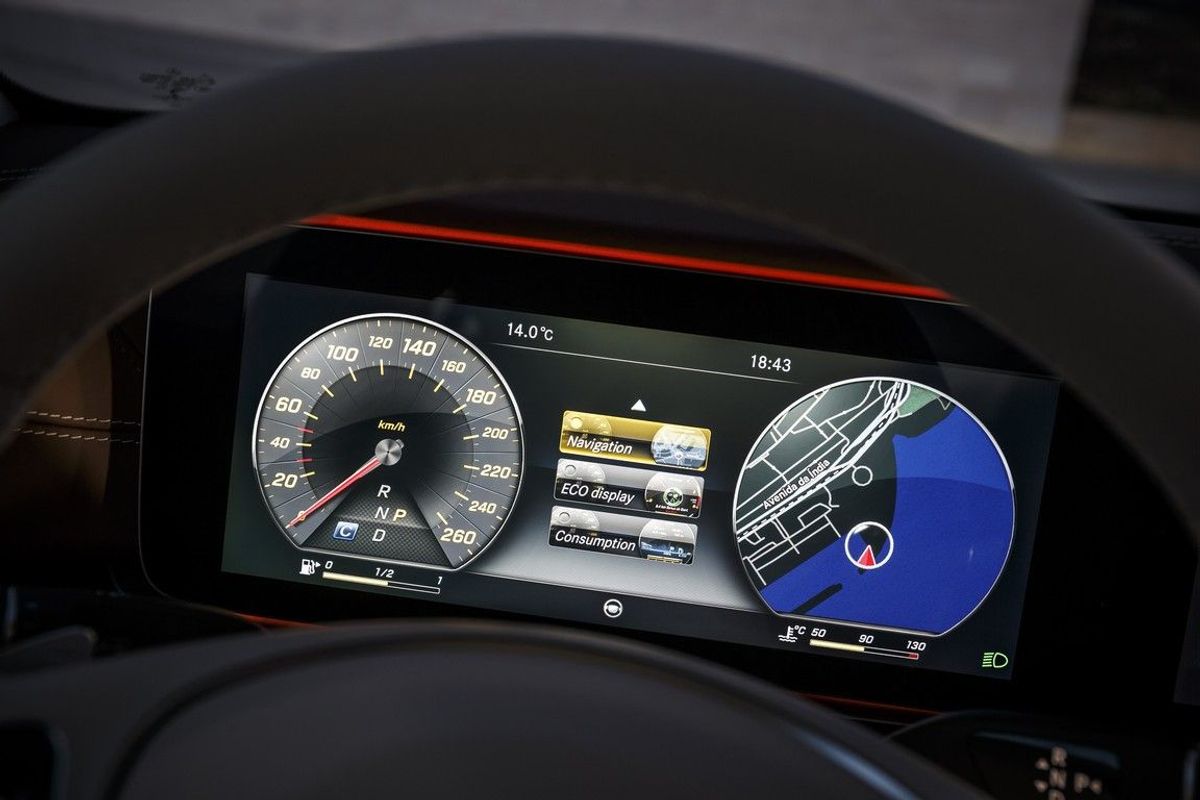
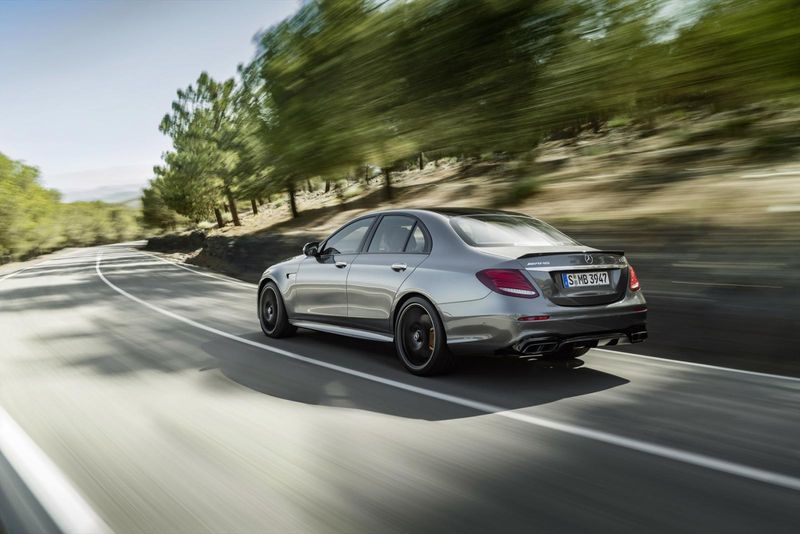
The Mercedes-Benz E-Class sedan lineup has expanded with the local arrival of 2 high-performance AMG variants in the form of the E43 4Matic and the most powerful E-Class of all time, the E63 S 4Matic+. Take a look at specification and pricing details for the E-Class sedan below…
Early in 2016, Cars.co.za road test editor Ashley Oldfield attended the international launch of Mercedes-Benz's executive sedan in Portugal (click here to read his first impressions). The new E-Class sedan arrived in South Africa in June 2016, ushering in a host of new technologies and onboard features that hadn't been offered in its market segment before. Then, in 2017, Ashley returned to Portugal to sample the range-topping Mercedes-AMG E63 S 4Matic+ which is now on sale in South Africa alongside the E43 4Matic.
The local E-Class sedan model lineup now consists of 7 derivatives including 2 turbodiesel derivatives, the E220d and E350d, as well as 3 turbopetrol derivatives including the E200, E250, E400 4Matic and two new AMG performance variants, the E43 4Matic and the range-topping E63 S 4Matic+. A petrol-electric hybrid is expected to join the range at a later stage.
Power Outputs
The Mercedes-AMG E63 S 4Matic+ is now available in South Africa with 450 kW and 850 Nm of torque developed by its bi-turbo 4.0-litre V8 engine.
The E200 is the entry-level model in the E-Class range. It’s equipped with a 2.0-litre turbopetrol that produces 135 kW and 300 Nm and has a claimed fuel consumption of 5.9 L/100km.
The E250 offers more power from its turbocharged 2.0-litre petrol engine with outputs of 155 kW and 350 Nm of torque. Fuel consumption for the E250 is claimed at 6.3 L/100km.
The E400 with 4Matic all-wheel drive is powered by a turbocharged 3.0-litre V6 engine with 245 kW and 480 Nm of torque. Fuel consumption is claimed at 7.9 L/100km.
On the diesel front, the E220d offers 143 kW and 400 Nm of torque from its 2.0-litre turbodiesel engine with a claimed fuel consumption figure of 3.9 L/100km.
The more powerful E350d with its turbocharged 3.0-litre V6 turbodiesel engine develops190 kW and 620 Nm of torque with a claimed fuel consumption figure of 5.1 L/100km.
For buyers seeking high-performance thrills, you may want to consider the Mercedes-AMG E43 4Matic. Power comes courtesy of a bi-turbocharged 3.0-litre V6 engine with no less than 295 kW and 520 Nm of torque on offer. Acceleration from zero to 100 kph is achieved in 4.6 seconds before hitting a top speed of 250 kph. Fuel consumption is claimed at 8.3 L/100km.
The E-Class sedan range is headlined by the Mercedes-AMG E63 S 4Matic+ and with its twin-turbo 4.0-litre V8 engine producing a hefty 450 kW and 850 Nm of torque, it will accelerate from zero to 100 kph in 3.4 seconds with an electronically limited top speed of 250 kph, which can be increased to 300 kph with the optional AMG Driver's Package. Fuel consumption is claimed at 9.1 L/100 km.
Features
Although there are myriad optional equipment features available in the E-Class, the standard specification includes a 9-speed transmission, dual-zone climate control, comfort seating with 4-way lumbar adjustment (for the front seats), interior lighting package, Parking Pilot, Parktronic (with reversing camera), dynamic (driving mode) select, an agility control suspension with comfort setting and so forth.
Standard safety equipment includes: Attention assist, seatbelt warning system, adaptive braking with hill hold and brake drying functions, adaptive brake lights, brake-wear indicator, ABS, EBD and ESP with Curve Dynamic Assist, electric parking brake, Pre-Safe with Collision Prevention Assist Plus, dual front- (plus driver's knee-), side- and curtain airbags, a crash-responsive pedal unit and tyre pressure loss monitoring system.
Mercedes-Benz E-Class – Price in South Africa (June 2017)