Ferrari Cleans Up At International Engine of the Year
Italian supercar giants Ferrari cleaned up at the 2017 International Engine of the Year competition. This year saw the 3.9-litre turbocharged V8 of the Ferrari GTB take overall honours. See which other powerplants took home honours in their respective categories here.
The win was the second consecutive for the Ferrari 488 GTB's motor and it goes down in the history books as one of only four powertrains in the competition's history to have achieved back to back victories. The judges included 58 auto journalists from 31 countries and awarded it highest honours, ahead of the Porsche 911 Carrera's flat-six turbocharged motor. Interestingly there was just one diesel motor in this competition and electric vehicles have started featuring as there's a new Pure Electric category.
2017 International Engine of the Year Winners
International Engine of the Year Overall
Ferrari 3.9-litre biturbo V8 (488 GTB)
Porsche 3.0-litre flat-6 turbo (911 Carrera)
BMW 1.5-litre petrol-electric hybrid (i8)
4.0-litres and up
Ferrari 6.3-litre V12 (F12Berlinetta)
Audi 5.2-litre V10 (Audi R8, Lamborghini Huracan)
Lamborghini 6.5-litre V12 (Aventador)
3.0-4.0 litres
Ferrari 3.9-litre biturbo V8 (488 GTB)
AMG 4-litre biturbo V8 (Mercedes-AMG GT)
Porsche 4-litre flat-6 (911 GT3 RS)
2.5-3.0 litres
Porsche 3.0-litre flat-6 turbo (911 Carrera)
BMW M 3.0-litre biturbo straight-6 (M3, M4)
Fiat Chrysler 2.9-litre biturbo V6 (Alfa Romeo Giulia Quadrifoglio)
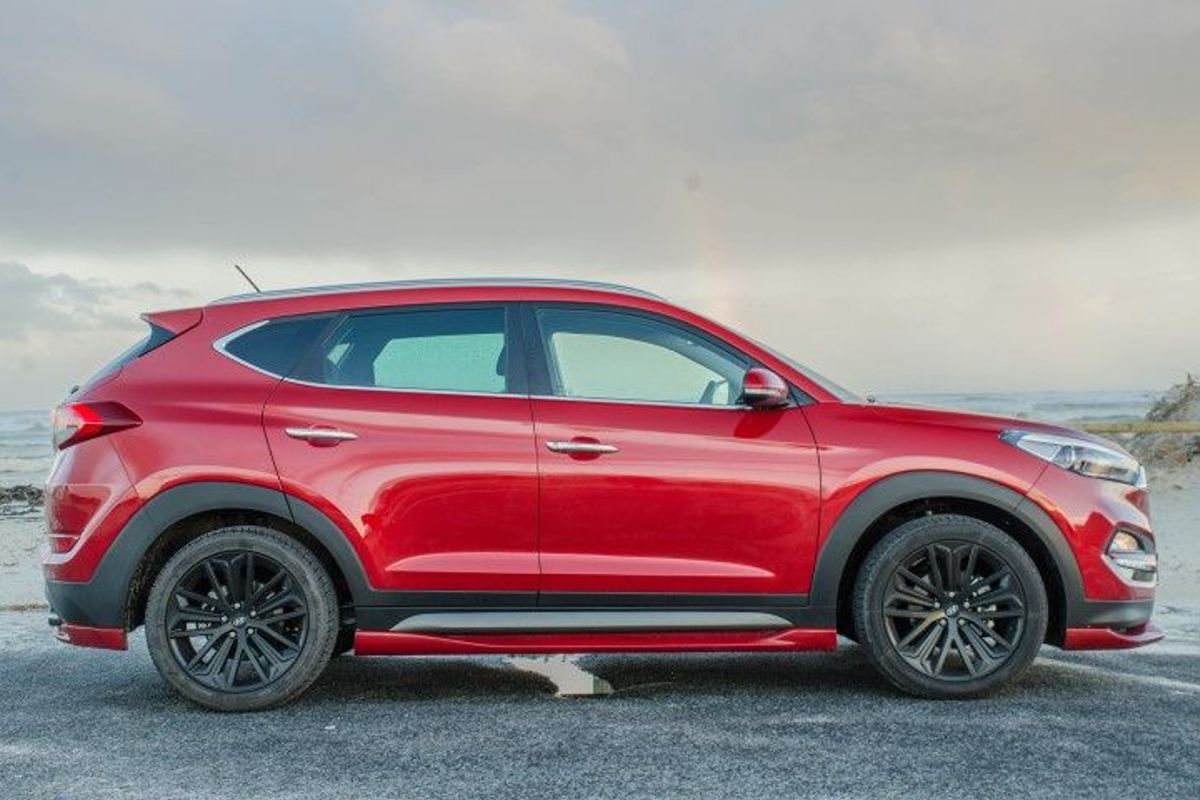
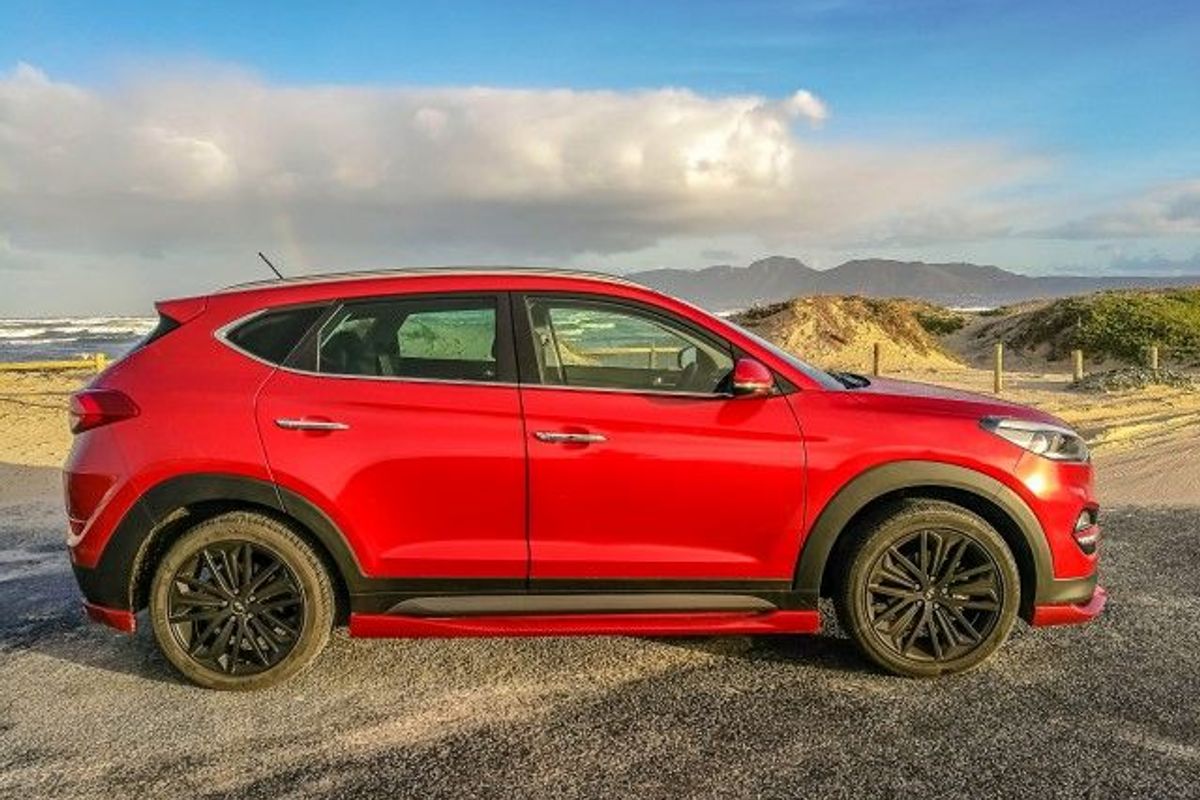
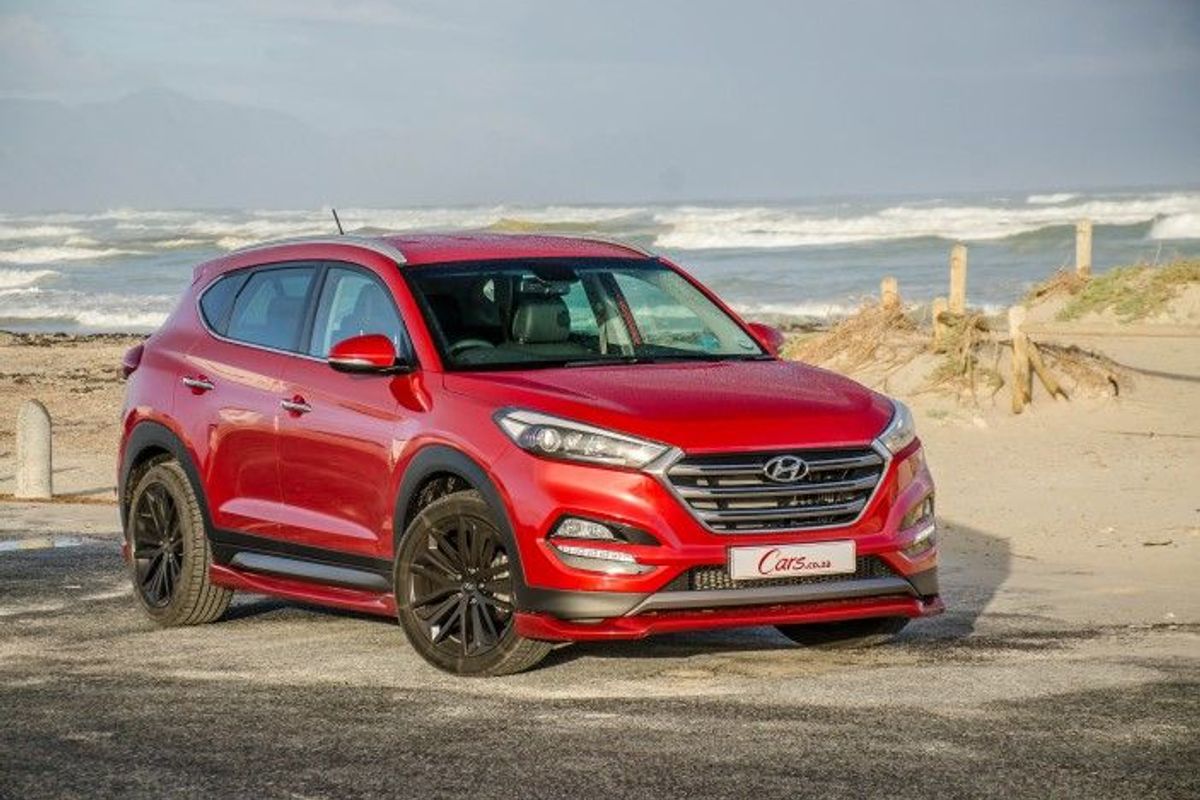
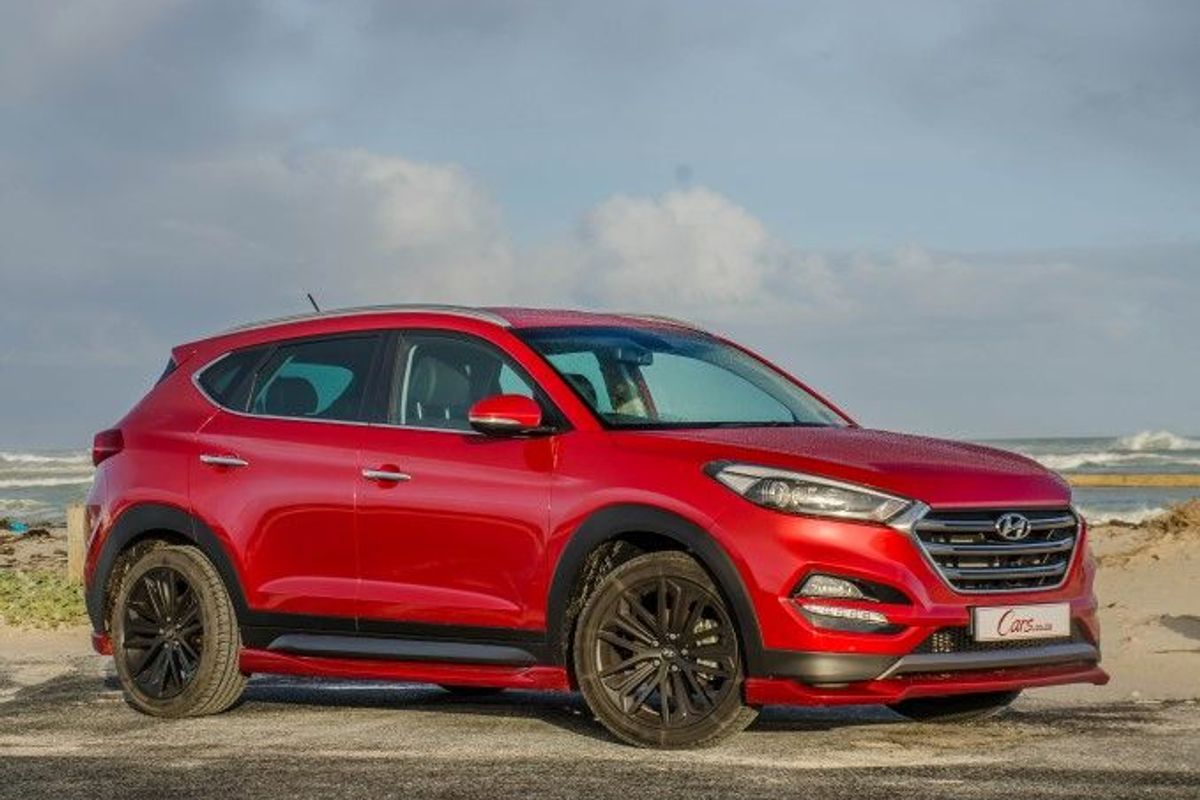
Hyundai recently introduced a sportier version of its top-selling Tucson family car in South Africa. It’s called the Tucson Sport and we tested it to find out if there is any merit in considering this beefed up compact family SUV.
We Like: Exterior enhancements, ride quality, performance, space
We Don’t Like: Annoying exhaust drone, stock-standard interior
Alternatives
For more power: Consider the Volkswagen Tiguan 2.0 TSI 4Motion Highline R-Line. With 162 kW and 350 Nm of torque developed from its 2.0-litre turbopetrol engine, the Tiguan in R-Line trim has both kerb appeal and all-wheel drive performance in the bag. Overall, the Tiguan is difficult to fault and its interior design and build quality is superior to that of the Tucson and it comes well-specced with features. The Tiguan 4Motion Highline R-Line is significantly more expensive though, priced from R569 600.
For similar style: Consider the Mazda CX-5 2.5 Individual. The all-new CX-5 was introduced earlier this year and based on our first impressions, it’s an impressive product well worth considering. This particular derivative is powered by a naturally aspirated 2.5-litre engine with 143 kW and 257 Nm of torque. Standard specification is good and the CX-5 2.5 Individual is similarly priced to the Tucson at R491 900.
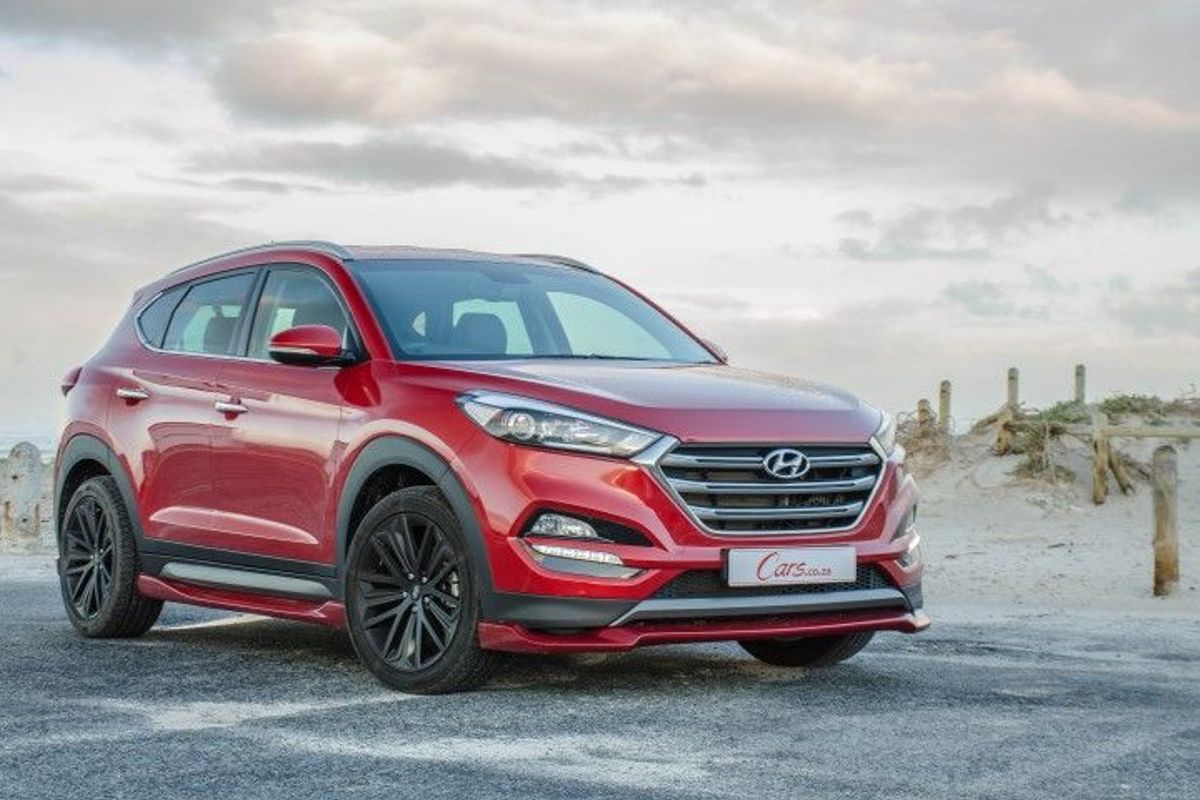
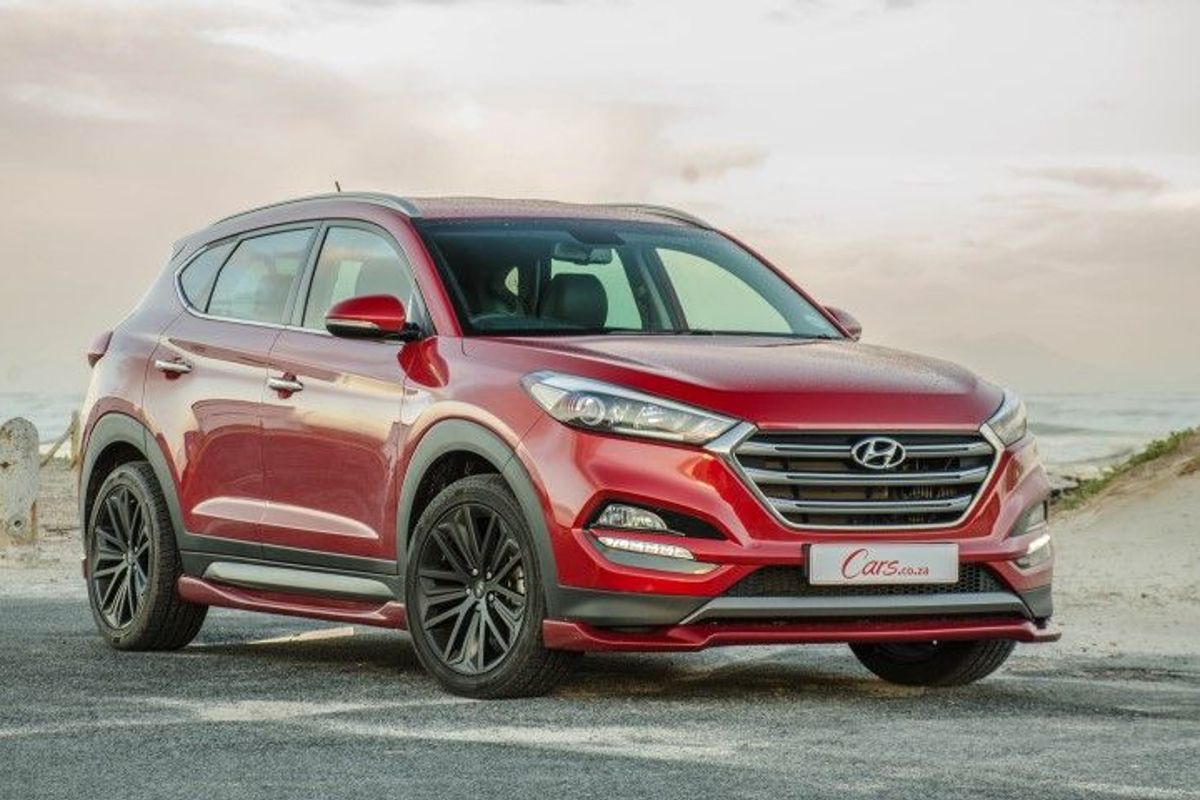
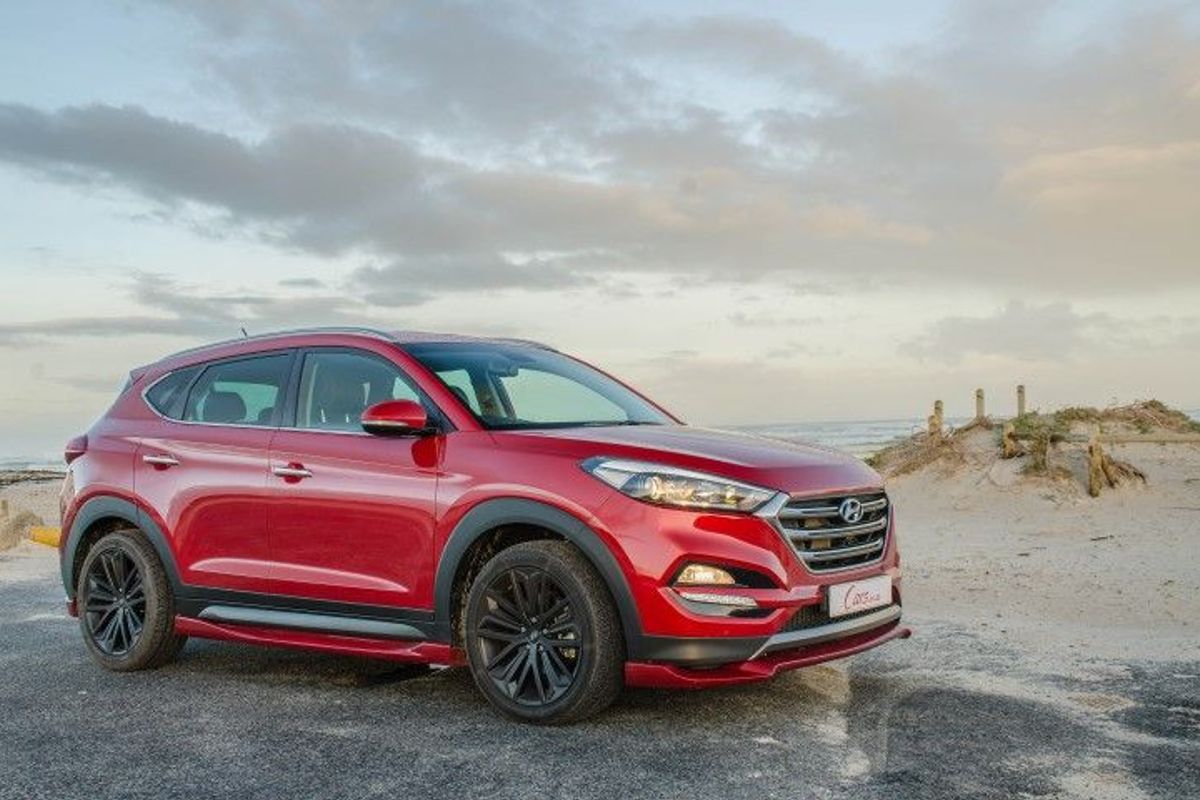
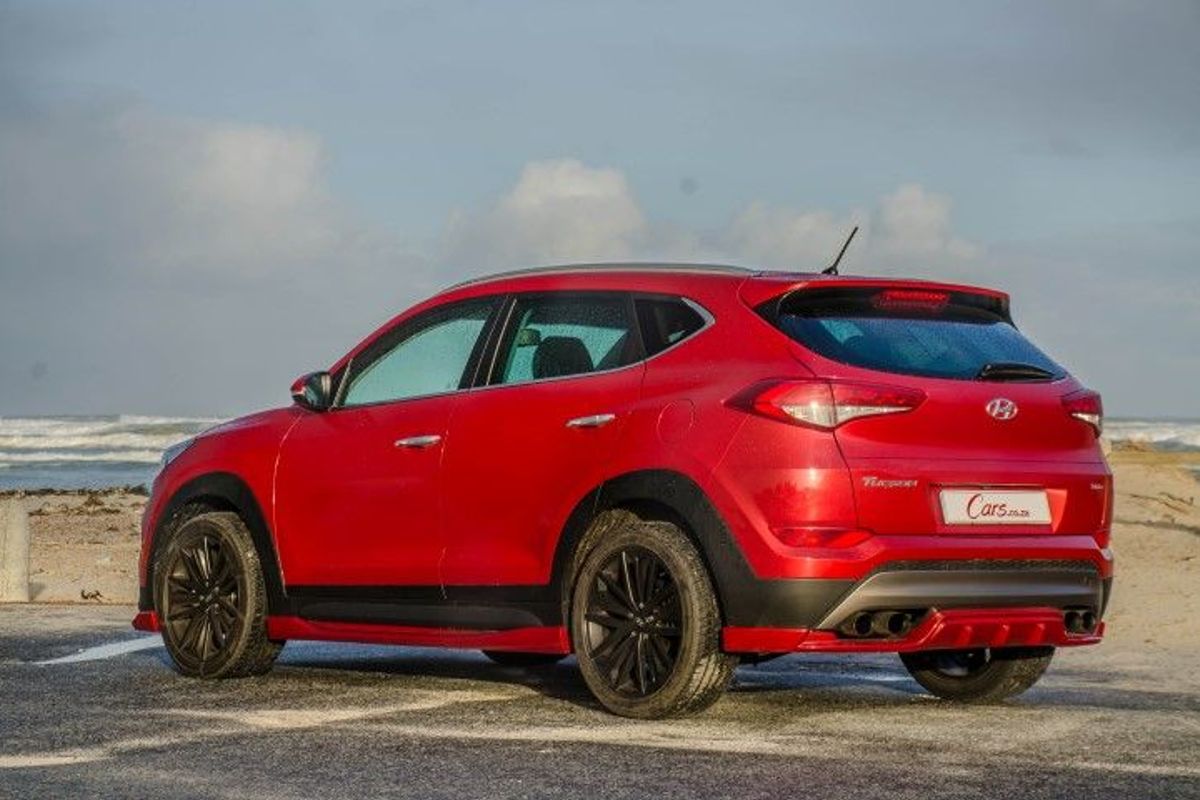
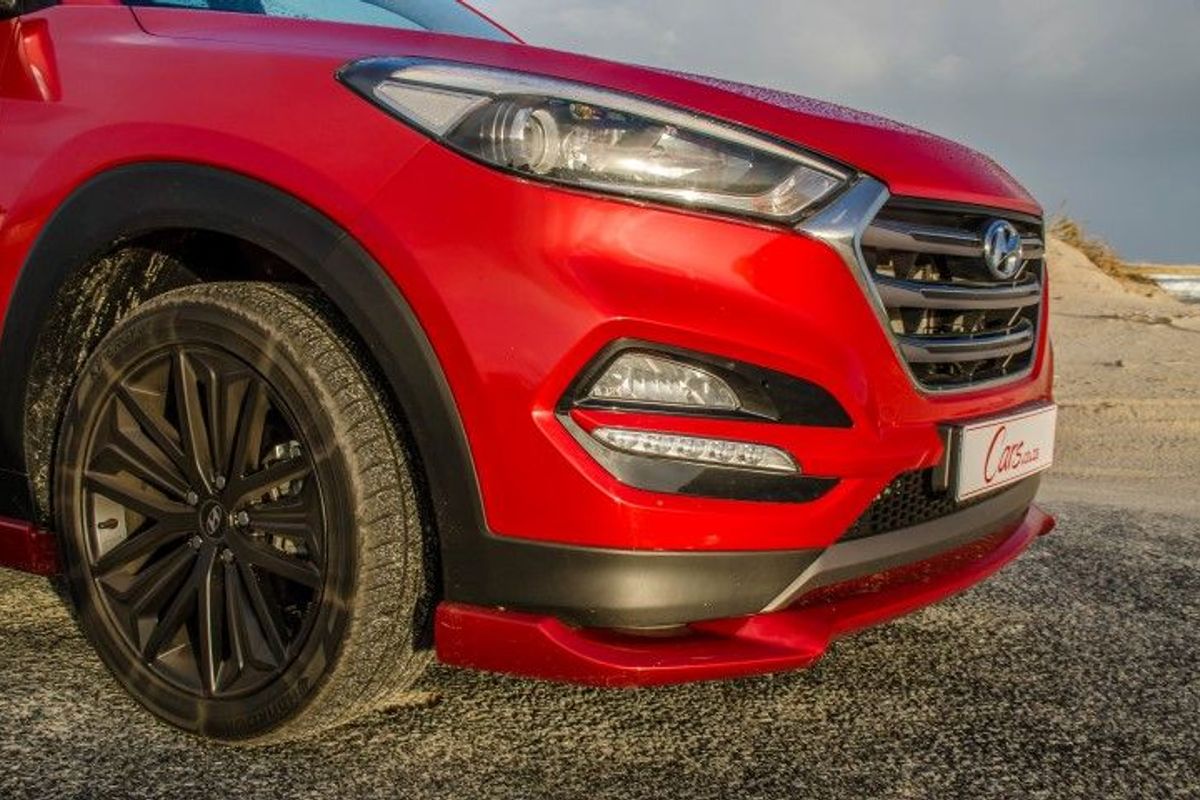
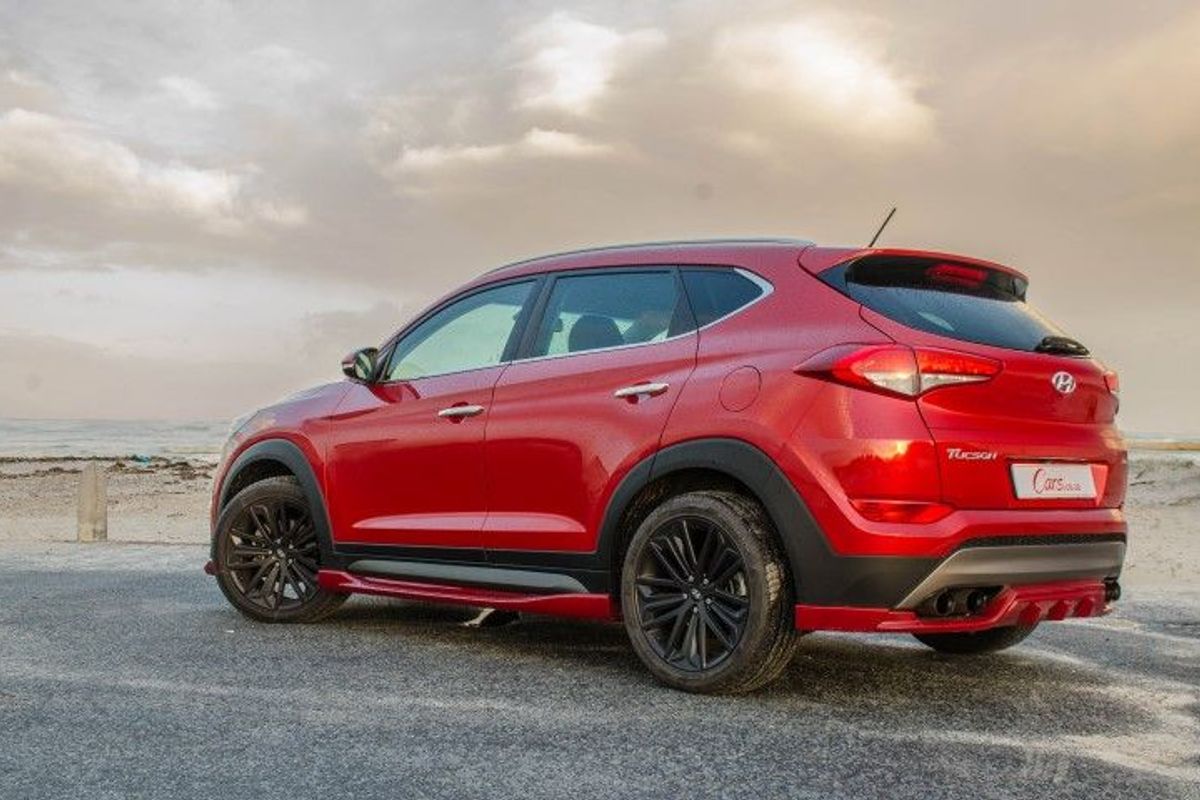
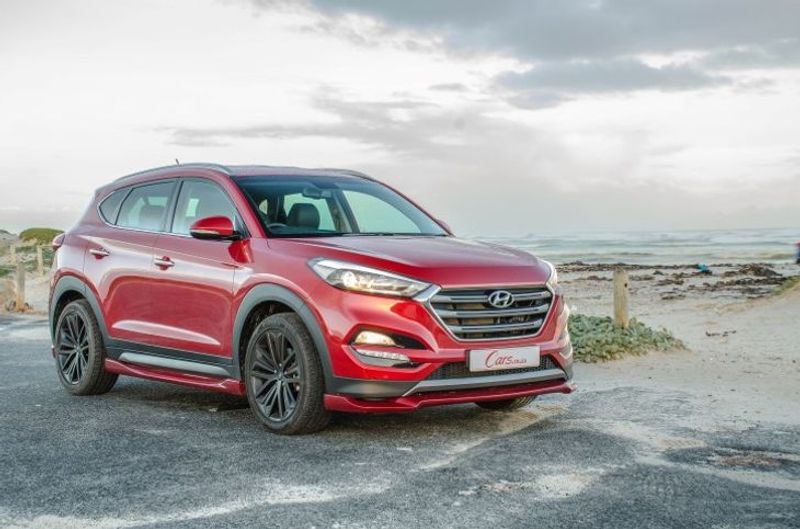
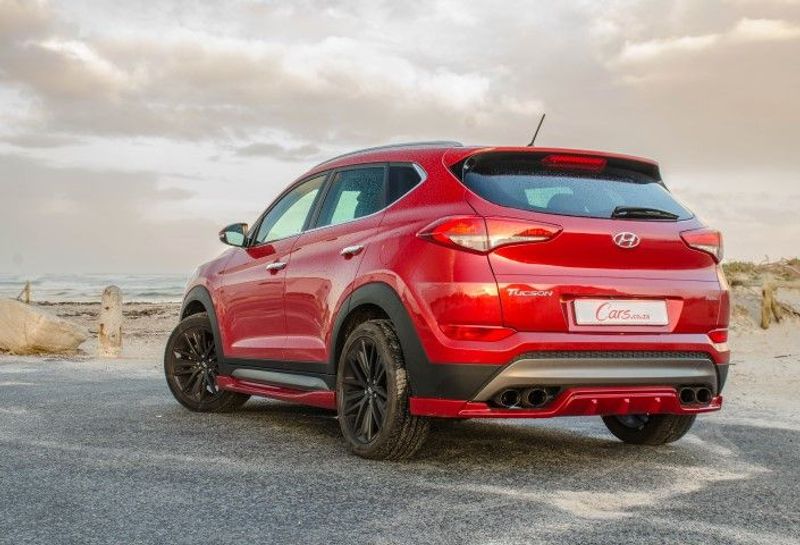
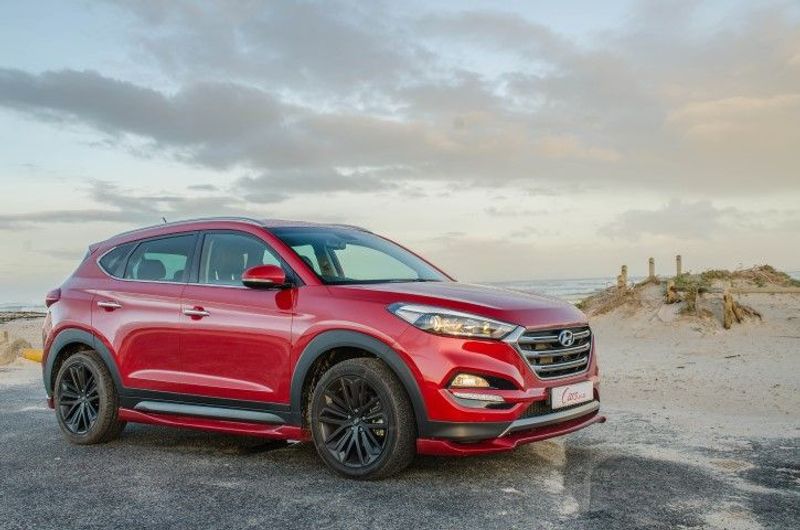
The Tucson Sport boasts sporty appeal thanks to a new front bumper, side skirts, rear diffuser and a quad exhaust system.
Facts & Figures
Price: R499 900 (June 2017)
Engine: 1.6-litre turbocharged petrol
Power: 150 kW
Torque: 295 Nm
Transmission: 6-speed manual
Fuel consumption (claimed): 8.3 L/100 km
Fuel tank capacity: 62-litres
Load space capacity: 580-litres
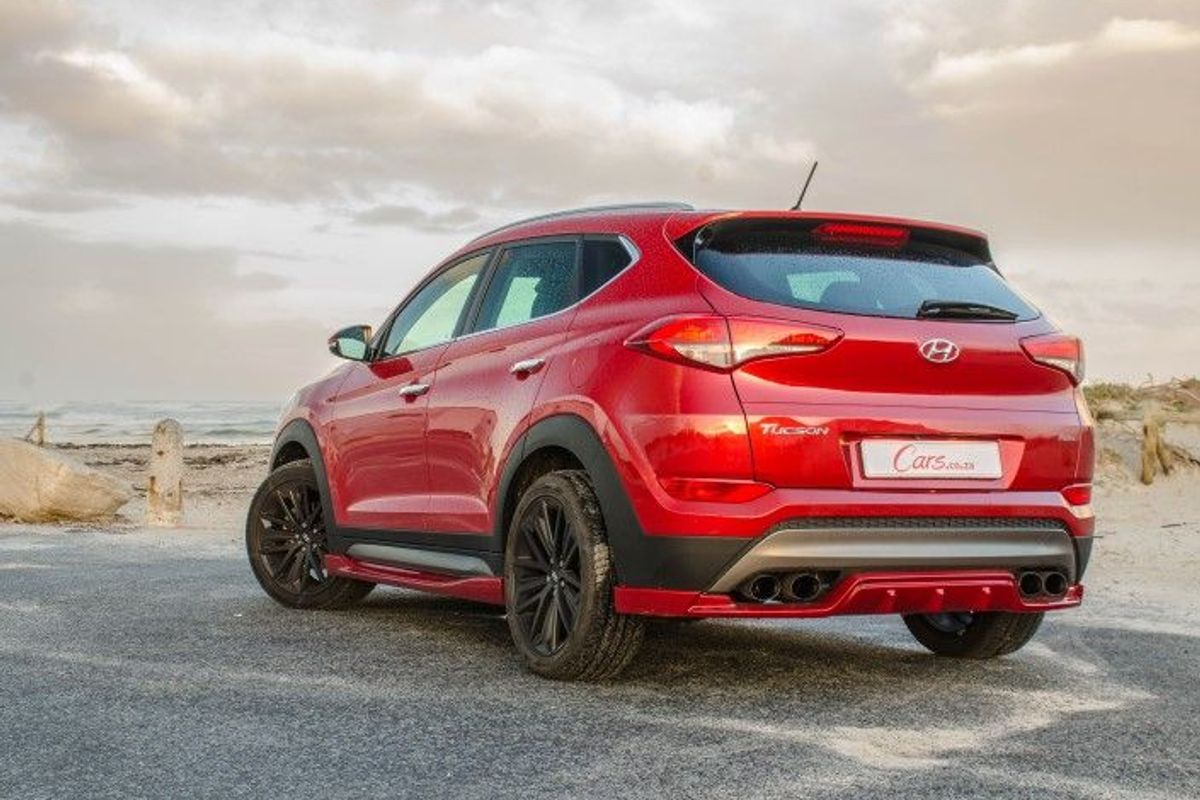
The quad exhaust system adds visual appeal while also offering a sporty soundtrack under acceleration.
The Hyundai Tucson is a popular choice in the compact SUV segment and according to the firm, the Tucson currently (June 2017) garners the lion share of sales in this segment totalling 16.4%. That’s an impressive achievement for the Korean brand, but not difficult to understand when you consider that the Tuscon is a good-looking, practical and relatively well-priced family car. Hyundai is, however, having fun with its successful recipe by introducing the recently-introduced Tucson Sport, which brings a generous helping of sporty appeal to the range.
Should you consider buying the Tucson Sport? This quick review will help you decide…
Beefy styling and an uprated 1.6-litre turbopetrol engine will attract buyers looking for added kerb appeal from their compact SUV.
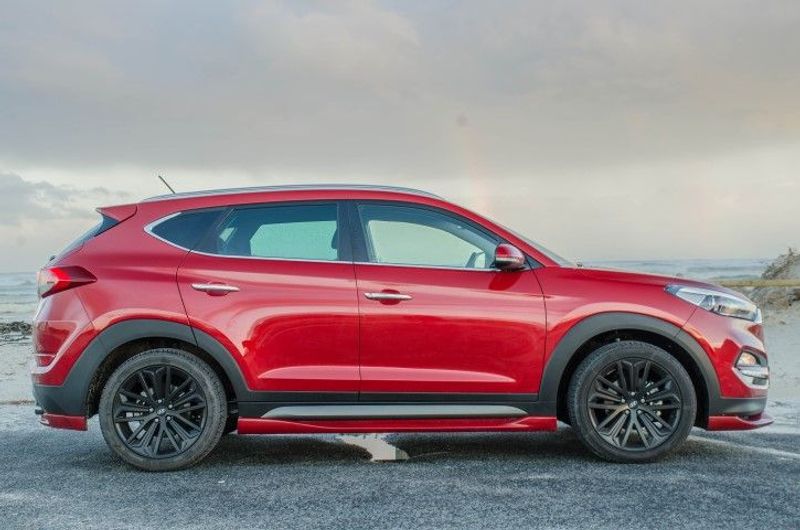
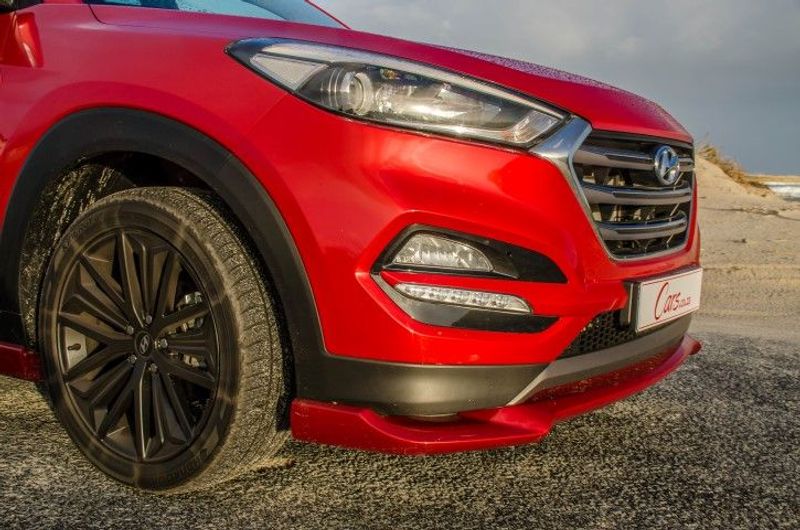
In an effort to beef up the Tucson’s exterior presentation, Hyundai has imported a body kit from Korea, which includes a beefy front bumper, side skirts and a rear diffuser. From the rear, you will notice that a quad-tipped sports exhaust system has been fitted, which delivers a hearty aural thrum. But that’s not all: because those large 19-inch black alloy rims shod with low-profile rubber are unique to this derivative and round off what appears to be an overtly muscular look.
In terms of styling then, the Tucson Sport does a fine job of attracting admiring glances on the road and although its looks won’t appeal to conservative buyers, it will attract a clientele who is looking for a more expressive, sportier-looking compact SUV.
Performance and ride quality
The Tucson Sport offers good performance coupled with a pleasingly comfortable ride quality.
This Tucson Sport is fitted with a 1.6-litre turbopetrol engine, the same found in the 1.6 Turbo Executive derivative on which it is based. In this application, however, power and torque has been bumped up by 20 kW and 30 Nm to deliver peak outputs of 150 kW and 295 Nm of torque.
That’s enough to deliver a fairly powerful punch and the Tucson Sport gains pace relatively quickly when driven hard. It’s not brutally fast, but will eagerly pick up the pace if you need it to. Power is sent to the front wheels via a standard 6-speed manual transmission and during hard acceleration off the line, the driver is bound to encounter mild torque steer. The 6-speed manual transmission is quite smooth in operation and the motor’s tractability is good in the higher gears, which means less down-shifting is required to execute overtaking manoeuvres.
A major selling point for the Tucson is its comfortable, smooth ride quality, which is particularly welcome on longer out-of-town journeys. Despite its 19-inch wheels (shod with low profile tyres), bumps and ruts are absorbed with little difficulty and little jarring is felt in the cabin over harsher surfaces. The steering feel is quite vague, but you can adjust the steering with the push of a button on the centre console, which gives you the option of “Normal” and “Sport”; the latter firms the steering up a bit, which is useful for spirited driving scenarios.
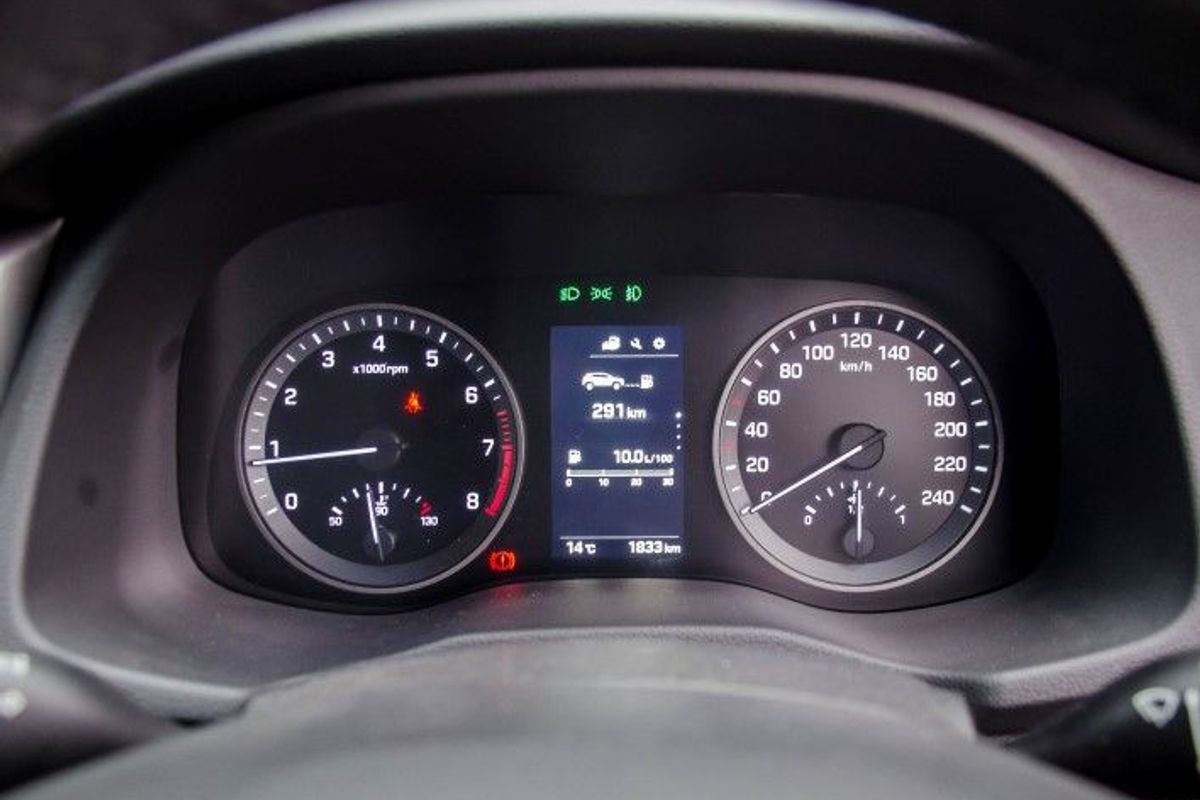
In terms of fuel consumption, Hyundai claims an average fuel consumption figure of 8.3 L/100 km for the Tucson Sport. During its time with us, the trip computer returned 9.8 L/100 km.
Practicality
The Tucson offers a decent amount of loading space and rear passengers travel in relative comfort too.
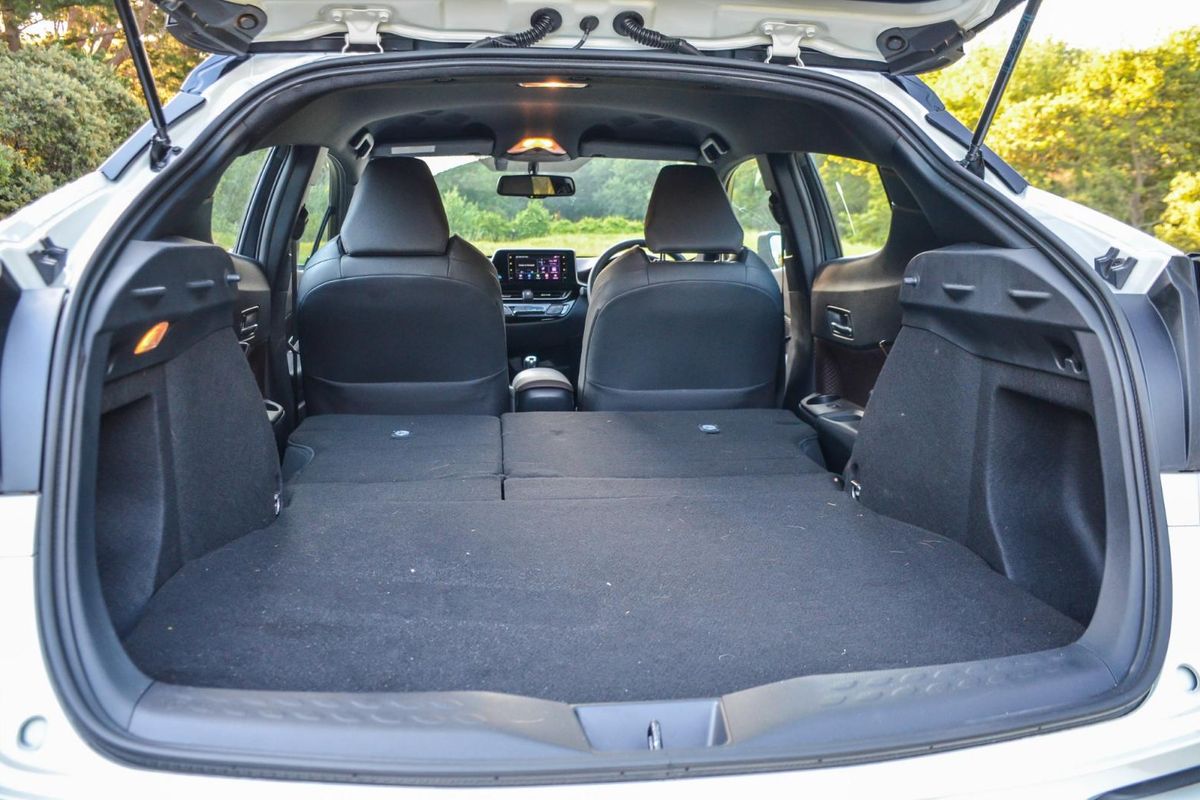
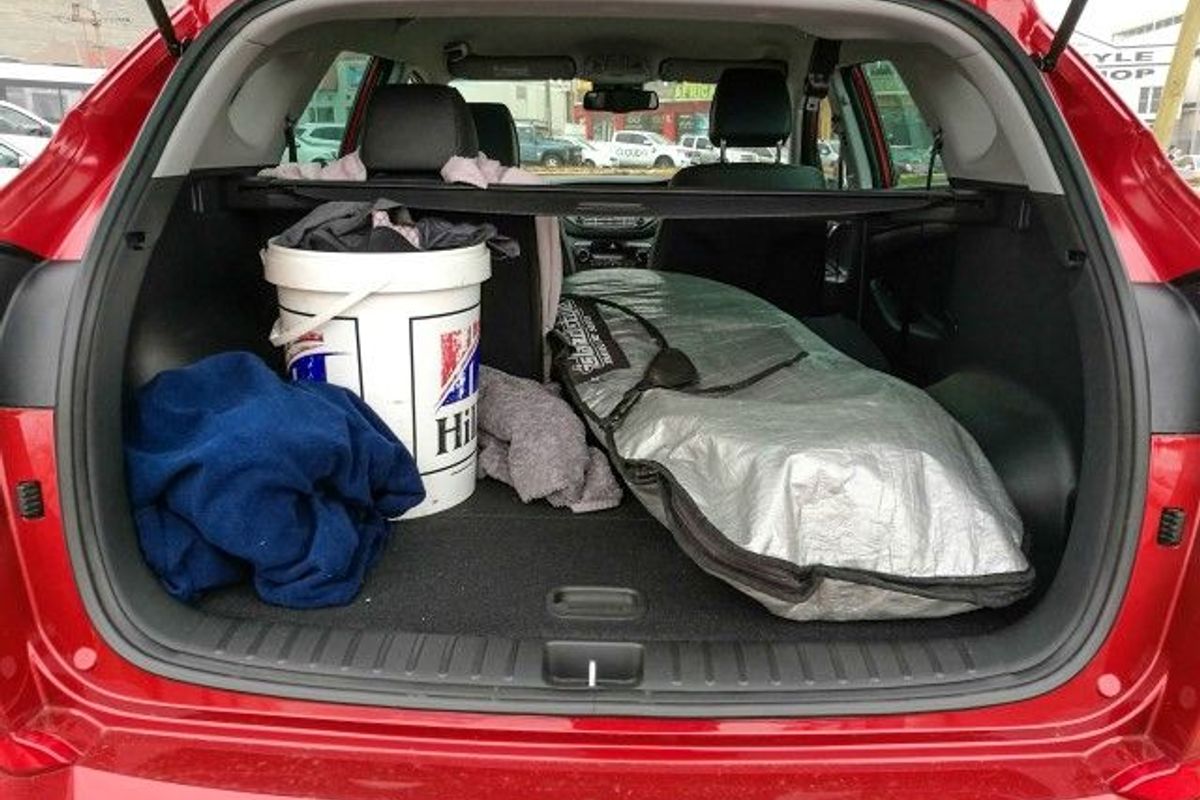
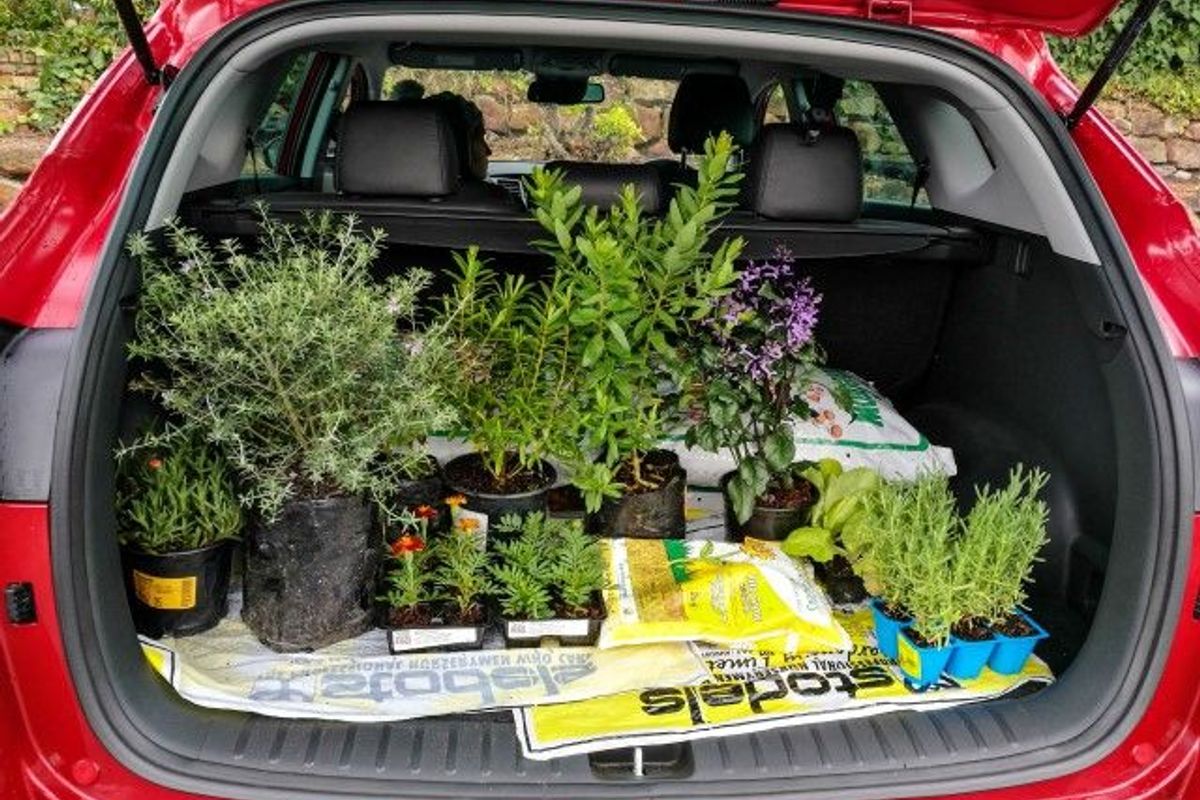
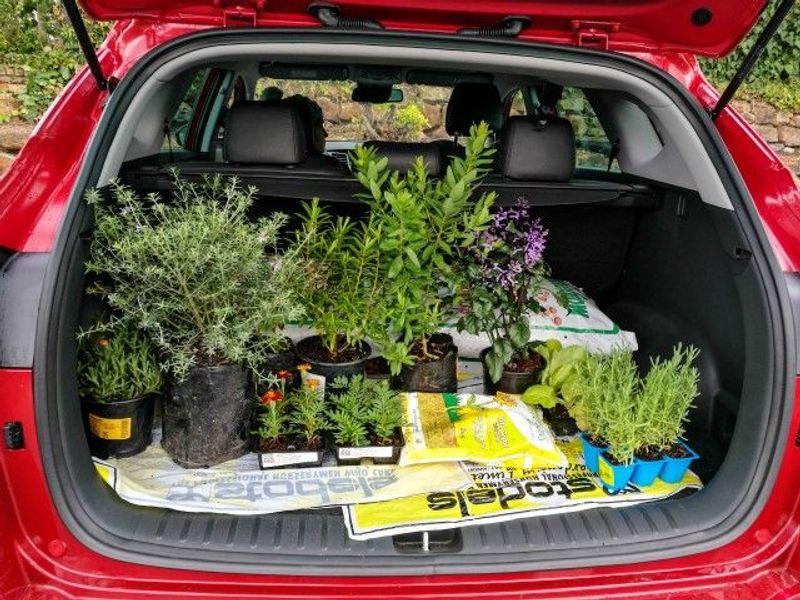
In terms of practicality, the Tucson fares reasonably well. It has a sizable luggage bay that is claimed to offer 488 litres of loading space. The rear seats can fold down in a 60:40 split configuration, which increases loading space to 1 478 litres. You do, however, have to pull a lever on either side of the rear seats to fold them down. A release button on top of the seats would be far more practical. We transported various goods with ease, including plants, bags of soil, a surfboard and surfing gear. There are 12V sockets in the ‘bay and below the fascia.
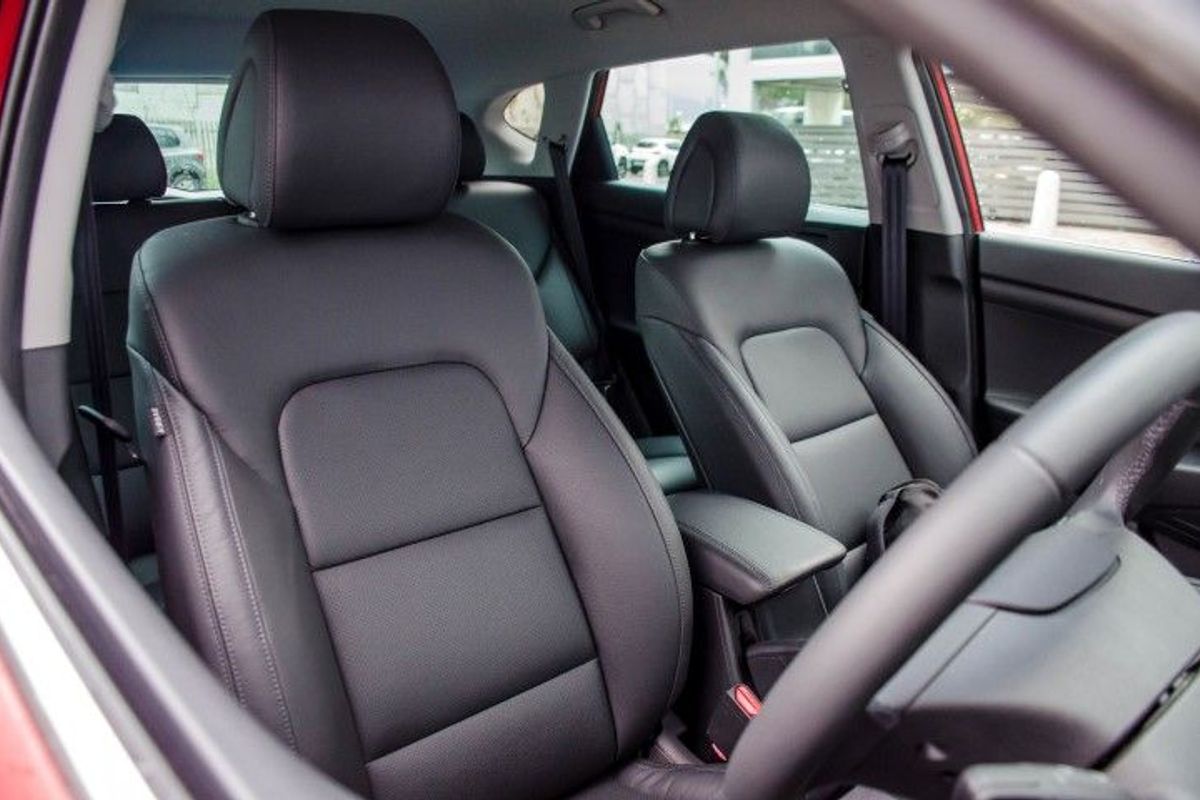
Space for rear passengers is adequate with sufficient leg-, head- and shoulder room. Both the front seats are electrically adjustable; the driver’s seat features lumbar support for added comfort and the steering wheel can be adjusted for rake and reach. Front and rear cup holders, as well as sufficient storage space, are dotted around the cabin for your convenience.
Standard features
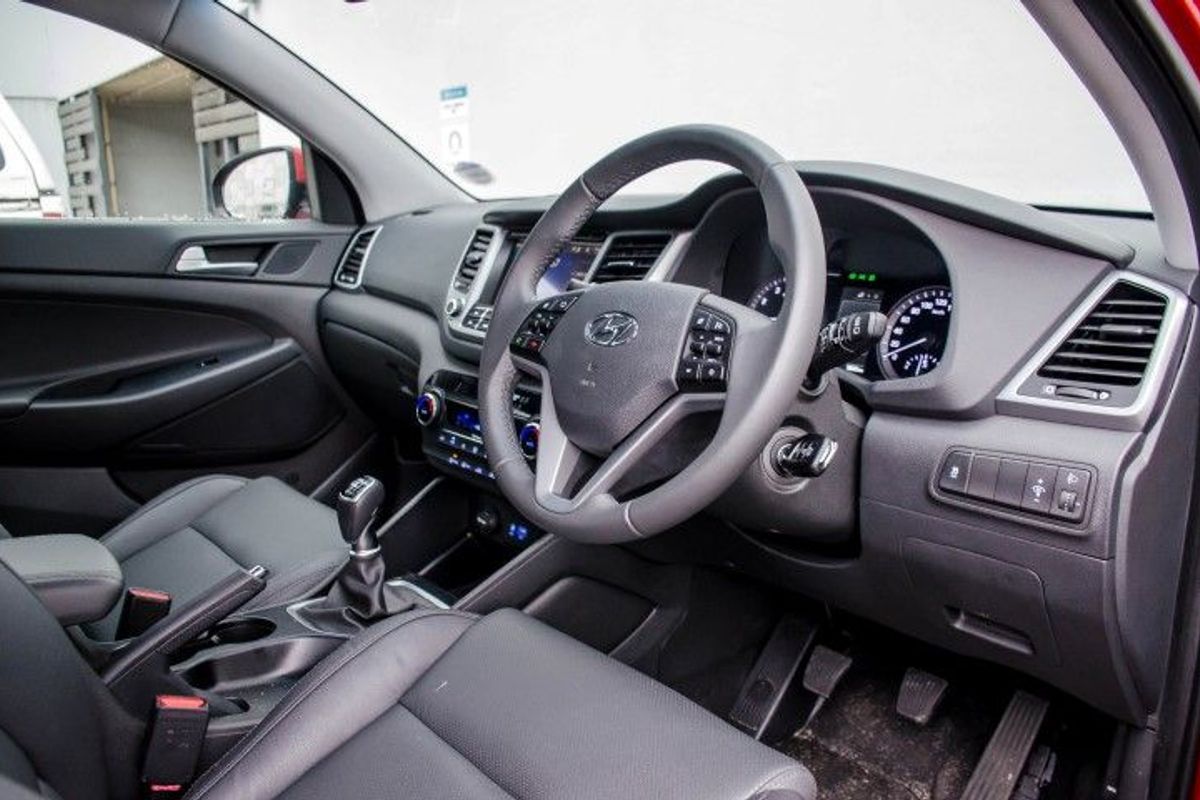
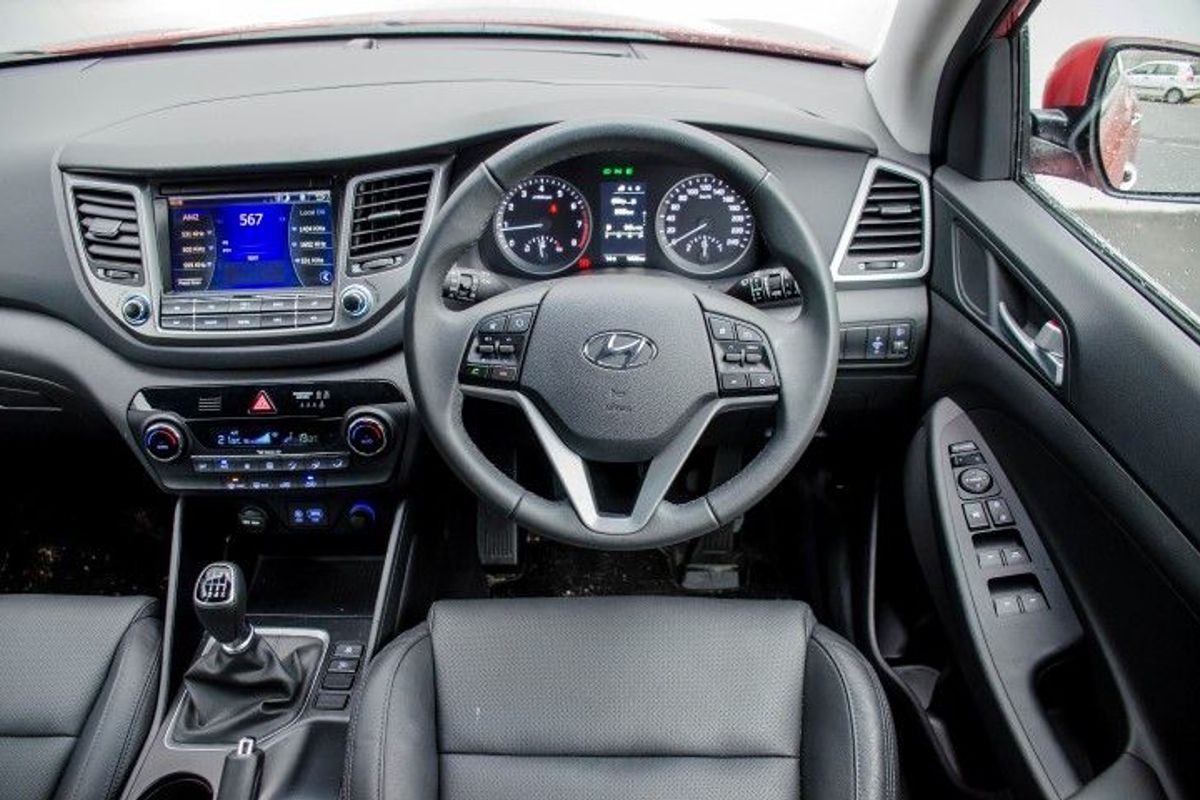
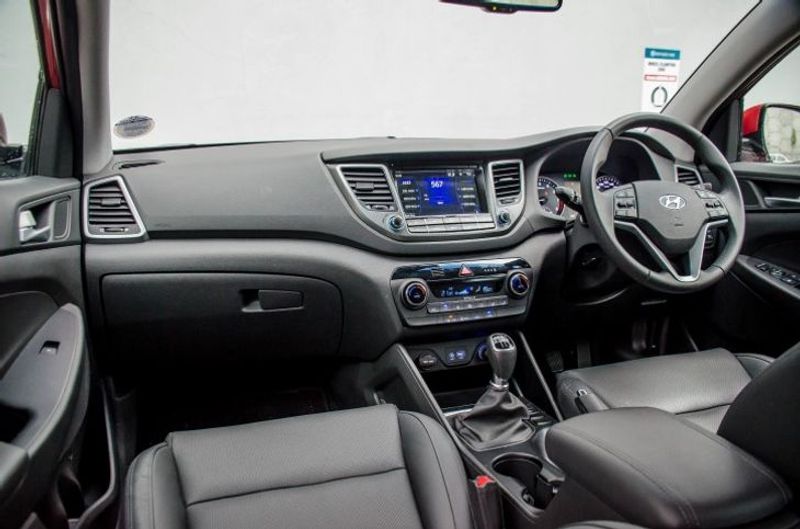
The Tucson Sport is based on the Executive derivative and therefore carries the same features and interior styling but sadly no sporty features are to be found in the cabin. The Tucson Sport is, however, well equipped with features including a multifunction steering wheel, electric windows, electric folding heated mirrors, climate control air conditioning and cruise control.
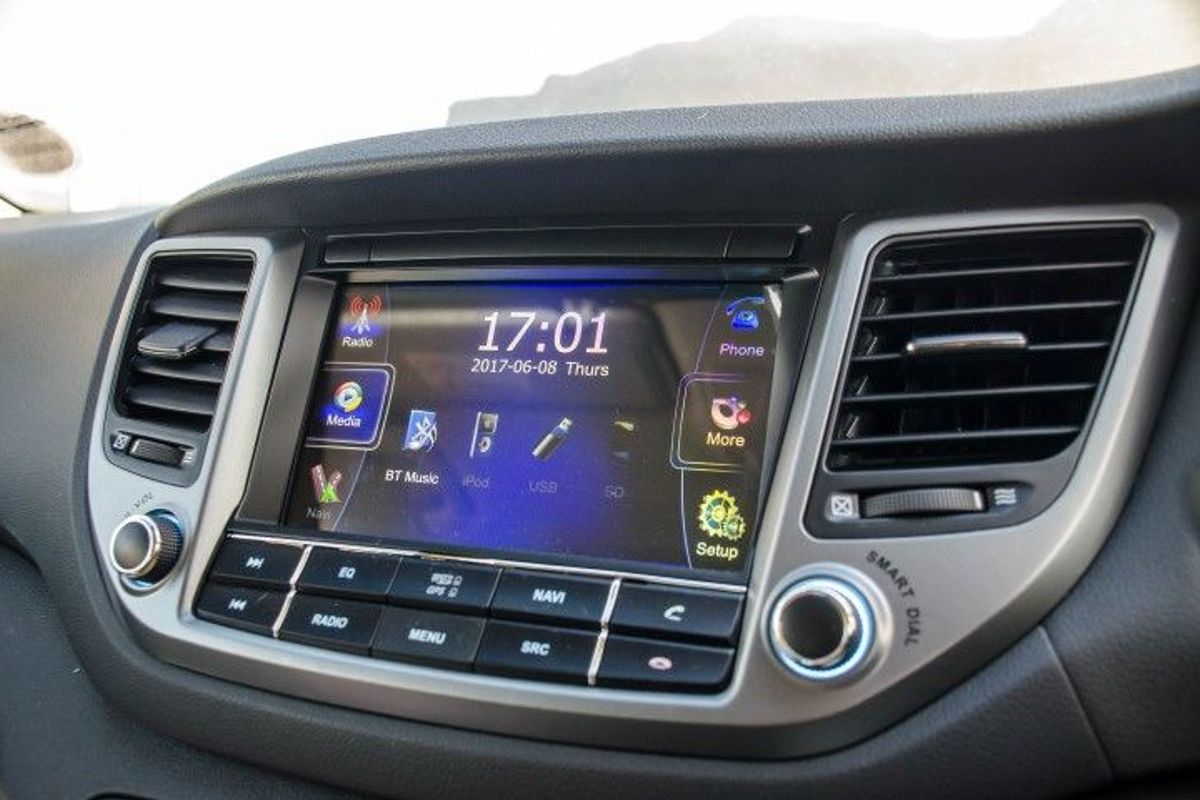
In terms of infotainment, an 8-inch touchscreen infotainment is fitted, offering navigation, Bluetooth functionality and CD player. The system is basic and easy to use, and a USB and auxiliary port is standard too.
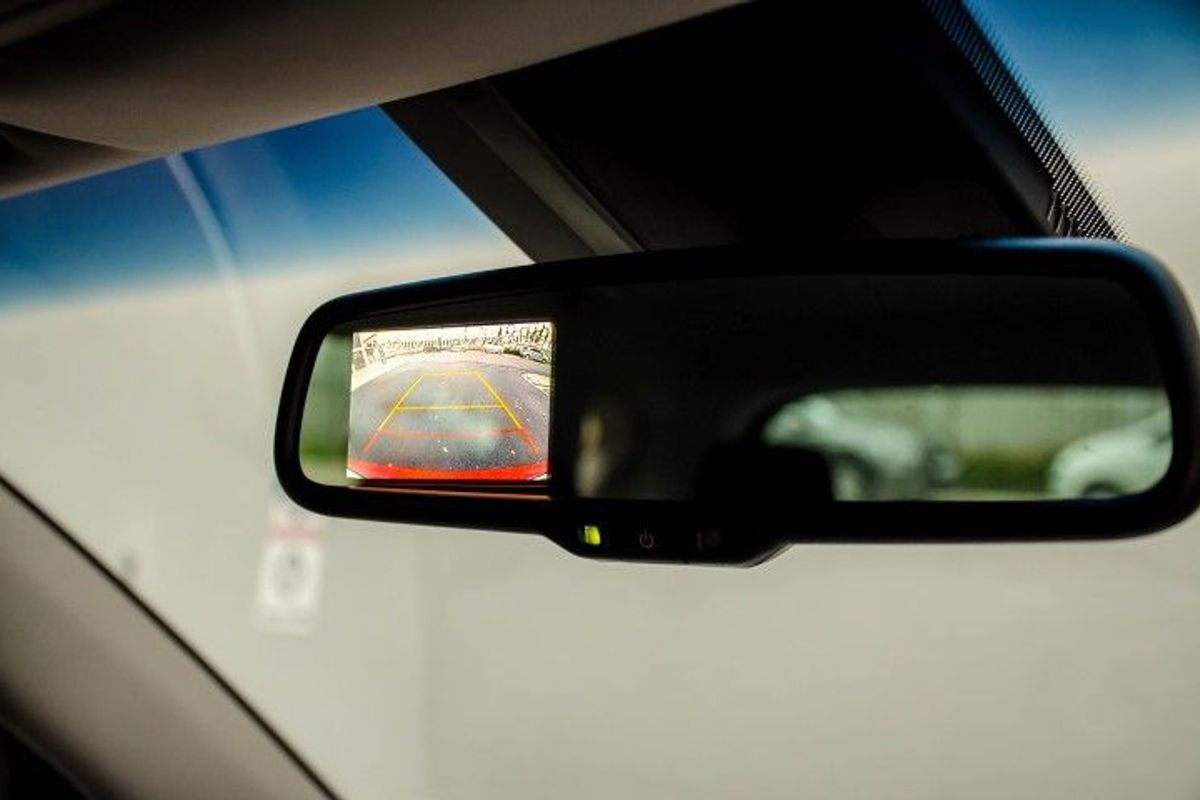
On the safety front, the Tucson Sport is equipped with 6 airbags, ABS with EBD, hill descent control, and Electronic Stability Control. Park distance control with a rearview camera is standard with the camera view displayed in the rearview mirror. ISOFIX child seat mounts are also fitted.
The bad
Dull interior
The interior comes well equipped with features and its sturdy build quality is to be appreciated.
It’s a tad disappointing that Hyundai hasn’t given the interior any special treatment to match the attractive exterior styling of the Tucson Sport. If you are going to go through the trouble of dressing the Tucson up in sporty attire, then why would you ignore the interior? Yes, it may be a small gripe, but if you are going to do “sporty”, then at least have subtle design touches, such as sportier seat upholstery with contrast stitching or “Sport” badging to lift the interior ambience and differentiate it from other derivatives in the range.
The cabin, however, is well put together and hard, grey plastic is the dominant material and although it might not be the prettiest to look at, it is practical in the sense of keeping the cabin clean after the kids have had their way with it. The interior design is on the dull side of the spectrum and clearly stands in contradiction to its sporty exterior.
Annoying exhaust drone
That quad exhaust system goes a long way in terms of enhancing the visual appeal of the Tucson Sport and at times it can sound quite pleasant, but not all the time. The continuous, monotonous drone of the exhaust, even under mild acceleration, can become an annoyance, especially on longer journeys. Sure, you can get used to it, but you will have to turn the radio volume up a bit louder to hear your favourite song more clearly and you will have to raise your voice a few notches higher to have a conversation with your passengers.
More than this, the resonance from the exhaust system causes a perceptible reverberation through the seat every time you accelerate. We feel that the exhaust drone and vibration detract from the overall driving comfort. A sporty-sounding exhaust is a great feature, but it needs to be less intrusive and regulated somewhat.
Price and warranty
The Hyundai Tucson Executive Sport is priced from R499 900 and is sold with a 7-year/200 000 km warranty, 5-year/90 000 km warranty and 5-year/150 000 km roadside assistance. Service intervals are set at 15 000 km.
The Tucson Sport won’t appeal to everyone, but it’s fun enough to drive and offers a reasonable level of specification.
Verdict
The Hyundai Tucson Sport offers eye-catching styling that’s complemented by a good level of standard features. It delivers solid performance and its (relatively) forgiving ride quality makes it comfortable to drive on a daily basis. Moreover, the Tucson is practical with sufficient space for passengers and luggage. Its dirt road capability is, however, compromised due to its low-profile 19-inch wheels, which may limit its use somewhat and its humming exhaust might ultimately become an annoyance for some.
The interior lacks a degree of flair to match the sporty exterior styling, but despite its flaws, the Tucson Sport offers oodles of kerb appeal and comprehensive standard features, even if it is rather pricey for a family car/compact SUV equipped with a manual transmission. If you care less about impressing those around you, then you can save R50 000 and just settle for the standard Tucson 1.6 Executive… However, should you wish to drive a Tucson with standout styling and a bit more brio, the Sport affords you the “modified look” without the need to forego the 7-year mechanical warranty and 5-year service plan.
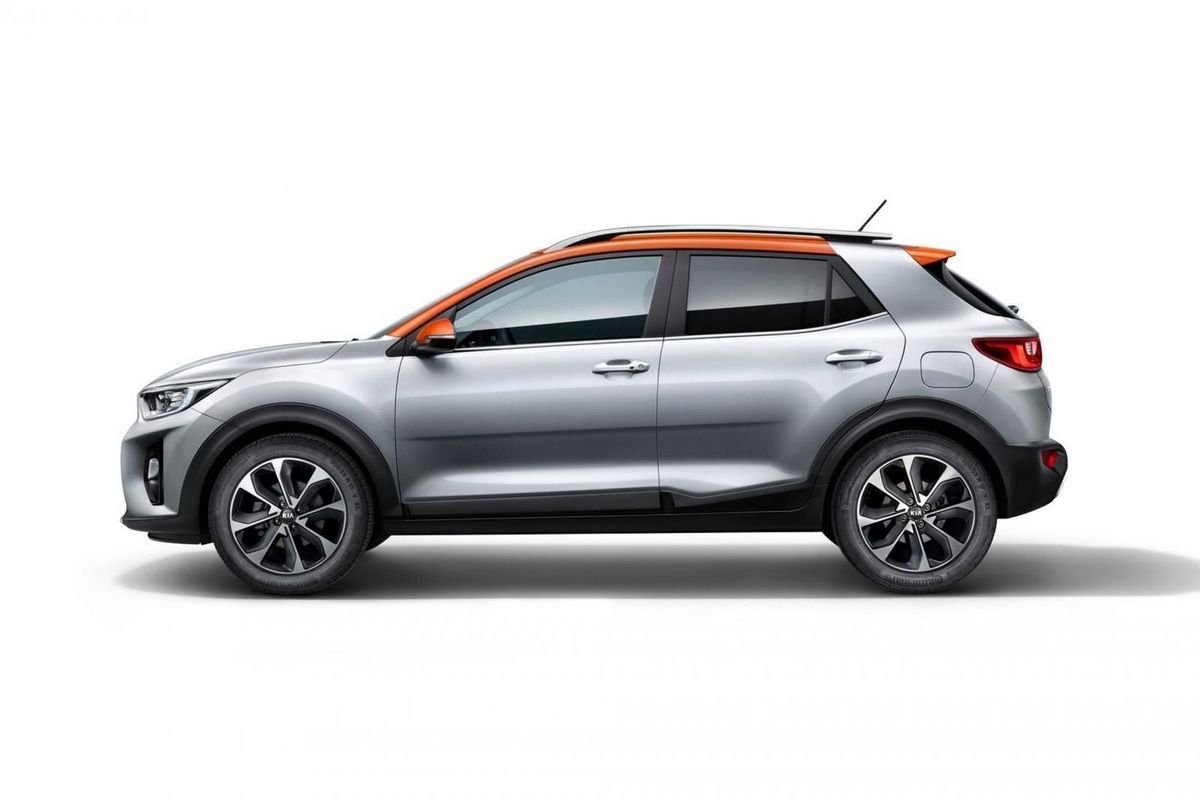
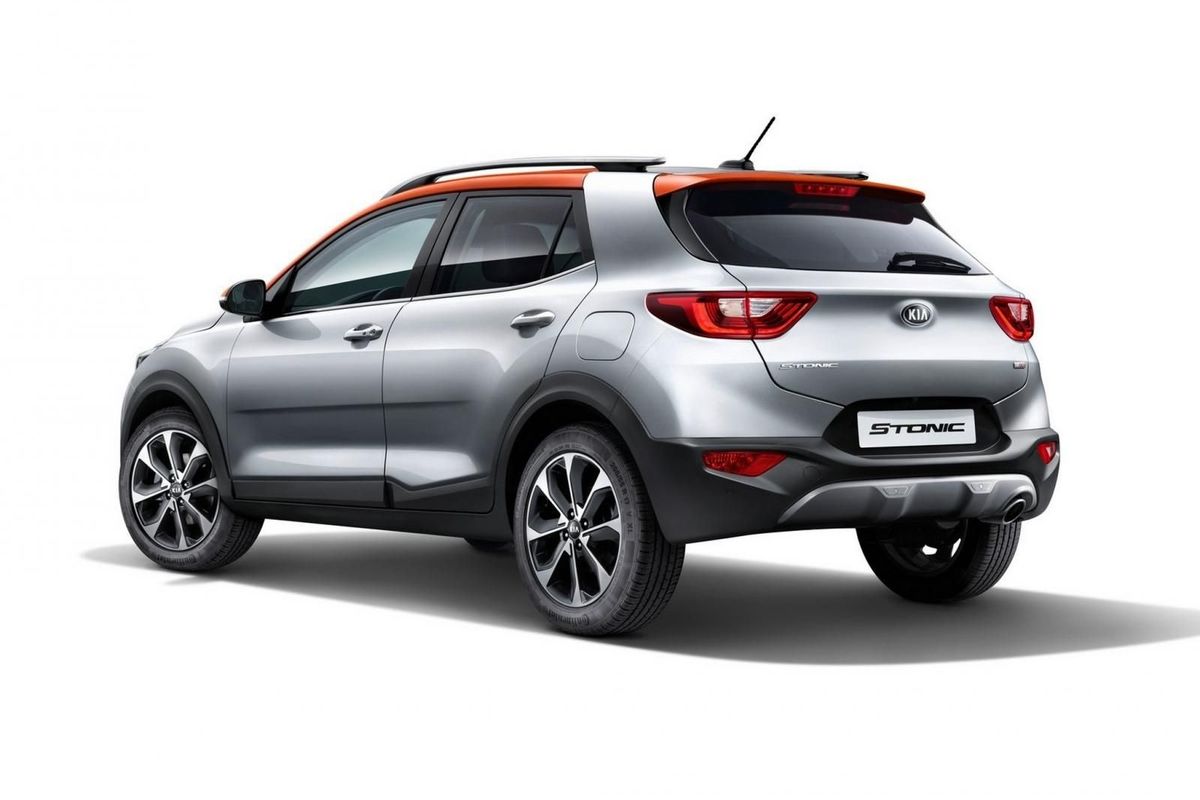
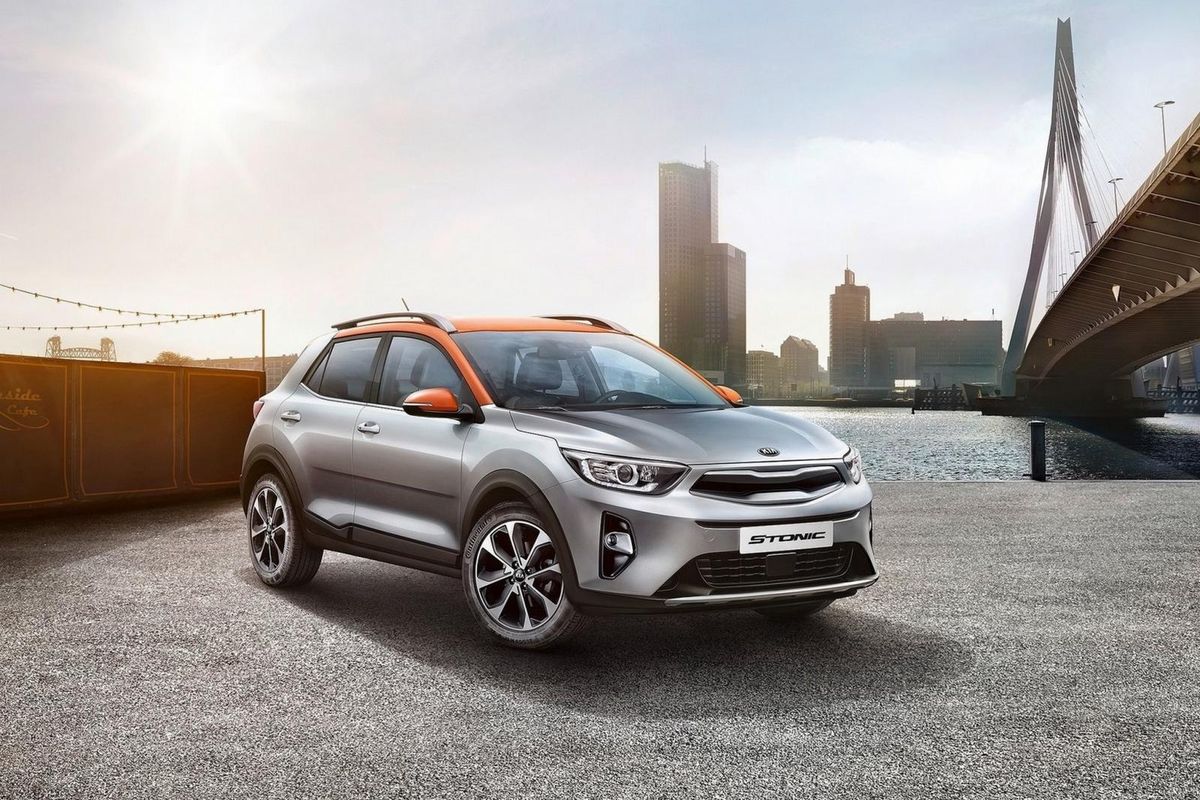
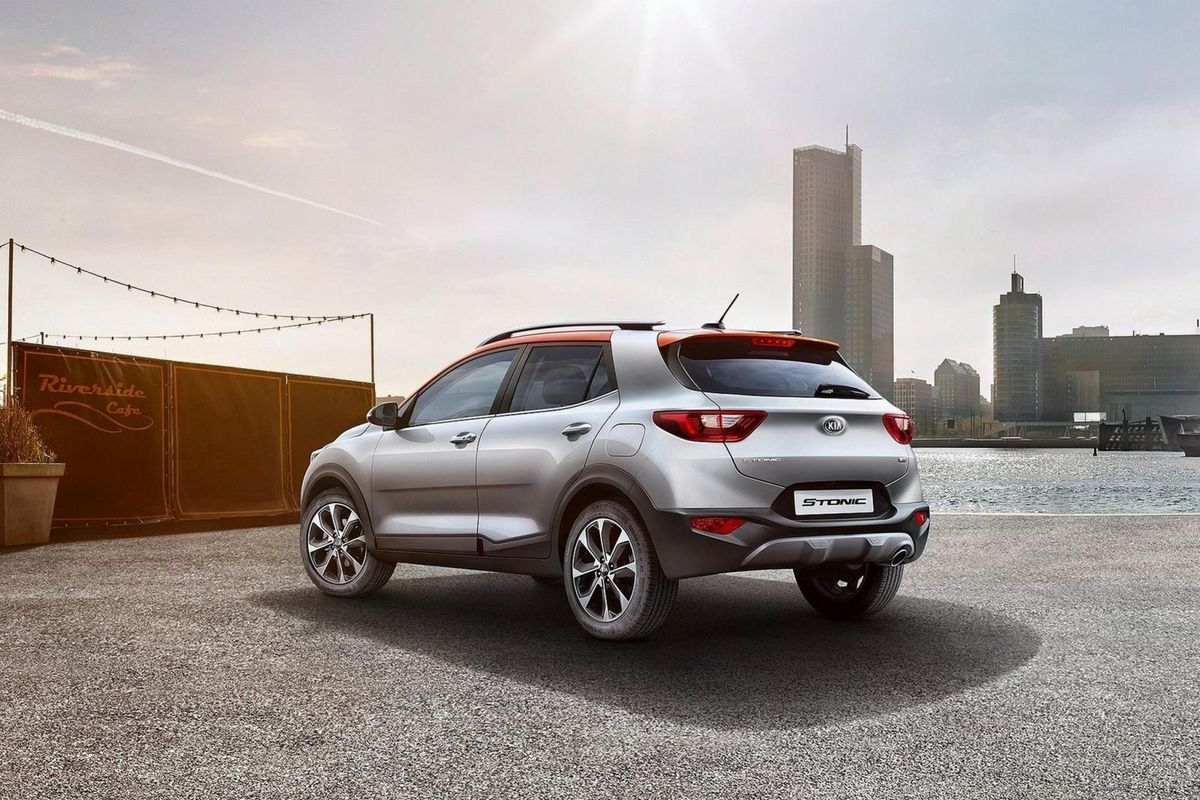
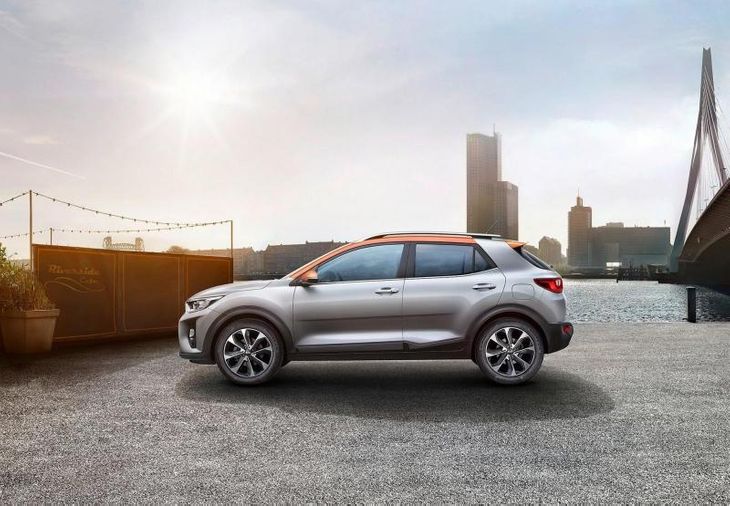
Korean car manufacturer, Kia, has announced a compact crossover that will compete in the busy B-segment. It's called the Kia Stonic and it offers a range of personalisation options as well as a comprehensive engine range.
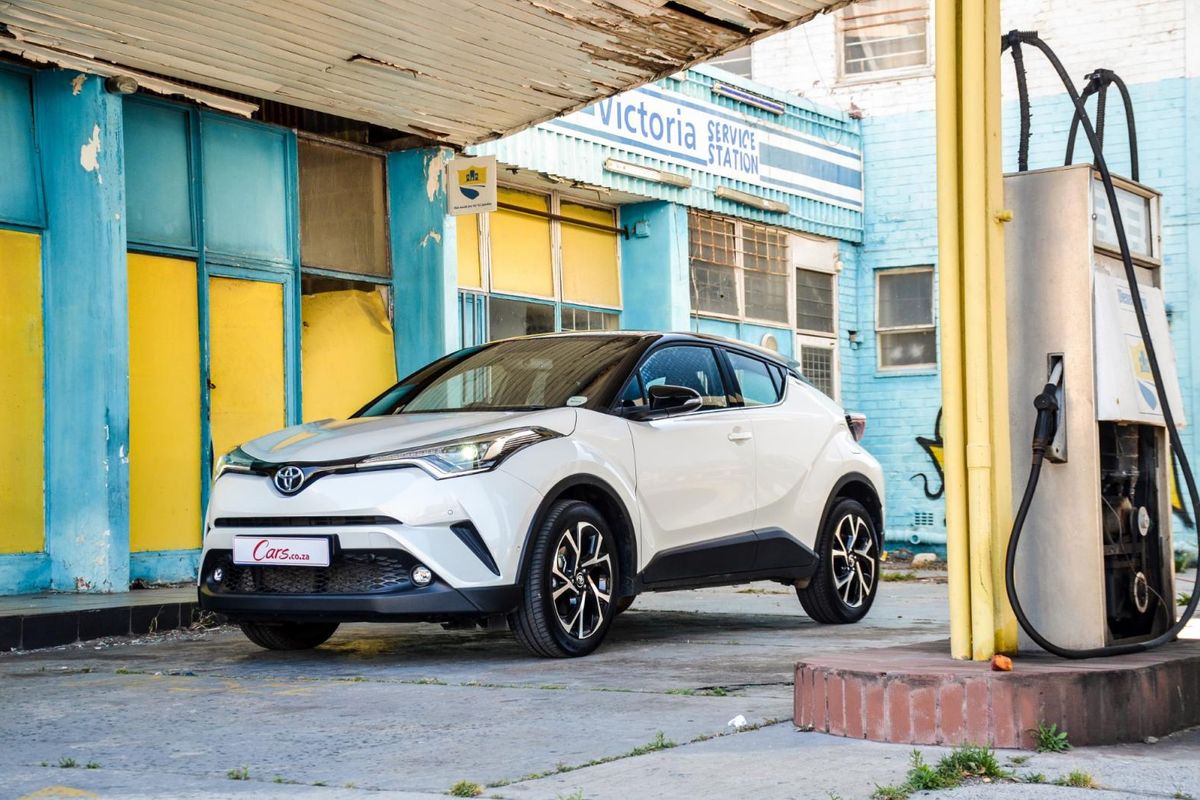
The B-segment is one of the world's most popular vehicle segments and there are around 1.1 million new cars sold in this segment in Europe each year. Kia wants a piece of the action and has created the Stonic to take on rivals such as the Ford EcoSport, Renault Captur, Mazda CX-3 and Toyota C-HR, to name a few.
Michael Cole, Chief Operating Officer of Kia Motors Europe, comments: "The Kia Stonic will be one of the most compelling new cars in this rapidly-expanding class, backed by Kia's unique warranty, and the brand's reputation for reliability, quality and contemporary design. By volume, the B-SUV market is expected to overtake the C-SUV segment by 2020, when more than one in ten new cars sold in Europe will be from the Stonic's segment. The B-SUV segment attracts buyers from across the spectrum, with 21% of all customers upsizing from a supermini, and another 15% downsizing from their family hatchbacks." That analysis makes for interesting reading and it makes sound business sense to have a product right in the thick of it.
Engines and Safety
Kia Stonic has hopes of becoming a top-seller in the competitive B-segment.
As for the Kia Stonic itself, it was designed in Europe and was inspired by the design of the 2013 Kia Provo concept. The Kia Stonic will be available in Europe with up to 20 two-tone colour combinations, with a choice of up to 5 colours for the roof. There will be a number of turbocharged petrol and diesel engines available, each with a manual gearbox. The range starts with the 1.0-litre T-GDI (turbocharged gasoline direct injection) engine, followed by the 1.25- or 1.4-litre naturally-aspirated MPI (multi-point injection) petrol engines. Finally, there's an efficient 1.6-litre diesel engine.
Kia is claiming that the Stonic will offer an exciting drive with sharp handling response and stable ride. The Kia Stonic comes standard with Electronic Stability Control (ESC) and Vehicle Stability Management (VSM), ensuring the front-wheel drive vehicle is kept safe. There are numerous driver aids available such as Autonomous Emergency Braking with pedestrian recognition and Forward Collision Alert, Blind Spot Detection with Rear Cross Traffic Alert and Lane Departure Warning System.
Kia Stonic Cabin
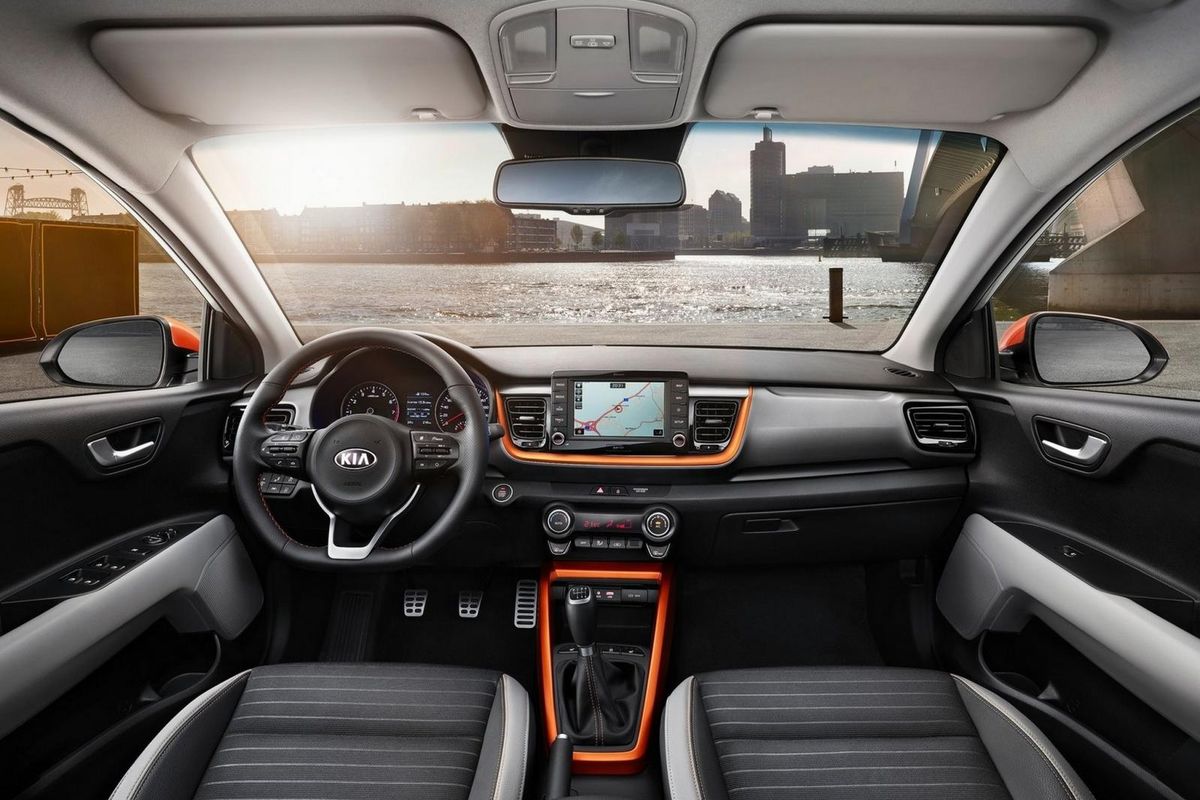
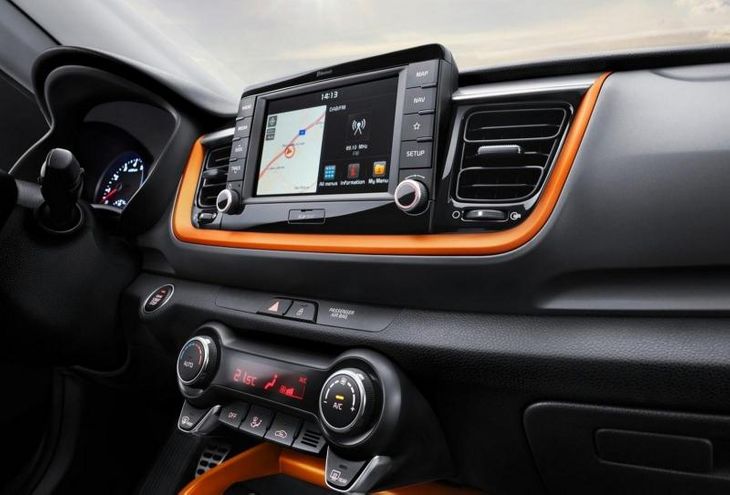
The Kia Stonic's cabin boasts the latest in connectivity such as Apple CarPlay and Android Auto.
Kia is playing the customisation and personality game by offering customers a range of vivid colour packs to choose from. In terms of connectivity, Apple CarPlay and Android Auto is standard and convenience and comfort features include heated front seats, cruise control and keyless entry. The Stonic's cabin is claimed to be spacious for all occupants, while the two-tiered boot offers 353 litres of space.
Coming to South Africa?
Much like Hyundai's Kona, the Kia Stonic's arrival depends heavily on the exchange rate and right-hand drive production. Like we said with the Hyundai Kona, "(Kona) has been earmarked for right-hand-drive markets (Australia will receive the Kona by September), but not the Africa-Middle East region (under which South Africa falls) – at least not yet. However, considering how briskly the local compact family car segment is growing, we'd think it could fare better (sales-wise) than the upcoming hatchback". We'll keep you posted if we hear more details about the new Kia Stonic.
The new Mercedes-Benz E-Class Coupe has arrived in South Africa! Take a look at specification and pricing details…
We drove the new E-Class Coupe at its international launch in Barcelona, Spain, earlier this year and found it to be impressively styled and packed with useful technology and luxury appointments. The good news is that the E-Class Coupe has now arrived on local shores and will be offered with a range of engine options to suit your taste. Take a look at what you can expect in terms of specification and pricing for this svelte coupe…
The range
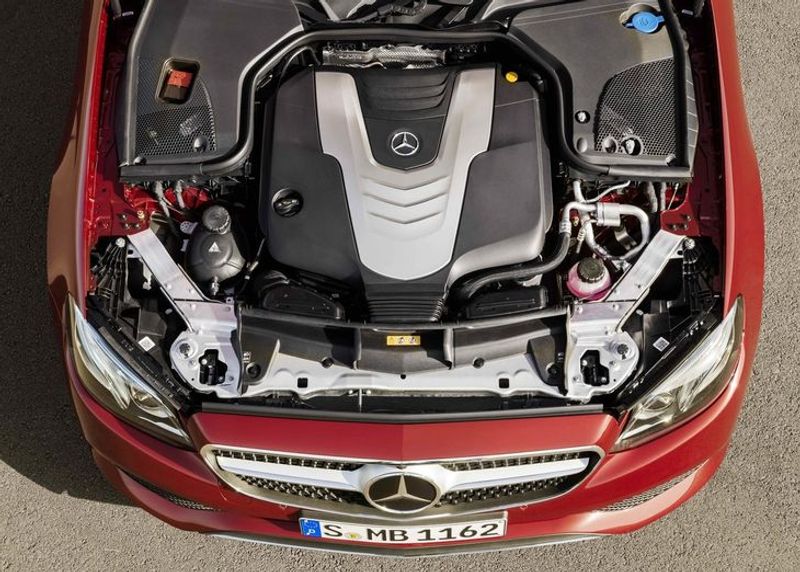
Three turbopetrol engines and a turbodiesel engine will be offered locally with the range-topping 245 kW turbocharged 3.0-litre V6 powering the E400 4Matic.
The local lineup will include 3 petrol engines in the form of the E200, E300 and the range-topping E400 4Matic. The diesel-powered E220d will also be offered.
In terms of outputs, the E200 offers 135 kW and 300 Nm of torque from its 2.0-litre turbopetrol engine with a claimed fuel consumption figure of 6.5 L/100 km. The more powerful turbocharged 2.0-litre E300 develops 180 kW and 370 Nm of torque and is claimed to consume 6.4 L/100 km. The petrol engine range is headlined by the E400 4Matic which employs a turbocharged 3.0-litre V6 engine that develops a hearty 245 kW and 480 Nm of torque with a claimed fuel consumption figure of 8.1 L/100km.
The only diesel option in the lineup is the E220d fitted with a 2.0-litre turbodiesel engine with 143 kW and 400 Nm of torque. This engine prioritises efficiency and Mercedes-Benz claims a fuel consumption figure of 4.0 L/100km. The E300, E220d and E400 4Matic Coupe derivatives make use of a quick-shifting 9-speed automatic transmission as standard while the E200 is equipped with a 6-speed manual transmission. The 9-speed automatic transmission will be optionally available on the E200, however. A total of 5 driving modes are offered via the Dynamic Select switch and these include Comfort, Sport, Sport+, Individual and Eco.
Ride comfort is provided by the standard Direct Control suspension while Dynamic Body Control (adaptive damping) and Air Body Control (multi-chamber air suspension) is offered as an option.
Key features
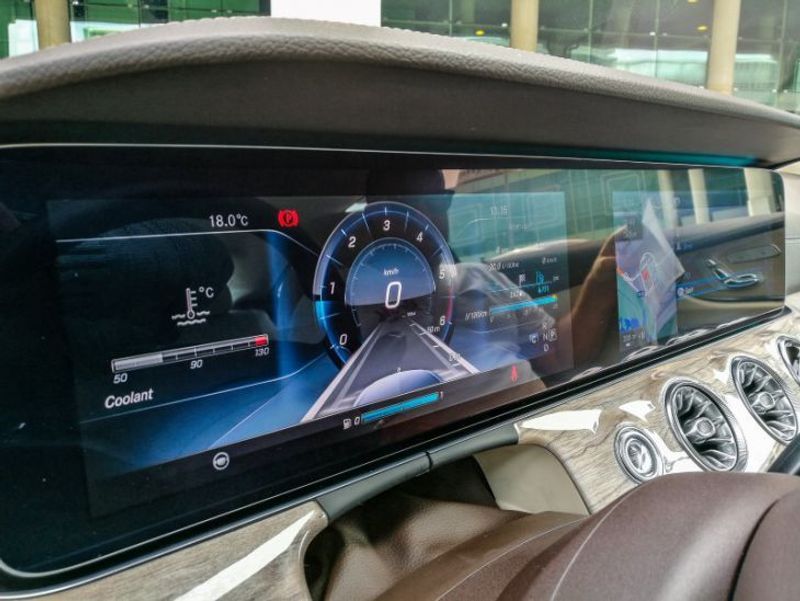
The optional Widescreen Cockpit is a must-have feature in the E-Class Coupe.
The new E-Class Coupe has grown in size and sits some 15 mm lower when compared with its sedan counterpart. It’s now 123 mm longer, 74 mm wider and 33 mm higher than the outgoing model and the wheelbase has been stretched by 113 mm which has a positive impact on interior space for both front and rear passengers.
Key design features include a long power dome bonnet, single-louvred diamond grille, standard LED headlights, 2-part LED taillight clusters with a glowing crystal effect and welcome/goodbye lighting function. Multibeam LED headlights are offered as an optional.
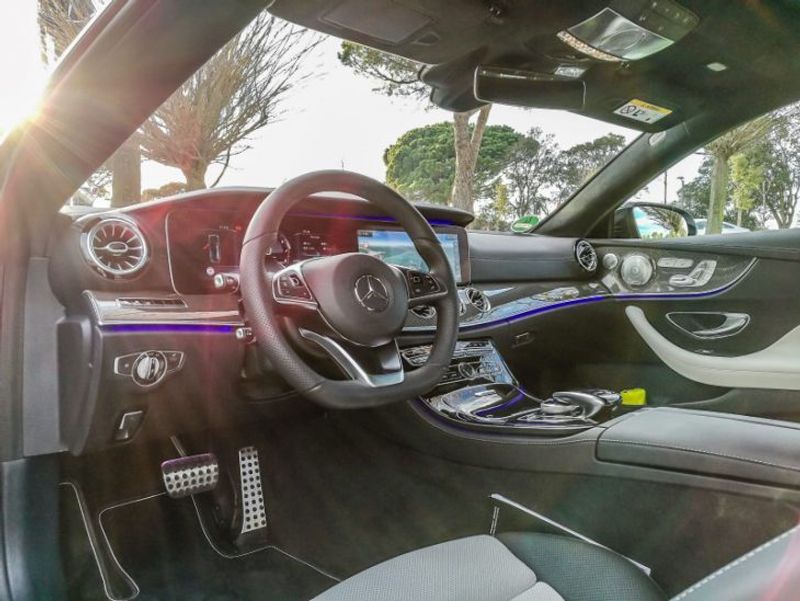
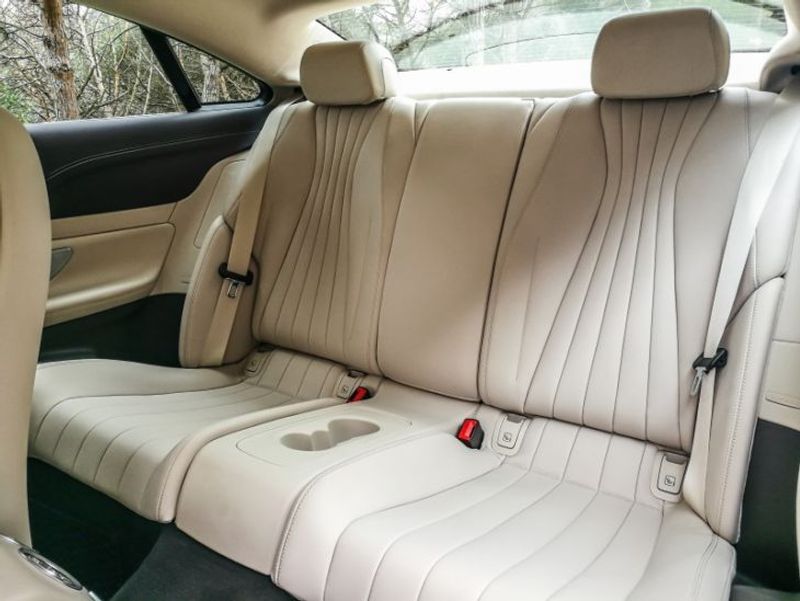
The E-Class Coupe's interior is modern and sophisticated with a wide range of trim options available to customers.
The interior design closely mimics that of the E-Class sedan and the highlight feature is the optional Widescreen Cockpit which is a long, configurable digital display that combines a pair of large 12.3-inch screens. The instrument cluster can be customised with a choice of 3 themes including Classic, Sport and Progressive, depending on your preference, while the screen to the right handles functions such as infotainment and navigation. Functions can be operated using the mounted steering wheel controls or touchpad controller.
A comprehensive head-up display is also fitted and communicates information such as speed, speed limits and navigation to the driver. Interior space is surprisingly generous, even for rear passengers and the boot is sizable, offering 425 litres of space.
In terms of technology, there’s lots of it. Qi-enabled smartphones can be charged wirelessly on a charging pad and pair automatically with the infotainment system using Near Field Communication (NFC). This effectively turns your smartphone into a digital key, allowing you to lock/unlock the car or start the engine. You can access Remote Parking Pilot via an app, allowing you to park the car using your phone.
Larger dimensions and a stretched wheelbase translates into more space for passengers, particularly in the rear.
Distance Pilot Distronic with Steering Pilot is a handy semi-autonomous feature out on the highway and lets you adapt and maintain your distance from the car ahead of you and can follow at speeds up to 210 kph. Steering Pilot will keep the car on track at speeds of up to 130 kph and in a traffic jam, very little input is required from the driver. Active Lane Change Assist will help you change lanes safely by steering into the lane once the camera and radar systems deem it safe to do so.
Buyers can choose from 2 trim lines including Avantgarde and AMG Line, depending on your taste and Mercedes-Benz offers a wide range of optional equipment and packages for the E-Class Coupe.
We will have the new E-Class Coupe on test soon, so look out for a thorough evaluation in the near future. Here is what you can expect to pay for the new E-Class Coupe…
Mercedes-Benz E-Class Coupe – Price in South Africa
E200 Coupe R754 500
E220d Coupe R806 500
E300 Coupe R842 500
E400 4Matic R1 021 500
The Mercedes-Benz E-Class Coupe is sold with a 2-year/unlimited km warranty and a 6-year/100 000 km maintenance plan.
After months of speculation and teaser images, Jaguar has officially confirmed production of a compact performance SUV, which will be called the Jaguar E-Pace.
On the back of the successful Jaguar F-Pace comes a smaller performance compact SUV. The new E-Pace will slot in below the F-Pace and will be followed by the all-electric I-Pace in 2018. Jaguar is going all out with its SUV range and given the popularity of luxury SUVs, the E-Pace will surely be a success. It's interesting to note that the Jaguar F-Pace boosted the brand's sales by 83%, so a smaller and more affordable luxury SUV offering is definitely going to make sound business sense.
Ian Callum, Director of Design, Jaguar, said: “The combination of sports car looks with Jaguar performance will ensure that the E-Pace stands out. Every Jaguar is designed to excite the senses, and we think E-Pace will do just that, albeit with its own individual character.” While we haven't seen the full car in its entirety yet, some details have been released ahead of its world reveal on the 13th July 2017.
We know that it will feature all-wheel drive technology and will be powered by an all-Ingenium line-up of petrol and diesel engines. It'll feature a range of connected technology and safety features, and Jaguar has said that the E-Pace will have indicative pricing from £28,500 in the United Kingdom. That translates directly to R471 231.84 using the exchange rate on 21 June 2017. Based on import duty and estimates, we predict that pricing for the new Jaguar E-Pace will start from R550 000. We'll have more details after the reveal next month, so stay tuned!
The Porsche Panamera, now in its 2nd generation, is claimed to be the ultimate combination of a first class saloon and a super sedan. Can the Zuffenhausen-based company's underappreciated 4-door excel equally in both aspects? We test the all-wheel-driven 4S to find out…
Whereas not everyone was won over by the original car's somewhat lopsided styling, its ability to deliver continent-crossing performance was never in dispute. Its successor builds on the first version's strengths, but over and above significant improvements in the car's interior packaging, it looks more like the iconic 911, albeit with 4 seats and 4 doors.
In this video, shot in Johannesburg, South Africa – far from our usual locales – we take a detailed look at the changes made to the model. Our Joburg guy, Francisco, also gives the brutal launch control a whirl and gets to grips with the mighty new 2.9-litre V6 motor.
Mercedes-AMG: Hand-Built Engines Meets 21st Century Tech
We travelled to the home of Mercedes-AMG engines, located in a tiny hamlet called Affalterbach on the outskirts of Stuttgart, Germany. It was a surreal experience as we examined the AMG philosophy of "One Man, One Engine".
Daimlerstraße 1, 71563 Affalterbach, Germany is an uncomplicated postal address. When you quietly roll into Affalterbach, double checks on the satnav and supplied route guides are numerous. This tiny town can't possibly be the home of Mercedes-AMG, the passionate performance brand. There are few signposts and once the houses give way to light industrial units, you feel a bit better. Suddenly there's what looks to be an AMG dealership and that's it. Unlike many factories and plants that Cars.co.za has been exposed to over the years, this is nothing like anything we've ever encountered. Where are the guards? Where's the barbed wire fences and the myriad of CCTV cameras? AMG HQ is suspiciously unassuming…
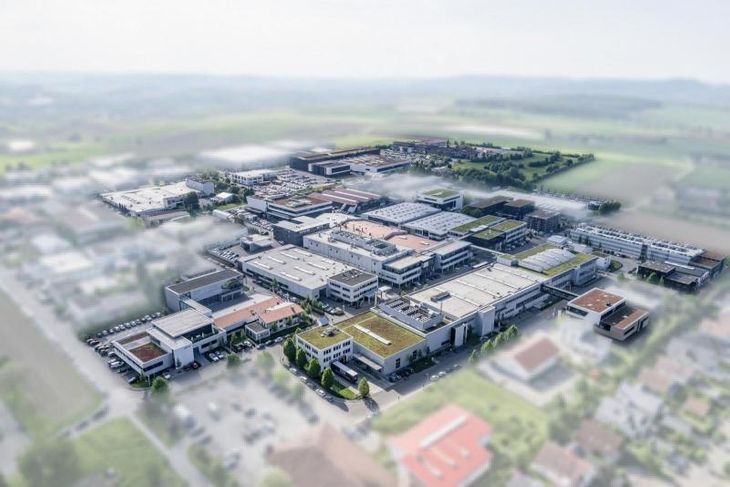
An aerial view of the Mercedes-AMG home in Affalterbach, Germany. As you can see, it takes up most of the small town.
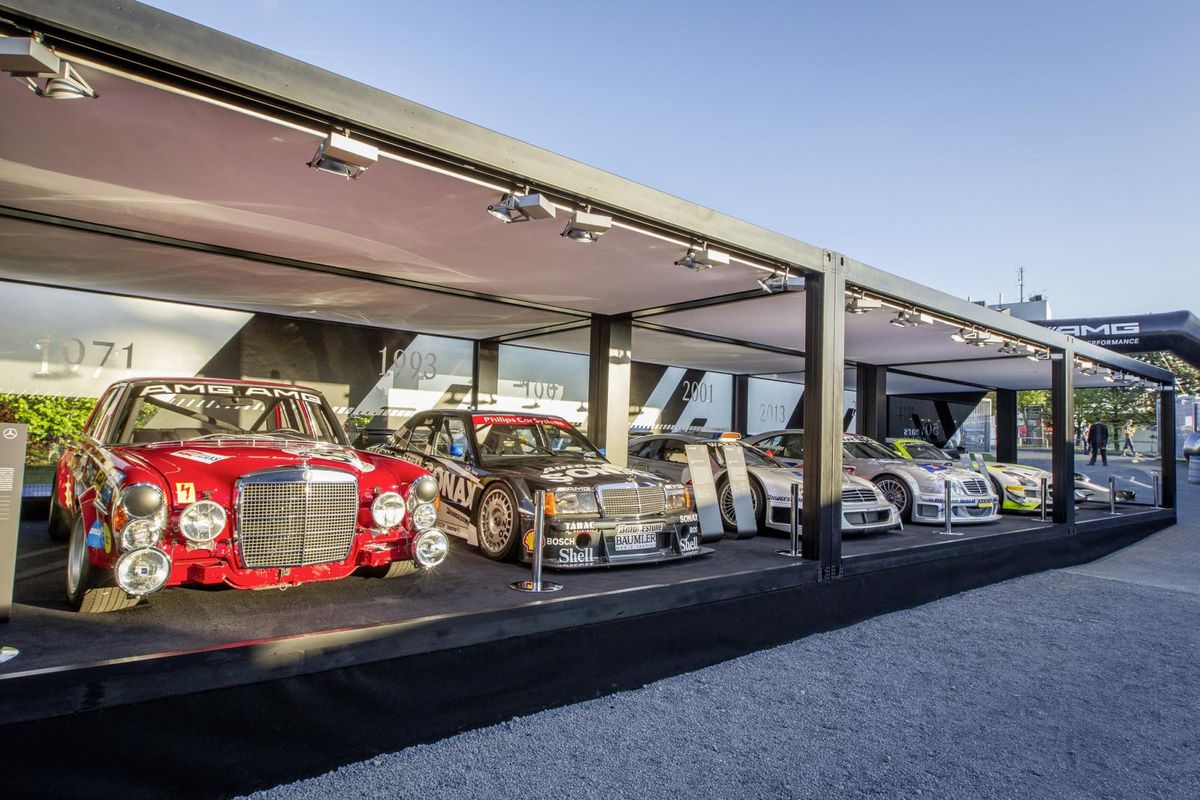
AMG's history is a fascinating one. What started out as an independent firm in 1967 by former Benz engineers Hans Werner Aufrecht and Erhard Melcher quickly turned into a fully Mercedes-Benz endorsed operation, before Daimler AG purchased the controlling share and made it an official part of the Mercedes-Benz lineup. The letters? AMG stands for Aufrecht, Melcher and Großaspach (which was Aufrecht's hometown). AMG grabbed everyone's attention by shoving a large capacity V8 engine into an SEL and it took first place in class (and second overall) in the 1971 24-hour race at Spa, Belgium. It was from that race when AMG got the reputation for large capacity, powerful engines delivering brute-force performance.
'One man, one engine'
In the age of computer-aided design, 3D printing and laser-guided measuring, building things by hand just seems primitive and crude. Why bother, when robots can almost do everything for you? But when everything these days seems to be mass produced, the AMG philosophy has refined the hand-made, artisanal manufacturing concept down to an art. The engine assembly area is deceptively easy to access and this is where the division's V8 and V12 engines are crafted. The 2.0-litre four-cylinder and the 3.0-litre V6s were tested and developed here, but are built elsewhere. Currently, the plant builds the M178 4.0-litre V8 Bi-Turbo, M157 5.5-litre V8 Bi-Turbo, and M275 6.0-litre L V12 Bi-Turbo.
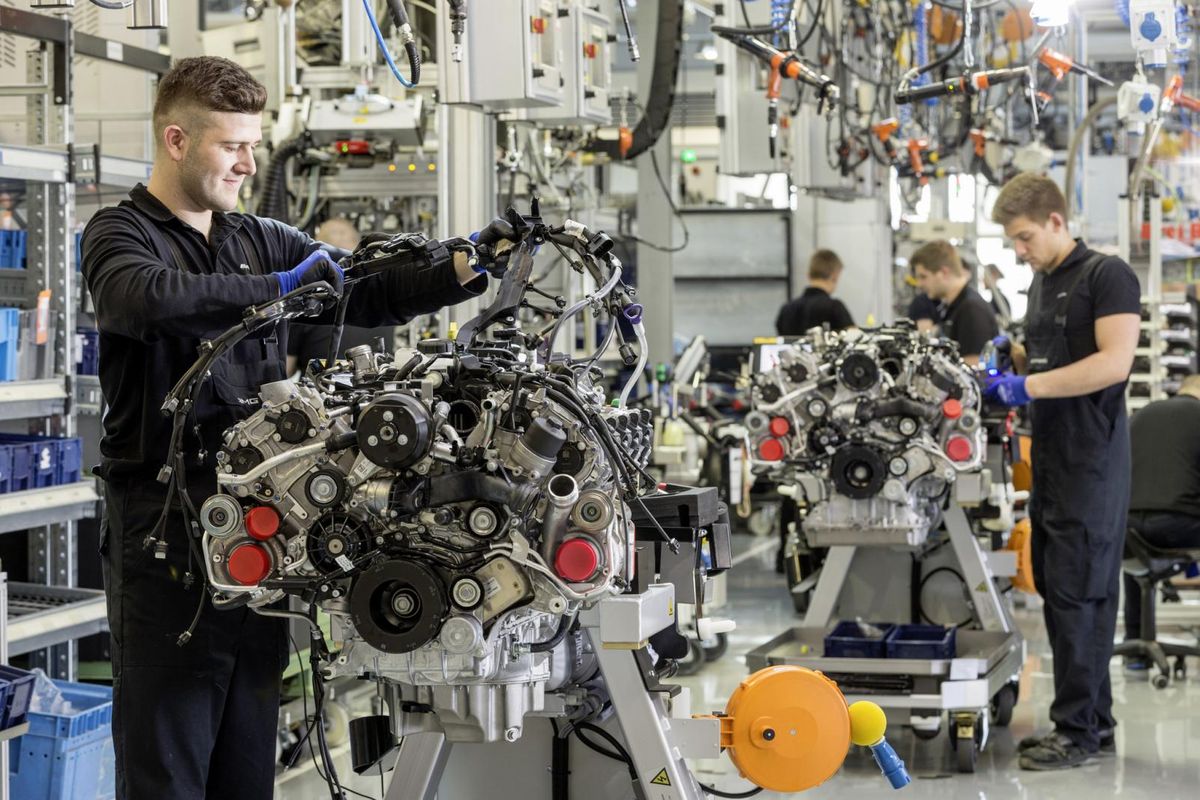
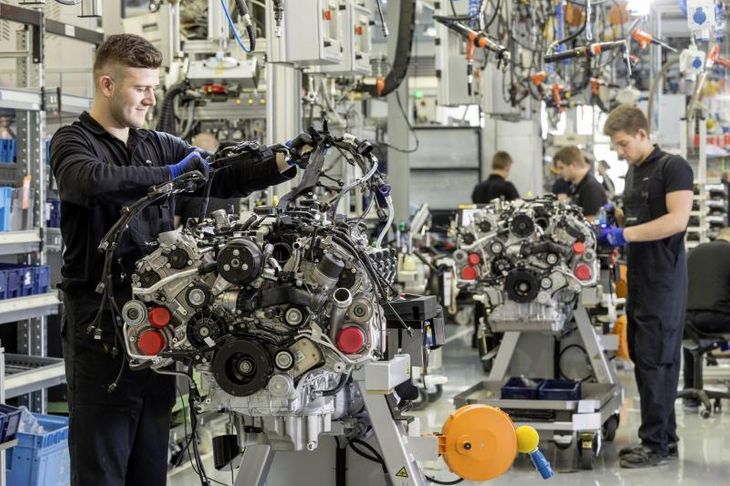
AMG technicians working on their engines. When the day ends, the technician will cover the engine and resume the job during the next shift
This is where it gets interesting. One technician will be assigned one engine and they will build the entire thing from start to finish on a special trolley. During our visit, we watched an AMG technician piece together the crankshaft of a 4.0-litre engine. This technician will do it all, including topping up the fluids and taking the engine to various checkpoints. See, while there's this legendary handbuilt process going on, the computer-controlled checks are extraordinary. Each engine is checked for leaks and does a run on a cold-test bench to ensure everything has been bolted on correctly. If a technician has done something incorrectly, the system will detect it and so that it can be rectified.
The V8 engines, on average, take a few hours to complete, with the big V12s requiring a bit more time. If the working day ends before an AMG technician can complete his engine, they simply stop, cover it up and store it until the next day. If they go on leave, that engine will be stored until he returns. If they pass away (or quit their job, we guess), the engine is disassembled and the parts returned to stores and will make their way into other engines. It's a fanatical and zealous way of doing things, but it's helped to make AMG into what it is today. When an engine is complete, a signed plaque will be placed on the cover and this is one of the AMG signatures (pun intended) that has endeared the brand to its fans.
Take a virtual tour through the factory:
The mighty V12
These technicians aren't your run-of-the-mill engine builders. AMG runs an internship programme and it'll only take the best students. Each AMG technician has many years of experience under his or her belt. Yes, AMG has women engine builders in its assembly plant! However, the best of the best is a man named Michael Kübler. Kübler has to be the repeat winner of AMG's Most Valuable Employee. Why? Well, he's responsible for the assembly of the mighty V12 engine as well as the V8 engines used in the GT3 AMG race cars.
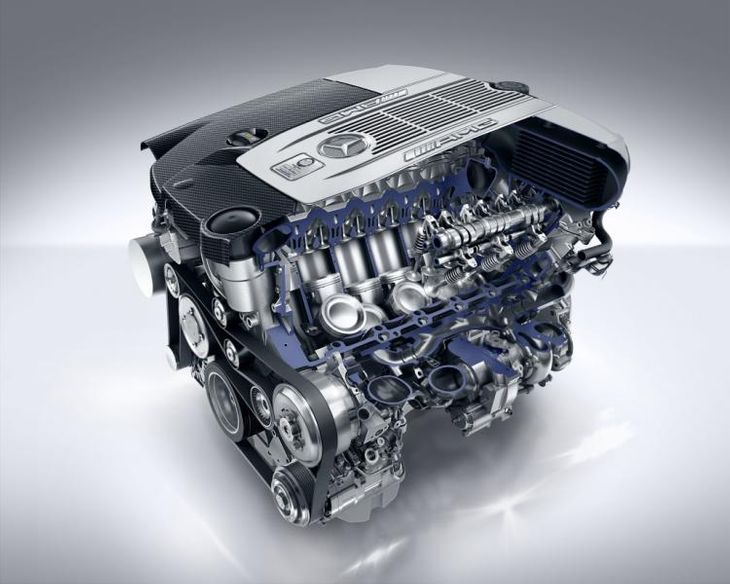
A twin-turbocharged V12 engine – the biggest and most powerful motor built by Mercedes-AMG.
While there is another technician who can assemble the V12 motor and an alternate technician who can construct the GT3 motors, he is the only one who can do both. He's a friendly and chatty guy, a complete petrolhead with a C63 as a company car. He's also switched on in terms of the digital world and boasts an Instagram following of almost 200 000. As soon as we were introduced, we asked, "Are you F1Mike28 (on Instagram)?" and proceeded to go full fanboy when he answered in the affirmative. Prior to this meeting, we'd chatted to Kübler each and every time we had an AMG model on test and he'd always pass a kind comment. Now he's someone who you'd want to represent your brand, wouldn't you?
This V12 engine is an extraordinary piece of engineering. It's a 6.0-litre twin turbocharged 12-cylinder and, compared with the V8s we'd seen being assembled, this is substantially larger. It has gut-wrenching levels of power: 463 kW and 1000 Nm are big numbers and there's so much shove that the torque is electronically limited to improve driveability and the associated transmission needed to be strengthened to cope with all that power. This V12 is not just a Mercedes-AMG motor; Italian supercar Pagani has been using it in its vehicles since 1999.
What about the future?
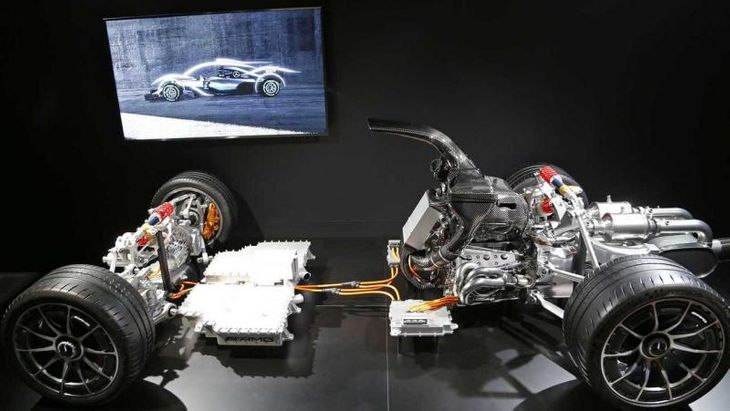
The age of big engines is coming to an end. As emissions laws become ever stricter, performance powerhouses like AMG will have to find new ways of satisfying its customers. Already we've seen downsized AMG products like the 45 models (powered by a 2.0-litre turbopetrol) and the 43 models (3.0-litre V6 turbopetrol), but what about the bigger and more powerful products? The trend suggests that electric assistance is one of the ways forward and Mercedes-AMG showcased its new hypercar as part of the 50-year celebrations.
It's going to be an insane thing called the AMG Project 1 hypercar. It makes extensive use of hybrid Formula One technology to generate a claimed output of more than 746 kW. It'll be breathtakingly fast, yet offer fuel consumption matching a normal A45 AMG. We'll see the finished production version at the Frankfurt Auto Show, which will be held in September 2017.
If this hypercar project gains momentum, we can expect to see the hybrid performance technology work its way through the entire AMG portfolio within a few years. We simply can't wait!
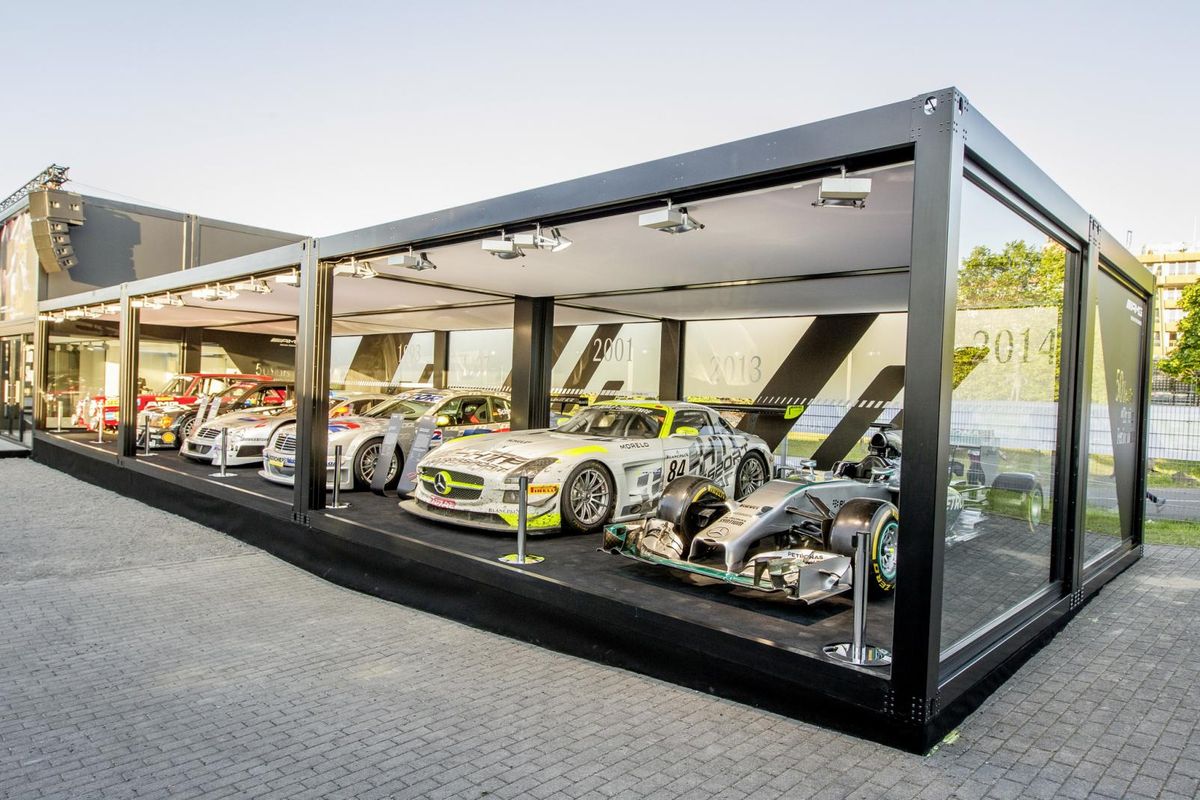
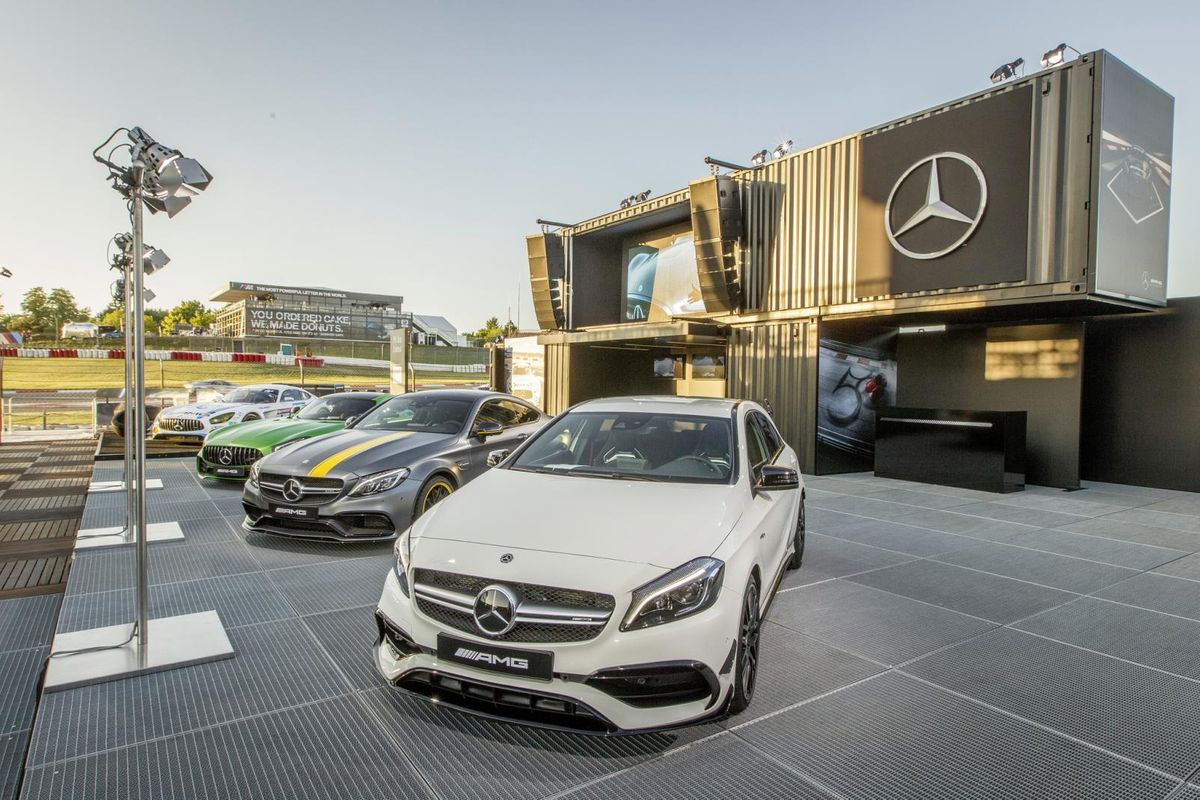
AMG unveiled its powertrain and chassis at its 50 year anniversary celebration held at the Nurburgring 24 hour race.
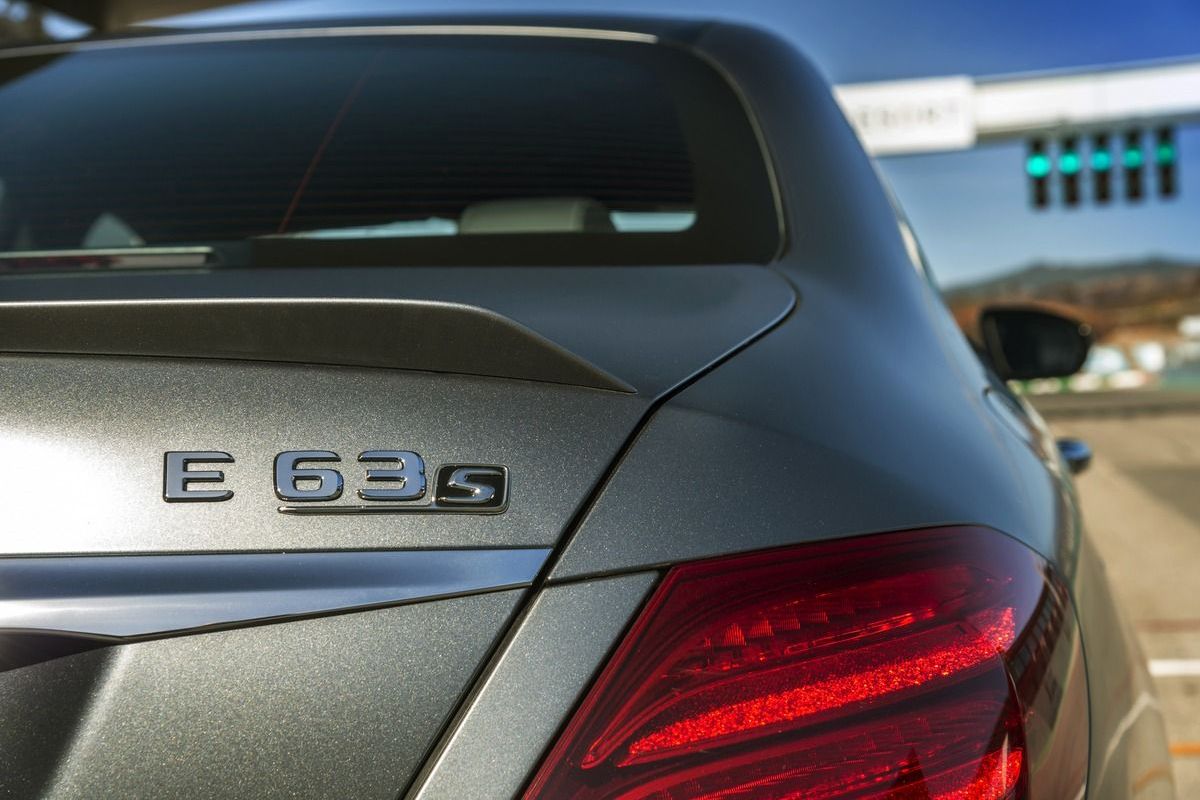
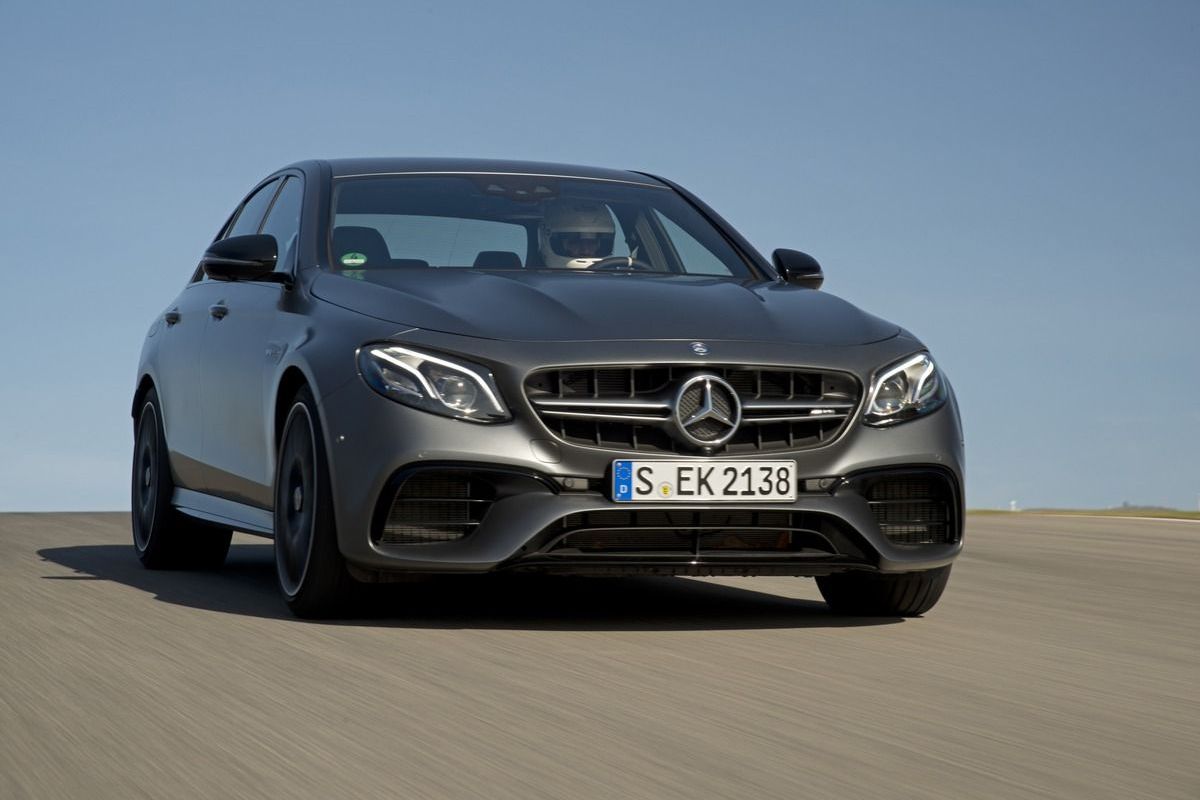
Nearly six months after we first drove the monster AMG E63 S, it has arrived in SA. You're in for R1.8 million to get your hands on one, but it's one helluva good drive.
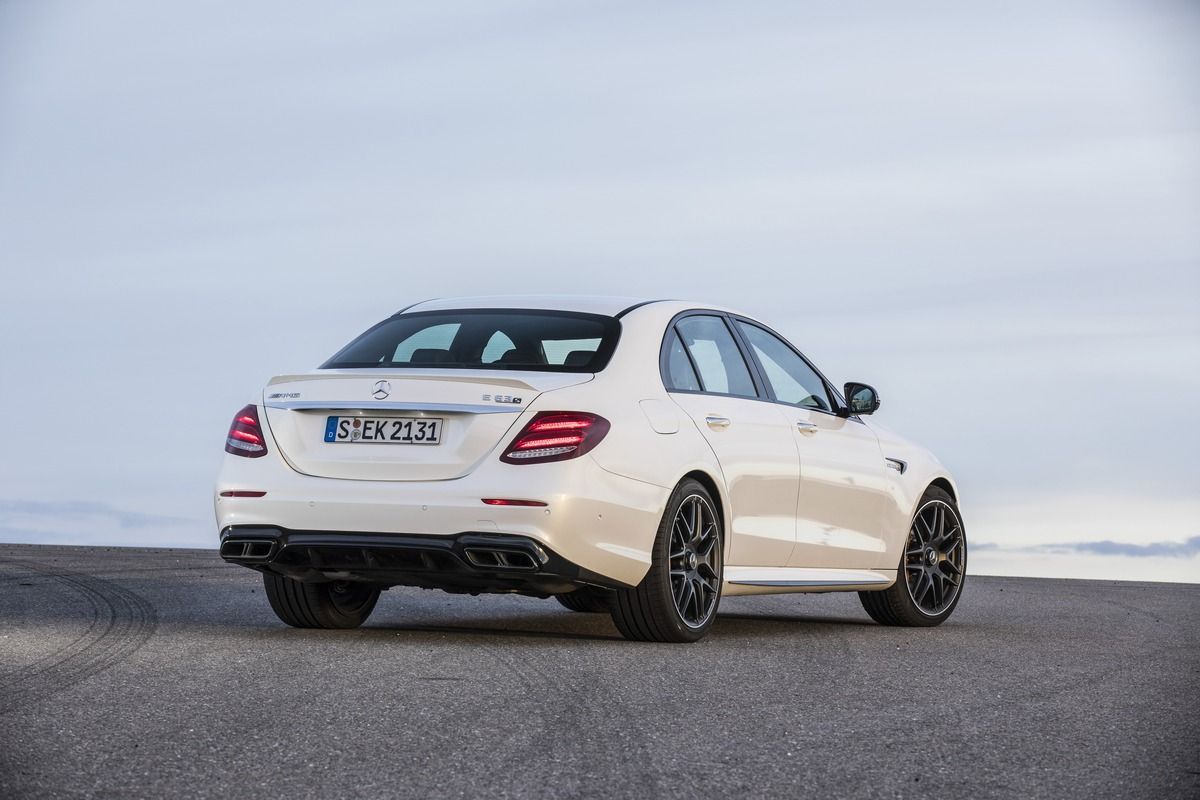
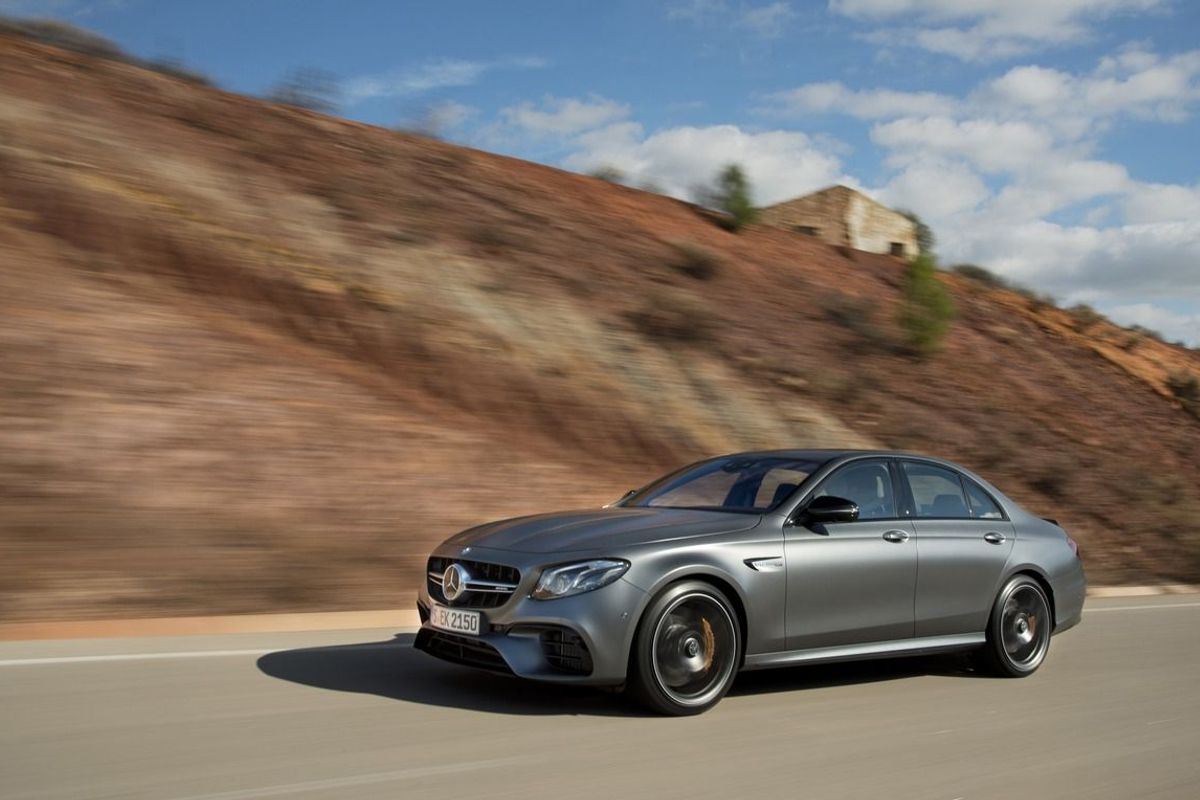
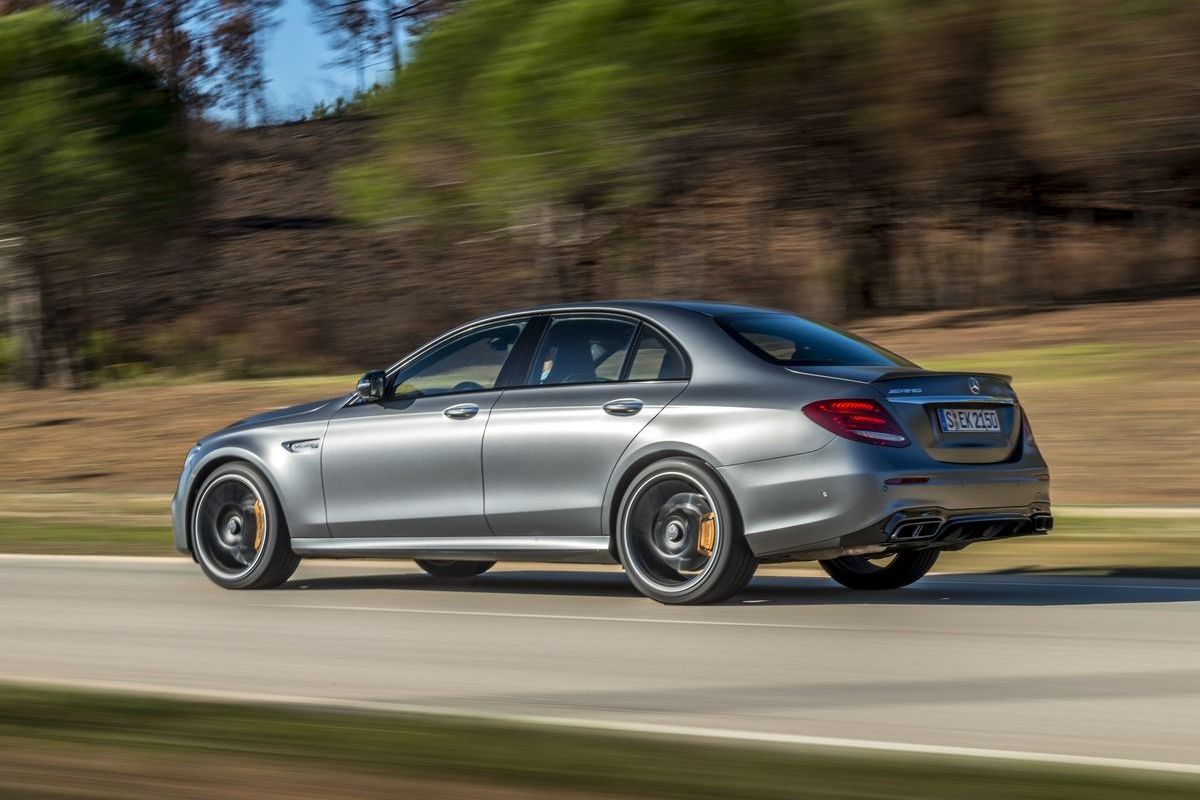
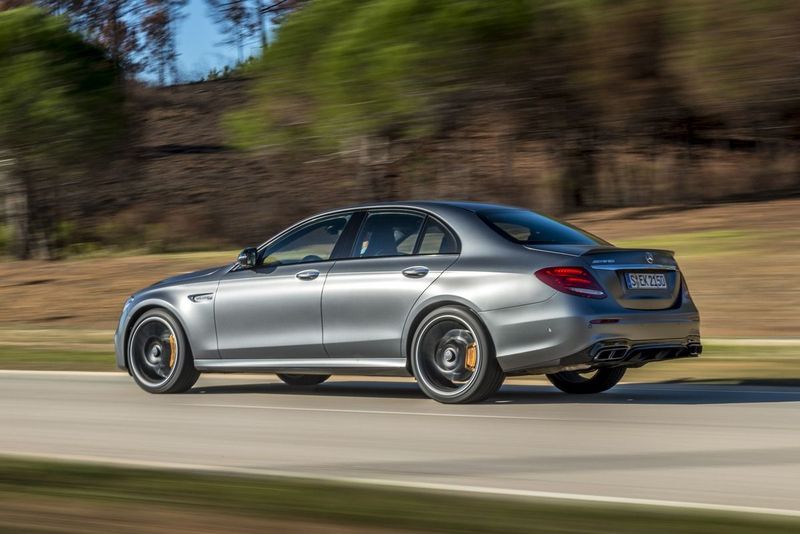
Mercedes-Benz is currently launching the local versions of the AMG E63 S. The fire-breathing sedan has the super saloon market to itself for a bit as BMW's M5 is only due next year and the current one is no match for this 4Matic Merc from Affalterbach. Here's a quick recap of what makes the new E63 such a special piece of machinery.
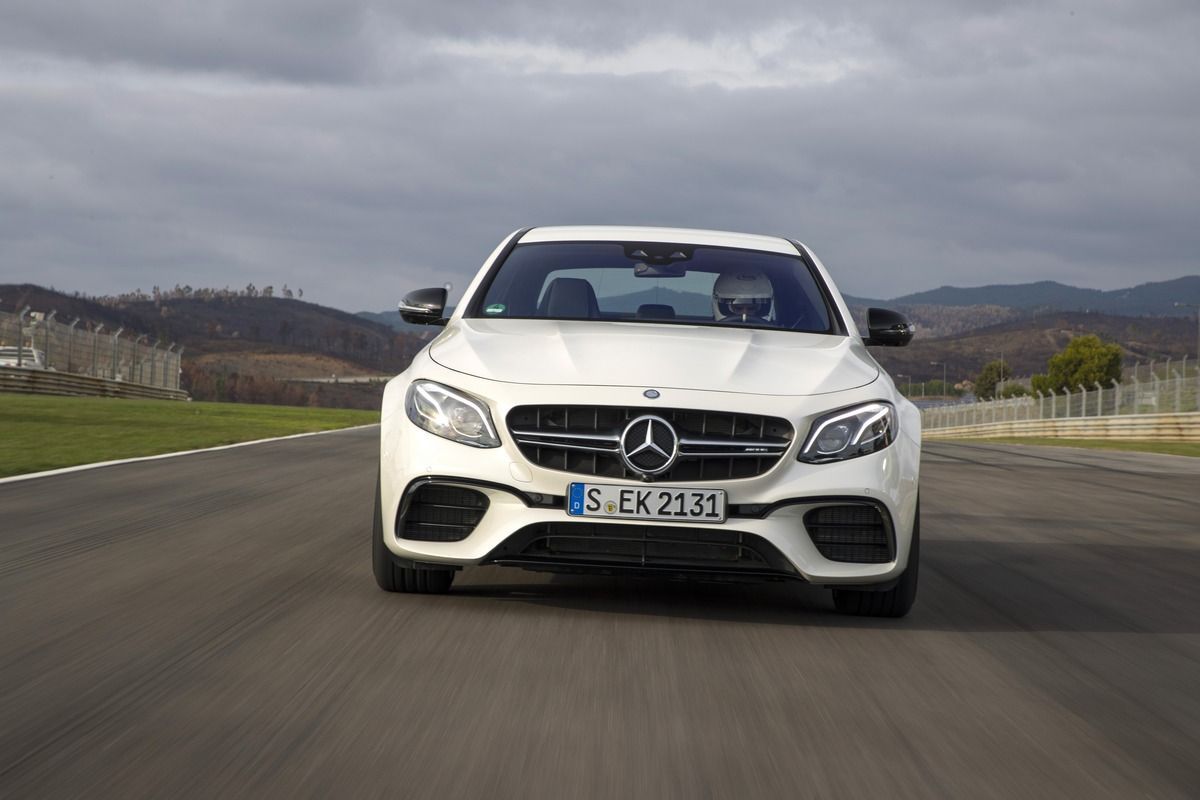
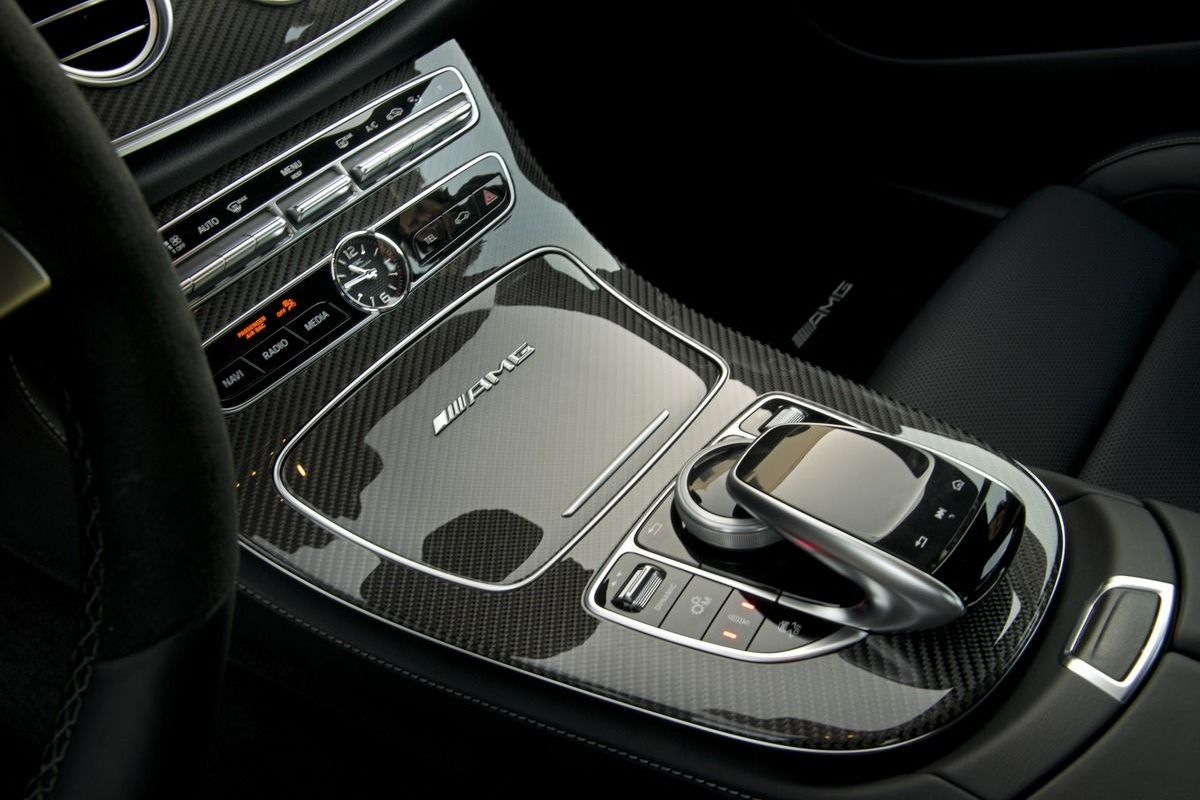
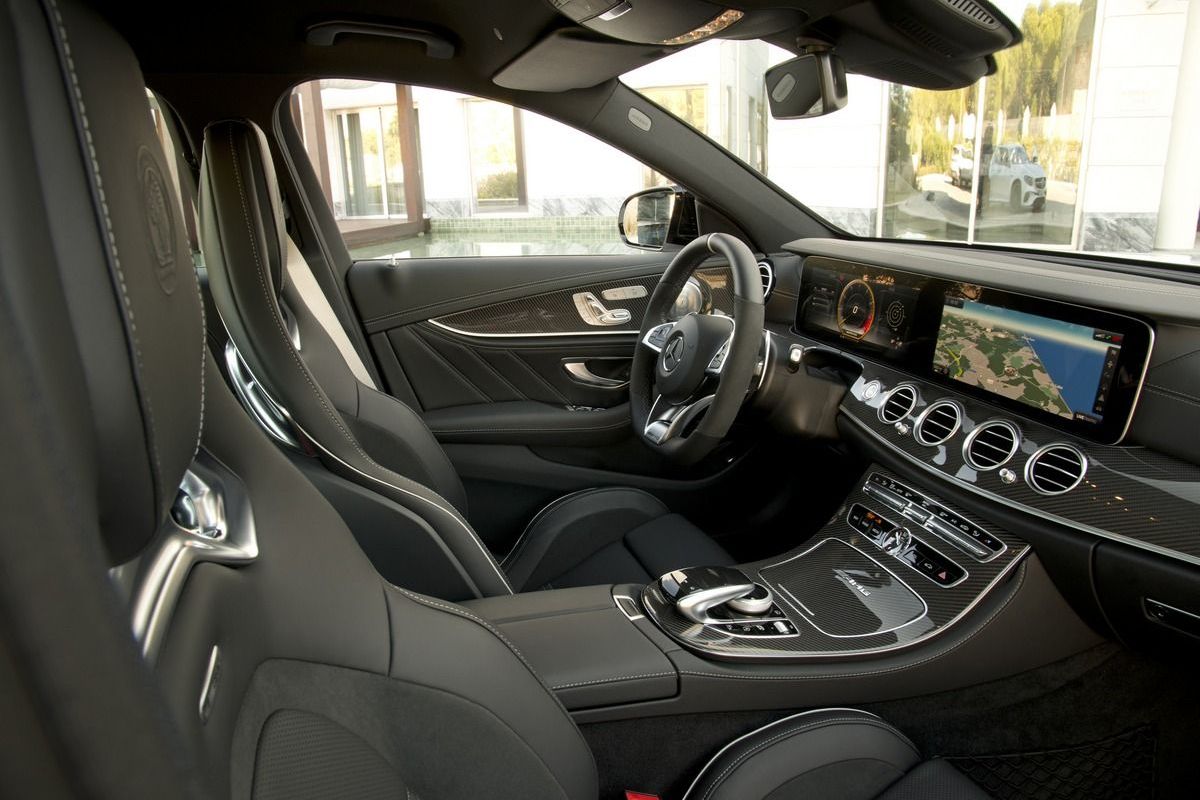
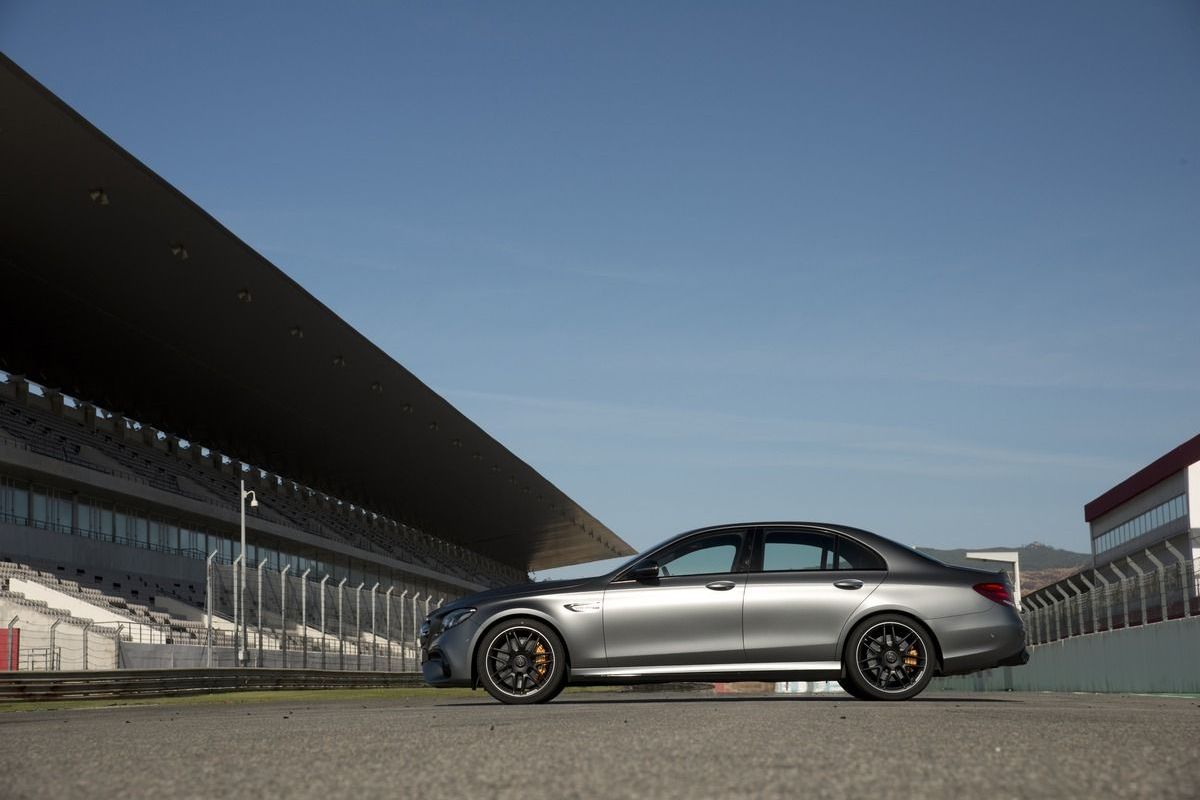
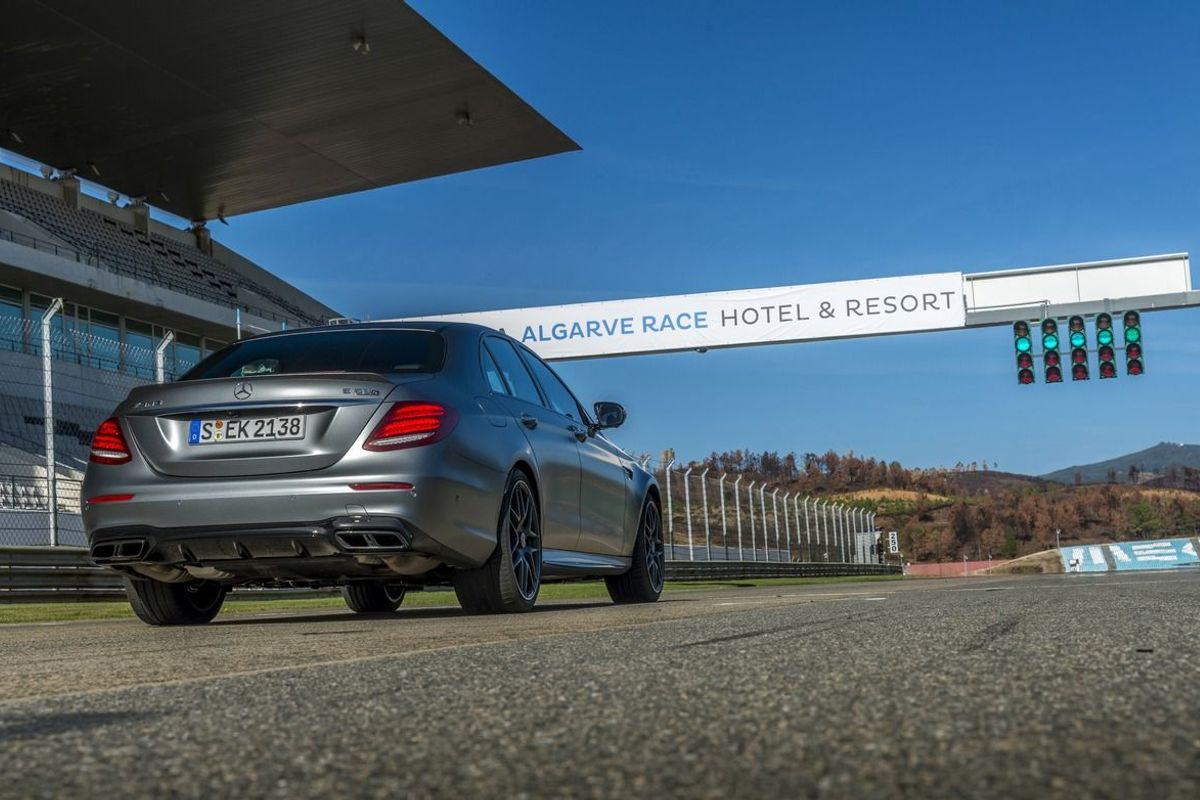
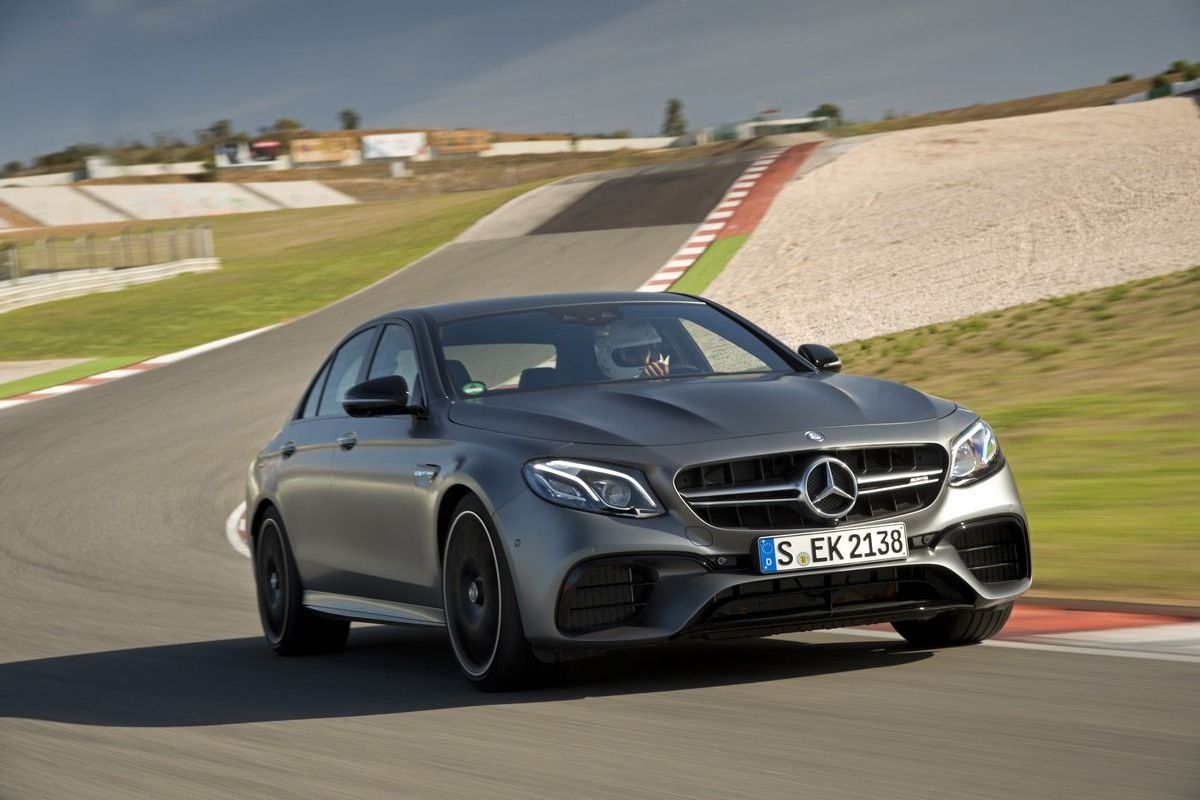
Mercedes-AMG has launched the most powerful E-Class ever, the E63 S. We spent some time with it on the twisty roads in the Algarve and then punished it on the Portimao circuit in Portugal.
“We will only be getting the S model in SA,” says our Mercedes-Benz host, Shirle Greig. Let’s get that out of the way at the beginning, shall we? Mercedes-Benz South Africa expects most buyers to fork out the extra cash for the higher power outputs and better specced S model. That’s not a bad thing, because when you’re considering machinery of this calibre, you want the very best model that's going to offer you the most bang.
Most powerful E-Class
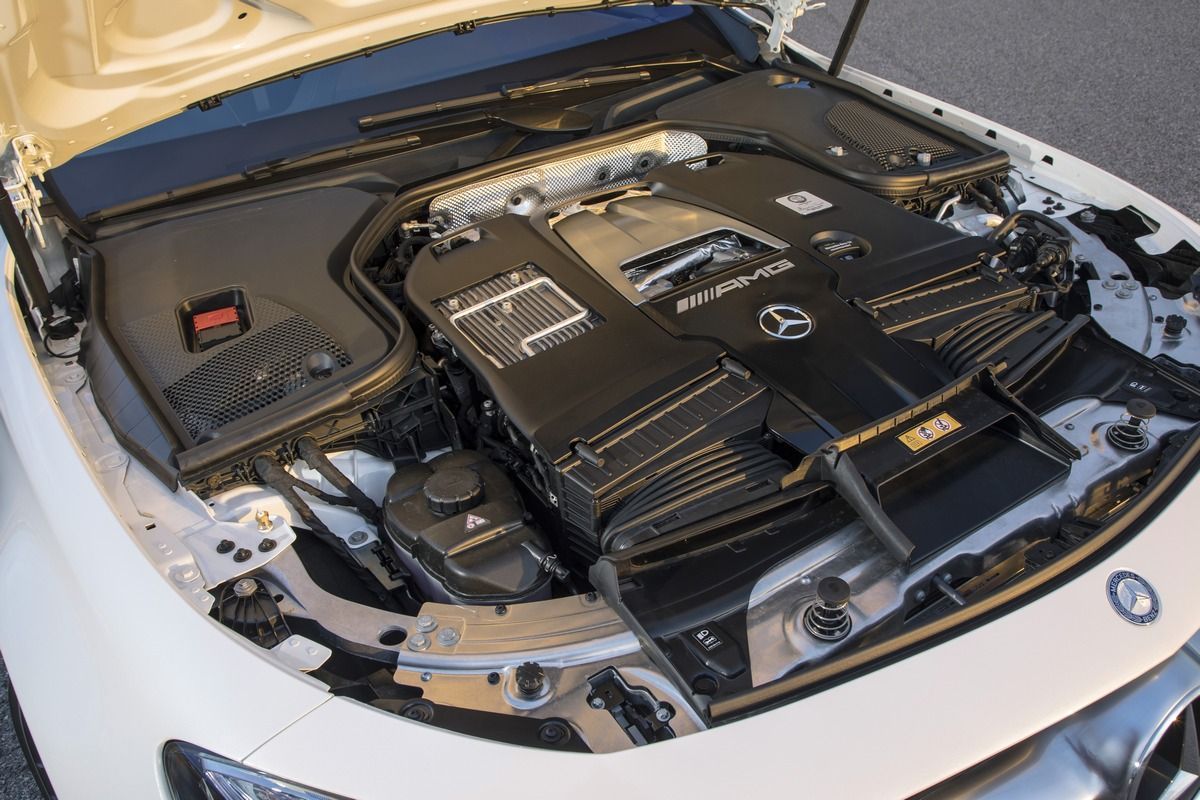
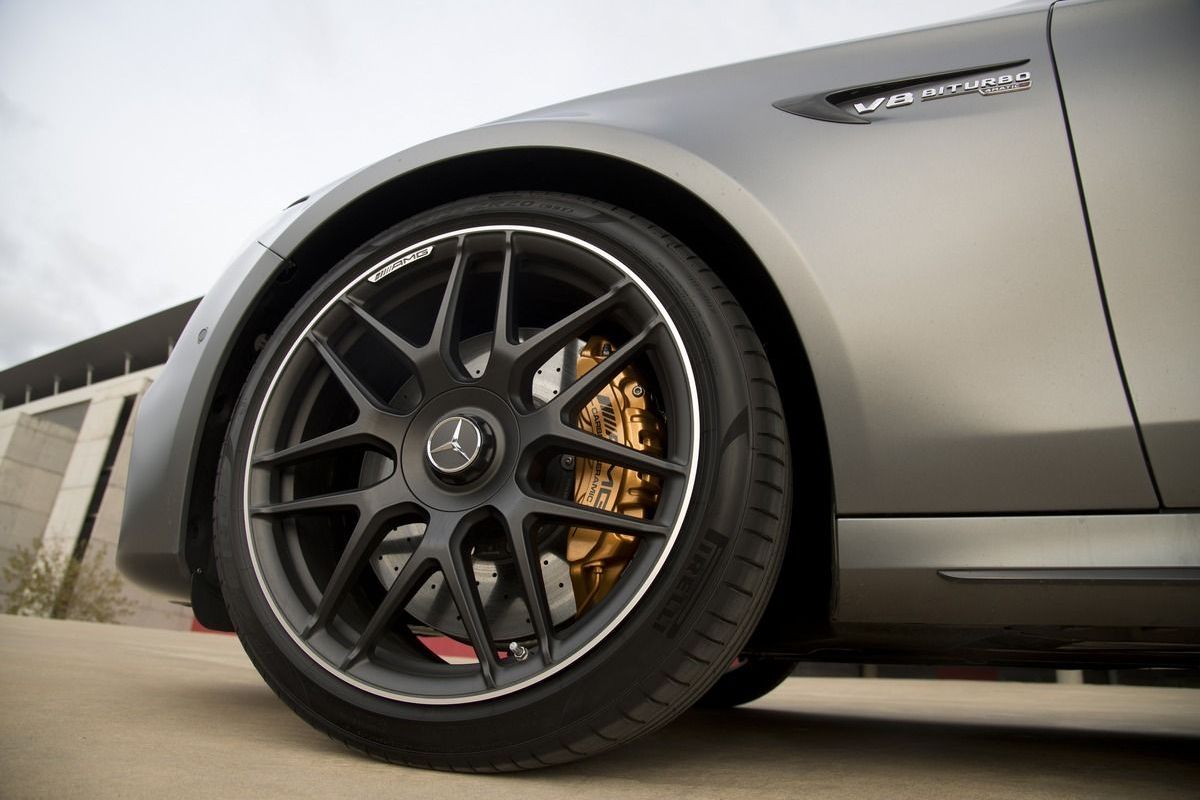
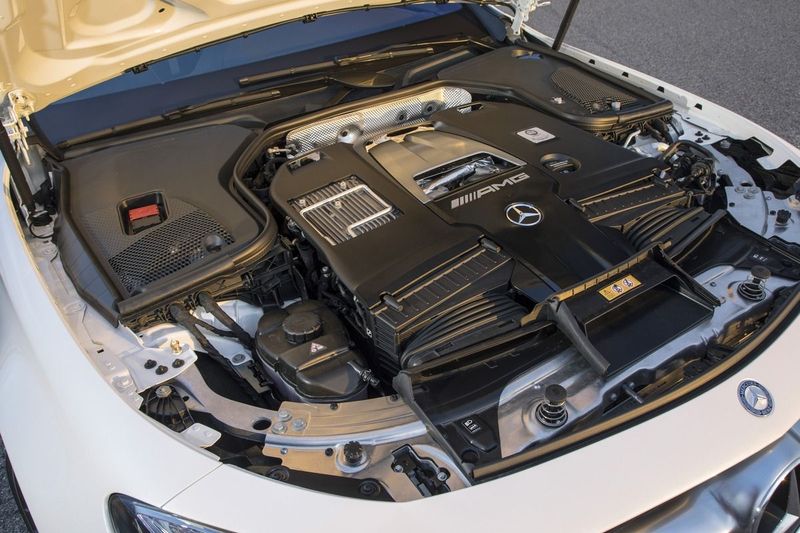
Despite decreasing the engine capacity from 5.5-litres to just 4.0-litres, the new E63 is even more powerful. There’s now 450 kW and 850 Nm available and that’s mental for a luxury, almost limousine-like sedan. Zero to 100 kph is dealt with in 3.4 seconds and it has to be electronically shackled at 250 kph. Dispense with the restraint by adding the AMG Drivers Package and the E63 S will hit 300kph.
Capacity of the new E63 has dropped from 5.5-litres to 4.0-litres but, it's even more powerful now.
It seems that the E63 isn’t happy about losing 1.5-litres worth of capacity and its complaints are notably vocal. Thumb the driving mode toggle into Sport or even Sport Plus and the engine and exhaust commence a brutal argument with each other. Lay into the throttle and the V8 snarls and crackles like a cornered tiger. As you come off the throttle, the exhaust retorts with its own depiction of a Highveld thunderstorm. It gets the pulse racing – and this, all whilst it’s standing in the parking lot of the Faro airport in Portugal.
Driving to the track
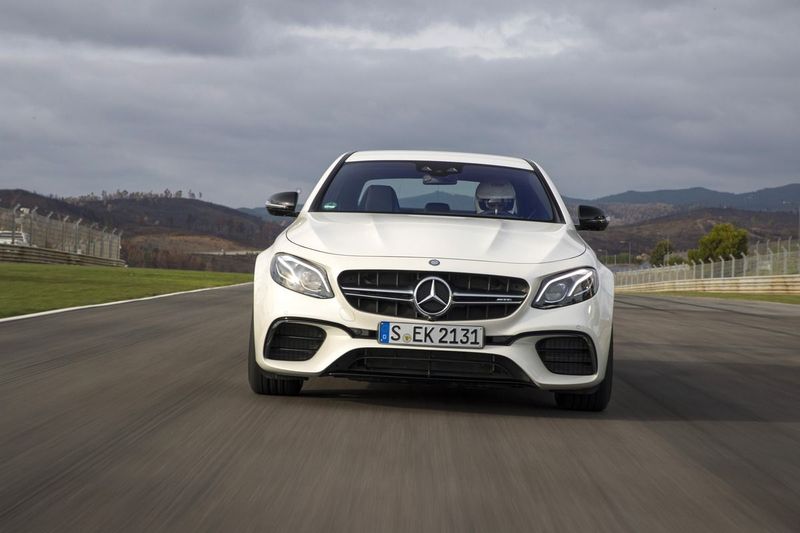
The road section from the airport to Portimao's circuit was an impressive stretch of seemingly endless squiggly tarmac, perfect for getting to grips with the handling of the new performance E-Class. Big news for the E63 is that it only comes in all-wheel-drive (4MATIC). For the first time,according to Mercedes, torque can now be distributed to the front and rear axles in a variable manner, improving the agility of the big sedan.
On the narrow, swooping corners, you can feel the system doing its best to improve turn-in and then, when you add power, quells understeer to keep a tight exit. It’s a confidence-inspiring drive and it feels like a tighter and more taught car than its size suggests.
The power figures imply this should be an absolute brute when you mash the throttle, but the chassis and new suspension setup work well in tandem to harness the power. It doesn’t slide or break traction when you boot it out of a corner and it’s very involving to point and squirt, brake hard, turn-in and then repeat. It’s certainly one of the most surprising drives I’ve had in a long time.
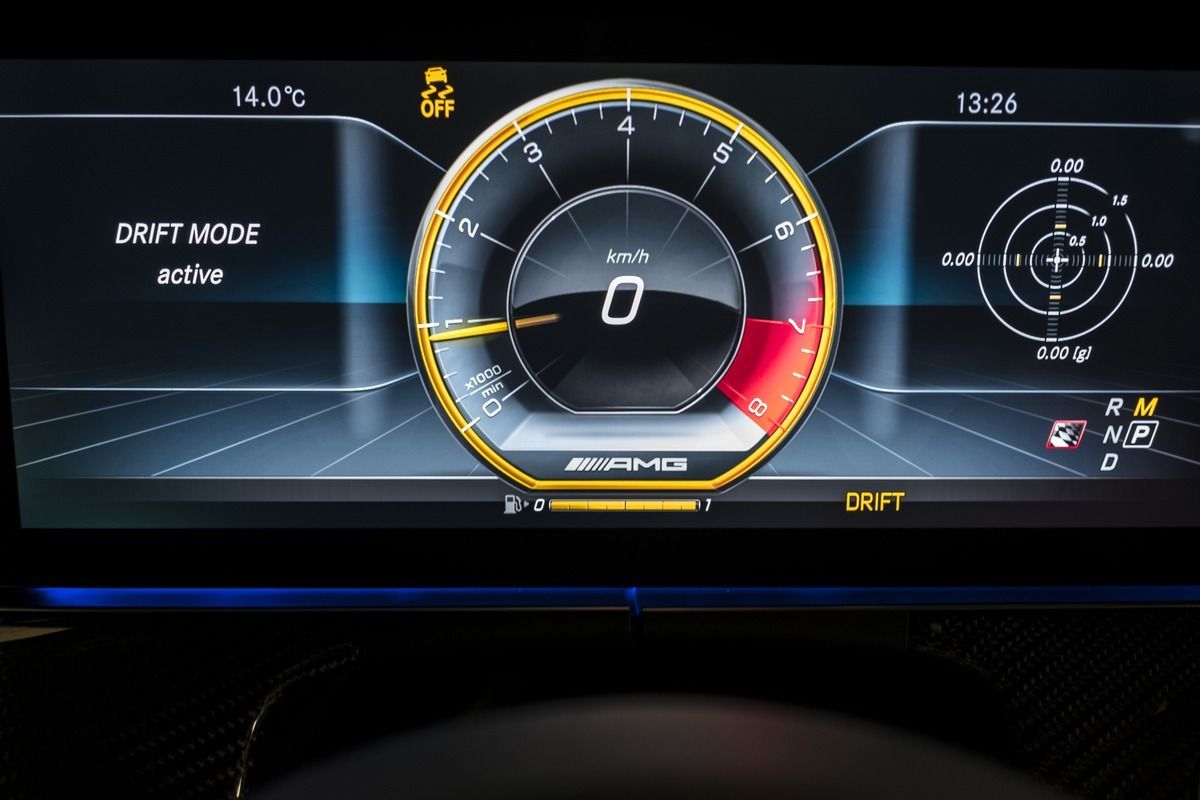
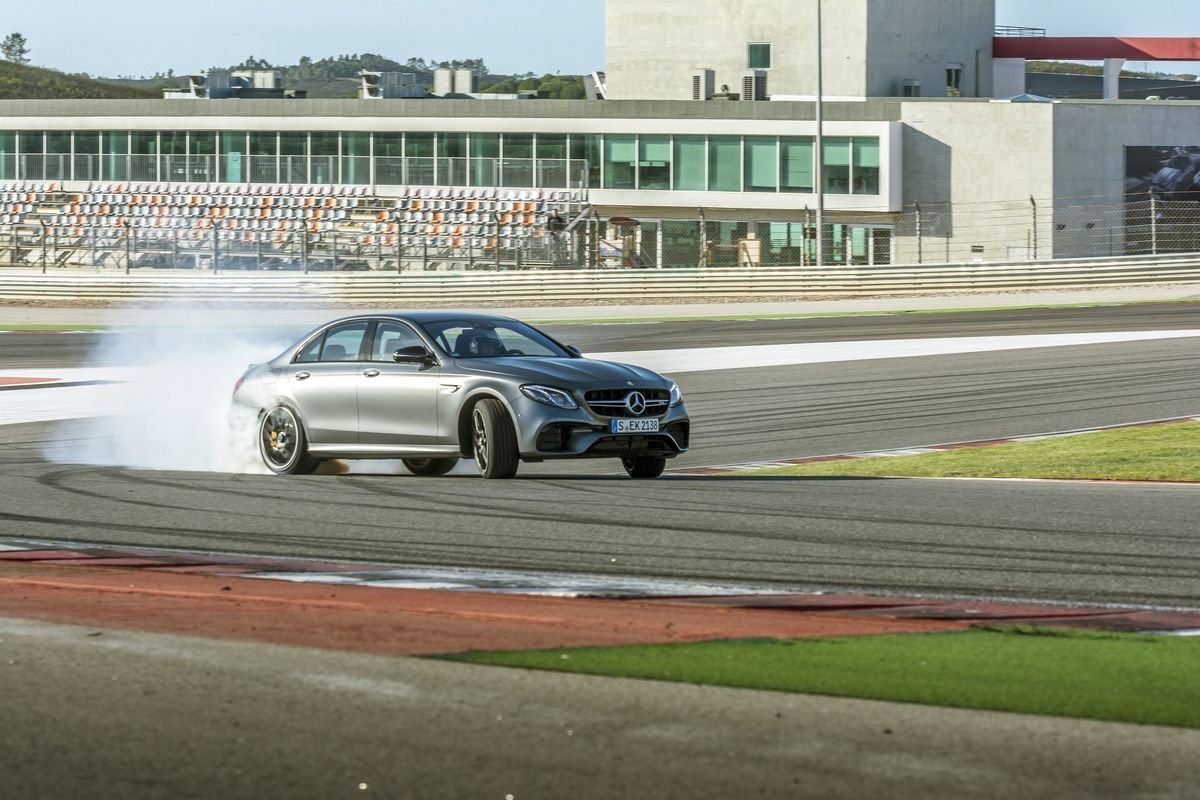
I'm sure once you engage Drift Mode and turn it into a purely rear-wheel-drive car, it will easily break traction at the rear and do the slidey stuff AMG is renowned for. The engine is also amazingly responsive to throttle inputs, showing no indication of turbo lag.
The big AMG impressed on the road with its eager engine and tight chassis.
The new sporty suspension is firm on the road but that’s something you would expect from an AMG-badged car. In Comfort mode, it’s easy enough to live with and bumps in the road don’t jar or unsettle the E63 much. In Sports mode, it stiffens up a bit more and you’ll want to aim for smooth-surfaced tarmac if you plan to use this mode often.
Track time
It wouldn’t be an AMG launch if there wasn’t a track involved, and what a track it was. Those of you who have watched the first episode of the Grand Tour know what I’m on about. I'm talking about the Portimao circuit and it’s laced with dramatic elevation changes and fast corners that lead into slow corners. The only thing it’s missing is a fast change of direction.
Portimao circuit is a serious test for any car, long corners and elevation changes makes it tough on cars.
We hit the limiter on the way into turn 1, that’s 250 kph before standing hard on the brakes. The E63 feels more stable and balanced under hard braking, allowing you to really tramp on the pedal, getting the most out of the deceleration. There’s surprisingly little body roll when you sling it into an apex and it seems more nimble on the front-end than most super sedans do. The difference between Sport and Sport Plus mode is quickly evident when you engage the power on corner exit.
Sport mode really cuts the throttle and will only allow maximum acceleration when the steering wheel is just about dead-straight. Sport Plus, however, gives you the power as soon as you jab at the throttle but then holds you back ever so slightly as it begins to break traction at the rear. There’s tons of grip at the rear so it doesn’t feel like you’re being held back all that much when the electronic traction control kicks in.
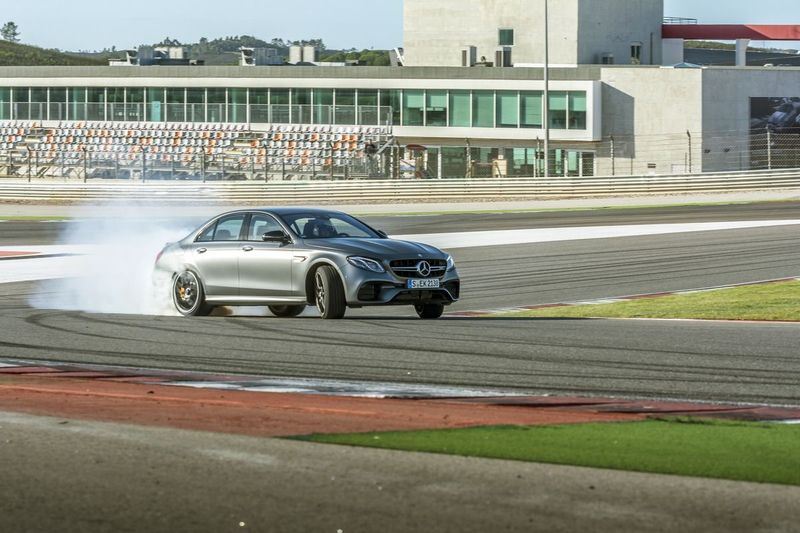
"Drift Mode" turns the E63 into a rear-wheel-drive machine.
The steering is excellently weighted and must be one of the best examples of electronic steering I’ve experienced. You get a superb feel for what the car is doing underneath you and the AMG is fast to respond to steering inputs. However, like Audi, there are too many buttons on the steering wheel, so your palms tend to press all the buttons when you’re correcting or making adjustments to the wheel. You can easily find yourself accidentally changing the instrument cluster theme or adding a new destination to the navigation whilst you’re trying to concentrate mid-corner, which is mildly annoying.
Summing up the big E
On performance car launches, the manufacturers pick the best roads that play to the car’s strengths and this was clearly evident here. The E63 S felt incredibly powerful, balanced and confident on sweeping roads. Then, when we took it to the track, it impressed further with its braking and crisp turn-in. The real test will be when it arrives in South Africa and ventures onto the roads we know so well. For now, it does seem to be a well put together super sedan with a fierce engine, teamed up with a chassis that’s capable of dealing with all the power and torque it kicks out.
Mercedes-AMG E63 S Pricing
Mercedes-Benz South Africa has already pencilled in pricing for the E63 S – the only model it will be bringing in. It’s a hefty R1 849 900 excluding CO2 tax and will only land here by around June 2017, so start saving now!
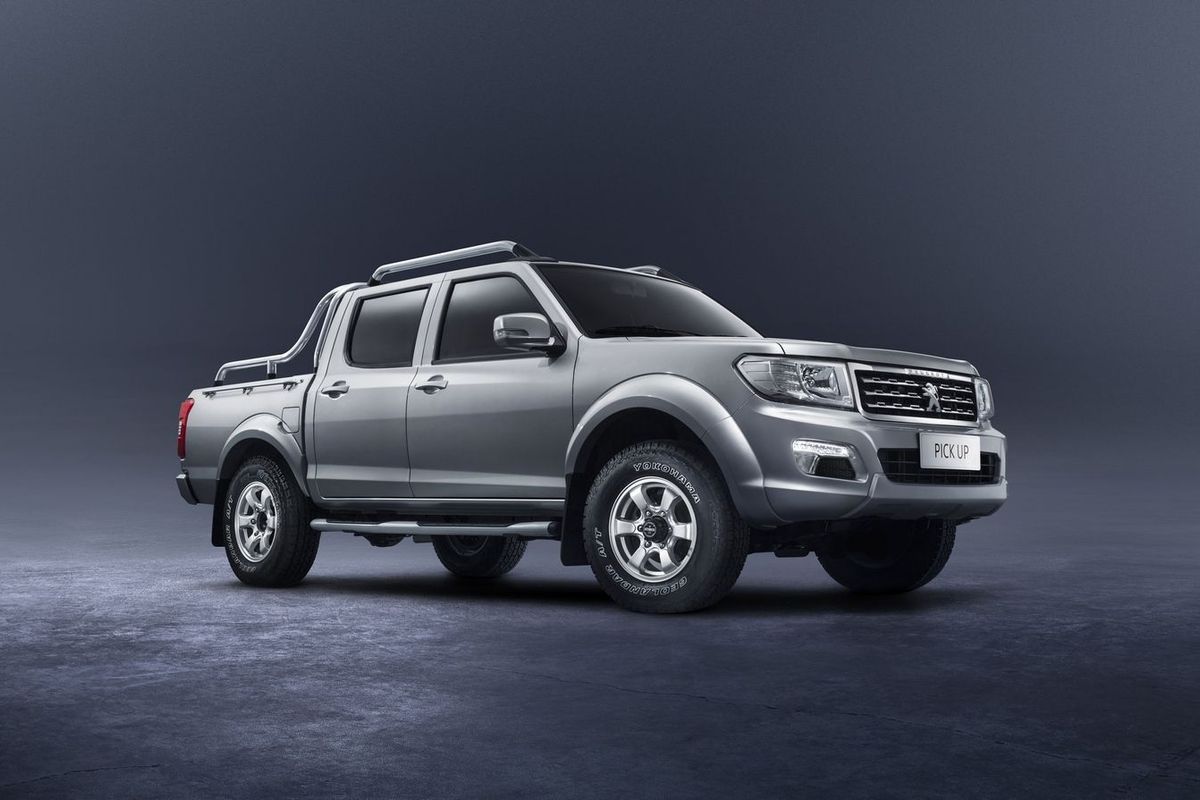
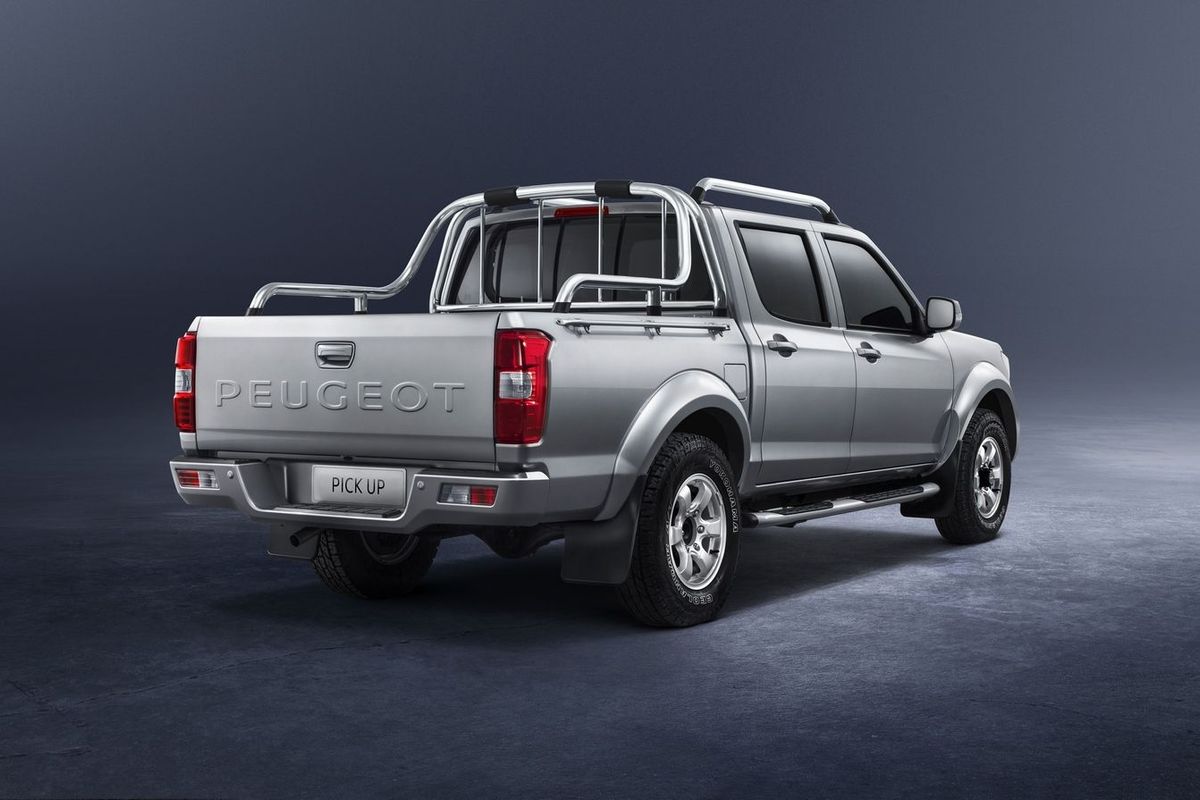
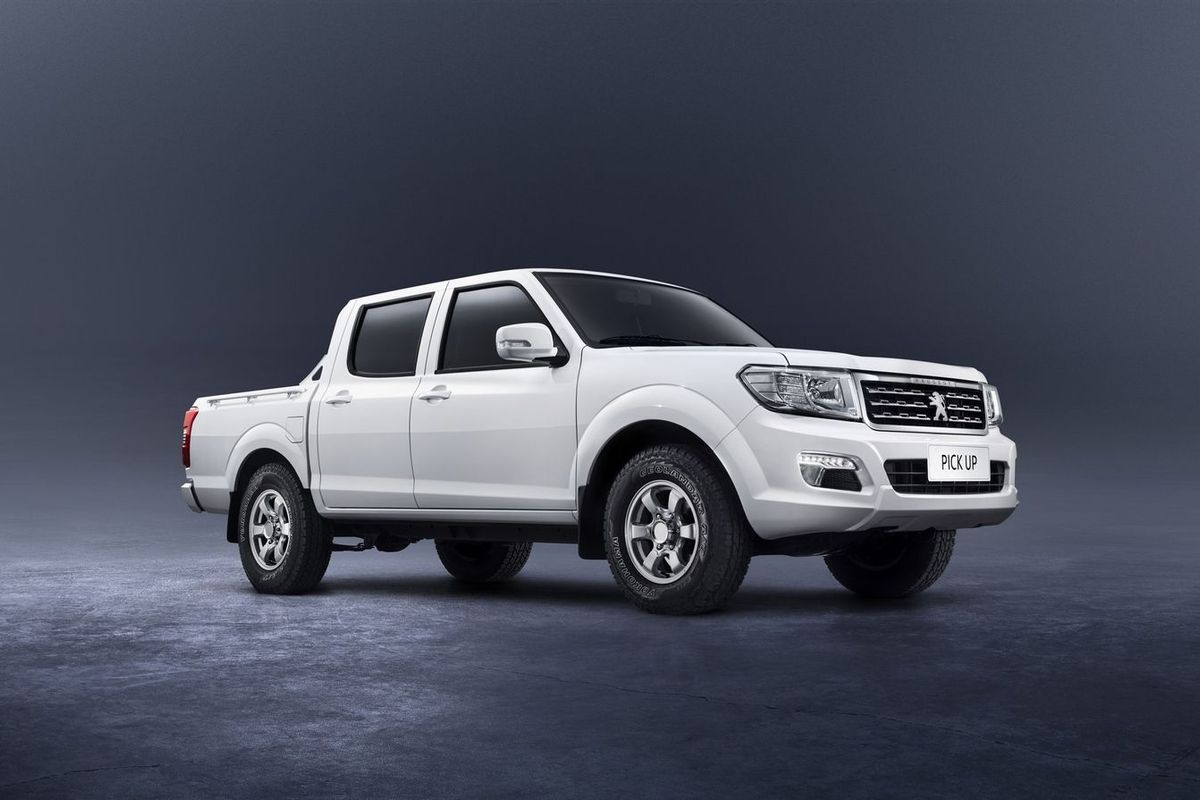
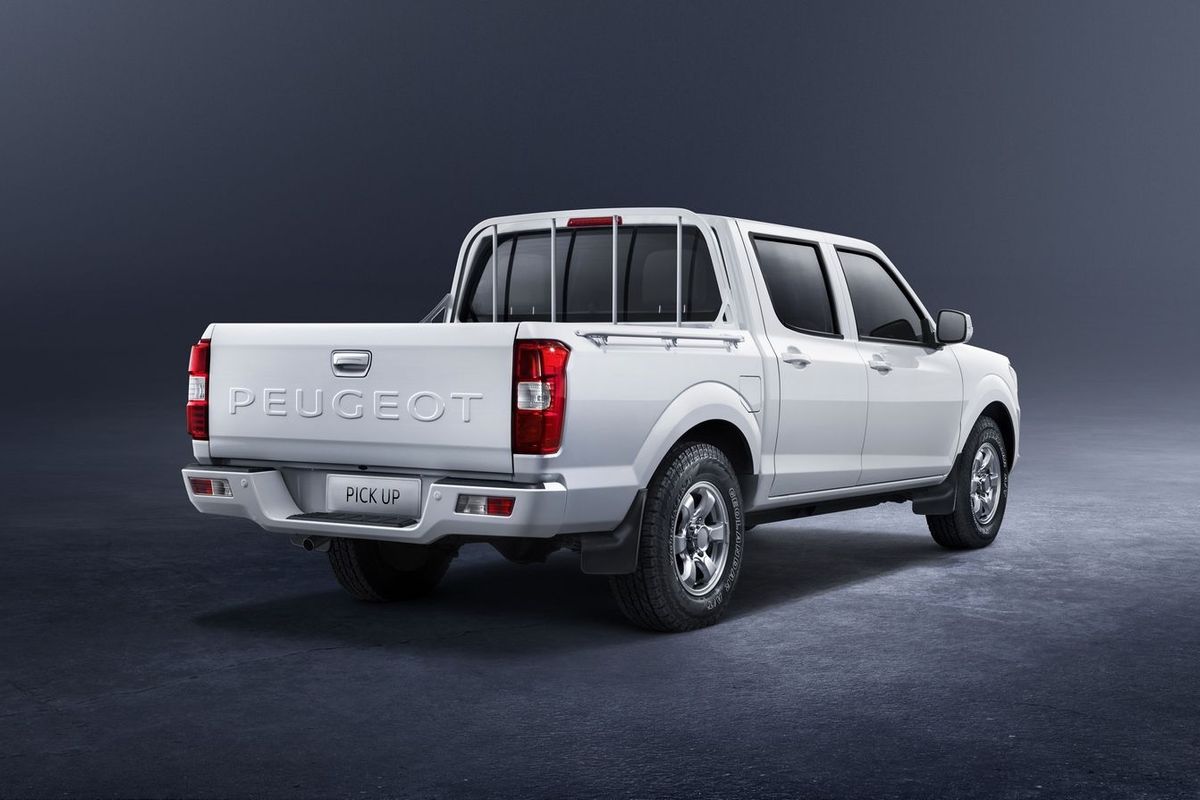
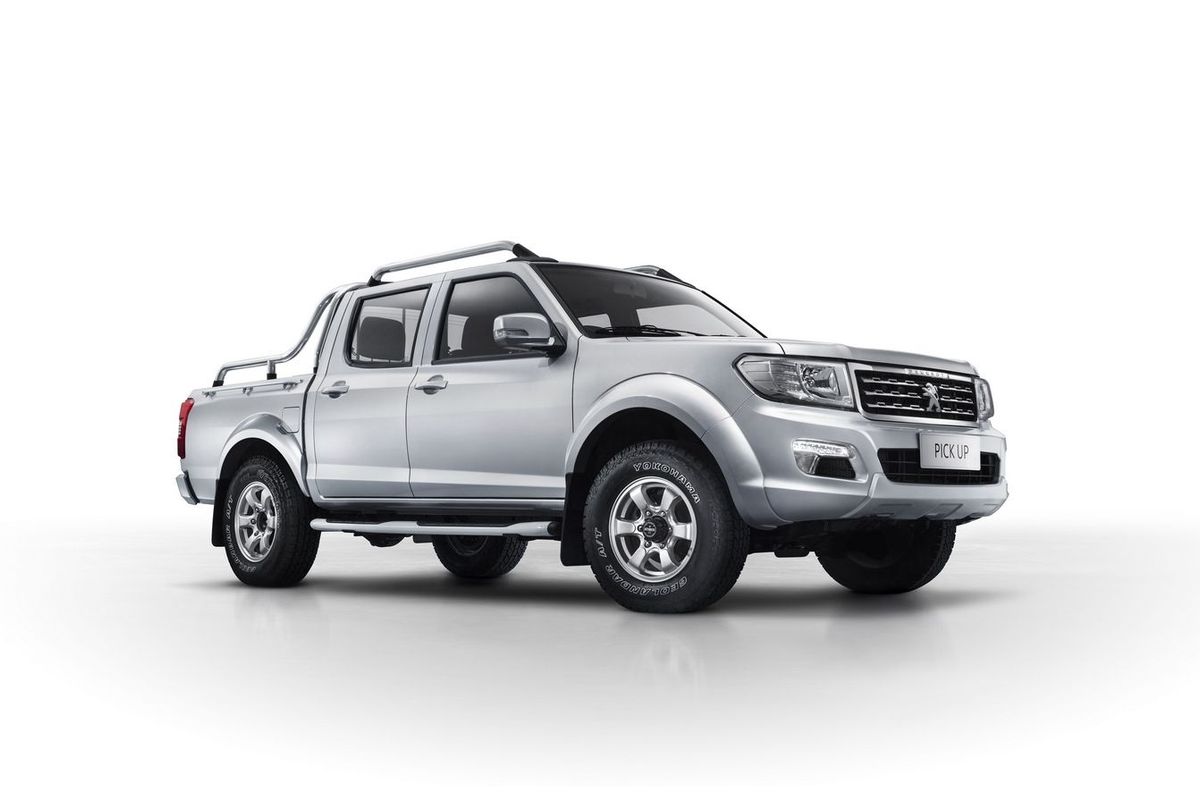
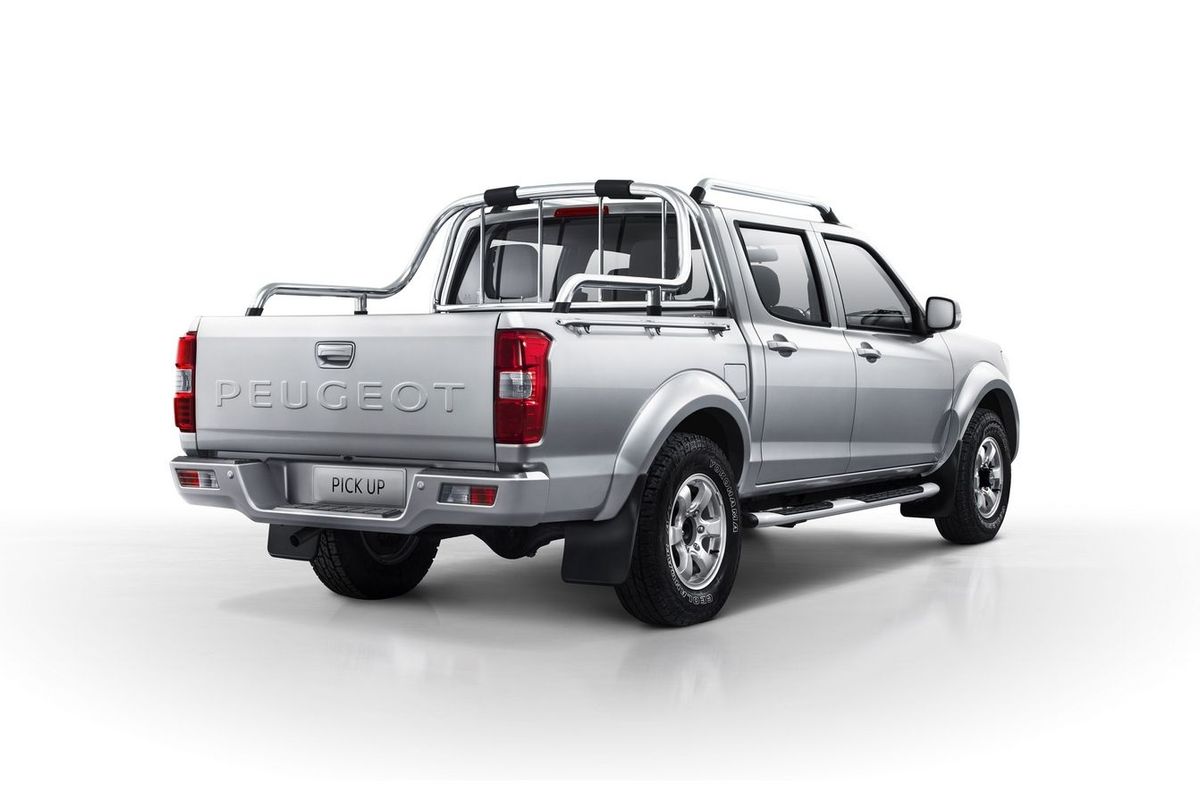
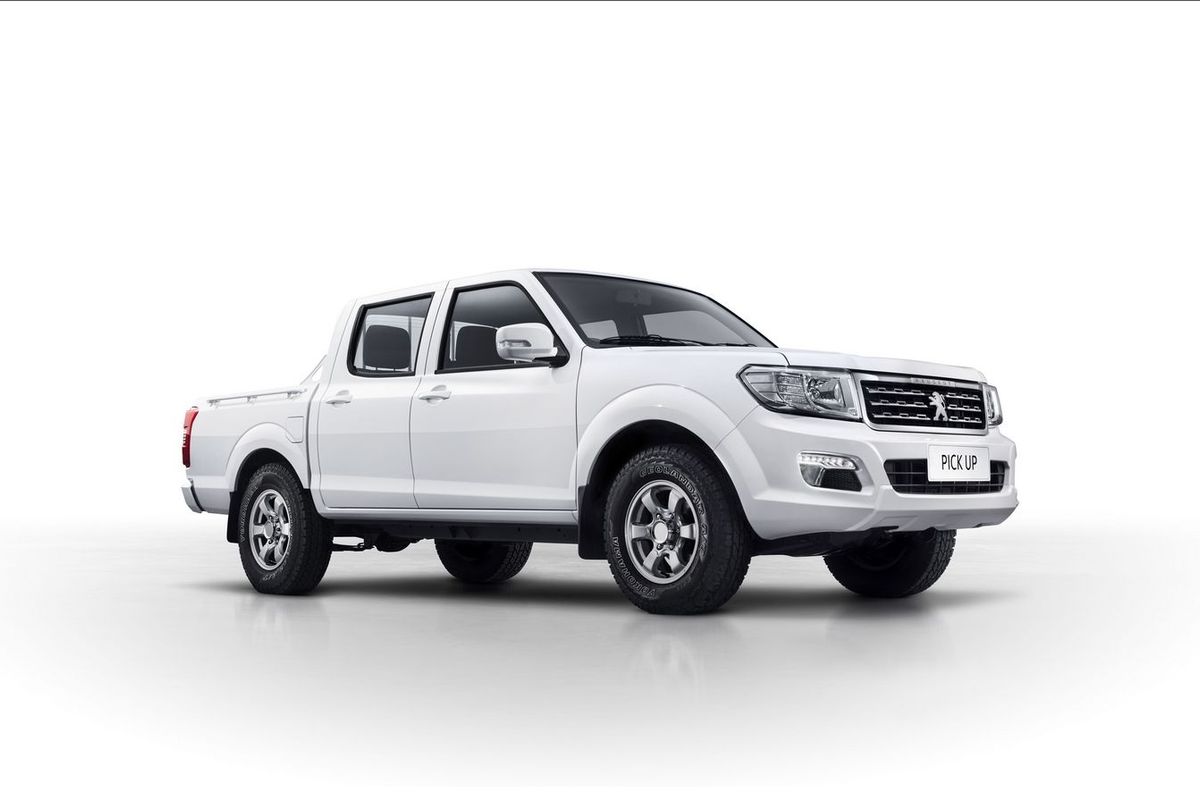
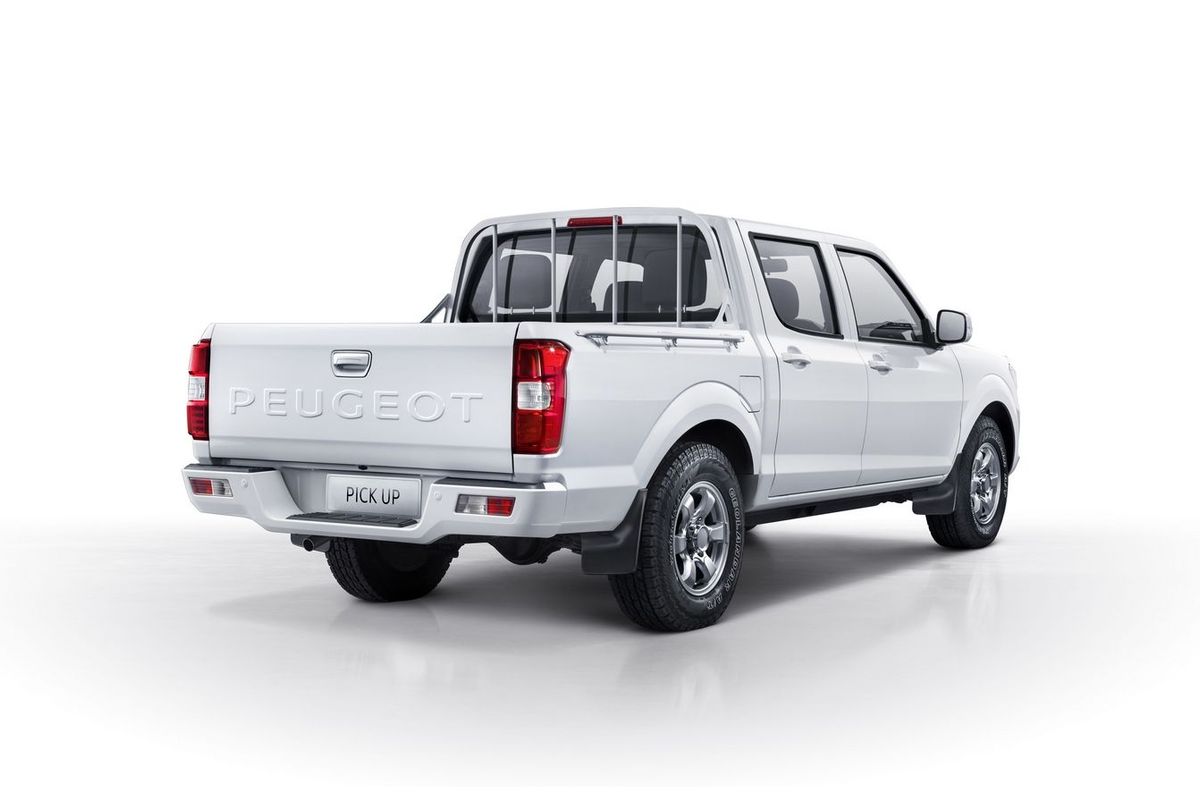
Peugeot will be introducing an Africa-only double-cab bakkie, simply called the Pick Up. Could/should Peugeot South Africa be convinced to launch it in the local market?
The Pick Up will only be sold in Africa and is set to go on sale in September. Whether it will ever be available in South Africa is a mystery: Peugeot South Africa said it wouldn't bring the newcomer to the market "at the moment", yet Peugeot CEO Jean-Philippe Imparato tweeted that Peugeot was making a strong comeback in Africa and tagged Peugeot SA in his tweet, which certainly raised a few eyebrows! The Pick Up appears to be specially built for North and West Sub-Saharan Africa so we speculate it could be for left-hand drive markets only.
What we know about the Pick Up
It’s exclusively available in double-cab guise and likely to target the bottom end of the segment, possibly along the lines of the Fiat Fullback or even below that, to compete with Chinese and Indian offerings. Think of it as a double-cab workhorse bakkie, more than a lifestyle vehicle.
It has a 2.5-litre turbodiesel engine with 85 kW and 250 Nm of torque. It’s also available in 4×2 and 4×4 with a low-range gearbox. The gearbox is only available as a 5-speed manual.
Ground clearance is reasonable at between 210 and 215 mm. The load bay length measures 1.40 metres long by 1.39 metres wide and has a load capacity of 815 kg.
In order to target that lower end of the double cab market, it’s not quite as luxurious as the current leisure bakkies, but has a decent amount of standard kit. Manual air-conditioning, electric windows, radio/CD with USB and auxiliary input capabilities can be expected.
In terms of safety, it is equipped with ABS, EBD and dual front airbags.
The price of both petrol and diesel is likely to drop from July if things stay steady until the month end.
The price of petrol is expected to drop between 60 and 64 cents per litre from the beginning of July. The AA announced its predictions after mid-month data showed that the price of oil has dropped by around 8 percent since the beginning of June. The Rand had held firm until that point in the month, which should reflect a 60 cent drop in diesel and a 57 cent drop for illuminating paraffin.
The AA was quoted as saying "The Rand remained mostly stable against the US dollar in the first half of June, with strength in the currency contributing three cents a litre to the drop," "The big move was from oil, which shrugged off OPEC's production quotas to drop by around eight percent since the start of the month."
The predictions were made prior to the June 19 announcement by the Public Protector that recommended changes to the constitution. The rand has since lost 1.4% against the US Dollar, which will no doubt diminish the drop in the fuel price somewhat.