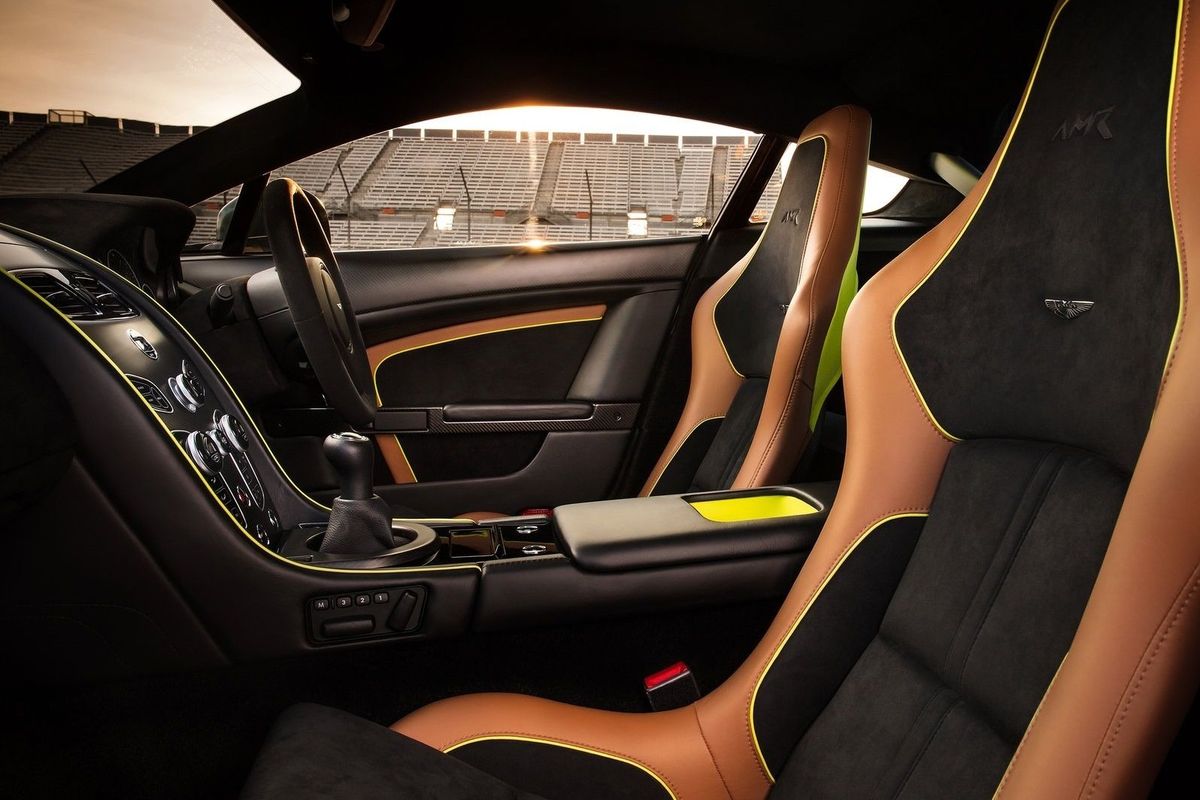
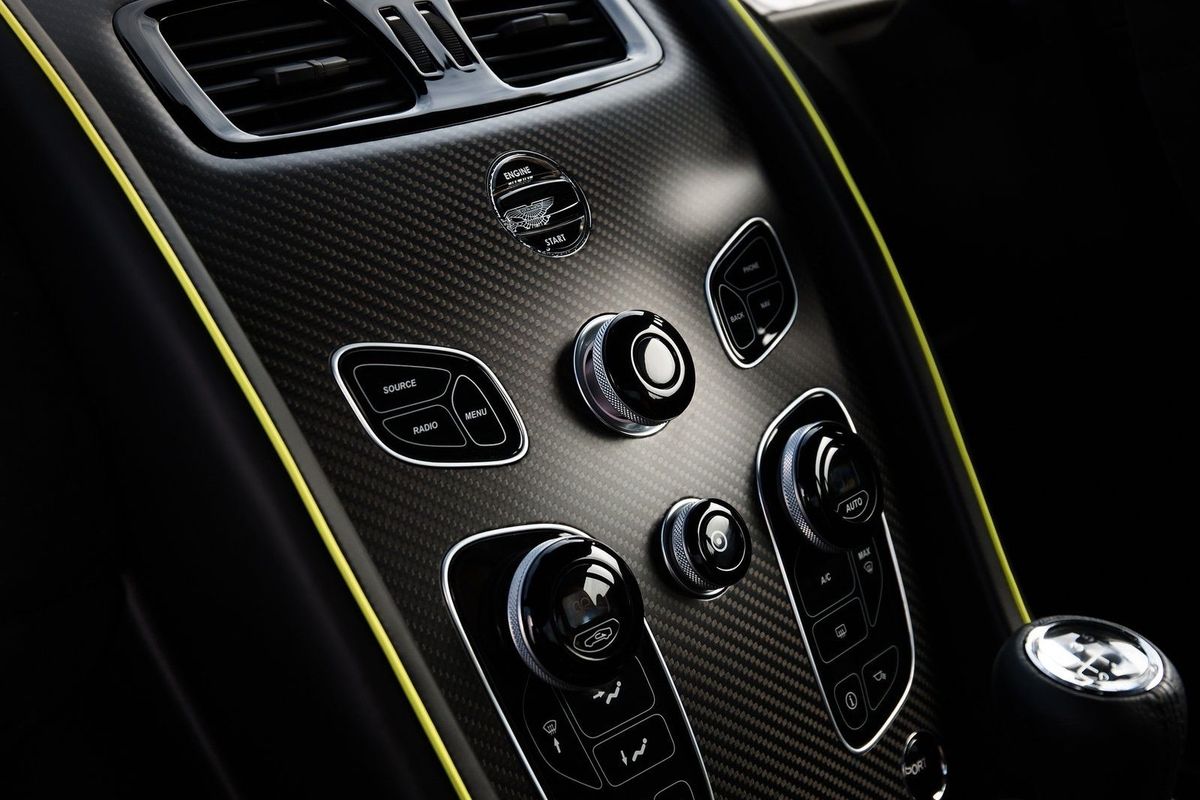
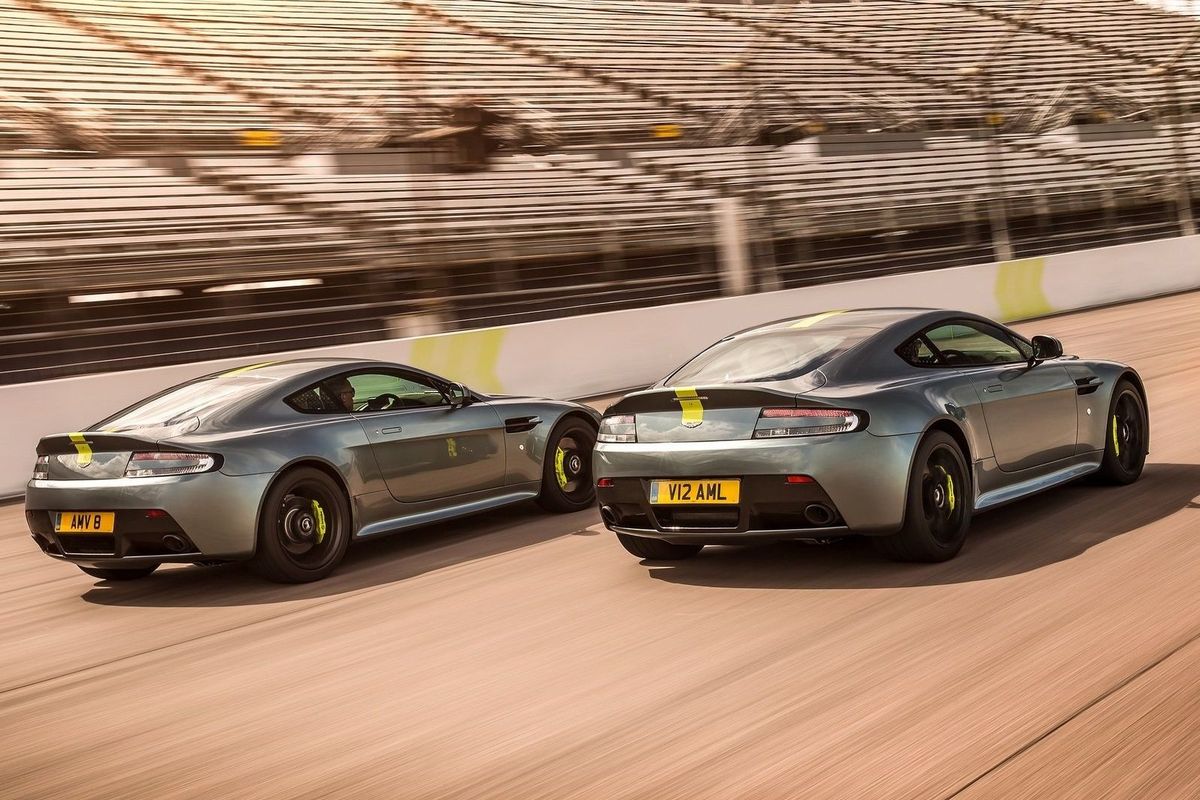
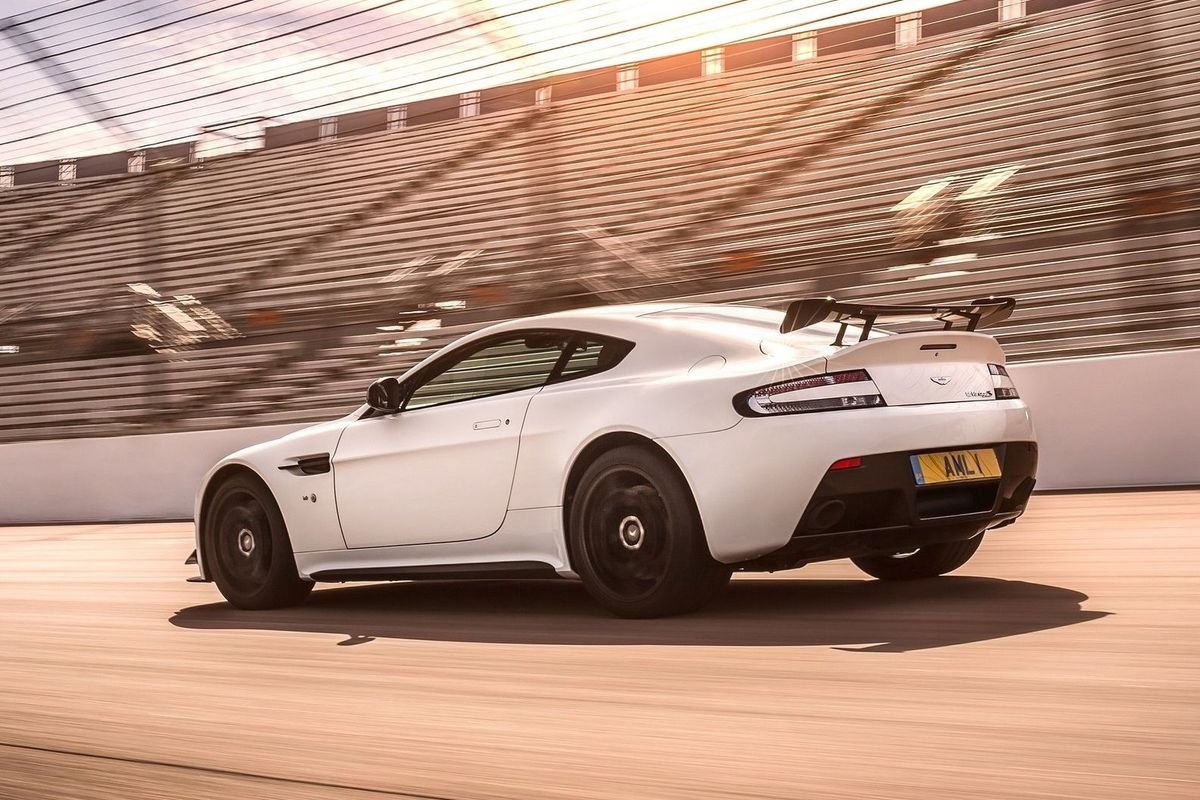
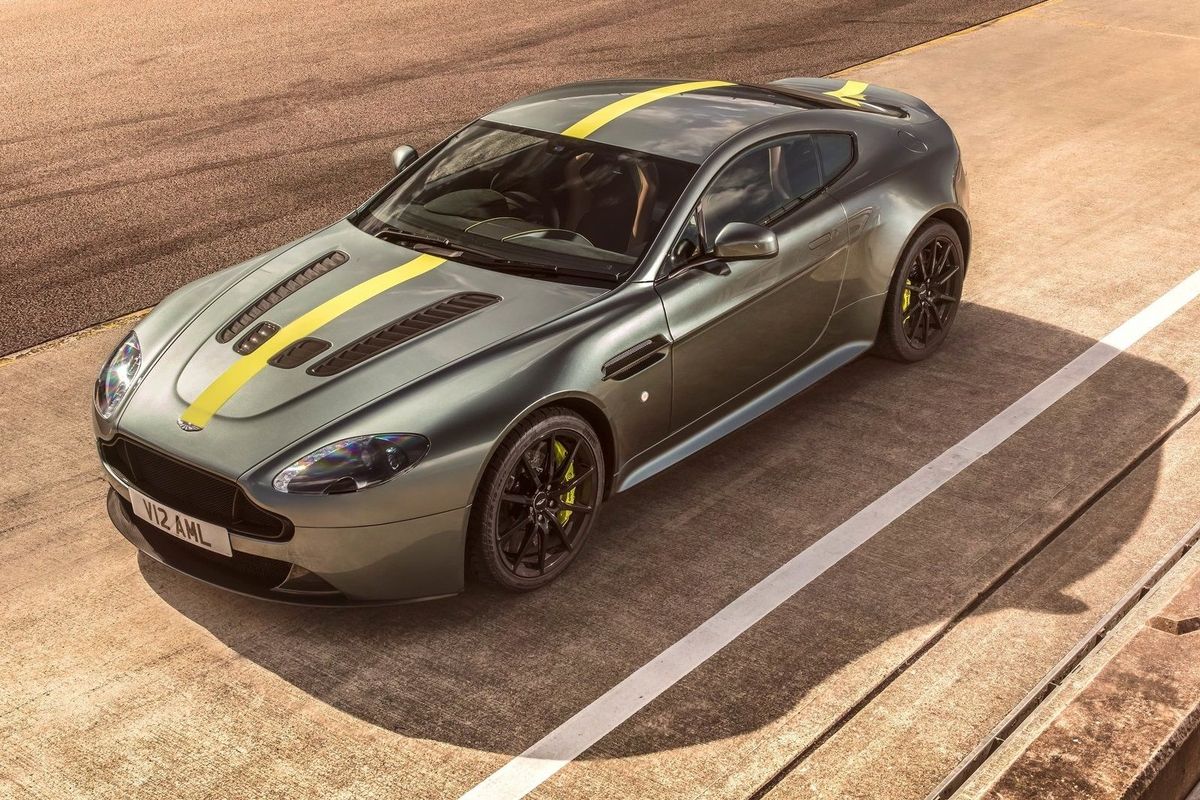
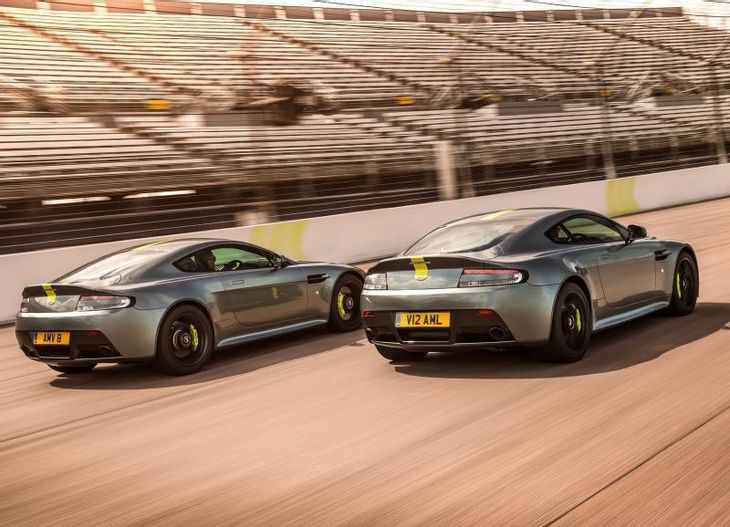
Aston Martin has showcased the first series production derivative of the new race-inspired performance range. Meet the Aston Martin Vantage AMR.
The Aston Martin Racing (AMR) brand takes inspiration from Aston Martin Racing's participation in the FIA World Endurance Championship, and translates that into a road-going vehicle. In effect, the AMR sub-brand has taken the Vantage, substantially increased its performance and enhanced the visual appeal.
There are 4 striking AMR exterior schemes: Stratus White with an Orange graphic; Ultramarine Black with Blue graphic; Zaffre Blue with Red graphic; and Scintilla Silver with Grey graphic. You can opt for the Halo Pack, which is inspired by the 2016 World Endurance Championship-winning Vantage GTE. It has a combination of Stirling Green paint with Lime Green detailing. The cabins have been upgraded too, and feature leather and alcantara. Lightweight carbon fibre seats are offered and you can specify carbon fibre detailing on the front grille, side strakes, lamp infills and mirror caps on the outside.
A unique paint scheme signifies the Aston Martin Racing sub-brand. V12 engine gains more power.
Powertrain
The engines in the Vantage pack a punch. While the V8 still offers up 321 kW, the V12-powered Vantage now has 444 kW! Expect the V12 Vantage to hit 100 kph from standstill in the low 3-second bracket… Both engines are fitted with automated sequential manual paddle-shift transmissions, or for the purist, 6- and 7-speed manual gearboxes in the V8 and V12 versions.
Aston Martin President and CEO, Dr Andy Palmer, said of the Vantage AMR: "It's a real thrill to see our first AMR model go into production. The Vantage has been an incredible success for Aston Martin, both in V8 and V12 forms. As our most agile and athletic road car, and our long-time representative in the world of GT racing, it is the perfect model with which to introduce the exciting AMR range.
"Unmistakable in look and feel the Vantage AMR will appeal to our most enthusiastic customers. These are people who love our cars for their motorsport pedigree, and for their unmistakable dynamic and emotional qualities. Limited production numbers will undoubtedly make them extremely collectable, but they're so good to drive I'm confident we'll see many of them being enjoyed both on the road and at track events around the world."
Both V8 and V12 Vantage AMR models are available in both Coupe and Roadster body styles in selected markets, with recommended retail prices starting from £97,995 in the UK and €126,995 in Germany. Deliveries are scheduled to commence in Q4 2017.
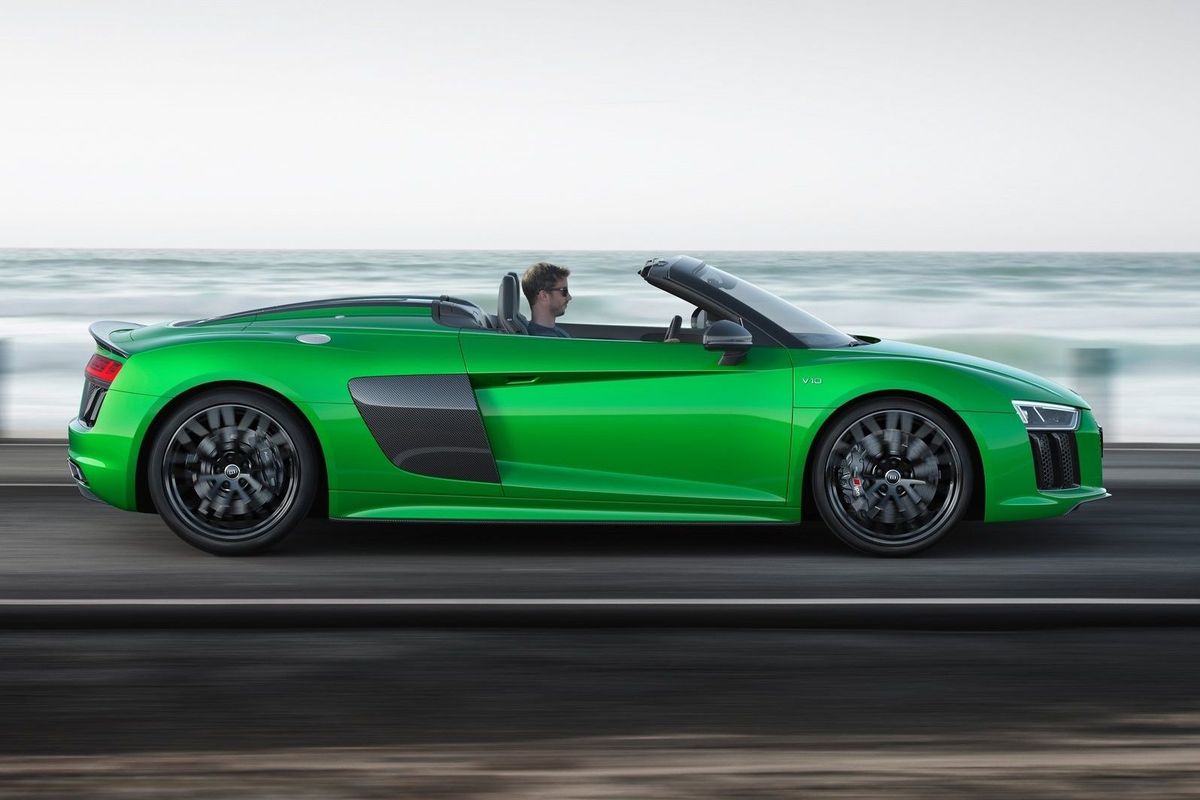
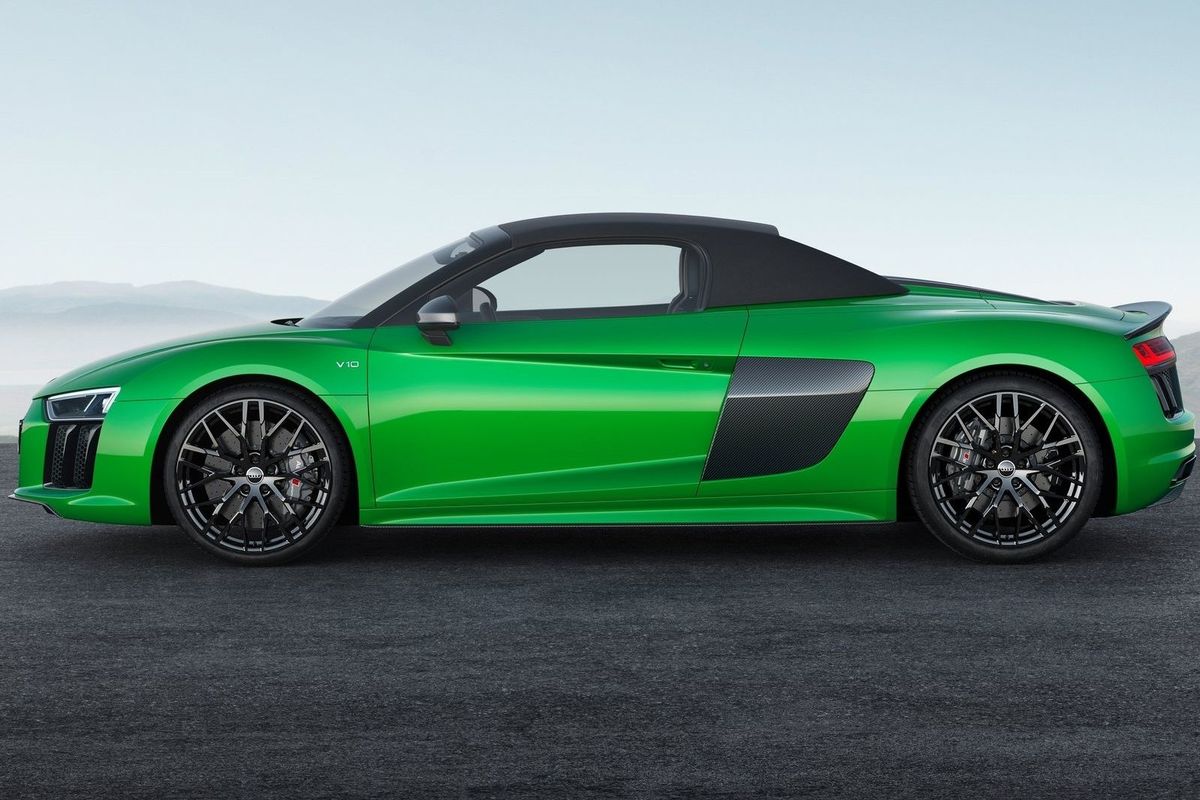
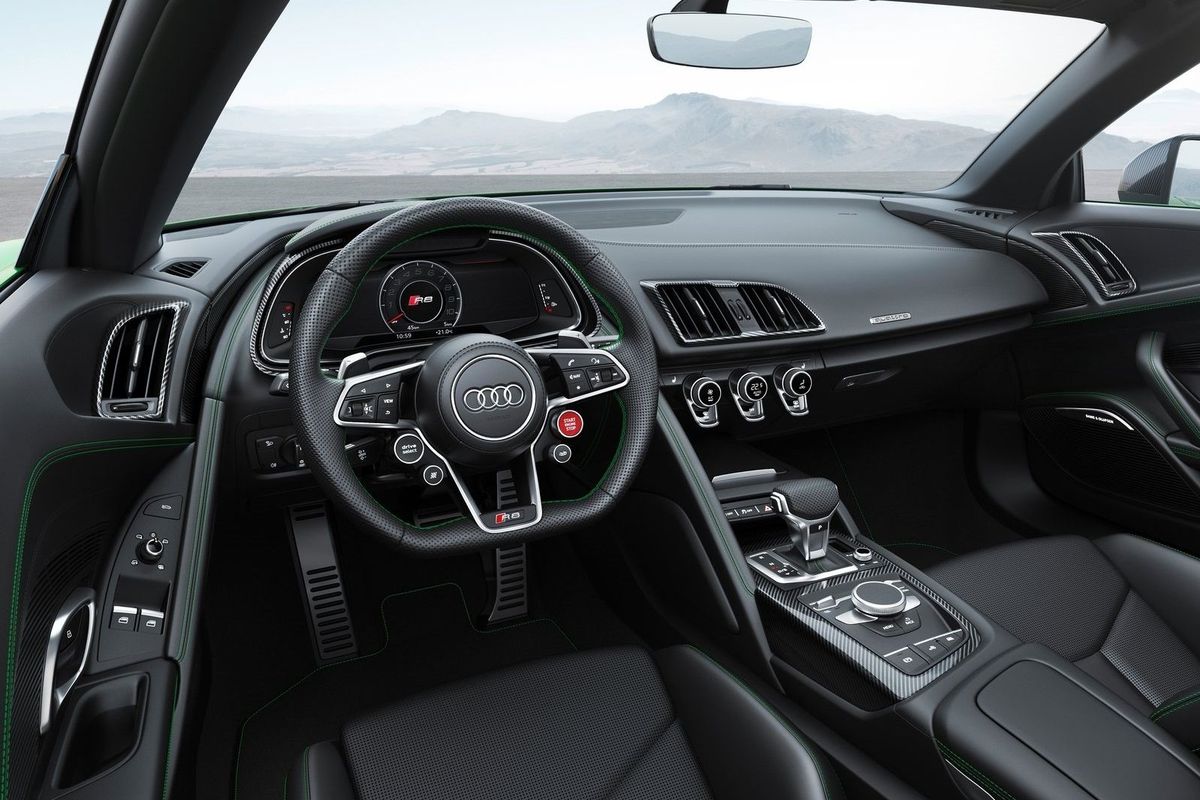
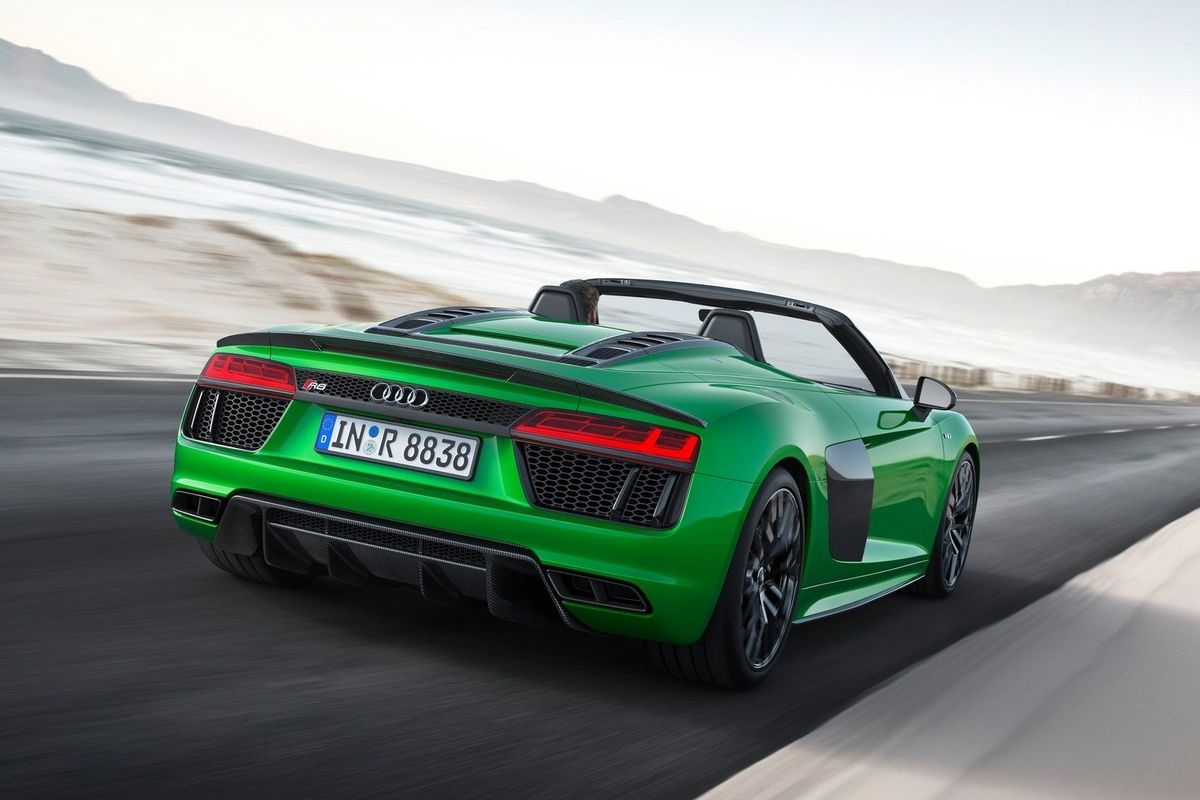
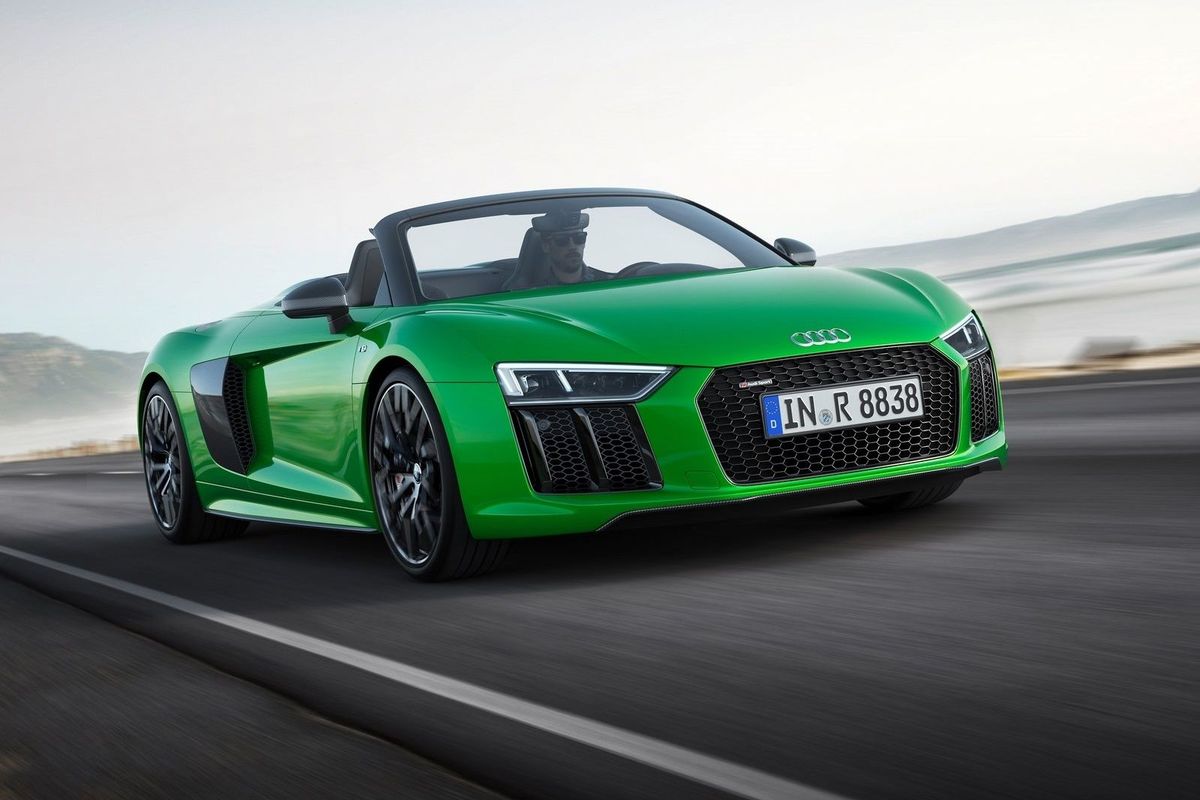
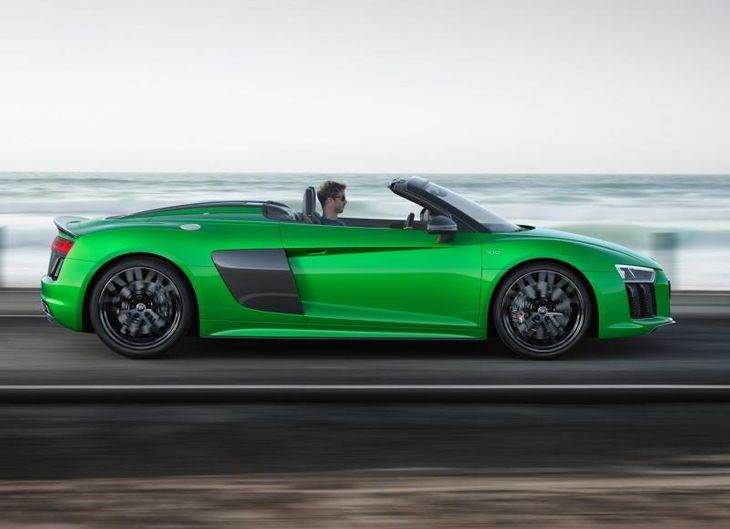
Audi has unveiled a faster and more hardcore version of its R8 supercar. Imbued with the R8 V10 Plus coupe's powertrain and tech, the R8 Spyder V10 Plus is now the fastest convertible in the Audi family.
The standard Audi R8 Spyder has only just arrived on South African shores, yet Audi Germany has added more firepower to the Spyder and created the Spyder V10 Plus.
Power has increased and the 5.2-litre naturally aspirated V10engine has gone from offering 397 kW and 540 Nm to a mental 449 kW and 560 Nm of torque, available from the 8 700 rpm redline. Audi claims its R8 Spyder V10 Plus shaves three-tenths off its non-Plus 0-100 kph sprint time, which means it'll take just 3.3 seconds. Top speed has increased too with a claimed figure of 328 kph.
The Audi Spyder V10 Plus is now the fastest convertible offered by Audi.
All that shove goes to a quattro all-wheel drive setup via a seven-speed dual clutch gearbox. A clever torque distribution system can send up to 100% of the torque to one axle, should the situation arise. At 1 695 kg, the roof mechanism and body strengthening material add around 140 kg in weight, but importantly, it's 25 kg lighter than the standard Spyder V10.
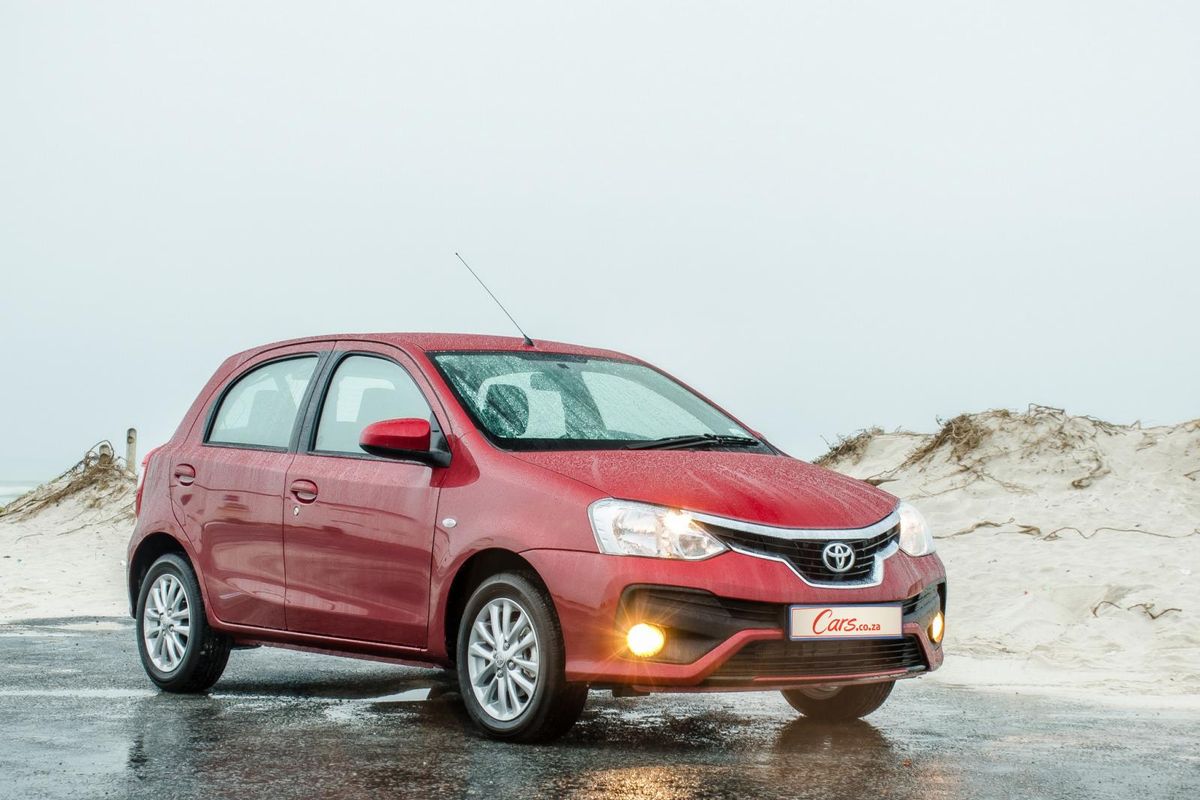
Toyota South Africa Motors recently updated its compact hatchback offerings with the introductions of the Yaris Pulse and Etios Sprint derivatives. The Etios is well established in the market and buyers know what to expect of the Indian-made car, however, it now offers distinctive styling that offers standout appeal that sets it apart from other budget car offerings. Is that enough to set it apart from the rest, however?
Alternatives:
The default choice (for many). If you weren’t one of the nostalgic buyers to net a limited edition 1.4 CitiVivo, the long-serving Volkswagen Vivo 1.4 Conceptline offers affordable build quality with proven mechanicals. Its standard spec includes air-con, an audio system with Bluetooth, auxiliary and USB ports, remote central locking, ABS and dual front airbags… but that’s about it.
For a run-out bargain. Although Chevrolet will soon exit the market as a result of General Motors’ withdrawal from South Africa, the top-of-the-range Spark 1.2 LT represents excellent value. Backed by a 5-year/120 000 km warranty, the Spark has 4 airbags, an audio system with Bluetooth aux and USB ports, a multifunction steering wheel, 15-inch alloys and rear PDC. A service plan is optional.
For crossover appeal. The recently facelifted Renault Sandero Stepway 66 kW Turbo Expression offers something more than humdrum bargain hatch fare. Replete with SUV-like cladding and roof rails, the Renault has 16-inch alloys, front electric windows, stop/start function, Brake Assist and Traction control as well as remove audio control stalk. A 2-year/30 000 km service plan is included
A surprise package. Although Indian manufacturer Tata’s products once offered marginal quality, the top-spec Bolt 1.2T XT is a revelation. Backed by a 5-year/100 000 km warranty and a 2-year/30 000 km service plan, the spacious Tata has a reasonably perky 1.2-litre turbopetrol engine and comes with nice-to-haves such as climate control and a full-colour touchscreen infotainment system.
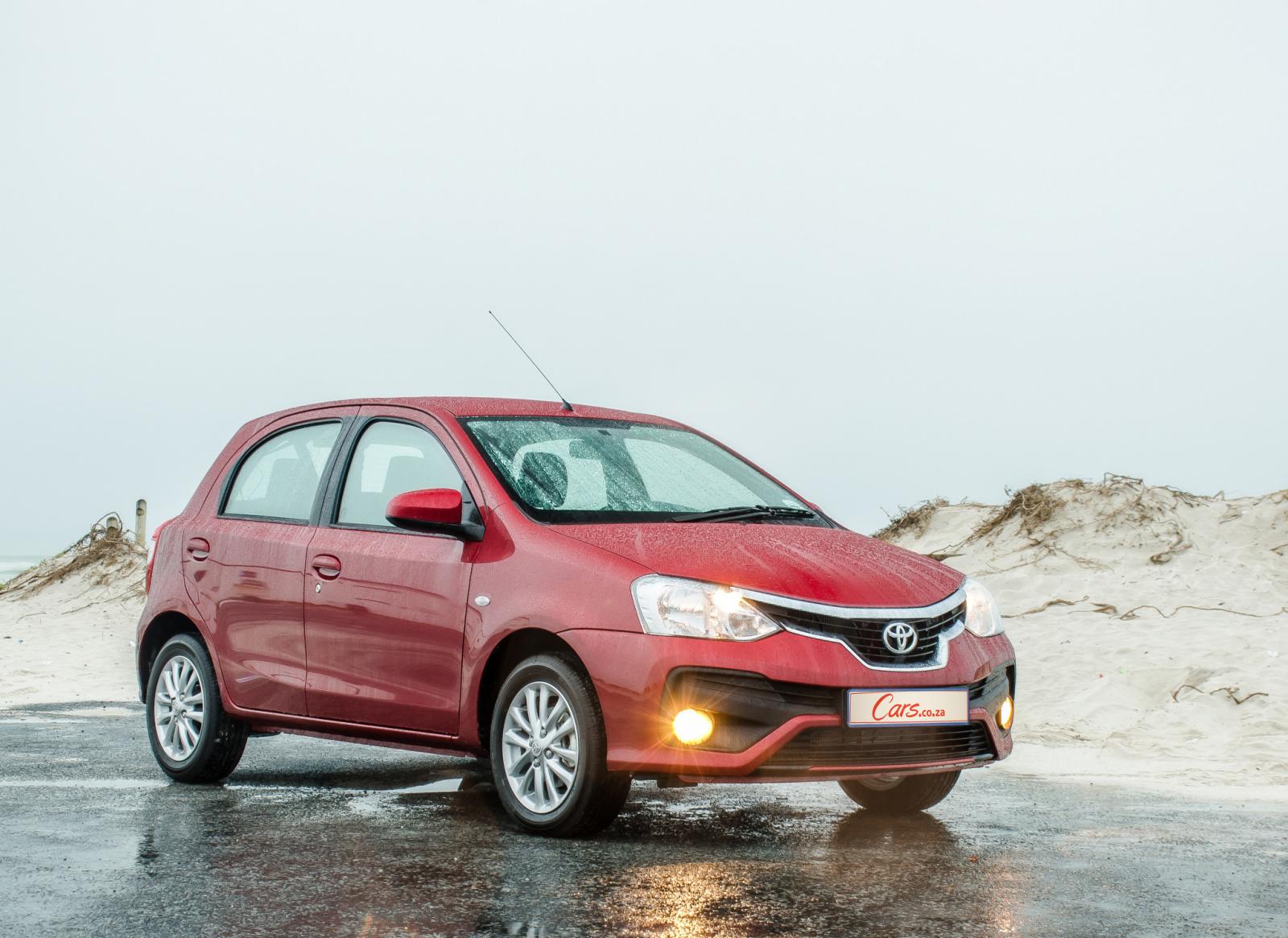
The Etios' front end has received a significant makeover, the recessed grille and expansive black inset are eye-catching.
What's new?
The Indian-built Toyota Etios has become a firm favourite in the South African market… For those who need more practicality than what the diminutive Aygo city car can muster, the Etios represents the entry point to the much-respected Toyota brand and has proved a hit with fleet operators (especially in sedan guise) and private buyers alike. The model has undergone a number of detail changes since its first introduction in 2012, but apart from the off-road-inspired Cross derivative, all the derivatives have looked the same. The 1.5 Sprint (in Toyota parlance, the Sprint moniker has always denoted a sporty look, as opposed to a performance version) slots into the middle of range; it replaces the previous mid-spec Etios 1.5 Xs.
The good
Improved looks
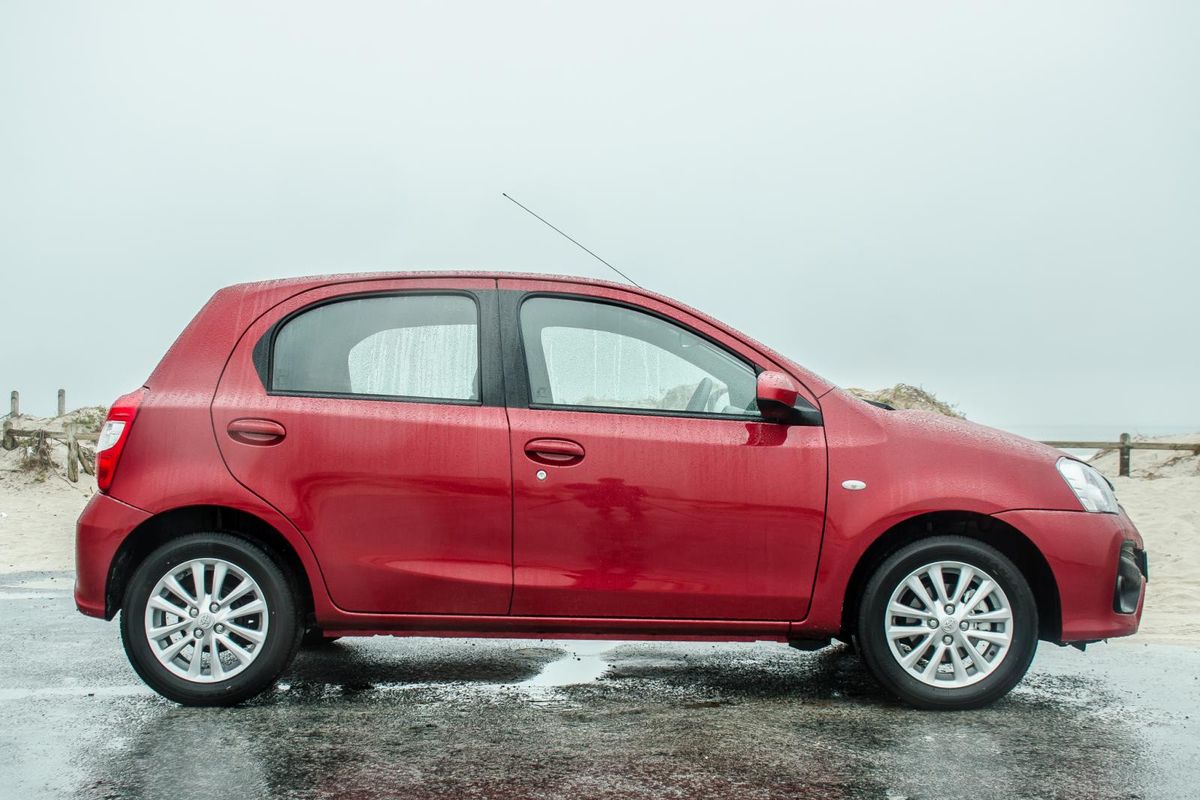
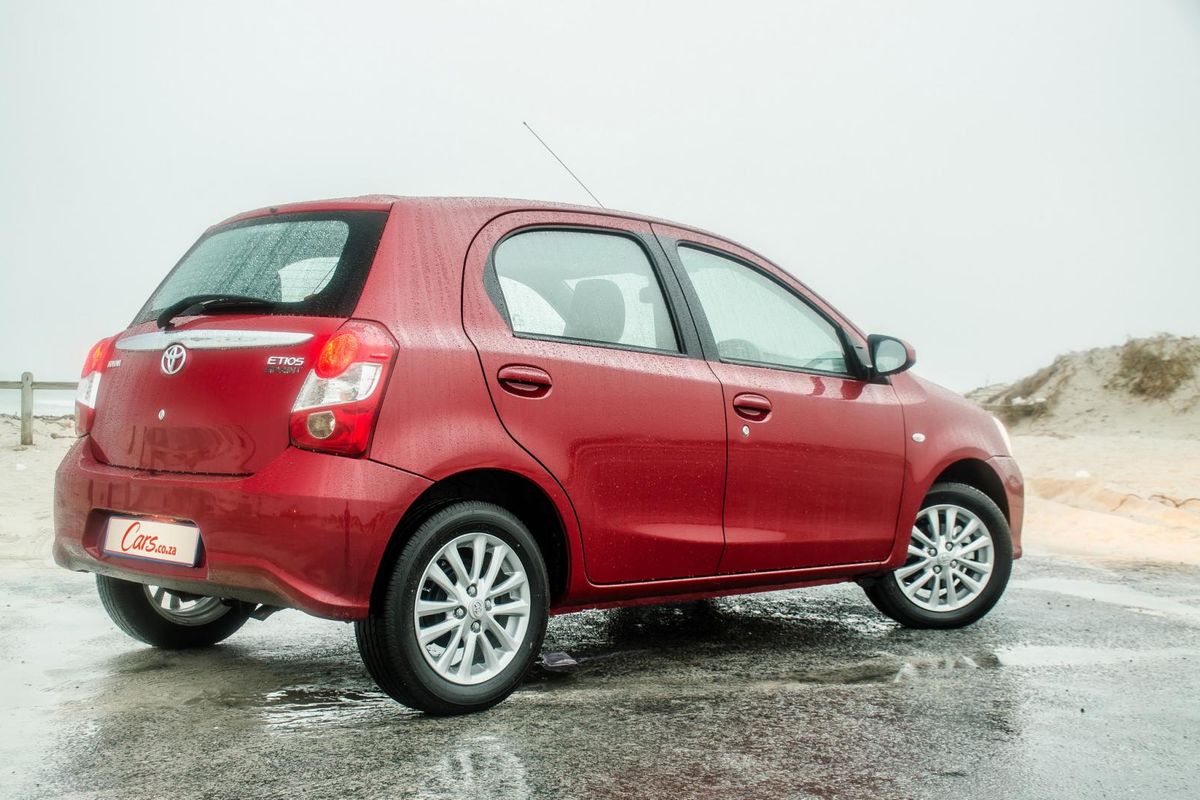
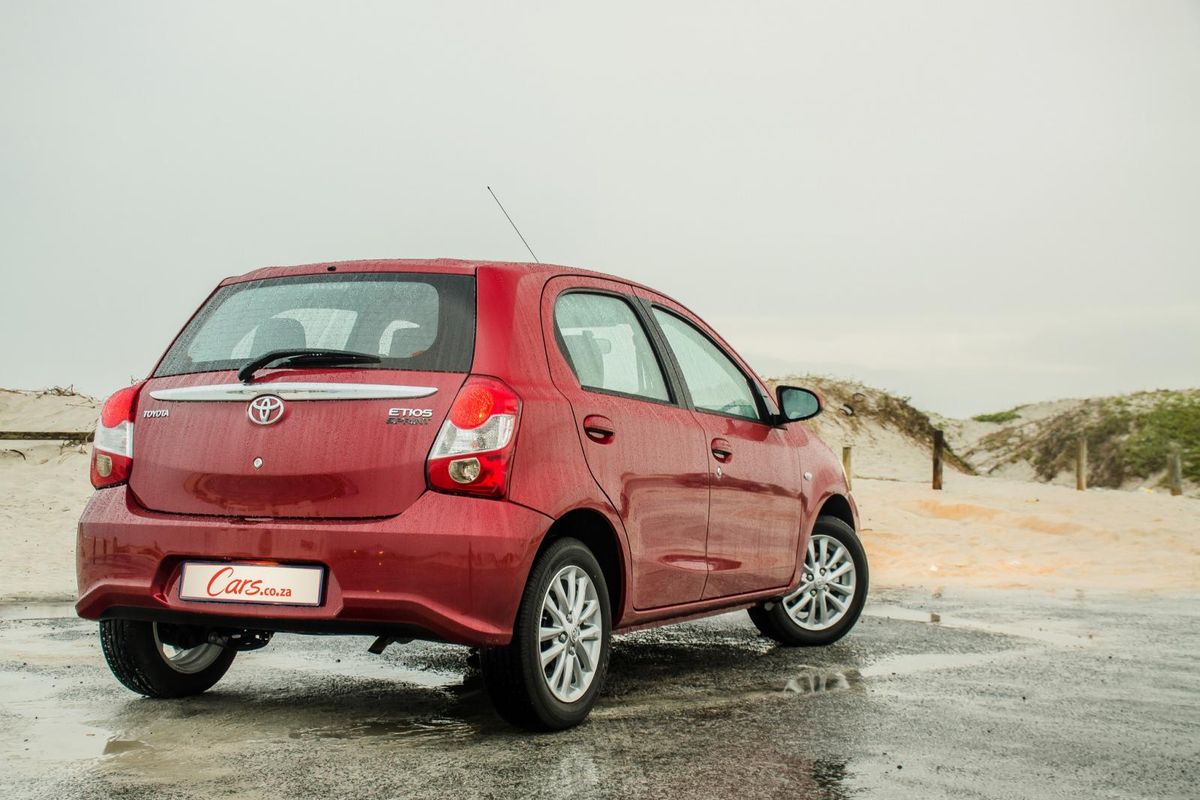
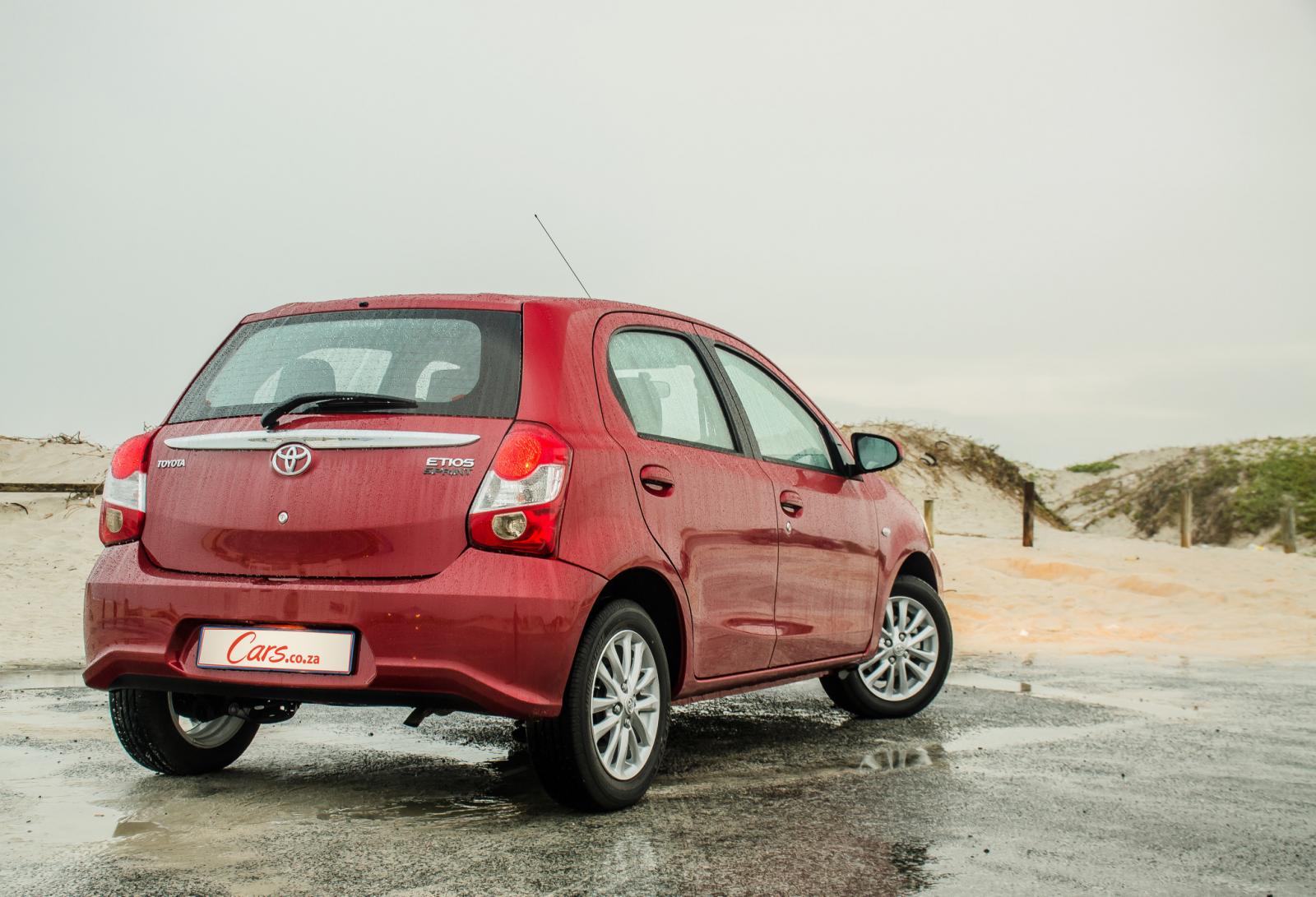
The Etios is not the most elegant of hatchback designs; its wheel-at-each-corner stance is exacerbated by the hatchback's relatively high ride height. However, the 1.5 Sprint has shed some of its inoffensiveness and gained aesthetic appeal courtesy of a redesigned bumper with large air dams and integrated fog lamps, plus a wing motif grille (replete with a broad chrome strip). Apart from a reprofiled rear bumper, the newcomer is further differentiated with new twin-spoke 15-inch alloy wheels and a carbonfibre inspired "Sprint" badge. Although kerb appeal is not one of a budget car's major performance areas, good looks help and as such, the 1.5 Sprint is certainly the best looking Etios to be launched in South Africa.
The handsome 15-inch alloys and shapelier rear bumper add some boutique appeal to a stalwart of the budget hatchback market.
Tractable engine
Perhaps mostly by virtue of its low kerb weight (930 kg), the 1.5 Sprint never quite feels pedestrian/underpowered. Although the motor's outputs aren’t particularly lofty (66 kW/132 Nm), the motor delivers fair overtaking ability on the freeway and the 5-speed manual transmission shifts smoothly and positively. Even on steeper sections of road, the Toyota shows few signs of labouring in 5th gear, which is a bonus in a budget car. Suffice to say buyers should find the Sprint’s performance adequate in both urban and open road scenarios, but we must add that with 4 passengers and their luggage aboard, in the thinner atmosphere of the Reef, which saps some engine power, the 1.5 Sprint will perform in a more workmanlike manner.
More conservatively-minded buyers will welcome the natural aspiration of the engine (a turbocharger would add complexity and cost) and the 6.0 L/100 km fuel consumption claim is fair.
Improved refinement
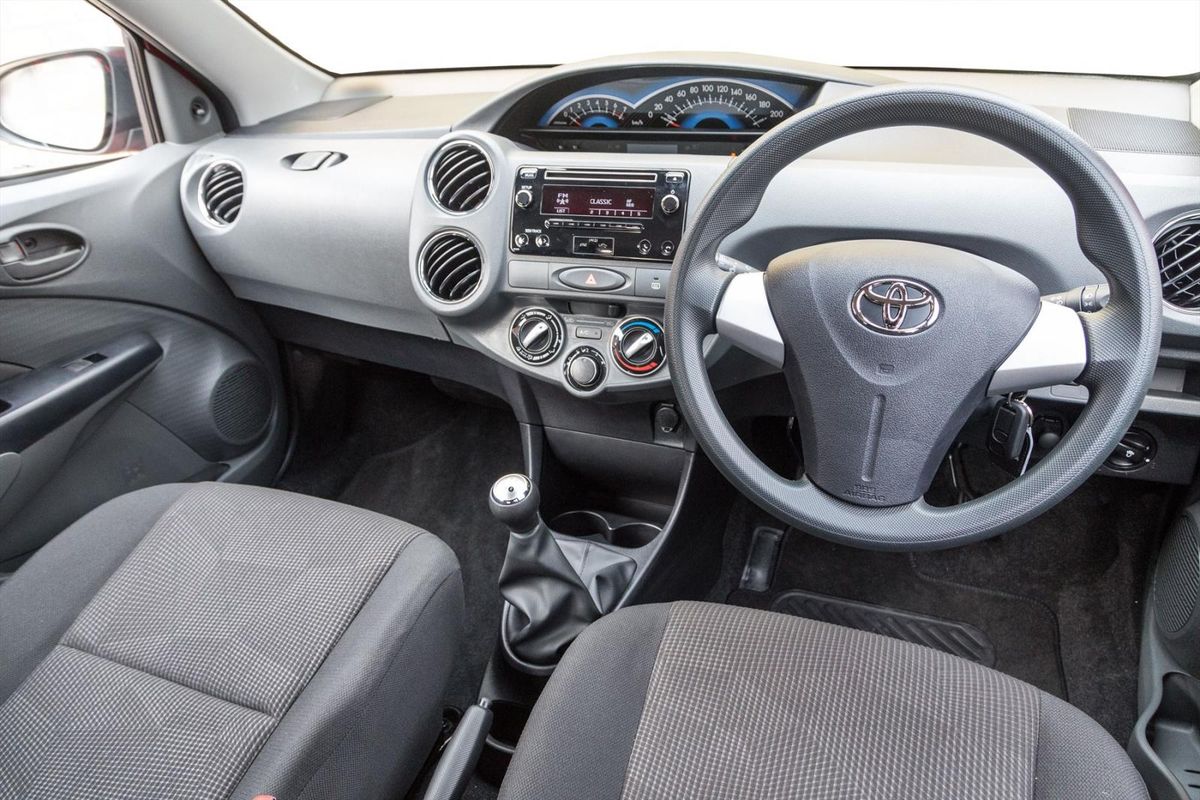
The Etios has always been renowned for its loping gait… its suspension soaks up road imperfections well, which is a boon in a country where there are myriad road conditions, depending on which routes you traverse. The car's interior certainly seems a tad quieter at cruising speeds too, which suggests running improvements to the Etios production methods and the application of more sound-deadening materials. Even the interior plastics, which are pretty shiny and anything but soft-to-the-touch, fit snugly and the panels emitted no rattles or creaks.
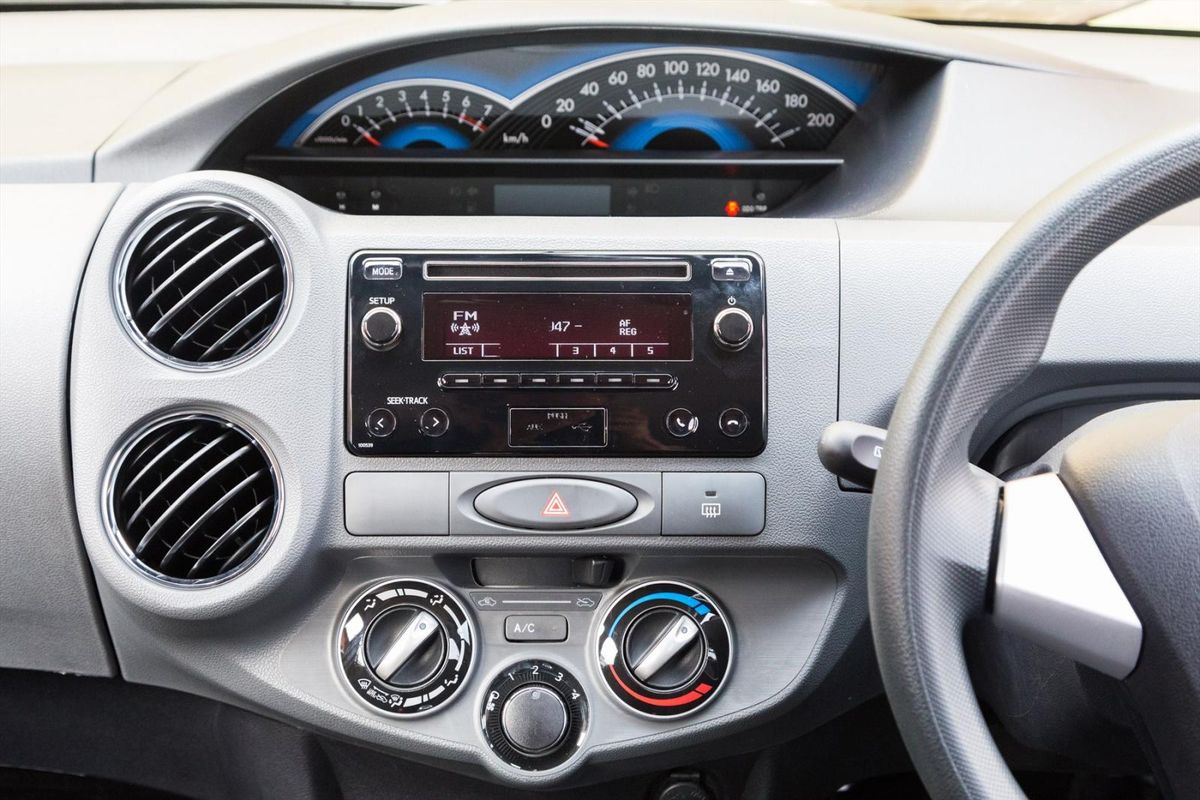
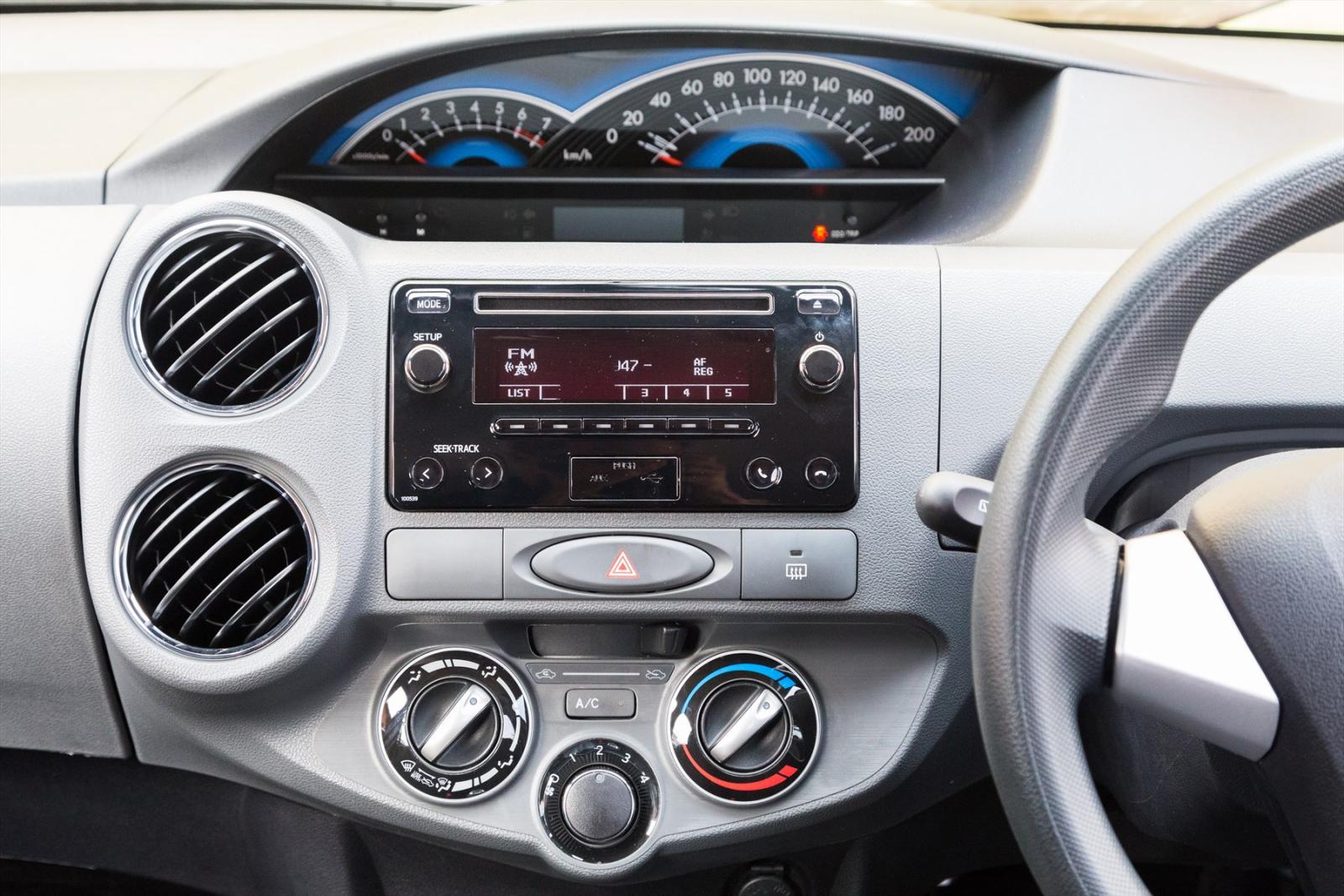
Although the central instrument cluster still looks cartoonish, the integrated audio unit is much more sophisticated than it looks.
A few nice to haves
Although the 1.5 Sprint does not come with a multi-function steering wheel or a colour touchscreen audio system, don't judge the piano-black-finished monochrome screen on its drab appearance. It incorporates auxiliary and USB ports behind a discreet flap and offers Bluetooth telephony and audio streaming, of which the latter features are very simple to set up. That means skipping over tracks on your playlist or answering/ending a phone call requires only prods to the chunky buttons on the audio screen, which is not an inconvenience, is it?
Furthermore, electric windows all round are a bonus (having window winders in the rear is the norm), the remote fuel flap and hatchback release levers at the foot of the driver's seat are handy and, oh yeah, there is a central locking button too, which is located on a console to the bottom right of the steering wheel – it's a strange place to put it, but at least it is there.
The bad
Evidence of cost-cutting
Although the Etios remains a strong value package and appears reasonably well-made, there are a few aspects of the Toyota that are irksome. The most obvious disappointment is the gaudy black-and-blue centrally mounted rev counter/speedometer cluster, which looks as though it has been lifted from a cheap children's toy, then there is separate ignition key and central locking fob, which is very old fashioned, the hatchback has to be opened with the ignition key and, finally, the parcel shelf is suspended from the tailgate by a single thin strap only.
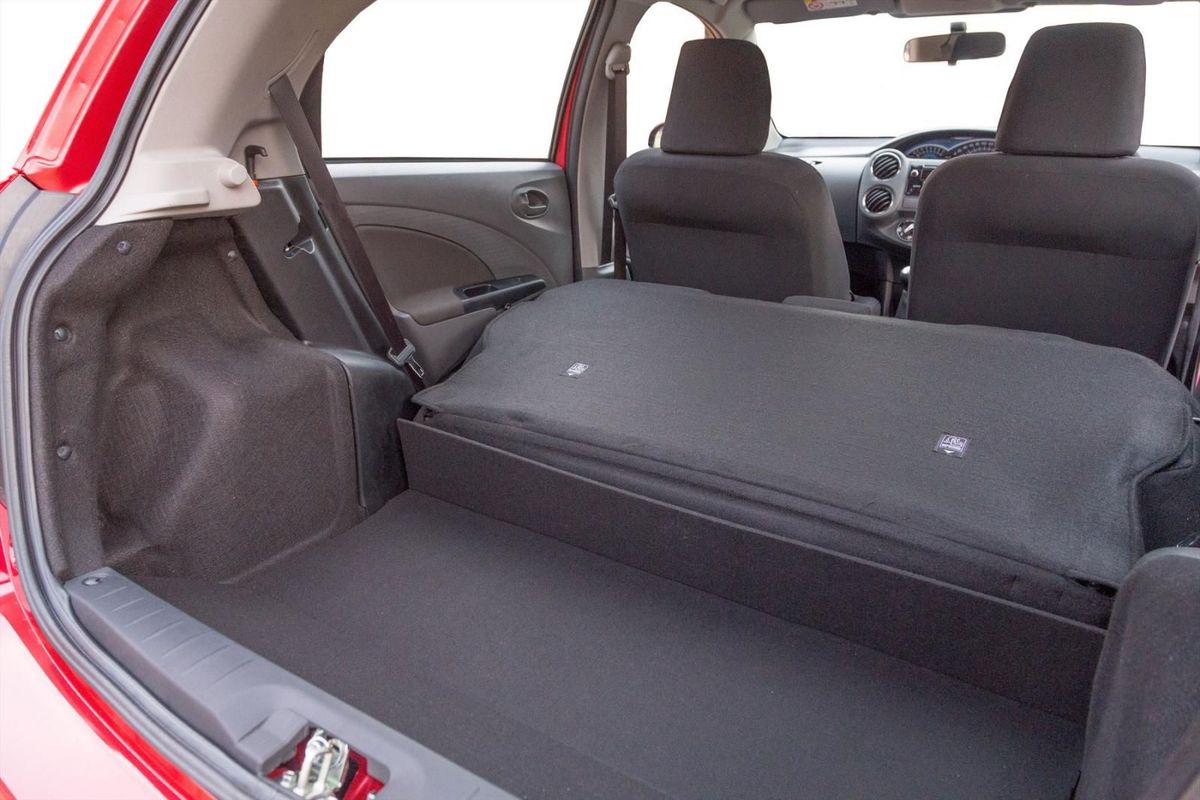
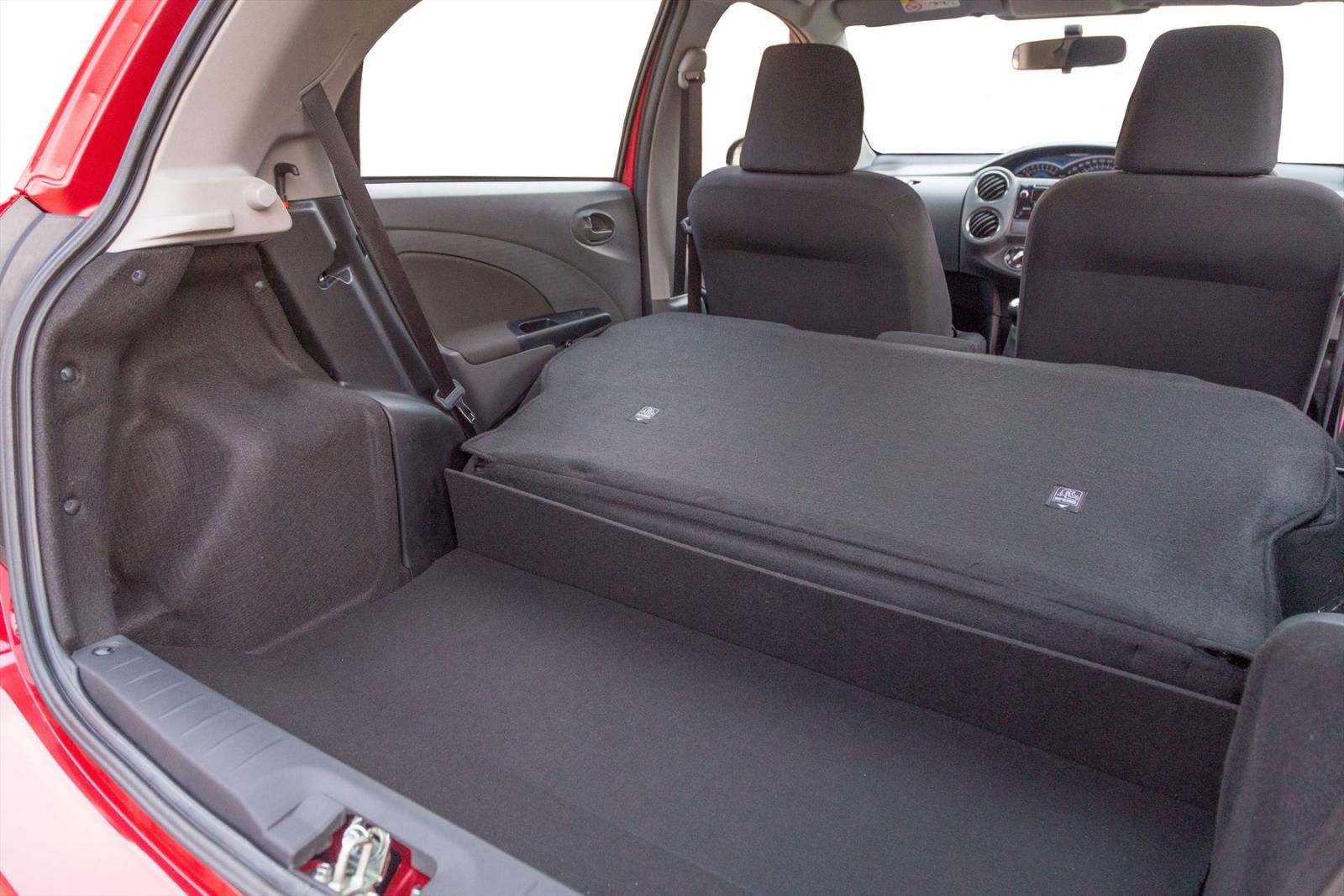
With the 60/40 split rear seatback folded down, there is a lot more utility space. A full-sized (steel) spare wheel is provided.
Larger-than-expected turning circle
Considering that the 1.5 Sprint is an urban runabout, which offers an acceptable ride/handling balance, reasonable performance as well as economy (a dream combination for a budget car, to be fair), we did find it surprising that the Etios has a larger-than-expected turning circle (perhaps it is exacerbated by the 15-inch alloys and less-than-speedy steering ratio).
Short service interval
The extensive Toyota dealer network, allied with the Japanese manufacturer's reputation for good customer satisfaction, allied with a standard 3-year/100 000 km warranty and 2-year/30 000 km warranty are certainly pluses in the Etios' favour. However, the service intervals for the 1.5 Sprint (and the rest of the derivatives) are pegged at 10 000 km, which means that if you notch up 30 000 km in the first 2 years of ownership, a trio services will be covered under the plan. After that, services will probably be required less than 12 months apart, unless you plan to run the Etios very sparingly…
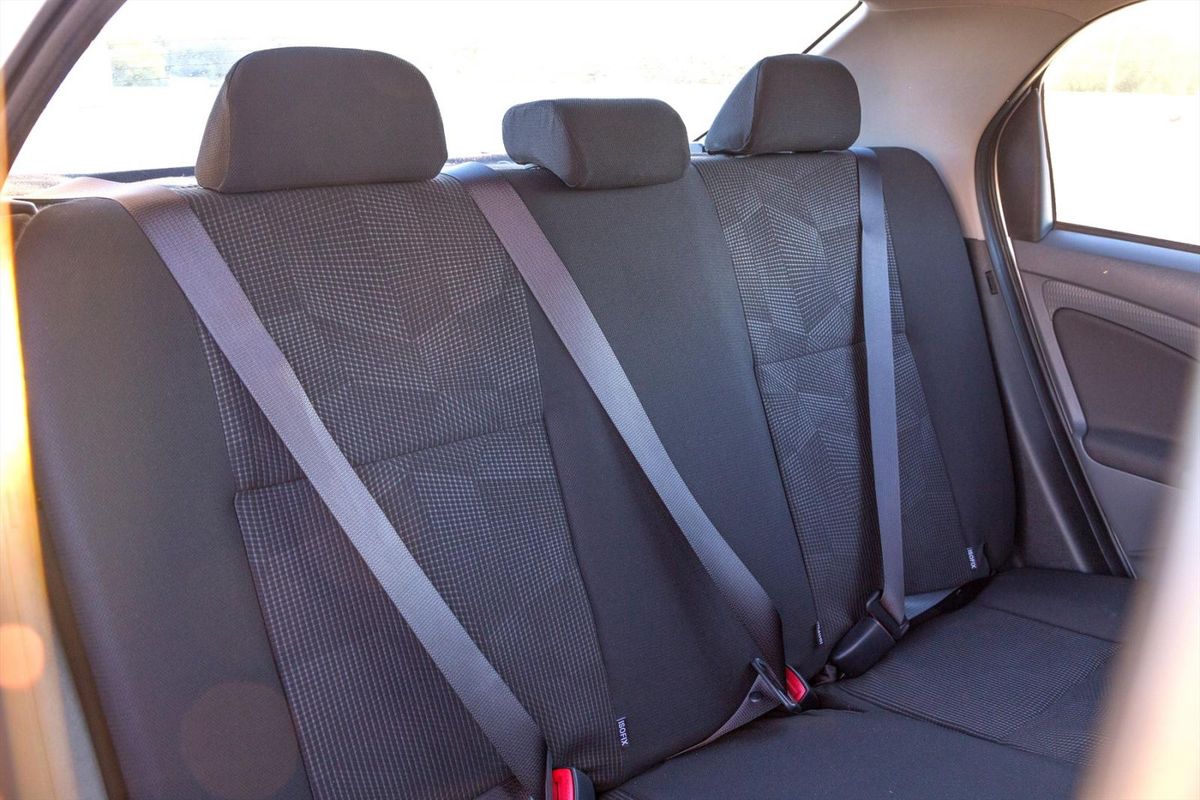
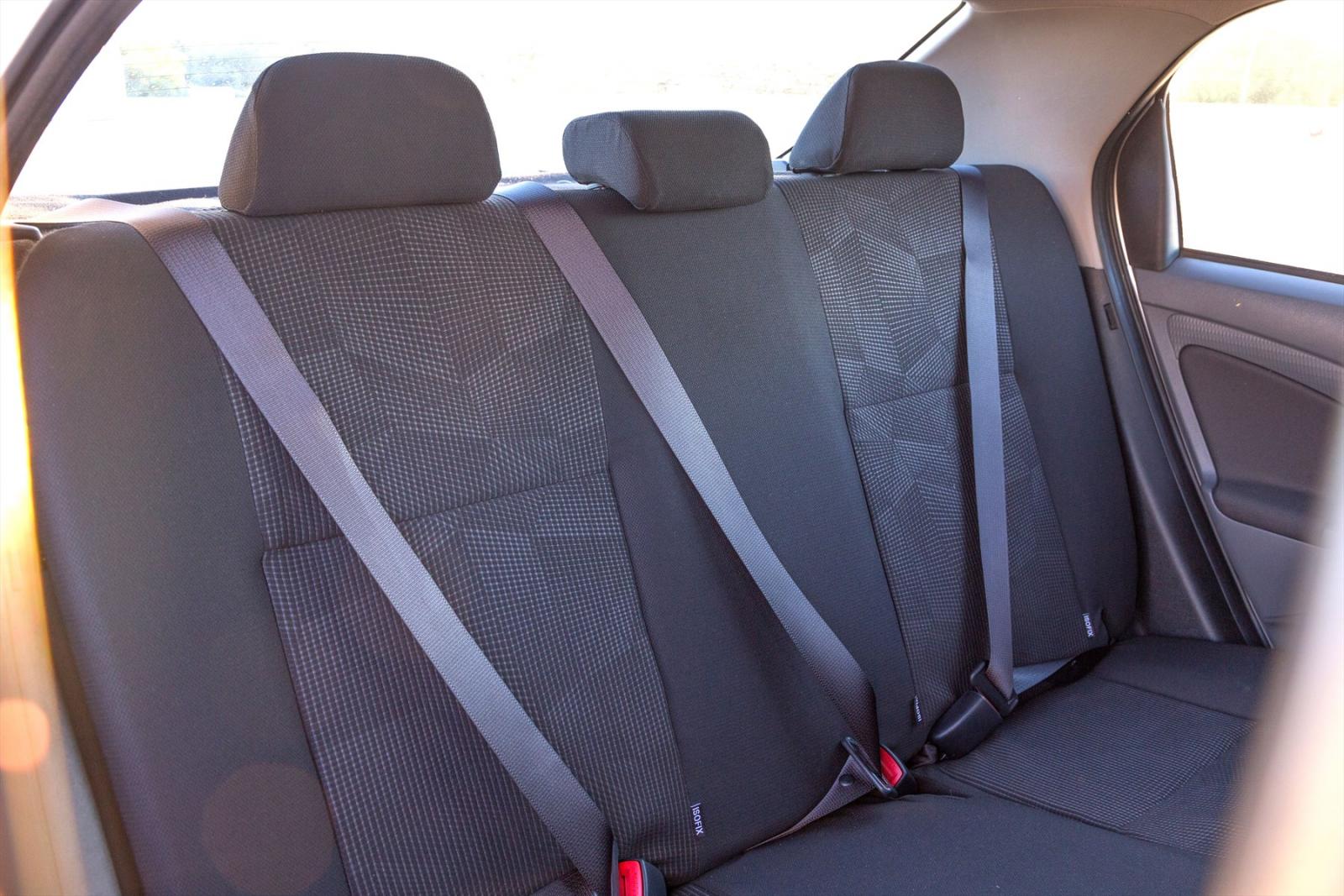
The rear bench benefits from standard headrests and three full safety belts, which should please family car buyers.
Verdict
For a private (read: non-fleet) buyer, the 1.5 Sprint 5-door is arguably the pick of the range. Like its predecessors, the Etios provides a commendable combination of performance and efficiency, plus pliant ride quality allied with predictable handling. It may not offer the most luggage capacity, but its loading space is acceptable and the rear seat legroom, plus headroom all round is excellent. On the downside, its utilitarian (if reasonably-equipped) interior is showing its age and there is little in the way of upmarket finishes, plus the product's warranty period is mediocre and the service intervals are short. It is what it is. However, there is still an element of plucky charm to the 1.5 Sprint and it does not have any major faults.
For those who seek practicality from their budget vehicles, the Etios still presents a strong proposition, but with the next generation Volkswagen Polo in the works (and, critically, an upgrade to/replacement for the Polo Vivo expected to follow shortly thereafter), a much-improved Tata Bolt already available and an all-new Suzuki Swift not too far away, the Toyota has its work cut out. The budget B-segment hatchback market is about to heat up…. and the Etios 1.5 Sprint is merely an (albeit very satisfying) appetiser.
Following the May 18 2017 announcement of General Motors' withdrawal from South Africa, the future of the Opel brand, which was recently acquired by Peugeot Citroen internationally, seemed to hang in the balance, at least as far as our market was concerned. However, there is indeed a future for Opel in the post GM-era…
The Russelsheim-based brand will be under new distributorship as of January 2018, but not before GMSA launches the Crossland X family car to the market in November. Speaking at an event in Johannesburg, Bill Mott, Opel's director of international sales operations, announced that the Unitrans-owned Williams Hunt group had been appointed as the dedicated distributor to distribute and sell the Opel brand in South Africa next year.
The name Williams Hunt will be familiar to many of those who own Opels; the company has been a major Opel retailer for many years. However, it won't be a case of business as usual. Whereas GM now has approximately 130 dealers, most of which sell and service Opel products, there will 80 Isuzu dealers and 35 Opel dealers by the time the retail network rationalisation is finished – and the German brand's outlets will all be urban-based.
During this tumultous transition, General Motors will communicate with existing owners to inform them of where their Chevrolet, Isuzu and Opel products can be serviced as of January 1 2018. The Japanese manufacturer's purchase of GM's parts distribution centre and the US multinational's undertaking that it would honour all valid warranties until they lapse, in other words, at least until 2023, provide owners with further peace of mind.
"Opel has had great success in South Africa. Our customers can expect the same quality of aftersales support and no changes to existing warranties," Bill Mott added. "We will ensure that our customers receive outstanding sales and aftersales support as we continue to further grow in the South African market."
In 2016, Opel sales in Europe increased approximately 4% with over 1.6 million vehicles sold, representing the company's best year in terms of sales since 2011. Opel's market share grew in 12 markets, while sales grew in 18 markets.
Notably, 2017 will be the most active year in the history of Opel, with the introduction of the "7 in 17" model offensive. Never before did the car manufacturer launch that many new cars in one single year.
Over the past two years, Opel sales in South Africa have grown 9.6%, compared to an overall market decline of 15.5%.
Bill Mott added: "We view South Africa as an important market. We are confident that the brand will continue to grow from strength to strength globally, and here in South Africa, because of the solid foundation that has been built in the 80-plus years Opel has been here."
Meanwhile, GM will still launch the new Crossland X late in the second half of 2017, while Opel South Africa will introduce the Grandland X in 2018.
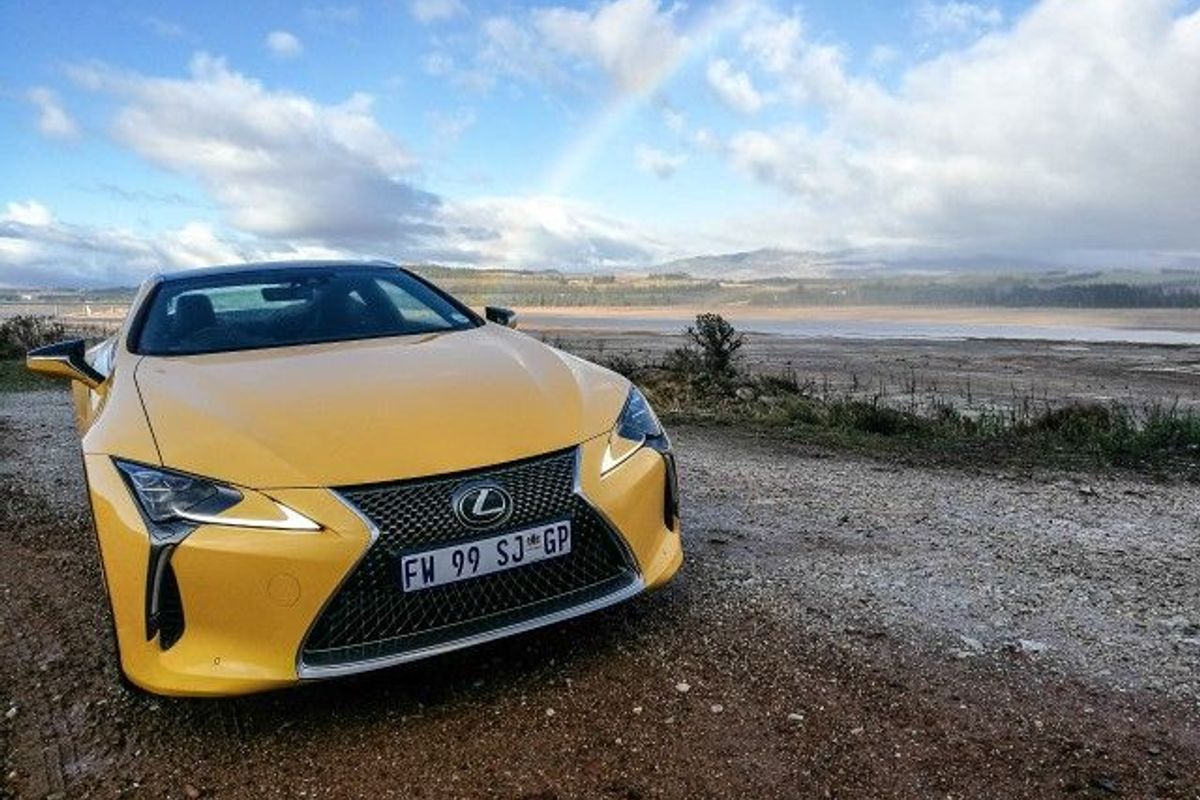
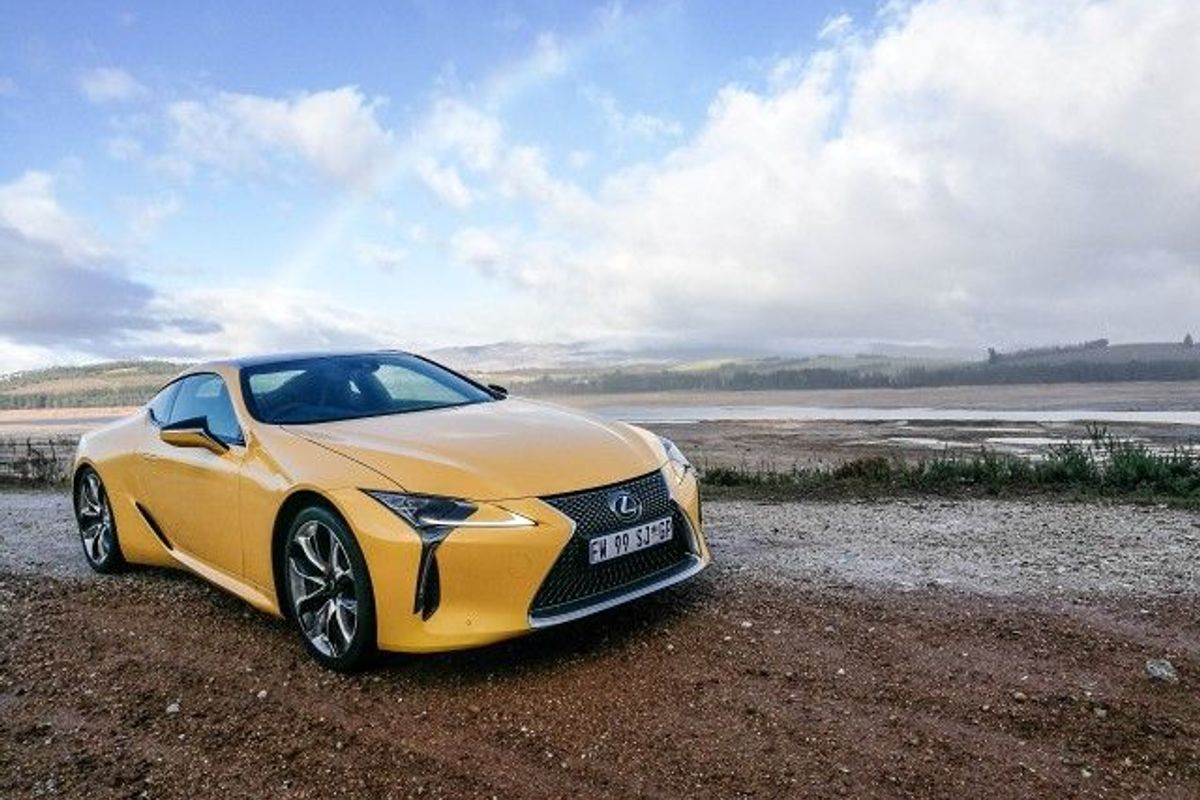
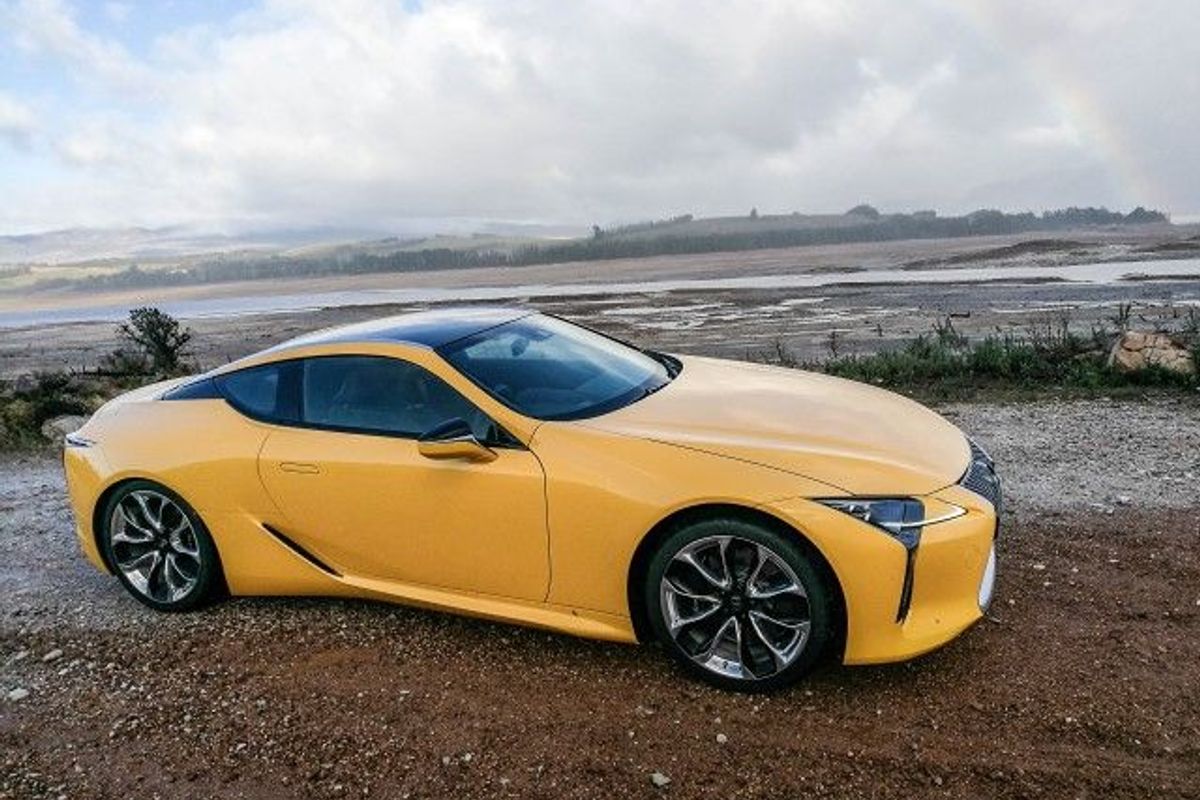
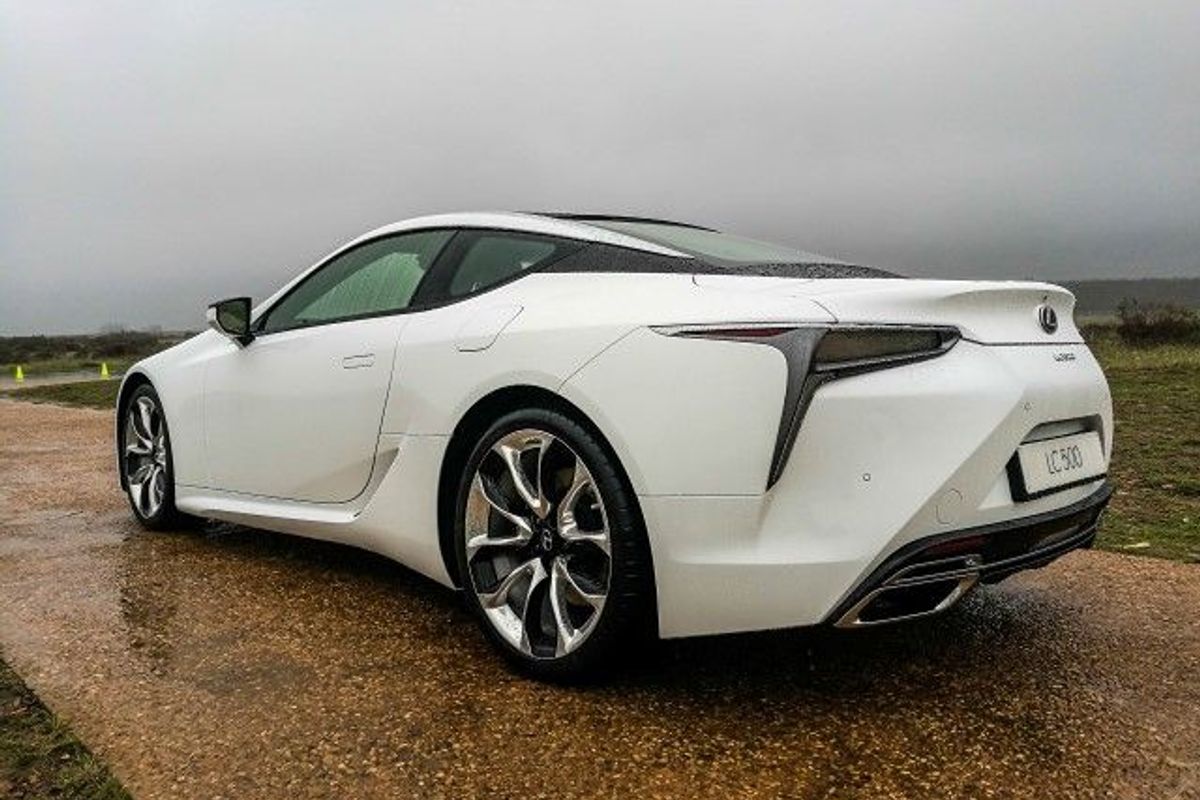
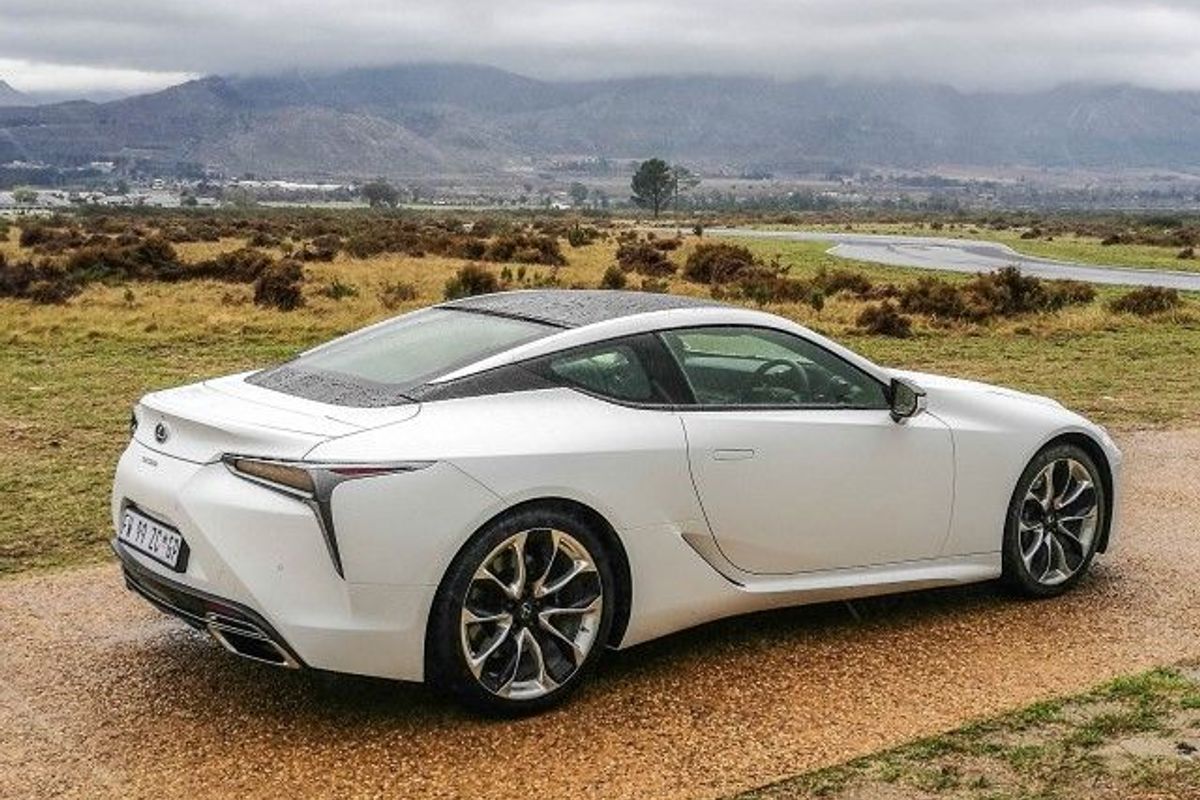
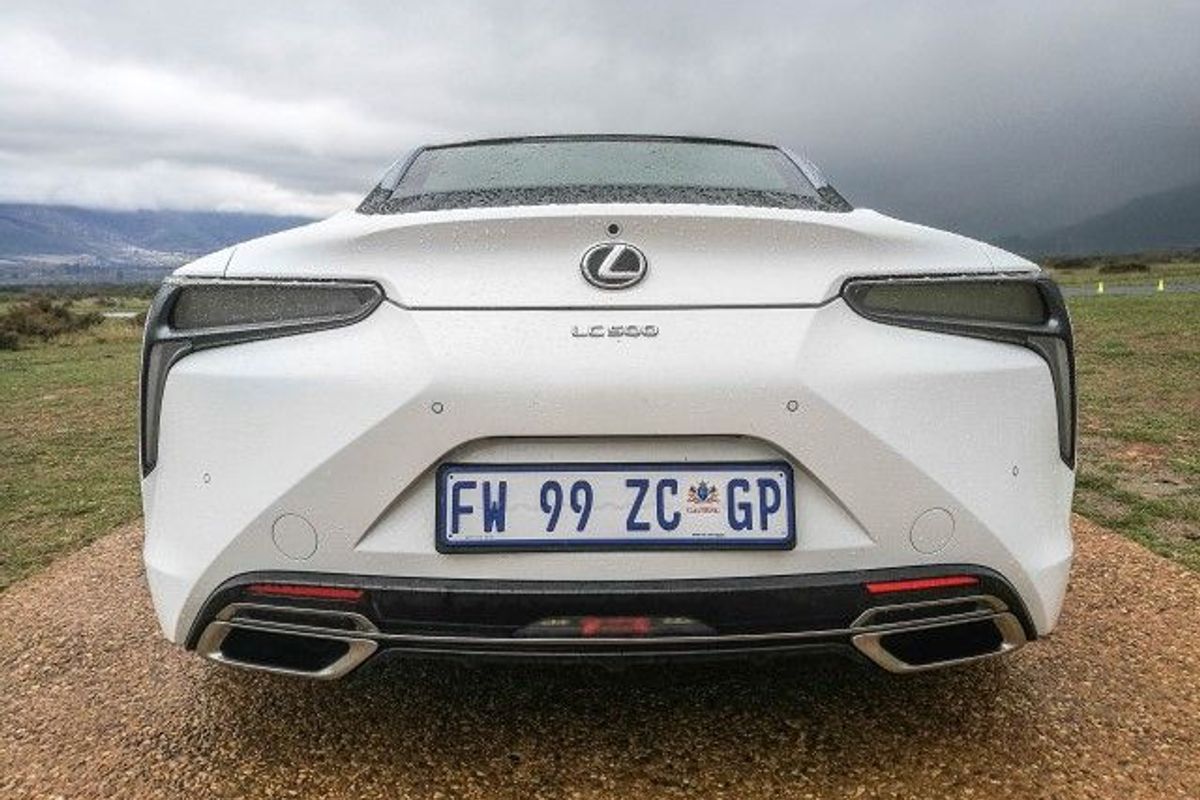
Lexus has launched its flagship ‘Luxury Coupe’, the LC 500 in South Africa! The newcomer was introduced to the media in Cape Town this week and we took it for a drive on both road and track to get a sense of what this stylish coupe has to offer…
Rewind back to 2012 and you may very well remember the striking LF-LC concept, marking the beginning of a new chapter in terms of design and engineering for the Japanese luxury marque. Back then, the LF-LC represented a new and exciting future for Lexus design and the production LC 500 is an embodiment of Lexus’ intention to offer vehicles that are both exciting and emotionally impactful. Infused with the spirit of the LFA supercar and design of the LF-LC, the LC500 is claimed to not just be a new car, but rather represents a new future for Lexus.
To realise this future, Lexus developed an all-new platform known as Global Architecture-Luxury or GA-L that spawned the LC 500, but it also lays the foundation for the new flagship LS sedan and future front-engined, rear-wheel drive models.
The LC 500 is therefore unlike any other Lexus before it and it’s now available in South Africa. The local launch took place at the Franschhoek Motor Museum in Cape Town this week where we had the opportunity to drive and experience the LC 500 on road and track. Here’s what we discovered…
Striking design
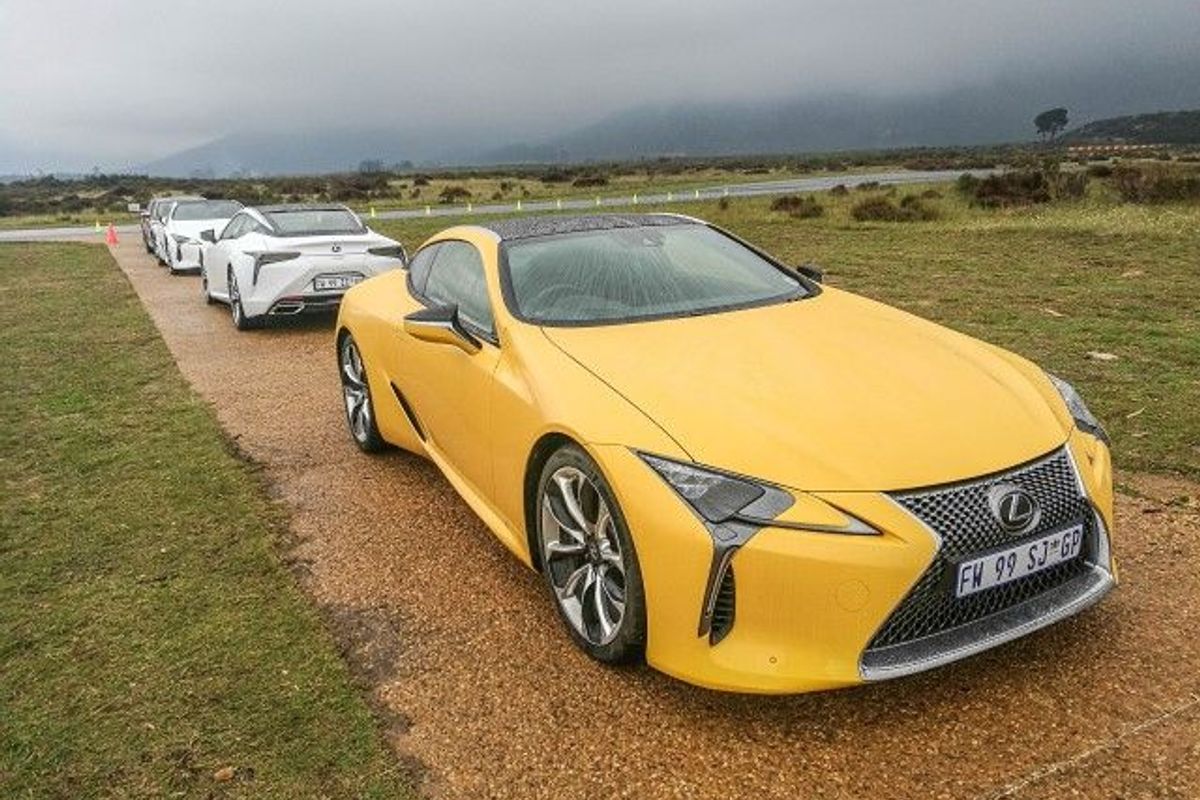
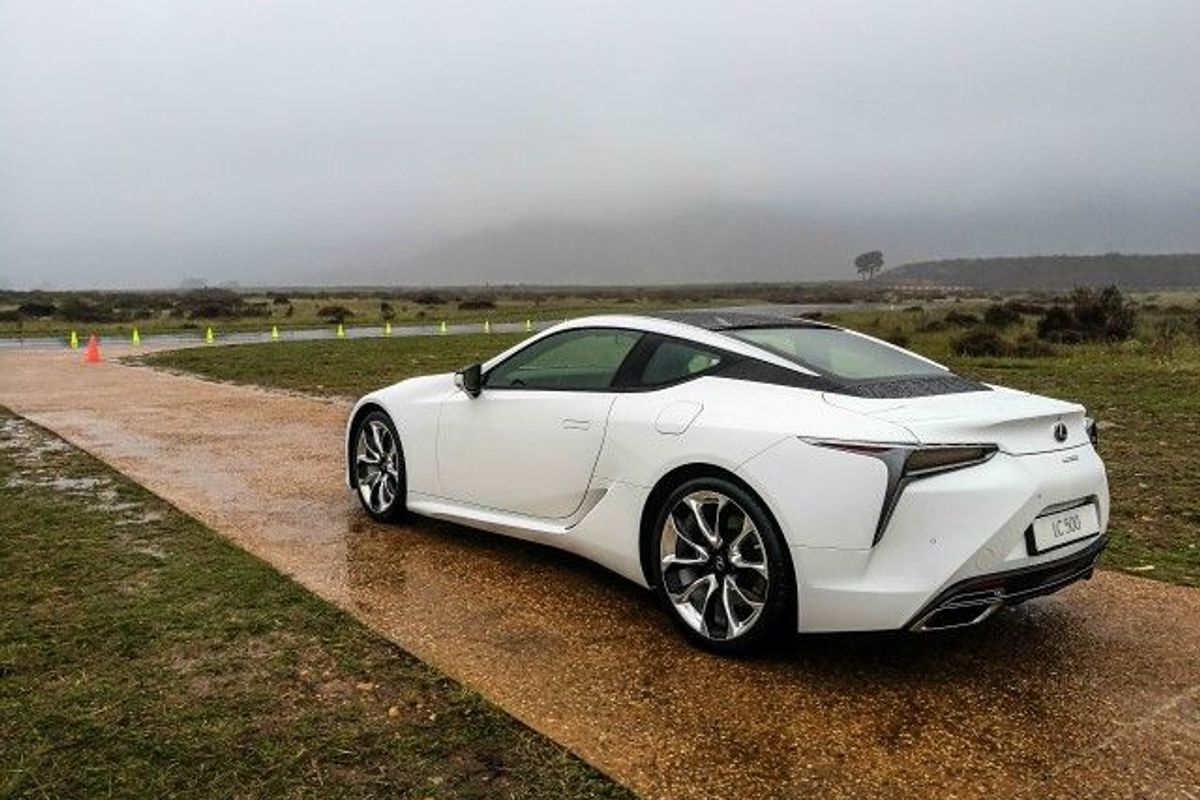
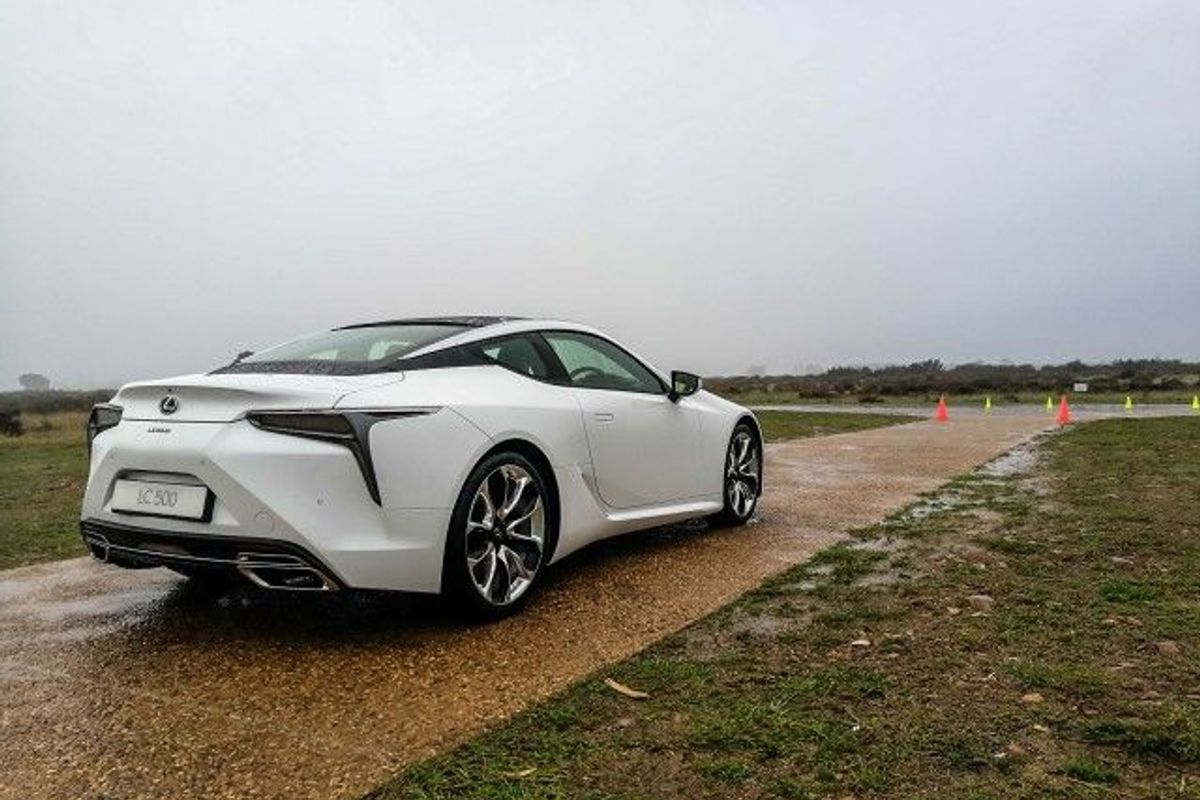
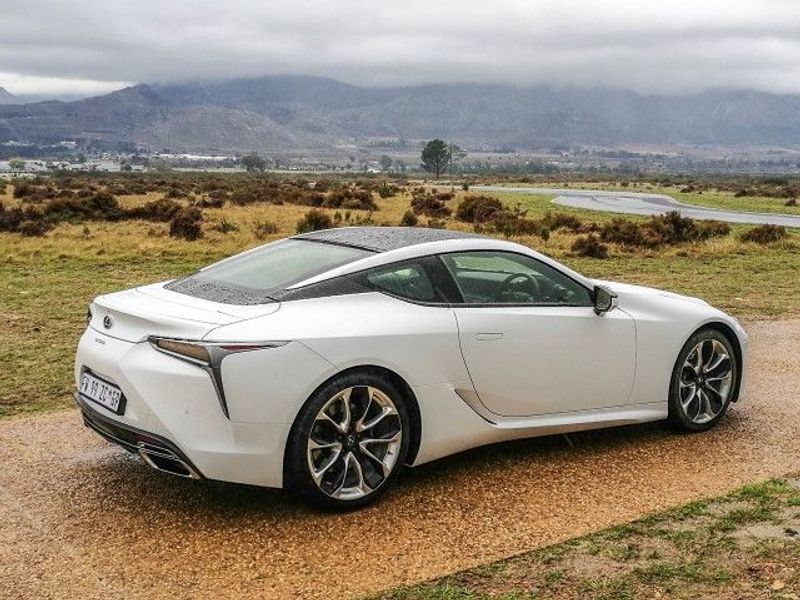
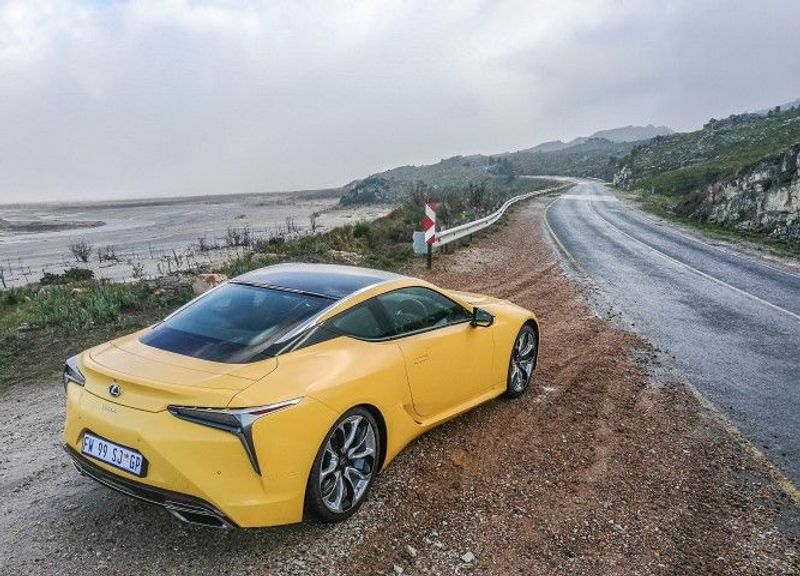
Based on the LF-LC concept, the LC500 is attractive and sophisticated in the metal.
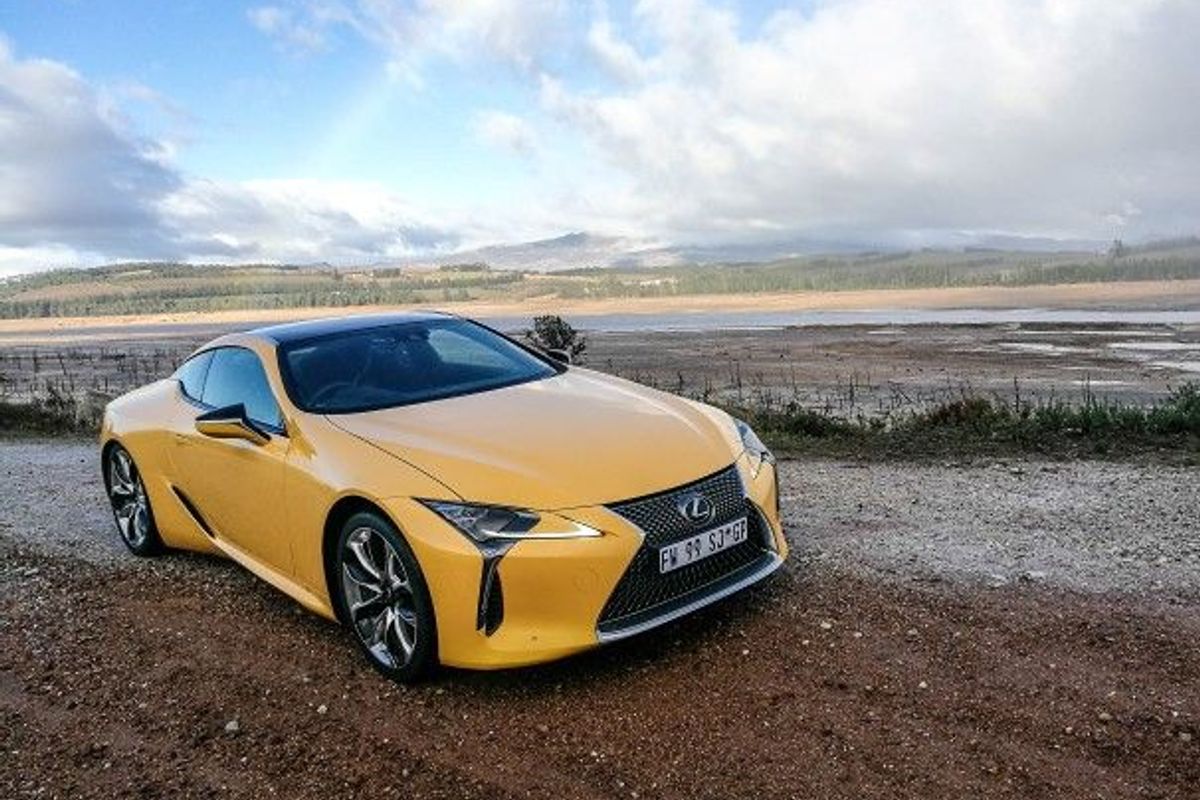
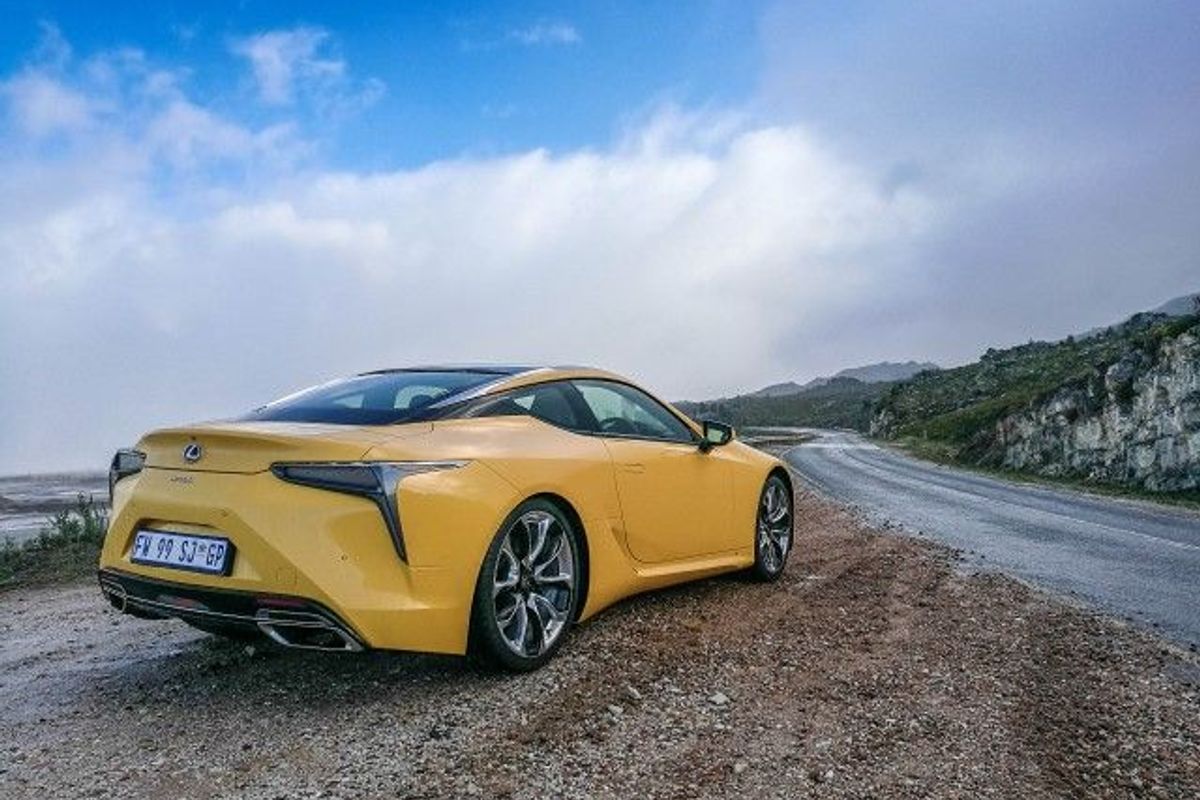
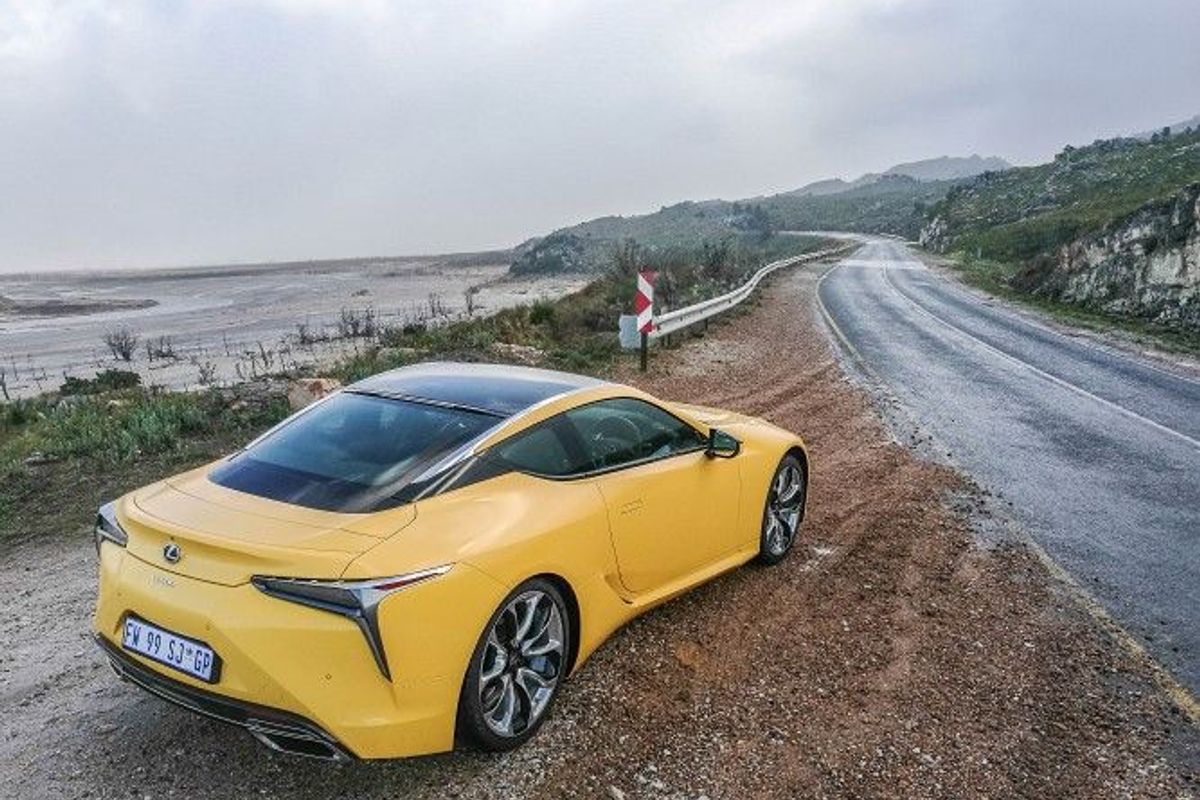
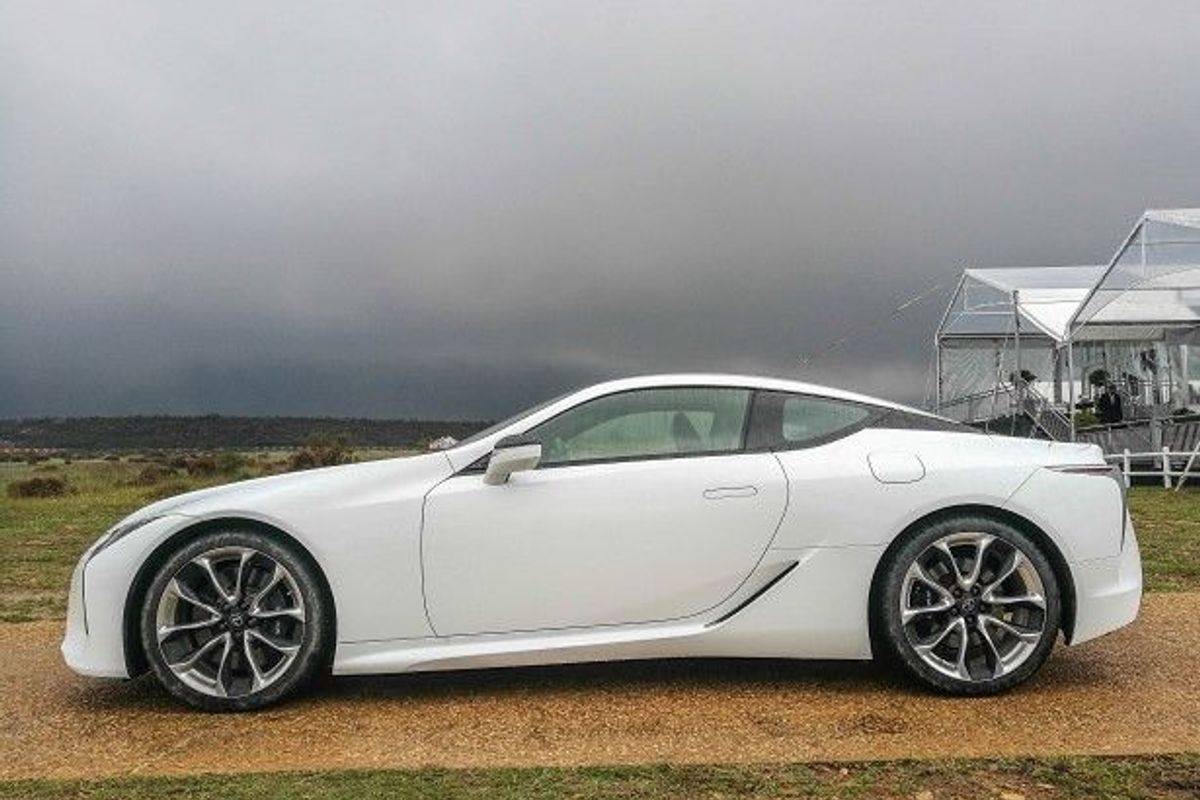
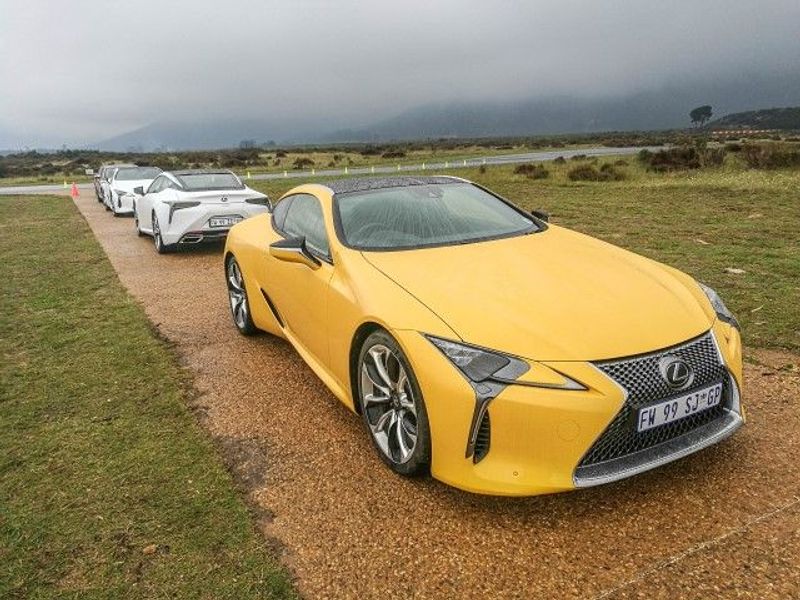
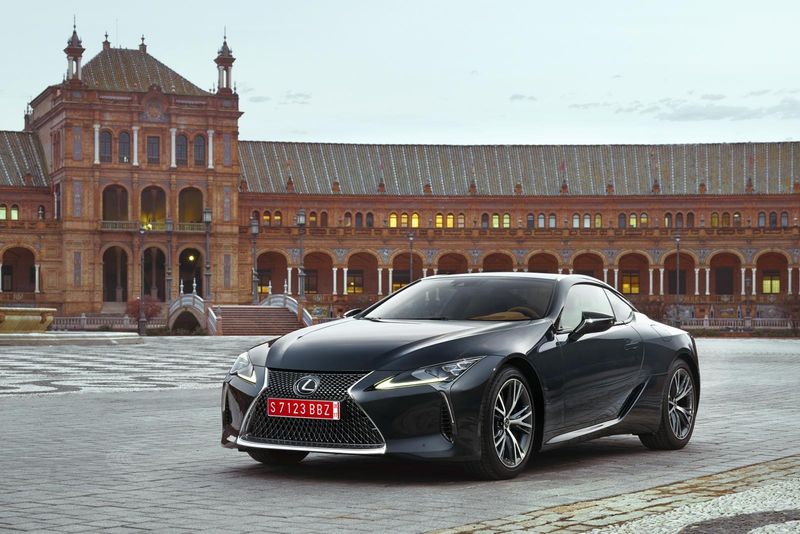
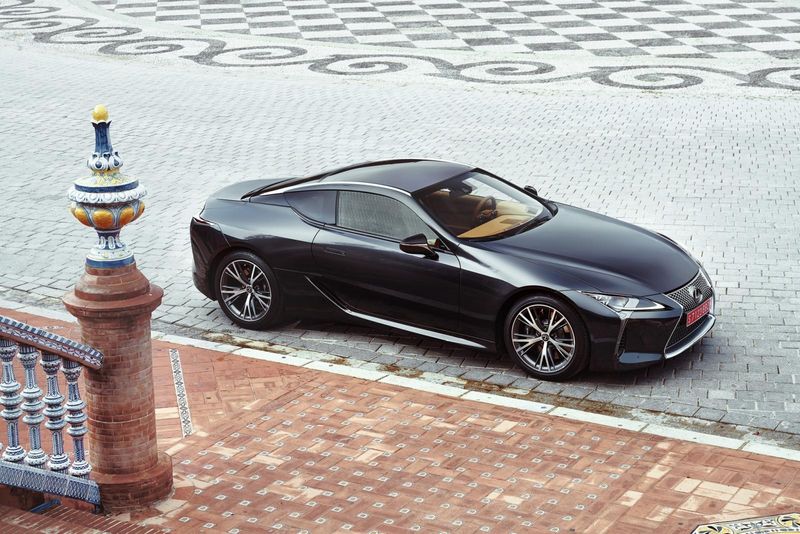
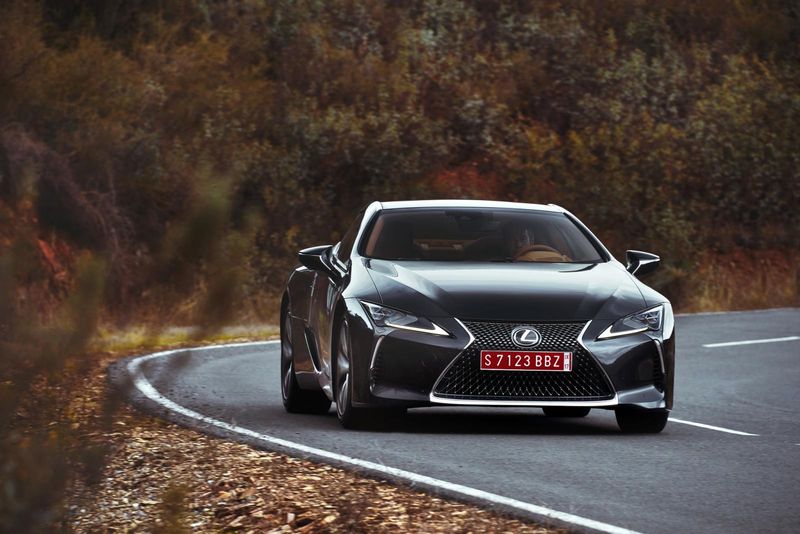
Photographs can be deceiving, but in the metal, the LC 500 is well proportioned and its styling is arresting. Lexus’ bold spindle grille with a mesh texture dominates the front-end and is complemented with sharp-looking L-shaped daytime running lights and new triple LED headlights. A high waistline and bulging hips give the LC500 a stout appearance from the rear while slim taillights provide a dash of elegance. Large 21-inch wheels fill the wheel arches and the LC 500’s tapering side profile is particularly attractive.
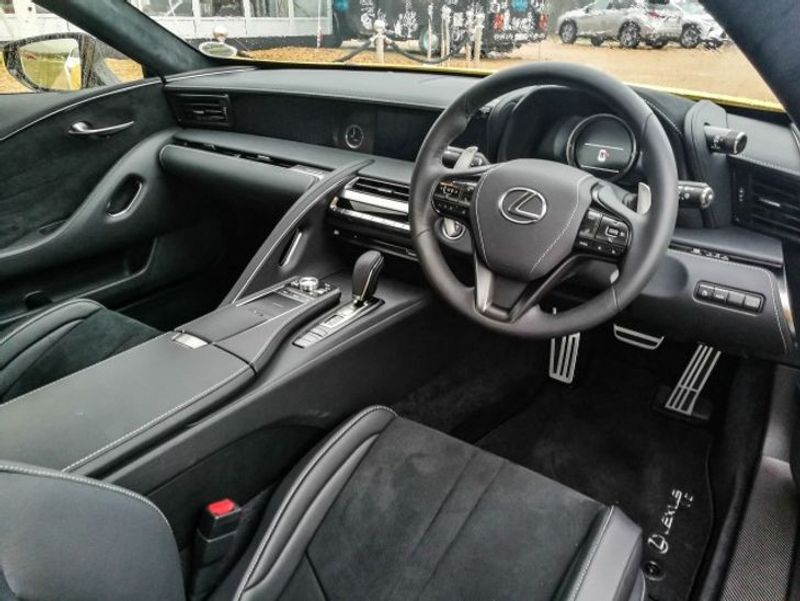
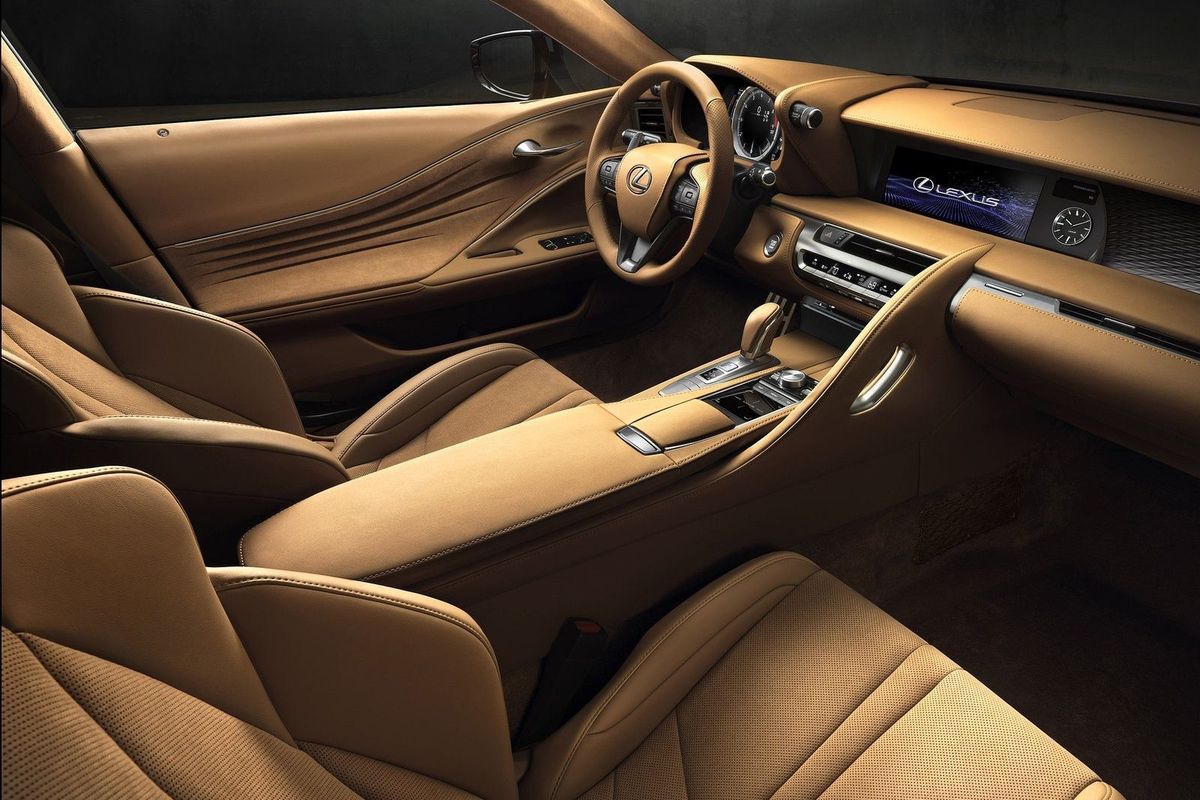
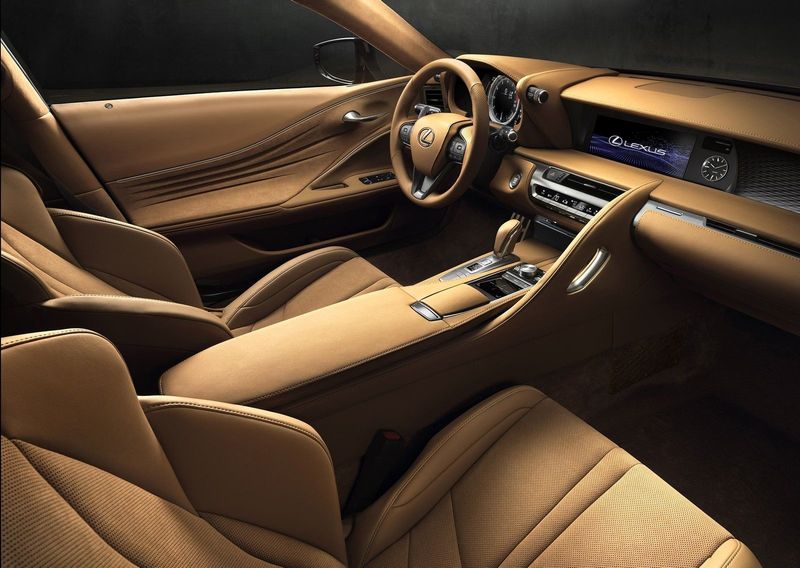
The eye-catching exterior style is matched with a cabin design that’s befitting of a grand tourer with an emphasis on comfort and luxury. The driver sits low with the hip point positioned closely to the car’s centre of gravity, which Lexus says aids effective feedback from the car to the driver. The leatherwork and detailing is impressive and interior build quality is excellent, as we've come to expect from this marque. In terms of design then, the LC500 is the most progressive model to come from Lexus and it’s undeniably appealing to the eye. It is a serious head turner…
Powerful performance
The LC 500 is both a capable grand tourer while also offering dynamic performance when it's required.
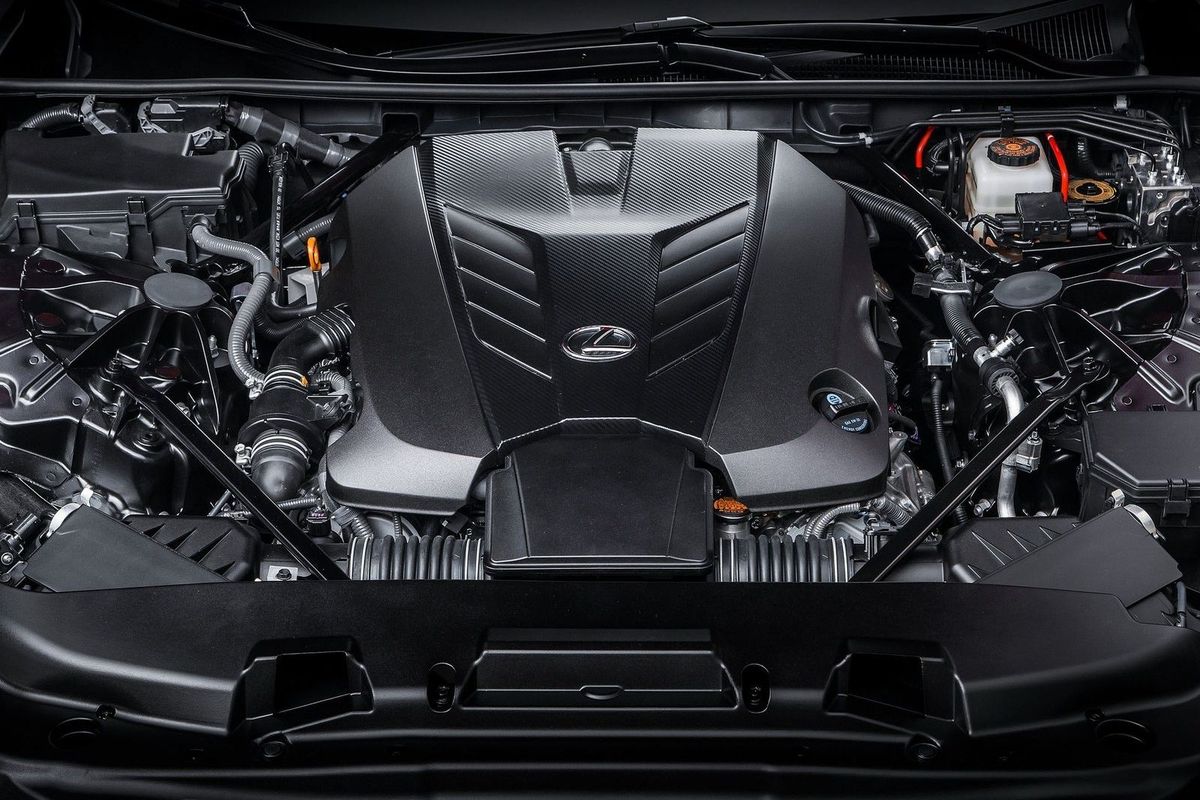
Apart from its striking design, Lexus has gone to great lengths to ensure that the LC 500 delivers engaging performance. To meet this end, the LC 500 is powered by a naturally aspirated 5.0-litre V8 engine with peak outputs of 351 kW and 540 Nm of torque. The engine red-lines at 7 300 rpm and the full brunt of power is unleashed at 7 100 rpm while maximum torque is available from 4 800 rpm. Using a new, fast-shifting 10-speed automatic transmission, the LC 500 is claimed to accelerate from zero to 100 kph in 4.7 seconds and can attain a top speed of 270 kph.
However, outright performance was not the main objective and Lexus rather focussed its efforts on creating a specific blend of performance and handling ability that not only suits the grand touring character of the car but also ensures maximum engagement when the driver decides to be more adventurous.
To achieve this aim, the LC 500 is fitted with the Lexus Handling System as standard which coordinates functions such as the Variable Gear Ratio Steering (VGRS), Dynamic Rear Steering (DRS) and Electric Power Steering (EPS) to ensure optimum handling in all driving conditions. A limited-slip differential further enhances the traction and handling ability offered by the LC 500.
In terms of safety features, the LC 500 is well-equipped and comes fitted with front, side, curtain and knee airbags, ABS with EBD, Hill Assist Control, Lane Keeping Assist, Blind Spot Monitor with Rear Cross Traffic Alert and Park Distance Control.
The local launch coincided with heavy rain and mist in Franschhoek but that didn't deter the media contingent from putting the new LC 500 through its paces. We had the opportunity to drive the LC 500 on track at the Franschhoek Motor Museum as well as on the well-known Franschhoek Pass.
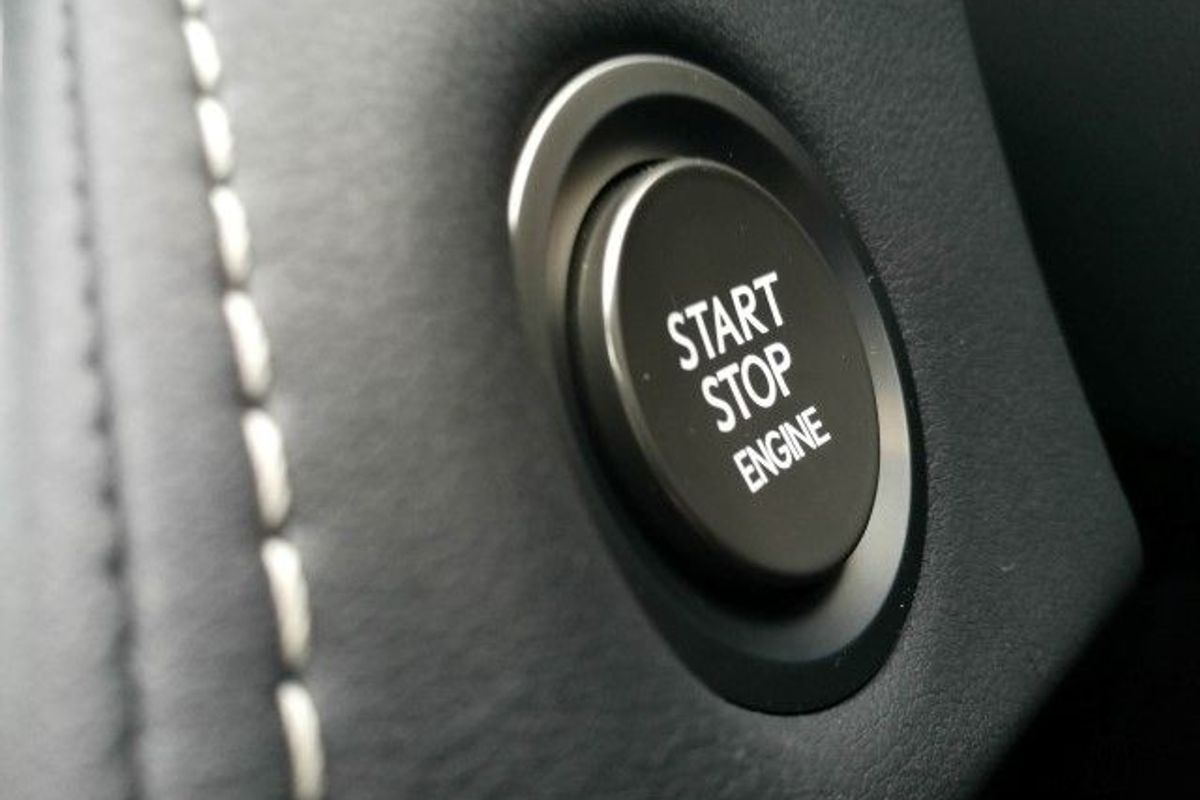
Press the engine start button and you're welcomed by a marvellous burbling sound as the 5.0-litre V8 engine rumbles into life. As the heavens poured over us, we set off in the direction of Franschhoek Pass. We found the interior to be comfortable and the heated seats provided much-needed warmth – the high-tech nature of the cabin not detracting from its "snugness", thankfully.
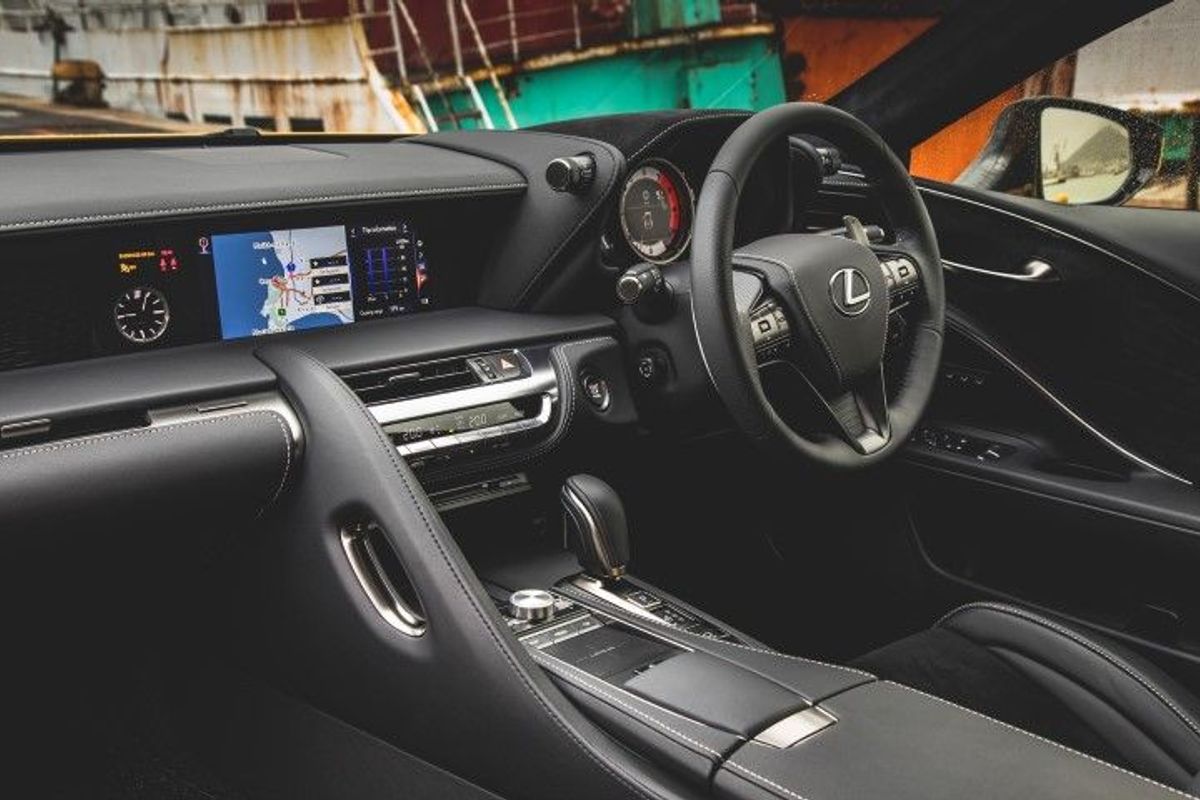
The interior is comfortable and luxurious with fine detailing that lifts the overall look and feel of the cabin.
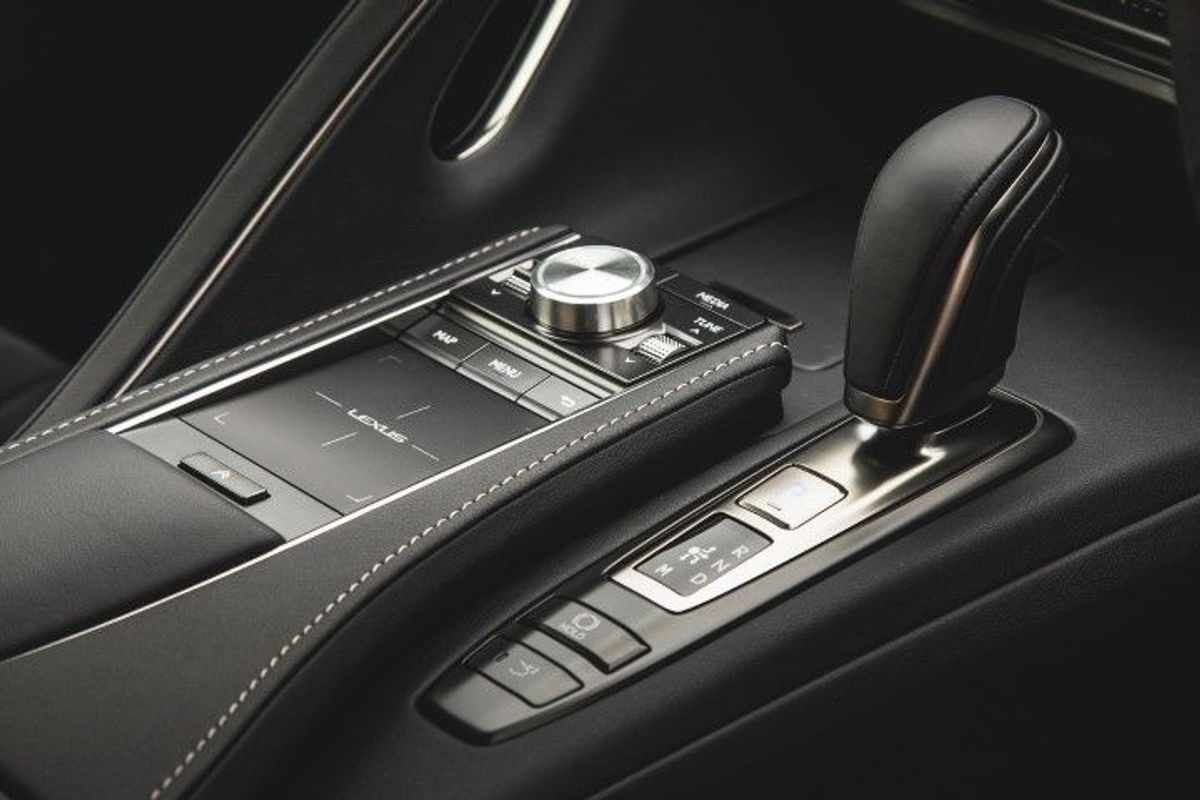
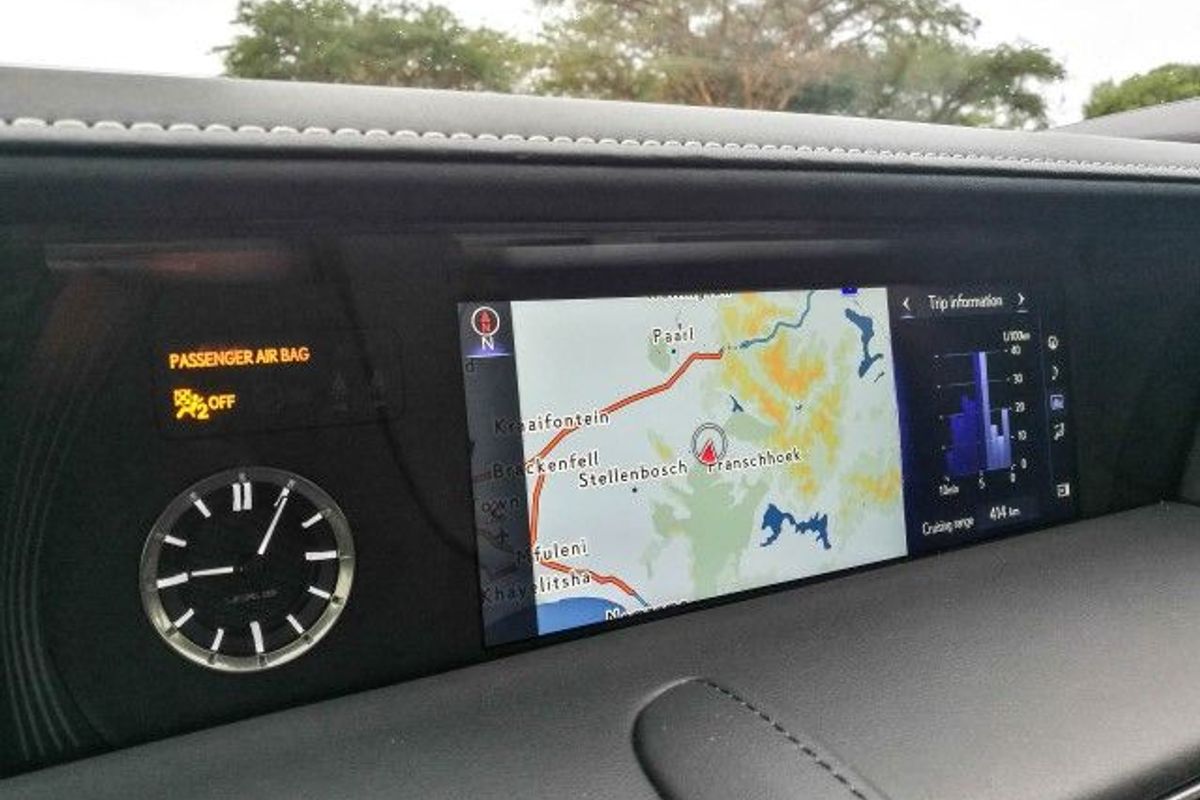
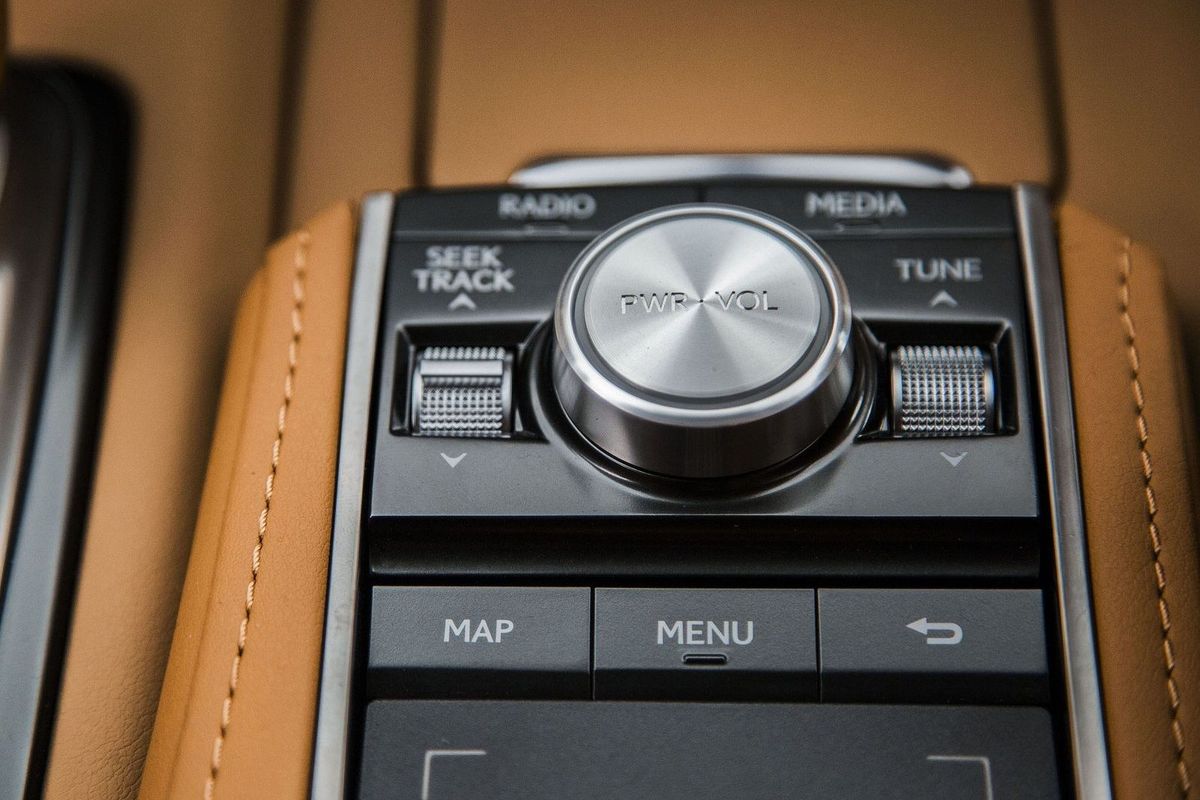
The LC 500 is fitted with a new multimedia system that provides access to audio, navigation and telephonic functionality via a 10.3-inch high-resolution display with an updated user interface. The system is controlled using the latest-generation Remote Touch Interface touchpad control located in the centre console and although it can be finicky if you have never used it before, usability will improve as you familiarise yourself with the functionality.
Franschhoek Pass was under siege from rain and mist which meant that we were unable to unleash the full capability of the LC 500. Ride quality is forgiving and it felt relatively smooth and comfortable. Weighing in at 1 940 kg, the LC500 isn’t light and its weight can be felt through the steering but it felt planted and sure-footed in the wet. While cruising, the LC 500 is very quiet with the engine hardly audible at all in the cabin. Only under harder acceleration does the engine make itself heard, and it's quite entertaining when it does so.
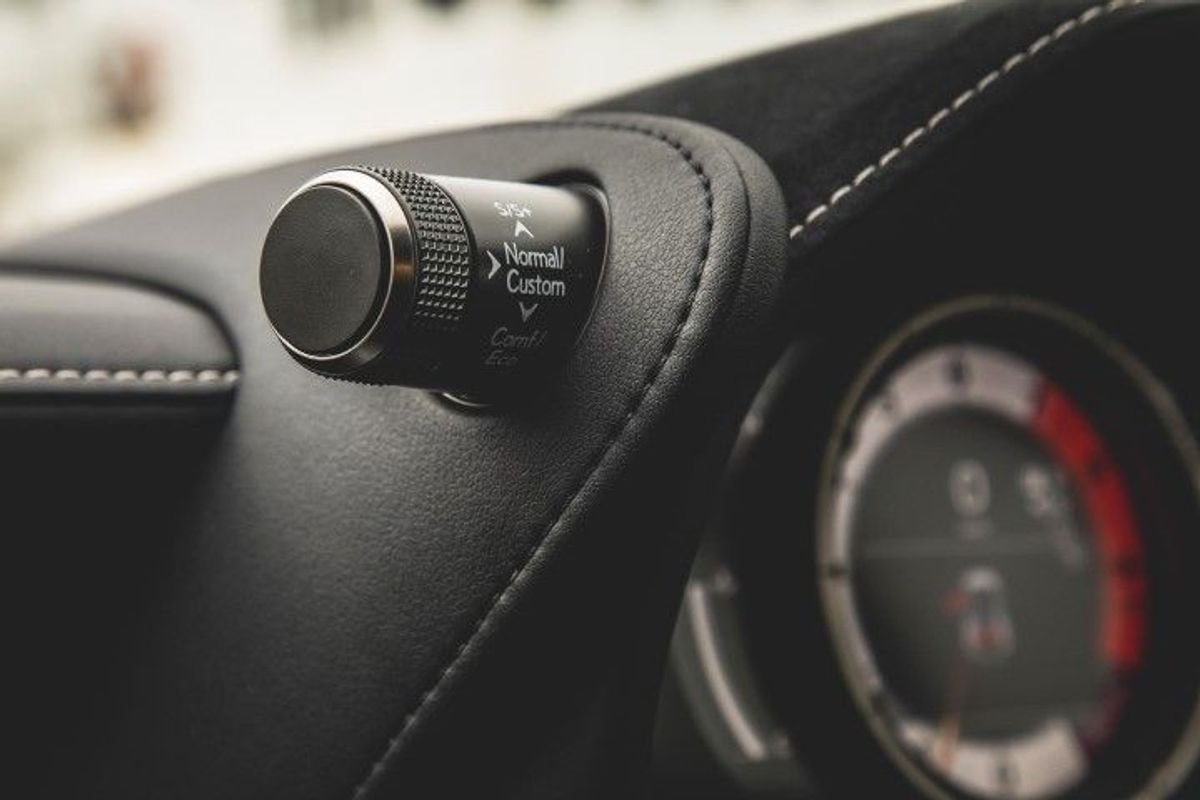
There are 4 driving modes available to the driver including Eco, Comfort, Sport and Sport+. Eco and Comfort are suitable for most driving situations while Sport and Sport+ can be activated when you feel the need for more spirited driving stints.
The LC500's performance is strong and with a vocal exhaust system, driving is a pleasurable experience.
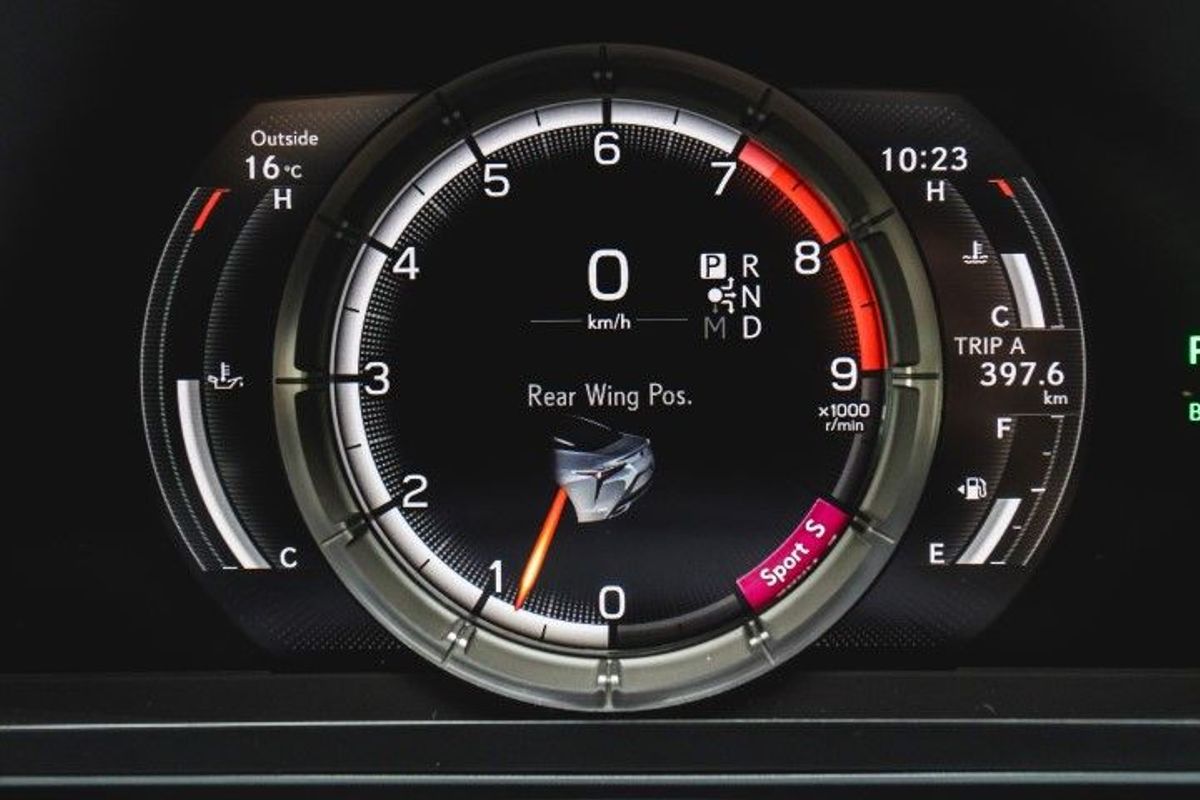
On longer and safer sections of the route, we switched into Sport mode and turned on the taps. The LC 500 accelerates quickly and shifts through the gears seamlessly. We were often looking down at the instrument cluster to see what gear it was in because the shifts are barely noticeable. The 10-speed transmission was impressive and seemed to perfectly match the driver’s intent. You can, of course, use the mounted magnesium shift paddles for manual shifting if you wish.
The second half of the launch comprised of a few laps around Franschhoek Racetrack. The track was absolutely soaked and despite some apprehension and shot nerves (from the driver) the LC 500 demonstrated high levels of safety in challenging conditions and remained composed and true through corners where many vehicles would have left the roadway into the bushes. Before we knew it, the experience was over and we were left wanting more…
For Cars.co.za's Ciro de Siena's views on the LC 500's track ability, see our video at the bottom of this article.
In Conclusion
Lexus deserves applause for the LC 500. Not only does it boast unique and appealing design inside and out, but it also delivers performance, refinement and luxury in a package that sets the tone for future Lexus models.
Perhaps the most appealing aspect of the LC 500 is how it adapts to your driving style. If you drive it with intent, it will follow suit and support and stimulate your senses in a way that few cars can. It’s strength, however, lies in its grand touring ability and it’s not only comfortable and refined but it’s also hugely pleasurable to drive.
The LC 500 competes with established rivals such as the BMW 6 Series (to become 8 Series), Mercedes-Benz S-Class Coupe, Porsche 911 and Maserati GranTurismo to name a few. The LC 500 might be outdone in terms of outright performance against most of its rivals but as Lexus’ first stab at producing a high-performance luxury coupe, the LC 500 is a breath of fresh air and certainly worthy of consideration for the buyer looking for something a bit different, without sacrificing quality, advanced tech features and look-at-me styling.
Watch our first drive video of the Lexus LC500 at the international launch in Spain earlier this year!
Lexus LC500 – Price in South Africa
Lexus LC500 – R1 729 600
The Lexus LC500 is sold with a 4-year/100 000 km warranty and service plan.
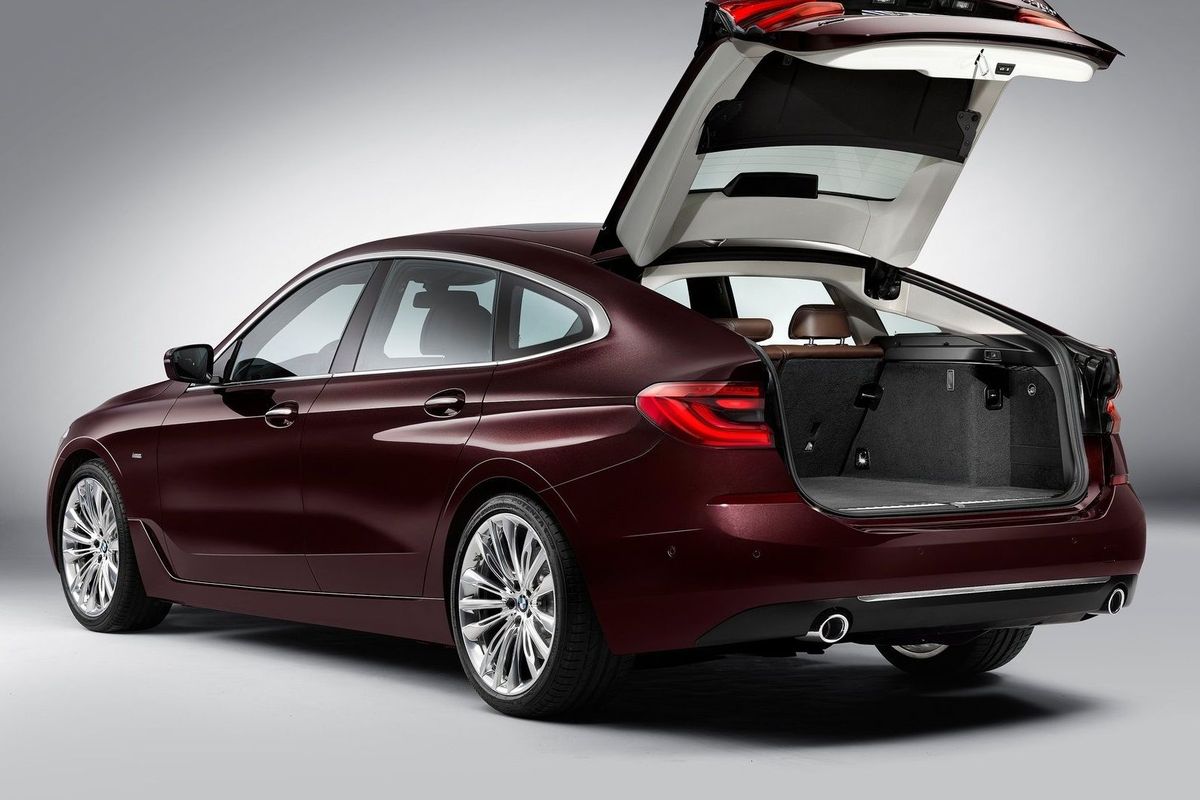
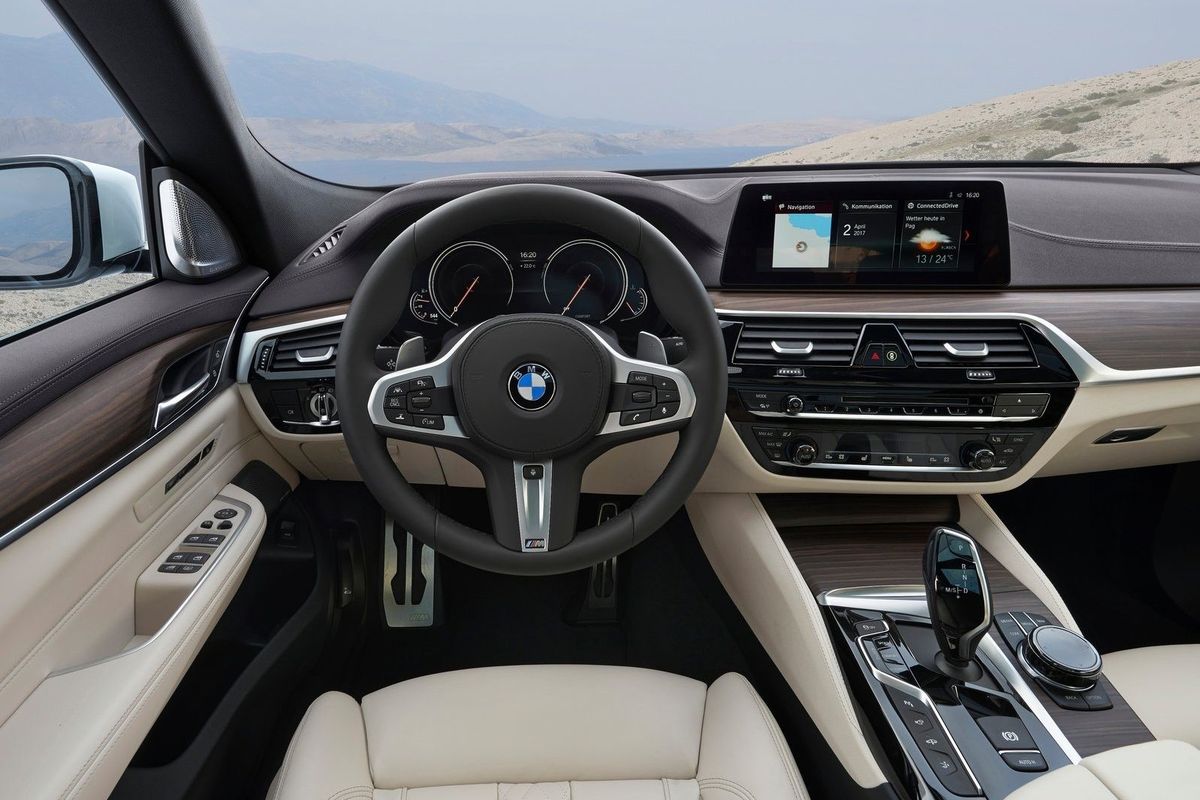
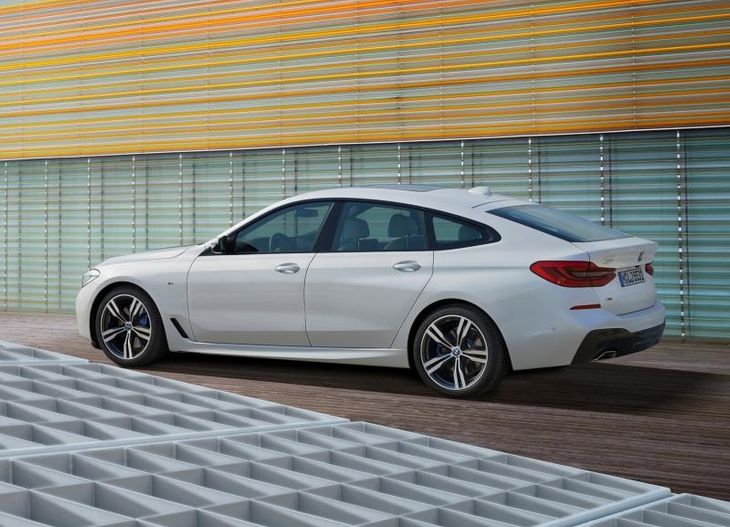
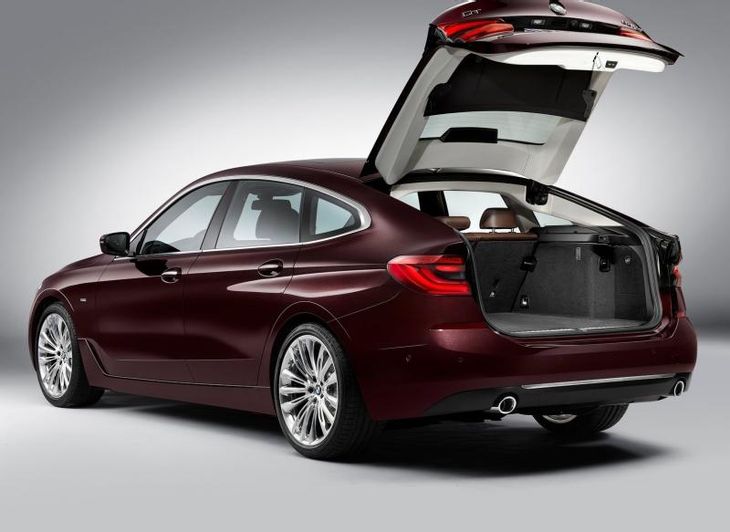
That's not a typo, the BMW 5-Series GT has become the 6-Series Gran Turismo. This new model has just been announced and it's coming to South Africa before the end of 2017.
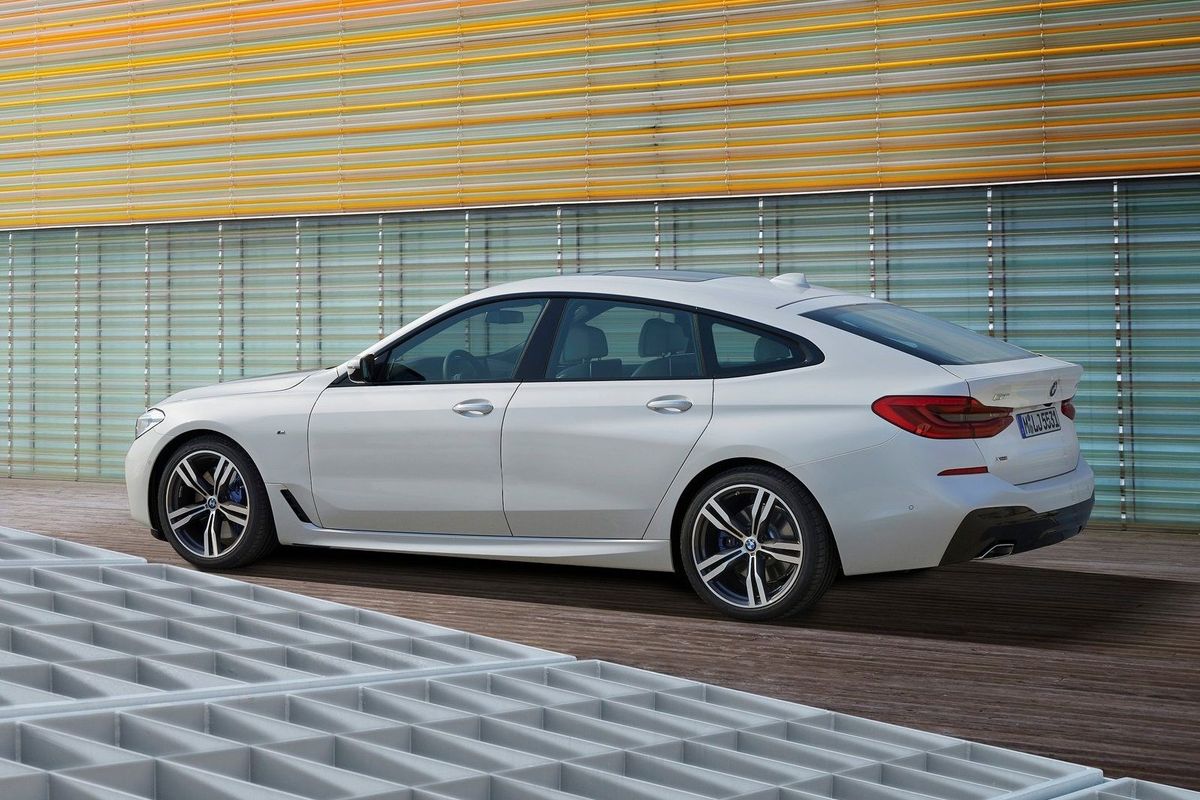
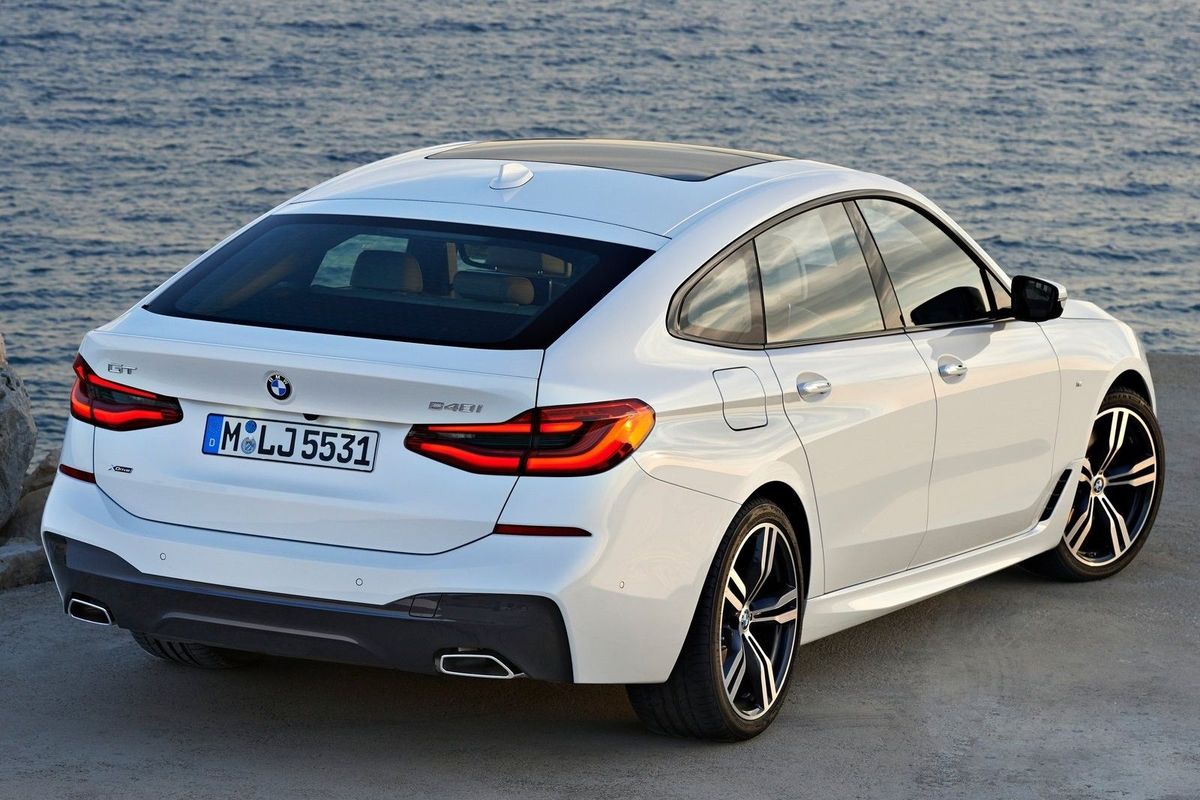
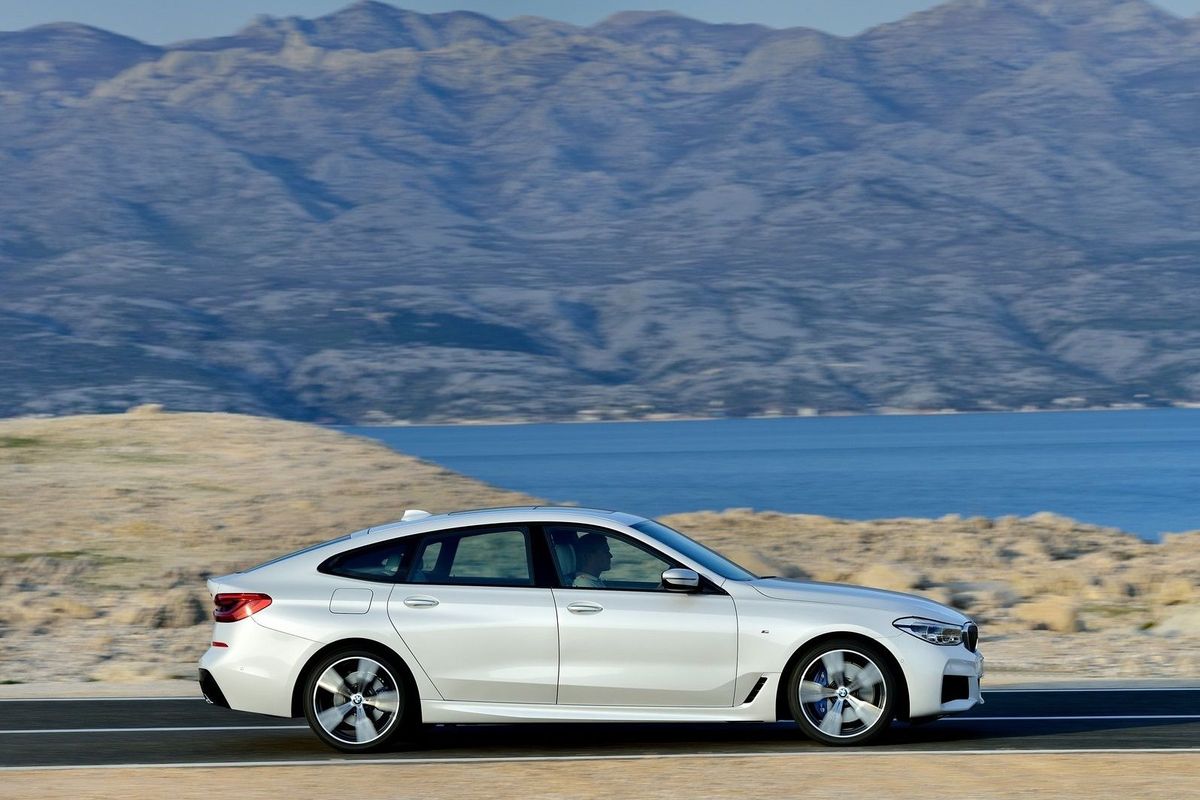
After many rumours and spy shots, the all-new BMW 6-Series Gran Turismo has finally been revealed. Billed as a combination of a comfortable, long-distance luxury sedan with the visual appeal of a coupe, the new BMW 6-Series Gran Turismo promises to be both sporty and elegant, with a healthy dose of space.
"The new BMW 6-Series Gran Turismo is geared towards discerning customers who place great importance on individuality. It is an eye-catching statement, packaged into a flowing, sculptural design language which gives the car a modern and sporty feel. The raised seating position ensures an imperious brand of driving pleasure, and the luxurious levels of space provide everything you need for a relaxing journey," says Adrian van Hooydonk, Senior Vice President BMW Group Design.
In terms of dimensions, the new BMW 6-Series Gran Turismo is 5 091 mm long (an increase of 87 mm over its predecessor), has an unchanged width of 1 902 mm and sits some 21 mm lower (1 538 millimetres). A revised cabin design has resulted in more headroom, despite the lower roof. Thanks to increased use of aluminium and high-strength steels for body and chassis components, 150kg has been saved.
There's clever use of aerodynamic aids such as an active air flap control with additional louvres in the grille, which only open when extra cooling is required. The underbody section is almost fully enclosed. Air curtains in the lower air intake at the front of the car and Air Breathers aft of the front wheels reduce turbulence in and around the wheel arches. There's also an active rear spoiler, which automatically extends when the car exceeds 120 kph and retracts again when it slows below 80 kph.
Trim Levels and Practicality
BMW has ensured that its new 6-Series Gran Turismo offers customers plenty of choice in terms of trim and design. There are two non-metallic and ten metallic exterior paint finishes as well as alloy wheels in sizes from 17- to 21-inches available. Sport Line, Luxury Line and M Sport are the trim levels to be offered. The BMW 6-Series Gran Turismo comes as standard with Dakota leather upholstery, which can be specified in a range of different colours and interpretations, depending on the equipment lines. The optional Exclusive Nappa leather is available in several different variants.
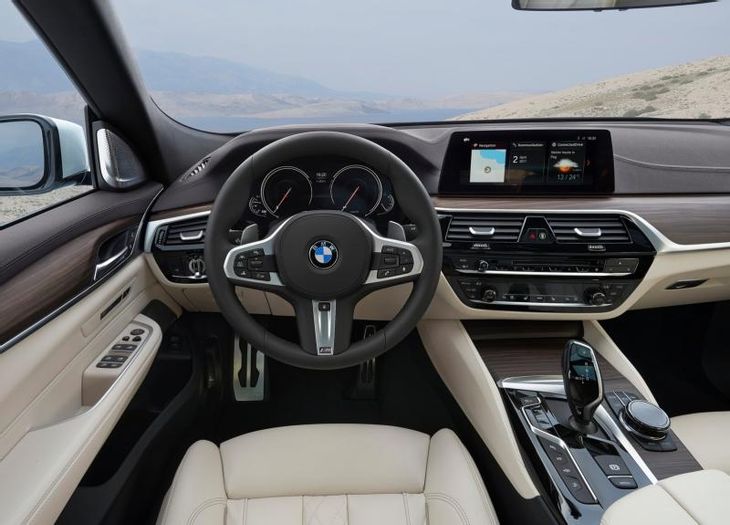
The BMW 6-Series Gran Turismo is fitted as standard with a sports leather steering wheel including multifunction buttons for the infotainment, communication functions and cruise control. If the eight-speed Steptronic Sport transmission is specified, shift buttons on the steering wheel allow the driver to change gear manually. Expect all the smart technology seen in the 7-Series and new 5-Series to find its way into this new model.
The rear compartment features 3 full-size seats with ISOFIX attachment points in the outer seats. Sports seats or comfort seats, active seat ventilation and a massage function can be ordered for the driver and front passenger. The boot offers 610 litres of space, which is 110 litres larger than its predecessor. BMW claims the new 6-Series GT can carry four 46-inch golf bags or ten crates of water bottles.
Engines and Transmission
There are a number of engines available for the BMW 6-Series Gran Turismo, all controlled by the eight-speed Steptronic Sport transmission. Thanks to improvements in the powertrain, aerodynamics and weight saving, the new model is more efficient and economical when compared to the outgoing model. The aluminium-construct engines comprise one 4-cylinder and one 6-cylinder inline petrol engine, plus a straight-six diesel unit will be available for the new BMW 6-Series Gran Turismo from launch. The two 6-cylinder variants can also be specified with BMW xDrive intelligent all-wheel drive. The 2.0 litre 4-cylinder motor in the BMW 630i Gran Turismo has outputs of 190 kW and 400 Nm. It'll do 0 to 100 kph in 6.3 seconds with combined fuel consumption claimed at 6.6 – 6.2 L/100 km.
Next up is the 3.0 litre 6-cylinder in-line petrol engine in the BMW 640i Gran Turismo and new BMW 640i xDrive Gran Turismo. With outputs of 250 kW and 450 Nm, it'll hit 100 kph in 5.4 seconds, or 5.3 seconds for the xDrive. The combined fuel consumption of the two models is 7.4 – 7.0 L/100 km and 8.2 – 7.7 L/100 km respectively. For the diesel fans, a 3.0 litre 6-cylinder in-line diesel engine with 195 kW and 620 Nm with all-wheel drive as an option, is available. The BMW 630d Gran Turismo powers from zero to 100 kph in 6.1 seconds, while the new BMW 630d xDrive Gran Turismo does it in 6.0 seconds. Fuel consumption is rated at 5.3 – 4.9 L/100 km for the BMW 630d Gran Turismo and 5.9 – 5.5 L/100 km for the BMW 630d xDrive Gran Turismo.
Coming to South Africa?
Yes, it is. BMW South Africa confirmed that the new 6-Series Gran Turismo will be making landfall before the end of the year. As it stands, two models are being offered: 640i xDrive Gran Turismo and 630d Gran Turismo, which we can expect to see launched in South Africa in November 2017.
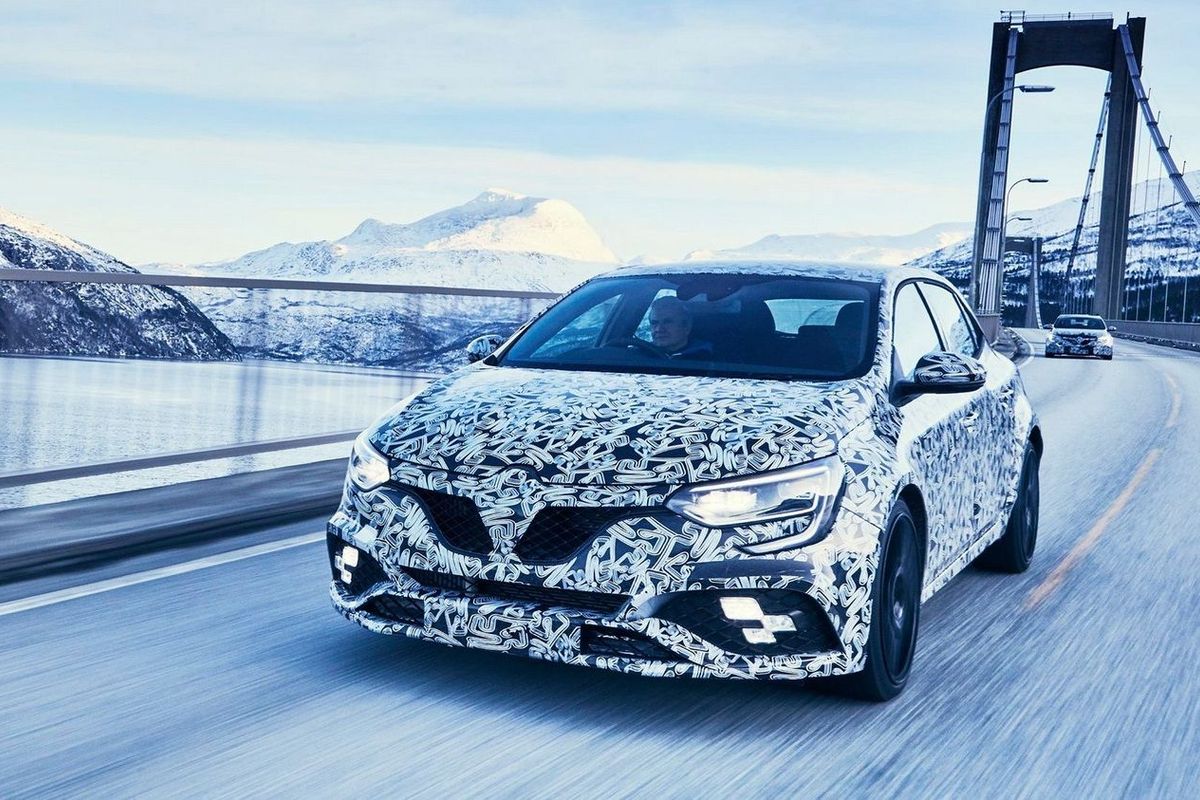
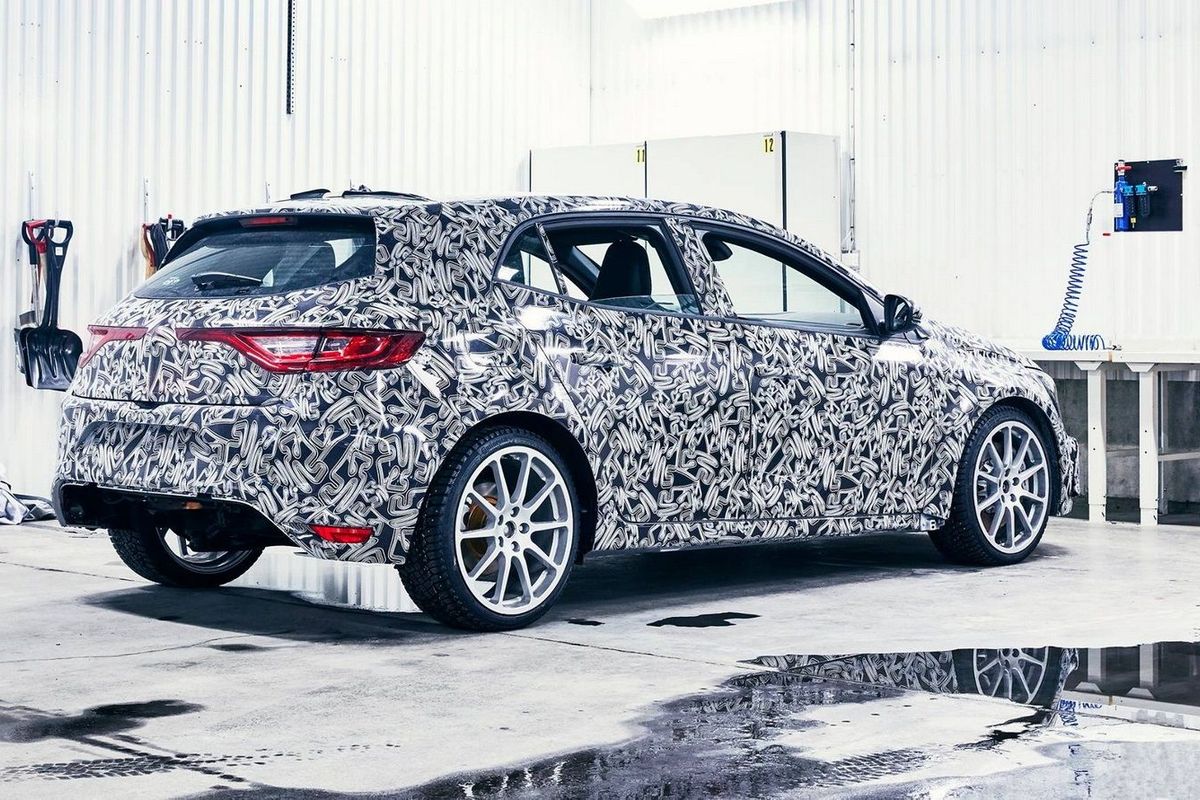
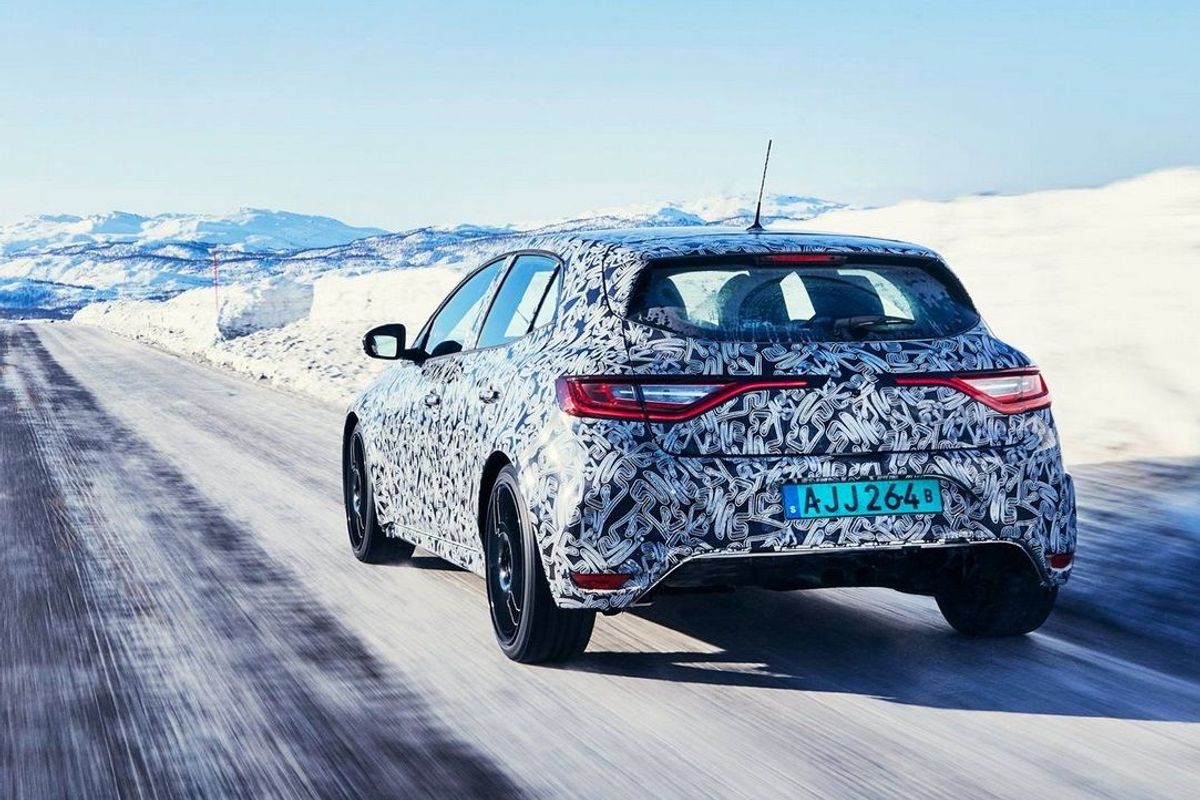
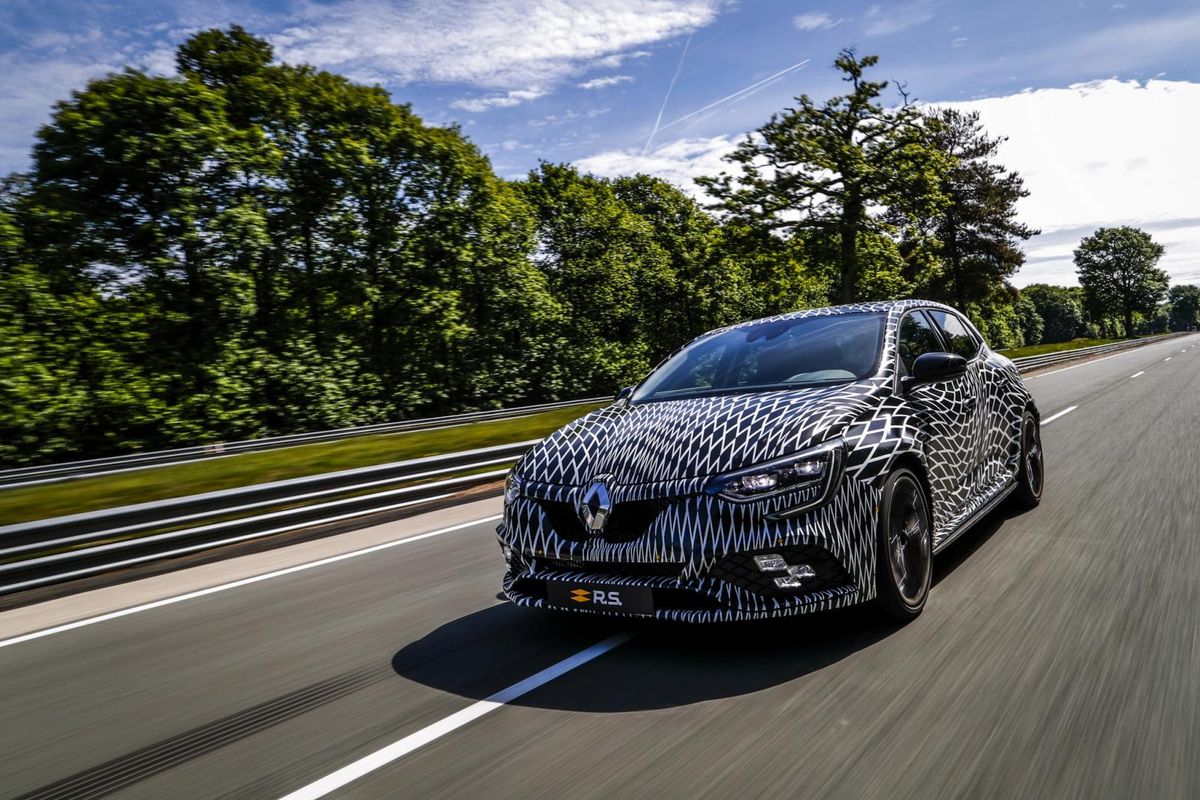
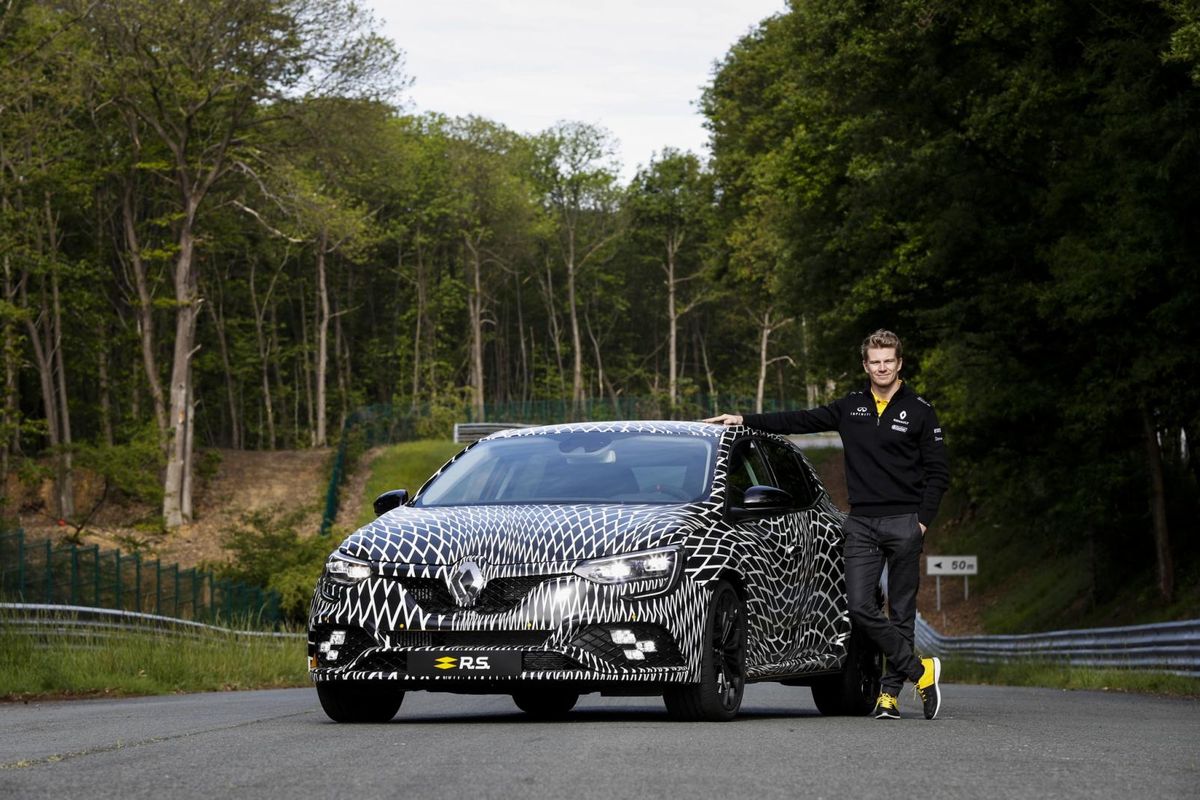
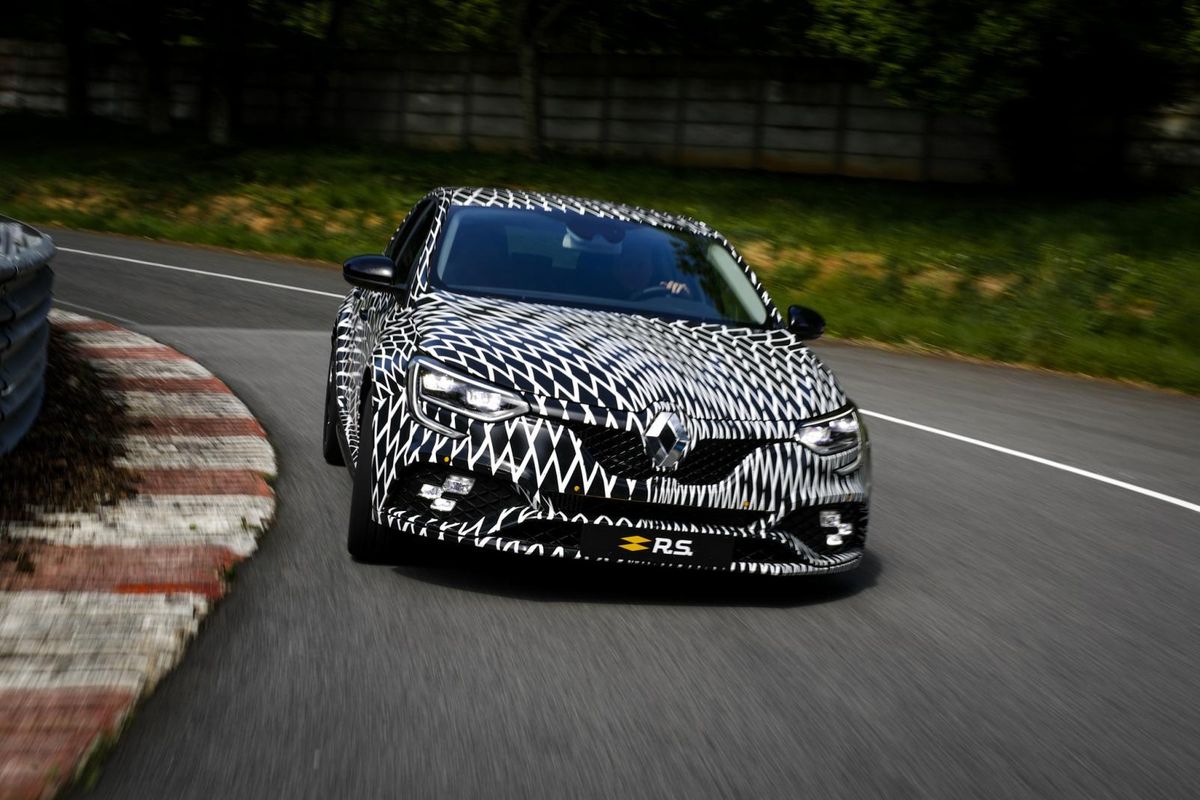
Renault used the 2017 Monaco Grand Prix weekend to show off its hot hatchback…. but, to the frustration of aficionados the world over, La Régie kept its newcomer in full camouflage. Now, further development photos have emerged.
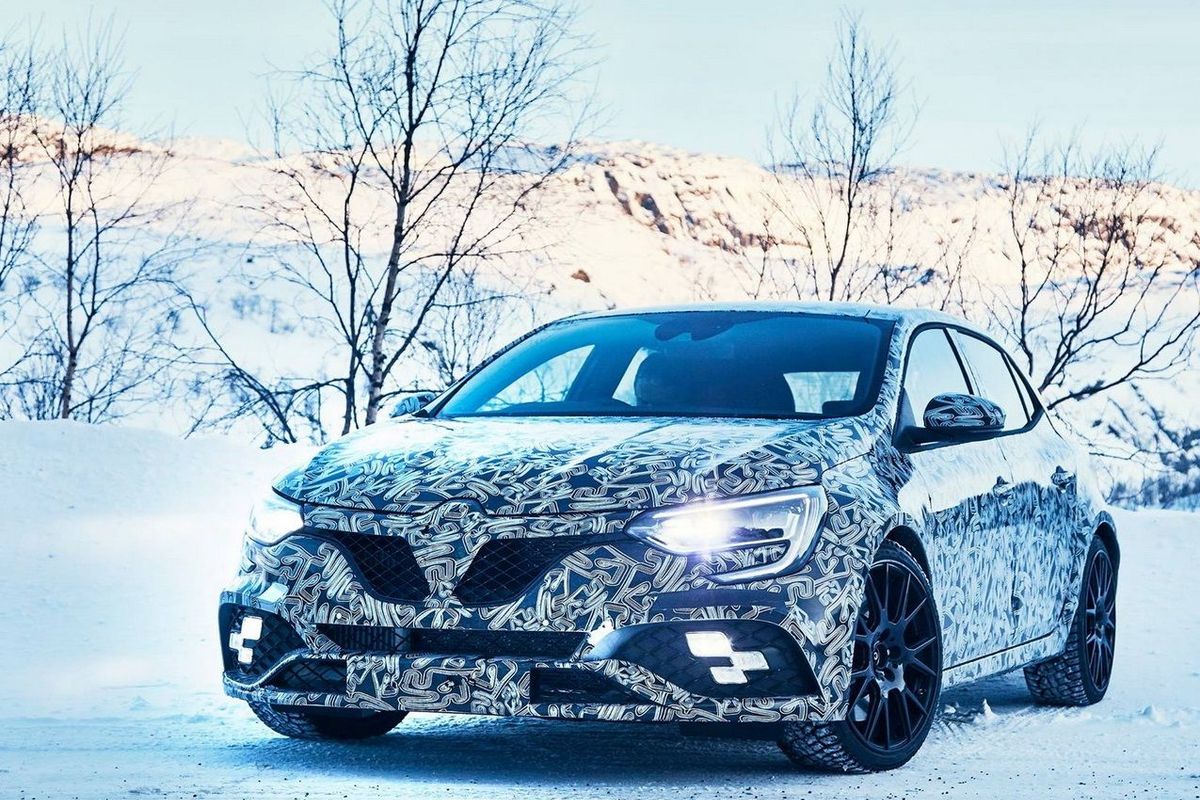
Update: Since the Monaco Grand Prix event, RenaultSport has been busy with development of the new Megane RS. It was spotted undergoing testing in a cold-weather climate and we get a closer look at its shape and design details.
The major news from the first sighting of the new Megane RS is that it will come with the choice of a manual gearbox and an Electronic dual-clutch (EDC) transmission.
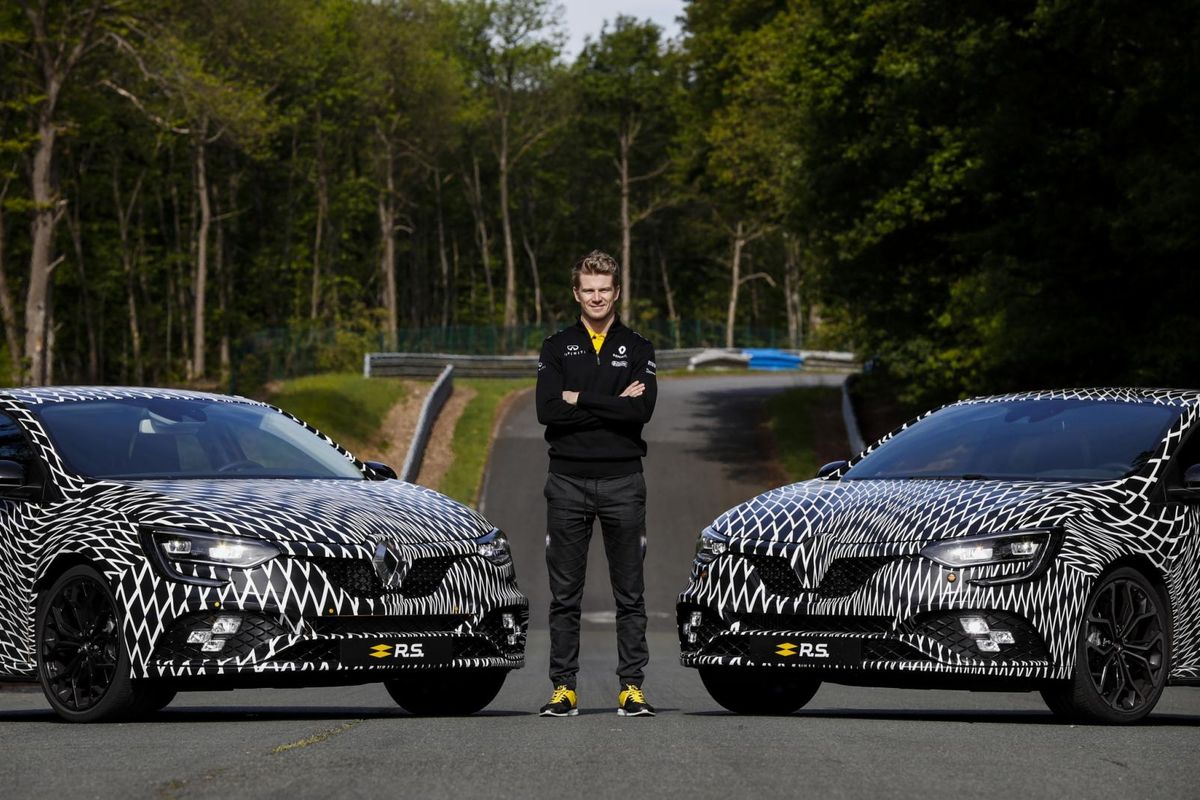
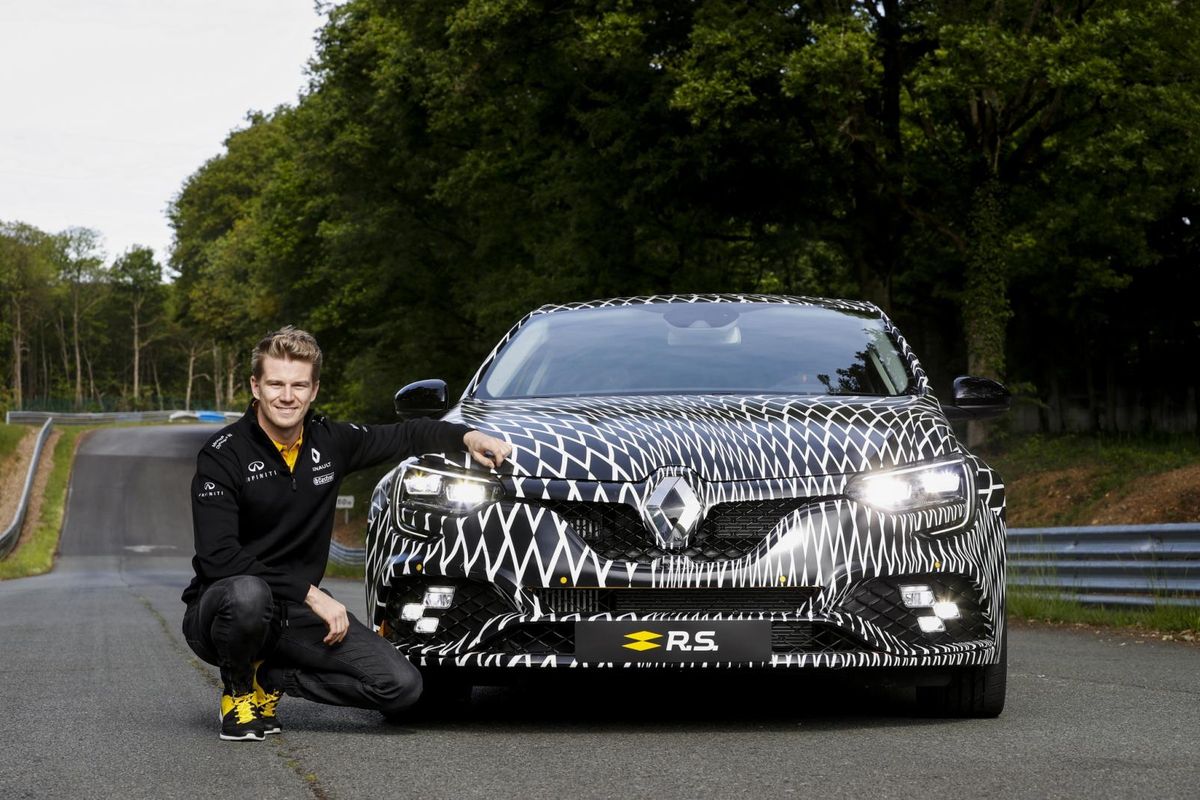
Renault, which was celebrating its 40th anniversary of its involvement in F1 at the Monaco event, tasked itsGrandd Prix racing driver Nico Hulkenberg to complete a few laps of the Monte Carlo circuit in a camo'ed pre-production RS.
The German, who was also involved in the car's development, said: “I got an opportunity to test the all-new Megane RS during its development and I was hooked first time out by the excellence of its chassis. Renault Sport has done a tremendous job on its performance credentials. It was a huge pleasure to drive it around the legendary street track at Monaco”.
The finished product will be released at the Frankfurt motor show on September 2017, before going on sale around April 2018.
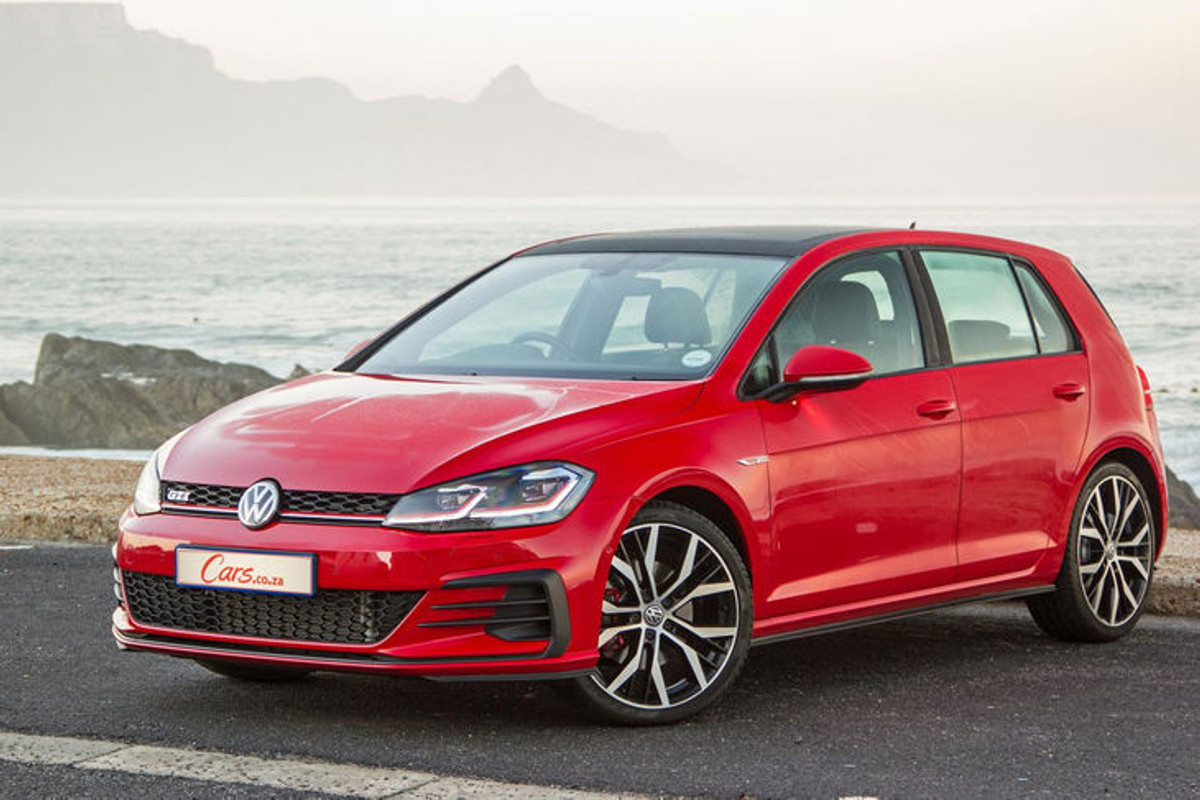
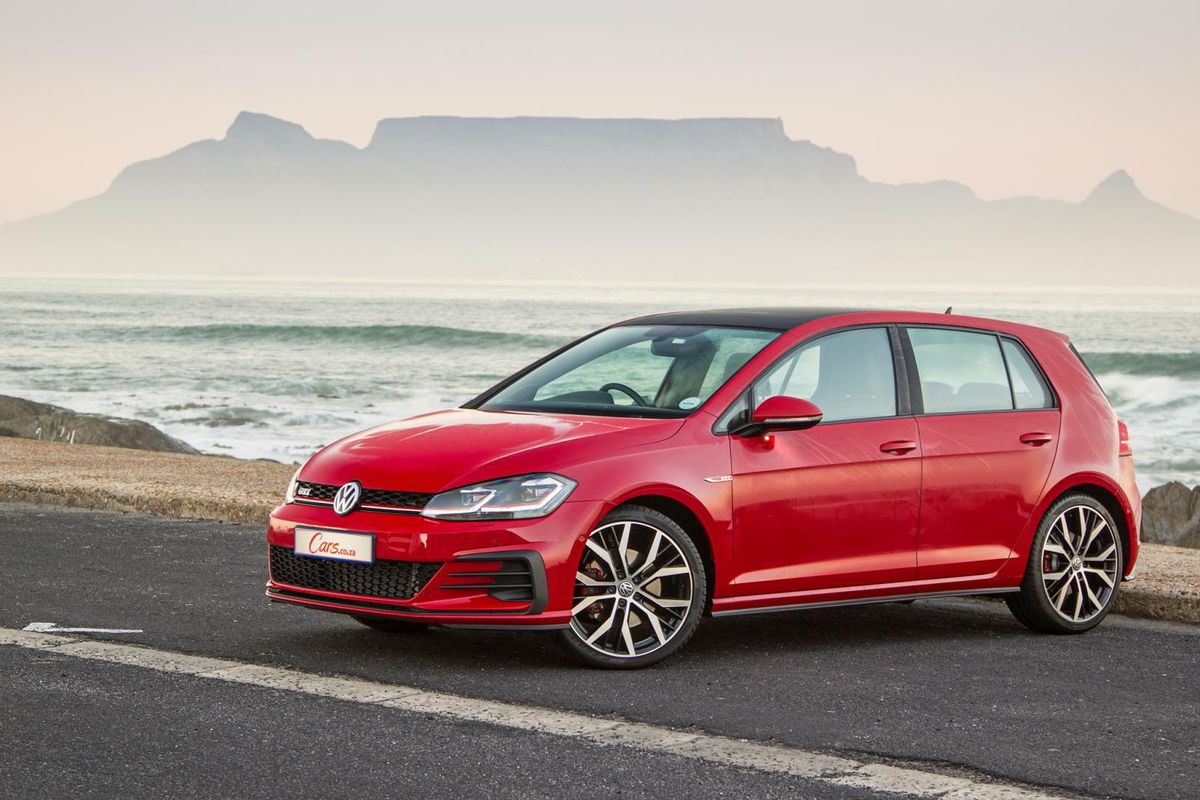
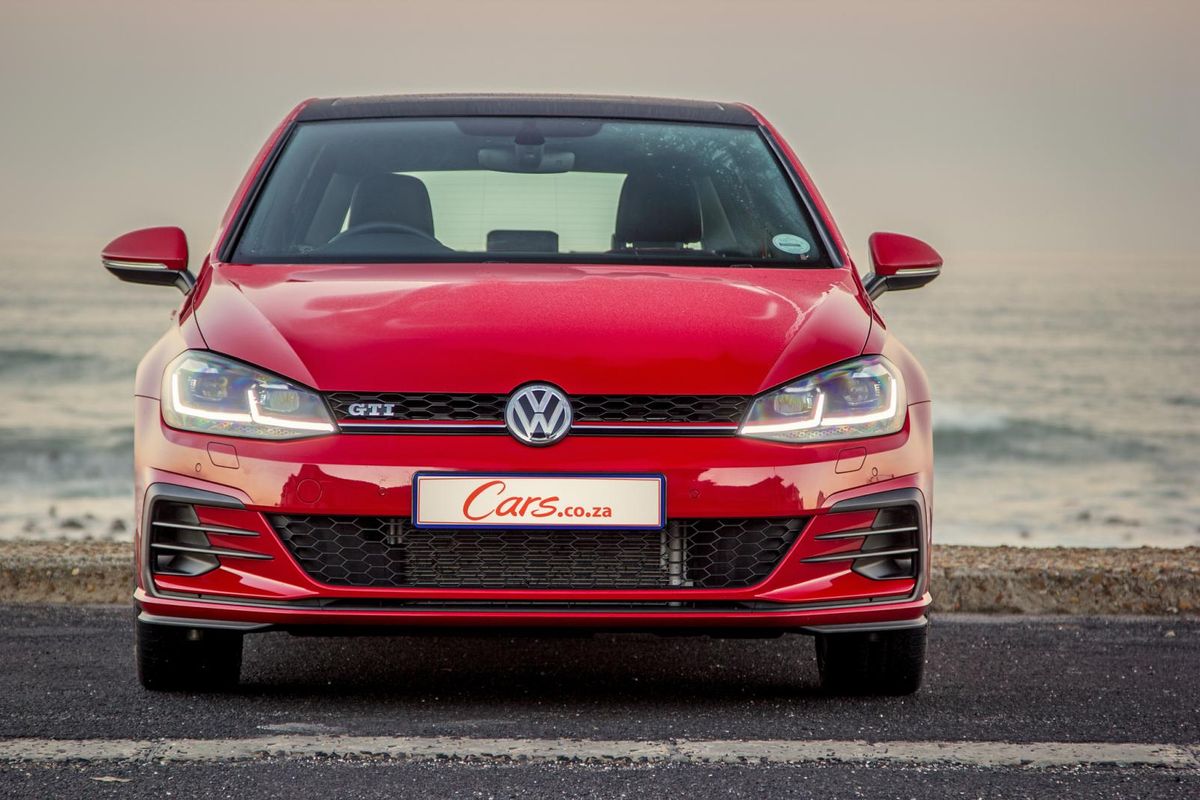
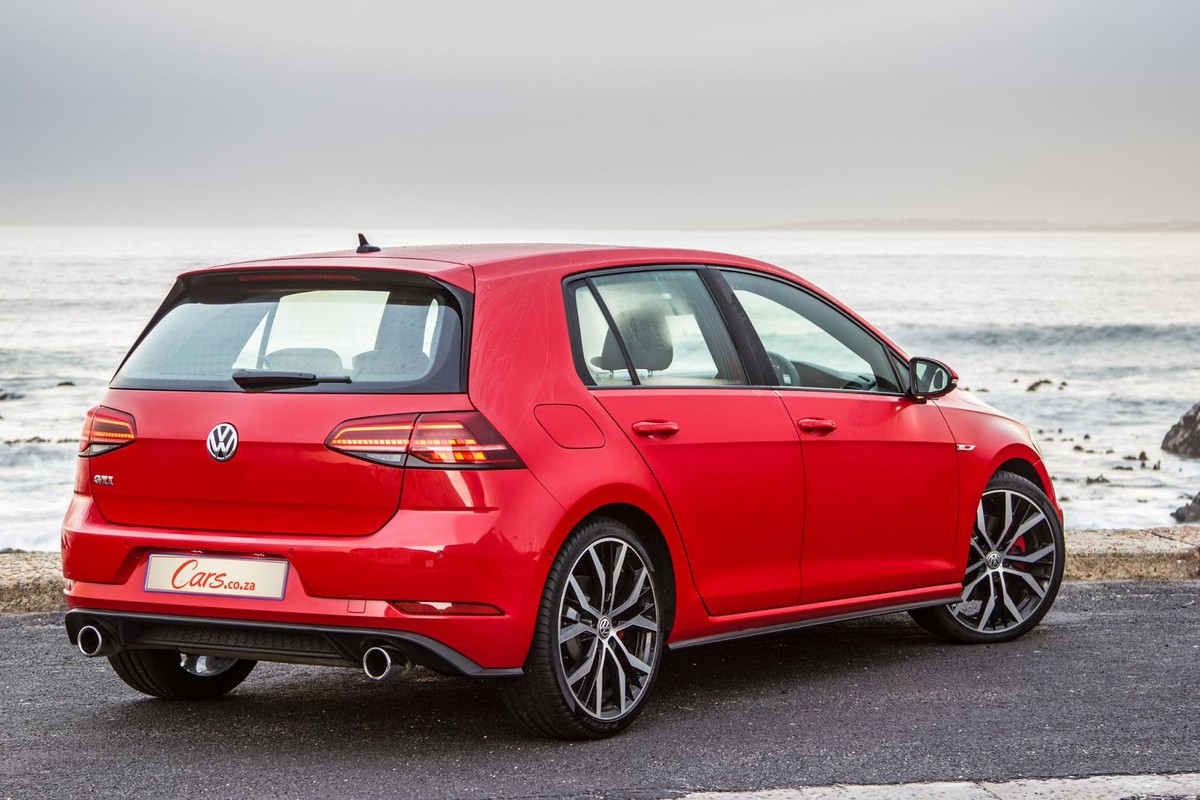
Our reigning premium hatchback champion in the 2016/17 Cars.co.za Consumer Awards, the Volkswagen Golf GTI, has had a mid-life facelift. How has Volkswagen managed to refine an already class-leading product? We find out…
We like: Impeccable build quality, premium feel, effortless performance, ride/handling balance, practicality, advanced features
We don’t like: Pricey, but… you get what you pay for
Alternatives:
A rear-wheel drive BMW: The BMW 1 Series is a nicely balanced competitor these days, offering an admirable mix of performance, status and dynamic appeal. Still, until its next upgrade at least (happens soon), the VW arguably has the better cabin. As is the case with the VW, you really have to delve deeply into an extensive options list.
A "warm" Mercedes: With slightly less power, but similar performance, the Mercedes-Benz A250 Sport is a real threat, given the inherent appeal of the Three-pointed Star badge on the nose. But it can't match the Golf's refinement, interior build quality, practicality and ride/handling balance.
For something cheaper: Until the all-new RS derivatives are added to the Renault Mégane line-up, you could still consider the Ford Focus ST. It's a more old-school hot hatch in its positioning, with relatively wild looks and cheaper finishes all-round. Fun to drive, but not the all-rounder the Golf GTI is.
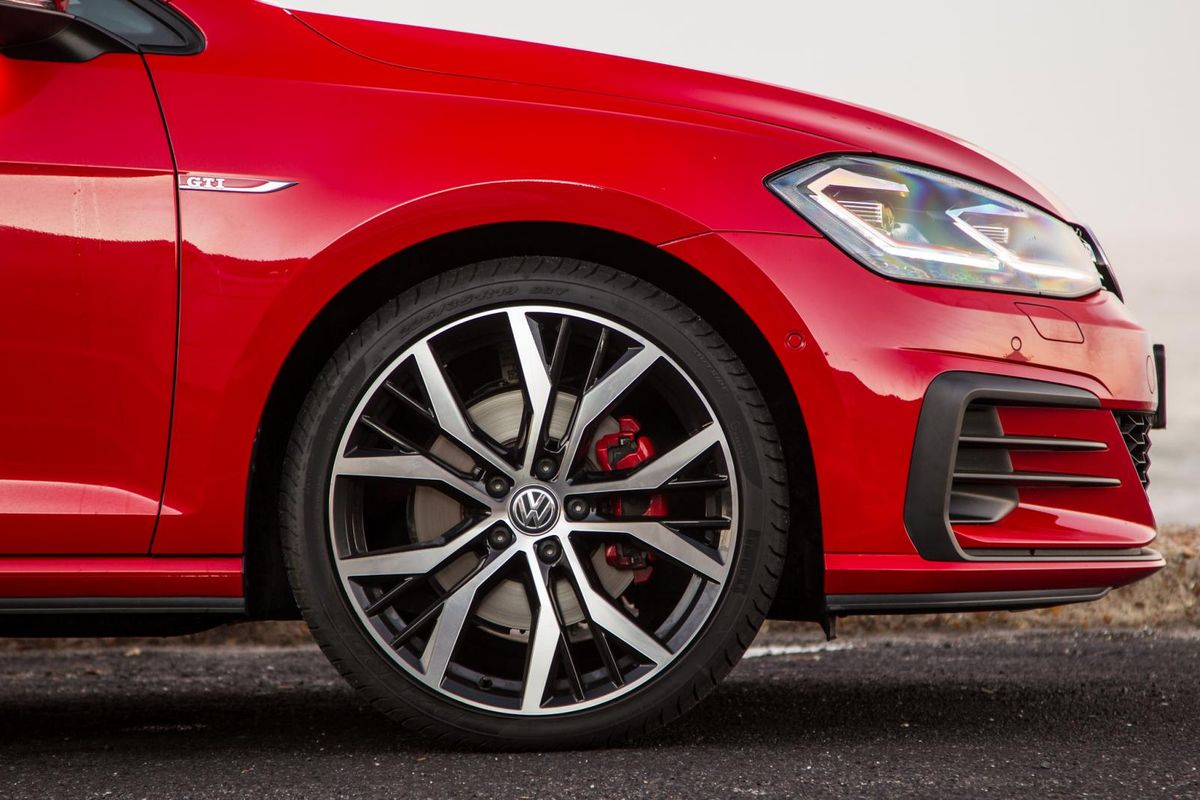
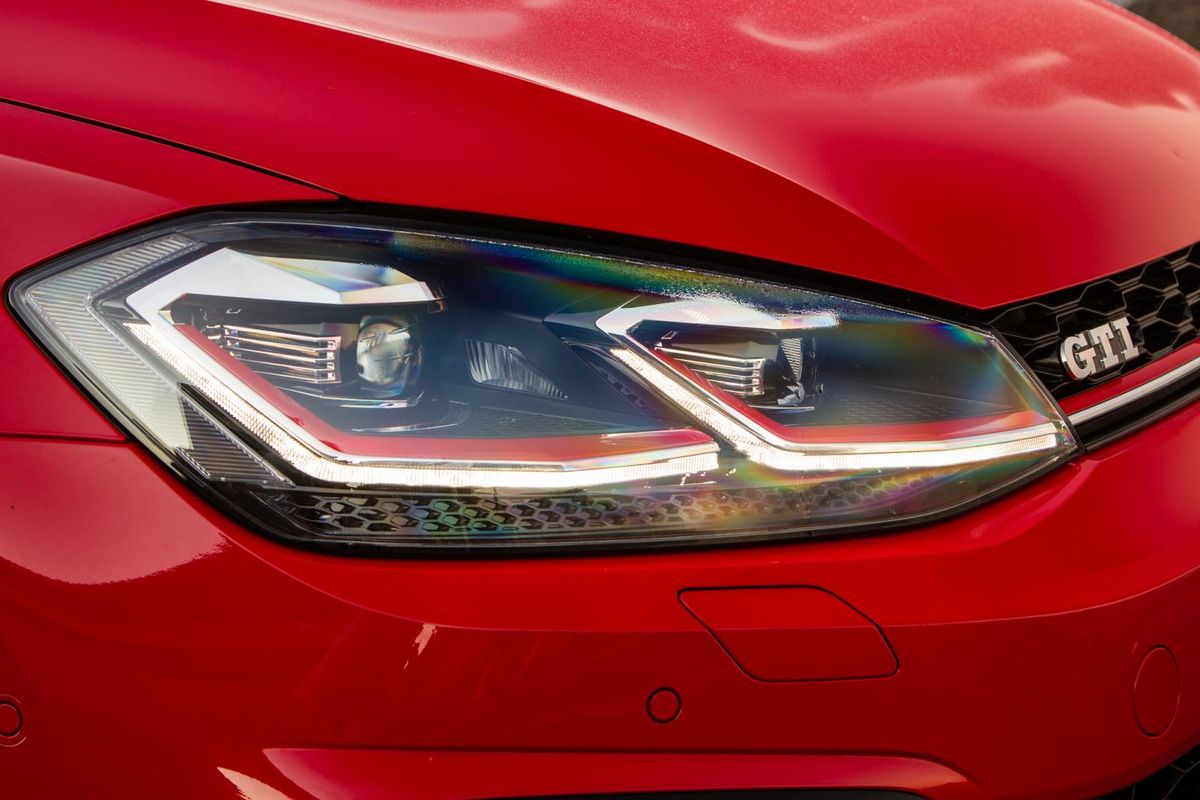
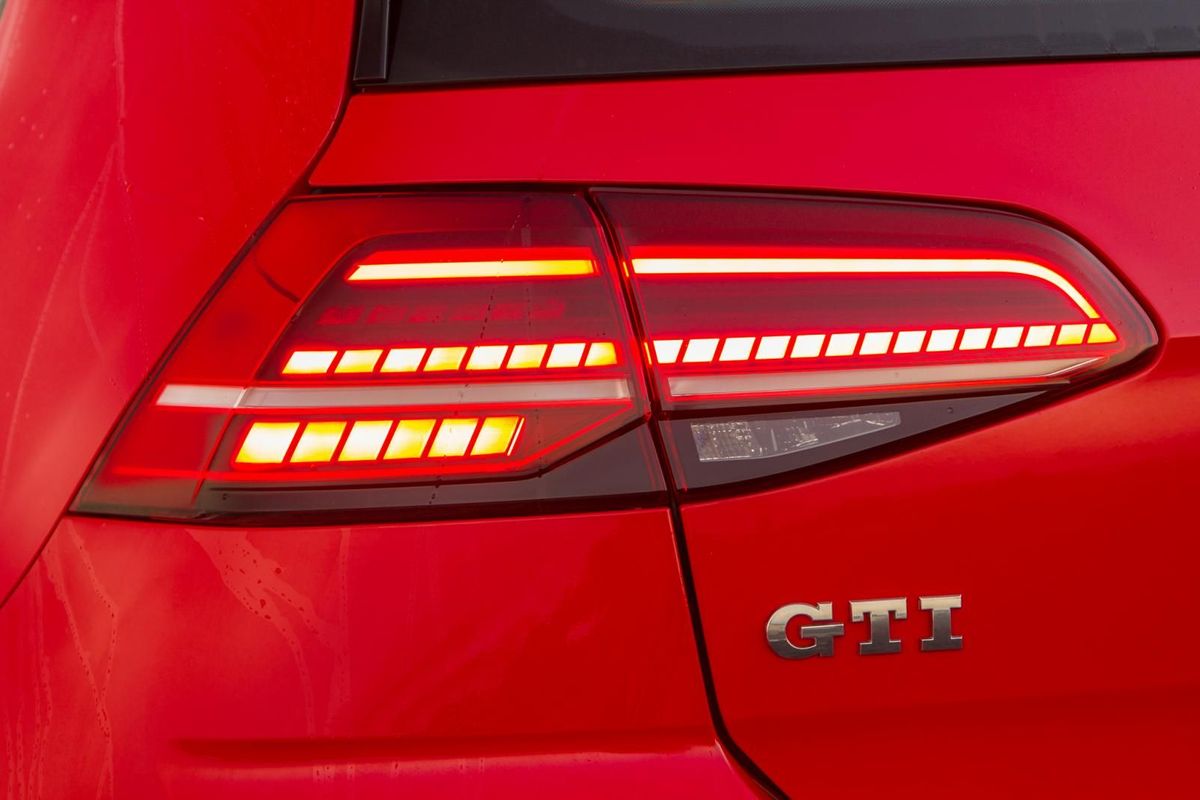
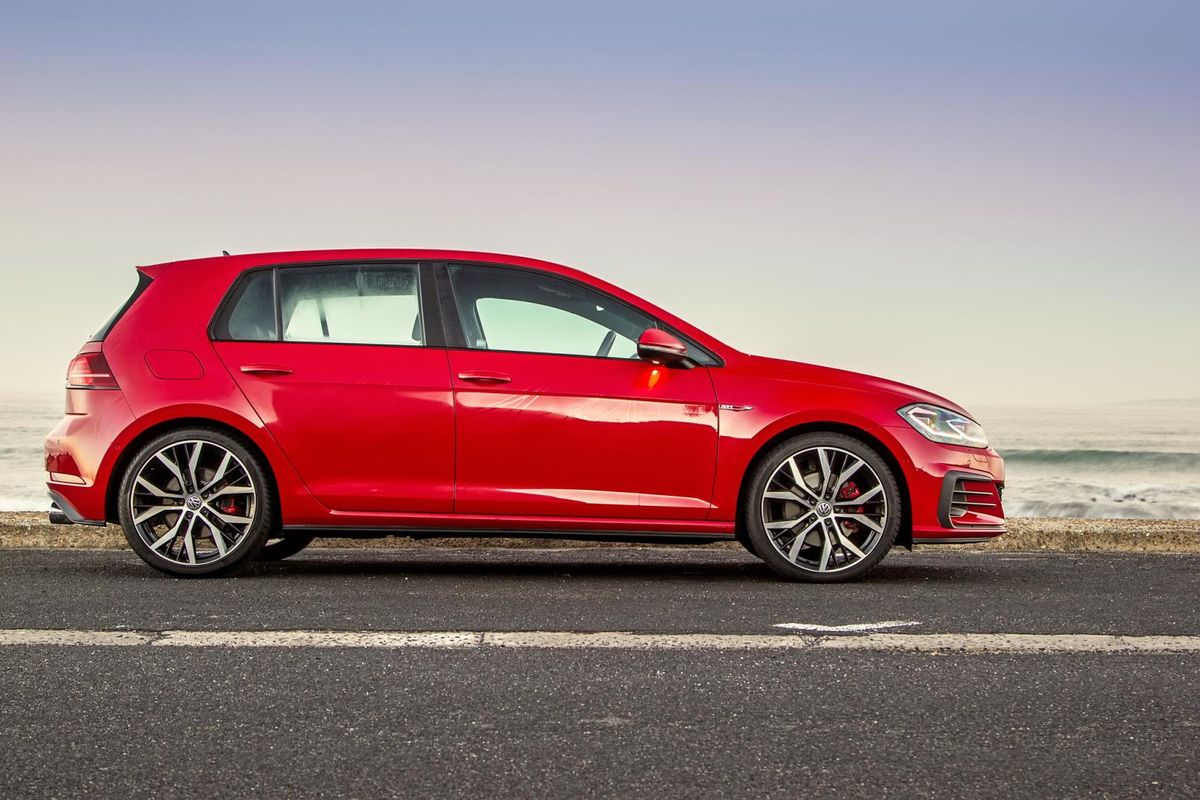
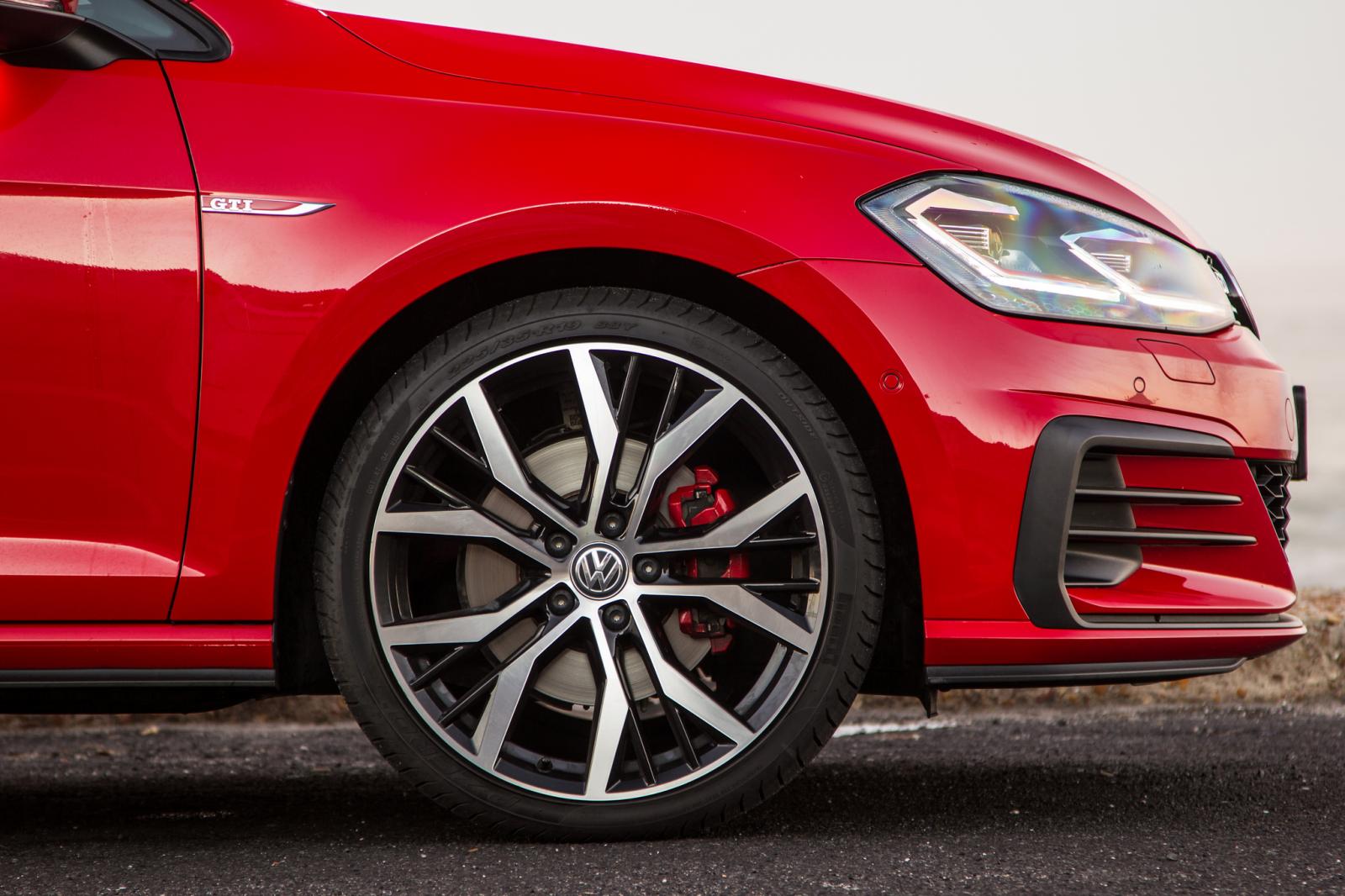
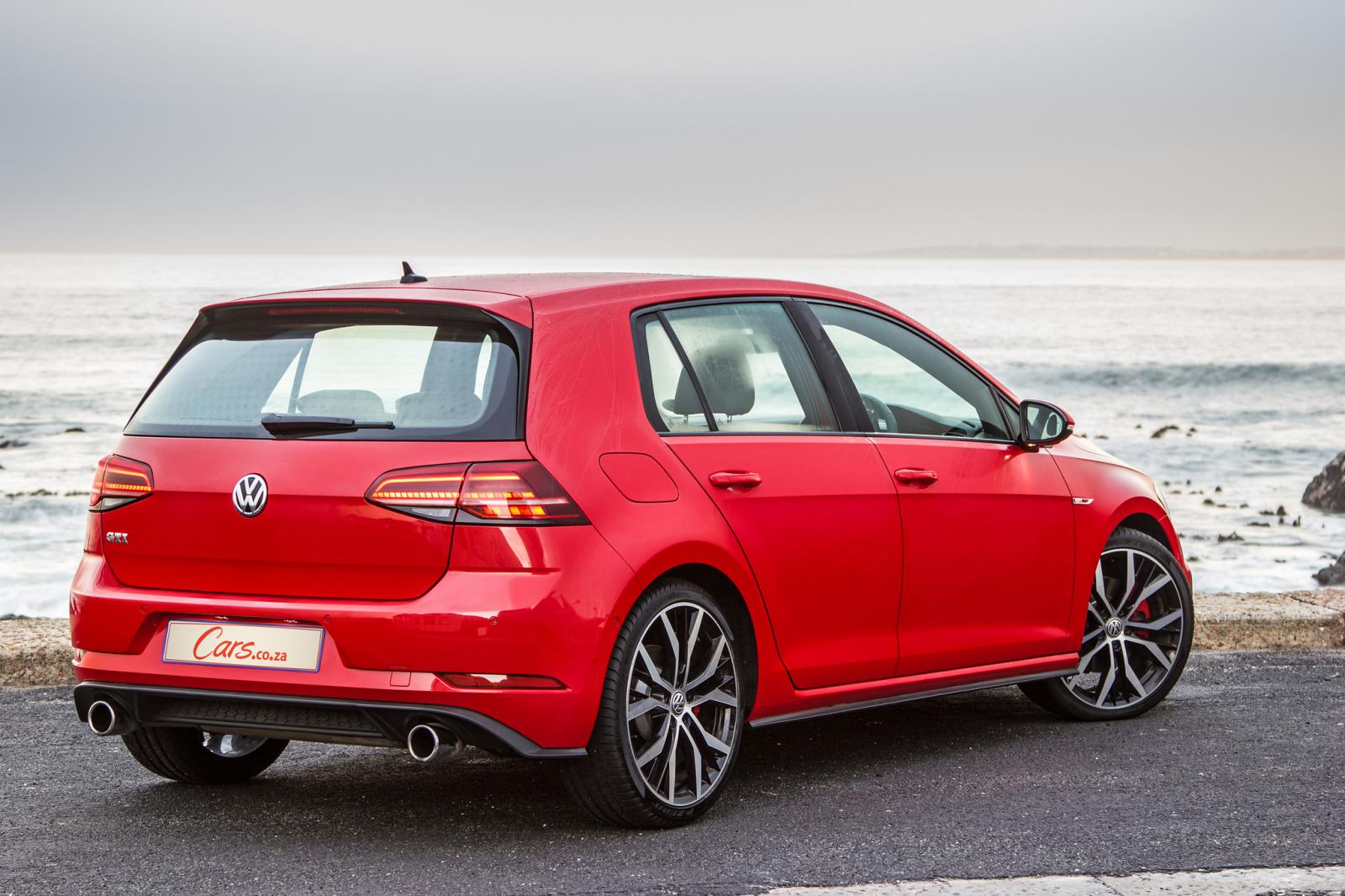
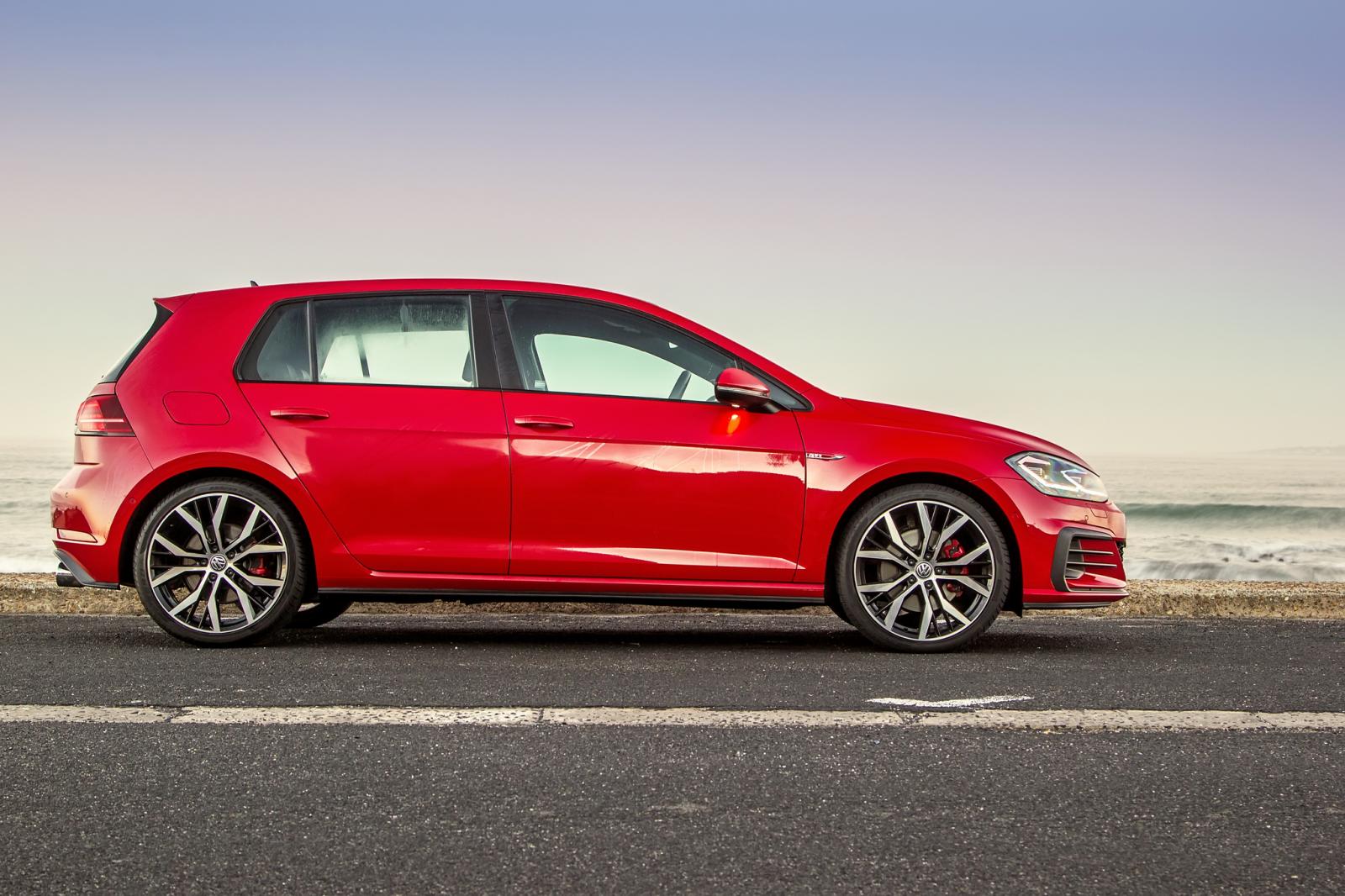
Subtle styling revisions for the new GTI – note changes to headlamps and optional 19-inch Santiago alloy wheel (R8 100).
When a product as good as the VW Golf 7 reaches the half-way mark of its lifecycle, one could argue that the traditional mid-life facelift needs not be anything more than the fresh application of some "make-up". There's no such luck for the world's carmakers, however… Things have changed dramatically in recent years, particularly in the area of on-board technology (infotainment and safety systems, mainly). So, while the mechanical changes to the Golf 7.5 are minimal, Volkswagen has made its full bouquet of advanced technologies available in the modern-day "peoples-car", some as standard, but most as optional extras. Oh, and yes, there are indeed some small cosmetic changes…
The good
Ride & handling balance
The GTI suspension's ability to entertain (when demanded) and yet be comfortable enough for the daily drive remains unmatched.
While the rest of the car world still seems to think that the term "hot hatch" should automatically mean lurid paint schemes, a bone-jarring ride and heavily bolstered seats that only racing drivers can fit into, Volkswagen has for years been refining a more mature approach. Even on this test unit's optional 19-inch wheels the GTI possesses a suppleness that most other hot hatches can only dream of. Yes, it's firmer than a non-GTI Golf, but you could easy drive this every day. This explains to a very large degree why the GTI accounts for more than half of all local Golf sales… It is a no compromise sports & luxury hatchback.
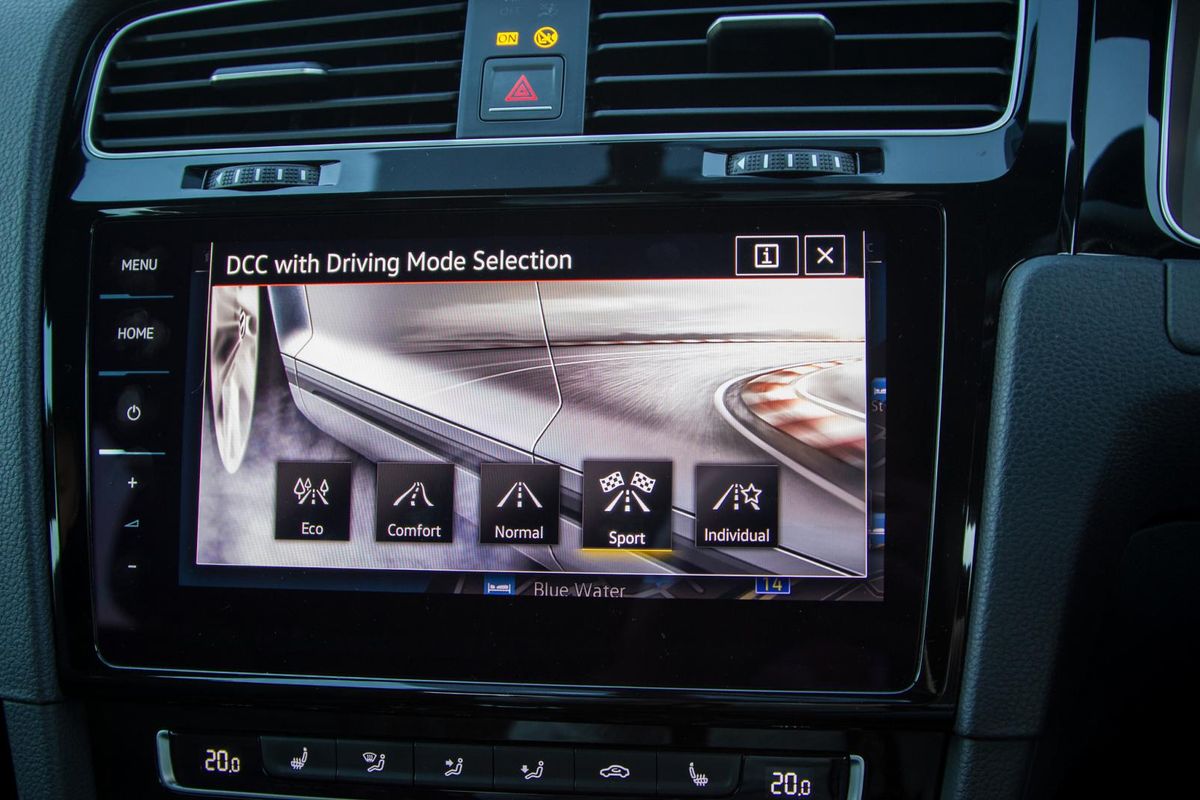
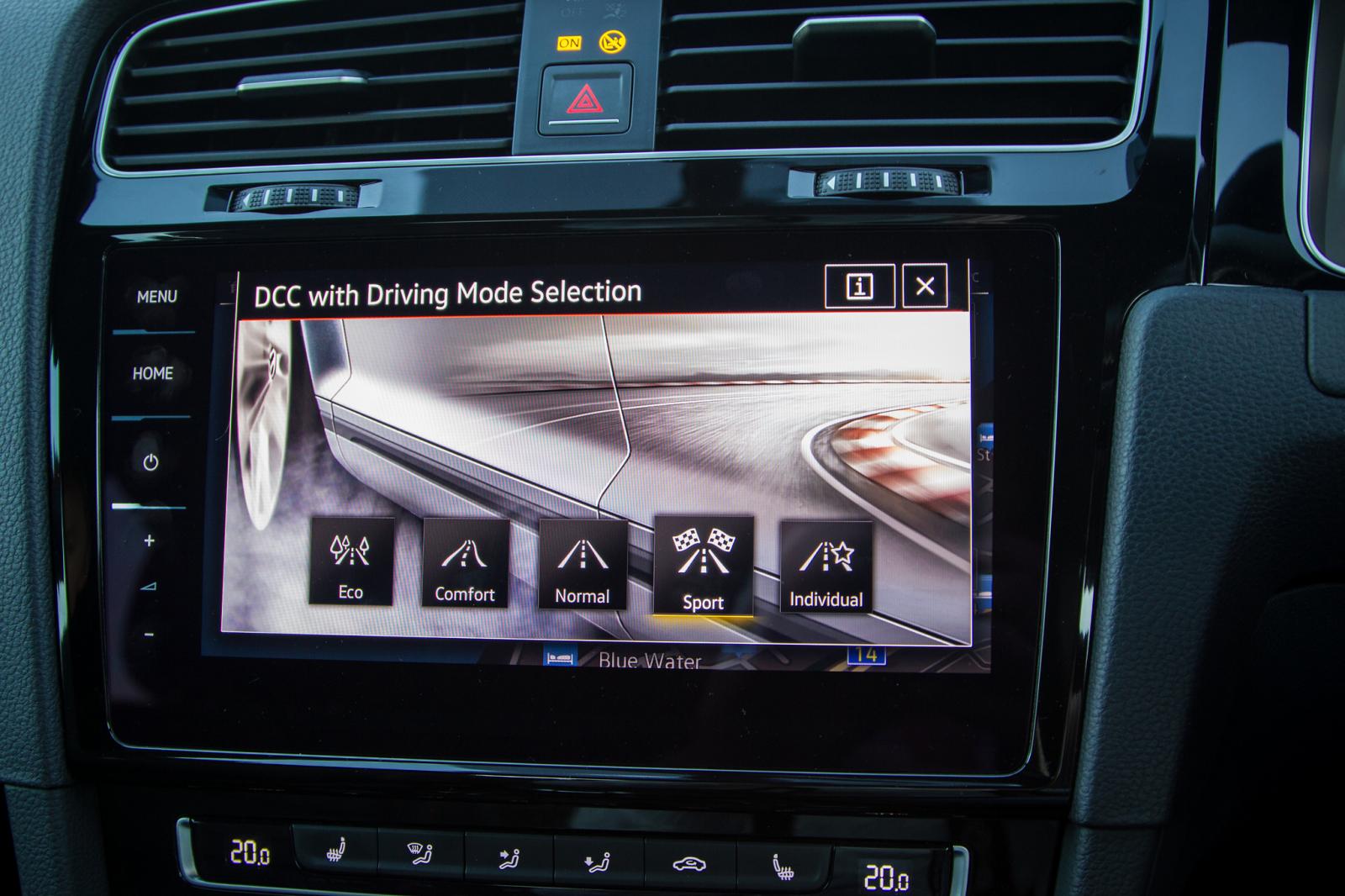
Our test unit also featured the optional (R12 700) Adaptive Chassis Control system that allows you to toggle between several ride set-ups. Indeed, there's a marked difference between Comfort and Sport, for example, but we also know from experience that the standard suspension set-up is probably class-leading already.
Head for the twisties and the GTI serves up crisp responses, good body control and excellent grip. It feels like the underpinnings can handle much more power – Volkswagen knows this as well (see Clubsport S) – so while fun can be had and the limits are high, the GTI never feels ragged or unsafe. It is effortlessly fast in most conditions. For some traditionalists, that like their steeds to put up a bit of a fight, and who craves a more hardcore driving experience, the GTI, may in fact, be too polished. Look at the sales figures, however, and you'll quickly understand Volkswagen's reasoning.
Premium & practical cabin
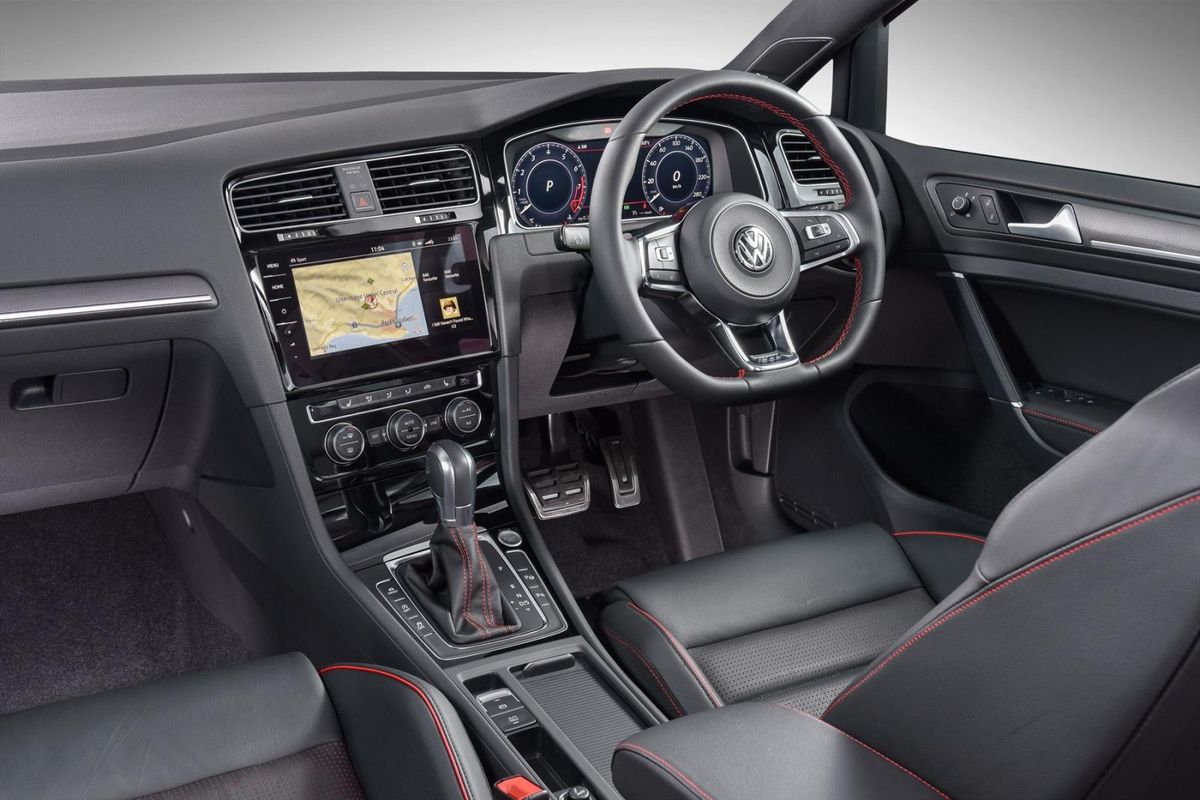
Some small trim revisions for the Golf range, but star attraction is the tech – note digital display and large info-tainment screen.
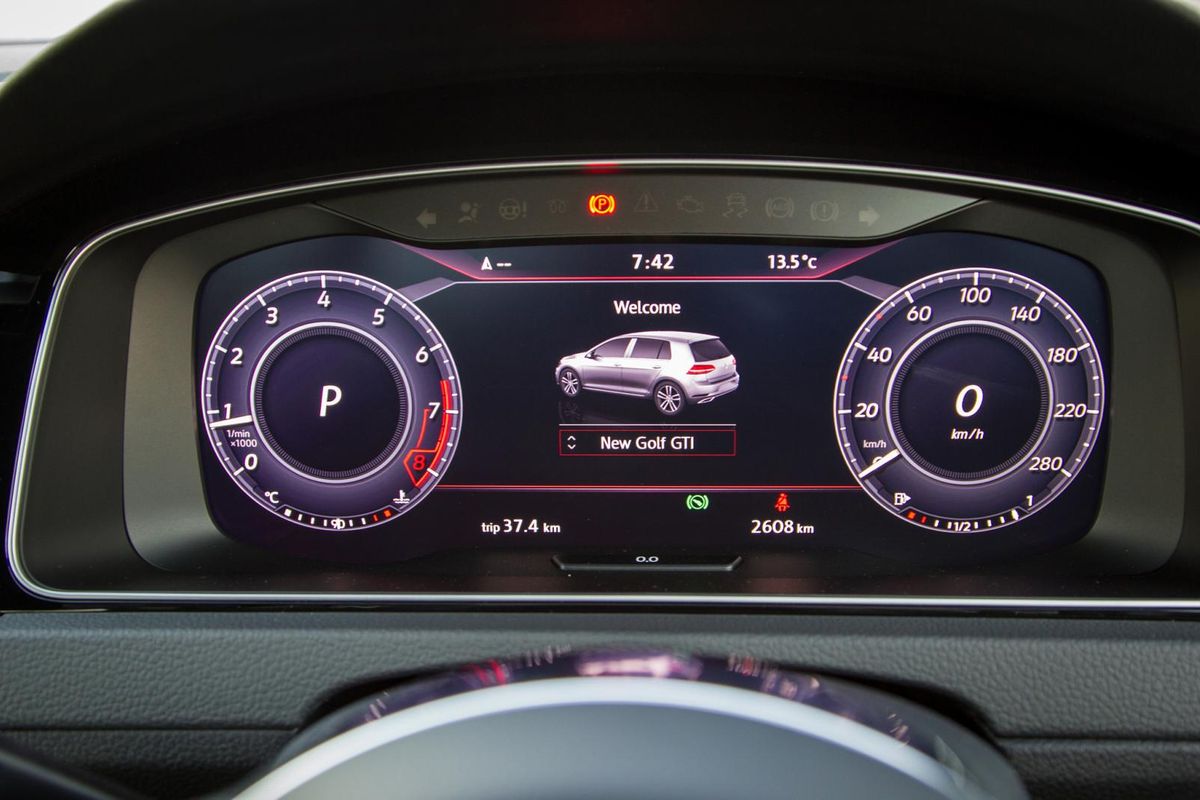
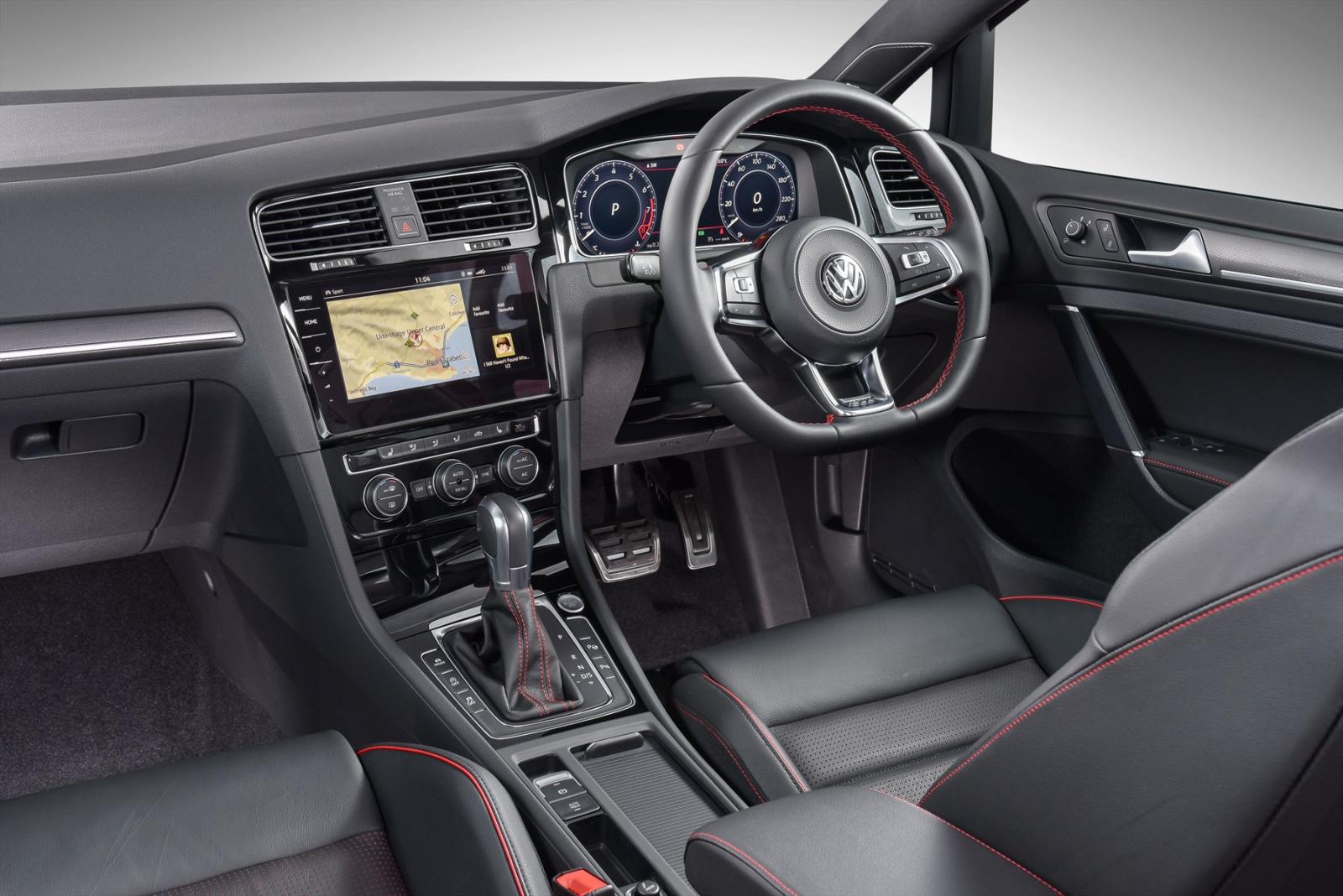
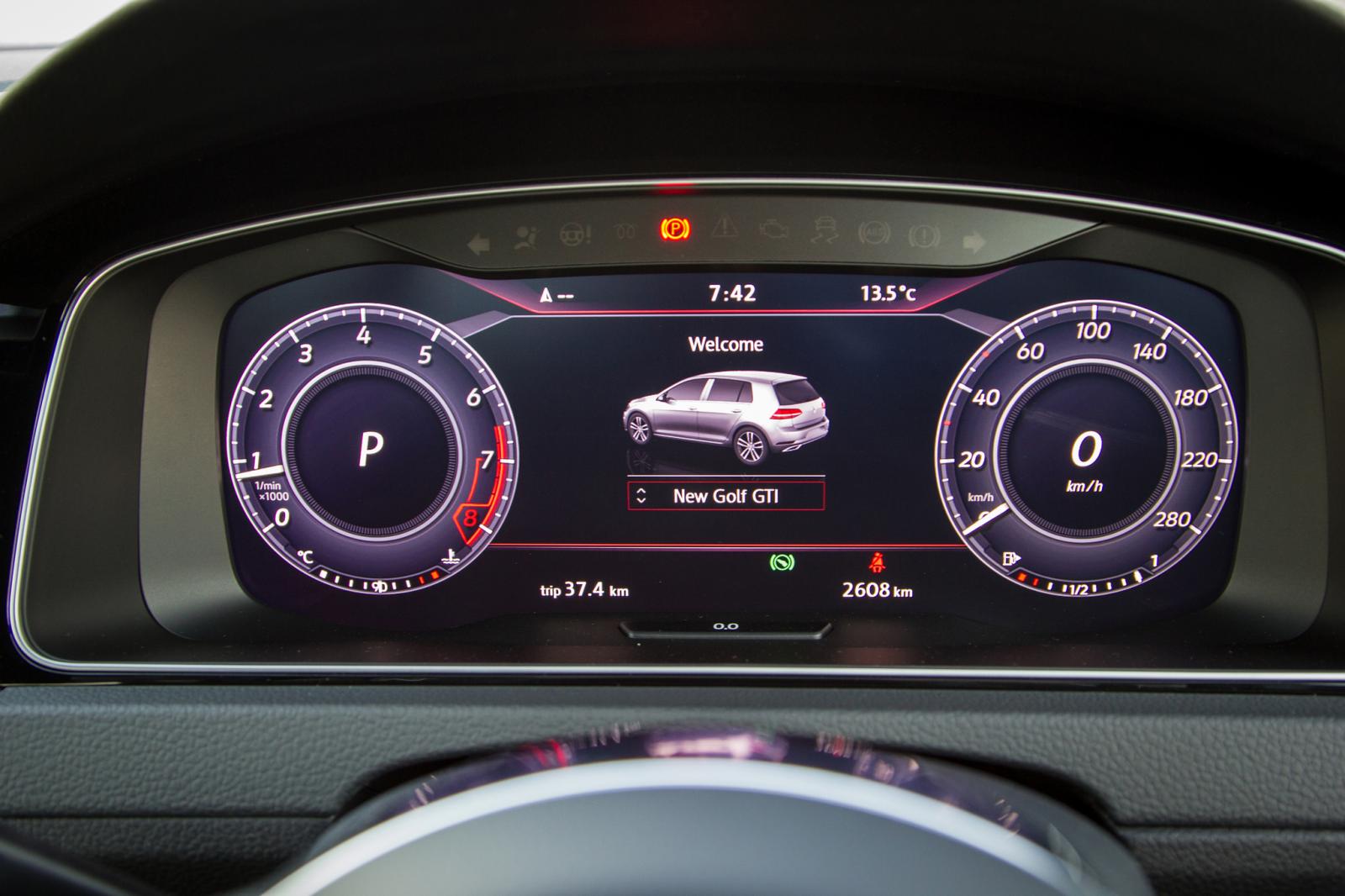
Inside, Volkswagen has made a number of small trim changes as part of the model-year upgrade, but you're unlikely to notice them. Instead, your eyes are likely to be drawn to some of the advanced new features (if fitted). We'll delve into the costs of these items later, but the star attractions are the 12.3-inch, configurable digital dashboard (similar to what we've already seen in the VW Passat) and a striking 9.2-inch touch-screen embedded into the centre of the facia. Note that a less fancy, 8.0-inch Composition Media system is standard.
So, while you have to pay extra for most of the fancy items that have been added to the Golf package as part of this facelift, the point is that they're available. Most of the Golf's competitors (even the premium German-brand ones) can't offer these items, even as extra-cost features. When specified, these advanced features further add to a cabin ambience that is arguably unmatched in this segment, and certainly as far as hot hatch offerings go. The subtle use of top-notch materials, gloss black and satin silver finishes, as well as red stitching, make one feel special in the Golf GTI.
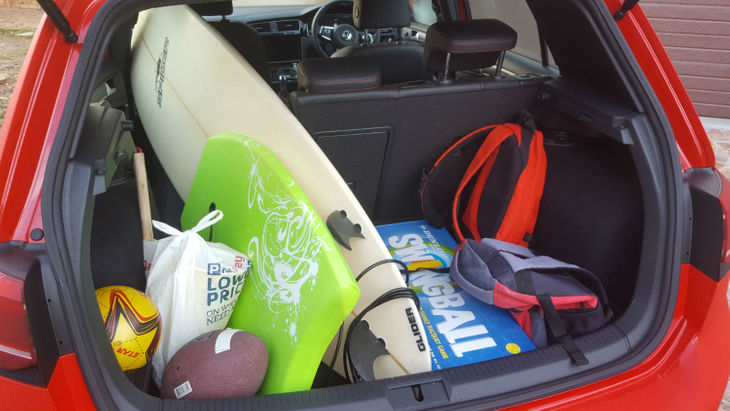
Want a hot hatch that can double as a family car during the weekends? Look no further than the Golf GTI.
Volkswagen is often criticised for not making the more overtly sporty 3-door GTI available in South Africa, but we suspect most serious buyers would opt for the 5-door model anyway. Overall, the GTI is every bit as practical as its siblings, with good rear legroom (unhampered by the sporty profile of the front seats) and a boot that can easily swallow a family of four's paraphernalia. The rear seat can split/fold in a 60:40 configuration, further adding to the practical nature of the car.
Potent performance
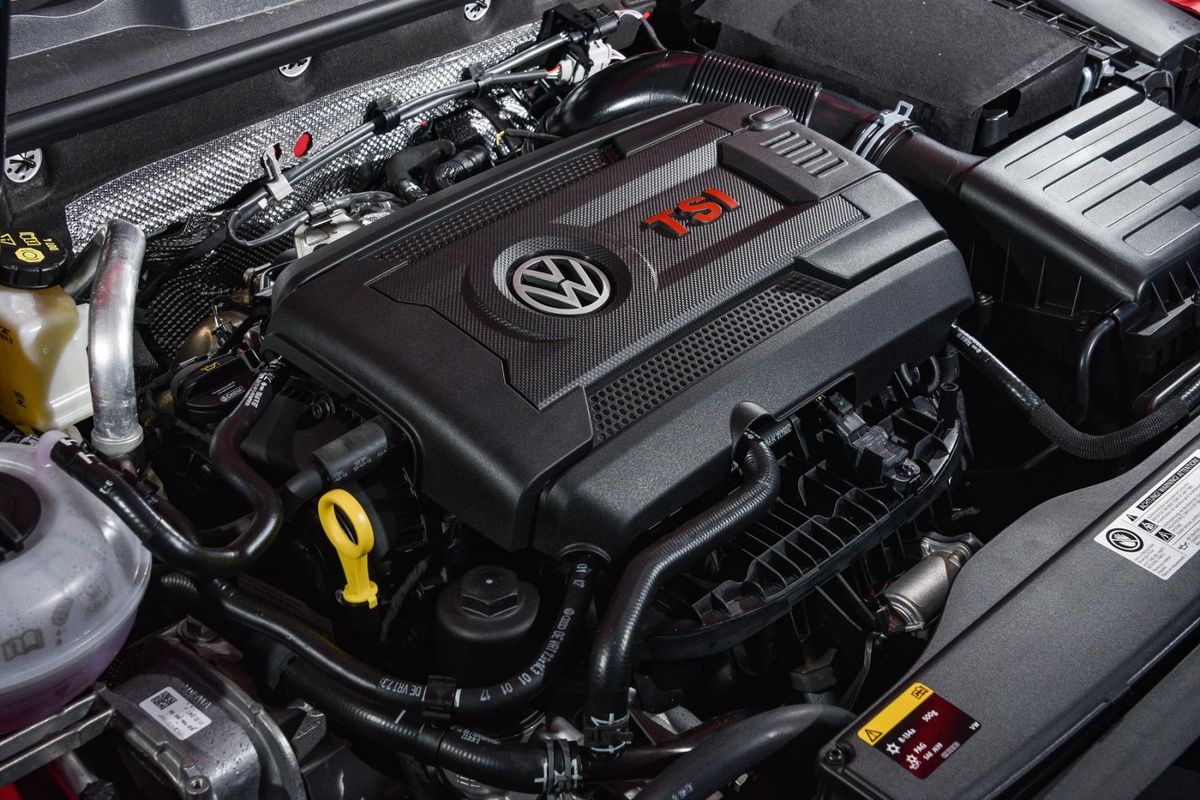
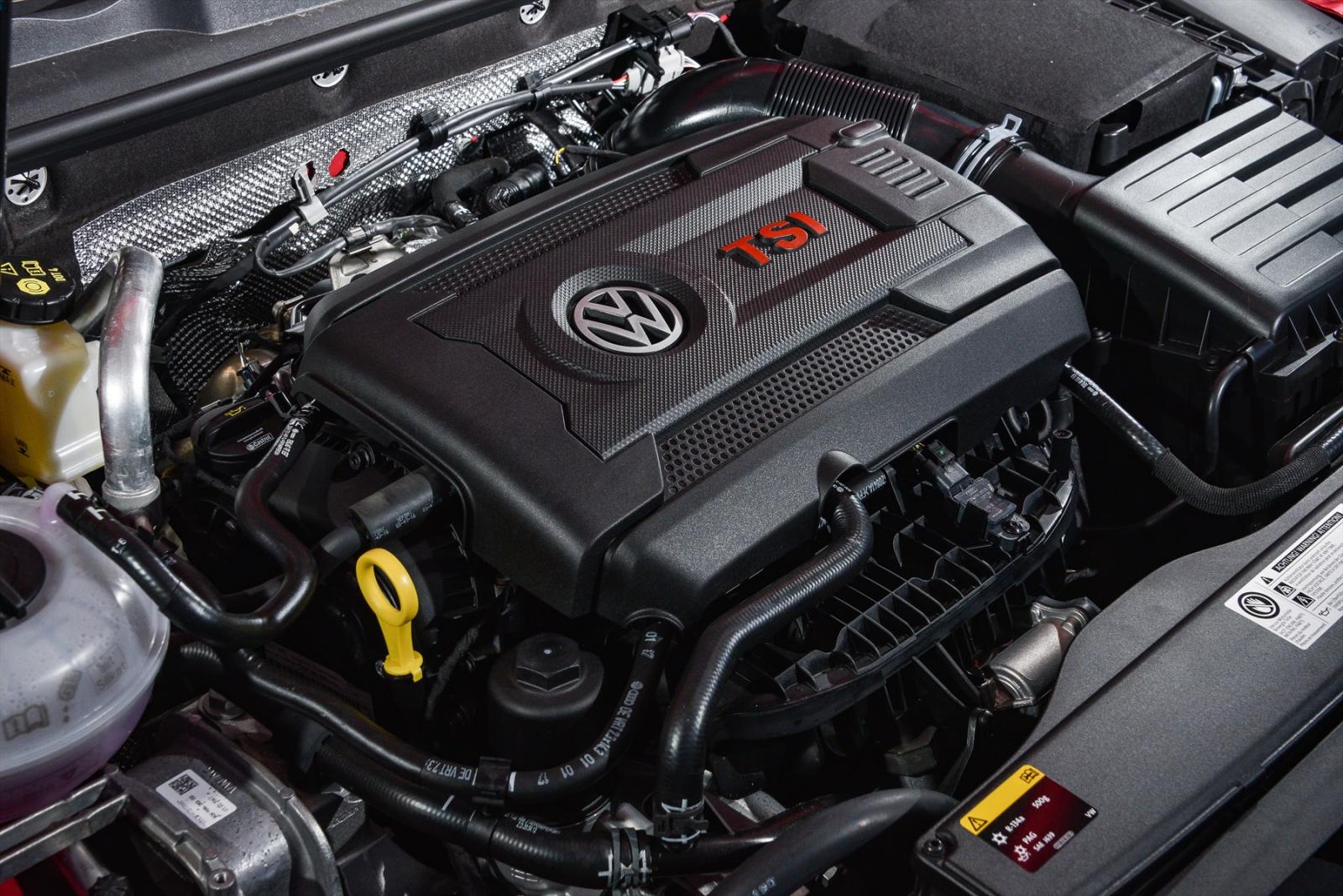
The 2.0-litre turbopetrol now punches out the same power as the pre-facelift Clubsport variant.
In its latest guise the Golf GTI has had a slight bump in power, with 169 kW and 350 Nm being similar to what was offered in the previous (and highly acclaimed) Performance Pack variant. It retains the firm's 6-speed DSG dual-clutch transmission (one of our favourite 'boxes) and has a built-in launch-control function. Used effectively, you can launch the GTI to 100 kph in around 6.4 seconds.
Ultimately, there are faster hot hatches around, but its the accessibility of the GTI's performance that makes it such a devastatingly fast ground coverer. The maximum torque figure is available from 1 500 to 4 600 rpm, so there's always oodles of grunt available at the flext of the right ankle. Select Sport mode, and the responsiveness is further sharpened. That said, because the entire drivetrain is so refined and the power seemingly so seemless, the GTI never feels as fast as it really is, which may be a disappointment to some.
Also, the now famous "Vrrr Phaa" exhaust sound could be a little louder to add to the excitement levels – perhaps the GTI needs an "exhaust sound" button similar to what can be found on Mercedes-AMGs and some Porsches? Another minor complaint is that the gearshift paddles are slightly too small behind the steering wheel, but in terms of the gearshift quality itself, the DSG 'box remains a leader in terms of delivering slick, rapid changes.
Fuel economy? It's unlikely to be a major concern for the target customer, but with a claimed figure of 6.4 L/100 km you're looking at a real-world consumption of around 8 L/100 km.
The not-so-good
The best things in (GTI) life… cost extra
The really smart 9.2-inch Discover Pro infotainment system (with navigation), costs R20 200 extra.
The Golf GTI has been our Premium Hatchback of the Year two years running (Cars.co.za Consumer Awards), clear evidence of its ability to not only be an entertaining hot hatch, but also a luxurious vehicle of not inconsiderable status. As such, it is perhaps understandable that Volkswagen plays a similar game to the "other Germans" when it comes to the long list of optional extras on offer for this model.
For the base price you do get some nice items, including; cruise control, leather upholstery, climate control, heated front seats, 7 airbags, auto lights/wipers and the 8.0-inch Composition Media infotainment system that does boast a full suite of connectivity possibilities, including Apple CarPlay and voice control. Visually, you also get the 18-inch Milton Keynes alloy wheel design and LEDs all-round.
The digital instrumentation boasts configurable displays and costs R8 000 extra.
However, to get the full benefit of the facelift, you simply have to delve into the optional extras list, and potentially go for the digital instrumentation (R8 000), the attractive 19-inch wheels (R8 100), Discover Pro with its comprehensive list of features, including Gesture Control (R20 200) and front/rear park distance control (R4 750). Automatic Cruise Control (ACC) with Front Assist, which includes autonomous emergency braking, is also optional (R5 000). In total, around R120 000-worth of options are available, so choose carefully…
Pricing & warranty
Although the VW Golf GTI's base price is R545 800, you're unlikely to end up buying such a car. The options list is truly vast, and our car had almost R100k of extra-cost features fitted! The base price includes a 3-years/120 000 km warranty and 5-years/90 000 km service plan.
The Golf 7 GTI remains one of the best all-rounders on the market, at any price.
Verdict
Priced similarly to offerings from more prestigious German brands, the VW Golf GTI appears pricey at a first glance. But the reality is that it remains the most complete offering of its kind offered on the local market. There are more affordable, faster hot hatches out there, but those are compromised daily drivers that lack the polish of this Volkswagen. At the same time, the prestige-branded products are nowhere near as complete as the GTI. Fast? Yes. Fun? When you want it to be. Practical? Always. Luxurious? Indeed. Given the breadth of the VW Golf GTI's talents, perhaps once could even, ultimately, consider it a bargain.
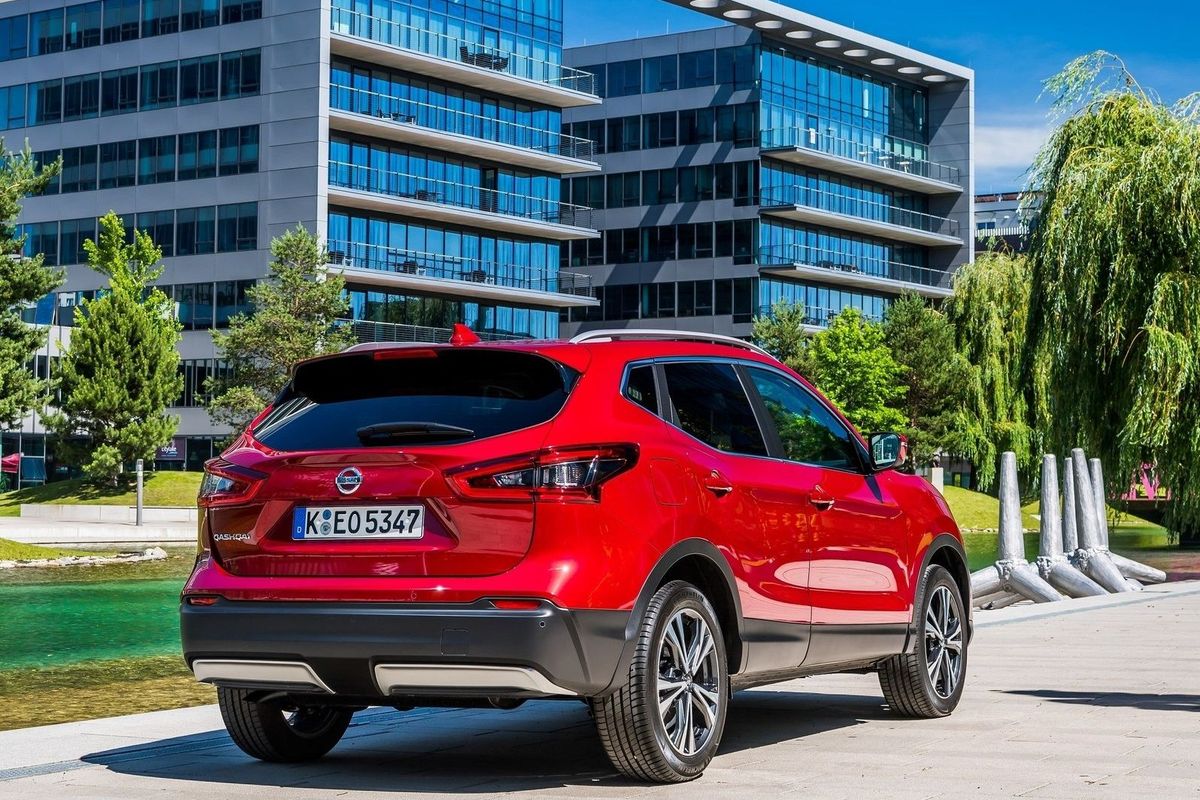
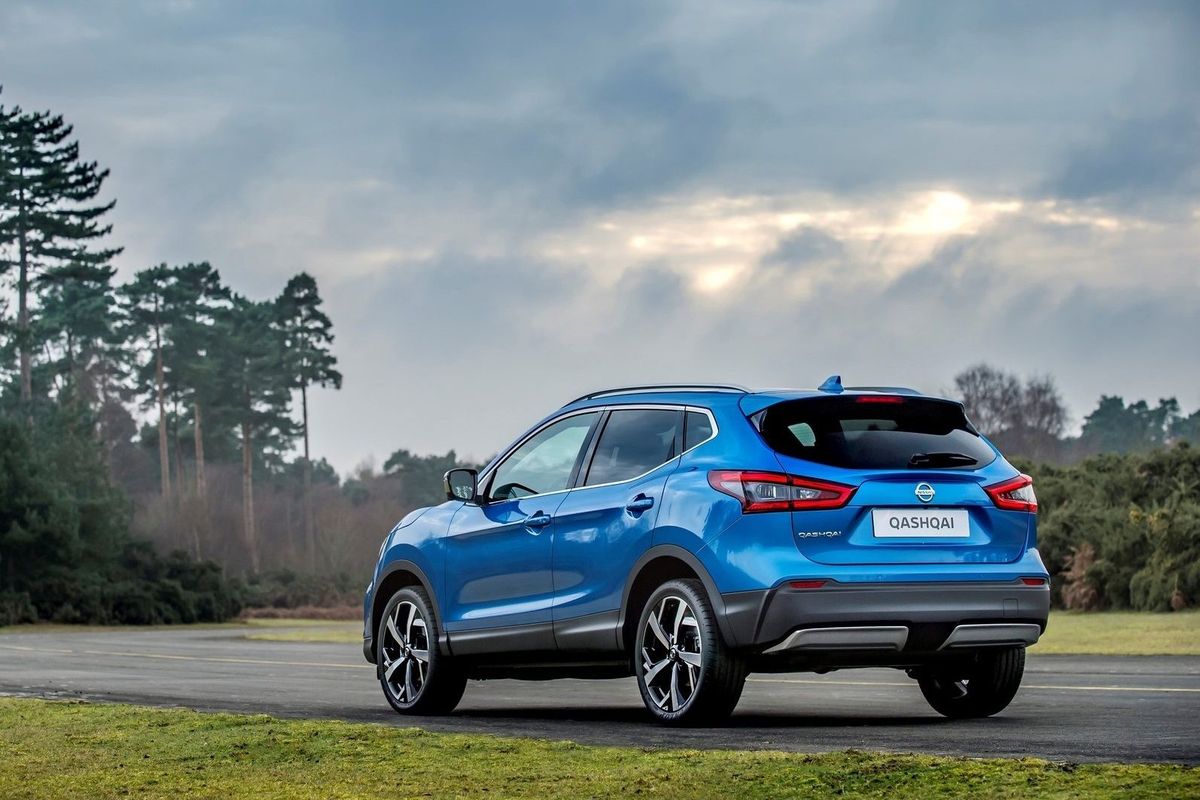
The popular Qashqai has proved a major sales success and despite the segment growing in terms of the number of competitors, the Nissan is still one of the leading contenders. Now the Japanese compact family car has been facelifted and will arrive in local showrooms by November 2017.
According to Nissan, the Qashqai has an "unrivalled market share of 10.3%", which is impressive seeing as this SUV segment boasts more than 20 offerings to choose from. It's also won numerous awards over the years and was a finalist in the 2016/17 Cars.co.za Consumer Awards, powered by WesBank.
For the 2018 model year, the Qashqai has been updated in line with Nissan's research that suggests customers wish for "exterior styling changes to create a more contemporary and sophisticated look; new premium features and choices for customers opting to buy higher grade models; plus extra refinement and new safety technologies when behind the wheel."
Tekna+
What's new is a flagship trim level called Tekna+, which is aimed at buyers wanting the most premium features in a Qashqai. There are new premium seats with highest-quality soft nappa leather, with luxurious 3D quilting on the centre panels. Black leather is standard, with the choice of a plum colour as a no-cost option. The driver's seat now features electrically-controlled four-way lumbar support with memory function. An upgraded Bose 8-speaker audio system is fitted as standard.
Visual changes
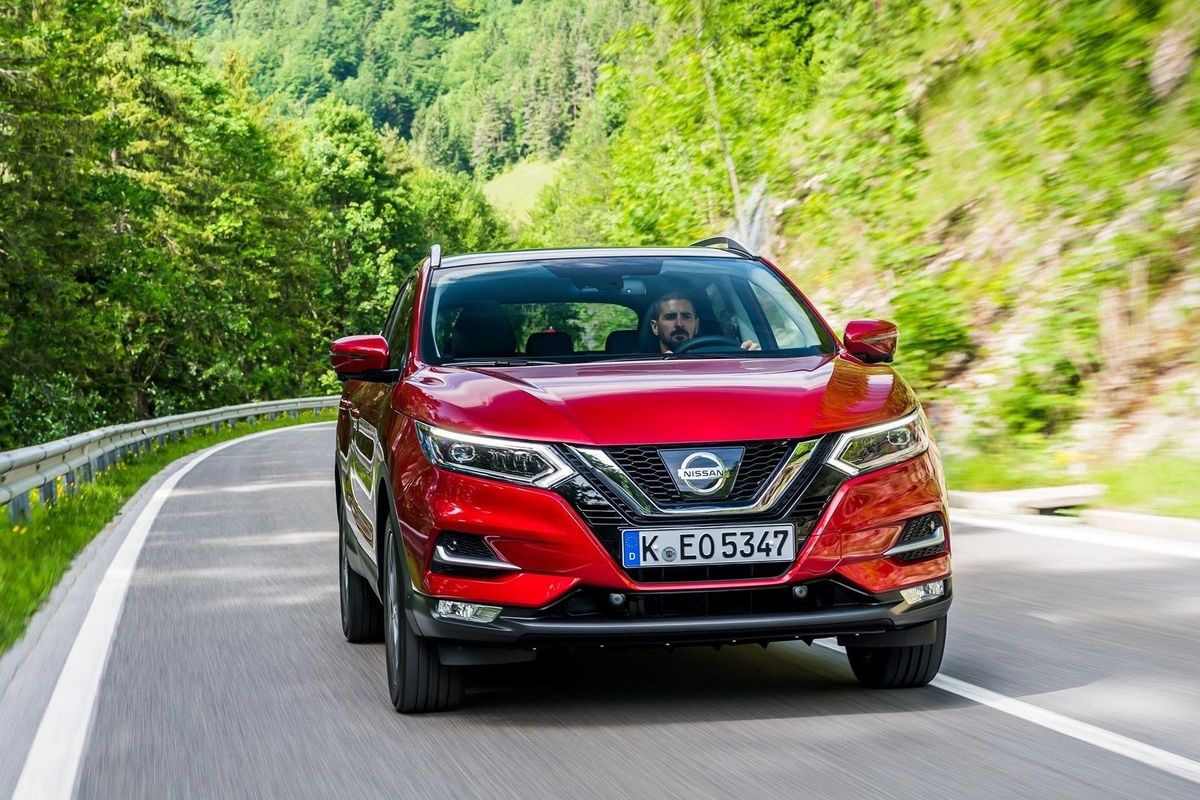
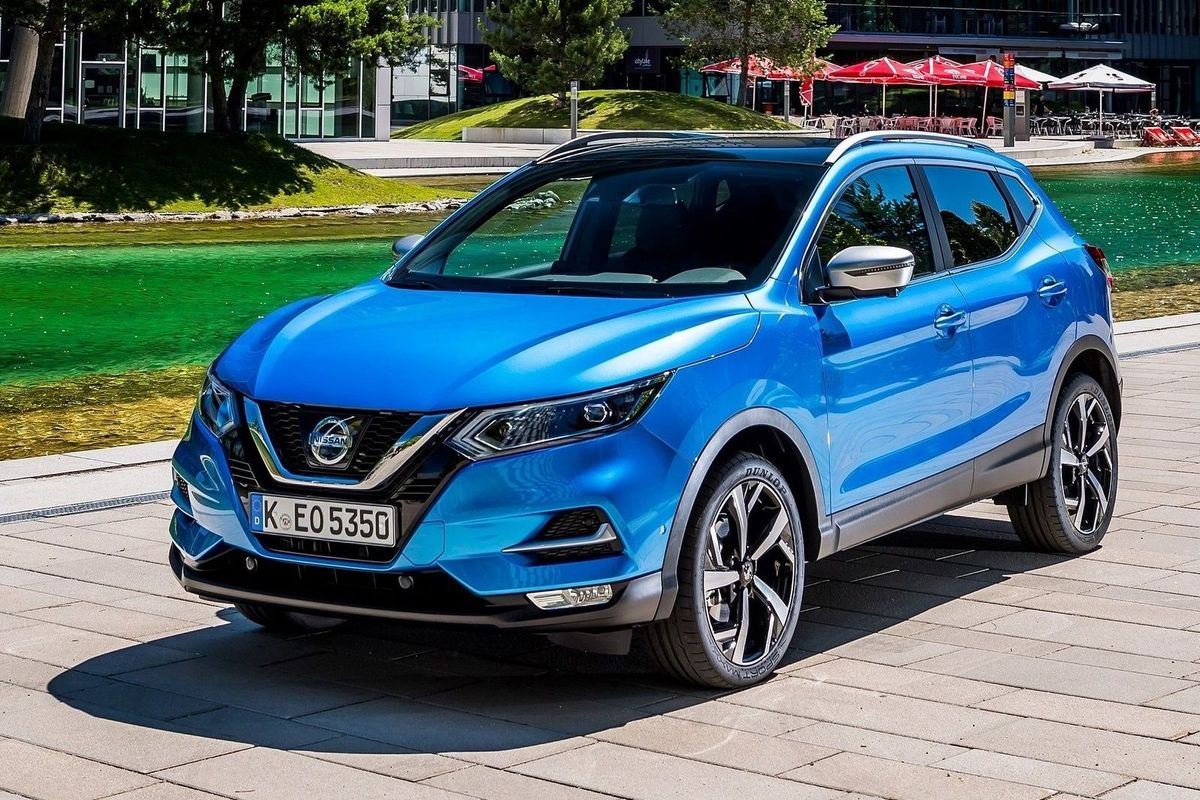
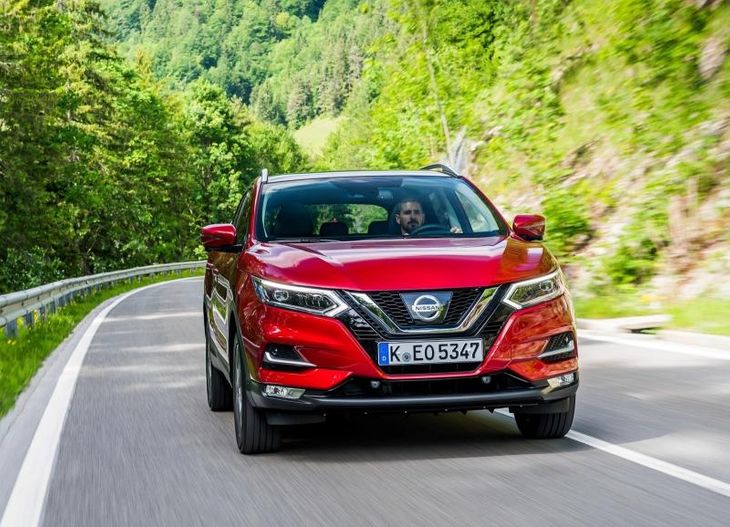
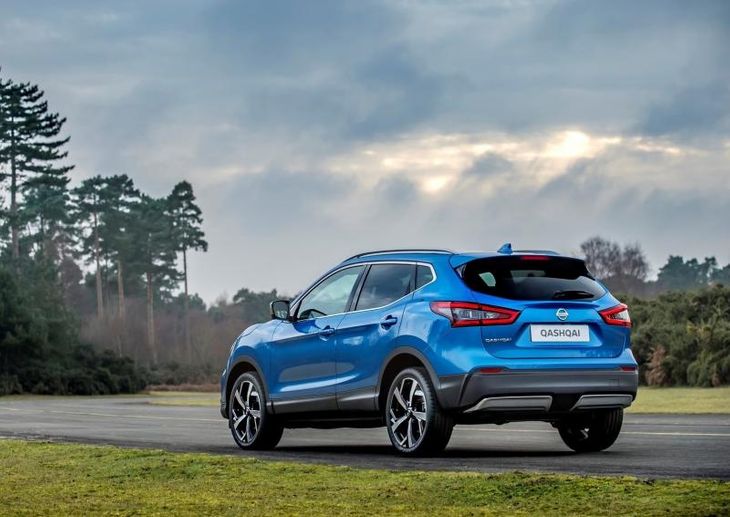
A new front is a key change for the Nissan Qashqai visually.
The Qashqai's front has been completely overhauled. There is a new front bumper with the latest version of Nissan's signature grille and revised headlamp clusters (with halogen units on Visia, Acenta and N-Connecta and full LEDs on Tekna and Tekna+). The halogen lights feature a new "boomerang" Daytime Running Lamp (DRL) comprising 9 LEDs (rather than 6), while the top-spec models now feature adaptive front lighting with high-beam assist. The rear bumper is also been redesigned with new LED tail lights and the parking sensors have been fitted in a neater manner. There are also new wheel designs in varying sizes of 17-inch, 18-inch and 19-inch, which have been aerodynamically improved to reduce drag.
New-look cabin
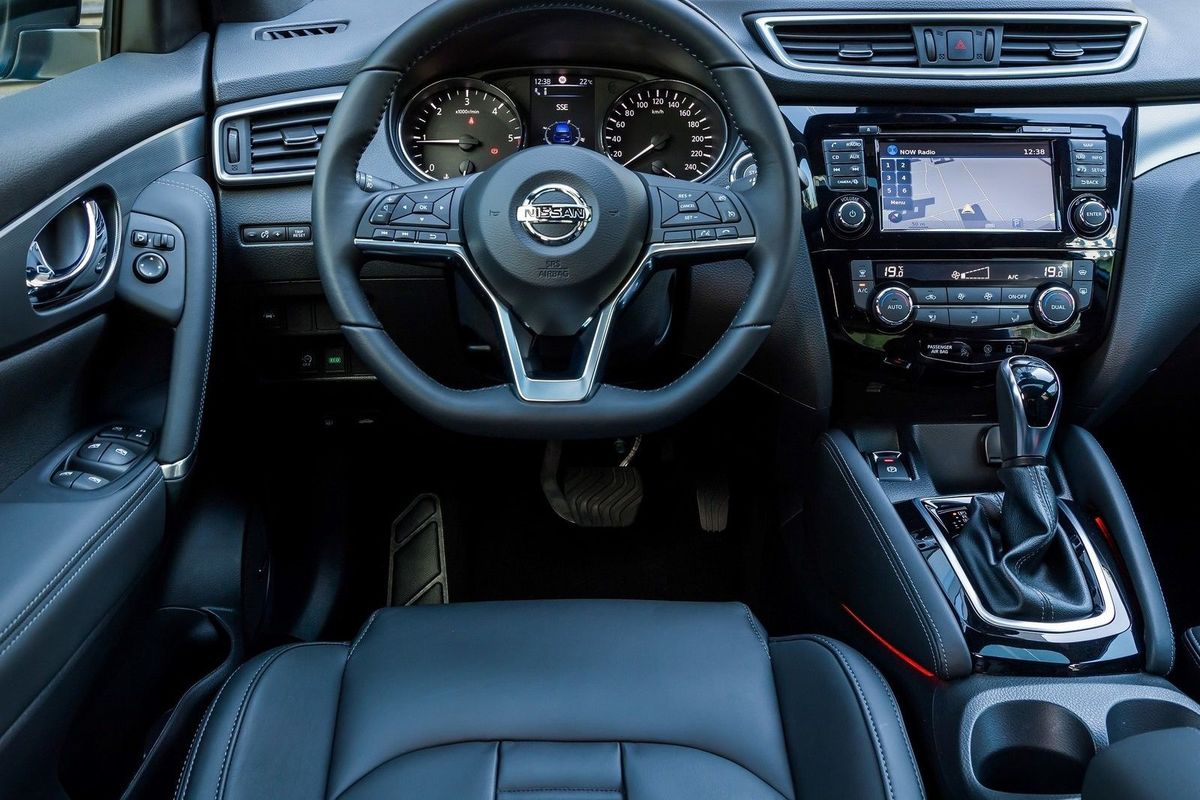
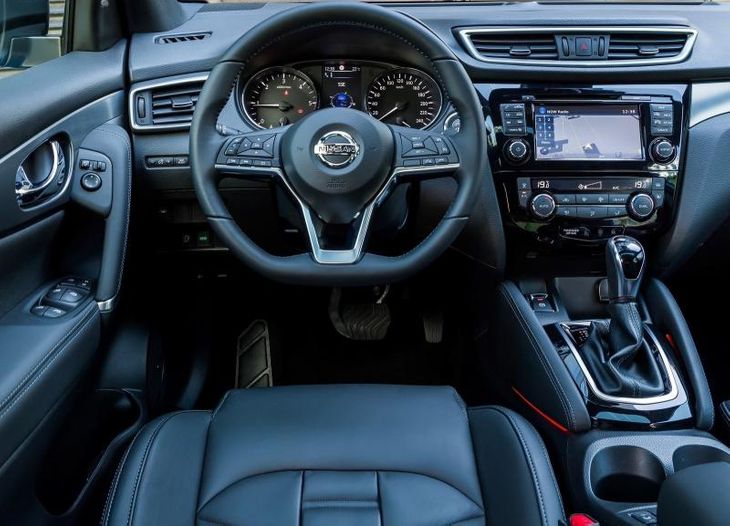
A new steering wheel, new seats and general improvement in the refinement are the key changes in the Nissan Qashqai interior
The changes to the cabin are extensive and claimed to improve the premium feel and look of the Qashqai. The steering wheel has been redesigned, plus the air vents and interior door handles are finished in higher-quality materials. All windows are now one-touch in operation. The seats have also been designed for additional comfort and support. The back of the front seats has been tweaked, with a new and more scratch-resistant plastic trim and two storage pockets, with a thinner finish which improves knee room for rear seat passengers.
Refinement improvements
Given these changes, the Nissan Qashqai is likely to continue to be a sales success
Nissan claims its facelifted Qashqai offers improved refinement and ride comfort thanks to tweaks to the spring rates and damper settings and modified rubber components. The anti-roll bar stiffness has been increased to maintain handling performance and body motion over large bumps has been reduced thanks to changes to the car's Active Ride Control system.
There are also improvements to the noise, vibration and harshness (NVH) performance of the new Qashqai. More sound insulation material, and interior trims of a higher quality have been added inside the front doors and behind the rear wheel arches. Additional sealing around the front doors has been integrated, while the rear door glass is thicker.
Engine choices
The Qashqai's range of engines has been carried over, with the choice of petrol or diesel, six-speed manual or CVT automatic transmissions, and two or four-wheel drive configurations.
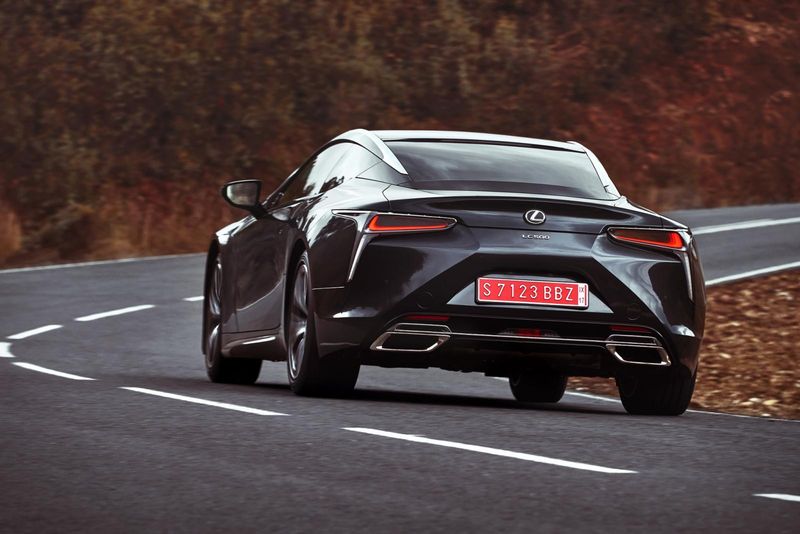
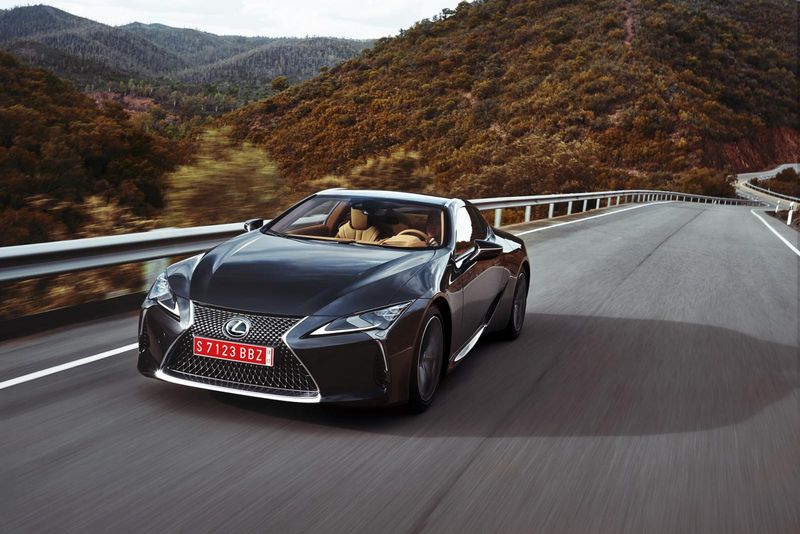
Lexus is not renowned for producing headlining sportscars, but the evocatively styled LC500 looks to change all of that. The eye-catching V8-engined newcomer is now available in South Africa (priced at R1 729 600) and here's what it's like to drive…
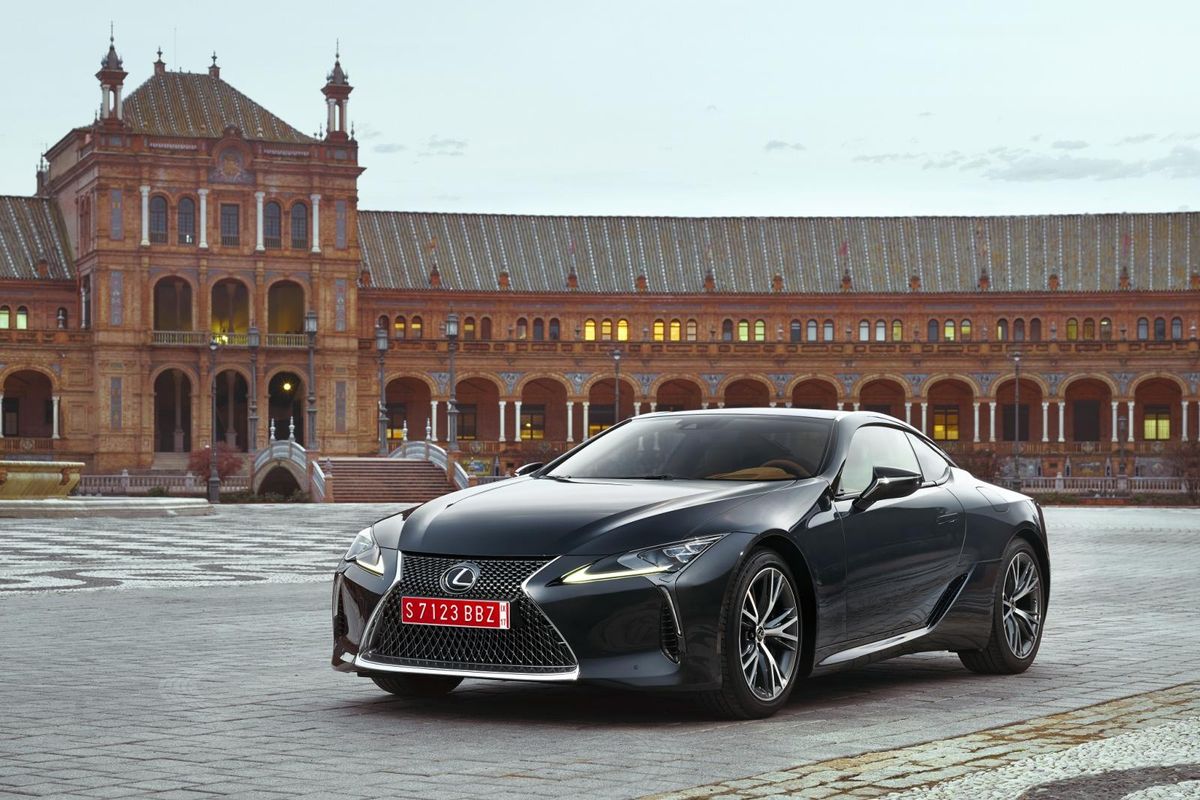
SEVILLE – Stepping out of the hotel, onto the narrow, cobbled streets of Seville's town centre, two LC500s await us. In this setting, in the cool blue light of European winter, the new Lexus looks fantastic in the true sense of the word; like a time machine or some sort of exploration pod from another planet.
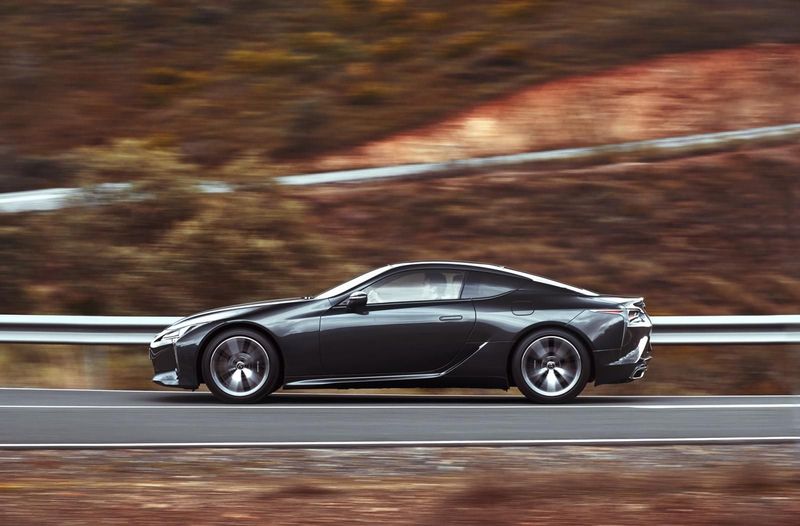
With its gleaming metallic paintwork, striking lines and near-perfect coupe proportions, the LC500 is forcing many passers-by to stop and stare. A few people take pics of the car, some even take selfies with it. This is a car with star power – that is one of the newcomer's greatest strengths.
Over the course of the day, we would find what its other strengths are…
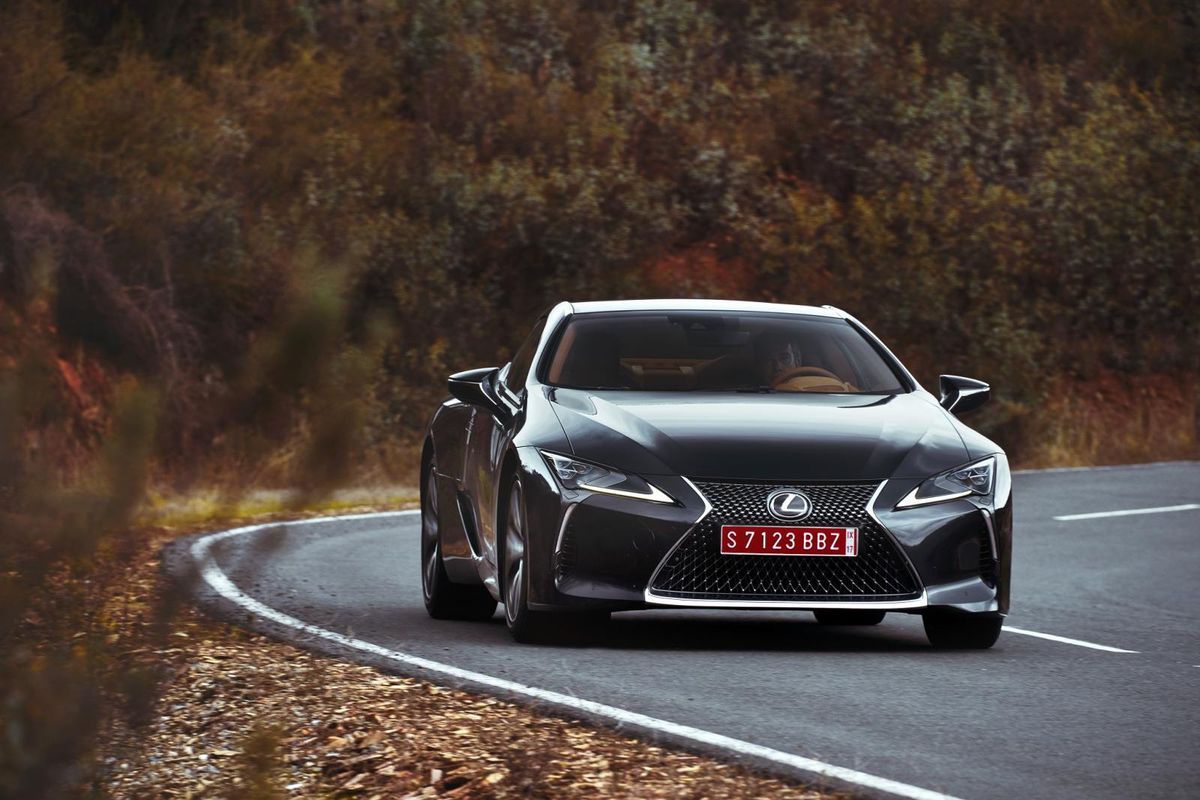
Undoubtedly the most dramatically sculpted Lexus since the LFA supercar, the LC500 attracts admiring glances.
On the highways leading from Seville, the new Lexus behaved much like… a Lexus; the ride quality was superb; the cabin whisper quiet. The boot space is wide, but quite shallow… Perhaps you'd struggle to fit a full-size suitcase in there, but there's enough space for a weekend's worth of luggage. The LC500 was playing the role of GT car very well. The first leg our trip was only 90 km, but we would have happily travelled 900 km; it's an eminently comfortable car.
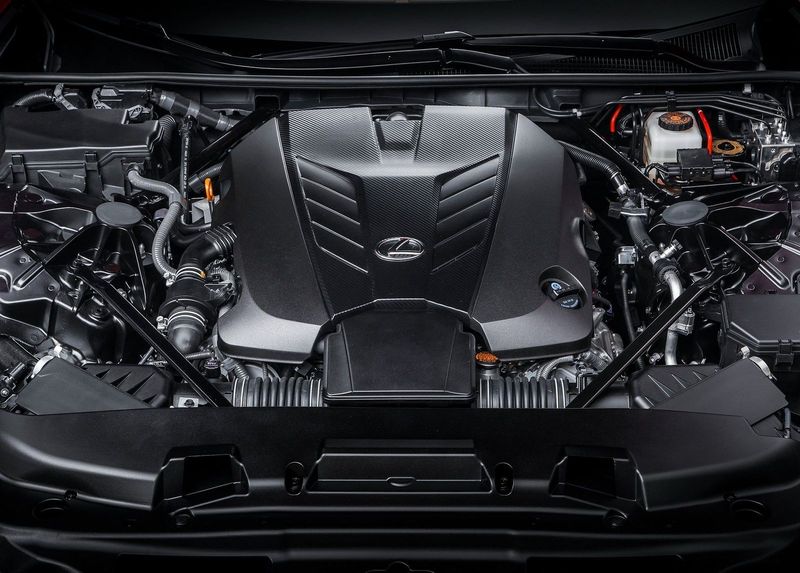
We were in the V8 model, one of two available from launch. The other was a V6 petrol-electric hybrid, which unfortunately will not be coming to South Africa – at least at this stage there are no plans to make it available. The 5.0-litre V8 is the same naturally aspirated unit found the in RC-F, here tuned to produce 349 kW and 530 Nm. Lexus claims that it makes the 0-100 kph sprint possible in under 4.5 seconds and, interestingly, just under 5 seconds for the hybrid.
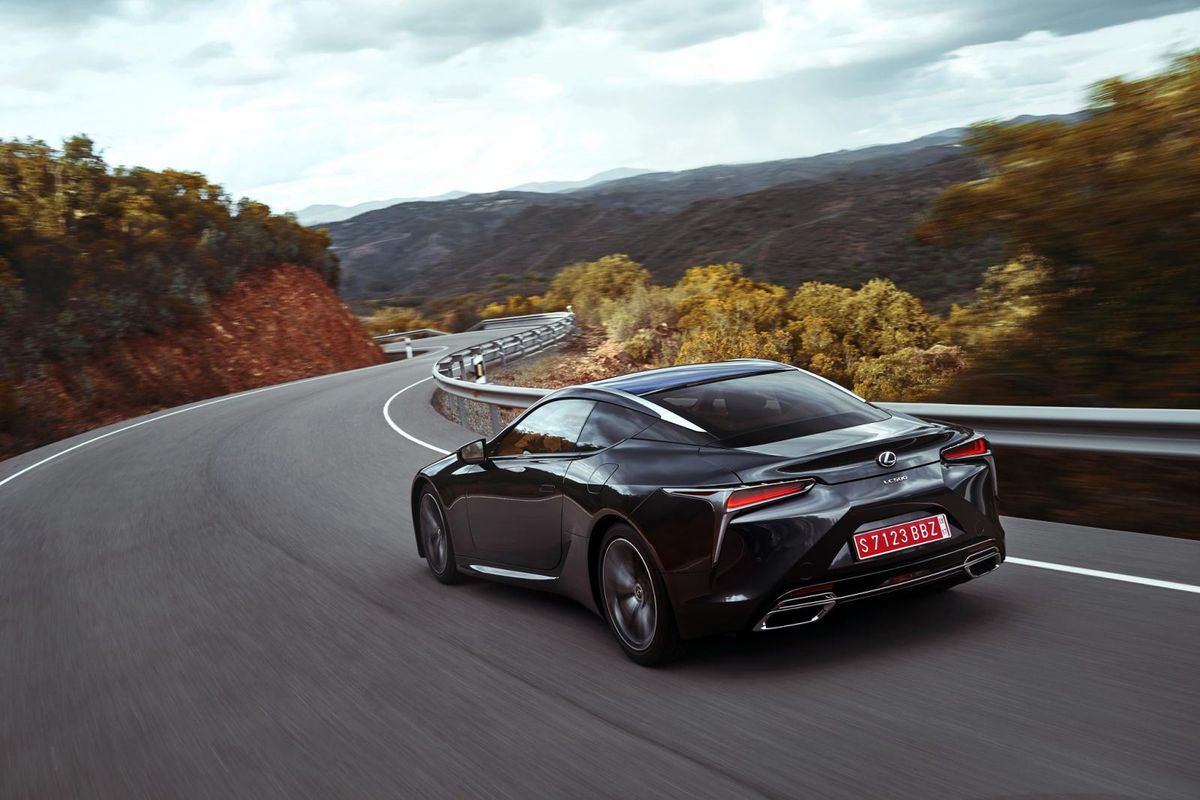
With exquisite GT-like proportions, the lithe, low-slung LC remains remarkably true to the concept car that previewed it.
The Spanish highways gave way to smaller, regional roads and we headed for the mountains. The roads were exceptional: a seemingly never-ending series of corners, elevation changes and switchbacks, cutting across the countryside… not usually a route that would bring out the finest qualities of a Lexus.
'Feels like the whole car is working with you'
Except this one. Dynamically, the LC500 is deeply impressive. It is a large car and its kerb weight does make its presence felt in the tightest of corners, but generally it feels like the whole car is working with you; as if you're in control of every nut and bolt. Sometimes, with large powerful cars, it can feel like you're just along for the ride, but the LC500 avoids that. There's a predictable way to how the car behaves, with almost zero understeer, and it all combines to inspire confidence. If the goal of any sportscar is to put a smile on the driver's face then the Lexus engineers can consider that box ticked.
An enormous amount of work has gone into making sure the Lexus feels engaging. The engine is mounted as low and as far back as possible; in fact, it is positioned behind the front axle. The roof is made of carbon fibre, as are the door panels and the floor of the boot. Even the battery has been placed in the boot for better weight distribution. The suspension towers are aluminium, as is much of the chassis. The result is that the centre of gravity is just 510 mm from the ground (very near the driver's hips) and this creates a sense that you can "feel" what the car is doing as the weight of the car pivots around you.
There is something intoxicating about the soundtrack of a naturally aspirated V8…
Of course, there are multiple electronic aids and a fair degree of suspension trickery at work here. The adaptive suspension is apparently so responsive that the LC can change damping rates multiple times per stroke of the shock. In Sports S+ mode the car is noticeably stiffer, but its ride quality was still forgiving.
Truly dual-natured
Descending from the hillsides, on the flat roads leading to the Monteblanco racing circuit, the LC500 once again became the docile, ultra-civilised Lexus you'd expect it to be. And that is the greatest accomplishment here: the true dual-nature of the LC500. And we were about to test that dual nature to its limits with a couple of hot laps of this little-known F1 test track.
Before 2012, heading to a racing circuit with a Lexus would have been a very odd proposition. But that year, the company debuted the LFA supercar. It was a surprise move from a brand that is synonymous with comfort and luxury, but quickly, the LFA gathered a reputation for being an exceptional driver's car. It was a signal from the company that it was changing direction.
The engaging driving experience of the LC does not come at the expense of on-road comfort, quite the contrary.
The LC500 is an attempt to capitalise on some of the magic created by the LFA, but in a package that is more suited to everyday driving, and at a price that more people can afford. But where the LFA has a high-revving V10, the LC500 has a V8. And where the LFA is entirely made from hideously expensive carbon fibre, the LC500 has to make to do with high tensile steel and aluminium. How would these shortcomings translate into on-track performance?
With the drive mode set to Sports S+, the exhaust note changes remarkably. The V8 has special ducting which channels induction noise from the engine bay into the cabin, while the active exhaust has been tuned to make it feel like the sound "is chasing you". On downshifts, the exhaust system spits and barks, complementing the howl that only a naturally aspirated V8 can produce. There is something refreshingly old-school about the way this engine sounds and, coupled with the more modern, programmed outbursts on downshifts, aurally, at least, this car was pressing all my petrolhead buttons.
Allows the tail to step out just enough
The way the LC500 builds speed is impressive, but I would have liked a bit more torque delivery on corner exits. Dynamically, out here on this circuit full of tight corners, the Lexus impressed, however. Those same characteristics that presented themselves in the mountains were at play here too: predictable, progressive behaviour that inspires confidence. The brakes, 13-inch ventilated steel discs up front and 12 inchers at the rear, do a superb job of scrubbing off speed. While predictable, the car’s handling is not anodyne, nor placid. The setup favours oversteer and in Sports S+ mode, the traction control system takes a step back, allowing the Lexus' tail to step out just enough to make you feel like a pro. It stroked my ego to catch the car’s oversteer with a bit of opposite lock, but it’s more likely the system flattered my driving skills!
The LC's 5.0-litre V8 produces 349 kW and 530 Nm and is mated with a superb 10-speed transmission.
This is another great strength of the LC500…. The car is eager and playful. It feels like it wants you to enjoy yourself – it’s not an intimidating driving experience. And again, I was entertained out on the track and drove back to the pits with a huge smile plastered on my face.
What I was most worried about when I headed out onto the circuit was how the 10-speed, single clutch gearbox would behave. Lexus proudly claims this transmission offers all the advantages of a dual clutch gearbox (speed), with all the advantages of a traditional automatic (reliability). A new torque converter is employed and the clutch is multi-plated, which doesn't run dry and because of the torque converter, engages without slip, which drastically reduces wear.
In practice, the gearbox is quick. Very quick. Utilising the large magnesium alloy paddles that are attached to the steering wheel results in sharp, quick changes. You'd be hard-pressed to tell the difference between this and any dual-clutch 'box. But the reality is that 10 ratios is a lot, and I found myself getting lost somewhere between 6th, 7th, 8th, 9th and 10th on the odd occasion.
If the ultimate role of a sportscar is to put a smile on its driver's face, the LC has succeeded in its quest.
'Just leave it in automatic'
I posed this issue to Ito-san, the Takumi who helped develop the car. In Lexus-speak, a Takumi is a master; perhaps a master craftsman, or in this case, a master driver. Ito-san had spent thousands upon thousands of hours crafting the feel of this car. Every aspect of how it drives is down to him, and to a lesser extent, his ultimate boss Akio Toyoda. Ito-san encouraged me to leave the 'box in automatic. He insisted it would surprise me with how it was set up.
And he was right. During my hot laps of the circuit, I forgot about the gearbox entirely. The 10-speeder was always in the right gear… it seemed to faultlessly select the gear I needed, exactly when I needed it. Indeed, this gearbox is a triumph and, if it proves as reliable as Lexus claims it to be, then the firm really will have achieved something that moves the game along in the wider automotive industry.
The LC500 doesn't fit neatly into the modern marketplace of luxury coupes. For some clue as to which cars Lexus sees as competition, we're told that the firm hosted a "dynamic clinic" for the owners of BMW 6 Series, Mercedes S-Class Coupes and Jaguar F-Types, where they were given a chance to sample the newcomer.
Although the LC's size and bulk become apparent in tighter corners, its ride/handling balance is hard to fault.
In addition to those three cars, I think the LC500 might even bother the Maserati GranTurismo and, to a lesser extent, the Porsche 911. But the car it most reminds me of, which Lexus didn't mention, was the Mercedes-Benz SL. Its proportions are smaller but very similar, it has a decent 2+2 configuration and the driving position is very similar too. In the corners, the LC500 feels lighter and more agile than an SL, but in terms of cruising, they're much of muchness.
Stunning cabin
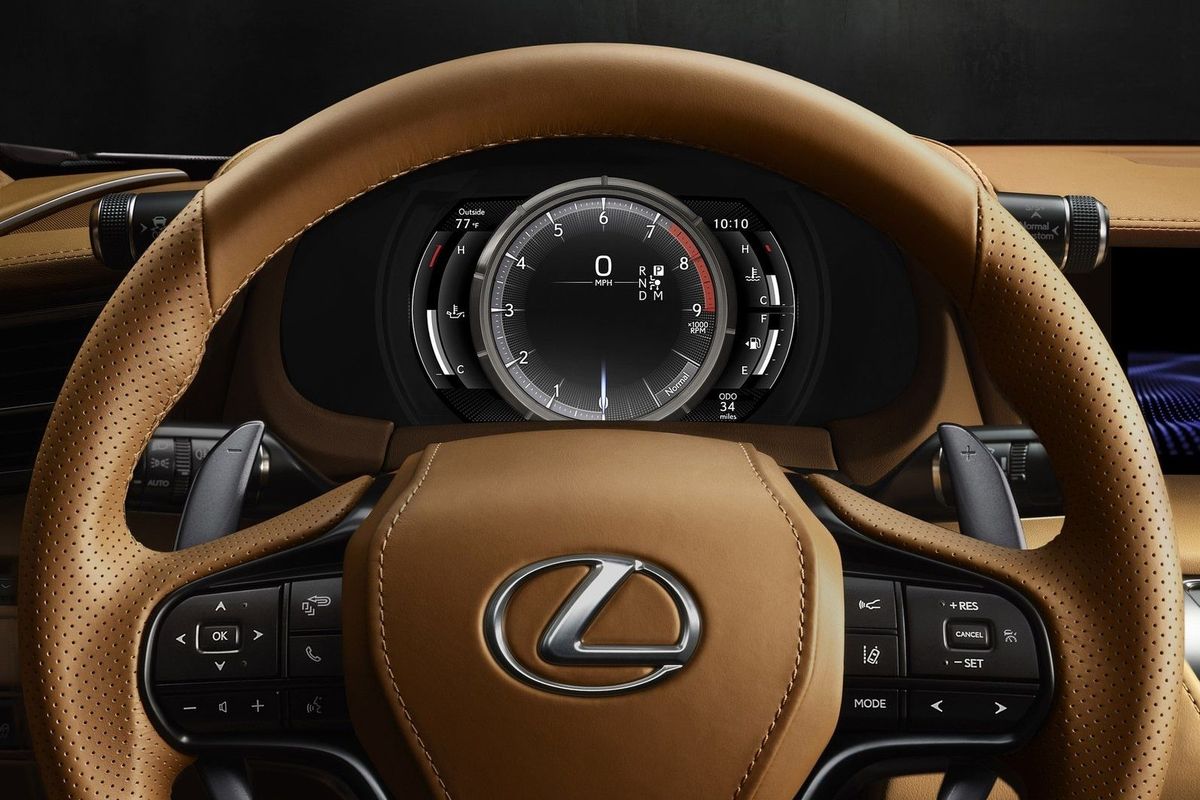
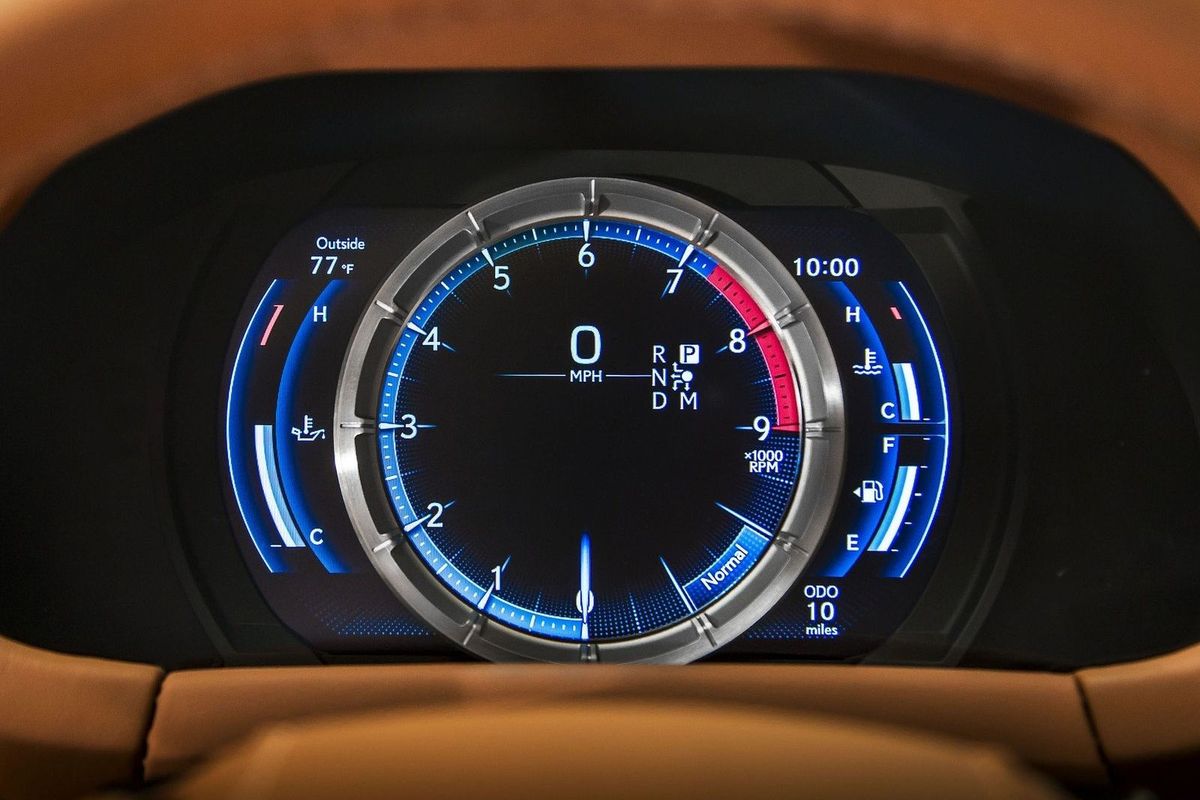
On the return trip to the hotel, I had some time to take in the Lexus' interior. It is quite a stunning cabin, easily one of the finest in its class. The leatherwork is superb and expansive, the steering wheel just the right size and the rim’s thickness is just about ideal. The dials are carried over from the LFA, which lends a sporting note to the dash. A 10.3-inch infotainment screen dominates the fascia, but Lexus have stuck with the trackpad touch interface, which I’m not particularly a fan of – it’s a bit fiddly and I think there are better systems out there. The transmission tunnel sits quite high, cocooning the driver and passenger. I loved how the cabin seemed to shrink around me – it felt like I was in a snug cockpit like that of the Audi TT. The closeness is reassuring.
Whereas the LC's cabin layout is not as outlandish as its exterior appearance, there's an intimate snugness to the cockpit.
Parked outside the hotel as the sun set, the mild pandemonium began once again… the photos, the selfies. I would have loved to have spent more time with the vehicle and I couldn’t help but wonder when I might next have the chance. The LC500 will reach South African showrooms in June 2017, where it hopes to steal a few sales from Lexus’ German, Italian and British rivals; I really look forward to driving it on local roads.
Summary
I think this is mission accomplished for Lexus. The LC500 is anything but boring, and after my experience in Spain, I have a completely new appreciation for what the brand is capable of. For Lexus, the LC500 is about more than just sales. It needs it to become a halo car… and I think it will.