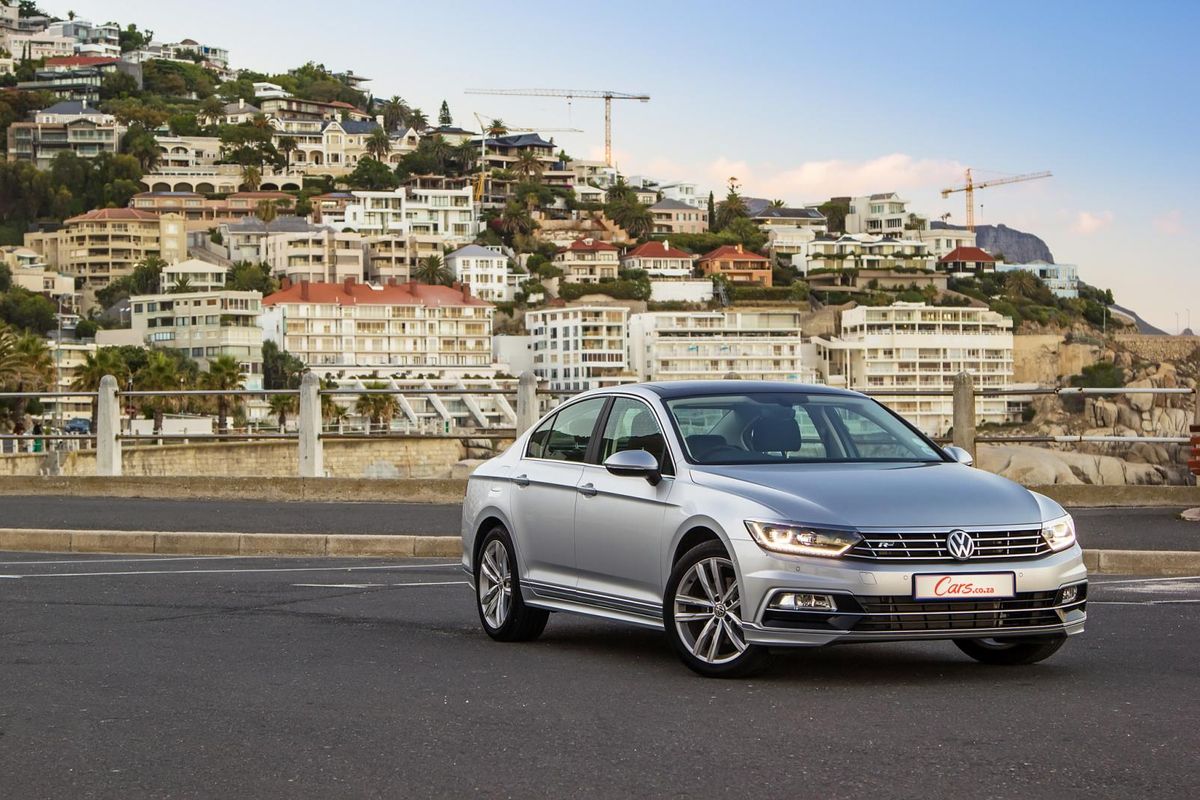
A torquey turbodiesel engine and spacious Volkswagen Passat business class sedan – it sounds just like a marriage made in long-distance cruising heaven…
We like: Effortless cruiser, quiet cabin, stable ride, passenger space.
We don’t like: Understated looks, boring interior.
Alternatives
For a fully loaded sedan: The Ford Fusion TDI is surprisingly dynamic to drive and similarly spacious, but lacks the overall quality feel of the Volkswagen.
For more snob appeal: The Audi A4 is the 2016/17 Cars.co.za Consumer Awards's Business Class Car. In 2.0 TDI guise it is R50k more expensive than the Passat and that’s for a bare bones entry TDI model.
For something left field:Infiniti’s Q50 2.2d offers something visually striking and spacious. It’s getting on a bit in years and the interior of the Passat feels better made.
Facts & Figures
Price: R509 350 (April 2017 incl. R-Line kit)
Engine: 2.0-litre turbodiesel
Transmission: 6-speed DSG
Power: 130 kW
Torque: 350 Nm
Fuel Consumption: 5.0L/100 km (claimed)
Top speed: 228 kph
0-100 kph: 8.2 sec
Having already spent time with the 2.0-litre turbopetrol version of the Passat, we tried out this turbodiesel model. There wasn’t much to dislike before, but this model features fewer of the glitzy cabin accessories that send the price skyrocketing and more of the basic essentials that a budget-wary buyer would be after.
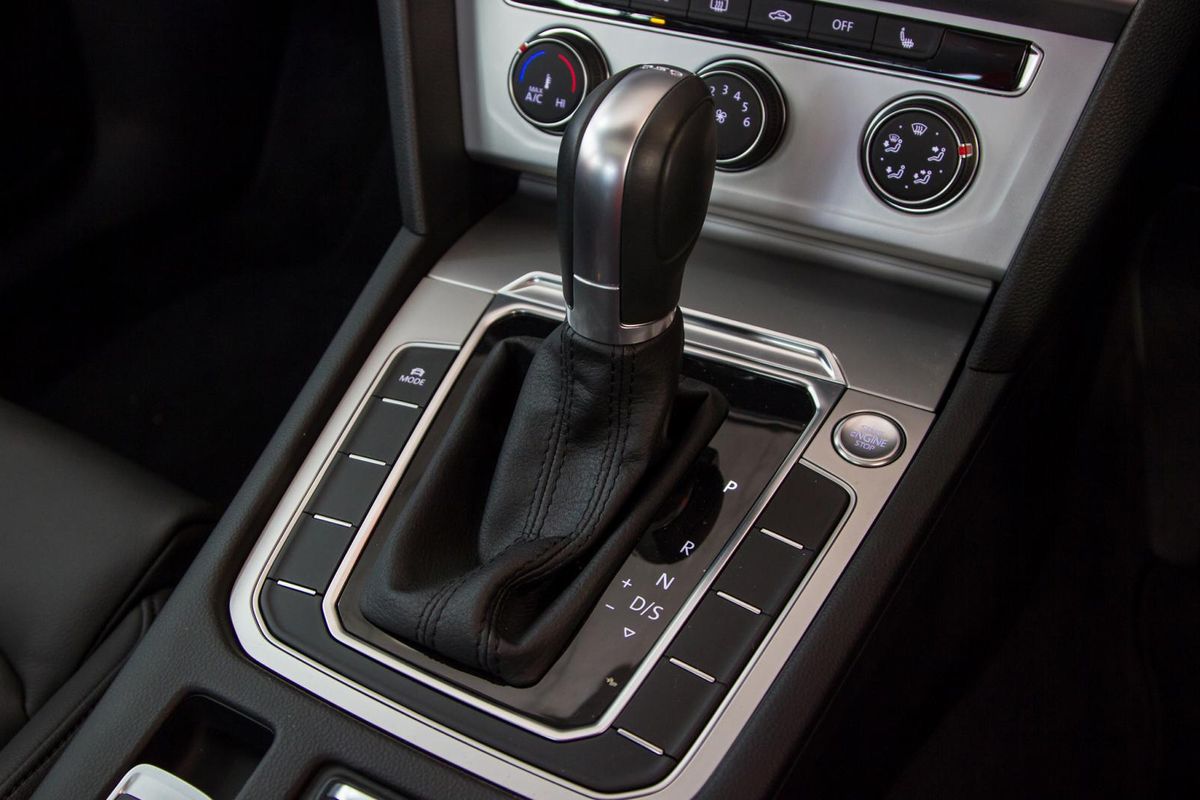
The turbodiesel engine and dual-clutch (DSG) automatic transmission work very well together. Shifts up the gearbox happen near imperceptibly and the return changes are very nearly as smooth. Whereas there is a very small flat spot at pullaway (when the engine is off boost), once on the move the motor pulls zestily with the slightest flex of your right foot.
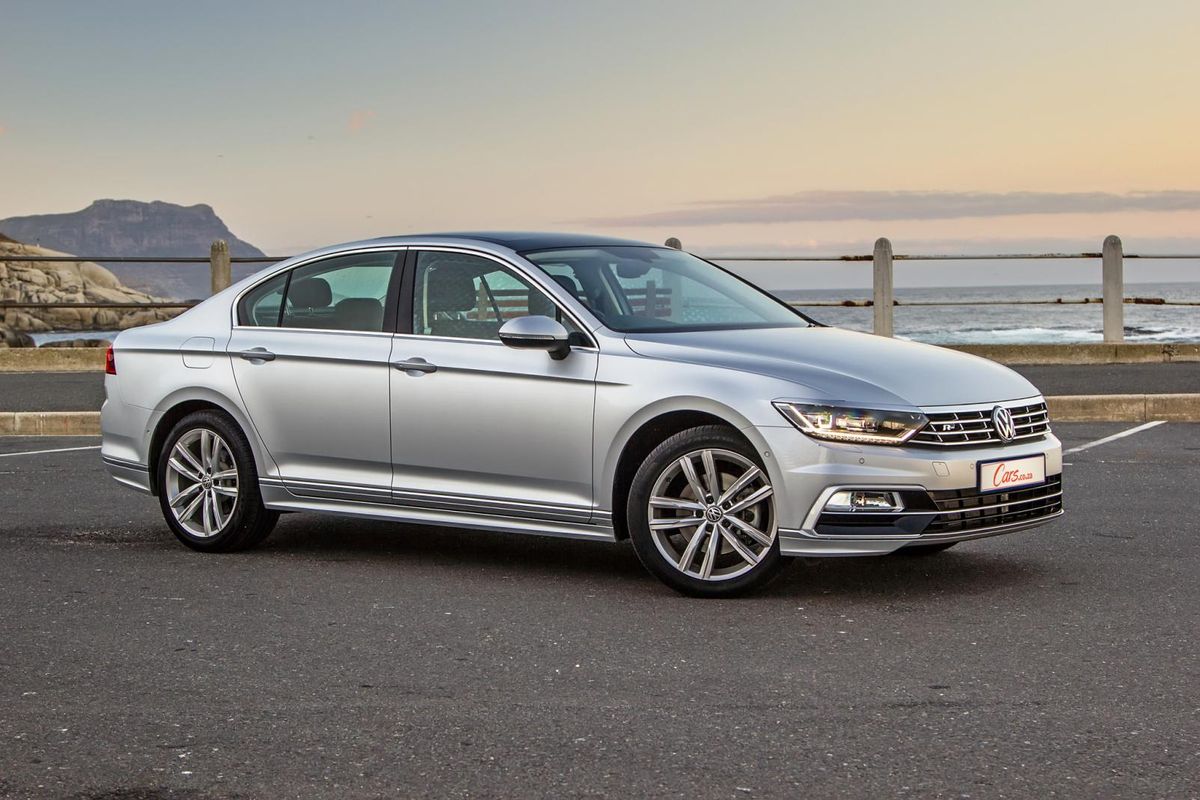
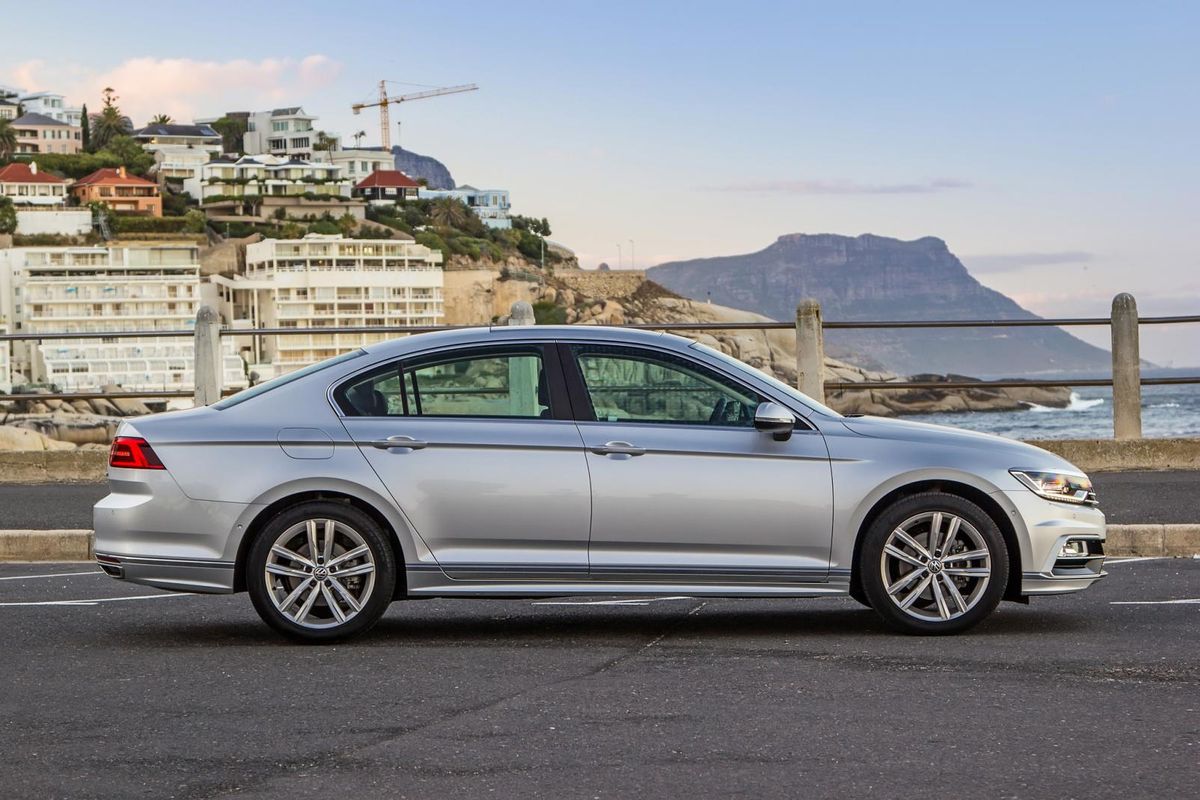
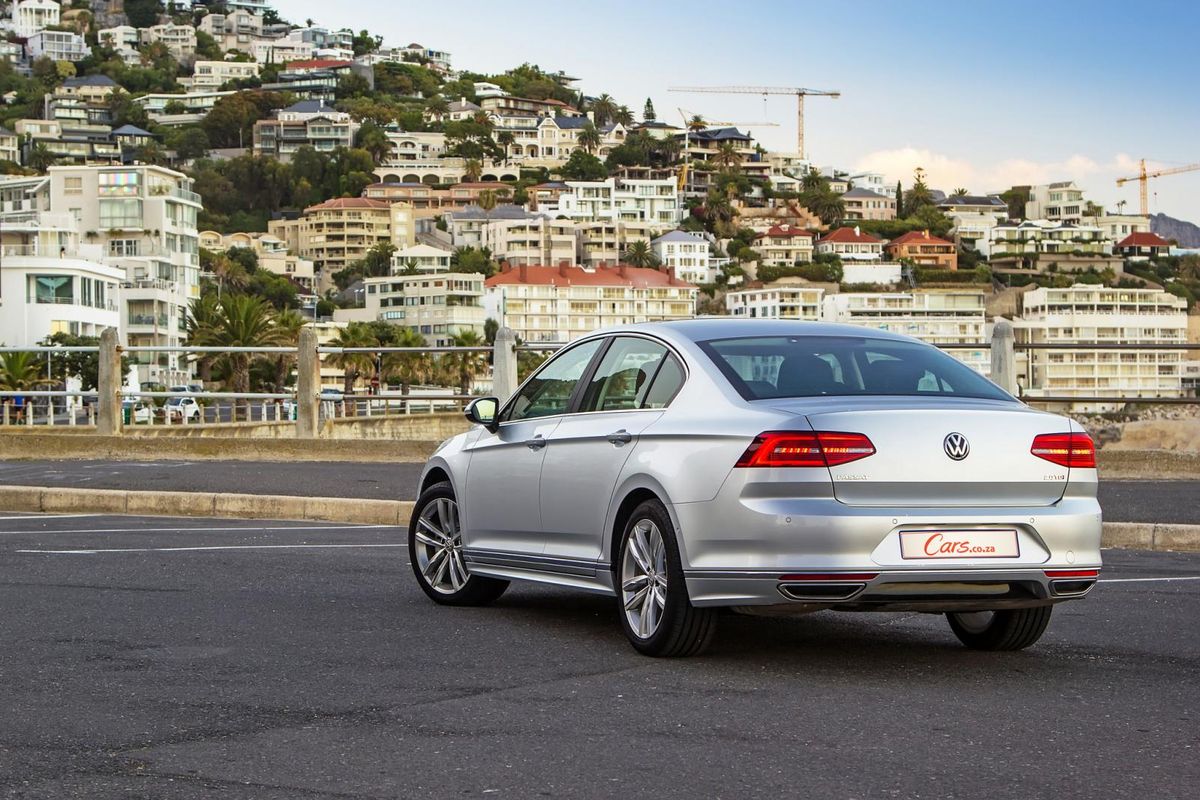
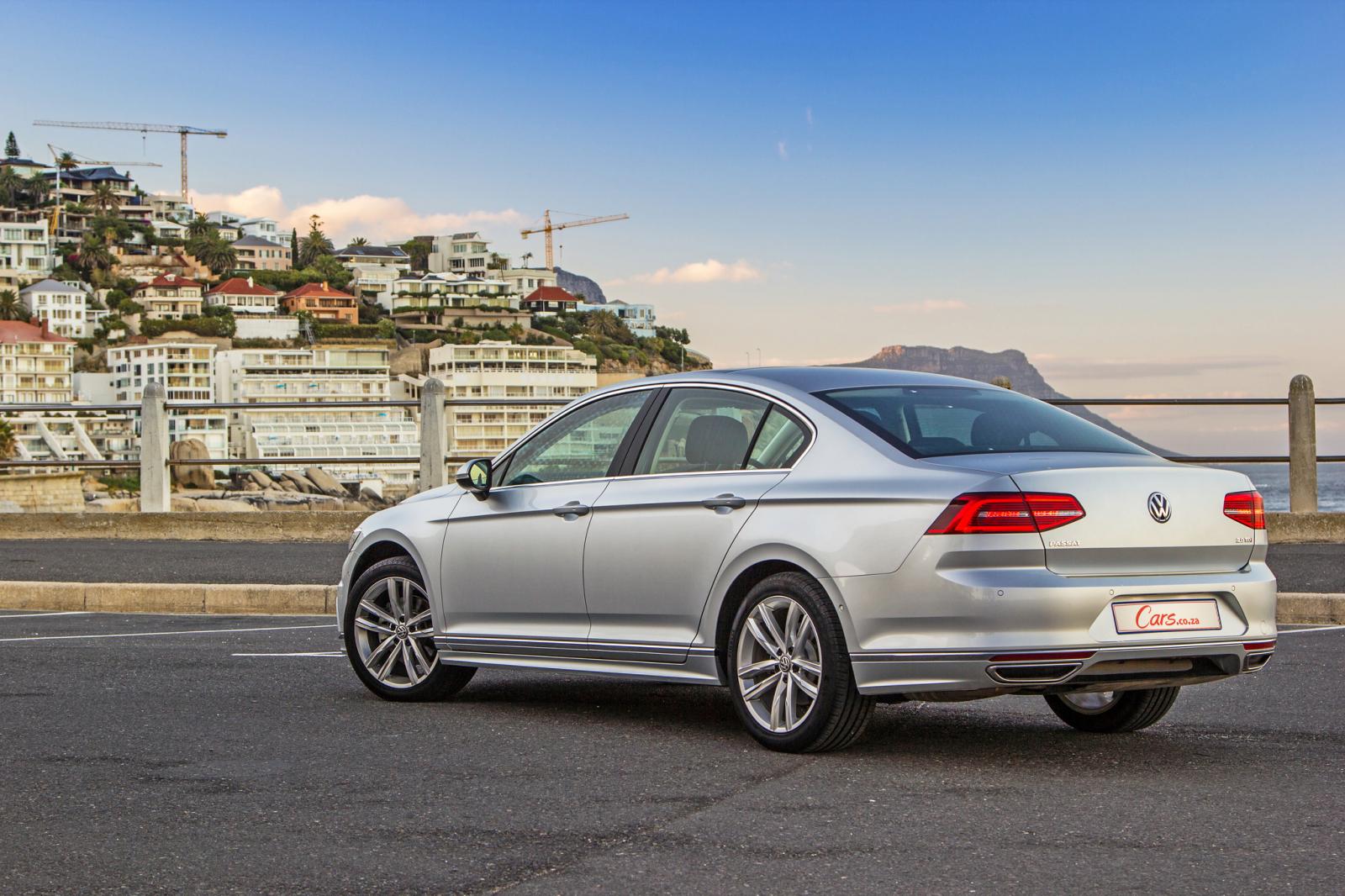
Not the most interesting sedan shape but there's plenty of room for passengers and things inside.
With 130 kW and 350 Nm of torque available, the engine is right up there with the best of the competition. It’s about 50 Nm shy of the Audi A4 and Ford Fusion's peak outputs, but the defecit's hardly noticeable. Overtaking is a simple exercise at freeway speeds, but there is a significant tapering off in acceleration at the higher end of the rev range.
Fuel consumption is claimed at 5.0 L/100 km and after our week with the Passat, it returned 7.1 L/100 km. As the turbodiesel engine wears in and longer journeys are undertaken, there’s no doubt it will drop into the 6es and even below that. That gives the Passat a projected range of well over 1 000 km per tank of fuel!
Ride comfort
Cruising along the freeway, drinking in the miles and watching the scenery fly by is the Passat’s ‘home turf’ so to speak. The suspension soaks up undulations and expansion joints beautifully. The cabin is tightly sealed so very little road noise, wind buffeting or vibrations are passed along to the driver.
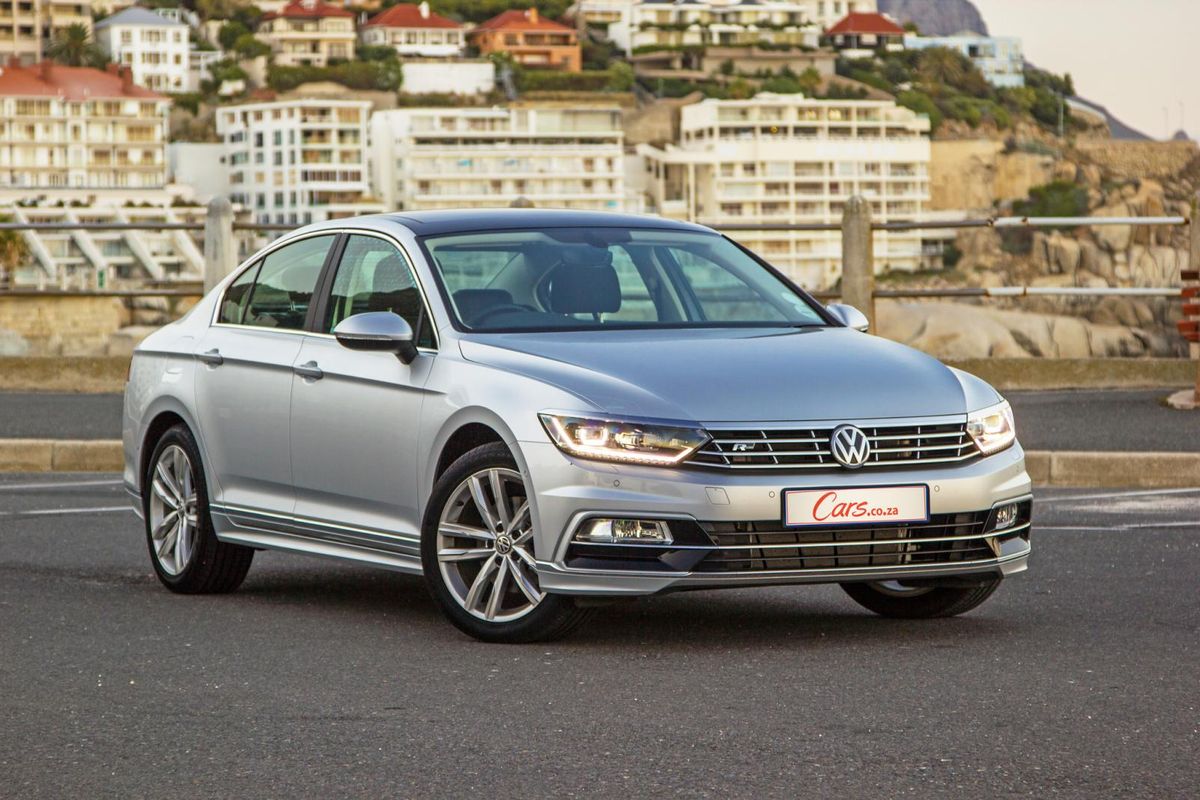
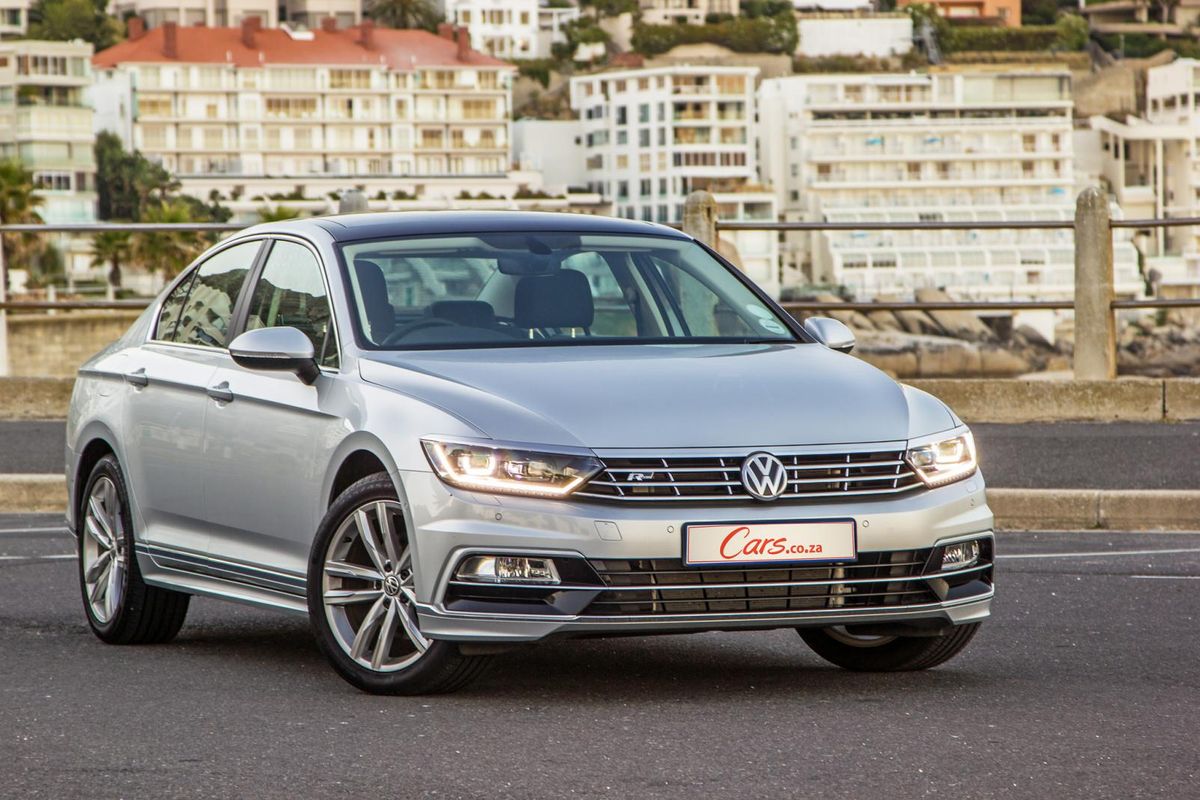
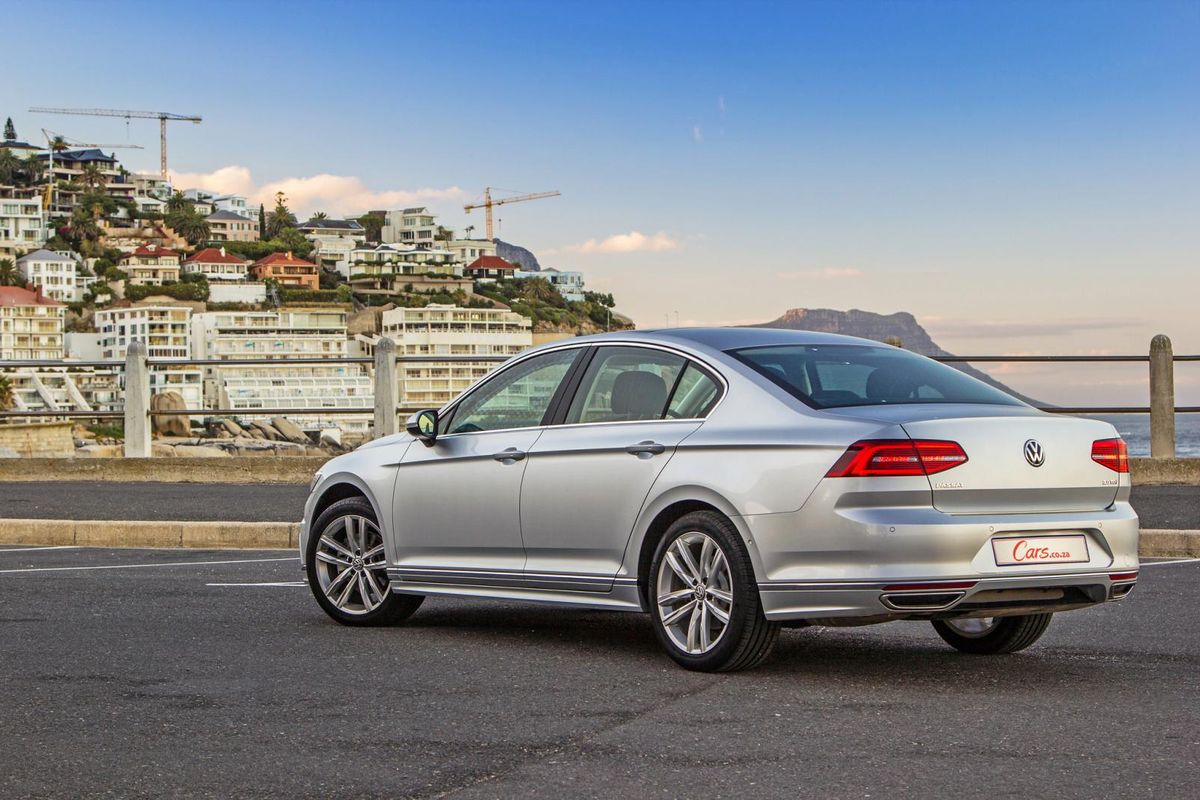
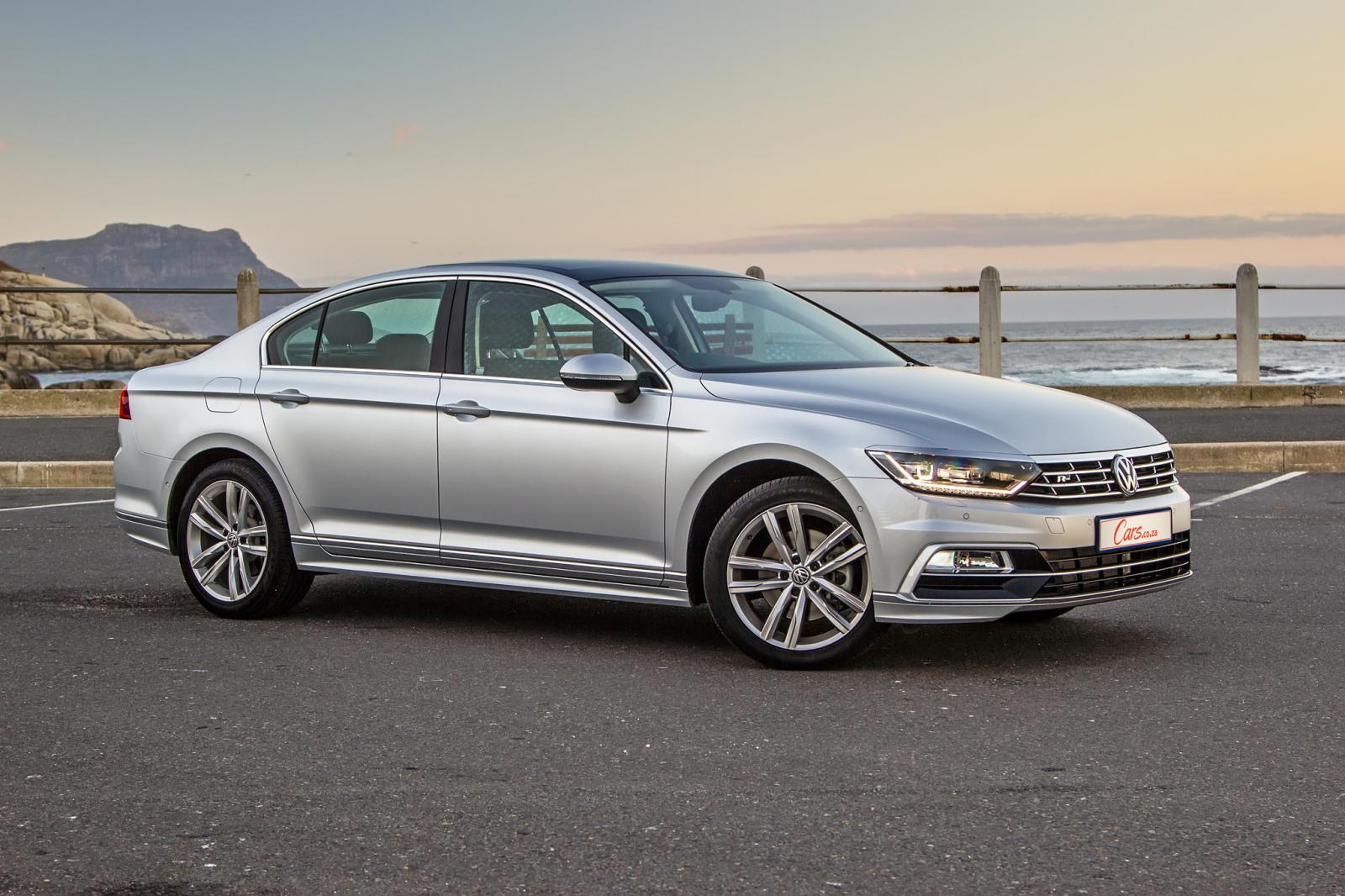
R-Line body kit adds some nice touches like the integrated exhaust tips, but will it be enough to tempt buyers?
The ride errs on the side of comfort, which makes sense as the Passat's not a car that’s likely to be fired through a mountain pass by driving enthusiasts. The steering feel is solid, commanding gentle inputs from the driver to coax the sedan in whichever direction they need it to go. Again, it is a car tailor-made for long-distance cruising.
There's an abundance of passenger space in the Passat, both in terms of head- and legroom. The boot will swallow a decent load at 519-litres and the rear seats fold down in a 60:40 split. With the seats down, there is a much larger hole to fit longer objects through than in many other cars in this segment. As a practical sedan, the Passat is among the best in its class.
The bad
Bland interior
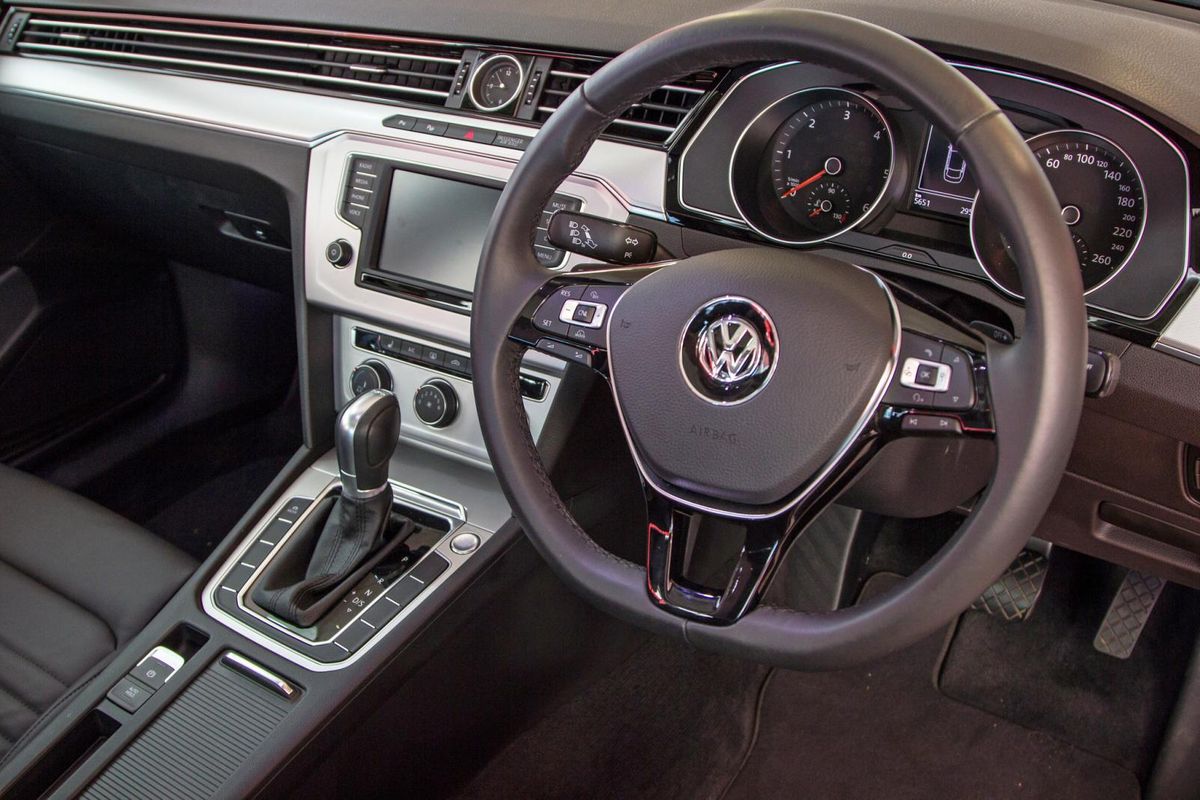
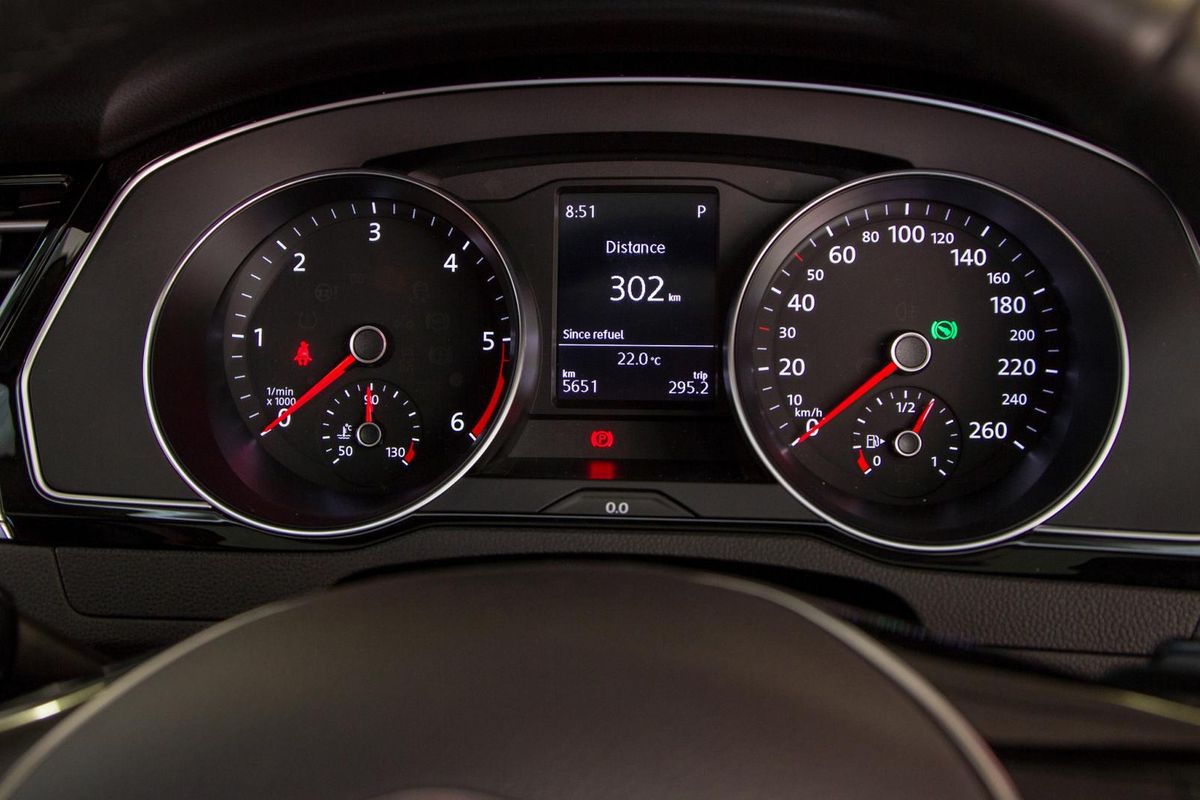
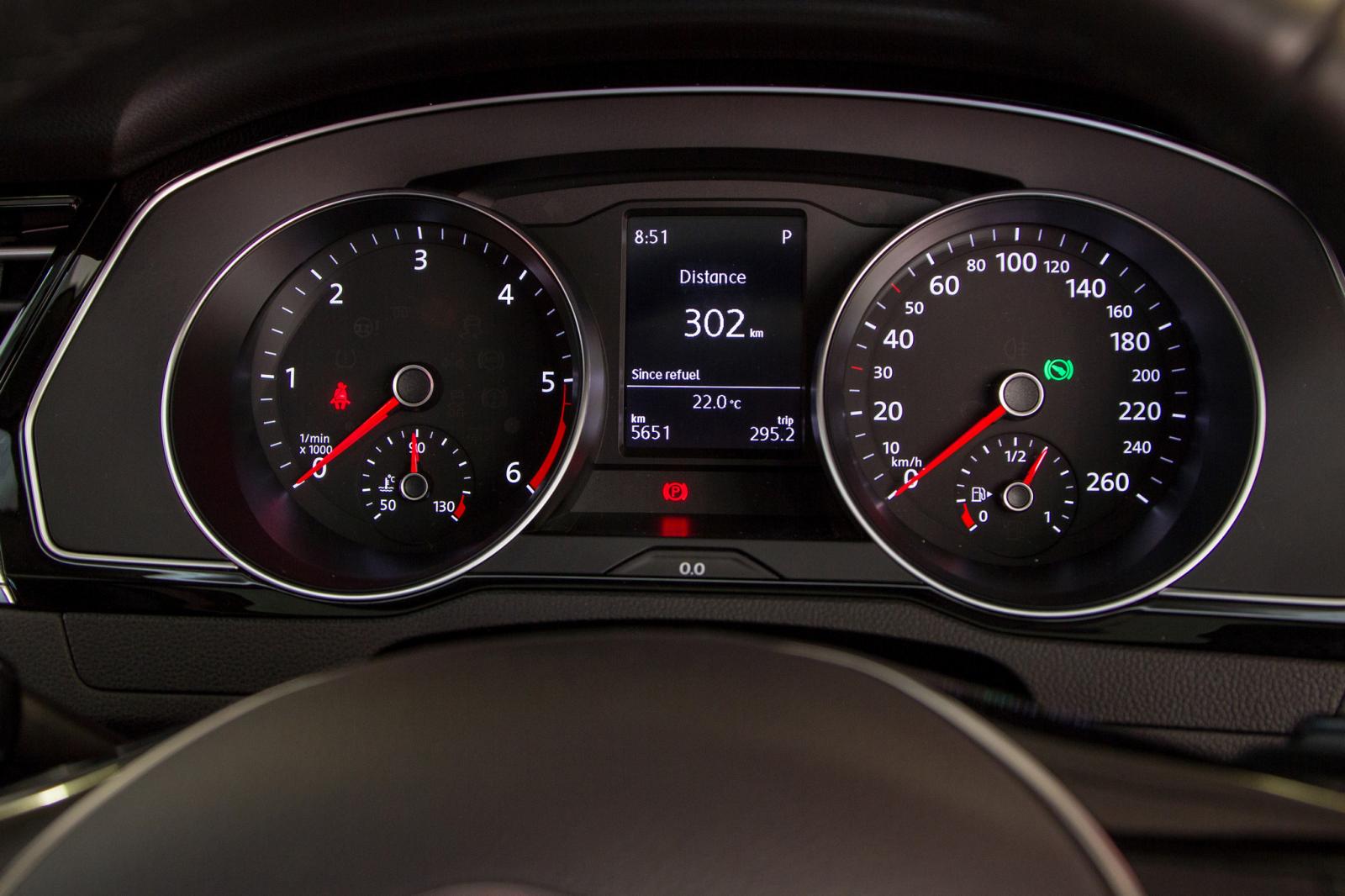
The standard analogue dials are no match for the optional digital cluster that breathes a bit of life into the cabin.
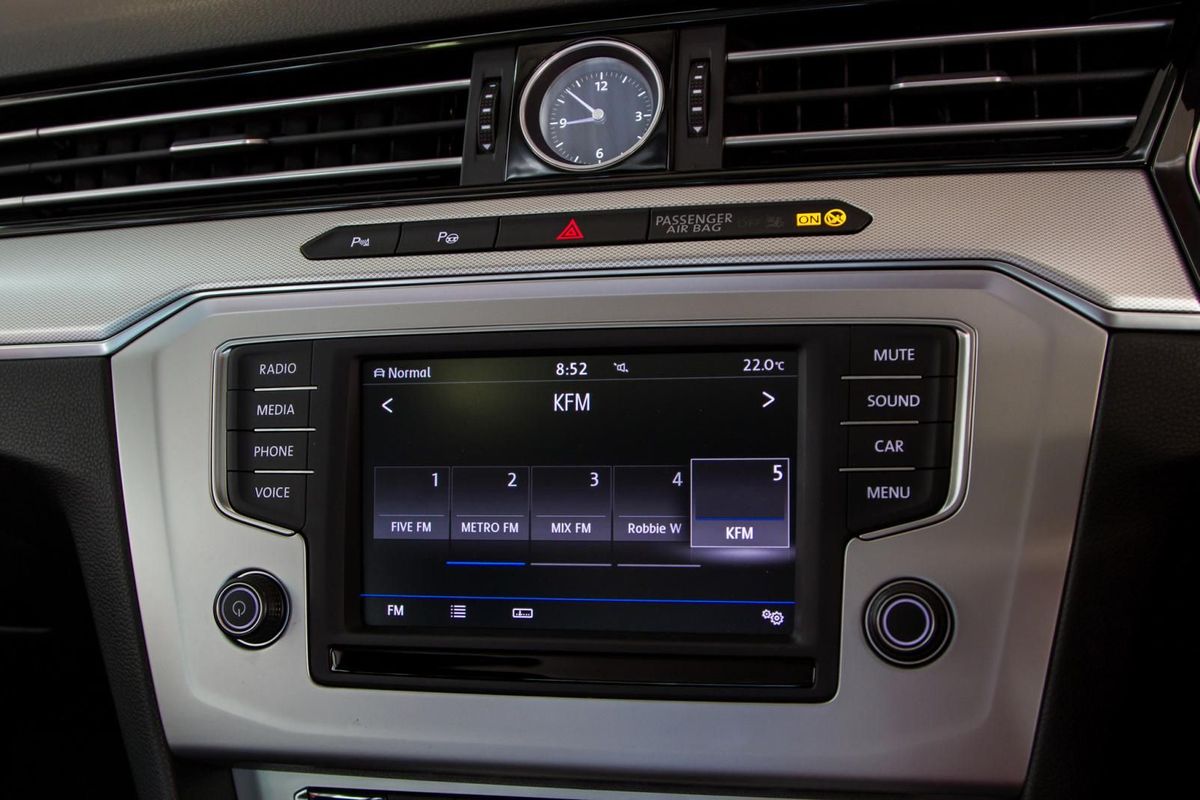
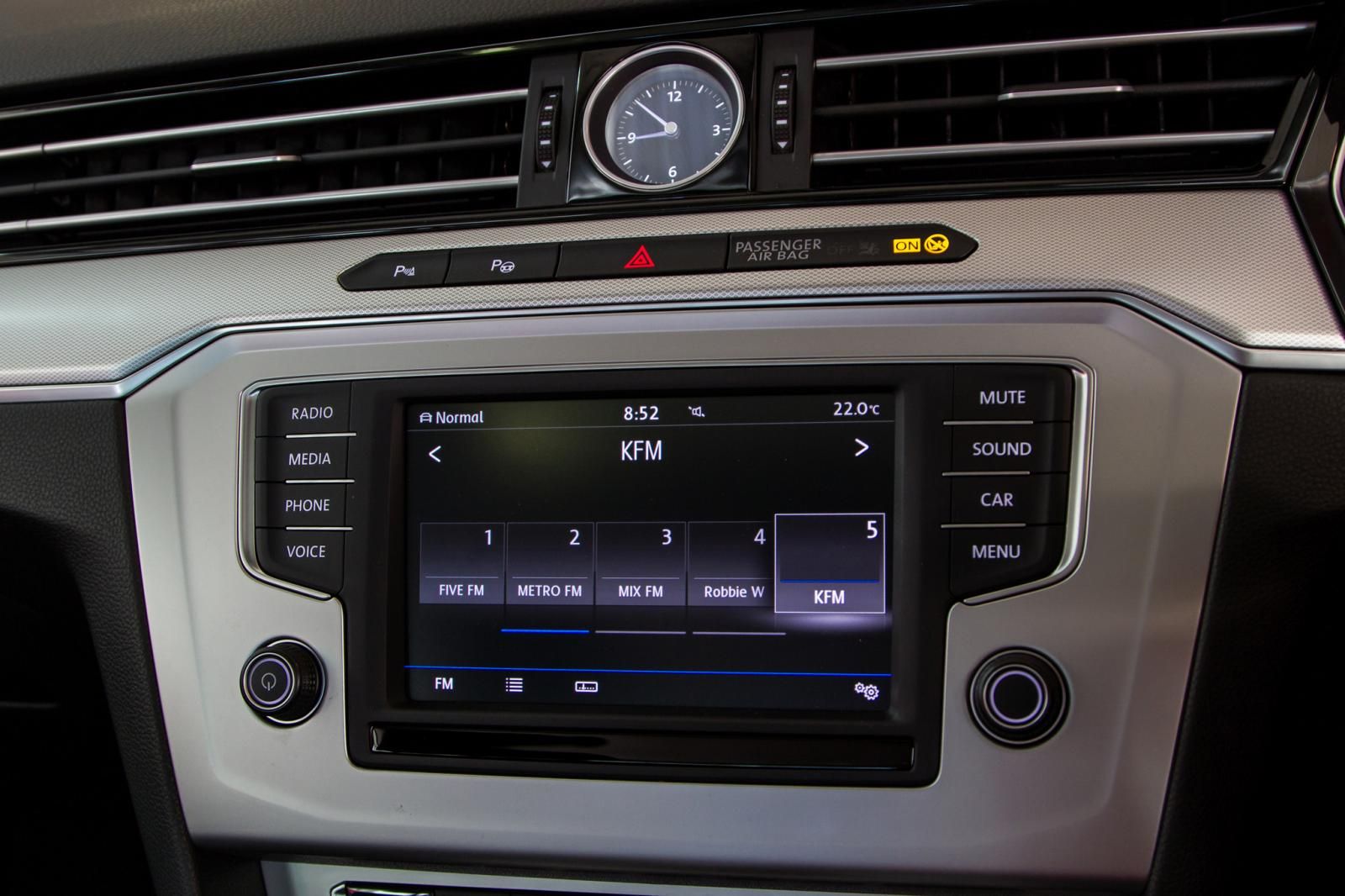
Without fancy gizmos to spruce up the cabin (as fitted to the 2.0 TSI R-Line we tested before), the Passat looks rather bland on the inside. For example, the glitzy Active Info Display (digital instrument cluster) that was fitted to the petrol Passat is replaced by a standard set of analogue dials, which do the job but look dull. The large touchscreen infotainment system is also replaced with a smaller, more rudimentary version. The latter does have the option of App Connect available, so it will do just about any connectivity job you need taking care of.
Smaller touchscreen system is actually quite functional and with App Connect, has modern features.
Leather trim is an optional extra that our car was specced with; considering the type of vehicle the Passat is and the miles it’s likely to clock up, smarter seats are worth the extra outlay.
Plain exterior
Despite our model having the R16 000 R-Line body kit, it doesn’t give the Passat a bold or prominent appearance. There are many sedans to choose from in the business class segment, but if looks were unimportant, we would all be driving a Passat… Unfortunately, the sales charts say otherwise and the Volkswagen's understated and bland looks are still its Achilles heel.
Verdict
At an entry price of R493 900, the Passat represents excellent value. Spec up this derivative with an R-Line pack and R20k worth of options and it would still offer better value for money than its closest direct rivals. In turbodiesel guise, it’s light on fuel and the torque delivery makes for an easy cruiser on the long road.
The only area in which it is found wanting is in terms of visual appeal, both inside and out, but an aesthetic critique is admittedly subjective and some buyers will indeed prefer to own and drive an understated luxury car. The Passat remains well built inside and out and feels luxurious enough to satisfy most mid-level executives who prefer to take the long way home…
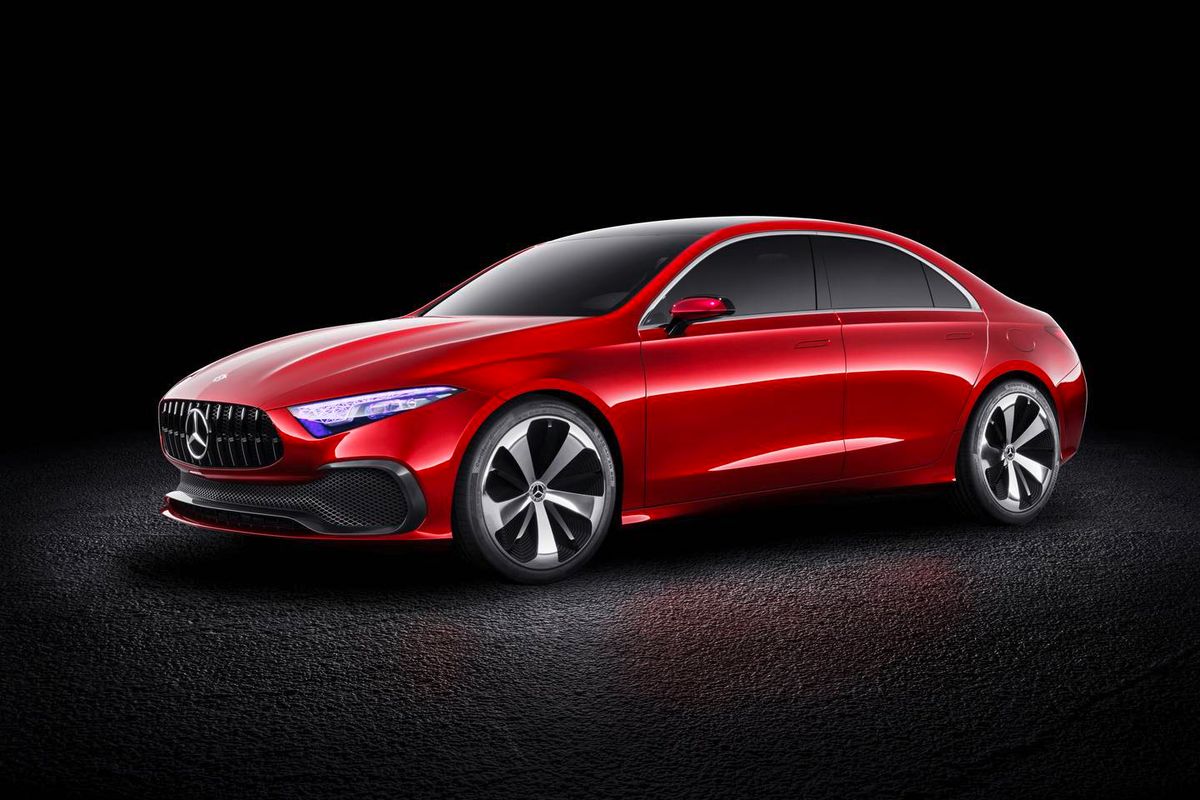
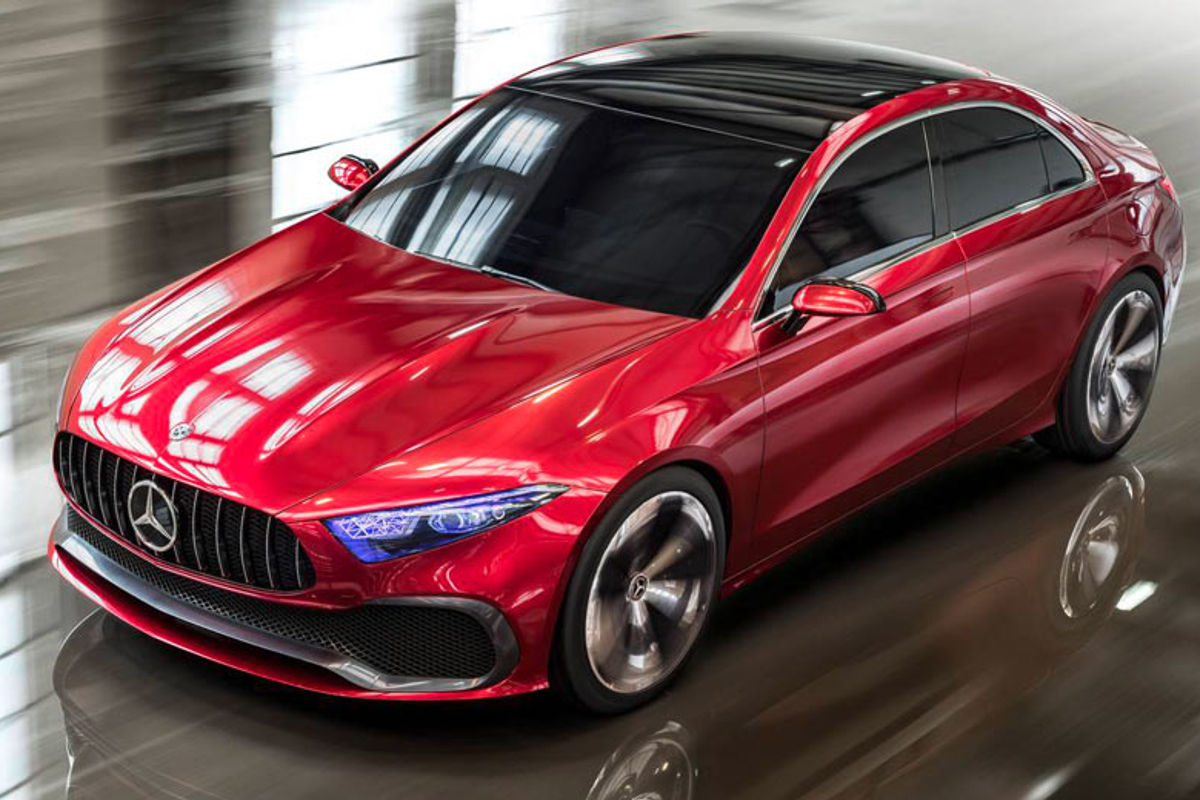
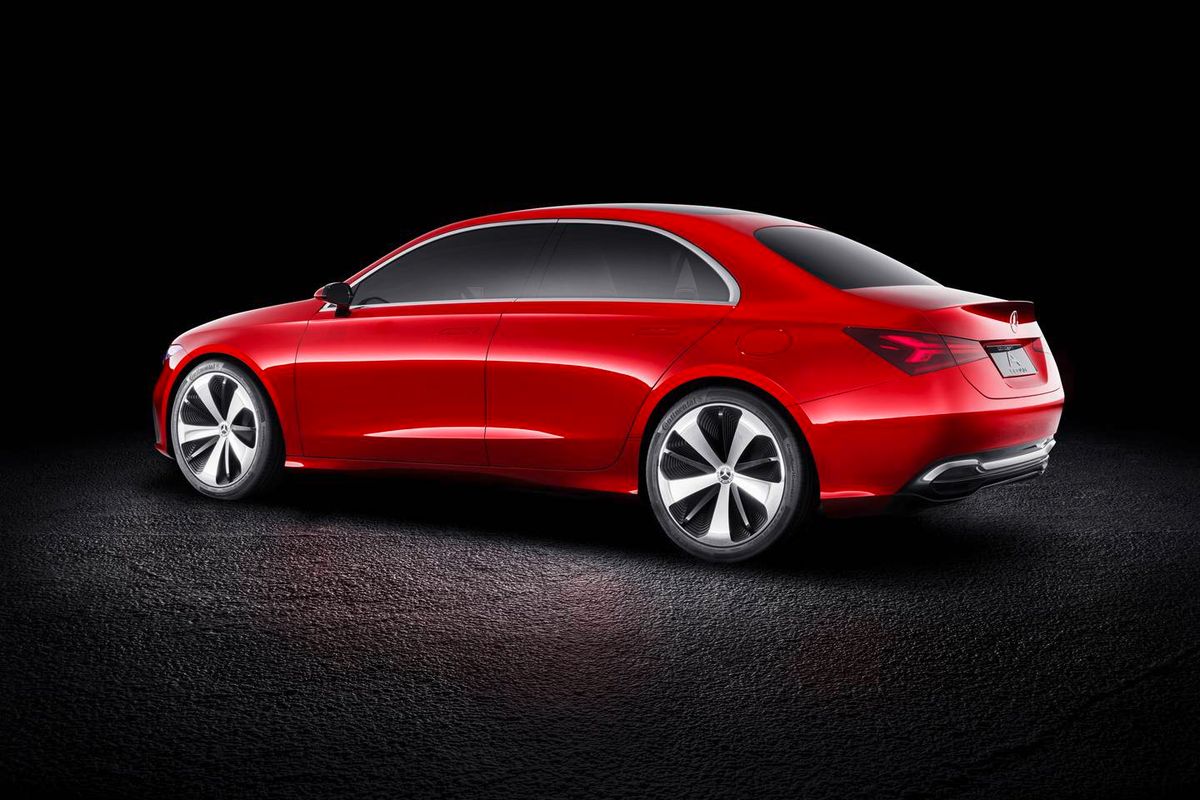
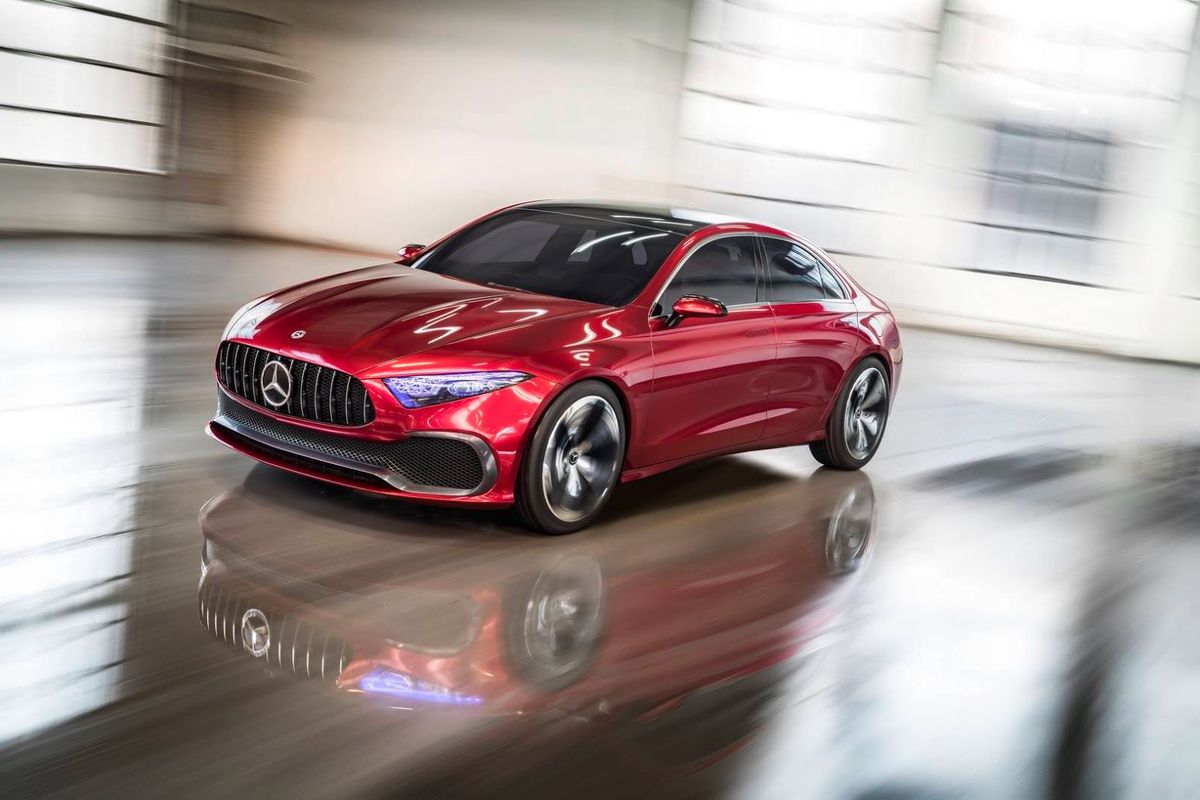
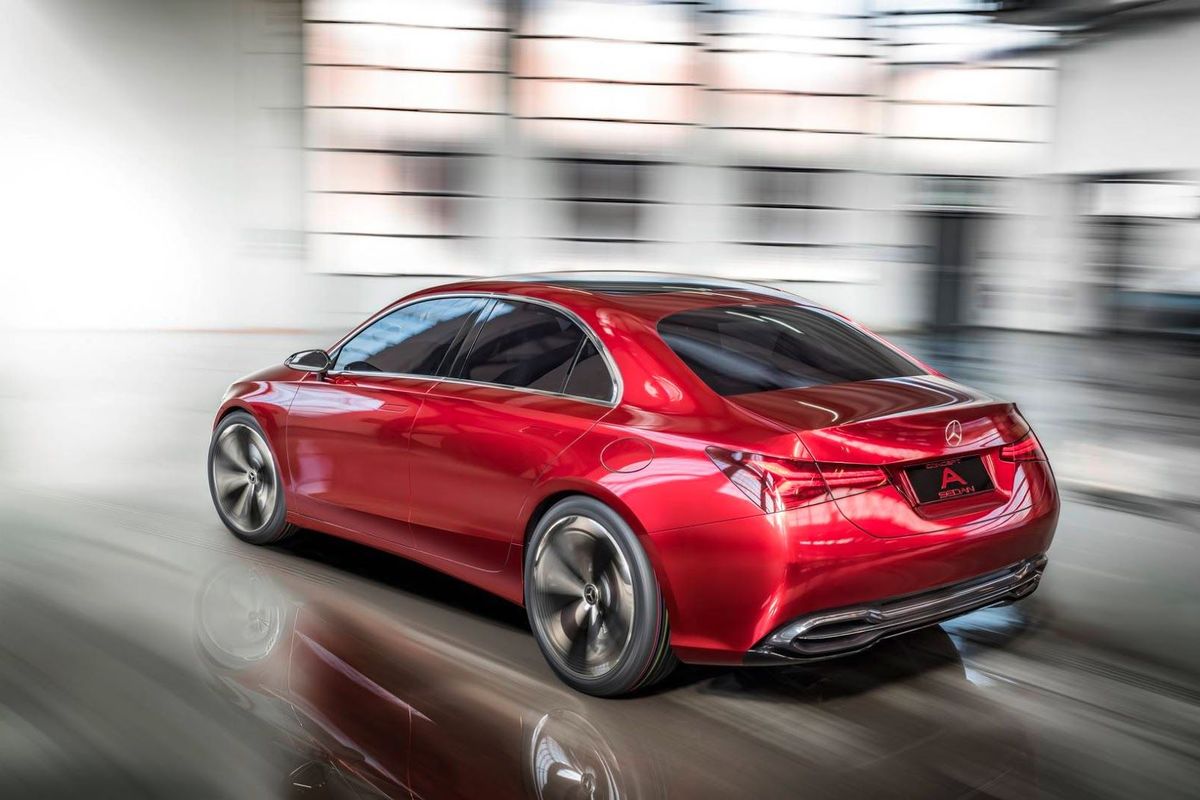
(What’s widely presumed to be) the precursor to the next Mercedes-Benz A-Class sedan has been revealed at the Shanghai Auto Show.
Just like Audi has the A3 Sedan, BMW has the (China-market only) 1 Series Sedan. Now Mercedes-Benz appears to be building its own sedan version of the premium compact car. It does not appear to be a replacement for the CLA, which will continue to be sold when the A-Class sedan reaches production in 2018.
The Concept A is designed to use the same front-drive architecture that the next-gen A-Class will. It also has 4Matic capabilities that point towards a Mercedes-AMG 45 model being on the cards to compete with the Audi RS3 Sedan. That model is only expected to arrive in 2019, however.
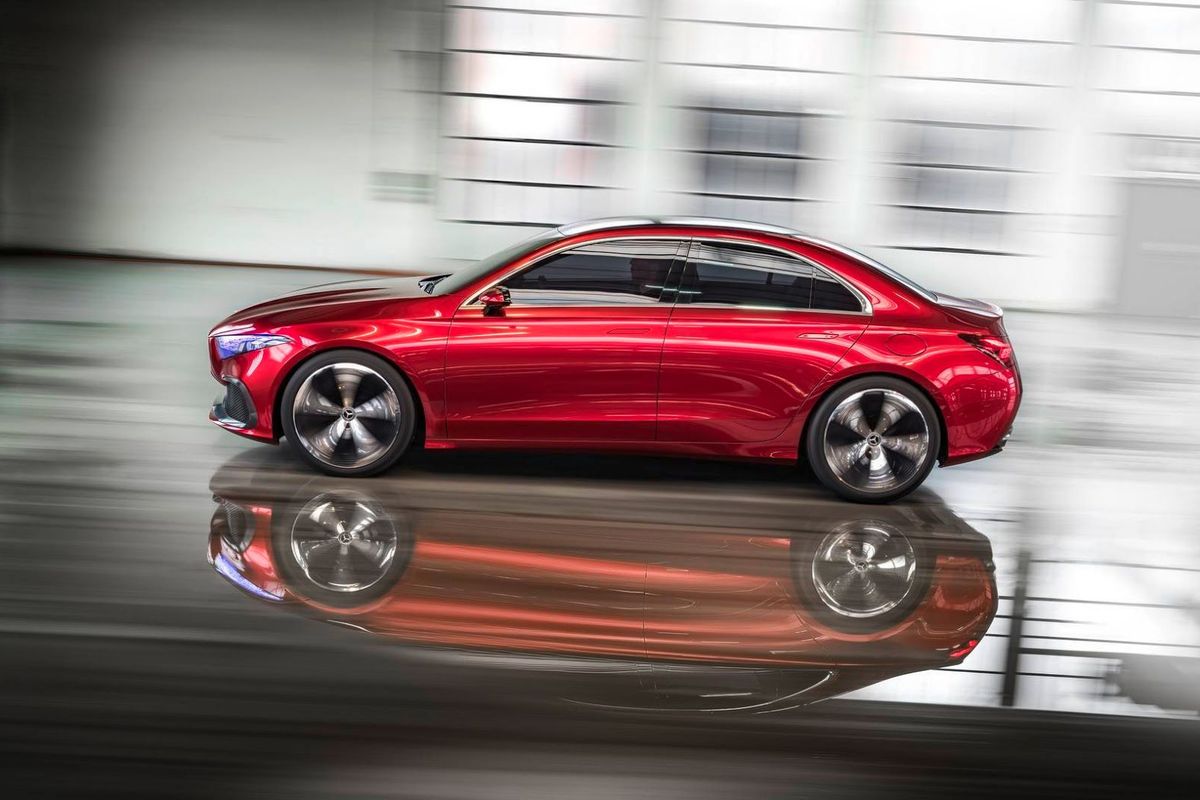
The design of the Concept A sedan shows the new "smoother" approach to design that Merc will undertake in its next models. Mercedes design boss Gorden Wagener says “the Concept A Saloon shows that the time of creases is over, form and body are what remain when creases and lines are reduced to the extreme. It has the potential to introduce a new design era.”
It will be more spacious and practical than the CLA coupe, and according to Mercedes, this is where a gap in the market exists. China is also particularly fond of the 3-box shape, so that’s reason alone to build it considering that market buys around 1-million cars a month.
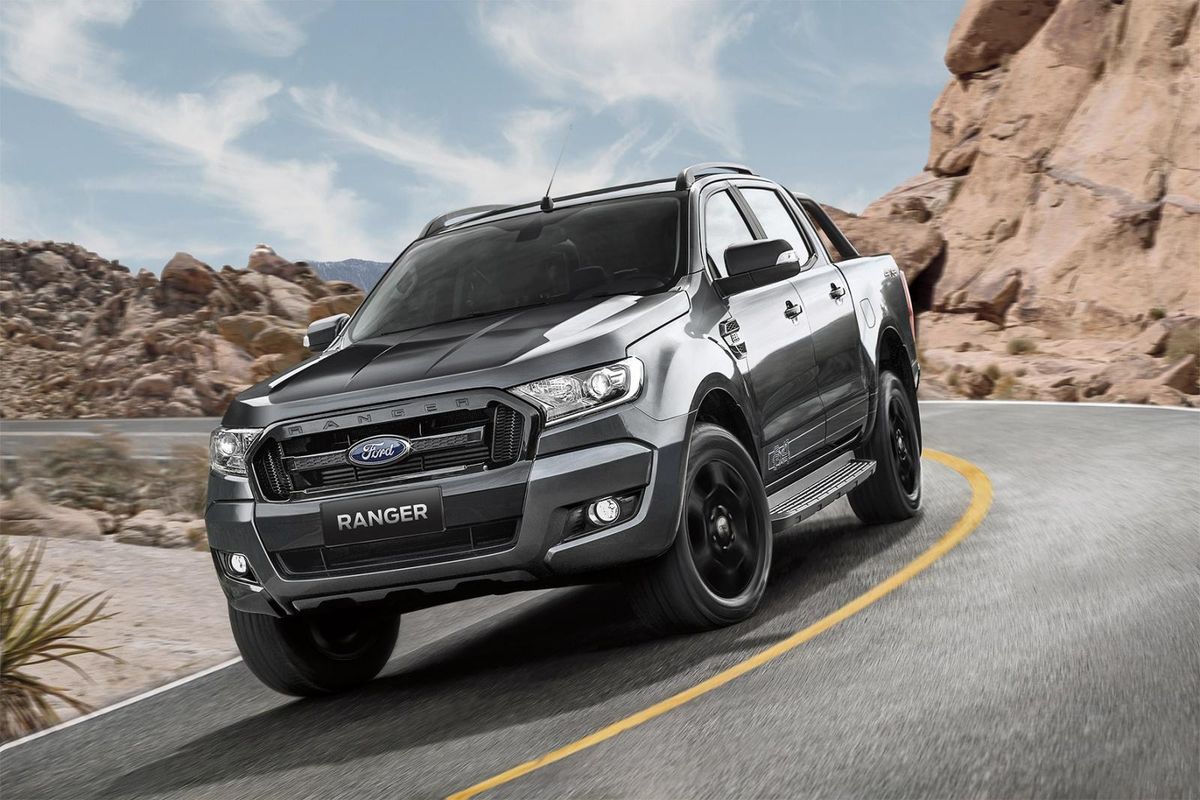
Ford Ranger Fx4 (2017) a Raptor Kit with a Warranty
You’ve probably seen hundreds of Ford Rangers adorned with special body kits. Well, Ranger enthusiasts, now there’s one that you can get that doesn’t void your vehicle's warranty. It’s called the Fx4.
The Fx4 Ranger is based on the double cab XLT derivative and features a few "pimp my ride" styling features that Ranger buyers have previously been adding to their vehicles through independent (to Ford or Ford dealers) suppliers. The Fx4 name comes from the Ford F-Series pickup in the USA.
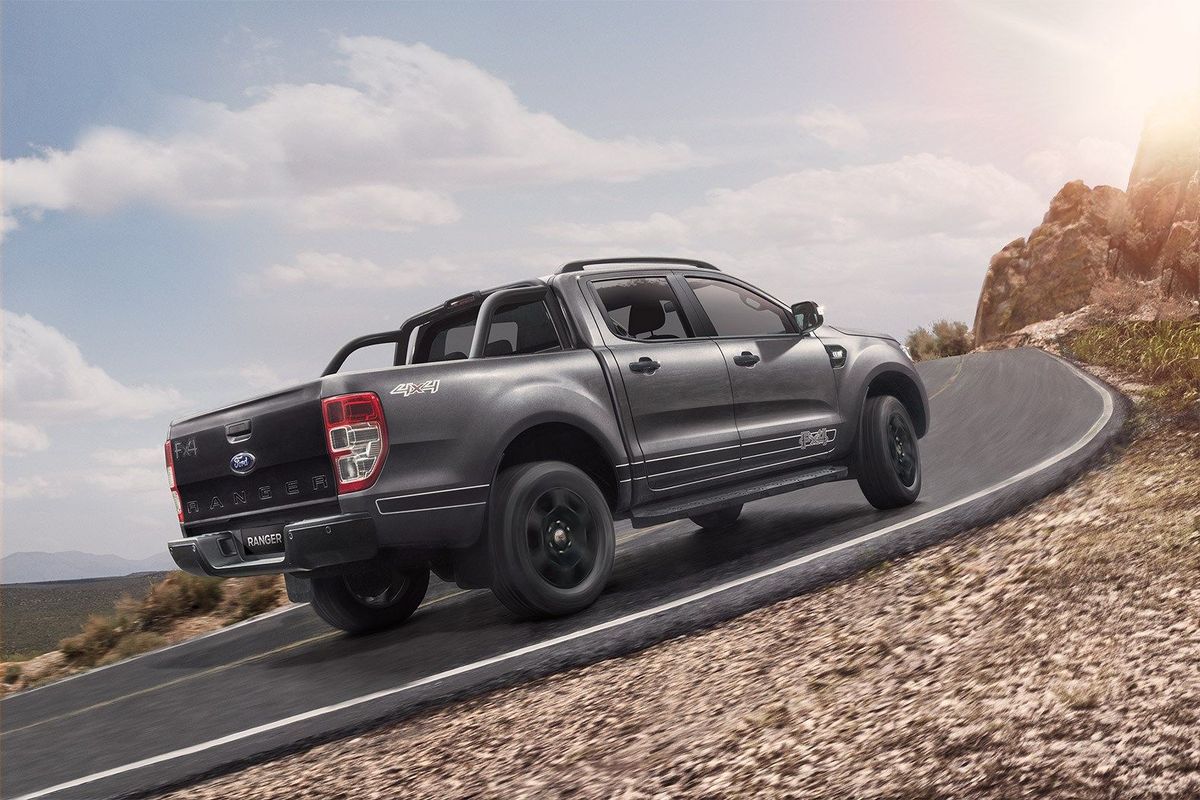
Black finishes have been added to the radiator grille, fog lamp bezels, mirrors, roof rails and the door and tailgate handles.
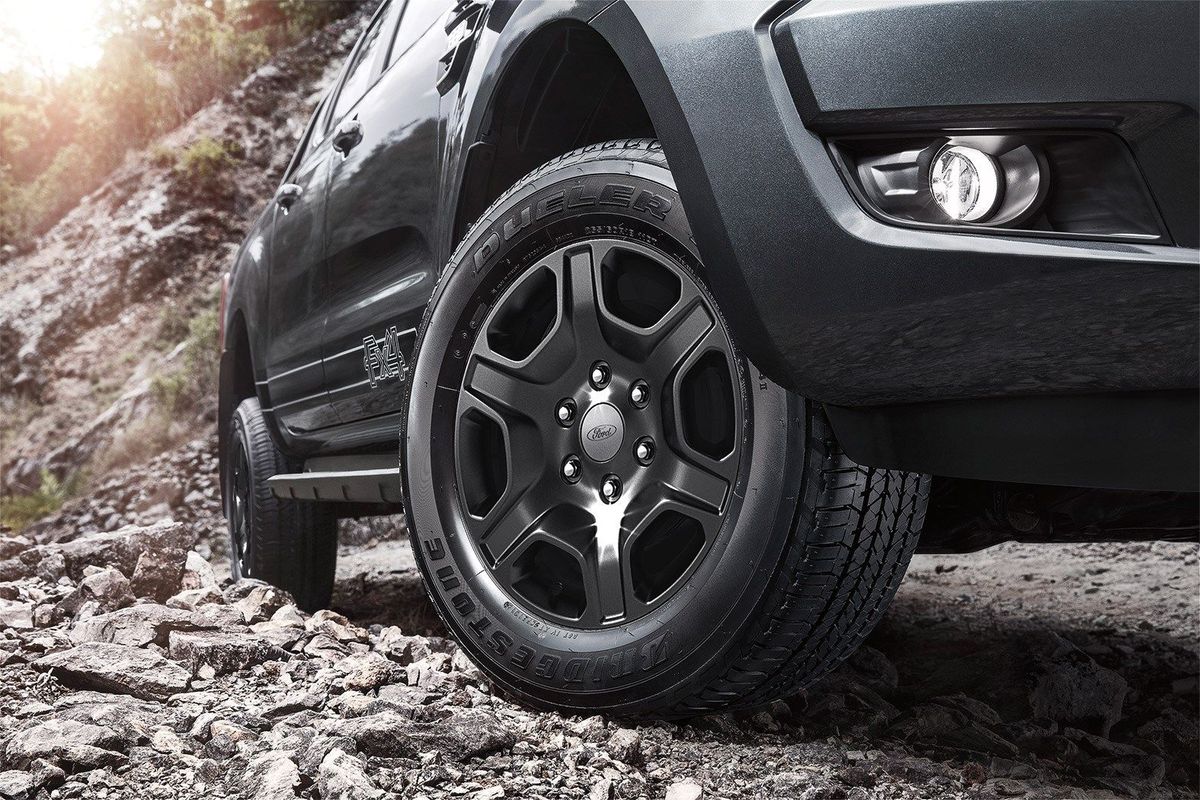
The distinctive 17-inch wheels are finished in a "Black Panther" colour, which is carried through to the side steps, bumper and roll-over bar.
The Fx4 will be limited to just 4 colour choices: Frozen White, Moondust Silver, Sea Grey and Panther Black.
Further adding to its exclusivity is that you can only buy an Fx4 in 3.2-litre turbodiesel 4×4 guise.
The Fx4 does also come with Ford’s Sync3 tech that, has just been made available to certain Ranger and Everest models.
Unlike the Raptor kits you see out there, the Fx4 is sold with a 4yr/120 000 km warranty and a 5yr/100 000 km service plan.
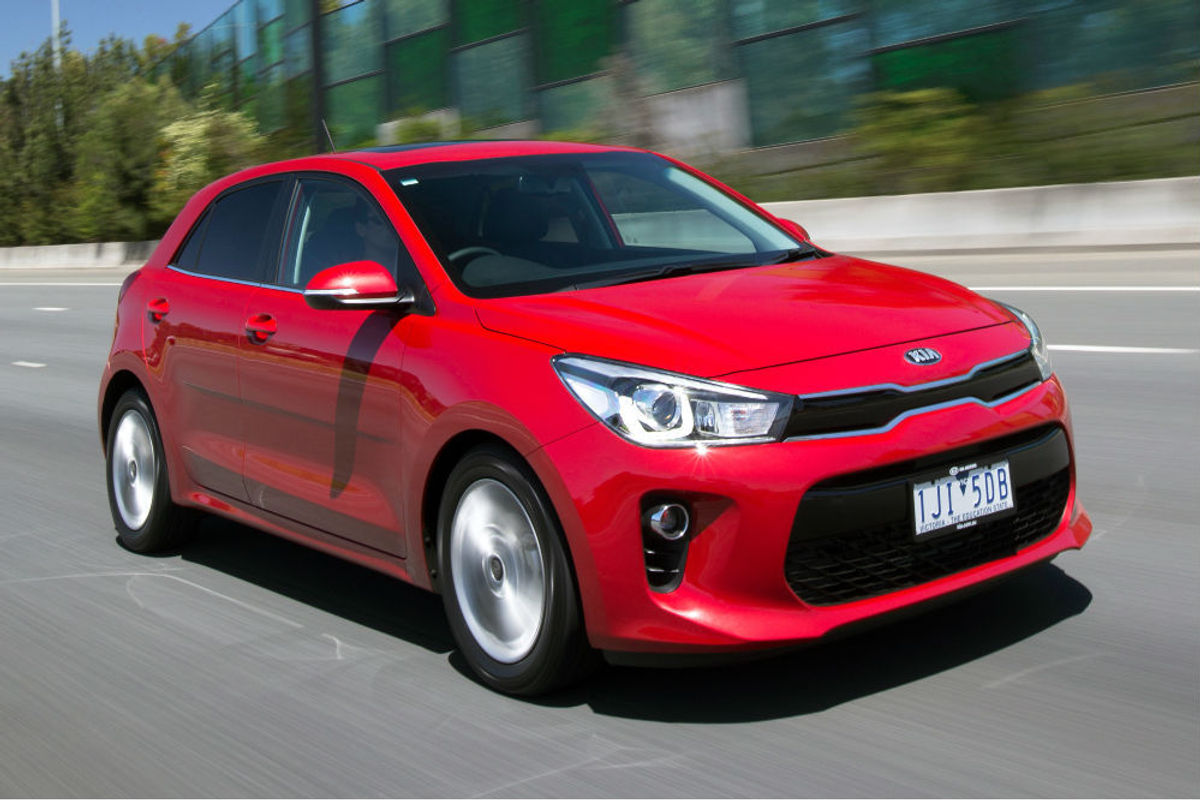
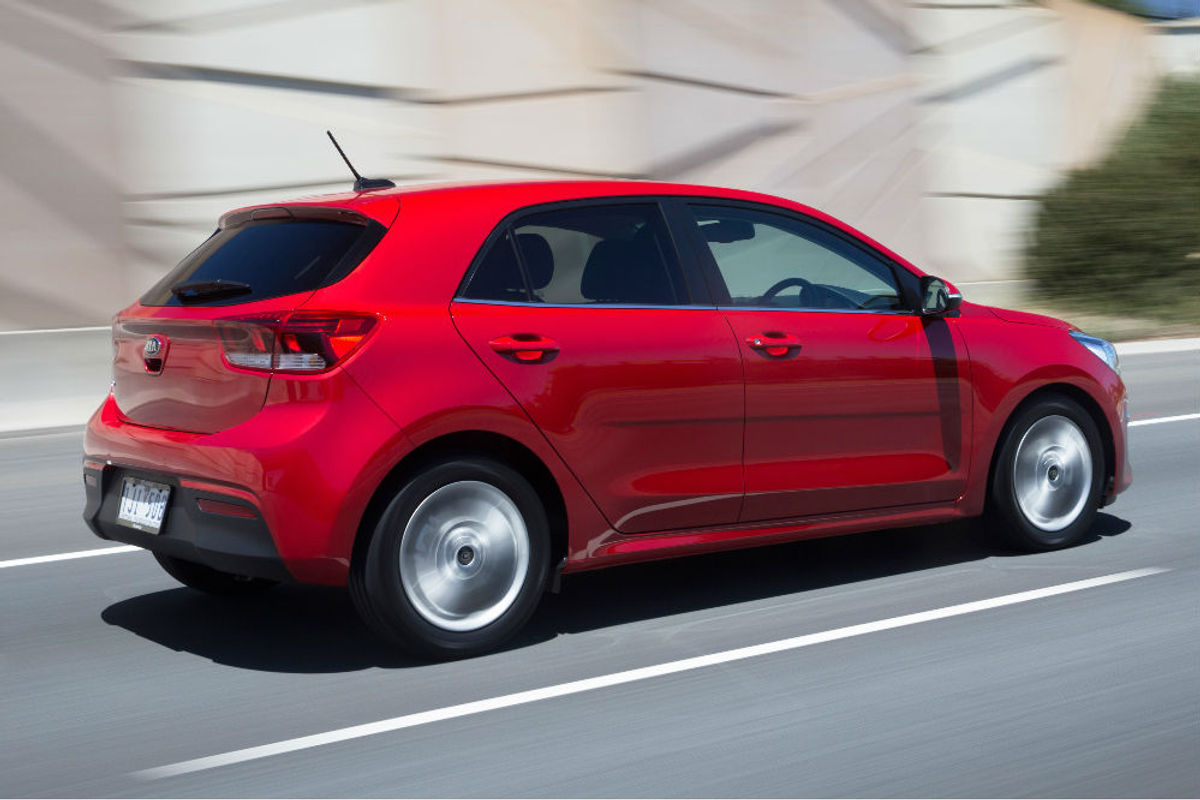
The next generation of Kia's popular Rio compact hatchback will be launched in South Africa in the second half of the year. But what's it like? Egmont Sippel travelled Down Under to drive the Korean manufacturer's hatchback. Herewith his findings…
Surprise, surprise!
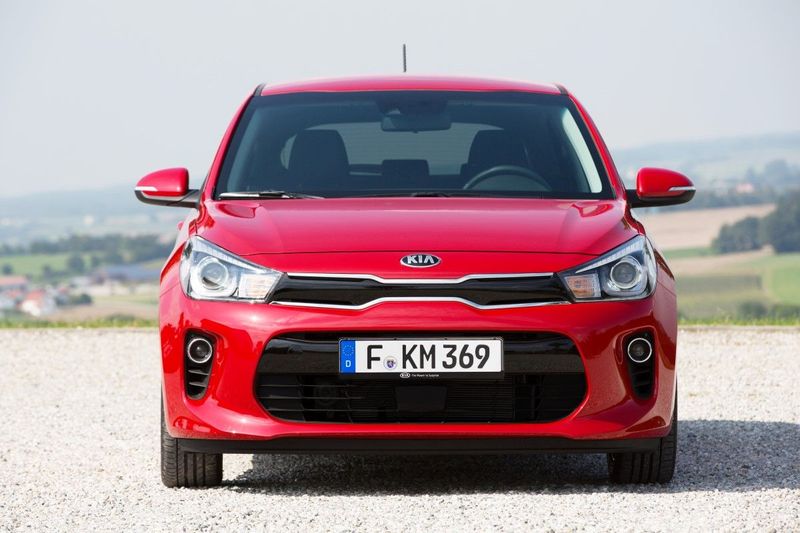
And I’m not referencing Kia’s well-established “The Power to Surprise” marketing slogan. In the lobby of Melbourne’s Grand Hyatt hotel, there it was: the new, 4th generation Kia Rio in all its glory, filled to the brim in a squared-off shape that stretched the metal long and wide into all four upper corners of the car.
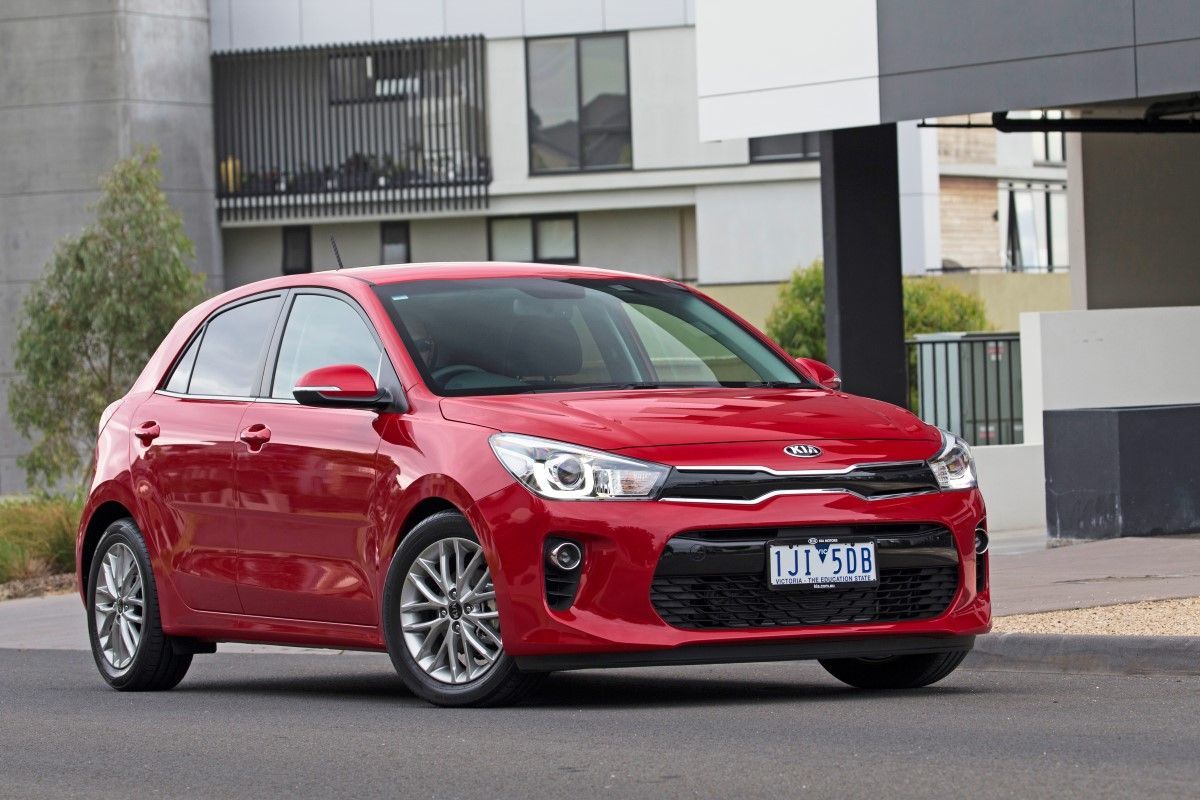
Gone was the cute playfulness and wedged sportiness of the third-generation model, replaced by a mature presentation much better aligned to the sobriety of top-end design.
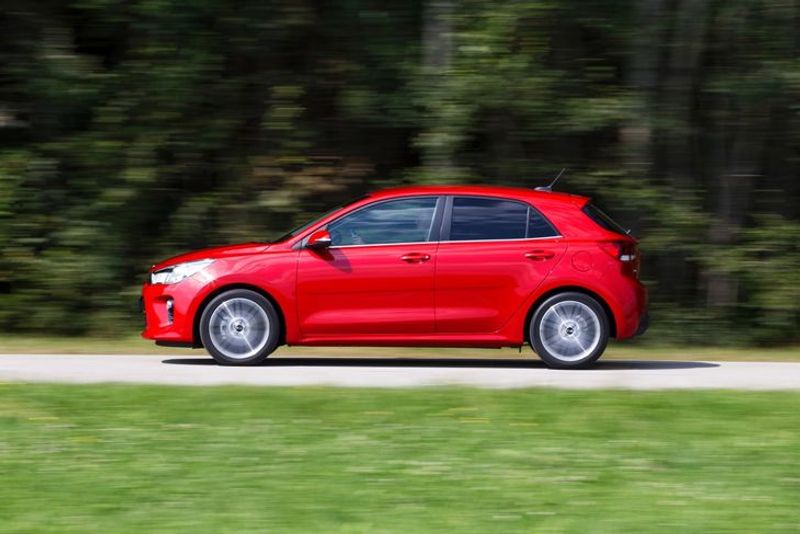
Unlike its predecessor, the new Rio does not project a cute, playful and sporty look, but rather a mature upmarket grandeur, quite uncommon among B-segment cars.
Does the design appeal?
Well, yes and no.
Yes, because the new Rio is clearly cementing the perception of Kia as a mass market manufacturer already delivering entry-level premium at competitive pricing; the design exudes class and modernity.
And no, because the new Rio is quite conservative, if thoroughly modern, what with a slim-line “tiger nose” grille, the latter in gloss black on upper-specced models, which also boast U-shaped LED daytime running lights.
Yet, the surprise goes further than just a conservative design, for the new Rio also establishes a broader family link to the latest Hyundai i20.
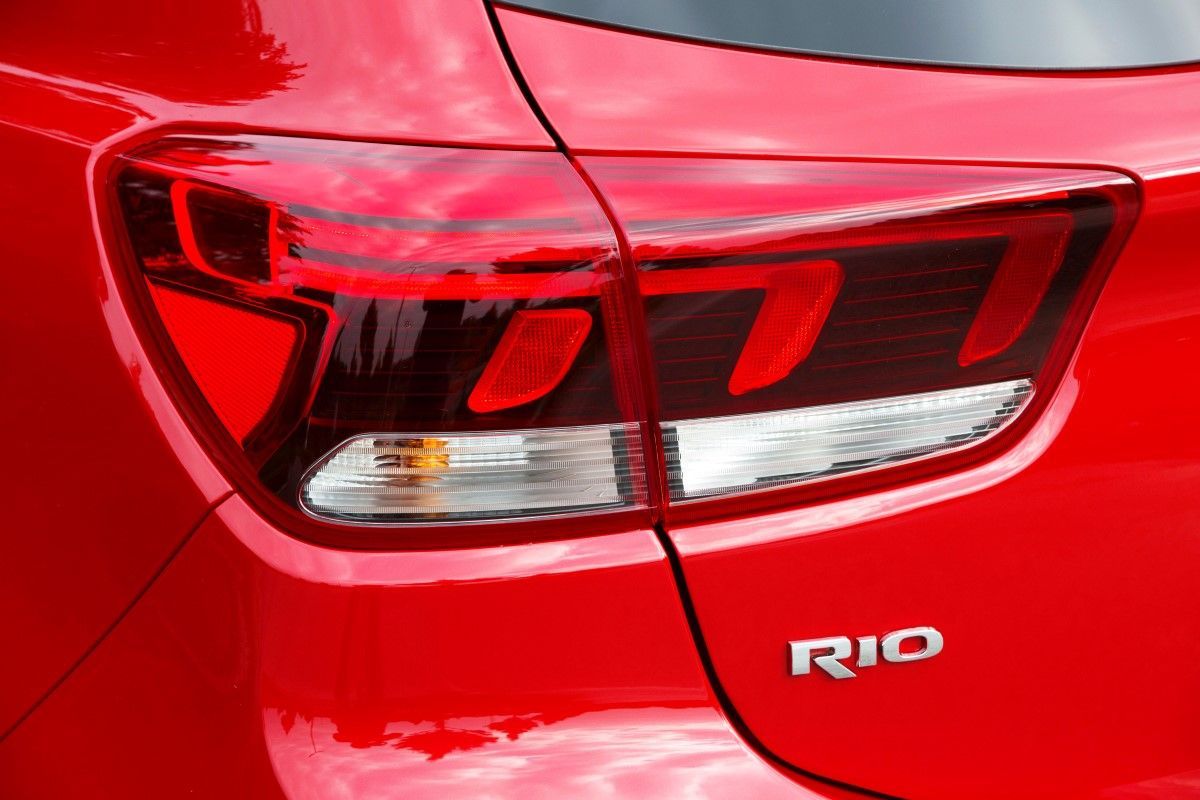
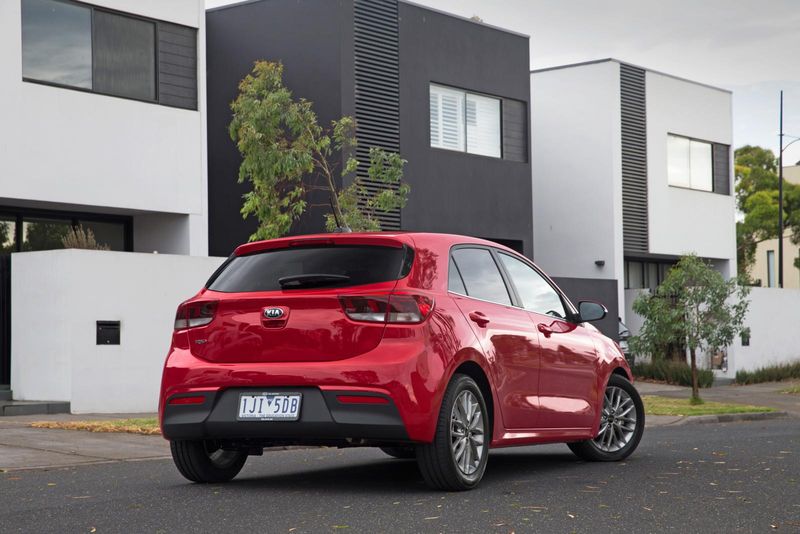
Both cars are characterised by straight lines, smooth surfaces, squared-out corners, wedge-shaped headlights and horizontal tail lights (carrying a triple arrow motif on the Kia; the Hyundai’s leaner rear clusters, surprise, surprise, displaying a somewhat curvier and sportier swank than the Kia’s fatter lenses.
Flat horizontal rear clusters are a signature Peter Schreyer design cue, of course, Schreyer having been fond of this layout ever since his days at Audi (where he contributed to the original TT), before he became design chief at Kia, in 2006, and also Hyundai, in 2013.
Maturity then, has its price – but not when it comes to size, practicality, convenience, connectivity, dynamics and safety, all of which have been improved on Rio 4.
The new Rio is only 15 mm longer than its predecessor, but the interior features much better space utilisation.
Sizing up the Rio
The new car is 15 mm longer than its predecessor, with 10 of that 15 mm nestling between the wheels, the rest having been added to the front overhang.
Lowering the roof by 5 mm results in overall dimensions of 4065 mm playing 1450 mm playing (a width of) 1725 mm, yielding a well-proportioned design with straight shutlines on the rear doors, to create a certain air about the car’s metal carrying ability, underpinned by a truly balanced and confident stance.
Ditto for a high shoulder line and thinner, yet strong, C-pillars, carrying a more upright rear screen; it oozes classic big car strength and confidence.
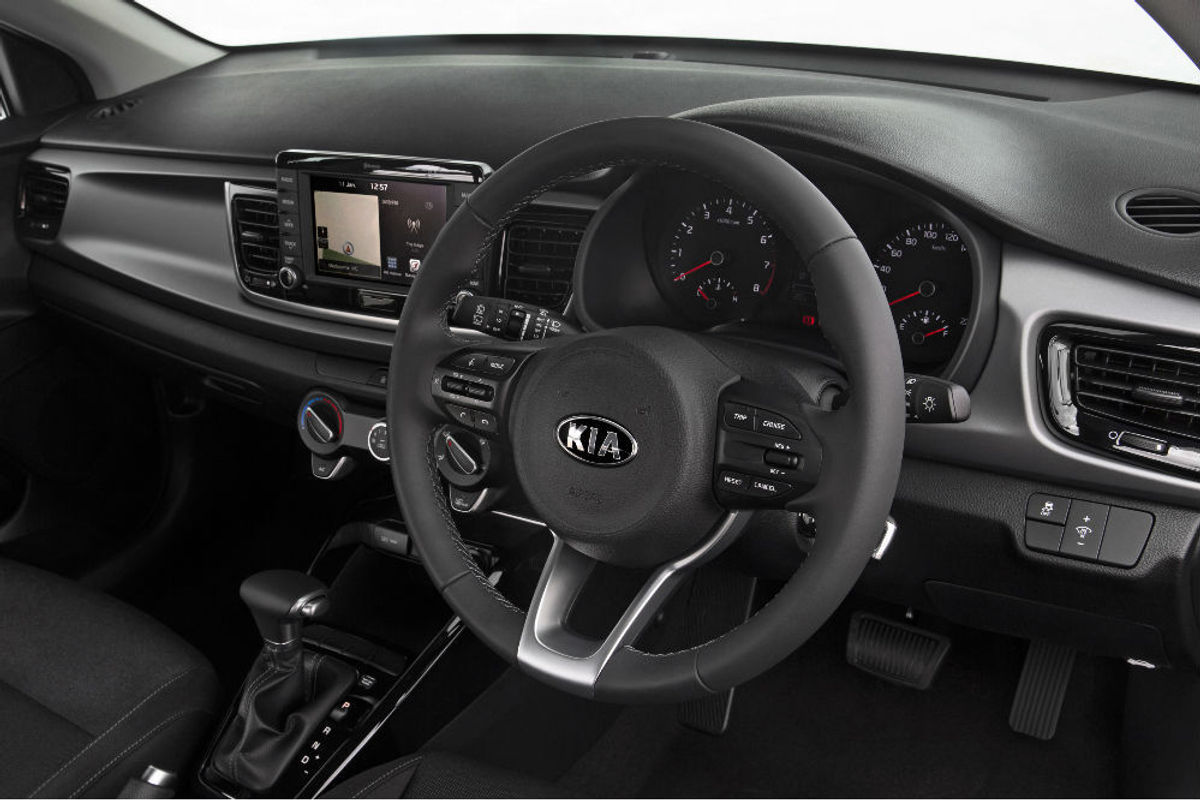
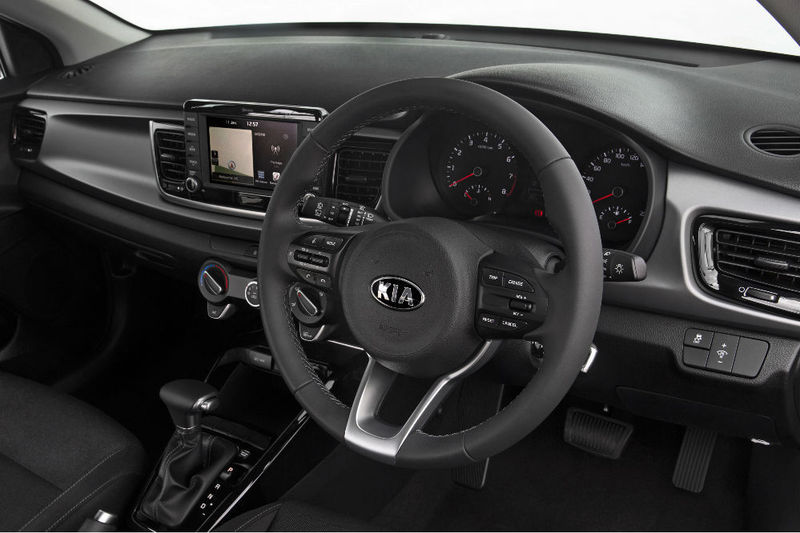
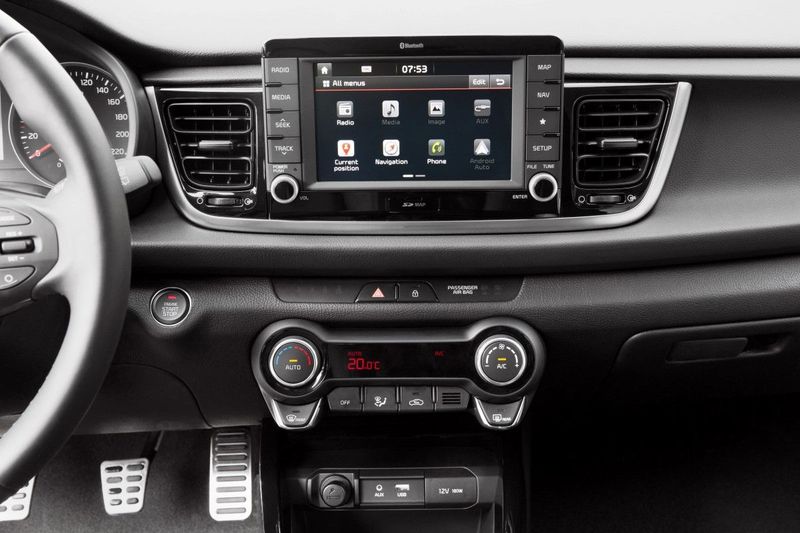
A selection of black materials and trim give the Rio's cabin a businesslike ambience. Note the tablet-like touchscreen interface.
Better space utilisation
The Rio cabin boasts an altogether new look, with much better space utilisation than before.
The instrument panel remains classic Schreyer, as it was in his Audi days: simple, neat, clear and easy to read red-on-white instrumentation – but the rest hopefully signifies a permanent departure from Kia’s traditionally rounded and bulky dash fascias protruding into the cabin.
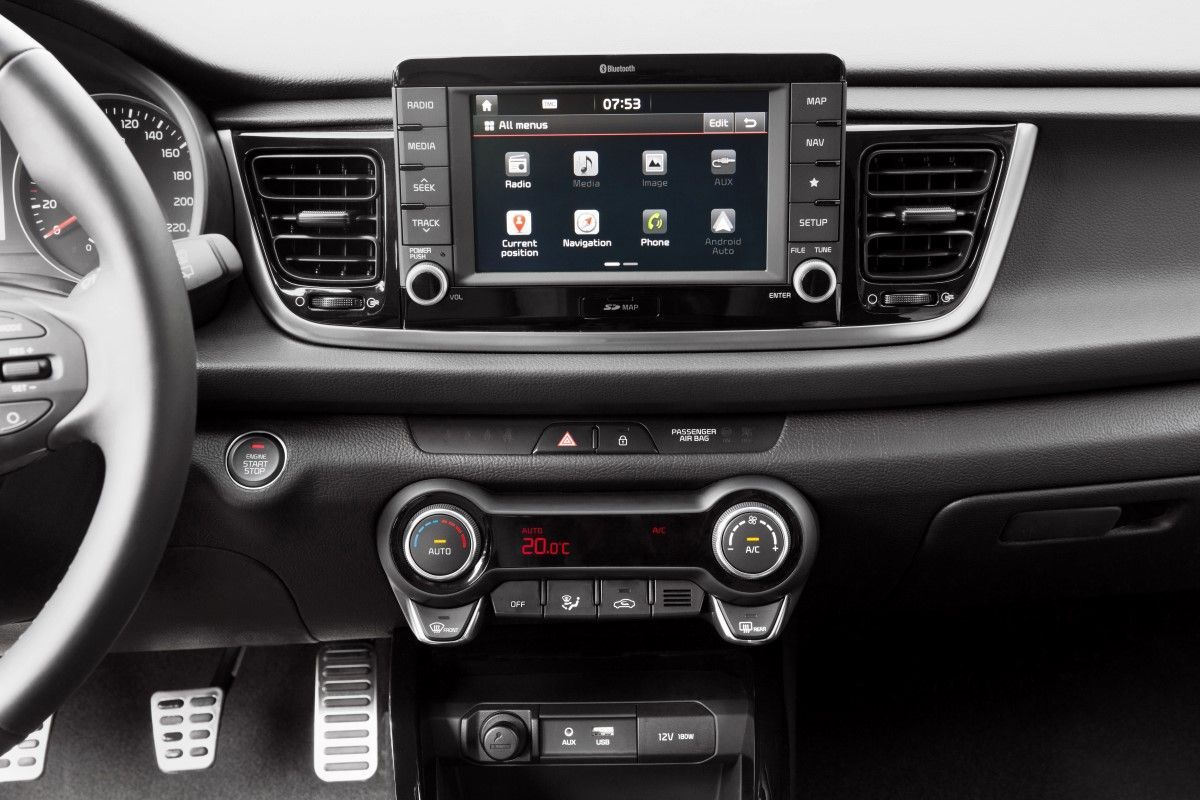
The new look is not only dominated by straight lines running the width of the dash, but also by horizontal vents (instead of vertical ones) adding further visual width which is emphasized, on upper-specced models, by a slightly concave faux aluminium strip filling the space between the dash’s floating 7-inch touchscreen and the passenger door.
Interior trim seems to be offered in the classic Schreyer idiom of all black, or shades thereof. Gloss black trim adorns upper-specced models only, but the aluminium-look trimmed infotainment screen is a standard item and brings some big visual relief from the blackness.
Kia also claims more head, shoulder and legroom, all around, than what's available in a Polo or Fiesta.
More overall comfort, shoulder room
An increased wheelbase is not the only factor contributing to a more spacious new cabin. Schreyer and his designers have also done some very clever work in terms of packaging and sculpting, with deep cut-outs in especially the front doors creating extra shoulder room and ample operating space/rest platforms for the outside arms of front occupants.
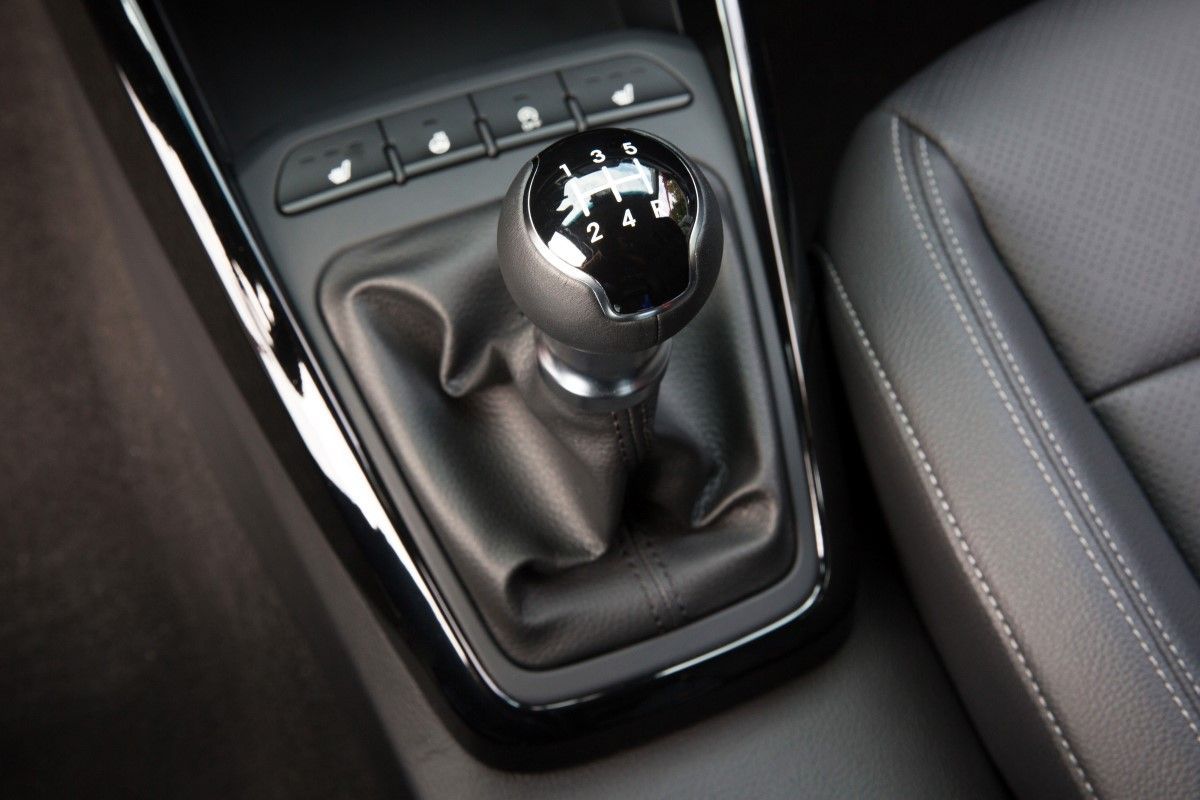
The foot well, with a decent footrest, also affords lots of freedom for the feet and knees to take up natural positions, without interference from the outside panels or, indeed, the gearbox console – or door speakers, another packaging sin committed by so many manufacturers.
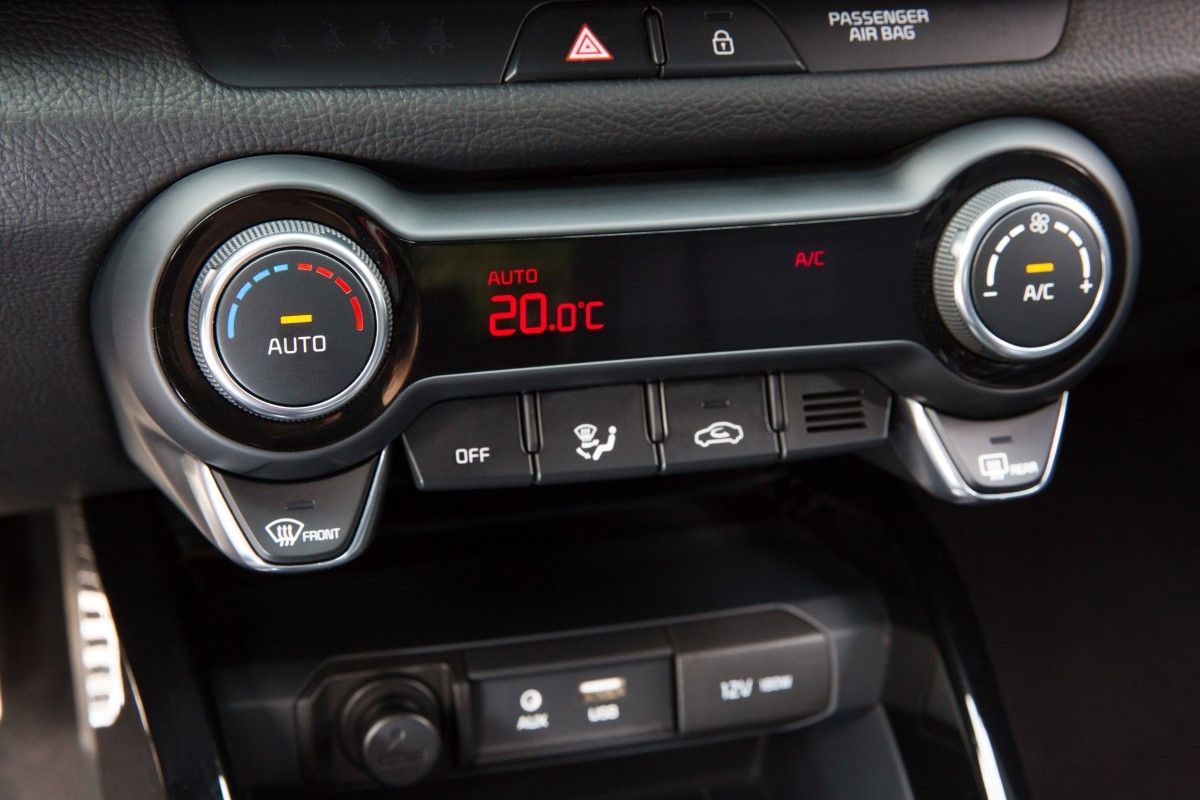
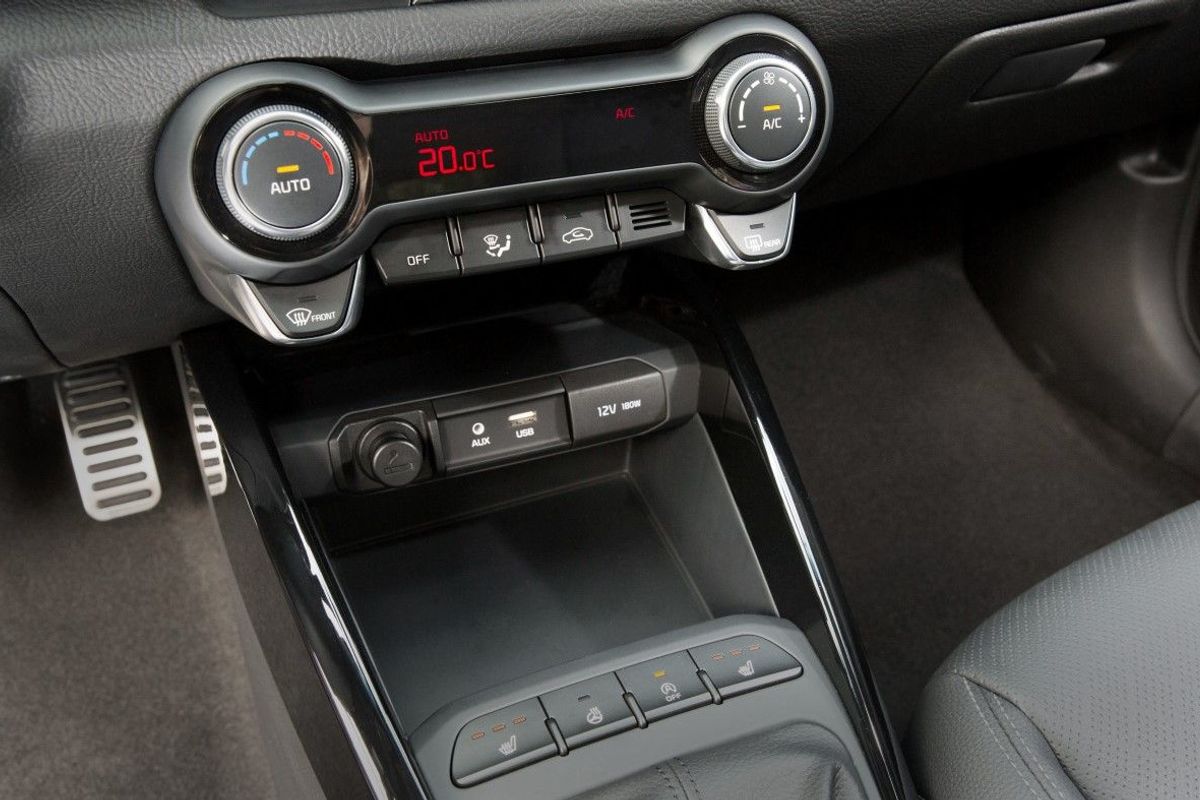
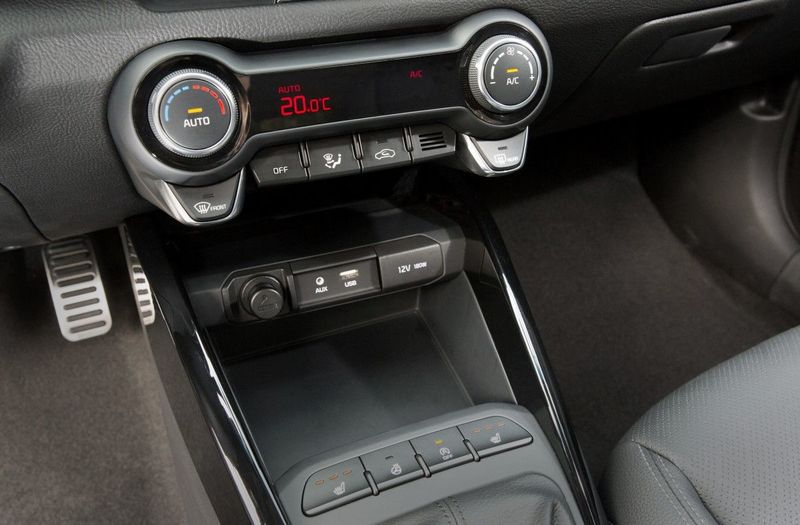
The Rio boasts another clever little feature at the base of the centre console, namely an open double-decker storage tray (the upper deck ideal for mobile phones and the like), whilst the overhead console includes a fold-out pocket for sunglasses of all shapes and sizes.
The upper part of the double-decker storage tray in the centre console is ideal for storing keys and 'phones.
All four doors have also been fitted with a bottle holder (1.5-litre at the front, 0.5-litre at the rear), yet the focus on practicality extends to visibility as well, with thinner C-pillars, in front of which the side windows sport new quarter lights.
Further north, door mirrors have been moved up to the base of the A-pillars, to help minimize the size of a driver’s blind spots, while a lower window line around the cabin enhances all-round visibility.
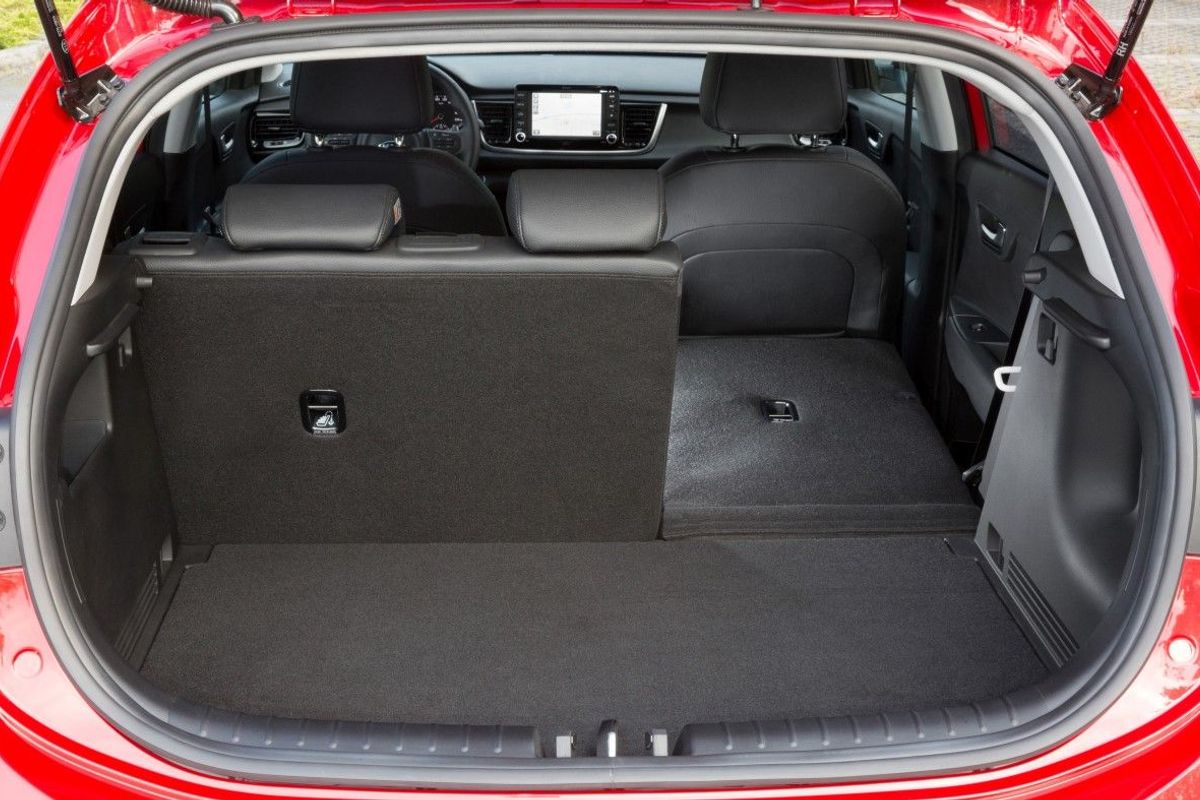
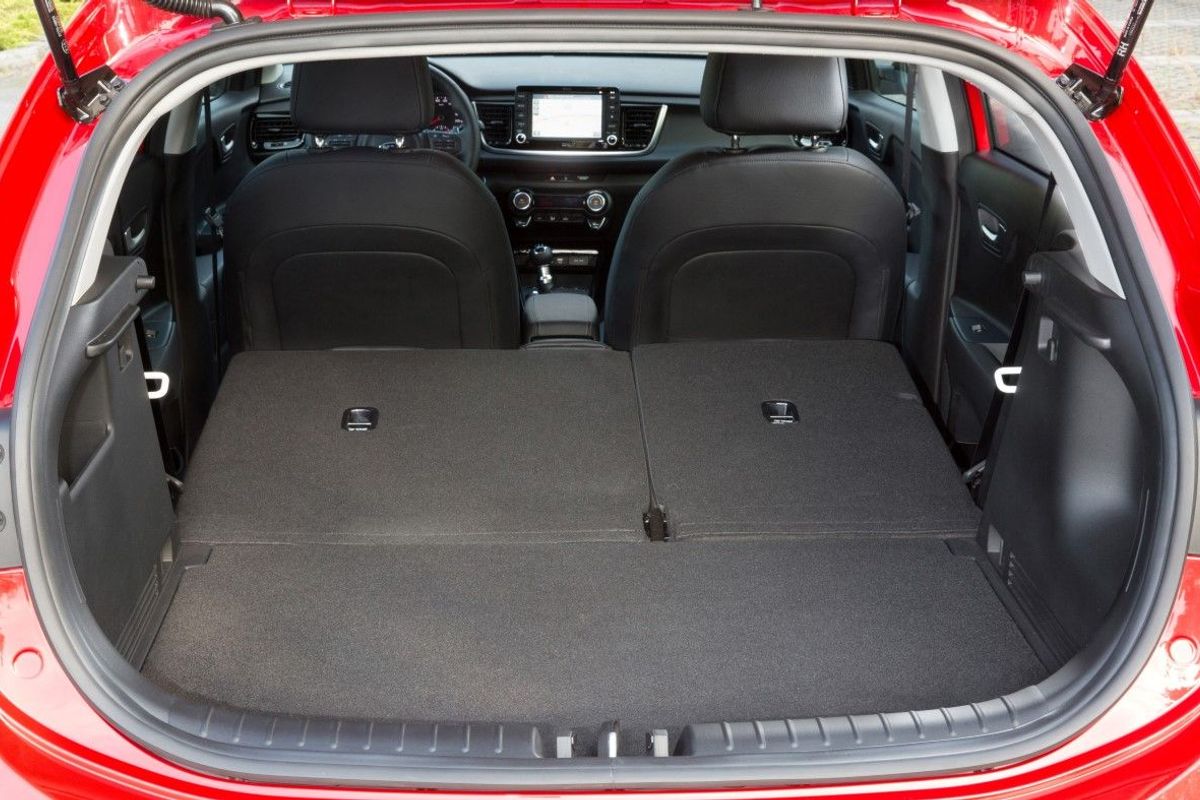
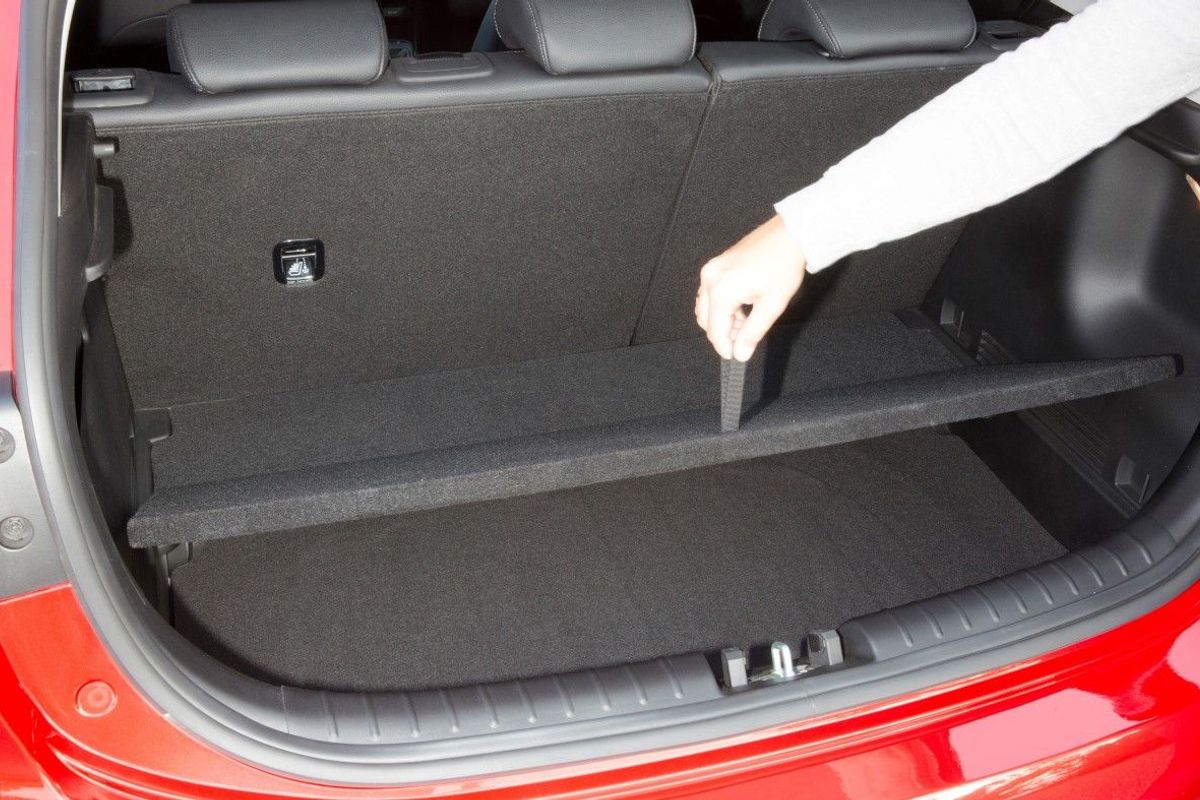
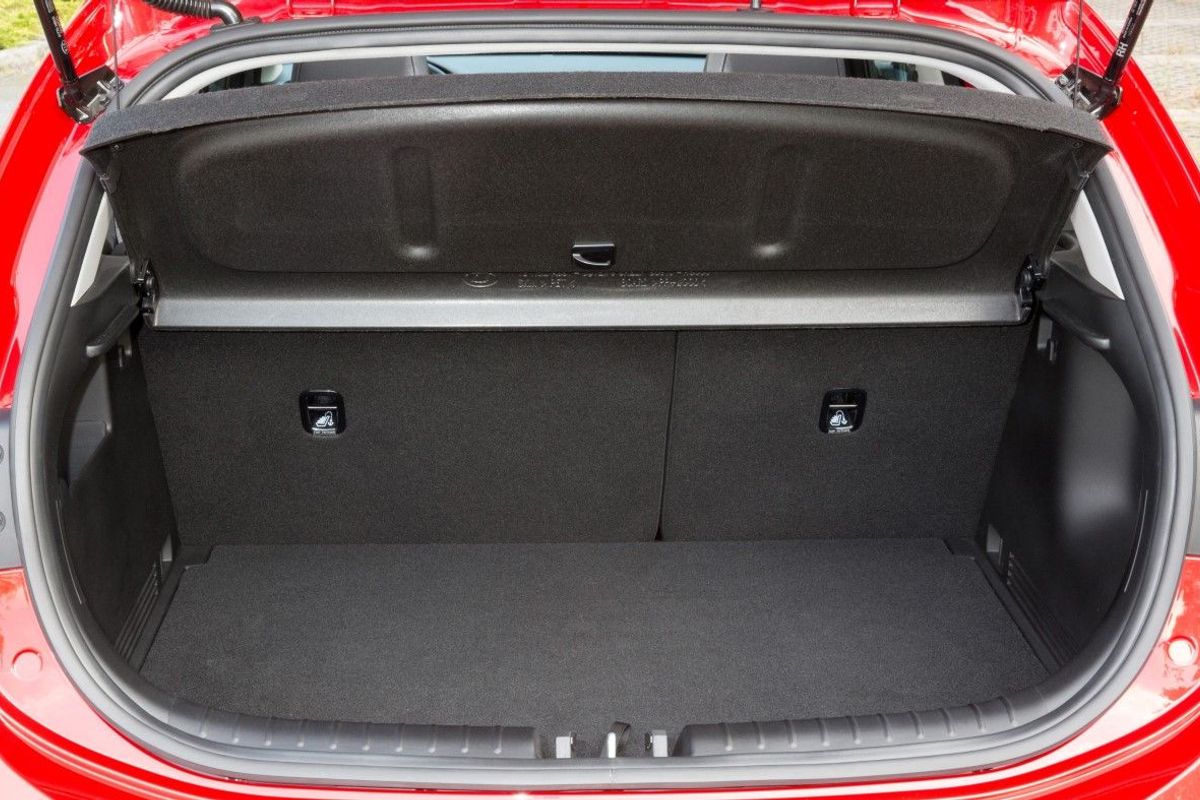
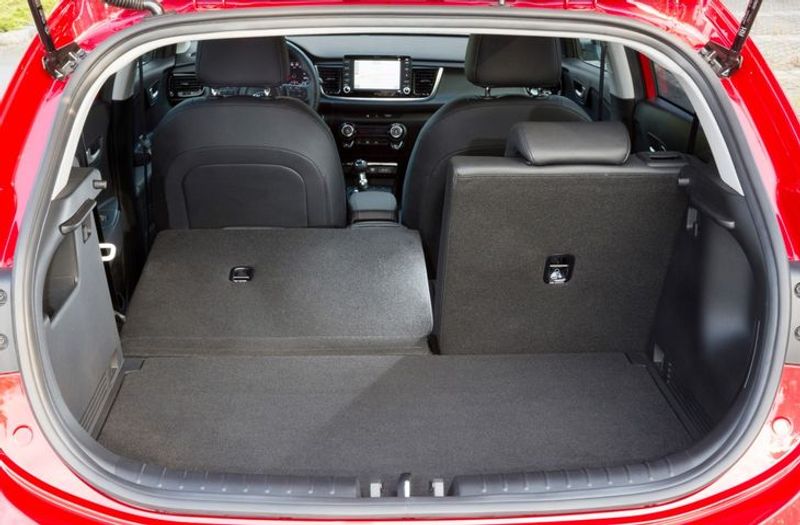
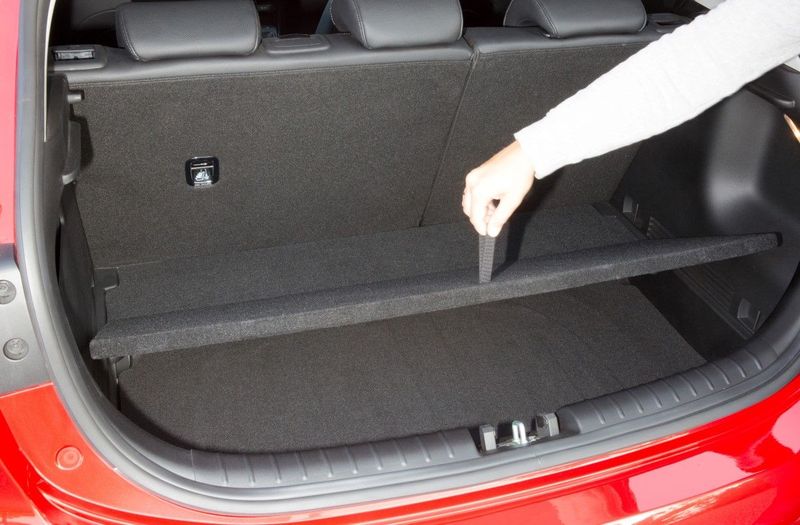
The boot, with a two-tier luggage board, has also been increased (by 37 liters) to 325 liters; the fuel tank has grown (by 2 liters) to 45.
It remains to be seen which spec touchscreen will be availed to the SA market, but it could be Carplay and Android Auto compatible.
Convenience and connectivity
Although the Rio's local specification has yet to be confirmed, keyless entry, rain-sensing windscreen wipers, automatic headlamps, cruise control, a heated steering wheel, rear parking sensors and a rear view camera are all on the new Rio’s options list in Australia, where top-specced models feature sat nav as well.
At dash centre is the permanently fixed 7-inch infotainment touchscreen infotainment system linked to a 6-speaker audio setup.The Android Auto connectivity system works with Android phones running 5.0 (Lollipop) or higher. Android Auto connects to the user’s phone and lets them access smartphone functions and apps (such as voice-guided Google Maps, plus hands-free calls and texts) plus Google Play streaming via the in-car infotainment system.
Apple CarPlay (for iPhone 5 or newer) includes Apple Maps, calls and text dictation, and supports other audio apps that the user may have downloaded to an iPhone, such as music streaming or audiobook services.
A hidden storage compartment under the luggage board is ideal for storing valuable or fragile cargo.
The new Rio is also the first B-segment car to be equipped with USB ports in both the front and rear cabins.
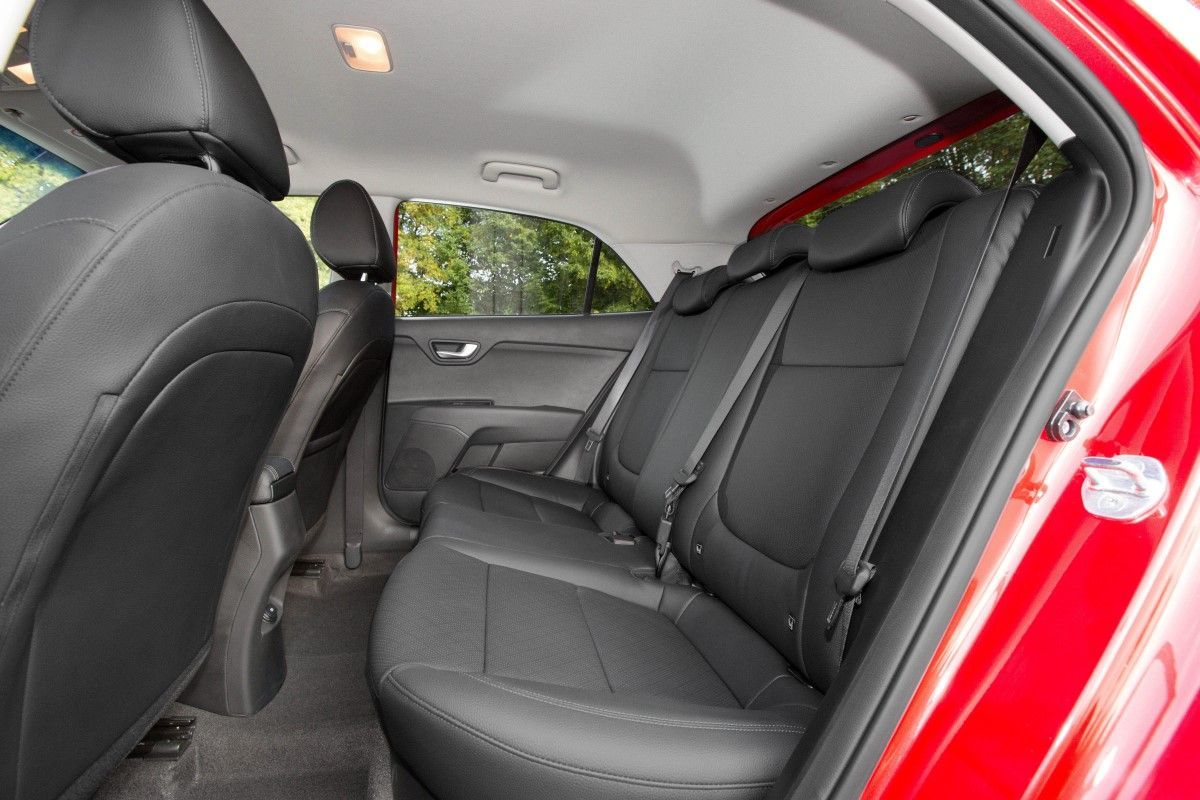
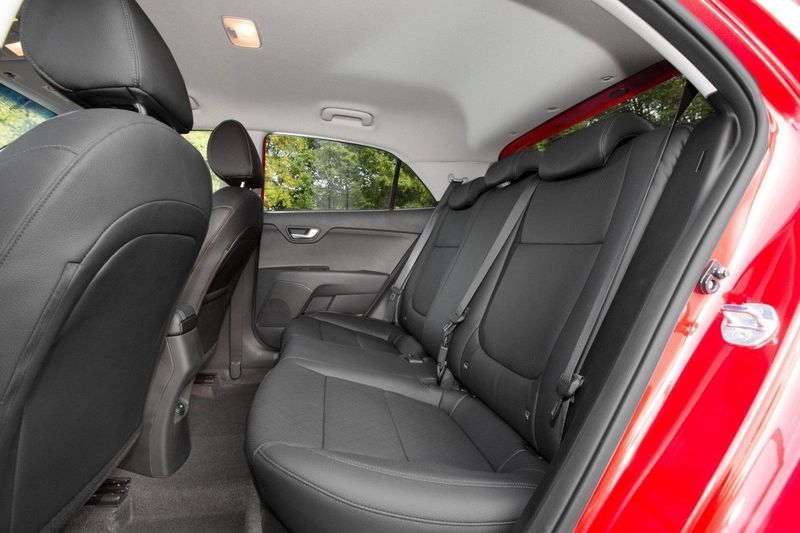
Legroom in the rear won’t overwhelm anybody, but it will seat drivers up to 1.75 meters comfortably behind themselves. Speaking of which: driver seats are 6-way manually adjustable and the Rio offers three levels of front heated seats.
Kia also claims more head, shoulder and legroom, all around, than what's available in a Volkswagen Polo or Ford Fiesta, for example.
Safety specification
According to Kia, the new Rio will be one of the safest cars in its class, boasting comprehensive active and passive safety features like six airbags, child locks, ABS brakes, EBD brake force distribution, EBA emergency brake assist, DSC dynamic stability control, VSM vehicle stability management, Hill Start Assist, a reverse-view camera with dynamic parking guidelines, reverse parking sensors, three child restraint anchor points and five three-point seat belts, most of this as standard across the range, at least in Australia.
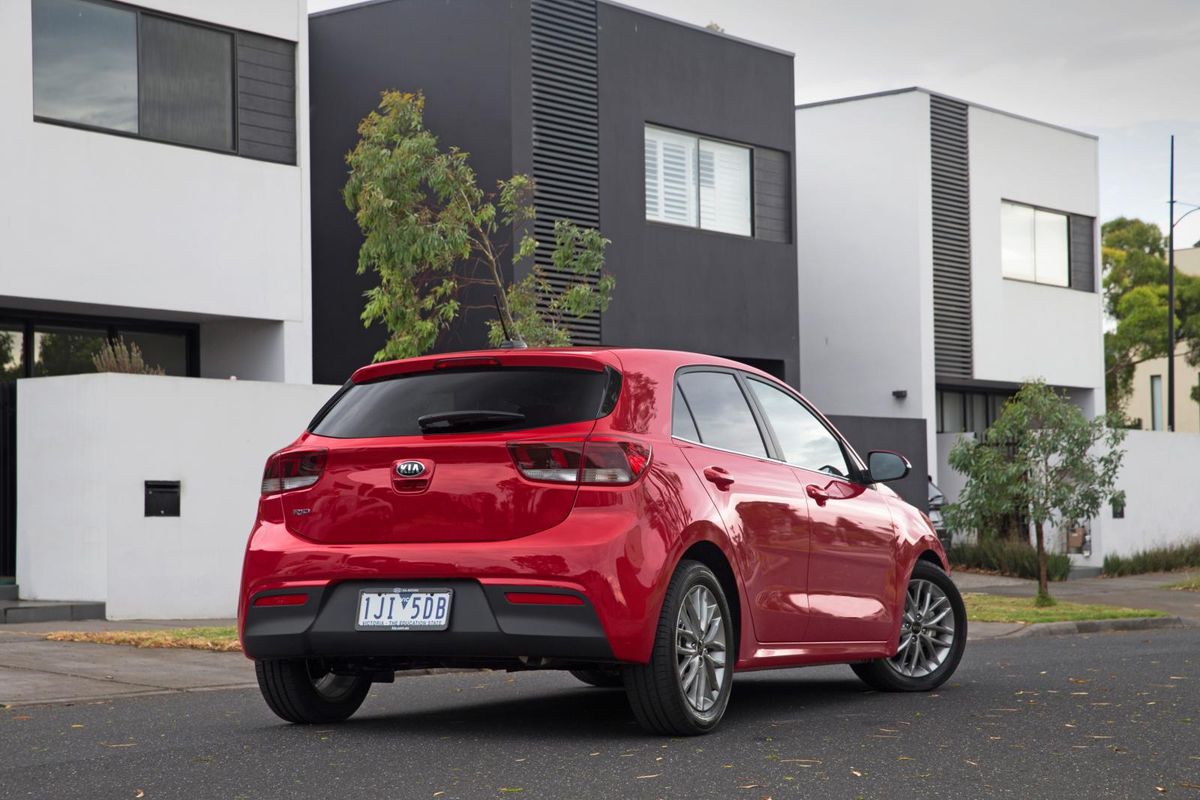
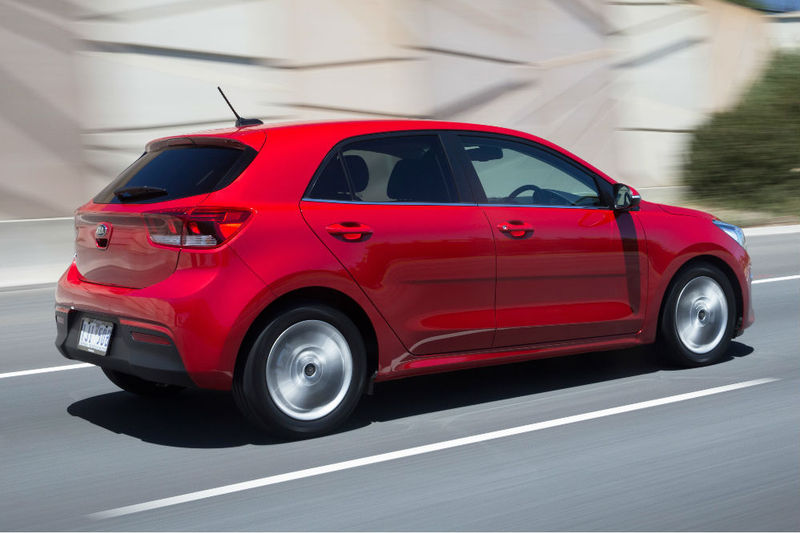
The metal ridge between the Rio’s slimline taillamps is the quickest way to distinguish the new car from its predecessor.
Top-end models will add LED daytime running lights and projector front fog lights, and at the top of the range the Rio will offer an electro-chromatic rear view mirror with auto dimming, front collision assist, lane departure warning and cornering brake control.
A full 51% (compared to the previous model’s 30%) of the bodyshell is made from lightweight Advanced High Strength Steel (AHSS) which is part of a wider effort by Kia to achieve a 5% reduction in the average weight of new car bodies by 2020, as compared to 2014.
The distribution of AHSS is also such that the weight of the car decreases towards the rear.
Drivetrains, suspension, steering and wheels
The automotive world’s Golden Rule is not to do it all at once; just don’t design and build a completely new car from the floor up (unless you are Porsche, of course, who did precisely this with the new Panamera).
Although the current range's 1.2- and 1.4-litre petrol motors are likely to be retained, the 1.0-litre turbo could be an interesting addition.
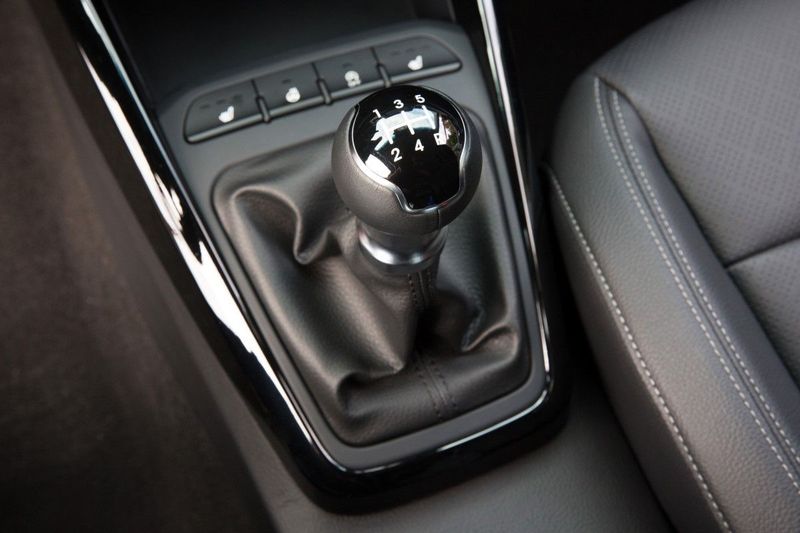
Mechanically, though, an important car like the new Rio will naturally be updated somewhere along the line, in this case with a brand-new 1.0-liter turbo GDI petrol engine delivering 75 or 90 kW, depending on the state of tune. Should the 1.0 litre not be availed on the local market, it is fair to expect that the current engine line-up will be carried over (1.2 and 1.4-litre petrol units, which we know); ditto for gearboxes (5 and 6-speed manuals, plus a 4-speed auto) which are, incidentally, mounted 28 mm further forwards for more cabin space and better safety.
In Australia, we only drove the 1.4 auto, which leaves little to report (good engine, good box, at least when pegged to Aussie speed limits).
The stiffer body shell, though, enabled chassis engineers to develop a slightly more compliant suspension set-up (MacPherson strut fronts, torsion beam rear) which probably still is a little bit too firm for our road conditions.
Good NVH and a more pliant suspension setup helps to make the Rio driving experience a pleasurable affair.
This nevertheless results in great body control; the new Rio settles quickly back into its stride on the odd occasion that the car has been unsettled by meaner road imperfections. New insulation material with double insulation between the car’s front and dash also kept engine and tyre roar to quite acceptable levels, although Australian roads are generally in a very good condition.
The occasional rear axle thump could be heard, but suspension knock is generally quite low on a car that’s supposed to be robust, rather than sophisticated; NVH levels are class leading.
The biggest surprise came via the steering wheel, however. The roads Down Under are virtually dead straight and even if it wasn’t, strict speed limits would have prohibited any kind of spirited driving to test dynamics.
But even at low speeds it is abundantly clear that Kia has made massive progress with the steering’s weighting, the overly light tiller of yesteryear now hopefully a thing of the past.
The well-weighted steering wheel is a marked improvement over the previous Rio's anodyne power steering setup.
Summary
It’s not possible to properly test a car’s dynamics under Australian conditions, but the new Rio promises much in the way of well-weighted steering and good body control, at least up to 110 kph. The ride might be a notch too firm, but it's never jittery or bumpy.
The engine and gearbox combo (1.4-liter, 4-speed auto) is a well-known entity with pleasant performance, but the mill to look for is the upcoming 1.0-liter petrol turbo.
Styling is neat and conservative, lending a mature, grown-up look to the car. Proportions and stance are spot on, and the somewhat blunt front end eventually starts to grow on the eye.
Packaging, space and equipment is superb and build quality seems to be exemplary; the new Rio felt solid and sturdy through-out, as evidenced best by the way the doors close, what with a proper Volkswagenesque thunk, instead of a tinny clatter.
Unsurprisingly, then, a great effort, Rio 4, unless you expect an immediate drivetrain upgrade or previous-Rio styling pizzaz.
The first major impact on motorists due to the sudden weakening of the Rand (following recent ratings downgrades of South Africa by a pair of international agencies) will be a considerable hike in the price of fuel in May, the Automobile Association (AA) has warned.
Commenting on unaudited mid-month fuel price data released by the Central Energy Fund (CEF), the AA forecasted that petrol would increase by up to 55 cents a litre in May, diesel by around 39 cents a litre, and illuminating paraffin by 41 cents a litre.
"The loss of confidence by investors, and the sovereign ratings downgrades by ratings agencies Fitch and S&P, have led to the Rand slipping heavily against the US dollar, down from around R12.35 at the beginning of the month to its current position of around R13.40," the AA said in a statement.
The Rand's weakness is said to have contributed 3 quarters of the expected fuel price increases in May, with hikes in international petroleum prices accounting for the balance.
"However, it is a long time till month end, and there is no certainty that the impact of the downgrades has been fully priced into the economy. The picture for May could be substantially different," the AA concluded.
In these times of frightening political instability and peaceful public protest, we all know there is one uniquely South African issue we cannot discuss without the threat of violence and promise of retribution: bakkies.
Many other markets claim to know bakkies. The Americans buy more double-cab personal transport vehicles than anyone else, and Australians like to imagine their depreciation-proof currency and enormous, mostly sandy, island makes them the global test case for what bakkie customers really want. But they’re all trapped in an echo-chamber of their own biases and ignorance.
Only Mzansi-people really know bakkies. We farm in more challenging terrain with our bakkies. Mine deeper than the Australians. And ultimately, tour into Africa, where reliability issues have real consequences and there are actual mountains to navigate up, over and across – unlike Australia, which is mostly flat, with one famous rock.
The Navara takes a bold step forward for the leisure double-cab market through the adoption of a 5-link coil rear suspension…
It’s why bakkies, specifically double-cab bakkies, sell so remarkably well in South Africa. They promise to deliver the true dual-purpose ownership experience: part family car, part off-road workhorse. Decades of reliance on the bakkie to build businesses and enable memorable adventures, have galvanised opinions around them. Opinions which are, in the minds of South African bakkie owners, simply indisputable.
Change is good, okay?
Mechanical engineering is an evolutionary pursuit, and as such even the double-cab bakkie must evolve. Not that such evolution is met with anything but absolute derision from the mass of supposedly knowledgeable bakkie buyers.
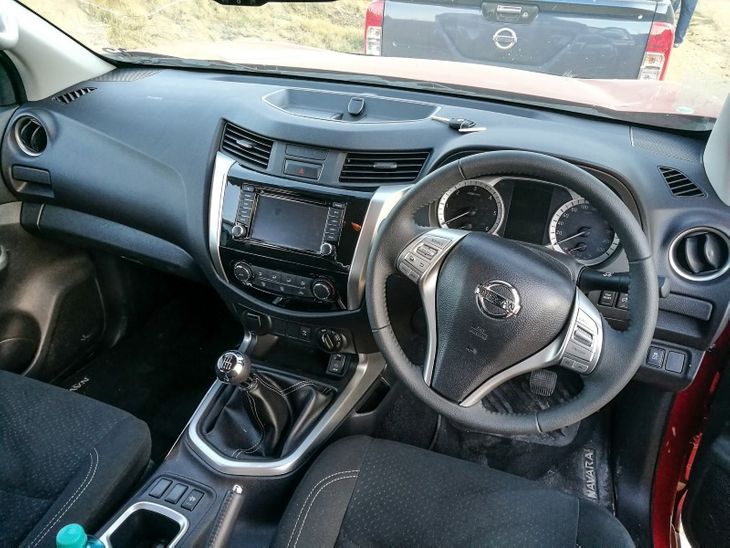
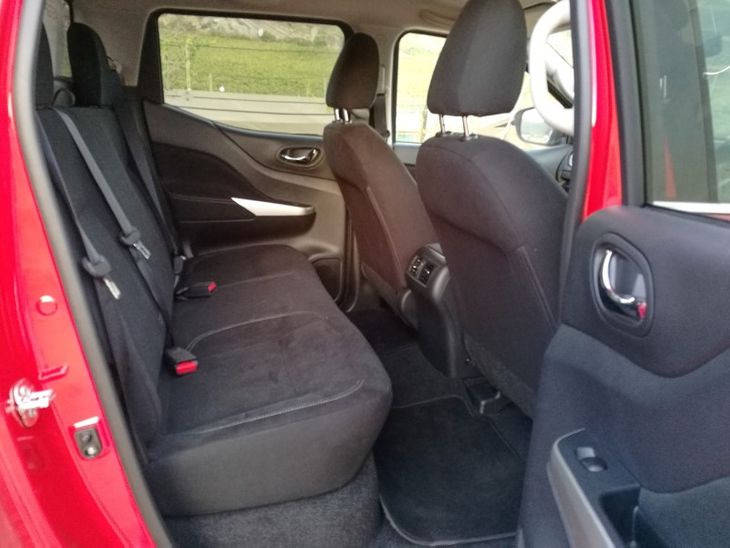
The well-appointed passenger car-like interior is a continuation of the "overtly SUV-like bakkie" theme.
The most marked evolution in double-cab design to be delivered into South Africa’s bakkie market, in the last decade, is Nissan’s new Navara. And no, it’s 2.3-litre turbodiesel four isn’t that revolutionary, nor is the 7-speed automatic transmission. It’s the bits at the rear wheel corners which herald an immense change in bakkie design, and grate against all conventional workhorse wisdom.
Nissan decided to modernise, you see. To finally, in the 21st century, move beyond conventional bakkie rear suspension technology which sources, quite embarrassingly, from the 19th-century practice of leaf springs. Easy to manufacture and replace, the presence of leaf springs in modern vehicles, with plush leather cabins and powertrains capable of 180kph, remains a ridiculous state of affairs.
Welcome to the 21st century!
As such, new Navara has a coil-sprung solid axle at the rear, with multiple links to keep it in place, instead of a stack of flat-bar strips, clamped together – which is essentially what leaf springs are.
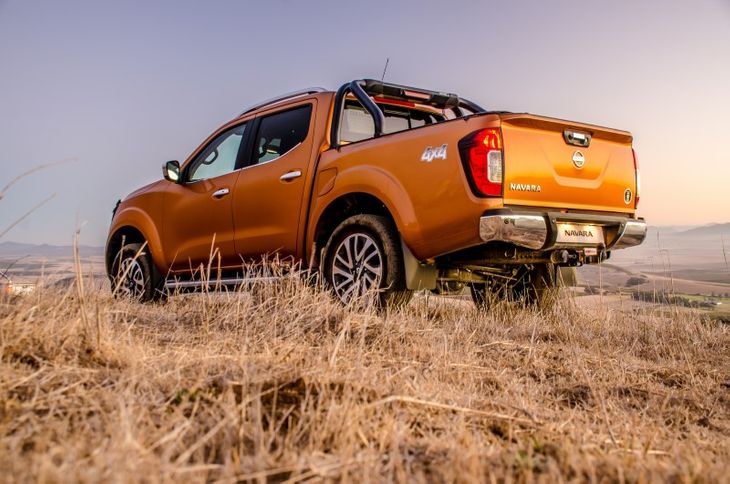
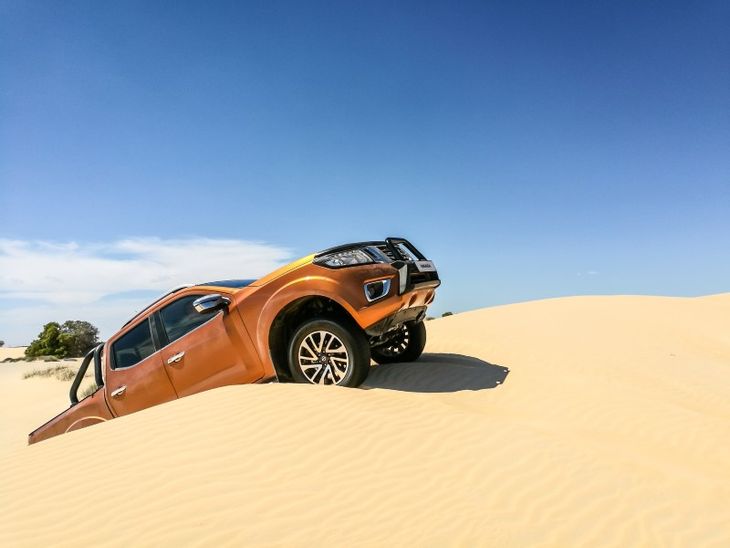
The Navara got the opportunity to demonstrate its off-road prowess during the newcomer's recent price launch.
"But they’re robust and they work." Quite. But the Nokia 3310 was robust and worked well too, then the Smartphone revolution happened and nobody wanted one ever again – until this year, because they’ve been future-proofed and relaunched with Smartphone functionality. If you prefer a more bakkie-centric example, solid front axles were the only option for double-cab bakkies in South Africa for two decades, from the 1980s to 2000, yet today they’re all independently sprung up-front and notably better for it.
Leaf springs are awful because they originate from 19th-century horse-driven carriages and wagons, and horses aren’t capable of 160 kph on gravel roads. The combination of side-loads and high-frequency bumps – at triple digit speeds – upset leaf-sprung suspension dynamics something tragic. If you’ve driven an unladen double-cab through the Karoo, or on Namibian gravel roads, you’ll know of the nauseating bump steer I’m referring to.
Traditionally, rear passengers felt the brunt of the leaf-sprung suspension's lack of pliancy, but that is not applicable to the new Navara.
For Nissan, there was a superior solution they could no longer ignore: coils. A coil spring requires much less initial force to initiate its energy absorption properties, and those bumps which overwhelm the damping effect of a leaf spring, are effortlessly absorbed by the stroke dynamics of a coil. Better yet, coils are compact, vertically linked, suspension packages, unlike leaf springs, which are elongated and horizontally tensioned – making them terribly susceptible to side loads. It’s why leaf-sprung bakkies are always twerking on dirt roads and over sandy terrain with surface ripples, instead of tracking straight.
Enough with the hating
Volkswagen Amarok, Mazda BT-50, Toyota Hilux, Isuzu KB, Ford Ranger and Mitsubishi Triton owners will remain defiant, arguing that a coil-sprung live axle is a novelty, incapable of proper load-bearing. It’s true, leaf springs do resist vehicle sag under load better, which is why trucks have leaf springs. In the real world, though, there are three immensely persuasive arguments against the traditionalist view of leaf springs being the double-cab bakkie suspension option of choice.
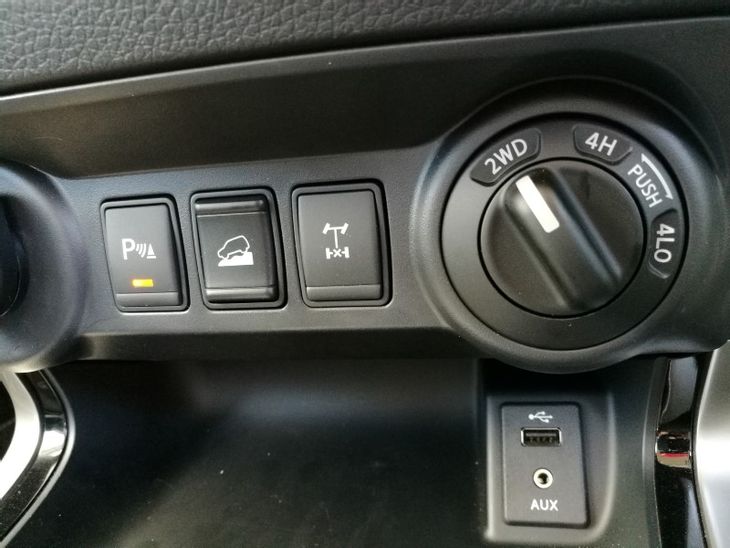
The first issue I have mentioned already: evolutionary engineering. If we believe that any new innovation is superfluous, adding complexity, cost and field service vulnerability, bakkies would never have gained ABS, ESP with trailer-sway mitigation, fuel-injection or cabin-selectable four-wheel drive. I, for one, am rather grateful for not having to get out in the sweltering heat, or bitter cold, to lock hubs once gravel roads deteriorate into properly challenging off-road terrain.
Self-locking hubs have made shift-on-the-fly functionality ubiquitous; ABS and traction control make hill descent management automatic.
Coil springs are the superior progression in suspension design, and have been proven on the front axle of double-cab bakkies, replacing leaf springs. This promotes the argument that nearly all current double-cab cab owners have a 50% acceptance of this design trend – without realising it.
‘For real off-roading leafs are more reliable.’ In your imagination, yes, and if the year was 1960, perhaps, but you’d struggle to convince most engineers who build the fastest off-road racing vehicles in the world to trade their coils for leaf springs. Toyota’s tremendously successful, South African designed and built, Dakar Hilux racing bakkies have coils at the rear, instead of the production Hilux’s leafs. I’d argue team boss, Glyn Hall, and star driver, Giniel de Villiers, with multiple podiums and a victory between them, in the world’s most testing off-road race, know better than any of us.
What about load-carrying ability?
The loadability argument is perhaps the issue coil detractors are most virulent about. Leaf-sprung rear axle fanatics refuse to admit that coils could ever tow, or carry load, without sagging or bottoming-out over obstacles off-road. To believe this, you would also have to judge Land Rover’s Defender as the weakest off-road load carrying bakkie of all, which it isn’t. Naturally.
If you were required to move loads across broken terrain to a conventionally inaccessible location, Defender bakkies are amongst the most capable – if not the best – vehicles to accomplish the task. And they’ve had coil-sprung front and rear axles since the 1980s. Rated to carry a weighty 1 350 kg, have you ever seen a Defender 130 double-cab sagging under load, or bottoming-out off-road? Exactly.
For the overwhelming number of double-cab buyers, the ultimate load-carrying ability of the Navara will not be a deal-breaker anyway…
Navara, then, a revolution in bakkie design? I’ve driven it at speed on the calibre of dirt roads that overwhelm bakkie ESP systems and make you feel like you’re piloting your double-cab on a gravel version of the Nürburgring’s Karussell. And it’s brilliant. Unbothered. Stable. Completely untroubled. Off-road, the rear tracks with confident accuracy too, settling after big hits instead of bucking like most leaf sprung double-cabs do.
Loadability? South African Navaras have a higher ride height than most other markets and are closer to the improved coil spring and rebound damper package which was introduced to the Australian market in March, after owners complained the factory springs were slightly under specced. Don’t imagine for a moment that Everest and Fortuner’s coil won’t be available on the new Ranger and Hilux double cabs when they arrive in South Africa.
Coil springs worked fine for the Defender…
For more than three decades there have been coil-sprung Defender 110 and 130 double-cab bakkies roaming the most testing terrain in the world. Now, finally, you can have the stability, traction and comfort benefits of coils at all four wheel corners, without the military heritage ergonomics or ‘barely-legal’ 120kph top speed performance which made Defender rather undesirable as a South African family double-cab.
Everest and Fortuner have coils too and you can be sure Ford and Toyota are busy planning to transplant those to Ranger and Hilux soon. Because if you are paying nearly R600k for a double-cab with a rearview camera, you don’t expect 19th-century suspension design as standard, now do you?
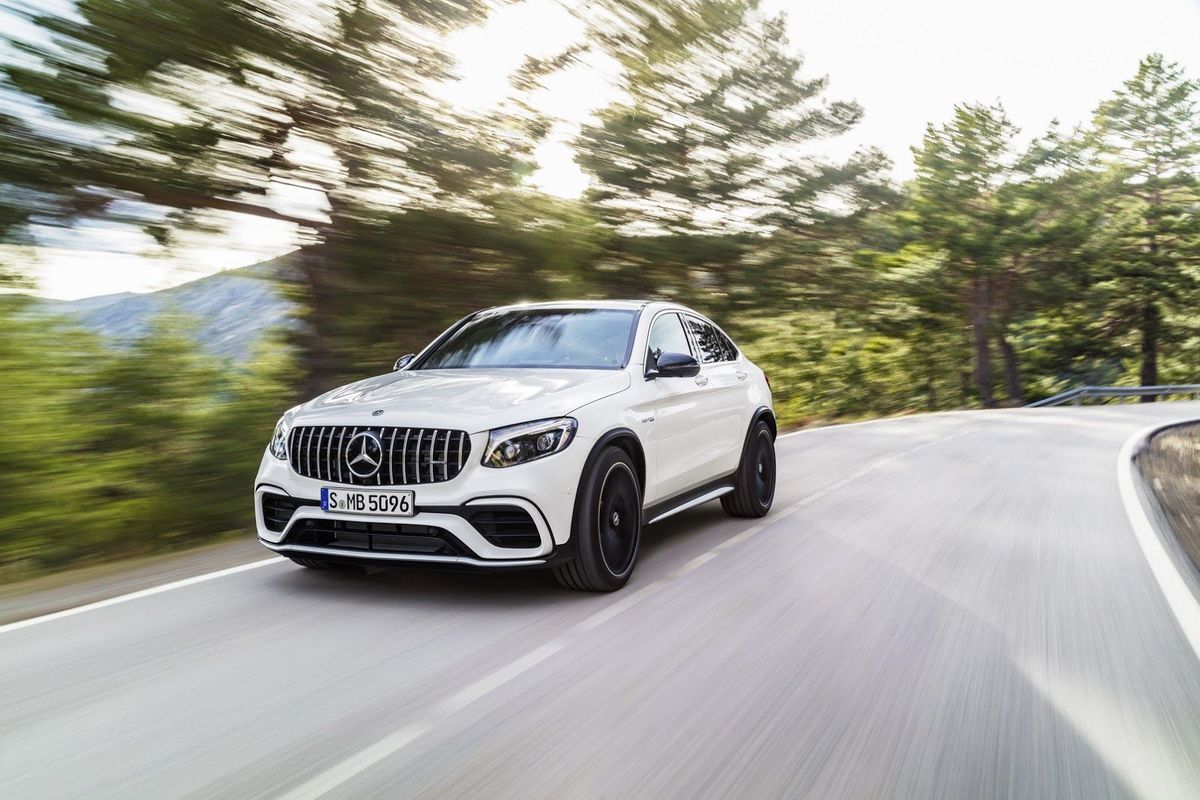
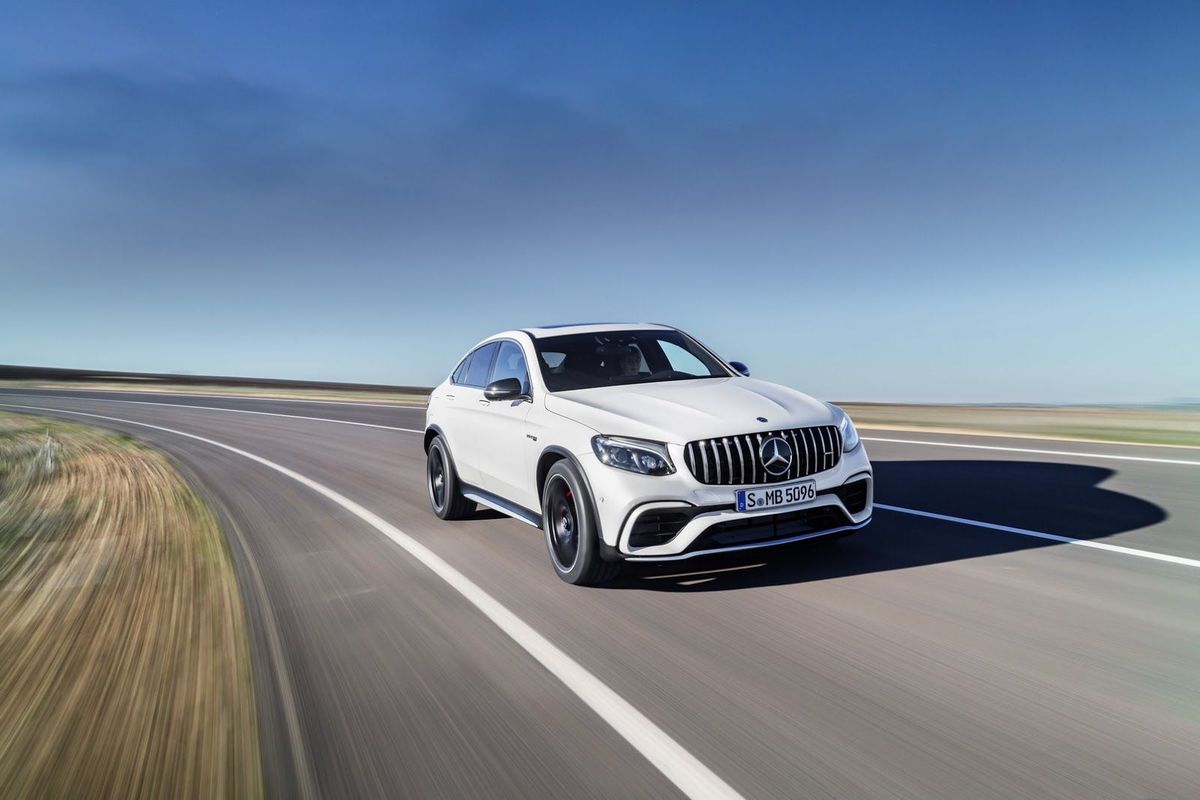
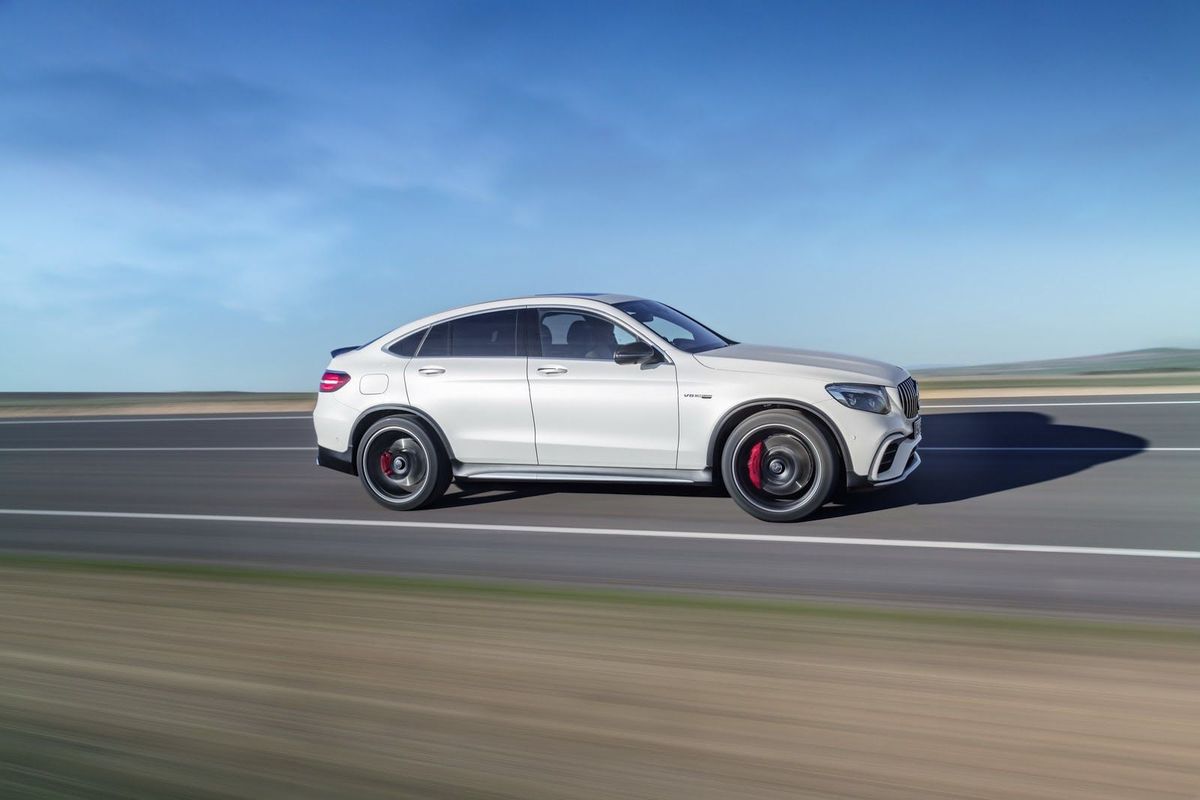
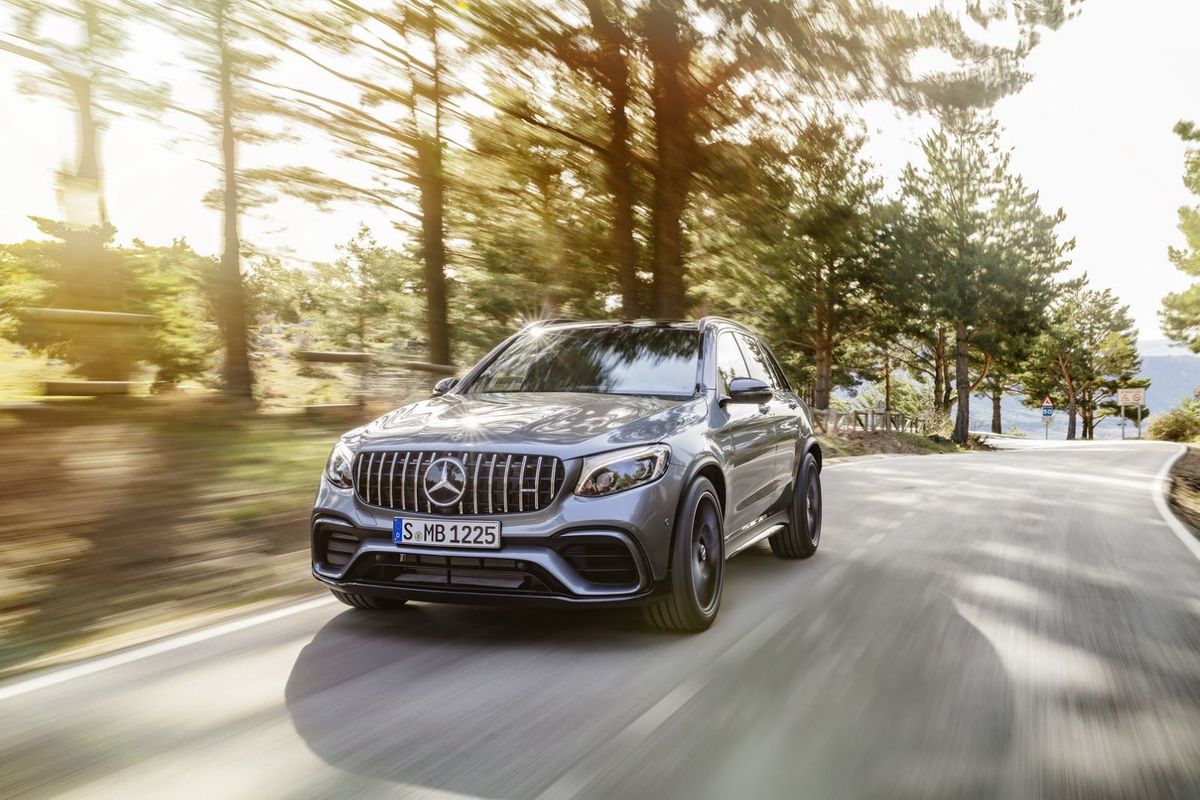
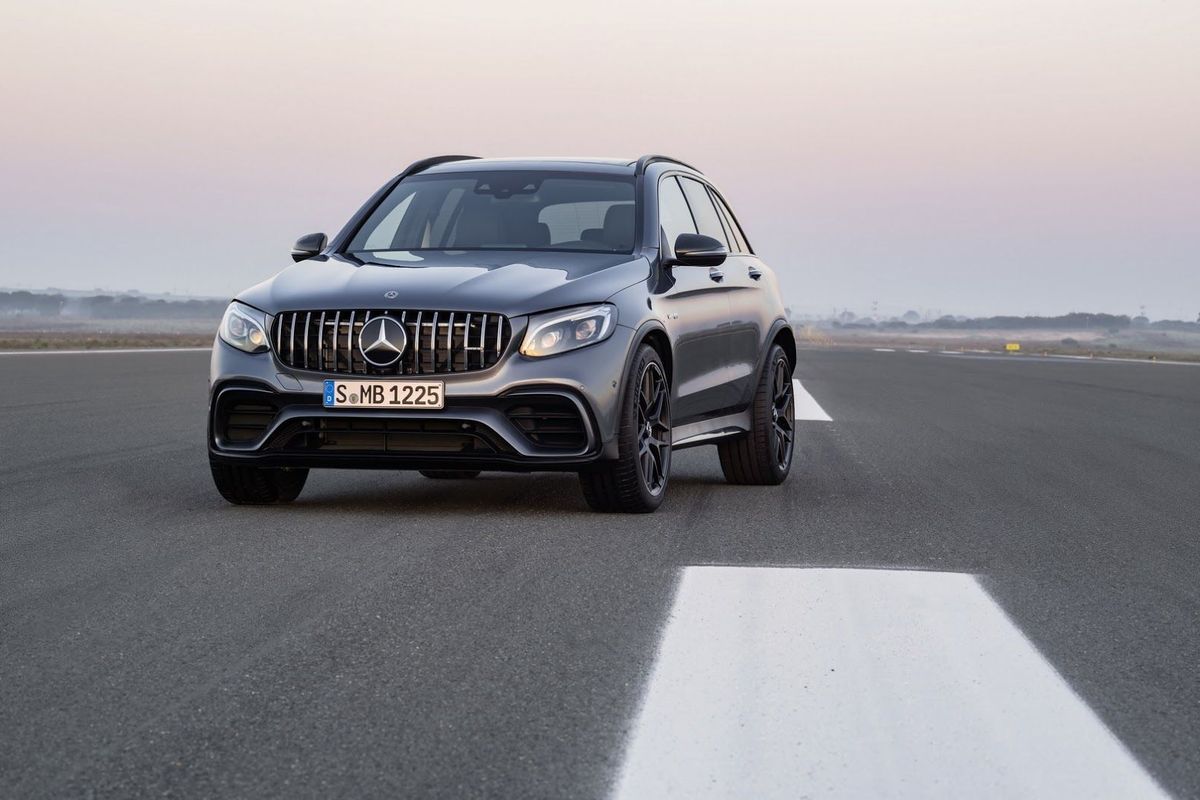
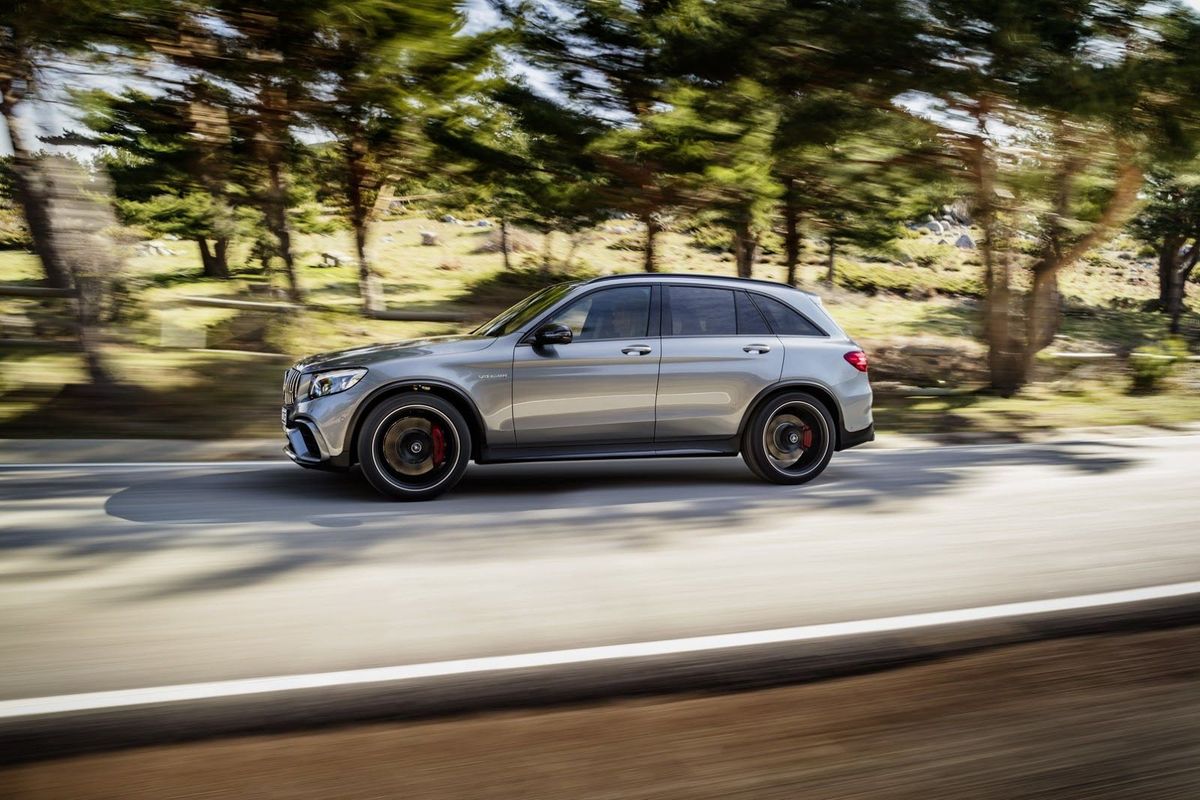
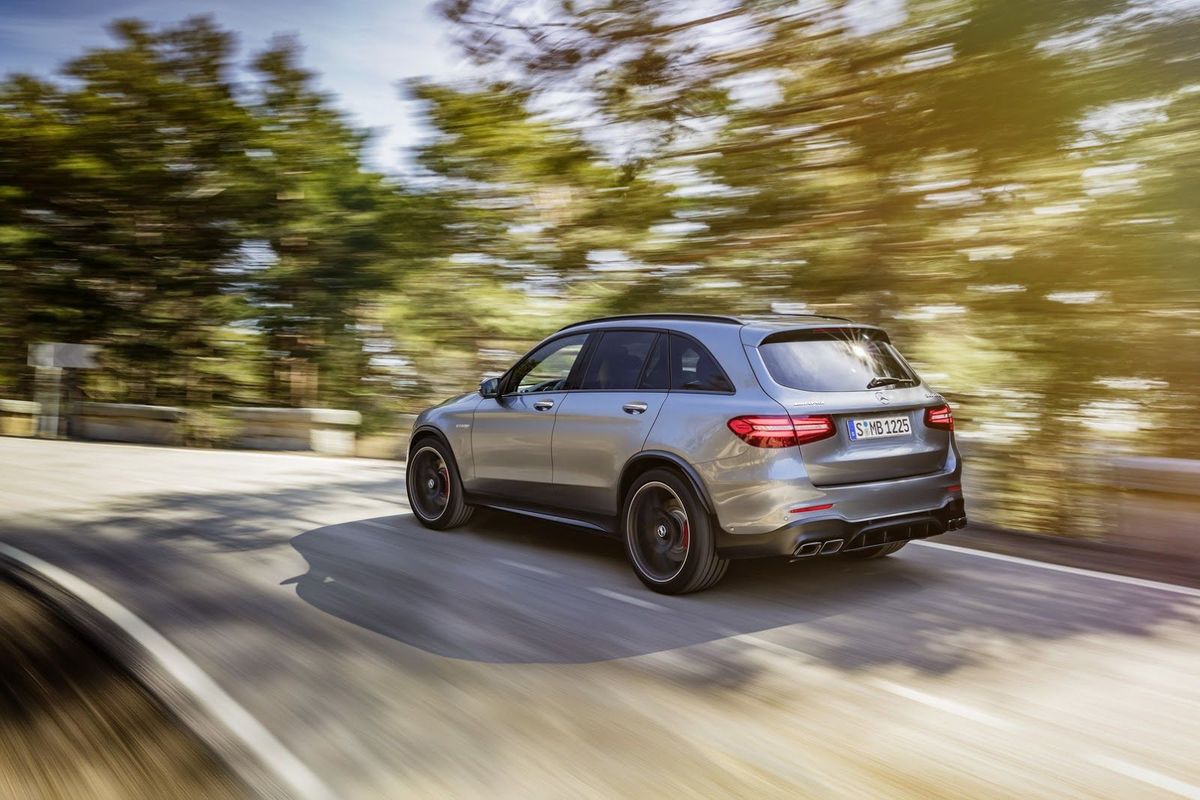
Mercedes-AMG is showcasing the GLC63 and GLC63 Coupe at the New York Motor Show. Check out the details…
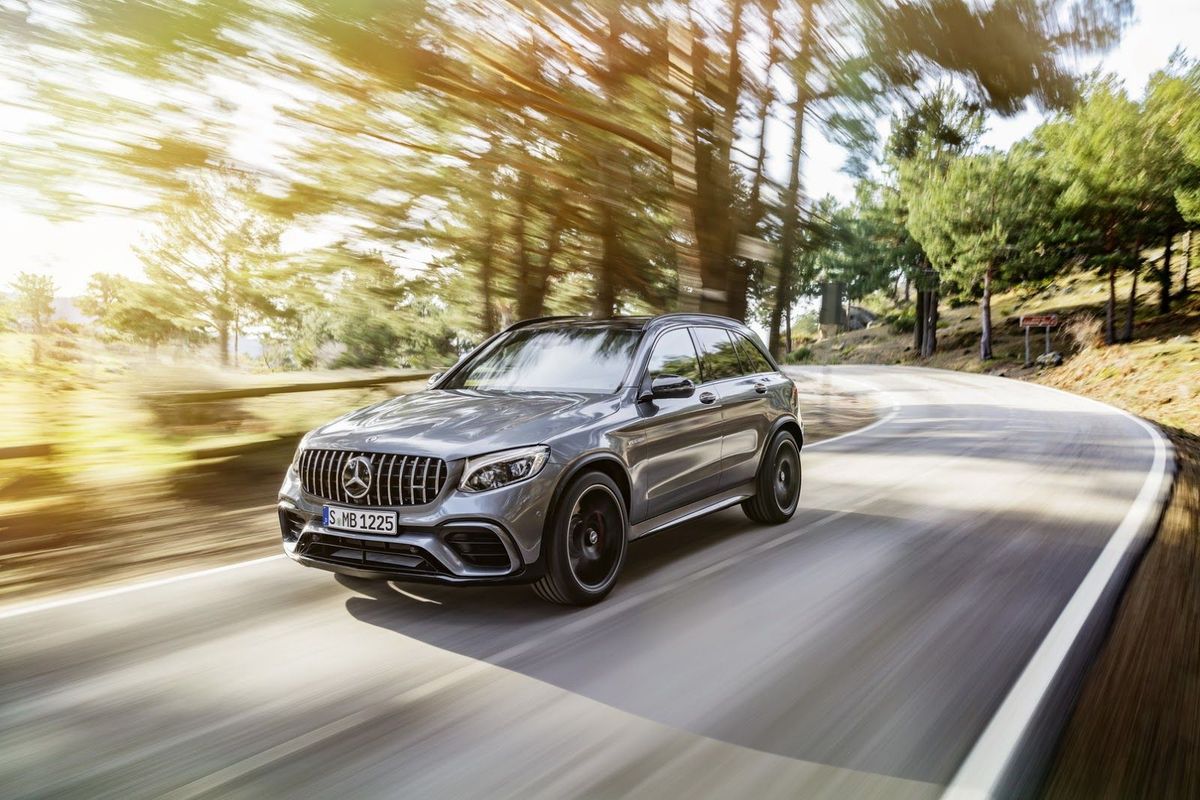
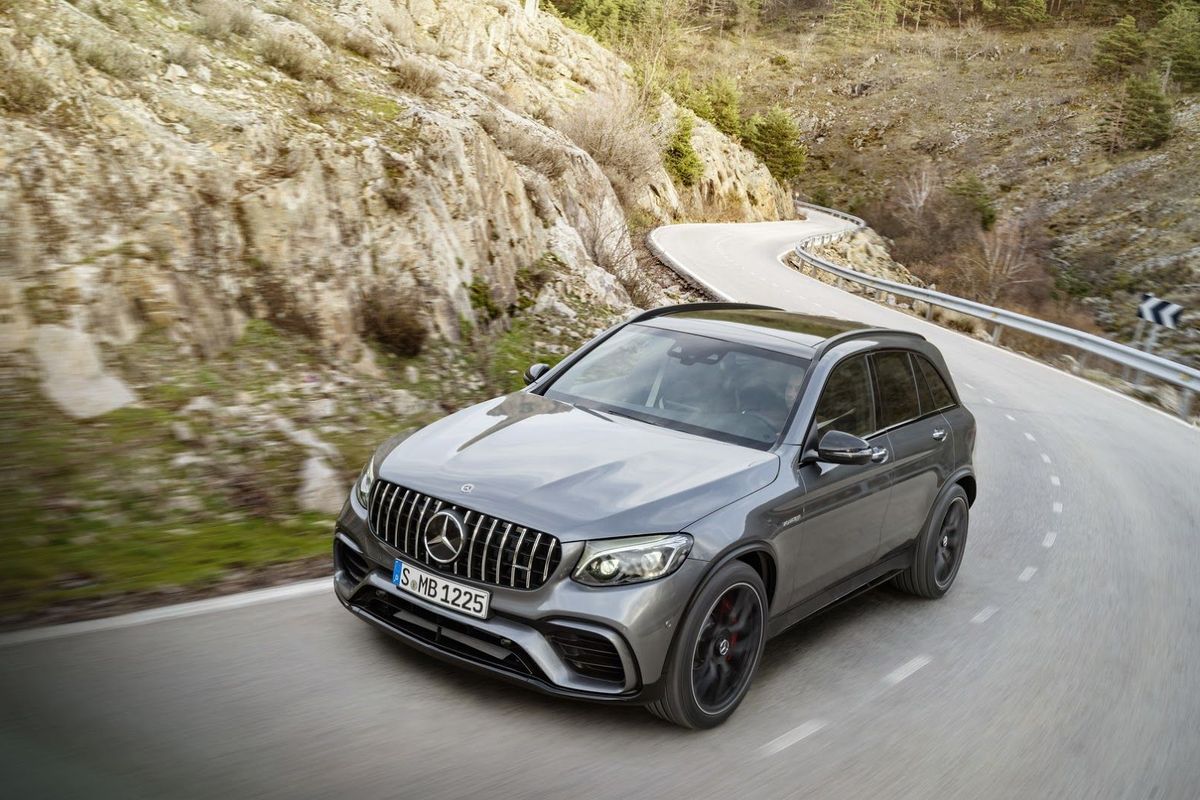
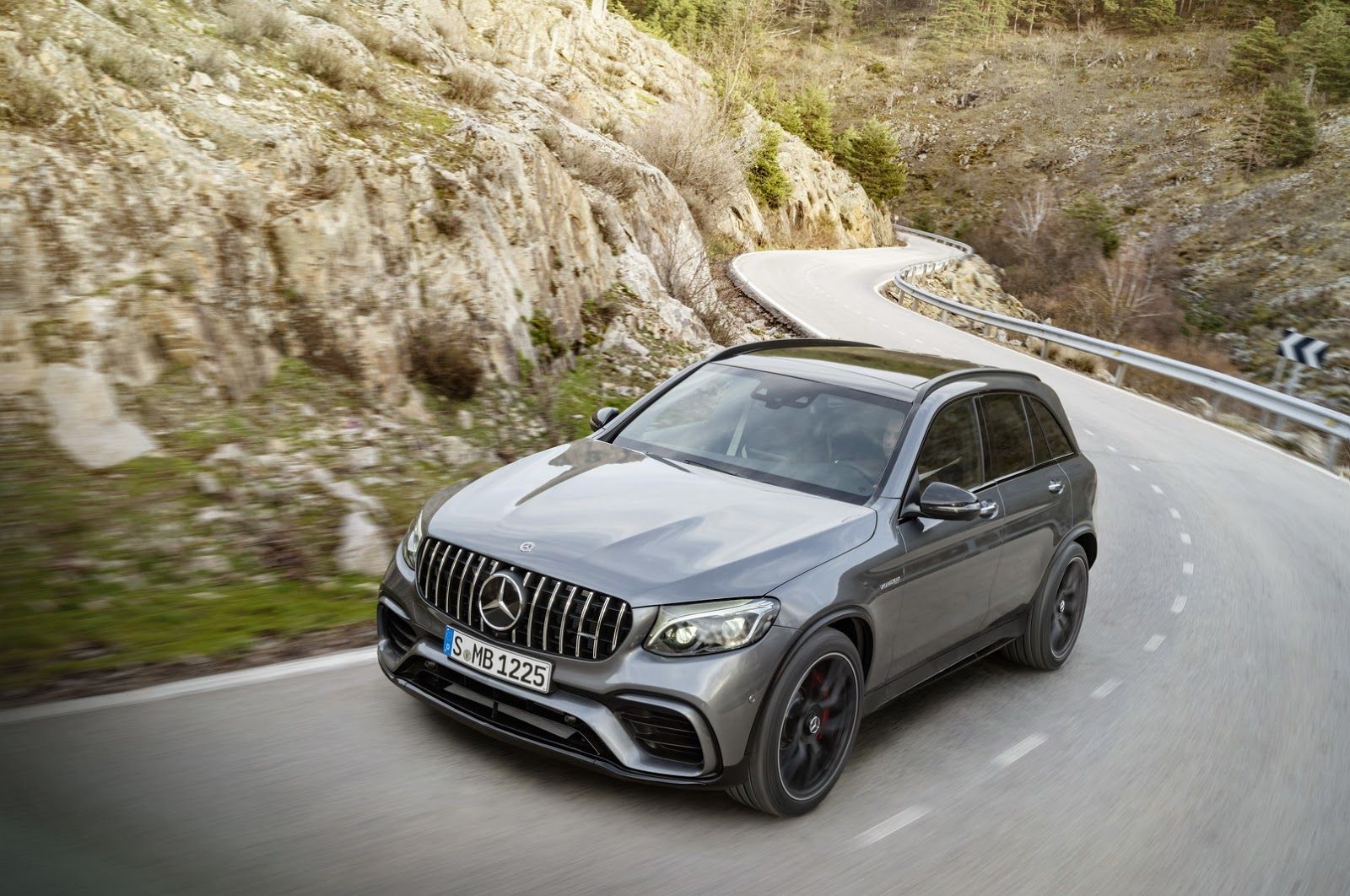
Mercedes-AMG is showcasing its high-performance GLC63 and GLC63 Coupe at the New York Motor Show. The big news is found under the bonnet where the familiar 4.0-litre twin-turbocharged V8 lives, a first in this segment, with the intention of slaying the Porsche Macan.
"With it, the GLC 63 offers amazing performance under all conditions – aided by an array of other high-tech features, including our AMG 9-speed sports transmission and our new all-wheel drive system, which we introduced for the first time last year in the new E-Class” said Tobias Moers, CEO of Mercedes-AMG GmbH.
The V8-powered AMG GLC63 and GLC63 Coupe can be expected in South Africa at the end of the year. Bring it on!
Outputs are impressive with the GLC63 and GLC63 Coupe offering 350 kW and 650 Nm of torque. The more potent GLC63 S Coupe in comparison delivers 375 kW and 700 Nm of torque. A 9-speed AMG SpeedShift multi-clutch transmission from the Mercedes-AMG E63 S lays power to the tar in conjunction with an AMG 4Matic all-wheel drive system, resulting in brisk acceleration.
The firm claims that the GLC63 will accelerate from 0-100 kph in just 4.0 seconds while the GLC63 S Coupe will complete the run in a blistering 3.7 seconds. Top speed is limited to 250 kph. A choice of 4 driving programs are offered including Comfort, Sport, Sport+ and Individual while a Race mode is offered for the GLC63 Coupe variants.
On-road comfort is provided by a new AMG suspension system with multi-chamber air springs and adaptive damping which can be set to either Comfort, Sport and Sport+. The speed sensitive steering also offers two modes including Comfort and Sport.
Styling Features
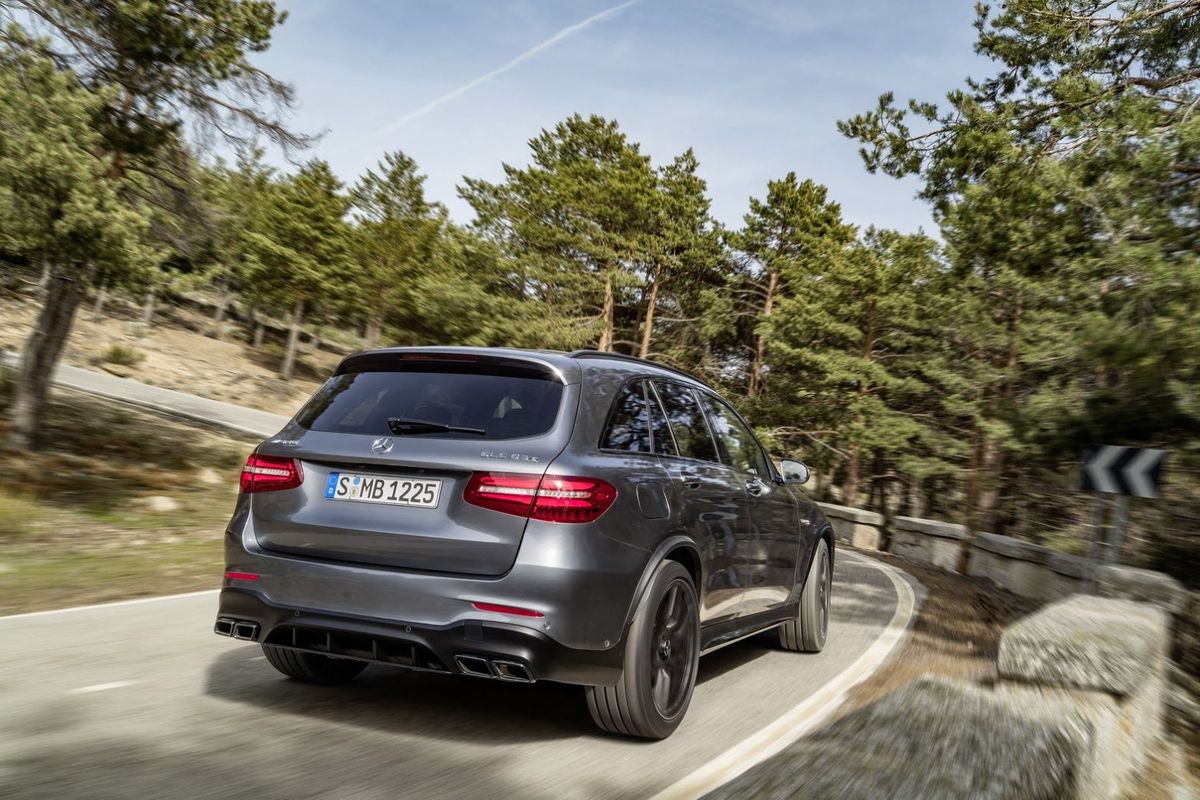
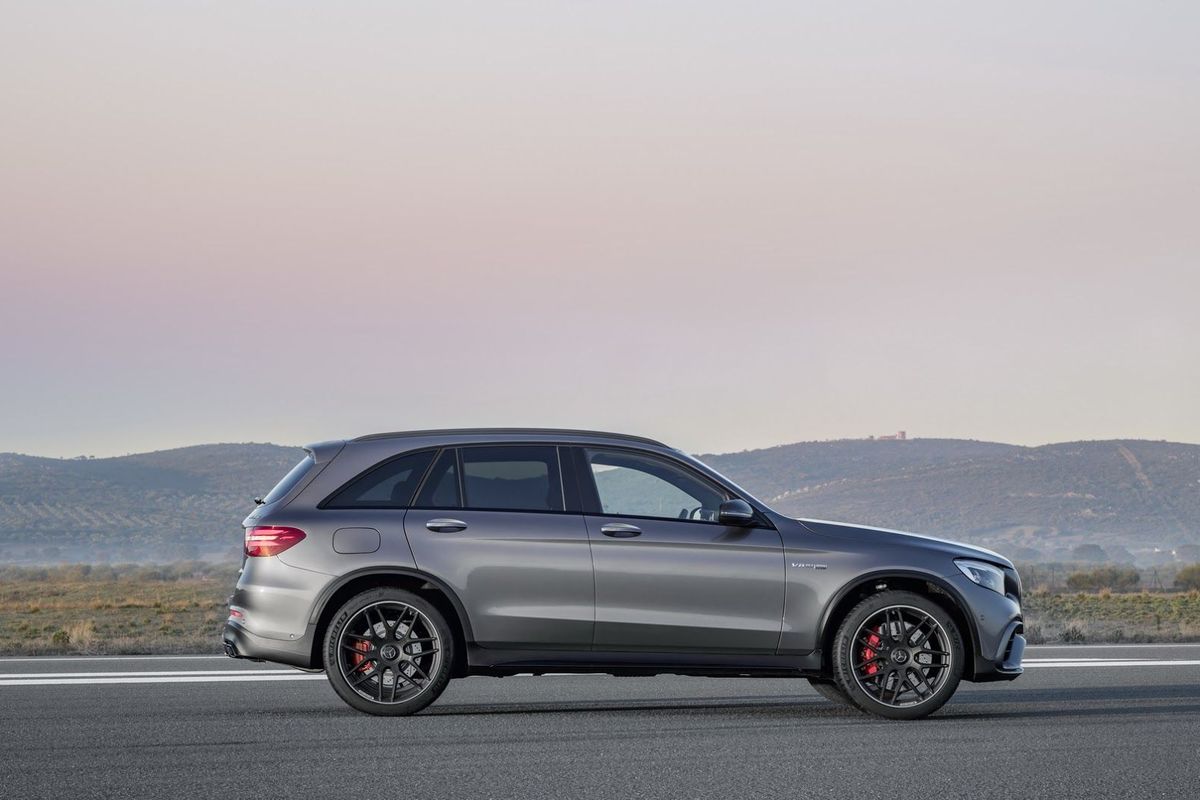
The GLC63 and GLC63 Coupe derivatives are differentiated from the rest of the GLC family with a Panamericana grille as seen on the AMG GT. AMG-specific front and rear bumpers are fitted along with a roof spoiler and performance exhaust system with quad tailpipes. The GLC63 and GLC63 Coupe ride on 19-inch wheels while the GLC63 S makes use of 20-inch rims.
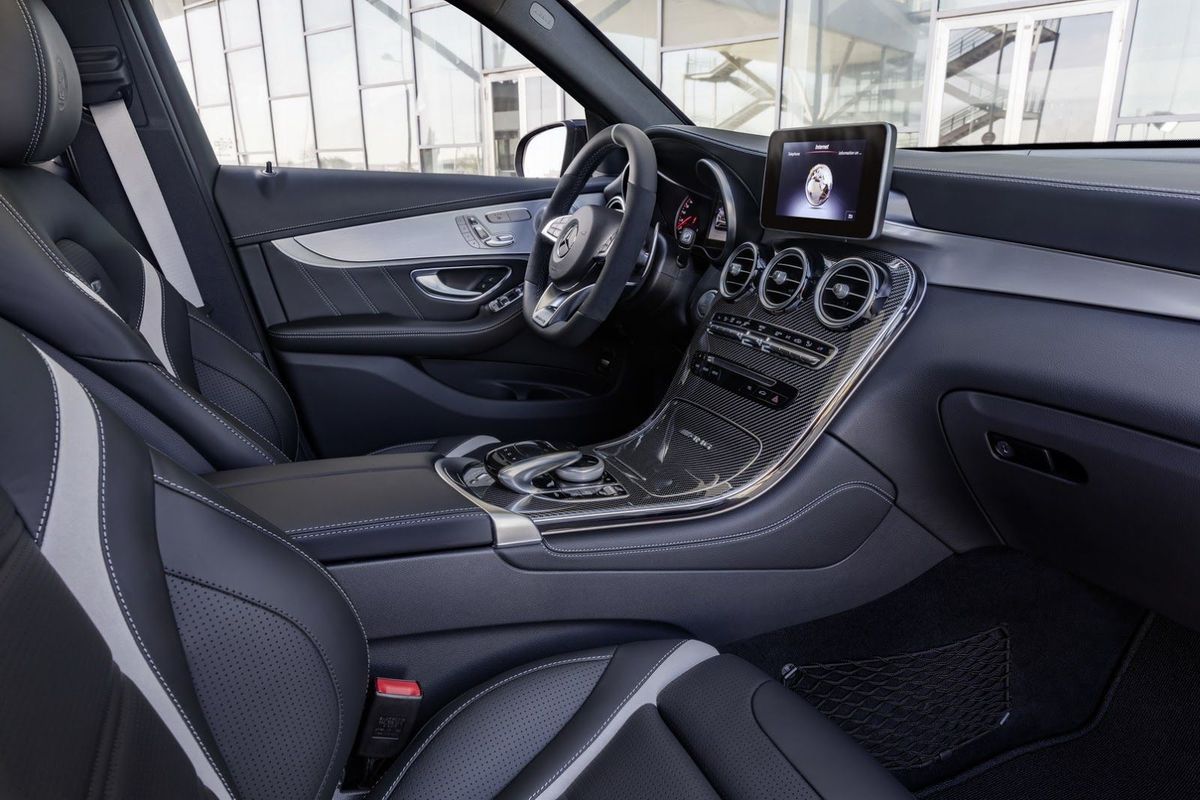
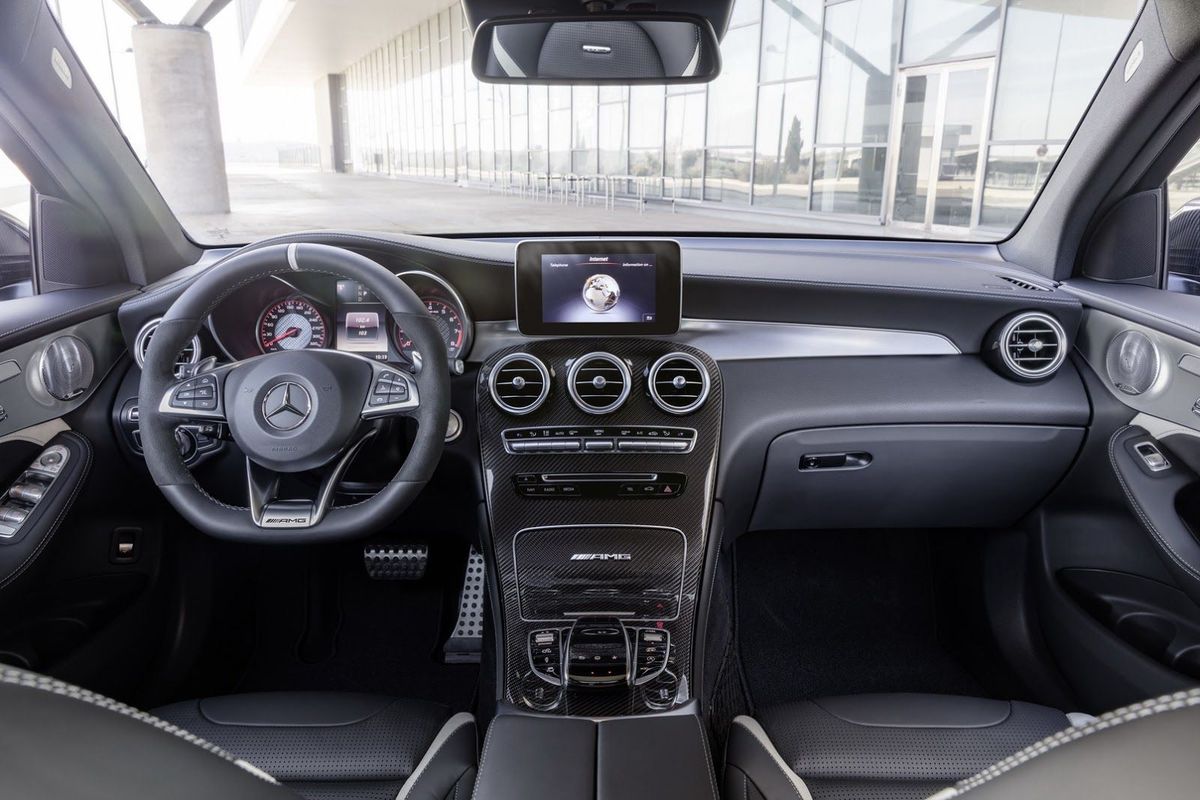
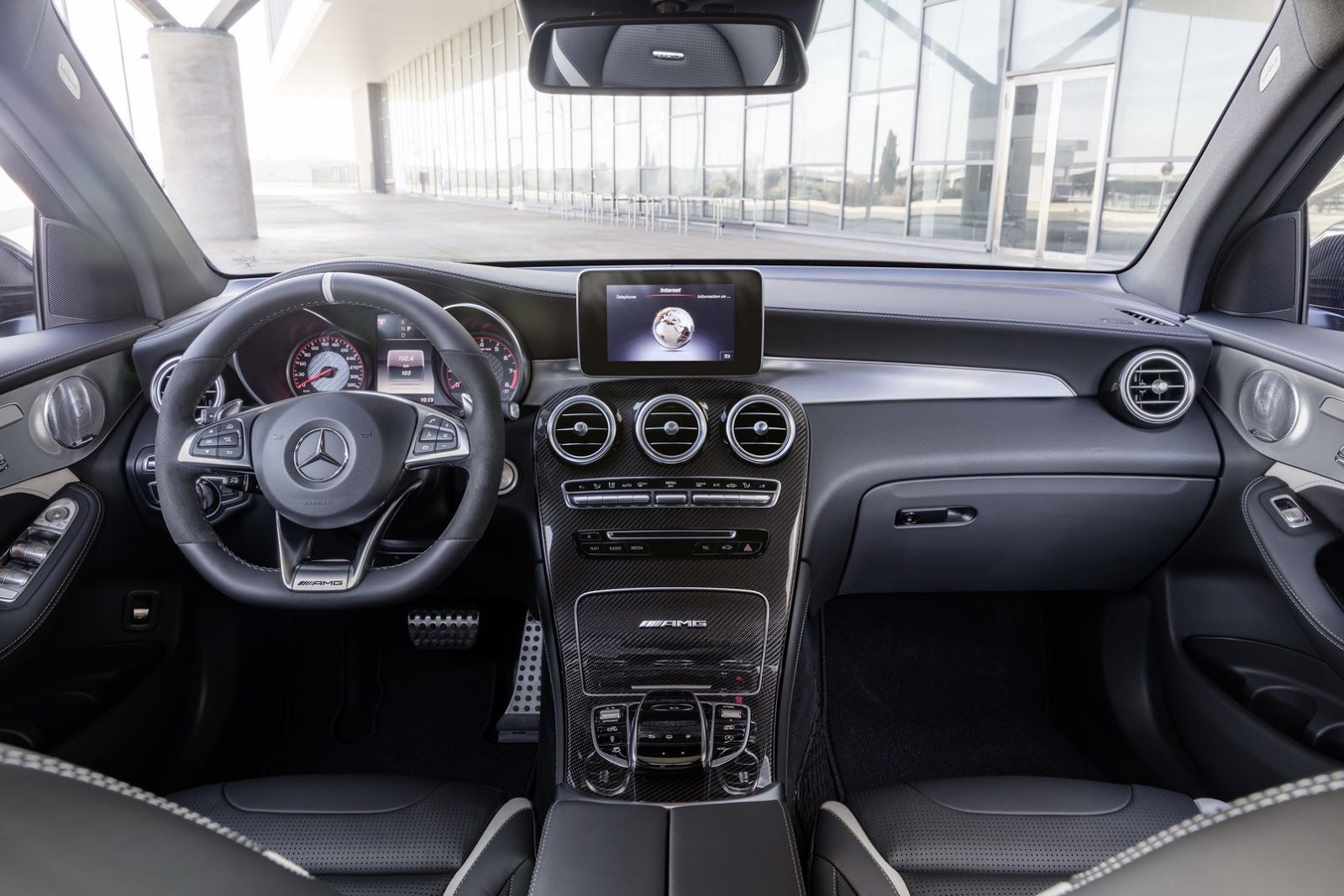
The interior shows sporty and luxurious finishes with a range of options available to further improve the cabin experience.
Inside, man-made leather combined with Dinamica microfibre upholstery is offered as standard with a number of trim options available. Sports seats are fitted and the instrument cluster features model-specific readings. As usual a wide range of options can be fitted to further enhance the look and feel of the GLC63 range.
The local arrival of the Mercedes-AMG GLC63 and GLC63 Coupe has been confirmed for the fourth quarter of 2017. We will keep you updated as more information becomes available. For now, watch the Mercedes-AMG GLC63 in action in the video below…
Jaguar scoops prestigious World Car of the Year title
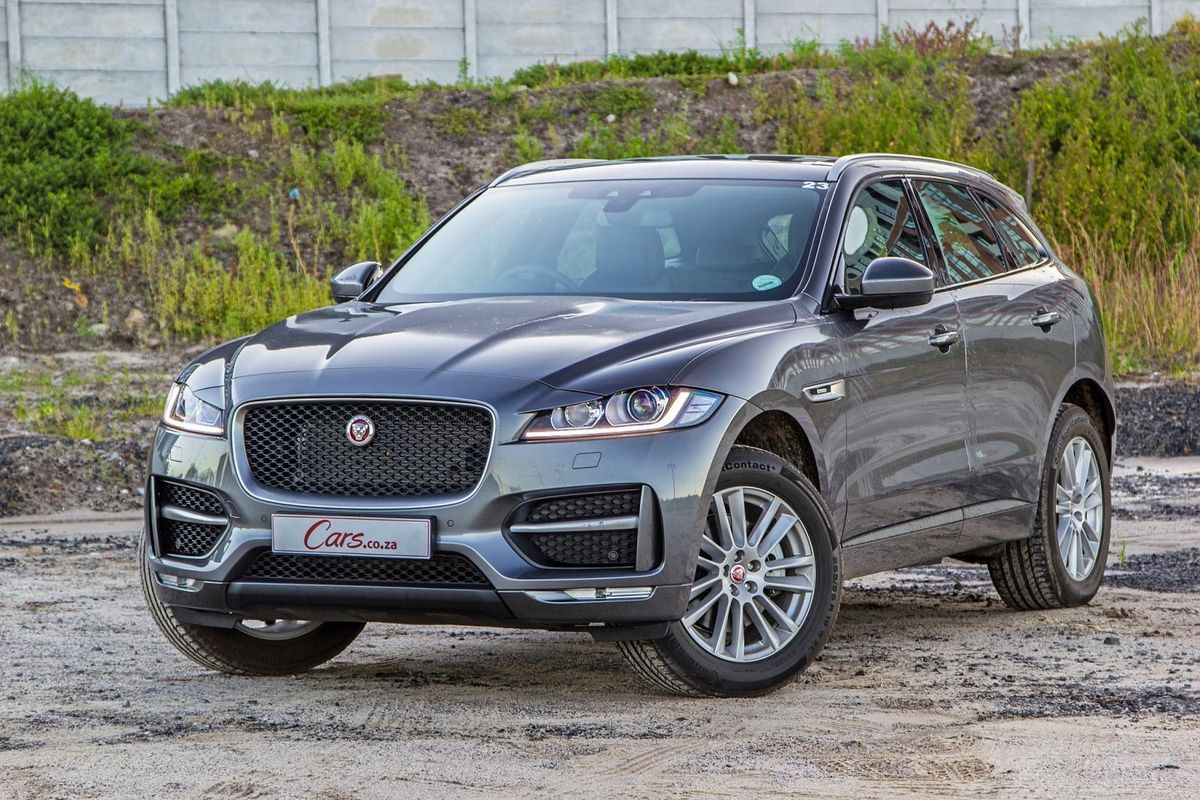
The World Car Awards organisation has announced its 2017 winners in 6 categories. Jaguar's first SUV, the F-PACE, scooped two awards, including the prestigious overall World Car of the Year trophy.
The eagerly anticipated announcement was made at the New York International Auto Show, and Jaguar's big win is likely to make waves – the F-PACE is the first SUV to ever drive away with the major title. "It's a sign of the times that SUVs and crossovers were so dominant in this competition," says Cars.co.za's Hannes Oosthuizen, the only South African member of the 75-strong judging panel. "The other 2 contenders for the win were the VW Tiguan and Audi Q5, and I must say I was expecting the Tiguan to be crowned. That said, a factor in this competition is 'significance', and in that regard the F-PACE is certainly strong," Oosthuizen explained.
The Jaguar F-PACE also took home the silverware in the Car Design of the Year category, which is exclusively judged by 6 internationally respected design experts.
Dr Ralf Speth, CEO Jaguar Land Rover said: "The F-PACE was designed and engineered as a performance SUV with exceptional dynamics, everyday usability and bold design. Winning these two awards endorses the talent and great work of our teams that have delivered the world’s most practical sports car and Jaguar's fastest selling vehicle.”
Other winners
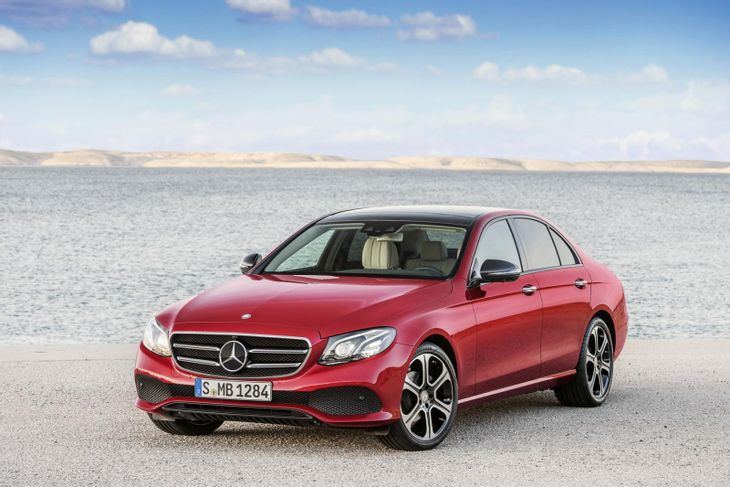
The Mercedes-Benz E-Class beat the new BMW 5 Series and Volvo S90 to the World Luxury Car title.
The World Luxury Car title was awarded to the Mercedes-Benz E-Class, with the brand new BMW 5 Series and impressive Volvo S90 proving unable to claim the top spot. It is Mercedes-Benz's third win in this category since the competition's inception.
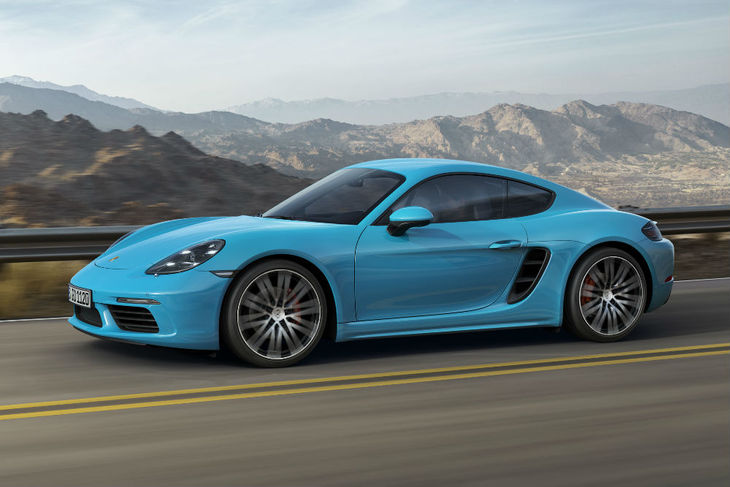
The Porsche Boxster/Cayman is the 2017 World Performance Car, sprinting ahead of the Audi R8 Spyder and McLaren 570S on the judges' voting sheets. BMW's i3 (93Ah) was the inaugural winner in the new World Urban Car category, beating the Citroën C3 and Suzuki Ignis to the title. Finally, Toyota's Prius Prime made it 2 in a row for Toyota in the World Green Car segment (the Toyota Miraj won last year). The Prius Prime faced strong competition from the Tesla Model X and Chevrolet Bolt.
The Porsche 718 Cayman/Boxster is the World Performance Car of the Year 2017.
The Jaguar F-PACE, the first SUV produced by the Coventry-based luxury marque and a runner-up in the Premium SUV category of the 2016/17 Cars.co.za Consumer Awards – powered by WesBank, has been named the 2017 World Car of the Year (ahead of the new Audi Q5 and Volkswagen Tiguan) at the New York Show. In 2016 we tested the 30d R-Sport derivative and these were our conclusions…
We like: Very dynamic SUV, good looks, spacious, powerful yet frugal turbodiesel motor
We don’t like: Optional equipment that should be standard, interior could have more wow!
Alternatives:
For even more diesel grunt: Audi SQ5 TDI quattro is faster from zero to 100 kph than the Jag, but it’s getting a little long in the tooth.
For more exclusivity: Porsche Macan S Diesel is dynamically as close as you’re going to get to the F-PACE, but it's slightly more expensive.
For more off-road capability: Range Rover Sport TDV6S is more expensive and has lower spec, but easily the most off-road prowess.
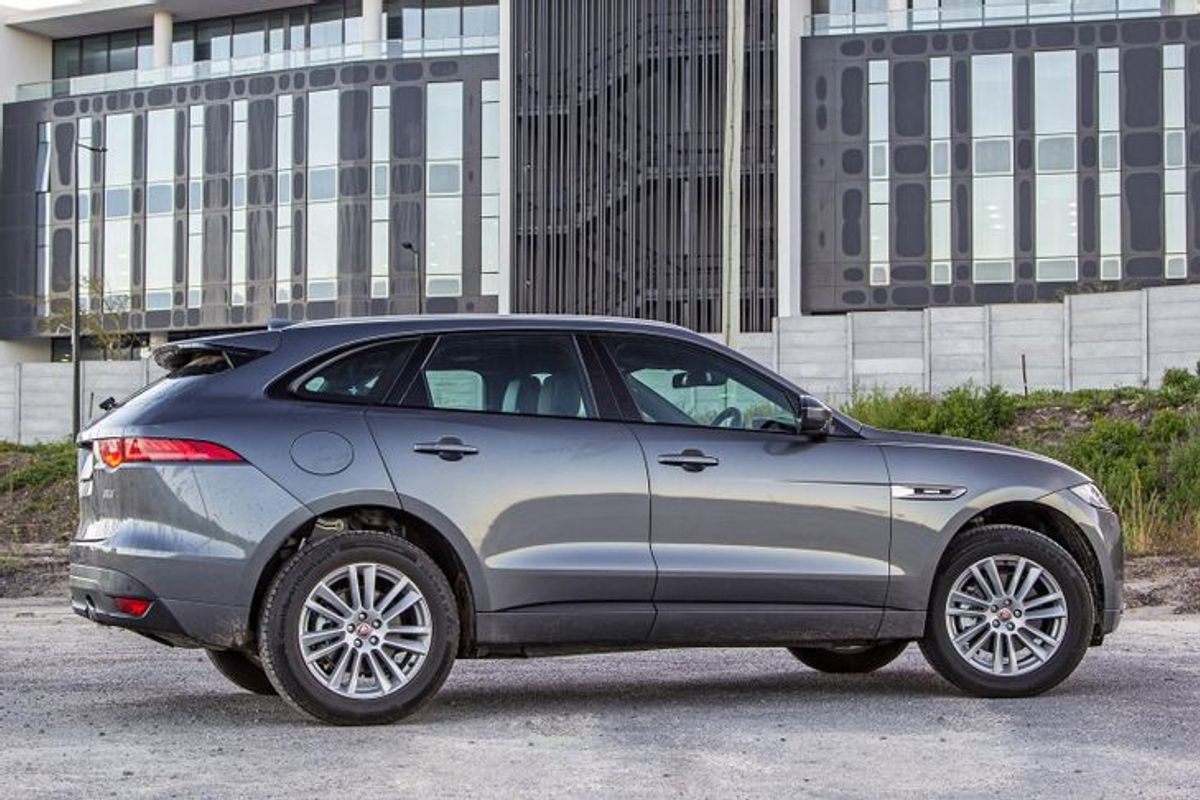
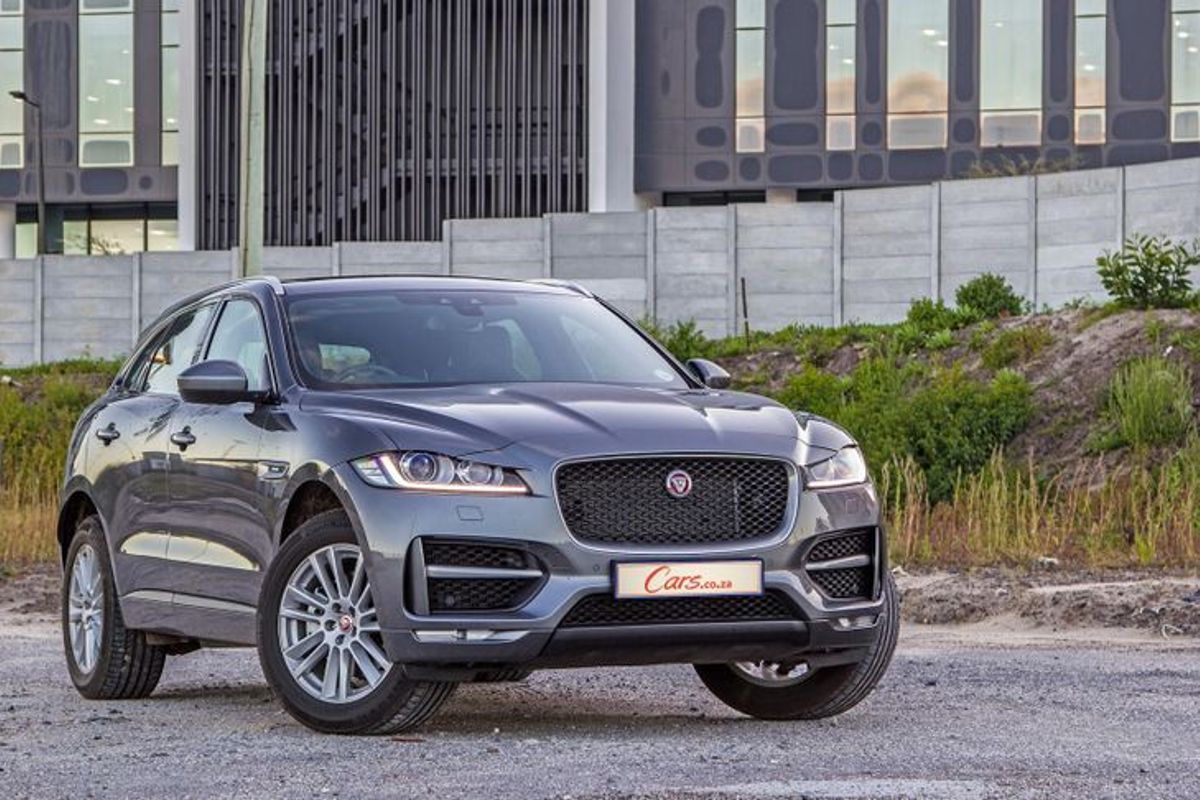
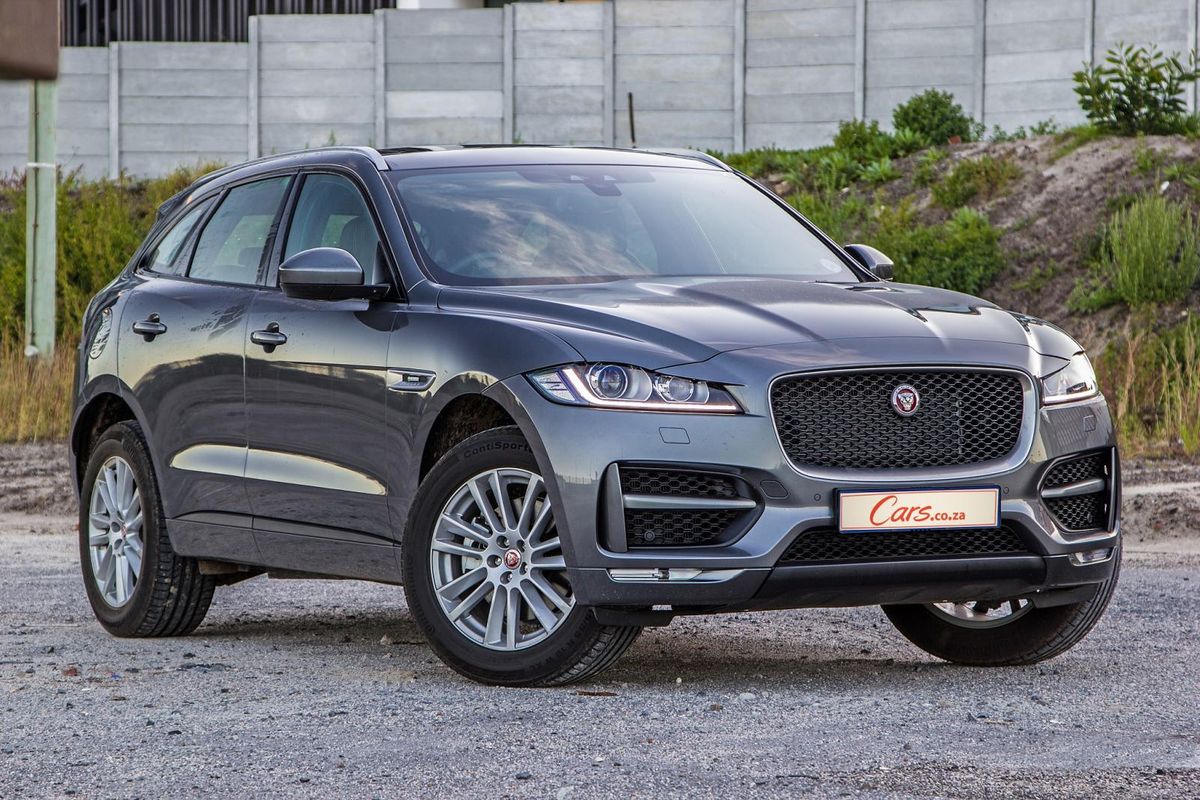
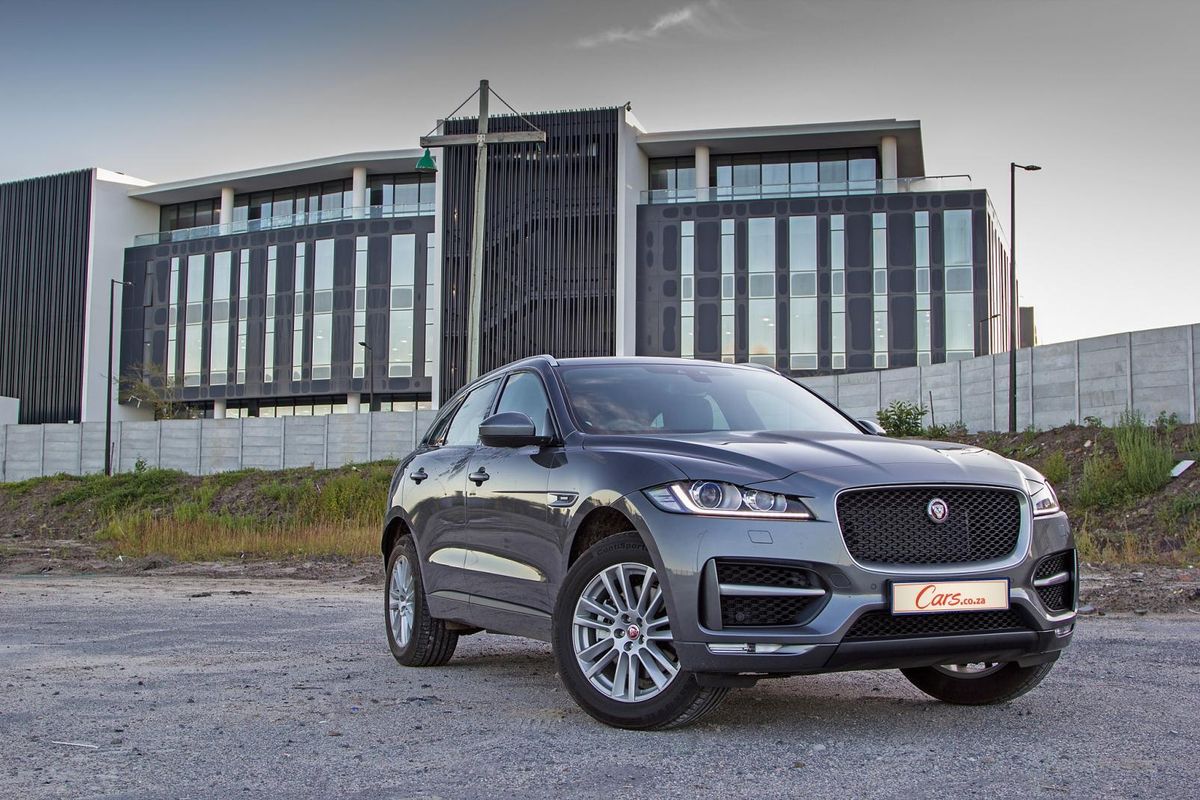
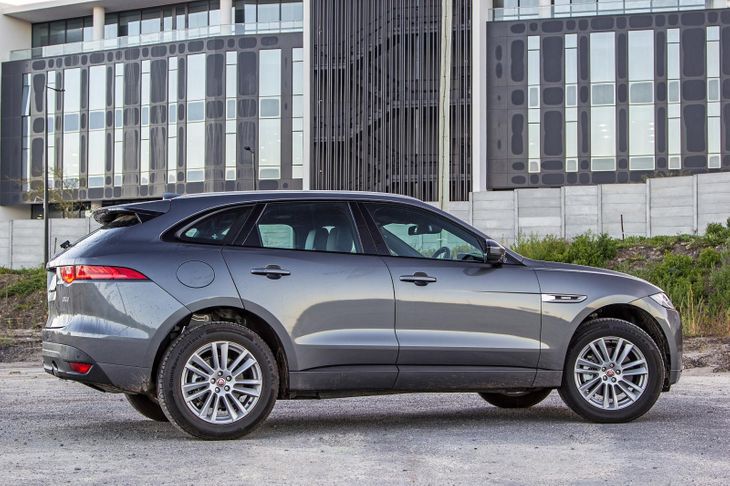
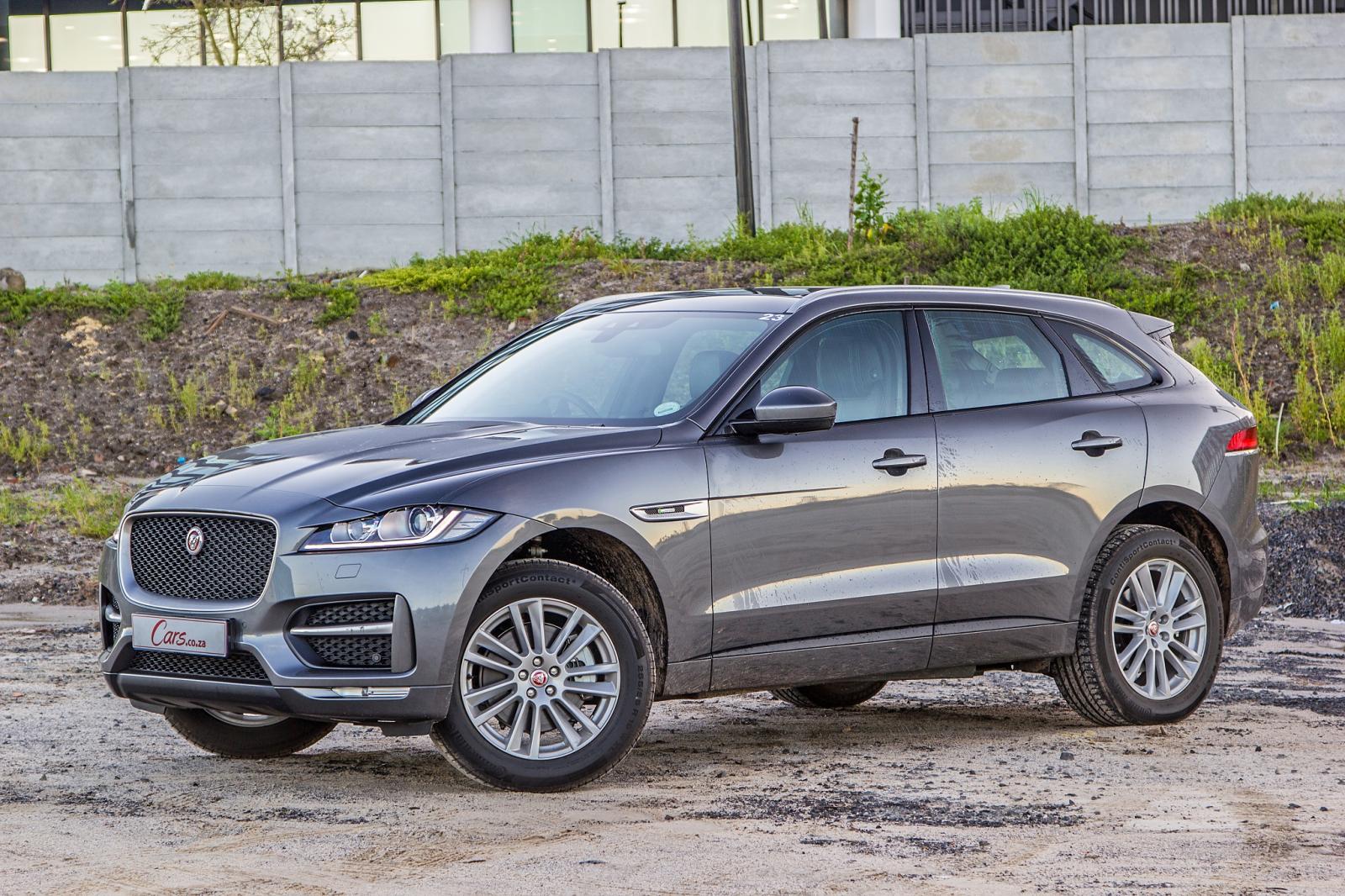
Ever since we saw the first images of what was the C-X17 Concept, the Jaguar SUV looked incredible. We don’t usually like to talk styling when reviewing cars, but Jaguar has hit a high note with this new F-Pace. From the back, it adopts F-Type styling and at the front, Jaguar’s new face is easily recognisable. Large SUVs aim to make a statement instantaneously, and if the amount of people that walked over to inspect the F-PACE during our test period is anything to go by, the F-PACE makes a big one.
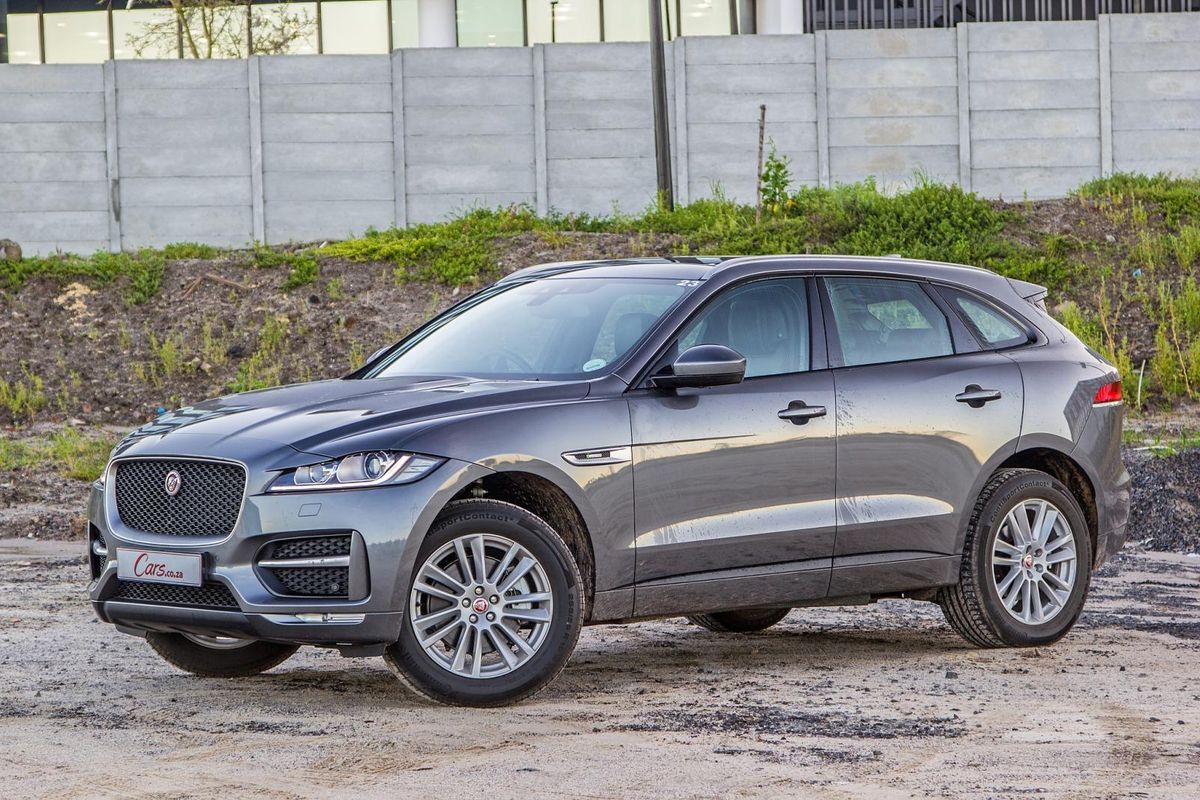
Even with the high-profile tyres, the F-PACE still look athletic and stylish.
How does it fare in terms of…
Comfort and sporty dynamics?
Jaguar has hyped up the fact that the F-PACE is a sports car that also happens to be a practical SUV. We tested this recipe on a trip from Cape Town to Greyton along the N2 highway. There are some great climbs, swooping corners and kilometres of stringy spaghetti tarmac on this route. The F-PACE, even with its lofty claims, performed astoundingly well. It corners without body lean, which is counter-intuitive to its SUV heft. The barriers of grip are beyond that of your average large SUV and it’s the closest example of a sports car in an SUV body that we’ve sampled. The darting nature of the front-end makes it very responsive to steering inputs when you up the pace and the SUV’s body reacts quickly and accurately to sudden changes in direction.
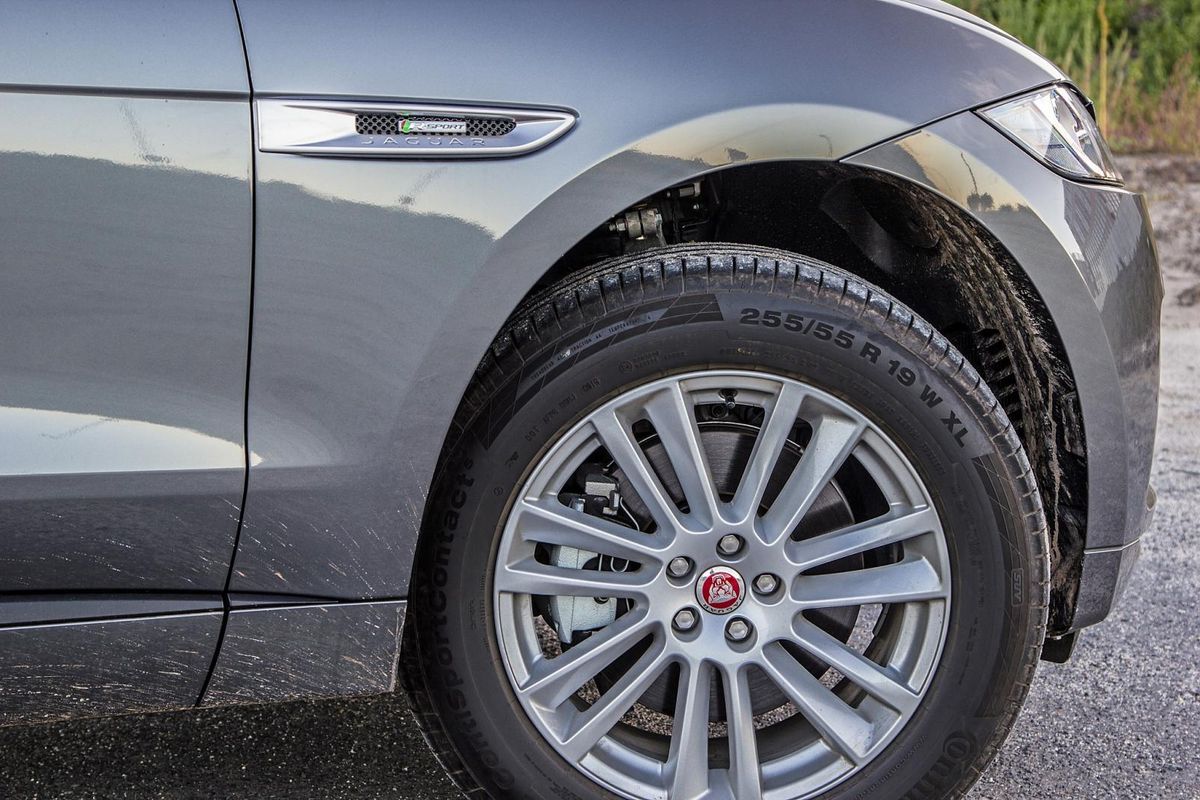
Big sidewall tyres make the F-PACE very comfortable on all surfaces and it still has enough grip when pushed through a mountain pass.
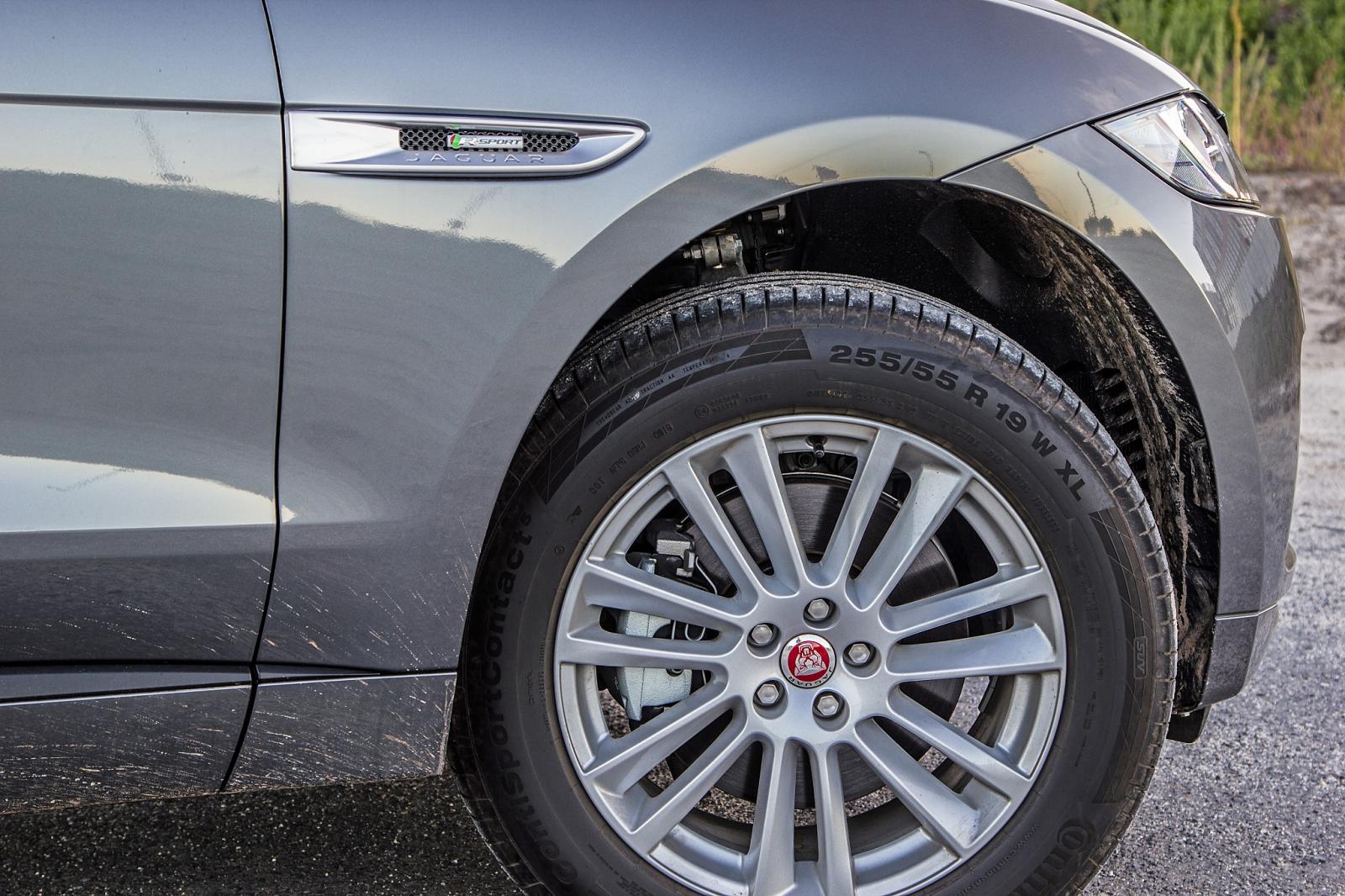
A sporty drive usually comes in tandem with a rather stiff and jittery suspension setup. Thankfully, the F-PACE, much like the XF and XE that it’s based on, rides pristinely. Jaguar’s new suspension design has really improved the dynamism and comfort of modern Jags and the F-PACE is very composed on all surfaces making it a confident car to drive. The 19-inch wheels contribute greatly to the comfortable ride. They are shod with 255/55 profile rubber and the 55 profile certainly allows for a bit more give on rough surfaces. It maybe spoils the overall aesthetics of the vehicle, but if you’re willing to forego a bit of comfort, you can always up the wheels to 20- or even 22-inches.
Engine and performance?
The 3.0-litre turbodiesel doing duty under the bonnet in this F-PACE has some serious grunt. It’s good for 221 kW and 700 Nm of torque. It makes the F-PACE feel rapid from low down in the rev range and the surge of torque continuously improves acceleration at a rate that not many diesels can match. Fuel consumption is quite good as well with Jaguar claiming 6.0 L/100km. During our test, the F-PACE returned 8.4L/100km. The benchmark 0-100 kph sprint is dispensed in just 6.2 seconds, good enough to give the hot hatchback brigade a headache at the robots.
Powerful turbodiesel grunt provides lightning acceleration and excellent overtaking ability.
Added to the performance bent of the turbodiesel is the AWD system, which is heavily biased to the rear most of the time. As much as 90% of the power is sent to the rear wheels. When things get a little slippery, it will split power 50/50 and if more traction is required, the system will send even more power to the front wheels.
Interior ambience?
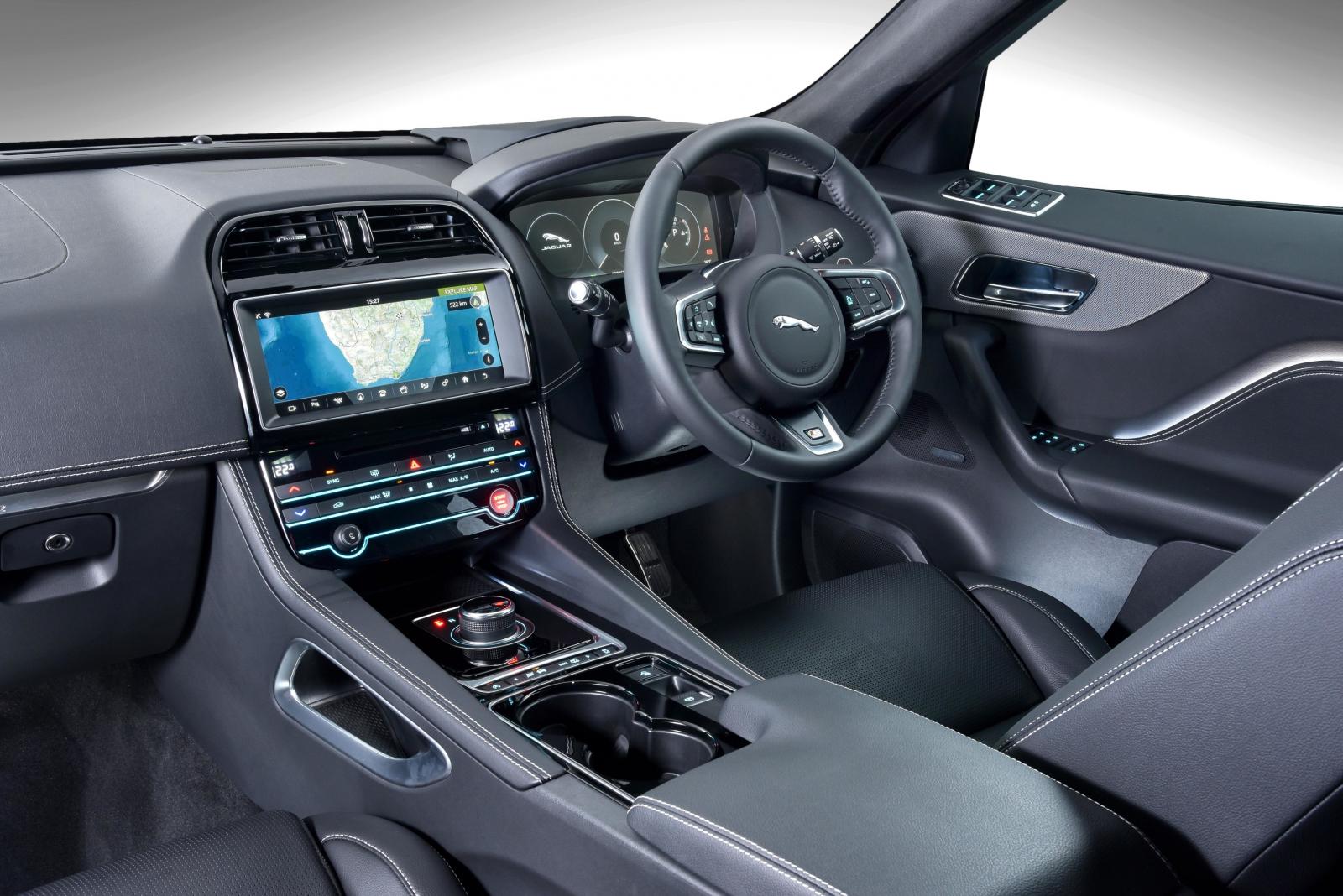
The interior of the F-PACE is lifted from the XF and entry XE and it remains a weak point that Jaguar will no doubt address come facelift time. There’s a distinct lack of drama and excitement from behind the wheel, with only the blue interior lighting adding to the sense of occasion. The larger centre touchscreen is easier to read when moving but it can be slow to react to touches, making it frustrating for those who are used to the responsiveness of a Smartphone.
Interior lacks drama and style of the exterior, but there is plenty of technology available on the options list.
The material quality and fit and finish isn't bad, but when you’re forking out a million Rand, you want to feel bathed in quality and luxury. The likes of Mercedes-Benz and Audi feel more luxurious and better built than the Jaguar F-PACE. Having the electric window switches on the top of the window sill is an ergonomic mistake, although it will probably be something you get used to.
Practicality and technology?
Despite the coupe or estate styling, there’s plenty of headroom in the back of the F-PACE. The rear seats have been elevated by 10 mm to provide a ‘stadium seating’ feel. It somehow makes the rear feel roomier. Jaguar South Africa has opted to equip the F-PACE with a full-size spare wheel, the result of which, is a strange mound on the boot floor that cuts boot space from 650 litres to 463 litres. If you need a bigger boot, Jaguar will offer a space saver tyre as an option that increases boot space to 608 litres.
Jaguar offers a whole bunch of technology in the F-PACE, most of which can be selected from the options list. Our model came with multiple option packs, including the Adaptive Dynamics Pack (R16 600) that adapts to different surfaces allowing for maximum traction at all times. If you’re willing to go to town on the options list there isn’t anything amiss that other manufacturers offer. The InControl Connect Pro pack (R34 700) has built-in apps for your phone and there are special navigation systems that allow you to share your ETA with specific people. The system also learns your commute and will give you advice on the fastest route based on live traffic and historical data.
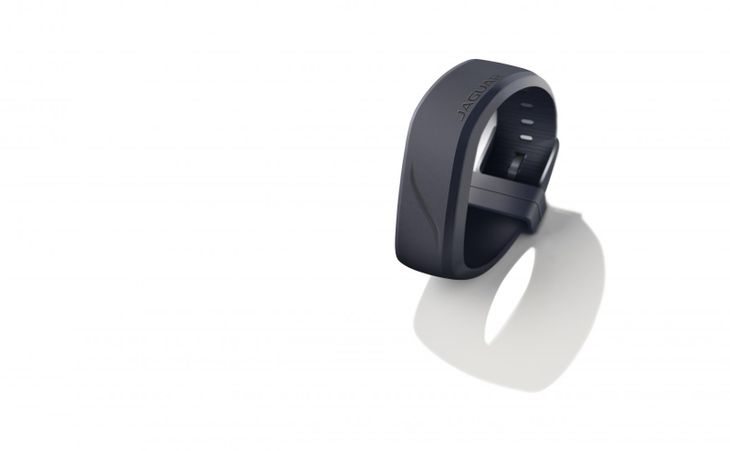
The option Jaguar offers over and above what any of the other manufacturers are doing, is the Activity Key (R4 300). It’s a watch strap that’s waterproof and is also the key to the car. For surfers, mountain bikers or anyone with an adventurous inclination, the Activity Key takes the hassle out of worrying about losing, breaking or drowning the key. You simply leave the main key inside the car, press the Activity Key to the boot and it locks the car. The same procedure opens the car. It's surprising that it has taken so long for a manufacturer to come up with a solution like this. Good on you, Jaguar!
The Activity Key is waterproof and allows the main key to be locked in the car while you are out having fun.
Pricing and after sales
The entry-level F-Pace starts off at R794 466 for the 2.0-litre turbodiesel, our 3.0-litre turbodiesel R-Sport weighs in at R1 121 546. The top-of-the-range supercharged, 3.0-litre petrol model can go for as much as R1 225 046. Jaguar backs the F-PACE with a 3-year/100 000 km warranty and a 5-year/100 000 km maintenance plan.
Verdict
Jaguar South Africa's pricing strategy has been widely criticised, sometimes unfairly. Until very recently, the rand's weakness against the British Pound, which has made British cars rather expensive compared to their German rivals. The F-PACE seems to buck that trend and it's priced almost perfectly with the competition. It’s even a little cheaper than the aforementioned Macan and Audi SQ5. The F-PACE is the leader of the pack when it comes to sporty SUVs and seemingly outshines its own sedan siblings in terms of athletic ability. The ingrained performance hasn’t come at the expense of ride comfort either, as the big Jag is composed over all surfaces. The newcomer's interior, where some of the materials and build quality levels are not quite up to scratch, is its biggest disappointment, but its exterior more than makes up for it. The F-PACE pulls you towards an emotional purchase… on merit!
A budget constraint of R200 000 doesn’t mean that you’re destined for a lacklustre or bland runabout. We trawled the second-hand market and found a few hot hatch gems that’ll keep your inner racer consoled.
The appeal of the hot hatchback hasn’t faded since the introduction of the VW Golf MKI back in the 70s. If anything, the last decade has seen the performance levels of hot hatchbacks reach near supercar levels, with prices to match.
We set ourselves a reasonable budget of R200 000 and headed for the classifieds section of Cars.co.za to see what was on offer. The usual suspects rose to the top – Golf GTI, Focus ST et al. But, we were surprised by a few slightly older gems that had us reminiscing about track days gone by and this is what we found…
Top 10 Used Hot Hatches for under R200k
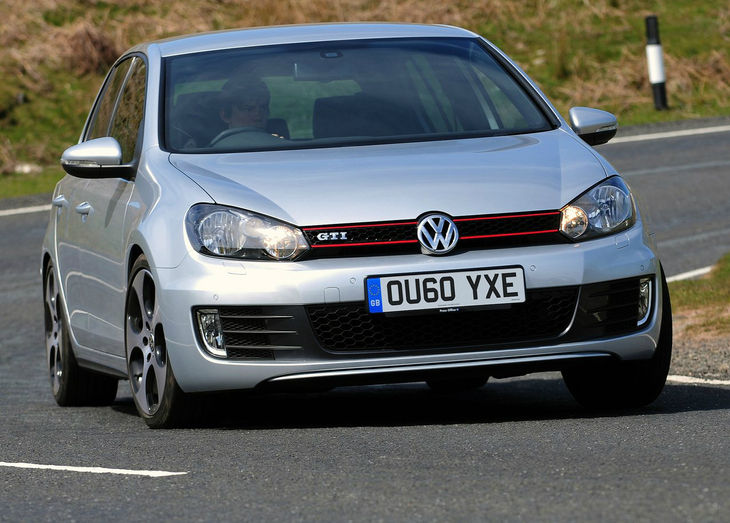
1. Volkswagen Golf VI GTI (2010)
The Golf VI GTI retained much of the mojo that the V GTI brought back to the brand. A slight power increase saw it punch out 155 kW and 280 Nm of torque. Zero to 100 kph took a smidgen under 7 seconds. It’s still quick enough to keep you entertained and its nimble but safe dynamics provide a driving experience that’s great for the road but lacks ultimate thrills at the track. Prices start at around R170 000 but for anything under R200 000, you’re likely to be looking at a car with 100 000 km plus on the odometer.
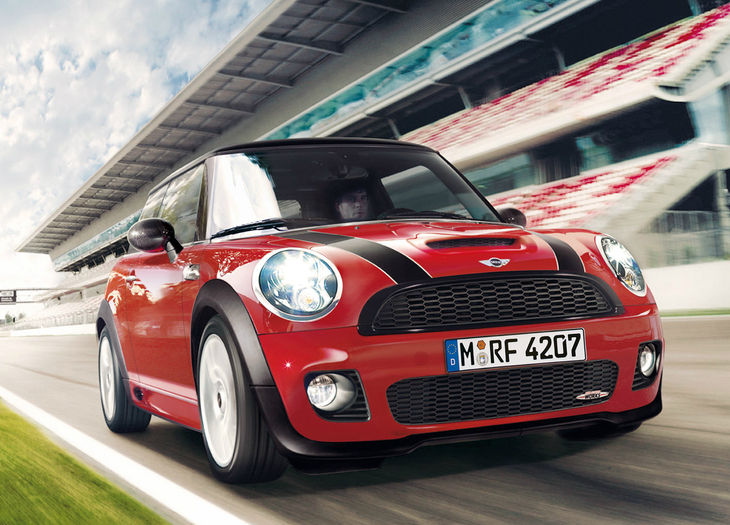
It’s difficult to know which Mini JCW you’re getting as initially, the JCW was just an add-on pack in 2007 before they delivered an outright JCW model for 2008. This is the model you want. The 1.6-turbocharged engine was beefed up to produce 155 kW and 260 Nm of torque (280 Nm with overboost) and burst to 100 kph in 6.5 seconds. Prices start from around R150 000 and depending on the year, go up to R200 000.
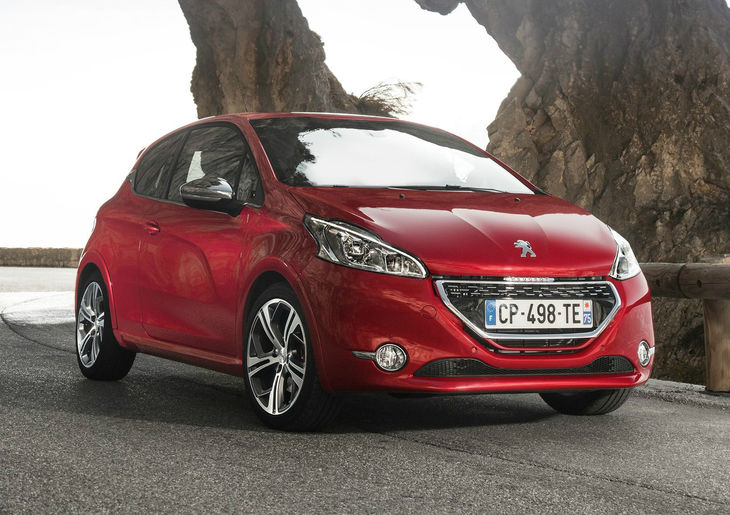
You can get a 3-year old GTi for under R200k – that’s still under warranty, just. A similar engine to the Mini with a 1.6-litre turbocharged 4-pot, but it puts out 147 kW and 275 Nm of torque. That still produces a 6.8 second 0-100 kph figure. With it being such a new car, it’s fitted with satnav, 2 USB ports and automatic parallel parking. Pricing is currently between R180k and R200k.
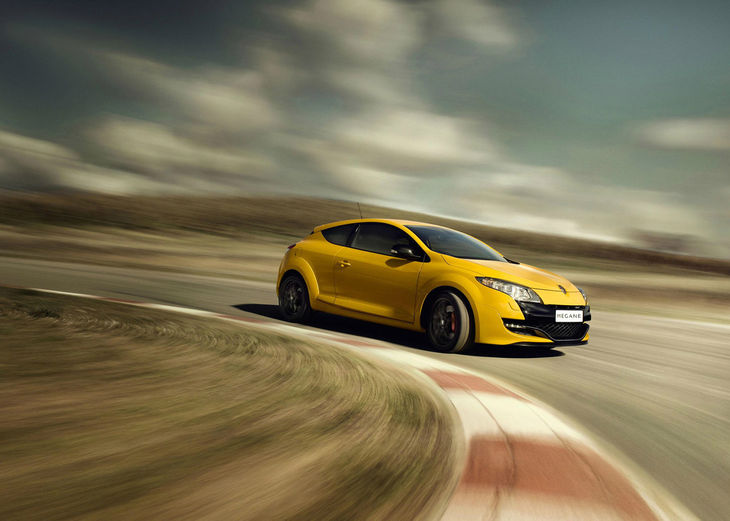
Famed handling and numerous shootout wins make the Megane RS a great buy. It will reward the enthusiast more than the everyday driver as its ride is firm, even without the Cup chassis installed. Somehow, the shape hasn’t aged badly and it still catches the eye as it whizzes by. The engine and performance are addictive and will have you constantly extending your right foot. Look around for a low mileage unit if possible with pricing between R180-R200k.
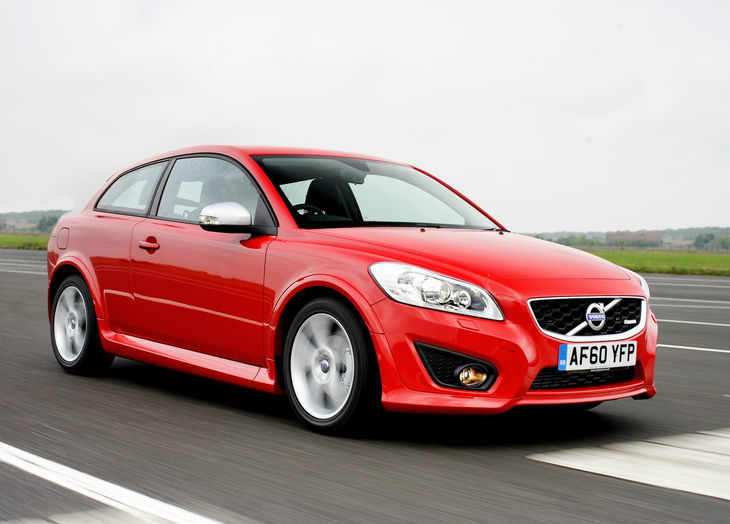
A stylish hot hatch if ever there was one. The C30 is certainly more style over substance, but with 169 kW from a thrummy 5-cylinder turbo, it’s not all that bad. The R-Design pack is the model to have as it gives the C30 a low-slung and aggressive look. Fuel consumption may be an issue but it’s worth it just to listen to the pipes bark away behind you. There aren’t many of these around on the used car market but you can expect to pay between R150-200k.
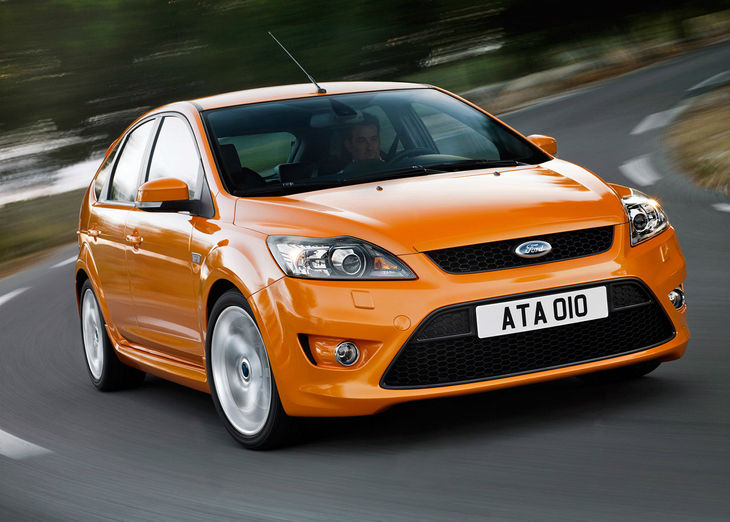
You can pick up a low mileage Focus ST for under R200k and it will be worth it. It has the same 5-cylinder motor as the Volvo but with a stubby-levered 6-speed shifter. It’s a great performer and offers similar thrills to the Golf GTI but with more excitement. The smooth torque delivery of the 2.5-litre turbo was one of the highlights of the car and probably what we miss most about the new Focus ST.
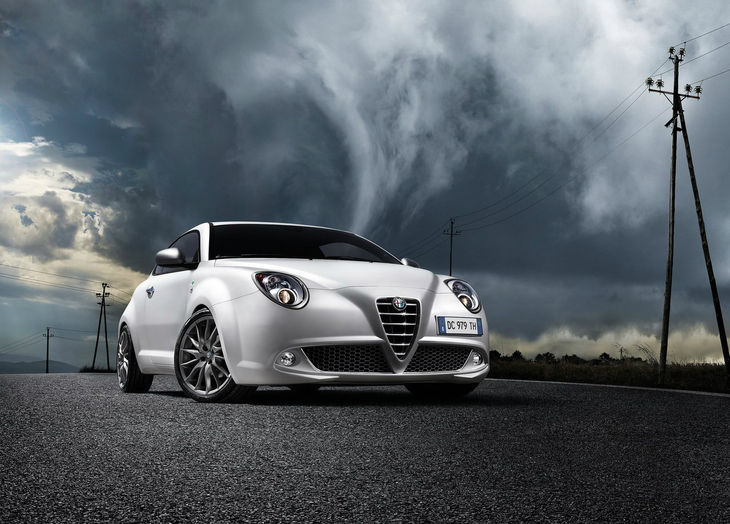
Now for something different. The Supermini segment can’t be forgotten and the Mito Quadrifoglio is a lot of fun to drive. Its 1.4-litre turbopetrol motor is good for 125 kW and 250 Nm of torque. Zero to 100 kph takes 7.5 seconds and you get to say you drive an Alfa Romeo – for what that’s worth to you. It’s a fun car and a steal on the second-hand market at under R170 000.
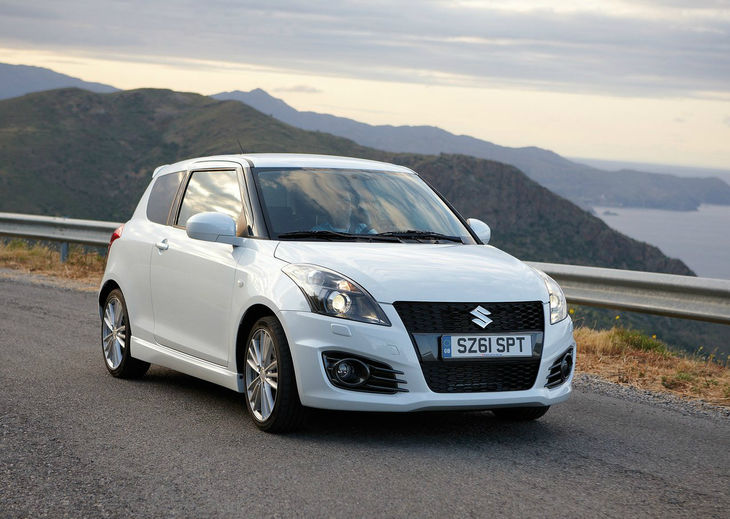
The Suzuki Swift Sport will take abuse day in and day out and not feel a day older after a decade. A very simple formula where a naturally aspirated 1.6-litre engine powers the front wheels and a chassis designed to be as agile as possible. With less power, comes even less responsibility as you’ll find traffic circles become mini gymkhana circuits and every turn needs to whipped into with a vigorous turn of the wheel. Who knew all you needed was 100 kW? Pricing ranges from R140 000-170 000.
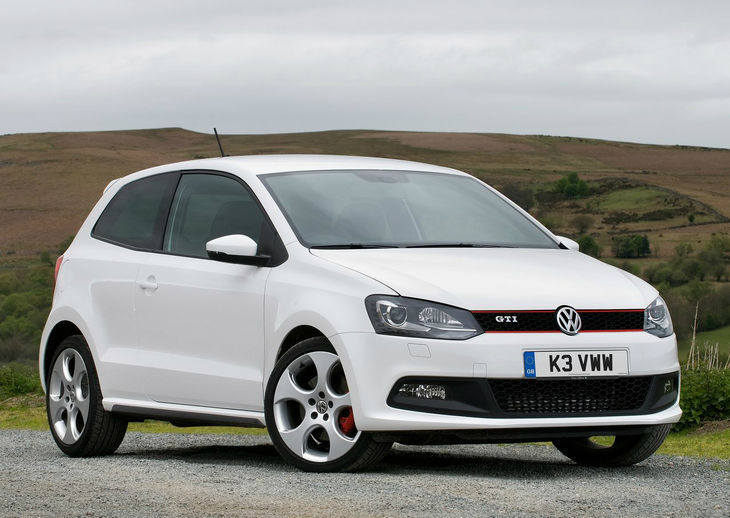
You probably want to avoid the older 1.8t Polo GTI as they will have heaps of mileage and the performance from the 1.8-turbopetrol always felt weak. The newer 1.4-twincharged unit has more life in it and punches above its weight. The DSG gearbox takes away some of the fun factor but it’s a solid ‘box nonetheless. 130 kW is enough power and Volkswagen’s build quality is sure to last you a good few years. Pricing is around the R150 000-R200 000 mark.
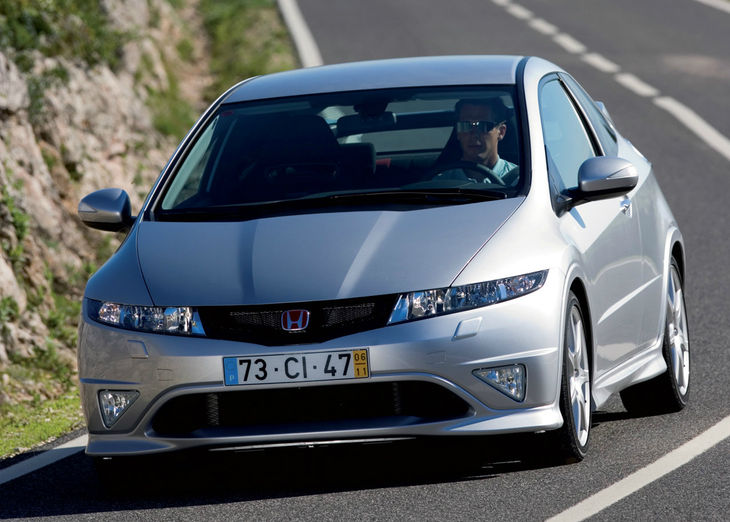
Note: Do not buy if you live on the reef. It’s true, at altitude its performance is severely hampered – up to 2 seconds on the 100 kph sprint. Take it down the coast and all of a sudden it starts to come alive. The choke hold on the high-revving 2.0-litre naturally aspirated engine is released and it races up to its redline freely. They appear to be holding their value particularly well as prices are still above R180 000 for 2010 models with over 100 000 km on the clock.