Renault Sandero Stepway 66kW turbo Dynamique (2017) Video Review
The Renault Sandero Stepway is a well-specced budget car offering with a modicum of crossover appeal. The Sandero range recently underwent a facelift and received an equipment update in a bid to remain competitive in an increasingly cut-throat market. Here’s a closer look at the newcomer.
Still powered by a 66 kW 0.9-litre 3-cylinder turbopetrol motor, the top-of-the-range Stepway derivative features nice-to-have features such as LED daytime running lights, a redesigned multifunction steering wheel and 7-inch touchscreen infotainment system, replete with a satellite navigation function.
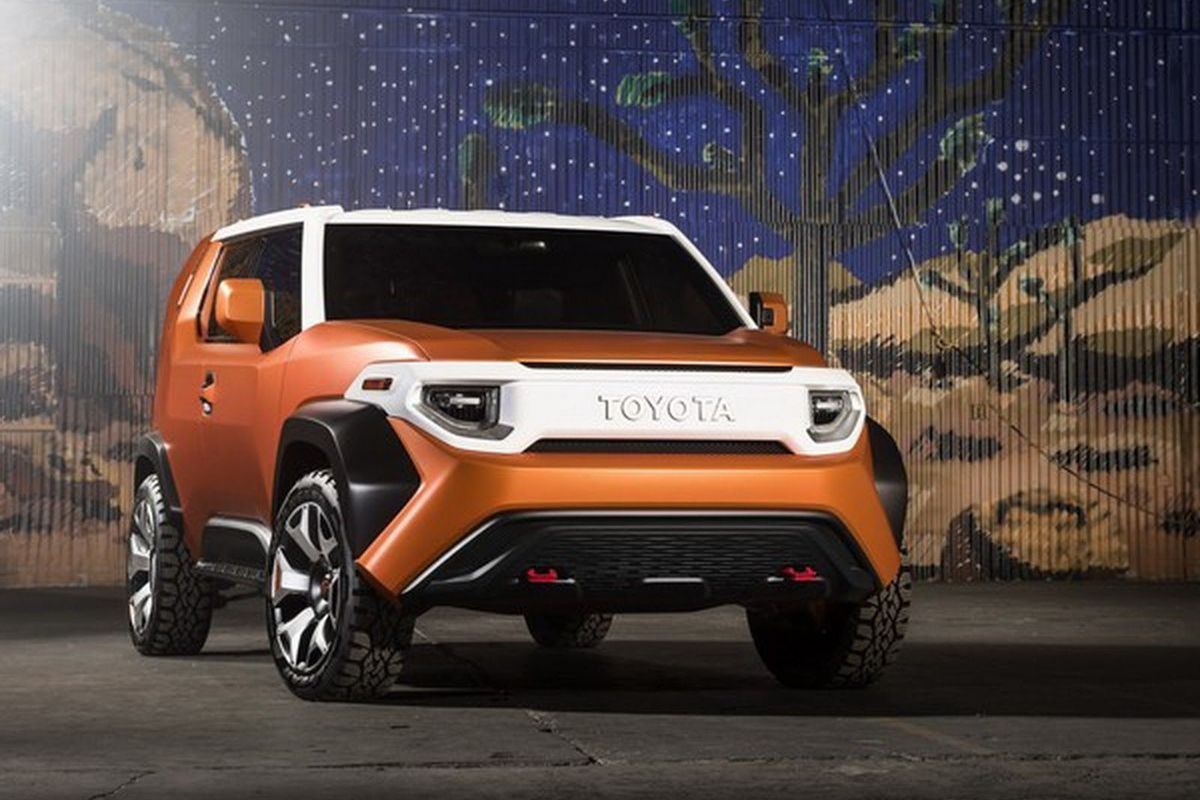
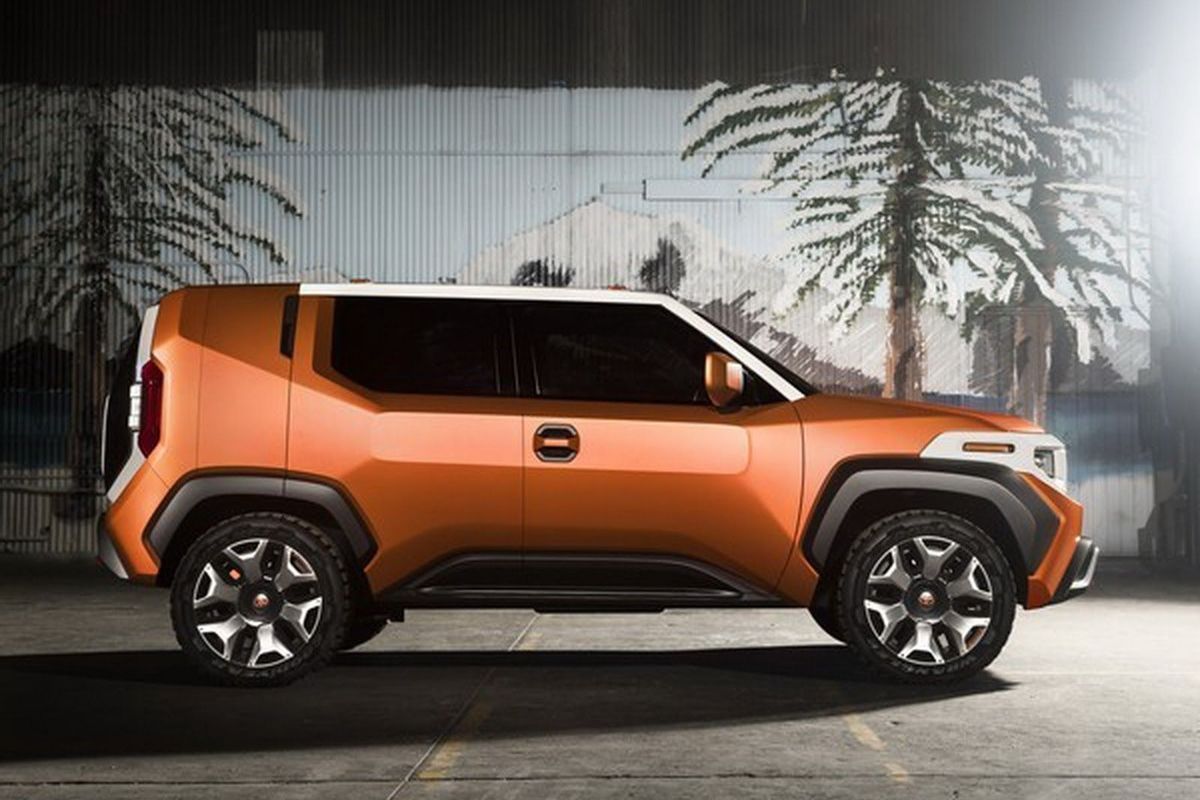
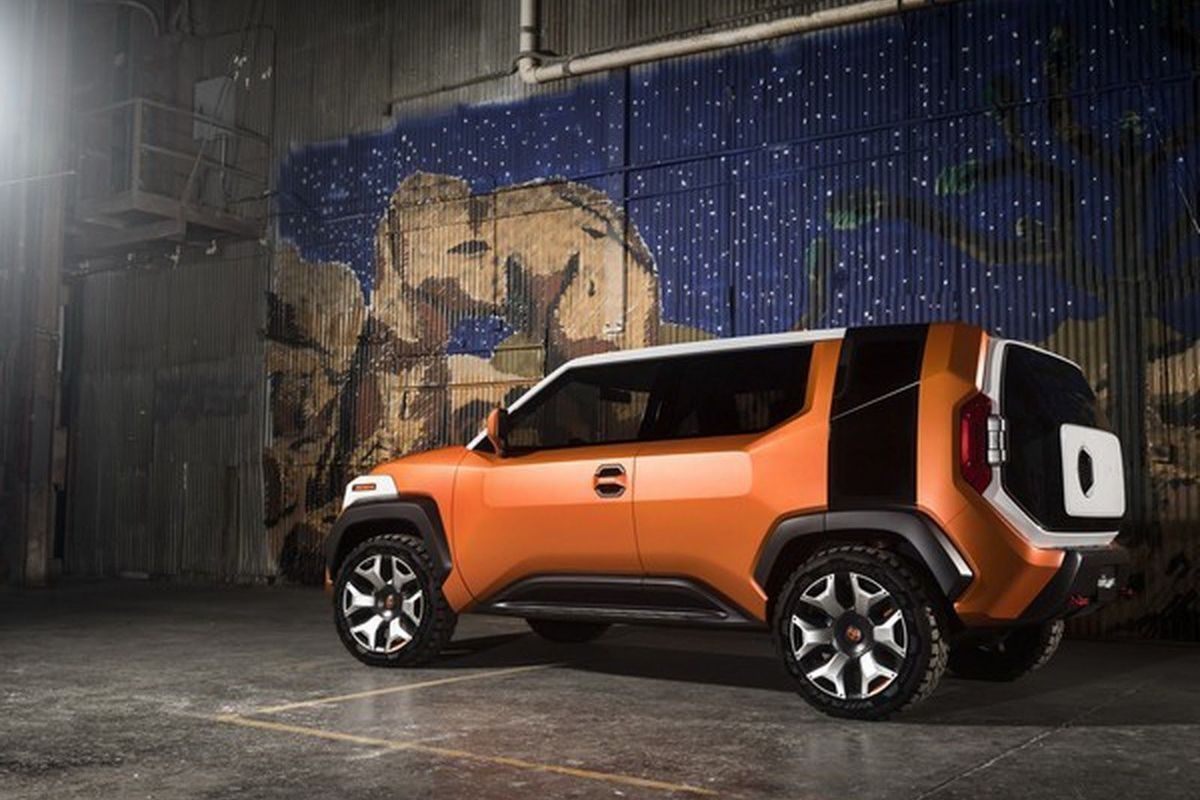
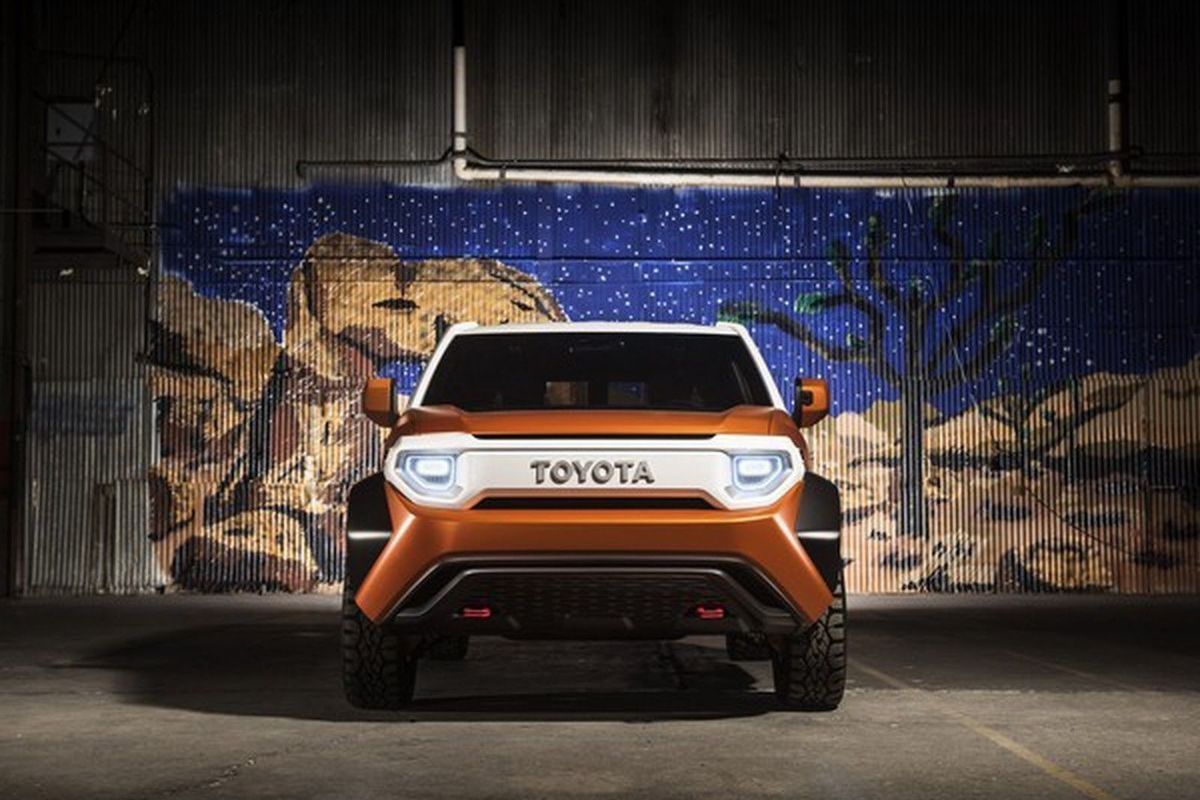
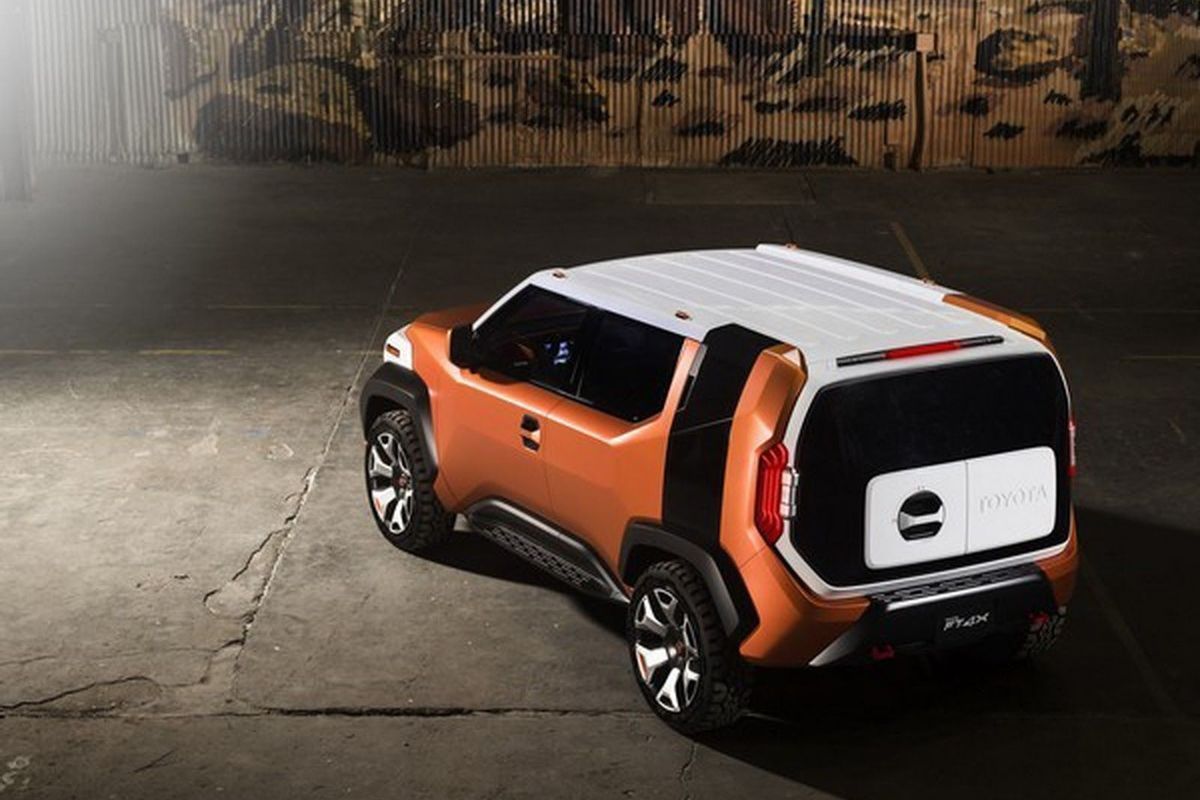
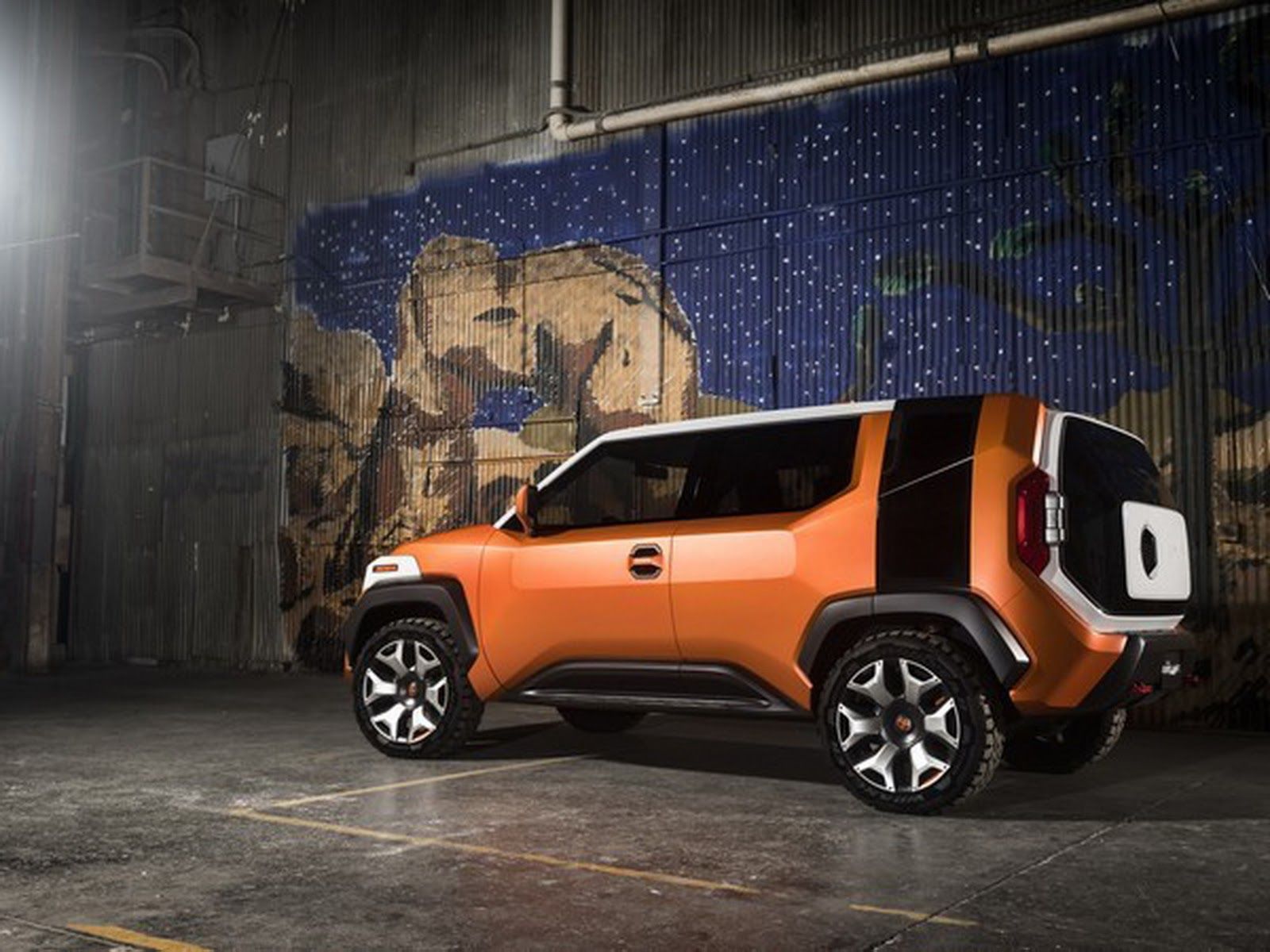
Toyota has delivered an entirely fictional piece of machinery for the New York Motor Show that looks like a miniature successor to the FJ Cruiser.
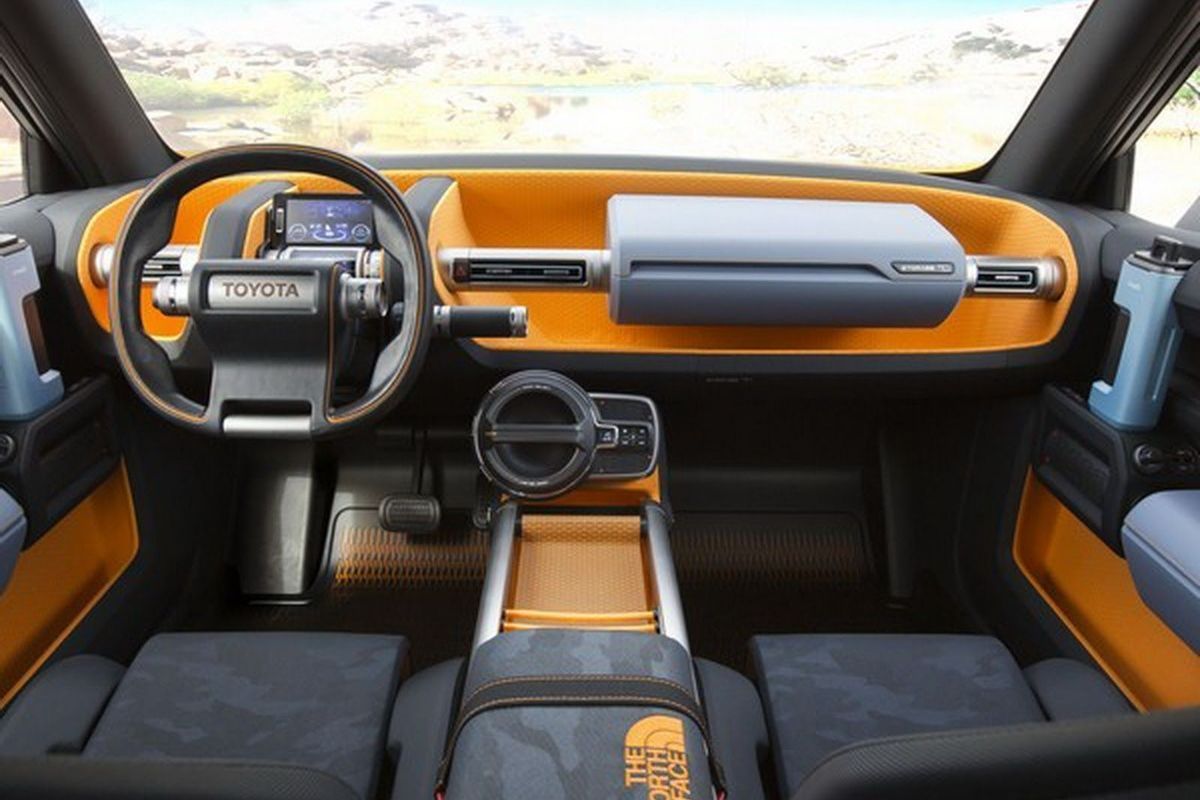
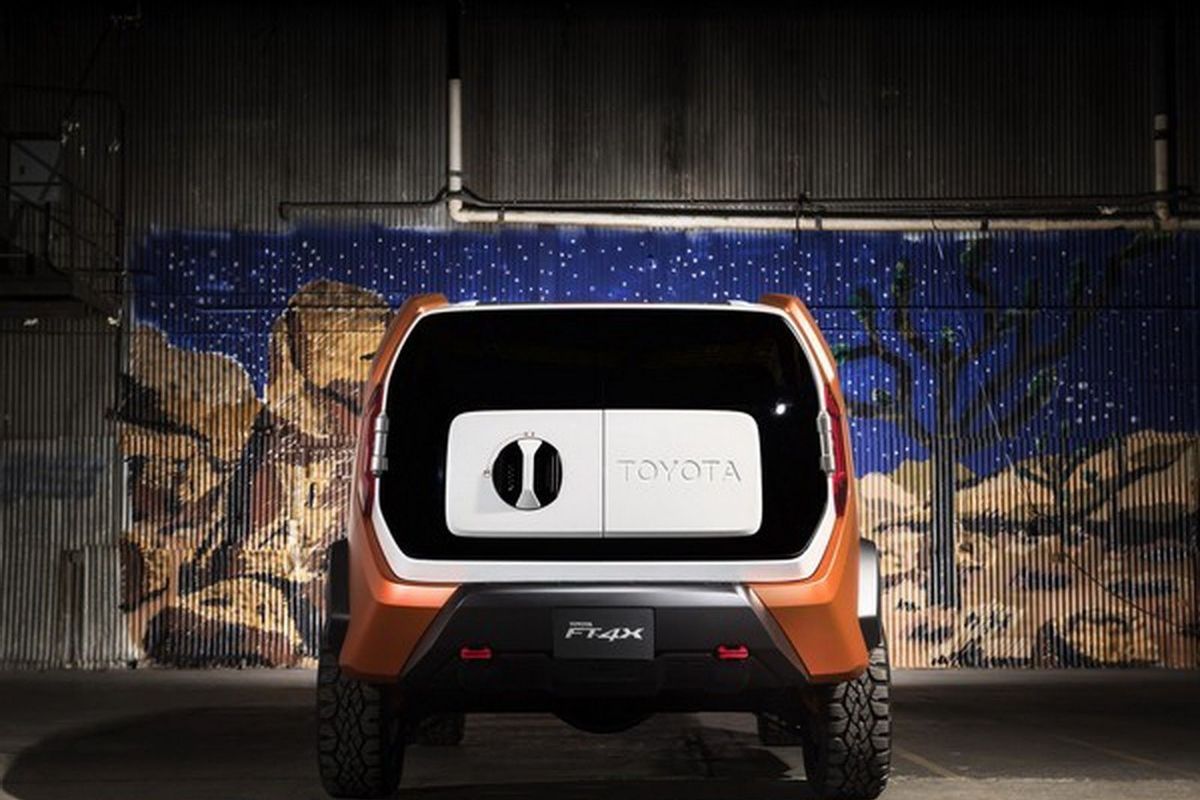
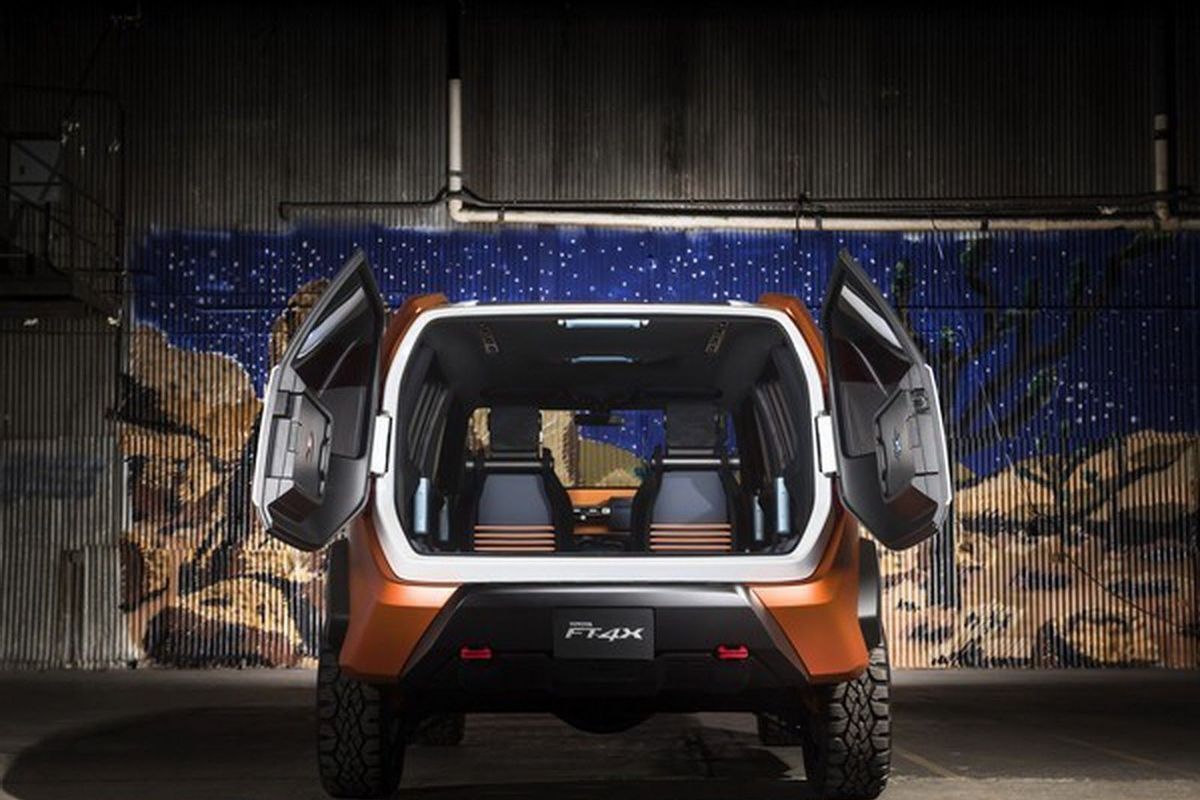
The FT-4X Concept is the result of Toyota’s designers thinking out of the box and making something whacky. The FT-4X concept combines a boxy off-roader shape with loads of finicky touches that Toyota believes the modern traveller needs.
Interesting design to say the least, but it has proper off-roading abilities with AWD and low range.
The Concept sits on the same platform as the C-HR and Prius so that should give you an idea of the size. Toyota will not be putting this concept into production but used it as a way to explore new ideas. It is functional, however, and uses a four-cylinder engine connected to an AWD system that has low range capabilities as well.
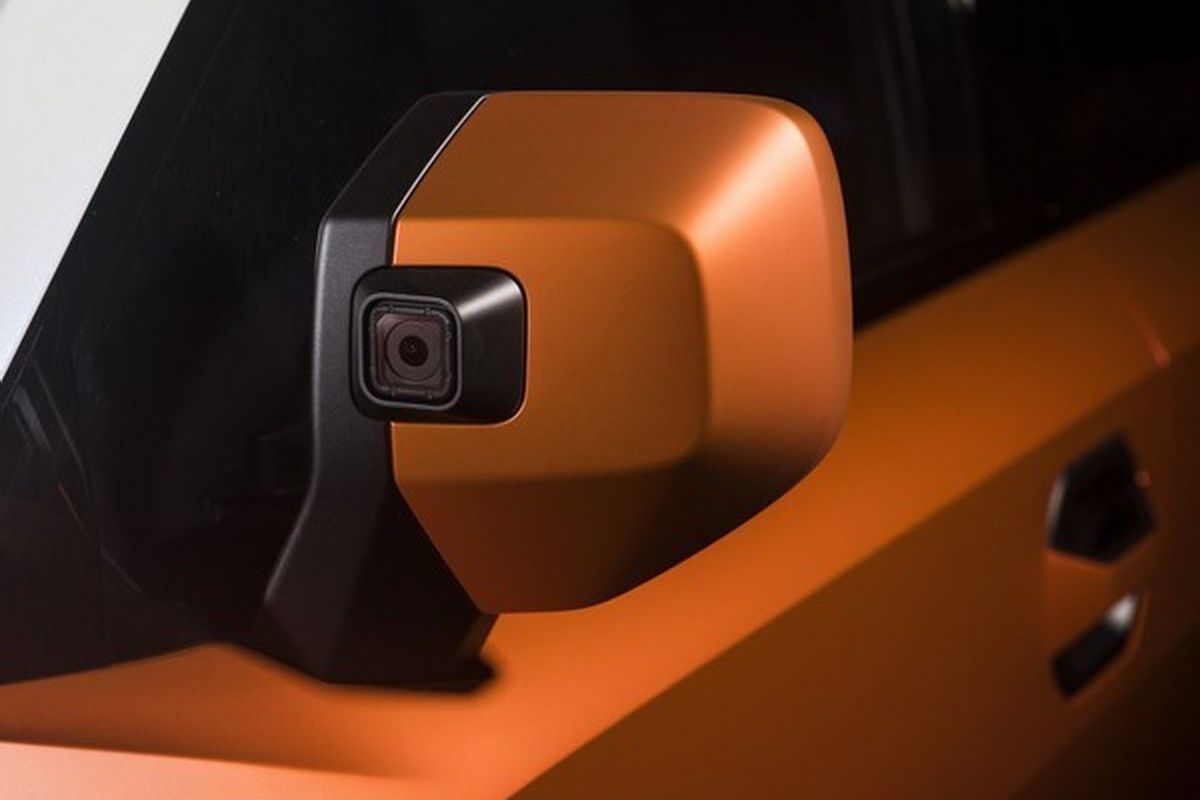
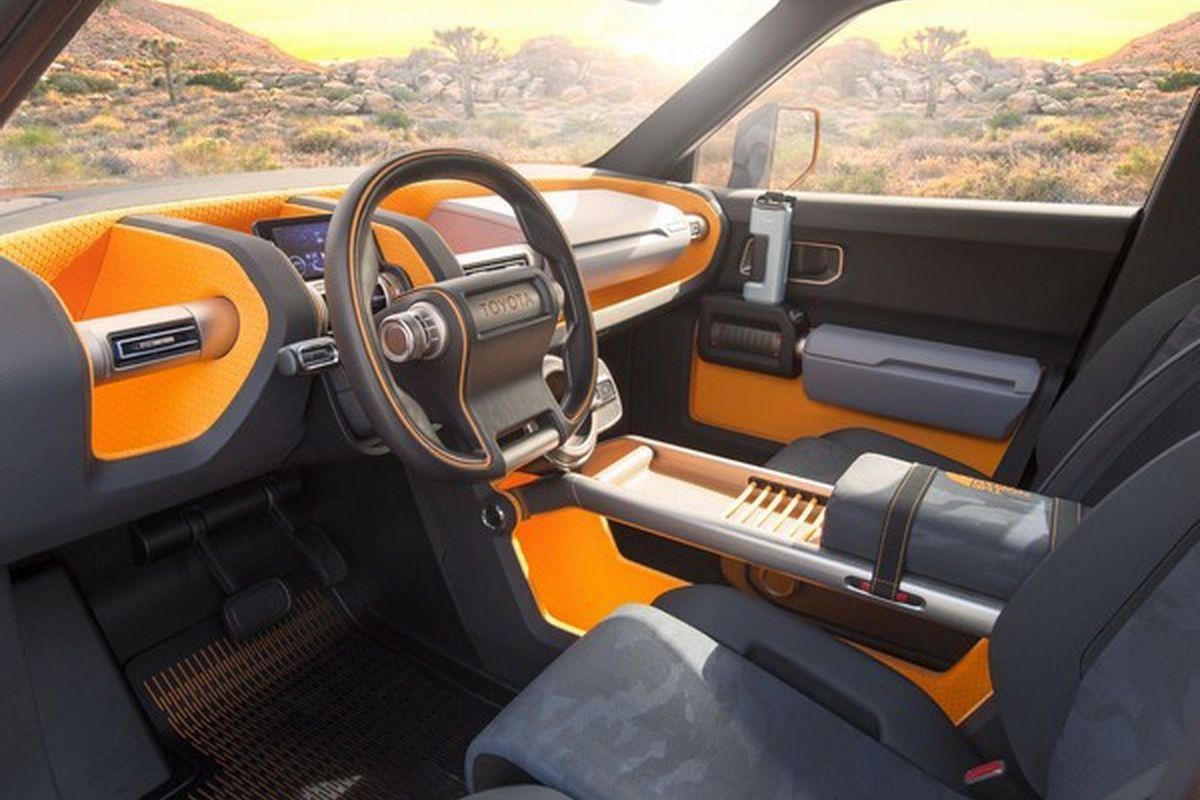
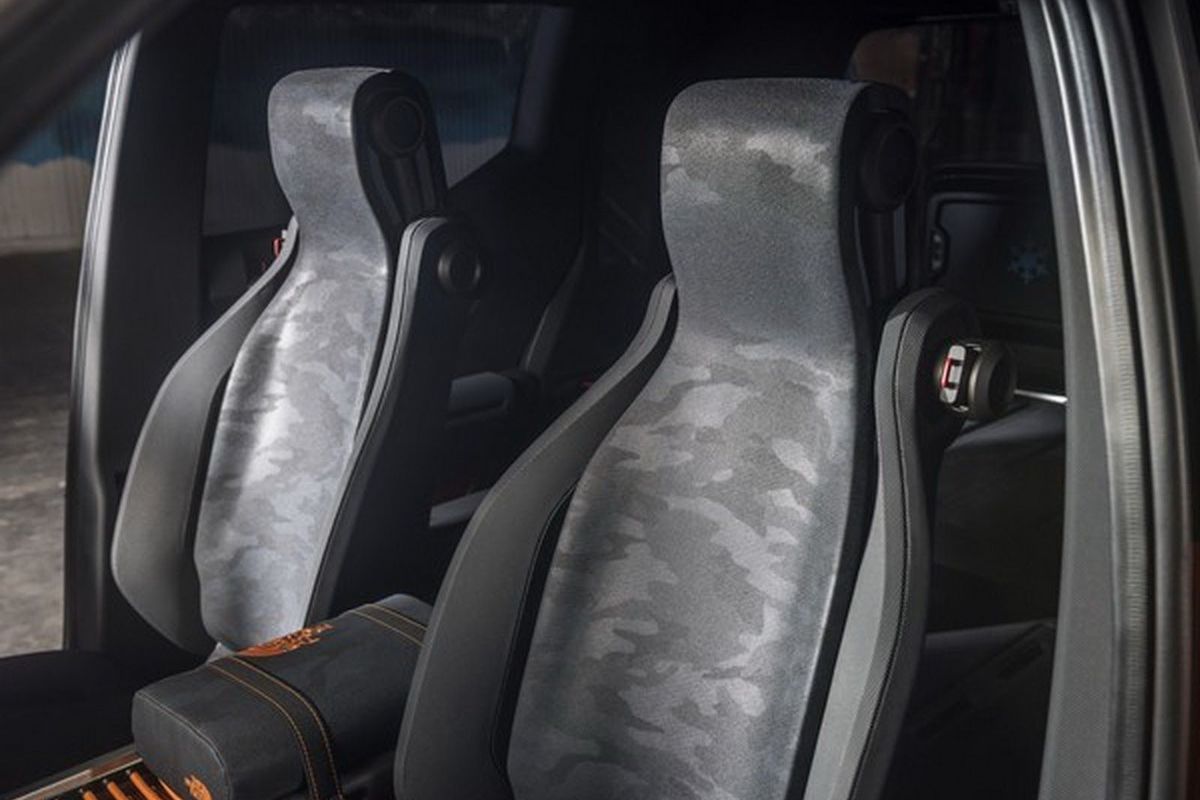
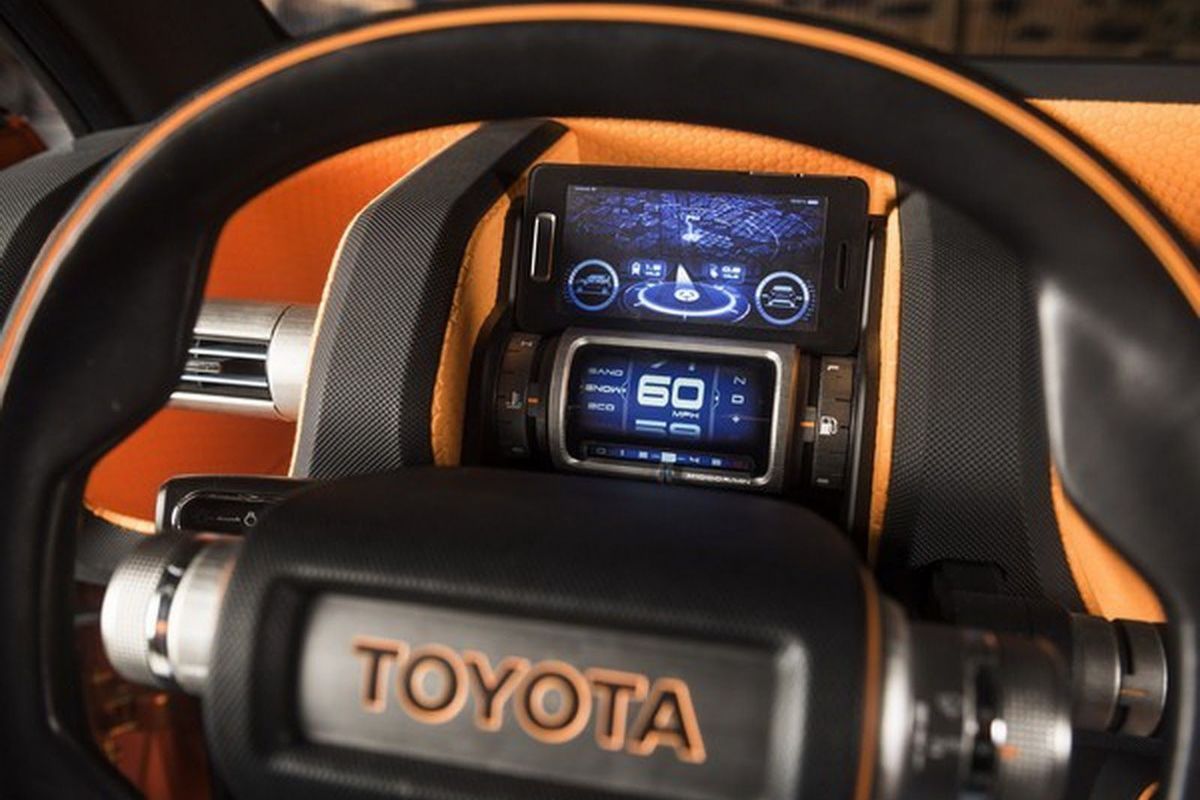
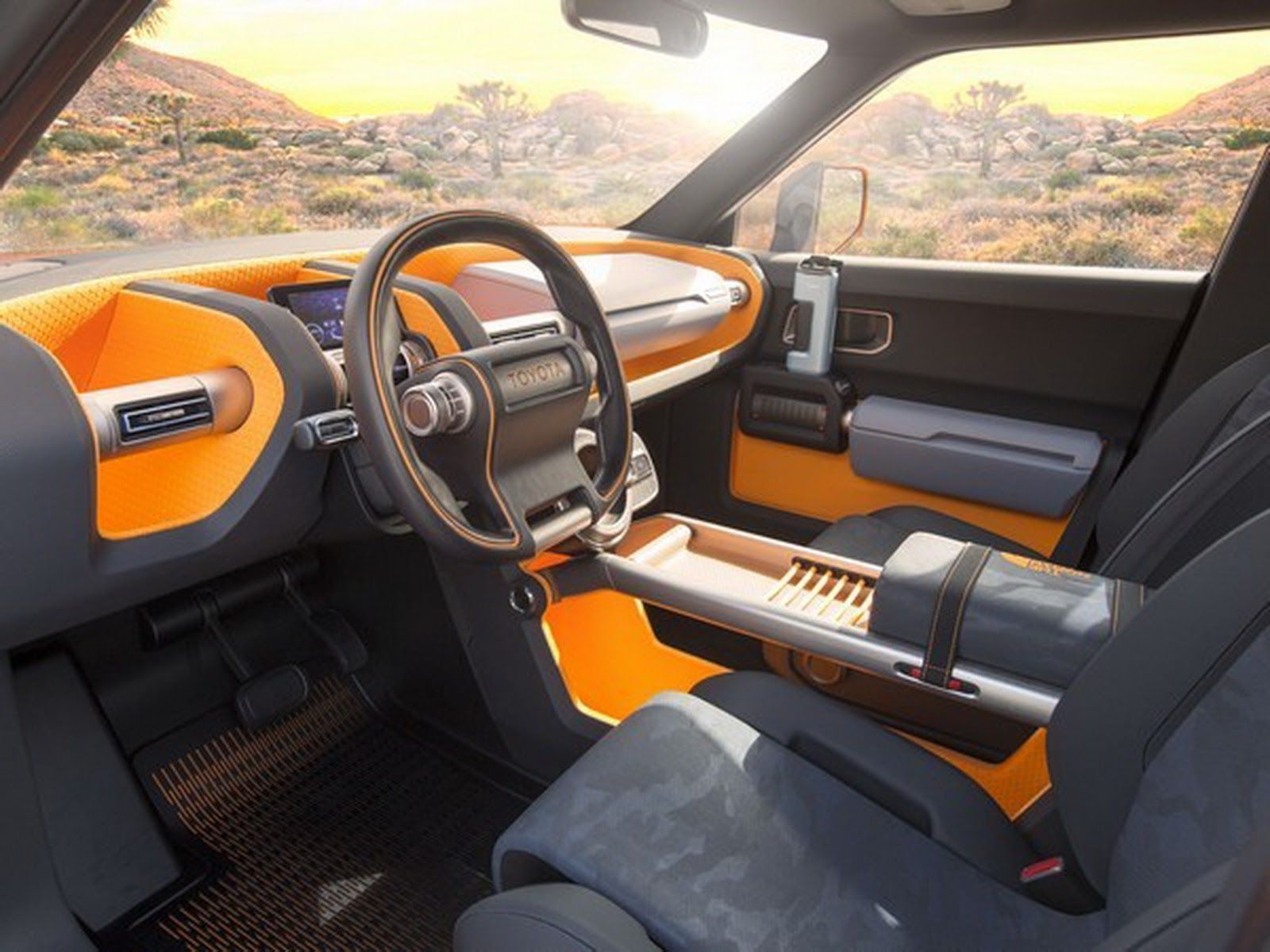
If you think it’s weird from the outside, then once you step inside it gets even weirder. The armrest in the centre doubles as a sleeping bag for instance. You can dock your smartphone above the speedo and use it for navigation purposes. The door handles double as water bottles and there’s a detachable radio to take with you on your adventures. The wing mirrors are fitted with GoPro cameras just to top off the list of gimmicks.
A sleeping bag centre console from North Face and water bottles for door handles, just some of the accessories plugged into the FT-4X concept.
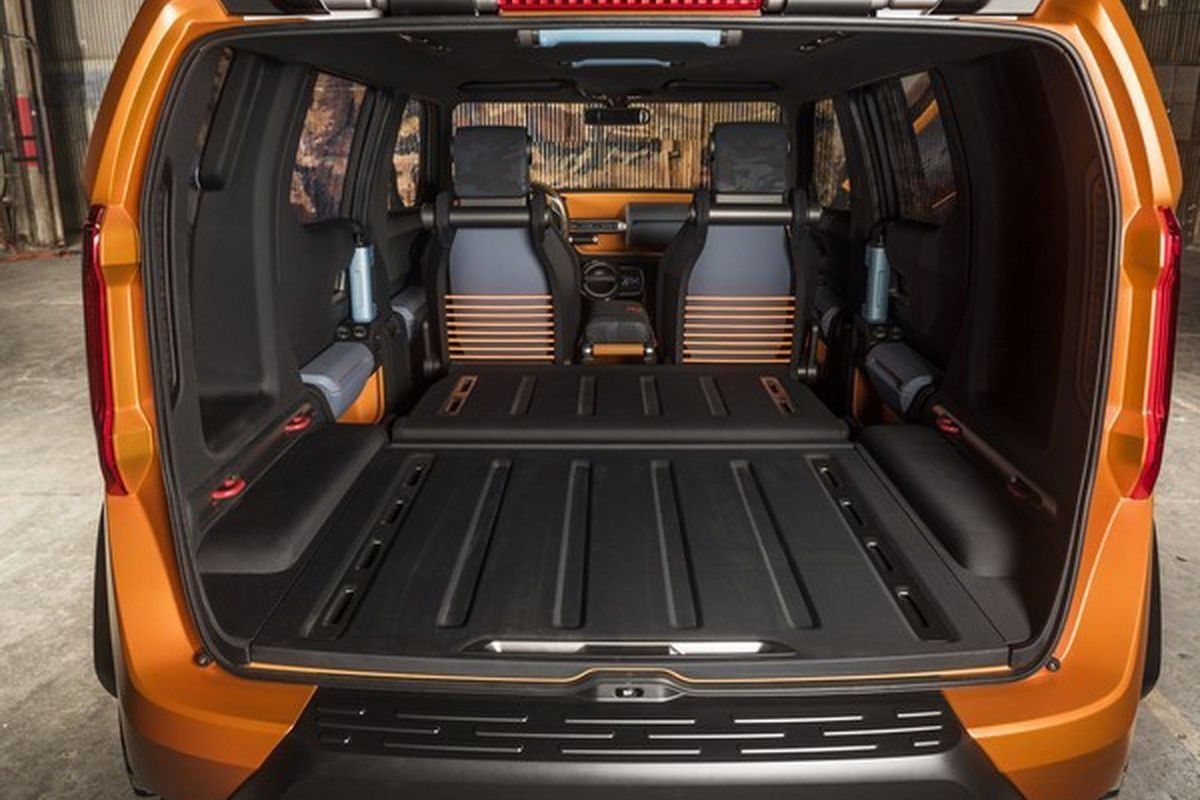
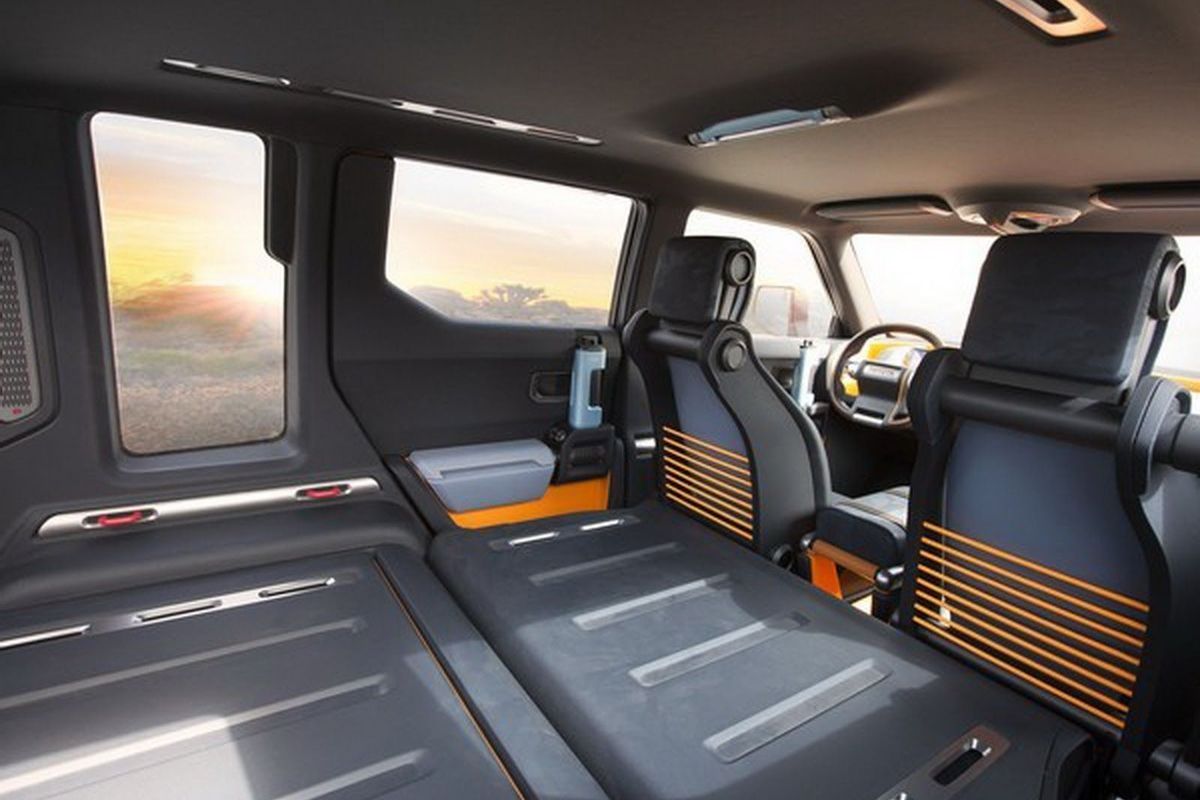
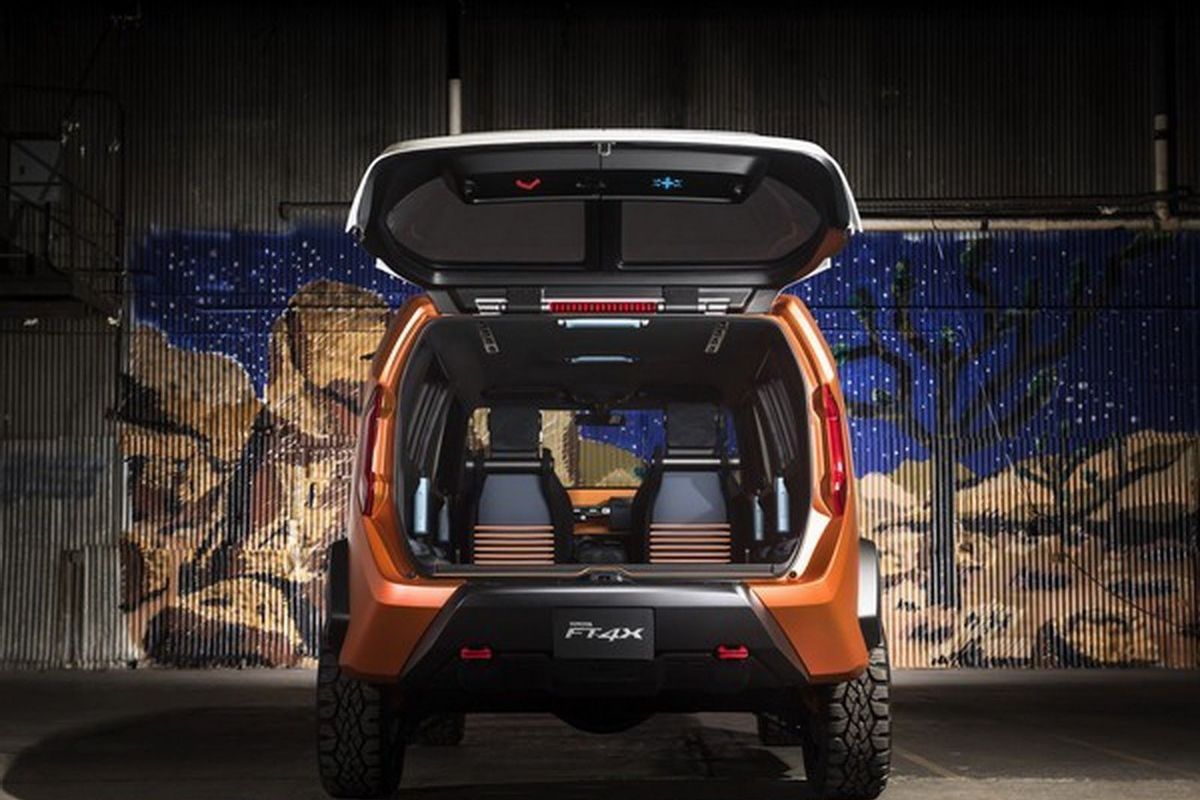
The cabin can be hosed clean as it doesn’t contain any carpets. The tailgate can be opened vertically, like a normal SUV, or can be opened outwards, like a Mini Clubman.
The FT-4X is certainly an interesting design concept and shows that Toyota is keen to play in the rugged-looking compact SUV segment. There’s probably room for this sort of model globally as models such as the Jeep Renegade and Wrangler have sold well.
Planning a road trip? SA’s major roadworks locations (by province)
Are you planning to travel to your holiday destination by car this Easter? Prior knowledge of road conditions is a major advantage, especially if you're mindful of where you can expect delays at roadworks. See below…
To aid motorists in effectively planning their journey, the AA provides a useful tool to check current road conditions on metropolitan, national and provincial roads. The AA’s Road Conditions Report is updated weekly and includes information regarding roadworks, which means you can plan your route to avoid unnecessary delays. Here are some of the roadworks currently taking placing on major routes in South Africa.
Gauteng
Johannesburg
Roadworks: M1 Southbound, Parktown, bridge rehabilitation. End date: 20 December 2017.
Roadworks: West Street, Sandton at Grayston Drive/Rivonia Road crossing. End Date: 30 April 2017
Roadworks: Katherine Street, Sandton, eastbound, traffic restrictions at Pretoria Avenue. End Date: 30 April 2017.
Roadworks: Katherine Street, Sandton, southbound at Grayston Drive. End Date: Unknown
Roadworks: Rivonia Road, Sandton at Daisy Street crossing. End Date: Unknown
Roadworks: Louis Botha Avenue, Bramley North, both ways. End Date: 30 May 2017.
Roadworks: M1 Northbound reduced to 2 lanes between Parktown and Killarney for bridge maintenance. End Date: December 2017
Road closure: Oxford Road M1 south ramp closed (both directions) due to long-term bridge upgrade. End Date: 20 December 2016.
Roadworks: Overnight, N3 northbound, delays on link to N12 eastbound carriageway at Gilloolys Interchange. End Date: Unknown
Roadworks: R21, Kempton Park, southbound at Atlas Road. End Date: Unknown.
Roadworks: Witkoppen Road at Cedar Road crossing. End Date: 30 May 2017.
Roadworks: Cedar Road, Fourways, both ways. End Date: 30 April 2017.
Road closure: R511 at Diepsloot between Erling and Mnandi Road due to roadworks. End Date: 30 May 2017.
Pretoria
Roadworks: N4 at N1 highway crossing. End Date: 30 April 2017.
KwaZulu-Natal
Roadworks: Old Main Road, Pinetown, traffic restrictions (both ways) in central Pinetown. End Date: 30 April 2017.
Roadworks: N3, Ashburton at Lion Park, left lane closed after Umlaas Road. End Date: Unknown.
Roadworks: N3, Hammarsdal interchange. End Date: 30 April 2017.
Roadworks: R603, Eston, traffic restrictions at Eston (both ways). End Date: 30 April 2017.
Roadworks: N2, M41 Gateway interchange. End Date: 30 December 2017.
Roadworks: N2, Kokstad, from Brooks Nekm stop/go controls both ways. End Date: 30 July 2017
Western Cape
Roadworks: N2, Sir Lowry's Pass, eastbound, left lane closed at hairpin bend. End Date: unknown.
Roadworks: N2, Cape Town, construction between Cape Town International Airport and R300 interchange. End Date: 20 December 2017.
Roadworks: R300, southbound at Stellenbosch Arterial Road. End Date: Unknown.
Roadworks: Strandfontein Road, Ottery, both ways. End Date: 30 April 2017.
Roadworks: Main Road, Kalk Bay. End Date: 15 July 2017.
Roadworks: N1, outbound, at Old Oak Road, left lane closed. End Date: Unknown.
Roadworks: N1, inbound, at Jip De Jager, right lane closed overnight. End Date: Unknown.
Roadworks: Race Course Way, Durbanville, eastbound, overnight. End Date: Unknown.
Roadworks: Plattekloof Road, Bothasig, both ways. End Date: 30 July 2017.
Roadworks: Portswood Road, Green Point, roadworks at Dock Rd and Helen Suzman Boulevard from 8:00 AM until 4:30 PM. End Date: 20 April 2017.
Roadworks: N7, Clanwilliam, both ways, stop/go controls. End Date: 30 April 2017.
Free State
Roadworks: N12, Ventersburg, traffic restrictions between Ventersburg and Holfontein. End date: September 2018.
Roadworks: N5, Harrismith, both ways, stop/go controls. End Date: 30 April 2017.
Eastern Cape
Roadworks: R61, Bizana, both ways from Wild Coast Casino. End Date: 30 July 2017.
Roadworks: N2 at R63 Komga crossing. End Date: 30 July 2017.
Roadworks: N2, Dutywa. Stop/Go controls east of Dutywa at Mtenthu cuttings, both ways. End Date: 30 April 2017..
Roadworks: R72, Port Alfred, Stop/Go controls between Port Alfred and Fish River. End Date: 30 August 2017.
Roadworks: N2, Grahamstown, both ways. End Date: Unknown.
Roadworks: N2, Grahamstown, traffic restrictions between Grahamstown and R343 Kenton on Sea exit. End Date: 30 July 2017.
Roadworks: R61, Cradock, both ways, stop/go controls. End Date: March 2019.
Roadworks: N10, Middleburg, upgrade works between Noupoort, and Middleburg. End Date: 30 August 2019.
Mpumalanga
Roadworks: N11, Middleburg at Kranspoort Pass, both ways, stop/go controls. End Date: 30 July 2017.
Roadworks: N4, Waterval Boven, daytime stop/go controls, both ways. End Date: 30 June 2017.
Roadworks: N4, Mbombela, stop/go controls both ways at Montrose. End Date: 30 April 2017.
Roadworks: N4, Komatipoort, both ways, overnight, general upgrades. End Date: 30 April 2017.
North West
Roadworks: N4, Groot Marico, stop/go controls both ways, bridge repair. End Date: 30 July 2017.
Roadworks: N4, Zeerust, stop/go controls both ways. End Date: 30 July 2017.
Limpopo
Roadworks: N1, Polokwane, both ways at Matoks crossing. End Date: 30 April 2017.
For more, you can view the AA Road Conditions Report and follow the simple instructions to view any incidents affecting the route you wish to travel on.
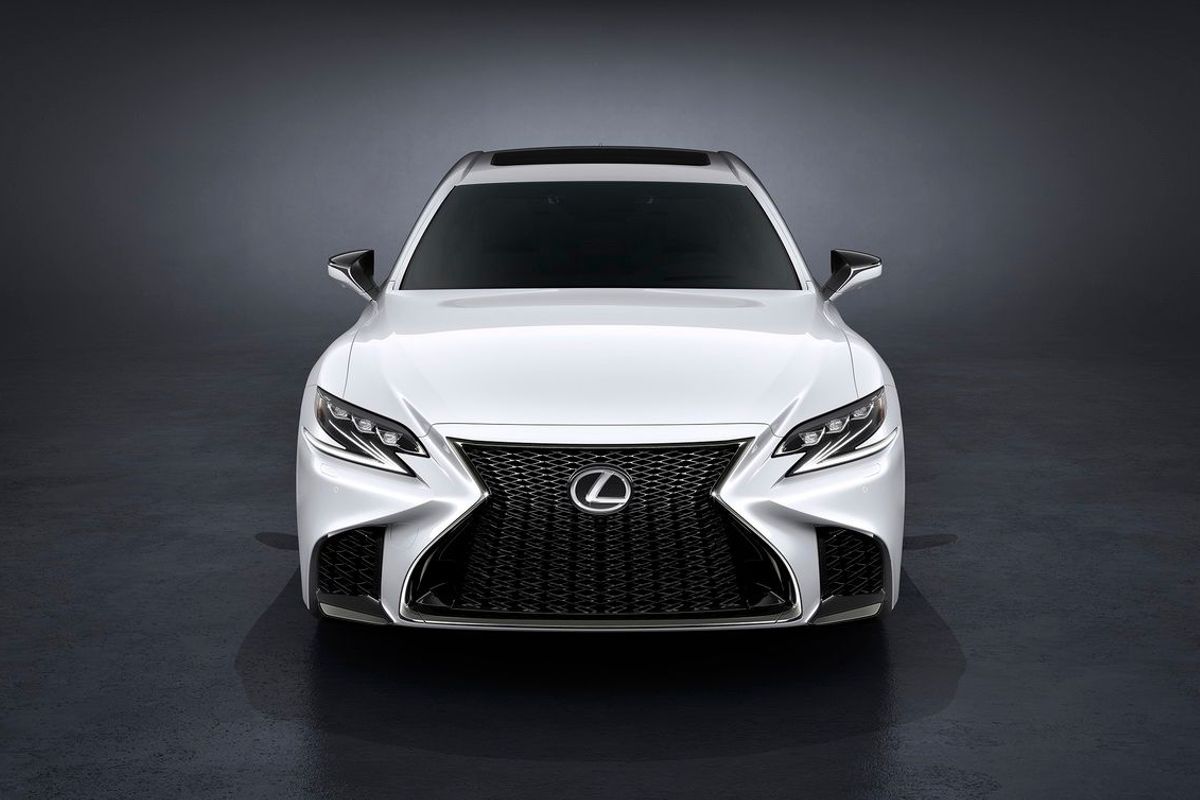
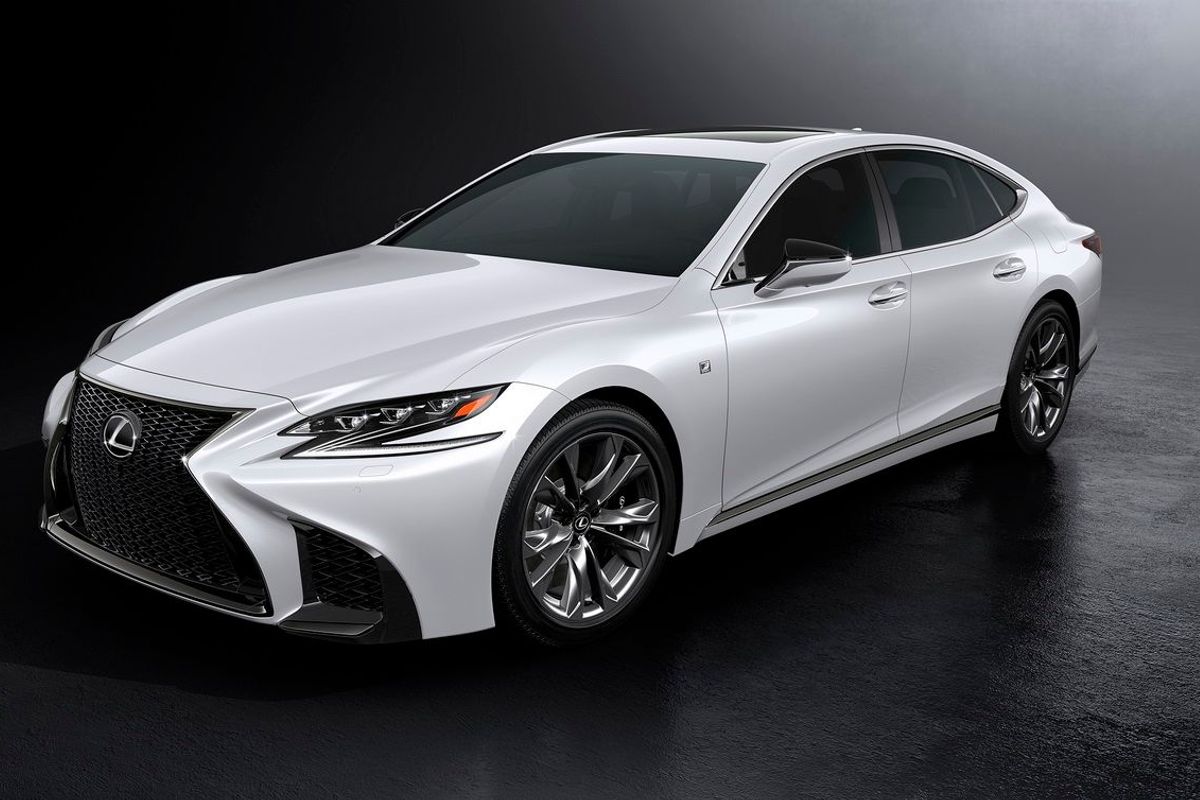
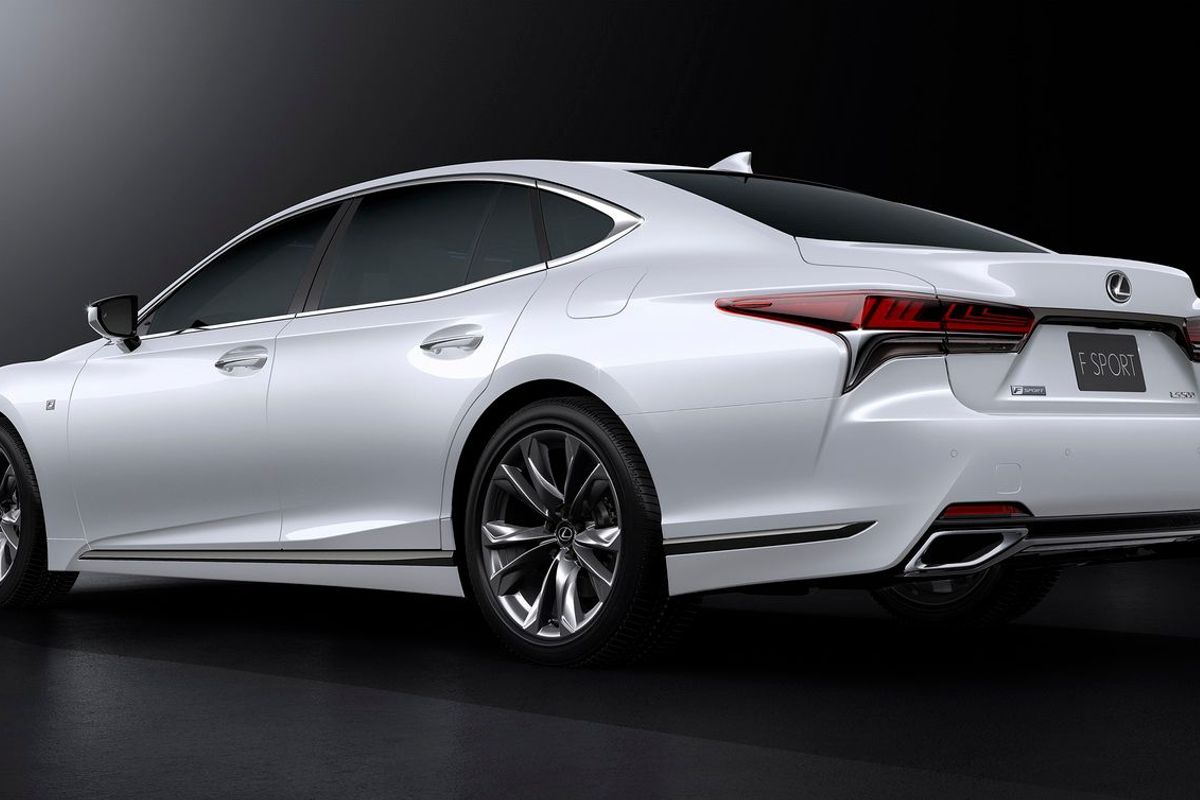
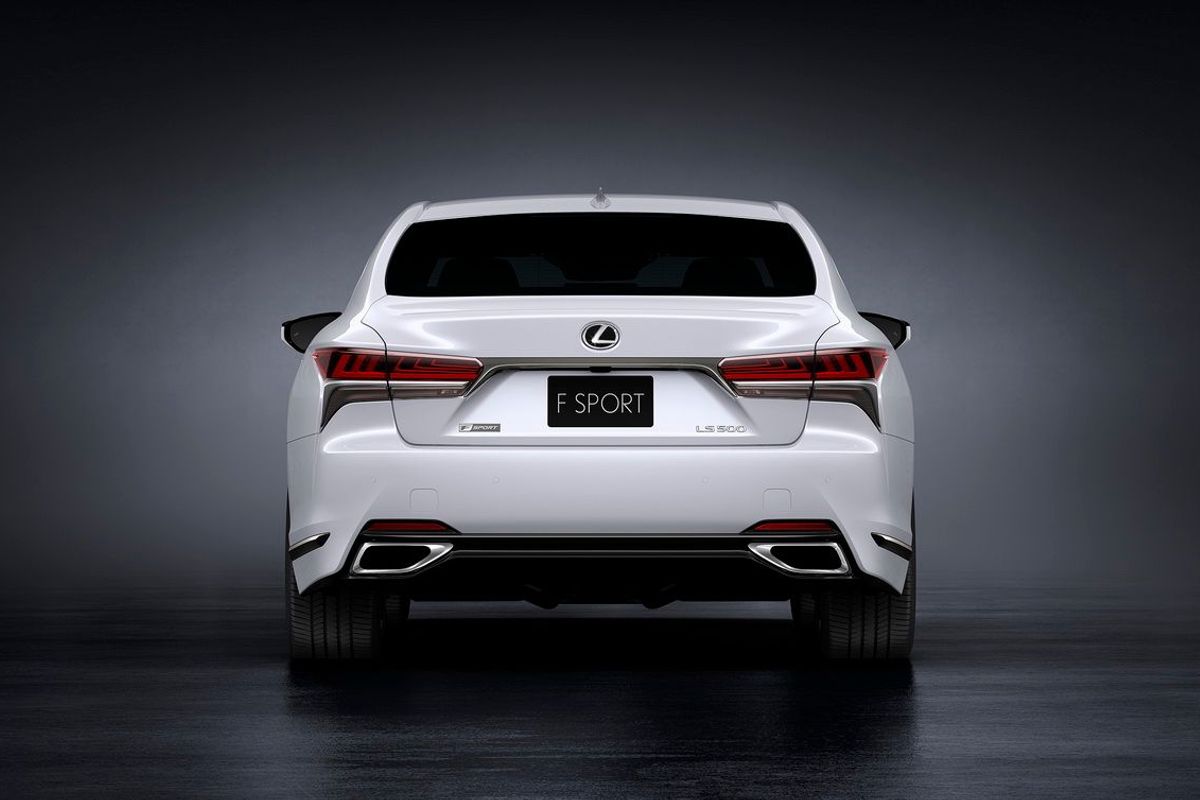
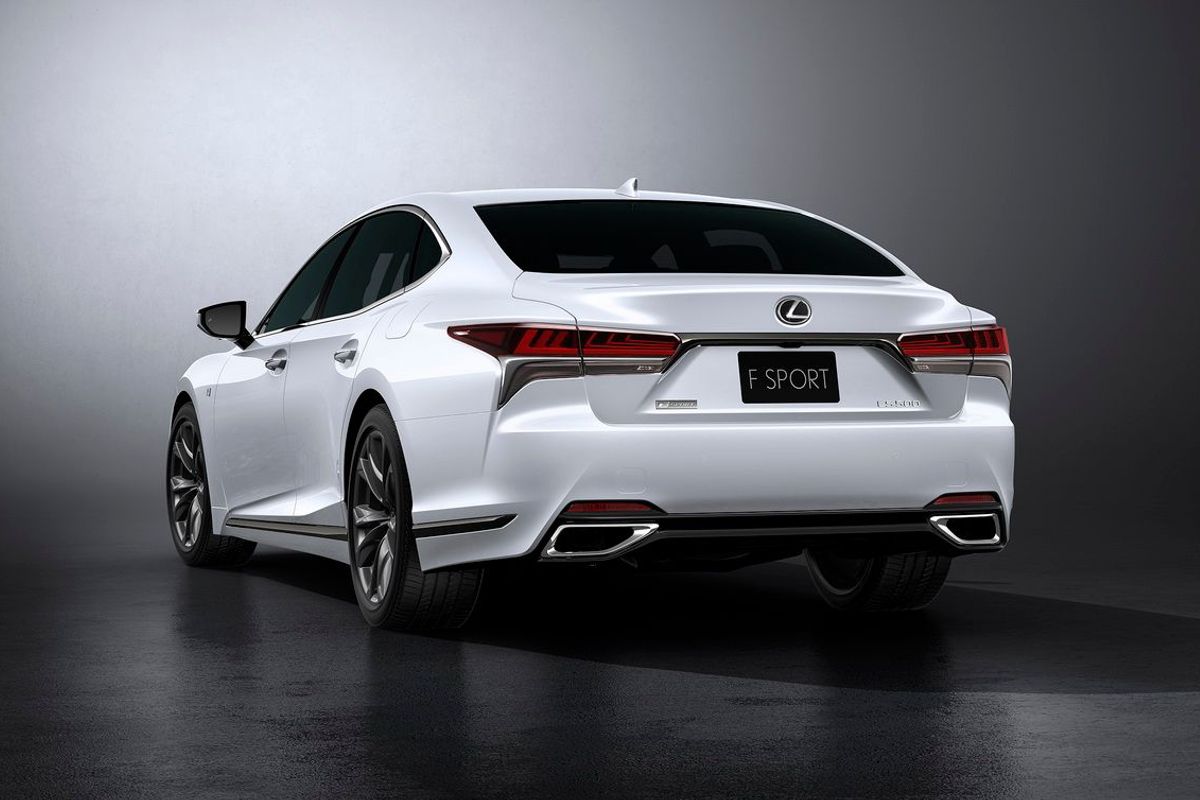
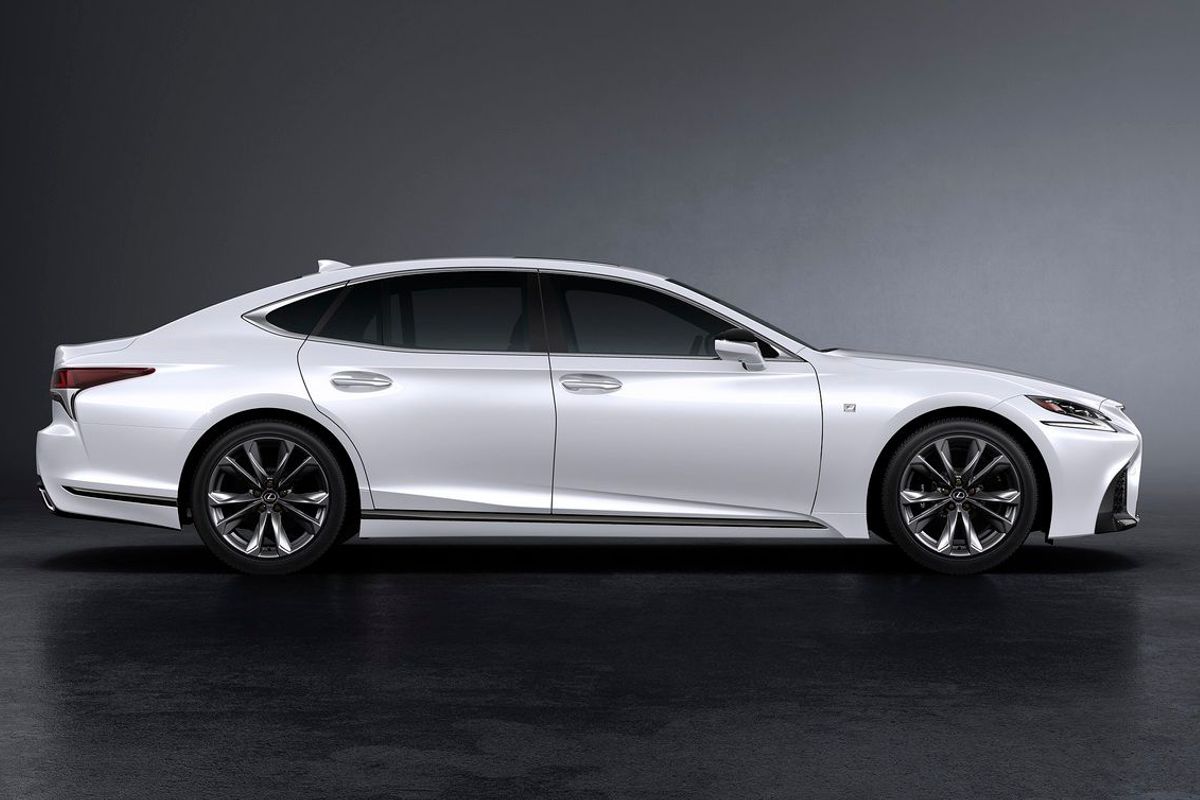
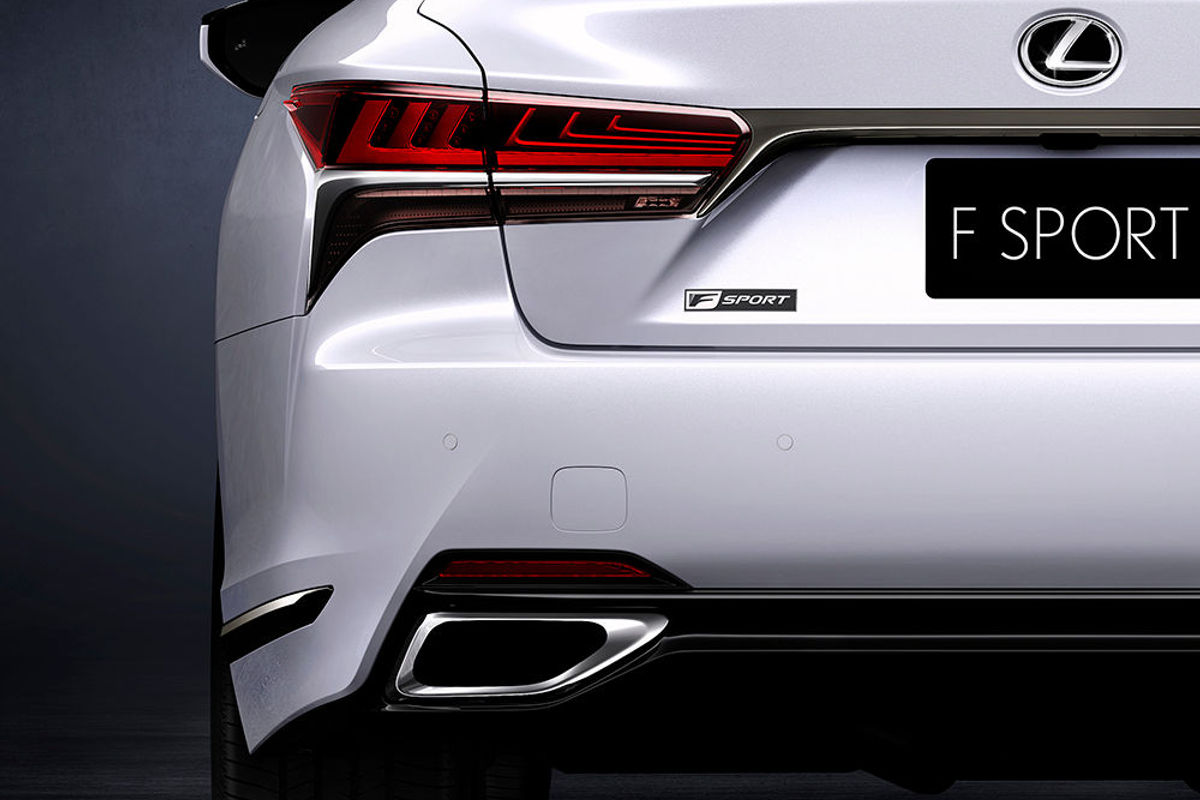
Following the release of a teaser image last week, Lexus has taken the wraps off its all-new LS 500 F Sport at the New York Motor Show.
Earlier this year Lexus introduced the LS 500 luxury sedan and the hybridised LS 500h to the world. Now, Lexus has revealed the sporty LS 500 F Sport which has made its global debut at the New York Motor Show.
The LS 500 F Sport is based on an extended version of the brand’s GA-L platform and Lexus promises the “most engaging LS driving experience yet”. Furthermore, according to Lexus, the LS 500 F Sport offers “enhanced handling, ride smoothness and cabin quietness”.
Key details
The LS 500 F-Sport will be powered by the same twin turbocharged 3.5-litre V6 motor that does service in the new LS sedan offering 310 kW and 600 Nm of torque. Lexus will also offer the hybrid powertrain of the LS 500h, combining a 3.5-litre V6 petrol engine with two electric motors for a total power output of 264 kW. A 10-speed automatic will lay power to the tar via the rear wheels with Lexus claiming 0-100 kph in 4.5 seconds for the LS 500 F Sport with the 3.5-litre V6 engine. In comparison, the LS 500h F-Sport makes use of a 4-speed automatic transmission and a CVT with a claimed 0-100 kph sprint time of 5.2 seconds. Larger brakes are fitted for enhanced stopping power and Lexus is also offering a handling package that includes variable-ratio steering, rear-wheel steering, a sport-tuned air suspension and an Active Stabiliser anti-roll-bar system for a sportier driving experience.
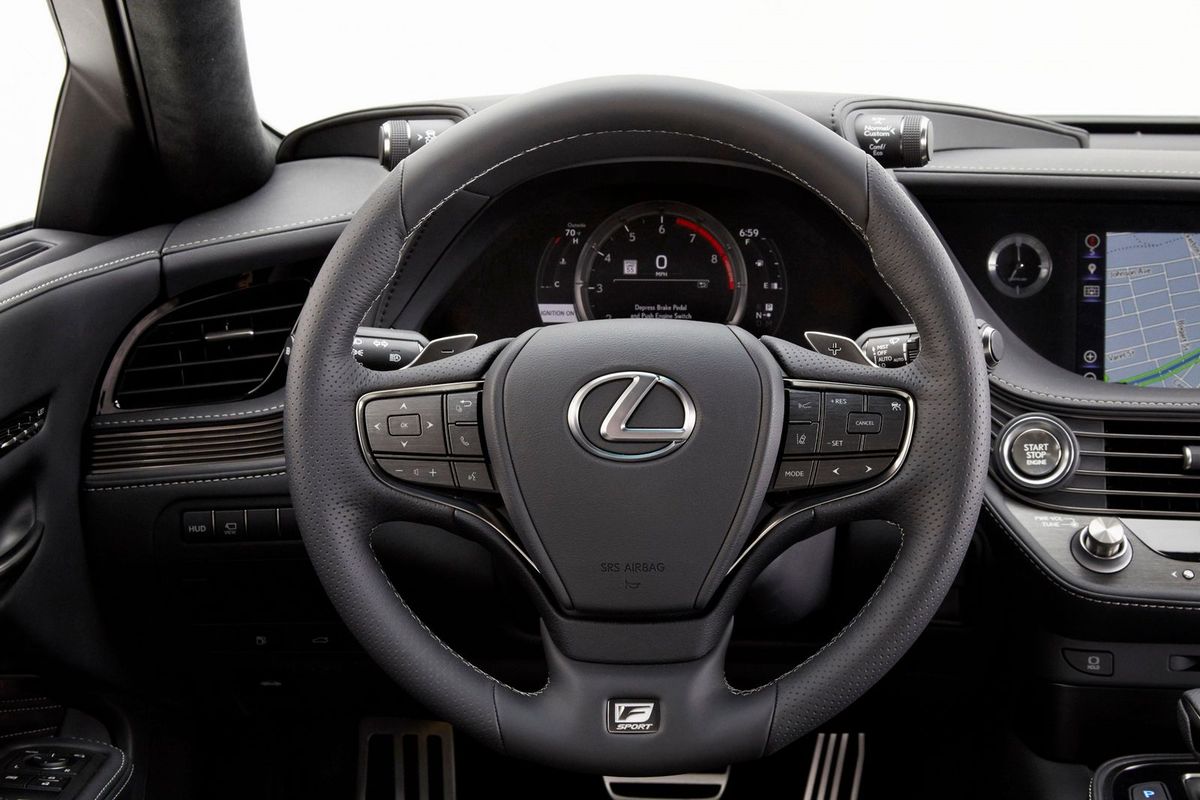
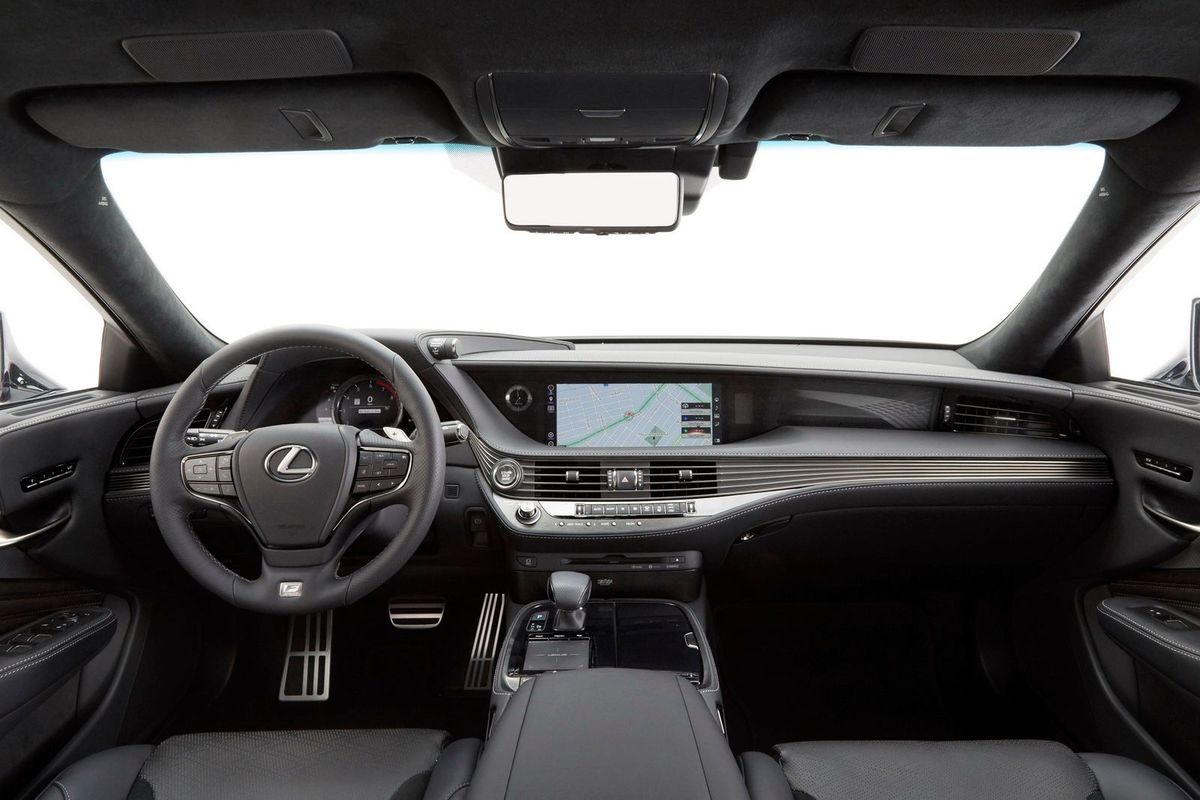
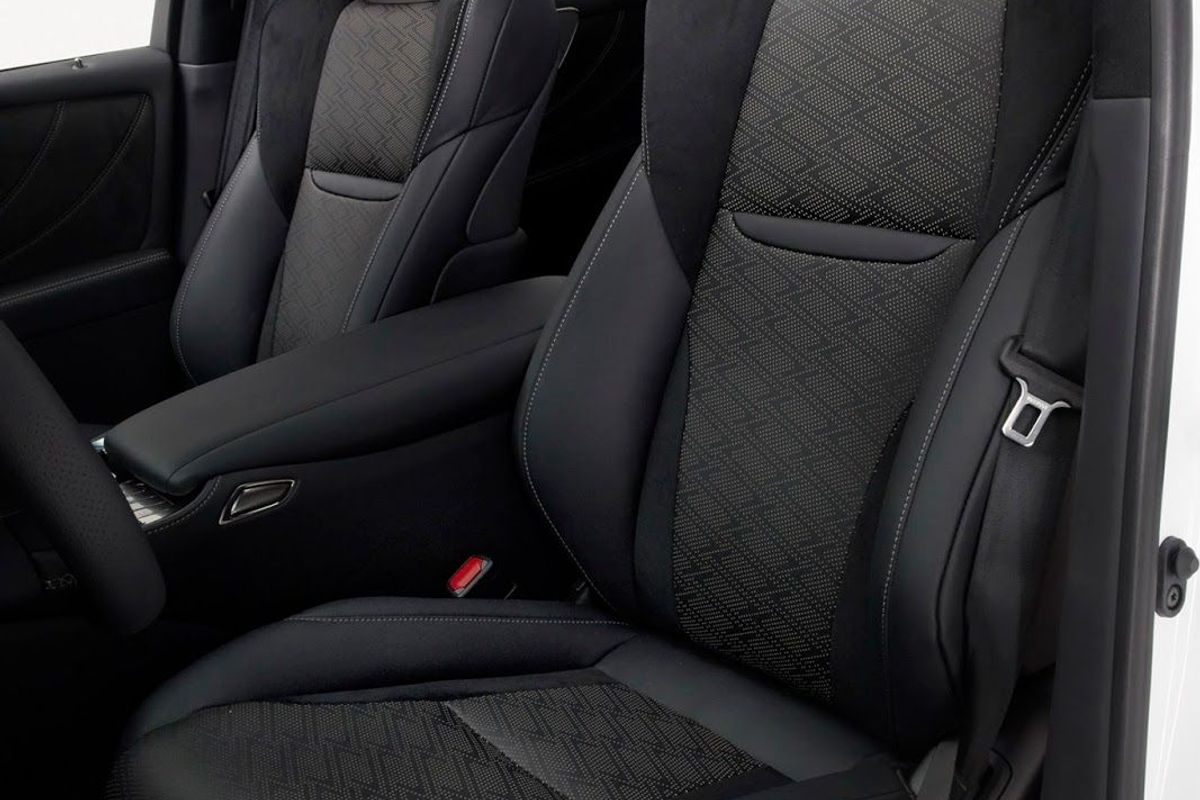
The LS 500 F Sport features a newly designed spindle grille that looks rather menacing, attractive side skirts, 20-inch alloy wheels and boot mouldings. Bolstered seats are found inside along with an F Sport steering wheel and a new instrument cluster. Aluminium trim elements are seen throughout the interior and the headliner is in suede.
The new Lexus LS has been confirmed for local launch in the first quarter of 2018. We will keep you updated as local specification and pricing details become available.
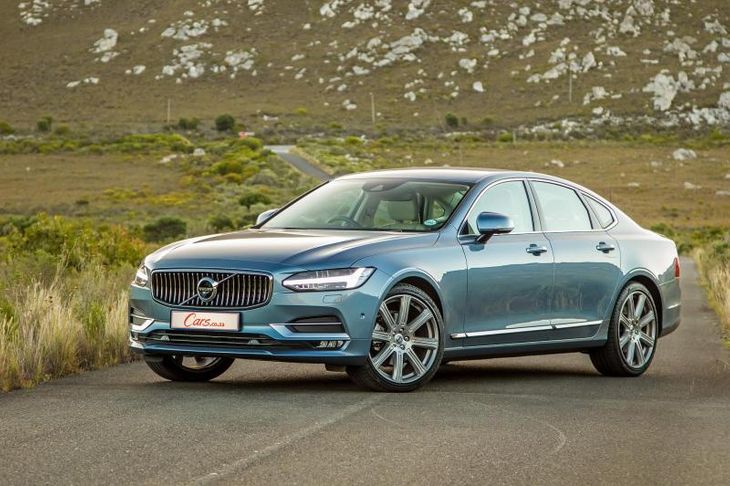
As the follow-up to the 2-time Cars.co.za Consumer Award-winning XC90 SUV, much is expected of Volvo's S90 executive sedan. In a market that was recently enlivened by the arrival of the new BMW 5 Series and features the acclaimed Mercedes-Benz E-Class and Jaguar XF, the S90 is the finest Volvo sedan in many a year, if not ever.
We like: Exceptional cabin finishes, downsized engine delivers ample performance, safety technology is top notch, ride is quiet and refined
We don’t like: Some options are oddly priced (R4k for Android Auto/Apple CarPlay!), other than that, it is hard to fault this impressive offering.
Alternatives:
The new kid on the block: BMW 5-Series. The all-new BMW 5 has arrived in South Africa, but unfortunately, it wasn't available for an immediate head-to-head with the Swede. Like most BMW products, it promises sporty driving dynamics coupled with semi-autonomous technology lifted straight from the 7-Series.
Refinement and technology galore: Mercedes-Benz E-Class. The big E-Class offers excellent refinement and technology, although it looks a lot like the C-Class. Visual transgression aside, it's a formidable offering.
For someone who likes performance: Jaguar XF. The Cars.co.za Consumer Awards winner offers something sportier than anything else in this segment, but we feel that its engine is a bit old and unrefined in comparison. It lacks the gadgets and features of the Volvo.
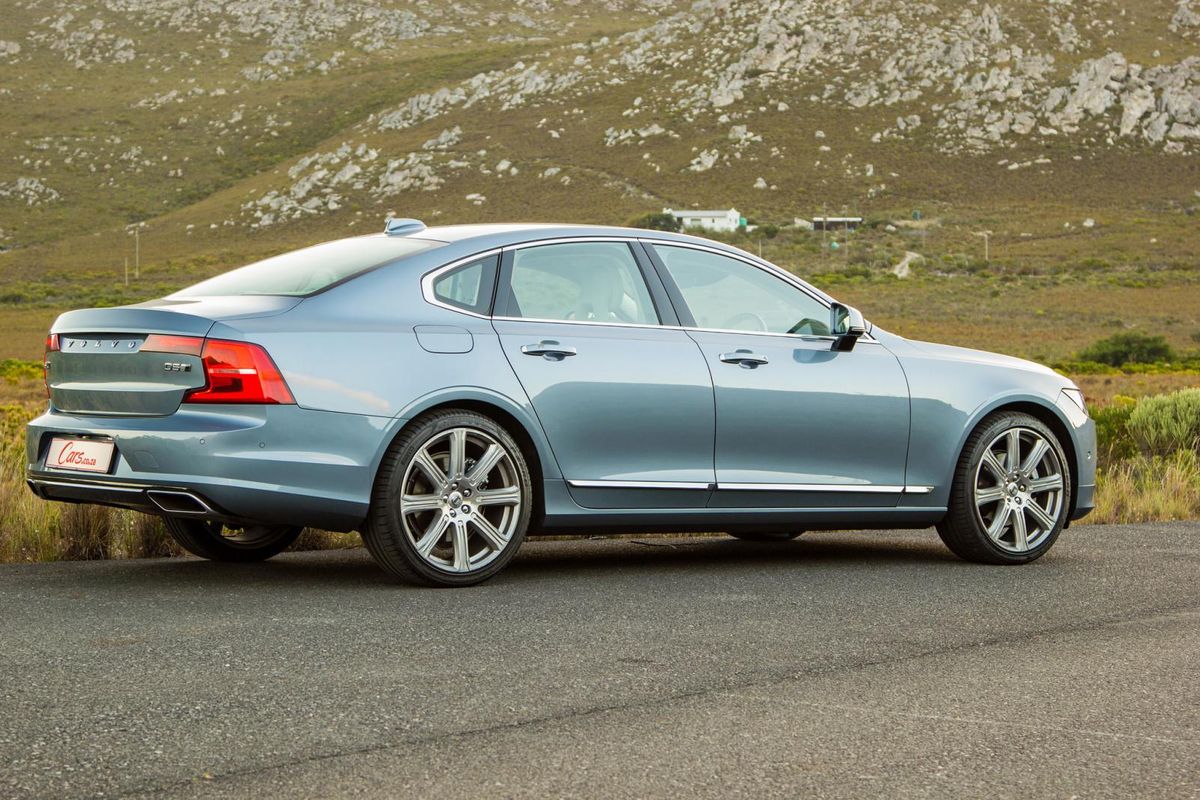
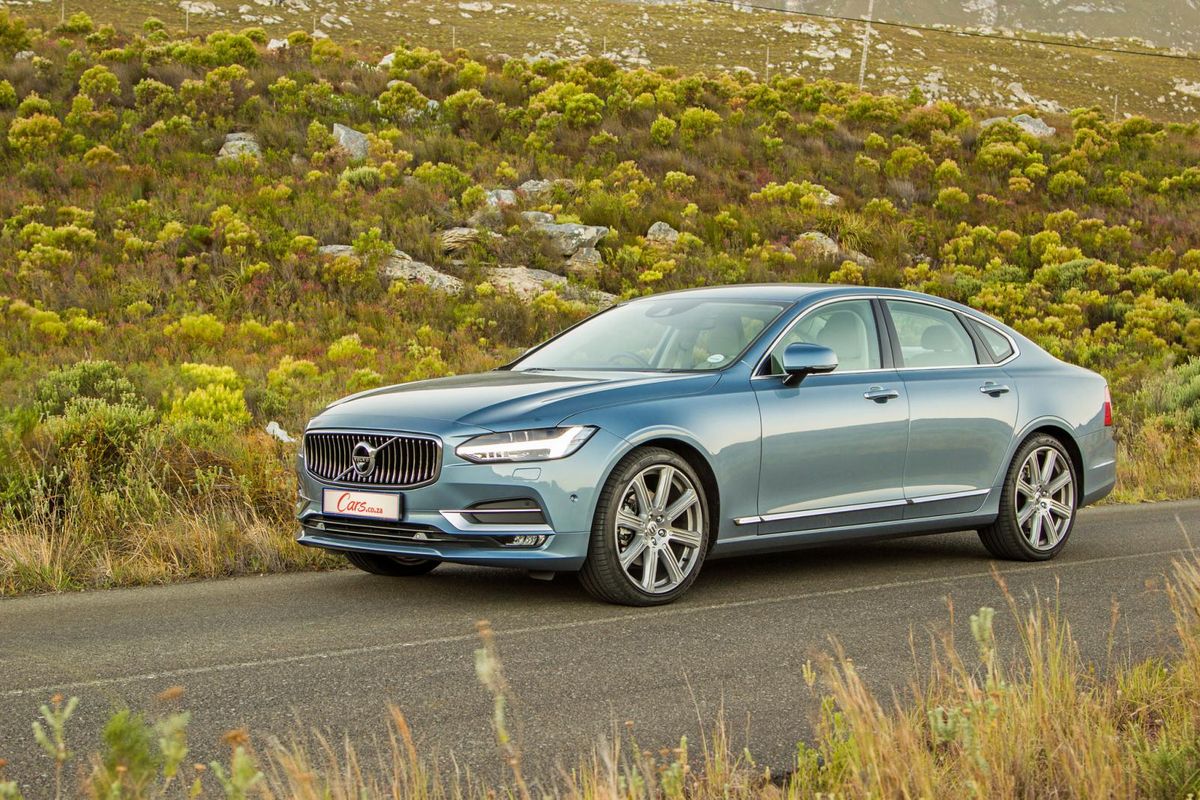
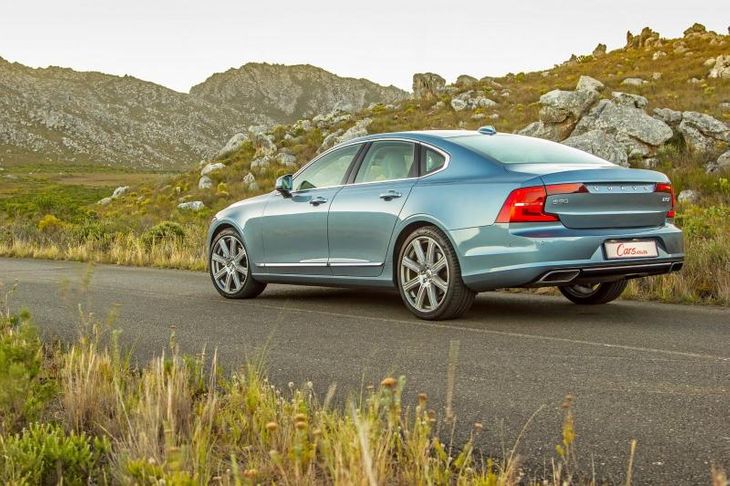
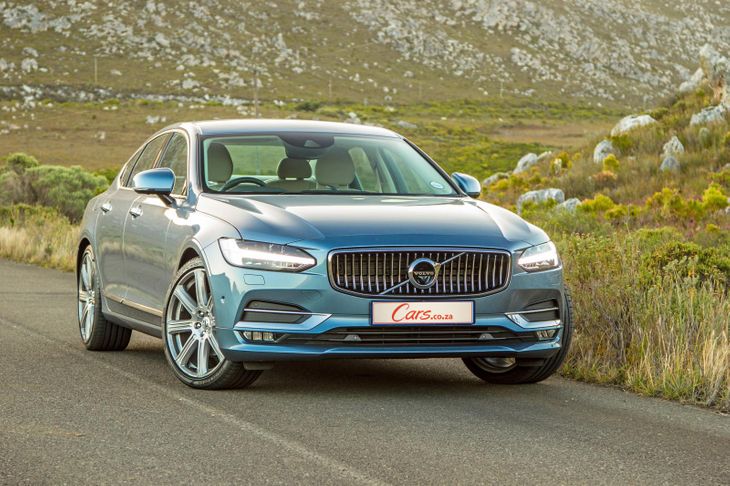
The S90's exterior design has been widely praised, it strikes a good balance between elegance and overt luxuriousness.
Facts & Figures
Price: R830 198 (April 2017)
Engine: 2.0-litre 4-cylinder turbocharged diesel
Transmission: 8-speed automatic
Power: 173 kW
Torque: 480 Nm
Fuel Consumption: 4.8 L/100 km (claimed)
Top speed: 240 kph
0-100 kph: 7 sec
The good
Compact, yet potent engine
Long live downsizing, long live. The long-held assumption that a 6- or 8-cylinder motor is required to propel a premium sedan along has been smashed by Volvo's 4-cylinder turbodiesel engine. It's a size more suited to cars half its size, but this plucky 2.0-litre powerplant pushes out tidy outputs of 173 kW and 480 Nm. Both turbochargers are supplemented by a smart system which fires compressed air into the turbo housing to minimise lag. Can you feel it working, however? We'd be lying if we said we could…
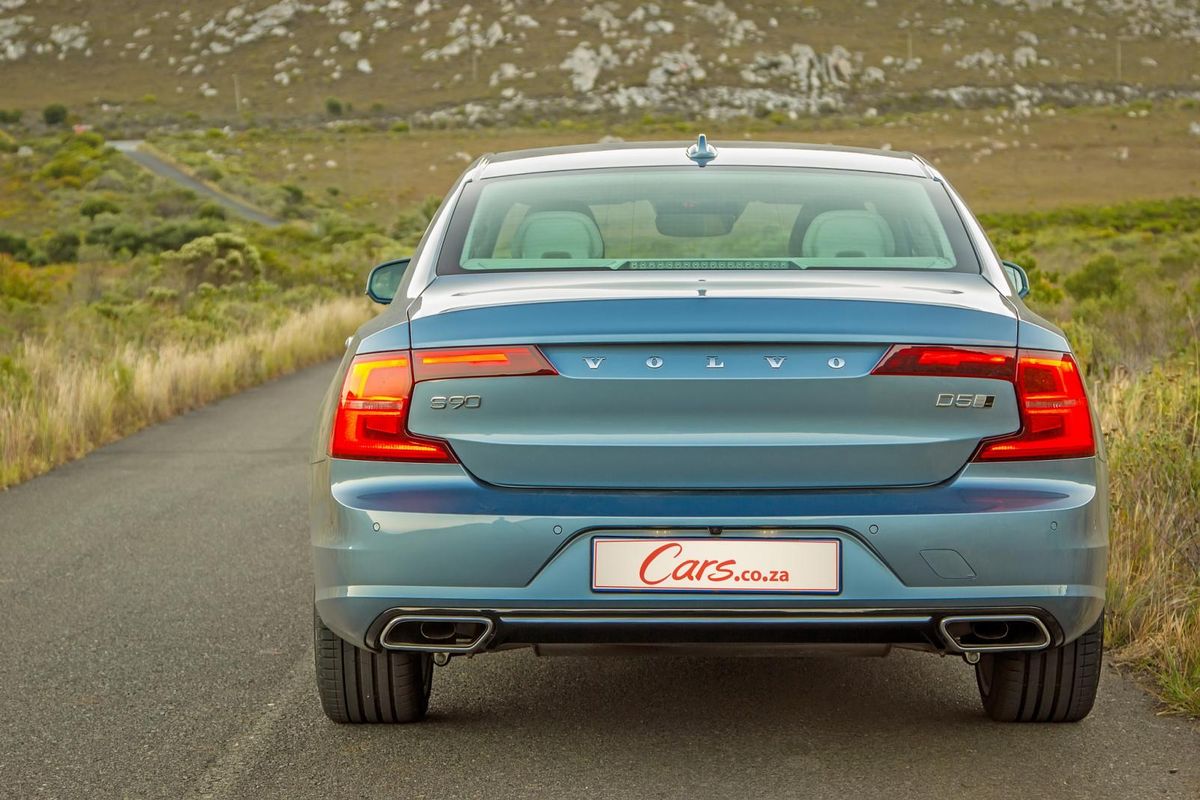
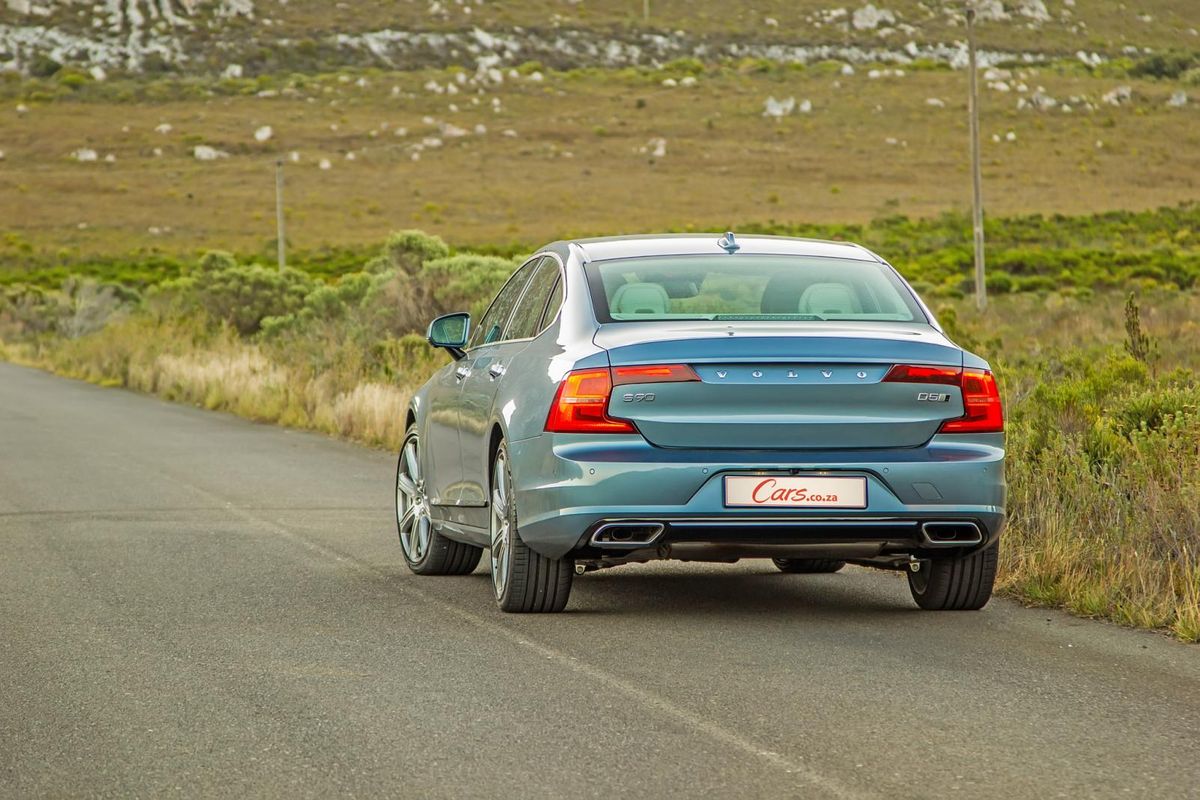
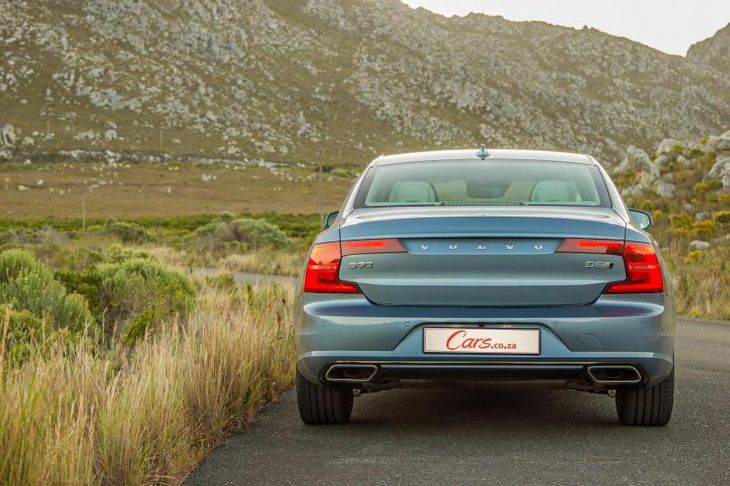
Appreciation for the S90's distinct tail light clusters has not been as universal as its front visage.
The engine truly comes on song around the 2 000 rpm mark and any lethargy at takeoff is soon forgotten as the D5 delivers effortless in-gear surge. Volvo says it'll do 0-100 kph in 7 seconds, but attempting to recreate this results in the engine sounding a mite strained atop the rev range. All four wheels are driven via an 8-speed automatic gearbox and while Volvo claims its diesel-powered S90 will sip 4.8 L/100 km on the combined cycle, we could only manage mid-7s and put it down to the small engine working hard to keep the big sedan moving.
Sumptuous, stylish cabin
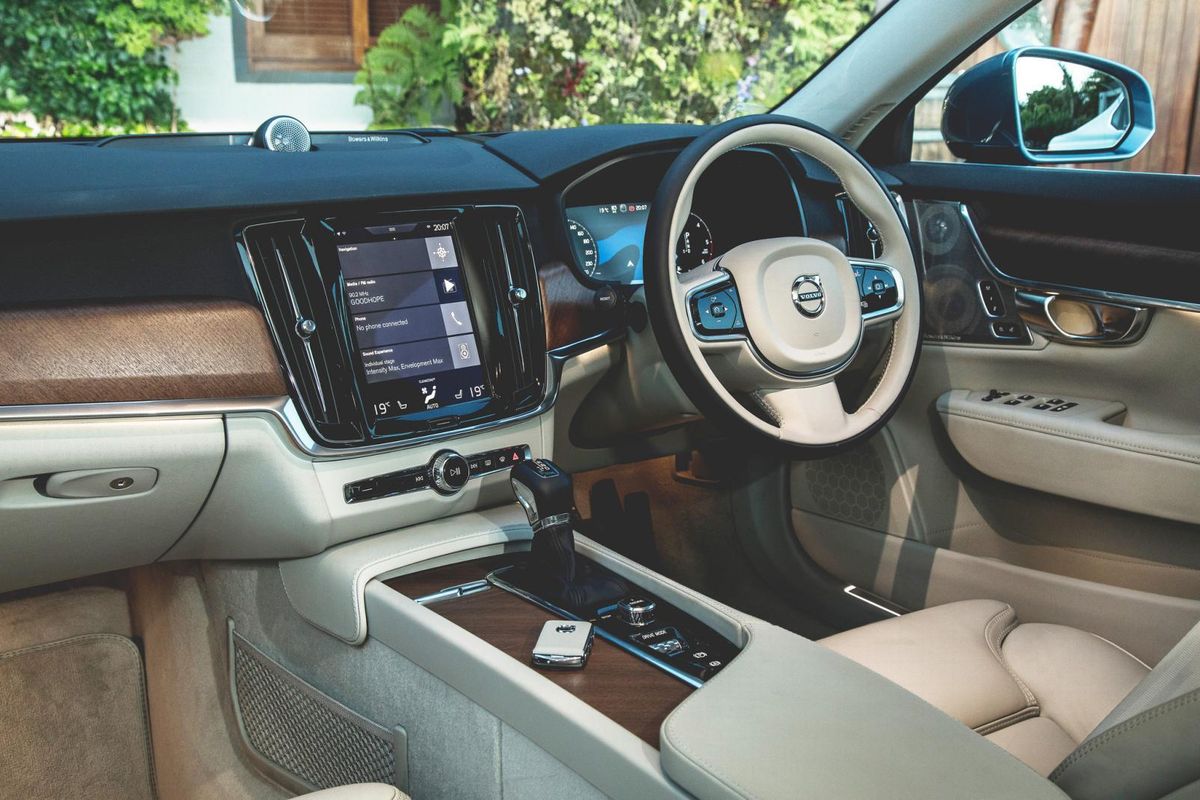
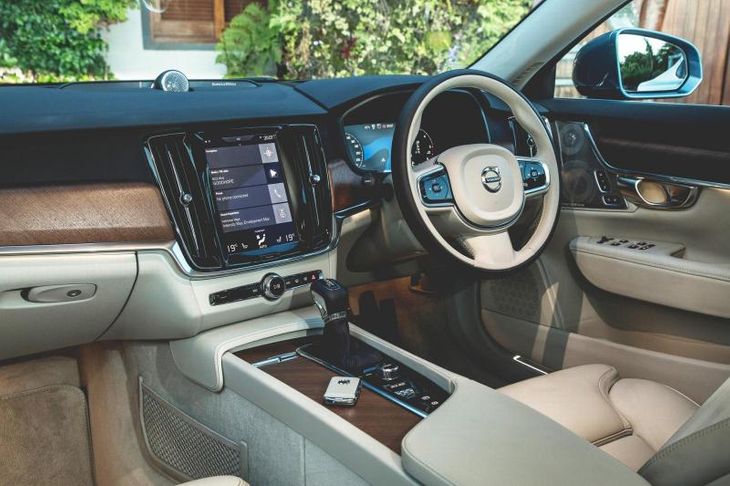
Rich and inviting light leather in combination with expanses of wood trim and brushed metal inserts was lauded by the test team.
The Volvo S90's cabin is an eminently tasteful and comfortable place to occupy. This particular D5 Inscription derivative came with a rich lightly coloured leather upholstery blended beautifully with wood panels. Practical concerns aside, It looked like it was lifted straight from Ikea's Scandinavian Collection. It's gorgeous, both to look at and to touch. The centrepiece of the cabin is Volvo's iPad-like Sensus infotainment system, which takes everything you know about in-car entertainment and features control and turns it on its head. Not only is it slick in operation, but the user-friendliness is hard to match. No fancy graphics or cascades of colour here, just a pure, clean user experience. Can you get more Swedish and minimalist?
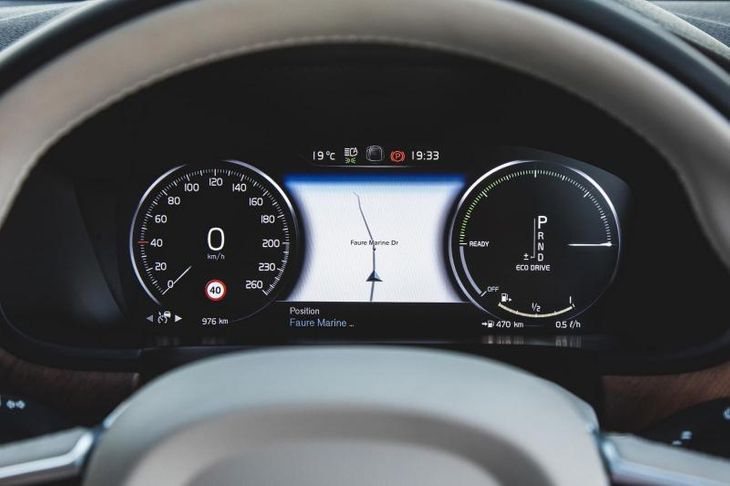
The digital instrument cluster's display is so subtle that at first glance it could be mistaken for a conventional analogue setup…
The digital instrument cluster is slick-looking too, and our particular test unit came fitted with the R65 000 Premium Pack (one of the options well worth considering), which includes items such as a superb Bowers & Wilkins audio system, heated seats, keyless access and some additional safety features. The available space is excellent; rear legroom is to be commended.
Abundant technology
It is palpably apparent that Volvo is determined to woo potential customers with a bedazzling array of safety features and modern technology. This S90 features Pilot Assist, which, according to the firm, "is a semi-autonomous driving assistance system. The system manages acceleration, braking and steering at speeds of up to 130 kph." We just had to put it to the test and it's initially quite disconcerting to trust the car to not drift out of its lane or drive straight into the person in front of you. While it's strictly an assistance system and doesn't replace the driver, the team feels that it's only going to take a software update and the car will be capable of a lot more. The best use for this tech is in bumper to bumper traffic.
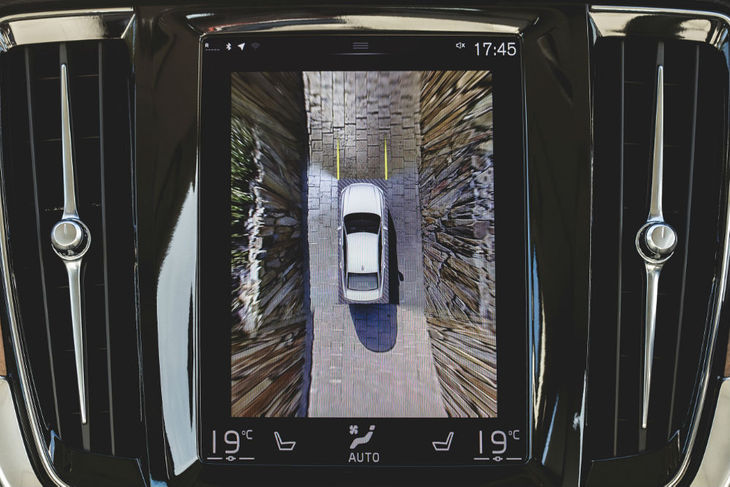
The high-resolution 360-degree view, courtesy of strategically placed cameras, make is easy to manoeuvre the Volvo into tight spaces.
The rest of the safety package is comprehensive. The new Intellisafe includes City Safety to pick up errant pedestrians, cyclists and animals, run-off-road mitigation, auto braking in intersections for oncoming traffic, front collision warning with full auto brake as well as the lane-keeping aid, lane departure warning and driver alert control. The car's also able to read road signs. What this basically means that if you're not paying attention and the car thinks you're going to drive into someone, it'll alert you loudly. If you don't react in time, it'll intervene.
Other notable technology mentions include auto parking, head-up display, satellite navigation and 360-degree HD cameras. Disclaimer: some of these form part of the Premium Pack, which, as we said earlier was definitely worth a tick. Annoyingly, something as simple as Apple CarPlay/Android Auto smartphone integration such as is a R4000 option. You'd think it'd be included in the comprehensive Sensus setup…
Drive and Refinement
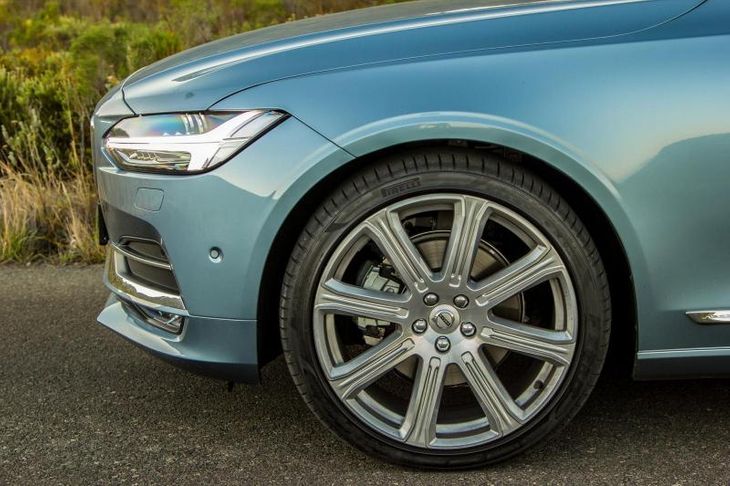
The S90's ride quality is very pliant considering its sizeable wheels and tyres. The ride/handling balance is hard to fault, actually.
The S90 is all-wheel driven, but the capability has more to do with traction on wet and snowy, as opposed to gravel, roads. There aren't steering wheel paddle shifters on this car: Volvo has opted for a luxury driving experience as opposed to a sportier one. That being said, the S90 can string together a few fast bends when required and thanks to the combination of stability control and all-wheel drive, it's going to take some most unVolvo-driver-like behaviour for the car to become unsettled. Brisk, yet comfortable cruising is this car's forte.
The steering arrangement is deserving of praise as it feels true and direct, but still with a focus on comfort. It has a fair degree of weight to it, which befits the S90's the big, luxury sedan persona to a tee. It's light enough to make low-speed tight parking manoeuvres less stressful, yet heavy enough to let you know you're at the tiller of something substantial.
The (not so) good
Because the S90 is Volvo's top-rung sedan, it cannot be accused of being too derivative of a first class car sibling.
But will people buy it?
As this article is published in April 2017, a quick glance at the sales figures from March 2017 does not paint a pretty outlook for the S90. Just five vehicles found homes, while its XC90 SUV sibling tallied up 44 sales. See, one of our fears is that the S90 will fall victim to the SUV trend and it doesn't help matters that the XC90 is already an accomplished performer and lest we forget that the all-new Volvo XC60 is waiting in the wings. The similarities between the S90 and XC90 are much closer than you think as they're built on the same platform and share many components. To put things in context, the entire premium sedan market has taken a serious hit over the past few years and it's not just Volvo that's feeling the impact.
Pricing and after-sales support
The S90 range starts from R685 206, with this D5 Inscription priced at R830 198. The price includes a 5-years/100 000 km maintenance plan as well as a 5-years/100 000 km warranty. Volvo has also come up with some attractive financing and insurance options – read more about those here.
Volvo wants to improve its market footprint in South Africa, but is simultaneously determined to foster the brand's boutique appeal.
Verdict
It is hard to fault the latest offering from Gothenburg. It offers a stylish, luxury-car-first-and-foremost driving experience and, unlike many of its competitors, offers a fair whack of standard specification for a not-unreasonable amount of money. The cabin is as pretty as it is plush; the engine, while not as thrifty as hoped, is more than up to the task of hustling the S90 along – you won't miss a bigger powerplant. The safety features are in abundance and you're getting a glimpse of how smart a passenger vehicle has become/how close to the age of the autonomous vehicle we are.
The ride and refinement get two thumbs up from us and we'd argue that this D5 Inscription pack is more competitive and desirable than its petrol-powered siblings. Will the S90 be a sales success? It's a great package, but the lure of an SUV in the form of an XC90 (or the forthcoming XC60) may prove to be this luxury sedan's undoing. That being said, if you're not sold on the refined but derivative Mercedes-Benz E-Class, don't care much for the sporty pretensions of the BMW 5 Series and Jaguar XF… in other words, if you want something totally different, then the Volvo S90, in this spec, makes a compelling argument. The range is competitively priced, it's comfortable and stylish, and brimming with the latest technology.
The Mazda2 range has been updated in South Africa with the addition of a new derivative as well as equipment upgrades. Take a look at the details…
The Mazda2 range has expanded in South Africa with the addition of a new Individual Plus 1.5L automatic derivative with a total of 7 Mazda2 derivatives now on offer.
The new derivative benefits from a host of features which are now also available on the Mazda2 Hazumi 1.5 DE automatic derivative. These features include a shark-fin antenna, automatic folding mirrors, Heads-Up Display, leather upholstery, rear parking sensor, lane departure warning and side and curtain airbags. The 1.5 DE derivative is also equipped with blind spot monitoring.
But that’s not all, Mazda South Africa is also offering 2 new exterior colours available across the Mazda2 range and these include Eternal Blue Mica and Deep Crimson Mica. Furthermore, the Mazda2 Dynamic derivative now gets LED front fog lamps and cruise control while automatic models now feature steering wheel paddles.
Vehicle safety systems have come a long way in the last few decades. Almost all cars come with an abundance of acronyms and unpronounceable terms, but what do they actually do? We unpack some of the most common safety terms and how they work.
I often get asked: “What is the safest car on the road?” I usually say that I can only answer that question if you can tell me exactly what kind of accident you’re going to have. This illustrates the fact that no two accidents are identical and that each automotive company concentrates on their own interpretation of accident statistics from various countries to guide them in developing safety items.
These items are usually classified as either active or passive. Crumple zones, seat belts and airbags are passive safety items that try to reduce the severity of an accident’s aftermath. ABS (anti-lock braking system), traction control and ESP (electronic stability programme) are active safety devices that make it easier for drivers to avoid an accident.
Passive safety items
Seat belts
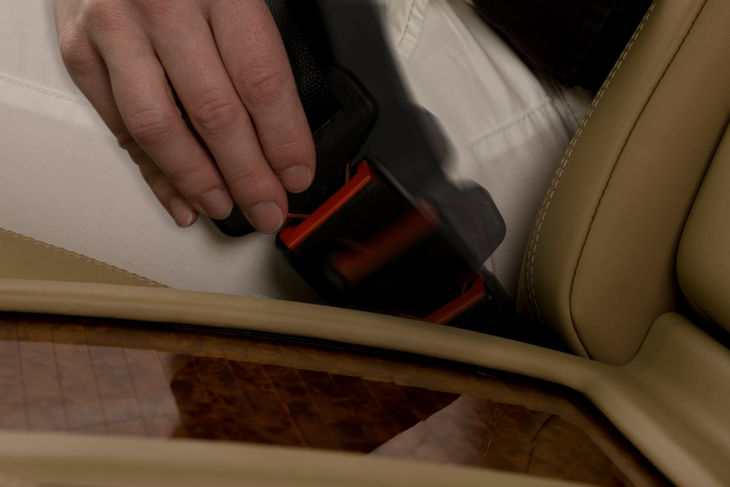
What happens when a car hits a large object? The car comes to a very quick stop or slows down very fast. The passengers carry on moving for a fraction of a millisecond until they hit the dashboard, windscreen or steering wheel at the original speed. Seatbelts were introduced in the late 50s as the first line of defence against the subsequent injuries. Initially, lap belts and later lap and shoulder belts held occupants' bodies to a selectable tension. Later, inertial belts allowed slow body movement, but tightened up when a car decelerated at an alarming rate.
On some of the latest cars, radar sensors measure the direction, speed and size of a nearby vehicle, and warn a control unit when an accident is imminent so that seatbelts and airbags can deploy rapidly. Another innovation monitors the severity of the braking application and will tighten the occupant’s seatbelts, and move the seat away from the fascia if it senses that the driver is braking very fast. If the car skids the system closes the side windows and the sunroof because these closures prevent the occupants being thrown out during an impact.
Crumple zones
You can still find people who are under the impression that a car with a strong and rigid framework is safer to have an accident in than a less rigid car. This perception was challenged by the Hungarian Mercedes-Benz engineer Béla Barényi (1907—1997), who is credited with inventing crumple zones, the non-deformable passenger cell, collapsible steering columns and many other safety devices.
Barényi realised that a rigid structure transmits the shock load that accompanies an accident almost immediately to the passengers, often in undiminished form. In contrast, a correctly-designed deformable structure will crumble progressively. This will not only dissipate energy, resulting in reduced shock loads but also slow down the transfer of these loads to the people inside the car. In many types of accidents, this slowing-down process reduces the deceleration felt by the passengers from a more than a fatal 100g to less than 30g. (g = the acceleration due to gravity)
On its own, this feature will help to save lives, but when it is used in combination with airbags and seat belts the safety levels increase dramatically. Practically all modern cars have crumple zones, but very few commercial vehicles have reached this stage of development.
Airbags
The first airbags deployed when a single accelerometer on the car showed that the car had reached a level of deceleration that usually denotes an accident. Modern airbag controls are more sophisticated. In the event of a collision, a number of strategically-placed accelerometers will send signals to the processing unit, which the latter will interpret as either a soft collision, meaning no deployment, or a hard collision, which requires deployment. This decision and the time to signal the airbag takes between 15 and 30 milliseconds. The airbag then deploys in about 30 milliseconds. This is usually a short enough time to protect the passengers from the worst effects of the shock.
Modern airbags don’t deploy unless the seatbelt is in use. The bag comes out at over 300 kph and can injure or kill small-bodied people. This is why drivers are warned not to strap small children into a front seat, but rather employ a specially-designed child seat.
Active safety items
The presence of a computer makes it possible to fit modern cars with active safety items. Here are some of the most noteworthy:
ABS (anti-lock braking system)
ABS is been designed to make it easy to keep the car in a straight line during panic braking. This system employs a speed sensor at each wheel and whenever the controlling processor senses that one wheel shows a sharp reduction in speed compared to the others it enables a pump to pulse the pressure in the brake fluid line going to that particular wheel. The result will be that the driver can brake as hard as they like, but the wheels will not lock up, nor will the car veer to one side.
Brake Assist
Employs a speed sensor inside the brake servo to sense when the driver is braking really fast. The system then activates the brakes to the maximum extent. This is necessary because many people panic to such an extent during severe braking that they do not apply full pressure on the brake pedal.
Wheel-spin control
Employs the ABS wheel speed sensors to inform the processor whenever one wheel rotates significantly faster than the others. It will then cause that wheel to be braked until it’s travelling at the same speed as the others.
ESP (electronic stability programme)
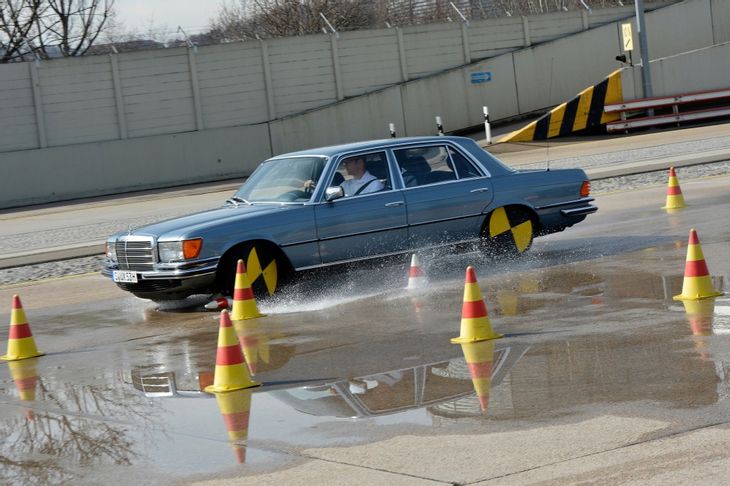
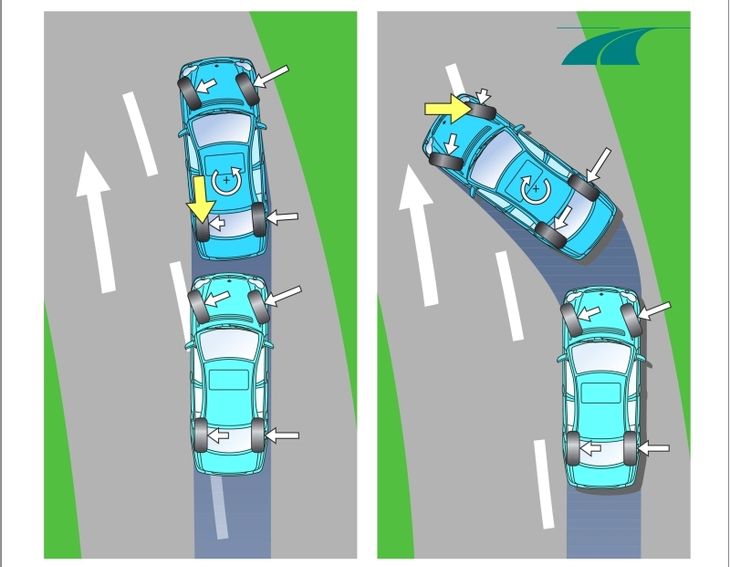
Stabilises a car’s movement during cornering by braking the left rear wheel to correct understeer (car tends to go straight) or the right front wheel to correct oversteer (rear wheels break away). The controlling processor employs the ABS wheel sensors, a yaw sensor (yaw = rotation about a vertical line through the centre of gravity), plus a steering wheel rotation angle sensor to determine whether a car is cornering normally or the driver is on the point of losing control.
Adaptive cruise control
Employs front-mounted radar or laser sensors plus a video camera to maintain the driver’s chosen speed and also brake if the car in front slows down. It then accelerates back to the chosen speed when the car in front speeds up. Older systems will start the braking procedure but warn the driver to take over. Some of the later systems will brake to a standstill if the other car stops.
Rearward-facing cameras, adaptive headlamps and night view assist
Helps the driver to see better, especially when it’s dark. Lane centring uses cameras to continuously monitor a car’s position on the road in relation to side- and centre markers. If the vehicle wanders off to either side without the activation of a turn signal, the driver is warned by a buzzer or a vibrating steering wheel. In this way, the dangers inherent in intoxication and sleepiness can be reduced.
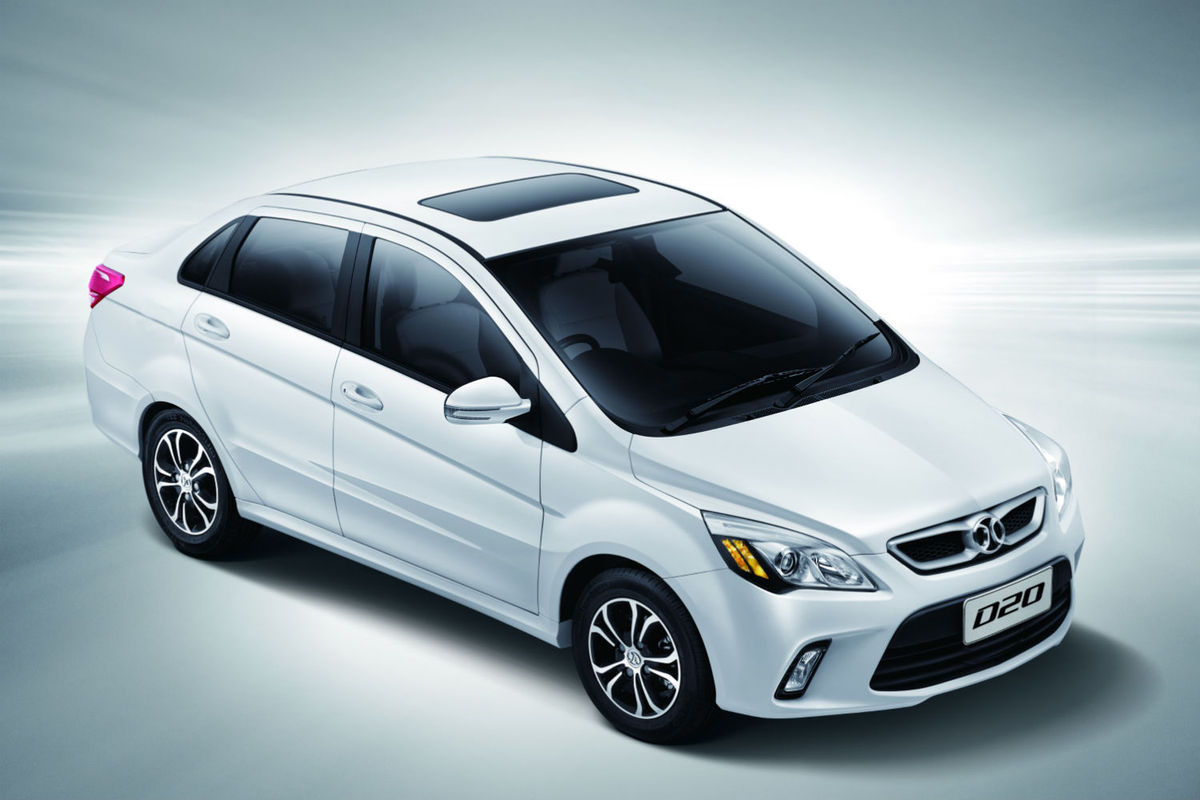
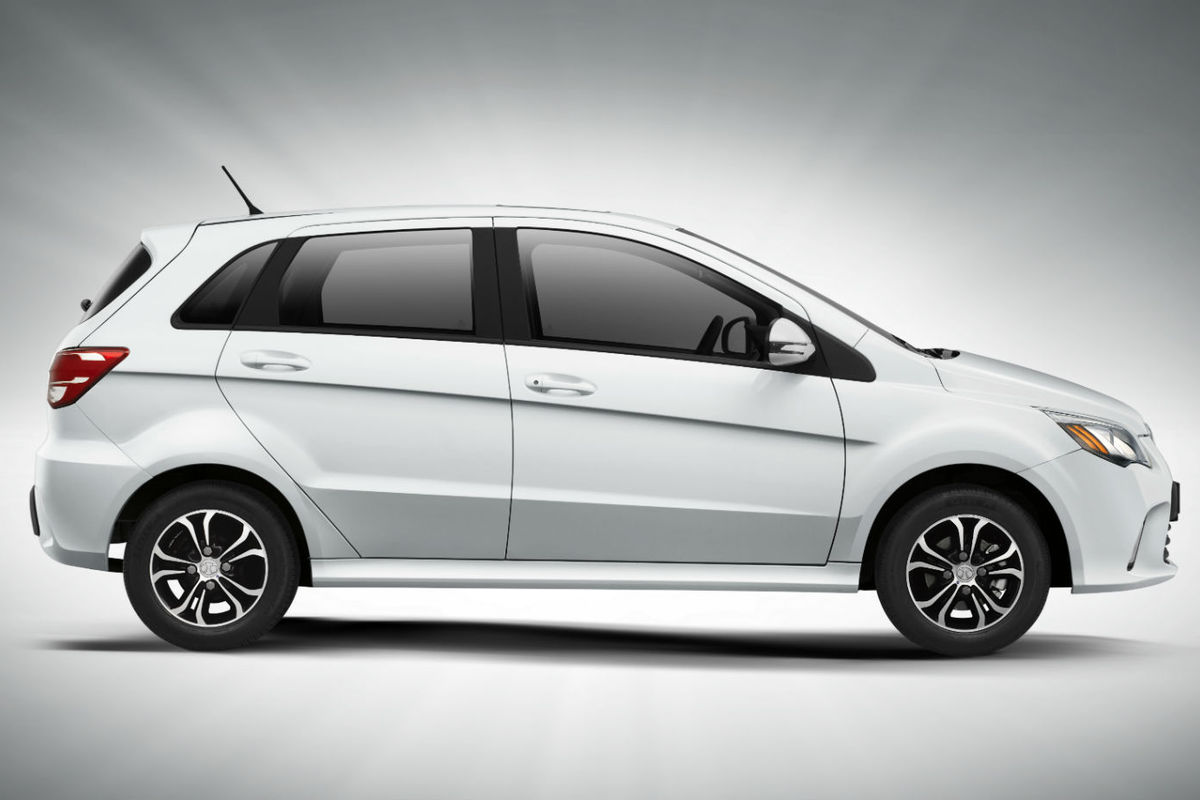
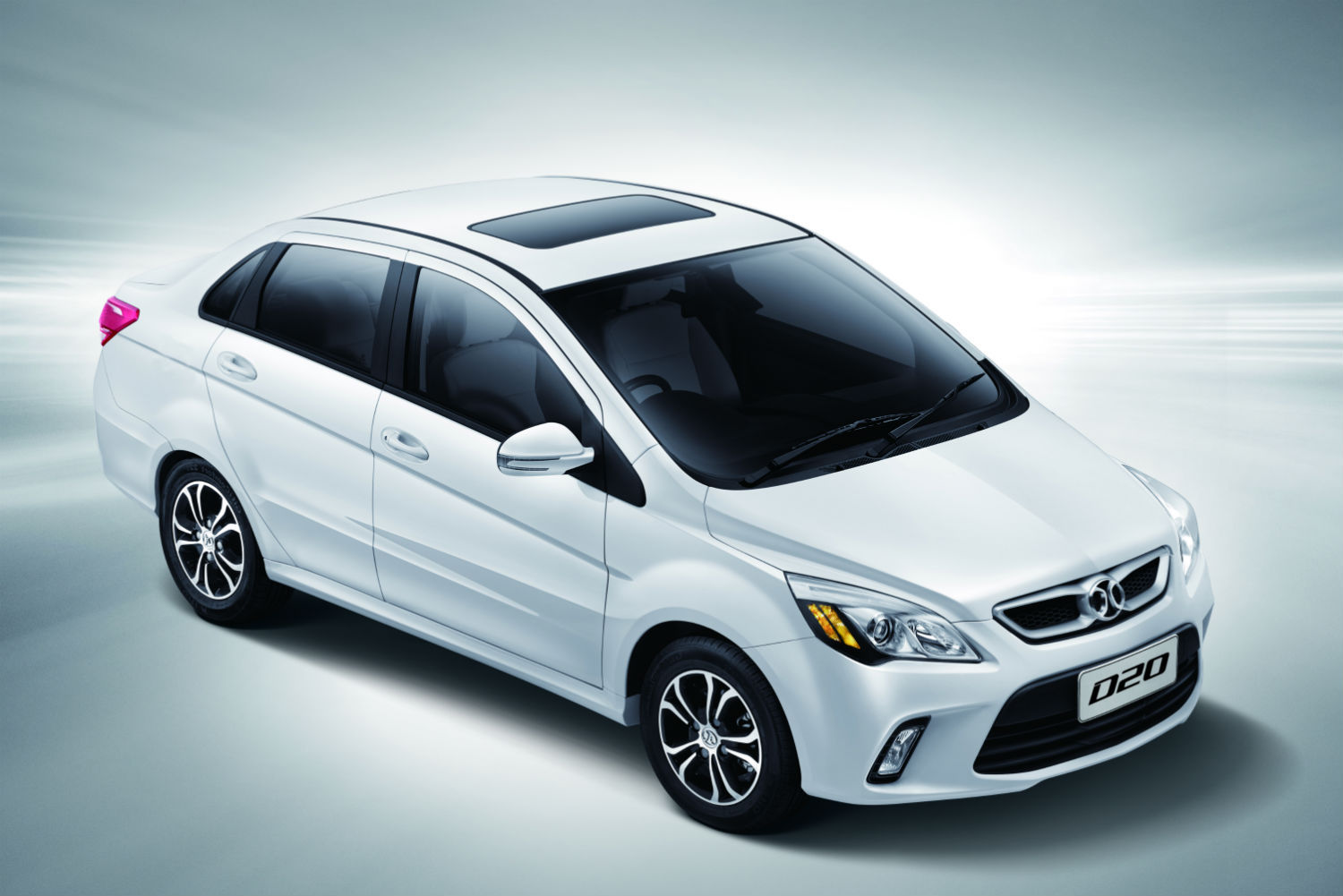
BAIC, the 4th largest automaker in China, has launched in South Africa and will offer a range of vehicles, starting with the D20 hatchback. Details within…
There’s a new car brand in Mzansi and it’s called BAIC (pronounced ‘bike’). The arrival of BAIC in South Africa coincides with a massive equipment investment of up to R11 billion, to construct a plant in Port Elizabeth (which is currently underway) with local production expected to begin in the first half of 2018.
The BAIC D20 is based on a development of the platform of the first-generation Smart ForFour.
The BAIC SA Plant will start with a production capacity of 50 000 units per annum, and once fully operational, the plant will produce up to 100 000 units per annum with the intention of supplying vehicles to the rest of Africa. The construction of the plant will reportedly create more than 2 500 jobs during the construction phase while 10 000 jobs will be created directly and indirectly when the venture is fully operational.
South African consumers can expect a range of passenger vehicles, including SUVs and bakkies to be offered from BAIC in the future. To kick off its arrival in South Africa, BAIC is offering the D20 hatchback and sedan to customers from launch. For now, the D20 is imported from China, but not for long…
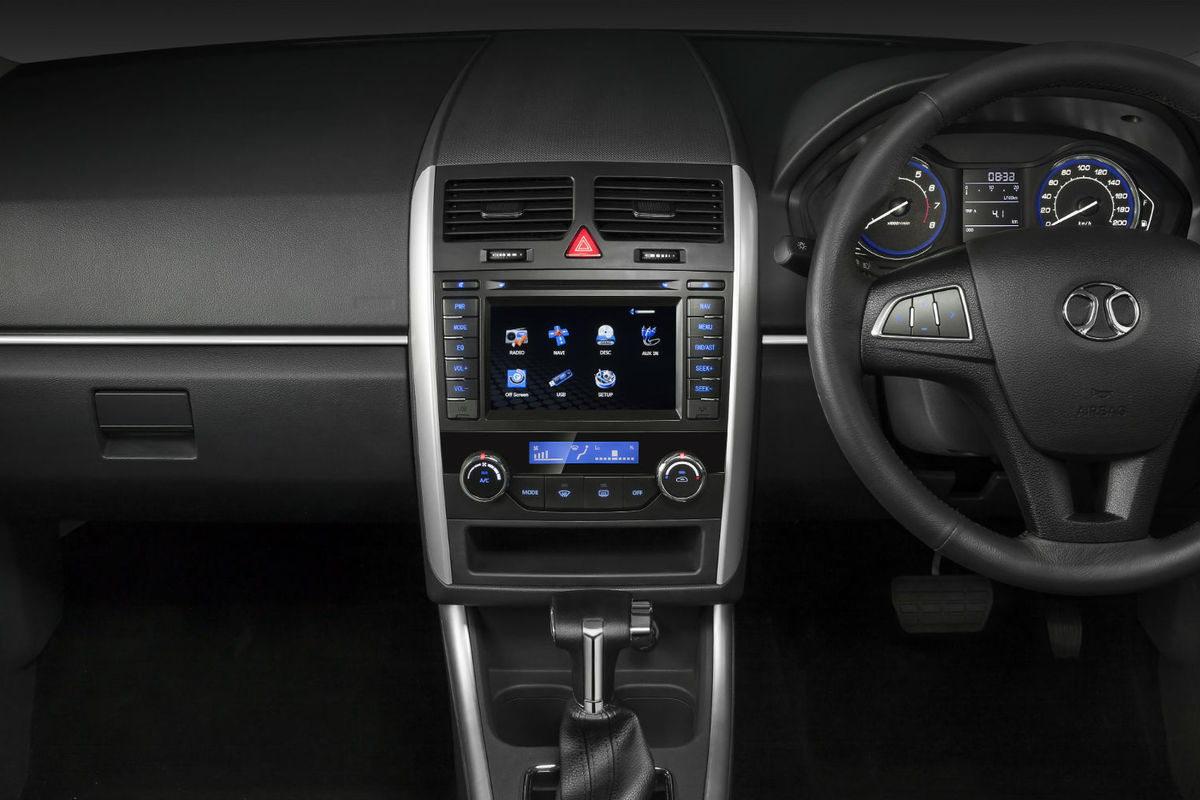
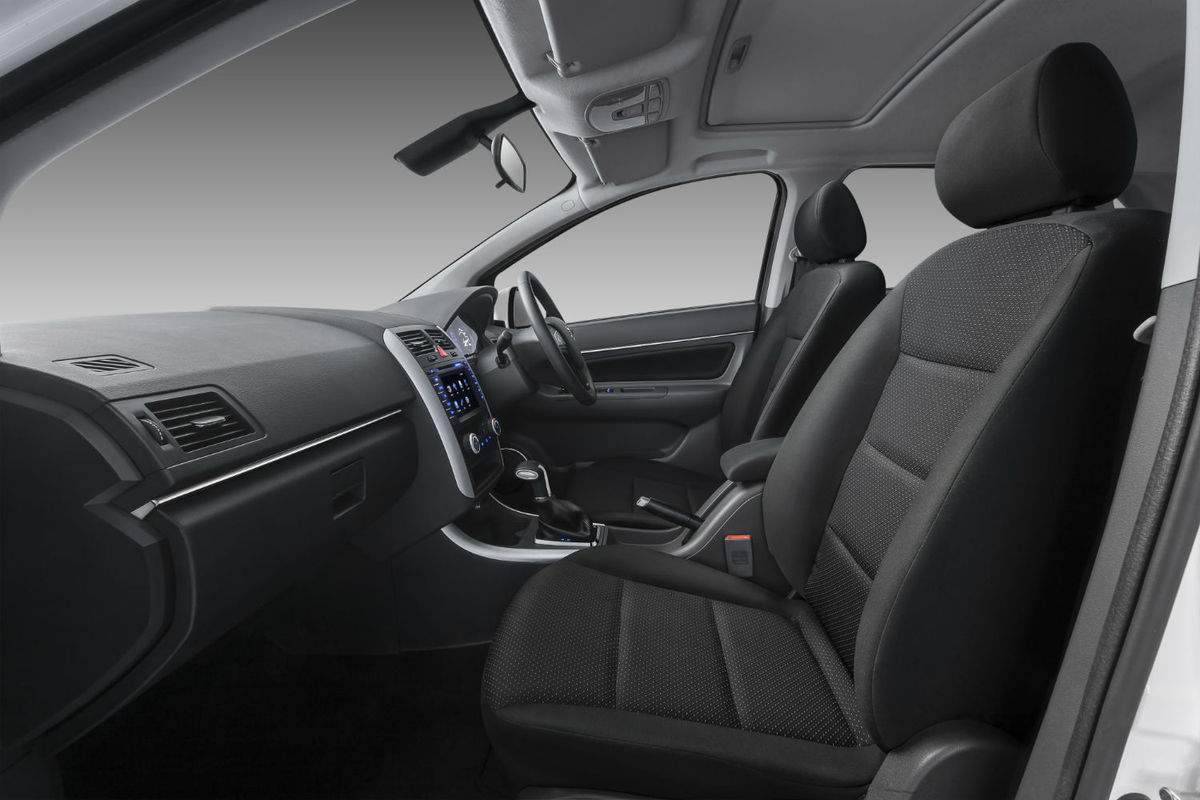
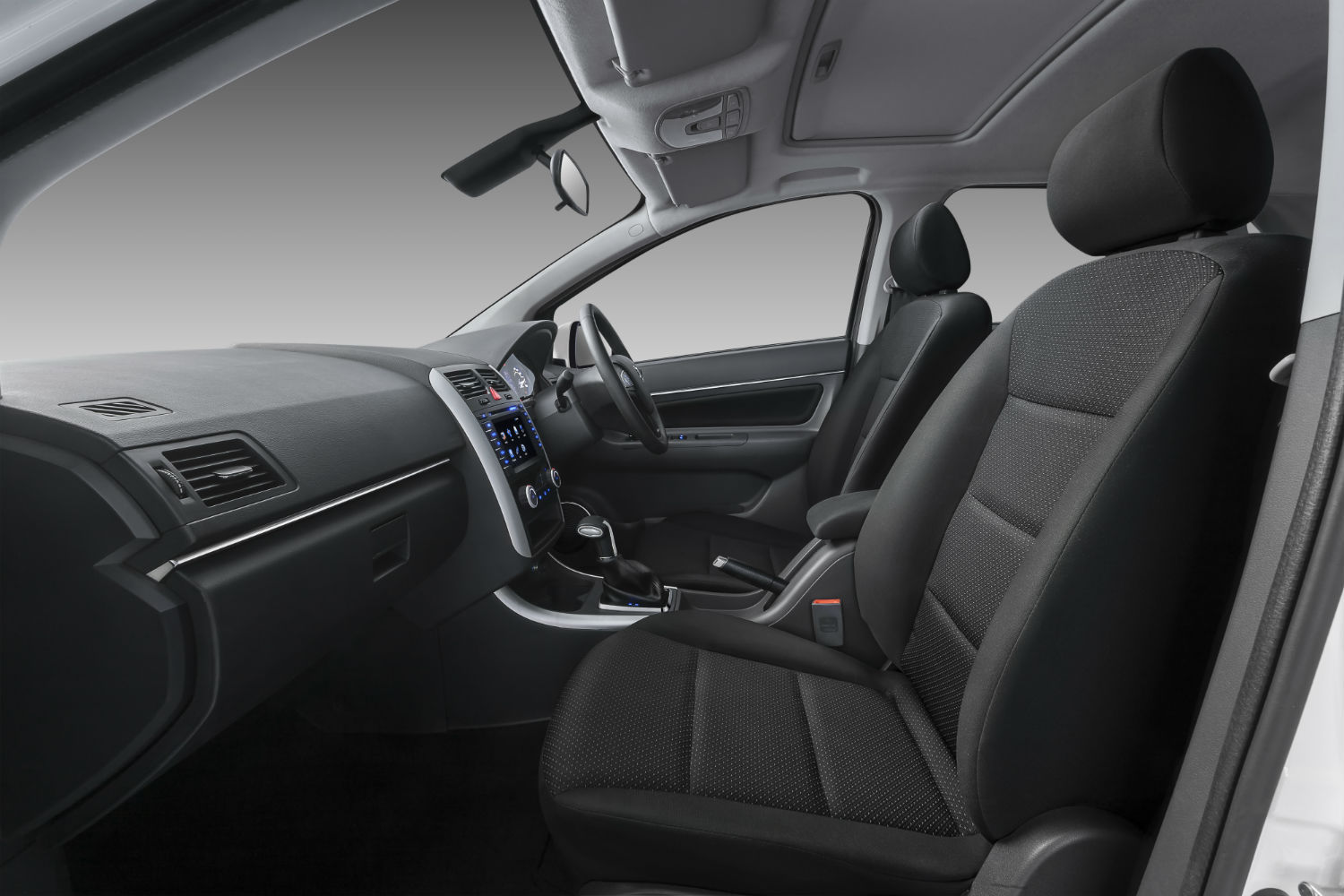
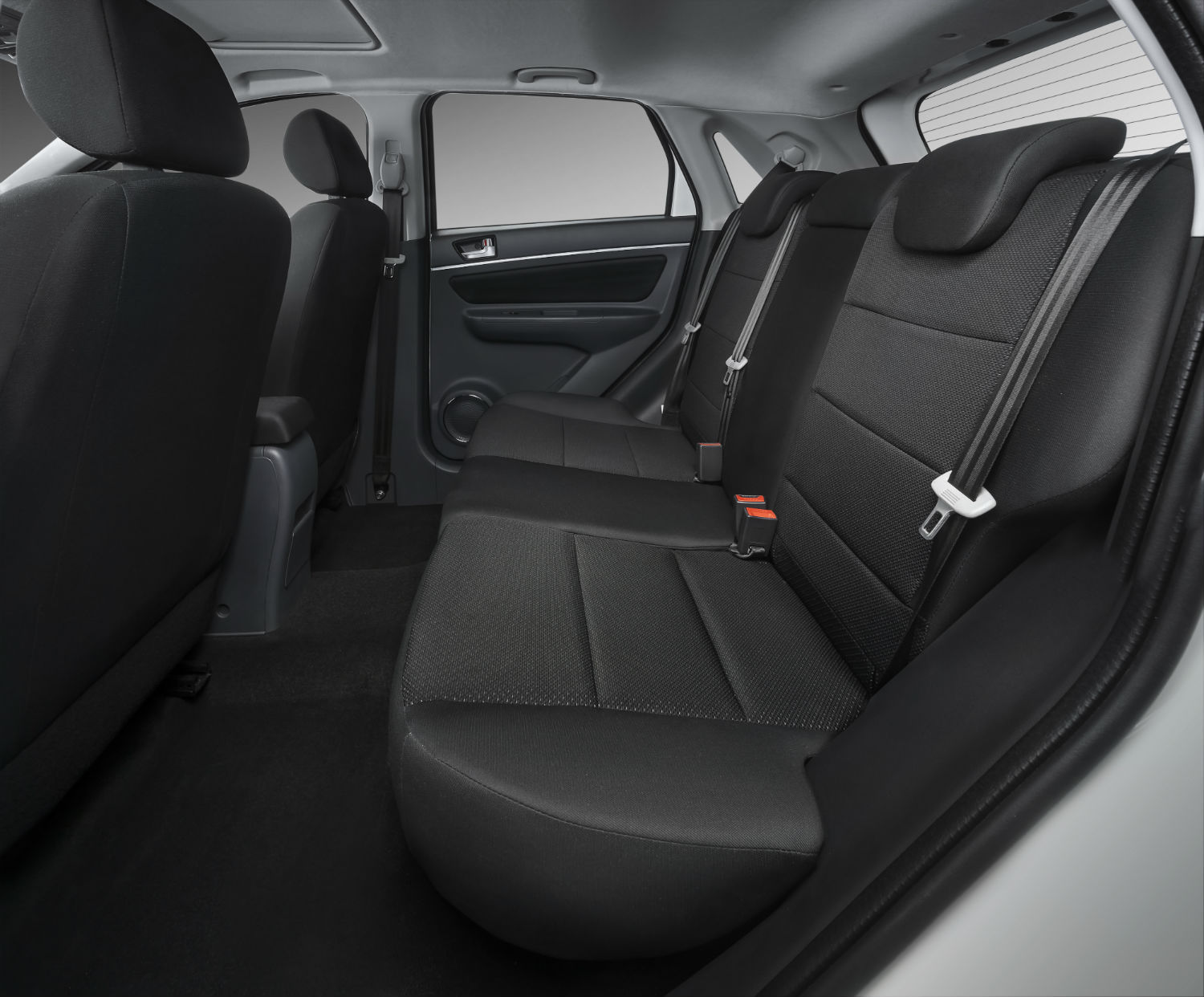
Neat, simple design for the D20 cabin, with comfortable cloth-upholstered seats fitted. Sunroof fitted to Fashion derivatives.
BAIC D20 – Key Details
The BAIC D20 hatchback range comprises 2 naturally aspirated engines, a 1.3-litre and 1.5-litre, while the sedan version is only offered with the 1.5-litre engine. The 1.3-litre unit has power and torque outputs of 75 kW and 128 Nm respectively, while the figures for the larger-capacity powerplant are 85 kW and 148 Nm of torque. BAIC claims a fuel consumption figure of 6.4 L/100 km for the 1.3-litre manual, 6.5 L/100 km for the 1.5-litre manual and 7.3 L/100 km for the 1.5-litre automatic.
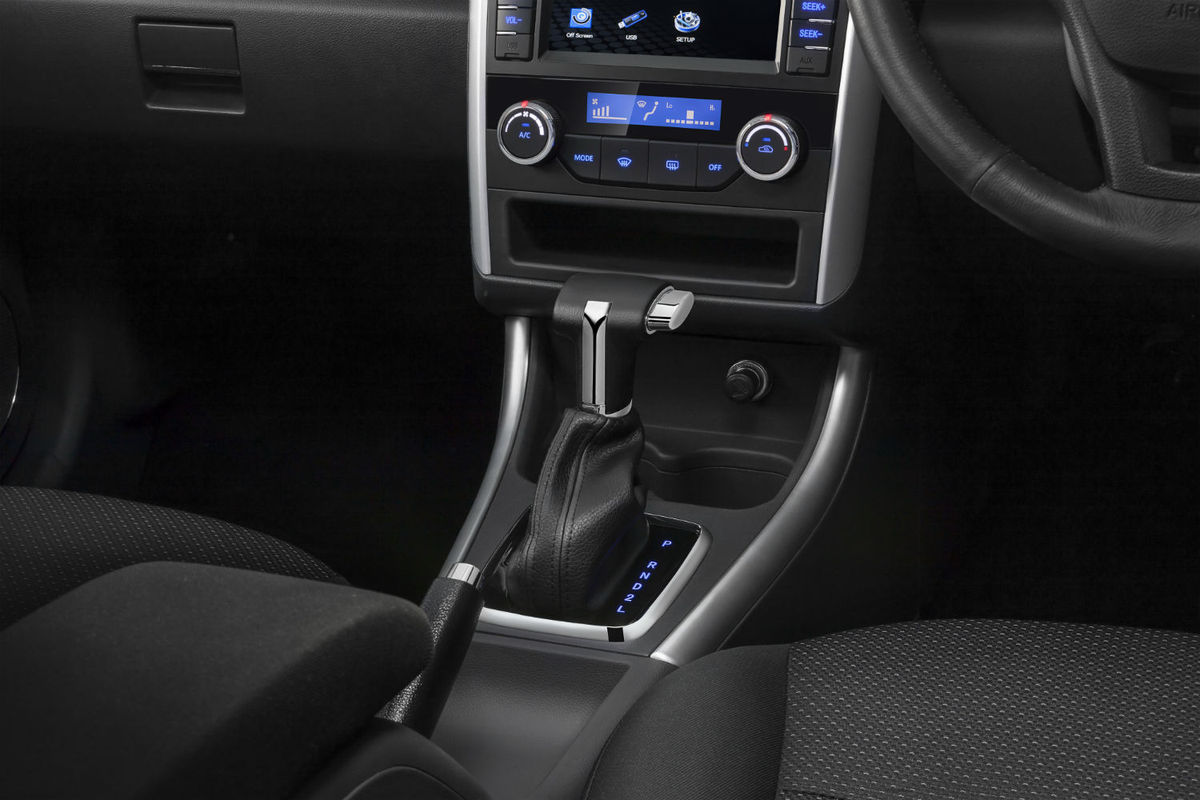
There are two trim options available, the base-spec Comfort and the higher-spec Fashion trim option. A manual transmission is offered for both the 1.3 Comfort and 1.5 Comfort, as well as on the 1.5 Fashion hatchback. An automatic transmission is only offered on the high-spec 1.5 Fashion hatchback and on the 1.5 Fashion sedan.
Perceived interior quality in the D20 Comfort seems very good at first glance. Design similar to first-generation Mercedes-Benz B-Class.
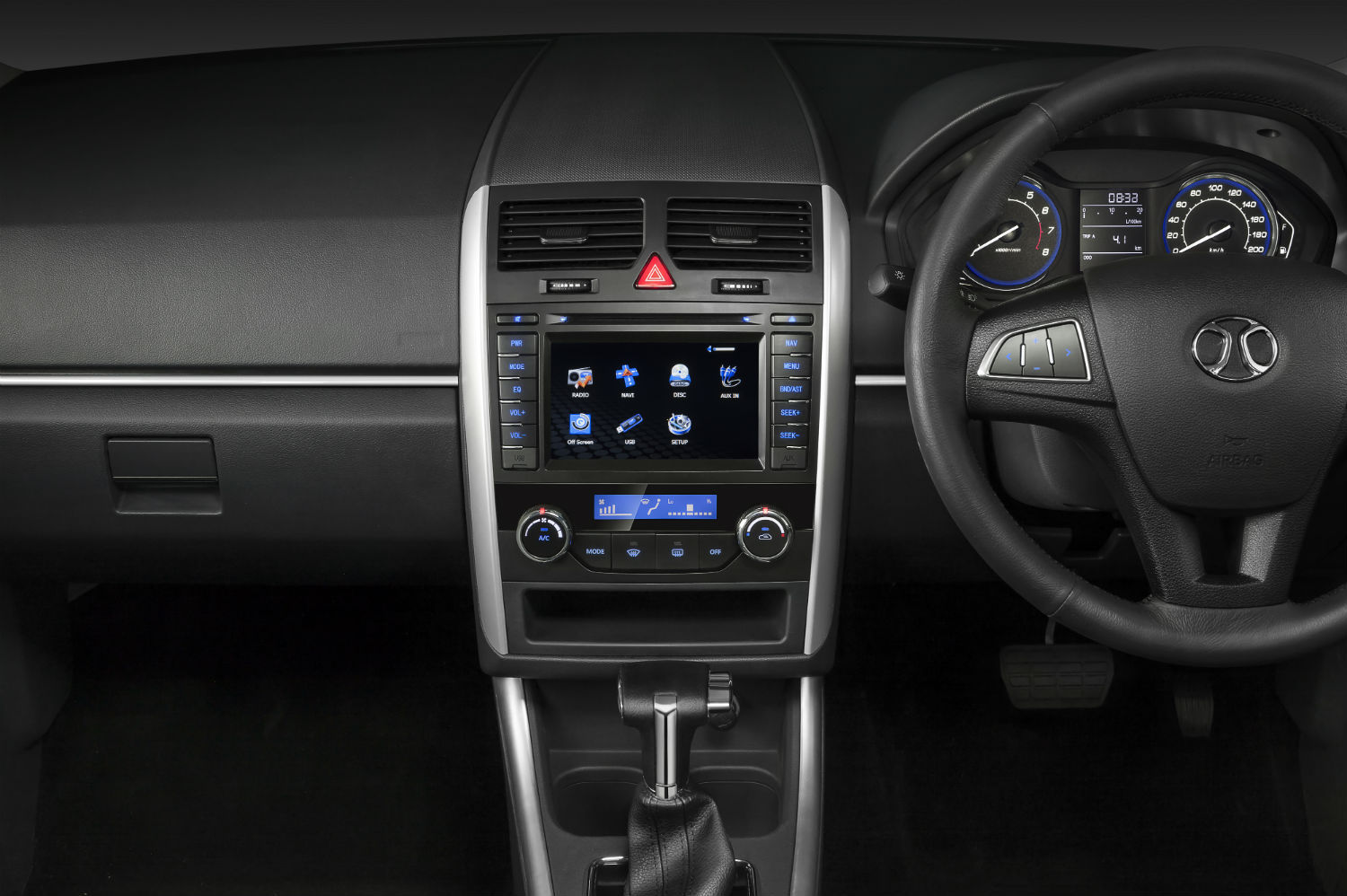
Given the aggressive pricing of the D20, the standard specification seems very generous. Fashion models will even have a comprehensive touch-screen infotainment system, a sunroof and climate control. All models get electric windows, rear-park distance control, two airbags, ABS with EBD, Isofix child-seat mountings at the rear and auto headlights. The 1.5-litre models even get auto wipers.
First Impressions
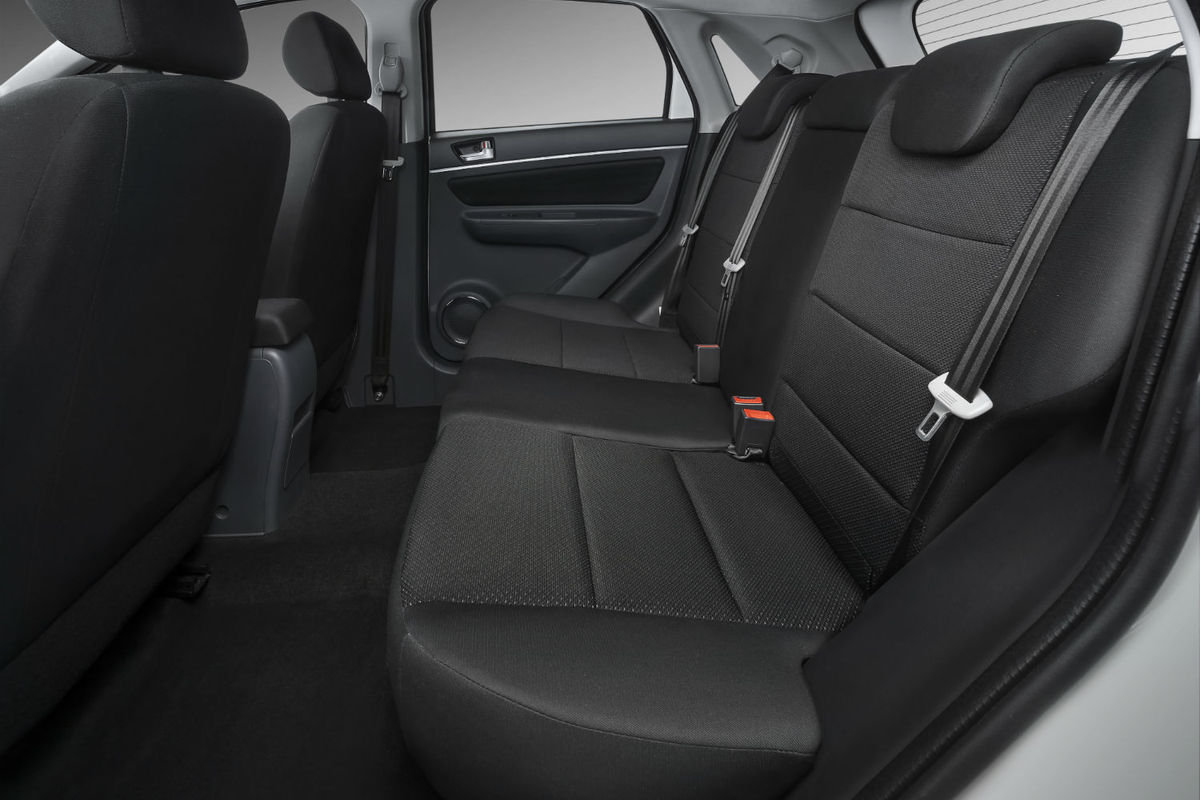
Rear legroom is exceptional in this segment of the market, but the seatbacks are very upright.
We did not have the opportunity to drive the BAIC D20 at the brand's launch in Johannesburg, but static first impressions are favourable. The build quality, in particular, will be a talking point, with the D20 seemingly boasting superior paintwork, welding, fit and finish etc. compared with most vehicles at the R150 000 mark. BAIC has been building high-quality cars in China for a long time (including Mercedes-Benz and Hyundai), so should have quality sorted. Most impressively, the warranty is very long (5-years/120 000 km).
The D20 also offers more space than other products at its price point. Rear legroom is very generous and the base of the rear seat lifts up and folds forward, allowing for the rear seatbacks to fold flat. I also appreciate the fitment of height-adjustment for the driver's seat.
We will update you as more official information becomes available. For now, take a look at pricing for the new BAIC D20 hatchback and sedan and look out for full review on Cars.co.za soon!
The BAIC D20 is sold with a 5-year/120 000 km warranty and the first service is free. An initial dealer footprint of 20 dealers will provide service to customers nationwide with the number expected to grow in coming months. BAIC also offers vehicle finance in partnership with ABSA.
The Ford Ranger and its Everest lifestyle SUV sibling have received tech updates that include navigation and the new Sync3 infotainment system.
The new specifications pertain to the Ranger's XL, XLT and the Wildtrak derivatives; the XLT and Limited versions of the Everest are updated with similar additions.
The Ranger XLT and Wildtrak will be fitted with Ford’s Sync3 infotainment system, which features a clearer 8.1-inch touchscreen and is simpler to use than before. The main new feature is the navigation function, which works in South Africa and 20 other countries. Free map upgrades are available for 5 years and Sync3 is Apple CarPlay and AndroidAuto compatible.
The navigation system feature incorporates Tracks4Africa – a travelling community mapping service. The same upgrades are available to the Everest XLT and Limited models.
The Ranger XLS gets park distance control as well as a reverse-view camera.
A rear diff lock is a new standard feature on Everest 4×2 derivatives. The upgrade has also been issued to the Ranger XL, XLS, XLT and Wildtrak.
Toyota has joined the compact family car/crossover party with the C-HR. Is it merely a style statement for those stepping up from a Yaris, or a genuinely useful lifestyle vehicle for the sub-RAV4 crowd? We took the Toyota C-HR on a 900 km road trip to find out.
By Wayne Batty. Photography by Peet Mocke
Just for kicks, let’s start with a cliché: the rise and rise of the compact crossover is currently in its unstoppable phase. Hatchbacks in high heels dressed in sassy frocks – who can resist? We certainly can’t. Just look at the line-up already: Juke, Vitara, HR-V, CX-3, Mokka X, Creta and now the C-HR, Toyota’s new adventure in Hi-Ri. (Thank you REM) Yes, Creta is a terrible name, but it’s certainly more creative than Coupe High Rider, but I digress…
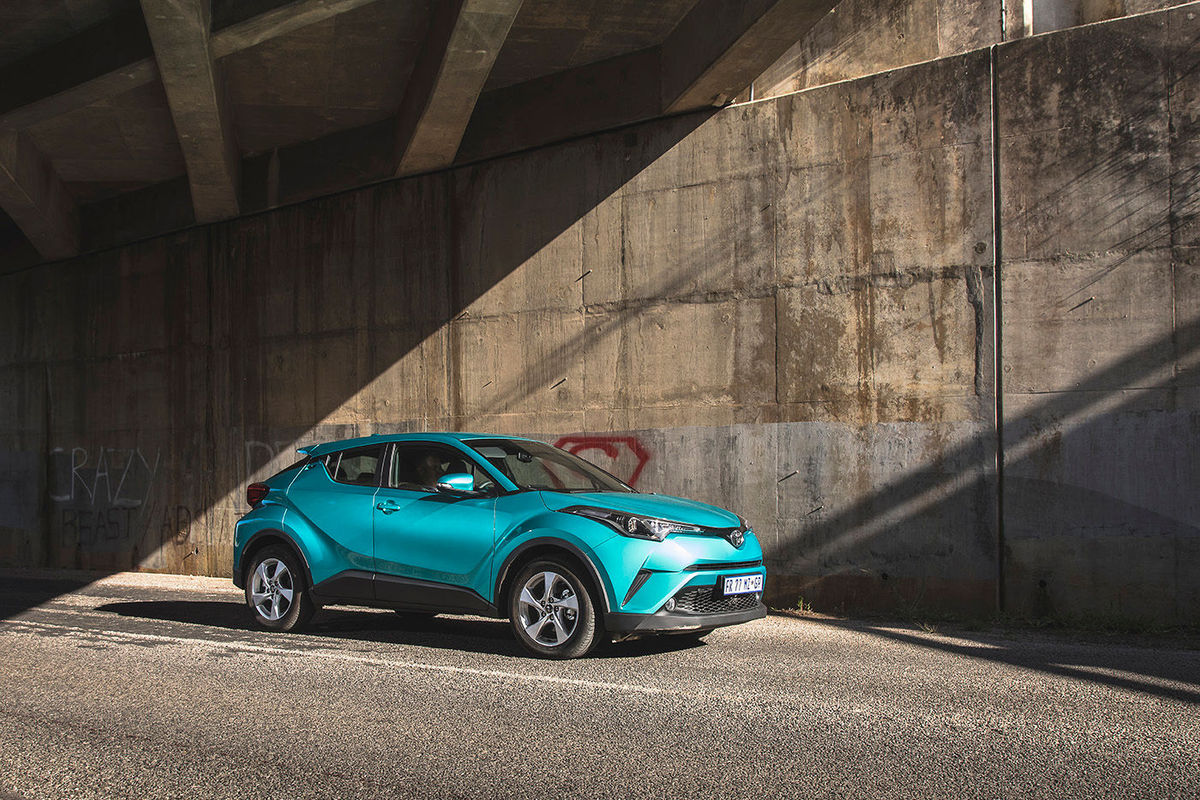
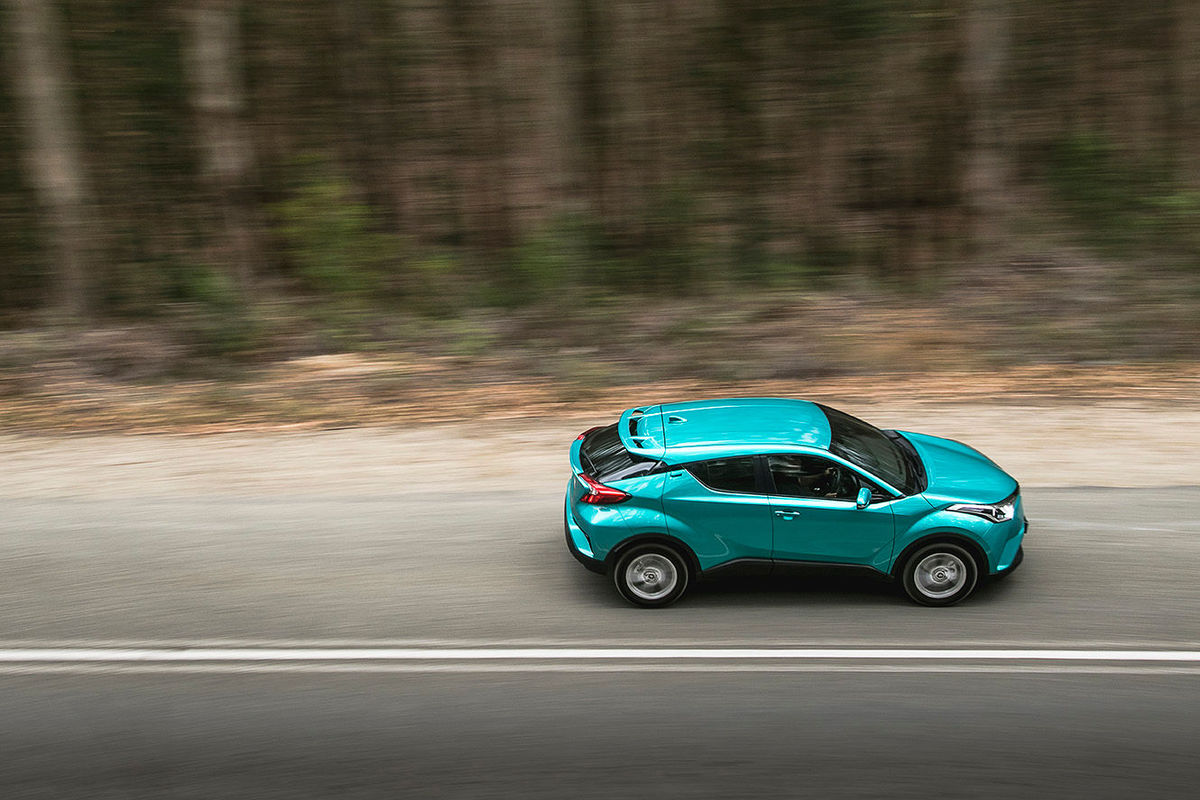
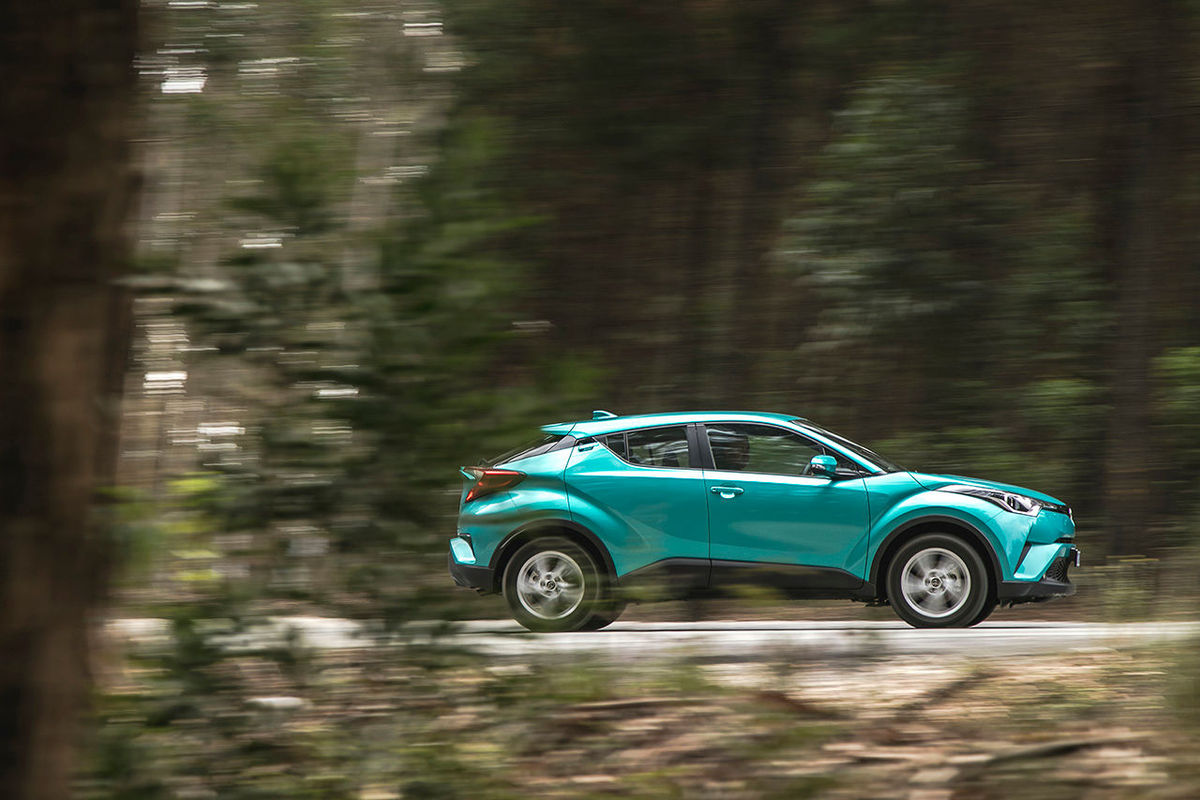
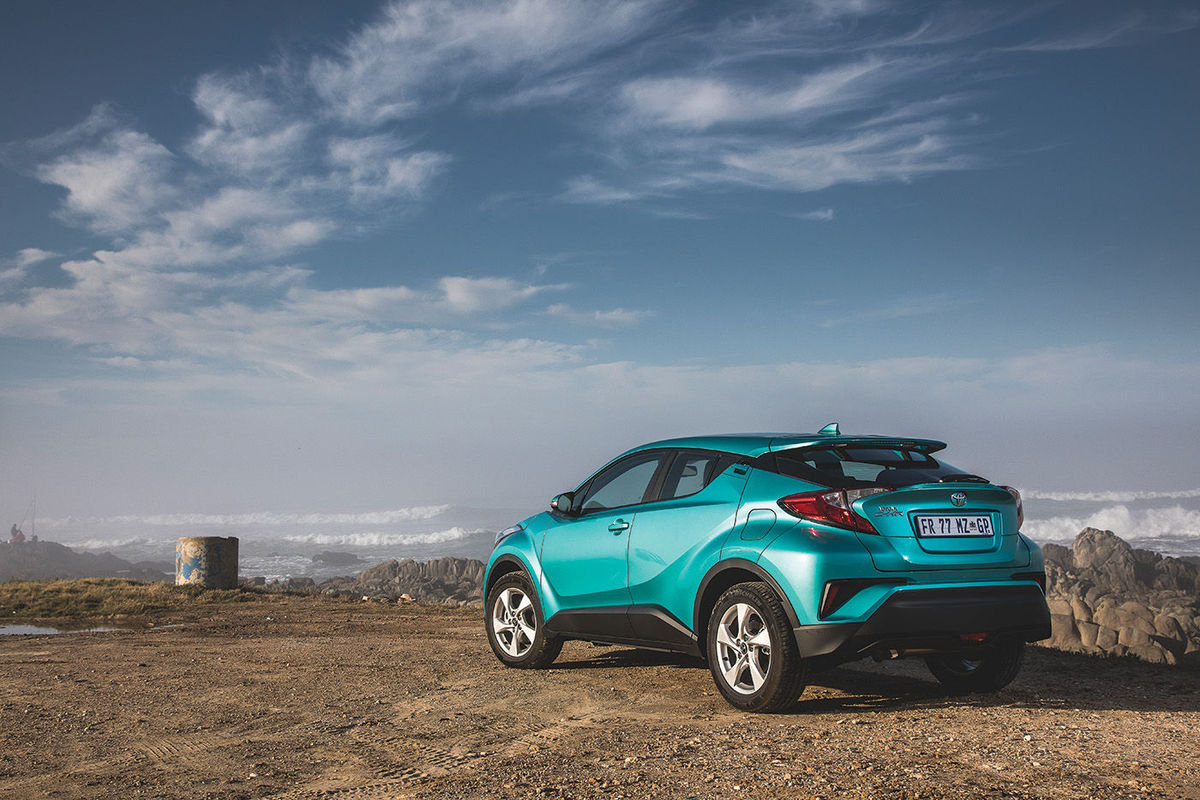
Toyota's unconventionally designed C-HR may have a boring name, but its looks are anything but humdrum.
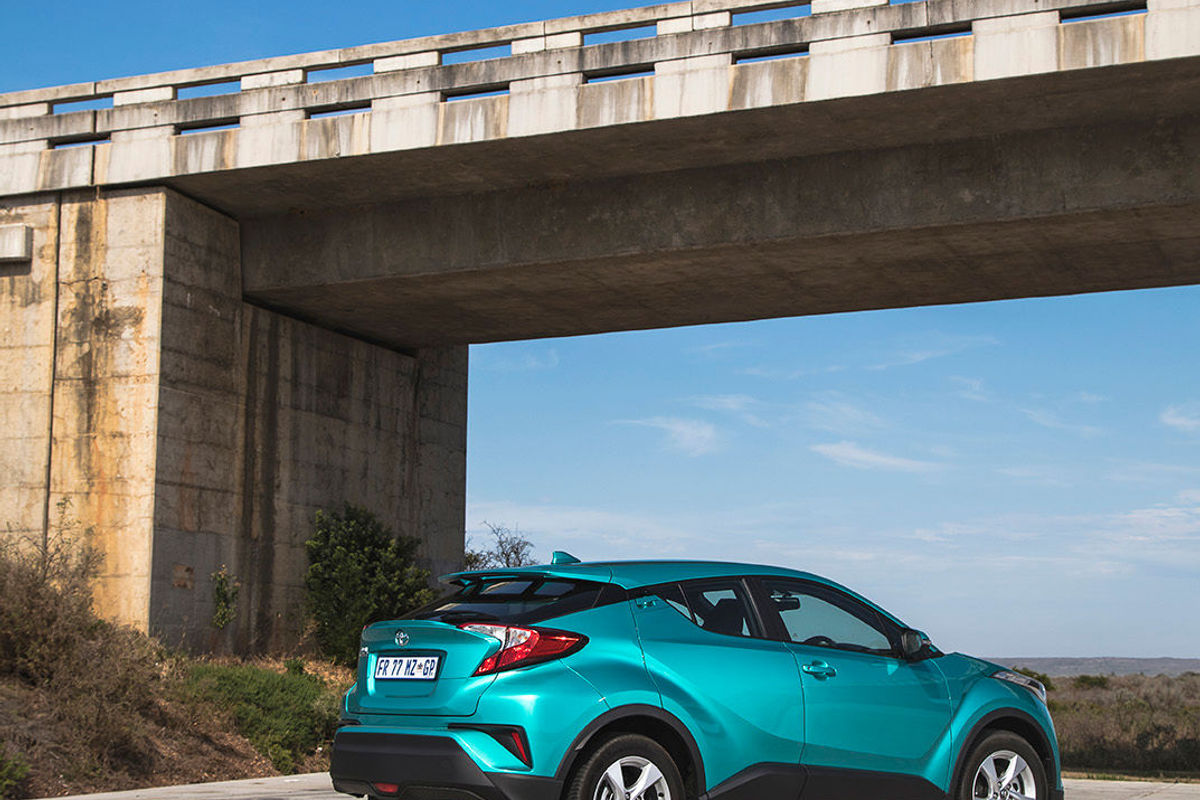
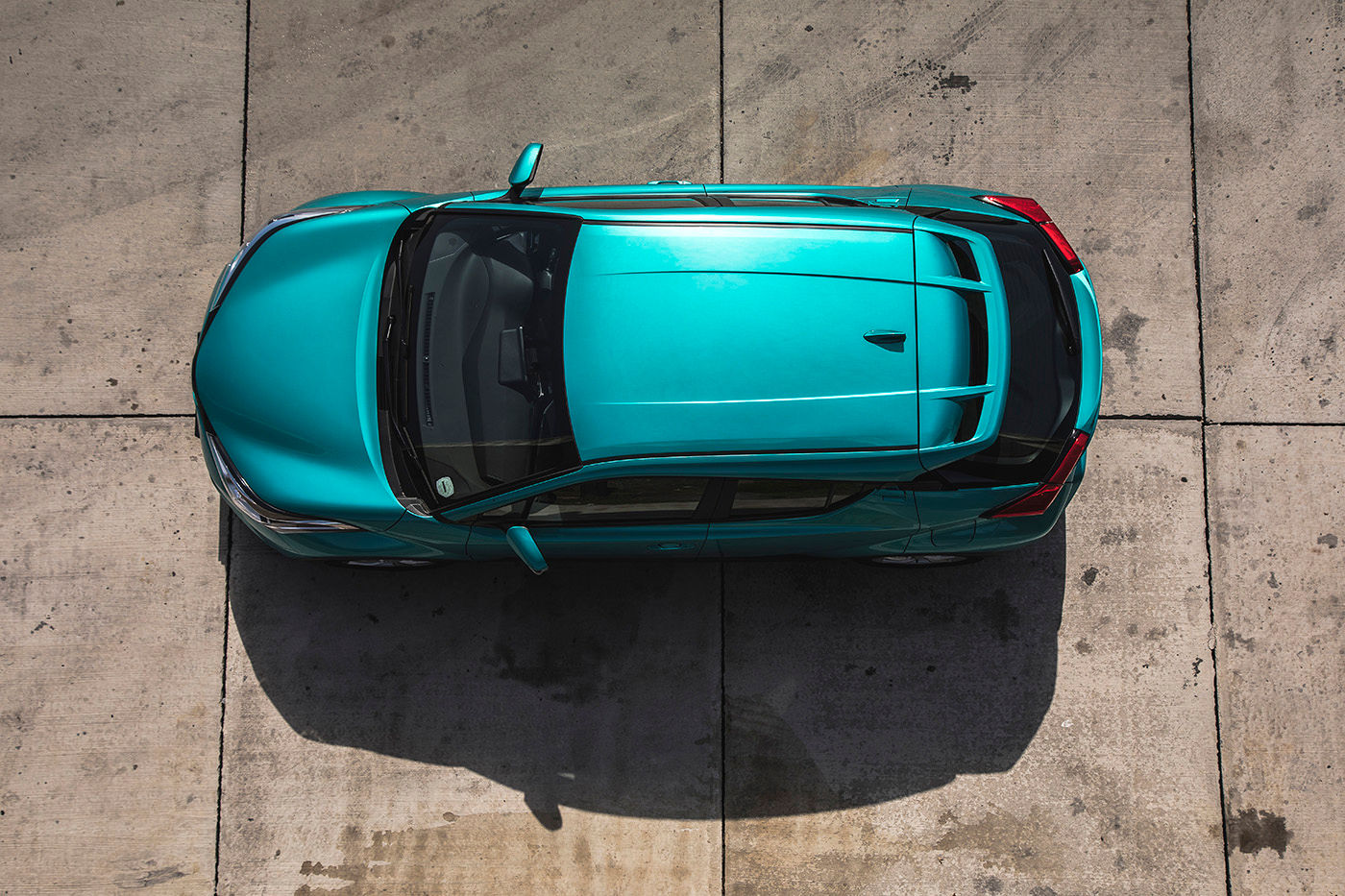
Paradoxically bland moniker aside, the C-HR is the Japanese company’s most adventurous mainstream model in aeons, perhaps ever. Apart from the unnecessarily contrived rear door handles (Were the designers playing Shutline pick-up sticks?) and the consequently pathetic rear three-quarter visibility, the abundance of slashes, curves, creases and vents somehow all work together to create a visual cohesive. And for once the much-used ‘coupe-like roofline’ descriptor is actually quite accurate.
It’s so energetically shaped just looking at it makes you want to join a hiking club, become a cross-fitter or buy one of those coil-over-shock downhill mountain bikes, which, by the way, would be a stupid idea. No, not because you’re likely to pierce a rib cage or pop a collar… bone, but because the boot will barely fit a full-face helmet, chest guard and knee pads. Don’t even think about trying to squeeze a wheel in there without first tipping the backrests forward. Blame local demand for a full-size spare which significantly raises the boot floor, robbing much of the potential cargo volume.
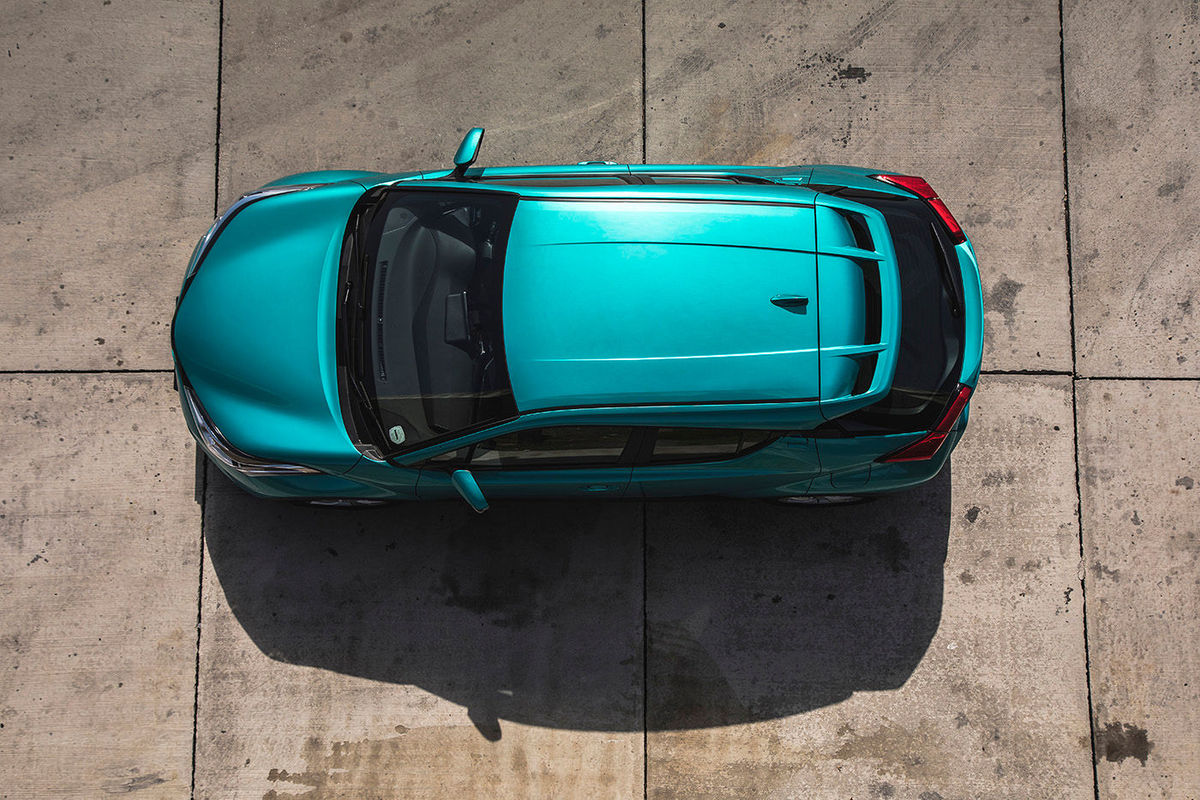
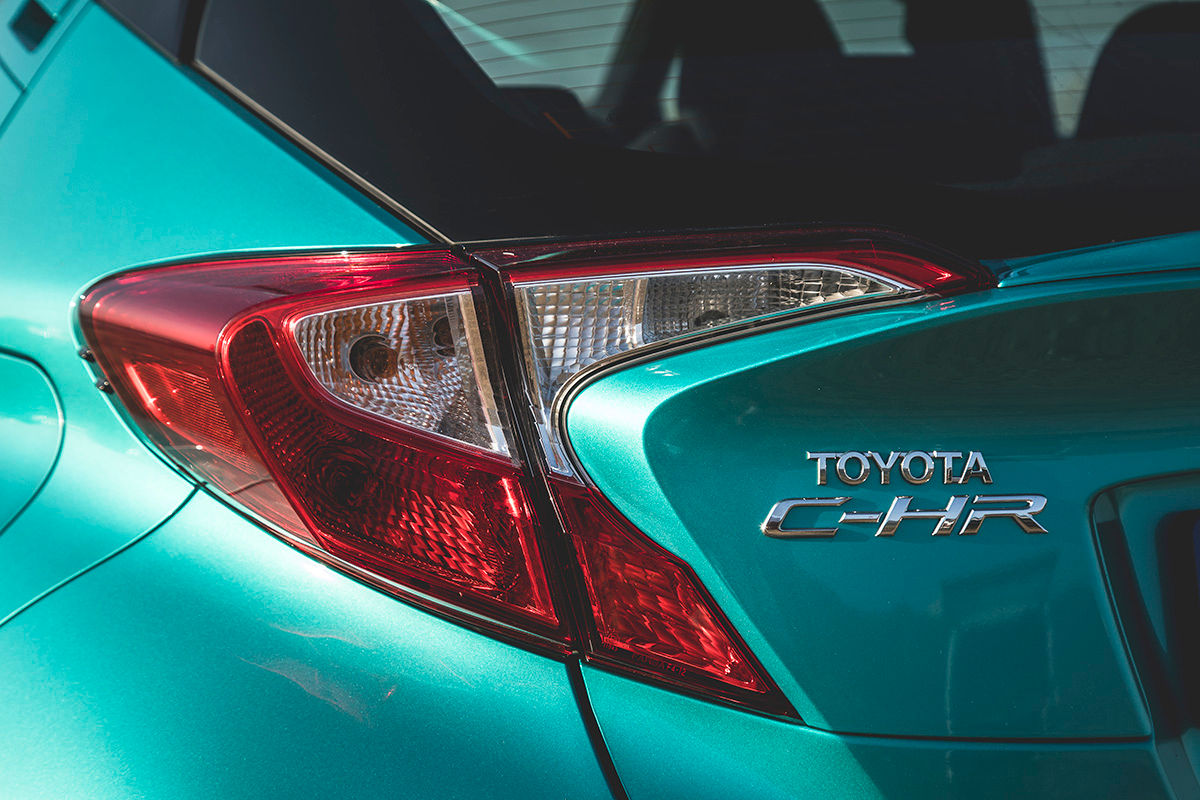
Some of the interesting details you don't normally get to see. Rear roof spoiler appears effective from this angle.
So the C-HR is more style than lifestyle, but that won’t stop it from flying out of dealerships. What makes us say that? Well, we took Toyota’s adventurous C-HR on a little adventure and this is what we discovered…
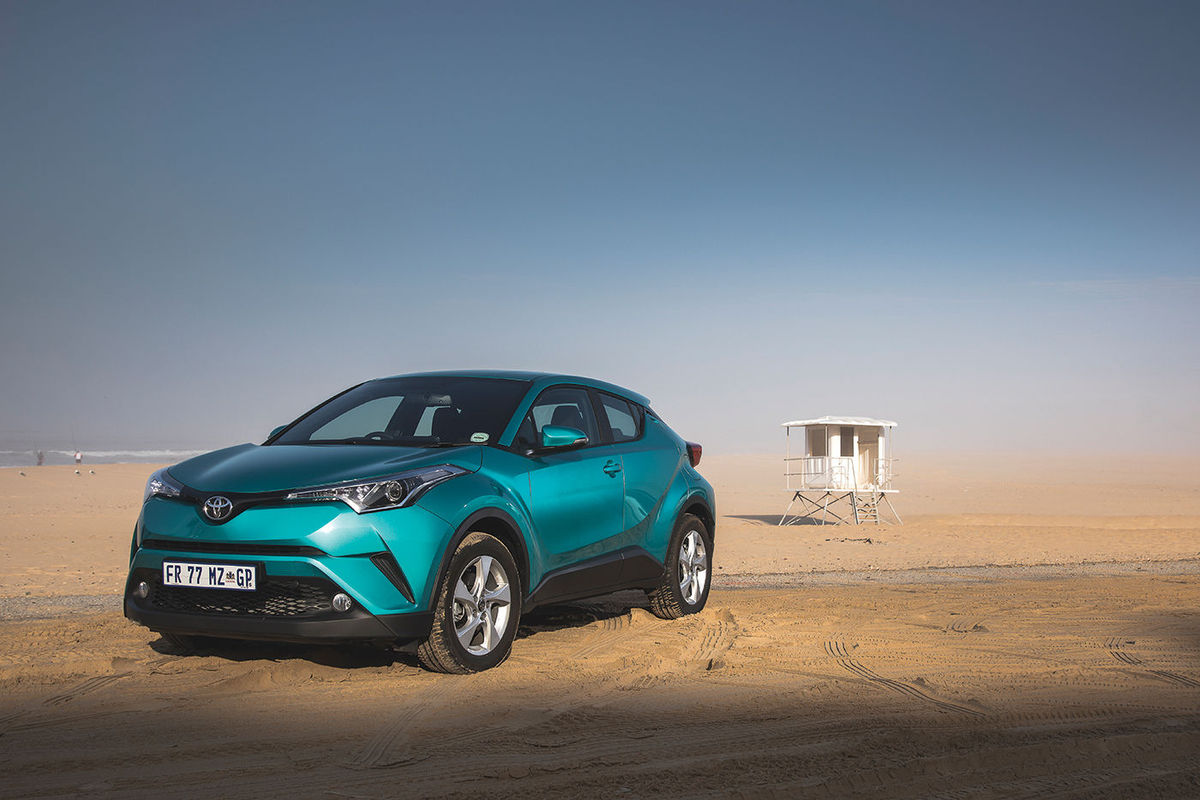
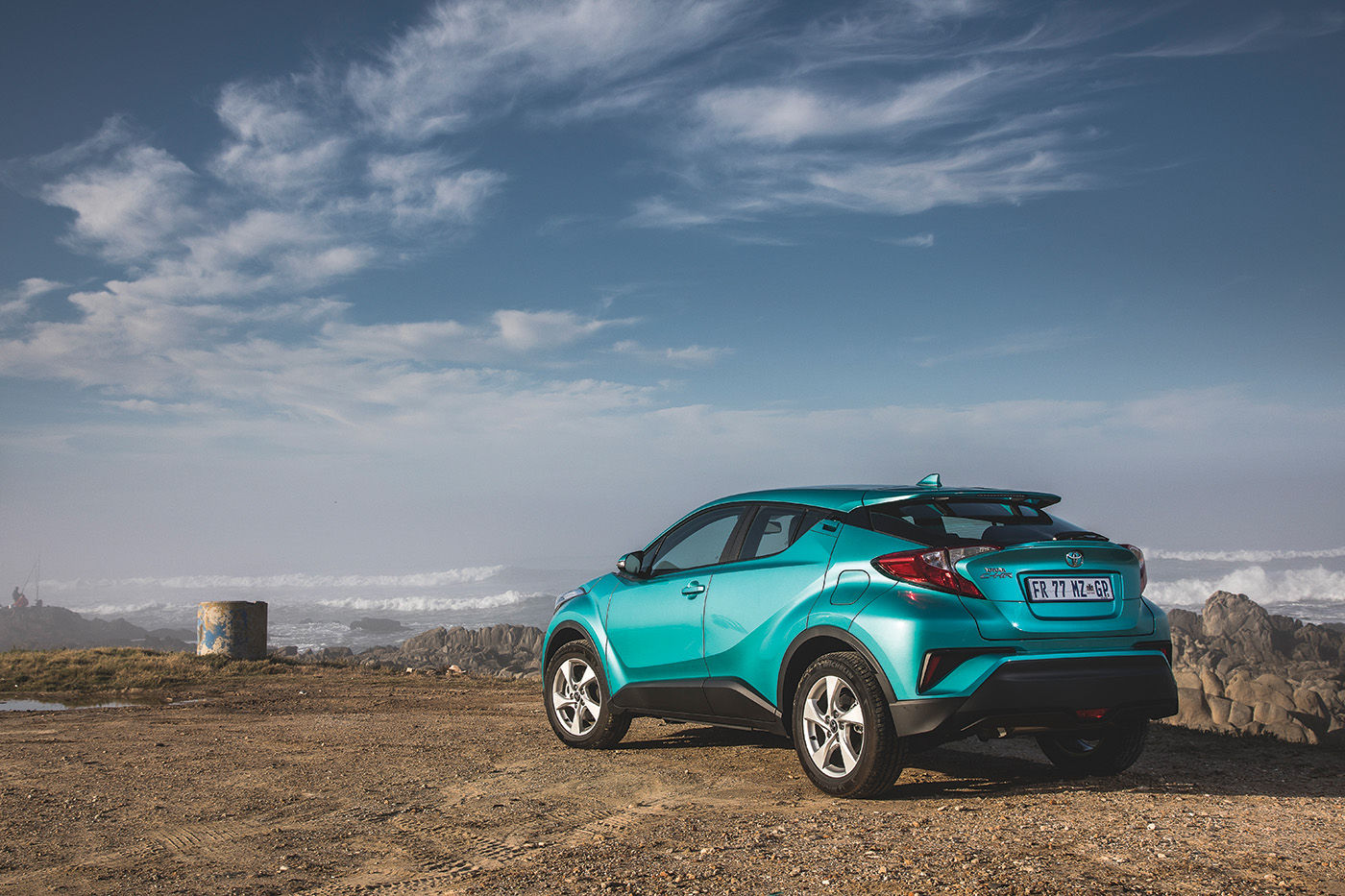
Photographer Peet Mocke and I left our surprisingly inexpensive "boutique" hotel in Port Elizabeth and headed west along the misleadingly named Seaview Road – I checked, no view of the sea for 20 km. Eventually, turning left onto Elizabeth Road proved a masterstroke as it led us to a spectacular, rock-strewn coastline. Very familiar to Ironman participants, the road’s rolling hill topography led us down to Maitland Mouth and our first stop of the trip. Marvelling at the incredible beauty of the area’s magically misty beach, unspoilt river mouth and monster dune, I had already formulated a strong opinion of the C-HR.
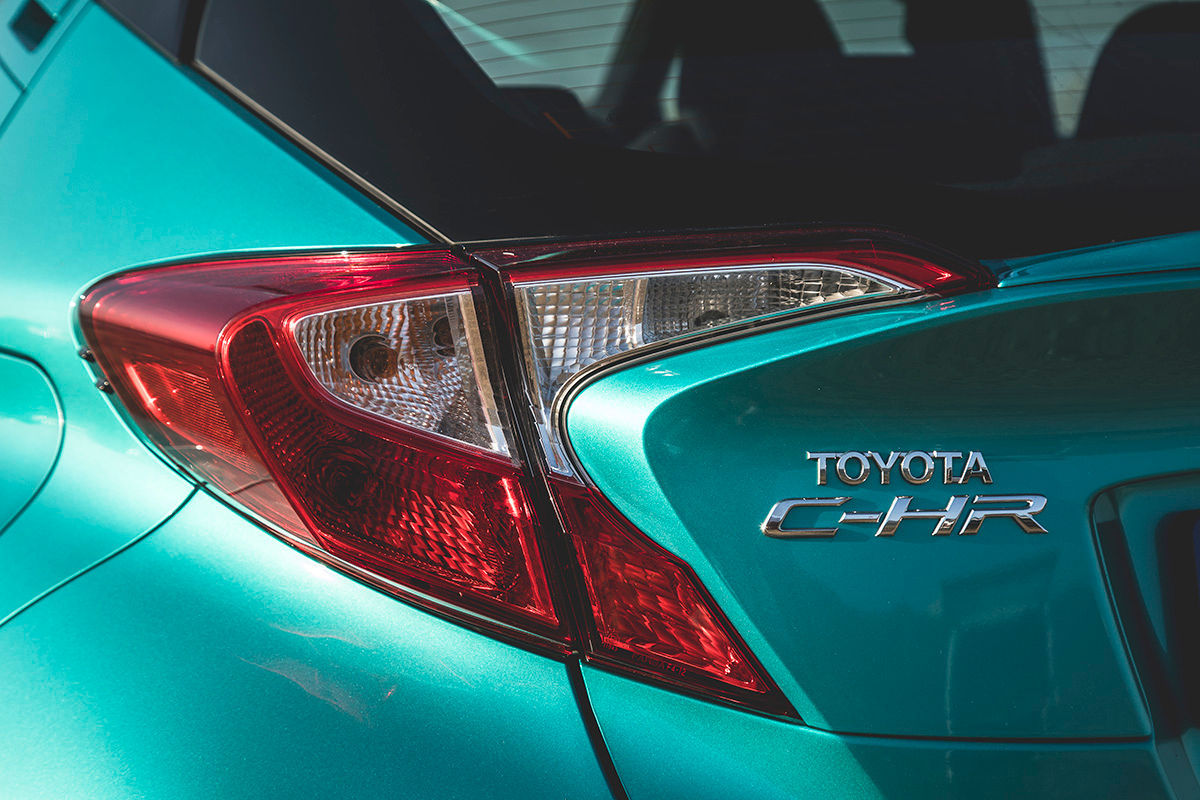
The jagged coastline just outside of Port Elizabeth matches the jagged lines of the C-HR's rear lights, sort of…
For starters, the ride is properly absorbent and the handling very accomplished. Then there’s the way the car maintains momentum after you’ve lifted, almost as if it has a ‘coasting’ function that uncouples the drivetrain. Perhaps that’s down to the clever transmission and a pretty hefty kerb weight of 1410 kg. As for the transmission, if you weren’t paying attention to the salesperson and you also never floor the throttle pedal you’re unlikely to realise you’ve bought a CVT. Give it full beans though and the tell-tale signs of transmission ‘slip’ make an admittedly less intrusive noise than CVTs from the naturally aspirated era. That’s all down to the torque of the turbocharged engine. Yes, Toyota has re-joined the boost party, and they’ve made a pretty solid fist of it too.
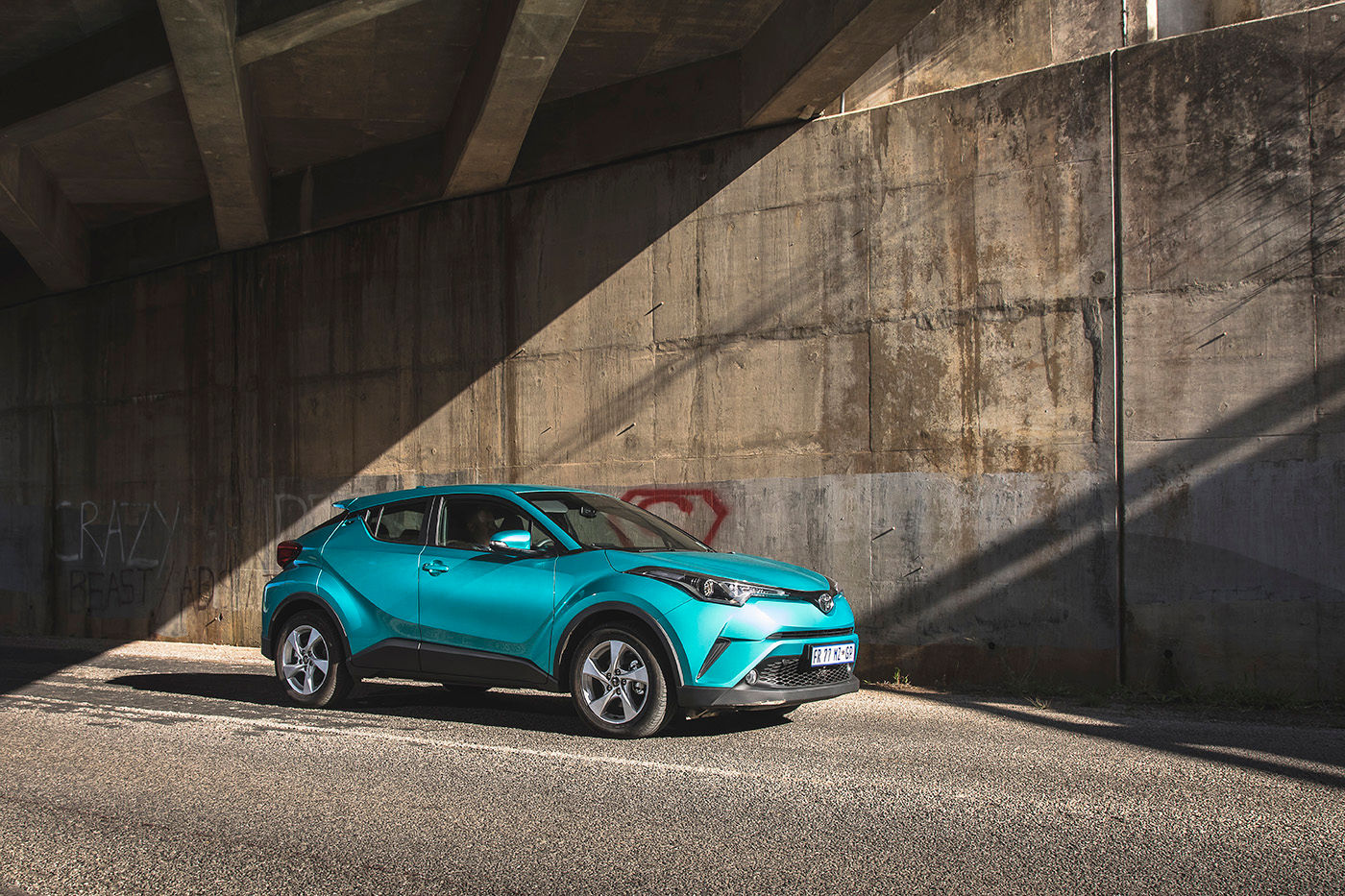
Is that a Superman symbol on the wall behind the C-HR? There certainly is more than a hint of sci-fi appeal to the Toyota.
Outputs of 85 kW and 185 Nm from its 1.2-litre engine capacity are competitive though the motor only hits peak torque peak at 4 000 rpm. Driven sensibly you’ll hardly notice the torque delivery isn’t quite a match for Germany’s finest. What you will notice is that the brakes lack initial bite, especially considering the aforementioned sense of reduced engine braking.
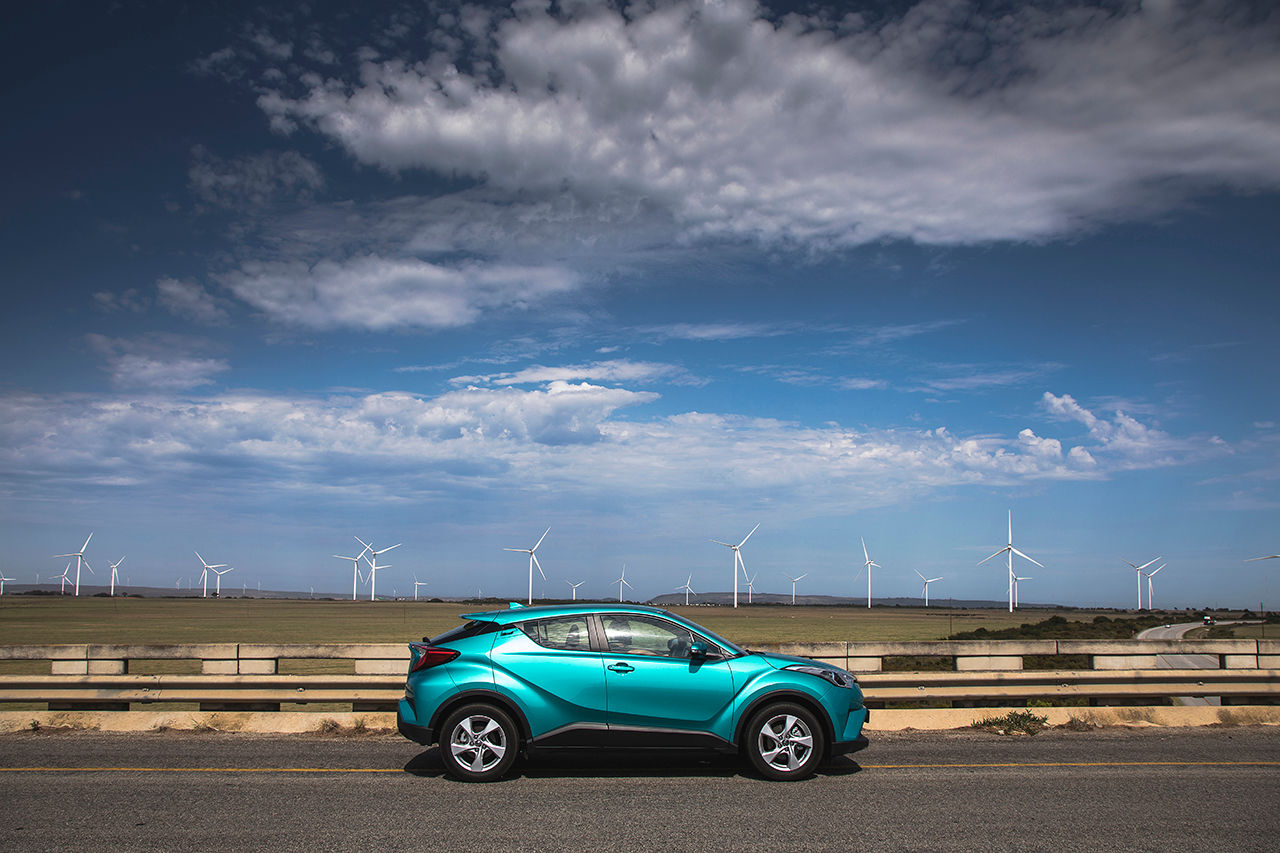
Leaving the beach, we followed the mostly deserted Draaifontein Road stopping briefly below the N2 for a photograph or two. It’s amazing how much traffic you can avoid if you make the time to wander. Pretty soon we were barrelling down the old, tree-lined R102 compensating for the slight vagueness in the steering, the C-HR needing a fair bit of right ankle encouragement to get up to speed but happy to maintain it once there. After using the old single-lane bridge to cross the Gamtoos River, we stuck with the R102 past Jeffreys Bay with its vast array of wind turbines right up to the Elands River Bridge before being forced to join the N2 toll road.
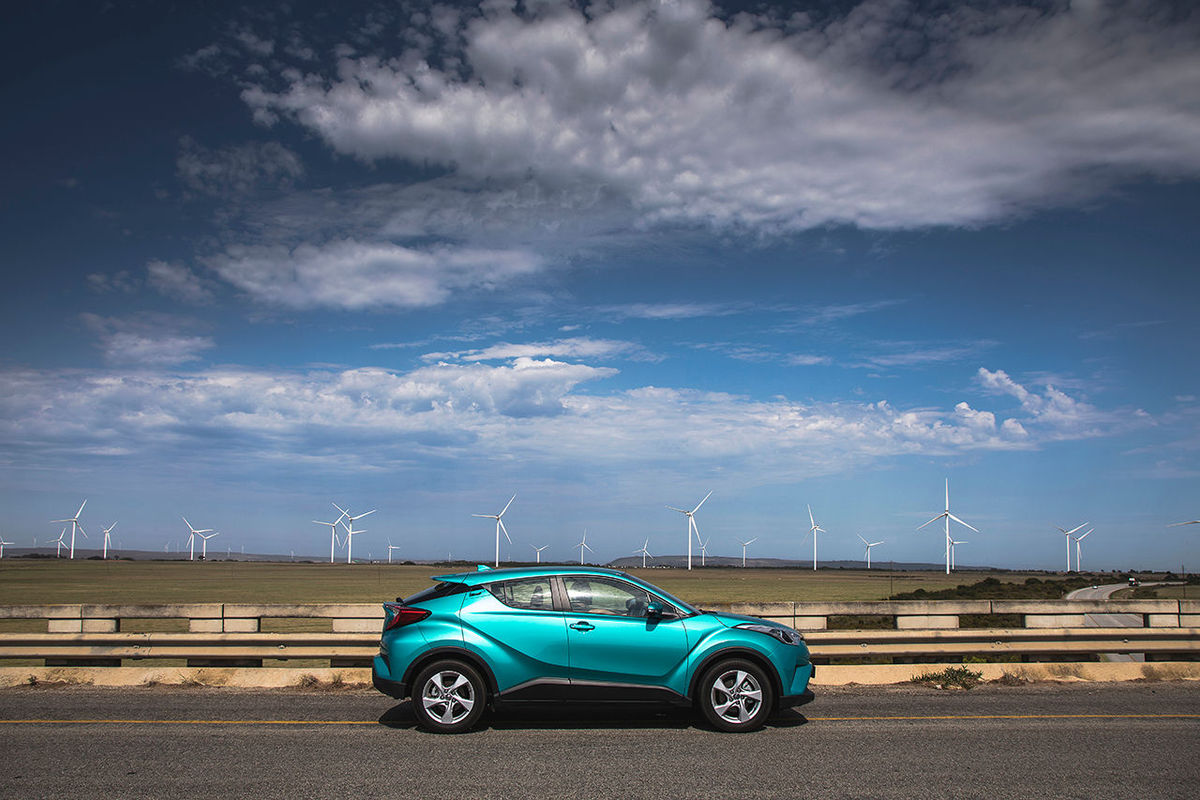
Heading out of Jeffrey's Bay; wind farms are strewn across the blustery landscape
As beautiful as the "garden route" is, long stretches of straight-ish freeway do not make for great road trip material. Thankfully we needed fuel. What, already? Bizarrely, the C-HR wouldn’t do more than 460 km on a tank. And that was filling up only when the remaining range on the trip computer hit single digits. At the time I put it down to a very small fuel tank when in fact it has a 50-litre capacity. Go figure.
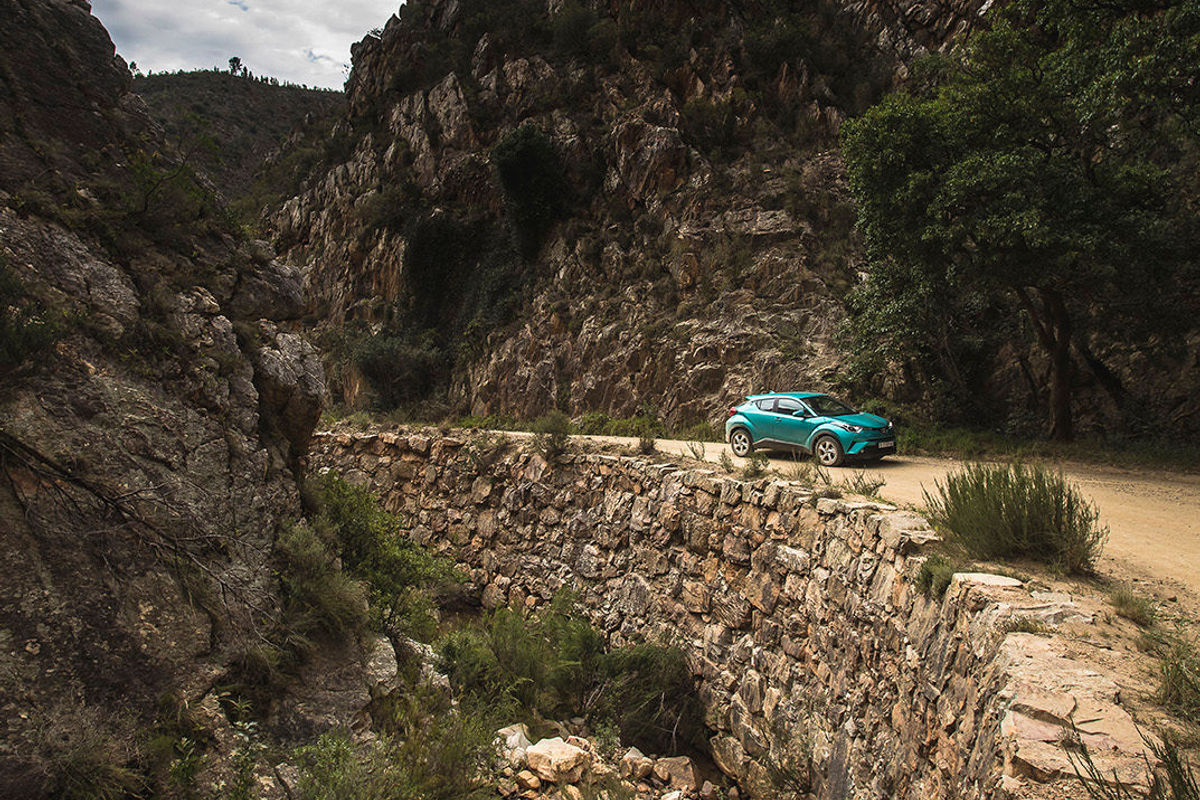
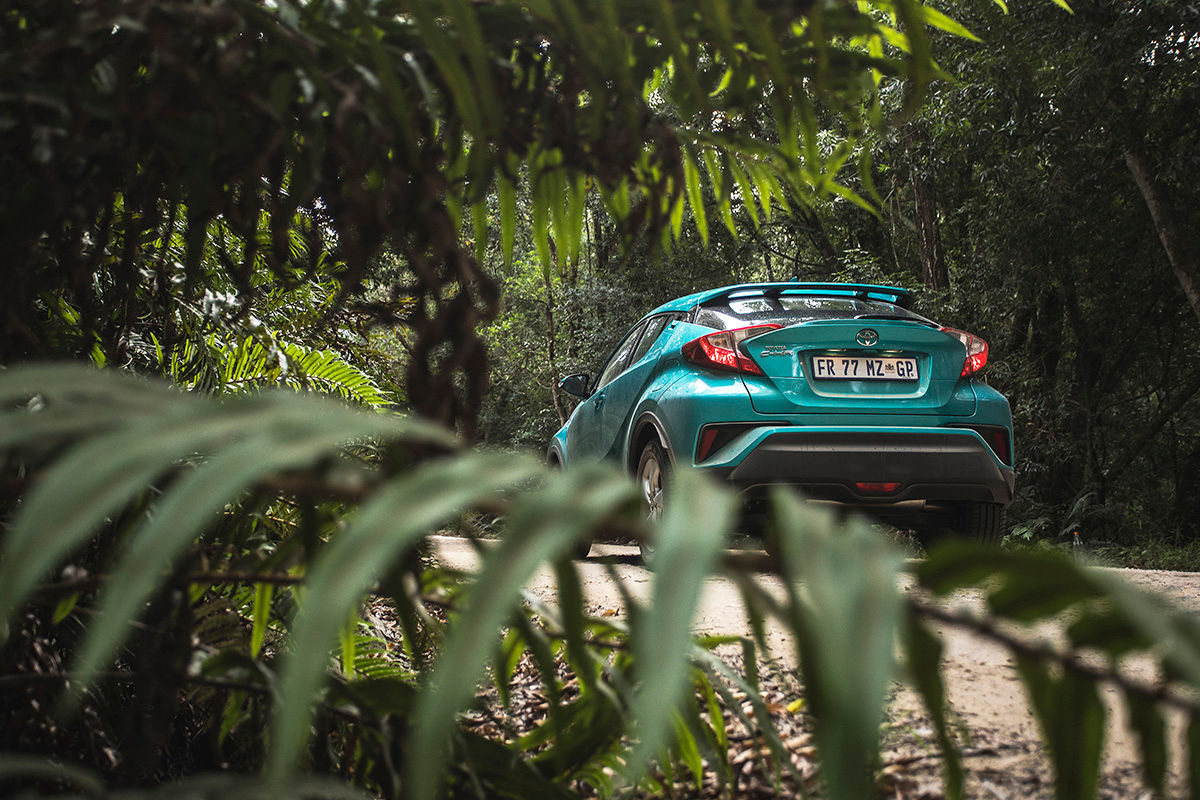
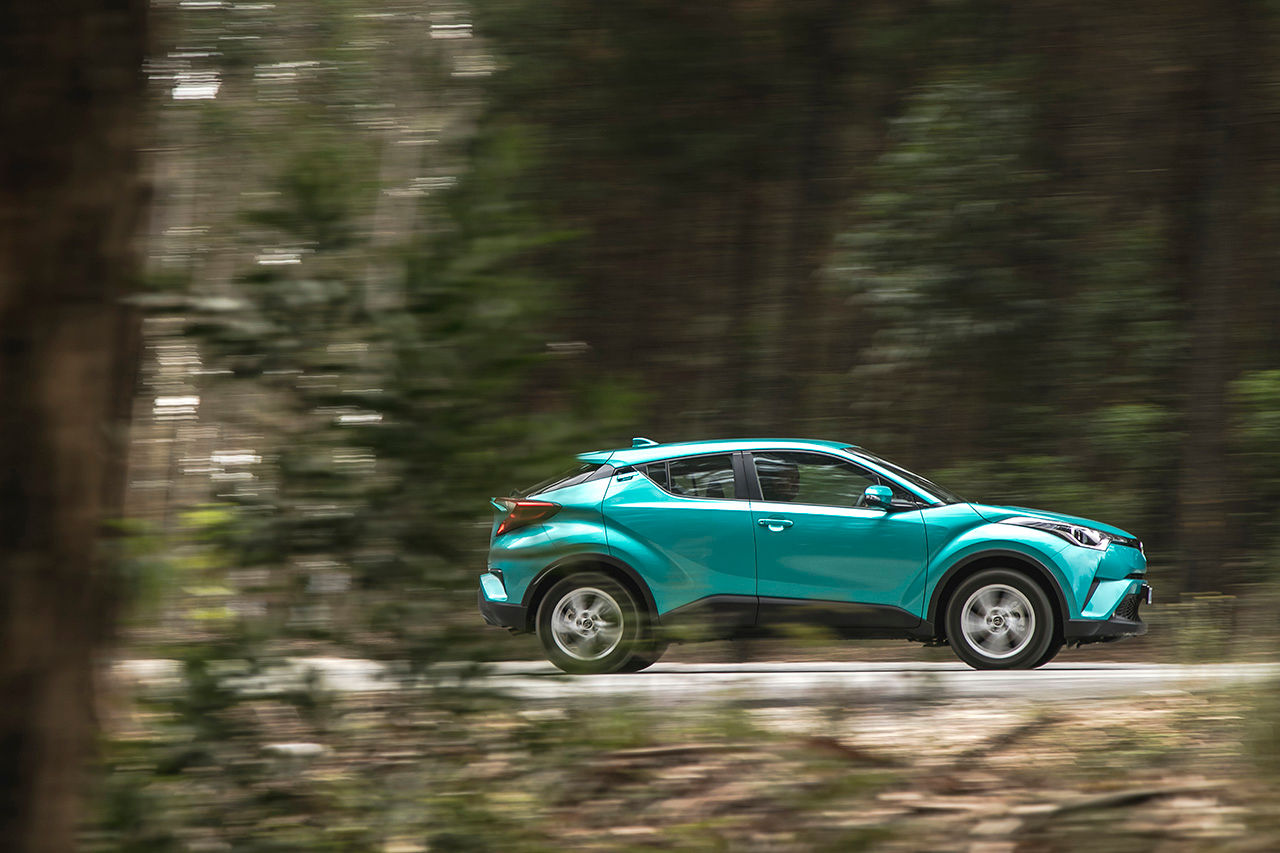
In an attempt to avoid the frustration of the N2’s unnecessarily slow speed limits between Knysna and George, and in the spirit of adventure, we turned right onto the R339 in the direction of Uniondale and revelled in the C-HR’s handling fluidity along fast, flowing, tree-lined roads. The tarmac doesn’t last long though, replaced by the well-maintained dirt road of the Prince Alfred Pass. This twisting, writhing section of road – 68 km of Thomas Bain’s finest work – offers up a spectacular array of scenery cutting through dense forest and majestic mountains. Once again the C-HR proved it has a proficient set of underpinnings in the form of the company’s newest global platform, an architecture already seen on the latest Prius. The ruts and corrugations also allowed a thorough test of the interior build quality with the C-HR remaining rattle-free throughout.
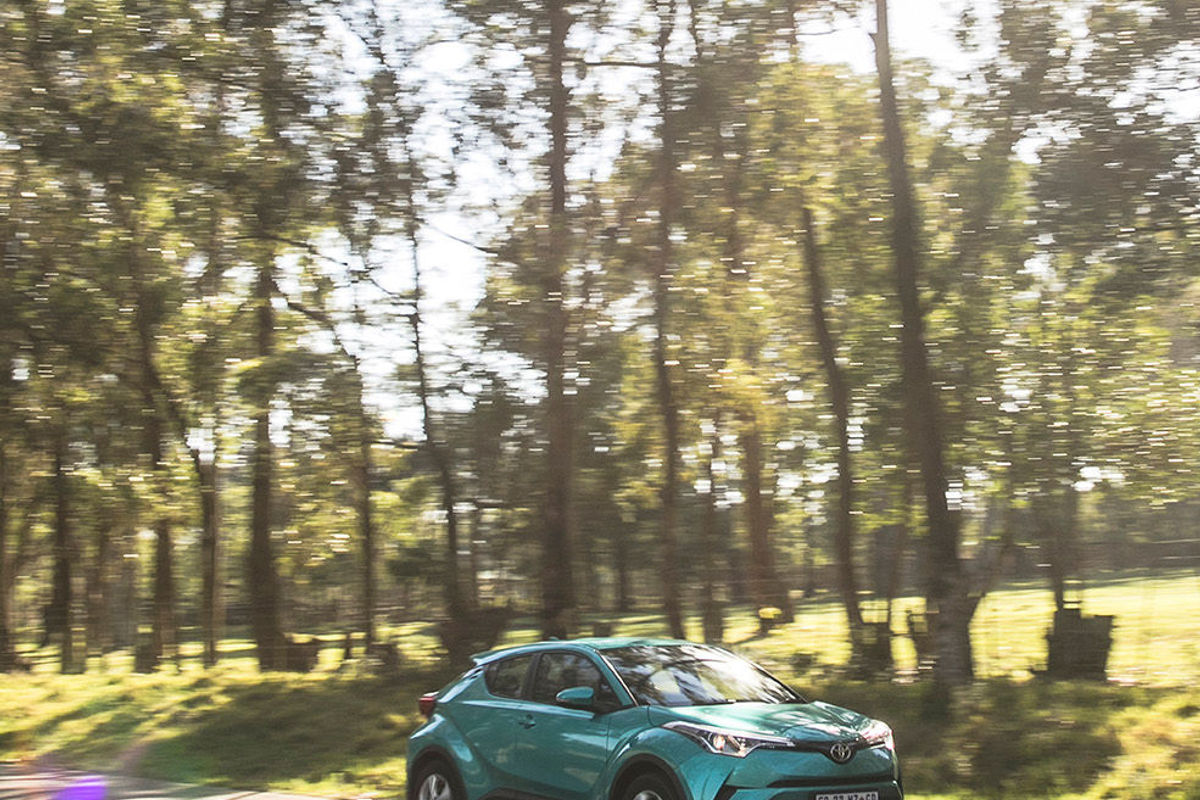
The tree-lined roads make for a spectacular driving scene on the way to Uniondale.
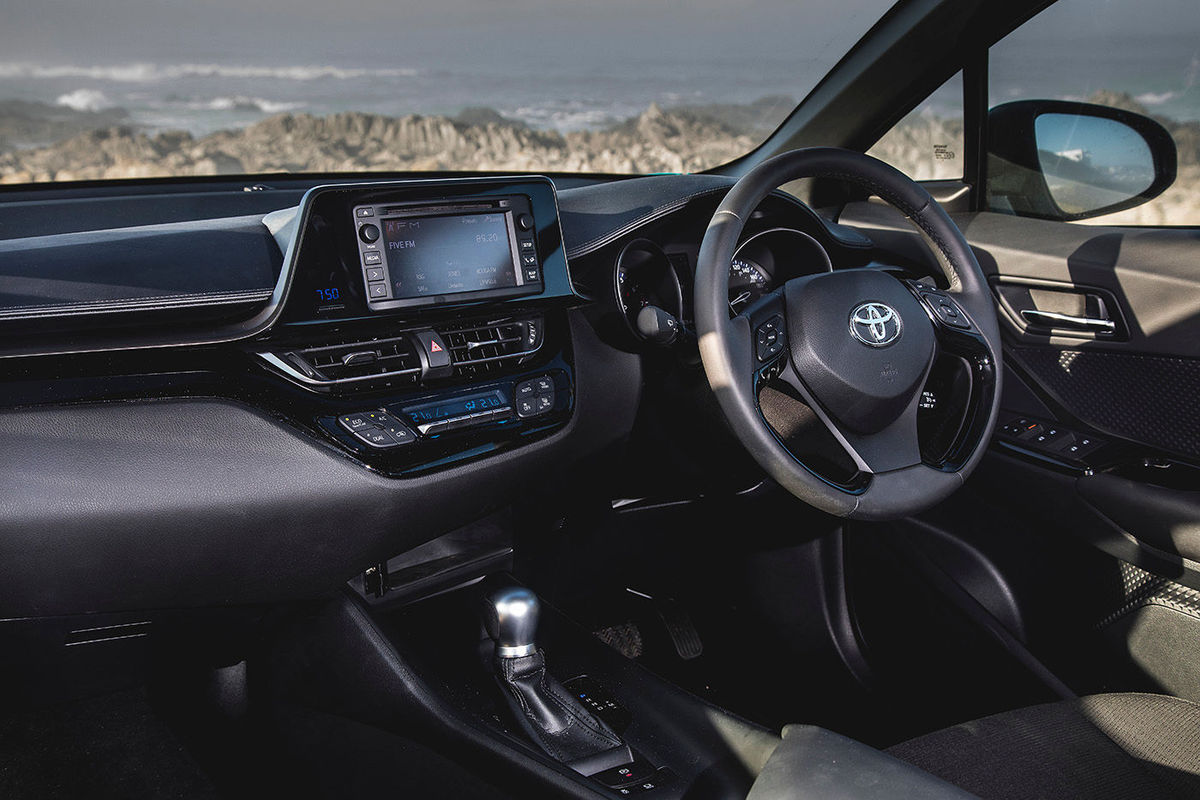
From a style, design and material choice point of view, this is the best cabin in Toyota’s entire lineup by some margin. Yes, there are a few minor issues such as the double-din aftermarket look of the touchscreen infotainment system, but notice instead the pyramid textured door panels, the stylised recesses in the roof lining and the stitched leather-effect dashboard. When last did you sit in a Toyota and notice the details? What’s more, despite being very differently shaped humans, neither of us experienced fatigue or back pain after spending around 900 km in the cloth-covered seats – nope, you can’t have them in leather.
Filling up again in Uniondale, we steered the Aztec Green Japanese battle bug in the direction of Oudtshoorn and the Route 62 towards Cape Town, happy to classify the Coupe High Rider as an extremely likeable travelling companion for 2 with luggage, or 4 with toothbrushes and towels.