Jeep Grand Cherokee Trackhawk – The Fastest Jeep Yet
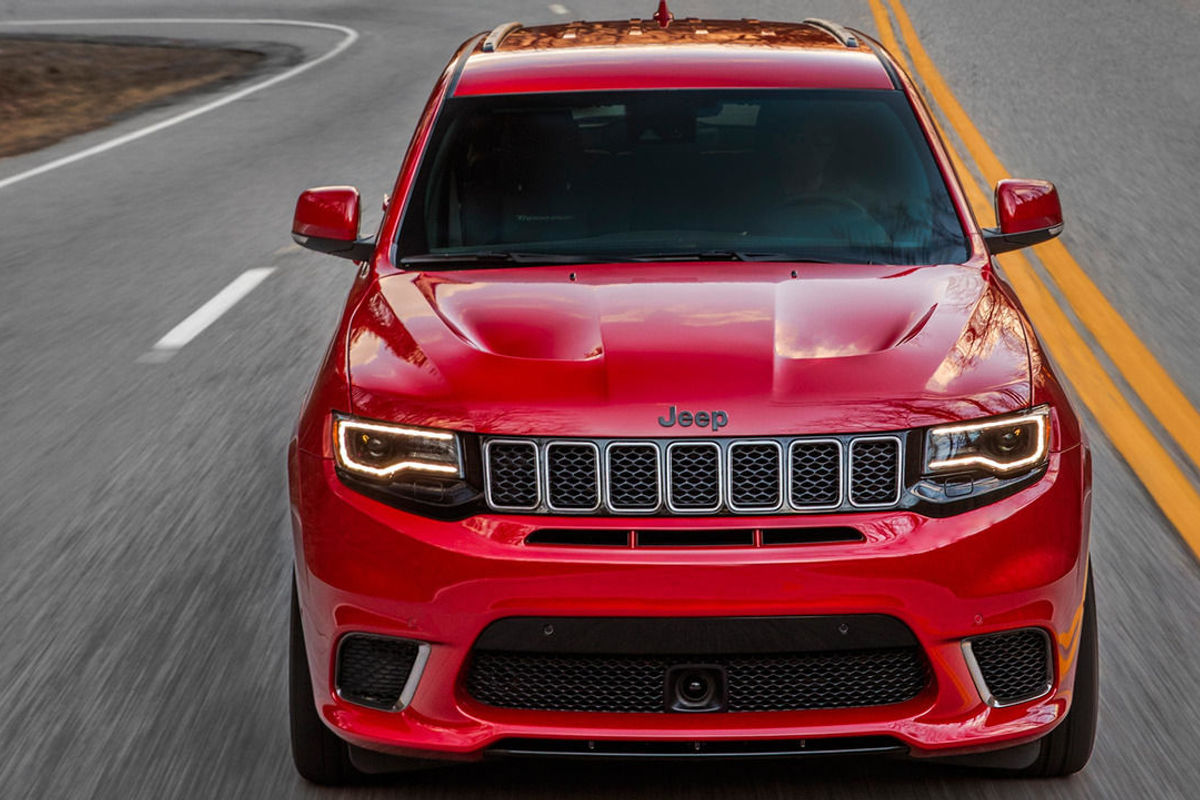
The Jeep Grand Cherokee is certainly not the slowest SUV around, but thanks to the competition from Germany becoming tougher, Jeep has had to take drastic action. The result is this mighty thing – 523 kW and 881 Nm of pure American muscle.
Given how much effort the Germans have put into the performance SUV market, it makes perfect sense for the men at Jeep to send them packing with their tails between their legs. The BMW X5M/X6M, Mercedes-AMG GLE 63 S and Porsche Cayenne Turbo S all have outputs around the 420 kW mark. Jeep looked to parent company FCA for a solution on how to match this trio, but they needn't look very far as a special engine already existed. The Dodge Charger/Challenger Hellcat is powered by a supercharged 6.2-litre V8 engine and this powertrain has racked up the awards since inception. Given the engine size and layout, transplanting it into the engine bay of a Grand Cherokee was fairly straight forward.
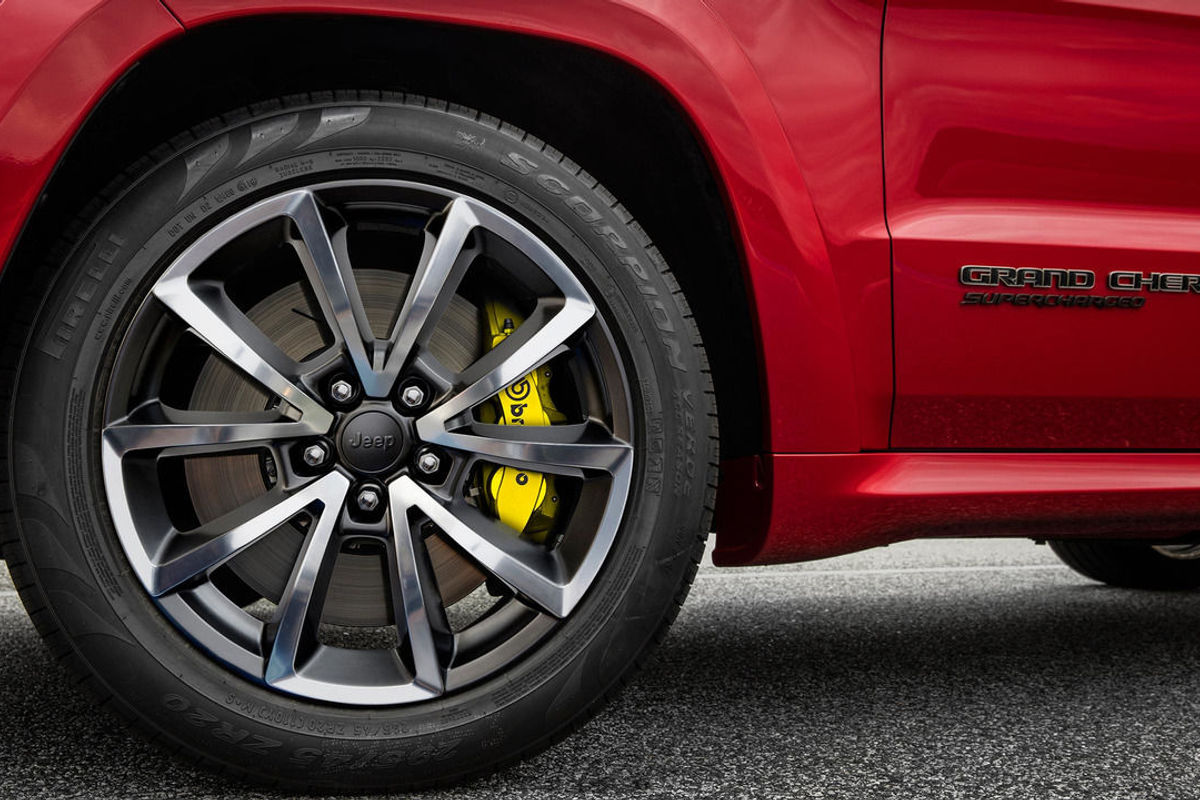
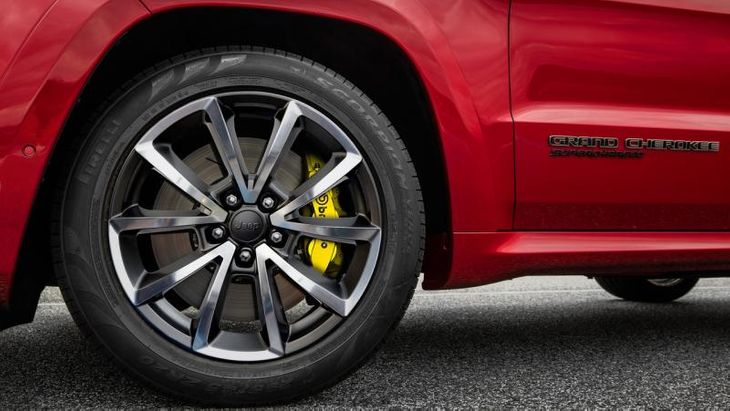
Massive Brembo brakes help the Jeep Grand Cherokee Trackhawk come to a stop.
The numbers are staggering. Jeep claims the Grand Cherokee Trackhawk is the most powerful and quickest SUV ever. Think of the German outputs hovering around the 420 kW mark… this Jeep has 523 kW and 881 Nm. 0-100 kph? 3.5 seconds! A quarter mile is smashed in 11.6 seconds and it'll run to a top speed of 290 kph. It's blatantly obvious Jeep didn't want to compete with the German performance SUVs, but rather obliterate them in all departments.
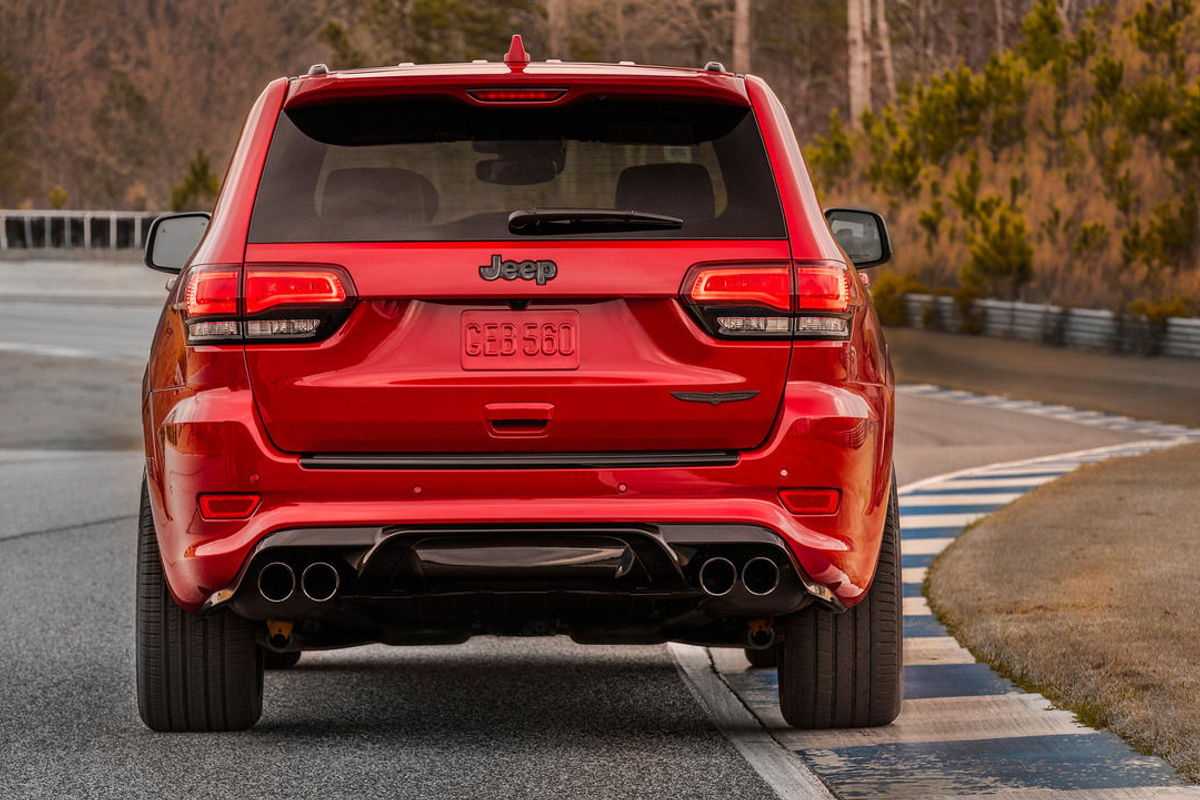
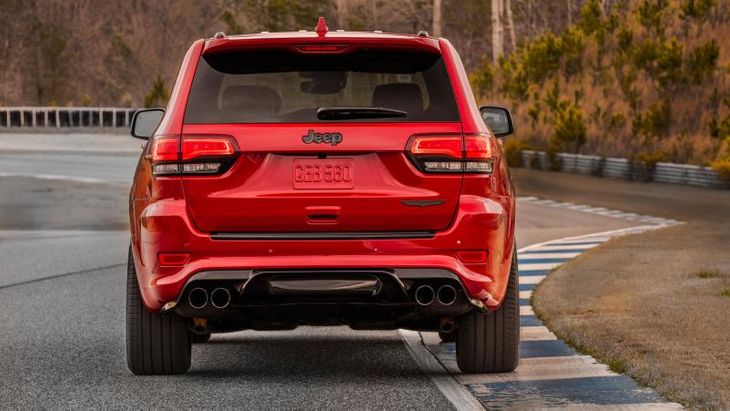
See, the Trackhawk isn't just about going fast in a straight line. With adaptive damping suspension from Bilstein and uprated brakes from Brembo, the Trackhawk aims to be quick in a sprint and when it comes to some curvy tarmac. These Brembos are the largest ever front brakes to be found on a Jeep. The eight-speed auto has been upgraded to cope with the additional shove and the quad exhausts and gaping front grille make it unmistakable.
Quad exhausts will emit a raucous V8 soundtrack. Also, the most common view of a Hellcat-powered Jeep as it thunders past.
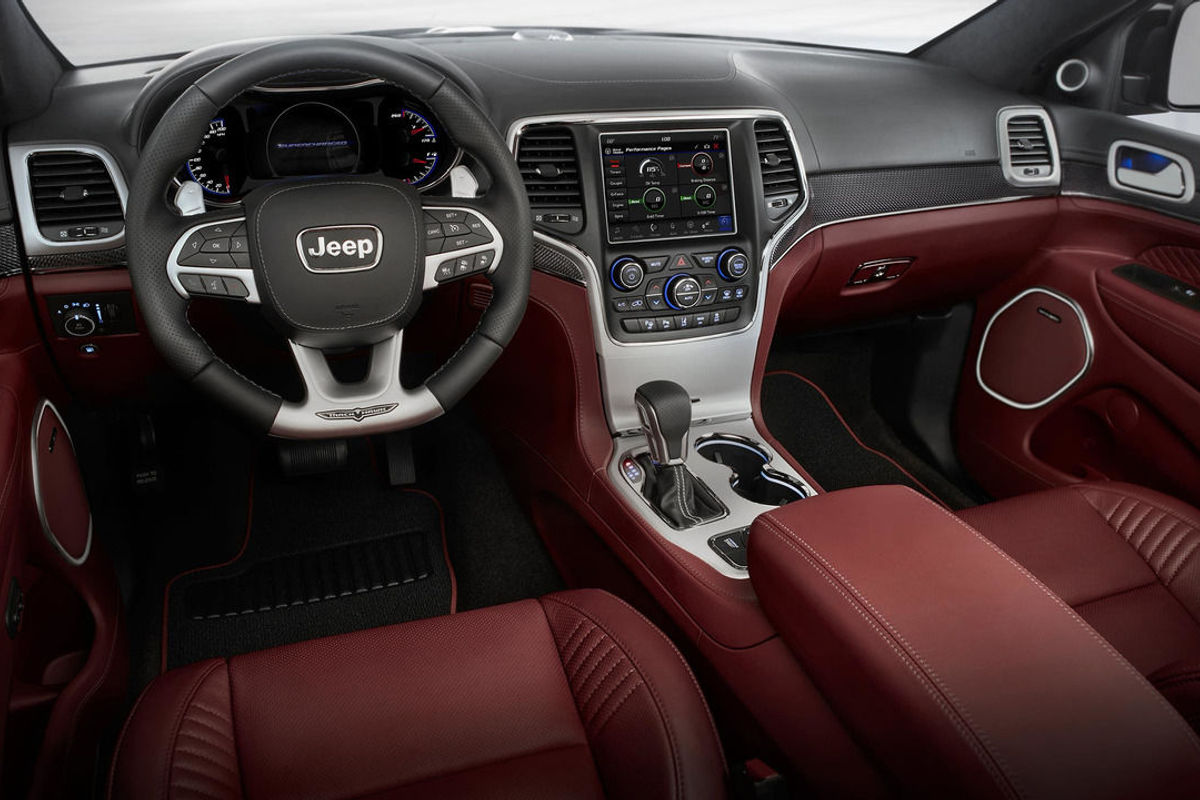
“Long recognized as the full-size SUV capability leader, Jeep Grand Cherokee is now the most powerful and quickest SUV as well, with the introduction of our new 707-horsepower Trackhawk,” said Mike Manley, Head of Jeep Brand – FCA Global. “The new Grand Cherokee Trackhawk delivers astounding performance numbers, backed by renowned SRT engineering that combines world-class on-road driving dynamics with luxury, refinement and an array of innovative advanced technology.” The 2018 Grand Cherokee Trackhawk will be built in Detroit and should hit American dealerships in the 4th quarter of 2017. South African availability is yet to be confirmed.
To put Jeep’s super-SUV in perspective with current high-performance offerings, a simple comparison in power and torque will give you an indication of what this Hellcat-powered Jeep could be capable of. Take a look…
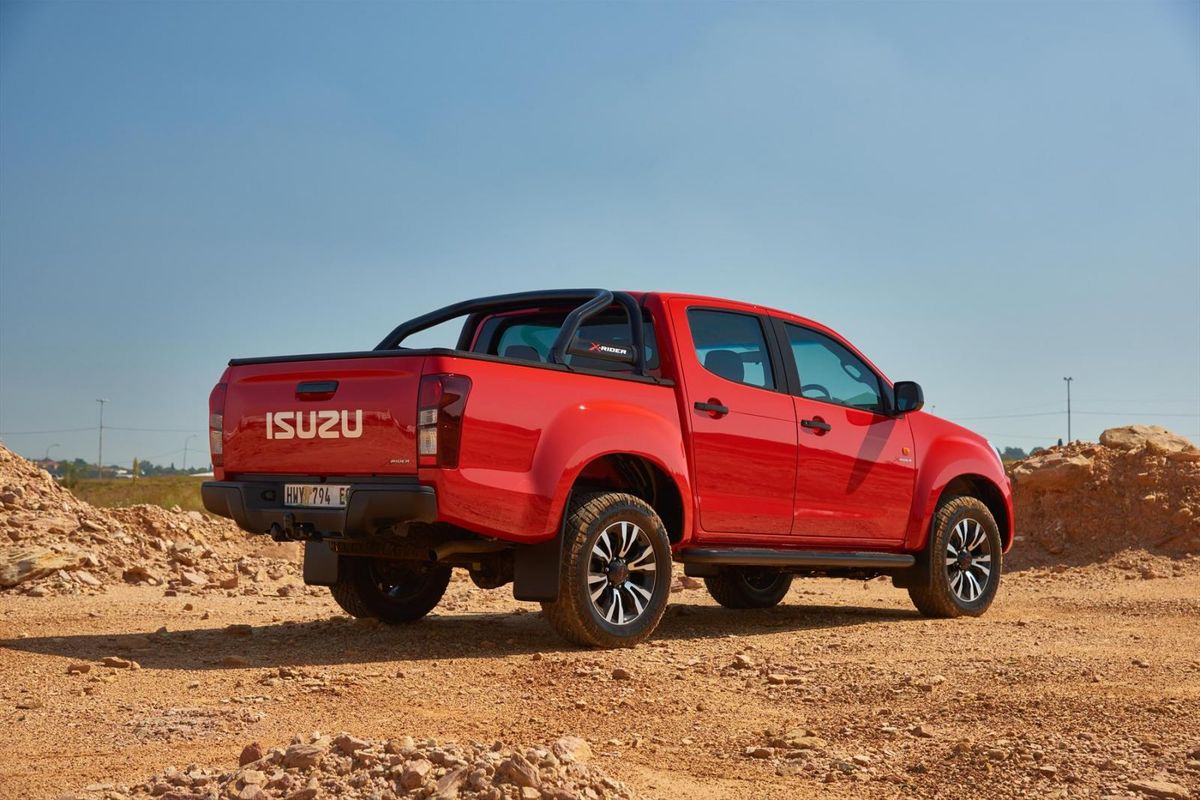
Following the success of last year's "special edition" offering, the X-Rider now permanently joins the Isuzu KB line-up.
First introduced just prior to the Isuzu KB facelift, the 700 limited-edition X-Riders sold swiftly, prompting General Motors South Africa to now make it a permanent fixture of the Isuzu KB line-up. With the addition of the KB 250 X-Rider 4×2 Double Cab, the KB line-up swells to 19 derivatives.
Enhanced visual appeal
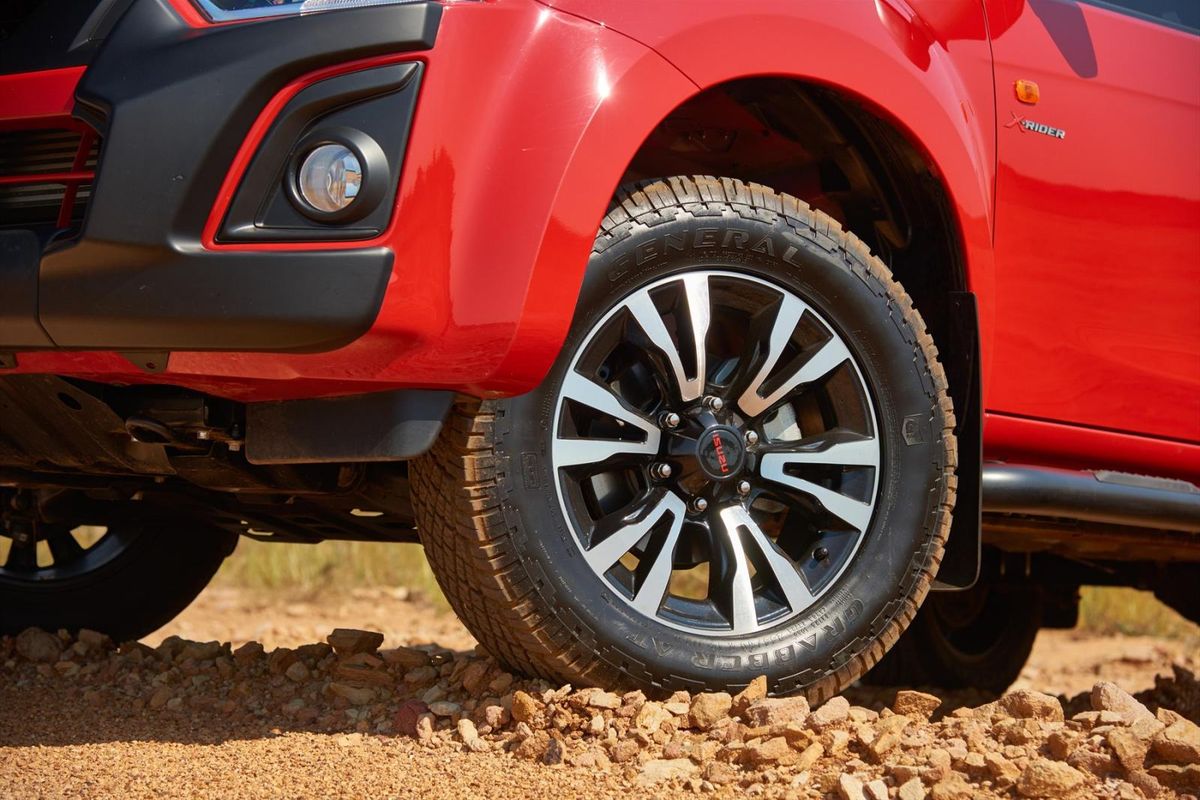
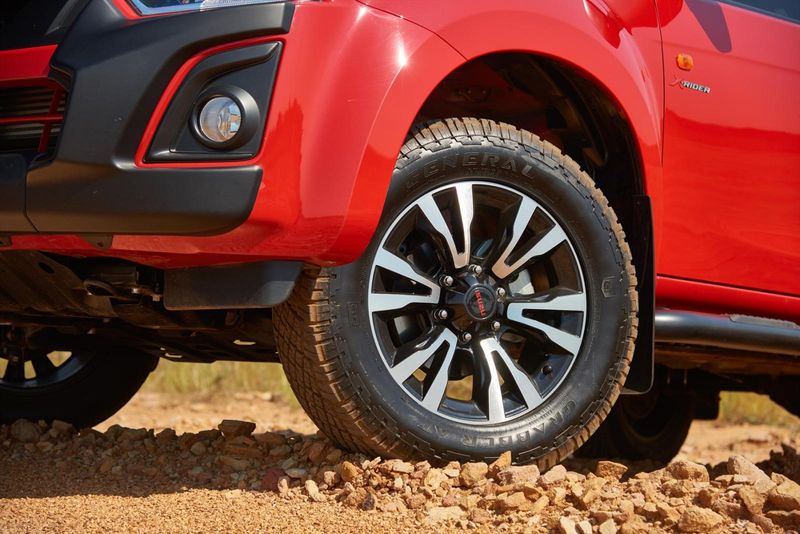
18-inch alloy wheels and blacked out bumper guard give the KB X-Rider a macho presence.
Using the KB 250 as a starting point, the X-Rider badge brings with it striking diamond-cut 18-inch alloy wheels, a black bumper guard with integrated fog lamps, tubular side steps, a sports bar with X-Rider decals and blacked out B-pillars. Those cool-looking wheels are wrapped with 255/50 Grabber AT all-terrain tyres.
Buyers can choose from 3 colours — Summit White, Switchblade Silver or "Pull Me Over" Red.
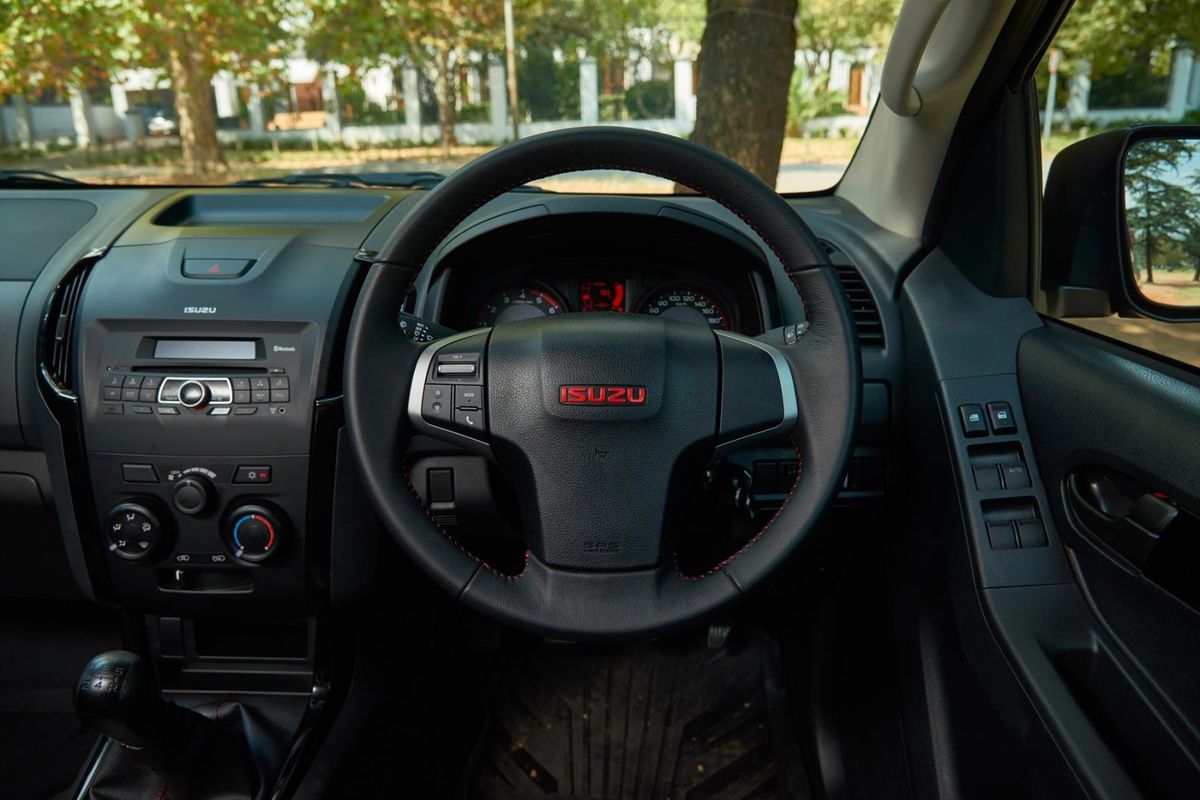
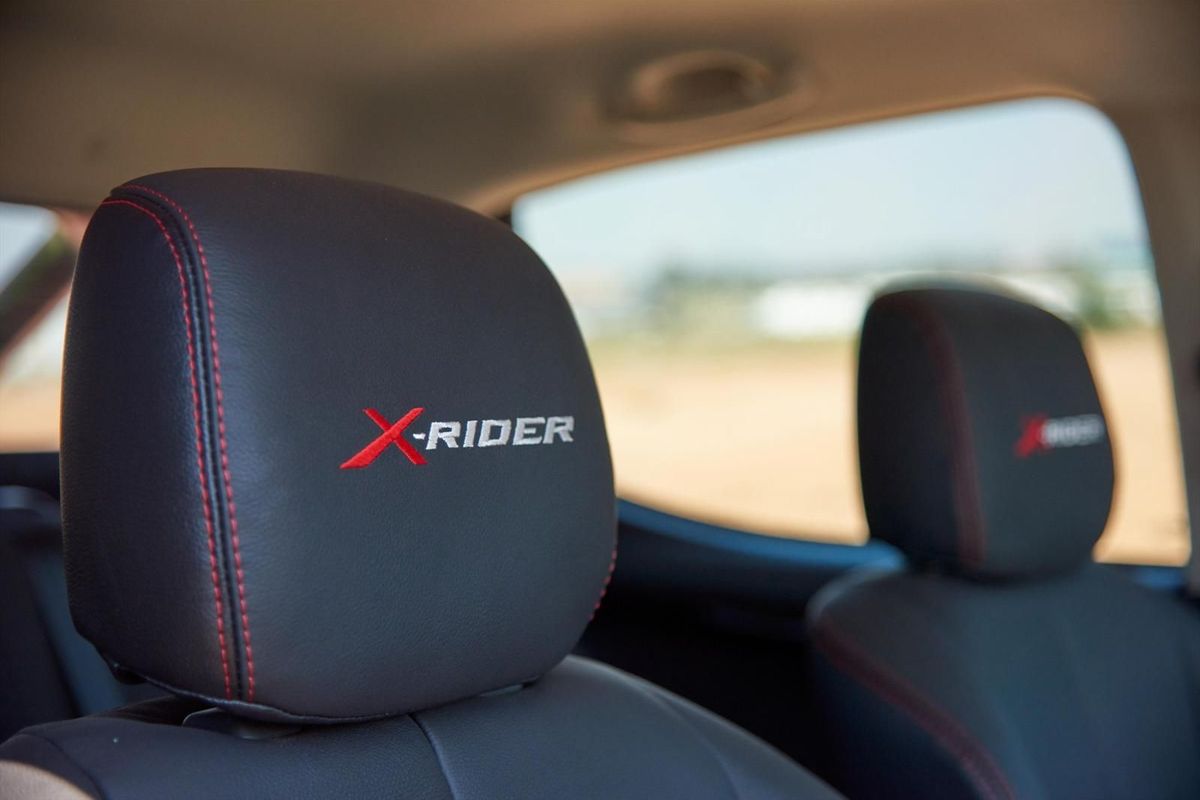
Inside, you get leather upholstery, a leather-wrapped steering wheel, leather gear-lever boot and splashes of piano black trim. You'll also notice red stitching on the seats, steering wheel and gear-lever boot. X-Rider logos are embroidered onto the front headrests and the red "X" badge appears on the door trims, too.
There's plenty inside to remind you that this is an X-Rider.
Proven engine
The X-Rider is powered by the brand's proven "high output" 2.5-litre turbodiesel engine that delivers 100 kW and 320 Nm, enough to give the X-Rider a 2.1 tonne braked trailer towing capacity. Note that a heavy-duty towbar is standard fitment.
The X-Rider sells for R388 400, and comes backed with a 5-years/ 120 000 km warranty and roadside assistance programme, a 5-years/unlimited mileage anti-corrosion warranty and a 5-years/ 90 000 km service plan. Service intervals are 15 000 km or twelve months.
It has been 10 years since Audi launched its first business class coupe in South Africa. Since then, the Ingolstadt-based marque's rivals have launched fierce competition, particularly in the forms of the BMW 4 Series and Mercedes-Benz C-Class Coupe. Does the S version of the second-generation A5 redefine the luxury compact 2-door? Let's find out.
For the latest S5, Audi has debuted a brand new engine in the form of a single-turbo 3.0-litre V6. The firm also designed and built one of the best interiors we've encountered in a car offered in the A5/S5's segment.
In this video, we take the new S5 to one of our favourite coastal roads outside of Cape Town, to really stretch its legs.
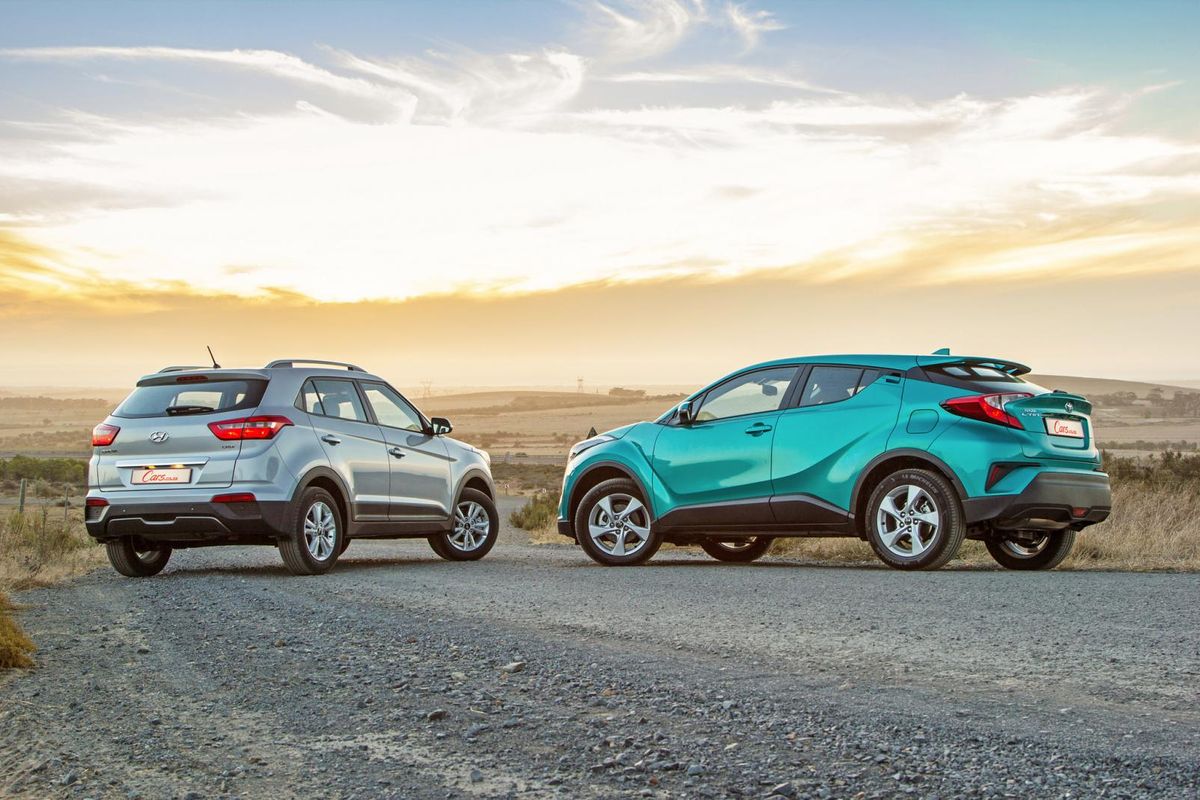
Compact Crossovers: Practical Hyundai Creta vs Stylish Toyota C-HR
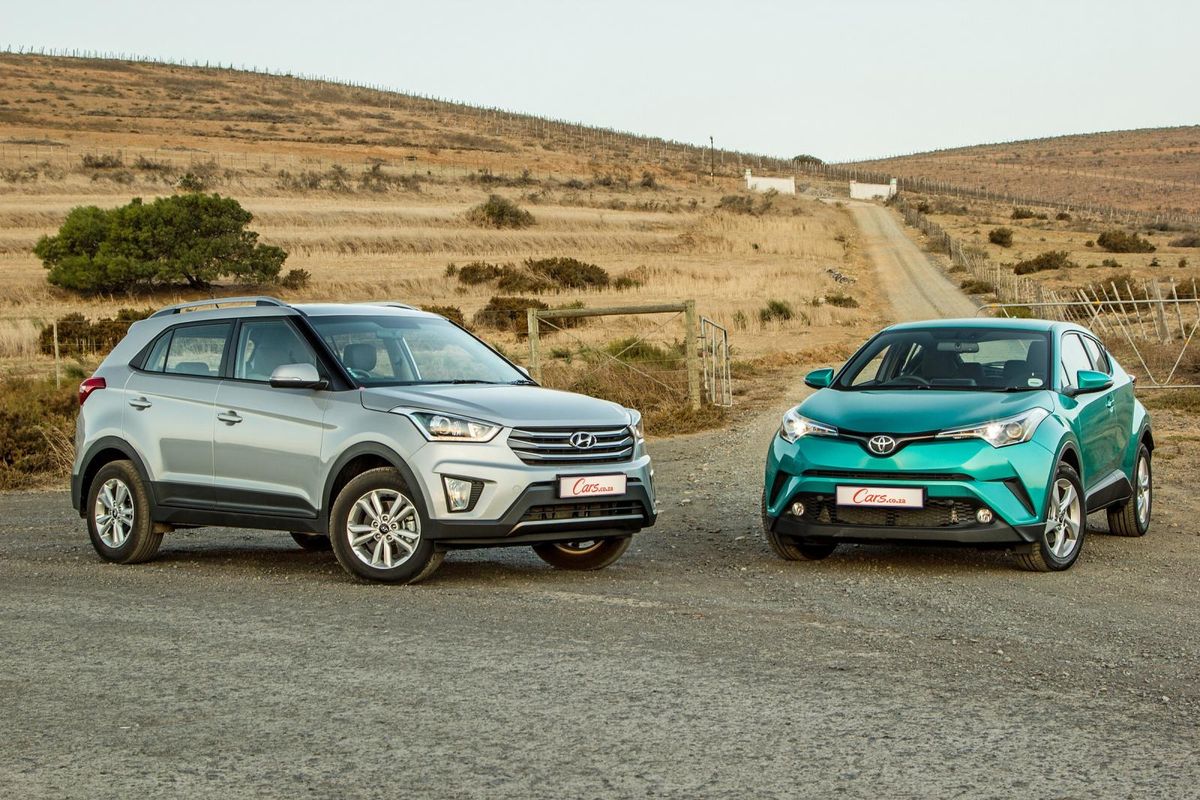
If you’re looking for a vehicle in the burgeoning compact crossover segment it’s likely the Hyundai Creta and Toyota C-HR will be on your shortlist. Both have much to offer, but what exactly are you getting for your money?
At a glance
Hyundai Creta 1.6 CRDi auto
Toyota C-HR 1.2T Plus auto
Power/Torque
94 kW/260 Nm
85 kW/185 Nm
We Like:
Build quality, space, practicality
Sporty exterior and interior, ride quality, refinement
We Don't Like:
Rough-sounding engine, not as frugal as expected, no stability control
Rear visibility, no parking sensors, not spacious
Price
R369 900
R356 000
If you happen to be shopping for a new car in the R300 000 – R400 000 range you’re likely to at least consider a compact crossover. The allure is simple: hatchback practicality with increased ride height (and whatever added capability that implies). They’re also currently big hits on the school run. Selling an active lifestyle vehicle such as the C-HR or Creta to a South African is as easy a sell as half-price biltong. Despite similarities in price and size, these two vehicles are almost complete opposites playing in the same space. Let’s explain…
Practical vs stylish
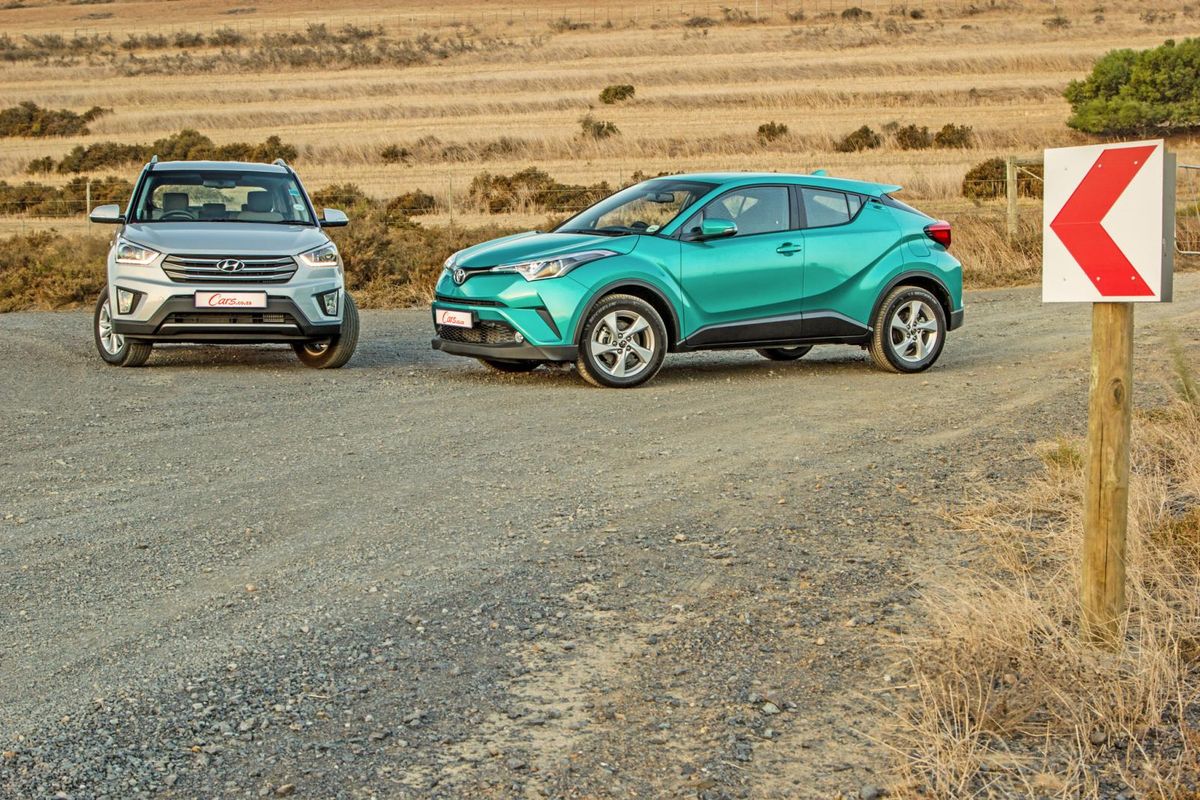
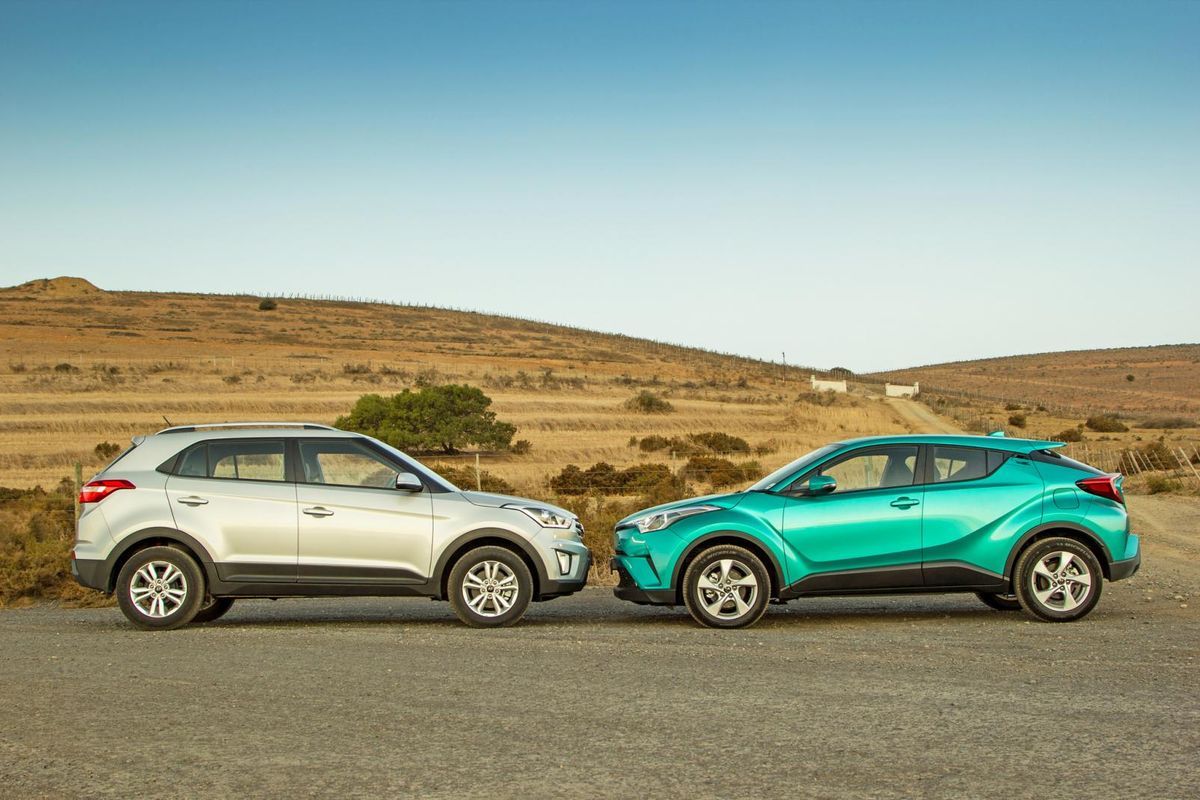
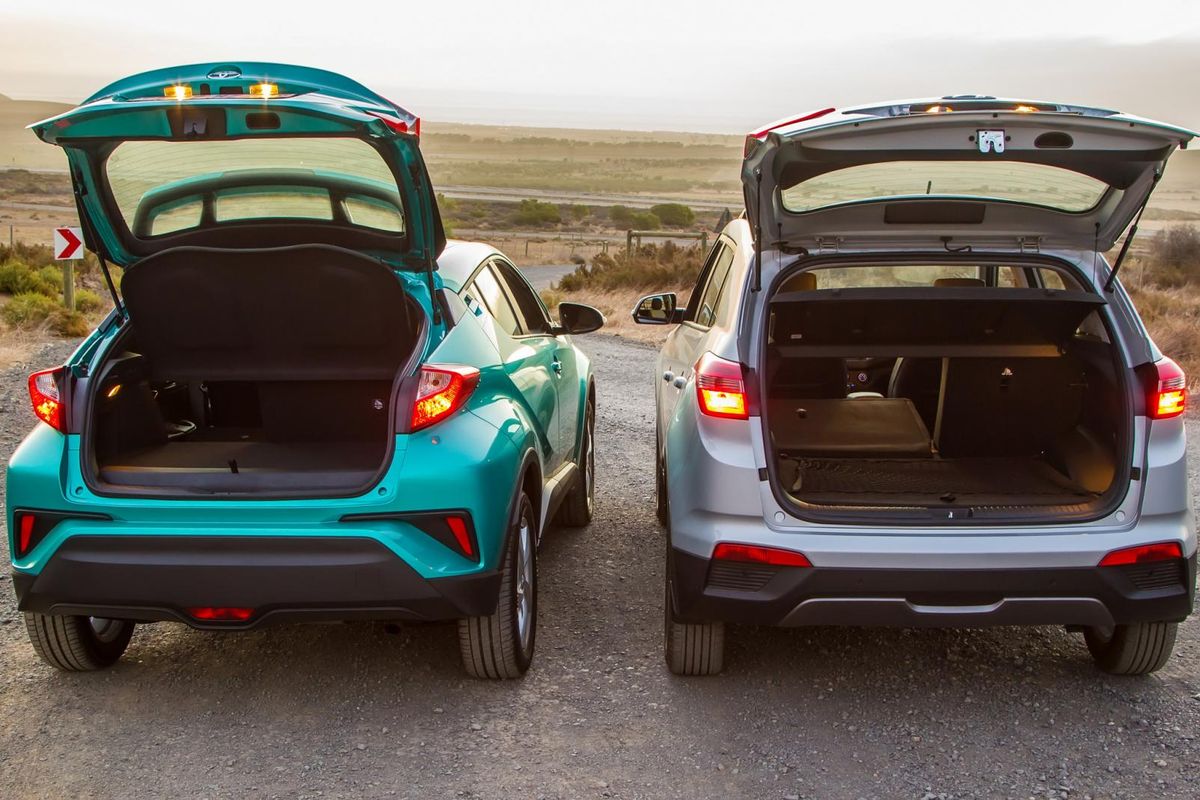
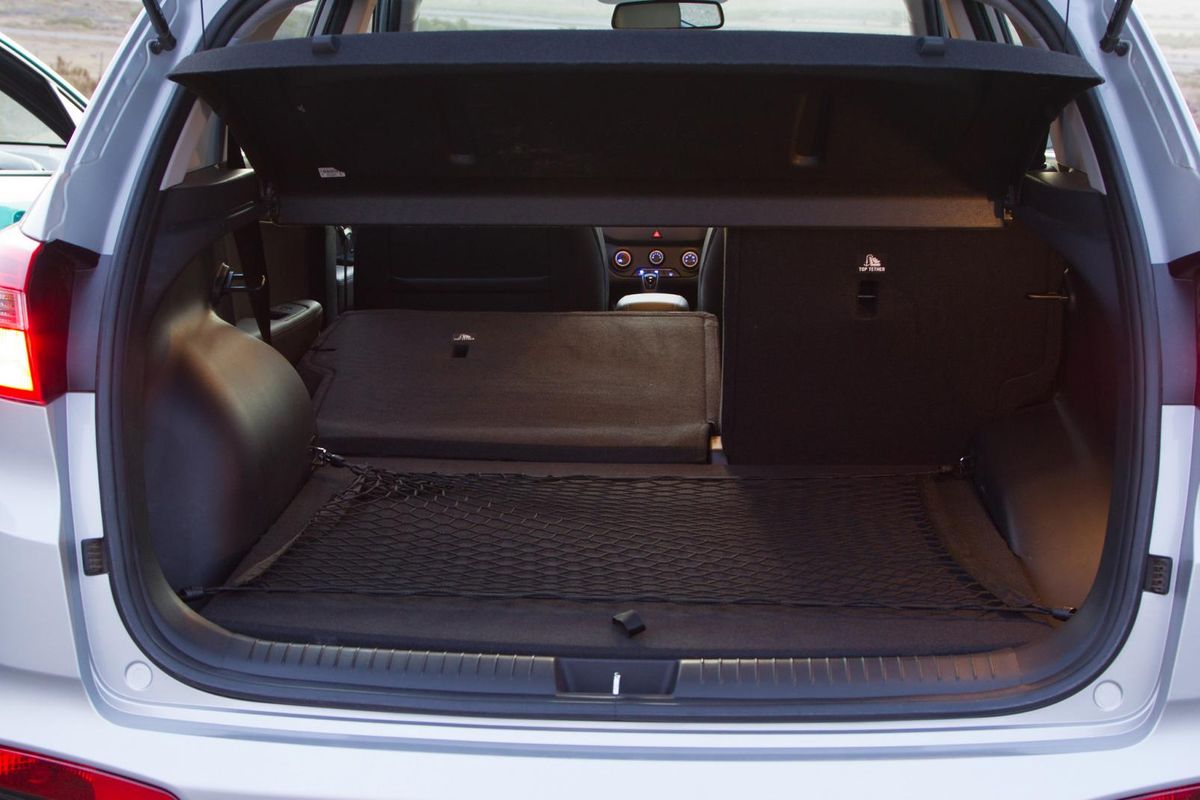
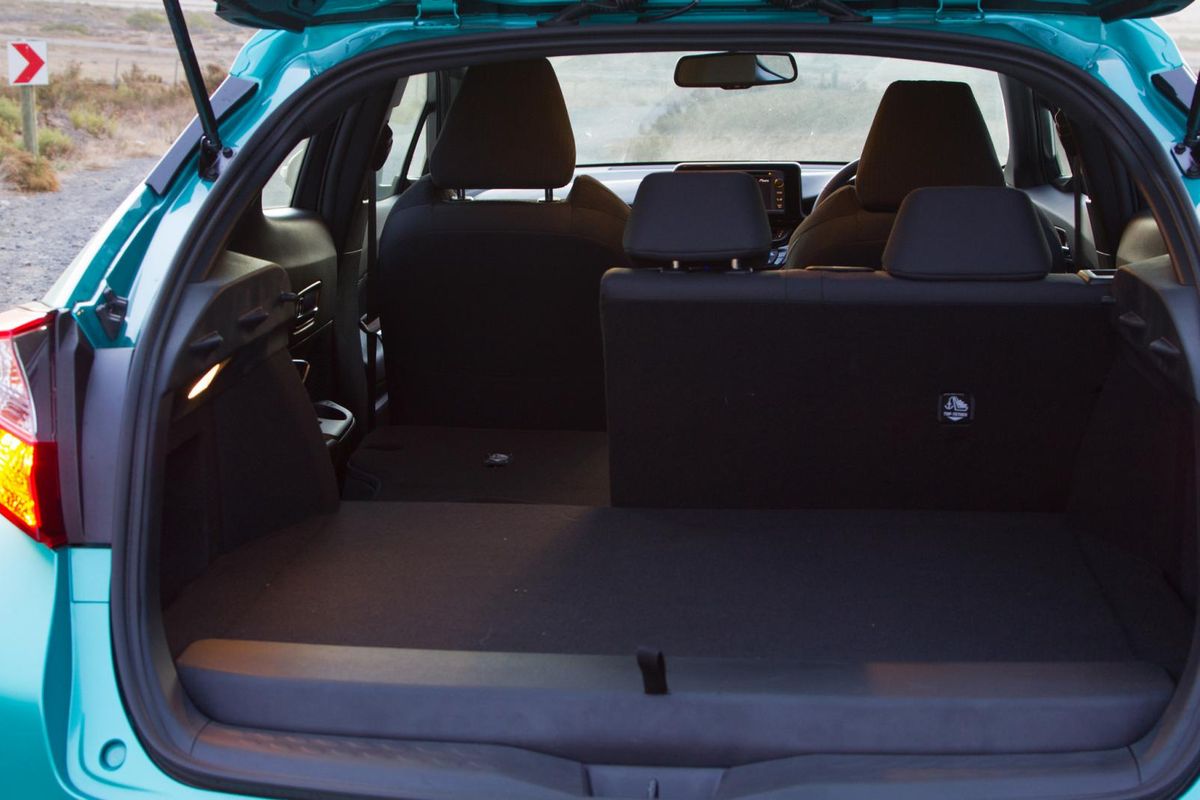
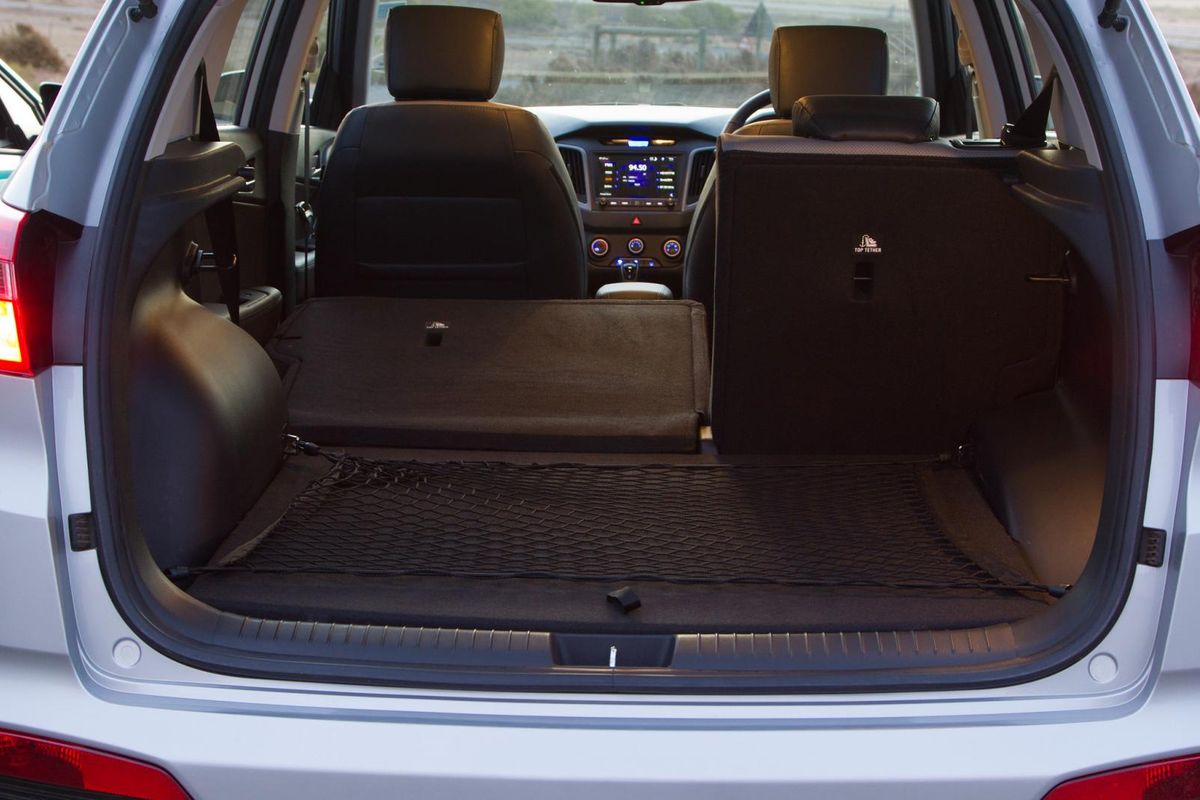
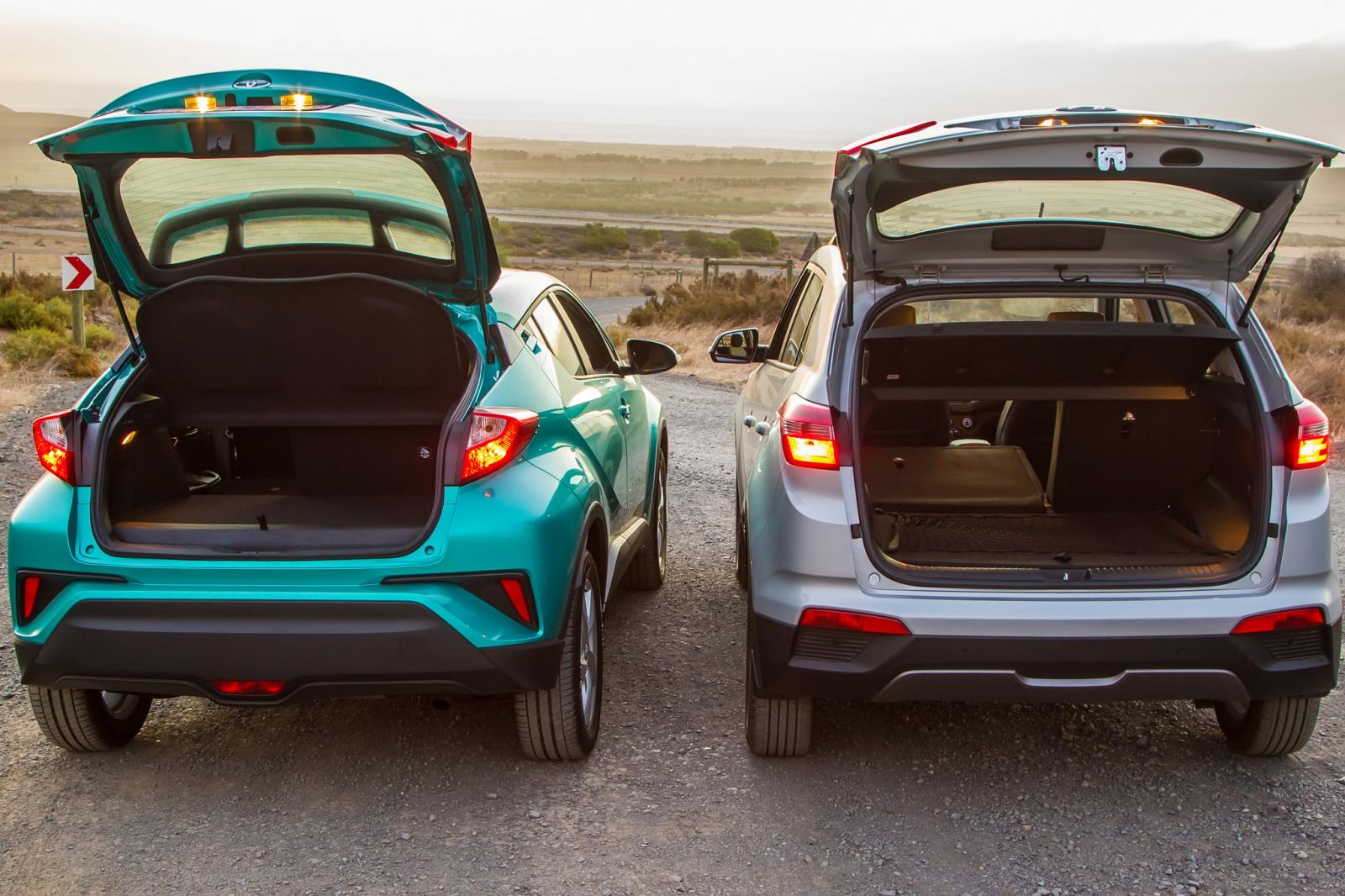
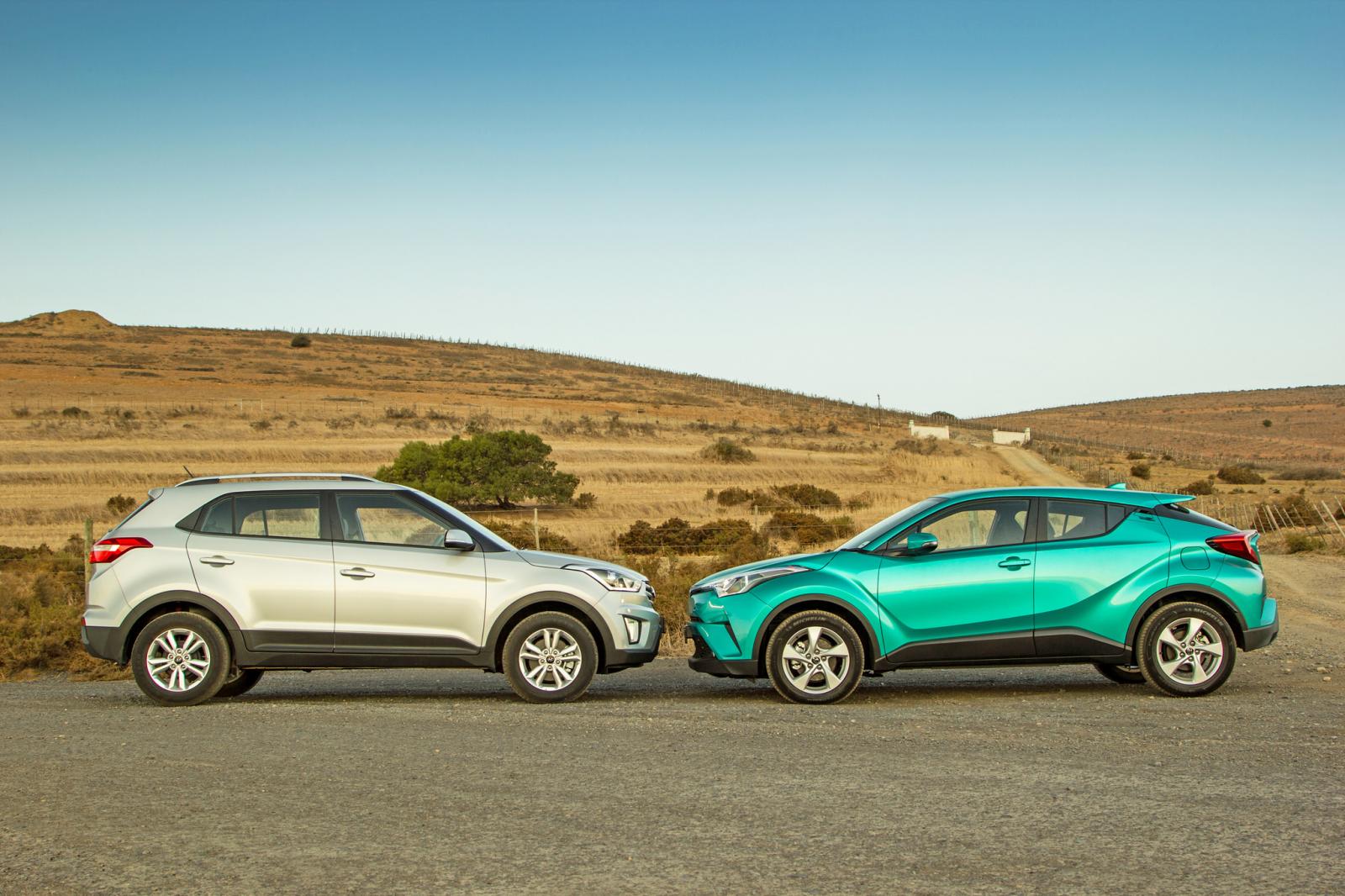
It’s difficult to evaluate the size of the Creta and the C-HR from photographs. In reality the Toyota is, surprisingly, 90 mm longer than the Creta. Given that, you’d expect it to be roomier, but that’s not the case. The Creta has more room for passengers, front and rear, and – despite both featuring a full-size spare – also has a much larger boot (402L vs 234L). The Creta is also 65 mm taller than the C-HR with 190 mm of ground clearance – significantly more than the C-HR’s 160 mm.
The Creta is bigger inside and more practical than the C-HR.
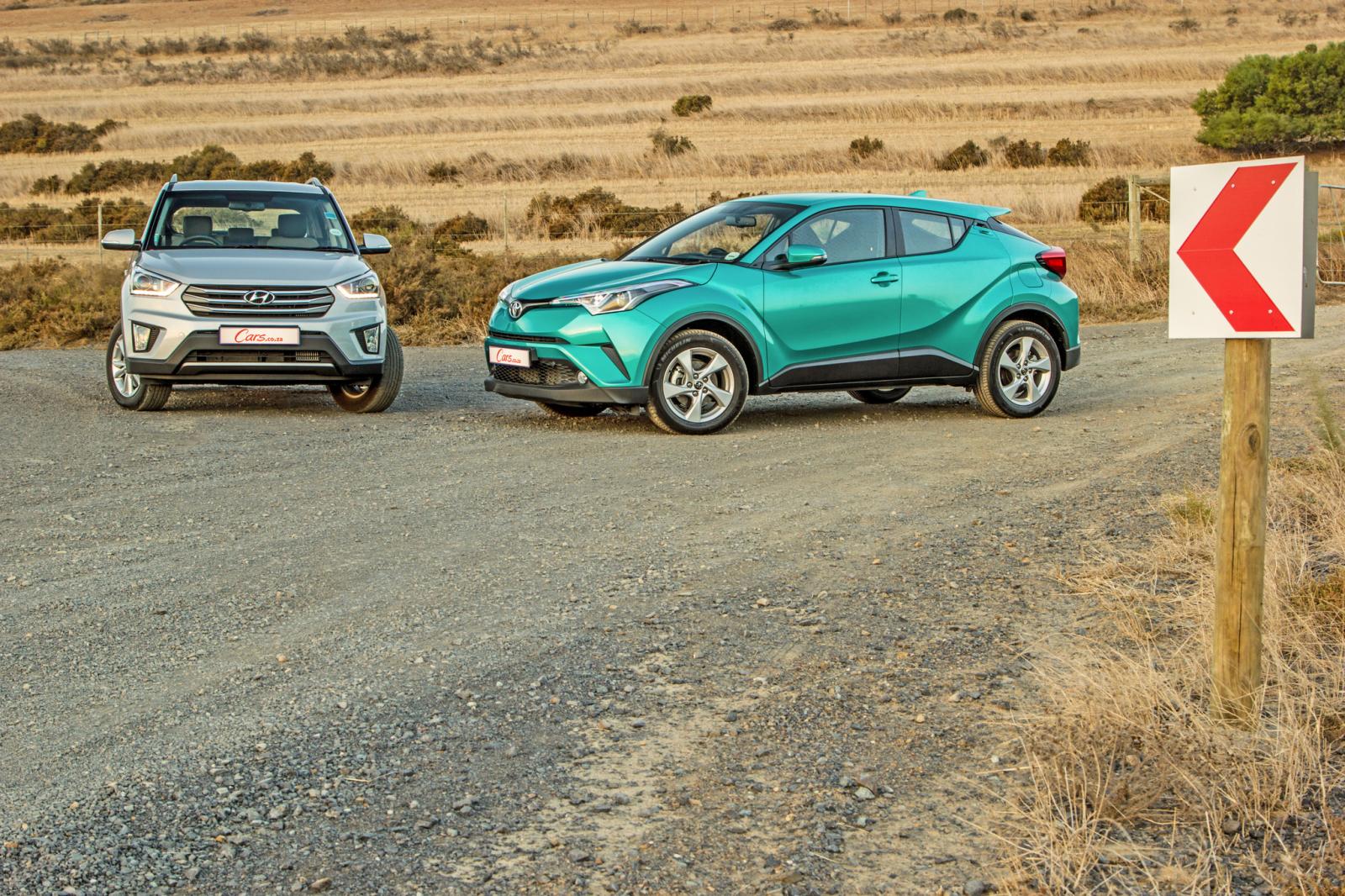
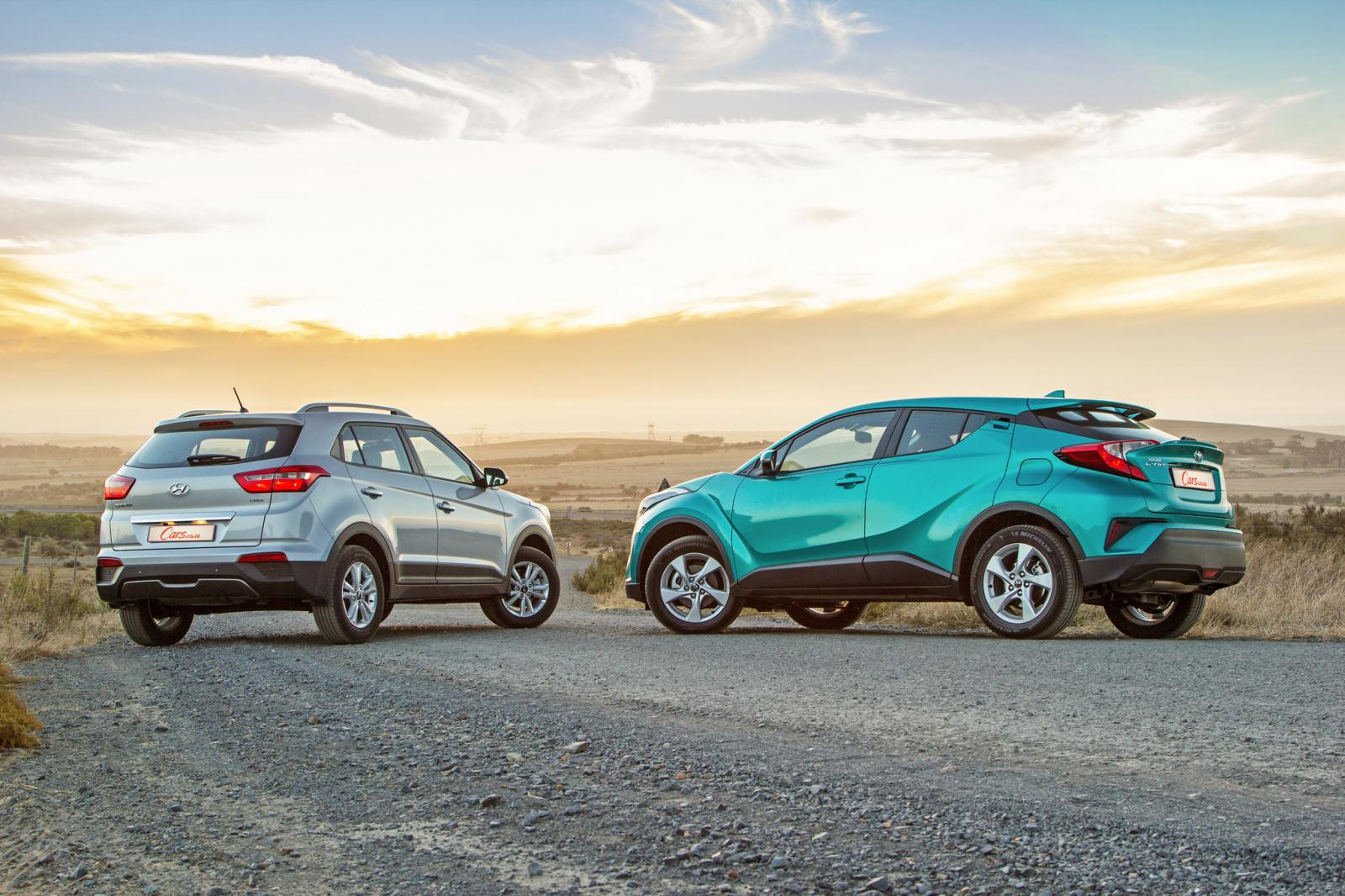
As a family car, the Creta does a much better job of carrying things and people, but it’s a bit of an ugly duckling compared with most recent Hyundais. Vehicles such as the Tucson, Elantra and the new i30 are defined by fluid, flowing lines, while the Creta appears to be a bit square and bland – almost a step back to the Hyundais of a decade ago.
For usually conservative Toyota, the C-HR is a step in the opposite direction. Where the Corolla, Etios, Hilux and Yaris are all quite ‘safe’ designs, the C-HR is wild. The rear light cluster seems to have been designed by a Samurai warrior let loose on the designer’s pad with a (touch sensitive?) katana. Actually, that goes for the rest of the car too. It’s definitely eye-catching, and in this colour, you better be prepared for a few stares at the traffic lights.
The result of the bold design and coupe style is that practicality is shuffled further down the priority list. Less room for passengers, and a tiny boot means it’s not a great family car, unless you’re a (very) small family.
Watch the Hyundai Creta video below:
Interior ambience
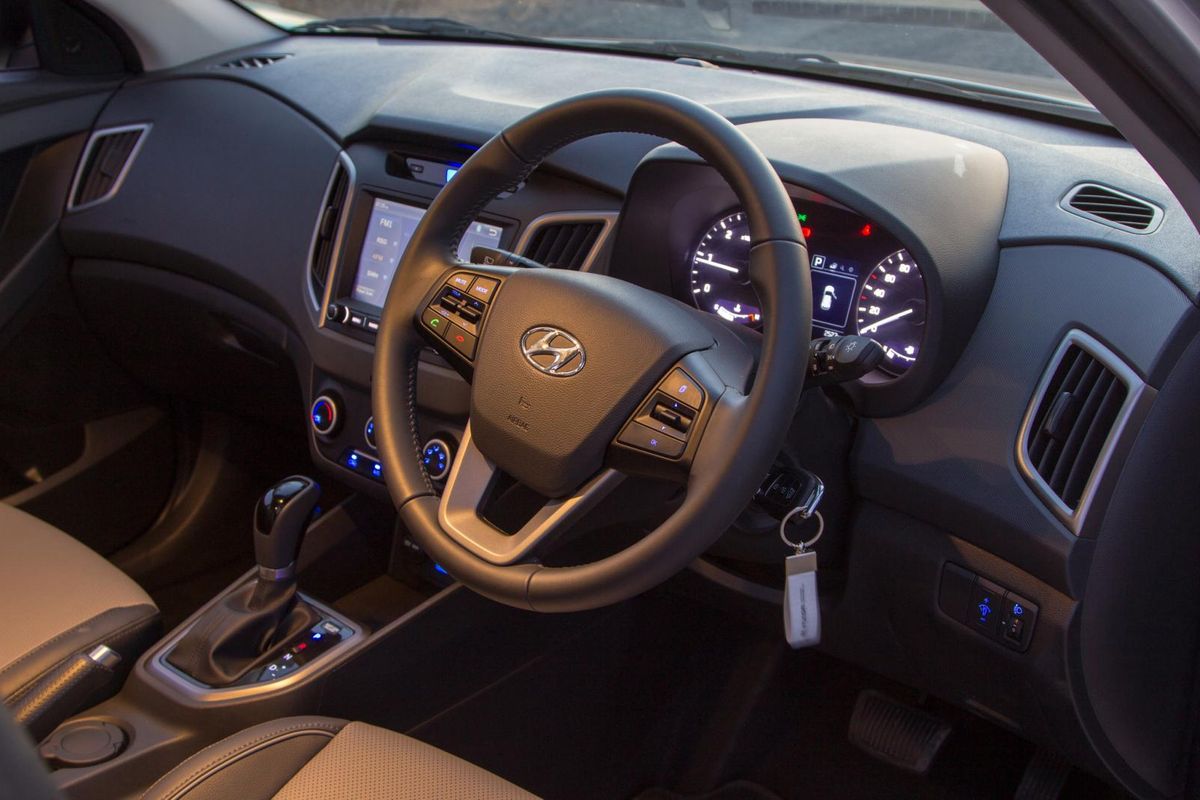
As most manufacturers have improved cabin quality markedly in recent times, we have come to expect interiors to be well made and stylish regardless of the price point. Hyundai has made huge strides in this regard, resulting in an overseas top 3 spot in J.D. Power awards for quality. It’s easy to see why when you climb aboard the Creta. Everything, from the air conditioning knobs to the door handles and leather steering wheel, imbues a tactile sense of sturdiness and substance.
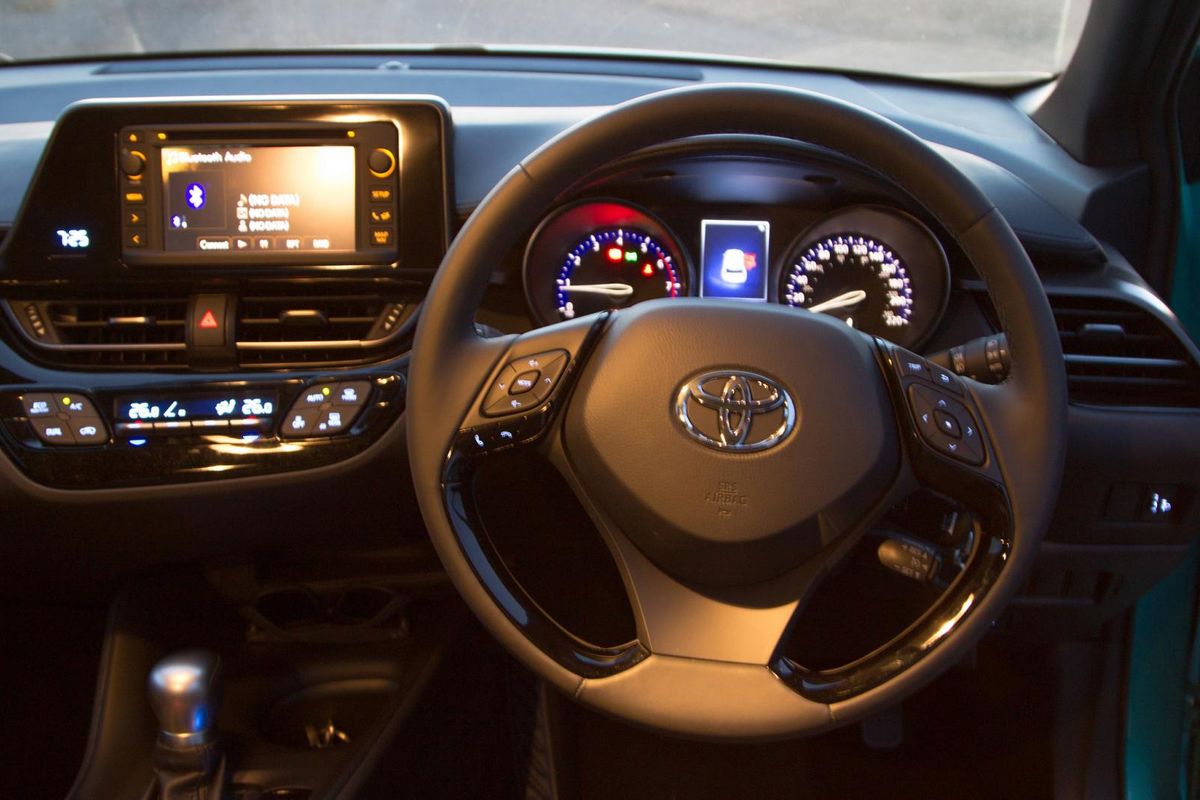
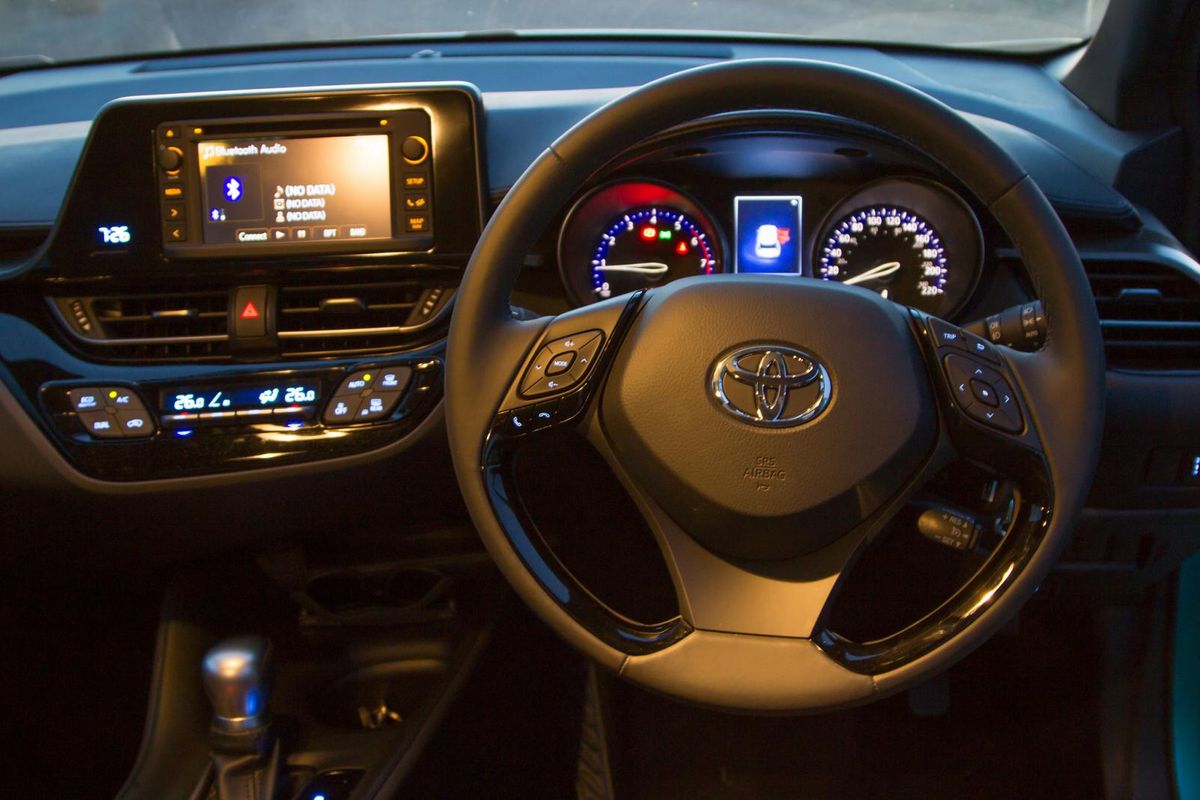
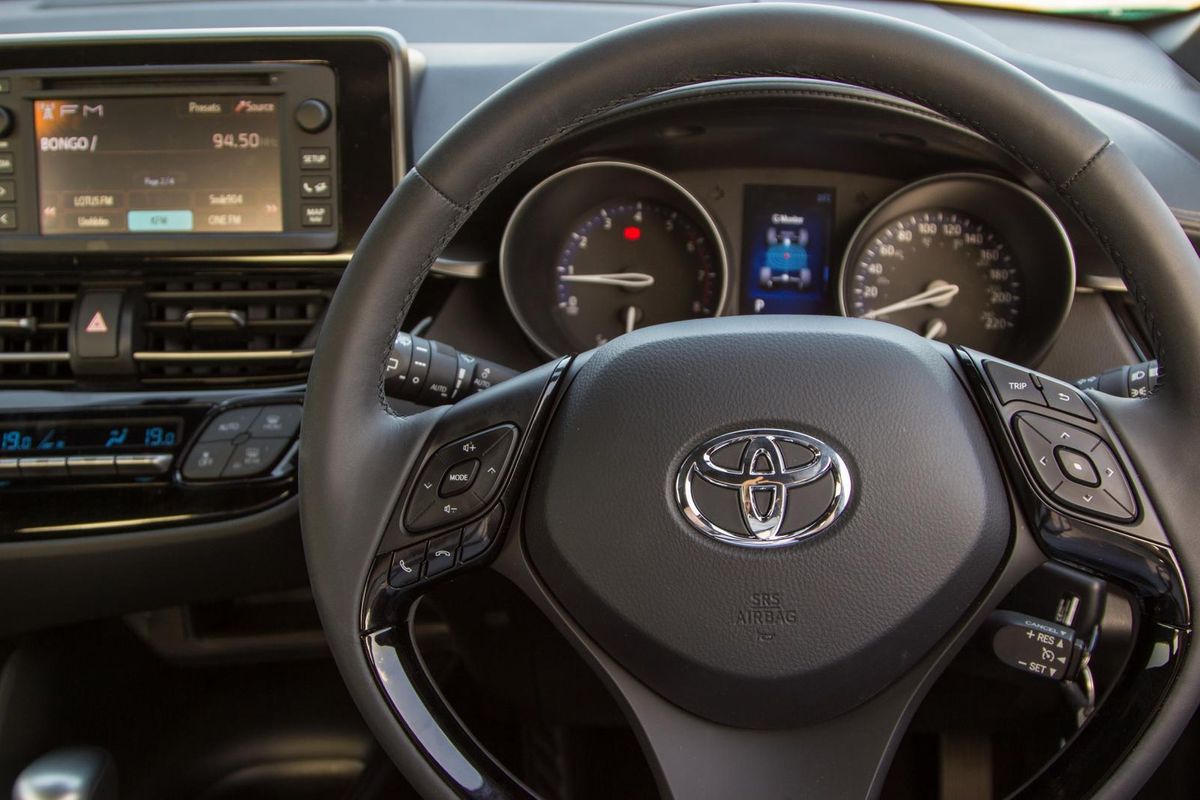
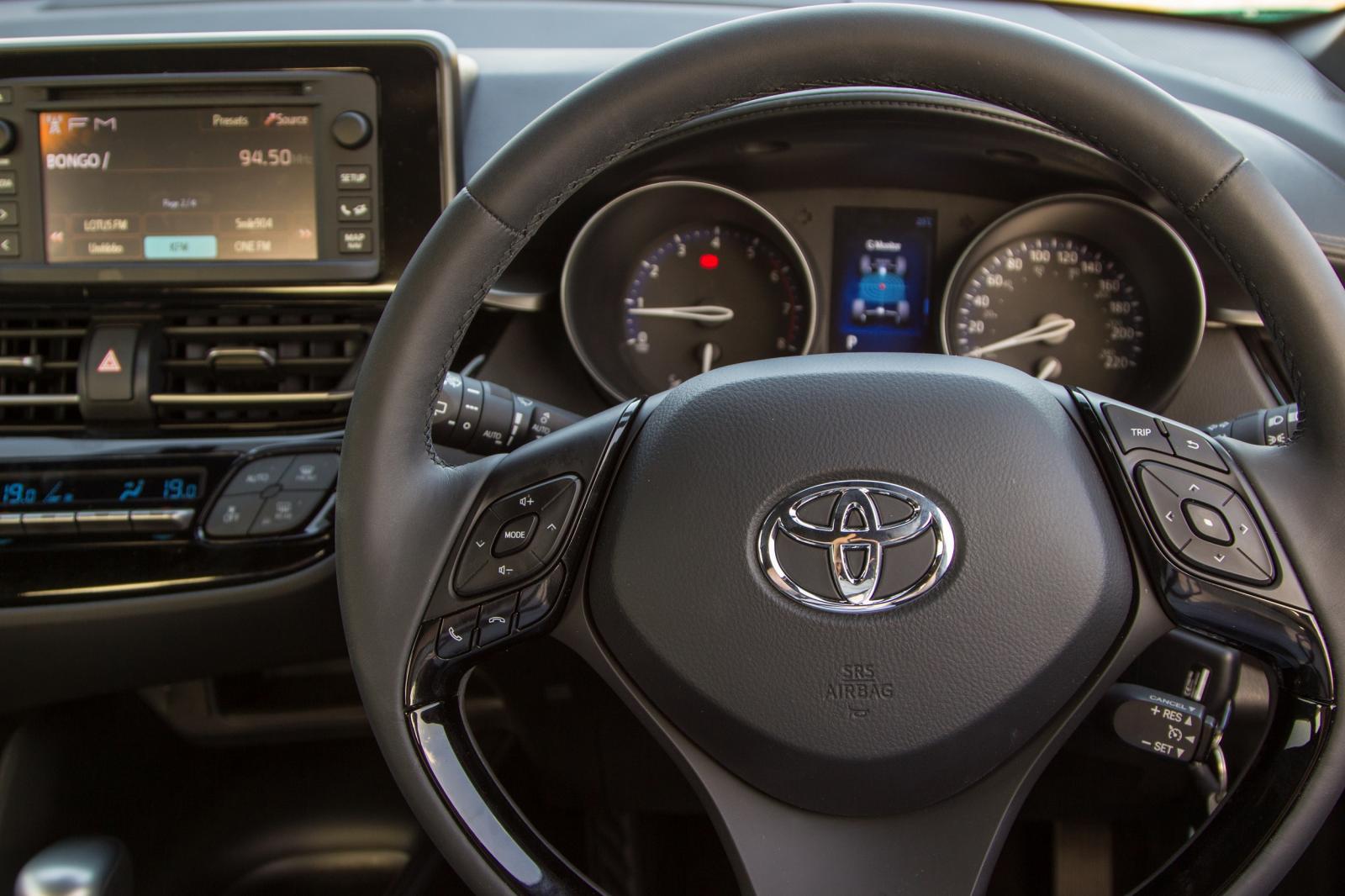
Toyota's infotainment system features a retro 'A-Track player' that doubles as a touchscreen.
Again, Hyundai has prioritised practicality with the Creta: The door pockets can accommodate a large bottle, the space in front of the gear lever is big enough for a modern mobile phone, the seats are covered in leather that feels hard-wearing and the rear passengers have their own air vents plus plenty of leg- and headroom.
The C-HR’s interior isn’t quite as curvaceous as its exterior but still manages to capture the car’s departure from conventional (read boring) Toyotas of the past. A stitched leather-wrapped dashboard lends a premium touch, offset by the cloth-only seats. They’re comfortable, if not as plush as the Creta’s leather items.
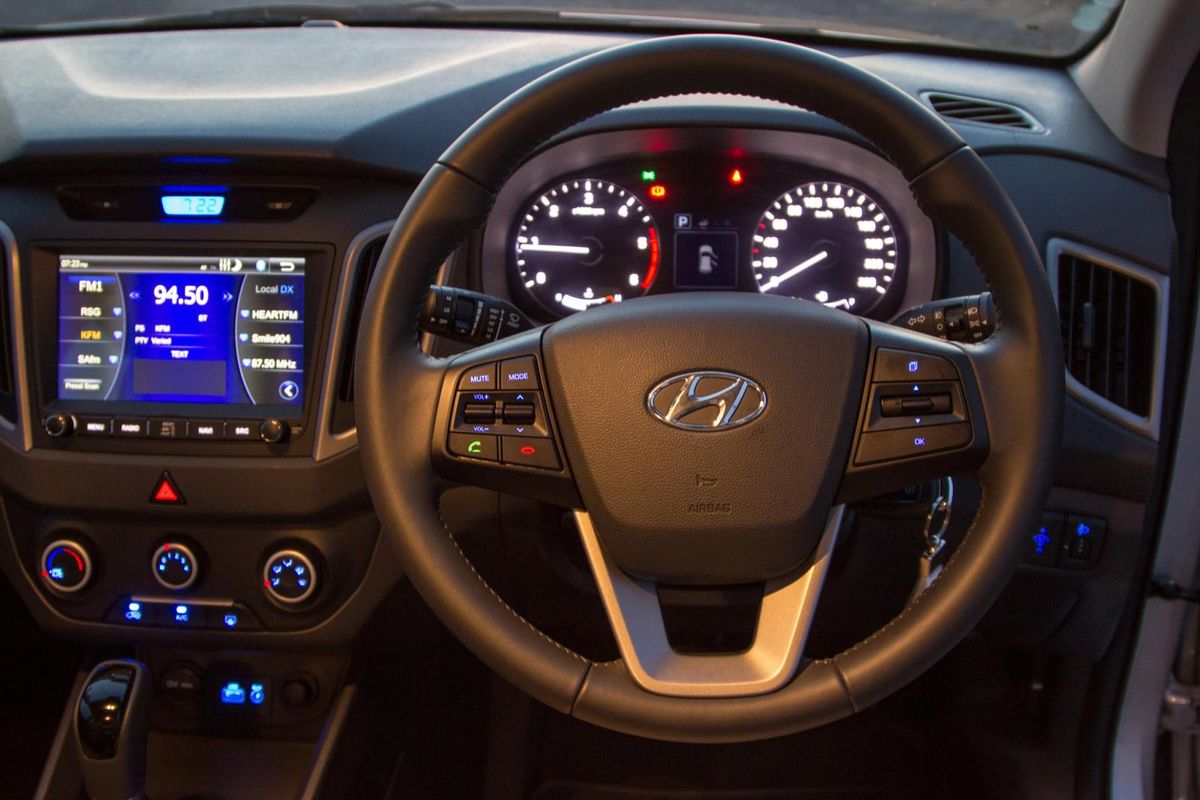
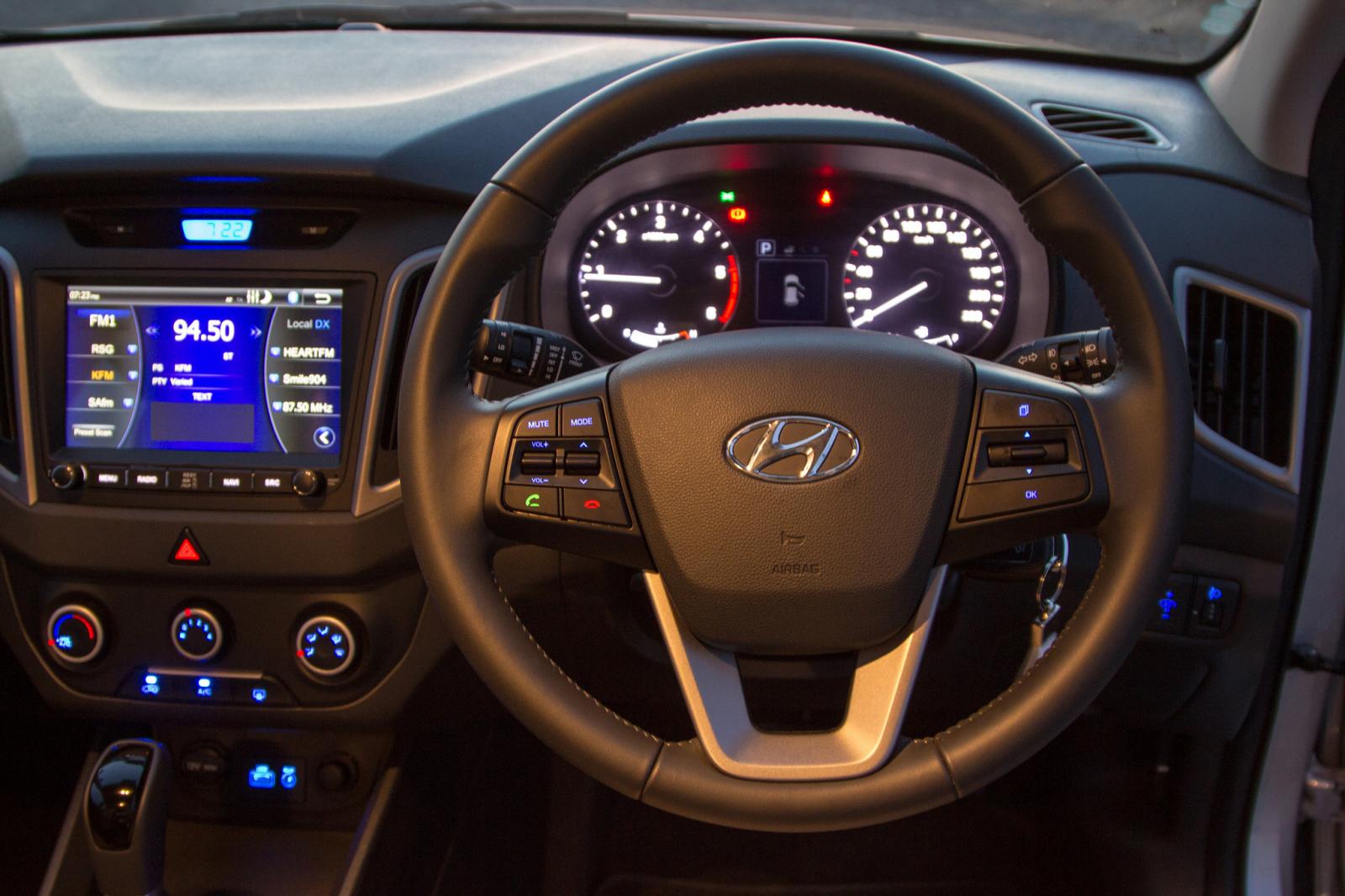
Hyundai features a large touchscreen system but lacks dual-zone climate control and cruise control.
Ergonomically the C-HR can be nit-picked to pieces. The cupholders are separated by the gear lever and there’s nowhere to store your chattels if you happen to be using the cupholders for actual cups. The angle of the shelf ahead of the front cupholder means that anything stored in there falls into the driver’s footwell every time you turn left. The sloping roofline robs rear passengers of headroom and despite being longer than the Creta, the C-HR has less rear leg room. It does have dual-zone climate control and cruise control, which the Creta lacks.
Toyota C-HR Video
Modern tech
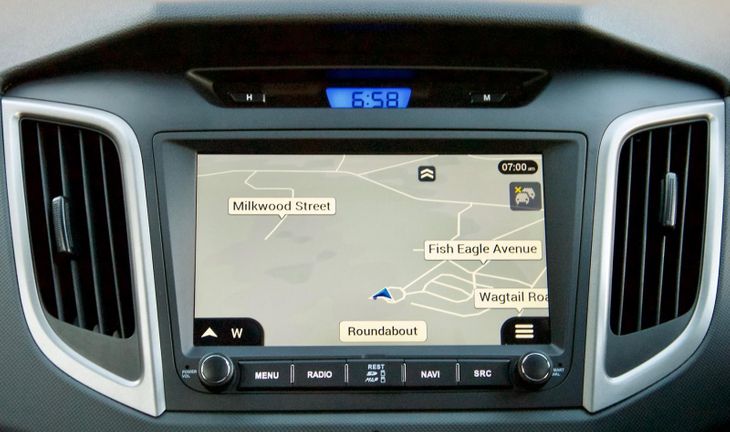
The tech offered from the infotainment systems, while similar, is executed with differing levels of success. The Creta has a large touchscreen system that includes navigation. Operation is Windows-like, with icons for menu navigation. It can be slow and a bit frustrating, especially when typing in destinations. As you’d expect, there’s Bluetooth for telephone functions and playing media. A USB port, Aux port and 12V socket are all within easy reach below the infotainment system.
Navigation is included in the top-spec Creta but the touchscreen system can be slow and tedious
Toyota’s entertainment system looks like a 2000s head unit that combines a CD player and tape deck in one. We nicknamed it the ‘A-Track player’. It’s not entirely evident why we have this system instead of the better-integrated unit available in the Auris, Prius, Fortuner and Hilux. Aftermarket looks aside, at least the touchscreen responds quickly and there is a proper volume dial. Sadly, navigation isn’t available despite a dedicated ‘Map Nav’ button. There is support for USB devices as well as an Aux jack.
Safety tech
In this segment, you expect the basics like ABS, EBD and some airbags, and that’s what you get with these 2 crossovers. The choice of safety systems though is perplexing. For instance, the Creta does all the hard work of cramming 6 airbags into the cabin to protect you in the case of an accident but then makes the unforgivable error of omitting stability control, a system credited with saving more lives than the seatbelt.
Conversely, the C-HR has stability control fitted as standard but only has airbags for the driver and passenger. This, again, may point to Toyota punting this more as an individual’s status symbol than a family car.
Engine types
In this segment, you have a wide range of choices when it comes to powering your crossover. The Creta offers either a naturally aspirated 1.6 petrol or, in this case, a 1.6 turbodiesel. The turbodiesel is rough, both on startup and while driving. It feels particularly old compared with other offerings in the market. The roughness translates into a clattery and noisy driving experience, despite the quality soundproofing and insulation of the Creta’s cabin. Also disappointing was the less-than-impressive fuel consumption of 7.5L/100 km recorded during its time with us. We expect that sort of figure from larger SUVs powered by bigger turbodiesel engines.
Turbodiesel or turbopetrol? Both achieved the same fuel consumption figure during their time with us.
The 6-speed auto does a good job of keeping the Creta in the torque band and accelerating smoothly. The revs are a little high at 120 kph for a turbodiesel and that’s also going to hurt long distance fuel economy. The lack of cruise control in the Creta is a bit odd but if you haven’t noticed yet, the strange specification of these 2 crossovers is a running theme.
The C-HR is the first South African Toyota to be powered by the 1.2 turbopetrol engine, a move most other manufacturers have already made. It’s mated to a CVT gearbox that works perfectly at low speed, like when you’re driving in traffic. When you have to get a move on and the revs climb it feels like it’s a drag and actually sapping some of the power the 1.2 turbo has.
Fuel consumption on the C-HR actually matched the Creta at 7.7L/100 km during its 2-week stay with us.
The drive
The driving experience might not be a major concern in the purchase of a modern crossover, but a comfortable ride can make a difference to your long-term experience of the car.
Apart from the previously mentioned engine noise, the Creta is well insulated from road noise and buffeting and sits solidly on the road when cornering. The Creta can be upset by undulations and corrugations on dirt roads but remains a comfortable drive. The steering isn’t as light as we’ve seen in other Hyundai products and provides a solid foundation for confident inputs and reassuring handling.
Both crossovers drive well and are surefooted on the road, the C-HR is more comfortable though.
The C-HR sits on the Prius platform, a chassis we have experienced before and found to be very comfortable. So it’s no surprise the C-HR is similarly comfortable and refined to drive. It handles bumps, ruts and just about anything else with ease. There’s a bit of body roll if you corner quickly but the C-HR is built for comfort and provides a very pleasant driving experience.
Summary
The Creta and the C-HR may be priced similarly and be categorised in the same segment but they are not direct rivals. At R369 900 (April 2017), the Creta represents the practical choice. It sits at the top end of the compact crossover segment, offering a full house of features – bar cruise control and stability control. It’s much bigger inside than it looks and is better equipped to accommodate an average family and their gear.
The C-HR is a fashion purchase. Its design and shape are particularly eye-catching and a step outside the norm for Toyota – no doubt sales success is on the cards. It has been generally well-specced, however, as a want rather than need purchase, the lack of parking sensors, sat-nav or leather seats may disappoint.
Not direct competitors but buyers at this price point are likely to consider them when choosing a small crossover.
At R356 000 (April 2017) the C-HR isn’t cheap and buyers looking for a bit more value for money with their style purchase could be tempted by cars such as the Renault Captur. The Creta, on the other hand, may fall foul of the Nissan Qashqai 1.2 Acenta auto, a larger car with a cheaper price tag.
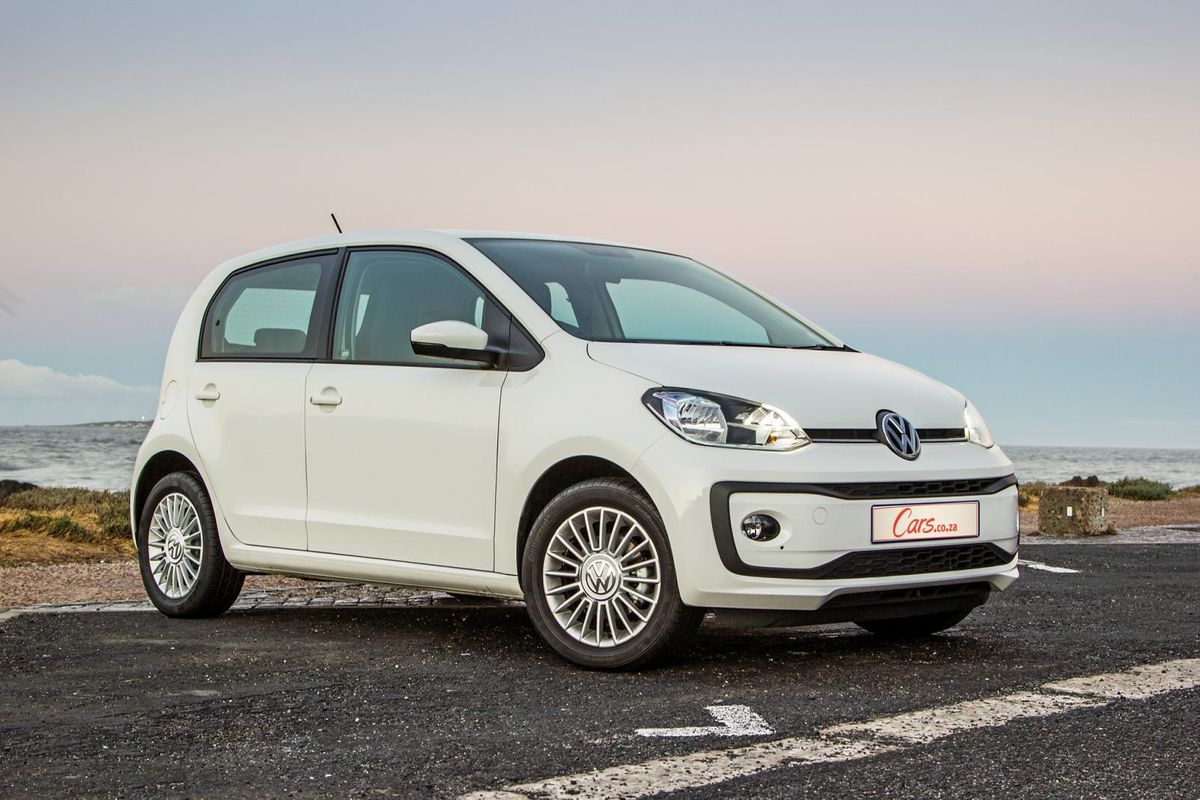
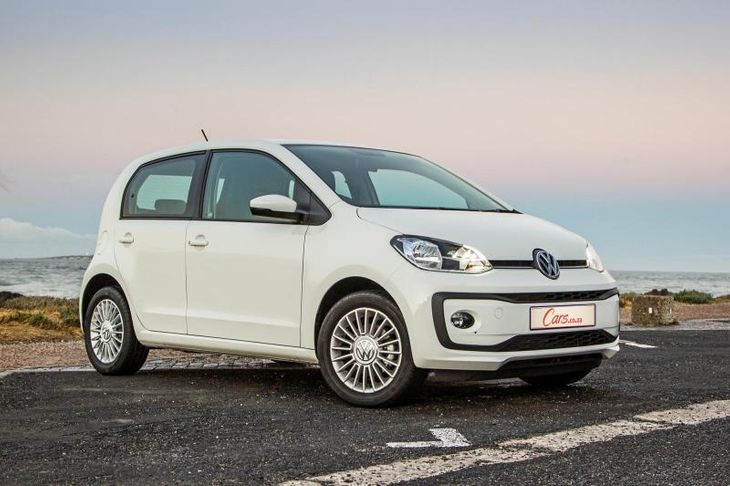
Not long after the 2015 launch of the original Volkswagen Up! in South Africa, a facelifted model was announced. That refreshed Up! went on sale here towards the end of 2016. What has changed, and will this new Volkswagen Up! continue the tradition of offering impressive build quality and great driving traits in an affordable package? We drive what is likely to be on of the strongest sellers in the line-up, the Volkswagen Move up!
We like: Ease of use, excellent refinement in this class, willing engine, surprisingly spacious for such a compact body
We don’t like: Becoming quite pricey, no standard service plan/alloy wheels
Alternatives
Similarly-priced, more traditional, German: Volkswagen Polo Vivo. If you require space and practicality, then this is a serious rival and unfortunately it comes from within the VW family. The Vivo has nailed that affordable family hatchback recipe time and time again since its launch in 2010. The Up! though, is vastly superior in terms of refinement, driving manners and cool factor.
For something similarly stylish: Opel Adam. The (relatively) new kid on the block from Opel offers Up!-matching style and city chic. The Adam has a higher-capacity, 1.4-litre motor, but doesn't feel as engaging to drive and with 3 doors only, is less practical. The base price is also significantly higher than the Up!
If you need more space: Renault Sandero Stepway. Recently facelifted, this new model outguns everything in this segment in terms of specification and cabin space. Power comes from a 0.9-litre 3-cylinder turbopetrol providing a decent, if unremarkable, driving experience. However, it loses out to its rivals in terms of fit and finish. Two derivatives are now on offer with the high-spec Dynamique most likely applicable when comparing with the Move Up!
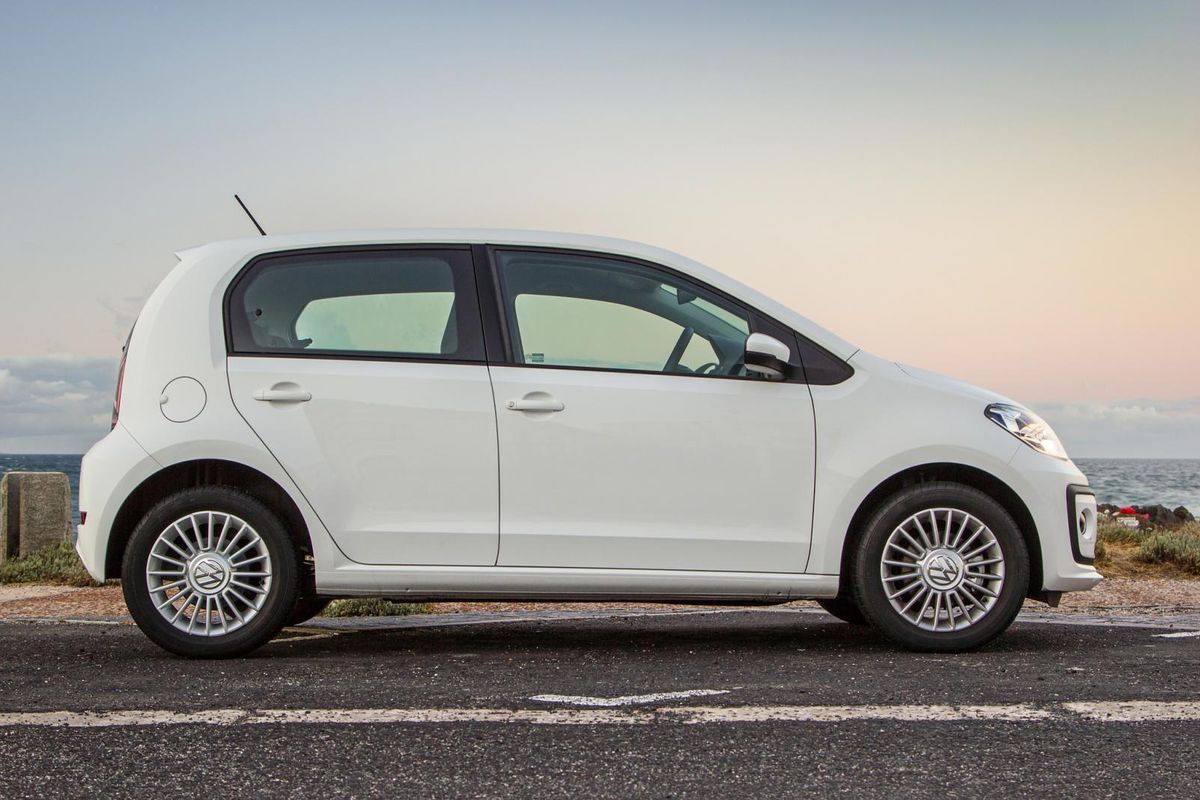
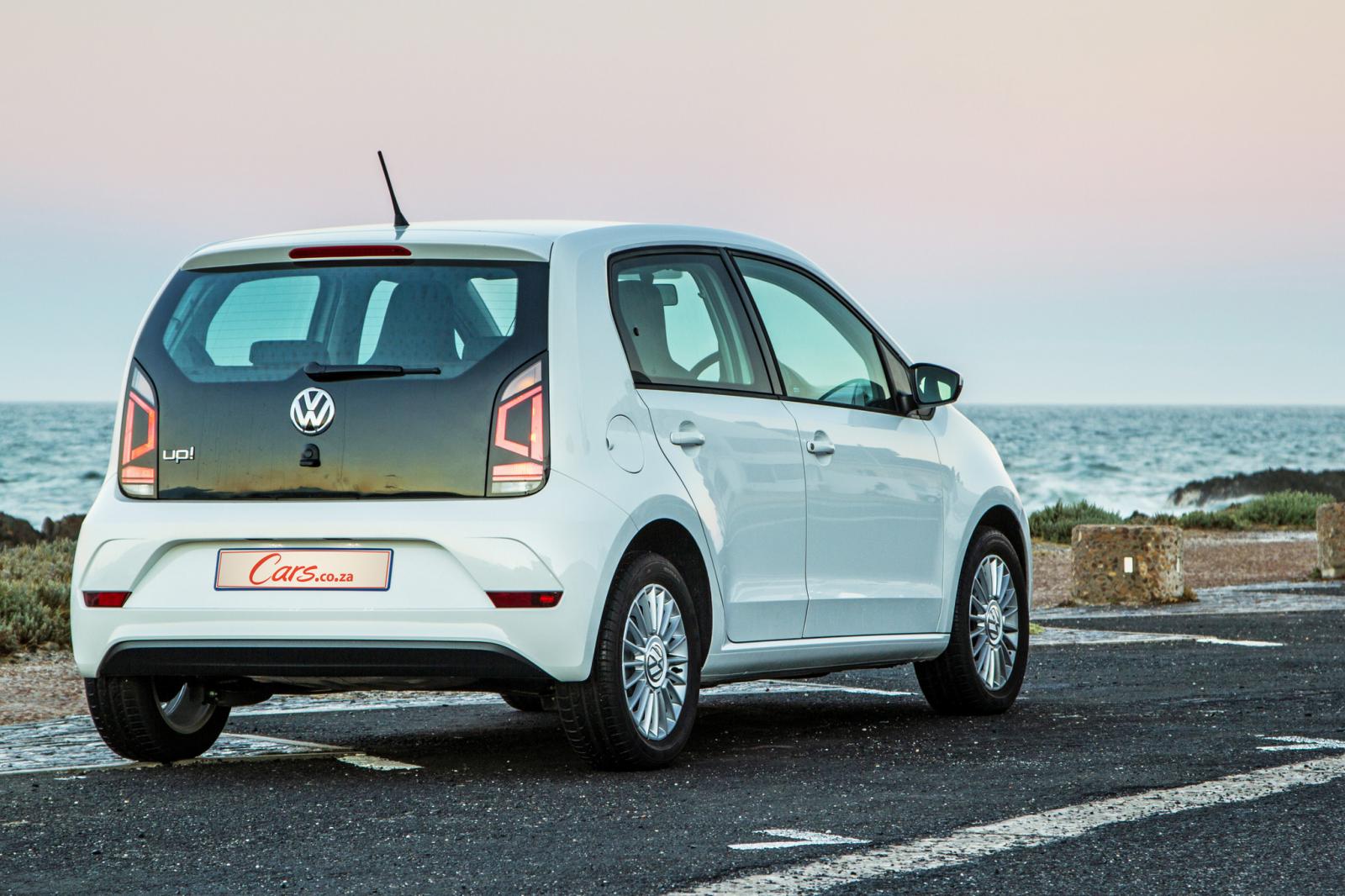
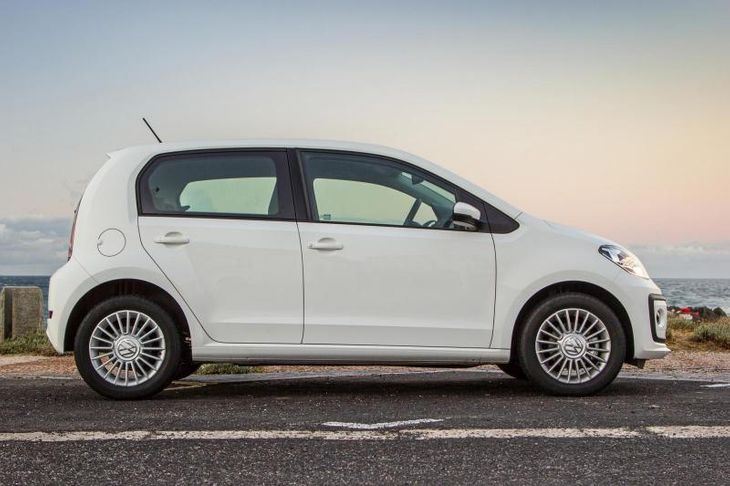
The recent facelift has introduced subtle but effective styling revisions. Up! still turns heads.
Facts & Figures
Price: R179 900 (April 2017)
Engine: 1.0-litre three-cylinder naturally-aspirated petrol
Transmission: 5-speed manual
Power: 55 kW
Torque: 95 Nm
Fuel Consumption: 4.6 L/100 km (claimed)
Top speed: 173 kph
0-100 kph: 13.5 sec
Facelift Summary
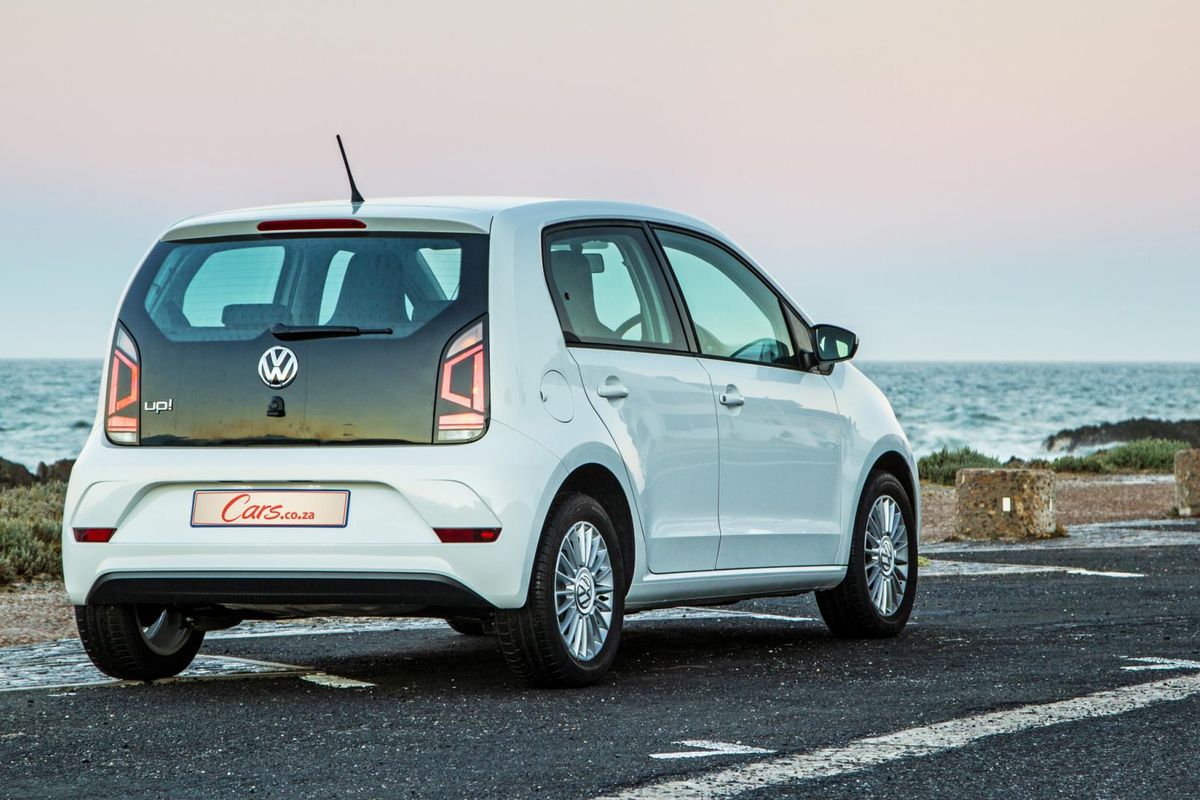
The changes to a winning recipe have predictably been small, yet effective. The new Volkswagen Up! is now only available with five doors, with the differences between the models being mostly trim and mild cosmetic changes. In terms of design, Up! now looks even more chic. LED daytime running lights dominate the front, while the rear lights have been modernised. Inside this Move up! you get a more sophisticated audio system which replaces the old-school white-on-black LCD setup. It's a good-looking little car with lots of charm.
The good:
Packaging and Finish
Though this is one of VW's more affordable offerings, the Up! feels like an upmarket product from behind the steering wheel.
As mentioned previously, the Up! is now only offered in the 5-door bodyshape. This makes the Up! a far more practical offering compared to the 3-door model offered previously. Access to the rear seats now no longer requires gymnastics and once seated, the space on offer (for 2 in the rear) is actually to be commended. But it's still a smaller, less practical car than a Polo Vivo, so make sure of your requirements. The boot (251 L) is of a decent size and features a clever drop-down mechanism, which increases the luggage capacity. Of course, you can also fold the rear seats down.
Being a Volkswagen product, one of the Up!'s big positives is the build quality. Few cars are this well assembled at this price point, and offers such design refinement and attention to detail. The tactile quality of the materials endows the cabin with a near-premium feel that none of its direct (on price) rivals can compete with.
Performance and Economy
Although Up! is now more practical, it remains small and light, so feels nippy to drive.
Power comes from a naturally aspirated 1.0-litre 3-cylinder petrol engine which delivers 55 kW and 95 Nm. That may sound woefully inadequate, but then, the Volkswagen Up! weighs very little and its engine is of the willing and responsive variety. Add in a light and precise gearbox action and you have a vehicle that performs with more verve than you might expect. It's not going to win the traffic light grand prix, but it certainly won't be last. Plus, its size means you can squeeze into the smallest of gaps.
A big positive is the fuel consumption of the Volkswagen Up! The engine doesn't need to work extremely hard to keep pace with traffic. Consequently, unlike turbocharged engines which are thirsty at full boost, the Up tends to be more frugal. While on test, the Volkswagen Up! returned figures well below 6 L/100 km. It’s interesting to note that a staff member once achieved 3.6 L/100 km in his own, previous shape, Up!
The Drive
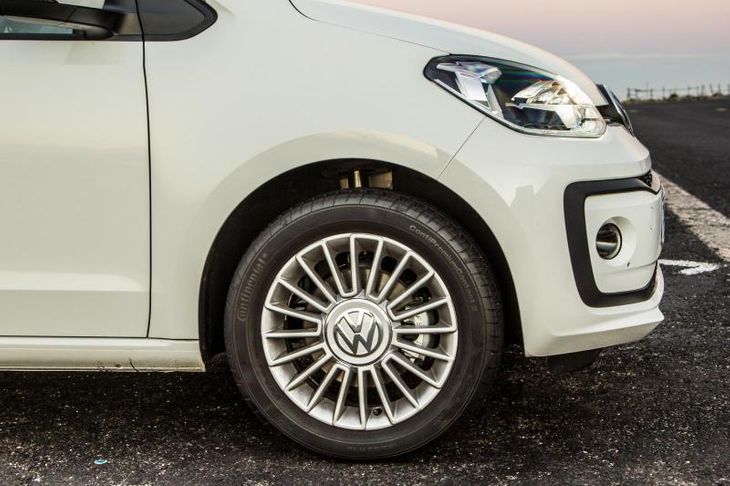
Move up! rides on steel 14-inch wheels as standard but stylish multi-spoke 15-inch items are offered as options for R3 100.
Volkswagen's Up! has lovely inner city manners; its diminutive size and the responsiveness of the little engine mean you can take gaps that drivers in other vehicles perhaps wouldn’t consider. Riding on (optional) 15-inch alloys with substantially chunky rubber, the superbly refined Volkswagen Up! soaks up most road imperfections, only becoming unsettled over harsh irregularities such as errant tree roots.
Another boon to driving enjoyment is the steering: direct, yet wonderfully light in terms of weight, multiple-hour stints in traffic are a breeze. The fact that our more performance-orientated testers found themselves enjoying the Up! in tight corners only serves to underline the Up!’s fun factor, aided of course by that previously mentioned 5-speed manual gearbox and a light clutch pedal action. In summary then, the Volkswagen Up! is an effortless and refreshingly uncomplicated vehicle to pilot around the city.
The bad:
Standard specification
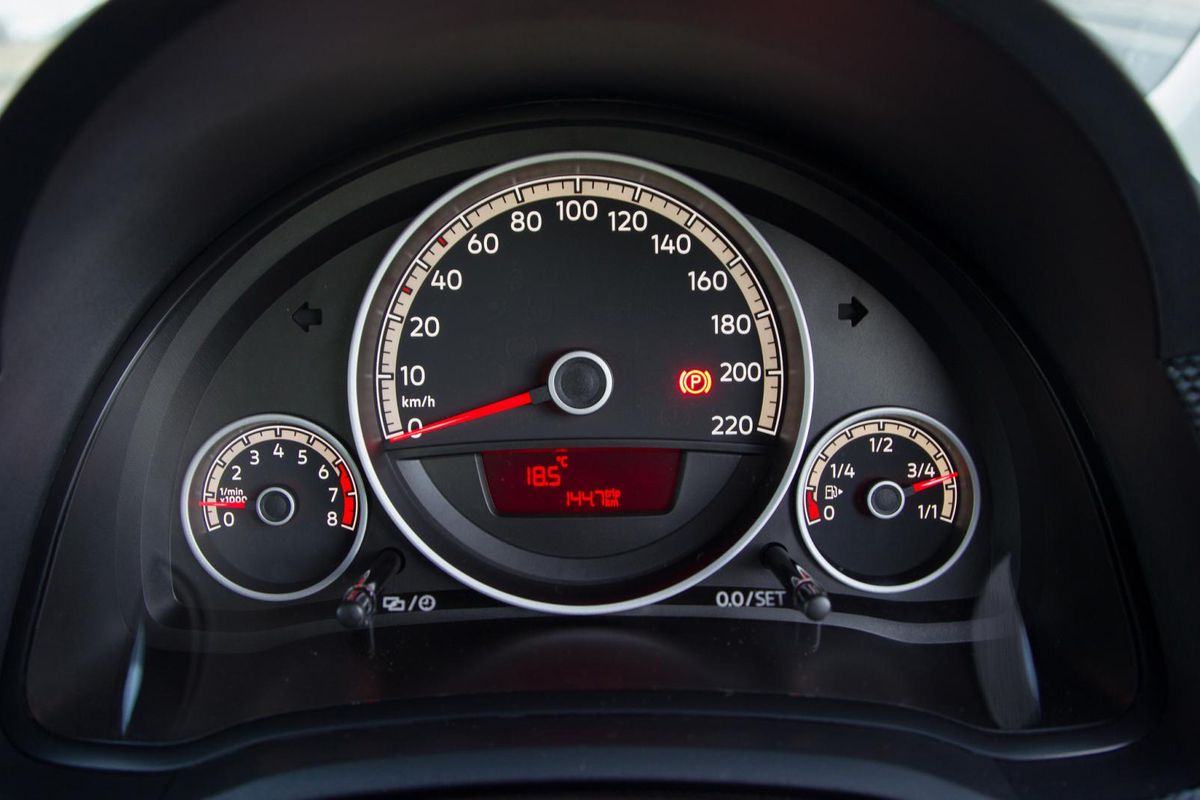
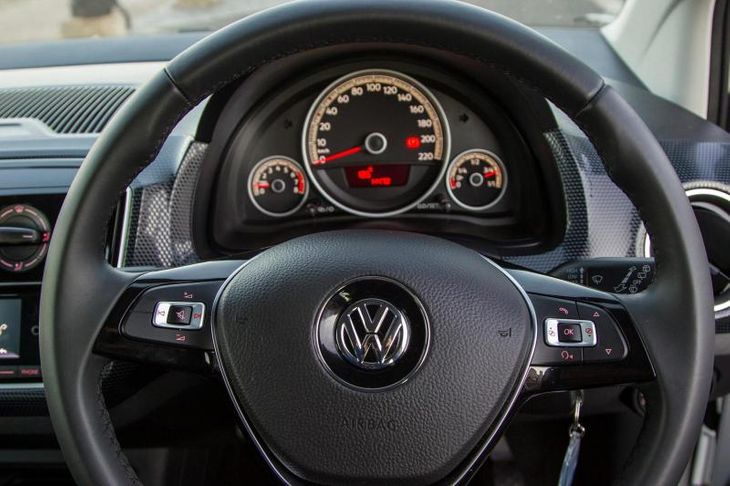
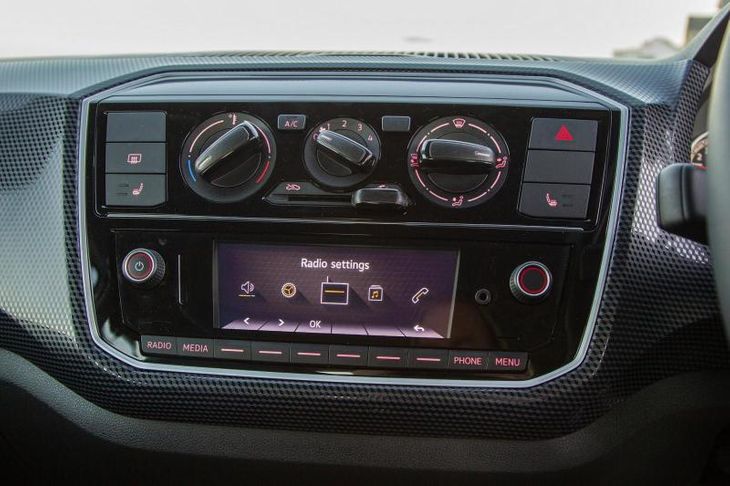
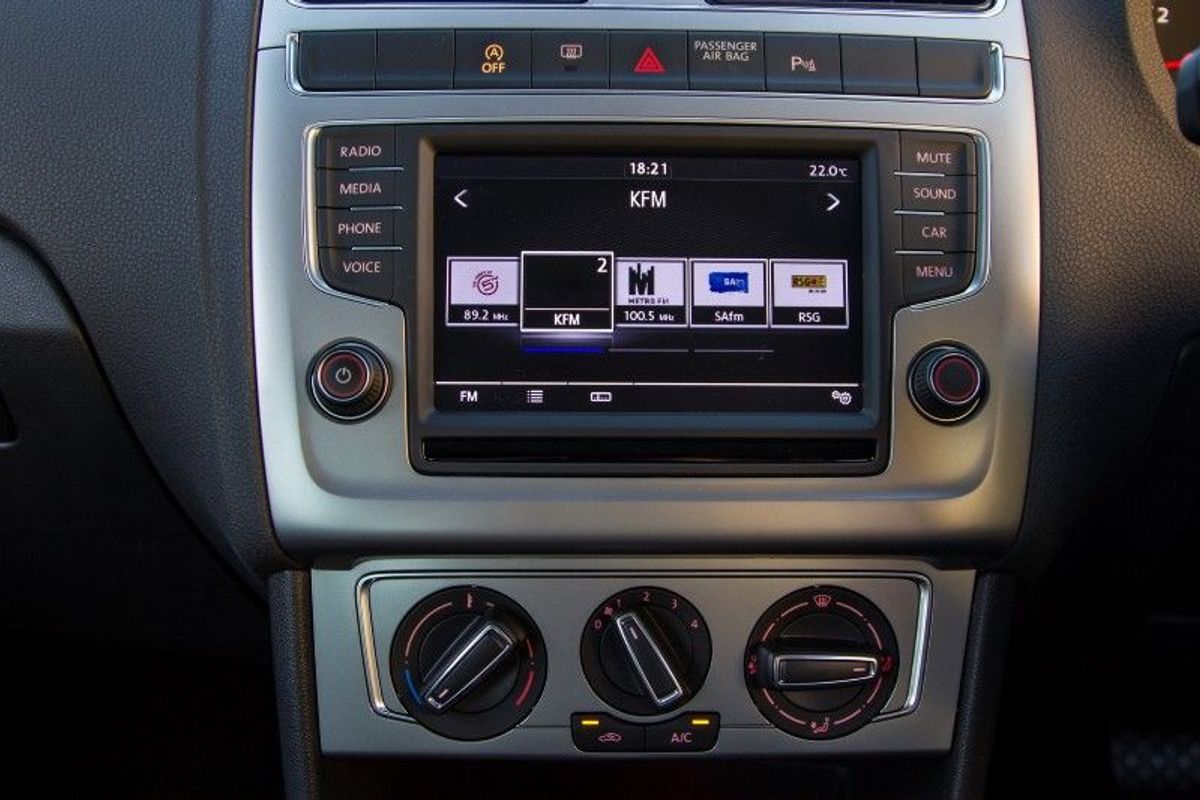
Much improved infotainment system is clear and easy to use. Simple user experience is often the best.
Equipment and trim for the Volkswagen Up! can only be described as fair. In Move Up! specification you have a number of options to consider that quickly bump up the price: The Maps & More dock for cellphone connectivity (R5 700); additional audio speakers (R1 000); Driver Pack comprising cruise control, park distance control and enhanced multi-function display (R4 250); and Winter Pack comprising heated mirrors, fog lights and heated seats (R2 500). Of particular interest is the Maps & More dock which promotes hands-free calling and uses the phone's features to integrate into the vehicle.
The standard Radio Composition Phone infotainment system is, however, a big step up from its predecessor's unit and we found it fuss-free to use. An SD card slot, Aux port and Bluetooth connectivity are thrown in too. In terms of safety features, the Volkswagen Up! comes with stability control, ABS and 4 airbags.
For such a stylish little city car it is annoying to have to pay extra for alloy wheels (the standard items are 14-inch steel), and a service plan costs extra too (starting at R4 576).
Verdict
New 5-door body has significantly improved the practicality of the Up!
There's so much to like about the Volkswagen Up! Provided you can afford it, and spend extra on the options list, it’ll make an excellent first set of wheels for a well-to-do student, while hardworking city dwellers will love that they can park it anywhere, and the budget-conscious will delight in its low running costs and meagre fuel consumption.
The Volkswagen Up! has, however, become quite expensive and can no longer be considered a budget car. That won’t concern Volkswagen much because having the Polo Vivo play a practical value leader role leaves the Up! with its chic design, elevated interior quality and feel-good factor to appeal to those looking for something more trendy and upmarket. If it's the latter that you like, and can afford, you won't be disappointed by the Up!
Suzuki is on a roll – it raked in the awards at the Cars.co.za Consumer Awards – Powered by WesBank, earlier this year and sales are growing nicely in a depressed market. What comes next? It may just redefine the modern-day compact hot hatch…
The Japanese firm's 4th-generation Swift (its top-seller locally) was revealed at the recent Geneva Motor Show and promises to be a very strong performer in the compact hatchback segment when it arrives in South Africa later this year.
But even better news for fans of fast and entertaining compact cars is that the Swift Sport (no pictures exist yet) is shaping up to be a real little firecracker. Now that hot hatches are out of the financial reach of most young car fanatics, a car such as the Swift Sport is potentially a realistic purchasing goal.
More power, less weight
The next-gen Swift Sport will be powered by Suzuki's new 1.4-litre turbocharged petrol engine that delivers 103 kW and 220 Nm of torque, most likely coupled with a 5-speed manual transmission. Without context, those figures look relatively meagre for a modern-day performance car, but note that the current naturally aspirated model has 100 kW and 160 Nm, so the torque in particular, has dramatically been upped.
More importantly, the new Swift Sport could weigh as much as 150 kg less than its predecessor, resulting in an unmatched power-to-weight ratio at its price-point. The current model accelerates to 100 kph in 8.7 seconds – we would not be surprised to see its successor achieve the same in well below 8 seconds, closer to 7 sec in fact. The new HEARTECT platform, developed to be extremely light and rigid, promises to make a great base for a compact hot hach. This time round, it looks like the Swift Sport will be offered in 5-door form.
We foresee a great battle between the Suzuki Swift Sport and next-generation Ford Fiesta ST for supremacy in the Fun Car category of the Cars.co.za Consumer Awards. Stay tuned.
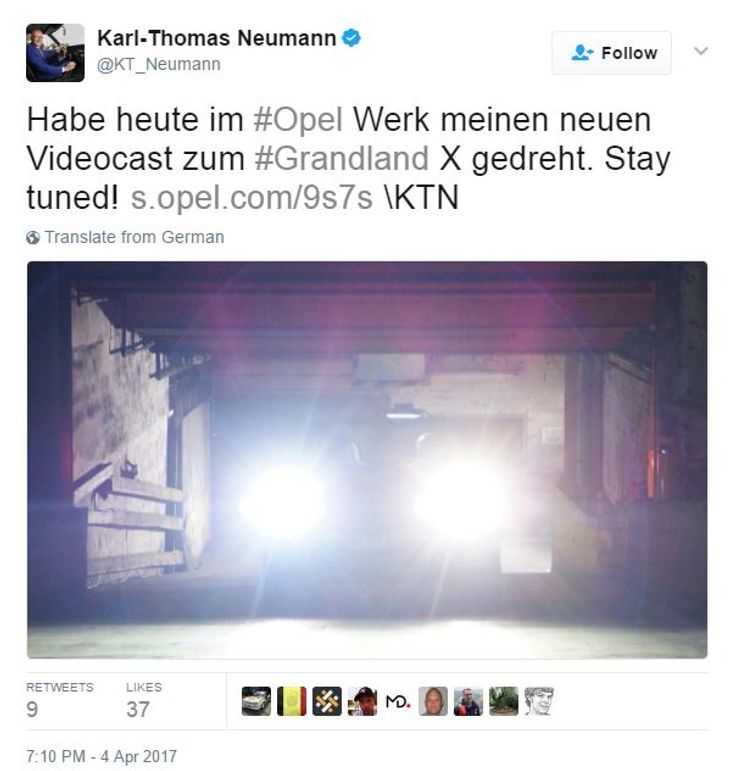
Opel CEO, Karl Thomas Neumann, has taken to Twitter and teased Opel’s new flagship SUV, the Grandland X.
Earlier this year, Opel announced an all-new compact crossover called the Crossland X. Opel’s CEO has now teased its big brother, the Grandland X SUV, on Twitter. The Grandland X is expected to be revealed soon and the flagship model is based on the new Peugeot 3008, which is due in South Africa soon.
Details of the Grandland X have yet to be revealed but you can expect a modern exterior and interior design with the possibility of an all-wheel drive version in the range. In terms of engines, the Grandland X will most likely be powered by a 1.6-litre petrol engine as well as a 1.6-litre diesel and 2.0-litre diesel engine, as offered on the 3008.
We will keep you updated as soon as more details are revealed.
Volkswagen Polo 1.0 R-Line (2017) Quick Review (w/Video)
Volkswagen recently added a new 1.0-litre turbo petrol derivative to the Polo range and it comes dressed in R-Line kit for added kerb appeal. Can the Polo R-Line’s performance and good looks justify its asking price? We tested it to find out…
We Like: Punchy engine, good ride and handling, good perceived interior quality
We Don’t Like: Pricey
Alternatives
Ford Fiesta 1.0 T Titanium Auto: Priced from R274 900, the Fiesta offers 74 kW and 170 Nm from its turbocharged 1.0-litre engine. Note that the next-generation Fiesta is due locally late 2017 or early in 2018.
Renault Clio Expression Auto: Attractively priced from R264 900, the Clio offers 88 kW and 190 Nm of torque from its turbocharged 1.2-litre engine. A facelifted model is imminent.
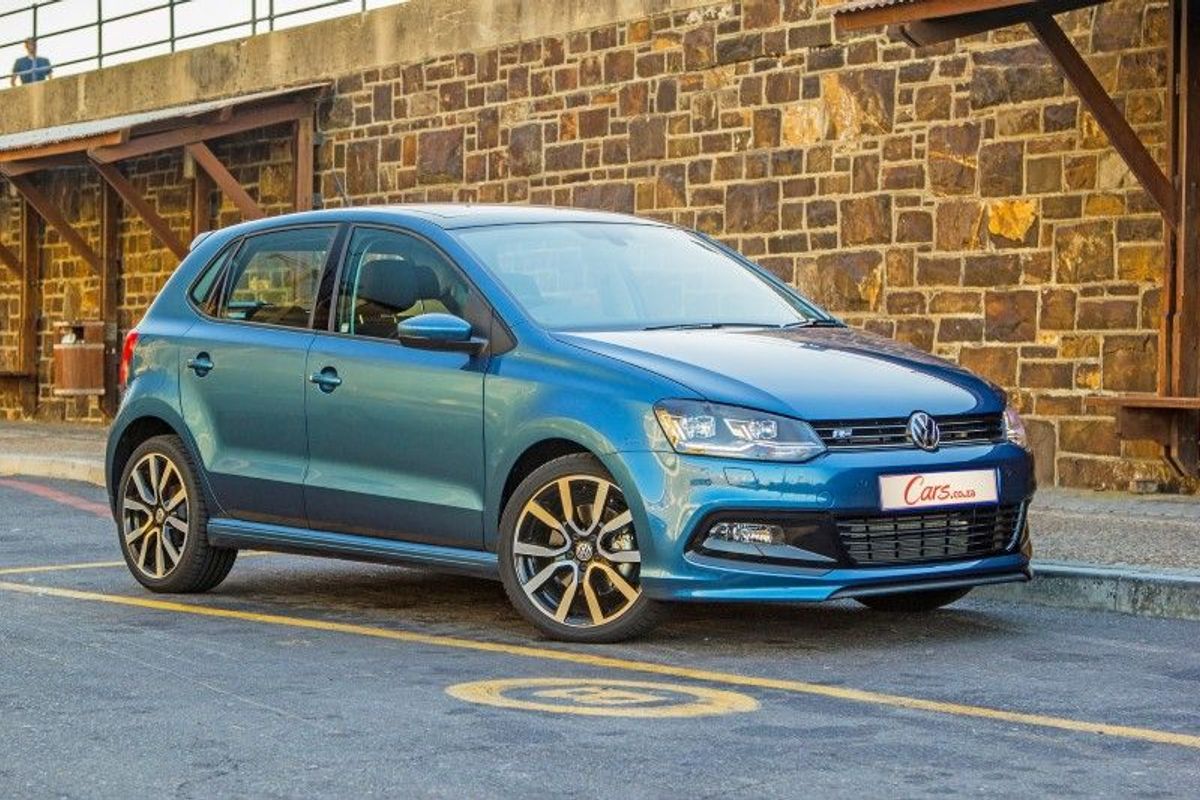
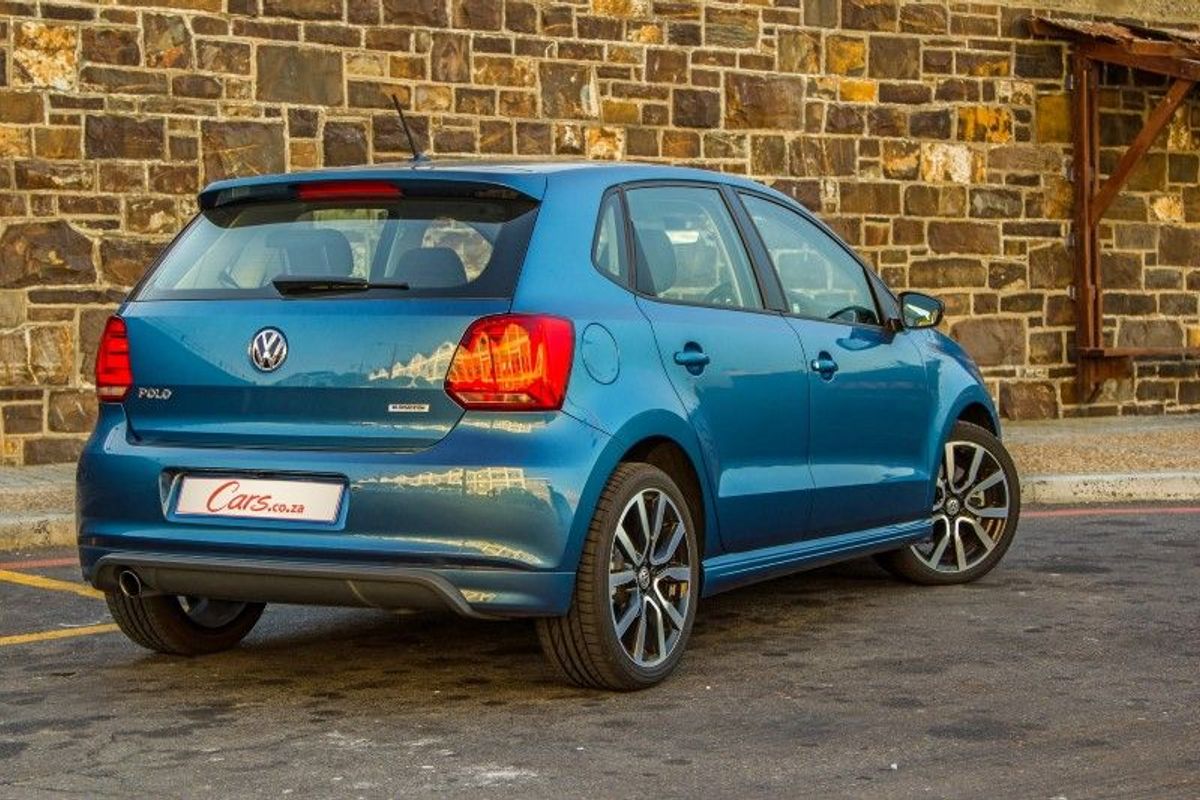
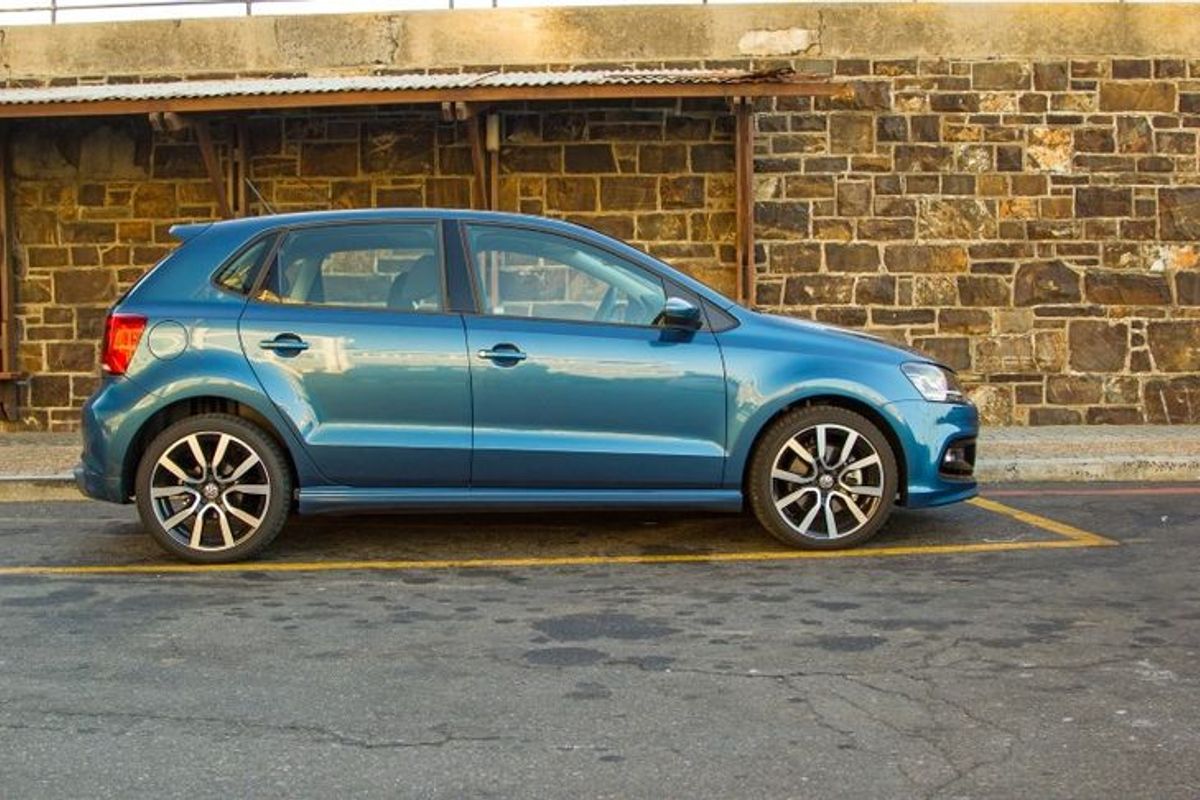
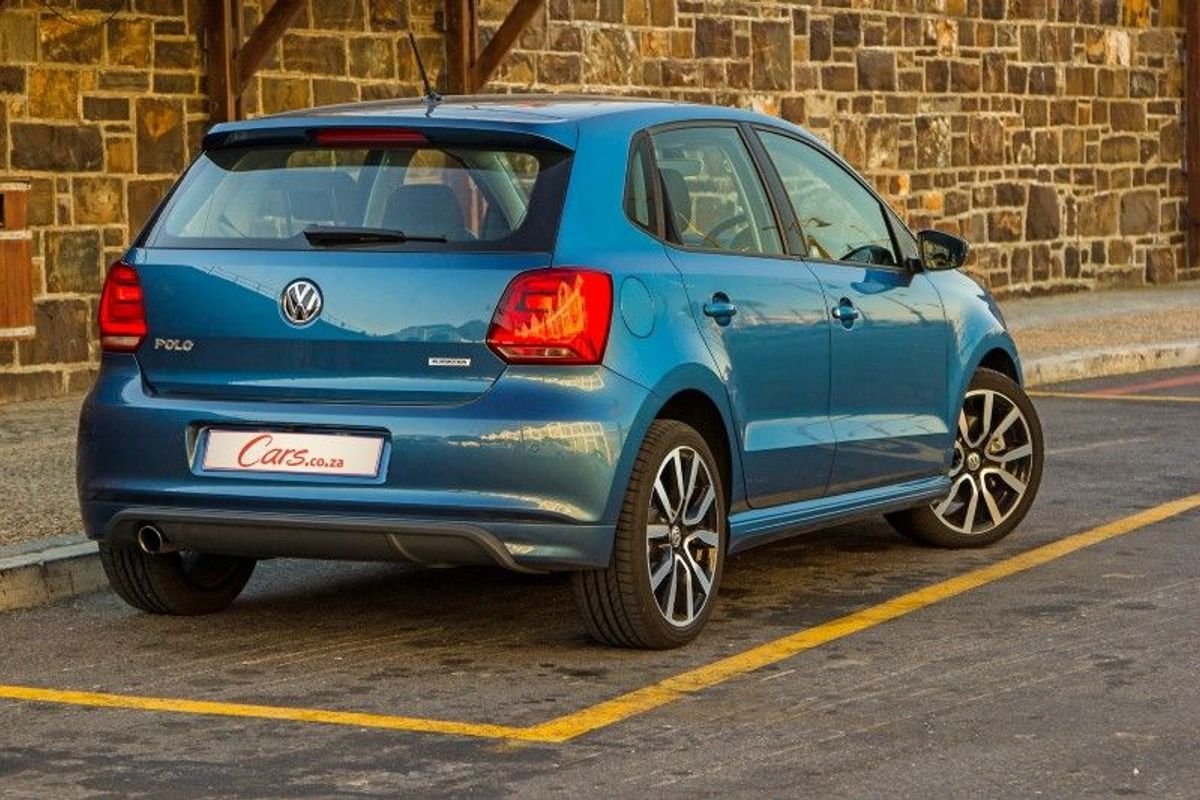
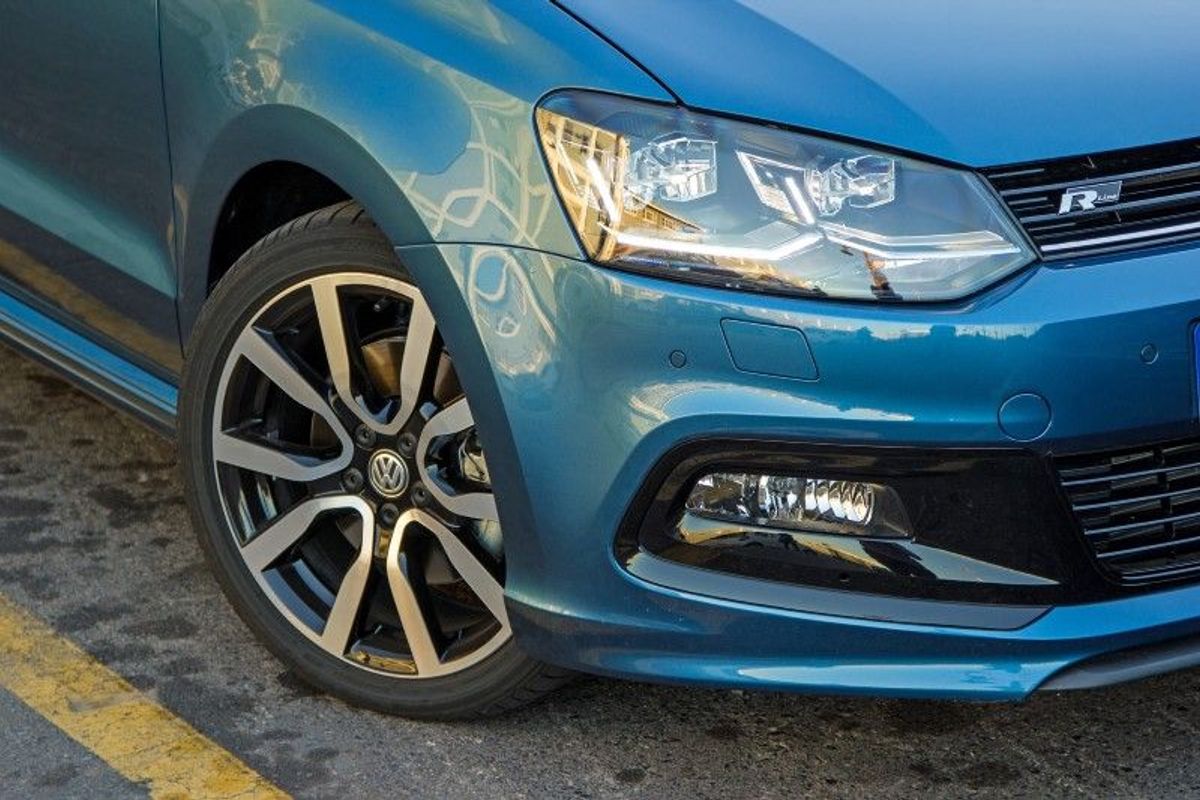
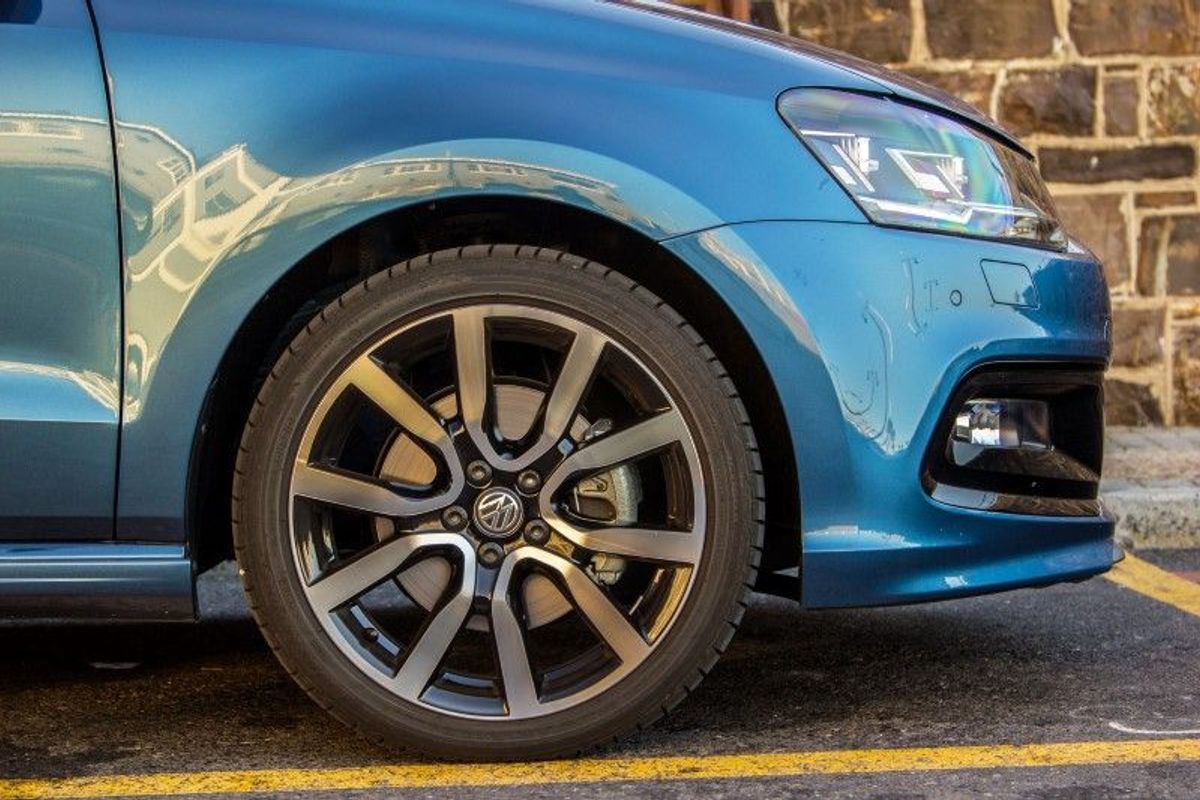
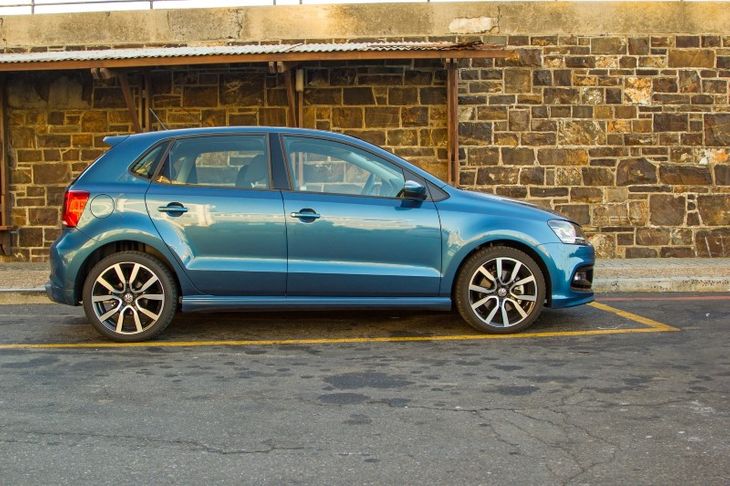
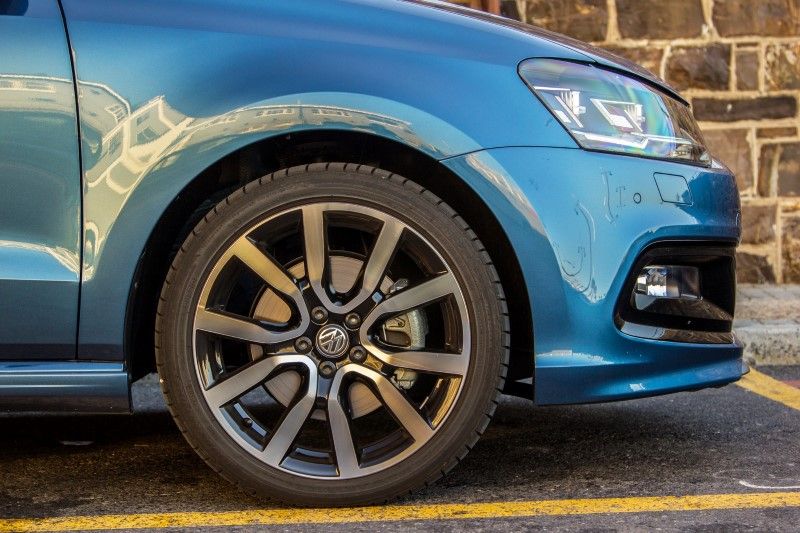
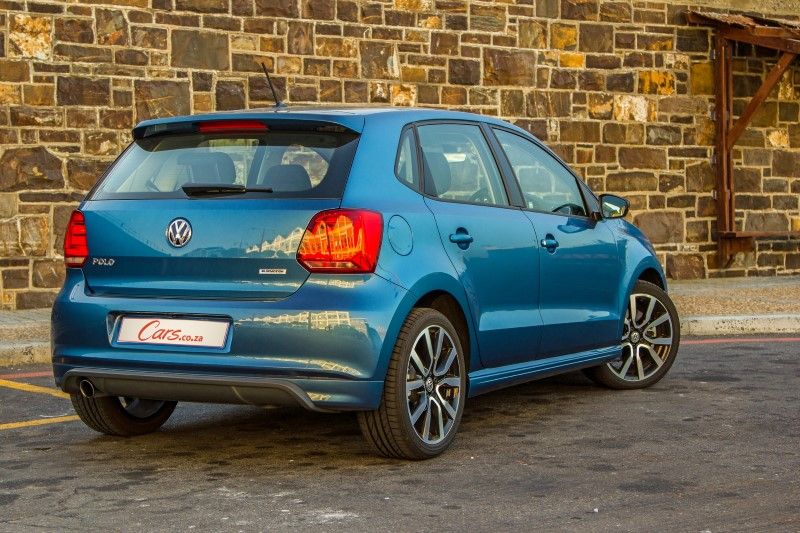
The Polo R-Line features sportier styling and comes fitted with a new turbocharged 1.0-litre, 3-cylinder engine.
Volkswagen recently expanded its Polo offering by adding a new 1.0 TSI model in R-Line trim. The engine, a new 3-cylinder turbopetrol will also do service in the facelifted Golf which is due to arrive in South Africa in May 2017. Now nearing the end of its lifecycle, the extremely popular Polo will be replaced in early 2018 by an all-new model, due to be revealed later this year.
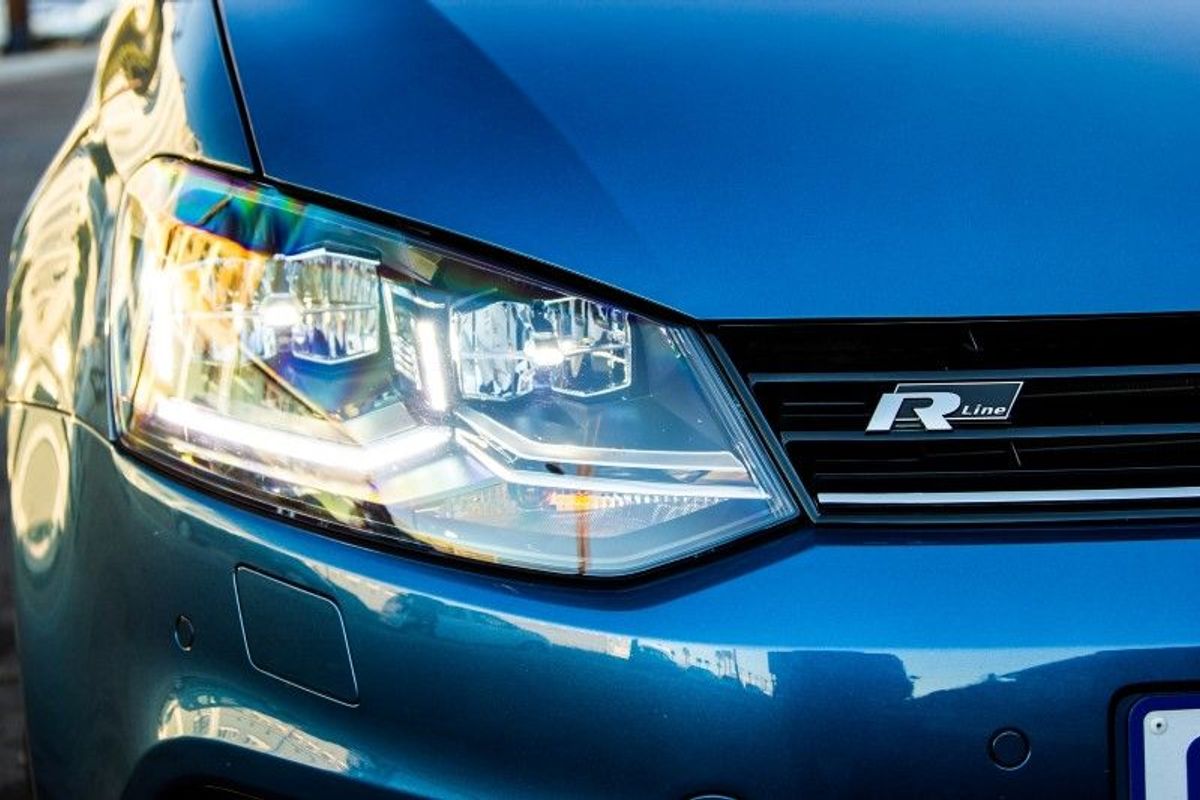
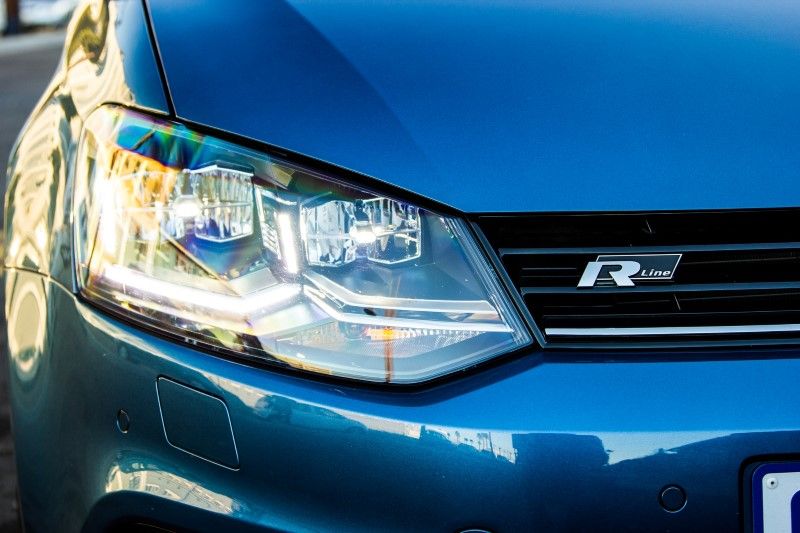
In the meantime, Volkswagen is looking to increase its already impressive Polo sales numbers with the Polo R-Line, which features an attractive R-Line body kit to differentiate it from the more conventional derivatives in the range. With a starting price of R292 400, the Polo R-Line isn’t exactly cheap, but is its performance and good looks enough to warrant a purchase?
The Good
Punchy performance
Punchy and easy to drive, the Polo R-Line offers good performance despite its small capacity engine.
A full 81 kW and 200 Nm – it is hard to believe that a 1.0-litre 3-cylinder engine, albeit turbocharged, can deliver such a healthy punch. Its performance is by no means earth-shattering, but you will certainly be pleasantly surprised by how quickly and easily the Polo R-Line gets up to speed.
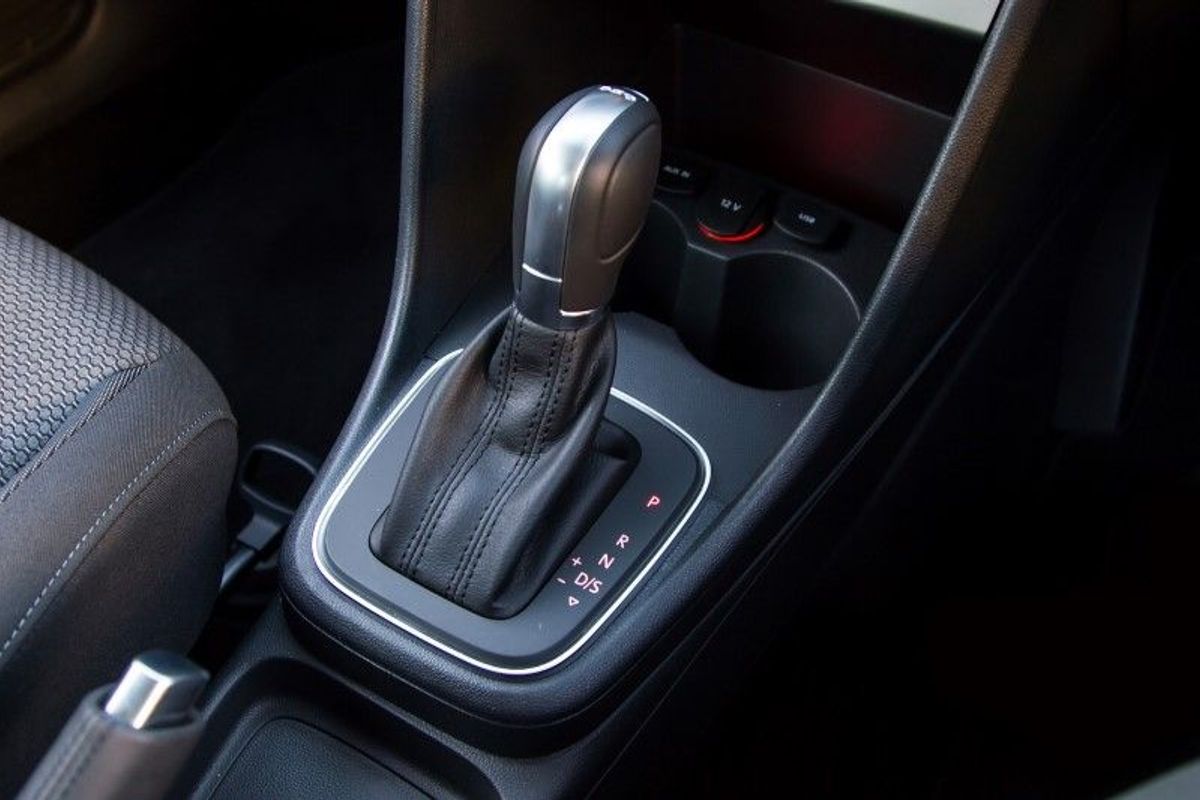
Working in conjunction with a 7-speed DSG transmission, gear changes, even under hard acceleration, are almost seamless. There is some lag if you flatten the accelerator pedal at lower engine revs, but the full kick of torque takes you by surprise at around 2 000 rpm and from there on, it just keeps pushing, with a hint of turbo whoosh audible from the chrome exhaust tailpipe. This engine compares favourably with rival products in terms of performance while raising the bar in terms of refinement.
The Polo R-Line performs particularly well in the city, where it nippily negotiates traffic, and it has no problem keeping up on the highway either. Despite the initial lag, overtaking is completed swiftly and the Polo R-Line has enough shove to put many larger-engined cars to shame. Overall, we found it to be punchy and fun to drive.
In terms of fuel consumption, Volkswagen’s official figure of 4.4 L/100 km is rather ambitious as we recorded figures in the region of 8.3 L/100km during our test period.
Ride & Handling
The Polo R-Line's positive steering feel and nimble handling ability makes it a pleasure to drive on a daily basis.
An admirable ride quality is one of the reasons the Polo has experienced such great success locally. This Polo R-Line is no different. Even though the suspension is on the firm side, buyers will find the ride pleasingly smooth, even on poorer road surfaces.
Also worth mentioning is that the Polo R-Line is quite capable in terms of its handling ability, adding a dose of fun factor to the driving experience. Its compact dimensions and positive steering feel give the driver confidence and it remains composed and direct when cornering at speed. The Polo R-Line corners with refreshing agility and nimbleness. Solid handling and comfortable ride quality makes the Polo R-Line a pleasure to drive on a daily basis.
Solid interior
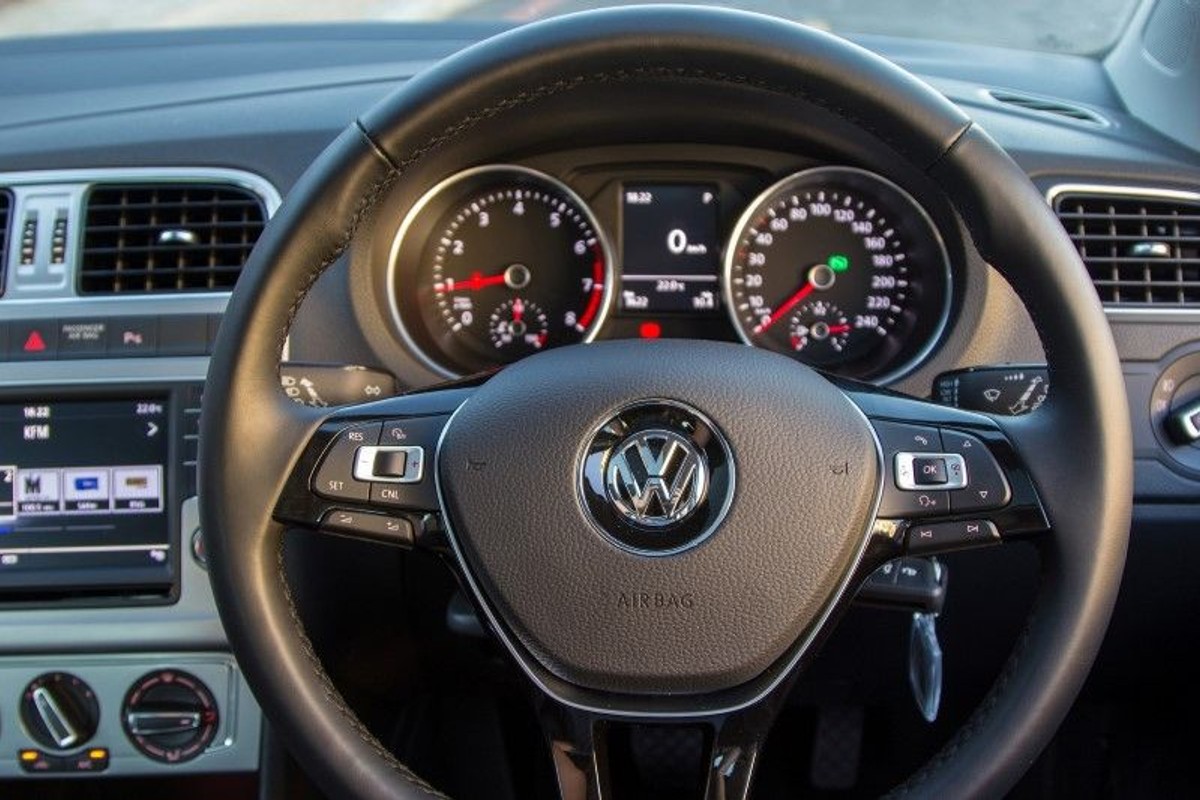
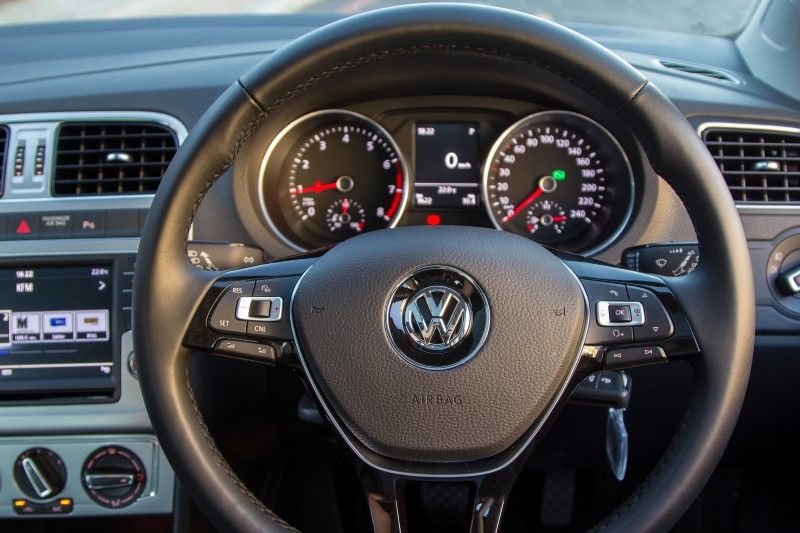
Buyers will appreciate the quality feel of the interior, which is arguably the best in its segment.
The Polo’s interior is well built, with a premium feel that its rivals can’t quite match in this segment. It’s easy to appreciate the cabin’s classically elegant layout and general sense of quality.
Standard features include a 5-inch touchscreen infotainment system, connectivity package with Bluetooth and USB functionality as well as an iPhone or iPod interface. Fatigue detection is also included and the front sports seats are upholstered in cloth. The steering wheel has mounted controls and front fog lamps are standard.
This test unit came fitted with a number of optional extras including a larger 5.8-inch touchscreen media system (R2 950), cruise control (R1 800), App connect (R1 500), LED headlights (R12 100), rear park assist with a reversing camera (R3 200), front and rear park distance control (R3 150), Light and Vision Package (R3 800) and a panoramic sunroof (R10 000).
The Bad
Small and expensive
That brings us to the issue of price. With all the optional extras fitted, as tested here, the Polo R-Line’s price swells to R327 700. That’s an expensive pill to swallow. The reality, however, is that while Volkswagen products are generally more expensive comparatively speaking, brand appeal has kept sales figures healthy.
Considering the relatively small size of the Polo with its average luggage space (280 litres) and slightly cramped rear quarters, even the base price of R292 400 is a lot of money. This may cause potential buyers to consider more affordable options or even consider something more practical, like a compact crossover, for example.
Verdict
The price of the Polo R-Line is hefty, but it's likely to sell well regardless with quality and brand appeal adding to its allure.
Yes, the Polo R-Line is expensive, but it will appeal to those looking for a Polo with beefier looks and a punchy powertrain to boot. The Polo R-Line’s performance surprised us and coupled with its excellent ride and handling ability is difficult to fault. Interior quality is arguably best-in-class which does help to justify the car’s higher price tag. If you are looking for style and shove from your hatchback, then the Polo R-Line may be up your alley. Just go easy on the options.
Mitsubishi Triton 2.4DI-D Double Cab 4×4 Auto (2017) Review
If your vehicles don’t carry a Ford or Toyota badge on the nose, entering the bakkie market in South Africa requires equal parts bravery and excellent product. We’ve recently sampled the latest, long-awaited new-generation of Mitsubishi’s Triton 4×4 double cab. Does it have enough pull to steal a few sales from its established rivals?
We like: Extensive list of standard features, ride quality, off-road capability, good rear space
We don’t like: Plain cabin design
Alternatives
The staple: The Toyota Hilux is still SA’s best-selling vehicle. Buyers flock to this long-established bakkie due to its reputation for reliability and excellent resale value. The top-spec Hilux 2.8 GD-6 double cab 4×4 Raider automatic is priced from R573 500 (March 2017).
The Hilux's archrival: The Ford Ranger has led a strong charge against the Hilux, occasionally topping the Hilux in terms of month-to-month sales. Muscular looks, strong engines and advanced infotainment are the draw cards here and the Ranger 3.2 double cab XLT automatic is priced from R588 900 (March 2017).
The poser:Volkswagen’s Amarok has proved itself as a worthy rival in the double-cab bakkie market. With an SUV-like interior and ride, flashy good looks and a huge load bay, it has won over more than a few buyers locally. The Amarok 2.0 BiTDI double cab Highline 4Motion automatic is priced from R587 400 (March 2017). Note that the facelifted Amarok is due in South Africa soon.
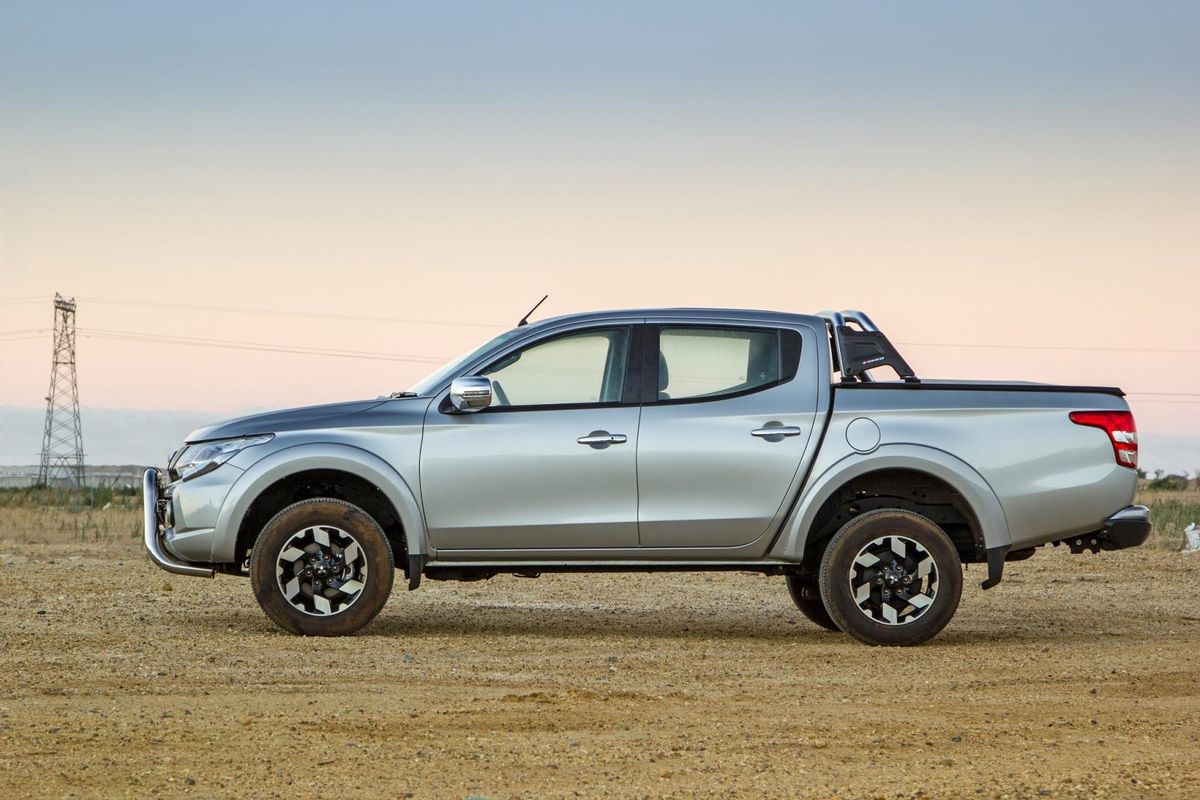
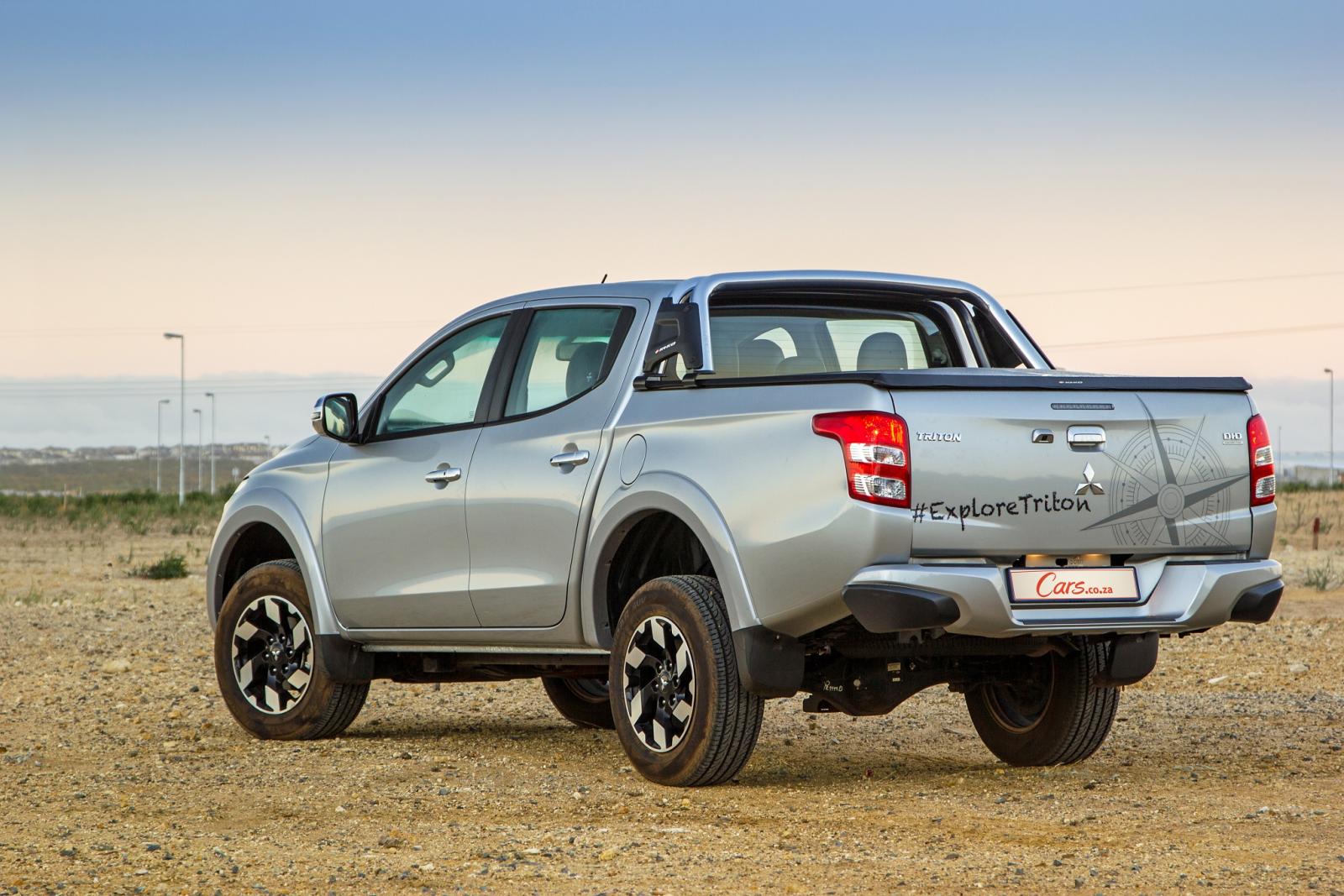
We see the Triton as offering an interesting blend of workhorse and leisure talents.
The top-of-the-range 2.4DI-D Double Cab 4×4 Auto derivative is priced at R559 900, nearly R60 000 less than the range-topping Ford Ranger Wildtrak, and just R13 000 cheaper than the most expensive Hilux, the 2.8GD-6 4×4 Raider. Given the Triton’s small displacement engine, perhaps it is fairer to compare it with the 2.2-litre Ranger and 2.4-litre Hilux, but bear in mind that the Triton’s 2.4-litre turbodiesel motor is significantly more powerful than both of the aforementioned engines.
In our assessment, the Triton offers a midway point between the Ranger and the Isuzu KB; striking an interesting balance between the feel of a premium bakkie and the robust practicality of a workhorse. Bear in mind that the Triton is virtually the same vehicle as the Fiat Fullback (the latter is based on the former, FYI). However, the Fiat makes use of an older generation 2.5-litre Mitsubishi motor. Waiting for the newer, more efficient engine to become available was the main reason that Mitsubishi SA delayed the launch of the new Triton. The Fiat, however, is significantly cheaper than the Triton, at R468 900 for the top-spec 2.5 DI-D Double Cab 4×4 LX model.
How does it fair in terms of…
Kerb appeal?
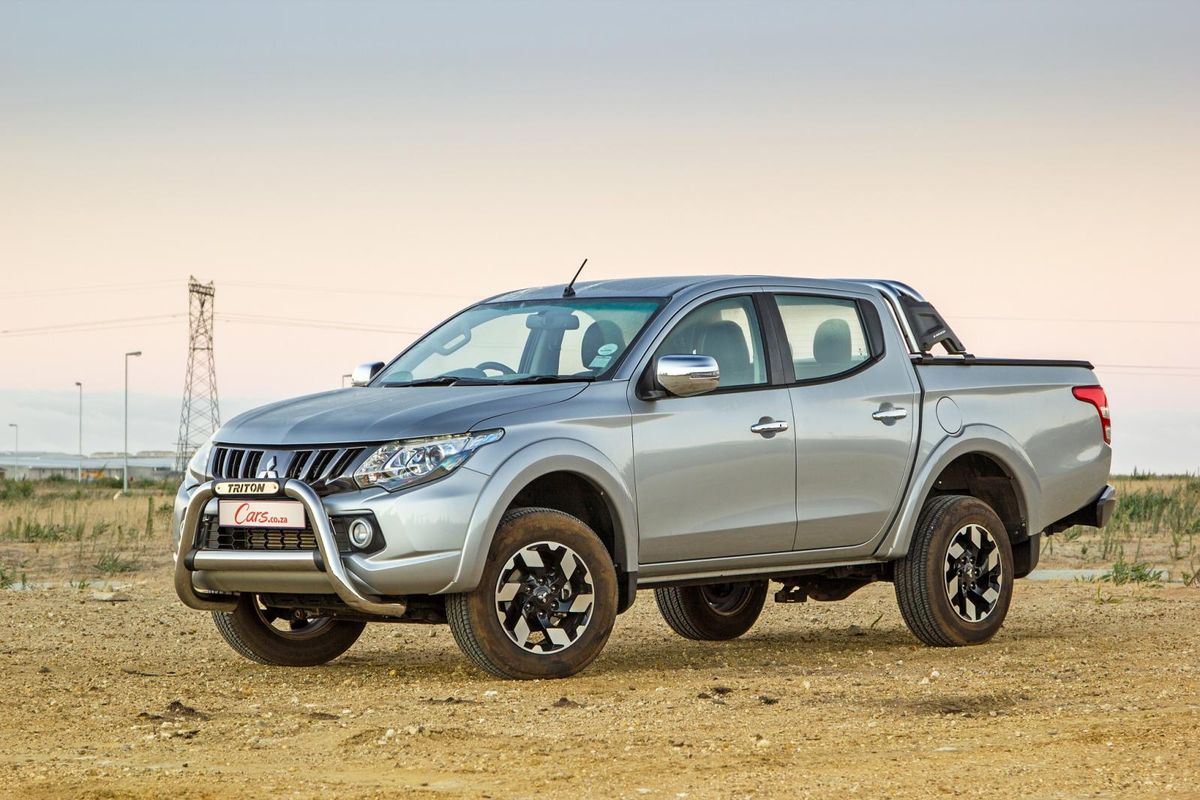
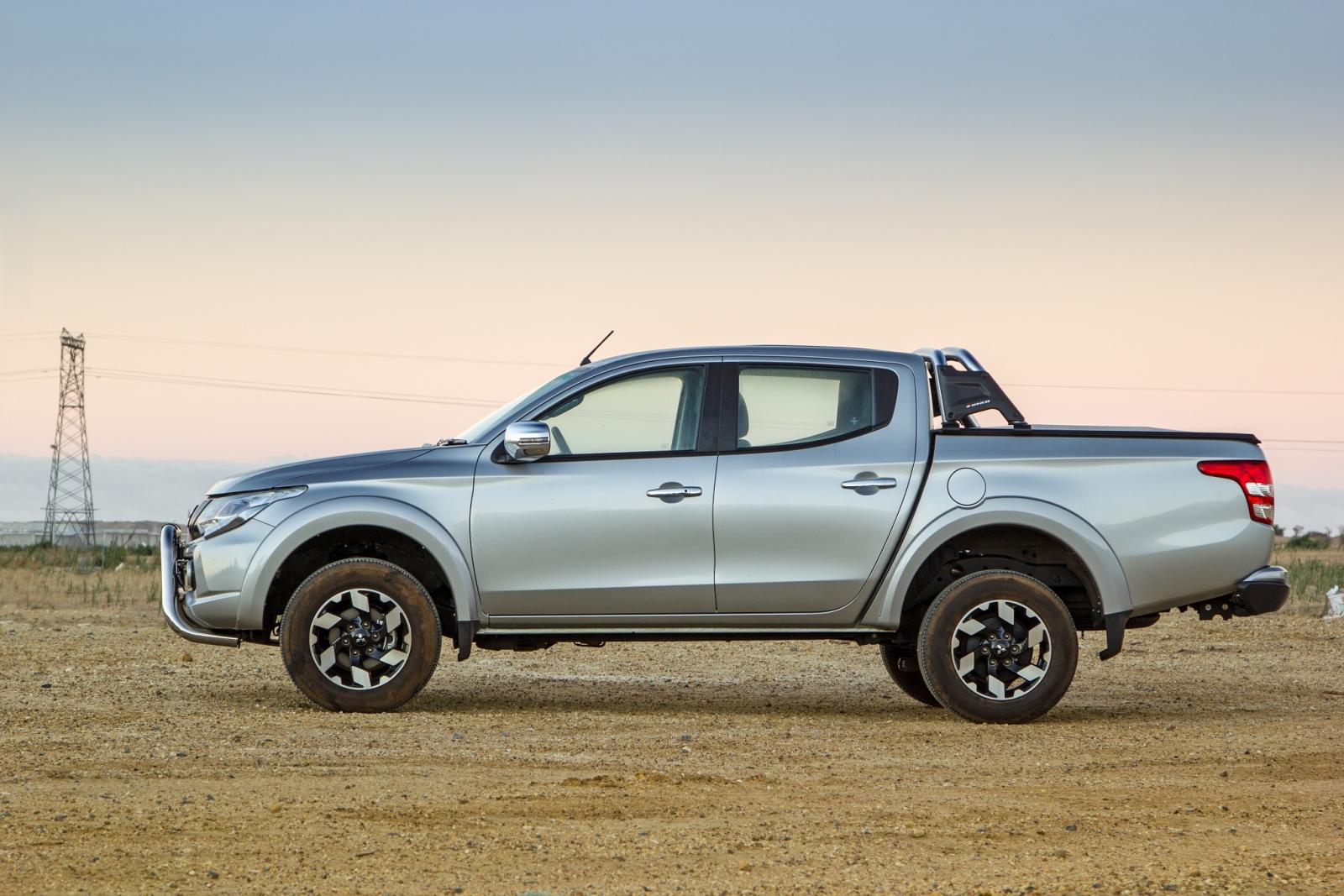
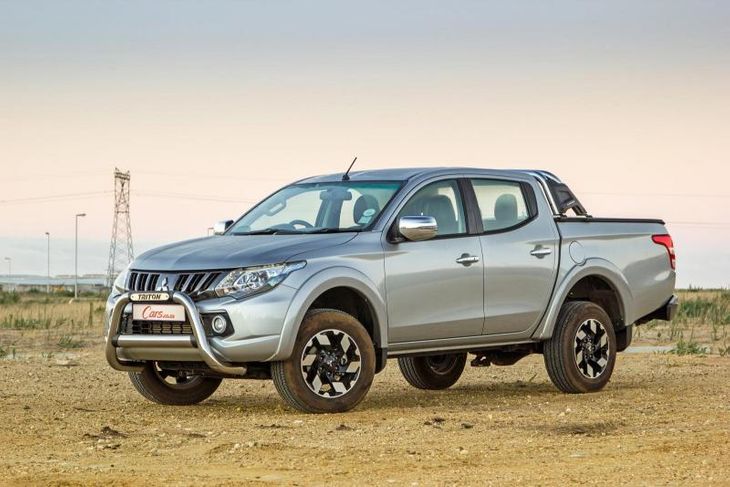
A sharp, tapering silhouette gives the new Triton commanding presence on the road.
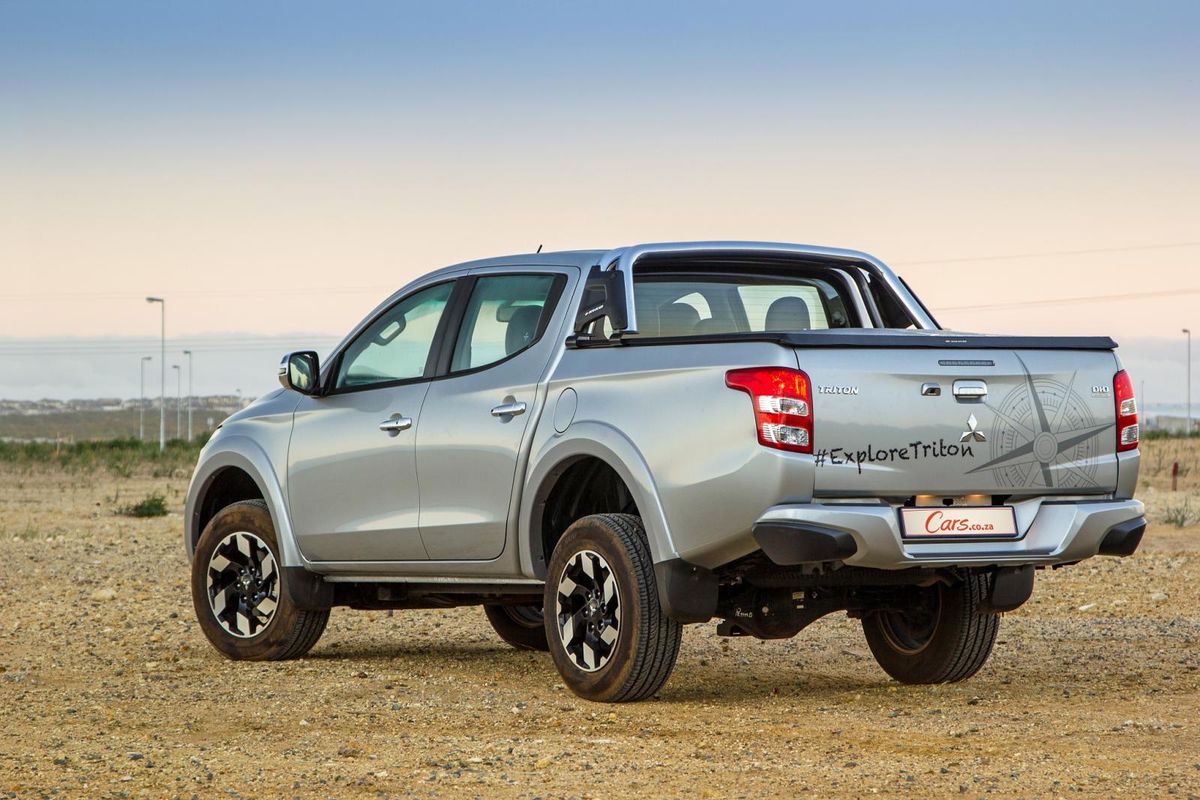
There’s no doubt that the Triton is a handsome bakkie. With sharp design cues and a shoulder line which rises dramatically from the nose to the tail, the new Triton drew a fair amount of attention in traffic. The sporty rollover bar is a very nice touch indeed and certainly adds to the purposeful look of the vehicle.
In a segment where good looks are increasingly important, and in a motoring culture where the bakkie is often a status symbol, the Triton surely has enough kerb appeal to rival the established players in the double-cab bakkie game.
Ride quality and ease of use?
The reality is that most premium bakkies will spend the majority of their lives commuting on tar. Modern bakkies have to offer an acceptably comfortable ride quality and in that sense the Triton delivers. The Triton can feel slightly jittery at highway speeds when the tarmac is less than perfect but this is typical of the suspension setup on most bakkies and is not notably worse than any of its rivals. The Triton, in auto guise, makes for an impressive daily driver. The torque of the motor is easily accessed, the steering feel is light and the ‘box swops cogs with minimal intrusions. You quickly find yourself steering the vehicle along with barely a finger on the steering wheel, elbow resting on the window sill.
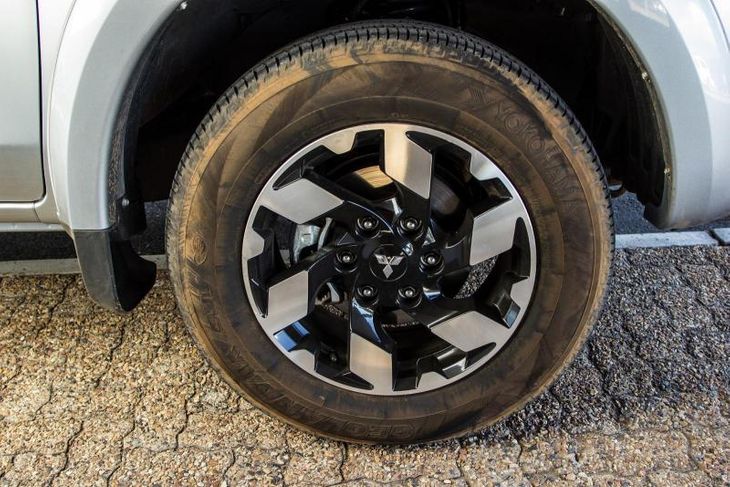
Striking alloy wheel design for this range-topping derivative.
Practicality and towing ability?
There is some confusion as to the towing capability of the Triton. According to the spec sheet which accompanied the vehicle supplied by Mitsubishi SA, towing capacity (braked) is rated at 1 500 kg. However, on various Australian car sites, the braked towing capacity is rated at 3 100 kg. This is 400 kg shy of both the Ranger and Hilux, which are rated at 3 500 kg. Mitsubishi South Africa says the anomaly is the result of specification levels available to the South African market currently, and that the situation is likely to change when the range is expanded later this year (probably 4th quarter).
Load carrying capacity/payload is quoted as 1 030 kg, but we noticed that, given the design of the load bay, the bed does seem to be quite shallow compared to its rivals'.
Comfort features and infotainment systems?
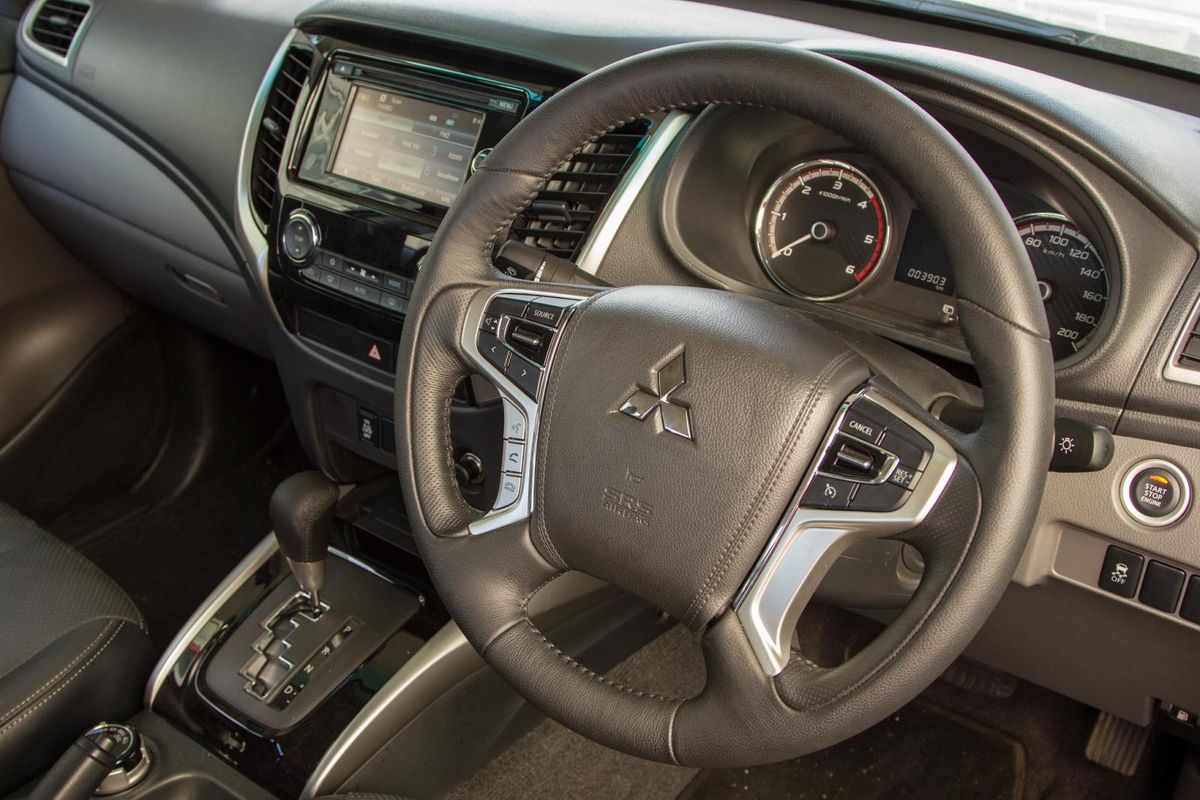
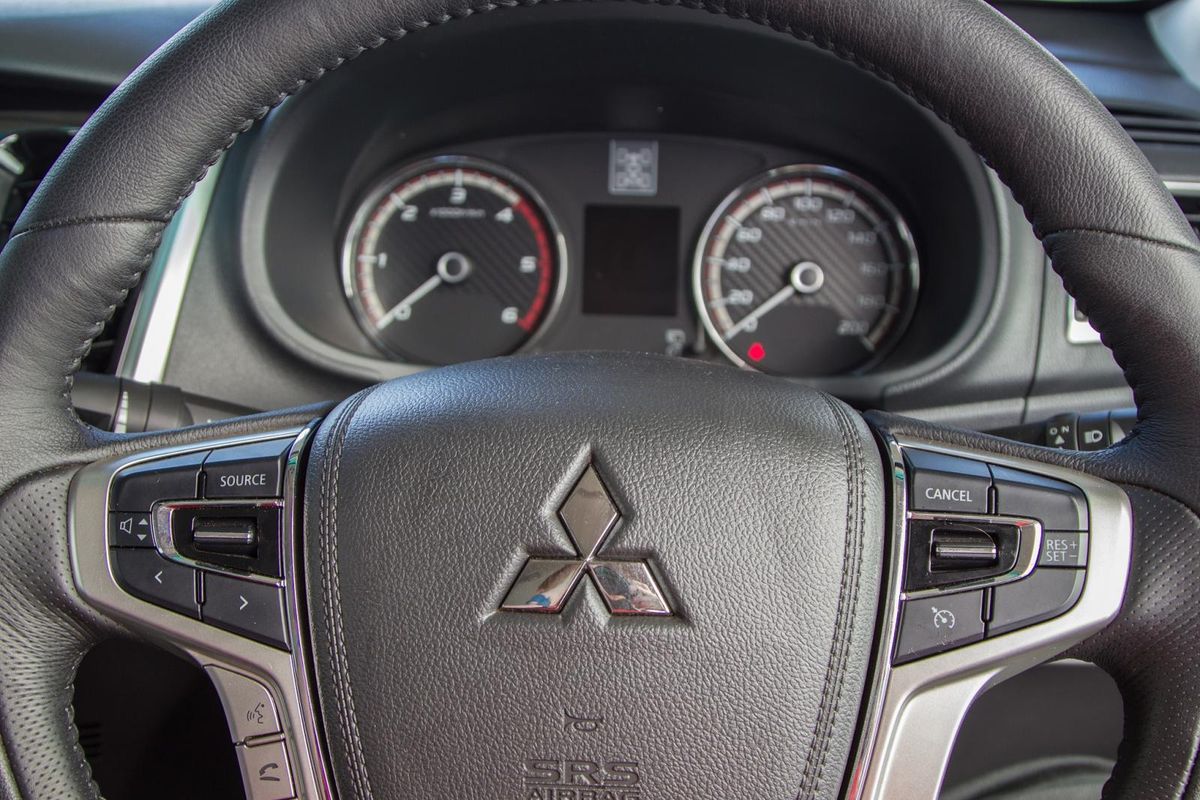
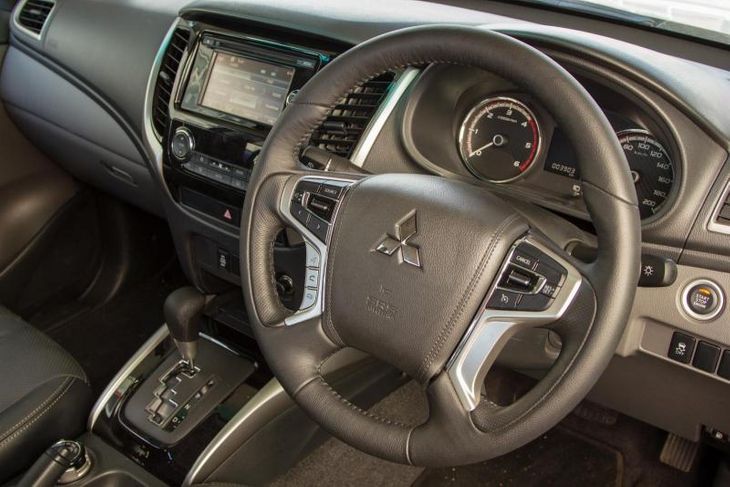
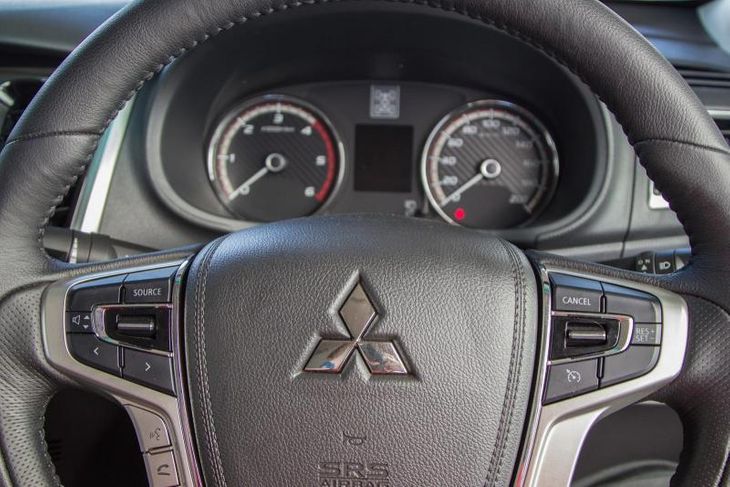
Leather-wrapped steering wheel and splashes of piano black plastic and satin-silver accenting attempt to lift cabin ambience.
At first glance, the Triton’s interior may appear sparse. The dashboard has a no-frills design and is relatively plain-looking compared to its rivals. However, it is well equipped. Dual-zone climate control, cruise control, a multifunction steering wheel, leather upholstery, trip computer, a touchscreen infotainment system featuring a USB port and Bluetooth, topped off with electric side mirrors makes for an impressive list of standard features.
However, it must be noted that the infotainment system appears very dated by modern standards. It is, however, easy to operate and switch between functions, but connecting our smartphones using Bluetooth wasn't exactly a smooth affair. Navigation is not included.
Instrumentation is very basic in appearance compared with flashier Ranger and Hilux displays.
Turbodiesel performance and efficiency?
As mentioned, the wait for the availability of the latest-generation 2.4-litre turbodiesel motor resulted in the delay of the Triton’s introduction to the local market. This is the only engine available in the Triton range. We feel it was largely worth the wait, as the new motor is noticeably quieter and offers 30 Nm more torque than the previous generation's 2.5-litre turbodiesel, which is offered in the Fiat Fullback.
Mitsubishi has made much fuss about the fact that the new engine is leaner and greener than the older powerplant. However, in terms of on-paper fuel economy figures, the Triton’s average consumption figure is quoted at 7.8L/100 km, while the Fullback is quoted at 7.7L/100 km. Co2 emissions are equally similar, at 207g/km and 206g/km respectively. In reality, we found the Triton to run at around 10 L/100 km in real world driving, which is better that what we've experienced with the 3.2-litre Fords by some margin.
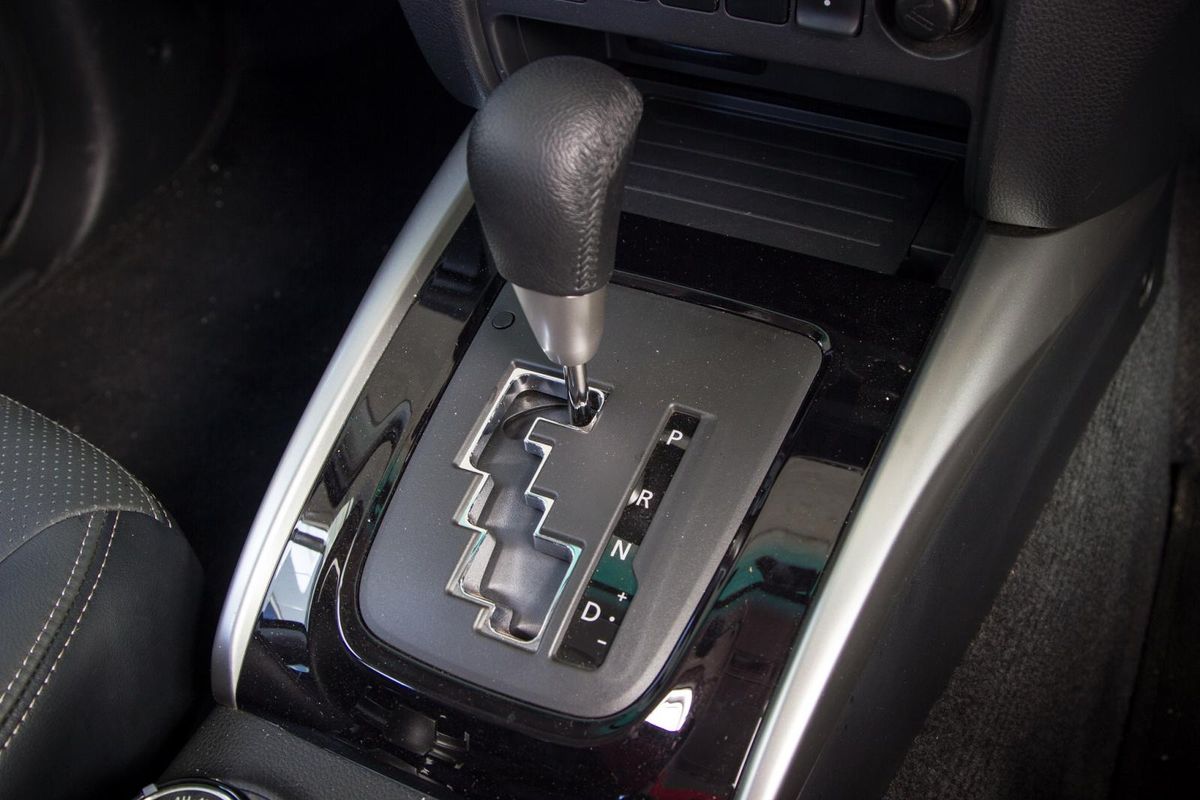
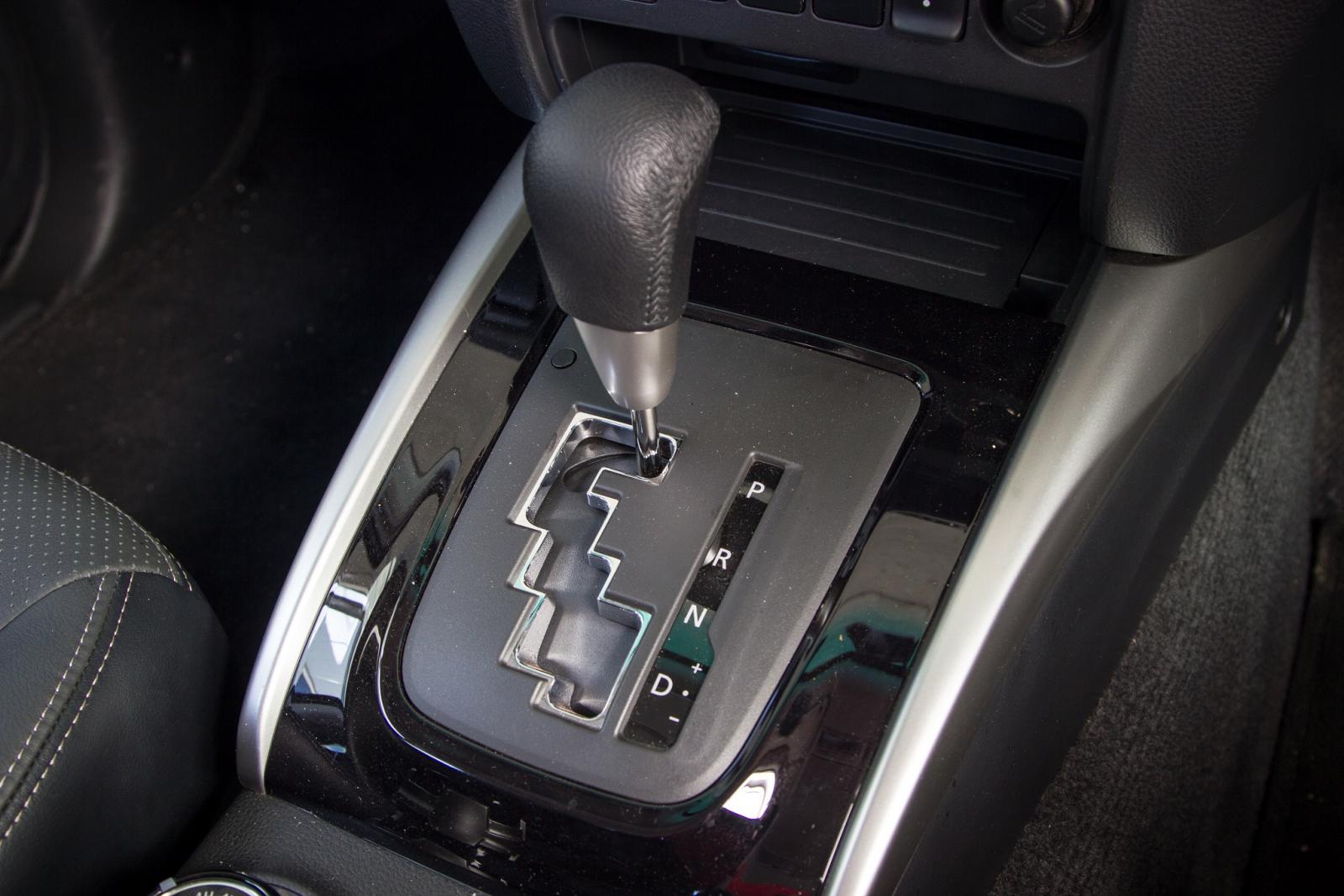
5-speed Automatic transmission is fitted, and well matched to the engine's power delivery characteristics.
Despite the smaller displacement of the 2.4-litre engine, it punches above its weight, comparing favourably with the 2.8-litre turbodiesel found in the current Hilux. With a power figure of 133kW and torque quoted at 430Nm, that easily gives the 130kW and 450Nm of the Toyota a proper run for its money. However, the Toyota’s peak torque arrives at a low 1 600 rpm, compared to the Triton at 2 500 rpm. In practice, it does feel like most of the torque arrives sooner, and even though the automatic is only a 5-speed, compared to the Toyota’s 6-speed, it does feel as if the engine’s power is managed effectively in each gear.
We took the Triton on a 300 km freeway journey to the quiet West Coast village of Paternoster. With the cruise control set to 120 kph, the Triton proved itself to be a decent cruiser. Overtaking ability wasn’t hugely impressive, but we also didn’t struggle to pass slower moving traffic.
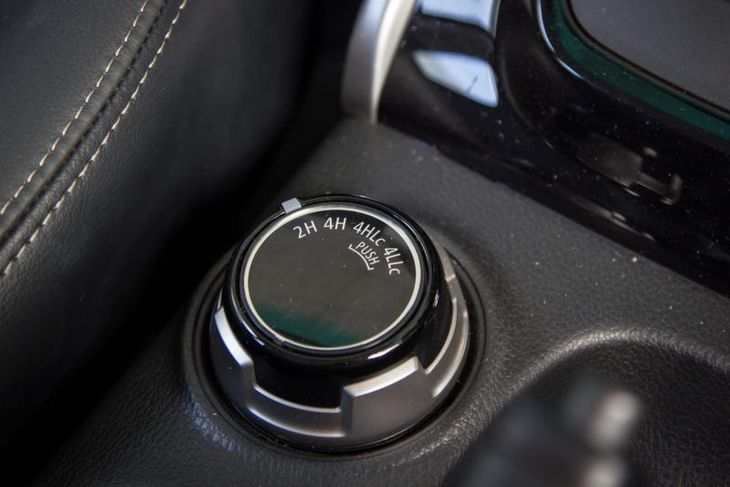
The 4×4 models in the range now feature Mitsubishi’s venerable Super Select 4×4 system found in the Pajero. Four modes are available, including low range (with locked centre differential) and the system features a separate lockable rear differential. The system is operated by a simple rotating knob mounted near the handbrake. It must be said that the Triton’s ride quality was impressive on gravel. It does feel like the sort of car which would offer occupants a comfortable journey on all but the very worst dirt roads.
The Pajero's Super Select 4-wheel drive system has been carried over to the Triton and works a treat.
Pricing and warranty
At R559 900 (March 2017), the top-spec Triton makes for a bit of a bargain compared to its range-topping rivals. The Triton is sold with a 3-year/100 000 km warranty and a 5-year/90 000 km service plan with service intervals of 10 000km.
Verdict
The new Triton is a well-priced, attractive offering with a good reputation.
The Triton certainly offers a comprehensive level of specification for its asking price. While the infotainment system continues to lag behind rivals in terms of look and feel, this downside is not enough to detract from what is a comfortable, spacious and well-specced interior.
With a comfortable ride, sharp looks, a strong new engine and Mitsubishi’s tried and trusted off-road system, it appeals as both a daily driver and a workhorse, while ticking enough boxes to ensure it also qualifies as a leisure vehicle. Good manners on both gravel and tarmac and generous rear seat space make it very suitable for families tackling long journeys.
While Mitsubishi’s badge appeal may have faded a bit from its former glory during the Colt era, we feel the Triton is possibly the product the company needs to restore some much-needed lustre to the brand. Time will tell as to whether the new Triton holds up well on the second-hand market. But as a newcomer, we feel it offers enough to convince a good few South African motorists to consider it instead of the ever popular Toyota and Ford offerings.
Watch our video review of the new Mitsubishi Triton
The Mini Countryman has just been launched in South Africa and we summoned our local contributor, James Siddall, to give the Cooper and Cooper S models a whirl.
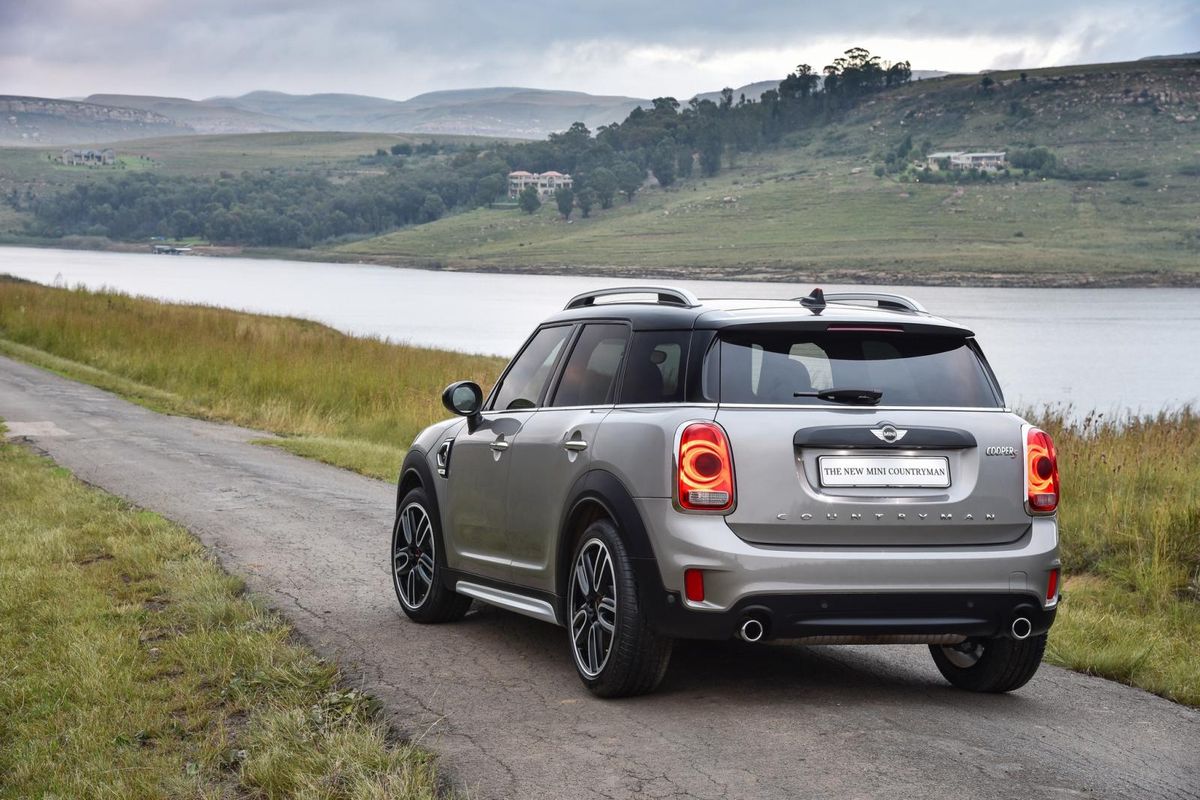
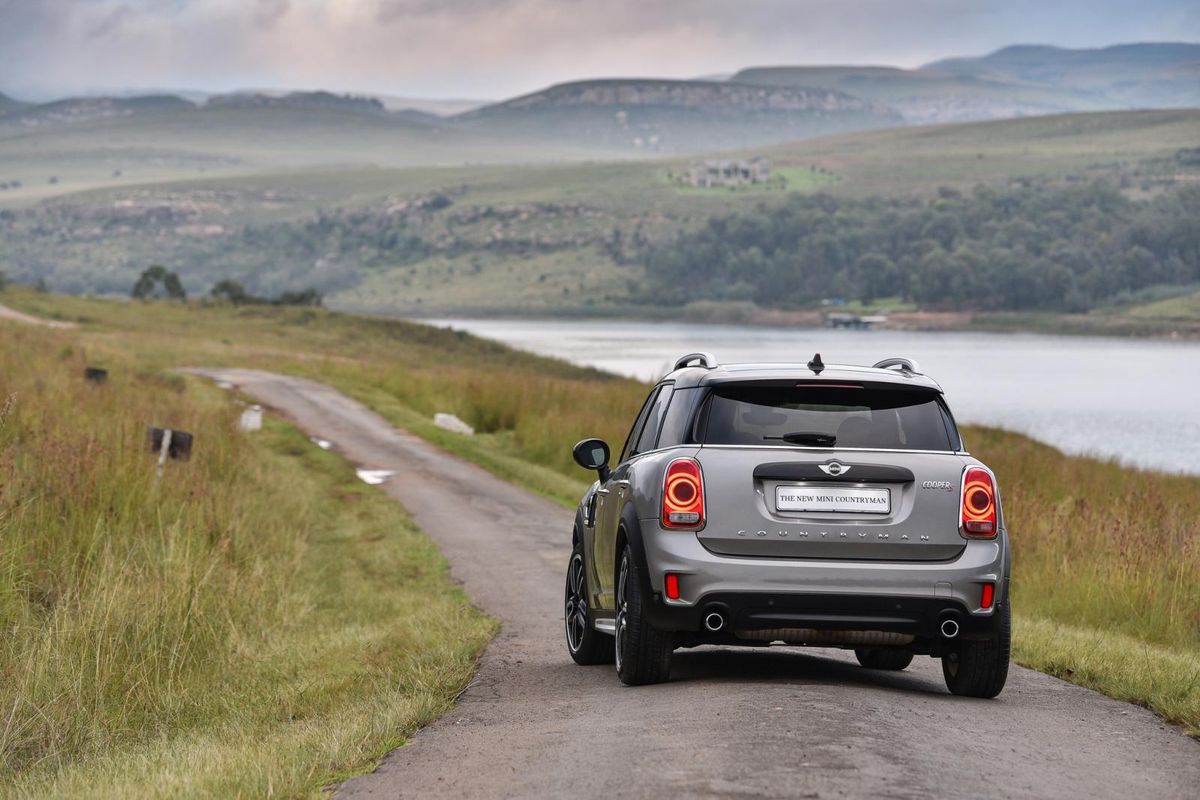
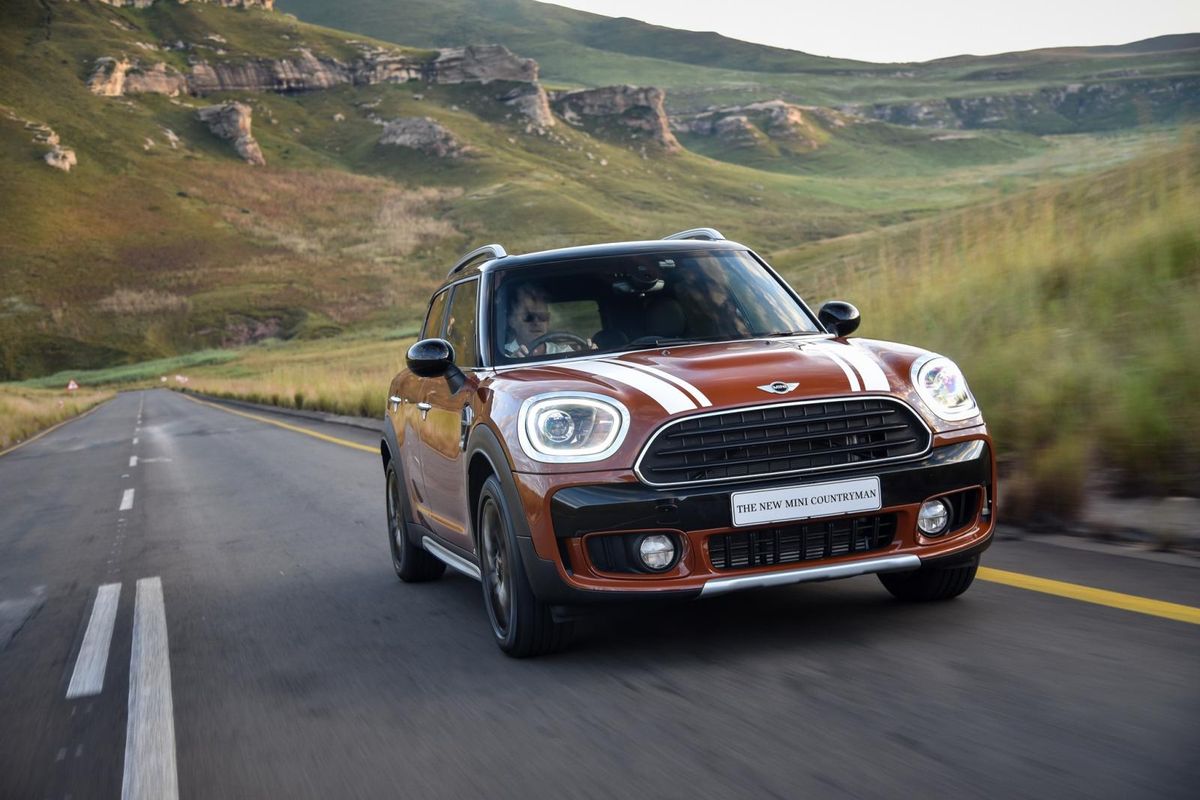
The once-minute Mini – born of course in 1959 as triumph of, er, miniscule minimalism – has grown. And grown some more. The first major growth spurt came naturally around the turn of the millennium with the new MINI (capitalised under BMW's stewardship) which saw it grow into a chic boutique hatch. Now the second-generation Countryman – launched in SA last week – has just clinched the crown as the biggest Mini yet.
And you might well ask is bigger necessarily better? In a nutshell, yes. Especially for those who've outgrown their smaller Minis, but whose brand allegiance keeps them in the Mini stable.
Size matters
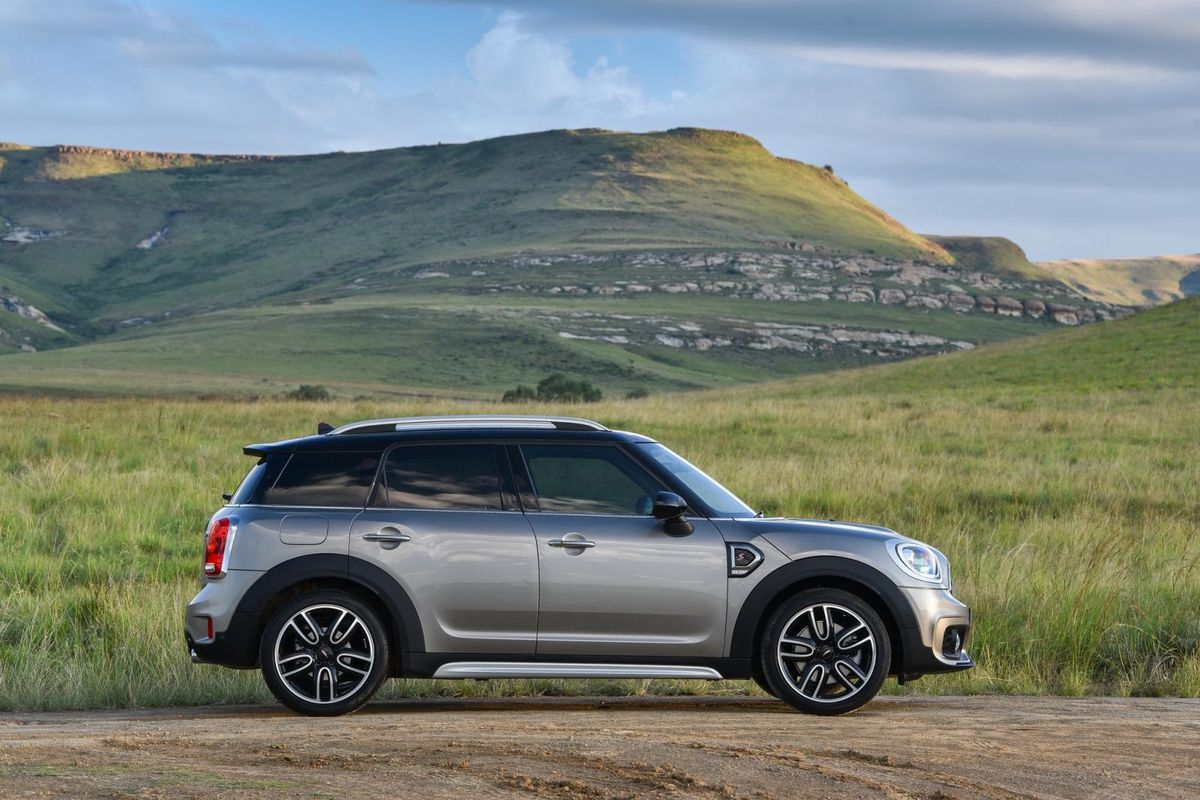
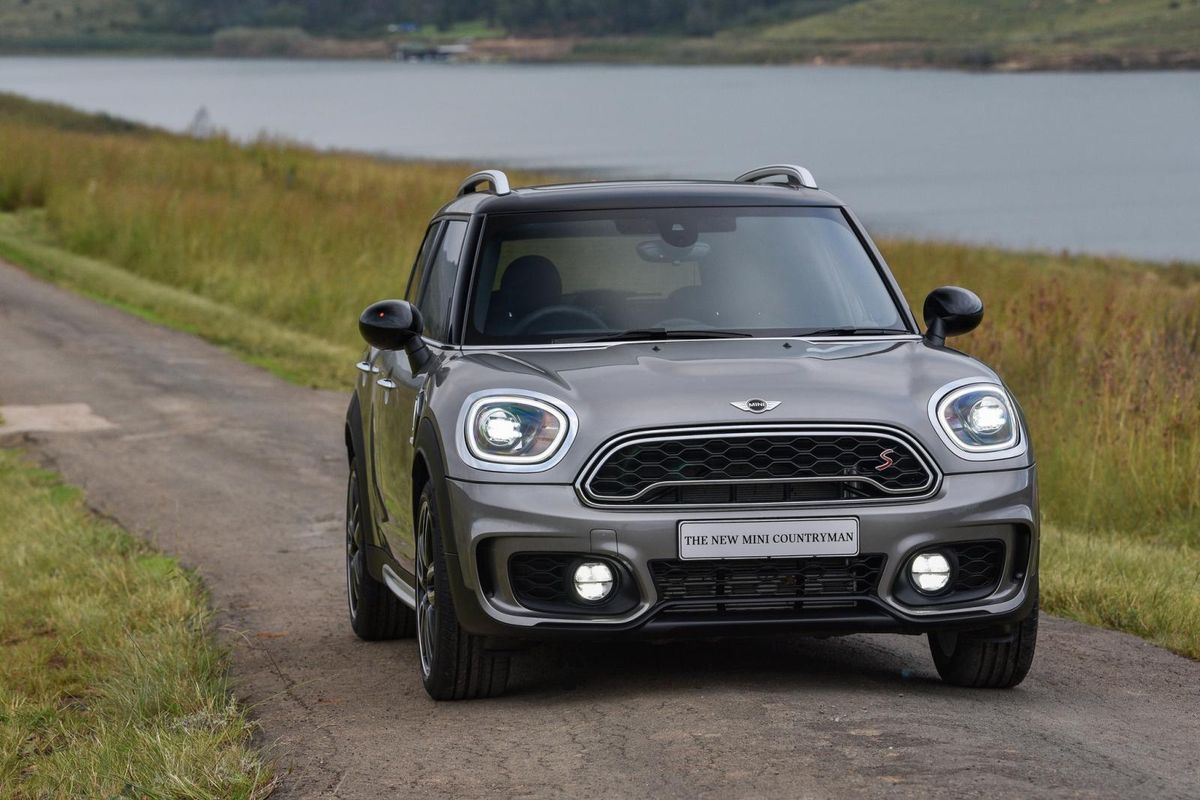
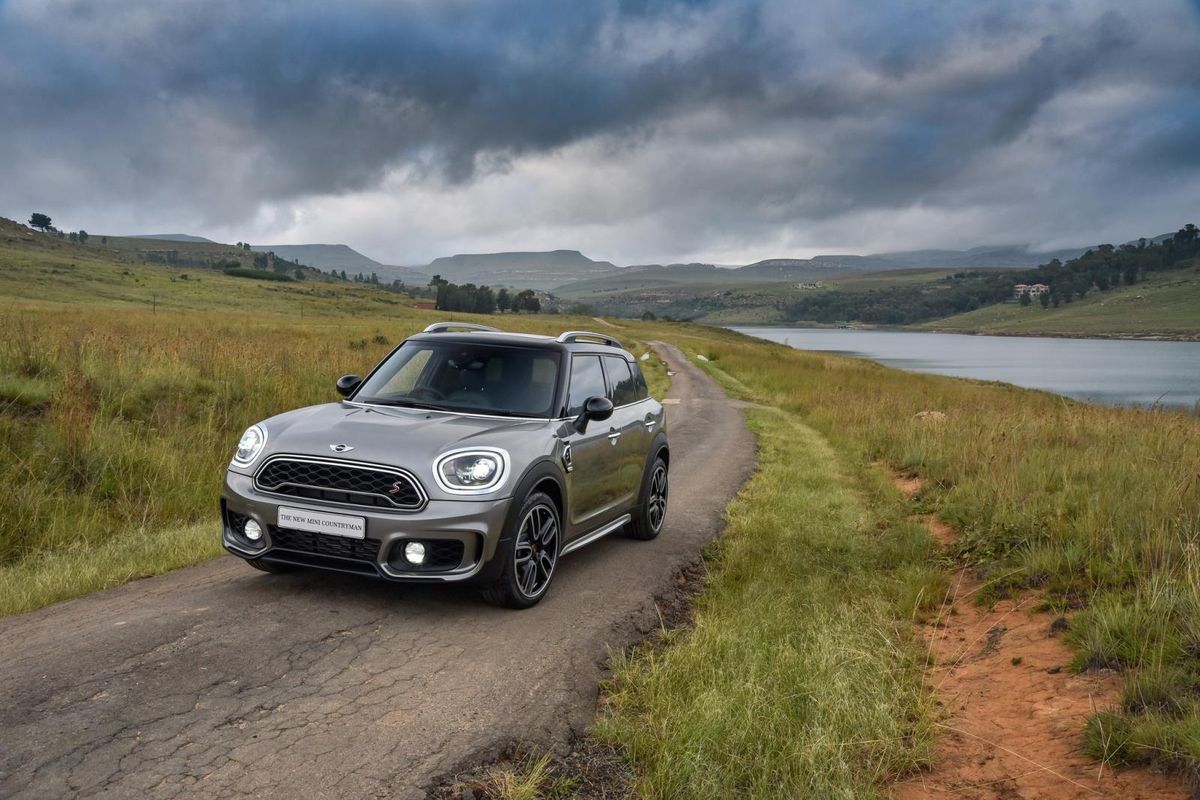
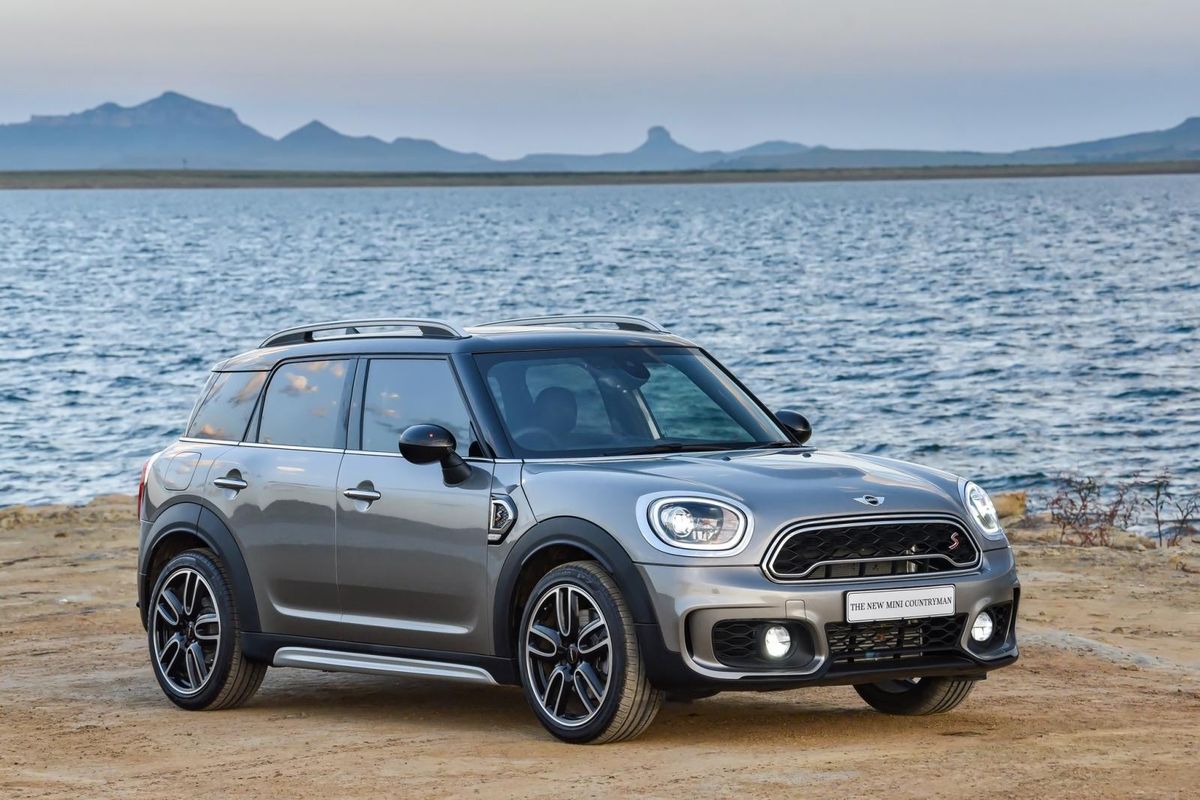
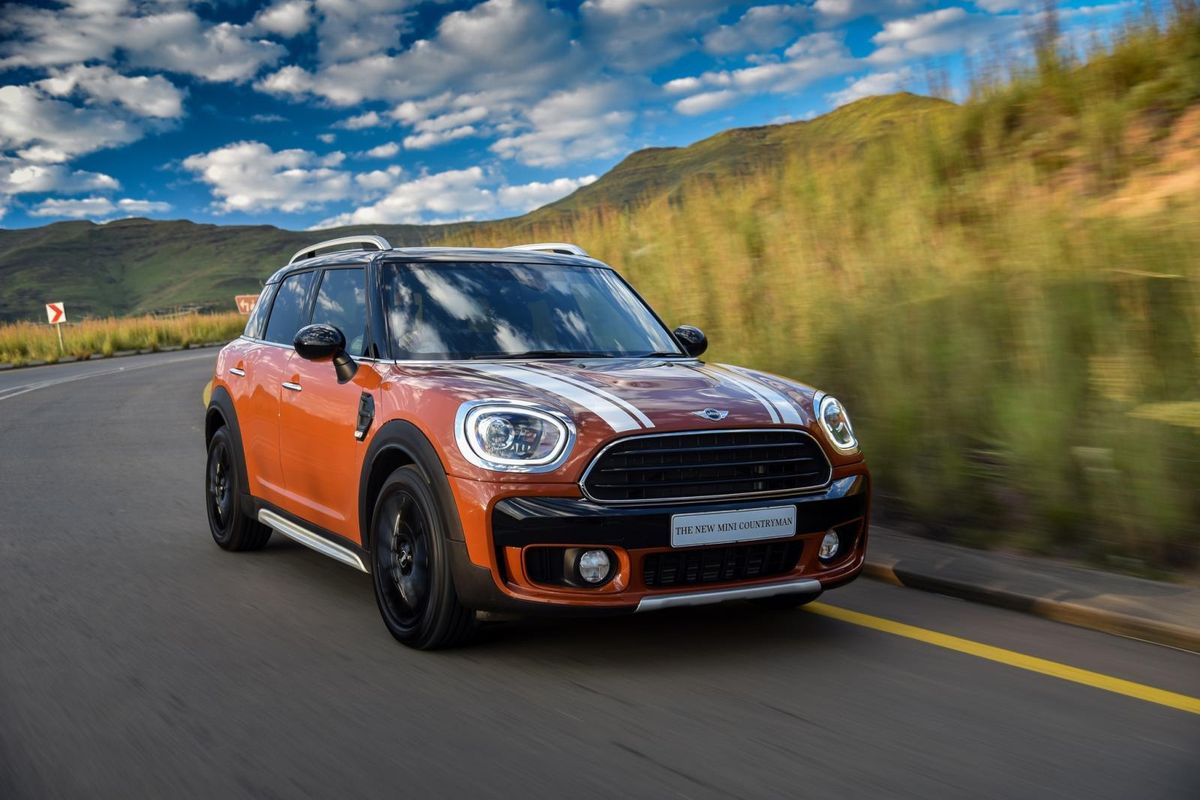
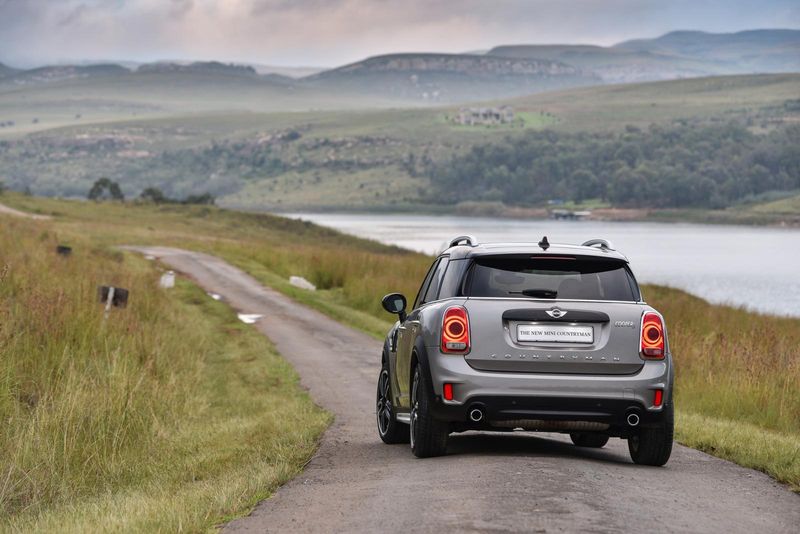
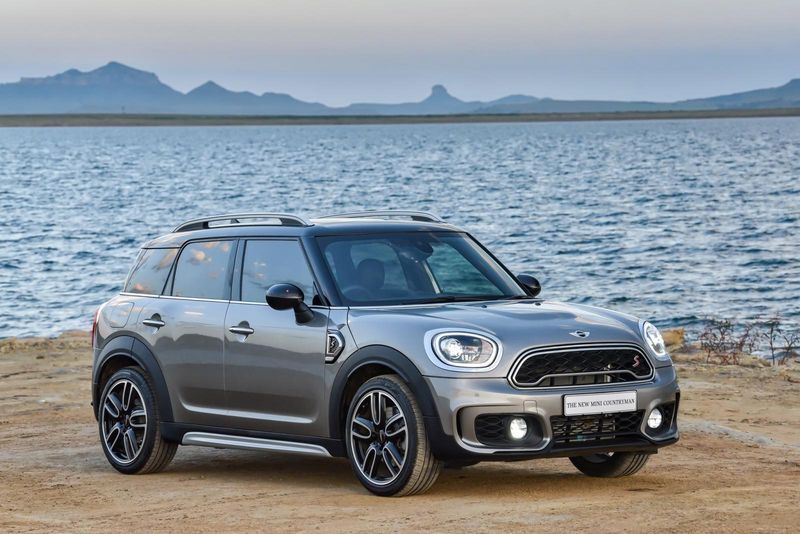
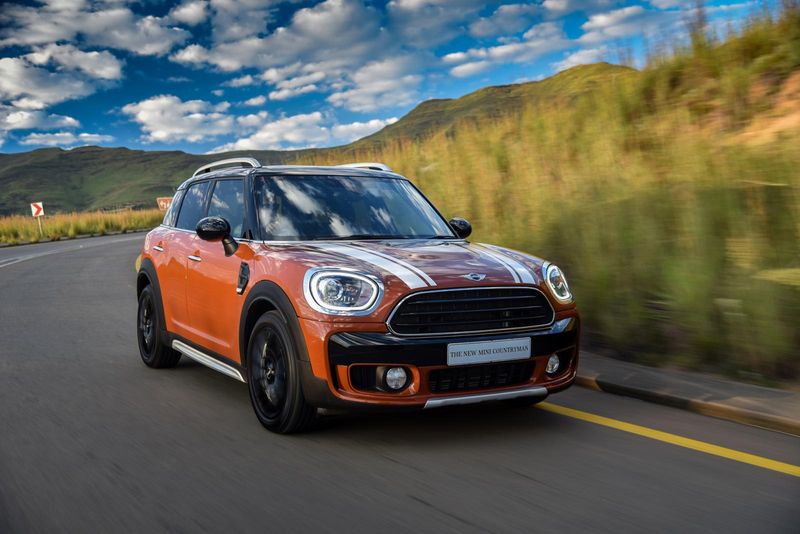
The Countryman still stands somewhere between a crossover and a hatchback. All-wheel-drive models to come later…
New Countryman is 20cm longer and 3cm wider than its already chunky predecessor, and offers the likes of five fully fledged seats, significantly upped interior space, and boosted refinement. More than ever it plays in the premium compact segment, and is a viable alternative to its stablemate and close relative, the BMW X1. The Bimmer, however, is also available in all-wheel guise, while the AWD version of the Countryman – the ALL4 – has been dropped, albeit only temporarily. The ALL4 system will once again be available with a hybrid version set to launch next year, while there's also a diesel version in the pipeline around mid-2017.
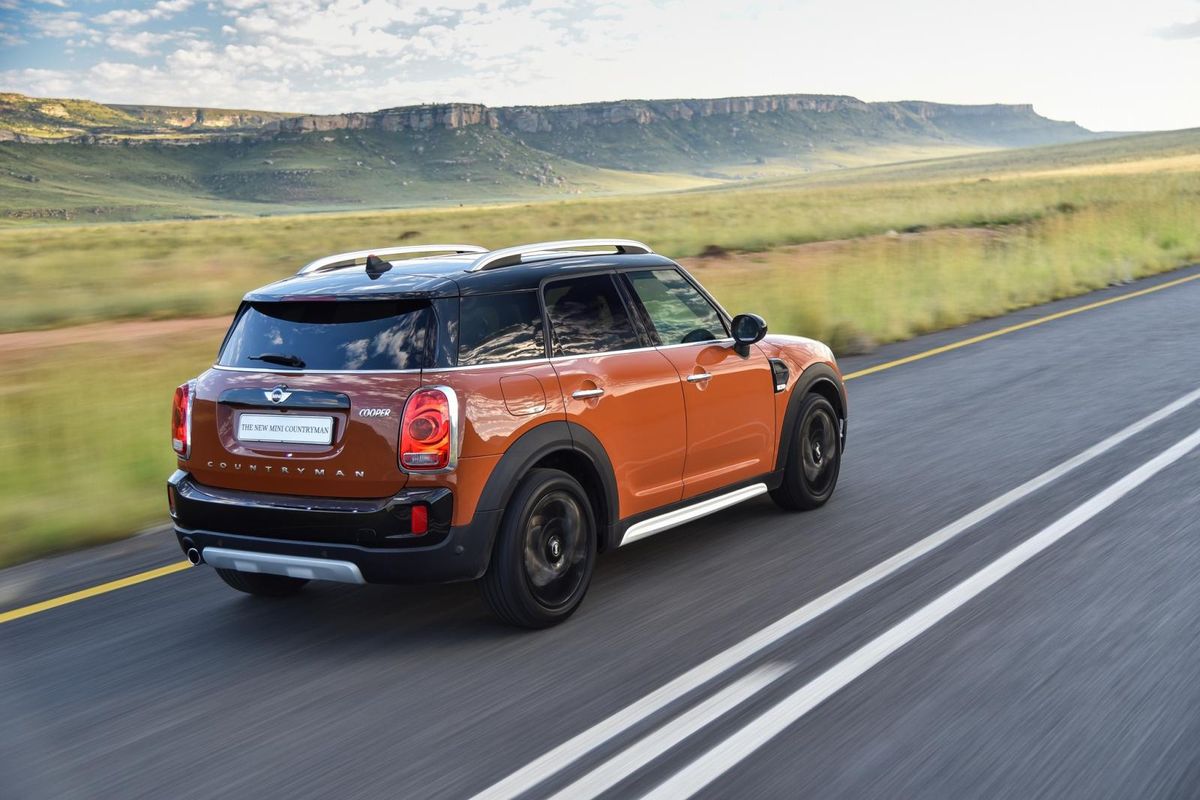
The Countryman is now even bigger than before. It's nearly the same length as a BMW X1.
But do you know what? Even in 2-wheel-drive guise and even with its larger dimensions, the Countryman is a grippy, punchy, chuckable machine. This we discovered last week on the launch in KZN, which took in vast swathes of freeway, serpentine tar roads, and unsealed surfaces. All of which this mighty Mini guzzled up with the panache and ability of a car that plays in the premium league.
It will also swallow much bigger loads. The luggage compartment is rated at 450 litres and can be extended to a total of 1 309 litres. This means a maximum increase of 220 litres compared to the outgoing car.
Choices, choices…
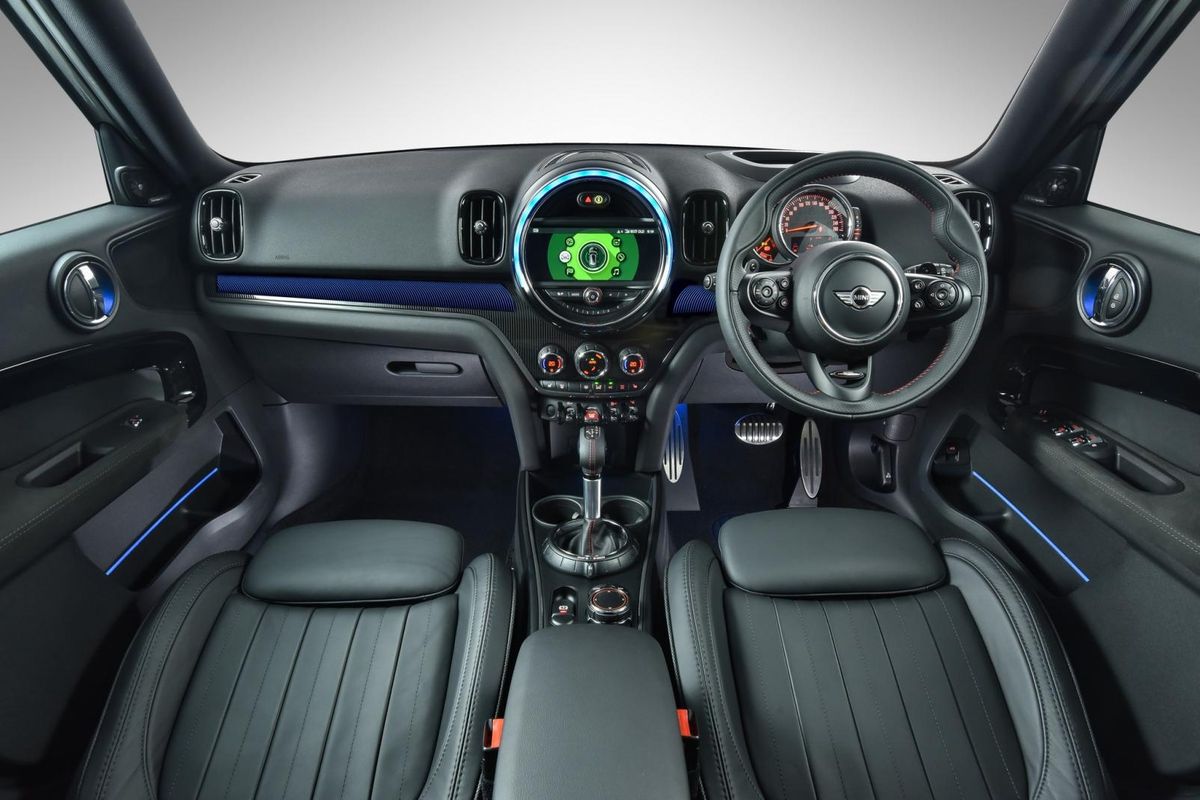
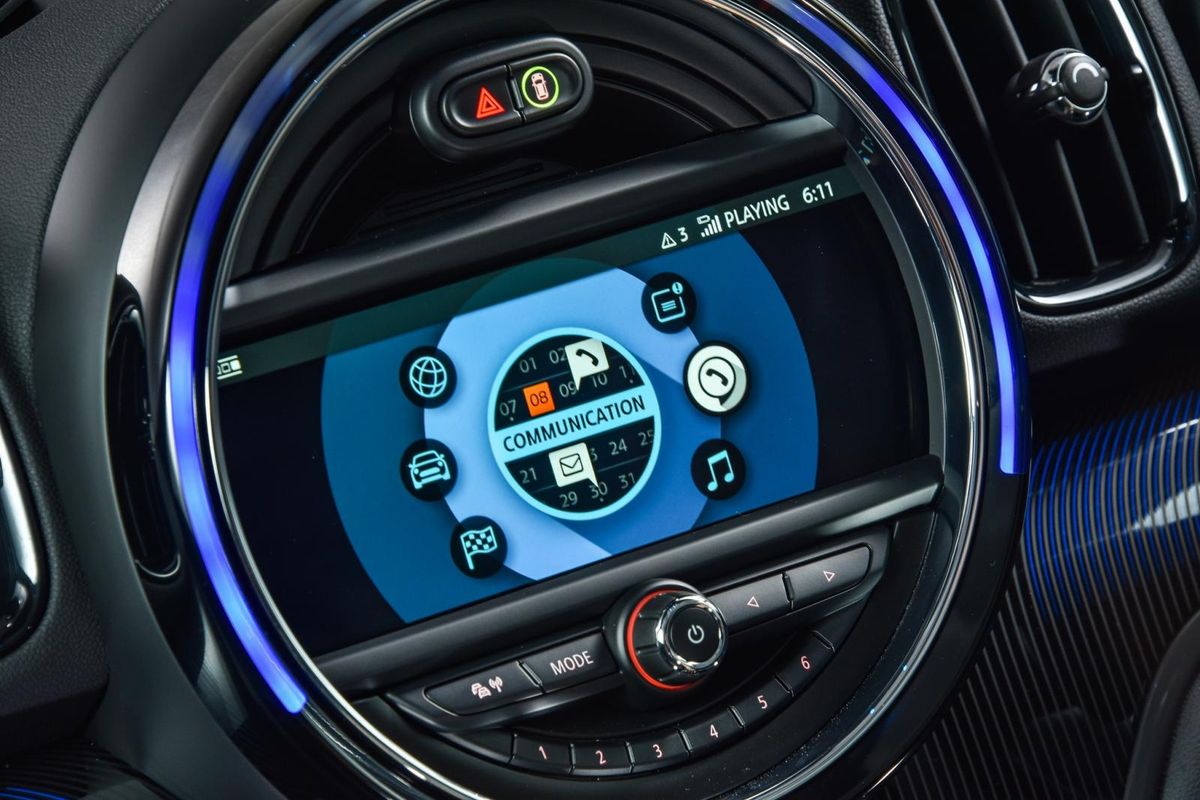
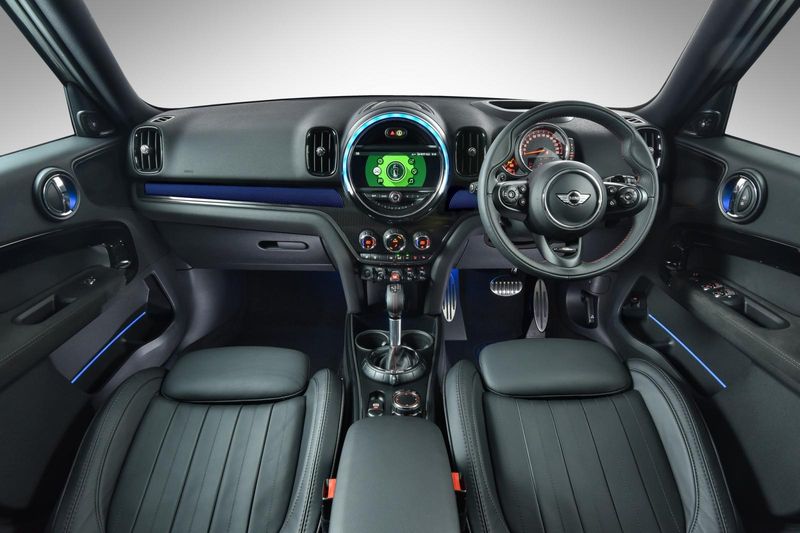
The Countryman's interior feels to have improved in build quality as well as luxurious touches. Vertical air vents are a nice design cue.
Right now there are just two versions available: the Cooper Countryman and the Cooper Countryman S. The first makes 100kW and 220Nm from its turbo', three-pot, 1.5-litre mill. The second is good for 140kW and 280Nm from its turbo'd, 2-litre, four-cylinder motor.
Standard levels of kit are stellar, and perhaps more importantly the whole package is robustly, wonderfully screwed together with a distinctly Teutonic, upscale feel about it. Power in the standard Cooper version runs through a six-speed manual or 6-speed Steptronic self-shifter, and through an 8-speed Steptronic only in the Cooper S.
And just as whether you opt for a Mini or one of its BMW stablemates will hinge on intangibles such as brand allegiance, so which of the two versions of the Countryman you opt for will naturally hinge on how much power and kit you want and need.
On the drive
Superbly built, far more practical than before, yet retaining that unique Mini appeal and driving fun… new Countryman is a winner.
Only when really, really pushed does that smaller 3-pot motor get the slightest bit thrummy. In almost every conceivable daily application it's ample, while the Cooper S model gives big thrust, just as you'd expect, with zero-to-100km/h coming up in about 7.5 seconds, topping out at 224km/h. The Cooper turns in figures of 9.6 seconds and 200km/h, respectively.
Swift indeed – slick, sophisticated and sure-footed, too. Prices stretch from R422 000 to R509 500 before you start tacking on the options, which include an electric tailgate control as well as the rather cool Picnic Bench – a flexible surface that folds out of the luggage compartment and provides seating for two people.
But it's also as polished and premium and poised as you'd expect from a vehicle in this fiscal league. Get yours in shades including new variants such as Island Blue metallic and Chestnut.
Mini Countryman Price in South Africa (March 2017)