Mercedes-AMG Celebrates With Limited Edition Models
Mercedes-AMG will launch a range of limited-edition models to celebrate 50 years in the performance-car business. Take a look!
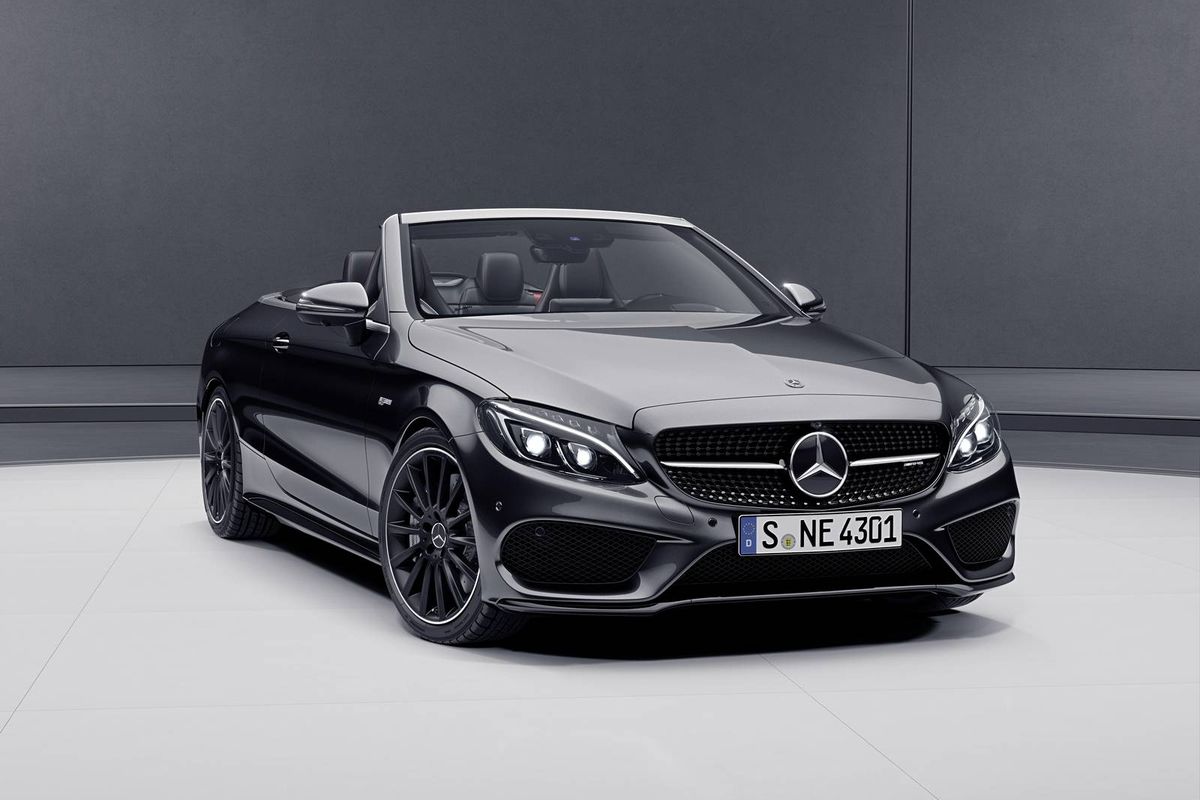
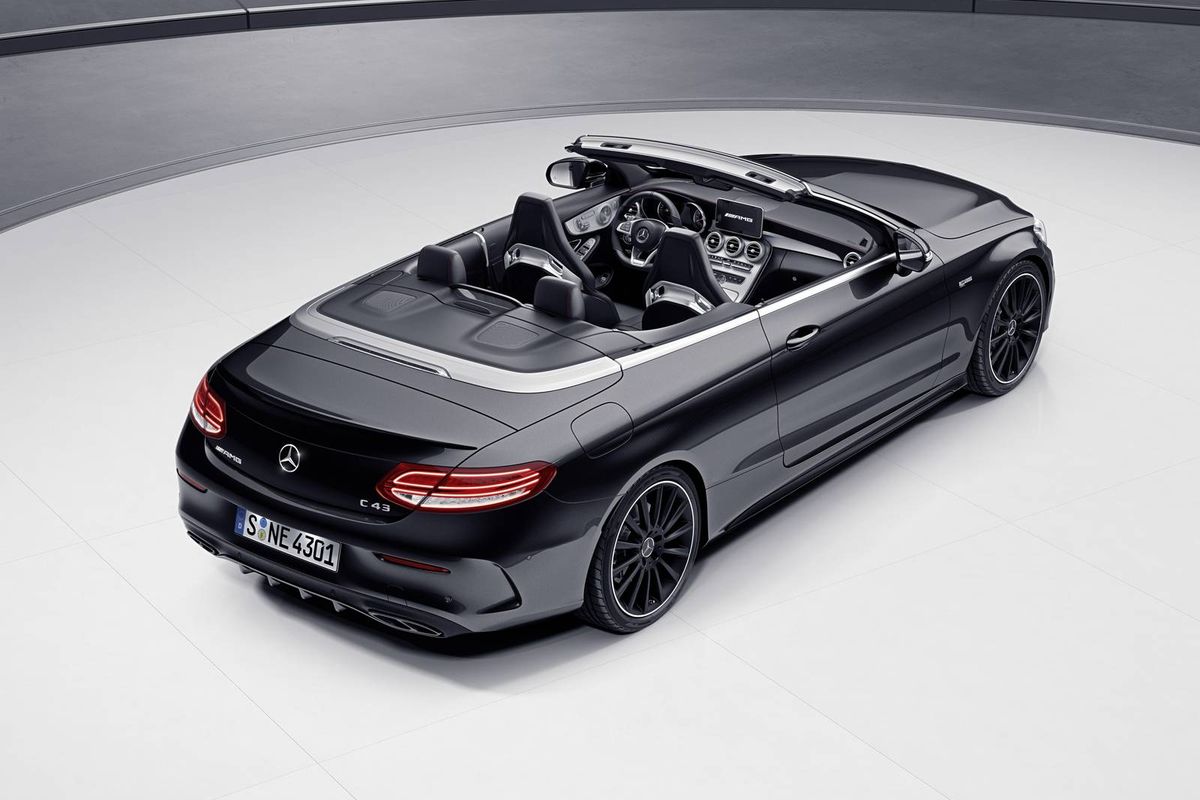
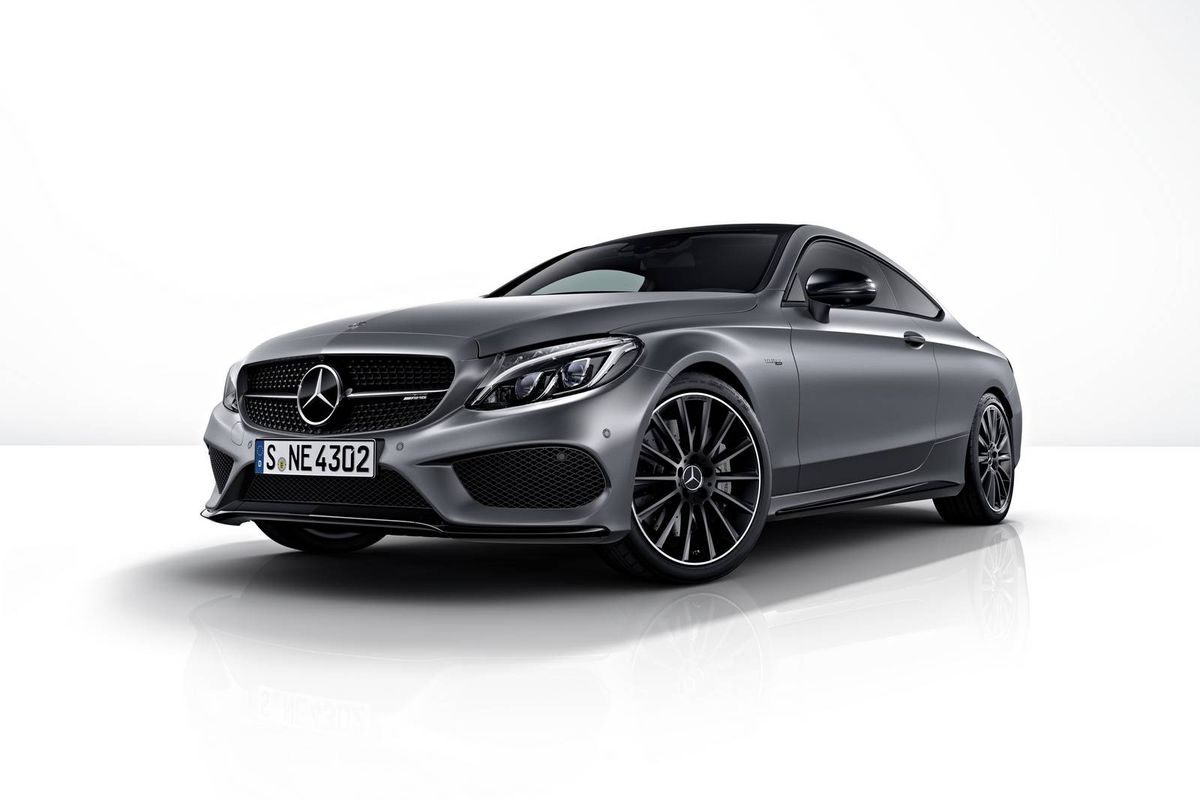
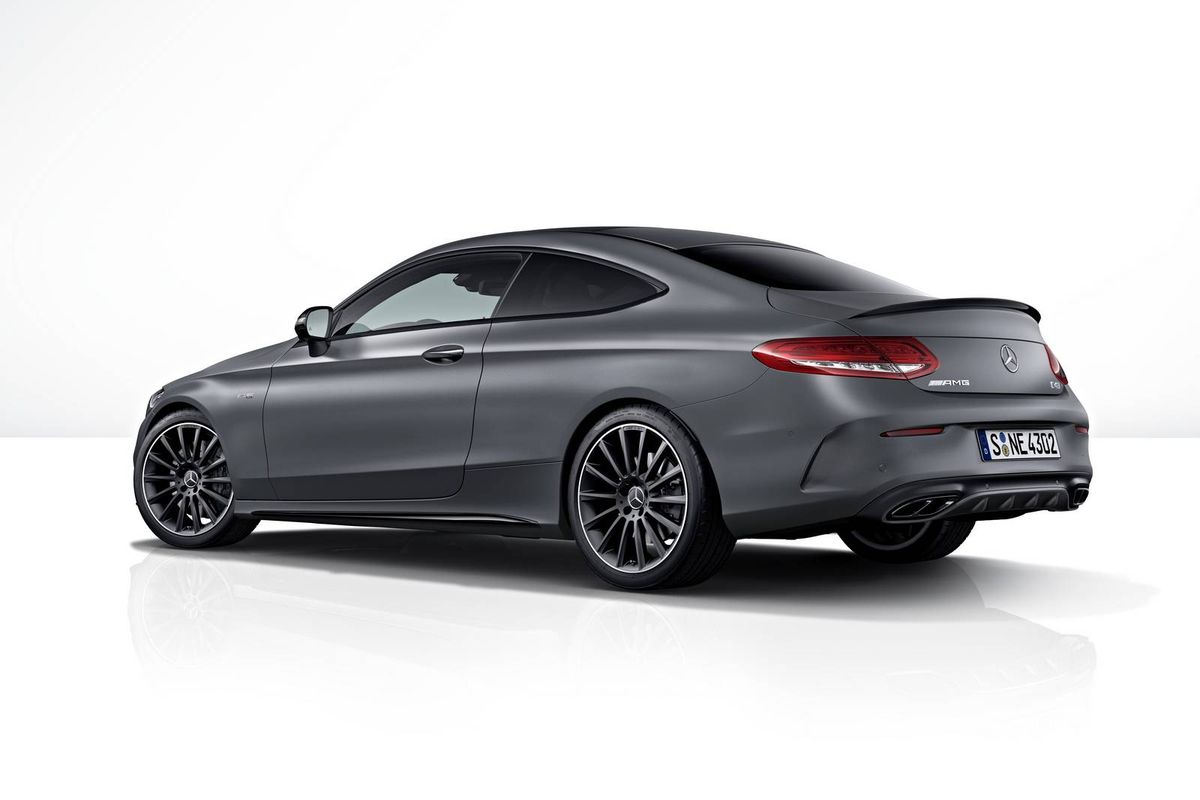
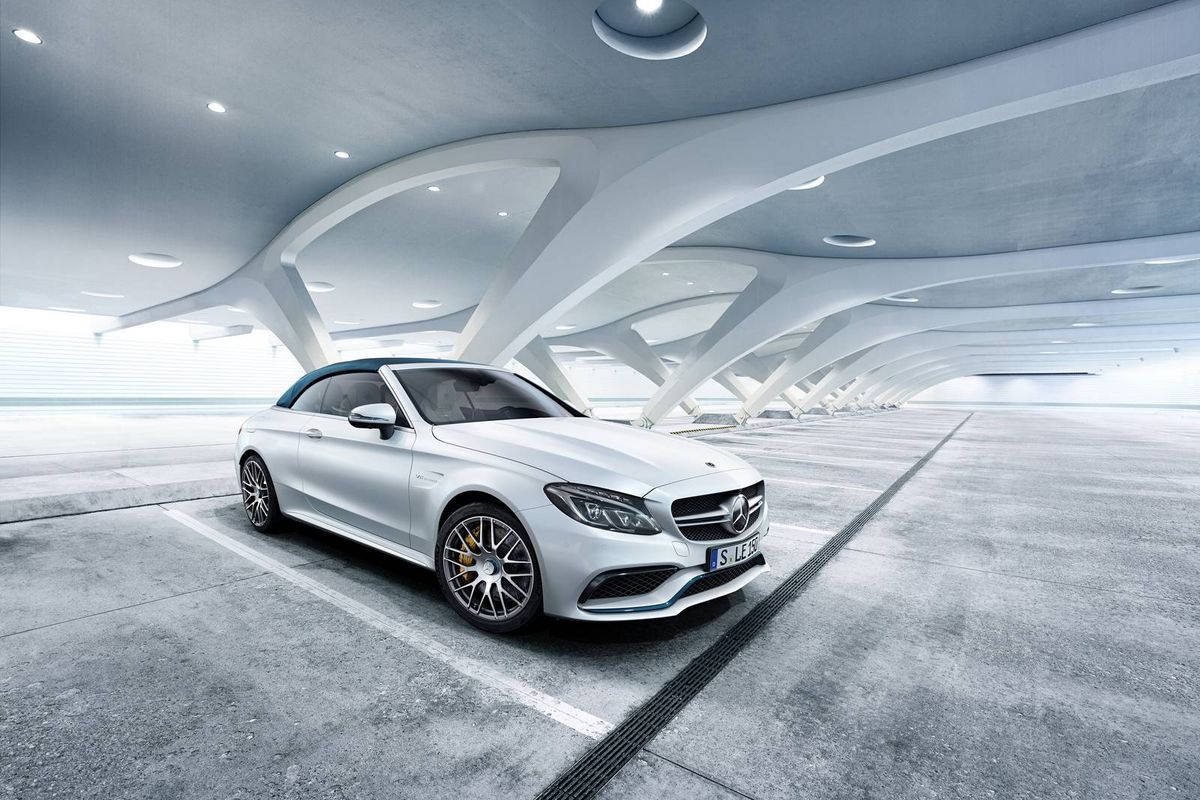
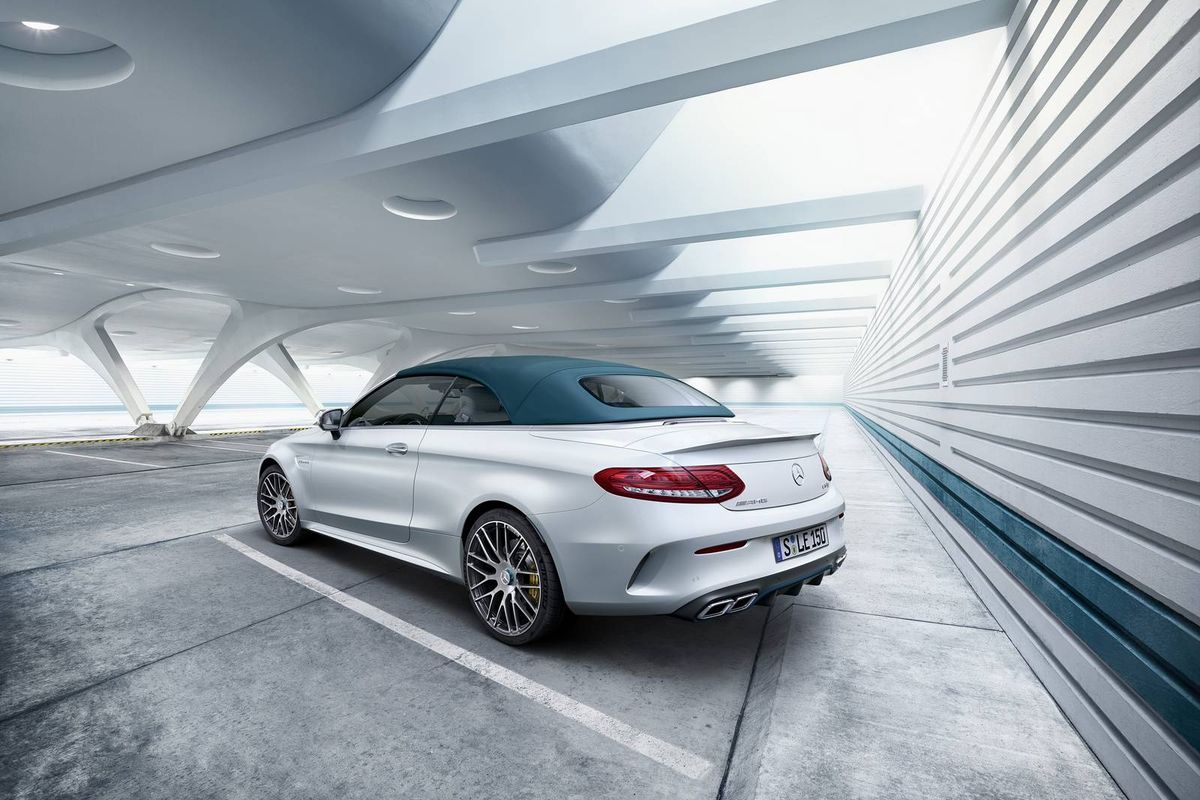
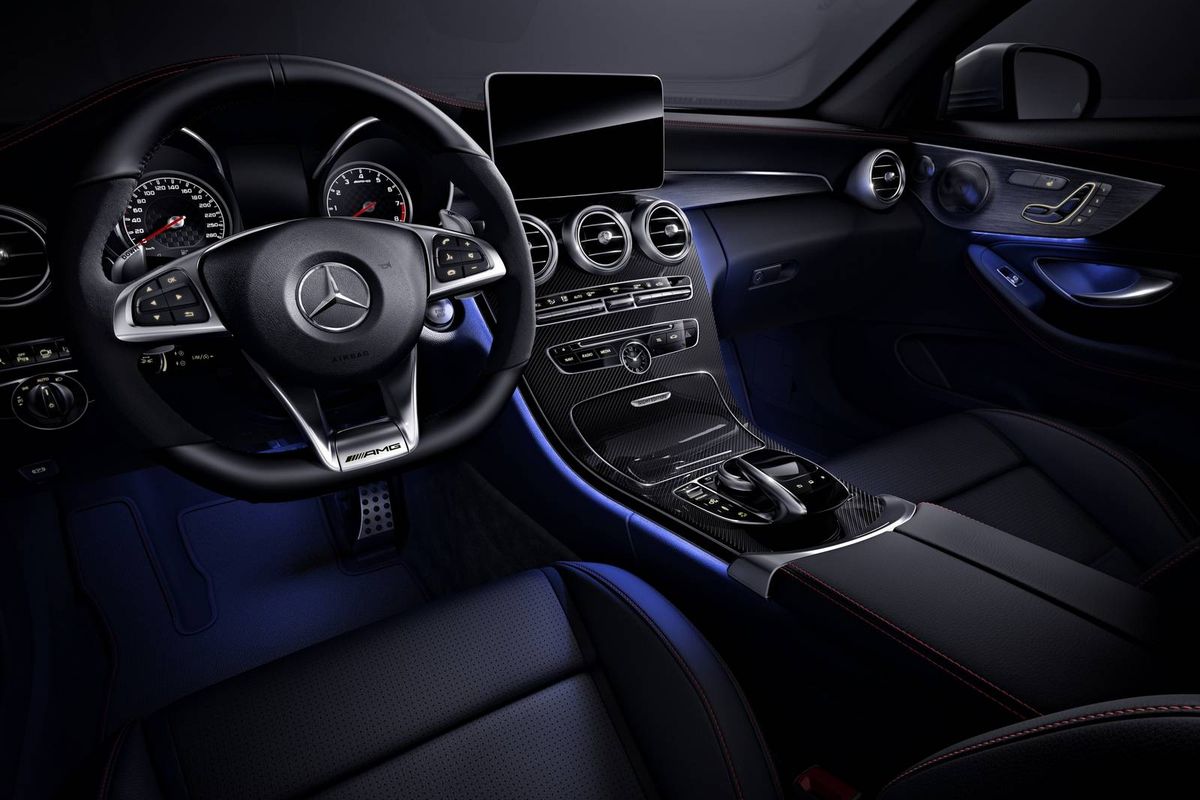
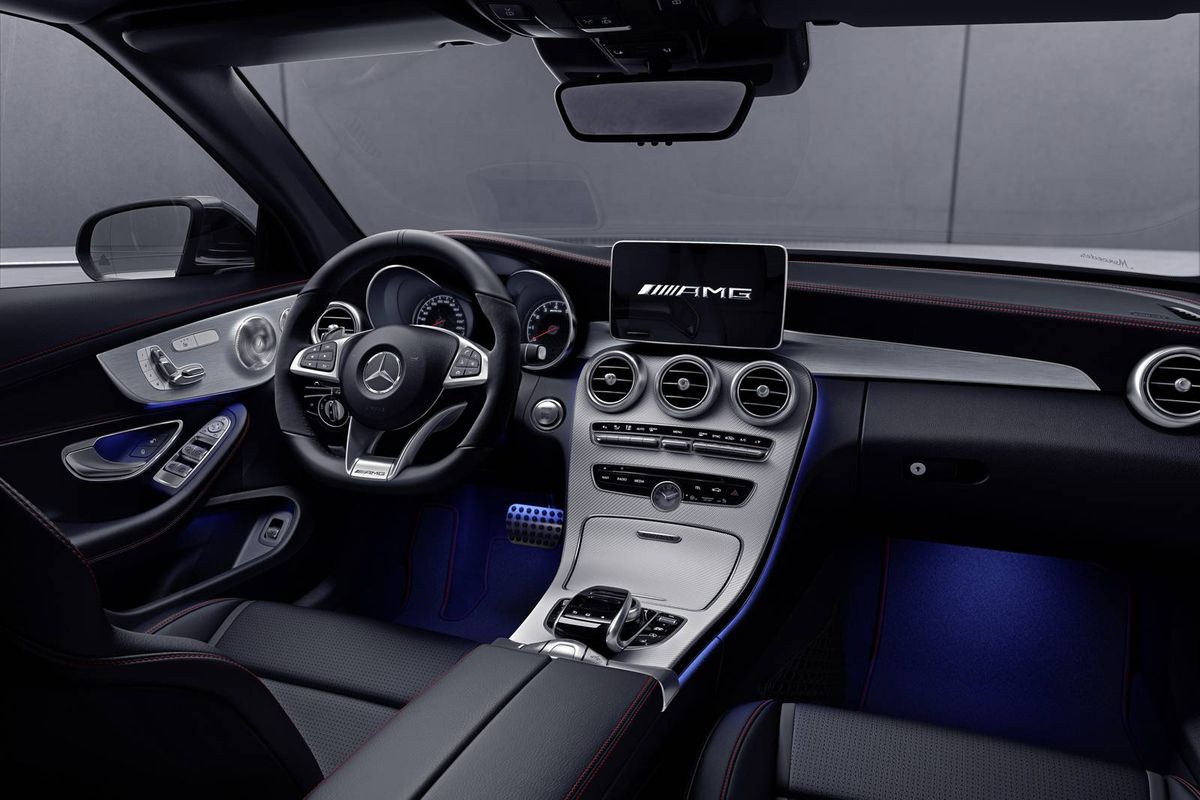
Mercedes-AMG is celebrating its 50th anniversary this year and the performance brand is set to launch a range of special edition models to mark the occasion. The special edition models include the AMG GT C Roadster Edition 50, C63 and C63 S Cabriolet Ocean Blue Edition and the C43 4MATIC Coupe and C43 4MATIC Cabriolet Night Edition.
Key details
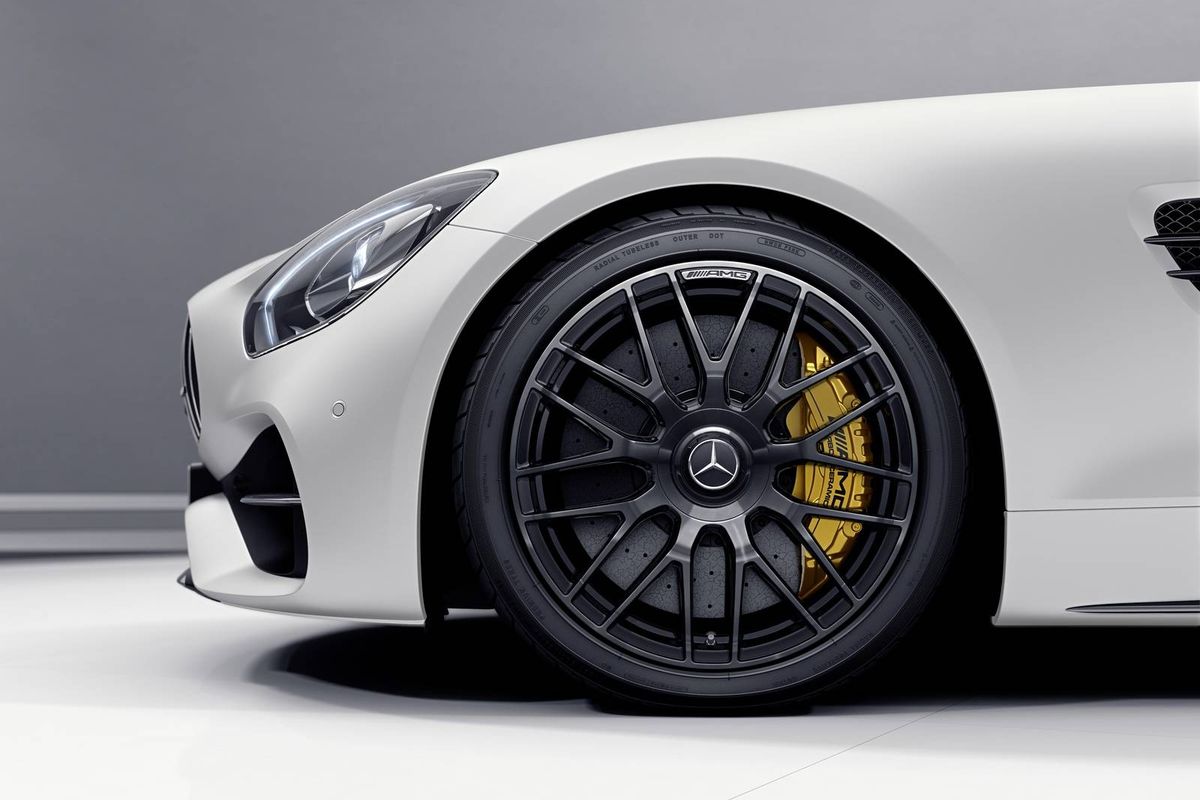
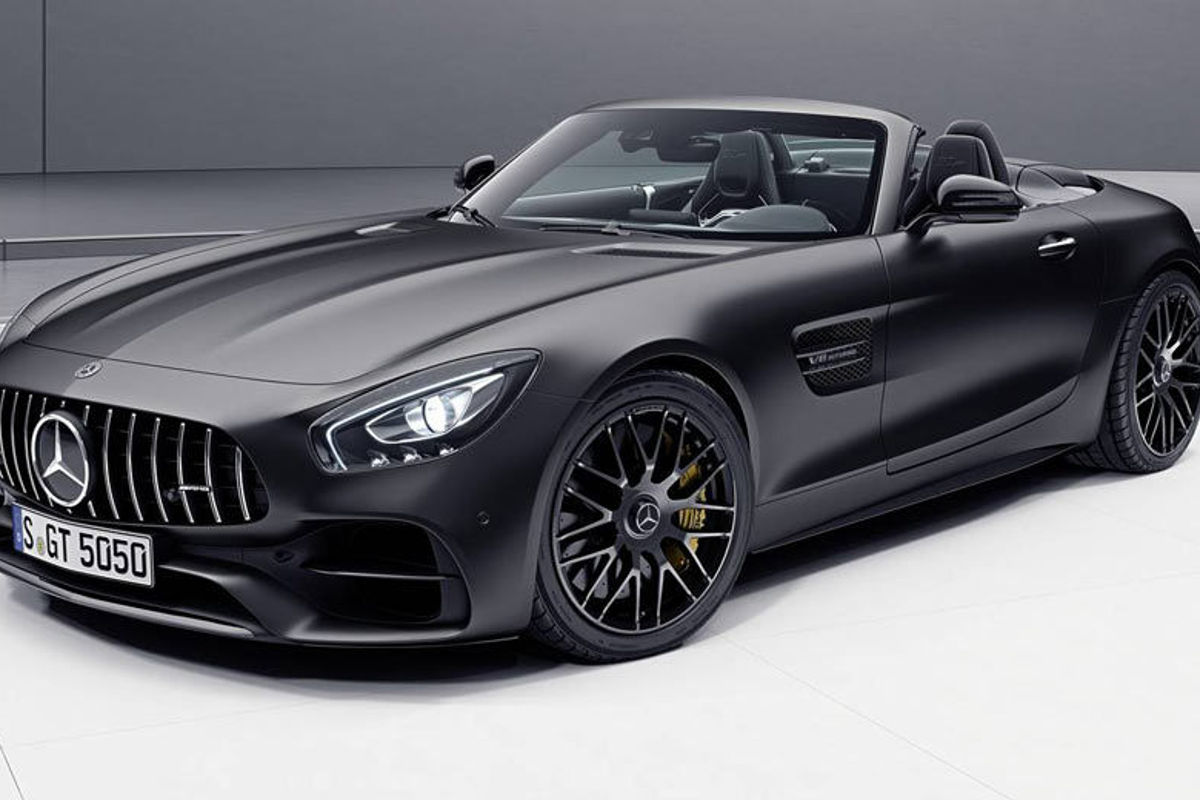
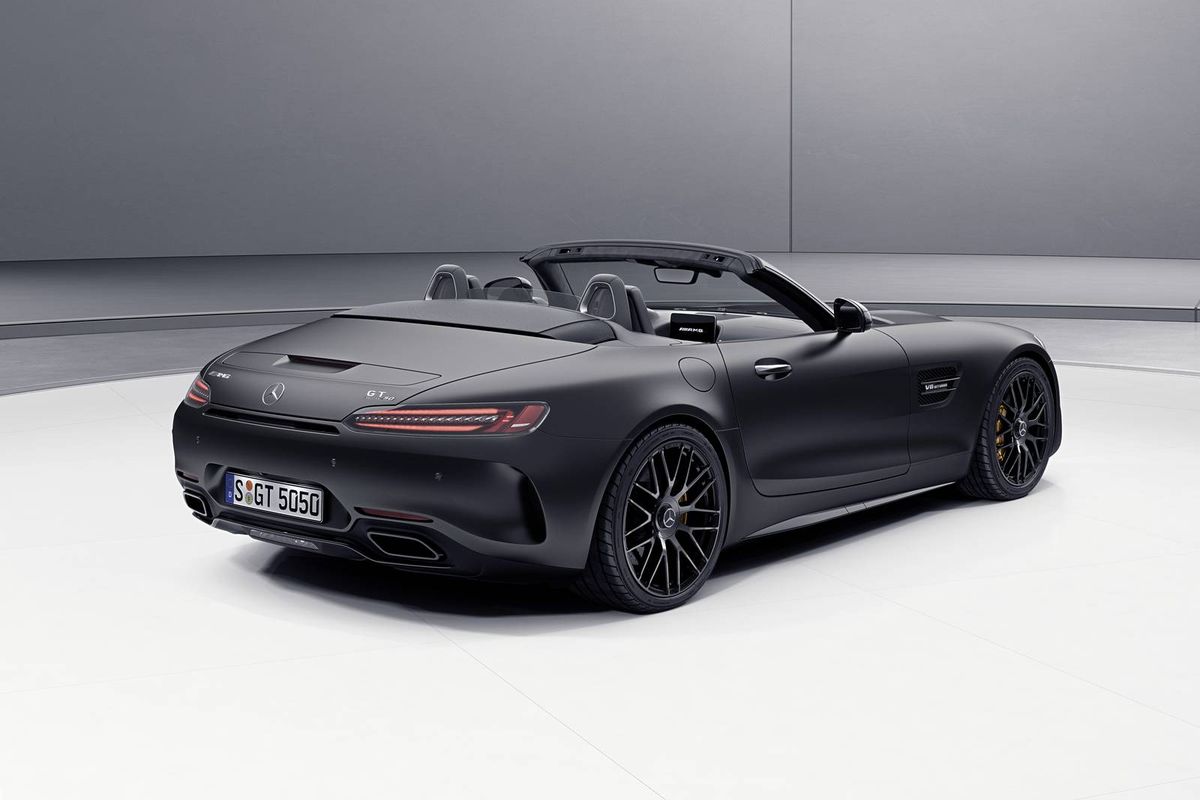
Only 500 units of the Mercedes-AMG GT C Roadster Edition 50 will be available worldwide and will be offered in 2 exterior shades including Designo Graphite Grey Magno and Designo Cashmere White Magno.
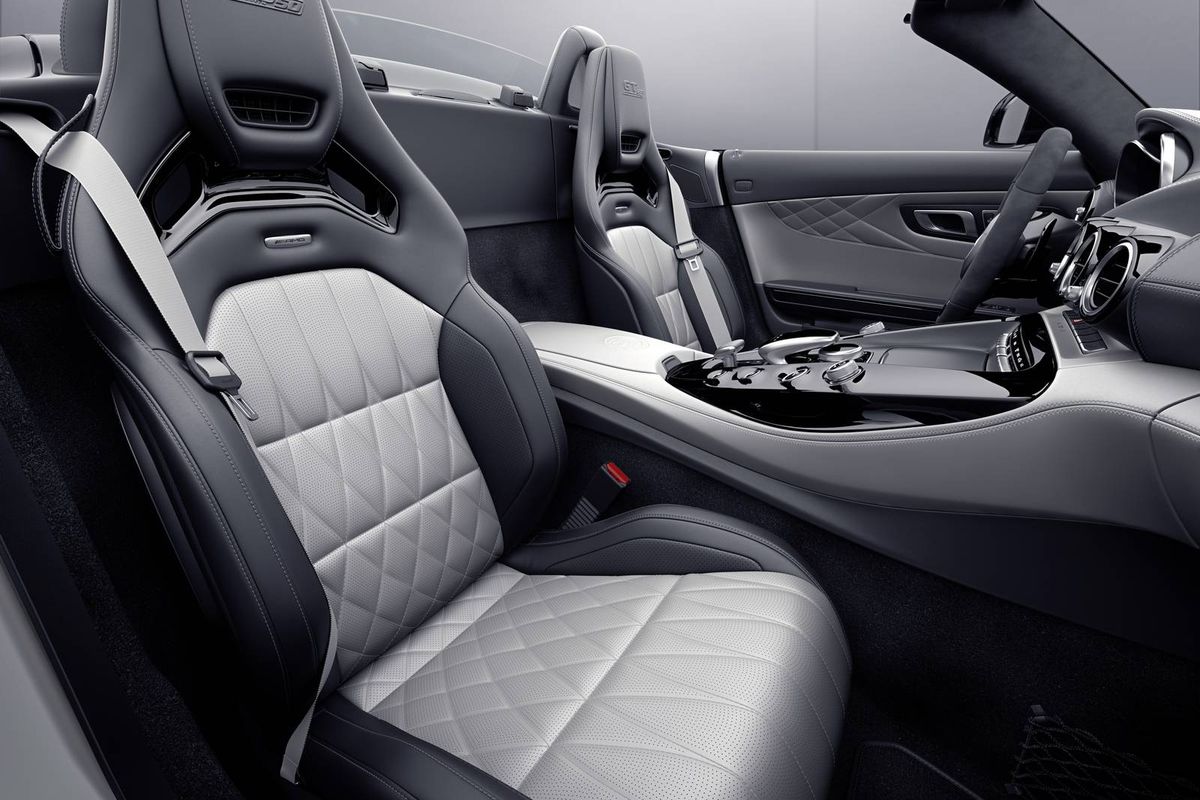
The limited edition model features numerous black chrome accents seen on the front splitter, grille, side skirts, rear diffuser and tailpipe trim. The model rides on AMG forged wheels and the interior is bathed in Nappa leather with diamond quilted stitching and comes equipped with an AMG Performance steering wheel and AMG Interior Night Package.
The Mercedes-AMG C63 and C63 S Cabriolet Ocean Blue Edition receive a blue fabric roof along with blue details seen in the front bumper, rear diffuser and wheel caps. These models will be offered in Designo Cashmere White Magno and Designo Selenite Grey Magno. Only 150 units will be on offer.
Lastly, the C43 4Matic Coupe and C43 4Matic Cabriolet Night Edition rides on matte black 19-inch alloy wheels and features a diamond-themed grille. Black trim is found on the front splitter, side skirts and rear apron. The model is finished off with a neat boot lip spoiler.
Mercedes-Benz South Africa has confirmed that the AMG GT C Roadster Edition 50 and AMG GT Edition 50 Coupe will be offered in South Africa in very limited numbers. We will keep you updated as more information becomes available.
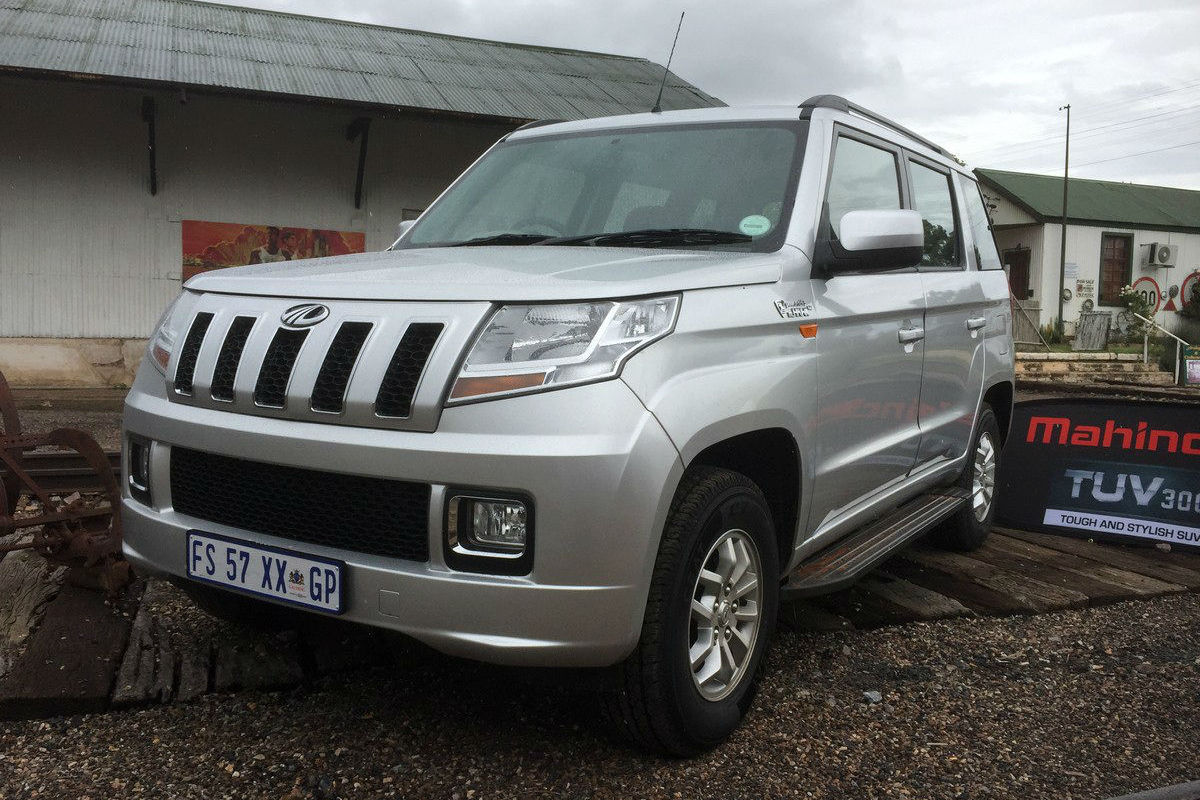
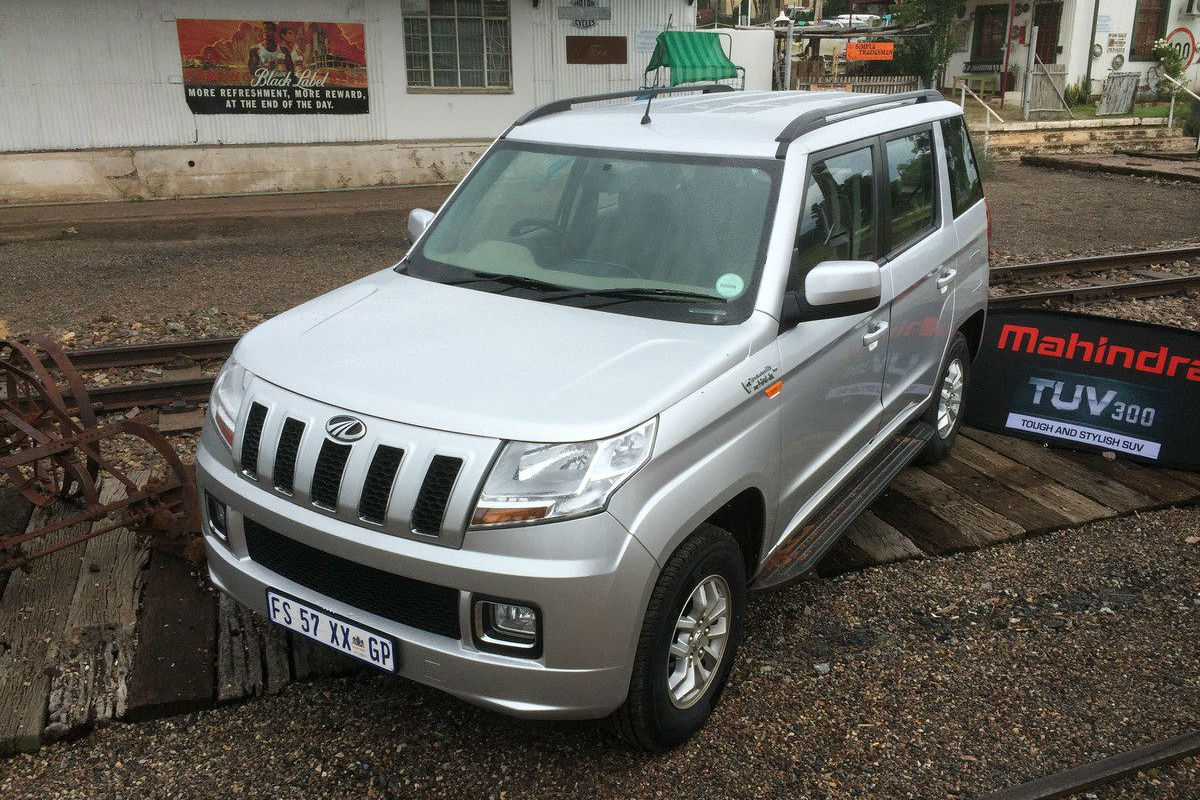
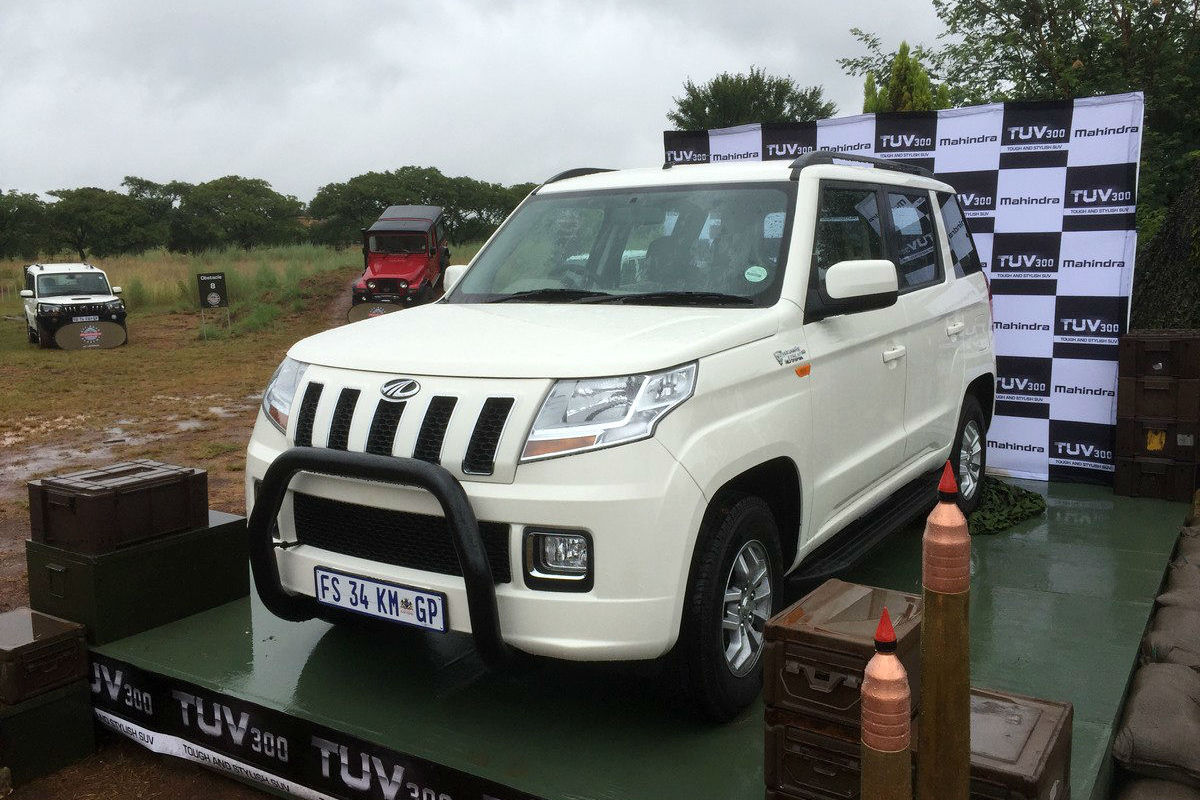
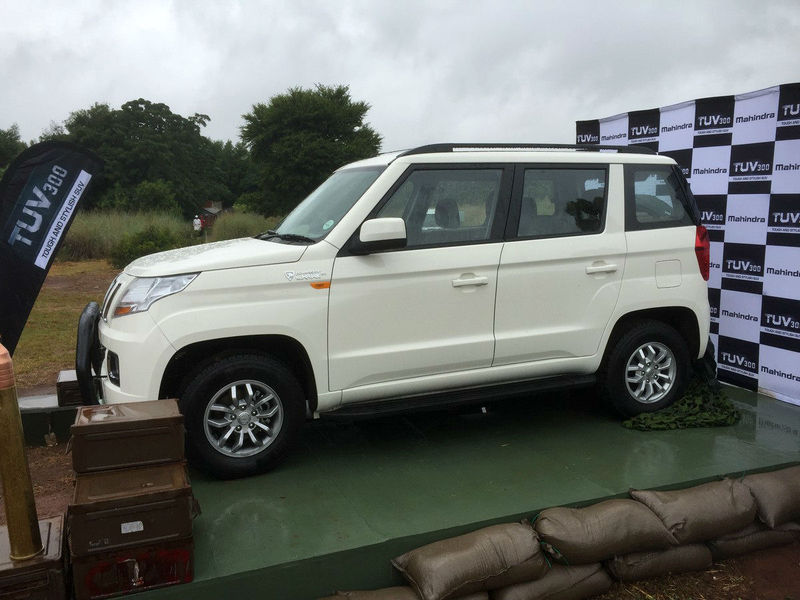
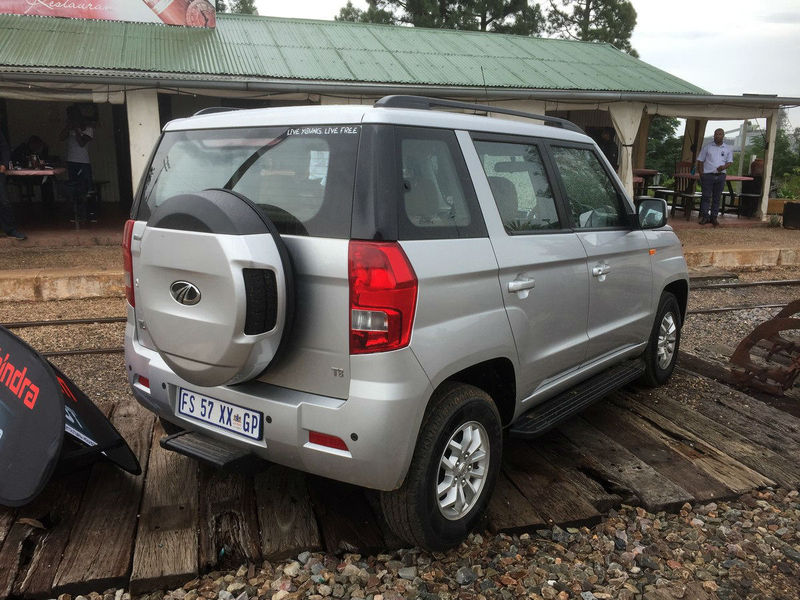
It’s deliberately styled to resemble a tank; it sports SUV underpinnings and is rear-wheel-driven; it costs as much as an entry-level compact hatchback but offers seating for 7… the Mahindra TUV300 is a very unconventional compact family car, but somehow, the package just all comes together. What's more, it's very competitively priced!
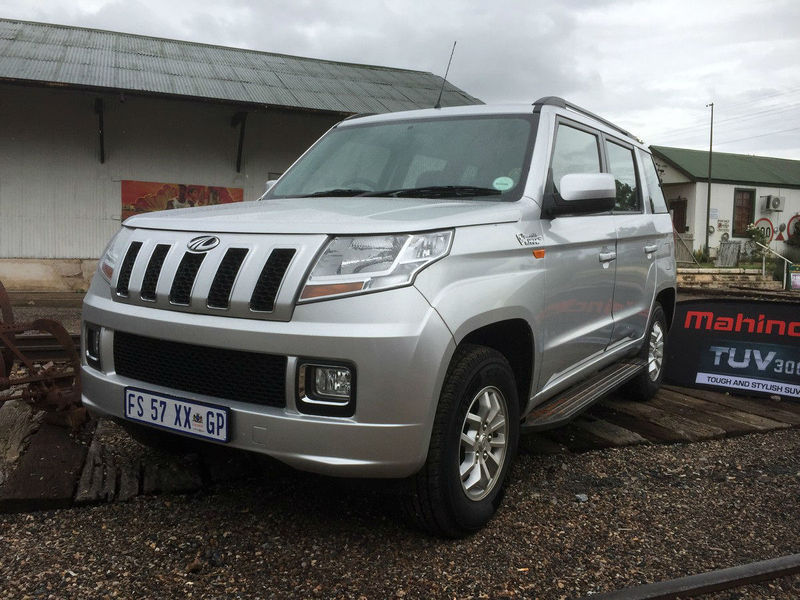
Judging by just a few reactions to tweets and Facebook postings about the Indian-made newcomer we’ve read in the past 48 hours, the TUV300 (pronounced T, U, V, "3 double oh", well, at least according to its manufacturer) will not win any beauty contests, but, for all its ruggedness, it is certainly a distinctive design. Whereas the majority of compact family cars, such as the Cars.co.za Consumer Award-winning Suzuki Vitara, have off-roader cues but are technically unibodied hatchbacks, the Mahindra has a bakkie-like body-on-frame configuration; it’s a genuine 2WD SUV.
A face only a mother could love? The chunky-like detailing of the TUV300's front end is an acquired taste.
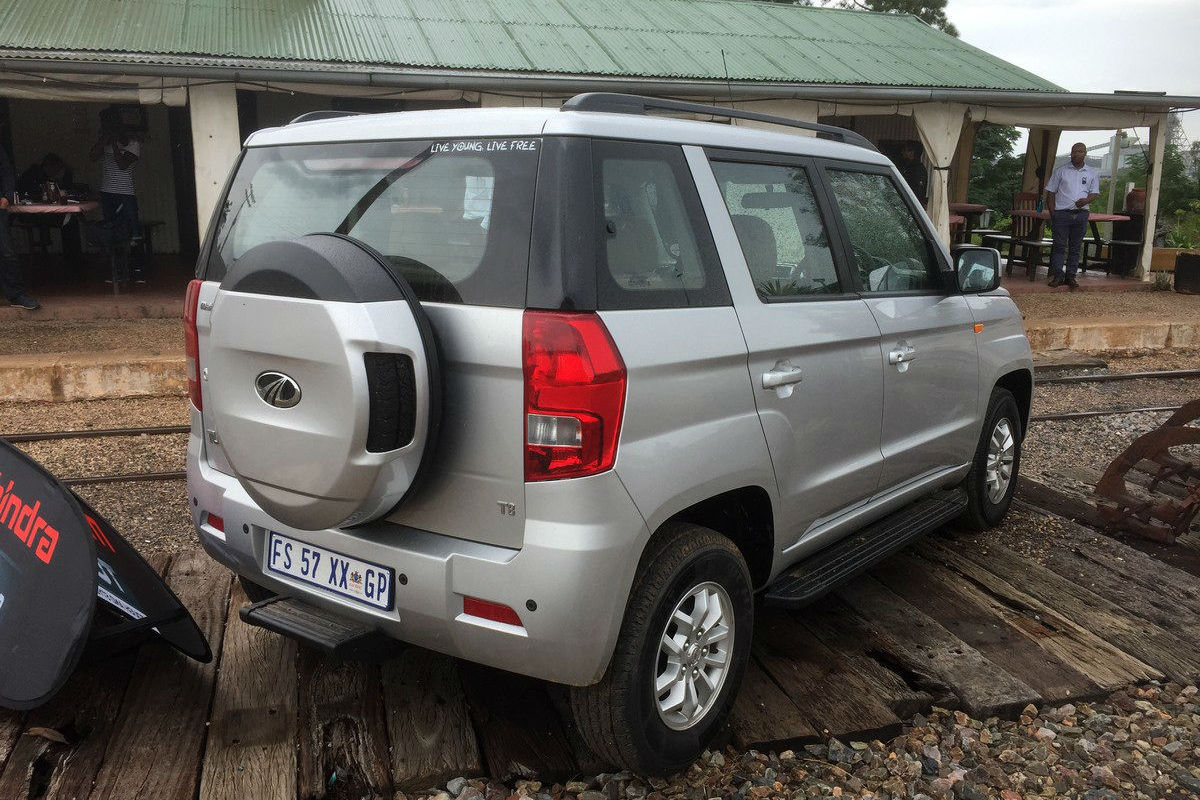
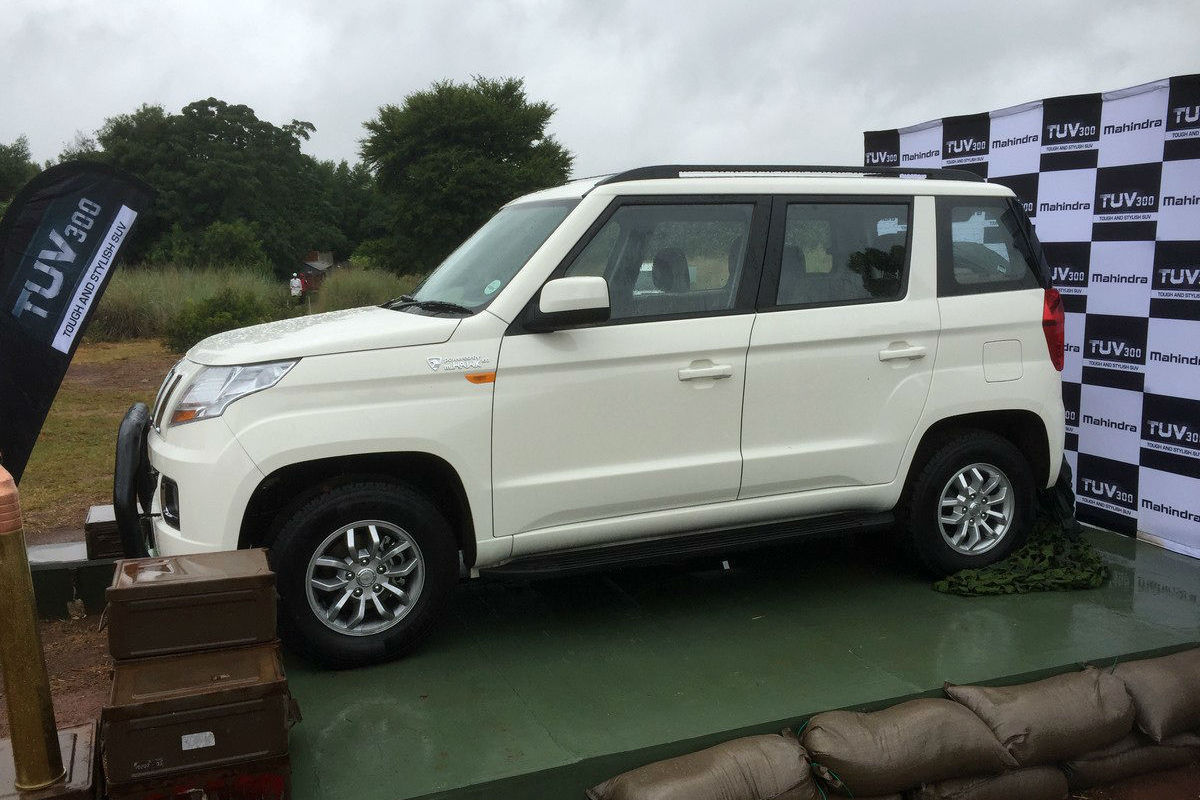
That means the newcomer has the prerequisite raised ride height, stubby overhangs, a full-sized spare wheel mounted on its tailgate, as well as purposeful roof rails and 15-inch alloy wheels. Interestingly, the chunky headlamp units have a cornering illumination function, as well as follow-me-home and lead-me-to headlight operation (when the TUV300 is locked or unlocked respectively).
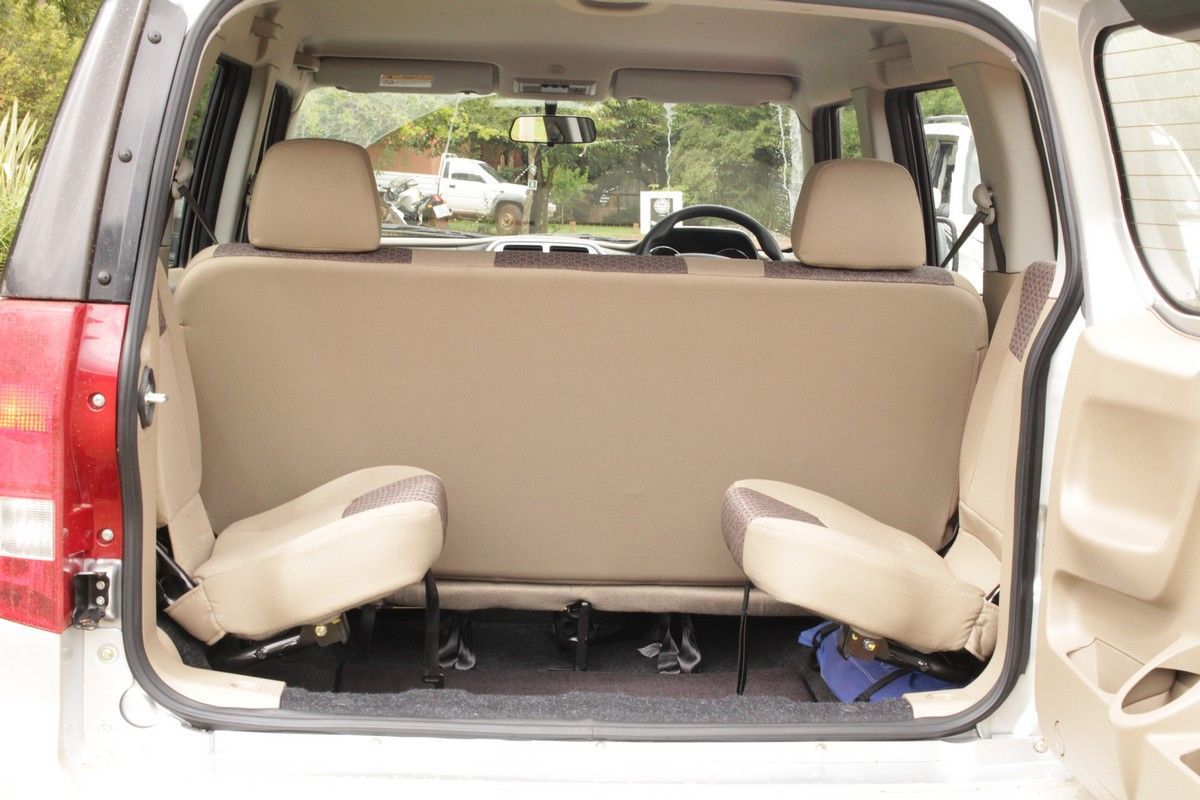
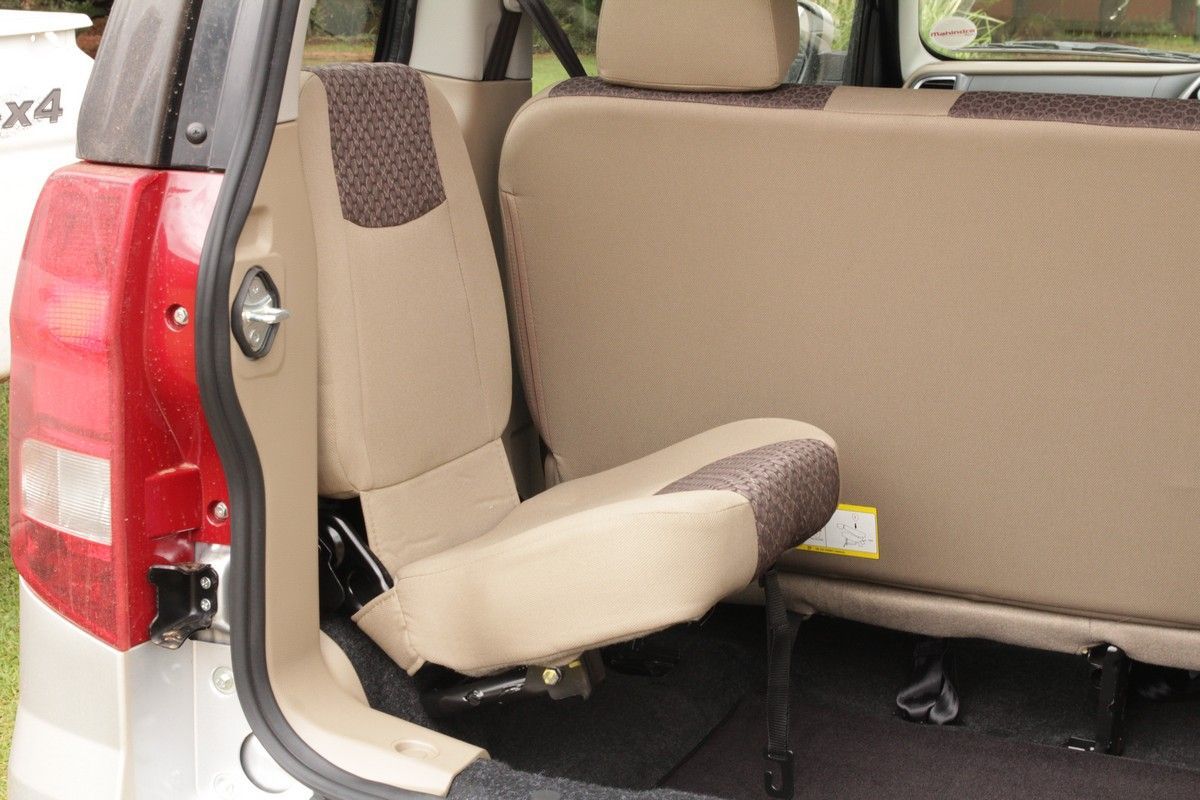
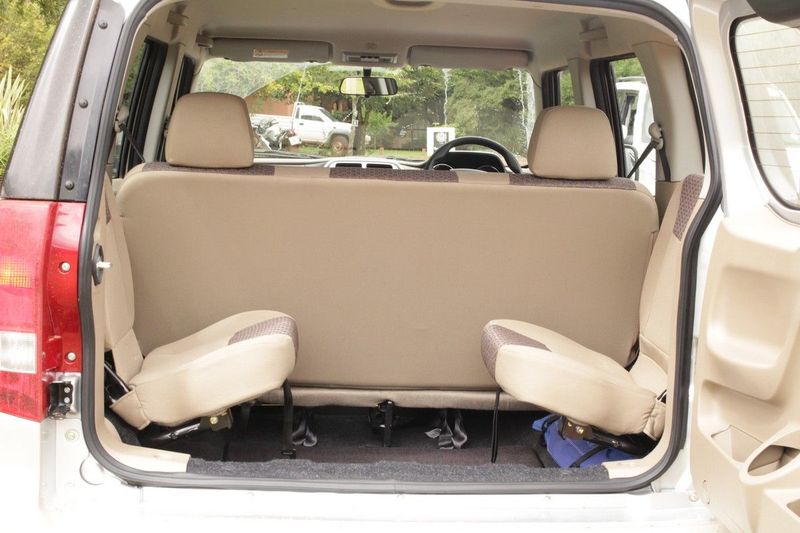
Inside, the well-finished beige/grey combination cloth interior offers seating for five, with the addition of a pair of small side-mounted rear pews in the luggage bay (the latter units are meant for small persons only and are removable, but certainly add to the Mahindra’s showroom appeal. After all, only Honda’s BR-V also offers a 7-seater configuration in this segment of the market… and it is extra space you need, it’s certainly available).
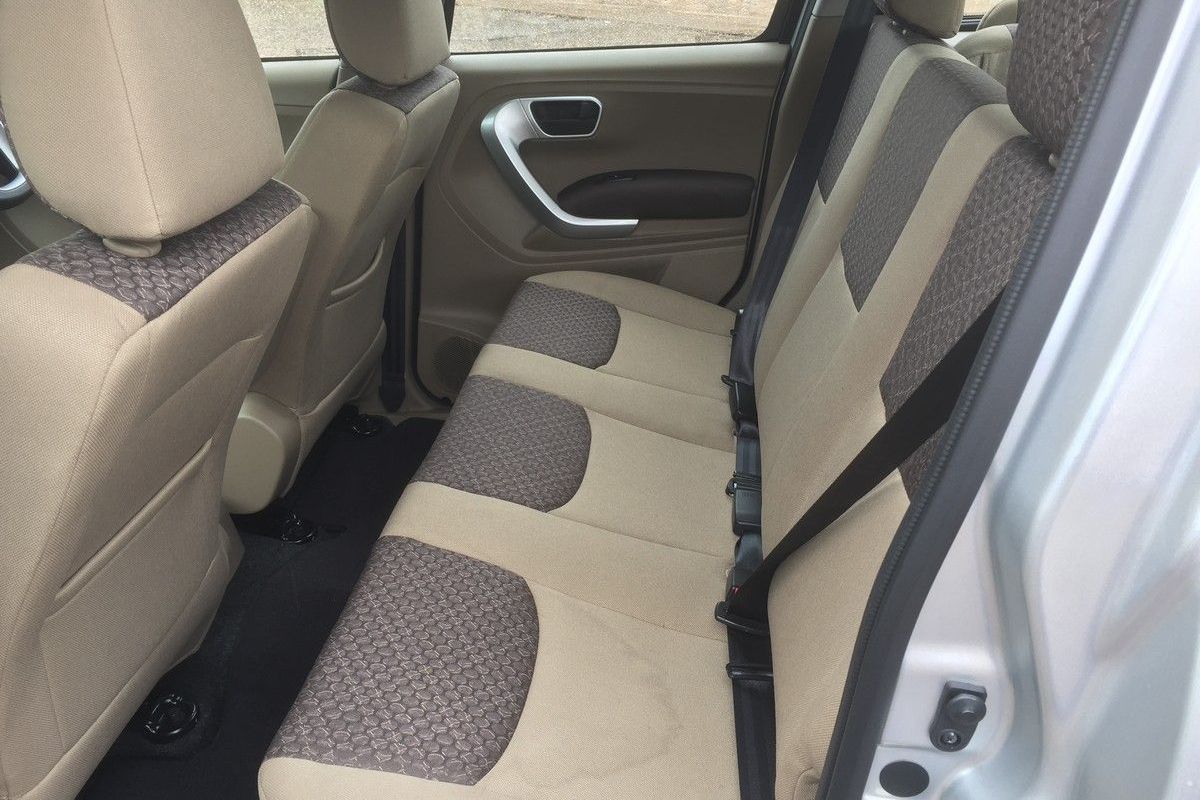
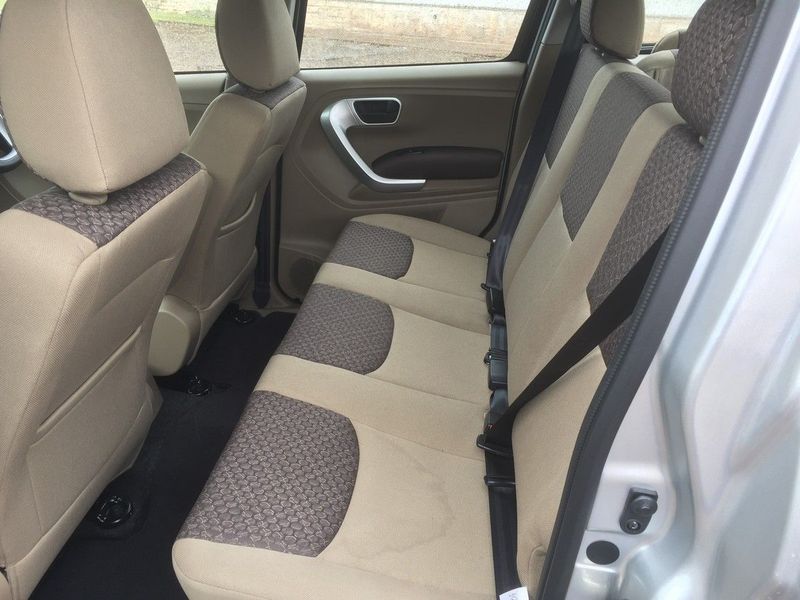
The rear doors open wide to reveal a comfortable bench with good legroom. Note the smart "brushed metal" trim.
This unconventional configuration has its advantages. Yes, the TUV300 is just over 4.0 metres long, but the multiple-seater cabin layout does not feel cramped. Considering that the passenger cell sits atop the chassis, the seating position is remarkably comfortable, with plenty of spare headroom and the rear doors open wide to reveal generous legroom for second-row occupants. The loading capacity is hampered only by the intrusion of the rear seats, but, again, by the standards of most compact family cars on the market, the Mahindra offers more than enough luggage space.
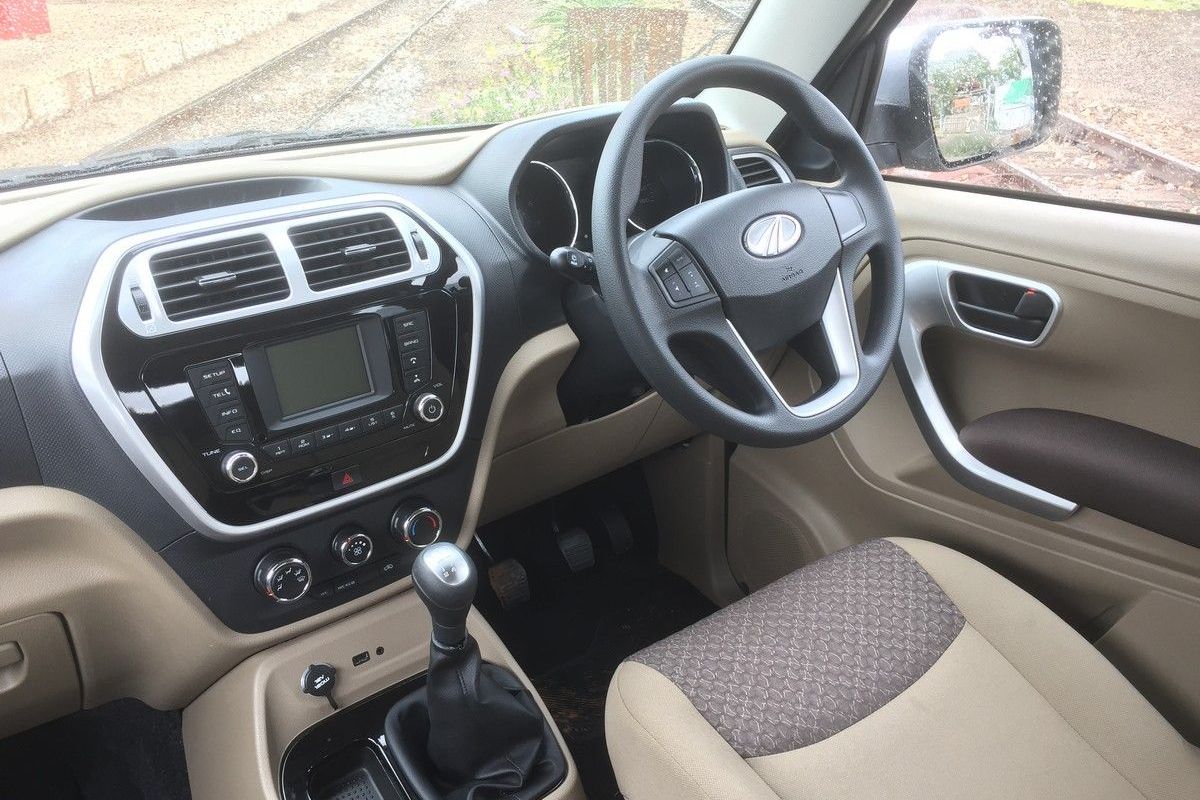
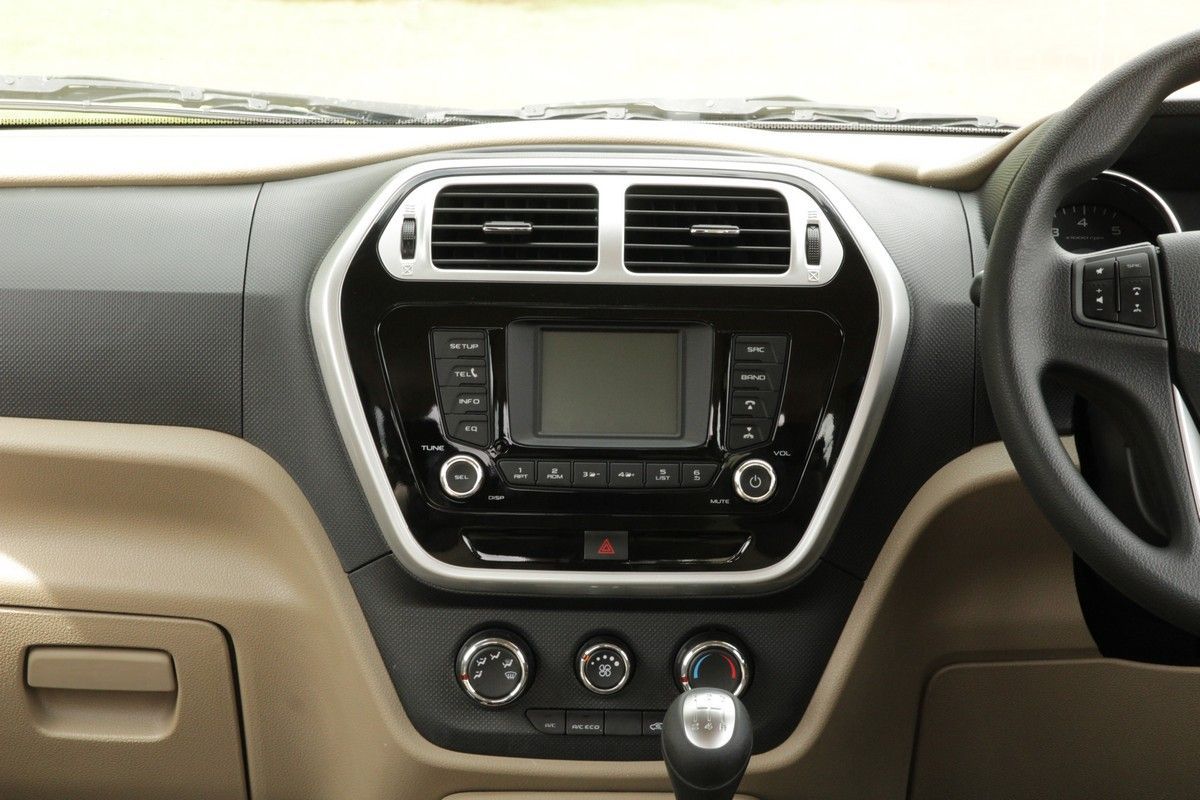
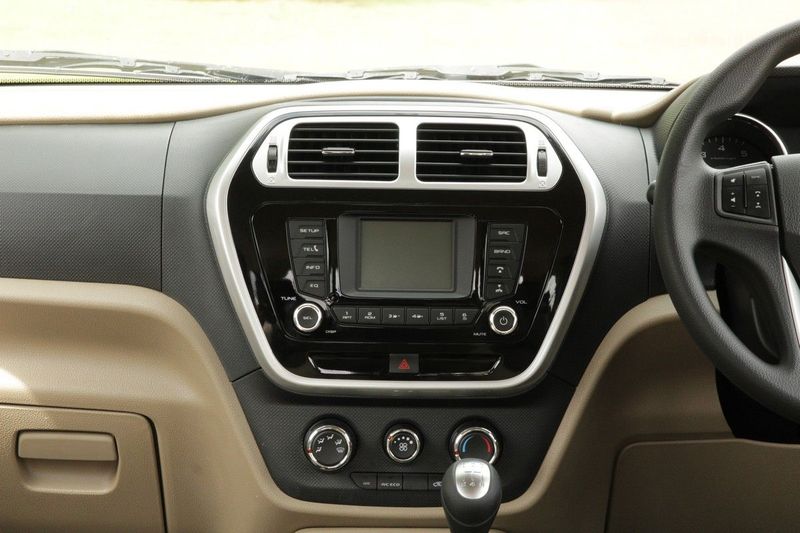
At this stage of a review of a budget-priced people carrier many will expect the “buts” and “howevers” to proliferate, but no, not yet… The Mahindra crucially comes specified with a host of modern conveniences that improve the newcomer’s driving experience. The fascia features smart piano gloss black detailing and brushed chrome-look surrounds and although the infotainment system looks rudimentary, it includes Bluetooth telephony and music streaming capability (with excellent iPod support, we discovered) and also offers easily accessible USB and auxiliary audio inputs.
The TUV300's fascia design is a study in neat and simple ergonomics. The piano black trim looks suitably smart.
Apart from a decently-sized glovebox, there are a plethora of storage solutions on the centre console as well as a pair of 12V charging sockets. When you look up from the multi-function steering wheel, you see an info-packed digital display for the trip computer in (dare we say it?) funky instrument binnacle… The TUV300 may owe its existence to the rugged Scorpio platform, but it hardly shows it.
That is particularly evident in the cabin execution. The panels are mostly of the hard plastic variety, but they are flush-fitting and didn’t emit rattles or creaks even when the Mahindra traversed stretches of rutted dirt road. In fact, the general on-road demeanour of the TUV300 is pliant, relatively sure-footed and manoeuvrable. The front suspension comprises dual wishbones, coil springs and an anti-roll bar, while the rear system has a multilink design with coil springs and anti-roll bar. The rear-wheel drive configuration and relatively wide tracks aid the overall "planted" feeling.
The to-the-side rearmost seat configuration ensures minimal reduction in luggage capacity.
In terms of safety specification, the Mahindra is reasonably equipped — at least given its price point. Dual airbags, ABS with EBD and automatic door locking are standard, but there is no stability control system, which is a drawback considering the TUV300 is decidedly a family vehicle.
Furthermore, the mHawk100 motor, which is proudly liveried on the newcomer’s front fender, is a 1.5-litre 4-cylinder turbodiesel with two-stage turbocharging that produces 73.5 kW at 3 750 rpm with peak torque of a hand 240 Nm between 1 600 and 2 800 rpm. It sounds good in theory…
The Mahindra may appear slightly under-tyred on 15-inch rims, but the driving experience is much more composed than many would expect.
However, while the motor is well mated with an otherwise slick-shifting 5-speed transmission and feels generally tractable at urban speeds, it doesn’t offer much in terms of overtaking capability at freeway speeds – a trait that will be undoubtedly exacerbated when five (or more) occupants and their cargo are aboard the TUV300. Still, brake energy regeneration and auto stop-start technologies are said to contribute to a claimed fuel consumption of 5.4 litres/100 km, which would be remarkable, if you could achieve anything near that figure. A turbodiesel is a good fit for this application.
Summary
As with any First Drive write-up, any critique of a new product is relative to what is positioned around it in the market. In this case, it’s tricky, because 7-seaters are rare in the compact family car segment. The T8 derivative (the only offering at this stage, although an automatic version is said to be on the cards) undercuts the aforementioned 7-seater Honda BRV’s entry-level version by almost R10 000 and it's RWD, as opposed to FWD.
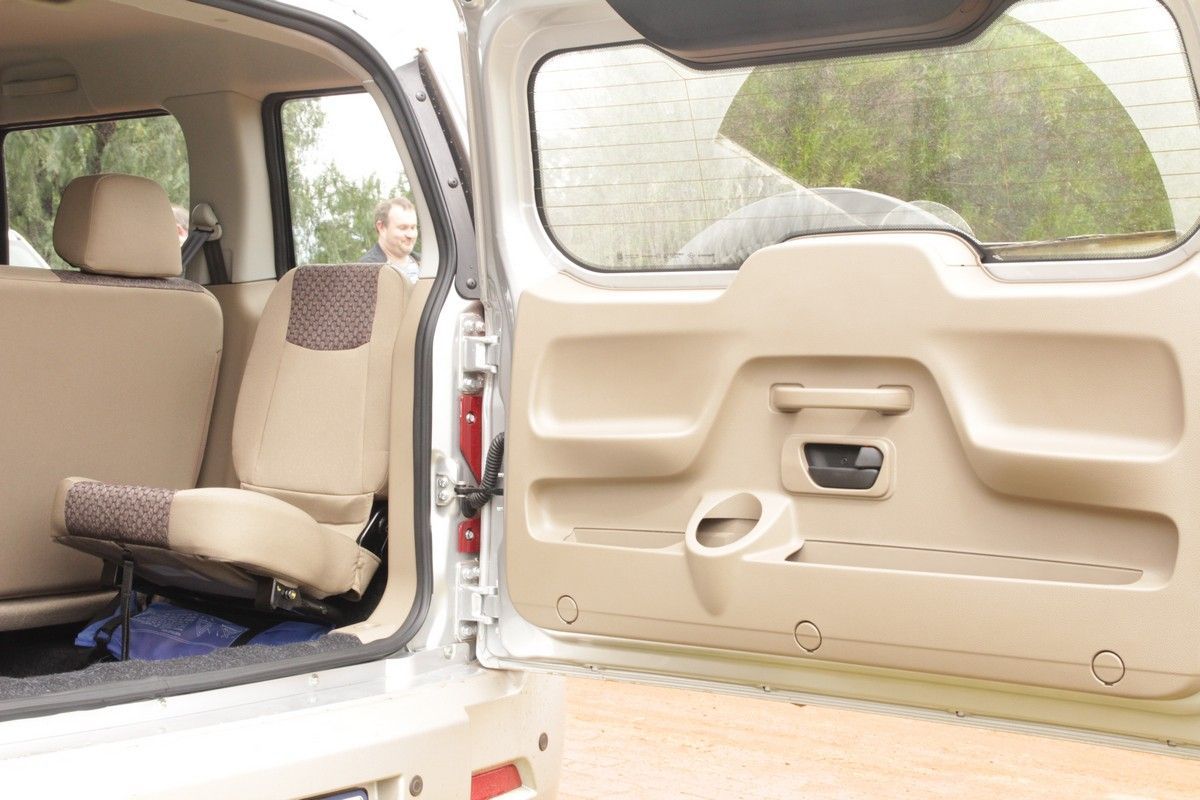
By moving the (full-sized) spare wheel to the horizontally-opening tailgate, Mahindra optimises luggage space.
And, with an asking price of R229 995 (at time of launch, February 2017), which includes a 3-year/100 000 km warranty, and a 3-year/ 90 000km service plan (with first service at 10 000km followed by intervals of 20 000 km), the TUV300, replete with its plucky air-con (with economy feature), electric windows all round, nifty infotainment system, practical layout and frugal (if workmanlike) turbodiesel powerplant, represents a real bargain to those who’d like a compact family car, but require added practicality. It exudes solid build quality and is not nearly as unwieldy as it looks.
Yes, to proclaim your product a battle tank for the urban commute is certainly brave for Mahindra, which, admittedly, treads its own path, product wise, especially in terms of styling. Unfortunately for the Indian marque, the TUV300’s love-it-or-hate-it exterior treatment is a disadvantage in a market where cutesy "off-roading city-slicker" looks are very much in demand. It's not cute. Having said that, awkward looks didn’t deter the erstwhile Toyota Venture (and Condor) from achieving success… And the Mahindra is a significantly better product that those dreary econoboxes were!
Ford has released a video teaser of the new Fiesta ST ahead of its full reveal this week!
The new Ford Fiesta was revealed last year and the company is now gearing up to reveal the pocket rocket in the range. To kick things off, Ford has released a teaser video showing the new Fiesta ST. The full reveal is expected to take place on Friday, 24 February 2017.
Powertrain details have yet to be confirmed, but previous reports have suggested that the new Fiesta ST will forego the previous 134 kW 1.6-litre turbocharged engine in favour of the firm’s 3-cylinder EcoBoost engine, which will likely be uprated for application in the Fiesta ST.
The new Fiesta ST will feature an improved chassis with the brakes, suspension and steering being key areas of attention. The ST will ride on bigger wheels than the standard Fiesta and will feature specific aerodynamic bits and trim kit.
The new Fiesta ST will be shown at the upcoming Geneva Motor Show and can be expected in South Africa in 2018 along with the new Fiesta range. We will keep you updated as more information becomes available this week.
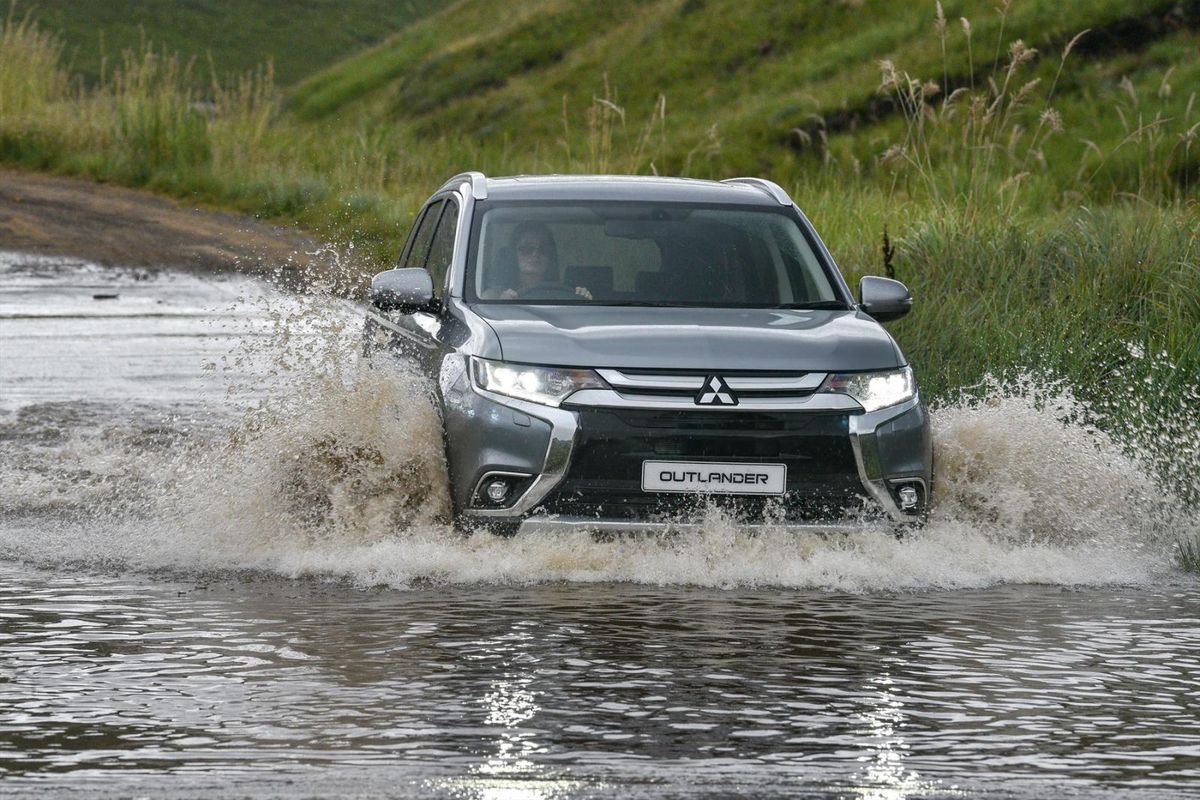
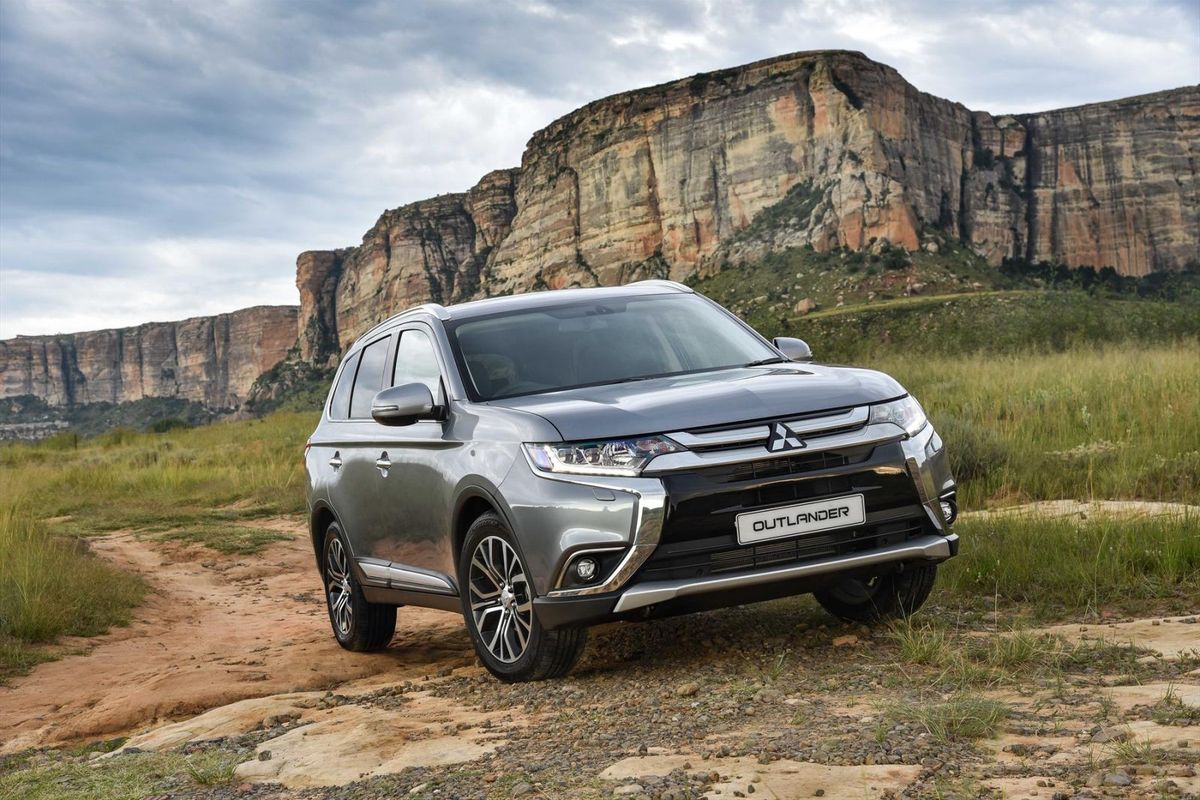
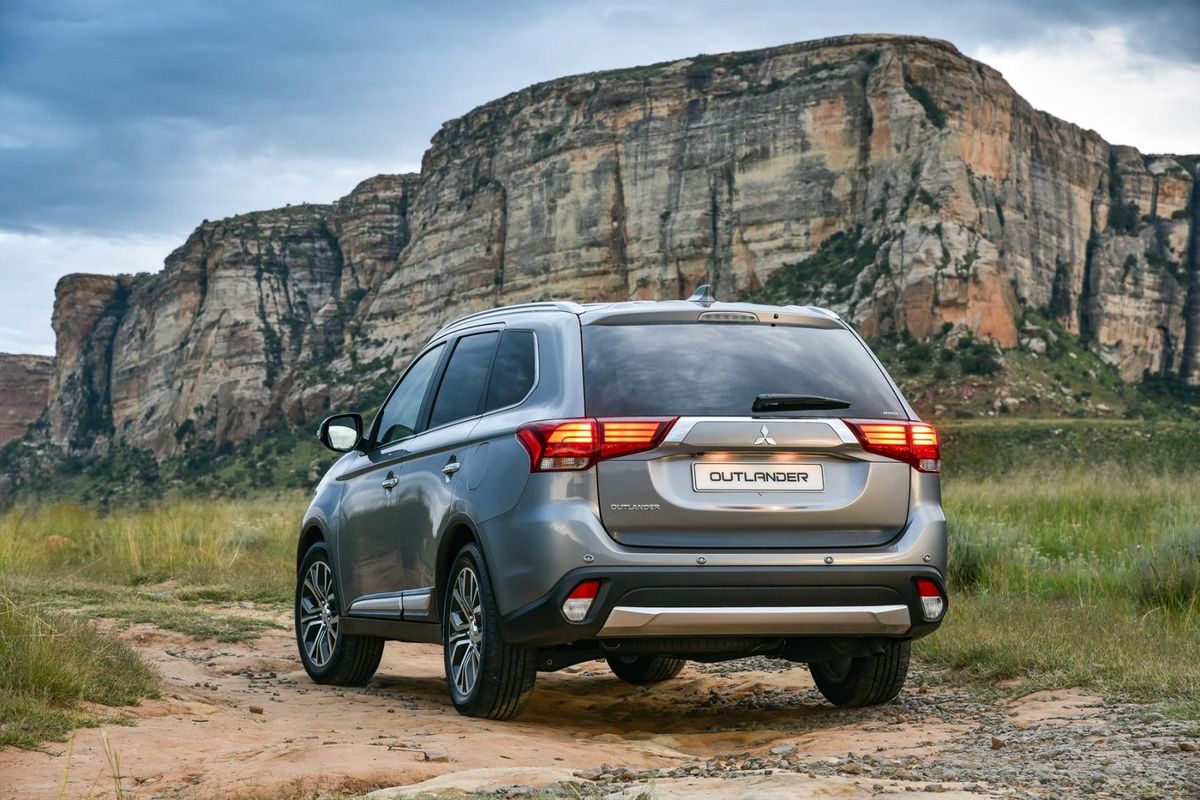
Mitsubishi has updated its value for money 7-seater family car – the Outlander – with a fresh face and an interior upgrade.
Mitsubishi South Africa's product offensive with new or refreshed lifestyle vehicles continues unabated. After not having much in the way of new product for the last few years, the Jap[anese marque has now launched a pair of newcomers within a space of a month: the Triton bakkie, of which we have a video review, and now this facelifted Outlander.
The Mitsubishi Outlander has always offered good value for money in terms of space and kit per rand spent. It hasn’t always been the most refined – nor technologically sophisticated – product, however. This facelifted model adopts Mitsubishi’s new design language (especially in terms of the frontal aspect) that’s appreciably more modern than its predecessor.
The engine, unfortunately, remains the same… a 2.4-litre naturally aspirated petrol unit. It puts out 123 kW, but only 222 Nm of torque – not ideal if towing, fully loaded (with passengers or luggage) or planning to execute an overtaking manoeuvre.
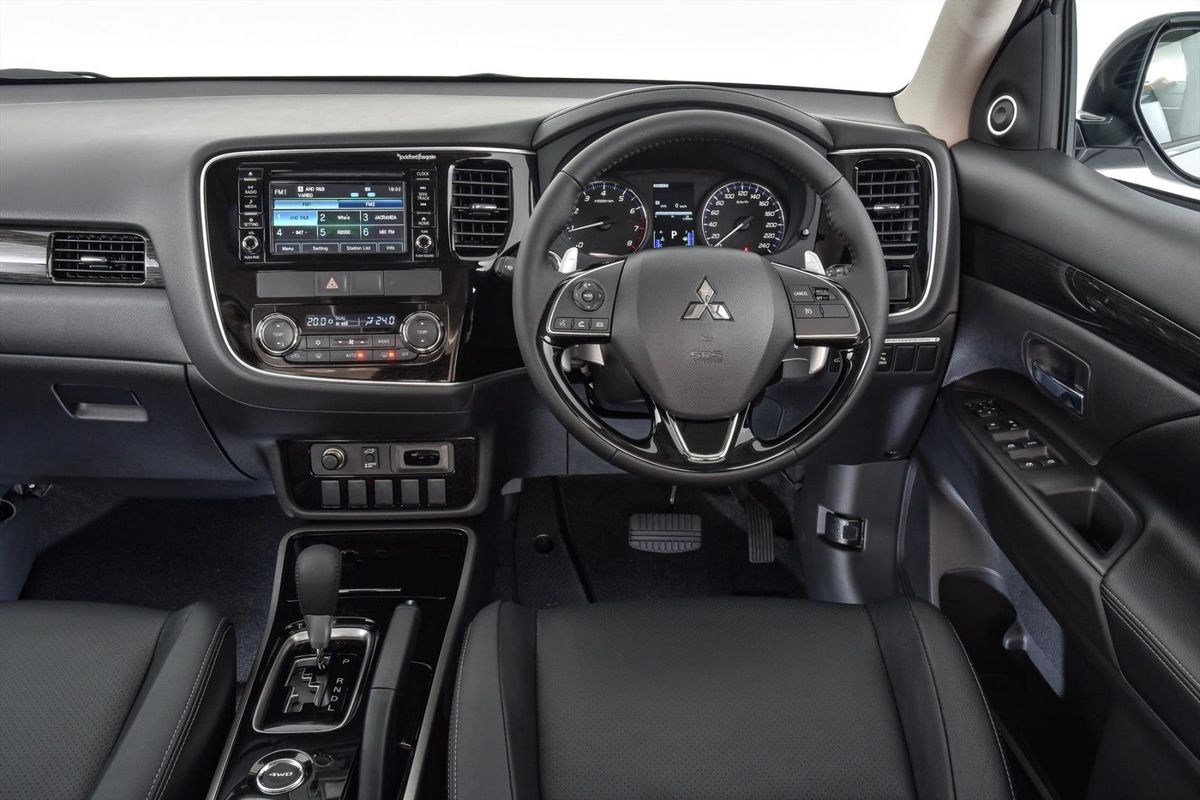
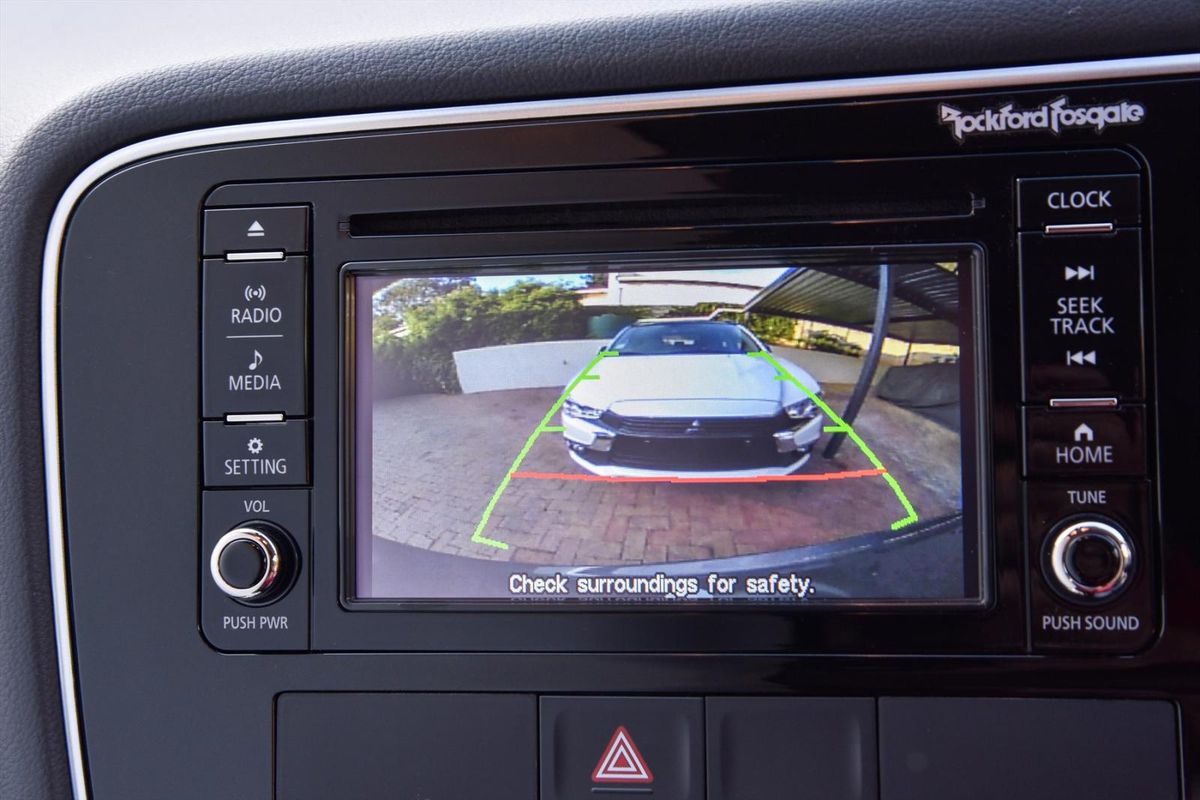
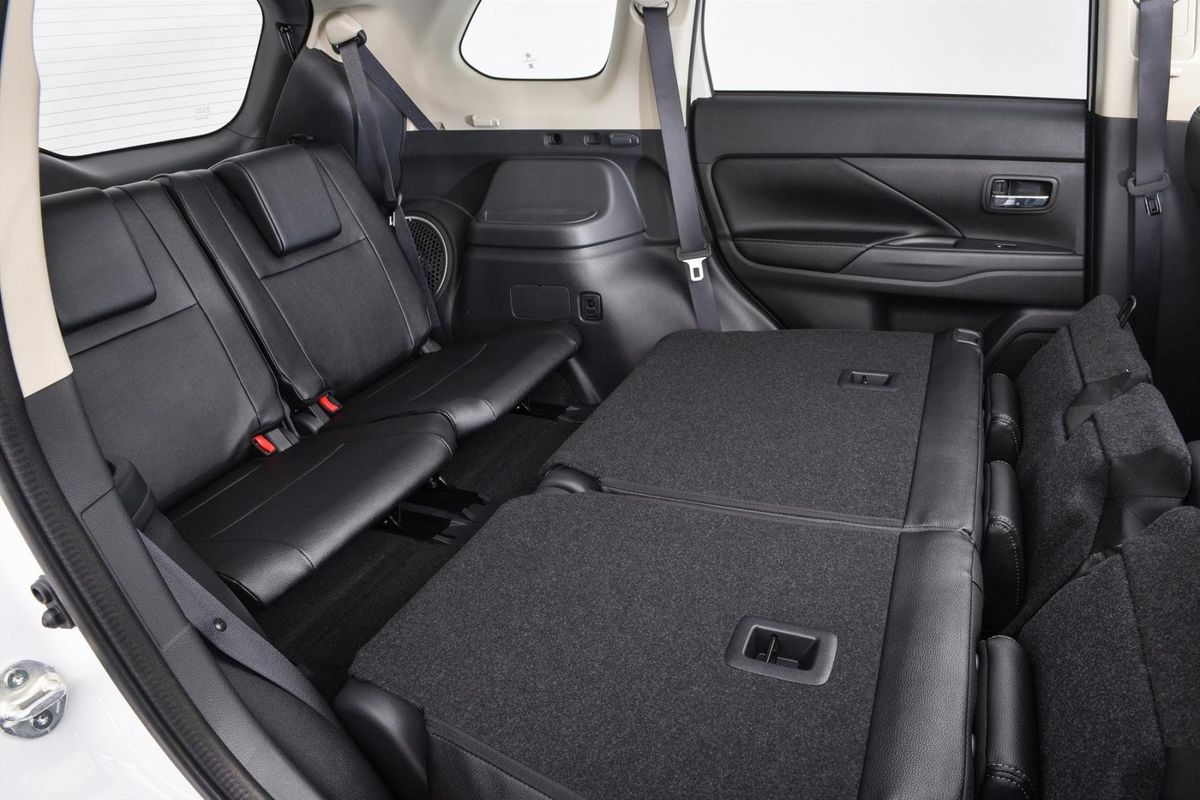
The facelifted Outlander is well-specced inside. The standard specification includes leather seats, touchscreen infotainment system with a powerful sound system, dual-zone climate control, 7 airbags, an electric tailgate, cruise control and a glass sunroof.
The Outlander has multiple 4WD modes that range from an economy to an entirely locked-diff mode and an auto mode that will adapt to most situations dynamically.
The pricetag on the facelifted Outlander is R549 900 (Feb 2017) and is sold with a 3yr/100 000 km warranty and a 5yr/90 000 km service plan.
Vehicle auctions have been a part of the car buying experience for over 50 years and it’s one of a handful of routes that you can take to get yourself a set of wheels. But, with each passing year the vehicle sales industry evolves into a more dynamic beast and with new and creative ways to attract buyers, so does the risk factor. Is it still business as usual on the auctions front?
Why go the Auction Route?
Auctions have certain advantages over the traditional vehicle finance method and the decision to opt for this move is entirely dependent on a buyer’s circumstances or modus operandi. A few valid reasons to go the auction path are:
Auction cars generally trade for less than book value.
No ITC (credit) checks.
The cars don’t incur interest.
Immediate owner.
By and large, there's very little red tape and you can score big on savings or get a really smart car.
You have decided to go the auction route, what follows?
Make sure you have access to sufficient cash to not only cover the cost of the car, but also the auction fees.
There are a few standard requirements to kick off your auction adventure. Though not entirely the rule of thumb…
You should have easy access to the required cash
First, seek out a reputable auction house. Major banks or financing houses such as WesBank and Absa regularly host auctions.
Narrow down your list of desired cars.
You are now ready for "horse trading". Most auction houses have standard admin fees such as a 14% service charge, a refundable joining or auction fee; thus you need to use clever money management. Admin fees differ by venue but the 14% seemingly is standard across the field. Be aware, the refundable auction fee can be withheld if you incur penalties, of which there are a few.
You are ready to bid
The bidding process begins a day earlier when bidders are allowed a closer inspection of the cars. This is where buyers get a better idea of the condition of the cars they can bid for and receive more information. Remember you are buying ‘voetstoots’ so any defects after the sale are your responsibility.
Tips for inspection day
Choose your car wisely.
If you are able to, bring a mechanic for a professional opinion.
Check that all of the car’s documents are in order.
Check roadworthy certificates and that license fees are up to date.
Ascertain the status of the car; is it a rebuild? Has it been involved in previous accidents?
Check warranty and maintenance plan lapse period (if applicable).
Check the book value of the car. You can get the value of the car for only R10 using the TransUnion Car Value service. Click here.
Check if there are any missing items like a spare wheel, tools, radios etc.
Auction Day
At this stage, you should have sorted every checkpoint listed above. The process is fairly lengthy and fair in that the auctioneer will announce all of the rules of engagement and expectation before the day’s business kicks off, so pay attention. There are few tips to ease your experience and safeguard the less experienced.
Prepare for anything, including being outbid on your choice car.
Exercise great patience. Don't get caught up in the excitement or a bidding war.
Manage your bid and budget.
Strive to pay a fee that covers the car and the added administration costs.
After Auction
Remember, all purchases are "voetstoots", so inspect properly the day prior to the auction.
Congratulations, you have secured your wheels! But you are not home free just yet. Your car is still at the auction house and a few things need to happen before you can park your pride and joy at home. Protocol dictates that there needs to be proof of payment within 48 hours after bid.
The vehicle’s paperwork is also processed during this period and only when the auction house is satisfied that you have transferred the money into its coffers and the ownership and other documents are ready, will you be informed to come and pick up your car.
This is where you can incur penalties. Skip the mandatory 48 hour payment period and you forfeit the Auction fee.
This juncture is also where possible horrors of auction buys can surface. Take John Moduku’s experience, as narrated by him.
Things can go wrong
According to Mr Maduku, his woes started barely 2 kilometers into the first drive of his new purchase. “The car began to overheat but fortunately there was a service station with a workshop nearby.” The workshop assisted him by getting the vehicle’s fan going, which evidently hadn’t been operational for a while according to the technicians.
Fully understanding the ‘voetstoots’ rule, he went about fixing and replacing some other niggles which included the vehicle’s entire braking system which had packed up and the full exhaust system which had corroded. However, his troubles had only started. According to Maduku it took 5 full weeks to finally have the vehicle’s official ownership papers in his hands, a stressful period characterised by a barrage of ignored calls, unfulfilled promises and eventually, threats of returning the car and opening a case with the Police, only to discover he had no legal claim to the car.
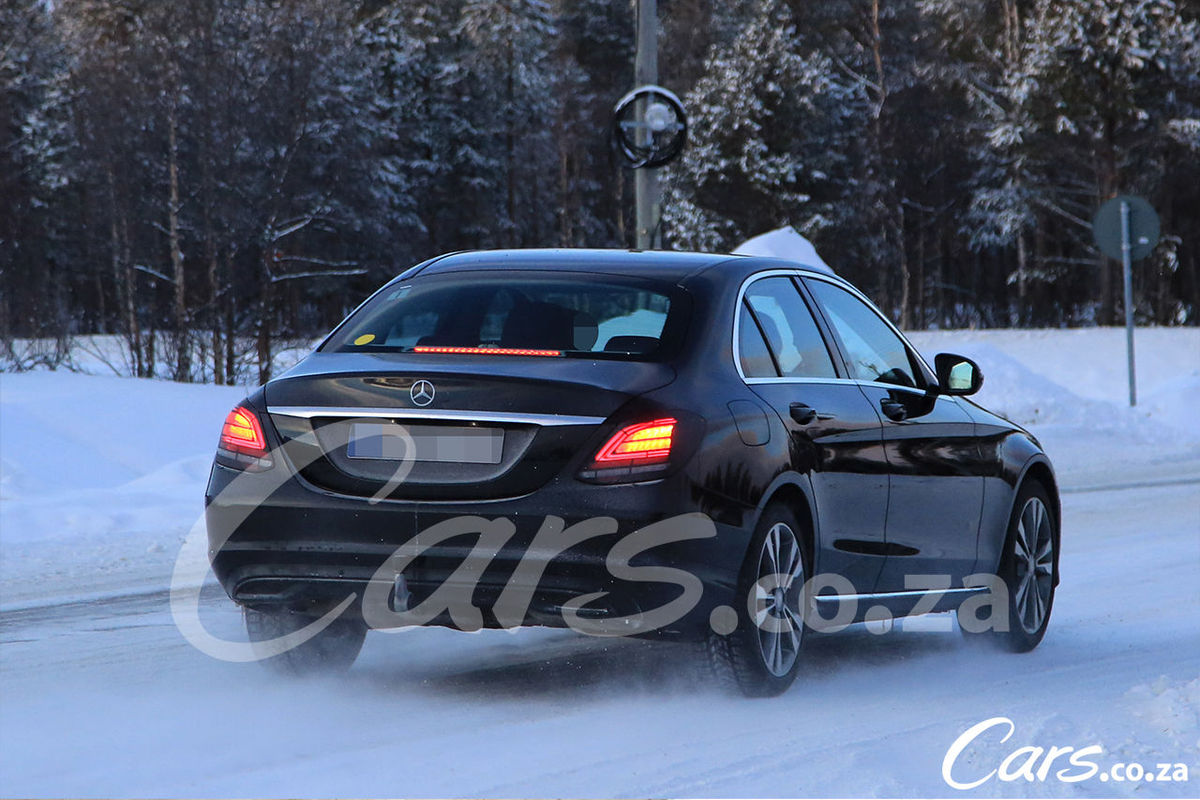
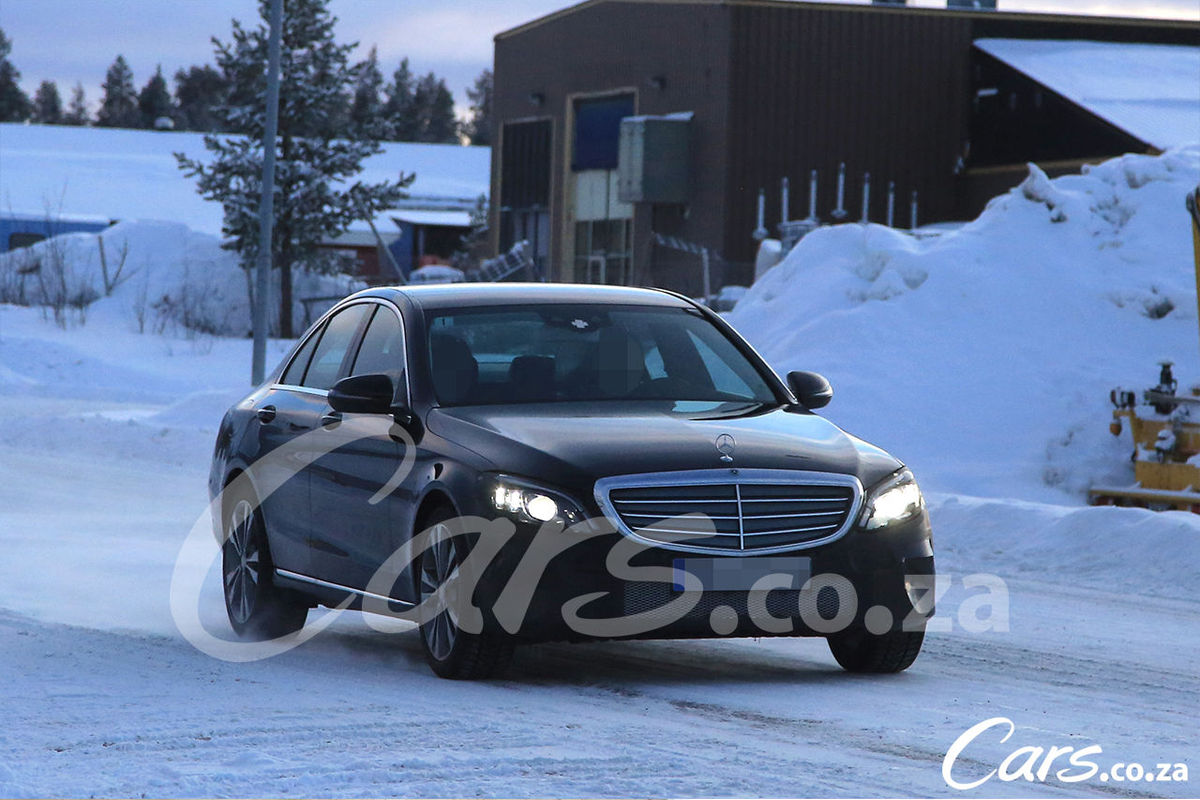
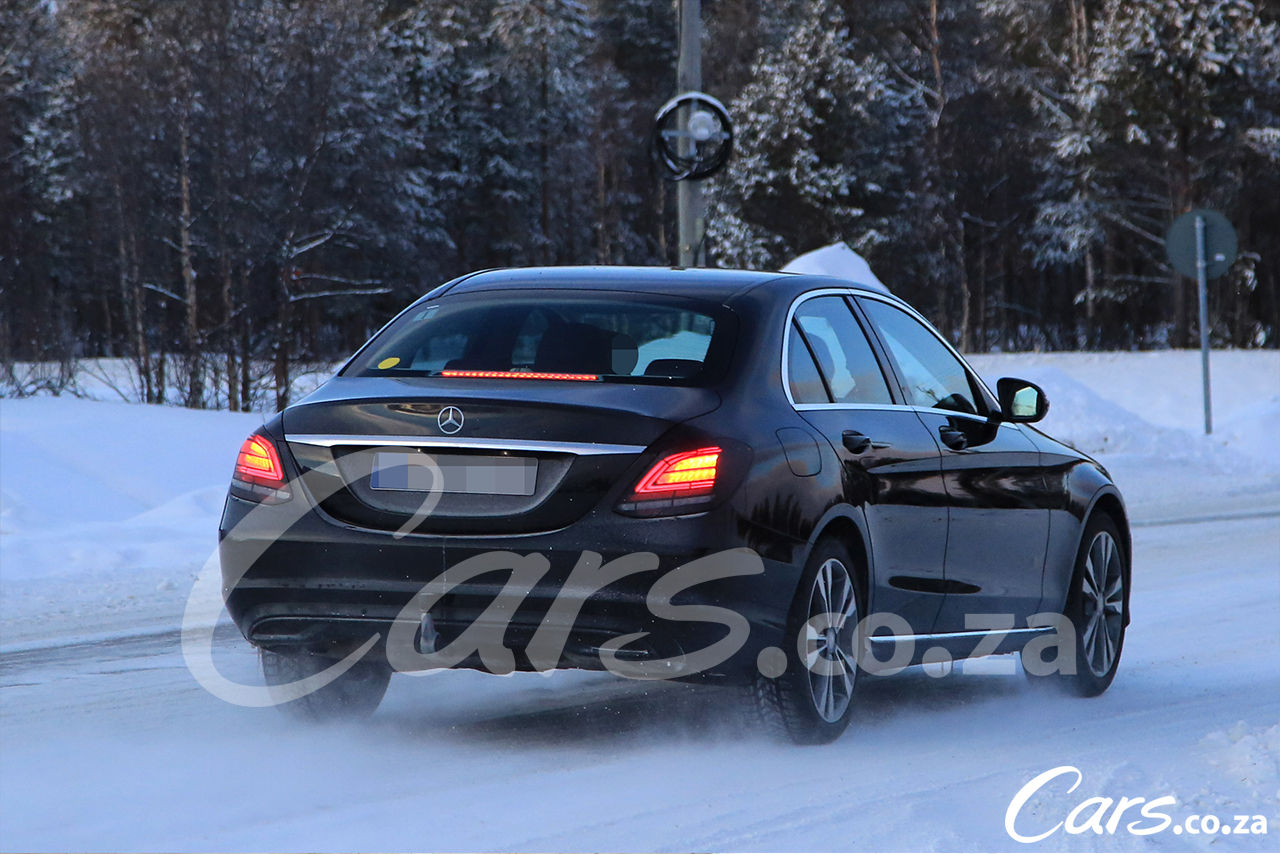
The facelifted Mercedes-Benz C-Class has been spotted in the final stages of testing. It’s not even wearing any camouflage…
Mercedes-Benz is hoping to launch the updated C-Class during the course of 2018. The new model, as spotted here in the final stages of testing, doesn’t look too drastic a departure from the original design. The only visible changes appear to be the headlights, which have been transplanted from the E-Class and the new taillamps, which feature a new lighting signature.
We are led to believe that there will be an entirely new engine lineup that will be revealed with the updated C-Class in 2018. The V6 design is said to be replaced by an in-line configuration and the 2.1-litre turbodiesel unit will be retired in favour of the 2016 E-Class 2.0-litre version.
Interior details will in all likelihood be updated too (as is the case with all facelifts), but we await further details about the new the enhancements.
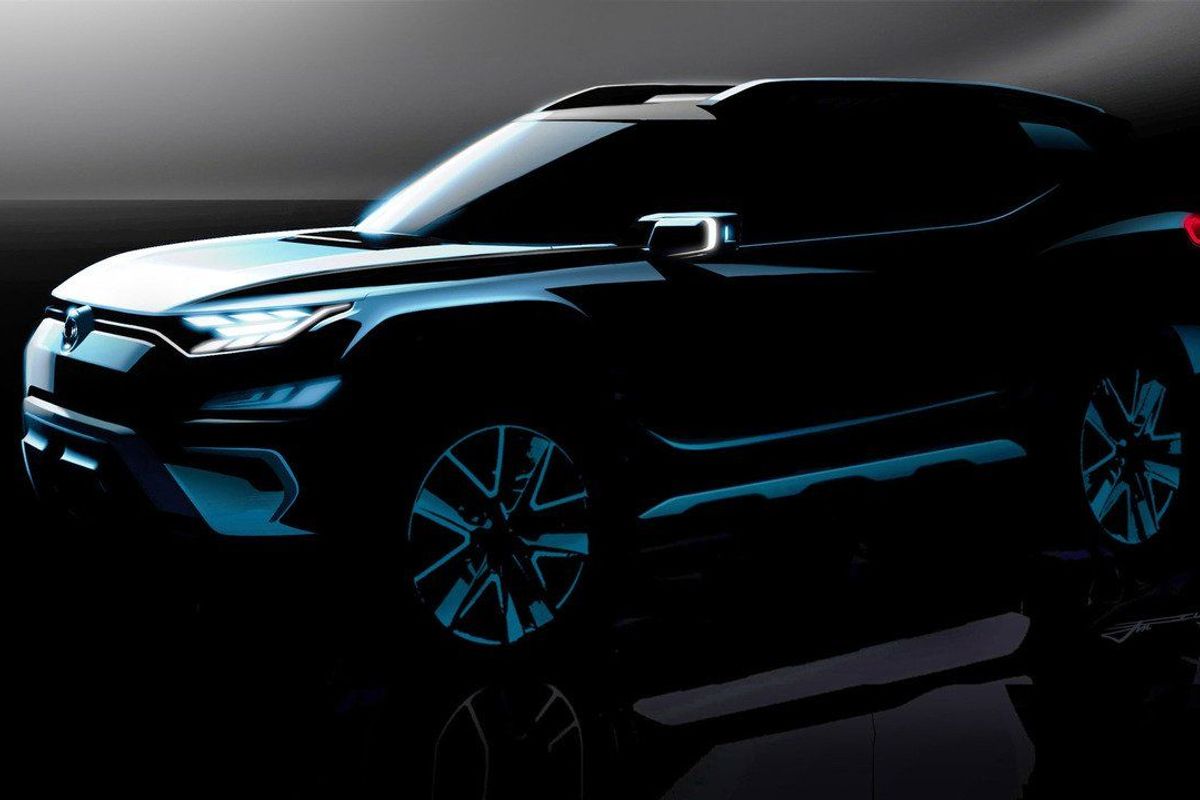
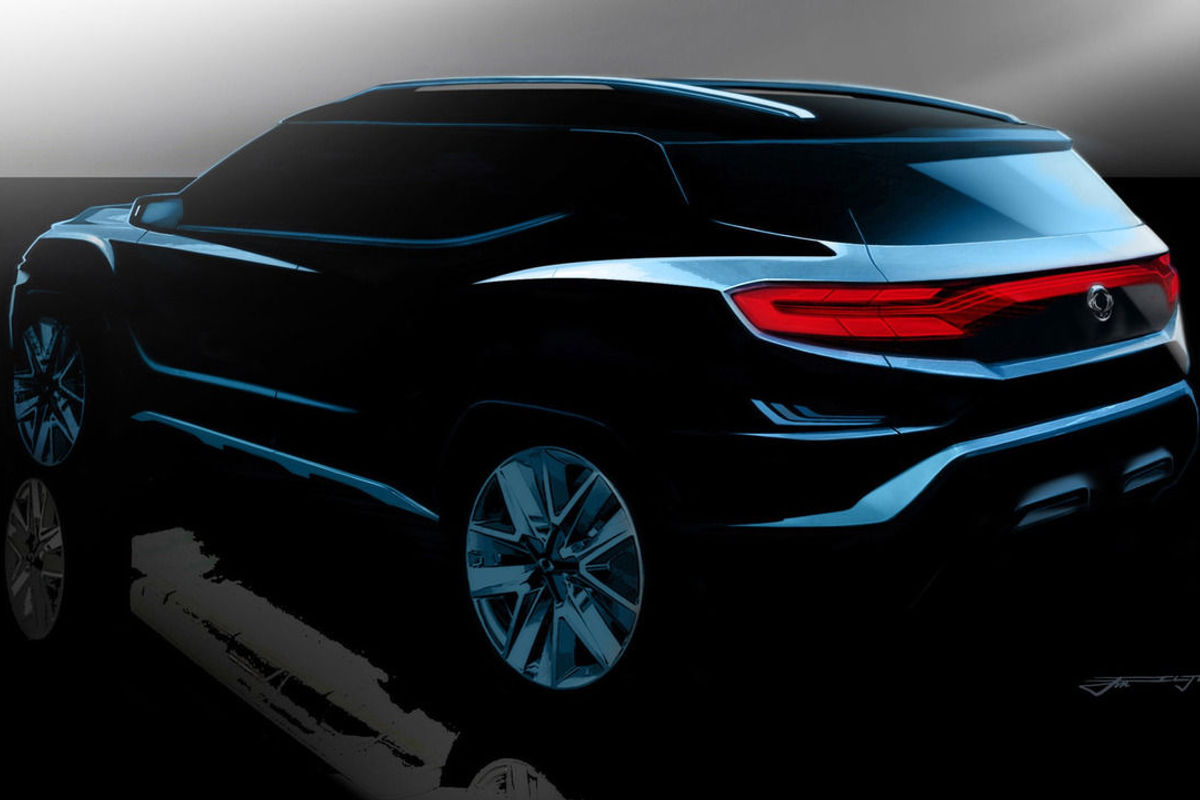
SsangYong will use the upcoming Geneva Motor Show to showcase a new SUV concept called XAVL.
Using the Korando as inspiration, SsangYong is preparing to unveil a new SUV concept at the Geneva Motor Show in March 2017. The XALV, standing for eXciting Authentic Vehicle Long SUV, is a further interpretation of the XAV concept shown at the 2015 Frankfurt Motor Show and according to SsangYong, this new concept is a tough and masculine looking SUV concept that blends advanced convenience and the practicality of a multi-purpose MPV.”
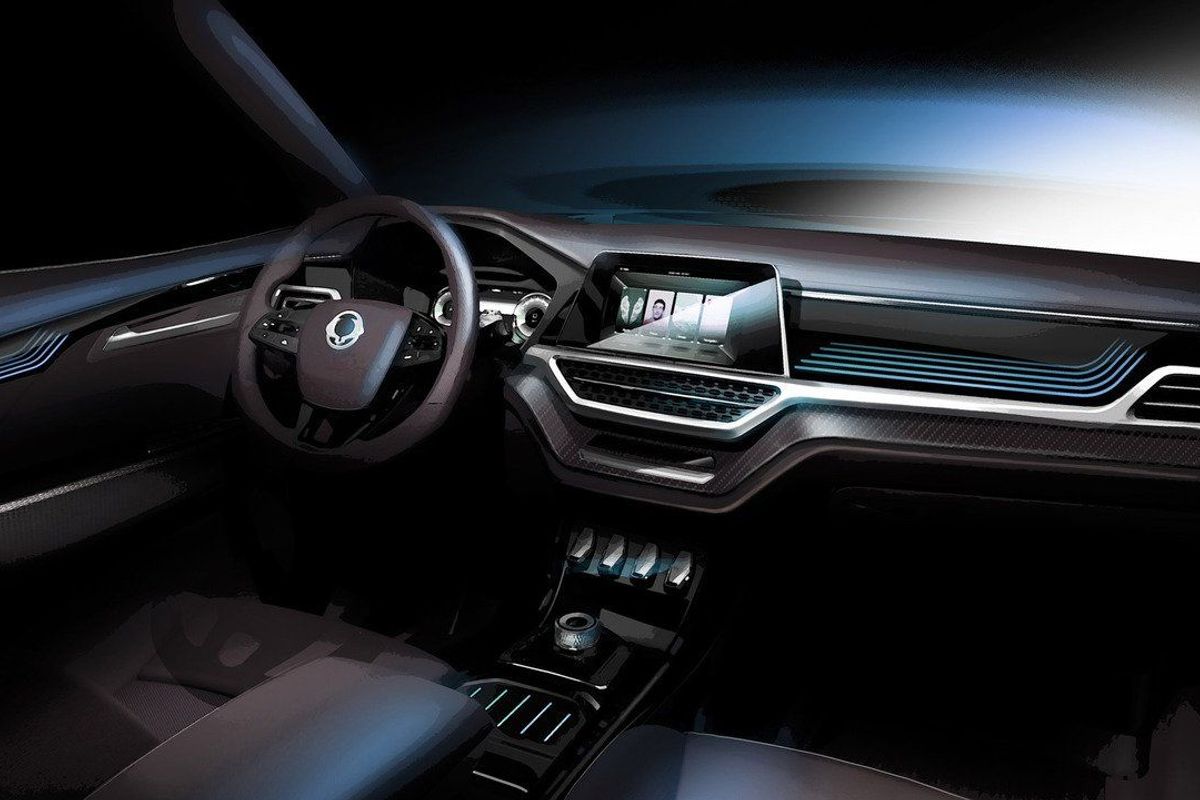
The XAVL can seat up to seven passengers and few buttons are seen in the cabin. Instead, the concept features a centrally-mounted touchscreen and digital instrument cluster set in a modern-looking dashboard arrangement. SsangYong further adds that the concept features numerous safety aids for pedestrians and passengers.
In terms of powertrain details, SsangYong only states that the concept will be powered by both petrol and clean-burning diesel engines.
It’s not yet clear whether the SsangYong XAVL will make it to production, but if it does, it will sit between the Korando and Rexton in the South Korean automaker’s vehicle range.
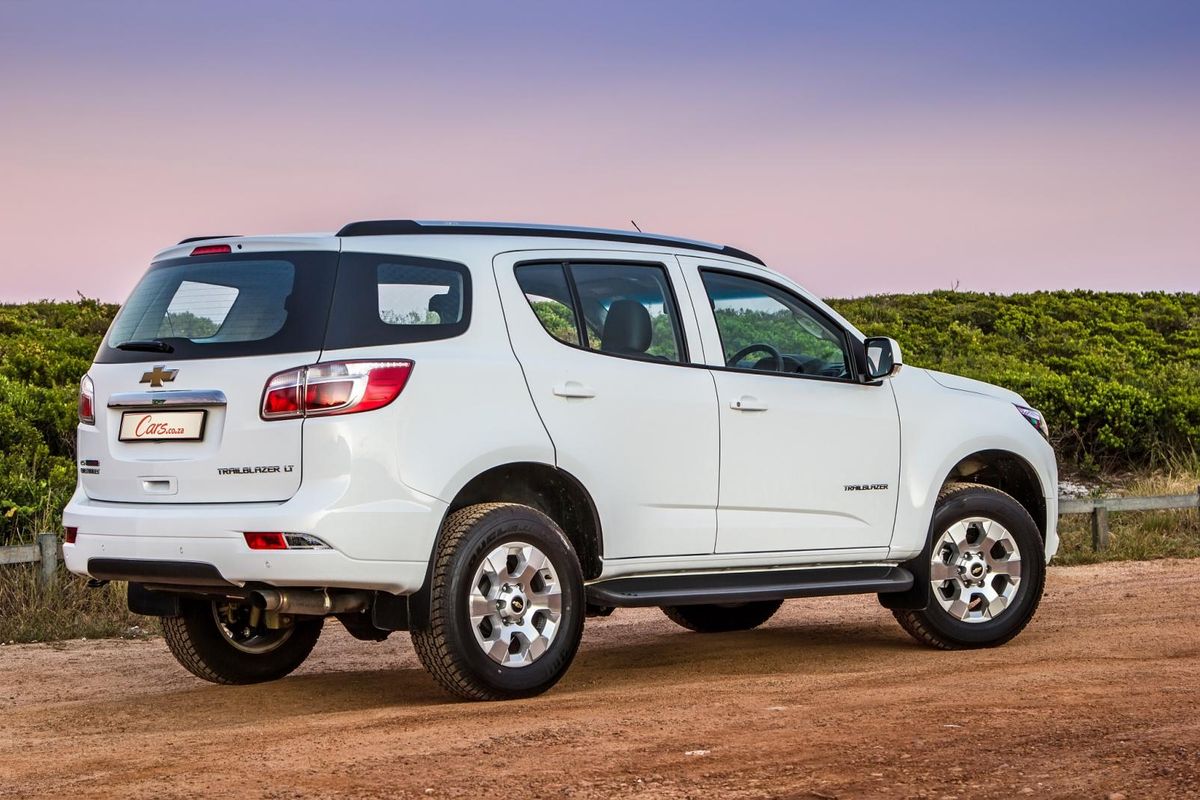
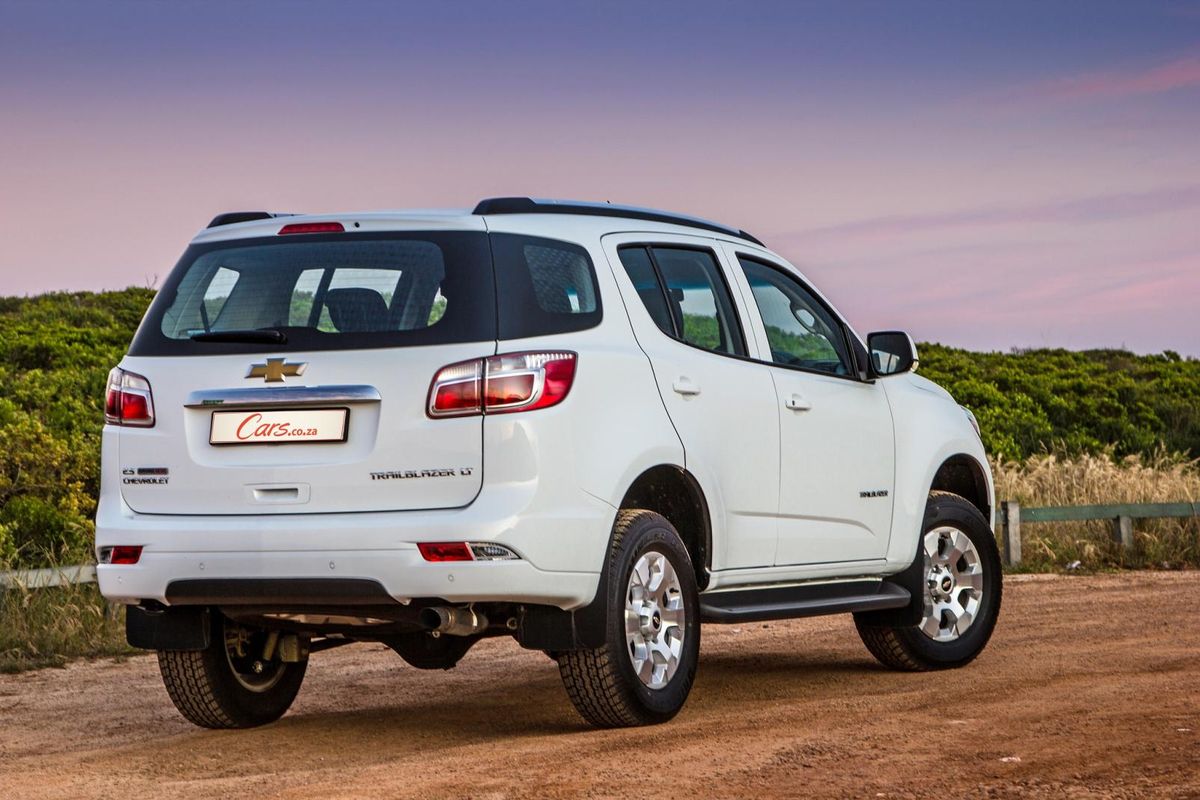
If you’re looking to get into a big body-on-frame SUV for as little cash layout as possible, Chevrolet's entry-level Trailblazer could be just the ticket. But does it tick enough boxes, or is it a bit too sparsely equipped?
We like: Good engine, loads of space, updated interior
We don’t like: Long-throw manual gearbox, lacks stability control, a touch more expensive than rivals
Alternatives:
The segment leader: The Toyota Fortuner 2.4 GD-6 actually costs a bit less than this Trailblazer and the new 2.4-litre engine is mighty impressive, offering superb refinement, performance and efficiency. It sells for R456 300.
Comfier than the rest: The Ford Everest 2.2 XLS is produced locally and provides the comfiest ride in this bakkie-based SUV segment. It sells for R458 900.
Cheap and loaded with features: For a saving of around R100 000, you can get the Mahindra XUV500 W8. It is powered by a 2.2-litre turbodiesel engine that lacks the power and refinement of these pricier foes, but it is a spacious, comfortable all-rounder that is backed by an impressive 5-yearr/150 000 km warranty.
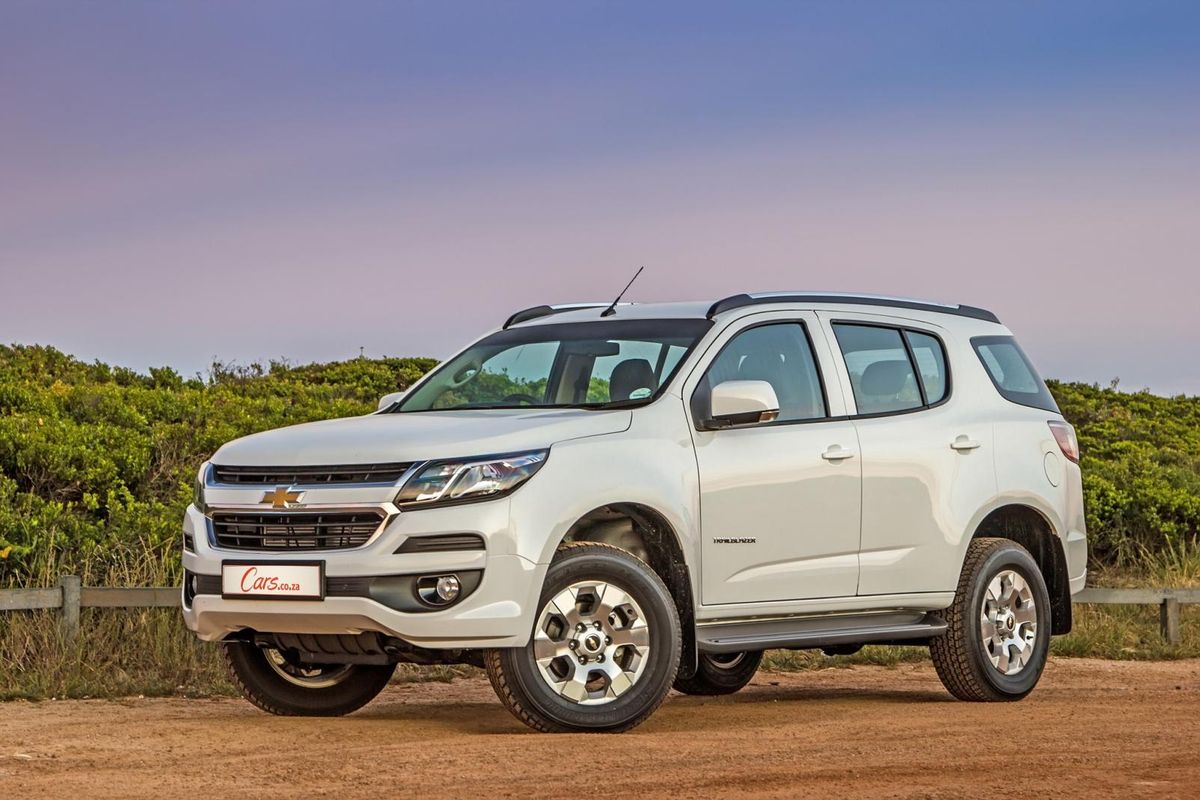
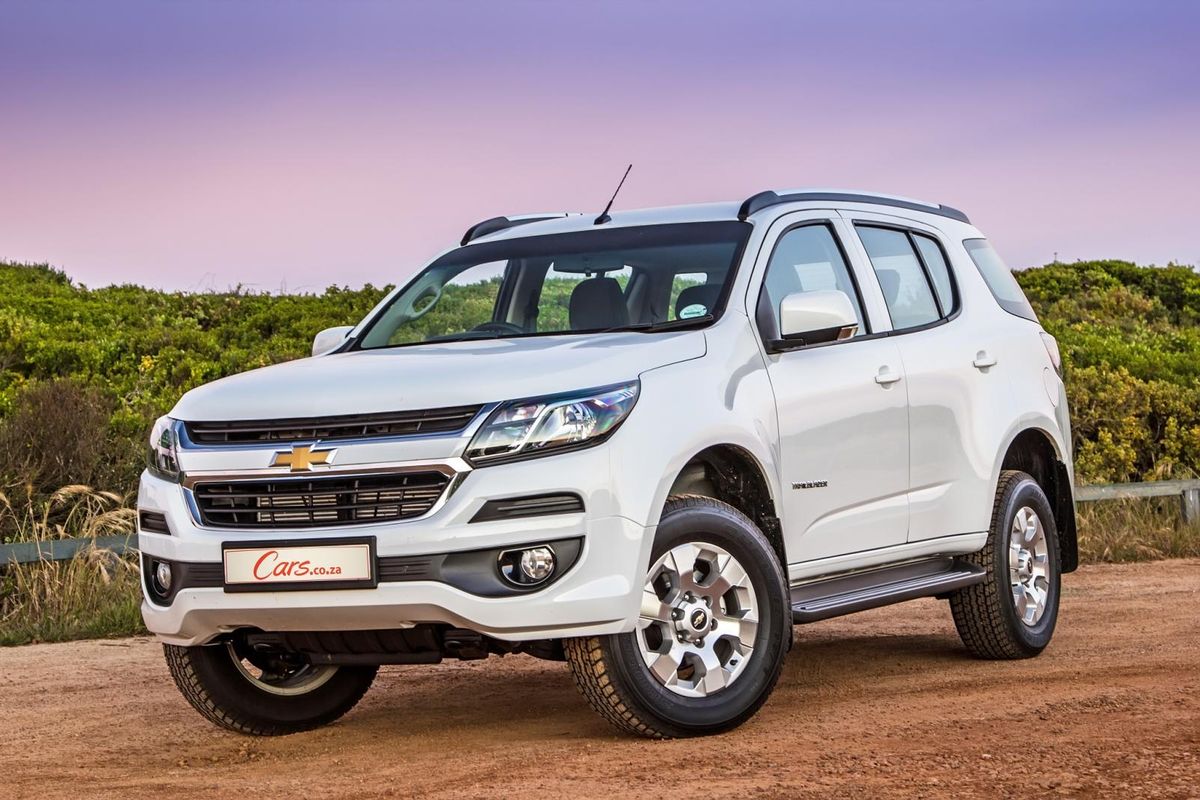
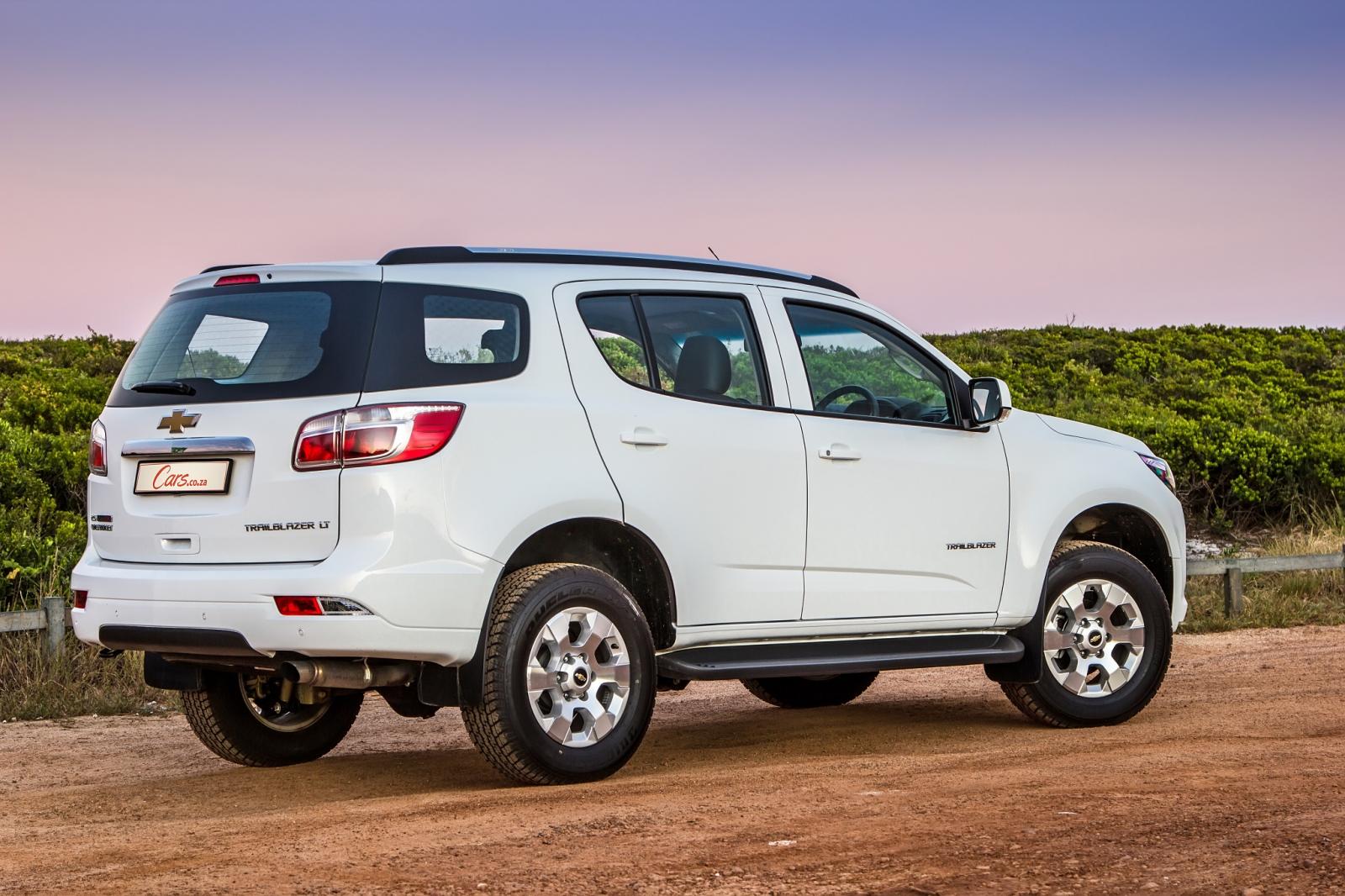
Chevrolet revamped its Trailblazer range at the end of 2016 in an attempt to remain competitive against the likes of a new (and market favorite) Toyota Fortuner and Ford Everest. The comprehensively restyled Trailblazer's update extended to a significantly improved cabin with a standard touch infotainment system and lower levels of noise, vibration and harshness (NVH). The model reviewed here is the entry-level Trailblazer, complete with manual gearbox, 2.5-litre turbodiesel engine and rear-wheel-drive only.
Bigger wheels and improved infotainment system are noticeable upgrades for the 2.5 LT Trailblazer.
The good
Practicality. The Trailblazer’s seat configuration is simple to operate and all the rear seats tumble forwards and lie flat – unlike the Fortuner's layout. This configuration opens up a vast area for loading. With 7 seats up, there’s still over 200 litres of boot space available. Passenger space is very impressive in the middle row and the final row isn’t too cramped either. In terms of overall size, the Trailblazer sits somewhere in the middle between the smaller Fortuner and the larger Everest.
Engine. The 2.5-litre engine feels powerful enough, and in this instance, it’s also not burdened by a 4×4 system that saps power. The engine is carried over from the previous Trailblazer but still has competitive power and torque figures of 120 kW and 380 Nm. It revs smoothly, more so than we’ve seen these big turbodiesels do in the past. It doesn’t sound like it’s going to crunch a hole in itself when you go over 3 500 rpm and even at idle it’s relatively quiet. Fuel economy is claimed at 7.6 L/100km but if you can keep things under 10 L/100 km then you can feel satisfied.
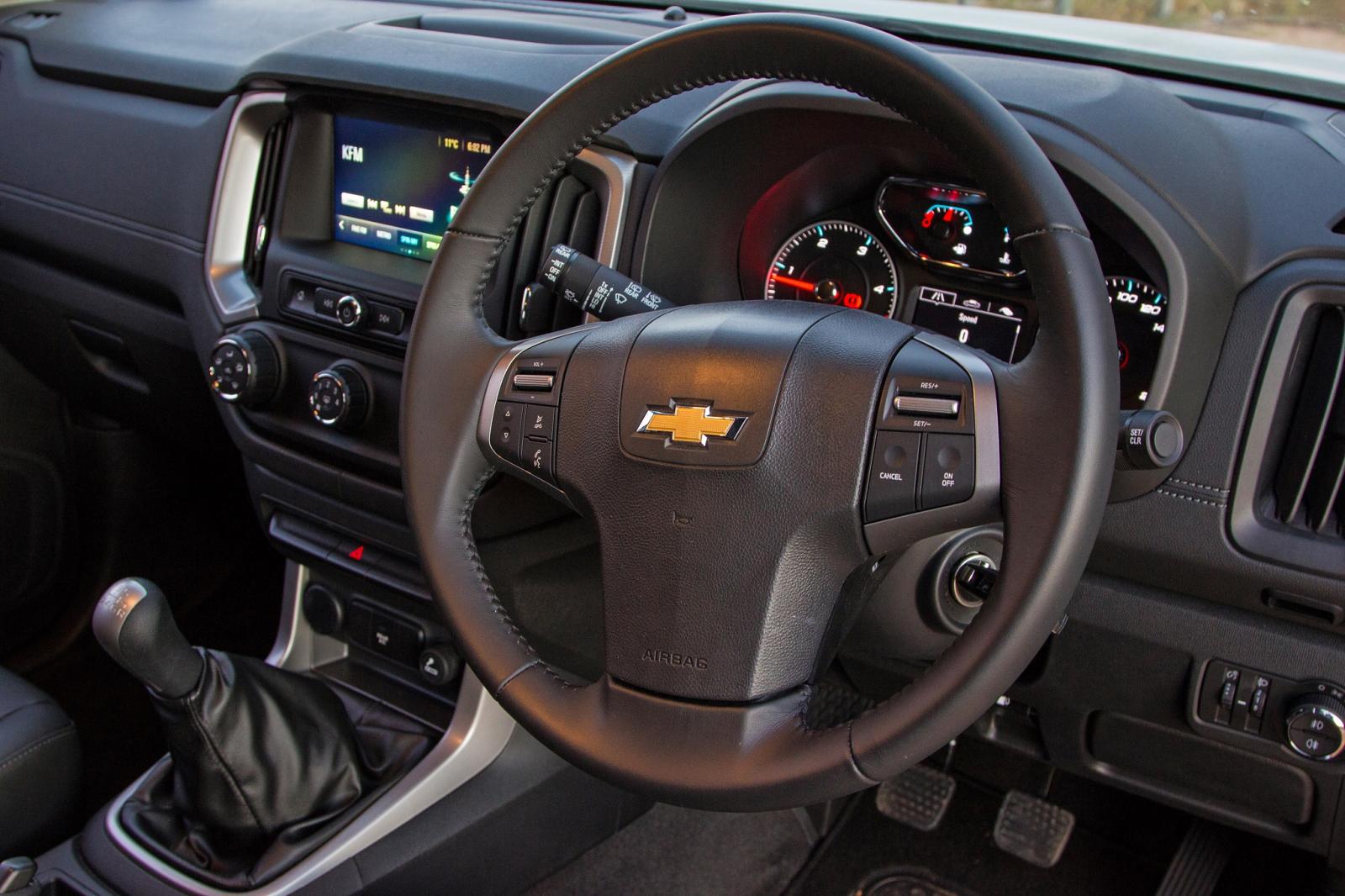
Cabin refinement. The Trailblazer’s perceived build quality has improved with this facelifted model. The road noise, which you tend to get from big SUVs, is kept down by the improved insulation around the cabin. It’s probably the quietest of the bakkie-based SUV brigade. Cabin materials have been improved too, with more soft-touch materials being used across the dashboard and door linings. Leather seats are also a standard feature in the Trailblazer 2.5.
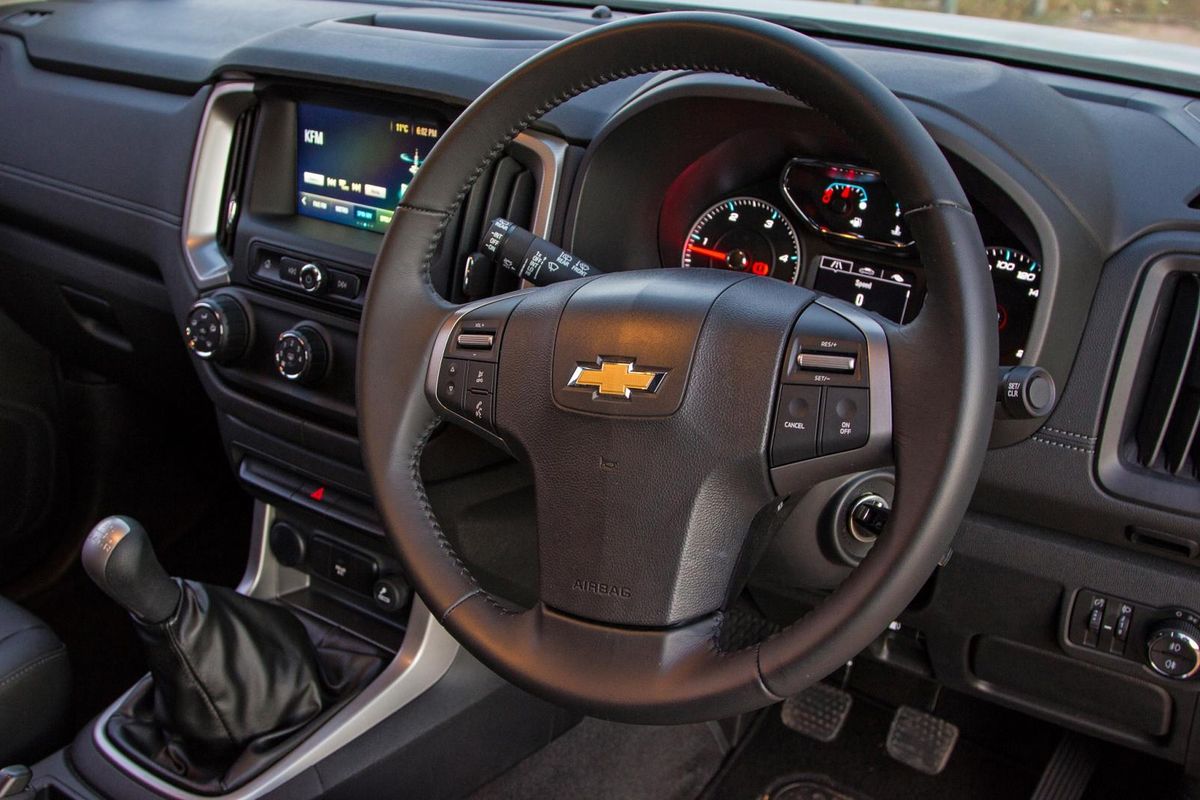
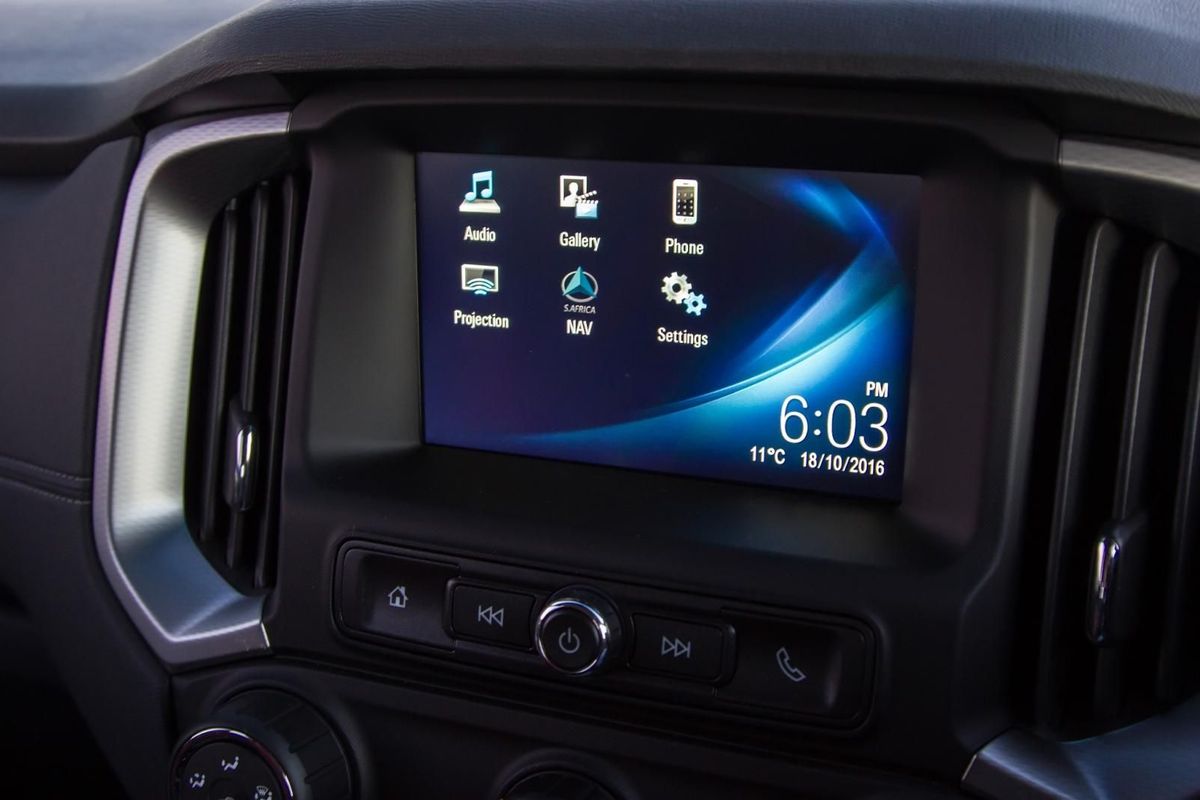
Connectivity. No matter which Trailblazer you choose, you get a modern touchscreen infotainment system as standard. This LT model doesn’t get all the bells and whistles that the more expensive Trailblazers do but it still has great connectivity options. The Chevrolet MyLink system is an easy way to connect your phone to the car and it integrates Bluetooth and media streaming immediately. Apple CarPlay and Android Auto (when it becomes available in SA) are also standard, meaning you get a much better phone/car connectivity setup than in its rivals.
MyLink infotainment system is standard but the cabin lacks the premium feel found in some rivals.
The bad
Wishy-washy manual gearbox. The manual shifter in the Trailblazer feels old-school in action. It has a long-throw action and demands fair effort to get the appropriate gear engaged. The automatic costs only R18 000 more than this manual and also comes with a more powerful engine. It seems an option well worth investigating.
Upmarket feel. The newer competitors have elevated the levels of "premiumness" shoppers now expect in this segment. The Trailblazer's upgrades have indeed led to noticeable improvements in the tactile quality of the fittings, but arguably not to the same extent as, for example, in the new Fortuner.
Lack of stability control. Both the Everest and Fortuner employ electronic stability control, which in a vehicle this tall is a must-have safety feature. The Trailblazer does have ABS, EBD and 7 airbags, which begs the question why stability control didn't make the cut too.
Pricing. It’s tough to compete in this market, made even tougher by the fact that the other 2 competitors are built locally. The Trailblazer 2.5 manual commands a R15k premium over its rivals when, apart from the infotainment system, it has no distinct advantage.
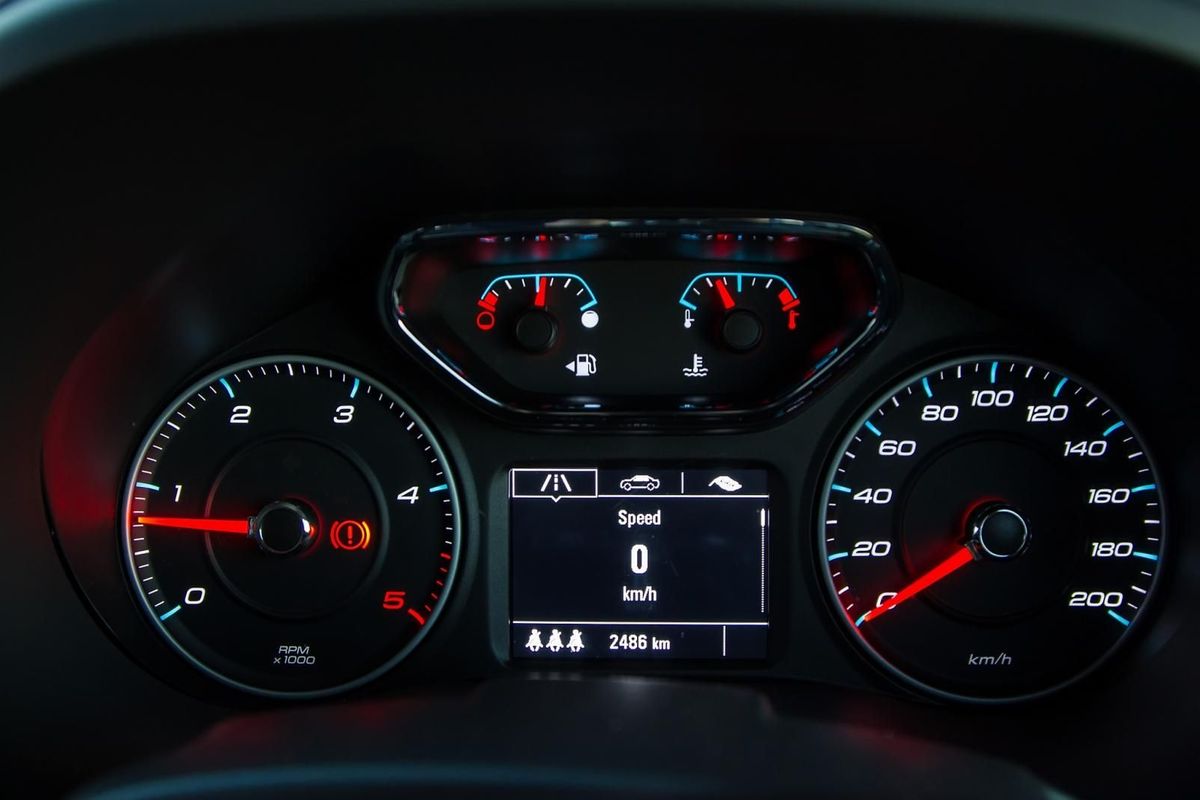
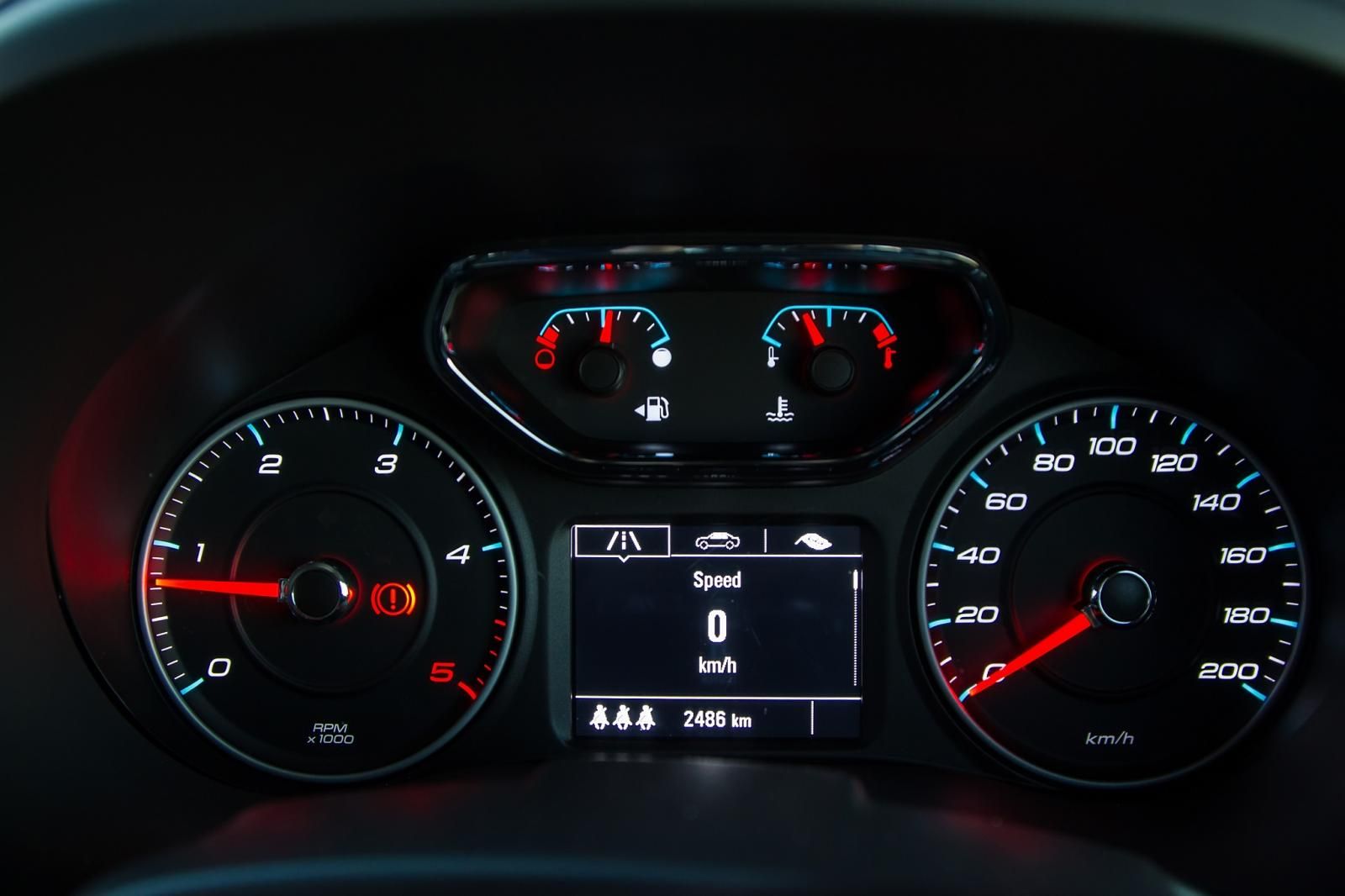
Digital trip computer is very thorough and the blue dials are easy to read at night
Verdict
These bakkie-based SUVs offer good value for money. No matter which product you choose, you get a full 7-seater with a large load bay and excellent ground clearance. Without a 4×4 drivetrain, as in this Trailblazer 2.5-litre variant, the price is kept down as well. The Trailblazer offers a quiet and well-insulated ride with a comfortable suspension setup. The top-notch infotainment system is its trump card, with the MyLink system standard across the range. The cabin doesn't feel quite as upmarket as its competitors but appears sturdy and durable. Its safety arsenal includes 7 airbags but doesn't include stability control, which is important in a vehicle like this. Finally, the Trailblazer 2.5 commands a R15 000 premium over the rivals and unless you value the infotainment system as a high priority item then the Ford and Toyota offer better value at this point in the segment.
Pricing and after sales
The Trailblazer 2.5D manual sells for R471 000 (at time of compiling this report, February 2017). It is sold with a 5-year/150 000 km warranty and a 5-year/90 000 km service plan.
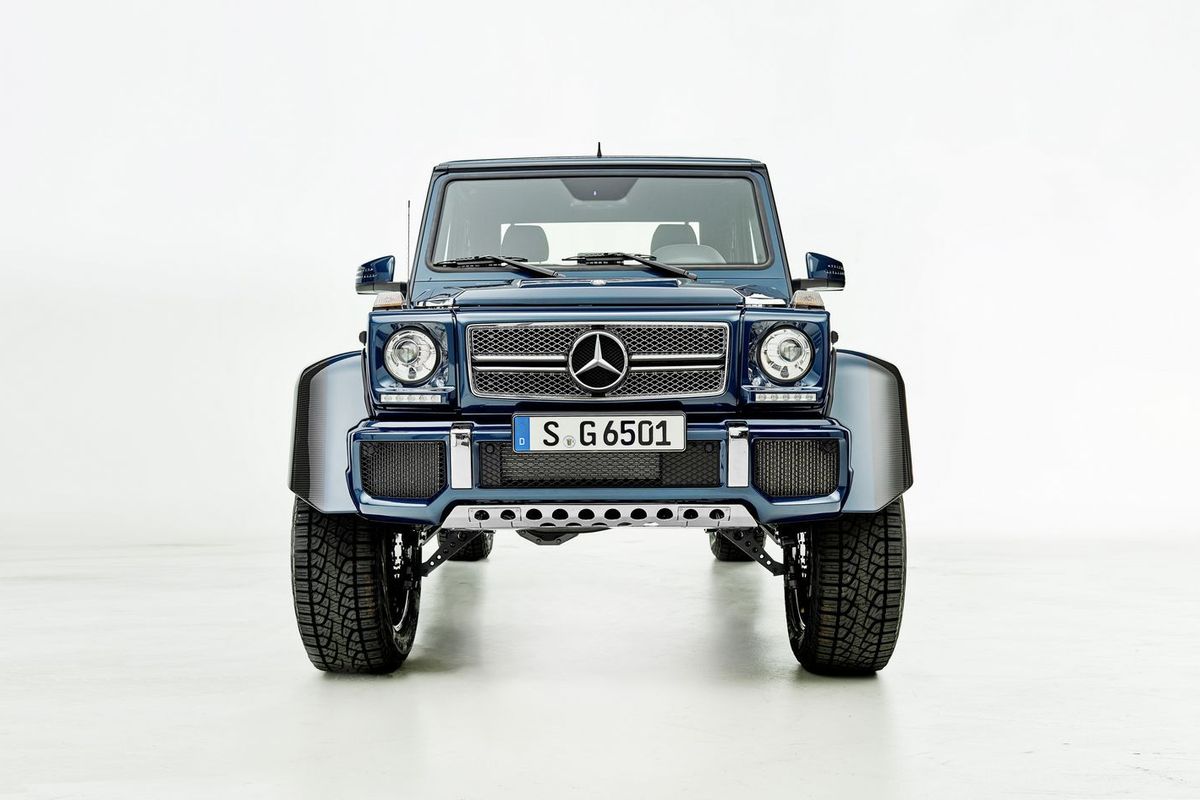
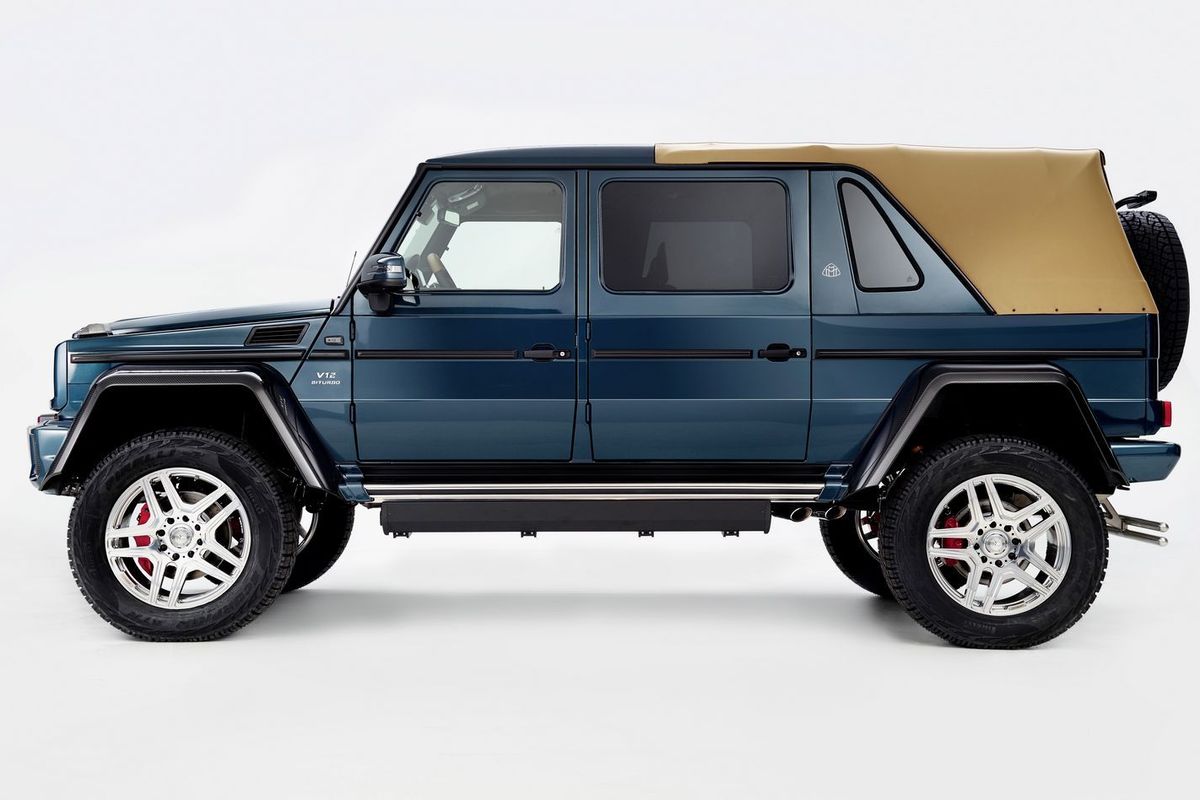
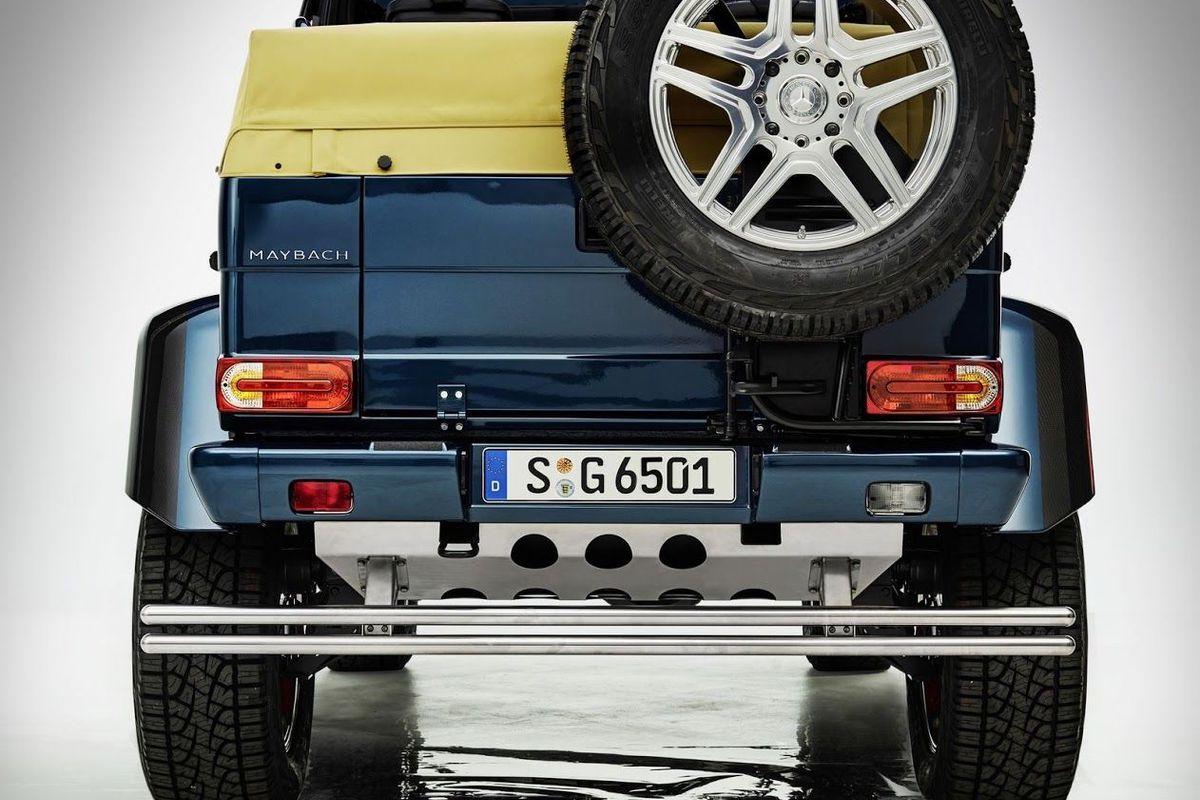
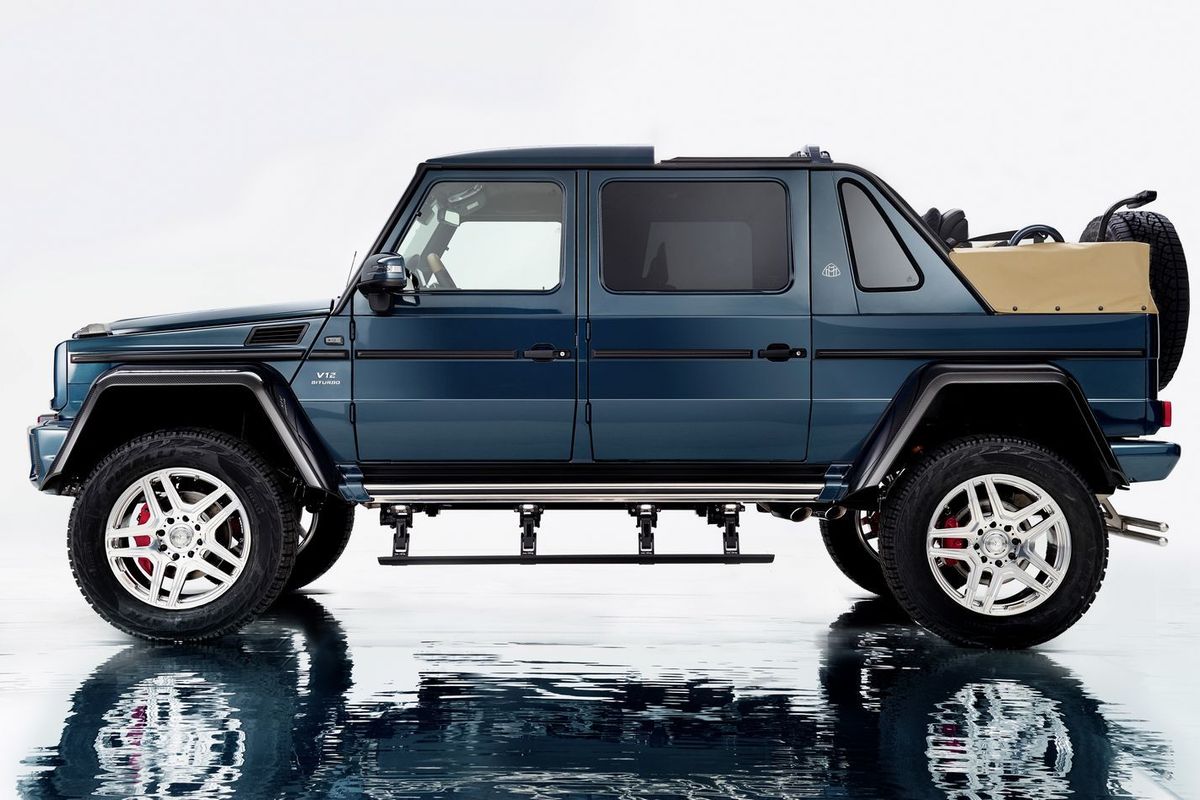
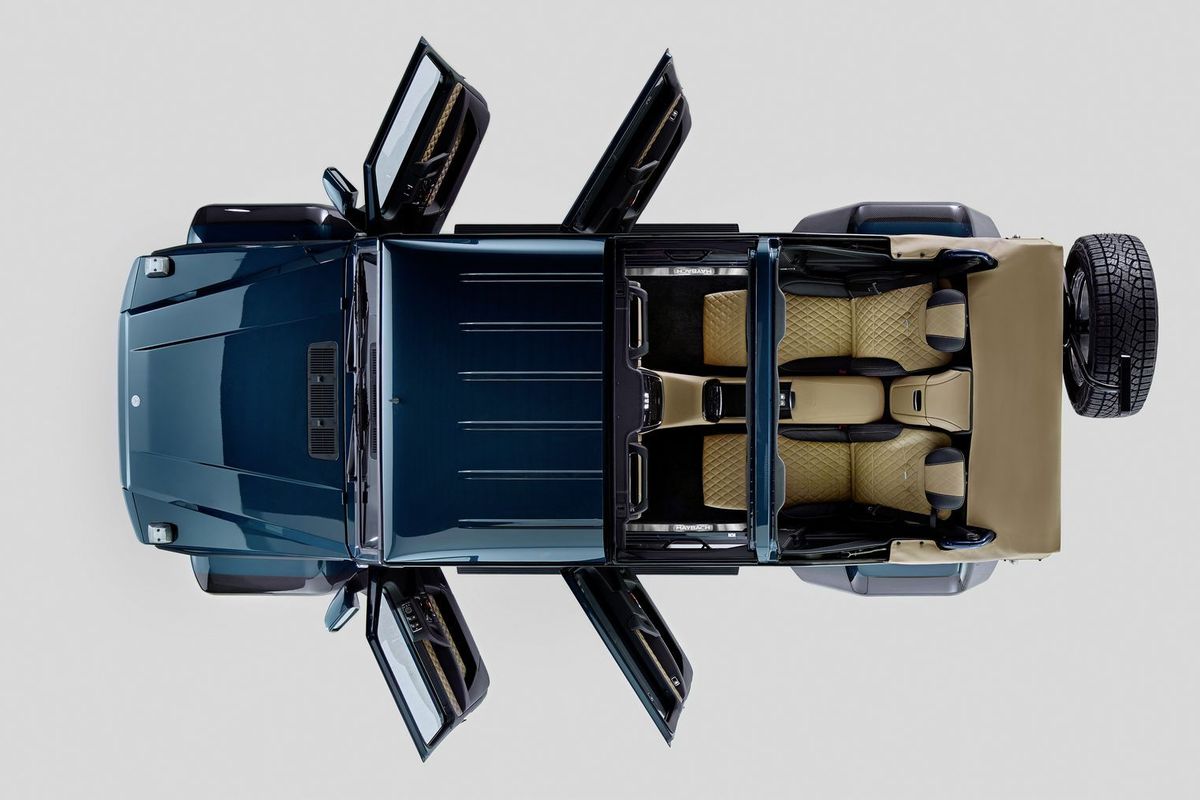
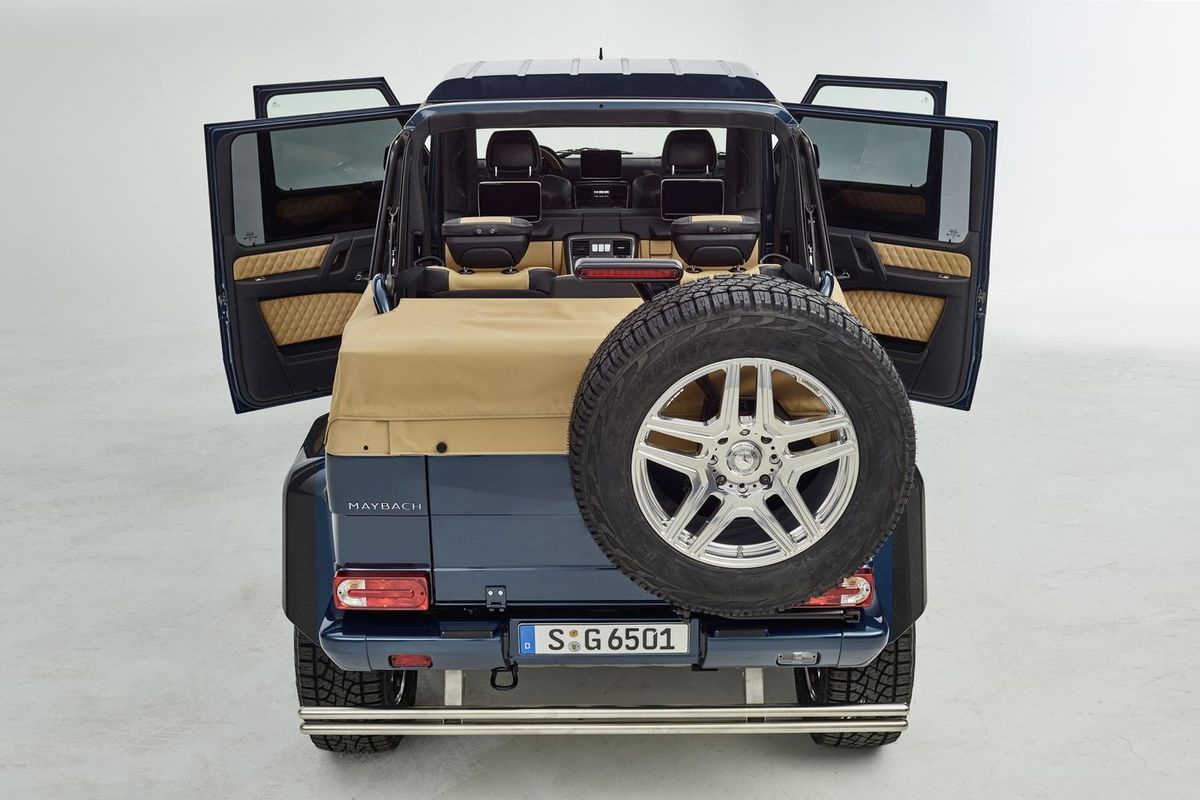
Mercedes-Maybach has revealed the open-top G650 Landaulet and it's brimming with luxury and comfort features!
The G650 Landaulet is the first off-roader to come from Mercedes-Maybach and it will be shown in the metal at the upcoming Geneva Motor Show. Following on from the AMG G 63 6×6 and G 500 4×42, the G650 Landaulet combines supreme luxury and offroad ability. Only 99 units will be produced.
Key Features
The G650 Landaulet is powered by a 6.0-litre biturbo V12 engine delivering 463 kW and 1 000 Nm of torque. The G650 rides on large 22-inch light-alloy wheels and is equipped with similar portal axles found on the AMG G 63 6×6 and G 500 4×42, allowing for substantial ground clearance of 450 mm while 100% differential locks and low-range transfer case will ensure tractability in just about any terrain you can imagine.
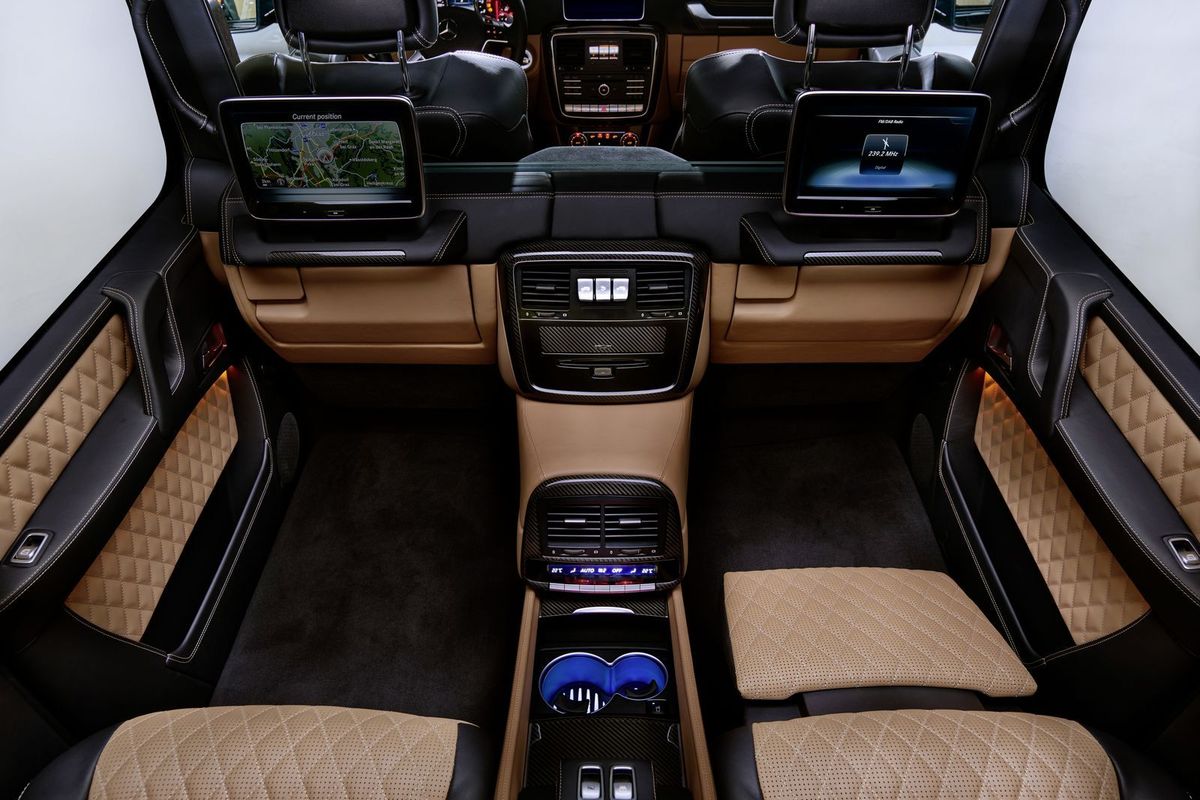
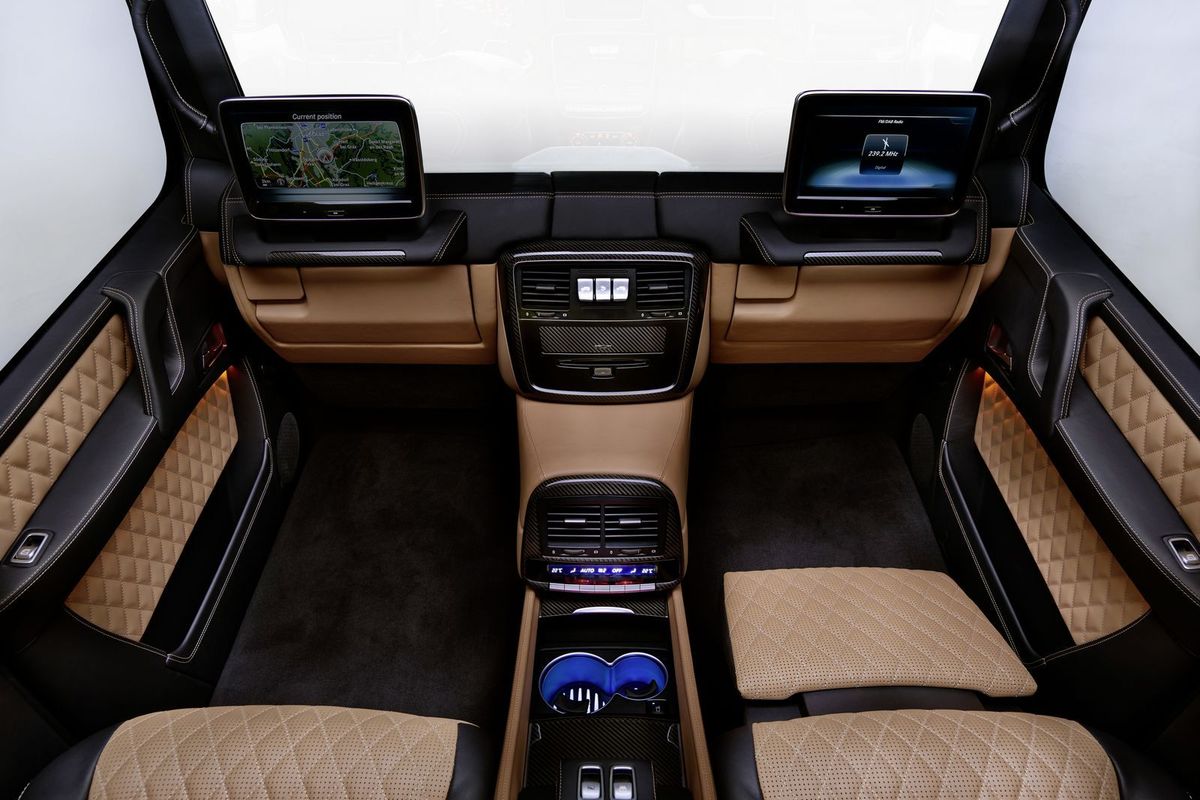
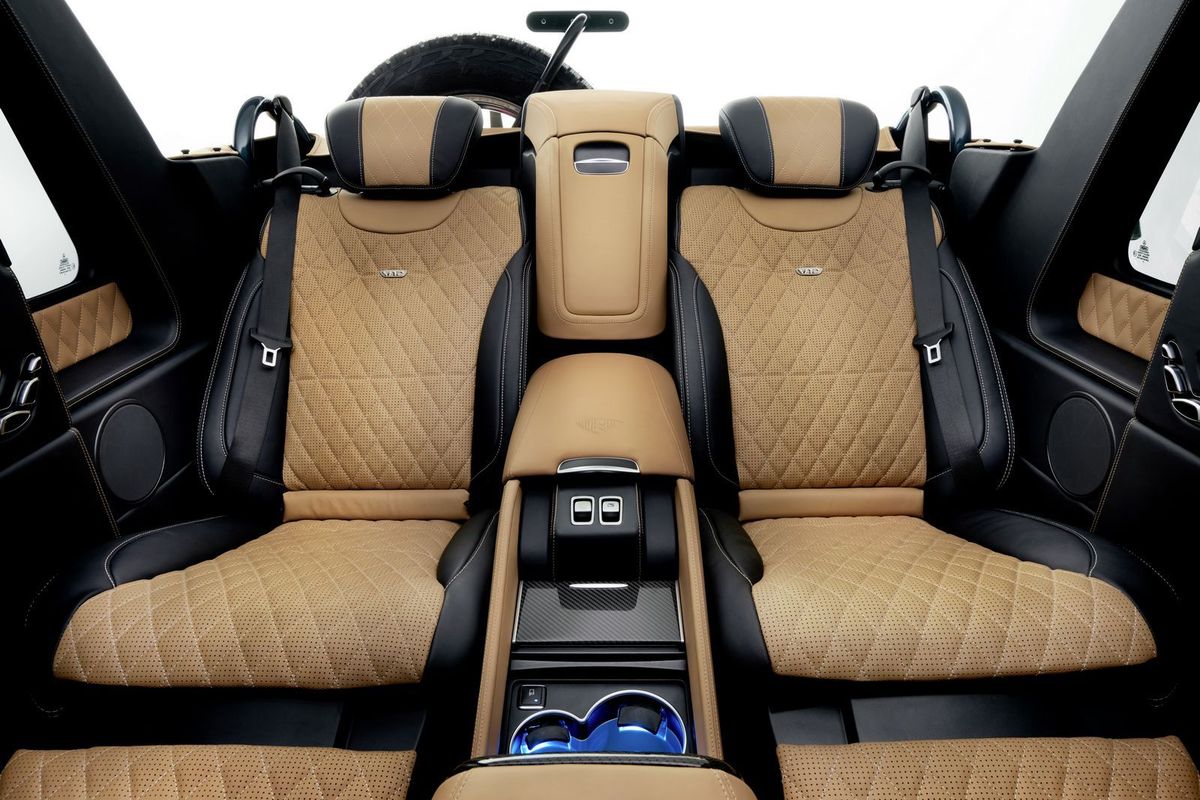
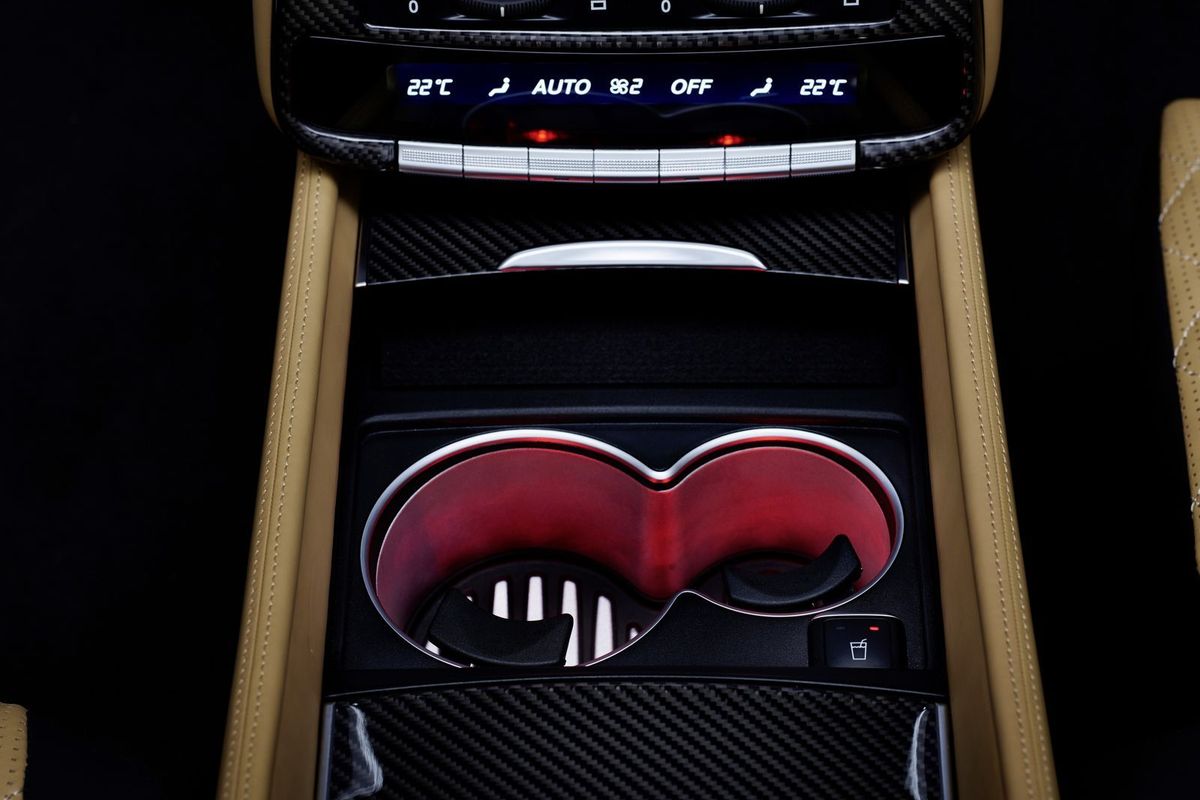
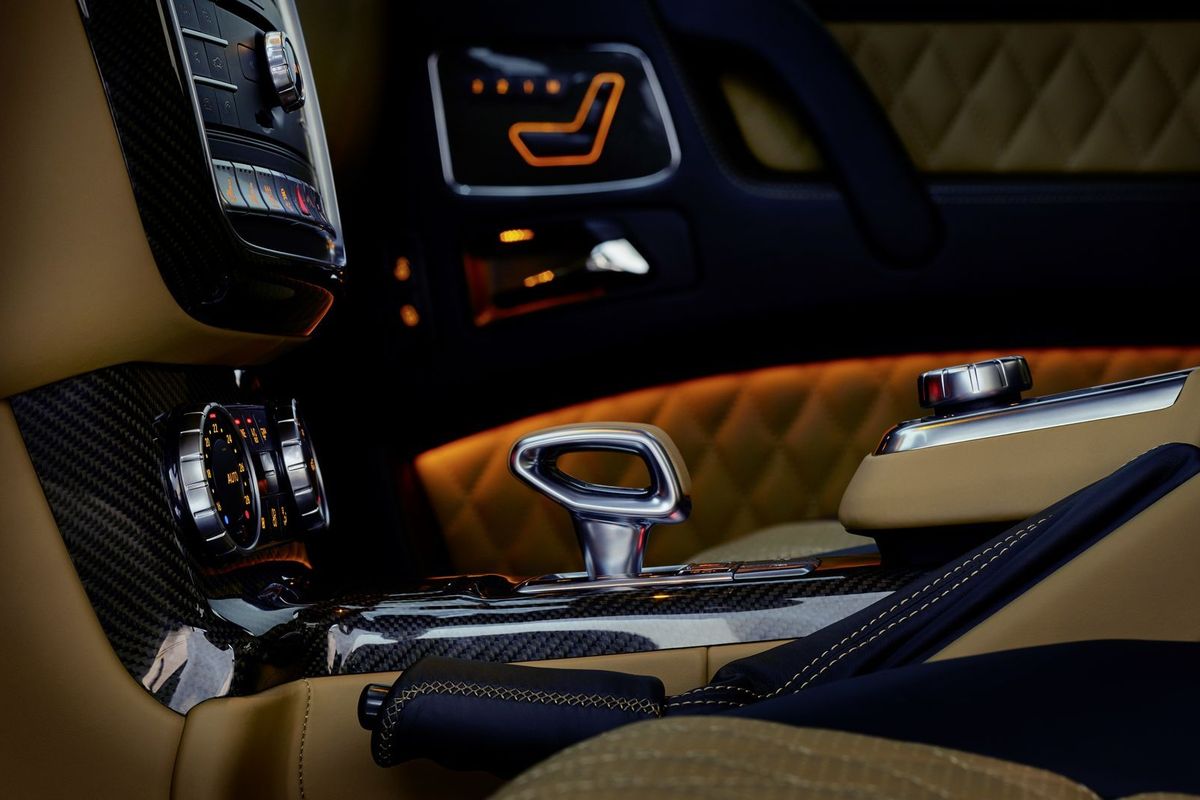
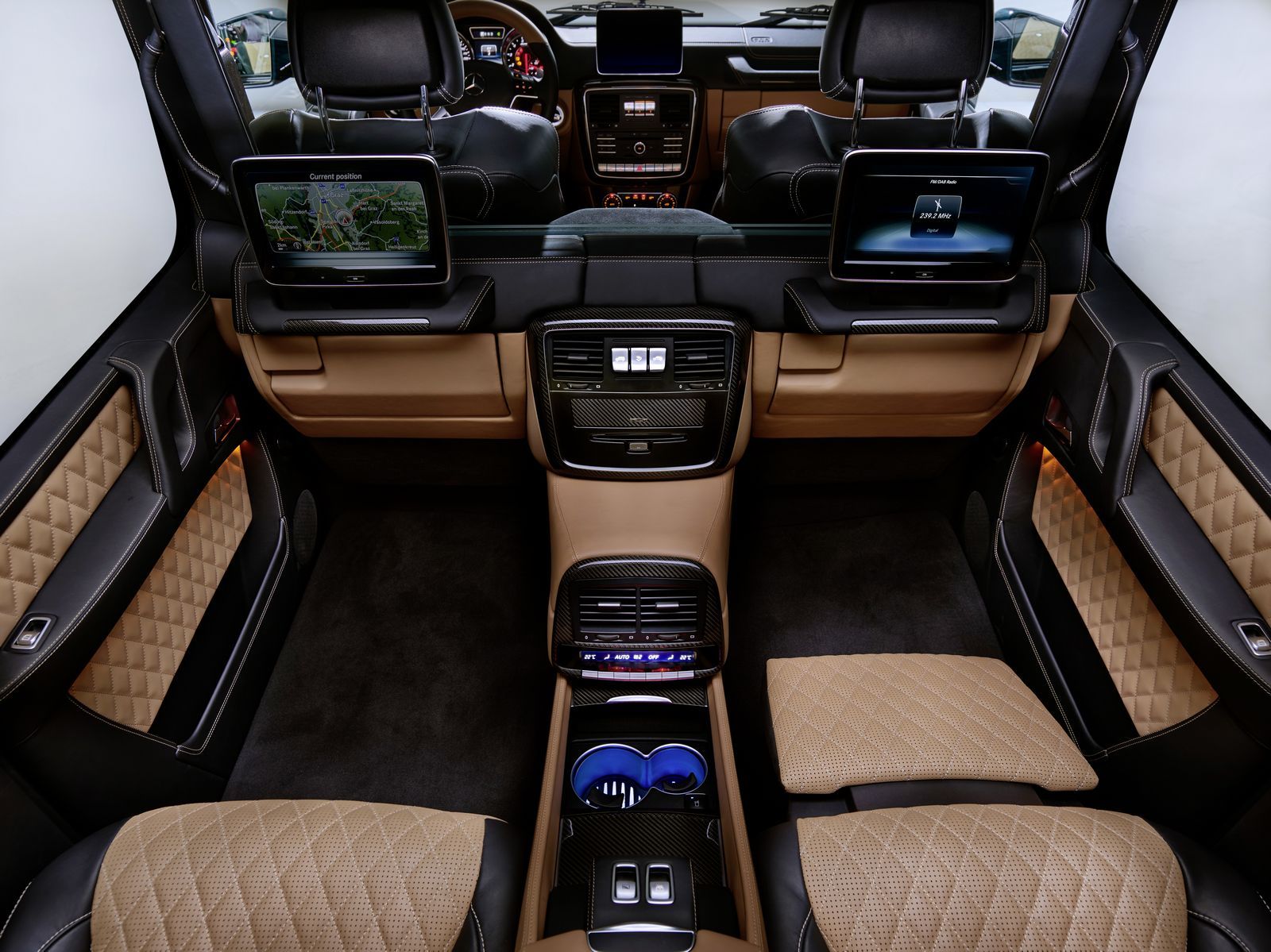
As you would expect from Mercedes-Maybach, the G650 Landaulet is equipped with luxurious features that, in this case, takes off-roading to a whole new level. An electrically operated fabric roof offers an open-top experience for rear passengers. The individual rear seats are the same as those found in the S-Class and they are equipped with full massage functionality. Rear passengers also have access to thermal cup holders, two foldable tables with leather inserts and two 10-inch infotainment screens.
Rear passengers get the full luxury treatment in the Mercedes-Maybach G650 Landaulet.
An electrically operated glass partition separates the spacious rear compartment from the cockpit and the screen can be changed from transparent to opaque at the touch of a button. High-grade designo two-tone upholstery with diamond stitching is fitted and customers can choose between 4 trim colours. In addition to this, 3 colours are offered for the fabric roof, while 4 exterior colours are offered.
The Mercedes-Maybach G650 Landaulet will not be offered in South Africa, as all examples to be produced will be left-hand drive only.
Take a tour of the Mercedes-Maybach G650 Landaulet in the video below!
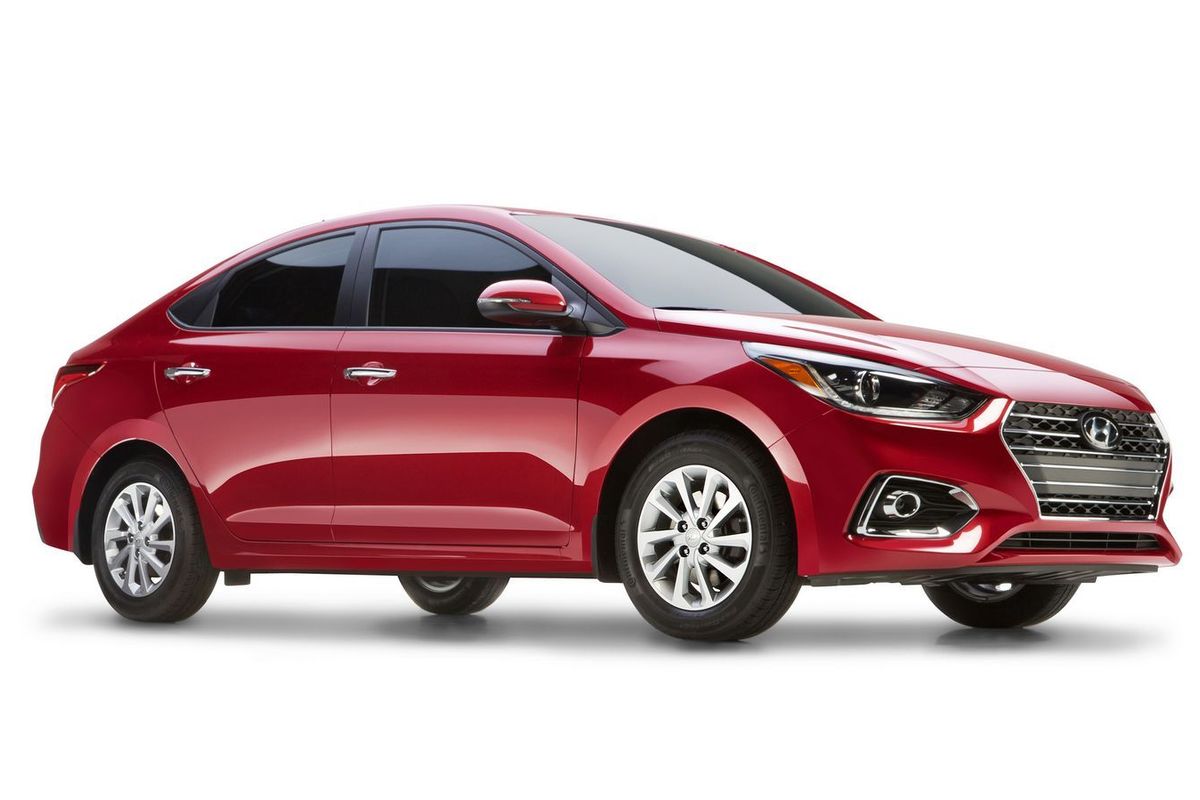
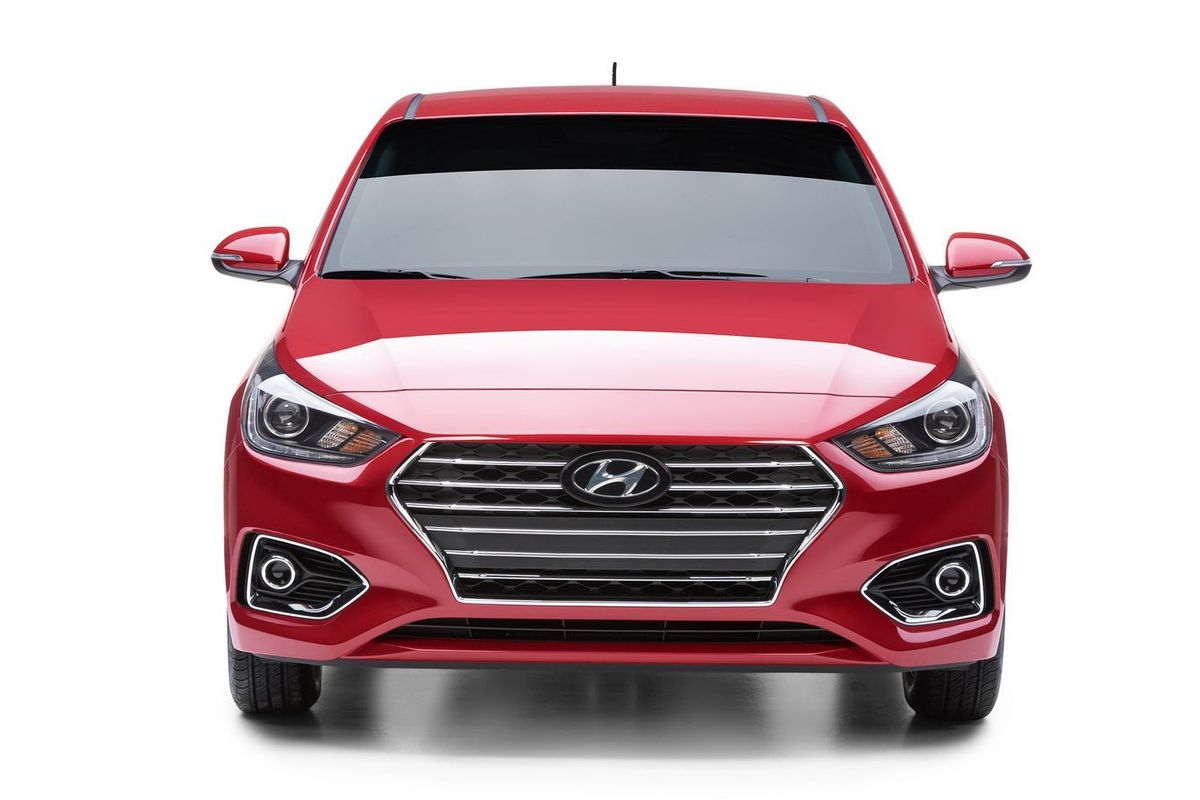
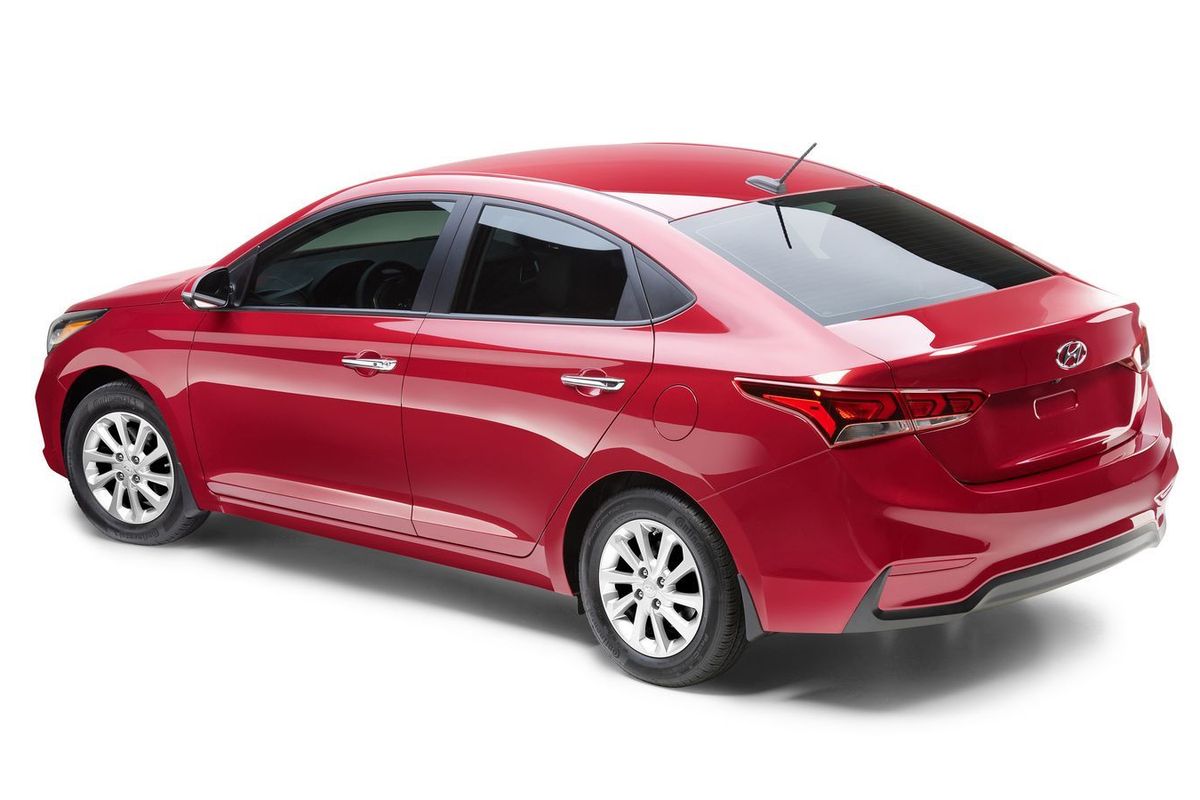
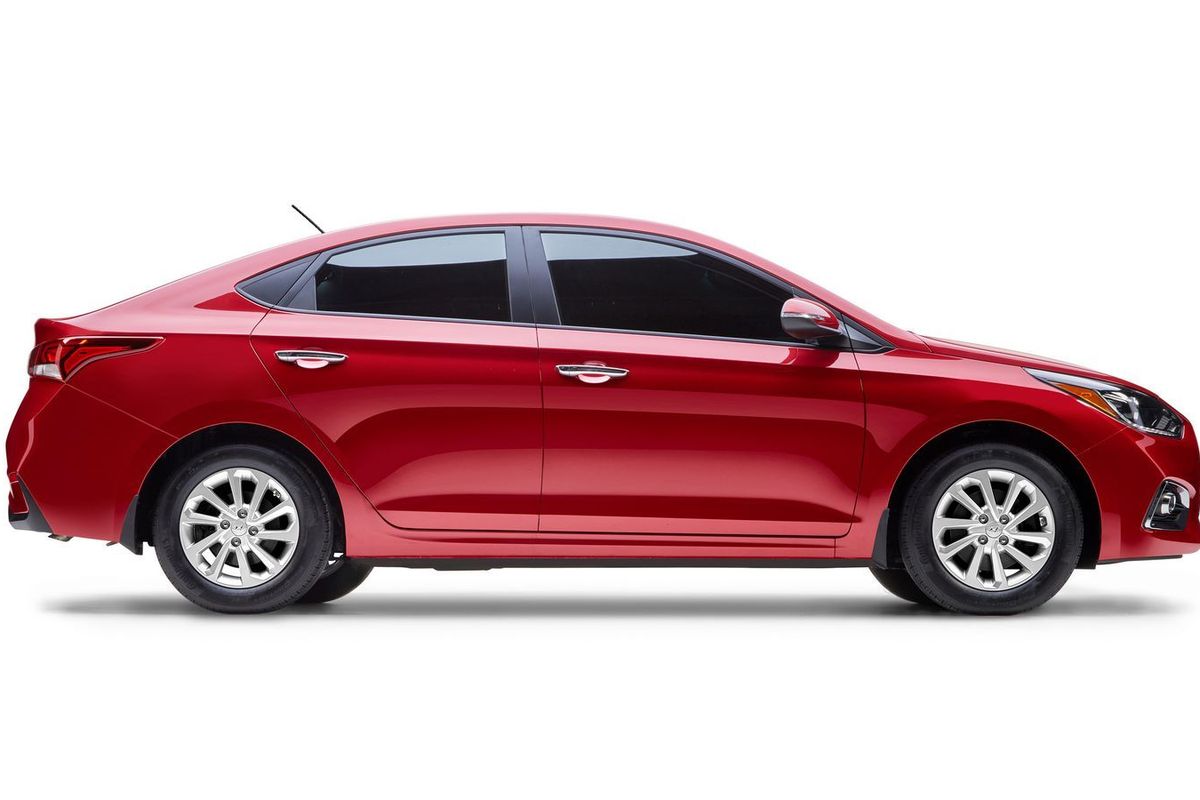
Hyundai has revealed its new and improved fifth-generation Accent!
Hyundai has used the Canadian Motor Show to reveal its new Accent sedan and forthcoming hatchback. The new model showcases a significantly updated design with a host of mechanical improvements.
Key features
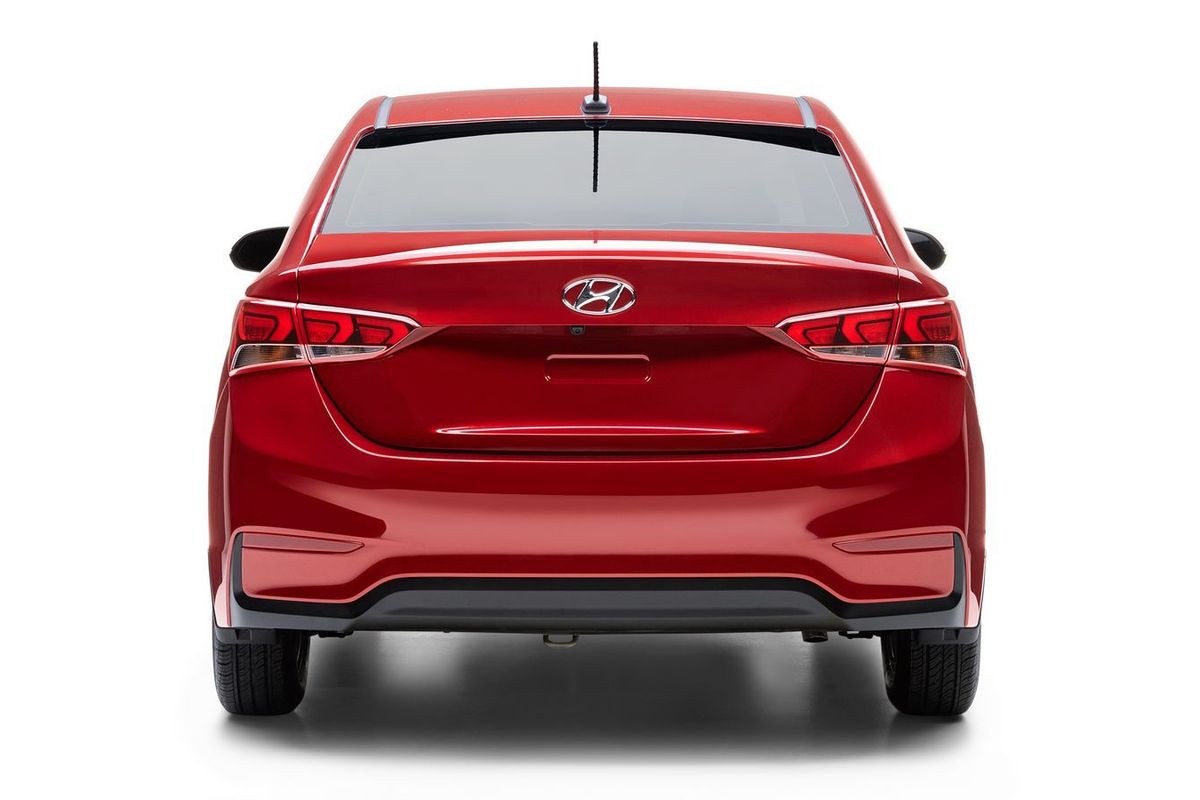
In terms of styling, the new Accent adopts a bolder face with extensive chrome detailing lifting the overall appearance of the model. The newly designed headlights and taillights further enhance the look of the new Accent.
The big news comes from under the bonnet where Hyundai has revised the Accent’s 4-cylinder, 1.6-litre petrol engine to deliver 7 kW more power, now totaling 98 kW. Torque has increased to 161 Nm, representing an increase of 5 Nm over its predecessor. A 6-speed manual or 6-speed automatic will be offered to buyers and Hyundai claims that fuel efficiency has improved by 7 percent.
The Accent’s chassis has been strengthened to improve safety and automatic emergency braking and a rear-view camera will be offered.
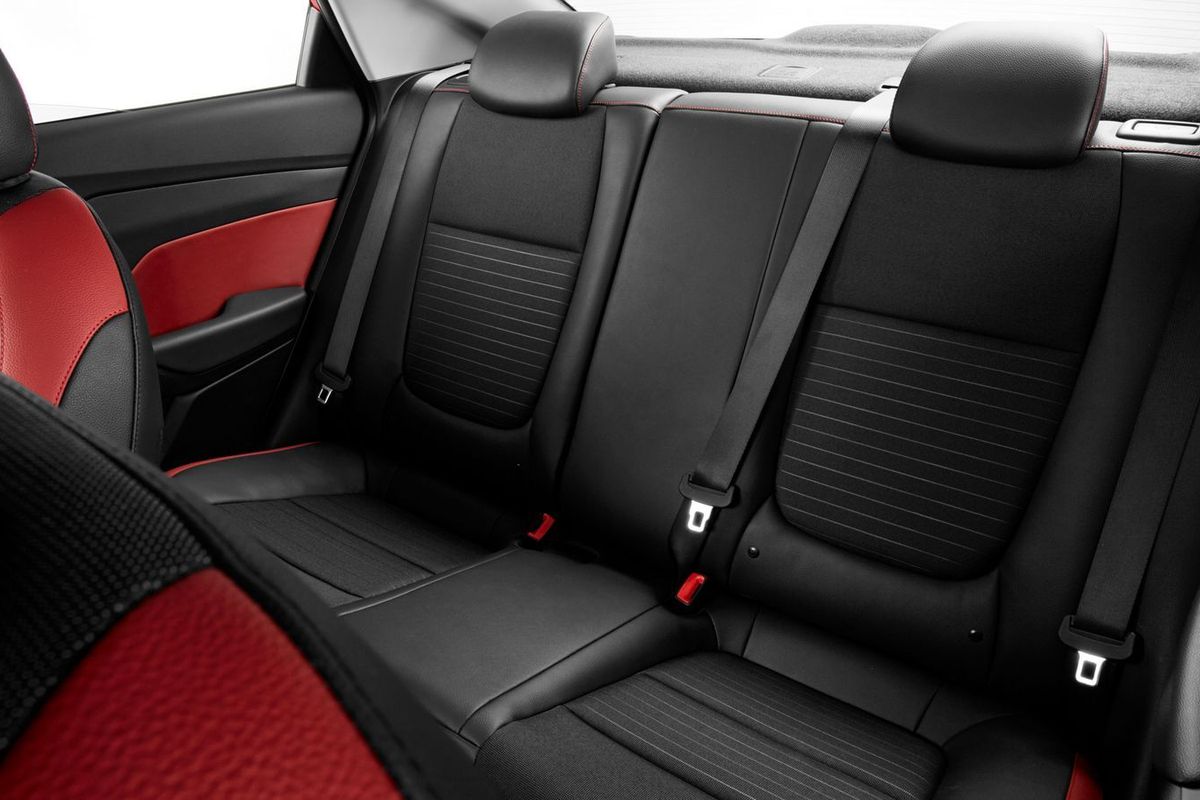
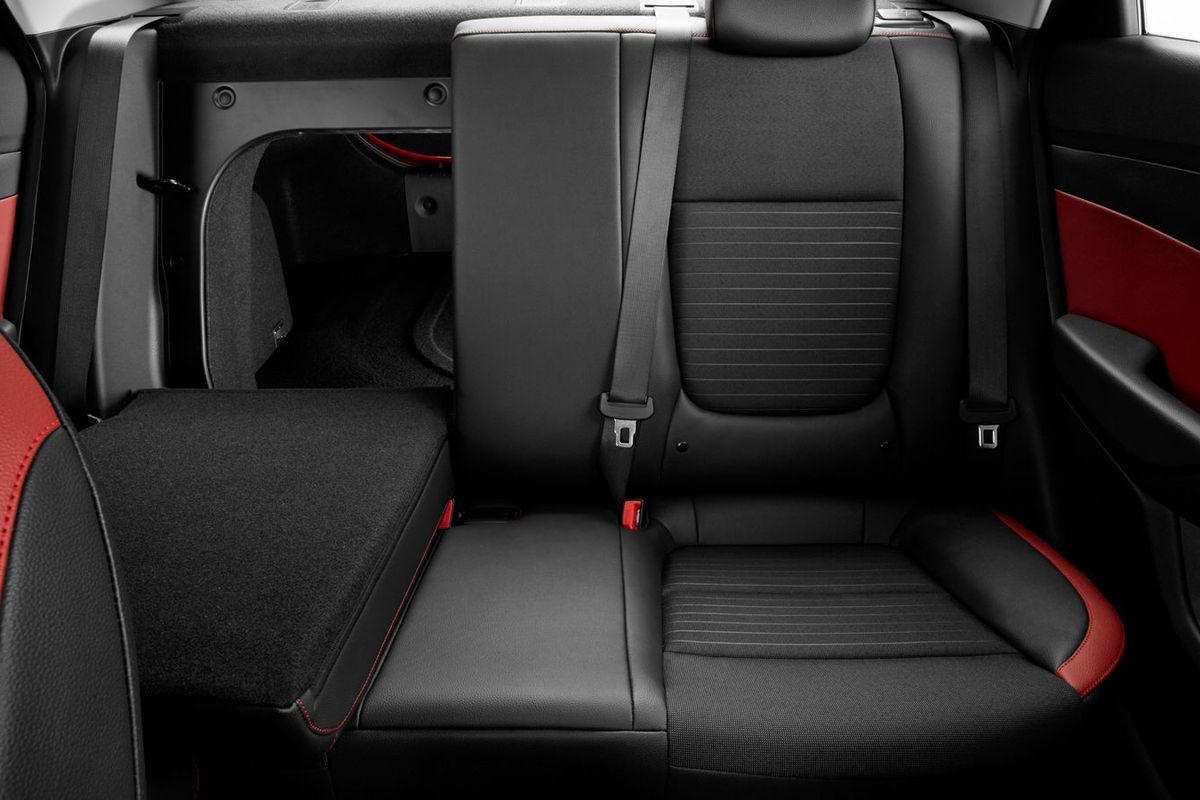
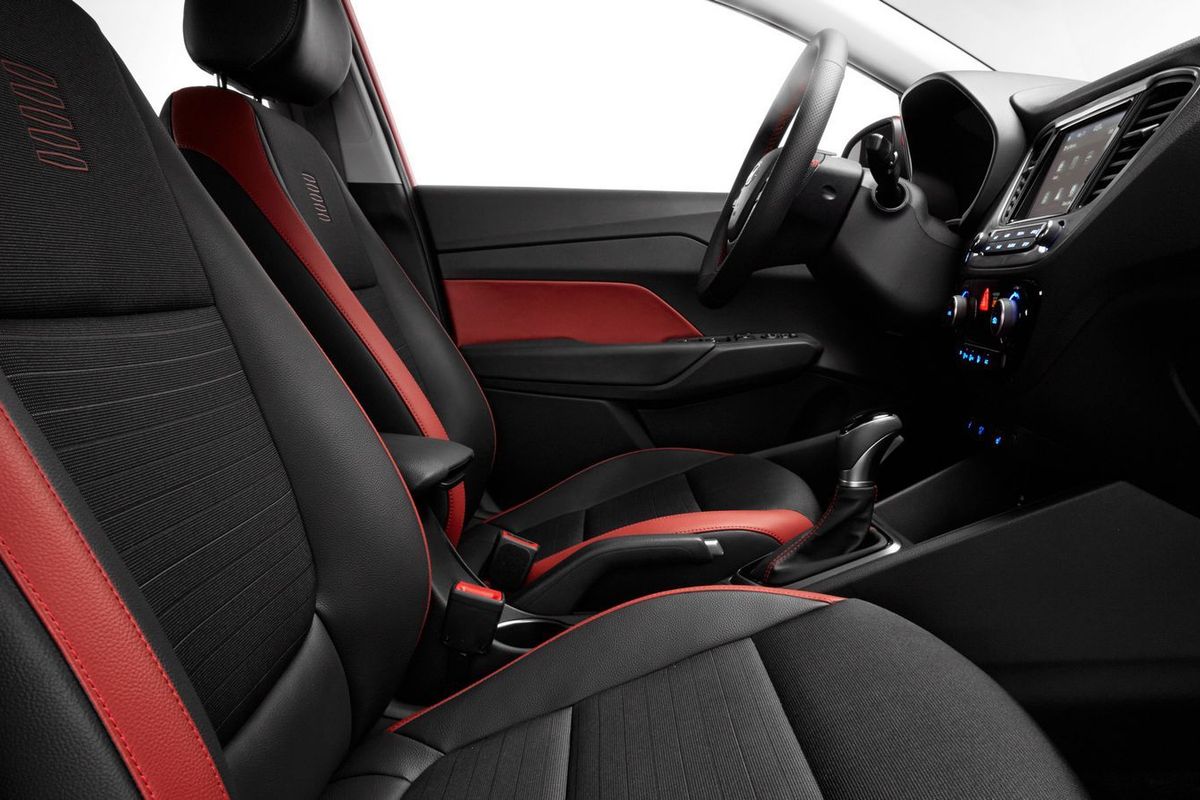
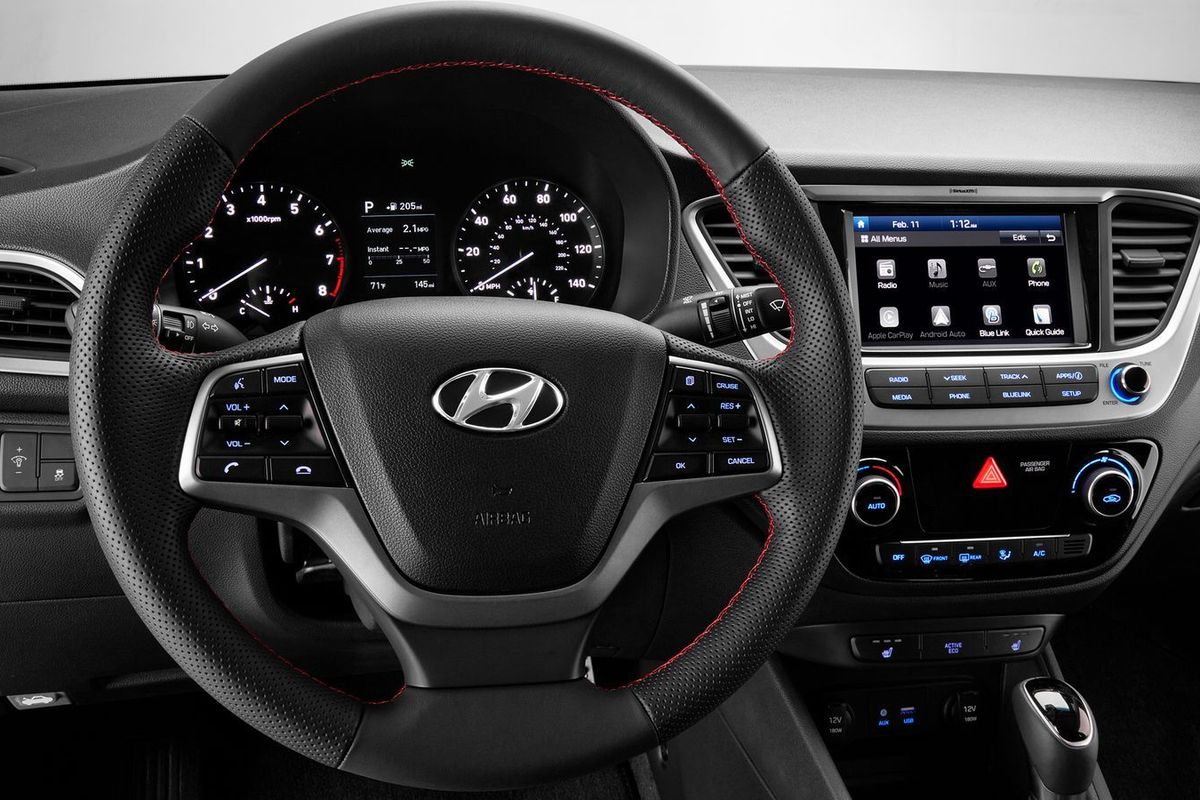
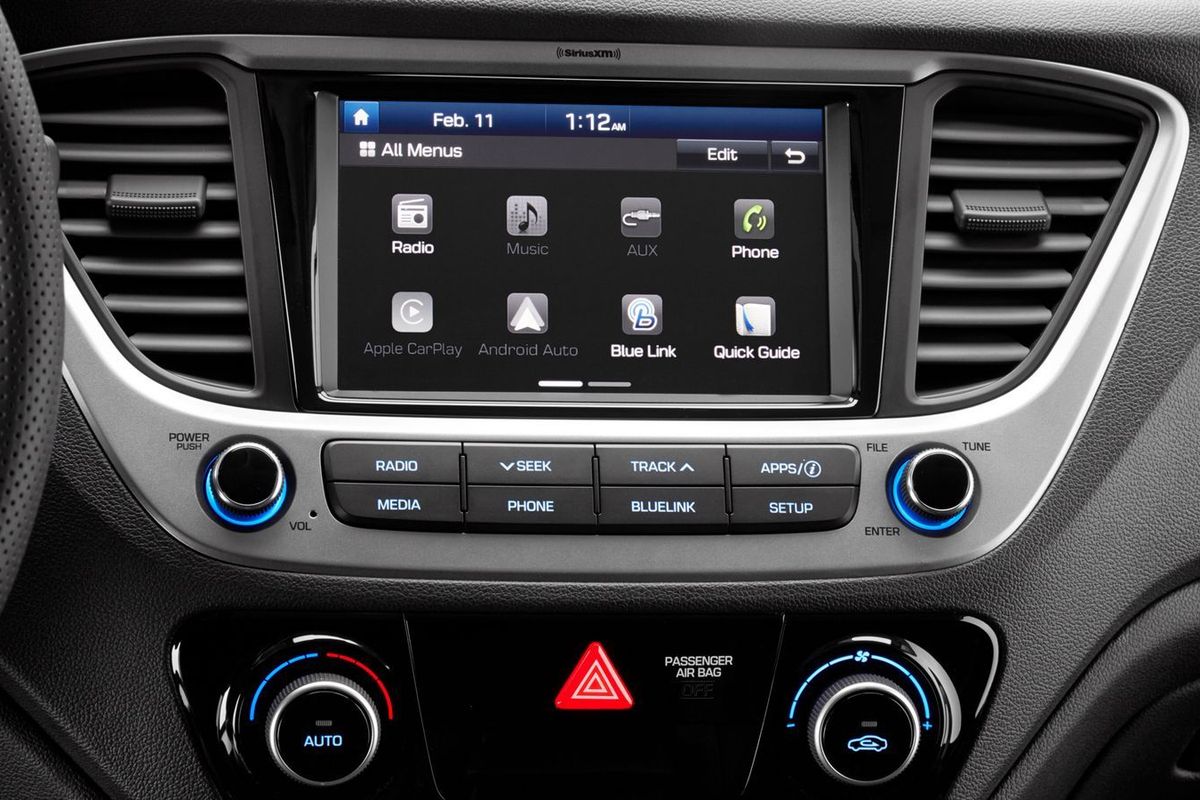
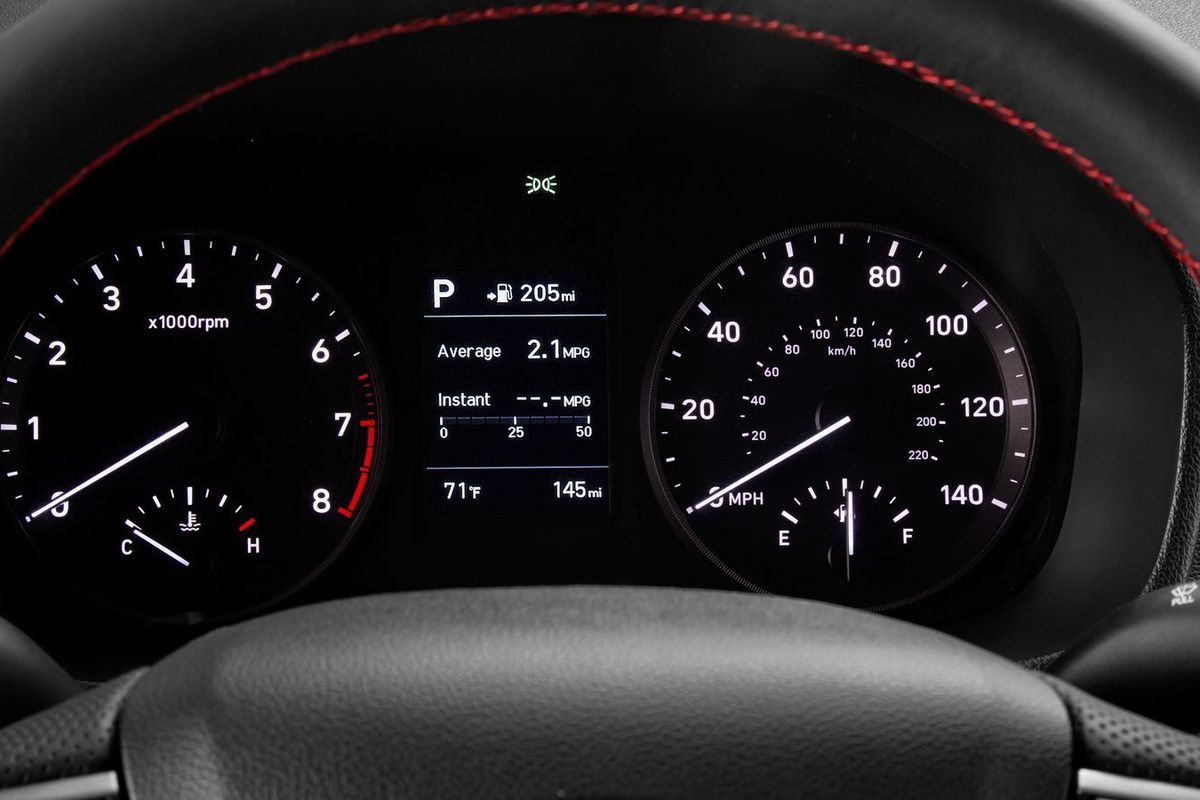
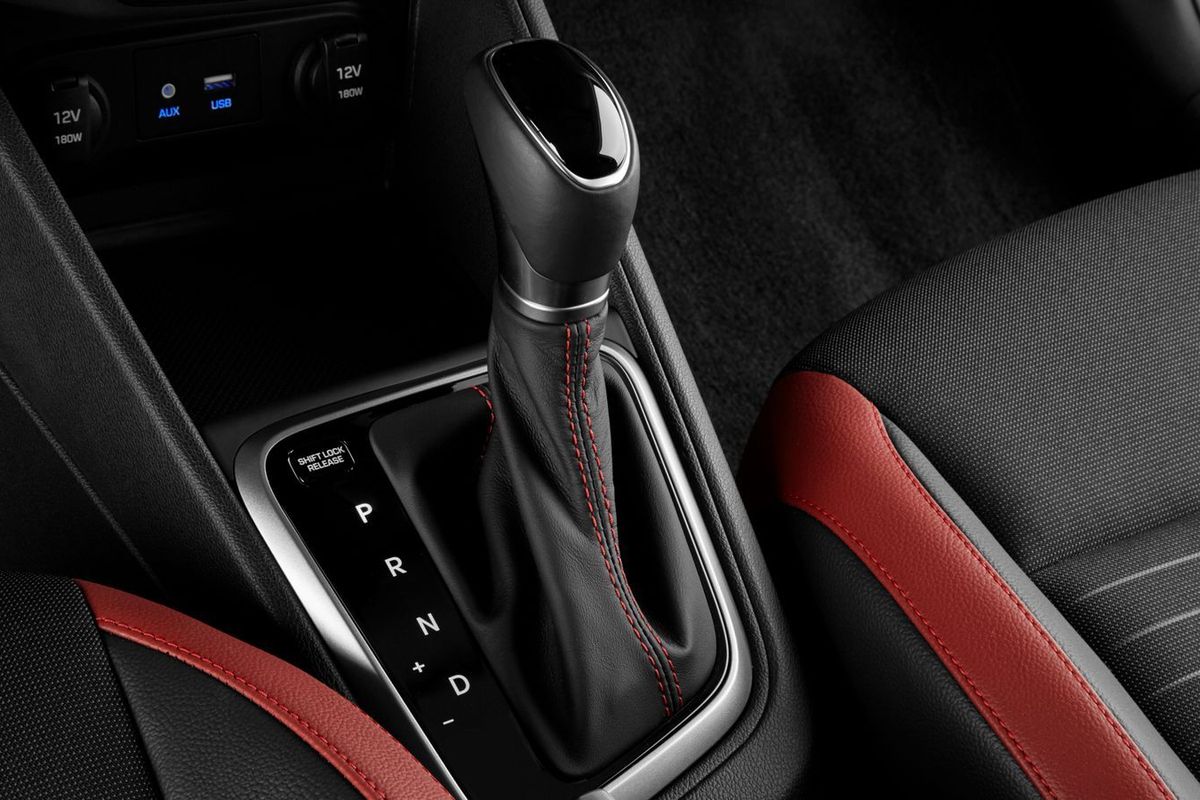
The interior features a 7-inch touchscreen infotainment system with Apple CarPlay, Android Auto and voice control. Two USB ports and an auxiliary port are also fitted.
The arrival of the new Accent is yet to be confirmed by Hyundai South Africa, but we should see it in South Africa before the end of 2017. We will keep you updated as more details become available.