Best Compact Family Cars in SA

These are the semi-finalists in the Compact Family Car category of the Cars.co.za Consumer Awards – powered by WesBank!

The second annual Cars.co.za Consumer Awards – now powered by WesBank, is underway and the semi-finalists across 13 categories have been chosen. Make sure you visit the Cars.co.za Consumer Awards – powered by WesBank website for all the vehicle and category information and also be sure to follow us on Twitter (@CarsSouthAfrica), Facebook (CarsSA) and Instagram (carssouthafrica) for the latest updates.

The Cars.co.za Ownership Satisfaction Survey, in partnership with leading data specialists, Lightstone Consumer, forms an integral part of the awards programme, with the survey accounting for 50% of the final result in each category. The brand-specific data incorporates feedback from thousands of South African new vehicle owners, based on their experiences of their vehicles (must be less than 5 years old and serviced through franchised outlets).

Have your say and complete the Cars.co.za Ownership Satisfaction Survey now!

With household budgets stretched to breaking point, the reasonably affordable modern-day family car has to fulfil a variety of roles – it needs to be compact enough to deal with congested traffic, suitably spacious to cope with the school run and even perform as a weekend getaway machine. Practicality and spaciousness are important considerations, but so are safety, technology, fuel efficiency and a modicum of lifestyle flexibility.

For a car to be considered in this category, the following applies: The listed price must fall in the price range of R250 000 to R350 000 at the time of semi-finalist voting (September 1, 2016), including the cost of all necessary optional extras.  ABS braking must be fitted. ESP (Electronic Stability Control) – (if not fitted as standard, the cost of this feature, along with all other required extras, must not push the price over R350 000). Minimum of 4 airbags – (if not fitted as standard, the cost of these items, along with all other required extras, must not push the price over R350 000). Split/fold rear seats must be fitted and a service plan – (if not fitted as standard, the cost of this feature, along with all other required extras, must not push the price over R350 000). Let's not forget air-conditioning – (if not fitted as standard, the cost of this feature, along with all other required extras, must not push the price over R350 000).

The semi-finalists in the Compact Family Car category of the Cars.co.za Consumer Awards – powered by WesBank are as follows (in no particular order):

Suzuki Vitara 1.6 GL+


The reborn Vitara is no longer a small SUV, but designed to fulfil the role of a compact crossover. It is therefore perfectly in tune with modern tastes. The Vitara offers an attractive blend of style, spaciousness, features, refinement and “Suzuki-ness”. The latter aspect is important, as it should translate into good reliability and service backup from the dealer network. Power comes from a fuel-efficient 1.6-litre petrol engine, which has outputs of 86 kW and 151 Nm.

Read a review of the Suzuki Vitara here
Watch a video of the Suzuki Vitara here

Renault Captur dCi Dynamique

With good pricing, stylish looks and a comprehensive standard features list, the Renault Captur has found immediate favour with South African shoppers. There is considerable substance to its style, however, as the cabin is not only spacious, but packed with big-car features. A 1.5-litre turbodiesel engine was added to the range recently and we feel it's the pick of the litter. Fuel economy is impressive at a claimed 3.6 L/100 km.

Read our review of this vehicle here
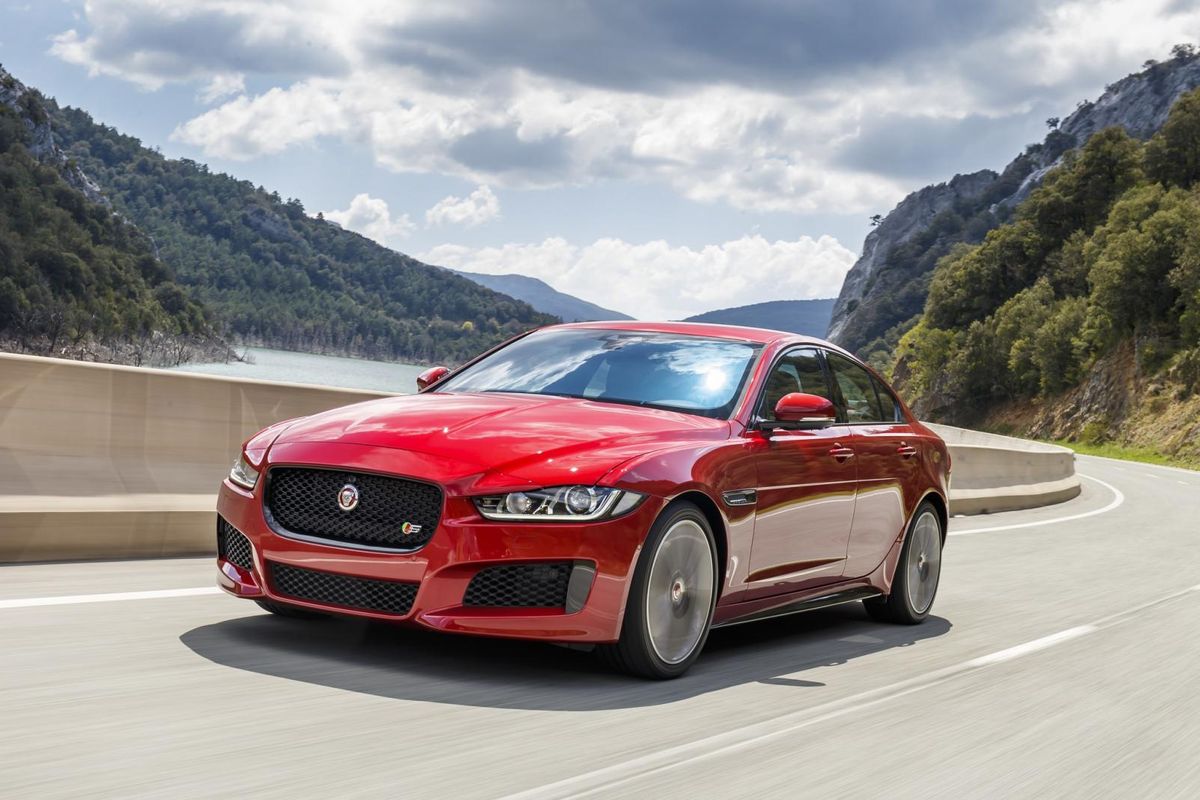
Get a quick overview of the Renault Captur diesel with our specifications and pricing article

Nissan Qashqai 1.2 Visia

The 2nd-generation Nissan Qashqai is a very popular choice, and this entry-level derivative sells strongly. The handsome, but compact exterior hides a spacious, feature-packed cabin with excellent build quality. The ride quality is supple and refined and the engine delivers a very persuasive power/economy balance. We've gone for the 1.2-litre turbocharged petrol engine, which offers a great blend of performance and economy. 

Nissan Qashqai specs and pricing in South Africa (2016)
Nissan Qashqai First Drive

Honda HR-V 1.5 Comfort

With interior packaging inspired by the versatile Honda Jazz, the HR-V takes a winning design and adds more space to accomodate passengers and cargo. There are not many cars of this size that can swallow more detritus, and you don’t have to compromise on features and quality either as the HR-V is well-stocked with luxury and convenience items. This HR-V is powered by a normally aspirated 1.5-litre petrol engine. Honda claims a combined cycle fuel economy figure of 6.2 L/100 km, which, with a tank size of 40 litres, should realise a range of around 645 km between fill-ups.
Honda HR-V vs Mazda CX-3 comparison
Honda HR-V Video review and comparison

Ford Ecosport 1.5 TDCi Titanium

The EcoSport continues to make a significant contribution to Ford’s monthly sales figures and this 1.5-litre TDCi Titanium derivative is one of the most popular. It boasts an economical turbodiesel engine and a near full-house package of features, with just enough SUV machismo to appeal to a very wide audience. This EcoSport is powered by a 1.5-litre turbodiesel engine that delivers 66 kW and 205 Nm of torque. Ford claims an excellent combined cycle fuel consumption figure of 4.6 L/100 km. Given the fuel tank size of 52 litres, the Ford should have an optimal tank range of around 1 000 km.

Ford Ecosport latest news
Ford Ecosport 1.0 Titanium review

Renault Captur Sunset (2016) Review

The Renault Captur small crossover is now available with a turbodiesel engine and we recently put the limited-edition Captur Sunset to the test to see how it performs.

We like: Price, packaging, practicality, drive quality, low fuel consumption.

We don’t like: Some of the interior trims feel marginal in quality.

Alternatives:

  • The popular option:The Ford Ecosport is selling up a storm in South Africa and the diesel-powered 1.5 TDCI Titanium derivative comes well-specced and priced from R302 900. Its 1.5-litre turbodiesel engine offers 74 kW and 205 Nm and it comes with a 5-speed automatic transmission.
     
  • For more power: Consider the Nissan Juke 1.5 dCi Acenta+ offering 81 kW and 240 Nm of torque from the same 1.5-litre turbodiesel motor that powers the turbodiesel Captur. It makes use of a 6-speed manual transmission.

Compare the Renault Captur Sunset with the Ford EcoSport 1.5 TDCI Titanium and Nissan Juke 1.5 dCi Acenta+ 

 
The Renault Captur Sunset edition 1.5-litre turbodiesel engine returns excellent fuel economy. 

Since its arrival in the first half of 2015, the Renault Captur has proven popular in the growing small crossover segment. Renault has sold more than 5 000 Capturs in South Africa and the recent introduction of a turbodiesel derivative emboldens the French automaker's local line-up.

The Captur was initially offered with two turbopetrol engine choices (66 kW and 88 kW) and Renault has now expanded the range to include a tried-and-tested 66 kW 1.5-litre turbodiesel engine that also does duty in the Duster, Nissan's NP200, Juke and Qashqai, as well as the Mercedes-Benz A-Class.

To mark the arrival of the Captur diesel derivative, Renault created a special edition Captur Sunset derivative. Only 100 units of the Captur Sunset special editions are available and we spent some time with one to see if the turbodiesel engine is any good in this crossover application. 

How does it fare in terms of…

Kerb appeal? 


The Captur Sunset is a practical and stylish option in the crossover segment. 

The Captur is undoubtedly a stylish offering and this Sunset edition ups the crossover's visual appeal with some bespoke design details such as a Diamond Black exterior finish, with the side mirrors, roof and body trim elements finished in contrasting Sunset Orange.

The orange theme is also seen on the inside, where the Sunset edition features the same Sunset Orange colour for the air vent surrounds, speakers, infotainment screen surround and on the steering wheel. Special Sunset Orange zip collection seat covers are fitted to round off the interior look. The limited edition rides on 17-inch alloy wheels as standard and LED daytime running lights and cornering fog lamps are also part of the package.
Overall, we think the Captur Sunset is quite attractive, but, as with most things, it won’t be to everybody’s taste.

Performance?

The proven 1.5-litre turbodiesel develops 66 kW and 220 Nm of torque and drives the front wheels through a 5-speed manual transmission. Not only is the turbodiesel smooth and surprisingly quiet, but the motor delivers adequate performance in both city and highway driving situations. It’s by no means fast or eager at pullaway but it goes about its business with confidence… In-gear acceleration is good through all the gears, which means that you don’t have to shift down often to execute overtaking manoeuvres. The shift action is smooth (another positive Renault trait) and gear changes are effortless.


The turbodiesel Captur Sunset is well mannered on the road and comfortable to drive.

In terms of ride quality, the Captur provides sufficient damping over uneven surfaces to afford the driver and passengers a comfortable drive, but we were even more impressed with the Renault's fuel efficiency. The firm claims a fuel consumption figure of 3.6 L/100 km. You might find that a trifle ambitious, but during our test period, we consistently averaged 4.5 L/100 km. It was surprising to see how easily the Captur Sunset achieved that figure. There’s also an ECO button that prioritises economy and during a conservative drive, we managed to get the consumption figure down to 3.8 L/100 km, which is excellent.

Practicality?


There's sufficient boot space for a wide variety of items and folding the rear seats down provides generous load space.

One of the major reasons why the Captur has proven so popular is its practical packaging. Space for rear passengers is good (considering the Captur's compact dimensions) and the luggage bay is spacious at 377 litres. We put the loading capacity to a "flowery" test with a visit to a local nursery. We purchased 5 large bags of compost and an array of plants. The Captur’s rear aperture swallowed the whole load with ease and we were surprised to find that even more carrying capacity was available. Need to lug bulky objects? Simply tumble the 60:40 split rear seats down to access the full 1 235 litres of load space, but take note that the loading area isn’t completely flat: the seatbacks create a higher lip, which might make the loading of long items awkward. 

We also like that the boot floor is reversible, offering a smooth surface on the one side and an anti-slip surface on the other. The backs of the front seats feature hard-wearing plastic cladding and instead of conventional rear seat pockets, Renault opted for orange-coloured elastic ropes, which also add another dash of colour to the interior. There’s also a sufficient amount of stowage space in the door mouldings and centre console for drinks and any other oddments that need to be stored. The storage compartment on the dashboard is useful, but the lid and its opening and closing mechanism felt a bit flimsy.

Standard features?


The Captur Sunset is stylish, comfortable and well equipped with features.

Compared with its key rivals, such as the Ford EcoSport, Nissan Juke and Mazda CX-3, the Captur Sunset is well-specced. Up front, the driver has access to a 7-inch MediaNav infotainment system that offers Bluetooth connectivity, radio, satellite navigation and a USB port. We found the system easy to use, the menus simple to navigate and connecting a phone via Bluetooth was a cinch. Other standard comfort features include cruise control (with speed limiter), climate control air conditioning and electric windows and side mirrors. Rear park distance control (with a reverse-view camera) is also standard.

Safety features include ABS with EBD, brake assist, stability control, hill start assist and a tyre pressure monitoring system. A total of 4 airbags are included and there are ISOfix child-seat mounts on the front passenger seat and rear outer seats. The Captur Sunset also has a five-star EuroNCAP safety rating.

Pricing and warranty

The Renault Captur Sunset edition is priced from R292 400 and is sold with a 5-year/150 000 km warranty, 3-year/45 000 km service plan and 6-year anti-corrosion warranty. Service intervals are set 15 000/1-year intervals. The standard Renault Captur 66 kW dCi Dynamique is priced at R289 900.

Verdict


The Captur Sunset edition is kitted out with lively Sunset Orange details throughout the cabin. 

The turbodiesel-powered Captur Sunset impressed us with its honest performance, excellent fuel efficiency and good ride quality. It might lack some punch, but in most driving scenarios, the 1.5-litre motor's performance is more than adequate. And besides, apart from its stylish good looks, buyers will find the Captur’s excellent space utilisation useful and the interior aesthetically appealing and comfortable. The Sunset comes generously equipped with standard features, outshining its rivals by a fair margin and it is, therefore, a strong proposition in this segment.

The Renault's asking price is possibly the most attractive aspect. Few cars offer so much value at this price point. Renault has come a long way in improving its aftersales service and buyers would be wise to consider the turbodiesel Captur or even better, the Captur Sunset, if you can still get your hands on one.

Related content:

Renault Captur Sunset (2016) First Drive
Renault Captur 88 kW Dynamique (2015) Review
Buying Advice: Renault Captur Pricing & Rivals (Video)
Renault Captur or Ford EcoSport?

Want to buy a Renault Captur?

Find a new or used Renault Captur on Cars.co..za 

Renault Megane (2016) First Drive

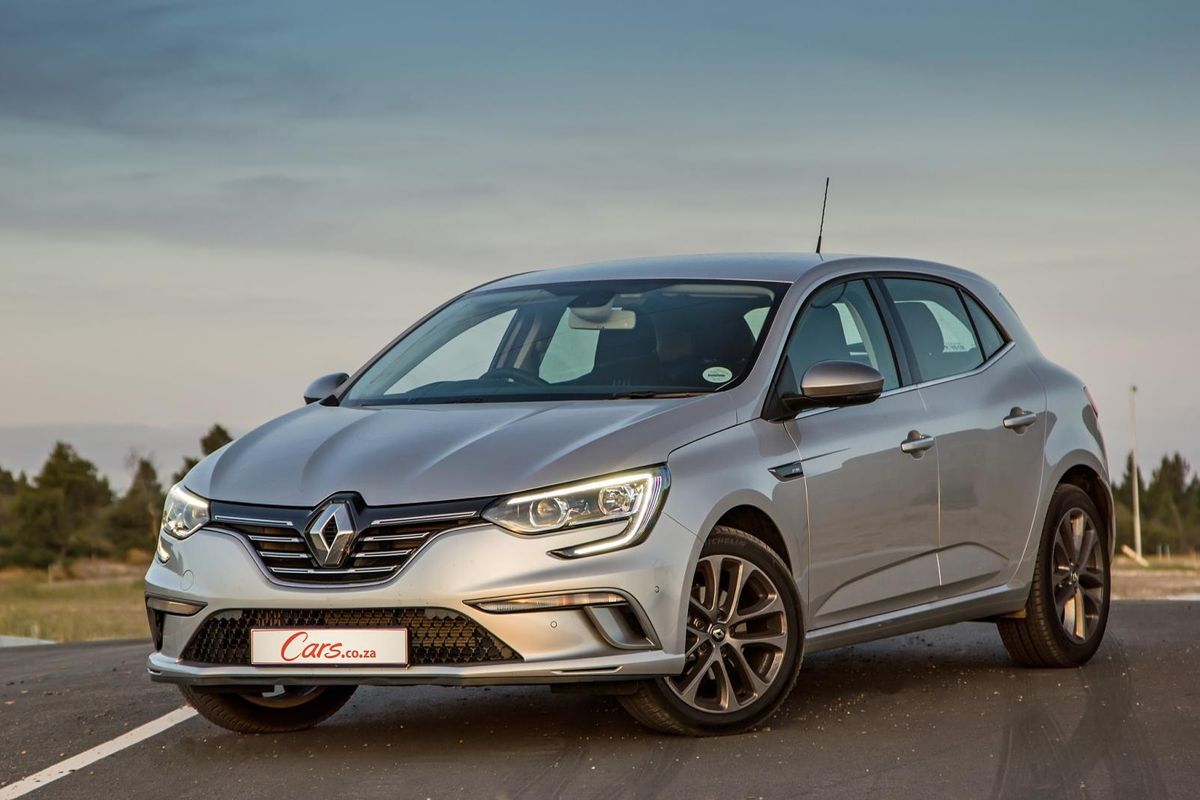
The 4th generation of the Renault Megane hatch has arrived in SA boasting improved levels of technology, refinement and style. We sampled it at the launch at Redstar Raceway in Johannesburg.

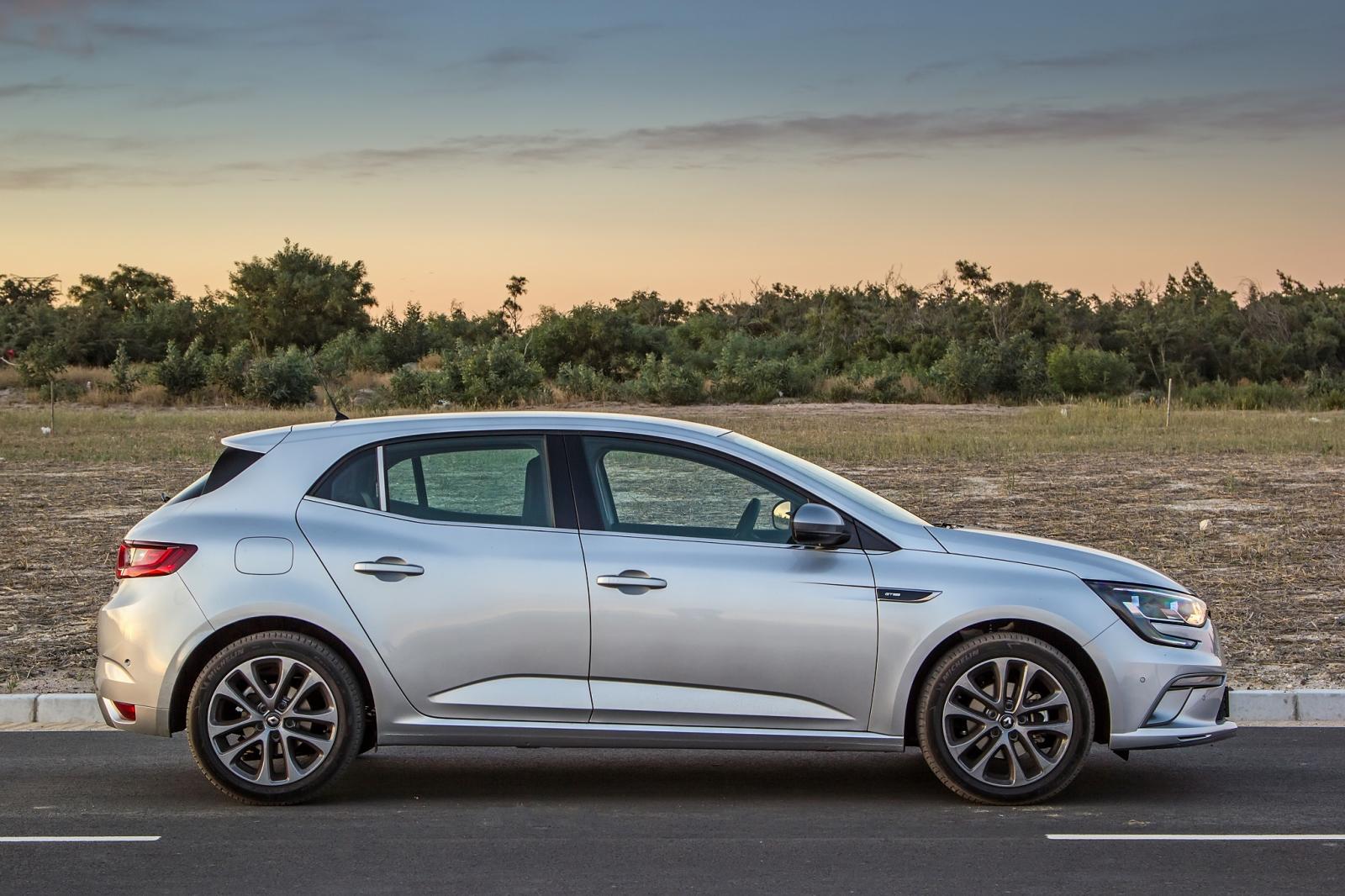
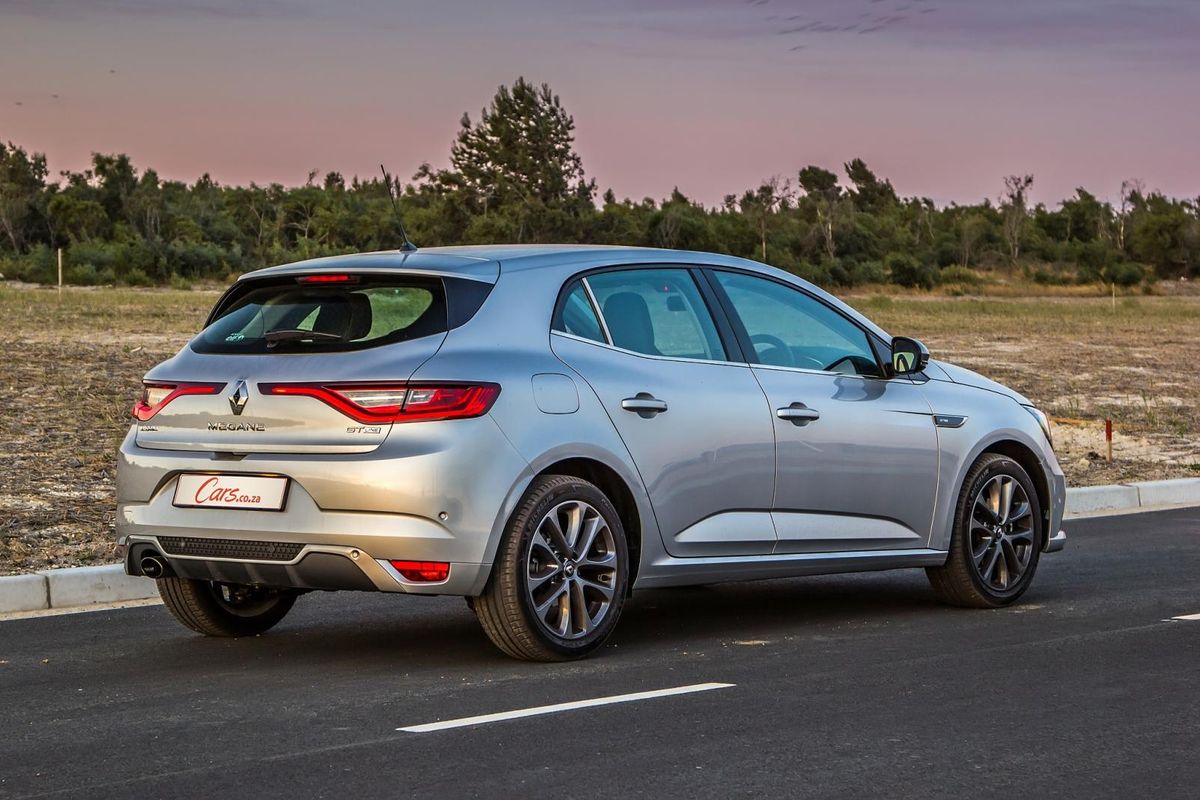
The Renault Megane has become a mainstay of the C-segment hatch market. It may never have reached the lofty sales heights of the segment-leading Volkswagen Golf, for example, but the stylish Parisian has always been a well-specified (in terms of interior and safety features) alternative to the mainstream. The latest model certainly looks the part, even if the new "teardrop" LEDs at the front aren’t to everyone's taste.

The rear end – characterised by long, distinctive brake lights – is certainly distinctive too. Some of the most impressive additions to the new Megane occur under the sheet metal, however, such as the powertrains and the new 4Control four-wheel-steer system.

Engine lineup

Renault has ditched the turbodiesel models in the Megane and decided on an all-petrol lineup. The lone naturally aspirated offering is a 1.6-litre unit that produces 84 kW and 156 Nm of torque. It’s only available with a 5-speed manual gearbox and in the entry-level (Dynamique) specification.

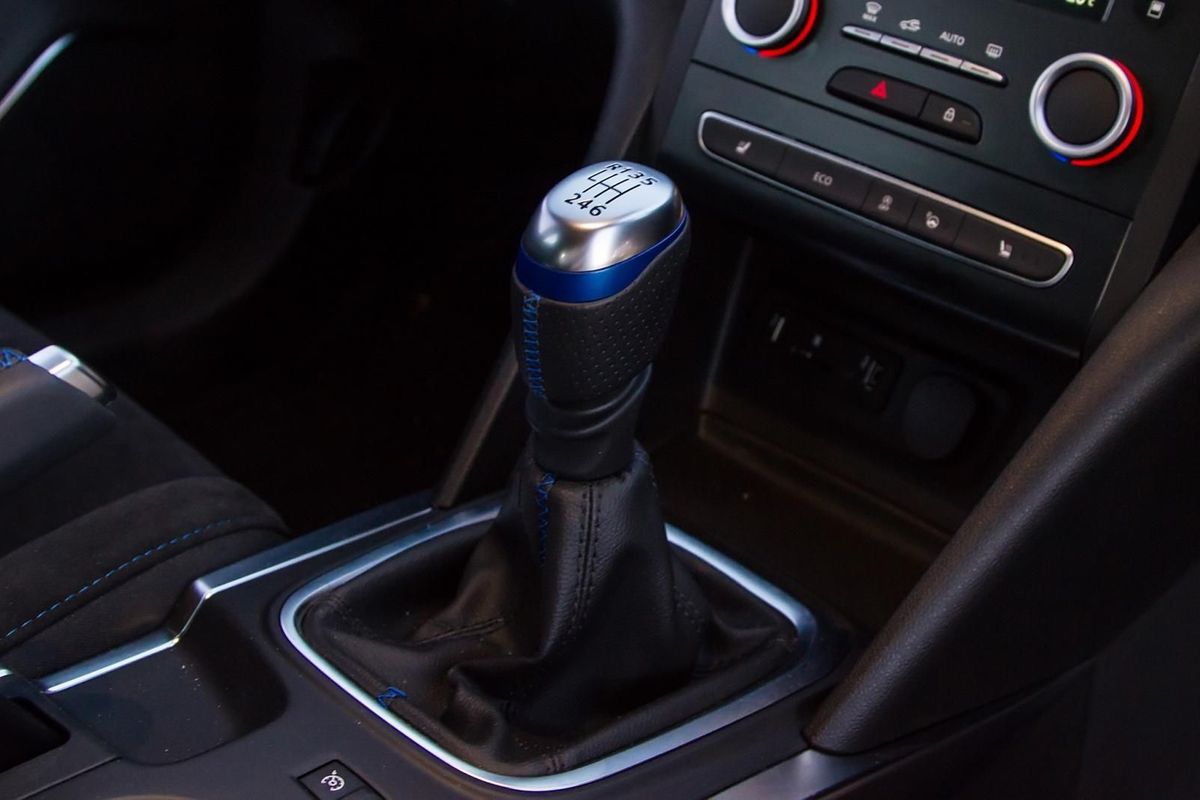
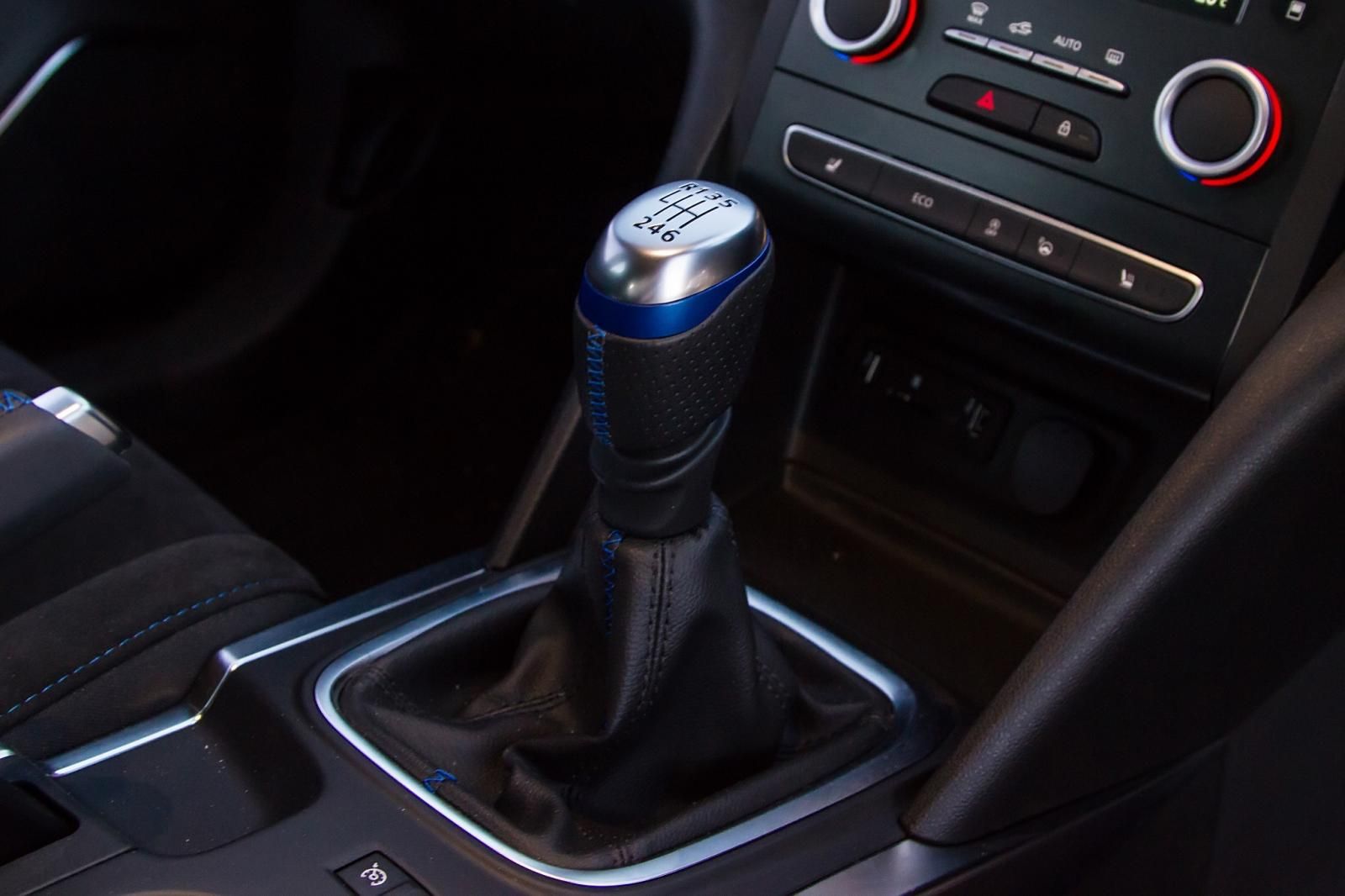
The first of the turbopetrol engines is a 1.2-litre unit, which has been carried over from the previous Megane. It delivers 97 kW and 205 Nm and is available with either a 6-speed manual or 7-speed dual-clutch automatic transmission. We sampled the manual model and this particular unit accelerates well and has enough grunt in reserve to make overtaking easy at freeway speeds. To exact smooth shifts requires familiarisation; the gear lever has a very light action.

The top-spec engine (until the RS model arrives) is the 1.6-litre turbopetrol motor. It’s carried over from the Clio RS, but offers more power and torque (151 kW and 280 Nm) and the updated, better-calibrated 7-speed dual clutch transmission. The shift paddles are affixed to the steering column, which is less than ideal in some people's opinion, but if you like your paddles to stay stationary while the wheel twirls then you’ll be happy with the configuration.


Megane's unique "C-shaped'"LED headlight is a distinctive feature on the new model

The claimed fuel consumption figures for the line-up are good, but we look forward to measuring actual consumption when we test the cars thoroughly. The claim for the 1.6 is 6.4 L/100 km, 1.2-litre turbopetrol 5.4 L/100 km (auto) and 5.3 L/100 km (manual), plus the GT 1.6 turbo is said to use 6.4 L/100 km.

New interior

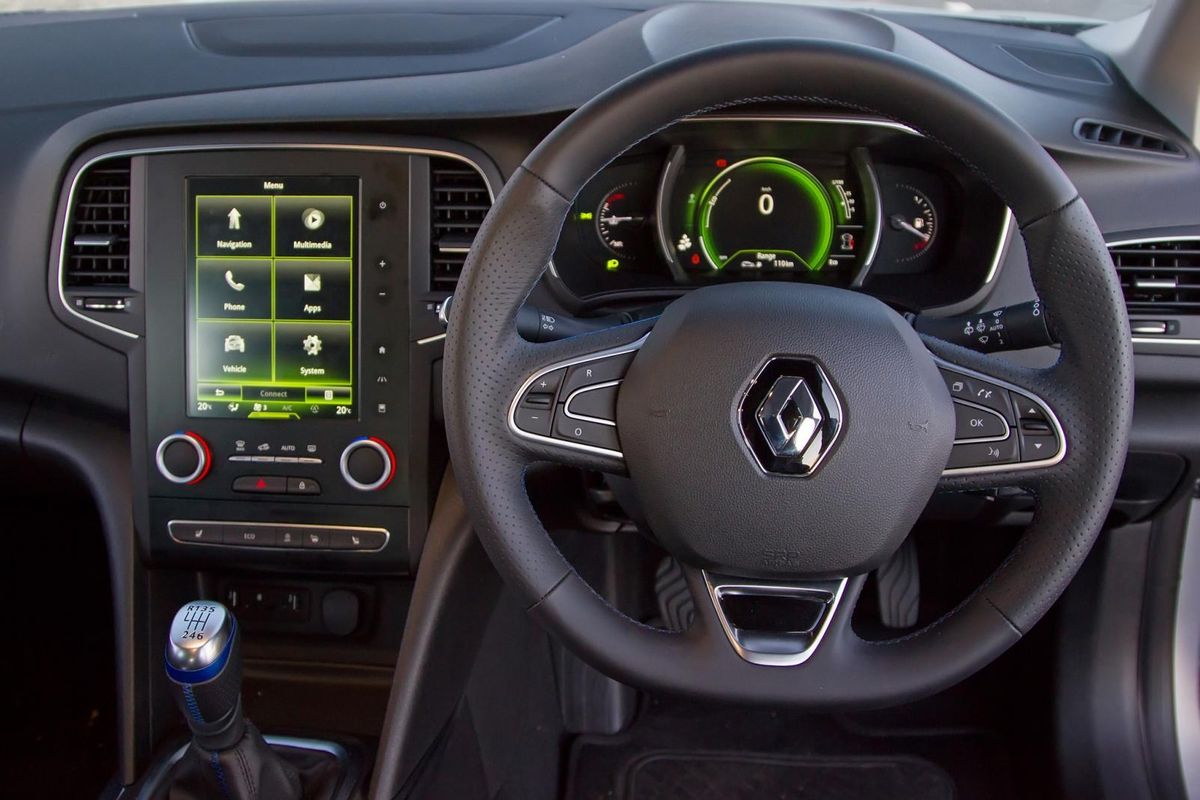
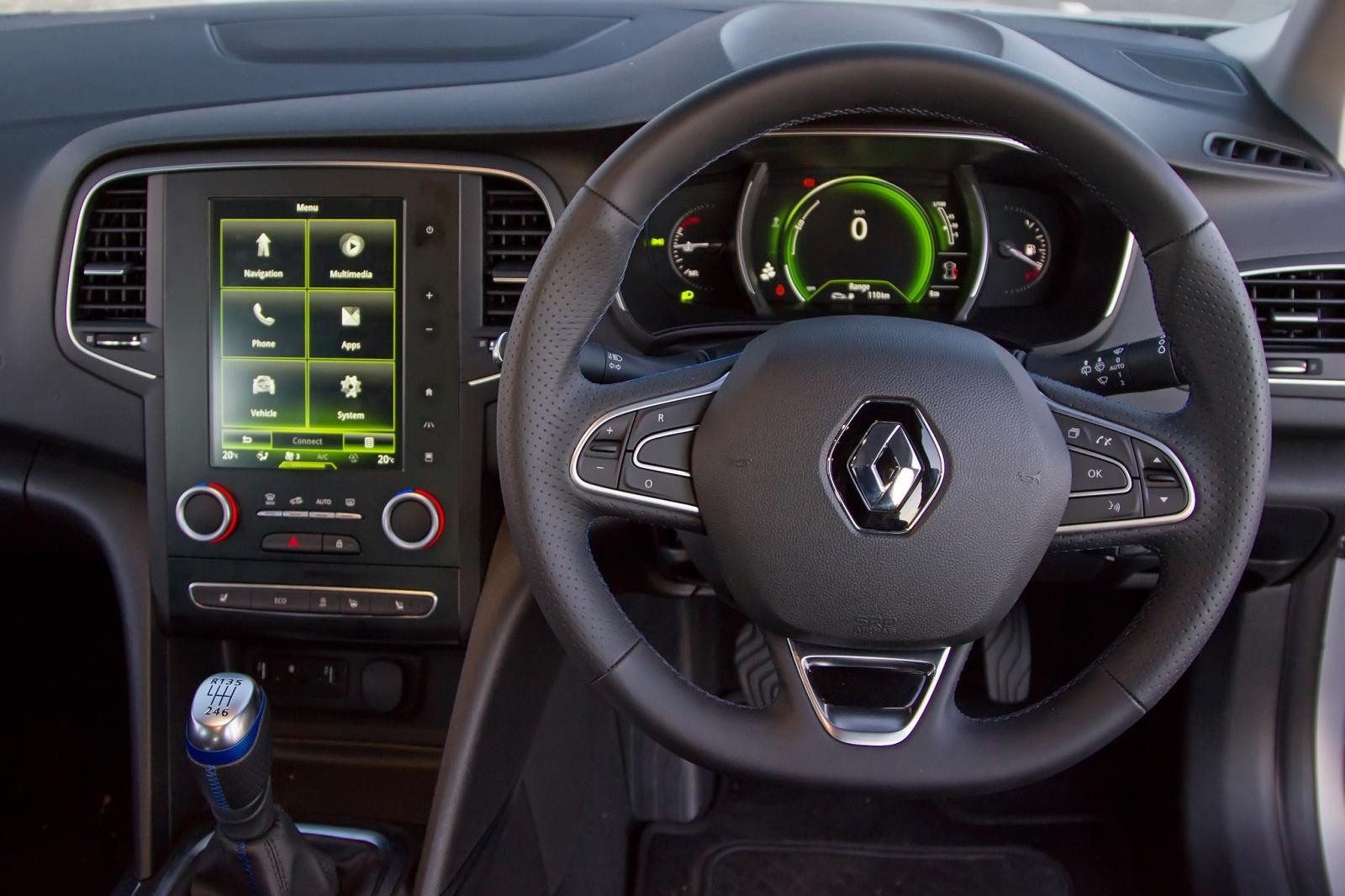
Renault has updated the interior of the new Megane significantly, particularly in terms of build quality. The newcomer's interior feels solid and well put together, although the plastics a little lower down in the cabin are a bit rough to the touch. Overall, however, it’s a stylish and premium space.

In the GT-Line and top-spec GT model, the Alcantara seats are standard with the GT model featuring special blue inserts. They are bucket seats and supportive around the legs and hips. On the other hand the seats are quite large, so they encroach on rear legroom a bit – it doesn’t feel all that spacious in the rear. The instrument cluster is now a fully digital affair and similar to that of the Kadjar. The colours for the instrument cluster and the infotainment system can be adjusted to your choice and the cabin has LED strips. The LEDs' hue matches the colour that you select to illuminate the instrument cluster.


Interior is well-specced with a focus on adaptable themes and colours for the interior, leather wheel and Alcantara seats a premium touch

Tech and equipment

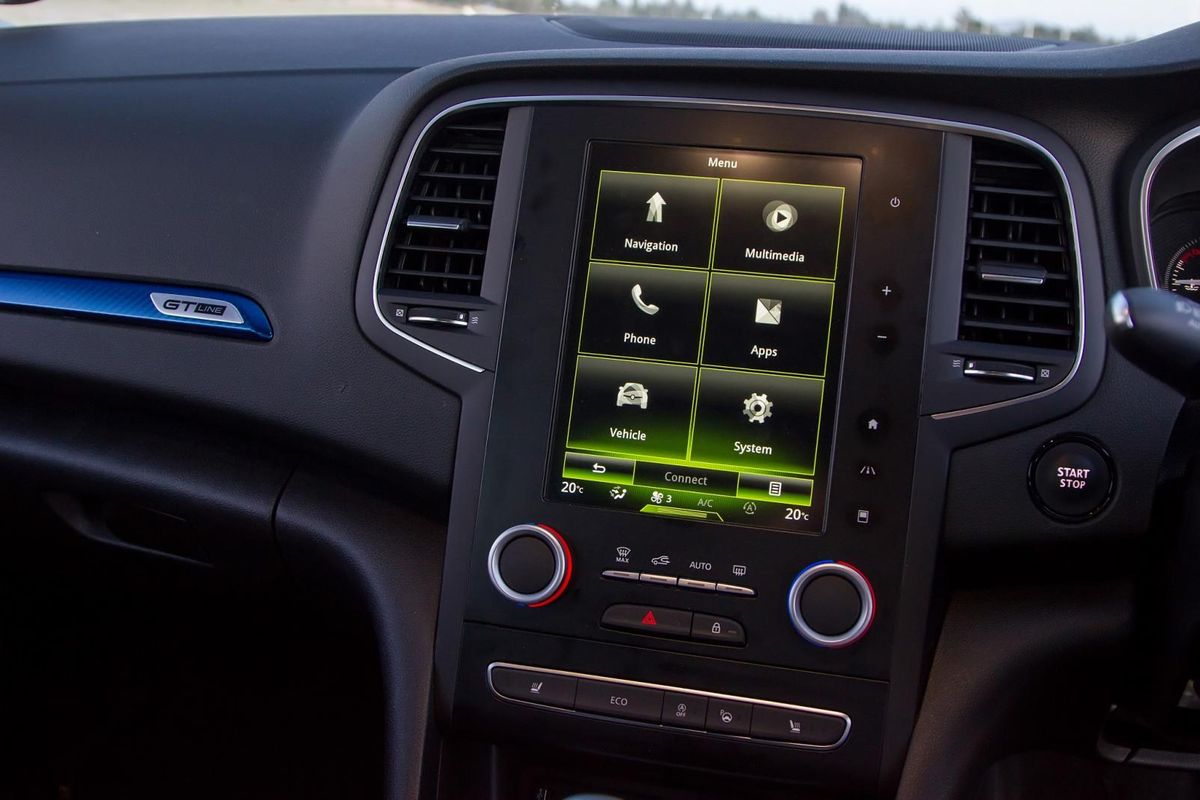
No matter which Megane derivative you choose, you will get a touchscreen system equipped with navigation. The entry-level Dynamique gets a 7-inch touchscreen and the models above it feature a 8.7-inch touchscreen system. In the 8.7-inch system, there’s a driving mode selector that allows the driver to adapt the car's settings to suit their driving mood.

There’s Sport (GT only), Eco (GT-Line only), Normal, Comfort and Personal – by which you can adjust multiple facets (engine noise, chassis setup and gearbox setting) to your exact liking.  The top-spec GT derivative also comes with a 4-wheel steering system. Renault has introduced this feature before – on the Laguna Coupe some 6 years ago but it never really took off. On the Megane, the system makes the hatchback more manoeuvrable at low speeds, helping to turn the car sharper and then keep the car stable at freeway speeds.


Multi-sense allows the driver to adjust the vehicle's responsiveness and driving style

Other neat additions to the Megane include optional self-parking for parallel or alley docking parking, optional blind spot monitoring and a standard heated driver’s seat. The Megane also has a 5-star EuroNCAP safety rating.

How does it drive?

The Megane has always been a good-handling car and the new one is no different. It’s still very dynamic when you send it through some bends and the 4-wheel steering does have an effect in tucking the chassis in towards the apexes. Redstar Raceway is full of long, sharp corners, the worst combination for front-wheel-drive cars but, the Megane fared surprisingly well and was entertaining to push to its limits. The steering feels heavy in Sport mode, which is okay for track driving, but maybe a little too heavy for the road. The other modes lighten it up a bit though, so the Personal setting is probably ideal.

Pricing

The Megane appears to be competitively priced with the equivalent Opel Astra and Peugeot 308. It offers good levels of specification and a well-sorted chassis and engine combination. The GT model may be a bit on the expensive side, precariously close to the competitor-eating Volkswagen Golf GTI, but it also offers a fun, less firmly-sprung alternative to the GTI. We haven't driven the 1.2 EDC derivative, but suspect it is the pick of the range… 

Renault Mégane Dynamique 1.6 litre (85kW)  R 279 900
Renault Mégane GT-LINE 1.2 litre Turbo (97kW)  
6-speed manual transmission: R 339 900
7-speed EDC auto transmission: R 354 900
Renault Mégane GT R 449 900

Other Megane Content:

Renault Mégane Grand Coupe (sedan) Revealed
All-New Renault Megane Shows its Face
Renault Megane RS 275 Trophy (2015) Review
Renault Megane RS 265 LUX (2015) Review

Interested in buying a buying a Renault Megane?

Find one for sale on Cars.co.za                                  

Facelifted Renault Sandero and Stepway revealed


Renault's Romanian subsidiary Dacia is gearing up to showcase the facelifted Sandero and Sandero Stepway at the 2016 Paris Motor Show. Imagine Renault emblems on the vehicles pictured here… that is what the SA-bound cars will look like. 

The Renault Sandero is a popular first-car choice in South Africa and it even scooped the Budget Car category award at the inaugural Cars.co.za Consumer Awards earlier this year. The Sandero and Sandero Stepway are due for an update and the new-look models will be shown at the Paris Motor Show later this month. You can expect to see the facelifted Renault Sandero and Sandero Stepway in South Africa in the first quarter of 2017.

Fresh look for Sandero

The changes to the Sandero and Stepway are near-identical and the updates include a newly designed front-end with and extended bumper, grille and air vents. LED daytime running lights and redesigned headlights form part of the facelift, while the taillights also feature an updated design.  

On the inside, you can expect to see a different use of materials and storage space, while ergonomics are expected to improve too.

Reports are also suggesting that a new engine will be introduced, but exact details remain unknown at this point.

Further details will be revealed when the facelifted Renault Sandero and Sandero Stepway make their appearance at the Paris Motor Show. We will keep you updated as soon as more information becomes available, so stay tuned!

Related content:

Renault Sandero Expression – Best Budget Car
Renault Sandero Stepway (2014) Video

Want to buy a Renault Sandero?

Search for a new or used Renault Sandero on Cars.co.za

Best Leisure Double-Cab Bakkies in SA

Take a look at the semi-finalists in the Leisure Double Cab Bakkie category of the Cars.co.za Consumer Awards – powered by WesBank!

The second annual Cars.co.za Consumer Awards – now powered by WesBank, is underway and the semi-finalists across 13 categories have been chosen. Make sure you visit the Cars.co.za Consumer Awards – powered by WesBank website for all the vehicle and category information and also be sure to follow us on Twitter (@CarsSouthAfrica), Facebook (CarsSA) and Instagram (carssouthafrica) for the latest updates.

The Cars.co.za Ownership Satisfaction Survey, in partnership with leading data specialists, Lightstone Consumer, forms an integral part of the awards programme, with the survey accounting for 50% of the final result in each category. The brand-specific data incorporates feedback from thousands of South African new vehicle owners, based on their experiences of their vehicles (must be less than 5 years old and serviced through franchised outlets).

Have your say and complete the Cars.co.za Ownership Satisfaction Survey now!

In this immensely popular and fiercely contested vehicle category, the search is on for the ultimate all-rounder. From luxurious touring vehicle, to hardcore off-roader, capable carry-all, family do-all and lifestyle activity machine, leisure double-cab bakkies can no longer be too utilitarian and rough around the edges, but should be highly sophisticated offerings.

To be eligible for consideration in this category, vehicles must have a list price above R450 000 and the vehicle must be a double-cab with a turbodiesel engine and four-wheel drive. A minimum ground clearance of 190 mm is also required. Pillars of success in this category include performance, space and practicality, in-car entertainment, comfort, all-surface ability and safety.

The semi-finalists in the Leisure Double Cab Bakkie category of the Cars.co.za Consumer Awards – powered by WesBank are as follows (in no particular order):

Fiat Fullback 2.5 4×4 LX

The Triton-based Fullback is a new offering in the South African market and it features a trusted powertrain and comes well equipped with a whack of standard features. Powering this derivative is a 2.5-litre turbodiesel engine that develops 131 kW and 400 Nm of torque. Power is sent to the rear wheels through a 5-speed manual transmission and Fiat claims a fuel consumption figure of 7.7 L/100 km.

More information on the Fiat Fullback 2.5 4×4 LX

Volkswagen Amarok 2.0 BiTDI Highline 4Motion Auto

The Volkswagen Amarok is largely underrated in the local market, but even so, this particular Amarok derivative has proven to be popular. A 2.0-litre bi-turbodiesel engine does service in this Amarok and it develops 132 kW and 420 Nm of torque. Its 8-speed automatic transmission is particularly impressive and Volkswagen claims a fuel consumption figure of 8.3 L/100 km.

More information on the Volkswagen Amarok 2.0 BiTDI Highline 4Motion Auto

Related Content: 

In-Depth Comparison: New Hilux vs Ranger vs KB vs Amarok (video)

Update: Facelifted VW Amarok to get 3.0 V6 turbodiesel?

Volkswagen Amarok-based SUV Coming?

Ford Ranger 2.2 XLS 4×4 Auto

The popularity of automatic transmissions has grown tremendously and Ford’s recent introduction of new automatic double cab derivatives are bound to upset the applecart. A 2.2-litre turbodiesel engine powers this Ranger XLS 4×4 automatic and endows it with 118 kW and 385 Nm of torque delivered through a 6-speed automatic transmission. This derivative strikes a good balance between performance and economy and Ford claims a fuel consumption figure of 8.1 L/100 km.  

More information on the Ford Ranger 2.2 XLS 4×4 Auto

Related content: 

Ford Ranger 2.2 TDCi Automatic – First Drive

Ford Ranger 2.2 TDCi Automatic – Specs and Prices in SA

Ford Ranger 3.2 Wildtrak 4×4 Auto

Well equipped, sturdy and endowed with appealing square-jawed looks, the Ford Ranger Wildrak continues to sell up a storm in South Africa. The Wildrak is fitted with a powerful five-cylinder, 3.2-litre turbodiesel engine that produces peak outputs of 147 kW and 470 Nm and propels the Ranger via a 6-speed automatic transmission. In terms of fuel consumption, Ford claims 9.0 L/100 km for the Wildtrak.

More information on the Ford Ranger 3.2 Wildtrak 4×4 Auto

Related content:

Ford Ranger 3.2 4×4 Wildtrak (2016) Review

Extended Test: Ford Ranger 3.2 4×4 Wildtrak [with Video]

2016 Ford Ranger-5-Things You Need To Know (Video)

2016 Toyota Hilux vs Ford Ranger – Offroad & Review

Drag Race: Hilux vs Ranger vs Amarok vs KB

Toyota Hilux 2.8 GD-6 4×4 Raider Auto

The new Toyota Hilux is a significantly more refined product than its predecessor, which demonstrates the brand's determination to be an even stronger player in the leisure double-cab segment. This derivative is equipped with a four-cylinder, 2.8-litre turbodiesel engine that produces a healthy 130 kW and 450 Nm of torque. The unit is mated to a 6-speed automatic transmission and Toyota claims an average fuel consumption figure of 8.5 L/100 km.

More information on the Toyota Hilux 2.8 GD-6 4×4 Raider Auto

Related content: 

Toyota Hilux 2.8GD-6 DC 4×4 Raider Auto (2016) Review

Toyota Hilux vs Ford Ranger vs Isuzu KB vs Volkswagen Amarok (2016) Comparative Review

New Hilux vs Old Hilux – An Expert’s Opinion on What’s Changed

2016 Toyota Hilux – 5 Things You Need To Know (Video)


Lexus CT, RX and LX get Specification Update

Lexus has updated the specification offered on its CT, RX and LX models. Take a quick look at what’s changed…

Lexus CT200h


A CT200h with the new Mercury Grey bi-tone paint finish.

The Lexus CT200h hybrid now offers 4 new bi-tone colour schemes where the roof and pillars get a gloss black treatment while customers can choose between four body colours including White Quartz, Sonic Titanium, Mercury Grey and Morello Red.

If you don’t want to go with a bi-tone scheme, you can opt for the newly added monotone Amber colour, which now replaces the previous Fire Agate.

The CT200h also benefits from a new digital media holder found on the centre console and easily accommodates portable music devices, which are linked up via USB, AUX or Bluetooth.

Related content:

Lexus CT200h (2014) Review
Lexus CT200h F-Sport Review

Want to buy a Lexus CT200h?

Search for a new or used Lexus CT200h on Cars.co.za

Lexus RX


The update to the RX is limited to the interior features of the flagship model.

The RX was introduced earlier this year and the range-topping RX450h SE now gains added convenience features. New additions to this RX derivative include electric adjustment for the second row of seats, as well as seat heaters.

The RX450h now features a Panoramic View Monitor that exhibits a wider field of vision, offers improved visibility and added convenience.

Related content:

Lexus RX350 EX (2016) Review
Lexus RX450h SE (2016) Review

Want to buy a Lexus RX?

Search for a new or used Lexus RX on Cars.co.za

Lexus LX

Lexus now offers a pre-safe electronic safety system on its flagship LX SUV. The system utilises sensors to scan the road ahead for obstacles in the vehicle's path of travel and also monitors following distances (it will warn the driver of potential hazards). The system can also intervene by increasing brake pressure, closing windows and altering vehicle dynamics to prevent a collision.

Adaptive cruise control, which allows the driver to maintain a safe following distance by adjusting the speed of the vehicle according to the driving situation, is now standard, as is Lane Keep Assist and a new adaptive high-beam system with sequential indicator illumination is part of the LX package.

Two LX models are: the 270 kW/530 Nm LX 570 powered with a 5.7-litre V8 engine and the 195 kW/650 Nm LX450d fitted with a 4.5-litre turbodiesel engine.

Want to buy a Lexus LX?

Search for a new or used Lexus LX on Cars.co.za

Ford Focus RS (2016) Review

The lauded Ford Focus RS recently spent some time with us. Yes, it’s fast, but is it just a one-trick pony?

We like: The power, driver engagement, but 3rd gear – specifically – is the gift that keeps on giving.

We don’t like: Expensive, considering the lack of features inside.

Alternatives

  • For more power: Mercedes-AMG A45 4Matic – It has more power and is generally the faster car but it’s less engaging than the Focus RS. The Mercedes-AMG A45 4Matic is powered by a turbocharged 2.0-litre petrol engine that offers 280 kW and 475 Nm of torque. 
     
  • For less money: Volkswagen Golf R – The Golf R is a top seller because it’s fast and it has an everyday suspension setup that doesn’t provide the ultimate thrills like the Focus RS, but it's enough for most enthusiasts. The Golf R offers 206 kW and 380 Nm of torque with its 2.0-litre turbocharged petrol engine. 

Compare the Ford Focus RS with the Mercedes-AMG A45 4Matic and Volkswagen Golf R


The Ford Focus RS comes equipped with Drift Mode (for track only) and offers blistering performance. 

The fastest version of the Focus is back with its very own take on what an all-wheel-drive fire-breathing hatch should be able to do. Unlike its rivals, the Focus RS has a drift mode for going sideways and munching tyres. There are some other interesting differences we uncovered over the RS’s term with us, here’s how it stacked up.

How does it fare in terms of…

Performance?

Yes, it’s fast, as you’d expect, maybe even very fast when you get a chance to look down at the speedometer. The previous Focus RS was a wicked, hard-edged brute with a bundle of torque-steer that you had to wrestle every time you went near the throttle. This new RS, with even more power, has finally resorted to all-wheel-drive in order to bring it to heel. There’s a hefty 257 kW with its cohort being 440 Nm of torque.

The engine is the same unit used in the Ecoboost Mustang, but it feels more brutal, more like a performance engine in the RS. The power is harnessed and directed to the floor via a six-speed manual gearbox that feels identical to the shifter on the Focus ST. Zero to 100 kph takes just 4.7 seconds, which is extremely rapid for a manual these days – those sorts of figures are normally reserved for dual-clutch autos.


The Ford Focus RS is capable of achieving 4.7 seconds in the sprint to 100 kph using a 6-speed manual gearbox.

That’s not even the best part of the acceleration performance. Get out of 2nd gear, hook it into third and the torque and power delivery seems to kick up a notch. It’s like a second wave of performance that keeps you pressed into your seat, and it lasts forever – seemingly. The Focus RS will keep you coming back for more and more hits of that third gear, it's utterly addictive.

Cycle through the various driving modes available and the exhaust changes its tone from a bassy background hum to a boisterous barrage of bangs and pops. It will excite the boy racer inside of you to no end. The straight line performance is one exciting aspect in the RS’s arsenal, but that’s not what it was made for. It was made to do crazy things when you start interfering with the steering wheel in front of you.

Handling?

Power-on oversteer, from a hatchback? This can’t be right! True enough, once you scroll through the driving modes and settle on the more aggressive settings such as Sport or Track, the RS breaks its shackles and proves capable of achieving some impressive handling feats. It’s able to pull off exploits such as power on oversteer and huge slides thanks to its bespoke torque vectoring system. The system is able to send up to 100% of the torque to a single wheel at any moment in time. That’s different to the German Haldex system which, only transfers torque front and back.


Handling is a true strength of the Ford Focus RS and it offers a thrilling drive, every time you get behind the wheel.

In action, it’s far simpler than the technicalities going on behind the scenes. The fast Ford has a crisp, fast turn-in and instead of eventual limit that leads to understeer, it keeps you on your toes, working the wheel as you balance the steering and throttle, see-sawing between oversteer and forward traction. It’s so very different to drive from all the other hot hatch machinery when you get a chance to give it a proper test.

We didn’t really get a chance to activate Drift Mode but, as far as we can tell, this is just a button that guarantees YouTube stardom in a montage crash video. It’s almost certainly only meant to be used at a track or a skidpan where there’s nothing in the way to test the rigidity of the bodywork.

Sport Mode and Track Mode are where the real advantages are revealed in the RS’s abilities. It’s engaging to drive fast, putting the driver into a special zone where one feels entirely connected to the vehicle, able to" wish and will" its screeching tyres with consummate ease. Its German rivals tend to feel disconnected and boringly predictable at the edge of grip, where the Ford is able to step up the intensity and deliver proper thrills.

On the road?

 
The interior of the Focus RS is sporty and appealing but not as premium as its rivals.

The Focus RS has adaptable dampers that, unfortunately only go from stiff to bone-crushing when in Sport or Track mode. It’s a hard ride out on the road, more so than say, a Golf R or a Mercedes-AMG A45 4Matic. What’s more, the interior scenery isn’t as plush or as premium as either the Volkswagen or the Benz. The seats are trimmed in cloth as standard with blue RS inserts, but you’d be forgiven for thinking it was a basic Focus ST in there with a selection of blue garnishes. At R700 000, we thought the cabin could certainly do with a few more unique or higher-quality bits of trim. After all, this is where the owner is going to spend most of their time – so it might as well be a really nice place to spend that time.

Pricing and warranty

The Ford Focus RS is priced at R699 900. It is sold with a 5-year/120 000 km warranty and a 5-year/100 000 km service plan.

Verdict

It appears that with the development of the Focus RS, Ford prioritised driver engagement and handling prowess, because it seems the Blue Oval simply transplanted the Focus ST's interior into its super hatchback and added a few bits of blue trim for effect. So that's the bad news: the RS' interior isn’t up to the standards that buyers would expect (given its price tag) and the car's German rivals certainly deliver a more refined product in this regard.

Having said that, the Ford Focus RS claws it all back when you fire up the engine and allow man to meld with machine. Down your favourite strip of tarmac or at the track, the RS will thoroughly engage you and make you sweat/concentrate harder than its rivals might. The ride out on the road is firm, even in the Ford’s softest setting, and the RS can be frustrating to live with if you don’t get to unleash it on a regular basis.

But it's an uncompromising performance machine designed for a particular clientele. Some of our testers were willing to "sell one of their kidneys" to own an RS and others were ambivalent about the car. Let us put it this way: it isn't the everyday car you need, but it’s the car you want for that one, very special day.

Related Ford Focus Content

Extended Test: Ford Focus ST [with Video]
Ford Focus RS (2016) First Drive
Ford Focus RS (2016) Specs and Pricing
Ford Focus RS500 spotted testing?
Track Test – Ford Focus ST [Video]

Interested in buying a Focus?

Find one for sale on Cars.co.za

Toyota RAV4 VX Gets More Kit


Toyota has ‘tweaked’ the specification on its range-topping RAV4 VX.

Toyota’s popular RAV4 offering has been enhanced with changes to specification offered on its VX model.

The range-topping RAV4 VX offering now gains additional safety equipment including Lane Change Assist with Blind Spot Monitoring. The system includes convenient indicators housed in the side mirrors to alert you of vehicles in your blind spot. Cross Traffic Alert is now also included on the VX grade RAV4. The system will alert to approaching vehicles when you are entering or exiting a parking bay at your local shopping mall.

Further changes include the addition of foot-well lighting while the sunroof has been omitted from the specification list.

In addition to these new features, the RAV4 VX’s safety specification includes a total of nine airbags, ABS with EBD, brake assist, vehicle stability control, hill assist control, trailer sway control, downhill assist control (4WD models only) and ISOFIX child seat mounts.

Engine Choice

The RAV4 is powered by two petrol engines and a diesel engine in both 2WD and 4WD format. Starting with the petrol engines, there’s a 2.0-litre naturally aspirated unit producing 107 kW and 187 Nm of torque while a 2.5-litre engine is also on offer with 132 kW and 233 Nm of torque. For the dieselheads, there’s a 2.2-litre turbodiesel engine that offers 110 kW and 340 Nm of torque.

The GX grade is paired with the 2.0-litre petrol engine in 2WD configuration and mated to either a 6-speed manual or CVT transmission. The AWD 2.2 turbodiesel RAV4 in GX guise is offered with a 6-speed automatic transmission.

Buyers looking to buy the RAV4 VX have the choice between the 2.2 turbodiesel engine and the 2.5-litre petrol motor. Both are AWD and are fitted with a 6-speed automatic transmission.  

Toyota RAV4 – Price in South Africa

RAV4 2.0 GX 2WD – R 367 000

RAV4 2.0 GX CVT 2WD – R 379 500

RAV4 2.2D GX AWD – R 459 000

RAV4 2.2D VX AT AWD – R 547 000

RAV4 2.5 VX AT AWD – 513 000

The Toyota RAV4 range is backed by a 5-year/90 000 km service plan and 3-year/100 000 km warranty.

Want to buy a Toyota RAV4? 

Find a new or used Toyota RAV4 on Cars.co.za

Related content: 

Toyota RAV4 2.2D AWD GX (2016) Review

Facelift RAV4 Video Review – Load Space, Comfort, Features

Facelifted Toyota RAV4 (2015) First Drive

Subaru Forester VS Toyota Rav4: Practicality (Video)


Best Compact Hatches Under R250 000

Take a look at the semi-finalists in the Compact Hatch category of the Cars.co.za Consumer Awards – powered by WesBank!

The second annual Cars.co.za Consumer Awards – now powered by WesBank, is underway and the semi-finalists across 13 categories have been chosen. Make sure you visit the Cars.co.za Consumer Awards – powered by WesBank website for all the vehicle and category information and also be sure to follow us on Twitter (@CarsSouthAfrica), Facebook (CarsSA) and Instagram (carssouthafrica) for the latest updates.

The Cars.co.za Ownership Satisfaction Survey, in partnership with leading data specialists, Lightstone Consumer, forms an integral part of the awards programme, with the survey accounting for 50% of the final result in each category. The brand-specific data incorporates feedback from thousands of South African new vehicle owners, based on their experiences of their vehicles (must be less than 5 years old and serviced through franchised outlets).

Have your say and complete the Cars.co.za Ownership Satisfaction Survey now!

The Compact Hatch category is extremely competitive, and we’re looking for a balanced offering that is excellent across the board. Cars in this segment must appeal to a very wide audience – from the young professional or family buying up from an entry-level car, to pensioners buying down from something larger and expensive. The winner of this award must truly reflect what is best about modern automotive design and engineering, but present it in a concentrated, reasonably affordable form.

The semi-finalists in the Compact Hatch category of the Cars.co.za Consumer Awards – powered by WesBank are as follows (in no particular order):

Peugeot 208 1.2 Active

French brand Peugeot has been through tough times the past few years, but in Europe, at least, appears to have turned the corner. Great cars such as the 208 and its bigger sibling, the 308, have put the famous Lion emblem back in the limelight. This 1.2 Active derivative is well priced given its good balance of features and offers space that belies its size. And, like small Peugeots of many years ago, it’s very good to drive…

This model is powered by a 1.2-litre engine that delivers 60 kW/118 Nm and an outstanding claimed economy figure of 4.3 L/100 km.

More information on the Peugeot 208 1.2 Active
Search for new/used Peugeot 208 for sale on Cars.co.za

Volkswagen Polo 1.2 TSI Comfortline

The Volkswagen Polo 1,2 TSI Comfortline is one of South Africa’s favourite cars. The appeal is very obvious – it offers the desirable Volkswagen badge, an upmarket cabin finished in quality materials, good standard specification and the promise of good resale value. Furthermore, the relatively new 1,2-litre turbopetrol remains one of the more impressive small-capacity engines on the market – it endows the Polo with great driveability characteristics. 

As its name indicates, this Polo is powered by a turbocharged 1.2-litre engine that delivers a strong 66 kW/160 Nm and a claimed combined cycle economy figure of 4.9 L/100 km.

More information on the VW Polo 1.2 TSI Comfortline
VW Polo 1.2 TSI Comfortline (2014) Review
Search for a new/used VW Polo for sale on Cars.co.za
 

Honda Jazz 1.2 Comfort

The Honda Jazz has built itself a solid reputation for reliability, spaciousness and general owner satisfaction. In its latest form it attempts to offer all its usual strengths, but in a more youthful package. In the end, however, it is the Jazz’s incredible space utilisation that secures its place on this shortlist.

Unlike many of its rivals, the Jazz uses a normally aspirated 1.2-litre engine that delivers 66 kW/110 Nm of torque, and Honda claims a combined cycle economy figure of 5.6 L/100 km.

More information on the Honda Jazz 1.2 Comfort
Looking for a new/used Honda Jazz? Find one on Cars.co.za

Opel Corsa 1.0T Enjoy

The Corsa was also in the running last year, and remains a strong (and underestimated) competitor in this segment. In its latest form the Corsa has matured into a strong all-rounder that is hard to fault. Ignore the conservative exterior design and inside you’ll find an impressively upmarket contender stocked with high-tech features (some optional). And when it comes power and economy, the Corsa benefits from what is arguably the pick of the new-generation small engines. 

The perky 1.0-litre turbocharged engine underneath the Corsa's bonnet pumps out an impressive 85 kW/170 Nm, yet still returns 5.0 L/100 km!

More information on the Opel Corsa 1.0T Enjoy
Opel Corsa 1.0T Enjoy (2015) Review

Interested in an Opel Corsa? Seach Cars.co.za for stock

Ford Fiesta 1.0T EcoBoost Trend

Ford’s Fiesta is not the freshest car on sale in this segment, but it was arguably ahead of its time when it was launched, so remains very popular. As part of its previous facelift it received an Aston Martin-esque front-end that boosted its desirability in the design stakes significantly. But it was the fitment of the 1.0-litre, turbocharged EcoBoost engine that made people sit up and take notice. This feisty Fiesta remains one of the most powerful cars in its class, and one of the best to drive.

The Fiesta's acclaimed engine delivers no less than 92 kW/170 Nm, and Ford claims an economy figure of 4.3 L/100 km.

More information on the Ford Fiesta 1.0T EcoBoost Trend
Search for a new/used Ford Fiesta on Cars.co.za

Volvo V90 Cross Country Confirmed for SA


Station wagon fans rejoice! Volvo has confirmed that the Cross Country version of its new V90 will be made available in South Africa.

According to Volvo, the importance of the Cross Country versions in its model range has been growing for some time. Of course, in Europe station wagons remain popular, but even there the success of SUVs and crossovers have dented the market. It makes only sense that endowing the traditional station wagon with some crossover appeal would be met with at least a degree of success. 

Read our recent extended test review of the company's V60 Cross Country

"The new V90 Cross Country takes the elegance of the V90 and transforms it into an all-road car that delivers safety, comfort and performance in a capable and adventurous package," says Håkan Samuelsson, President & CEO, Volvo Car Group.

"Our cars are well known for their safety, strength and durability. With all-wheel drive, increased ride height, and a chassis optimised for comfort and control in all weather and road conditions, the new V90 Cross Country takes our versatile V90 estate and adds the heart of an explorer," says Dr Peter Mertens, Senior Vice President Research & Development at Volvo Cars.

Rugged Design


Like the XC90, the new V90 Cross Country has a beautifully designed, uniquely Volvo fascia with the company's stylish and user-friendly Sensus touch-screen infotainment system.

The recently launched S90/V90 model range has garnered widespread praise, particularly for the uniquely Swedish approach to design. Transforming the model into a Cross Country has not merely been the case of lifting the ride height and adding some black body cladding, says Volvo. "Designing a Volvo Cross Country is not a styling exercise, a plastic job. It is based on honest capability. The Volvo V90 Cross Country brings a surprising and intriguing combination of a strong, powerful exterior and a luxurious, Scandinavian interior. It will continue the genuine tradition of the Volvo Cross Country with a new recipe: the blend of powerful off-road capability in a most elegant, sophisticated, tailored wagon suit," says Thomas Ingenlath, Senior Vice President Design at Volvo Cars.

Look at the photographs and judge for yourself! We believe the V90 Cross Country will cut a very distinctive figure in a sea of SUVs…

Inside, and in terms of powertrains (only 2.0-litre engines, in petrol and diesel), we expect the newcomer to mirror largely what is on offer in the S90/V90, which will launch in South Africa soon. The D5 version (which offers 173 kW and 480 Nm of torque in the S90) seems particularly well-suited to the local market. Volvo has not confirmed a date for the local introduction of the V90 Cross Country, but we expect it in the first quarter of 2017.


You may also be interested in

Volvo reveals SA pricing of the S90

5 Reasons why the Volvo S90 matters

First Drive of the Volvo S90

Video Review of the Volvo S90