We review the top-of-the-range Forester 2.0 XT, the only turbocharged member of the Subaru family car/compact SUV range, with the help of a surfboard and Luna the Border Bollie.
We're fond of the Forester, but over the years the price of this super-practical, super-capable SUV has crept up to the R600 000 mark. We ask ourselves, is it still worth it?
If you haven't read our Review of the Forester 2.0 XT already, you can click here. In this video, however, you'll find details about the choice of engines in the Forester range, the practical side and load carrying ability of the Forester, tech features, and ride quality and comfort. Oh, and be sure not to miss Luna's cameo.
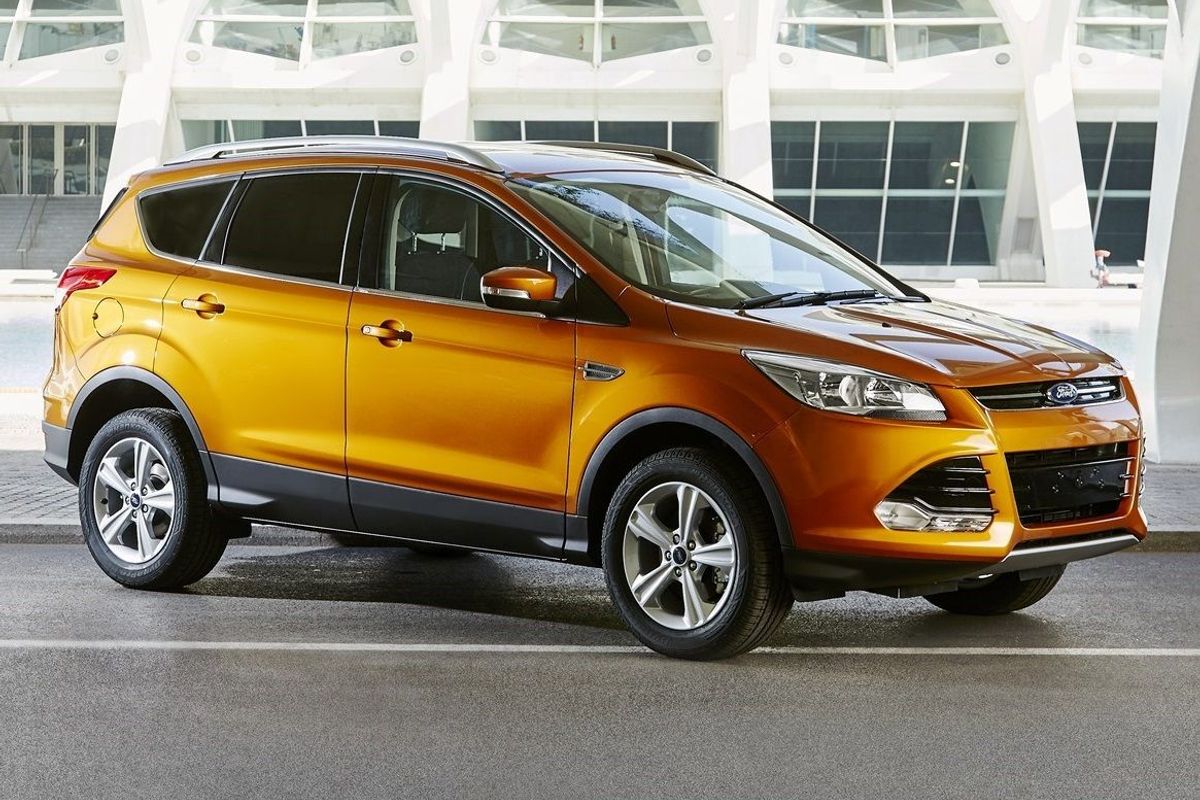
Ford Kuga complaints: Industry Ombudsman clarifies
The office of the Motor Industry Ombudsman of South Africa (MIOSA) has issued a press release in an effort to clarify certain misunderstandings around the on-going Ford Kuga fires saga.
"There seems to be some confusion and misunderstanding among motorists regarding Ford Kuga complaints,” says motor industry ombudsman, Johan van Vreden.
“Only complaints regarding under-bonnet fires experienced by Ford Kuga owners should be addressed to the National Consumer Commission,” Van Vreden explains. “All other complaints experienced with Kuga models or any other Ford products may be lodged with the office of the motor industry ombudsman at www.miosa.co.za, “ says Van Vreden.
He urges consumers who are uncertain of how to proceed to contact the information and liaison department of the ombudsman’s office on 086 116 4672. The services at the MIOSA office are available free of charge.
The recently announced voluntary Ford Kuga recall affects vehicles sold in SA between December 2012 and February 2014 (only 1.6-litre EcoBoost petrol engines).
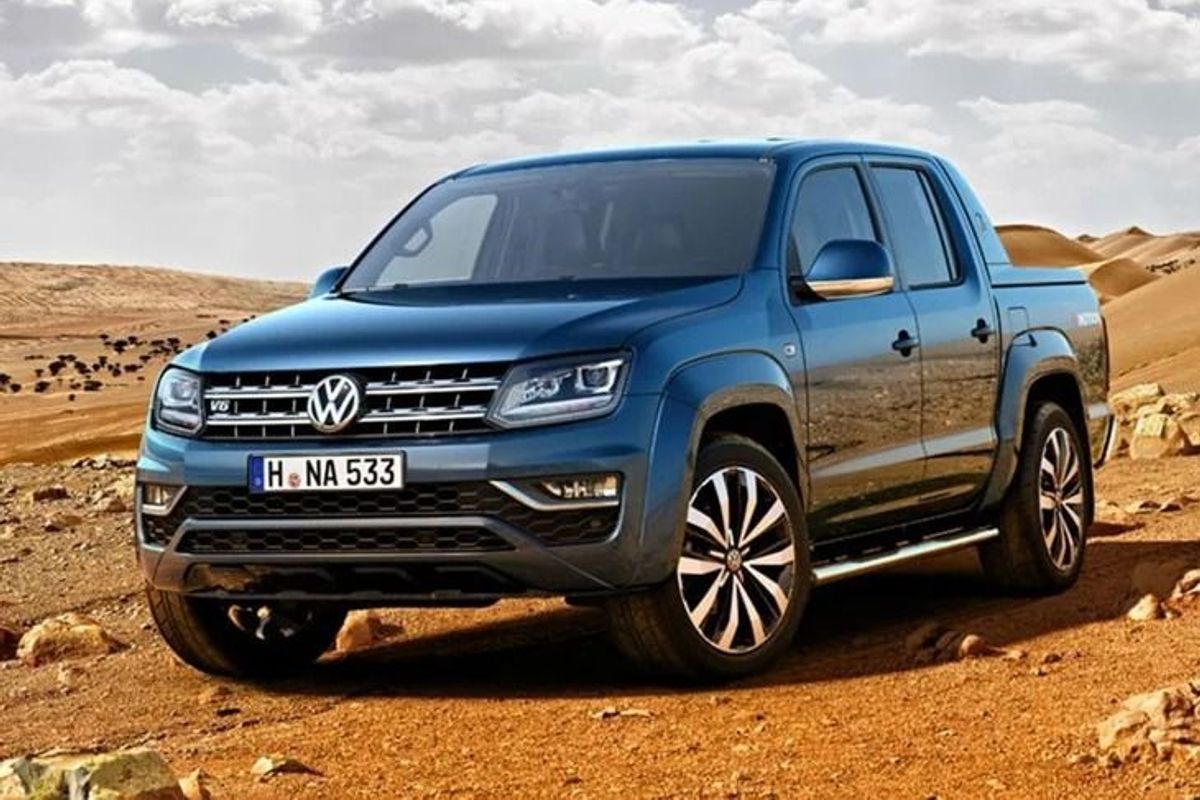
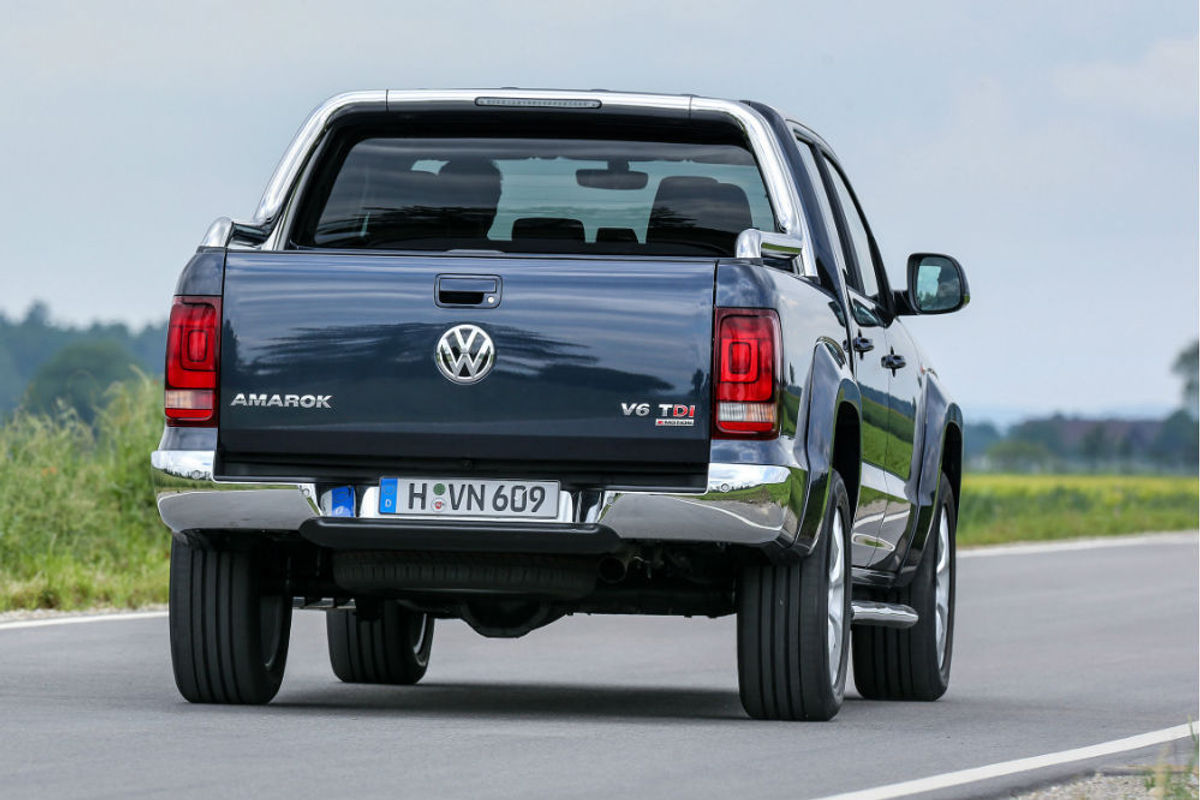
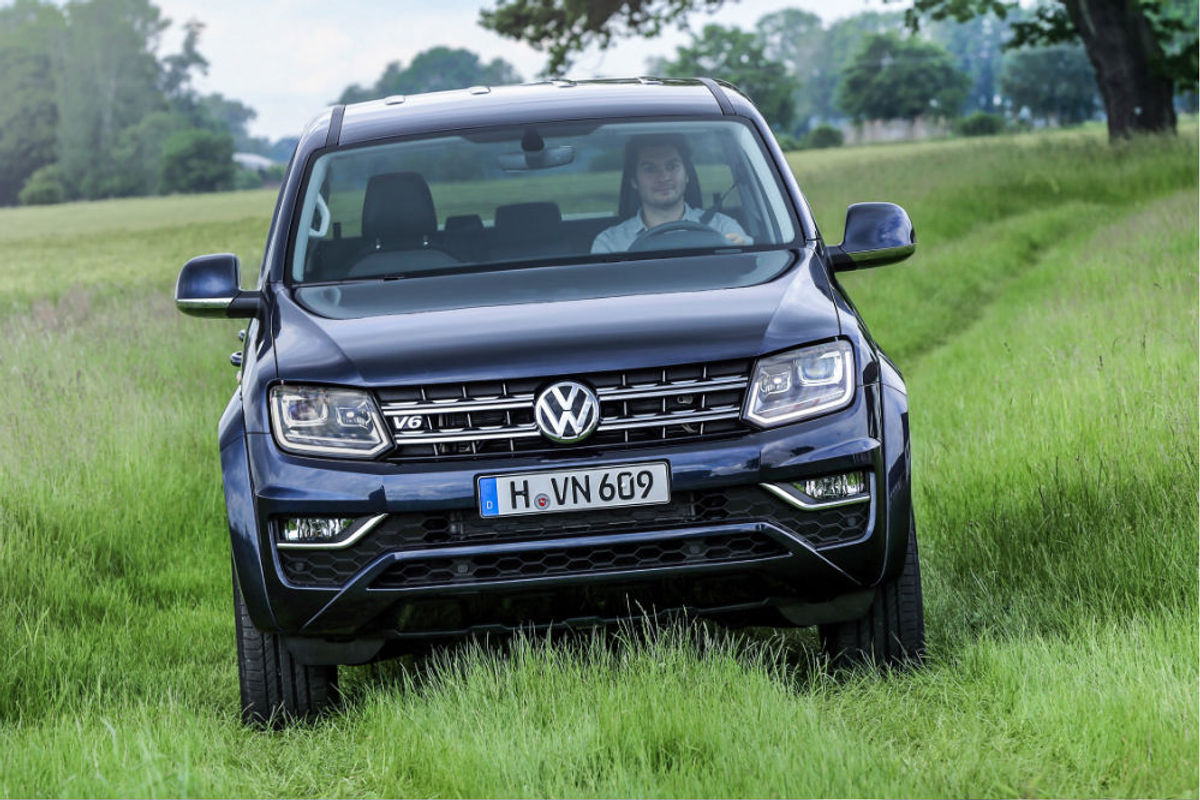
Volkswagen Amarok 3.0 V6 TDI (2017) International First Drive
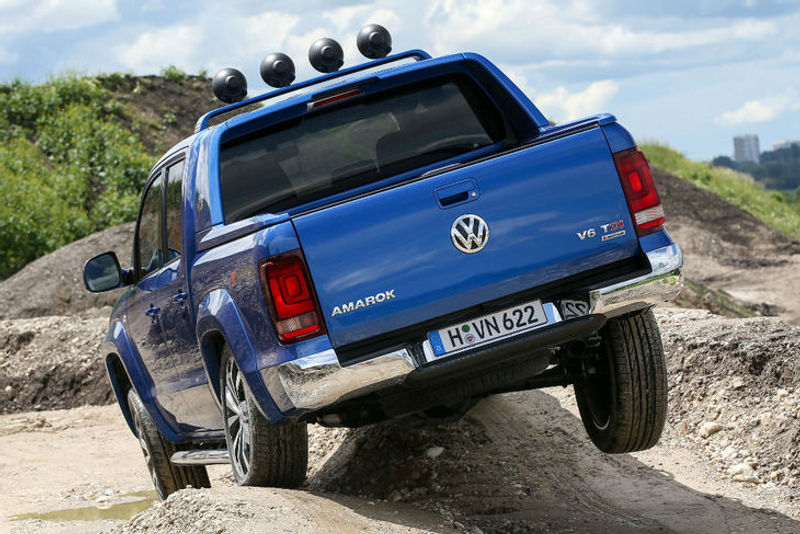
The tightly contested lifestyle bakkie market is set for a shake-up with the facelifted Volkswagen Amarok due for launch in South Africa soon. The flagship version will be powered by a 3.0-litre V6 turbodiesel motor and Volkswagen SA has confirmed that both the 165 kW and 150 kW versions will be offered locally.
By Shane O' Donoghue
The facelifted Volkswagen Amarok range is launching in South Africa soon and given the introductions of the all-new Toyota Hilux, updated Ford Ranger, Fiat Fullback, Isuzu KB facelift, new Mitsubishi Triton and the imminent arrival of the Nissan Navara, a refreshment of the Wolfsburg-based brand's bakkie seems quite timely.
In September 2016, it was confirmed to Cars.co.za that the 3.0-litre unit, which is also found in the Volkswagen Touareg (though tweaked for the Amarok) would be offered with outputs of 150 kW and 500 Nm of torque. Moreover, it's been reported (and confirmed) that the V6 motor will feature an overboost function, which will increase the power and torque outputs by 15 kW and 30 N.m respectively for bursts of up to 10 seconds at a time.
Now, Volkswagen SA has confirmed that the high-powered Amarok 3.0-litre V6 TDI with 165 kW and 550 Nm of torque will also make its way to the local market. The current 2.0-litre turbodiesel and 2.0-litre twin turbodiesel engines are expected to be offered as well.
What's the 165 kW 3.0-litre V6 Amarok like to drive? Take a look at our First Drive report below for all the details!
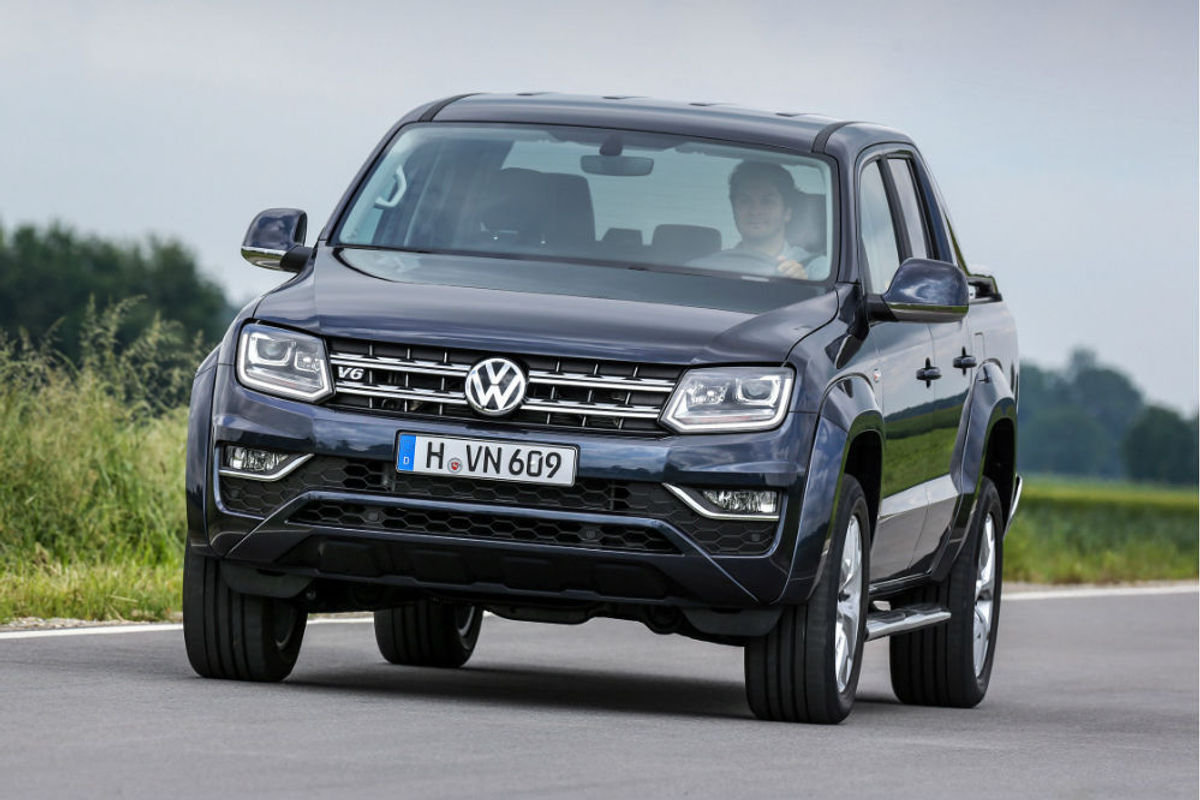
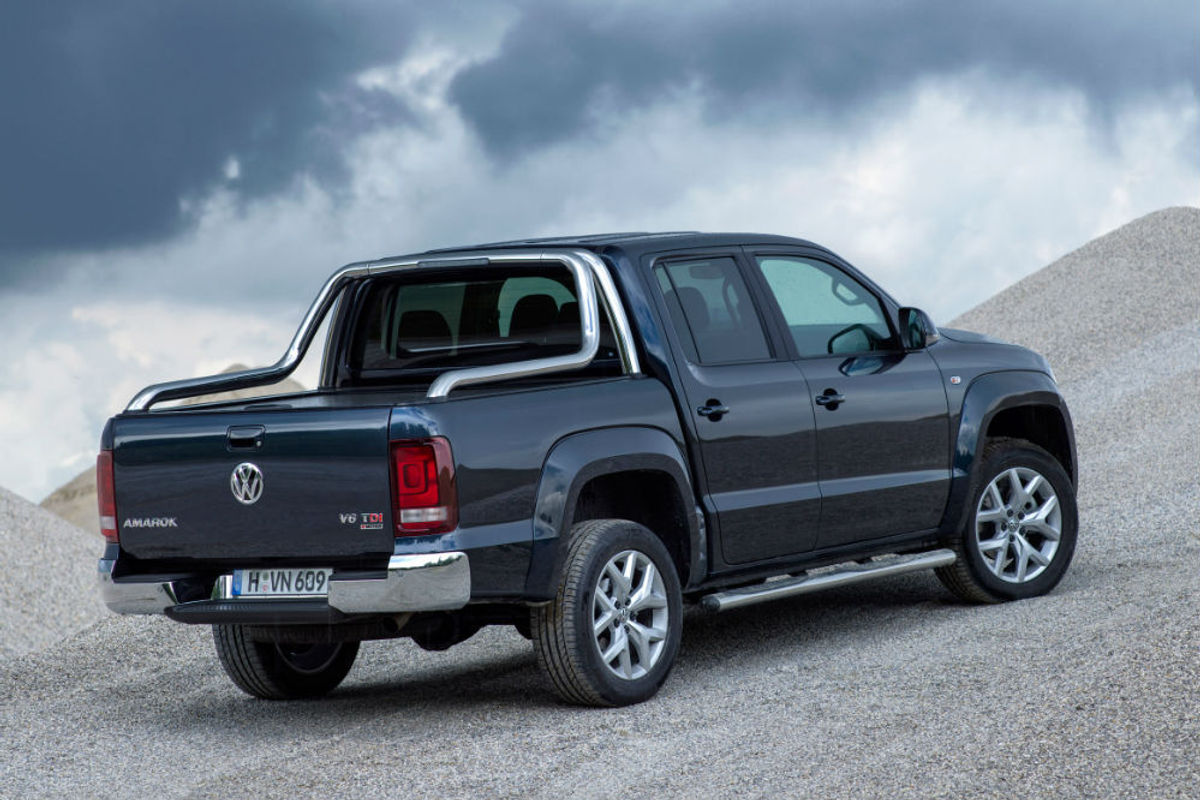
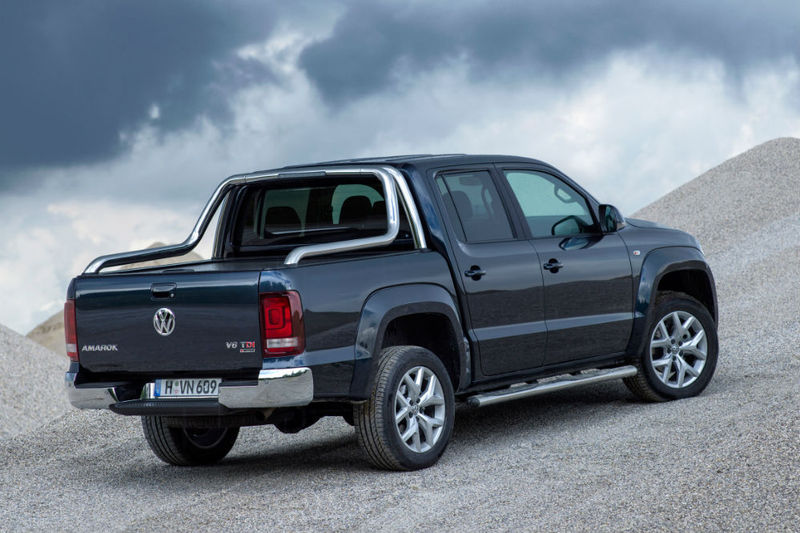
We were afforded an opportunity to test the more powerful 165 kW version of the 3.0-litre V6 turbodiesel derivative in Europe. Aesthetically, there are modest design changes on the outside, including a more stylised front grille and copious use of the new "V6" badge. New colour and wheel options are the biggest news, including 20-inch rims, though obviously you won't be going for those if you plan on using your bakkie off the beaten track.
Will the arrival of the V6-engined Amarok finally appease those who doubt the Volkswagen's off-road credentials?
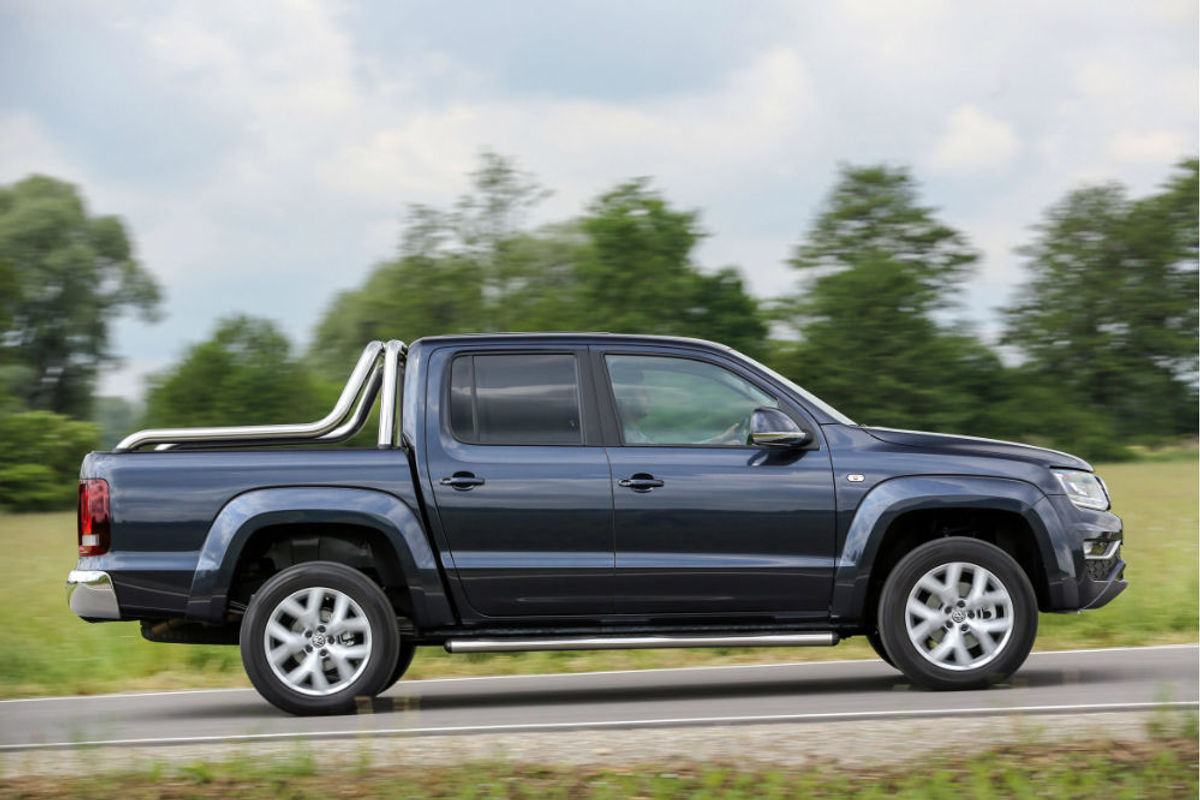
They come as standard on the European launch model (yet to be confirmed for South Africa) called the Amarok Aventura, along with bi-Xenon headlights and LEDs for the daytime running lights, rear licence plate and side sills under the doors. It also features a body-coloured "sports bar" that visually extends the double-cab giving the Amarok an even more distinct look. Volkswagen has also unveiled a distinctive Amarok Canyon special edition, with more sensibly proportioned 17-inch alloy wheels and lots of distinctive black detailing inside and out.
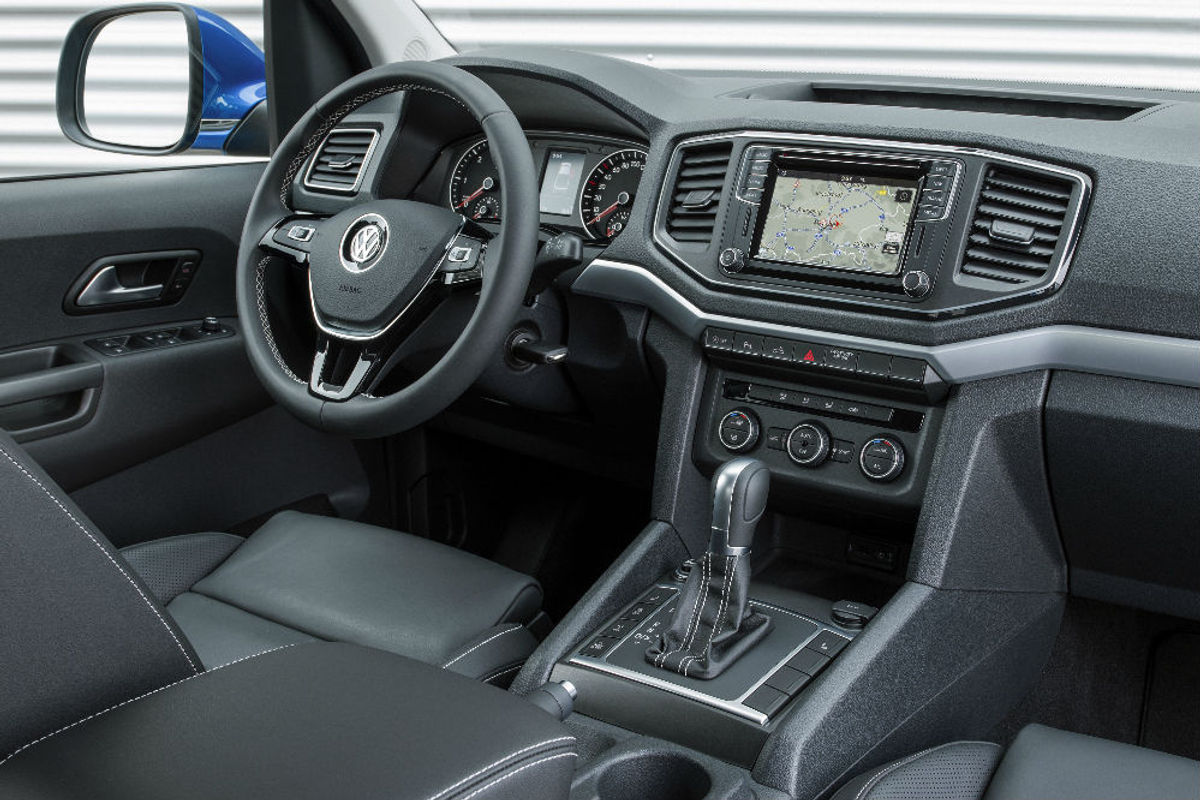
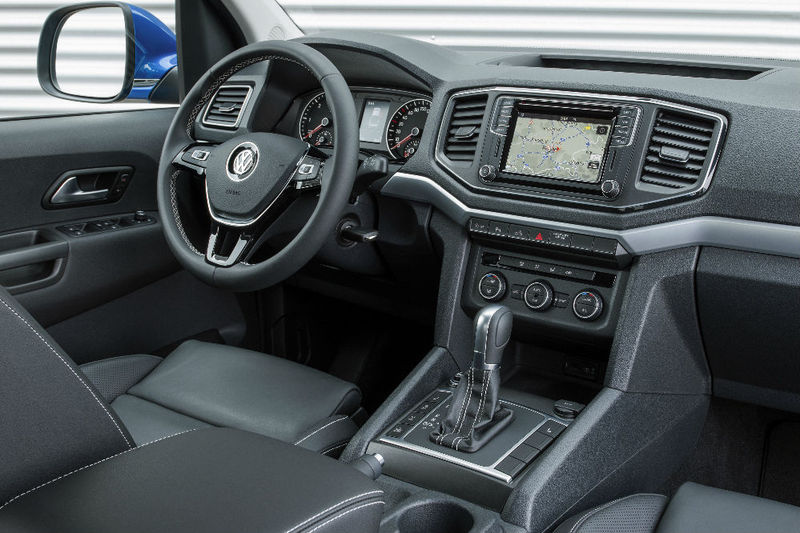
It's inside the cabin where most of the changes for the 2017 model can be seen, as it's closer to the Volkswagen Touareg in design and execution than ever before, lifting the Amarok above the more workmanlike bakkies in the market. Obviously, it will depend on which spec level you opt for, but all versions feature a redesigned dashboard with upgraded infotainment. The highest spec versions even come with a colour 3D display between the speedo and the tacho, complementing a larger touchscreen system in the middle of the car with the latest satnav software. As expected, this system now comes with smartphone integration through a USB connection and enhanced voice activation.
A subtly reshaped fascia and application of metallic-look trim has given the Amarok's cabin quite a lift.
SUV-rivalling interior comfort and build quality
Those in the back are well-catered for, as ever, with plenty of space and wide opening doors to aid access when wearing bulky work clothes, for example. Not that you'll want dirty workmen soiling the Nappa leather upholstery of the top-spec Amaroks. That leather clothes a pair of new 'ergoComfort' seats up front that have 14-way electric adjustment. Apparently, they've been awarded the ‘AGR’ seal of approval by the Healthy Back Campaign (Aktion Gesunder Rücken e.V.) and we certainly found them comfortable in our time in the car. Adding further to comfort is a neat new system that uses the hands-free microphone to amplify the driver's voice through the speakers in the back of the Amarok's cabin so that rear passengers can hear them better at all speeds.
Theoretically, the driver should have less shouting to do in any case, as a V6 engine is always smoother and more refined than an inline-four.
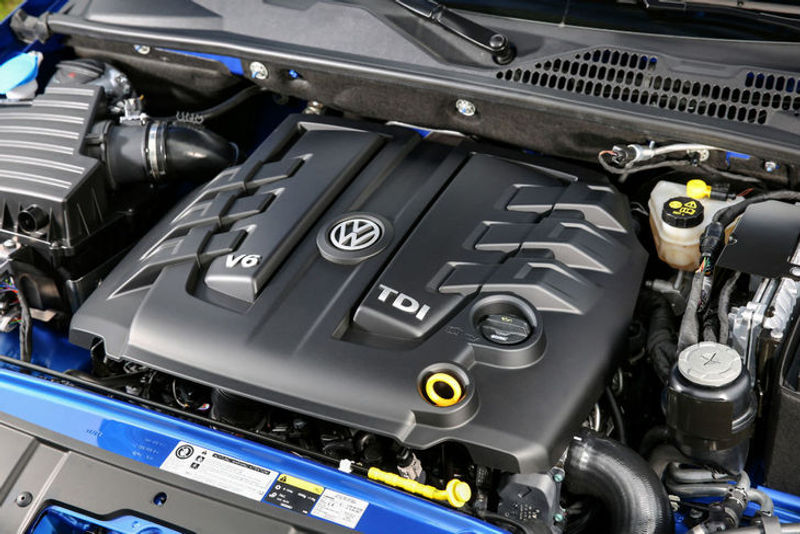
Sourced from the Volkswagen Group, the tried-and-tested V6 turbodiesel is smoother than its inline-4 siblings.
In the case of the 165 kW version we drove, the peak power output is far above average in the bakkie segment, but it's the 550 Nm of torque that drivers will find most useful. That's some 130 Nm more than the previous 2.0-litre could muster and what's more, it's available from just 1 500 rpm. The delivery of that performance is far more satisfying than before as well, and while Volkswagen quotes a top speed of 193 kph and a useful 0-100kph time of 7.9 seconds, it's the increased towing capability that'll catch the eye of the lifestyle set (frequent towers) – it can haul up to 3 500 kg depending on specification.
The larger capacity and increased torque have also allowed Volkswagen to tweak the transmissions. A six-speed manual is standard, with regular rear-wheel drive or selectable four-wheel drive and there's a smooth 8-speed automatic on the options list with 4Motion permanent 4-wheel drive and a Torsen centre differential to apportion the engine output – with paddle shifts on the multifunction steering wheel if you're so inclined.
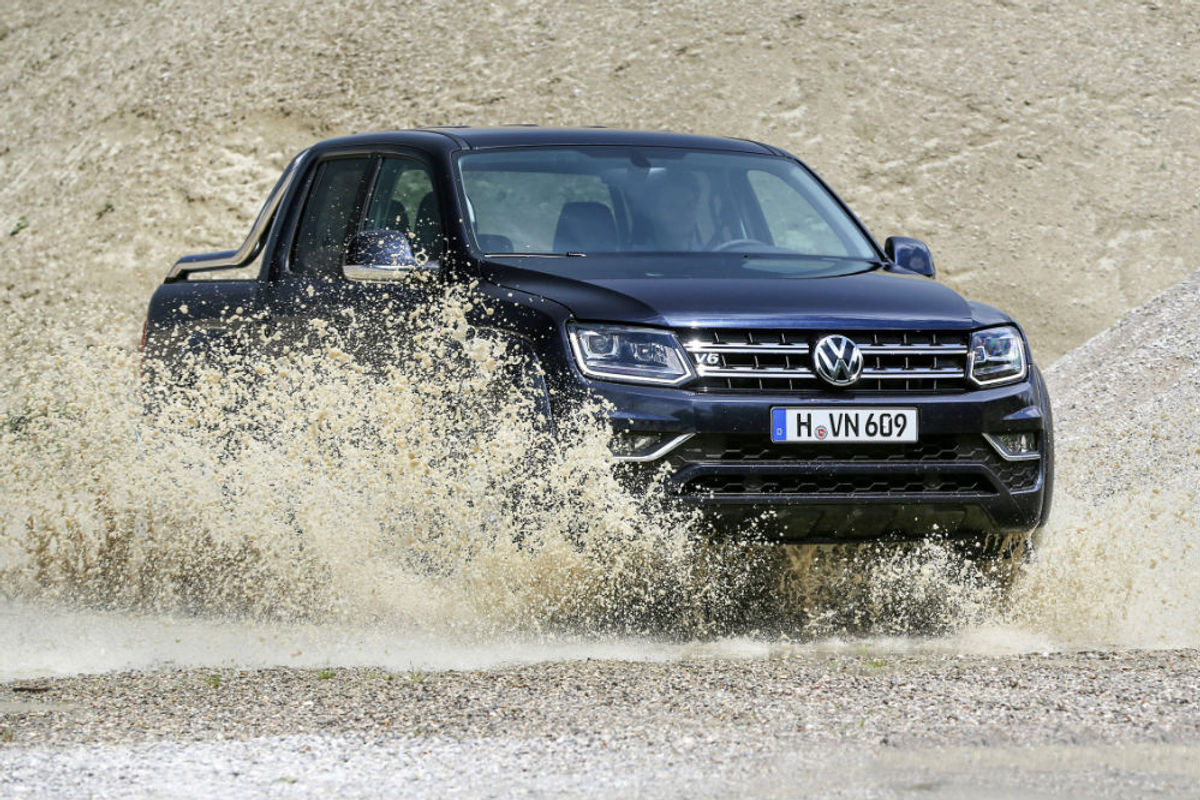
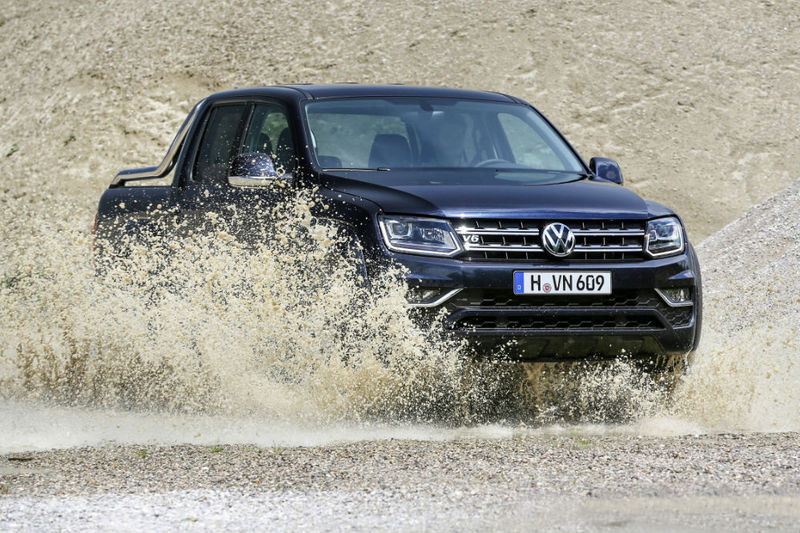
Volkswagen was eager to demonstrate that its V6 turbodiesel-engined Amarok sports good axle articulation.
Both transmissions have higher top gears to reduce fuel consumption and noise levels on the highway. The 165kW model, fitted with the automatic gearbox, emits 199g/km carbon dioxide and uses 7.6 litres/100 km on the combined cycle. We tested the auto and it's silky smooth, helping give the Amarok a grown up SUV feel rather than that of a working bakkie.
Nonetheless, it didn't shy away from a challenging off-road course, even on road-biased tyres. The bigger engine made meting out the power smoothly a cinch, which is further helped by the Amarok's off-road mode, as that alters the throttle calibration. The hill descent control function also kicks in automatically to control steep descents while you steer.
To that end, there's a new Servotronic power steering system too, which has just the right weighting and directness for the Amarok, making it feel wieldy despite the large dimensions. The only section we had to put effort into was that involving wet logs, as the road tyres were caked in mud at this stage and struggled to find purchase.
Back on the road, the new steering system helps the Amarok give the impression it's more of a family SUV than an off-roading bakkie.
The updated Amarok, especially in 3.0 V6 TDI guise, feels more like an SUV than a bakkie.
Summary
The Amarok remains one of the most refined vehicles in the class and, at least in Europe, Volkswagen admits that it's seeing growth from the leisure market rather than commercial buyers for its offering. Cleverly, that new V6 engine appeals to both sides and goes a long way in appeasing those who have believed (especially in the very traditionalist off-roading fraternity) that the 2.0-litre motor precludes the Volkswagen from being a robust lifestyle vehicle.
Nonetheless, until Mercedes-Benz avails its eagerly awaited double-cab offering, no other bakkie comes with such an alluring badge on the bonnet, but thankfully the Amarok does not only trade on its just image. The new engine is smoother, more powerful, torquier and more efficient more of the time than the plucky 4-cylinder turbodiesel. As we said at the start, bigger really is better. Unfortunately, the V6 TDI derivative(s) will only be added to the South African market later in 2017, in other words, after the facelifted range has been introduced. Will it be worth the wait? Depending on price (of course), we bet it will.
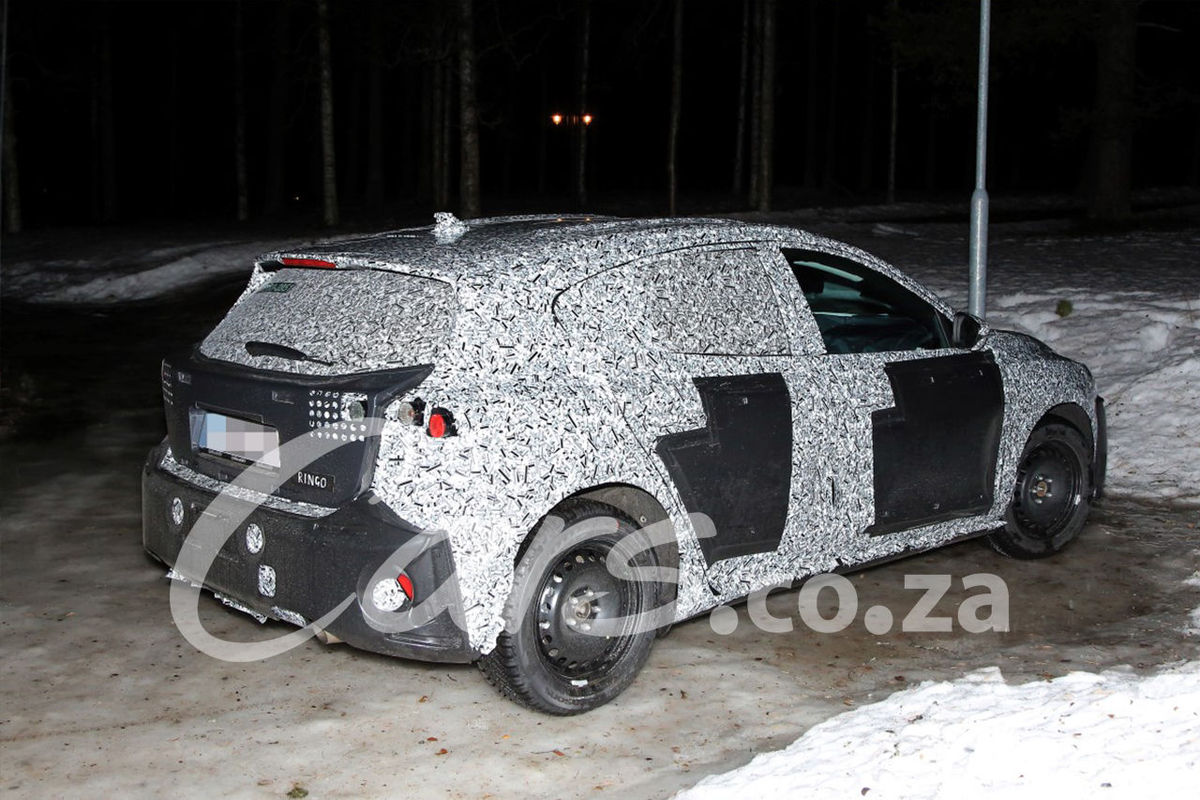
Our spy photographers have captured the first images of the new Ford Focus undergoing testing in the Arctic Circle. Get the details here…
Picture credit: S. Baldauf/SB-Medien
The Ford Focus is a popular choice in the C-segment hatchback market and latest 3rd-generation Focus has sold particularly well locally against rivals such as the Volkswagen Golf, Opel Astra, Mazda3 and Hyundai i30, to name a few. The Focus’ success can be attributed to its appealing design and the inclusion of Ford’s acclaimed 1.0-litre and 1.5-litre EcoBoost engines in the local range.
The new, 4th-generation Ford Focus is currently in development and our German spy photographers have captured the first images of a heavily camouflaged Focus prototype undergoing cold weather testing in the Arctic Circle. Exact details of the new Focus are quite difficult to discern from the images, but a new window line at rear door design is evident; the newcomer is also likely to feature a rear spoiler above the rear 'screen for a sportier look. The exterior design of the new Focus is expected to be similar to that of the new Ford Fiesta.
The interior of this Focus prototype is well hidden, but given that the current Focus’ interior is quite dated already, you can expect Ford to upgrade the interior substantially for the next-generation Focus. The new Ford Focus will likely be shown later this year with market launch expected in 2018.
We will update you as more information becomes available.
Fiat Fullback Double-Cab 2.5 Di-D 4×4 LX (2017) Review
While the allure of competing in the South African double-cab market must be strong because of the (potential) big volumes, cracking this segment is tougher than you may think. Fiat is attempting to do just that with its Fullback pick-up. We review the flagship model to see whether it merits your consideration.
We like: Feels well-built, proven and powerful engine, spacious cabin, good looks We don’t like: Lacks a comprehensive safety package, not as refined as biggest rivals, service network
Alternatives:
Hilux looms large: We are big fans of the latest Hilux, particularly because of their refined, powerful and efficient new turbodiesel engines. Recently Toyota slightly upped the spec of its 2.4-litre SRX derivative, making it even more appealing by adding the wider body and alloy wheels. It is priced at exactly the same point as the Fiat… which is a rather large hurdle to overcome given the Toyota's reputation and overall excellence. It is priced at R468 800 (February 2017).
Ranger options: Ford's massively popular Ranger is another major rival, but at the Fiat's price level, only the less powerful 2.2-litre engine is really an option. The Ranger can be had for less money (XL), or for around R40 000 more (XLS). The XLS more closely matches the specification of the Fullback. In reality, the Fullback, in this flagship guise, appears well-priced against the Ranger – excluding considerations such as service network footprint etc.
Don't forget Isuzu: It is also worth looking at the recently facelifted Isuzu KB. Sure, the 2.5-litre engine powering the similarly priced KB250 D-TEQ LX is significantly down on power, but if that's not a concern, what you have here is a solid all-rounder that's unlikely to go wrong and which is less car-like than some more modern rivals – so you won't mind as much using it for work.
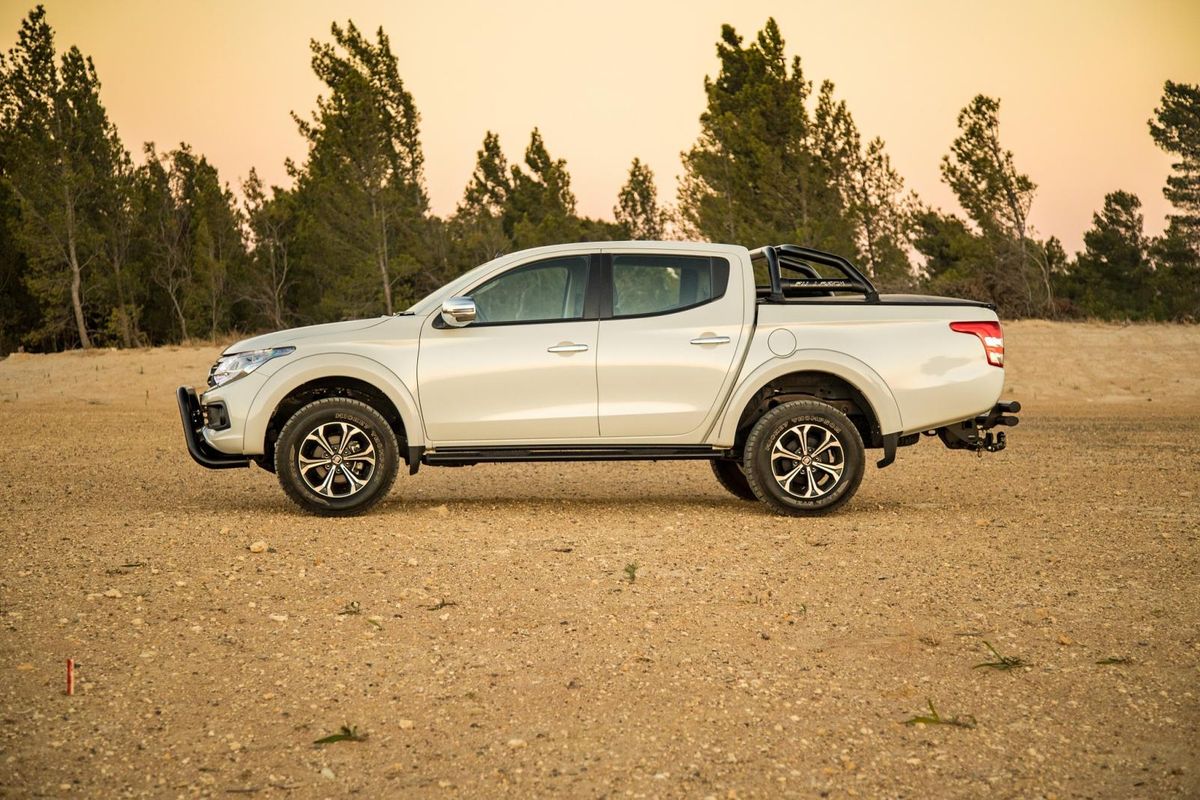
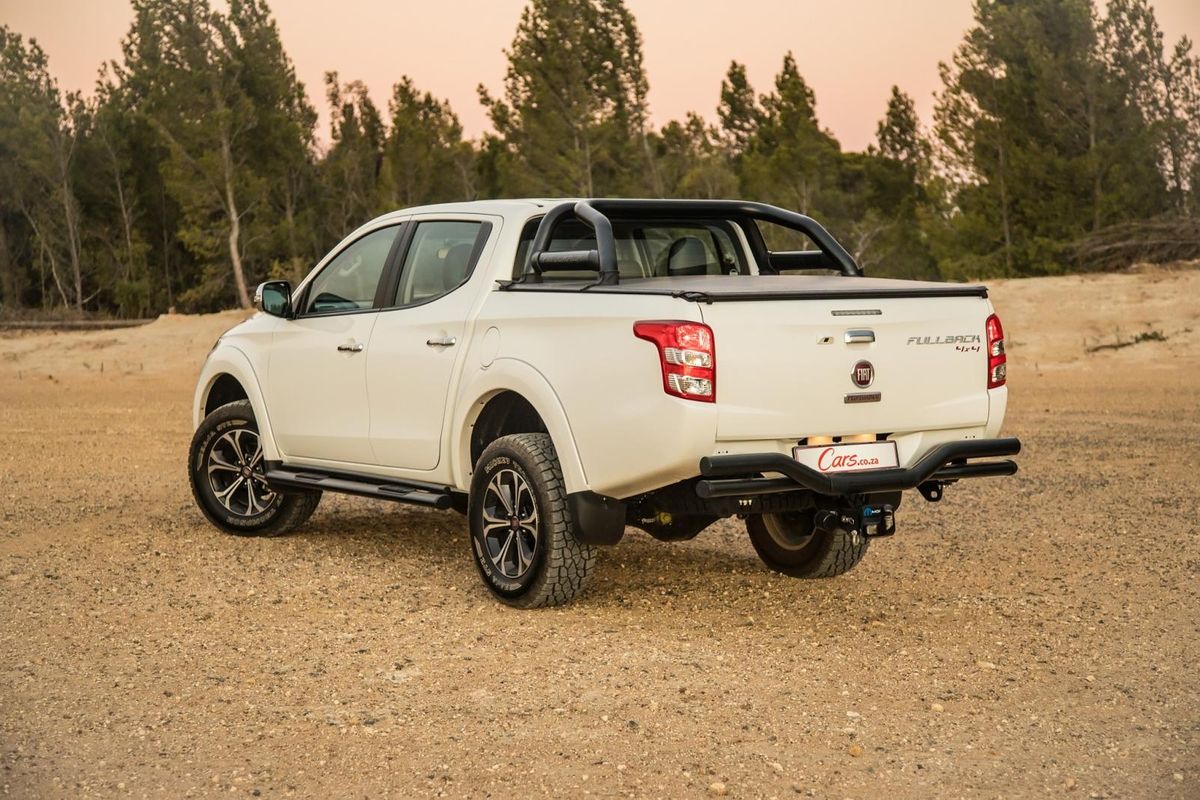
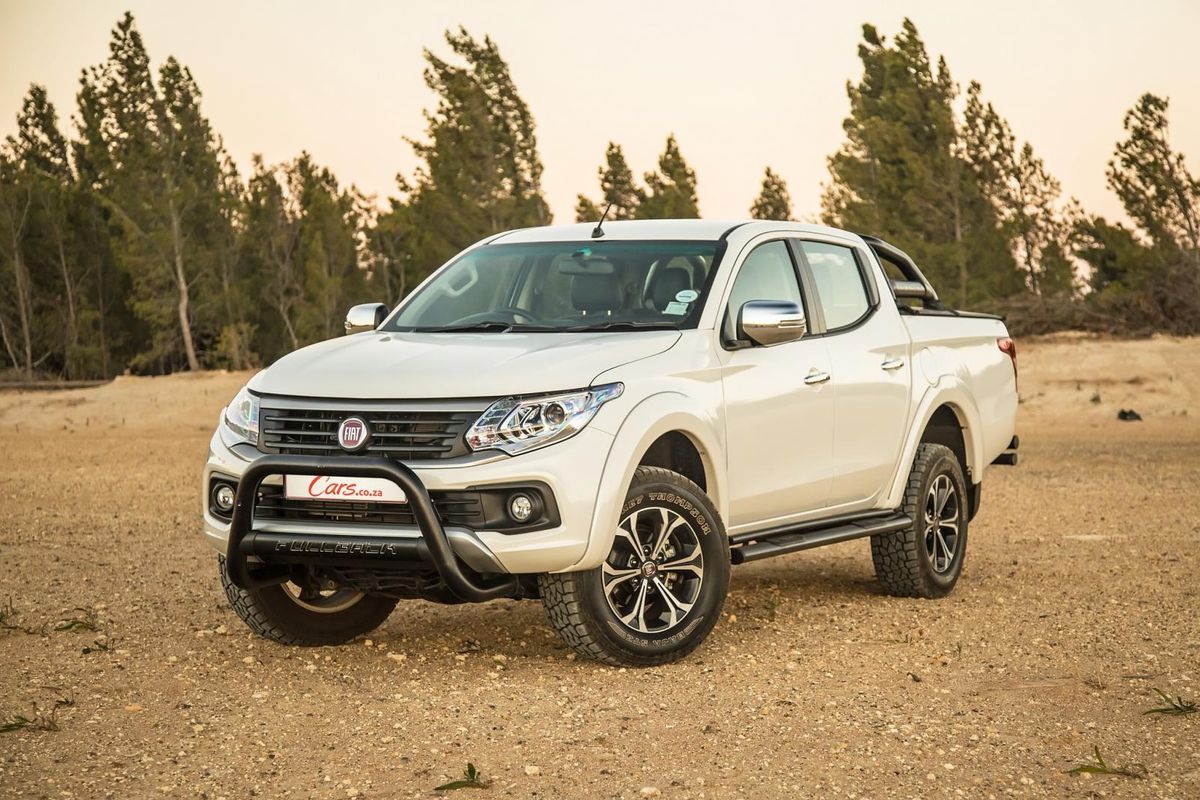
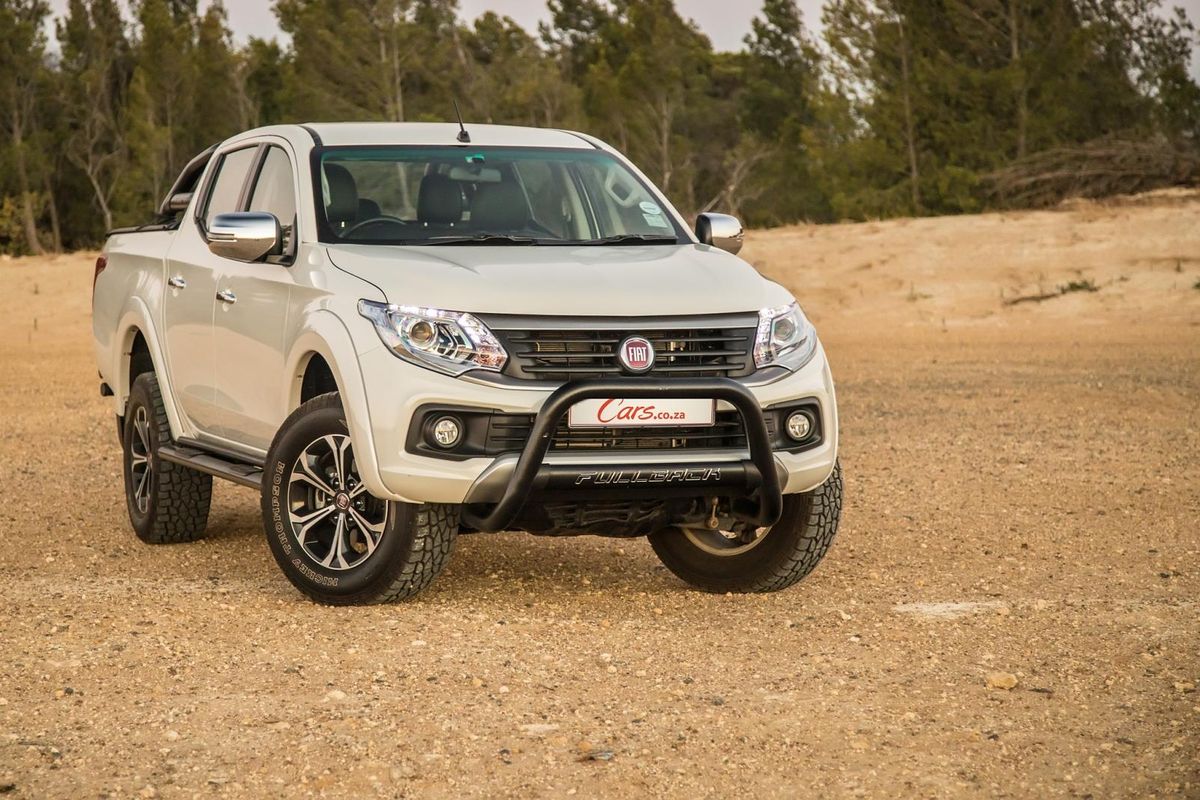
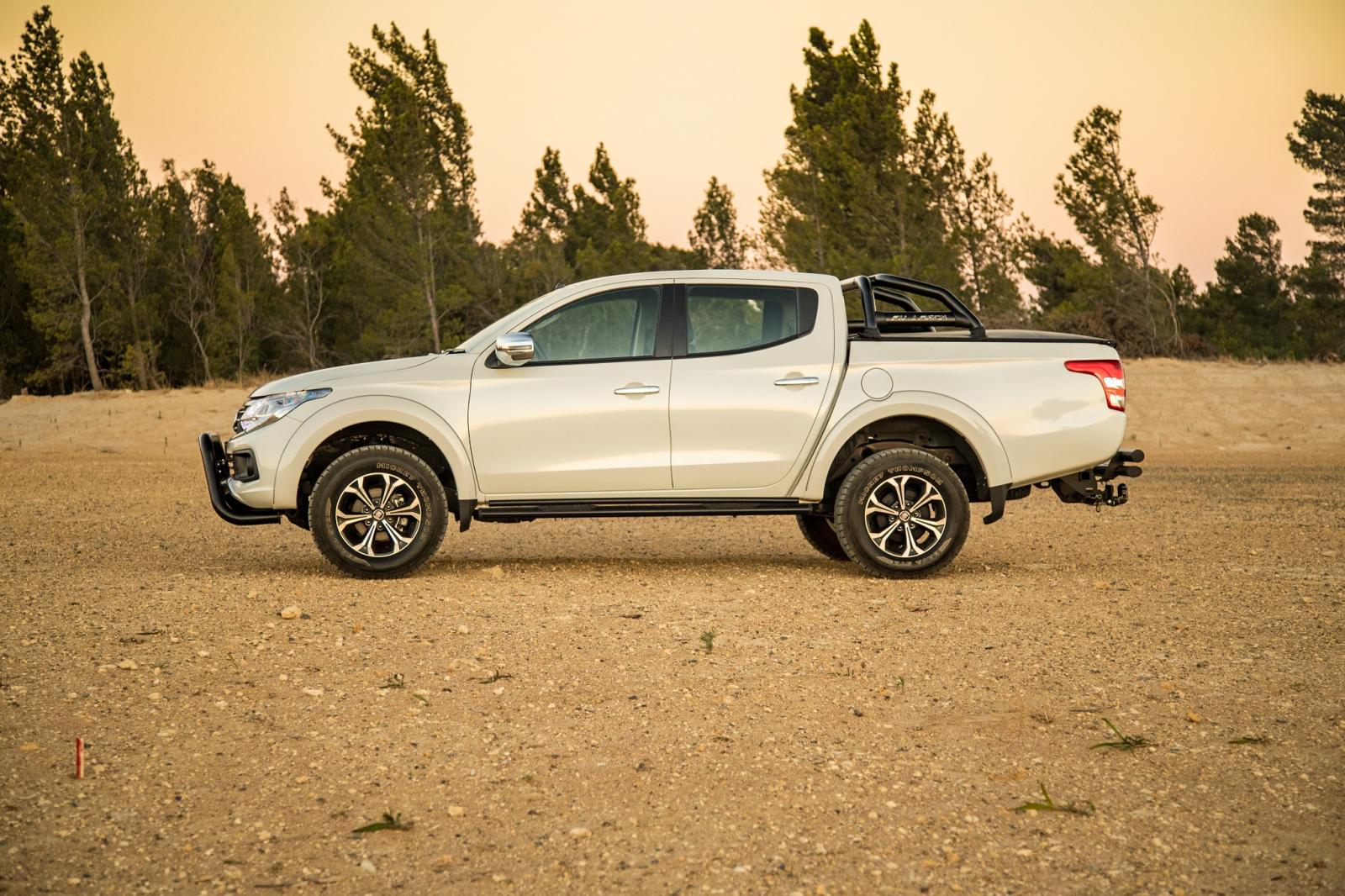
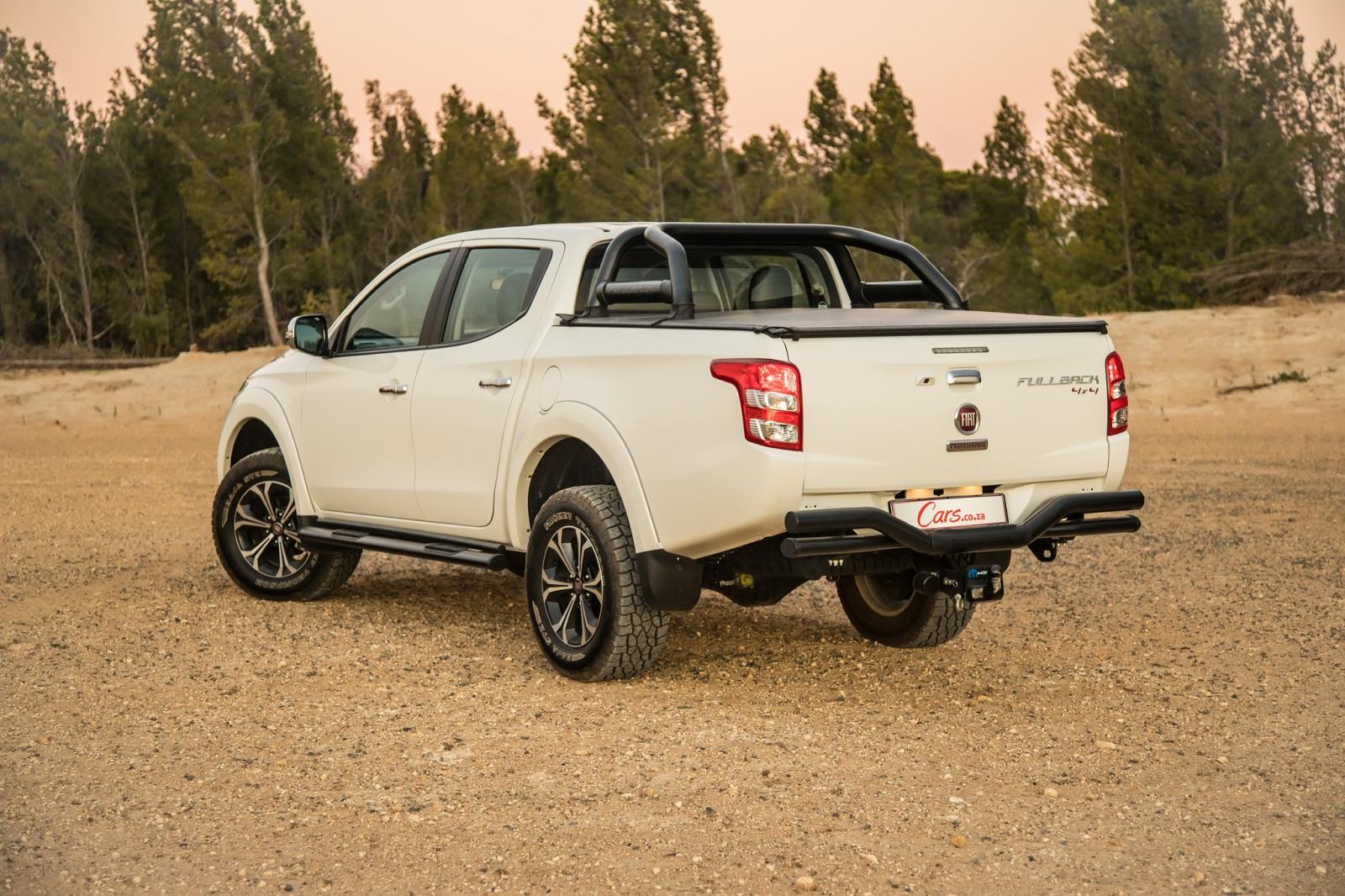
The flagship Fullback features attractive, macho looks further enhanced by a range of Mopar-branded accessories.
Globally the leisure pick-up market has been identified as a segment of expansion, with the likes of not only Fiat, but also Renault, Hyundai and Mercedes-Benz preparing to launch models. In those global markets, where there is little bakkie legacy, the playing field will be fairer to the newcomers, but in South Africa the Fullback (and others) face a very uphill battle. The Fiat brand doesn't have a history in South Africa for competing in the ultra-competitive 1-tonne pick-up segment, but a Fiat-branded bakkie is also not new locally – remember the smaller Strada? With the Fullback, however, Fiat is taking on South African darlings such as the Toyota Hilux, Ford Ranger and Isuzu KB – a colossal challenge if ever there was one! As a product, however, we found the Fullback rather more impressive than you'd probably anticipated…
How does it fare in terms of…
Design & Packaging
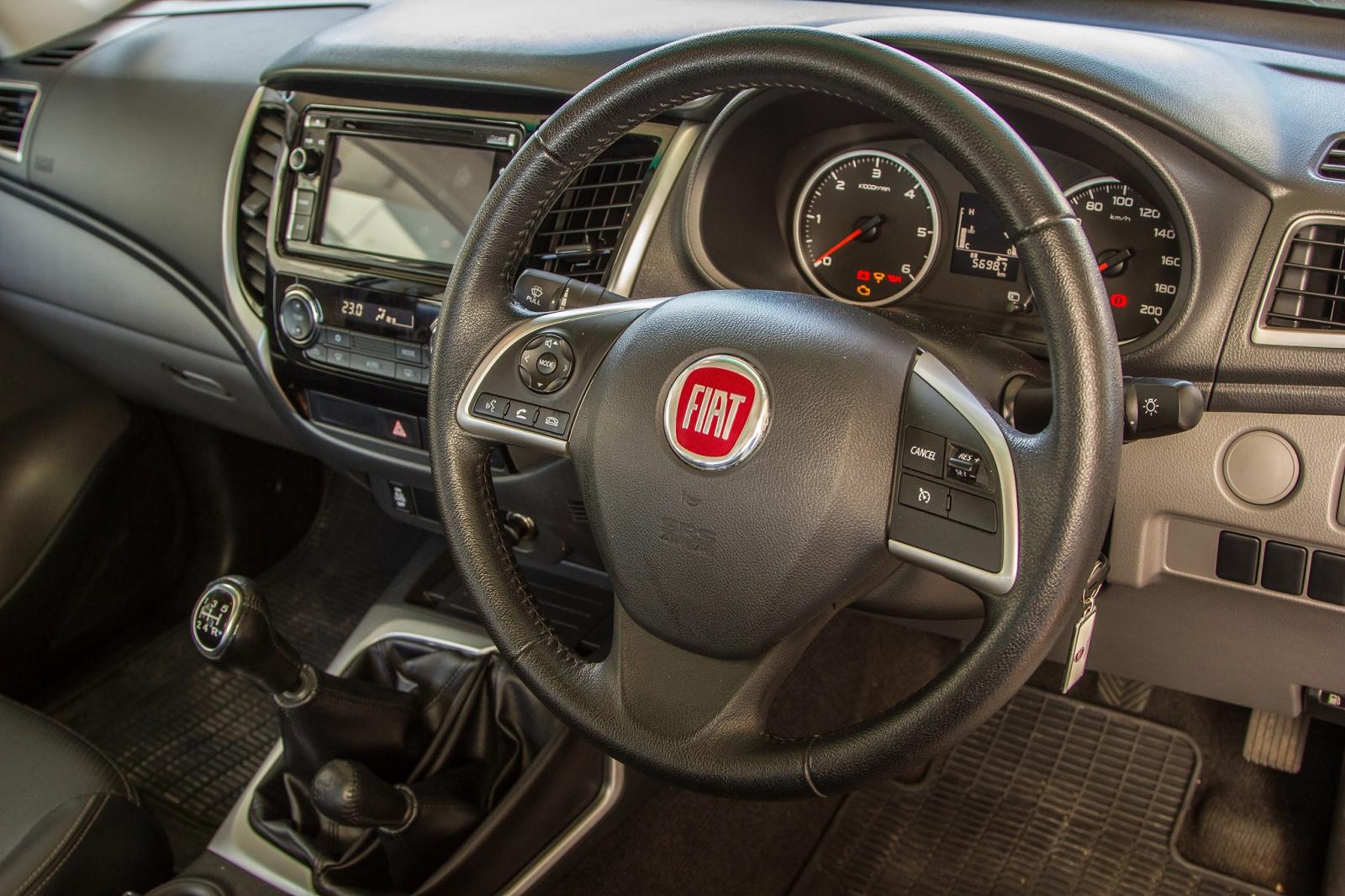
Cabin is well-made but not quite as upmarket in looks and feel as rivals from Toyota, Ford and VW.
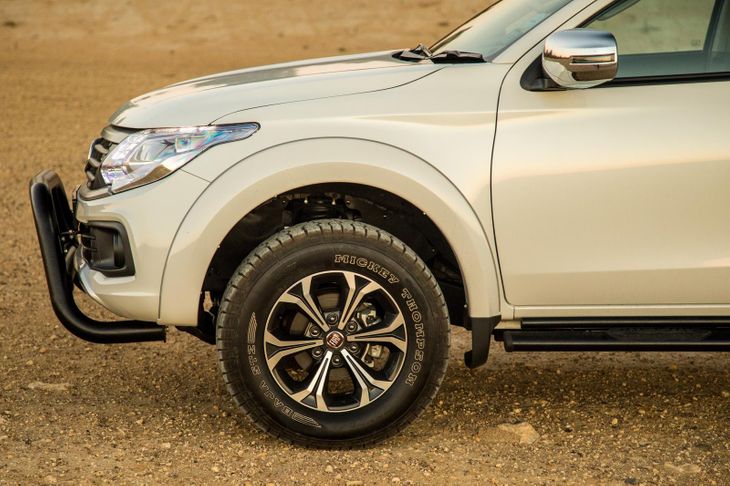
The Fiat Fullback is based on the new-generation Mitsubishi Triton and, as such, looks rather similar to its Japanese "parent". As standard, it rides on attractive 17-inch dual-tone alloy wheels and at the front there are bi-xenon headlamps, LEDs and, of course, a different grille treatment to what you'd get on the Mitsubishi. Our test unit, however, featured a number of the company's approved Mopar-branded accessories, including a nudge bar (R3 284), "roll/sports bar" (R4 355), rear-step (R3 598) and side steps (R3 445). Riding on rugged-looking Mickey Thompson Baja STZ tyres, the Fullback got a thumbs-up from the team (and some on-lookers) in terms of its appearance.
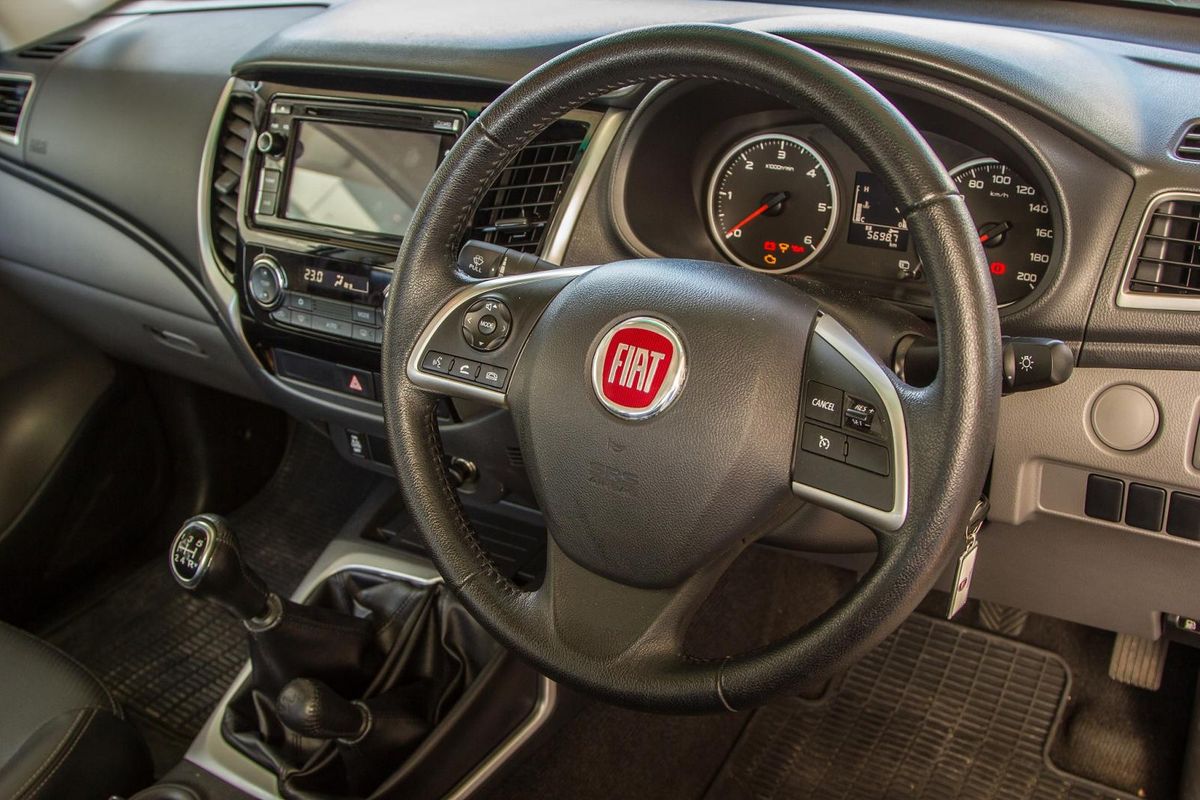
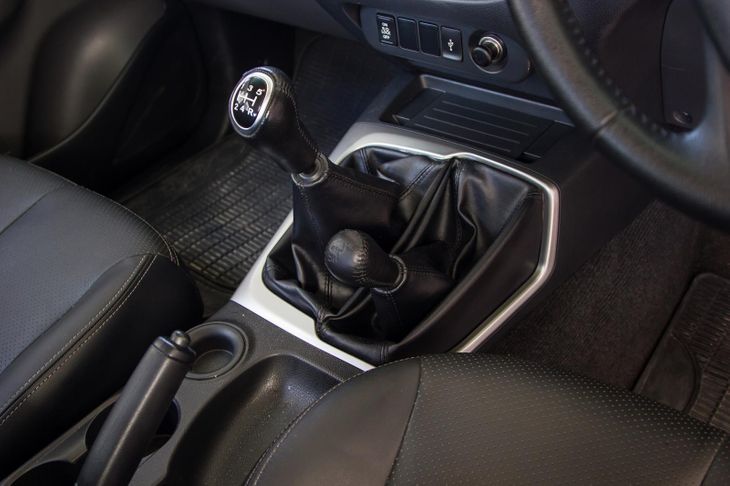
More importantly, however, there is a sense of solidity and good build quality that is reinforced by the solid-feeling fittings, doors, tailgate etc. This perception of good build is reinforced further in the cabin, but it's not quite as car-like in appearance (or to the touch) as rival products from Ford and Toyota. The surfaces are generally a bit shinier and harder, pointing towards a vehicle that was conceived to still do a fair degree of hard work. Worth mentioning is the slightly old-fashioned "second gearlever" to operate the four-wheel drive transfer case with. Most rivals have moved to a more modern push-button system.
Secondary lever used to operate the four-wheel drive transfer case – slightly old-fashioned.
Nevertheless, the driving position is good, with the steering wheel offering generous rake and reach adjustment, while the driver's seat features electric adjustment (including height). Neither of these items can be taken for granted in this segment, and especially at this price. In the rear, the vehicle's lengthy wheelbase translates into good occupant space. It's a pity Fiat (or Mitsubishi) didn't include grab handles at the rear, because the Fullback stands tall – less mobile passengers or children may struggle to get into the back. Once seated, there is a fold-down centre armrest for added convenience.
With regards to its more traditional bakkie talents, this Fullback is claimed to offer a payload rating of 1 000 kg on its 1 520 mm-long loadbed (protective coating applied as standard). It can also tow an up-to-3 000 kg (braked) trailer.
Convenience and Comfort Features
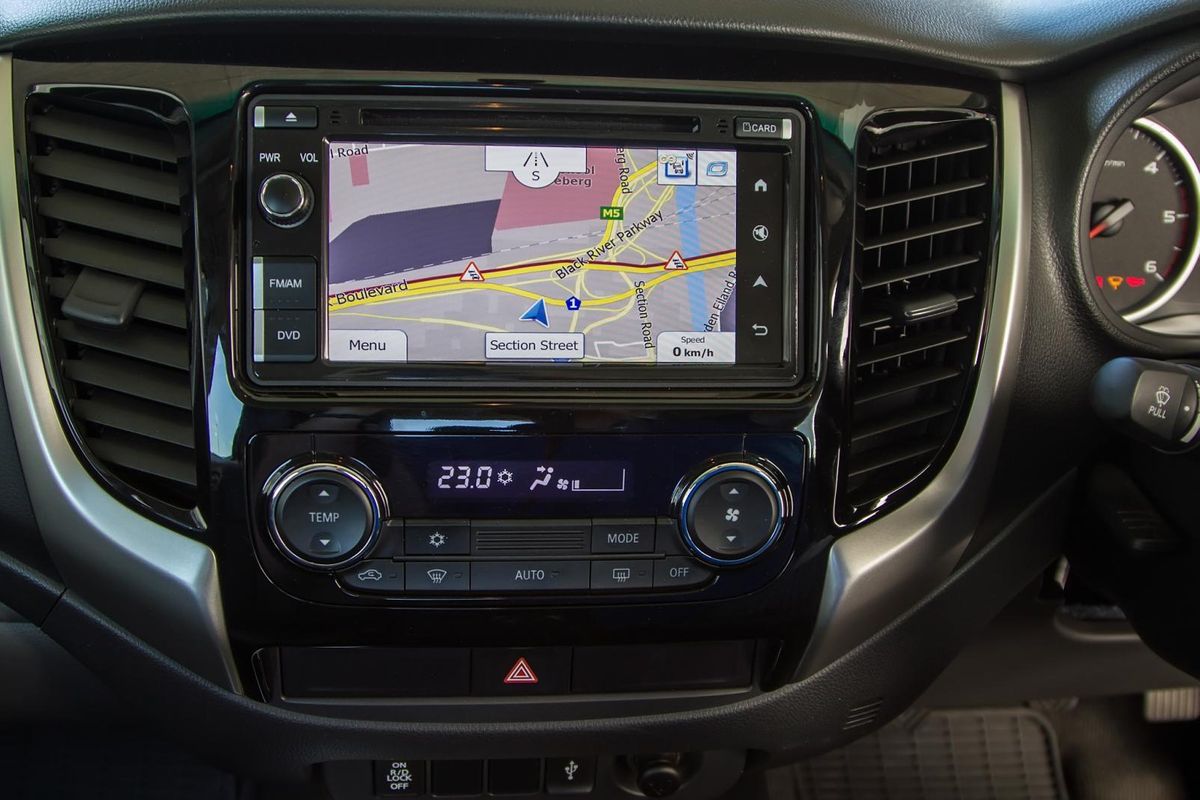
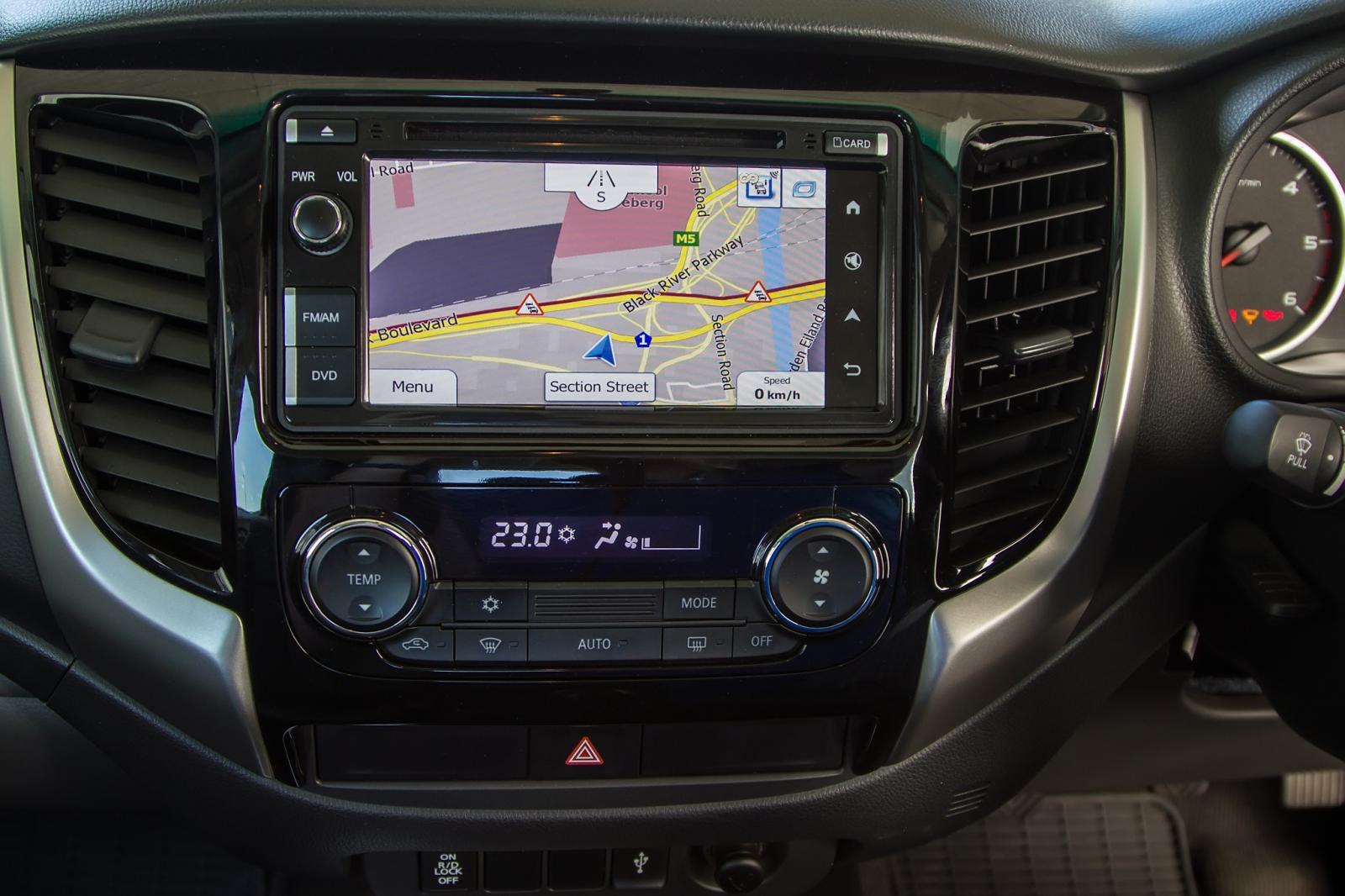
The navigation-capable info-tainment system featured here is a R11 394 option.
Though the Fullback's cabin appears "traditional bakkie" in some respects, there are a number of modern conveniences that add to its lifestyle appeal and general comfort levels. Digital climate control is standard, as are cruise control and the previously-mentioned electrically adjustable driver seat. You also get leather upholstery, which is really a must for a vehicle that's probably going to be treated a fair degree rougher than most family cars.
A highlight in our test unit was the optional info-tainment system, which is priced at R11 394. It's a comprehensive piece of kit with smart graphics and satellite navigation. As standard you still get a rear-view camera display as well as USB and Bluetooth support, so it's really up to you to figure out how much having on-board navigation is worth when purchasing your Fullback.
Performance and Efficiency
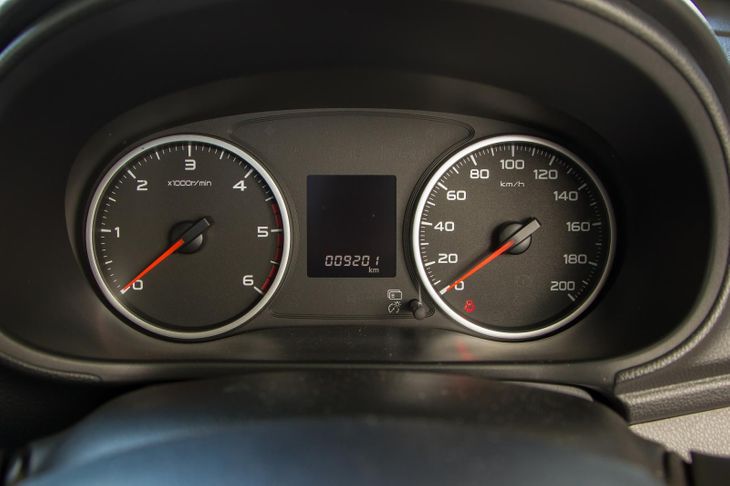
Instrumentation is simple but effective enough. Engine revs surprisingly eagerly.
This flagship Fullback is powered by Mitsubishi's proven 2.5-litre turbodiesel engine that delivers a still-strong 131 kW and 400 Nm of torque. These figures are very much competitive with the rival Toyota and Ford products sold at this price level. As an aside, it is interesting to note that Mitsubishi's decision to delay the introduction of its new Triton was because it wanted to move to its new 2.4-litre engine, which is reportedly significantly more refined – we will report on this soon. You may consequently expect the 2.5-litre to be a bit rough and unimpressive, but we found it has actually aged well. It still feels eager to rev and there's enough shove to get a move on. It's only really at the upper edges of its rev range that it starts to show its age, and it is quite a noisy mill – a sixth gear would've been appreciated for more refined cruising.
The engine is mated with a 5-speed manual gearbox that offers a precise, mechanical shift action that also feels reassuringly robust. In short, it feels like a Mitsubishi… ready for years of off-road action.
In terms of fuel economy, Fiat claims a combined cycle consumption figure of 7.7 L/100 km, and during our test term with the vehicle we achieved an average of just over 9 L/100 km, which is very acceptable for a vehicle of this type which did a lot of short stints around town, too.
Ride and Handling
Good ground clearance contribute to a confident off-roader. Ride quite firm on tar.
In many ways the Fullback drives like a bakkie from a generation ago. Whereas many of its rivals these days appear to emphasise the leisure and comfort aspects of the modern bakkie experience, the Fullback's firmer ride, heavier steering and more mechanical gearshift make it feel a bit old-school on the road. This is not necessarily a negative for everyone, however. It "feels" like it won't mind carrying a heavy load and traversing bad terrain. And in reality, with all seats taken and some leisure equipment on the back, the Fullback felt more than comfy enough to play the family car role with conviction.
Of some concern, however, is that unlike most of its rivals, the Fullback doesn't offer an electronic stability system as standard, in addition to its ABS- and EBD-equipped brakes. And while we're on the subject of safety… it is somewhat disappointing to note the inclusion of only 2 airbags (driver and front passenger) in this model.
Head off-road and the Fullback is as good as you'd expect it to be given its Mitsubishi origins. The ground clearance (claimed 205 mm) is nowhere near class best, but the approach and departure angles are good. The torque delivery is impressive, too, so in most off-road conditions (in 4L) it happily just canters along with almost zero throttle input. If you're not in 4L, then it may be a bit trickier to apply the right amount of throttle for the prevailing conditions given some turbolag prior to to around 1 500 rpm. A diff-lock button is located on the facia, ahead of the gearlever, to further assist with traction in challenging conditions.
Pricing & Warranty
The Fiat Fullback Double-Cab 2.5 Di-D 4×4 LX sells for R468 900 (at the time of testing, February 2017) and comes backed by Fiat's 3-year/100 000 km warranty and an impressive 5-year/100 000 km service plan.
Verdict
Attractive, well-built and offering good features, the Fullback ticks many boxes.
The Fullback is one of those vehicles that arguably won't get the sales support it warrants, simply because of brand footprint and a lack of legacy in the market segment. What we have here is a very good bakkie, and so it should be, given it was designed and is built by a company that has done this type of thing for a very long time (Mitsubishi). The Fullback feels solid, drives well, offers a high-value specification level given the price and strikes a good compromise between being a typical hard-working bakkie, and a modern leisure tool. So, what's the problem?
Well, Toyota's very refined, recently upgraded Hilux 2.4 GD-6 SRX is as tough an opponent as you're likely to find, and that product is backed by a brand that has an almost fanatical foothold in the bakkie market. It's going to be a long, hard slog for Fiat to gain momentum in this segment, but with the Fullback at least we're sure that any lack of sales cannot be blamed on the product.
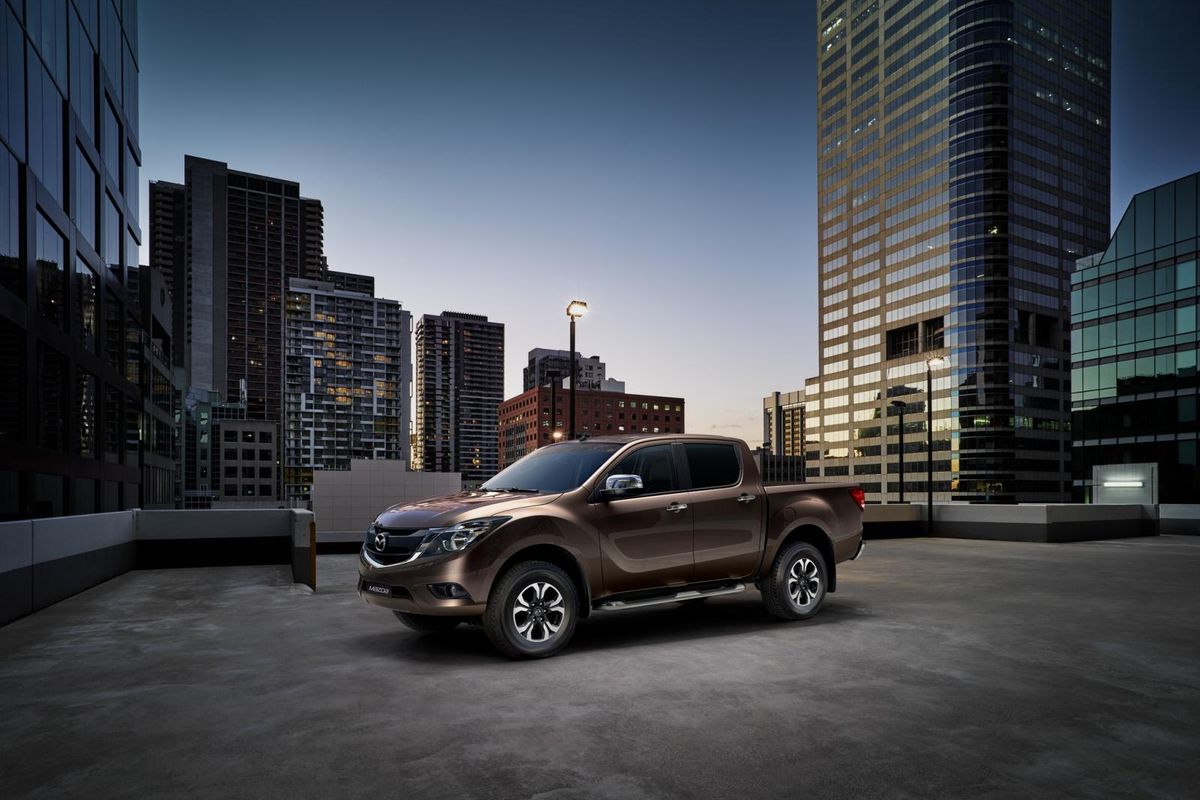
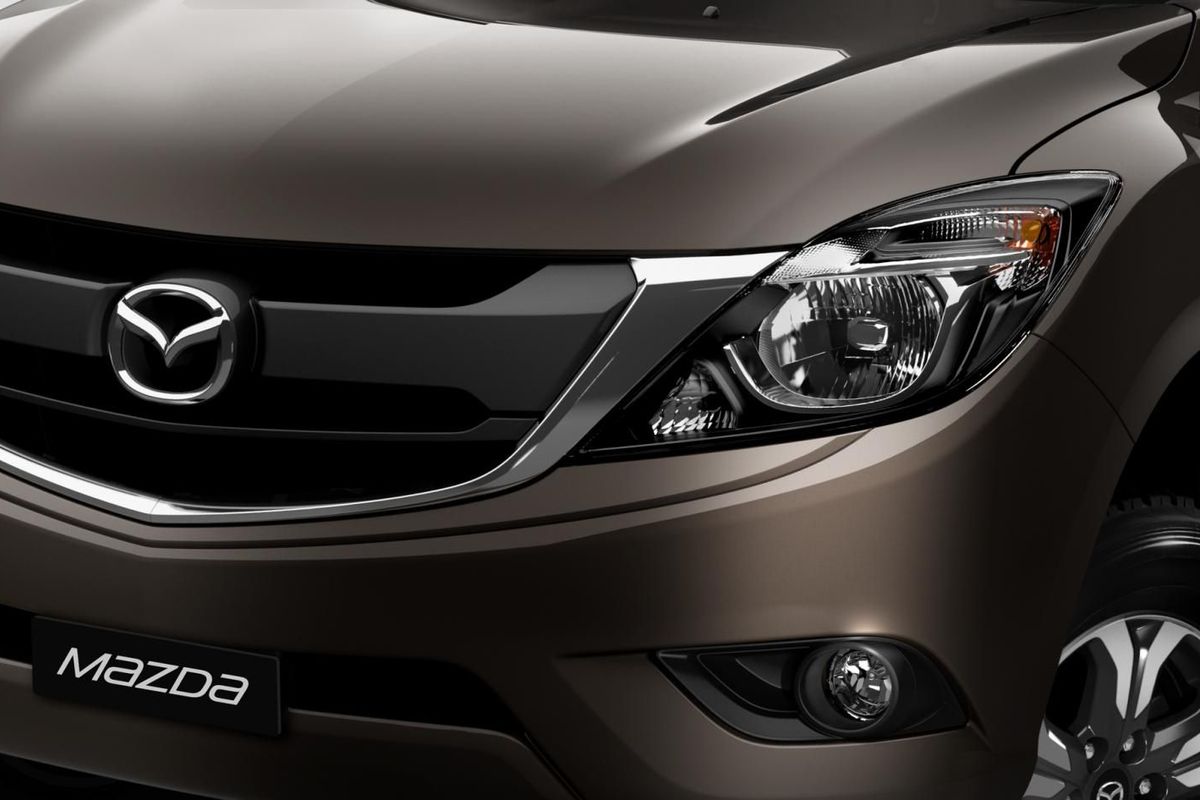
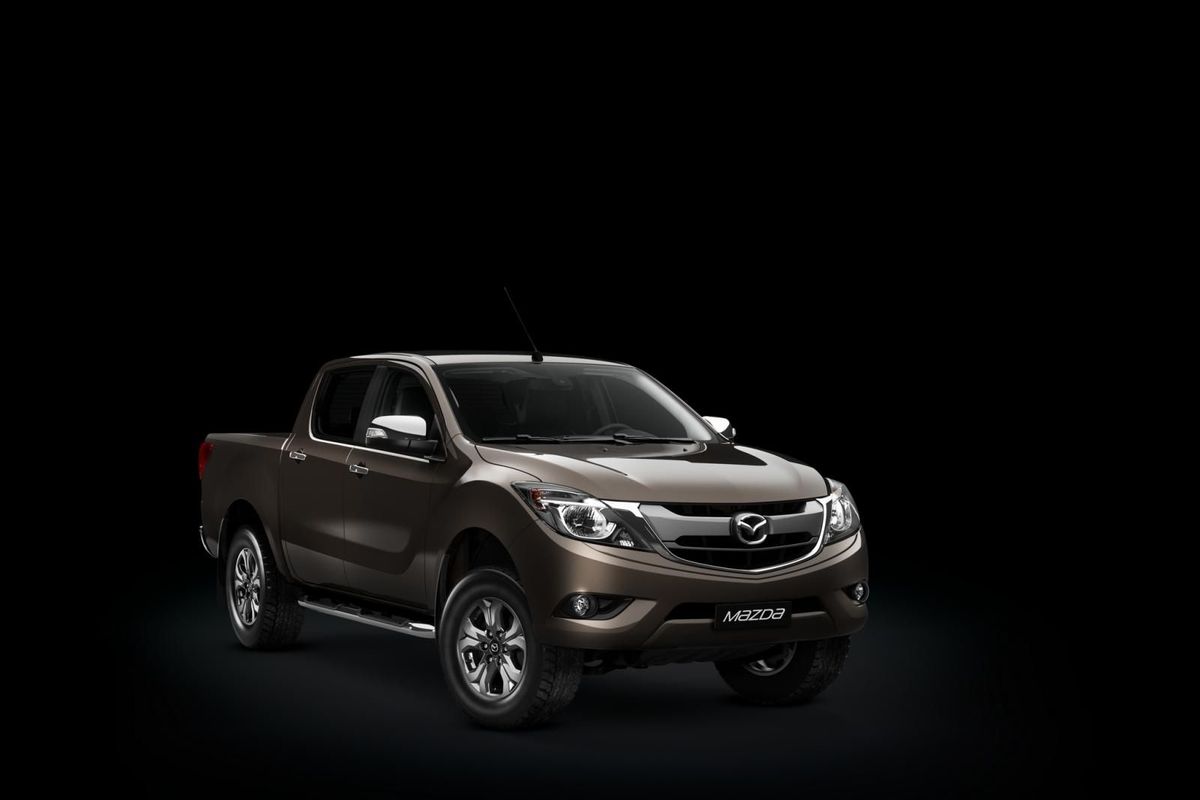
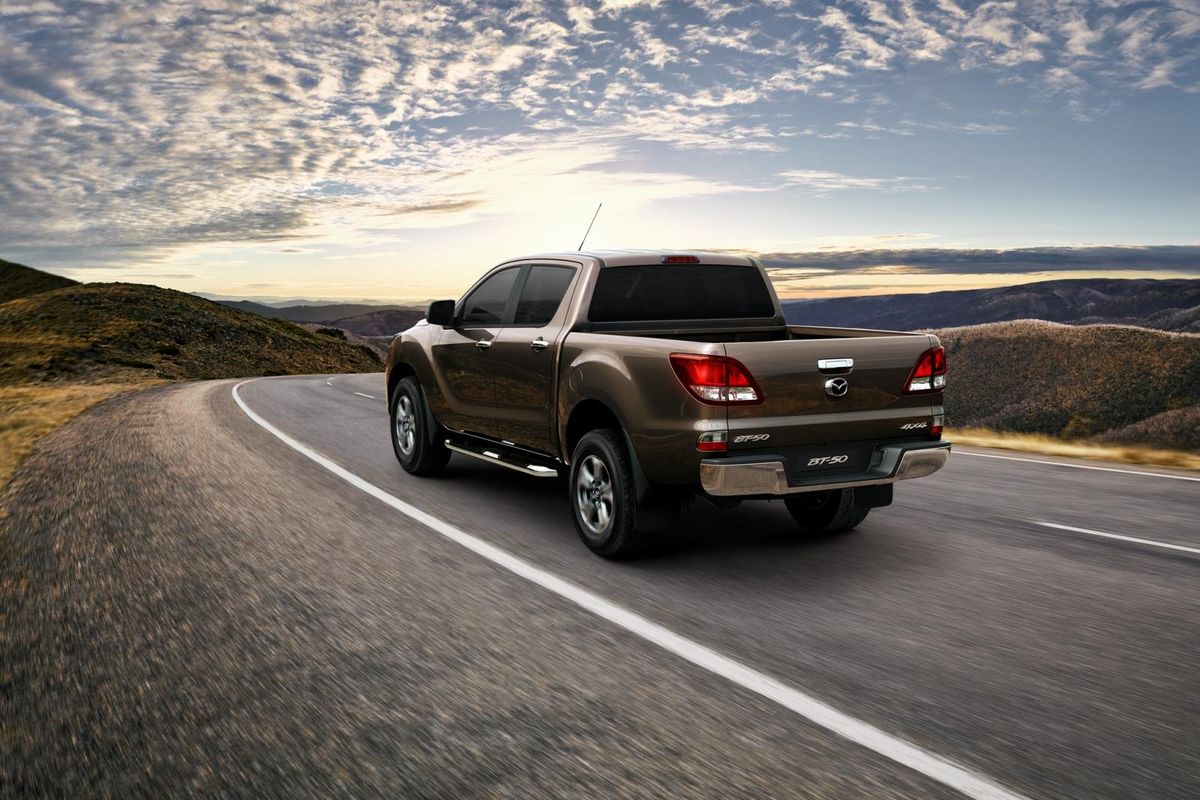
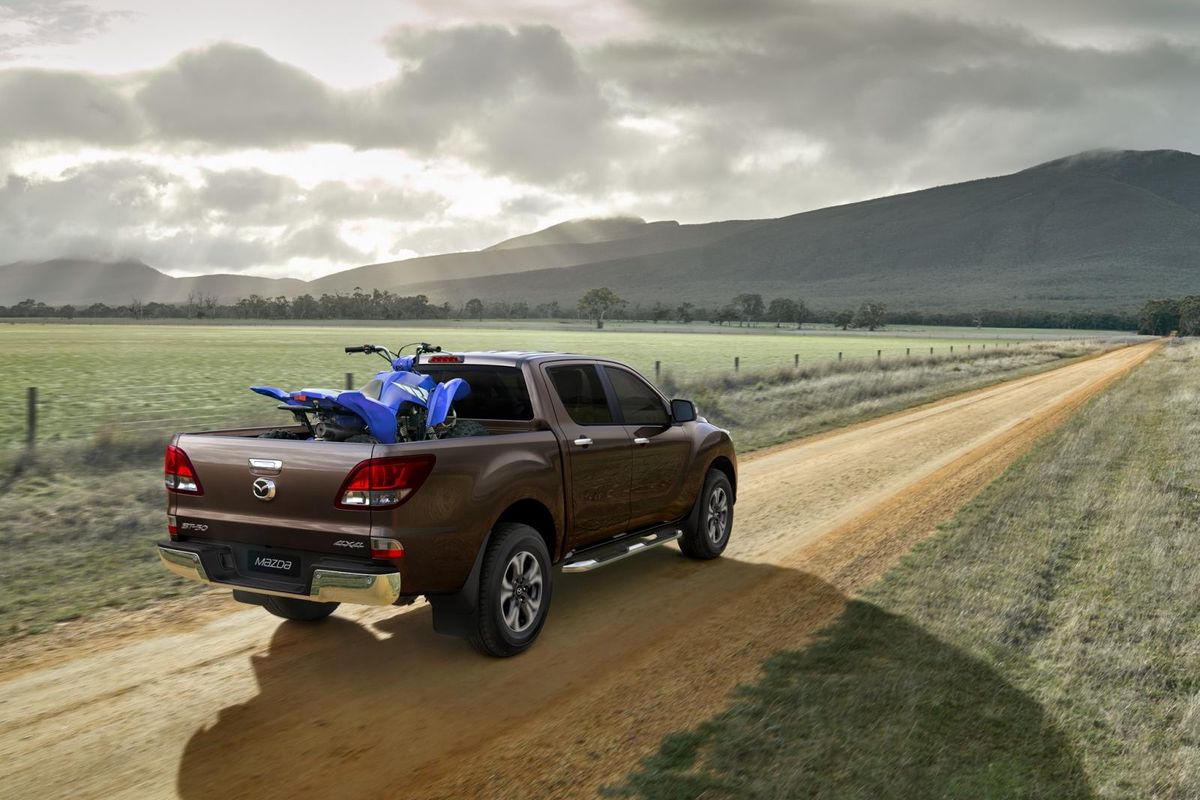
Mazda achieved record new vehicle sales in 2016, but can the newly updated BT-50 be a greater force in the double-cab market?
Mazda’s success of late has been impressive to witness. The bulk of the firm's sales come from its SUV models; the CX-5 and CX-3 are among the best-sellers in their segments. The BT-50 is a different proposition altogether, however. The local bakkie segment has seen a huge influx of new models, as well as a proliferation of lifestyle buyers who seek automatic-transmission turbodiesel double cabs. The newer bakkies have adapted to this demand by offering a more comfortable ride and a more luxurious interior with modern creature comforts. Can Mazda match the likes of the Ford Ranger, Toyota Hilux, Isuzu KB, Mitsubishi Triton, Volkswagen Amarok, Fiat Fullback and upcoming Nissan Navara… to name just a few?
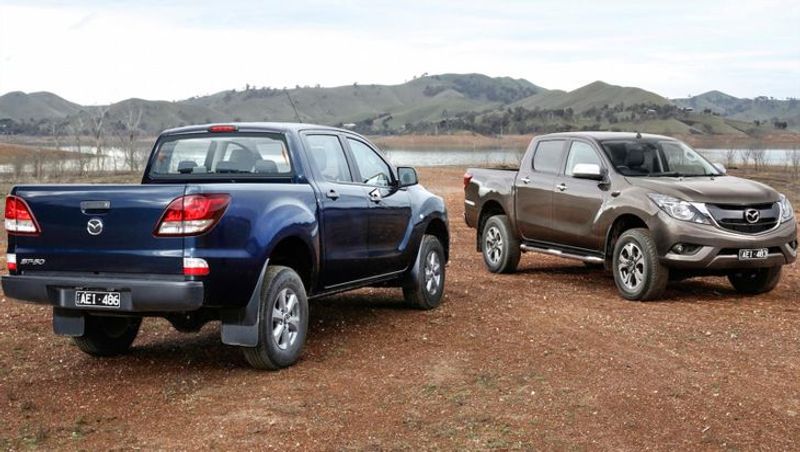
Launch will see only double cab BT-50s on sale.
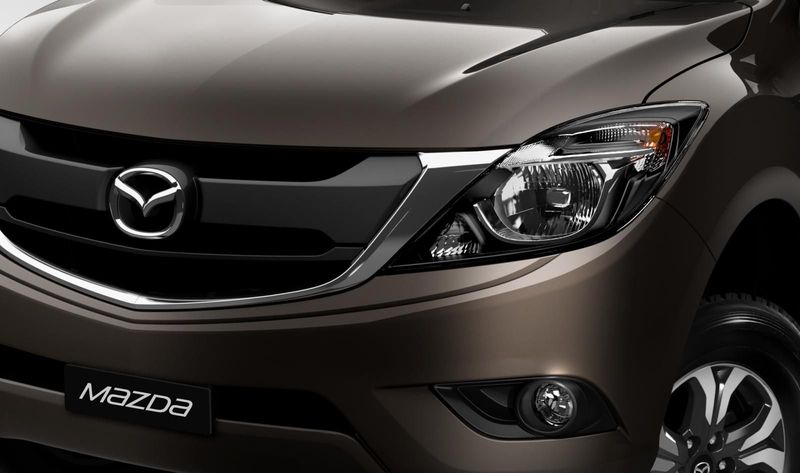
The short answer is: no, but then Mazda says it only aims to sell about 100 units a month. The BT-50 is merely a facelift of the 2012 unit, so it still shares its platform with the Ford Ranger. Come 2019, Mazda’s new BT-50 will share technology with Isuzu. Whereas the Ranger is built locally, Mazda imports its BT-50 from Thailand… and there are some differences.
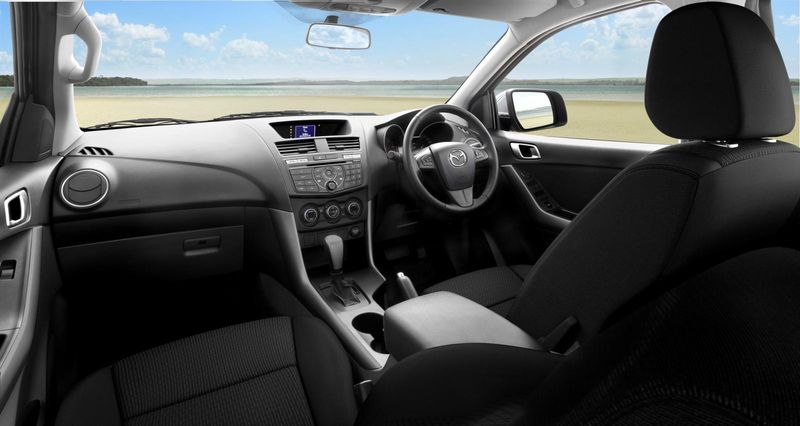
Step inside and it doesn’t feel like a bakkie built with lifestyle buyers foremost in mind. The BT-50 feels more a like a light commercial vehicle; its interior plastics are hard and there’s little in the way of soft-touch cabin materials. The infotainment unit appears to be based on Ford’s Sync 1 interface (whereas the Ranger is now on Sync 3); not only does the system sport a small screen, but requires a fair number of buttons to be pushed to get basic commands executed. The BT-50 also loses out by virtue of the absence of adaptive cruise control, collision warning and the digital instrument cluster that modernised the Ranger so much.
Interior is well-built and solid, but it's not as luxurious as its lifestyle bakkie rivals
The Mazda's ride quality is also a step short of what is expected from modern lifestyle bakkies. Compared with the BT-50, the Ranger and Amarok have more comfortable ride qualities on dirt roads and choppy surfaces. The going in the BT-50 feels bouncy and overly firm – much like an Isuzu KB. There is a positive to the Thailand-built BT-50, however: its build quality. The BT-50 feels well put together, the shut lines are tight and even on the "washboard" dirt roads we had to navigate, the cabin didn’t rattle or shake. The other notable aspect was the quietness in the cabin. At freeway speeds, it’s very quiet, with nothing but a slight whisper from the wind and the engine far less audible than in something like a Ranger.
Engine range
The engine models are the same as that of the outgoing BT-50 and the same as the current Ranger. The 2.2-turbodiesel is a little less powerful than the Ranger’s, but it is a similar unit. The 2.2-litre turbodiesel feels capable and delivers healthy power and torque figures at 110 kW and 375 Nm. It is available only in 4×2 variants, but you are able to choose from manual or automatic gearboxes. The manual is more fuel efficient at 7.6 L/100 km compared to the auto at 9.4 L/100 km.
Engine range remains the same with a 2.2 and 3.2 turbodiesel
The 3.2-litre turbodiesel unit only comes in 4×4 guise, but, again, is available with manual or auto gearboxes. Thanks to the improved build quality on the BT-50, the 3.2 is heard less from inside the cabin than it is in the Ford. Its power outputs are identical at 147 kW and 470 Nm with fuel economy claimed at 9.3L/100 km in the manual and 9.7 L/100 km in the auto.
Summary
Much like its passenger cars, the BT-50 is offered with a 3-year/unlimited km warranty, a 3-year/unlimited km service plan and Mazda offers a lifetime warranty on all parts fitted by its franchised dealers. Judging by the Hiroshima-based brand's strong showing in the Cars.co.za Owner Satisfaction Survey, it takes after-sales service particularly seriously. As for the BT-50, it feels well made and even if its ride quality is not the most refined, its cabin offers low levels of NVH. Whether the brand's strong after-sales back-up and the product's refinements will be enough to increase the BT-50's market share is a moot point. An all-new Mazda double-cab is expected by 2019 – the brand must be awaiting that one with great eagerness.
Mazda BT-50 pricing in South Africa
At launch, Mazda is only bringing double cabs to the market. The company says it is open to the possibility of an extended cab and a single cab if there is sufficient public desire.
Reports suggest that Audi will be showing an RS Q8 Concept at the upcoming Geneva Motor Show.
Earlier this year at the Detroit Motor Show, Audi showcased the Q8 concept previewing an all-new luxury flagship SUV. Now, reports are indicating that Audi is preparing to unveil an RS-infused Q8 concept at the upcoming Geneva Motor Show in March 2017. The RS Q8 Concept will preview a production version that will likely arrive in 2019, following the expected launch of the Q8 in 2018. The RS Q8 will rival the likes of the BMW X6 M and the Mercedes-AMG GLE63 Coupe.
According to reports, the RS Q8 concept will feature a biturbo 4.0-litre V8 engine with at least 445 kW and 700 Nm of torque. Power will be laid down using an 8-speed automatic transmission and quattro all-wheel drive will ensure brisk acceleration with the zero to 100 kph sprint expected to take less than 5 seconds before reaching a top speed in excess of 300 kph.
In terms of styling, the RS Q8 will feature a more aggressive exterior design to match its performance and it will wear a wider grille, front splitter and trapezoidal headlights with Matrix LED technology.
The RS Q8 concept will be shown alongside the RS Q5 and the facelifted RS3 Sportback at the Geneva Motor Show. We will keep you updated as more details become available.
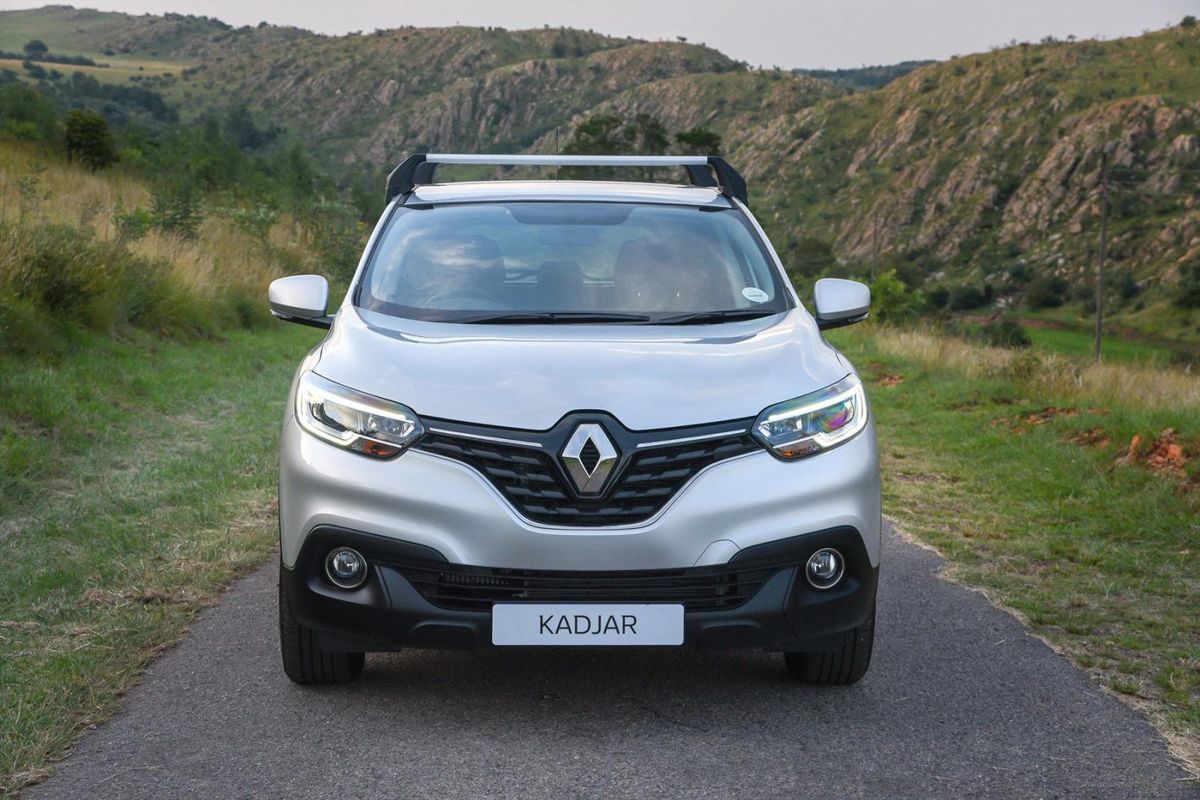
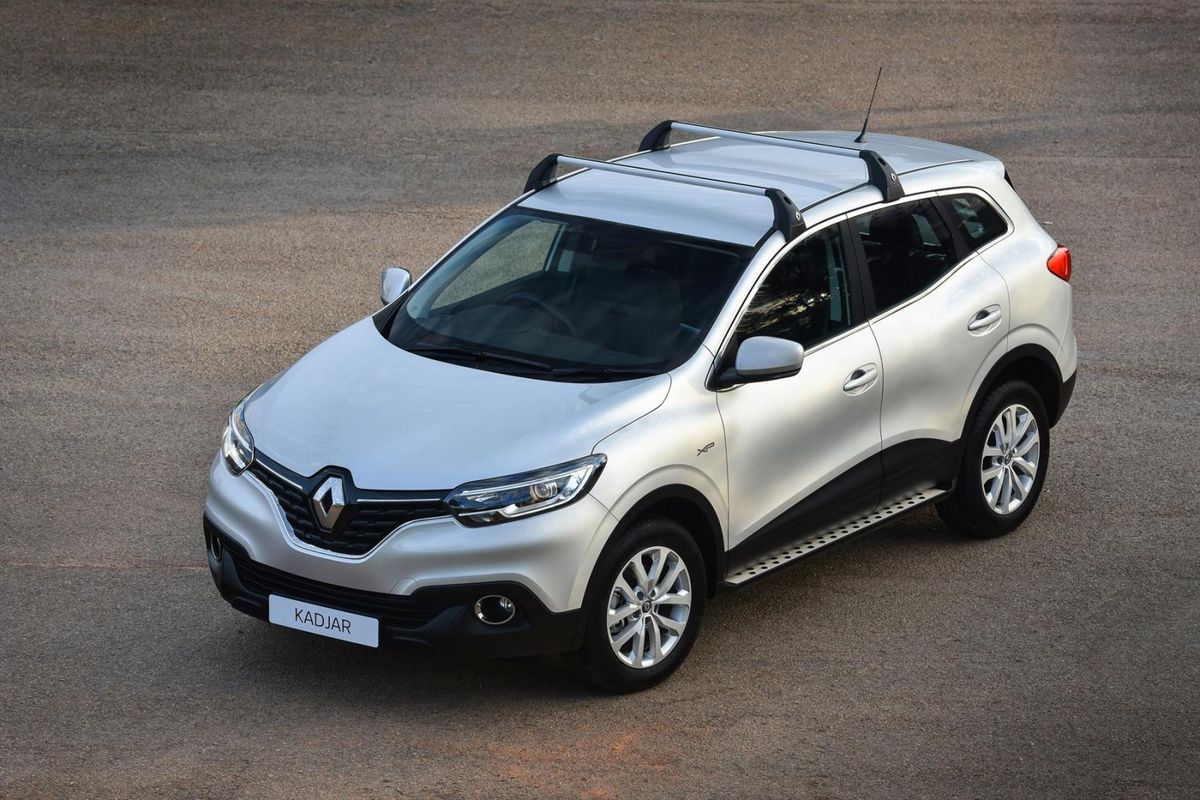
Renault South Africa recently introduced the XP Limited Edition to its Kadjar lineup and we attended the local launch last week to see what the Kadjar XP has to offer.
Since its launch almost a year ago, the Kadjar range has expanded with the addition of a 1.5-litre turbodiesel engine and new automatic derivatives. Renault continues to bolster the Kadjar lineup and the latest derivative to join the range is the XP Limited Edition that's fitted with additional accessories to suit life in the outdoors. We recently attended the launch in Johannesburg to find out what the XP brings to the table. This is what we discovered…
What is it?
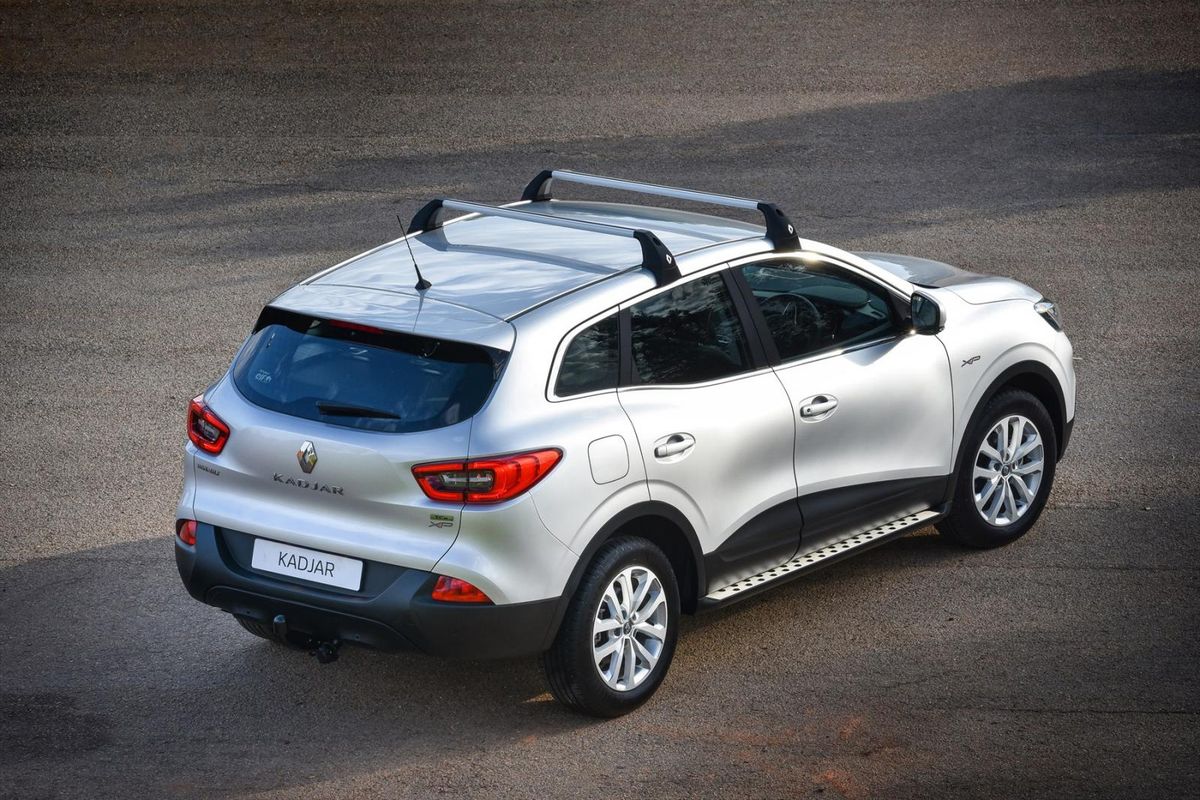
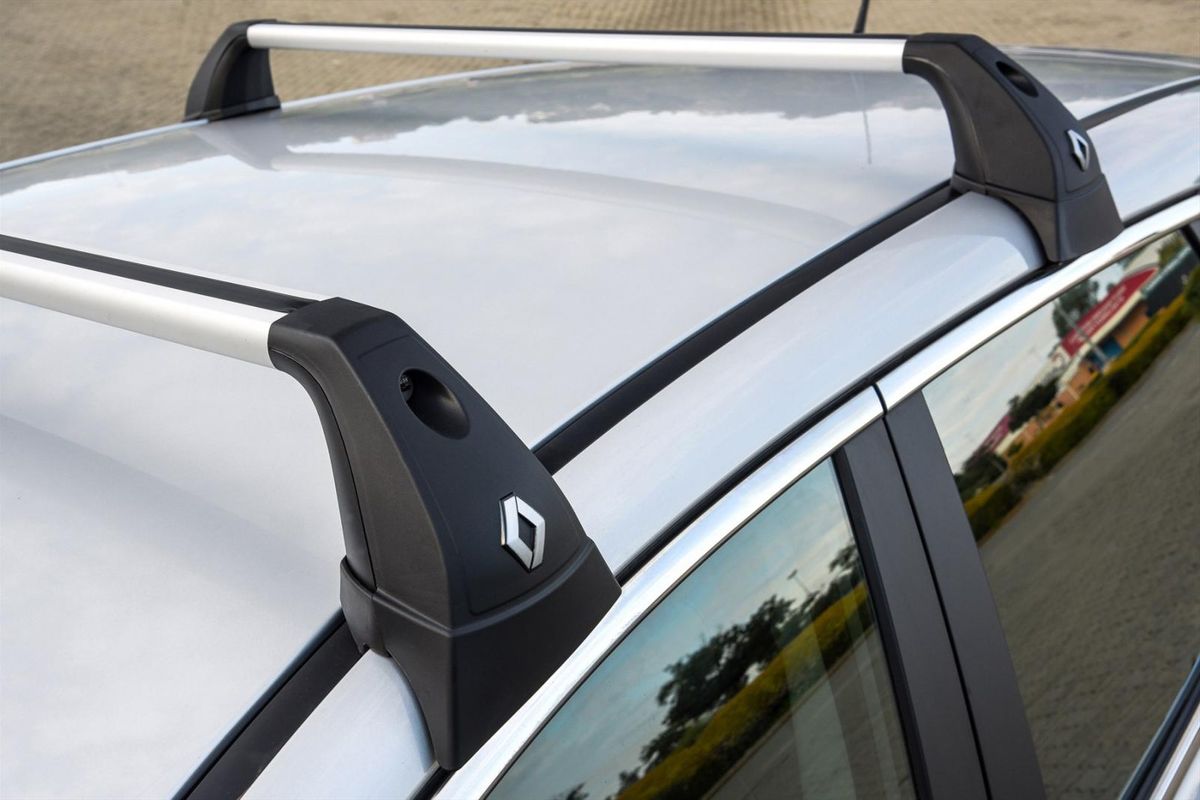
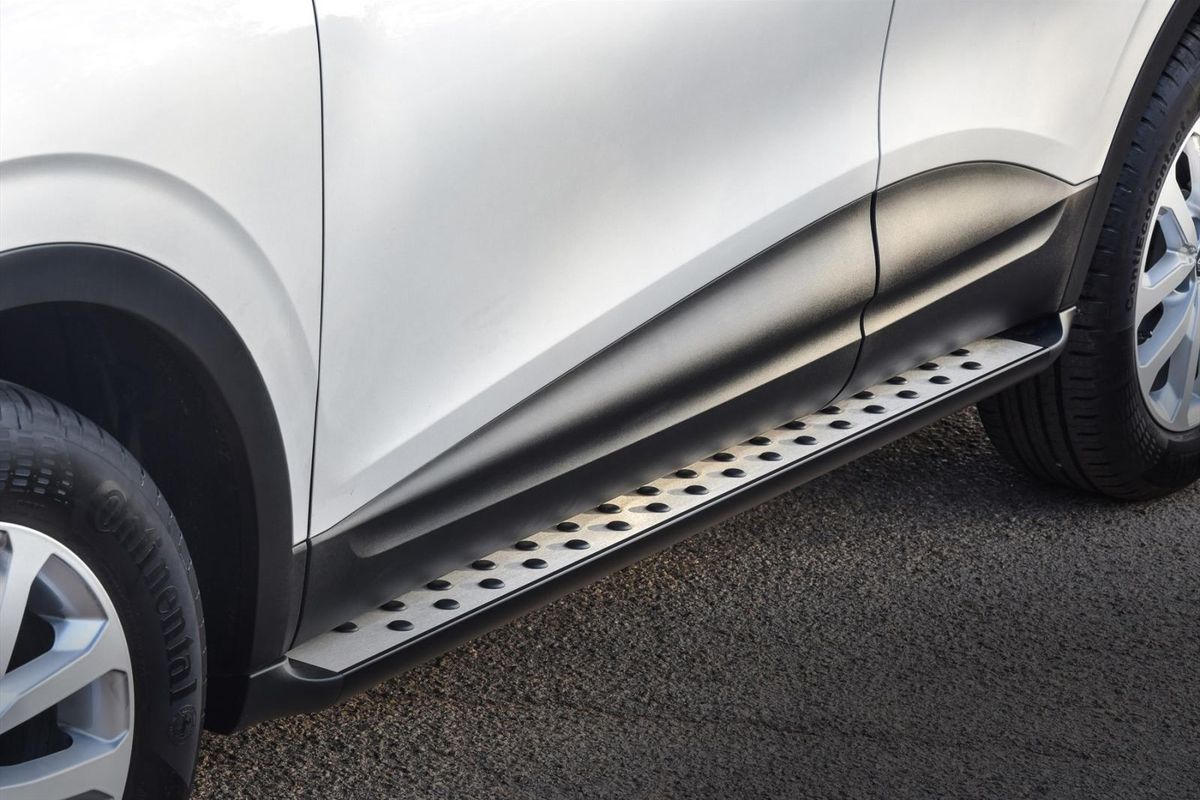
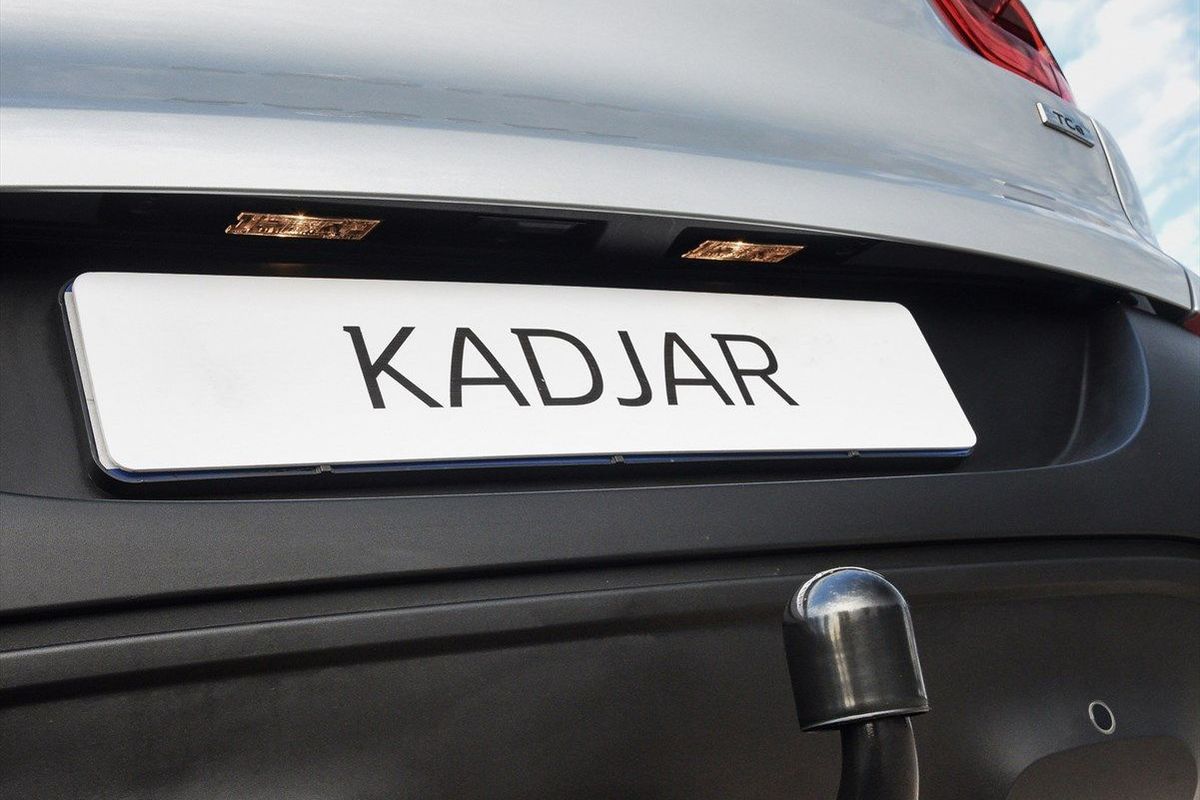
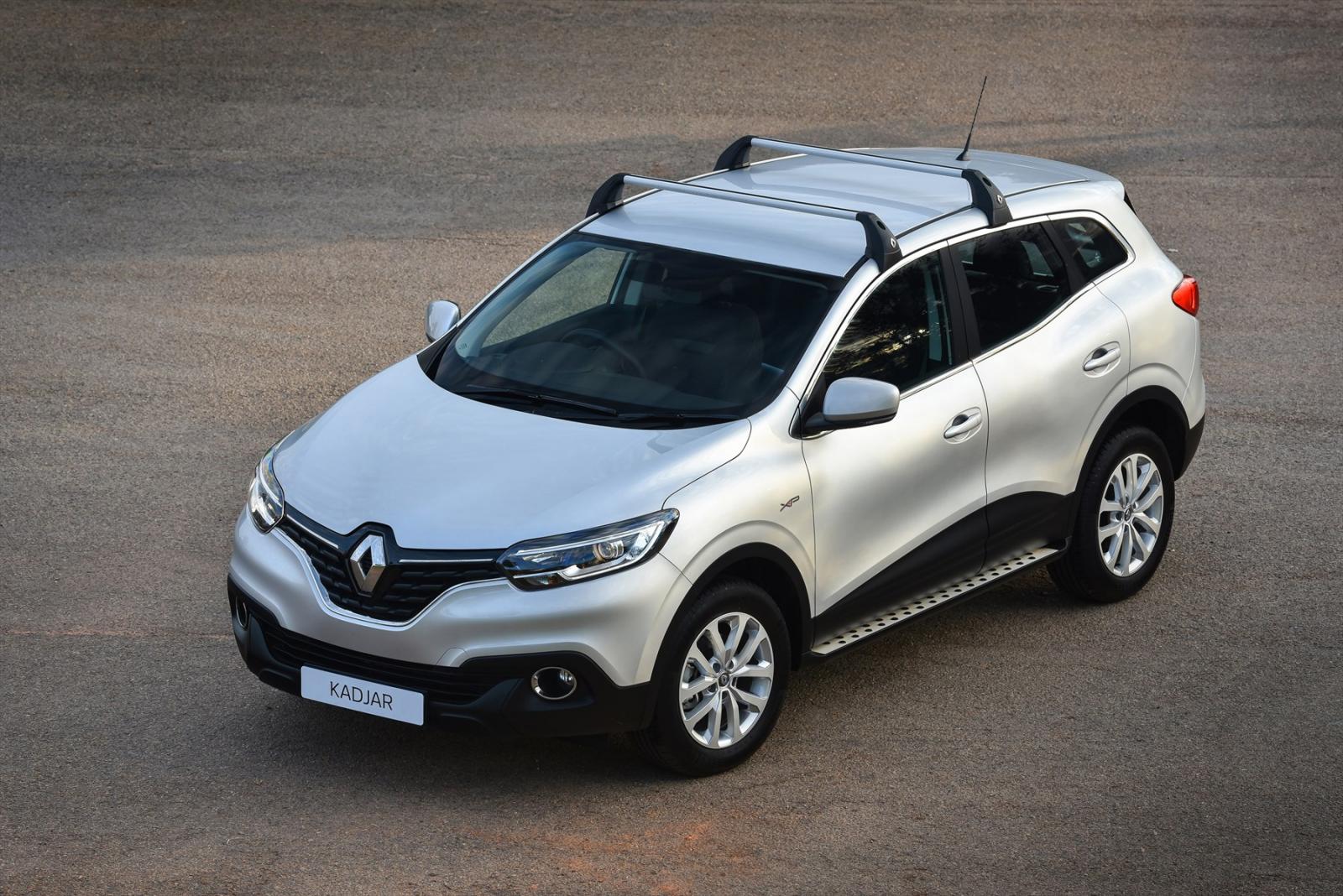
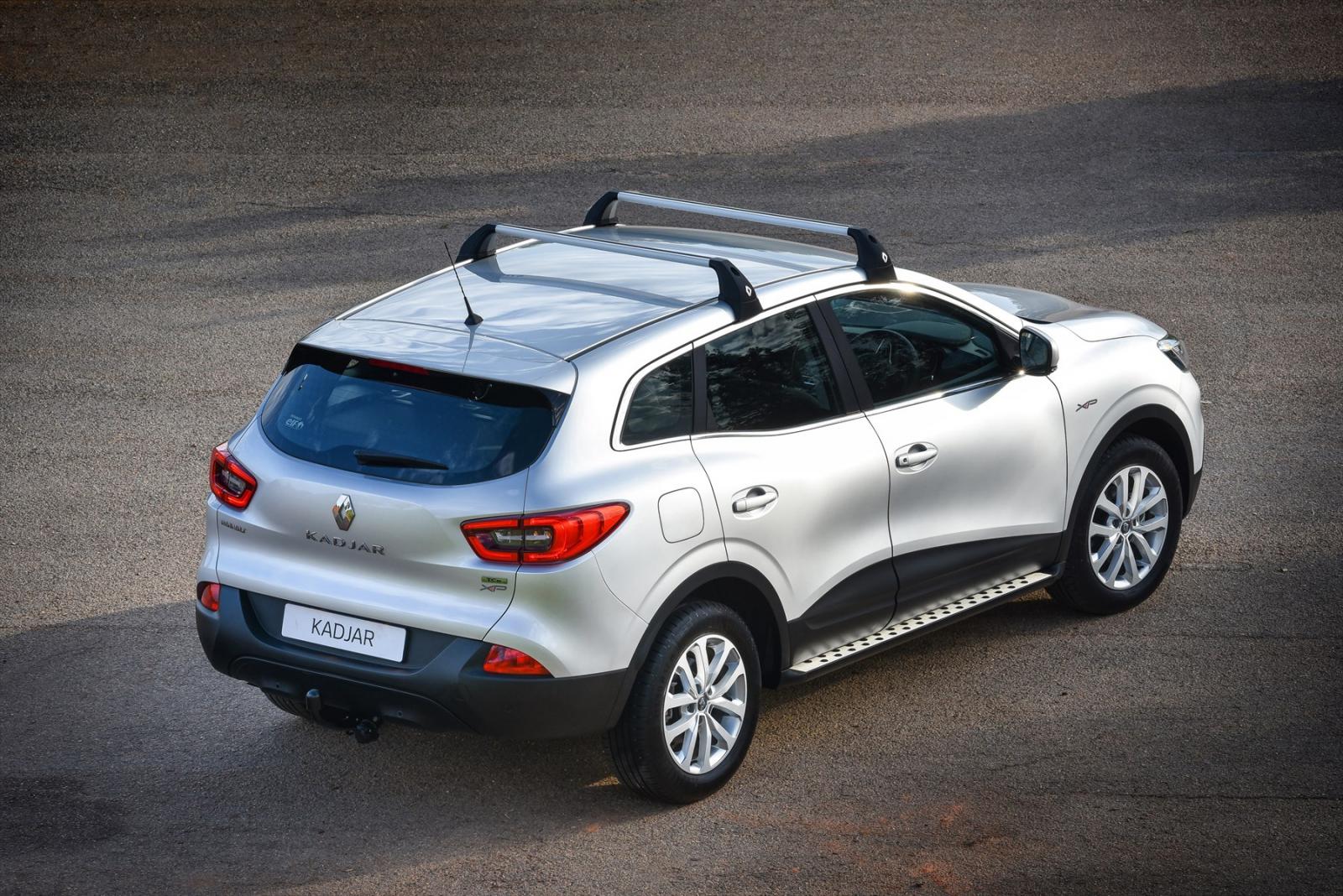
The Kadjar XP Limited Edition gains useful features such as side steps, roof bars, tow bar and cornering fog lamps.
As you know, the Kadjar was offered in either Expression or Dynamique guise, with the former being the entry point to the range. The XP Limited Edition is based on the Expression, but with a twist. Before we get into that, you may be wondering about the "XP" in the name? According to Renault, the XP name is similar to a common term derived from computer games. In gaming, XP stands for "Experience Points" as you progress into new levels of the game. The same can said of the Kadjar as Renault wants you to experience the brand by engaging in outdoor activities that the Kadjar allows. When you look at what the Kadjar XP Limited Edition has to offer, you can kind of understand.
Whilst the Dymanique Kadjar looks very city chic, the XP Limited Edition maintains a rugged look. It has side steps, roof racks, a swan-neck tow bar and cornering fog lamps. These items can be very functional when you are going on an excursion because you can load items on the roof, tow a trailer and visibility is enhanced if you’re going to be navigating a gravel road at night. The 17-inch wheels are standard, but the tyre profile is higher than other Kadjar derivatives. This makes the XP Limited Edition more forgiving when driving in the dirt and also complements the generous ground clearance of 200 mm.
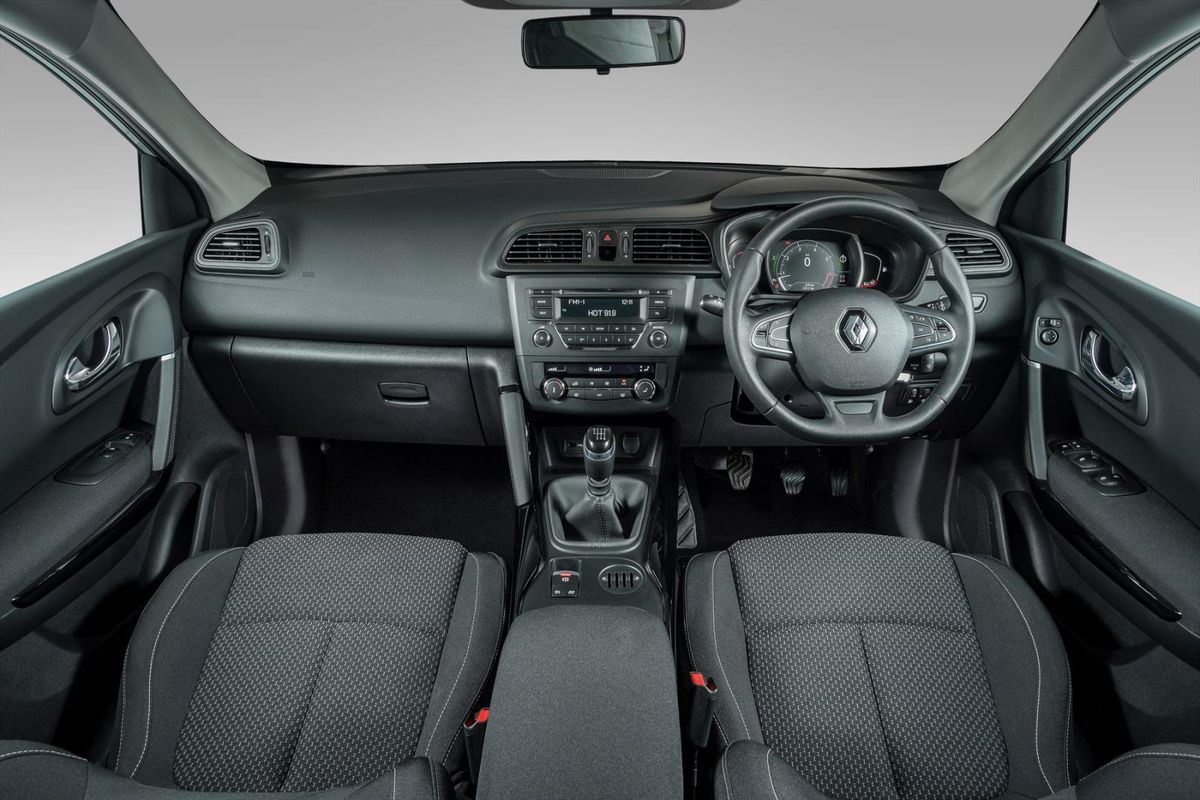
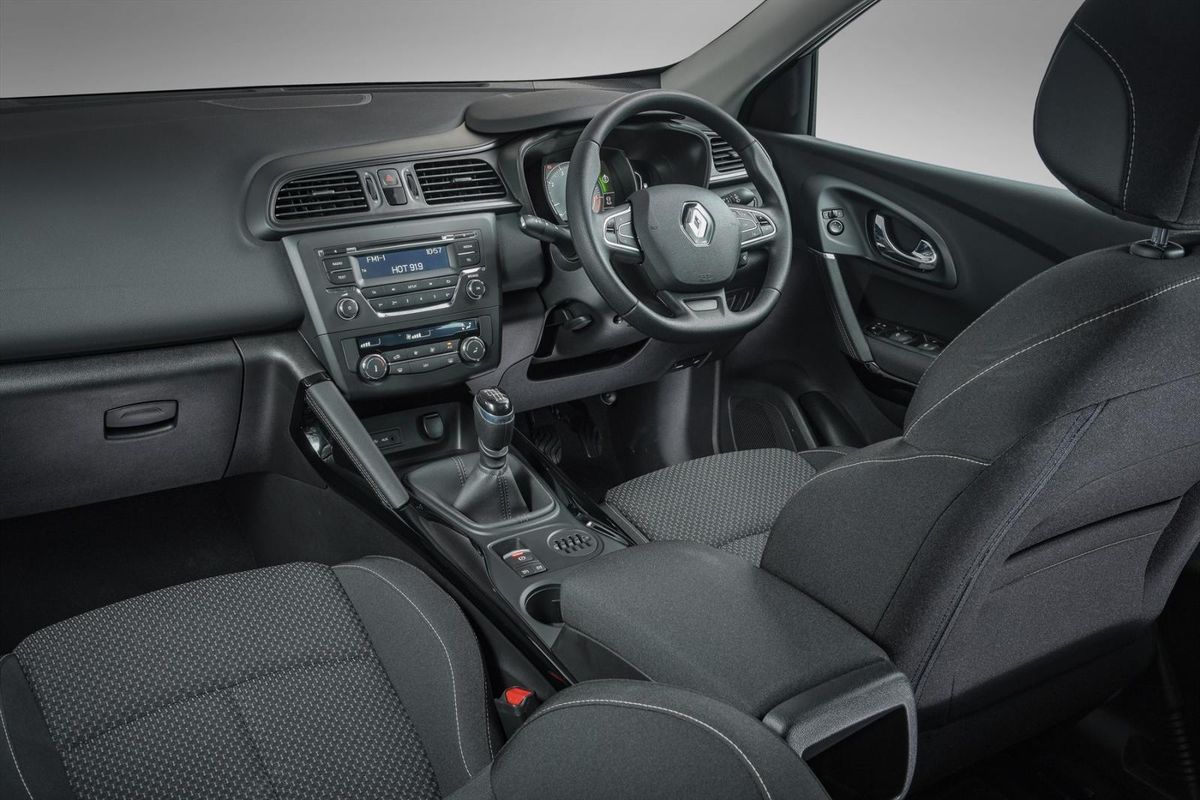
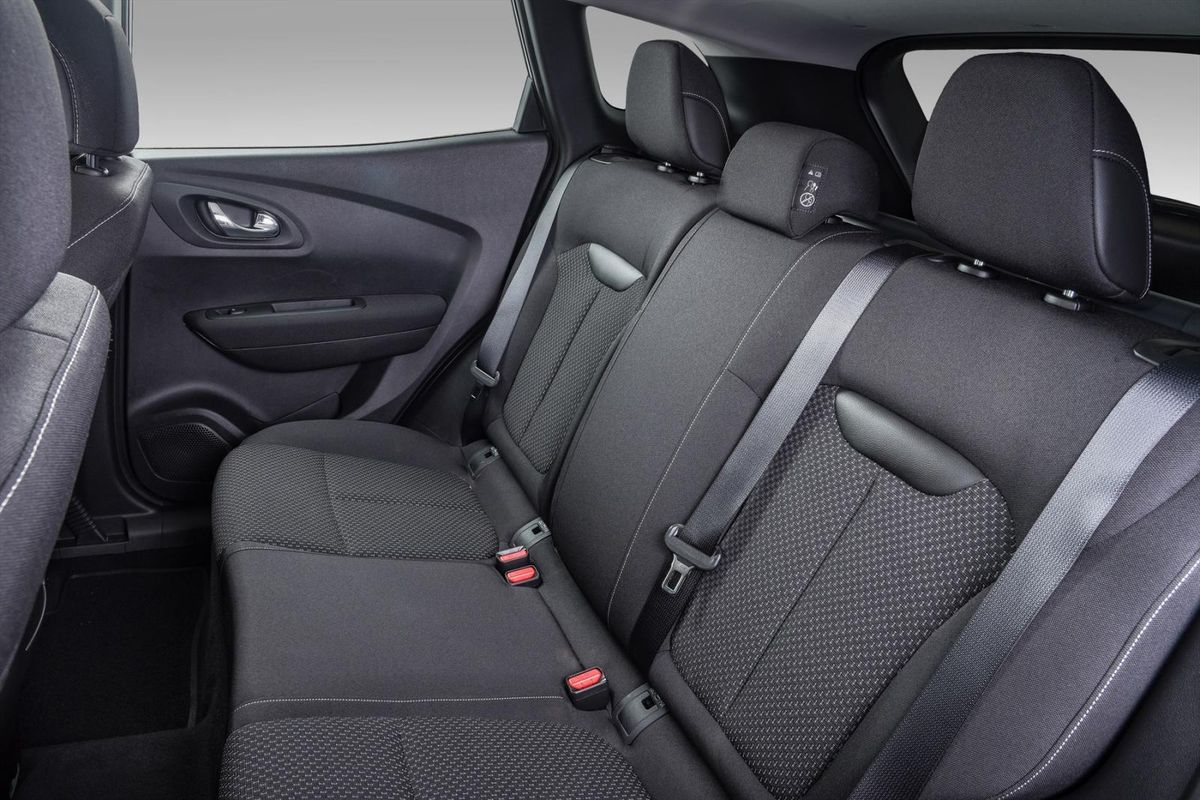
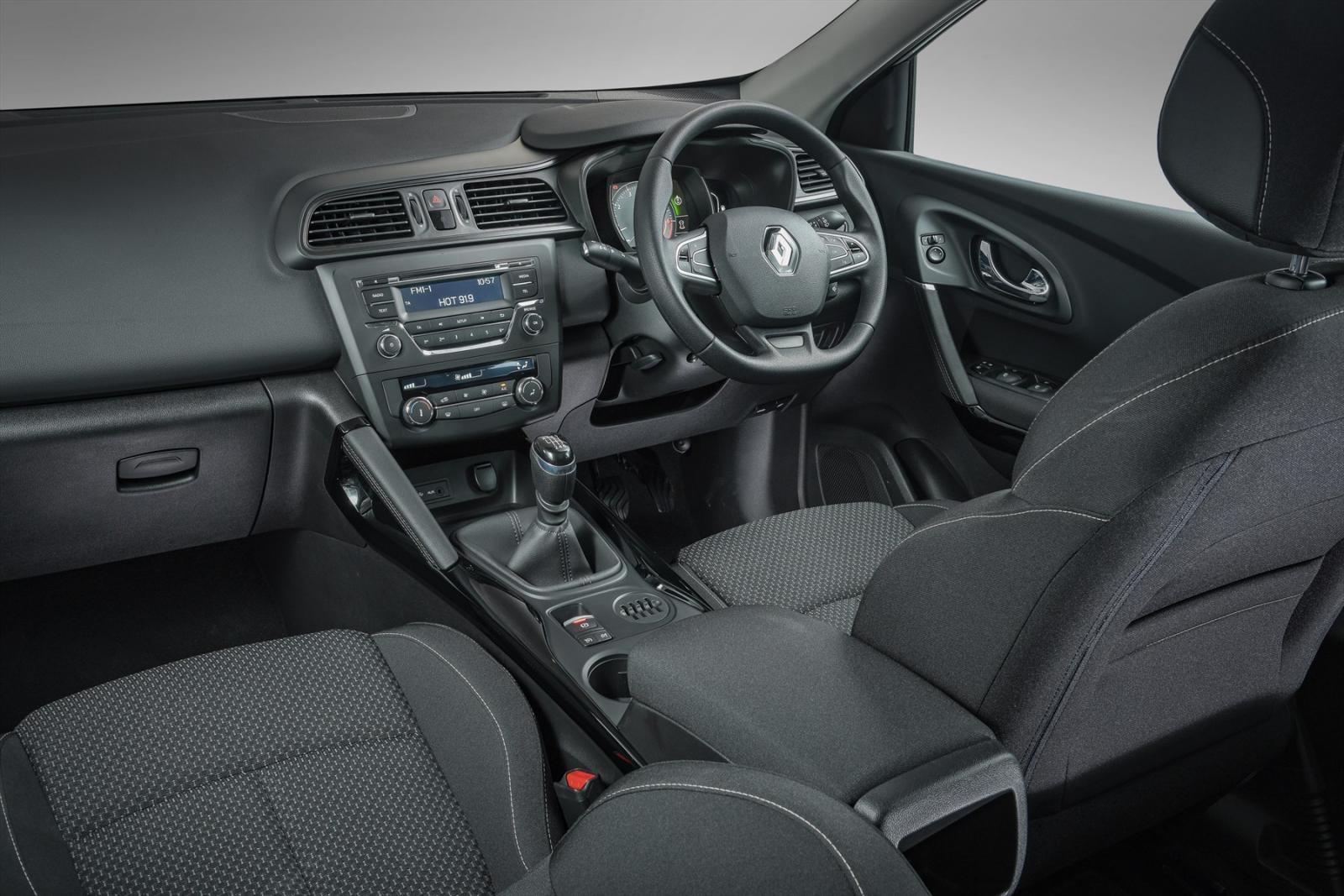
The Kadjar XP's interior offers basic features and cloth seats are standard.
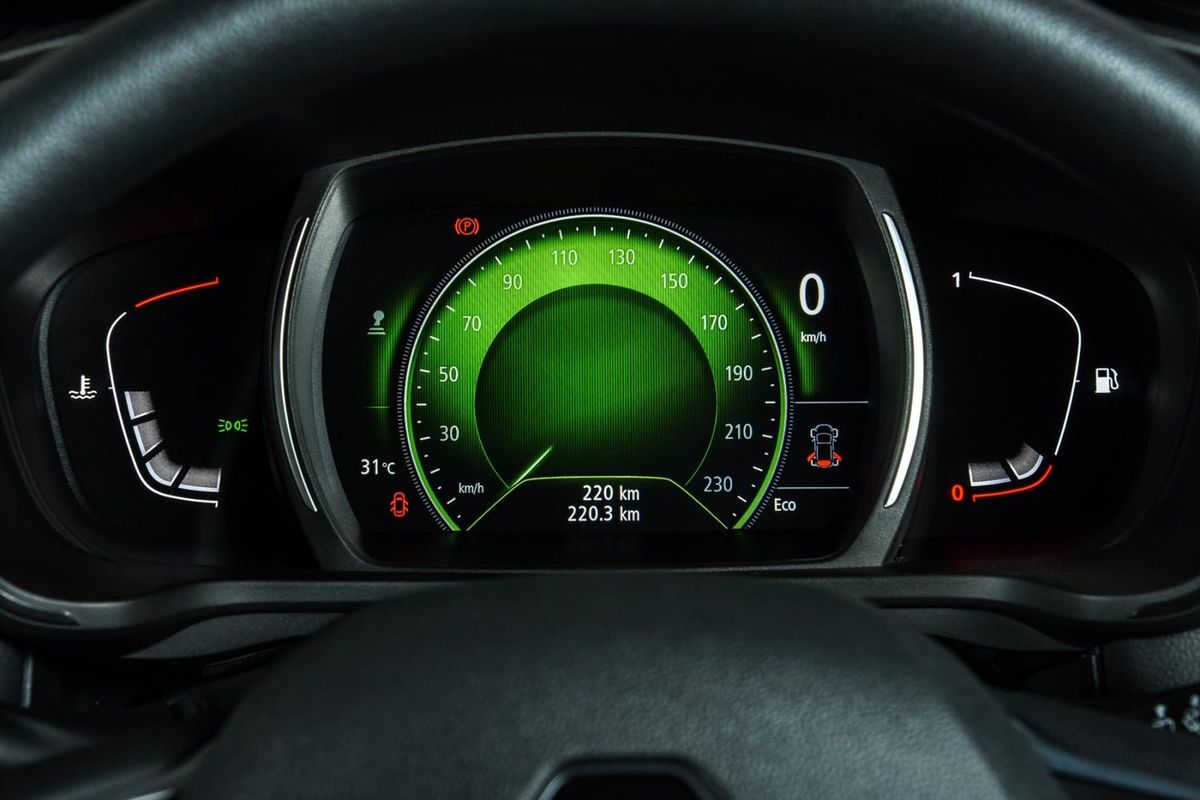
The interior of the XP is quite basic as there is no fancy touchscreen infotainment system but Bluetooth and USB functionality is offered, as well as a CD player. The digital colour instrument cluster still remains, displaying useful information to the driver.
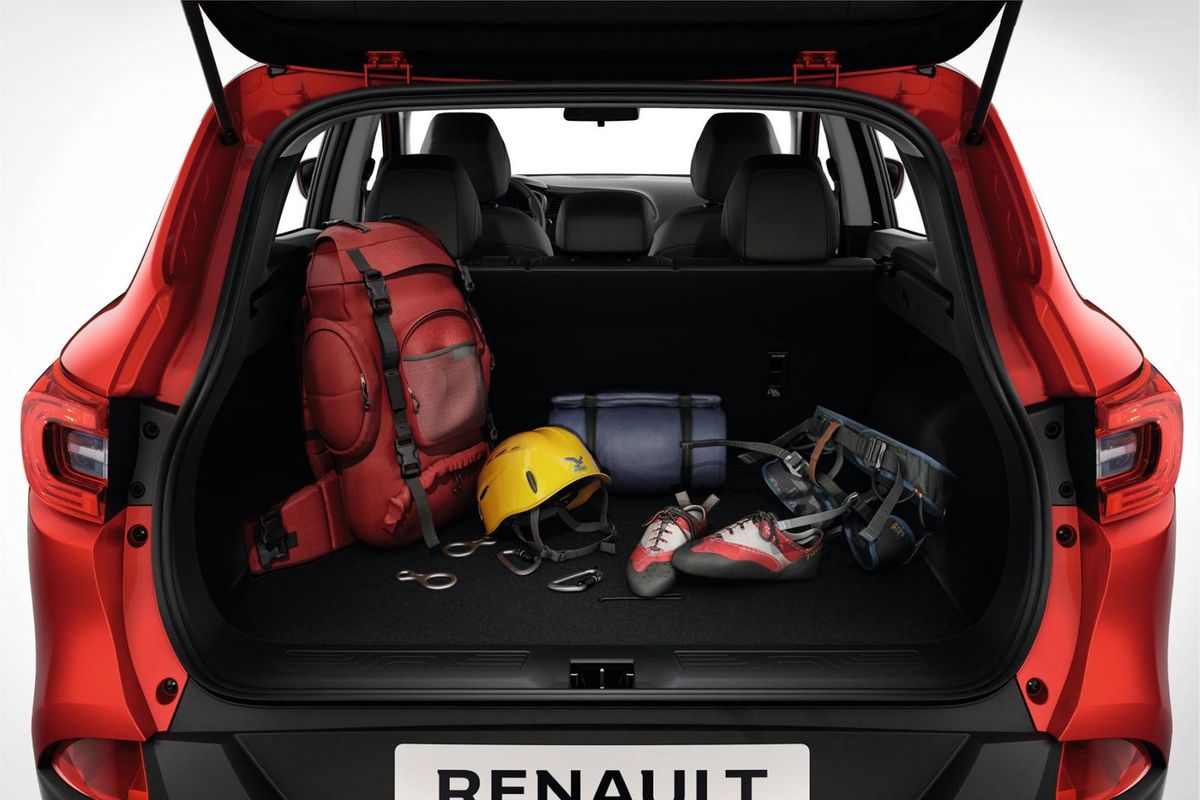
The XP Limited Edition is fitted with cloth seats, which may be a challenge to clean when you return from your adventures in the wild. Comfort levels remain the same in the XP with a slightly softer ride due to the fatter tyres. If you’re a surfer or simply moving stuff, you’ll be happy to know that the rear seats do split, extending the already more than adequate 370 litres of boot space.
So far so good? Yes. Due to the fact that the XP Limited Edition is based on the entry-level Kadjar and despite all the added features, Renault has managed to keep its pricing rather competitive. In fact, the extras on the XP amount to approximately R40 000 with a retail price of R364 900, which is what you would pay for the standard Kadjar 1.2 Expression.
Bee in the bonnet
If Renault is selling adventure with this model, buyers may be sceptical of the 1.2-litre turbocharged engine offered in the XP Limited Edition. Yes, it may work for city driving, but what happens when you’re chockablock with luggage, pets and children? Well, 96 kW and 205 Nm of torque is a healthy figure and it's more than what's offered from 1.4-litre turbo engines from rival manufacturers.
Of course, we didn’t drive the car loaded during the launch, but with just two people and an extremely heavy Dell laptop in the back, it did well. The torque comes in nice and early, allowing you to change gears faster and even the manual gearbox did a good job, although the automatic gearbox is more suited to this type of vehicle.
Summary
The rugged Kadjar XP Limited Edition is attractively priced and will appeal to outdoor enthusiasts.
The Renault Kadjar is a good car. It offers striking looks and it flaunts French charm that its rivals lack. The XP Limited Edition may not look as good as the Dynamique derivative, but with its LED lights and its rugged appeal, it can still hold its own in the style stakes.
Can you take it off-road? That would depend on the type of off-road adventure you’re planning. If you’re a Kingsley Holgate in the making, we would advise that you consider something more capable. However, if you’re a suburban family person and you enjoy a weekend away at a game farm, the Kadjar XP Limited Edition should suffice and you’ll find the extra accessories useful on your trip. Having a small engine also means you’ll use less fuel and according to Renault, the XP Limited Edition returns a claimed fuel consumption figure 5.7 L/100 km.
Renault Kadjar – Price in South Africa
96 kW TCe Expression – R364 900
96 kW TCe XP Limited Edition – R364 900
96 kW TCe Dynamique – R389 900
81 kW dCi Dynamique – R394 900
96 kW TCe Dynamique Auto – R399 900
81 kW dCi Dynamique Auto – R414 900
96 kW dCi Dynamique 4WD – R454 900
The Renault Kadjar is sold with a 5-year/150 000 km warranty and a 5-year/ 90 000 km service plan.
Mercedes-Benz has transformed its GLC lifestyle SUV from a practical soft-roader into a fashion accessory, but, given the market's sustained demand for vehicles of this ilk, that's hardly a surprise… Does the newcomer make a strong enough case for itself, however?
We like: Adaptive ride, modern cabin and good fuel consumption
We don’t like: Less practical, more expensive than its non-coupe stablemate
Alternatives
The main rival: BMW X4 is the car that arguably forced Mercedes-Benz’ hand to make the GLC Coupe. The range does not offer a direct competitor for the Benz, as, price-wise, this derivative effectively slots in between the xDrive20d and xDrive30d offerings.
Coupe looks without the drawbacks: Range Rover Evoque is getting a bit long in the tooth, but still offers the best of both worlds. It is a somewhat pricey option (yes, even compared with the 250d) – the equivalent SE TD4 is not particularly well specced.
The obvious choice: Mercedes-Benz GLC, it offers exactly the same of everything with the increased practicality of a useable boot.
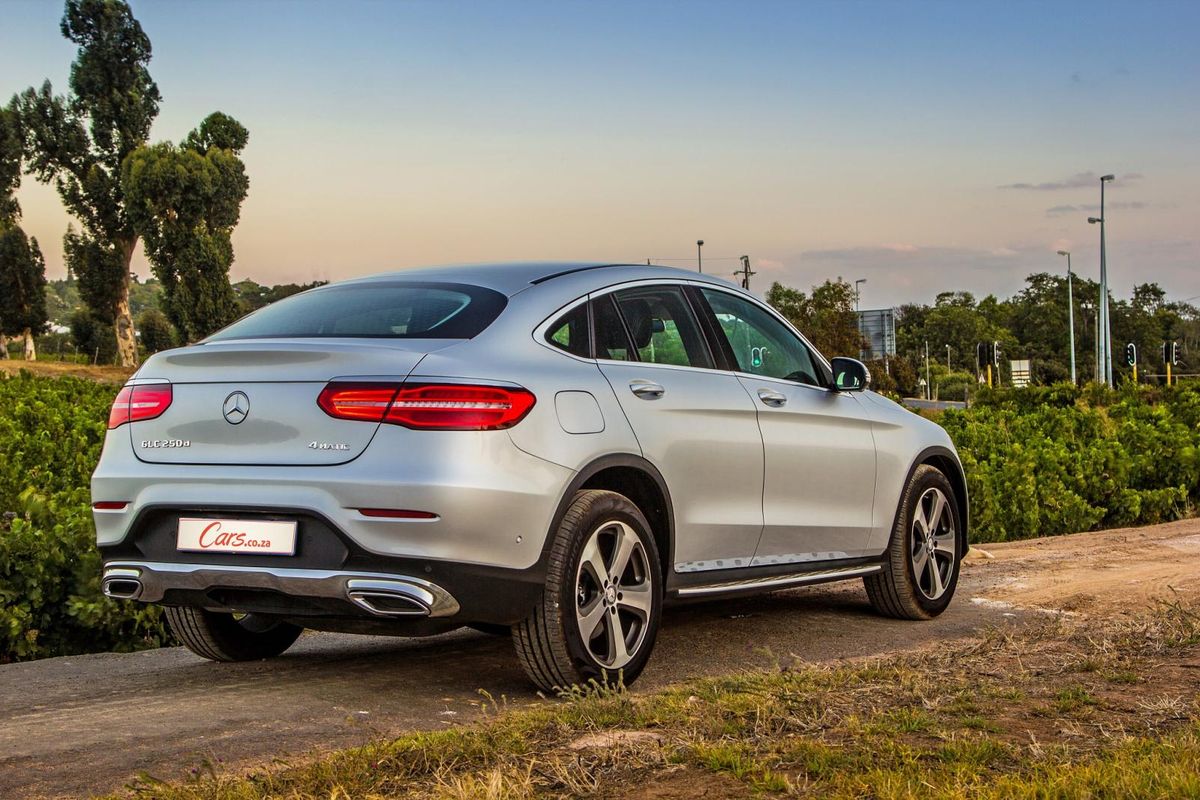
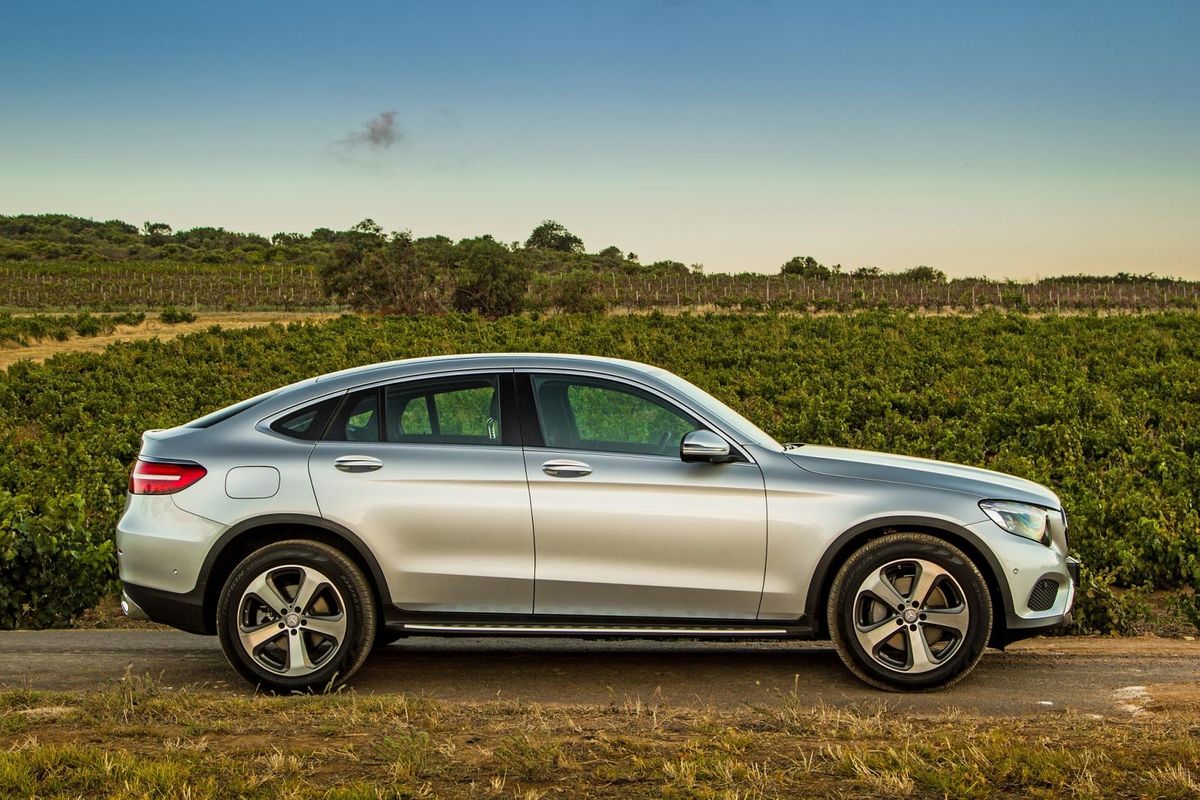
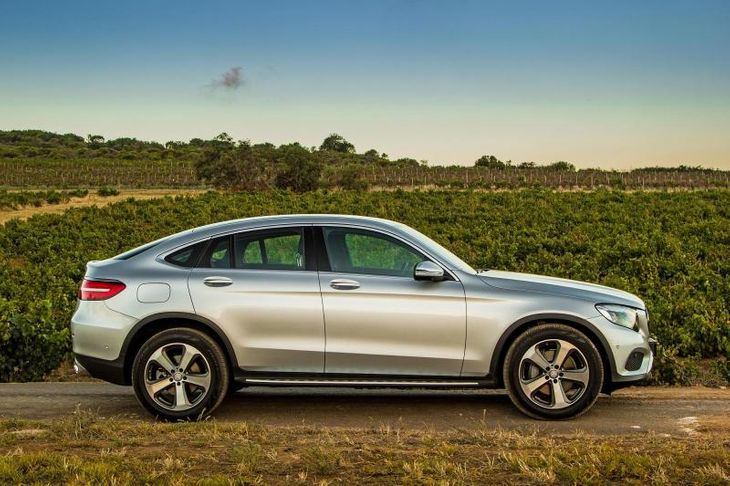
Well, let's cut to the chase: it's effectively a Mercedes-Benz GLC with the roof sloped down at the back so you get the coupe shape effect. It’s an SUV too, with decent ground clearance and an all-wheel drivetrain. While it seems a bit illogical to wantonly reduce the luggage capacity of a lifestyle SUV, BMW can attest to how popular its sports activity vehicle-flavoured X4 and X6 have been. This particular version is the GLC 250d Coupe, it's powered by a 2.1-litre turbodiesel engine mated with Mercedes-Benz's new generation 9-speed automatic transmission.
How does it fare in terms of…
Kerb appeal?
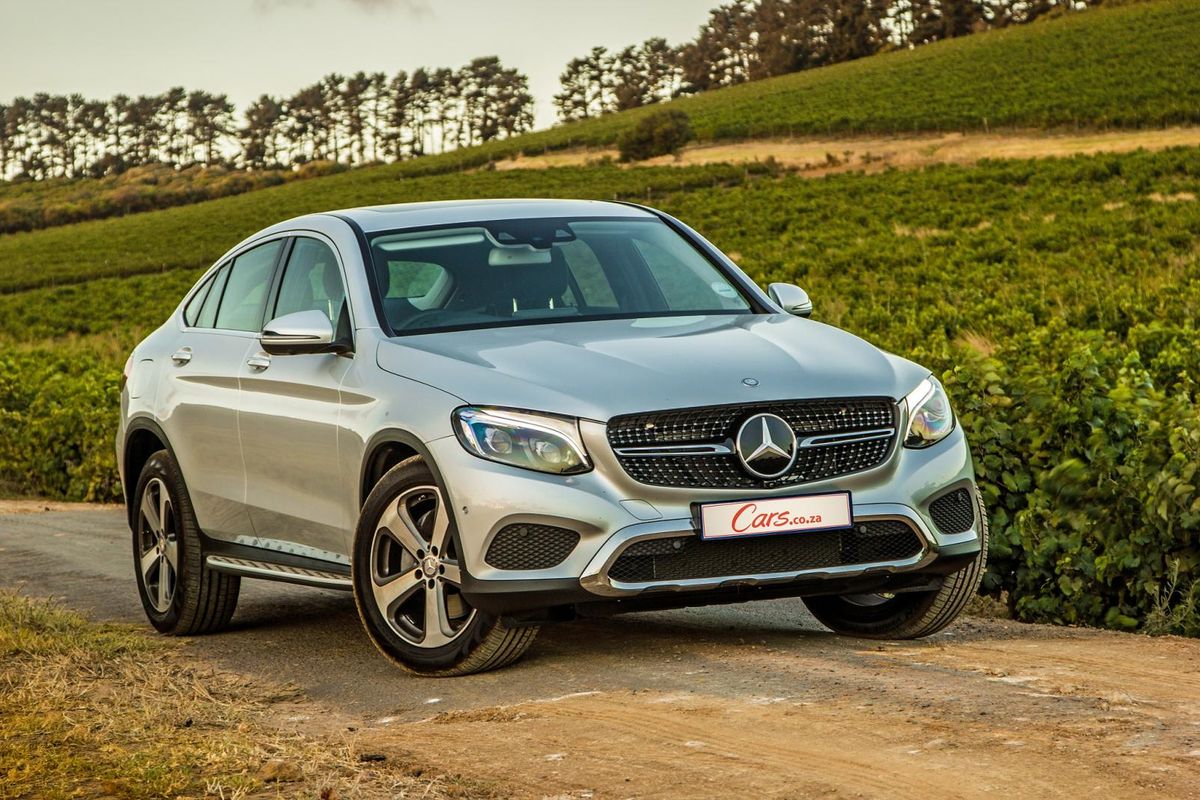
It's a GLC SUV, but with coupe styling. Not too dissimilar to the BMW X4 in execution.
A car like this has to cause a reaction of sorts from onlookers, isn't that the whole point of a coupe-styled SUV? The GLC Coupe does that with the huge diamond-studded grille up front; it certainly makes a positive impression as it heads towards you. The shape from side-on is quite bulbous and makes the Benz look like it’s on stilts… It might not be to everyone’s taste, but again, that’s all part of making a statement. There is also the AMG Line package, which you can add for about R37k extra. Our model only has the standard line, but the AMG Line adds a little more pizzazz with different body styling and bigger wheels. There’s also a sports suspension included in the pack.
Road manners?
The GLC Coupe was specified with the adaptive suspension option, which enables a driver to alter the Benz's damping characteristics (among other attributes) by selecting different driving modes. We found the ride quality in (standard) Comfort mode soft, but springy. The other generic modes are Sport and Sport Plus, all of which adapt the car's suspension settings, engine responses, gear change mapping and even climate control power. The key mode, however, is the individual mode. It allows you to specify all the above settings into one custom, personalised setup. For everyday driving, we had the suspension set to Sport and the rest set to comfort – this fixes the nervous ride and is still efficient and comfortable for town driving.
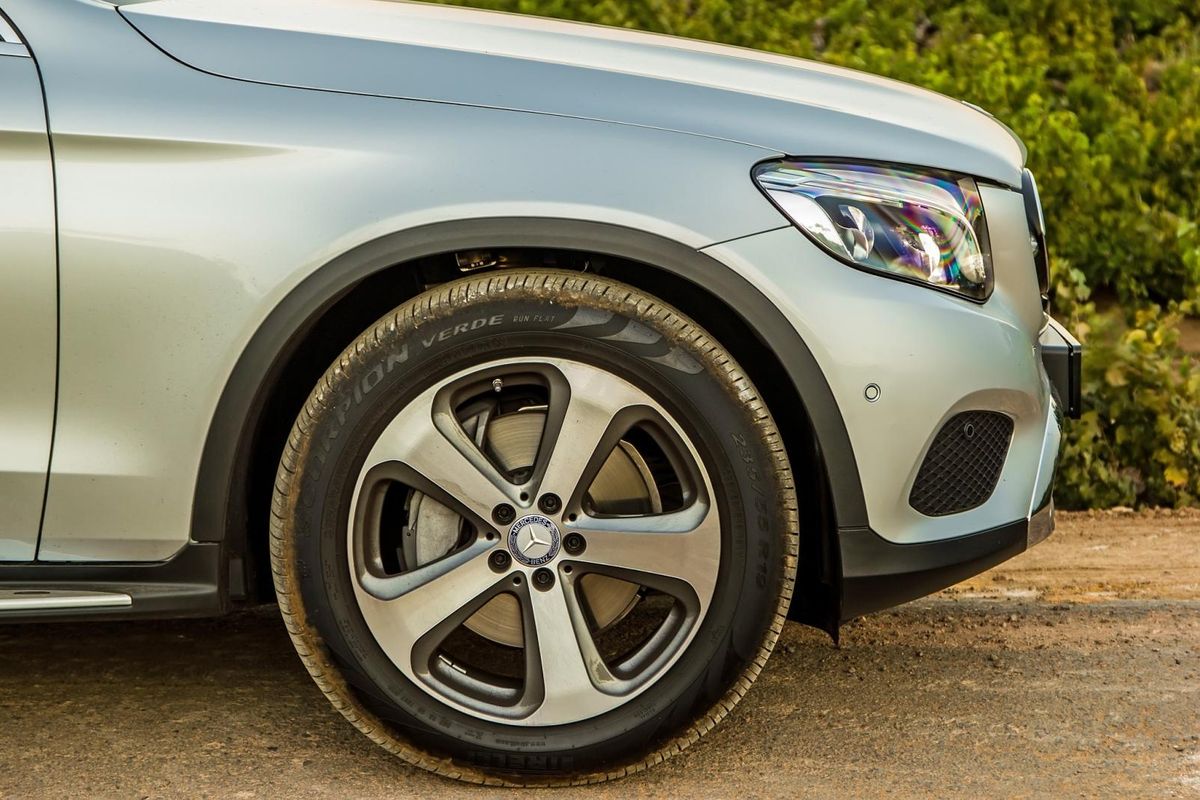
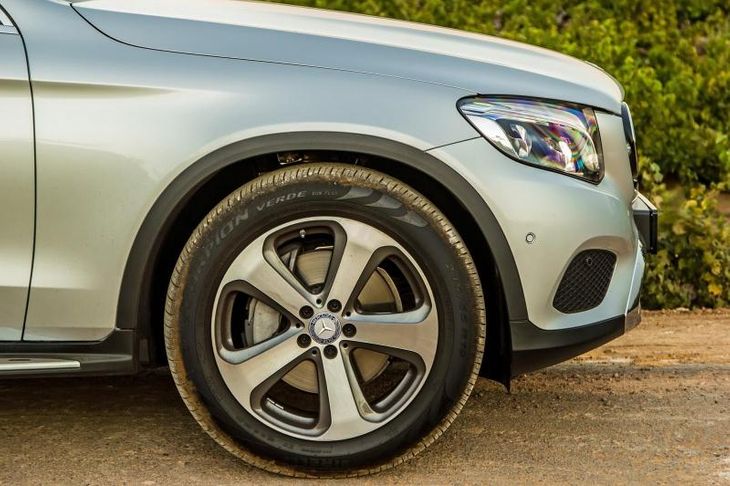
Run-flat tyres and chunky rubber combine with all-wheel drive to provide excellent grip.
Once the suspension was set to our liking, we could get on with driving the GLC Coupe properly. In Sport mode the ride quality is firm, yes, but not crashy on uneven stretches of road. Much of the "give" can be attributed to the higher profile of the tyres (235/55), which might not be great for looks but certainly improves the driving comfort. The steering is quite positive so the Benz swaps directions quickly despite its considerable height and bulk.
It’s a very easy car to drive and you feel comfortable with its size quickly due to its car-like driving position. Thanks to the higher profile tyres, you don’t feel too bad about sending the GLC Coupe down a gravel road, where it’s actually quite at ease. It’s very much a soft-roader with its exposed chrome pieces of bodywork, but we’ve witnessed its siblings tackle the dunes of Namibia with some success.
Engine performance?
The turbodiesel motor in the 250d is the tried and tested unit that Benz shares with Nissan in some products. It’s an engine that has since been replaced with a newer 2.0-litre turbodiesel (such as in the E-Class). While this engine is good (150 kW and 500 Nm of torque), it can be quite noisy, especially at idle. The new 2.0-litre engine works brilliantly in the E-Class, so the 250d felt like a bit of a throwback, comparatively.
But with 500 Nm of torque, just about every road manoeuvre is effortless. Overtaking at any speed is a cinch and at 120 kph, the motor is barely ticking over at 1 700 rpm. That’s especially good for fuel economy over long distances. Thanks to the transmission's 9 ratios, the 2.1-litre powerplant is almost always in the optimal torque band and also saving fuel by not revving higher than what it absolutely necessary. The shifts are smooth and seamless and you’ll be hard-pressed to detect them as they occur. As a result, we achieved an average fuel consumption of 6.9 L/100 km out of the 1 000 km we drove the GLC (admirable for an SUV) and you’ll likely see better figures as the engine frees up after a few thousand more kilometres.
Tech and gadgets?
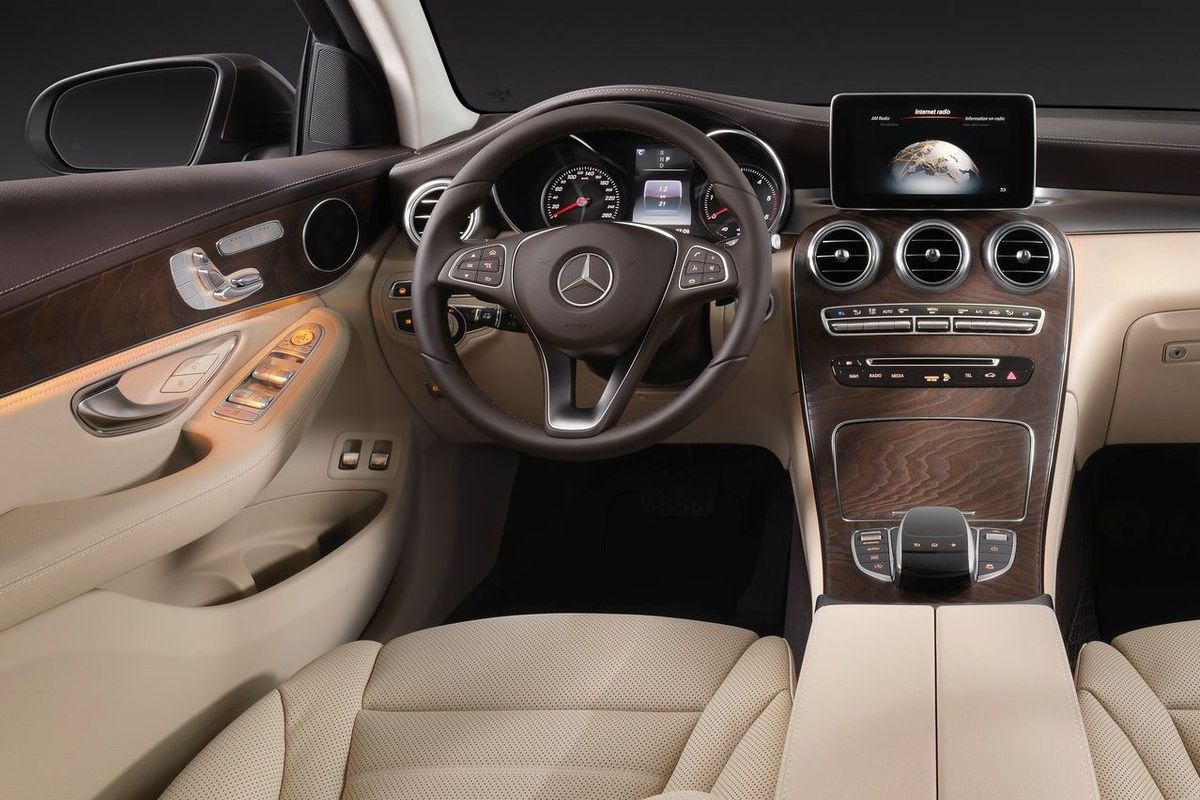
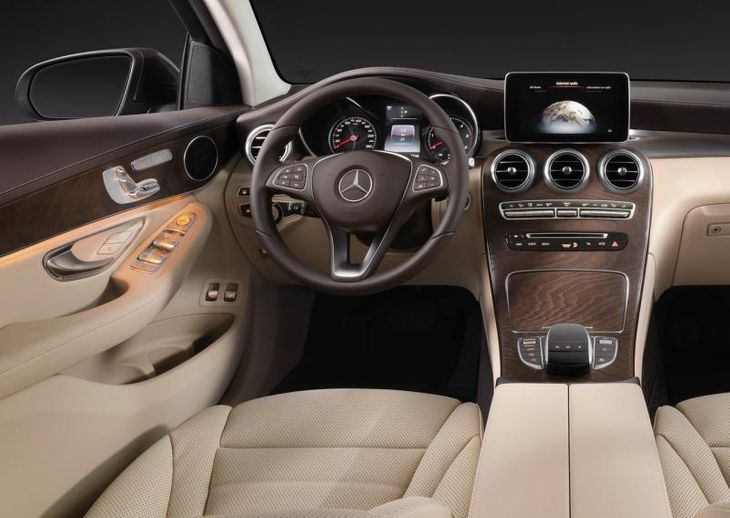
Business as usual for the cabin of the GLC range. Laden with tech and customisable in terms of seat colour and dashboard trim.
Virtually everything you'd like to specify in a C-Class business class sedan is also available in this, its cousin, the GLC Coupe. Our model was brimming with extras such as a semi-autonomous driving function that allows you to take your hand off the wheel for 30 seconds while the car drives itself. Adaptive cruise control is nice to have as are the blind spot monitoring, lane departure warning and a 360-degree surround view features…
The infotainment system does not lack for functionality, but does not feel quite as crisp and intuitive to use as the interface in the E-Class, particularly when it comes to hands-free operation. Commands such as the input of navigation detail and making phone calls are not as easy to get right as they are in the new E-Class. These new bits of tech are likely to be phased into the GLC Coupe as the model progresses through its life cycle, though.
Practicality?
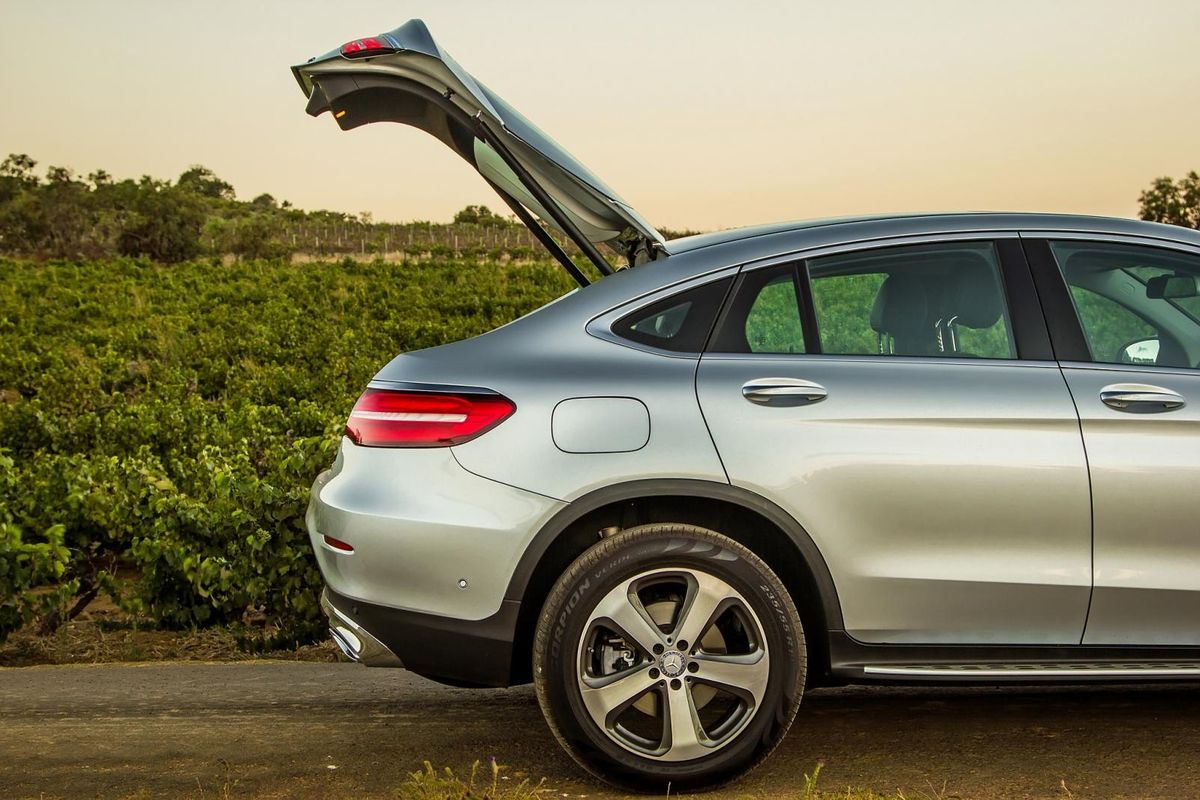
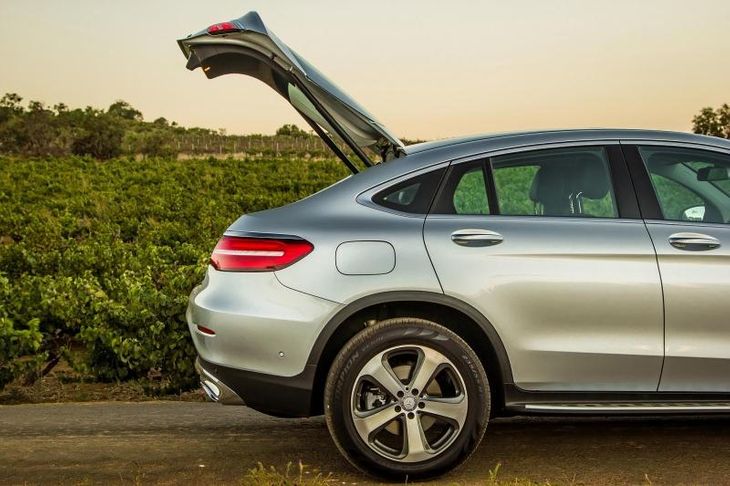
The GLC Coupe features less boot space but more style. Access via a rear hatch.
Left last for obvious reasons, the GLC Coupe is not so much about practicality as it is about style. Mercedes-Benz claims the luggage bay of the GLC Coupe is only 50-litres smaller than that of the standard GLC (500 vs 550 litres), but 200-litre worth of overall loading space has been sacrificed (when you fold the rear seats down). Most of this probably comes from the rear passengers’ headroom, which is reduced by the sloping roof.
With the sloping roof, certain loading issues arise. For example, if you want to pack a box, you have to be extremely sure that it’s low enough (or pushed back far enough) that the rear window doesn’t crush it when the tailgate closes. Suffice to say the GLC Coupe is trickier to pack tightly.
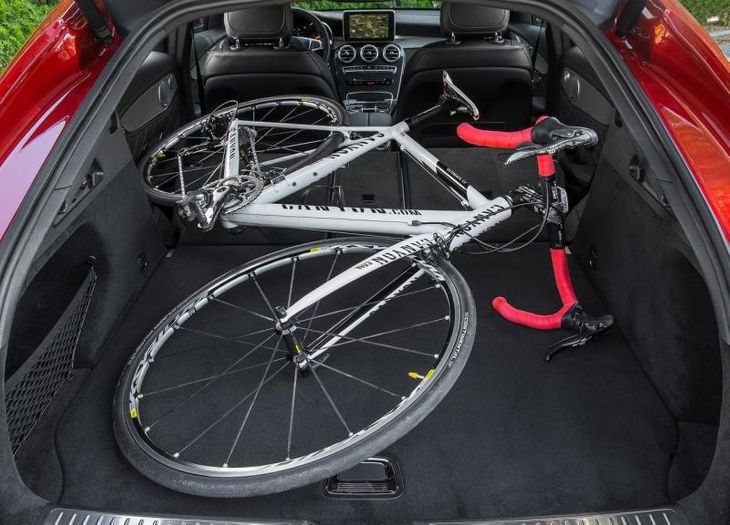
It's possible to fit an entire bicycle in the luggage bay, but the Mercedes-Benz GLC coupe's ultimate practicality is still compromised.
Pricing and warranty
The GLC 250d Coupe is priced at R795 222 and is sold with a 2yr/unlimited km warranty and a 6yr/100 000 km maintenance plan.
Verdict
The German premium vehicle marques are quite fond of creating niches, or alternatively, following each other into those non-traditional segments. More to the point, the Teutonic firms started the trend and other European and Japanese brands have followed suit. As a style-oriented purchase, the GLC Coupe makes a strong statement and it’s a very rewarding car to drive, but it doesn’t seem too different from a standard GLC, which offers a similar driving experience, but with none of the practicality drawbacks. The Coupe also happens to be an extra R100 000 on top of the standard car.
However, if we compare the GLC Coupe with its direct competitors, the picture looks a little bit different. The BMW X4 is, subjectively, not quite as eye-catching as the GLC Coupe and, as is the case with the Range Rover Evoque, a significantly older product. The Lexus NX is worth a look too and, if your budget can stretch that far, consider a Porsche Macan or Jaguar F-Pace. But as it stands, the GLC Coupe leads its tiny subsegment.
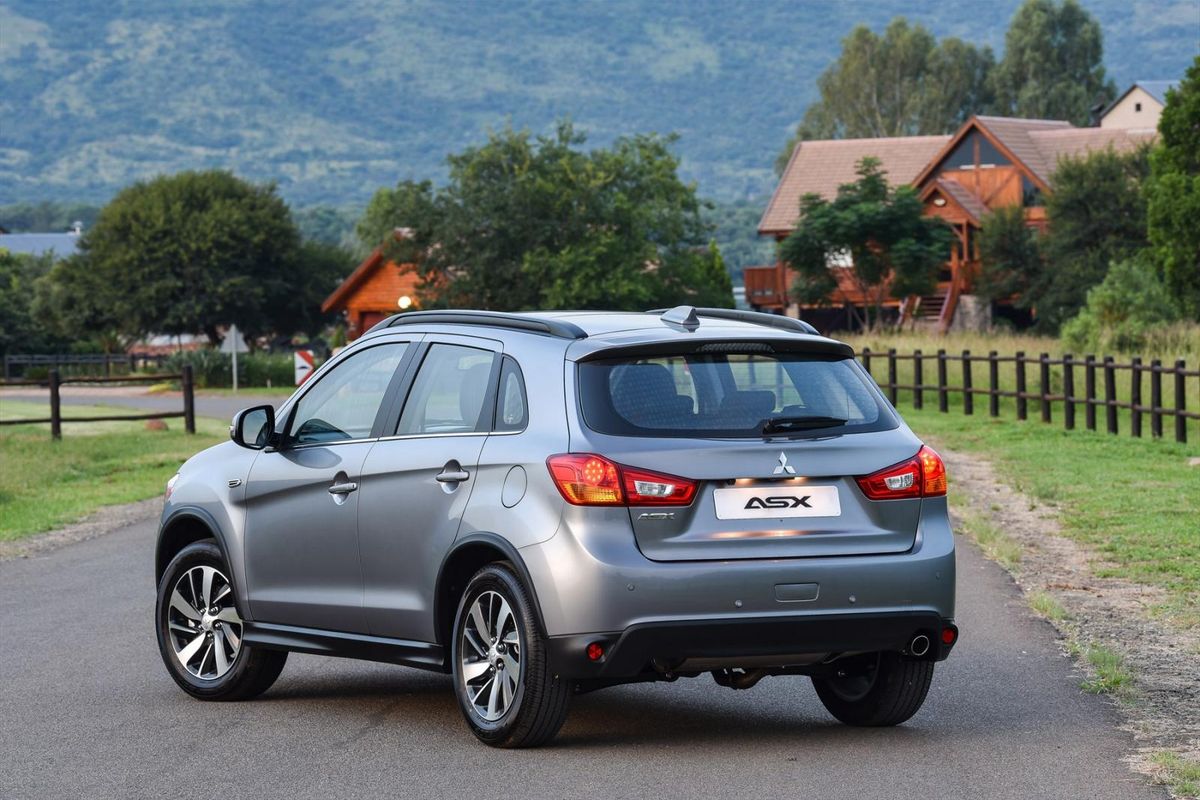
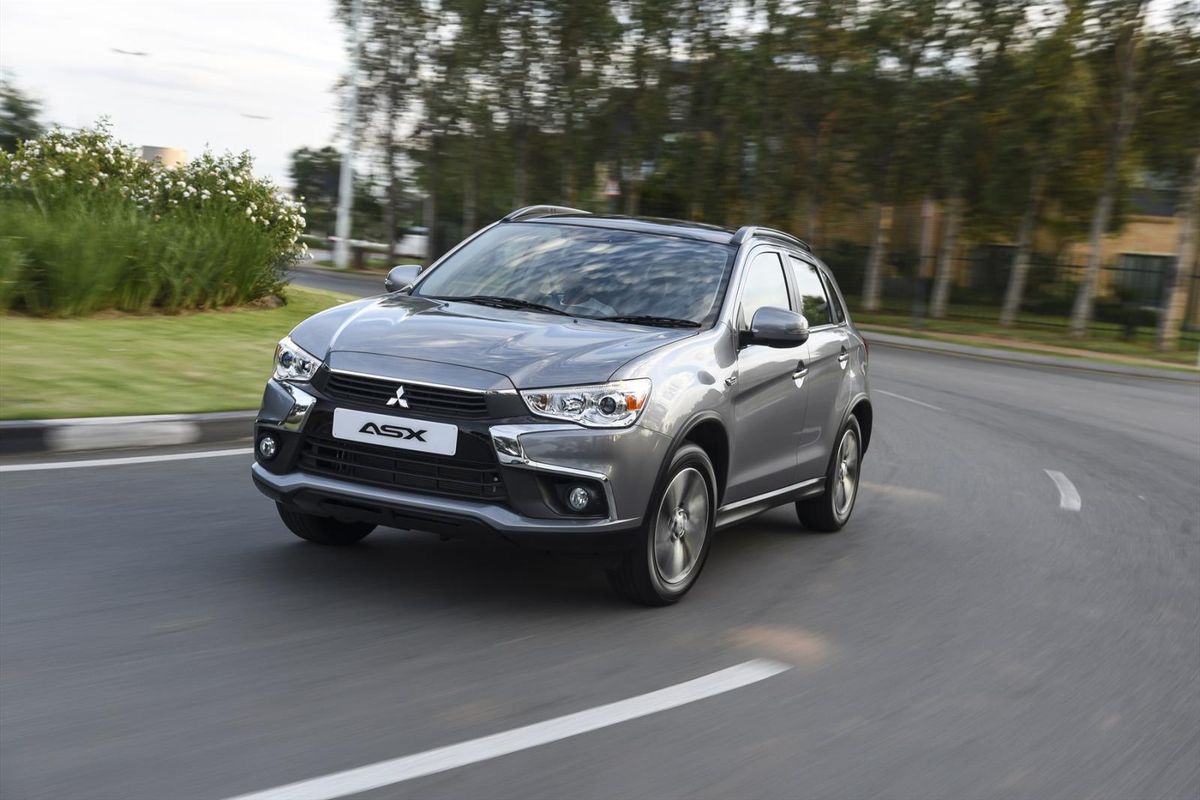
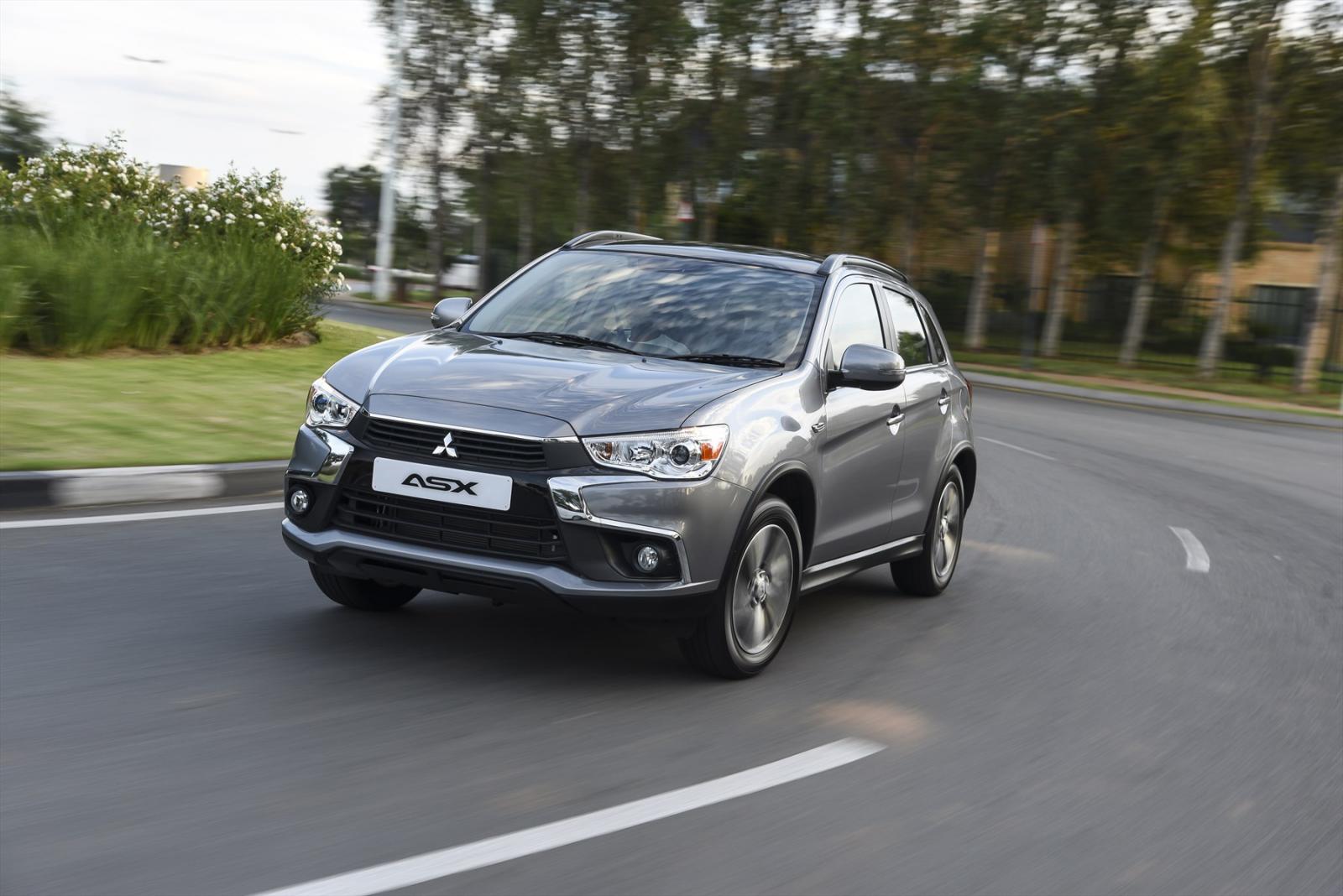
The Mitsubishi ASX compact crossover has been updated for 2017 with fresh styling changes as well as the addition of a new value-for-money derivative. Take a look at the details below…
The ASX compact crossover has received a number of styling updates for 2017, now featuring the company’s new Dynamic Shield design language. Mitsubishi has also bolstered the ASX range with the addition of a new 2.0-litre, 6-speed CVT derivative that’s priced just below R400 000.
“We have to address the current affordability needs of our customers. Today’s economy often forces buyers to opt for lower-spec vehicles, but our new ASX 2.0 GL CVT derivative offers the comfort and efficiency of Mitsubishi’s CVT transmission as well as its impressive standard specification in a truly attractive package. When you consider Mitsubishi’s world-class safety ratings, the new ASX 2.0 GL CVT is easily the best sub R400 000 vehicle on the market” says Nic Campbell, General Manager of Mitsubishi Motors South Africa.
The ASX is the first model in Mitsubishi’s lineup to feature the new Dynamic Shield design language, which incorporates a much bolder grille design. The design will be carried over to other models such as the new Outlander and Pajero Sport. The ASX also benefits from redesigned seat cushions that offer higher levels of comfort.
Engine Power and Features
A new 2.0-litre CVT derivative joins the ASX range in 2017, priced from R399 900.
There are now five derivatives in the ASX range, all powered by a 2.0-litre petrol engine offering 110 kW and 197 Nm of torque. The front-wheel drive ASX is offered with either a CVT or 5-speed manual transmission. Mitsubishi claims 7.5 L/100 km for the manual derivatives and 7.6 L/100 km for derivatives equipped with the CVT.
In terms of safety, the ASX is equipped with 7 airbags, ABS with EBD, brake assist and ISOFIX child seat mountings. The ASX also carries a 5-star Euro NCAP safety rating.
All ASX GLS derivatives offer LED daytime running lights, hill start assist and electronic active stability control and traction control as standard.
Convenience features include Bluetooth with voice control, cruise control, electric windows, air conditioning, multifunction steering wheel and rear park distance control. Rain-sensing windscreen wipers and automatic headlights are also standard on all models.
GLS and GLX derivatives are equipped with a panoramic glass roof, a full-color touchscreen infotainment system, heated front seats, electrically adjustable driver’s seat and a rear-view camera. A Rockford and Fosgate sound system is also fitted for GLS derivatives.
Mitsubishi ASX – Price in South Africa
2.0 MIVEC GL 5-speed M/T – R364 900
2.0 MIVEC GL 6-speed CVT – R399 900
2.0 MIVEC GLX 5-speed M/T – R399 900
2.0 MIVEC GLS 5-speed M/T RF – R414 900
2.0 MIVEC GLS 6-speed CVT RF – R434 900
The Mitsubishi ASX is sold with a 3-year/100 000 km warranty and a 5-year/90 000 km service plan.