Volkswagen Up! Versus Facelifted Up!: Spot the difference [Video]
There's a new Volkswagen Up! (the exclamation mark is important) in town and while it might not be an entirely new generation of VW’s popular city car, the facelift is quite extensive.
We thought the best way to show you these changes would be to line up(!) an original Up! and the latest Up! in our studio for a side-by-side comparison, also known as a game of spot the difference.
Renault Kadjar XP Limited Edition (2017) Specs & Pricing
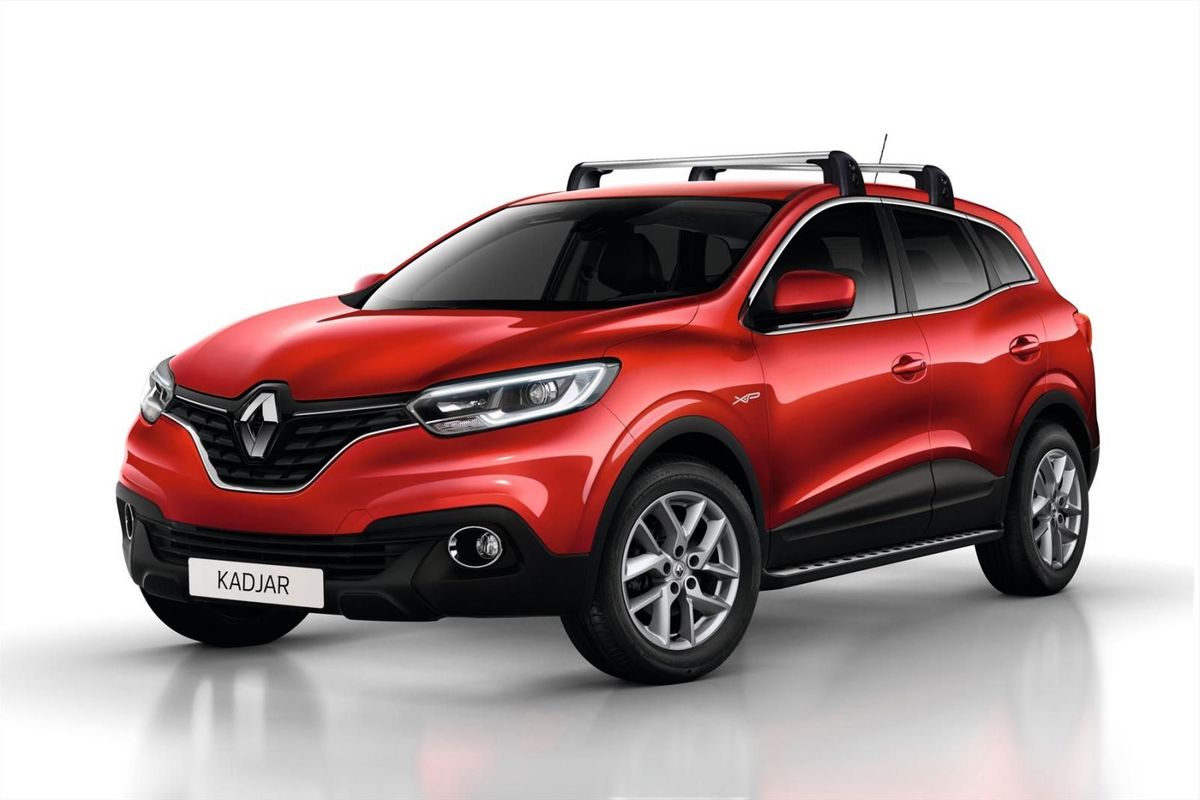
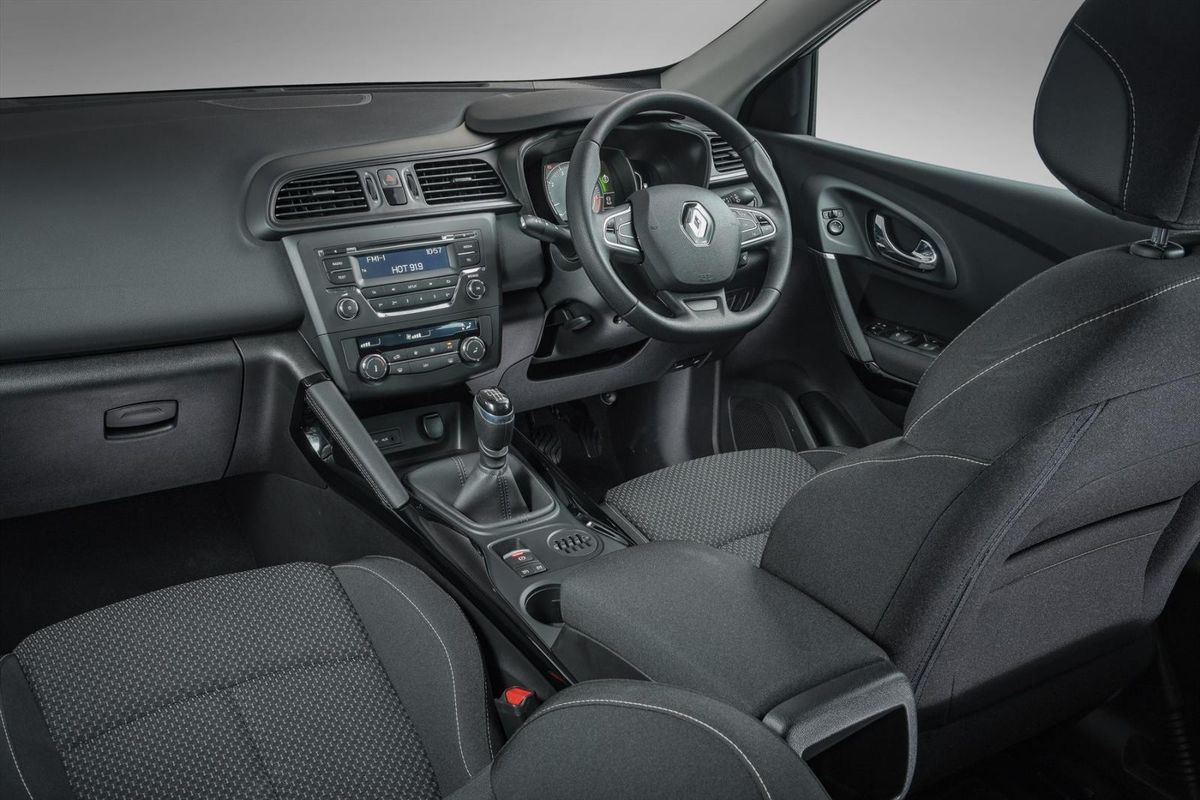
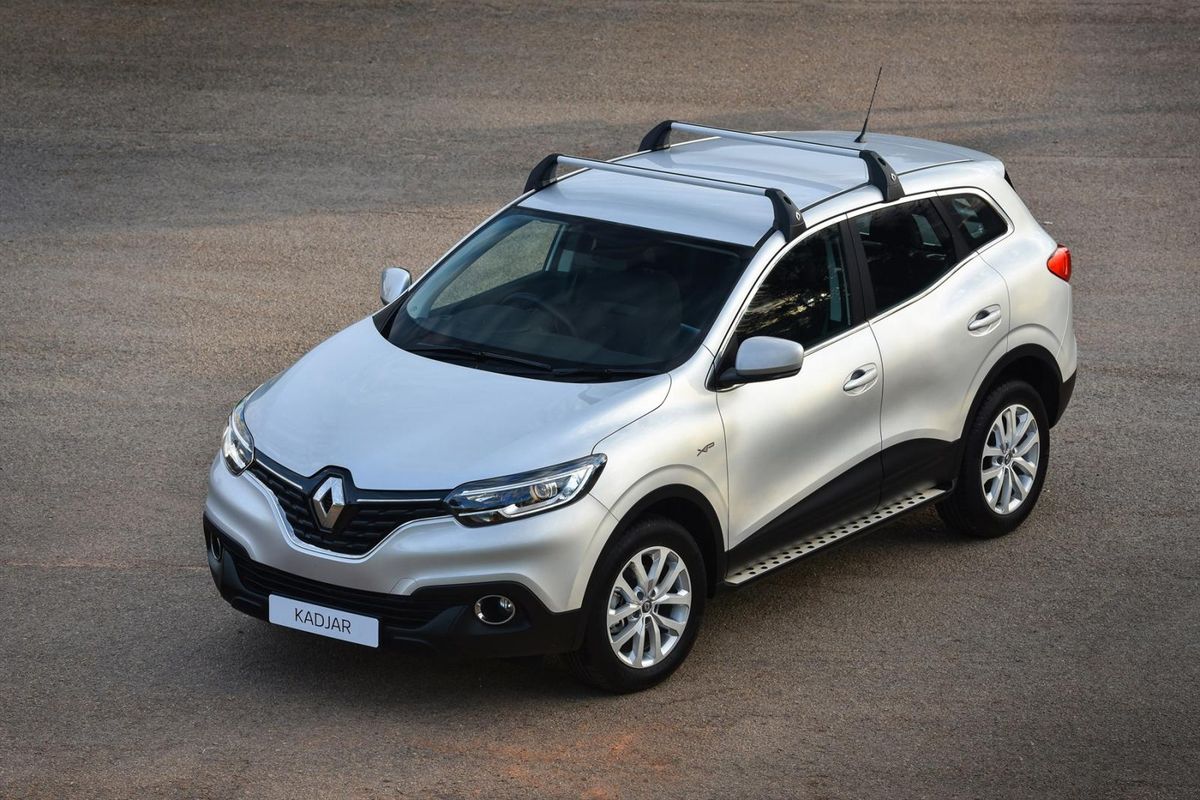
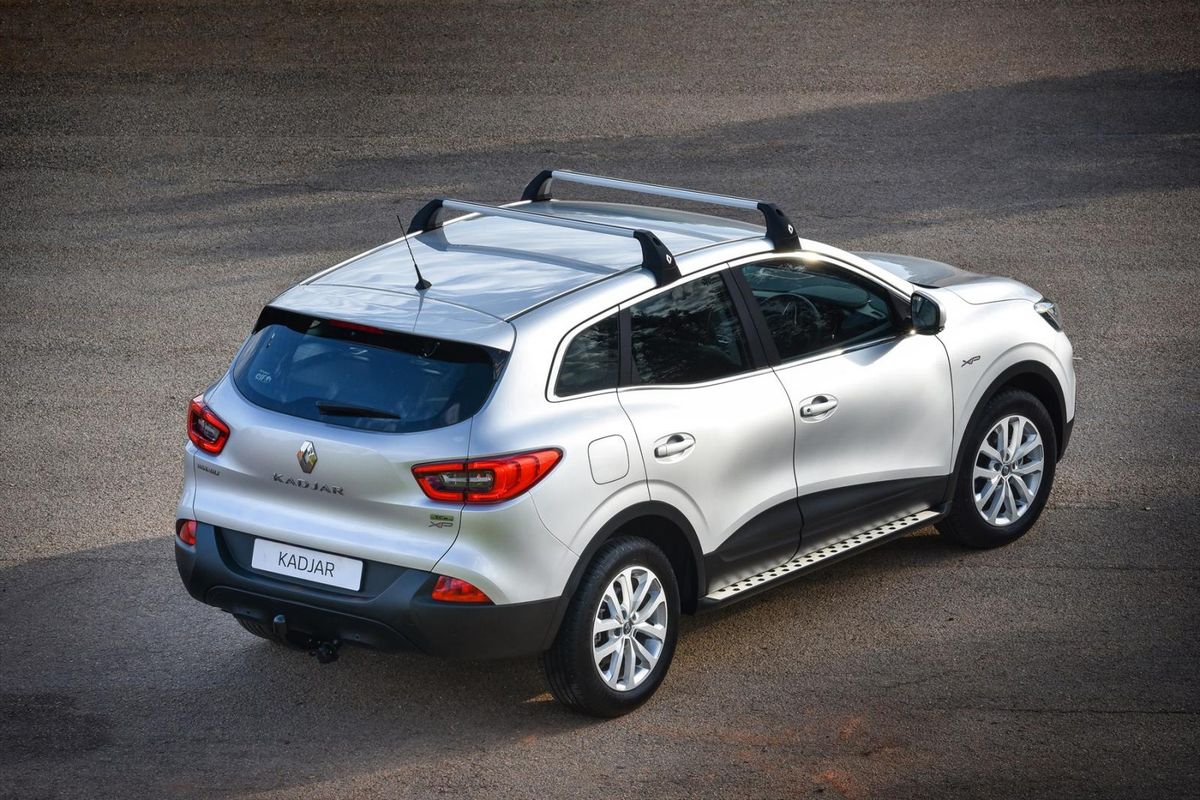
Renault has announced a limited edition version of its Kadjar SUV. Meet the Renault Kadjar XP, which comes with a number of accessories as standard. Here are the specifications and pricing.
Using the Renault Kadjar 96 kW 1.2 Turbo petrol Expression as a platform, the French manufacturer has created a new limited-edition model that features a number of useful accessories. It's called the XP – a video game term referring to Experience Points – and the aim of the vehicle is to encourage owners to enjoy the outdoors.
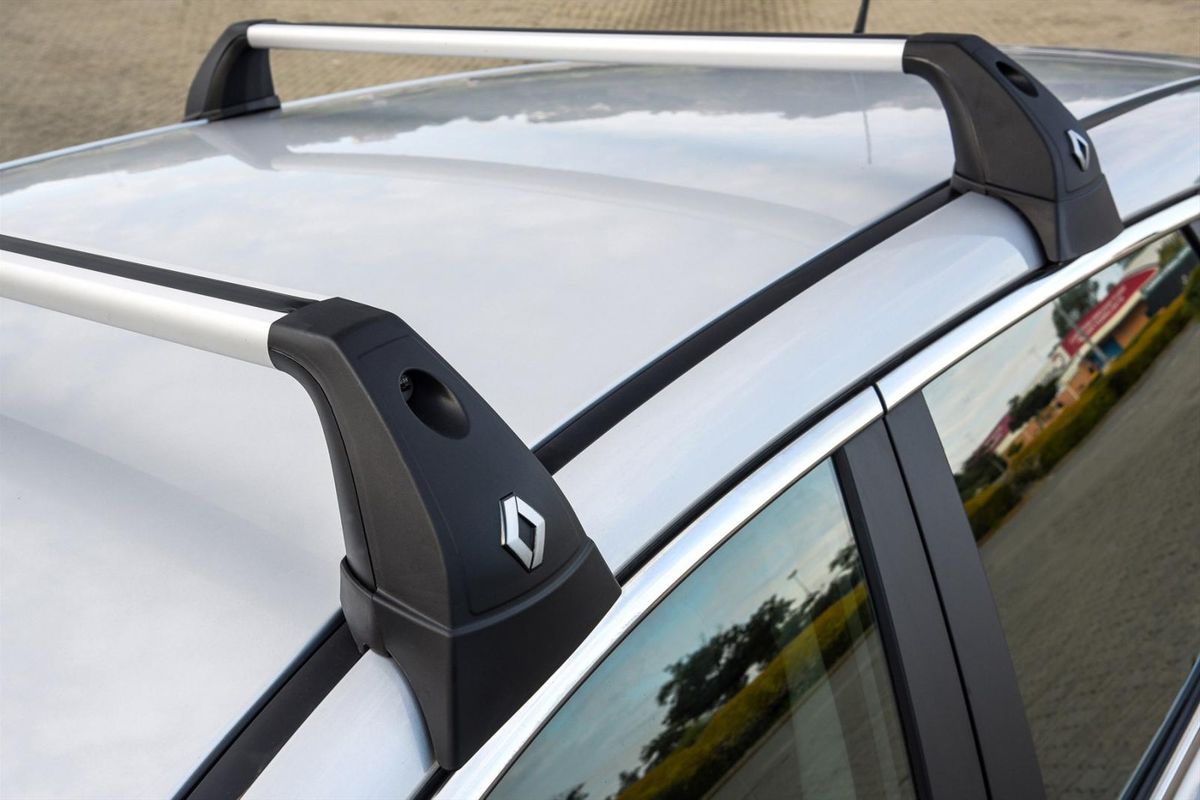
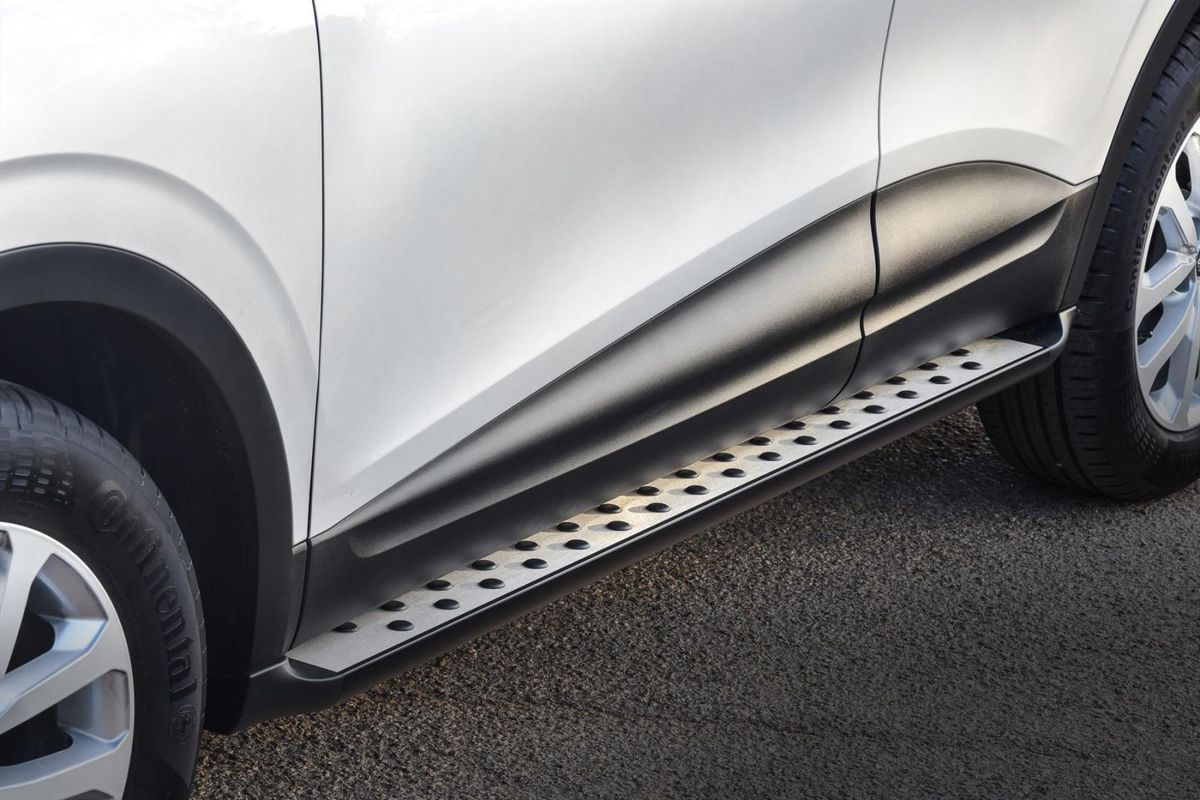
The accessories include new 17-inch alloy wheels, cornering fog lights, a towbar, side steps and roof rails. Renault South Africa claims the value of these accessories comes to R40 000, but the price of the Kadjar XP is the same as the normal Expression model at R364 900.
The Renault Kadjar features 200 mm of ground clearance – useful for those who like mounting pavements and driving on gravel. It's powered by a 1.2-litre turbopetrol engine with outputs of 96 kW and 205 Nm, and it's claimed to be quite frugal with claimed fuel consumption and emission figures of 5.7 L/100 km and 127 g/km respectively.
Renault Kadjar XP Limited Edition price in South Africa
The Kadjar XP Limited Edition comes standard with a 5-year/150 000 km mechanical warranty and a 6-year anti-corrosion warranty. Also standard is a 5-year/90 000km service plan with services taking place at 15 000km intervals. The Renault Kadjar XP Limited Edition goes on sale on the 9 February 2017.
Renault Kadjar XP Limited Edition 96kW 1.2 Turbo petrol R 364 900 (incl. VAT)
How has it come that the faster we drive, the less we enjoy it?
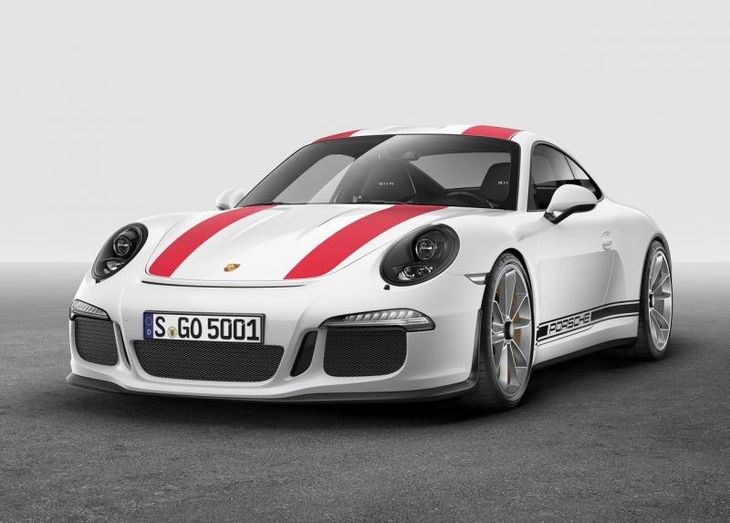
So, Evo magazine and Autocar – benchmark publications, as well as TopGear (you can make up your own mind on that one), voted the Porsche 911 R as their über-most (not Uber) car of 2016.
Undeniably, the past 12 months was an exceptional period for the performance enthusiast. From the overhyped Ford Focus RS, the predictably underwhelming Audi RS3 and the underappreciated BMW M140i latecomer, to the tyre-shredding Mercedes-AMG C63S Coupe and the track-focused BMW M4 GTS. Topped, by a mountain of gold dust sprinkled over a dollop of Chantilly cream – the angelic goodness of the Audi R8 V10 Plus and McLaren 570S. And there were many more in between.
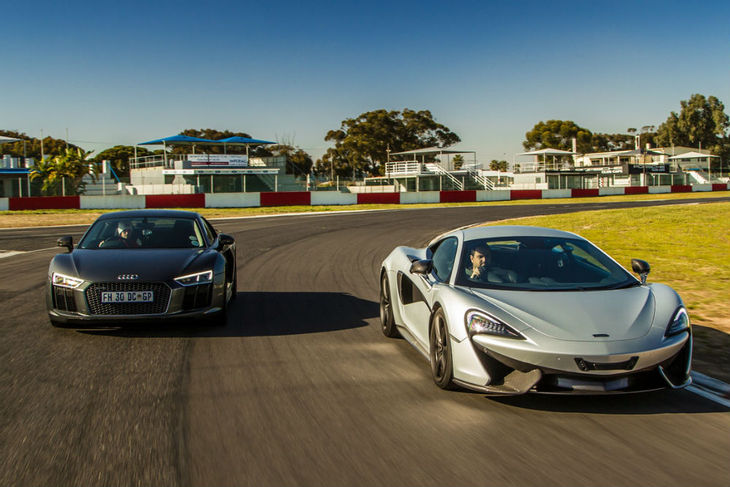
Cars.co.za compared the Audi R8 V10 Plus and McLaren 570S on track. Related links at bottom of article.
It’s seemingly incidental that the 911 R and Golf GTI Clubsport S (which was Evo’s runner-up and 3rd in TopGear respectively) are global limited-run sell-outs – more so in South Africa (according to Porsche the number that made it here was “more than one but less than ten”, and 47 VW units of the Clubsport S).
But it also isn’t.
That the 911 R romped away with more accolades than Cristiano Ronaldo came as little surprise: a 4.0-litre naturally aspirated flat-6 from the GT3 RS, manual gearbox with rear-wheel drive and a limited slip differential (the mechanical type, not the trippy tablet), more weight-saving measures with no option of either a radio or aircon, it’s the lightest 911 and purest Porsche you can(not) buy. Call it the 991-generation GT3 you’ve always wanted.
Porsche 911 R – a lightweight, naturally-aspirated analogue driving tool. The driver’s driver’s car.
Key to its existence is that the 911 R was designed as a road car, not a race car; was solely conceived to aid the pursuit of pleasure. The driver’s driver’s car. That’s why unlike its more hardcore GT3 siblings, it doesn’t have any wings, and you can drive over speed bumps without fear of disembowelment.
But the 911 R’s true charm doesn’t wink from beyond its 8 250 rpm redline, or that the controls are as crystal-like in communicating the car’s behaviour as the mountain stream you’re flying past on a Sunday morning blast. Neither is it Porsche’s conveniently-timed generosity in allowing you to control the gearbox yourself when a three-pedal next-gen GT3 comes out later this year, or the performance-porn of weight-saving canvas door pulls and cloth seats. It’s because the 911 R serves as a counterpoint to everything else out there, both intellectually and existentially. And the question one should be asking is not why it’s here, but rather how we got here.
As humans, we seek to find joy in little things. But how many performance cars (that are available as new models today) just lets you jump in, turn the key and immediately go fast? Is it not bizarre that between a BMW M5’s two M buttons there are 486 different programmable combinations? Have you ever sat at a traffic light and engage launch control in an AMG? There are more steps to go through than the space shuttle’s pre-countdown sequence. And by which time the Hyundai Veloster Turbo next to you that thinks he’s racing you has long disappeared. And tweeted about his victory. And the light has turned orange again.
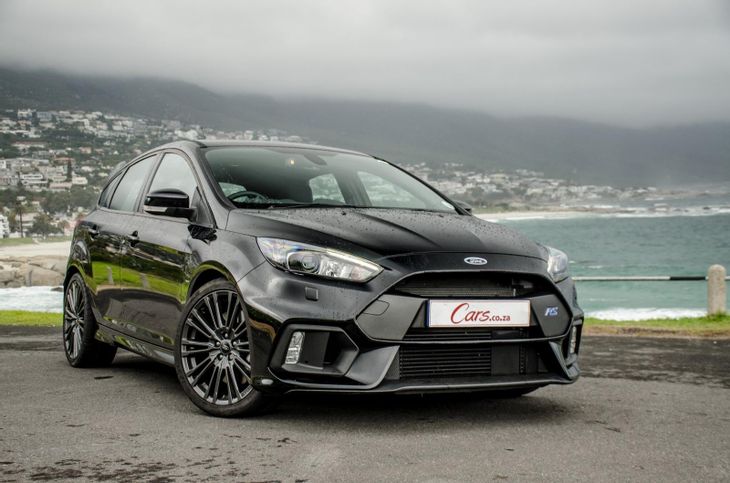
The Ford Focus RS has a very specific target market, certainly, but is its drift mode function really justified?
Then there’s Ford, who in the Focus RS thought that a drift button would broaden its appeal beyond the roads and onto the spotty faced-Internet (although one suspects that right now, crispy Kugas are trending more than even Ken Block).
To me, drift mode is a particular thing of disgust. Even McLaren – once a self-proclaimed maker of the finest sports cars in the world – has cottoned on to this. When you see the 650S replacement, the 720S, at Geneva next month, it will be the first McLaren fitted with a sideways-on-demand button. This from 537 kW nuclear bomb. What would that button conceivably need to do? And then people wonder why Force India is lapping McLaren in F1…
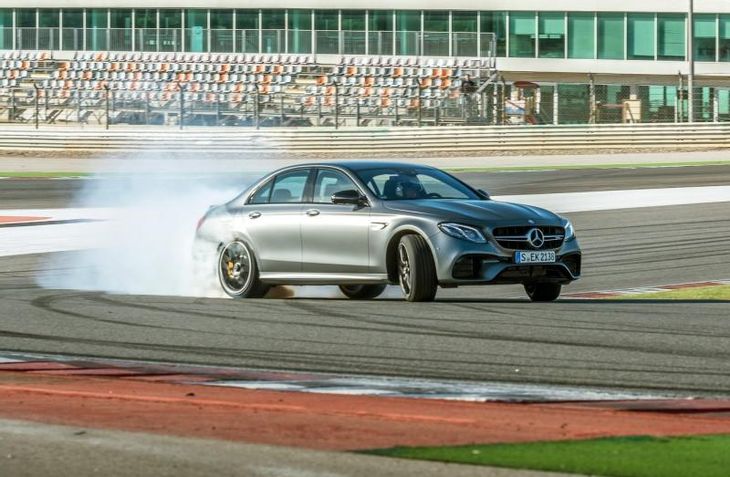
So too has Mercedes-AMG, who had its hand forced in the new E63 sedan, but at least going switchable AWD in an 850 Nm car was a necessary step to towards safety instead of Ford’s one towards stupidity (or "hooliganism", ed.) in the Focus RS.
The Mercedes-AMG E63 S: an all wheel drive monster, but with computer-controlled Drift Mode.
The point is while cars are getting faster, they’re also becoming less fun to drive, and that’s because their grip levels have become so stratospherically high to cope with the speeds that they are capable of. The true joy of driving comes from pushing a car to – and when the circumstances allow – beyond their limits. Before traction and stability control, if in a RWD car, all you needed to do was flatten your right foot. Nowadays, you can’t, because first, you’d have to mount your GoPro or set up a Facebook live session before pressing the button. And letting the car do all the work.
It’s not just the fault of the manufacturers, though – they’re only giving us what we want. Don’t get me wrong: technology powers progress and fosters excellence – and must be celebrated for doing so. But in the continuous quest for everything superlative in the automotive world, sterility seems to be the default outcome of technological advancement. And from an enjoyment point of view, we are paralysed into a state where everything we want in our cars to make them better is only making them worse.
Which in the post-truth period of engine sounds being played through speakers, buttons to engage “maximum go-kart feel” (as found in contemporary Minis), SUVs badged as sports cars, and yesterday’s idiots are tomorrow’s presidents, marks why the naked 911 R isn’t so much a car as it is a saturation point. A beacon of hope; and a call to sanity.
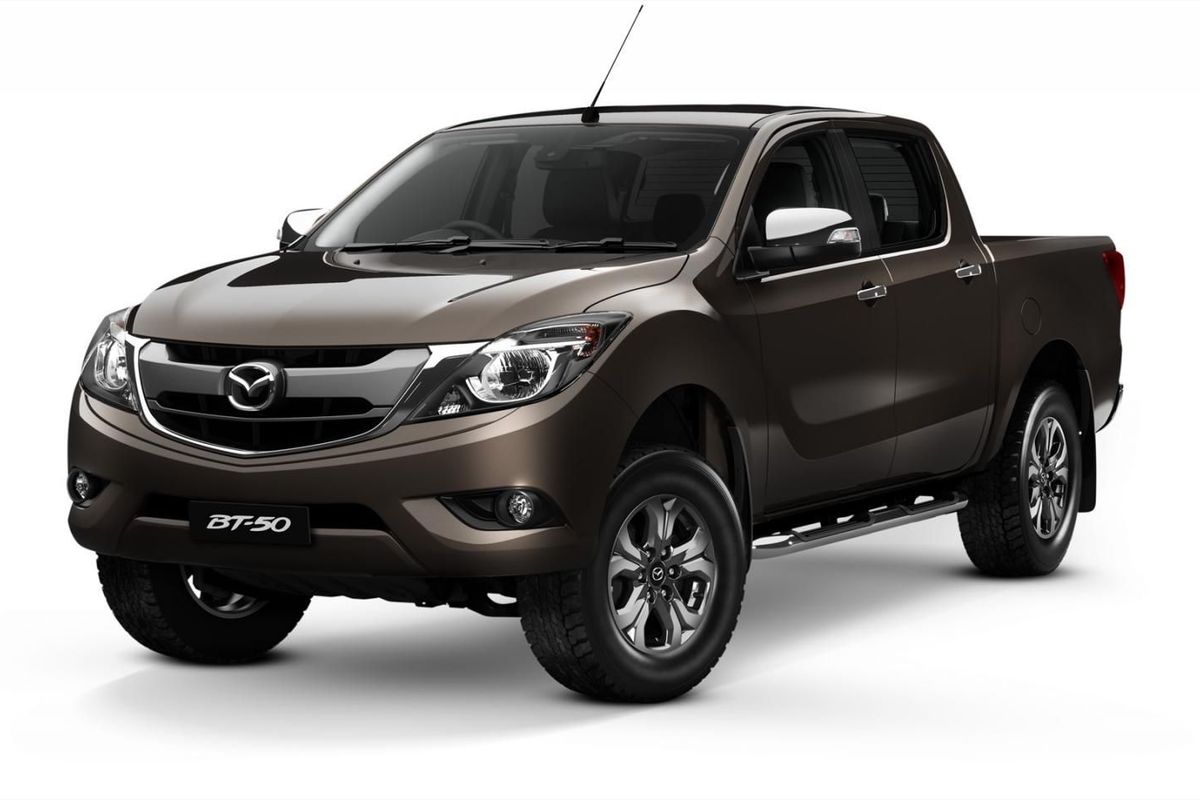
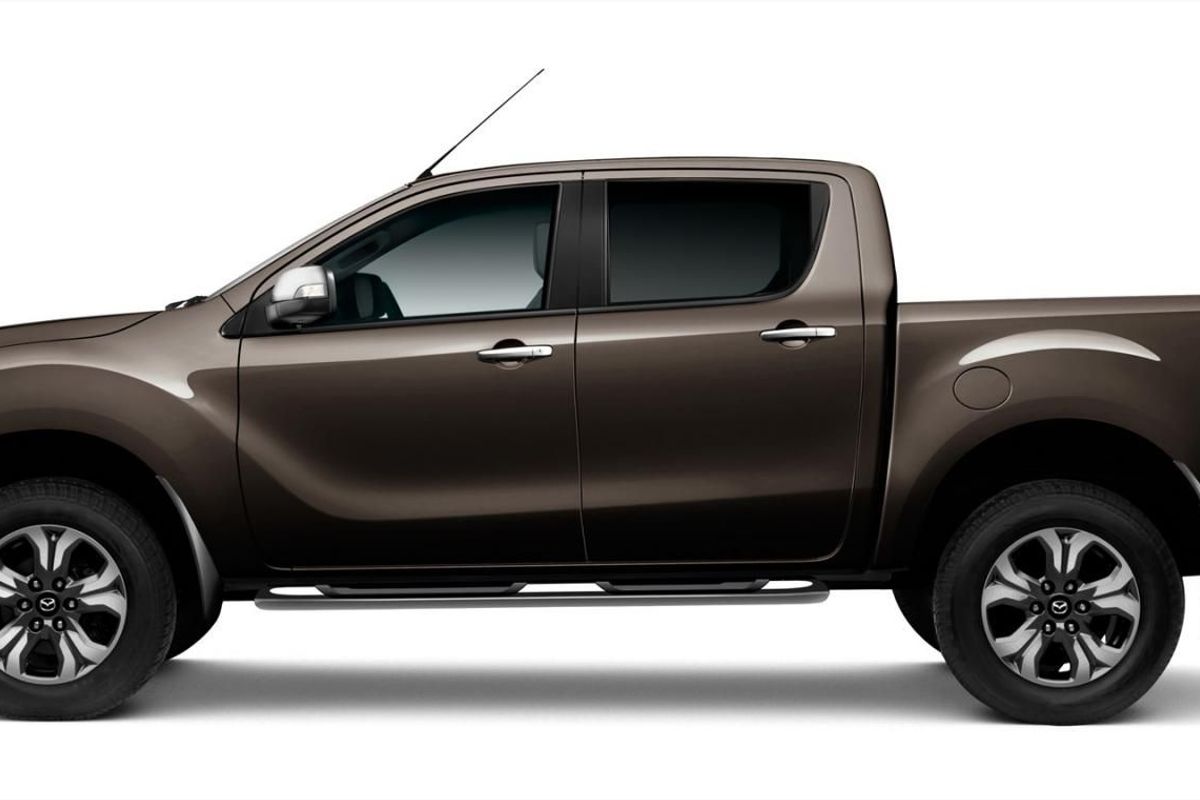
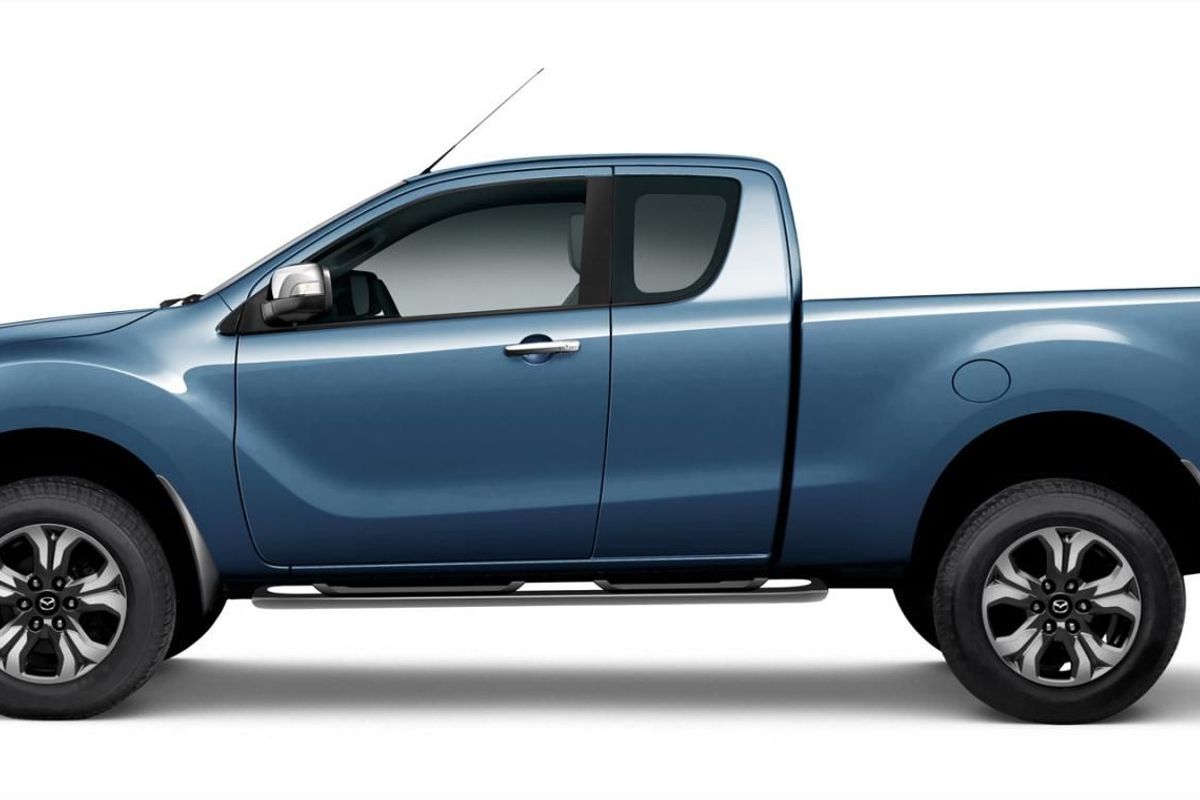
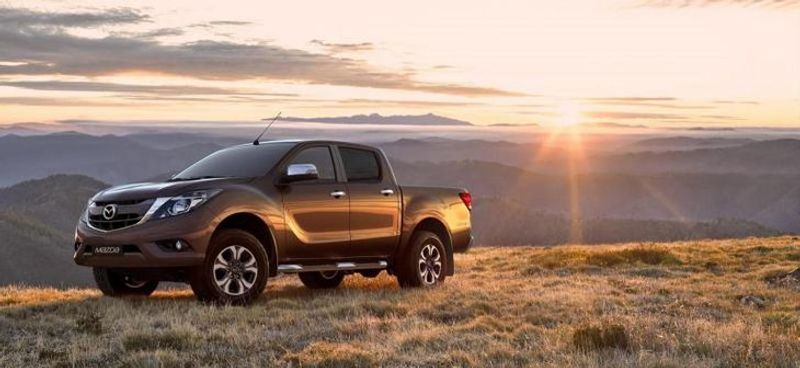
The facelifted Mazda BT-50 bakkie makes its market introduction this week. Here are the specifications and pricing for this new product.
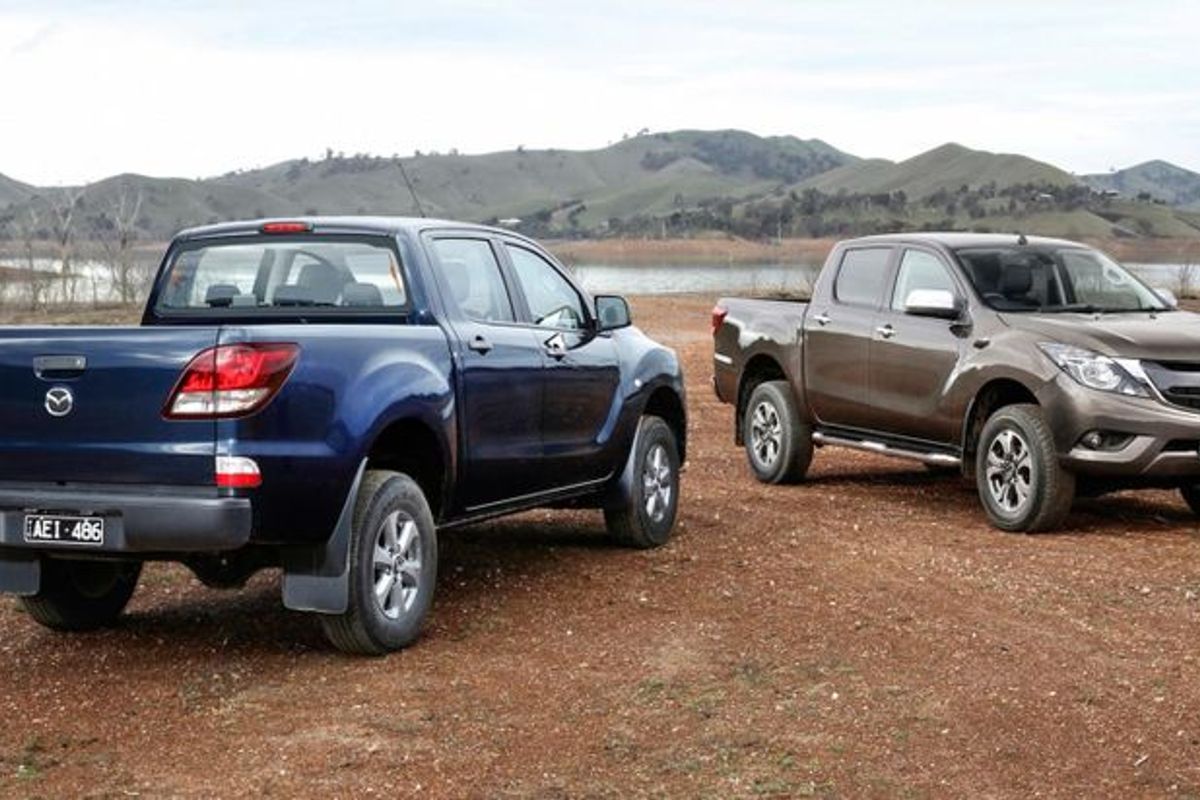
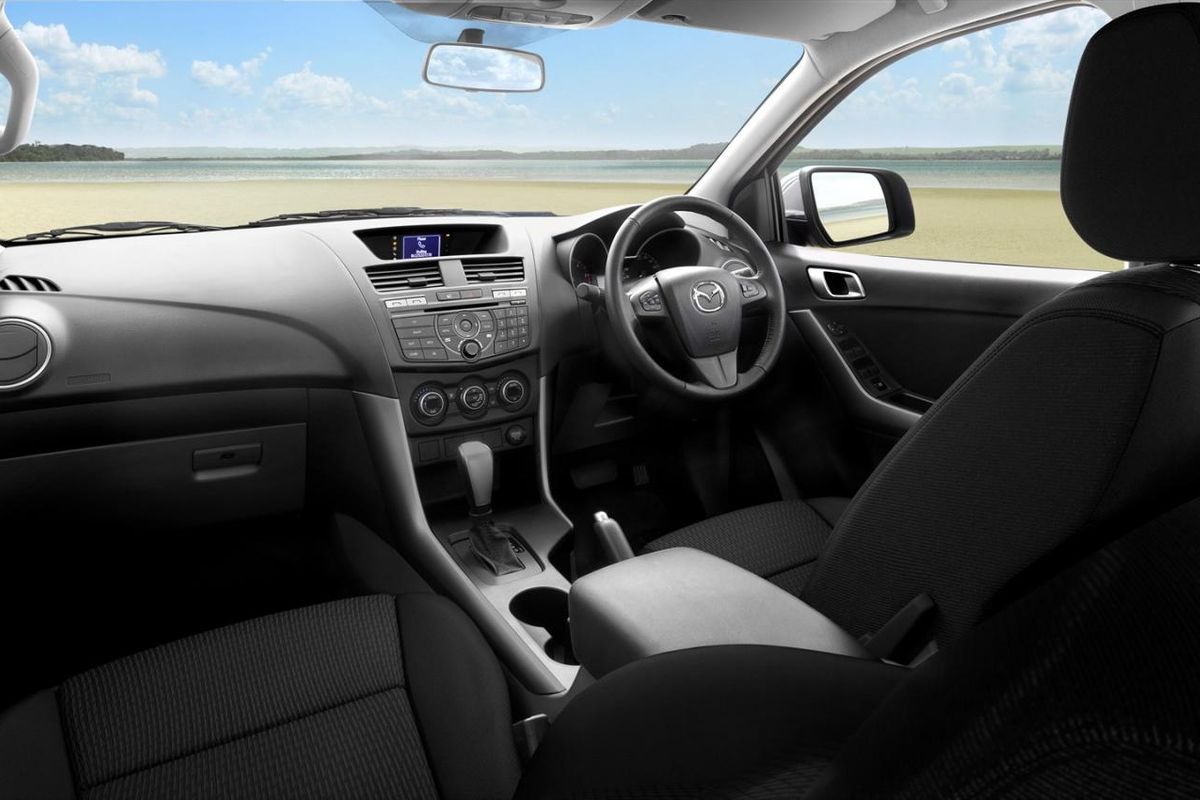
This generation of the Mazda BT-50 was introduced to the South African market back in 2012. It was marketed as an Active Lifestyle Vehicle, which meant that the BT-50 was aimed at more the leisure end of the market as opposed to the workhorse. What's new for 2017? There's new exterior styling, which includes a new face, redesigned side steps, rear combination lamps and 17-inch aluminium wheels. The cabin has also been refined to give a higher-quality feel with the addition of Bluetooth, steering wheel switches and cruise control from the SLX model. The SLE model picks up new features that include a rear-view camera, an auto-dimming mirror and electrical driver seat adjustment.
The Mazda BT-50 double cab range comprises 2.2L 4×2 6MT SLE, 3.2L 4×4 6MT SLE and 3.2L 4×4 6AT SLE as well as new models: a 2.2L 4×2 6MT SLX and 2.2L 4×2 6AT SLE. The facelifted Mazda BT-50 is assembled in Thailand. There are 7 colour finishes: True Red, Aluminum Metallic, Cool White, Jet Black, Deep Crystal Blue, Blue Reflex and Titanium Flash.
Mazda BT-50 Model Lineup
The BT-50 Mazda Care plan is now aligned with that of Mazda passenger vehicles; with a 3-year unlimited kilometre factory warranty, 3-year service plan and 3-year roadside assistance. For complete peace of mind motoring; a Customer Service Guarantee on pre-arranged repairs is also included.
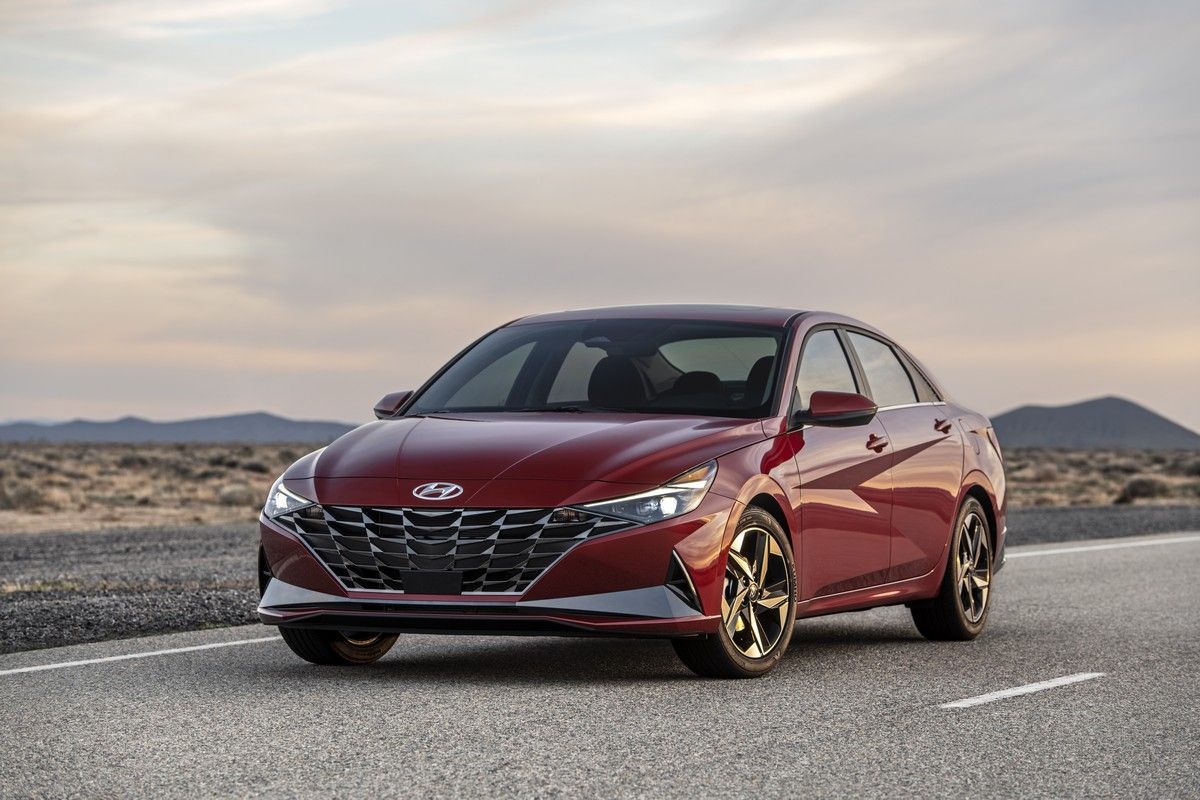
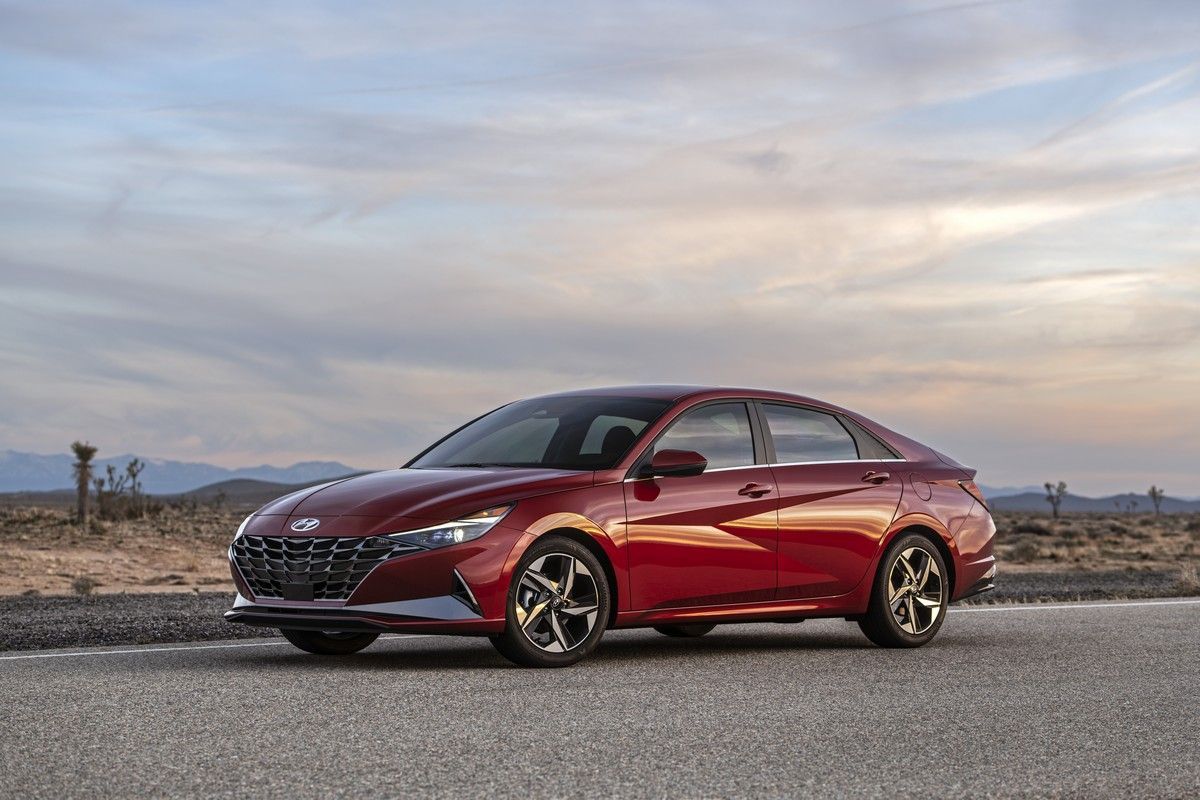
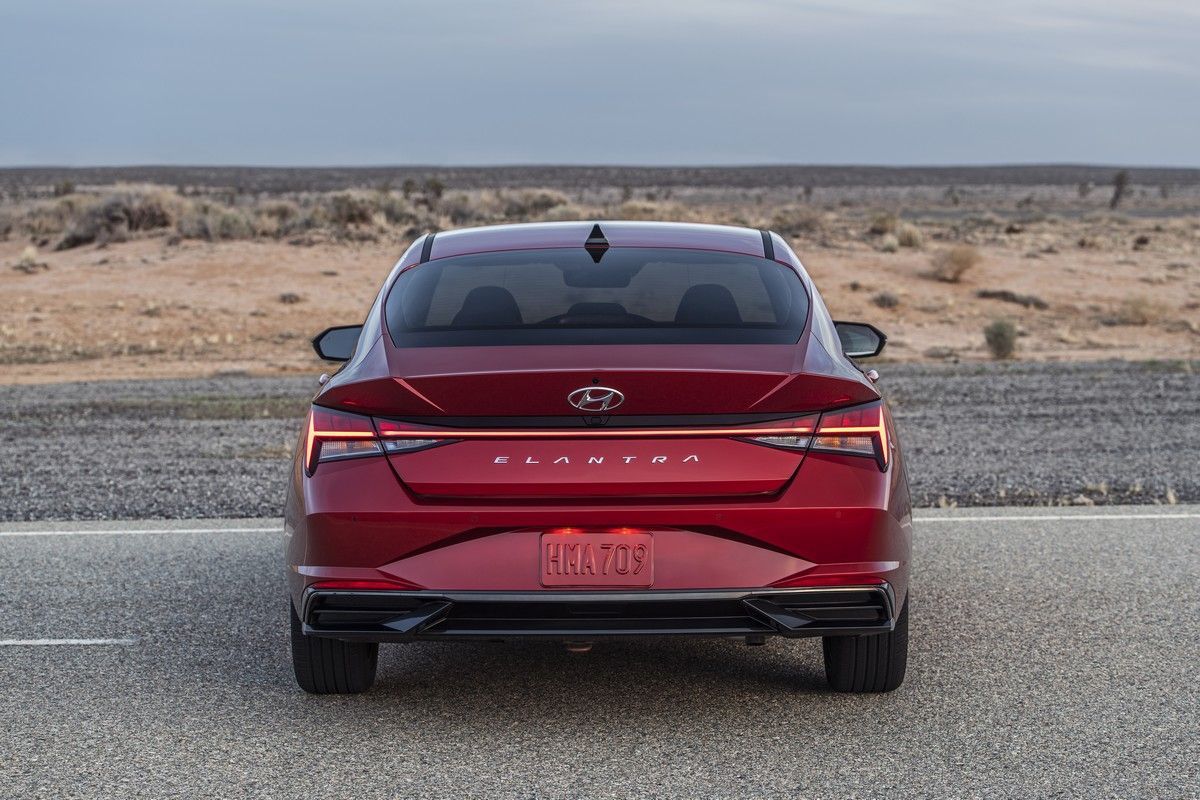
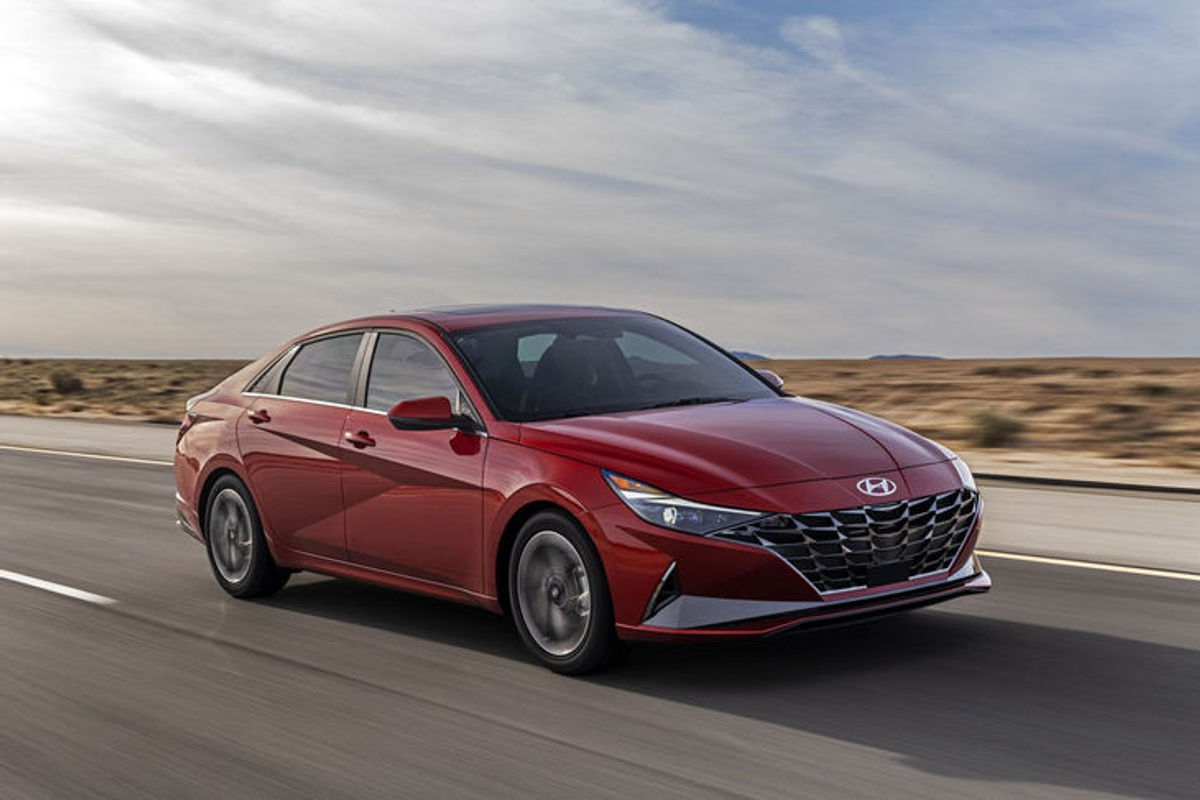
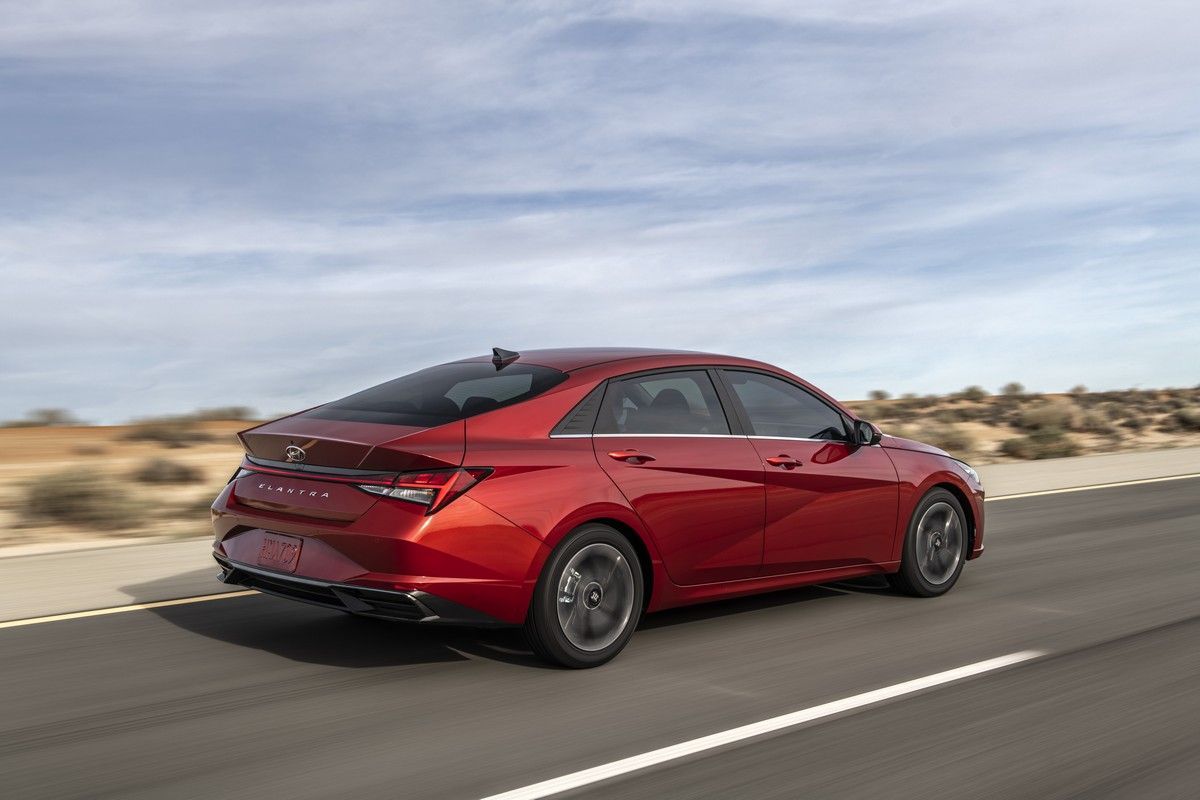
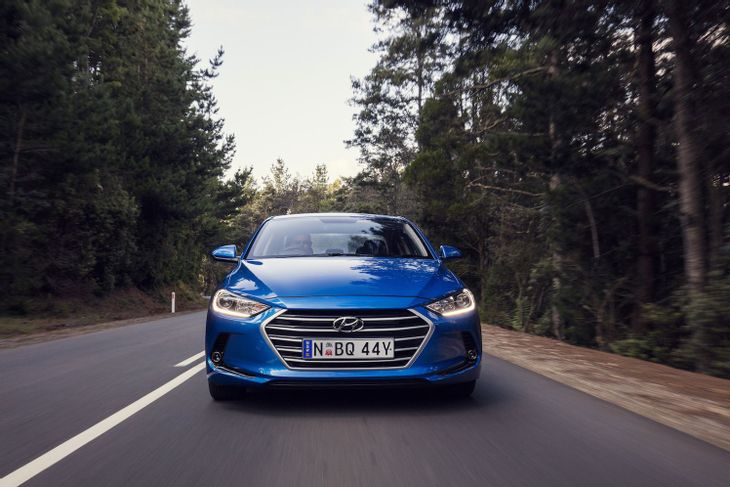
Hyundai South Africa will introduce its new Elantra range in June 2017 as a rival to the facelifted Toyota Corolla (and others) in the compact family car segment. Over and above improvements in refinement, occupant comfort and safety, the range will include 1.6-litre turbopetrol derivatives.
If the Elantra is not Hyundai’s longest-serving model in South Africa, which it probably is, it certainly is the best-known sedan in the firm’s local history. The outgoing version has received many accolades during its model cycle and its successor, which we first believed would be introduced in the local market before the end of 2016, incorporates improvements in numerous areas. Following recent introductions of the new Honda CIvic and updated Corolla and Kia Cerato, the Elantra faces stiff competition from rival sedans, let alone a clutch of crossovers.
1. More dynamic stance, better aerodynamics
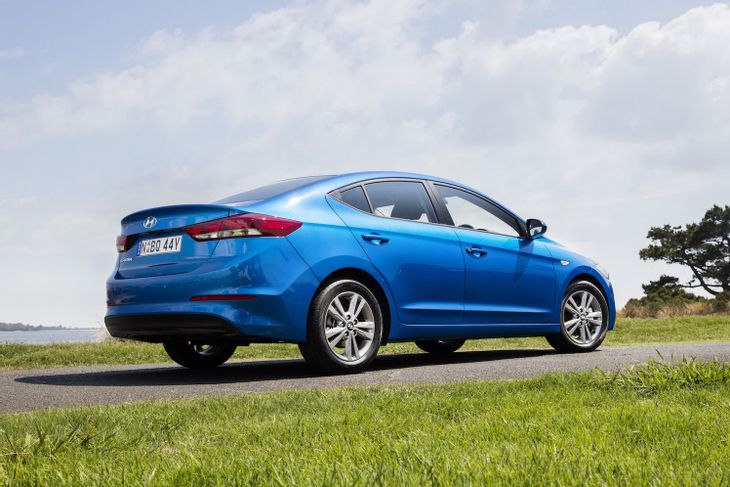
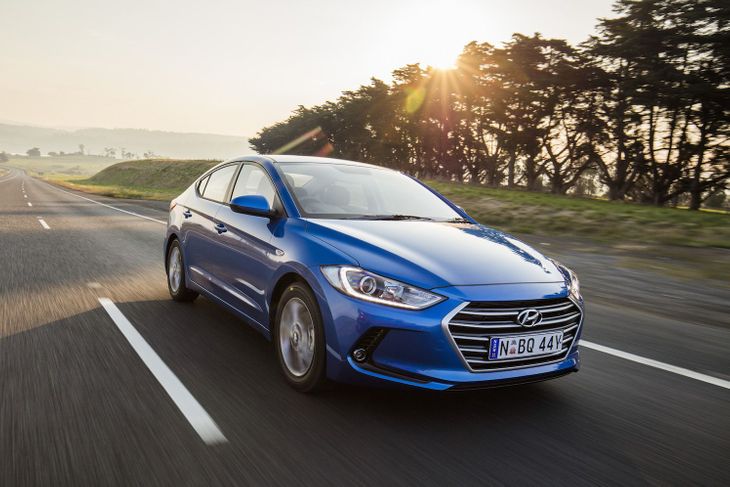
The new 6th-generation Elantra is 20 mm longer, 25 mm wider and 5 mm taller than its predecessor and, apart from the narrow, swept-back headlights with LED daytime running lights, the most notable elements to the front of the sedan are the front wheel “air curtains” at the outer ends of the bumper that are said to help channel airflow around the wheels to minimise turbulence and wind resistance.
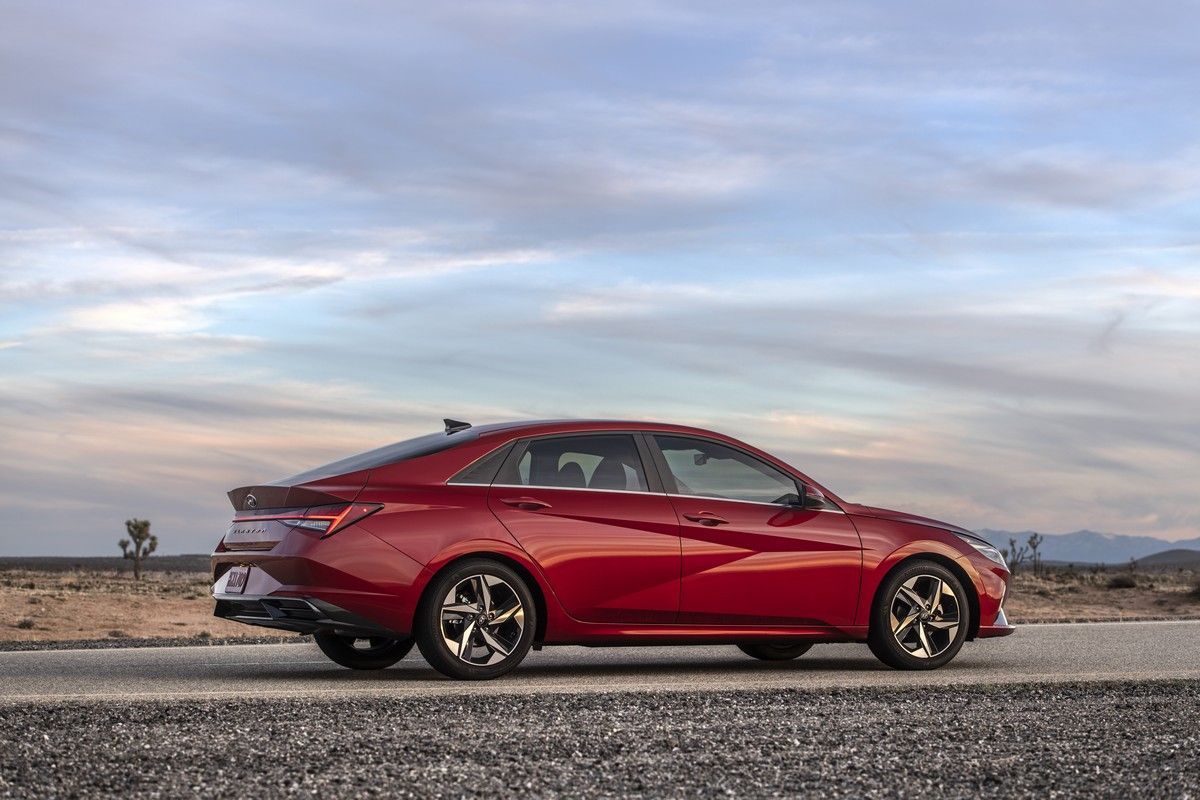
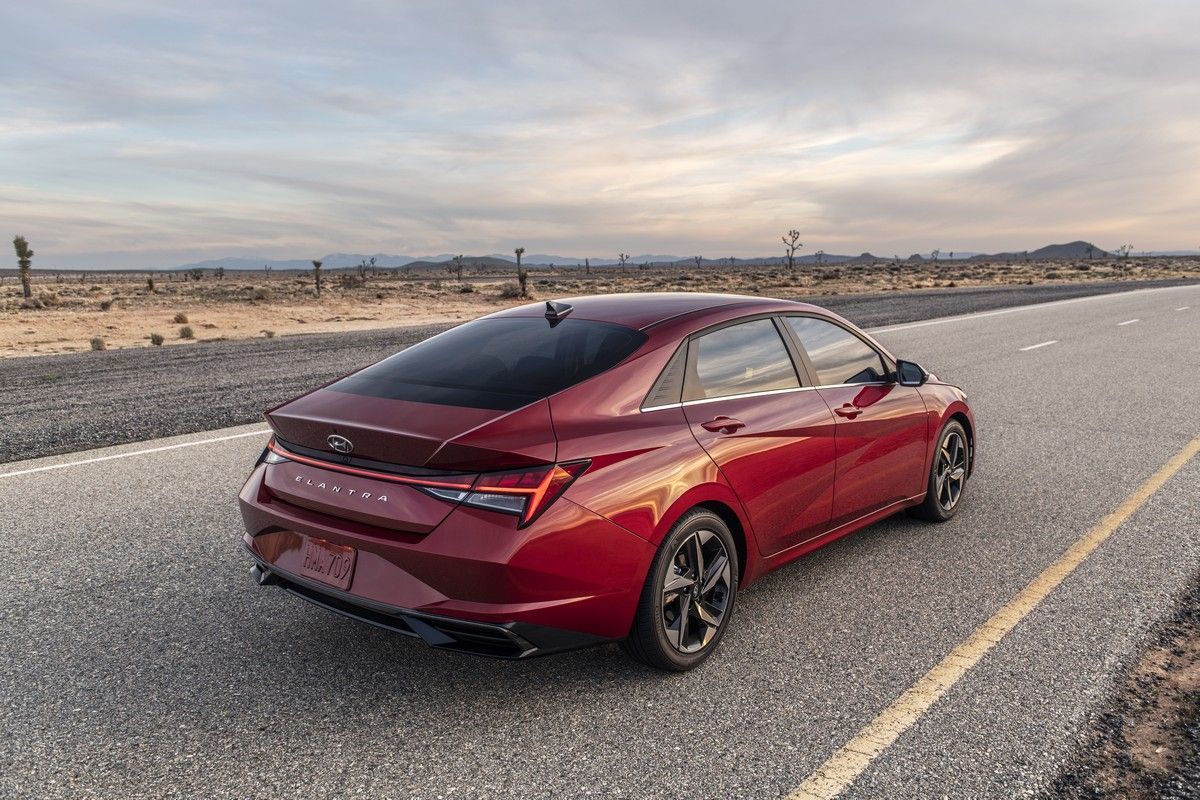
In profile, sweeping character lines along the car’s flanks accentuate the sedan's dynamic stance and the newcomer’s claimed drag coefficient (0.27) can be attributed to strategically positioned underbody covers, a lower rear bumper spoiler and longer bootlid. Local derivatives should come with either 16- or 17-inch alloys.
In overseas markets, top-of-the-range Elantras feature chrome beltline moulding, auto-folding exterior mirrors, front door handle courtesy lights and LED rear combination lights in some markets, but it remains to be seen whether they’ll all feature on the cars in the South African market.
2. More spacious and driver-oriented interior
Given the increases in the Elantra’s exterior dimensions, it stands to reason that there’s more shoulder room (by 7 mm at the front, 12 mm at the back) and additional head- (up by 4 mm) and legroom (up by a significant 59 mm) at the rear.
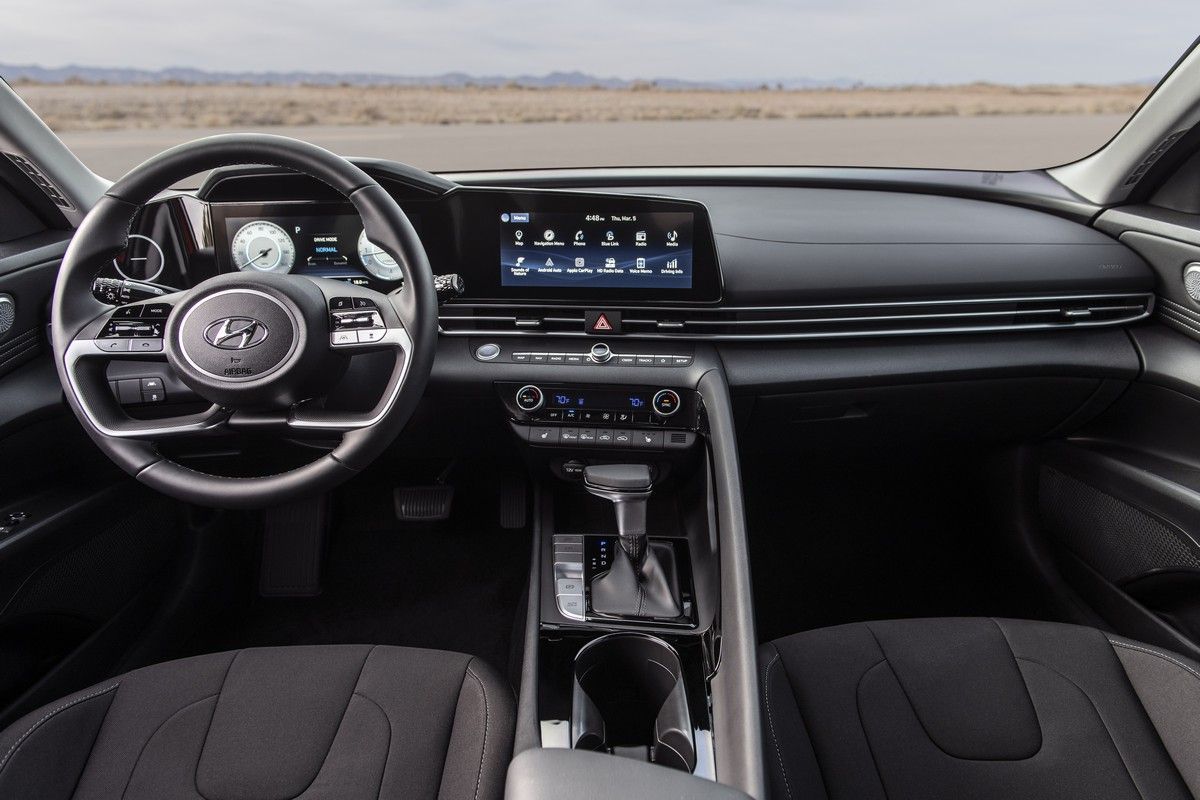
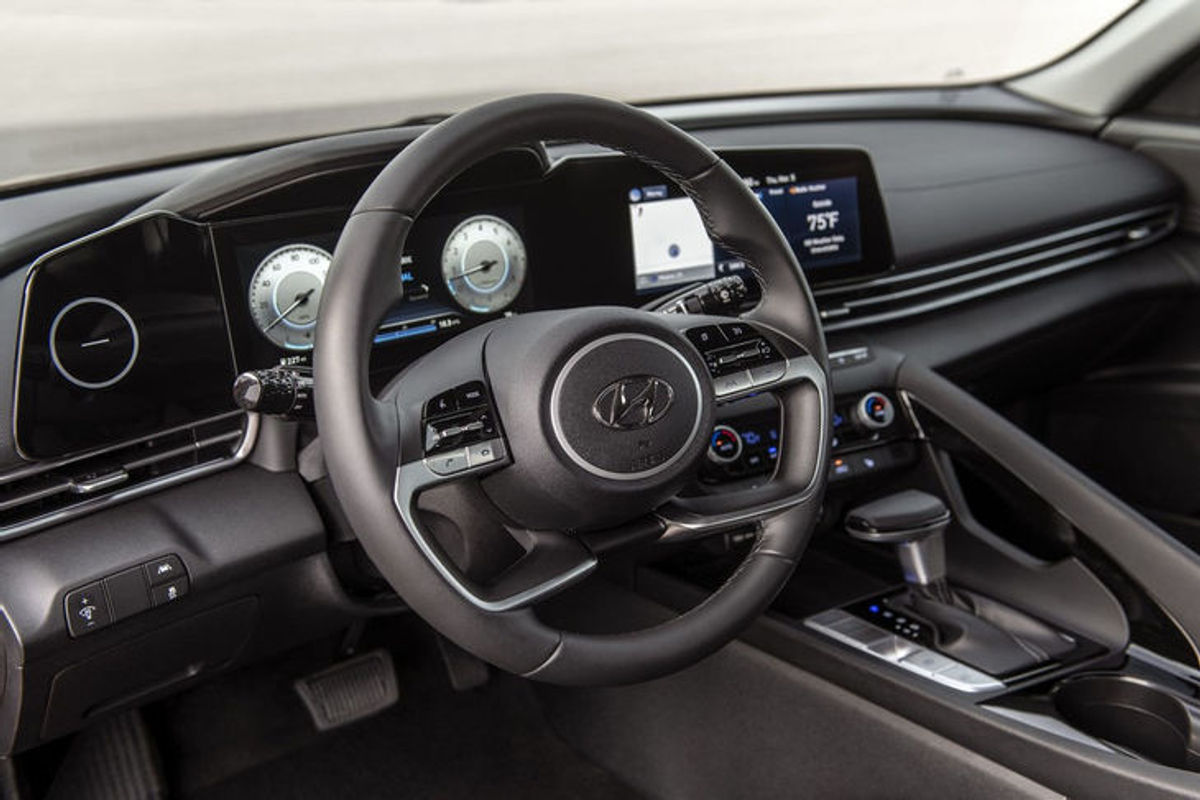
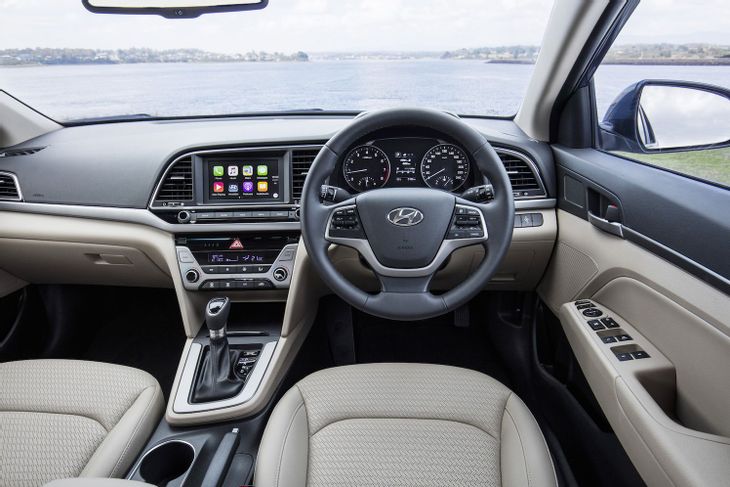
The interior architecture shares many of its cues with the recently launched Tucson and to create a more driver-focused feel, the newcomer’s centre stack is angled towards the driver by and angle of 7 degrees.
Cabin ambience also has been enhanced via alloy-look air vent surrounds and metallic-painted dashboard/door trim inserts. Top of the range derivatives could also feature air-vent/radio/climate-control surrounds finished in high-gloss piano black, together with an ergonomic sliding front centre armrest.
Hyundai SA has confirmed that a touchscreen infotainment system with MP3 capability, auxiliary and USB input sockets will be offered on local derivatives. You can expect Bluetooth connectivity and audio streaming and a multi-function steering wheel (with buttons for handsfree telephony, audio system and cruise control) to be provided too.
Automatically-activated headlights, a rear parking assist system with reverse-view camera are likely to feature, while the flagship models should be equipped with leather trim and dual-zone climate control (with an automatic windscreen defog function). An electronic self-dipping mirror, rain-sensing wipers, rear-seat cooling vents, keyless entry and start and a colour 3.5-inch information cluster (in the instrumentation cluster could all be included, depending on local specification.
3. Added body rigidity and better refinement
Through the greater use of advanced high-strength steel and aerospace-derived structural adhesives (at high stress points) in the construction of the Elantra’s body, Hyundai’s newcomer has significantly more torsional rigidity than its predecessor, which means there is more noise, vibration and harshness (NVH) suppression, better occupant protection and enhanced vehicle dynamics.
Meanwhile, the front suspension has a new sub-frame with optimised geometry engineered to target improved NVH characteristics, while at the rear, the torsion-beam axle rear suspension features upright, longer dampers and repositioned coil springs. All of which should result in better ride refinement.
4. Extensive safety specification
Given that the Elantra is a family vehicle first and foremost, a comprehensive safety specification is a must. Again, the local market’s specification has yet to be confirmed, but 6 airbags (front-, side- and curtain units) should be standard, plus an electronic stability control (ESC) system, including hill-start assist (HAC), traction control (TCS), anti-lock brakes (ABS), electronic brake-force distribution (EBD), brake assist (BAS) and vehicle stability management (VSM).
5. 1.6-, 1.6- turbocharged and 2.0-litre petrol engines
Whereas the outgoing Elantra model featured workmanlike 1.6- and 1.8-litre naturally-aspirated (non-turbo) four cylinder engines, the newcomer’s engine line-up will closely resemble that of the new Tucson range, with the exception of the entry-level powerplant, which produces outputs of 96 kW/157 N.m in the current range.
The other derivatives, will be powered by either a 2.0-litre Nu MPi 4-cylinder petrol engine (featuring dual continuously variable valve timing and a 2-step variable induction system) that produces 115 kW and 196 Nm (at 4 000 rpm) or a 1.6T GDI 4-cylinder turbopetrol (130 kW/265 N.m) paired with a 6-speed manual or 6-speed automatic transmission (a 7-speed dual-clutch transmission is likely with the latter, however).
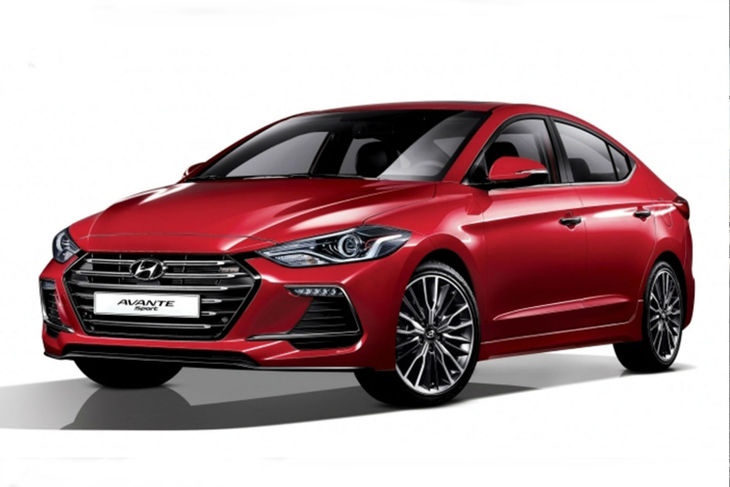
And, what are the chances of a hotter flagship version joining the line-up? In 2016, Hyundai unveiled an Avante (as the Elantra is known in its home market) Sport model (shown below), powered by the Veloster Turbo’s 150 kW/265 N.m 1.6-litre turbocharged direct-injection 4-cylinder turbopetrol engine mated with a paddle-shift dual-clutch transmission.
The Sport, which, in terms of packaging, shares a few cues with the Corolla Sprinter, rides on 18-inch alloy wheels, has LED headlights, a beefed up front bumper with a black-framed grille and enlarged “air intakes”, but the biggest revision is that the derivative features a multi-link rear suspension and its ride height has been lowered by approximately 18 mm.
It remains to be seen whether this version, with its upgraded front brakes, recalibrated speed-sensitive electric power steering and double exhaust ends will ever be made available in South Africa, but it would certainly add some spice to what is expected to be a well-made and -specified, if less than spectacular, newcomer to the market. Watch this space!
Usually, we only get to spend about a week with a test car. However, over the December holidays, Volvo asked if we'd like to spend a month with their V40 T4 Cross Country.
This gave us a unique opportunity to really get to know the car, inside and out. In this review, we cover boot/load space, interior quality fuel economy, ride comfort, South African pricing and the special extra trim that comes with the Cross Country edition.
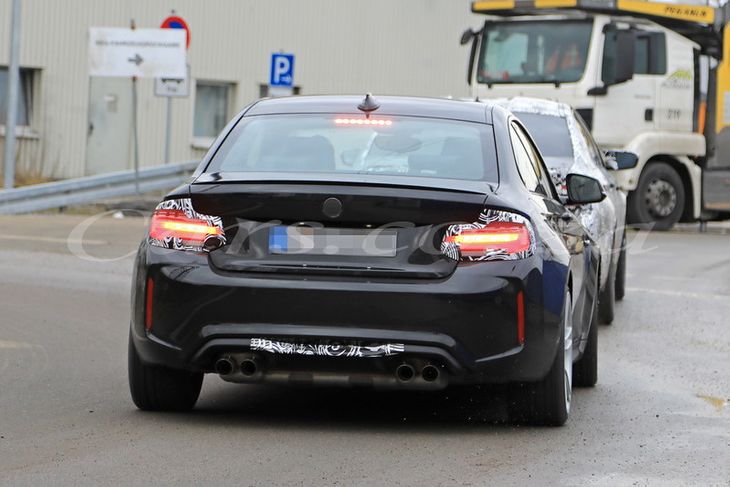
Our German spy photographers have captured images of what appears to be a facelifted BMW M2 prototype undergoing testing. The changes appear to be quite substantial… could this be a development unit for the rumoured hotter version of many critics' favourite BMW M car?
The spy shots you see here depict what appears to be a pre-production version of a facelifted BMW M2 as it undergoes testing, replete with camouflage covering the bumper and grille, front and rear taillights and rear diffuser. A number of design changes can be expected for the facelifted BMW M2 with the front grille, headlights, bumper and air intakes likely to change substantially. At the rear, the taillight graphic and rear diffuser will also be redesigned. Furthermore, the M2 seen here also features a larger exhaust system and bigger brakes.
The design of the facelifted BMW M2 is expected to change substantially compared with the current iteration.
The current BMW M2 is powered by a 3.0-litre straight-6 turbocharged engine that develops 272 kW and 500 Nm of torque. If this car is only a precursor to an M2 that simply carries over the 2 Series updates, it is not that likely that engine will be tuned to provide more power/torque, but it is still a possibility. Last year, reports suggested that BMW is working on a hotter version of the M2, likely to be called the M2 GTS or M2 CS, which will offer in the region of 300 kW from an uprated version of the engine under the hood of the current M2.
We will keep you updated as more information on the facelifted or hotter BMW M2 becomes available, so stay tuned.
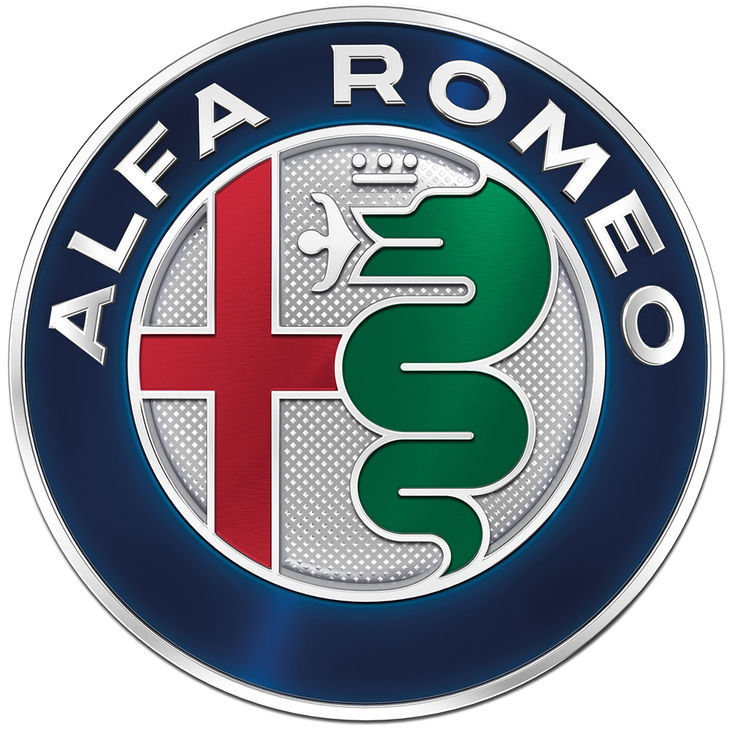
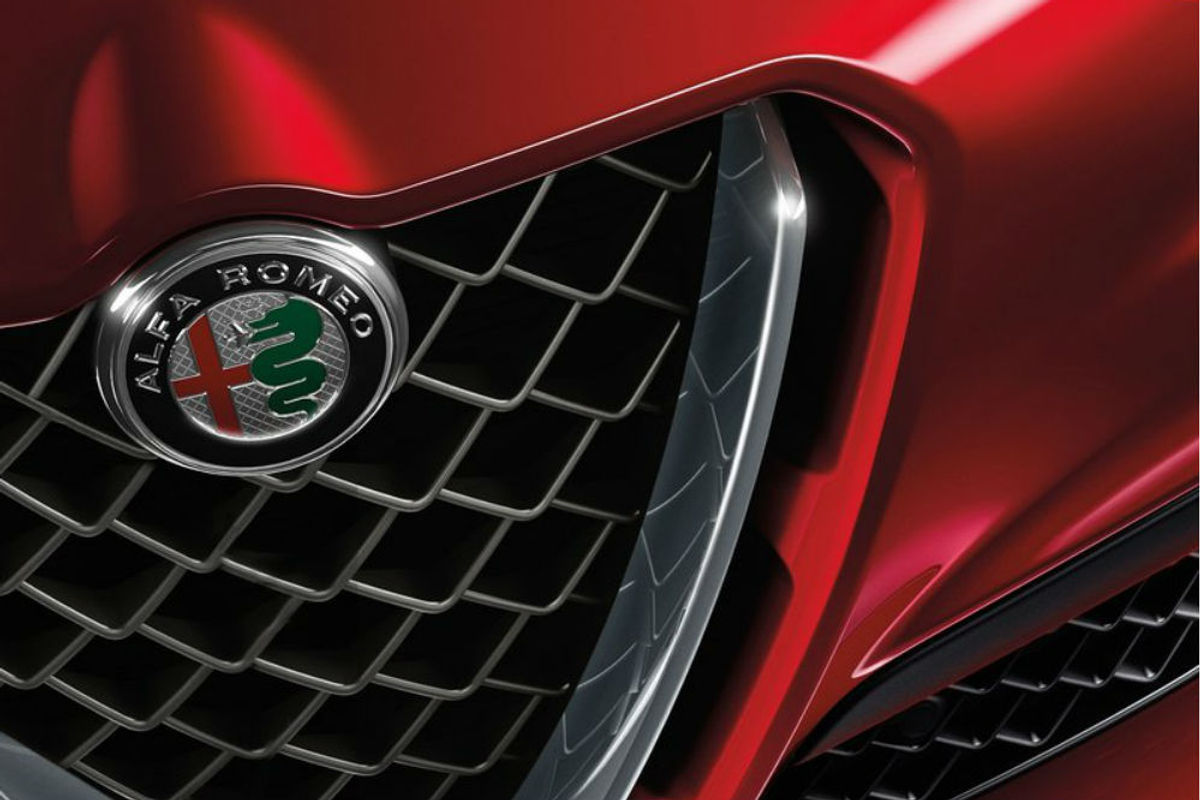
It’s arguably the weirdest automotive brand badge of the lot, replete with what looks like the Cross of St George and a crowned serpent with a predilection for ingesting humans. Alfa Romeo has a badge with two distinctly different parts, the history of which is… not entirely clear.
Alfa Romeo is one of the oldest names in motoring, dating back to 1910. Its badge remains one of the great motoring mysteries as the symbols date back to the Crusades. Draughtsman Romano Cattaneo apparently came up with the idea for the Alfa Romeo logo after seeing a coat of arms at the Sforza Castle in Milan.
On the left of the Alfa Romeo badge is a red cross on a white field. This is, in fact, the flag of Milan turned through 90 degrees. Alfa Romeo’s home was Milan, where its cars were built up until the 90s. The flag originates from the Crusades, where Milanese soldiers wore the red and white cross beneath their armour.
The right-hand side of the badge is where it starts to get interesting. The image appears to be a person being eaten by a huge snake. There are a number of theories around this symbol, here are just a few:
The legend of a dragon/snake that terrorised local villagers until it was slain by Uberto, Squire of Angera.
Lombards (Germanic people who ruled large parts of the Italian Peninsula) would often wear snakes around their necks as good luck charms.
A Biblical symbol for divine protection used by Archbishop Ottone Visconte on his shield when going into battle against the Saracens during the first Crusade.
No, the snake is "giving birth"
Alfa Romeo’s official stance is that the man is coming out of the snake as a renewed and purified person. The symbol comes from a nomadic Saracen Knight that Ottone Visconte defeated in battle and in tradition, took the symbol on the shield. Believe what you will…
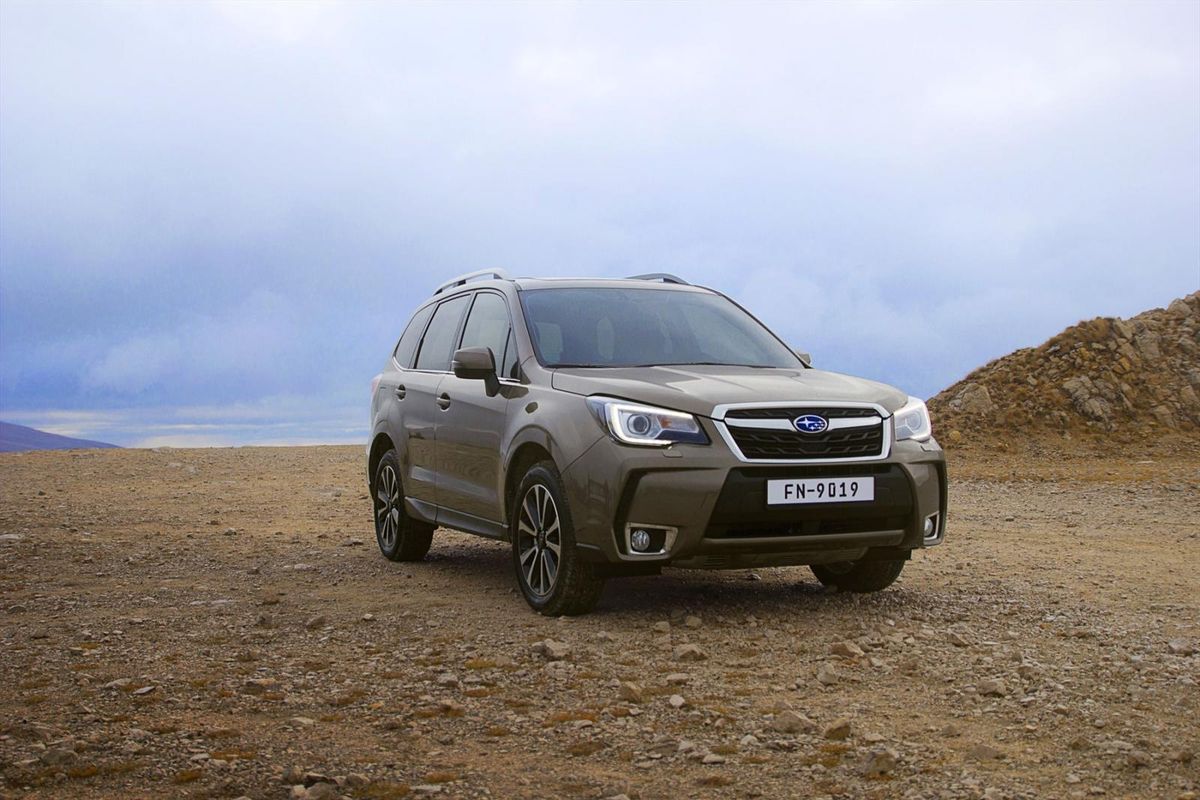
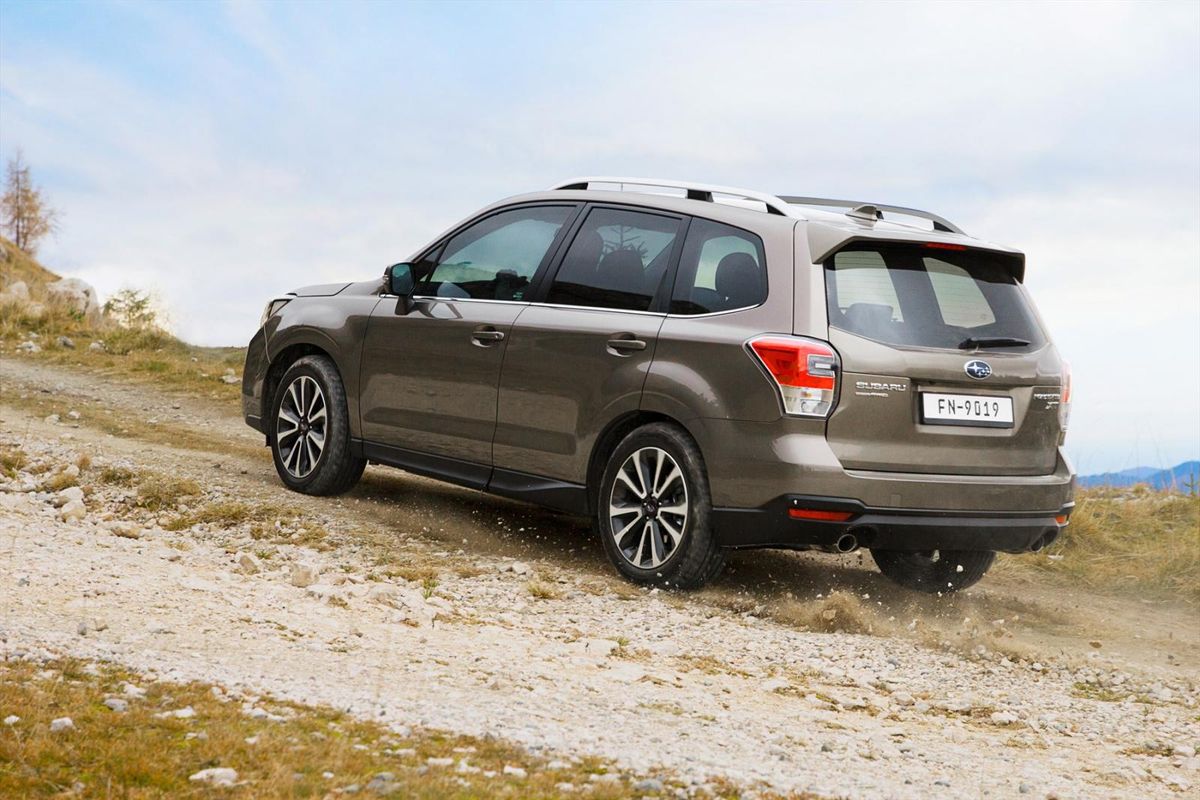
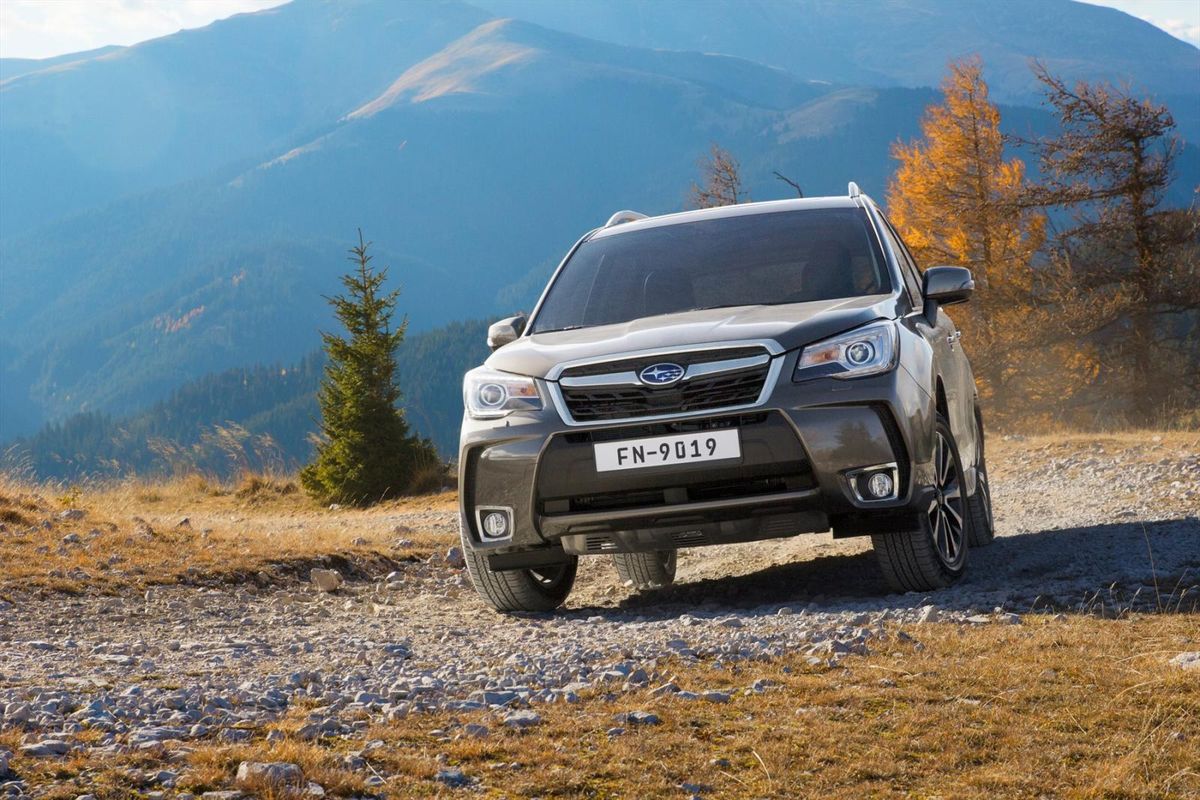
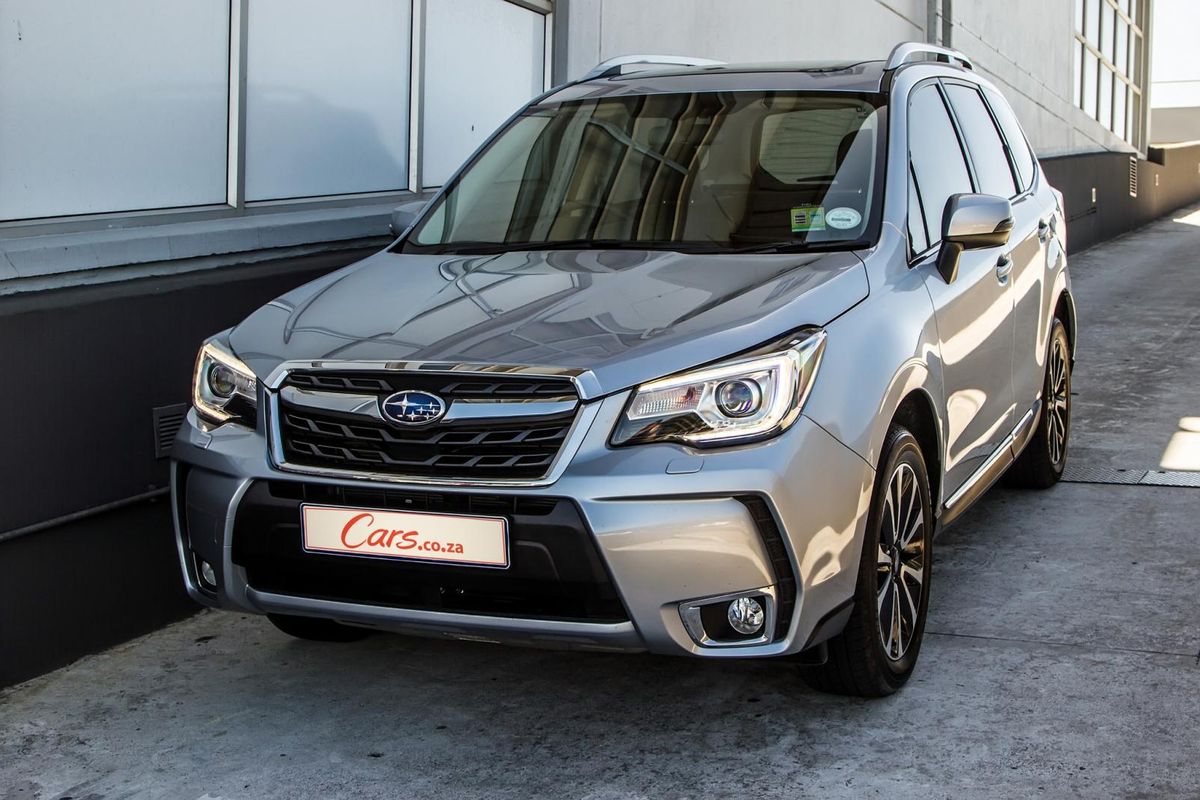
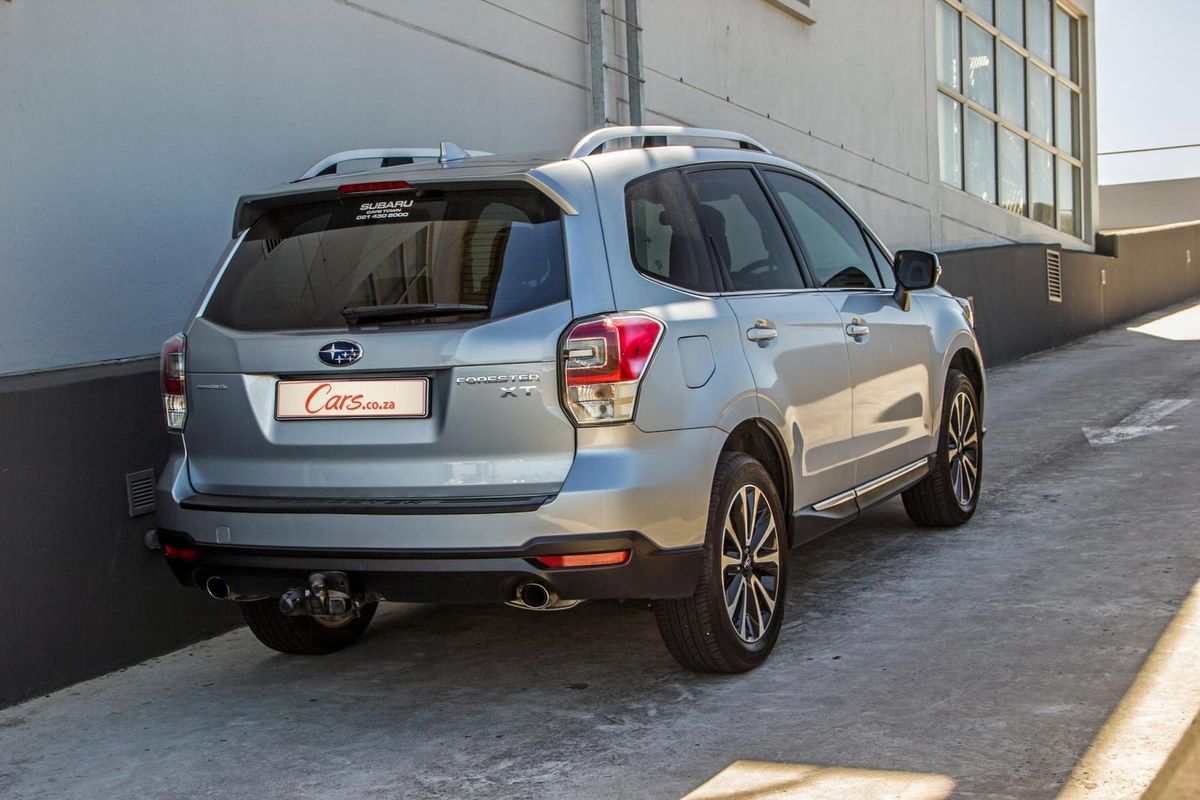
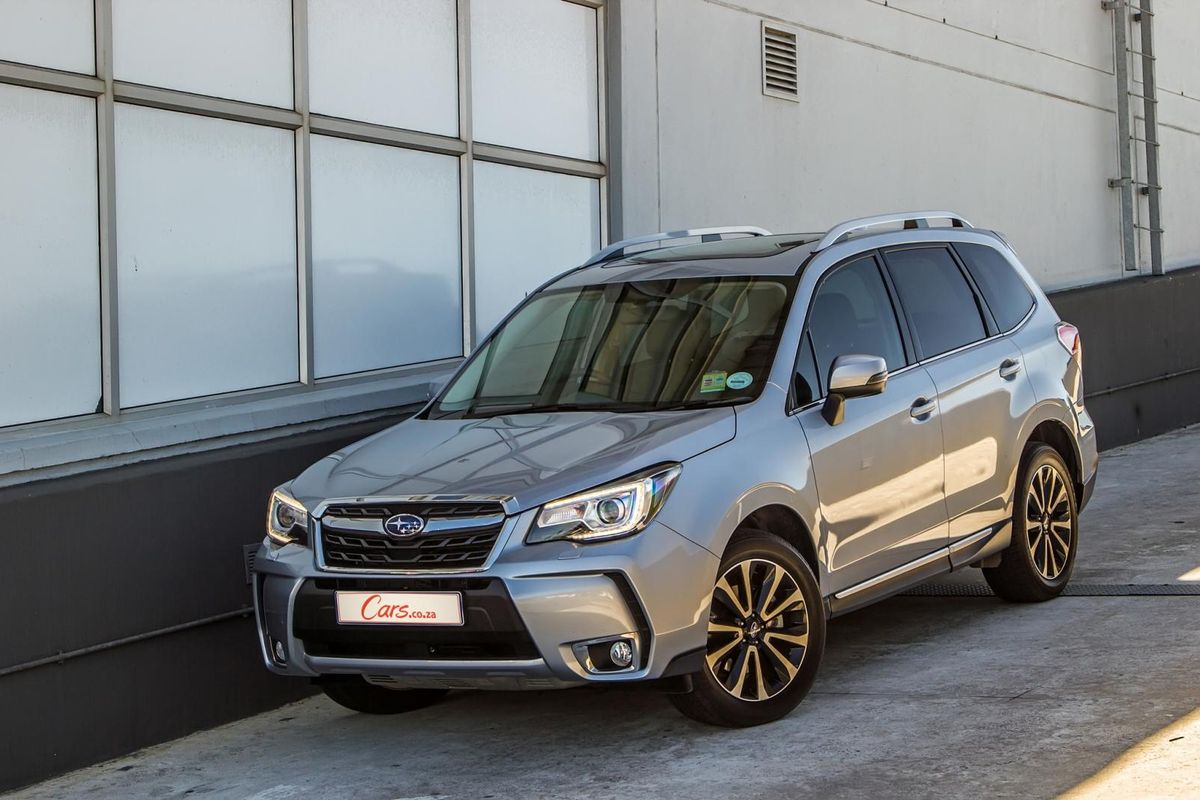
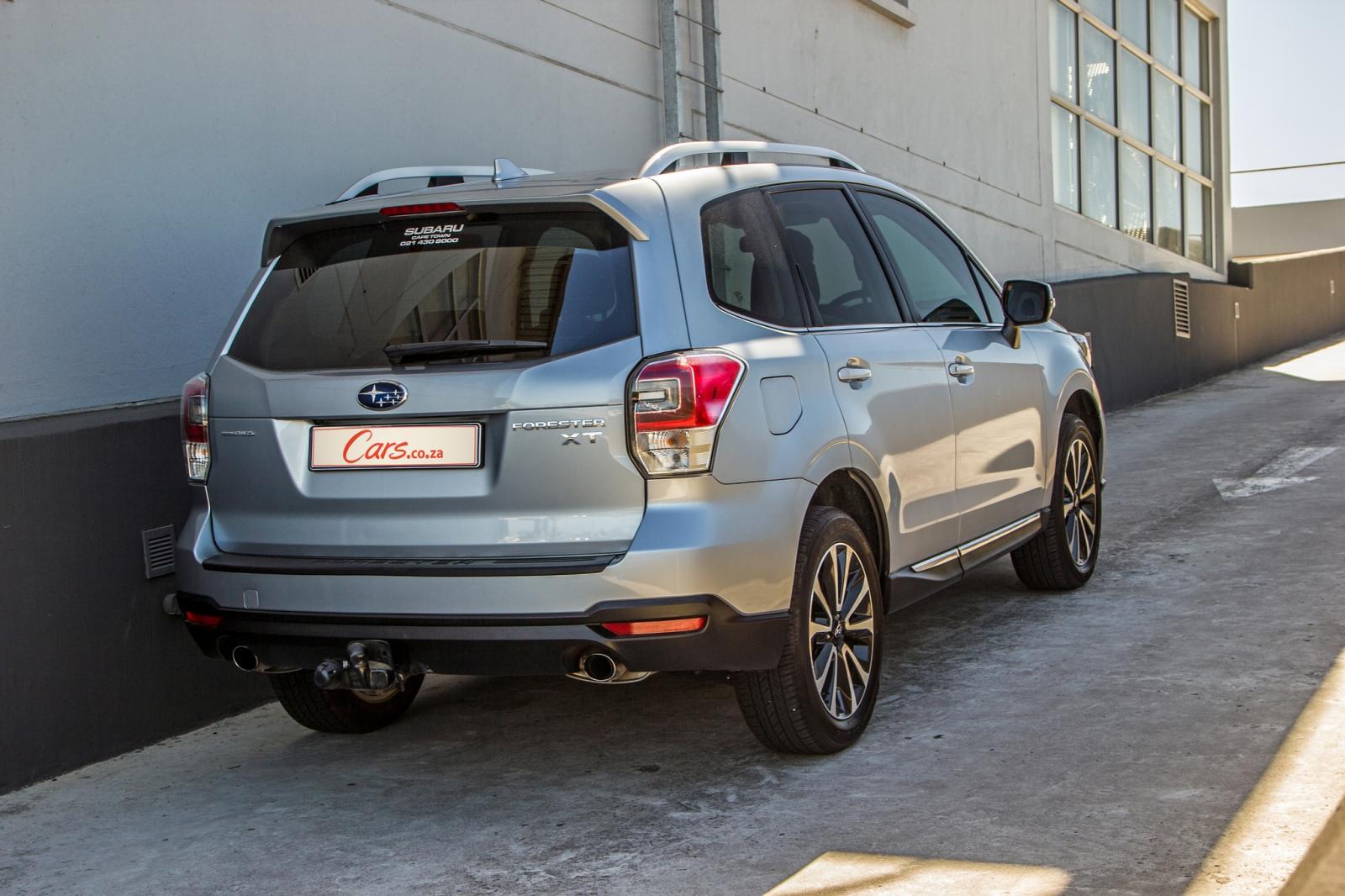
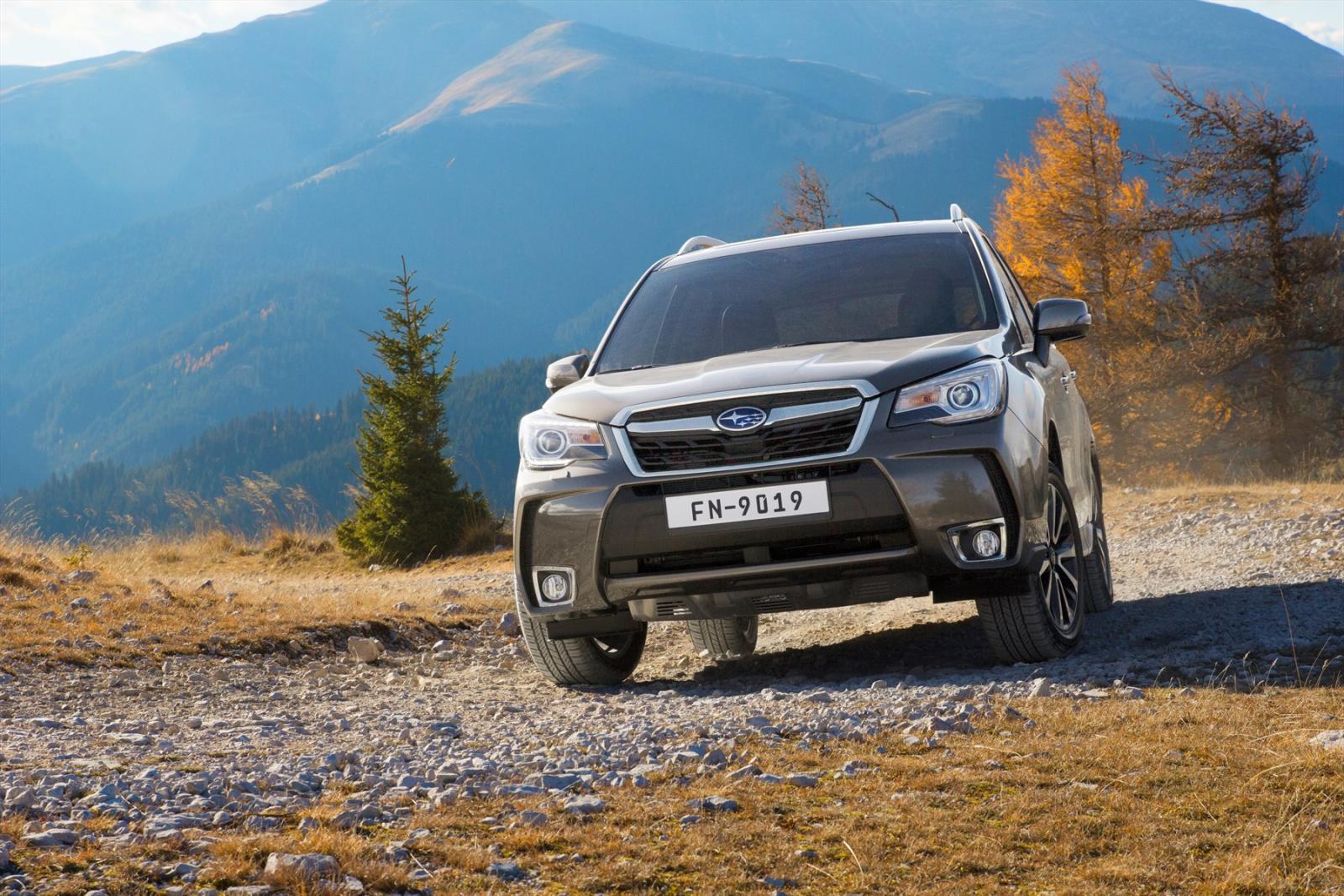
The Subaru Forester is an often-overlooked family car (compact SUV/crossover), but during a recent stint in our test fleet, the top-of-the-range Forester 2.0 XT swiftly reminded us why the model's a top-seller in some overseas markets. Here's why it is worthy of stronger consideration…
We like: Build quality, reputation for good reliability, tackles off-road hazards well
We don’t like: Expensive, infotainment system is dated
Alternatives
Also from Japan, but with less power: The Toyota RAV4 2.5 AWD VX is just as spacious, but its petrol motor is comparatively down on power with 132 kW and 233 Nm of torque. Spec for spec it’s nearly identical to the Forester and it's also more affordable (with pricing starting at R515 600).
If you want something more snob appeal: The Land Rover Discovery Sport offers a more modern interior experience (including a 7-seater configuration) and matches the Subaru for off-road talents as well. The price premium over the Forester might just be a bridge too far for some buyers.
Maybe you’d like something German: BMW X1 with the X-Line kit adds a touch of off-road appeal (if no extra ability on unsealed road surfaces) to the soft-roader. Compared with Subaru, the X1 is a better car dynamically, but it loses out if you want to venture beyond the school run tarmac.
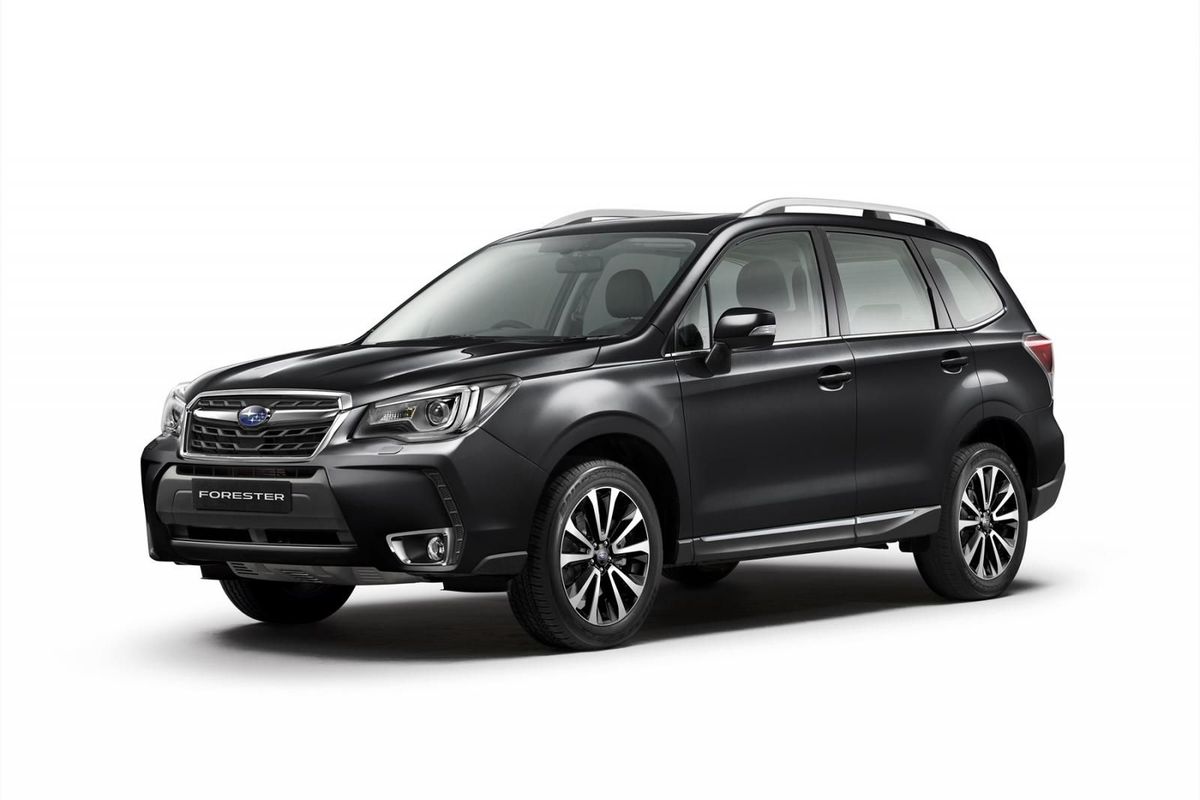
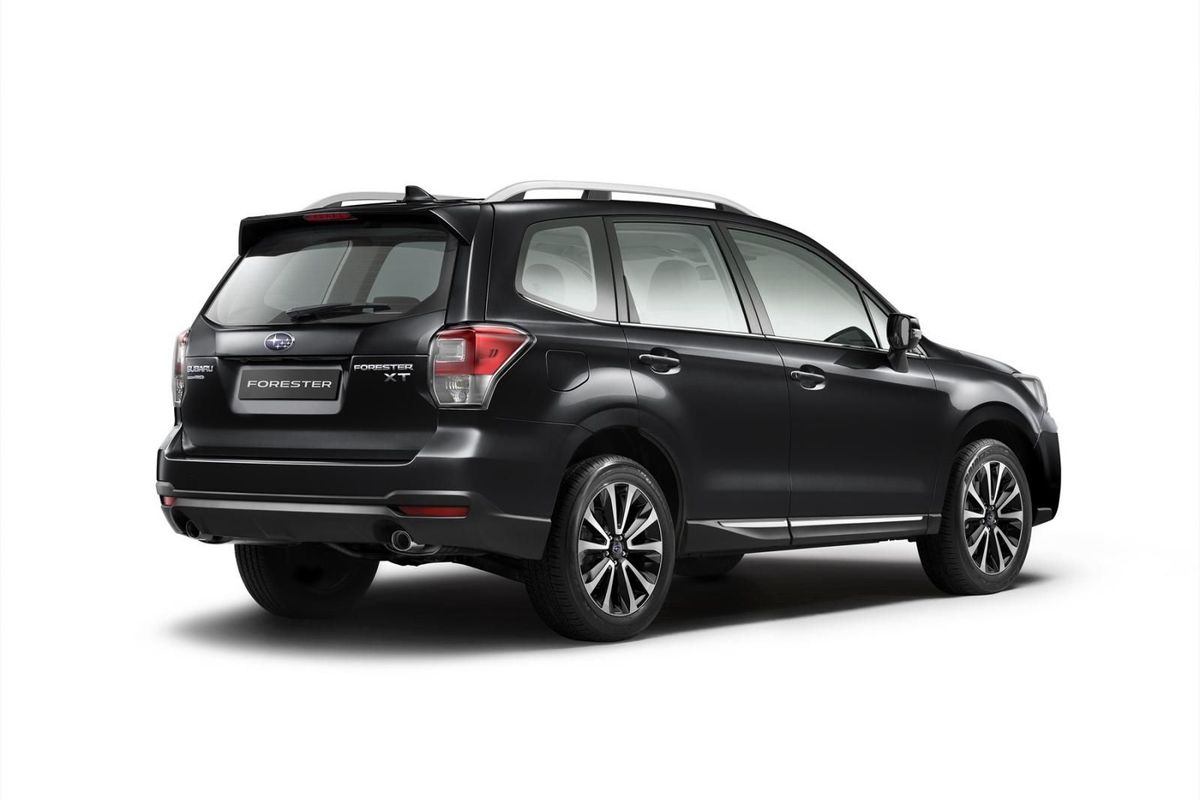
The Subaru Forester benefitted from a facelift in 2016, albeit a minor one. The usual new bumper and headlight treatment was introduced, as well as the obligatory new wheel designs. Dig a little deeper into the update and you’ll find new steering-responsive headlamps and an upgraded touchscreen audio system. Beyond that, the cabin insulation has been improved to lower the levels of sound intrusion and some of the cabin surfaces have been upgraded to show less wear and tear over time.
Subaru has retained the Forester's boxy but functional design.
What you have then, is a slightly more refined version of the Subaru Forester, but one that will appeal to existing and new customers alike. Here we have the range-topping 2.0 XT, which incorporates all the features that Subaru offers on its family car range.
How does it fare in terms of…
Practicality?
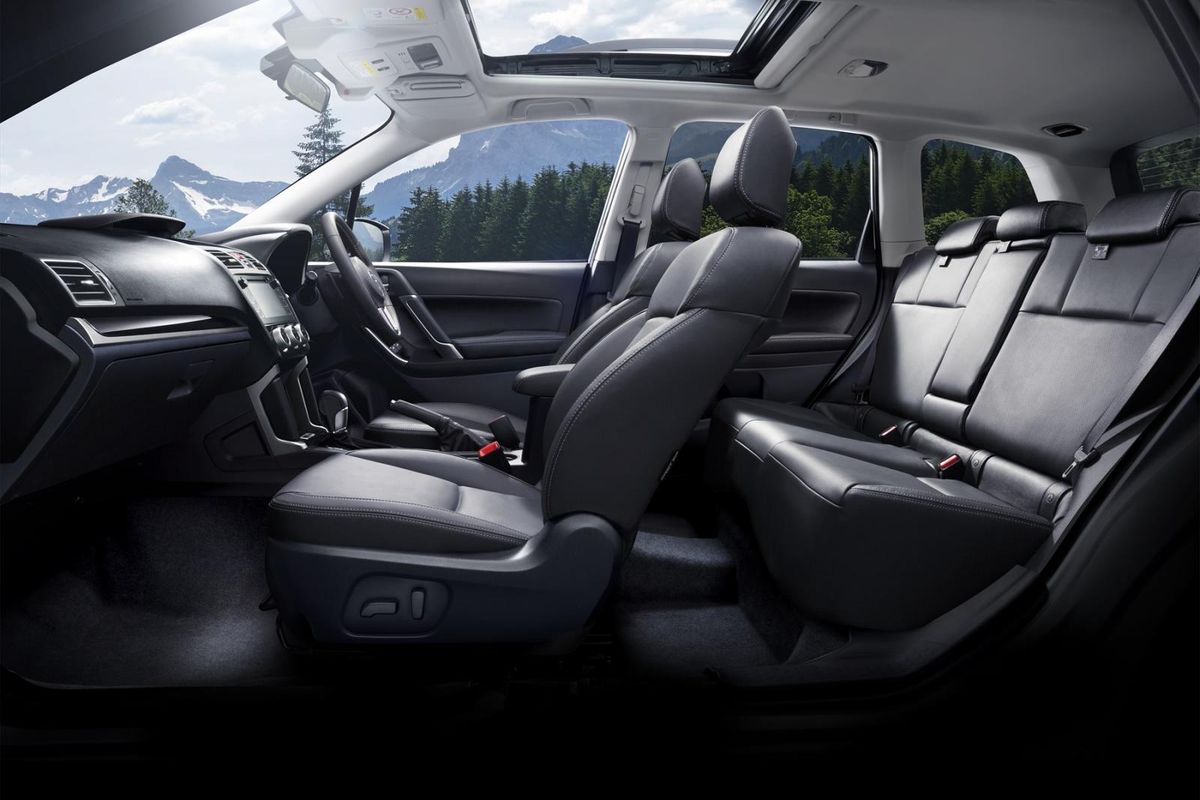
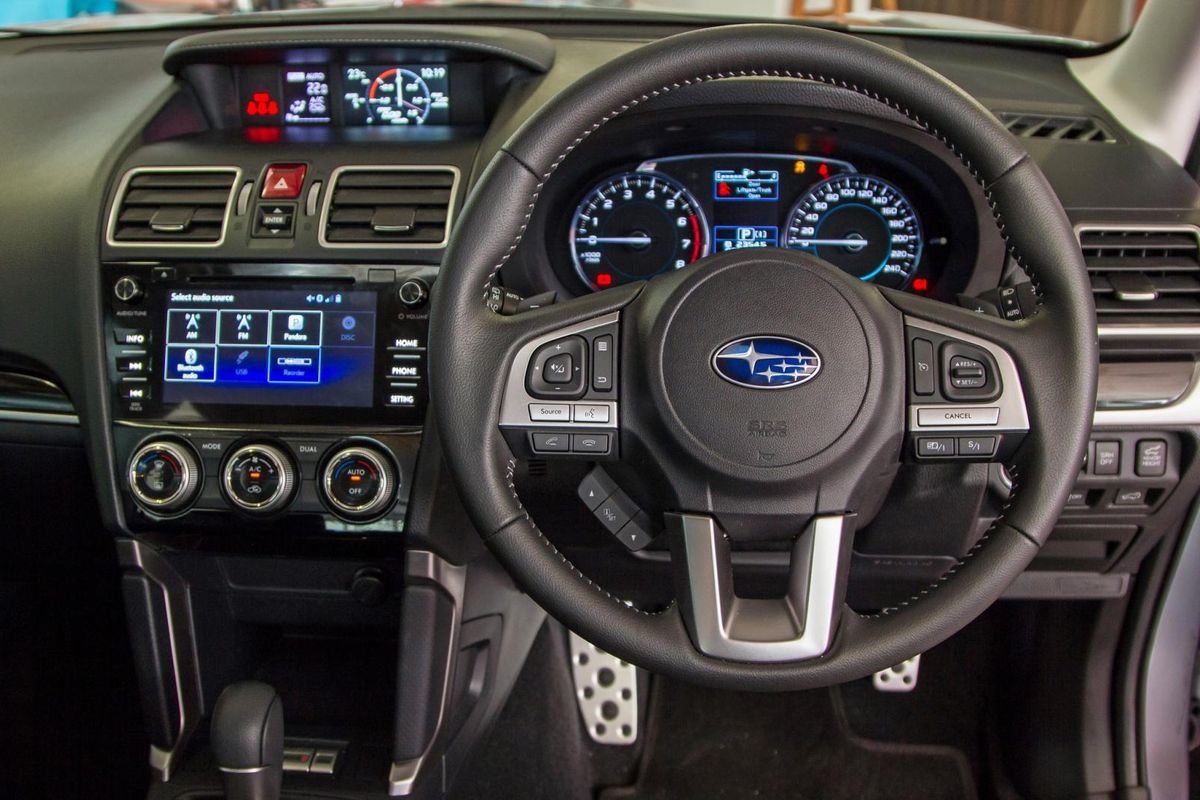
The Subaru Forester's forte is that it was built to be hard-wearing and mechanically reliable. It's designed to accommodate messy children, bounce down a rocky road, transport muddy dogs and then shake it off and do it all over again. It’s not so flashy that it becomes (or is seen as) too precious to be used for its main purpose. Our XT model came equipped with rubber mats that are easy to clean. Rear passengers have plenty of leg- and shoulder room and the smartly-stitched leather trim of the seats add a premium touch to the cabin.
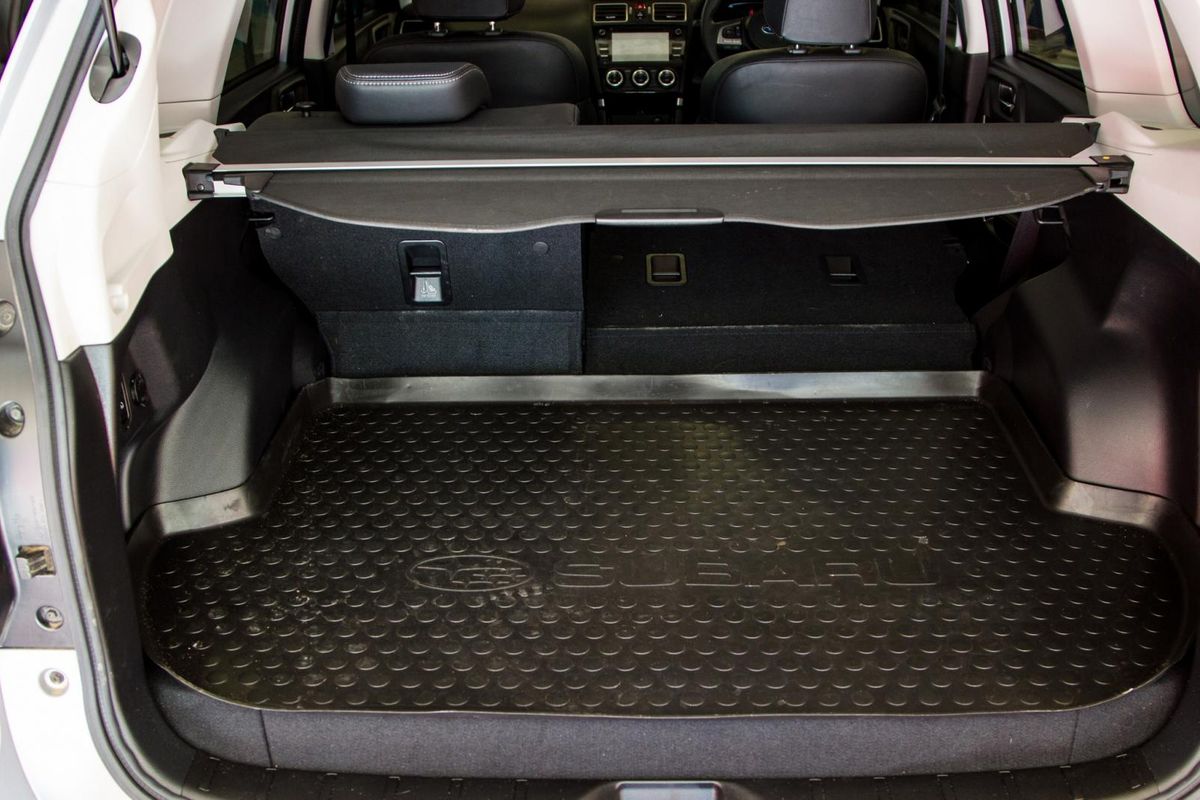
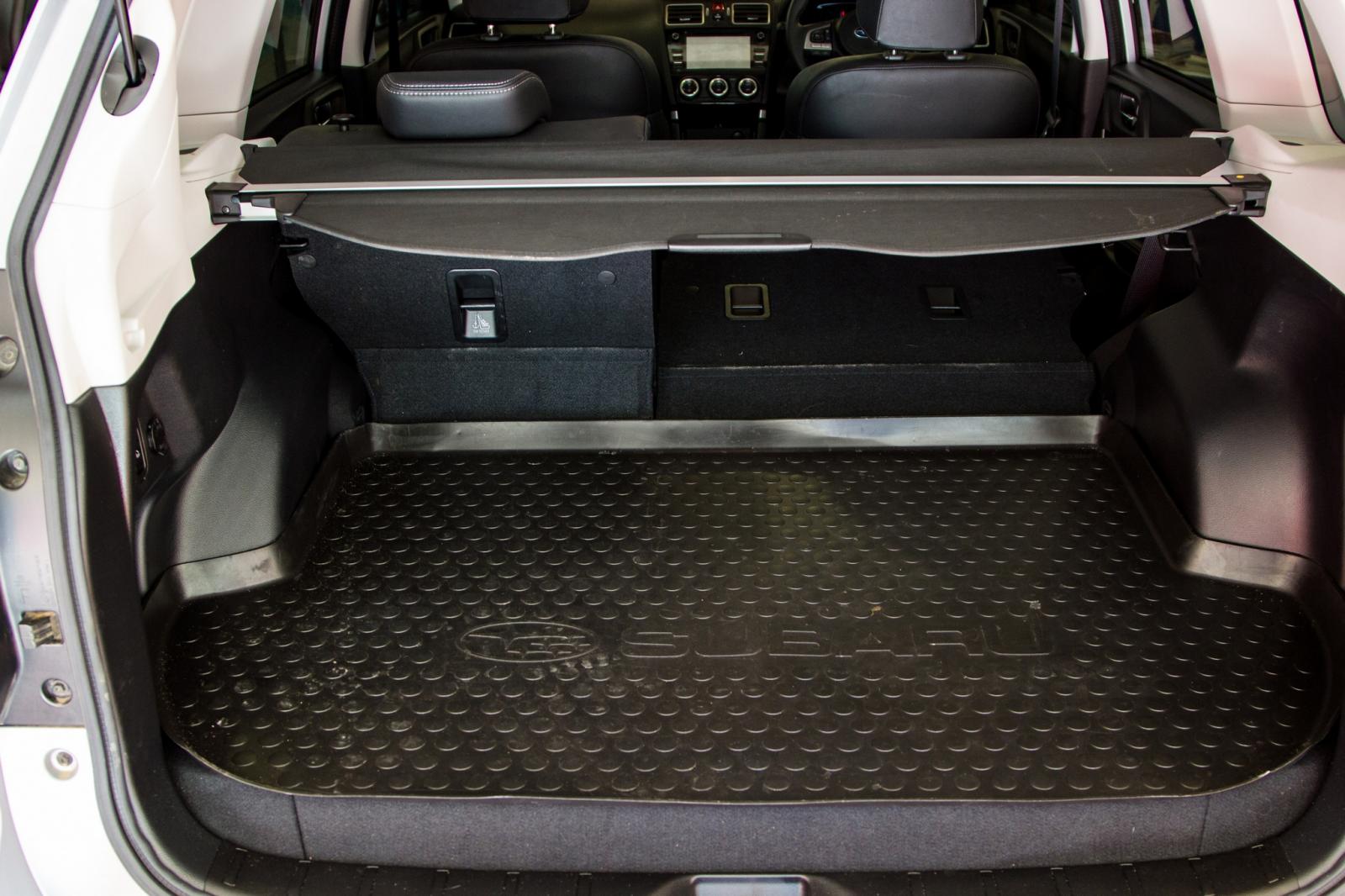
A hard-wearing rubber mat makes cleaning the boot of the Forester particularly easy.
Other examples of this thoughtful functionality are a pair of buttons in the luggage compartment that enables users to flip the rear seatbacks down in a 60:40 configuration. With the seats up, loading capacity is claimed to be 488 litres, but when they're lowered, utility space expands to a reported 1 557 litres, which is on par with the Forester's competition. The shape of the load bay is almost perfectly rectangular, which means that once something gets through the boot aperture, it will inevitably fit no matter how far forward you have to move it.
The tailgate is electrically operated, but it's painstakingly slow in operation. If you close it and start walking away from the car, you can actually get out of range of the key before the 'gate has finished closing. Another anomaly is the shopping hooks, which are positioned far too low to be of any real assistance in keeping your bags from shifting around while driving.
Ride comfort and handling?
The Forester follows a theme of "less fuss is better" with its ride and handling characteristics. Many modern SUVs have so-called "air springs" or electrically adjustable suspension that will adapt to almost every driving situation at the touch of a button. The Forester is old-school in this regard, however: there are no buttons with which to toggle the dampers' settings. The ride quality is on the firm side, but far from unpleasant. It’s firm enough to not feel sloppy over speed bumps and during fast-ish cornering, while still coping well on rougher surfaces.
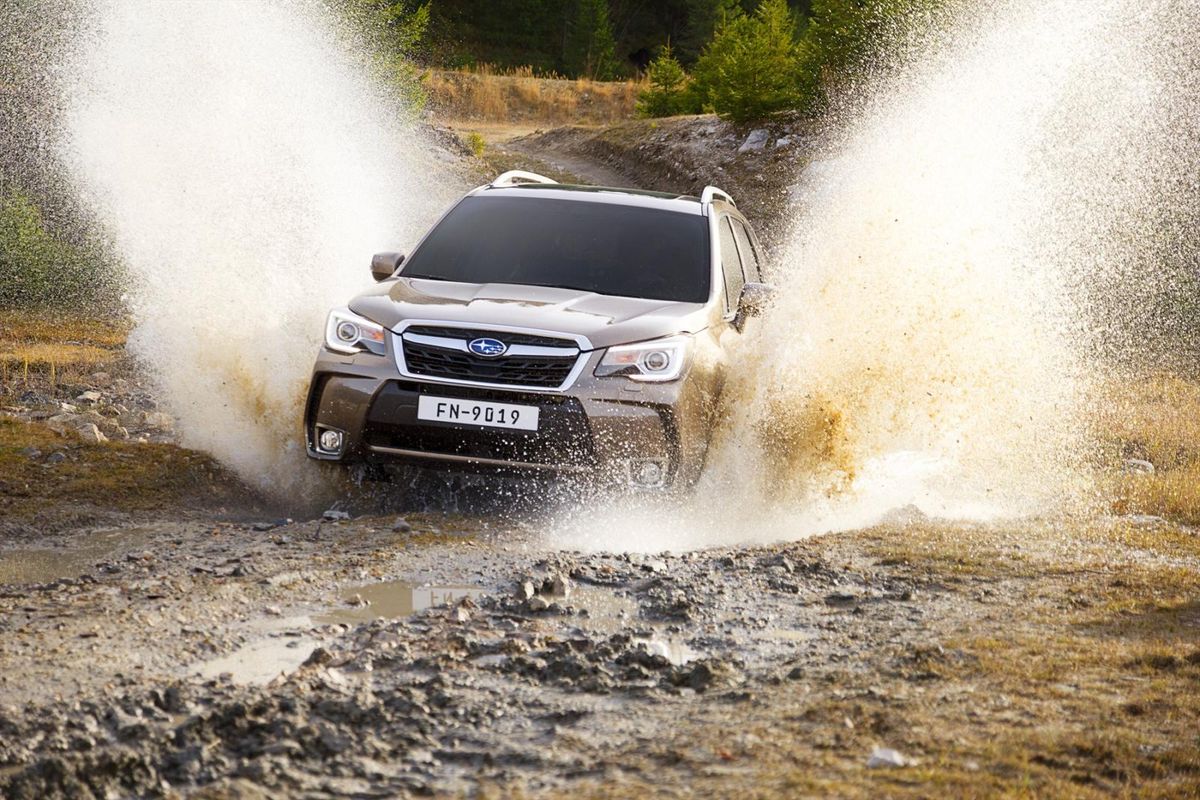
220 mm of ground clearance is best-in-class. A special off-road mode makes the Forester very capable.
Overall, the Forester’s on-road demeanour feels solid and tight. There’s an underlying belief that no matter how rugged the terrain is, the Forester will come out the other side unscathed. Obviously, without low-range, it has its off-road limitations, but with permanent all-wheel drive, 220 mm of ground clearance and an off-road specific driving mode, the Forester is more than capable of tackling a tough 4×4 trail. In fact, we feel that it would only really miss a 4L mode in conditions where pukka off-roaders would need to engage it anyway…
Engine efficiency?
When the Forester first arrived we were a bit worried about the impending fuel bill for the 2.0-litre turbopetrol boxer engine. Subaru’s tend not to be particularly good at conserving fuel, at least in our experience and with 177 kW and 350 Nm of torque on tap, we weren’t expecting this fleet-of-foot Scooby to be any different. There’s no turbodiesel offering in the Forester range anymore because Subaru SA says the derivative didn’t sell well enough, which is contrary to almost every other SUV on the market. As it turns out, we were surprised to find that, when driven respectfully and with an eye on fuel conservation, we saw the XT's average fuel consumption readout level out at 9.6 L/100 km, which is not far off the 8.7 L/100 km claim.
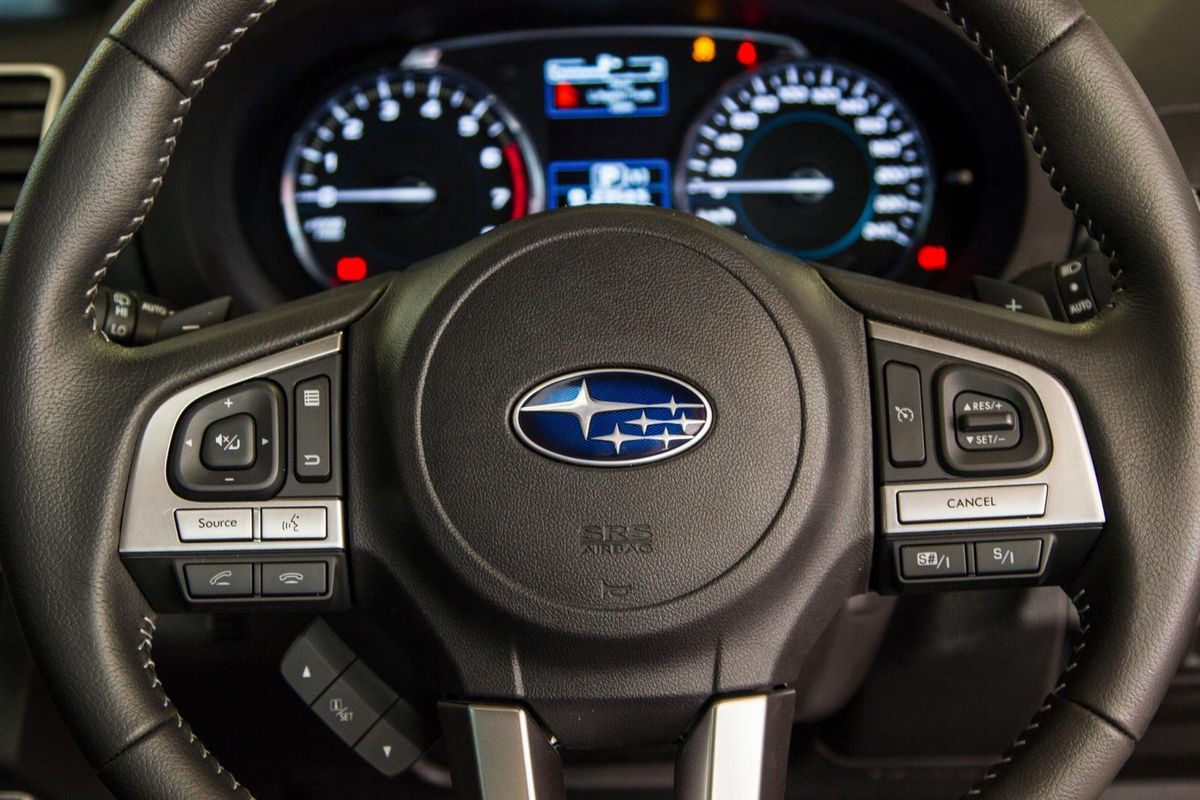
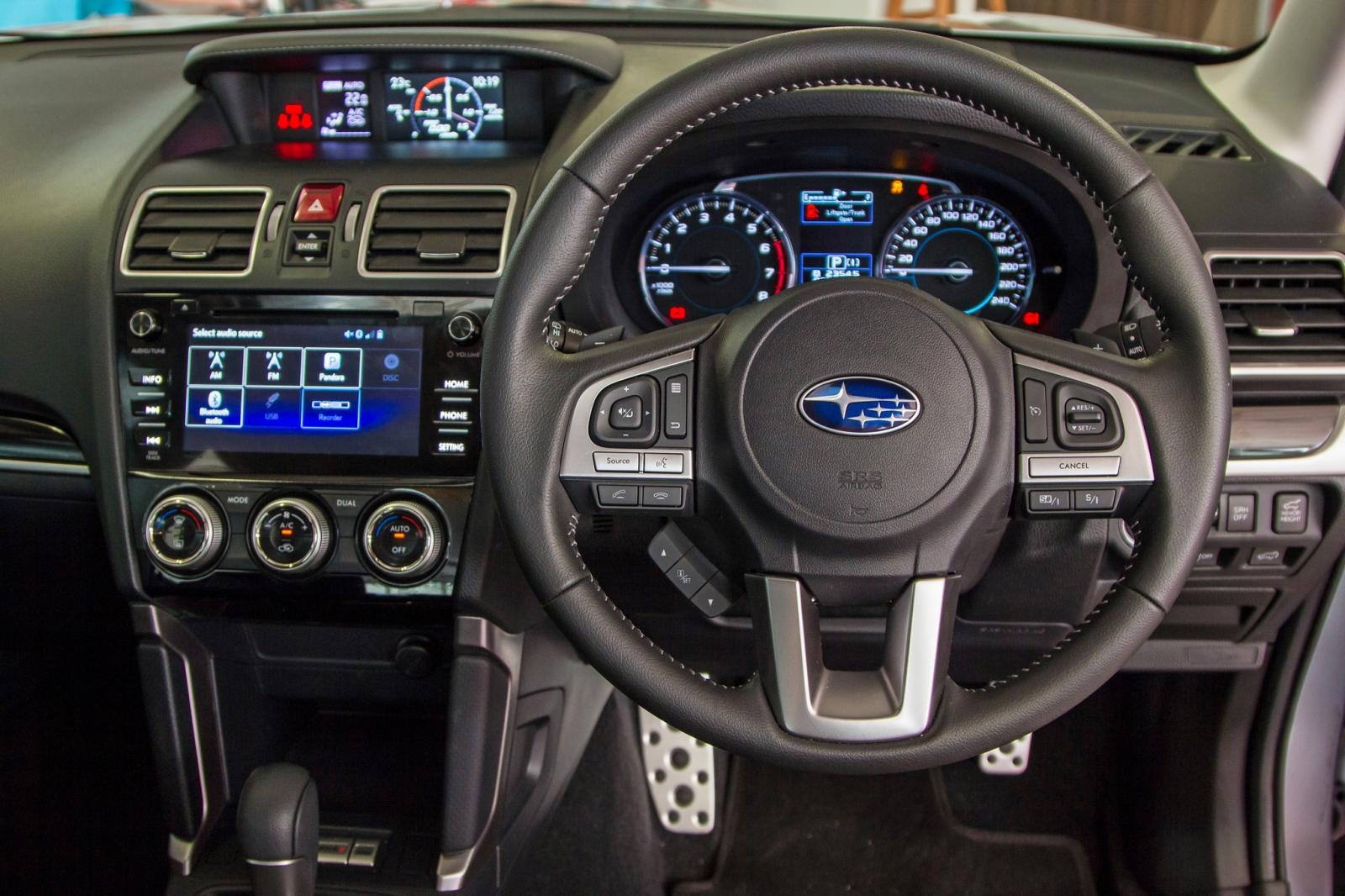
Interior build quality is excellent. Not a techie as most of its rivals.
With all that power/torque available, the Forester can certainly get a move on, but it’s somewhat constrained by its CVT transmission. It would appear that the software that manages the engine-transmission calibration is easily confused when the 2.0 XT is hustled into action; almost as if the box does not know whether it wants to use the motor's high or low rev ranges. There is an upside: when driving in everyday conditions and at freeway speeds, the Forester is happy to potter at around 1 700 rpm to 2 500 rpm, which obviously helps efficiency.
Features and connectivity?
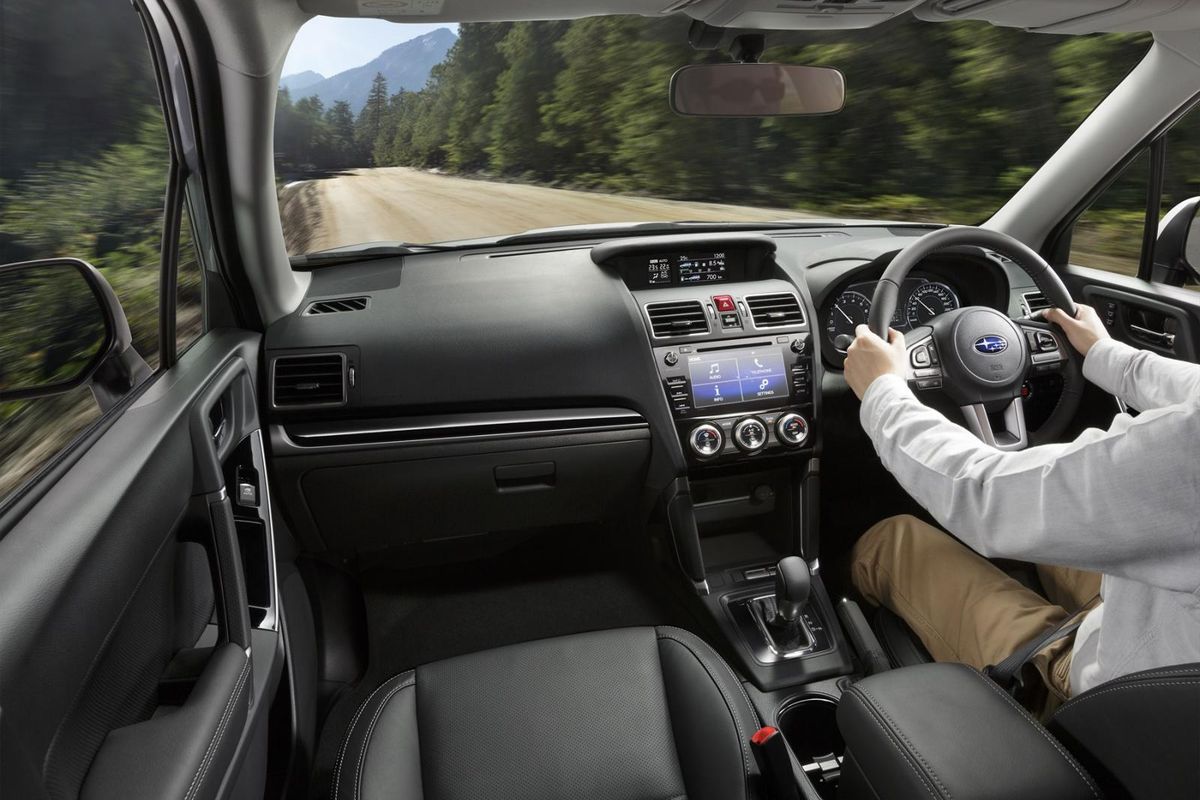
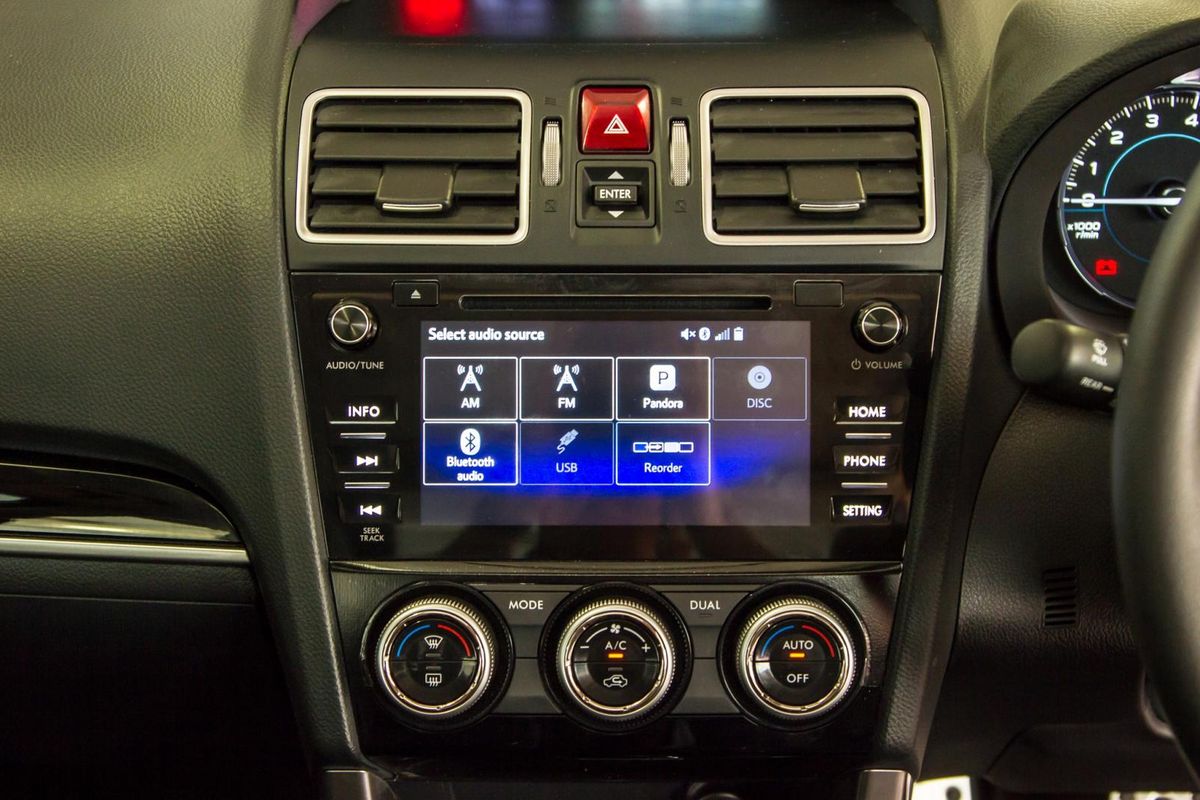
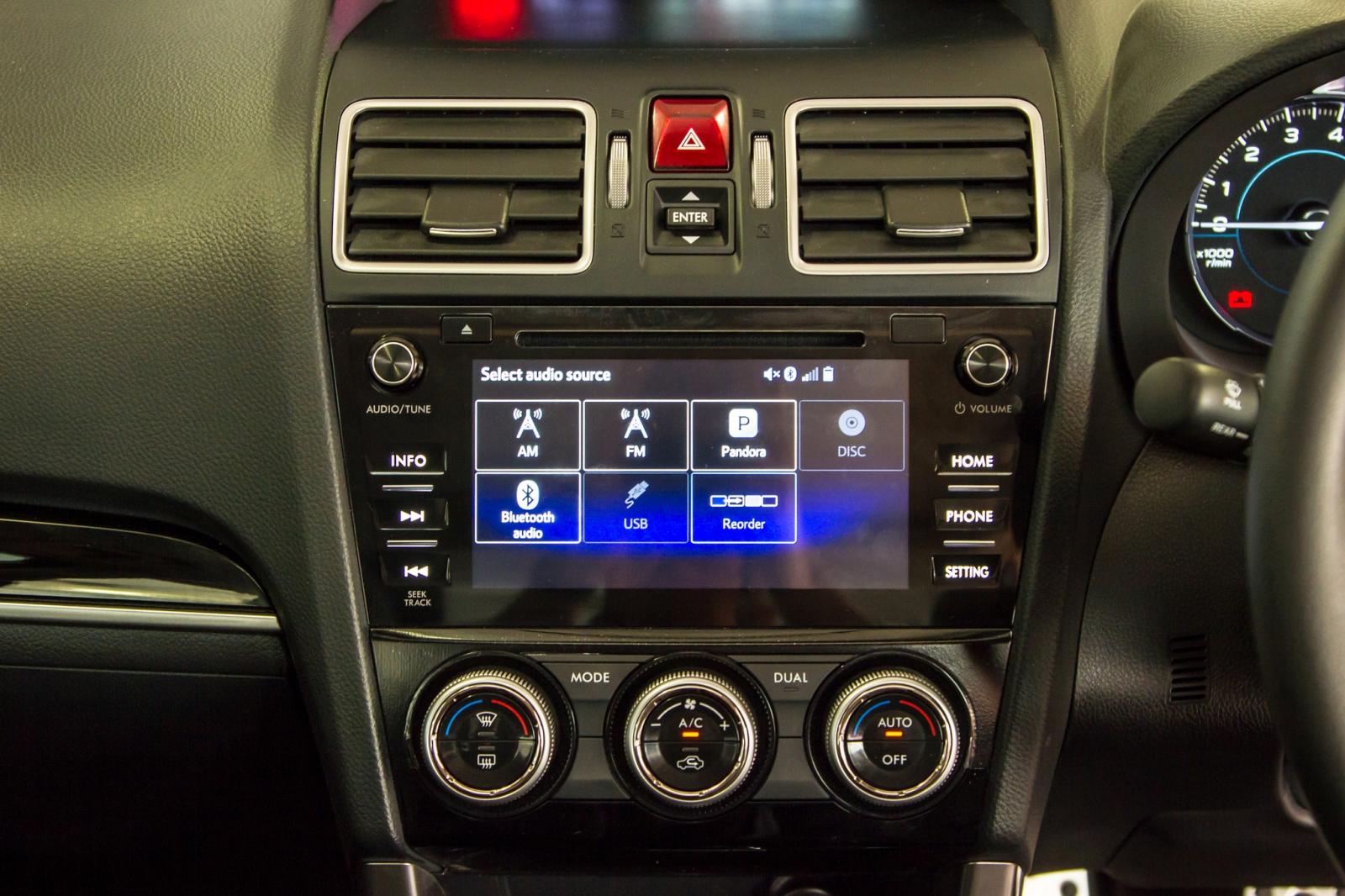
Subaru has tended to be a little behind the curve when it comes to in-car tech and gizmos, but the Forester has a big touchscreen allied with chunky buttons that cause next to no driver distraction. Bluetooth connectivity for phones and a USB port for media connections are standard features, plus there are built-in apps that allow for global radio station listening and a screen mirroring function for your smartphone. We couldn’t get the screen mirroring to work as it just hung both the phone and infotainment system. The new Harmon Kardon audio system sounds impressively crisp and clear. There’s no option for navigation, which is a bit of a let-down, so using your phone data to operate Google Maps is your best alternative.
The touchscreen is easy to use, but a navigation function is sadly not available.
Pricing and warranty
The Subaru Forester 2.0 XT is priced from R597 000 and is sold with a 3-year/100 000 km warranty and a 3-year/75 000 km maintenance plan. Service intervals are 15 000 km apart.
Verdict
The Forester is not the newest family car you will find on the market. It doesn’t come with high-end features such as adaptable suspension, eco modes or a fancy infotainment system. If you’re interested in all of that stuff then there are a plethora of SUVs to choose from. But, if you want something rugged, both inside and out, the Forester ticks all the right boxes.
It feels solid from the moment you get in and ensconce yourself behind the steering wheel. The cabin is comfortable, well-made and especially quiet to drive on long journeys. You can make the Forester traverse even the roughest of dirt roads and its old-school, but reliable, suspension setup will take abuse all day long. The Forester feels like the car you save up to buy because you want to keep it for a long time. It is on the expensive side (at R597 000), but think of it as a purchase that will keep on delivering for many a year.
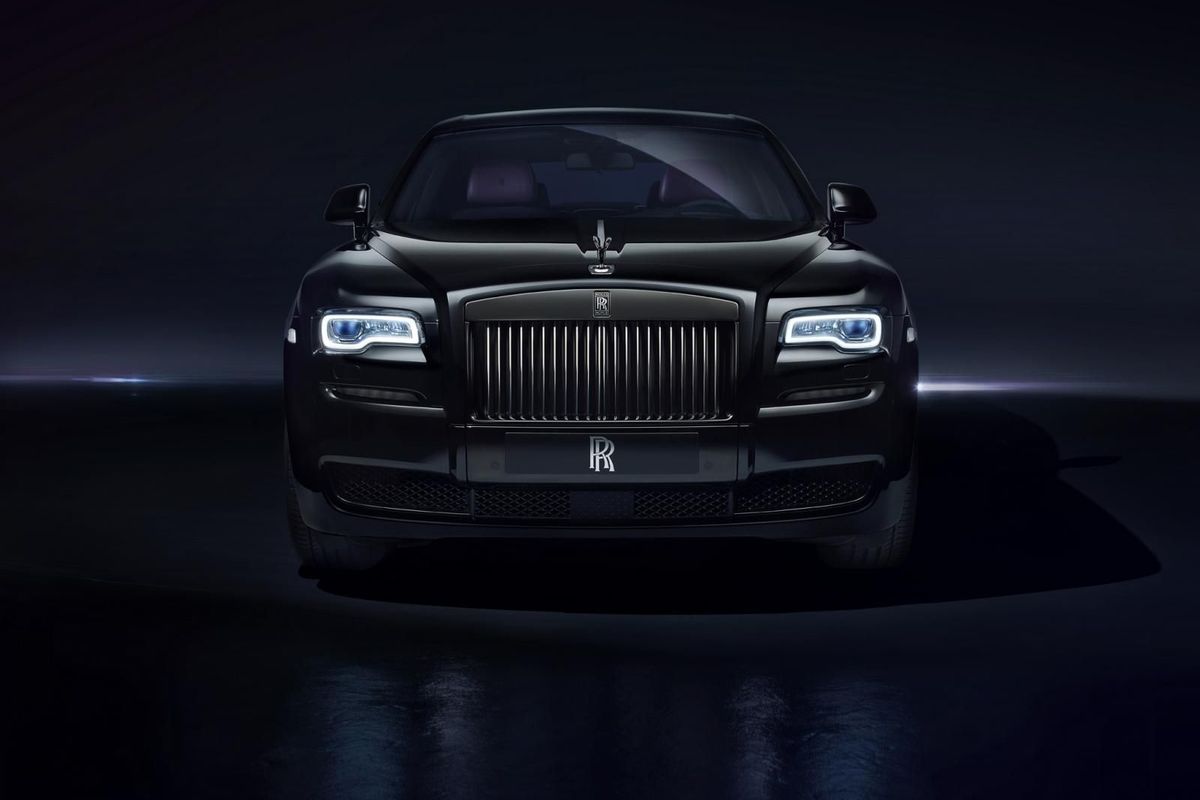
If Rolls-Royce is the embodiment of opulence, stateliness and exclusivity in the motoring world, why would the esteemed British marque need products that are the equivalents of BMW's M cars and Mercedes-Benz's AMG derivatives? Well, if Rolls-Royce's behemoths are all about grace, space and pace, the Black Badge versions focus firmly on the lattermost. Think of them as the ideal cars for the Mark Zuckerbergs of our time.
Introducing a new Rolls-Royce on a racetrack sounds as strange as giving a child ice-cream for breakfast. Unorthodox as that may be, this is how we recently got acquainted with Rolls-Royce’s new Black Badge sub-brand. This new variant is very much “un-Rolls Royce-ish” in a traditional sense, at least compared with how we've perceived the brand for decades.
The moment the two “R’s” escape from anyone’s mouth, the vision of a dapper older gentleman comes to mind. Either that or a colonial grandfather of sorts, one with a huge dislike for the “lower classes”. But that’s the thing about this new era of Rolls, the Black Badge is so far removed from that figure, it will probably resonate more with the Elon Musks of the world. It’s the Spirit Of Ecstasy reimagined for a disrupter of industries. That's why it was so fitting to launch this range at the Kyalami racetrack, instead of the scenic vineyards of Franschhoek.
What is it?
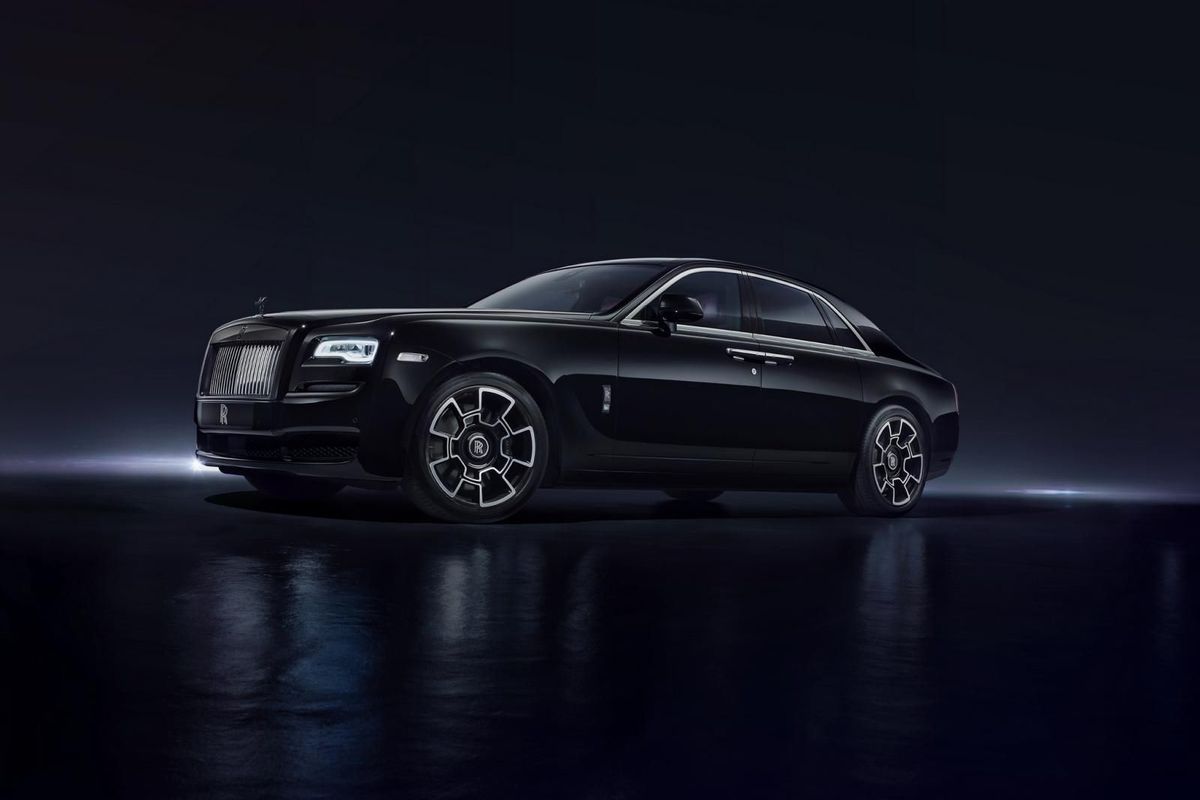
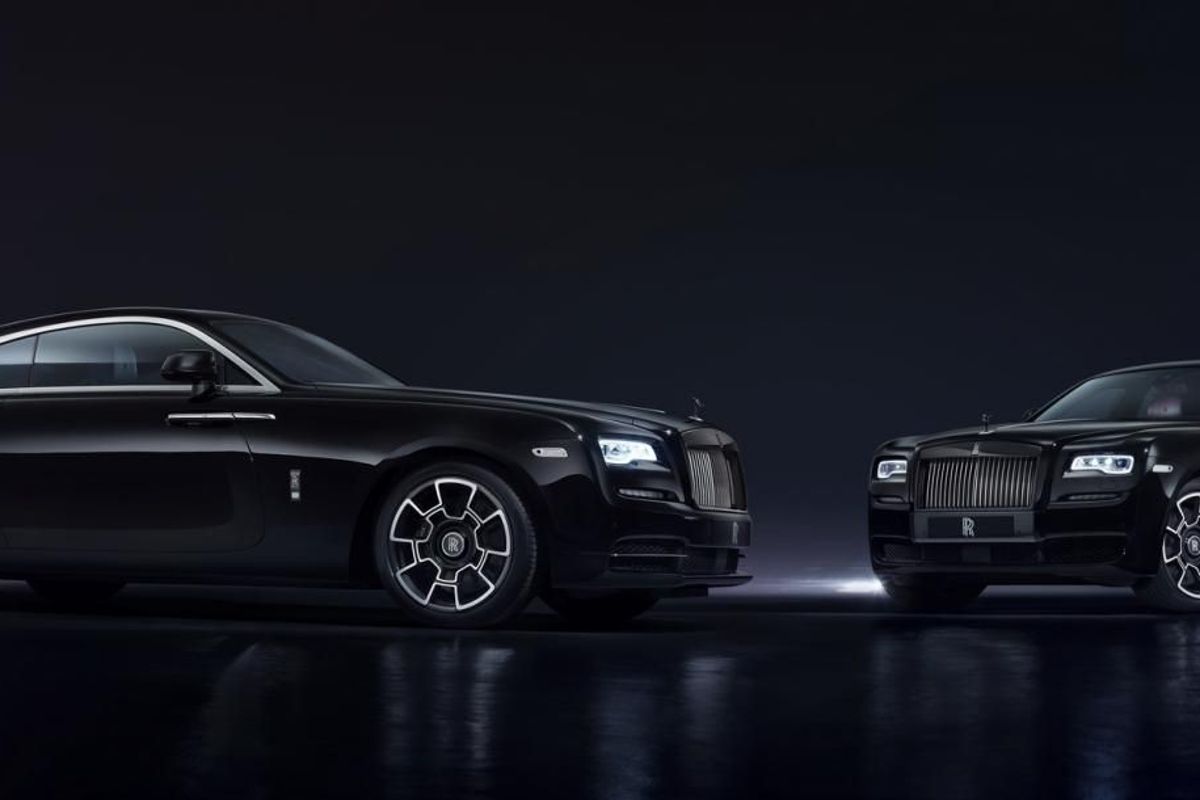
So, what is this range all about? It’s a more performance-oriented version of the Wraith or Ghost (you can choose to have a Black Badge version of either car). The car is marketed as the Rolls Royce for risk takers and those who “dare to be different”. And, if you watch the promotional video for the Black Badge, the protagonist in the clip is definitely more of a Bruce Wayne than a Rich Uncle Pennybags (otherwise known as the mascot of the Monopoly board game).
What are the most pertinent gains over standard Ghosts and Wraiths? The power outputs are up on both derivatives, but most importantly, the maximum torque is way up!
The exact figures are 465 kW and 870 Nm on the Wraith and 450 kW and 840 Nm on the Ghost. At this point you may be puzzled (I certainly was), because one never wonders how much power a Rolls Royce produces – in this case, a lot: all from a mighty 6.6-litre twin turbocharged V12 engine… The cars are also sharper in terms of suspension dynamics, making them feel nimbler than any cars of such heft should reasonably be, but I will elaborate on that shortly. Before we get there, we need to discuss aesthetics.
Drop dead gorgeous
The sheer magnificence of the Black Badge derivatives is almost indescribable. The black paintwork on the body coupled with the gloss black 21-inch rims and chrome accents all around, make you stand in awe of these high priced items. Top it off with the reverse opening doors of the Wraith and you’ve got something that you wouldn’t blame your partner for leaving you for someone who owned one.
Watch the Black Badge cars being showcased to clients in Miami:
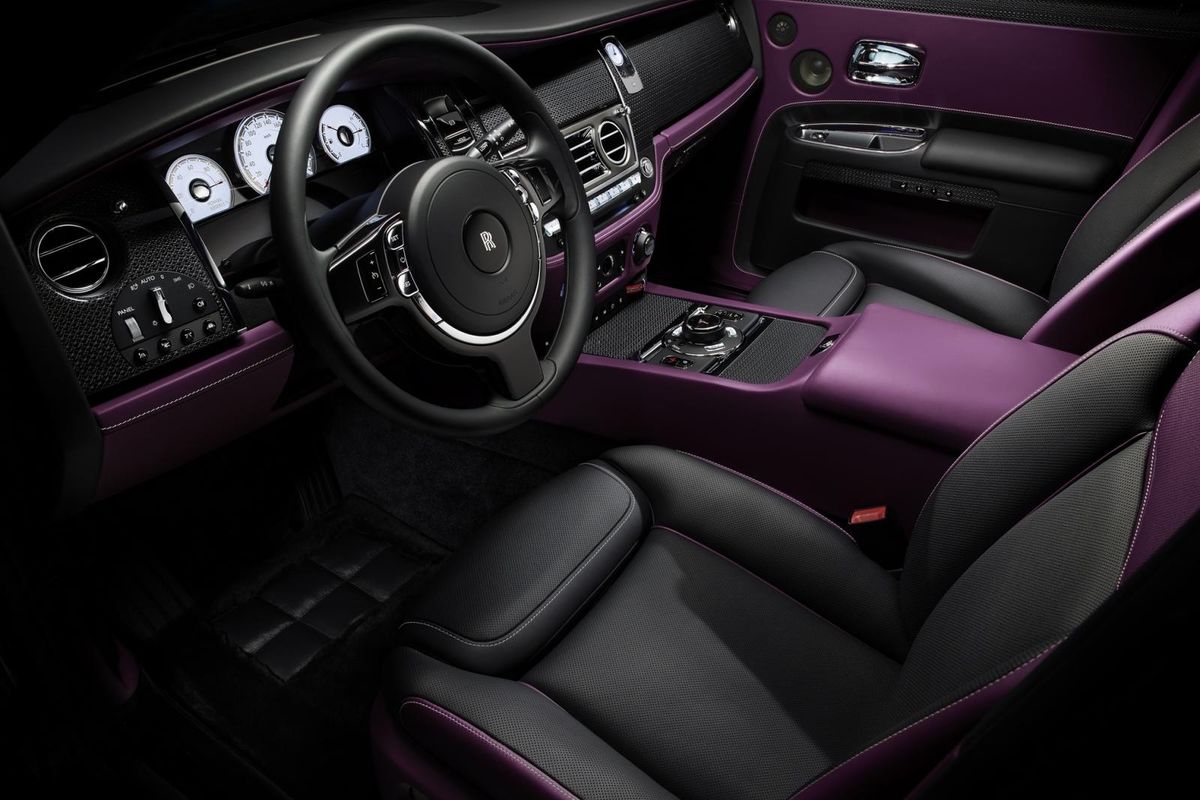
The iconic Spirit Of Ecstasy is finished off in black chrome on the models. We only had Wraith’s to sample on the day, which was okay because the Ghost was there on display. Besides, if you’re going to take a Rolls on the track, the Wraith seems better suited for it, as it is the sportier of the two. Both Wraiths that were availed to us were identical in specification, the only difference being that the one I was assigned to drive had a red interior, whereas the other had blue.
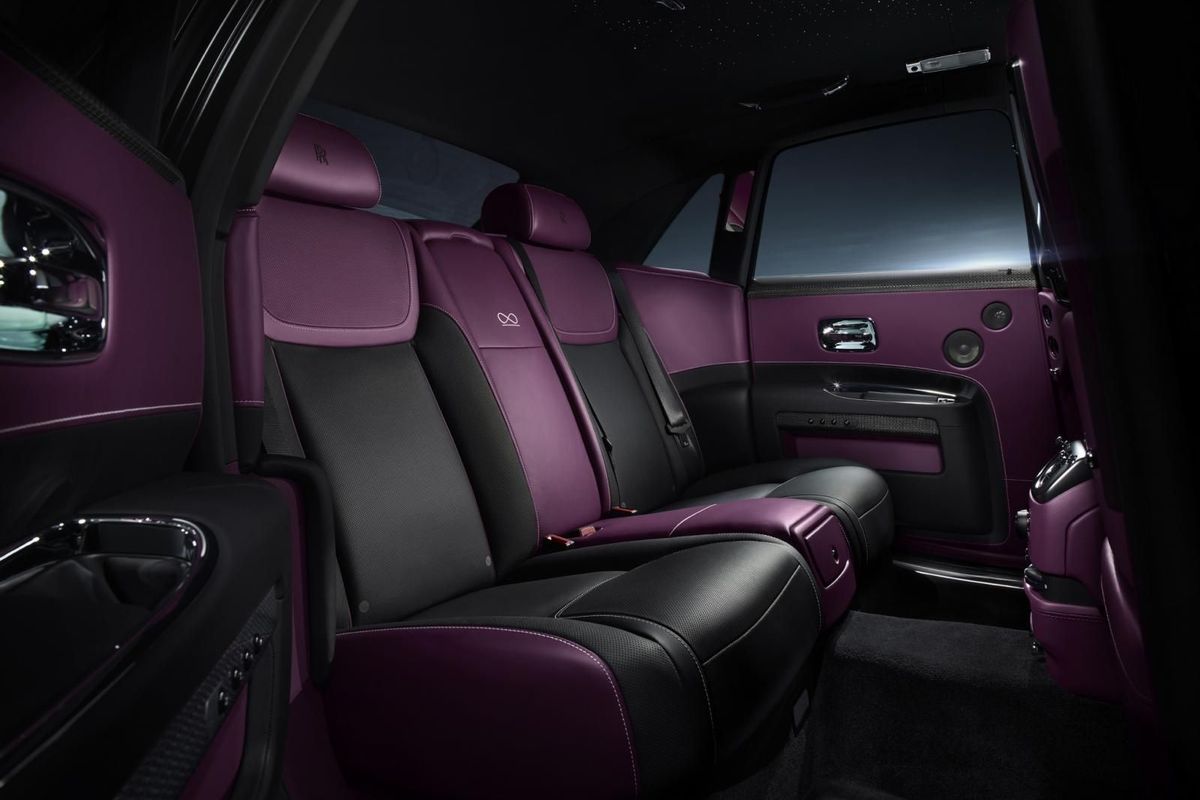
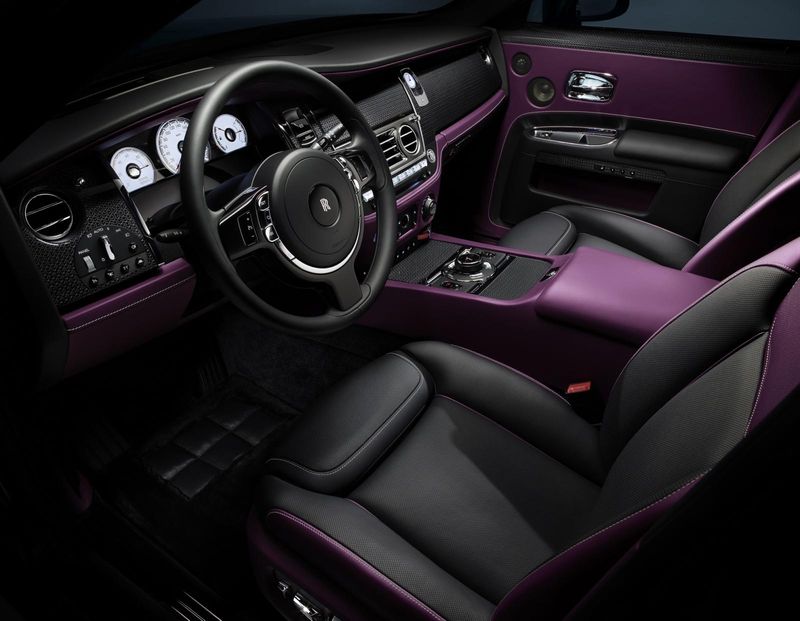
The Black Badge's cabin mixes dark, plush leather and opulent trim with bright colours audaciously…
A generous turn of speed, of course…
Two and a half tonnes – that is the approximate kerb weight of a sizeable SUV. It is also the approximate weight of the Wraith I was ushering into Kyalami's corners with considerable intent. Let me put this to bed now: a Rolls-Royce is not a track car. It’s a very large sedan/coupe and, as a driver, you're reminded of that fact in virtually every corner because body roll is ever-present. The steering wheel is also not designed to be manhandled like a sportscar's tiller. That being said, the Wraith Black Badge proved to be quite dynamic for its weight.
The faster you go, the more the car realises it needs to firm up its damping; the Rolls rapidly adapts to your driving style, as we discovered on our faster laps on the circuit. What is mind- boggling about the car is how the engine is very responsive, but in an entirely undramatic way. You barely hear it as the limousine barrels along.
All you feel is the constant surge of torque… and all you see is the rapid nearing of objects. Funny enough, while we waited for our turn and the cars flashed past us on the track, all you hear is the induction of air as the models swooped by. Watch this clip that shows the Black Badge in action at the 2016 Goodwood Festival of Speed for a demonstration:
What is very apparent while commandeering the Wraith is the utter opulence of the cabin. It’s the equivalent of a chief executive’s office, or even fancier, inside the car. Everything feels expensive and over the top and you can’t help but feel privileged when ensconced behind the Rolls' tiller. And the car is truly spacious… Despite the fact that the Wraith has only two doors, there is enough space for anyone to stretch out their legs and then some. The Wraith is, however, not the Rolls Royce you get driven in, it’s the one you drive. If you’re seeking the former, the Ghost Black Badge is what you need to own. Due to its size, it retains the stateliness of a standard one, but looks much more…um…I think “gangster” is the word.
Summary
This new range of Rolls Royce reflects the brand's subtle shift in target market. Bentley has performance-oriented Speed and Superspeed derivatives, but the Black Badge range feels much more focused and, for lack of a better word, edgy. It is for the new age millionaire, one that wants to make a statement. Gone are the days of the brand making cars only for your wealthy grandfather. With great sums of money reaching younger people in the world we live in, the brand needs to be able to supply a product that resonates with that generation.
After sampling the Black Badge range and sitting in the Rolls' unashamedly lavish interior, I could see myself piloting one of these in another life. Perhaps as a rock star or something along those lines, because it’s definitely the Rock n Roll version of the Rolls-Royce brand. Just wait 'til I've made my first R7 million or so… "I'd definitely be in the market for one of these."