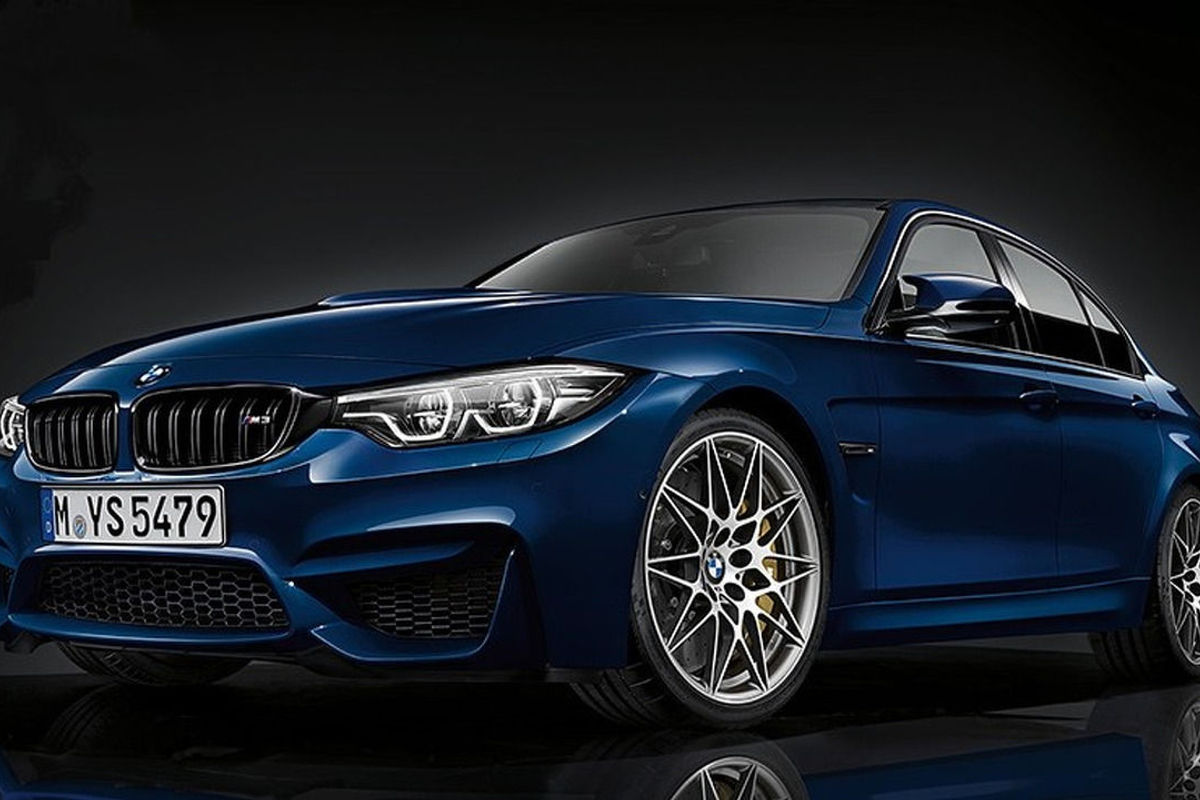
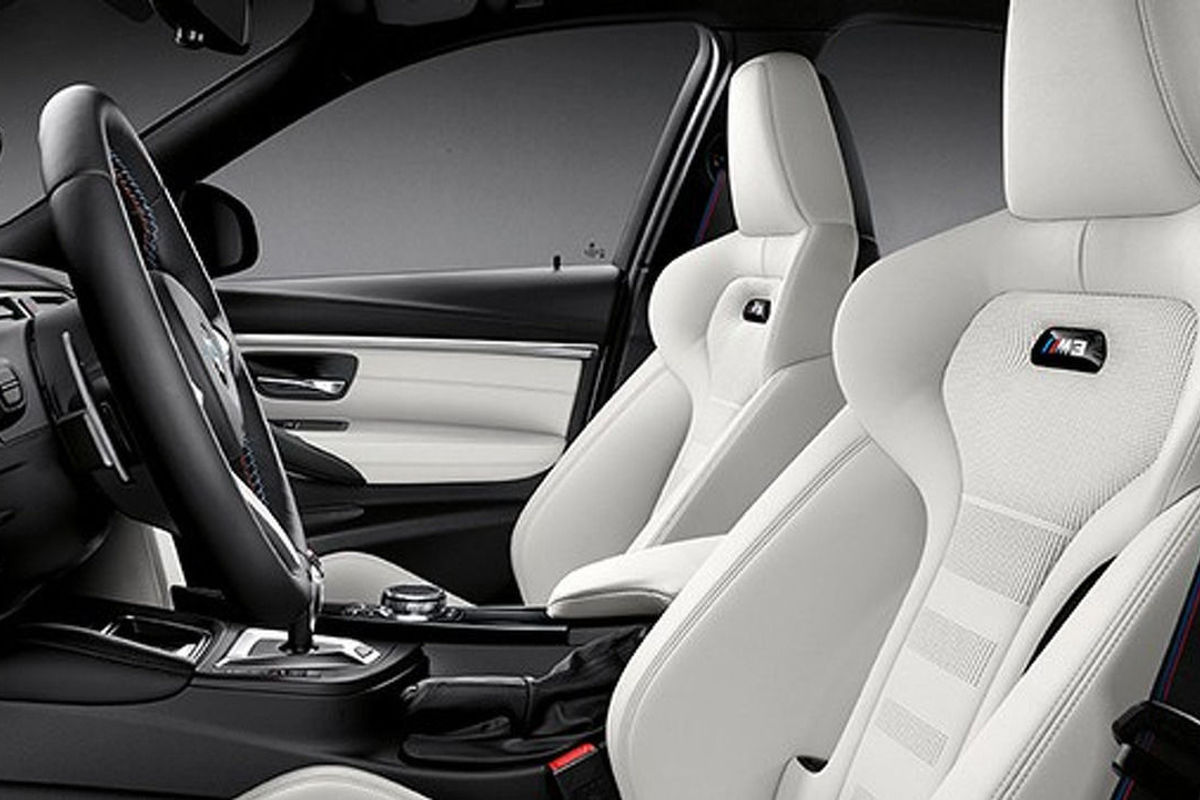
The BMW M3 has received a facelift with minor changes. Let's see what it's all about.
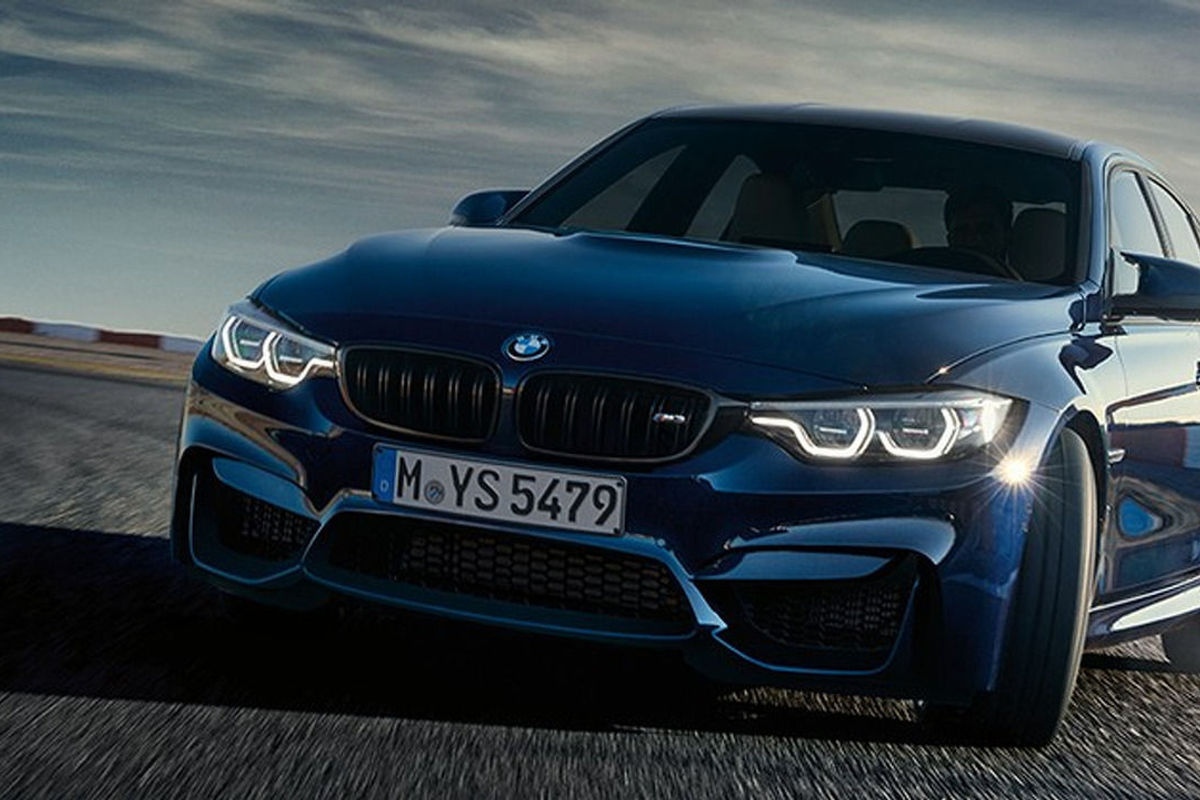
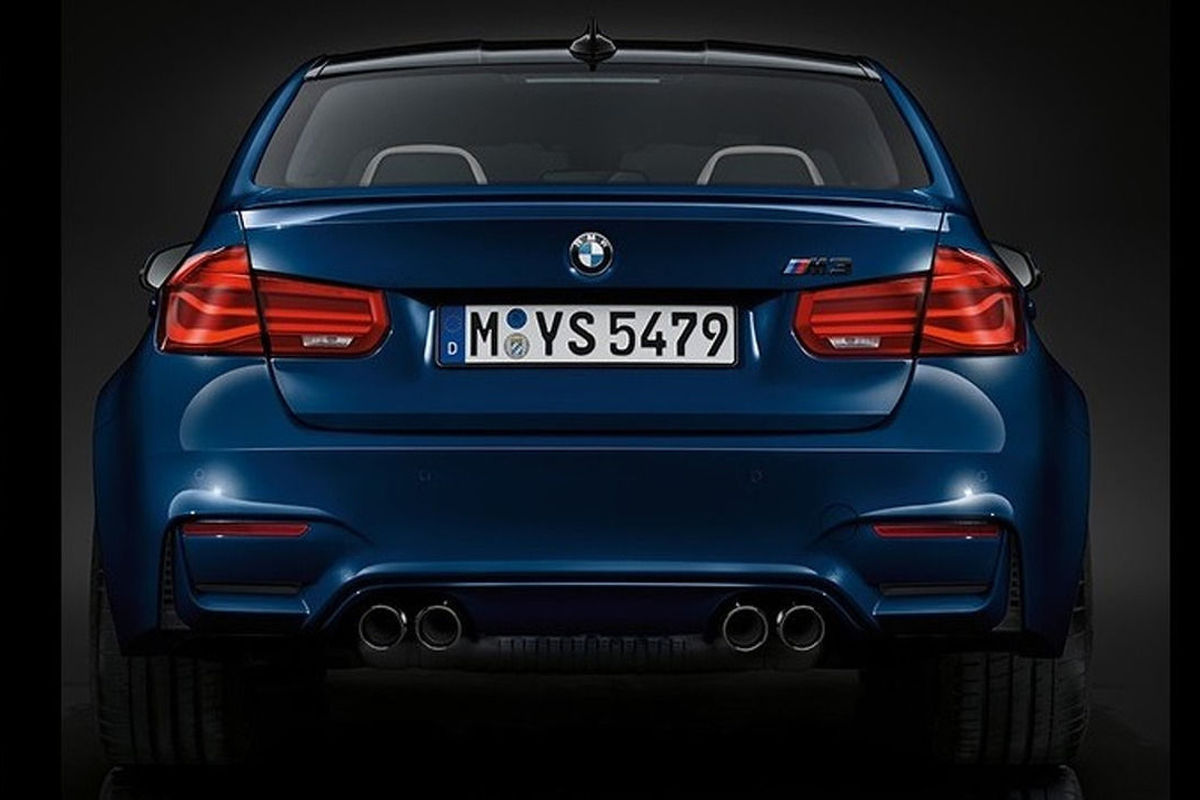
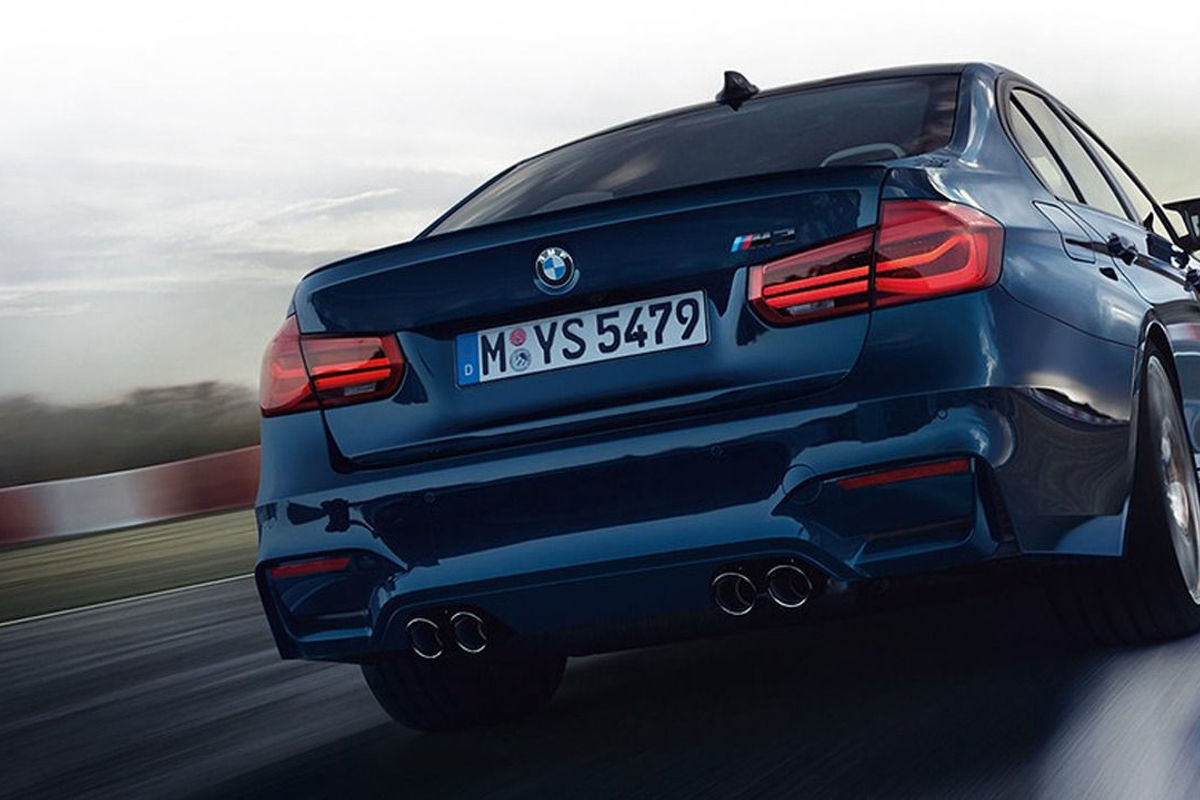
Following a facelift back in 2015, BMW’s M3 has returned to the surgeon table for a round of enhancements. This latest facelift is rather minor, with the biggest change coming from a revised front fascia that closely resembles the recently facelifted M4 Coupe.
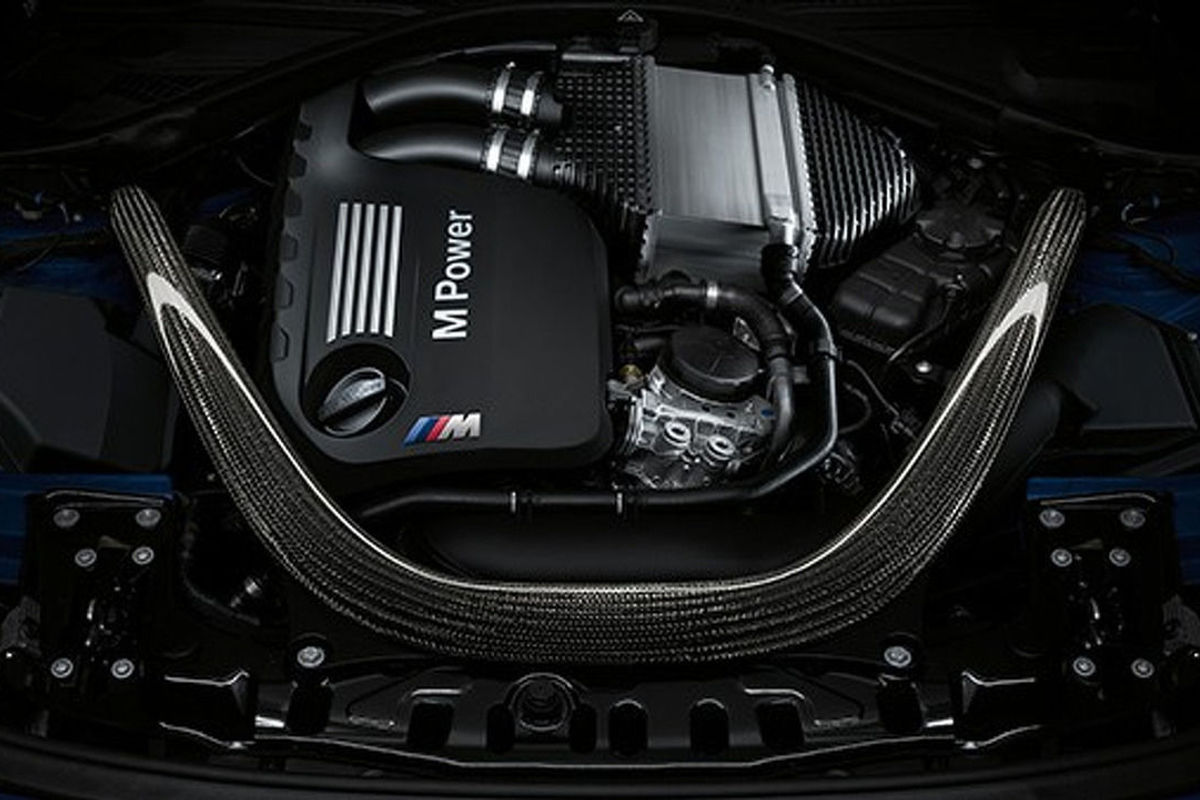
Apart from its revised face, the BMW M3 remains much the same as before and it will be powered by the familiar 6-cylinder, 3.0-litre biturbo engine that offers 317 kW and 550 Nm of torque. If those numbers don’t satisfy your performance needs, you can opt for the Competition Package that increases power output to 331 kW. A 6-speed manual or 7-speed dual-clutch transmission will put power to the road and ensure brisk acceleration. The standard M3 automatic is capable of a zero to 100 kph time of 4.1 seconds while the Performance version is marginally faster at 4.0 seconds.
Local pricing will be announced closer to the M3’s arrival in South Africa. We're yet to hear from BMW SA in terms of local availability, but as soon as we hear, we'll update accordingly.
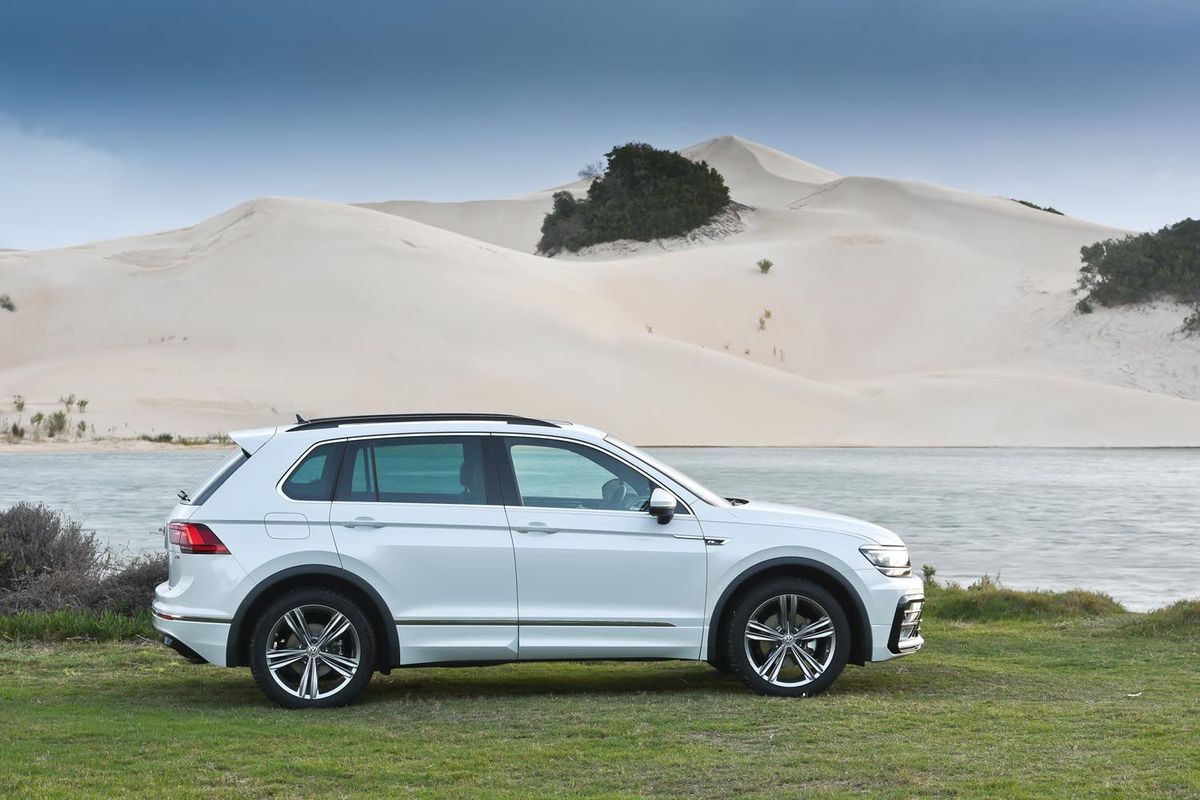
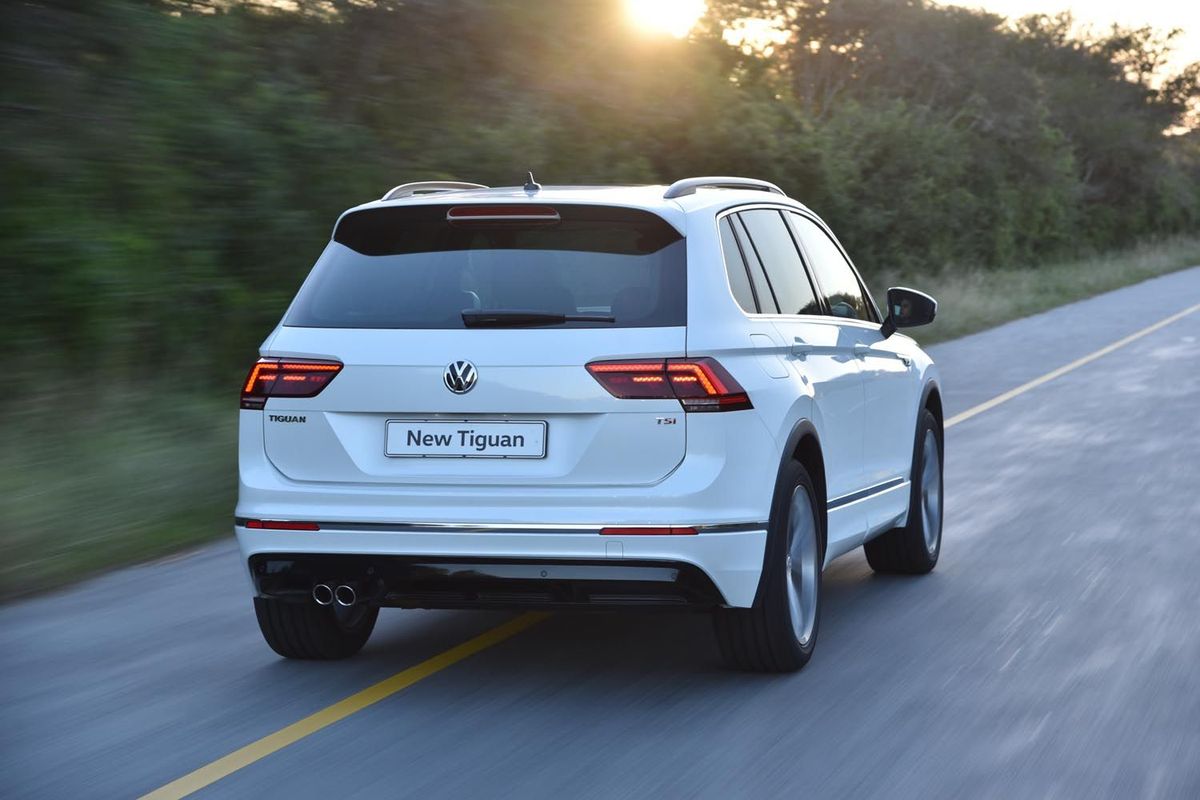
Volkswagen has added two new diesel models to the Tiguan range, including a high-powered 4Motion model.
The Tiguan range is starting to look complete now that Volkswagen SA has added 2 diesel engines to its model lineup. The turbodiesel models are now available to customers in South Africa.
In Comfortline specification (the Tiguan's middle choice of equipment lines) you can have a 2.0-litre 81 kW/250 Nm unit with a 5-speed manual gearbox. The sporty R-Line kit can also be added to this model at an additional R20k. If you want an automatic (DSG) then you'll have to opt for the 4Motion (all-wheel-drive) models. The 2.0-litre engine with DSG is beefed up to produce 105 kW and 340 Nm of torque.
The top-spec turbodiesel model is only available in Highline trim level, but it has even more power with 130 kW and 350 Nm of torque as used in the Passat. Again, it will use the 7-speed DSG gearbox and 4Motion.
With the arrival of the new diesel derivatives, Volkswagen South Africa expects the bulk of its Tiguan sales to be diesel models.
The new Volkswagen Tiguan comes standard with a 5-year/90 000 km service plan, 3-year/120 000 km warranty and a 12-year anti-corrosion warranty. Service intervals are set at 15 000 km.?
Previously
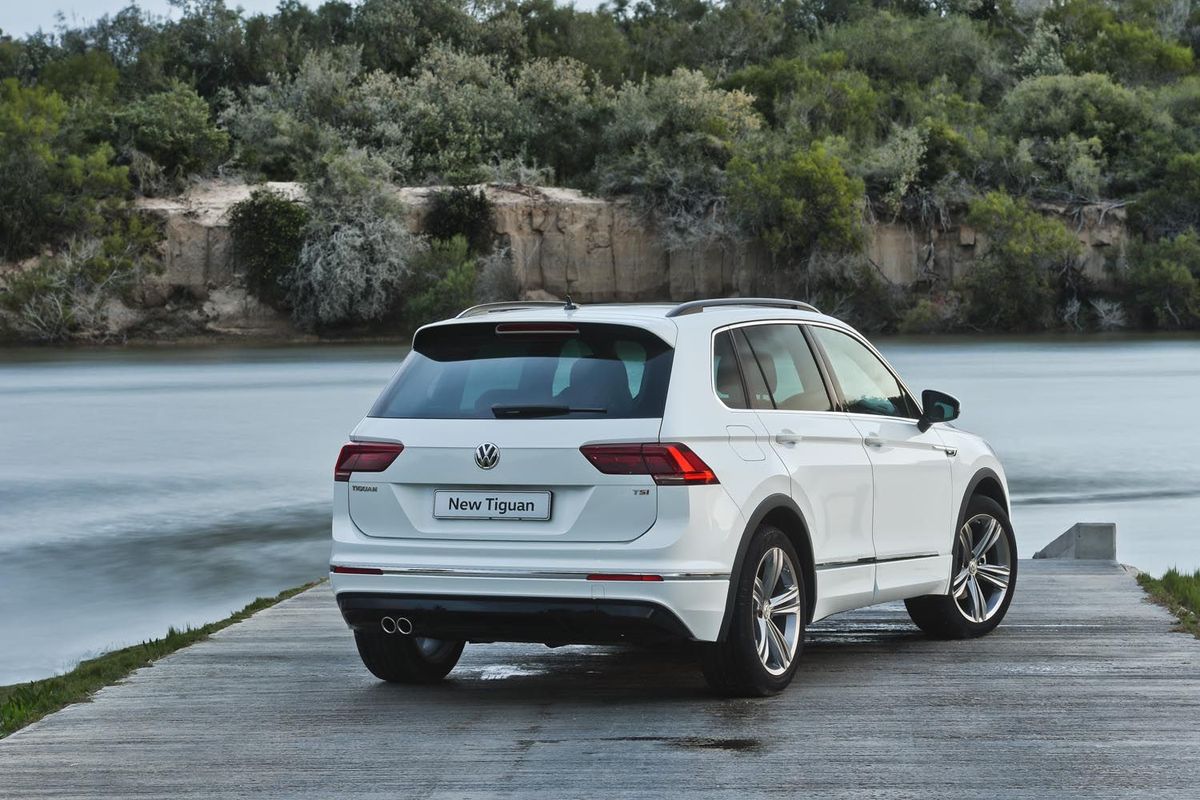
Pricing and local specification for the highly anticipated Volkswagen Tiguan has been released and we have all the information you need ahead of its local launch in late August 2016.
The new Volkswagen Tiguan is a luxurious crossover/baby SUV that has proven popular, both globally and in South Africa, since its international launch back in 2007. The Tiguan arrived in South Africa in 2008 and local sales of almost 20 000 units are testament to its appeal. Since inception, the Volkswagen Tiguan has tallied up a respectable 2.8-million units sold worldwide and there's hope that this new model will be even more successful.
Engines and safety
The new Volkswagen Tiguan is the first SUV from Wolfsburg to ride on the successful and versatile MQB platform which forms the basis for products such as the Volkswagen Golf, Volkswagen Passat and Audi A3, to name but a few. From launch, there will be three models available, all powered by a 1.4-litre TSI petrol engine with BlueMotion fuel-saving and efficiency technology. There are two states of tune available: 92 kW / 200 Nm and 110 kW / 250 Nm. Fans of diesel engines will be pleased to hear that a 2.0-litre TDI motor with 81 kW, 105 kW and 130 kW will be arriving in the fourth quarter of 2016. A flagship Volkswagen Tiguan version with a GTI-sourced 162 kW 2.0-litre turbo petrol engine will also be arriving later in the year. Both manual and DSG transmissions will be available.
The cabin has changed significantly and one of the highlights is a substantially larger boot which is claimed to hold 1 655 litres worth of cargo – that's 145 litres larger than the outgoing model. There are three specification levels: Trendline, Comfortline and Highline. In terms of safety features, the new Volkswagen Tiguan features driver and front passenger airbags, a curtain airbag system and front seat side impact airbags. The hazard lights will flash automatically under hard braking, while Electronic Stability Control, XDS transverse differential lock and fatigue detection (Rest Assist) are all standard. The new Tiguan carries a five-star rating from EuroNCAP.
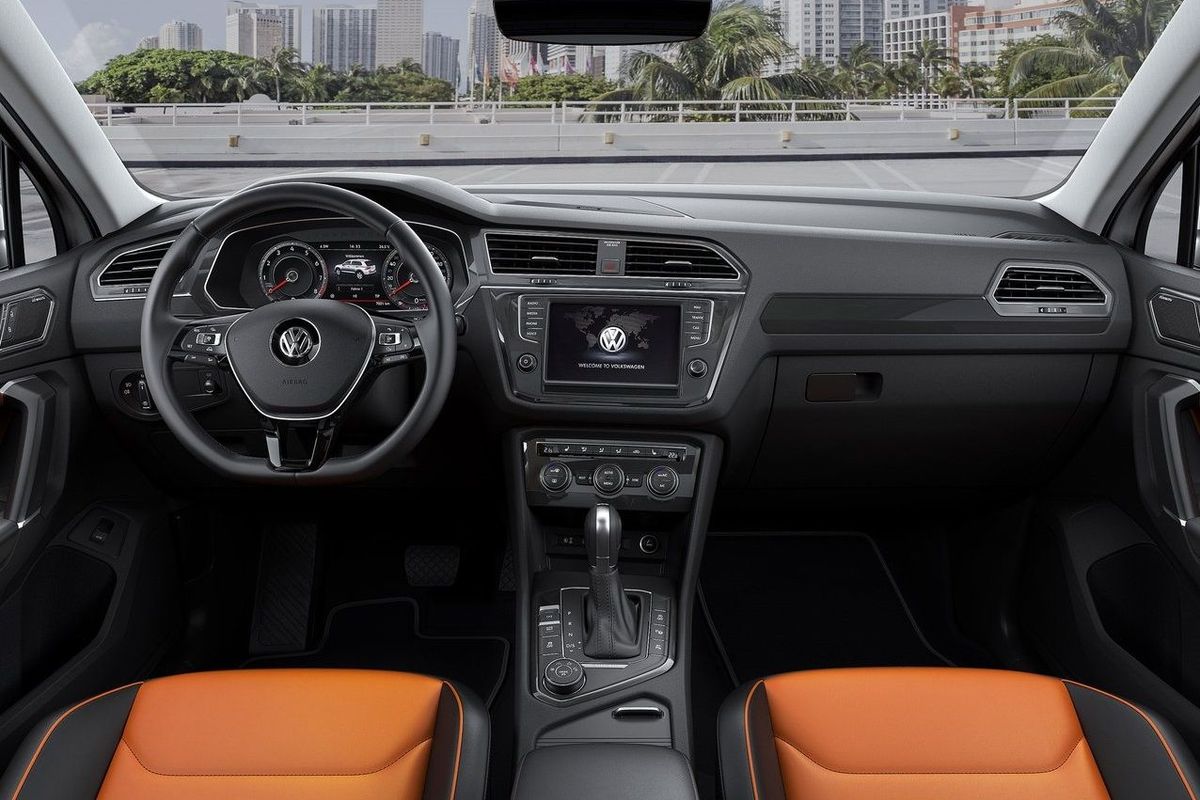
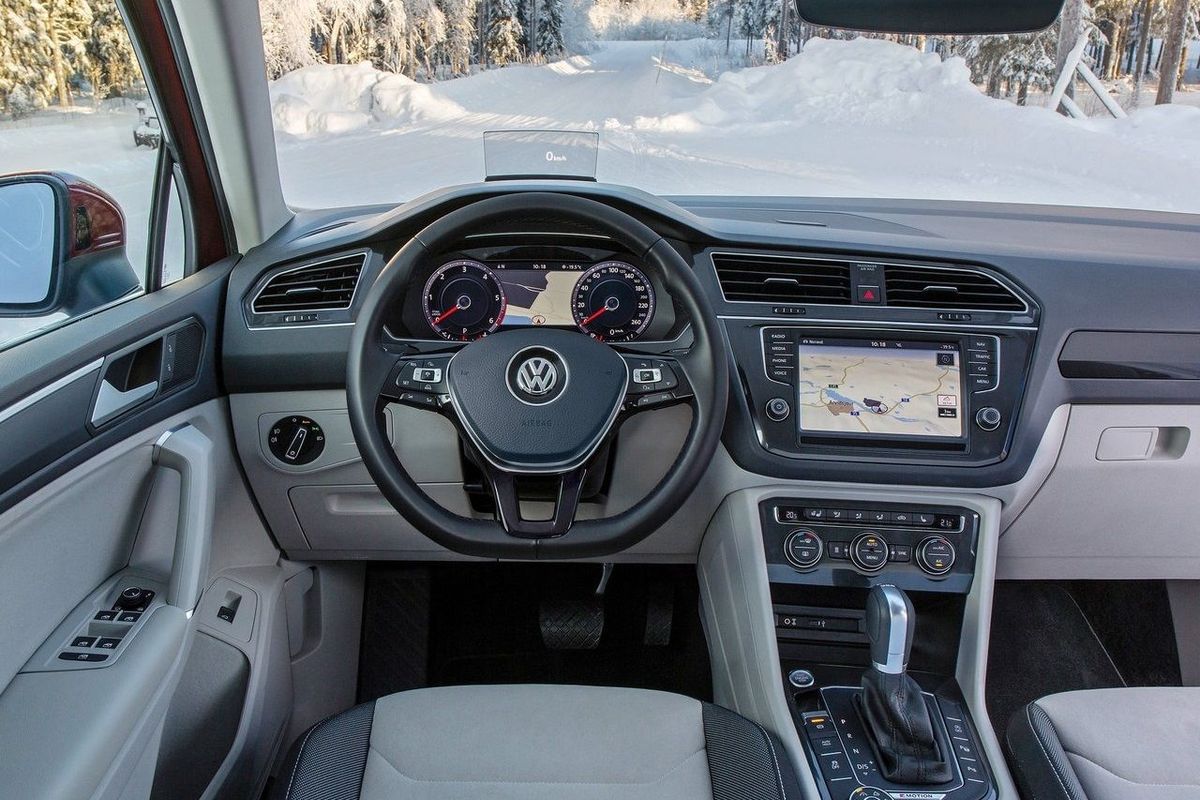
New tech for the Volkswagen Tiguan in the form of head-up display and digital dashboard. Left-hand drive European model shown.
Standard features and options
Standard features include manual air conditioning, electric front and rear windows, cruise control, front fog lights, leather multi-function steering wheel, connectivity package (Bluetooth & USB interface) & roof rails. The standard infotainment system is the 5-inch touchscreen Radio/CD “Composition Colour” system with MP3 compatibility, 8-speakers, SD Card and AUX-in connection. The next step up in terms of infotainment is the 6.5-inch touchscreen Radio/CD Composition Media with MP3/WMA, 8-speakers, Bluetooth, SD Card, USB interface and AUX-in connection. Finally, you can also opt for Discover Pro Navigation, which comes with an 8-inch display with a DVD Drive.
For those craving audio satisfaction, Volkswagen is offering the optional 400-watt DYNAUDIO Excite surround sound system with a digital, 10-channel amplifier, subwoofer and an integrated centre speaker.
As with all Volkswagen products, there are a number of optional features that you can choose for the new Tiguan. These range from a panoramic sunroof, electrically detachable towbar, LED-mid Headlights package and the R-Line exterior package with 19-inch Sebring alloy wheels. A head-up display, parallel parking assistance with rear view camera, Active Info Display, 8-inch Discover Pro Radio with satellite navigation system and 6.5-inch Radio/CD Composition Media system adds to the options list. Furthermore, adaptive cruise control with front assist, App-connect, ambient light package, leather seats with electric adjustment, DynAudio Premium sound system, Keyless Access (keyless locking and engine starting system) and an electric tailgate will also be on offer.
Toyota and its luxury brand, Lexus, are introducing a number of exciting products to market in 2017. Here’s what you can expect from them this year…
Toyota products are hugely popular in South Africa and models such as the Hilux, Fortuner, Corolla, RAV4 and Etios sell consistently well in our market. This year will be an exciting year for Toyota as a host of new and facelifted products are expected to arrive, some of which will further solidify Toyota's top-seller status locally, and others that will bring some excitement to the line-up.
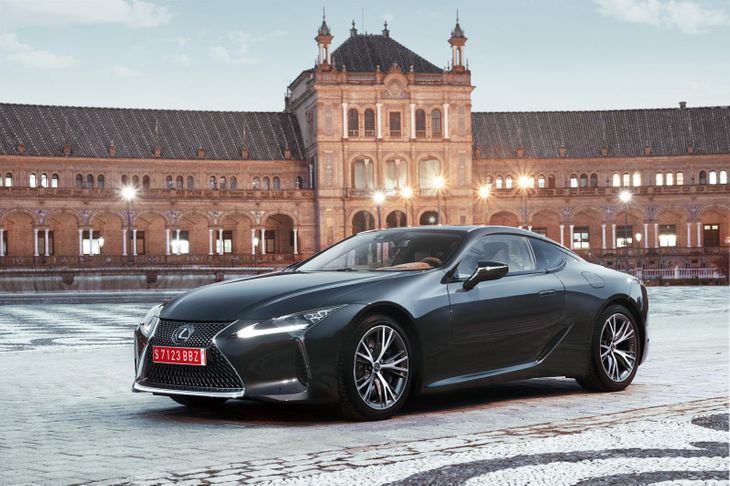
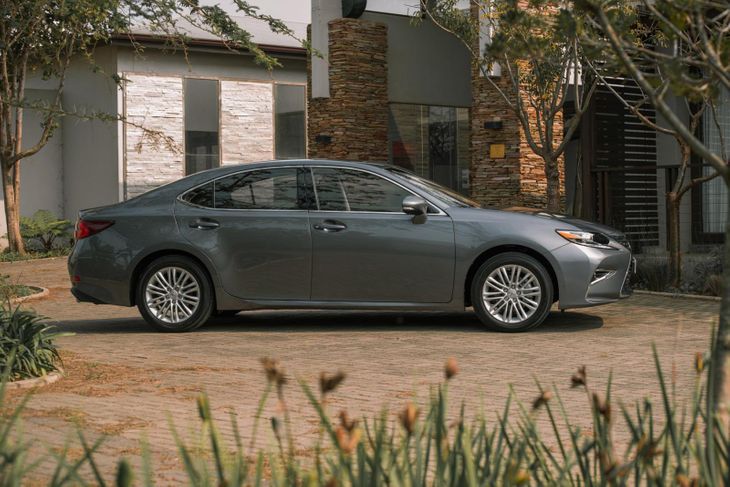
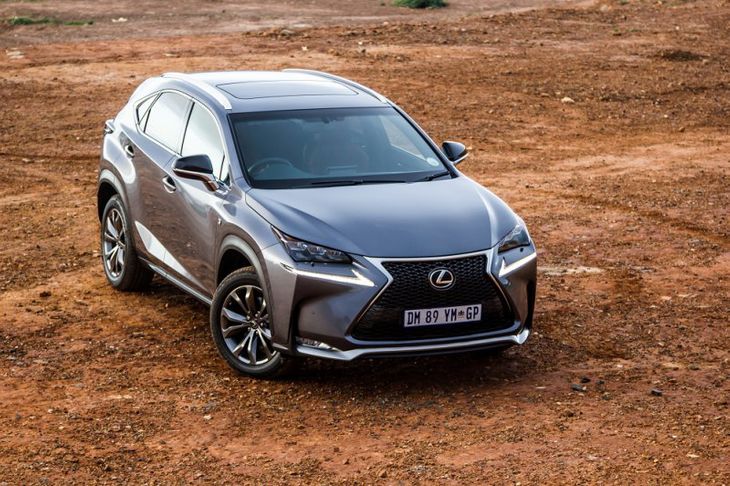
As for luxury brand, Lexus, 2017 will see the introduction of the highly-anticipated LC 500 Coupe, which we drove in Spain at the end of 2016 as well as minor updates to the NX luxury crossover and ES sedan.
First quarter 2017
Facelifted Toyota Corolla
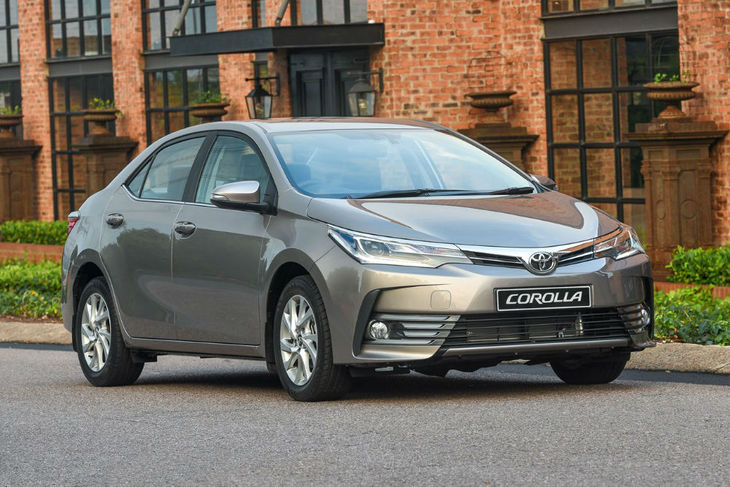
Toyota started the year with the introduction of the facelifted Corolla that welcomed an updated exterior design and changes to the interior while the Corolla’s ride quality has also been improved. The engine offering is the same as before with 1.3-, 1.6- and 1.8-litre petrol engines on offer, as well as a 1.4 turbodiesel engine. The Corolla is the best-selling sedan in the C-segment and represents good value with pricing starting at R261 300.
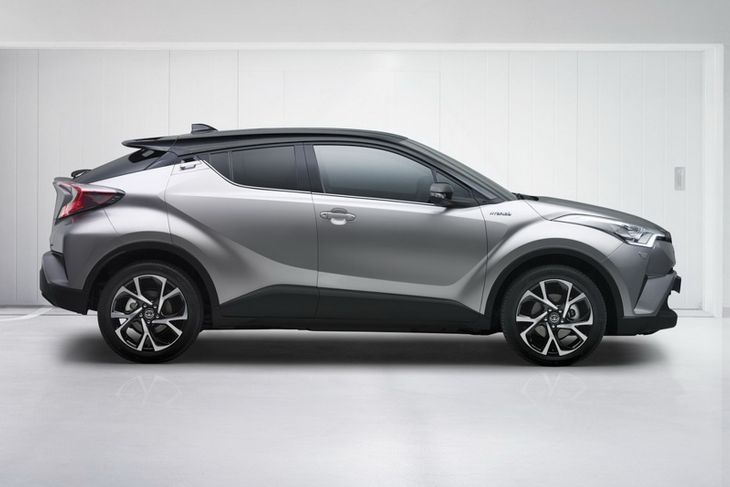
Toyota’s new C-HR is bound to shake up the compact crossover market when it arrives on local soil at the end of February 2017. Combining an attractive design with a quality interior that offers more space than its size might suggest, the C-HR should sell well. The C-HR will be powered by a 1.2-litre turbopetrol engine with 87 kW and 185 Nm of torque. A choice of a 6-speed manual transmission or a CVT will be offered to customers. Official pricing is yet to be confirmed, but you can expect pricing for the C-HR to fall between R320 000 and R360 000.
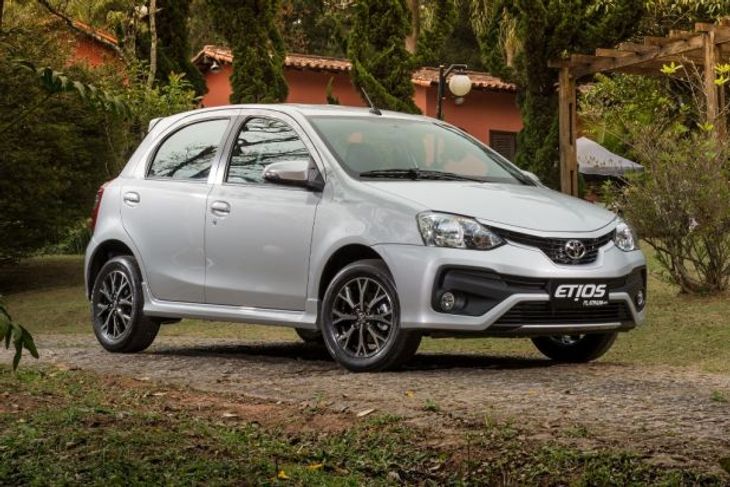
The popular Etios is due for a facelift and the revised model will arrive in South Africa towards the end of March 2017. The facelifted Etios will introduce revised exterior styling and a reportedly markedly improved interior. The Etios range of hatchbacks is also expected to adopt the “Sprint” moniker to broaden its appeal. Local specification and pricing will be confirmed closer to launch.
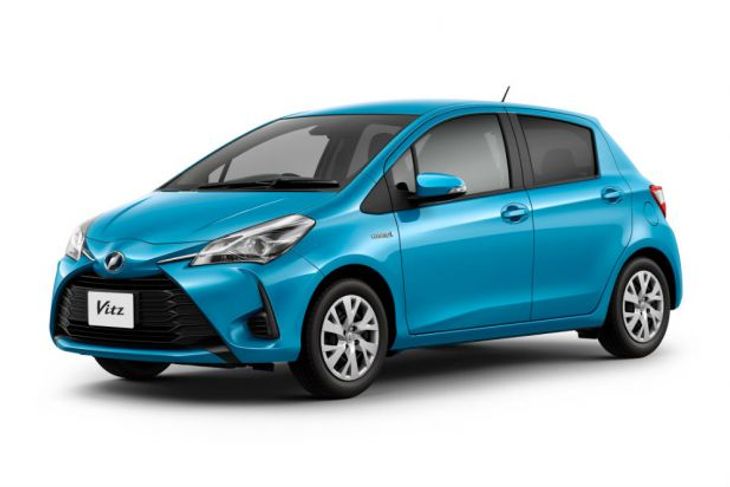
The second quarter of 2017 will see the arrival of the facelifted Toyota Yaris. The exterior design has been enhanced with revised front/rear bumpers and grille, as well as redesigned headlights and taillights. The interior will benefit from a revised dashboard, trim and upholstery. The engine offering is likely to remain the same with 1.0-litre and 1.3-litre petrol engines on offer. A 1.5-litre petrol-electric hybrid derivative will complete the Yaris range. Both a CVT and 5-speed manual transmission will be available to customers. Pricing and specification will be confirmed closer to launch.
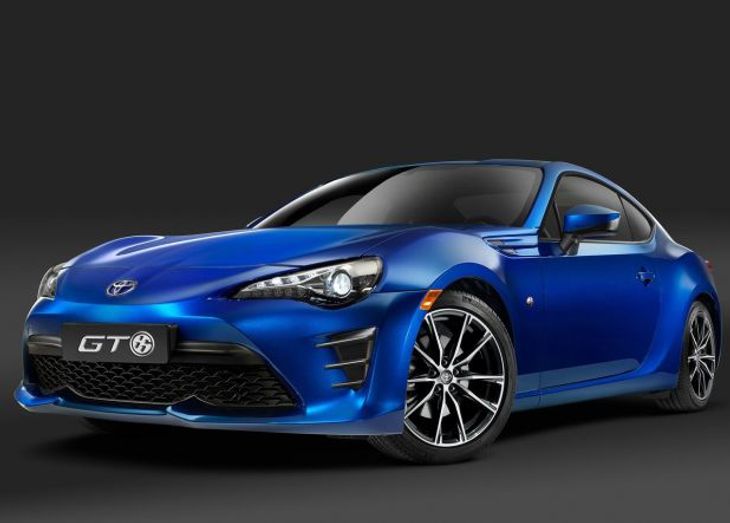
After some delay, the facelifted Toyota 86 will make landfall in South Africa in the second quarter of 2017. Customers can expect revised styling as well as a bump in power from its naturally-aspirated 2.0-litre engine that will now offer 151 kW and 214 Nm of torque. Both the transmission and suspension have been revised and the facelifted 86 should resultantly deliver more fun behind wheel. Further details regarding local specification and pricing will be confirmed closer to launch.
The new LC500 Coupe is by far the most important and exciting product coming from Lexus this year. We drove it in Spain and we were mightily impressed with what the LC 500 Coupe is capable of. It’s a beautiful car and it will be powered by a 5.0-litre V8 engine with 349 kW and 550 Nm of torque using a 10-speed automatic gearbox. Lexus claims 4.5 seconds in the sprint from zero to 100 kph. Local pricing and specification will be confirmed closer to launch in June 2017.
The Lexus ES sedan range will be updated in September 2017. Minor styling and equipment upgrades are expected and Toyota will confirm details closer to launch.
The Lexus NX crossover will receive a minor update in October 2017. Toyota is yet to confirm what will change but you can expect minor a styling update and an equipment upgrade. More details will be confirmed closer to launch.
For South African consumers, the phrase: “Another impressive new Volvo” has as much surprise value as that old chestnut: “buyers will probably choose one of its German-made competitors instead…” However, the S90 sedan is a product that has more going for it than just its talents.
With the introduction of the new S90, the Gothenburg-based manufacturer throws down the gauntlet, not only in terms of the products it offers, but its overall sales proposition as well. In a depressed new vehicle market for premium cars, the move is not only gutsy, but wholly justified, especially for a brand that would like to achieve the same share in Mzansi as it holds in other mature markets.
The S90, which we first experienced at its international launch in Spain last year (see links to related content, including a First Drive write-up, a video review by Ciro de Siena, as well as SA prices and specifications detail at the end of the article), made its local debut in picturesque Franschhoek recently – a fittingly swanky locale for an eminently stylish Swedish sedan that presents its take on luxury motoring in a very refreshing way. Alas, its S80 predecessor seemed to embody everything that was staid and unimaginative about Volvo’s direction before Geely took over, opened its chequebook and gave the Swedes carte blanche to produce cars that would make Volvo “cool, trendy and progressive” again.
A new aesthetic benchmark
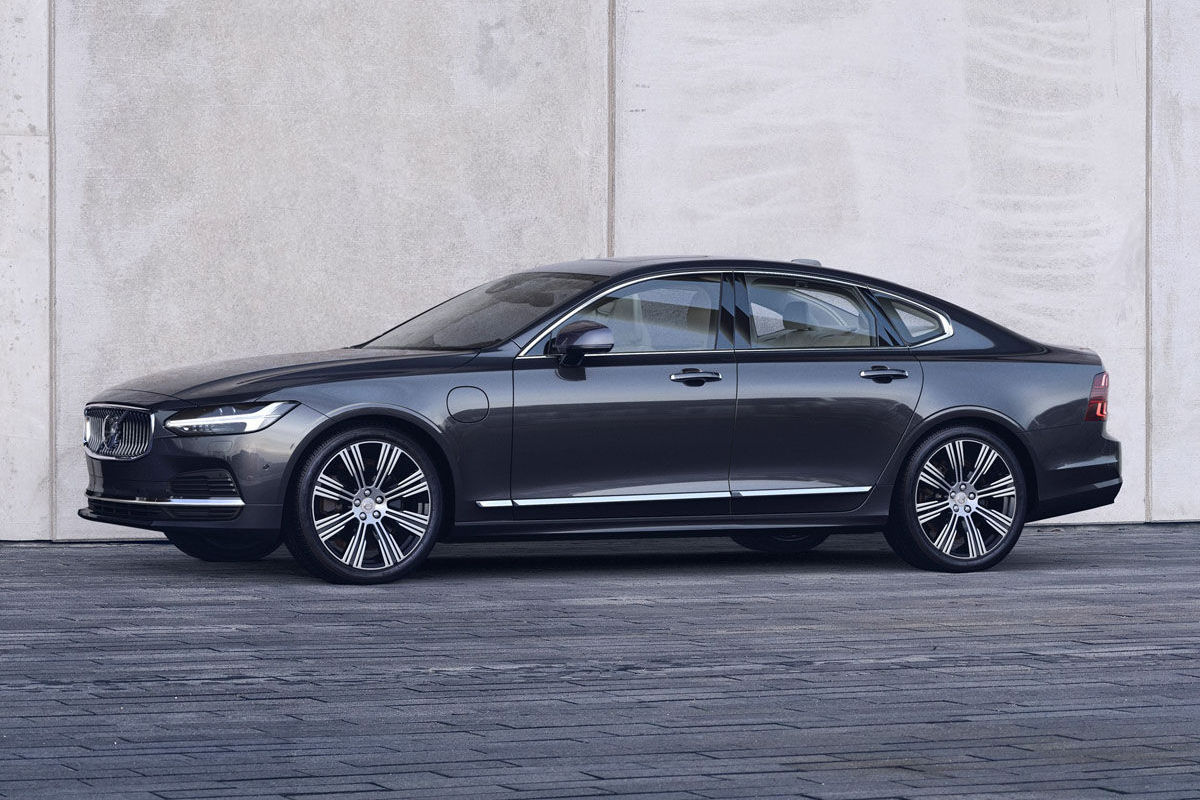
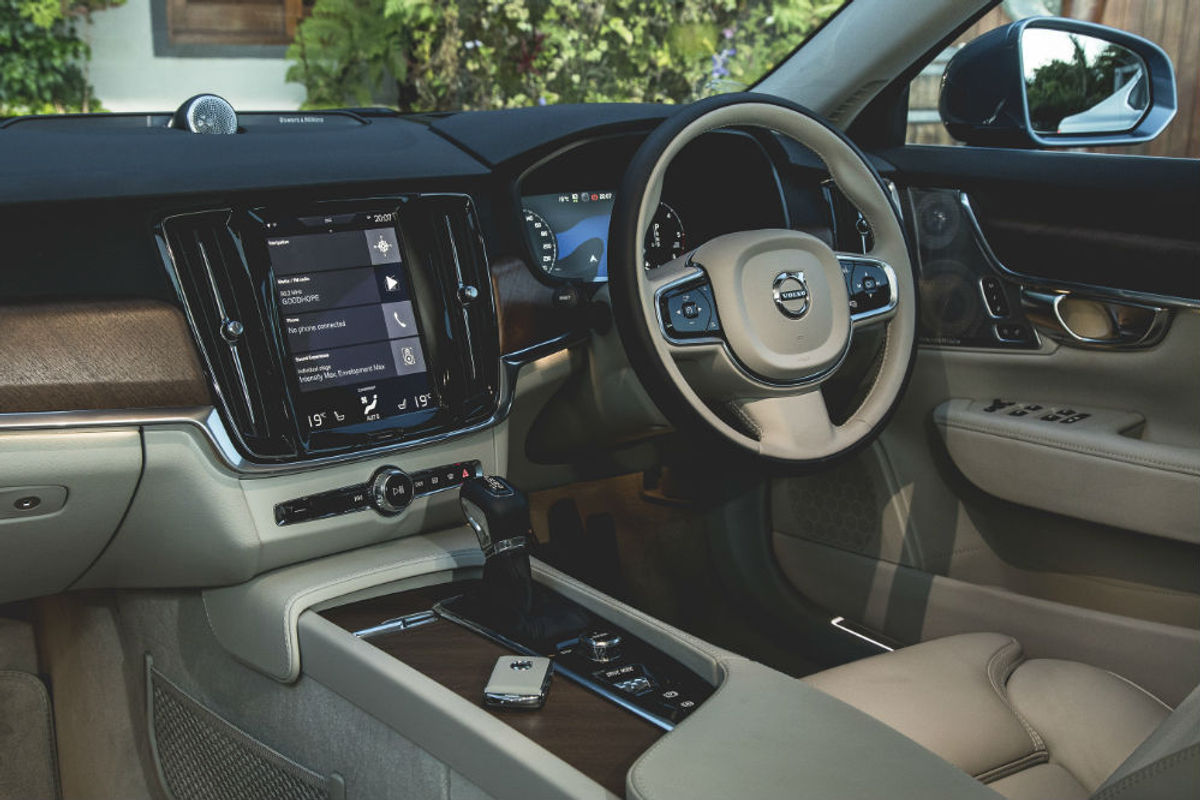
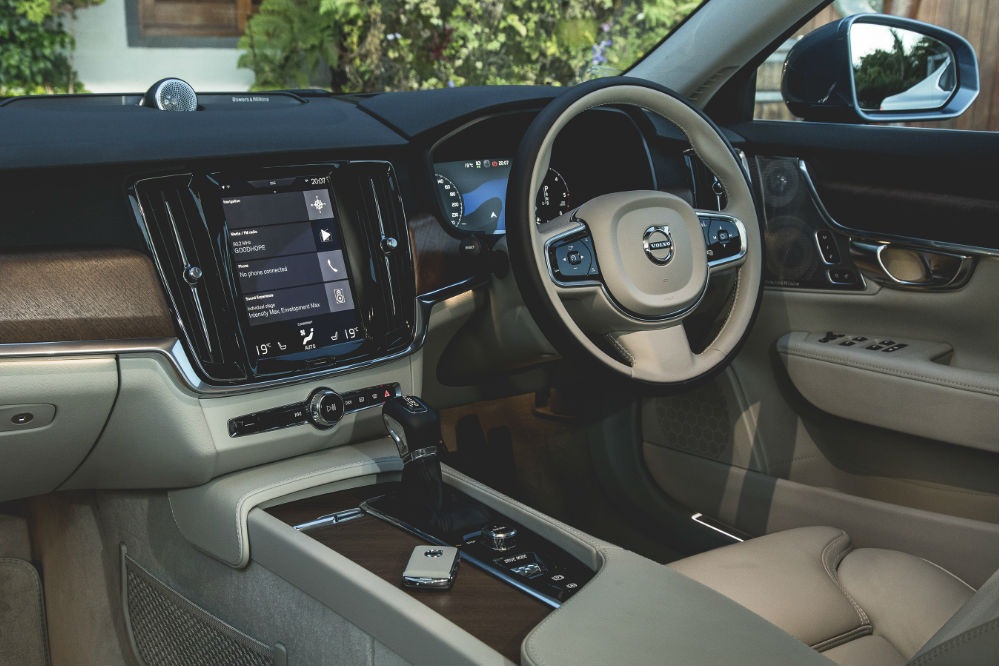
The S90's interior is a symphony of wood grain, plush leather and metallic trim, the embodiment of luxury motoring.
Compared to the S80, the S90 represents nothing short of a watershed for Volvo sedans. What's more, the newcomer – based on the underpinnings of its award-winning XC90 – constitutes a new aesthetic benchmark for the premium sedan segment. Any critique of exterior/interior styling (and even execution) is entirely subjective, but the S90’s single biggest achievement is, as an objet d’art, it appeals to the senses first, offers surfeit comfort and refinement second, and rams home its technological sophistication at the end.
Judging by our initial impressions of the new BMW 5 Series and Mercedes-Benz E-Class, the aforementioned Teutons seem to have taken a cue from their first class stablemates and inverted the S90’s product pitch: they’re technological wonders first and foremost, pleasurable to drive/be driven (as one would duly expect) … but what of emotional appeal? Well, that’s almost an afterthought. Considering the XC90’s double haul of Cars.co.za Consumer Award Premium SUV trophies, on both occasions at the cost of popular German and British rivals, there is a case to be made for “overtly design-driven” packaging.
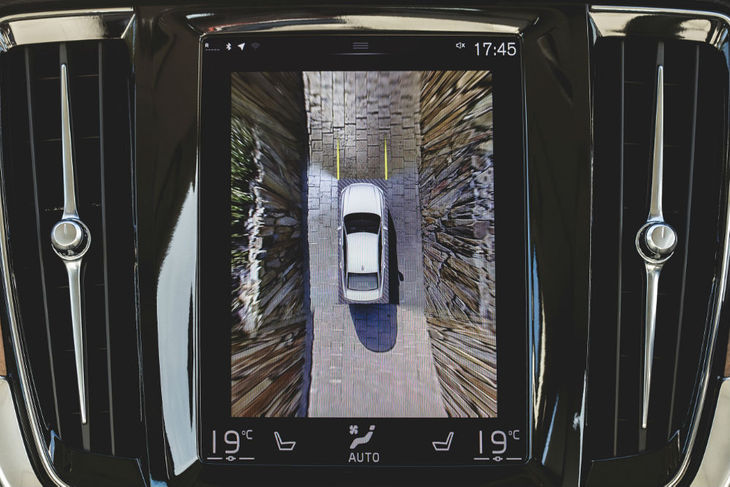
If specified, the 9-inch Sensus Connect touchscreen can incorporate a 360-degree surround view in HD.
The current Cars.co.za Consumer Awards champion in the Executive Sedan category, the Jaguar XF 25t Portfolio is an engaging driver’s car that incorporates incremental improvements over its predecessor, which arrived in South Africa as long ago as 2008. Yet, the current XF cannot claim to offer the same sense of occasion that its predecessor did upon its arrival almost a decade ago; neither its interior nor exterior cues push the executive sedan aesthetic into another league.
Judging by my initial impression, the S90 certainly does manage to pull off a bit of an “XF”. Whether it is ultimately better, on balance, than its much-vaunted opposition will be the subject of inevitable comparative reviews by motoring titles (ourselves included), but suffice to say, even though Volvo Car South Africa does not see its newcomer selling in impressive numbers, S90 needs all the help it can get.
Not a burgeoning segment…
For a start, the Volvo does not have much of legacy to build upon (the S80 was discontinued a while ago and never sold well anyway) and products in the D/E-segment fall into the category that a Wesbank analyst recently described as thus: “the majority… of (these) models are imported and have been heavily impacted by the poor performance of the rand. Their customers are either downgrading and buying more affordable models from mainstream brands, or moving to the used market.”
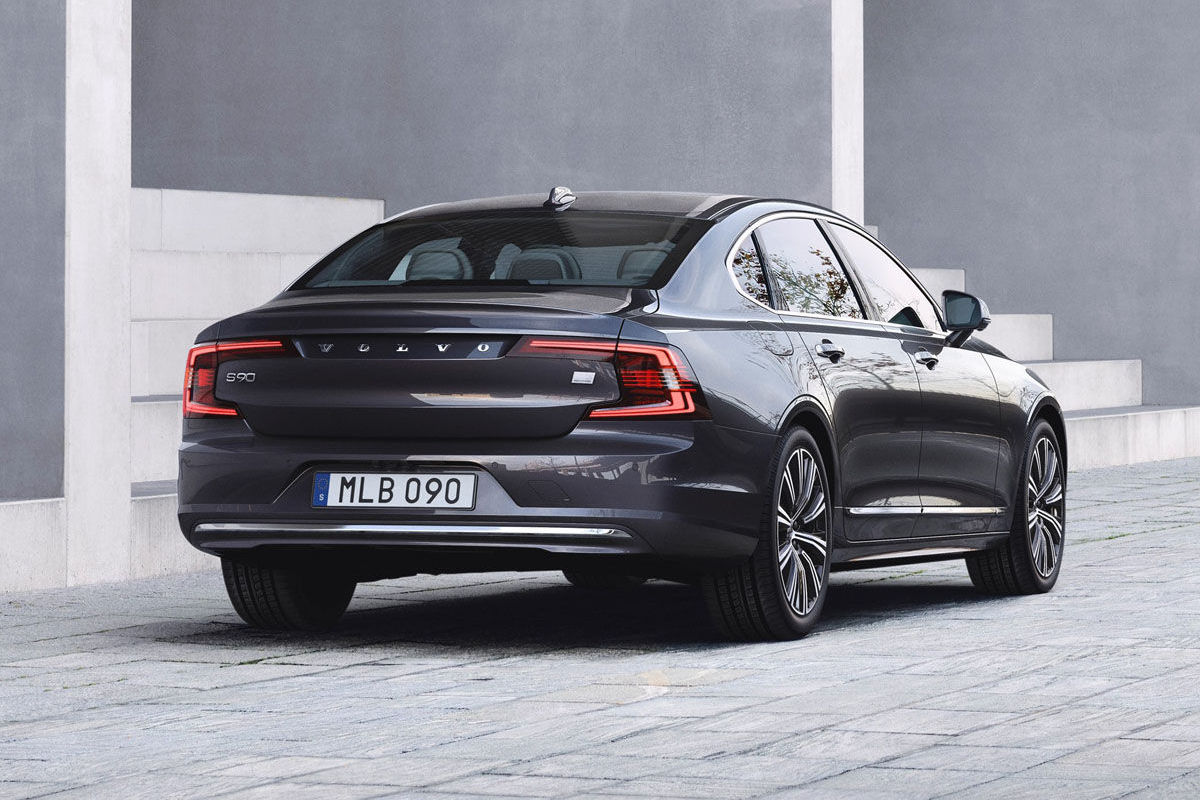
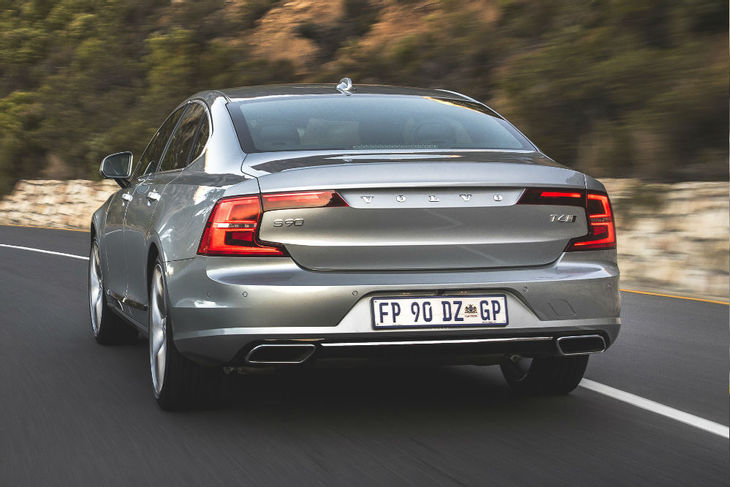
The sculptural effect of the S90's rear aspect view might not be to everyone's taste, but it's certainly distinctive.
It is particularly illuminating that ahead of the introduction of the seventh generation BMW 5 Series (to reiterate, an S90 rival) BMW sent out a special offer to their “preferred customers” that stated that should (they) pre-order any new 5 Series derivative before 13 March 2017, they “will receive the M Sport package and Professional Navigation at no additional cost”. This move, which effectively mimics the effect of the well-known “trade-in assistance” incentives, is usually offered on run-out models, not "pre-launch" products. Hmm.
And in a similarly significant development, Volvo Car South Africa introduced a pair of complementary add-on products in the same week that the local motoring media corps descended on the S90 new vehicle launch location…
The allure of guaranteed future value
The first is Versatility Finance – a new guaranteed future value (GFV) finance product available through Volvo Car Financial Services, which is applicable to ANY new Volvo car purchase. Most new vehicle purchases are financed and this offer guarantees buyback at a predetermined value and within limited mileage after 3 years of ownership.
The S90 delivers superb ride refinement and NVH suppression; two areas in which an executive sedan must excel.
After the 3 years, provided all stipulations have been met, a buyer would have the option to buy their GFV Volvo outright or simply return it, which not only augers well for ownership customer satisfaction, it also increases the likelihood that that customer will be retained when they replace their vehicle. This is a smart move, because many buyers prefer to replace their vehicles before their maintenance plans run out and GFV counteracts the crippling effect of devaluation, which has caused many owners to refinance existing debt on trade-in vehicles in order to move on to a new car.
In addition, regardless of whether a new Volvo is purchased in cash, via Volvo Versatility Finance or an instalment agreement with an external company, the vehicle will be available with a new Volvo-personalised insurance scheme, underwritten by Guardrisk Insurance Company (Pty) Ltd and administered by Insurance Underwriting Managers (Pty) Ltd. According to Volvo Car SA managing director Greg Maruszewski, the risk profile of traditional Volvo clients have allowed the Swedish marque’s local subsidiary to offer “very competitive” insurance premiums for new buyers.
Volvo now offers comprehensive insurance on Volvo's 90-range (XC90 and S90) at a fixed R999 per month for the first 12 months, for example.
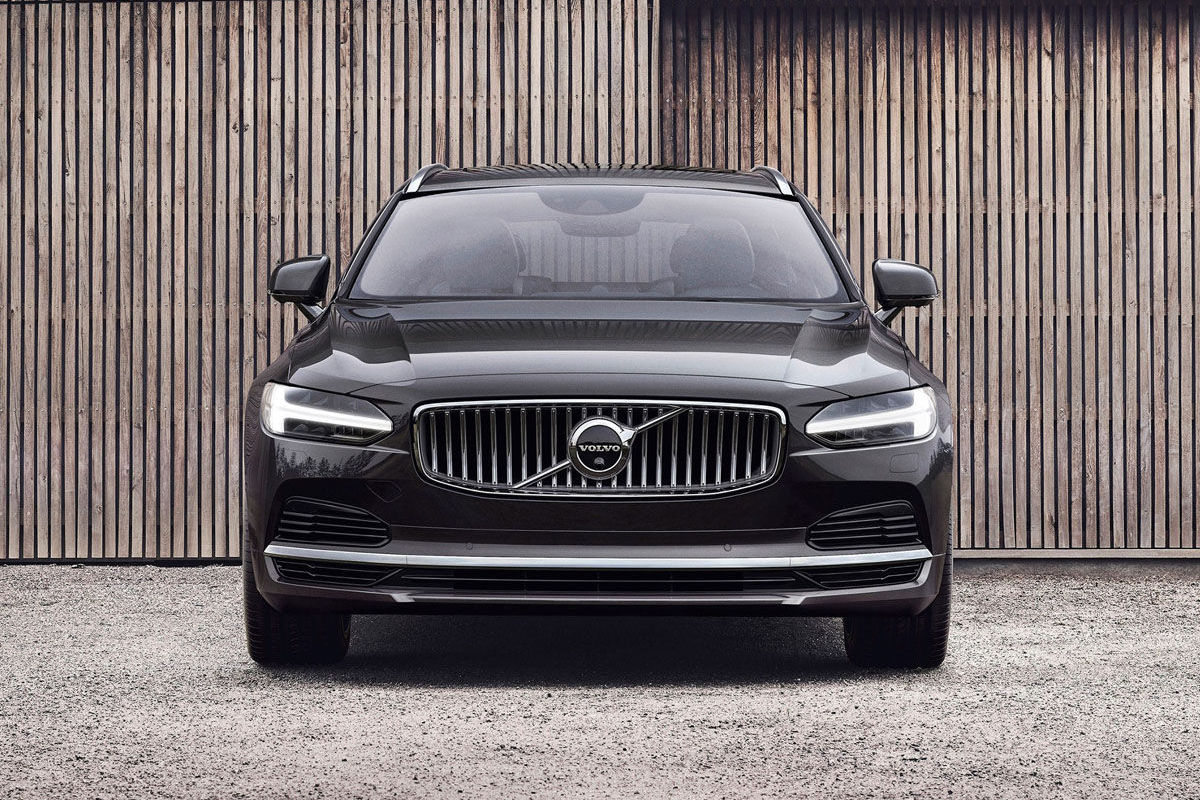
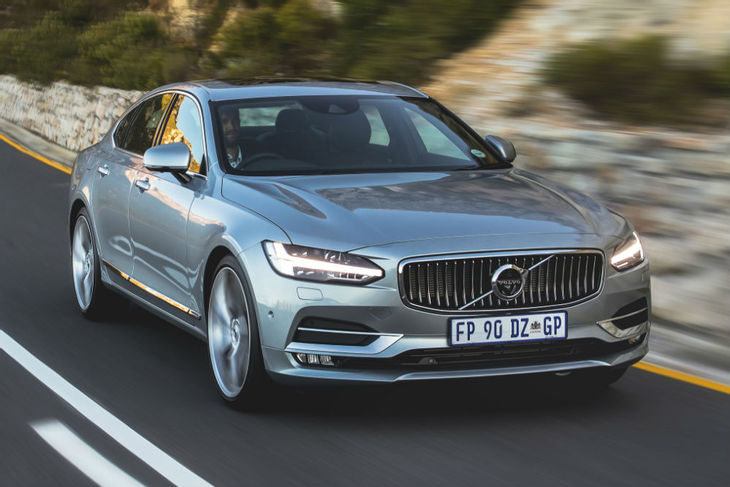
The evocative chrome grille treatment is integral to the Inscription specification of the S90 range.
Whereas guaranteed future value deals are not new to the industry, the introduction of this Versatility Finance option underlines the fact that in terms of value retention, Volvo’s products are well above average and compare favourably to the performance of rival products. The stipulations of the GFV deal, such as being locked into a Volvo ownership cycle, may seem a limitation, but in the case of premium-end products such as the S90, which is likely to be more susceptible to severe devaluation compared with the brand’s more affordable, compact products, it’s quite a sweetener.
In conclusion, the design-driven and comprehensively-equipped S90 stands a better chance at new market success than it would if it was simply an above average executive sedan, because Volvo has beefed up the newcomer’s purchasing proposition appreciably… loaded the dice, as it were. Perhaps the particular segment’s heyday is well and truly in the past and the impressive new Volvo won’t be as common a sight on South African streets and roads as it deserves to be, anyway.
Be that as it may, in a tough new vehicle market for premium products, consumers are looking for as much value and peace of mind as they can get. In that sense, the S90 has a more than even chance.
Fuel prices are going up in February 2017. Take a look at what you will be paying for fuel as of Wednesday 1 February 2017…
Motorists in South Africa will be paying more for fuel in February 2017 and according to the Department of Energy, the increase in fuel prices can be attributed to Rand/Dollar exchange rate, crude oil price increase and increases in the international prices of petroleum products.
The Rand/Dollar exchange rate strengthened marginally during the period under review, effectively reducing the fuel price increases by 12 cents per litre. Cuts in the international production of crude oil has resulted in rising crude oil prices which subsequently resulted in increasing prices of petroleum products.
Based on these factors, the price of petrol will increase by 29 cents per litre while diesel prices will cost consumers an additional 21 cents per litre.
Here’s what you can expect to pay for fuel as of Wednesday 1 February 2017:
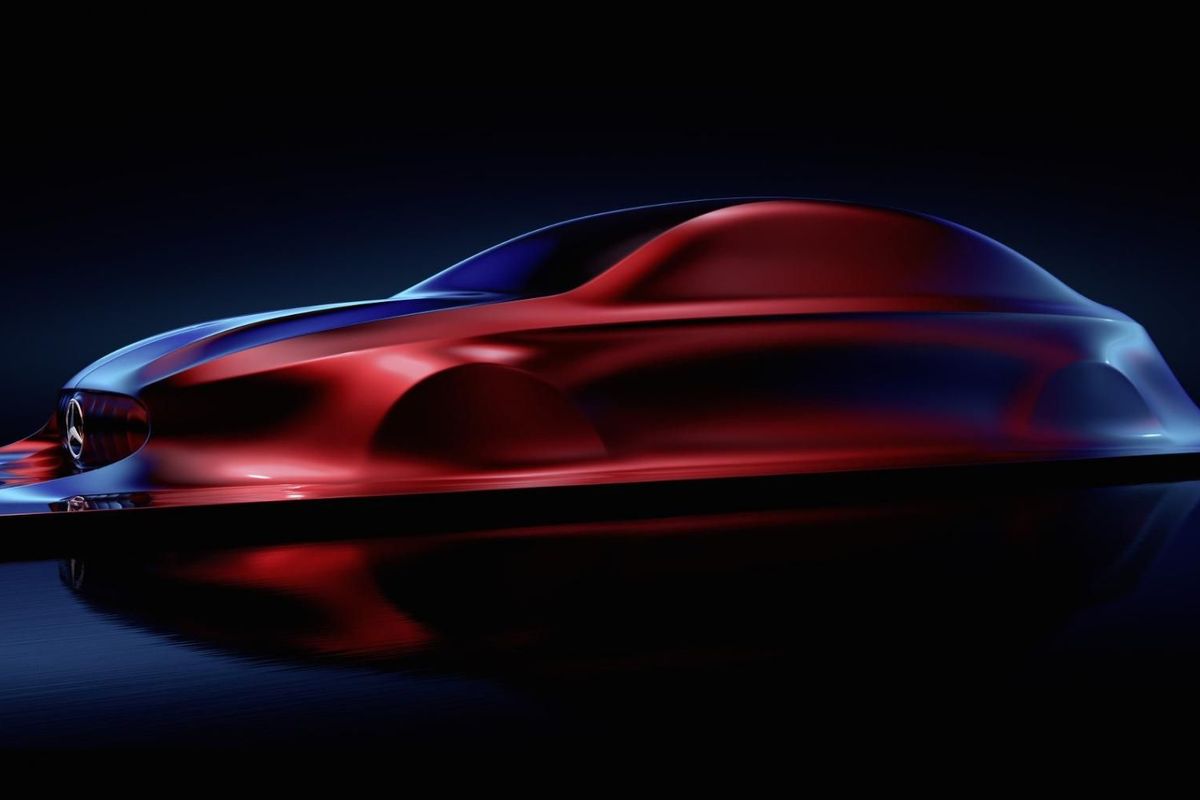
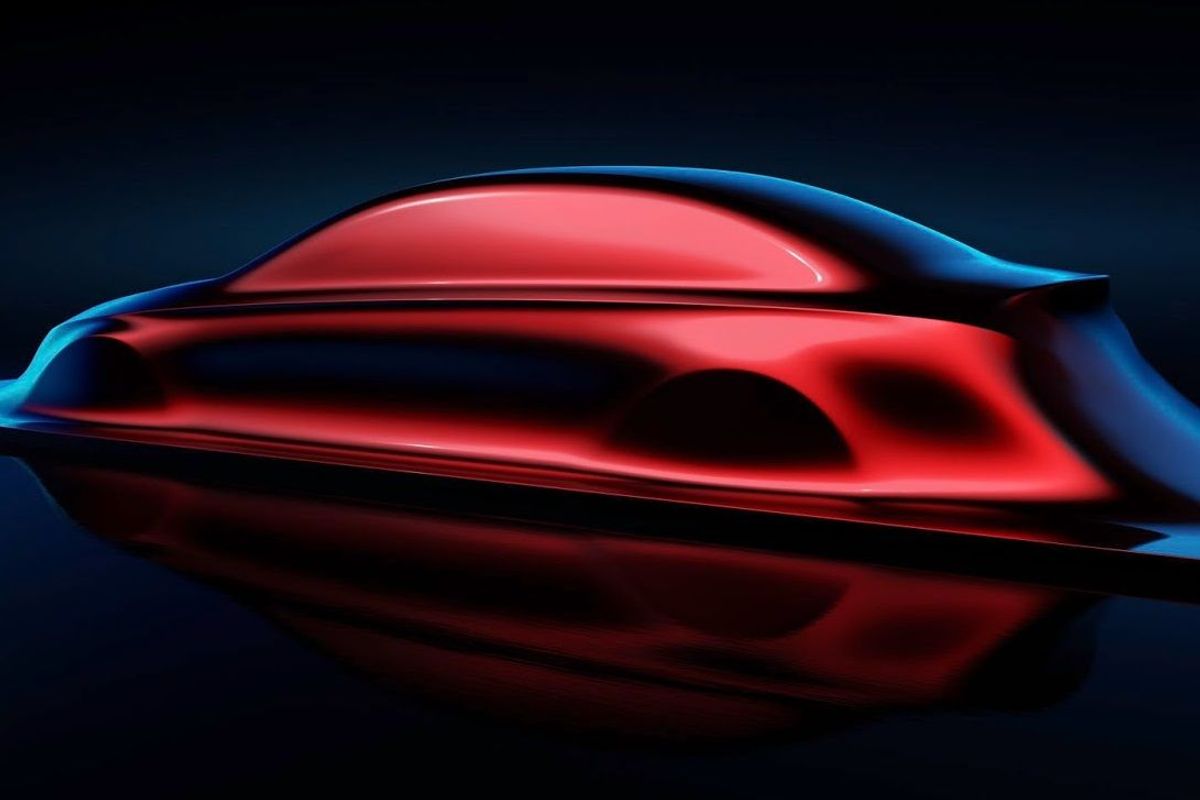
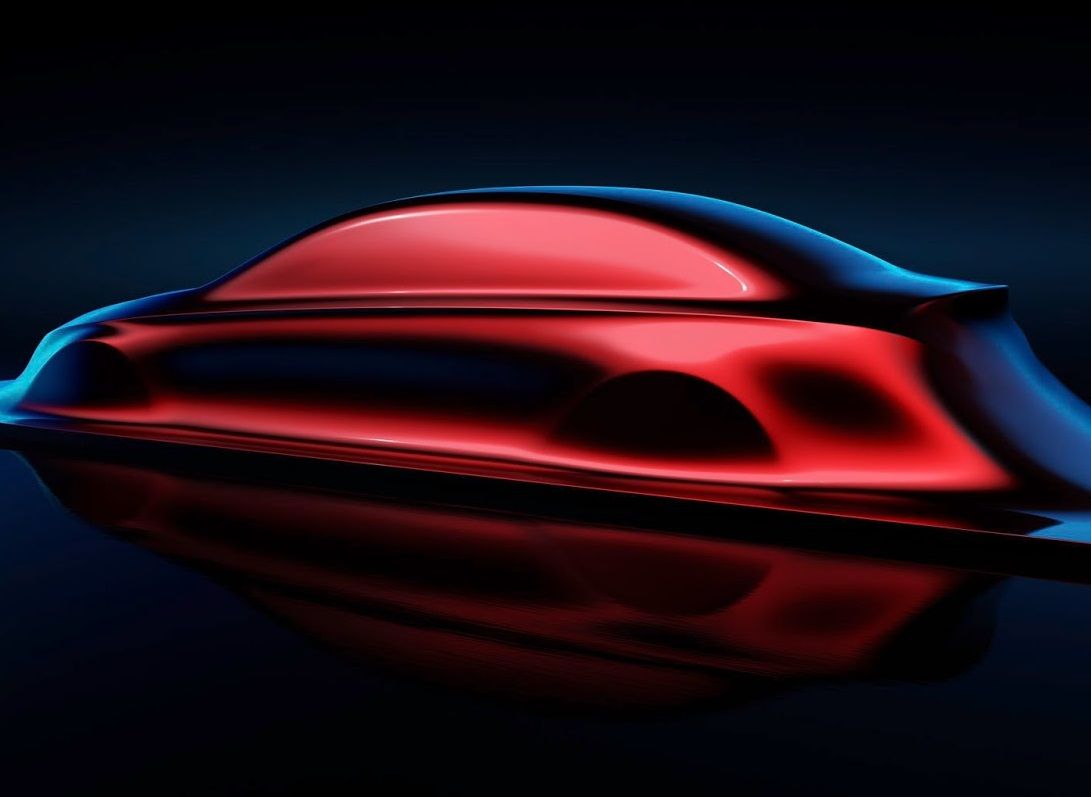
The Aesthetics A sculpture from Mercedes-Benz previews the next generation of its products. Let's unpack the design language and see what the future holds.
At first glance, the design is unmistakably Mercedes-Benz, yet shows an evolution in terms of visual appeal. If you look closely, you'll see a variation of the Panamerica grille, first seen on the Mercedes-AMG GT R. It is claimed that this new language will be used on products for the next generation of A-Class, B-Class, CLA, CLA Shotting Brake and an all-new GLA. You can expect the AMG-powered versions of these new cars to all feature the Panamerica grille.
However, the sculpture's shape is that of a sedan, which hints to a potential Mercedes-Benz A-Class sedan. It would make perfect sense given the success of the Audi A3 sedan and the BMW 1-Series sedan, particularly in China. Underpinning the new A-Class and its siblings is an updated derivative of Merc's Modular Front Architecture (MFA) platform.
We'll have to keep an eye on the 2017 Shanghai Auto Show which takes places towards the end of April. While the vast majority of products unveiled are China-only models, there are often surprise global reveals. Given the magnitude of this show, rumors are already flying around. The biggest is that there will be another compact-sized SUV which will sit above the GLA. It'll have two wheelbase lengths with the option of 5 or 7 seats.
Want to know which cars and bakkies people actually buy most in South Africa? These are the 40 best-selling vehicles of 2016, as sold by dealers.
While it is interesting to look at the sales figures released by NAAMSA every month, things get even more intriguing when you dig deeper… Using data supplied by Lightstone Autowe can now provide a detailed look at the actual model derivatives South Africans bought most in 2016, and also exclude the rental, government and fleet figures which may skew the overall picture.
The list, unfortunately, doesn’t include Mercedes-Benz as this brand doesn't report its figures and neither does it feature the Koreans (Hyundai/Kia) as individual sales are only reported some 5 months later. We know, for example, that the Hyundai Tucson would have very likely featured highly on this list, perhaps more than once.
Reading into the figures
The main thing to take home from the sales figures is that South Africans still love bakkies… the Ford Ranger 2.2, Chev Utility 1.4 and Nissan NP200 1.6 in particular. You don’t have to look too far down the list to find the first Toyota Hilux either. Check out our comparison of SA's best double cabs here.
Compact SUVs continue to sell well with the Ford Ecosport 1.5 punching high up on the sales charts. Interestingly, the Mazda CX-5 2.0 performs extremely well, placing 2nd on the sales charts for SUVs. The Ecosport and CX-5 are the only SUVs in the top 40, although Hyundai’s Tucson – which we don’t have figures for – is also said to sell in large numbers. Read our comparison of the best family SUVs here.
Sedans are gone
The only sedans to make the top 40 sales chart are the BMW 320i and the Toyota Corolla Quest 1.6. Mercedes-Benz may have a C-Class that sells as well as the Bimmer but without the data we can't include it. This trend away from sedans is something that has picked up momentum as buyers look for all-in-one vehicles such as SUVs and Crossovers.
Top 40 selling cars in SA through the dealer channel
Make
Model
2016 Year
1. FORD
Ranger 2.2TDCI XL D-Cab Dsl PU MY15
5 725
2. CHEVROLET
Utility 1.4 AC Base MY12 PU
4 720
3. NISSAN
NP200 1.6 8V Base PU
4 353
4. VOLKSWAGEN
Polo GP 1.2 TSI Comfortline 66kW 5-dr MY17
4 101
5. VOLKSWAGEN
Polo GP 1.2 TSI Comfortline 66kW 5-dr MY16
3 896
6. VOLKSWAGEN
Polo Vivo GP 1.4 Conceptline 55kW 5-dr MY16
3 539
7. CHEVROLET
Utility 1.4 Base MY12 PU
3 503
8. FORD
EcoSport 1.5 Ambiente MY16
3 439
9. VOLKSWAGEN
Polo Vivo GP 1.4 Conceptline 55kW 5-dr MY17
3 290
10. NISSAN
NP200 1.6 8V Base +AC PU
2 898
11. TOYOTA
Hilux 2.8 GD-6 RB Raider 4×4 D-Cab Dsl PU MY16 AT
2 720
12. NISSAN
NP200 1.6 8V Base +AC Safety PU
2 581
13. TOYOTA
Etios HB 1.5 Xs 5-dr MY15.5
2 423
14. NISSAN
NP300 Hardbody 2.0 LWB PS PU MY14
2 323
15. TOYOTA
Etios Cross 1.5 5-dr MY15.5
2 300
16. DATSUN
GO 1.2 Lux AB 5-dr
2 199
17. MAZDA
CX-5 2.0L Active MY15 AT
2 183
18. TOYOTA
Hilux 2.8 GD-6 RB Raider D-Cab Dsl PU MY16 AT
2 125
19. BMW
320i MY15 AT
2 117
20. ISUZU
KB250 HR D-Cab Dsl PU MY15
2 072
21. TOYOTA
Corolla Quest 1.6 MY16
1 970
22. FORD
Ranger 2.2TDCI Base Dsl PU MY15
1 902
23. FORD
Ranger 2.2TDCI XL Dsl PU MY15
1 885
24. NISSAN
NP200 1.5DCi Base +AC Safety Dsl PU
1 846
25. FORD
Ranger 3.2TDCI Wildtrak D-Cab 4×4 Dsl PU MY15 AT
1 842
26. FORD
Fiesta 1.4 Ambiente 5-dr MY14
1 785
27. TOYOTA
Hilux 2.8 GD-6 RB Raider D-Cab Dsl PU MY16
1 764
28. VOLKSWAGEN
Amarok 2.0 BiTDI D-Cab 4Motion Highline Dsl PU MY16 AT
Locally-developed Etios RSi project an inside look
Toyota has a proud history of performance models, both locally and internationally, but of late the Japenese marque's offerings have been a little lacklustre, especially in terms of the hot hatchback genre. We meet someone who wants to change that by introducing a locally-developed product in limited numbers and in parallel with the brand's mainstream products at participating outlets. It's ambitious, yes, but the Etios "RSi" shows much promise…
Here in sunny South Africa, Toyota has been a brand which is deeply entrenched in our culture. As you read this, you yourself may own or have owned a Toyota and we’d bet that you definitely know someone who has one.
Performance Toyota products will bring tears of happiness to the petrolheads as their eyes glaze over in fond memory of the various generations of Supra, Celica and of course, the AE86. However these cars were not readily available in our market and the handful that are here are far from standard and come from Botswana, Namibia or Mozambique.
So much can be said about the 4AGE-powered Toyota products like the Conquest RSi, the twin-cam 16-valve "wet look" Corolla hatchback that simultaneously vaulted the Prospecton-based firm into the hot hatch league and achieved much success in local track and rally formulae. I could easily fill this page with reams of copy harping on about how the RSi nomenclature has such an illustrious heritage… It took pride of place on the Conquest, Corolla, Cressida and RunX and in its ultimate form, it featured a 20-valve configuration. Adored for its rev-happy performance characteristics and banshee wail, the 4AFE-engine holds a special place in Toyota's lore.
The Toyota RunX RSi was the last locally made Toyota to bear the RSi badge, but it was formidable machine that packed a mighty punch from its 1.8-litre engine. Outputs of 141 kW and 180 Nm weren’t bad, but the catch was you had to rev the nuts off of it to access the optimal performance. Much like a Honda Civic VTEC, the fun only began after 6 000 rpm. Toyota also released a Toyota Racing Development (TRD) of this car, which featured a sportier suspension, a TRD short shifter, red cabin stitching and some fancy wheels. It was cutting edge for the post Y2K generation, and even today, there are a few examples running around.
Remember this? It all sounded so good on paper, but did it deliver the performance which Toyota fans were looking for?
Packaging trumps performance
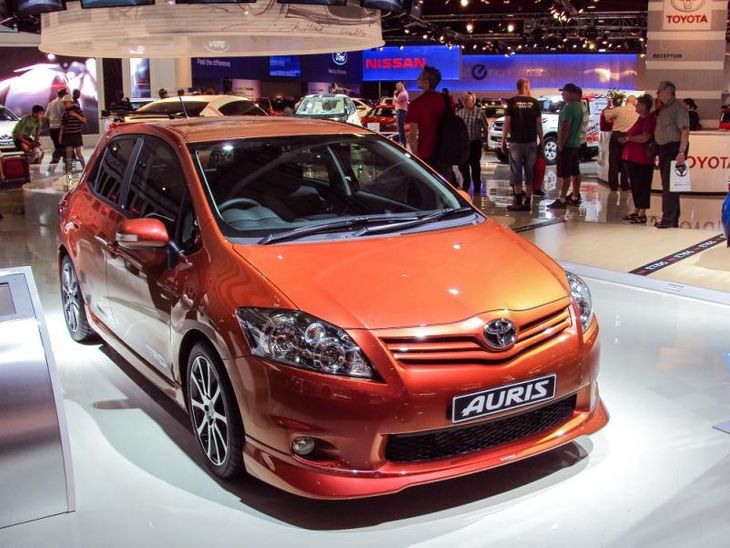
At the Johannesburg International Motor Show in 2011, Toyota showcased something very interesting. Meet the Auris TRD. Complete with specialised pearlescent paint and a boosted engine, the Toyota Auris TRD had fans excited. Power came from a supercharged 1.6-litre 4-cylinder unit and it delivered a commendable 133 kW and 202 Nm. The show car looked the part too, with a neat little bodykit and some sporty alloy wheels. Did it deliver for the masses? According to some, yes. Others say it just wasn’t enough to satisfy the Toyota performance aficionados.
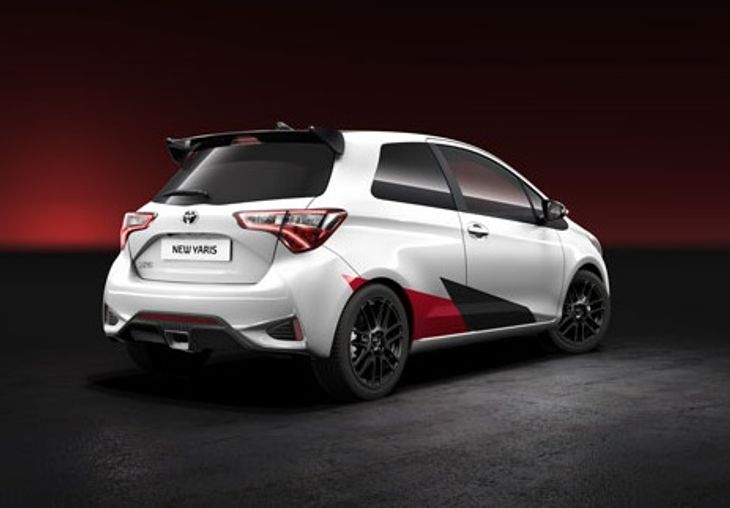
Would Toyota ever produce a hot hatch again? Roll on to 2017 and Toyota is scheduled to showcase a WRC-inspired turbocharged 1.6-litre four-cylinder-powered Yaris hot hatch at the Geneva Show. While not all the details have been published, Toyota UK’s blog claims it “is based on a three-door Yaris body and is powered by an engine producing more than 210 bhp (155 kW), forging a link between the Yaris WRC and the standard road-going model range.” From the image below, we can see it’ll definitely look the part when it arrives. Oh, about that. Toyota South Africa said it won’t be coming to our market because it does not align with the local product's value offering. Toyota would certainly benefit from having a budget-friendly performance variant. Sadly, the evocative Toyota 86 coupe doesn’t quite fall into that category.
A hot hatch rival to take on the Ford Fiesta ST? Sounds good, but it's not coming to South Africa
Toyota Etios "RSi" prototype drive
What if there was a fast and entertaining Toyota for the masses? There is, and while it’s not officially endorsed by Toyota South Africa, it is exceptionally interesting… Interesting in that the car is based on a Toyota Etios. Etios is not exactly a name associated with modifying potential and performance.
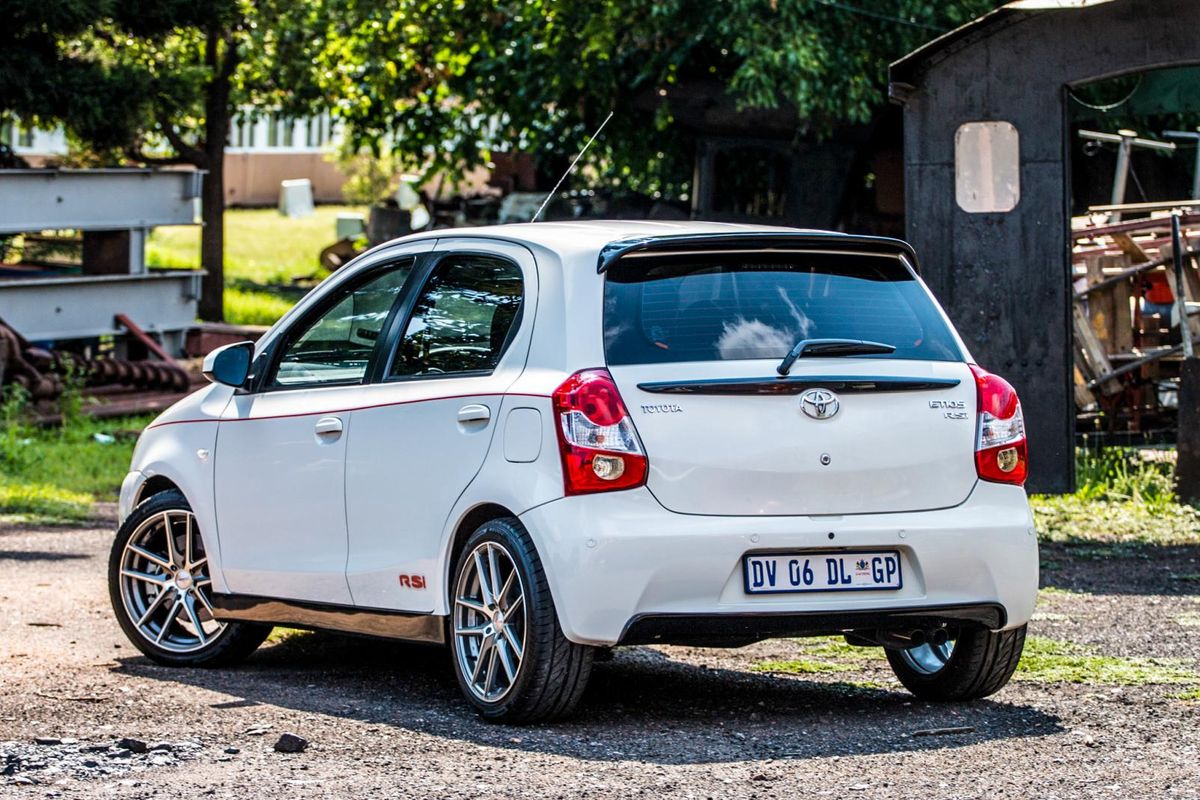
An RSi badge might raise the ire of the Toyota fanatics as it represented giant-slaying potential, something this Etios won’t do. Its creator, Martin Pretorious from Pretoria, happily admits that his creation was never intended to compete with the current hot hatch brigade anyway, but rather tap into a segment of the market which has been remarkably devoid of anything exciting other than the beloved Suzuki Swift Sport and the now-discontinued Chevrolet Sonic RS. It’s odd seeing the low-end market not catered for.
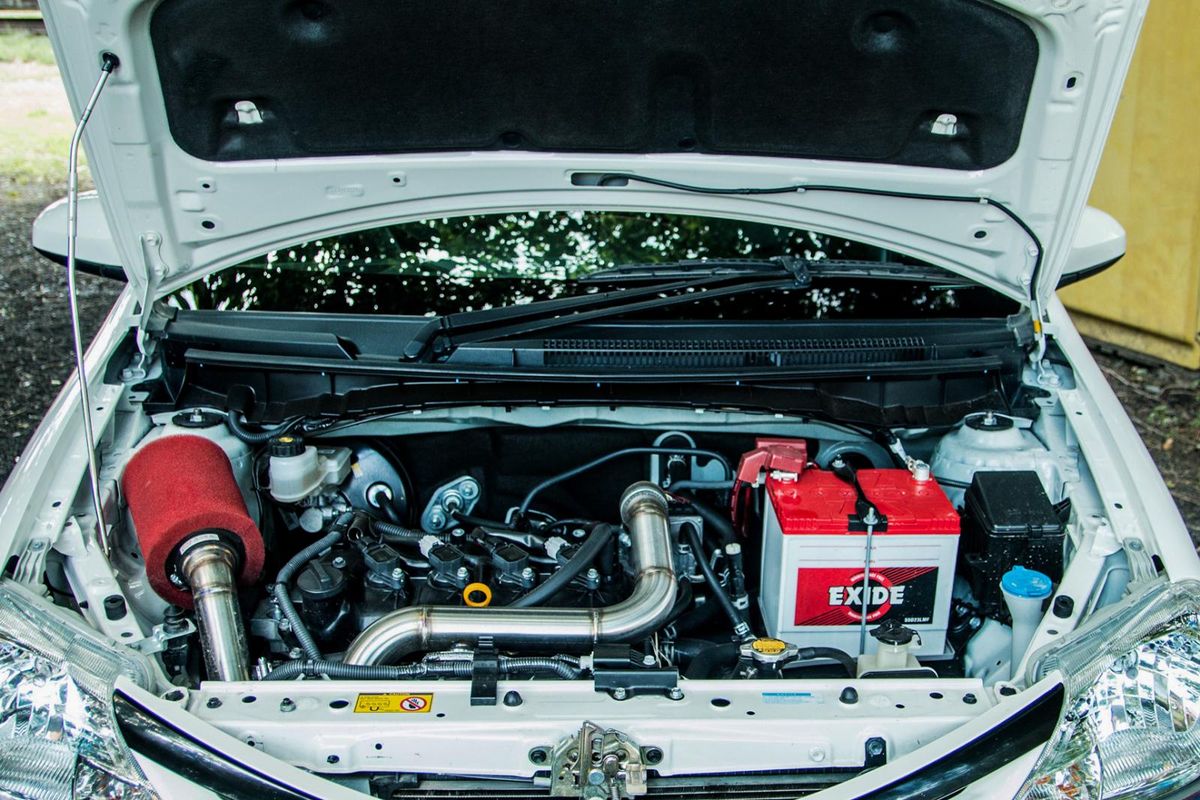
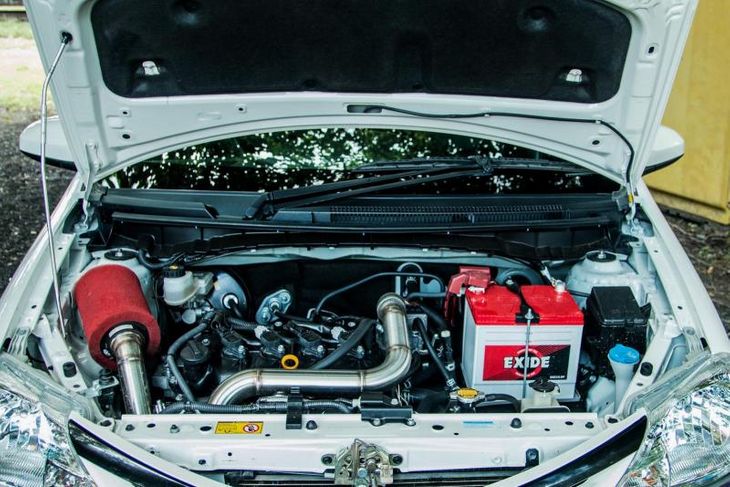
Let’s get technical. The standard 1.5-litre naturally-aspirated 4-cylinder engine from an Etios XS hatch is capable, but never going to provide the entertainment which this market desperately needs. With outputs of 66 kW and 132 Nm, performance is geared towards basic commuting. In terms of performance modifications, turbocharging offered the best bang-for-buck solution and in went a low-boosting turbo, intercooler and free-flowing exhaust and intake. Power is now up to 110 kW and 210 Nm from 0.4 bar boost. Pretorius says that the boost was deliberately kept on the low side for longevity.
Suspension development
While it’s easy to make a vehicle go fast in a straight line by throwing in big power, this Etios is designed to be a faster all-round performer and it’s the handling which has piqued my interest. Considerable work has been done to this Etios, so much so that it doesn't even feel like an Etios. New springs, dampers were sourced and stopping power comes courtesy of larger brakes with 300 mm discs at the front with a recalibrated ABS setup.
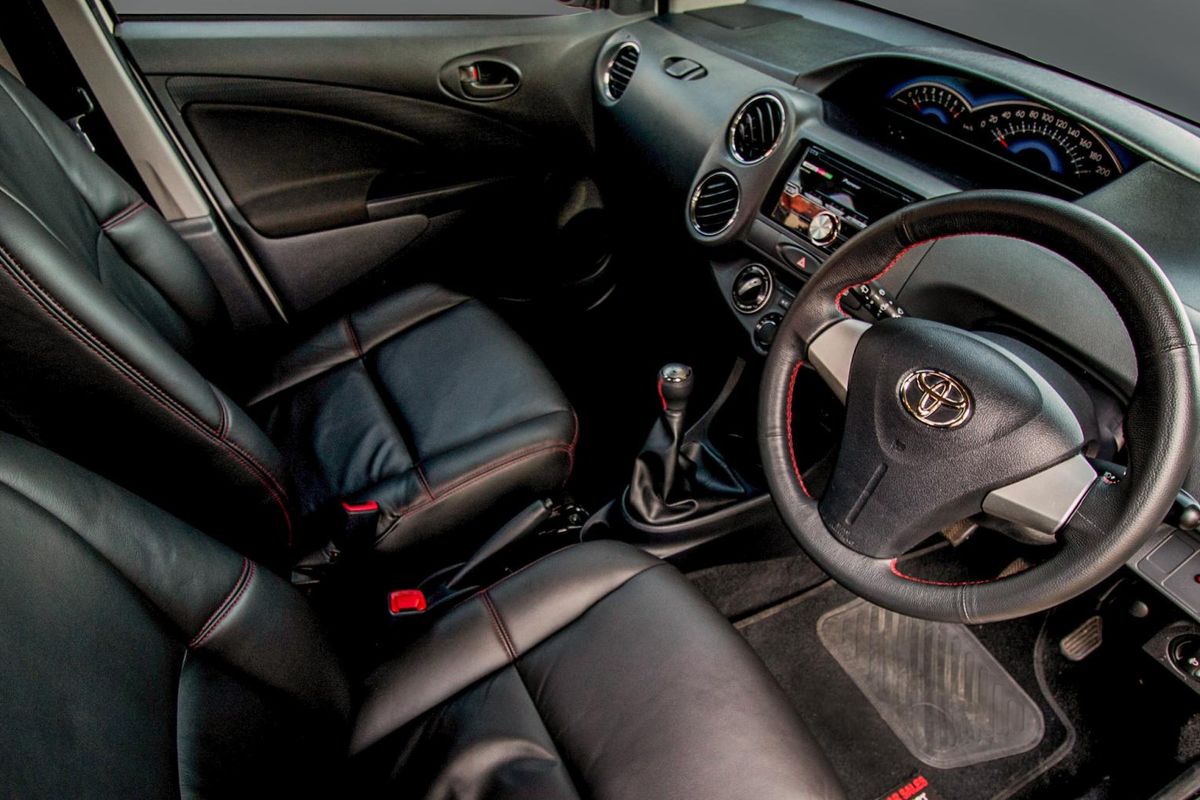
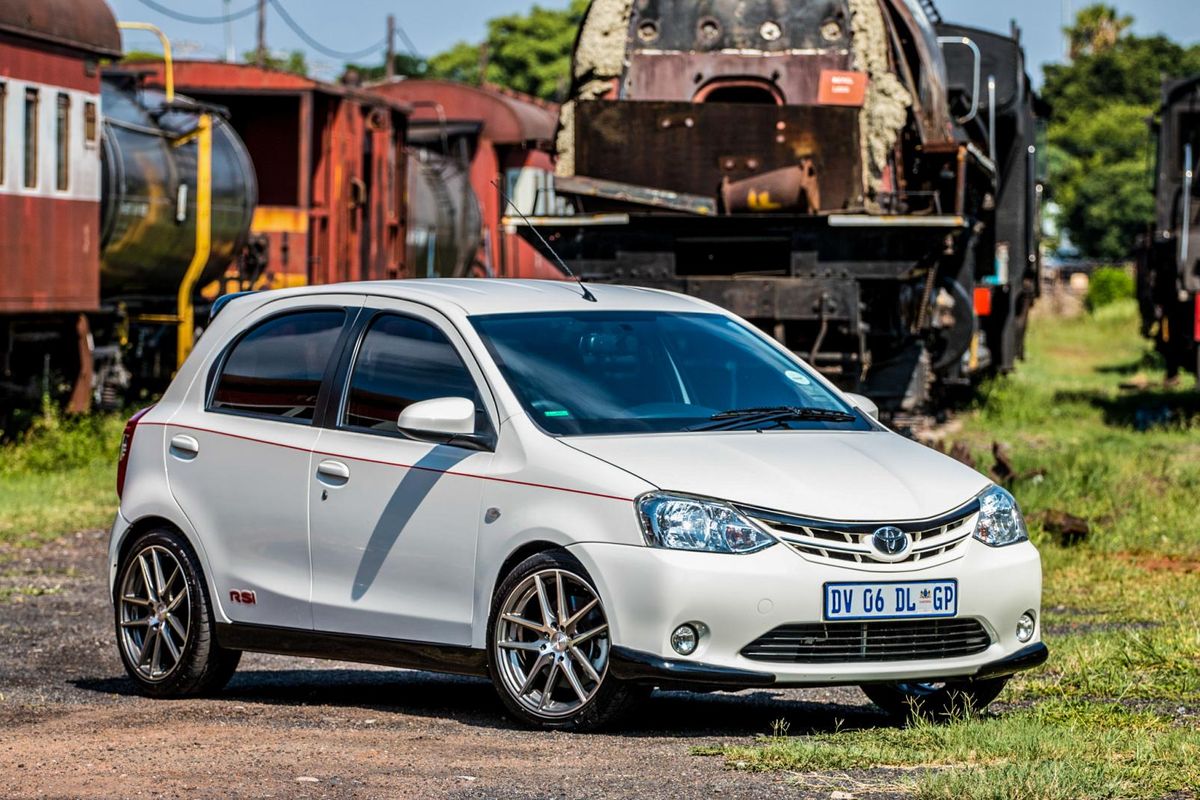
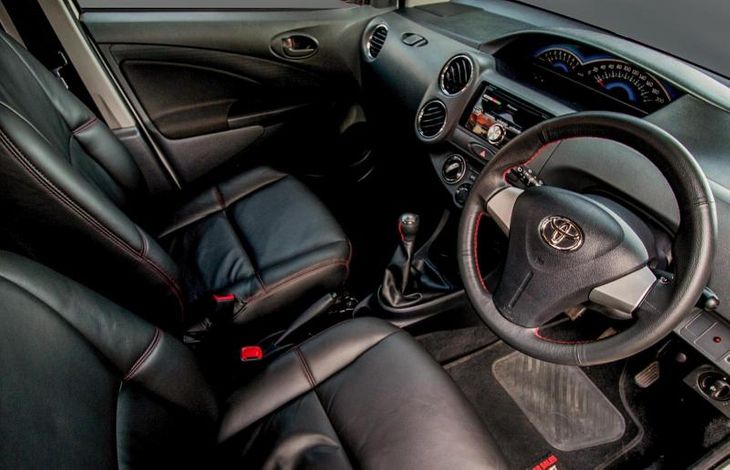
What you see here is the test mule, ground zero for the Toyota Etios RSi project. It has been subjected to some serious testing and fiddling. Countless engineering hours, as well as its creator’s heart and soul, have been poured into it. It’s not just a performance upgrade here as work has been done to the noise, vibration and harshness thanks to some additional sound deadening. The interior benefits from a leather-wrapped steering wheel and some leather seats, while the in-car entertainment gets a new head unit, which offers far more functionality than the stock unit. What you’re really wanting to know is how it drives.
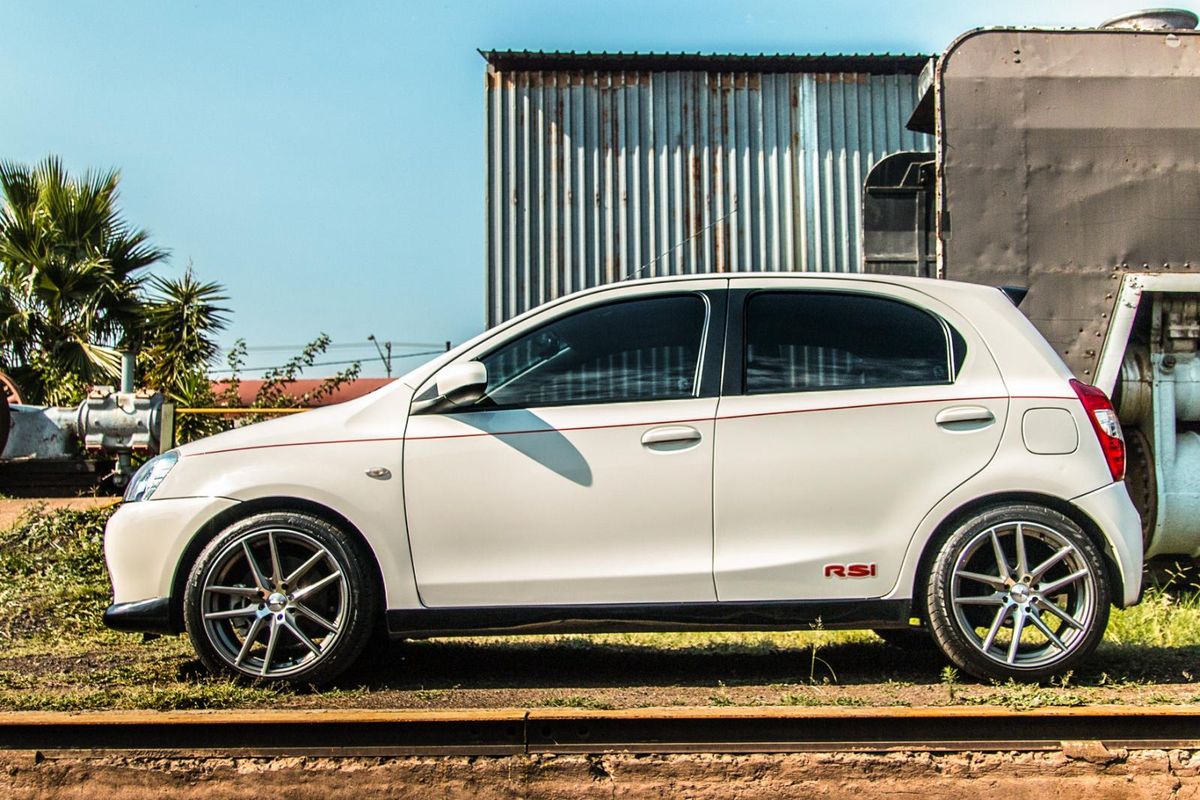
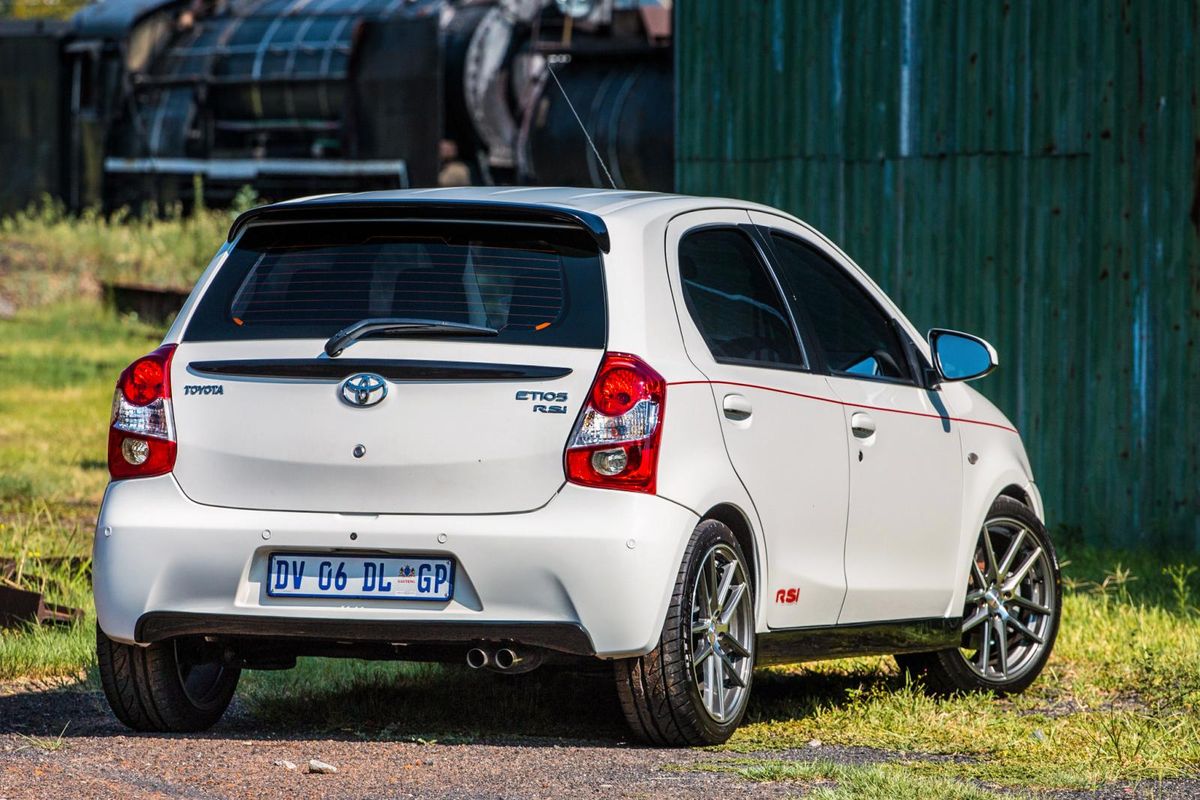
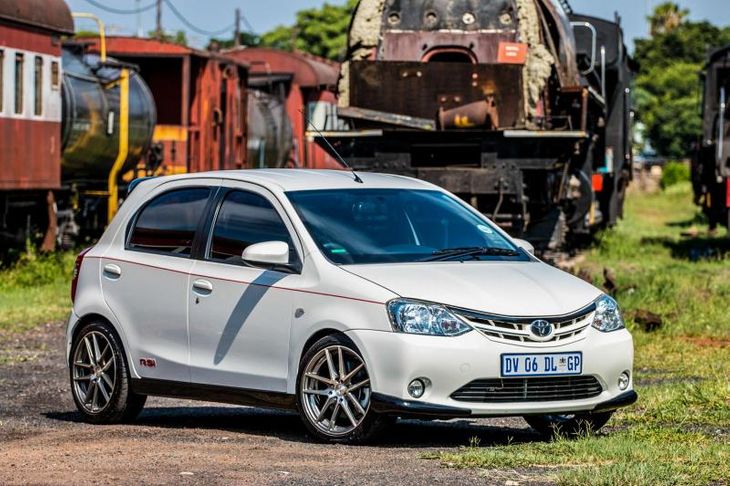
So in the run-up to the festive season, I headed to Johannesburg to meet the turbocharged Toyota Etios RSi and its creator. I could hear it coming long before I caught a glimpse of it – that was a good start! Then I saw it. The Etios "RSi" certainly looks the part, with its little bodykit and bigger wheels. The red pinstripe down the flanks is subtle and tasteful, while the twin exhaust pipes are a sure-fire indication of the power within.
Fire it up and the engine comes to life with a purposeful burble. Engage first gear and release the clutch. Apply power and as you hook second gear, there’s a terrific whoosh from the turbocharger’s wastegate as it expels air with each shift. It’s immensely addictive, if a little infantile, but it’ll appeal to the young market which the vehicle is aimed at. It may operate on low boost only, but once on song, the Etios "RSi" pulls eagerly.
A test up a steep hill indicated how tractable the engine is, and there was no need to downshift as the turbo’s torque kept it in the power band. Handling is sharp and will entertain those who crave agility. It’s a valiant effort and a pleasant surprise. It’s very unlike the Etios platform upon which it is based to drive and actually feels a bit more solid and substantial.
So, why are we featuring this vehicle and not other tuned vehicles? See, this vehicle is not a one-off unit created for a customer, but rather the starting point for a limited production run. The Toyota Etios "RSi" is a fascinating exercise in demonstrating that fun can be had in the sub-R300 000 segment. Officially, Toyota South Africa knows about the car and we understand that the company's brass is excited about the vehicle, but the TMC-controlled firm cannot endorse the project due to its international corporate policy. However, there’s a loophole that will allow the car to be sold from participating Toyota Automark pre-owned vehicle showroom floors.
I drove the Etios "RSi" to Automark Monument Toyota dealership in the West Rand of Johannesburg for a marketing exercise and to see how potential resellers would react to a test drive. Given the RSi’s amusing demeanour and pace, it was no surprise that they enjoyed it and gave it a resounding thumbs up.
We’re at the stage now where some dealerships have expressed serious interest (at least one had signed up at time of writing) and a few orders have been confirmed. There are plans to build 40 units initially, which will reportedly be backed by a competitive aftermarket warranty plan and finance options. It’ll be priced around the R250 000 mark, which is fair given the specification and performance. A Suzuki Swift Sport (benchmarked as the number one rival of the "RSi") retails for R264 900.
More refinement to come
As for the car itself, the unit I drove was the prototype (not the final product)… The exhaust was a touch too loud for freeway cruising conditions, but that should be a straightforward fix. Power delivery is excellent and the entire car doesn’t feel like a cobbled-together backyard job. At the time of writing, the dealership I visited purchased one for demonstration purposes and became the first confirmed dealership.
The Toyota Etios "RSi" is still a work in progress, but if these first impressions are anything to go by, it’ll gain traction and you could potentially see it becoming a sought after addition to the Etios range. Sure, the looks are divisive, but it’s aimed at a market which is largely stuck in the past (forced to run and maintain old cars) due to budget constraints. Think of this then as a hero for the blue-collar petrolheads. If you think it's tacky and silly, you're probably not the target market.
We look forward to having another go, this time with a production model at sea level. Keep tabs on the Etios RSi project on Facebook, by searching exactly that: “Etios RSi”.
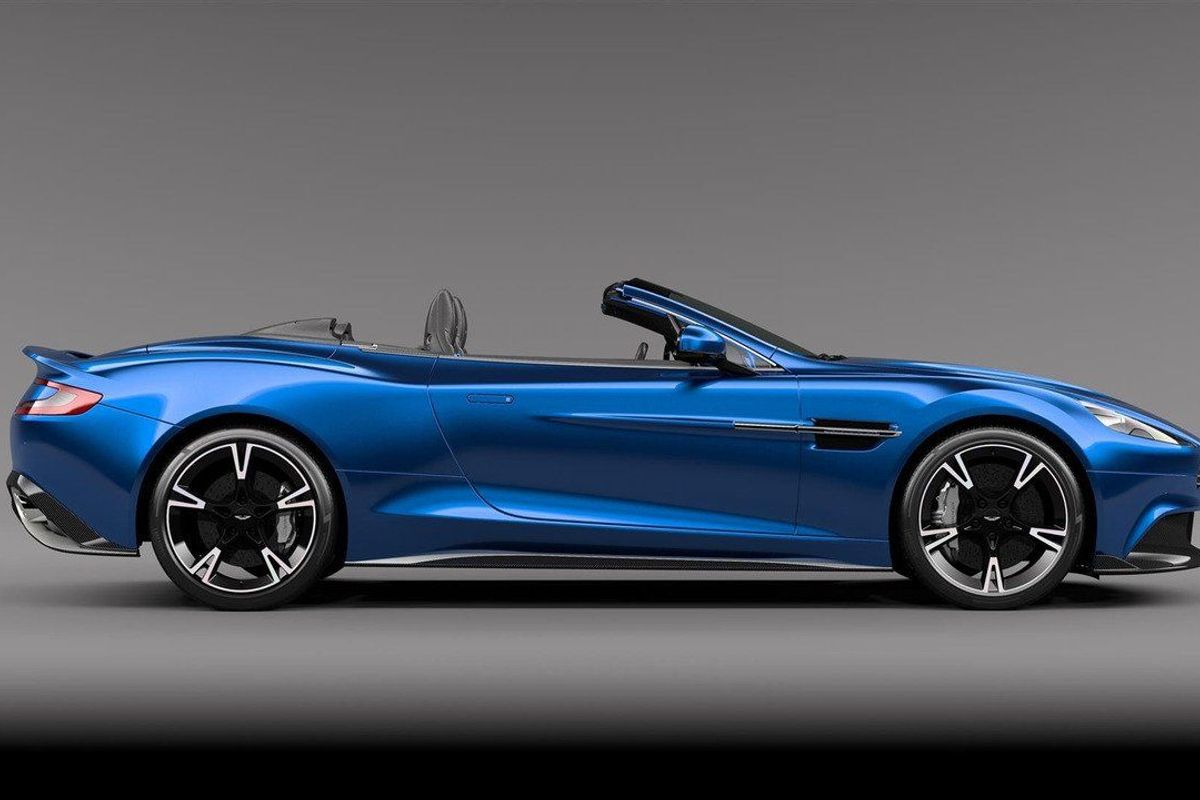
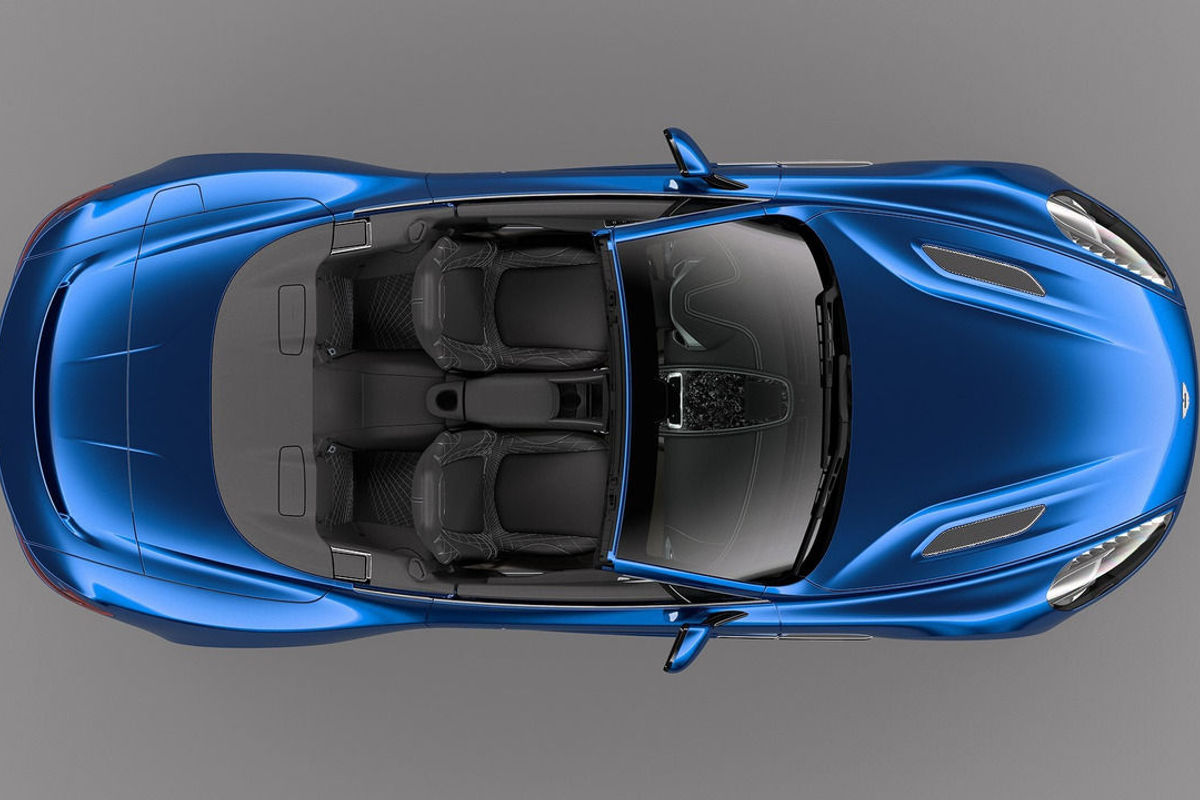
Aston Martin has revealed the Vanquish Volante S and it’s a real looker…
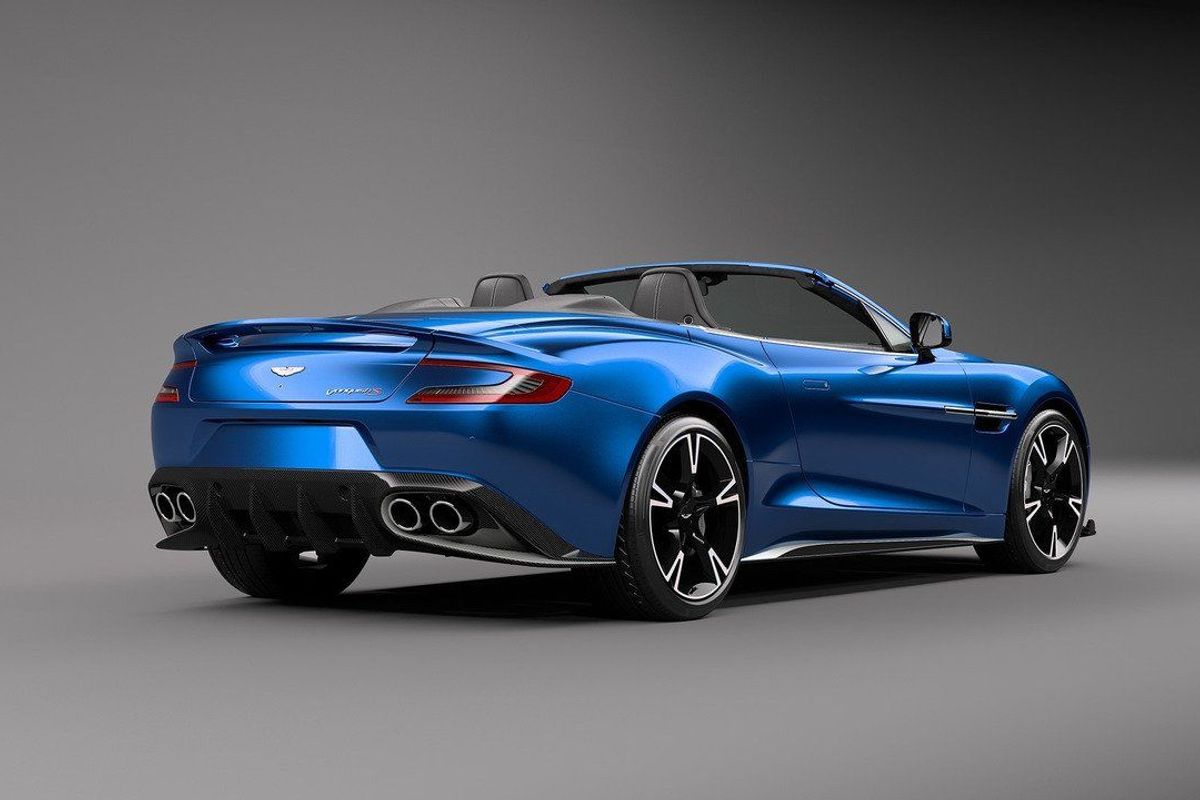
If you have a soft spot for drop tops, then Aston Martin’s Vanquish Volante S should push all your buttons and make you feel all fuzzy inside. Drawing inspiration from the impressively styled 441 kW Vanquish S, the Vanquish Volante S boasts more power and additional features that make it that much more special and more attractive.
Aston Martin’s familiar 6.0-litre V12 is found under the hood, but in this application, offers a tantalising 447 kW for UK and European customers, compared to the standard Volante’s 425 kW. For the US and other markets, including the South African market, the engine will be tuned to deliver 432 kW. An 8-speed Touchtronic II transmission will enable the Vanquish Volante S to accelerate from zero to 100 kph in only 3.5 seconds before climaxing at 325 kph. That should do it… Other key features for this model include a quad exhaust system and revised inlet manifolds.
Performance is further aided with an aluminium and carbon fibre body, as well as a new front carbon fibre splitter and rear diffuser for optimum stability at speed. The Vanquish Volante S rides on 20-inch, 10-spoke gloss black alloy wheels as standard with additional wheel designs offered to customers.
According to Aston Martin South Africa, the Vanquish Volante S is available to order and customers can expect delivery in 5 months. Exact pricing is yet to be confirmed, but you can expect pricing between R5.5 – R6 million.
The new Mitsubishi Triton has finally arrived in South Africa and if first impressions are anything to go by, this looks like a decent double-cab bakkie offering. However, the Mitsubishi Triton enters a hotly-contested segment. Let's meet the Triton's rivals…
Even though the South African new car market is under considerable strain, local bakkie sales are strong. In our recent report detailing the Top 40 best-selling vehicles in South Africa in 2016, bakkies clearly dominate the list and it's no surprise to see the Toyota Hilux and Ford Ranger leading the sales charts on a monthly basis. After a long wait, Mitsubishi has finally introduced the new Triton double-cab to market and we recently drove it on launch and found it to be capable, spacious and well-priced against its key rivals. Despite this, the new Triton is up against some stiff competition and we can't wait to test it alongside its main rivals. Here are 5 rivals that the Triton will be facing off against in this popular segment…
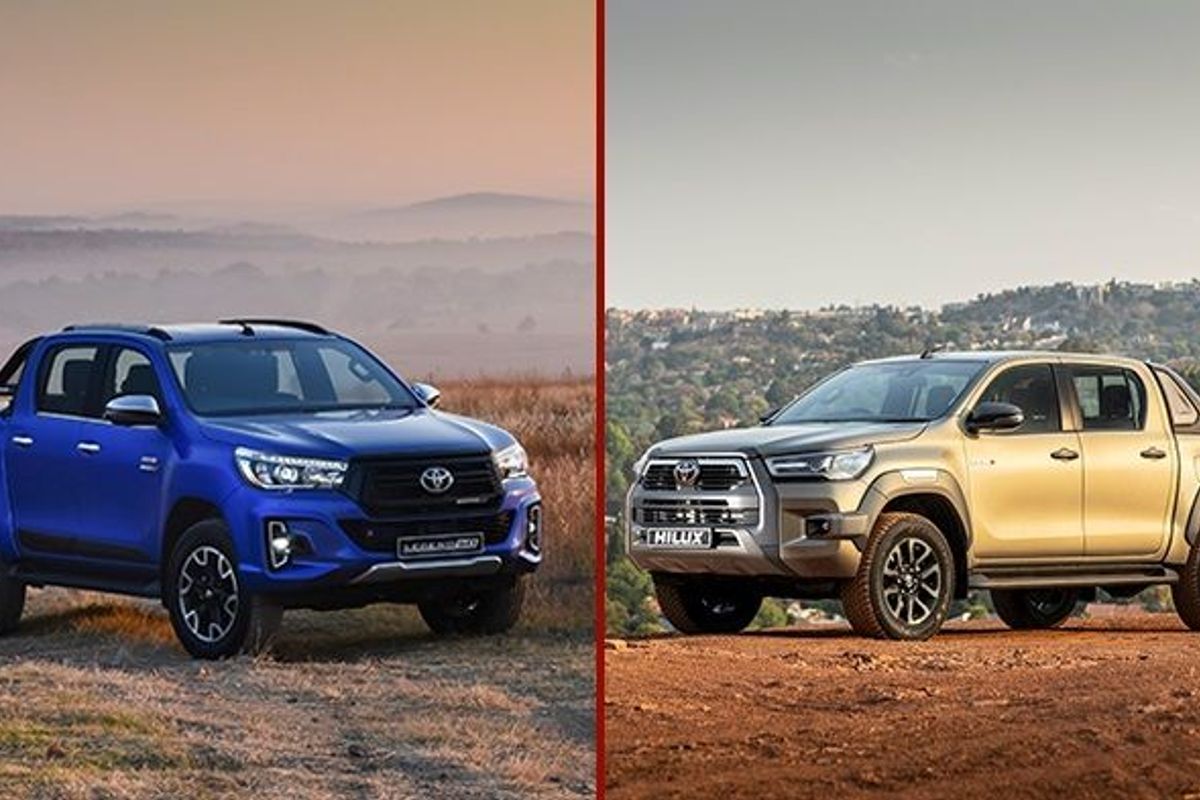
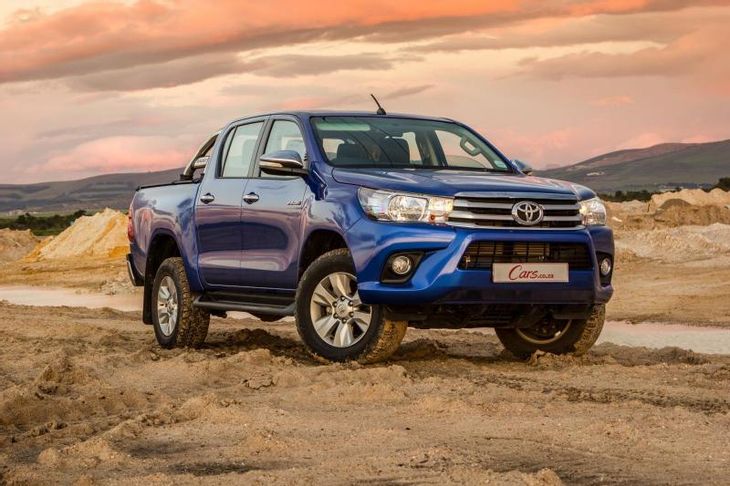
Toyota Hilux 2.8 GD6 Double Cab 4×4 Raider Auto
The latest generation of Toyota Hilux has been a runaway success, despite its polarising looks. However, looks aren't that important in this segment and capability is what it's all about. There are multiple engines to choose from in the Hilux range with the diesels being particularly refined. The Triton, on the other hand, has just as one powerplant to call upon. The Toyota Hilux is built in South Africa at the TSA plant in Prospecton, Durban.
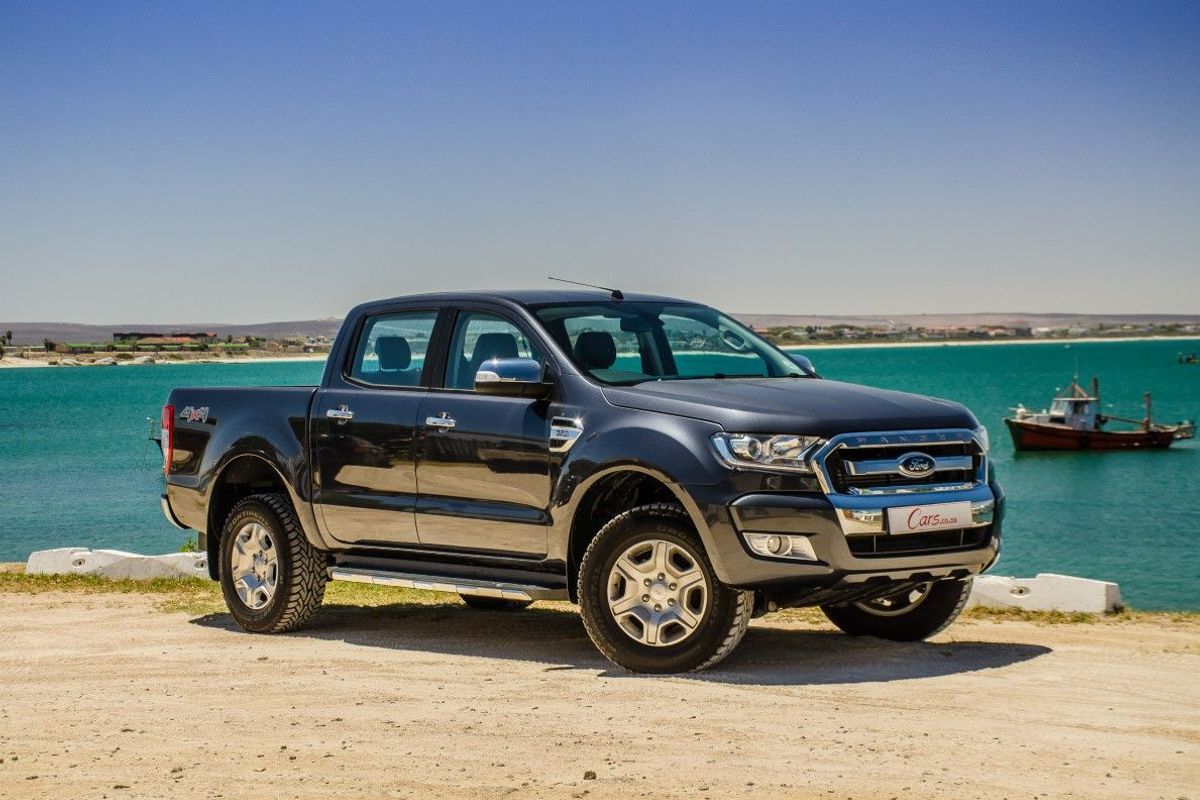
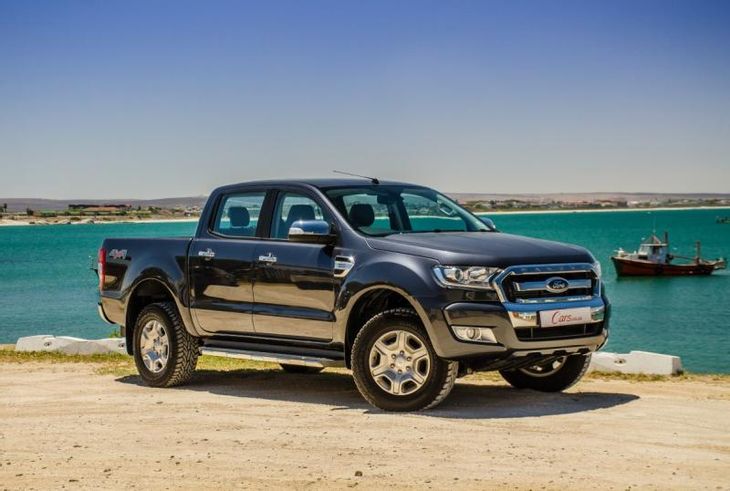
Much like the Toyota Hilux, the Ford Ranger is also assembled in SA, this time in Silverton, Pretoria. The new Ranger has been on sale for some time, with the recent addition of the 2.2-litre automatic adding to the volume of sales. It's an immensely popular vehicle and boasts some impressive in-car technology. It's arguably the prettiest bakkie on sale in South Africa and the Ranger/Hilux duo represent the toughest competition for the Mitsubishi Triton. Both the Hilux and Ranger are priced above the equivalent Triton but pack more safety features in terms of airbag quantity and rear parking assist. The top-spec Ranger Wildtrak won the Leisure Double-Cab Bakkie category in the second iteration of the Cars.co.za Consumer Awards – powered by WesBank.
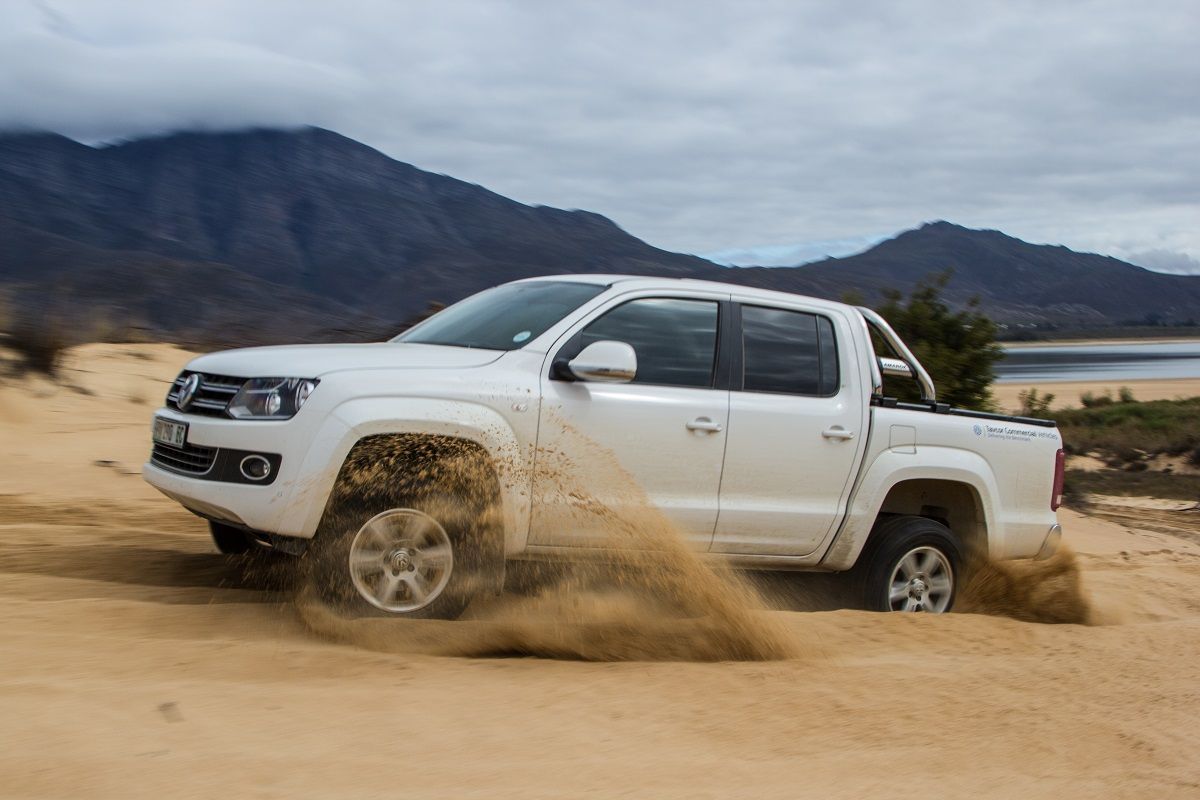
Volkswagen Amarok 2.0 BiTDi Double Cab Highline 4Motion Auto
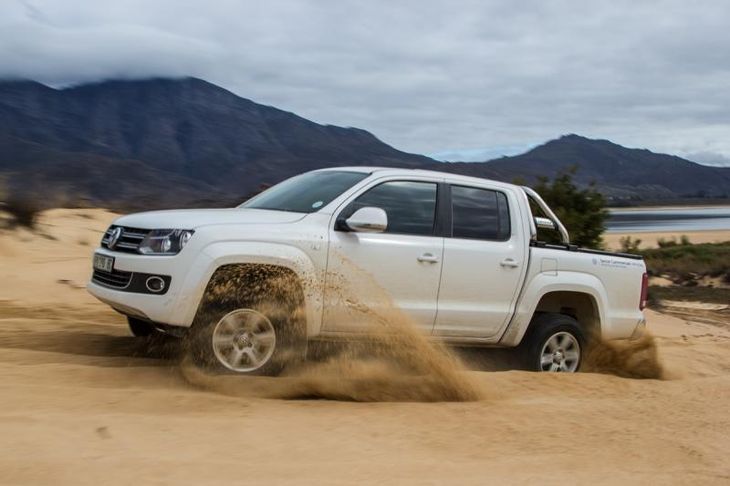
While we wait anxiously for the arrival of the new V6-powered Amarok which will put all the two-litre milk bottle jokes to bed, we have to make do with this biturbo four-cylinder Amarok. It's a surprisingly capable and pleasant bakkie, which has that lovely Volkswagen feel in the cabin. It's not bad looking either, and despite being overshadowed by the Toyota and the Ford, it has built up a sizable fanbase. It's expensive, but the features look on par.
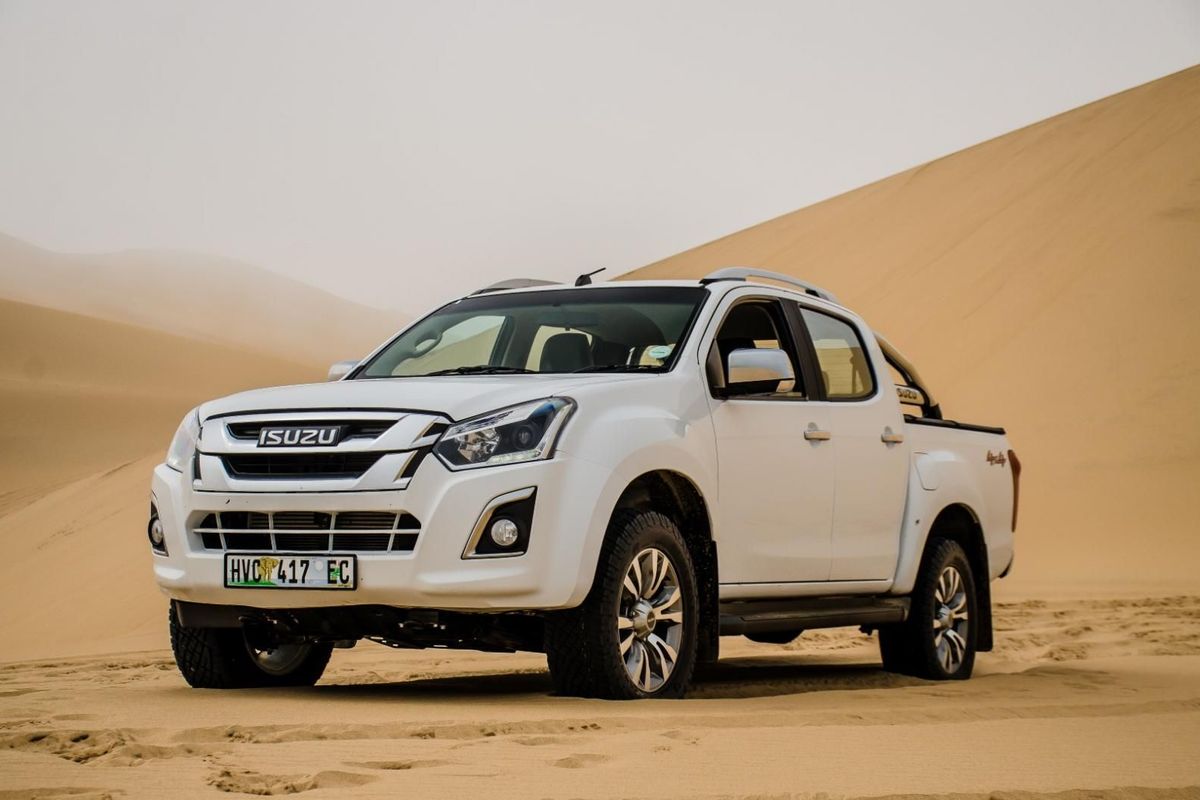
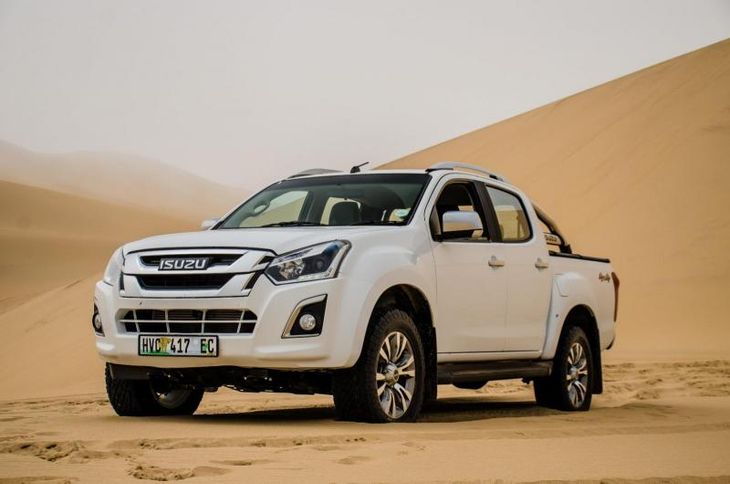
The Isuzu KB recently underwent a facelift and we had a chance to drive this new model in Namibia. It features some new design elements both inside and out and tweaked suspension. While there's no doubting the capability and offroad prowess of the Isuzu KB, it feels like an old-school bakkie. Most bakkies have thrown in some decent on-road comfort driving traits, whereas the Isuzu can be a little unrefined. In workhorse application, you can't fault the Isuzu, but we'd look elsewhere if its family comfort you're after.
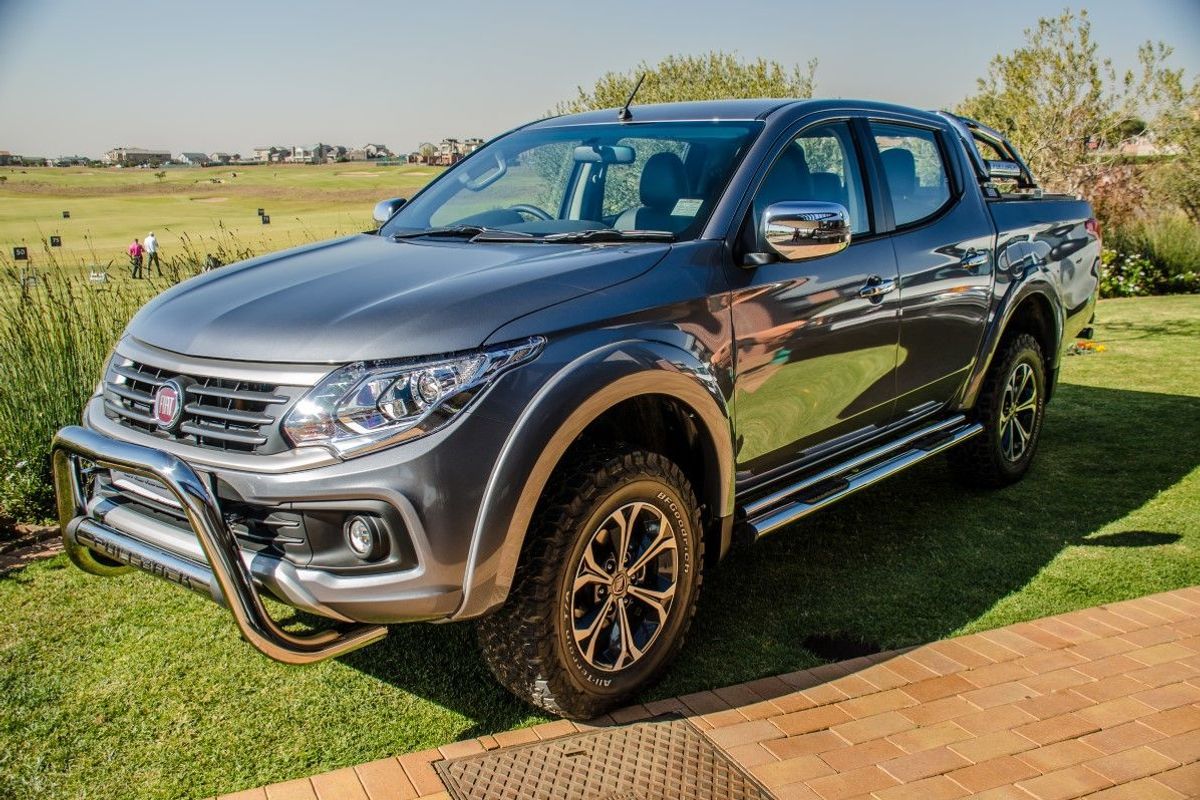
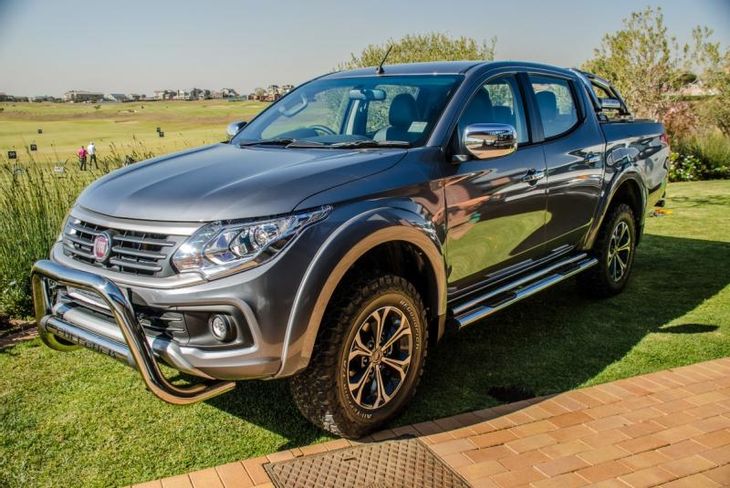
Perhaps the closest rival comes from the Triton's half brother. It may be badged as an Italian, but it's a Mitsubishi underneath. Fiat South Africa got the jump on Mitsubishi South Africa when the Fullback launched first at the expense of having the older 2.5-litre diesel engine. The Fiat Fullback was being evaluated by the team at the time of writing, but spec-for-spec, the Fullback looks tough to beat in terms of value. The Fullback's biggest detractors are the lack of an automatic gearbox and lower safety standards. However, it's nearly R100 000 cheaper than the other bakkies.