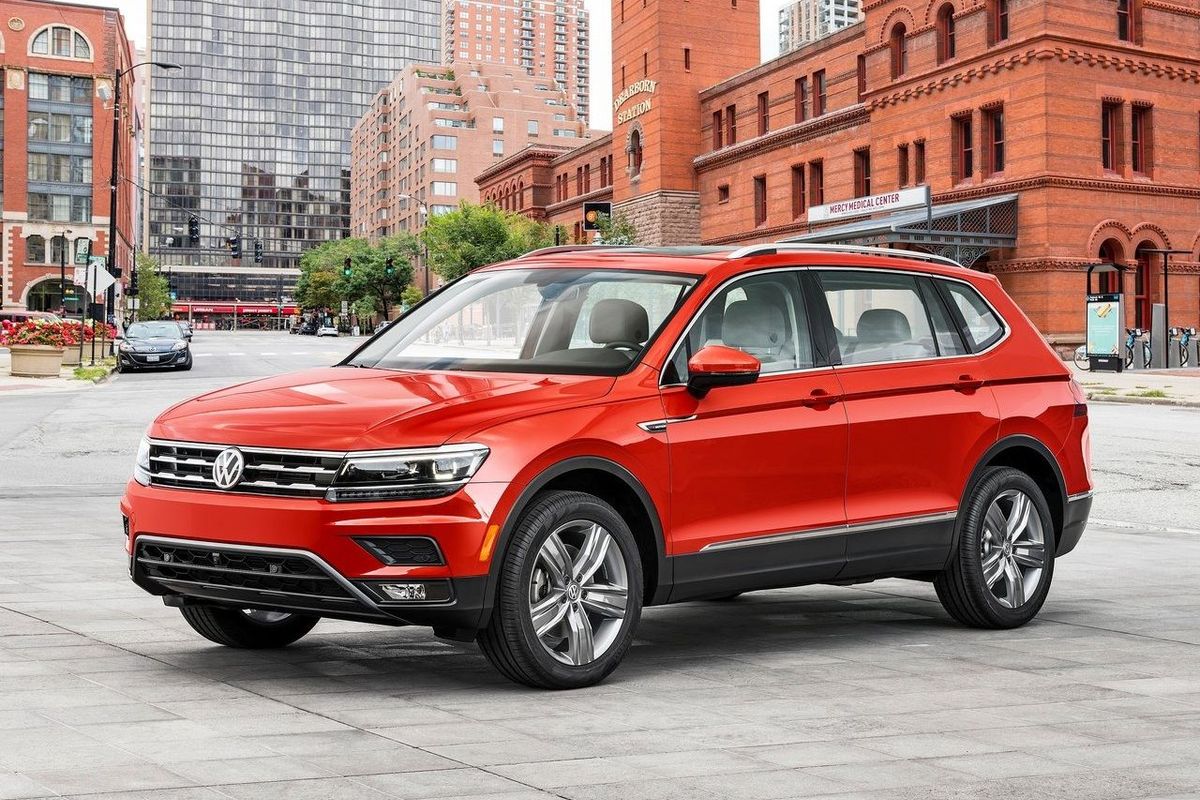
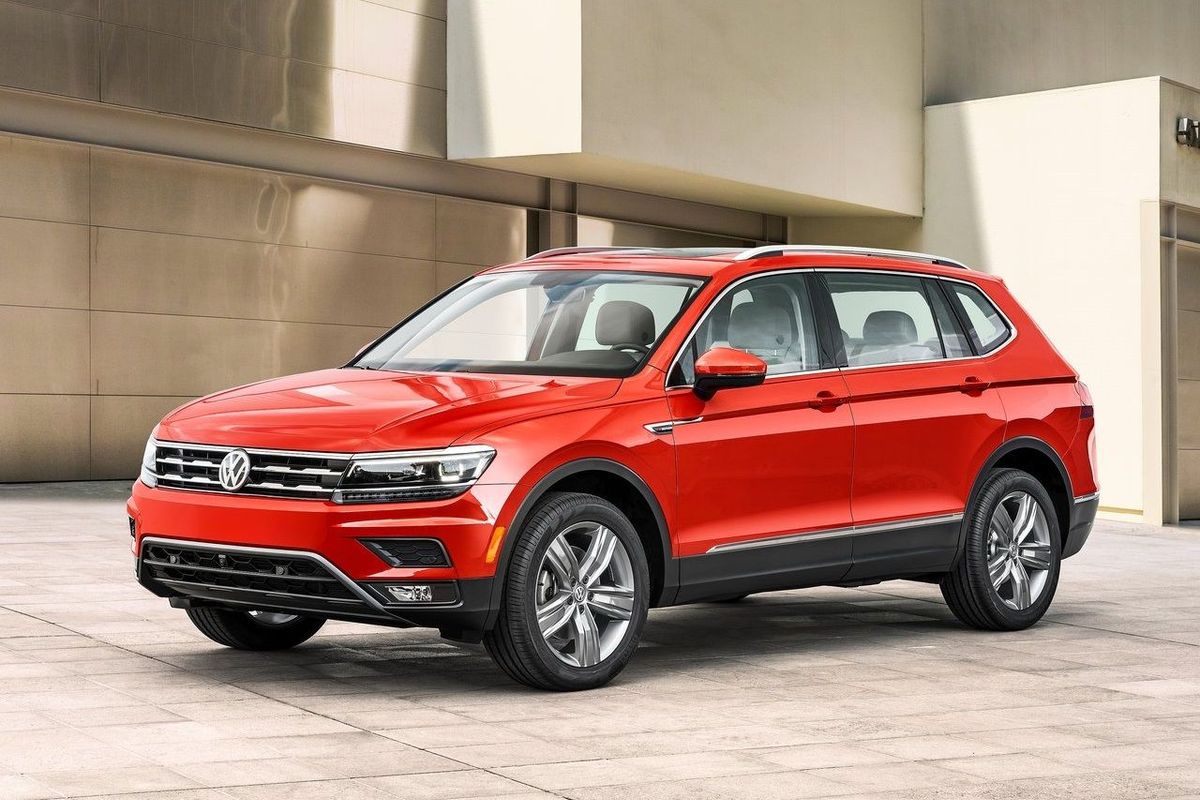
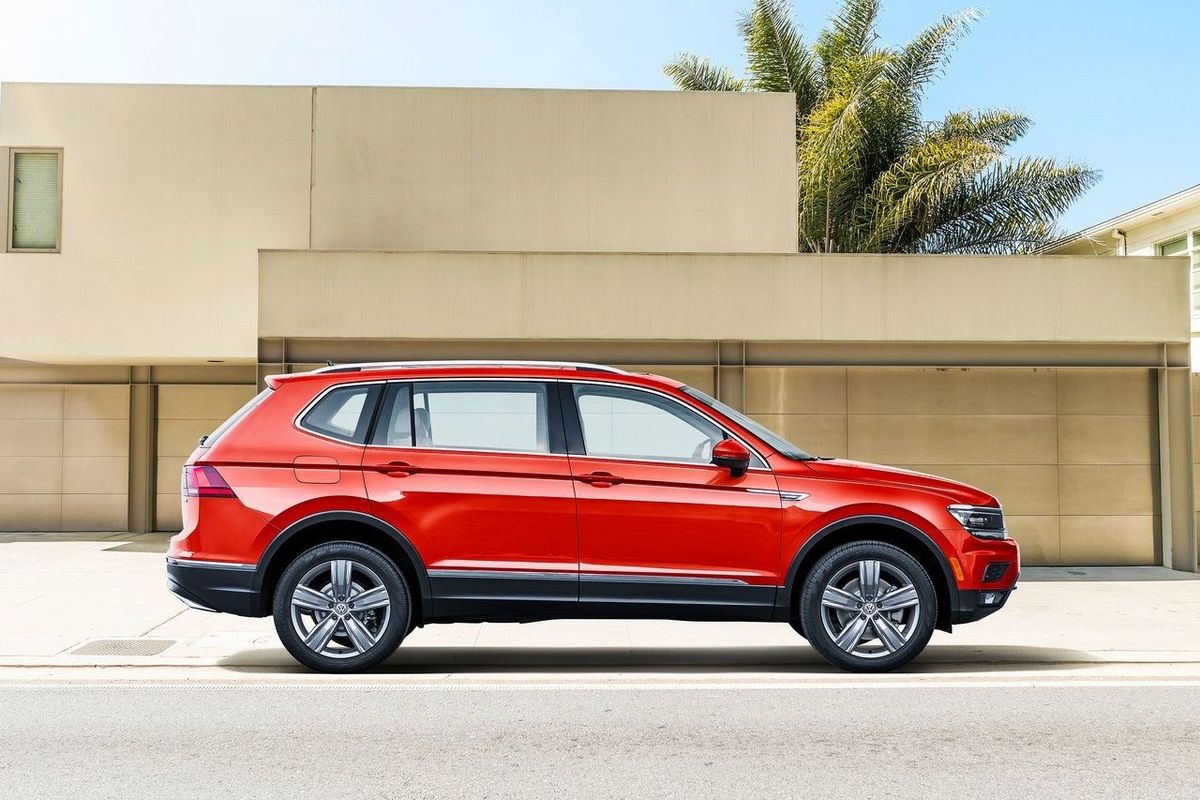
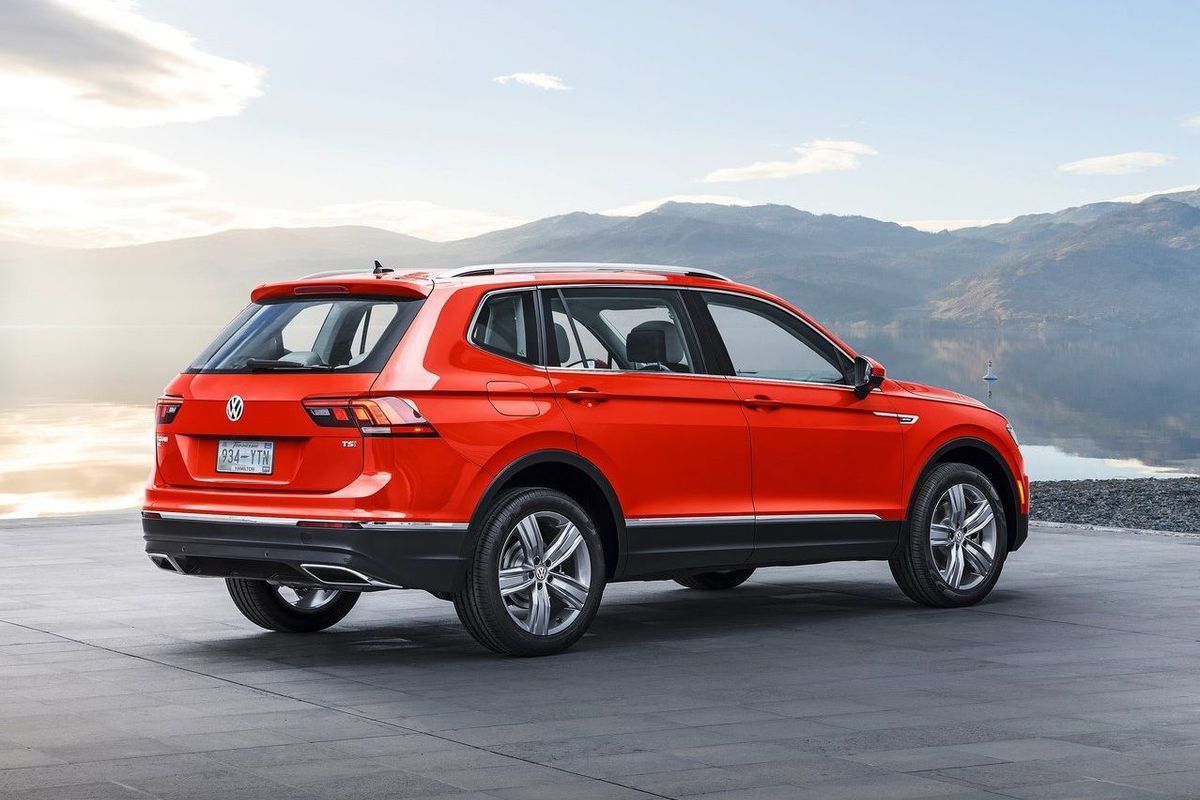
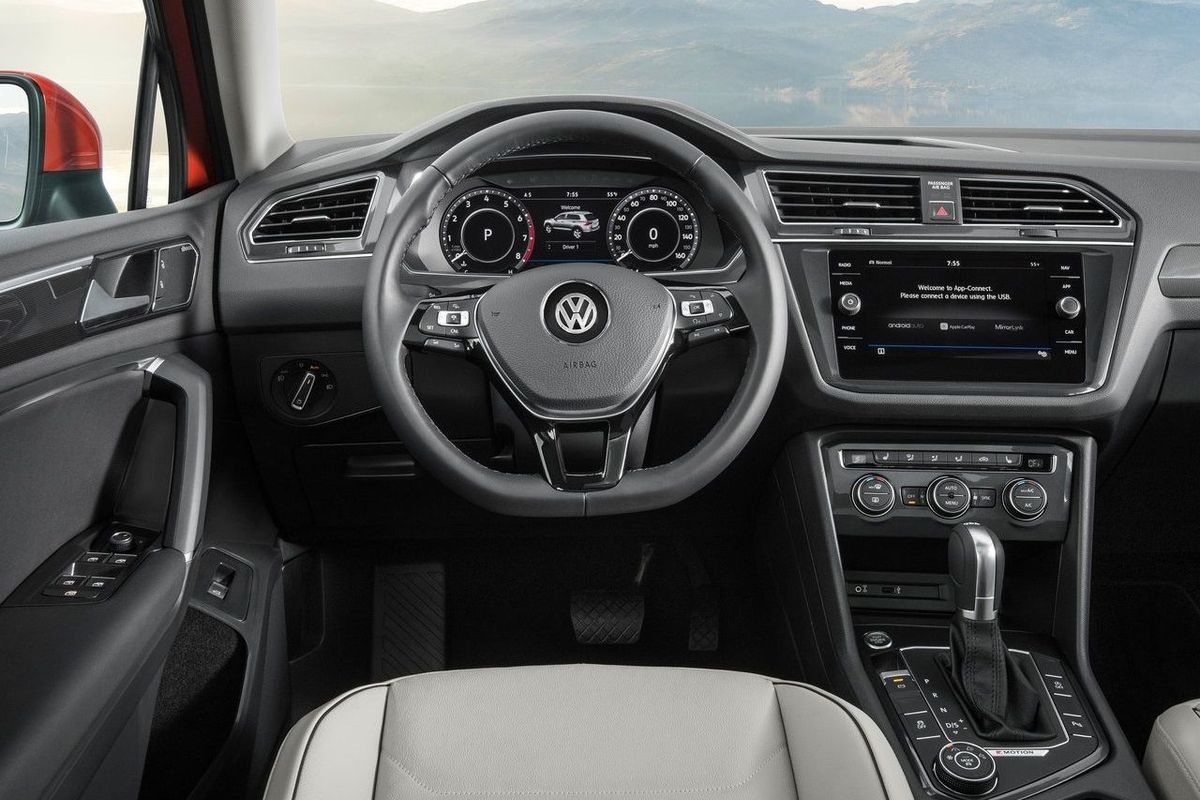
After seeing plenty of pre-production units and prototypes, the seven-seat Volkswagen Tiguan has officially been announced. Meet the 2018 Volkswagen Tiguan Allspace!
While the South African market received the all-new Volkswagen Tiguan in 2016, the US market had to do without it, until now. Volkswagen USA launched the new Tiguan and this version now comes with seven seats. For the European market, this vehicle will be called the Tiguan Allspace.
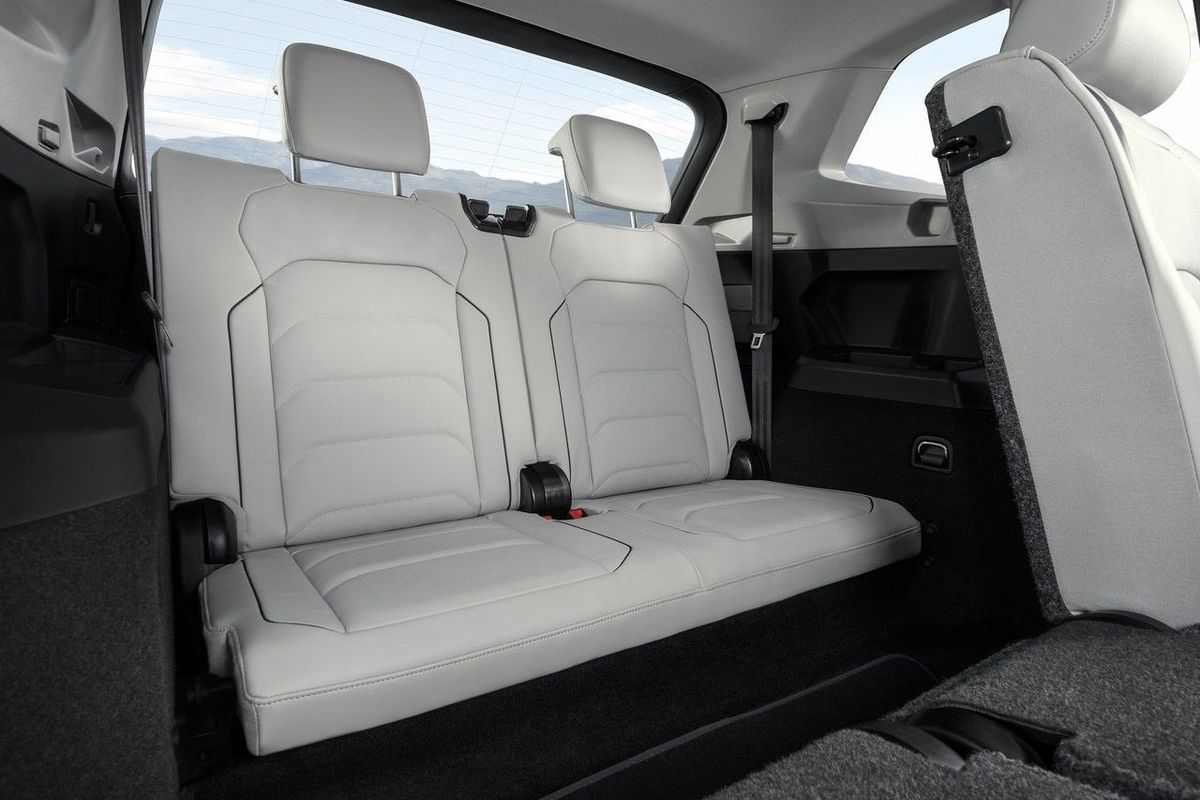
Built on the MQB platform (like the Volkswagen Golf and Audi A3), the Tiguan Allspace features a sliding second row of seats, with the option of a third row. The second-row bench can slide forwards and backwards by 18 cm, with the seat split in a 40:20:40 configuration.
Like the Tiguan, which is already available in South Africa, the Allspace features an optional digital cockpit display, app connection using Apple CarPlay, Android Auto and MirrorLink. It also features numerous safety features such as a rearview camera, Adaptive Cruise Control (ACC), Forward Collision Warning, Autonomous Emergency Braking (Front Assist) with Pedestrian Monitoring; Blind Spot Monitor with Rear Traffic Alert; and Lane Departure Warning (Lane Assist). Some of the comfort features on offer range from an eight-way power driver's seat, heated front seats, and a heated steering wheel.
The third row of seats in the new Volkswagen Tiguan Allspace provides additional passenger carrying capacity.
In the US, the Tiguan Allpsace is powered by a turbocharged 2.0-litre TSI engine with 137 kW and 300 Nm of torque. The Allspace will be produced for right-hand drive markets and although Volkswagen South Africa have yet to confirm if the newcomer will be made available for the local market, we are optimistic that it will. Given the added practicality of the Tiguan Allspace, it would add to the diversity of Volkswagen's local product offering, which doesn't include a 7-seater compact SUV or lifestyle SUV at this time. We will keep you updated as soon as more information becomes available.
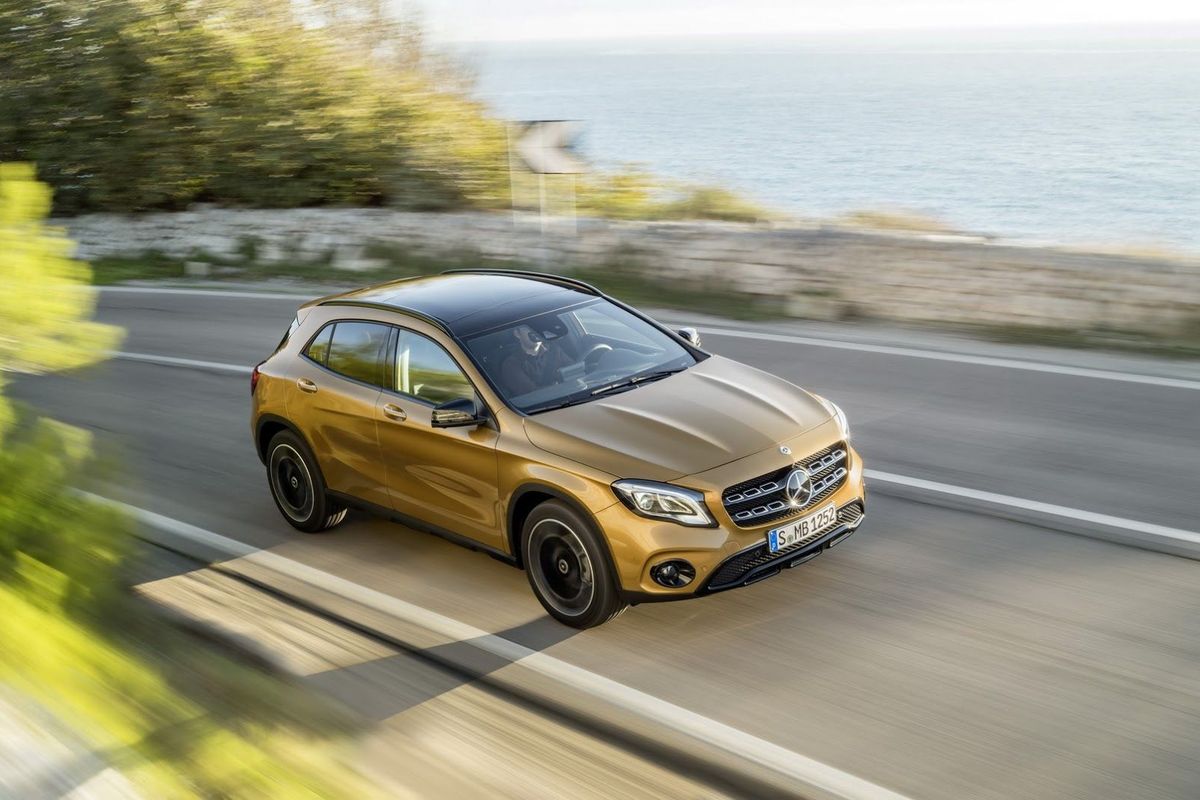
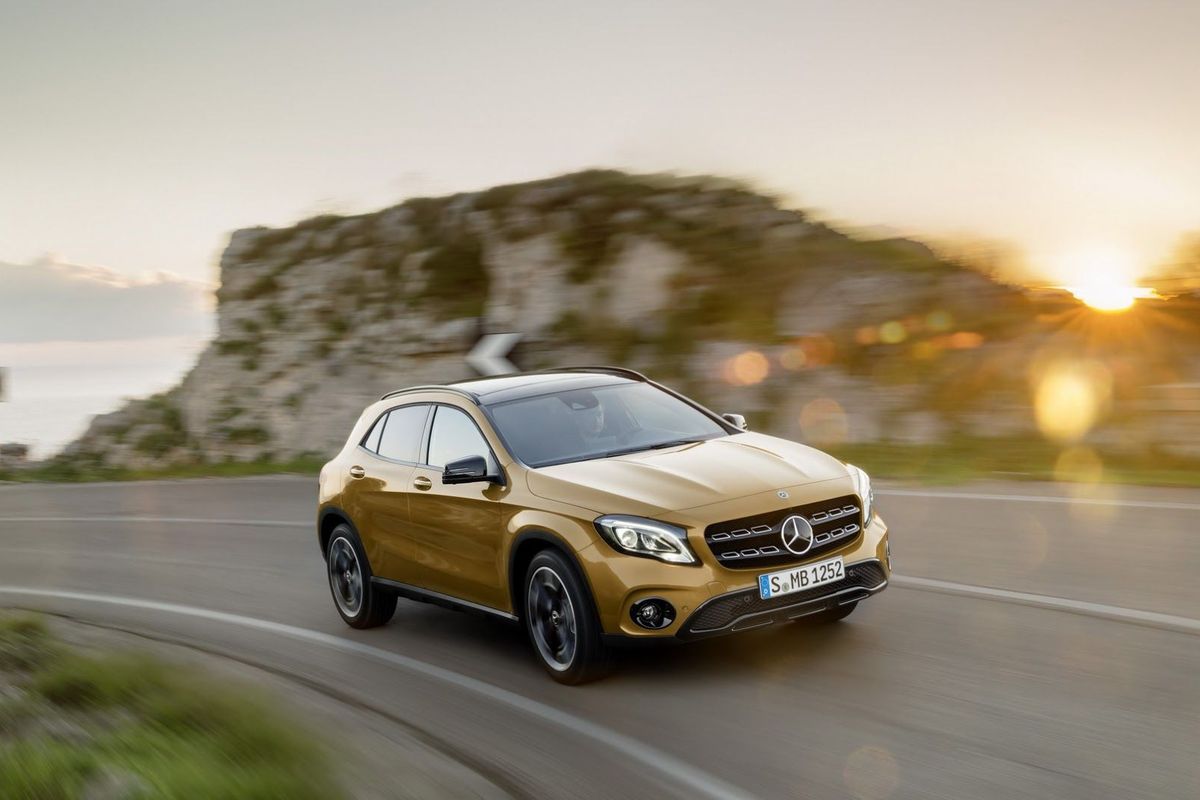
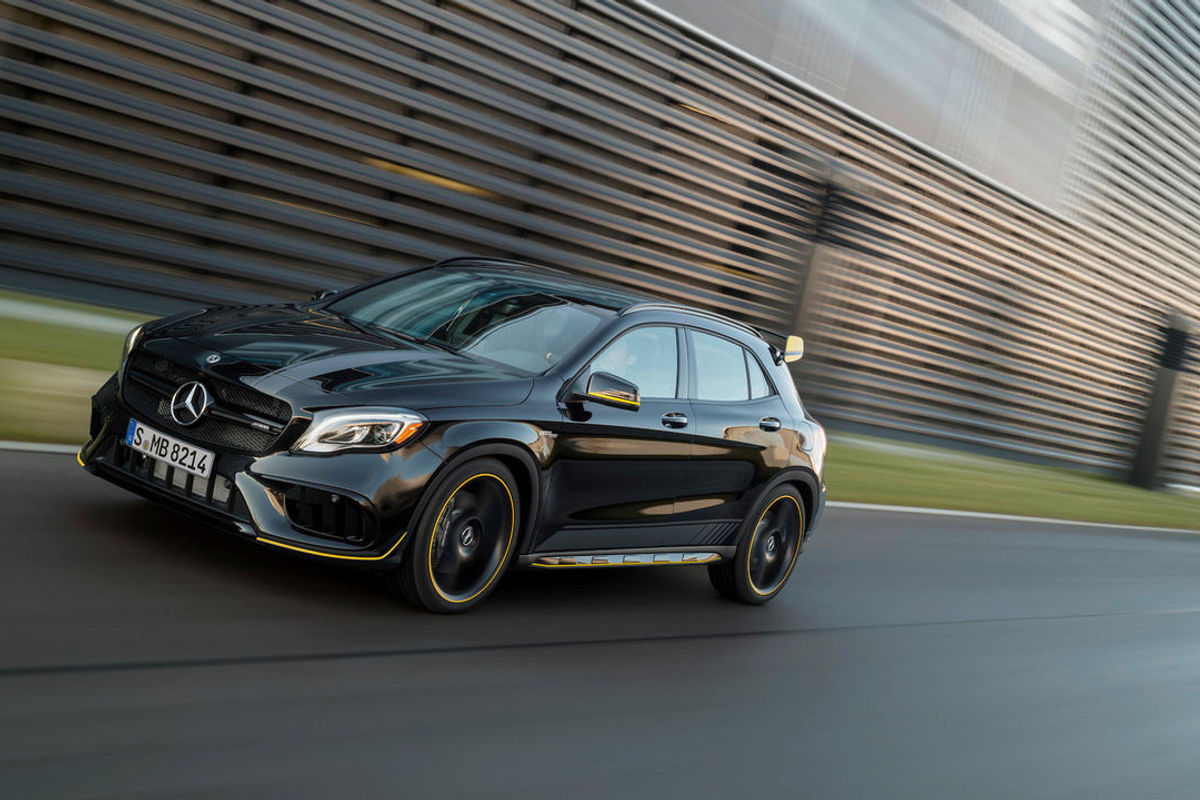
Mercedes-Benz has used the Detroit Motor Show to show the facelifted GLA compact SUV that now features revised exterior styling and updated interior appointments.
The GLA compact SUV has received a number of updates to enhance its visual appeal as well as its overall product offering. The facelifted GLA is currently on display at the Detroit Motor Show and is expected to arrive in South Africa in the second quarter of 2017.
What’s Changed?
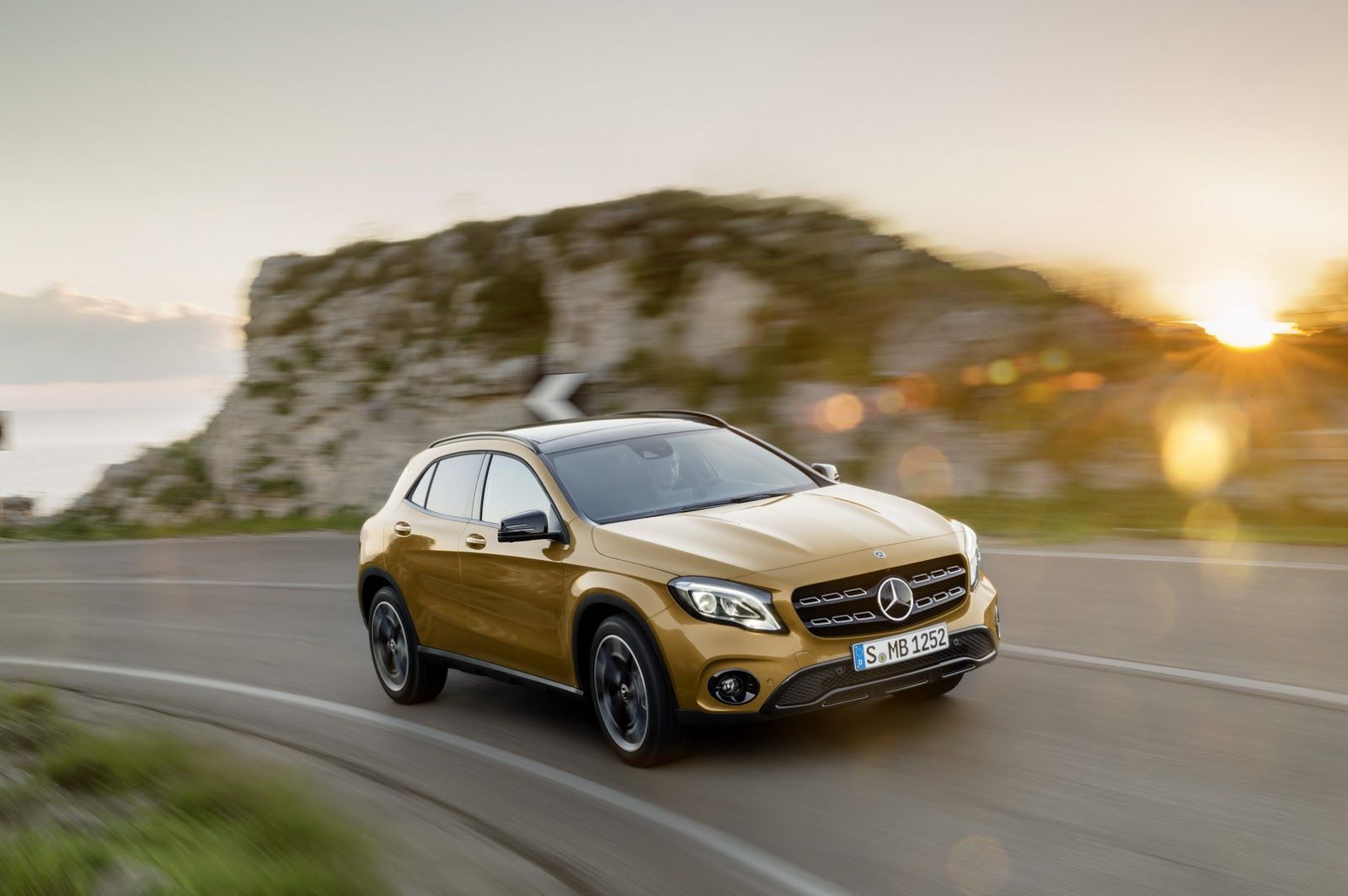
'Canyon Beige' as shown here, is the new colour offered on the facelifted Mercedes-Benz GLA.
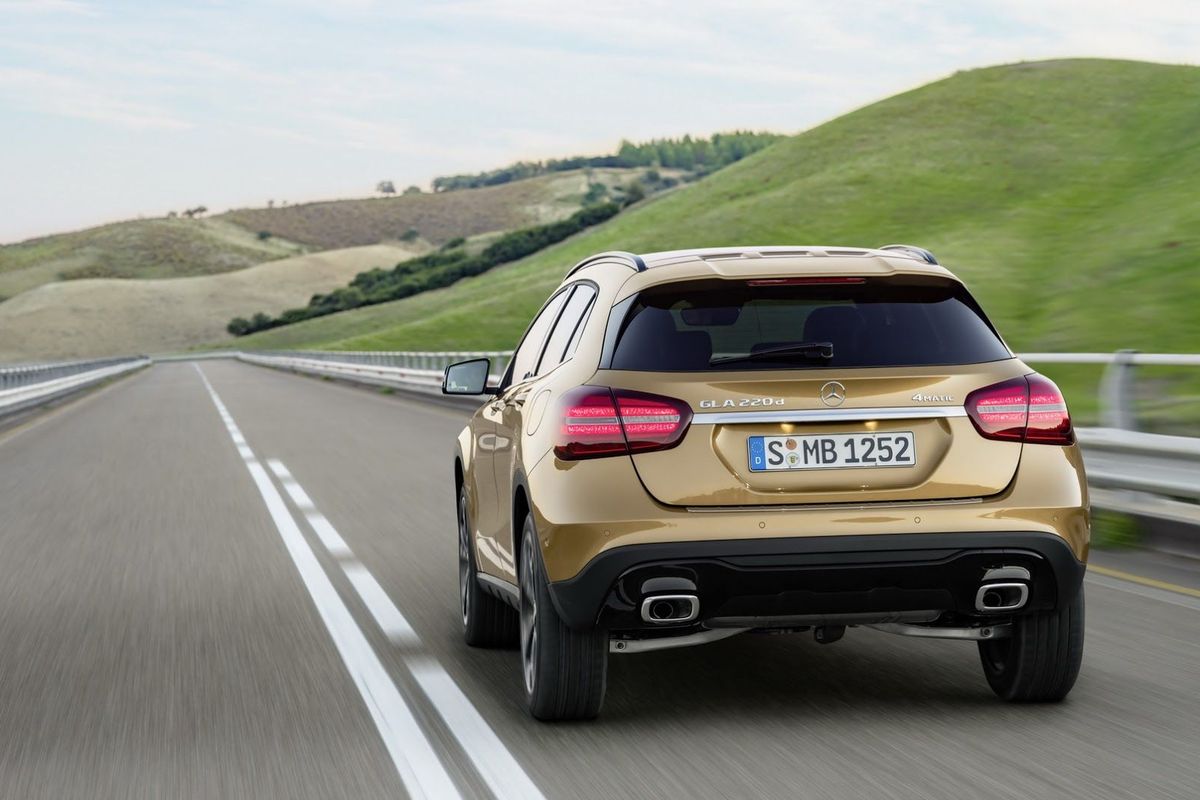
On the outside, the changes are subtle yet effective and include revised bumpers, new wheel designs and a new ‘Canyon Beige’ joining the colour palette. An off-road comfort suspension system is offered as an option, raising the body by 30 mm for improved performance in the dirt. LED high-performance headlights are available as an option and are fitted as standard on the range-topping AMG GLA45.
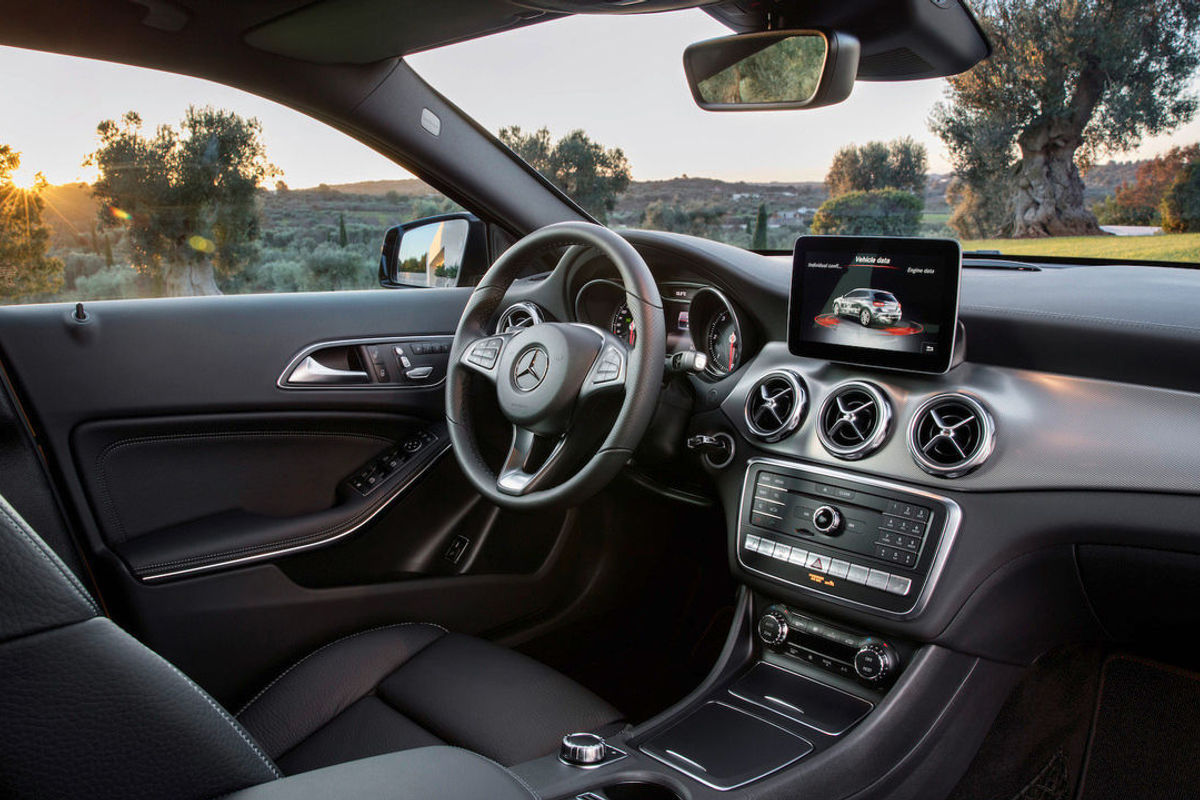
The changes are more pronounced on the inside where you will notice new seat covers and chrome control panels and details. Notable interior upgrades include a free-standing 8-inch media display, new instrument cluster and the inclusion of a 360-degree camera. An Interior Package with standard sports seats will be offered, as well as a Night Package which adds 19-inch AMG wheels, black window trim, roof rails and exhaust tips to give the GLA a more striking look.
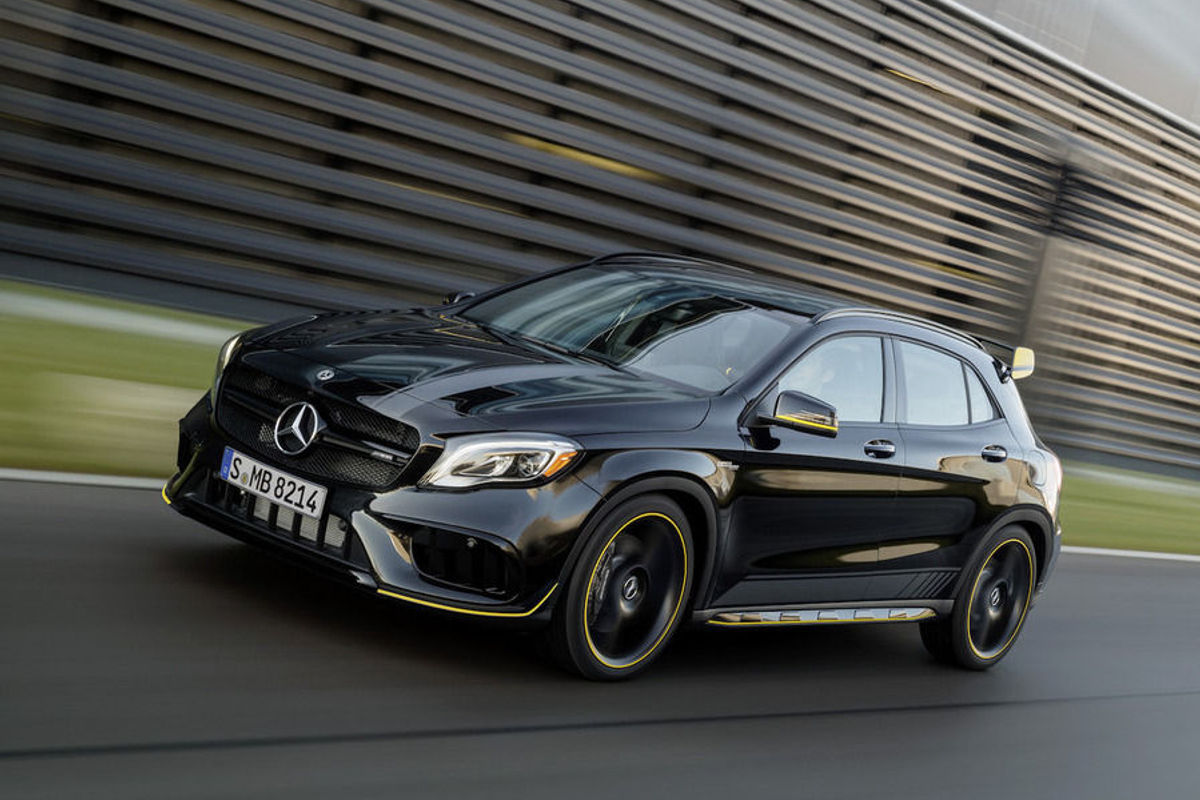
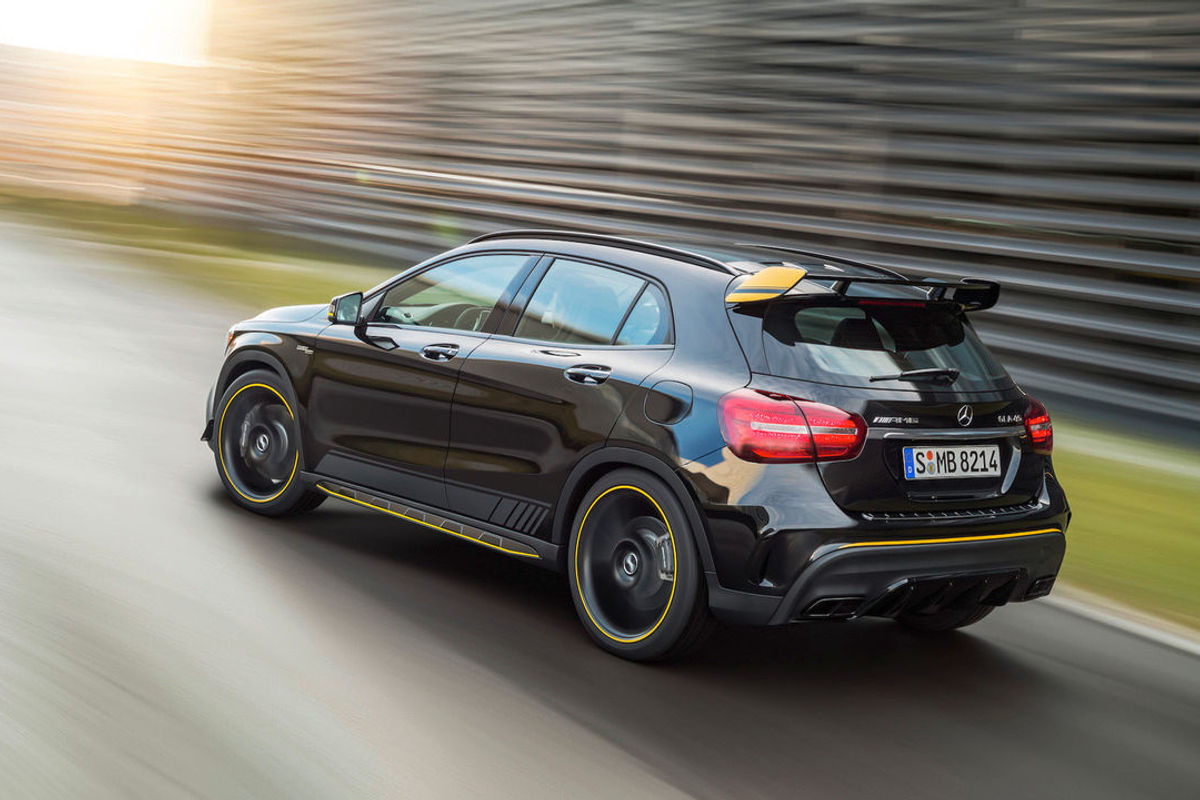
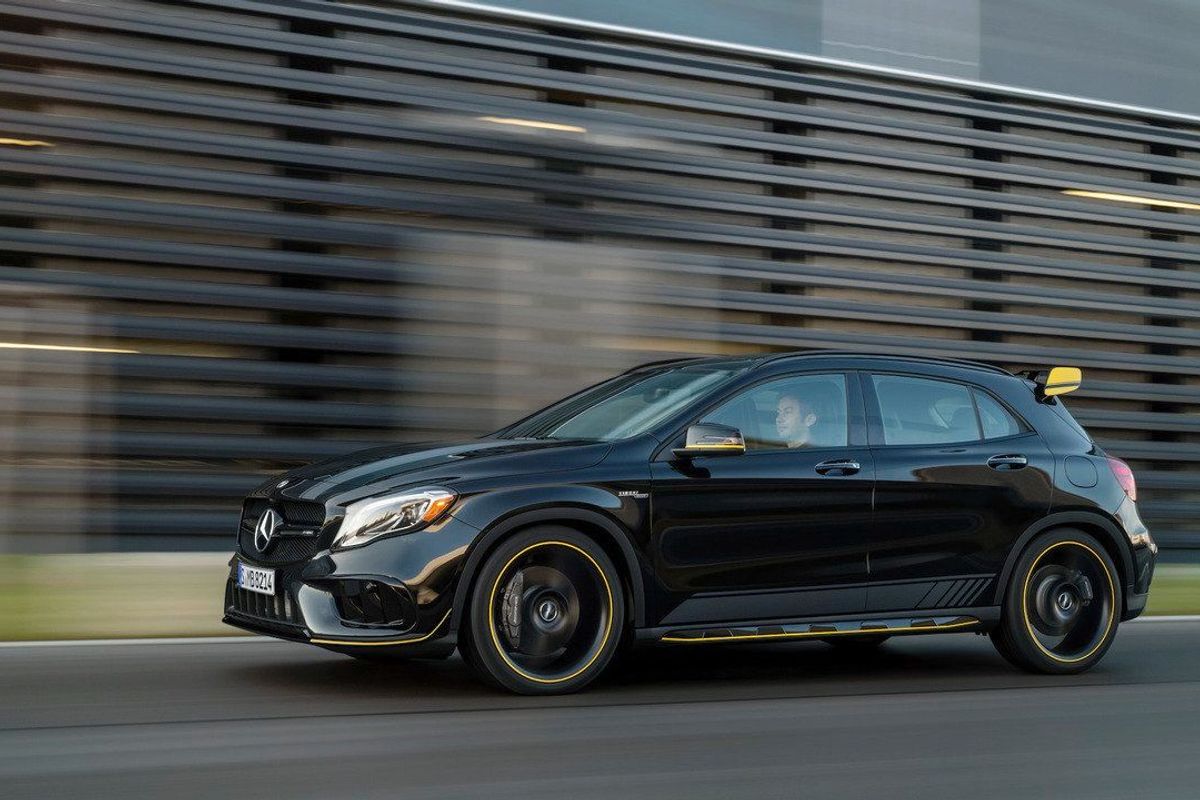
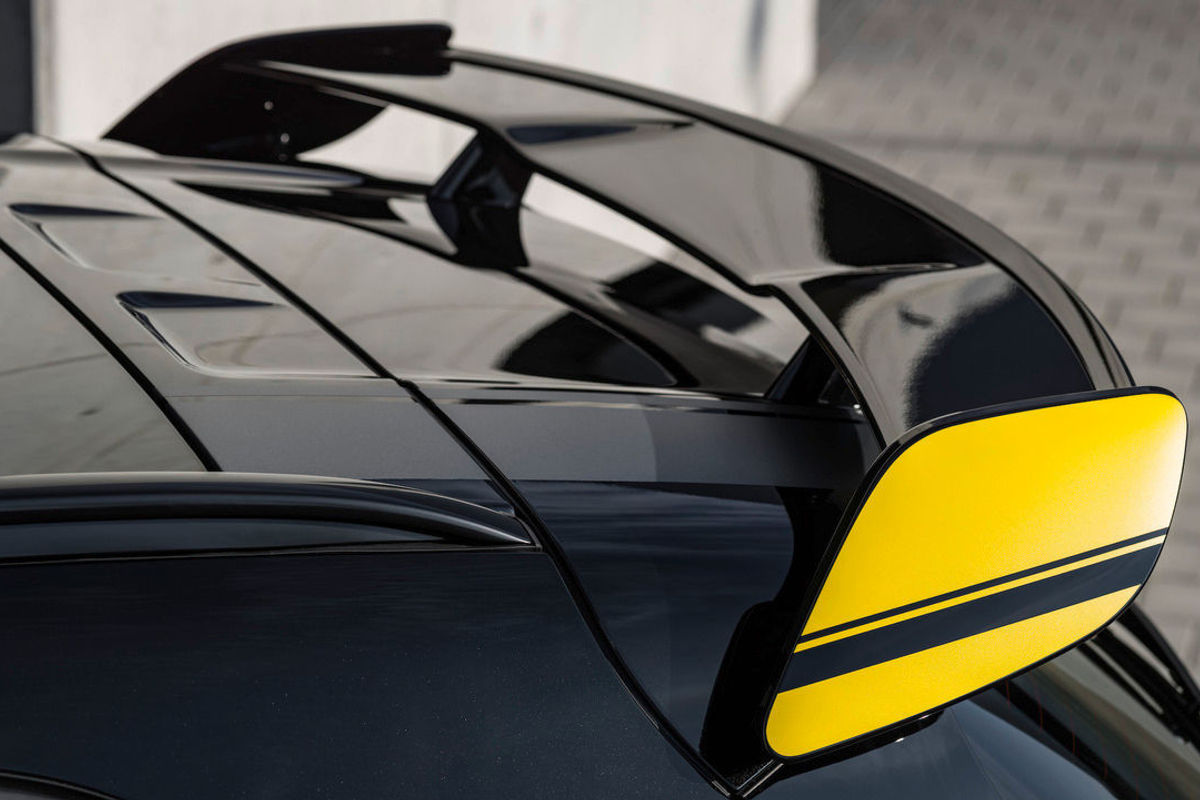
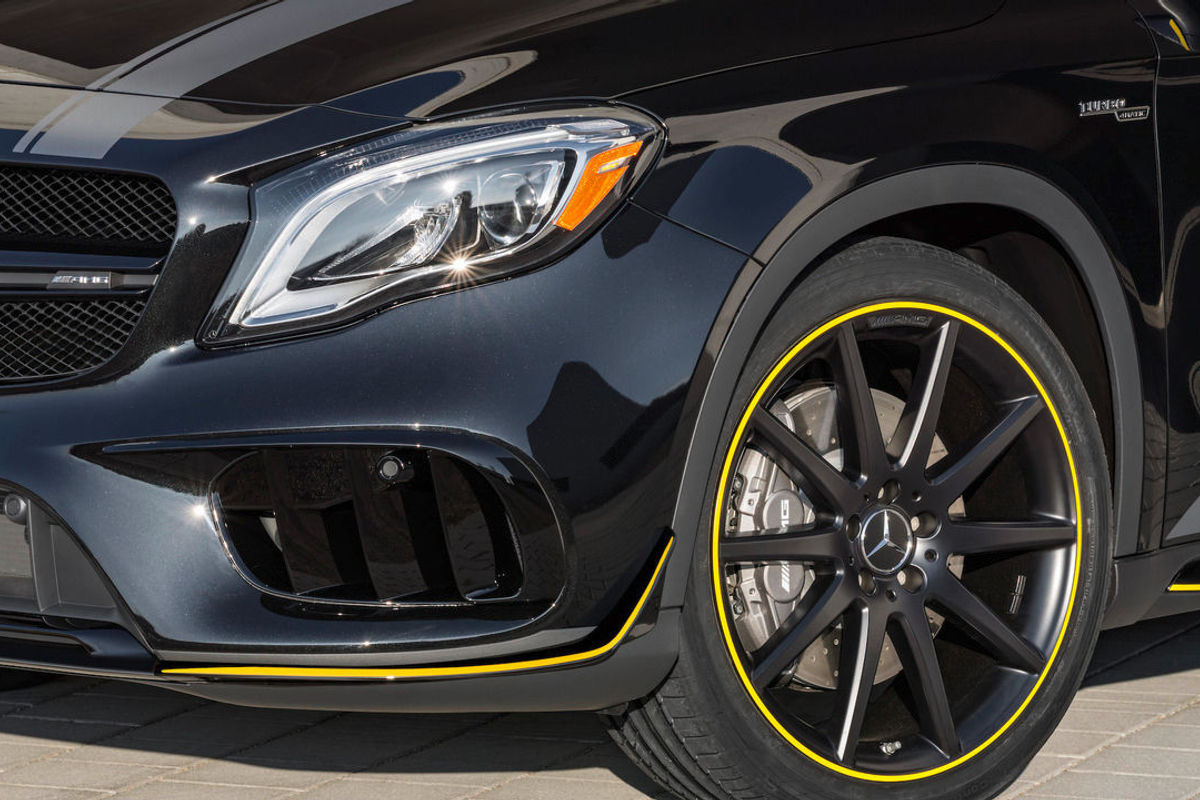
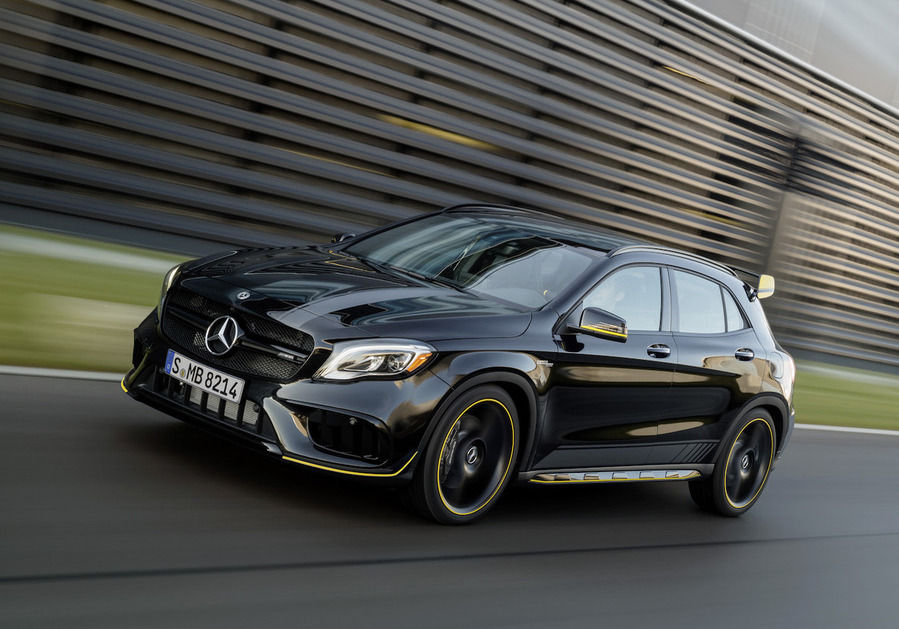
Customers looking to go all-out in terms of beefing up the styling of the AMG GLA45 might want to consider the AMG Performance Studio Package, which includes a body painted in either Night Black or Cosmos Black with a combination of Matte Graphite Grey and Yellow sections. Light alloy wheels in matte black with yellow rim flanges are fitted and the AMG twin louvre on the radiator grille is painted in black. Yellow accents are seen on the front bumper, side mirrors, side skirt inserts, rear diffuser and on the rear wing. The aggressive look is further emphasised by AMG sport stripes in matte graphite grey on the bonnet, roof, boot lid and along the side of the car.
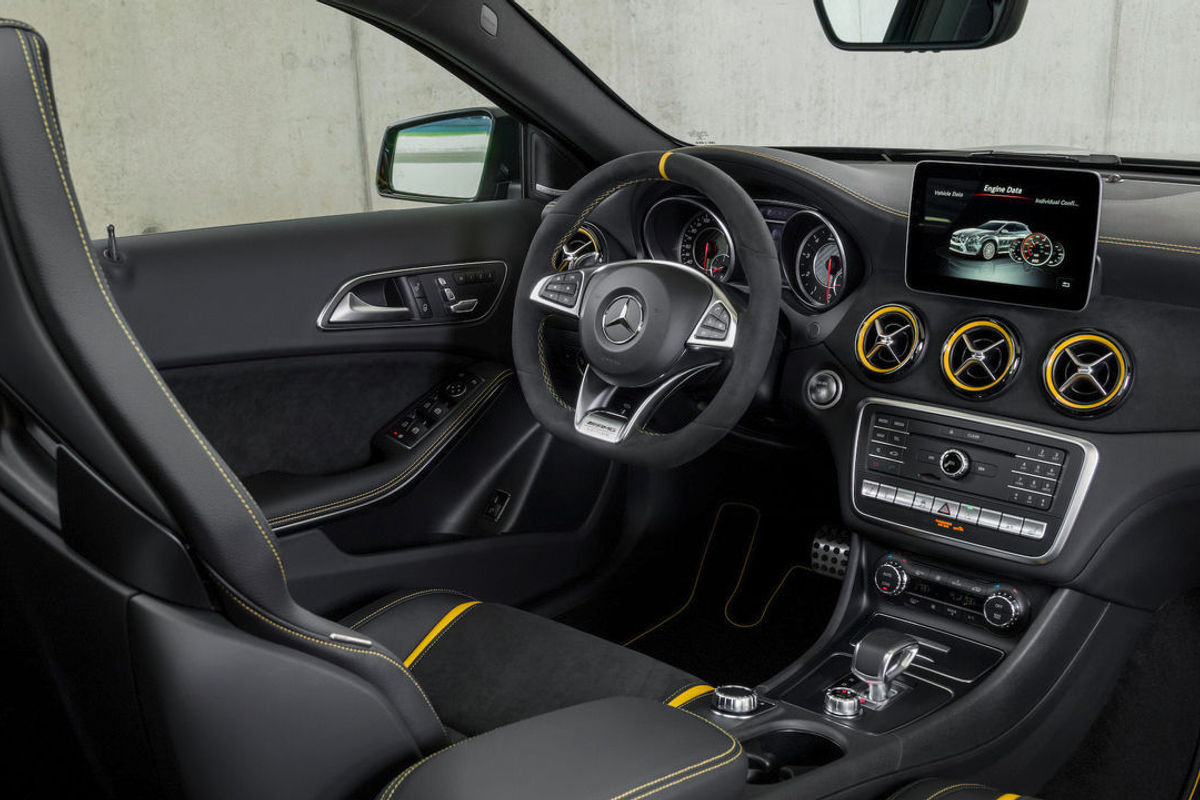
The interior gains yellow highlights seen on the AMG performance seats, steering wheel, rear bench, dashboard, armrests, floor mats and air outlets. Yellow AMG logos complete the sporty look.
Engine power
For an extra dose of sporty flair, the AMG Performance Studio Package on the AMG GLA45 gives the car more presence.
In South Africa, the current engine offering includes a 1.6-litre turbopetrol engine with 115 kW and 250 Nm of torque as well as a more powerful turbocharged 2.0-litre petrol engine offering 155 kW and 349 Nm of torque with front-wheel drive and 4MATIC versions on offer. Diesel options include a 2.1-litre turbodiesel in two states of tune with either 100 kW/300 Nm or 130 kW/350 Nm. The local engine offering will likely remain unchanged when the facelifted GLA arrives in the next few months.
The GLA range is headlined by the potent AMG GLA45 fitted with a handcrafted AMG 2.0-litre turbo engine producing 279 kW and 474 Nm of torque. Using a 7-speed dual-clutch sports transmission with shorter ratios, power is sent to all four wheels and the AMG GLA45 will accelerate from zero to 100 kph in about 4.4 seconds before reaching a top speed of 249 kph.
We will keep you updated as local specification and pricing becomes available, so stay tuned!
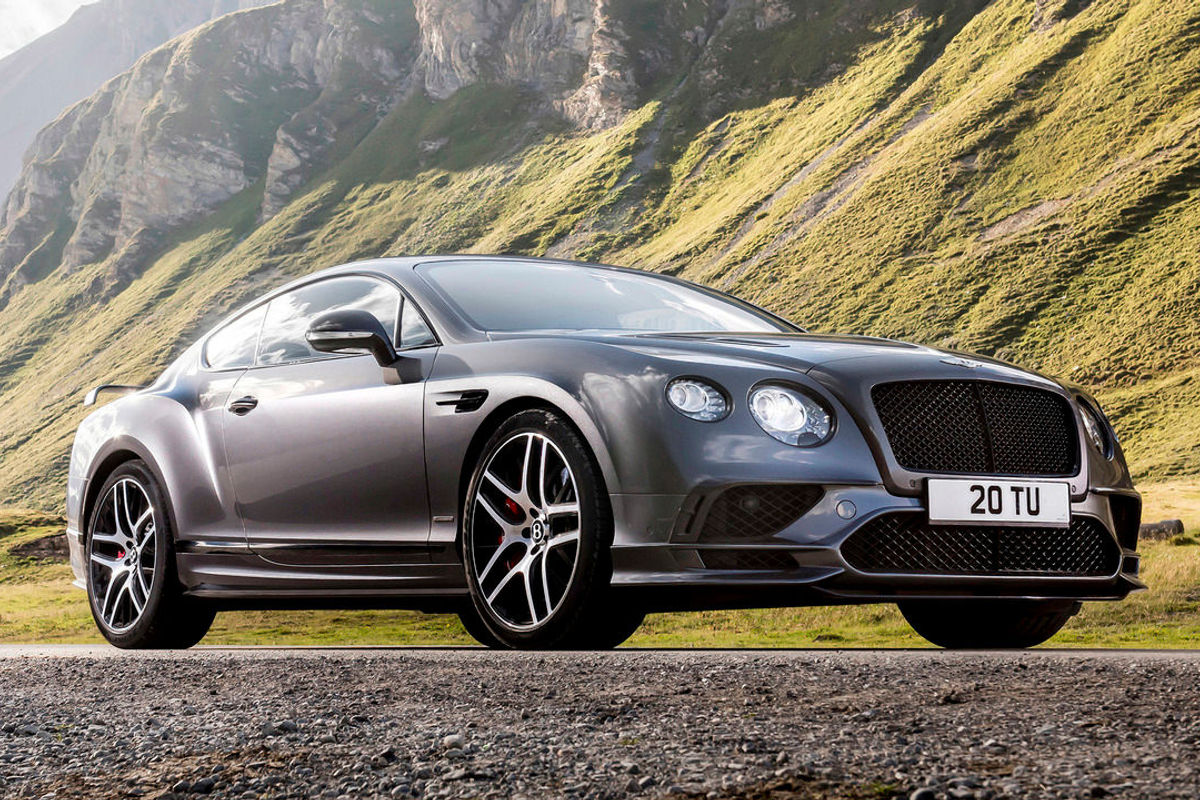
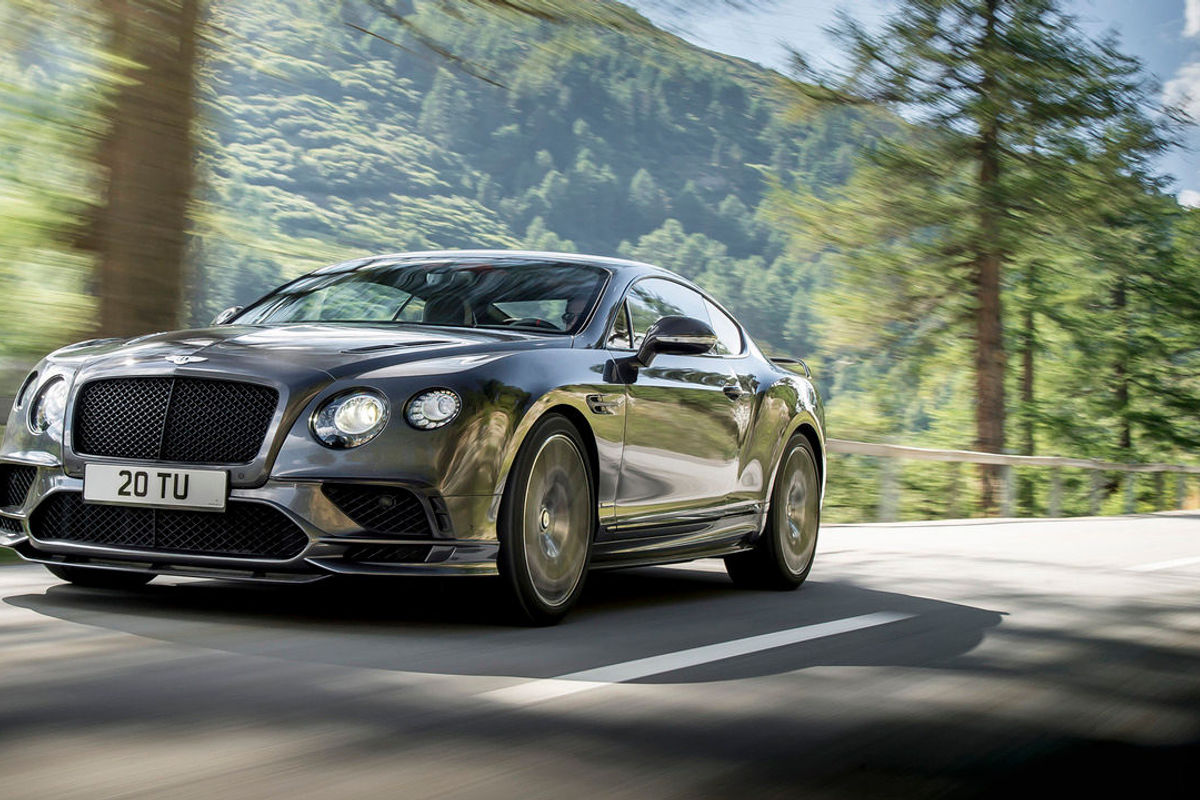
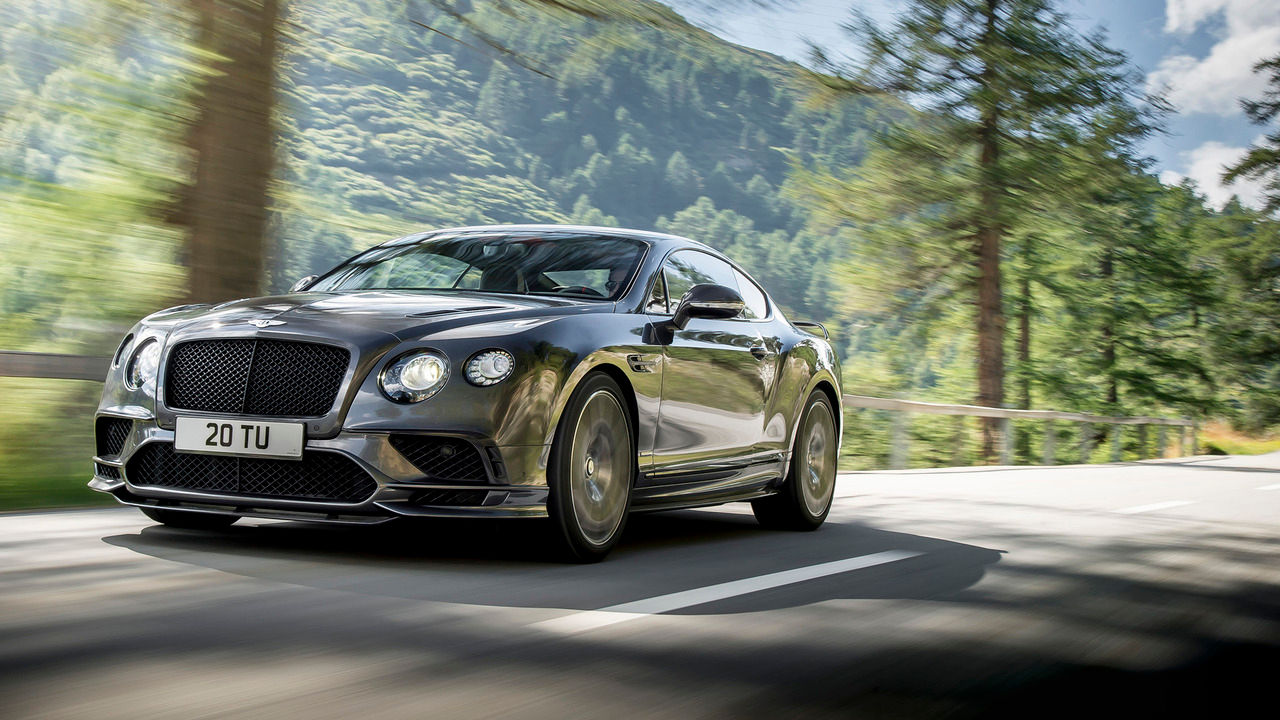
The Bentley Continental Supersports is the fastest and most powerful production car to come from the British marque and it will be shown at the upcoming Detroit Motor Show.
Bentley has combined ultimate power and luxury to create what the company claims to be the world’s fastest and most powerful 4-seat luxury car. This is the Continental Supersports, and on paper at least, it’s an absolute brute.
Wolfgang Dürheimer, chairman and chief executive of Bentley Motors, said: "The Supersports name is legendary at Bentley. From the very first Supersports of the 1920s, to the Bentley Continental Supersports of 2009 – and now with the third iteration of this iconic model – it is a name which excites, impassions and thrills. Only Bentley could create a car which blends immense performance and unrivalled luxury in this way."
Performance facts
The Continental Supersports is the fastest and most powerful Bentley to date.
Fitted with a redeveloped biturbocharged 6.0-litre W12 engine with high performance turbochargers and a revised charge-air cooling system, the Continental Supersports develops a staggering 522 kW and 1 017 Nm of torque. Power is sent to all four wheels using an 8-speed automatic transmission and as you may expect, acceleration is lighting fast. Bentley says the Continental Sports will sprint from zero to 100 kph in just 3.5 seconds and reach a top speed of 336 kph. A convertible version will also be offered and is capable of zero to 100 kph in 3.9 seconds before reaching a top speed of 330 kph, making it the fastest convertible in the world, according to Bentley.
The Continental Supersports is also fitted with a specifically calibrated and updated torque vectoring system used on the Continental GT3-R to improve handling ability, while a lowered and stiffened suspension set-up provides comfort on long journeys. Stopping power is provided by large carbon ceramic brakes set behind lightweight 21-inch forged alloy wheels.
Design details
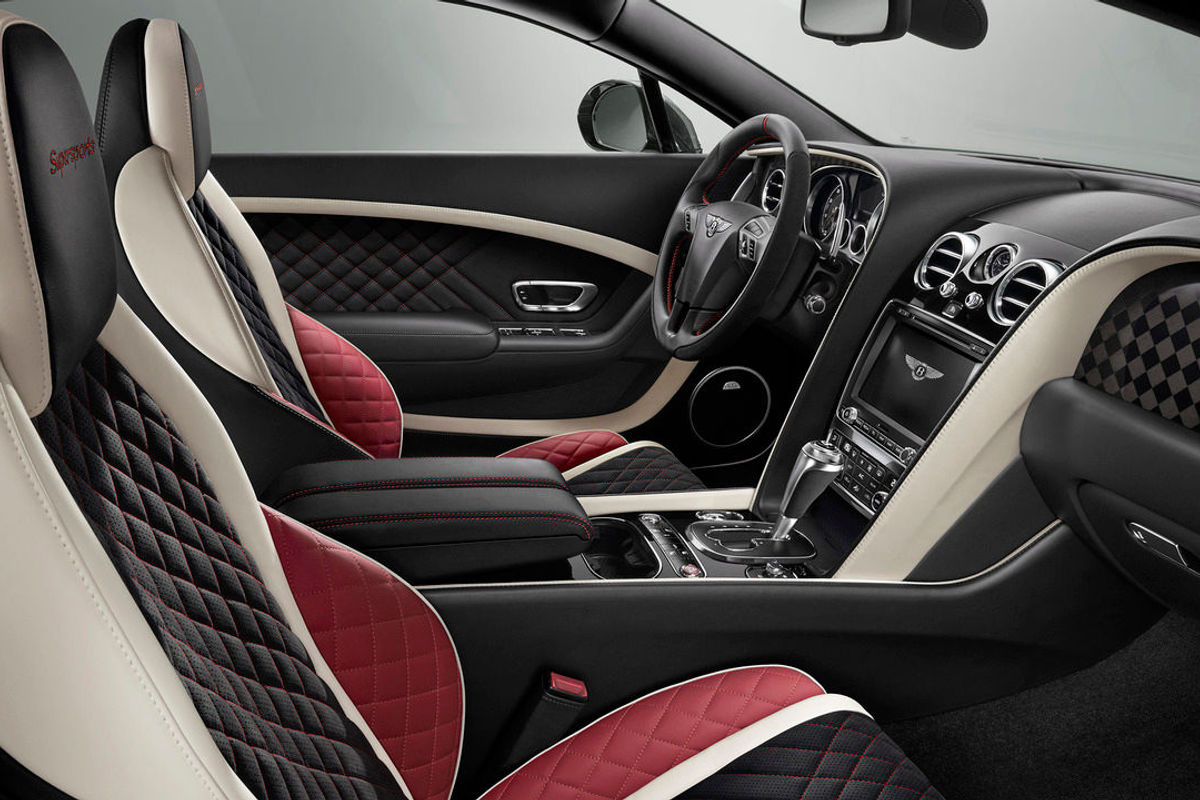
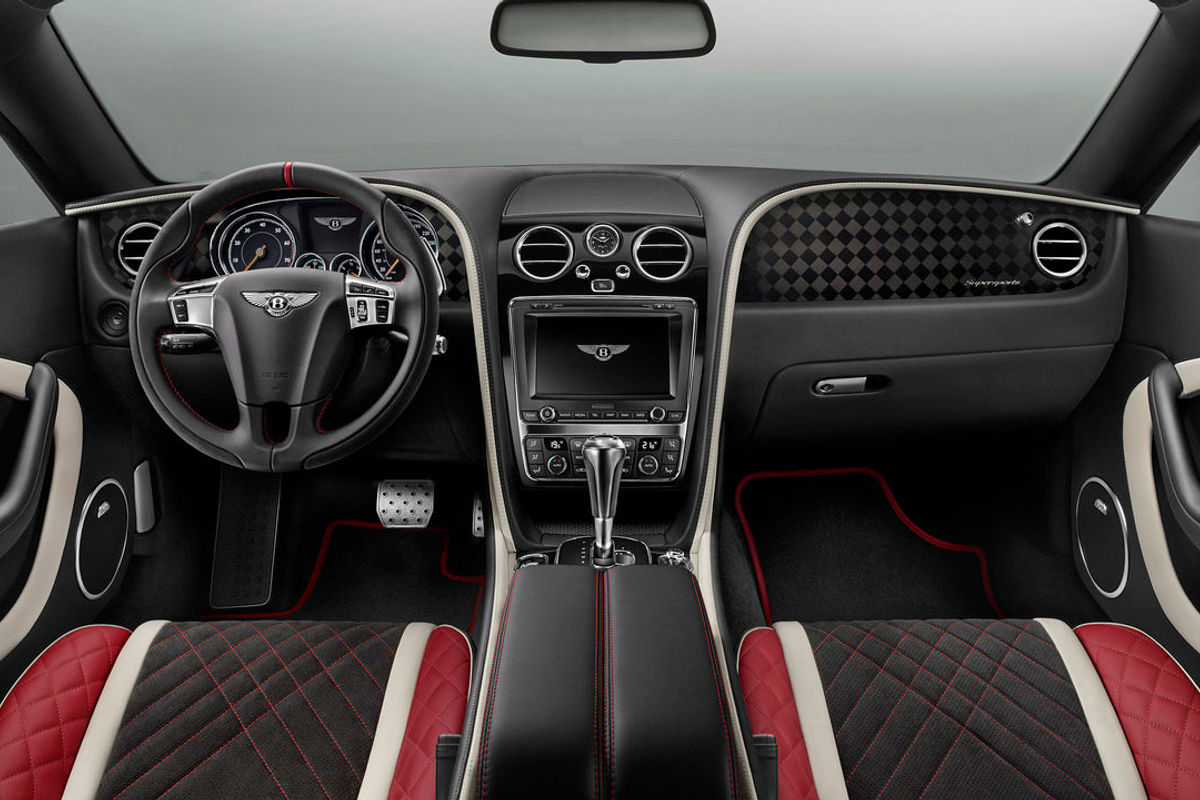
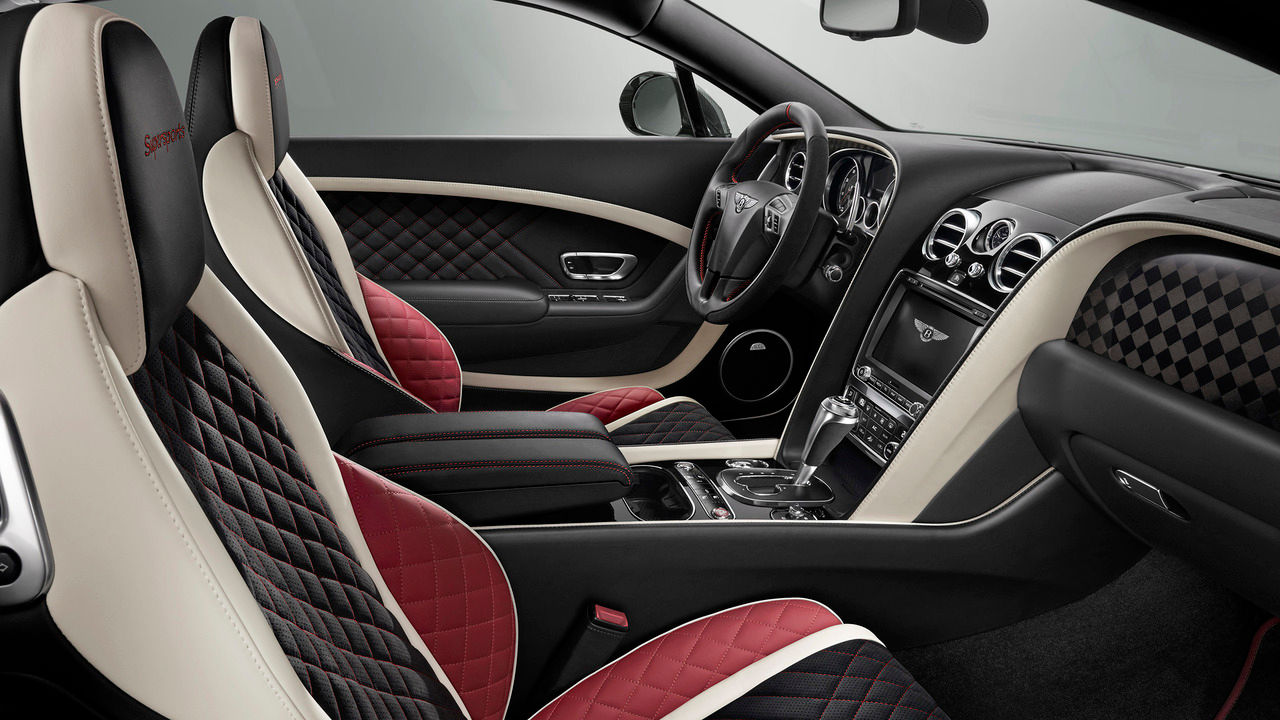
The interior features a unique tri-tone design with bespoke finishes and detailing.
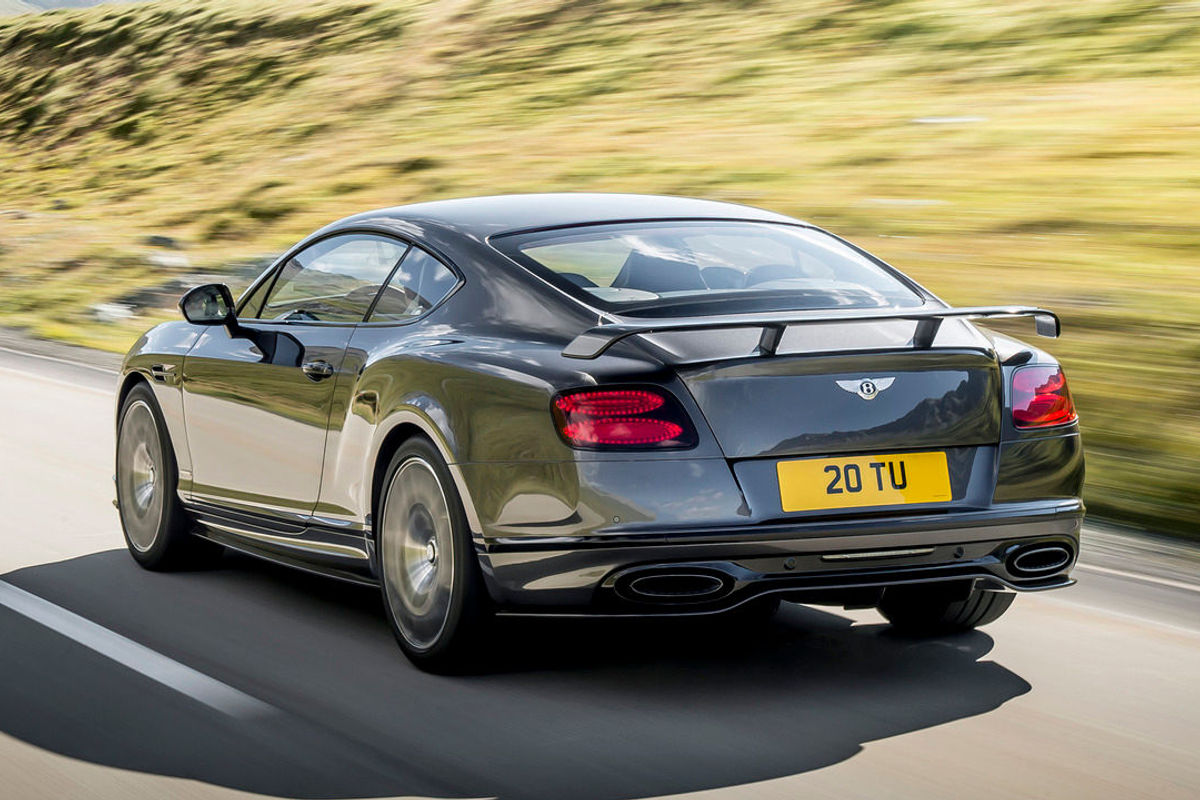
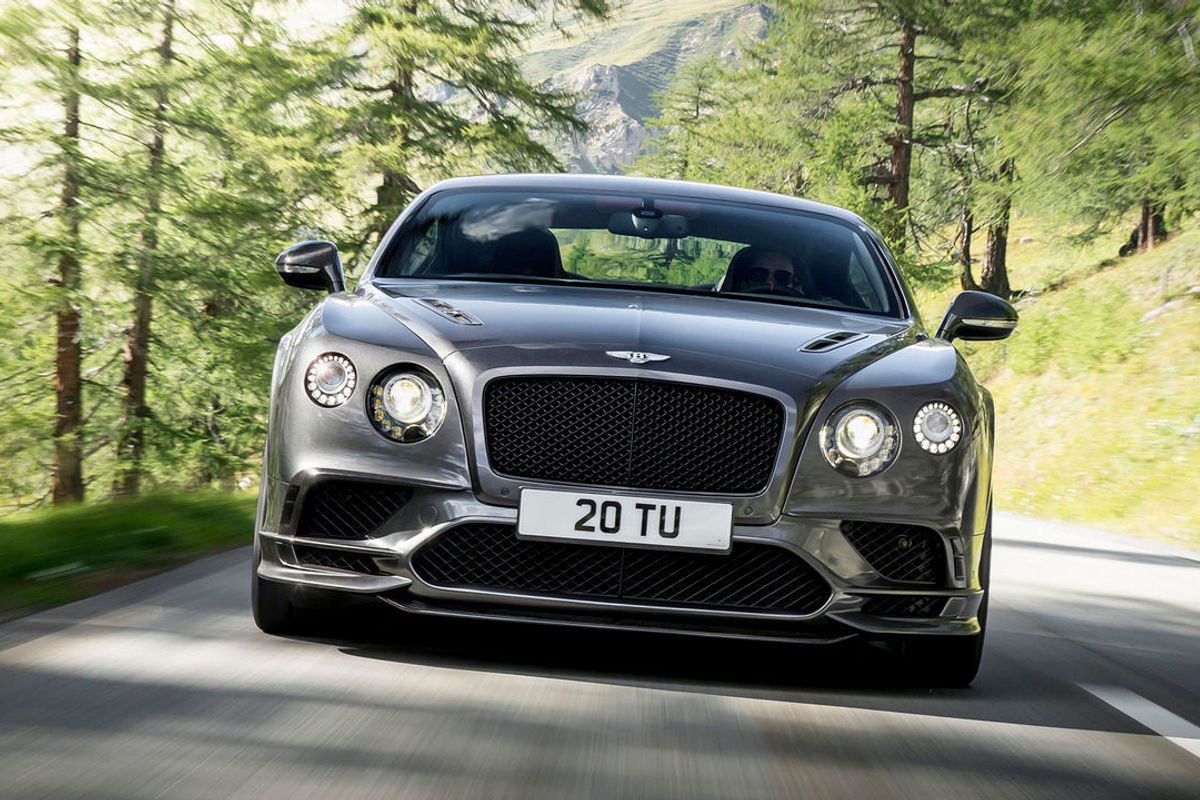
Exterior design features include a newly designed front bumper with a carbon fibre splitter while the new rear bumper is fitted with a carbon fibre diffuser. Carbon fibre side sill extensions and bonnet vents add to the overall look. The exhaust tailpipe features a rifled gloss black design and dark-tint headlight and taillights, as well as black-finished detailing found on the front grille, lights rear bumper, door handles and window surrounds complete the exterior styling package.
Optional features include a rear spoiler, front splitter, Supersports badging, side decals and a new black and bright-machined finish for the 21-inch wheels. A gloss-finished, carbon fibre engine cover can also be had as an option. In addition to this, an optional titanium exhaust system is available, offering a delightful soundtrack with the benefit of reduced weight.
On the inside, a tri-tone interior is offered with a new diamond-quilted design for the seats and side door panels in Alcantara. Chequered carbon fibre fascia panels are fitted with 10 veneers and finishes on offer. The interior is completed with Supersports emblem stitching while a Supersports steering wheel and a unique gear lever are finished with Alcantara accents.
The Bentley Continental Supersports will be shown in the metal at the upcoming Detroit Motor Show next week.
We take a look at 7 bakkies that are bound to shake up the market when, or if, they arrive in the near future!
If there’s one segment that continues to thrive amid declining new vehicle sales in South Africa, it’s the bakkie market. Despite tough economic conditions, bakkies are in high demand. The local market, which is led by the Toyota Hilux and Ford Ranger in terms of sales, recently saw the introduction of the Fiat Fullback and its cousin, the new Mitsubishi Triton, is on its way too. But there are further changes afoot…
More manufacturers are joining the bakkie fray in the hope of securing a piece of this (lucrative) market pie. Newcomers to the market, however, have lots of convincing to do to sway buying decisions into their favour. There are a number of new bakkies that could potentially “rock the boat” when (or if) they finally go on sale in South Africa. Let’s take a quick look at some of the most-anticipated bakkies you can expect in the short to medium term.
1. Mercedes-Benz X-Class
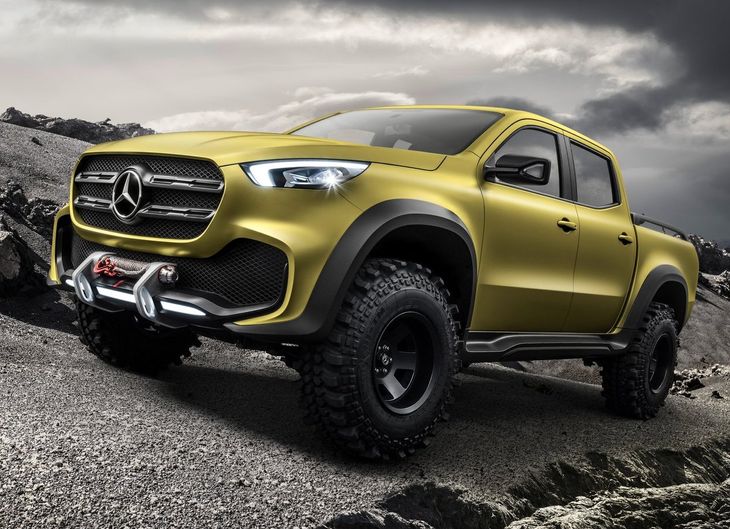
The Mercedes-Benz X-Class bakkie will arrive in South Africa late in 2017 or early in 2018.
Probably the most anticipated bakkie currently in development is the Mercedes-Benz X-Class. The recently revealed Mercedes-Benz X-Class Concept showed the design direction for the forthcoming production version with its bold face and luxurious interior. The X-Class (previously referred to as the GLT) has been spotted numerous times in recent months undergoing testing and the new model is destined for markets in Europe, Australia, Latin America and South Africa.
The Mercedes-Benz X-Class is being developed in partnership with Nissan and the new model will be based on the running gear of the Nissan NP300 Navara. A range of 4- and 6-cylinder engines (including turbodiesels, of course) will be offered with either a 6-speed manual gearbox or a 7-speed automatic transmission. Multiple trim levels will be available to suit different requirements and an AMG styling pack is also on the cards. It was recently reported that an AMG version of the X-Class will not become a reality due to a lack of demand. The Mercedes-Benz X-Class will go on sale in Europe in 2017 before arriving in South Africa 2017/2018.
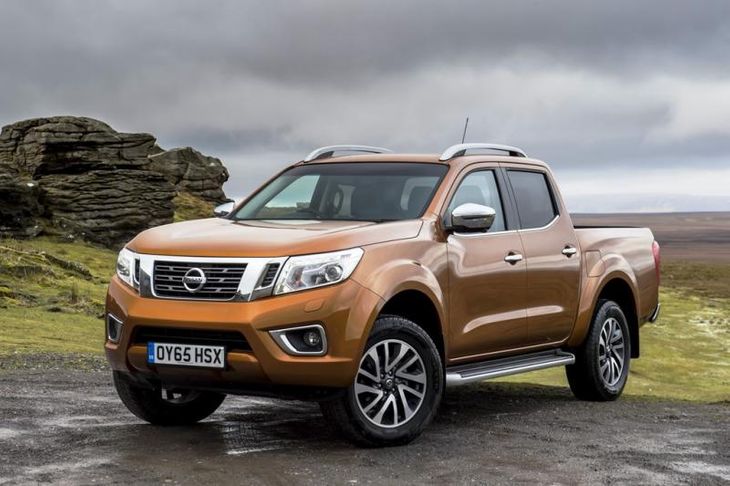
The new Nissan Navara can be expected in South Africa at the end of 2016 or early in 2017.
The Navara is Nissan’s answer to the Toyota Hilux and Ford Ranger but there’s currently no definitive introduction date for the new Navara. From all accounts and considering feedback from Nissan South Africa, you can expect to see the all-new Navara during the first quarter of 2017. The new Navara will be built at Nissan’s plant in Rosslyn, Pretoria, which is being readied to produce the newcomer.
Although local specification is yet to be confirmed, you can expect the new Navara to be powered by a new 2.3-litre turbodiesel engine with either 120 kW or 140 kW on offer. The current 3.0-litre V6 dCi engine will in all likelihood remain, offering 170 kW and 550 Nm of torque. The Navara will be available in 2- and 4-wheel drive guises with the choice of a 6-speed manual or a 7-speed automatic transmission.
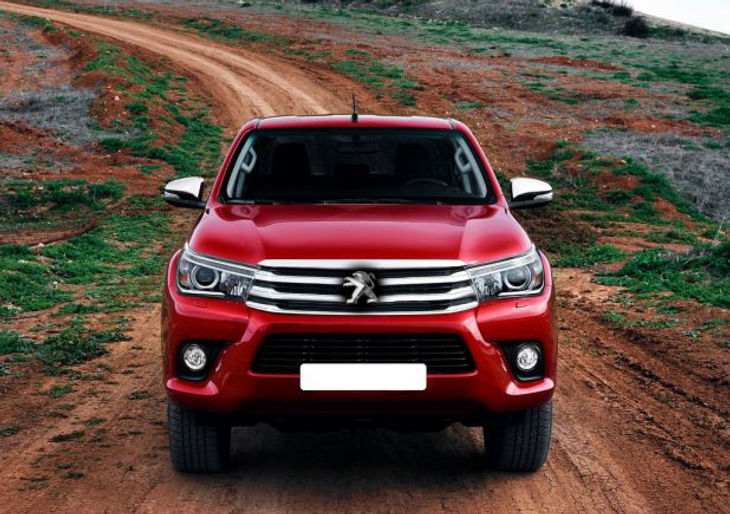
You can expect a new Hilux-based double-cab bearing either a Peugeot or Citroen badge within the next five years.
Earlier this year PSA Peugeot Citroen announced its “Push to Pass” growth plan that will see no less than 26 new passenger cars and 8 light commercial vehicles see the light between 2016 and 2021. Interestingly, this plan will spawn a new 1-tonne bakkie that will carry either a Peugeot or Citroen badge.
All indicators point to a partnership between PSA Peugeot Citroen and Toyota to develop the new bakkie, which means it will be loosely based on the Hilux. It’s still early days for the Peugeot Citroen bakkie, so details regarding engines and specification remain a mystery at this point.
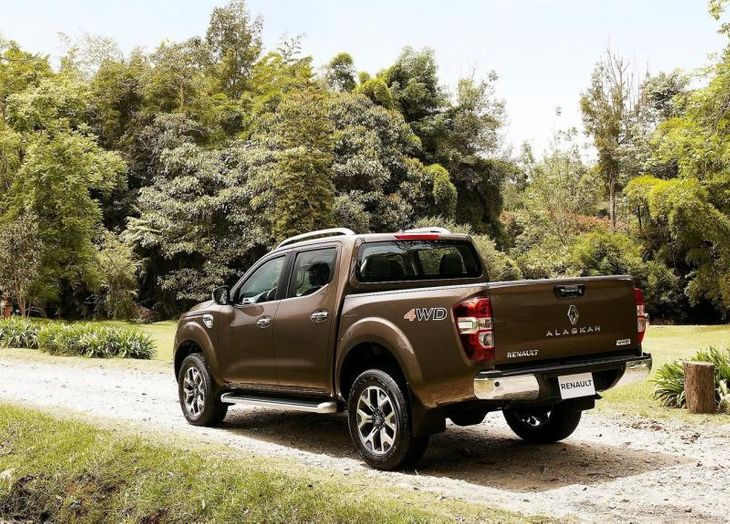
The Alaskan is Renault's take on a premium leisure double-cab bakkie. Not a bad looker!
Based on the Alaskan concept shown in 2015, the production-ready Renault seems to be a promising product of the Renault-Nissan alliance. The Alaskan shares its underpinnings with the Nissan NP300 Navara (as well as the Mercedes-Benz X-Class) and slots into the premium-end of the leisure bakkie market.
The Alaskan is powered by a 2.3-litre twin-turbodiesel engine offering either 120 kW or 141 kW. A 2.5-litre petrol and turbodiesel powerplants will complete the engine offering with a choice of a 6-speed manual or 7-speed automatic transmission.
As it stands, the Renault Alaskan has not been confirmed for introduction in South Africa, but it seems likely if it gets the go-ahead to be produced in right-hand drive. We can only hope that Renault can make a case for the Renault Alaskan as it will provide more depth in the local leisure bakkie market. If the Renault Alaskan gets the green light in South Africa, an introduction in the second half of 2017 is likely.
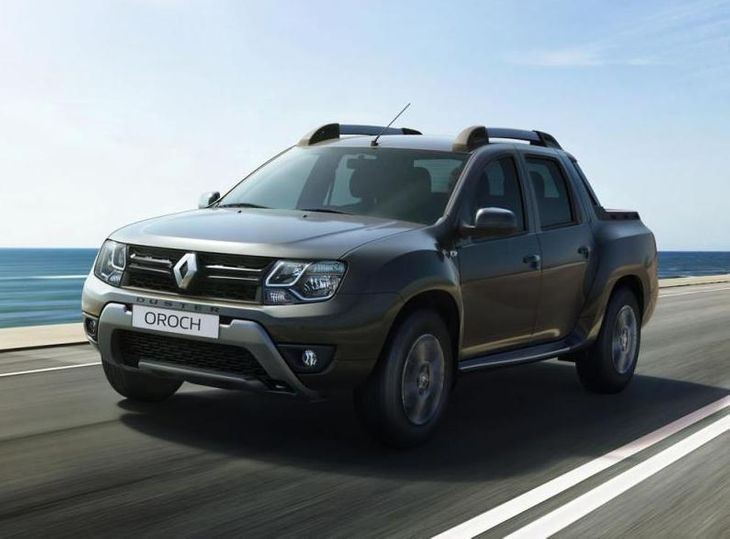
The Duster Oroch could be a popular offering in South Africa, but only if Renault brings it here.
The Duster has been a huge success for Renault and if the Duster Oroch bakkie makes it to South Africa, it will surely be a good thing for the French automaker. The Duster Oroch bakkie is a medium-sized double-cab bakkie that slots in between the half-ton and one-ton segment, offering space and performance typically seen in a compact SUV.
The Duster Oroch will in all likelihood be powered by the same 77 kW/148 Nm 1.6-litre petrol engine and 80 kW/240 Nm turbodiesel engine found in the current Duster line-up. Renault South Africa has not yet confirmed if the Oroch will be made available in South Africa. Let’s hope it will.
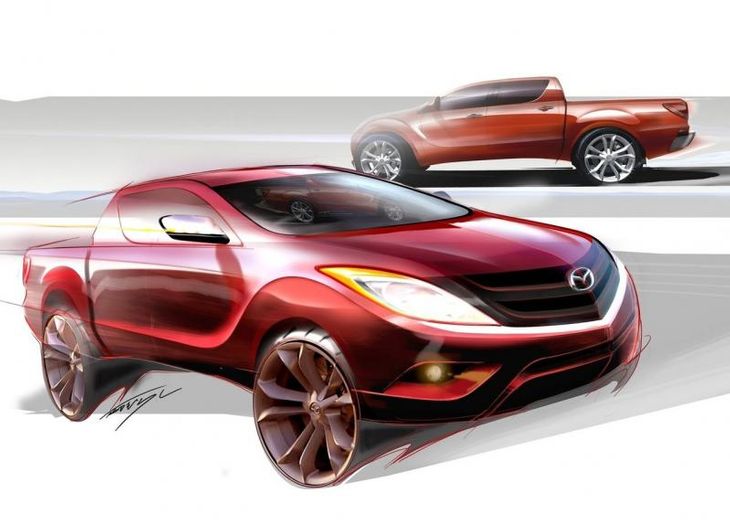
Mazda and Isuzu have teamed up to develop the new BT-50.
Mazda and Ford collaborated to produce the current BT-50, which was built locally at Ford’s Rosslyn plant and it shares its underpinnings with the popular Ranger. That partnership has now dissolved and to keep itself in the bakkie game, Mazda recently announced a “basic agreement” with bakkie specialist, Isuzu, to develop the next-generation BT-50. Details of the new BT-50 are yet to be revealed, but it’s safe to assume that the new model will be heavily based on the Isuzu KB.
The new BT-50 isn’t expected in the near future, but an arrival date sometime in 2018/2019 seems likely.
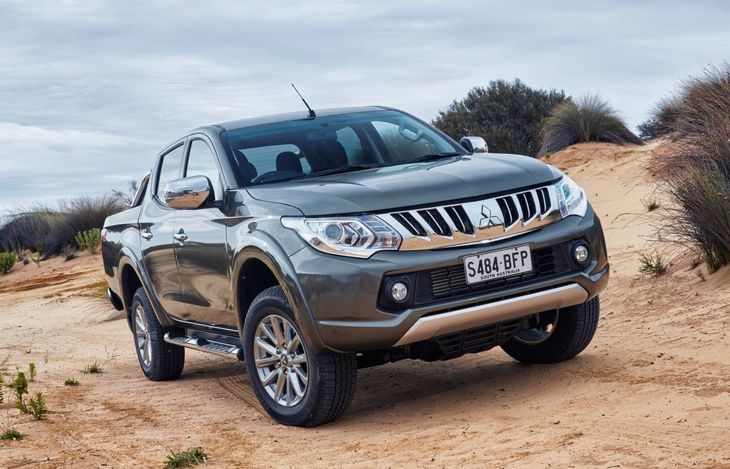
The new Mitsubishi Triton will offer more comfort and a smoother ride thanks to its revised suspension.
The new Mitsubishi Triton Sport Utility (SU) bakkie will launch in South Africa in February 2017 and will introduce higher levels of refinement and comfort features. Offroad ability will be made possible with Mitsubishi's Super Select II 4WD system and the Triton's interior will feature more space for passengers.
The new Triton will be powered by a 2.4-litre turbodiesel engine with 133 kW and 430 Nm of torque. Customers will have the choice between a 6-speed manual or 5-speed automatic transmission. The Triton will be offered as both a 4×2 and a 4×4.
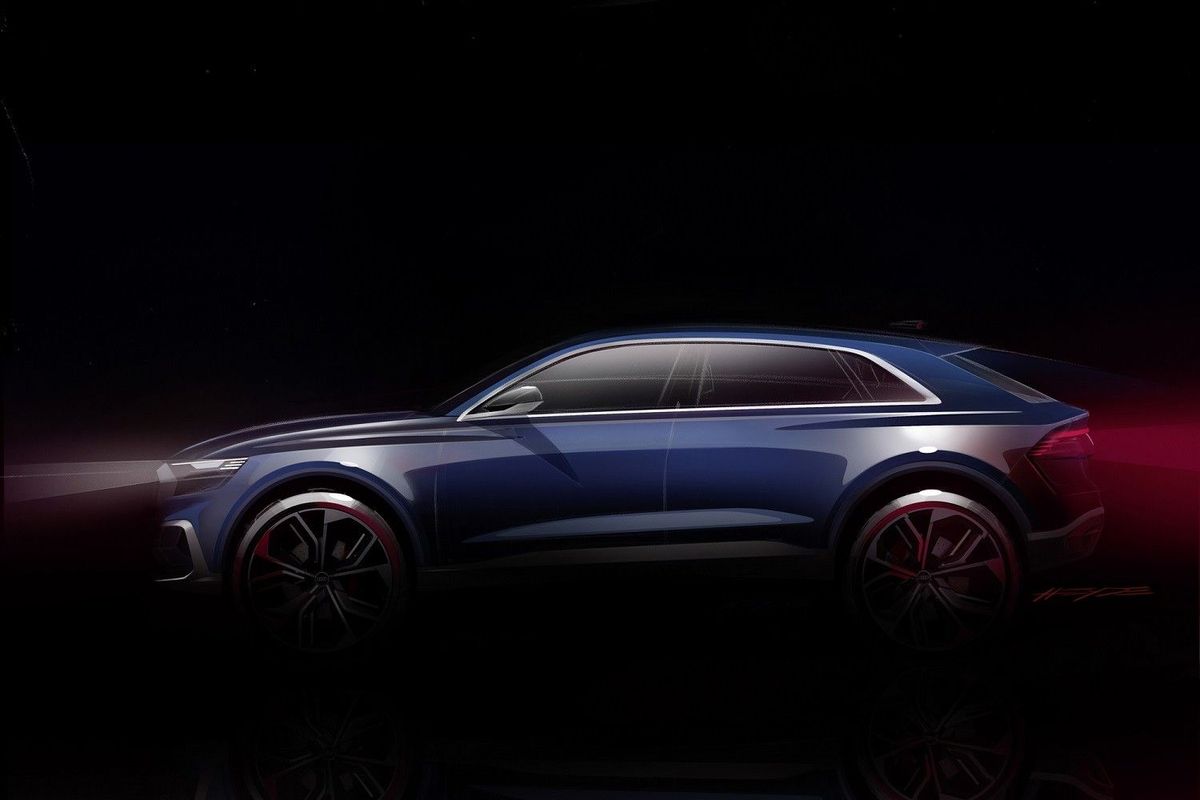
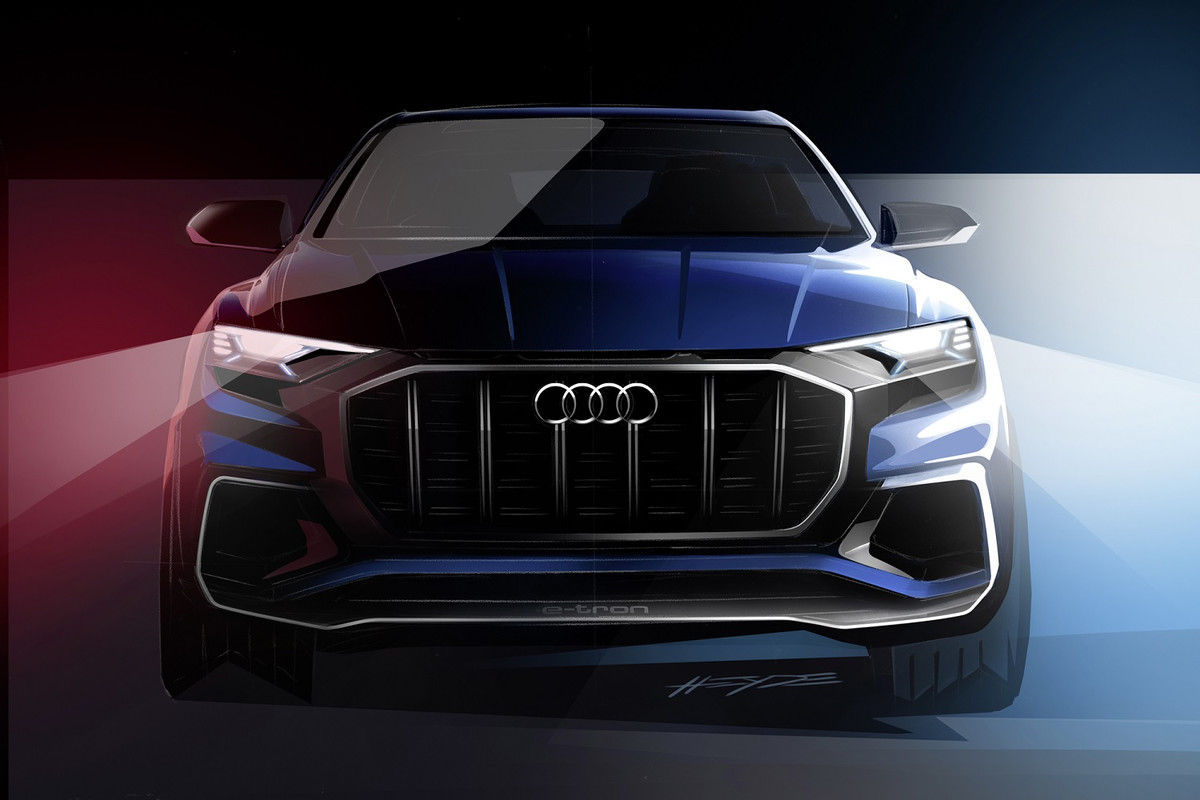
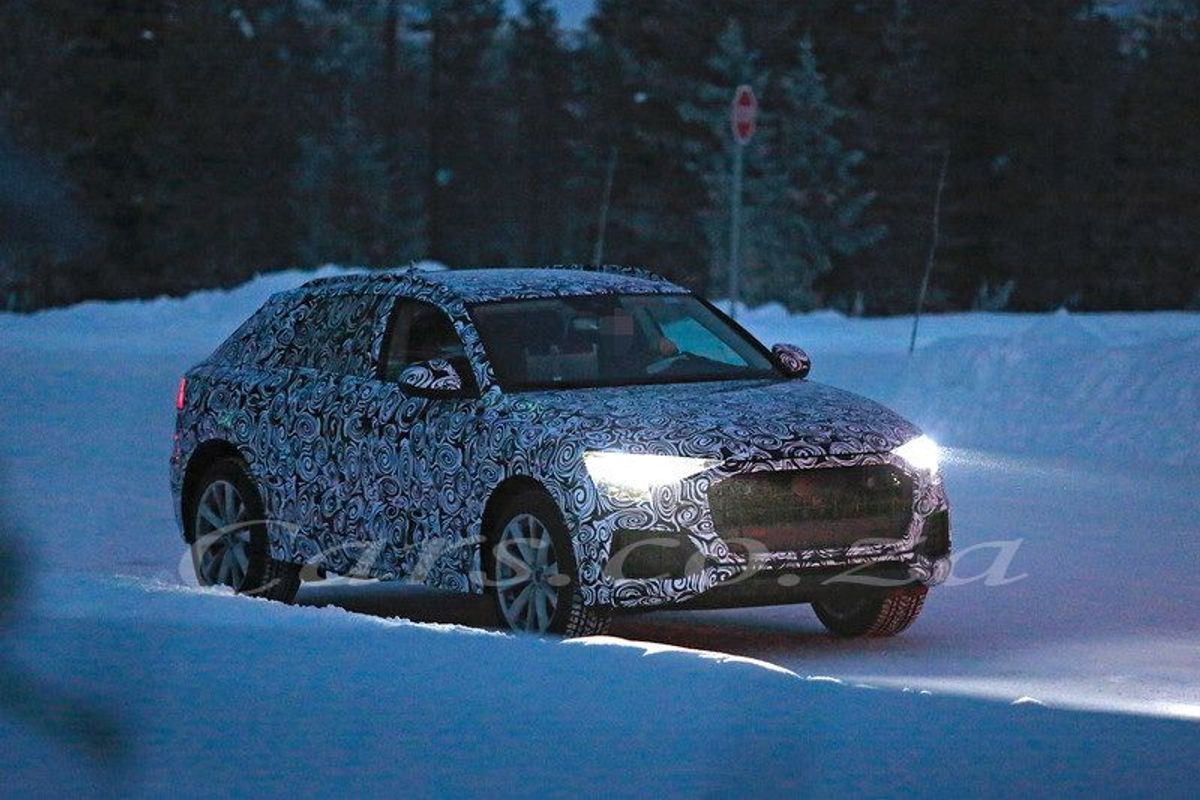
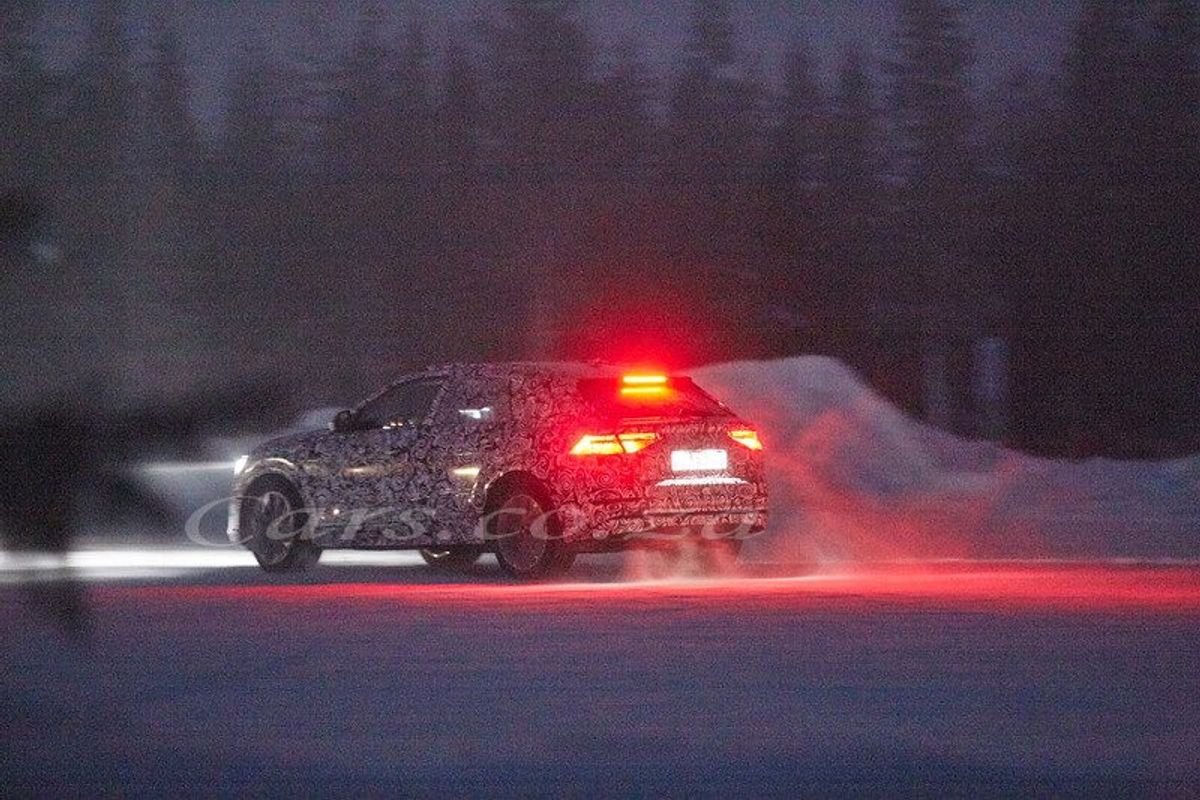
A new model joins the Audi family. Meet the Audi Q8, seen here testing in Scandinavia. It's a super SUV which will be taking on the Range Rover Sport and BMW X6.
Picture credit: S. Baldauf/SB-Medien
We'll get an official first look at this new model at the 2017 Detroit Motor Show, but in the meantime, this prototype gives an indication of what Audi has been up to. Essentially it's an Audi Q7-based model with a rising roofline. Given how the market has reacted to Audi's SUVs (every third car sold by Audi is a Q), it makes perfect business sense to expand its product offering. The Q8 is going to be a sportier and more luxurious version of the Q7, and will feature a choice of petrol, diesel and hybrid powertrains. It's built on the MLB platform, which underpins the likes of the Bentley Bentayga and its Q7 sibling.
Audi CEO Rupert Stadler announced that the SUV would be aimed at markets such as the US, China and the Middle East, where big coupe-styled SUVs have proven popular. At this stage, we reckon we'll see a production version of the Q8 on the road in 2018.
It was an interesting year at Cars.co.za – we drove some exciting cars and some… not so exciting ones. So we asked Ciro De Siena to trawl through his memory banks and pick his most memorable drives of the year, and this is the list he's come up with. We've created a highlights reel for this video, but if you'd like to watch each video, here are all the links:
Mercedes-Benz will be showcasing the facelifted GLA crossover at the Detroit Motor Show next week.
The small GLA crossover from Mercedes-Benz is due for an update and the Stuttgart-based firm has revealed a teaser image (shown above) to entice us before the refreshed model makes its official appearance at the Detroit Motor Show next week.
Changes to the GLA are minimal and you can expect minor styling tweaks to the front and rear bumper while a new headlight and taillight design is likely. On the inside, more trim and colour options will likely be offered and the infotainment system will be upgraded too. Don’t be surprised if you see a larger 8-inch touchscreen display make its way into the GLA with Apple CarPlay and Mirrorlink compatibility. Reports suggest that the Dynamic Select system with adaptive dampers will be standard on all GLA derivatives, barring the entry-level offering.
The range-topping GLA 45 AMG will retain its turbocharged 2.0-litre engine with 280 kW and 475 Nm of torque powering all four wheels through a 7-speed dual-clutch transmission. The sprint from zero to 100 kph will take just 4.3 seconds before hitting a limited top speed of 250 kph.
The facelifted Mercedes-Benz GLA will arrive in South African showrooms in coming months and we will keep you updated as more information is revealed next week, so stay tuned!
Fuel prices are going up on Wednesday 4 January 2017. Take a look at what you will be paying for fuel this month…
South African motorists are in for a bumpy ride in 2017 and to kick off the New Year, fuel prices are going up this week. The Department of Energy has released fuel price adjustments for January 2017 and moderate fuel price increases will take effect as of 4 January.
The main contributing factors for the fuel price increase include the poor Rand/Dollar exchange rate and the higher price of crude oil based on an agreement by OPEC members to slash production by as much as 1.2 million barrels per day. Similarly, Russia and non-OPEC producers have also cut crude oil production by 600 000 barrels per day. The cumulative result has put crude oil prices on an upward trajectory and is therefore impacting negatively on local fuel price forecasts.
According to the Automobile Association (AA), “It is too early to know at what price level oil supply will match demand in the wake of the OPEC decision to cut production". The AA also predicts a tough year ahead for motorists with a number of fuel price increases expected during the year.
The price of petrol 93 ULP/LRP will increase by 50 cents per litre while petrol 95 ULP/LRP will increase by 48 cents per litre.
The price of diesel 0.05% Sulphur will increase by 39 cents per litre while diesel 0.005% will increase by 37 cents per litre.
You can expect to pay the following for fuel in January 2017:
Petrol
Reef: 93 Unleaded – R13.09 per litre / 93 LRP – R13.09 per litre / 95 Unleaded – R13.33 per litre
Coast: 93 Unleaded – R12.71 per litre / 95 LRP – R12.85 per litre / 95 Unleaded – R12.85 per litre
Diesel
Note: Wholesale diesel prices quoted, prices may vary between retailers.
Reef:Diesel 0.05% – R11.43 per litre / Diesel 0.005% – R11.45 per litre
Coast:Diesel 0.05% – R11.03 per litre / Diesel 0.005% – R11.07 per litre
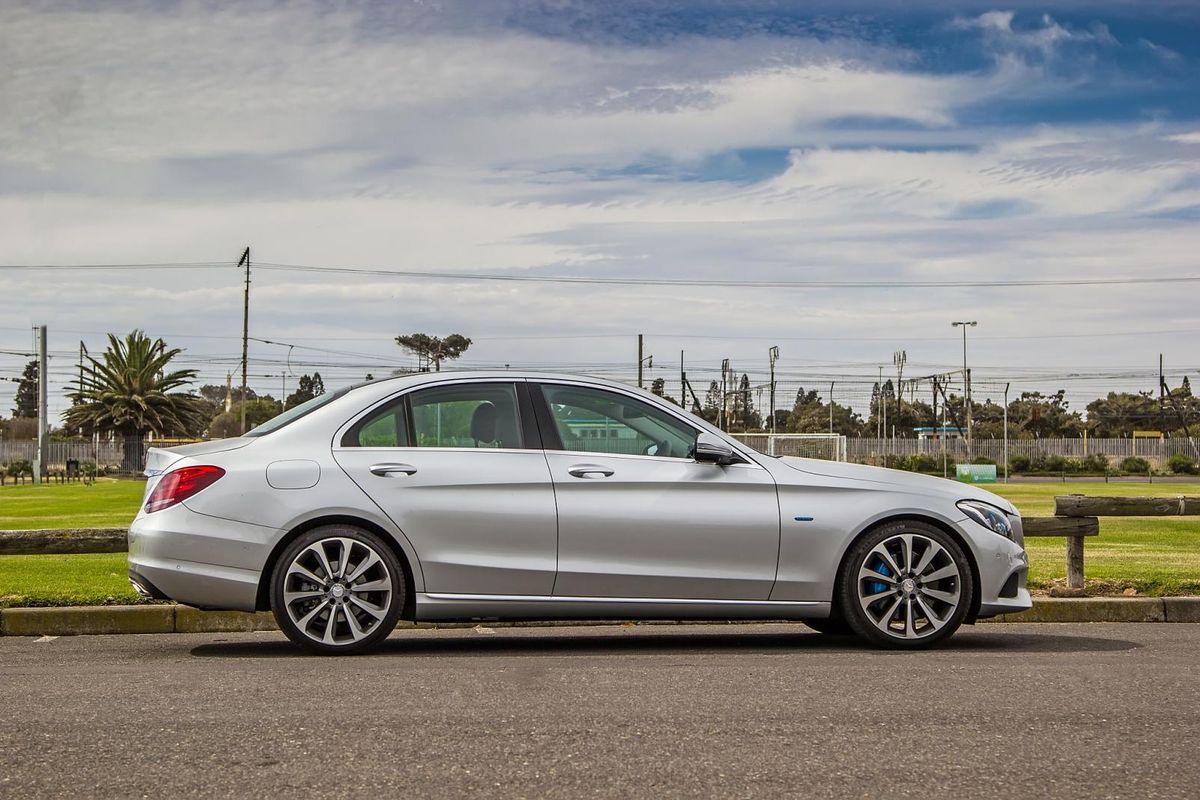
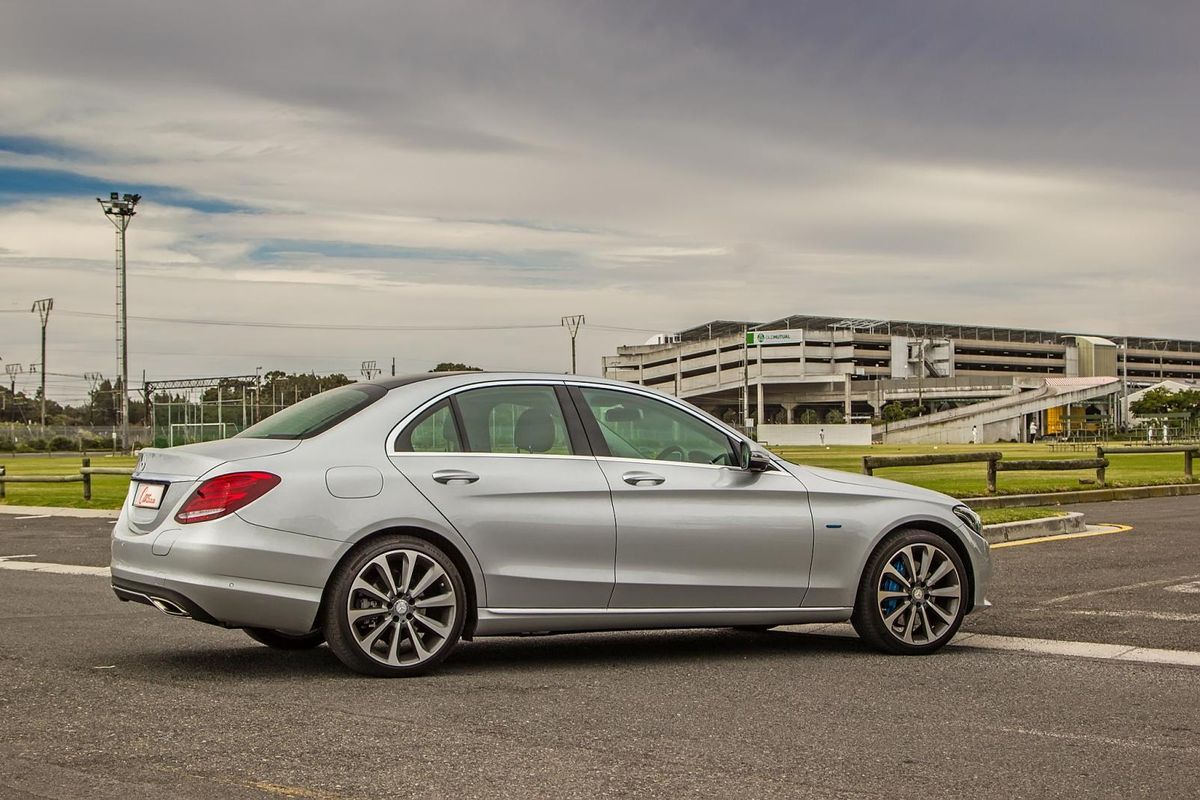
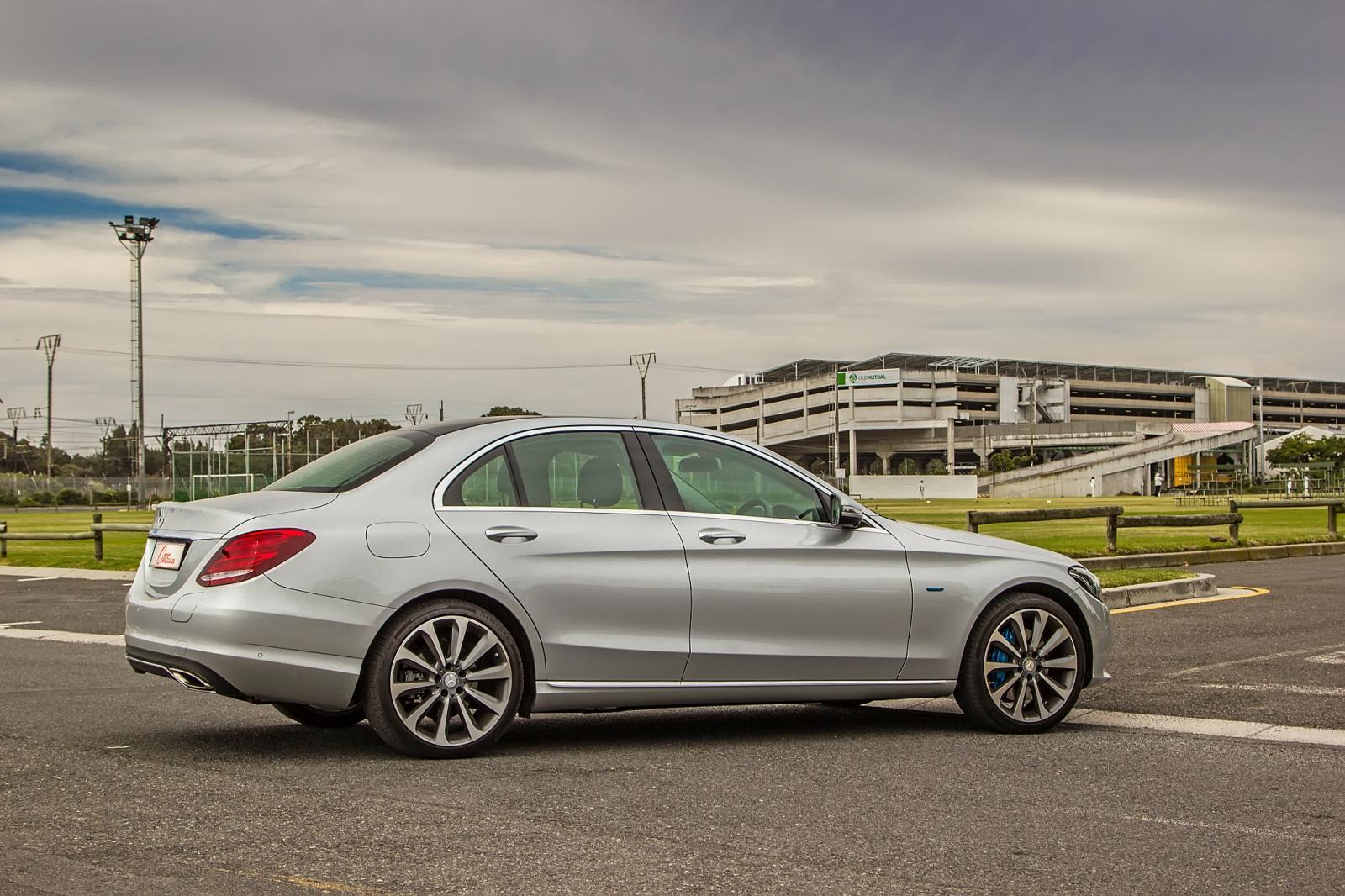
Barring the fire-breathing AMG derivatives, Mercedes-Benz's new plug-in hybrid model, the C350e, is the most powerful offering in the C-Class line-up, and also claimed to be the most frugal. Can the first locally manufactured plug-in hybrid really offer the best of both worlds? Let's find out…
We like: Pure electric works well in stop-start traffic, all the style and sophistication of a normal C-Class, performance We don’t like: Lack of real tax benefit in South Africa, real-world consumption
Alternatives:
A more affordable, similarly powerful option: BMW's equivalent 3 Series model (the 330e) has not yet been launched in South Africa, but is coming to market in early 2017. However, if you want similar performance and even greater real-world fuel economy, look no further than the 330d. It is priced from R708 476 in M Sport sports-auto guise, making it nearly R100k cheaper… Read a review of the 330d here.
For something different: There aren't any other plug-in hybrid models of similar size available in South Africa at present (until the BMW 330e arrives), but you may also want to look at the Infiniti Q50 S Hybrid AWD for R736 700. It is similarly powerful, loaded with features and boasts all-wheel drive security, too. But, the dealership footprint is very small…
Something else from the Benz stable?: For nearly the same price, you could consider Mercedes-Benz's excellent new E220d Avantgarde, which offers great refinement and impressive frugality. It may not be powerful enough, however, so if the reason for your considering the plug-in C350e is the extra performance the package offers, you may need to look elsewhere. The E220d Avantgarde is priced at R795 600. Read a comparative review featuring the E220d and BMW's 5-Series by clicking here.
What is it?
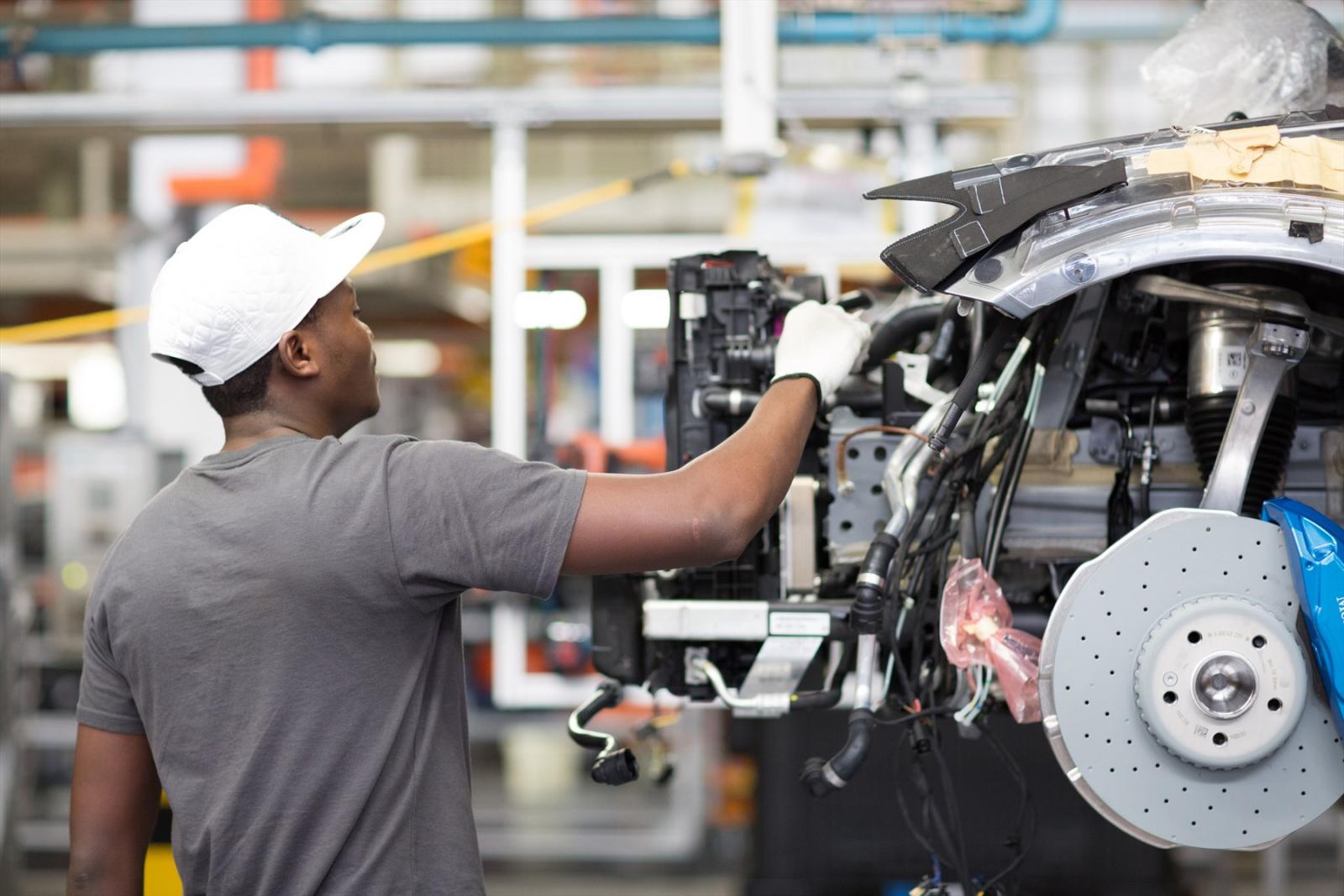
The C350e is the first locally manufactured plug-in hybrid electric vehicle.
The Mercedes-Benz C350e is the first plug-in hybrid vehicle to be manufactured in South Africa (for the local and export markets), and on paper at least seems to offer an unbeatable blend of performance and economy. In fact, it also offers the option of driving some distances (charge and situation allowing) on electricity alone, which will be highly appealing to eco-conscious – and frugrally minded – consumers. As ever, however, the real-world consumption of this product will depend highly on usage patterns and we are confident that very few owners will achieve the claimed figure of somewhere in the region of 2.1 to 2.4L/100 km. But that's only part of the dilemma… while in some countries the C350e's low claimed fuel consumption would realise a healthy tax break, that is not the case in South Africa. Does this mean the C350e is an impressively sophisticated, but ultimately "pointless" vehicle in the South African context?
How does it fare in terms of…
Real world performance & efficiency?
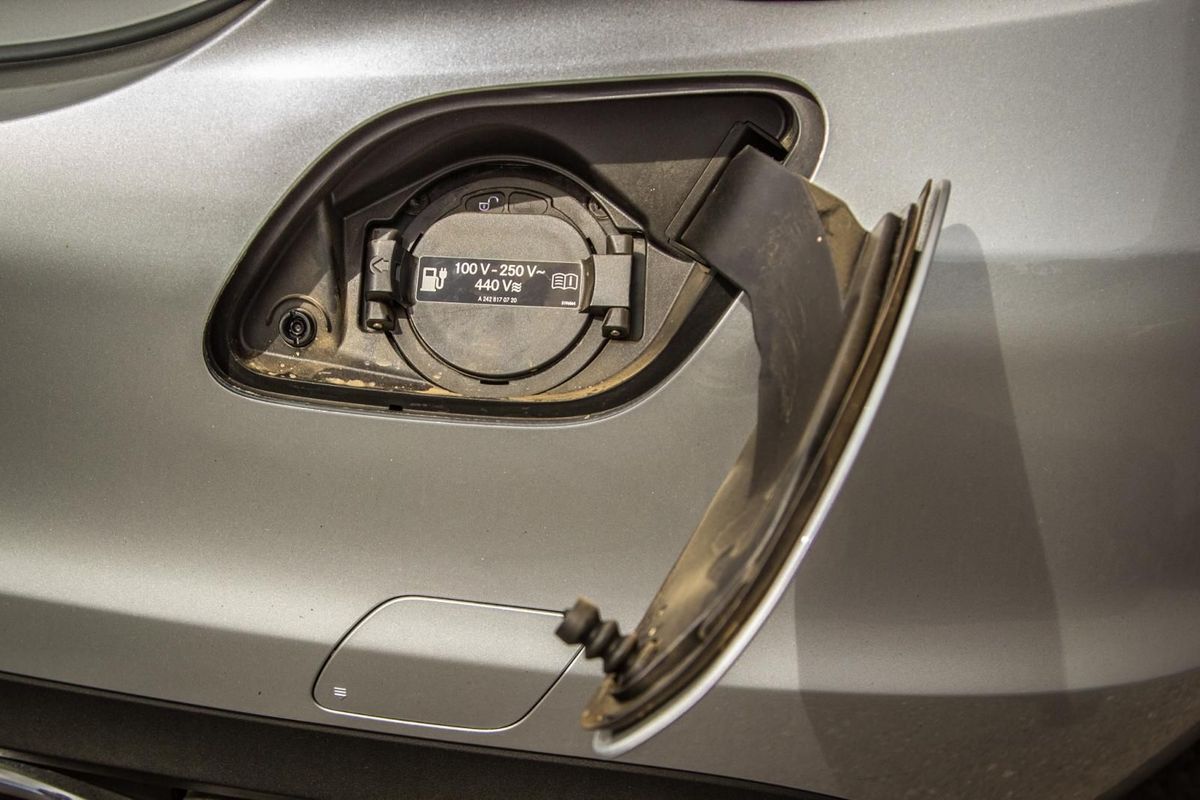
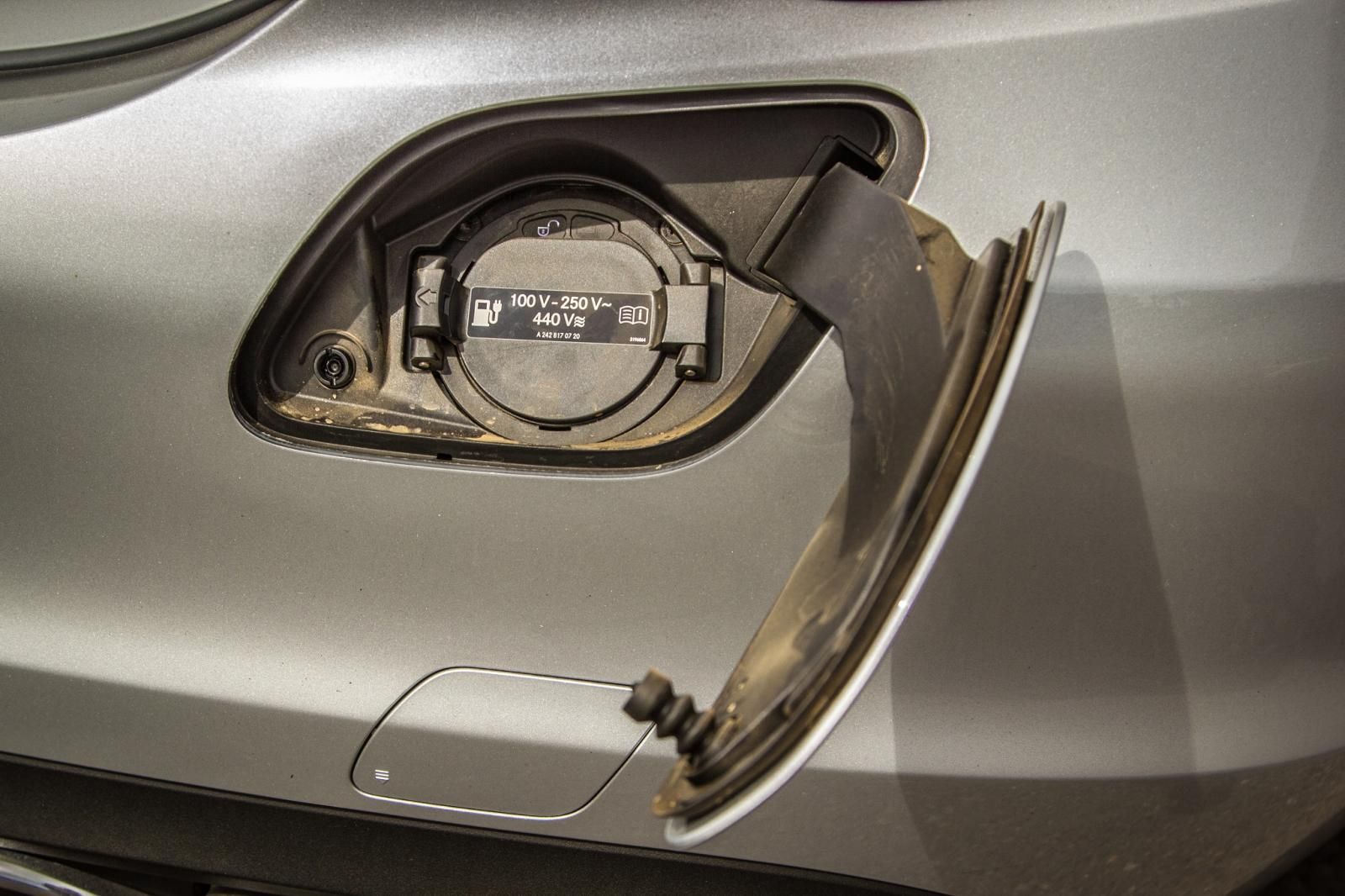
The C350e is charged using this power inlet in the rear bumper. A full charge from a household socket takes about 2 hours.
The C350e's complex drivetrain consists of a 2.0-litre, 4-cylinder turbo-petrol that develops 155 kW and 350 Nm of torque. The electric motor, which is housed in the front section of the 7-speed automatic transmission, adds a further 60 kW and 340 Nm of torque. Mercedes-Benz claims a total combined output of 205 kW and 600 Nm. These figures make the C350e the most powerful C-Class, excluding the AMGs.
The high-voltage lithium-ion battery has a total capacity of 6.2 kWh, weighs a not-inconsiderable 100 kg and is mounted in a sheet steel housing under the rear axle and can be charged at a 230V, 16A, 3.7 kW single phase wall-box in approximately 1h45min. It can also be charged using a domestic socket, in which case the charge time is around 2 hours. The packaging of the battery into the rear of the vehicle has robbed the car of some boot space, and has also raised the boot floor by about 50 mm.
That, in short, is the tech covered. But how well does it work in the real world? Is it as brisk as a 0-100 kph time of 5.9 seconds make it sound? And how realistic is the fuel consumption claim?
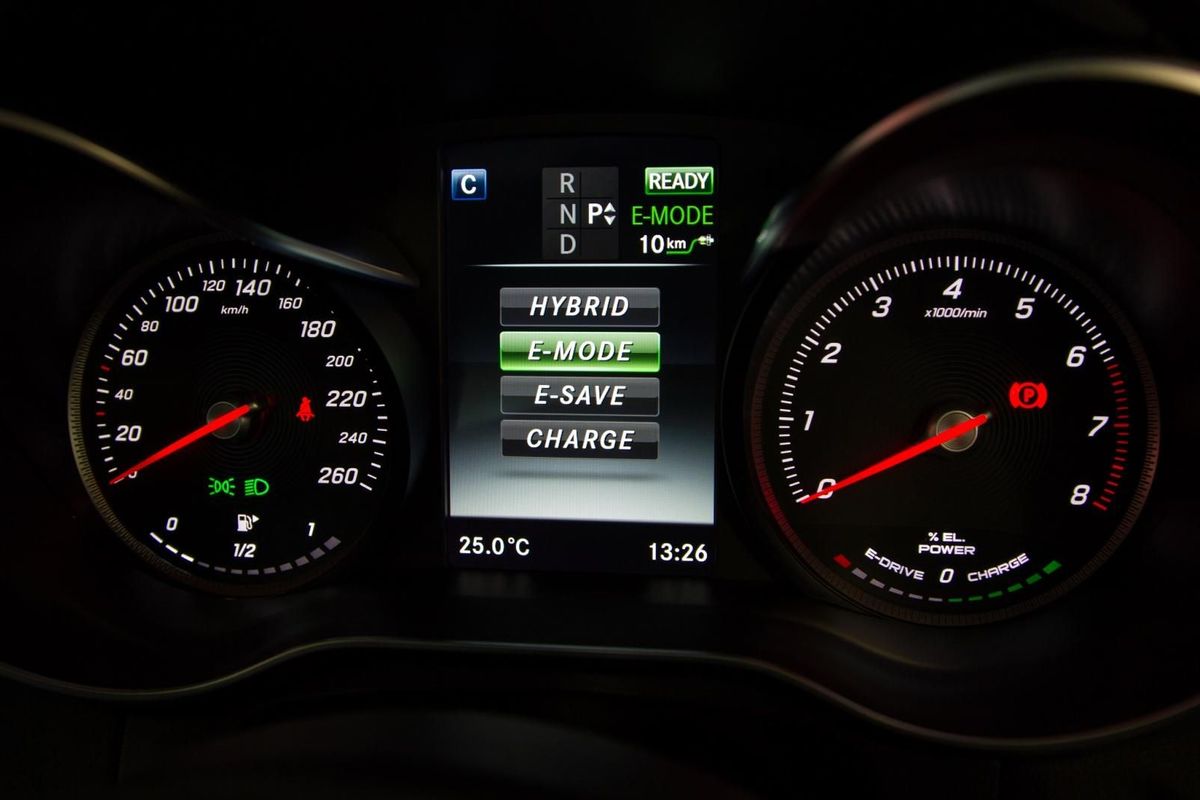
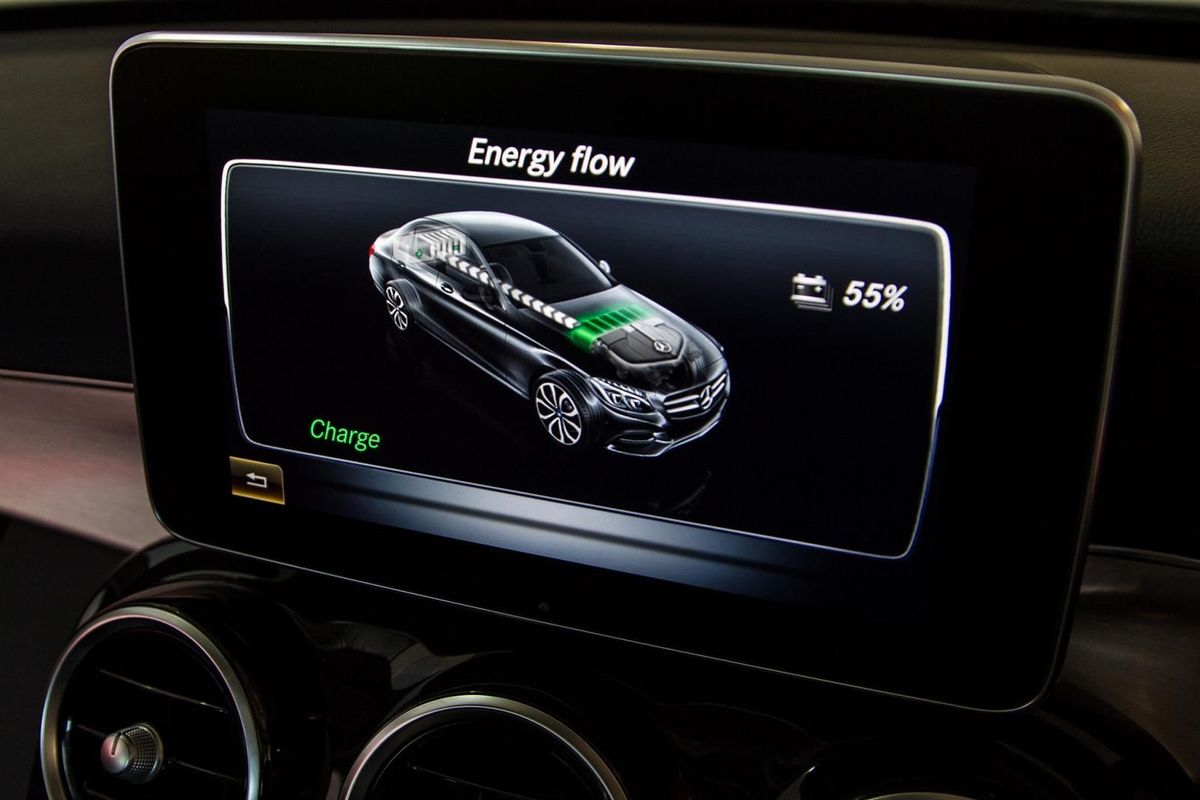
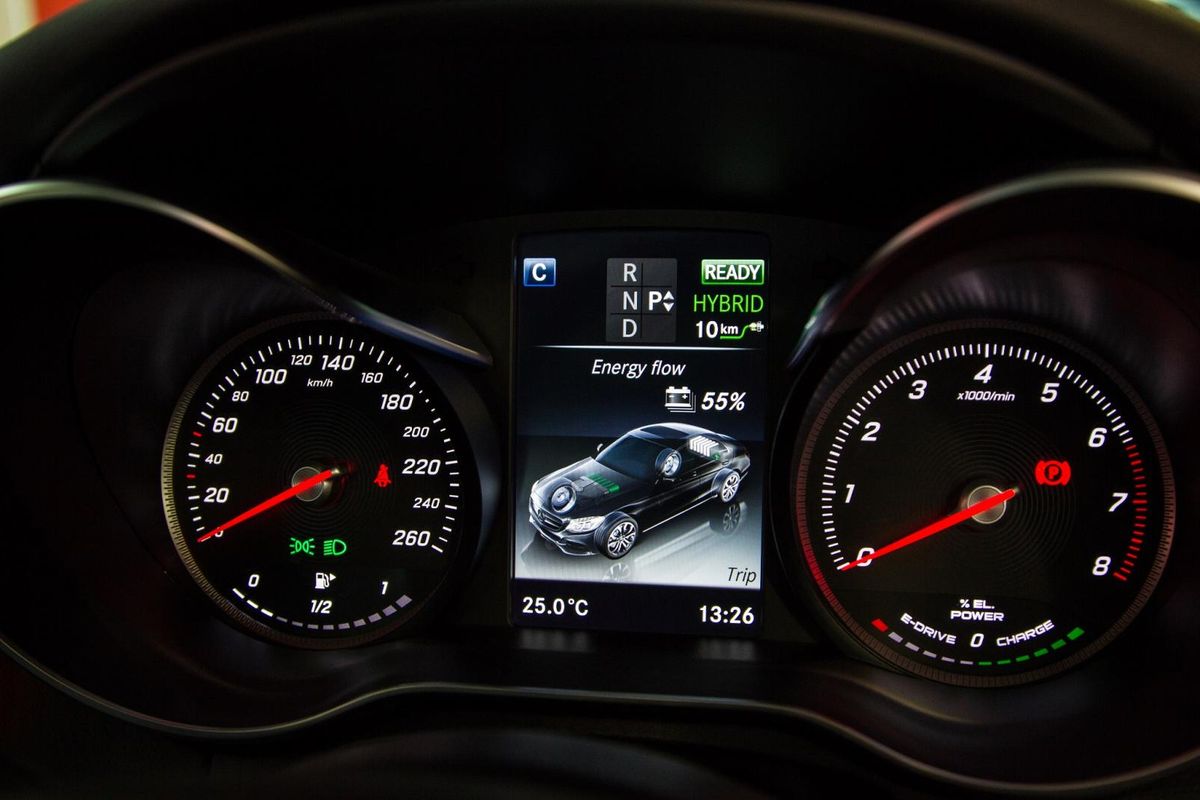
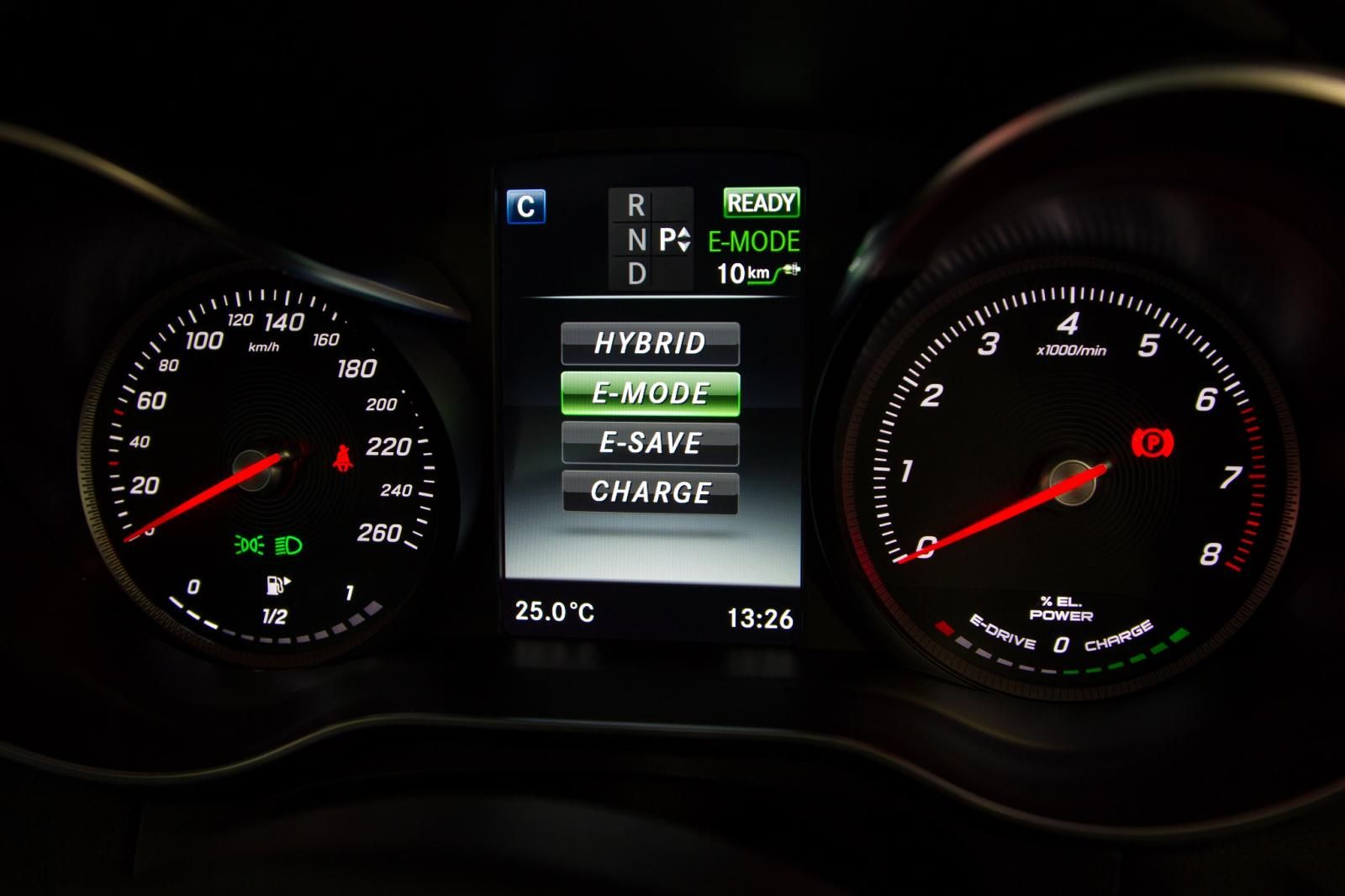
To answer in short, you have to really dig into the staggering number of set-up options to optimize the abilities of the C350e. Firstly, there are the driving modes on offer – take your pick from Individual, Sport, Sport+, Comfort and Economy. But beyond those, there are also several settings for the hybrid drivetrain, namely Hybrid, E-mode, E-Save and Charge.
The hybrid system offers 4 modes, with E-mode allowing for driving on electricity alone.
While most economy-minded drivers are likely to leave the car in Comfort or Economy, and select Hybrid mode, you're unlikely to do much better than 8 L/100 km in general driving. To really get the full benefit of the C350e's costly tech, you need to use it in full EV model as often as possible.
According to Mercedes-Benz you can drive for a distance of up to 31 km on electricity alone, and up to useful speeds of around 130 kph. The C350e features a haptic accelerator that, when the C350e is running in electric (EV) mode, lets the driver know when maximum electric performance is being delivered by offering a point of resistance in the pedal. If the driver depresses the pedal beyond the point of resistance, the combustion engine will kick in to provide additional propulsion.
Furthermore, using the car's radar systems to gather data on the prevailing driving conditions, a double impulse from the ECO Assist function will tell you when it is more efficient to take your foot off the accelerator pedal, and then proceed to decelerate the vehicle using a mixture of unpowered (sailing) and energy recuperation – very clever indeed, and especially beneficial in traffic.
If you live relatively near to your office, and mostly face crawling traffic daily, then you could conceivably drive to work and back without ever consuming a drop of petrol. If you have access to a suitable powerpoint at the office (or the shops), you could double your EV range. In this scenario, the C350e makes perfect sense, especially as it retains all the performance capability (and fuel range) of a normal C-Class should you need those qualities… on the weekend, perhaps.
And yes, the C350e is brisk… very brisk. The power delivery is, however, very linear, so you never feel the thump of the torque arriving, as you would in a powerful turbodiesel. It never feels like a car that is overtly performance-oriented.
Comfort and Refinement?
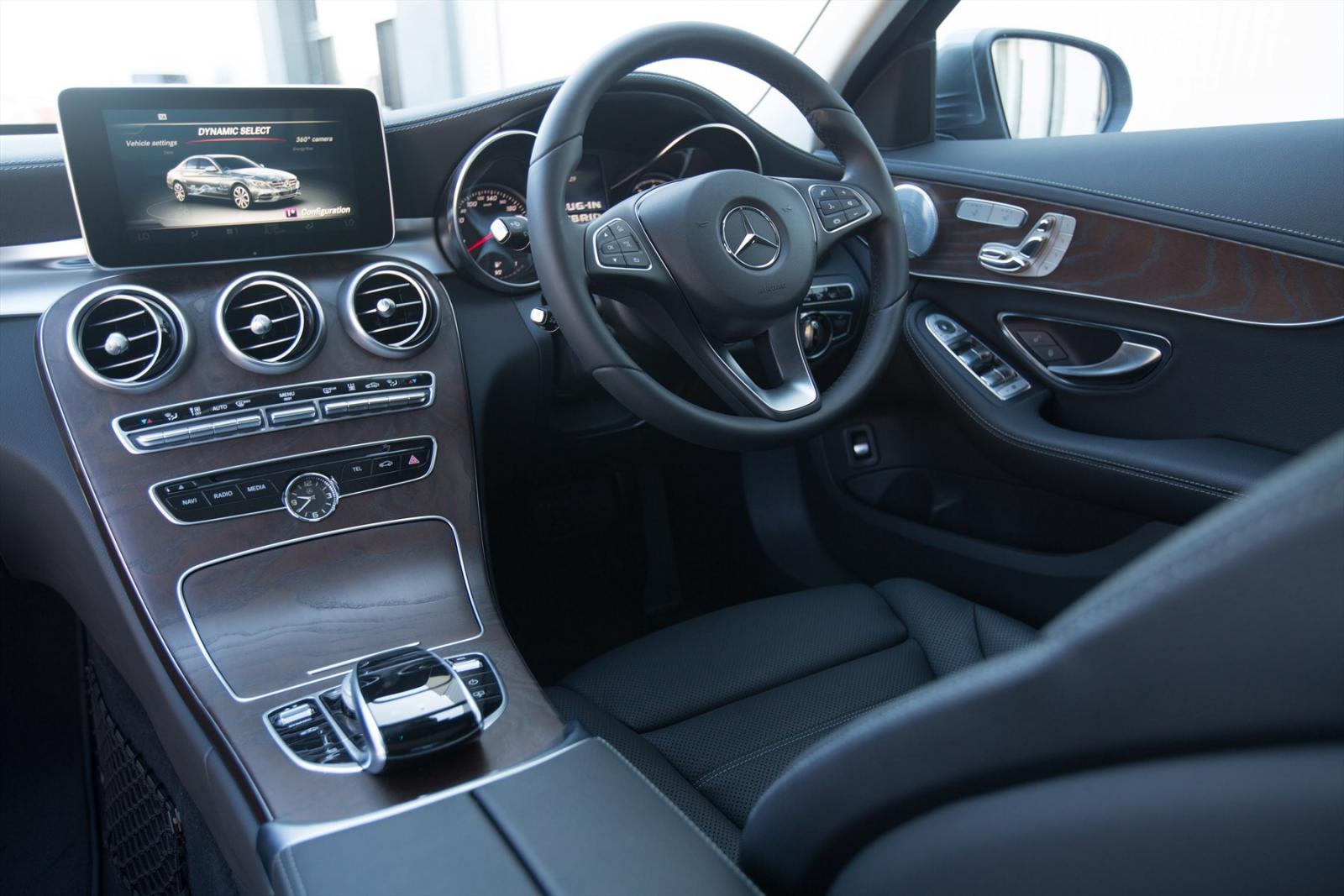
Cabin remains as classy as ever and standard specification is generous.
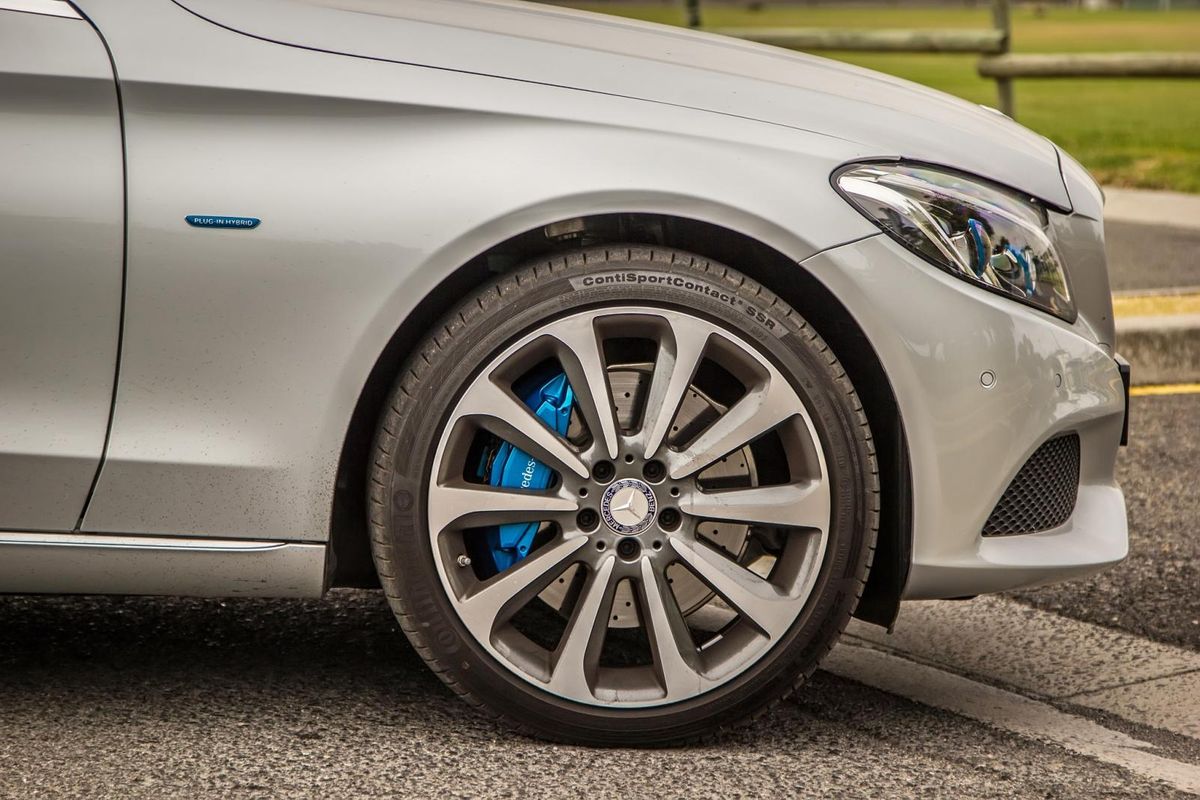
The C350e is offered in Mercedes-Benz's sporty Avantgarde specification as standard. As ever, however, a variety of optional extras remain available. But with most of the comfort and entertainment items you'll need as standard, extra spend will more than likely be in pursuit of individualisation – static LED or Intelligent LED lighting systems are optional, for example, as are the striking Himalayas grey 19-inch wheels fitted to this test unit.
A standard item on the C350e is Airmatic self-levelling air suspension. This addition in theory should boost ride comfort, but the reality is that it's probably there because the C350e is significantly heavier than its steel-suspended siblings, and Airmatic makes the extra bulk easier to control. Whatever the reason may be for its fitment, the C350e rides very well indeed, always feeling like a refined premium product. In its set-up and specification, it is clear that Mercedes has erred on the comfort side for the C350e, which plays well to the C-Class's inherent strenghts… just don't expect lighting fast dynamic reflexes.
If there is one characteristic, however, that is a blotch on an otherwise copybook performance in terms of refinement, it is the switch-over moment from electric to petrol. Running around in electric mode is so smooth and impressive, that it stands in stark contrast to the initial start-up phase from the 4-cylinder engine, which can be surprisingly vocal and rough.
Another high-tech item fitted to the C350e as standard is the so-called Pre-Entry Climate Control system that can be controlled via the Internet. And if you really want to impress your friends, do remember to tell them that the Hybrid system can be optimised by specifying the exact destination in the satellite navigation system – do this, and the charge and discharge of the C350e’s high-voltage battery will be carefully controlled to ensure the optimal use of energy over the whole route.
Pricing & Warranty
The Mercedes-Benz C350e Avantgarde sells for R804 900 and comes backed with a 2-years/unlimited km warranty and 6-years/100 000 km maintenance plan. Service intervals are as per instruction of the on-board computer.
Verdict
Stylish, sophisticated and clever… the C350e will appeal to first adopters.
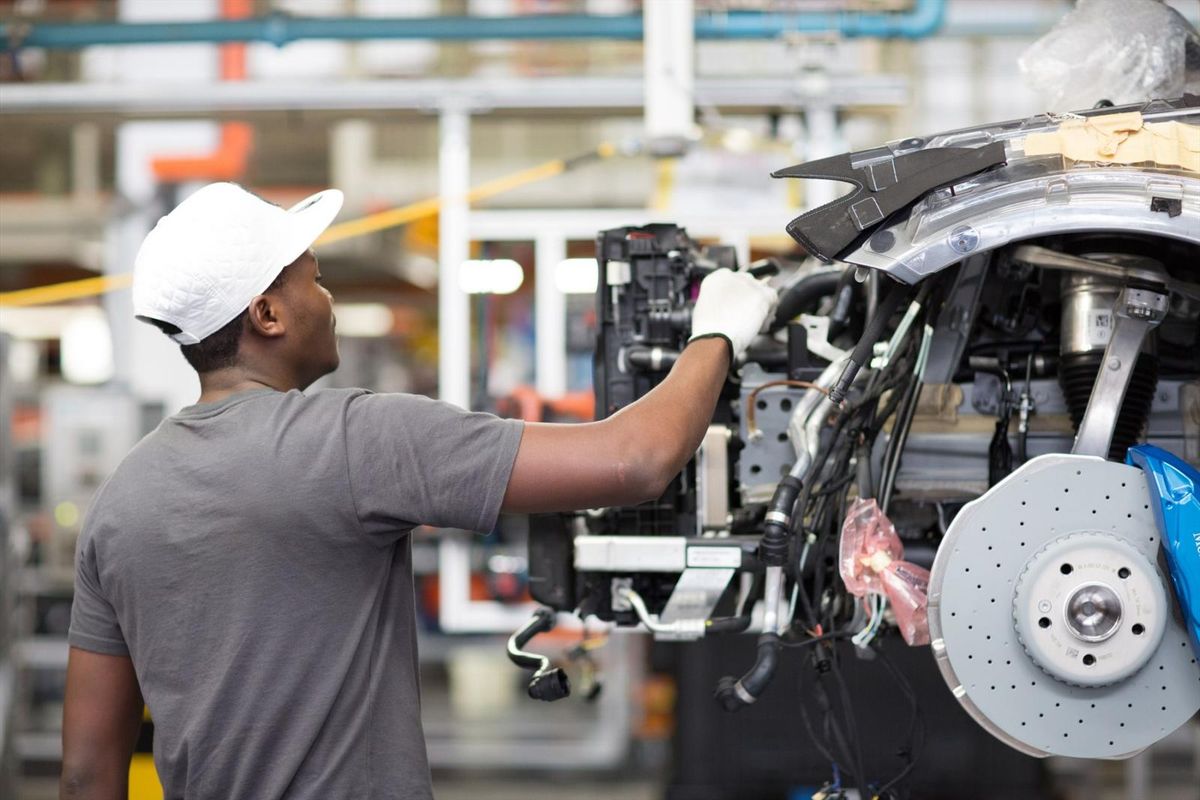
We appreciate the technology fitted to this model and do feel a sense of pride that such a sophisticated product is built in our country. The reality, however, is that it is quite difficult to formulate a strong purchasing argument in favour of the C350e. This outcome has little to do with the product, however. In other countries, where vehicles such as the C350e realise a healthy tax break, a plug-in hybrid could make sense. In South Africa this is, however, not the case. And while the turbodiesel argument is a strong one from a product point of view, wherever you are in the world, the reality is that in Europe, specifically, there is a rising anti-diesel sentiment that further plays into the C350e's favour. But once again… this is not the case in South Africa.
So, what we have here, then, is a vehicle for first adopters who can maximise their opportunities for electric driving only. In that (admittedly limited) scenario, it does present an interesting and potentially practical solution to luxury/performance/eco-friendly motoring.
With over 100 cars driven in 2016, choosing 5 of the best is a tough task. These are Ashley Oldfield's most memorable drives of 2016.
As the resident ‘go-to-guy’ for performance machinery in the office, my top drives are probably going to revolve around cars that go fast. It may surprise you that it’s not always the track-bred cars that get the blood flowing. You see, most road cars are actually quite disappointing to drive on track, and that’s because a track will always bring a car’s faults to the fore. That’s why I always try to balance a track session with a solid effort over my favourite mountain pass or section of sinewy tarmac that I’ve come to know over the past 6 years of testing in the Cape. When you dial the enthusiasm down slightly – as you do on a public road – some cars really start to activate the senses. When everything comes together on a great mountain pass with achingly beautiful views and a perfect run of no traffic, then a road run can beat any lap at the track.
I do like the odd surprise too, so not everything you see below is likely to have 300 kW with multiple ‘sports modes’ and rock hard suspension – most do. Also, I don’t expect you to agree with anything I’ve chosen, these just happen to be the cars that jumped out at me as I reflect on 2016’s motoring metal.
In no particular order of awesome:
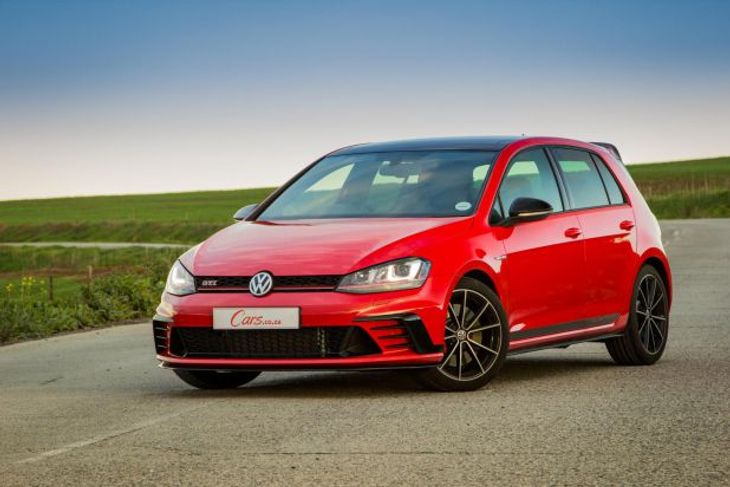
Volkswagen Golf GTI Clubsport
I am by no means a GTI fanboy, in fact, quite the opposite as I find them plain, unoriginal and quite average in the bends. The Clubsport changed all of that as I unleashed it up Franschhoek pass from the Theewaterskloof side at the local launch. With more power, better suspension and tweaked steering, it felt like a proper hot hatch. It's what the GTI should have been all along. With the handling and improvements, the front-end bites better and the faster steering makes it more agile and flexible. Flicking from hairpin to hairpin up the pass was brilliant fun, occasionally dropping an inside wheel onto the dirt – rally style, to achieve better apex speed. In our VW-friendly market, the GTI could be sold with only 3 wheels and still outsell all of its competitors, but now that there’s a Clubsport model available, it deserves to be on top.
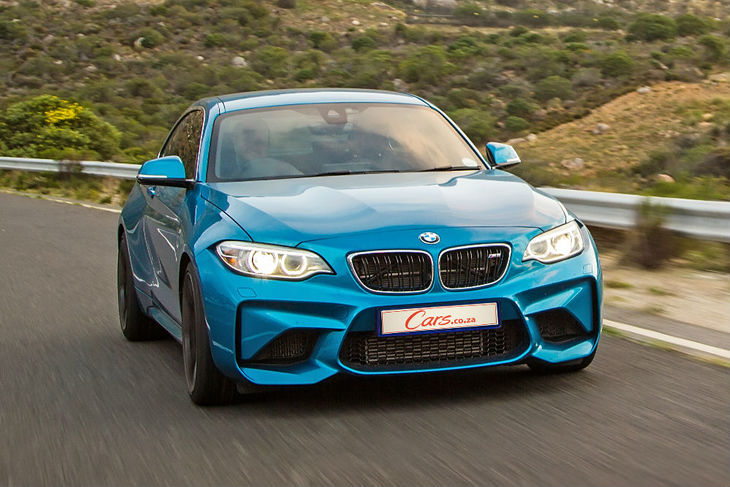
Overcast weather with a serious storm looming meant that our BMW M2 drive was going to be extra exciting. Killarney is a notoriously slippery surface, even when dry. Throw water into the mix and you might as well be driving on an ice rink. We were extremely lucky as our late-to-arrive M2 headed out onto a drying track. It had a tough task to beat two AWD hyper-hatches and a demonically fast FWD Civic Type-R, but unlike the others, the M2 kept getting faster and faster. What differentiates it from its M siblings is that it isn’t constantly trying to break traction when you shift up a gear, it feels more planted and accessible than the M3/4/5. It got to the point where I was trading ultimate lap time for mild drifts out of the corners just because it was so fun to control. I’m no good at picking winners, but, if I was to pick one winner for a #CarsAwards trophy, it would be the BMW M2 for Performance Car of the Year.
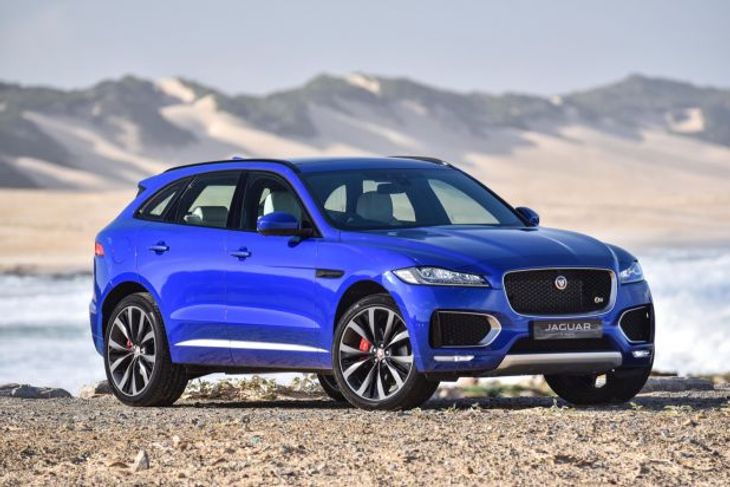
The Jaguar F-Pace is the most dynamically gifted SUV I’ve ever driven. I realised this as I breezed up and over Houw Hoek pass claiming absolutely everything in my path. It completed the pass in such a flat and composed manner that there wasn’t even a complaint from the usually boisterously vocal passenger in the seat beside me. Combined with over 200 kW and 700 Nm of torque, the F-Pace simply wafts past everything, always in a good-enough gear. Turning and direction change is impressively rapid and it’s not just on the road where it’s good, I drove it on the new Kyalami and it stood up to that test astoundingly well.
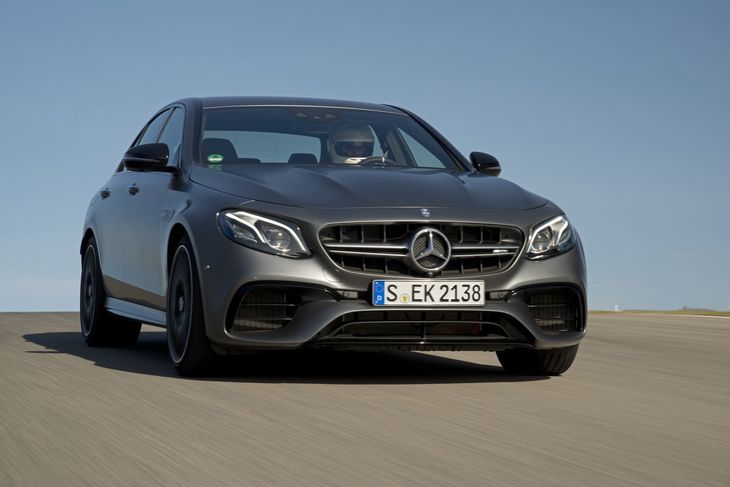
I got the chance to drive the E63 S at the international launch in Southern Portugal. The drive took us from the Faro airport to the Circuit de Algarve – also known as Portimao. I was expecting the track part of the launch to be the exciting part, but it was the route to the track that won me over. The tarmac was smooth, the terrain mountainous, the roads quiet and the exhaust loud. The swivelling asphalt seemed to go on forever, offering up endless hairpins, sweeps, slow corners, fast corners, it had everything you could want. The E63 S amazed with its traction, front grip and the way I never really felt its heft. In between the corners, the pipes opened up, echoing off the rocks and creating an amphitheatre effect of roaring thunder and gargling backfires. The experience culminated into one of the best driving experiences I’ve had thus far.
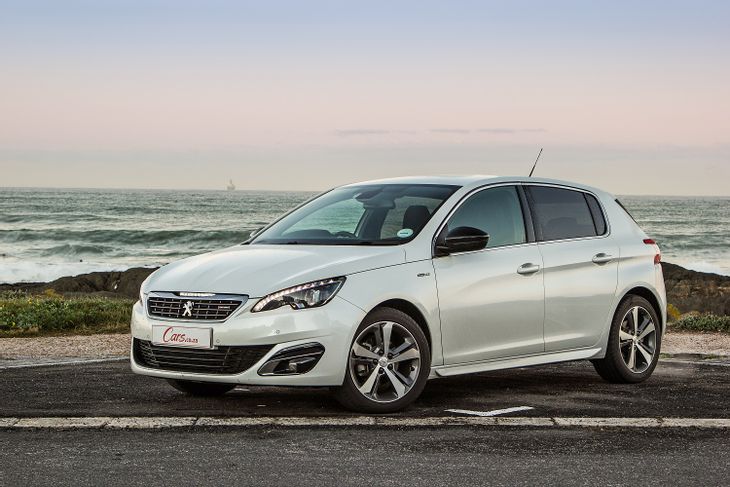
The Peugeot 308 is probably South Africa’s most underrated car. With the addition of the automatic gearbox to the range, the 308 improved its offering even further. The 308 feels special inside and its engine and gearbox refinement is right up there with the likes of VW, Audi, BMW and Mercedes-Benz. It rides comfortably and the small steering wheel does make it fun to whip around corners. It impressed me more than any other hatchback I’ve driven in the last few years. It’s a pity local sales don’t reflect how good this car actually is.