Audi is in the final stages of testing its most hardcore 4-door A3 variant – the RS3 sedan, which will be launched soon.
It's surprising, given how hotly anticipated the German luxury car is, that details of the RS3 sedan are a trifle sketchy. The 4-door RS3 will continue to use the same MQB platform as its Sportback sibling, but there is a strong possibility that it will use a newly developed engine.
The engine is expected to be a 2.5-litre 5-cylinder turbopetrol, but not the same unit as in the hatchback version. Instead, it could be the motor that will debut later this year in the TT RS; one reportedly capable of making 300 kW (that's more than the Mercedes-AMG A45 – although that has one less cylinder).
With this information, we can expect the RS3 Sedan to be a bit quicker than the RS3 Sportback’s 0-100 kph (4.3s) with a limited top speed of 250 kph.
With the TT RS arriving later this year, the introduction of the 4-door RS3 is like to be pushed back until 2017. We anticipate that South Africa has a relatively good chance of getting this model, which will compete with the likes of the BMW M2 and the CLA45.
Mini's in-house tuning arm has turned up the wick on its Cooper S hot hatchback and aims to make this JCW the sportiest model it has produced… so far. Is it enough of a step up from its S sibling or just a tuned-up version with some fancy badging? Let's find out
We like: more composed on the road than previous JCW, agile in the twisties, exhaust popping leaves a grin on your face.
We don’t like: Not the best manual gearbox, expensive with options fitted.
Alternatives:
For more pace: Renault Megane RS – add some options to the JCW and you’ve spent Megane RS money. The Megane, now in the twilight of its production cycle, is for the more hardcore driver who’s likely to go to track days with their car, however.
For something similar: Audi S1 – the Audi offers similar outputs to the Mini, but utilises a quattro drivetrain to lay down its power; its handling ability is quite similar to that of the JCW and it costs about the same too.
For a left-field alternative: Alfa Romeo Mito Quadrifoglio – the baby Alfa offers a little less in the power stakes, but has lots of personality and charisma.
What is it?
With a John Cooper Works (JCW), Mini takes a standard Mini Cooper S (which is anything but pedestrian) and tweaks virtually every aspect of the car in the pursuit of extra performance. The result is a more sporting exterior, replete with boy-racer bits and a racy interior that, again, has a few more exciting touches to it. The handling dynamics and engine outputs get slight seeings to and the final product is a very fast, quite firm and special Mini.
How does it fare in terms of…
Performance?
The JCW obviously has a performance bent to it, so the standard Cooper S has its power "adjusted upwards" from 141 kW to 170 kW while peak torque is kicked up from 280 Nm to 320 Nm. The major positive about the performance upgrade is that it doesn’t turn the JCW into a wild, tyre spinning, crazy car. It remains composed and deals with the extra power… almost as if it was always meant to have 20% more clout. Traction control does not intervene in an obtrusive manner (even when the front wheels are beyond their limits); it merely reigns the power in gently until full traction is regained.
Extra power of the JCW harnessed by Brembo brakes and lightweight wheels
The tuned exhaust system helps improve power, but when Sport mode is selected it has a far more noticeable effect. On the overrun, there’s a cameo appearance from the Rice Krispie triplets (and in full voice!). It’s hilariously entertaining and definitely over the top for what a 2.0-litre turbo motor would normally express. Fuel consumption takes a hit as a result of the showy sportiness; we were only able to achieve 10.2 L/100 km during the JCW's tenure.
Handling?
The second most important requirement for a JCW is that it needs to offer some sort of handling benefit over a standard Cooper S. The main upgrades occur not to the suspension, but to the brakes and wheels. The brake discs are pinched by Brembo calipers and the wheels are specially-designed lightweight racing alloys (17 or 18-inch). The brake upgrade is very noticeable and there’s great feel and confidence in the pedal that tends to promote late braking manoeuvres just before your favourite set of bends. There’s a Sports suspension fitted as standard and adaptive dampers are offered as an option.
The adaptive dampers have a pronounced effect on the overall ride quality, allowing the JCW to remain calm when not buzzing around a track or quick section of road. In a normal driving situation (like the daily commute) the Sports setting makes the Mini's ride a bit too stiff and bumpy to live with, but opt for the dynamic dampers if you want to choose between a calm and – when required – hyperactive JCW.
Meanwhile, all you need to do is point the JCW towards a collection of chicanes and you get the best out of it. It has a fast front end that vacuums up apexes while the rear is mostly settled and very rarely do you feel any lift-off oversteer. The centre of gravity is particularly low, so lateral grip is exceptional for a front-wheel-drive car. Whipping it into an apex and then powering out while unwinding the steering really shows how well the JCW’s chassis can hang on.
JCW front and rear bumpers have loads of little grilles to help cooling and aero
The JCW we tested was equipped with a manual gearbox, something we haven’t seen in a long time on a performance Mini, surprisingly. The lever is frustratingly long and it’s not the most pleasing thing to look at with its thin long stalk and T-shaped head. It’s also not that great a shifter, it’s springy between gears and has quite a long throw… a Mini should really have a short, very direct shifter. The manual is some R40 000 cheaper than the sports automatic.
Specification?
What’s available in the standard Cooper S is also available in the JCW. Our model came specified with the Cockpit Chrono Package, which adds an extra set of dials above the instrument cluster. The dials indicate values such as turbo pressure and an analogue lap timer that you need to reach over the steering wheel to activate. We think the latter is a bit of a gimmick, but a neat little feature to show your buddies.
Cockpit Chrono package adds these dials in front of the steering wheel. Yes, you have to reach over the wheel to push them
If it's unique JCW cosmetic addenda that you’re after, then the Chilli Red roof and mirror covers are available, as are JCW stripes on the bonnet. The interior is fitted with JCW sports seats and a derivative-specific multifunction 3-spoke leather steering wheel. There are loads of options available for connectivity, navigation etc and funky ways to further spruce up your Mini (so that there is little danger that it will look quite like someone else’s).
Verdict
Success! The Mini John Cooper Works ups the ante on the standard Cooper S without turning the Mini into an unmanageable Neanderthal. It’s not quite a track-day special car, but it’s certainly a thoroughly entertaining driving machine. The dynamic damper option is a must-have (in our opinion) as it really does smooth out the ride/make the JCW less of a back-breaking proposition on an everyday basis. Unfortunately, the manual gearbox is less engaging than we hoped for due to its springy action and long throw but, it is some R40k cheaper than the auto. The Audi S1 proves to be the JCW’s main competition, but, in fairness, the Ingolstadt hatchback takes itself more seriously than the Mini. The JCW has a funky, fun personality; is it too measured for its own good? Nah.
The bigger, next-generation CR-V will feature turbocharged powerplants and be offered in, inter alia, 7-seater guise, to compete with the latest wave of its compact SUV rivals, including the new Volkswagen Tiguan.
These spy photographs of a prototype undergoing testing (supplied by our European-based source) suggest that the next CR-V, which can be expected in South Africa in 2018, will be notably bigger than the current version and feature more distinctive exterior styling.
Judging by these images, the next CR-V incorporates some of the aesthetic cues from the latest-generation Civic, including Honda’s "Solid Wing Face" grille and slim-profile headlights, as well as bolder, L-shaped wraparound taillights that stretch from the tailgate around the rear edges and up the side of the glass. They also protrude from the body ever so slightly.
The newcomer will be based on a stretched version of the new Civic platform, which also underpins the next-generation Accord, and, whereas the wheelbase of the Japanese compact SUV could increase by around 80 mm over the existing car’s, its overall length will increase by 50 mm, which suggests its overhangs will be slightly shorter.
The increase in length is believed to facilitate the (optional fitment of a pair of extra seats at the rear and although this would not make the Honda a natural rival to the Land Rover Discovery Sport, Hyundai Sante Fe and Kia Sorento, for example, we understand that Volkswagen plans to introduce a Tiguan with an extra row of seats in the near future and other compact SUV/crossovers are more than likely to follow suit.
Apart from added interior space, the CR-V should also be more upmarket, replete with a plusher cabin trim, extra sound-deadening material (for better NVH suppression in the Honda's interior) and a modern touchscreen infotainment system.
The range will begin with a front-wheel-drive derivative with a 6-speed manual gearbox and although a 1.0-litre 3-cylinder i-VTEC turbopetrol engine is possible, it’s more likely that a 1.5-litre turbopetrol and 1.6-litre turbodiesel will be offered in conjunction with a revised version of the 2.0-litre petrol motor.
As for the self-shifting option, there are conflicting reports: it could be either a 9-speed automatic ‘box or a continuously-variable transmission. It is certain, however, that top CR-V models will again be offered in 4-wheel-drive configuration.
The iconic custom performance vehicle manufacturer, Shelby, is now officially represented in South Africa.
Ford Mustang enthusiasts – as well as musclecar fans in general – will be pleased to know that the iconic Shelby brand is now officially represented in South Africa, with its headquarters based at the Cape Mod Shop in Malmesbury, Cape Town. Other outlets are expected to be opened in Gauteng, Mpumalanga, KwaZulu-Natal and the North West.
Although not many of its products have reached South Africa, cars such as the AC/Shelby Cobra and original Shelby Mustangs are icons across the globe and have often been glamorised by Hollywood. The founder of the company, the late Carrol Shelby, has legend status, and the brand comes with an enviable racing pedigree. So, there's a lot of history at play…
But what if you don't know that history, which may very well be the case for many younger South Africans? Well, all you need to know right now is this… For many years the core Shelby recipe has been startlingly simple and effective – take a standard Mustang and make it gallop faster!
The Shelby Super Snake will ensure you are seen… and heard!
The Shelby that gets people most excited is arguably the aptly titled "Super Snake". You take your new-generation Mustang GT to Shelby South Africa and select the appropriate upgrade package, priced from R1 248 000. Given a base Mustang GT's price of around R850 000, this means a Super Snake will set you back around R2 million. What you get is a significantly different and exclusive type of musclecar, however.
Firstly, the Mustang gains carbon fibre body components, including a sexy Super Snake bonnet, rocker panels and blades, rear spoiler and diffuser. There are also changes to the grille and a variety of Super Snake details (badging and striping) added to the body. Oh, and let's not forget those lightweight, forged 20-inch Super Snake wheels made by Weld Racing. Similarly, the interior is not left untouched; a carbon fibre gauge pod cluster, which displays boost, fuel and oil pressure, is the most obvious addition.
Under that bonnet, however, is where the true magic happens. Supercharged to 670 horsepower (yes, roughly 500 kW), the changes are so far-reaching that the car gets a unique CSM numbered engine plate. And whereas the current production Mustang GT is perhaps a bit quiet to our ears, the Shelby Super Snake has no such flaw – it roars! See (hear) this video…
The Super Snake also features an all-new suspension developed with Ford Performance, Shelby Wilwood 6-piston front brakes, Ford Performance half shafts and a special cooling pack, among other items. So… it is a serious reworking of an already impressive machine.
But that's only the beginning…
Also on offer is a 750 horsepower variant (that's around 560 kW!) for just short of R23 000, that gets an upgraded cooling package (including differential and transmission cooling), Shelby Wilwood 4-piston rear brakes (around R55 000) and a brake-duct kit.
More options are available on top of that, including a 1-piece driveshaft, roll cage and race seats, among others.
Shelby GTE
The standard Shelby GTE kit consists of mostly visual and dynamic upgrades.
If your budget doesn't quite stretch far enough for a Super Snake, then consider the Shelby GTE. Again, you start with a standard Mustang GT (manual or automatic), head to Shelby and pick your features. The standard Shelby GTE upgrade kit sells from R665 000 and includes a big exterior upgrade in the form of carbon fibre rocker panels, front splitter, bonnet, rear spoiler and diffuser. Iconic Shelby GT striping and badging is added, as are custom upper and lower grilles. The standard upgrade also includes Weld 20-inch wheels, a Ford Performance handling pack, short-throw shifter and Shelby exhaust tips.
Interior changes are more restrained, but you can always delve into the further options list and add items such as the 3-gauge dash pod and Katzkin interior kit.
A number of added-cost extras remain, of which the most important is the availability of the 670 horsepower supercharger kit, for around R165 000.
A similar GT kit is also available to Mustang 2.3-litre EcoBoost owners (though obviously not the power enhancements).
Shelby Terlingua
Only 50 examples of the Terlingua will be made, and 5 have been allocated to South Africa.
A surprise announcement at the Shelby launch event was that five examples of the extremely limited-run Terlingua have been allocated to South Africa. The Terlingua occupies a special place in Shelby folklore, as it recalls Terlingua racing team and their feats in the 1967 Trans Am championship. Consequently, the Terlingua is the most track-focused Shelby on offer at the moment. Pricing is unavailable at this time.
Again, using the Mustang GT as a starting point, it gets a Whipple supercharger to push power to 750 horsepower (560 kW), as well as Shelby-by-Eibach sway bar and adjustable coil overs. A large number of Ford Performance parts are also added, including half-shafts, a short-throw shifter and an "aggressive sounding" Borla exhaust with black tips. A Brembo big brake kit beefs up stopping power and several items from the Shelby carbon-fibre parts catalogue are fitted as standard.
Only 50 of these cars will be made (5 for South Africa) and each gets an autograph plaque of Bill Neale (a Terlingua founder and designer of the team's crest), Carroll Shelby and Jerry Titus, the winning driver in 1967.
Interested?
If you own a current Mustang and want to turn it into a Shelby, or would like to find out more, then head to www.shelbysa.com for contact details. Note that Shelby retains all the take-off parts from donor vehicles. The man behind Shelby in South Africa is Peter Lindenberg, who is well-known in local motorsport (and powerboating) circles. Also involved is another legend of local performance-car development, Jimmy Price of Hi-Tech Automotive.
We can't wait to get our hands on a Shelby Super Snake for filming. Until then, enjoy our Ford Mustang GT video below.
The risks associated with buying used rather than new are far greater for the unwary, but, if you do your homework properly, you’ll discover the problems and spare yourself a whole lot of drama.
With the weaker rand driving new car price inflation and living costs soaring, new cars sales in South Africa are declining sharply – WesBank predicts they’ll be down 12% this year, but used car sales are on the up and up as there’s generally lots of value to be had with cars that have been around the block a few times.
Unfortunately, many a seemingly good looking exterior hides a bad “haircut”: an odometer that's been fraudulently turned back, major accident damage, leaks and mechanical disasters. But even if you avoid those major pitfalls there are three simple questions you should still ask the salesman about a used car.
They are:
1. Does this car have its original service book?
2. Do you have its spare key?
3. Does the spare wheel (assuming it's a model that comes with a spare) match the car?
And here’s the thing: an answer of yes is not enough; you must demand proof.
Why a yes is not enough
If they can’t produce the spare key (and sorry to have to say this, but do check that it fits the car), and the service book (again, check that it’s the right one for the car, and that the service records don’t look like they’ve all been filled in with the same pen at the same time), do not proceed with the deal.
Just don’t. Do not fall for the “we just have to get it from the previous owner” line. You’ll probably never get that spare key and there’s no doubt a very good reason the service book is not made available to you at the time of the sale.
And then there’s the spare wheel issue. Don’t assume it’s a fit for the car.
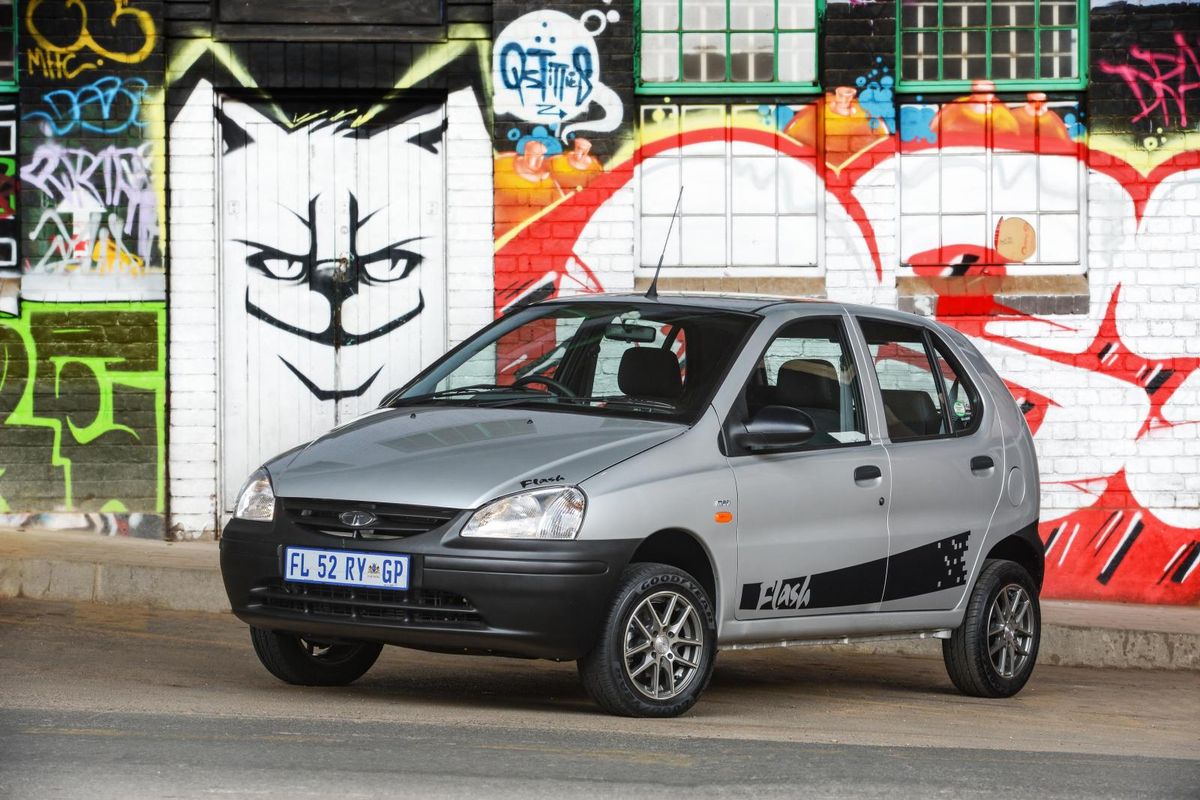
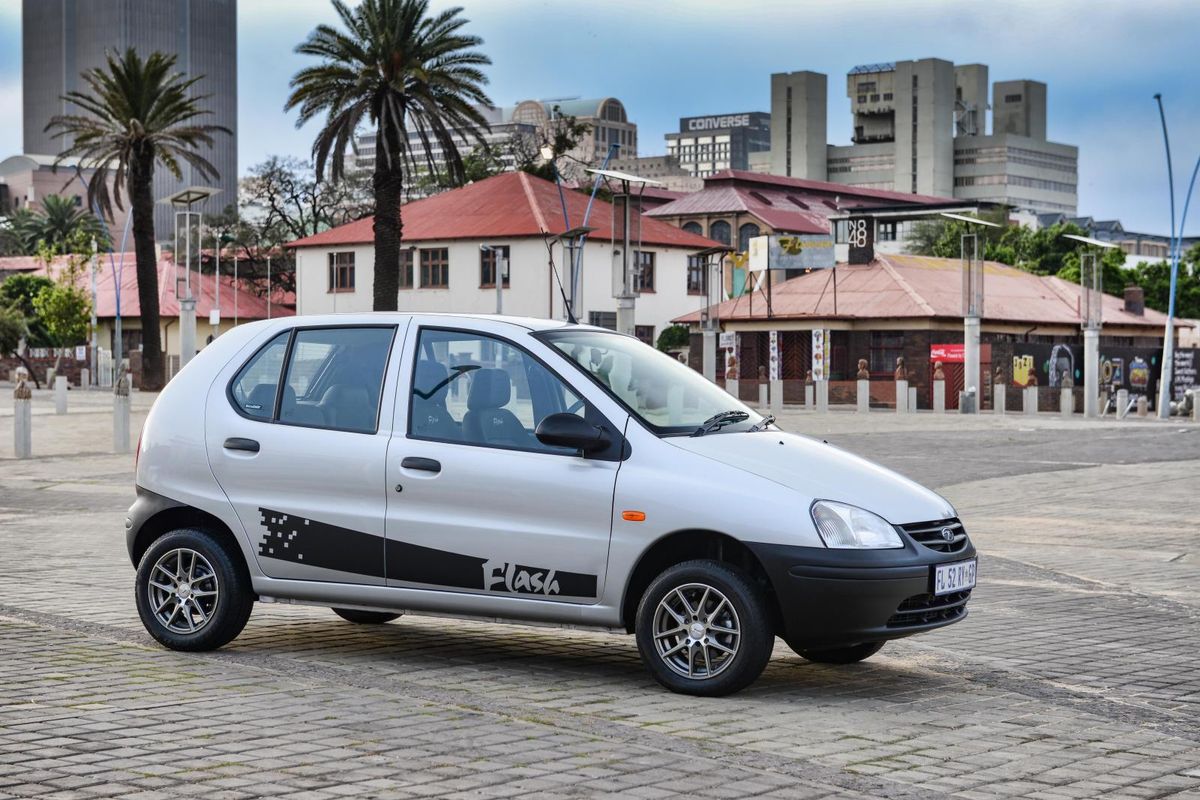
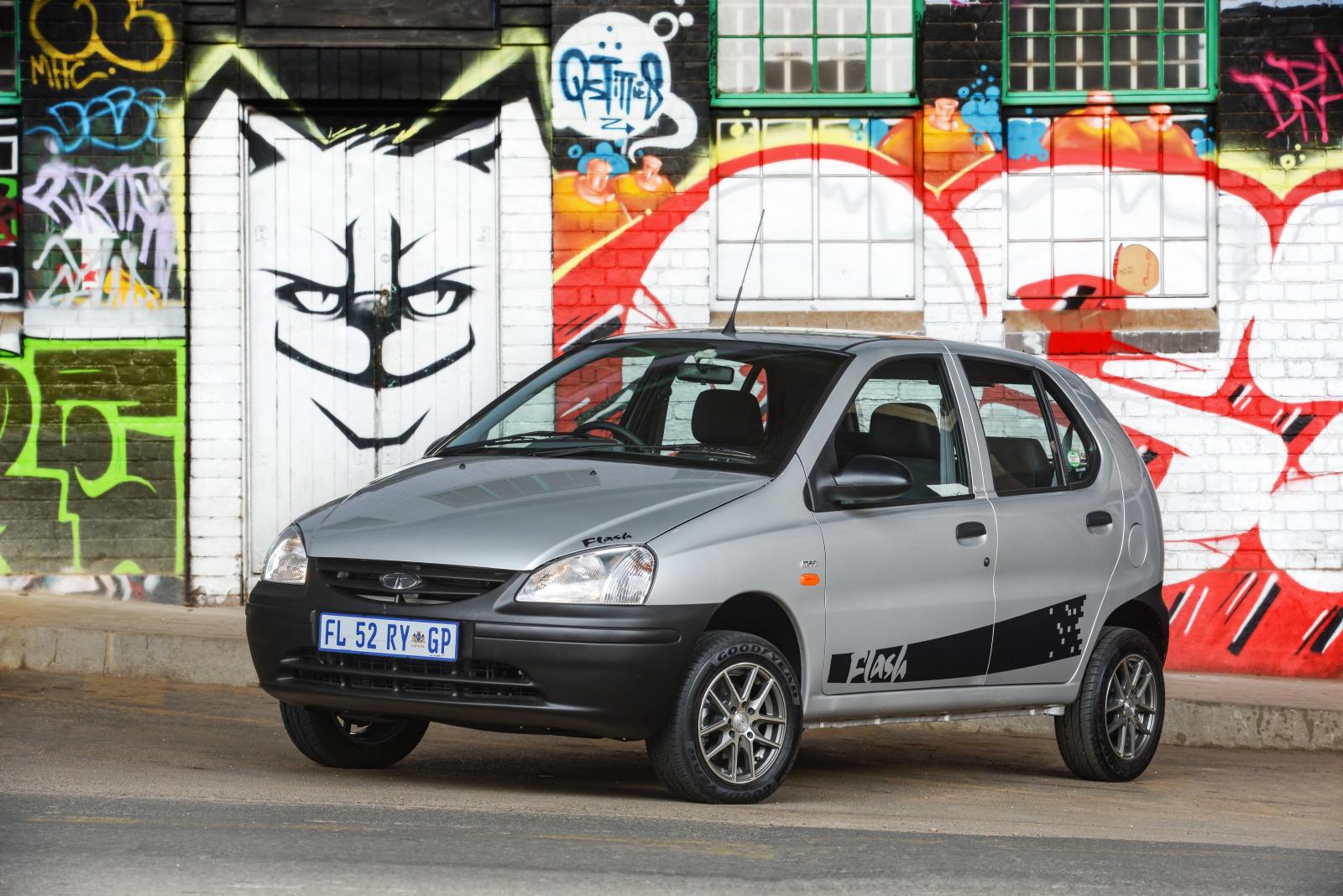
Brett Hills bought a used Tata from a dealer in Umhlanga on Christmas Eve of 2014. Fast forward to March this year, when he awoke to find the right front tyre was flat.
An unpleasant surprise
But an even more unpleasant surprise awaited him inside the car’s boot. “The spanner was too large for the bolts of the wheel and the spare wheel bolt holes were not aligned to fit my wheels – a complete mismatch, despite them being brand new," he said.
He paid a local tyre dealer R592 to supply the correct tyre, and then asked the dealership to provide the correct spare tyre and spanner.
After a lengthy email exchange, he received the following response from the dealership: “Fourteen months have passed since the purchase of the vehicle. Unfortunately, it cannot be proven when the incorrect spare tyre and spanner were placed in the vehicle.
“Our offer still stands to assist you to get the best pricing for the parts you require."
'No proof of when incorrect spare and spanner were fitted'
Unsurprisingly, Hills didn’t take kindly to the insinuation.
“I feel like I am being accused of fraud,” he said in an email to me.
“Why would I go out and purchase the incorrect equipment for my vehicle?
“And how could this be overlooked in the COR (certificate of roadworthiness), which was supplied by the dealership?”
I put it to the dealer principle that if it is to be assumed that the dealership sold the car with the correct spare and tools to fit it, it follows that either Hills lied about what happened, or that at some point in those 14 months, for reasons unknown, some mystery person stole the original spare and tools and replaced them with another new, but mismatched tyre and tools.
The fact that Hills only raised the problem 14 months after buying the car was irrelevant, I said, as the same argument could have been made a day or a week after purchase if the problem had been raised then.
The balance of probabilities favoured Hills’ version of events, I ventured.
Ask the dealership to check, even if it sounds silly
“All he wants is for the tyre and tools in question to be taken back by the dealership and the correct ones supplied.
“Is the dealership really not willing to give him the benefit of the doubt in this matter?”
The response was brief: “I have spoken to Mr Hills. We have ordered the new parts, spanner and spare wheel for him.
“I will notify him when it has arrived on our premises.”
In his original email to me, Hills wrote: “I have never heard of any buyer asking the dealership to fit the spare wheel to confirm it's correct.”
Well, that sounds like a fine idea to me.
Any views or opinions expressed in this article are solely those of the author and do not represent those of Cars.co.za or its editorial content team.
The new Jaguar F-PACE SUV has officially launched in South Africa! Take a look at what you can expect to pay for the F-PACE…
It might be Jaguar’s first go at the SUV market, but the Coventry-based brand has a lot of expertise to call on from its sister company Land Rover! The newcomer rides on the new aluminium-intensive platform designed for the XE and has a double-wishbone front- and integral link rear suspension setup. It offers luxurious seating for five, measures 4 731 mm in length (with a wheelbase of 2 874 mm) and has a claimed luggage capacity of 650 litres.
Passengers will have access to heated- and electrically reclining rear seats, while drivers benefit from technologies such as the InControl Touch Pro infotainment system, a 12.3-inch HD virtual instrument cluster, and a laser head-up display. The F-PACE also introduces Jaguar’s revolutionary Activity Key – a wearable accessory that also serves as a key fob, designed for those with active lifestyles.
The range comprises 132 kW 2.0-litre turbodiesel, 220 kW 3.0-litre turbodiesel, as well as 250 kW and 280 kW 3.0-litre supercharged petrol models.The top-of-the-range F-PACE is equipped with an eight-speed automatic transmission, which offers drivers manual control through steering wheel-mounted paddles, and is claimed to accelerate from 0-100 kph in 5.5 seconds, while "Jaguar’s high-performance all-wheel drive system with Intelligent Driveline Dynamics and Torque Vectoring dynamic capabilities and traction in all road conditions, while retaining the rear-wheel drive feel of a sportscar", the firm says.
Look out for our first drive impressions coming your way soon!
Jaguar F-PACE prices in South Africa
2.0 I4D Diesel 132 kW Pure – R778 966
2.0 I4D Diesel 132 kW R-Sport – R871 226
3.0 TDV6 Diesel 220 kW Pure – R942 646
3.0 TDV6 Diesel 220 kW R-Sport – R1 034 846
3.0 TDV6 Diesel 220 kW S – R1 099 646
3.0 TDV6 Diesel 220 kW First Edition – R1 222 546
3.0 S/C Petrol 250 kW Pure – R992 846
3.0 S/C Petrol 250 kW R-Sport – R1 085 046
3.0 S/C Petrol 280 kW S – R1 201 426
3.0 S/C Petrol 280 kW First Edition – R1 331 146
5 reasons why the Volvo S90 matters
Volvo's executive sedans have never quite matched the popularity of their German-made rivals, at least not in South Africa. However, the new S90 is significant: it's not merely a boldly-designed newcomer, it demonstrates the Swedish marque's resurgence in terms of product development, technological features, powertrain efficiency, and, of course, safety.
1. It proves there’s life after the XC90
Volvo doesn’t want to be the motoring equivalent of Right Said Fred; a one hit wonder with no real future. The multi-award-winning XC90 (including the Best Premium SUV in the inaugural Cars.co.za Consumer Awards) laid down a market and now the S90 shows that the Swedish manufacturer can produce attractive, inspiring cars in all shapes and sizes. The bold styling of the XC90, both inside and out, has been successfully carried over into sedan form and importantly for the bean counters, the S90 proves that the highly modular chassis underpinning the XC90 and the S90 was a good idea.
2. It wants touchscreens to be the future
Volvo’s key rivals, Audi, BMW and Mercedes-Benz all offer comprehensive infotainment systems with one key characteristic in common: none of them use touchscreens. All the German systems employ a number of buttons, a jog wheel and, as of recently, a touch-sensitive interface positioned near the driver’s thigh.
As with the XC90, the S90 makes use of Volvo’s superb vertically-orientated touchscreen interface, mounted at an angle facing the driver, and a comfortable distance away. The system does away with any physical buttons, save for a volume knob and the hazards, which has to be a physical button for legal reasons. Volvo’s system is the best touch based-system we’ve come across, but it will be interesting to see if it’s good enough to turn the tide of opinion amongst the establishment.
Thanks to twin-charging technology, the S90 requires to bigger than a 2.0-litre engine.
3. It shows big cars don’t need big engines
The largest engine powering the S90 and V90 has a displacement of 2.0 litres. That’s it. Customers can choose from a turbopetrol or turbodiesel in various states of tune. All of Volvo’s petrol Drive-E engines develop their power via twin-charging: a belt-driven supercharger develops boost at low rpm until the turbocharger is up to speed and takes over. The result is a motor that is slightly down on torque compared to its rivals but offers similar or better power levels. The top of the range T6 engine develops 235 kW of power – closely matching the 6-cylinder engines of some competitors.
4. It represents one of the biggest advancements yet in turbo technology
Volvo has debuted a clever new technology on all diesel engines in the range, called PowerPulse. Put simply as possible, an electrically powered compressor forces air into a small vessel, constantly ensuring it is topped up. At standstill and low speeds when brisk acceleration is required, a high-pressure burst of air is released into the exhaust stream running through the turbocharger. This spins the turbo up much quicker at low rpm and helps reduce turbo lag. It’s brilliant in theory and in practice works very well, dealing with one of the more persistent downsides of otherwise refined turbodiesel engines.
5. True to Volvo, it’s full of safety tech
Volvo’s City Safety system now works in night and day time driving conditions, constantly monitoring the road ahead and auto-braking if a collision with a car, human or large animal is imminent. Volvo is working in countries around the world to train the system to better recognise the particular wildlife of that region.
The car will crawl in traffic automatically, which is a very handy feature, and the Pilot Assist function now works up to 130 kph, steering between the lines on highways and working with the radar-guided cruise control to provide a more relaxing motorway experience. We tested the system in Spain and while it certainly works, like most systems of its kind it can be easily confused and can deactivate mid-corner. The driver always needs to be alert.
Run-off road mitigation is a new feature which works by scanning for the edge of the tarmac and doesn’t rely on a painted line. If it detects the car is wandering off the road, the system will apply corrective steering inputs. Understandably, we didn’t put this system to the test.
The S90 will arrive in South Africa in October, with prices starting at around R650 000. Sadly the elegant V90 will not be brought in due to low demand, but Volvo SA has said they might review that decision if the demand grows.
The long-standing Mitsubishi Pajero is now available with more add-ons to improve its value offering.
The Mitsubishi Pajero has been around for a while; the current generation was introduced in South Africa back in 2007 and has had various additions and garnishes added to it since. What has always remained intact is its perceived off-road ability, so we headed to the outskirts of Pretoria to a 4×4 course to see what it was really capable of.
Legend II
The Legend II limited-edition adds several useful accessories to both the short- and long-wheelbase derivatives. Mitsubishi says its buyers are hardcore off-road fanatics and buy the Pajero because it can cope with almost any obstacle in its path. Pajero buyers also like to fit off-road accessories to their vehicles, but, in the past, some of the accessories were not always certified by Mitsubishi. The Legend II's accessories are all certified, which means the warranty covers the entire vehicle.
The additions include proper off-road tyres, engine/gearbox protection plate, rock sliders, nudge bar, tow bar, rubber mats and a Garmin nuviCam navigation unit. The short wheelbase model foregoes the rock sliders as Mitsubishi says the SWB doesn’t need them because it has an excellent break-over angle.
The extras are said to be valued at around R50 000, but Mitsubishi includes them on Legend II models for a premium of about R30 000. More accessories, such as a roof rack, spotlights, headlight and bonnet protectors, are extra-cost options.
Off-road time
We were set a number of tricky challenges in which to test the Pajero SWB, which included steep inclines/declines, dune sand and axle articulation scenarios. Changing between 2- and 4-wheel-drive is done simply with a lever that electronically engages the selected mode. The centre diff is also engaged with the lever and selecting low range requires a further push of the lever. Rear diff lock is engaged at the press of a button and can be engaged and disengaged at any time.
The Pajero coped with every obstacle that was thrown at it… and with ease. Even the tricky soft sand section that was turned into a gymkhana course didn't pose a problem. The Legend II confirmed its reputation on the dirty part of our drive.
The tar stretch
Out on the tarmac and freeways, the Pajero feels comfortable thanks to a (relatively) pliant suspension setup. There’s a bit of roll in the bends, but that’s hard to get away from when you’re driving a proper off-roader. The cabin is showing its age, but at least the leather seats (in tandem with cruise control) will make longer trips in the Mitsubishi pleasant.
From a technical point of view, the Pajero falls a bit behind the likes of the Ford Everest, Land Rover Discovery and Toyota Prado, all of which offer more updated cabins and features. The "dot-matrix" upper screen has interesting information, like altitude and fuel economy, but it looks dated. To the Legend II's credit, there is a touchscreen below the upper screen that deals with audio functions/media connections and turns into a reverse-view camera monitor when you engage reverse.
Summary
Mitsubishi has introduced the Legend II to add a bit of extra value for the Pajero's loyal following. The parts added will keep your warranty intact and make the SUV primed for bush explorations and other hardcore off-road activities. Even with the extras added to the price, the Pajero still offers excellent value compared with the Toyota Prado and Land Rover Discovery.
Mitsubishi Pajero Legend II prices in South Africa
The everyday supercar returns to the fray with a new transmission, the same engine and derivative styling. It's the same formula as before, so why do we still want one?
That V10!
If we start at the heart of the new Audi R8, you’ll find the very best reason to still want one. The powerplant in the R8 has managed to defy modern turbocharging trends and retains its natural aspiration. The 5.2-litre V10 unit howls all the way through 8 700 rpm and in the V10 Plus model, whips up 449 kW at a heady 8250 rpm with peak torque of 560 Nm at 6 500 rpm. The sound isn’t the only thing that benefits from natural aspiration, the R8 handles better because of it too but, more on that later…
V10 engine remains naturally aspirated and in the Plus model develops 449 kW
Two models
There are two types of R8 on the market, a standard R8 V10 and then the R8 V10 Plus. Power in the standard model is pegged at 397 kW and the torque is 20 Nm less at 540 Nm. The Plus gets a few neat additions such as carbon ceramic brakes, the fixed rear wing, carbon inlays, specially tuned RS suspension and more standard kit inside. The Plus seems like the model most buyers will go for as it’s not that much more expensive and comes with considerably more power and kit.
Our first sample of the R8 V10 Plus was on the all-new Kyalami circuit with fresh tar and a couple new corners to learn. Getting to grips with the R8 is not a difficult task, the ease with which its performance can be extracted is carried over from the previous generation and you can instantly go quickly. The handling remains neutral and any slide or breakaway of car's rear end is predictable and controllable. Down the front straight, where we were clipping 240 kph, the R8 feels stable and at ease.
Climb on the carbon brakes hard and it arrests the car's speed blindingly quickly. The track shows up the R8's front-end where it doesn’t bite as soon as you want and feels like it should turn in quicker, but then consider this is a mid-engined car (its weight bias is towards the rear). There’s absolute trust in the rear-end, where you can plant your foot and rocket out of corners. The natural aspiration plays beautifully to this strength, it doesn’t deliver a kick of power like a turbocharger, but delivers it gracefully and rapidly without the abruptness.
The R8 remains a great everyday supercar with easily accessible thrills
The new transmission
The old R tronic transmission has been replaced with a fast-shifting S tronic shift-by-wire system meaning there’s no physical linkage between the lever and the gearbox. The shifts are ballistic when you go up the 'box and just as impressive going down. The shift paddles have a feature where you can just hold one down and it will either shift down to the lowest gear possible for your speed or shift into top gear depending on the lever you pull. Audi’s quattro system is also capable of sending 100% of the power to the front or rear wheels as required.
Step inside
Only the V10 Plus models were around to drive so we were greeted with Audi’s new sports steering wheel. It’s a deep-dish wheel (with loads of buttons to accidently press when hurtling through a bend!). New for the R8 V10 are four satellite buttons that include an engine start and stop button – it’s big and red, a Drive Select button, which will be familiar to many Audi drivers and allows for Comfort, Dynamic and Individual modes to be configured, a button to make the exhaust loud and a chequered flag button that puts the R8 into performance mode.
Satellite buttons on the steering wheel allow for easy and quick performance adjustments
Audi’s virtual cockpit sits in the instrument cluster and can be easily adjusted to your choice of what needs to be displayed. It’s a familiar interior with the odd smattering of Alcantara or carbon fibre to remind you that you are sitting in a supercar. The seating position feels better than that of its Huracan cousin and its array of sensible switchgear is more appealing.
Summary
The R8 V10 continues to deliver easily accessible thrills in a package that looks and sounds sensational. The handling remains neutral and safe at the expense of outright agility, but the R8 will engender a big enough sense of occasion to anyone who's lucky enough to get behind the wheel. The R8’s pricing has moved out of the bargain performance category and into the rarified atmosphere with the likes of Porsche, but, again, the Audi seems a veritable bargain compared to its similarly-configured (if more exotic) Lamborghini Hurucan cousin.
There's a new Nissan Pathfinder. Shown here in US spec, it features an updated motor, a new look and additional tech.
This new Nissan Pathfinder is powered by a new version of the 3.5-litre V6 petrol unit (with revised pistons, intake manifold and Direct Injection Gasoline technology) mated with the third-generation of Nissan's Xtronic gearbox. Power has increased to 211 kW from 190 kW and there's more torque. The vehicle is claimed to be capable of towing up to 2.7 tonnes, which Nissan says is a best-in-class capacity.
In terms of design, the Nissan Pathfinder has a new grille and redesigned headlights with daytime running lamps. There are some tasty 18-inch and 20-inch alloy wheels, while the rear benefits from changes to its tailights and bumper. This new model gains the motion-activated tailgate, which means that the driver can wave his/her foot under the bumper to automatically open the hatch. It's ideal if your hands are full of shopping bags, for example.
There is seating for 7 occupants and the Drive Assist Display has been tweaked. This display located between the rev counter and speedometer displays driver assistance info as well as trip computer info. There's satellite navigation with voice recognition and the 8-inch touchscreen infotainment system features connectivity to emergency services if the vehicle has been in an accident. Meanwhile, there's new driver assistance tech such as forward emergency braking and intelligent cruise control. Blind spot warning and rear cross-traffic alert have also been fitted.
South African availability
The new Nissan Pathfinder will probably make its way to South Africa, following on the heels of its Navara double-cab sibling early next year. This model is an American-spec version, so we'll keep an eye out for European-spec derivatives and update you as soon as more information becomes available.