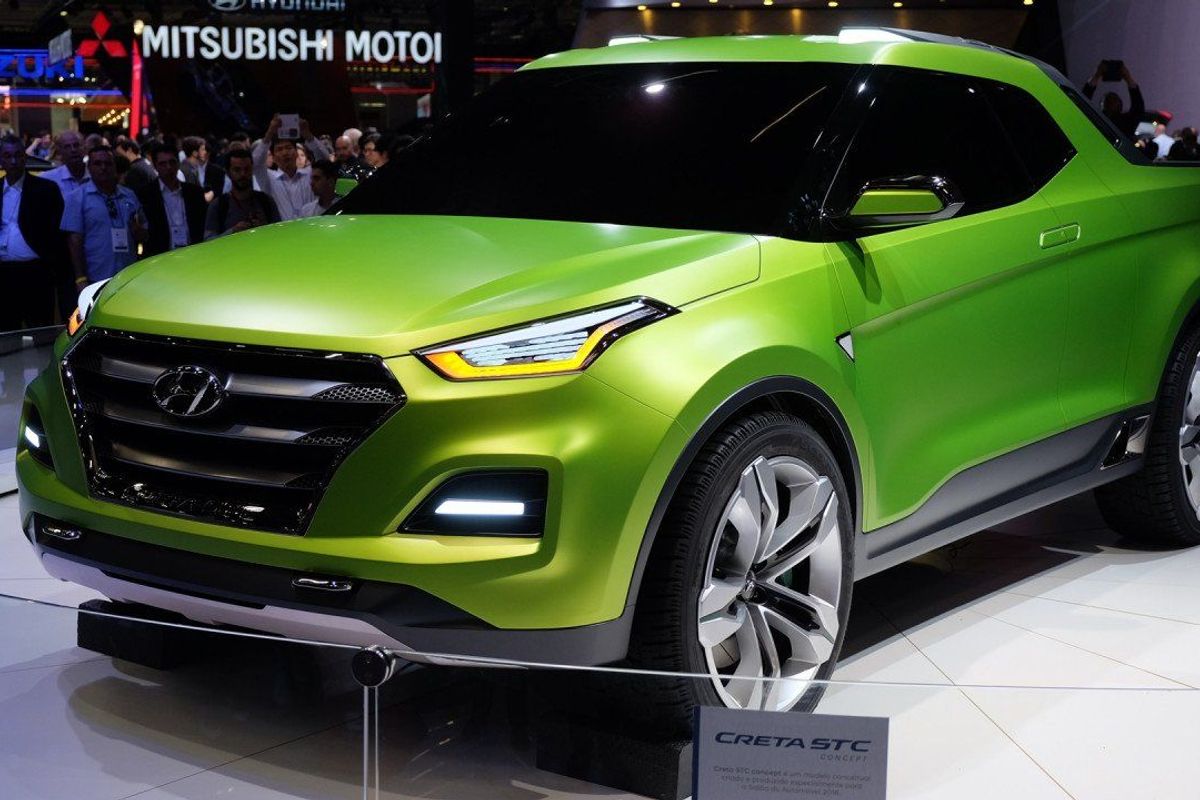
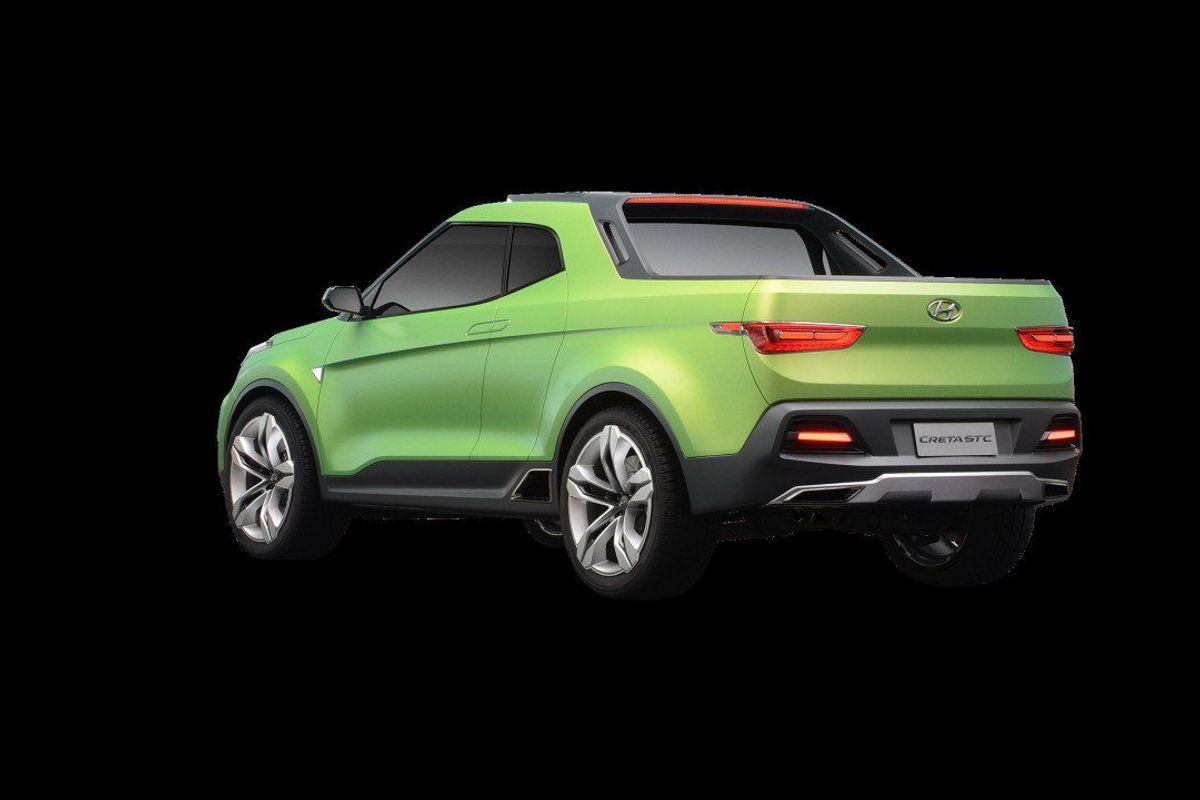
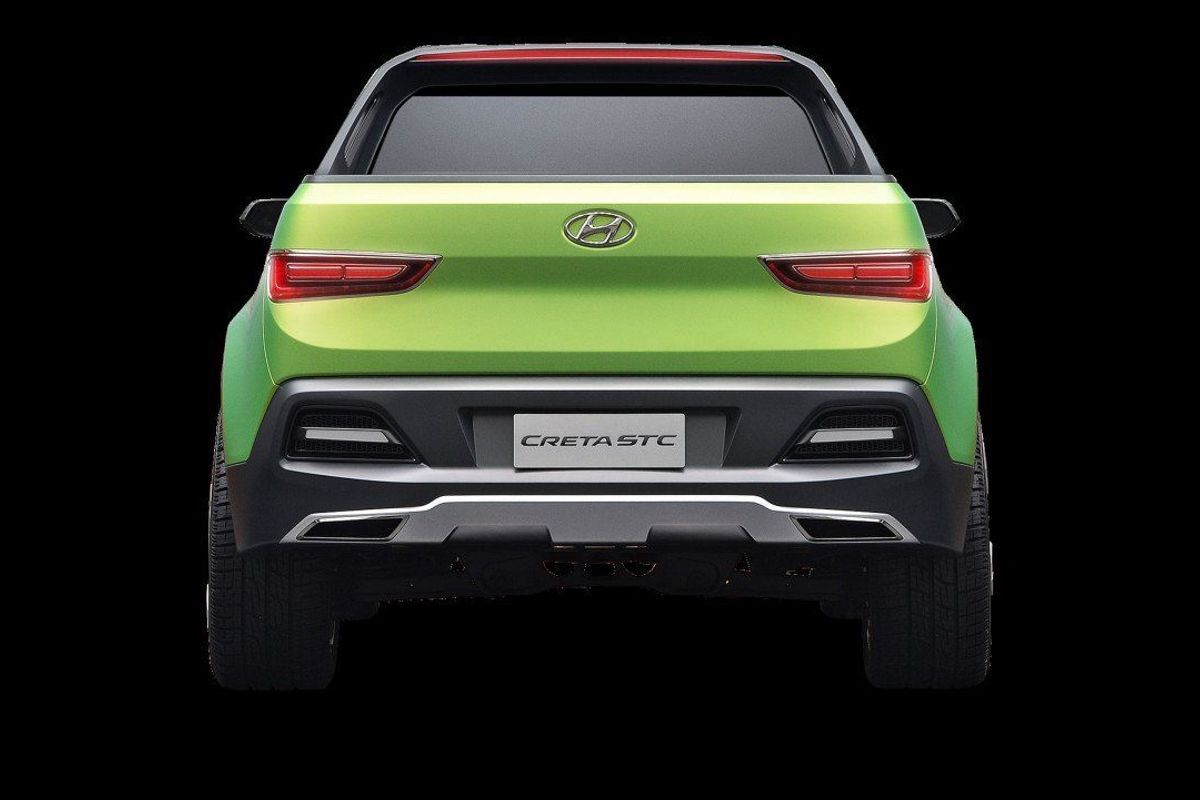
Could Hyundai be planning a smaller bakkie, too? The Korean brand has unveiled the Creta STC bakkie concept at the Sao Paulo Motor Show in Brazil.
While Hyundai is reportedly planning to reveal its production-ready Santa Cruz bakkie in the near future, the Korean automaker has taken the opportunity to introduce another bakkie concept in the form of the Creta Sport Truck Concept (STC). The unibody Creta STC is based on the new Creta crossover, which is due to arrive in South Africa during 2017 and it was designed to appeal to the younger generation living in large cities and emerging markets. The concept was created specifically with the Brazilian market in mind.
Key design features
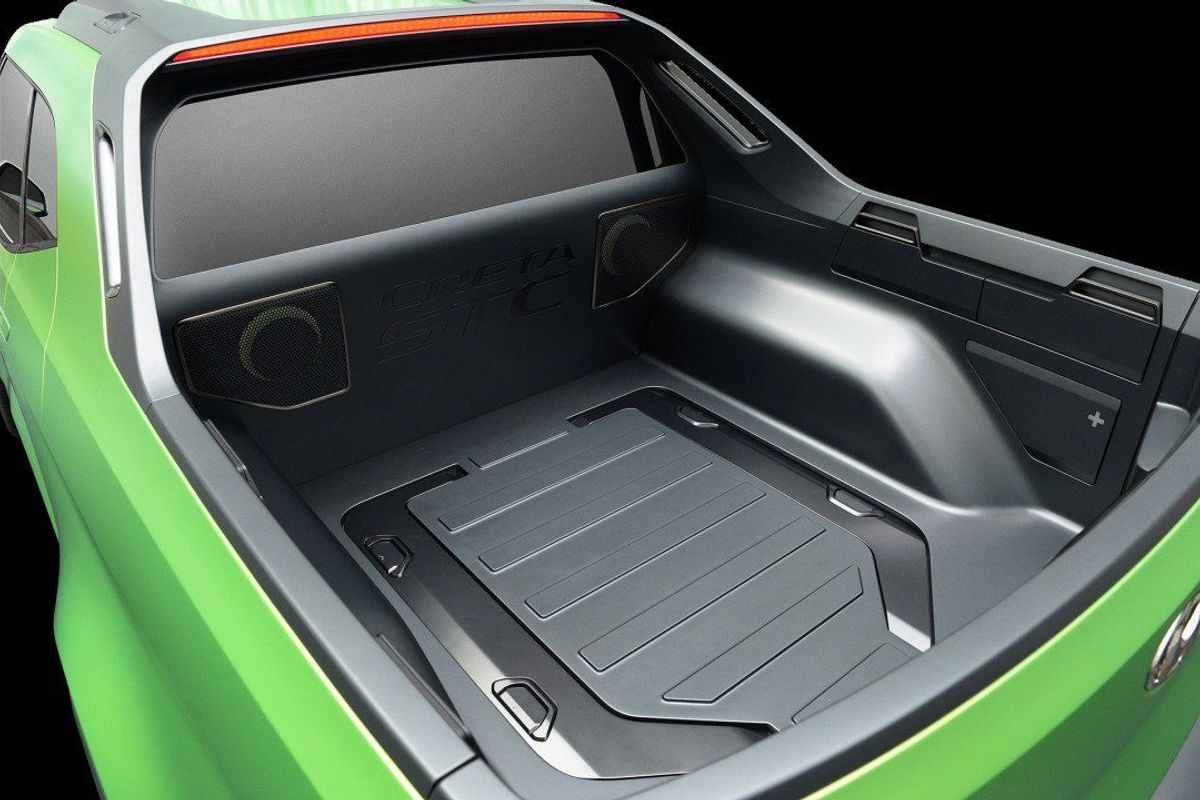
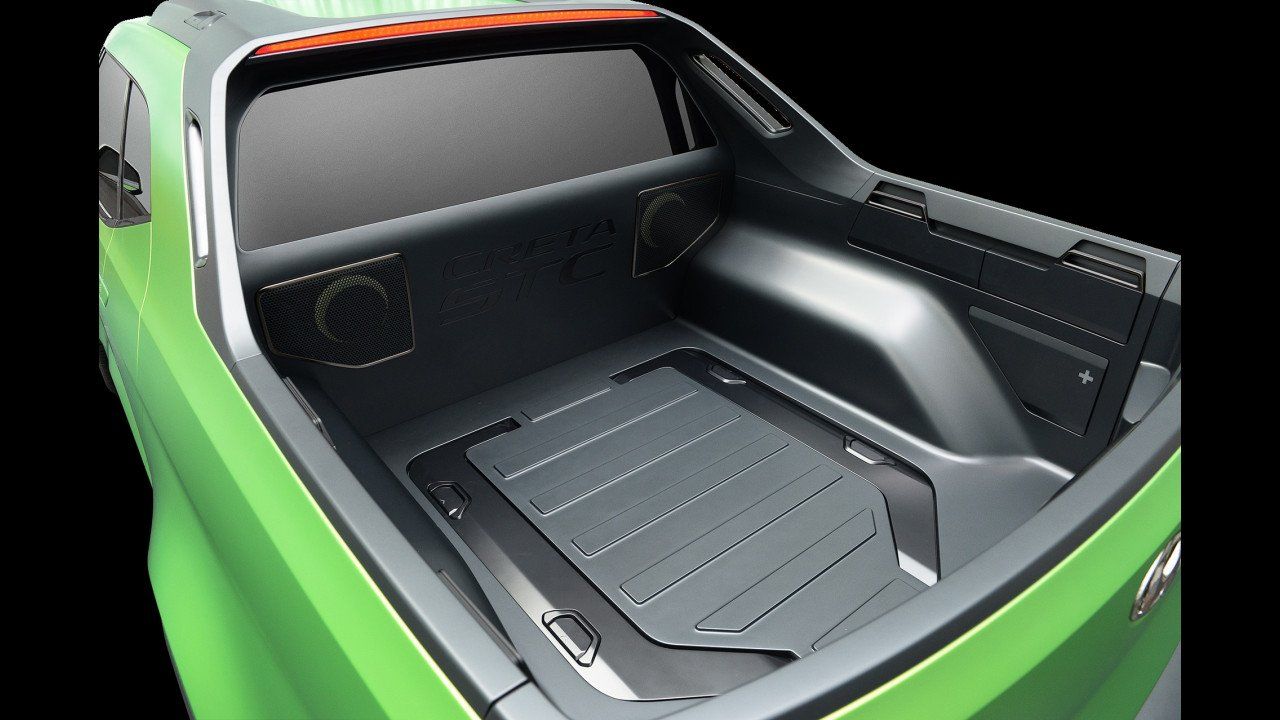
The load bay of the Hyundai Creta STC features speakers and numerous storage compartments for convenience.
The Creta STC, however, is longer and wider than the Creta SUV it’s based on and features an extended wheelbase. The Creta STC rides on large 21-inch wheels, giving the concept a sporty demeanor.
The Creta STC features an eye-catching grille design with a finely chiselled front-end. LED headlights are fitted too and the reverse opening rear doors provide easy access to a spacious cabin.
In the load bay of the Creta STC, you will notice a set of speakers, power outlets and various storage compartments.
At this stage, there is no indication as to whether Hyundai will put the Creta STC into production. Based on the strong support Hyundai received for the Santa Cruz bakkie and with the introduction of this Creta STC concept, it’s quite evident that Hyundai is eying out the smaller bakkie segment, too, where a production version could compete in some markets with the Renault Duster Oroch and Fiat Toro.
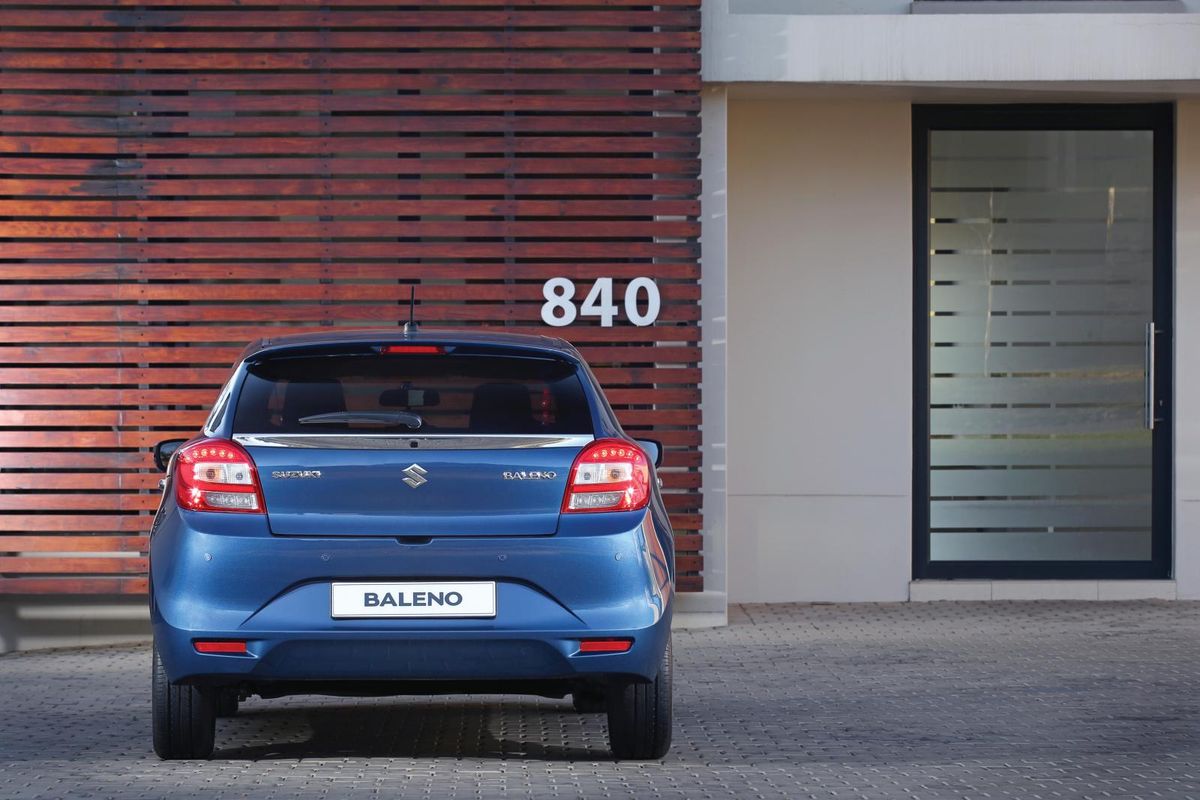
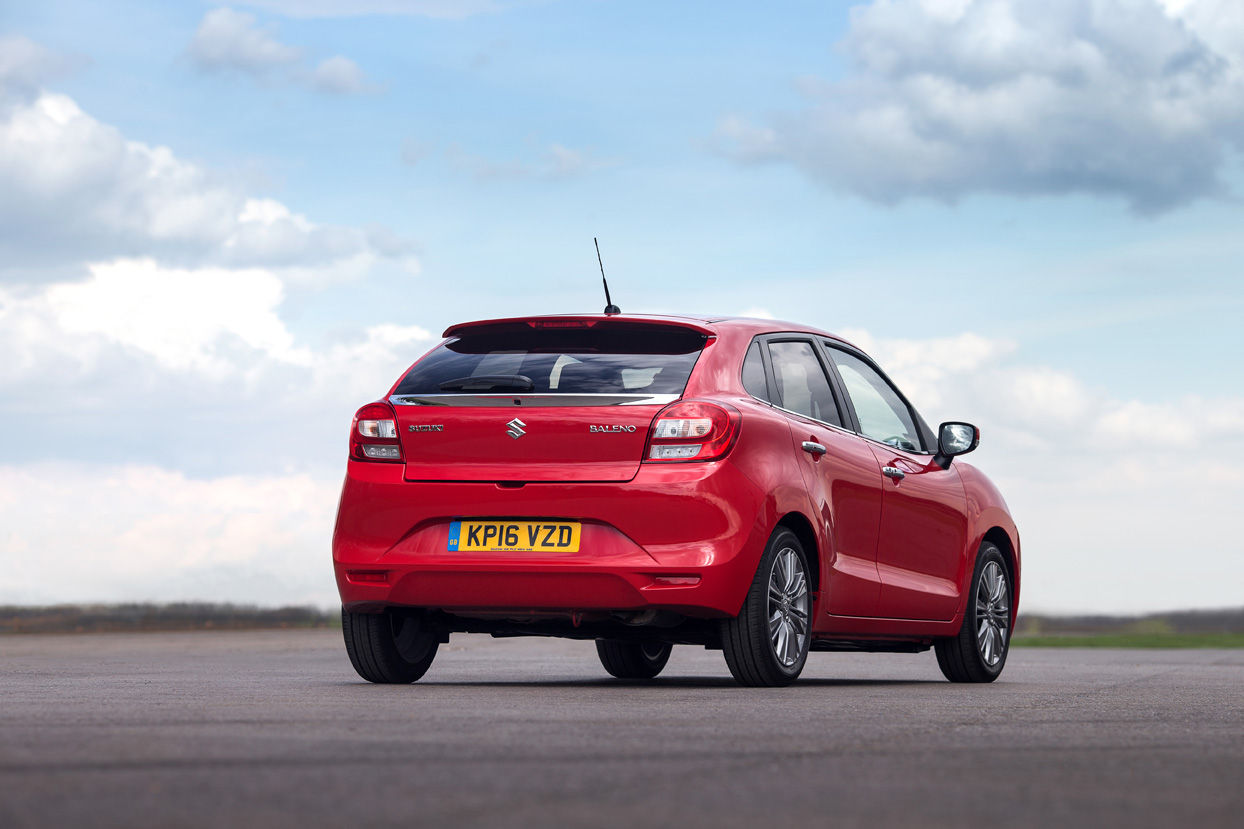
Suzuki has a reputation for producing reliable, no-fuss cars that offer great value for money. The Japanese marque's focus has been on small hatchbacks (Celerio and Swift), but with the launch of the new Baleno, it’s moving up in size and stature.
We travelled to Belfast, Northern Ireland to drive the new Suzuki Baleno in order to get a feel for the newcomer, which is set to be launched in South Africa during the fourth quarter of 2016. The Baleno’s intended for consumers who are looking for something bigger than a Swiftbut not a sedan (like the Ciaz) or compact SUV, such as the SX4 or Vitara. Often these buyers, who seek the reliability and security of a Suzuki, have had to go elsewhere to find a vehicle that meets their "expanded" lifestyle needs. The Baleno, then, sits somewhere between the Swift and Volkswagen Golf in terms of size but will be priced in line with the small hatchbacks such as the Ford Fiesta, Volkswagen Polo and Hyundai i20, to name a few examples.
New Boosterjet engine
The major news for the Baleno is that there’s an all-new engine on offer. Ford, Opel and Renault have already adopted 3-cylinder motors at the entry-level ends of their Fiesta, Corsa and Clio line-ups and Suzuki has followed suit with a 1.0-litre turbocharged unit of its own. The motor delivers peak outputs of 82 kW and 170 Nm of torque, which compares very favourably with those of its rivals. In terms of refinement, it’s particularly good and offers a smooth delivery of torque through the rev range. It’s not jerky when shifting up the gears (like some other models can be) and the five-speed manual is typical of a Suzuki 'box, with a simple, short action. The sad news for our local market is that Suzuki SA isn’t entirely sold on small turbos yet, so they plan to introduce the Baleno with the 1.4-litre naturally aspirated motor from the Swift and Ciaz. The 1.4 produces 70 kW and 130 Nm of torque – it’s a tried and tested, reliable engine, just don’t expect fireworks in terms of performance. Suzuki SA did say it plans to bring the 1.0-litre turbo to SA some time after initial introduction.
Baleno sits between Polo and Golf for size but beats both on price.
Interior
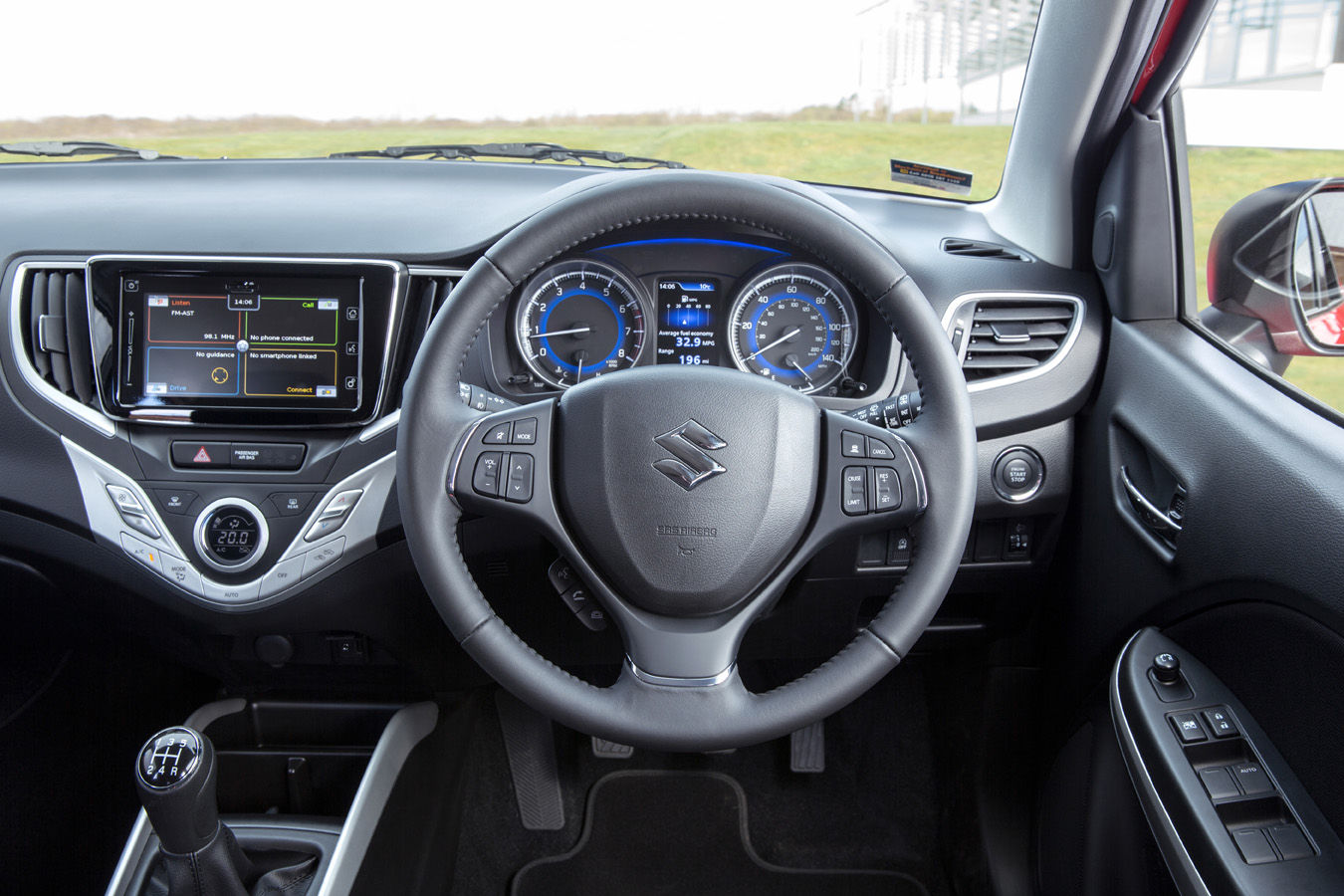
Suzuki interiors are incredibly well-made, but tend to lack a few interesting or appealing design cues. Their cabins also tend to eschew the plushest soft-touch materials in order to maintain a very keen price. The Baleno is much the same in this regard, the door inserts and transmission tunnel are finished in relatively unyielding plastics. The switchgear on the centre dashboard has a somewhat awkward layout with the air-con and fan buttons requiring quite a stretch across to the passenger’s side. The Baleno offers big-car features such as automatic aircon and a large touchscreen. This is the first chance we’ve had to interact with Suzuki’s new-generation infotainment system and it’s quite good. It’s responsive to soft touches and has an intuitive operating system. Navigation is also offered. Suzuki SA does intend bringing this infotainment system to South Africa but, again, not with the initial launch.
Touchscreen system is intuitive and sensitive. Only coming to SA later after the local launch.
Interior space utilisation is undoubtedly the Baleno's strongest suit…. The cabin definitely feels Golf-sized and the levels of leg- and headroom afforded to rear occupants are excellent. The Swift’s Achilles heel has always been its limited luggage space, but the Baleno addresses this concern with a claimed capacity of 320 litres, which slots it in above the likes of the Kia Rio and Hyundai i20 and slightly below the Golf in terms of loading practicality.
How does it drive?
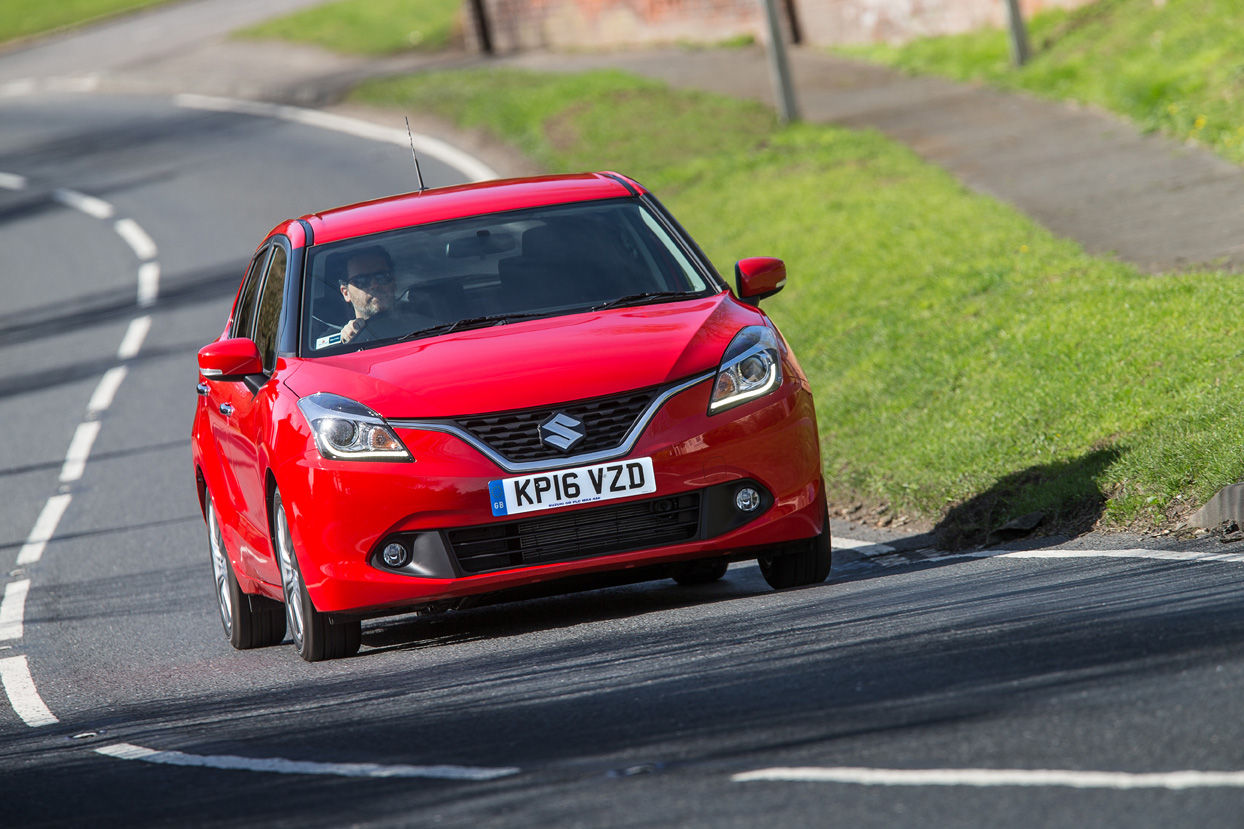
The Baleno drives smoothly and comfortably, much like the Swift. It rides bumps well and cushions jolts and road creases impressively. The Suzuki is based on a new lightweight platform (it weighs a mere 950 kg).That’s quite a lot less than those of its rivals and makes the newcomer feel quite agile and spirited in urban driving conditions. The lightweight nature also translates in excellent claimed fuel economy figures. Suzuki says the 1.0 turbo should consume 4.5 L/100 km on the combined cycle and over our test route around Ireland we achieved 5.5 L/100 km, so it appears to be a particularly fuel efficient engine.
It drives and rides well, and it's also quite light at only 950kg.
We also got to see some of the technologies that Suzuki makes available in its overseas models. The British-spec Baleno comes with high-end safety technology such as radar braking, which will warn the driver if a collision is imminent and then automatically brake if it determines a collision is unavoidable. That’s pretty impressive for a B/C segment hatchback. There’s even adaptive cruise control on the top-spec model, which is unusual for this segment, too.
In local terms
Initially, the Suzuki Baleno will come to South Africa with the 1.4-litre naturally aspirated motor. It will also not have the touchscreen infotainment setup, but a simpler audio system comparable to that in the Ciaz. It will be just as spacious, drive well and the 1.4-litre has proved itself to be quite fuel efficient (if a little sluggish) at altitude. As far as pricing is concerned, Suzuki plans to be aggressive with its introduction. The firm reckons it will be able to launch the newcomer around the R200 000 to R220 000 mark. That compares impressively with smaller rivals, such as the Hyundai i20, Kia Rio and is on par with the Mazda2. The Baleno is also bigger, more spacious and similarly equipped to those competitors. It seems like it will be a good deal when it arrives.
Spy Shots: Alfa Romeo’s Stelvio SUV is ready
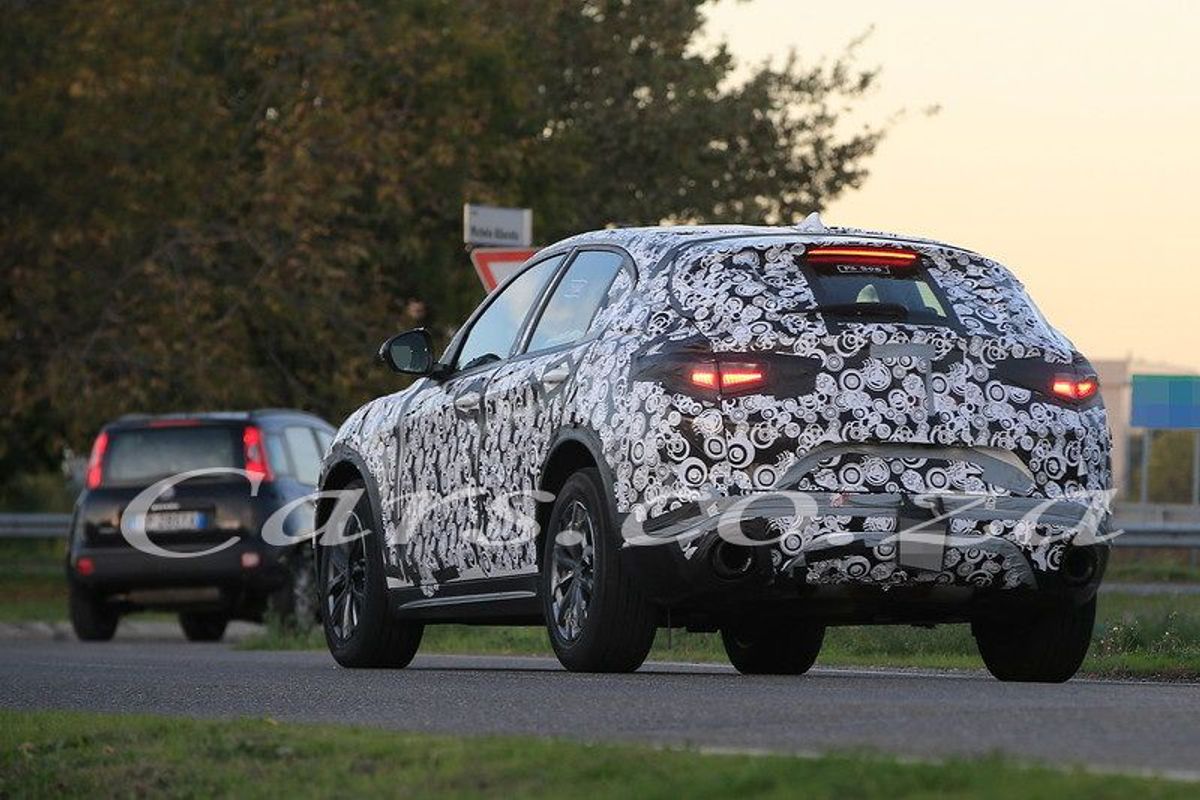
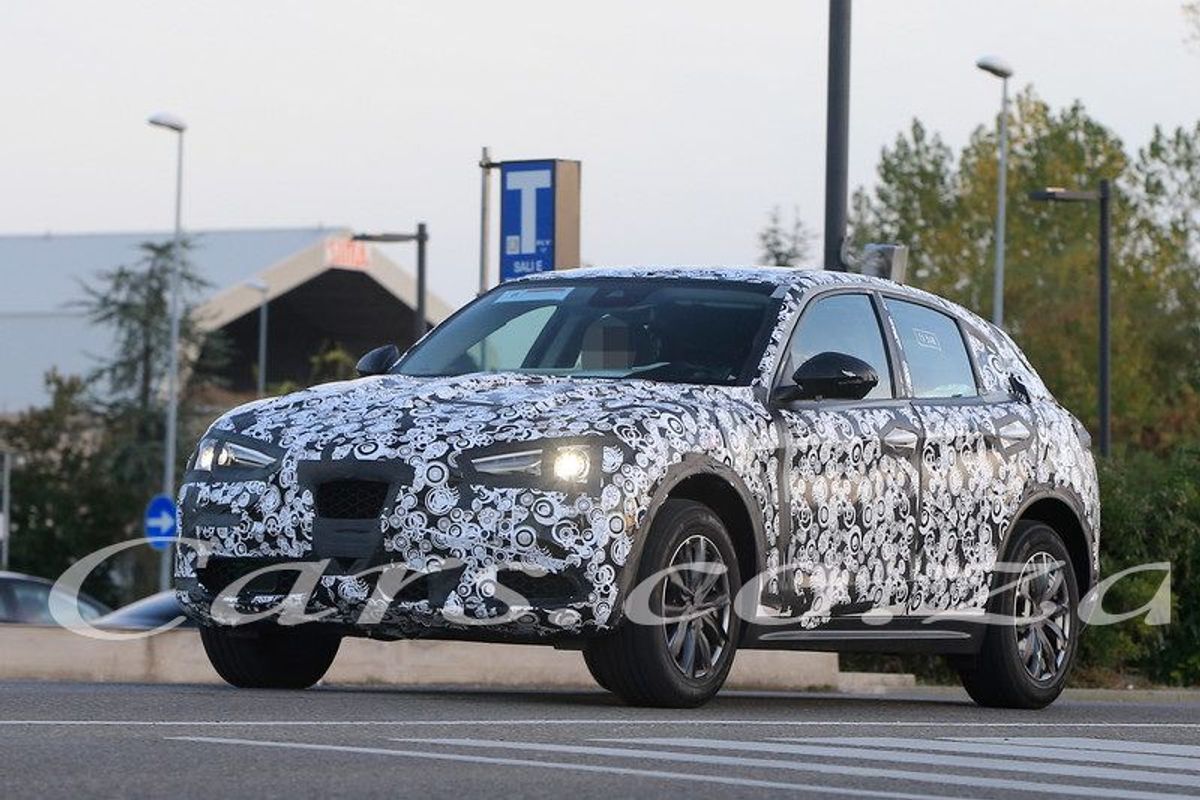
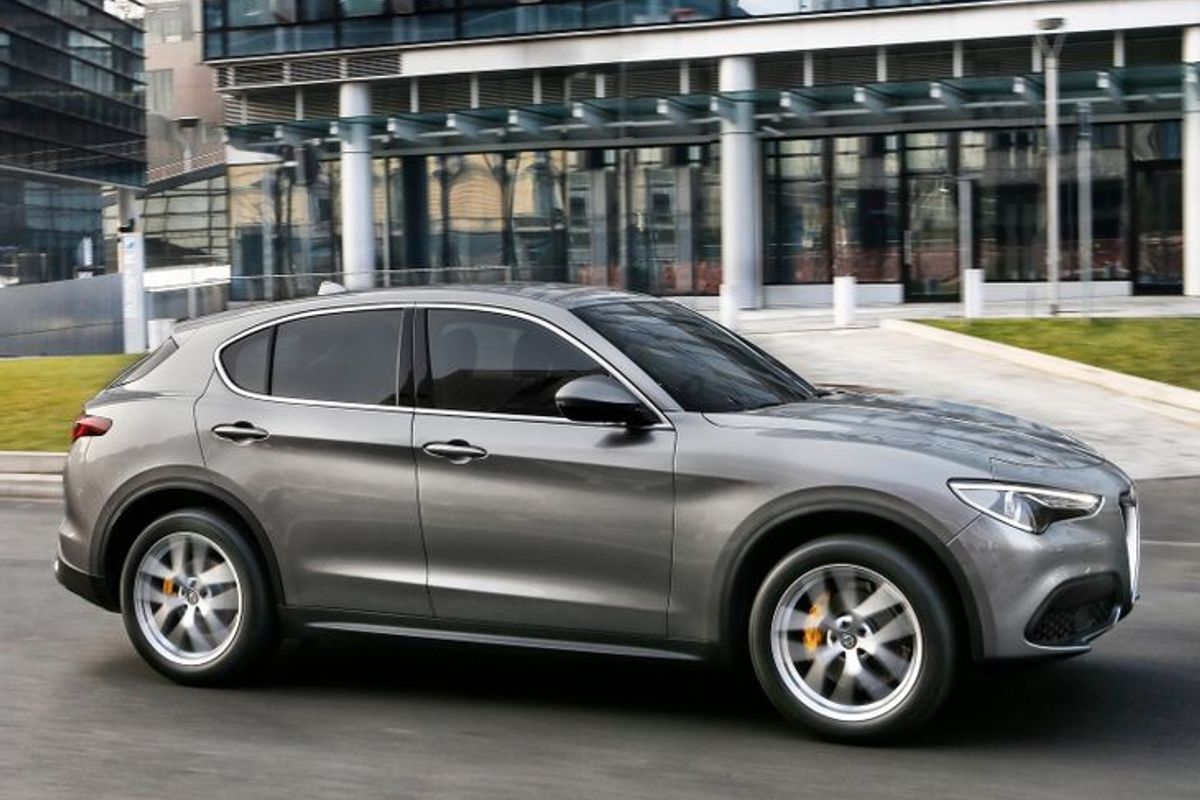
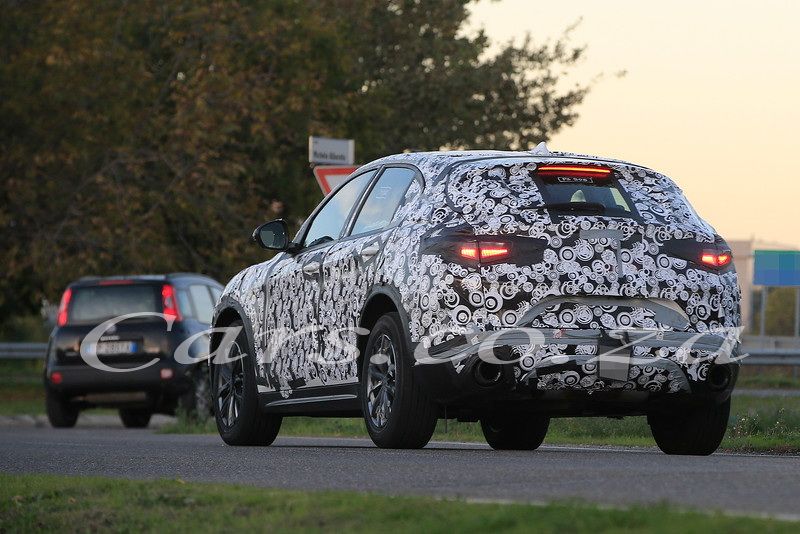
The first and long-awaited Alfa Romeo SUV has been spotted undergoing final development testing in Italy, ahead of its international unveiling at the 2016 Los Angeles Auto Show. Here's what we know about this vehicle so far.
Photos by S.Baldauf / S.B. Medien
Alfa Romeo as a global brand is undergoing a serious revamp and is upscaling its product offering over the next few years. We were in attendance when the Alfa Romeo Giulia broke cover in Milan and witnessed a new brand identity emerge. Of course, there have been numerous promises of a full product offensive since the introduction of the now ageing Alfa Romeo MiTo and Giulietta, but it would appear that the ball is finally about to start rolling. After the international launch of the Giulia sedan, the range expansion has been confirmed to include an SUV, rumoured to be called the Stelvio.
The Stelvio seems to take its design cues from the new Giulia sedan. It should be a real looker!
The Alfa Romeo Stelvio has been heavily delayed, but finally, we have news that it will be unveiled at the 2016 Los Angeles Auto Show. It will be taking on a hot segment and will have to beat the BMW X3, Audi Q5, Jaguar F-Pace, Mercedes-Benz GLC and Porsche Macan. That's illustrious company to be in, so Alfa will have to make sure that its Stelvio can match them.
The Alfa Romeo Stelvio will ride on the Giulia platform and will feature an extensive line-up of engines. We reckon we'll see the full complement of motors ranging from four-cylinder petrol and diesels, to the mighty 2.9-litre biturbo V6 seen in the Giulia QV. We'll have more details when the vehicle is fully revealed next week.
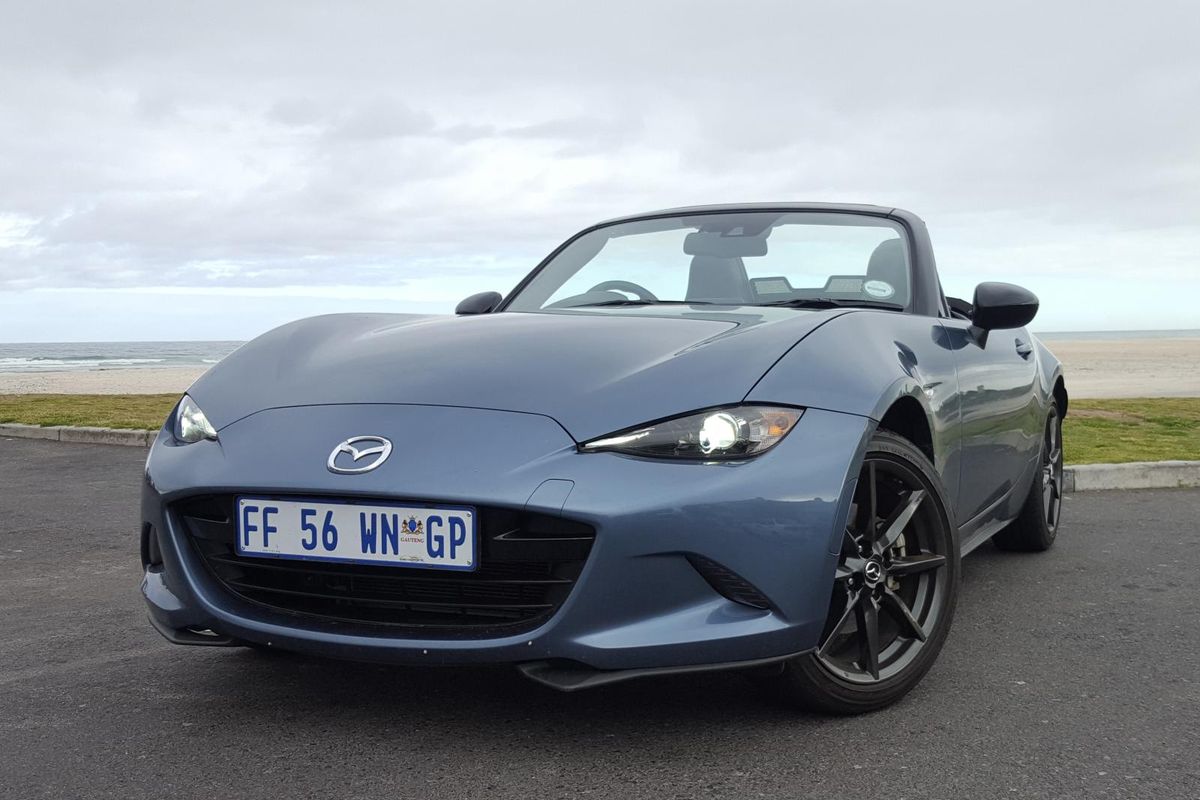
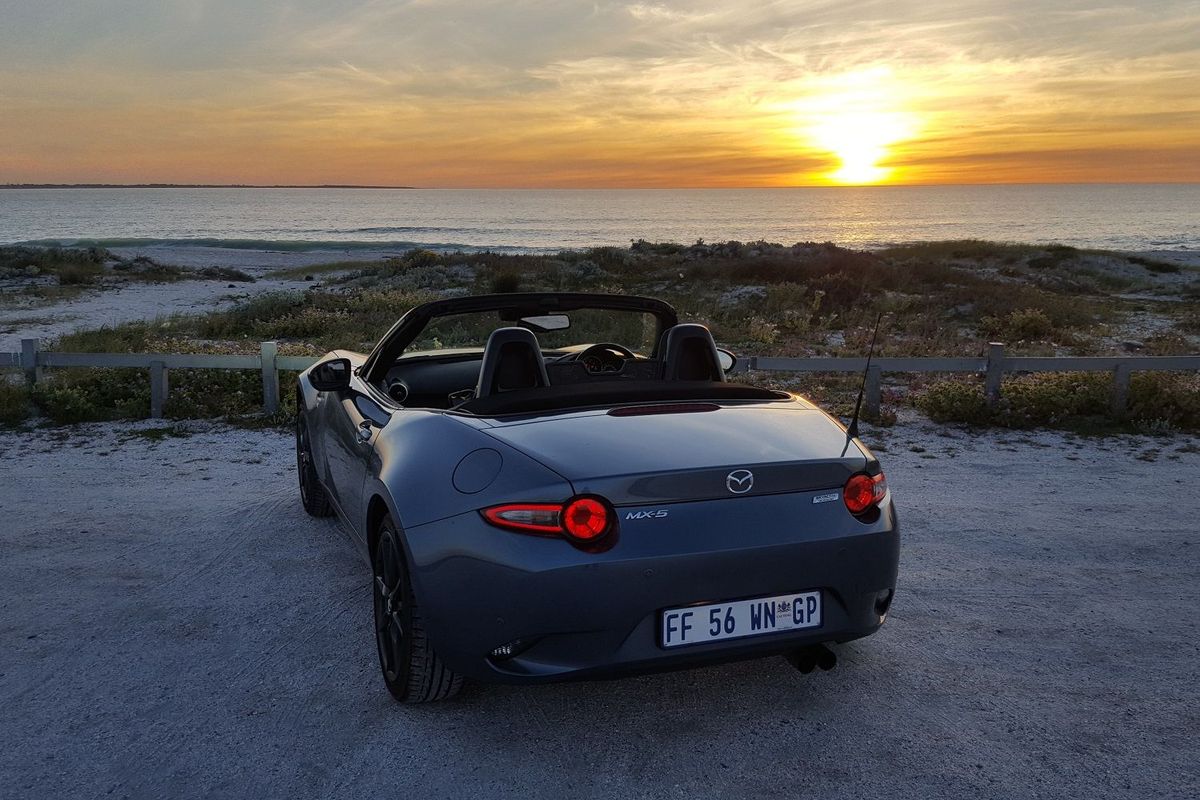
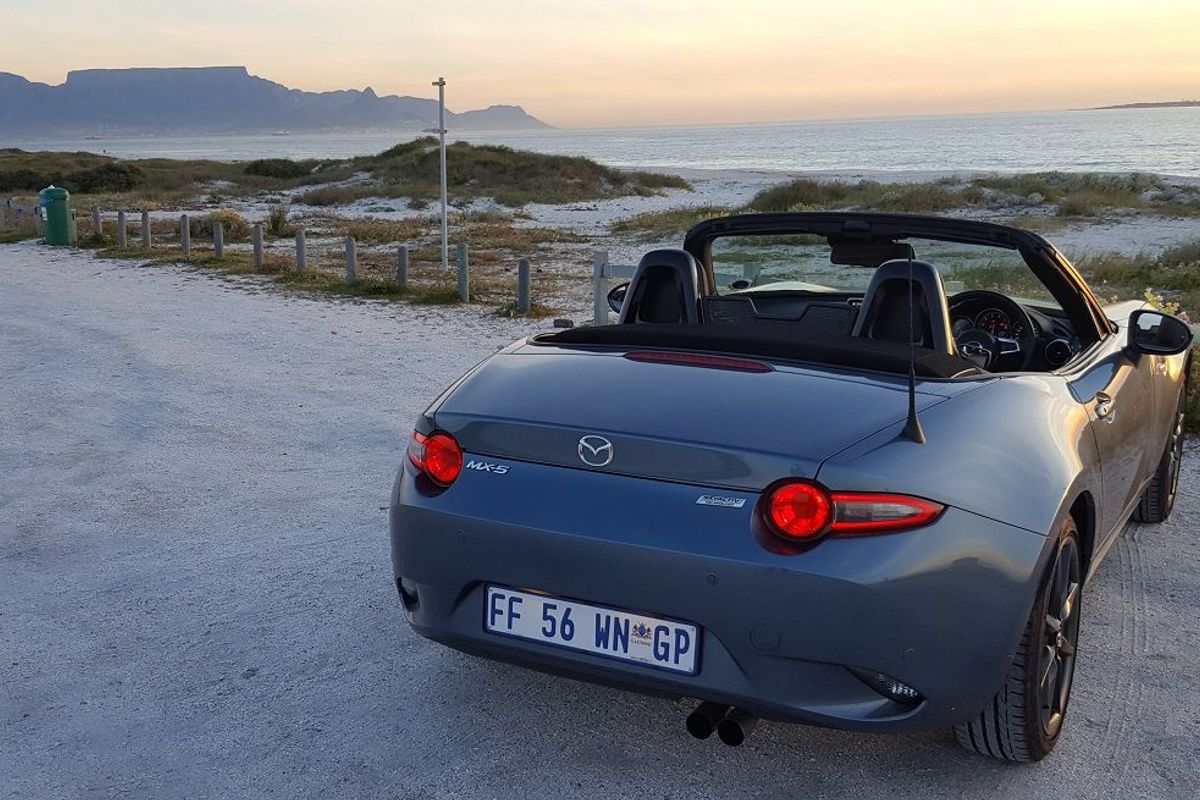
A Mazda MX-5 recently spent a month in Cars.co.za's test fleet for an extended evaluation. Does the Hiroshima-based manufacturer's iconic little roadster still impress as a daily driver, or will the realities of living with such a focused machine destroy fantasies of top-down summer fun?
Mazda MX-5 2.0 Roadster– Quick Specs
Price: R441 700
Engine: 2.0-litre, 4-cylinder naturally-aspirated petrol
Transmission: 6-speed manual
Power: 118 kW
Torque: 200 Nm
Fuel Consumption: 6.7 L/100 km (claimed)
Acceleration 0-100 kph: 7.3 seconds (claimed)
The Mazda MX-5 has an illustrious history and the current iteration has garnered several awards – it is the reigning World Car of the Year– and, as a finalist in the Fun Car category of our own Cars.co.za Consumer Awards – powered by Wesbank, it may yet add another trophy to Mazda's cabinet. Since its debut in 1989, more than a million MX-5 units have been sold; not bad for a tiny "compromised" 2-seat roadster that offers limited practicality!
The recipe for the Mazda MX-5 is a simple one: 2 seats, a front-mounted naturally-aspirated engine developing a healthy power output, a snappy manual gearbox and rear-wheel drive configuration. Now consider a 50/50 weight distribution and a manually operated roof mechanism to keep the purists happy and you have a classic formula that remains relevant to this day.
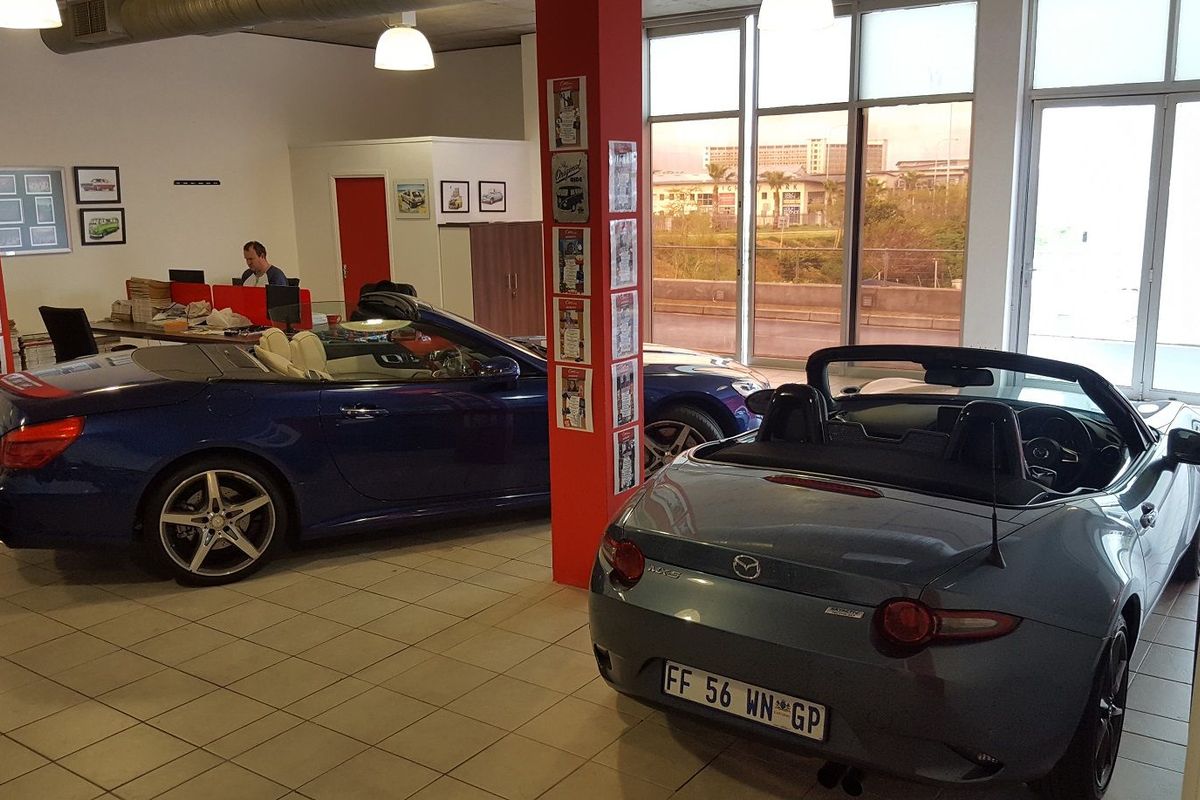
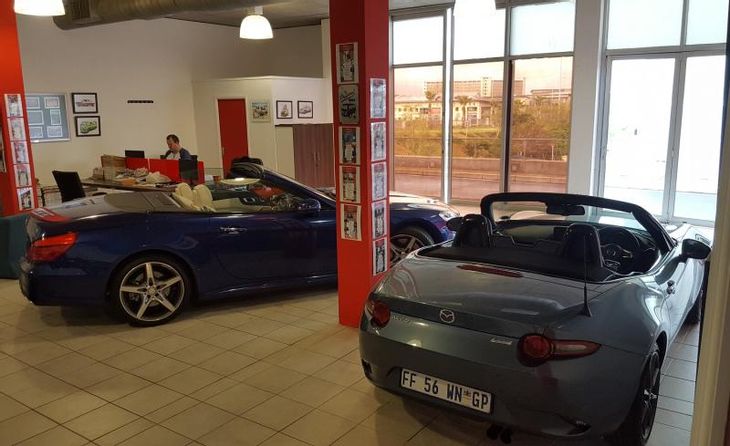
One legendary convertible meets another: Mazda MX-5 and the Mercedes-Benz SL500 in the Cars.co.za office in Cape Town.
One Month… and Go!
The author posed a challenge to himself: drive the Mazda MX-5 with its roof down more often than in the deployed position. It's a simple challenge, or so you'd think. With the changing of the seasons, the temperatures weren't going to be horribly hot, but rain was always a possibility. Fear not, as the manually-operated roof mechanism can be opened or closed in about three seconds flat. Trust us on that one, we tried it. The custodian of this Mazda MX-5 made the most of the weather conditions and would drive to work with the top down early in the morning and would leave work a little later when the fierce sun had all but disappeared… We'd say that's the best way to savour the "roadster experience".
Unfortunately, as a passenger vehicle, the MX-5 can be one of the most infuriating vehicles to live with (although its potential owners will undoubtedly anticipate this). Plans for making weekend trips with the Mazda were thwarted by its lack of boot capacity, for example. There's just no way that a couple's two-day luggage bags and a cooler box would fit in the boot, and there was no chance that a passenger would travel with a cooler box on their lap (we would have asked, but decided against it). What's more, taller members of the test team battled with the roadster's driving position and frequently the driver's seat was pushed so far back that its back section would squeak as it rubbed against the bulkhead.
Meanwhile, the MX-5 sports exquisite, minimalist styling and looks quite expensive, in an exotic kind of way. The other side to that argument is that its practical drawbacks render it quite a dear purchase for a 2.0-litre engined 2-seater car.
But all will be forgiven shortly after you wedge yourself into the cabin and stab the Engine Start button. You sit snugly, but find your left hand reaches the gear selector with ease. The steering wheel is the correct distance and with a few minor adjustments, is at the perfect height. With a tiny repositioning, you're seated in the optimum driving position. Engage first gear with that delightfully mechanical transmission and ease out the clutch. Who said that driving a sports car needed to be a laborious affair? Once you're trundling along, you'll find the Mazda MX-5 is wonderfully light on its feet and nimble throughout the gears, let alone the bends. Overtaking ability is just an extension of the right foot away…
The Mazda MX-5 can deliver an exhilarating turn of speed on demand, which we'll attribute to a combination of light kerb weight and a rev-happy engine. You don't need to wring every last ounce of power out of it and you can get plenty performance from short-shifting at, say, 4500 rpm. The lightweight MX-5 coupled with a driver who knows what they are doing represents a formidable foe in terms of straight-line antics, but that's a crude way of demonstrating its real skillset.
Mission Accomplished! We drove the extended test Mazda MX-5 with the roof down more often than when it was up. That's the point of a "convertible", not so?
That's because the best thing about the Mazda MX-5 is how, as a driver, you feel "mechanically" connected to the car. We'd happily endure a slap on the wrist for that first-class ticket on the Cliche Express, because, in this case, there's real merit to the assertion. When did most modern cars become merely the sums of their mechanical parts? Now they're computers on wheels that carefully make millions of calculations a second. In fact, in performance cars you get 2- and 3-stage traction control systems, dual-clutch transmissions that can shift faster than you're eyes can blink and incredibly smart launch control systems that vault vehicles off the line in the quickest way possible, without any wheelspin.
Spirited driving has become a bit of a button-pushing digital exercise and don't get us wrong, we're completely better off with all the advancements in motoring tech, but getting this hands-on with a vehicle has been a refreshing experience.
The Mazda's steering and handling have a reassuring feel about them, and while the vehicle is rear-wheel driven, at no point during a leisurely drive does it feel like it's rear end is going to whip around on you. That said, you can disable the traction control at the touch of a button (No ESP Sport here) and then it's completely off. And you're on your own.
We were fortunate enough to run into "our" MX-5 again after its stint in Cape Town. This exact model was sent by Mazda South Africa to participate in the Cars.co.za Consumer Awards testing process, held at the formidable and thorough Gerotek Testing Facility. In the safe confines of a closed skidpan, we could drive with the traction control off and it behaved accordingly. The rear would come around very quickly and you'd need to have your wits about you if you thought replicating scenes from Tokyo Drift were possible. Best to leave the ESC on and drive as Mazda intended…
Is it sensible?
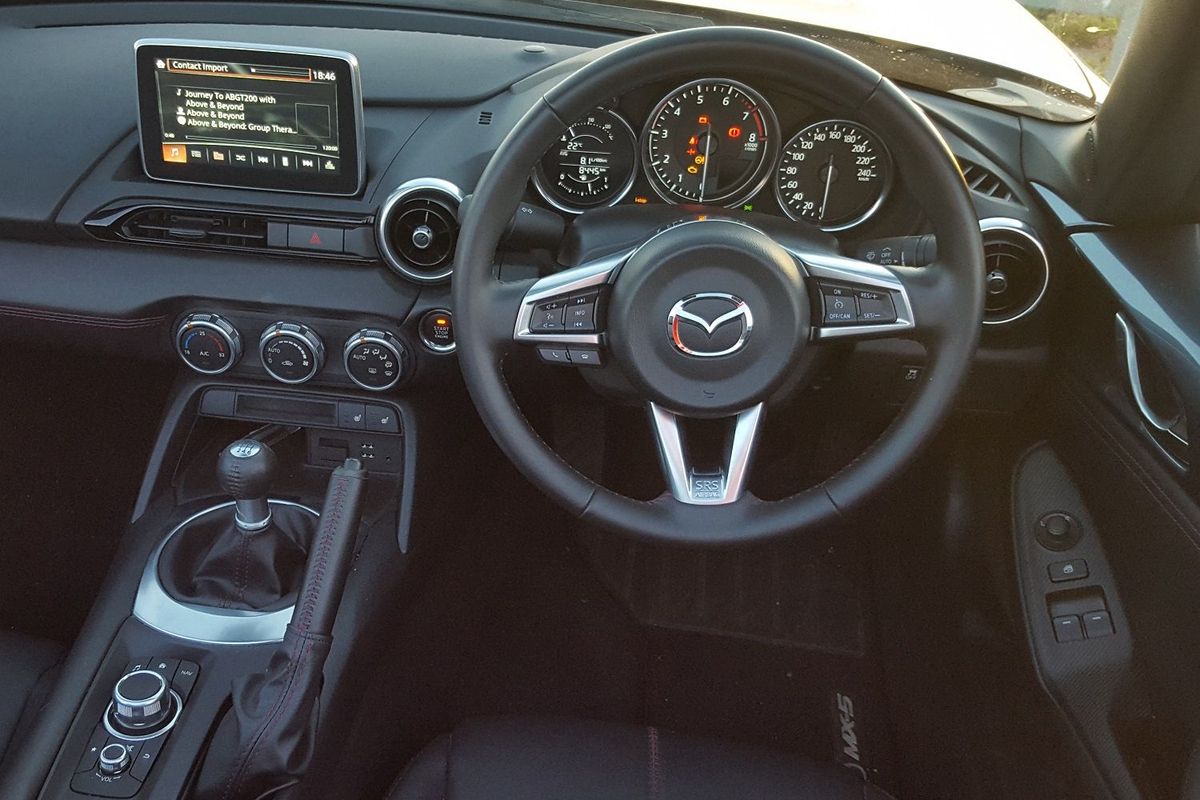
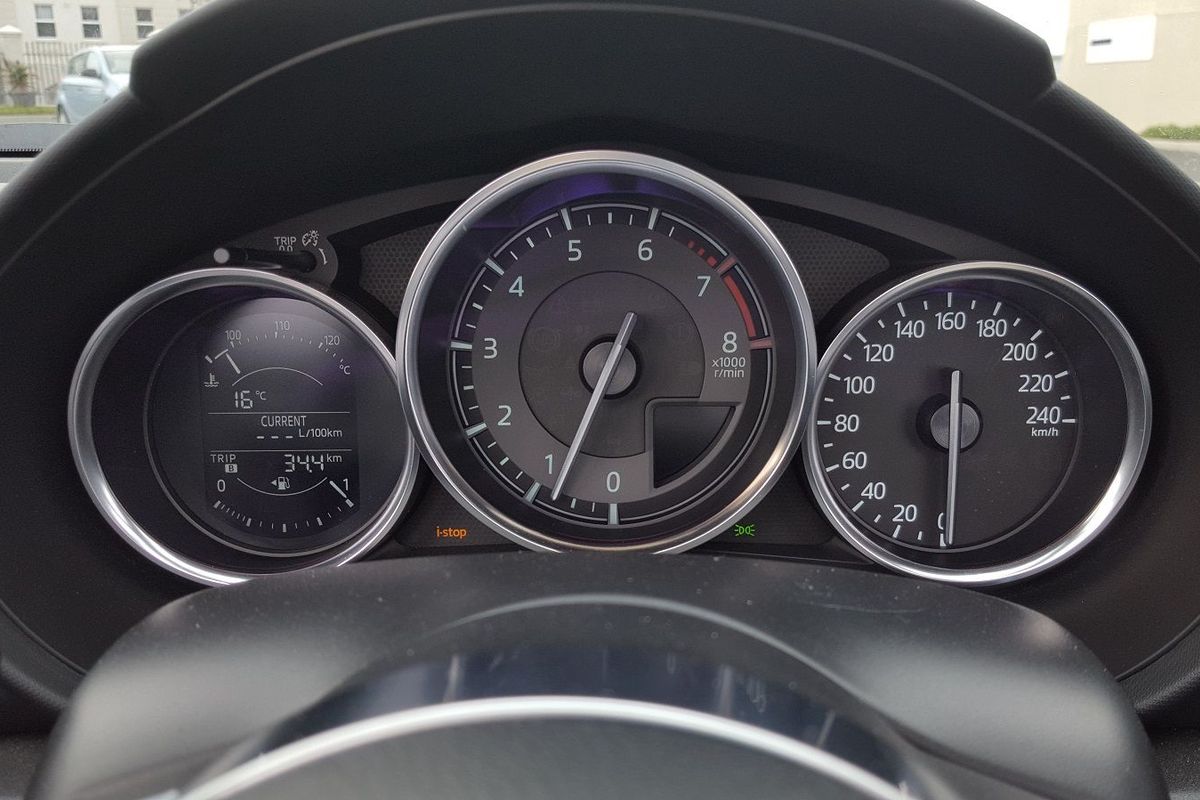
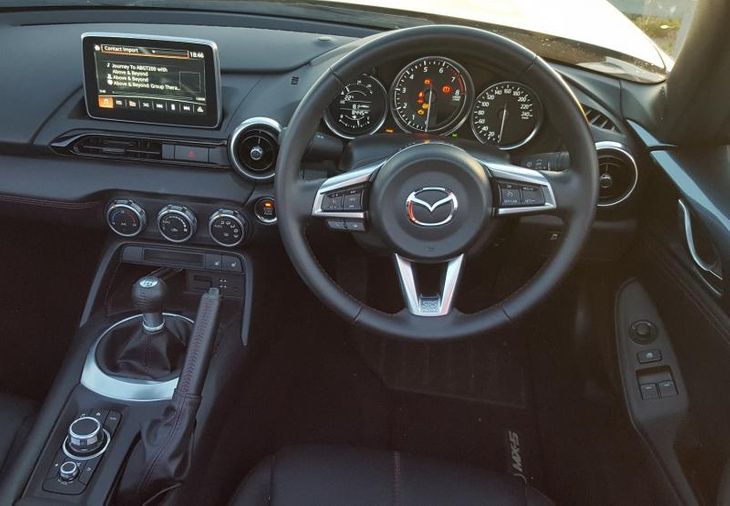
Simple and uncomplicated cockpit. Dashboard and dials are crisp, while infotainment offers 21st-century convenience features.
The Mazda MX-5 goes straight for your heart like a dagger thrown by a deranged ex-lover. This is not a logical buying decision, but then again if you want something sensible, then join the masses in their crossovers and SUVs. It's a vehicle with which you bond on an emotional level, yet it still features plenty of modern-day creature comforts that enhance the driving experience. We were big fans of the heated seats and with careful positioning, you can direct the heat flow from the vents onto your hands and feet, which made early morning Spring drives most enjoyable.
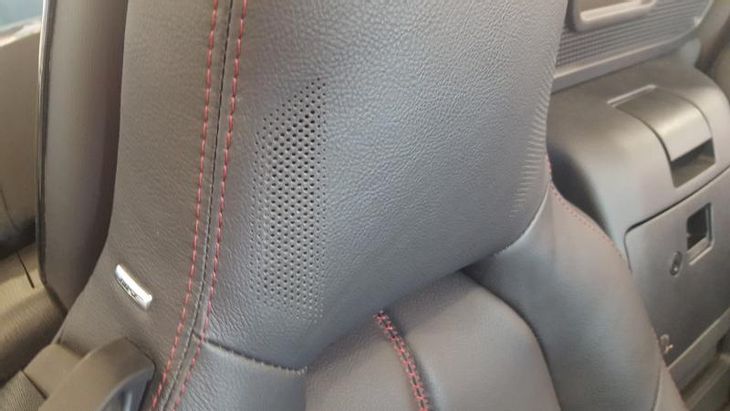
Once the roof is down, you can enjoy your favourite tunes as they blast through the Bose sound system and Mazda has fitted speakers into the headrests, so the beats are not drowned out by wind noise. There's also a potent climate control system as well as a smart touchscreen infotainment system that features satellite navigation. There are 2 USB ports for convenience too. Is it sensible? Hardly. Bose speakers in the headrests so your favourite tunes aren't drowned out by road noise.
Verdict
Recommending such a niche offering to the average car consumer was always going to be a tough sell. The MX-5 offers just about enough features to keep digitally-savvy motorists happy and the boot has enough space for a laptop bag, a camera bag and a completely folded tripod, but not much else. The cabin is a tight squeeze for taller folk, but once you're in, you'll just grin and bear it because the driving experience is so hands on and grin-inducing. This is not a car in which you can sit back in comfort and daydream as you drift home in a traffic jam…
Even at slow speeds, the Mazda's engaging to drive, but where you'll appreciate it the most is at the weekends, when the open, winding road beckons (make that a return ticket on the Cliche Express – ed). That said, the best roadster and all-round driving experiences are to be had in the Mazda MX-5, which is the cheapest drop-top on sale in South Africa. What's more, if the jealous looks garnered from other road users are anything to go by, you're living your best life.
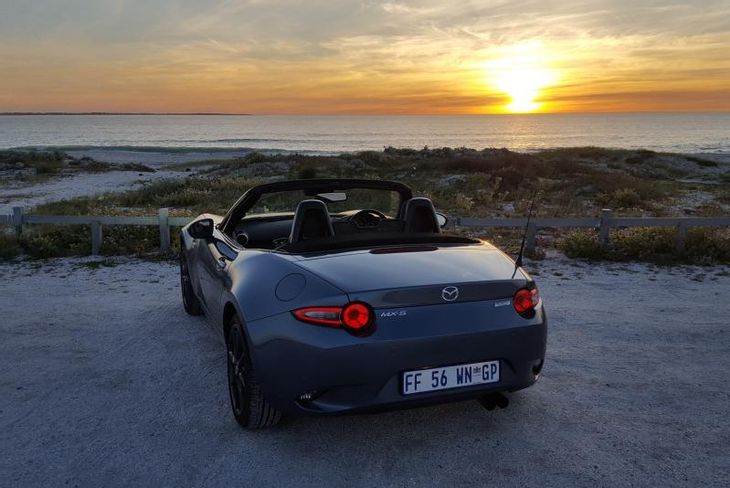
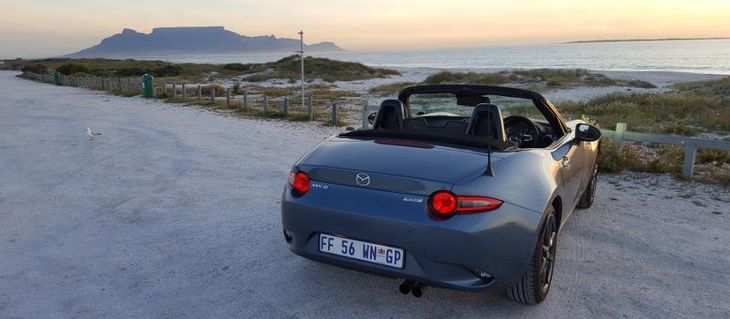
Happy days. Sunset and the Mazda MX-5. We miss its simplicity.
Video
We made a quick video about the Mazda MX-5. See what Francisco Mwamba had to say about the athletic little convertible…
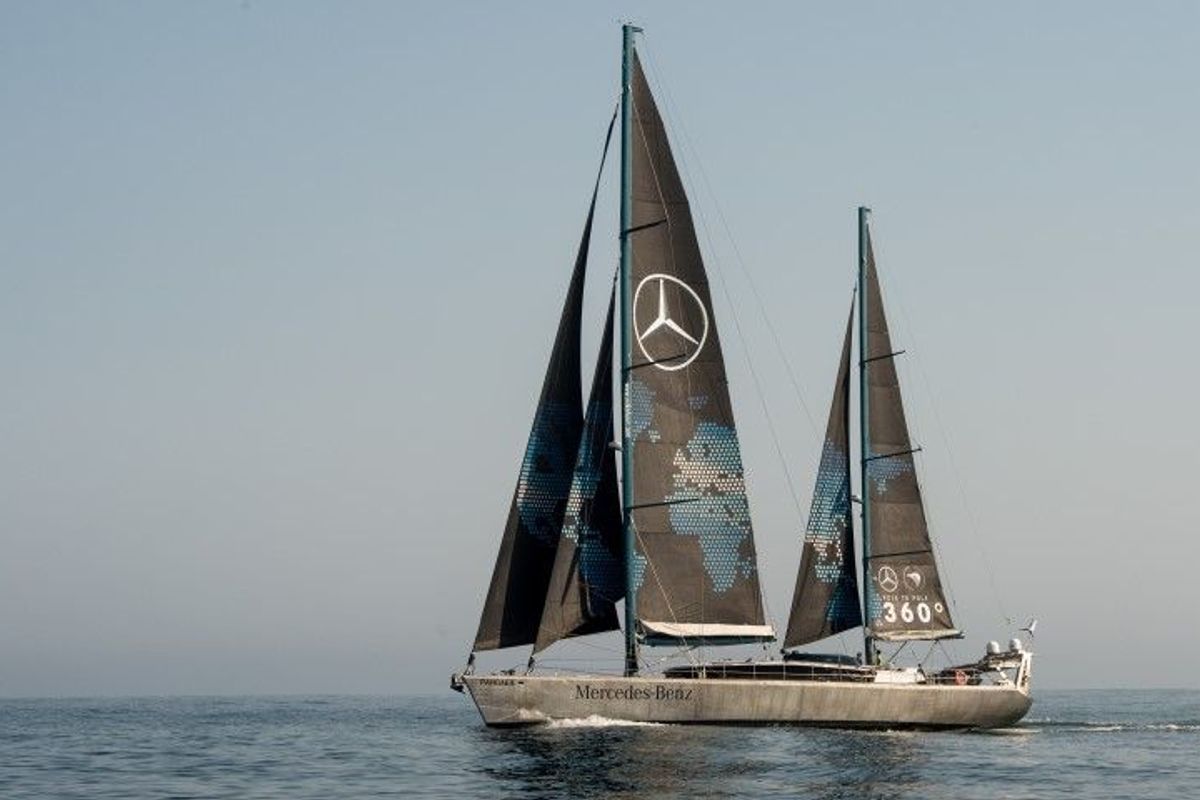
Mike Horn – the world renowned professional adventurer and explorer – is circumnavigating the planet via the poles as part of his Pole2Pole expedition and when he’s not sailing or walking, he’s behind the wheel of a Mercedes-Benz G-Class.
At age 50, Mike Horn is evergreen. His eyes have arguably seen more than anyone on earth and the man positively brims with almost incredible tales of adventure and discovery. For the last 25 years, Mike Horn has explored the world and visited places that most people could only dream of. From swimming the entire length of the Amazon River, circumnavigating the earth via the equator, circumnavigating the Arctic Circle, skiing to the North Pole and scaling the some of the highest mountains in the world… those are only a few of Horn’s achievements.
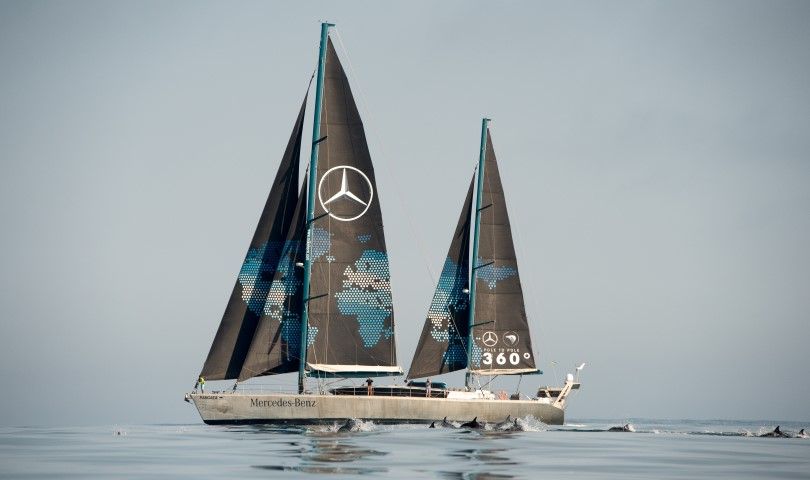
Mike Horn took us for a sail in Table Bay, Cape Town, in his 35-metre vessel named Pangaea.
Mike Horn is a truly worldly man and his latest adventure, the Pole2Pole expedition, will see Horn circumnavigate the earth via the North and South poles. This is an epic adventure that will see him cover at least 38 624 km across 6 continents and his journey will take at least 2 years to complete. The purpose of the Pole2Pole expedition is to encourage and inspire people to step out of their comfort zone, to venture into the unknown and to understand the importance of the planet we live on and act in ways to preserve it.
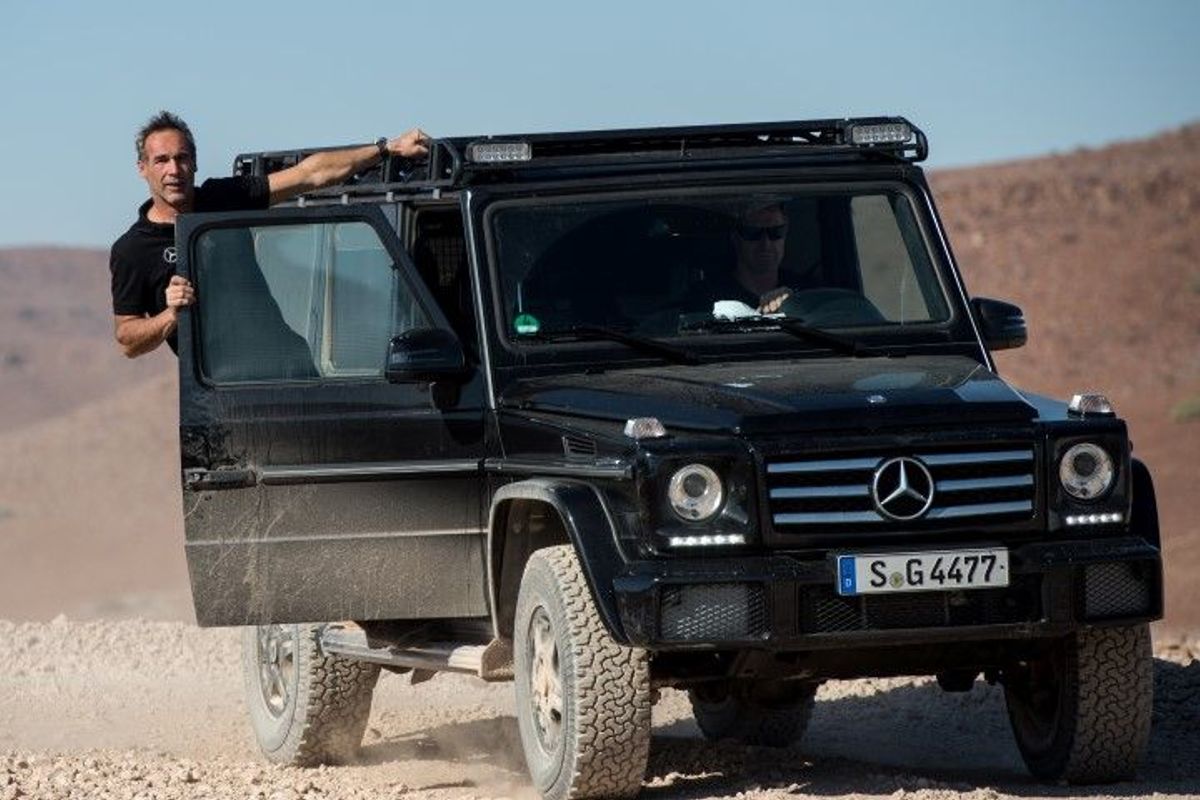
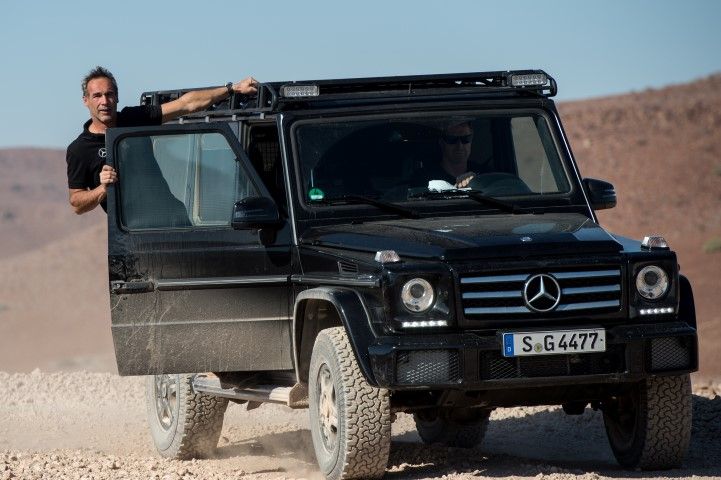
Mike Horn is using two Mercedes-Benz G500's for overlanding in his Pole2Pole expedition.
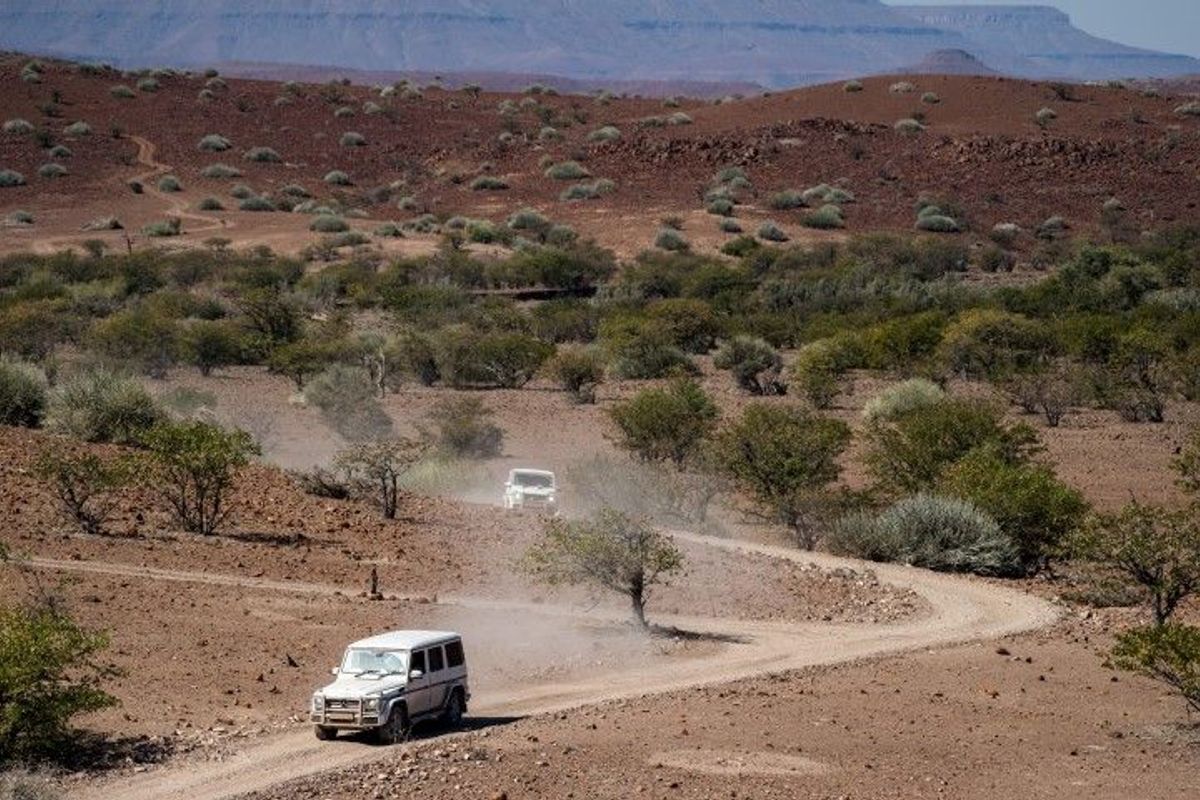
As a Mercedes-Benz G-Class ambassador, Mike Horn will make use of two G500s for overlanding during his expedition. The G500 is powered by a 4.0-litre V8 biturbo engine developing 310 kW and 610 Nm of torque. Mike’s G500 features specialised shock absorbers for tackling difficult terrain, underbody protection, a loading rack on the roof and additional spotlights for navigating in the dark. The G500 has already been put to use in the Namib Desert in Namibia and in Botswana as part of Horn’s journey. According to Horn, the G-Wagon is the only vehicle in the world capable of taking him where he needs to be, often to high altitude locations where ordinary (turbodiesel) vehicles will cease to function.
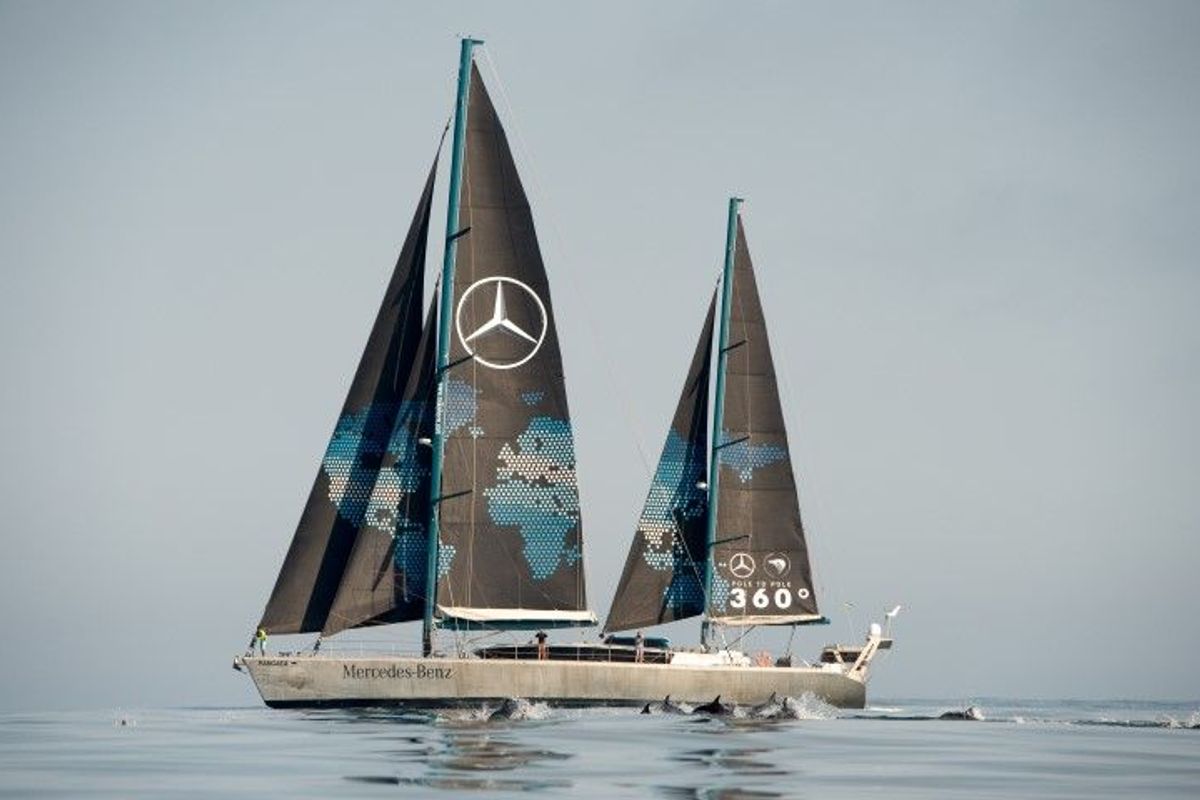
Pangaea sailing from Gibraltar to Walvis Bay, Namibia, with dolphins leading the way.
For the ocean-going legs of the Pole2Pole expedition, Horn and his team will sail the high seas on Pangaea, a specially designed, 35-metre vessel equipped with a media and broadcasting centre, 16-seat conference room and space for 30 people. Pangaea’s kitchen is also optimised to recycle waste and the vessel is equipped with nets to pull rubbish from the ocean along the way.
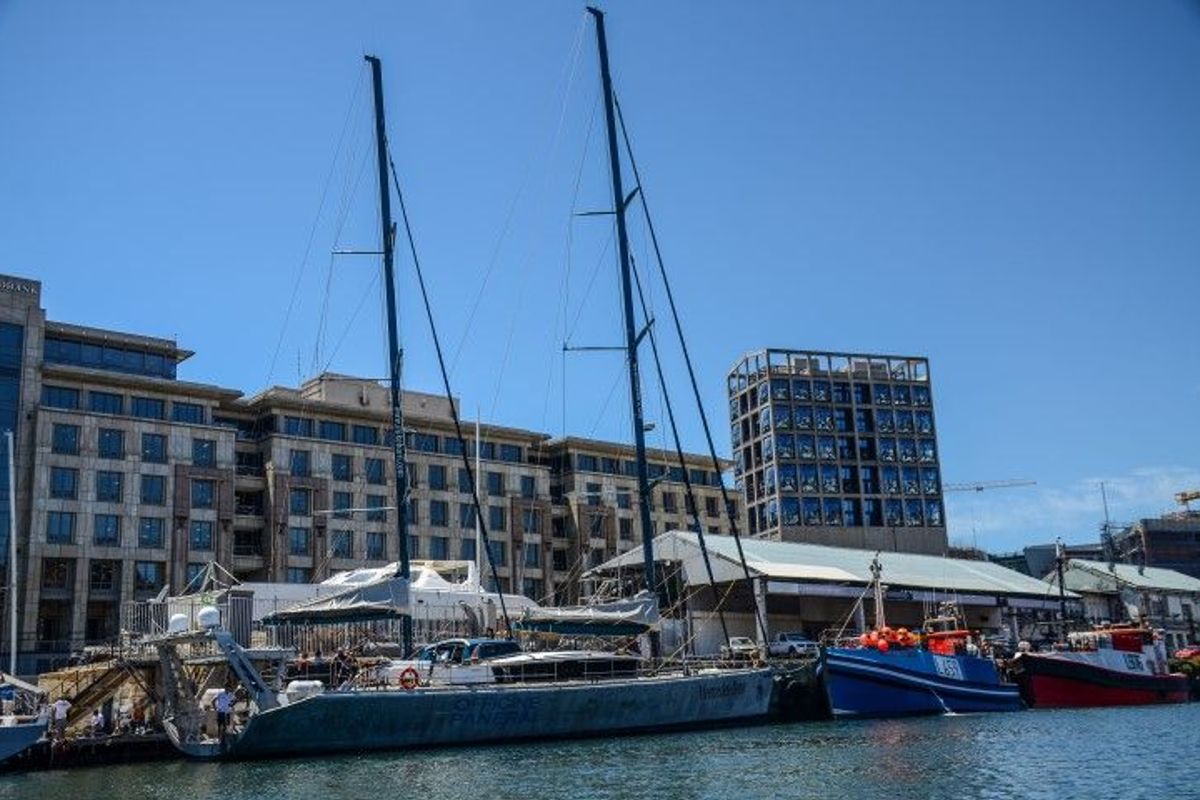
Pangaea is currently moored in the V&A Waterfront and we joined Mercedes-Benz this week to bid Horn farewell for the next part of his journey. We had the opportunity to board Pangaea and we joined the explorer and his team for a quick sail in Table Bay. It was an amazing experience!
Horn will be sailing directly south from Cape Town to Antarctica on 15 November 2016. Once there, Horn will cross the icy continent on foot, using specially designed boots, covering about 8 000 km over a period of 3-4 months.
Horn will then continue his journey to new Zealand, Australia, Papua New Guinea, India, Kamchatka, the North Pole, Greenland and finally back to his starting point in Monaco. The Pole2Pole expedition is expected to come to an end in the second half of 2018. In the meantime, Horn’s Mercedes-Benz G500s will be shipped to Australia for transit to New Zealand where he will need them once again for his overlanding adventure.
You can follow Mike Horn’s journey on his website here!
Watch the video below to see what Mike Horn was up to in his recent visit to Namibia.
Autonomous driving is the hot topic in the automotive world at present, but rampant misreporting on the subject has not only created unrealistic expectations, it has also made driving enthusiasts feel threatened. BMW, however, has some good news…
The recent Paris Motor Show was the first international exhibition I have attended since coming back to the motoring media world. I was only away for 3 years, but nevertheless the change the industry has experienced in that time was astonishing to see as I walked the otherwise familiar halls of the Mondial de L'Automobile at Porte de Versailles. Electrification, digitalization and autonomony were the buzz trends, and like many of my colleagues, I sometimes find the big changes that are looming around the corner intimidating and hard to understand.
Consequently, I was particularly grateful for the opportunity to chat to senior BMW engineers and designers on these very hot topics in Paris… not only because I could generate content on the subjects, but for more personal reasons, too. As is the case for many driving enthusiasts, I'm sure, the subject of autonomous driving is particularly bothersome. And, besides, what does it all mean for a brand such as BMW, famed for its "Sheer Driving Pleasure" slogan?
Enter Dr Dirk Wisselmann, Senior Engineer Automated Driving of the BMW Group. Within 20 minutes, he had not only corrected numerous misconceptions, but also allayed my biggest fear – that driving for fun will soon be a thing of the past. This is what I learned…
Highly Automated and Autonomous – it's not the same thing
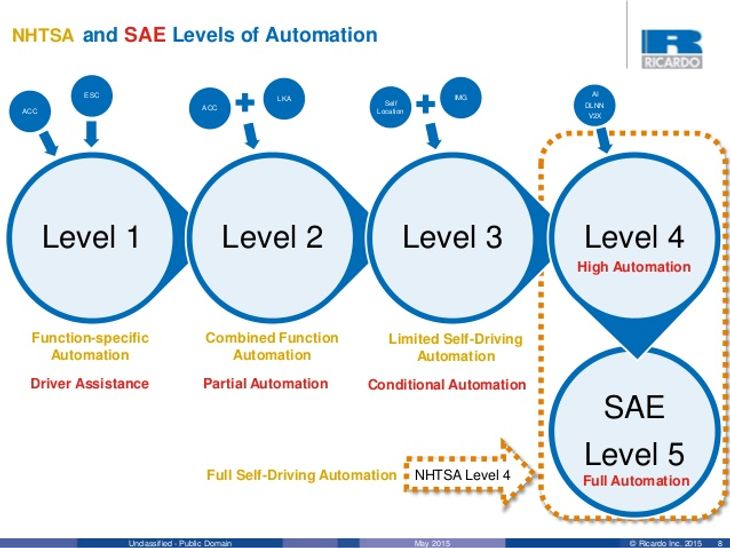
The various levels of Automation according to NHTSA and SAE.
During my research prior to the Paris Motor Show interview, I noticed that Dr. Wisselmann prefers to avoid the blanket term "autonomous driving". It was a good starting point for the chat.
"There is a big difference (between highly automated and purely autonomous driving)," he says. "Let’s start with autonomous driving. This is very simple to define because there is no activity required from the driver. This means you don’t need a driver’s licence. You don’t need to be able, or even capable of driving a car. The kids can drive… You can be drunken. It’s really like a train. There is no activity required. Here we talk of so-called level 5 cars, and in some instances level 4.
"Highly automated driving will, in terms of timing, be available much earlier. These are the Level 3 capable cars. With these cars, in specific situations and on specific roads, divided roads for example, where there is no relative (oncoming) traffic, we want to offer drivers the opportunity to completely delegate driving tasks – the work of driving – and he can relax and do other things, such as send e-mails, for example. But he may not sleep. That’s a big difference. Highly automated driving means that within a given timeframe, let's say 6 to 7 seconds, the driver can take over the driving function again. Maybe there’s a work zone on the highway, and the car tells the driver about the situation, and instructs him to take over."
Hands-off in… 2021
So, where are we at present, and how long before we can take our hands off the steering wheel?
"At the moment we have so-called level 2 capable cars, which means there is a constant monitoring of the driver and car. We call the actual systems “assistants”, such as lane and steering control assistant. This is very important for us, because it must be very clear to the driver that it’s not autonomous driving right now. It’s really a kind of intelligient power steering, with a foresight function. This means the technologies relieve you from these minor control activities, so you can already relax with today’s cars, but you have to monitor the situation."
See the video above for examples of the assistant technologies Wisselmann makes mention of.
Level 3 vehicles are, however, around the corner, Wisselmann says. BMW has announced that its first Level 3 capable car will be shown in 2021, but it would appear some Level 4 technology will also feature. Wisselmann's description of a Level 4 driving scenario seems pure science fiction, but the reality is that it is nearer than we think.
"Let's say you want to go to the Alps to ski," he begins. "It's a long trip, so you can leave Munich in your Level 4 car and go to sleep. The car will then wake you up when you near the Alps and the roads get twistier or the road conditions are poor. Then you can drive yourself. Level 4 is very interesting to us, and it will still require you to have a driver's licence, and to be capable of driving."
The future for driving fun?
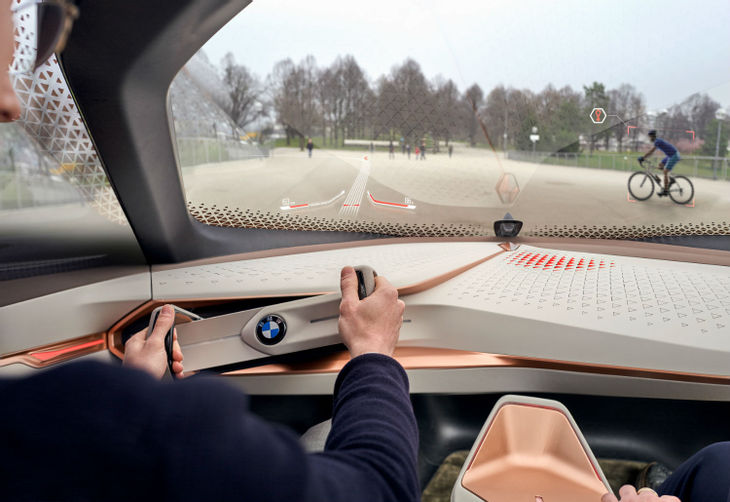
Don't expect the steering wheel and pedals to disappear from cars any time soon!
BMW, of course, is associated with the "Sheer Driving Pleasure" slogan. How does Wisselmann see the brand ethos being affected by all these new technologies, seemingly with the ultimate goal of no human involvement in the act of driving?
"I think the difference is really from level 4 and level 5," Wisselmann begins. "As I said before, to be honest, today, the driving situation is not very interesting, such as on the highway and in traffic… not very fun. With the automation technologies we want to delegate the driving in these situations to the car, and if there is an interesting road or trip, then you can do it yourself. It is therefore fitting perfectly with our brand. It is the driver's decision. You can do it yourself or hand it over to your car."
Wisselmann pauses, as if thinking very carefully about his next words…
"Autonomous driving, without steering, without pedals, is something different of course, but this is something we will see first in an urban environemnt. It’s not realistic that we will see level 5 cars going to very complex, or countryside roads. We should not talk about this in the next decade because the cars will not be capable (to do so). And I think we can talk in 10, 15, 20 years whether we really will switch completely to level 5 cars. At the moment it is something we can discuss on a hypothetical basis but it’s not interesting," he explains.
Indeed… later in the interview he also mentions that the computing power needed for full autonomy is such that the current processing power available would have to increase tenfold.
Safety and the Human factor
Dr. Dirk Wisselmann – Senior Engineer Automated Driving at BMW Group.
Our chat then turns to safety concerns and the much-publicised goal of "Vision Zero", the phrase coined for the industry-wide aim to have no road accidents.
"We want to completely avoid traffic incidents. Of course we are on the way. In the last 40 years we have reduced the number of people killed in Germany from more than 20 000 per year to fewer than 3 000 in 2016. It's a dramatic decrease. But we are not at zero and the automation has a potential to bring us closer to zero. Real zero will never be realistic.
"The automation will help to decrease the number of accidents. The automated car is constantly aware of the driving situation and not distracted. It is always attentive. It is a good means to reduce a number. But one thing is important – automation is not always helpful. A highly experienced and trained driver is very capable of avoiding accidents. Of course a driver today is the main reason for accidents, but is also the main reason for not having accidents. If we replace the driver we must put something in the car to avoid accidents in the same way and that’s not that easy."
And what of ethical decision making, a topic often raised by naysayers in the media?
"I have a personal opinion when it comes to the ethical decision making. We looked at the number of accidents where ethical decisions have to be made today and to be honest, you virtually find nothing. Actually, there are almost no accidents where the driver has to choose if he kills a human, or between an old man or a child. This doesn’t really happen," Wisselmann explains. "So in our cars, we will not apply any ethnical algorithms.
In summary
Arguably the most important nugget of information gained from this interview was that Wisselmann, and I assume BMW as an organisation, doesn't currently view automation as a threat to what the brand stands for. A future of automated (Level 5), connected transport in cities makes absolute sense if you think about it, with personal cars ultimately becoming Level 4 vehicles that allow you to still "head for the hills" should you desire.
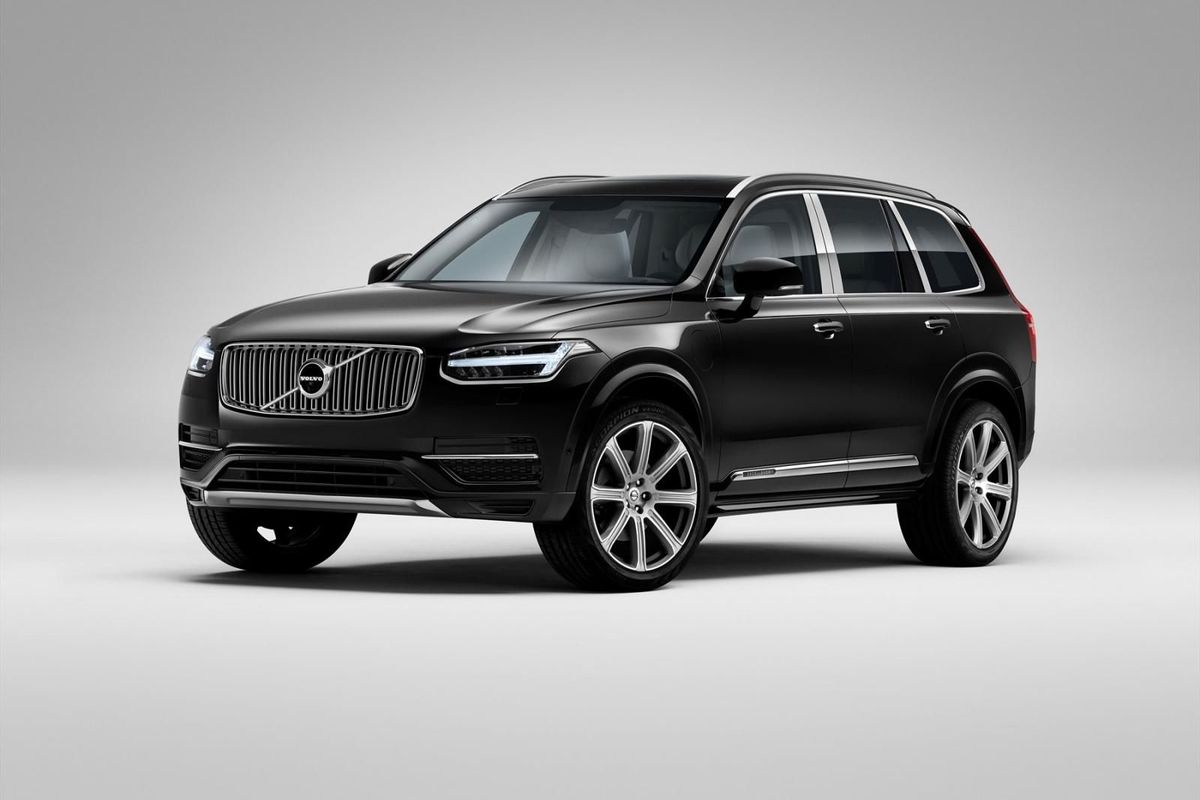
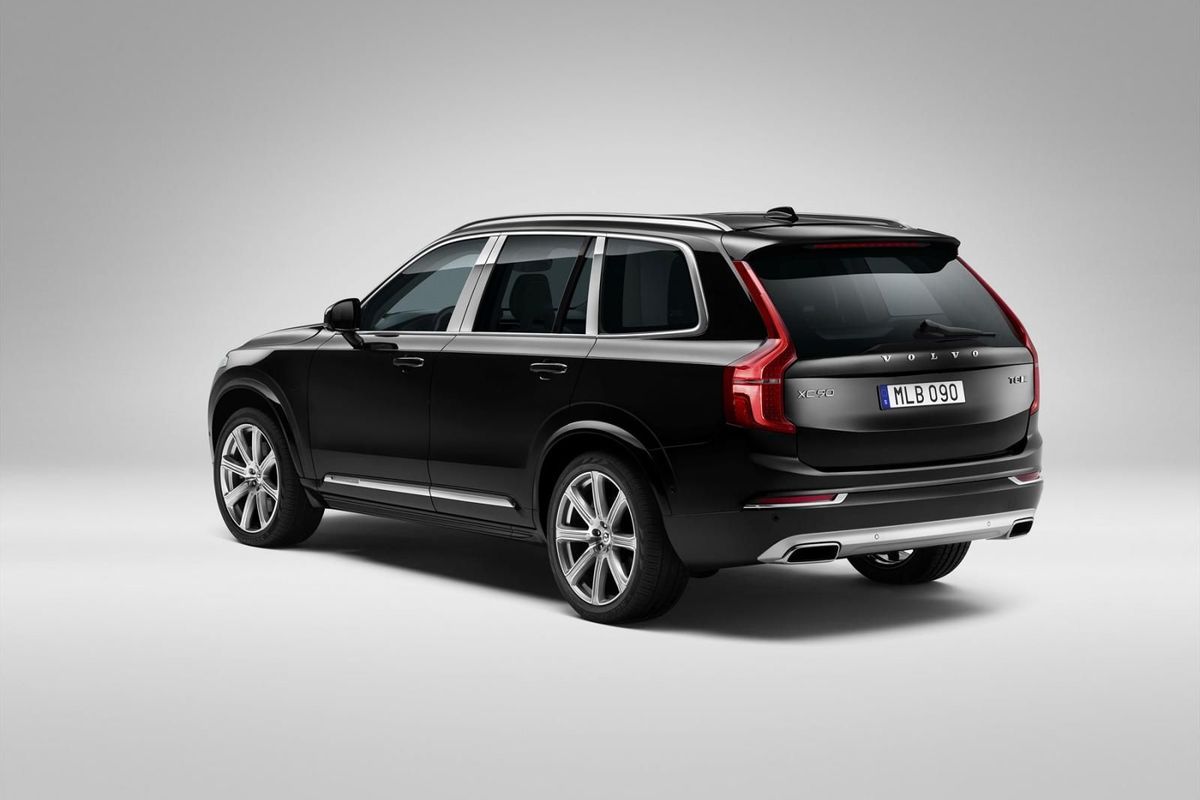
Volvo has introduced an all-new, ultra-luxurious XC90 to occupy the summit of its lineup. It's called the Excellence, and has all the toys…
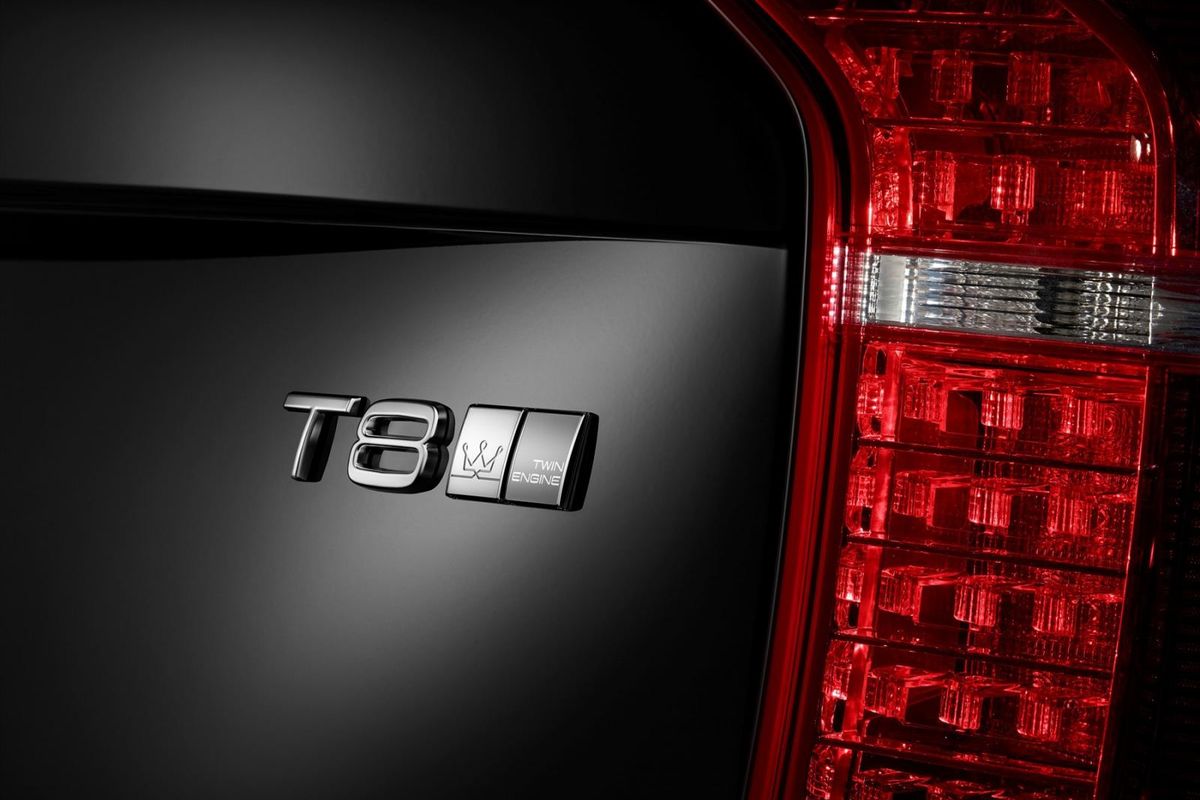
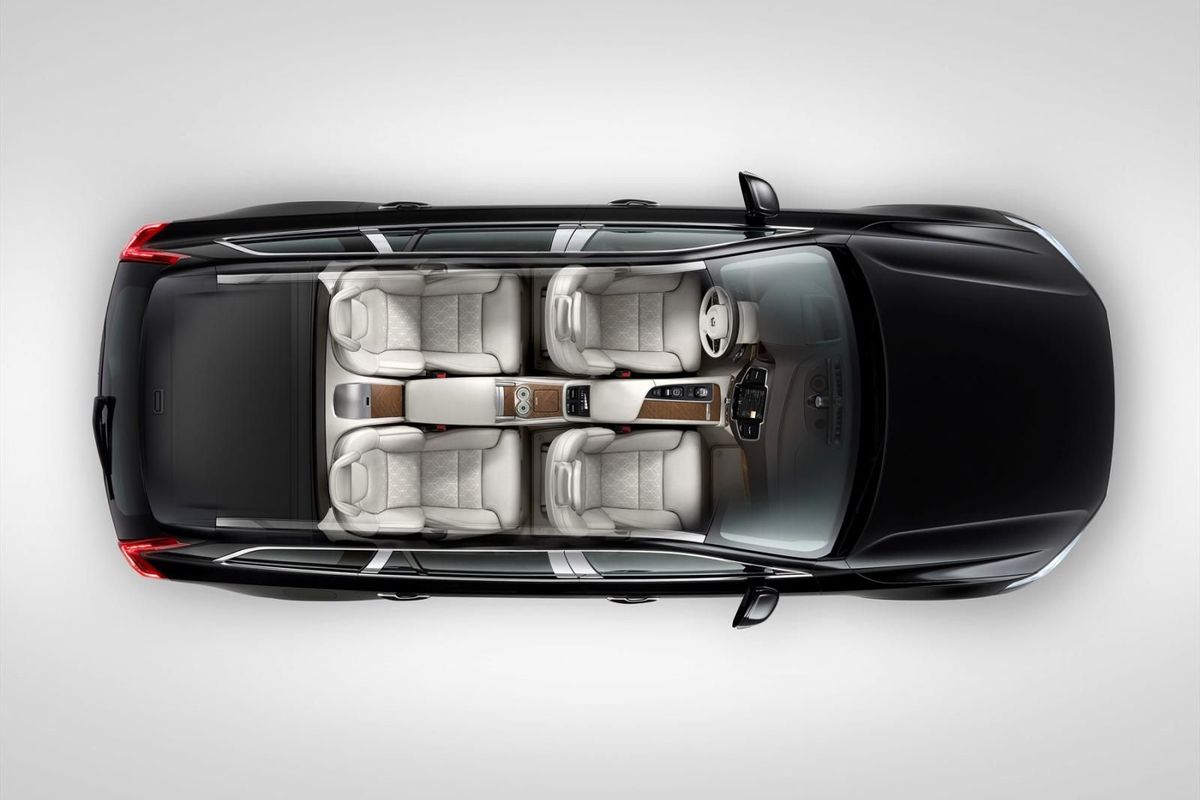
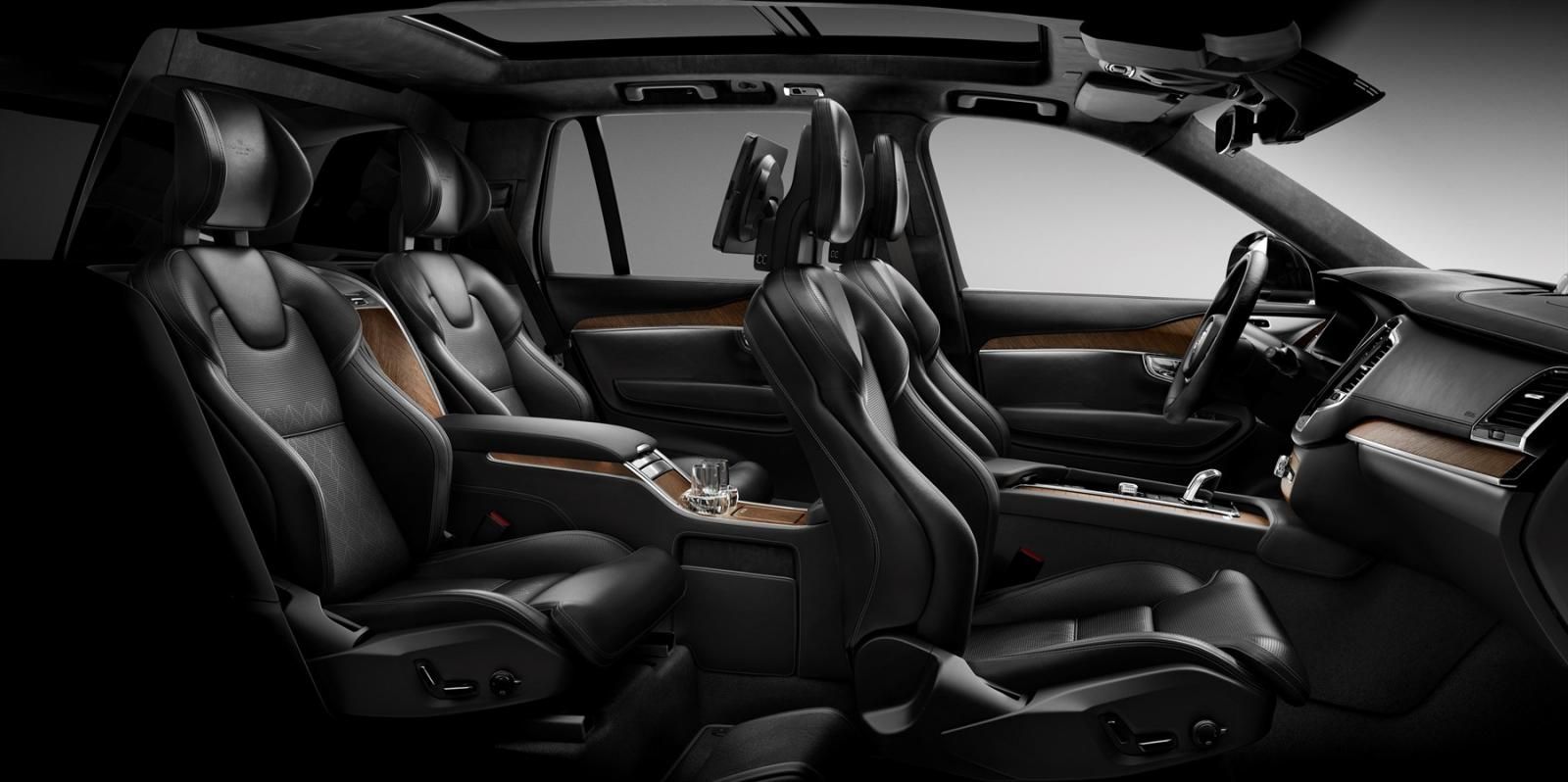
In order to turn the regular X90 into an Excellence model, Volvo has dropped 3 of the seats. This has transformed the already luxurious XC90 into a true first class offering tailored for 4 lucky individuals. The Excellence package is also only available for the Twin Engine T8 model.
A raft of small detail improvements and additional specification further boost the XC90's limo-like character. Rear seat controls have been added for the climate control system and an even better Bowers & Wilkins sound system has been installed. Sound insulation has also been improved in order to mute road and wind noise as well as to keep sound escaping when listening to the high-end sound system.
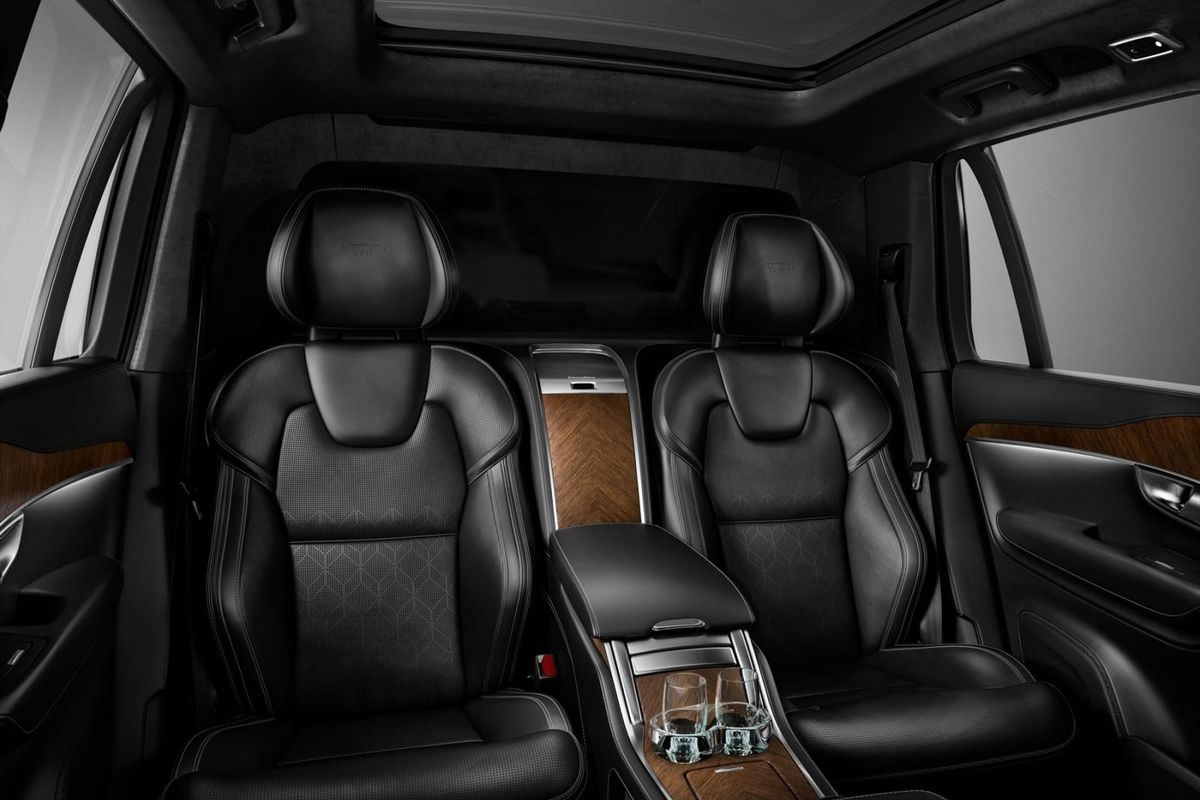
The already impressively comfortable seats now come with a massage function as well as heating and cooling modes. The rear bench has been replaced with 2 individual seats that can be electrically adjusted as much as the front chairs and footrests are fitted.
Individual rear seats with footrests and enhanced entertainment and comfort features mark out the Excellence.
Rear entertainment has been added with tablet holders placed in the front seatbacks with a tray table fitted for those with laptops. For charging requirements, there’s a 230V socket as well as 2 USB ports in the rear.
To improve sound insulation, a glass partition separates the rear seating area from the boot compartment. The claimed luggage space without the 3rd row of seats is 726-litres.
Volvo has included just about every option from its lengthy accessories list into the Excellence model with the only choice being 1 of the 10 paint colours and the colour of the leather (Blond in Charcoal or Charcoal in Charcoal).
Pricing
The XC90 Excellence is available on request and costs R1 550 000, putting it up there with the likes of Range Rovers and Mercedes-Benz's GLS.
Isuzu KB 250 HO X-Rider Extended Cab (2016) Review
Special edition vehicles and “cab-and-a-half” bakkies are two things that the mainstream automotive media reviews infrequently. Shortly before the facelift of the KB range, we were availed an X-Rider Extended Cab unit… and liked it.
We like: For urbanites, an extended cab is far more practical than a single cab. Tax benefit.
We don’t like: Ill-fitting doors, low footwell, very basic infotainment system
Alternatives
For greater refinement: Consider the Toyota Hilux Xtra Cab 2.4 GD-6 Raised Body SRX, priced at R354 800. It may appear slightly expensive in this company, but what you do get is the best engine on offer as well as a very car-like cabin. In addition to its smoothness, the 2.4-litre mill is also powerful (400 Nm of torque), endowing the Hilux with a braked tow rating of 2 750 kg. It comes with a diff-lock as standard, but lacks electronic stability control. Somewhat surprisingly, it rides on 17-inch alloy wheels as standard.
For a workhorse-oriented offering: Battling it out with the Toyota in the sales charts is the more basically specified (as standard) Ranger 2.2 Hi-Rider XL. You pay extra for alloy wheels, a diff-lock etc., but those items are available and not that pricey, which means the price of R343 900 is competitive. What you do get is an impressive engine, a braked tow rating of 2 500 kg, standard electronic stability control and even rear storage boxes.
What is it?
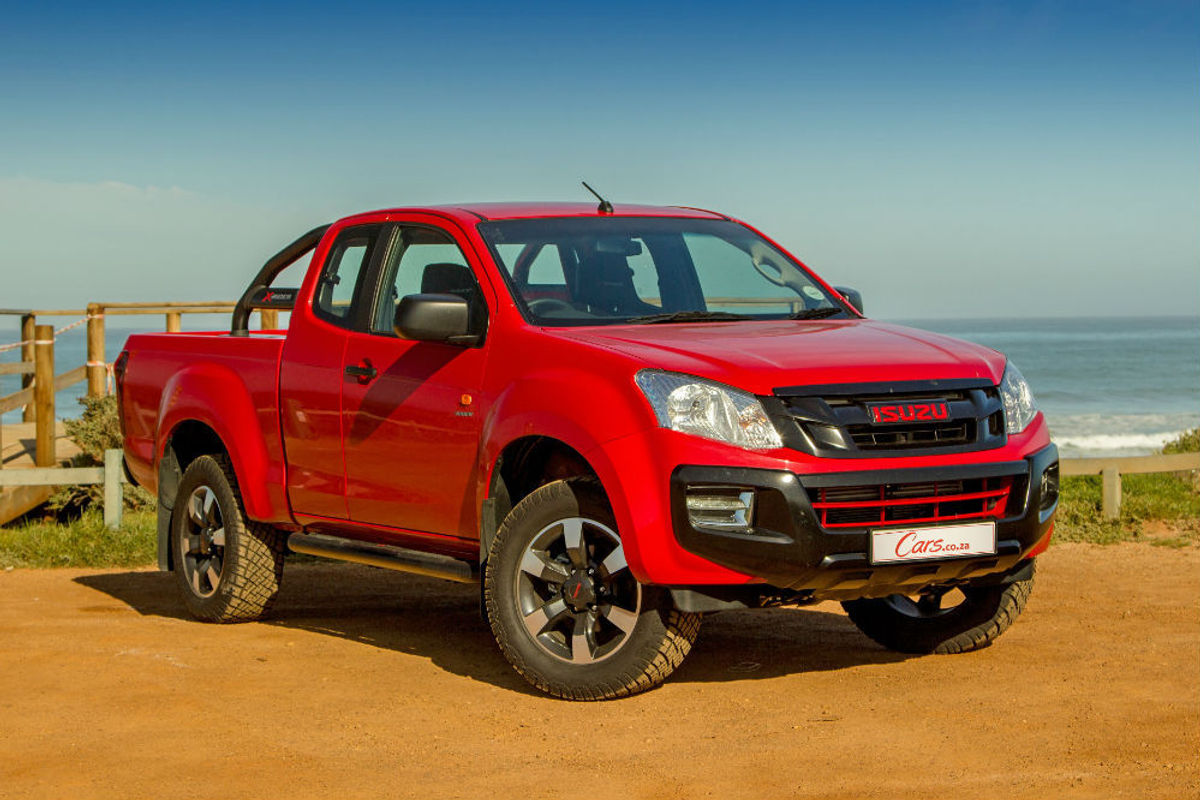
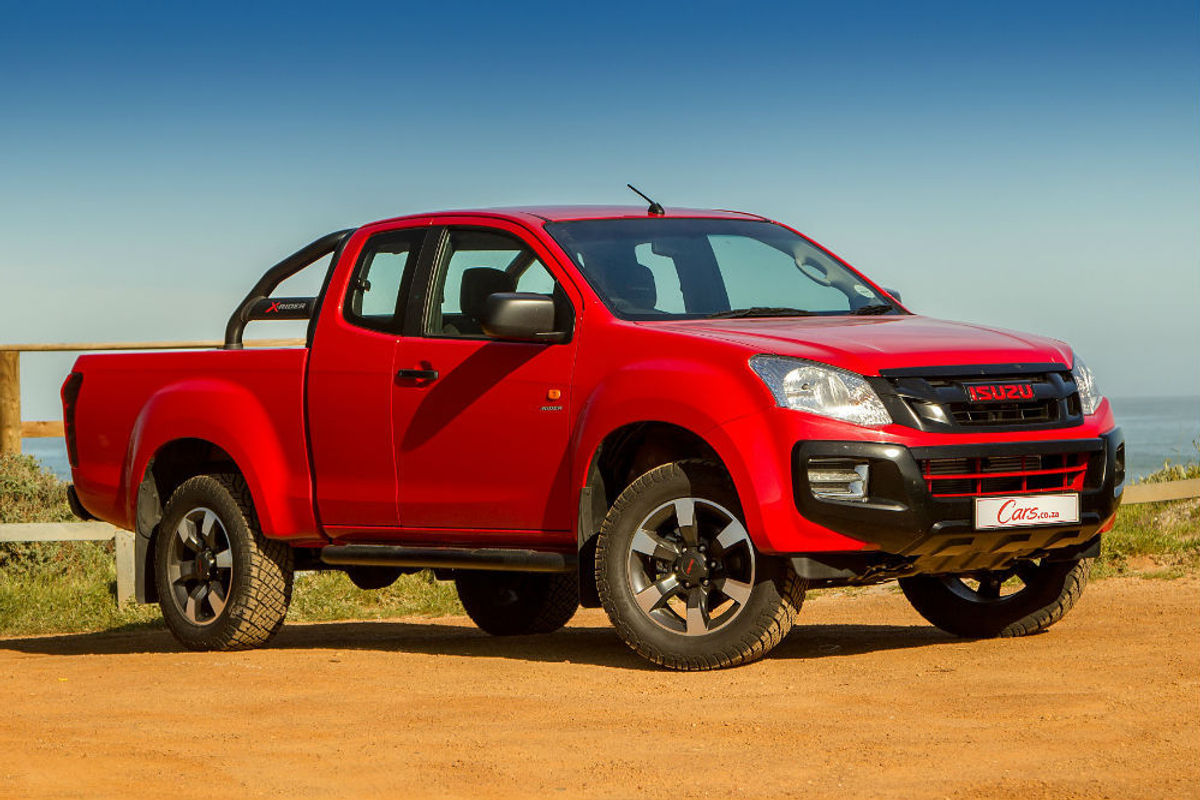
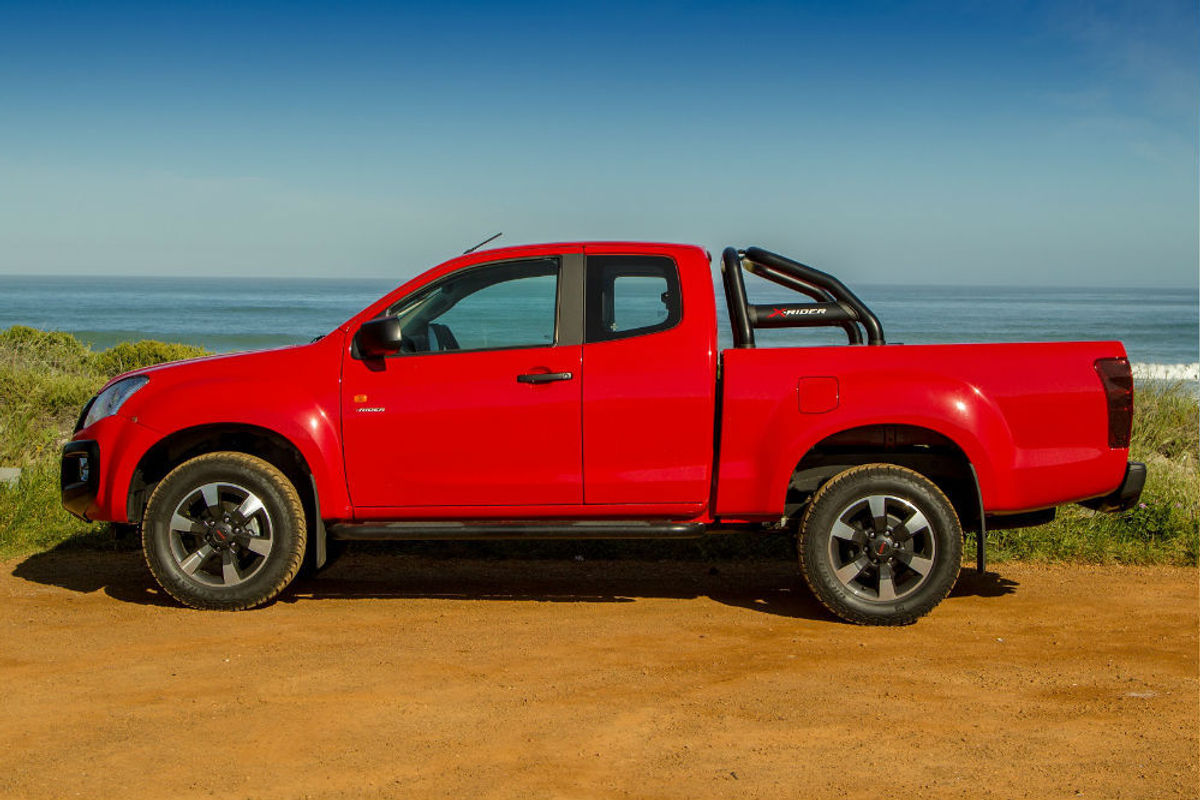
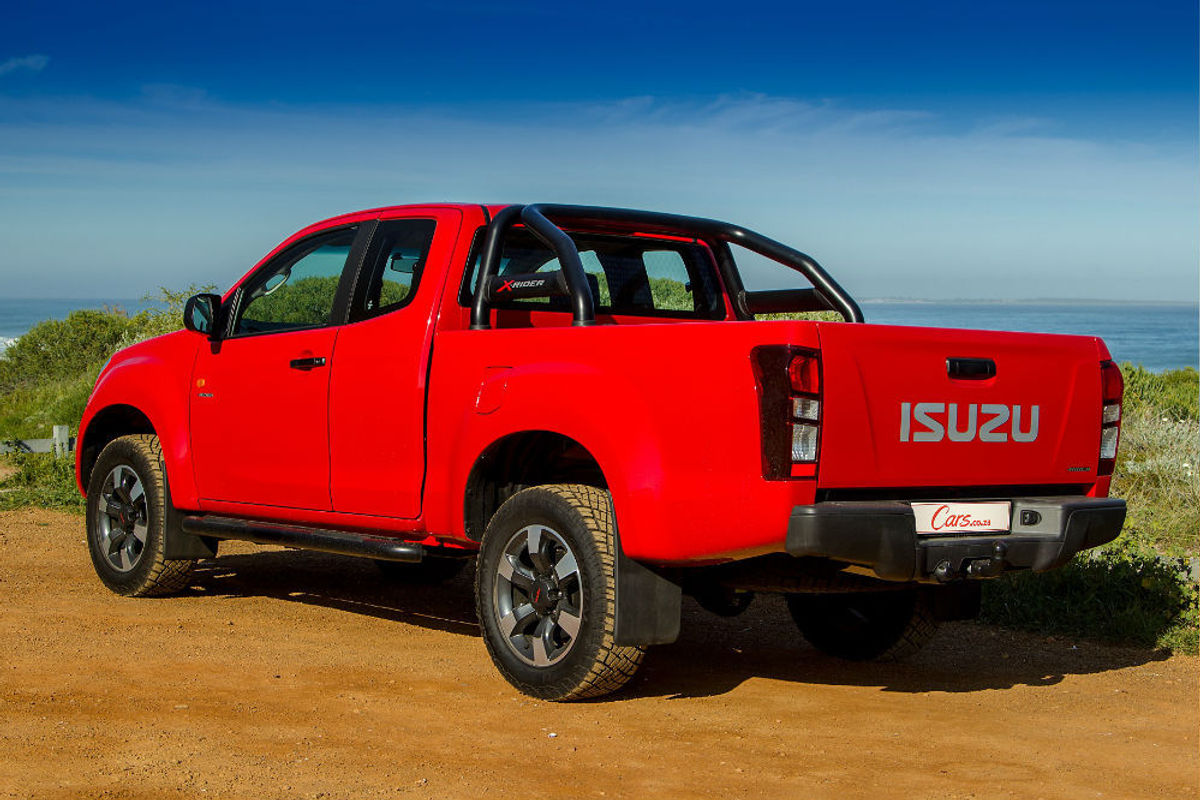
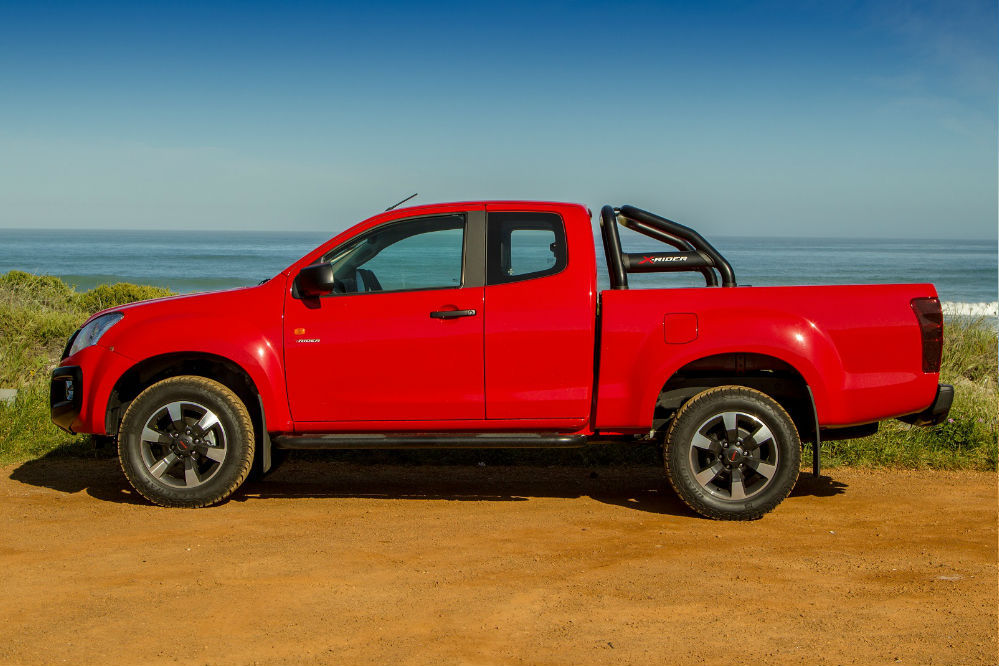
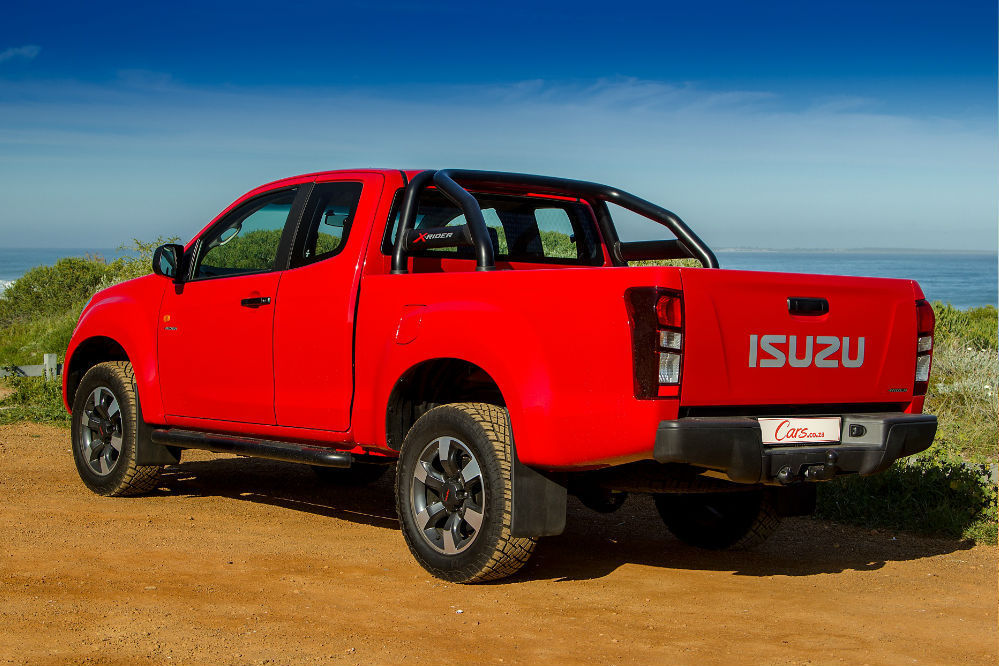
The X-Rider add-ons made the pre-facelift Isuzu KB turn plenty of heads. It looks more "leisure", than workhorse.
First, a disclaimer – the bakkie reviewed here is no longer listed on the new vehicle price sheets, so unless you can find one standing at a General Motors dealer (unlikely), you may have missed the boat on this one. Based on traffic on this site, however, there appears to remain significant interest in the special edition Isuzu KB X-Rider. In some ways this is quite perplexing. A refreshed Isuzu KB has since been launched – read about that here – and if you look at the sales figures, fewer than 100 units have been sold in the four months it was officially on sale (June, July, August, September). A closer look at those sales figures reveal, however, that the X-Rider had boosted Isuzu sales in this segment (especially considering the pre-facelift KB was on run-out). And if you look at the other brands, it seems there is some demand for a more highly specified, leisure-oriented offering such as this X-Rider. Isuzu… you may want to make it a permanent fixture of the line-up!
So, given the continued interest in the X-Rider even since its discontinuation, we've decided to publish the review to aid buyers looking for this type of vehicle in the pre-owned market.
How does it fare in terms of…
Making a statement
Unlike other special edition bakkies, the X-Rider's accessories don't appear generic and "off-the-shelf".
“Extended-cab” bakkies aren’t generally on the radar of the automotive media, because family vehicle buyers want bakkies with bigger cabins to accommodate passengers (that’s why there are double cabs). And, because most motoring publications’ content is tailored to private buyers, “stretched cabs”, which are meant to avail space for the transportation of goods/equipment (SARS allows businesspeople to deduct such purchases from tax), hardly ever feature in car companies' media fleets. But, the X-Rider appears to target a different type of buyer. With its bold looks it turned plenty of heads during its time with us, and generally we think it appeals strongly as a dual-purpose vehicle – workhorse during the week, leisure vehicle by weekend.
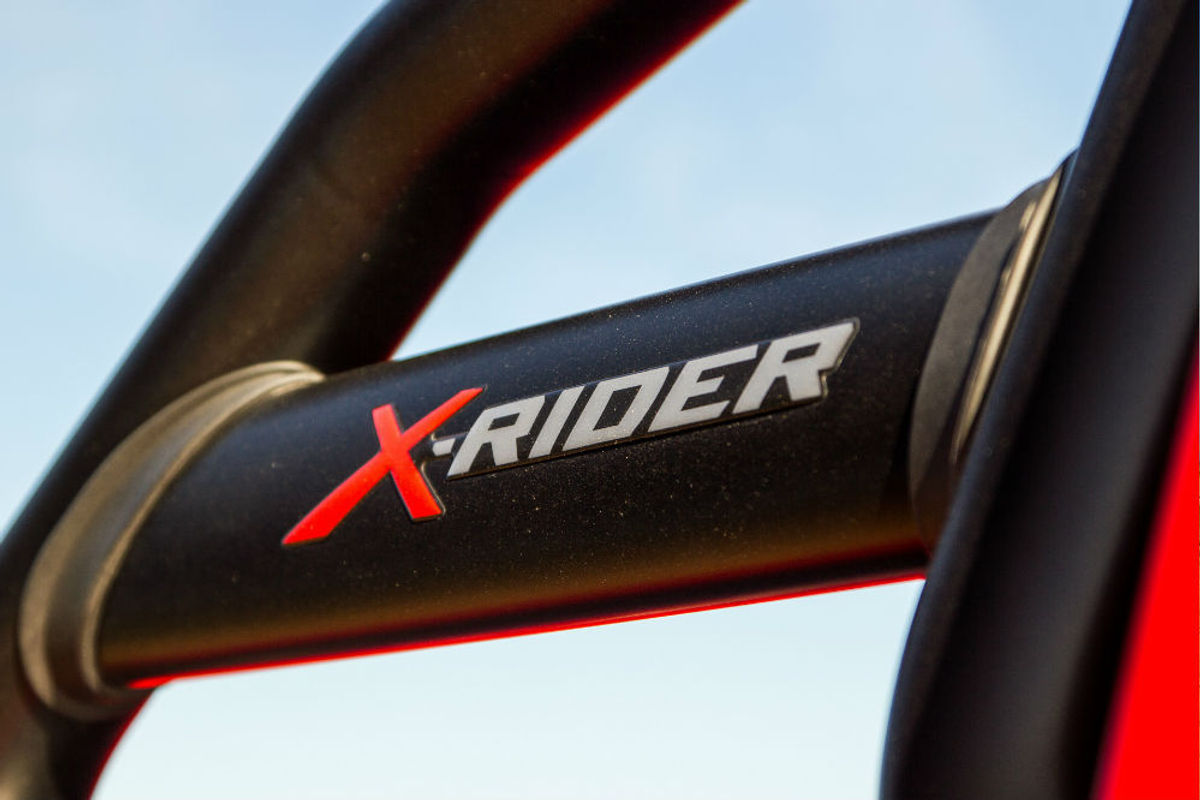
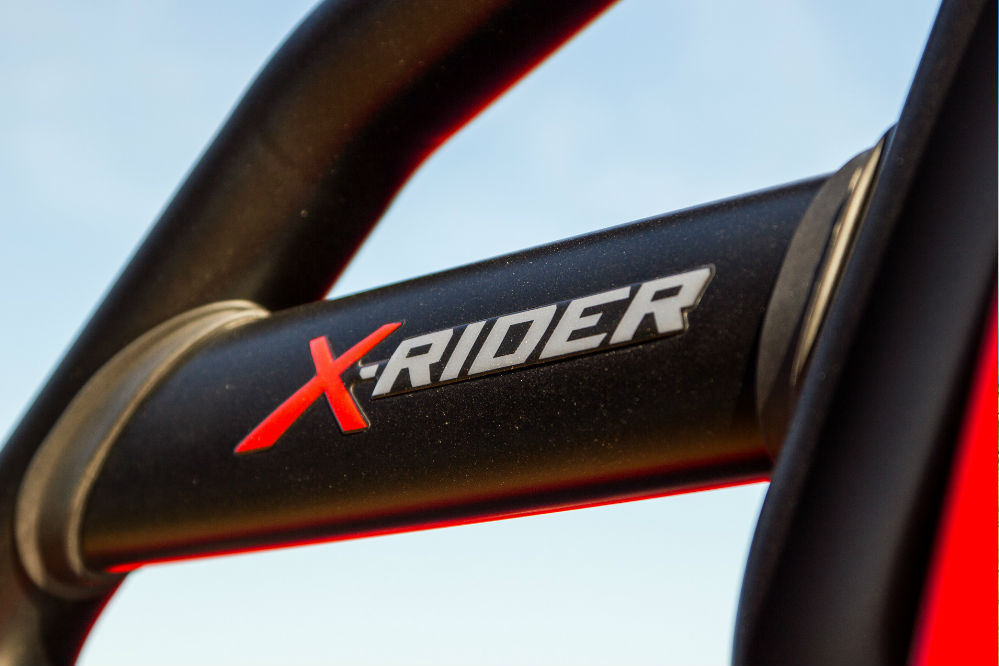
The X-Rider accessories package turns the pre-facelift KB into quite a looker. In fact, some members of the team were of the opinion that the X-Rider package should have been the facelift! You get a black front bumper guard, black tubular side steps, black sports bar and a neatly blacked-out B-pillar. Combined with the Maranello Red paint of our test unit, the black accessories were particularly eyecatching. Also included are striking 18-inch diamond-cut alloy wheels, LED daytime running lights, wheel caps with the Isuzu branding in red and X-Rider body decals.
Cabin features
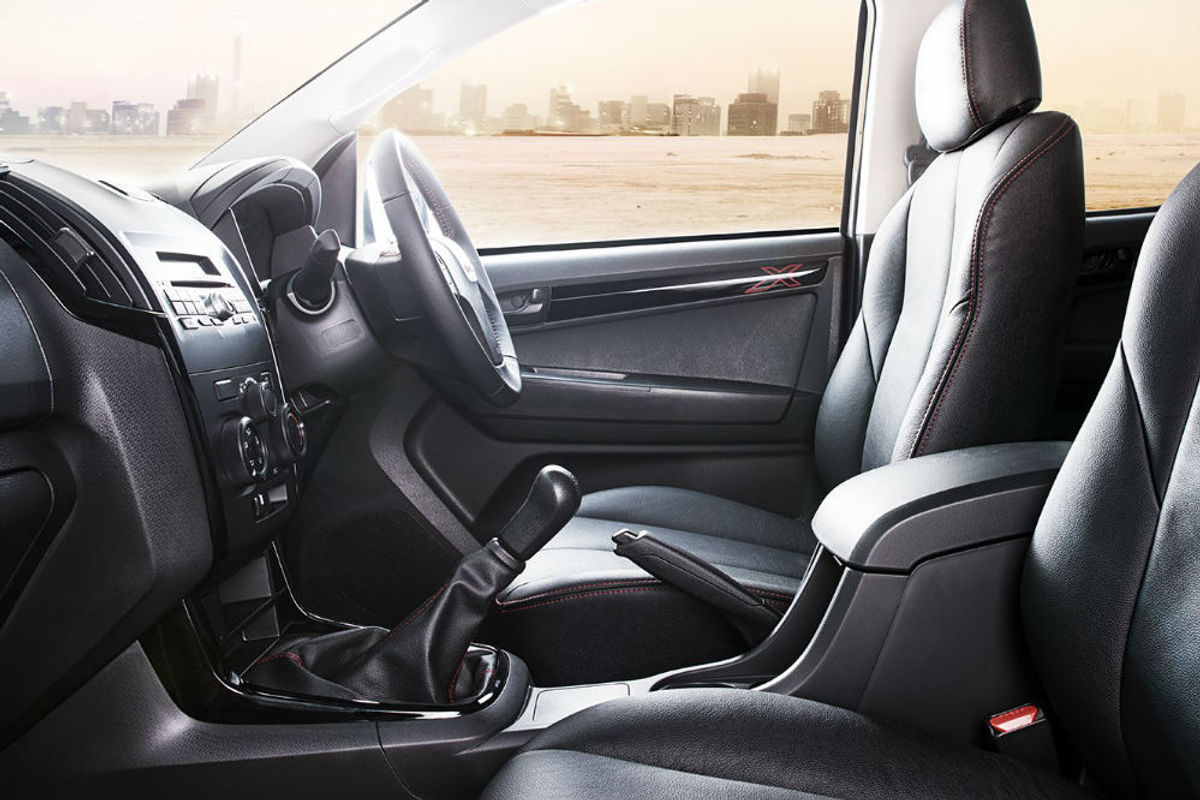
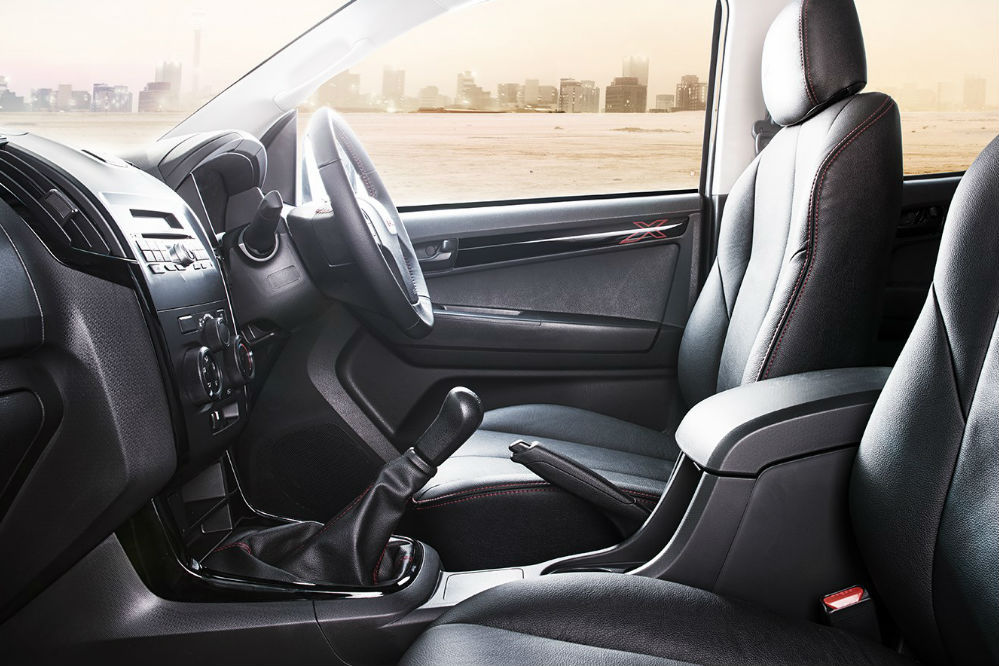
Leather upholstery, piano black inserts and X-Rider logos dominate the cabin.
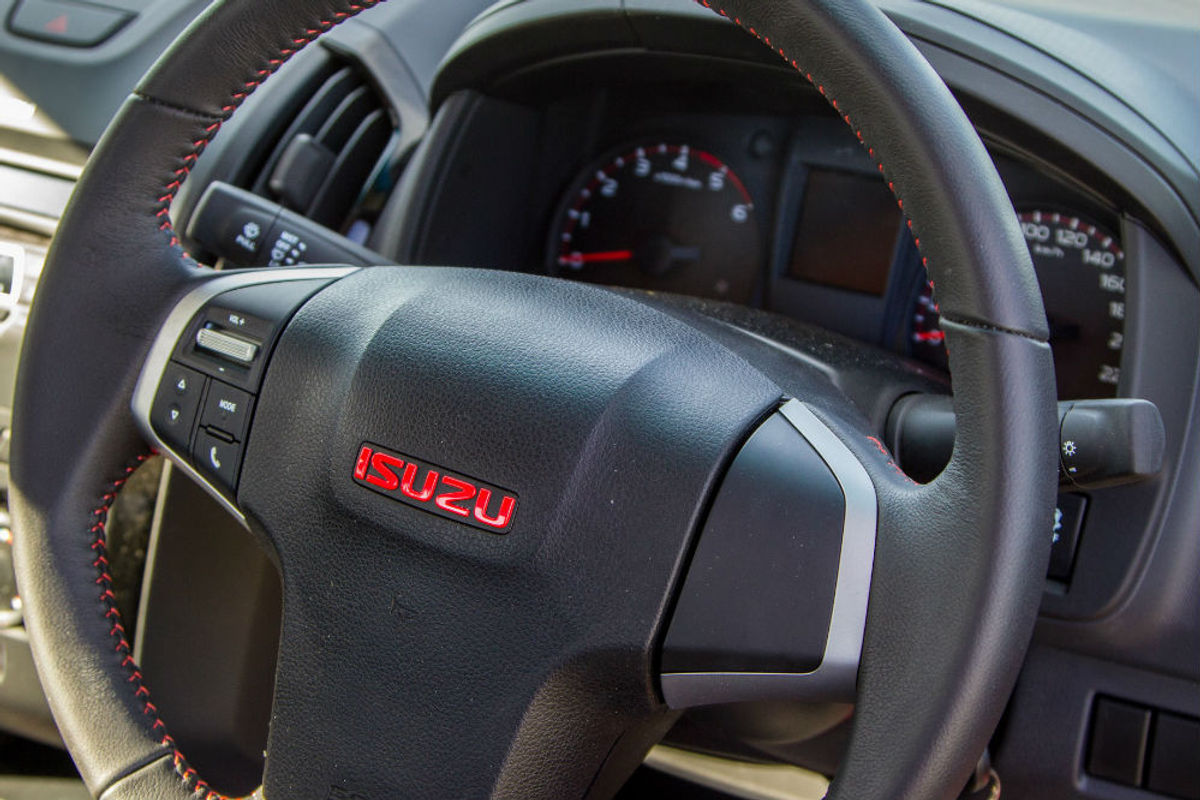
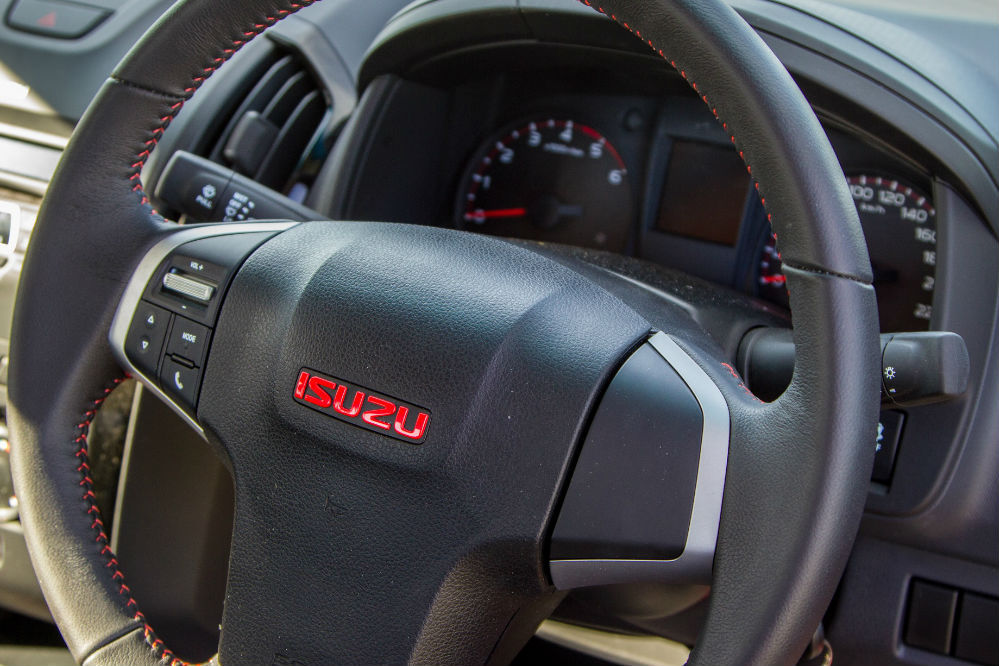
The black/red X-Rider theme continues inside where the KB's cabin ambience gets a welcome lift through the standard fitment of black leather upholstery, piano-black plastic inserts on the facia and doors, bold X-Rider logos and a red Isuzu badge on the steering wheel. It's a solid-feeling vehicle that strikes a fine balance between being obviously hard-wearing, yet sophisticated enough in appearance to appeal to the leisure crowd.
Standard features on this model include a radio/CD system with USB and Bluetooth support, a rake-adjustable steering wheel with remote audio controls, air-conditioning, and electric windows and mirror adjustment.
Open the rear "suicide" doors and there's quite a lot of space available in the back for the fitment of storage boxes. As standard, there's nothing, except a carpeted floor (including two lift-up flaps) and a slightly padded section against the rear wall. The rear windows can be opened using hinges. An irritating characteristic of this particular test unit was that the doors needed a very determined – borderline violent – slam to close properly. On many an occasion the remote central locking refused to function because the doors were not closed.
The cabin features a number of useful storage solutions. You get a double glove compartment, a large storage box between the seats and numerous drinks holders, including ones sliding out of the facia.
Power and Refinement
The red on black theme continues inside, and matches the instrumentation.
There has been no change underneath the bonnet of the X-Rider. Power comes from the brand's tried and tested 2.5-litre turbodiesel engine, which following an earlier upgrade delivers 100 kW from 3 600 rpm and 320 Nm of torque from 1 800 to 2 200 rpm. These power figures are by no means class-leading, and as we also found in our test of the Double-Cab 4×4 LE model, it's not particularly free-revving, either. Nevertheless, we wouldn't describe the X-Rider as frustratingly slow, and once you've grown accustomed to its power delivery characteristics and the spacing of its five-speed manual transmission's ratios, you can make swift and steady progress.
From a workhorse point of view the engine is more impressive. Mechanically the vehicle feels very robust, and the braked tow rating of 2 100 kg and payload capacity of 1 133 kg translate into a vehicle that can roll up its sleeves when necessary and do the hard yards. Notwithstanding its lower torque output (compared with its rivals), the Isuzu feels particularly strong after pull-away.
Isuzu claims a fuel consumption figure of 7.6 L/100 km for this model, and during our test we managed an average of 8.5 L/100 km. Interestingly, the percentage difference between claimed and real-world is significantly less than what we've achieved with some other vehicles. On a 80-litre tank of diesel you should be able to achieve close to 1 000 km between fill-ups.
Ride and Handling
Notwithstanding the X-Rider's striking looks, the KB remains a hard worker.
One area in which the X-Rider's workhorse roots are difficult to hide, is in its ride and general on-road behaviour. It's a firmly sprung vehicle, obviously, and the refinement of its drivetrain falls some way short of what is offered by the more modern rivals from Toyota and Ford. Then again, this isn't necessarily a criticism. The Isuzu feels indestructible and built to take punishment. It remains highly regarded in this respect by its owners.
Price and after-sales support
The Isuzu KB 250 X-Rider Extended Cab retails for R355 900 (if you can still find one), but is based on the KB 250 Hi-Rider, which sells for R337 400 following its facelift. All Isuzu KB models are backed with a lenghty 5-years/120 000 km warranty and 5-years/90 000 km service plan.
Verdict
The X-Rider was quite a unique offering at its price point, which perhaps explains the strong interest in the vehicle to some extent. Current offerings in the market can't quite match its combination of leisure-oriented specification, good looks, and workhorse ability… not in standard form anyway. It is a very appealing dual-purpose vehicle for a couple without kids that also need their vehicle to work hard. In that regard, we'd highly recommend the fitment of lockable rear storage boxes, tonneau cover and a rear diff-lock.
That said, as trusty as the 2.5-litre diesel engine is, Isuzu is falling behind the pack when it comes to refinement and power. It's less of a problem in a pure workhorse application (especially if there is a cost benefit), but when there is also a leisure role to consider the rivals' engines are more in tune with segment demands.
Ford will be introducing its third-generation SYNC3 communications and entertainment system to the South African market in 2016/2017.
Ford will be rolling out its SYNC3 infotainment system that will offer improved functionality and faster performance. Android Auto and Apple CarPlay will also be offered once SYNC3 is licensed in South Africa.
SYNC3 will be available in various Ford models before the end of 2016 including the Mustang, Ranger, Everest and Fusion. The Ford Focus and Kuga will feature SYNC3 as of early 2017. The system will incorporate an 8-inch touchscreen and navigation will be rolled out during the course of 2017. SYNC1 will remain to be an entry-level offering for selected models.
“SYNC3 brings to life even more innovative new ways of staying connected on the move. Designed to complement modern smartphones, with an intuitive touch screen and an exciting array of new features, SYNC3 understands even more conversational speech commands, is significantly faster and offers a higher resolution interface that is simpler, and easier to read and use than the outgoing SYNC2 system,” says Tracey Delate, General Manager, Marketing – Ford Motor Company Sub-Saharan Africa Region.
SYNC3 features
The SYNC3 infotainment system offers increased processing power and more streamlined functionality. The number of steps to complete an action has been reduced, thereby improving the functionality and simplifying the user experience.
SYNC3 will operate much like a smartphone, where users are able to swipe and pinch-to-zoom. Apple CarPlay will allow iPhone users to send and receive text messages, play music, make phone calls and get traffic information, all via voice activation. SYNC3 is also compatible with Siri Eyes Free and iPhone users can access Siri via Bluetooth.
For Android users, Android Auto will offer a number of Apps and services including Google Maps, Google Search and Google Play Music, all commanded using SYNC3 voice activation.
“Some of the licenses for Apple CarPlay and Android Auto are still being finalised for official release in the collective Middle East and Africa region, and therefore will be introduced as they become available in market,” says Delate. Over-the-air software updates will be required and can be done by downloading updates using Wi-Fi.
SYNC3 will be offered as standard on certain derivatives, or as an option. Customers will also be pleased to know that navigation will be offered for the first time in 2017. Depending on the model derivative, navigation may be offered a standard or as an option and will be rolled out in phases in 2017. SYNC3 navigation will also offer 3 language options including English, Afrikaans and Zulu.
Fitting the right specificationtyres to your vehicle is crucial, especially if you want to traverse grueling off-road terrain. We tackled some of the most challenging mountain roads with Toyota Hilux and Fortuner derivatives shod with new Bridgestone Dueler 693III tyres. Here's how the picturesque expedition unfolded…
Many of us long for a good old-fashioned road trip; a trek to an uninhabited locale; a drive into the unknown. A spur of the moment getaway seems rather romantic and adventurous doesn’t it? It certainly does on televised travel programmes. The reality though, is that a road trip usually requires a great deal of planning. We discovered this when we took part in a road trip that would entail long distances, mountainous gravel roads and large quantities of biltong. What, where and how are critical details on trips of this nature. What are we using to get there? Where are we going? How are we going to get there?
What
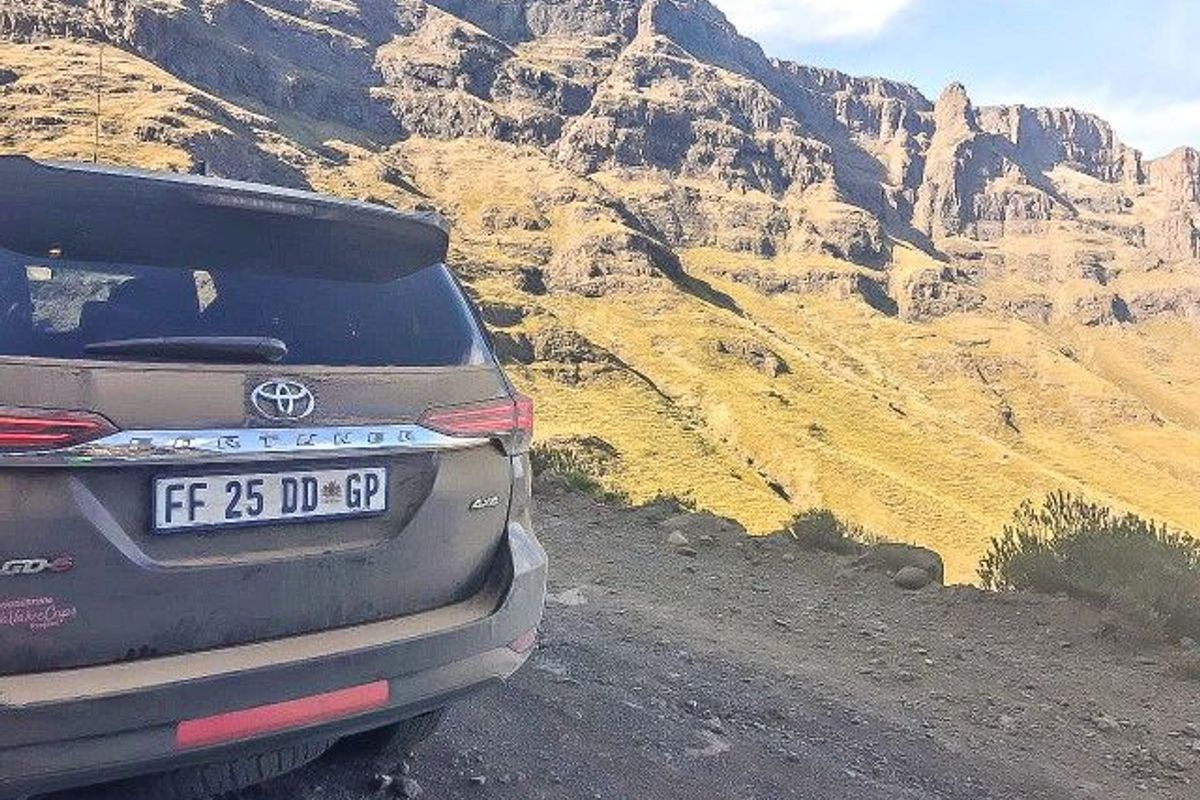
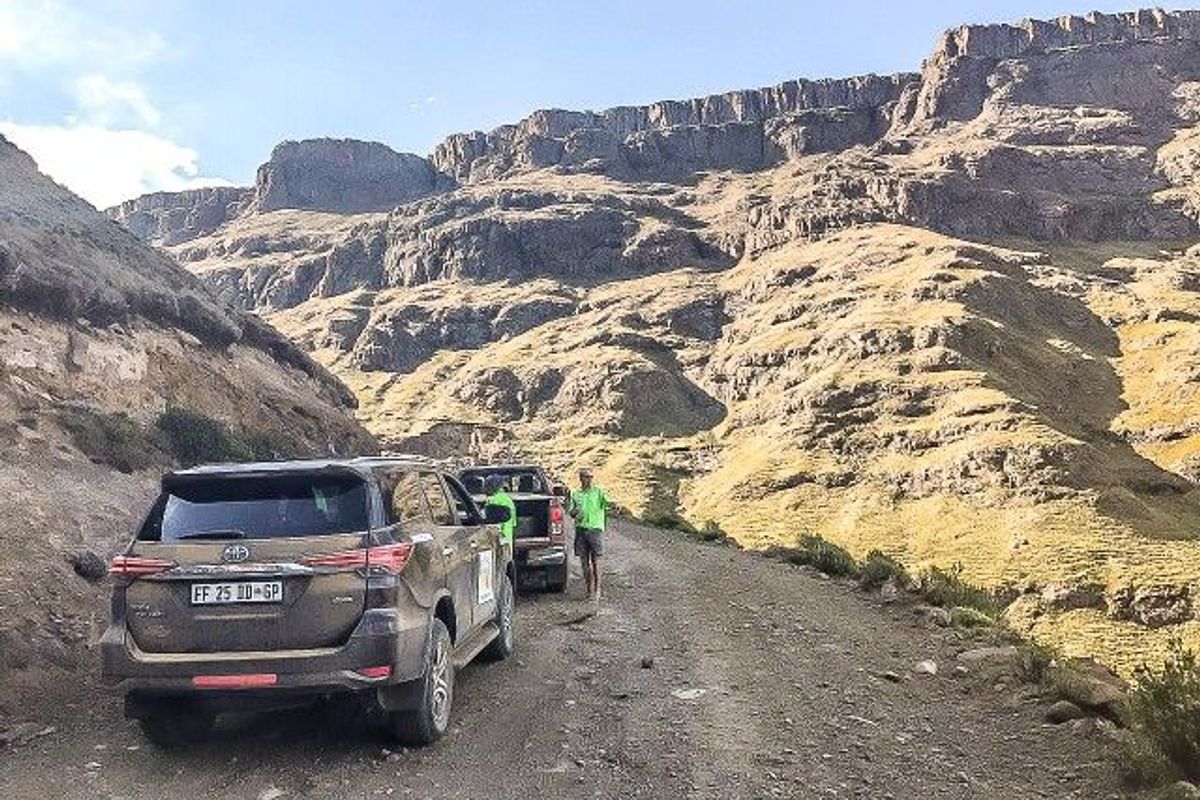
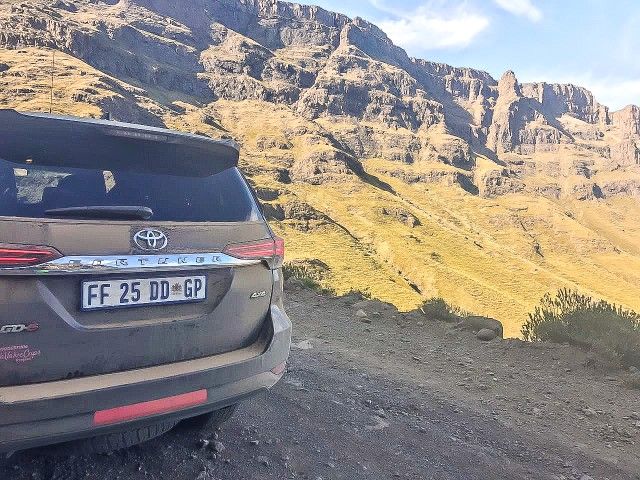
The Toyota Fortuner proved to be very capable in the tough terrain found in Lesotho.
Those who regularly make off-road expeditions stress how important it is to fit the right rubber to your vehicle to suit route conditions. Our recent encounter with Bridgestone’s new Dueler A/T 693III tyres proved this. This is a tyre that is meant to drive comfortably on-road for daily use and then tackle the roughest terrain off-road when necessary. It stands to reason, then, that given the off-road credentials of the Hilux and Fortuner, that Toyota would find Bridgestone's Dueler A/T 693III tyres to be perfectly suitable. In fact, the Dueler A/T 693III is the OEM tyre for both the Hilux and Fortuner models – vehicles we had at our disposal for this journey. So, our what was taken care of – a few Toyotas fitted with some dual purpose tyres.
Where
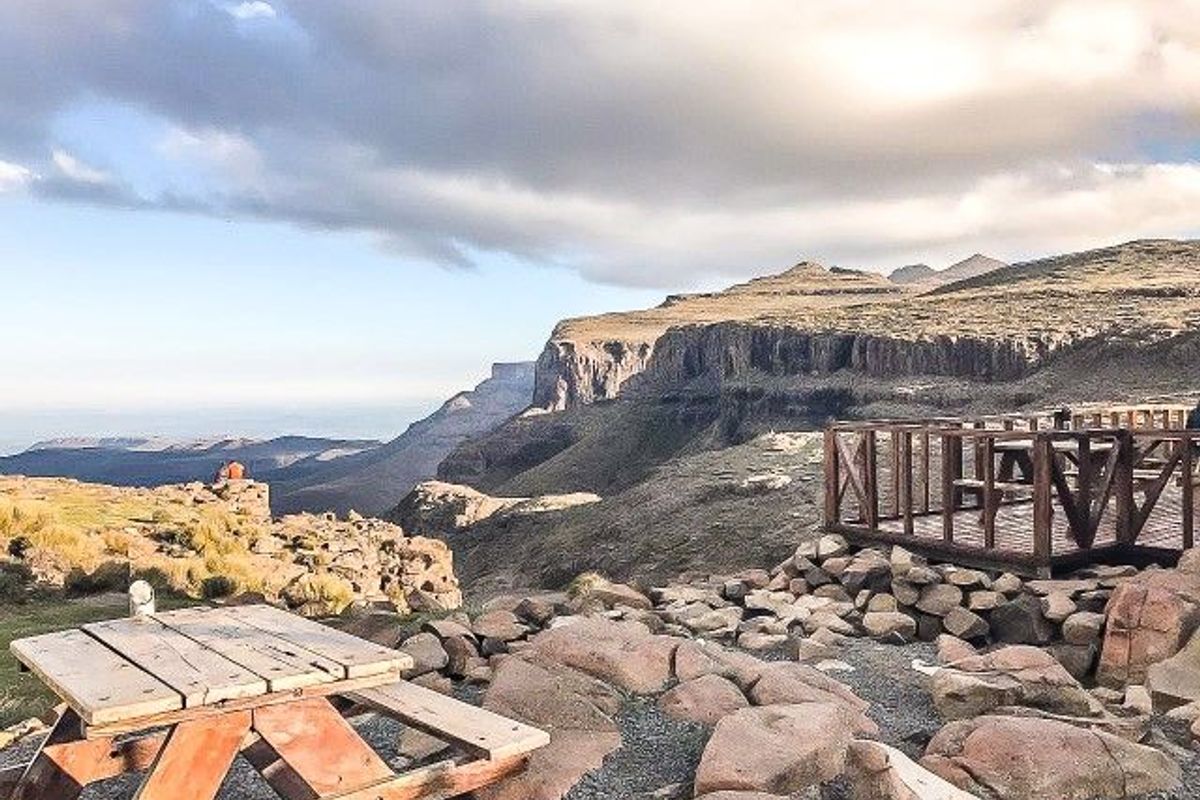
Lesotho is the perfect place to test your vehicles capability. The Toyota Hilux and Fortuner are well-equipped to deal with difficult terrain.
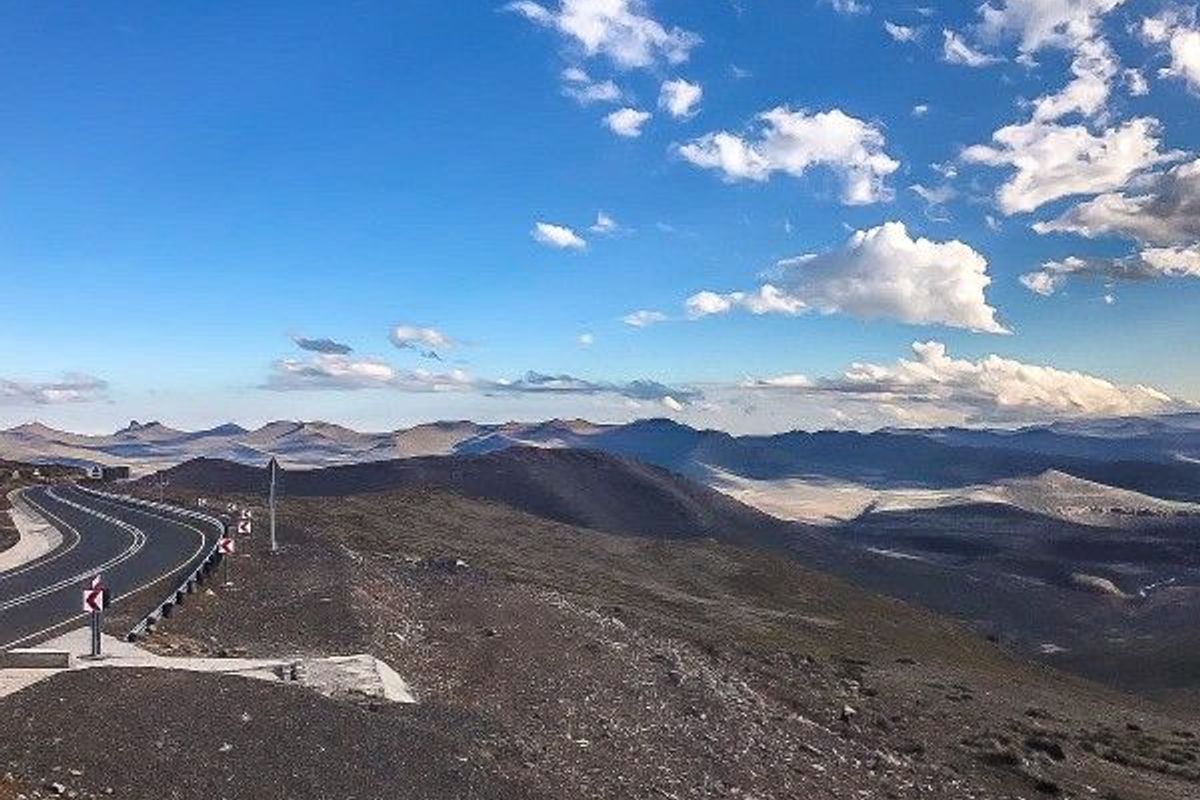
Where were we going? We needed a place that would allow us to test the capabilities of these tyres, preferably a place with large inclines and steep declines and a combination of gravel and tar. Fortunately, South Africans have the opportunity to explore our neighbouring countries and Lesotho was the perfect escape for this test. As one of our more mountainous neighbours, Lesotho would give us the chance to see what a tough car with tough tyres can do.
How
Our trip to Lesotho began in KwaZulu-Natal and we headed towards the Ongeluksnek pass on a tar road. Normally an off-road tyre tends to “whurrr” on tar due to the reinforced tyre walls and mixed compounds. Surprisingly, holding a conversation didn’t seem all that difficult as we had minimal noise in the cabin. Tyre noise will always be prevalent, but in this case, it wasn’t droning or annoying. The Toyota Hilux was our mode of transport for the first day and this gave us the opportunity to experience the refinement of these new bakkies, which offer a superior ride to the previous-generation vehicles. There was no “bobble head” effect present in this unloaded Hilux and we sailed along smoothly to our first stop where we feasted on gourmet pies, warm scones and freshly squeezed cow’s milk. This is the stuff road trips are made of!
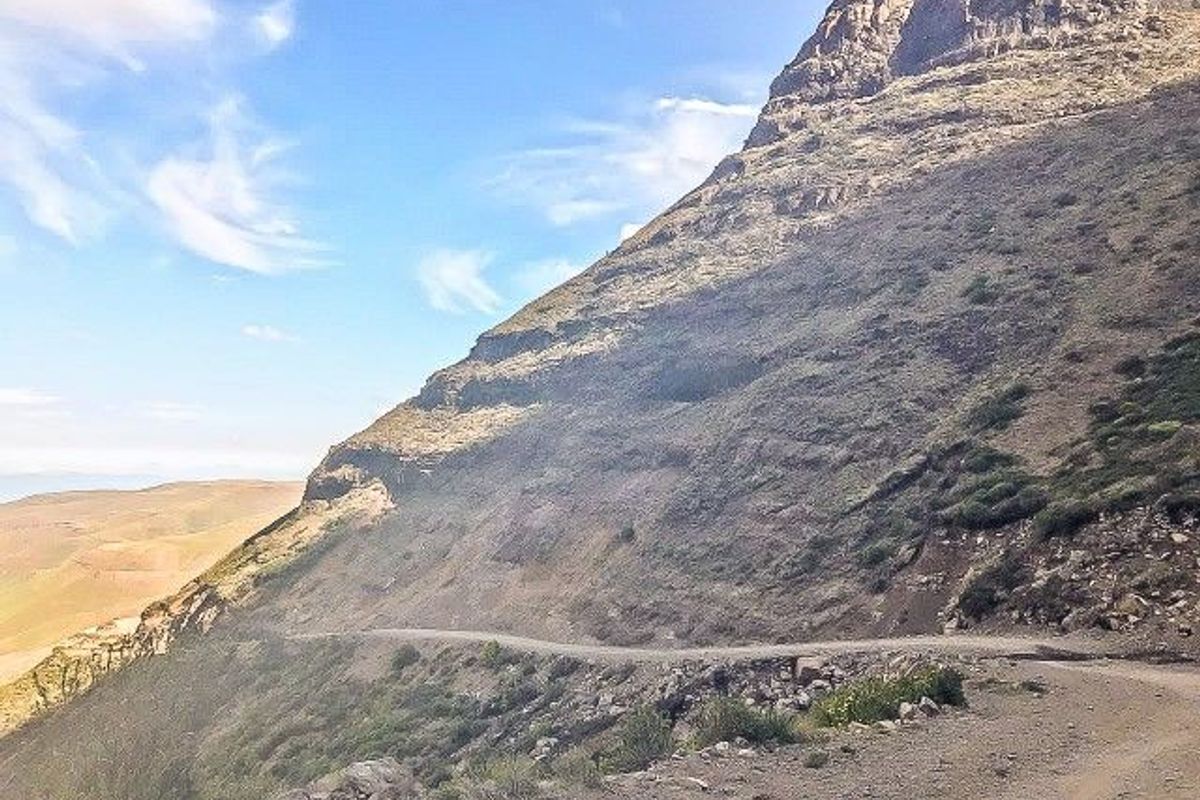
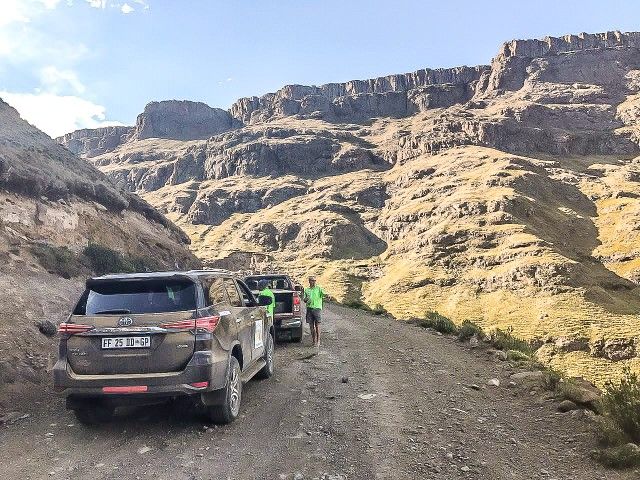
With our bellies full, we trekked toward the Ongeluksnek pass in Lesotho, but before we arrived at the border, we had to switch the cars to 4H and manoeuvre through some steep gravel inclines. Some of the most outstanding views surrounded us upon our arrival in Lesotho. Beyond the border post was greenery, moist gravel and uphills high enough to leave marathon runners panting. This is where we would see how dual-purpose these tyres really were. As we climbed, not once did we fear for grip and not once did we get stuck. We were elated because of the views and the beauty of Africa. The descents proved to be somewhat more challenging, as these require careful planning. But again, with the Hilux in the right mode and our Bridgestone’s hard at work, we arrived at our destination happy.
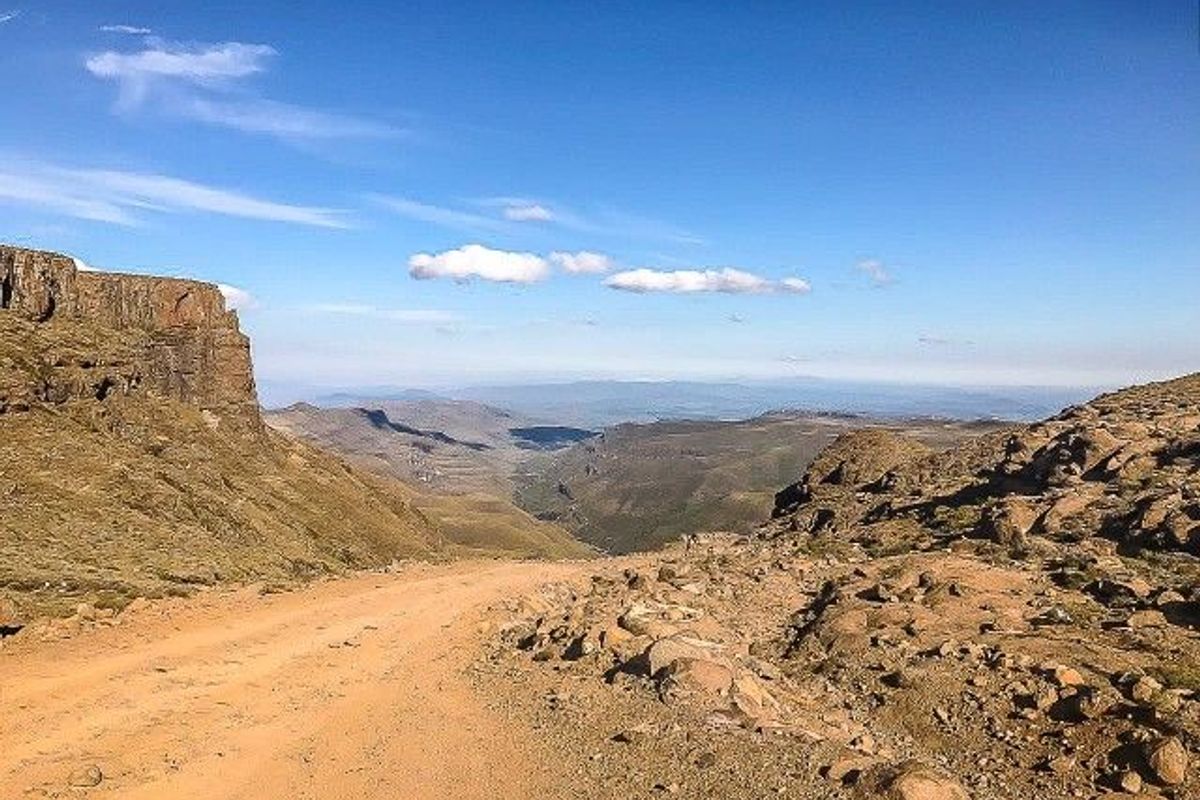
The views in Lesotho are a great reward for your off-road efforts.
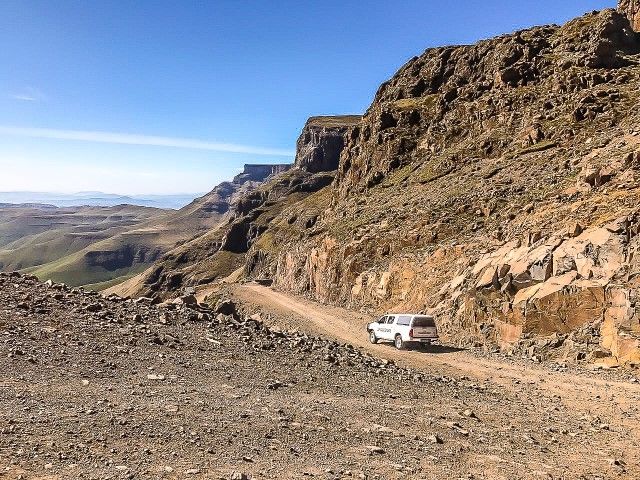
The next morning, we left Lesotho through a different pass to enter KwaZulu-Natal, only to drive into Lesotho again for another taste of dust. This time our challenge was the famous Sani Pass road, a climb that is not only scenic but quite challenging if you don’t have the appropriate machinery. Tarred roads were welcome on our journey back after slowly navigating through rocks on the previous day.
This is where you see why Toyota chose the Dueler A/T 693III to be its OEM product. It simply handles the transition from on to off-road so well. Interestingly, we averaged 8.6 litres/100km in the Hilux despite us driving on very different terrains every hour. By then we'd swapped into the more family-friendly Fortuner, which had no problem powering through the sweeps on the newly tarred roads back to KZN.
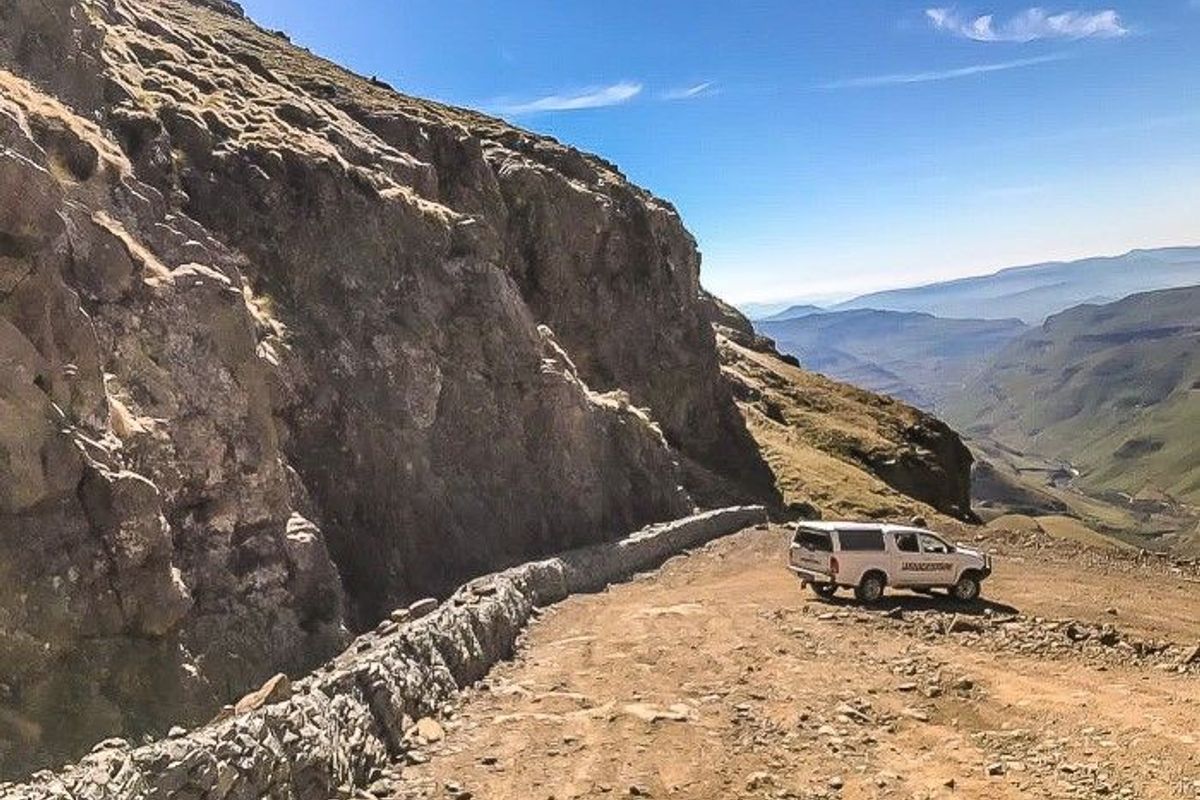
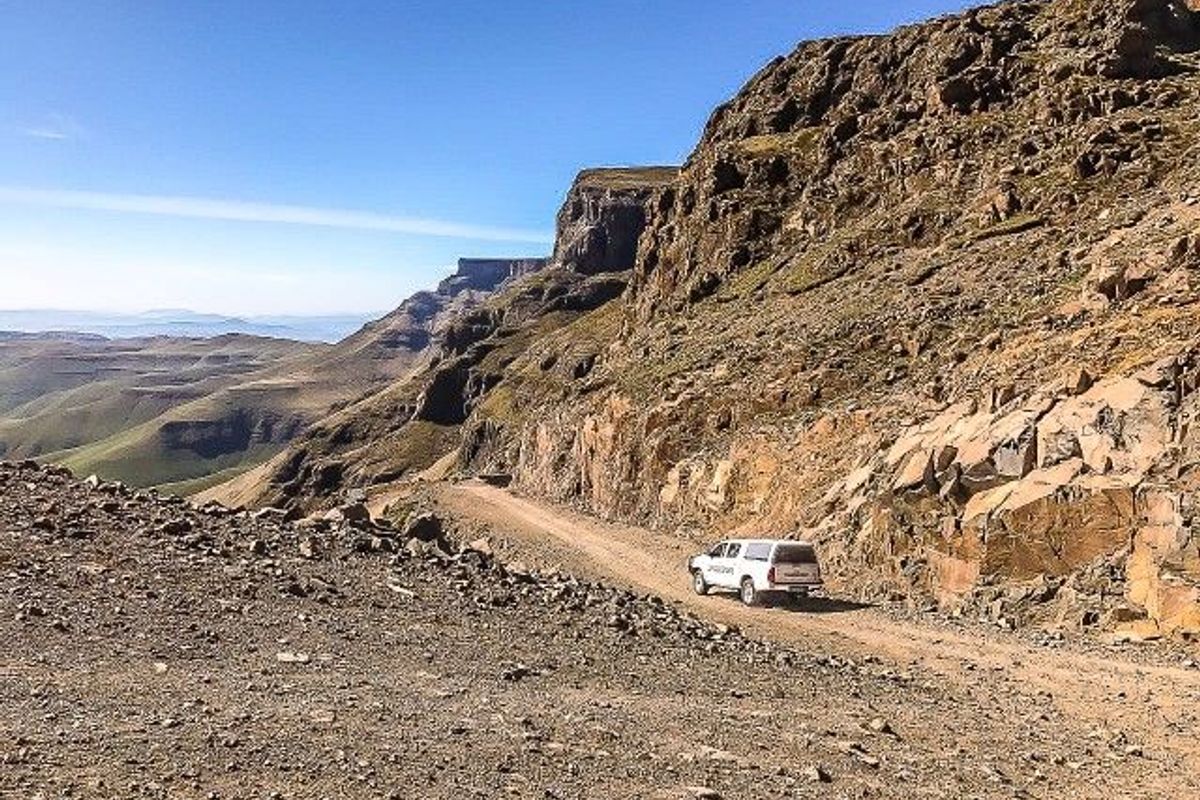
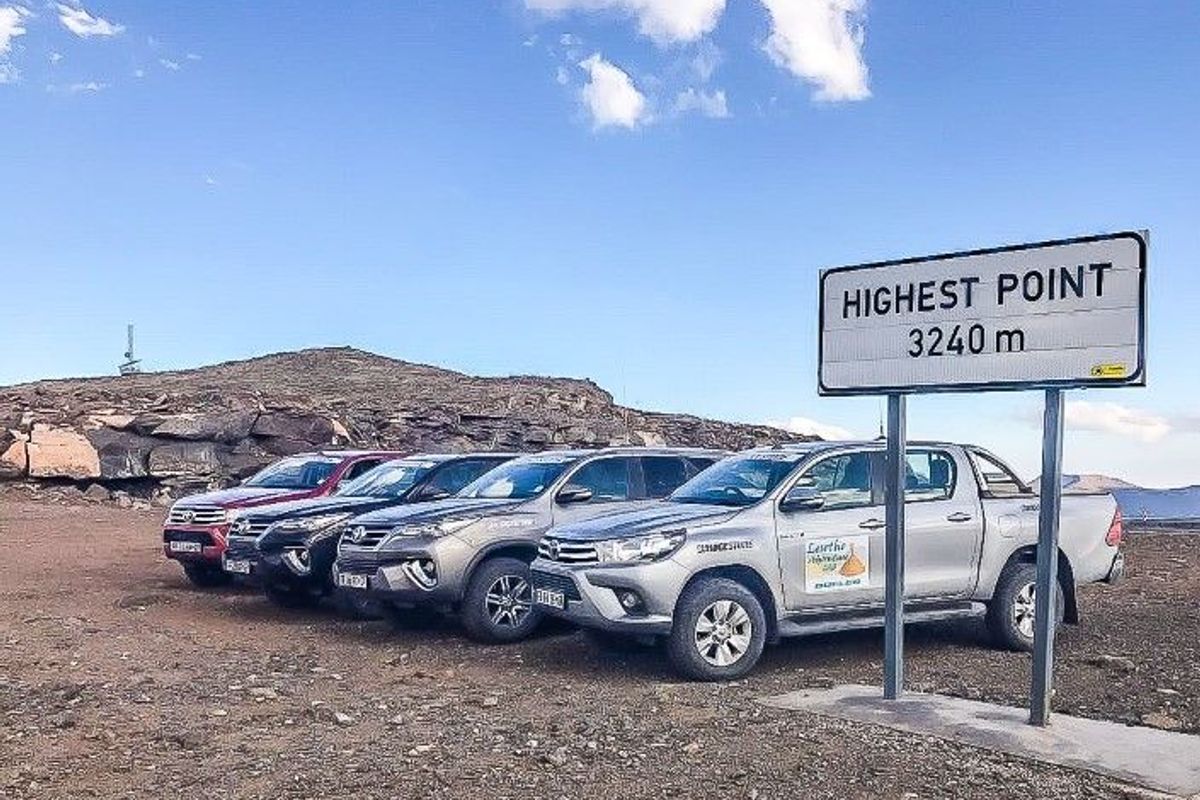
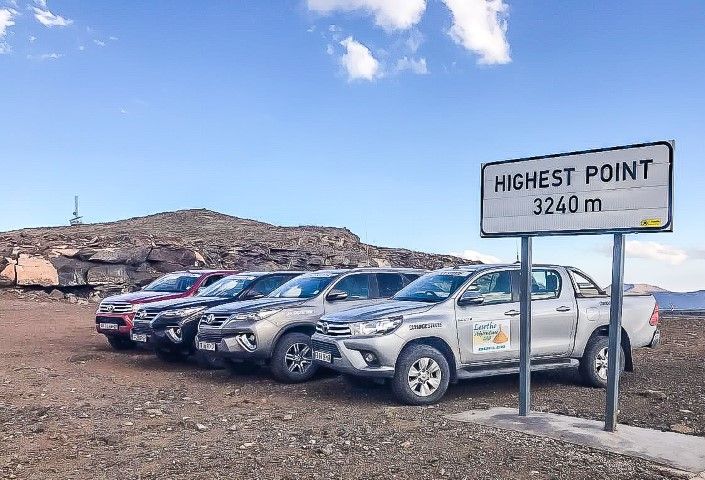
As we arrived at the beginning of the Sani Pass, road conditions seemed to suggest that the route would be a walk in the park. However, having traveled barely 3 km further, it became apparent that the road is meant for SUVs. Oncoming traffic (mainly tour bakkies) requires you to be vigilant on the climb and the higher you go, the steeper it gets. A combination of low range, second gear and not looking down got us through the climb. Moments like those make you appreciate having the right amount of traction to keep going, something we had plenty of. There’s a feeling of fulfillment that one gets after climbing 3 200 m and looking down to see what you’ve conquered. It's no wonder why people from all over the world enjoy these sorts of excursions.
Bridgestone's new Dueler A/T 693III tyres proved invaluable in reaching the Lesotho highlands.
As we arrived safely back in Lesotho and settled into our place of rest, the business presentation by Bridgestone’s representatives meant so much more to me than it usually does. Generally, we are told how good a product is and what it can potentially do. This time we had the chance to experience it for ourselves. The tyre truly offers the great handling they claim, both on and off-road. It’s low rolling resistance meant that we maintained almost identical fuel economy in both the Hilux and the Fortuner and the way the tyre is constructed meant that it doesn’t kill your ears. A manufacturer like Toyota wouldn’t trust a tyre brand if they couldn’t ensure that the claims are in fact the reality.
Summary
As mentioned, much goes into planning for a road trip and without the right tools your TV fantasy may end up to be a horror story. As many will embark on road trips soon, never underestimate the importance of having the right rubber fitted to your vehicle. Comfort, fuel economy and safety are all factors directly linked to tyres, so having the right set for the job can mean the difference between you relating the story of your travels, or your story being related for you.