Update: Facelifted Volkswagen Golf May Offer Fewer Derivatives
The facelifted Volkswagen Golf will be revealed in November with a host of improvements to keep the model ahead of the game.
Volkswagen’s iconic Golf, now in its seventh generation, is going under the knife and the facelifted model will undergo several changes to ensure its ongoing relevance and popularity. The hotly contested C-segment hatchback market has seen several high-profile introduction in recent years, in the shape of the Peugeot 308, Opel Astra and new Renault Megane.
Although exact details are yet to be revealed, reports suggest that the Golf will gain minor exterior changes in the form of revised bumpers, headlights and taillights and a possible tweak to the grille.
Inside, interior materials are likely to be revised and it has reportedly been confirmed that the Golf will gain a larger, first-in-class, 9.5-inch infotainment display that will feature gesture control. You can also expect a largely “buttonless” cabin and the instrument cluster will likely be replaced with a smaller 8-inch screen.
New hybrid derivative, uprated powerplants
In terms of powertrains, reports are also suggesting that the Golf will offer a 48V mild-hybrid system that will include a 1.0-litre turbo and supercharged 3.0-cylinder petrol engine along with a starter motor/generator and energy recovery system. Existing engine options will in all likelihood be revised to offer more power and improved fuel economy.
Reports are also filtering in that Volkswagen will be reducing the number of Golf derivatives on offer in an effort to cut costs and the Golf cabriolet may be relegated from the range, but this is yet to be confirmed. Volkswagen may even decide to reduce the number of powertrain options to place more emphasis on its hybrid offering. Reports suggest that we may see two new 1.5-litre 4-cylinder engines, as well as a smaller 1.0-litre 3-cylinder engine join the range, but that is just speculation for now.
As for definitive details on the facelifted Volkswagen Golf, you will have to wait until November for the official reveal. A local VWSA spokesperson has confirmed that the Volkswagen Golf will be launched in South Africa in the second quarter of 2017.
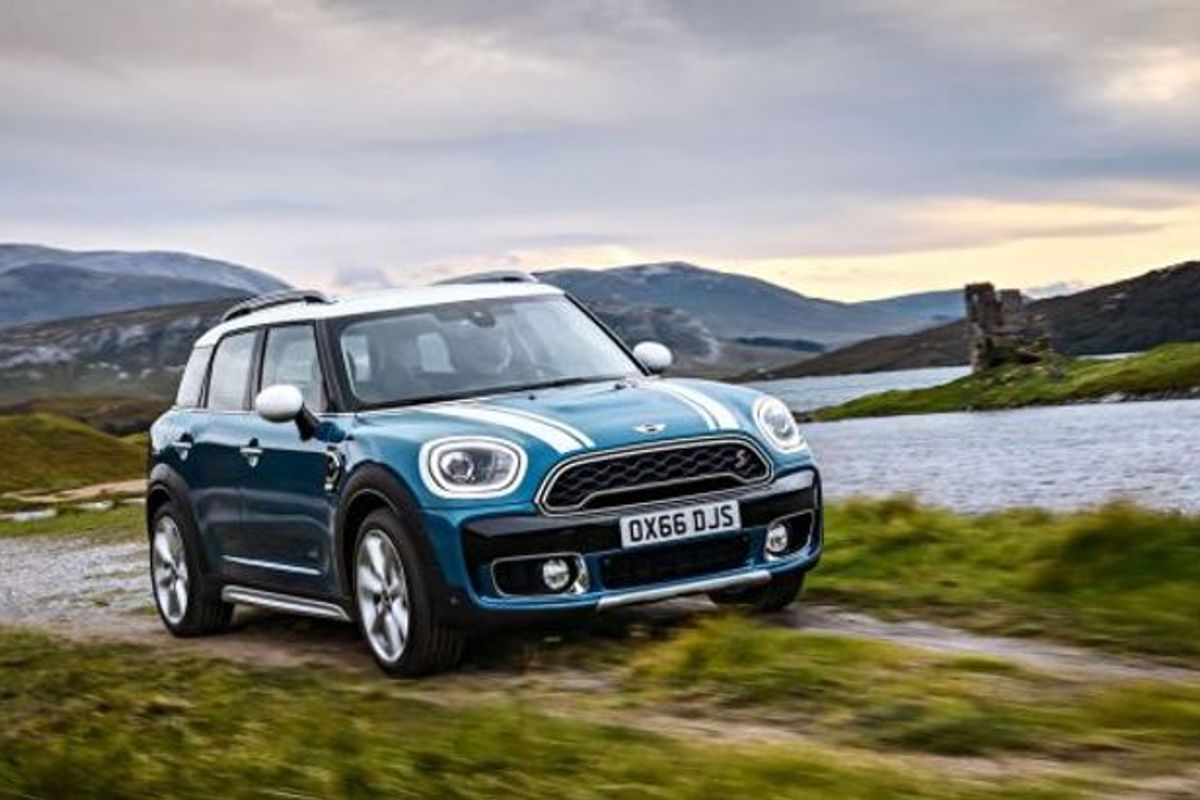
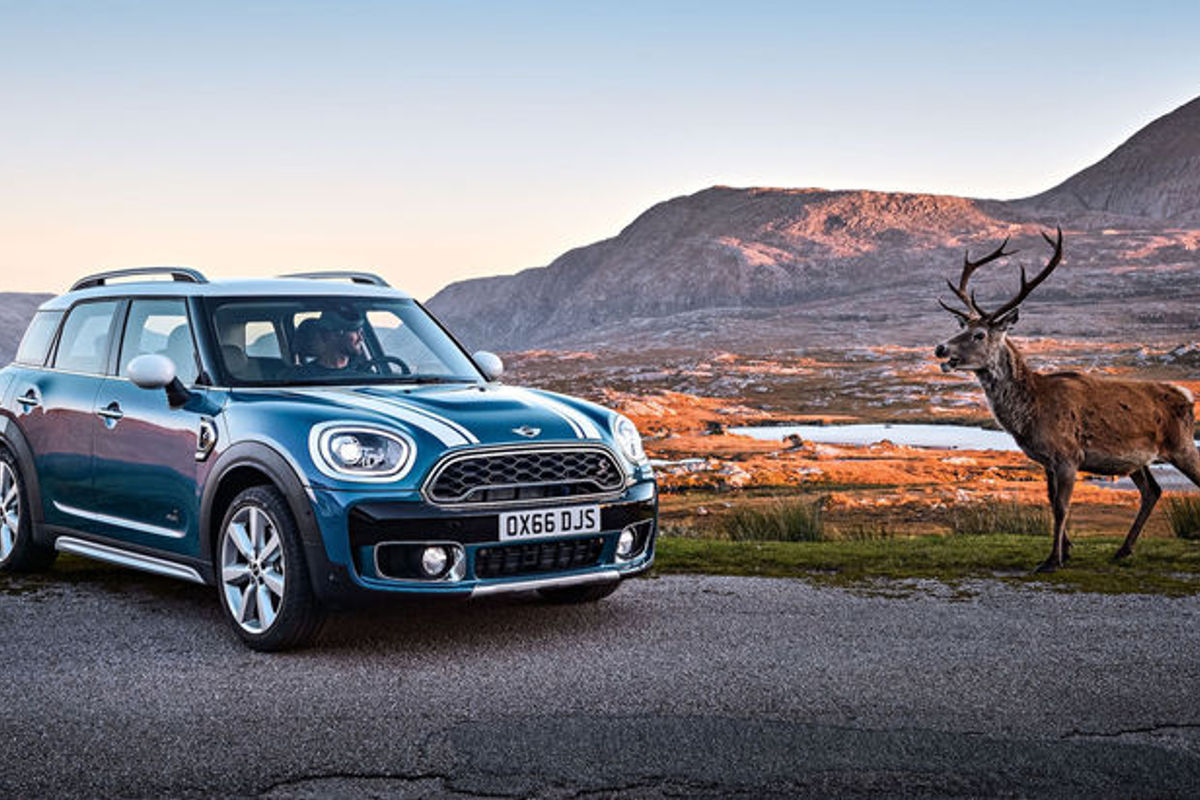
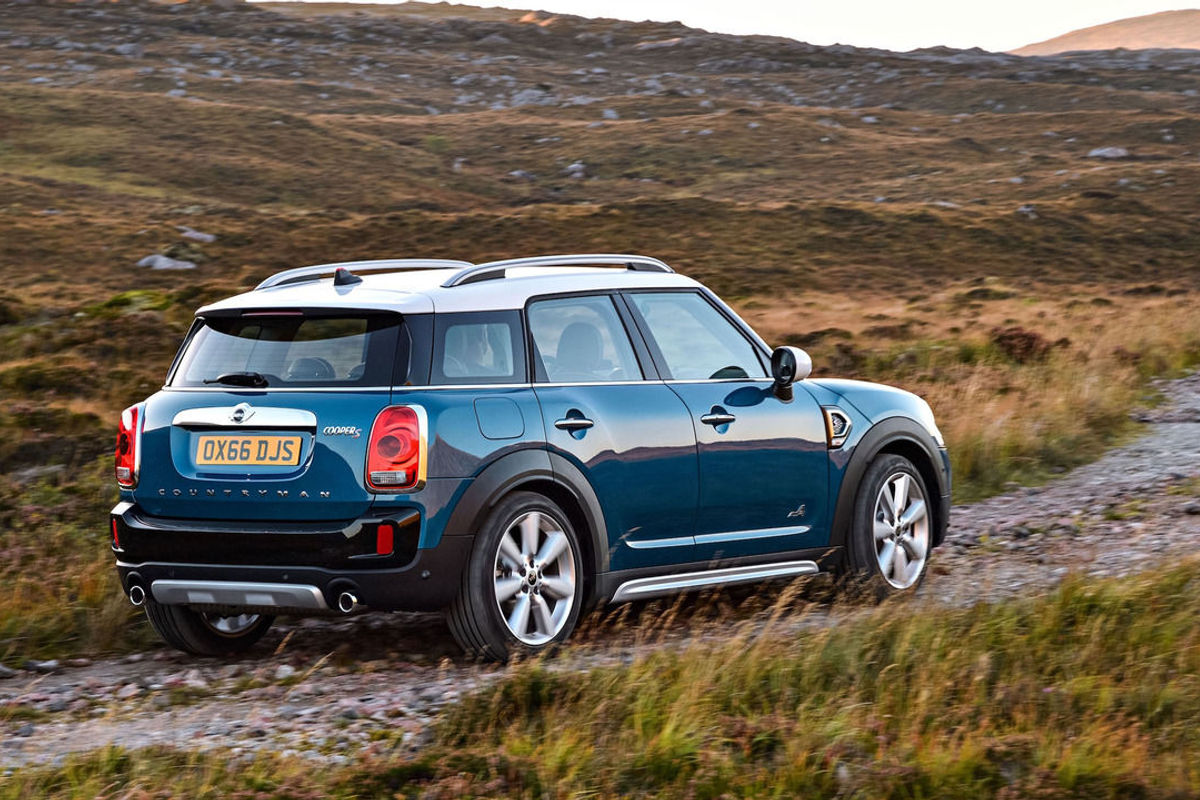
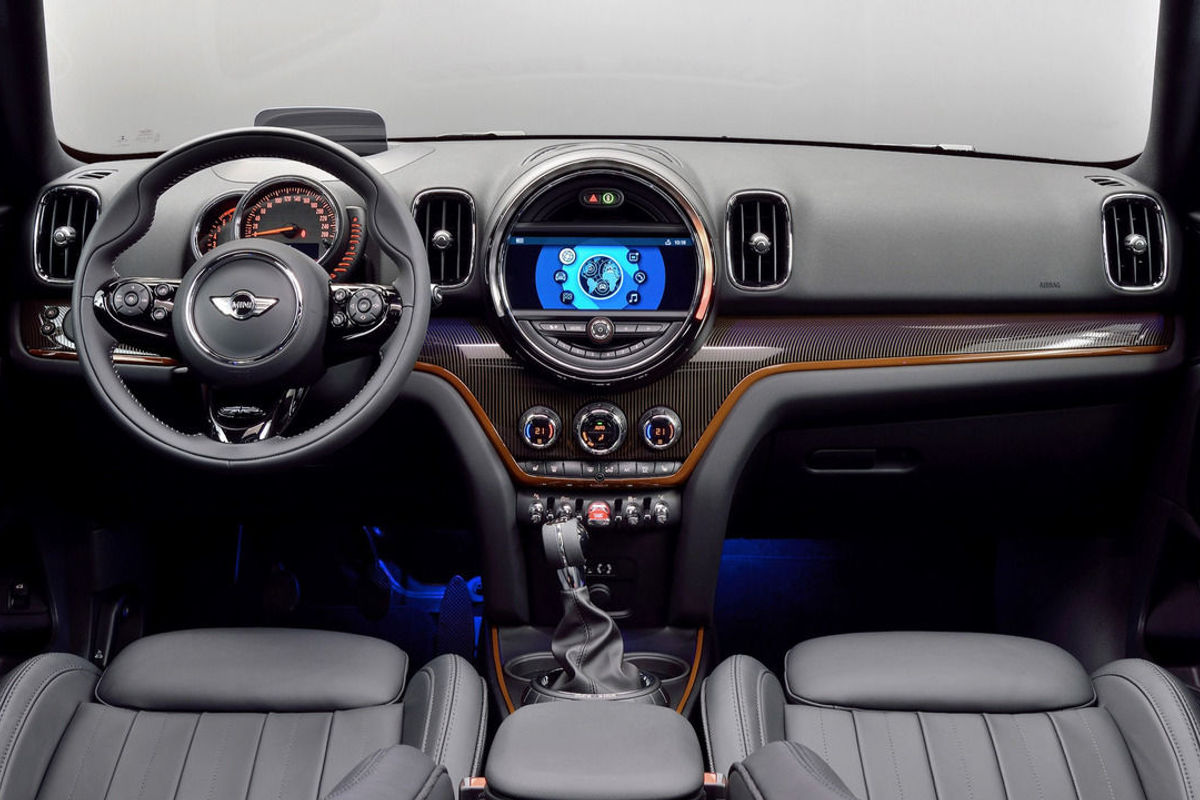
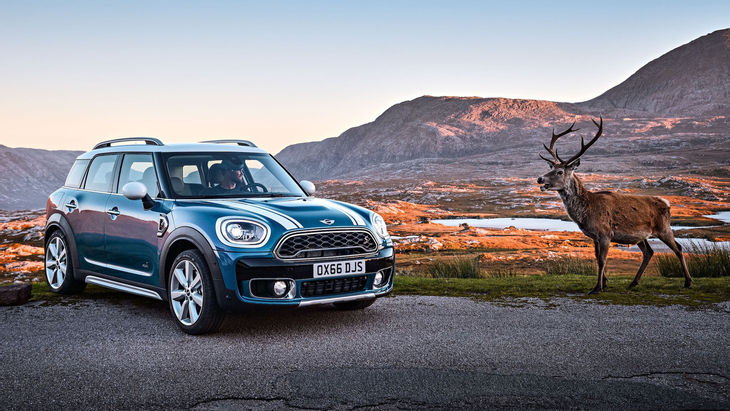
Mini has revealed its redesigned Countryman and it will be shown at the upcoming Los Angeles Motor Show in November 2016. Take a look at the details…
The Mini Countryman has been in need of a refresh for some time now and Mini has now revealed details of the new Countryman ahead of its reveal at the Los Angeles Motor Show in November. The new Countryman range will comprise of two new petrol turbo variants, as well as a plug-in hybrid version. The new Countryman will also offer all-wheel drive, should you so desire.
“The new Mini Countryman is not only the largest Mini we’ve ever built, but it’s also the most technologically advanced and most versatile MINI of our product line up. The addition of the plug-in hybrid option is a major milestone for the brand and we look forward to bringing this exciting new vehicle into one of the top performing market segments,” said Thomas Felbermair, Vice President Mini of the Americas.
Engine line-up
The Countryman is now powered by more powerful and efficient petrol engines with the option of a plug-in hybrid.
Two new turbopetrol engines will power the new Countryman. A 1.5-litre 3-cylinder turbo engine produces 99 kW and 219 Nm of torque, which represents a 42% increase in torque compared with its predecessor. A 6-speed manual transmission is standard (6-speed automatic optional) and, as was previously the case, the new Countryman can also be had in all-wheel drive configuration, in which case 8-speed automatic transmission will be offered.
The second petrol option is the more powerful 2.0-litre 4-cylinder turbopetrol engine with 140 kW and 280 Nm of torque, while the all-wheel drive plug-in hybrid version will be powered by the same 99 kW/219 Nm three-cylinder 1.5-litre turbopetrol engine, coupled with a 65 kW/165 Nm synchronous hybrid electric motor and a 6-speed automatic transmission.
Total output for the plug-in hybrid is 165 kW and 385 Nm of torque and will have an electric range of 39 km. The engine will power the front wheels while the electric motor will power the rear wheels. Charging the battery will take 3 hours and 15 minutes using a 240V outlet. This derivative will be the first hybrid model in the Mini stable and it will be called the Cooper S E Countryman.
Interior features
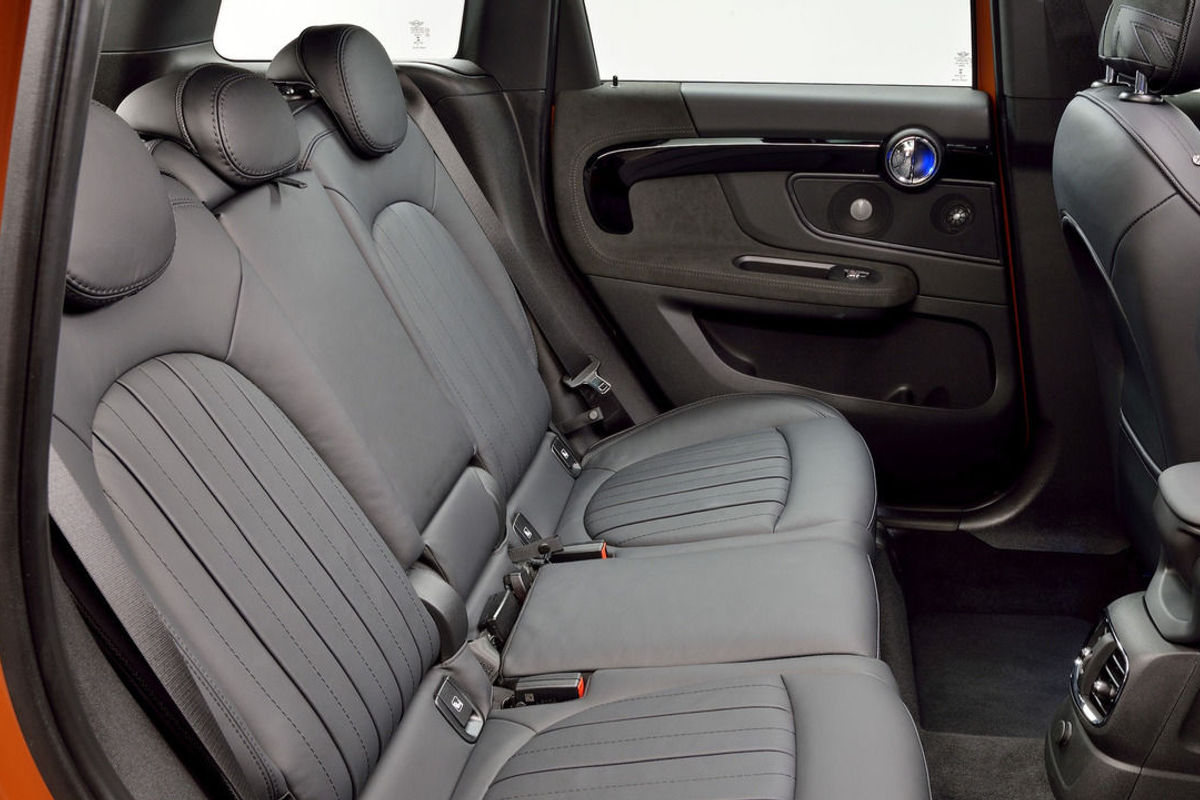
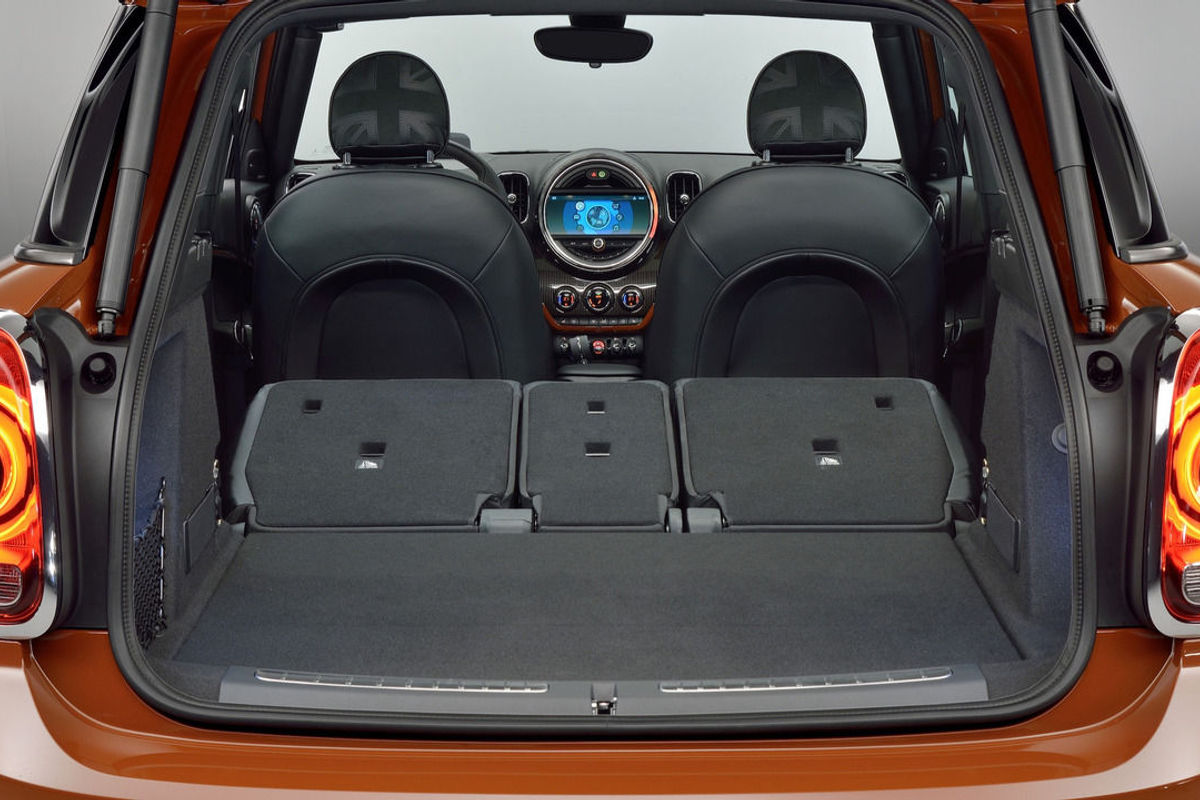
The larger dimensions of the Countryman has resulted in an increase in space for passengers and luggage. Mini says the boot has grown by 30% compared with the outgoing model and comes with an adjustable boot floor. The sliding rear seats are split in a 40:20:40 configuration and the Oxford-based manufacturer claims there is now more front and rear legroom and headroom as well as increased shoulder room.
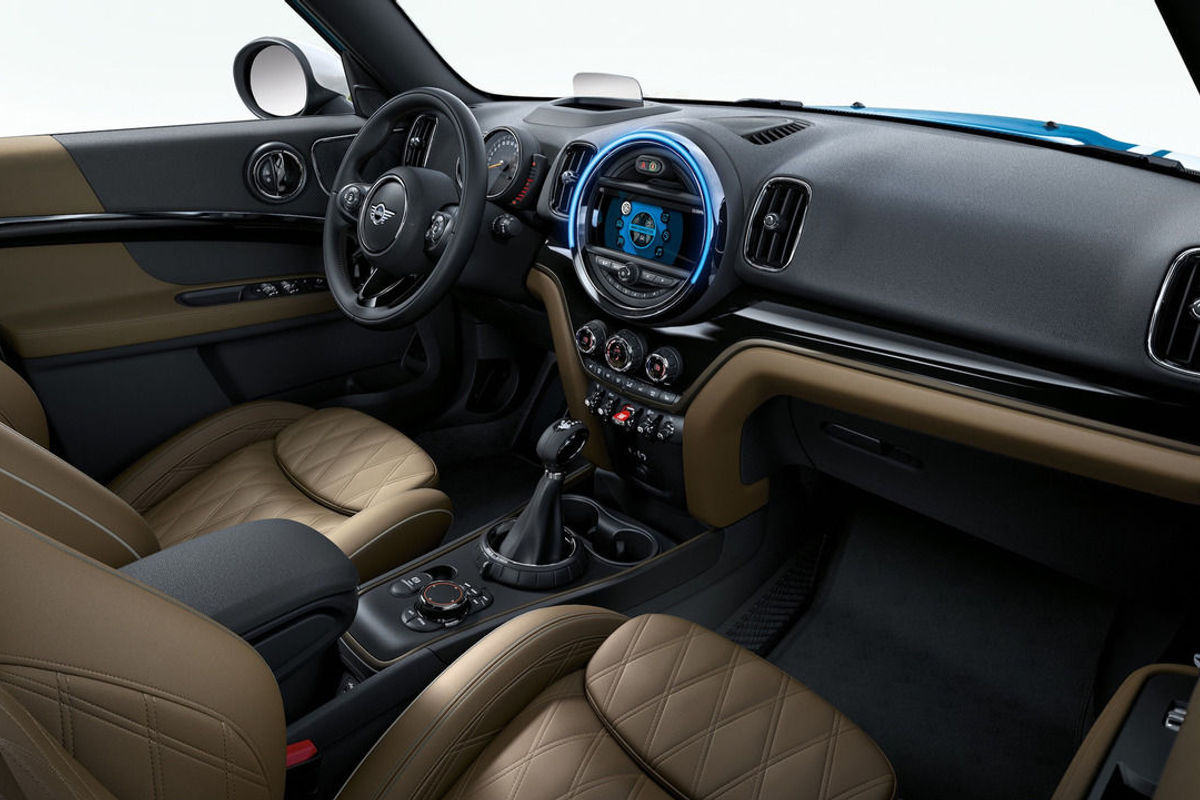
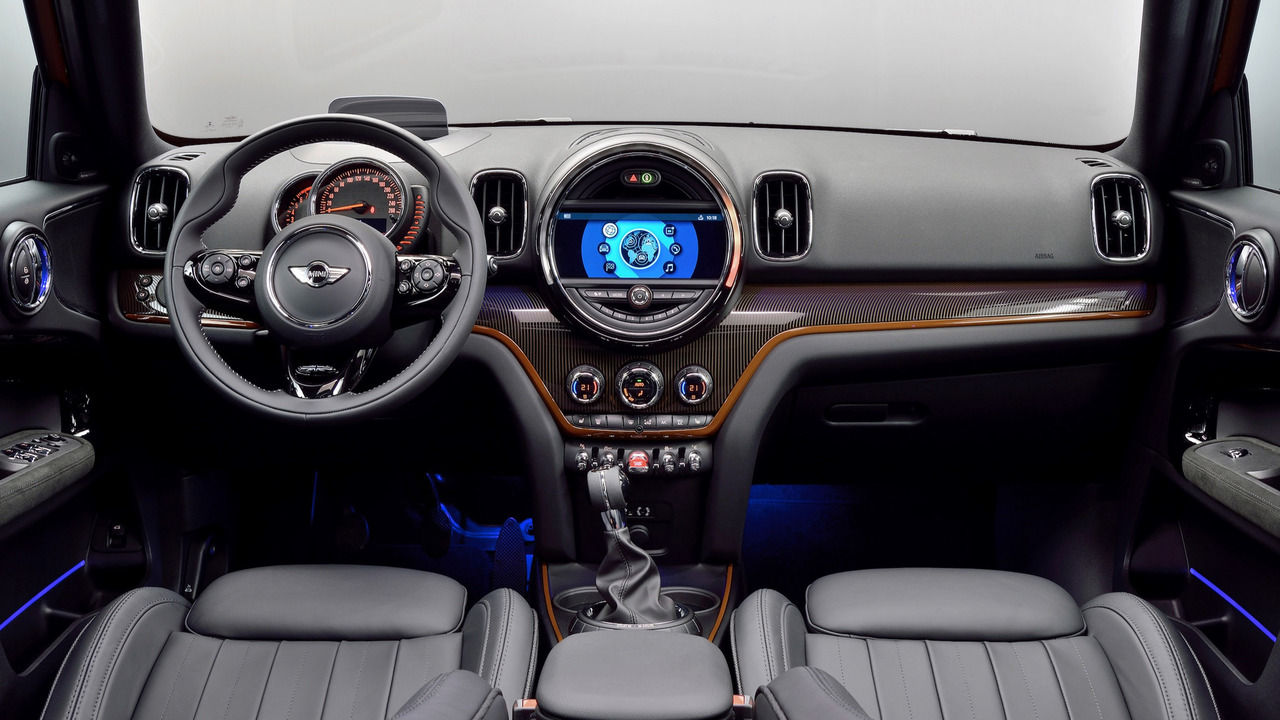
The new Countryman's interior now offers more space and as always, can be customised to your taste.
Some of the standard features on the new Countryman include: a panoramic sunroof, leather upholstery, 6.5-inch infotainment display, Bluetooth capability, rear-view camera, rear park distance control, automatic LED headlights, rain-sensing windscreen wipers and 17-inch alloy wheels. Heated seats will be offered as standard on all-wheel drive models.
Buyers can also customise their Countryman with a range of options such the Technology Package that offers an 8.8-inch touchscreen navigation system, wireless charging and the innovative Mini Find Mate function.
Find Mate consists of two tags with a Bluetooth wireless tracking function that can be attached to frequently used objects and travel items such as bags, cases, key rings and rucksacks. It can detect the presence or absence of any such objects connected to the system and tracking is done not only on the Mini's interface, but also on a smartphone. Providing there is a Bluetooth connection with the tag, an acoustic signal can be activated in the car or on the smartphone to help locate the object. If the tag is outside the Bluetooth range, the driver can be guided to the place at which a connection was last detected.
The new Mini Countryman is expected to arrive in South Africa later in 2017. We will keep you updated as more details regarding local specification and pricing becomes available.
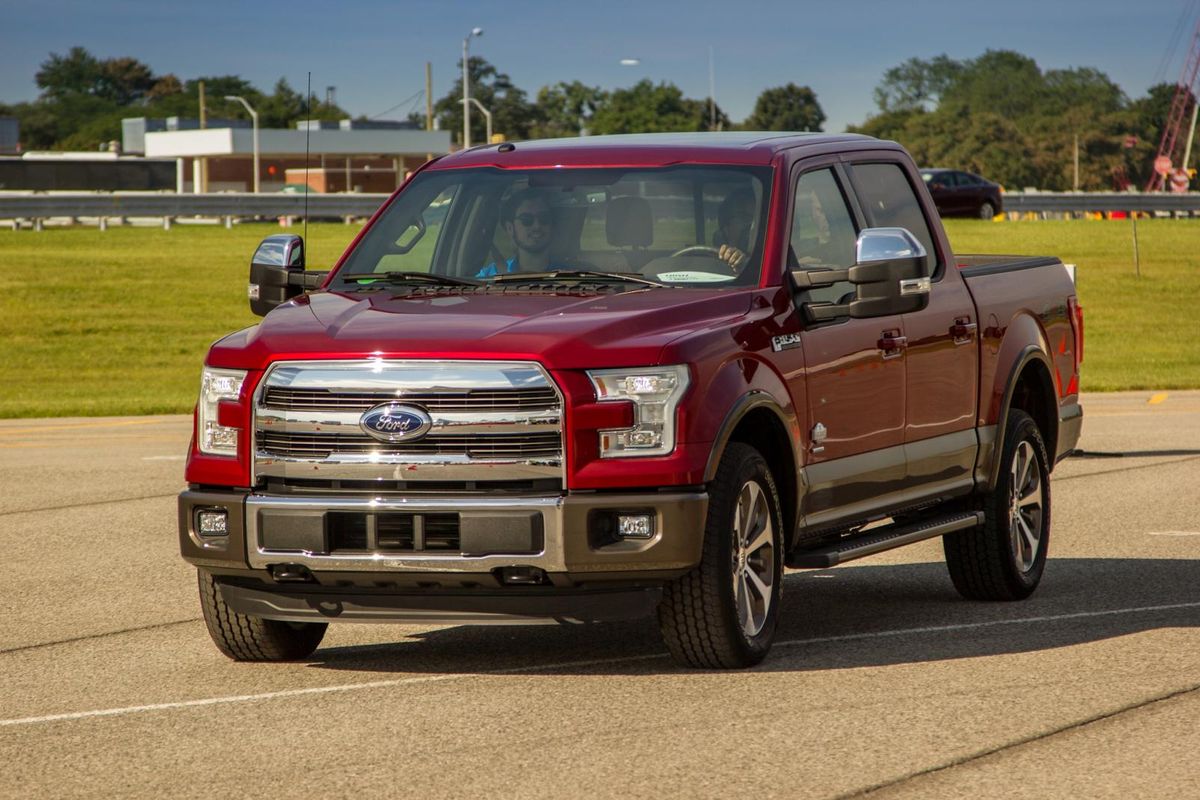
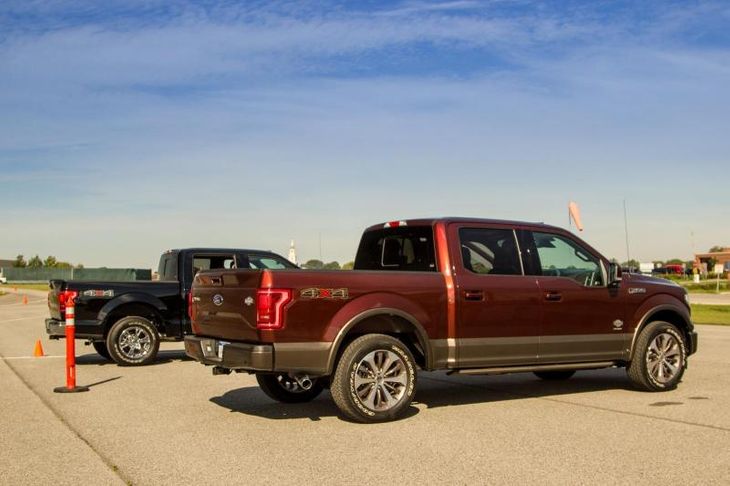
We get behind the 'wheel of the best-selling bakkie in the United States, the Ford F-150. While it's unlikely to reach South Africa due to left-hand-drive-only production, it still represents the world's pinnacle pick-up.
Our recent trip to the United States focused mostly on the scope and scale of Ford's autonomous technology, but a visit to Ford’s Dearborn Development Centre allowed us to experience some of its other products, including the F-150 bakkie. We also had a go in the sportiest Ford Fusion V6 and a left-hand drive Ford Focus RS, but, of those products, the F-150 bakkie holds the most interest for our bakkie-mad market.
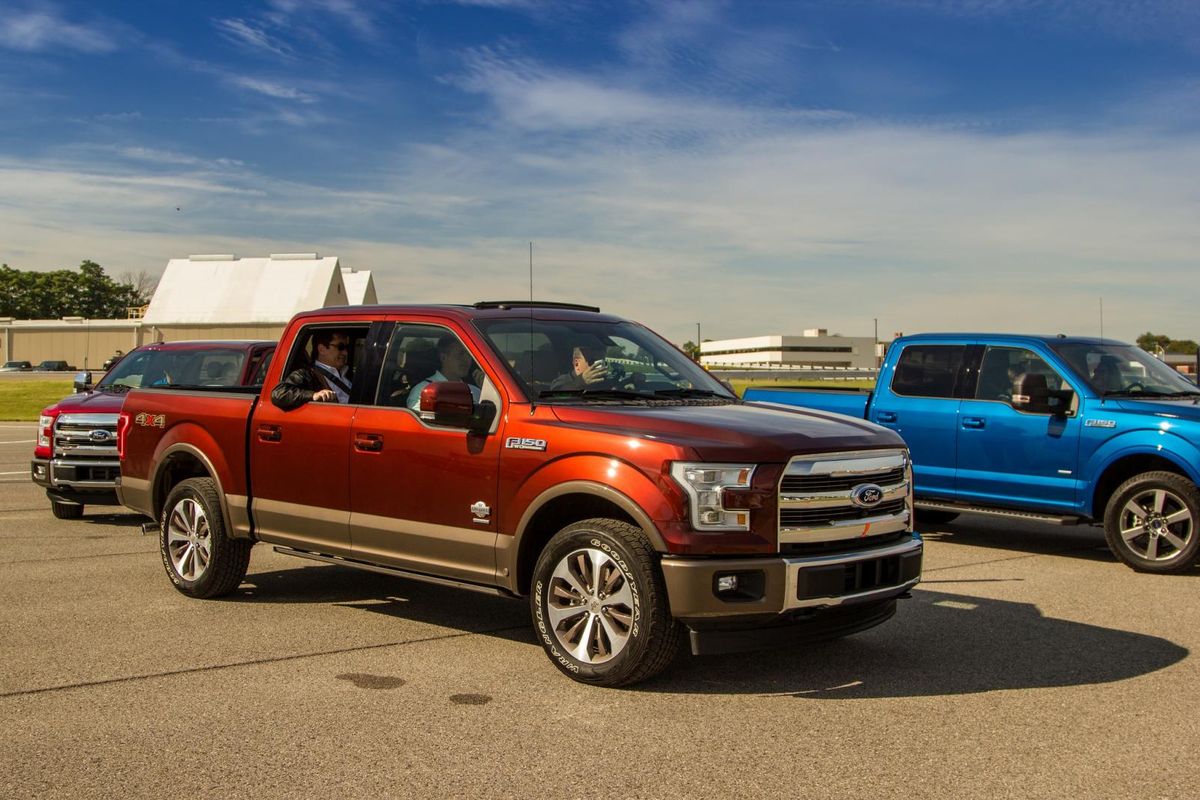
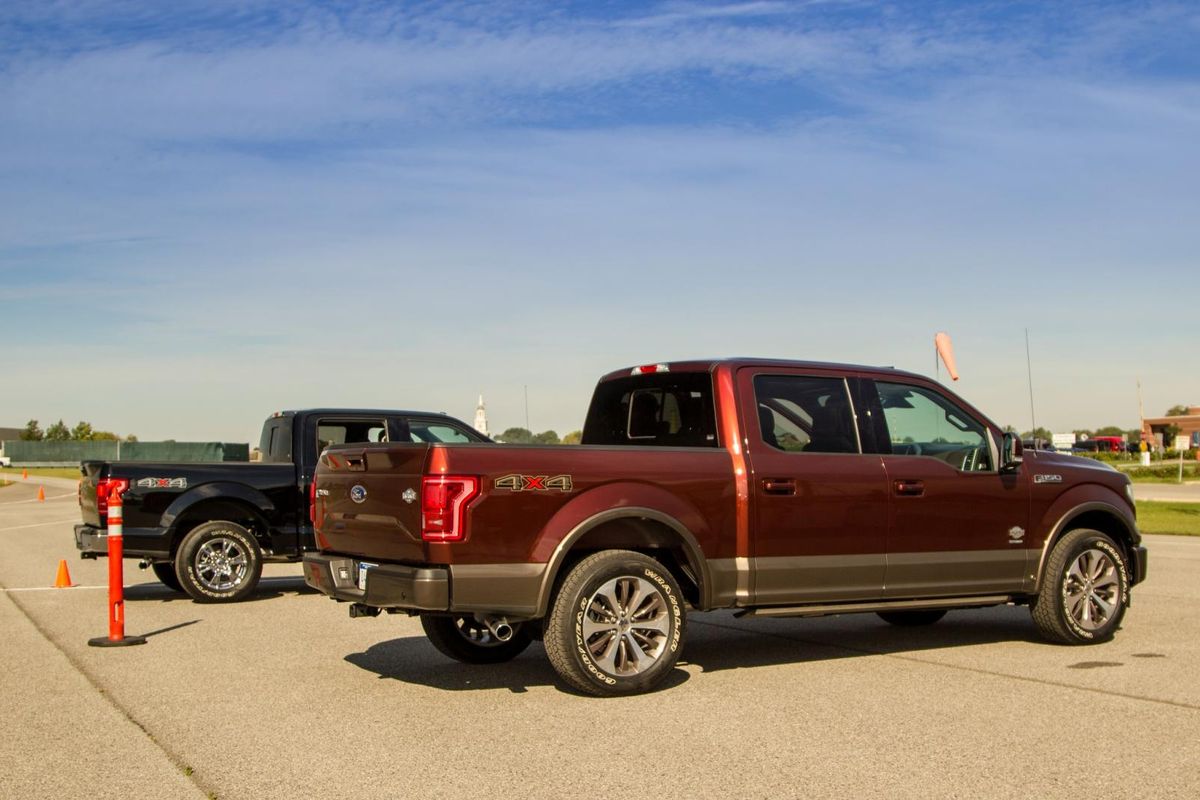
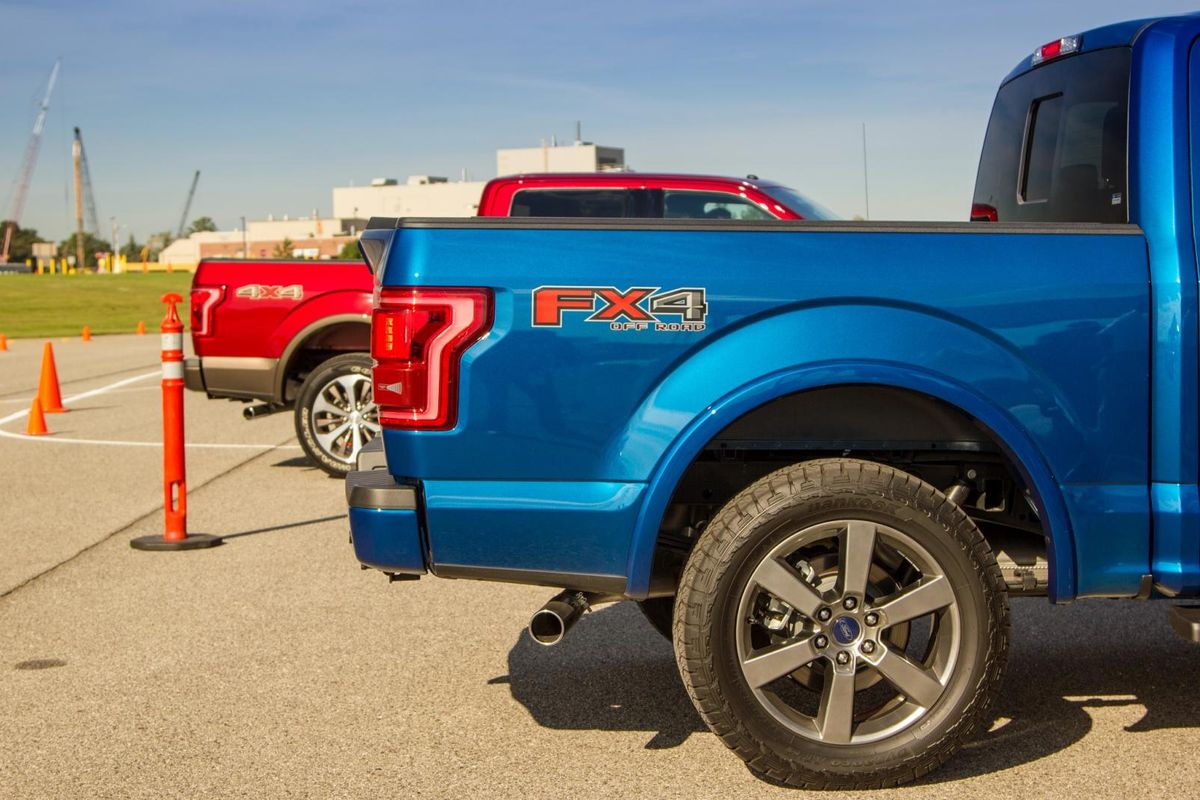
The Ford F-150 range is satisfyingly diverse and the vehicle is available in an assortment of styles and trims. The Blue Oval offers the F150 with 3 types of cab (regular single, super cab and SuperCrew double cab), which can be combined with 3 loadbox configurations – 5.5 foot, 6.5 foot and 8 foot (that's 1.7 metres, 2.0 metres and 2.4 metres). Then there are 5 engines to choose from with a choice of either 4×2 or 4×4 drivetrains and 6- or 10-speed automatic transmissions.
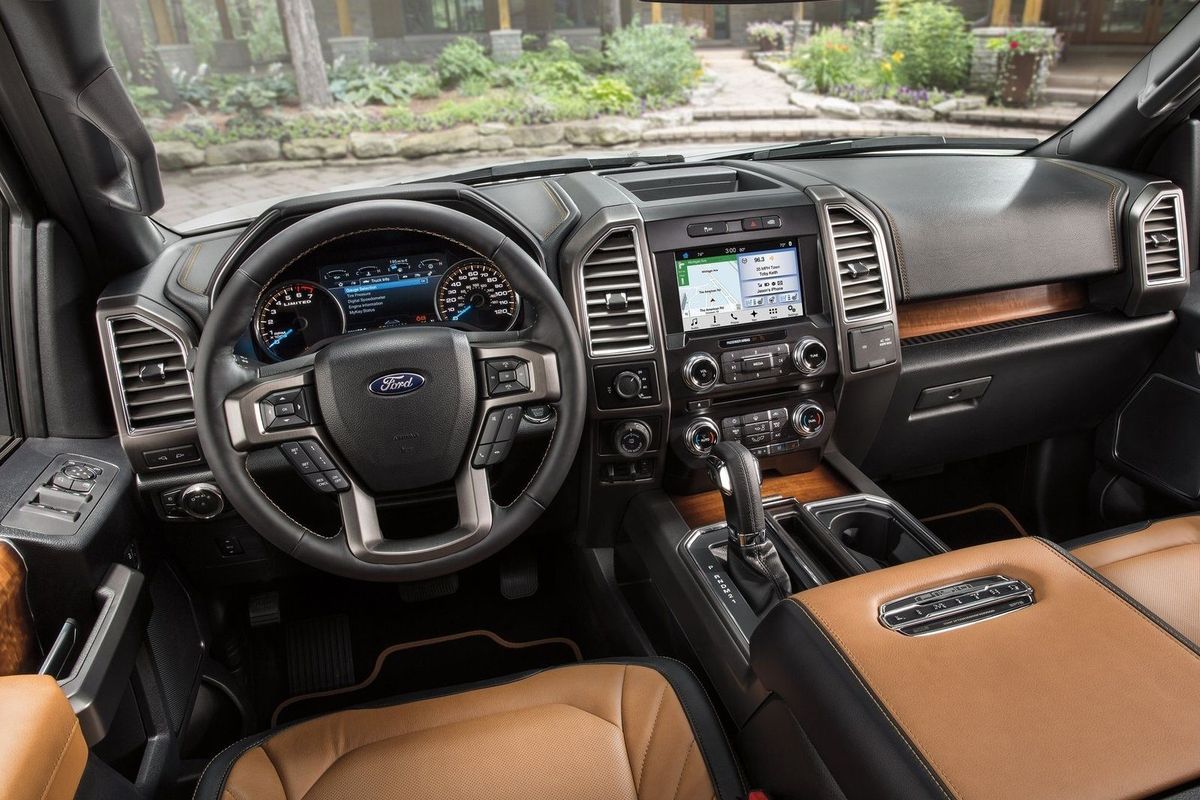
No, the variations don’t stop there. Then you reach the trim levels. XL, XLT and the exotically named Lariat, Raptor, King Ranch, Platinum and Limited are your choices. For the record, the vehicle we drove was the Lariat. It sits in the middle of the range and featured some excellent comfort features such as heated and ventilated leather seats, blind-spot monitoring, satnav, and a 110V air-conditioning outlet. Nods to utility include spotlights built into the side mirrors and Ford’s Pro Trailer Backup Assist, which makes reversing with a trailer as easy as turning a tiny knob on the dashboard.
Purposefully squared-off design
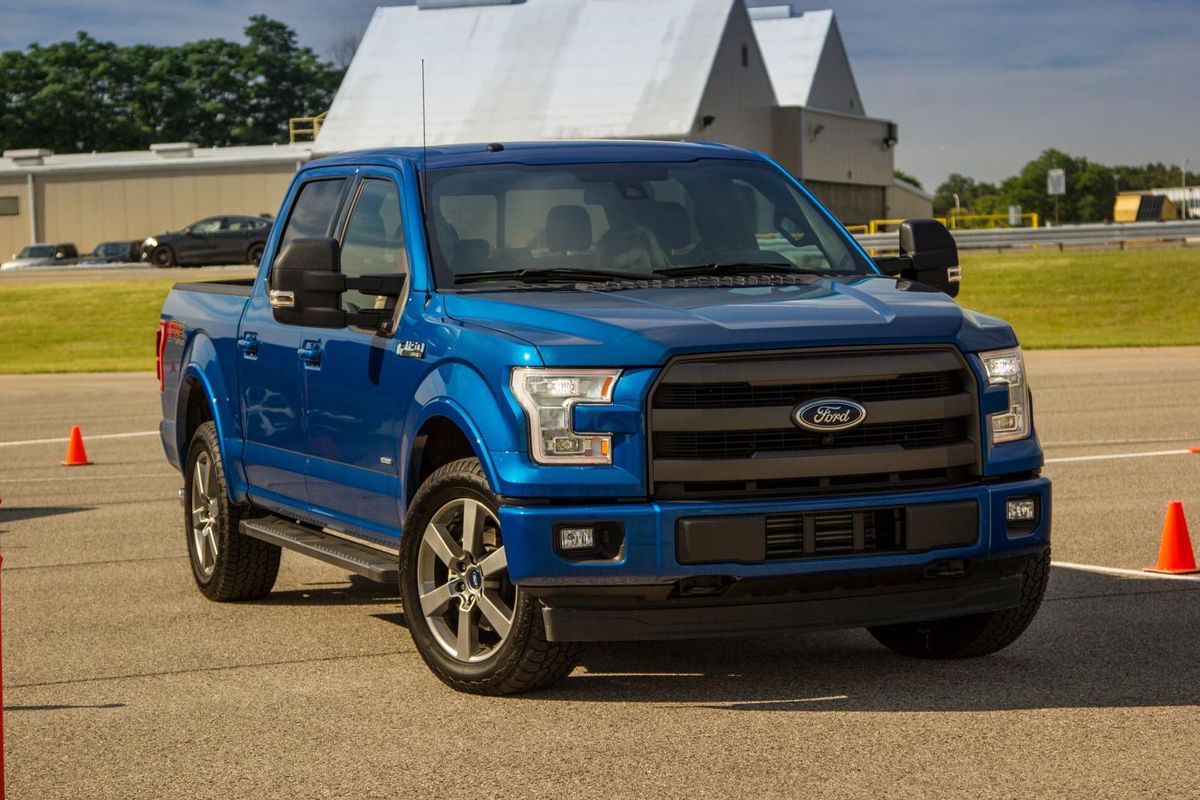
Can you get more American than a big pickup truck? Even though the F150 is the smallest bakkie in its commercial lineup, seeing one in the metal is likely to make you do a double-take. It’s massive: according to Ford's specifications, up to 5.8 metres long and at least 2,5 metres wide (with standard mirrors). In other words, it makes a Ranger look like a Ford Bantam by comparison. That front grille is splashed with chrome and from a head-on point of view, it’s bold and intimidating. As it should be.
You want the…. V6!
You’d expect a big and powerful V8 petrol engine under the hood of the Ford F-150, but we’re in 2016 and the culture of downsizing has spread across the Atlantic and infected the big truck market. You can purchase a 5.0-litre V8 for your F-150, but that motor is antiquated in comparison to the engine you really want. For this generation of Ford F-150, there’s a 3.5-litre V6 twin-turbocharged petrol motor which trounces its V8 counterpart both in terms of power and torque. 279 kW and 637 Nm sounds more like the outputs from a high-performance Mustang, but this is a double-cab bakkie.
The vehicle we drove came with the new 10-speed automatic transmission. As a publication which has tested several vehicles over the years, we were initially sceptical about the number of ratios. Some vehicles feature 8-speed gearboxes and there are now 9-speed transmissions too. These vehicles with their excessive number of ratios have proven acceptable, but surely 10 is too many? Ten gears may sound ridiculous, but somehow it works. The reason behind this number is simple: fuel efficiency. An interesting note is that this 10-speed unit will find its way into the next-generation Ford Mustang.
Driving the F-150
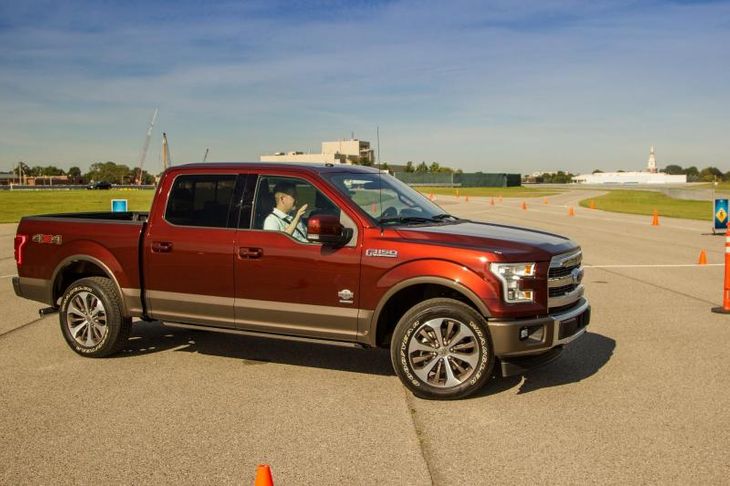
We were restricted to a few laps around the Dearborn Development Centre in Michigan, but the experience was enough to give us a fair indication of how the F-150 is like to drive. The first section of the route was through a tight and testing little gymkhana course to demonstrate handling in a confined route and it was here where the sheer size of the F-150 became blatantly apparent.
Once we'd finished the handling course, it was time to hit the high-speed oval and the Ecoboost engine was called into action to deliver all it could muster. There’s no lack of shove and the quick-shifting 10-speed transmission changes gears smoothly with a meaty soundtrack accompanying it. It’s no dual-clutch unit, but the shifts are seamless. The downside of this transmission is that if you need to do an emergency overtake, the gearbox will have to change down a few gears to put the engine in the sweet spot. It’s not that big an issue and the motor has plenty of outright grunt to move it along.
What really impressed us how well the F-150 rides. It really soaks up the bumps and unlike many of the bakkies on the local market, which have leaf-sprung rear suspensions, the Ford doesn’t bounce around when unladen. That big and solid-looking body effortlessly translates into a big and solid ride. It’s sizeable and capable, and certainly a desirable product that ticks both boxes of lifestyle and workhorse with ease.
Ford F-150 in South Africa: Yes/No/Maybe?
The F150 product manager from Ford USA gave us a firm "No", when asked about production for right-hand drive markets. If circumstances were to change, maybe there’d be a case for it as (almost 10-year-old) F250s still demand near R300 000 prices. However, just converting the dollar price of the Ford F-150 double-cab Lariot is R550 000 and we would estimate the starting price for the vehicle (including duties and taxes) would be near R800 000. Wow.
What if the Ranger Wildtrack isn’t enough to satisfy our desire for big American trucks? Even with the striking Raptor kit on a Wildtrak, it’s no F-150. So essentially, there’s nothing we can do to get the Ford F150 in South Africa… or is there?
There are many companies in South Africa which claim to be able to import a Ford F-150 (and other American products) and convert them to right-hand drive. The dream of owning a big American Ford truck in South Africa can come true, but be warned, it’s not going to be a cheap exercise.
Update: Tesla to Prove Autonomous Tech with Long Distance Journey (Video)
Last week, Tesla announced that all the cars it produces, including the upcoming Model 3, will feature full self-driving hardware. Tesla also released a video that demonstrates the capability of the system and Tesla is now planning a long distance trip across the US that will put it's technology to the ultimate test.
Tesla CEO,Elon Musk, has reportedly announced that an all-electric autonomous Tesla vehicle will embark on a long distance journey from Los Angelas to New York in full autonomous mode before the end of 2017. The vehicle will cover almost 4 500 km through 11 states, without any input from a driver. More so, Musk is confident that the vehicle will also be able to find its owner, even if the owner is on the other side of the country. This feature is made possible by using a 'summon mode' on your smartphone and the car will drive itself to come find you. It's certainly groundbreaking technology, but the proof is in the pudding and we will have to wait and see how Tesla's ambitions play out in the real world.
Tesla has recently made headlines for all the right, and wrong reasons, but the major announcement to come from the Palo Alto-based electric car manufacturer is that all the vehicles it produces from now on, will feature full self-driving hardware that, in the words of Tesla, will offer a “safety level substantially greater than that of a human driver”.
Smart Hardware Updates
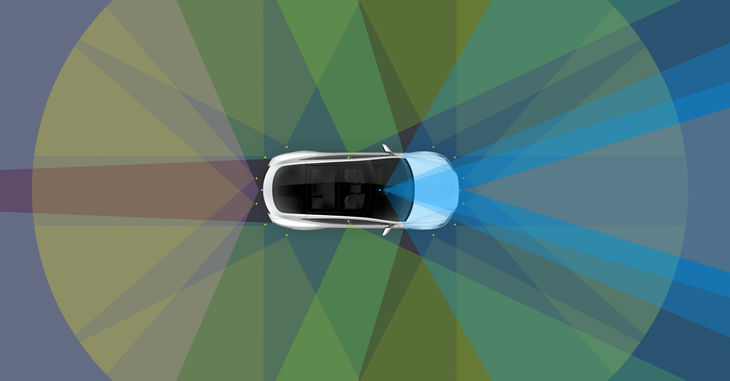
The hardware required to make the magic happen includes 8 surround cameras that provide a 360 degree view around the car with a range of up to 250 metres. In addition, 12 updated ultrasonic sensors help detect objects at almost twice the distance compared to the previous system. Each Tesla vehicle will also be fitted with a forward-facing radar with enhanced processing capability that’s able to see through heavy rain, fog, dust and the car in front of you.
A new onboard computer with 40 times higher computing power is at the core of Tesla’s newly developed neural net for vision, sonar and radar processing software. According to Tesla, “the system provides a view of the world that a driver alone cannot access, seeing in every direction simultaneously and on wavelengths that go far beyond the human senses.”
With all its onboard cameras and sensors, the new Tesla hardware "provides a view of the world the driver alone cannot access".
Before these features can be enabled, Tesla will calibrate the system using millions of kilometres of real-world driving to ensure safety and convenience. Initially, vehicles fitted with the hardware will lack some features (emergency braking, collision warning, lane keep assist and active cruise control) fitted as standard on previous Tesla cars with first-generation Autopilot hardware. As the features become validated, they will be activated over the air. New features will also be introduced as the validation process progresses.
The Tesla Model S and Model X are already being produced with this technology and are being sold on global markets. Tesla vehicles are not yet available in our market but Tesla announced earlier this year that South Africa would be added to the order book for the Model 3, which will likely become a reality in 2018.
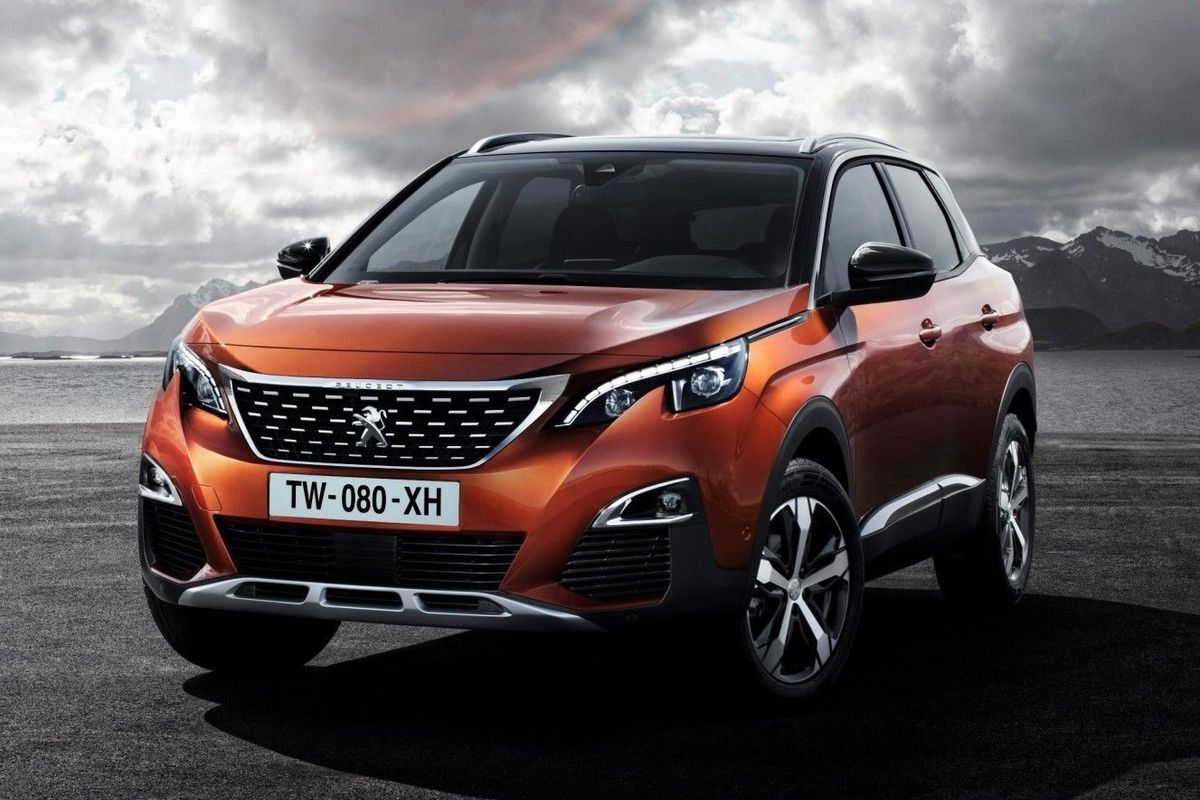
The new Peugeot 3008 was revealed earlier this week and apart from offering good looks and fresh technology, it will also offer a unique mobility solution for city dwellers on the move with the option of an e-Bike and e-Kick scooter…
Several automotive manufacturers dabble in the production of a variety of consumer items other than cars, but those products are largely marketing tools to generate brand awareness. Peugeot, however, has essentially branched out on its core business by teaming up with Micro Mobility. The firm will offer an electrically assisted e-Bike and e-Kick scooter as options for the new Peugeot 3008 crossover SUV that will arrive in South Africa in the first quarter of 2017.
The idea is that you drive your new 3008 into the city, park somewhere, and for the last part of your journey, whether it is going to work or to your favourite coffee shop, you hop onto your e-Bike or e-Kick scooter and complete your journey. It’s fun, clever and useful…
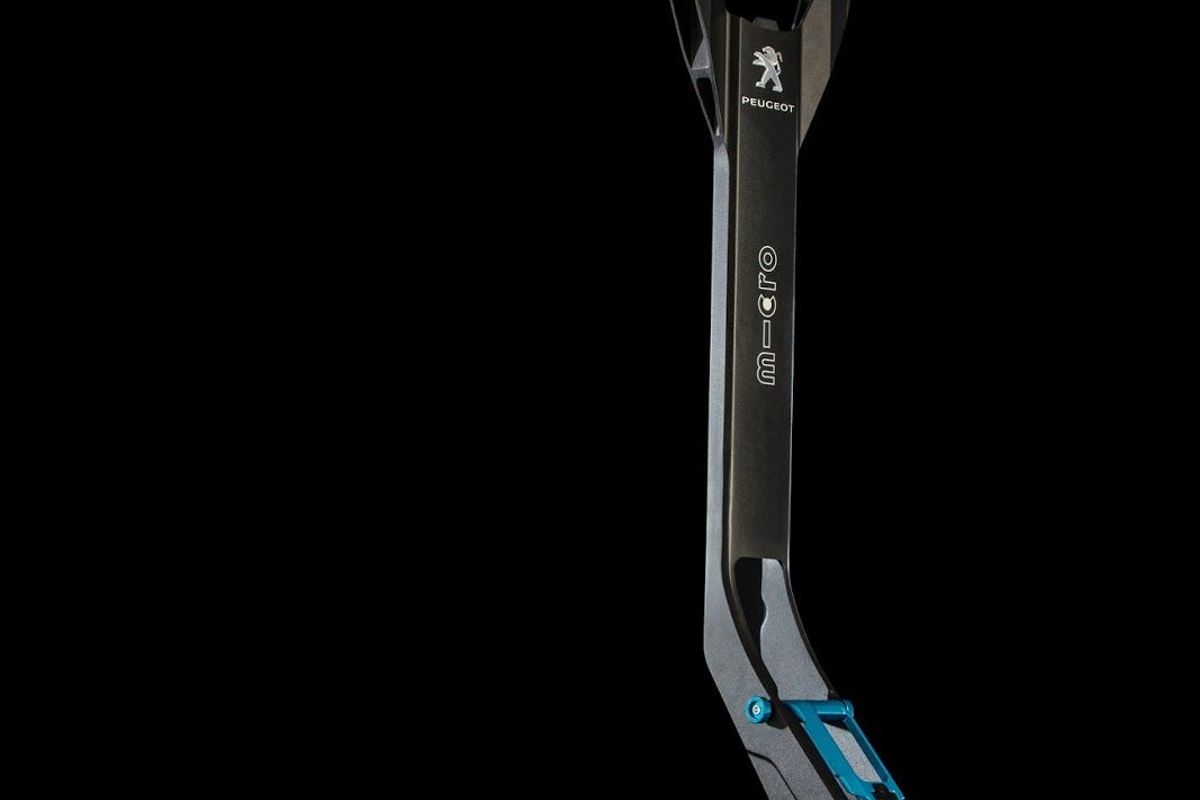
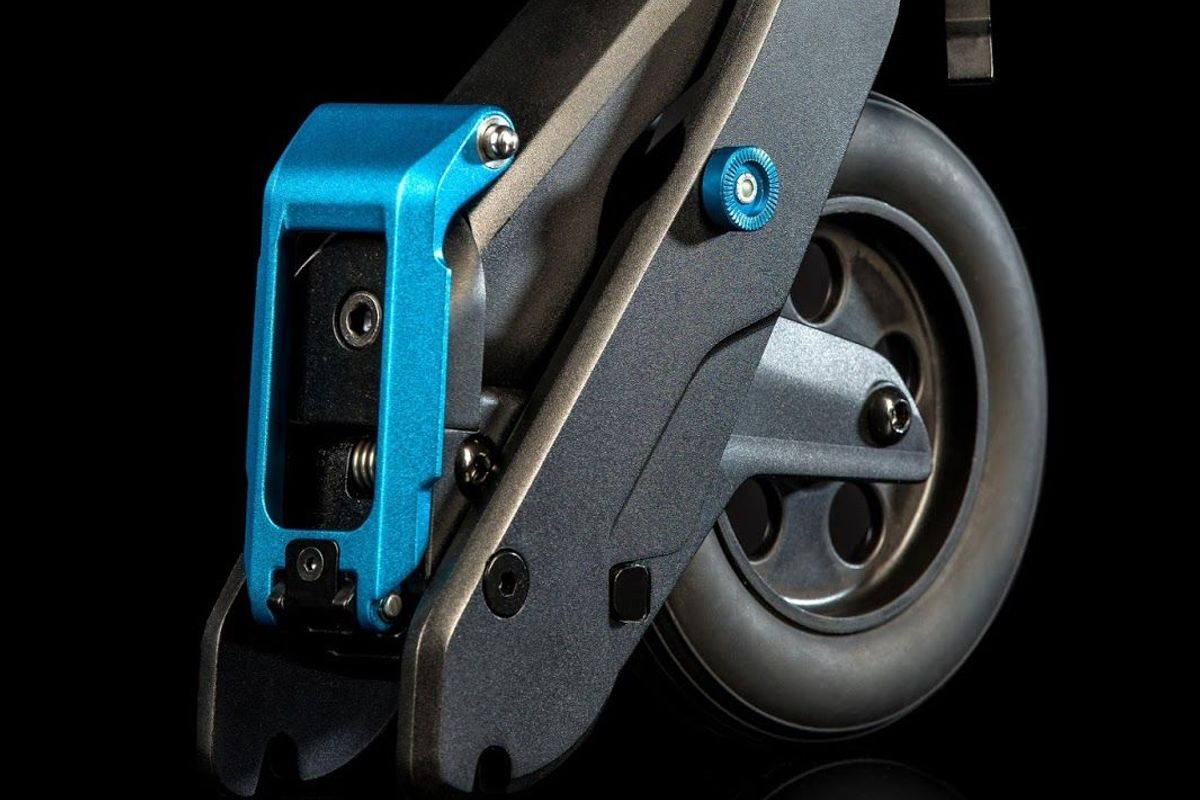
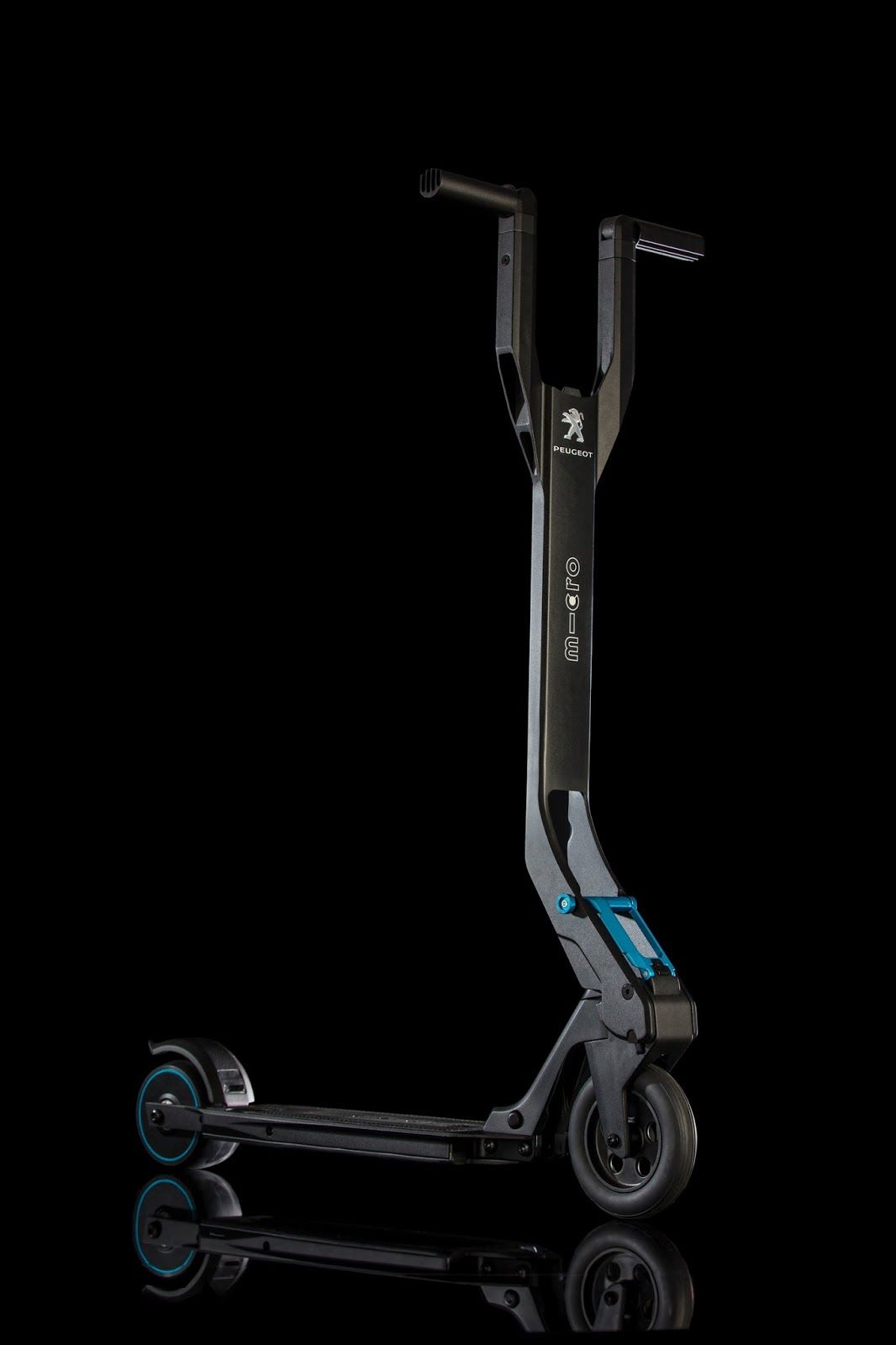
The Peugeot e-Kick scooter weighs only 8.5 kg and is designed to fit into a "docking station" in the boot of the new Peugeot 3008 where it can be stored and charged while the car is running. Being electrically-assisted, the e-Kick features a thin lithium-ion battery pack and an electric motor integrated into the rear wheel.
The level of electric assistance is determined by the rider’s movements and the e-Kick has a range of up to 12 km and can reach a top speed of 25 kph. A foot-brake is included to bring the e-Kick to a stop and it even features a regenerative engine braking system that charges the battery pack when the brakes are applied. The e-Kick folds up easily too, making it easy to wheel around wherever you go.
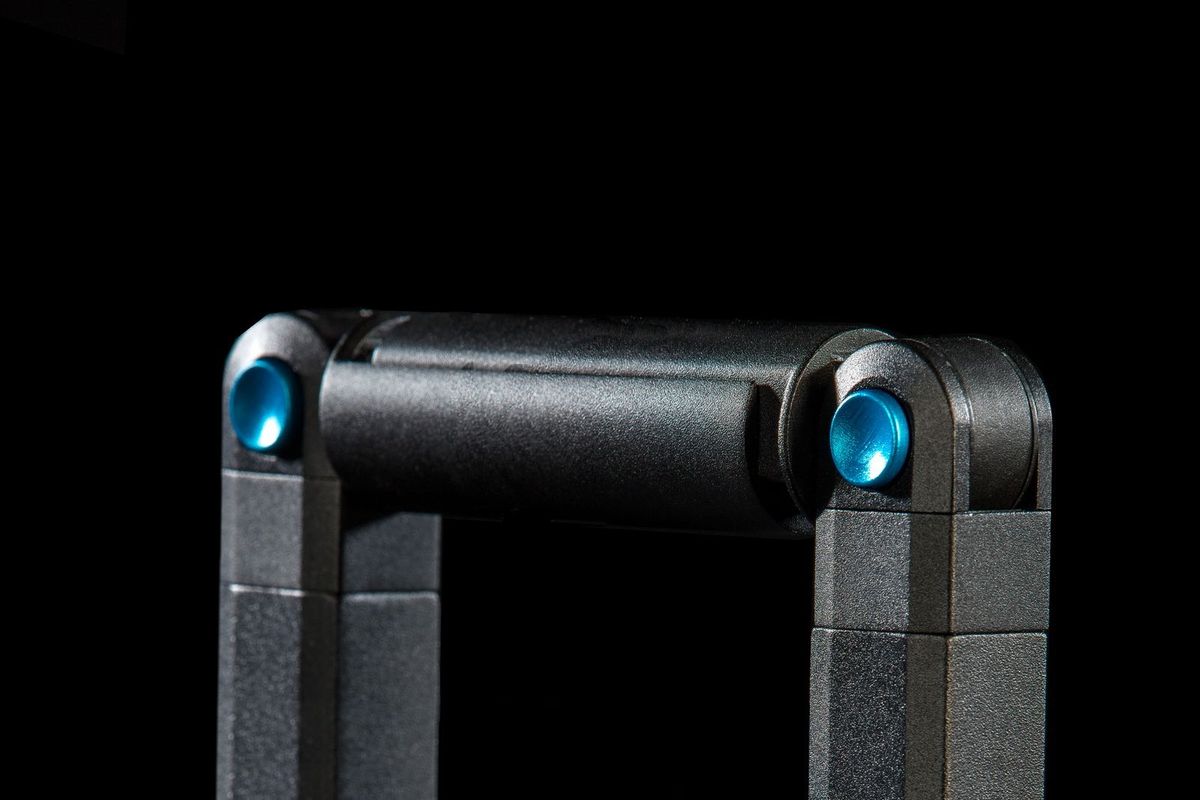
“The e-Kick is a truly multi-modal designed not just to be a mobility solution in itself but also to link all the other solutions together. The two handles used in driving mode fold up into a single handle that allows the scooter to roll from on one wheel, making it effortless to hop from your home to your car to a train to your work”, says Cathal Loughnane, Peugeot Design Lab Manager.
We have yet to try the e-Bike, but it will likely follow similar design and function to that of the e-Kick scooter. Although the e-Kick and e-Bike are brilliant additions to the new Peugeot 3008, it remains to be seen whether the idea will result in more sales when the new 3008 arrives next year. Either way, hats off to Peugeot for making the effort…
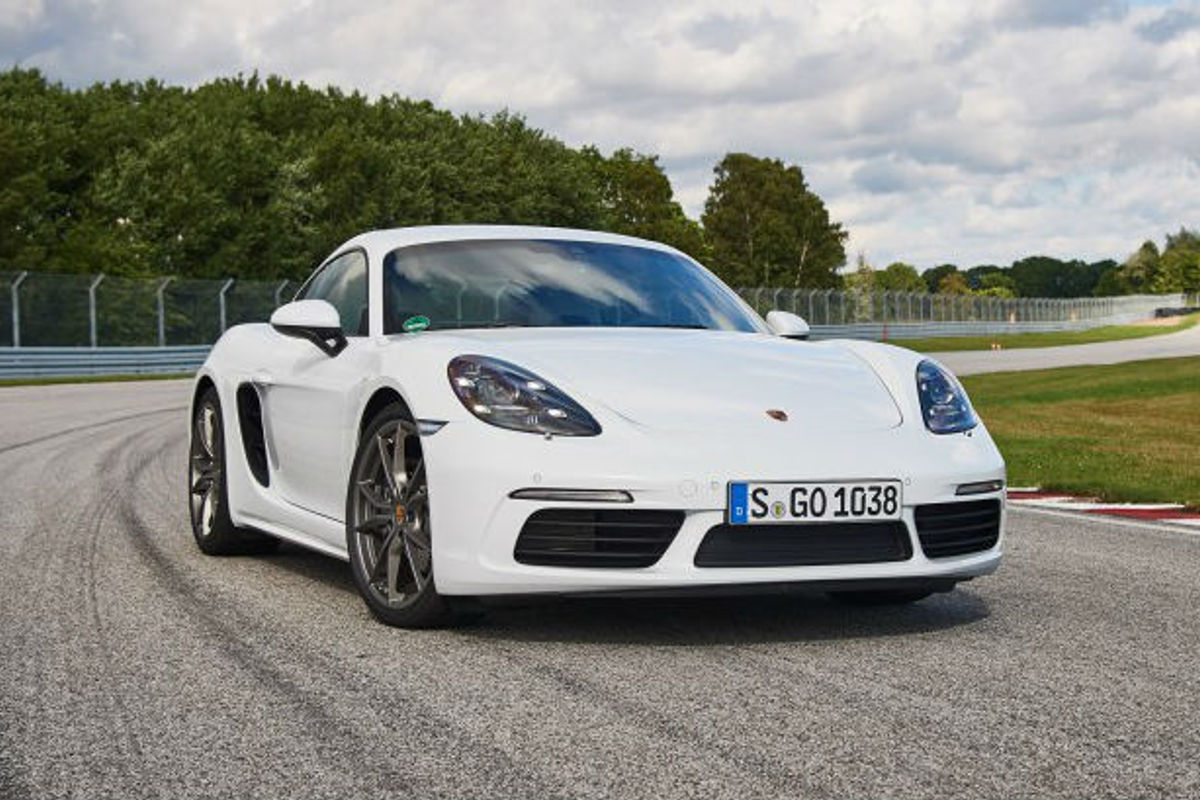
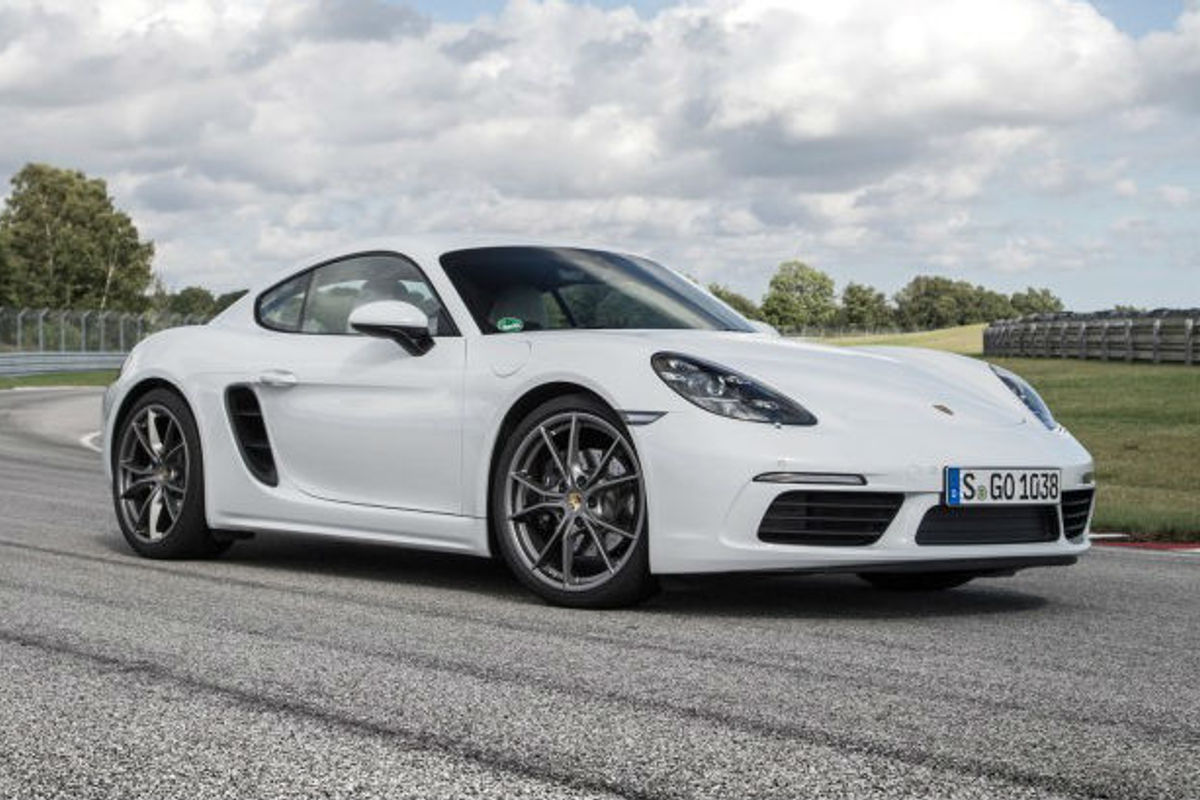
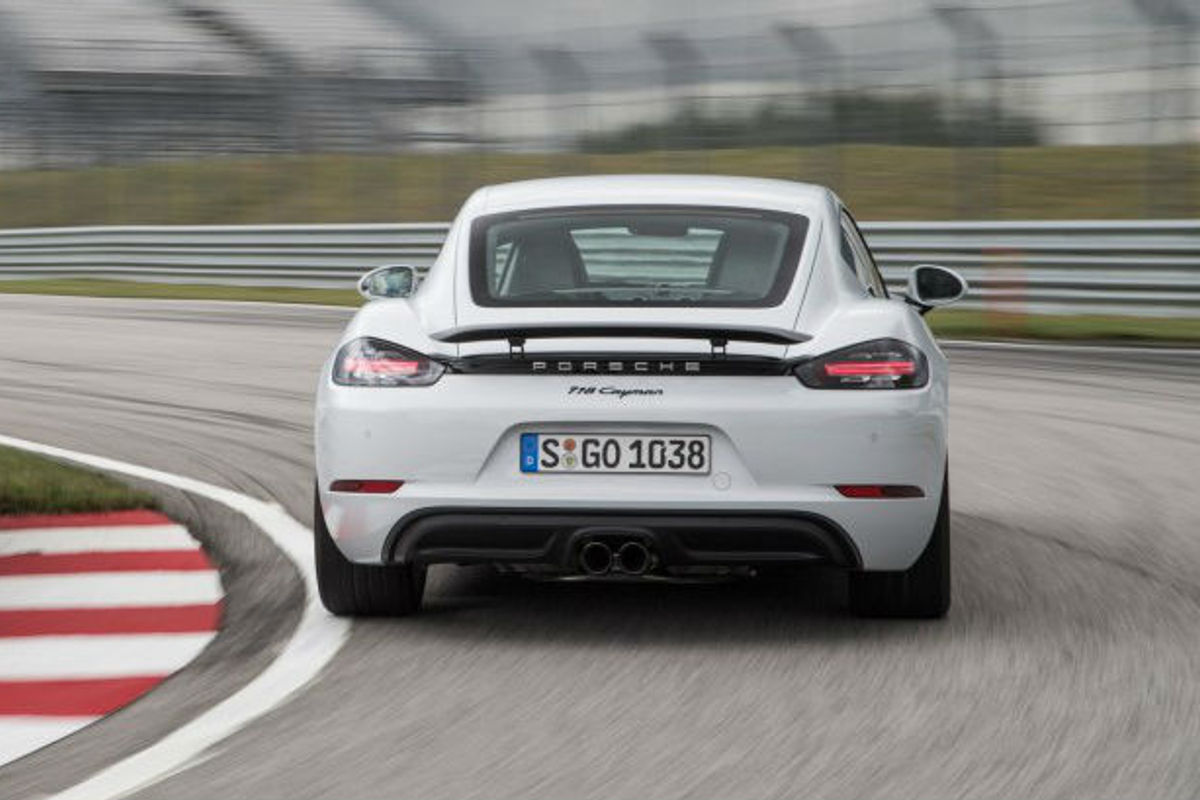
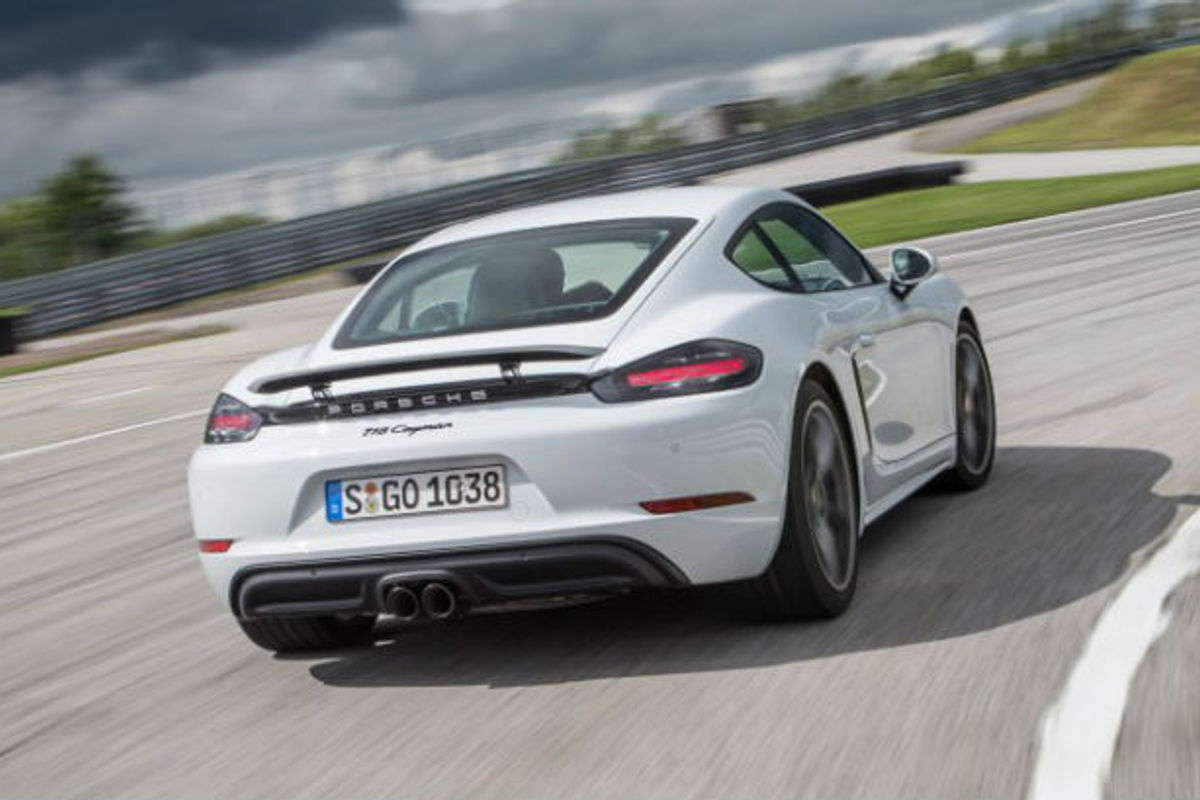
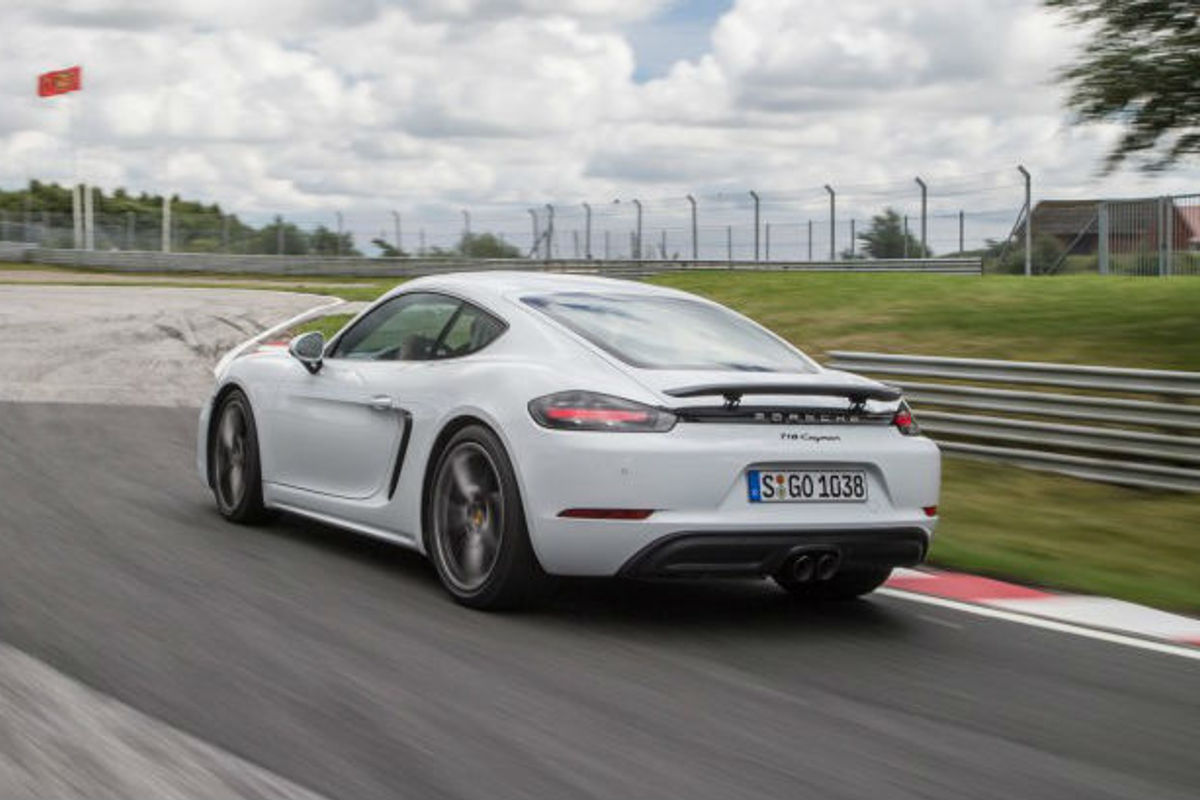
Porsche has introduced the 718 Cayman and Boxster in South Africa. The switch to a turbocharged, 4-cylinder engine marks a seismic shift for the Cayman and it's still brilliant, but… there's a but, reports our UK-based correspondent Kyle Fortune.
Porsche 718 Boxter and Cayman range prices in South Africa
The prices as quoted here include a 5-year maintenance plan. Three-year maintenance plans are also available at lower cost and you can configure cars to exact specification and price estimates on Porsche South Africa's website.
Do you want to know what the Cayman S is like to drive? If so, read on:
By Kyle Fortune
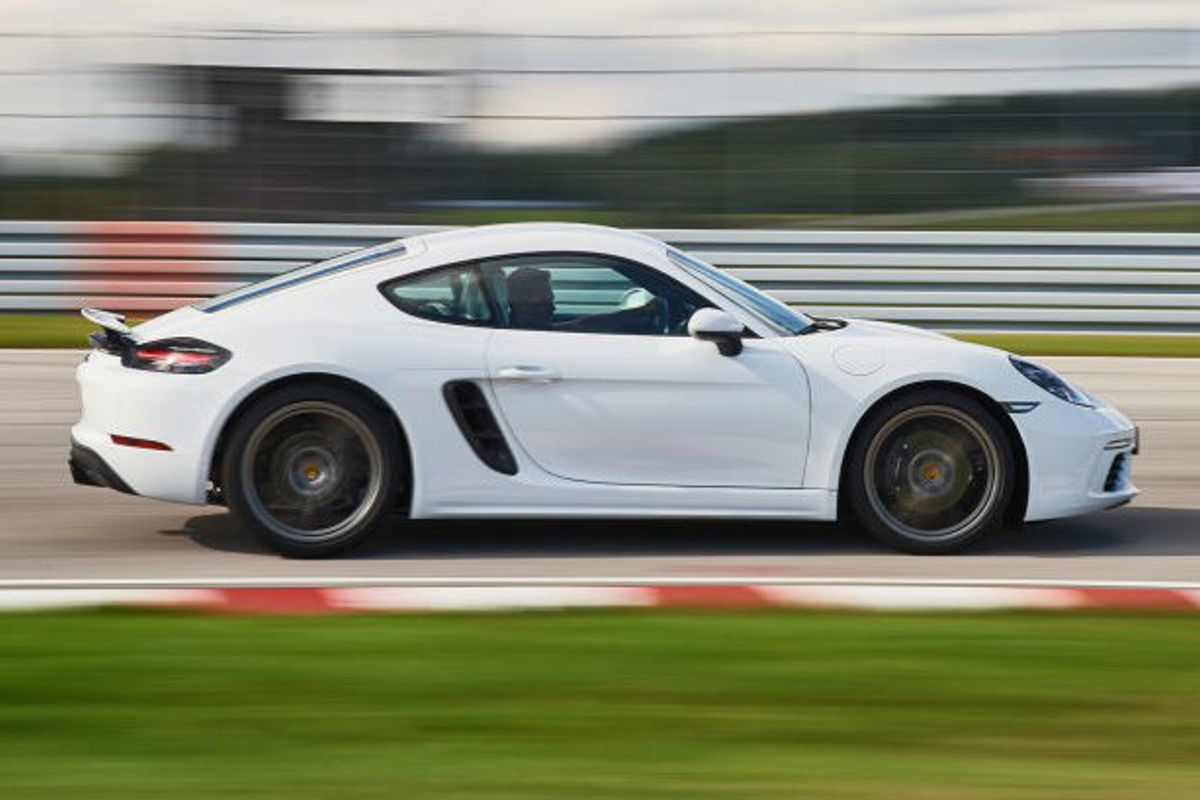
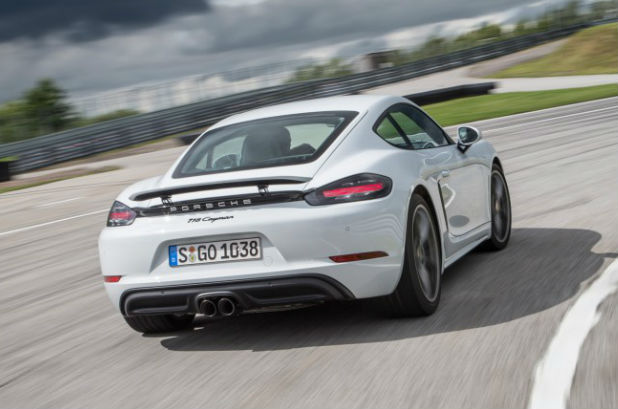
The 718 marks the biggest shift in the Cayman paradigm since Porsche introduced its mid-engined 911 understudy and blew away all comers in the small sportscar marketplace. Yes, it might live in the shadow of its rear-engined relation, as some traditionalists argue, but the Cayman's arguably a more complete sportscar than the iconic 911. Porsche has had to evolve its littlest coupe in the face of emissions legislation, however. The Cayman gains the "718" moniker in a bid to link the newcomer to a past that only the most ardent Porsche fans will understand, 2 cylinders have been lopped off the flat 6 motor and a turbocharger added to compensate. That's as seismic a shift as when the 911 went from air- to water cooling. Arguably greater, even.
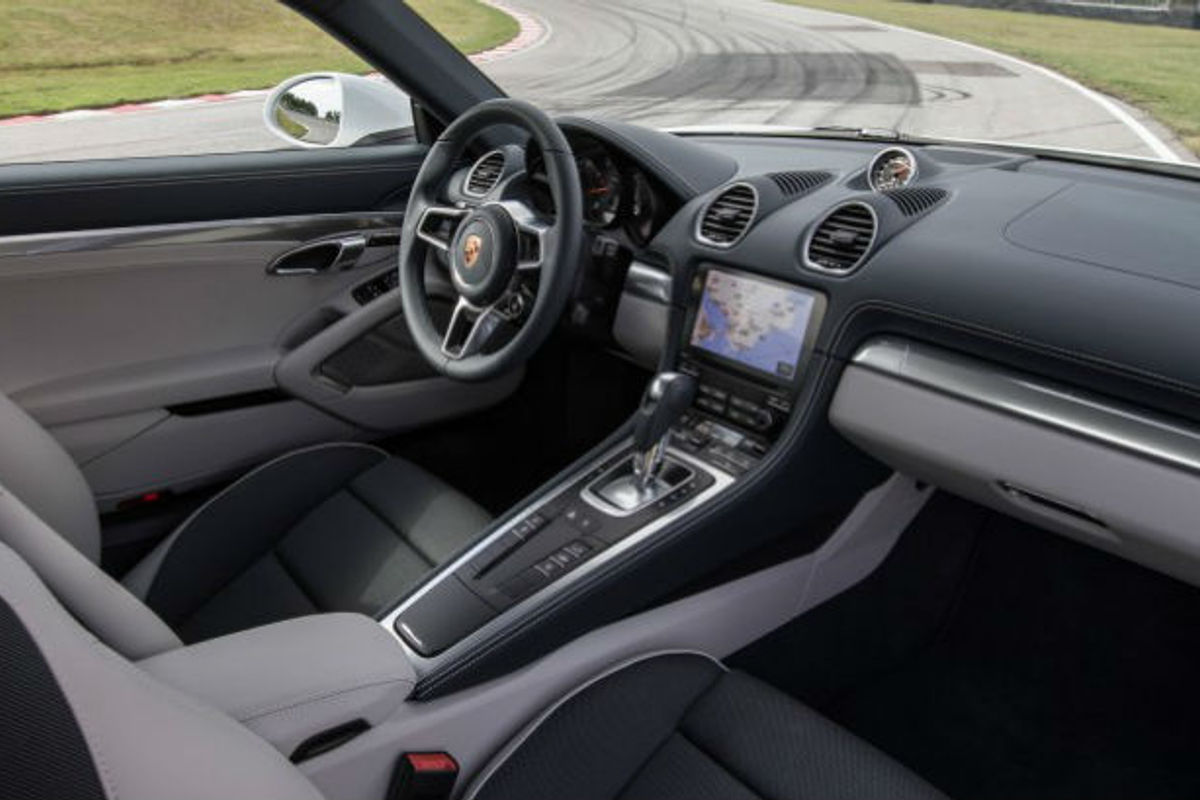
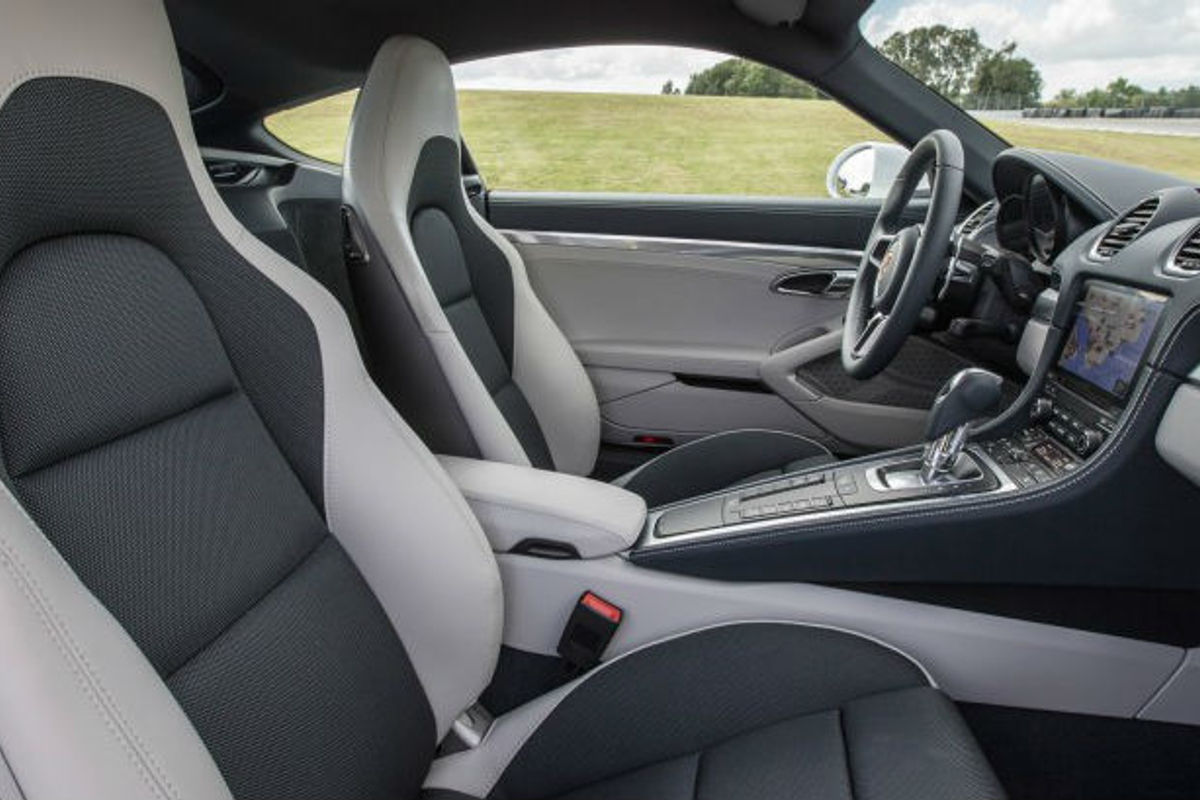
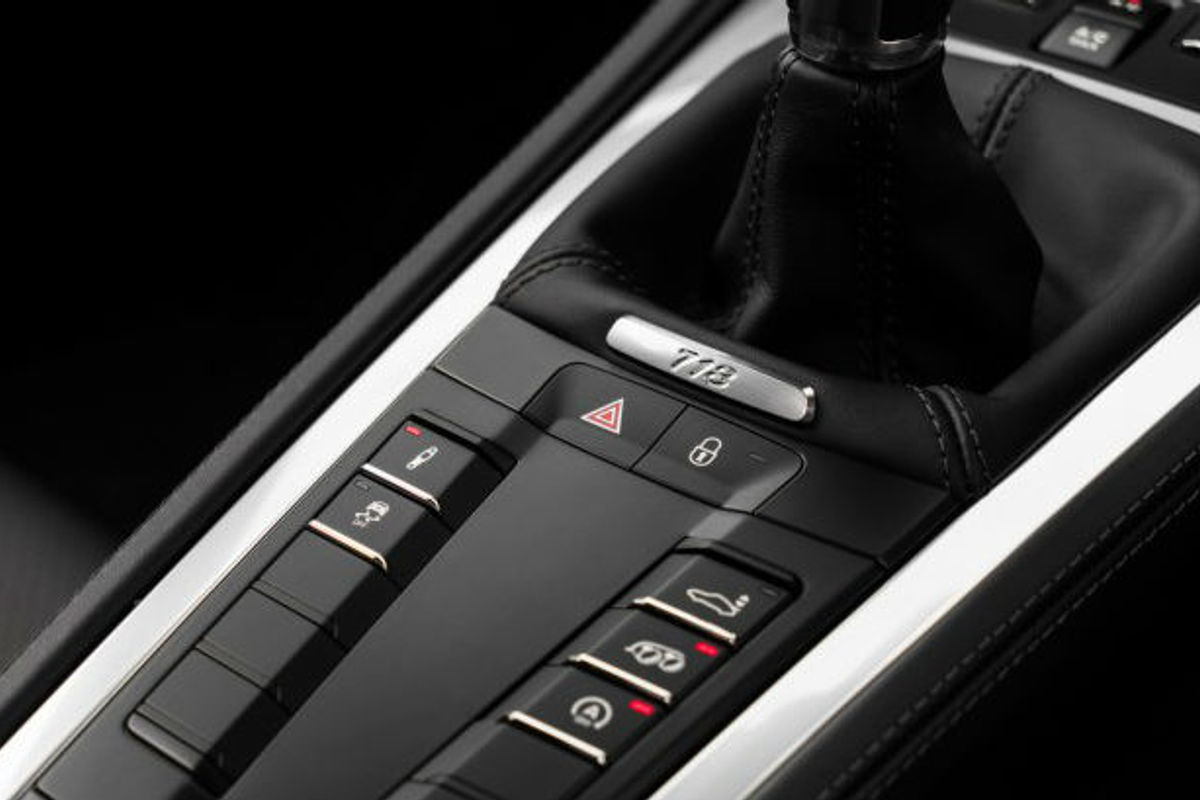
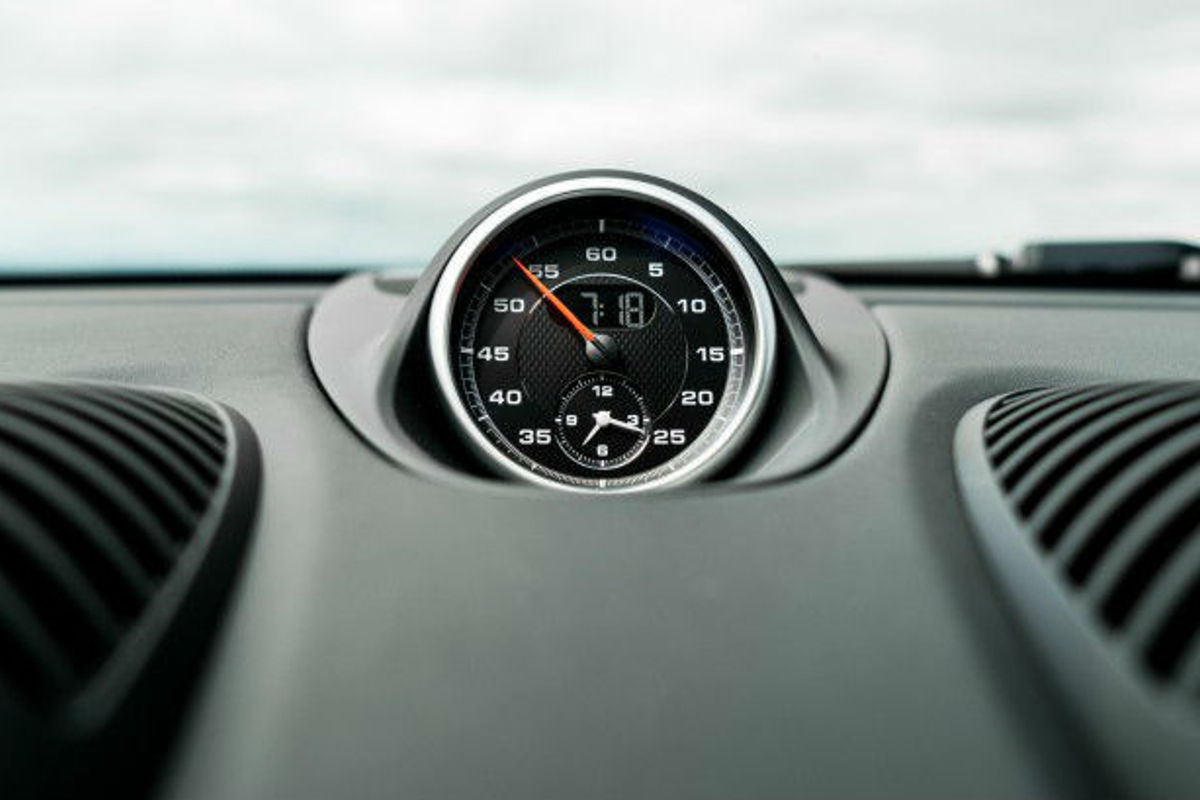
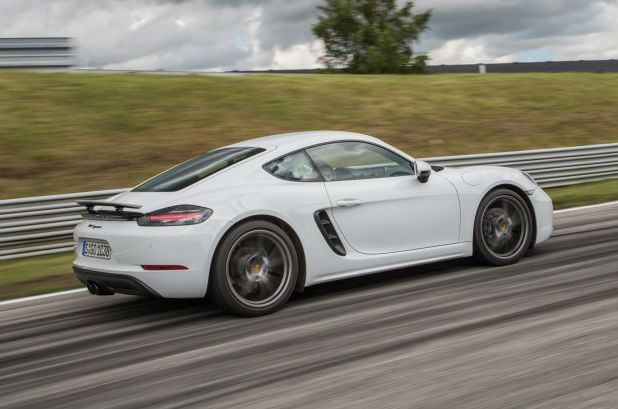
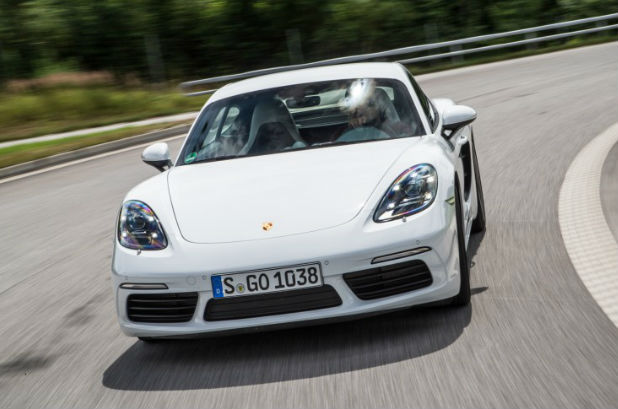
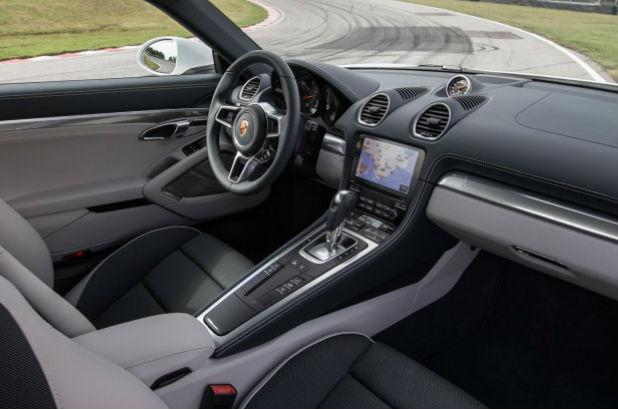
We'll get to the engine in a moment, as the updates don't only centre on the powerplant. There's revised styling too; the Cayman was always a good-looking sportscar and the 718's changes do little to alter that: it's a head turner. There are revisions to the chassis too, the 718 adopting some bits from the Cayman GT4, and the quicker steering rack of the 911 Turbo, so the already accomplished handling of the old car should be improved further. The interior gets all the new touchscreen interactivity that the newest Carreras get, though, as ever, there's a fair bit of options box ticking to build your perfect Cayman S.
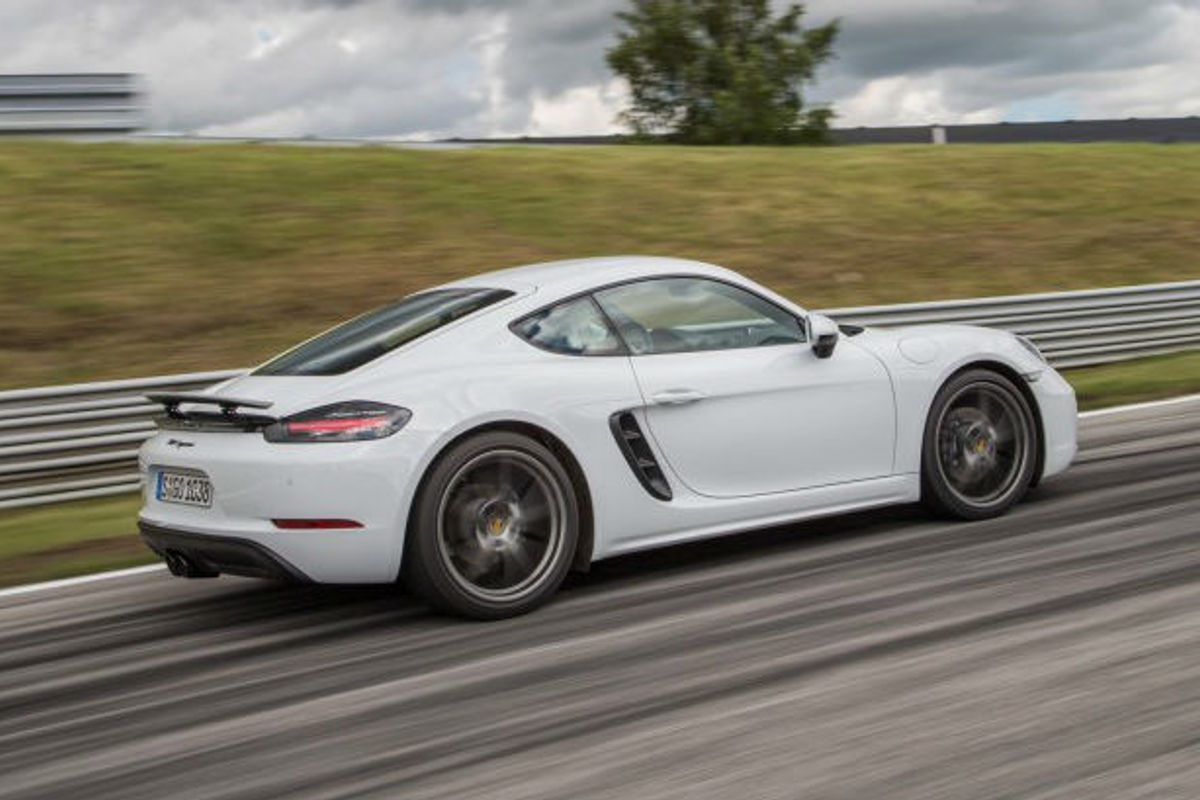
The rear 3-quarter aspect of the 718 Cayman is still one of the most evocative views in the sportscar world.
How does it drive?
The essentials remain the same. The Cayman, which we tested in manual S guise, remains a beautifully balanced sports car. The chassis is sublime, the steering quick and accurate, its weighting near perfect, the ride quality remarkable given it's riding on 20-inch alloy wheels (19-inch wheels are standard). Specified with PASM (Porsche Active Suspension Management) there's the choice of standard or sports settings for the damping, though the latter only adds unwanted frequency and intrusion on the road. It, like a sharper throttle map and louder exhaust in Sports and Sports+ modes, is accessed either via the normal button between the seats, or the configurable "mode switch" that arrives on the steering wheel with the addition of the Sport Chrono Package.
There was never anything wrong with the Cayman's dynamics, and Porsche's revisions with the change to 718 Cayman only enhance them further. There's no finer balanced sports car out there, certainly not at the price point the Cayman is at. There's a but, though, and it concerns the new engine.
The 718 Cayman features the first 4-cylinder turbocharged motor since the 968 model in the mid Nineties.
Porsche's hand was forced by legislation, as sports cars aren't immune to the creep of environmental regulations, which means downsizing. So the naturally-aspirated, high-revving flat-six of the pre-718 Cayman (and Boxster) have been replaced by a turbocharged four-cylinder. In the Cayman S it's 2.5 litres in capacity (2.0-litre in the Cayman), and in the S at least, like the 911 Turbo, it's a variable vane turbo, helping reduce lag.
No amount of turbine trickery can conceal the fundamental change the moment you turn the ignition key. Where the old car's 6-cylinder unit sounded exotic, the 4-cylinder's off-beat, Subaru-like rumble doesn't. There was an optional sports exhaust fitted to our test unit, which does little to add anything rousing to the mix: the previous Cayman created a soundtrack that you wanted to hear; in contrast, the 718 just generates mechanical noise.
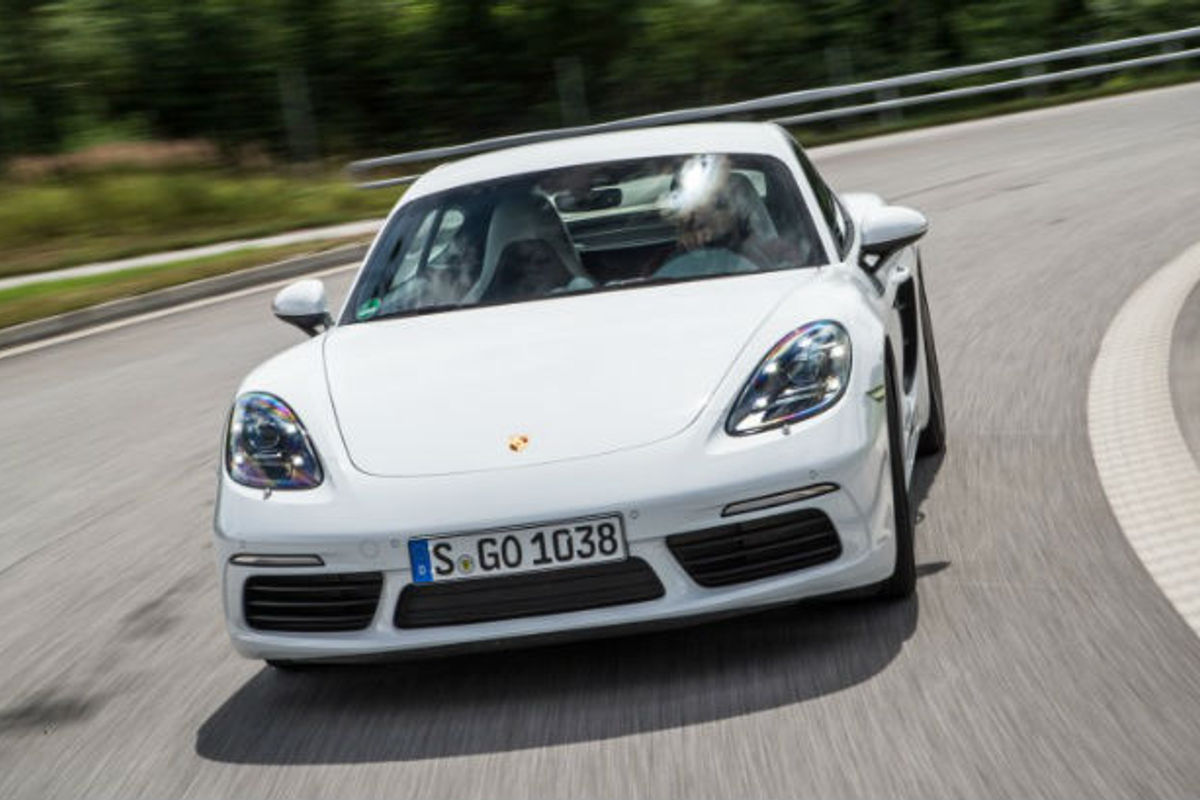
By adopting parts from the GT4 and the 911 Turbo's steering rack, the 718 Cayman is nimbler than ever.
Sounds uninspiring, but it's faster in every way
The compensation for the lack of aural appeal is an engine that's appreciably quicker, at any point in its rev range. The 4-cylinder's low-rev urgency is transformational, meaning you don't need to be wringing it out nor changing down the beautiful shifting 6-speed manual gearbox for pace, thanks to its peak torque (420 Nm) arriving at just 1 900 rpm. Maximum power (257 kW) arrives at a respectably high 6 500 rpm, but there's little incentive to really have the Cayman S's rev counter needle up there, as its delivery is strongest in the mid-range rather than the upper portion that previously defined it.
Naturally, this makes for a car that's faster more of the time (Porsche claims a 0-100 kph sprint time of 4,6 seconds for the manual S derivative), the added low-rev urgency arguably allowing you to enjoy its chassis more readily, and the Cayman S is indecently rapid and hugely responsive. It's particularly so in Sport and Sport+ modes – though why Porsche insists on forcing rev-matching blips for downshifts (that require PSM stability management completely off to disengage) in these modes remains a mystery. An easy life isn't necessarily something you want when you're in an engaging sports car. The pace might be greater in the 718, but the rewards simply aren't as hedonistic, as now the tuneless engine's strength is its performance, as opposed to its character.
The 718 Cayman (shown here in PDK guise) has an intimate interior replete with a touchscreen infotainment system.
In isolation, and if you had never experienced the naturally aspirated 6-cylinder engine in the pre-718 Cayman S, you might be wondering what we're complaining about. The Cayman S is all the sportscar you could want: it's hugely capable, enjoyable, and still in a different league to its rivals on a purely objective and rational sense. What it has lost are those incalculable intangibles that made the previous 6-cylinder Cayman S a car that you'd look for any reason to drive, and that made time behind its wheel an occasion. You'll enjoy and even admire the 718 Cayman S, but it's simply not as captivating, largely because its earworm's all wrong and it's that little bit less engaging and demanding thanks to its greater torque and lesser appetite for revs.
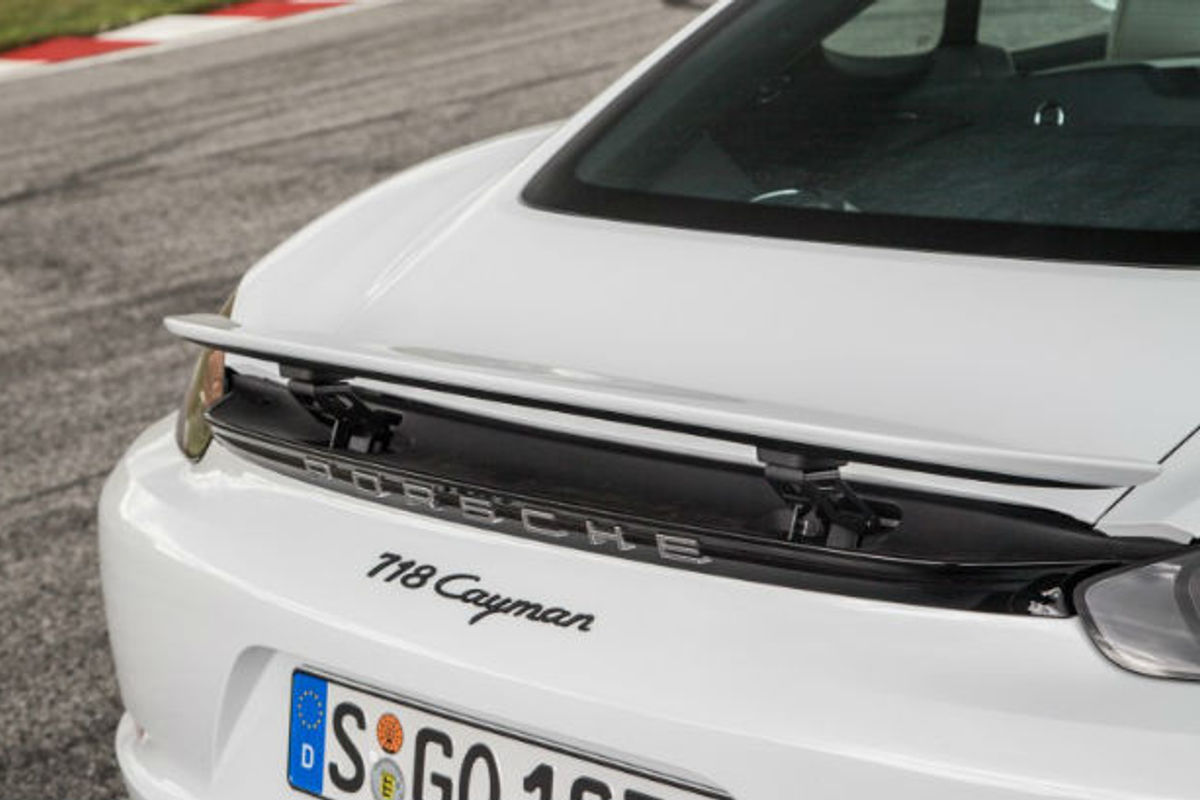
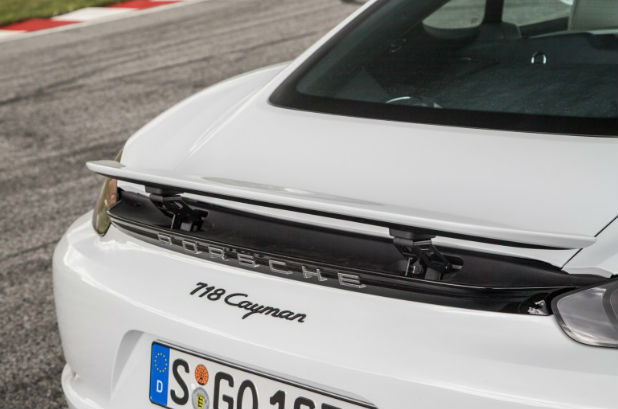
The automatically deploying rear spoiler does not fit as flush with the rear bumper as before (it rests atop a black Porsche sill).
Verdict
Porsche's changes to create the 718 Cayman S are understandably transformational. It's a different car as a result of its new powerplant, and it's not all good news. It's a more complete, rounded proposition as a result, but the engine's lack of charisma denies the 718 Cayman S an element of its makeup that was arguably its signature, that being the flat-6, naturally aspirated engine. Blame economy requirements and emissions, though driven as it should be the new engine consumed (an indicated) 10.36 L/100 km over a 480 km 7-hour return journey we did in it. Coincidentally, we completed the same round trip last year in a Cayman GTS. But whereas the memory of the GTS remains tattooed on our memory; that of the 718 is already fading…
Honda has officially announced that its Clarity fuel-cell vehicle can achieve a range of 589 km.
The hydrogen-powered Honda Clarity fuel-cell vehicle (FCV) has staked its claim with the “best range of any zero emission vehicle” title after Honda announced its official range of 589 km with an equivalent fuel consumption rating of 3.5 L/100km. The Clarity FCV is a 5-seater sedan and its range is more than current zero-emission leaders such as the Tesla Model S (506 km), Toyota Mirai (516 km) and Chevrolet Bolt (383 km).
"Not only does the Clarity Fuel Cell fit five passengers and refuel in three to five minutes, it offers customers a driving range on par with gasoline-powered cars. The Clarity leads the pack with a 589 km driving range rating, and with a growing network of hydrogen stations and fast fuelling time, the zero-emissions family road trip is no longer science fiction" said Steve Center, vice president of the Environmental Business Development Office at American Honda Motor Co., Inc.
The Honda Clarity FCV will go on sale in the US before the end of 2016 and Honda will utilise 12 approved fuel cell dealerships in California to support the Clarity FCV. Honda will also to look to expand on its existing hydrogen fuelling station network in the US in the future.
South Africa has no such infrastructure in place and the Honda Clarity FCV will therefore not be offered in Mzansi.
Our German spy photographers have spotted Hyundai’s wide-body Veloster prototype, also known as the RM16 N, undergoing testing at the Nürburgring. Check out the details below…
Picture credit: S. Baldauf/SB-Medien
The RM16 N concept was first shown earlier this year at the Busan Motor Show and a prototype has now taken to the tar at the Nürburgring in Germany for testing. The big news for Hyundai’s potential N-powered hot-hatch is that it’s based on the Veloster but it will feature a mid-mounted, rear-wheel drive layout, as opposed to a front-engine, front-wheel drive layout seen in the current Veloster.
Power in the RM16 N concept comes courtesy of a turbocharged 2.0-litre 4-cylinder engine coupled with an electrically-aided turbocharger producing at least 220 kW and 383 Nm of torque. Power is sent to the rear wheels using a 6-speed manual transmission.
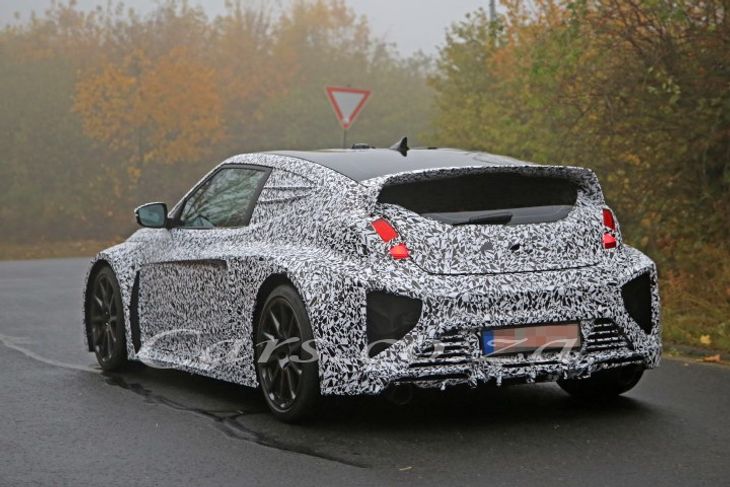
The Hyundai RM16 N prototype showcases progressive styling with a mid-engine, rear-wheel drive layout.
In terms of styling, the RM16 N is vastly different to the current Veloster and it gains wider fenders, new headlights and larger air intakes both at the front of the vehicle and behind the doors. The spy shots also reveal Brembo brakes and large rear spoiler.
Reports suggest that if the car goes into production, it will feature carbon-fibre body panels for less weight and improved weight distribution, an adjustable rear-wing spoiler, an adjustable exhaust valve and a dynamic driver's seat that can automatically increase the level of bolstering when cornering hard.
Although Hyundai is keeping its cards close to its chest regarding the release of a production version of the RM16 N, the fact that a near-production ready prototype has been spotted on the Nürburgring is enough reason to believe that Hyundai might be considering it. Based on the above images, let’s hope they do…
Ken Block recently released Gymkhana 9: Raw Industrial Playground featuring the potent Ford Focus RS RX. Ford has now released Part 1 of a 360-degree virtual reality version of Gymkhana 9. Part 2 is expected to be released in coming weeks and we will surely share it with you when it arrives. In the meantime, enjoy the drive with Ken Block in the video below! It's awesome…
We love watching Ken Block ripping up tar and taking over streets across the world… don’t you? Block’s previous Gymkhana shenanigans are pretty impressive, showcasing immaculate driving skills and hair-raising moments. Now, Gymkhana 9: Raw Industrial Playground has arrived, but this time Ken Block goes back to his Gymkhana roots in Buffalo, New York where he goes full tilt in a powerful Ford Focus RS RX. Awesome!
“I really wanted to bring Nine back to the core roots of my earlier Gymkhana videos. The full city takeovers are a ton of fun, but we felt it was time to get back to the basics, especially with the new Ford Focus RS RX. We really wanted to let it shine and be the star in this video since it has so much useable power and control,” said Block.
The Ford Focus RS RX was designed and built in partnership with Ford’s Performance wing, Ken Block’s Hoonigan Racing team and team M-Sport for the World Rally Championship and offers a mammoth 448 kW and 894 Nm of torque from its 2.0-litre EcoBoost engine. Those power outputs are nearly double compared to the 257 kW and 440 Nm of torque offered in the standard Ford Focus RS. The Ford Focus RS RX is claimed to achieve zero to 100 kph in just 1.9 seconds.
“The great thing about these videos, everything I do with the car, everything we capture on camera is all real, live action,” Block added. “We may do a few takes to get all of the angles covered or to get the timing more dialed, but at the end of the day it’s all actual driving, nothing is faked.
It all worked out amazingly and I couldn’t be more stoked on how this video turned out,” Block concluded.
Enough words, watch Gymkhana 9: Raw Industrial Playground below and revel in the tyre clouds left by the mighty Ford Focus RS RX…
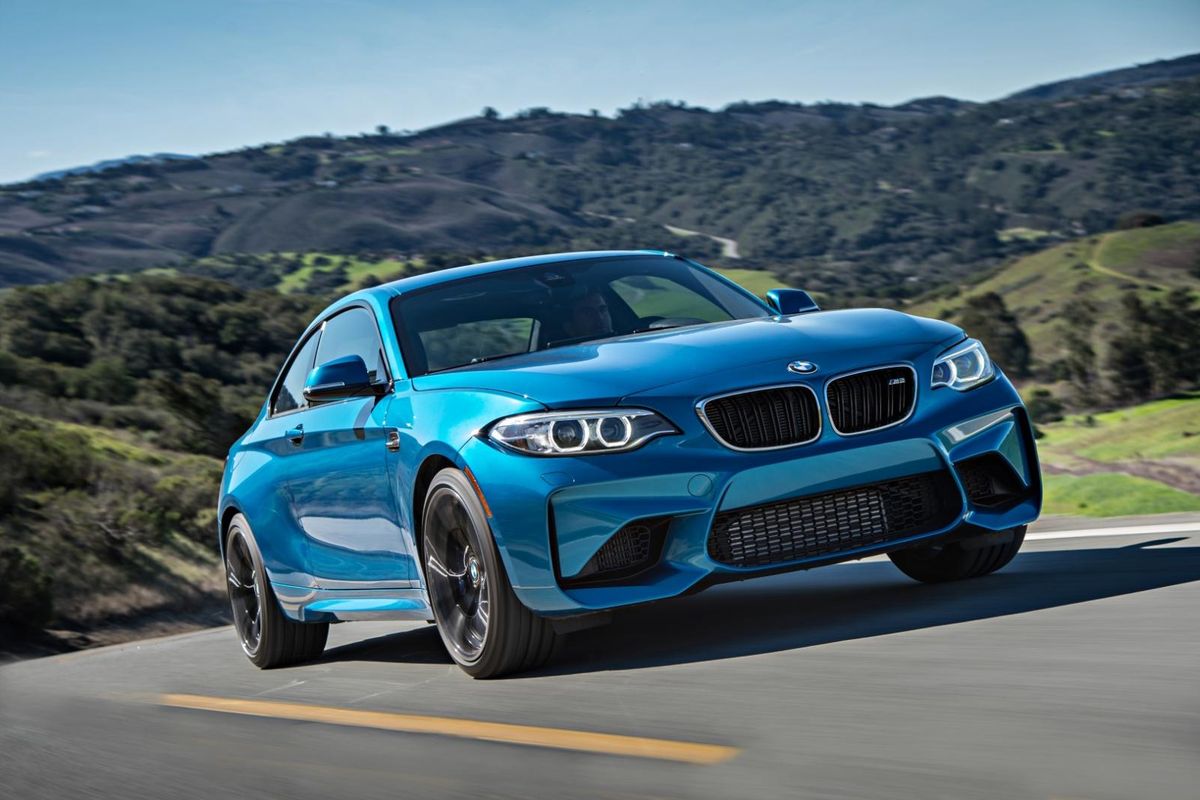
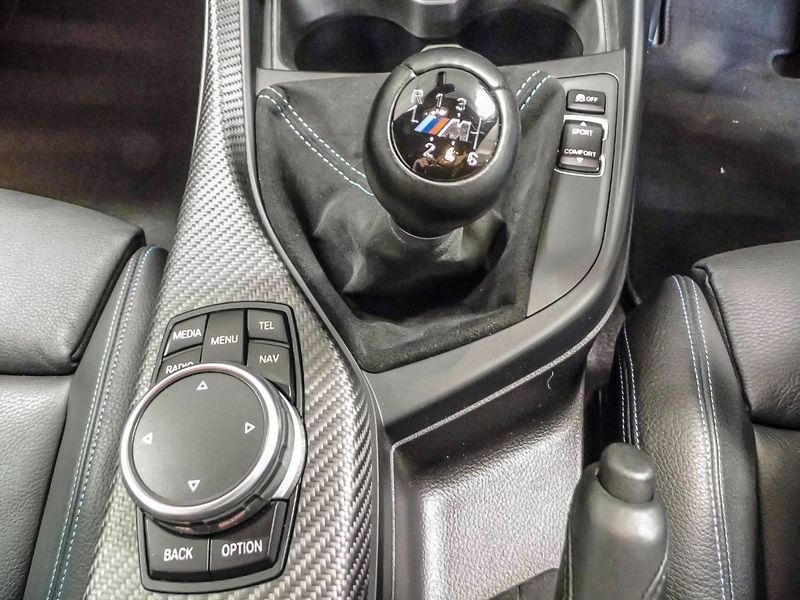
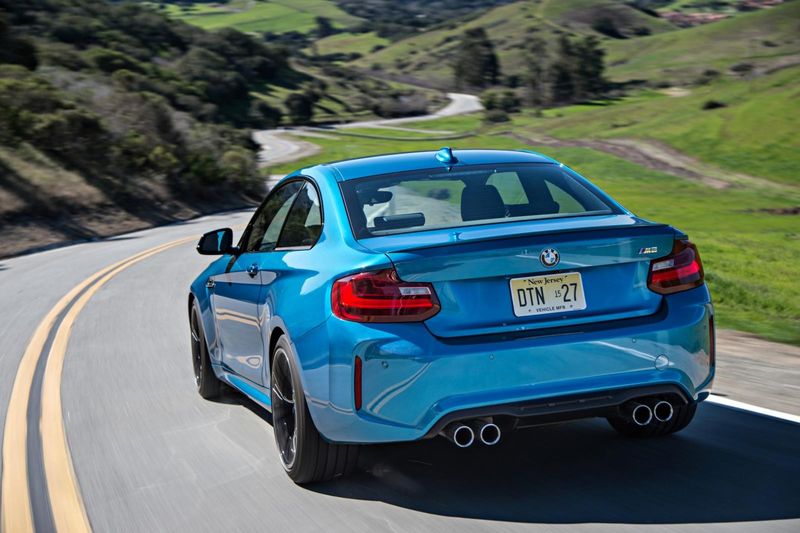
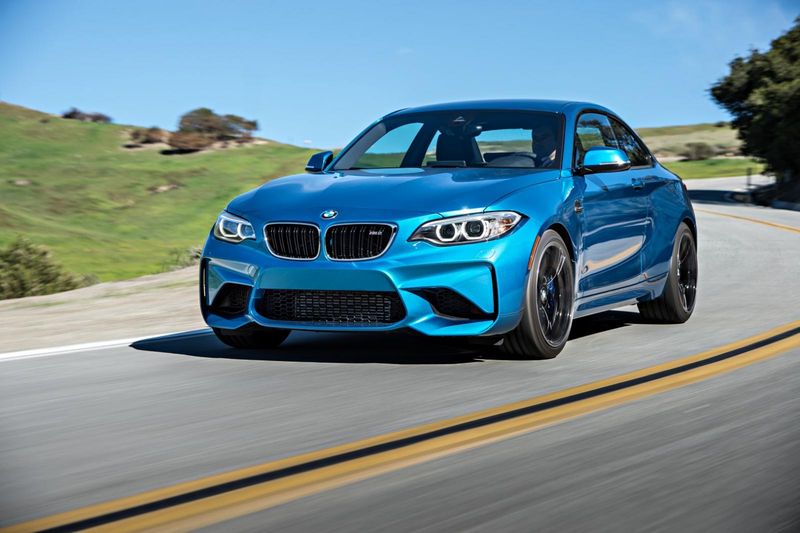
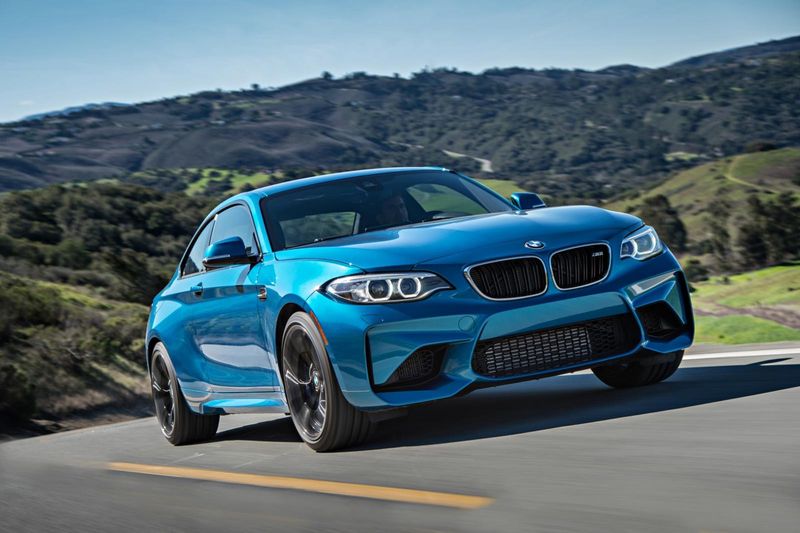
Some driving enthusiasts prefer sportscars with manual ‘boxes, but now that quick-shifting dual-clutch transmissions are widely available and well proven, those aficionados seem to be in the minority. But what if they’re justifiably old-school? We’ve been enamoured with the BMW M2 Coupe since we reviewed and track tested an M-DCT automatic version of BMW’s visceral sportscar, but our UK correspondent is adamant that the 6-speed manual M2 is the one to have. Here’s why…
As I park up, my wrists feel like numb stumps on aching forearms. Fingers still grip the steering wheel like frozen bear claws and my skull sits rigid atop my spine. What remains of my innards have morphed into mush and the pounding of my racing heart could awaken the dead.
But I’ve never felt so alive in my life!
On the ragged edge of legal velocities somewhere deep in the English countryside, I’ve just spent a thrilling few hours piloting the 6-speed manual version of BMW’s astonishing M2. Some cars should only be sold with stick shifts – BMW’s M2 is one such car and in 6-speed manual guise, it’s stupendously the better for it.
The case for the BMW M2 manual
The BMW M2 manual adds a level of engagement that enhances the overall driving experience.
Manufacturers sing the praises of their automatic gearboxes, with some dual-clutch systems able to, not only to shift faster than a human ever could, but return marginally better fuel economy figures as well. I don’t have an issue with that, as that’s the way technology should advance…on a Volkswagen Passat. Some brands hardly bother with manuals at all; Ferrari doesn’t sell a single manual model and news that Jaguar was to offer a manual ‘box in the F-Type was considered quite a big deal a little while back.
BMW’s M2 occupies unusual territory in the automotive market. As the German automaker has evolved, filling its line-up with gargantuan crossbred models, single-purpose performance vehicles mean less to the brand’s luxury buyer base. However, to the shrinking, yet vocal group of BMW traditionalists, the M2 embodies hope for the future of driver-focused engineering.
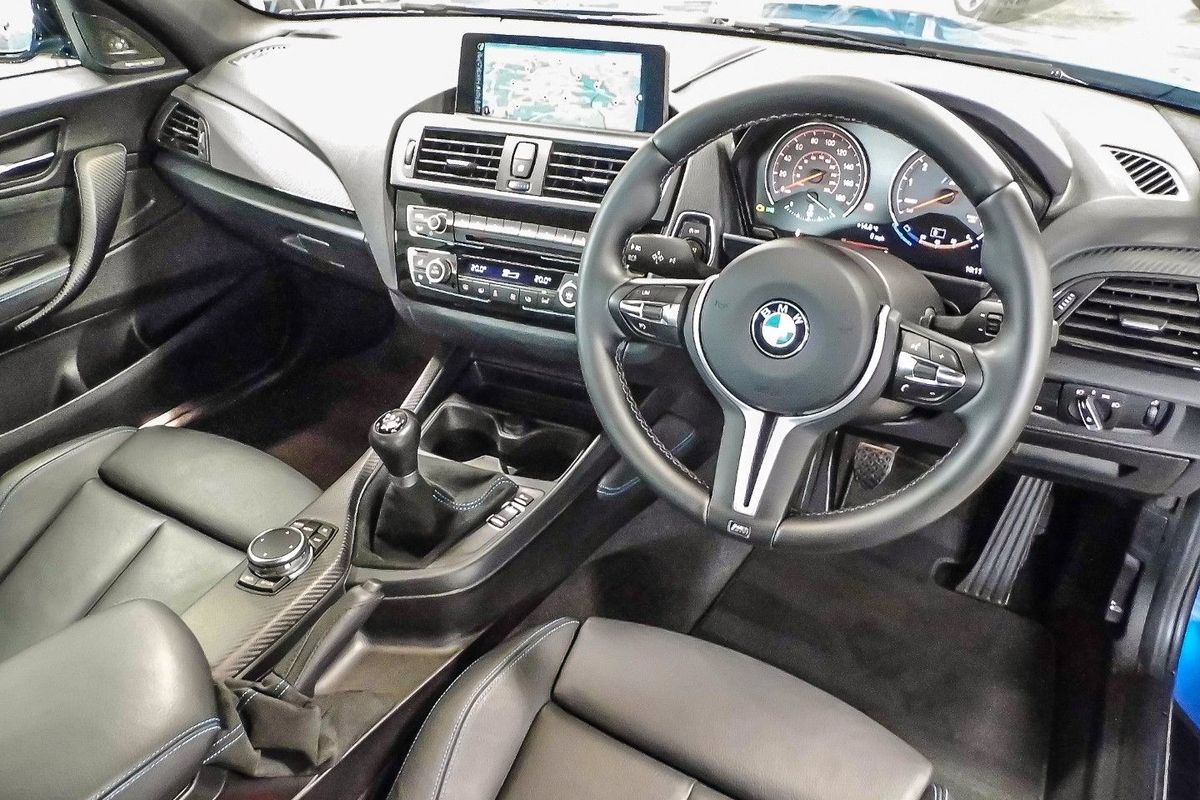
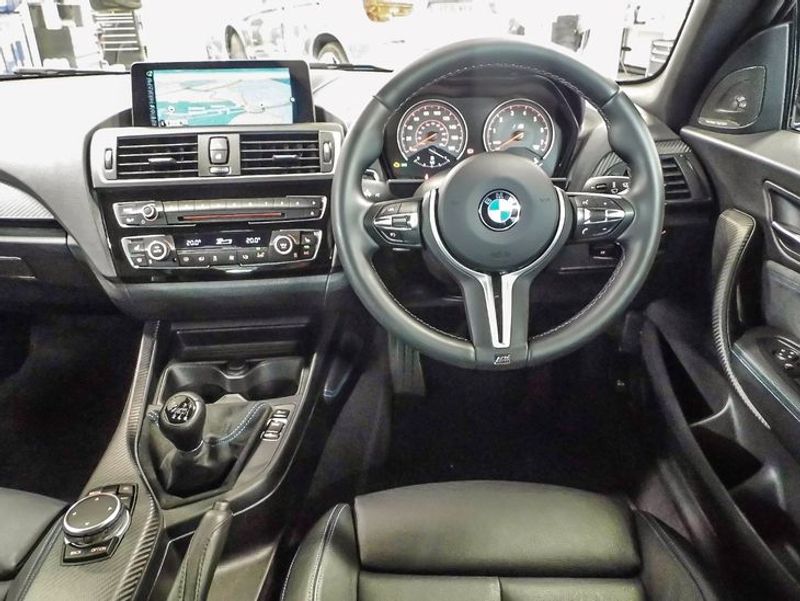
The M2 differentiates itself from the rest of BMW’s line-up with a “less is more” philosophy. Though it’s possible to add a number of safety and convenience features to the M car’s interior, the standard-issue M2 is relatively fuss-free. Instead of a massive infotainment screen, massaging seats, and semi-autonomous technologies, drivers engage with a 6-speed manual transmission, a thick-rimmed steering wheel, and sport driving modes.
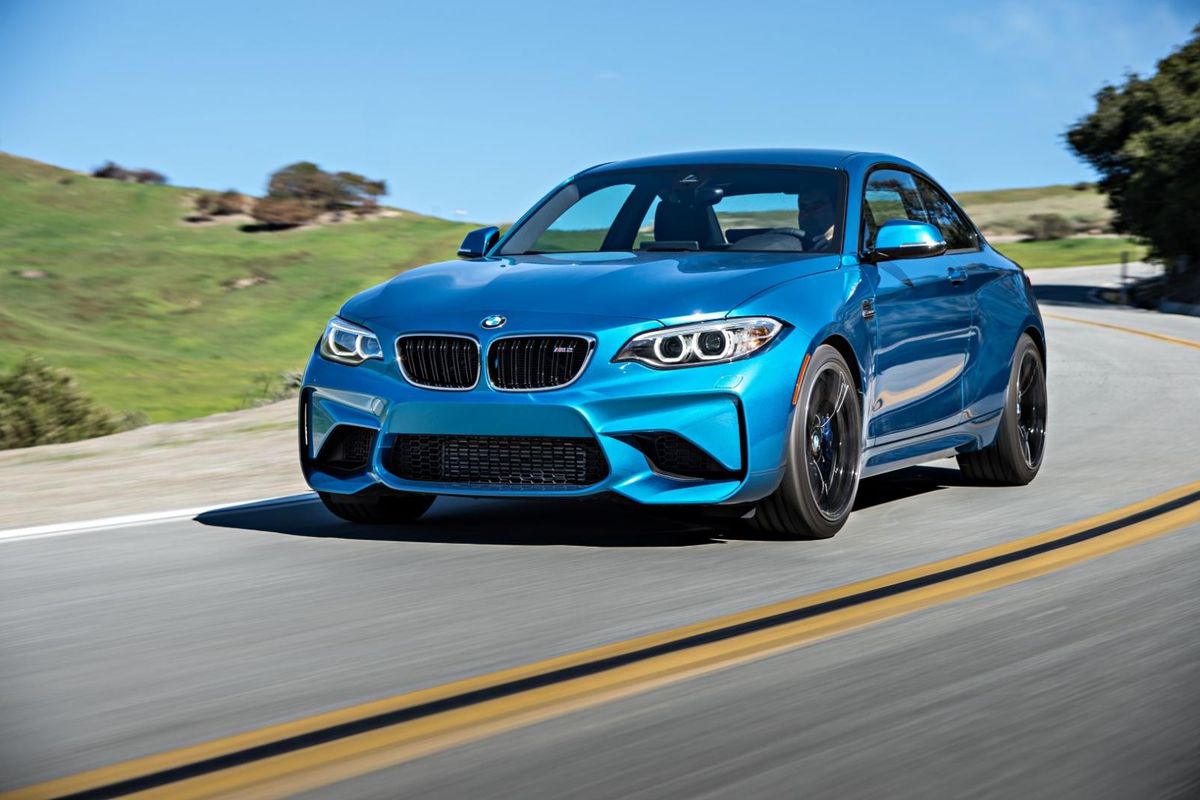
The M2 is a visceral performance machine that thrills driving enthusiasts, but without intimidating novices.
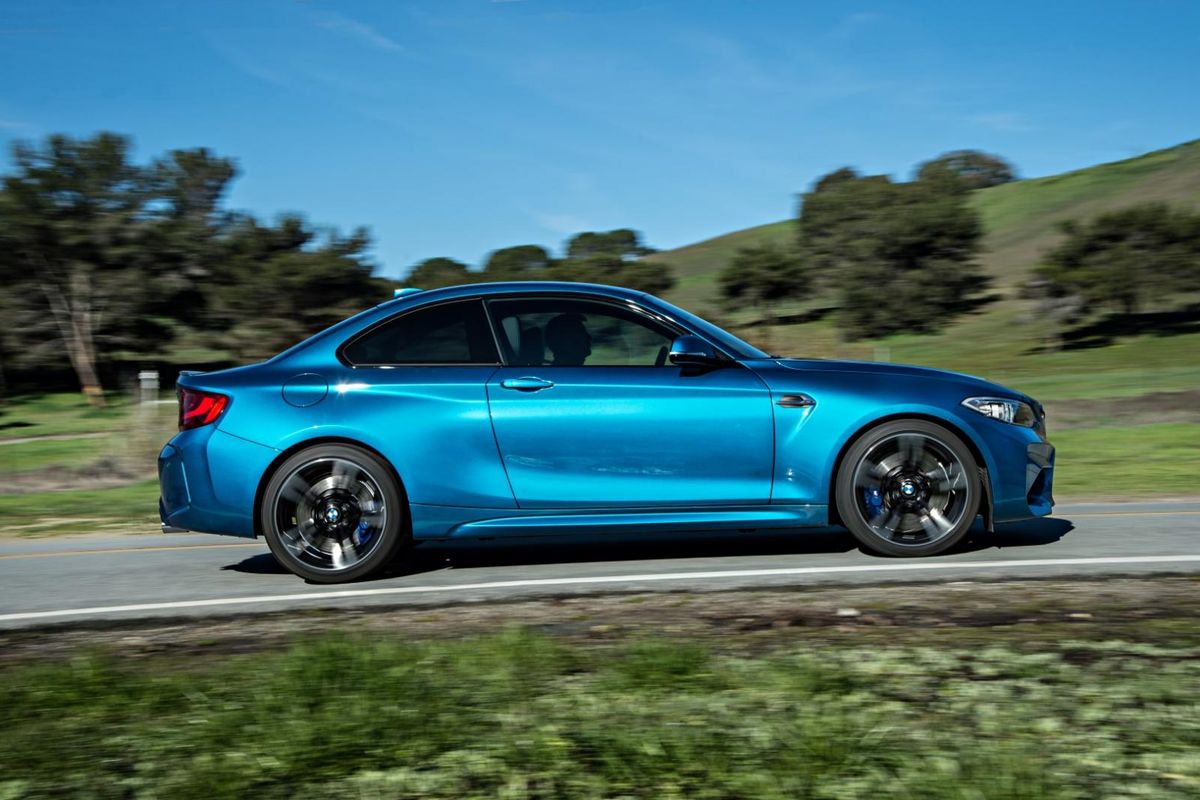
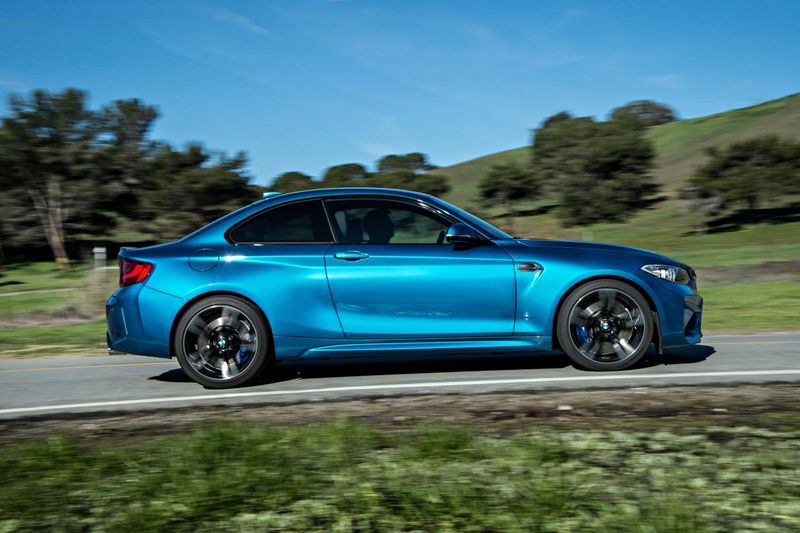
The beauty of the M2 is in its agility, responsiveness, and precision. Extracting these elements requires driver finesse and attention; Unnecessary ‘amenities’ tend only to muddy the experience. While the BMW M2 may pretty much only be a 1-Series in an inflatable sumo wrestler’s suit, its flared wheel arches (4cm in the front and 7 cm over the rear), and stretched low profile rubber look the business. Its short wheelbase adds purpose and the aerodynamic front-end styling oozes menace.
With an output of 272 kW at 6 500 rpm and maximum revs of 7 000 rpm, the 3.0-litre straight 6 engine in the BMW M2 fires a warning shot across the bows of its rivals in the high-performance compact sports car segment. Fuel consumption with the 6-speed manual gearbox is a reasonable 8.5 L/100 km, while the CO2 emissions are tagged at a tree-felling 199 g/km.
However, it’s the Germanic efficiency of the M2’s engine’s peak torque that really leads the way here; a thumping 465 Nm is on tap between 1 400 and 5 560 rpm, with the overboost setup increasing this by 35 Nm to 500 Nm between 1 450 and 4 750 rpm.
From a standing start, 100 kph arrives in just 4.2 seconds with the speed topping out at an electronically limited 250 kph.
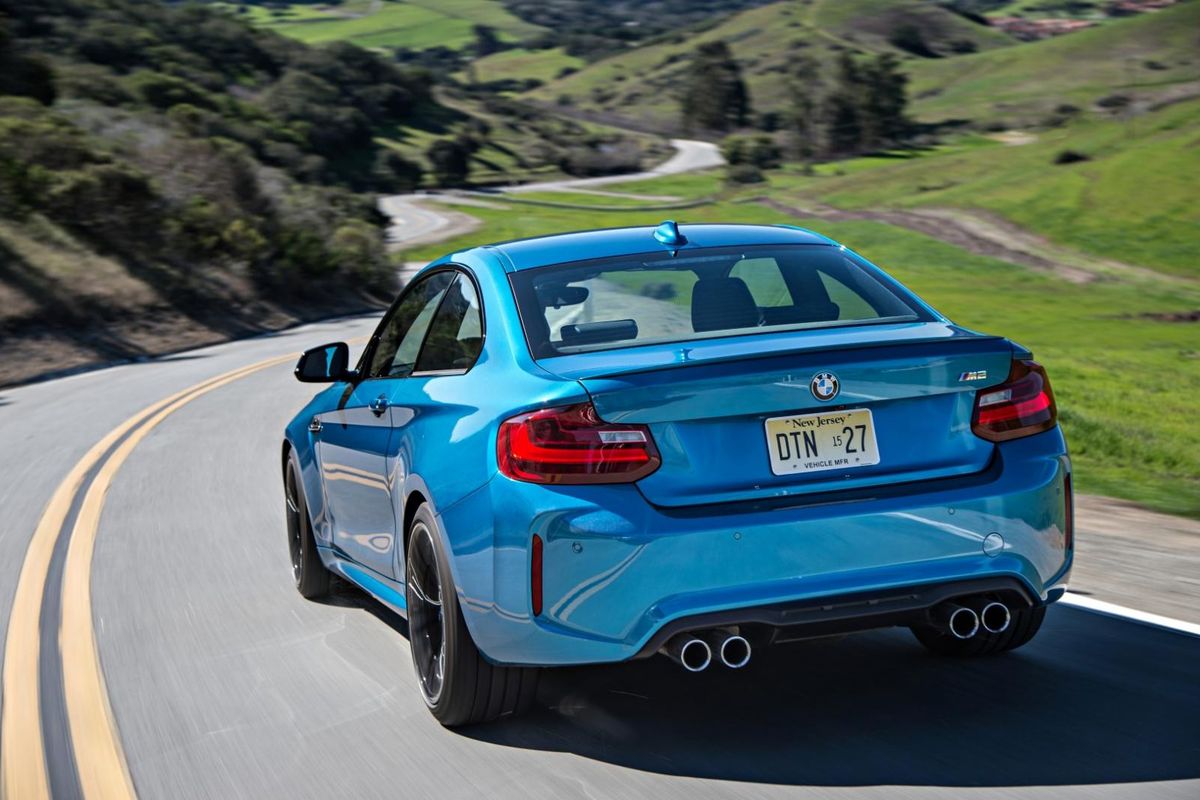
Along with most performance cars of this calibre, it’s often about the noise. The soundtrack of the M2’s stirring six-pot was engaging but not overstated, with only a whisper of turbo plumbing evident: the mechanical serenade and rousing quad-outlet exhaust dominated the on-road orchestra.
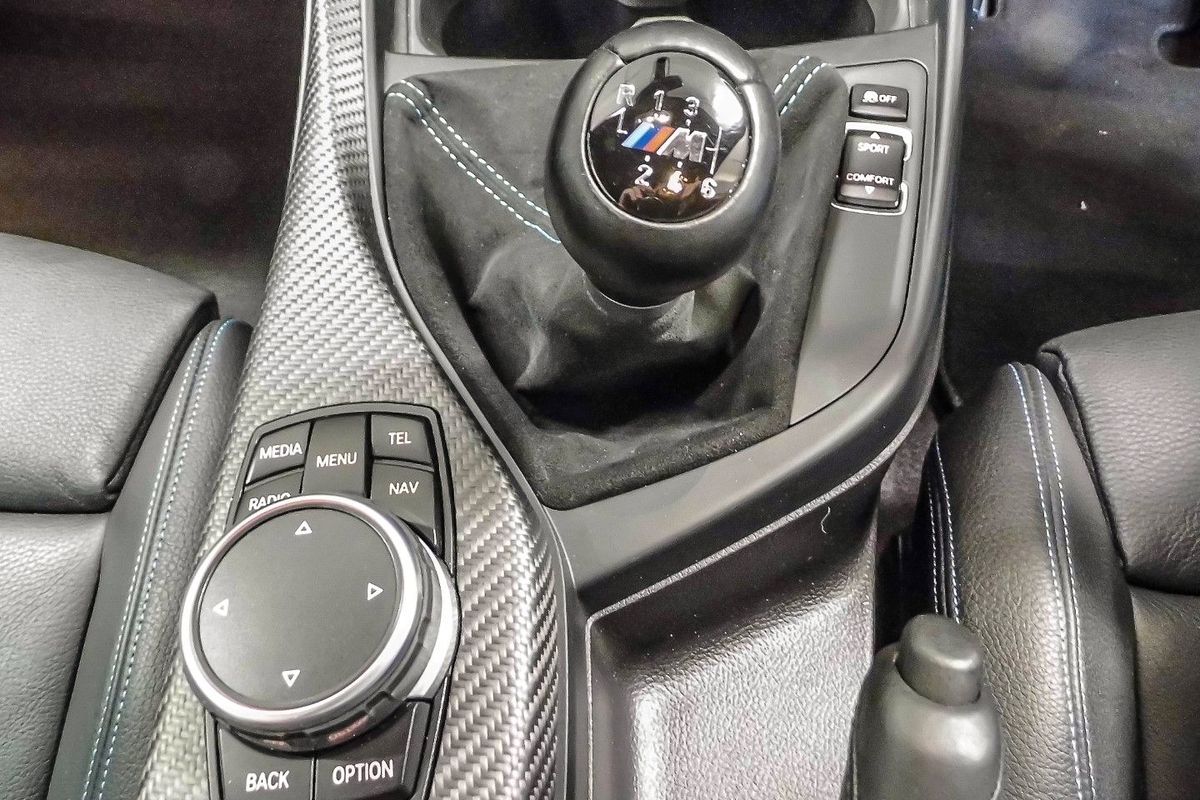
The M2 joins the M3 and M4 as the only M Division products to be offered with a manual transmission.
The 6-speed manual gearbox stands out with its compact design and low weight. Throws are perfectly short and the gates are narrow. The use of a new type of carbon-fibre friction lining enhances shift comfort. An engagement speed control function, which blips the throttle on downshifts and lowers the engine’s revs on upshifts, makes urgent gear changes smoother and affords the car greater stability during hard driving.
The lighter manual ‘box balances the axle load distribution to nearly 50:50, enabling the car to give more neutral and stabilised driving characteristics in pretty much every situation. When the argument in favour of the stick shift is based on how much fun it is, it’s undeniable.
Pushing the limits
So, finally… let’s get out on the road.
It’s the M2’s cornering tenacity that stands out on the road. On occasional broken and greasy surfaces, the M2’s grip and communication saw its electronic nannies disturbed, but the BMW never felt twitchy or perilously “on edge”.
The M2 ushers its nimble body through corners with unending confidence.
At a recent McLaren track day, a pro racer advised me to “trust the grip, Wayne. Just trust the grip”. Such sage advice is all well and good when proffered around a track with forgiving run-offs, but our narrow British roads are an entirely different story. They’re well-policed, for a start!
The accurate and perfectly weighted steering is brilliant, allowing the front-end to clearly communicate its intent to my hands, while the perfectly executed throttle-blip during manual downshifts made me appear rev-perfect. Thanks, BMW.
In its element on a winding road
Pushed to its limit in corners, the BMW M2 can generate 0.99 G of grip, about the equivalent of being tackled by a tight-head prop with score to settle. In its element on a winding road, the M2 ushers its nimble body through corners with unending confidence. Its athletic handling stems from M’s suspension tuning mastery, plus the sticky rubber measuring a chunky 265 mm wide at the rear.
Though the M2’s Sport+ driving mode dials in a bit of tail-happy compliance, skilled drivers can choose to turn off the M2’s stability control system entirely. While some cars transform into widow-making machines without electronic policing, the manual M2 breaks away with calculated precision. Rear-end rotation can, therefore, be used as a tool, rather than a scare tactic.
The BMW M2 is all about the thrills, but it’s also reasonably comfortable for the everyday commute.
At present, the only direct rival to the BMW M2 is the redesigned Audi TTS (until the TT RS arrives), the Porsche Cayman S and the Mercedes-AMG SLC43. While the Audi is truly a magnificent blend of performance and technology, it simply can’t match the power and precision of the M2, the Cayman S is, by all accounts, an eminently wieldy dynamic machine (if powered by a dull-sounding turbocharged 4-pot) and as for the Benz, I’ve reliably been told that whereas its 270 kW twin-turbo V6 motor is snarly and sonorous, the SLC43 is more a brawny convertible than a serious sportscar.
Summary
Whereas BMW’s migration away from bare-bones performance machines raised doubts that the Munich-based carmaker’s M division could still churn out a no-frills sportscar, the M2 has resolutely silenced the naysayers.
Surprisingly, the M2 was rather comfortable in the ride department, considering the standard set-up may best be described as firm. It’s a very liveable hard-charger but was slightly let down by excessive road noise from the front-end and poor attenuation of tyre noise on all but the smoothest surfaces.
The manual-geared M2’s performance is thankfully still analogue in nature – a product of driver manipulation, not computer-actuated machination. It doesn’t politely ask for driver co-operation, it demands focus, skill, and precision to extrapolate the depths of its ability.
Hardcore driving enthusiasts will argue that getting the most out of a manual ‘box is rewarding in itself.
When discovered, the overwhelming sense of satisfaction is immense. I quickly came to terms with the fact that far smarter men than me have designed the car to make me feel like a world-class driver, rather than building a car that only a skilled driver could make the most of.
Anyway, feeling has returned to my wrists, my fingers have reassumed their natural shape and my stomach and heart have finally stabilised, so I’m off for a well-earned cup of tea and perhaps, a biscuit…