Hyundai Tucson 1.6 Turbo 4WD Elite (2016) Review
Whereas the ix35 vaulted Hyundai into the premium territory of the compact SUV market, the Tucson builds on its predecessor’s strengths and has a few extra talents. Is the flagship 1.6 Turbo 4WD Elite the pick of the bunch, however?  

We like: Sharp exterior styling, improved rear legroom, luxury ambience

We don’t like: Slow throttle response, indifferent ride quality

Alternatives:

  • Like-for-like established rivals: Price-wise, the recently refreshed Toyota RAV4 2.5 AWD VX is closest to the Tucson, but it doesn’t look as dapper or feel quite as premium inside, and the Ford Kuga 1.5T AWD Trend looks to offer slightly better economy and admittedly less specification for a lot less than the Hyundai. Again, the Kuga can’t match the Tucson’s kerb appeal or luxurious cabin, but R50 000 would be a significant saving.   
  • For genuine off-road ability: Whether top-of-the-range compact SUVs require all-wheel-drive ability (given their decidedly urban operating zones) is moot. However, should buyers genuinely expect to venture from the beaten path (more than the occasional dirt road sojourn), then the Subaru Forester 2.5 XS Premium would be a willing subject, courtesy of its X-mode off-road function. At least our experience with the vehicle suggests it would be.
  • For value for money: If you are willing to forego an all-wheel-drive configuration and still want a comprehensively equipped, petrol-engined automatic compact SUV, the Mazda CX-5 2.5 Individual is almost impossible to beat on a spec-for-Rand basis; it looks the part, too. It may not be as spacious or as new as the Tucson, but with a price of R438 800, you shouldn’t mind.


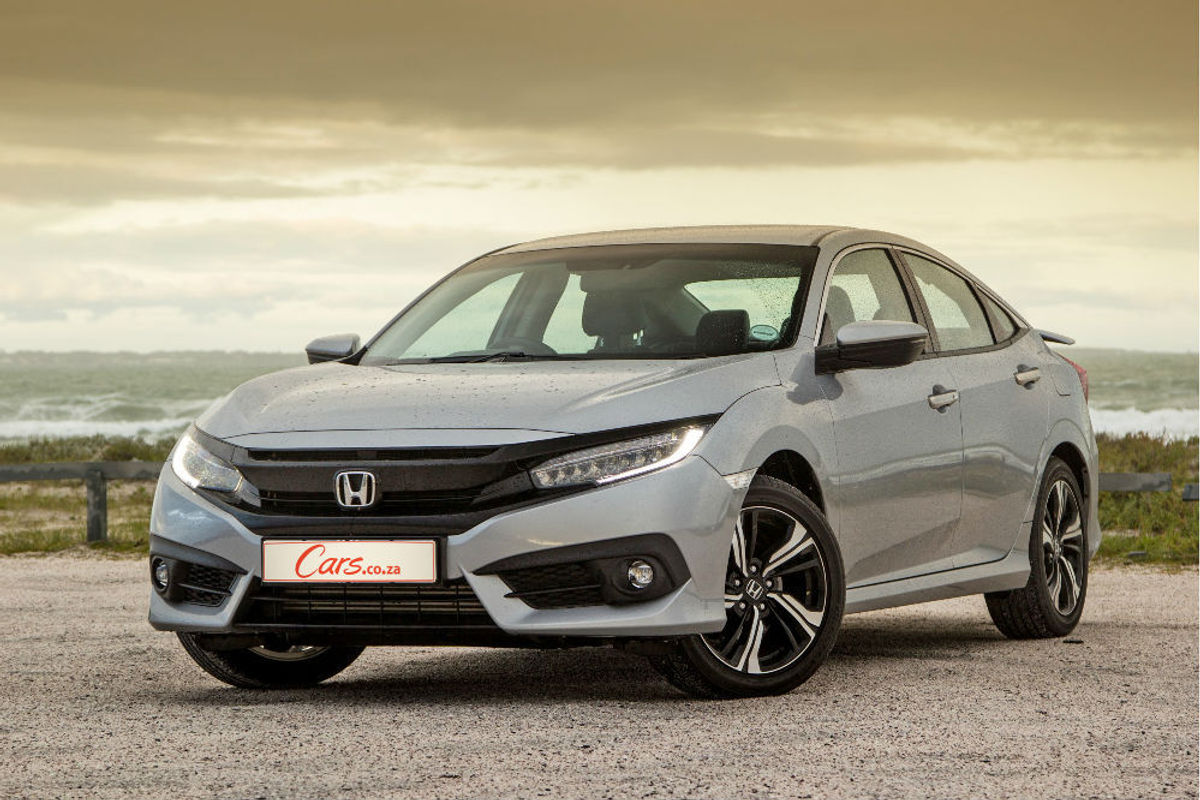
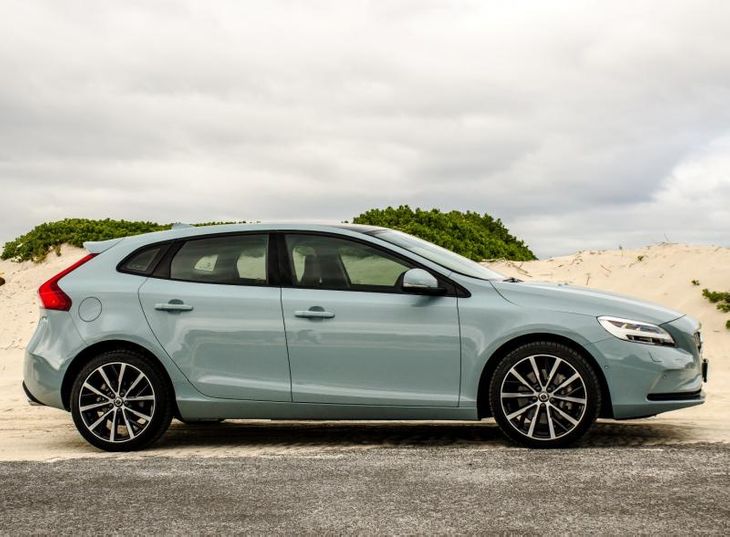
The Tucson's exterior treatment offers a blend of posh looks and a modicum of ruggedness.

The range-topper

While Hyundai considers the introduction of turbodiesel derivatives to its Tucson range (previously known as the ix35, but, in fact, the product has returned to its original moniker from two generations ago), the 1.6-litre direct injection 4-cylinder turbopetrol engine is only available with a 7-speed dual-clutch automatic in conjunction with an all-wheel drivetrain.

Thanks to the overwhelming popularity of its ix35 predecessor, the Tucson comes to the market with an established clientele, and apart from adopting a downsized, forced-induction engine, the Hyundai is also improved in significant areas, especially rear legroom. Although it was styled in Europe and looks distinctly handsome, in top-of-the-range spec, the marque’s “affordable luxury” calling card does not ring strictly true, given a R499 999 asking price. However, the Tucson does have its merits.

How does it fare in terms of…

Executive appeal?

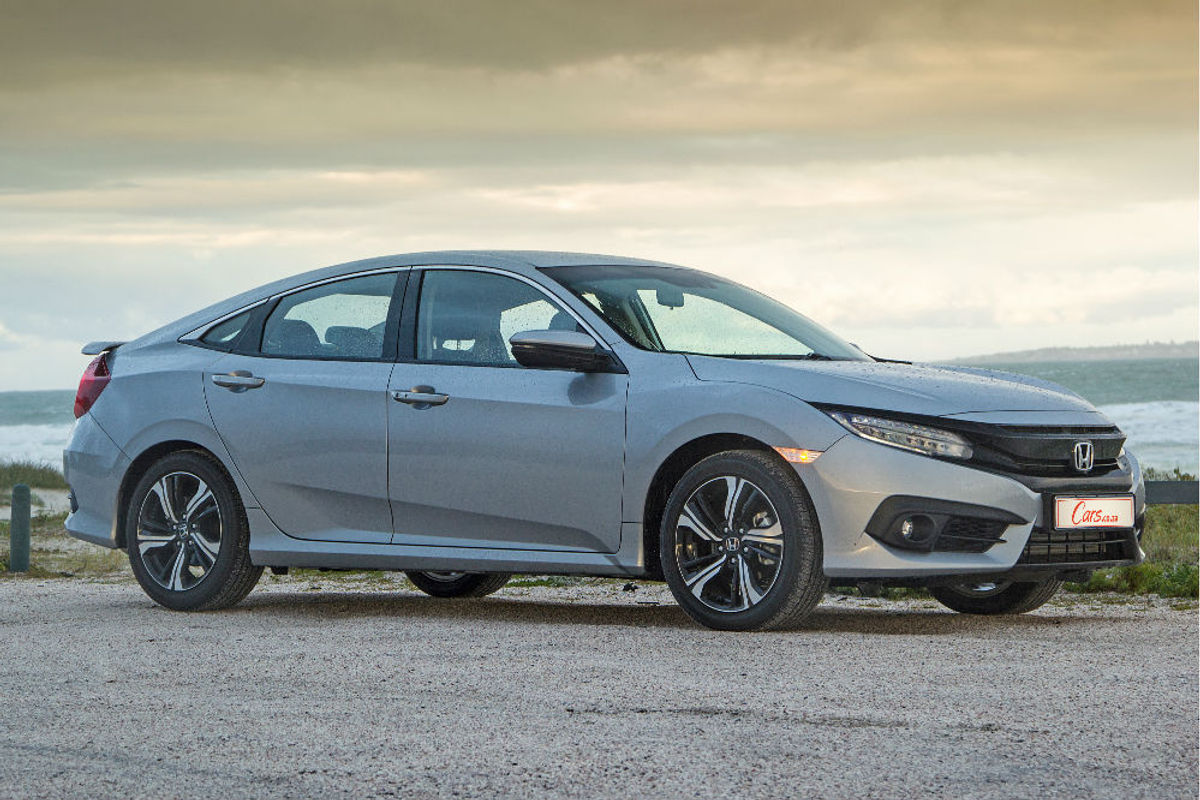
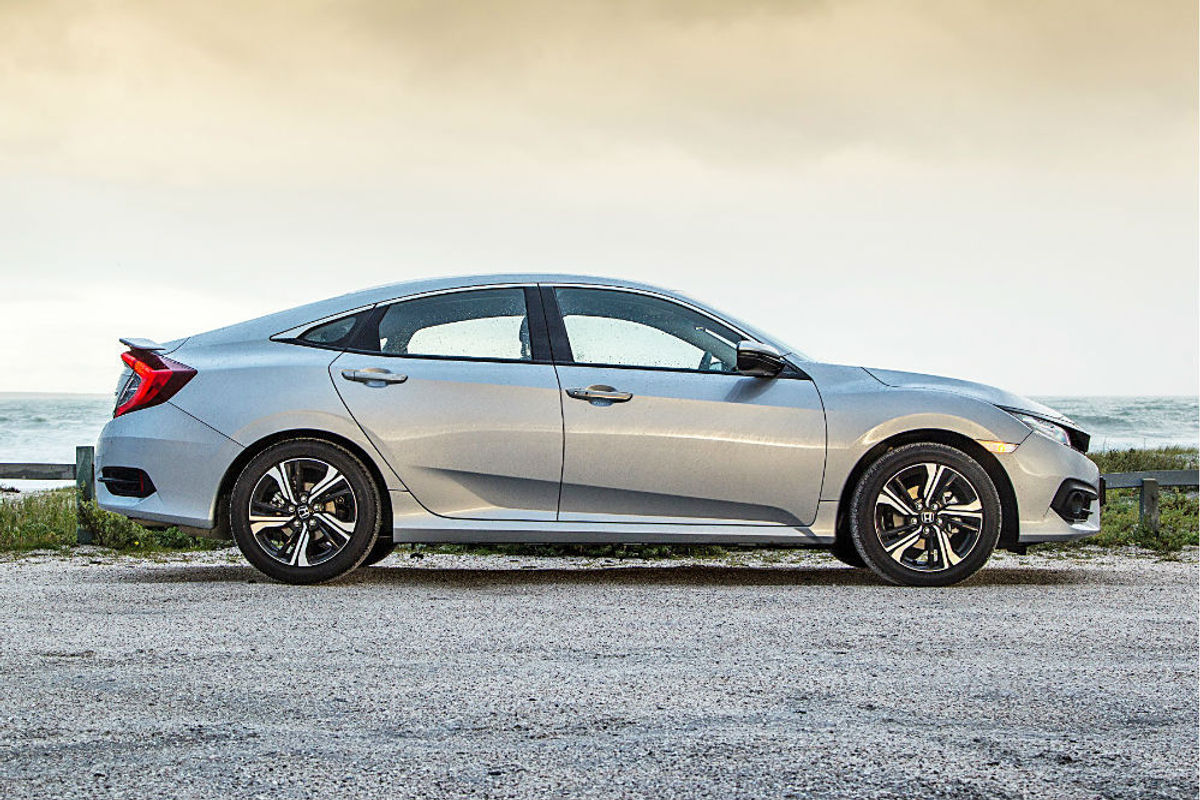
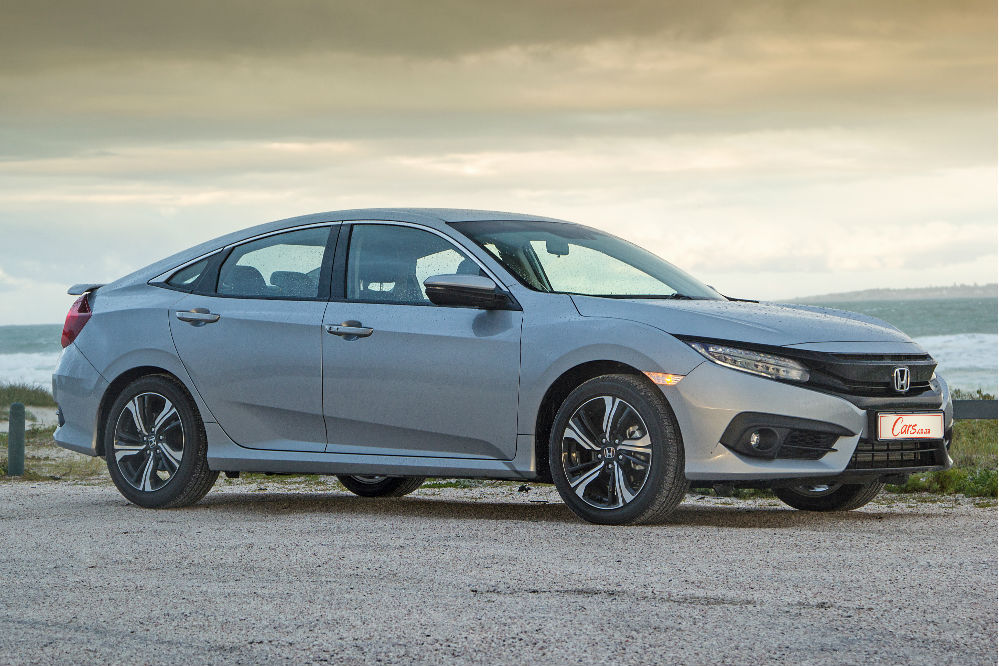
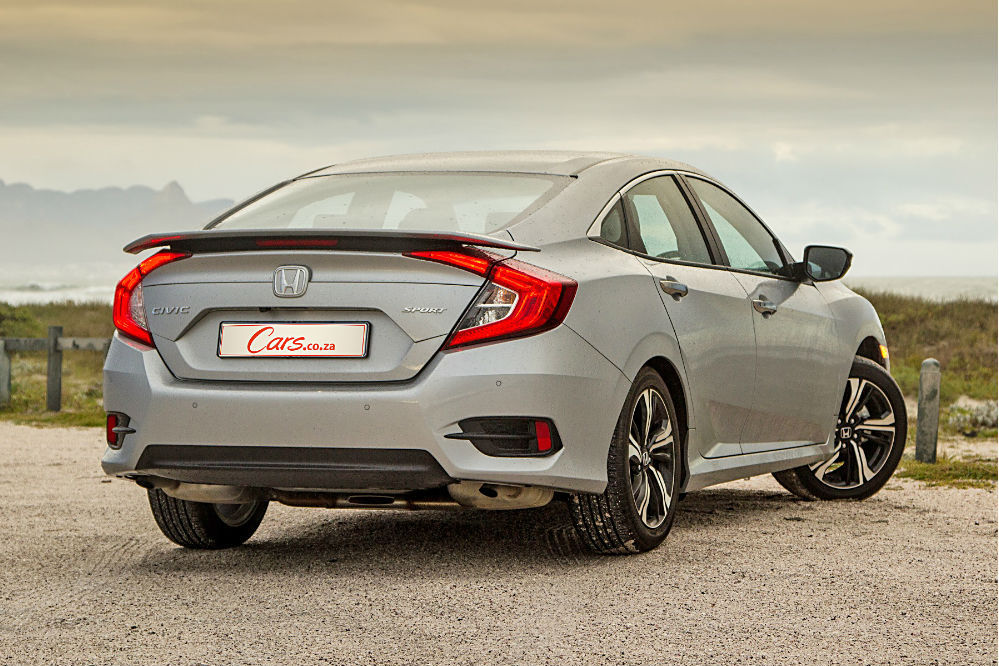
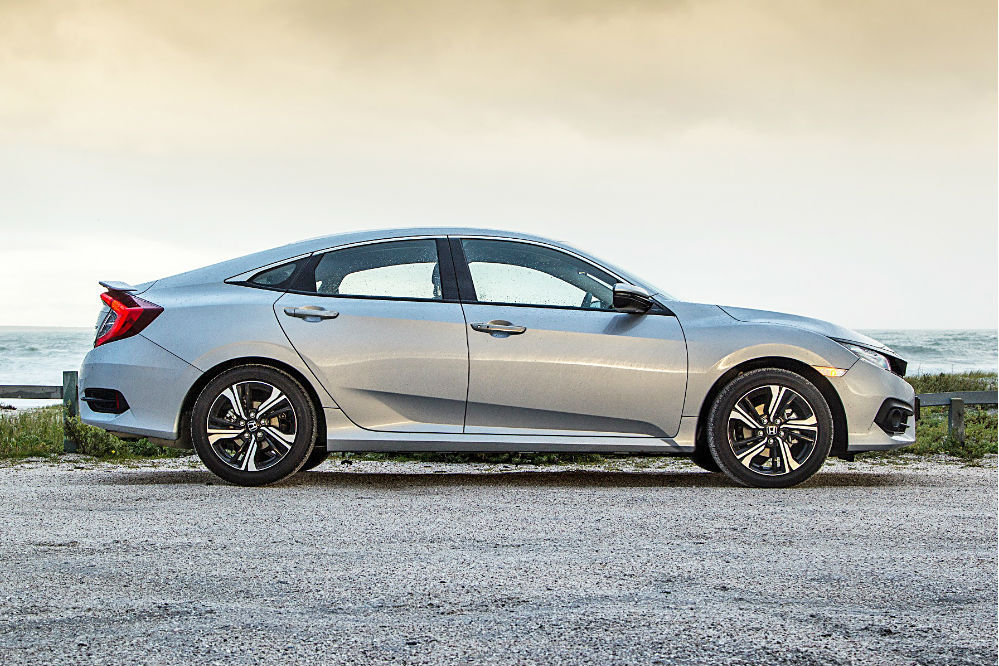
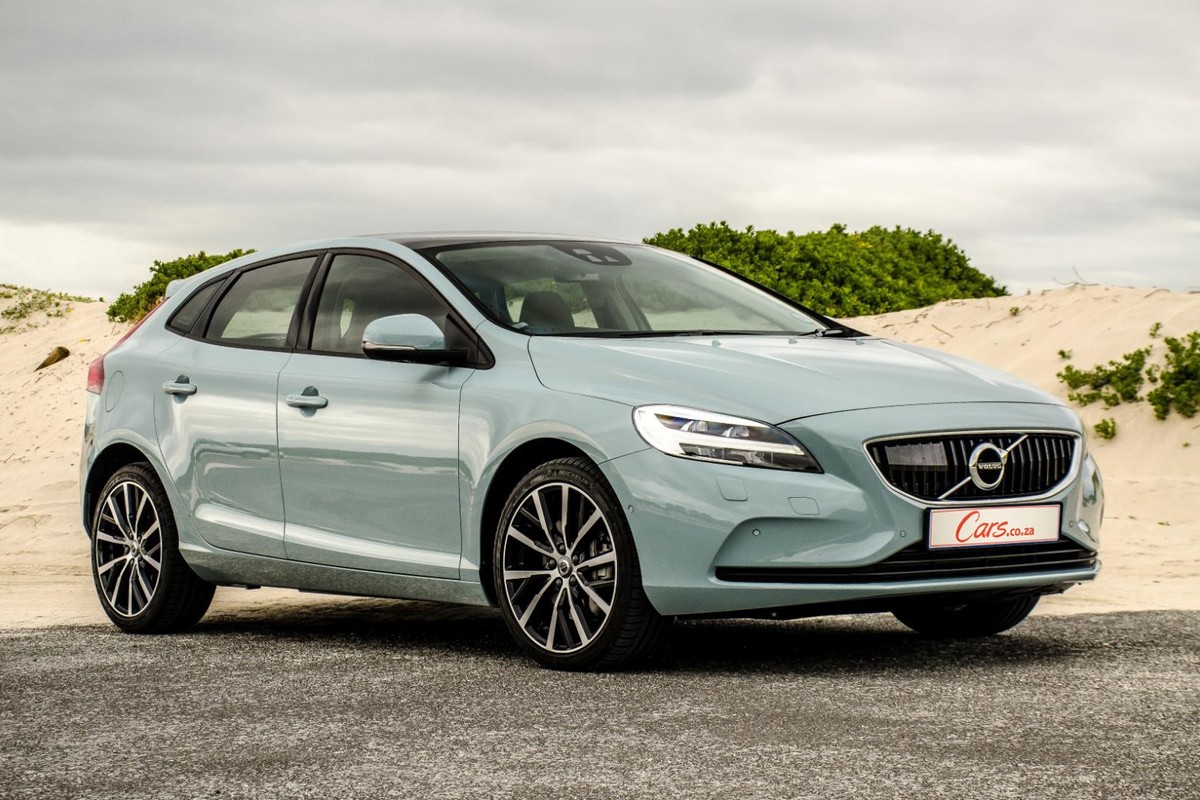
In Elite guise, the Tucson cuts a distinguished figure. Its front-end styling is bold and eye-catching, yet elegantly detailed. It has a sleek profile when viewed from the side and its rear three-quarter aspect is pleasingly sporty, down to the slim wraparound headlamps and trapezoidal exhaust ends. What’s more, the striking 19-inch alloys fill out the black-cladded wheel arches with aplomb.

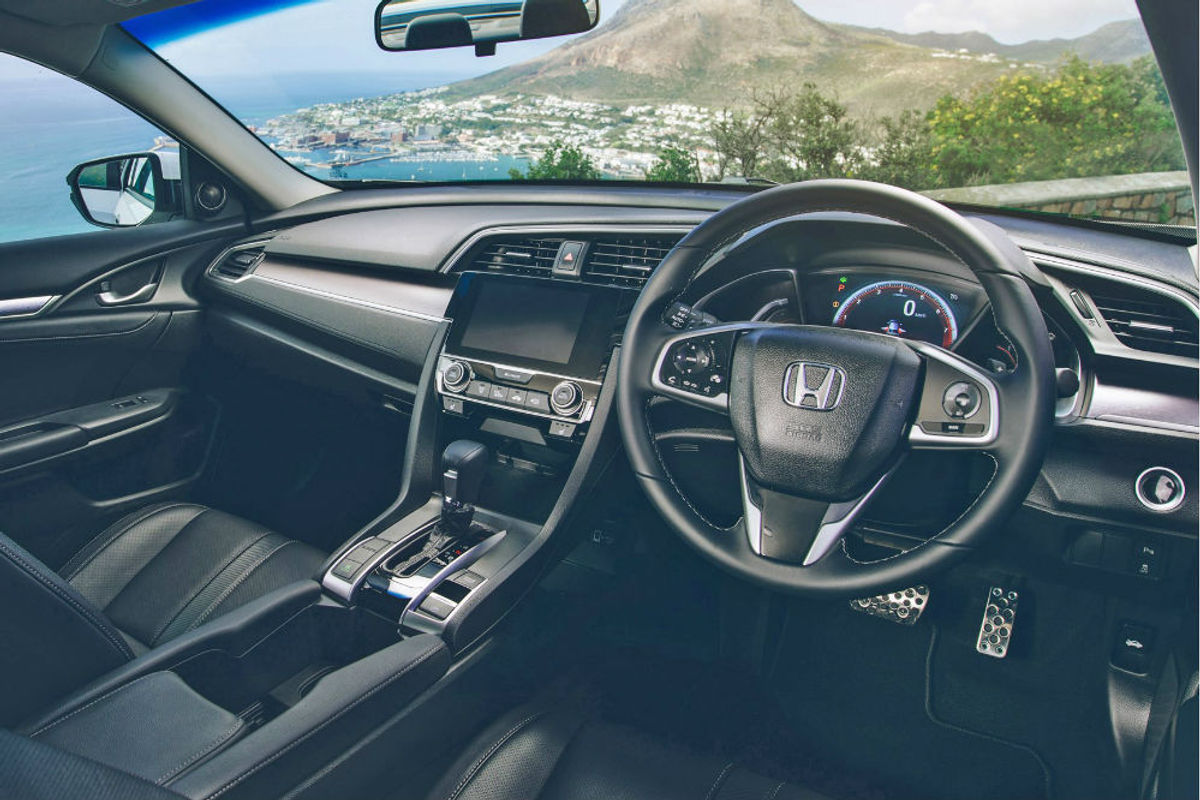
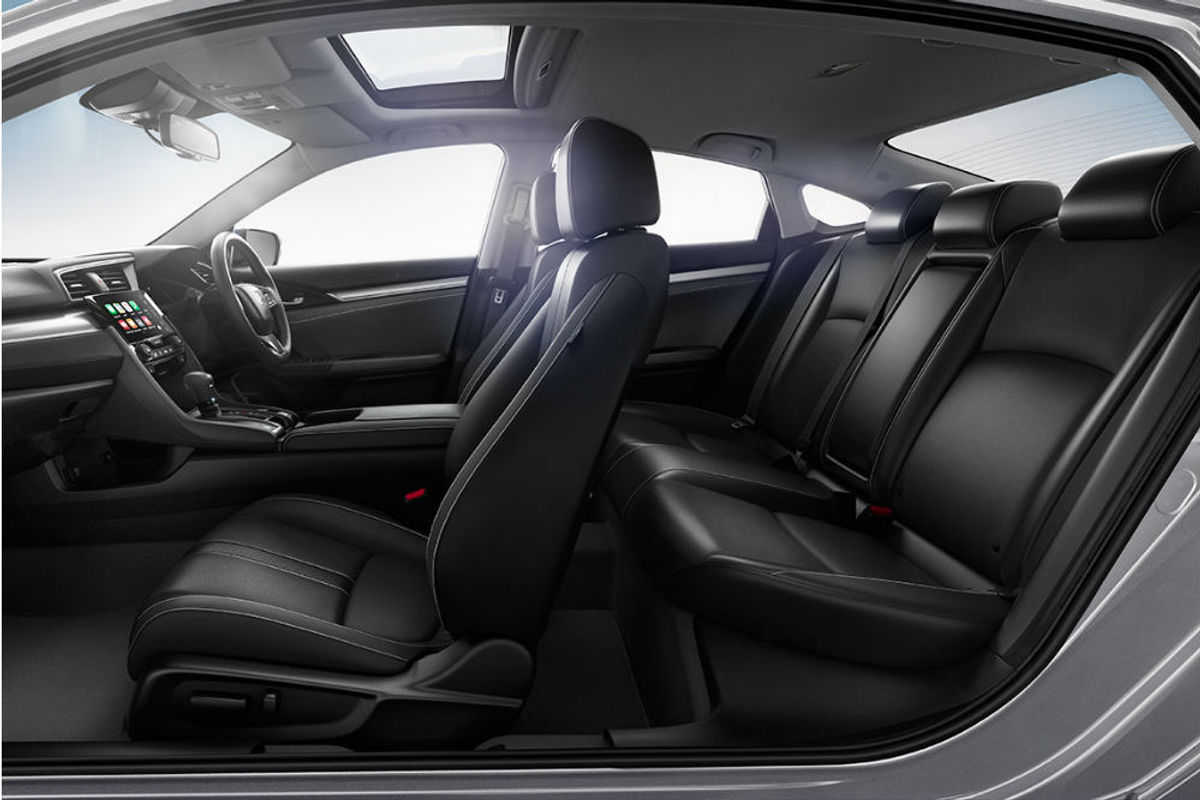
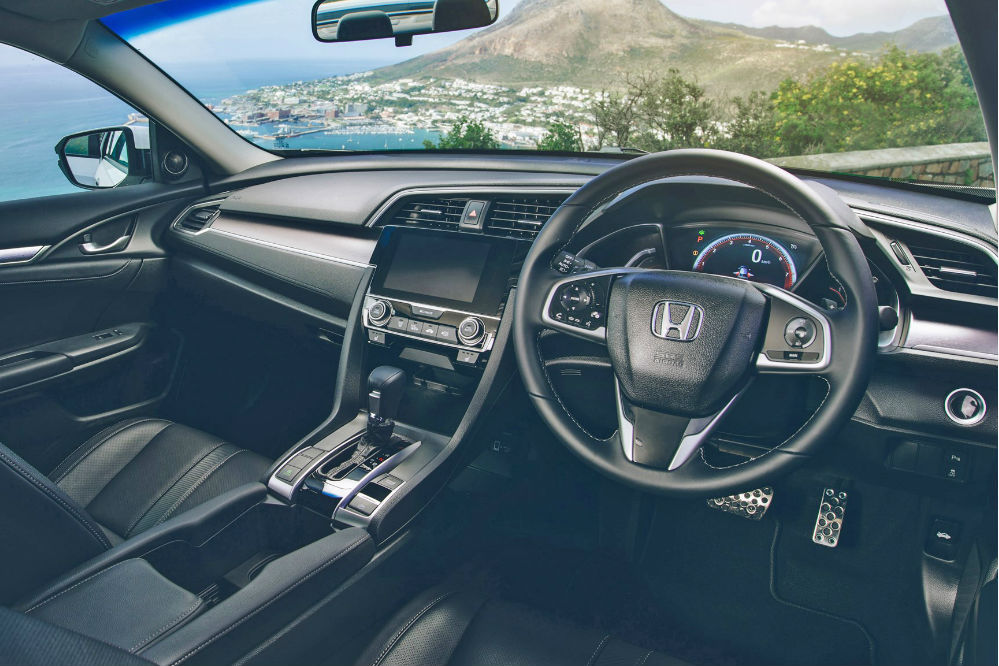
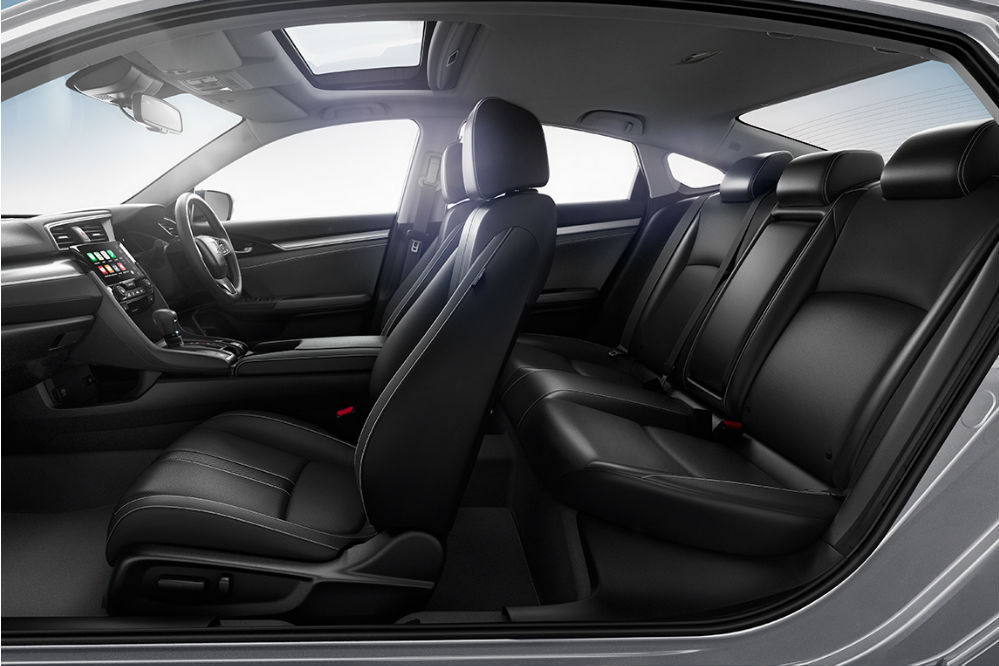
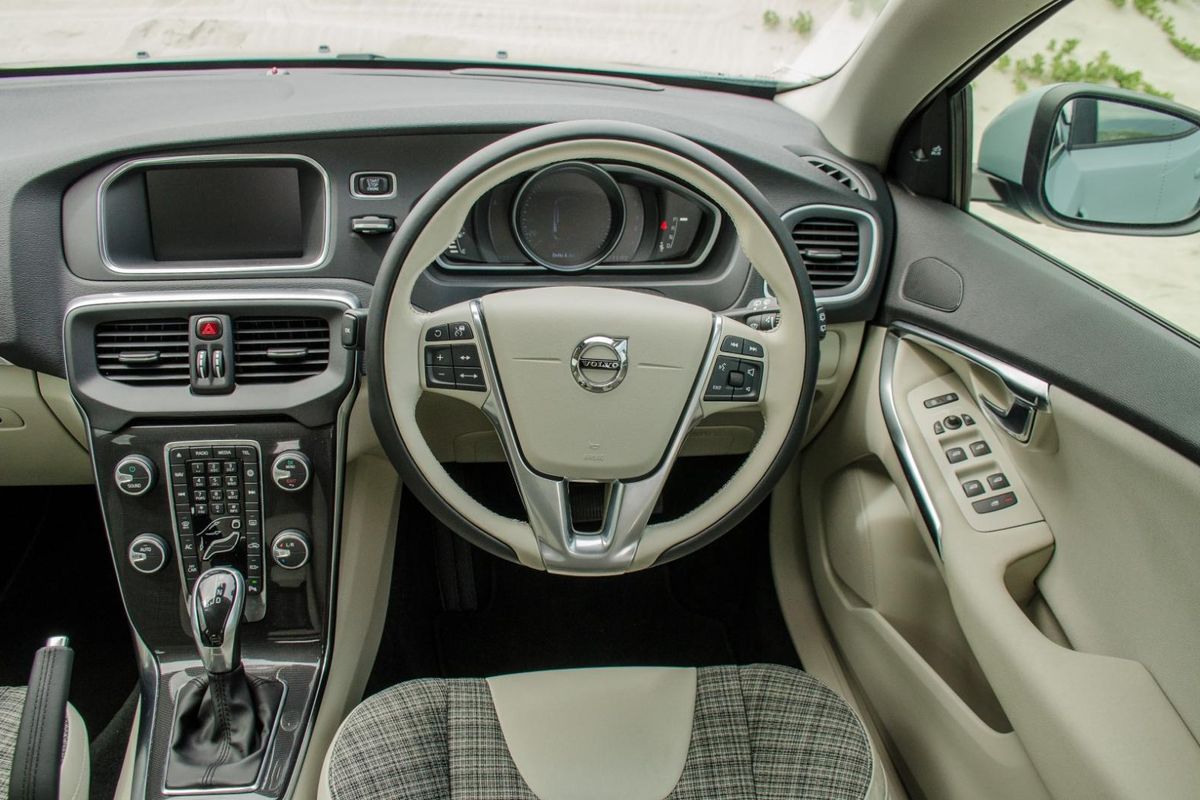
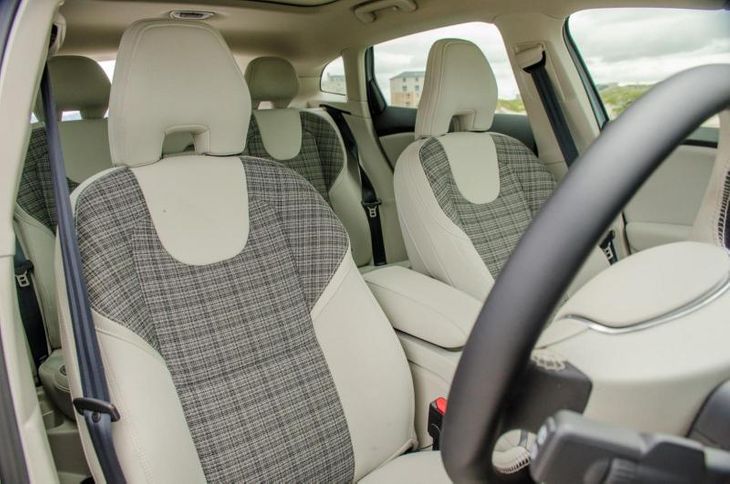
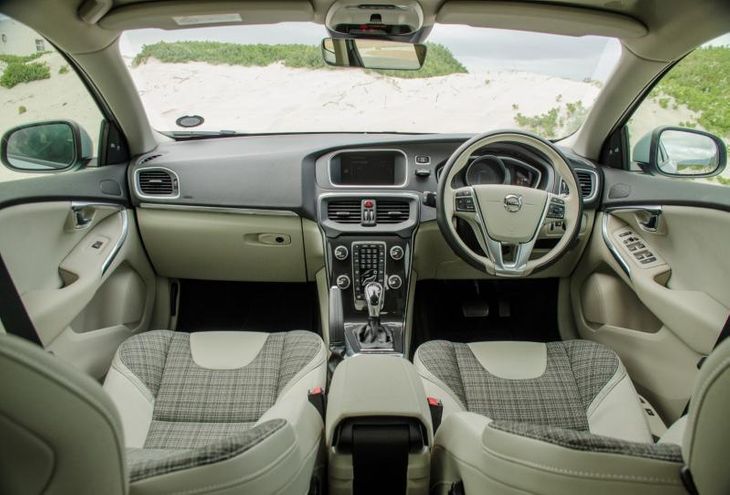
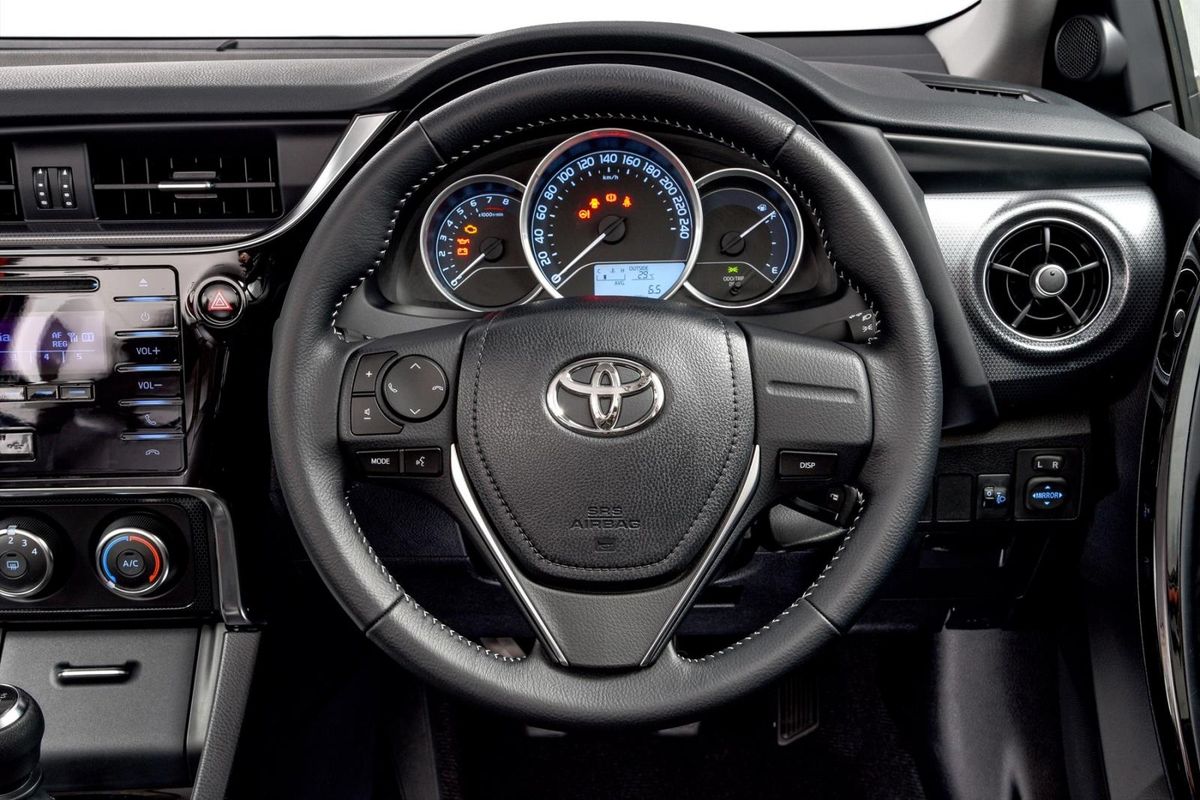
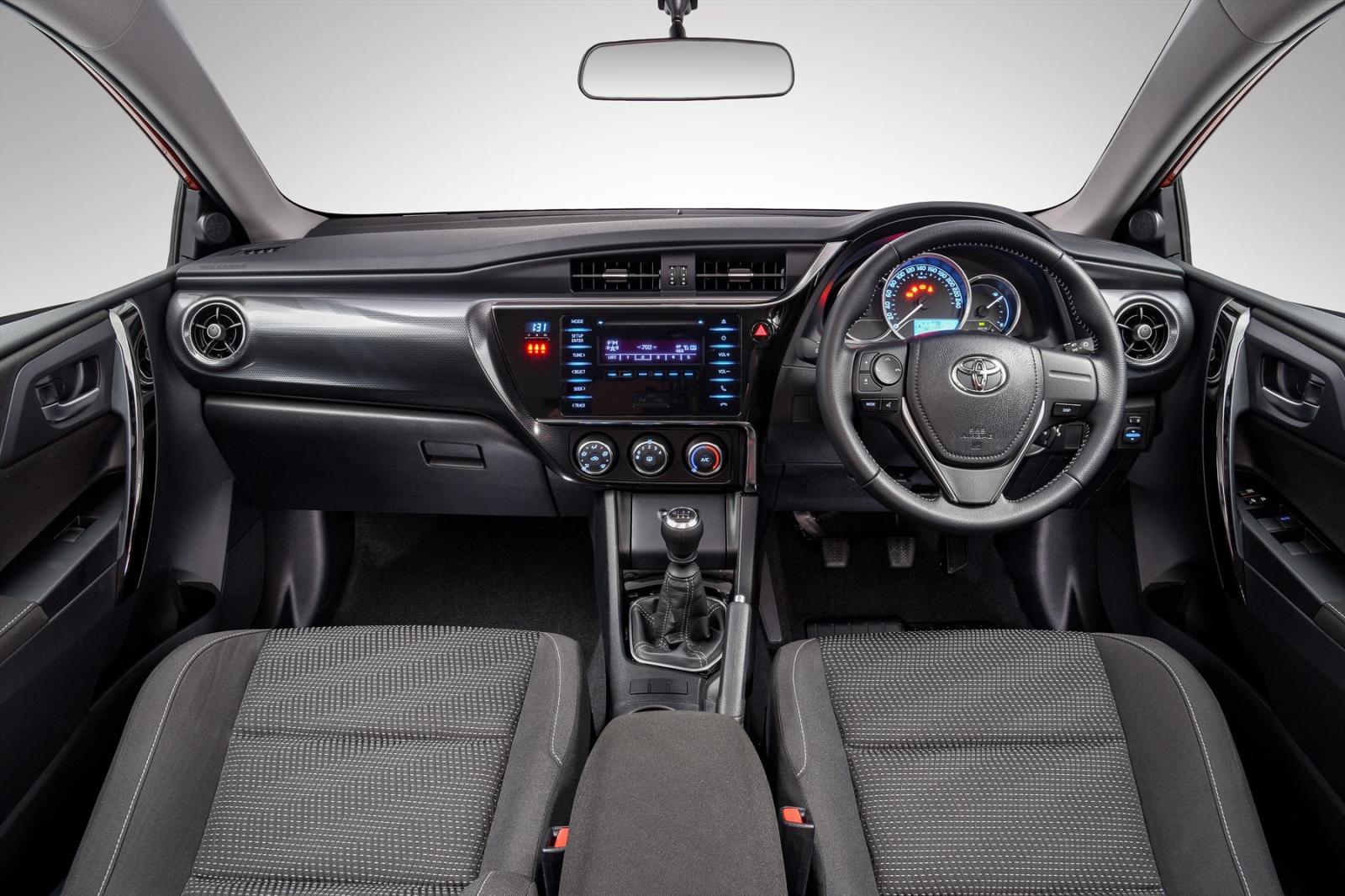
Inside, as expected, the layout of the fascia doesn’t quite match the allure of the exterior treatment, but it's neat and uncluttered. Nonetheless, the leather-trimmed interior exudes quality and is eminently comfortable… The driver’s seat avails a commanding view and offers a wide range of adjustment thanks to the provision of electrical adjustment. The digital climate control console looks chunky and is intuitive to use and there's a sizeable oddment tray in front of the gear selector, below the bottom of the fascia, where a 12V power socket, plus USB and auxiliary inputs are located.


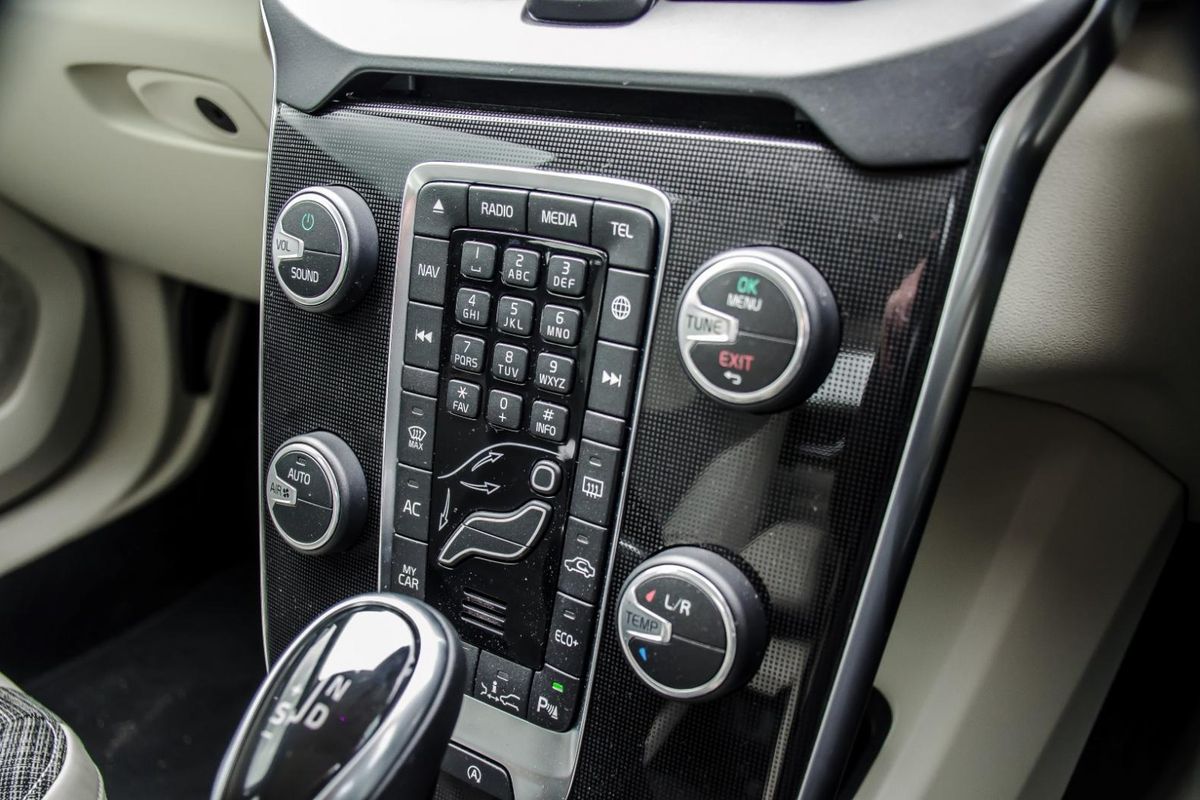
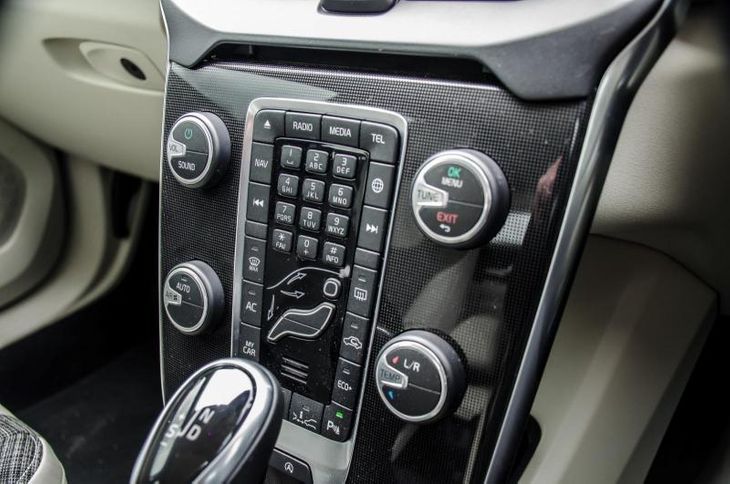
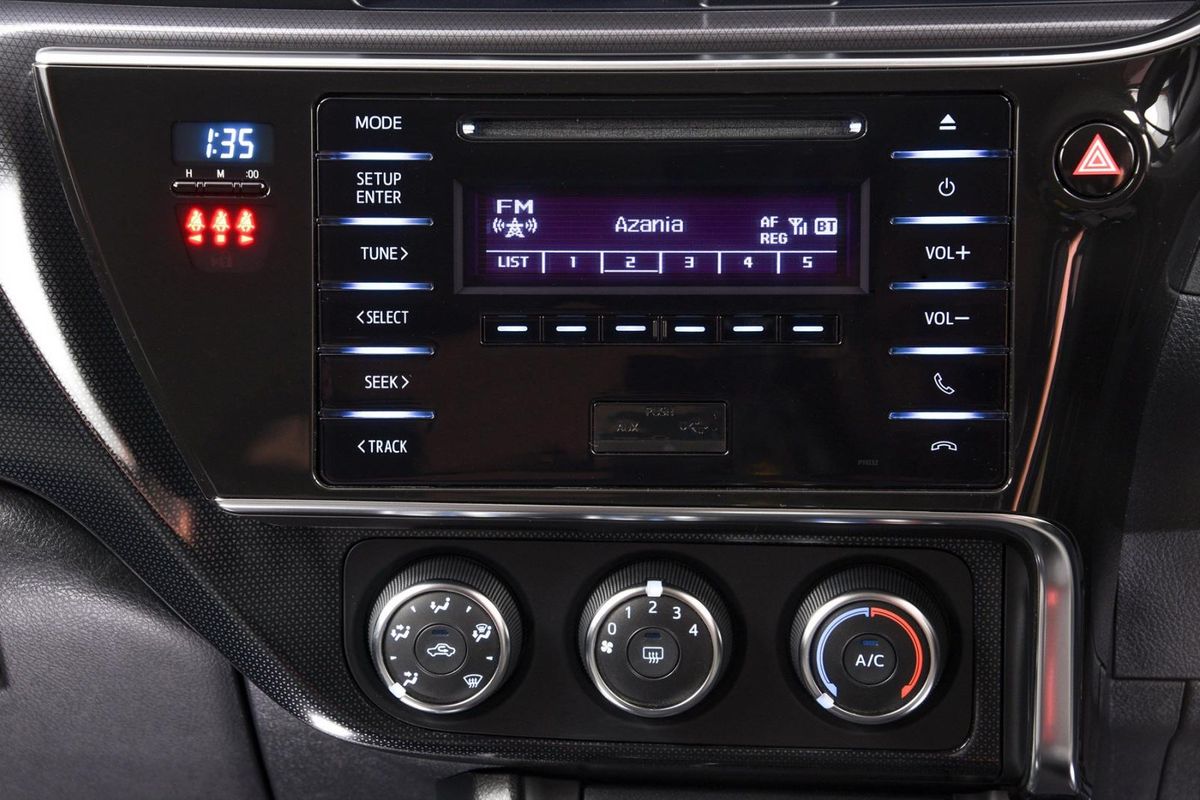
This image depicts what the standard audio system unit looks like. It serves its purpose, but lacks sophistication.

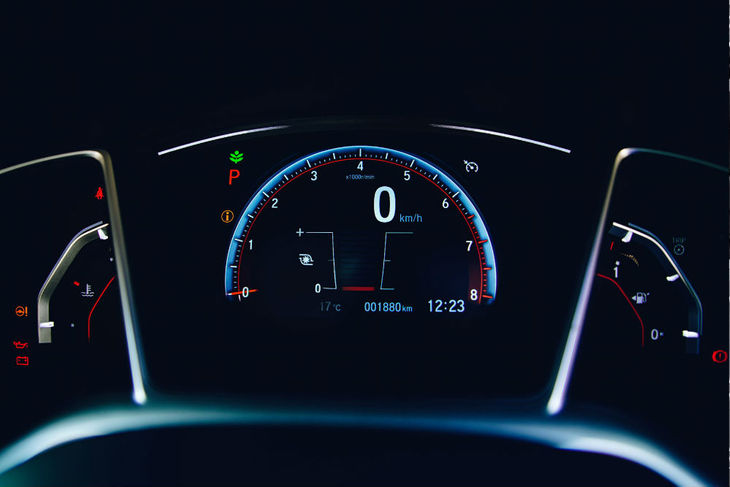
Ergonomically, there is little to fault in the top-spec Tucson. Whereas the reverse-view camera’s feed is displayed on the infotainment screen in most vehicles, the Tucson utilises a small rectangle in the rear-view mirror. Also, a full-colour touchscreen including satellite navigation is an optional extra at R15 500 (to specify and fit) and even though it's not the slickest infotainment system of its kind, the standard audio system’s blue-on-black lettering looks a little basic if you’re forking out R500 000. To its credit, however, the Elite’s panoramic sunroof is a plus.

Performance and ride?

As a comfort-orientated family vehicle, the Tucson strikes a good balance between performance and efficiency, as well as ride and handling… once it’s gathered momentum. Irrespective of whether it can be attributed to conservative throttle mapping or turbo lag, the Tucson feels a trifle lazy off the line (when pulling away at intersections or in stop-start traffic conditions). Once the revs reach 1 500 rpm, the Hyundai delivers its full wad of torque (265 N.m) right up to 4 500 and, with measured throttle inputs, the transmission resists the urge to hunt and shifts slickly in everyday driving conditions. The engine-transmission combination is admittedly better suited to cruising than cut-and-thrust driving, but, when driven in a considered manner, the 1.6 Turbo should realise fuel consumption figures of around 10.0 L/100 km, which is more than the manufacturer’s claim, but fair.


The standard panaromic sunroof adds a sense of airiness to an otherwise dark interior.

Furthermore, there is a downside to those aesthetically pleasing 19-inch rims and rubber, although the tyres’ profile (45) is not that low. The Hyundai’s reactions to steering inputs feel crisp, accurate and predictable, as does its body control when cornering, but whereas the ride is generally pliant, sharp bumps in the Hyundai’s path announce themselves by discernible thuds when traversed.

Practicality and safety?

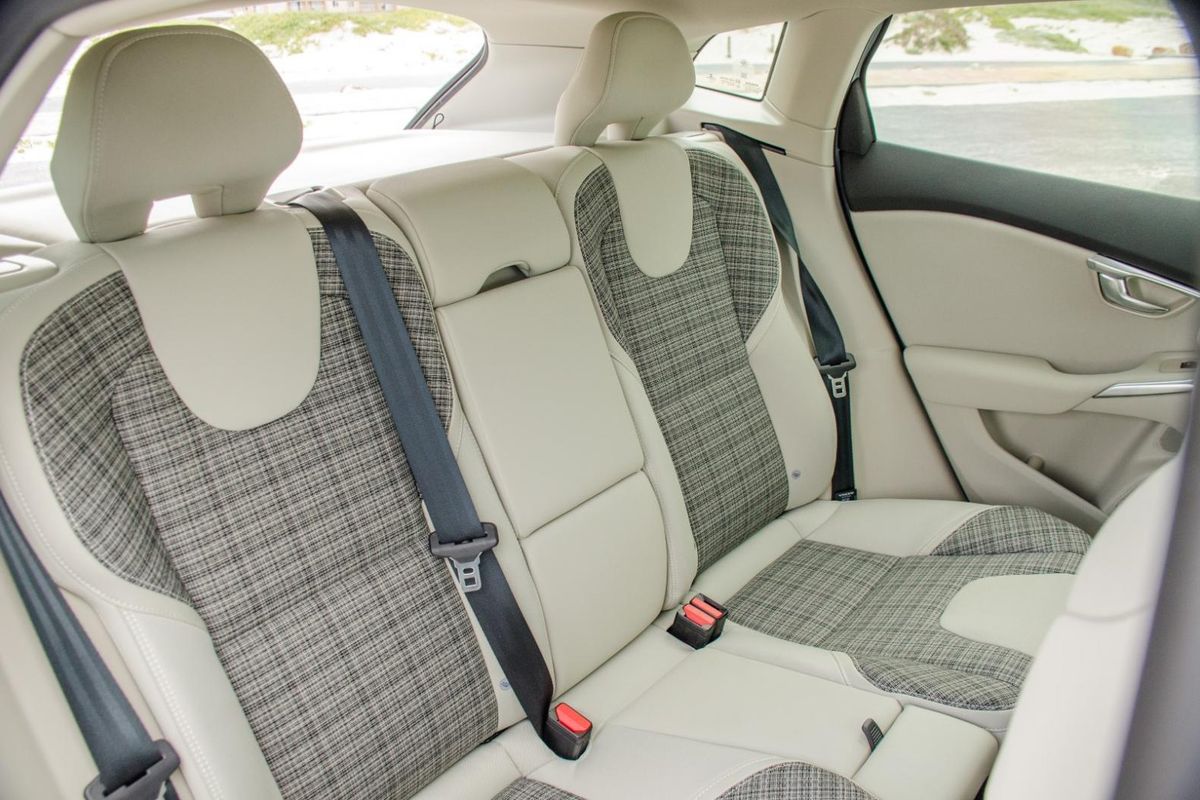
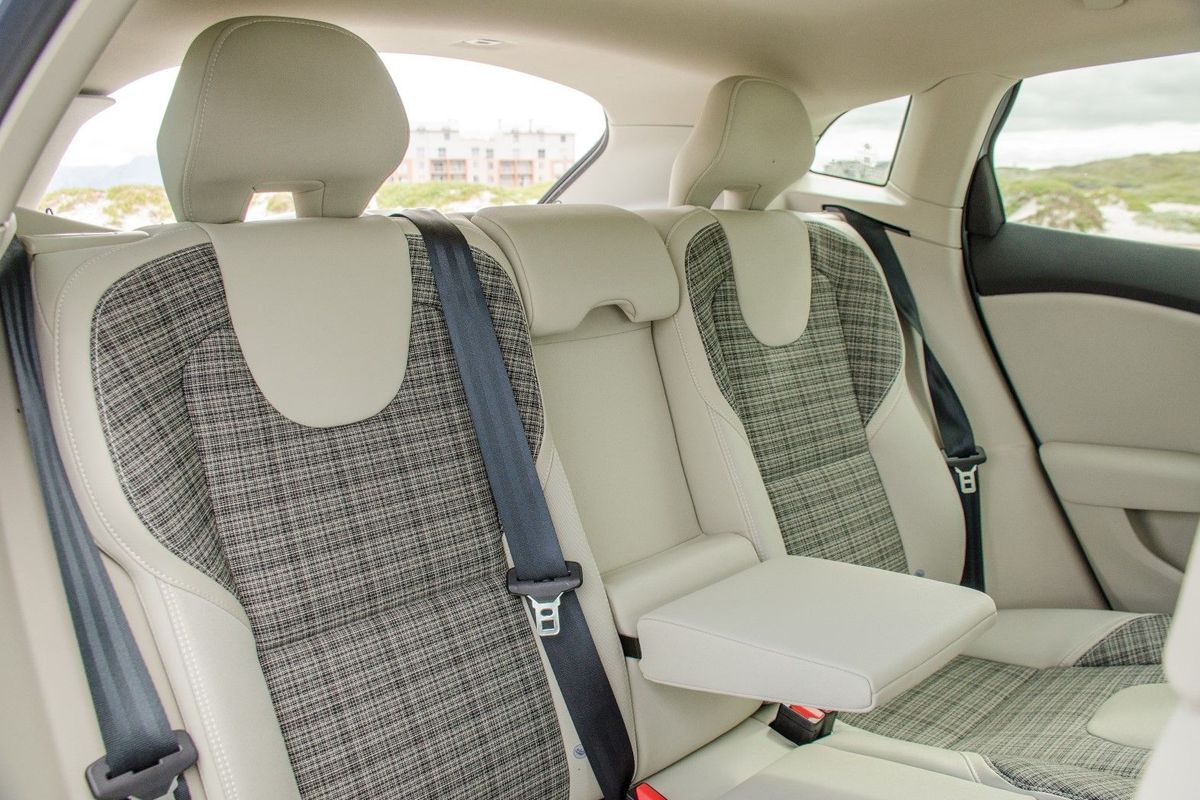
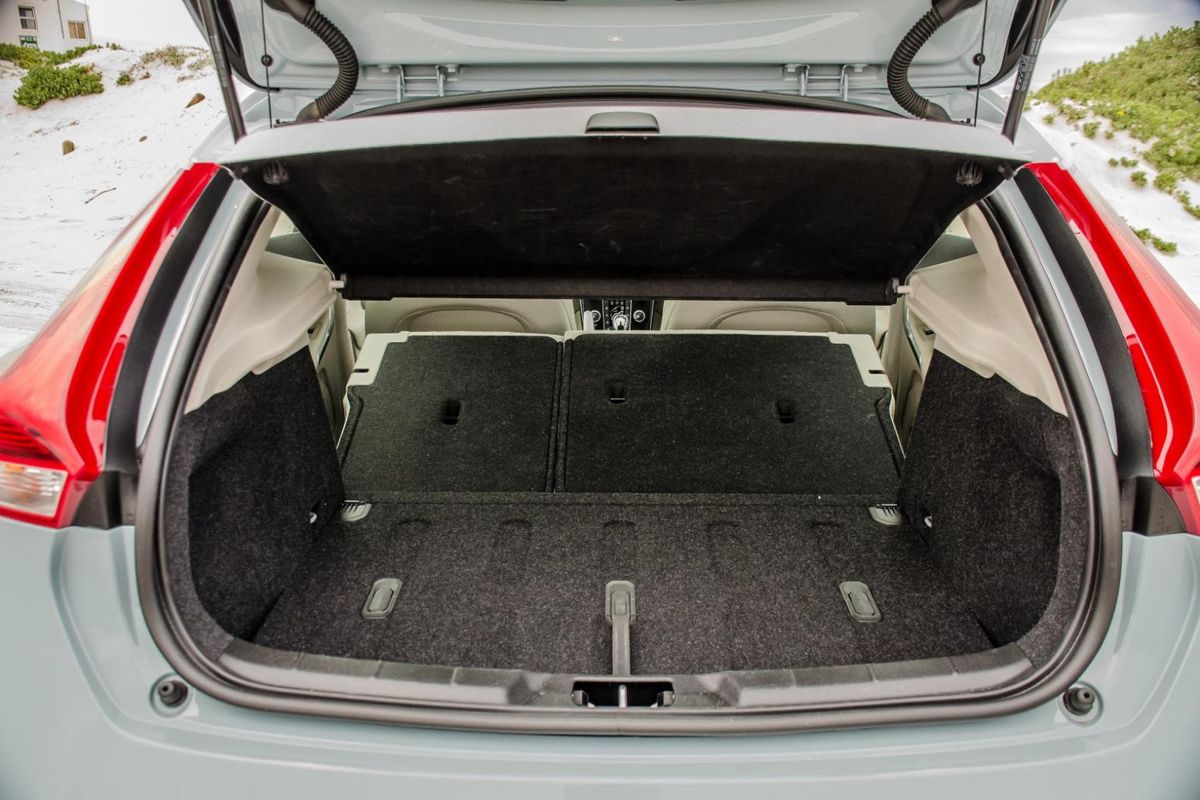
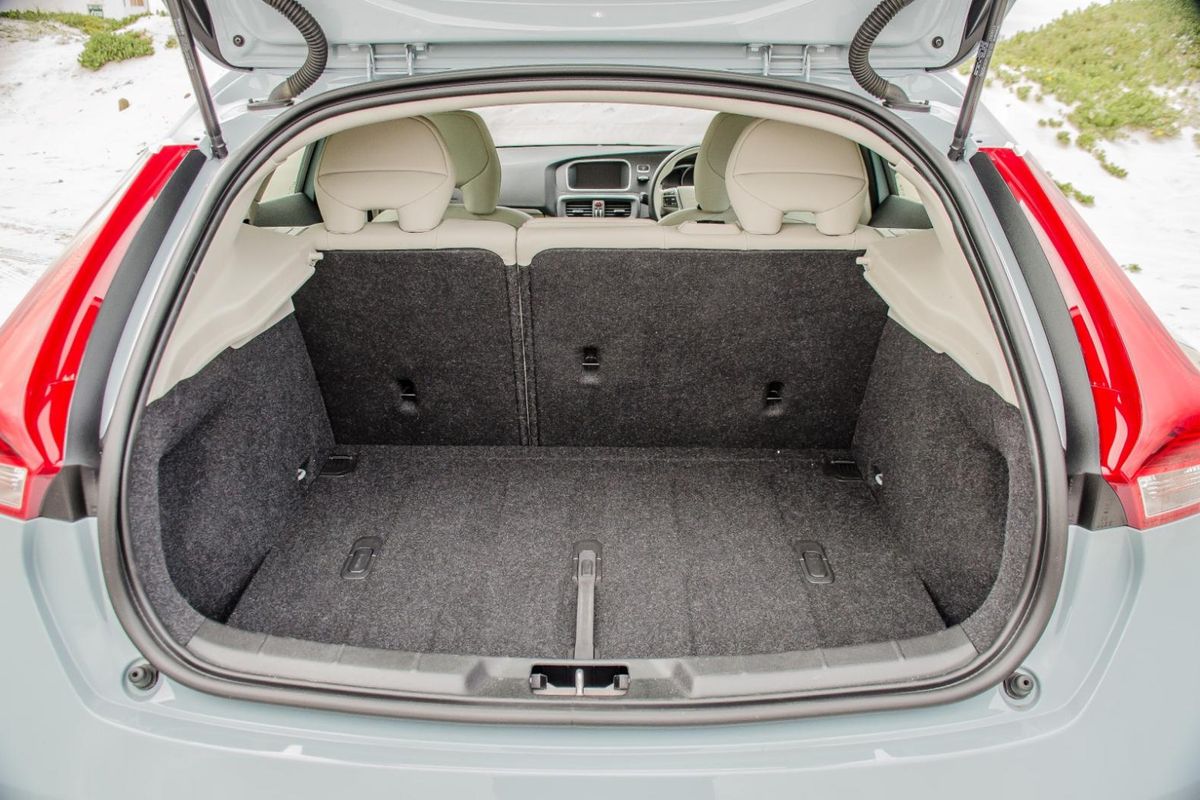
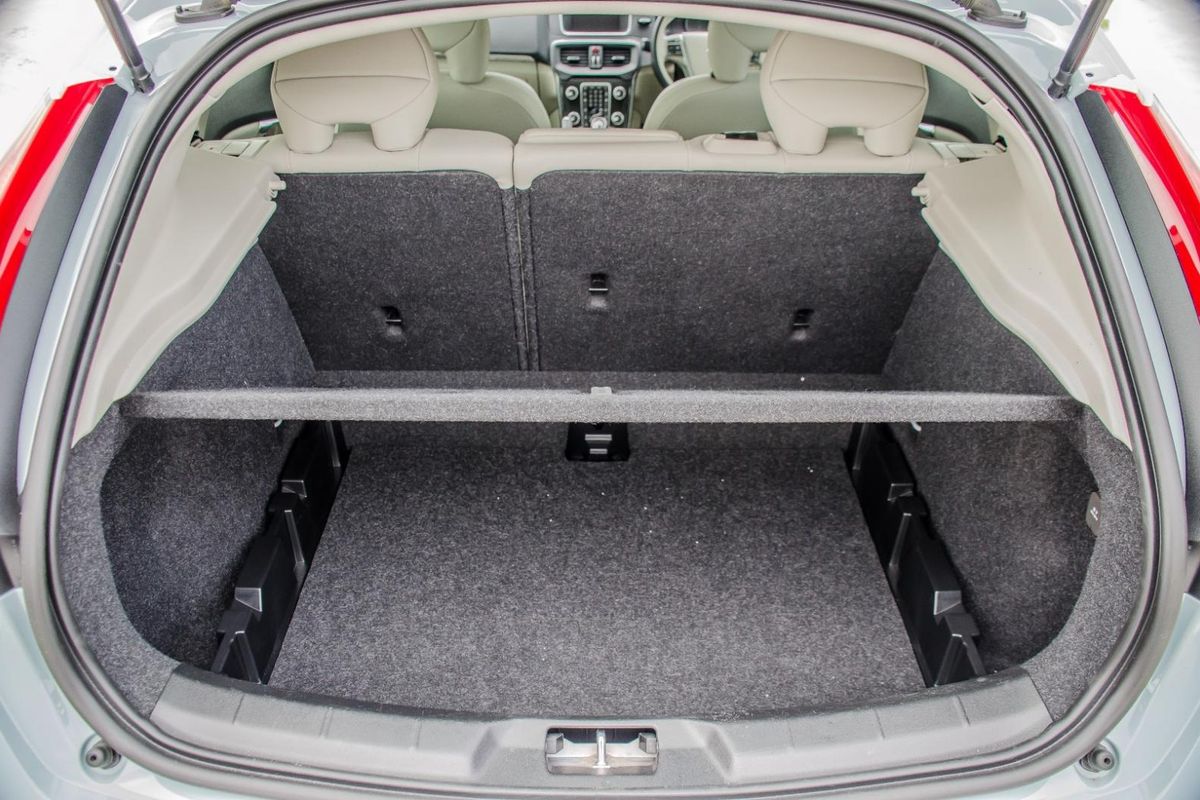
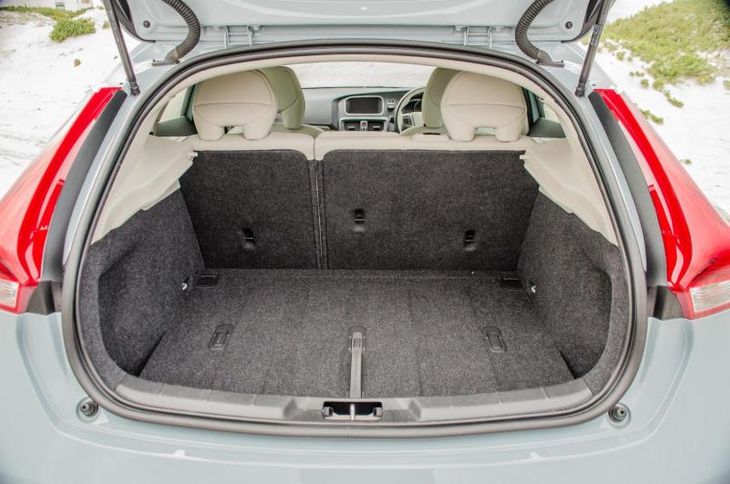
Improvements in cabin space (the Tucson is appreciably longer and a little bit wider than its predecessor) is most notable at the rear, where occupants are afforded generous legroom (even for adults). The luggage room available with the rear seats upright is less than class-leading, but freeing up utility space is as easy as releasing the 60:40 split seatback at either side of the bench. To see just how much space is available, watch this demonstration by Cars.co.za’s Ciro de Siena.


The rear seatbacks fold flat to free up useful utility space. Note the shopping bag hook on the right.

There are other nods to practicality as well, including the aforementioned oddment tray, the cooled glovebox, a sunglass holder above the rear-view mirror, a sizeable storage box under the armrest, ventilation outlets for the rear passengers and a shopping bag hook (and a pair of ISOfix anchor points) in the rear seatbacks. In terms of safety, 6 airbags, blind spot monitor, a speed-sensitive automatic door lock (activated at 15 kph), ABS with EBD and electronic stability control are fitted.

Although the Tucson’s sporty “footwear” and relatively low ride height rule out serious off-roading, the automatically activated all-wheel-drive system provides excellent stability on low-grip surfaces such as dirt roads. ABS-system-operated downhill brake control is also available (should you require it)…


A photo posted by Cars.co.za (@carssouthafrica) on

Hyundai Tucson 1.6 Turbo 4WD Elite price in South Africa

The flagship Tucson costs R499 999, which includes a 5-year/90 000 km service plan, as well as 7-year/200 000 km powertrain- and 5-year/150 000 km manufacturer's warranties.

Verdict

The Tucson is Hyundai’s top-selling model and it’s not difficult to understand why that’s the case. In terms of build quality and finish, it feels like a premium product, and in terms of overall refinement, it's very difficult to criticise. Unfortunately, this particular derivative does not represent the best value for money in the range: it's well-, as opposed to generously specced, and costs R499 999 — that’s even before the touchscreen infotainment/navigation system has been specified.

Having said that, the Tucson is a product that is likely to do well based on the phenomenal success of its predecessor, and that’s before we’ve factored in its own strengths, of which there are quite a few. Backed by Hyundai’s reputation for solidity and reliability, not to mention the firm’s 7-year powertrain- and 5-year manufacturer's warranties, this newcomer will have sealed some buyers' purchasing decisions even before they’ve walked into the showroom.

View detailed specifications of the Hyundai Tucson 1.6 Turbo 4WD Elite

Compare the specifications of the Hyundai Tucson 1.6 Turbo AWD Elite, Toyota RAV4 2.5 AWD VX and Ford Kuga 1.5T AWD Trend

Related content:

Watch a Cars.co.za Video Review of the Hyundai Tucson 1.6 Turbo Executive:
Hyundai Tucson (2016) First Drive

2016 Hyundai Tucson Specs and Pricing in SA

Interested in buying a Hyundai Tucson?

Search for a Hyundai Tucson for sale on Cars.co.za

Perhaps a used ix35 is what you are looking for? View stock for sale here

Subaru BRZ Updated for 2017

Has Subaru suspended production of the BRZ? No, the Tokyo-based brand has just released an updated model.

The updates to the 2017 model year Subaru BRZ are claimed to improve the car’s performance and handling. Those who were hoping for a factory-made turbocharged/supercharged version will, however, be disappointed as the power upgrade amounts to a mere 6 kW. The standard BRZ overseas was released with a 147 kW output, whereas SA’s local model was sold with a performance exhaust as standard and produced peak power of 155 kW. The new model will produce 153 kW, so that’s still less than the model previously sold in SA. Torque does however, climb from 205 Nm to 211 Nm.

Most of the upgrades to the BRZ serve to benefit its handling. There are uprated coil springs and a larger rear anti-roll bar. Subaru has also increased the car’s rigidity with reinforcements to the strut tower braces, transmission cross-member plate and rear-wheel housings. To complement the BRZ's bigger performance envelope, the traction control systems have been remapped and Subaru has changed the “Sport” mode to read “Track” mode.

Available spec options include Brembo brake calipers with enlarged discs, a SACHS performance shock absorber kit and 17-inch alloys.

The inside has also undergone some slight changes with a 6.2-inch screen available that displays telemetry data. You can view your lateral Gs, throttle and brake positions, braking force and steering angle on the screen. Subaru has further built in a stopwatch function into the system to record track lap times.

The Infotainment system is updated to integrate mobile apps such as Stitcher and TravelLink and display the view from a new reverse-view camera.

The bad news is that the BRZ did not sell particularly well in South Africa and was quitely removed from the market in 2015. Hopes that this updated model will come to South Africa are then quite slim. Hopefully, we will get to see these sorts of upgrades on the BRZ's sister product, the Toyota 86 soon.

Interested in buying a Subaru BRZ ? Search for one on Cars.co.za

New Nissan GT-R packs more power, improved styling


Nissan has updated its beastly GT-R for MY 2017 and the new model boasts improved styling inside and out, as well as more grunt under its bonnet…

Godzilla, as the Nissan GT-R is affectionately known, has been improved to not only be more menacing in the performance department, but prettier to look at too. The latest GT-R has undergone major surgery to improve its driving performance and power from its twin-turbocharged 3.8-litre V6 engine has been bumped up to offer even more thrills. The new Nissan GT-R can be expected in South Africa later this year or early in 2017.

Let’s see what’s changed…

Improved exterior design

From the outside, you will notice that Nissan has gone to work on the bonnet, front bumpers and daytime running lights, all of which have been redesigned. The larger ‘V-motion’ grille is new too, and it’s finished in matte chrome. Aerodynamic performance was top-of-mind for Nissan and nearly all the changes to this GT-R aid aerodynamic performance by reducing drag, generating downforce and cooling the vehicles systems.

The front spoiler has been extended and lowered to improve airflow while the overall ground clearance remains unchanged compared to the outgoing model. The side sills and C-pillars also take on a new shape to improve aerodynamics. A diffuser finished in silver along with new side air vents are seen at the rear while the round taillights that are synonymous with the GT-R, have been retained. A raised belt line gives the GT-R a wider stance and the rear bumpers feature the same design found on the GT-R NISMO. The 2017 Nissan GT-R rides on new 20-inch Y-spoke alloy wheels developed by RAYS.

More comfort inside

This latest GT-R is said to offer higher levels of comfort and luxury. A new ‘horizontal flow’ dashboard is fully wrapped in Nappa leather as an option while the layout is oriented towards the driver. The number of buttons found in the new GT-R have also been reduced from 27 switches to only 11, while the revised navigation controls and 8-inch touchscreen display are now positioned lower in the instrument panel.

The layout of the infotainment system has been enhanced with larger, customisable icons as well as a display command control on the centre console to allow for easier control of audio and navigation functions.

The shift paddles are now located directly on the steering wheel (not on the steering column) and the sport seats have been redesigned to offer better support while reducing weight at the same time.

More power for Nissan GT-R

Powered by a 3.8-litre twin-turbocharged engine that offers 15 kW more than before, total power output totals a whopping 419 kW with 637 Nm of torque. Those numbers are transferred to all four wheels using an updated 6-speed dual clutch transmission. The GT-R can reach a top speed of 315 kph and Nissan claims a fuel consumption figure of 12 L/100km.

The GT-R features the world’s first independent rear transaxle known as the ATTESA E-TS all-wheel drive system. Under normal driving conditions, the GT-R is fully rear-wheel bias but torque can be split up to 50:50 depending on factors such as speed, lateral acceleration, steering angle, tyre slip, road surface and yaw rate. The GT-R’s suspension has also been improved and its body structure is more rigid, improving the vehicle’s overall stability and handling performance.

Safety features on the new Nissan GT-R include an Advanced Air Bag System (AABS), Vehicle Dynamic Control (VDC), electronic traction control system, ABS with EBD, rear view camera and a tyre pressure monitoring system.  

Search for a new Nissan GT-R on Cars.co.za

Search for a used Nissan GT-R on Cars.co.za

Spy Shots: 2017 BMW 5 Series

A set of spy shots have emerged that shows the next-generation BMW 5 Series as well as the next BMW M5.

Picture credit: S. Baldauf/SB-Medien

These pictures, which were taken in Europe recently, give us a great indication of the dimensions and shape of the all-new BMW 5 Series. The entire BMW 5 Series line-up was present too, ranging from the sedan, Touring (estate), GT and finally the flagship BMW M5. We should see the sedan revealed at the Paris Show in September 2016, with an expected South African market introduction in 2017. 

The BMW 5 Series will be taking on the Audi A6, Mercedes-Benz E-Class, Jaguar XF and Lexus GS in the premium sedan segment. After being suitably impressed by the technology in the new Mercedes-Benz E-Class, we believe that BMW will be going all out in that respect with the new 5. Expect several technological features from the BMW 7-Series to make an appearance in the new model and there'll be a degree of self-driving autonomous ability too.


Blue brake callipers, big alloy wheels and quad exhausts are signs that this is the next BMW M5. Picture credit: S. Baldauf/SB-Medien

We expect the current 4.4-litre twin-turbo V8 to be retained, but it'll probably produce more power than the current M5 Pure Metal edition (441 kW).

To see some earlier BMW 5 Series spy shots, click here.

To see what else BMW is bringing in the next five years, click here.

Interesed in buying a new/used BMW 5 Series? Search for one on Cars.co.za

New Triton and Navara: South Africa’s “Missing” Bakkies


While Toyota and Ford are making hay in the lucrative local bakkie market with their revamped Ranger and brand new Hilux, erstwhile pickup stalwarts Mitsubishi and Nissan have been forced to watch from the sideline…

By Ferdi de Vos

It must be a frustrating state of affairs for the Franco-Japanese companies; more so as they know they have the means to take the fight to the competition, but are not in a position to do so (at least for now). It’s even worse when your European partner (Fiat, with the Fullback) launches its first offering, based on your design, before you can get into this hotly contested segment – that’s exactly what’s happened to Mitsubishi South Africa.

A bakkie stalwart since the days of the popular Colt (or L200, as it was known overseas), the company will be beaten to the post by newbie Fiat when the Fullback, the Italian giant’s version of the fifth-generation Triton, is launched in June.

So, why did this happen?

Triton delay: the reasons


Although the design seems familiar, the upcoming Triton’s cabin is all-new and loaded with mod-cons.

First indications suggested the latest Triton would be introduced locally by mid-2016, but this timing was altered for numerous reasons, according to Mitsubishi’s marketing manager Braam Faul.

“As initially stated we want to launch the latest Triton with Mitsubishi’s new state-of-the-art 2.4-litre turbodiesel engine, designated 4N15, and not with the current 2.5-litre,” he said. “We felt we need to launch our new model with the latest engine available,” he added. “But with production running at full capacity this means we’ll have to wait a little longer.”

The smaller aluminium-block MIVEC turbodiesel engine is rated at 133 kW at 3 500 rpm and 430 Nm at 2 500 rpm and, in the new Triton, will be mated with either a 6-speed manual or 7-speed automatic gearbox.

Contrary to this the Fullback, in turbodiesel form, will only be available with the 2.5-litre, in three states of tune: 94 kW, 100 kW and 131 kW respectively, with torque figures varying between 200 Nm and 400 Nm, and mated to either a five-speed manual or five-speed auto transmission.

RELATED CONTENT: Click here to read our first drive impressions of the new Fiat Fullback

The range-topping Triton double cabs will offer Mitsubishi’s Super Select II four-wheel drive system as found in the Pajero, and they will be luxuriously equipped, Faul said. 

He admitted the volatility of the South African currency also has an influence on the launch strategy, as it is playing havoc with vehicle pricing. This is evident in the sharp increases already experienced this year, with more set to come. 

“We’re obviously not keen to introduce new Triton or, for that matter, the upcoming Pajero Sport at uncompetitive prices,” he said. “We are carefully watching the situation, and while we would like to launch before year-end, no firm date has been set.”

The elusive Nissan Navara


Handsome new Nissan Navara will be locally built, but no launch date has been set (yet).

There are many rumours about the forthcoming launch of Nissan’s latest Hilux-fighter. According to some sources it’s imminent; others indicate it should already have happened, and more say it will be before year-end… Truth is, no final introduction date has been decided.

As things stand, the following can be stated, as confirmed by a Nissan spokesperson: Yes, the Navara will definitely be launched locally, and yes, it will be built locally, but it is also not yet finalised when production will start.

“Ramp-up for production of the Navara has already started at the Rosslyn plant, but we have not confirmed any dates when this will commence. Meanwhile, production of the NP300 continues,” she said. She would not be drawn on any specifics, and added: “We will communicate our intentions to all stakeholders once we have finalised all our plans.”

Given that the normal ramp-up period for a new line in any plant is around 9-12 months, one could speculate that the new Navara will only be ready for local introduction by early 2017.

As For The Others…


Only subtle, mostly cosmetic changes are expected to appear on the facelifted Isuzu KB later this year.

With Ford and Toyota surging ahead in the market, how do the other bakkie stalwarts, besides Nissan and Mitsubishi, intend responding? Well, it seems the other two major players, Isuzu and Volkswagen, have divergent views on this.

As previously reported on Cars.co.za, Isuzu plans to launch a facelifted KB late this year, but major engine changes are unlikely. Interestingly, an all-new 1.9-litre turbodiesel engine has been introduced elsewhere, but it will seemingly only be available overseas, and is not destined for our market.

While Isuzu is “down-sizing”, at least elsewhere, Volkswagen is upscaling – with VW Commercial announcing that the facelifted Amarok will be endowed with a 3.0-litre V6 turbodiesel engine. While this addition has not (yet) been confirmed for South Africa, the revamped, more upmarket, models will be available in Europe with a 165 kW version of the V6, delivering 500 Nm of torque, and a de-tuned 150 kW variant.

Meanwhile, Mercedes-Benz is gearing up to produce its luxury bakkie model, based on the Navara platform and probably named the GLT, in Spain and Argentina, for local introduction in 2018, while rumour has it that the PSA Group is also planning a pickup, believed to be based on the Hilux platform…

Oh, and don’t forget the Indians. Tata and Mahindra are surely working on replacements for the Xenon and Bolero, to be presented by 2018.

2016, slated as the Year of the Bakkies, seems set to continue well into next year, and 2018…

MORE BAKKIE CONTENT

Read our big double-cab bakkie comparison test

Search for new and used Mitsubishi Triton stock on Cars.co.za

Search for new and used Nissan Navara stock on Cars.co.za

Search for new and used Isuzu KB stock on Cars.co.za

Search for new and used Volkswagen Amarok stock on Cars.co.za

Fiat 500 (2016) Specs & Price

With more than 1.5-million units sold globally since its launch 8 years ago, the reimagined Fiat 500 has been a success, even if it took a while to catch on in South Africa. It has now undergone another facelift; herewith spec and pricing details.

It’s easy to understand why this little model has kept sales ticking over for Fiat SA, which, admittedly, does not have a comprehensive product offering. The 500 is reasonably priced, comes with a good level of specification and those cute looks undoubtedly add to its appeal. For 2016, there’s a facelifted version that is not too dissimilar to the outgoing model.

The looks have changed very subtly. The front headlights now feature LED daytime running lights, there are new taillight clusters, a whole host of new colours (bringing the total of exterior finish options to 13), plus a new-look dashboard with new materials. There are also newly designed alloy wheels in either 15-inch or 16-inch configurations. From launch, there’ll be two versions; a hard top and a convertible with three trim levels (Pop, Popstar and Lounge).

The good news is that you’ll still be able to customise your 500. Given the array of decals and paint combinations available, you could specify your Fiat to heart's content and it's unlikely that anyone in South Africa will have one just like yours… 

Pop features:

LED daytime running lights
14-inch steel wheel covers
Chrome-plated exterior door handles
Height-adjustable steering wheel
Radio with USB and auxiliary input
Multifunction steering wheel
Electrically adjustable door mirrors
Electric front windows

Pop Star features:

(In addition to Fiat 500 Pop)
Air Conditioning
Electrically adjustable painted door mirrors with defrosting & external temperature sensor
15-inch alloy wheels
50/50 split folding rear seat with height adjustable head restraints

Lounge features:

(In addition to Fiat 500 Pop Star)
LED daytime running lights
16-inch alloy rims
Chromeplated exterior door handles
Height-adjustable steering wheel

Powerplants

The Fiat 500 engine lineup has been replaced by all-new TwinAir motors. These 2-cylinder motors are 0.9 litres in capacity, yes that’s 0.9-litres, and come in two states of tune. There’s a 65 kW option as well as a 77 kW. Both derivatives produce 145 Nm of torque.

They’re claimed to be quite frugal too, with emissions rated at 90 g/km for the 65 kW engine, 99 g/km for the 77 kW. Consumption is claimed at 3.8 L/100 km and 4.2 L/100 km respectively. In terms of gearboxes, you can choose either a five or six-speed mechanical ‘box or a Dualogic robotised transmission.

Safety

Being a small, affordable car, one’d expect safety features would be basic, but the opposite is true. There are seven airbags (two front, two window bags, two side bags and one for knee protection) as standard. Furthermore, ABS with electronic brake distribution (EBD), electronic stability control (ESC), anti-slip regulation (ASR), a hill hold function and hydraulic brake assistance (HBA) are fitted.

New Fiat 500 Price in South Africa

500 TwinAir Pop Base                    R179 900
500 TwinAir Pop Auto                     R189 800
500 TwinAir Pop Star                      R198 900
500 TwinAir Pop Star Auto              R208 800
500 TwinAir Lounge                        R224 900
500 TwinAir Lounge Auto                R235 400
500 TwinAir Pop Star Cabriolet        R231 900
500 TwinAir Lounge Cab                 R257 900
500 TwinAir Lounge Cab Auto         R268 400

Interested in buying a new/used Fiat 500? Search for one on Cars.co.za

Update: Facelifted VW Amarok to get 3.0 V6 turbodiesel?

Update: First interior shots of the new Amarok

Volkswagen's commercial division has released a few more pictures of the new Amarok, which is scheduled to arrive in South Africa in 2017. There's also a new image of the interior that features high-tech systems and multfunction display. The new seats fitted to the Amarok are electrically adjustable in 14 different ways and have been certified by the Healthy Back Campaign. The seats also feature Nappa leather and come with a separate lumbar support.

The European launch model (Aventura) features a full-colour display screen in the instrument cluster and the driver can use the (optional) shift paddles on the steering wheel (standard in the Aventura) to actuate manual 'shifts with the 8-speed automatic transmission. The much-improved infotainment system comes equipped with features such as App Connect, Guide & Inform or Car-Net, plus it is possible to integrate smartphone apps via a USB port so that you can access them via the infotainment system’s touchscreen. Guide & Inform extends the navigation system by adding online-based, up-to-the-minute information services such as online traffic information. The "Discover Media" navigation system also comes with DAB+ digital radio as standard.

Both the "Composition Media" and "Discover Media" infotainment systems come with digital voice enhancement. This electric voice amplification makes communicating during the journey easier. The hands-free microphone amplifies the voice signals so that the driver no longer, for instance, has to turn to face the back-seat passengers or raise their voice. Passengers on the back seat hear the person’s voice amplified by the rear speakers.

As you can read below, the Touareg-sourced V6 TDI is widely expected to join the local line-up. According to VW, the model, which produces 165 kW and 551 Nm, will accelerate from zero to 100 kph in just 7.9 seconds and go on to a top speed of 193 kph.

We’ve seen teaser images for the facelifted Amarok, but now Volkswagen has released official details of its updated bakkie range, which will arrive in South Africa in the second half of next year — and could include turbodiesel V6 derivatives!

As these images show, the Wolfsburg-based firm's double cab’s exterior updates are subtle, but the news that a Euro 6-compliant 3.0-litre TDI that produces 551 N.m of torque (in three states of tune: 120 kW, 150 kW, 165 kW) will be offered in the United Kingdom is likely to send local enthusiasts into frenzy. Volkswagen South Africa is considering whether to introduce the motor in the local market, in which 103 kW and 132 kW 2.0-litre motors are the only engine options in the current line-up. The updated range will also be offered with a choice between 6-speed manual and 8-speed automatic transmissions.

Although VWSA's decision will be based on the cost of importing V6-engined versions/whether they can compete price-wise with the top of the range models from Toyota and Ford (its major rivals), there is also the not-insignificant matter of whether the state-of-the-art engine will be capable of running efficiently and, more importantly, reliably, on local-spec 50 ppm diesel, but the local firm has more than enough time to find that out before the launch of the facelift.

However, there are two major factors that increase the likelihood of V6 derivatives joining the local line-up. If they arrive, they will increase the Amarok’s towing capacity to 3.5 tonnes, which will make it more appealing to affluent lifestyle buyers (horsebox-haulers, for examples) and, don’t forget that Mercedes-Benz is readying its own luxury double-cab, named the GLT, for introduction across the globe… VW will want to be ready for that challenge.

The last point is underlined by the fact that the updated Amarok will feature a significantly redesigned fascia with a distinct car-like feel; the updated touchscreen infotainment system sits a bit higher up compared with the current Amarok. And, in conjunction with an upgraded Climatronic ventilation system, the air vents take on an angular shape with chrome trim (circular in current Amarok).

Judging by overseas reports, we expect post-collision braking, stability control, parking sensors and a reverse-view camera to be offered as options.

Read a comparative review featuring the current Volkswagen Amarok and its rivals from Toyota, Ford and Isuzu

Watch the video of the comparative review:

Interested in buying a new/used Volkswagen Amarok? Click here to find one on Cars.co.za


BMW X5 xDrive40e (2016) First Drive

BMW gets serious about electric mobility with the X5 xDrive40e, the marque's first core-brand production vehicle to incorporate plug-in hybrid technology. We travelled to Johannesburg to get behind the wheel.

BMW is widely considered a "pioneering" brand. The Munich-based company has, in many ways, taken the lead in developing the EV (electric vehicle) market and its products, both here and globally. We all know its "i" cars, which have enjoyed relative success here (BMW sold 124 i8s and 114 i3s by the end of April 2016 and the latter won Design of the Year and Game changer of the Year in the inaugural Cars.co.za Consumer Awards), but the company is also actively engaged in the roll-out of a private and public charging infrastructure. The arrival of the X5 xDrive40e represents another milestone…

It's BMW's first PHEV (or plug-in hybrid electric vehicle), but the Bavarian brand is not the only premium manufacturer headed in this direction. Mercedes-Benz has recently introduced plug-in hybrid drives to its S-Class range and will be introducing the technology to other ranges, of which SUVs will undoubtedly form part. More specific to the X5, Volvo has also introduced a rivalling plug-in derivative of its XC90 SUV, the T8 Twin Engine,.  

To use the X5 to "pioneer" this technology makes sense: The range makes up a significant proportion of BMW’s sales and already caters to an exclusive clientele. That said, more models will follow: BMW AG’s medium-term strategy is to offer PHEV-technology in its entire product line-up (known as i-Performance). We assume the same applies to SA, but we could only confirm that the next vehicle to join the "i-Performance" family will be a 7-Series derivative (October 2016) and perhaps a 3-Series example towards the end of the year.


As opposed to its series of "i" models, BMW's xDrive40e has conventional X5 packaging, which will strengthen its appeal.

This is all very good and well, but bear in mind that this is not BMW’s first soiree into hybrid technology. In 2008, the company introduced ActiveHybrid technology to a selected range of models, but they enjoyed little success locally. So, what makes i-Performance different from ActiveHybrid and what makes the company believe that it will succeed this time? We got behind the wheel of the X5 xDrive40e at BMW South Africa's HQ in Midrand to find out.

The "engine"

The X5 xDrive40e uses a conventional turbopetrol engine along with a synchronous electric motor, technologies first used in the i8 and i3. The 2.0-litre 4-cylinder engine produces 180 kW from 5 000 rpm and 350 Nm of torque from 1 250 rpm. The electric motor is coupled with a 96-cell lithium-ion high-voltage battery with a 9 kWh capacity. It is capable of delivering 83 kW at 3 170 rpm and 250 N.m of torque from 0 rpm.

Combined, the drivetrain delivers 230 kW and 450 Nm.


Something out of the ordinary… the BMW has a battery capacity reading on its rev counter

What does this mean? Well, the car has a claimed 0-100 kph acceleration time of 6.8 seconds and a top speed of 210 kph. On country roads, the Xdrive40e never felt compromised in terms of performance, far from it: the newcomer's acceleration is linear and brisk; overtaking acceleration is impressive.

But the true benefit lies in its fuel consumption (3.3-3.4 L/100 km) and emissions (77-78 g/km).  The combined overall range of the xDrive40e is said to be approximately 830 km…

And herewith the crux: The xDrive40e is different to a pure hybrid (ActiveHybrid) as it offers greater flexibility in how battery power is used. It also has greater storage capacity and is able to better deliver what is expected from an EV: to significantly reduce fuel consumption and emissions.

"Engine" management

In fact, this "flexibility" is at the driver’s command via an eDrive button (located on the transmission tunnel). It offers a choice between 3 "drive modes":

  • Auto eDrive is a default setting and uses the engine and electric motor in tandem. The electric motor will be used for take-offs and at speeds below 70 km/h or until the accelerator is pressed hard.
  • MAX eDrive allows for power exclusively by the electric motor, at speeds up to 120 kph and a maximum range of 31 km.
  • SAVE Battery allows the driver to save or build up the energy reserve in the batteries for later usage: For example, while driving on the highway the battery could be charged for the final leg of the journey in an urban area.


BMW's first production PHEV can travel up to 31 km on battery power alone, and at speeds of up to 120 kph.

Rather cleverly, this system can be linked to the navigation system, which will automatically select between the three modes relative to the route conditions.

Charging can be done either at a public station or by using a wall box once it has been installed at your home (R25 000). BMW hopes to have about 33 dealerships offering charging facilities by the end of 2016, with the aim of having national coverage soon. There are already some public stations at locations such as Melrose Arch in Johannesburg. At the moment, there is no electricity fee for charging at these stations (an attempt to incentivise the usage of EVs).

A plethora of features

Despite its sophisticated drivetrain, the xDrive40e remains an X5, which means that it comes with all the usual amenities. The interior is spacious and comfortable with ample applications of soft-touch panels and leather throughout the cabin. Auxiliary heating and ventilation and navigation also come as standard. The only compromise as a result of the bulky battery is a loss of about 150 litres of storage space in the luggage compartment.

Beyond the "standard" model, the X5 xDrive40e also comes with the option of three design packages, with both exterior and interior options, including a sporty M Sport package.


The layout of the xDrive40e is comfortably familiar, as its standard specification of onboard features.

How does it drive?

The X5 xDrive40e comes equipped as standard with auto-levelling rear air suspension, full-time all-wheel drive and dynamic damper control and, as expected, the vehicle dealt with inner-city driving with aplomb, bumpy country roads were evened out with ease and the newcomer's surefootedness allowed for confident high-speed cornering. Despite its mass and size the X5 remained nimble, stable and balanced.

In addition to the eDrive button, it also offers the usual driver modes: Comfort, Sport and Eco Pro that adjust the xDrive40e's throttle mapping, steering characteristics, damper control and responses of the 8-speed Steptronic transmission. Eco Pro triggers efficiency-optimised functions for functions such as the climate control system. Furthermore, the engine is shut off at coasting speeds in order to conserve fuel.

In short, the X5 xDrive40e represents the start of a long journey for BMW: A weak rand, a slow uptake of hybrid technology on the part of consumers, a huge expenditure in terms of charging infrastructure development and the arrival of more competitors are a few of the xDrive40e's challenges.

Overall, the vehicle is impressive. It loses little in the way of practicality, but gains a lot over its conventional counterparts. The clever use of plug-in technology promises a significant improvement in fuel consumption, but this should not come at the cost of performance, comfort or convenience. With a starting price of R1 097 500 it remains an exclusive vehicle…  it is similarly priced to the xDrive40d, but its price premium could be justifiable if you are tech-savvy consumer who's concerned about emissions and want to save a few Rand at the pumps. What's more, it is similarly priced to the Volvo XC90 T8.


While its selection of EVs and hybrids increases, BMW South Africa is broadening charging infrastructure.

BMW X5 xDrive40e prices in South Africa

xDrive40e (standard model)                 R1 097 500
xDrive40e Design Pure Excellence      R1 108 800
xDrive40e Design Pure Experience     R1 115 000
xDrive40e M Sport                               R1 146 300

All models are sold with a 5-year/100 000 km maintenance plan and an 8-year/100 000 km high-voltage battery warranty.

Interested in buying a new/used BMW X5? Search for one on Cars.co.za

Toyota Global Invests in Uber

The world’s biggest automaker has turned its attention to the ride-sharing market and has announced a partnership with Uber.

After General Motors announced it had teamed up with Lyft at the beginning of the year in a $500-million deal, many were left wondering what GM knew and the rest of the automotive giants didn’t. GM’s massive cash injection and Lyft’s strategy focuses on driverless cars for the future.

It took five months for the rest of the industry to catch up and Toyota has now chosen its ridesharing company. Toyota announced that its partnership with Uber was one of understanding and exploration, commonly known as a memorandum of understanding, and there’ll be trials and tests in different countries where ridesharing has proven popular.

Toyota’s senior managing officer, Shigeki Tomoyama, said in a joint statement: “Through this collaboration with Uber, we would like to explore new ways of delivering secure, convenient and attractive mobility services to customers.”

TMC made the investment in Uber from its Mirai Creation division, but no actual amount was announced.

There’ll be a big focus on leasing deals which will allow drivers to use Toyota’s vehicles and their earnings as Uber drivers will cover their payments. Toyota and Uber are also looking at in-car applications as well as a program to purchase vehicles directly.

Uber chief business officer Emil Michael said: “Toyotas are among the most popular cars on the Uber platform worldwide and we look forward to collaborating with Toyota in many ways in the future.

In the South African market, the Toyota Corolla Quest is a hot favourite among Uber drivers thanks to a sterling reputation for reliability and great cabin space. It was recently updated, which you can read about here.

Watch a Toyota Corolla Quest video

Interested in buying a new/used Corolla? Search for one on Cars.co.za

Toyota Invests R6.1 billion in Local Hilux and Fortuner Production


Toyota announced this week that it has invested more than R6.1 billion to produce its popular Hilux bakkie and Fortuner SUV at its Prospecton plant in Durban.

Toyota South Africa Motors (TSAM) is responsible for manufacturing no less than five models in South Africa, including the Hilux, Fortuner, Corolla, Corolla Quest and Quantum as well as certain Dyna and Hino models. Hilux and Fortuner production, however, represents 80% of TSAM’s total production volume for both the local and export market, with exports accounting for more than 50% of production in 2016. Toyota says that more than 55 000 Hilux and Fortuners will be exported to 74 countries in Africa, Europe and Latin America this year alone.  

The investment includes supplier tooling (R1.9 billion), in-house tooling (1.4 billion) and in-house facilities and buildings (R2.9 billion). In addition to this investment, Toyota’s suppliers have invested over R1.7 billion resulting in growth in its supply chain and creating at least 2 000 new jobs. As a result, production capacity at Prospecton has increased from 120 000 to 140 000 vehicles per annum.

Apart from producing and supplying light-commercial vehicles to international markets, TSAM will also export new components to production facilities in Thailand where the Hilux and Fortuner are built too, further solidifying export growth.

TSAM President and CEO Andrew Kirby said, “This latest announcement gives evidence of a company that is defiantly committed to South Africa by strategically investing in the people, tools and equipment to produce cars and commercial vehicles of world-class standard that are not only destined for the domestic market, but will also fly our flag high on the international stage thanks to a robust export plan. But it is in fact more than that – it’s also a celebration of the pivotal role that both Hilux and Fortuner play in the overall development of the South African motor industry”. TSAM President and CEO Andrew Kirby at Toyota’s Prospecton Plant.

Toyota isn’t the only car manufacturer to invest in production operations in South Africa. Ford recently announced an investment of R2.5 billion that will see the new Ford Everest produced on local soil at its Silverton production facility in Gauteng, creating an additional 1 200 jobs. Similarly, BMW also recently announced a R6-billion investment to build the new X3 SUV by 2019 at its Rosslyn assembly plant, where production of the popular 3 Series sedan will come to an end. 

The importance of labour stability

While the news is certainly positive and can easily be regarded as a vote of confidence in South Africa, one needs to realise that major investment decisions such as these are made many years in advance. Maintaining this level of investment (and attracting new ones) will require South Africa to continue to demonstrate labour stability.

Dr Johan van Zyl, Chairman of Toyota South Africa and Chief managing Officer of Toyota Motors Europe reiterated the importance of stability on the production line: “Although we are justifiably proud of the achievements of the motor industry in growing production and especially exports post-1994, we must remember that South Africa currently produces less than 1% of the 90-million vehicles made worldwide each year.

“We have to remain world competitive not only in terms of wages and productivity, but also regarding labour stability.  I cannot stress enough the importance of engagement – engage, engage and engage again – the need to employ dispute resolution as the first and ultimately only line of defense rather than resorting to strike action as the solution.

“Nevertheless I am confident that a fair and equitable labour agreement can be reached and rest assured, that no matter what, Toyota will do its utmost to continue to put its customers and South Africa first.”

 More Toyota Content: 

Toyota Fortuner vs Ford Everest (2016) Comparative Review (Video)
Comparative Review: Ford Everest 3.2 4×4 XLT vs Toyota Fortuner 2.8 GD-6 4×4 6At

Toyota Hilux vs Ford Ranger – Offroad and Review
Toyota Hilux vs Ford Ranger vs Isuzu KB vs Volkswagen Amarok (2016) Comparative Review
In-Depth Comparison: New Hilux vs Ranger vs KB vs Amarok (video)
Drag Race: Hilux vs Ranger vs Amarok vs KB

New Hilux vs Old Hilux – An Expert’s Opinion on What’s Changed
2016 Toyota Hilux – 5 Things You Need To Know (Video)