Ferrari has taken the roof off of its latest performance machine and we got up close and personal with it. What’s special about the Ferrari 488 Spider?
Your R5.5-million gets you one serious performance machine, replete with one of the best views in town. The 488 Spider is powered by the same motor as its coupe sibling: a twin-turbocharged 3.9-litre V8 that produces a massive 492 kW and a meaty 760 Nm of torque.
Turbocharged motor provides all the thrills
Ferrari's previous foray into turbocharging produced the legendary F40 supercar, but, the Maranello-based firm's return to forced induction was not prompted by the pursuit of ultimate outputs (as it may have been in the '80s), but to produce more powerful motors that adhere to ever stricter emission laws. Ferrari has already played in the hybrid KERS space, but that technology is not cheap as indicated by the price of the Ferrari LaFerrari. Turbochargers are the next best thing, which led to the introduction of the California T, the 488 GTB and now, the the 488 Spider.
What does this mean in the real world? The Ferrari 488 Spider is claimed to hurtle from zero to 100 kph in 3 seconds dead, will smash 200 kph in 8.7 seconds and if the road is long enough, will max out at well over 300 kph. To put that in perspective, by the time your family crossover has reached 100 kph, this Ferrari will be a long way down the road with its speedometer reading well over 200 kph!
The utilisation of a turbo – or turbos – has often been accused of dulling the soulful sound of an otherwise sonorous engine, but this is not the case with the 488 Spider. Thanks to the combination of the V8's flat-plane crankshaft and innovative exhaust plumbing, the Ferrari sounds as evocative as any of its siblings. While we didn’t get to drive the car, Scuderia SA duly obliged with some engine revs, which put a smile on everyone's faces.
Engine aside, there’s some neat technology that underpins the roof mechanism. In a traditional convertible the roof folds into the boot, but because the Spider is a mid-engined supercar, its compact and light retractable hard top (RHT) folds neatly into the storage area behind the fairings. And, unlike some convertibles whose designs become a bit odd with the roof open, this Ferrari looks equally good top up or down. Ferrari says the RHT can be opened and closed in 14 seconds and Ferrari claim that the roof can be deployed or retracted when the car is moving.
Rivals for the Ferrari 488 Spider
While you may snort: “who on earth can afford that?” at the lofty price tag (R5.5 million), bear in mind that 30 people have already signed up to take delivery Maranello’s latest topless offering from Scuderia South Africa. There are a few rivals that go head-to-head with the Ferrari 488 Spider… British carmaker McLaren can offer you a 650S Spider for similar money and performance. You can also bag a topless version of Lamborghini’s Huracan. Finally, if you wait a bit, a convertible Audi R8 will land in South Africa in 2017.
Renault Clio facelift spied, headed for SA in late 2016
Renault’s fourth-generation Clio has been available in South Africa since 2013 and 4 years since making its Paris Show 2012 debut, the light hatchback's due for a facelift. Renault is working on beautifying the Clio and these spy shots hint at what’s to come from the French firm.
These spy images show a moderately disguised Clio prototype undergoing testing in Europe and it’s clear that Renault’s changes are focused on the small hatchback's front and rear ends. The facelifted Clio is expected to feature re-designed headlights as well as an entirely revised front bumper, which is clearly evident from the images. The back bumper will undergo revisions too and the taillight clusters will, in all likelihood, feature a fresh lighting signature.
2016 is shaping up to be a big year for Renault South Africa, having already launched its all-new Kadjar crossover SUV to market and with the latest Megane due to make landfall in the third quarter of the year.
The facelifted Renault Clio will be shown in the metal at the Paris Motor Show come October before going into production. A local Renault spokesperson confirmed the facelifted Clio could arrive in South Africa before the end of the year. Updates regarding engine changes are still unknown, but we will keep you posted as soon as more details become available.
5 Key Differences Between Old and New Audi A4 (2016)
We spent time with the previous generation Audi A4 (B8) while we evaluated the latest Audi A4 (B9). While the two models are not dramatically different in terms of visual appeal, there are numerous technical changes under its sheet metal. Here are five key differences between the two.
Appearance
New Audi A4 meets the previous version of the A4. The new model is comparatively sleeker and more modern.
If there is one aspect of Audi sedans that often draws criticism – and the Audi A4 is no exception – it's that they don't look exciting enough. Audi has never pursued a provocative design language and we think the latest incarnation of A4 is exactly what it should be: an evolution of the previous model with enough styling cues to give it a modern and fresh appeal. Of course, you can spec the sporty S-line exterior package for added visual impact, or choose one of 10 alloy wheel designs.
We feel the design of the new Audi A4 is good enough to last a few years…
Mechanical changes
The real changes have occurred under the skin and the new Audi A4 has gone on a diet. Thanks to its lightweight construction, the B9 generation is around 120 kg lighter than its B8 predecessor, as well as more aerodynamic. This, in turn, aids fuel consumption. Despite the crash diet, the newer model is bigger both inside and out, and it feels more refined. The B9 is 25 mm longer and 16 mm wider than the B8, and while those numbers don’t sound like much, they make a difference.
A lot of work has gone into NVH suppression and suspension refinement, making the A4 exceptionally smooth to drive. Meanwhile, thanks to the provision of an electronic front differential and some tweaks to the steering setup, the Audi's dynamic responses haves sharpened up. Depending on the model you pick, an adaptive suspension is a worthwhile option.
Powertrains
The S-tronic gear selector is also a comfy place to rest your wrist.
The assortment of engines from the Volkswagen Audi Group has made its way into the new A4 and while the powerplants are not all-new units, there are enhancements to make them smoother and more powerful, as well as more fuel efficient.
The range starts with the familiar 1.4-litre turbocharged 4-cylinder unit. In this application, you get 110 kW and 250 Nm, which is acceptable at this level. The 2.0-litre turbocharged 4-pot that produces 140 kW and 320 Nm is the next step up and finally there’s an enhanced version of the 2.0T that puts out 185 kW and 370 Nm, and drives all four wheels through a dual-clutch transmission. For the turbodiesel fans, a 2.0TDI with 140 kW and 320 Nm was recently added to the lineup.
In the B8 generation, A4 derivatives were equipped with old-school Multitronic CVT, S tronic and Tiptronic automatics as well as manual transmissions, but the sharper, quicker S-tronic twin-clutch arrangement is now the sole self-shifting option. You can also have a manual gearbox, but given how good the S-tronic is, the latter is likely to be the most popular choice.
Interior
With Virtual Cockpit fitted, the new Audi A4 cabin looks sleek, futuristic and sophisticated.
Audi interiors have always been excellent and the latest A4 is no exception. The cabin feels on par with larger, more premium models, and the intrinsic feel is excellent. While it's an option, Audi’s Virtual Cockpit digital instrument cluster moves the game forward in terms of user experience and outright appeal. It’s a marvel to look at and effortless to use.
From a driver’s point of view, the finer touches are special. The devil’s in the detail and the ability to rest your wrist on the gear selector while using the scrolling wheel for the in-car menu is but one example of what makes this cabin excellent. While it appears minimalist in design, everything you need is conveniently close and the ergonomics are generally good.
Passengers at the rear will enjoy more legroom in the new Audi A4. While the outgoing B8 wasn’t short on rear legroom, taller drivers were inclined to position their seat further back, making the space available to rear occupants a little tight. The new car’s seats have also been redesigned to increase rear passenger kneeroom.
The previous generation Audi A4 had a pleasant interior, but it pales in comparison to the new one.
Connectivity and technology
This is an area in which the B9-generation Audi A4 truly shines. While a new generation of consumers embraces the digital era with unparalleled enthusiasm, the need for in-car connectivity and technology has grown immensely. There’s the aforementioned Virtual Cockpit and Audi Connect Services, which enables the car to connect to the Internet via a SIM card. What's more, passengers can connect to a wifi hotspot and the driver gets access to services such as Google Earth.
Audi smartphone interface and connectivity allows internet access and services such as Google Earth.
You can plug your Apple and Android devices into the Audi MMI and for those craving intense audio quality, tick the box marked Bang and Olufsen – an audio system that comes with no fewer than 19 speakers. Another option to consider is the Audi tablet that provides entertainment for the rear passengers, and can be removed from the car and used as a normal tablet. The car features USB and auxiliary input sockets and Bluetooth connectivity as well.
Other technology worth a mention is the Audi Matrix LED healights, auto parking functionality and a head-up display.
Summary
While the new Audi A4 represents a big leap forward for the segment and brand, what's to become of the previous now-discontinued A4? There are plenty to go around on the pre-owned market and if you know where to look, some great bargains can be found. We know of one owner who bagged a 1.8T with some options for R280k and it had 4 000 km on the clock. While the B8's outgunned in a technological battle, it still represents a great purchase thanks to its solid build quality and thorough refinement.
Watch a video where the Audi A4 2.0T takes on the BMW 320i here
Toyota Fortuner vs Ford Everest (2016) Comparative Review [Video]
It’s hard to believe, but the previous Toyota Fortuner was launched in South Africa back in 2006. The model showed impressive stamina in the market; even towards the very end of its shelf life, it still sold very well, holding the number one spot in the segment of bakkie-based SUVs.
However, Ford’s new Everest, which arrived late in 2015, has certainly given Toyota something to think about. With a high level of comfort and interior space, not to mention good looks, how does the latest Fortuner compare with the significantly improved Everest?
In this video, we investigate:
– Ride comfort on gravel and tar – Interior space and comfort – Boot space – 3rd-row seating comfort – Infotainment system capability – Pricing
To see our stock of used Toyota Fortuners, click here
To see our stock of used Ford Everests, click here
Comparative Review: Opel Astra vs Volkswagen Golf 7
The venerable Volkswagen Golf 7 is widely regarded as the best compact hatchback on the market thanks to its solid build quality and high levels of refinement. However, the recent arrival of the new Astra sees Opel taking the fight to Volkswagen's award-winner with a significantly improved product. Is the Volkswagen Golf 7 still the ruler of the roost or is the new Opel Astra the better car to buy? This comparative review will provide all the answers…
At a glance
Opel Astra 1.4T Sport Manual
VW Golf 7 1.4 TSI Comfortline Manual
Price (May 2016)
R354 000
R329 900
We Like:
Spacious cabin
Refinement
Willing engine
Quality interior
We Don’t Like:
Too many buttons on steering wheel
Options can be costly
What are we comparing?
The new Opel Astra is bigger than the Volkswagen Golf 7 and is arguably more stylish.
The purpose of this comparison is to determine whether the 2016 European Car of the Year – the Opel Astra – eclipses the segment-leading Volkswagen Golf 7 with a particular focus on the level of specification offered. The vehicles on test here are the Opel Astra 1.4T Sport and Volkswagen Golf 7 1.4 TSI Comfortline (although the latter test unit was an automatic). Does the vastly improved Astra have the edge over its lauded competitor? Let’s find out…
The Volkswagen Golf 7 is known for its solid build quality and exceptional refinement.
Both cars in this comparative review are powered by 1.4-litre turbopetrol engines. The Golf's powerplant produces peak outputs of 92 kW and 200 Nm, while the Astra is more powerful with 110 kW and am extra 30 Nm of torque (230 N.m).
We took the Golf on a long-distance trip to the 2016 Jaguar Simola Hillclimb; the trip gave us an opportunity to thoroughly test the Volkswagen's capabilities on the road. The Golf has enough power on tap to execute swift overtaking manoeuvres and get a move on if required. It also happens to be an accomplished cruiser on the open road too. We found the Golf supremely comfortable to drive and the passengers were content with the level of occupant comfort. With its supple suspension, the Golf glides over imperfections in the road; it delivers a smooth, cosseting drive. Steering response is direct and predictable and the Golf is particularly good at maintaining its composure in sweeping corners, where the 1.4 TSI Comfortline holds its line with confidence. It’s not surprising then why the Golf is so highly regarded – it drives really well and displays a level of refinement that’s difficult to match.
The new Opel Astra is much improved over its predecessor and it's quite the looker.
By contrast, the Opel Astra's performance is more than adequate. By virtue of offering more power and torque than the Golf, this new Astra feels more eager and the steering, which is also pleasingly direct, has a lighter feel to it too. The ride is a touch firmer compared with the Golf's and this is partly due to its larger, lower-profile 18-inch wheels (the Golf is shod with 16-inch alloys as standard). Nonetheless, the Astra's general ride quality is admirable given its sporty footwear: the suspension isn’t crashy or intrusive on rougher surfaces. Like the Golf, the Astra is more than capable in the twisties as it dives into corners with confidence and poise. The Astra is well-balanced and comfortable to drive, but its overall refinement doesn't quite match that of the Golf.
In terms of outright performance, we feel that the Astra has the edge over its Golf competitor. The Astra has a bit more grunt and it feels more willing than the Golf. However, the Golf still delivers marginally better ride quality and higher levels of refinement compared to the Astra, but not by a significant margin.
Fuel economy
The Volkswagen Golf 7 and Opel Astra are closely matched.
In the case of the Astra, Opel claims an average fuel consumption of 5.1 L/100 km for this manual 1.4T Sport (Automatic is 5.5 L/100 km) and it comes equipped with an automatic engine stop/start system fitted as standard. During its tenure, the Astra indicated a figure of around 7.9 L/100 km.
The DSG-equipped Golf test unit, on the other hand, came out on top in terms of fuel efficiency. It indicated an average of 6.5 L/100 km (Volkswagen claims 5.0 L/100 km for the automatic and 5.2 L/100 km for the manual version). Like the Astra, the Golf is also fitted with an engine stop/start system as standard.
Practicality
The Astra is bigger than the Golf in all dimensions and the Opel's marginally longer wheelbase translates into a particularly spacious cabin. Space for rear passengers in the Astra is generous with ample leg-, head- and shoulder room. The Golf is marginally tighter in this regard. In terms of boot space, the Golf has 380 litres of space and houses a full-sized spare wheel. In comparison, the Astra has the smaller boot (370 litres) with a space-saver spare wheel under the boot board. Both the Astra and the Golf feature a 60/40 split-folding rear bench that increases utility space to 1 210 litres and 1 270 litres respectively. Surprisingly, and despite the Golf's smaller dimensions, the numbers suggest that the Volkswagen would offer more space for transporting goods.
Despite its smaller dimensions, the Volkswagen Golf 7 offers marginally more space than the Opel Astra.
Both cars offer two cup holders with additional storage space in the door mouldings (front and rear), a central storage bin, glovebox and hidden stowage compartment. The Golf does feature additional storage space ahead of the gear lever, however. The multifunction leather steering wheel in the Astra and Golf are adjustable for rake and reach with the Astra’s tiller being the larger of the two.
In light of the above and given that measuring space is a contentious issue, we feel that the Golf and Astra are evenly matched in terms of practicality.
Interior quality
Build quality in the Volkswagen Golf 7 is excellent.
One of the Golf’s strongest attributes is its robust and well-built interior. The soft-touch dashboard is complemented by a brushed aluminium fascia that flows through to the doors, giving the Golf a premium look and feel. The switchgear in the Golf feels solid too and the general layout of the controls are within easy reach, thanks to the hangdown section that's slightly angled towards the driver. The seats in the Golf are arguably more comfortable to sit in than the seats in the Astra and they are upholstered in cloth. The fabric seats in the Astra do, however, offer more lateral support and extra lumbar support at the push of a button. While driving, very little engine, wind and road noise makes its way into the Golf’s cabin, which is indicative of its sound build quality.
The interior of the Opel Astra is both modern and comfortable.
Much of the same can be said for the Astra as it too boasts a well-built, quality interior. The Astra adopts glossy piano black panels to complement its soft-touch dashboard and the perceived quality of the buttons and overall finish is right up there with that of the Volkswagen. The Astra’s interior looks and feels more modern than the Golf's, but because a variety of types of plastic are employed, the Opel's interior may be perceived as the slightly less robust and/or upmarket of the two. Opel engineers have, however, done an excellent job in damping Noise, Vibration and Harshness (NVH) levels in the cabin. Interior preference may very well come down to what type of look you prefer, but both interiors offer high levels of quality.
It’s a close call, but our test team came to the unanimous decision that the Golf offers the best interior quality, despite the Astra cabin's "more modern look".
Technology and features
This is where the Astra outshines its Golf competitor by a substantial margin. This particular (1.4T Sport) derivative is packed with technology and standard features that are offered as optional equipment on the Golf 1.4 TSI Comfortline, or in some cases, not offered at all.
Starting with the infotainment system, this Astra test unit features the optional Navi 900 IntelliLink system with an 8-inch touchscreen that’s Bluetooth/USB/ MP3 compatible and comes with integrated navigation (a 7-inch touchscreen Intellilink setup without built-in navigation is standard). The system is easy to navigate and is compatible with Apple (Apple CarPlay) and Android (Android Auto) devices.
The Golf, by comparison, is fitted with a simpler and smaller "Colour Composition" 5-inch touchscreen system that’s MP3 compatible while Bluetooth is offered as an option. This system is comparatively basic, but you can connect your own media using the (optional) USB port. No navigation is offered with this system either. The Astra, however, offers one USB port for the driver and front passenger while rear passengers are treated to two USB ports for charging/connecting devices from the rear bench, all fitted as standard on this Astra 1.4T Sport derivative.
The Astra is also generously equipped with standard safety equipment such as front and rear parking sensors and a rear-view camera (optional on the Golf Comfortline). Lane keeping assist, traffic sign recognition, following distance monitor, blind spot monitoring and hands-free parking assist (APA2), all of which are included in the Opel's standard Driver Assistant package, puts the Astra streets ahead of the Golf in this regard.
The Golf is equipped with 7 airbags, whereas the Astra has 6 airbags. Anti-lock braking (ABS) with electronic brake-force distribution (EBD), brake assist, traction control and stability control are standard on both cars. Both cars are fitted with ISOfix child seat mounting points.
If you were to spec a standard Golf 1.4 TSI Comfortline manual to a similar level as this Astra 1.4T Sport, your overall cost would look something like this…
Feature
VW Golf 1.4 Comfortline
(R329 900)
Opel Astra 1.4T Sport (R354 000)
Navigation
R20 199
R10 700
Climate control
R4 650
Std
Park distance control with park assist
R6 700
Std
PDC, reverse-view camera
R3 149
Std
Total
R364 598
R364 700
Note that the Astra still beats the Golf with its Driver Assistant Package and a total of three USB ports. Also, bear in mind that this particular Golf test unit was also specced with metallic paint (R1 100), a panoramic sunroof (R10 000), bi-xenon headlights (R11 850) and light assist (R1 150), which pushed the asking price up further.
Service and warranty
The Volkswagen Golf 1.4 TSI Comfortline comes with a 3-year/120 000 km warranty, 5-year/90 000 km service plan and 12-year anti-corrosion warranty. Service intervals are at 15 000 km. The Opel Astra 1.4T Sport is sold with a 5-year/120 000 km warranty with Roadside Assistance, 5-year/90 000 km service plan and 5-year unlimited km anti-corrosion warranty. Service intervals are also set at 15 000 km.
Verdict
The outcome of this comparative review was not easily decided – with two quality products going head-to-head, the decision over which is the better car to buy is a particularly difficult one to make. If looks and specification matter to you then the Astra, in our opinion, is the more stylish and better-equipped hatchback, and it’s slightly bigger than its rival. The Astra also offers better power and torque outputs, but it can’t quite match the high levels of refinement produced by the Golf.
This Astra 1.4T Sport’s true strength lies in its packaging, it simply trumps the Golf in terms of standard specification and if a full complement of onboard and safety features is what you’re after then this Astra represents excellent value. That said, the refinement and quality offered by the Golf is difficult to ignore. The truth is, neither of these cars will disappoint you.
If you consider Volkswagen's solid brand perception, dealer footprint in South Africa, quality of after sales service and resale values, the Golf is probably the wiser buy, but that doesn’t mean the Golf is the better car. Given the solid value proposition offered by the Astra 1.4T Sport, we feel that it's enough to give it the edge over its soberly-specced Wolfsburg competitor. Besides, Cars.co.za's Consumer Survey data suggests that Opel's level of customer satisfaction is on the way up.
Ford Ranger Gains 2.2-litre TDCi Automatic Powertrain
The already comprehensive Ford Ranger line-up has been bolstered by the introduction of a six-speed automatic gearbox for the 2.2-litre Duratorq TCDi derivative. This new model will reach showroom floors from July 2016 and is offered in three body styles.
The smash-hit Ford Ranger continues to be a sales success for the blue oval brand, even following the introduction of the all-new Toyota Hilux. An important ingredient in the recipe for success has been the number of derivatives on offer.
Following the recent announcement that Ford South Africa would be expanding its local manufacturing operations, it was only a matter of time before even more new models would make their way on to the market. First to arrive is a new six-speed automatic option for several of the 2.2-litre turbodiesel-equipped derivatives. Demand for an automatic transmission in the top-spec Ranger models has already proven to be considerable. “The success of the automatic transmission option on the Ford Ranger is unprecedented, with almost 70% of buyers opting for the auto instead of the manual in the powerful 3.2-litre models,” says Tracey Delate, General Marketing Manager, Ford Motor Company of Southern Africa.
According to Delate, the Ford Ranger 2.2-litre TDCi Automatic is one of the first pickups of its type to offer a self-shifting transmission. This new powertrain offers up 118kW and 385Nm when coupled with the six-speed auto. Nine variants with this engine will be on offer soon and now the total Ranger line-up sits at 36 models! You can get this engine and gearbox combination for the Single Cab, the Super Cab, and the Double Cab. With three trim levels (entry-level XL, the mid-range XLS and the top-end XLT), there's certainly no shortage of choice. Note that Single Cab and Super Cab only have two trim levels (XL and XLS).
Suzuki is planning to launch its all-new hatchback, the Baleno, in South Africa later in 2016. The Baleno doesn’t exactly fit the current mould of segments, so what does it need to beat in order to be a success?
We drove the new Suzuki Baleno (in UK spec) in Ireland earlier this month and were impressed with its new 1.0-litre turbocharged engine and the commanding level of technology for a small car. The Baleno is, however, a little difficult to place in the South African market. Size-wise it fits somewhere between Fiesta/Polo and Golf/Focus. It’s bigger than your average B-segment car but a little smaller than the common C-segment. So which cars will it need to beat in order to make it a feasible buy?
The Baleno will need to be significantly cheaper than the Golf in such a way that buyers won’t be tempted to "pay a little more" for the pleasure and status to sit in the all-conquering Volkswagen. The Golf is the benchmark C-segment buy for most South African consumers and at a starting price of R297 800, is very tempting. Suzuki plans to bring the Baleno in at a healthy R200 000-R220 000 which should keep bargain hunters interested.
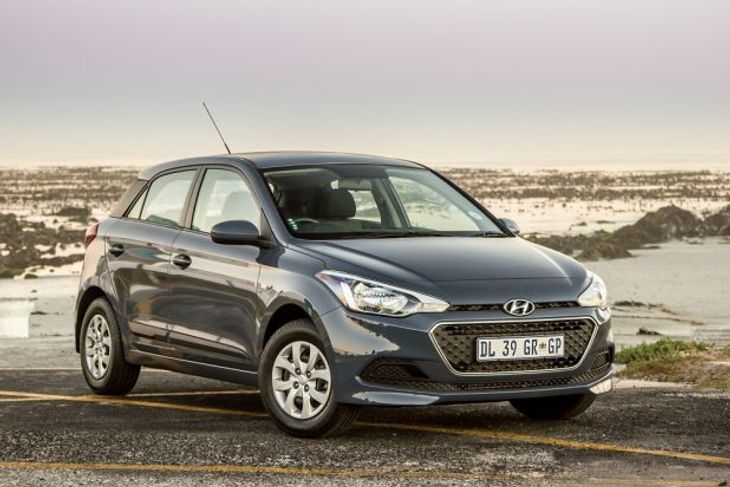
The Hyundai i20 is one of the bigger B-segment hatches, especially in terms of load space. Its boot can hold 294-litres with the seats up. Suzuki claims 320 litres of boot space for the Baleno and that’s still with impressive rear leg room available. If Suzuki is capable of bringing the Baleno in at its suggested price it will also be cheaper than the equivalent 1.4-litre i20.
Naturally aspirated hatches don’t get any better than the Mazda2. This little hatch feels light on its feet, fun to drive and yet stays impressively frugal. With Suzuki postponing the Baleno’s turbocharged engine for now, the 1.4-litre motor will be doing duty under the bonnet. Buyers interested in both practicality and fun will have a tough decision to make between the sportiness of the Mazda2 and the space and size of the Baleno.
Japanese marque Honda arguably has the best reputation when it comes to reliability. For decades, its cars have appeared at the top of reliability surveys. Suzuki, too, is renowned for its unbreakable vehicles but they do tend to be on the more basic side. The Baleno will want to prove it is true to its Suzuki roots and offer trouble-free motoring.
The Volkswagen Polo 1.2TSI is South Africa’s best-selling car (excluding rentals and exports). It has major sway with consumers and commands a premium on the used car market. The Baleno will need to offer a significantly advantageous deal to tempt buyers into its cockpit. On the Suzuki's side are its value for money offering and spacious cabin. The Baleno certainly does offer a lot of car for the money.
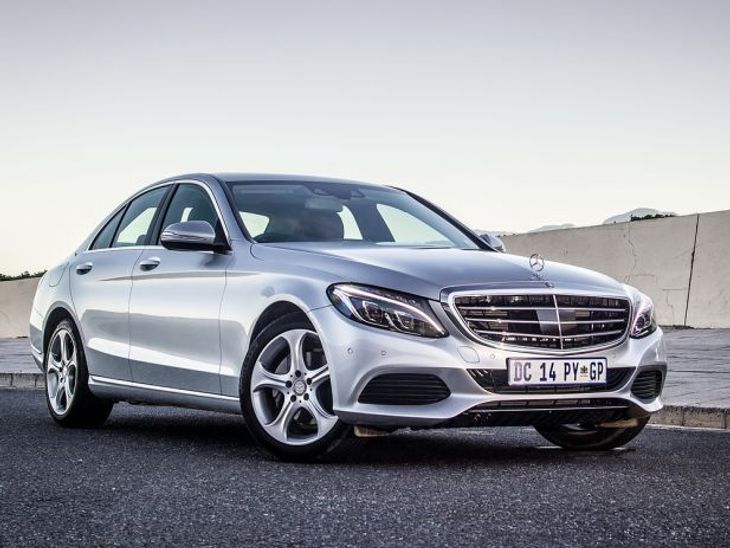
The Mercedes-Benz C-Class is a multiple award-winner. The C250, for example, was the Business Class category winner in the inaugural Cars.co.za Consumer Awards. We spent some time with the most potent four-cylinder Mercedes-Benz C-Class derivative to see what it adds to the range.
We like: Comfort, prestige, relaxed drive, deceptive performance
We don’t like: Can't match the BMW for thrills, scratch-prone black interior trim
Alternatives:
For better build quality and ride:Audi A4 2.0TFSI quattro sport
Despite the new Audi A4 taking its time to arrive, the wait appears to have been worth it. Build quality and ride refinement are exceptional, plus the interior is exemplary. While we haven’t yet sampled this C300-matching and range-topping model with all-wheel drive, the rest of the A4 line-up appears excellent.
For more flair:Jaguar XE 25t
Jaguar’s XE is arguably the best-looking vehicle in this bunch and satisfying to drive, but although the engine delivers good punch, it's not particularly frugal and the Jag affords the least rear occupant space in its segment. The final nail in the coffin is the price: it’s R100k more than the equivalent Mercedes-Benz.
For more driver involvement:BMW 330i
BMW has been at this premium sports sedan game for 40 years and the latest iteration of the 3 Series certainly delivers. Despite the fact that the BMW's interior lacks the visual glamour of its rivals, it’s still excellent to drive and boasts an impressive engine line-up.
Mercedes-Benz and BMW's respective C-Class and 3 Series have the most comprehensive of line-ups. In an effort to offer something for everyone, there is a multitude of engine options available. In the case of the former, the range begins with the more, shall we say "value-oriented" C180 and goes all the way up to the Mercedes-AMG C63, which is ideal of for scaring yourself and your family senseless. There’s the excellent C250 which offers a great blend of performance and economy, too. A new arrival to the family is this C300, which will soon be joined by an all-wheel drive C450 AMG Sport.
The previous-generation Mercedes-Benz C300 made use of an old-school V6, but for the new 2016 model, a high-output 2.0-litre turbocharged four-cylinder motor is bolted into the engine bay. With 180 kW and 370 Nm, the on-paper engine outputs seem meaty enough to give this C-Class a sporty edge. This Mercedes-Benz C300 is rear-wheel driven and power reaches these wheels through a 7G-tronic transmission, with paddles located behind the steering wheel.
Mercedes-Benz claims its C300 can hit 100 kph from standstill in 5.9 seconds and go onto a top speed of 250 kph. In terms of economy, it’s said to consume just 6.3 L/100km on a combined cycle. During our week-long test we achieved an average of 9.5 L/100km following a test period that included a lot of time spent in heavy traffic and out on open roads.
Ride and handling
Optional 19-inch AMG alloy wheels improve the C300's stance, but are detrimental to its ride quality.
With some performance credentials under its belt, we were expecting an altogether brisker Mercedes-Benz C-Class. Did it deliver? The short answer is no. Even with Sport+ mode engaged (with the engine and transmission set to their sportiest throttle/shift mapping), it didn't reward enthusiastic driver inputs satisfactorily. The engine sounded strained at its upper reaches, but, to be fair, most turbocharged 4-cylinder motors sound rough when revved hard.
Despite its less-than-sporty engine note, the C300 still felt fast. Glances at the optional head-up display indicated that in-gear acceleration was particularly strong. It may not sound fast, but it is quick in a straight line. Gear changes were sharp too and there was a DSG-esque pop accompanying each shift.
But when you’ve switched off the Sport+ and reverted to the more traditional Comfort mode, you get the full Mercedes-Benz C-Class experience. It’s a professional cruiser and the ride, despite the fitment of low-profile 19-inch AMG alloys, is appreciably smooth. You will feel imperfections in the roads, however.
You have the option of shifting gears with the paddles behind the wheel, but testers found it best to just allow the car's transmission to do its own thing. Upon pullaway and in start/stop traffic the C300 does tend to hesitate in response to staccato throttle inputs, but returns to its slick modus operandi when cruising.
Cabin execution and comfort
Aesthetically, the C-Class' interior is unmatched in its segment, but the black fascia trim is less than perfect.
The cabin of the Mercedes-Benz C-class delivers comprehensively in the luxury stakes and the interior never feels like anything but a premium place to be. Specification levels are high, which is what you’d expect when paying R600 000 for a vehicle. And, of course, you can open the options book and further enhance your C300… Well worth a tick are the COMAND infotainment and navigation system (R25 900) and Burmester high-end audio setup (R11 000).
In terms of safety equipment the C300 is comprehensively covered. Seven airbags are fitted as standard as well as an array of systems that will keep you safe. You can even specify further safety features if you like, such as the Driving Assistance package plus, which includes Distronic Plus with steer assist, active blind spot assist, active lane keep assist, rear impact warning, BAS Plus, cross-traffic assist, as well as Pre-Safe Plus and Pre-Safe Brake functions.
The front seats are comfortable and supportive, the centre infotainment screen features some smart graphics and the buttons/switches feel like quality. However, the glossy piano black plastic on the centre console shows marks easily and emits a creaking noise when buttons, like Radio and Media, are pressed.
Having said that, the C-Class' boot capacity is generous. At 480 litres, it’s on-par with its competitors such as the Audi A4 and BMW 3 Series. You can fold the rear seats down to gain more loading capacity, but you’ll pay extra for the privilege.
The C300 may no longer sport a 6-cylinder engine, but its integrated exhaust outlets look sporty nonetheless.
Price for the Mercedes-Benz C300 in South Africa
The C300 costs R612 518, which includes a 2-year/unlimited kilometres warranty and 6-year/100 000 km maintenance plan.
Verdict
While the C300 is an accomplished product, it can't match its rivals dynamically. If you’re craving a product that will satisfy your inner driving enthusiast then it might be best look elsewhere, but if you want a refined and luxurious drive that’s a cut above your stock-standard C200, then this model warrants consideration.
The styling is pleasant, as is the case with all Mercedes-Benz sedans. The cabin is spacious and glamorous, but in this segment the cheap-looking glossy black dashboard that creaks when you push a button is a letdown. Please take a leaf from Audi’s Book of Great Interiors, Mercedes-Benz.
If you want even more, but don’t want to step into (or can't afford) the V8-engined madness that is the Mercedes-AMG C63, then you’ll have to wait for the C450 AMG Sport. Do you need 180 kW from your Mercedes-Benz C-Class? Probably not, which is why you should go for the excellent C250 instead.
Its sportier compact executive sedan rivals ask questions that the C300 can’t quite answer. The BMW 3 Series is the ideal choice for those seeking an enthusiastic dynamically pin-sharp product, while the Audi A4 puts them all to shame with outstanding interior build quality and refinement. The Jaguar drives comfortably well too, but rear passengers will feel cramped in the back. How important is dynamic thrills in the real world? That's the question prospective buyers will have to ask themselves. Perhaps you simply want a fast and comfortable C-Class that looks like a superb sports machine? If that's the case and you have the bucks to spend, then the C300 makes sense.
Given the current economic climate, few motorists can afford to replace their vehicles every 2 to 3 years. Therefore, we all have to take better care of our current cars. Some of the following tips may seem obvious, but, as many mechanics will tell you, owners don't always apply their common sense. And… as always, prevention is better than cure.
Read the owner’s manual!
This may seem particularly obvious, but it is clear (given the pristine condition of most owner's manuals) that those books have never opened. These thick "handbooks" are not only there to allow the manufacturer the opportunity to say "we told you so" when things go wrong, but can help you prevent some serious damage to your vehicle. From where the jack is located, to the reason for that blinking light on the dashboard, as well as important guidance on tyre pressure management etc., these books should be studied far more closely.
Keep the car clean
A clean car is not only easy on the eye, but the cleaning process removes various contaminating and corrosive substances that would otherwise damage or erode the paint finish. Start by looking at what’s recommended in the owner’s manual. It is important to use good quality cleaning materials and stay away from the roller cleaning machines at service stations because they often tend to scratch the paintwork (see the following video by ChrisFix).
Stick to the servicing schedule
Car engines are highly tuned pieces of machinery, and to keep them running at optimal performance and efficiency, you need to adhere to the manufacturer's prescribed servicing schedule. Remember to use the recommended oils and other products mentioned in this schedule. Too many owners become lax about sticking to their vehicles' prescribed servicing schedule once their cars are out of warranty. When shopping for your next car, make sure the servicing schedule is up to date and was adhered to.
For severe operating conditions, adopt shorter oil-change intervals
If you happen to drive in very dusty or hot conditions very often, or do a lot of stop-start motoring, then your vehicle is delivering "severe" service. If this is the case, you should shorten the oil-change intervals to ensure proper ongoing lubrication, thereby protecting the engine's lifespan.
Avoid full-throttle acceleration
Your car may offer exceptional performance, but using it to its maximum ability is no good for its longevity. Full-throttle acceleration, especially from a standing start, introduces shock loads and generates major stress levels throughout the drivetrain. It's not only the engine suffers in this process.
Look after the tyres
Inspect your tyres regularly for signs of uneven wear, cuts and stones lodged in the grooves. If the grooves are less than 1 mm in depth the tyres should be replaced (watch the following video by MyRide).
Brake as gently as possible under the circumstances to avoid exerting undue stress on the brakes and tyres. Emergency braking can actually flat-spot a tyre. And tyres, as you are likely to know… are very expensive to replace.
Avoid idling the engine for too long
Do not let your engine idle for any length of time while the engine is cold. This will result in unburnt fuel getting into the sump, mixing with the oil and degrading the oil’s qualities. In fact, the best possible way to ensure your car will last a long time is to use it only for long trips, but that’s not very practical. Research has shown that on a trip of ten hours the most wear takes place during the first 20 minutes while the engine temperature is below normal.
Enjoy a good run now and then
On a modern car high cruising speeds have very little effect on engine wear provided the engine is in a good state of tune and the water and oil temperatures are normal. Obviously… stay within the rules of the road.
Don't slip the clutch
Excessive clutch slippage should be avoided during acceleration and gear changes. This not only reduces clutch plate life, but the heat generated can also distort the clutch plate as well as the pressure plate.
We have had to wait a long time for the Mustang, but even though the local market's demand far outstrips Ford's ability to supply units to local buyers, the musclecar needs to succeed on merit for the sake of its own longevity and value retention. So, does it?
We like: Everyman appeal, easily-accessible performance, sheer desirability
We don’t like: Prohibitively-dear pricing, limited legroom, cabin quality
Alternatives:
For V8-engined kicks: As the Mustang’s natural rivals (the Chevrolet Camaro and Dodge Challenger) are unavailable in South Africa, your options (around the R840 000 mark) are limited to the Chrysler 300C SRT8, which is charming, but still a sedan. In the second-hand market, there are few German-made V8-engined coupe options to consider, such as previous-generation Mercedes-Benz C63 AMG, BMW M3 and Audi RS5. You can even consider a Maserati GranTurismo or Jaguar XKR…
For two-door sportscar thrills: Here’s where the Mustang’s asking price looks steep. For about the same price, the BMW M2 will obliterate the Ford in terms of performance, although that’s also sold out, plus you could get a Porsche 817 Cayman for a little more. Meanwhile, the Mercedes-Benz C300 Coupe, BMW 440i and Audi TTS Coupe cost less than R800k and if you’d consider a used car, you can even get a V8-engined motor in the form of the long-legged BMW 650i or Mercedes-Benz E500 Coupe.
If you want a Mustang: Unless you successfully ordered and are awaiting delivery of a 5.0 GT Fastback from Ford, you cannot get a one new unless you are willing to pay in excess of a million rand at selected used-vehicle dealers. This derivative’s new list price will get you a 2.3 Ecoboost version from similar outlets… There are, of course, a few right-hand-drive conversions of older Mustangs out there as well.
The Mustang's triple-element taillight clusters are instantly recognisable LED units.
What is it?
South Africans have had to wait to four decades to get a factory-made right-hand-drive Mustang available on the local market. In the meantime, American-influenced popular culture has helped the original musclecar to take on a highly romanticised image and achieve near-mythical status in the hearts and minds of local motoring enthusiasts. But don’t feel short-changed… Since the early Seventies and until reasonably recently, Mustangs were not regarded particularly brilliant sportscars, they were large-engined coupes based on run-of-the-mill passenger car platforms and built to cost-price budgets.
That’s why any review of a Mustang needs to begin with a disclaimer. Even though the latest version of the eponymous pony car was developed on a global platform that would see the Ford appeal to customers outside North America, many of which are accustomed to highly engineered sportscars, the Mustang remains, in spirit, a product designed to offer surfeit kerb appeal and capable performance at an affordable price. A poor exchange rate, duties and taxes, let alone the laws of supply and demand contrive to make the Mustang relatively expensive in South Africa. Those factors are unavoidable.
How does it fare in terms of…
The Performance Pack adds, inter alia, black 19-inch rims, which complement the inimitable mesh grille.
Image and sense of occasion?
What makes a car’s design a starring attraction? It’s a combination of angles, contours and a striking profile that gives a distinctive shape; one that compels throngs of onlookers to gawk at (and photograph) the vehicle. Supercars have that crowd-pulling power and so does the Ford Mustang. Prospective buyers will need to bear in mind that irrespective of whether you’re filling up at a service station or parking at a mall, the 5.0 GT Fastback tends to attract bystanders.
Granted, the Mustang is now a novelty, but nonetheless, from its slanted slim headlights, trapezoidal Mustang grille with galloping-horse motif, seductively sloped C-pillars, slabby black rear fascia with triple piano-key taillights, the Ford captures the imagination and looks striking in its Triple Yellow finish. It’s a dream car for the masses.
Getting behind the wheel is a less glamorous affair, because although there are nifty touches that denote the Ford’s interior as that of a Mustang (seeing that logo on the steering wheel boss is a thrill in itself), the cabin materials and build quality pale in comparison to those of European sportscars in the Ford’s price bracket.
Having said that, there’s very little amiss with the driving position and front seat comfort. There is such a sense of occasion to piloting the Mustang… the driver is constantly reminded of the 5.0 GT Fastback's musclecar status by seeing the bonnet bulge through the windscreen and spotting the flared rear fenders in the side mirrors. Then, when egressing the vehicle at night, the puddle lamps emit "Mustang emblem" spotlights; those are nifty, memorable design details.
Although some buyers may believe the 5.0-litre V8 sounds "too refined", it's appreciably louder in Track mode.
Performance and handling?
In the current era of forced-induction performance machines, the Mustang’s 306 kW/530 Nm 5.0-litre V8 (with its 6-speed automatic transmission) is an anachronism. To expect the beefy, but ultimately languid, powertrain to deliver the type of responsiveness and tractability of smaller, turbocharged motors would be unreasonable. Still, the Mustang is claimed to complete zero to 100 kph in 4,8 secs and it emits a characterful, broad-chested and burbling soundtrack in dispatching the sprint benchmark with consummate ease. The exhaust note is not particularly urgent or voluminous, which will be a disappointment to some, but then, as with the ride/handling balance, it’s all in keeping with the spirit of the car.
In North America, the 5.0 GT Fastback represents a (dare we say it?) run of the mill Mustang. In the States, overtly performance-oriented Shelby packages are offered through dealers and although this model has the spectacular Line Lock feature that allows you to generate plumes of expensive tyre smoke and rubber debris, it’s not a leery, tail-happy brute of a car. If anything, it’s a cruiser — albeit a somewhat burly one. The suspension tuning (even with the Performance Pack option) is comfort-oriented, but the body control is measured (opposed to floppy), the steering can be adjusted for feel and weightiness, and should you feel the need to attack a twisty stretch of blacktop, the otherwise placid transmission can be set to Sport+ mode, which in conjunction with sharper throttle responses, will adopt a sportier shift pattern.
This car came equipped with a Performance Pack, which includes a limited slip differential and additional strut braces, but although the exhaust sounds most pleasingly rorty in Track mode, the upgrade is subtle. It allows the car to settle and strive when accelerating out of corner exits and engenders driver confidence. As it stands, the Mustang is a sufficiently wieldy sportscar that is fun to drive at three-quarter pace. Its claimed fuel consumption of 12.0 L/100 km is somewhat ambitious; the best indicated figures we saw were in the high 13s, but that should not deter most V8 customers.
Packaging and specification?
Although few prospective buyers would expect the Mustang to offer comparable onboard features and premium levels of fit and finish to continental sportscars (certainly at the Ford’s price point), it is still worth mentioning that the newcomer’s cabin has a value-positioned family car feel to it. The metallic inserts do lift the ambience of the cockpit somewhat, but the swathes of plastic trim and individual switchgear pieces feel hard-wearing and workmanlike, to say the least. Also, considering that the Mustang is a sizeable vehicle by general sportscar standards, rear leg- and headroom are tight.
The Mustang's cabin treatment is unremarkable, but the front seats are comfy and mod-cons abound.
Having said that, the leather-swathed cabin offers a number of luxury items and lacks little in the way of conveniences. The well-shaped front seats are electrically adjustable (with lumbar support and heating and cooling functions), lights and wipers are automatically activated, there is dual-zone climate control, keyless entry/start and the 8-inch touchscreen includes SYNC2 Bluetooth connectivity and audio streaming. On the safety front, dual front, knee and curtain airbags are provided in addition to the vehicle's complement of traction and stability systems.
Value for money?
Although there are aspects of the Mustang that appear to make its asking price appear prohibitively expensive, the reality is that for those who successfully ordered (and will soon take delivery of) their 5.0 GT Fastbacks, there are virtually no cars that have quite the same exclusivity and sheer smile-inducing kerb appeal as the Ford.
A possible exception is the BMW M2, but that finely focused and pint-sized driver’s car is quite a different proposition to the Mustang. Of course, there might be maniacal enthusiasts who are willing to fork out comfortably in excess of R1 million to get their hands on a marked-up example, but we would caution against that. The simple fact is because the Ford is sold out for the foreseeable future, the units available in the market have inflated price tags. When a freer supply eventually meets a normalised level of demand, the Mustang will settle at its true market value.
Ford Mustang 5.0 GT Fastback automatic price in South Africa
The model costs R839 900, which includes a 4-yr/120 000km comprehensive warranty and a 5-yr/100 000km service plan with 20 000 km intervals.
Verdict
There are few cars that hold so much pent-up emotional and cult appeal as the Mustang and, yes, despite its steep asking price, we are happy to conclude that the newcomer does not have shortcomings that are significant enough to render it a disappointment. Quite the contrary, in fact. The Ford succeeds insofar as it delivers easy-natured, flexible performance, soulful character and undeniable aesthetic desirability. It will appeal to moneyed old-school musclecar fans and younger, upwardly mobile nonconformists/individualists alike. The Cars.co.za test team was positively besotted with it.
General Motors could never get its V8-engined Lumina to thrive in South Africa, but the Mustang is far better known and more significant in the overall motoring landscape. Here’s hoping that, as far as the Mustang is concerned, right-hand drive markets will grow in importance for Ford. The Mustang should be more than a marketing ploy; its success will ultimately be judged by the model’s longevity, evolution and proliferation (in terms of stock availability), all of which still has to happen.
Quick specs of the Ford Mustang 5.0 GT Fastback automatic