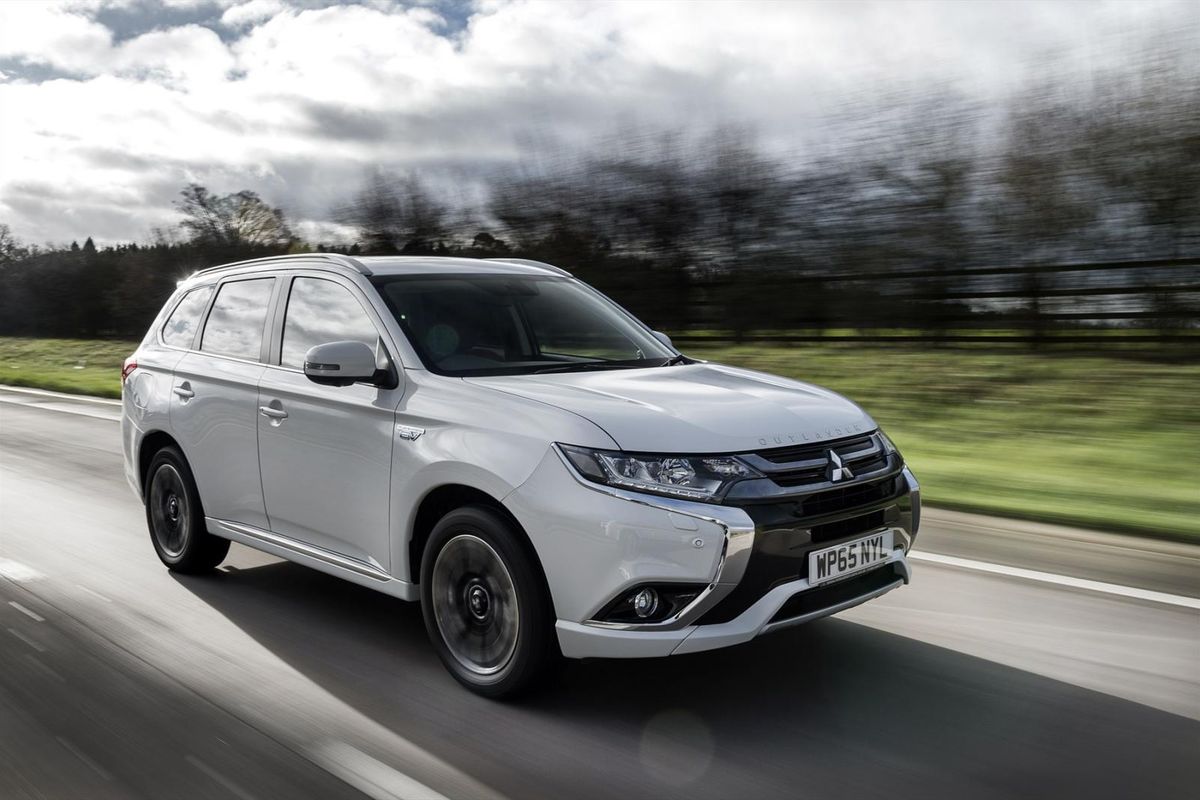
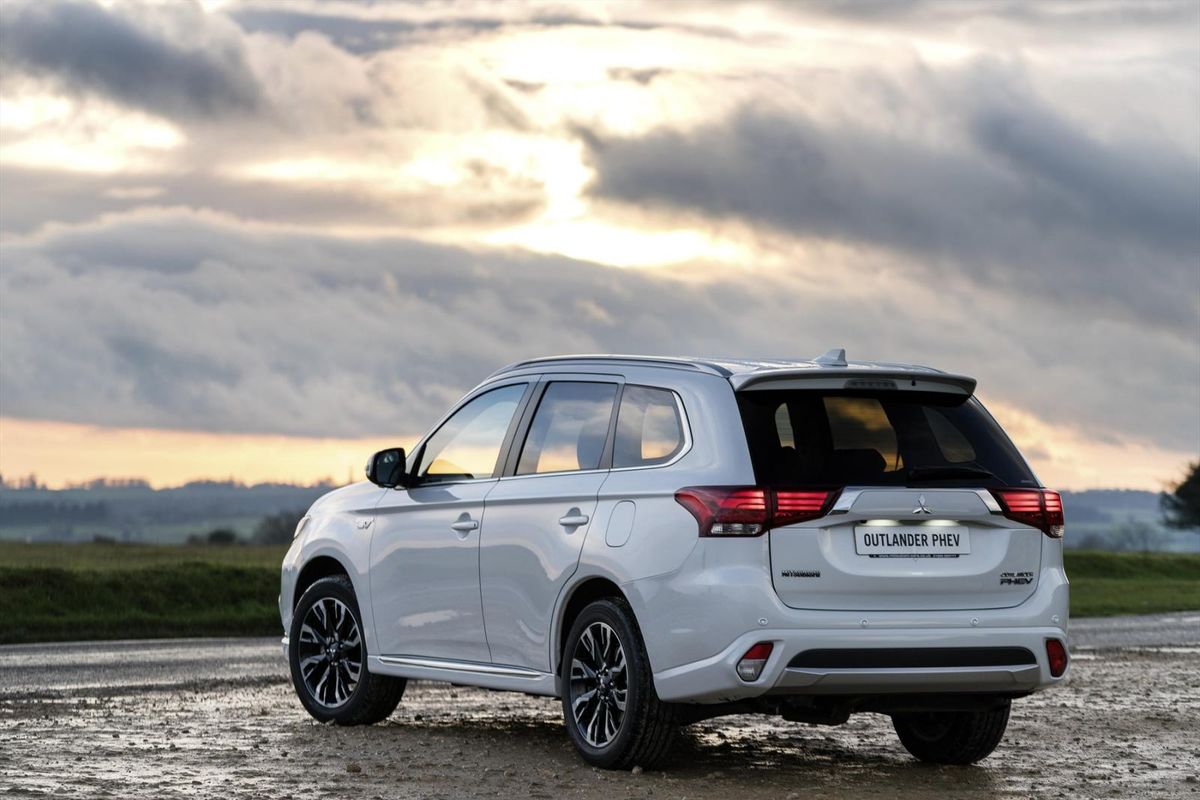
Mitsubishi has revealed a dramatically updated Outlander at the Paris Motor Show, and has added a Plug-In Hybrid Electric (PHEV) variant to the line-up
We rate the Mitsubishi Outlander highly – it was a semi-finalist in the Leisure Vehicle category of the inaugural Cars.co.za Consumer Awards – but its design was, admittedly, an acquired taste. The Japanese marque chose the Paris Motor Show to unveil the facelifted version, and it addresses the design criticisms very effectively indeed… Look at the pictures and judge for yourself.
Mitsubishi has already confirmed that the updated Outlander will arrive in South Africa early in 2017 and it has also stated that the new Plug-In Hybrid Electric (PHEV) version is undergoing technical tests and is the subject of a market study for possible local introduction. The Outlander PHEV can be distinguished from its petrol-engined siblings by its unique bumper extensions and side garnishes, as well as striking bi-tone 18-inch wheels.
More upmarket interior
The upgrades extend beyond the exterior, with Mitsubishi claiming a more premium-class cabin, as well as a reinforced, stiffer body. The steering wheel, control interfaces and information displays have all been improved, Mitsubishi says. The stiffer body, with its recalibrated suspension settings are claimed to improve on-road dynamic performance, while the fitment of improved dampening materials have made the cabin quieter.
The company made no announcement regarding the powertrain of the current petrol-engined model, so we expect that to continue unchanged. The PHEV model, however, is said to boast an extended range solely on electric power, as well as smoother transition between driving modes. Mitsubishi claims a consumption figure of 4.95 L/100 km. Also offered is a 100 Volt on-board socket which can supply up to 1 500 Watt of electricity to power a variety of equipment or appliances – such as a camp fridge.
The Audi R8, which showed the world that Porsche isn't the only German marque that's brave enough to build a supercar – and that lofty performance potential does not need to be synonymous with driver discomfort, is back. Quattro GmbH has dispensed with the V8 and fitted a more powerful V10 in its flagship derivative. Is it still a great everyday sportscar, though?
We like: Screaming V10, sublime comfort and refinement, thrilling to drive.
We don’t like: Steering controls can get in the way when cornering, not as much of a bargain as before.
Alternatives
For something with more prestige: McLaren 570S – if it’s a supercar with a more exotic badge you’re after, the "baby Mac" is a solid choice and offers rear-wheel-drive thrills. Its base price of approximately R3.6 million is not preposterous, but a moderately specced-up one will cost more than R4 million.
If you just wanna go fast: Nissan GT-R – it’s harder and arguably faster, but you won’t be doing any long journeys in this without a good physio at your disposal… We exaggerate, yes, but it is an old-school supercar in some ways.
For something with looks that can kill: Mercedes-AMG GT S – not as fast a sportscar as the rivals mentioned above, but there’s still plenty power and torque available and has oodles of kerb appeal.
What’s different?
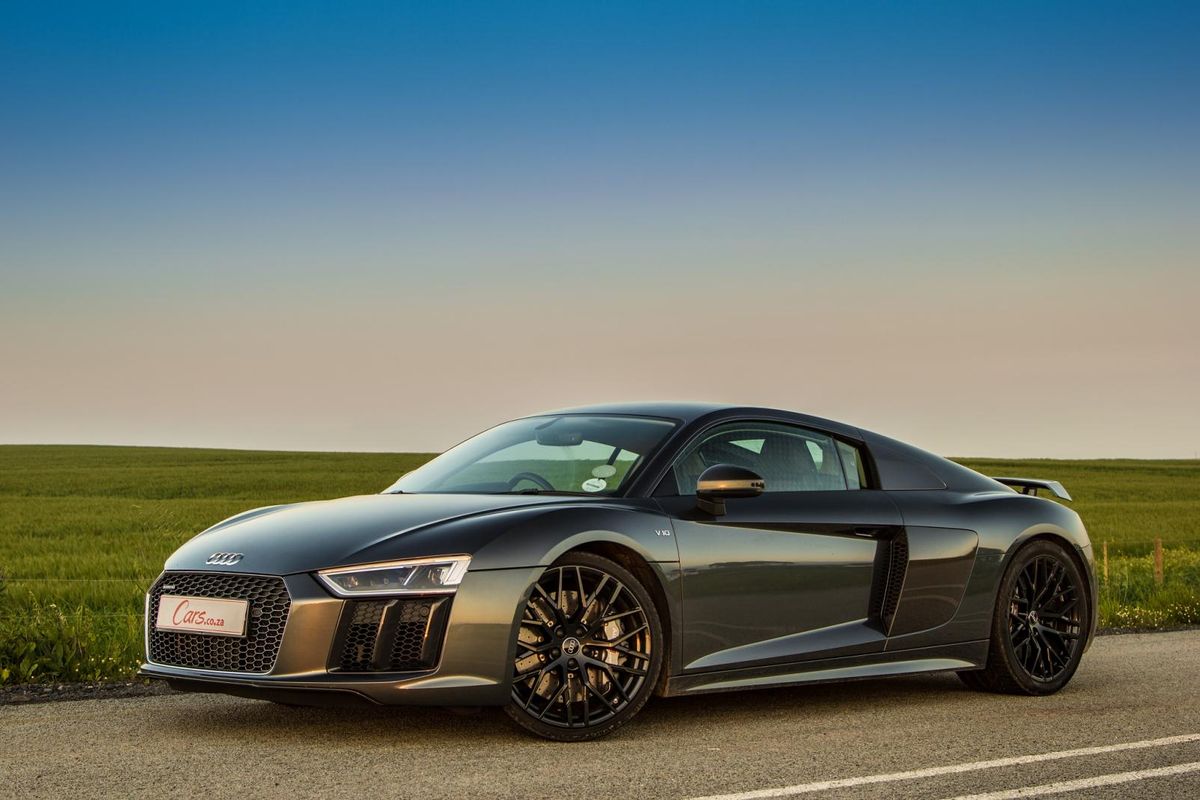
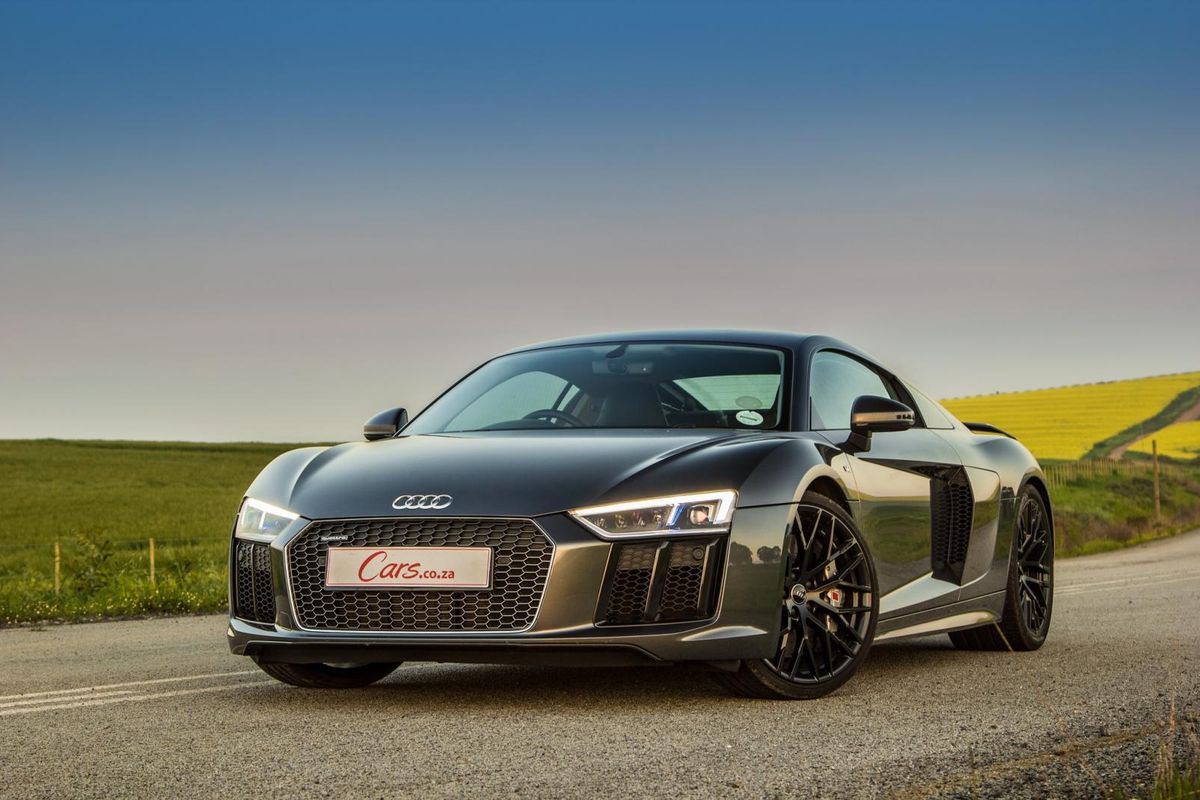
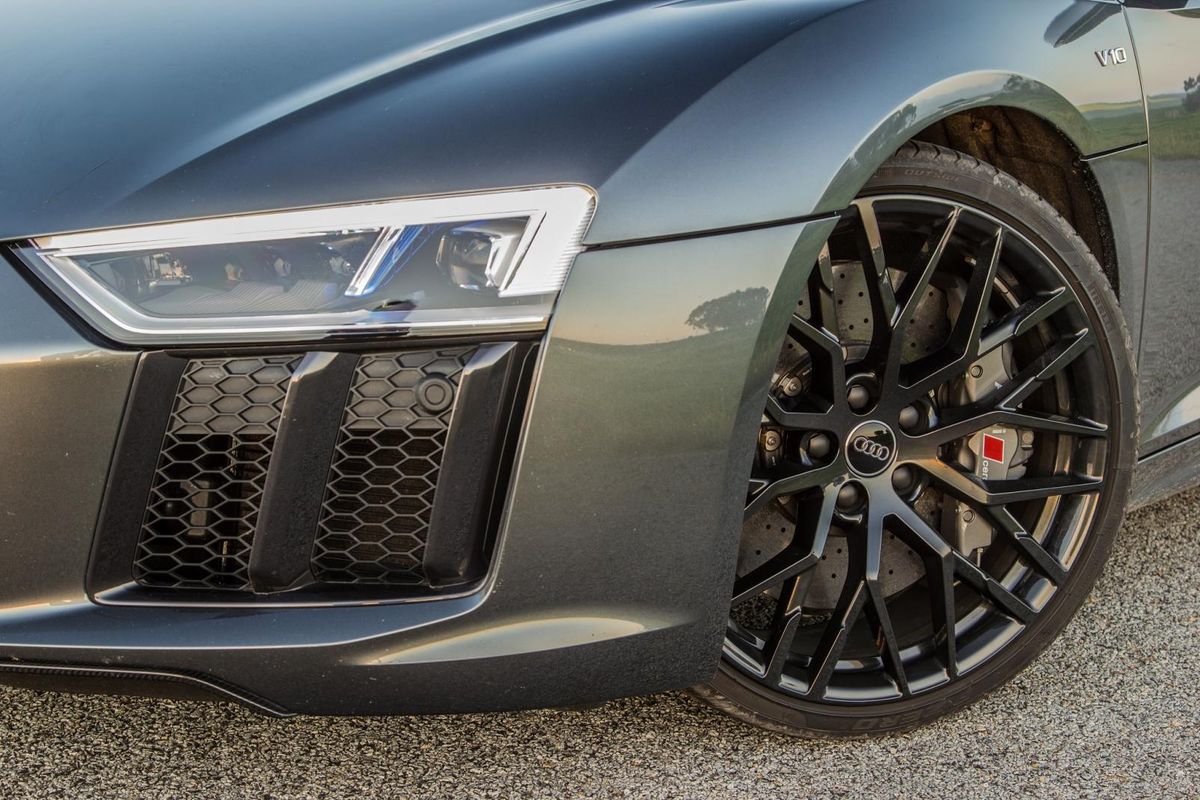
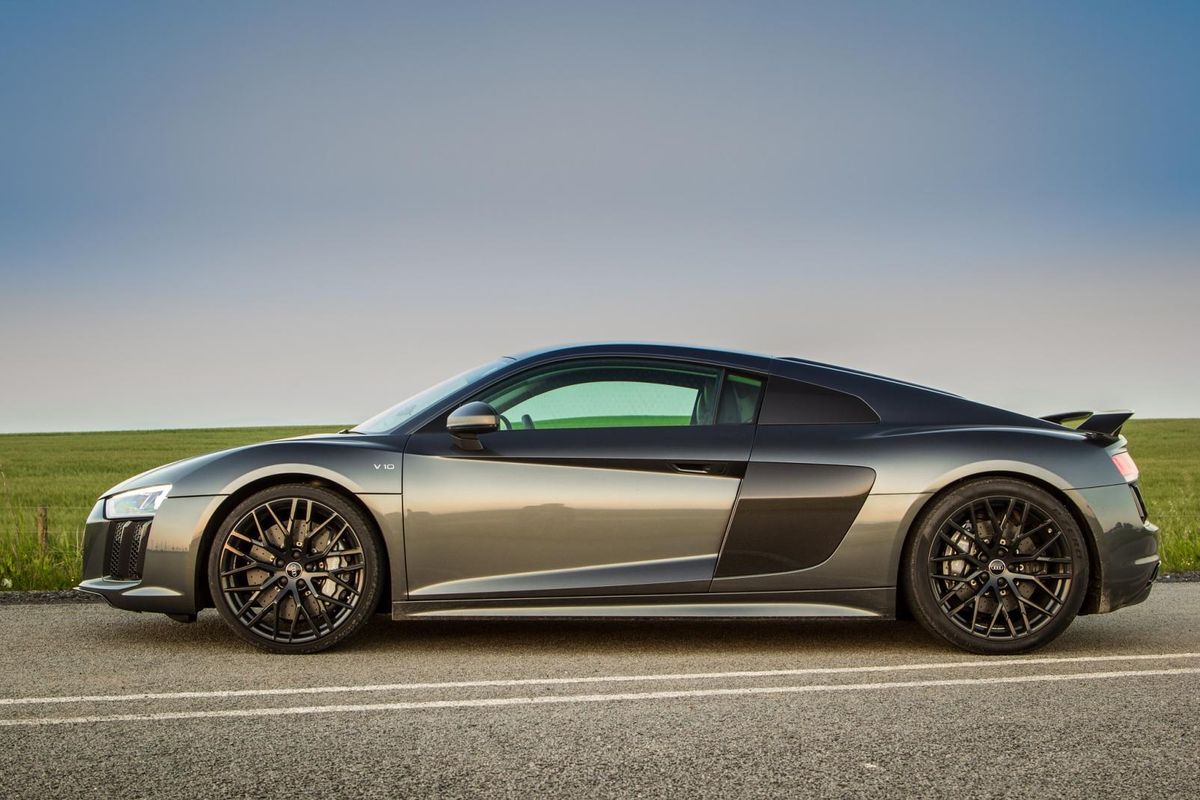
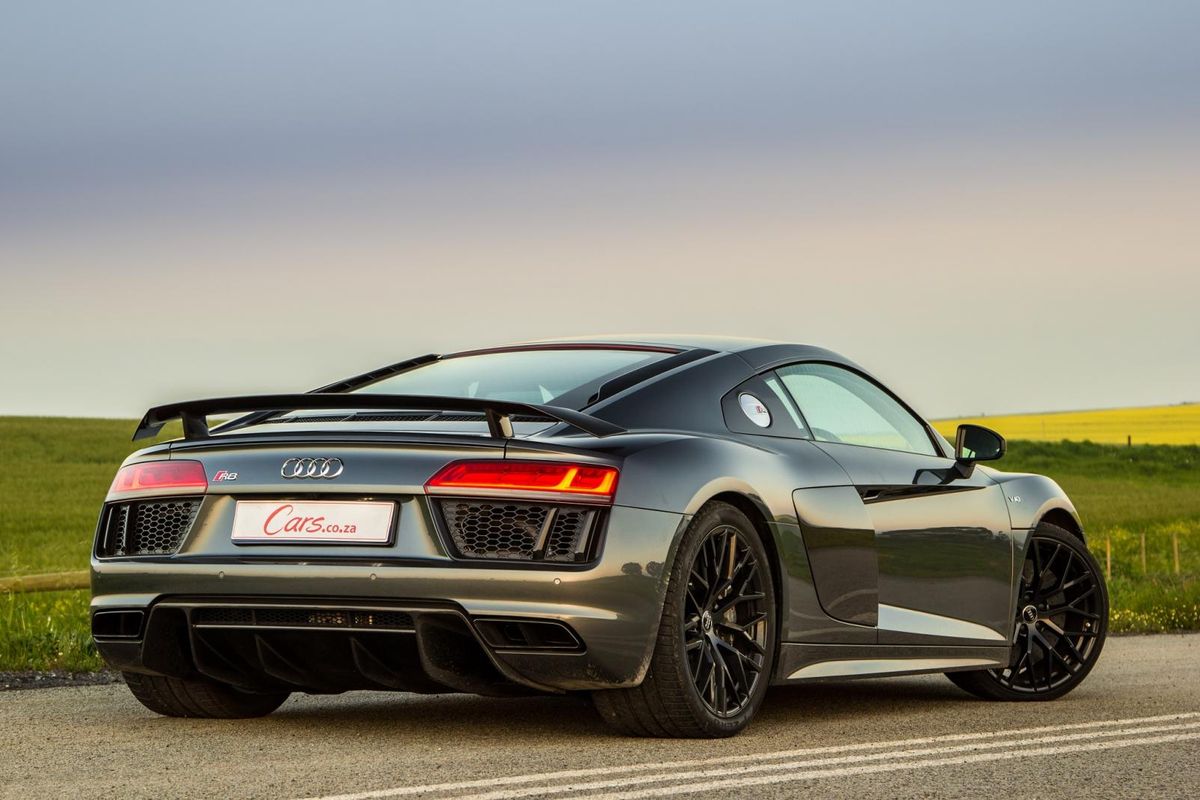
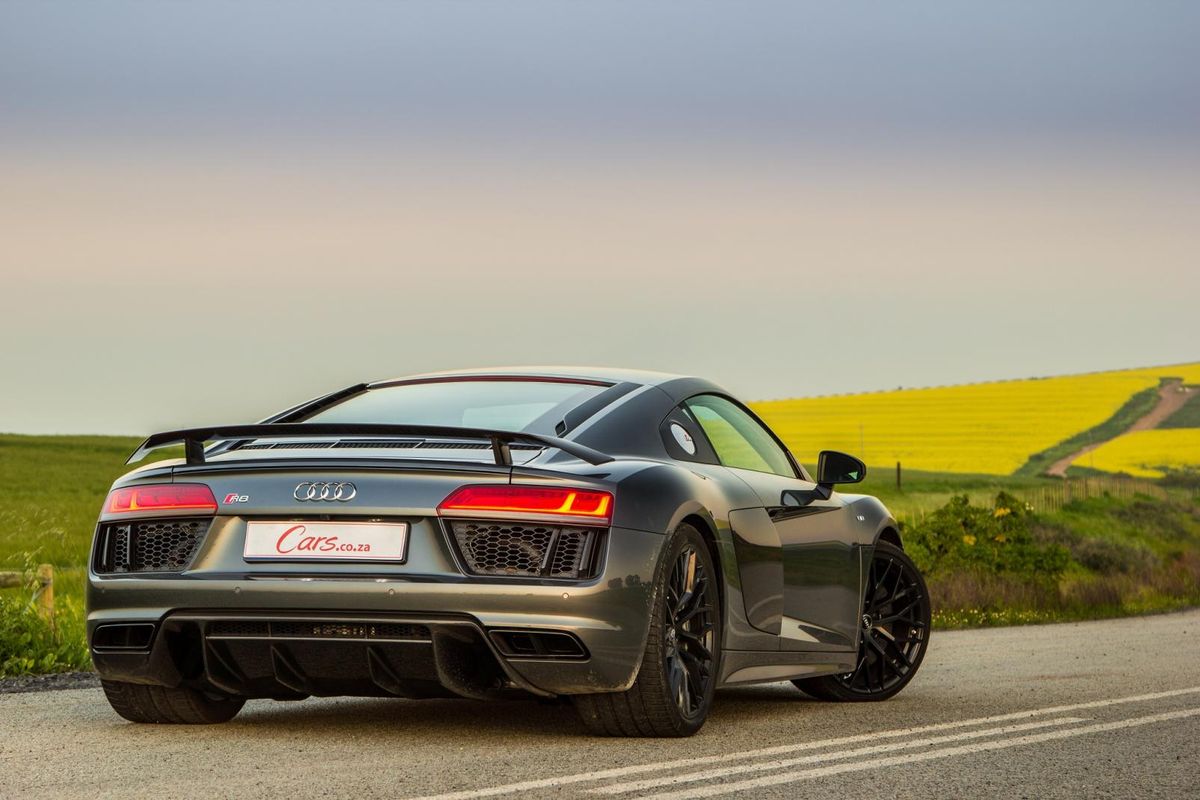
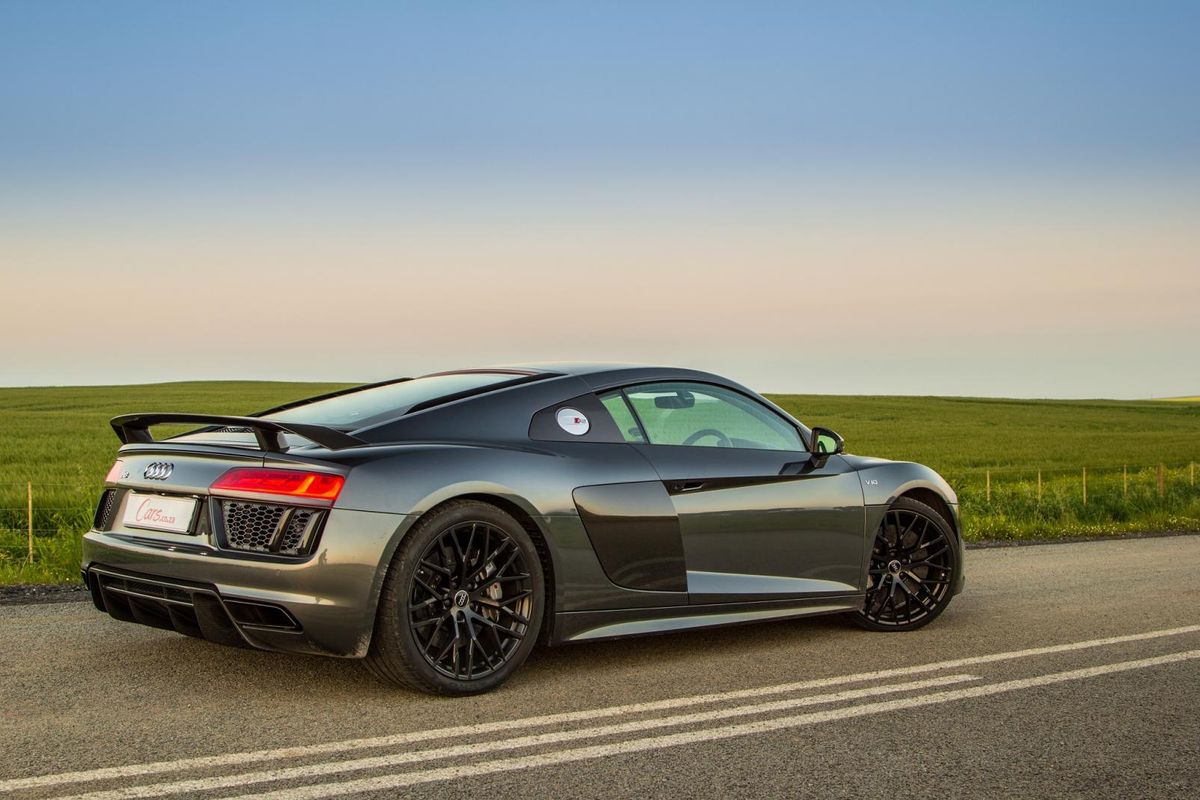
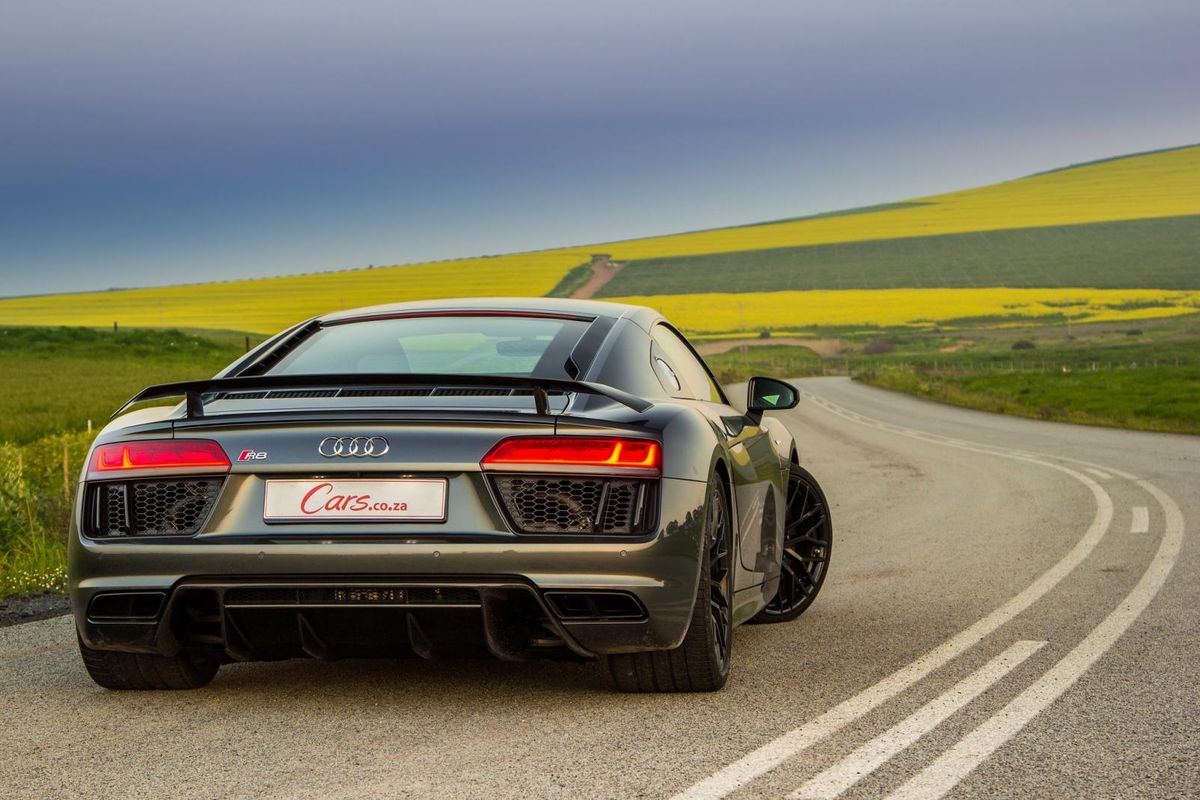
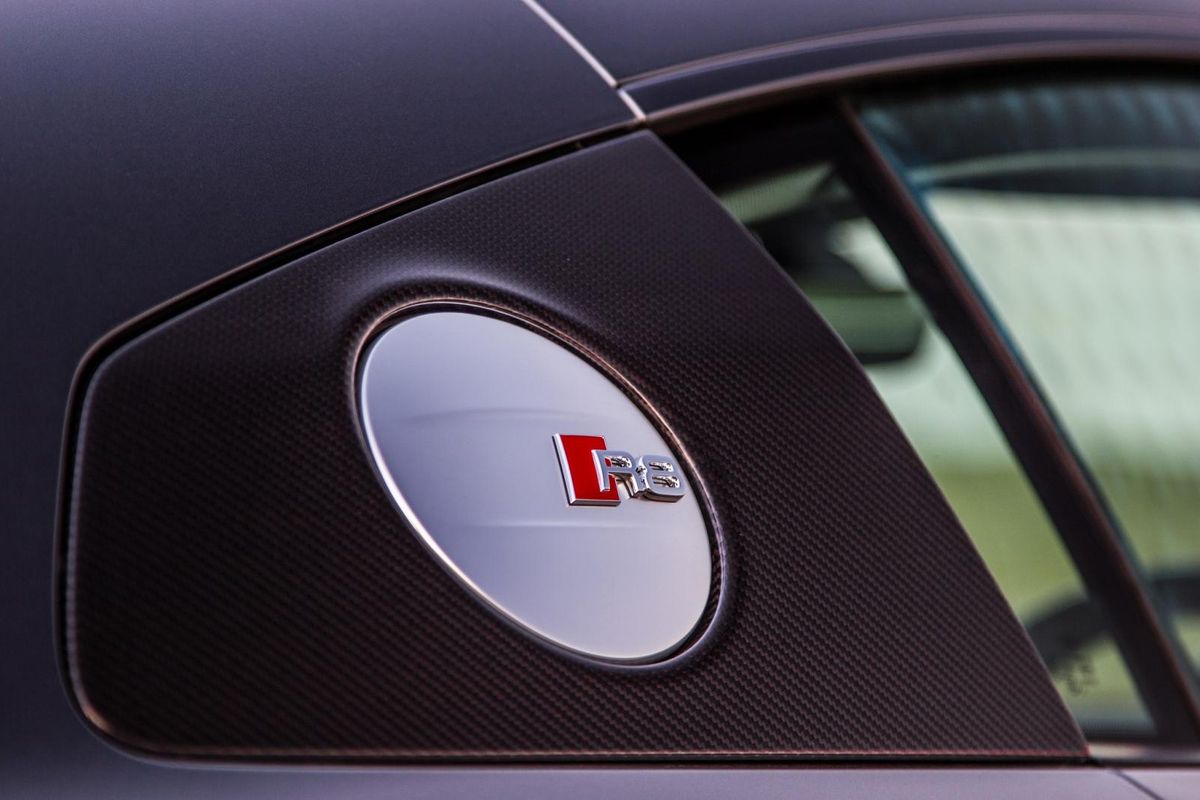
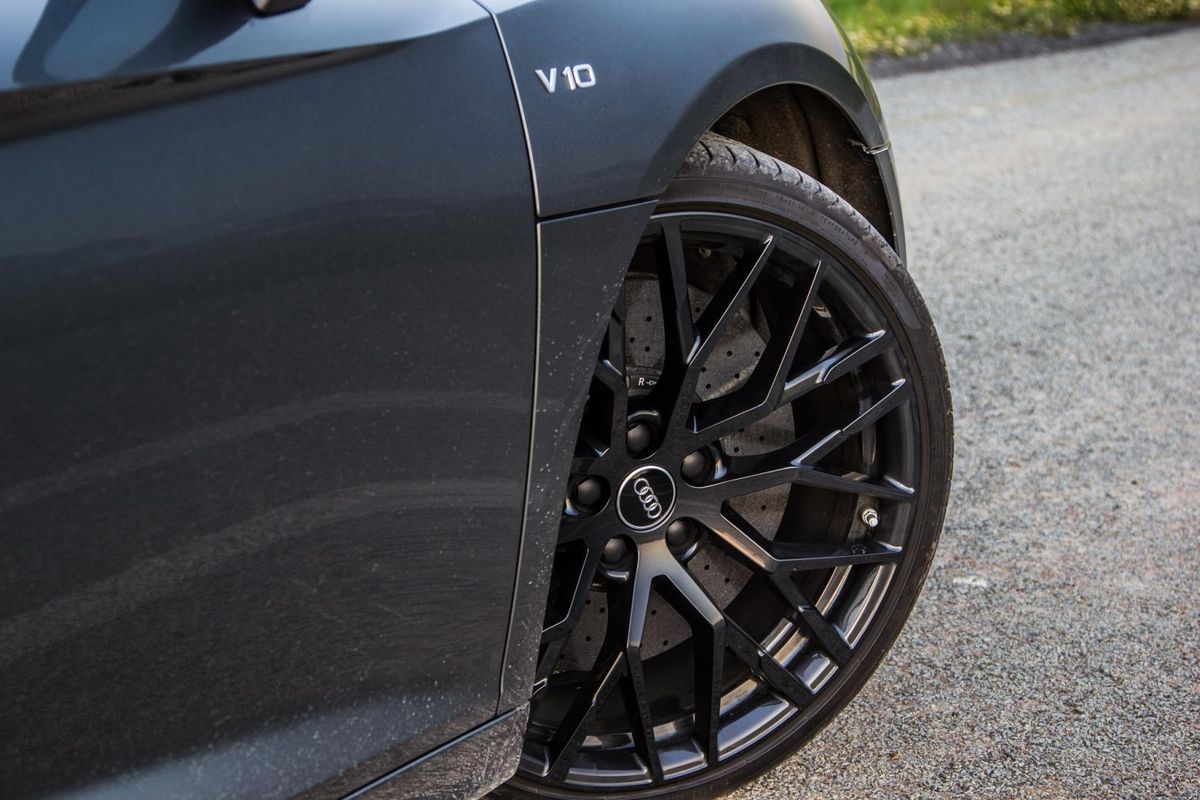
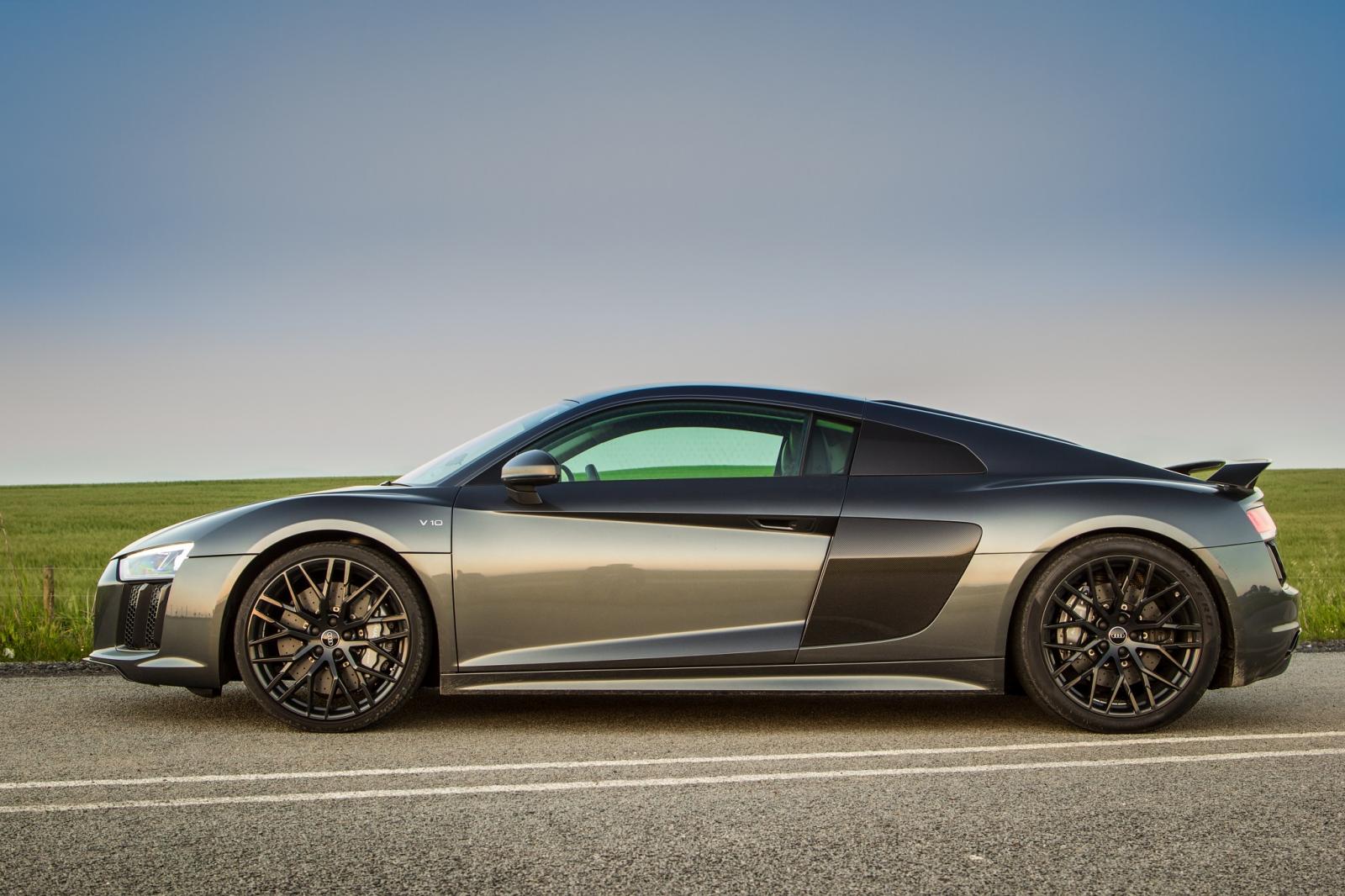
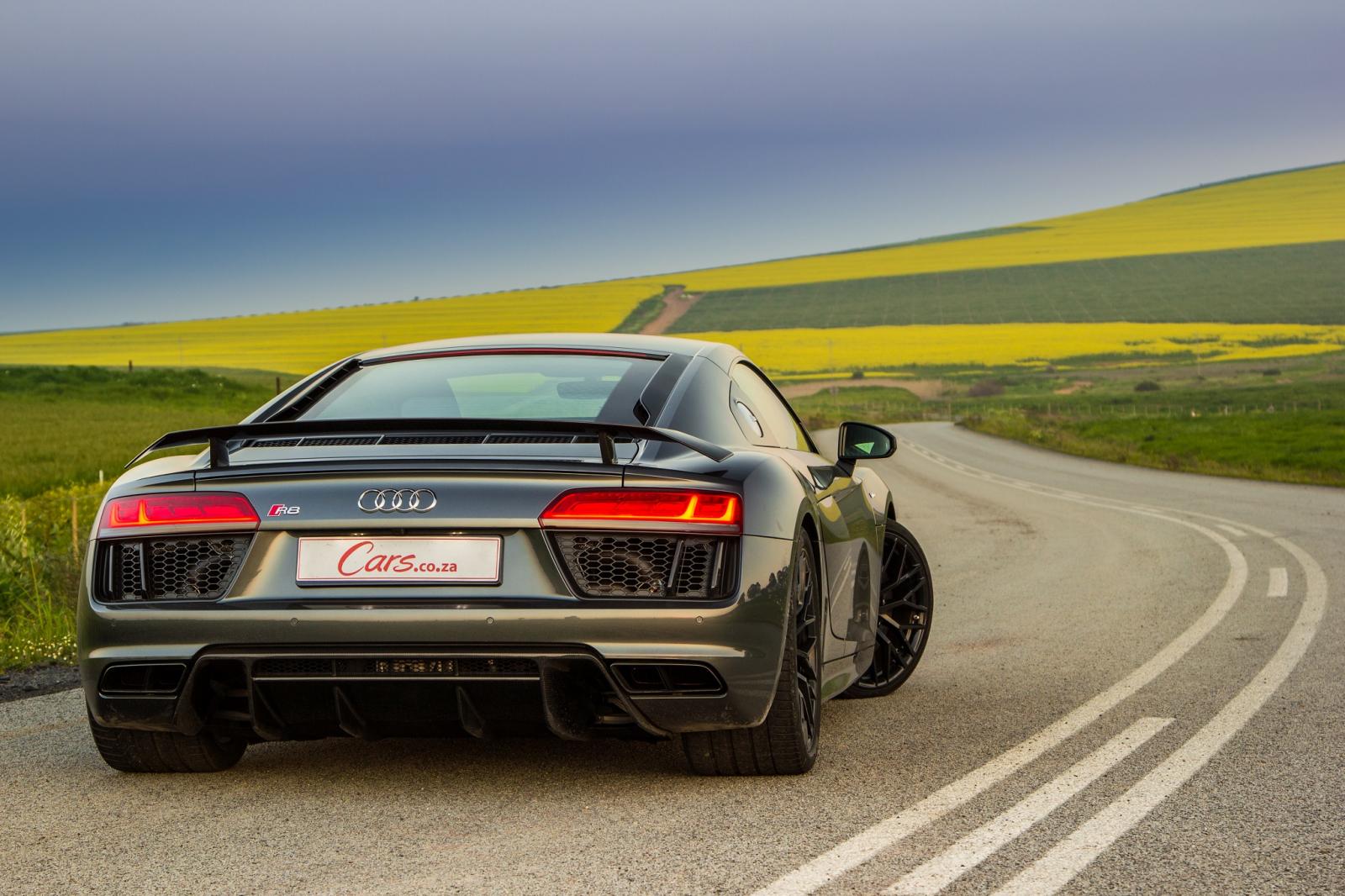
The new Audi R8 hasn’t changed much in terms of styling, it sports more of an enhanced, evolutionary look. It’s still lip-pursingly gorgeous, but it’s donned a new more modern suit. It’s now only available as a 5.2-litre V10 model; the 4.2-litre V8 was discontinued to make way for the introduction of a twin-turbo V6 unit in the near future. Audi has spent its budget on improving the R8's chassis, interior and tech gadgets in what it believes is a much-improved supercar. We spent some time on-road and then on-track with this R8 V10 Plus, just to see how much better this new model is.
How does it fare in terms of…
Performance?
It’s an invisible line – the border between sportscars and supercars. When does something stop being fun and playful and become seriously quick and a treasure trove of sensory overloads? Or is it simply down to the price? It’s probably not the latter, but something intangible that you feel in your gut the very first time you bury the throttle or feather the steering in towards an apex. A supercar is just that bit more of everything: faster, grippier and louder. It sends adrenalin to all parts of your body in a manner that fizzy foam cascades from a full bottle of Coke when you deposit Mentos into its contents.
Evolutionary design is still so purposeful and eye-catching to gawk at
Audi has persisted with natural aspiration when every brand around it has seemingly bolted on a turbocharger, supercharger or electric motor to their cars' powerplants. As a result, Audi has a unique spot in the supercar market. If you’re after sudden hits of torque and short intense power bursts then you’re better off shopping in Turboland but, if it’s instantaneous throttle response and linear power delivery right up until the 8 500 rpm redline you're after…
The purity of the sound produced by the R8 V10 Plus is enough to make you forget about its (relatively) peaky performance characteristics. There’s nothing quite like a high-pitched wail from a V10 to get you involved in the experience and urge you to explore the car's limits. Those limits will test your mettle as the quattro system will send the R8 leaping from 0 – 100 kph in just 3.2 seconds and hit a top speed of 330 kph – that’s in excess of the magical 200 mph mark.
The original R8 was the car that demonstrated that sportscars could be used every day – and in veritable comfort. With the extra power, a V10-only lineup (at least for the time being) and an upgraded chassis, there was always the risk that it may have crossed over into the realm of outright supercar. We need not have worried, however, this is an Audi and a composed (but adaptable) ride quality is what drivers expect. The car’s impressively comfortable around town and easily capable of pottering around in traffic. It’s stiffly sprung, even in comfort mode, but it absorbs rough surfaces or potholes reasonably well.
New R8 V10 Plus can be identified by its solid rear wing.
On anything but a racetrack, the R8 is an accomplished, multi-talented driving tool. Thread it through a mountain pass and the pliant suspension soaks up the road conditions, while the quattro system makes sure you never feel outmatched. For a 449 kW brute, the R8 can really be manhandled with confidence – it won’t, as the saying goes, chew you up and spit you out. The grip seems endless and the front end eager to hold tight when you stomp on the power.
There never seems to be a moment when you feel like things are on a knife-edge or that you should probably tone it down a notch. Keep focused and keep hitting those apexes and adding power, it will make you feel like a very special driver as your input mistakes are forgiven with a small correction to the steering wheel.
It's not all good news, however. Purists might complain that the R8's forgiving nature will possibly enable a relatively unskilled driver to match the speed of a seasoned driving veteran (in some circumstances) when at the wheel of this supercar. Although that is unlikely to be true, the Audi's safety-first, always-planted and by-default neutral behaviour (all advantageous on a public road), preclude it from being a wholly engaging, visceral and challenging track car.
Feel good factor?
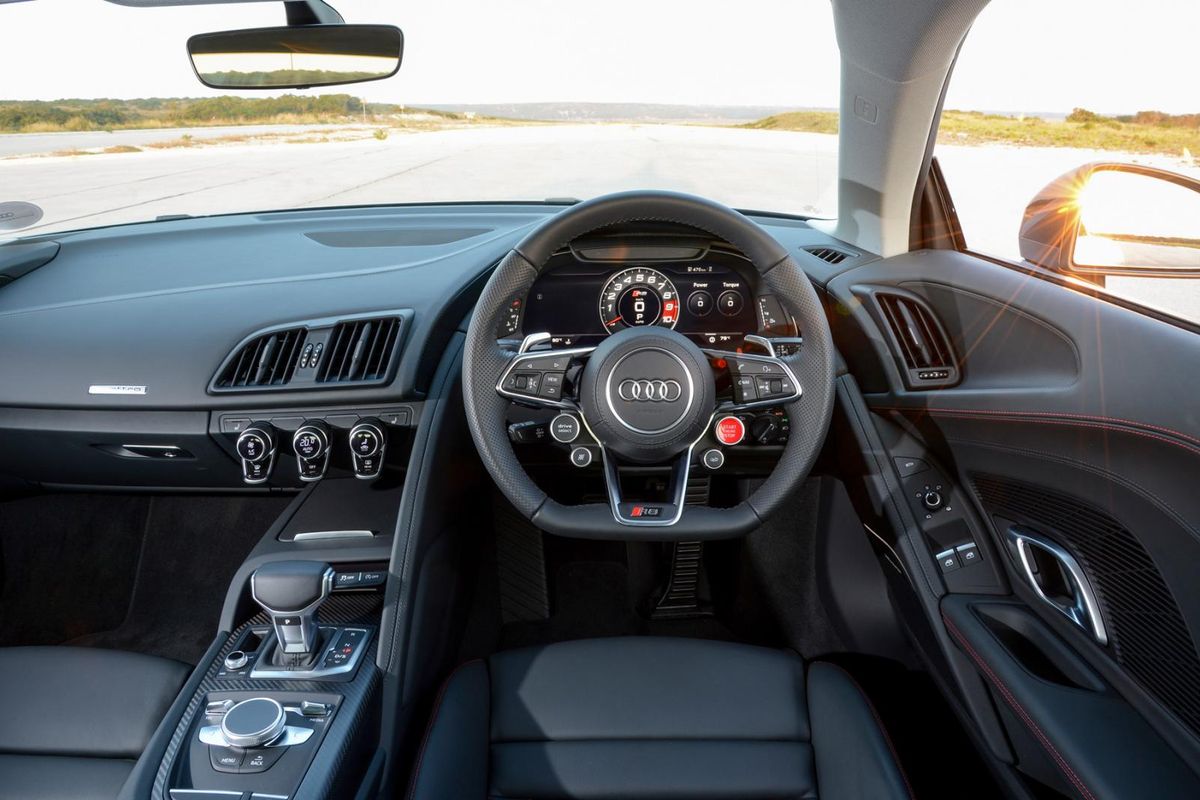
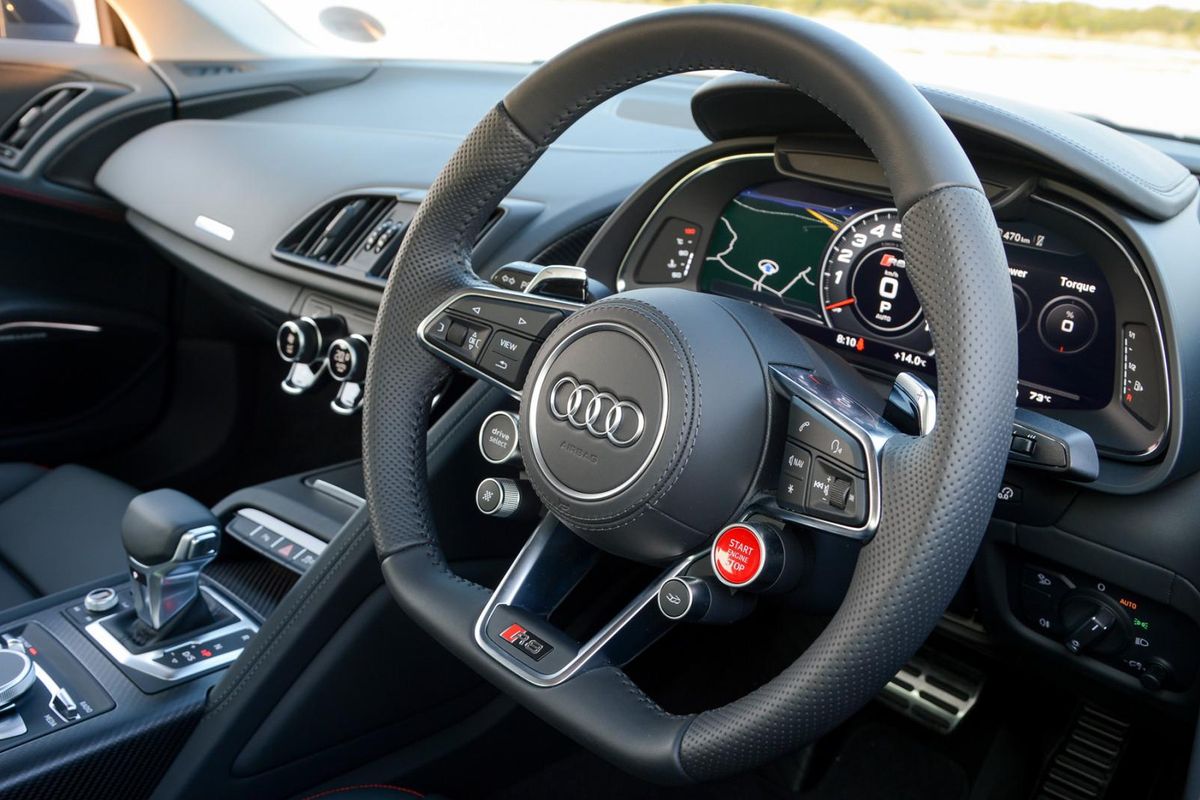
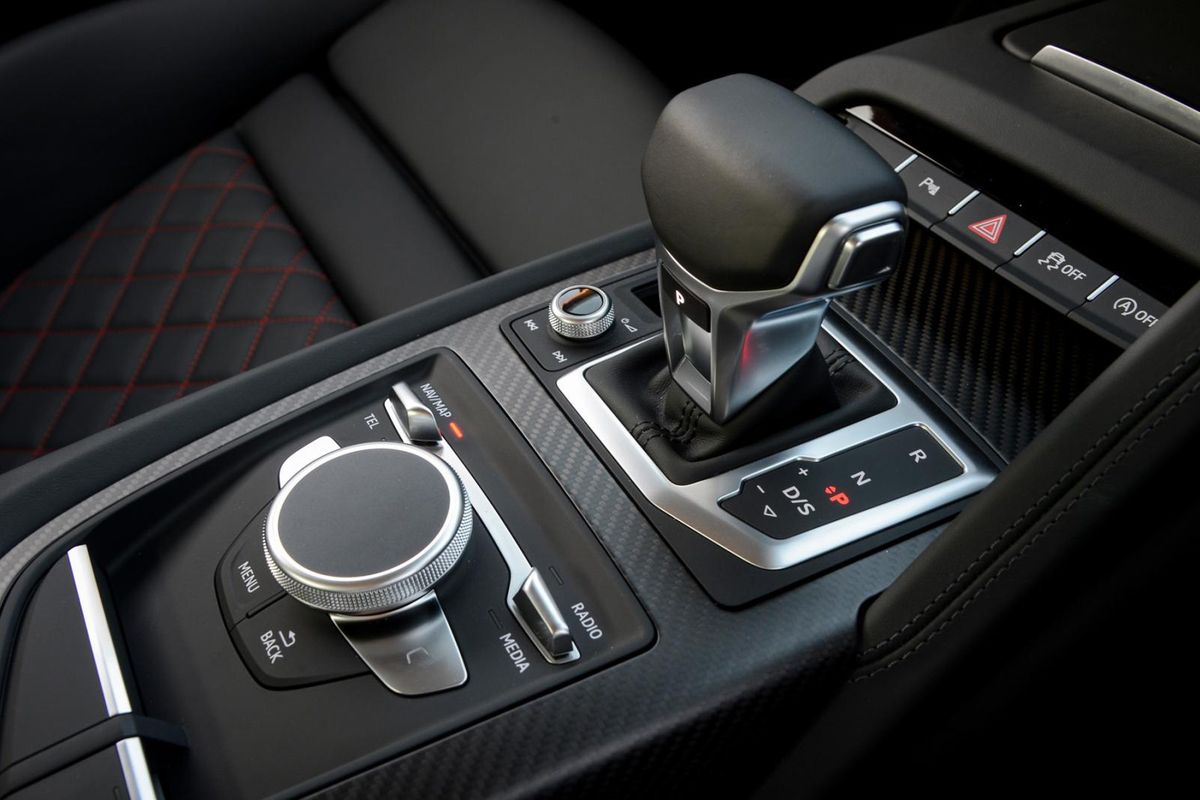
Step inside the R8 and may think the cabin's a bit bland, as least from a visual point of view. That’s because Audi has crammed everything onto the steering wheel or the instrument cluster. Everything happens in front of you as there’s no separate infotainment screen (it can take a bit of getting used to), but it is a very pretty screen! We feel Audi has put a few too many buttons on the R8's steering wheel, they tend to get in the way of your palm when you're twirling the tiller. For example, we often found the radio station had changed or a display had scrolled into a different setting after negotiating a sharp corner.
Among the multitude of buttons is a chequered flag button, which is a new addition. This button accesses performance modes within the R8 V10 Plus (additional modes to the drive select modes). These modes focus on achieving maximum traction from the stability control programme, while adapting the throttle, steering, suspension and exhaust flaps for utmost excitement.
Chequered flag button acts like a shortcut button to access all the best parts of the R8 in one click
The R8 feels more luxurious and spacious compared with to its Lamborghini Huracan cousin, which we drove earlier this year. The driver’s seat is more accommodating and larger fellows will feel more comfortable in either of the front seats. Overall, the Audi has a less constricting cabin with better visibility out the windows and rear view mirror, all of which underlines the fact that the R8 is not totally unsuited to the daily commute.
Pricing & Warranty
The Audi R8 V10 sells for R3 089 000 and comes backed by a 1-year/unlimited km warranty and 5-years/100 000 km maintenance plan.
Verdict
There wasn’t too much debate as to whether the new R8 was going to be good – it was already an excellent sportscar. What the Ingolstadt-based manufacturer managed to do was finely tune just about every area of its supercar: from the engine to the super-fast dual-clutch gearbox to the chassis and handling characteristics and just make them a little bit better. Even its designers evolved the R8 into an even prettier car. As a starter supercar (if there is such a thing), this new R8 V10 plus is a brilliant piece of machinery, capable of making any driver feel like a superstar behind the wheel. It isn’t daunting to drive quickly either… it’ll get your adrenaline going, but it won’t make you sweat in fear of running out of talent and suffering a "vehicular misadventure".
After much debate and media coverage, it's crunch time. Autonomous vehicles are here – sort of – so we headed to Detroit, Michigan in the United States to experience the future. Ford, strategically repositioning itself for a radically different next 100 years, is one of the companies leading the charge…
The word "autonomous" has been a hot topic for while now, but we could all be forgiven for behaving like a snowman thinking of sunburn… ‘It’s too far away to affect me and I won’t be around long enough to experience it’, would be the general cry. The reality, however, is that the technology is pretty much ready – through features such as lane-keeping assistance and automated parking, we've already experienced "partial" autonomous driving or, to be more accurate, "assisted" driving to various degrees. And judging by our recent visit to Ford’s epicentre of the autonomous revolution, in Dearborn, near Detroit, Michigan in the United States of America, the revolution is hitting the home straight.
But firstly… why Ford? While the likes of Uber, Google and Tesla are grabbing the autonomous headlines, it is clear that the Blue Oval, more than a 100 years old as it may be, is not sitting back and letting the young upstarts dictate the future. Ford regards itself as the "original start-up", and believes that bringing life-changing technologies to people is fundamental to its purpose. To do this, it is transitioning from being a car manufacturer to an auto and mobility company, and is collaborating with more than 60 universities globally as well as strategic research alliance partners such as Standford, MIT and Aachen University to find solutions to tomorrow's problems. No surprise then, that it has been developing autonomous vehicles for more than 10 years…
Usually invites for vehicle launches are a simple affair. Fly in, drive the car, talk to the important people developing the car and fly out. This was different. We wouldn’t be the ones driving. This time around we were being driven… and not by a human, either.
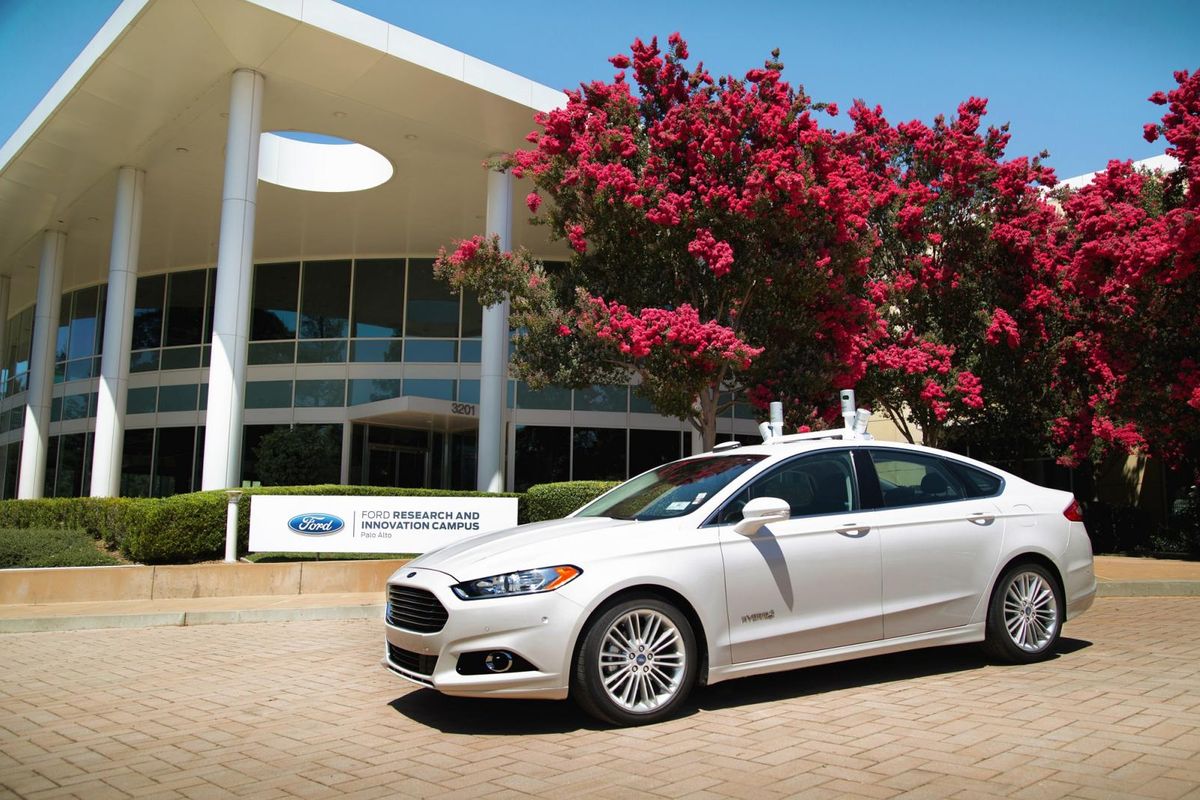
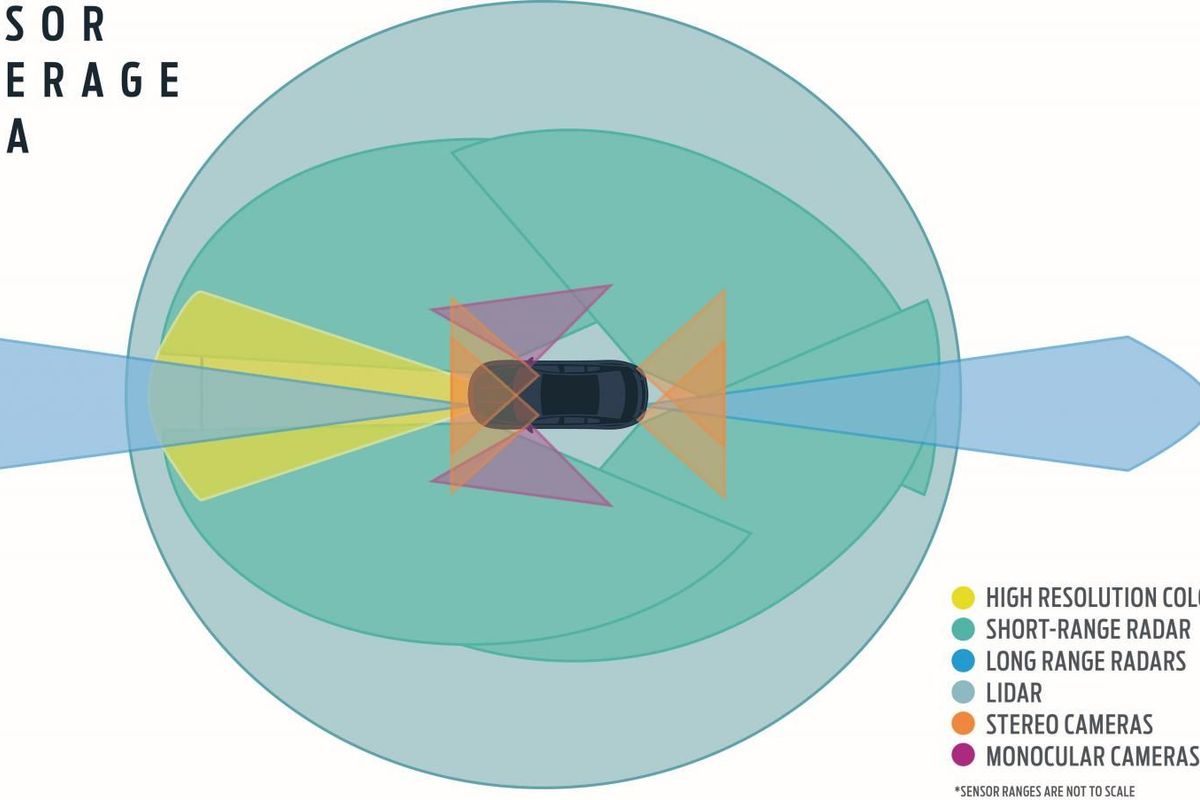
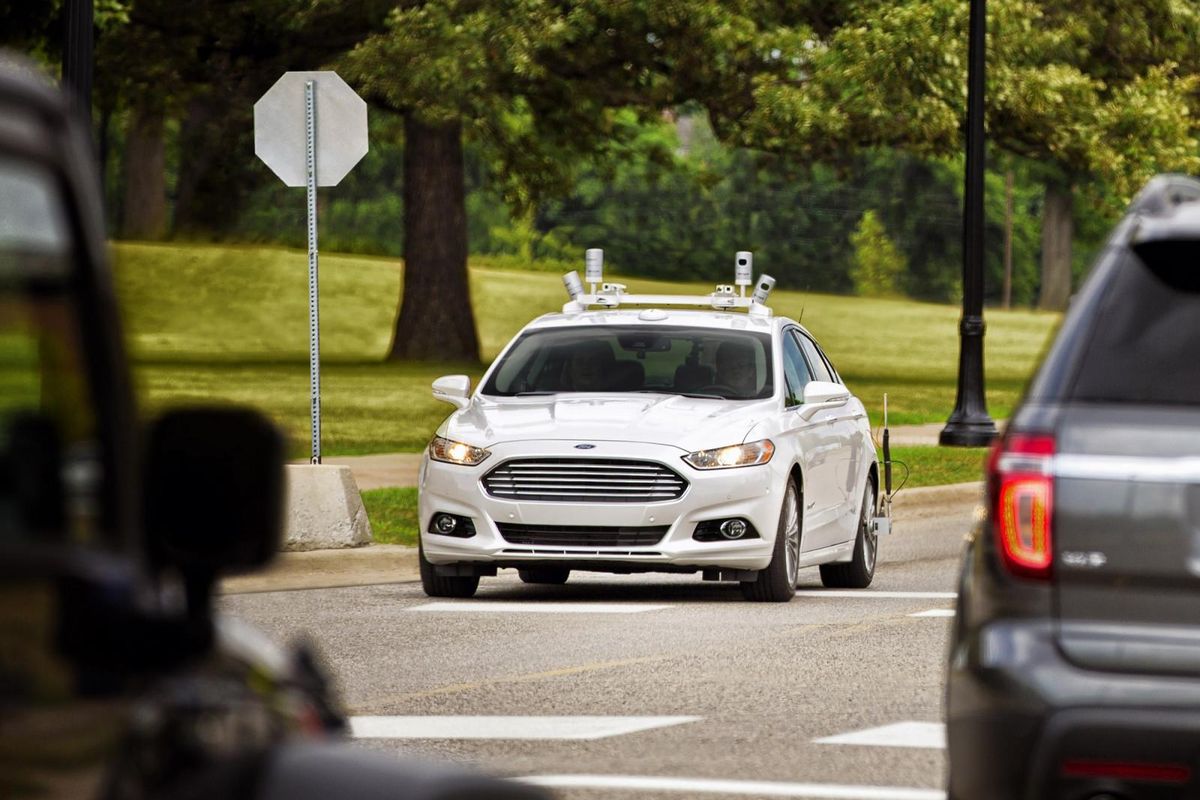
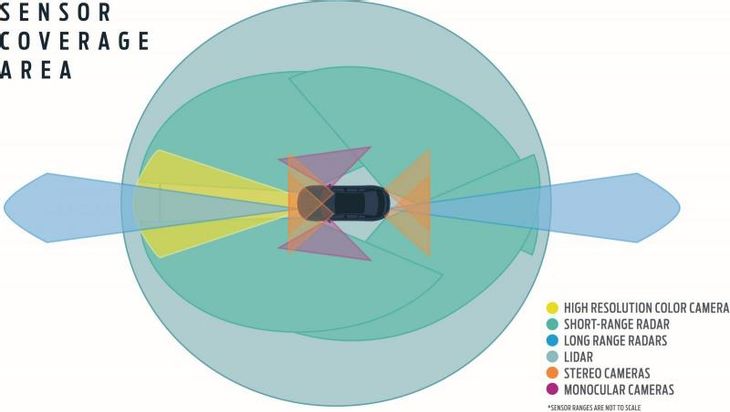
Our test "drive" route twisted its way through the company's Dearborn facility and represented a real urban road. It featured plenty of other traffic as well as traffic lights, road signs and active pedestrian crossings. We climbed into the back of the Ford Fusion and in the front were two Ford engineers. The first we’ll call Justin (Just In Case) and his job was to take over control in the event of an emergency, while the second engineer had a laptop connected to the car showing us how the vehicle sees the surrounding environment. The Ford Fusion has multiple sensors and it continually scans the environment around it (see image below).
“Sit back, put your seatbelts on and enjoy the ride,” said the burly Ford representative in that firm, yet overly polite manner that Americans are famous for. This Ford Fusion we’re sitting in is not like the ones we get back home. While it has a steering wheel and pedals, they’re redundant and only for use in emergencies. The vehicle glides off on its own accord and joins the road as the two Ford engineers sitting in the front gleefully point out that they’re not doing anything and wave their hands in the air. This is it. Autonomous driving. We’ve arrived.
The first test was a four-way stop. The vehicle anticipated the stop and coasted to a halt. A human-operated vehicle was also at the stop and while it was not his turn to proceed, decided to cut into the path of the autonomous car. Our Ford became aware of the other vehicle the moment it had started moving and immediately slowed down to prevent an accident. Due to the overly cautious nature of the autonomous cars, we reckon that humans are going to take advantage of this safe approach.
The second challenge was a pedestrian crossing where Ford had conveniently placed people ready to cross the road. Forget detecting pedestrians for a second, the autonomous vehicle was able to read the pedestrian crossing sign and had already prepared itself for objects in its path. It waited for the pedestrians to clear and started moving again. A late pedestrian tried to make a last-minute dash across and the car came to an immediate halt. While the pedestrian was completely in the wrong, the car allowed this.
How Does It Work?
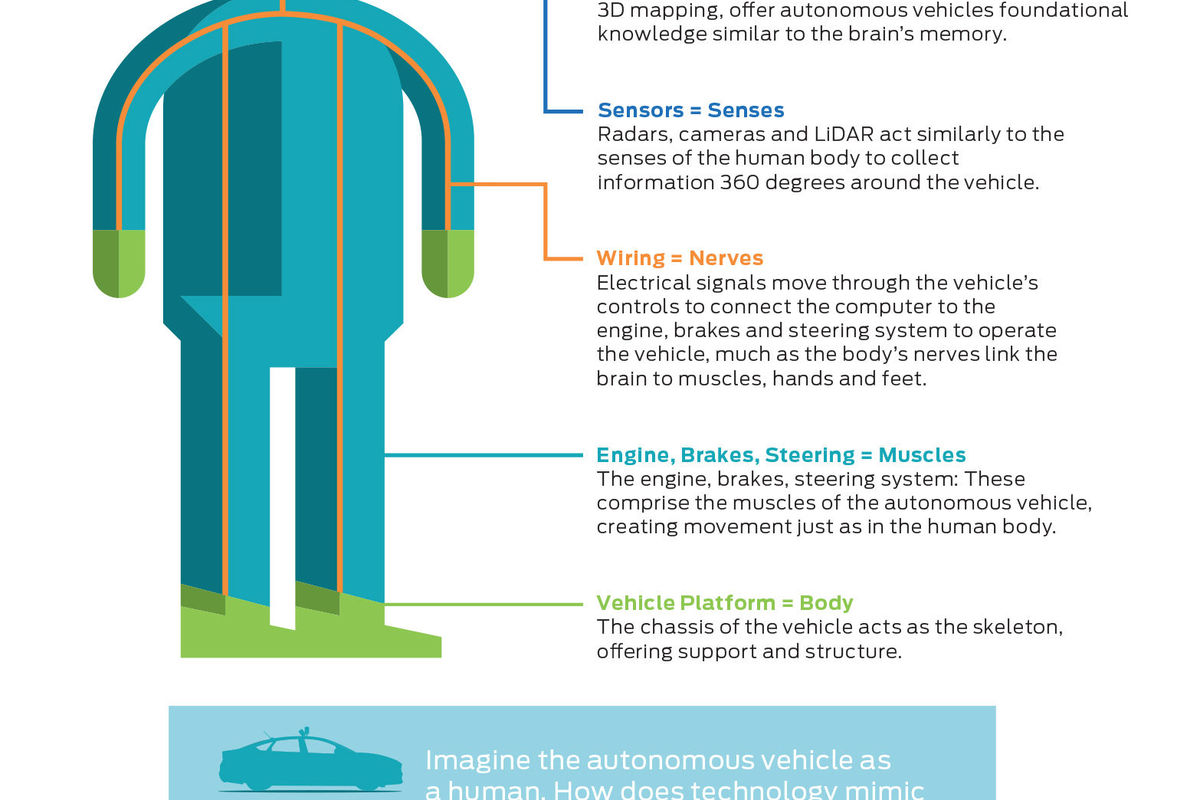
The car we experienced in America was the Ford Fusion hybrid. It looks just like any other Fusion on the road in terms of design, but you can’t miss the array of sensors, cameras and aerials mounted on the roof. Ford summed it up beautifully by comparing an autonomous vehicle to a human.
What about safety?
There was much alarm recently when a driver was killed after his Tesla vehicle failed to recognise a truck and collided with it. To be clear, however, Tesla does not market its products as fully autonomous vehicles and the driver involved was not paying attention at all, choosing instead to watch a movie, it was reported. Of course, it is to be expected that any safety related incident will make the headlines, but the companies pursuing autonomous technology regard safety as one of its greatest benefits and, perhaps equally importantly, those in charge of making the laws governing motoring and transport are in agreement. The statistics just don't lie…
Tesla was quick to point out that its systems are not meant to replace the driver’s inputs, but rather aid him/her. In fact, most vehicles which have a fair degree of self-driving ability require the driver to keep his/her hands on the wheel at all times. If you take your hands off the steering wheel for too long in the new Mercedes-Benz E-Class, it will eventually put on its hazard lights and come to a complete stop in the emergency lane. It is this misconception of autonomous driving as a blanket term that car makers will have to address effectively very quickly. Simply put, there are various levels of "autonomous", with fully hands-free driving only truly on offer on so-called level 4 or 5 vehicles. At present, the semi-autonomous cars on sale or under development offer at best level 2 capabilities…
Ford & Autonomous Vehicles: Already a decade-long project
At this point, most of you are probably thinking ‘this technology is still unproven, the take-up will be negligible and we’re decades from this being a reality.’ You’d be wrong. Ride-share company Uber has a fleet of similar Ford Fusion autonomous vehicles and they’re already active on the roads of Pittsburgh. Admittedly these vehicles come with a driver just in case, but the technology is there. It's the result of some clever thinking by the companies involved. They’re well aware that these vehicles need to tally up miles in real-world testing, so why not make some money off them in the meantime? Summon an autonomous UberX and you’re likely to meet the driver behind the wheel and an engineer with a laptop in the passenger seat. It’s a win-win for everyone.
Ford itself is working on mass-producing a fleet of fully autonomous vehicles exclusively for ride-sharing duty by 2021. To do this the company has shifted its mindset from a car company to a mobility solutions provider. In fact, according to Mark Fields, President and CEO of Ford, the autonomous revolution is likely to be every bit as important to the Blue Oval's next 100 years, as its move to develop production lines for the Model T was in the previous century… Cars are still going to be the core business for Ford, but the expansion into bicycles, ride-sharing and buses definitely shows intent.
Implications for South Africa (and petrolheads)
As we said right at the start of this article, most owners of relatively new cars in South Africa have already experienced assisted driving technologies to some extent. New products from Volvo and Mercedes-Benz are already on the market with a certain degree of "hands-off" capability, but the likelihood of fully autonomous cars on sale to South Africans in the next decade appears slim. However, South Africa does not exist in a vacuum, and when the technology has matured enough to be fully compatible with our road infrastructure and conditions, we expect some local testing to start happening sooner rather than later.
What you are likely to see in the short term is an aggressive roll-out of semi-autonomous technologies, and the arrival of level-4 capable vehicles (partly autonomous) in the 2020s. These vehicles will allow you to take your hands off when the driving is taxing and boring (traffic) and concentrate on other stuff, such as checking your e-mails or watching a movie. But… they'll also still allow you to get your driving kicks when the opportunity presents itself. So, driving enthusiasts, don't fret… autonomy is not necessarily the enemy.
The Department of Energy has announced that on 5 October 2016 the retail price of 93 octane petrol will increase by 44 c/litre, 95 octane petrol by 43c/litre and diesel by 23c/litre.
What's the biggest reason for the increases? Well, for once, it was not the weak rand/dollar exchange rate. Although the national currency declined last month, it recently made a decent recovery. "The Rand declined early in September against the US dollar, but has since strengthened. Only around eight cents of this month's increase will come from Rand weakness. It is oil strength which has been the major contributor," said the AA.
It's interesting to note that the Organisation of Petroleum Exporting Countries (OPEC) has reached a preliminary agreement to limit oil production, the first time this has happened since 2008. If this deal goes through, outputs could be curtailed by up to 700 000 barrels a day which will stimulate international petrol prices. However, non-OPEC countries could up production and affect the price negatively. It's all a case of supply and demand.
The AA is more concerned about our currency. "If the Rand remains volatile, South Africans will be more exposed to changes in the oil price, and we advise motorists to continue to economise in the absence of a clear picture of what effect the OPEC decision may have," the Association concluded.
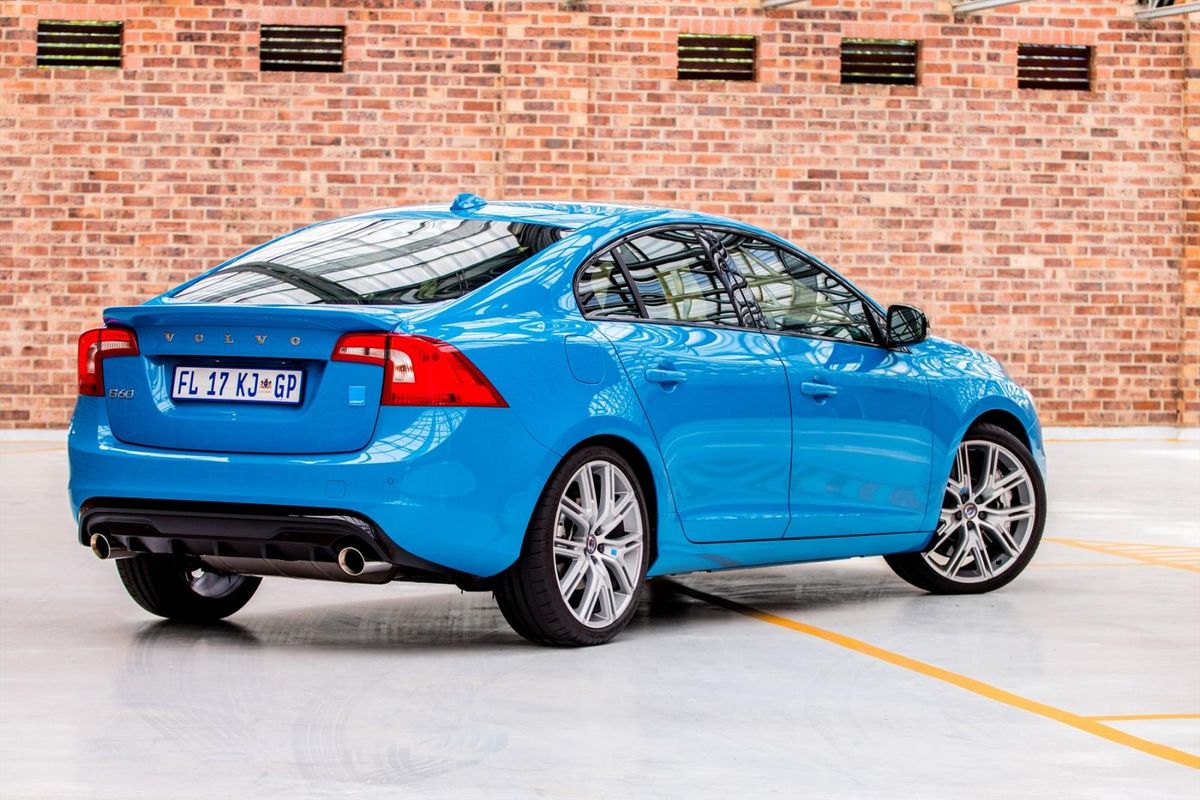
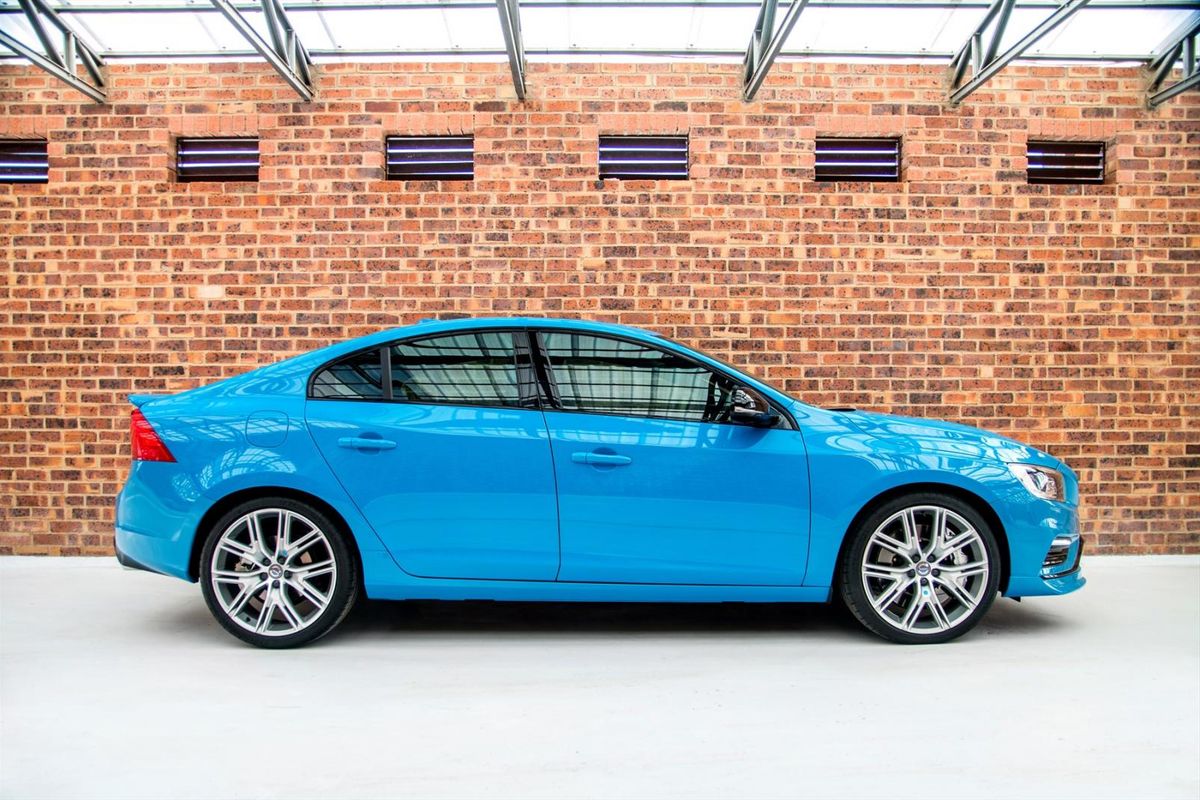
The second iteration of the Volvo S60 Polestar has arrived in South Africa and, unlike its first arrival (at the end of 2015), there will be more of these fast Swedes to go around.
What’s not to like about a fast Volvo? We reviewed the previous-generation Volvo S60 Polestar (of which only 28 units were allocated to our market) and generally liked it. A few months on and there’s a new version, but this time 45 units will be availed to customers; they’re likely to get snapped up quickly too.
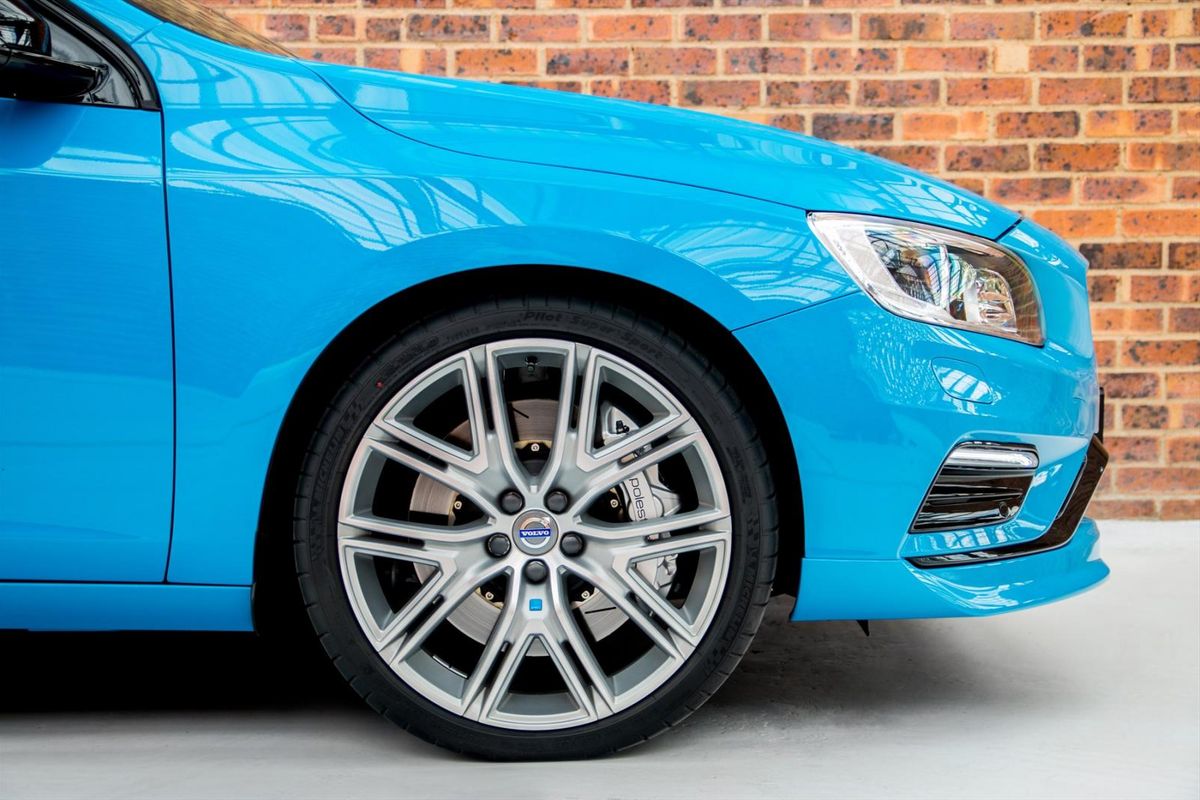
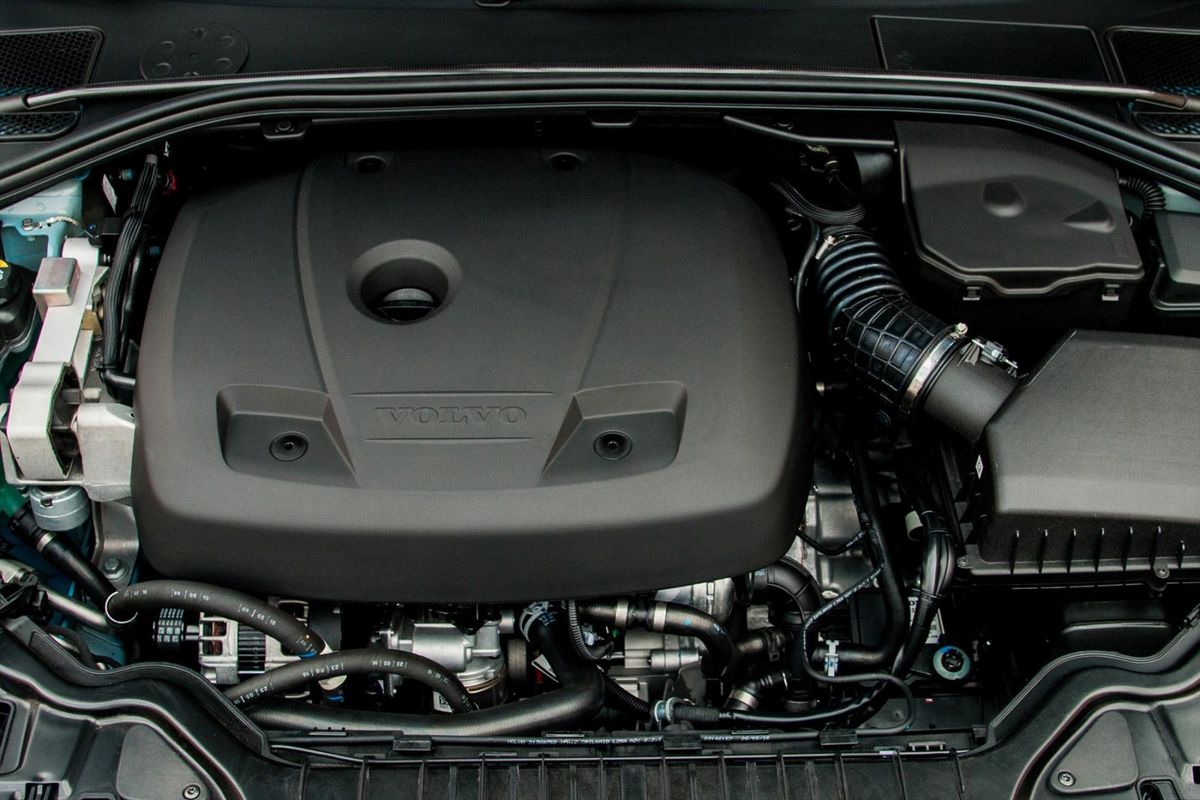
The big changes occur under the bonnet, where the 3.0-litre turbocharged 6-cylinder motor has been replaced by the new-generation Drive-E engine. This new powerplant is a turbo- and supercharged 4-cylinder unit with peak outputs of 270 kW and 470 Nm. Power is directed to all 4 wheels through a new 8-speed transmission and Volvo SA claims its new Polestar is faster than the outgoing model: it is claimed to catapult to 100 kph from standstill in just 4.7 seconds and max out at 250 kph.
Perhaps the biggest improvement comes from the fuel consumption where Volvo claims 7.8 L/100 km on the combined cycle and its emissions are down to 179 g/km. Other technical changes include new lightweight alloy wheels, an upgraded power-steering setup and beefed-up new brakes.
“This car is properly quick,” says Niels Möller, Chief Operating Officer at Polestar. “But it’s more than that. It combines Polestar’s 20 years of racing pedigree with Volvo’s inherent pragmatism and engineering heritage. This is a very fast car that you can use every day of the year.” The ace in the Volvo S60 Polestar’s sleeve is the level of specification on the vehicle. There are no options and what you see is what you get.
Standard features include:
revised 20-inch Polestar alloy wheels
automatic bi-xenon headlights with Active Bending and Active High Beam (including anti-dazzle for other road users, a feature usually restricted to LED headlights)
auto-dimming mirrors inside and out
front and rear parking sensors with a rear-view camera
CleanZone automatic dual-zone climate control with rear seat ventilation and remote pre-conditioning
an 8-speaker Harman/Kardon multi-media infotainment system with USB, Bluetooth and Internet compatibility, and voice control
satellite navigation
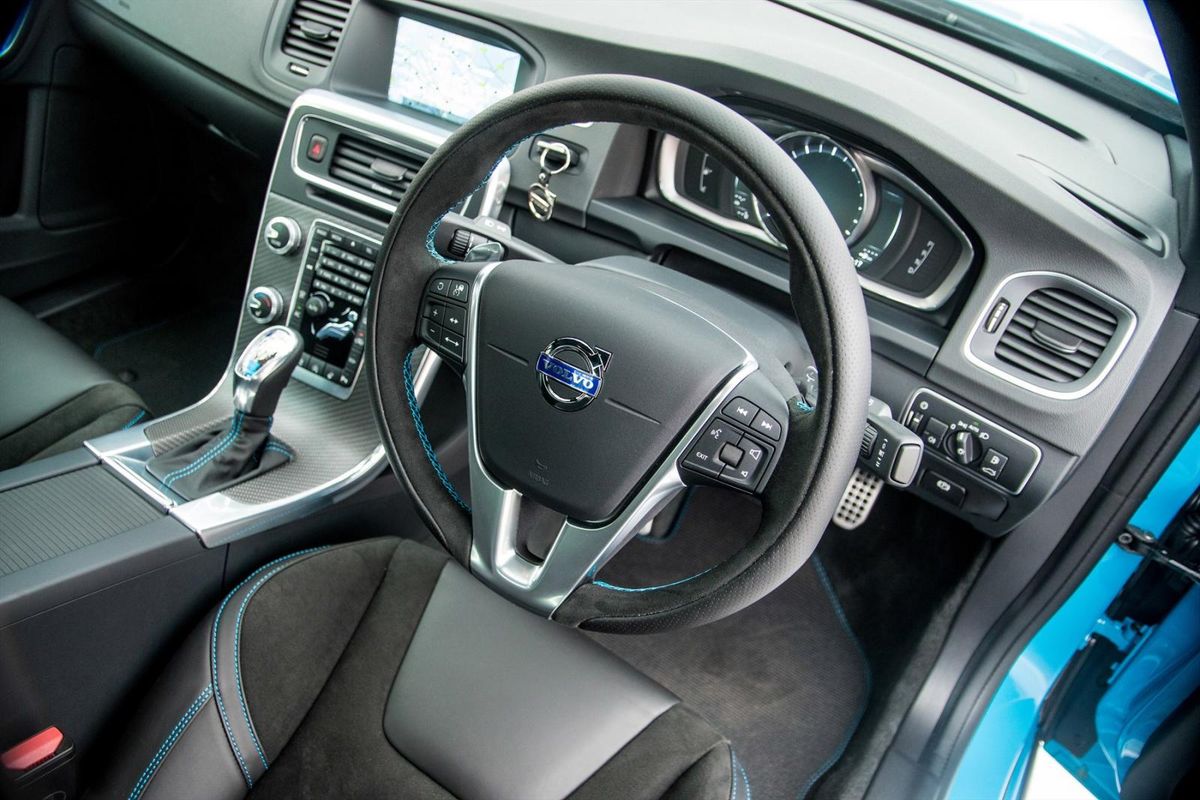
heated leather/alcantara steering wheel
leather/alcantara upholstery with heated front and rear seats
cyan contrast stitching
genuine carbon fibre “floating centre stack”
active TFT digital instrument cluster
gear-shift paddles
sunroof
keyless access and starting
an active twin-pipe Polestar exhaust system
adaptive cruise control with a toggle switch to cruise control
Being a Volvo, the S60 Polestar features comprehensive a level of safety technology. There are 6 airbags, ABS, EBA, BAS, HAS, ESC and IntelliSafe, which besides City Safety (AEB) includes the likes of Lane Departure Warning, Pedestrian Detection, Blind Spot Information System, Cross Traffic Alert, Road Sign Information and a Driver Alert system.
Volvo S60 Polestar price in South Africa
The new Volvo S60 Polestar retails in South Africa for a recommended R749 500 which continues to include a 5-year/ 100 000 km full vehicle warranty, a 5-year/ 100 000 km full maintenance plan, laminated glass and Tracker Connect.
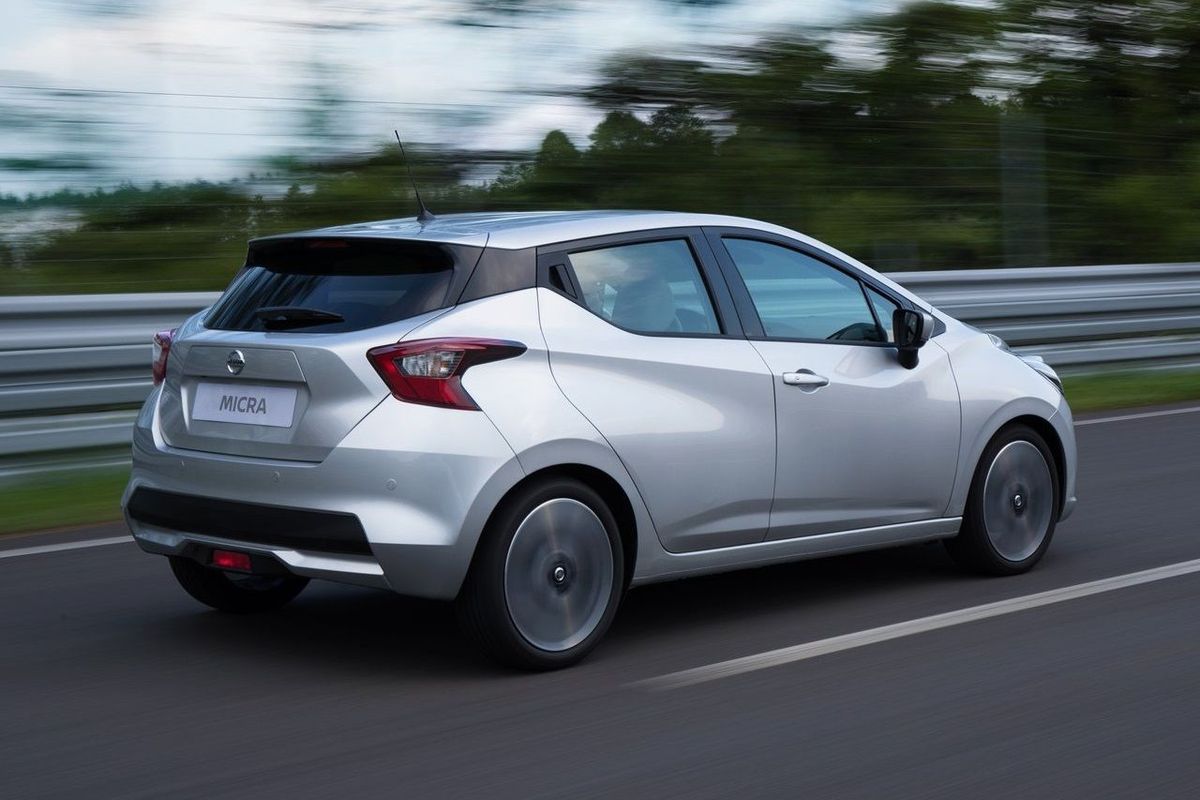
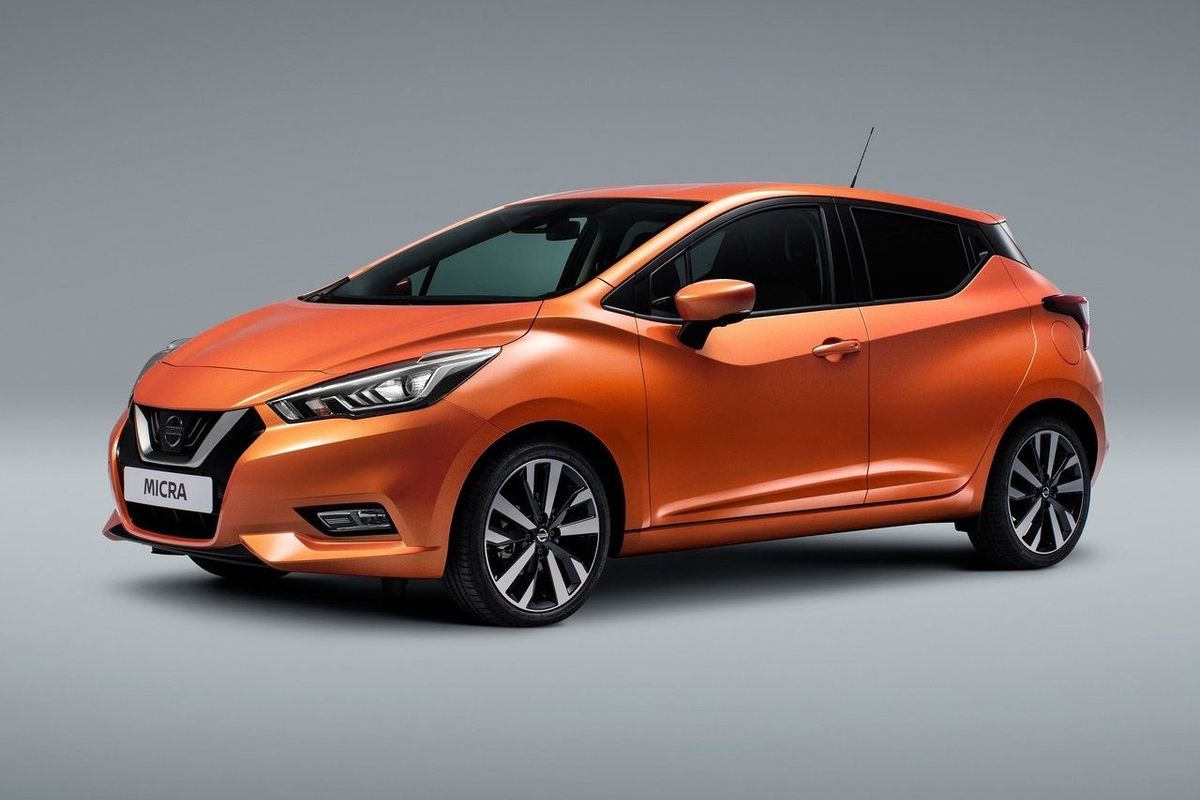
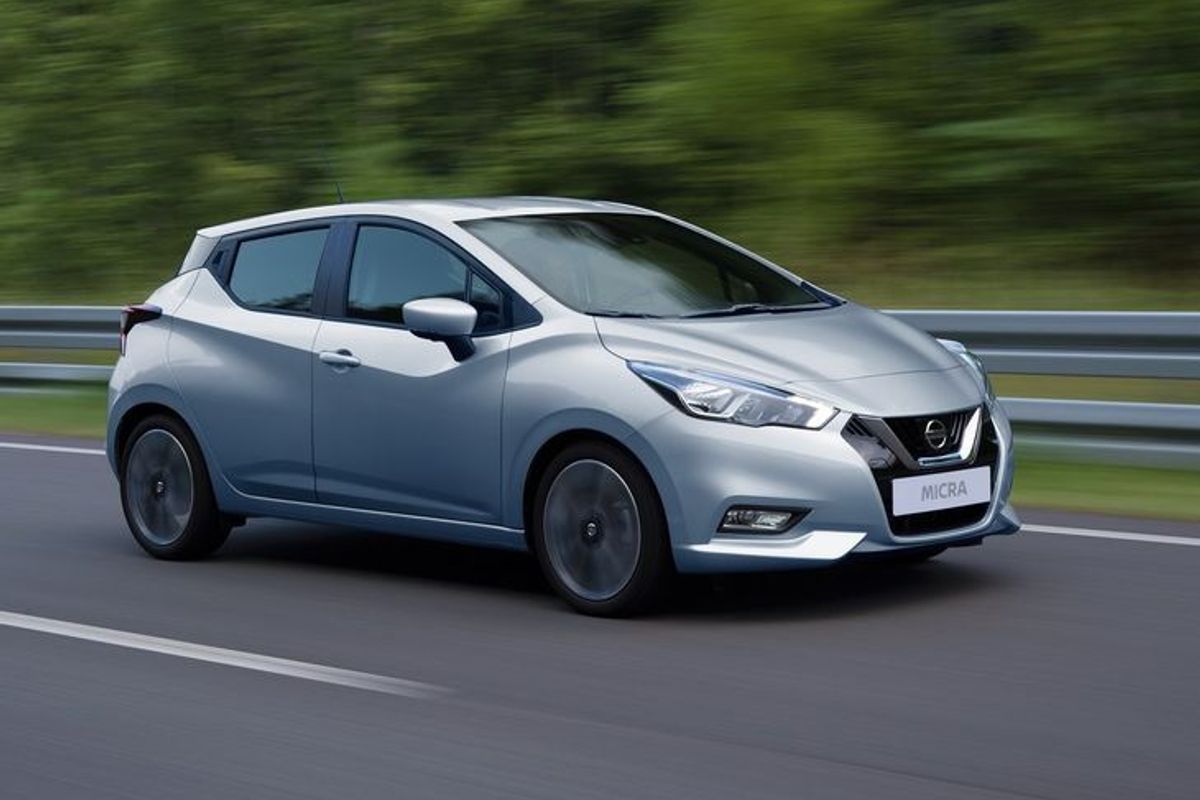
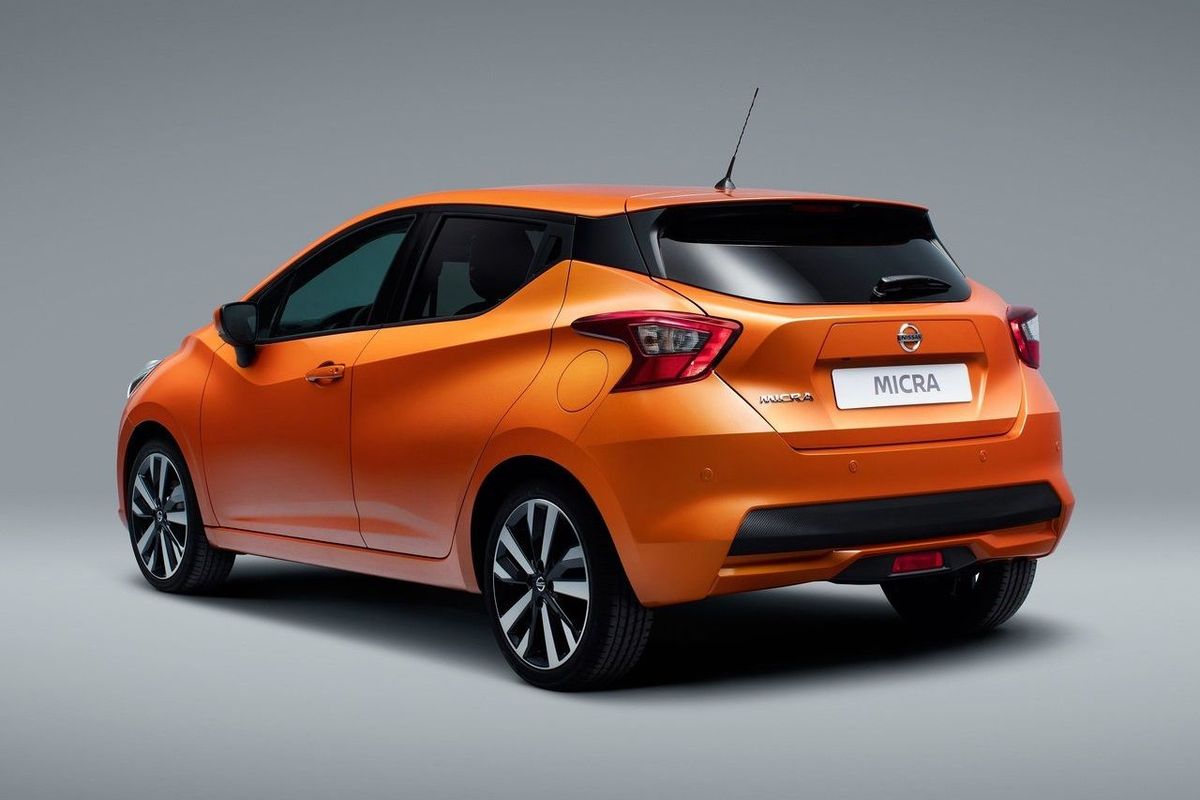
The 5th generation of the Nissan Micra has been unveiled at the 2016 Paris Motor Show. Let's take a closer look at this compact hatchback, which the Japenese manufacturer is considering for the local market.
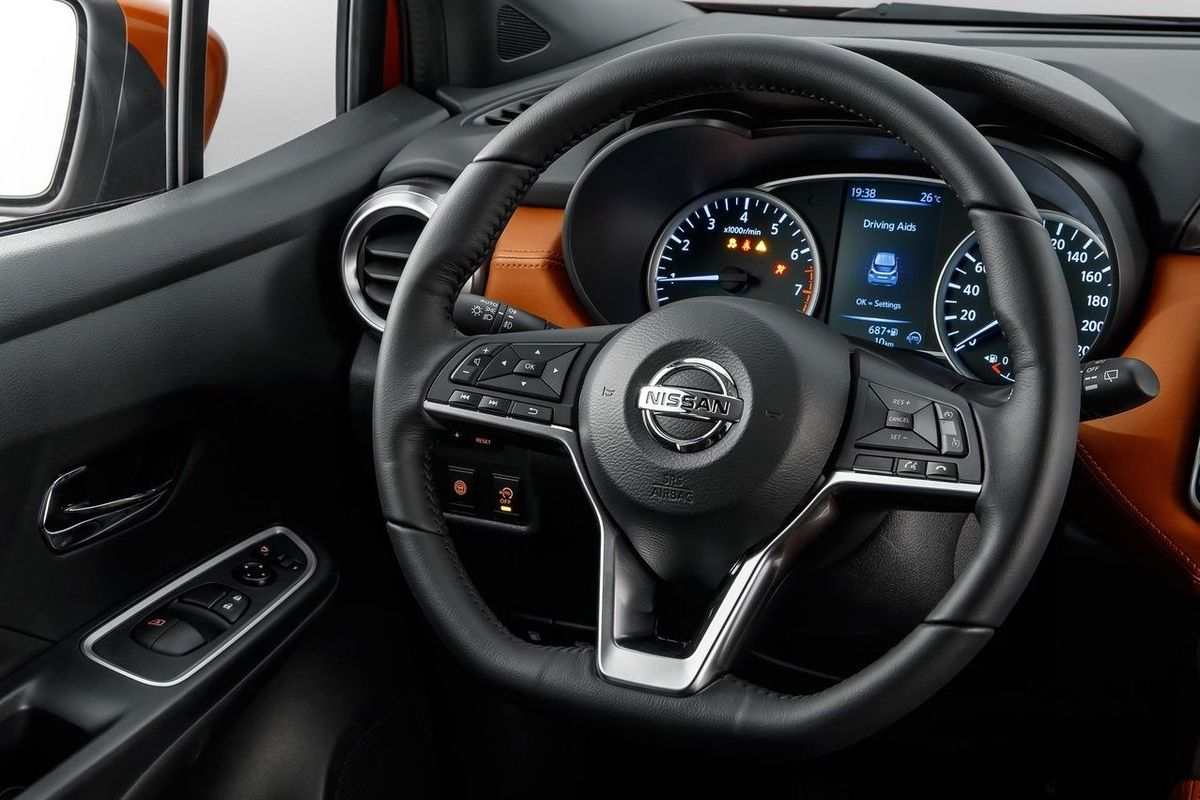
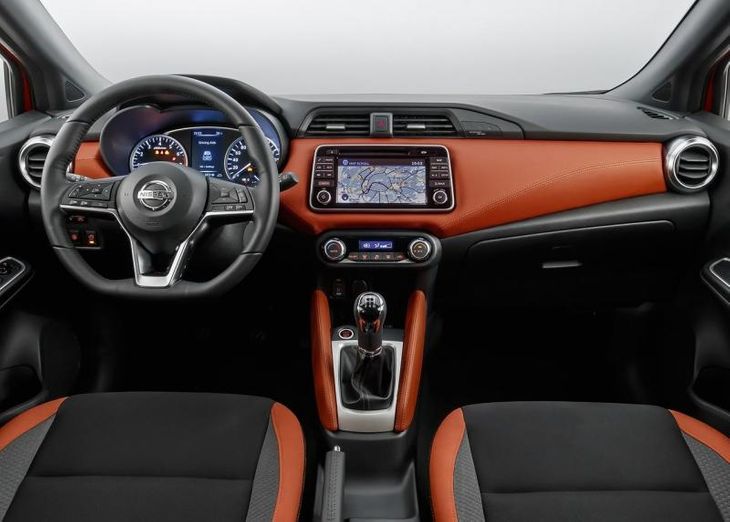
The new Nissan Micra has grown up. It looks less radical than its predecessors, yet retains styling cues from the latest Nissan products. It is lower, wider and longer than the previous model which means a nicer drive and improved cabin space. There are also new engines as well as innovative safety features.
"When the first Micra appeared more than 30 years ago, it marked a revolution in the small hatchback segment and opened a new chapter for Nissan. The fifth generation Micra is just as revolutionary, and will raise expectations for what a hatchback can, and should, deliver to its customers," said Carlos Ghosn, CEO, Nissan Motor Company, "Following in the wheel tracks of distinctive cars like Qashqai and Juke, the latest Micra reinforces Nissan's position as a leader in automotive design. It also shows our intent to compete right at the top of Europe's B-segment market – the largest and most competitive B-segment market in the world."
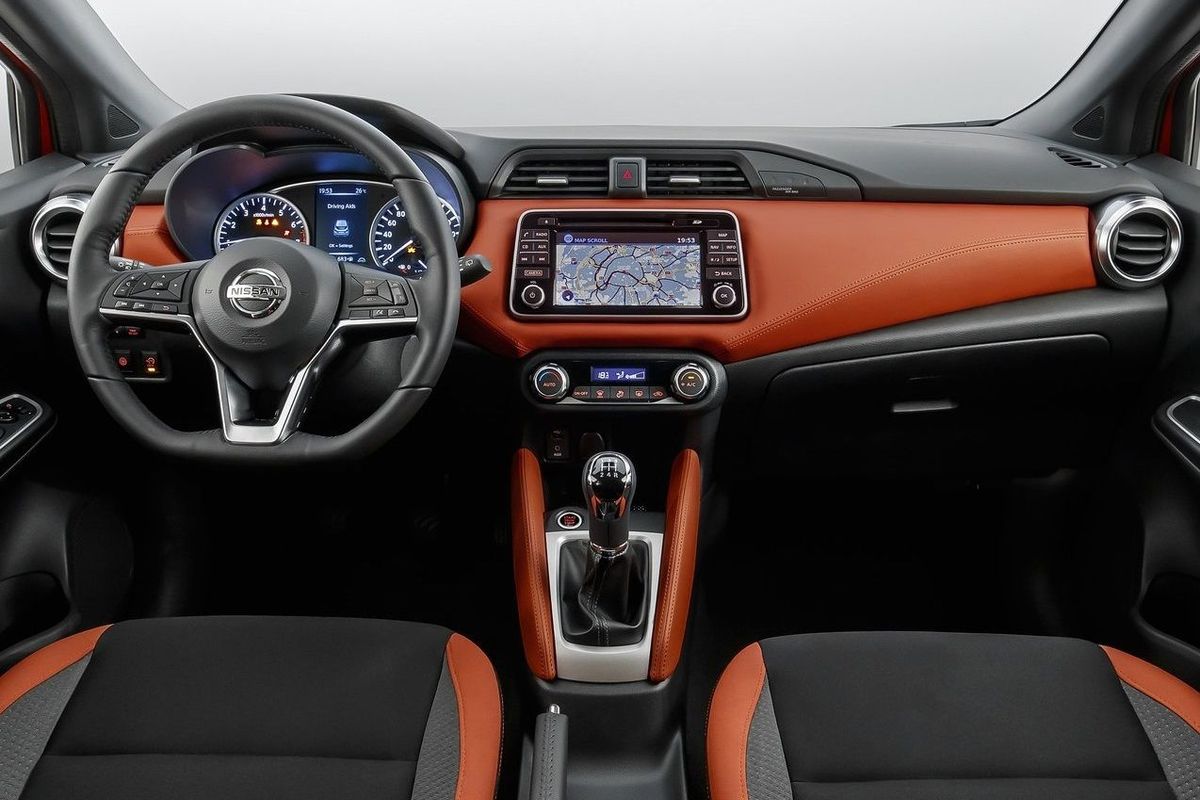
Personalisation of the new Nissan Micra is one of the key changes, and Nissan offers 10 vivid colurs as well as numerous interior and exterior personalisation options which allows up 125 different creations. The cabin features a lower driving position and the steering wheel is fully adjustable.
The new Nissan Micra features Lane Departure Prevention, Intelligent Emergency Braking with pedestrian recognition, as well as Intelligent Around View Monitor, Traffic Sign Recognition, High Beam Assist and Blind Spot Warning. In terms of entertainment, the Micra comes with an all-new six-speaker Bose® Personal® sound system as well as a 7-inch full-colour display featuring satellite navigation, apps and Apple CarPlay. Micra Gen5 comes with a 7-inch full colour central display, providing access to the audio system, satellite navigation, mobile phone, downloadable apps and Siri voice control via Apple CarPlay.
At launch, the car will offer the choice of a 0.9-litre turbocharged three-cylinder petrol engine and a 1.5-litre diesel, both developing 66 kW. The range will be expanded with a naturally-aspirated 54 kW 1.0-litre petrol engine. The Nissan Micra will go on sale in European sales in March 2017.
But what about the Mica's arrival in South Africa? Nissan South Africa media liaison Veralda Schmidt comments: "Our product planners are in the final stages of studying plans to introduce the new Micra in the local market. We are certainly optimistic that we will be able to make an announcement in this regard soon. The new Micra will certainly make for an attractive option in the highly contested upper B-segment."
This fiery-mouthed SVR transforms the F-Type from a stylish sportscar to fun track-day tool.
Design, like art, may be a naturally divisive subject, but few could argue against the claim that the Jaguar F-Type is one of the most beautiful cars on the planet. Its smooth, curvy lines converge with piercing taillights and create a side profile that’s so perfectly proportioned it will make you want to remove the family photos from your living room wall and replace them with a big motivational F-Type poster.
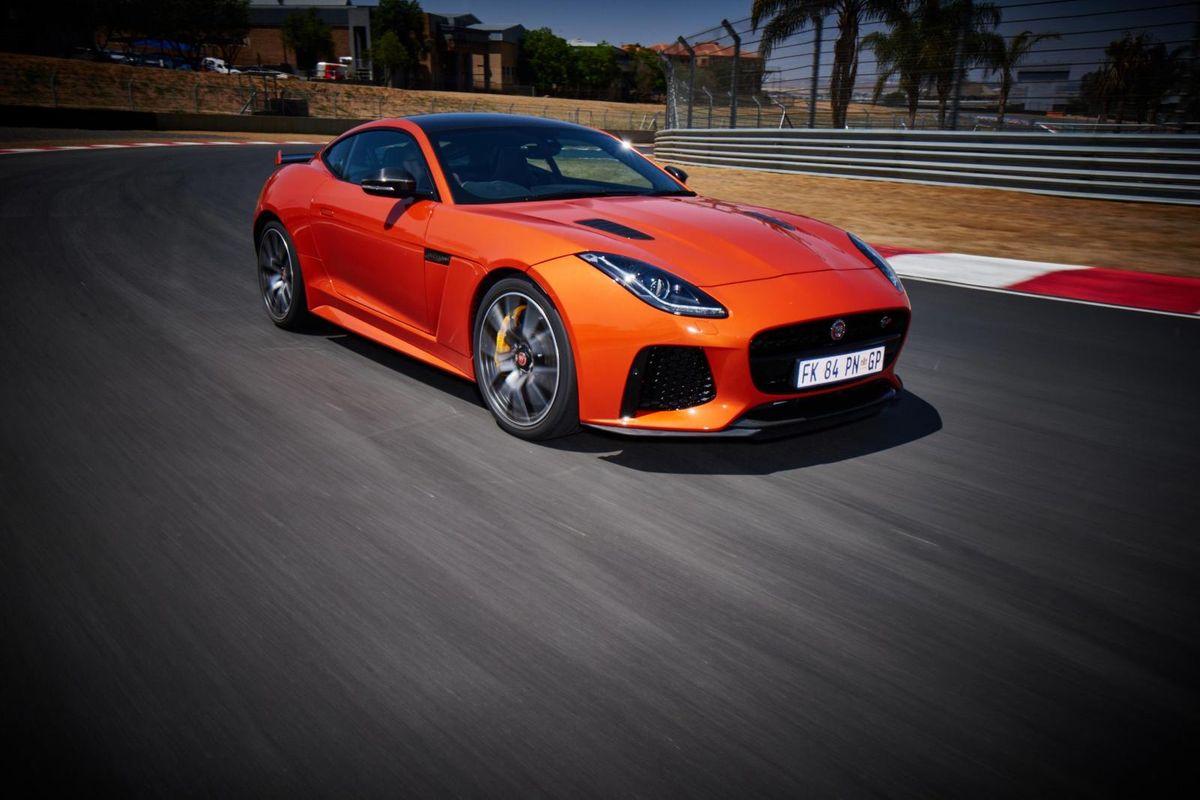
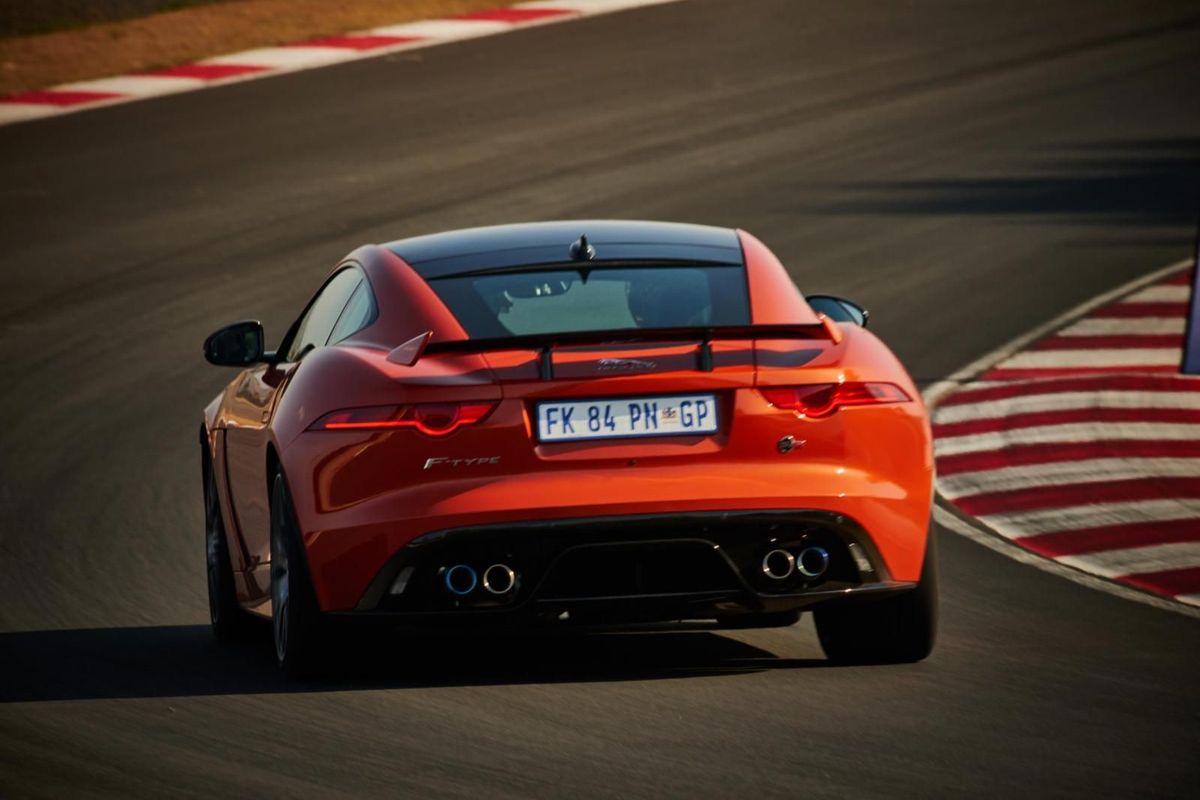
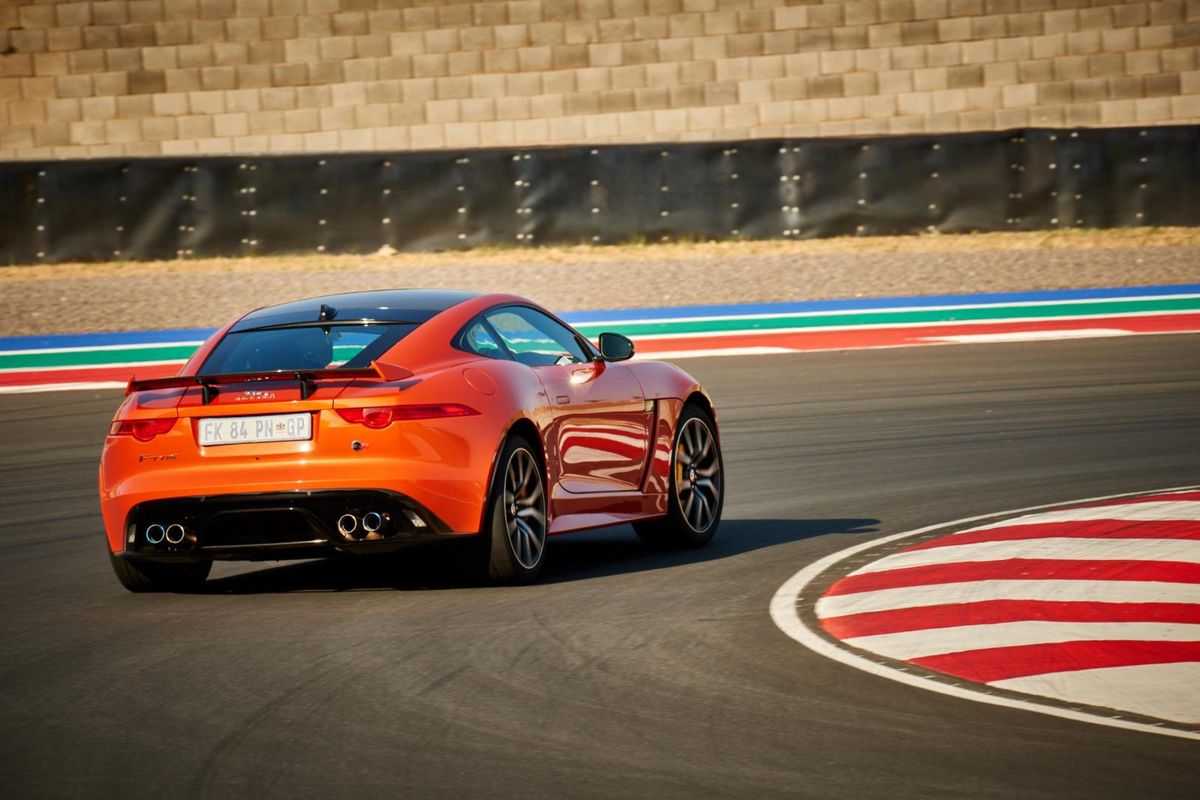
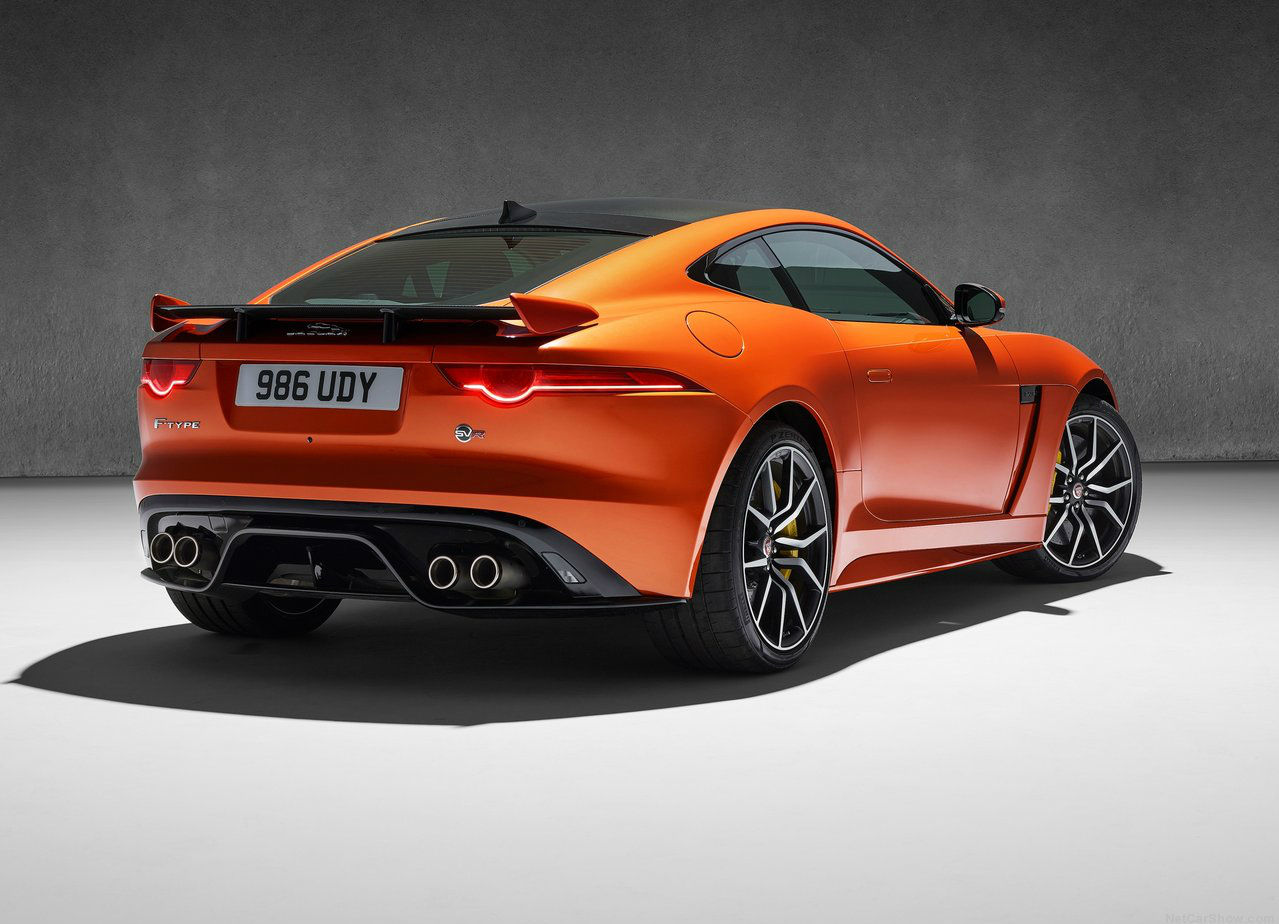
Just stand behind this new F-Type SVR (Special Vehicle Racing) when its rear wing is deployed and tell me you don’t see the tips protruding like devil horns. The taillights even look like evil, demonic eyes. This car is bad… but the good kind of bad, and that's before you even get behind the wheel.
"Devil horns" and "demon eyes". Jaguar living up to its slogan, "it's good to be bad"
The SVR I'm stepping into is the only one in the country, used as a marketing tool to promote the SVR badge as an AMG, M and RS competitor. The engineers haven’t gone overboard with the power increase, it has a meagre 18 kW and 20 Nm advantage over the F-Type R AWD. The weight saving on this car is around 50 kg due to the carbon ceramic brakes, carbonfibre roof, carbon interior trim and the lighter exhaust system, but the hardest work, from a developmental point of view, has gone into the optimisation of the SVR's aerodynamic efficiency and suspension tuning.
Jaguar claims the SVR creates zero lift, but in V-Max mode (the rear wing folds down) it will top 200 mph (320 kph). Contrary to everything manufacturers usually say about performance suspension, Jaguar has made the front end slightly softer, but the rear firmer, to promote better turn in. Finally, just in case you couldn’t hear the F-Type R's exhaust note, Jaguar has ensured the SVT's flaps open at a lower RPM and so it can roar with even more ferocity.
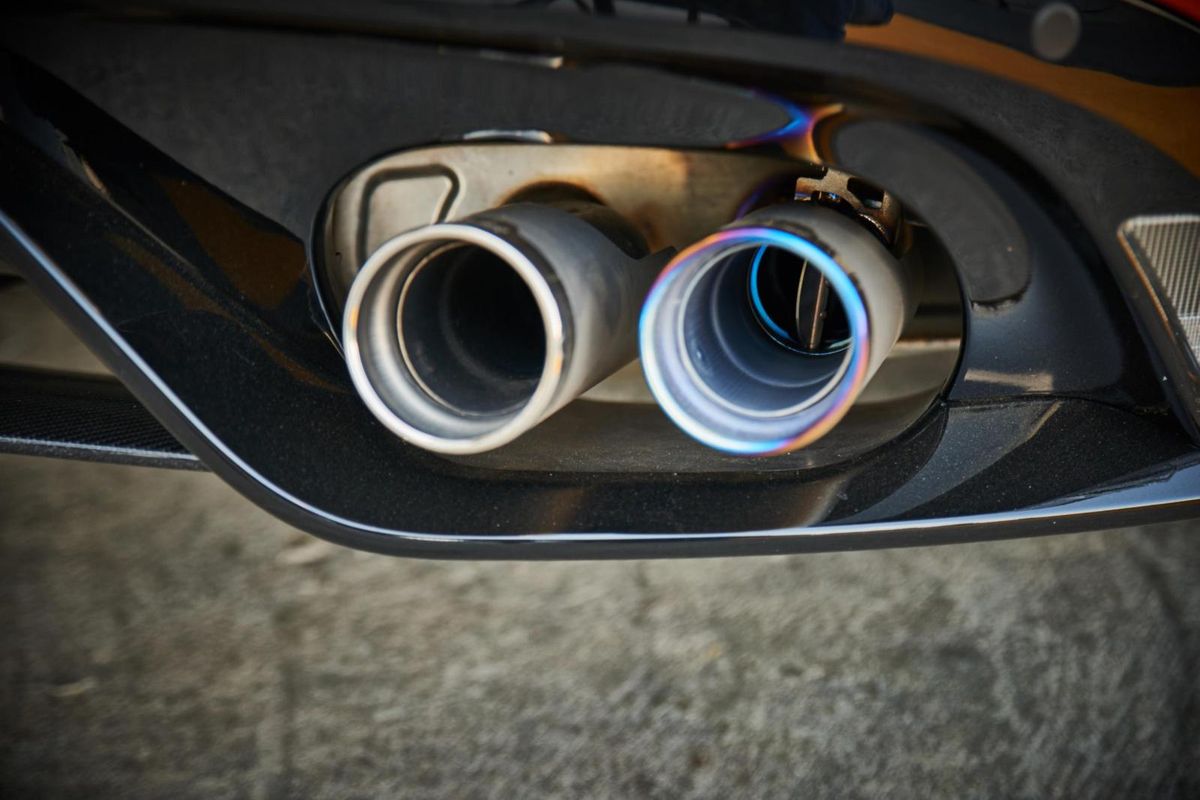
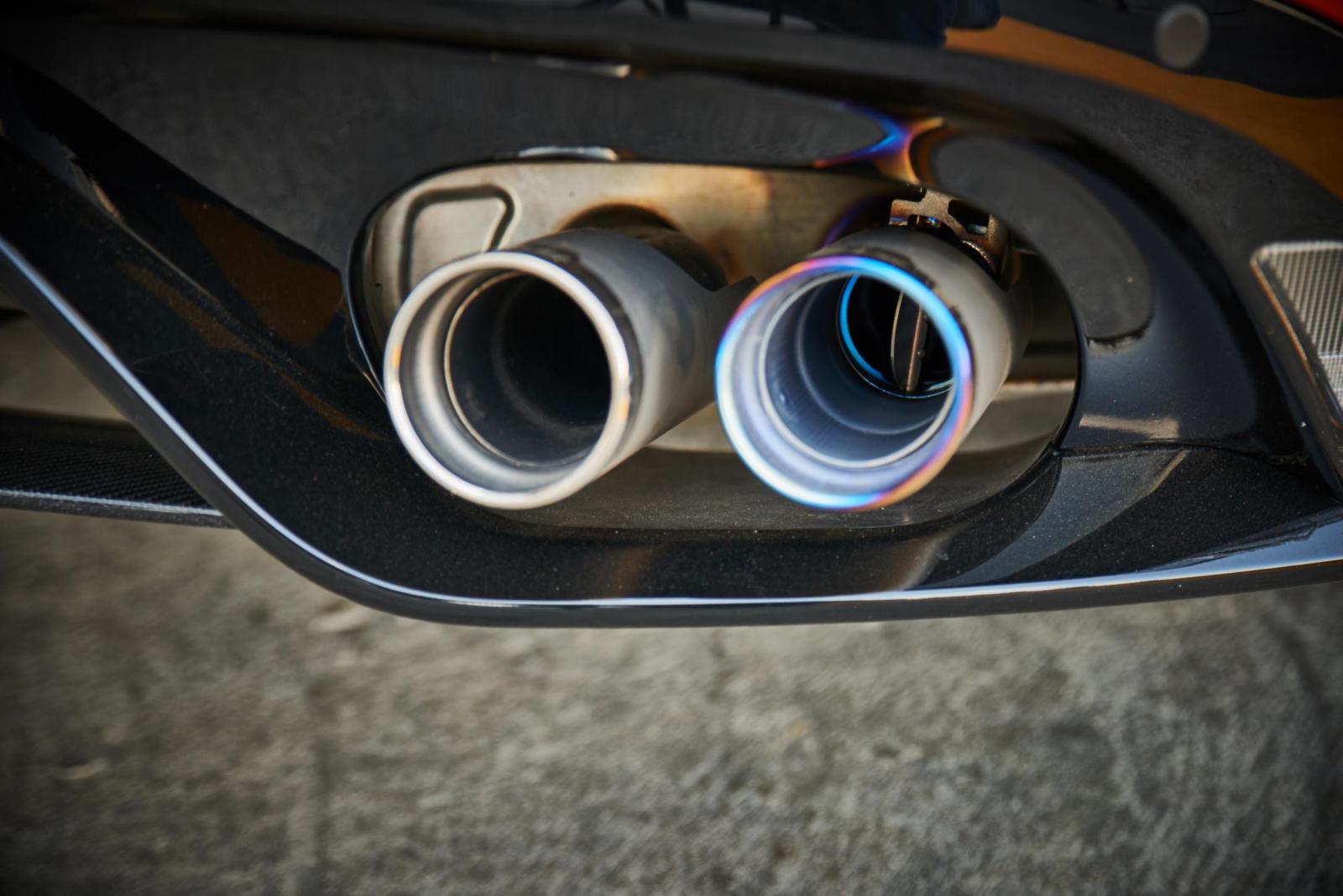
Exhaust is made from Titanium and Inconel (space ship superalloy) and saves 16 kg over the standard exhaust
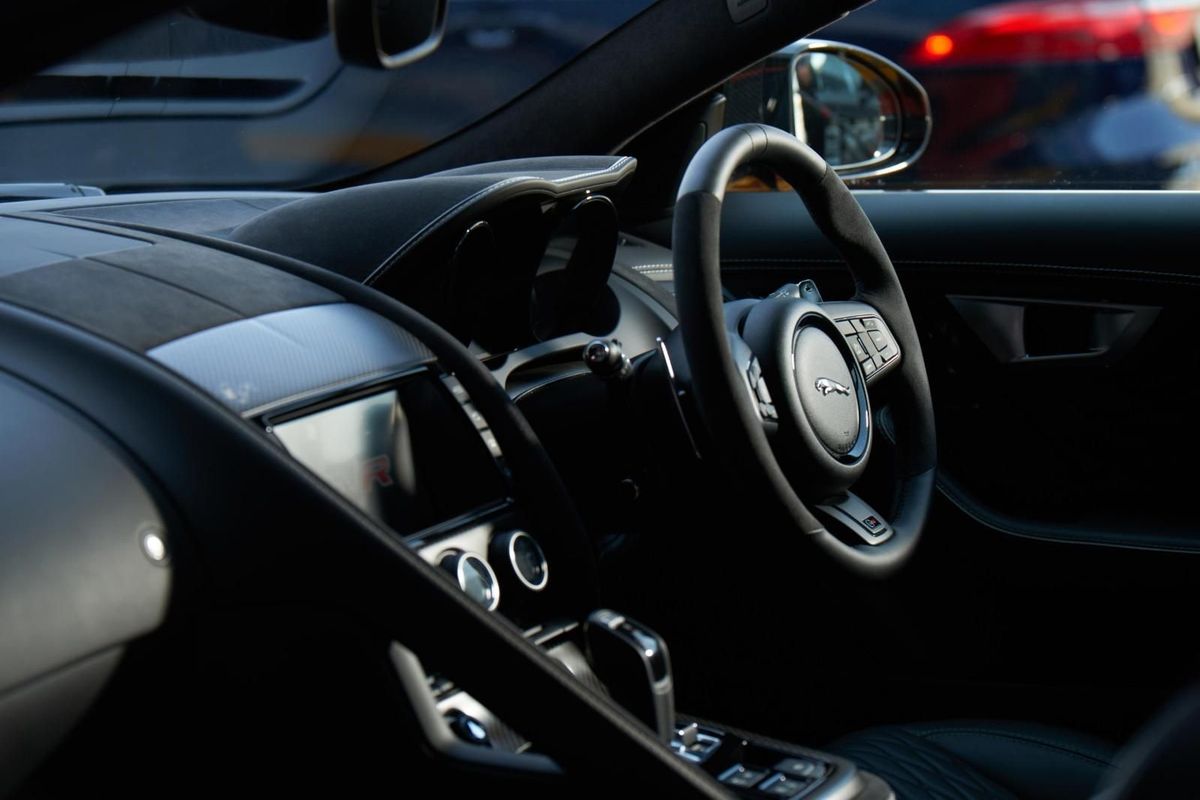
Seated behind the steering wheel, a notable change is that leather trim has been replaced with sporty Alcantara, but it’s business as usual as far as design goes. The infotainment system has some added features that allows the driver to track their lap times, check how many Gs they've pulled in the corners, as well as a bar graph that plots throttle and brake applications in 120-second bursts (a feature track-day aficionados will certainly appreciate).
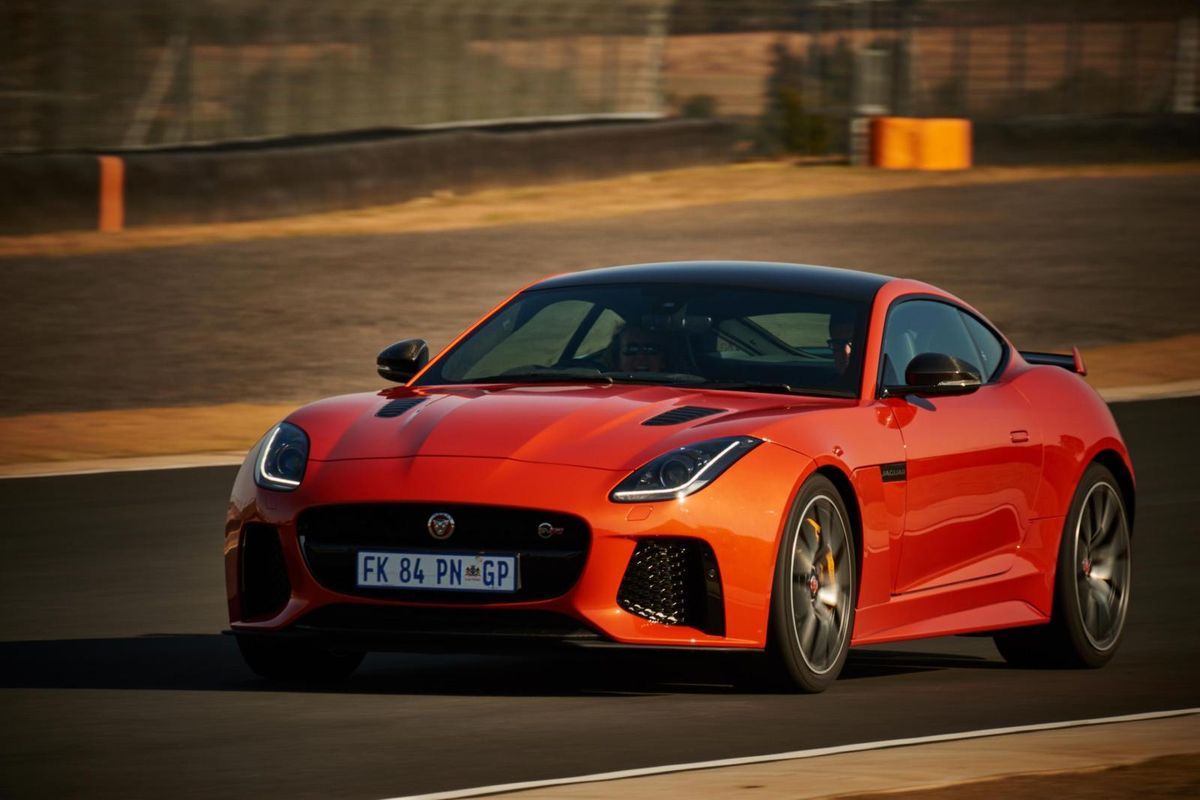
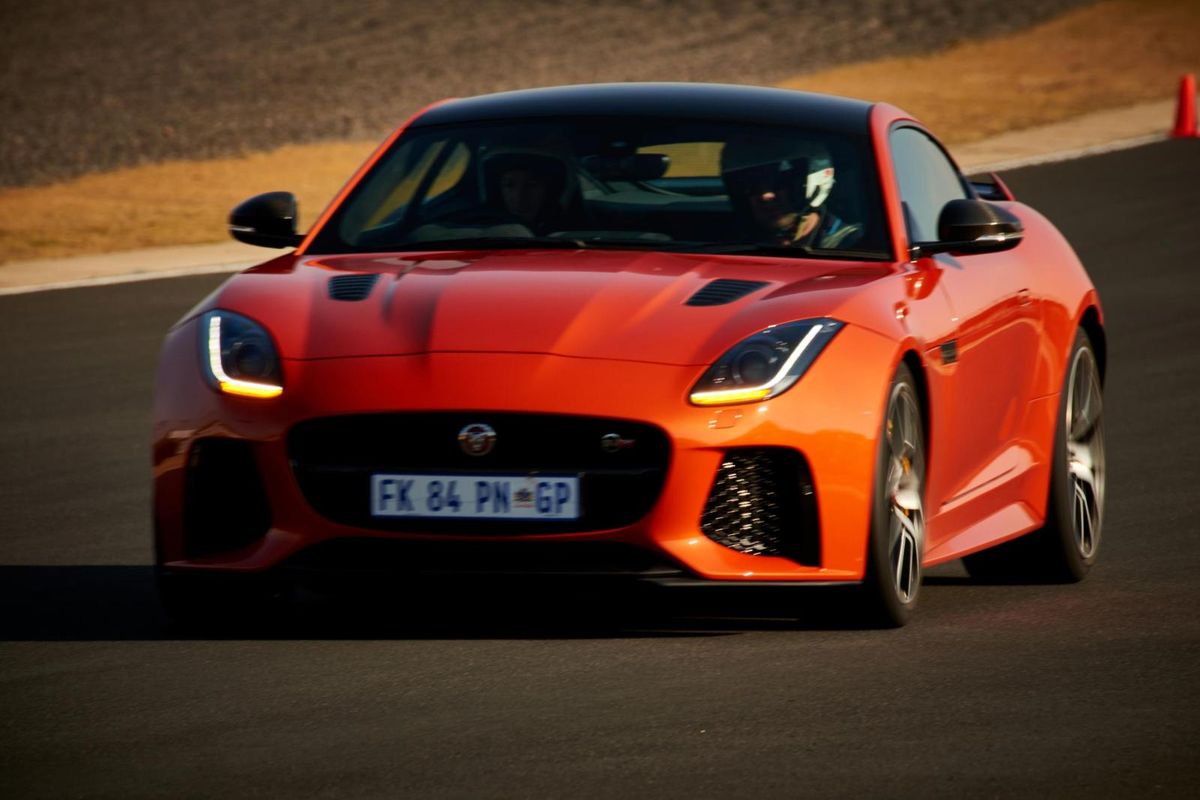
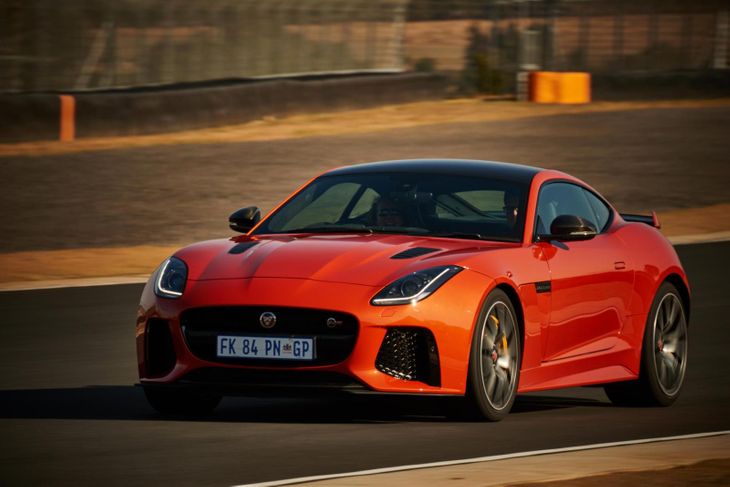
We had a chance to spend some laps at Kyalami with an instructor beside us. Right from the first go, the louder exhaust gets your adrenalin levels rocketing. Instantly, you’re more attuned to the finite changes on the SVR. The machinations of the transmission are quicker, on both up, and down shifts. The steering feels heavier but faster. The AWD F-Type’s steering can feel light and vague on track but this SVR is communicative with perfect heft.
The small power increase is noticeable in the mid-range, especially upon corner exits – that's where the SVR does everything just that little bit faster. The suspension delivers the biggest surprise, under braking the SVR feels alive, even a little bit loose, like it could break away at any second and send you farming. It won’t though, it’s all part of the engineers' plan to get the SVR into a prime position to arrow into the apex quicker. It’s impressive to watch it work, but don't hestitate – you can floor the throttle earlier with the extra downforce pushing the SVR into the tarmac like it’s being stood on by the Hulk's left foot.
SVR makes good use of additional aero features in order to improve corner speed.
The Pirelli P Zero tyres just hold on and are prone to overheating quickly under this sort of continuous pressure. An upgrade to the P Zero Corsa tyres may be just what the SVR needs if it wants to be more than a one lap specialist.
Our time in the SVR is over all too soon, but it leaves a lasting impression. For what is essentially an add-on pack for an F-type AWD, it feels like so much more than that. It’s a proper sportscar with racing pedigree; much more powerful than the Porsche Cayman GT4, less hardcore, but probably as visceral as the BMW M4 GTS and seeing that the aforementioned rivals are no longer available from new, the Mercedes-AMG GTS and Nissan GT-R are probably the only adequate rivals. What we'd absolutely love to see is a comparison between the SVR and an Audi R8 V10 or the McLaren 570S to evaluate just how good it is as an all-round powerhouse. Frankly we can't think of a loftier complement to pay the Jaguar than that…
You can order an F-Type SVR for R2 134 100 (depending on stock availability), which puts it a fair chunk below the price of an R8 and McLaren 570S.
The Cars.co.za Ownership Satisfaction Survey, in partnership with leading data specialists, Lightstone Consumer, forms an integral part of the awards programme, with the survey accounting for 50% of the final result in each category. The brand-specific data incorporates feedback from thousands of South African new vehicle owners, based on their experiences of their vehicles (must be less than 5 years old and serviced through franchised outlets).
While supercars and other “exotics” are mere fantasies for most motorists, there are cars priced below the magical R1 million mark that offer near-supercar thrills and performance. In this category we are not only looking for sizzling performance, but also driver engagement, whether driven on the track or on the road. For a car to be considered in this category, the following criteria apply: its listed price must be between R600 000 and R1 000 000 at the time of semi-finalist voting (September 1, 2016) to ensure that this doesn’t become a category dominated by extravagant and unattainable exotics.
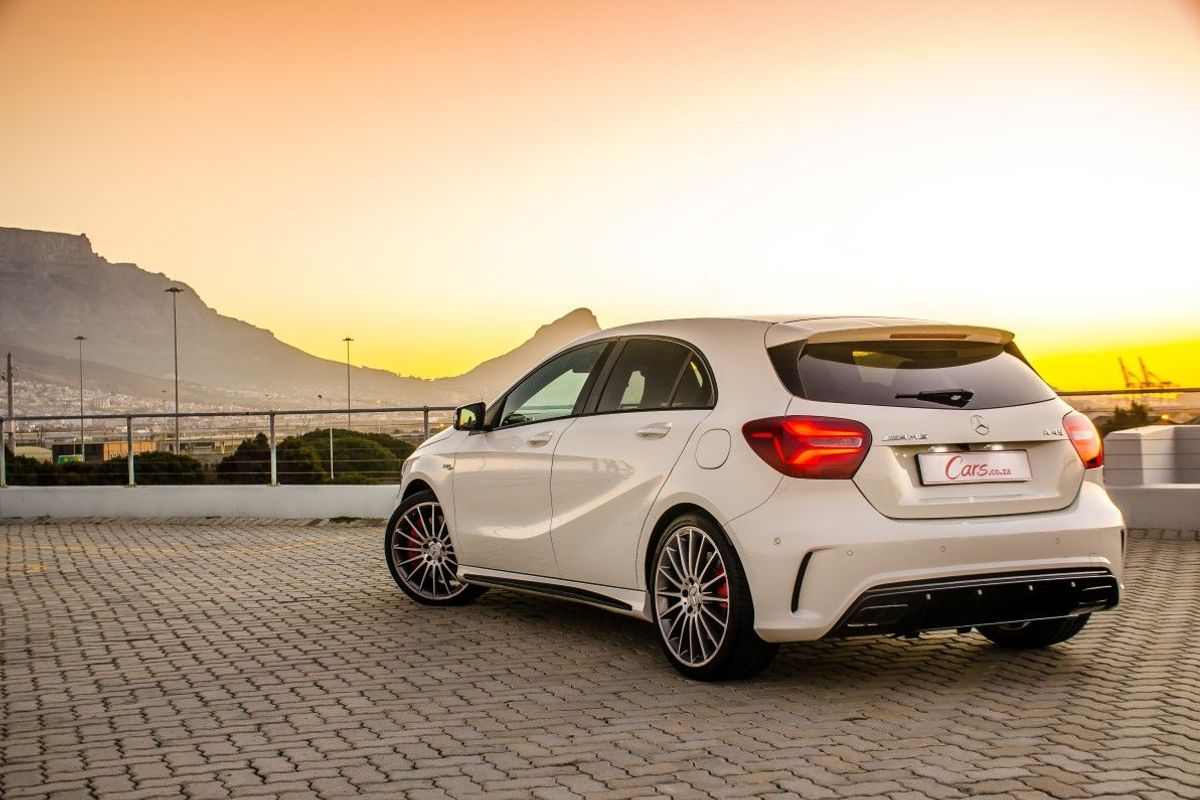
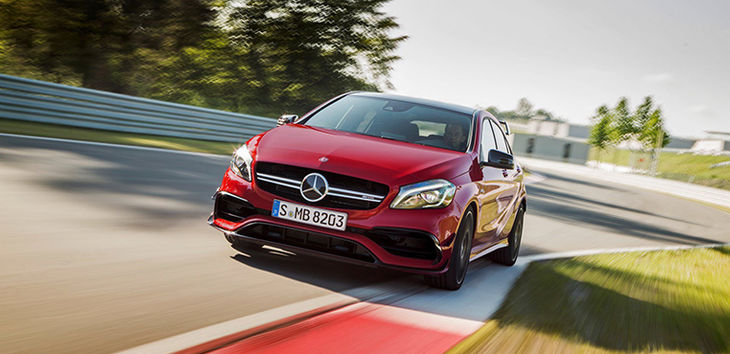
Following a mild facelift and a few technical upgrades, the Mercedes-AMG A45 4MATIC remains the most potent performance hatchback available in South Africa. Its turbocharged engine is a technological marvel that squeezes a scarcely believable 280 kW from a 2.0-litre powerplant. And the standard all-wheel drive system allows all that power to be harnessed most effectively. The A45’s turbocharged 2.0-litre engine offers a significant bump in power and torque over its predecessor with a total of 280 kW (+25 kW) and 475 Nm of torque (+25 Nm). Those numbers are delivered to all four wheels using a revised 7-speed dual clutch transmission that can be operated manually by utilising the steering wheel-mounted shift paddles.
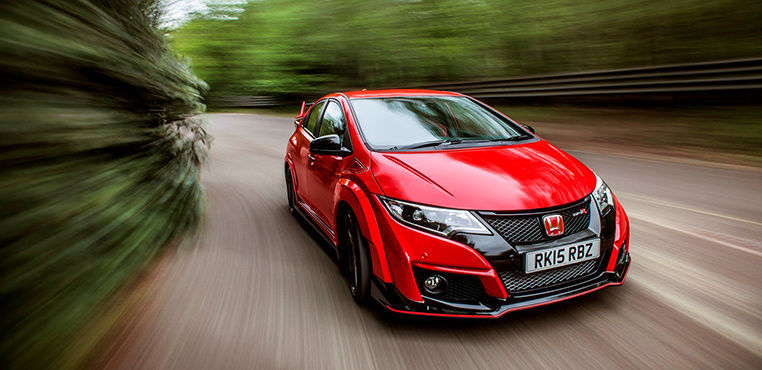
With the exception of the NSX supercar, Honda hasn’t built a serious everyday performance car since the demise of the much-loved S2000; previous iterations of the Civic Type-R struggled to keep up with their turbocharged rivals. So Honda went back to the drawing board and came up with an all-new take on the Type-R. It’s no wallflower, that’s for sure, but it also packs a colossal punch and loves track days… To match its overt boy racer looks, the Type-R packs a mighty punch with its newly developed 2.0-litre turbocharged VTEC engine. Enthusiasts are in for a treat with 228 kW and 400 Nm powering the front wheels through a short-throw 6-speed manual transmission.
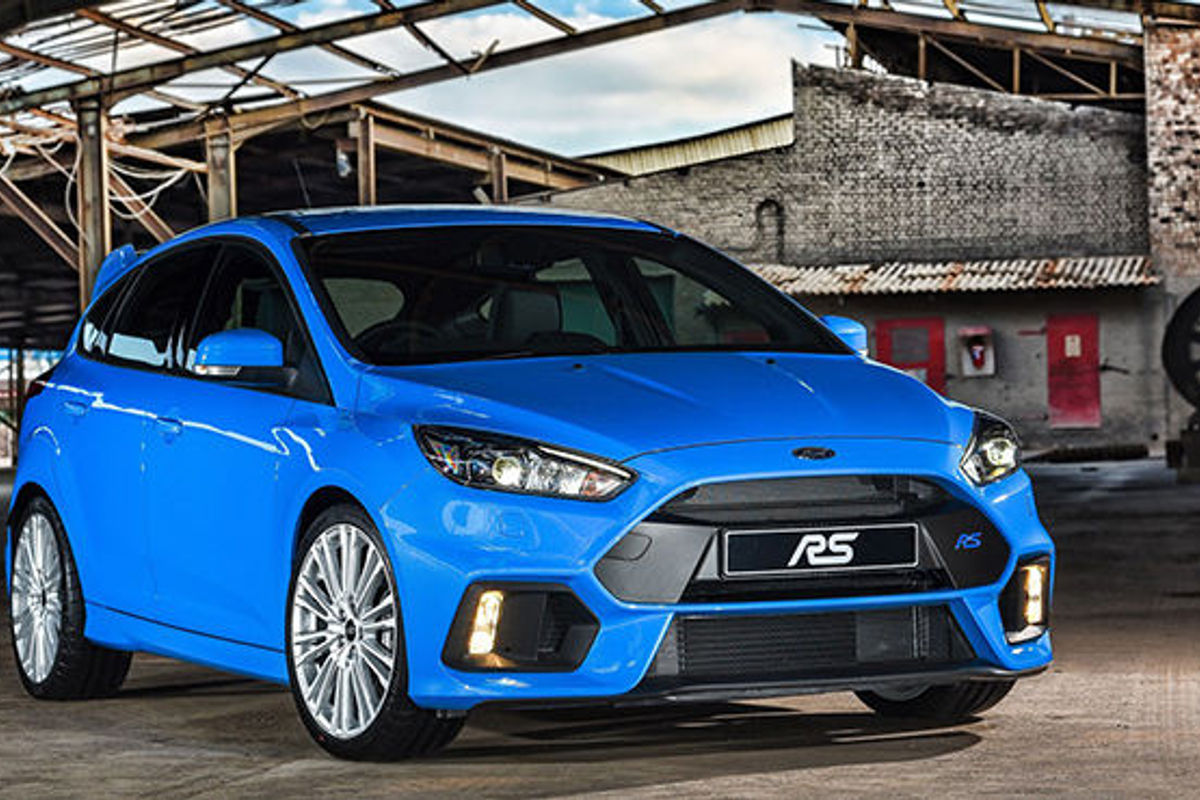
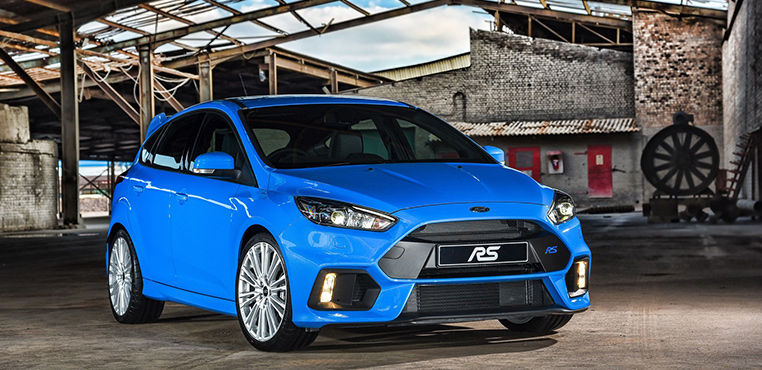
RS is a special badge in Ford's product line-up and, therefore, the Blue Oval applies it sparingly. RS models are exceptionally desirable, fast and, most importantly, personify everyman appeal. While many people dream about exotic machinery, an RS-badged Ford is widely regarded a working class hero.
Given the heady price of the Focus RS, that notion may no longer be applicable, but this iteration could one day be remembered as one of the best of the breed. The iconic 2.5-litre 5-cylinder of the previous car is gone and in its place is a 2.3-litre 4-cylinder turbopetrol unit. Anoraks will point out it’s the same motor as in the Mustang Ecoboost, but while that's fundamentally true, there are some modifications to the unit that allow it to produce a tad more power.
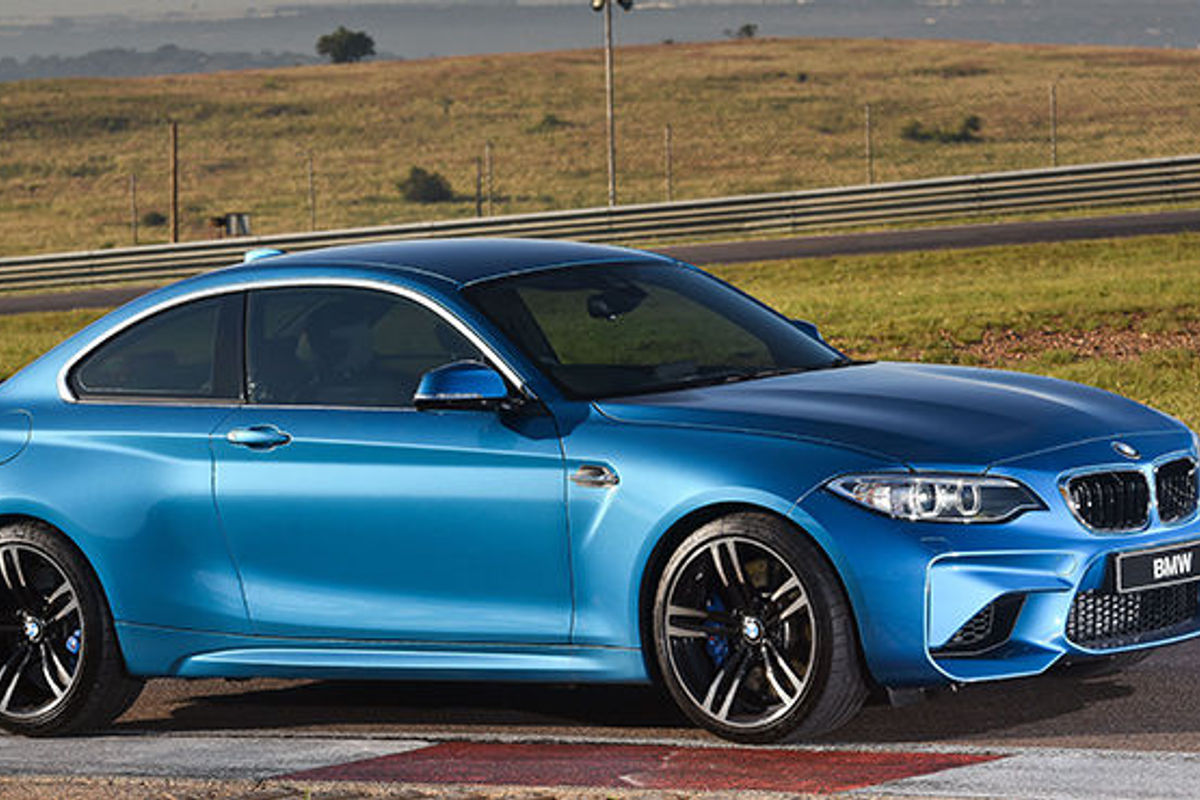
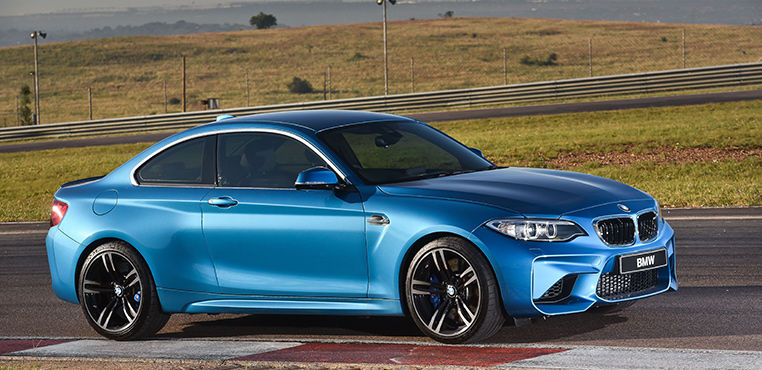
The BMW M2 was easily one of the most talked-about introductions of 2016. It appears to have everything that any sports car aficionado would want. Muscular looks. Check. Exciting engine sounds. Check. Sizzling performance. Check. Engaging, smile-inducing handling. Double check! The M2 is powered by an engine that has “future legend” written all over it.
Loosely based on the single-turbo N55 engine of the M235i, but with internals borrowed from the current M3/M4 and expertly tweaked by the masters at BMW’s M division, the M2’s six-pot delivers 272 kW and 465 Nm of torque, enough to blitz the benchmark 0-100 kph sprint in 4.3 seconds. The engine is mated with BMW’s superb 7-speed M-DCT dual-clutch transmission. It’s a thoroughly engaging combination, and wringing the engine’s neck all the way to the red line is seriously addictive.
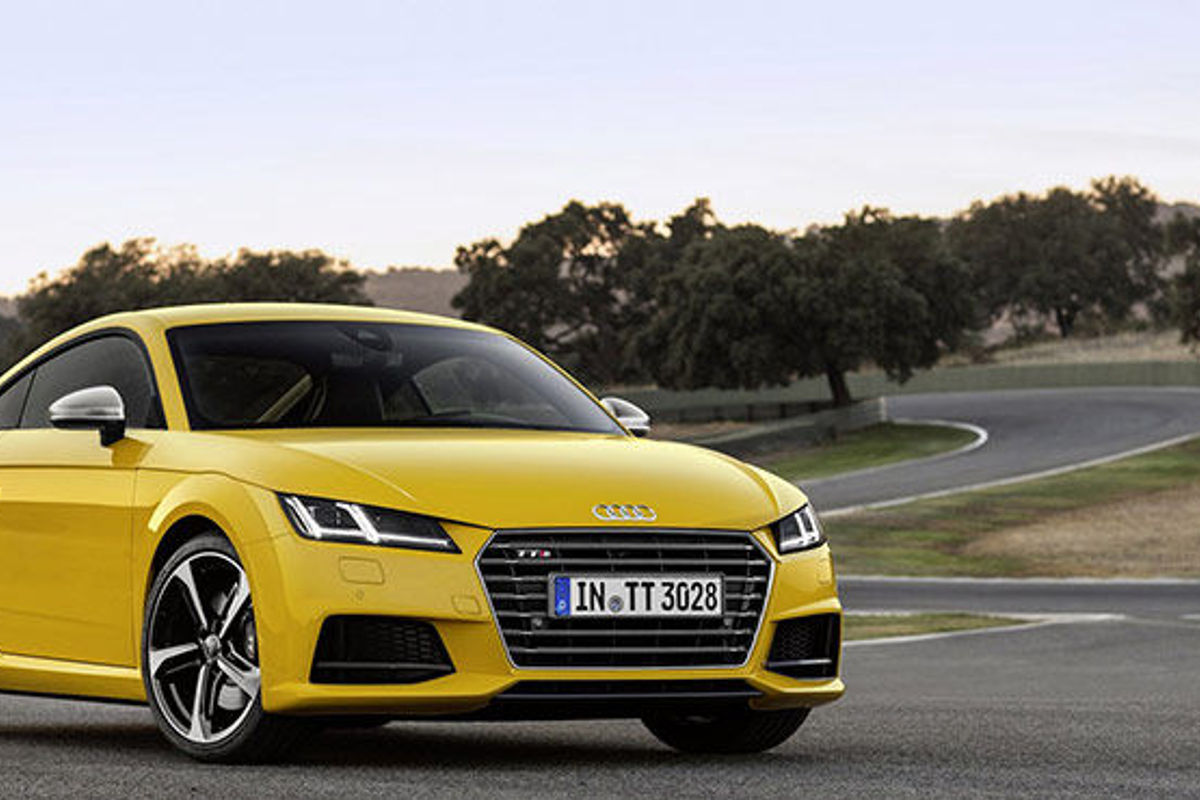
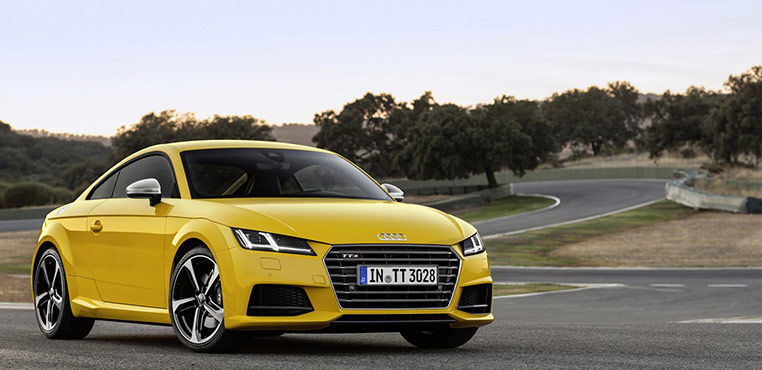
The Audi TT claimed the Fun Car title in last year’s Cars.co.za Consumer Awards, but its price has put it out of contention in that category. But there’s good news: it’s faster, sharper sibling, the TTS, is an ideal fit for the Performance Car category. Compared with the standard TT, there’s a substantial power hike. Although the displacement of the engine has remained the same as the 2.0T models, the power and torque outputs have increased to 228 kW and 380 Nm respectively. These gains may seem moderate (especially in terms of torque), but the TTS feels noticeably more eager and faster than standard Audi TTs.
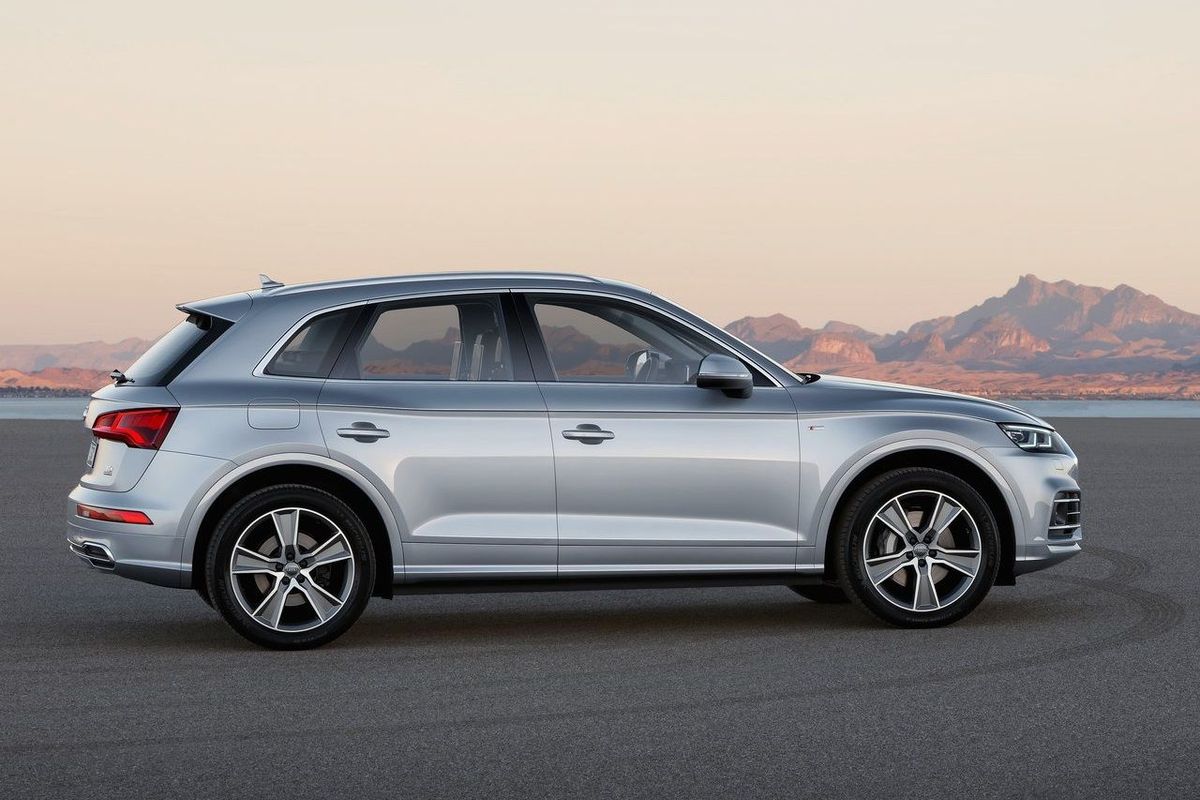
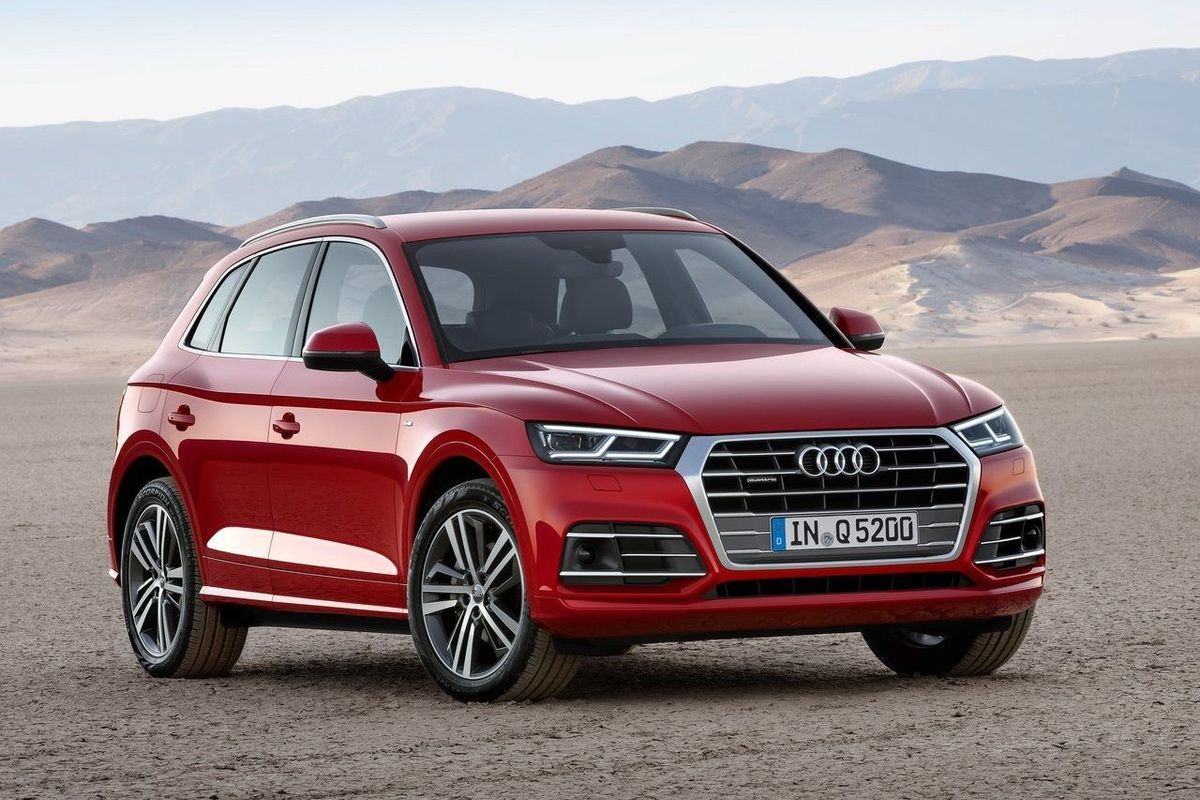
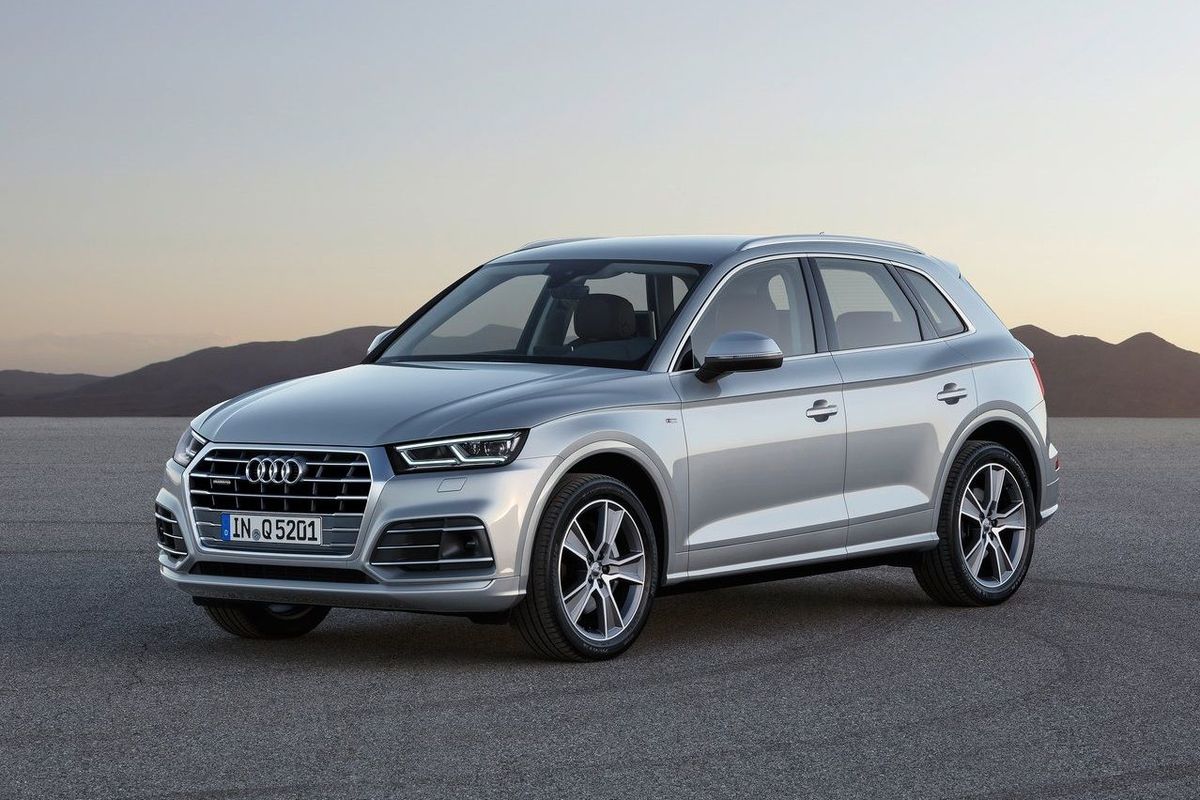
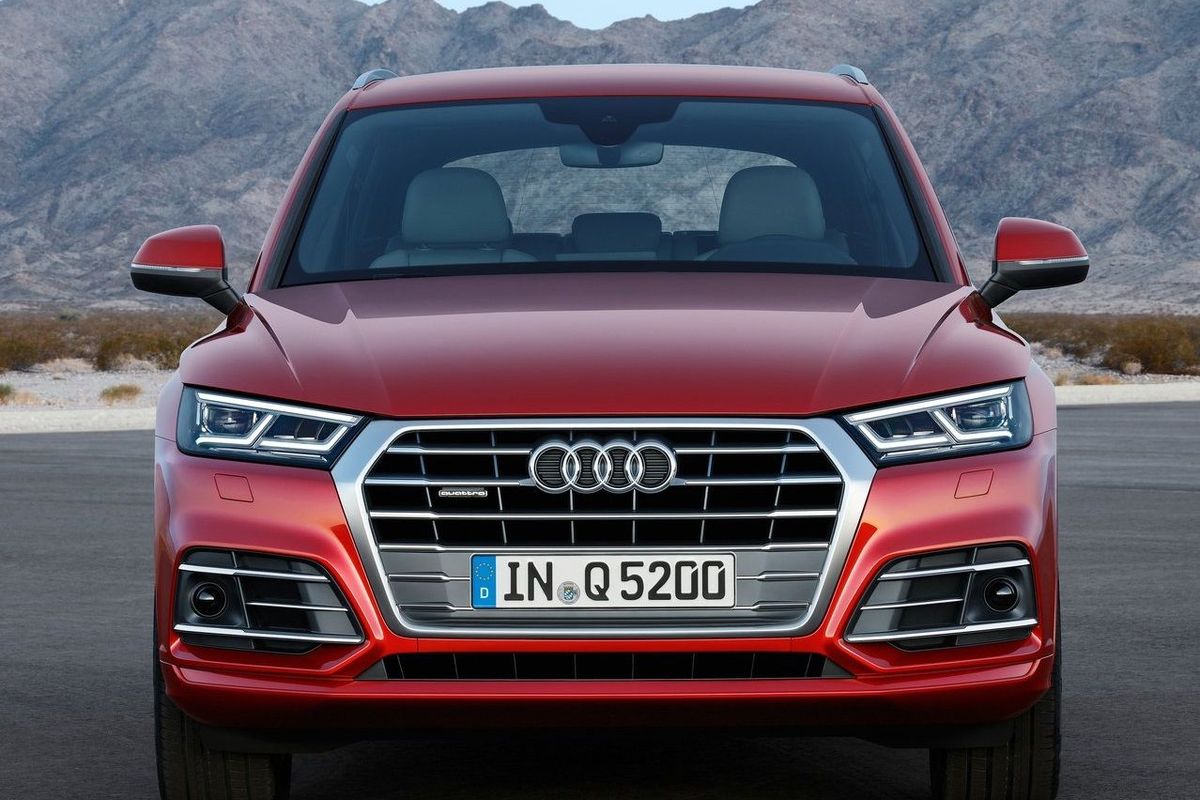
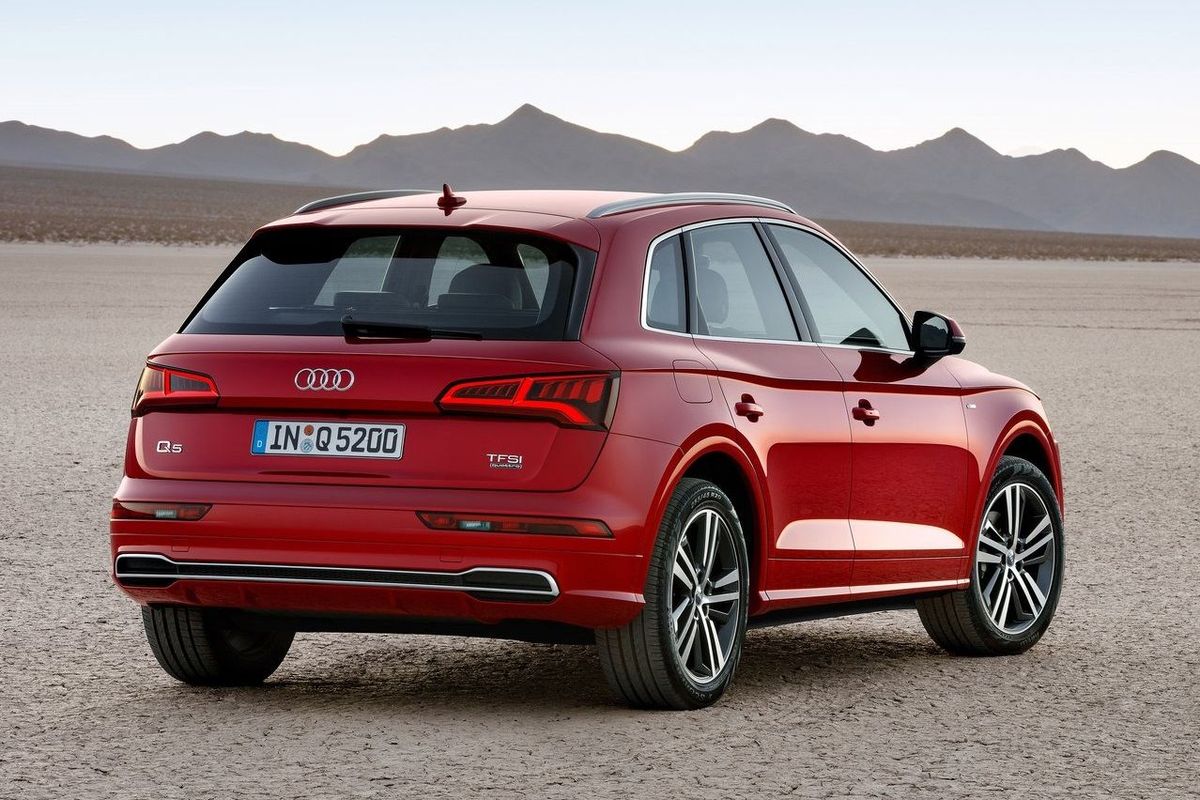
The second generation of Audi Q5 has just been revealed at the 2016 Paris Motor Show. Let's see what it's all about.
"The first Audi Q5 was for many years the world's best-selling SUV in its class. It was no easy task to design its successor, but that is precisely why it is so very exciting," says Rupert Stadler, Chairman of the Board of Management at AUDI AG. "With the new Q5 we are setting the bar a notch higher. Among the great innovations are the quattro drive system with ultra technology, highly efficient engines, the air suspension with damper control and a comprehensive line-up of infotainment and assistance systems."
The Audi Q5 has quite a reputation and the new model has changed substantially. The exterior hasn't changed dramatically, but there are a few changes. The headlights are available with headlights that are either in LED or high-resolution Matrix LED technology with dynamic turn lights. The vehicle comes with quattro permanent all-wheel drive system and the tail lights are also available with optional dynamic turn signals. There'll be 14 exterior colours to choose from, while five equipment lines are available – sport and design, the S line sport package, design selection and the S line exterior package. Under the skin, the new Audi Q5 is up to 90 kg lighter than the exterior model, despite it being a physically larger vehicle. Audi is claiming its new Q5 is the cleanest in terms of aerodynamics with a cd figure of 0.30.
The new Audi Q5 has five engines: four TDI engines and one TFSI. They have added up to 20 kW of power, with fuel consumption being significantly reduced.The 2.0 TDI engines in the new Q5, with outputs of 110 kW, 120 kW and 140 kW, are highly efficient. The two-liter diesel is also a highly efficient engine in the version with 140 kW. The two top engines combine ample power with efficiency. The further developed 2.0 TFSI has an output of 185 kW, yet it only consumes 6.8 L/100 km. The also revised 3.0 TDI increases output to 210 kW with 620 Nm of torque.
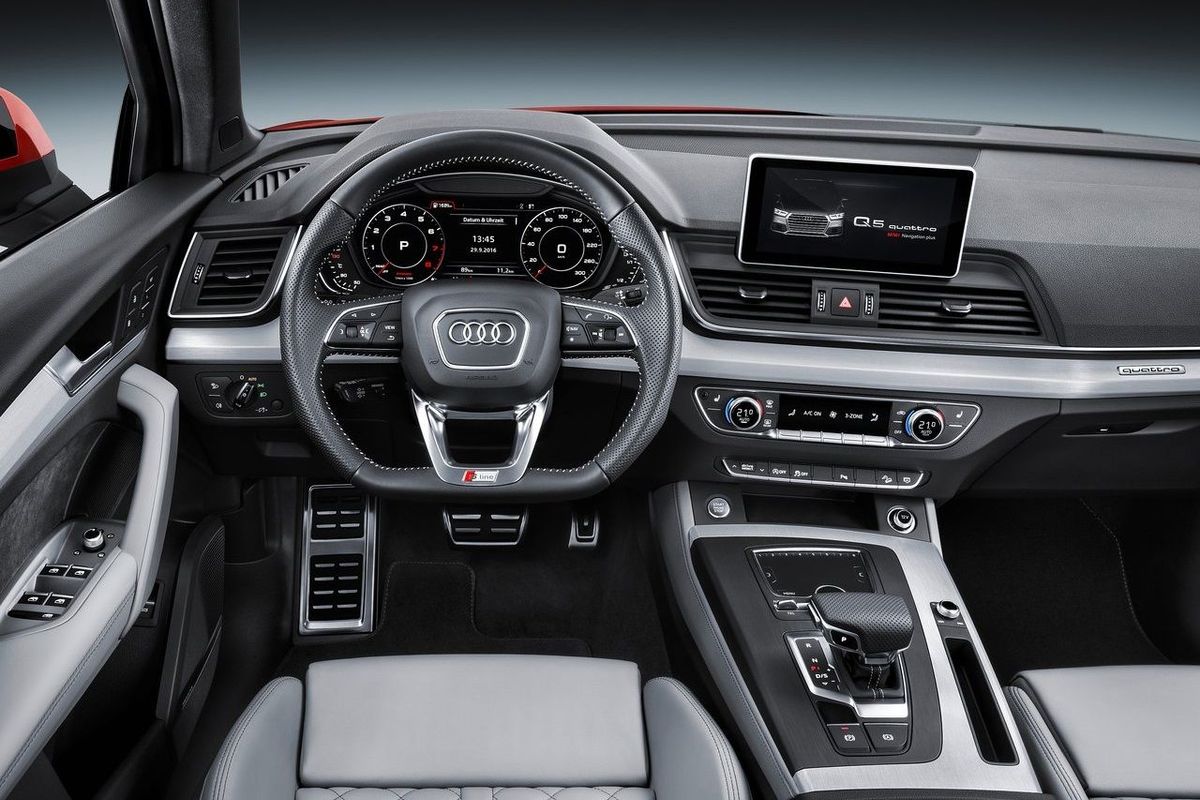
Audi's Virtual Cockpit is now available as an option and it features graphics on the high-resolution 12.3-inch screen. The MMI system can now recognise handwritten entries as well as gestures familiar from consumer electronics such as zooming gestures. MMI navigation plus utilises the Audi connect module to integrate a LTE module and a Wi-Fi hotspot which can connect up to eight mobile devices. The free Audi MMI connect app produces a close interconnection between the car and smartphone or a smartwatch and offers other services. They include remote checking of important vehicle states, online media streaming and transmission of a calendar from a smartphone to the MMI. The Audi smartphone interface also brings Apple CarPlay and Android Auto into the new Q5.
The new Audi Q5 also features semi-autonomous driving tech. These are divided into three packages – Tour, City and Parking. The predictive efficiency assistant helps the driver save fuel by specific information on the car's surroundings. Adaptive cruise control (ACC) including traffic jam assist can handle some of the steering work in slow-moving traffic. Audi active lane assist makes it easier to stay in lane. Distance warning alerts the driver when the distance to a vehicle drops below a safe distance. The vehice also features cross traffic assist rear, the exit warning system, collision avoidance assist and turn assist. orm excellently in pursuit of safety.
Audi Q5 South African Availability
The new Audi Q5 is made in Mexico. It will arrive at dealers in Germany and other European countries at the beginning of 2017. Audi South Africa have said that the new Q5 will be arriving in the second quarter of 2017.
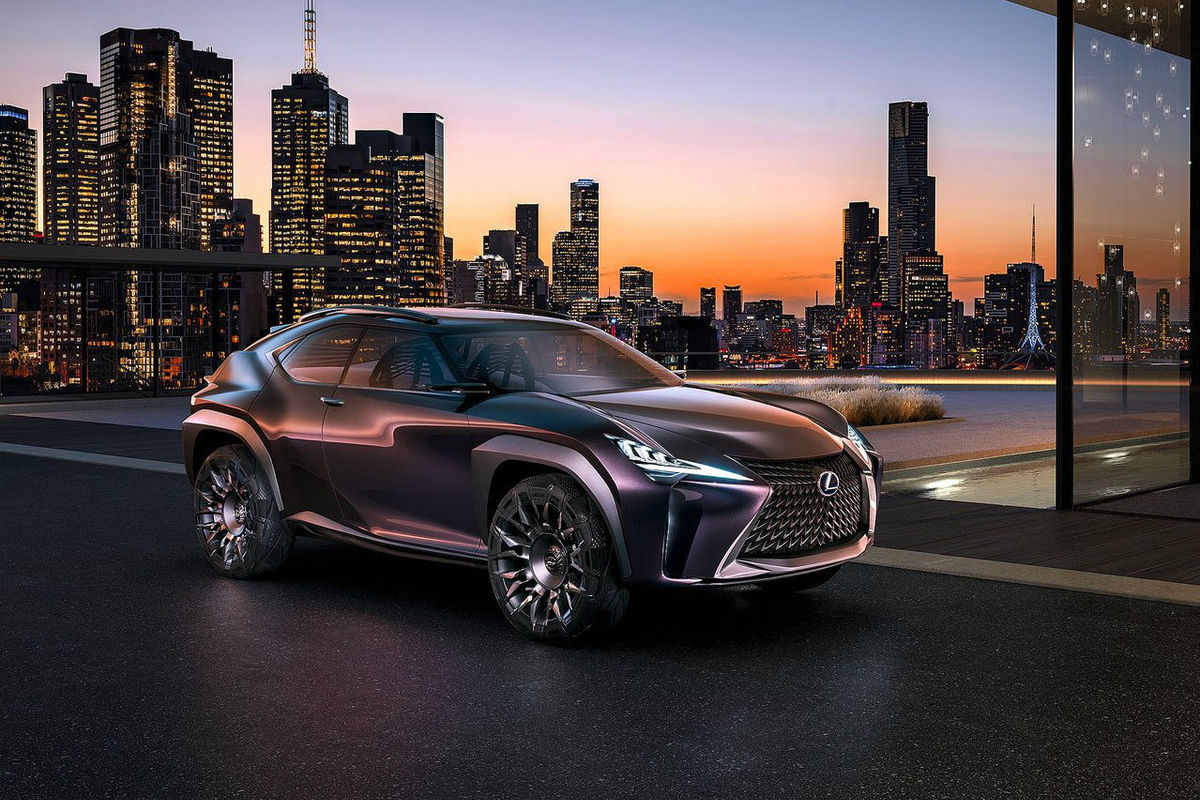
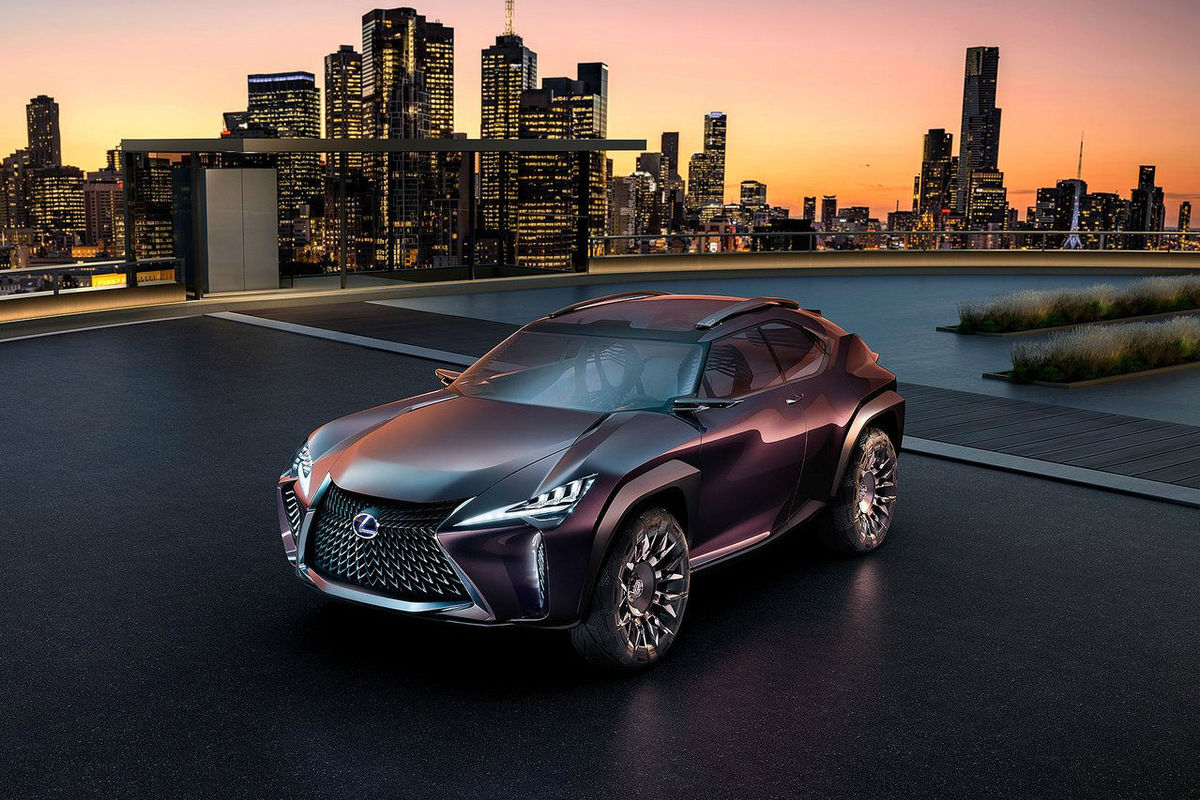
The Lexus UX Concept has made its official motor show debut in Paris, showcases CT 200h replacement.
Lexus took the covers off its latest concept at the Paris Motor Show. The UX Concept is an SUV/Crossover vehicle set to compete with new premium products such as the Audi Q2 and BMW X2.
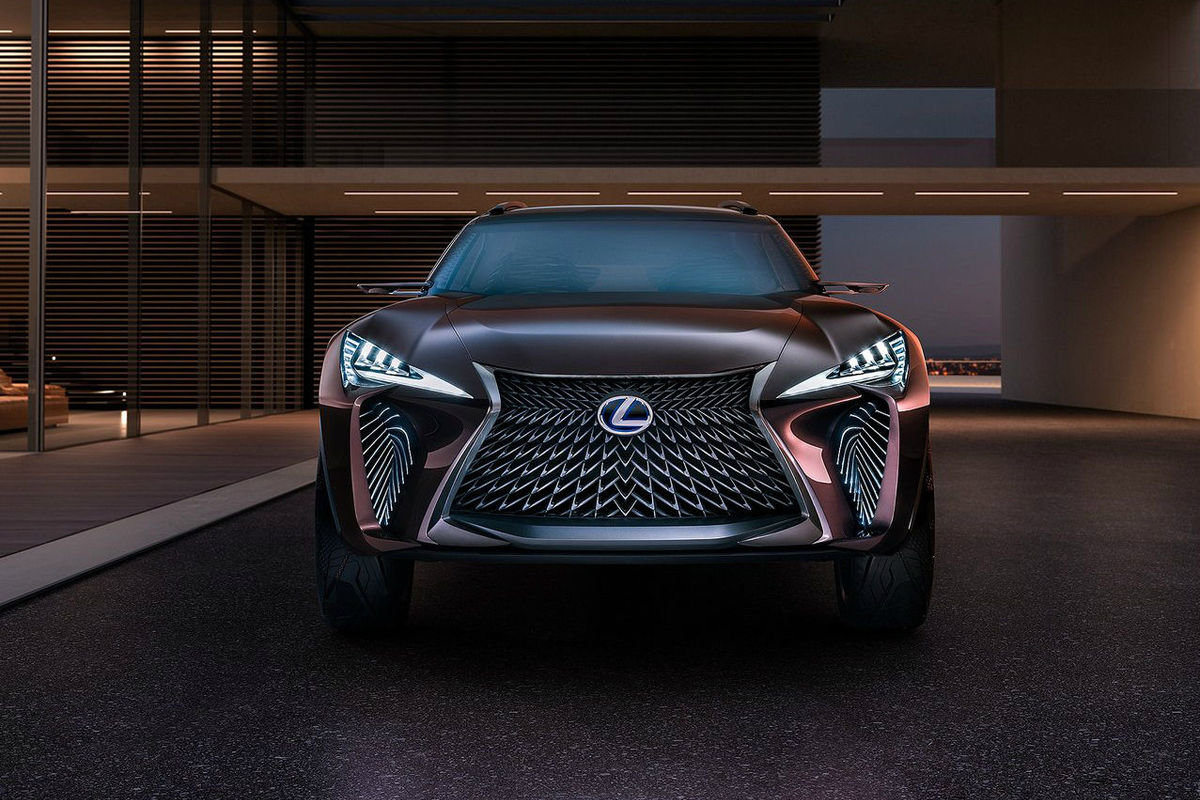
The UX concept provides a hint at Lexus’ future design direction and if you consider that the UX200, UX250 and UX250h monikers were recently trademarked in Europe, we are very likely to see multiple engines and variants of the SUV.
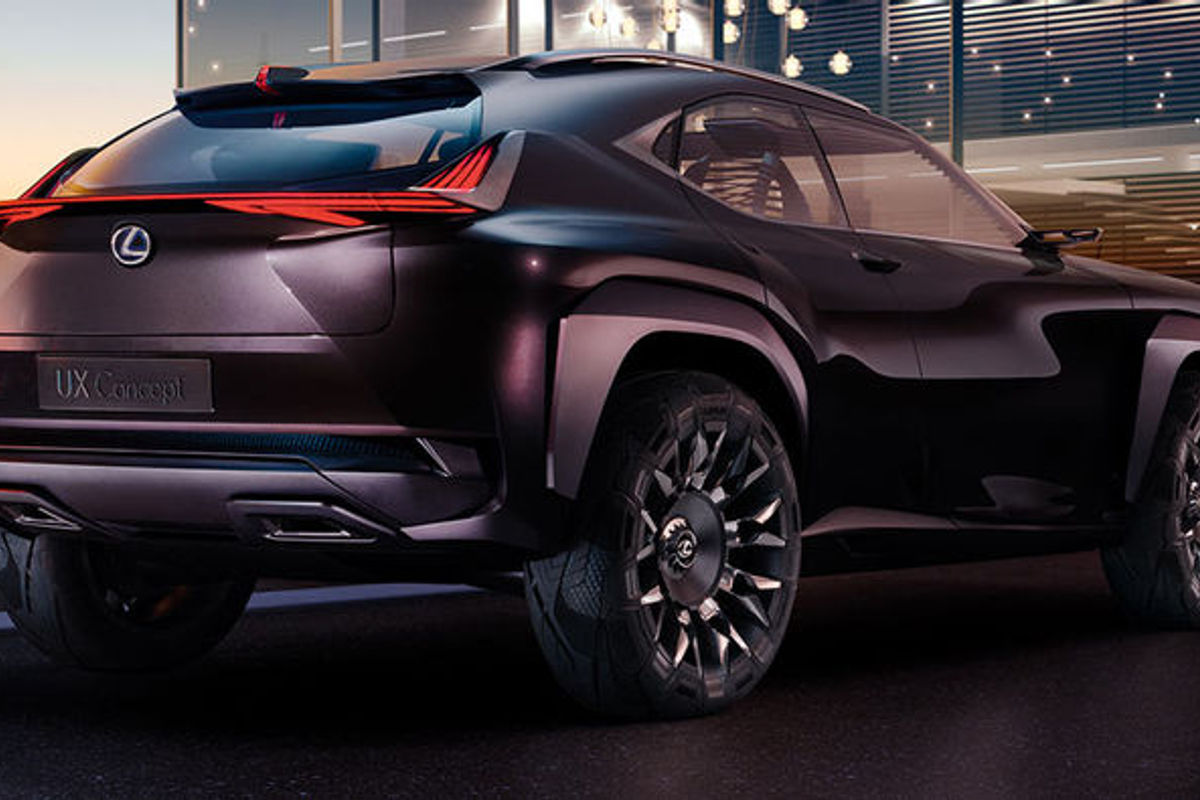
Details of the UX concept are limited at this stage, but judging by the images, it’s clear that the UX crossover concept features sharp, angular styling, much like the current NX and RX models. If the UX does indeed become a reality, it’s expected to slot in below the current NX. It could even ride on the recently released Toyota C-HR platform.
Lexus stated: “Its strongly differentiated identity is meant to appeal to a progressive, urban audience living in a connected environment. The UX Concept also showcases imaginative technologies for an immersive driver experience, while the interior marries traditional craftsmanship with high-tech manufacturing techniques.”
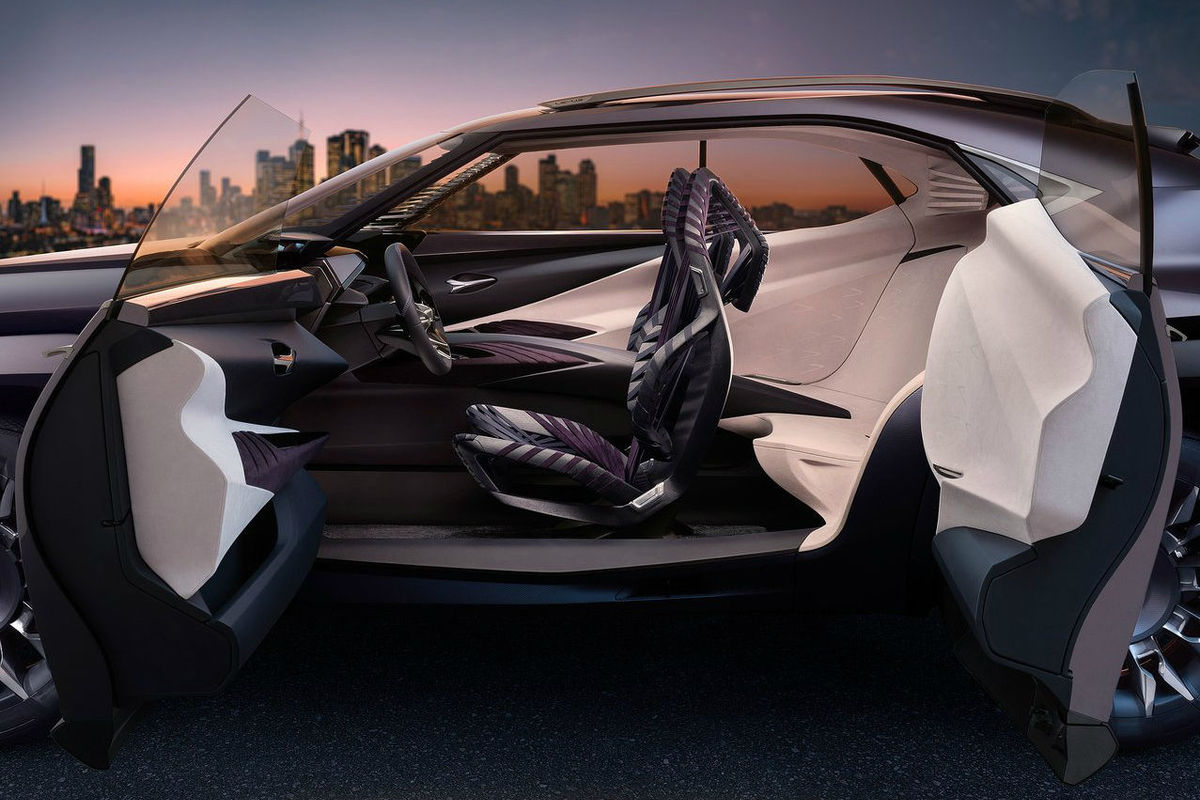
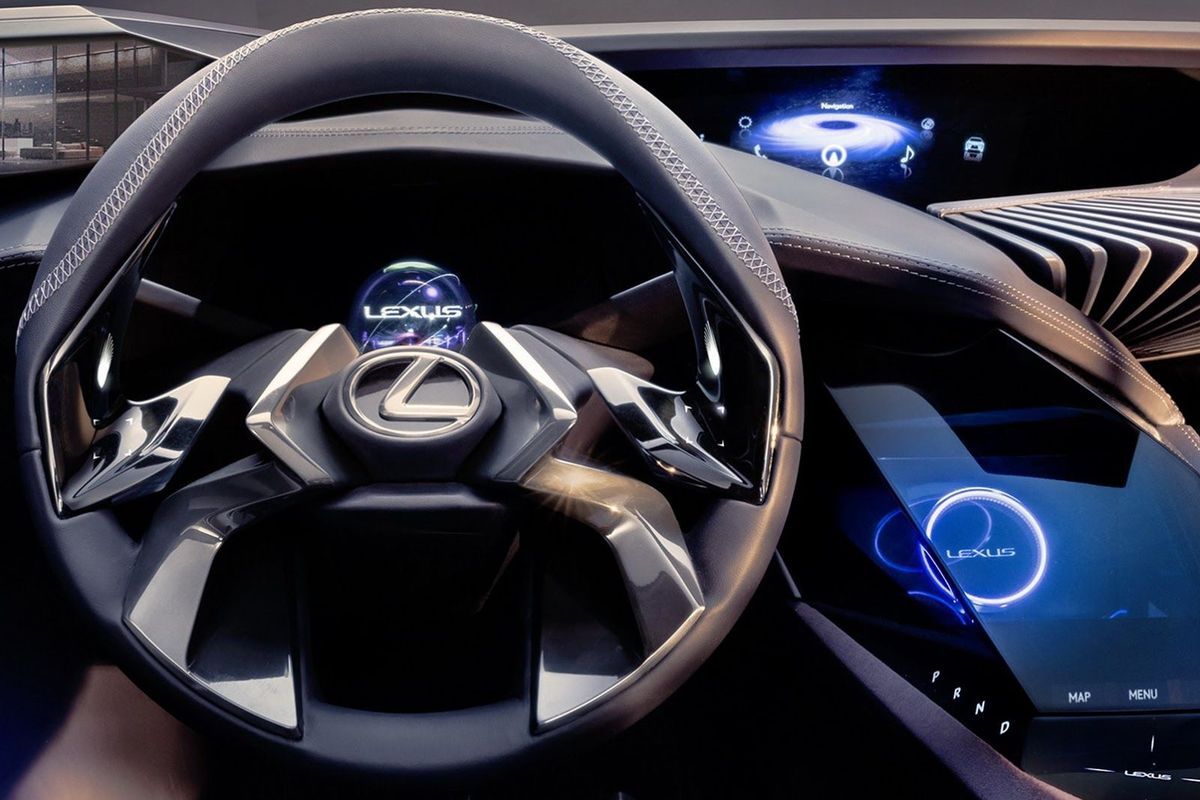
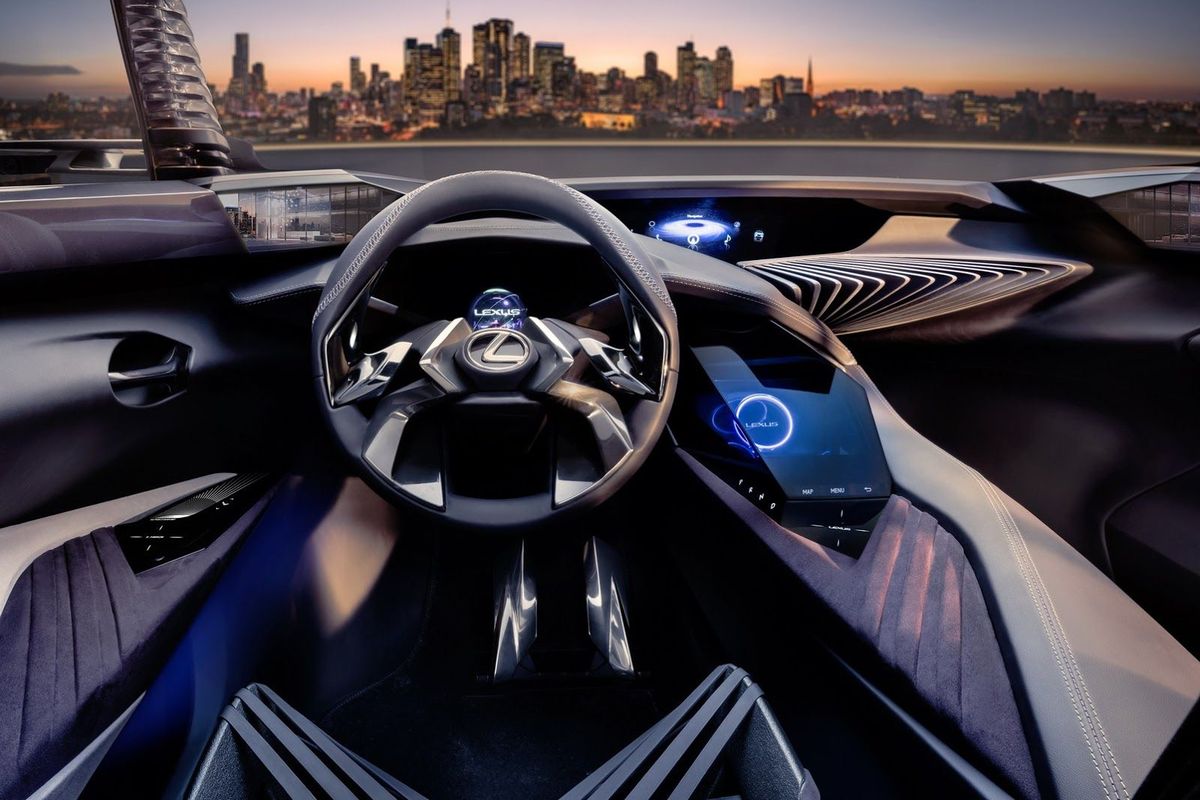
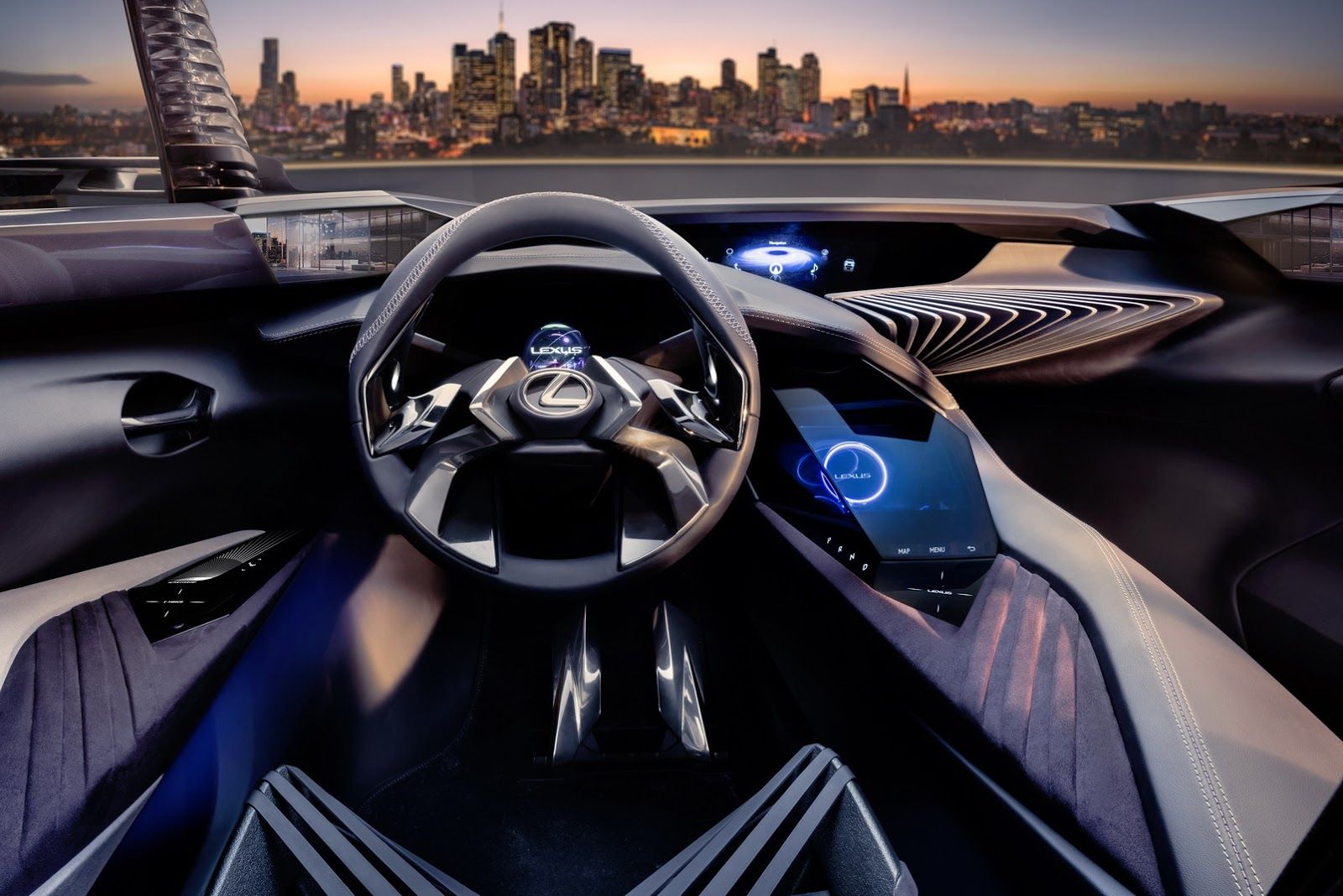
Lexus UX Interior
The UX crossover concept features a futuristic cabin that could very well inspire a new crossover model from Lexus.
The interior of the UX crossover concept features a transparent, floating hologram globe. The faceted crystal centre console houses a hologram style display that controls the infotainment system and the air-conditioning system. Electro-chromatic windows are fitted and the side mirrors have been replaced with e-mirror cameras. Furthermore, conventional switches are replaced with electrostatic switchgear, which are found under transparent covers in the cabin. The UX has been designed with 4 seats in mind. The 2 up front focus on a more sporty or involved experience where the back seats are all about comfort and relaxation.
“Our brief was to create a new genre of compact crossover; a vehicle that could create something unique from a customer's point of view?an innovative, three-dimensional, fully immersive user experience,” said Stephan Rasmussen, Designer at Lexus’ European Design Centre.