Subaru SA adds 5 new features to Outback/Legacy

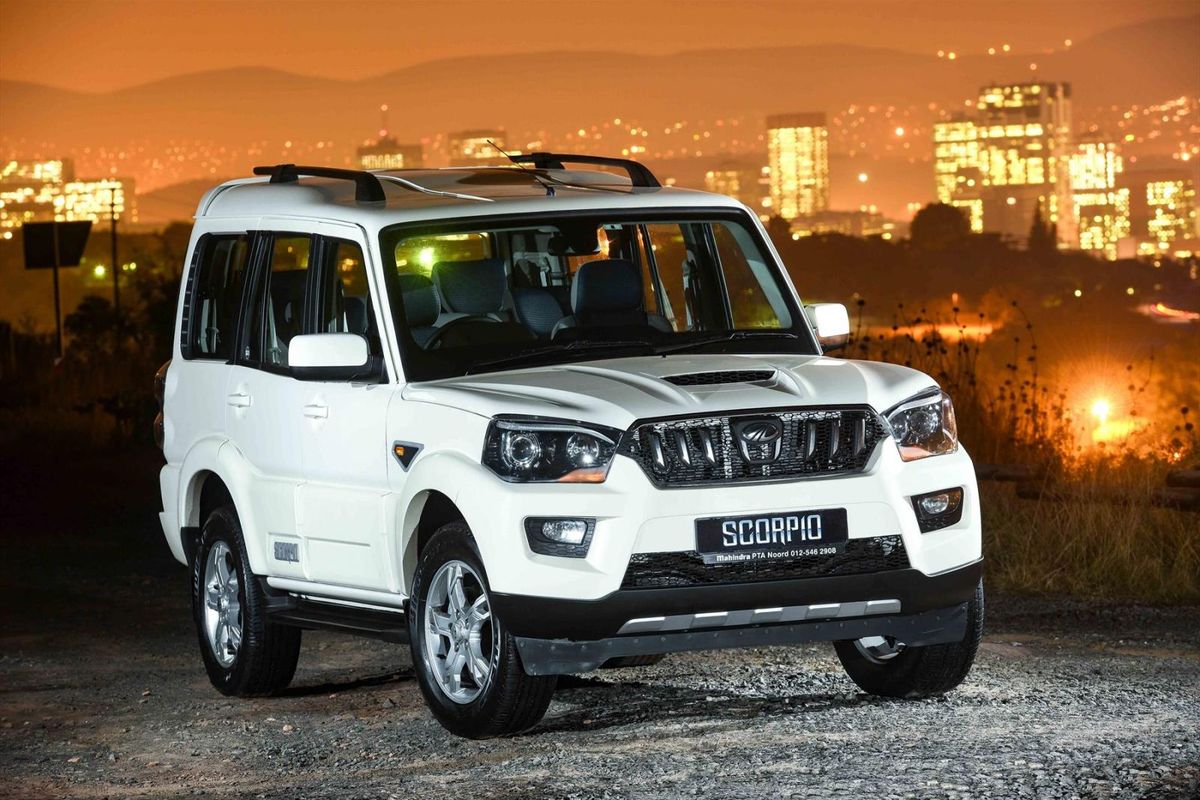
Subaru has introduced some new technological features to its Outback and Legacy models. The new safety features are offered as standard and are available on 2016 new models.

1. Rear-cross traffic alert 

Reversing out of a parking space is made less stressful when the car can detect if there’s another vehicle approaching in its path. The system alerts the driver by a flashing warning light in the mirror first. If the car senses that an impact is imminent/likely, it will sound a warning to the driver so that they can take avoiding action.

2. Blind spot detection with lane change assist 

Effectively works like a set of eyes in the back of your head. When you want to change lanes on the freeway, the system will warn you if there is another vehicle positioned in your blind spot when you activate the indicator (turn signal).

3. High-beam assist 

It allows the driver to set the vehicle's lights on high beam (brights) and forget about it. By utilising readings from an onboard light sensor, the system will automatically dip the main headlights for oncoming cars as well as for cars in front of you.

4. Automatic anti-dazzle mirror 

There is an electrochromic filament in your vehicle's rear-view mirror that reduces the glare created by bright lights of vehicles travelling behind you at night.

5. Emergency stop signal 

Under hard and sudden braking the hazard lights will flash in order to warn drivers in your vehicle's wake that your vehicle is decelerating rapidly and (hopefully) prevent a rear end collision from happening.

2016 Subaru Outback prices

2.5i-S Lineartronic CVT                   R519 000

3.6R-S Lineartronic CVT                  R579 000

2016 Subaru Legacy prices

Legacy 3.6 R-S CVT                         R569 000

All of these cars are offered with Subaru's 3-year/75 000 km maintenance plan and 3-year/100 000 km warranty.

Volkswagen Caddy Maxi Trendline 2.0 TDI DSG (2016) Review

The Volkswagen Caddy seems perennially underappreciated despite being supremely practical and pleasant to drive. Here's how the latest incarnation performed during its tenure in our test fleet…

We like: Practicality, build quality, refinement, good fuel efficiency

We don’t like: No cruise control, some useful features aren’t standard.

Also consider: Ford Tourneo Connect, Nissan NV200

What’s new?


In terms of design not much has changed, but the detailing is superb for such a utilitarian vehicle.

The latest version of Volkswagen’s uber-practical MPV landed on our shores in early 2016. The Caddy has been a popular vehicle in South Africa – at least 23 400 units of the previous version were sold to both private and corporate customers. If this new one is even remotely better, it bodes well for further sales success…

Click here to read our First Drive of the 2016 Volkswagen Caddy 

How does it fare in:

Comfort and Safety features


Excellent detailing and build quality evident in a cabin that feels far from utilitarian.

The Caddy's a pleasure to drive and be transported in. The driving position is so close to that of a smaller car, that you're only reminded of the fact that you're actually driving a multi-purpose van when you're parking the Volkswagen, which is longer than most passenger vehicles.

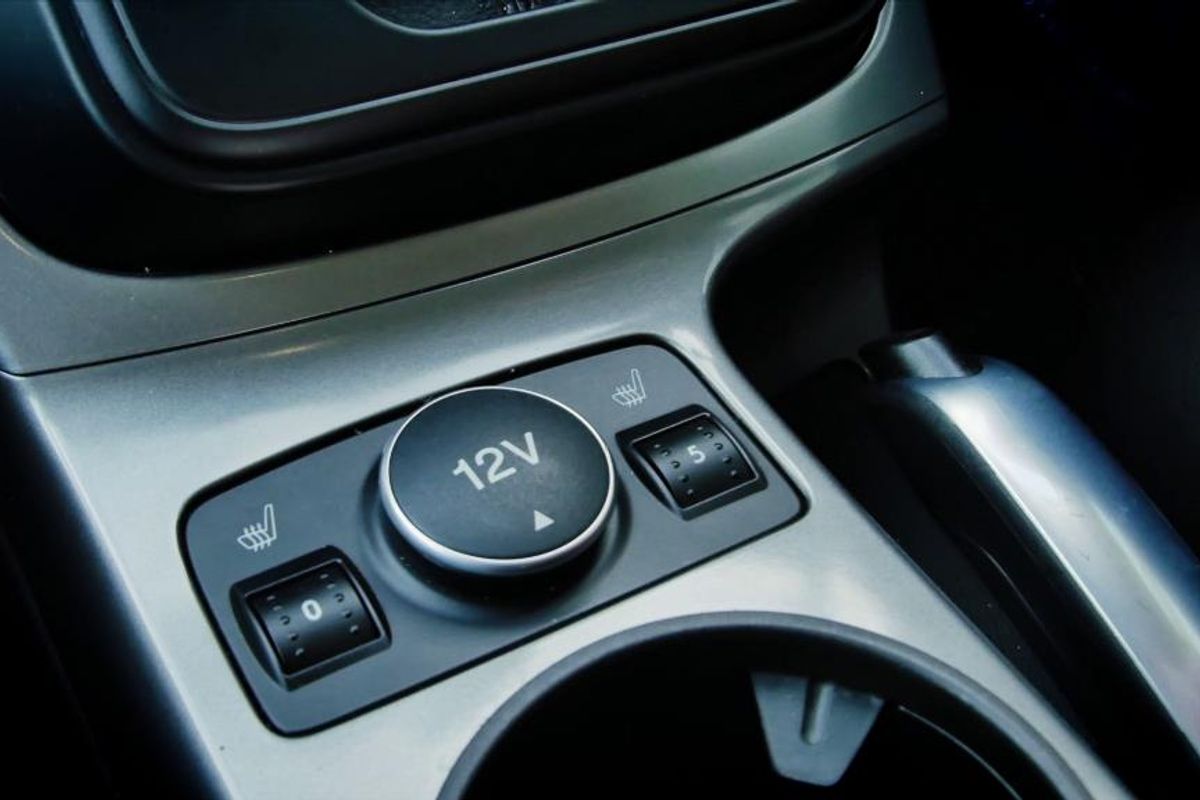
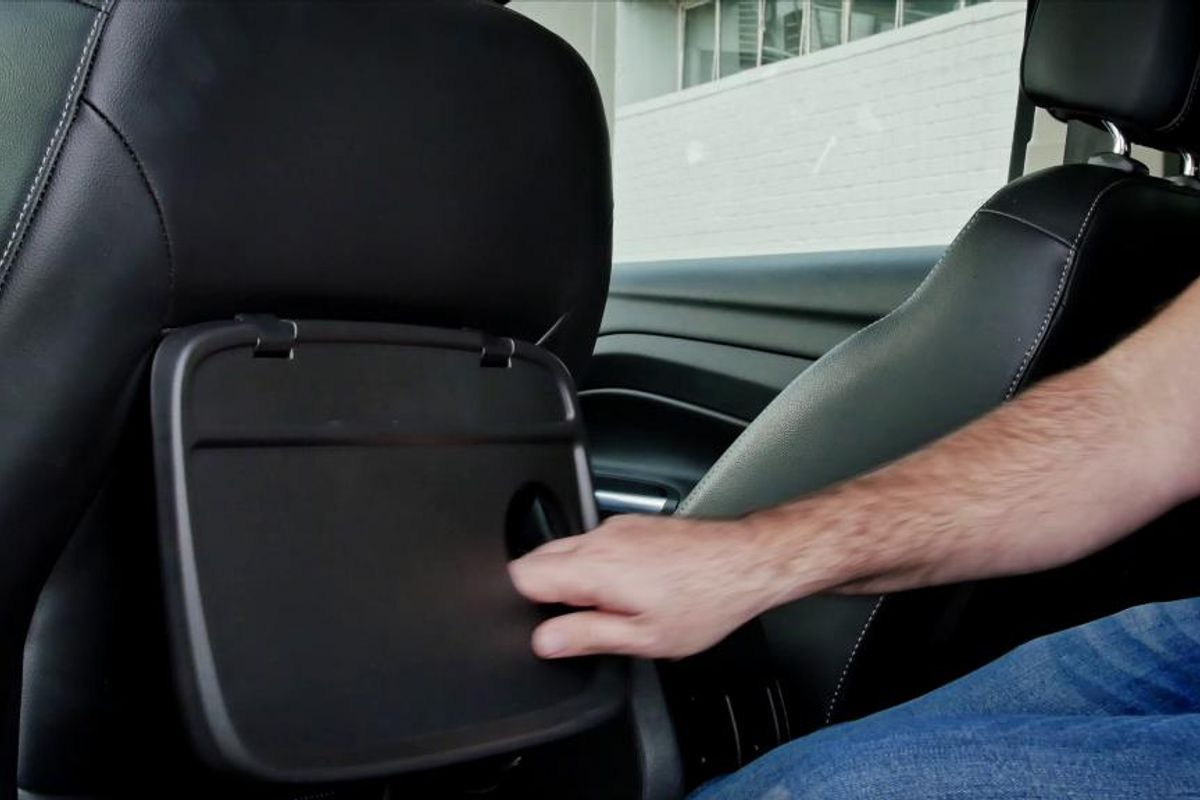
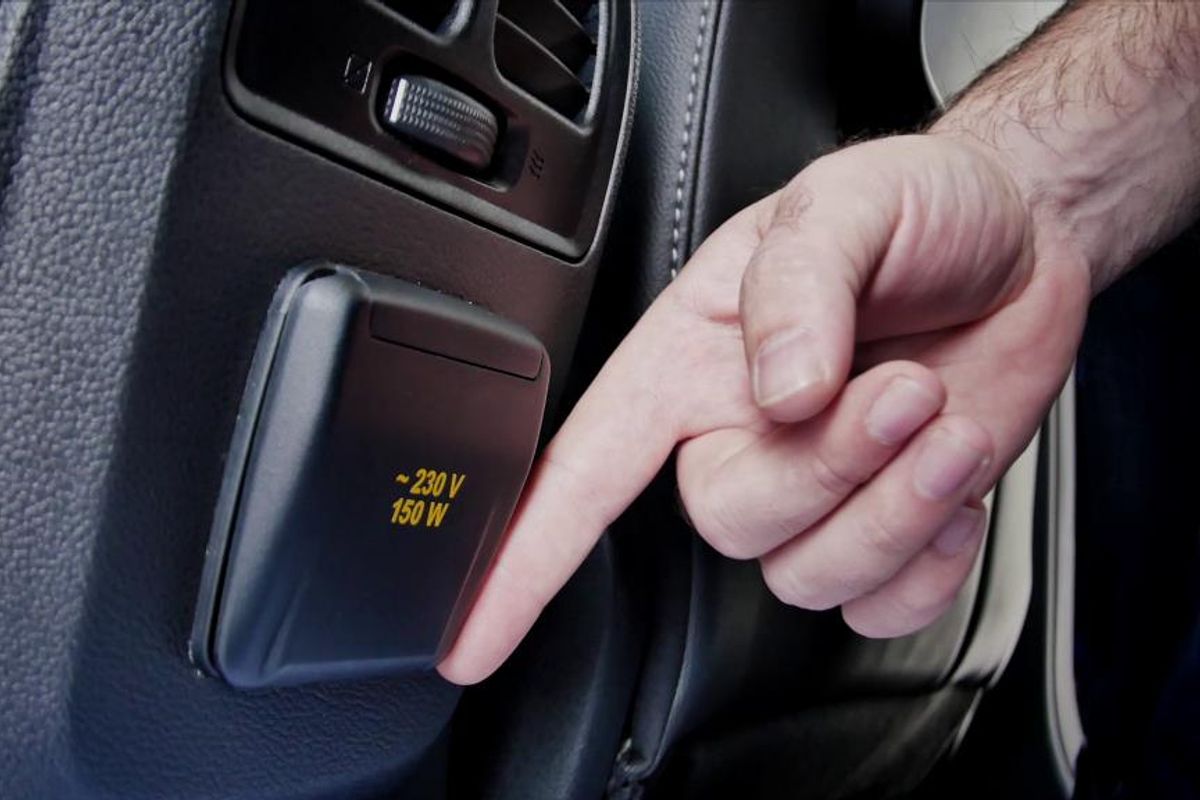
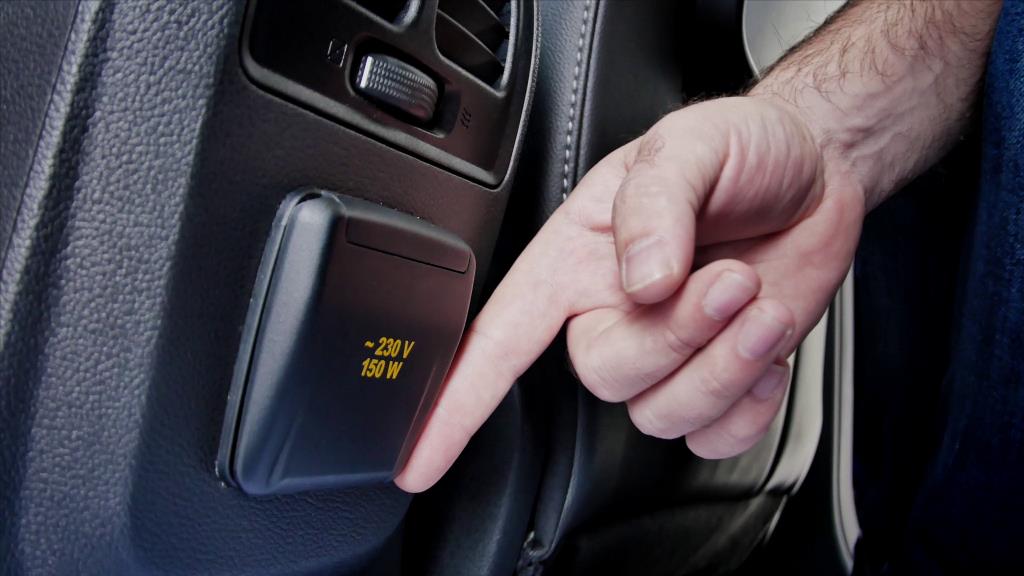
The attention to detail is exceptional and those who travel longer journeys will appreciate the overhead cabin storage above the front seats; there are several 12V sockets dotted about the cabin and there are plenty of cupholders too. Some seven-seat vehicles are awfully cramped in the third row and only suitable for small children, but the Volkswagen Caddy provides just enough headroom and legroom for adults.

The Volkswagen Caddy package does have a drawback… Many gadgets that you’d expect to be standard on a vehicle that costs almost R400 000 are unfortunately optional. Our test vehicle came specced with metallic paint (R3 700), bi-xenon headlights with daytime running LEDs (R11 950), park distance control with a reverse-view camera (R9 350), 16-inch alloy wheels (R8 200), a removable tow bar (R7 300), "Composition Media" touchscreen audio system with USB, auxiliary input and cellphone preparation (R5 700) and the Light and Sight package, which includes automatic lights and mirrors, plus an auto-dimming mirror (R4 450).

Safety features are generous, however. The Caddy features four airbags as well as traction control and ESP. This higher-specced model comes with Hill Hold assist and fatigue detection as well.

Performance? 

The engine line-up for the 2016 Volkswagen Caddy is largely carried over from the previous model. Both petrol and diesel engines are available. Tested here is the Caddy Maxi Trendline 2.0 TDI DSG which, as the name suggests, is powered by a 2.0-litre turbocharged diesel motor. It features 103 kW and 320 Nm, and power is transmitted to the front wheels via a 6-speed direct-shift (dual-clutch) gearbox (DSG). DSG is one of the finest products of its type and very hard to fault. The transmission also endows the Caddy with an attractive split personality – leave it to its own devices and it makes traffic driving a cinch, yet it is also quick-acting and offers manual shifting when the opportunity presents itself.

While outright performance is not this vehicle’s forte, it’s reassuring to know the Caddy can produce a brisk turn of speed, even when it’s fully loaded. This author volunteered to be designated driver and drove six people to an event. Despite the additional weight, the Caddy showed no sign of struggling to lug its cargo. Impressively, it was able to travel comfortably at the national highway speed limit and, thanks to the turbodiesel engine's generous torque, was able to overtake with ease.

The newcomer's ride quality is very impressive over variable road surfaces; a journey from Cape Town to Saldanha highlighted what a superb open-road cruiser this vehicle is. However, it has one glaring shortcoming – the absence of cruise control, which is not even available as an option.

Fuel economy  

Not only does the 2.0-litre turbodiesel engine perform ably, Volkswagen says this model will sip 6.3 litres per 100 km and in real-world conditions, the claim is not unreasonable. During the Caddy's test period, we repeatedly saw indicated consumption figures in the low sevens and, during the long drive to Saldanha, the figure dipped into the sixes, which was admirable. 

Cabin flexibility? 


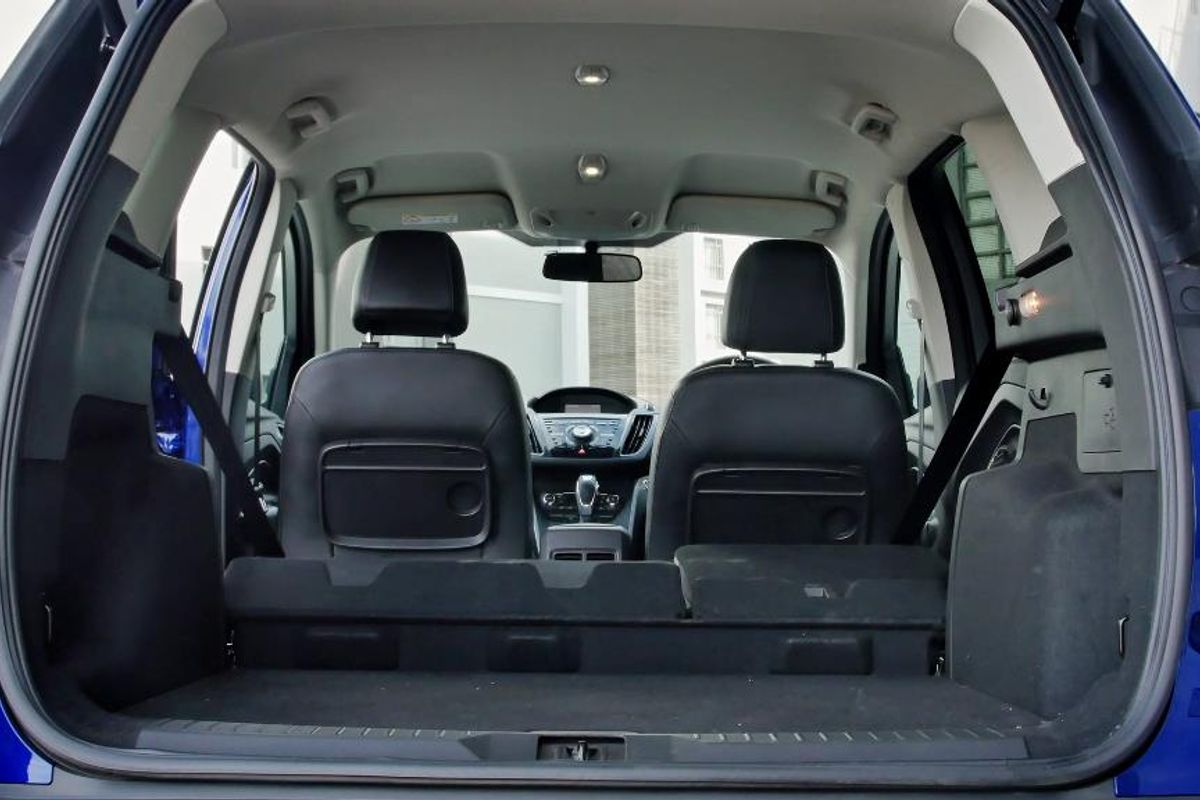
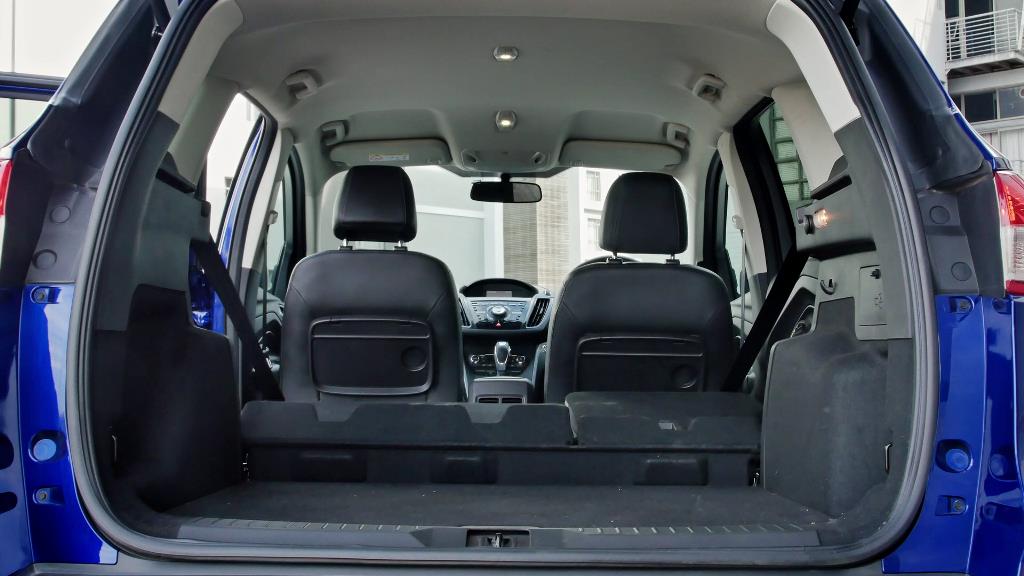
Remove the rearmost seats and tumble the second row forward to free up maximum utility space.

The interior avails a multitude of loading configurations The Maxi can seat 7 occupants in 3 rows of seats, the rearmost of which can be removed to further increase utility space. We tested this feature and found the process requires two people as the bench is heavy, but the resulting load area is sufficient for a mountain bike to be placed standing up. You're unlikely to find a bigger load area at this price level.

Even with all three rows of seats present the boot area is generously proportioned and can accommodate a wide variety of cargo. There are 6 lashing rings provided so that users can easily secure cargo. As far as practicality is concerned, then, the seating arrangement and utilisation of interior space are two of the Caddy's biggest strengths. The sliding doors are easy to operate too.  

Verdict

A comfortable ride quality, a spirited but frugal engine/transmission combination, supreme practicality and Volkswagen's reputation for good reliability make the Caddy a seriously sensible prospect. In Maxi guise, there’s plenty of space for 7 people plus their luggage and the ability to remove the third bench adds an extra dimension to the cargo-carrying ability.

Despite the market being dominated by compact SUVs and hatchbacks, there’s clearly still a need for a super practical and frugal people mover. Compared with its Ford Tourneo and Nissan NV200, the Volkswagen offers punchier performance and superior interior build quality. Apart from a long options list the Caddy hard to fault; we’re very enamoured with its skillset.

Volkswagen Caddy price in South Africa

The Volkswagen Caddy Trendline range starts at R358 200 for the 81 kW 2.0 TDI, while this top-spec Maxi Trendline retails for R407 200 before extras. The vehicle comes with a 3 year/120 000 km warranty, 3 year/60 000 km service plan. The intervals are set for every 15 000 km.

Team Opinions

"As a family vehicle the Caddy ticks all the right boxes. But it's got some surprising talents, too. This Caddy is brisk and frugal, and feels 'fun' to drive. It's a pity that it's so expensive, but you do really get a very practical all-rounder for that money." Hannes Oosthuizen

Compare the Volkswagen Caddy to the Ford Tourneo and Nissan NV200 here.

Browse available (new and used) Volkswagen Caddy stock

Read a first drive report from the launch of the Volkswagen Caddy here.


Peugeot 208 GT Line (2016) Review


The 208 is one of Peugeot’s most popular models internationally and the facelifted version sees the introduction of a number of interior and exterior improvements, as well as a new turbocharged engine. Will this lure more buyers to the French marque?

We Like: Styling, upmarket interior, ride and handling, space

We Don't Like: Pricey, engine flutter at low revolutions

Also Consider: Volkswagen Polo, Ford Fiesta, Renault Clio, Opel Corsa, Mazda2

Where does the 208 slot in?

Compact hatchbacks are tremendously popular in South Africa and buyers in this segment have a variety of products to choose from. The Peugeot 208 competes with the Volkswagen Polo, Ford Fiesta, Renault Clio, Opel Corsa and Mazda2, but whereas many of its rivals sell up a storm the 208 has never quite reached the same level of popularity here in Mzansi, which is probably due to a combination of boutique appeal and a small dealer footprint. The recently facelifted 208 is much improved inside and out, but is that enough to gain traction in this competitive segment? We recently tested the Peugeot 208 1.2T GT Line automatic to find out.

Key facts

The most important change to the 208 product lineup is the introduction of a new 3-cylinder, 1.2-litre turbocharged engine that powers this rather attractive GT Line version (test unit finished in Nacre White). The powerplant produces 81 kW of power and 205 Nm of torque. This test unit was specced with a new 6-speed automatic transmission, but can also be had with 5-speed manual transmission. 


Note the red detailing on the grille and even a small insert on the alloy wheel.

Being one of the sportier members in the 208 range, the GT Line derivative is equipped with a number of features that set it apart from the rest of the lineup. These include an "Equaliser" grille with red detailing and a gloss black finish for the grille's circumference, fog lamp surrounds and mirror housings. There are smatterings of chrome detailing, including the exhaust end, and rear privacy glass is also fitted. Another attractive feature on the 208 is the 3D LED "claw design" taillights. The 208 GT Line rides on 17-inch Caesium alloy wheels with a gloss black finish. There are 12 exterior colours to choose from.

The sportiness continues on the inside where you will find a predominantly black and red combination cabin that’s premium in look and feel. Comfy and well bolstered GT Line sports seats are upholstered in half-leather with contrasting stitching. The seats are height adjustable too. The leather-wrapped flat-bottomed steering wheel is small and can be adjusted for rake and reach and has mounted audio controls. The black seatbelts also feature red detailing and the pedals have an aluminium finish, as do the doors sills. The 7-inch infotainment touchscreen is simple to use and is Bluetooth compatible. USB and Auxilliary ports are also fitted (for connecting devices) and dual-zone climate control is standard on this derivative. 


Neat cabin is packed with features. Driving position won't appeal to all.

How does it fare in?

Performance?

The Peugeot 208 GT Line is a solid performer out on the road. Its power output (81 kW) matches those of its rivals, but it's quite torquey (205 Nm), which results in brisk acceleration between robots or out on the highway where overtaking is made easy. The 1.2-litre 3-cylinder turbopetrol engine is reasonably refined, but we discerned a fair amount of turbo lag when full acceleration was required. 

The 6-speed automatic transmission is relatively smooth-shifting. However, at low revs (when the Peugeot is creeping in congested traffic conditions, for example) the engine can flutter somewhat, which is a characteristic of small turbocharged engines – they tend to produce very little torque when the turbocharger isn't producing boost and are more susceptible to stalling. Fortunately, the automatic transmission/engine software keeps the 208 from stalling, but it seems a tricky task at times… The claimed zero to 100 km/h sprint time is 9.8 seconds and the top speed is reportedly 190 kph.

With its well-weighted steering, the 208 GT Line feels sure-footed and the ride quality is reasonably comfortable; it adequately deals with imperfections in the road. We also liked the smaller steering wheel, which inspires confidence and it increases the feeling of involvement while driving, but some testers found that when the steering column was at the ideal reach and rake settings for their respective driving positions, the 'wheel obscured some of the instrumentation.


The 208 1.2T GT Line's ride quality is quite comfortable, despite low profile 11-inch wheels and tyres.

Practicality?

When compared with its rivals, the 208 GT Line comes out on top in terms of boot space (311 litres) and that's with a full-size spare wheel in place. The rear seats are split in a 60/40 configuration and can be folded down, which increases utility space to a sizeable 1 152 litres. However, it must be noted that the rear seats don’t fold completely flat.

Rear passengers will be reasonably comfortable in the back with decent leg, head and shoulder room. The door pockets are practically shaped to store odds and ends and there are two cupholders provided for the rear passengers. For buyers who need to mount child seats, ISOfix anchors are fitted. For the driver and front passenger, there is a pair of cupholders and additional storage can be found ahead of the gear lever as well as the refrigerated glove box.


7-inch touchscreen makes smartphone connectivity a cinch.

Fuel Economy?

Peugeot claims a respectable 4.5 L/100 km for both the manual and automatic 1.2T GT Line derivatives. During our test, we achieved just over 8.0 L/100 km with a mix of normal and spirited driving in urban and highway situations. The 1.2T GT Line auto features automatic engine Start/Stop that helps reduce consumption by switching the engine off when the car comes to a stop. We believe that when driven with a conservative driving style, the derivative could achieve at least 7.0 L/100 km.

Safety?

The 208 1.2T GT Line auto excels in the safety department and comes equipped with ABS with EBD, Emergency Brake Assist, traction control, electronic stability control and a total of six airbags. Electric child locks for the rear doors are standard. The 208 also achieved a 5-star EuroNCAP safety rating.


The GT Line's exterior adornments ramp up the 208's kerb appeal appreciably.

Verdict

The Peugeot 208 GT Line is a well-packaged product that will appeal to a fashion-conscious clientele in particular. It’s pleasing to the eye, its interior boasts smart finishes and features and the new turbo engine delivers good performance under most conditions. It’s quite practical too, with decent space for passengers and luggage. However, the GT Line’s Achilles heel lies in its pricing. At over R300 000, the GT Line sits in nowhere land and this derivative is notably more expensive than the Volkswagen Polo 1.2 TSI Highline (R275 300) and the Ford Fiesta 1.0T Titanium (R264 900), to name two examples.

Although the Peugeot 208 1.2T GT Line auto is appealing in many ways, its pricing is uncompetitive. It's a pity because the French-made hatchback is better than its competitors in terms of torque output and luggage capacity. Some buyers value style over everything else and they might be willing to fork out the extra cash for this derivative, but there is definitely better value for money in the rest of the 208 range. Perhaps consider more affordable derivatives such as the entry-level 208 1.0-litre Pop Art (R169 900) or the 208 1.2-litre Active (R224 900).

Peugeot 208 1.2T GT Line auto price in South Africa

The Peugeot 208 1.2T GT Line costs R304 900, which includes a 3-year/100 000 km warranty as well as a 3-year/45 000 km service plan.

Compare the Peugeot 208 1.2T GT Line auto versus its Volkswagen Polo and Ford Fiesta rivals

Peugeot 208 1.2T GT Line auto quick specs

Volkswagen Polo Vivo (2016) Specs & Price

The Volkswagen Polo Vivo is often South Africa’s best-selling passenger vehicle. It vies for the top spot on the sales charts with its sibling (and successor), the Polo. What the Vivo offers, is an older-generation model Polo with a price tag that appeals to the more budget-conscious buyer.

Volkswagen has recently added multiple special editions to its Polo Vivo range. If you are interested in buying a Polo Vivo, this article will advise you on which model should suit your needs best.

Polo Vivo 1.4 Conceptline

This is the cheapest Vivo that you can buy out of the box. It comes in hatchback and sedan versions and fulfills the most basic motoring need: no-frills everyday transport. The hatchback costs R155 700 and comes with a proven 1.4-litre engine, so you can safely assume that Volkswagen has ironed out mechanical issues (if there were any). With outputs of 55 kW and 132 Nm, the unit is tuned for reliability and although fuel economy is fair (at 6.2 L/100 km), you should get around 700 km on a 45-litre tank of petrol. Lightstone Auto’s sales figures for this model indicate that it is the best-selling derivative.

If you’re looking for a better fuel efficiency, the Blueline Vivo (R162 500) uses low resistance tyres. Volkswagen increased the wheel size to 15-inches on this model and has lowered the suspension to reduce air resistance. The result is a claimed fuel consumption of 5.8 L/100 km. The Blueline is a bit slower, however. It takes 13.5 seconds to get to 100 kph.


The cabin of the previous-generation Polo has aged remarkably well and does solid duty in the Vivo.

Need more power?

As is to be expected, a model with more power comes with a larger pricetag. The 1.4-litre engine in the Trendline has more power (up from 55 kW to 63 kW), but all other vital statistics remain the same. Major additions to the Trendline occur on the inside. Volkswagen includes Bluetooth, Auxilary and USB inputs, a CD player and front electric windows as standard. The price escalates to R169 400 for the extra connectivity. This model is also offered with an automatic gearbox.

Exclusivity?

If you want your Vivo to look a little different from the others, Volkswagen offers the 1.4 Eclipse and the 1.4 Street models. They offer a slight difference to the exterior and interior colours and cloth materials, but be wary of the spec levels. The Street has the engine from the Comfortline, but the spec from the Conceptline. The Street costs R167 700 and the Eclipse R178 400.

The 1.6-litre range

If you require a little more oomph from your Vivo or tend to transport a few passengers, your best bet is to opt for the 1.6-litre model (if it is within your budget). It has more power (77 kW) and torque (155 Nm) and the claimed fuel consumption isn’t much worse (VW claims 6.6 L/100 km). It costs more, but comes with front fog lamps that distinguish it from the 1.4-Trendline. You can get a 1.6 Comfortline for R185 000. Be mindful of the fact that for not an awful lot more money you can get a much newer, more powerful Mazda2 for R191 800 or a Renault Clio for R209 900 that offers way more specification.

The GT Model has been replaced with the GTS model and is the sportiest-looking model in the Vivo range. There’s no performance advantage, but you get sporty-looking detailing in the form of a black-painted roof and black wing mirrors. Inside there’s a revised interior that mixes red stitching with a sports pedal cluster. The GTS retails for R197 200.

Need some ground clearance?

If you like the look of a slightly raised hatchback or sometimes roam down a gravel track then the Vivo Maxx is an option. There’s a 15 mm raised suspension that’ll be a boon on dirt roads but other than that there’s no other notable difference.

And now, a van.

That’s right, you can now get a Vivo panel van called the Xpress. The rear seats are removed and the rear of the Vivo is turned into one large load bay. It holds 1 060-litres of space and can withstand 519 kg of weight. It might be tough to move all that weight along as it is specced with the 1.4-litre 55 kW engine. It is classified as a commercial vehicle, so you can claim the VAT back on the R163 700.

Volkswagen Polo Vivo Pricing

For the latest pricing on the Polo Vivo, Click here

Interested in a new Vivo? Volkswagen often runs special on Cars.co.za's New Car Specials Page

Search for second-hand Polo Vivos on Cars.co.za

Want a Volkswagen, but something a little more youthful than a Vivo? Watch our video on the Volkswagen Polo Vivo vs VW up!


Mazda CX-5 (2016) Review

How much merit is there in buying an all-wheel drive, top-of-the-range Mazda CX-5? The flagship CX-5’s sales figures suggest buyers believe “quite a lot”. How does the 2.2 DE AWD Akera model stack up?   

The diesel-powered Mazda CX-5 offers all-wheel-drive capability, but is this the CX-5 to have? This review will help you make an informed decision.

We like: generous specification, quality interior and excellent ride/handling balance

We don’t like: eye-catching 19-inch rims, low ride height are drawbacks on off-road routes 

Also consider: Ford Kuga 2.0TDCi AWD Trend and Toyota RAV4 2.2D-4D AWD VX

What is the Mazda CX-5?

The CX-5 is one of the longest-serving products in Mazda’s model line-up, but thanks to the fact that the Hiroshima-based company has been doing business in the South African market in its own capacity since late 2014, the venerable compact SUV has benefited from better marketing support and overall exposure. Shortly before the model underwent a facelift in April 2015, we tested this range’s flagship version and were impressed by its combination of luxury and overall refinement.

Notable changes 

This Akera-specification model is the best possible showcase of the cosmetic updates of the CX-5, including the bold grille, adaptive LED headlamps and 19-inch alloy wheels. Inside, the most noticeable upgrades are the provision of an electronic parking brake and the slick full-colour MZD Connect infotainment system that includes a standard satellite navigation system.


Stylish 19-inch wheels are standard on the Akera AWD model.

How does the Mazda CX-5 fare in terms of?

Kerb appeal

Even though the CX-5 has been available in South Africa since 2012, its exterior design (claimed to be the first one from Mazda to incorporate the now ubiquitous Kodo design language) has aged remarkably well. The two-tone 19-inch alloy wheels fill out the wheel arches handsomely and complement the side cladding and black elements in the bumpers. The front end looks sharpened and particularly distinctive. Styling assessments are utterly subjective, but if a flagship compact SUV needs to make a statement, the 2.2DE AWD Akera, finished in Soul Red metallic paint, certainly hits the mark.

Luxury specification

At this price level, features such as leather trim with electrically-adjustable driver’s seat, climate and cruise control, automatic lights, wipers and self-dipping rear-view mirror ought to be standard issue — and the CX-5 has all of those — plus parking sensors and a reverse-view camera.

However, the 9-speaker Bose sound system, which operates in conjunction with the smartphone- friendly MZD Connect interface (with satnav!), the blind spot monitoring and lane keeping assistant systems, and the adaptive LED headlights, which use a camera in the nose of the vehicle to alter the Mazda’s lighting characteristics based on traffic conditions, are nice-to-have features that are standard issue. What’s more, the keyless entry and start functions are especially convenient.


Updated cabin is loaded with standard equipment and build quality is superb.

Performance and efficiency

The hallmark of the 2.2-litre 4-cylinder SkyActiv-D motor is excellent refinement, especially for a turbodiesel motor. In the case of the Akera-specification model, the engine produces 129 kW and 420 Nm (at 2 000 rpm), and the powerplant is well-matched to the six-speed transmission, which changes ratios very slickly. Previous experiences with the CX-5 have taught us that the Mazda is an excellent tourer, and although the manufacturer claims an average fuel consumption of 5.9 L/100 km, we saw indicated figures in the early sevens, which are quite acceptable for a vehicle of this size and heft.   

Handling and ride quality

The CX-5 is well-known for its sure-footedness, as well as a well-weighted and wieldy steering setup, but considering its 19-inch tyres have a 255/55 profile, which means they have narrower sidewalls with less “give”, the Akera’s remarkably forgiving ride quality is one of its finest traits. The Akera may offer all-wheel drive ability, but its ride height is 150 mm, which makes mild to serious off-road excursions, well, less than advisable. However, bear in mind that four-wheel traction and dynamic stability control are advantageous on gravel roads — or any slippery road surfaces, for that matter.     


The spacious cabin and reasonably capacious boot endow the CX-5 with good touring car credentials.

Practicality

Superior build quality and interior finishes are major indicators for future durability, and in that regard the Mazda must rank near the best in its class. Although its claimed boot capacity of 403 litres is less than copious, the CX-5 offers reasonable rear legroom and good loading versatility by virtue of a rear backrest that can split and be folded forward in a 40/20/40 configuration, which not only facilitates loading wide, bulky objects, but will allow two passengers to sit on either side of a long object. What’s more, the tonneau cover moves in unison with the tailgate (it never gets in your way).


Low ground clearance and low-profile wheels mean that the CX-5 is not really an off-roader.

Verdict

One could make a case to save almost R60 000 by buying the identically-specced 2.5-litre petrol-engined CX-5 (Individual) derivative, or, if you want optimal fuel economy, opting for the far more moderately specced two-wheel drive 2.2DE Active derivative, which offers lower engine outputs but also the convenience of an automatic transmission. Ultimately, however, despite the fact that the Akera costs near the R500 000 mark, which seems steep for a compact SUV, it offers very good value for money compared with the similarly-priced Ford Kuga 2.0TDCi AWD Trend and the slightly more expensive Toyota RAV4 2.2D-4D AWD VX, which recently underwent a facelift too. 

For those looking to buy a compact SUV as a luxurious vehicle, as an alternative to compact luxury sedan, for example, the Mazda wants for nothing, spec-wise. As a family vehicle, the all-wheel-drive configuration and its allied safety systems represent added peace of mind over and above the vehicle’s 3-year/unlimited kilometre warranty and service plan.

Mazda CX-5 – Price in South Africa (2016)

The Mazda CX-5 2.2DE AWD Akera retails for R486 600, which is near the top of the price range for a compact SUV. A 3-year roadside assistance is included in conjunction with the aforementioned warranty and service plan.    

Compare the Mazda CX-5 2.2DE AWD Akera with its Ford Kuga and Toyota RAV4 rivals here

Interested in buying a Mazda CX-5? Search for one on Cars.co.za

Frequently Asked Questions

What engines are available in the Mazda CX-5 in South Africa?

In South Africa, the Mazda CX-5 is primarily offered with a 2.0-litre, naturally aspirated Skyactiv-G petrol engine, which produces 121 kW of power and 213 Nm of torque. This engine is paired with a 6-speed automatic transmission. There are also models with a 2.5-litre petrol engine that deliver 143 kW and 258 Nm of torque, as well as a 2.2-litre turbodiesel variant in some higher-spec models.

What is the safety rating of the Mazda CX-5?

The Mazda CX-5 has a 5-star safety rating from Euro NCAP. It is equipped with a comprehensive set of safety features, including multiple airbags, ABS with EBD, Dynamic Stability Control (DSC), and a range of advanced driver-assistance systems in higher-end models, such as Blind Spot Monitoring (BSM), Lane-keep Assist (LKA), and Smart City Brake Support (SCBS).

Does the Mazda CX-5 come with a warranty and service plan in South Africa?

Yes, all new Mazda CX-5 models in South Africa come standard with a 5-year/unlimited-kilometre warranty, a 5-year/unlimited-kilometre service plan, and 5-year/unlimited-kilometre roadside assistance.

Is the Mazda CX-5 a good family SUV?

The Mazda CX-5 is widely regarded as a good family SUV. It offers a spacious and high-quality interior, a comfortable ride, and a practical boot. Its strong safety ratings and advanced features make it a secure choice for families, while its stylish design and refined driving dynamics make it a popular and compelling option in its segment.

Related Content

Best Mazda Cars to Buy in South Africa
Mazda2 (2025) Price & Specs
Mazda3 (2025) Specs & Price
CX-3 (2025) Specs & Price
CX-30 (2025) Price & Specs
CX-5 (2025) Specs & Price
CX-60 (2025) Specs & Price 

Reviews 

Mazda3 2.0 Astina Plus Automatic (2016) Review
Mazda3 2.0 Astina Hatch (2015) Review

Mazda2 1.5 Dynamic (2015) Review
Mazda2 1.5 Individual Plus Automatic (2017) Quick Review
Mazda2 1.5 DE Hazumi (2016) Review

CX-3 (2022) Review

CX-30 (2021) Review

CX-5 (2022) Review
CX-5 (2021) Review
CX-5 2.2D AWD Akera Review
CX-5 2.2DE AWD Akera (2016) Review

CX-60 Takumi (2024) Review

MX-5 (2015) Review
MX-5: All 4 generations driven
MX-5 RF Automatic (2017) Quick Review

Mazda6 2.5 Individual Automatic (2015) Review

Audi Q7 3.0TDI Quattro vs Volvo XC90 D5 Inscription (2016) Comparative Review [with Video]


The Volvo XC90 has stolen hearts, awards and, crucially, sales, since its launch last year, but now it faces a tough new German rival. Can the stylish Swede outsmart the sophisticated second-generation Audi Q7?

AT A GLANCE

  Audi Q7 3.0TDI Volvo XC90 D5 Inscription
Price (March 2016) R961 000 (without options) R933 500 (without options)
We like Engine & ride refinement Standard seven seats
  Interior build quality Standard features for the money
  Performance Family friendly packaging
  Real-world fuel economy Infotainment system
We don't like Costly options Engine not as refined as Audi's
    Firm ride

Champion under fire

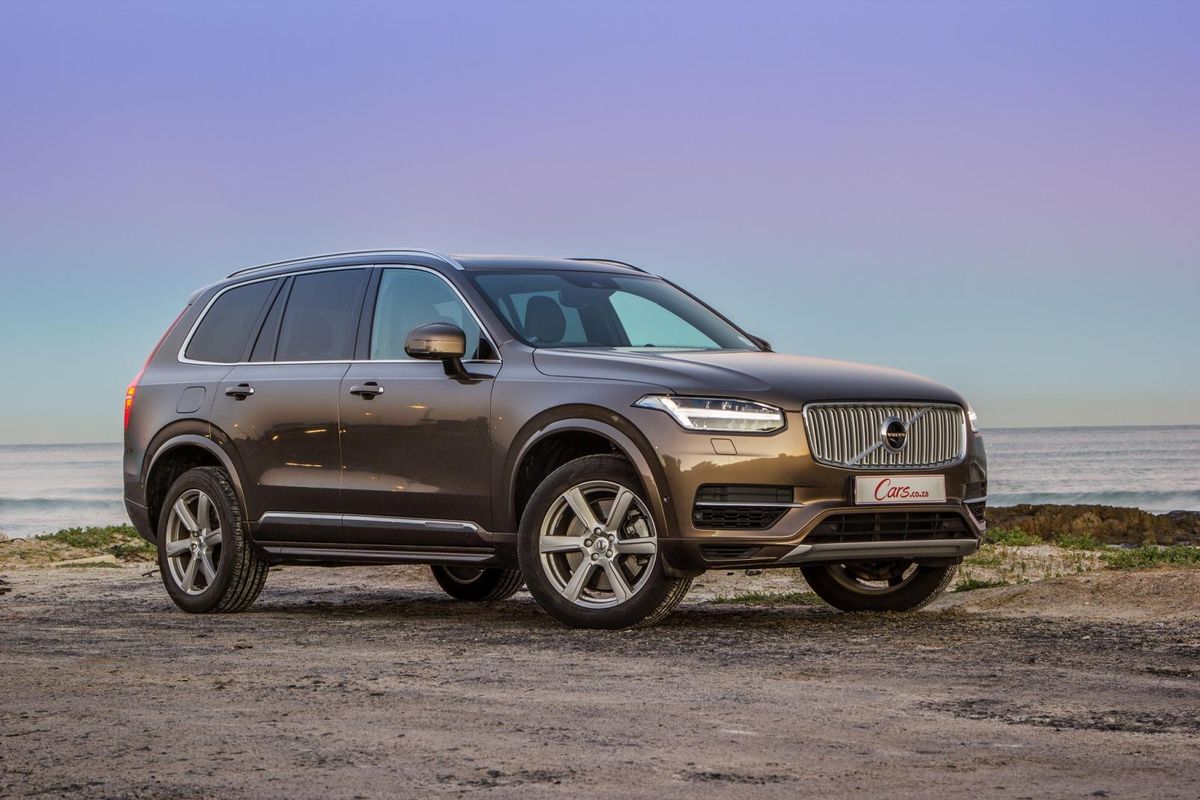
Even if you only have a casual interest in daily motoring news you’d have picked up by now that Volvo’s XC90 SUV has been very well received. It has claimed numerous high-profile awards, including our own Cars.co.za Consumer Awards Premium SUV of the Year title. The XC90 is a superb product of an increasingly confident company. We love it.

But it has a tough new opponent in the shape of Audi’s second-generation Q7. The new German SUV launched late last year… too late for consideration in the first iteration of the Cars.co.za Consumer Awards, but now it’s here… more compact, lighter and more efficient than before and ready to stake a claim to the XC90's title.

Read our individual review on the Audi Q7 3.0TDI here.

Exterior design

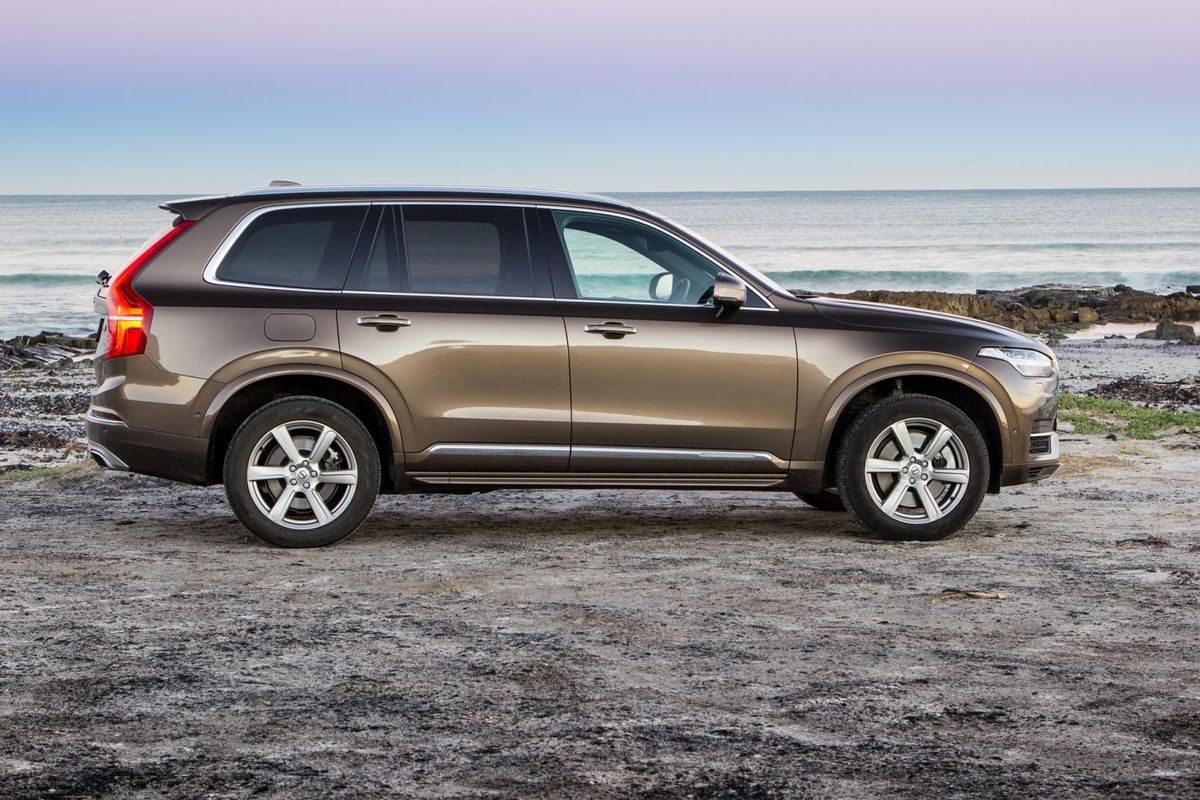
Debating automotive aesthetics is not a terribly useful exercise, so we’ll leave you to make up your own mind. For what it’s worth, most testers and onlookers were of the opinion that the Swede was the most attractive of the two.


Volvo's XC90 is widely regarded as the most attractively styled vehicle in its category.

Of more importance in this category is how much flash you get for your cash. The Audi is a suitably upmarket-looking product with some pin-sharp detailing. For example, the LED-infused rear lights are standard, as are neat 18-inch alloys. Up front, however, you "only" get Xenon Plus headlights. We say “only”, because the Volvo offers striking adaptive (auto-bending) LED units while Audi charges you an extra R24 200 for LED headlights and a whopping R38 500 for its Matrix LED lighting system.

The Volvo scores some extra points when it comes to its wheels, too. As standard, it rides on 20-inchers, but if you want to prioritise ride comfort, you should opt for the smaller 19-inch rim, which is a no-cost option. Alternatively, you could get glitzy 21-inch items for R12 750. To put that into context… Audi charges R39 000+ for the same size wheels (21-inch).

Cabin execution and features

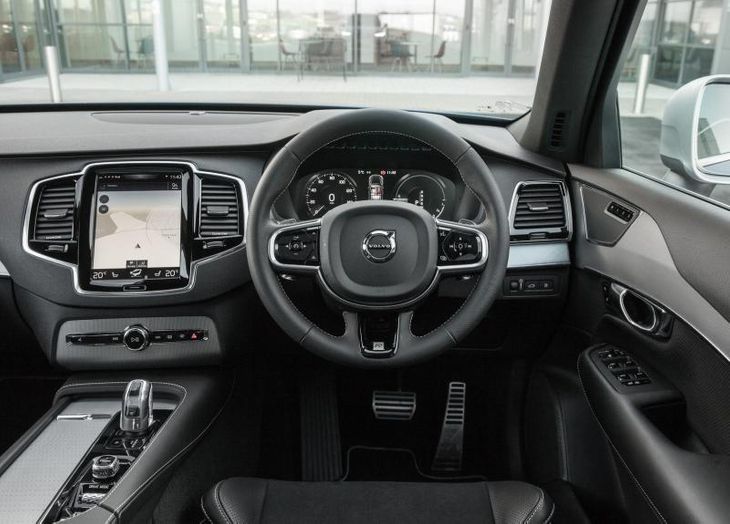
This is another area where personal design preference will be a deciding factor. Much has already been said about the XC90’s exquisite cabin design, but it really is a very cool place to be. The iPad-like touch-screen system is, of course, the centre point of all the discussions and remarkably simple to use, but there are other highlights too. We like the beautifully crafted starter switch, for example, and the way the leather surfaces and metallic accents “flow” next to each other. The build quality appears excellent, too, but we’d caution against the white trim of our test unit – it shows dirty marks far too easily.


The centre point of the Volvo interior is its superb touch-screen infotainment system.

Audi is famed for its interiors and it’s unleashed another cracker with the Q7. Stretched low and wide, the horizontal design elements accentuate the sensation of spaciousness and minimalism, while the retracting infotainment screen perched atop the facia offers crystal-clear graphics. Another nice touch is the gear lever which offers a large flat leather-lined surface on which you can rest your wrist while using the touch pad mounted in front of it. Audi’s all-digital Virtual Cockpit is class-leading too, much crisper and neater than the version offered in the XC90. But note, however, that it is a R9 000 option, while the Volvo comes with it as standard.


Audi's Virtual Cockpit is an optional extra, but it is worth the extra outlay.

Indeed, when it comes to interior features, Volvo has been significantly more generous. You get four-zone climate control as standard in the XC90, for example, but Audi charges an additional R11 800 for that luxury. Also standard in the XC90 Inscription is a Heads-up-Display (HUD) system, while Audi asks R20 800 for its version which, admittedly, is better.

And then there’s the small matter of third-row seating – standard in the Volvo, but a R20 800 option in the Audi. By comparison, the optional Premium Package for the Volvo at R55 500 sounds like a steal, seeing as it includes such niceties as surround-view cameras and a great Bowers & Wilkins sound system. Audi offers two optional sound systems, the first by Bose for R17 200 and a top-end Bang & Olufsen package is yours for a whopping R91 800…

Comfort, safety and packaging

If you don't have a particular brand affiliation, your choice could potentially be dictated by what your family needs. In short, the Audi is the more comfortable vehicle from the driver’s seat, and while the occupants of the other seats are unlikely to complain, the Volvo’s packaging lends itself more to family use.

But let's start with the front seats. The chairs in the Volvo are fully electrically adjustable and both offer memory settings. The seats in the Q7 offer electric adjustment as well, but memory settings will require an extra R8 000. Heated seats will cost your more in both vehicles (R3 550 in the Volvo, R5 900 in the Audi). 


The Volvo is the more family friendly vehicle, with more load space and a standard third row of seats.

There’s more space all-round in the Volvo, and even the third-row seats offer acceptable comfort for adults. And when it comes to luggage space and flexibility, the Volvo also wins. With the third-row stowed away, the XC90 offers significantly more luggage space, and the rear aperture is better shaped for the purposes of loading/unloading (a greater variety of) items.

In terms of safety features, these are two top-end premium vehicles, so rest assured the basics are covered in terms of airbags, as well as braking assistance and stability control systems. The really sci-fi stuff is mostly restricted to the optional extras list, but the Volvo does offer lane departure warning, front collision mitigation support, park assist pilot (with front and rear park assistance) and the aforementioned HUD (head-up display).  

The Q7 has a reverse-view camera as standard (which is, bizarrely, a R9 300-option on the Volvo), but you pay extra for the parking assistance package (R8 500) and the park distance control system (front and rear) costs another R11 600.

Performance

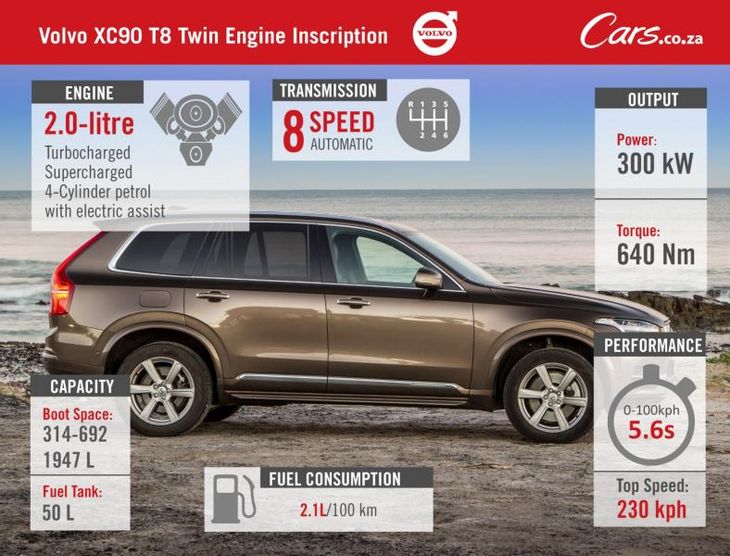
Volvo made a brave decision to limit the engine size of all XC90 derivatives to 2.0 litres. In a vehicle of this size and heft, that raised many an eyebrow. Still, on the road and in isolation, the XC90 D5 Inscription doesn’t feel lethargic at all. The engine delivers 165 kW and 470 Nm of torque and is mated with an eight-speed automatic transmission. Volvo claims brisk performance, including a 0-100 kph sprint time of 7.8 seconds.

But… when driven back-to-back with the new Audi Q7 3.0 TDI, the difference is quite noticeable. With similar weight to pull around as the 2.0-litre unit in the Volvo, the Audi’s larger 3.0-litre engine gives the Q7 a more responsive personality, which it should… after all, it has a higher power output. With 183 kW and a whopping 600 Nm of torque at its disposal, the Q7 sprints from standstill to 100 kph almost a full second faster than the Volvo.
In-gear acceleration is far more important, however. The Audi’s power and torque reserves are available across a wider spread of the engine’s power band, so the eight-speed automatic ‘box has a much easier task compared with the unit in the Volvo.

The engine size/power difference also has an impact on the vehicles’ cruising abilities. The Audi feels more relaxed, quieter and yet is still the one you want to have for frequent overtaking blasts. The Volvo’s engine has to work harder to keep up, and you can hear and feel it. Plus… the harder an engine works, the greater the impact on fuel economy (see the next category).

Fuel economy

As we alluded to in the Performance category, the engine size/power differences have a marked impact on fuel economy as well. Volvo claims a combined cycle fuel consumption figure of 5.8 L/100 km, while Audi says the Q7 will consume an average of 6.3 L/100 km. Is it a clear victory for the Volvo, then? Not exactly… The engine in the Volvo has to work harder in day-to-day driving and, therefore, drinks more diesel. As a result, we achieved figures closer to 8.5 L/100 km in the Volvo, with the Audi being more economical at 7.9 L/100 km.

Ride and handling


The Audi Q7 scores a decisive victory in the ride and handling departments.
The first-generation Audi Q7 was a bit of a lumbering giant. For the new version, Audi focused on efficiency-boosting design and materials, and the result is a vehicle that is up to 300 kg lighter than before. You can immediately feel it on the road. Our test version was equipped with the optional R30 500 adaptive air suspension, it must be noted, but based on the exquisite ride refinement and road holding, it’s an option box we would recommend ticking.
In fact, in terms of ride comfort, the Q7 is currently one of the best vehicles on the new vehicle market today. When the suspension setting is changed from Comfort to Dynamic, the Audi's ride quality is obviously firmer, but it never turns crashy. Combine the superb suspension with Audi’s Quattro all-wheel drive system and you have a class-leading combination of ride and handling.
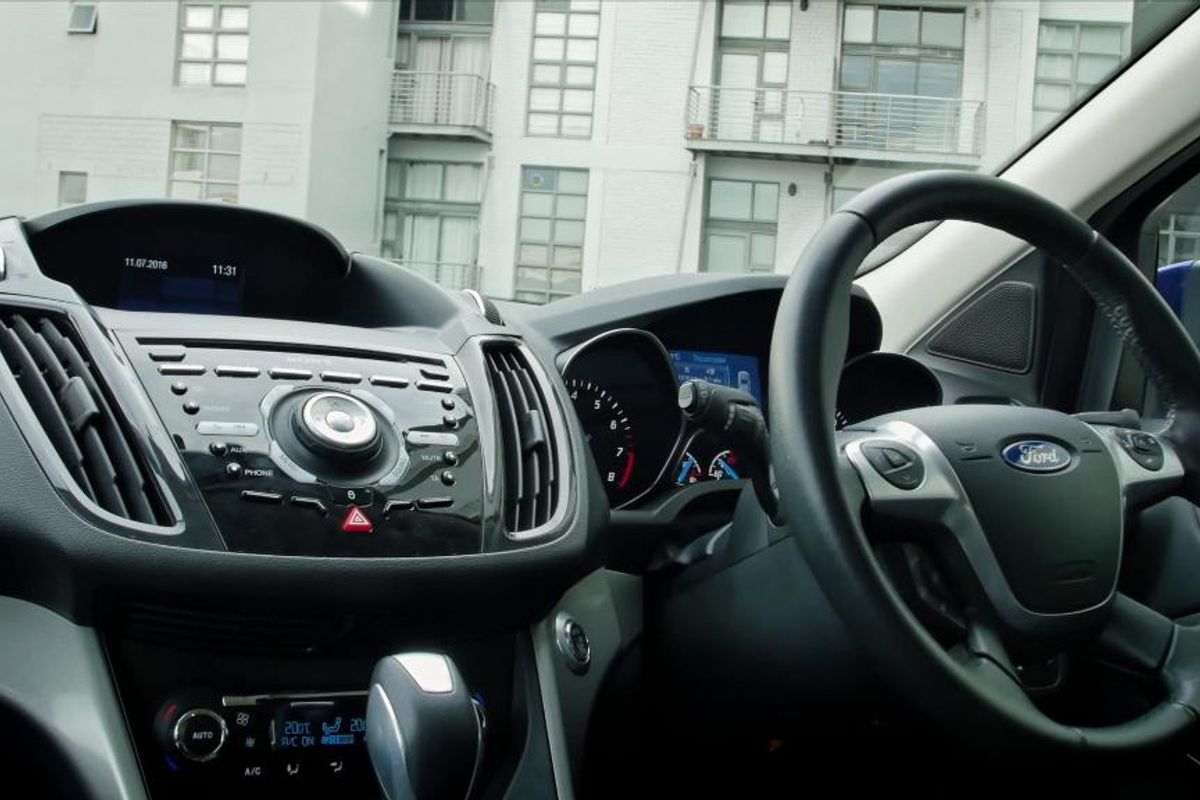
In this area, the XC90 is trumped once more. With a rear suspension design compromised (to some extent) by the requirement for spacious third-row seating and a large boot, the Volvo rides firmly… perhaps too firmly for a vehicle with such clear family hauling applications. We believe that opting for the high-profile tyres on 19-inch wheels will improve the comparatively fidgety ride, but even then the Volvo's unlikely to match the Audi's balance of ride refinement and handling.

Ownership considerations


Audi is a leading brand in terms of ownership satisfaction, and Volvo is making big gains.

With identical maintenance plans (5 years/100 000 km) peace of mind should last a fairly long time for the owners of either vehicle. But what about resale? When it comes to big SUVs the depreciation curve is generally quite severe, but when considered as “brands”, the advantage is certainly on Audi’s side.

In terms of after-sales service, we refer to the data coming through in our Ownership Satisfaction Survey. Audi finished in a solid third place overall in the Brand of the Year category in our first annual Cars.co.za Consumer Awards, and when the scores are analysed further, it maintains a podium position when only after-sales service is considered (beaten only by Toyota and Mercedes-Benz).

Volvo, however, is not doing poorly at all when it comes to after-sales service, with the data showing that great strides have been made in this regard. In fact, the Swedish marque appears to be on par with most of the big brands in terms of after-sales service.

Own an Audi Q7 or Volvo XC90? Complete our Ownership Satisfaction Survey here.
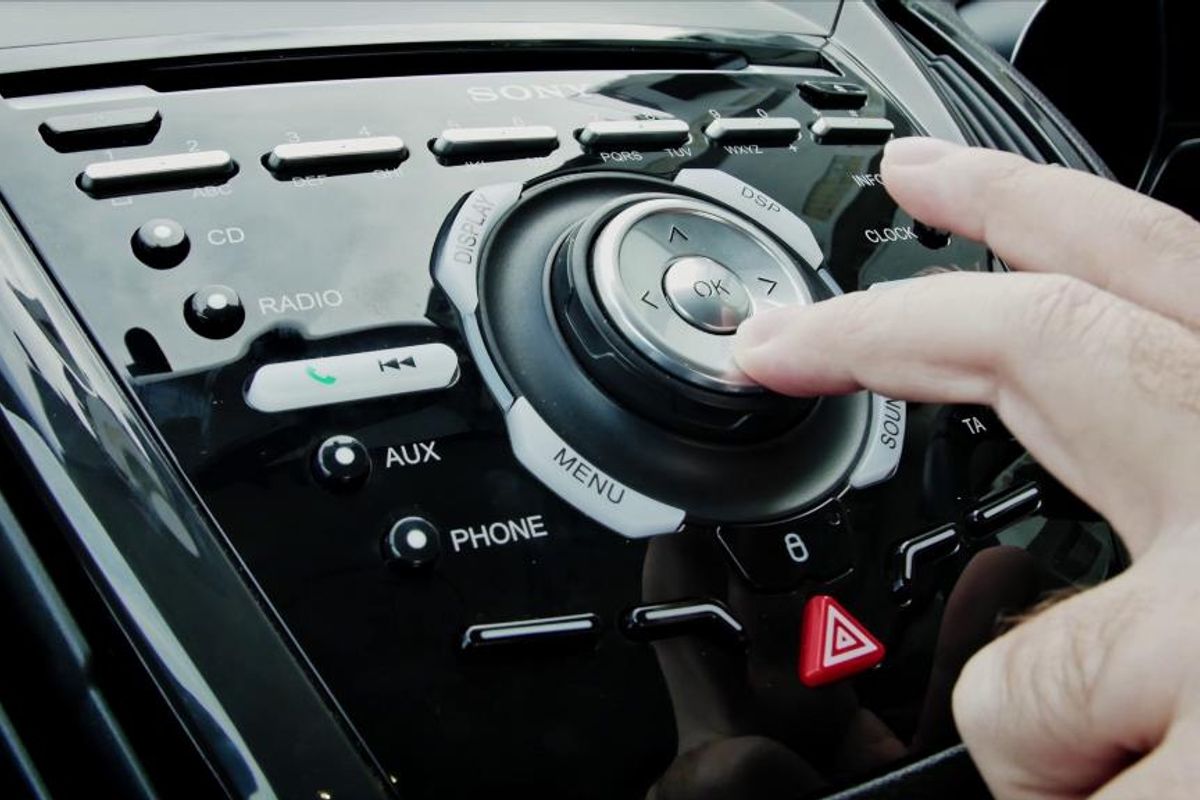
Verdict

Although these two vehicles are head-to-head rivals in the premium SUV segment, their respective skill sets will see them appeal to different consumers. A lot has been said about the difference in standard specification and the resultant value advantage of the Volvo. Yes, it offers many more features as standard than the Audi, but we feel that at this end of the SUV spectrum, the more pressing issues will be around brand perception and packaging. As standard, the pricing (R933 500 for the Volvo and R961 000 for the Audi) is not too different.

Buy the Volvo if you’re looking for a supremely well-finished, cleverly packaged premium SUV that will be used extensively as a family/leisure vehicle. Cars.co.za's Ciro de Siena recently spent and extended test period with the XC90 and reported on its numerous talents here. On the other hand, if you have a smaller family and don’t suffer the consequences of a very active leisure-oriented lifestyle, the Q7’s refinement, comfort and driver-oriented talents make it the stand-out product. The judges for the next round of the Cars.co.za Consumer Awards have some very difficult voting to do…

Compare the Audi Q7 3.0TDI with the Volvo XC90 D5 Inscription in detail here

Interested in buying an Audi Q7? Search for one on Cars.co.za

Interested in buying a Volvo XC90? Search for one on Cars.co.za

Mercedes-Benz GLC Coupe Spied


Spy images of the Mercedes-Benz GLC Coupe have surfaced, showing a sportier version of the medium-sized SUV.

Picture credit: S. Baldauf/SB-Medien

With its sleek coupe styling, the forthcoming Mercedes-Benz GLC Coupe will bring some pizazz to the GLC lineup when it arrives later in 2016. Consider the GLC Coupe to be the small brother of the larger GLE Coupe; it will do battle with the BMW X4 and Range Rover Evoque.


The images above show a lightly camouflaged GLC Coupe in transit somewhere in Germany and the vehicle was first brought to life in the form of the GLC Coupe Concept shown at the 2015 Shanghai Motor Show. When the model finally makes landfall in South Africa, you can expect a range of petrol and diesel engines carried over from the standard GLC – there might be a plug-in hybrid version too.

Mercedes-Benz South Africa has confirmed that the GLC Coupe will become available in November 2016. 

While you wait in anticipation, take a moment to watch our drag race video featuring the insanely loud and powerful Mercedes-AMG GLE63 Coupe versus the BMW X6M. 


Interested in buying a Mercedes-Benz GLC? Click here to search for one on Cars.co.za 

Petrol Price in SA: What are you really paying for?


Have you ever wondered what you are paying for when you fill up your car with petrol? This article provides some insight…

As consumers of petrol, motorists are often not aware of what they are paying for (apart from fuel) when they fill up their vehicles. There are numerous costs that constitute the petrol price and as a consumer, you should be aware of what you are actually paying for when you pull into your nearest petrol station.

In South Africa, the price of petrol is adjusted monthly, based on a number of factors, the most important being international petroleum prices and the Rand/US dollar exchange rate.

Take a look at the infographic below for a visual representation of the breakdown of the petrol price in South Africa. 


Infographic supplied by the AA

The costs of petrol

As a starting point, the Basic Fuel Price (BSF) is worked out according to costs associated with shipping petroleum products to South Africa from areas around the world such as the Mediterranean, Arab Gulf and Singapore. These costs include insurance, storage and wharfage, which includes using harbour facilities and transferring petroleum products into storage.

In the month of March 2016, these costs represent a total of R4.70 per litre (inland) of 93 unleaded petrol.

From that point onwards, other costs come into play, such as transporting petroleum to other areas, customs and excise duties, retail margins and secondary storage costs. In addition to these costs, the petrol price also includes the Fuel Levy as well as the Road Accident Fund (RAF) levy.

In March 2016, these costs accounted for R6.76 (inland) per litre of 93 unleaded petrol. Of this amount, R2.55 was allocated to the Fuel Levy while R1.54 was allocated to the RAF Levy.

Note: The Fuel Levy goes directly to the National Treasury while the RAF Levy goes to the RAF to assist accident victims.

That means, with petrol costing about R11.46 per litre, R4.09 or approximately 35% is allocated to different government levies.

Finance Minister, Pravin Gordhan’s Budget Speech in February 2016 highlighted that the Fuel Levy and would increase by 30 cents to R2.85 in April 2016.

Using basic arithmetic, it’s clear that if you fill a car with a 50-litre fuel tank, it will cost you about R573. Of this amount, you are paying a total of R204.50 to government levies. The Fuel Levy accounts for R127.50 while the RAF contribution accounts for R77.

If the petrol price remains unchanged by the end of April, the Fuel Levy contribution will increase to R142.50 while the RAF levy will remain unchanged at R77 reaching a combined total of R219.50.

Also See: 

How the interest rate hike affects you

New Car Prices: Big Increases Coming


Jaguar Launches Special Vehicle Operations in SA


Special Vehicle Operations (SVO) was established to produce exclusive Jaguar Land Rover cars. South Africa was recently added to the division's VIP list and will see a quartet of new models, some of which will be available in very limited numbers.

The launch of SVO in Johannesburg was held in conjunction with the news that Jaguar will send five XEs up the hill during the Simola Hillclimb in May 2016. Cars.co.za has already secured one of the cars by winning the Hillclimb Media Challenge in 2015. Make sure you enter our competition by designing the car we will be driving up the hill. Read more about the competition here.

Project 7


Just five Project 7s will make it to Africa. The Project 7 is the result of a designer’s doodle that turned into a real-life project. It mixes a Le Mans winning D-Type with the current F-Type. The SVO team then increased the power output from a V8 F-Type R to 423 kW and 680 Nm, which translates to a claimed 0-100 kph of just 3.9 seconds. The SVO team also tweaked the suspension and exhaust to complete the race-car feel/realise gobsmacking performance.

Read more about the Project 7 here

Other SVO models coming to SA


In August, the F-Type SVR will arrive. It has the same power output as the Project 7 (423 kW), but the maximum torque is ramped up to 700 Nm. The F-Type SVR is equipped with all-wheel drive and a special titanium exhaust. Owners will also be able to customise the interior.

Read more about the F-Type SVR here

Range Rover SVAutobiography


This is the most luxurious Range Rover that you’re likely to see. The rear seats are 24-way adjustable and designed from special Bridge of Weir leather. The carpets are deep pile mohair specification and there’s a built-in Champagne chiller in the rear console. How grand!

Range Rover SVR


The Range Rover SVR was first seen at last year’s Jaguar Simola Hillclimb and it set times similar to that of an F-Type. It takes an already insane Range Rover Sport and turns the dial to extreme. It’s supercharged V8 can catapult the two-tonne Rangie from 0-100 kph in just 4.7 seconds, the firm says.

Read more about the Range Rover SVR here

Future projects

Members of the SVO crew were able to give us some insight into their upcoming ideas at the launch event. They will be introducing (or rather, re-introducing) the Lightweight E-Types. The original Lightweights are built using modern methods, but in the same shape as the originals. They will also use the same engines as the original cars for even more authenticity. For the affluent few, it might just be the perfect modern day classic.

Further down the line, Land Rover is looking to make a wild off-roader. Not in the way the Range Rover SVR does things, but something more like "Dakar rally meets Land Rover Defender". Watch this space…

Search Cars.co.za for a used Jaguar

Search Cars.co.za for a used Land Rover

Mercedes-Benz A-Class A220d (2016) Review


The Mercedes-Benz A-Class’ strongest traits have always been its good looks and premium badge, two things that seemed to make up for the premium hatchback's shortcomings. Can the facelift version improve on the formula? Let's find out

We like: Remains stylish, improved build quality, more technology available

We don’t like: Slightly smaller than competition, the ride is still choppy (without adaptive suspension)

Also consider: BMW 1 Series, Audi A3, VW Golf

The urbanite’s choice

The Mercedes-Benz A-Class is the smallest model in the Stuttgart manufacturer's product lineup. It’s also a very important model as it attracts a younger generation of buyers to the brand, some of whom will eventually buy up the range. This facelifted A-Class faces a revitalised BMW 1 Series as well as a relatively new Audi A3 and Volvo V40 for premium honours. It’s also not too much of a stretch to see how buyers might consider a VW Golf as an option too.

Spot the difference between new and old A-Class here

More of the same

In developing the facelifted A-Class, Mercedes-Benz changed very little about its appearance. Why? Customer feedback suggested that most buyers chose the A-Class because of its good looks and therefore, the new model features only minor updates to the front and rear lights (where LEDs have been installed) and the diamond-pattern grille, which consists of no fewer than 302 glittering elements, is standard.


The engine we have on test is the 2.1-litre 4-cylinder turbodiesel. It’s quite a well-proven unit and has just been replaced by a new 2.0-litre version that made its debut in the E-Class we drove in Portugal. Mercedes-Benz was unable to tell us when, or even if, the new engine will make it into the A-Class, but for now, the 2.1-litre turbodiesel produces 130 kW and 350 Nm and is mated with a 7-speed dual-clutch (automatic) transmission. 

Watch our video comparing the new A-Class with the old A-Class here

How does it fare in…

Premium feel

In this segment, a luxurious cabin ambience and premium touches are must-haves. Mercedes-Benz has improved the interior quality for this model and its made the A-Class feel more at home in the Mercedes line-up. The new instrument cluster (replete with aluminium bezels) and a few additional metallic finishes on the fascia add a sense of luxury. As far as making its passengers feel special, the A-Class' beautifully designed cabin features more stylish touches than what its rivals offer. It's at least as good as the Audi A3's. This A220d has been fitted with some extras, like an 8-inch touchscreen.

Tech levels

It’s good to see Mercedes’ high-end tech starting to trickle down into the A-Class, especially in terms of safety features. Automatic emergency braking is available (it first warns the driver of a possible accident and then, if the driver doesn’t respond, applies the brakes by itself), as is the Parktronic system (complemented by a 180-degree reverse camera), as well as adaptive cruise control, which is an extremely useful feature on freeway journeys.

Ride and handling

The Achilles heel of the previous A-Class was its ride quality. It rode very choppily over rough surfaces and the suspension setup was too unyielding, especially on Sport models. In the facelift model Benz has given buyers the option to spec an R18 000 adaptive suspension upgrade. This is said to give the suspension a more balanced and comfortable ride, which the average driver will appreciate. Unfortunately, our model wasn’t fitted with the adaptive suspension and regrettably the suspension remains hard on anything but a manicured surface. It could be forgiven if the ride offered up supreme handling characteristics and pin-point accuracy with steering inputs, but alas it's no better than either the BMW 1 Series or A3 in those departments.

Engine and gearbox

The A220d's 2.1-litre turbodiesel sounds quite gruff compared to its competition's powerplants but, to its credit, provides ample torque from low in the rev range and has plenty left in reserve for when you need to execute overtaking manoeuvres. The seven-speed automatic transmission shifts much more smoothly up the 'box than on the way down, where it can snatch at ratios sometimes. This means the odd clunk or jerky downshift can occasionally occur.

Fuel economy

The claimed average fuel consumption of the A220d is 4.2 L/100 km and that puts it in the same range as its competition. Realistically it’s capable of attaining 6.0 L/100km under normal, regular use. The diesel isn’t the sporty choice in the A-Class range, but it does the job of saving pennies at the pumps.


Verdict

Mercedes-Benz has enhanced the design and improved the cabin quality and technology levels of the stylish A-Class. In terms of offering a more competitive premium hatchback, it's a case of mission accomplished. However, without the adaptive suspension, you’re in for a hard ride and the noisy turbodiesel (especially when the engine's cold) is a bit unbecoming of an upmarket model. Having said that, some buyers may not be perturbed by the A-Class' tight cabin space (or small luggage area) and revel in the 2.1-litre's torque reserves. As a vehicle that sells on image, first and foremost, it's a winner.  

Pricing

The A220d is set slightly above the competition but still comes in under the R500k mark. It retails for R492 300 with a 2-year/unlimited km warranty and 6-year/100 000 km maintenance plan.

Compare the A-Class with the BMW 1 Series and Audi A3 here