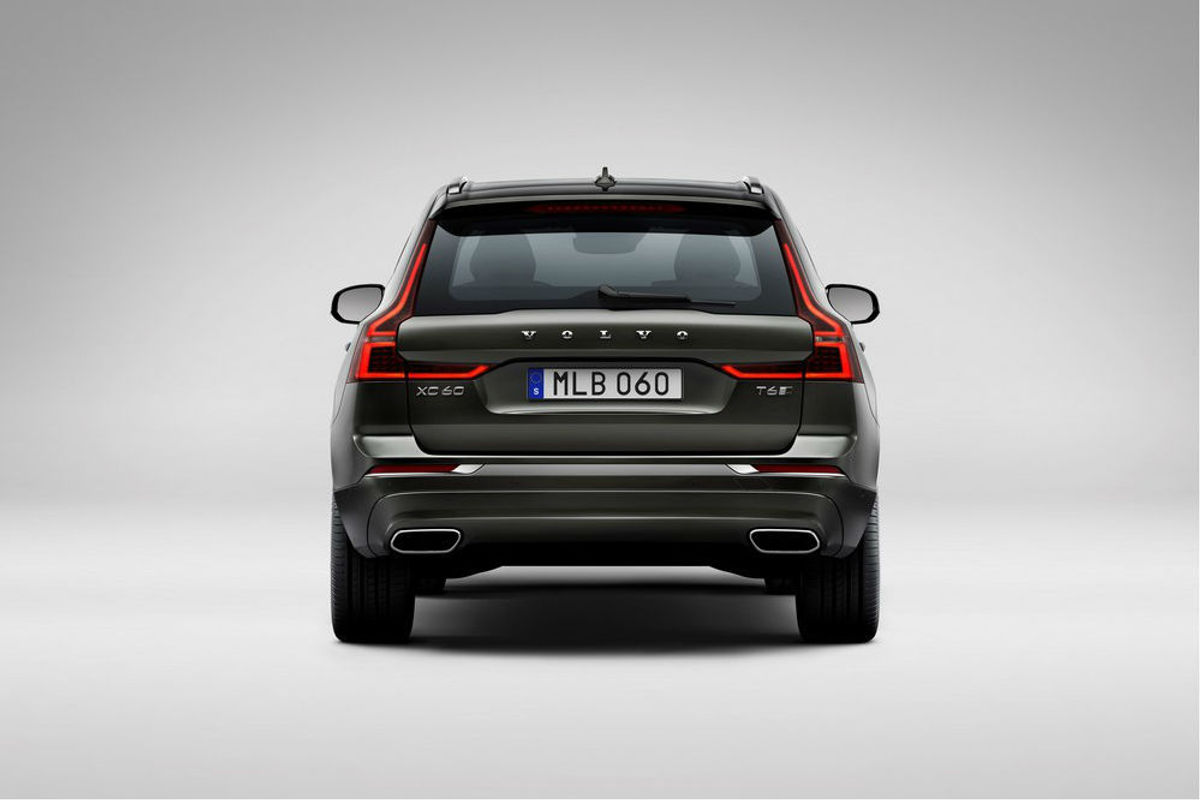
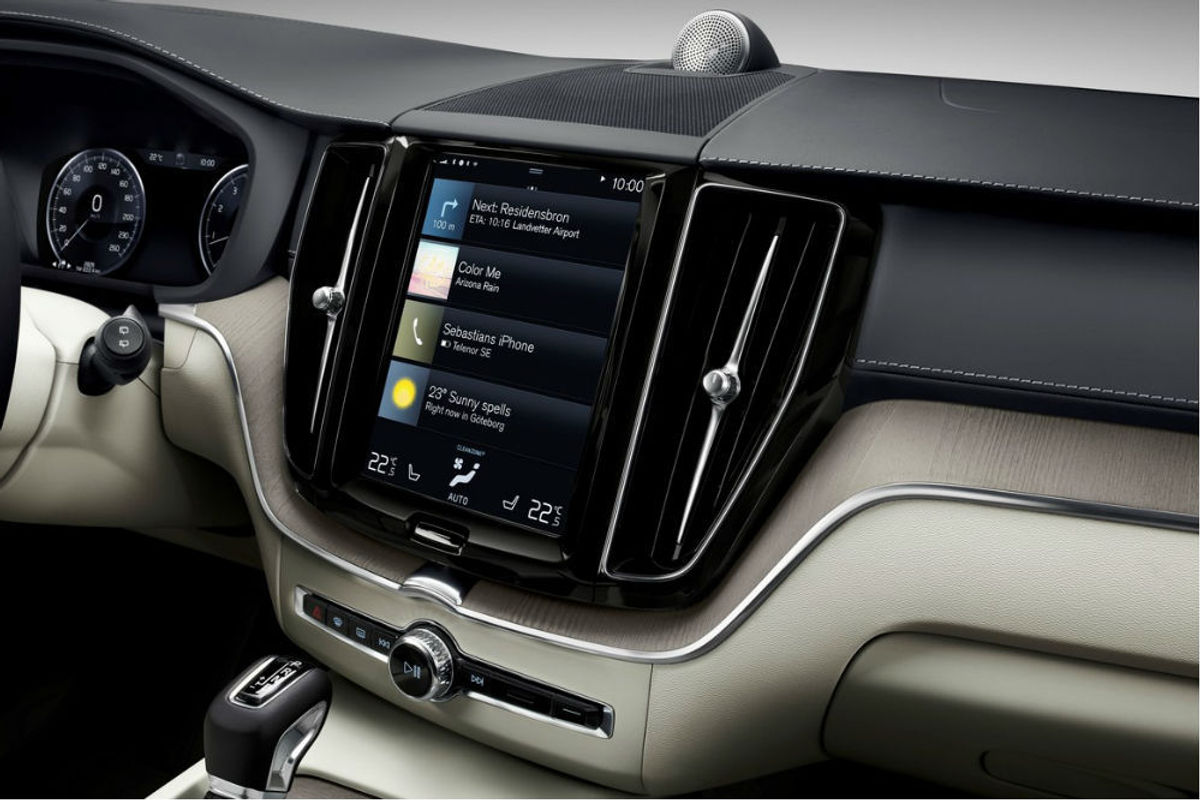
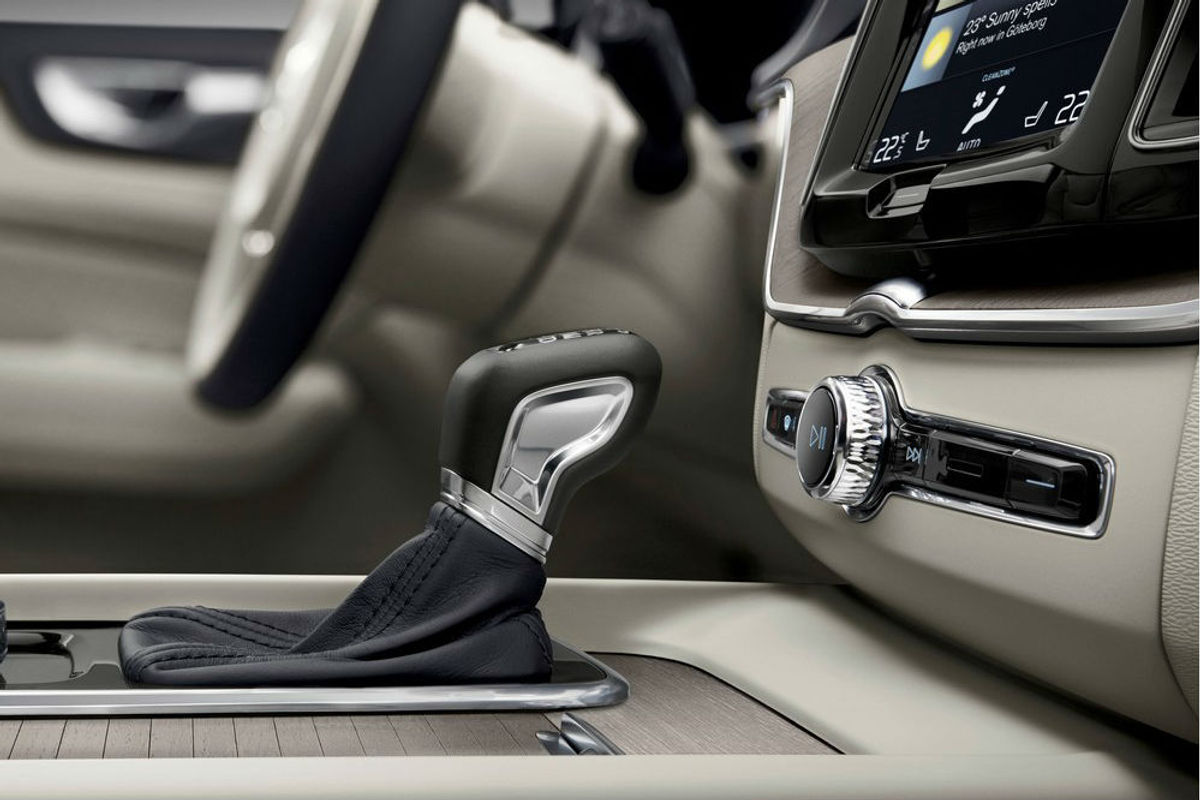
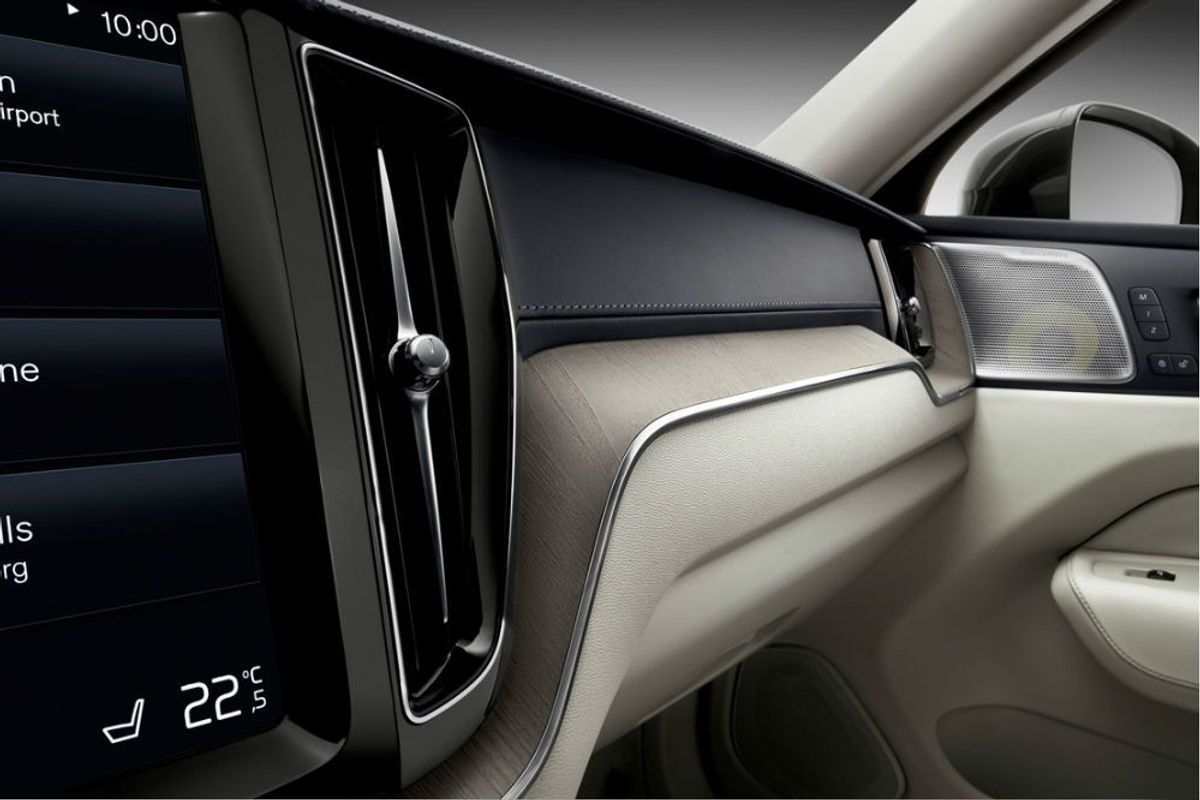
First-time buyers looking for a set of wheels to get them from A to B as cost-effectively as possible – that's a typical description of the budget segment's clientele. Which models are SA’s favourites in terms of sales, however? See below…
There is no doubt our budgets are being stretched at the moment; we’ve even been told to tighten our belts by the Department of Finance! Therefore the new vehicle market is down substantially (year-on-year) as consumers delay buying big ticket items (such as vehicles) for as long as they can. First-time buyers – or those considering the purchase of a basic set of wheels for a variety of reasons – look to the budget segment of the market, where the Renault Sandero Expression was named the best new buy in the segment in the inaugural Cars.co.za Consumer Awards programme early in 2016.
So which cars do South Africans buy most in this segment of the market? Factors such as price, value for money and reliability are generally at the forefront of buyers' minds. Performance and handling, for example, tend to take a back seat here as a result.
This article is based on South African new vehicle sales figures for the first 7 months of 2016. Some of the vehicles have had price increases along the way so we have set the limit at R160 000 for a budget car. The data was provided to us by Lightstone Auto, specialists in market intelligence within the motoring industry, and it excludes rentals and fleet sales.
Best-Selling Budget Hatchbacks in SA 2016
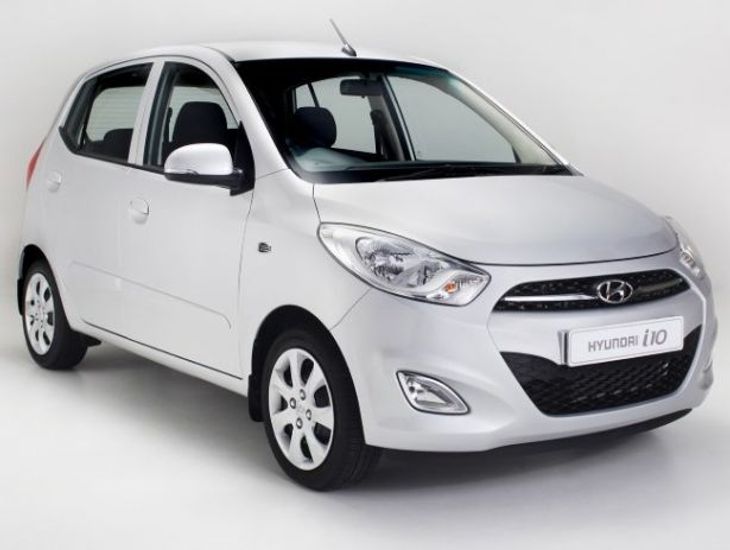
Hyundai i10
The Korean manufacturer seems to do particularly well with the long-serving and pint-sized i10. Its 1.1-litre 4-cylinder engine provides sufficient shove to scoot the Hyundai along and it’s very fuel efficient at a claimed 4.8 L/100 km. The i10 doesn’t have a displeasing shape or style to it and Hyundai offers an excellent 7-year/200 000 km warranty with the car. The i10 is priced at R152 900 for the manual model, while the automatic costs R174 900.
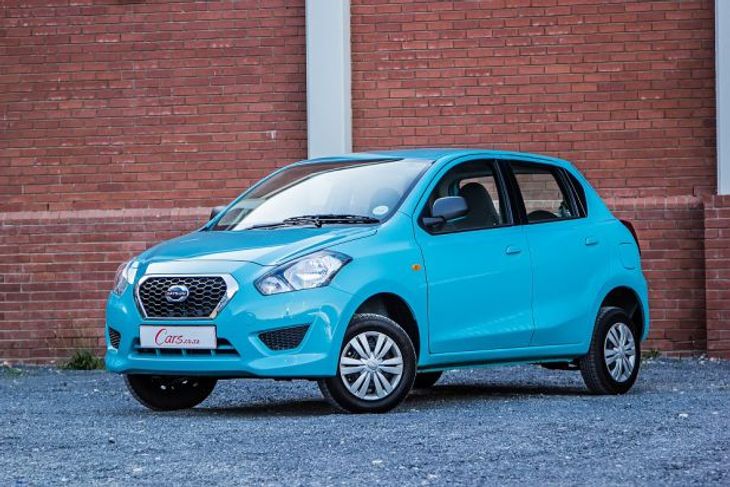
The Go (with Airbag) is Datsun’s top-selling, as well as most expensive, product. The Go is a simple,cost-effective way to become mobile. Safety has been somewhat of a question mark, probably dissuading more than a few customers. The price is alluring at R104 900 for the 1.2 Mid and R119 900 for the Lux.
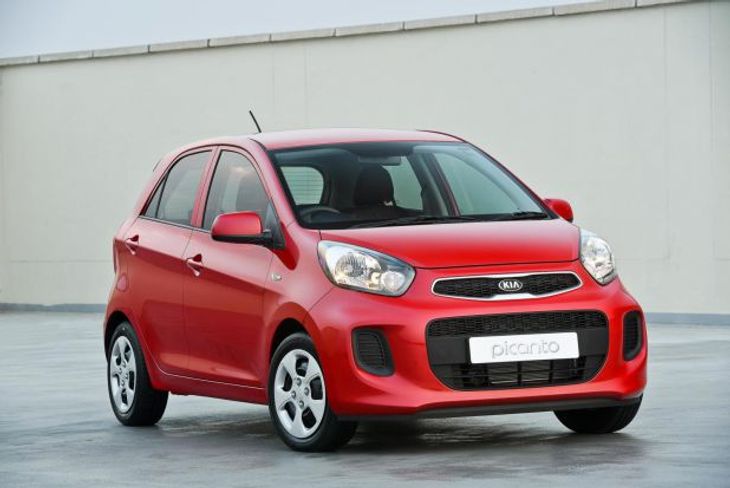
Kia’s Picanto is still attracting plenty of buyers 5 years after this version arrived in South Africa. The Picanto still looks funky and fresh and its 1.0-litre 3-cylinder engine is frugal and reasonably powerful. The basic 1.0 LS model is likely the best seller although Kia has recently introduced a 1.2 LS that could do particularly well. The 1.0 LS is priced at R129 995 with the better equipped (CD player, electric windows and more airbags) 1.0 LX at R159 995.
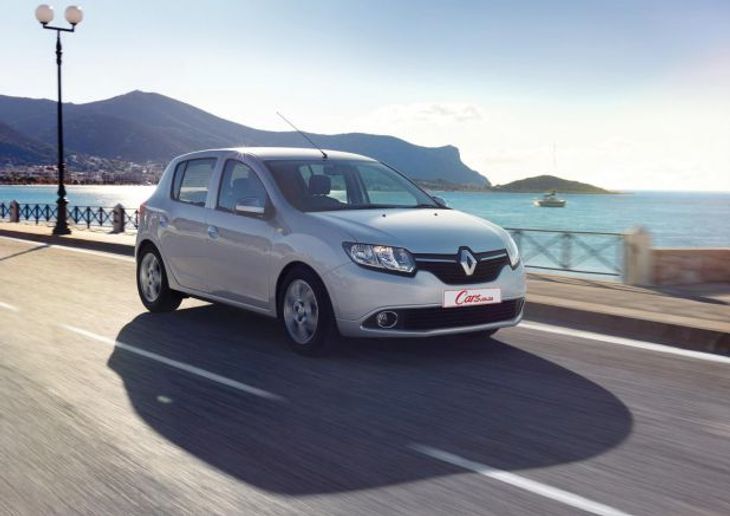
The Sandero is the current Cars.co.za Consumer Awards champion in the budget car category of the programme, offering better value and higher safety standards than most of its competitors. All Sandero derivatives come standard with ABS, EBD and stability control. The Renault's 3-cylinder turbopetrol engine is also among the most powerful in the segment with 66 kW with 135 Nm of torque. The Sandero line-up’s prices were hiked recently so the base Expression (excluding aircon) now costs R147 900, with aircon R164 900 and the Dynamique's asking price is up to R171 900.
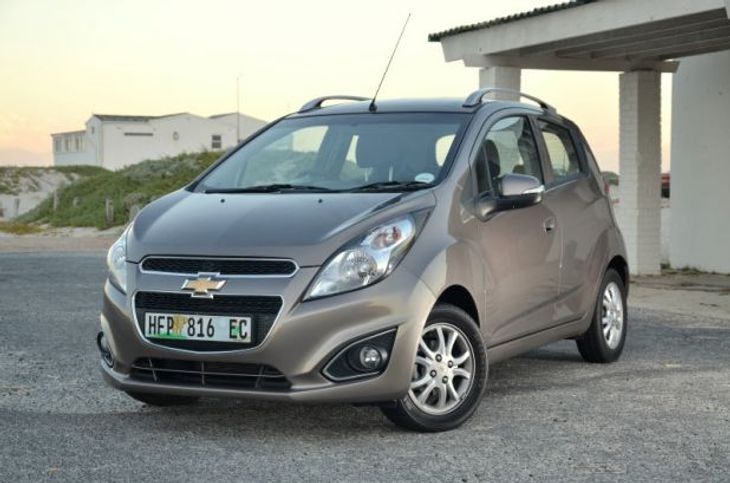
General Motors SA produces the Chevrolet Spark in Port Elizabeth and the fun-to-drive, surprisingly spacious and fit-for-purpose budget car sells well in SA, especially the 1.2 LS version. It's not clear when its successor will arrive on the market; for now, the range includes the 1.2 Campus (R137 400), 1.2 L (R149 000) and the 1.2 LS (R158 900).
Treading a fine line between sportiness and elegance has long been a strength of Mercedes-Benz’s compact coupes, but with the Three-Pointed Star looking to attract a younger clientele, is the C-Class Coupe as well-balanced as it should be… and does its turbocharged 4-cylinder engine do it justice?
We like: Head-turning looks, exquisite interior, spirited performance
We don’t like: Ride on firm side of pliant, uninspiring engine note
Alternatives:
The dynamic option: Having recently undergone a revision, the BMW 430i can’t match the C-Class’ boulevard looks (or its plush interior), but it still holds a slight edge in terms of driver involvement.
Nonconventional luxury: Lexus recently introduced a 2.0-litre turbocharged version of the RC coupe and, although expensive, the RC200t EX is specced liberally. It seems more of a cruiser than sportscar.
Still worth a look: While we await the arrival of the new generation Audi A5, the current Walter de Silva-designed car is an elegant, well-made coupe that represents a solid used/almost new purchase.
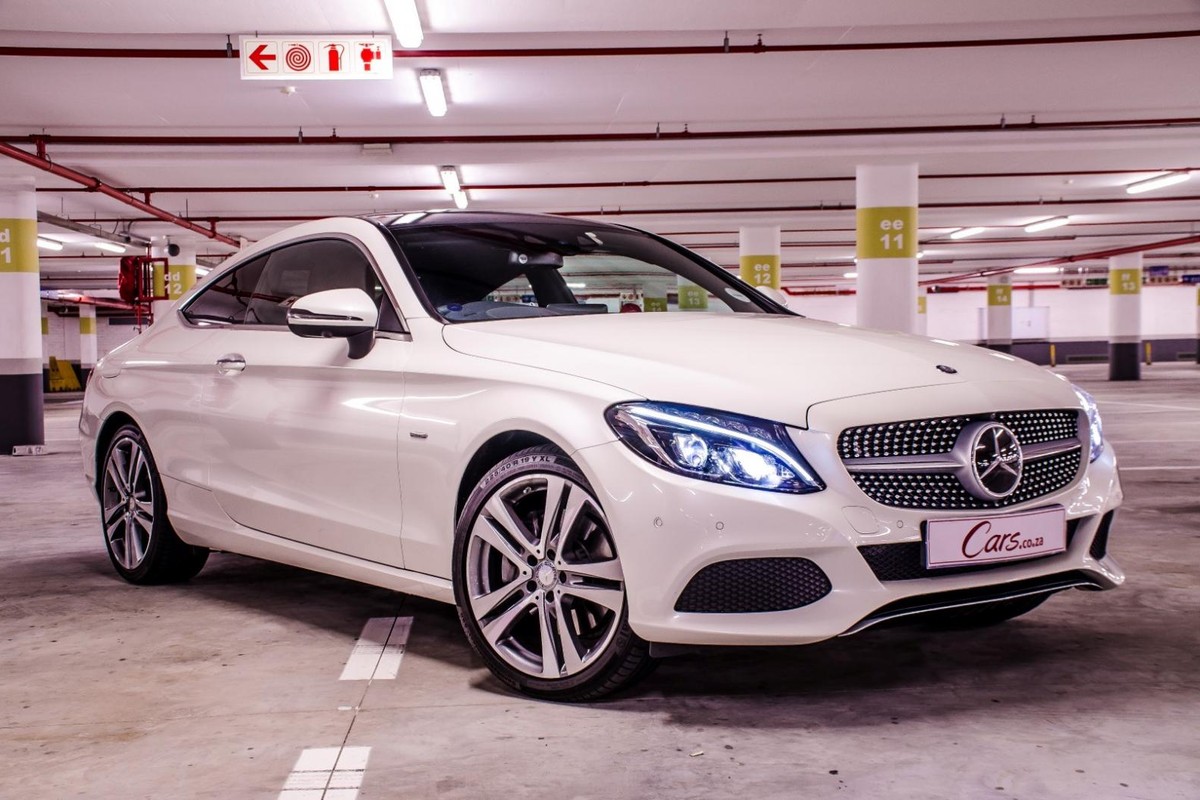
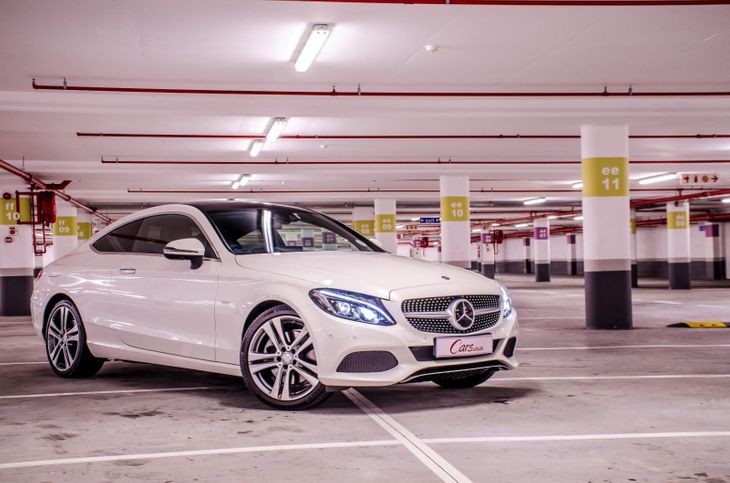
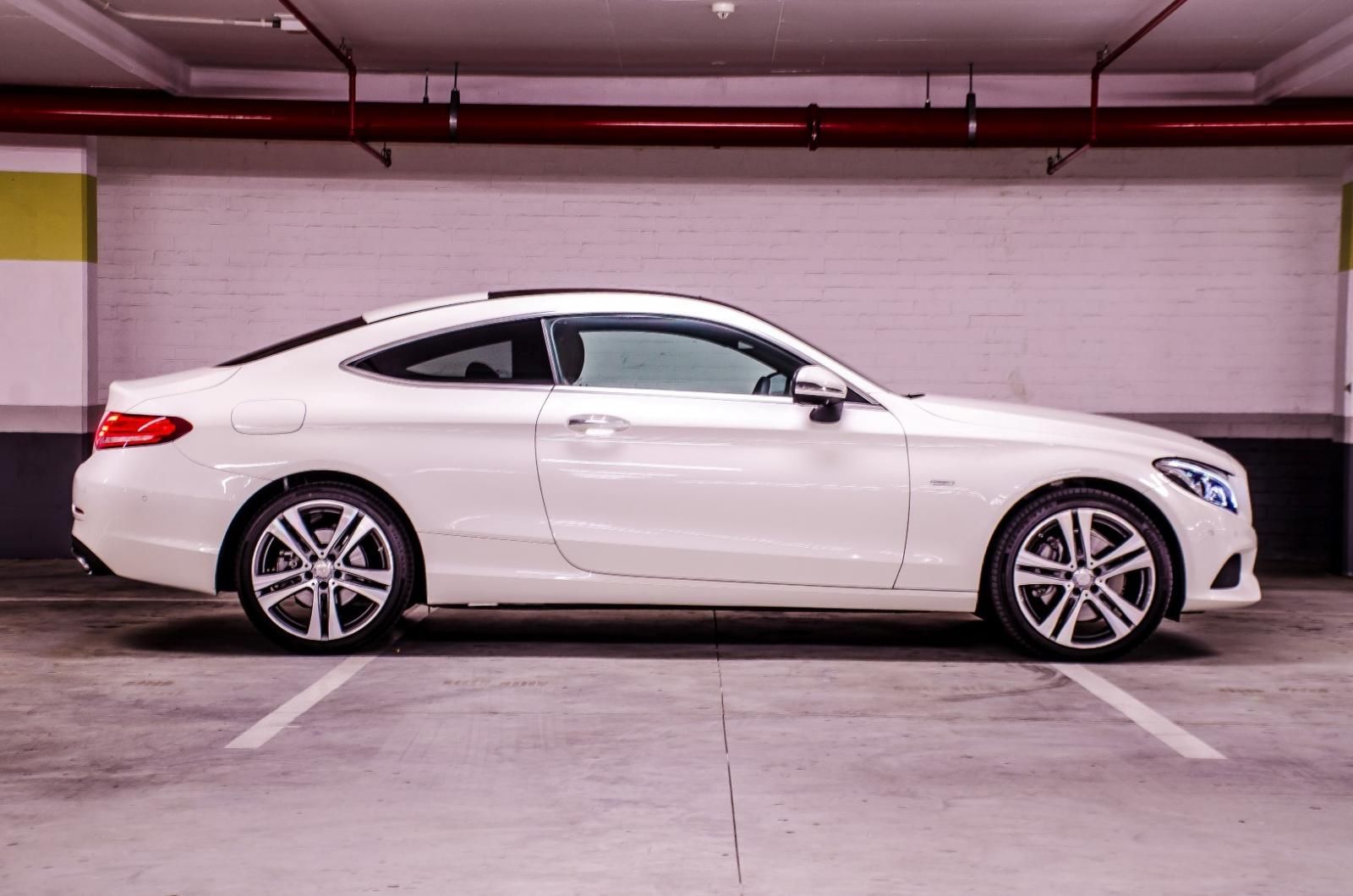
The superbly proportioned C-Class Coupe looks resplendent with its "starry sky" grille.
What is it?
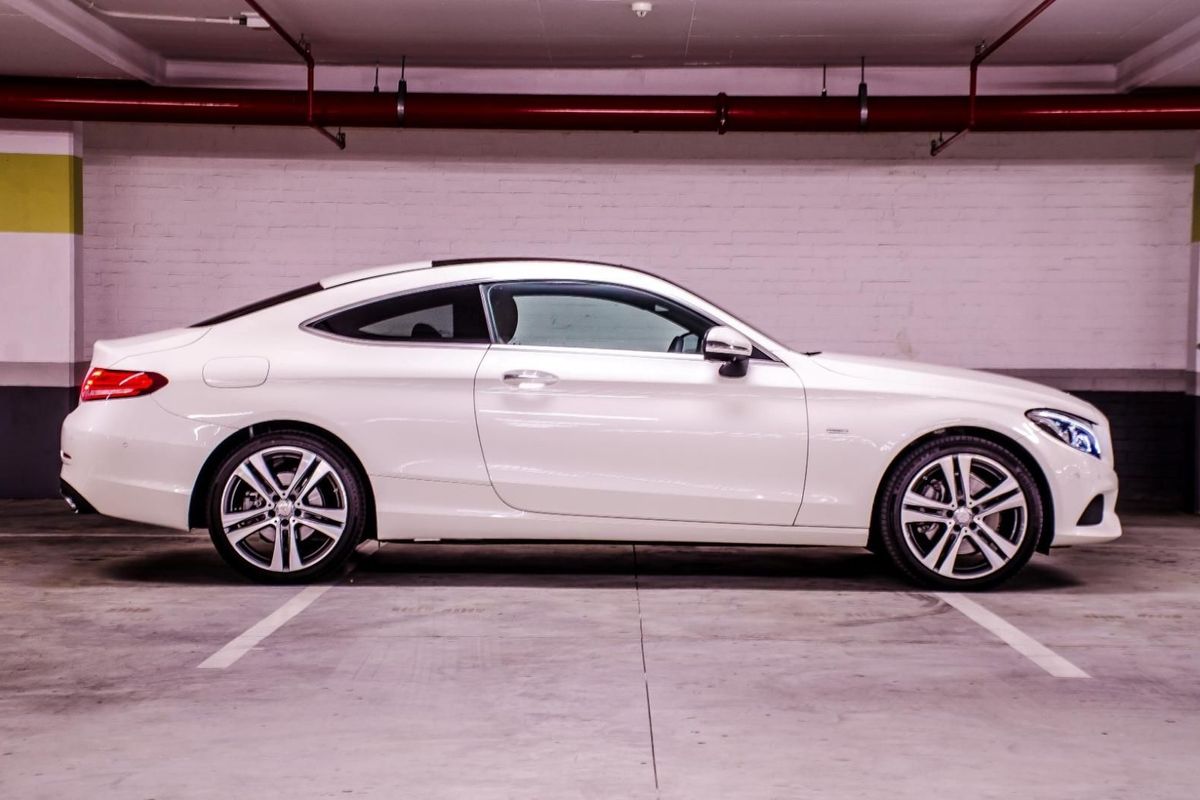
It won’t surprise many people that Mercedes-Benz’s exterior design director, a Slovenian named Robert Lesnik, signed off on both the new C-Class Coupe and the exquisite S-Class Coupe projects, because the (newer) former incorporates several of the latter’s design cues, which is especially evident in its voluptuous rear three-quarter view and the elegant silhouette of the side profile.
The C-Class (of which the sedan version is produced in East London) continues to be a top performer for Mercedes-Benz around the globe and the Sindelfingen-based firm attests that the average age of the sedan’s buyers is younger than it was for its predecessor. With the svelte Coupe version, Benz hopes to attract an even more youthful clientele and has dispensed with old-school conservatism to create an avant-garde package (excuse the pun) that is eminently fashionable, equipped with contemporary technology and athletically-inclined from the outset (not limited to AMG derivatives).
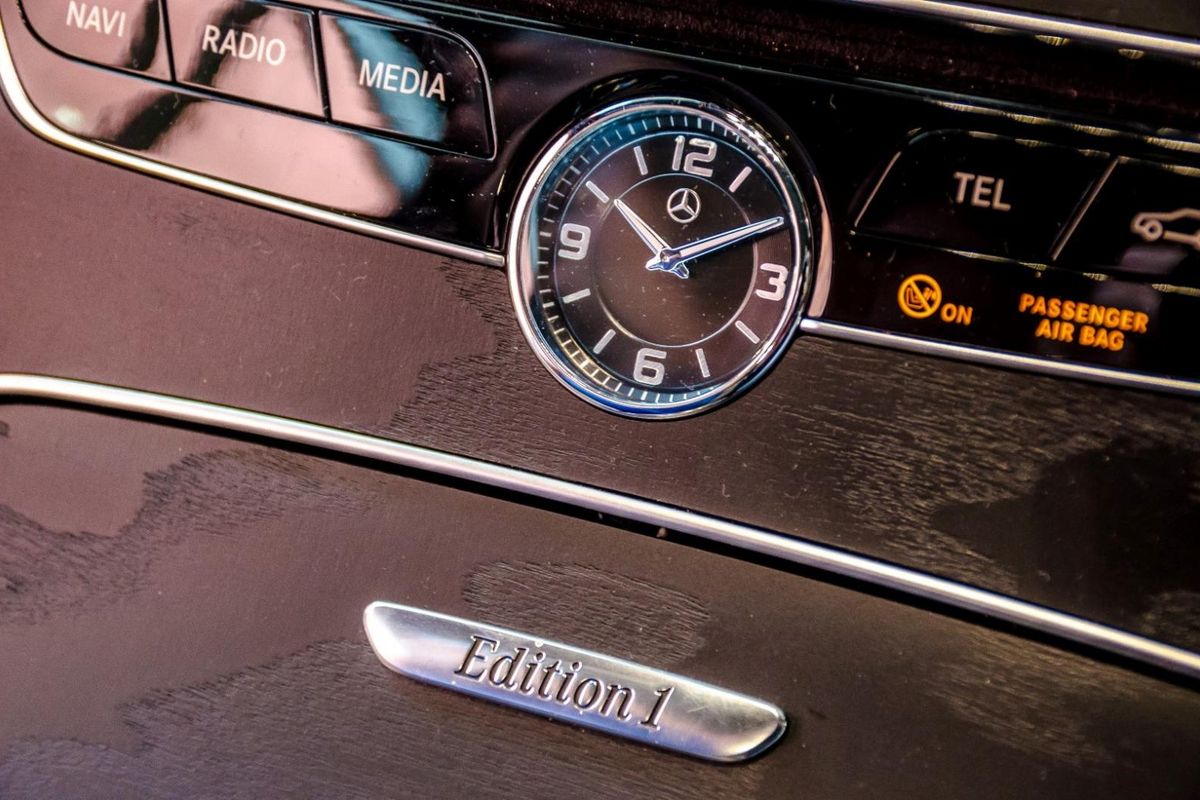
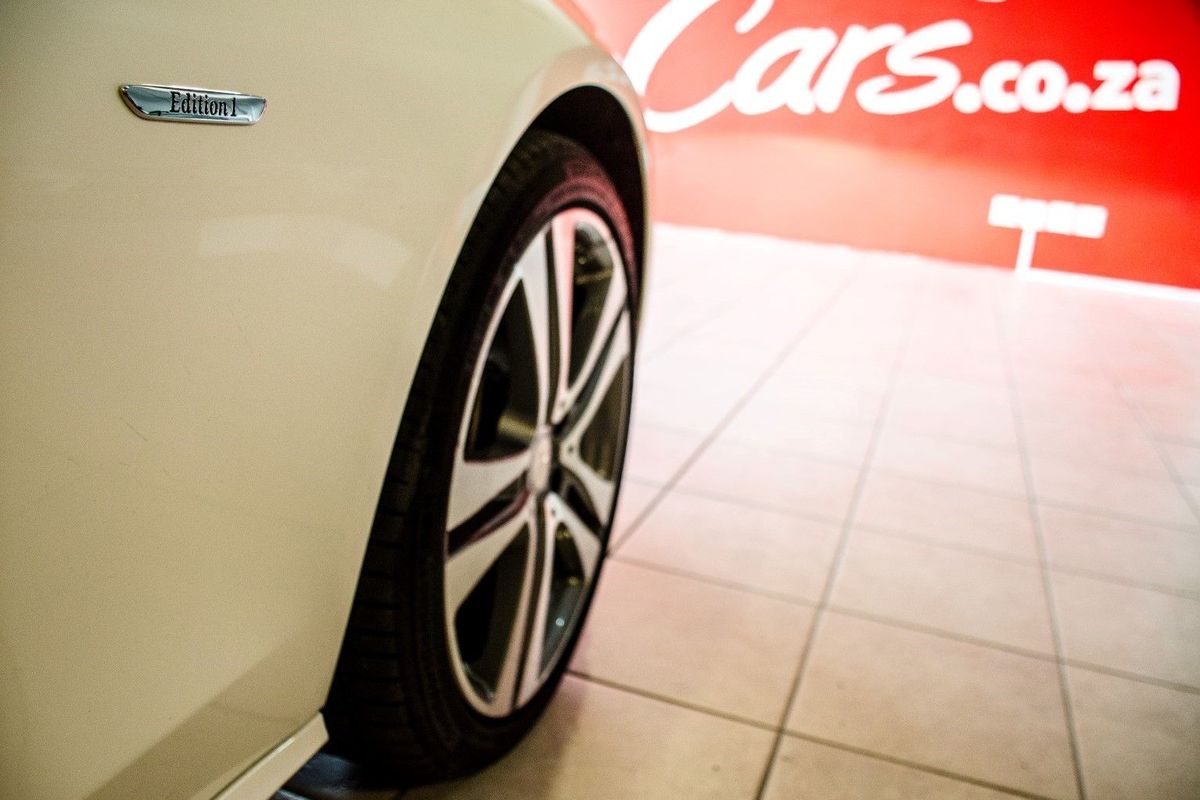
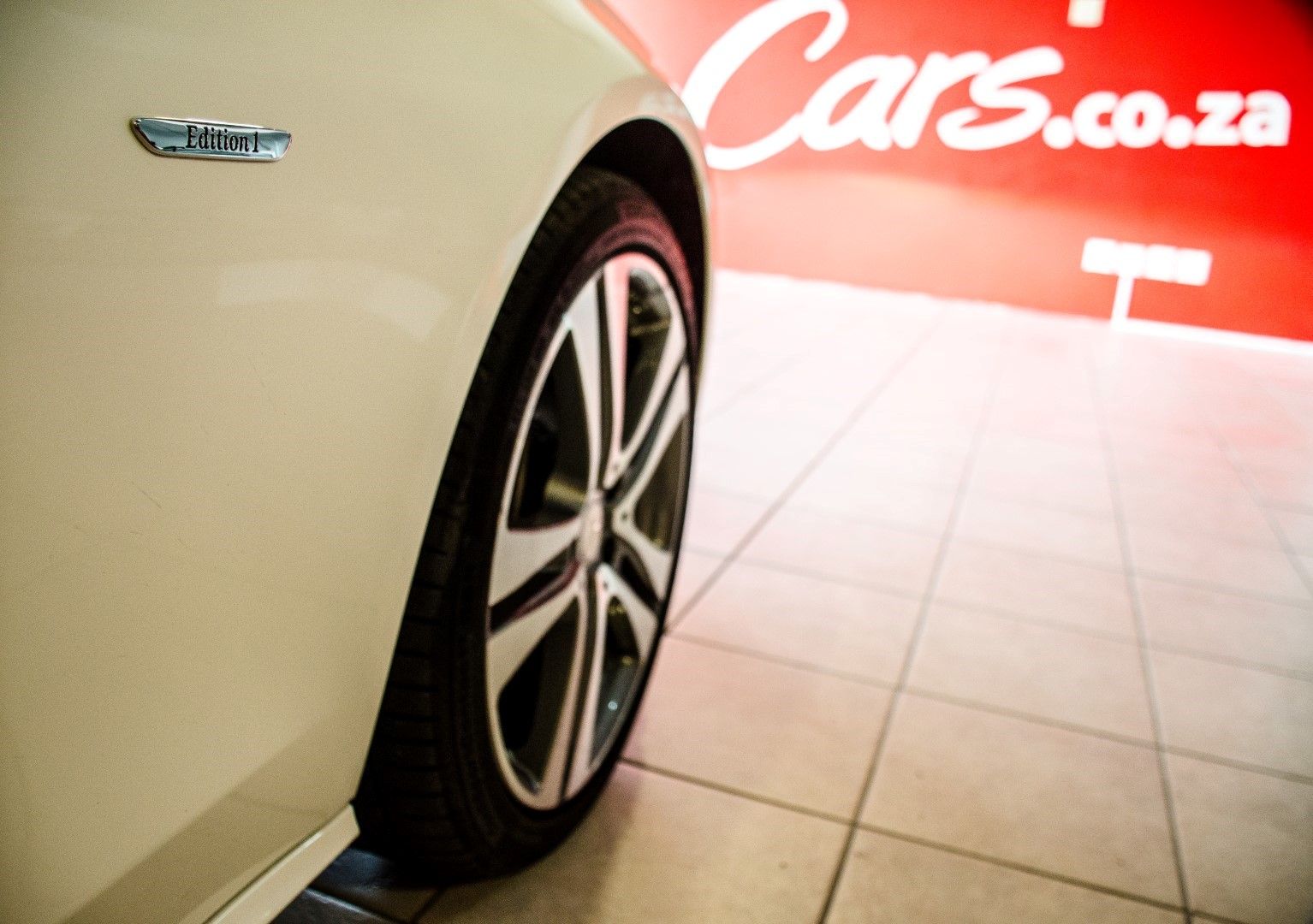
The Edition 1 package adds subtle badging and standout 19-inch rims to the C-Class.
How does it fare in terms of…
Outstanding kerb appeal?
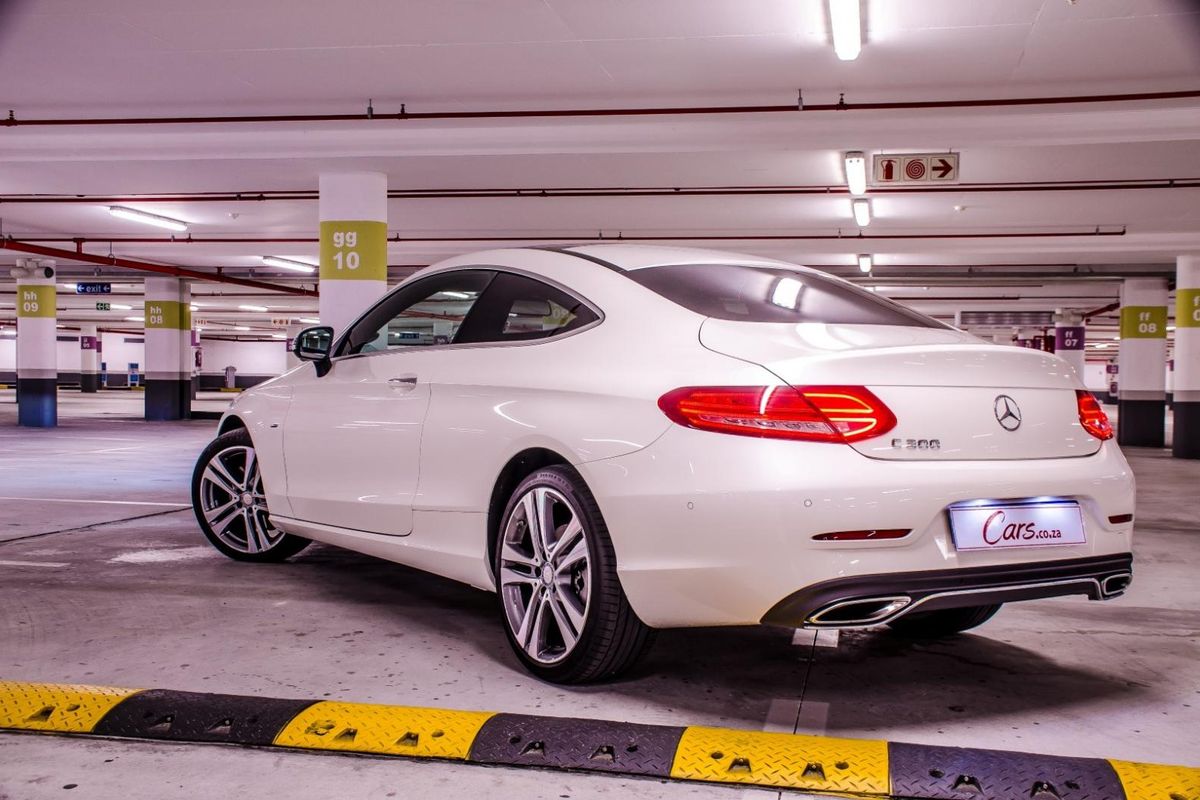
Whereas BMW went so far as to rename its 3 Series Coupe the 4 Series in 2013, Mercedes-Benz simply ensured that, aesthetically speaking, the coupe version of its W205 C-Class would clearly distinguishable from its sedan brother, with the former receiving the biggest allotment of pretty genes. Of course, there is a familial resemblance, which is strongest from the front and front three-quarter view of the C300, but from the A-pillar all the way to the bluff rear-end, the test unit looks every bit like a micronised S-Class Coupe, replete with seductively sloped C-pillars and a subtle bootline. What's more, those sensually elongated taillamp clusters “broaden” the hindquarters and “flatten” the car’s stance.
The end result is an exterior execution that looks both grand and alluring; a shape that appeals to older and younger buyers at different levels. Design critiques are subjective, but the C-Class Coupe must be one of the most distinctive and dashing cars in its class. The eye-catching 19-inch wheels come courtesy of the Edition 1 package that was specified for the test unit and for those buyers who find AMG derivatives accoutrements a little flashy, the C300 oozes restrained elegance. Bravo.
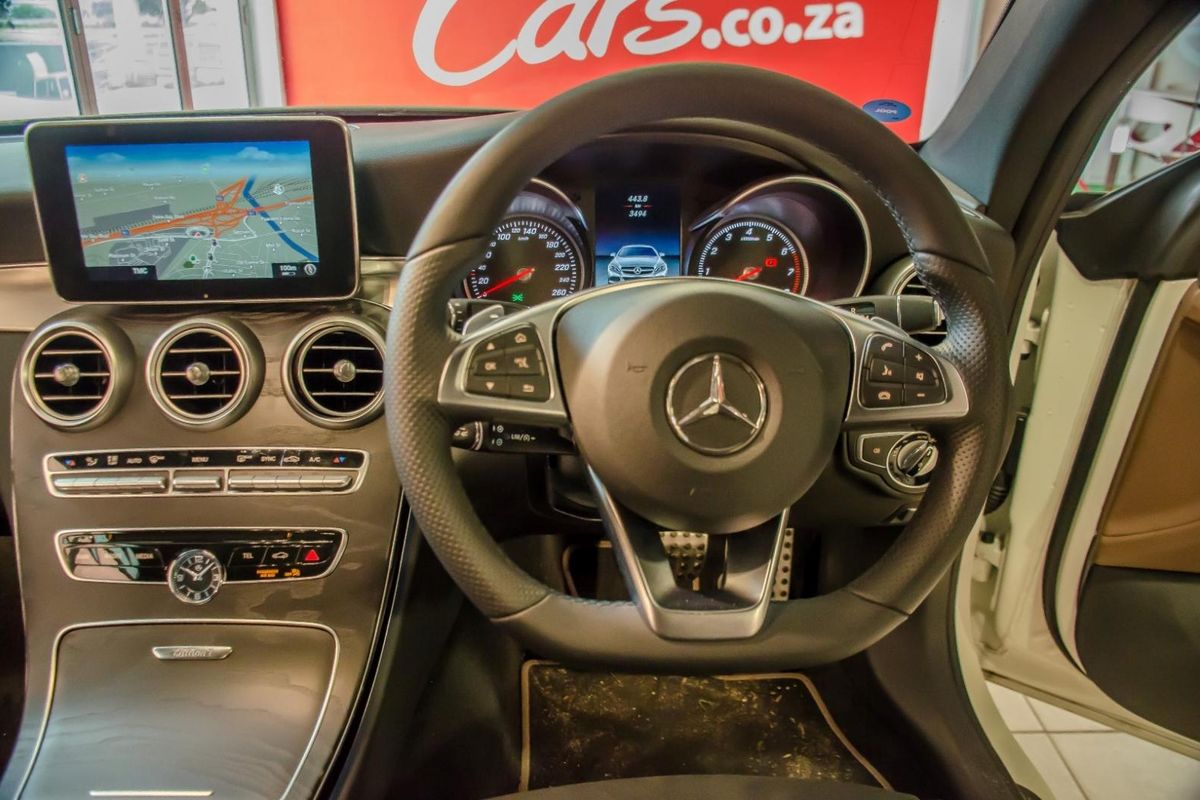
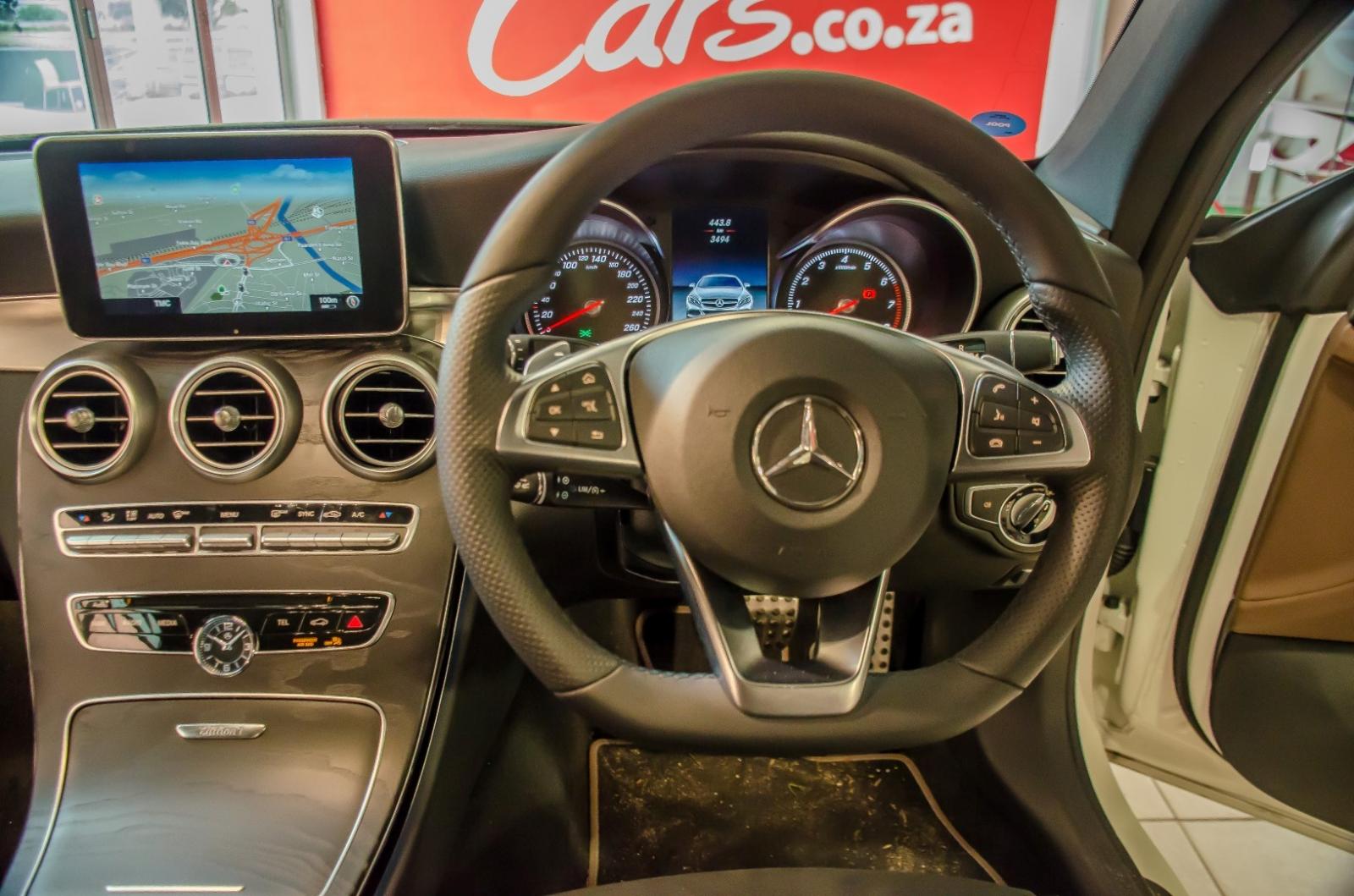
A flat-bottomed steering wheel gives a clue to the C300 Coupe's sporty pretensions.
A sumptuous interior?
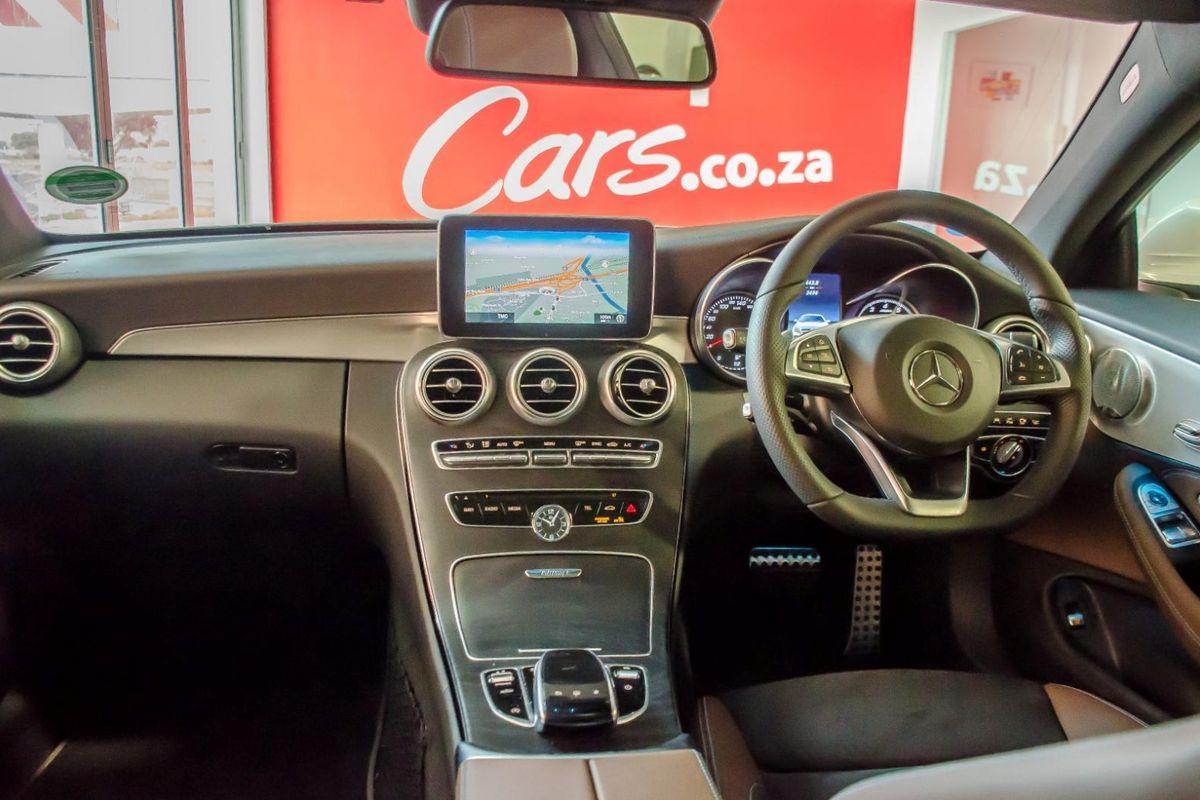
If there are readers who aren’t entirely won over by the exterior characteristics of the C-Class Coupe (there shouldn’t be many), they’re more than likely to be enraptured by the German car's meticulously detailed interior. The Edition 1 package trims the Coupe in a combination of brown and black leather upholstery with turquoise contrast stitching (an acquired taste, but it works well in conjunction with the LED mood lighting).
Meanwhile, the expansive plunging fascia is trimmed in matt-finished dark wood veneer and smattered with marvellously tactile metallic switchgear. The entire space feels instantly exclusive and, most importantly, expensive. Anoraks will be quick to point out that the standard trim on the car is Artico faux leather and that trim lines add to the cost of the car, but if the purpose of the interior is to evoke a business class ambience in a compact executive car cabin, it’s worth the outlay.
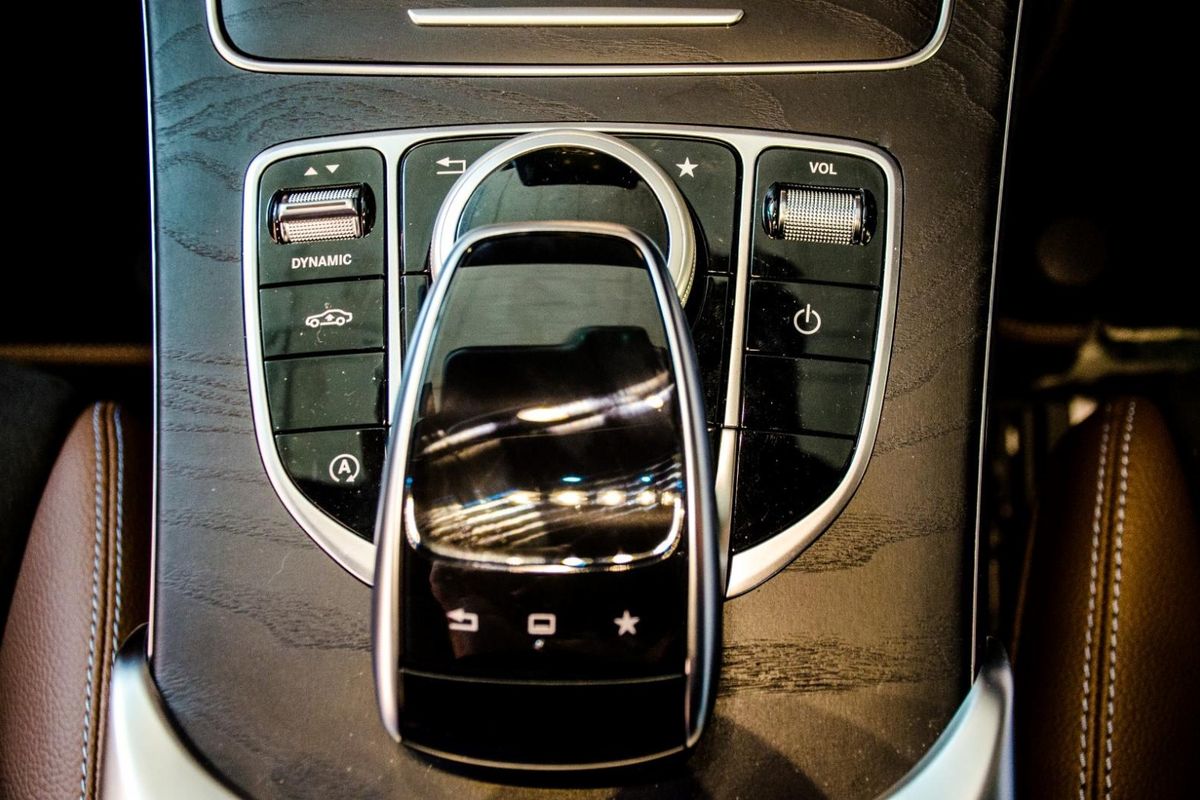
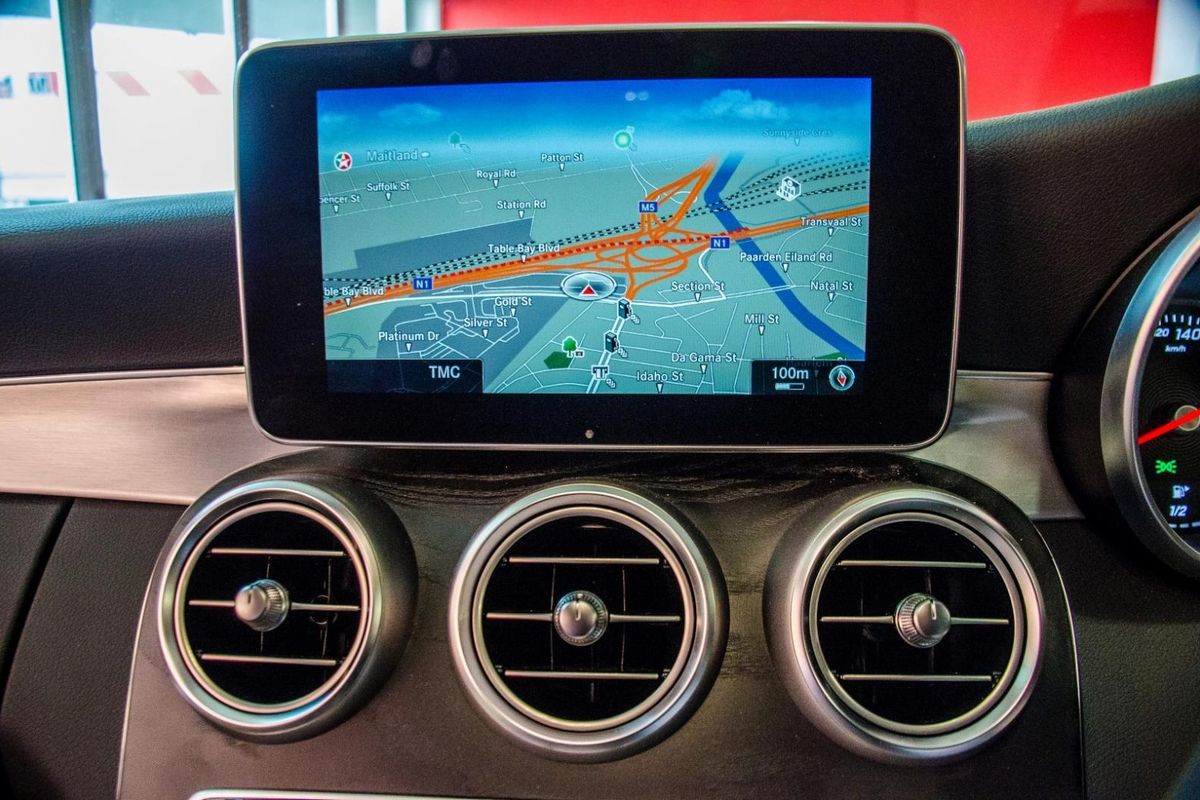
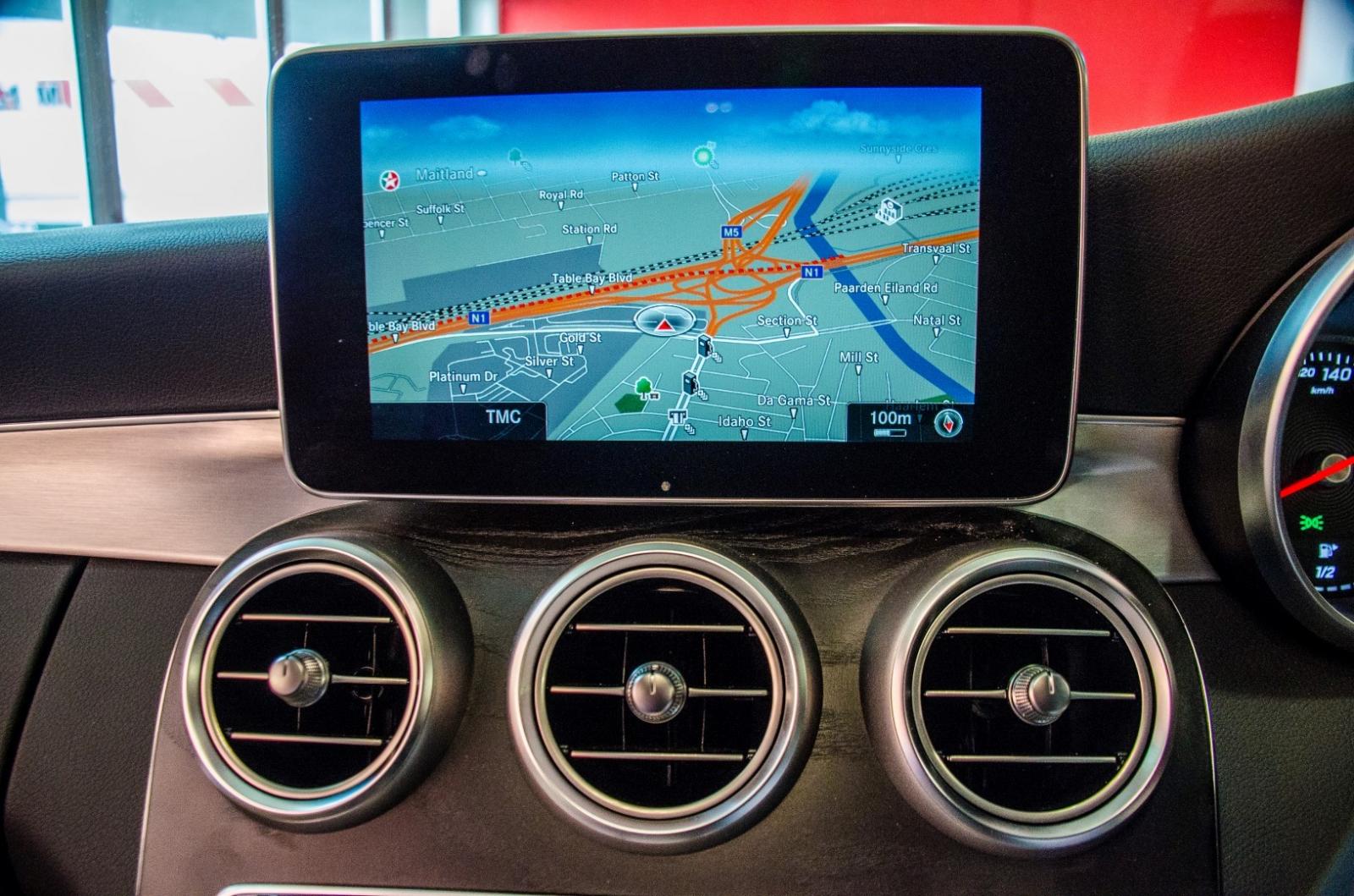
To its credit, the Coupe's driver's seat strikes a good balance between an engaging position, for when you want to sit low and close to the steering wheel, and a more comfort-oriented setting, where you'd want to recline a bit more and stretch your legs on longer drives, at least more so than its predecessor. And, whereas the previous two-door version of the C-Class did not have class-leading interior design or ergonomics, the C300's controls (admittedly derived from the World Car of the Year winning C-Class sedan) are very intuitive to use, save for the Comand menu navigation that now seems a trifle clunky (but improves with familiarisation). The steering wheel doesn't feature the haptic "scrolling" buttons as featured in the new E-Class, for example, either.
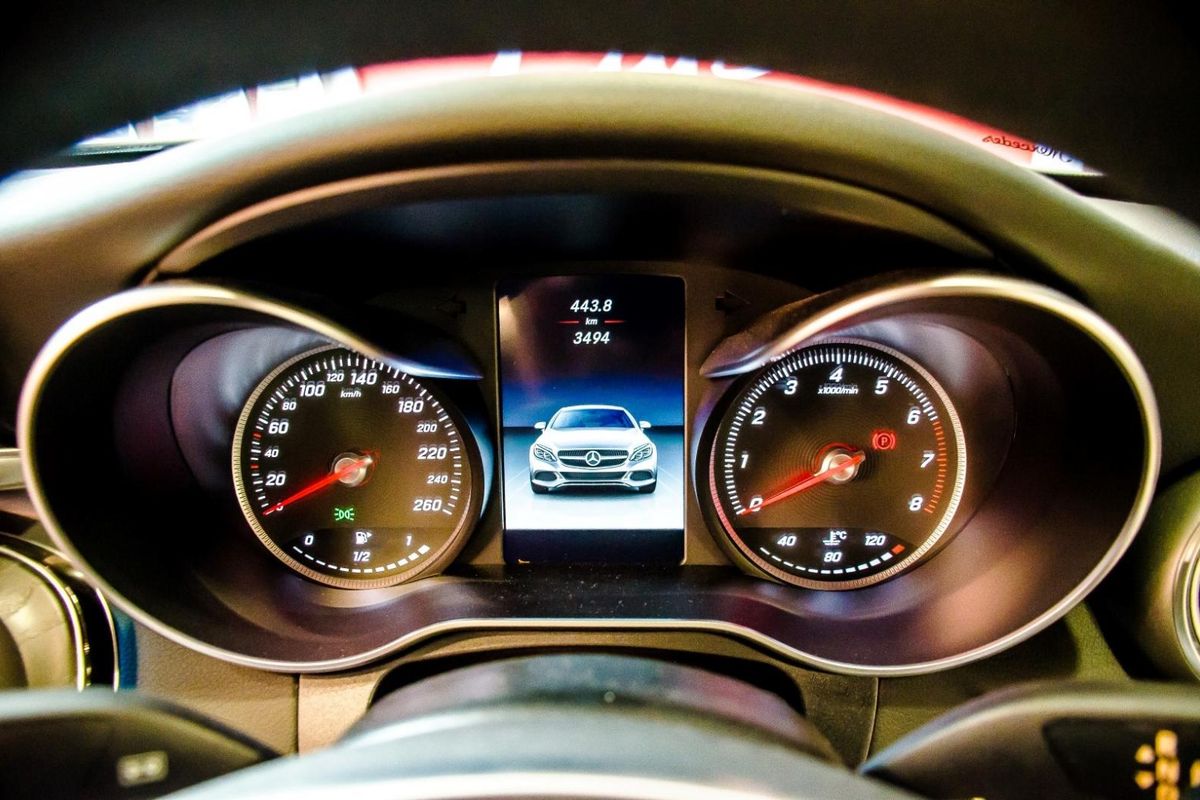
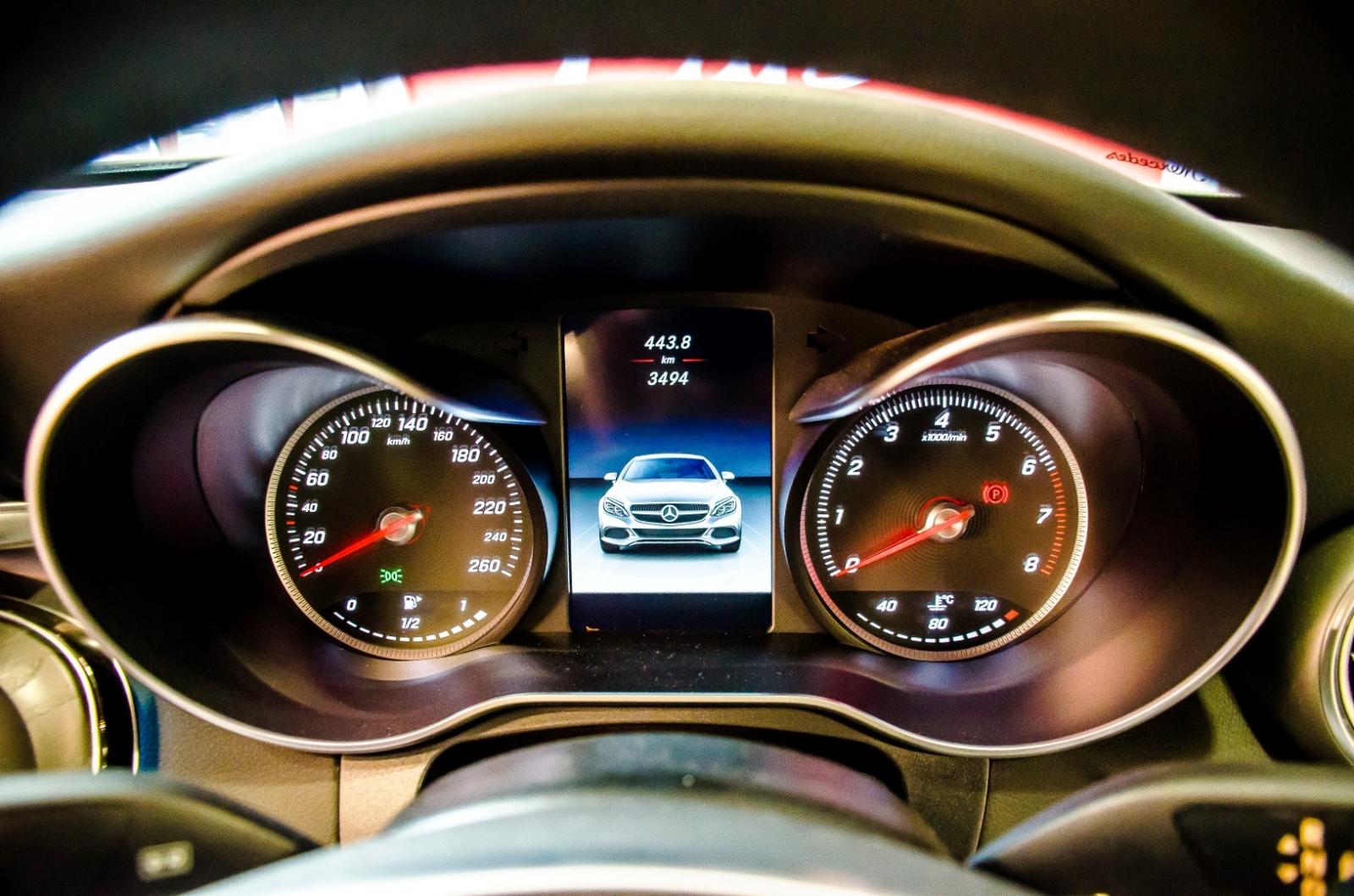
The instrumentation cluster is housed in a pair of interlaced chrome-edged half-cylinders.
Performance and handling?
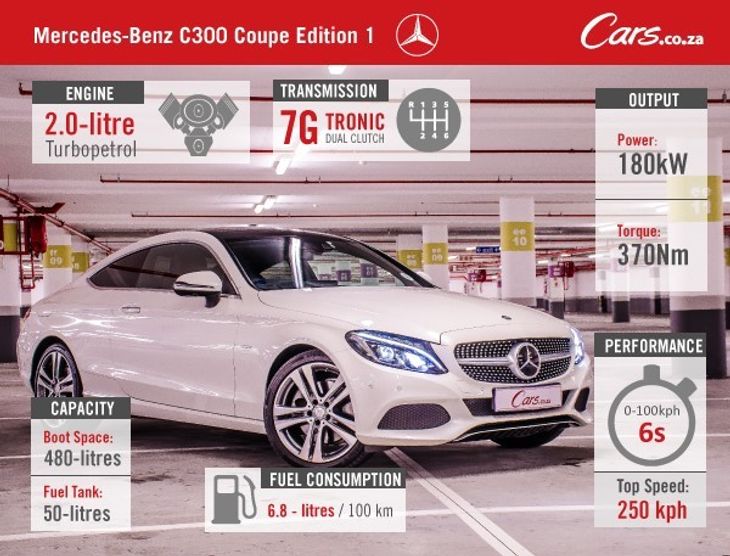
Given the C-Class Coupe's evocative cladding, it would be a travesty if the C300 disappointed in terms of performance and dynamism. Fortunately for Benz, it doesn't… the 180 kW/370 N.m 2.0-litre 4-cylinder turbopetrol may not have an inspired exhaust note under normal operating circumstances (it does snarl a bit more urgently in the Sport driving mode), but it will dispatch the 0 to 100 kph sprint in a claimed 6 seconds and deliver eager overtaking acceleration in freeway driving conditions. The coupe's handling characteristics are sure-footed courtesy of an electronically adaptive suspension and a wide track and the steering setup, although not communicative in the traditional sense, is well weighted and direct. The C300 is fleet of foot and yes, engaging to drive.
You may sense that there is a BUT coming and you're right, here it is… The C-Class Coupe is a relaxing car to drive on the daily commute, with a good level of NVH suppression, a willing engine and firm-but-generally-pliant suspension setup. The C-Class Coupe is also surprisingly eager to pile on the pace where road conditions are conducive to enthusiastic driving. However, where the C300 seems the least impressive is when you are driving the car in a variety of ways in short succession (when you require a short, sharp burst of speed while cruising on the highway, for example).
The enlarged Comand infotainment screen does not offer touchscreen functionality, but its display is crisp and clear.
Whereas the Benz's 9-speed transmission is ubiquitous in the new E-Class range, this derivative makes do with the older 7-speed 'box and, whether the engine's throttle mapping is too conservative for the sake of efficiency, or the 'box shift pattern software is calibrated to only react under very particular conditions, or turbo lag tends to make its presence felt, the C300's responses can feel a mite blunt and hesitant at times. When most drivers encounter this, they will tend to apply more pressure on the throttle pedal, which will make the gearbox snag a lower gear and a droney rev frenzy is sure to ensue.
Practicality?
Although the downsized engine (a derivative in the C300's position would have sported a 6-cylinder motor in the previous model line-up) comes with a less characterful soundtrack, the claimed average fuel consumption of 6.9 L/100 km should allow the Coupe to be reasonably affordable to run (by sportscar standards, at any rate) and we saw returns of comfortably below 10 L/100 km during the test.
Purchasing a 2-door does require a fair degree of compromise, but in the case of the C-Class Coupe, it is palpably manageable. Rear occupant headroom was always going to be a luxury given the Benz's wicked plunging roofline, but legroom is satisfactory for a pair of adults on shorter trips. The rear bench's cushion and backrest feature two indentations to facilitate better seating comfort. Two small children should sit quite comfortably, but don't expect to fit a family of four's luggage into the boot, it's better sized for a few days' shopping/a large suitcase and a hold-all bag, perhaps.
The C-Class Coupe's wind-cheating shape aids fuel efficiency, which is a claimed 6.8 L/100 km.
C300 Coupe price and after-sales back-up
The standard car costs R664 518, including a 2-year warranty and 6-year/100 000 km maintenance plan.
Verdict
It's difficult to argue against the C-Class Coupe in terms of the bold expression of style and fine taste that it makes on behalf of its custodian/owner. Mercedes-Benz has yet to introduce a 6-cylinder version that will close up the reasonably cavernous divide between the highest of the 4-cylinder models (the C300) and the flagship C63/C63 S AMG derivatives in the product line-up. As a result, the C300 (as tested here) is an excellent showcase of the C-Class Coupe's finest traits: tantalising design, exquisite detailing, superb occupant comfort and a good performance-ride-handling balance.
And yet, we'd be remiss if we failed to note that the C300's unspectacular powerplant/transmission combination and less-than-lively responses when required to transform from a comfortable cruiser to an engaging sportscar, if only for brief periods at a time, renders this particular derivative more of an executive's luxurious and (reasonably) comfortable mode of personal transport and less of a driver's car. Fortunately for Mercedes-Benz, however, the C300's potential buyers will favour the former over the latter by some margin. It's not a perfect all-rounder, but very few cars are…
Viewed in isolation, the Lexus RC 200t EX seems a well-appointed left-field choice, the BMW 4 Series is sportier, but with less sense of occasion and given the Audi A4's set of talents (and superb build quality and refinement), the upcoming A5 will be well worth looking out for. In the meantime, however, the C-Class Coupe makes the biggest, most emphatic statement; if it's sheer dynamism you are after, look at the Four, for everything else, get the Benz.
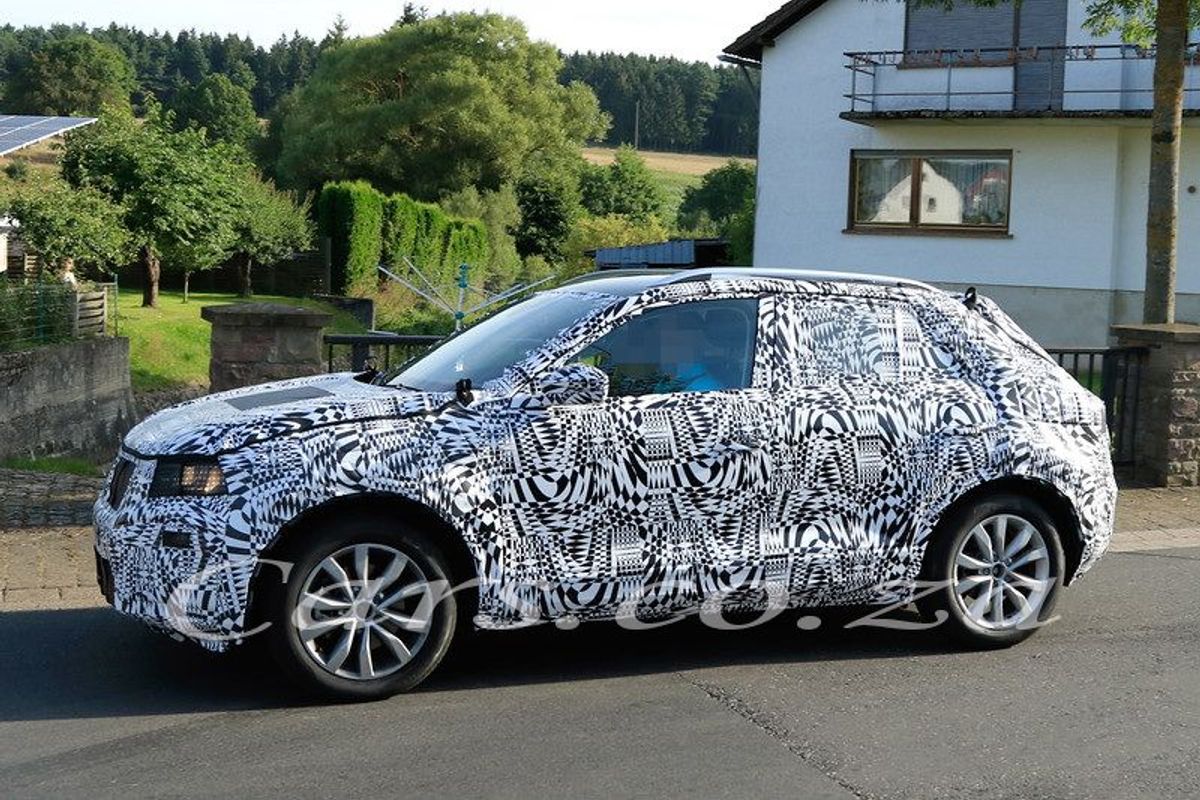
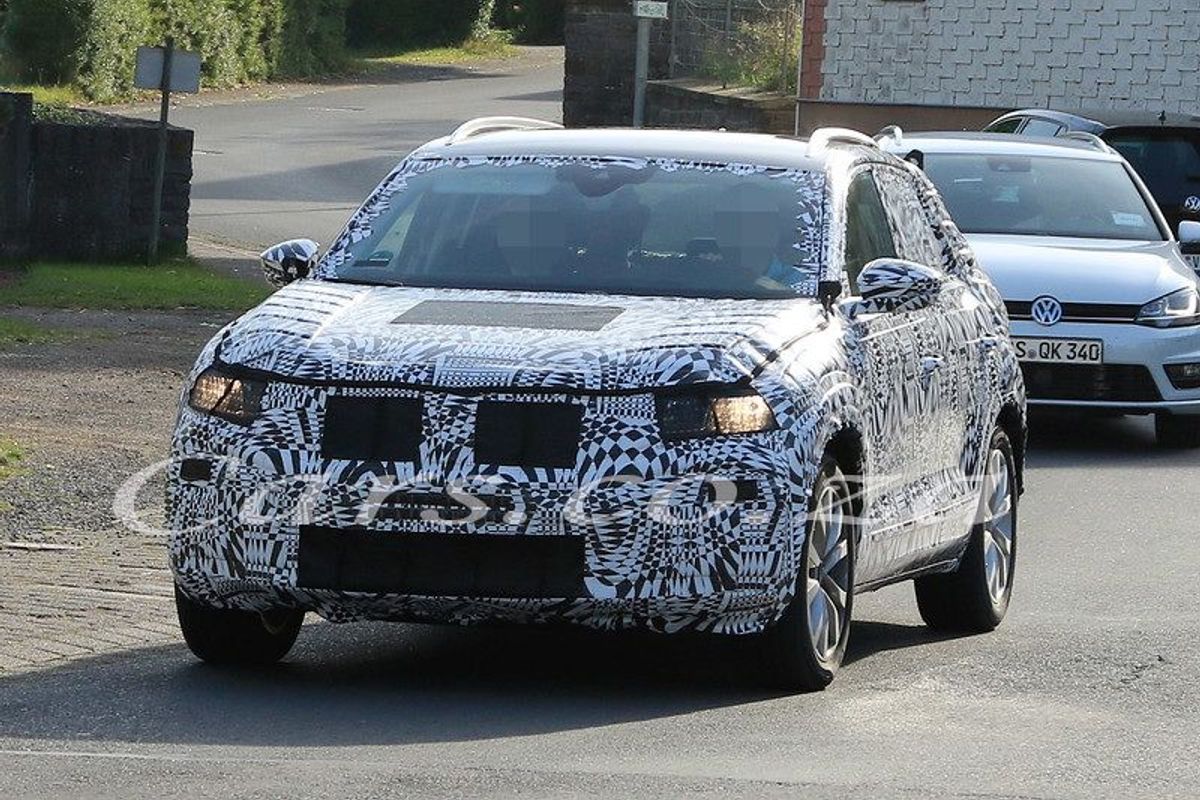
Volkswagen is expanding the Polo range to include an SUV/crossover model and while the vehicle you see here is heavily disguised, it gives you some idea of the newcomer that the Wolfsburg-based brand is readying for launch.
Photos by S.Baldauf / S.B. Medien
What you see here are the first spy shots of (what appears to be) the 2018 Volkswagen Polo SUV undergoing testing in Germany. It will be based on the next generation of Volkswagen Polo (a shortened MQB platform), feature all-wheel drive and incorporate design cues from the new Tiguan. The Polo SUV will have (the obligatory) raised ground clearance and roof rail; we'd be surprised if it didn't come with similar body cladding to the current CrossPolo.
The crossover/baby SUV segment is one of the most competitive in the new vehicle market with the likes of the Ford EcoSport and Renault Captur currently tallying up healthy sales figures. A Volkswagen competitor will likely come in with aggressive pricing which will see it take a significant portion of sales.
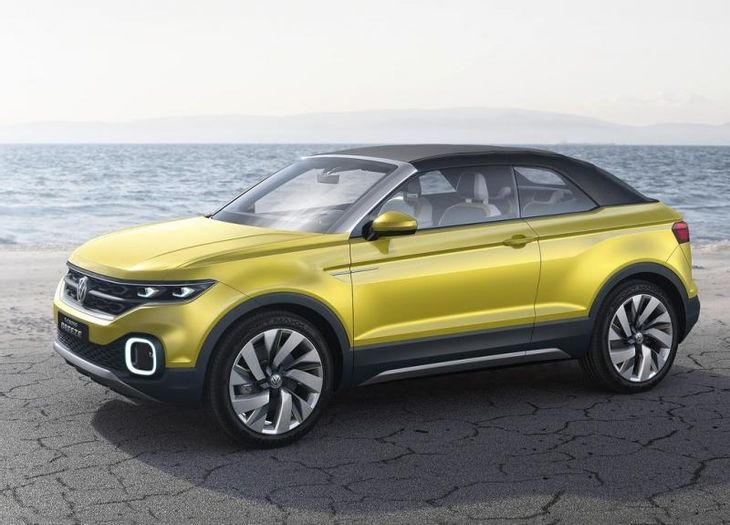
While it may be an outrageous show car, the Volkswagen T-Cross Breeze concept (shown below) showcases a smaller-than-Tiguan baby SUV. Expect some of these styling cues and dimensions to appear on the new Volkswagen Polo SUV.
The Volkswagen Tiguan is about to land in South Africa, but a bigger 7-seat version has been spotted overseas. Check out the Tiguan XL.
Photos by S.Baldauf / S.B. Medien
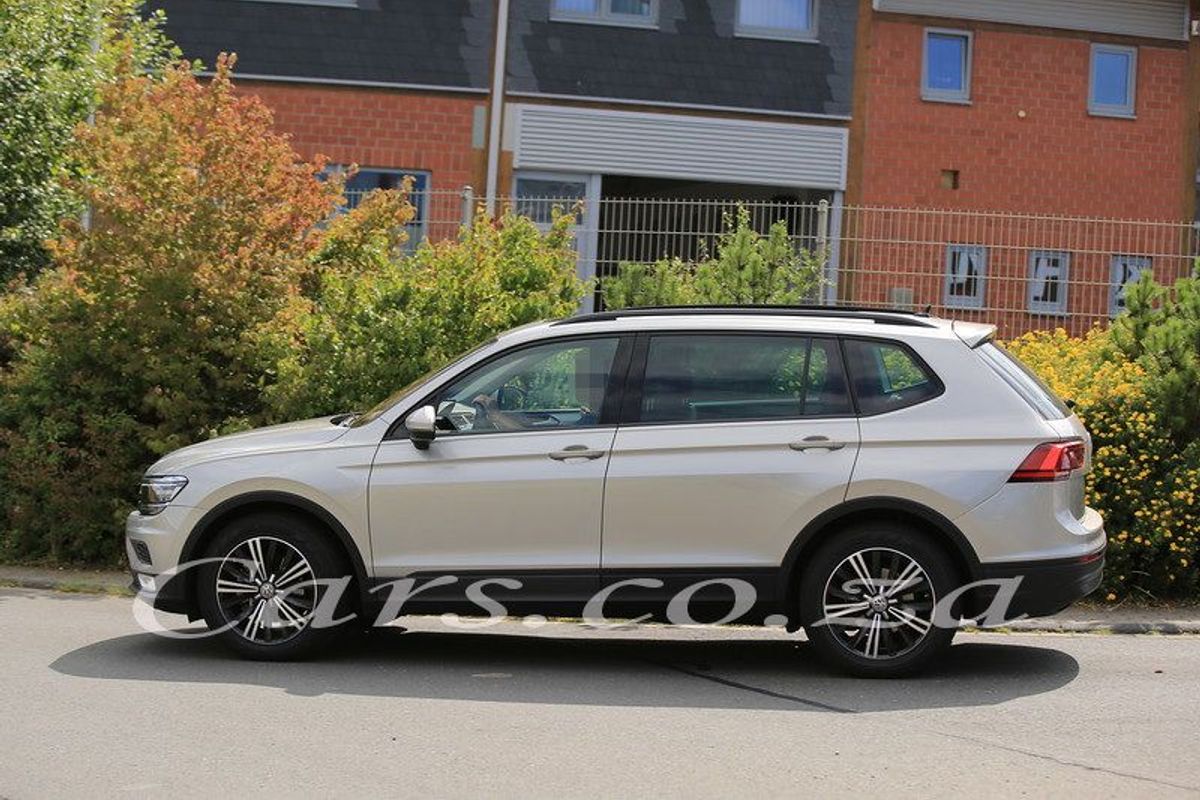
Nestled on the Volkswagen Group's MQB platform that also underpins the excellent Golf 7 and Audi A3, to name but a few, the new Tiguan promises much. Read our first drive report by clicking here. The five-seat variant is due for its South African launch within weeks, but it is unlikely to be the only Tiguan destined for our shores. Rumours suggest that potentially a stylish five-door coupé version could follow, but arguably of greater significance is the vehicle you see here, the stretched, seven-seat Tiguan XL.
Shown here completely undisguised, the Tiguan XL is a 7-seat version that features a longer wheelbase and longer rear doors. Rumours suggest that its wheelbase is 110 mm longer than the standard model and it will likely be assembled in China and Mexico.
Once the Volkswagen Tiguan has been launched in South Africa, we'll get clarity on whether the expanded range will be made available to our market. Given the popularity of SUVs and crossovers of all shapes and sizes, we wouldn't bet against it.
BMW M4 M-DCT with M Performance Parts (2016) Review
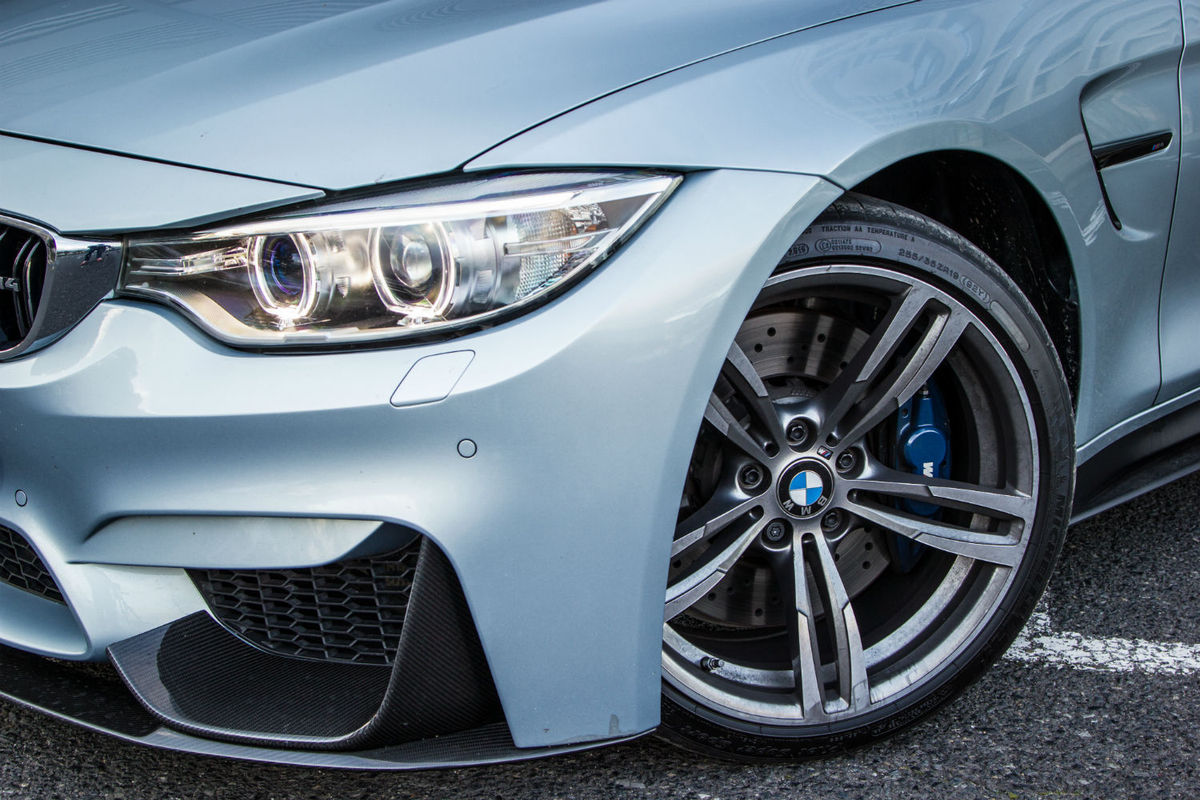
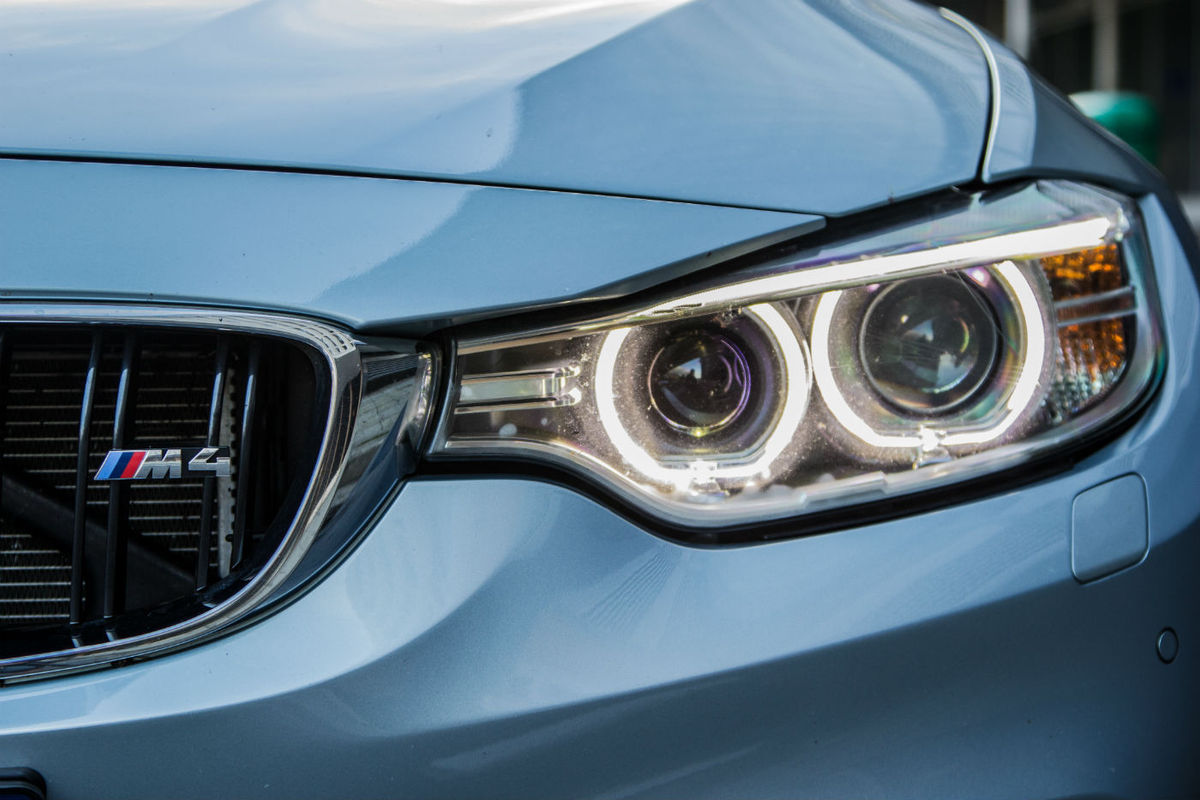
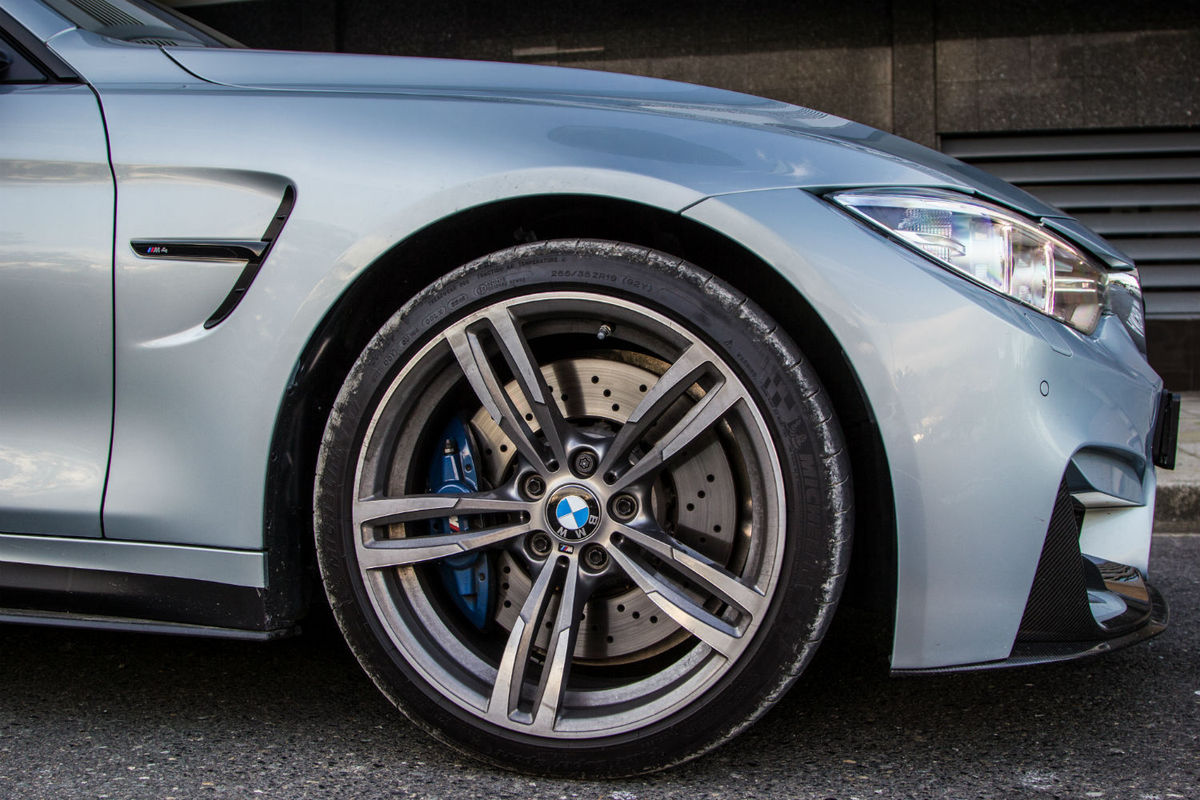
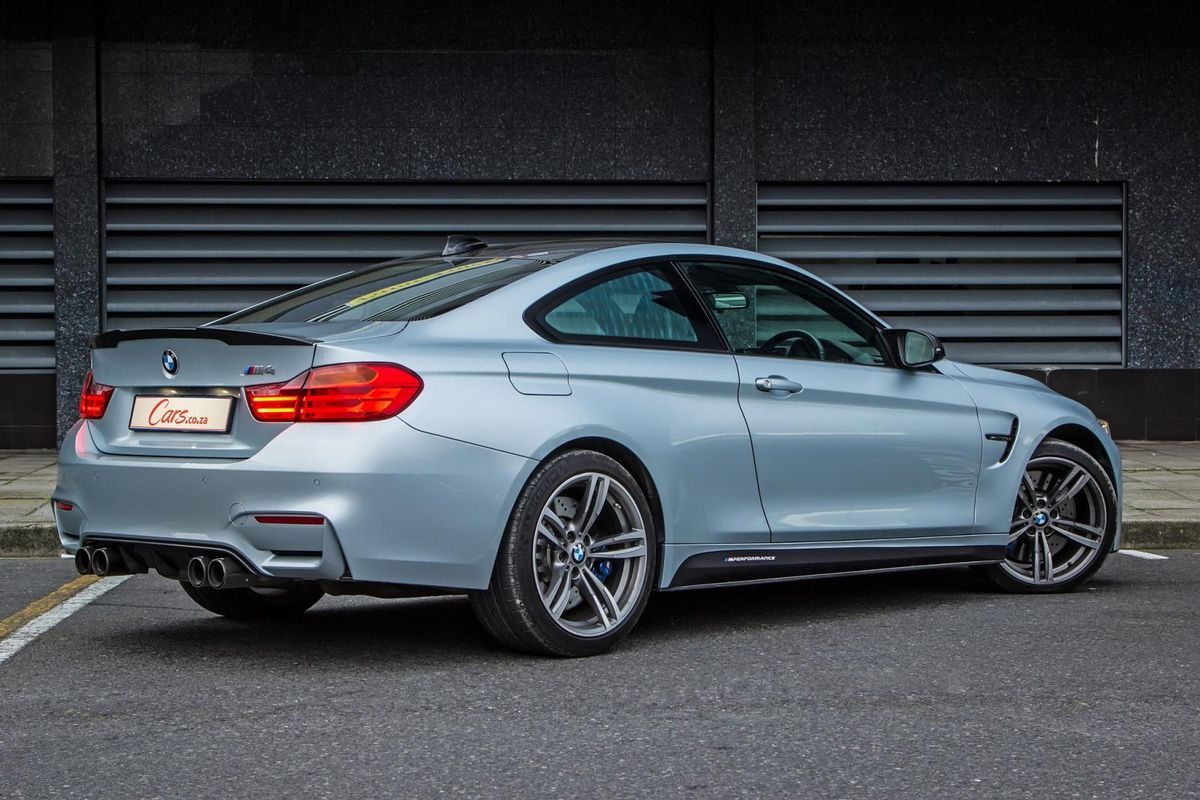
The BMW M4 is a sublime sports car that combines sizzling performance with luxury and everyday usability with aplomb, but, in the hearts and minds of some purists, perhaps a tad too well. Whether the M4 ultimately lacks the sound and fury demanded by the most ardent M car aficionados may be debatable, but BMW has moved to silence the M4’s critics by offering a catalogue of OEM-approved aftermarket parts to give the Bimmer a more hardcore edge. We give it a blast…
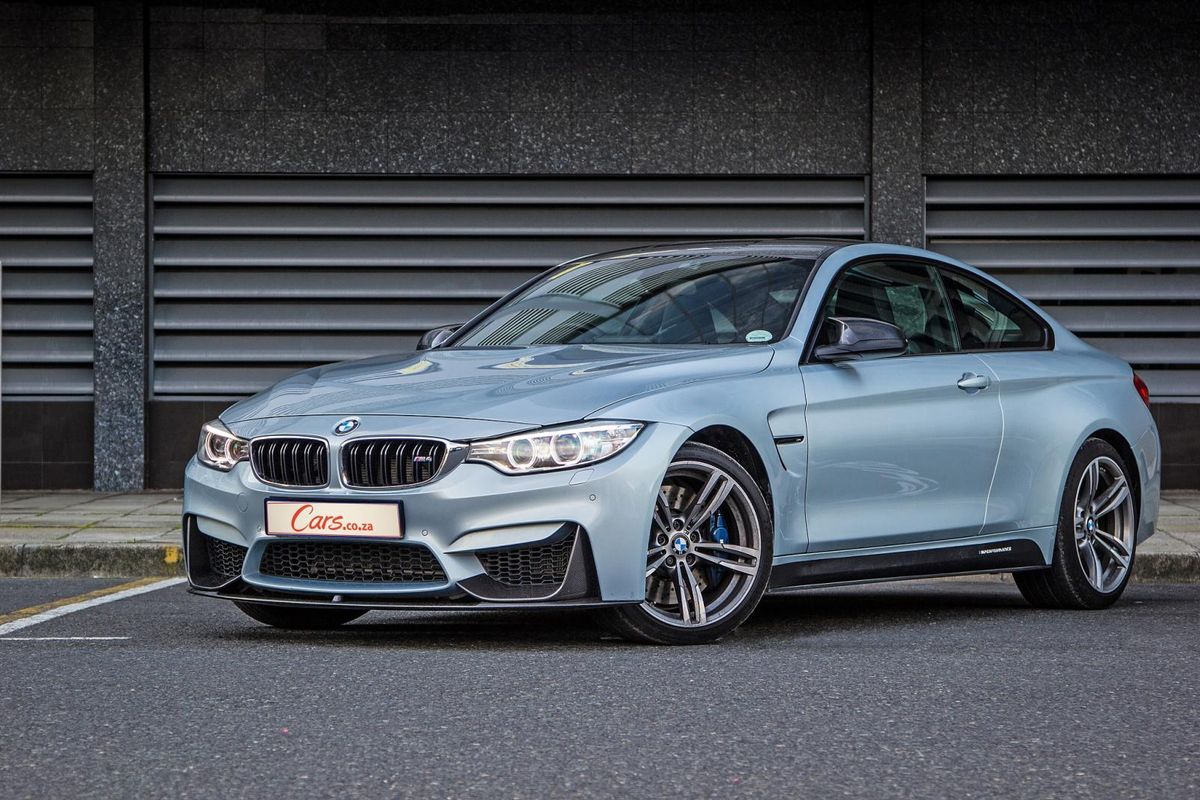
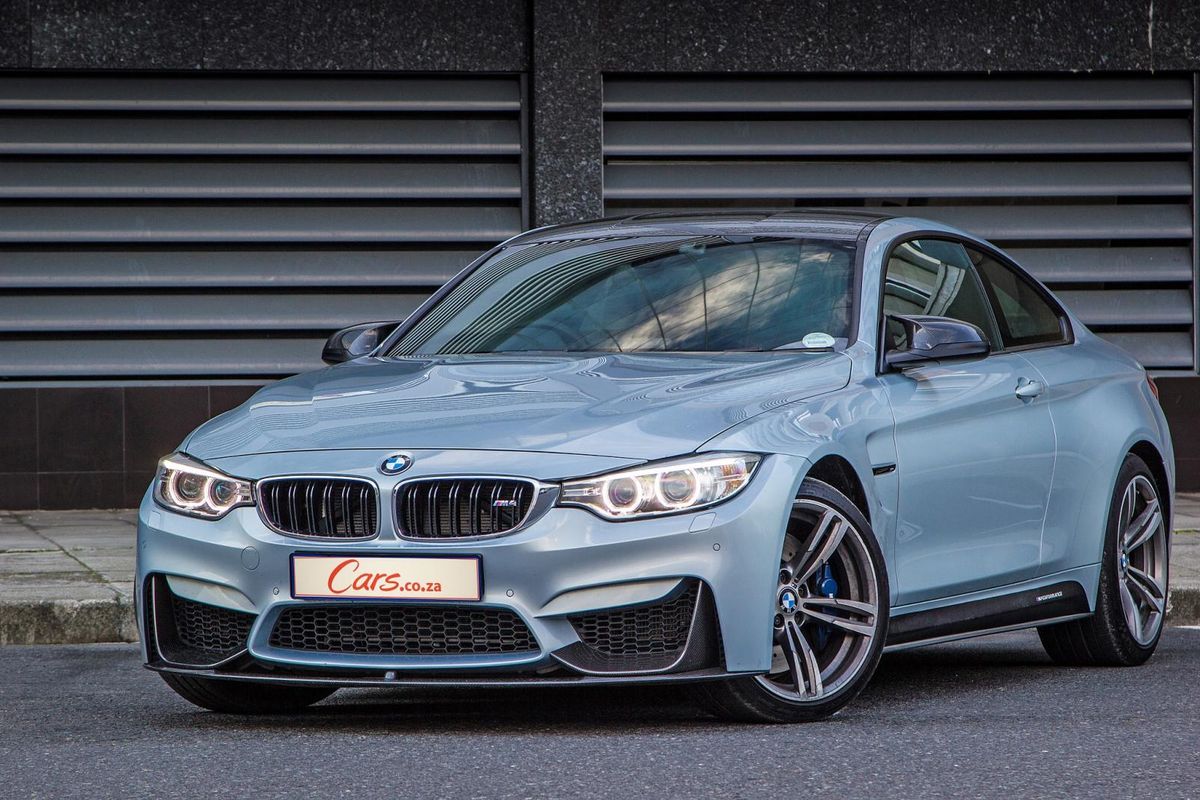
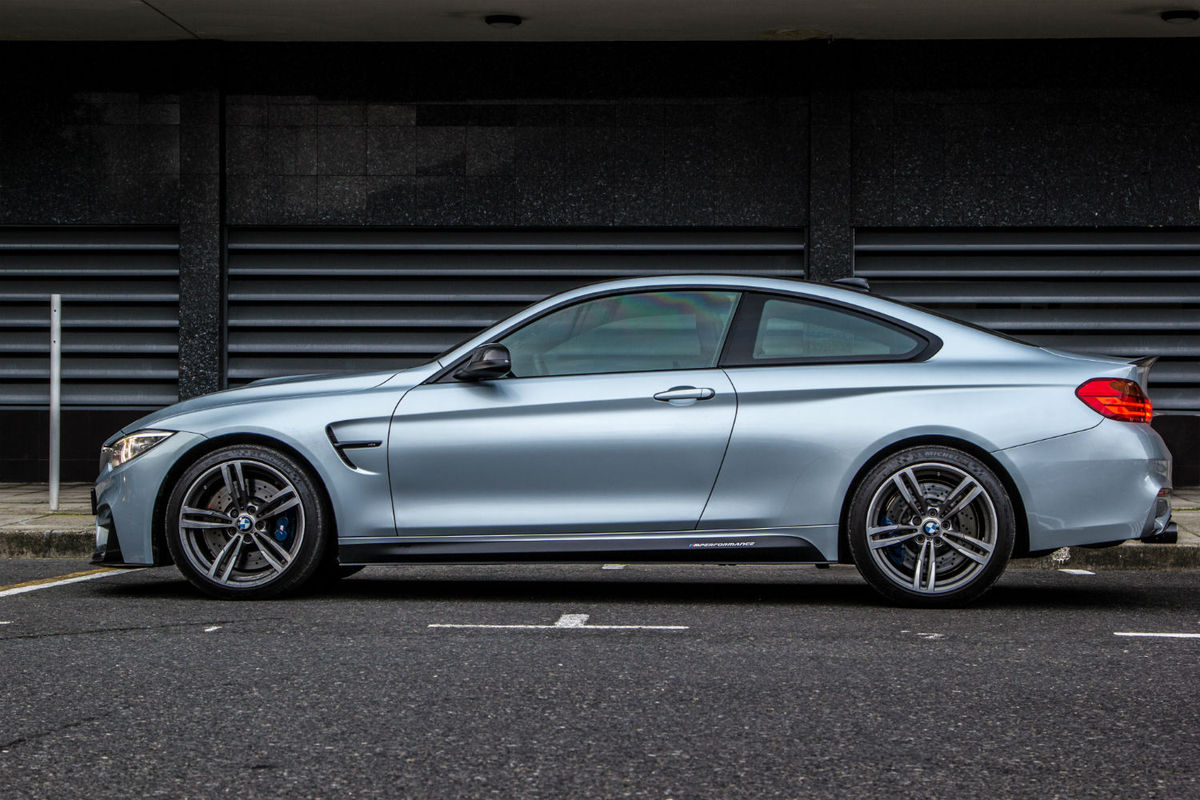
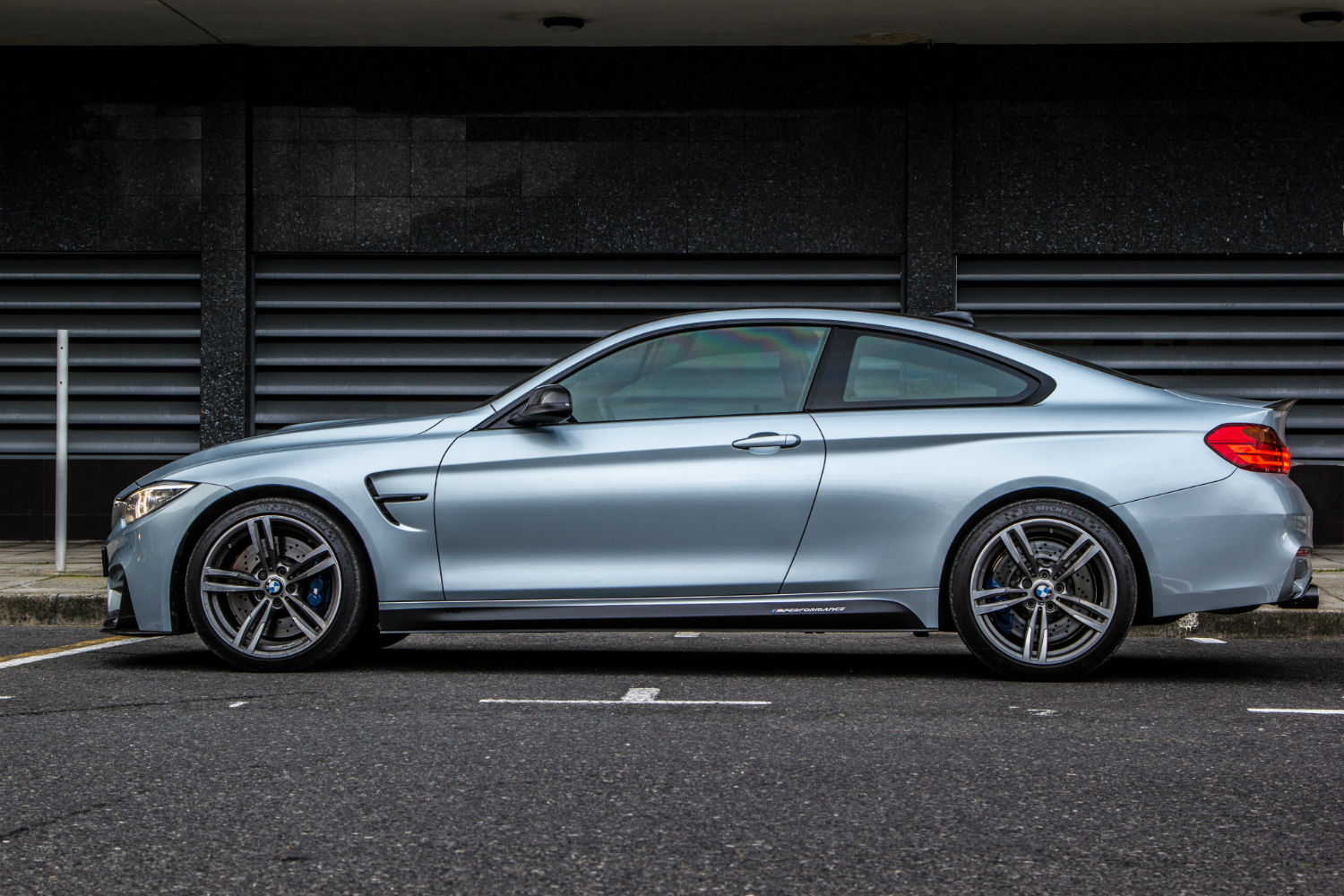
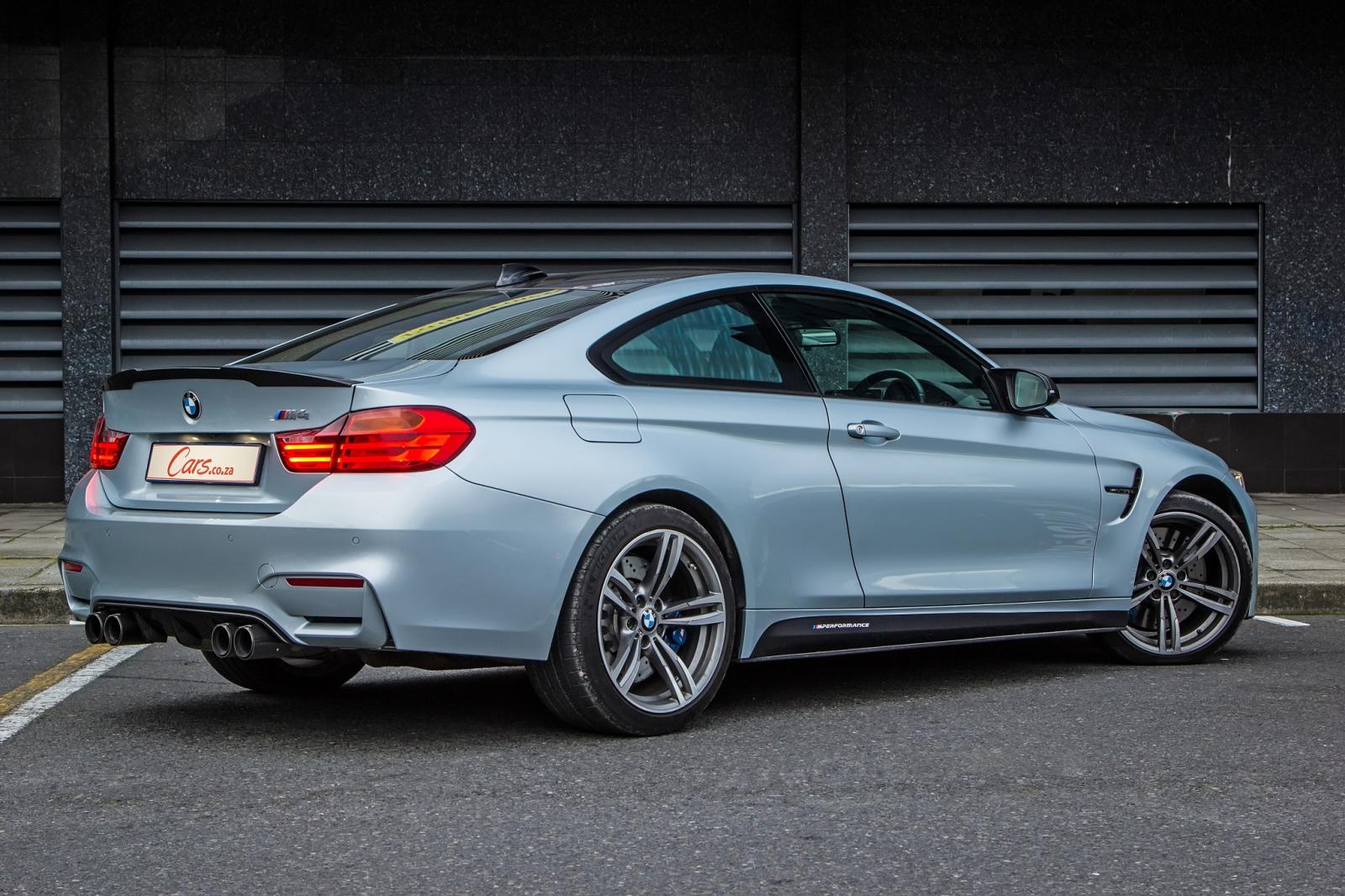
The BMW M4 has been enhanced with OEM performance parts. Do the upgrades warrant the extra outlay? Read this review!
We like: Indulgent soundtrack, brutal performance, cabin comfort and space, build quality
We don’t like: Slightly lacking in low-rev responsiveness, steering could offer more feel
Alternatives:
A familiar, but new foe: If you’re more of a Benz person, then the brand-new Mercedes-AMG C63 is the obvious alternative. For the M4’s money (including M Performance Parts as fitted to this test model), you can just about afford the C63 S, which offers more power and torque. We’ve yet to put the C63 S Coupe through our test routine, so can’t quite make definitive statements yet about its dynamic abilities. Read our first drive report on the C63 Coupe here.
A bargain Audi: The current Audi A5’s successor has already been shown overseas and is on the way to South Africa. However, it’ll take a little longer before the new RS5 arrives. So, if you can twist your Audi dealer’s arm for a good deal on the outgoing model, you’ll still be getting a very good car. Can’t match the BMW dynamically, however, and is showing its age inside. Look for used examples on Cars.co.za.
This is not the so-called M4 Competition Pack, but rather an M4 equipped with goodies from the BMW dealership network’s M Performance Parts catalogue. Does the M4 really need this? Well, by all measurable standards the current, F82-generation M4 is a superb vehicle. It offers stupendous power, driving precision and comfort, all wrapped in a muscular coupe shape. And yet there are M-division fanatics who wonder whether the M4 has become too mild and long for the brutal soundtrack of the E92-generation V8 model, or the soulful straight-sixes that preceded it. And what about the looks? If you are one of those who think the basic M4 shape is a tad too restrained, then a selection of M Performance parts provides ample opportunity to add some visual drama.
How does it fare in terms of…
Upping the drama?
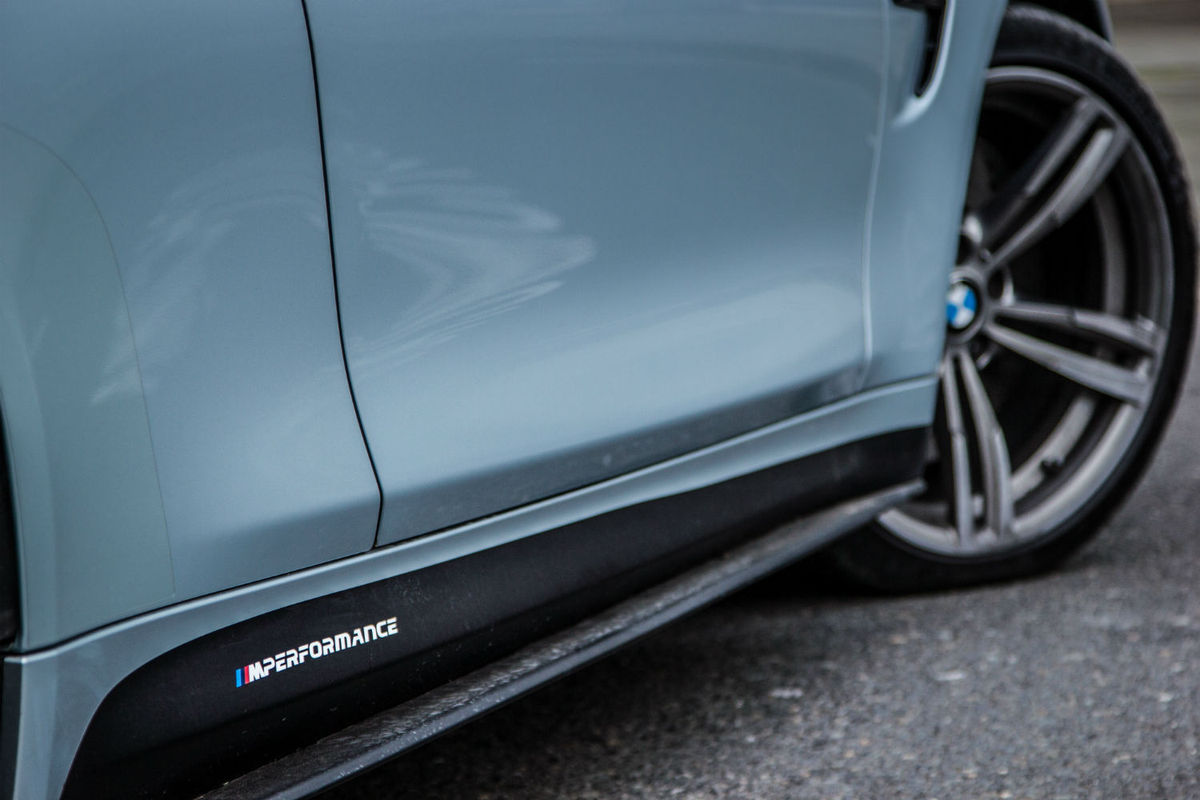
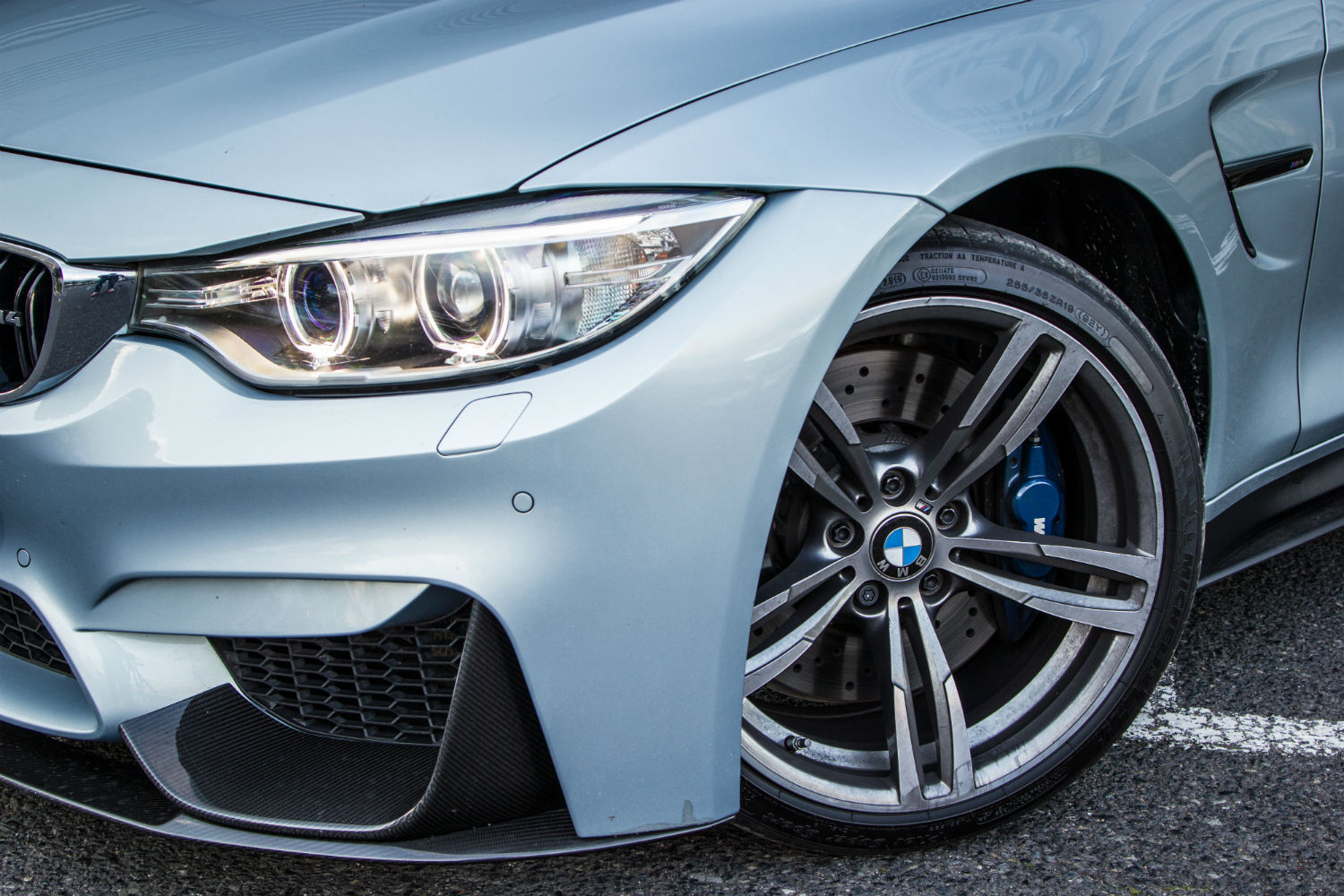
There is carbon-fibre addenda everywhere, but other trim elements are highlighted in gloss black finishes.
We’re big fans of the M4’s musclecar-esque looks here at Cars.co.za. But we can appreciate that owners who spend upwards of R1.2 million on a vehicle (that is clearly not used for the daily commute) might want to individualise their steeds, whether to draw more attention, or simply for their own enjoyment.
With a generous helping of carbon-fibre (CF) adornments, our M4 test unit certainly turned plenty of heads, most notably from other M4 drivers. So, if you do want your M4 to have greater visual presence, provided you’re not one of the 25 lucky locals who are set to procure the fearsome M4 GTS, then this may very well be an avenue worth exploring.
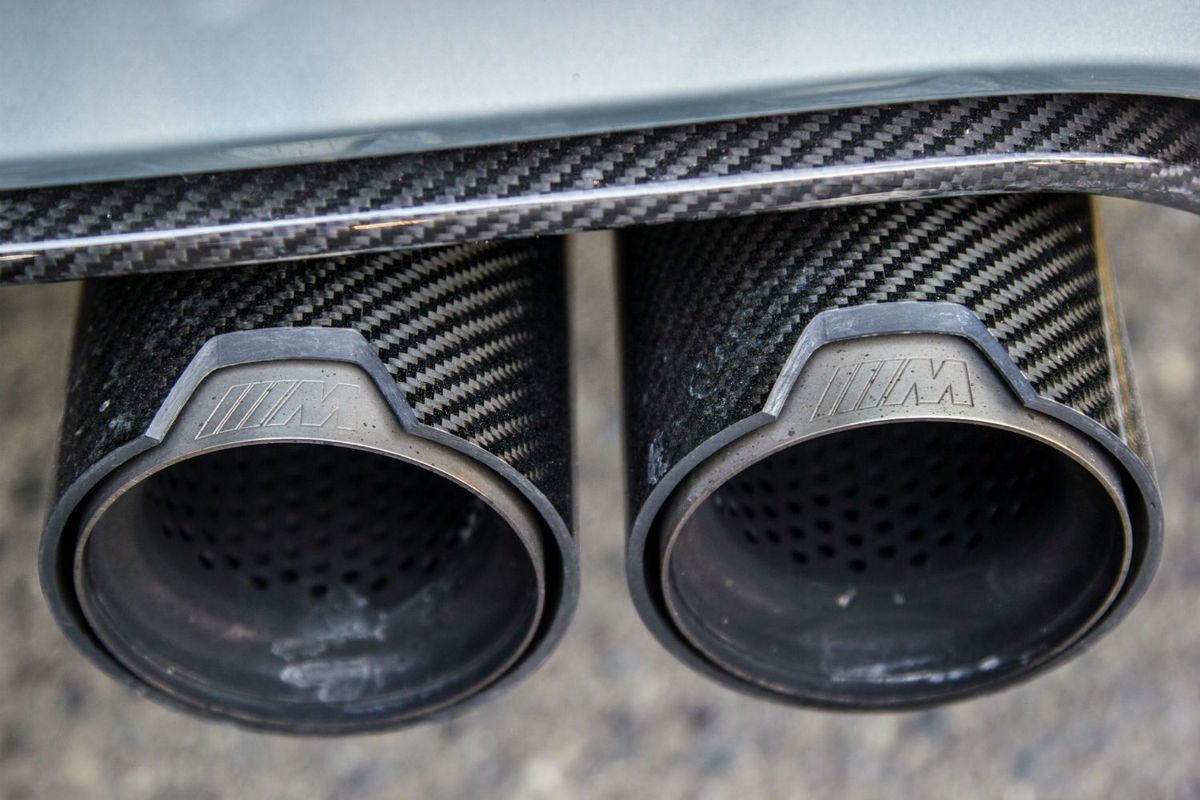
But what exactly can you get, and how much does it cost? This test unit featured 3 individual pieces of CF at the front and collectively they endow the M4 with a more menacing facade. These 3 pieces will set you back approximately R32 000. Then there are the CF mirror caps (around R14 000), CF side sills (R5 000 approx.), CF rear spoiler (just shy of R8 000) and the CF diffuser (R22 000 approx.). Finishing touches include a gloss black grille finish for about R2 000.
Then there’s arguably the biggest change, and it’s one that can be seen and heard – the exhaust system. For an eye-watering R57 000 BMW will fit an M Performance “silencer” that will be the cause of sporadic ear-bleeding. The big-bore pipes also look the part, as they’re finished in CF (for an extra R24k-odd). Consequently, you are now likely to hear this M4 long before you see it. On cold start-up it wakes up neighbourhoods with an almighty snarl before settling into a loud, angry idle. Out on the road it is quieter, but a loud roar is never more than a 2-cm flex of the right foot away. Switch to Sport or Sport+ modes and you (as well as everyone within earshot), will be treated to an aural assault courtesy of that quad-megaphone rear arrangement. Subtle it isn’t.
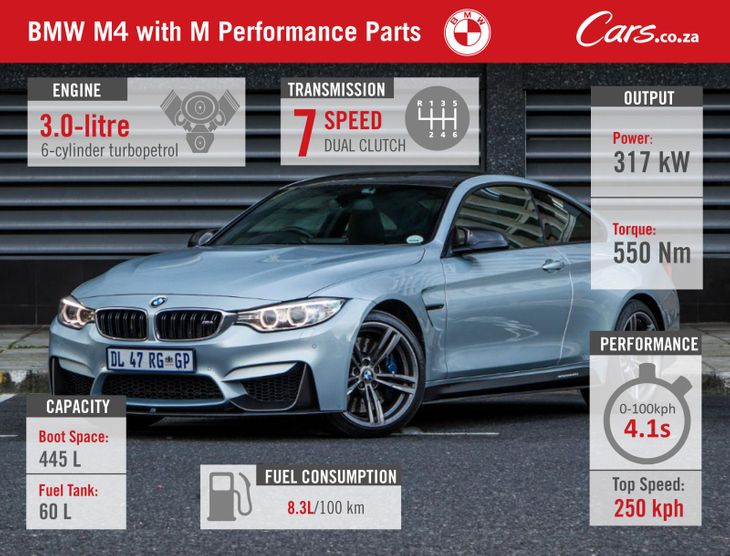
According to BMW’s specifications, the parts fitted to this vehicle have not affected the claimed power outputs, so ultimately this M4 test unit provides us with an opportunity to reassess the M4’s performance, as it is as standard. To a large degree the character of the M4’s turbocharged 6-cylinder engine can be deduced by looking at the power and torque figures. The 317 kW of peak power arrives at a heady 5 500 rpm, and remains available until 7 300 rpm.
So, even though the addition of turbocharging (two small turbos, in fact) has added a lot of torque low down in the rev range (550 Nm available from 1 850 to 5 500 rpm), the engine retains the sweet high-revving characteristics of the naturally aspirated 6- and V8-engined M3 models that preceded it.
The parts fitted to this M4 has not made it any faster… but it’s plenty fast enough!
BMW claims a 0-100 kph sprint time of 4.1 seconds for this M-DCT equipped car (with Launch Control), and provided you have access to a grippy surface, it will achieve that sprint time with relative ease. The manual-transmission M4, by the way, is said to take 4.3 seconds to complete the benchmark sprint, but that time will not be something most drivers will easily achieve. The M-DCT ‘box, along with the various driving modes, endow the M4 with numerous personalities, and it really is up to the driver to spend time with the vehicle and learn which settings are best suited to their own driving styles.
Lazy drivers could initially be frustrated by what appears to be a lack of low-speed responsiveness, but dial in the correct gear and match it to the power and, and all such perceptions will be shattered quickly… The M4 is ferociously quick, and the power delivery is relentless once you’re in the (generously large) sweetspot of the rev range. Ultimately, however, the coupe’s initial throttle response is subjectively not as sharp as those of previous-generation M3s.
If you do crave more power than the standard M4 can muster, then BMW offers the Competition Pack for an additional price of R135 900 over the standard car. It raises the M4’s power output to 331 kW and lifts the top speed to 280 kph.
Ride and Handling?
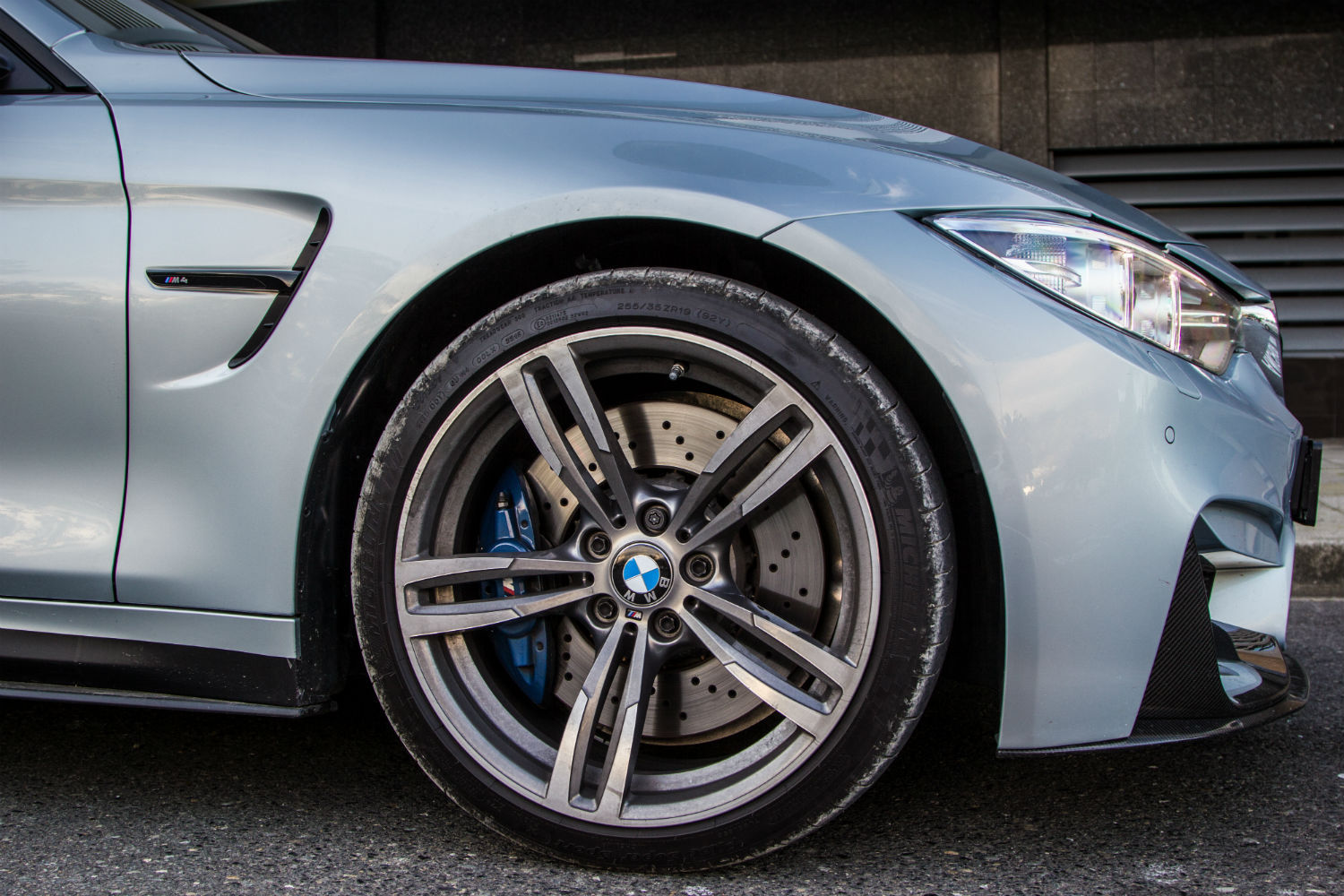
Massive compound structure, internally ventilated and drilled discs provide superb stopping power. You’ll need it.
Once more, the parts fitted to this vehicle do not extend to the hardware underneath the muscular, carbon-adorned body. In fact, our test unit didn’t even feature the Adaptive M Running Gear (suspension), which is a R27 200 option on all M4s. It does, however, like all M4s, feature the Active M differential, which is an electrically controlled mechanical limited-slip differential.
In truth, the M4 serves up a remarkably comfortable ride given the hardcore nature of its performance. The suspension is pliant in most instances, perhaps aided by the fact that unlike other 4 Series models, it doesn’t ride on RunFlat tyres.
At the same time, it is also very resistant to roll and pitch/yaw characteristics in the bends. The latter is particularly impressive, because the M4 is by no means a light car, notwithstanding all the applications of CF (roof, driveshaft etc.). The active diff plays a big role in the car’s dynamic charisma, fighting understeer upon corner entry and allowing for some controllable tail-out antics at the exit. The electrically assisted steering is probably the weakest link in the package. Though you can firm up the feel by switching to the sportier modes, it never feels particularly sharp. Pity…
Of course, most hardcore drivers will want to switch off all the electronic nannies as soon they reach a suitable track, but we’d caution against that. Explore the track-oriented settings first, as they allow for a fair degree of slippage before intervening and saving your bacon. Ultimately, the M4 may not be lithe, pin-sharp machine its forebears were, but there is plenty of fun to be had here if you dig into the staggeringly large number of layers of this car’s personality.
A final note on the M4 dynamic ability – we’d recommend ticking the Adaptive M Running Gear option box. Although the ride quality delivered by the M4’s standard suspension is not atrocious by any means, anything that potentially helps traction, particularly on poorer surfaces, is welcomed. Keep in mind that this system is included if you select the Competition Package (R135 900), or alternatively offered separately for R27 200.
Cabin comfort?
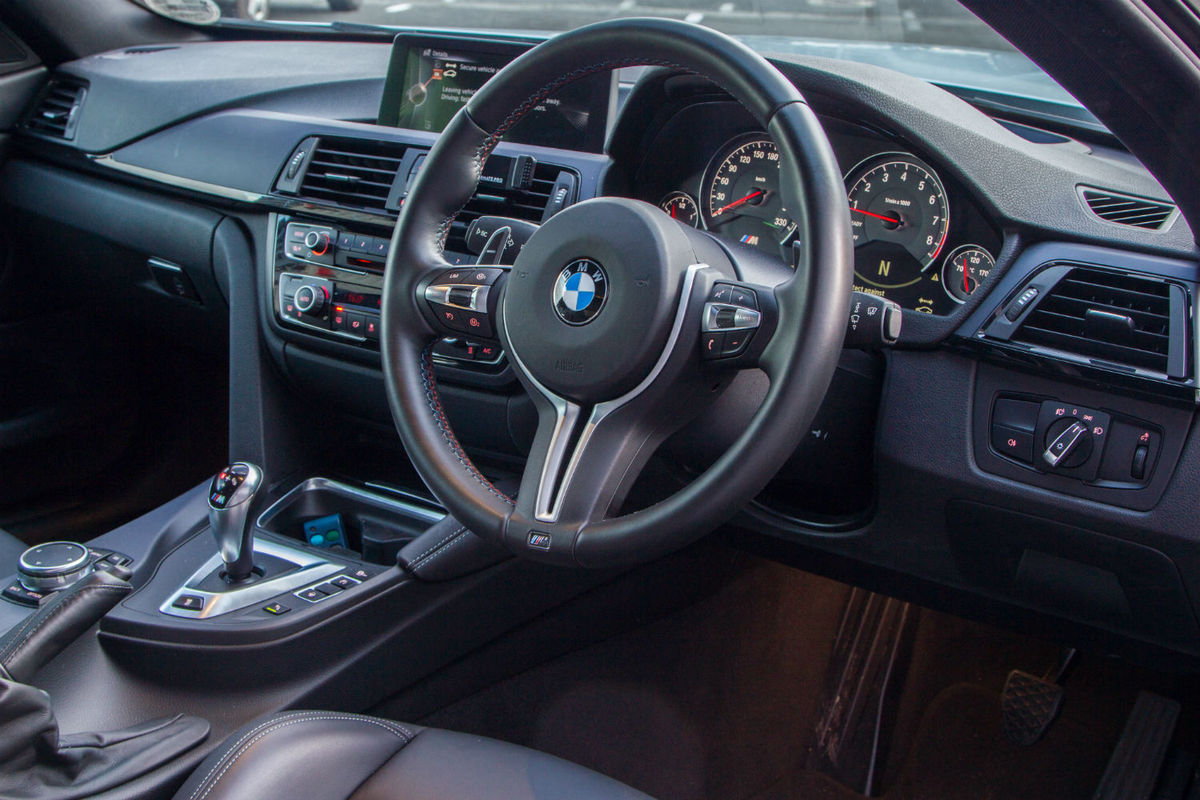
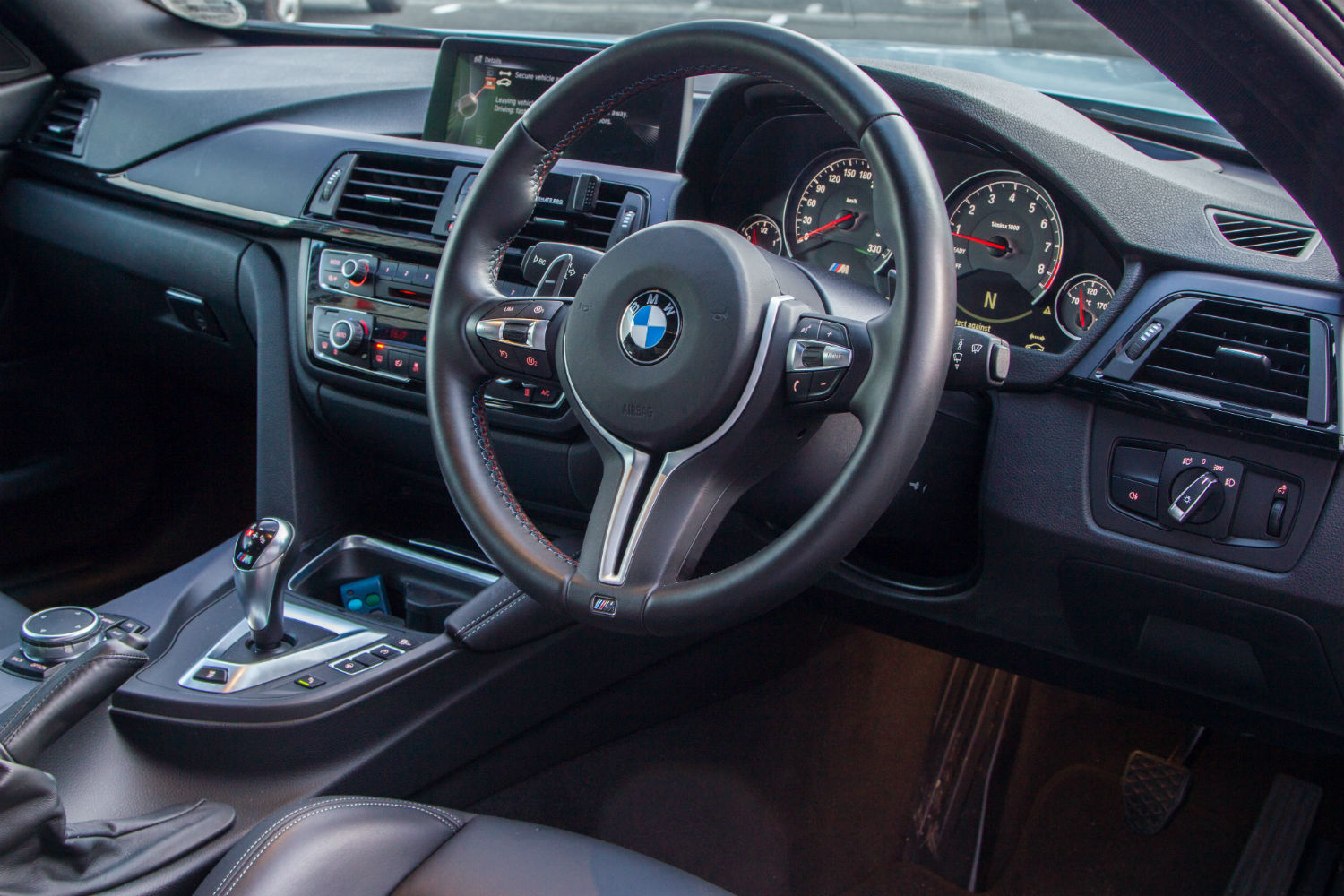
No M Performance Parts fitted to the cabin of this test unit. No problem…
The cabin of this M4 was entirely standard, save for a selected few extra features, including head-up display, ConnectedDrive and Concierge Services, among others. The predominantly dark trim of this car also suited its “sinister” exterior finishes but the clever use of satin silver/aluminium finishes bring some welcome relief. It’s a smart, well-made cabin that’s also surprisingly big on space. It offers usable rear legroom and the boot, at 445 litres in (claimed) capacity, will rival many a hatchback. The way in which the M4 manages to be both luxury grand tourer and rapid junior supercar is quite something.
Standard features on the M4 include shapely M Sport seats with illuminated logos, rain-sensing wipers, auto-on adaptive Xenon headlights, electric rear roller blind, driver’s seat electric adjustment with memory, cruise control with a brake function, climate control, front and rear park sensors and rear-view camera, Professional 3D navigation system, 20Gb of music storage and a Hi-Fi Loudspeaker system with 9 speakers, among many other comfort, safety and luxury-boosting features.
How much does the BMW M4 with Performance Parts cost in South Africa?
The standard BMW M4 is priced at R1 207 836, and collectively the M Performance Parts fitted to this vehicle is approximately another R170 000. The good news is that these parts do not affect the standard 2-years/unlimited km warranty and 5-years/100 000 km Maintenance Plan.
Verdict
If this review is anything to go by, the M4 is arguably under-appreciated by M fanatics.
Ultimately the M Performance Parts fitted to this M4 have not improved the package in any measurable way (except decibels), but simply represents a way for those interested in heightening the drama associated with what remains arguably the best performance car at the price, to have their kicks. And there’s certainly nothing wrong with that. If, however, you want to up the appeal of your M4 in a less superficial way, then may we suggest the Competition Pack?
Priced at R135 900, the Competition Pack includes a sports exhaust (which adds an edgier timbre to the standards M4’s aural characteristics, but is admittedly not as raucous as the M Performance version), Adaptive M suspension, M seats, a power hike to 331 kW and the upping of the top speed to 280 kph, among other goodies. This means you’ll still have more than R30 000 left to spend on BMW’s tempting optional extras catalogue…
Watch the BMW M4 with M Performance Parts Video
Quick facts about the BMW M4 with M Performance Parts:
Frequently Asked Questions
What are the different models of the 2025 BMW M4 available in South Africa?
The 2025 BMW M4 range in South Africa includes the M4 Competition Coupe, the M4 Competition Convertible, and a limited edition M4 CS model.
What are the engine specifications of the new BMW M4?
The standard M4 Competition models are powered by a 3.0-liter turbocharged 6-cylinder petrol engine that produces 390 kW and 650 Nm of torque. The M4 CS version has an increased output of 405 kW.
What are the 0-100 kph acceleration times for the new M4?
The M4 Competition Coupe with all-wheel drive accelerates from 0 to 100 kph in 3.5 seconds. The convertible version does it in 3.7 seconds, and the M4 CS achieves it in 3.4 seconds.
What is the price of the 2025 BMW M4 in South Africa?
As of May 2025, the M4 Competition Coupe AWD is priced at R2,238,002, and the M4 Competition Convertible AWD is priced at R2,338,842.
What are the warranty and service plan details for the M4?
The BMW M4 comes standard with a 5-year/100,000 km service plan and a 2-year/unlimited km warranty.
Low-profile tyres may look good on stylish alloy wheels, but there are upsides to sticking to more conservative higher-profile rubber.
A number of companies make a range of tyres that enable you to change in one-inch steps from 13- to 17-inch diameter wheels while keeping the diameter of the tyres more or less the same. This is important, because if the diameter changes too much, the speedometer and odometer will become inaccurate.
But that's not all. Before upgrading the appearance of your car by changing its rims and tyres you need to bear in mind your budget, brand preference and the desired look (of a wheel/tyre combination), but there are more factors at play than potentially inaccurate speedos and odometers.
Understanding tyre jargon
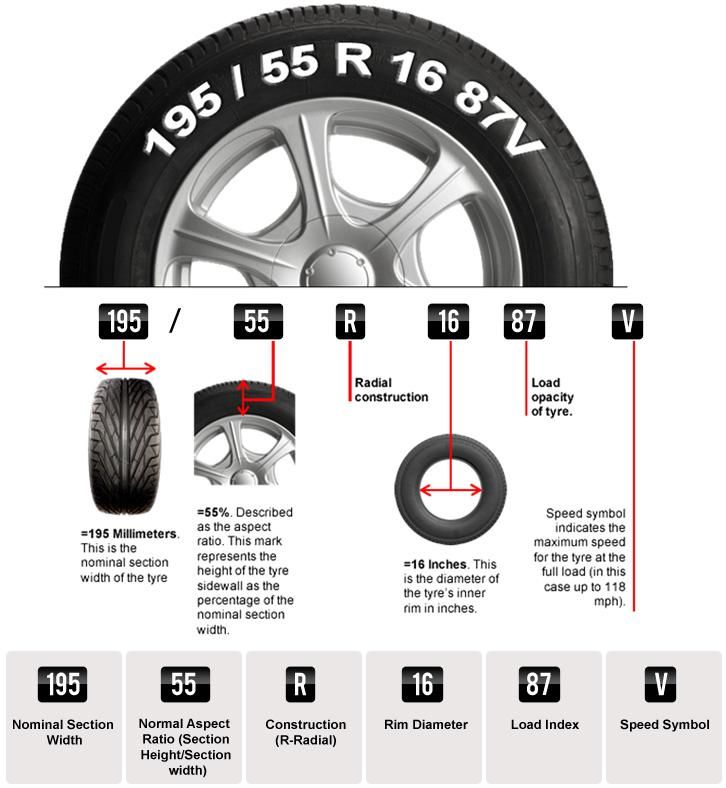
So, let's say you do want to change to bigger wheels and lower profile tyres. How can you keep the all-important diameter roughly the same? Well, by changing the aspect ratio (A) and tyre width (W) of your next tyre. The aspect ratio is given by the fraction A = (H/W) where H = tyre height (the distance from the rim to the tread).
Lost already? Don't be alarmed, many motorists don't understand the jargon. Perhaps the infographic below will provide clarity:
Image from motorepair.co.uk
So, using the above formula, if H = 120,25 mm and W = 185 mm then the aspect ratio is 120,25/185 = 0,65 and the tyre will be coded 185/65 (ie width/aspect ratio). This is usually expressed as a 65-profile tyre, or a 65% aspect ratio tyre, which means the tyre height is 65% of the width.
Advantages of higher profiles (above 60% aspect ratio)
They are not the most aesthetically pleasing, but smaller wheels will be less expensive to purchase/replace.
The larger tyre height will result in a more flexible tread. The tyre is better suited to absorbing road shocks and, therefore, facilitates a more comfortable ride quality.
The greater height will also reduce the risk of suffering serious damage to the tyres or wheels when traversing potholes and bumping kerbs.
Disadvantages to lower profiles
The wheel-and-tyre combination looks old-fashioned, humdrum and conservative.
Advantages of lower profiles (from 25 to 55% aspect ratio)
Many people think bigger wheels are prettier.
The bigger wheels will enable bigger brakes to be fitted.
The reduced tyre height will result in a stiffer tread, which will increase steering accuracy and improve cornering behaviour.
Disadvantages to lower profiles
The wheels will be bigger and more expensive.
The stiffer tread. This will reduce comfort levels and make these tyres more vulnerable to damage.
Finally, keep in mind that a drastic aftermarket reduction in aspect ratio may affect the efficiency of anti-lock braking systems.
Have a look at the video below for a quick summary and more info:
The Automobile Association (AA) has predicted another fuel price cut for September 2016.
South African motorists are in for yet another fuel price cut if the Rand continues to show strength. Commenting on unaudited mid-month fuel price data released by the Central Energy Fund, the AA has predicted substantial fuel price cuts for September 2016.
The main reason for the predicted reduction in fuel prices is the ongoing strengthening of the Rand in the first half August 2016. The stronger Rand has “outmuscled” rising oil prices, which could result in a 69 cent per litre reduction in the wholesale petrol price and a 94 cent per litre reduction in the diesel price at the end of the month.
"The Rand firmed substantially against the US dollar in the first fortnight of August. However, international petroleum prices showed a sharp jump over the same period. Fortunately for South Africans, the Rand is ahead in the contest, and the current data indicates considerable price reductions at month end" says the AA.
Furthermore, “The fuel price for September will depend on whether the Rand can continue to counter upward trends in international petroleum prices," the AA commented.
"Any flattening out of the Rand's gains would be negative for the fuel price, but there would have to be a substantial reversal for the current picture to be spoiled before the end of August," the Association concluded.
Mercedes-Benz has expanded its line-up of E-Class derivatives with the introduction of the E250 and E400 4MATIC derivatives.
When the new Mercedes-Benz E-Class made landfall in South Africa back in June 2016, three models were on offer including the E200, E220d and the E350d. As promised, the E-Class range has now been expanded to include the E250 and E400 4MATIC. The range is expected to be bolstered even further with the imminent arrival of the E43 AMG and the E63 AMG in the second quarter of 2017. A plug-in hybrid derivative will complete the range in 2018.
Here’s a quick summary of the current Mercedes-Benz E-Class offering in South Africa.
Model
Engine
Power
Torque
0-100 kph
Fuel Consumption
E200
2.0-litre turbopetrol
135 kW
300 Nm
7.7 secs
5.9 L/100 km
E250
2.0-litre turbopetrol
115 kW
350 Nm
6.9 secs
6.3 L/100 km
E400 4MATIC
3.0-litre turbopetrol
245 kW
480 Nm
5.3 secs
7.7 L/100km
E220d
2.0-litre turbodiesel
143 kW
400 Nm
7.3 secs
3.9 L/100 km
E350d
3.0-litre turbodiesel
190 kW
620 Nm
5.9 secs
5.1 L/100 km
All models are equipped with 9-speed automatic transmissions. The E400 4MATIC is the first all-wheel drive E-Class to be offered in South Africa and is powered by a 3.0-litre 6-cylinder turbopetrol engine that delivers 245 kW and 480 Nm of torque.
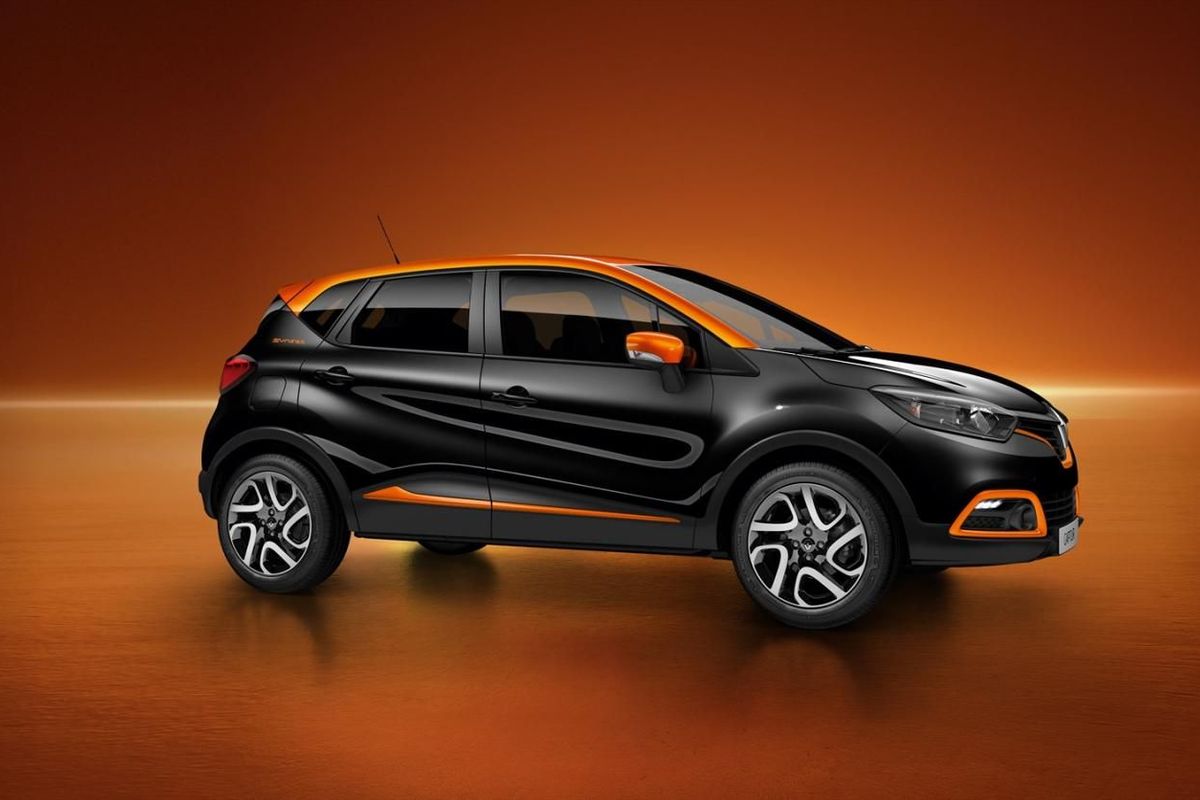
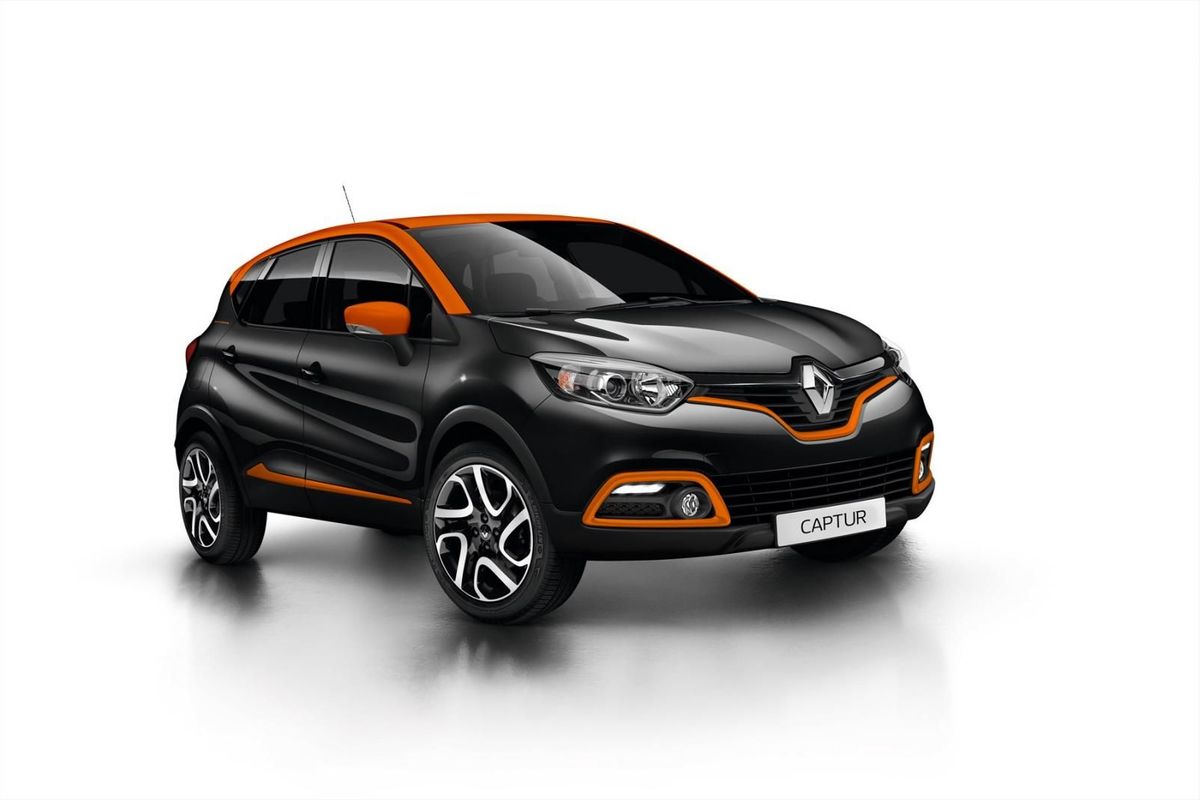
The popular Renault Captur range has been expanded with the addition of a diesel-powered derivative. We tried out the newcomer in Johannesburg.
Renault's stylish little Captur has made a significant mark on the local compact crossover market and, as it stands, sits behind the Ford Ecosport on the sales charts. On average, the Captur tallies up a few hundred sales each month and since its launch, almost 5 000 vehicles have found homes in South Africa. It has achieved this with a fairly limited engine line-up, consisting of only small-capacity turbopetrols. Until now, that is. Enter the turbodiesel derivative.
The new engine
The new engine is not exactly "new" in terms of technology, as it does duty in a variety of Renault models already. It's called the K9k engine, which is a 1.5-litre dCi turbocharged motor that offers outputs of 66 kW and 220 Nm. This puts it between the 66 kW 0.9-litre petrol and the 88 kW EDC Captur flagship in terms of power. This engine's real strength is economy and Renault SA cheekily compared its claims to those of the hybrid Toyota Prius. A figure of 3.6 L/100 km is the claim, with emissions of 95 g/km. The Toyota Prius boasts claimed figures of 3.7 L/100 km and 87 g/km, so this Captur indeed seems to be a seriously efficient vehicle, on paper at least.
This engine is the same as found in Renault's Duster as well as the Nissan NP200 small bakkie. It has also seen application in Renault's Mégane, Laguna and Scenic models. Nissan has used this engine in its Juke and Qashqai, while Mercedes-Benz selected this motor for its Citan commercial vehicle and the base-spec A180 hatchback. So… it's certainly been judged good enough for use by various brands and in numerous model types.
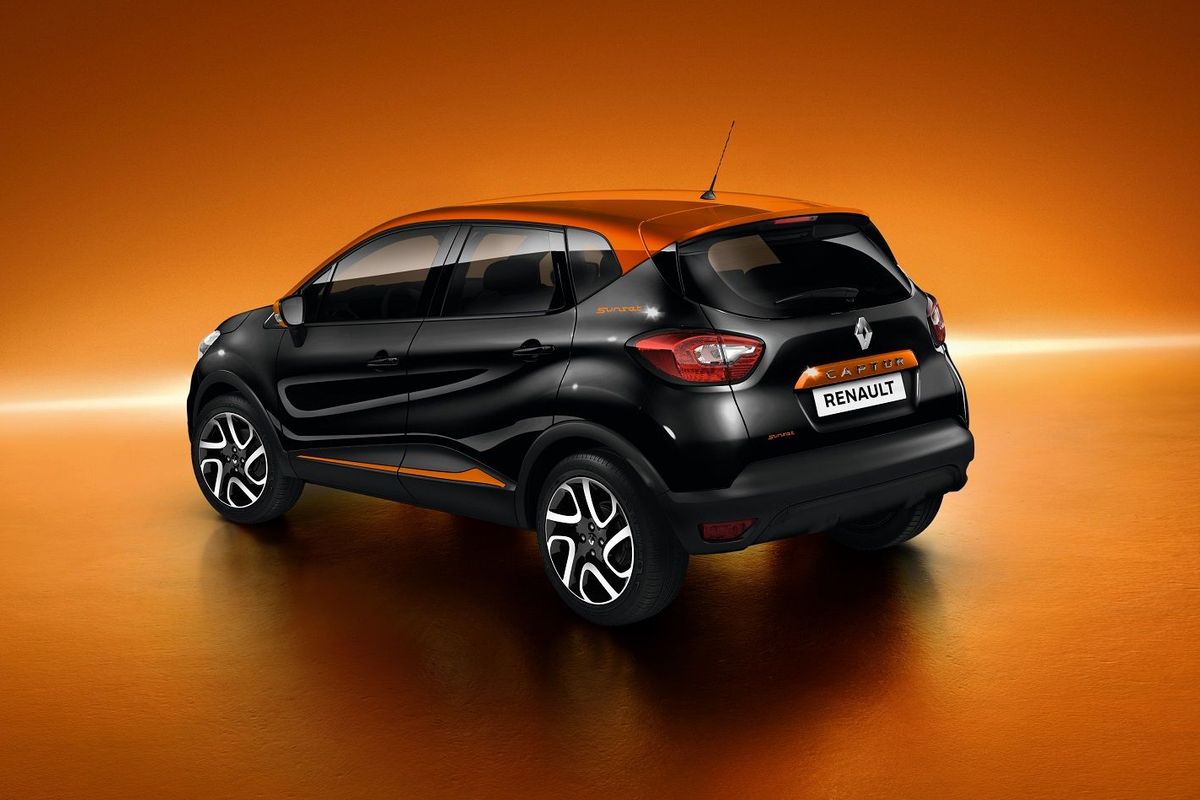
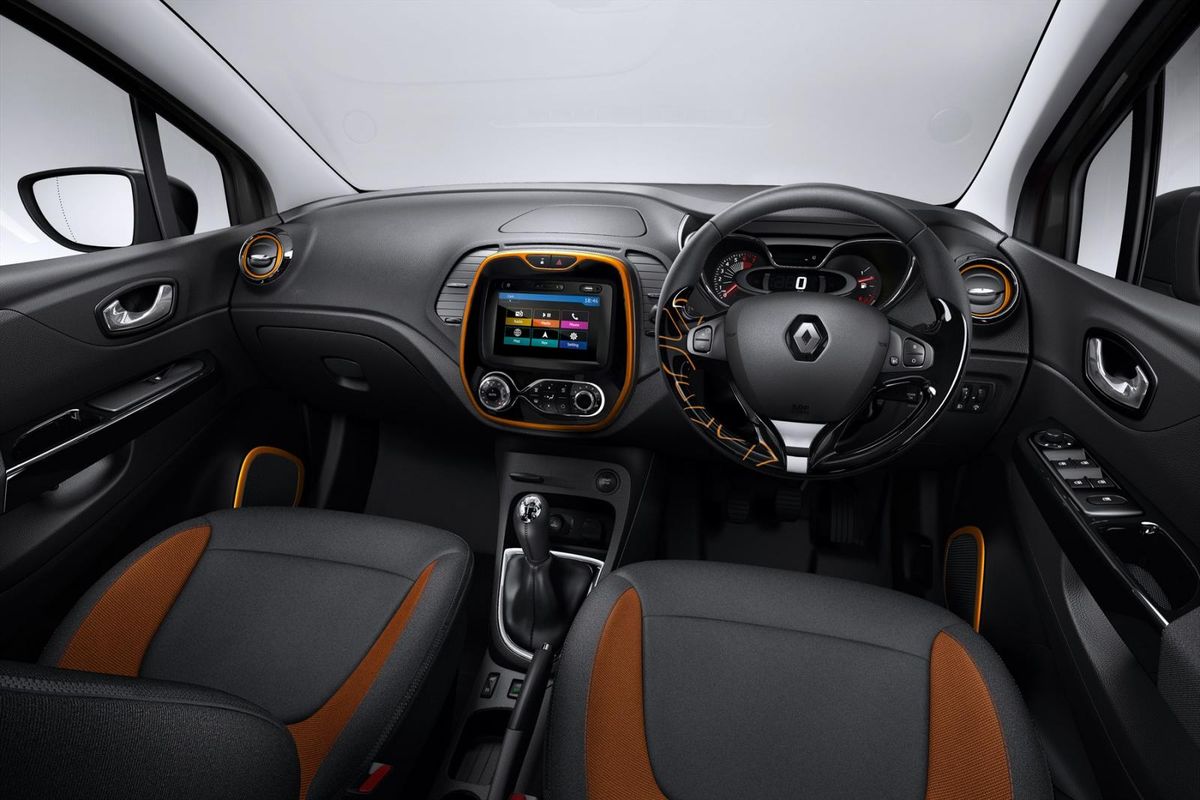
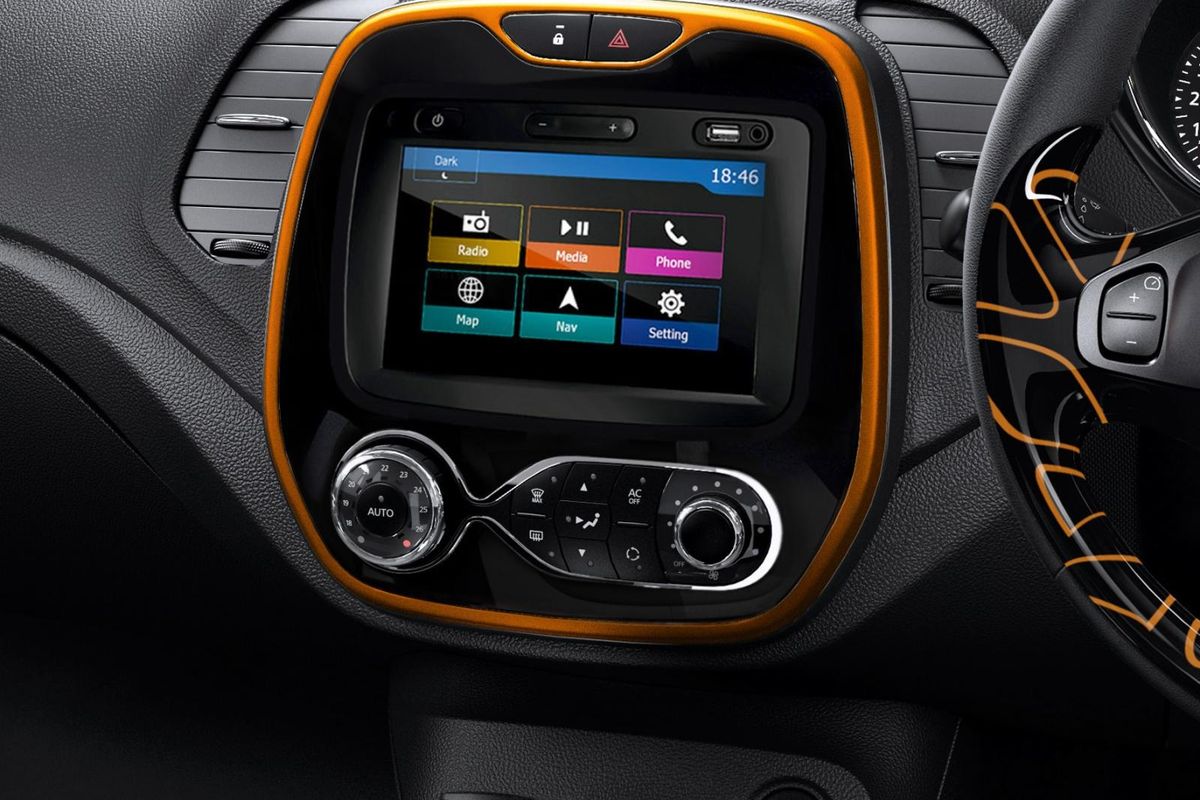
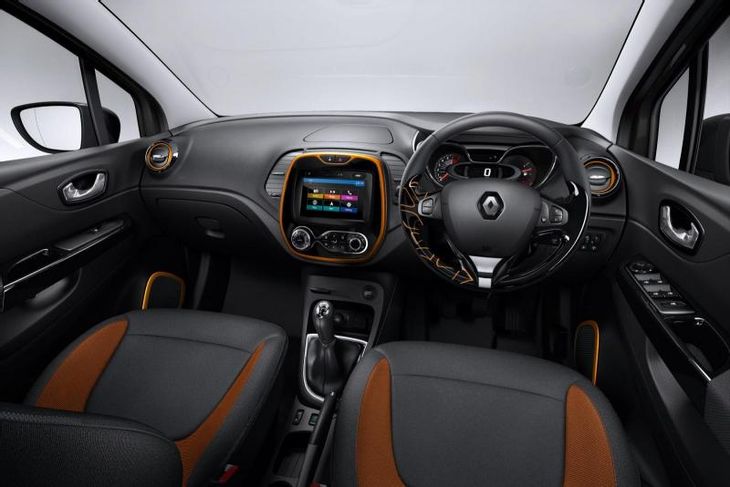
The Sunset theme in the Renault Captur. Note orange detailing on seats, steering wheel and info-tainment cluster
Driving the diesel Captur
This diesel Renault Captur features a five-speed manual transmission and power reaches the front wheels. It’s built on the Renault Clio platform but the suspension tuning is different, as the target customers are likely to prefer a softer setup. However don’t interpret this as a bad thing as it offers reassuring solidity and ease of use. The diesel engine is not the most modern unit around and as a result can be a little rough at idle, but it pulls well and power delivery is smooth.
The engine has plenty of shove and it doesn’t need to be worked hard to extract the best performance from it. The manual gearbox is straight from the Renault parts bin, too, and has been used in many of its products. It boasts a light clutch action and while it only has five ratios, these feel correctly spaced out. We’d usually favour a sixth gear for open-road cruising which helps economy, but at national highway speeds the Captur diesel’s rev counter sits at around 2 500 rpm only in fifth gear, so it hardly feels stressed.
This engine and gearbox combination works really well in the Renault Captur. We feel this is exactly what the Captur needed from the start and we look forward to putting it through our intensive real-world test routine. Even the claimed fuel consumption looks realistic, given that some journalists were returning similar figures on the launch test route. We drove briskly and returned 4.5 L/100 km on our drive – some way off claimed figures, but still an impressive achievement.
Limited Edition Sunset
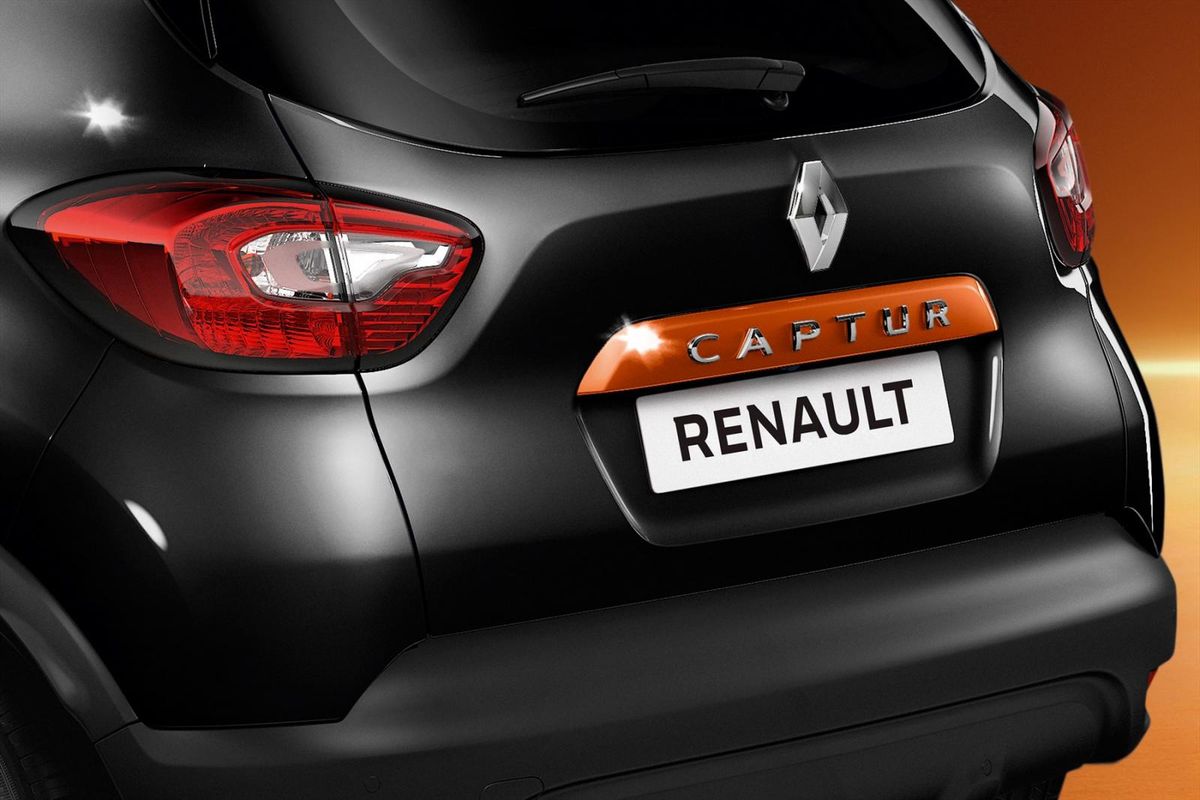
To announce the arrival of the diesel engine in the Captur lineup, Renault South Africa has put together 100 limited edition versions called the Sunset. According to Renault, "orange is the new black" and this Sunset edition features Diamond Black and Sunset Orange exterior paintwork. The orange-and-black theme is carried on into the cabin and there’s some orange detailing on the steering wheel as well as around the infotainment system. There’ll be just 100 Renault Captur Sunsets available, so if you want one, you'd better be quick.
The rest of the package is unchanged, with the Captur Sunset boasting the same enviable combination of stylish design, spaciousness and practicality as its siblings. For detail on this model's standard specification, click here.
Renault Captur Price in South Africa
Every Captur is sold with a 5-year/150 000 km mechanical warranty, a 3-year/45 000 km service plan and a 6-year anti-corrosion warranty. Services take place at 15 000 km/1-year intervals.
Renault Captur 1.5 dCi 66kW Turbo Dynamique Sunset R292 400
Renault Captur 1.5 dCi 66kW Turbo Dynamique (diesel) R289 900
Renault Captur 66kW Turbo Expression (petrol) R249 900
Renault Captur 66kW Turbo Dynamique (petrol) R264 900
Renault Captur 88kW Turbo Dynamique (petrol) R304 900
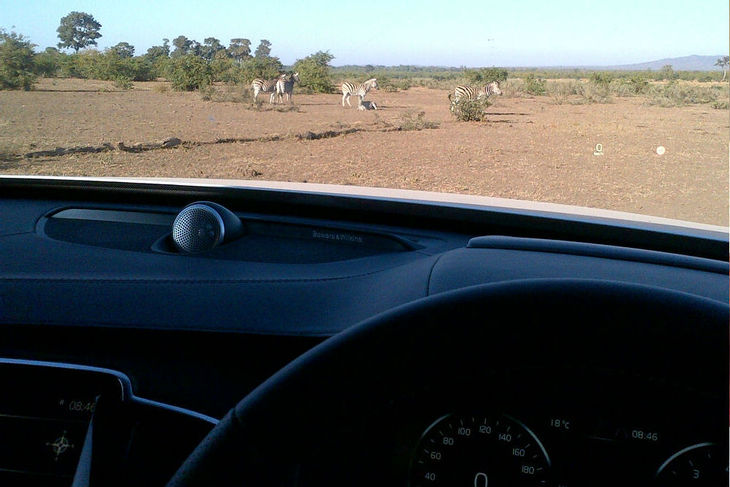
The Big 5: Why the Volvo XC90 (can) rule the Kruger
The award-winning Volvo XC90 is undoubtedly an accomplished premium SUV, but is it good enough to impress on the quintessential South African long-haul trip: a visit to the Kruger National Park? Cars.co.za contributor Brett Hamilton finds out and, in doing so, reassesses his perception of the Volvo brand.
For Volvo, the XC90 remains an extremely important vehicle – and for a number of reasons. For a start, it replaced the archaic previous-gen XC90 in an increasingly discerning, competitive, lucrative and growing segment. And second, it was the first all-new Volvo to be launched under Chinese owners Geely. It offers a ‘taste of things to come’ and, as such, was always to undergo close scrutiny.
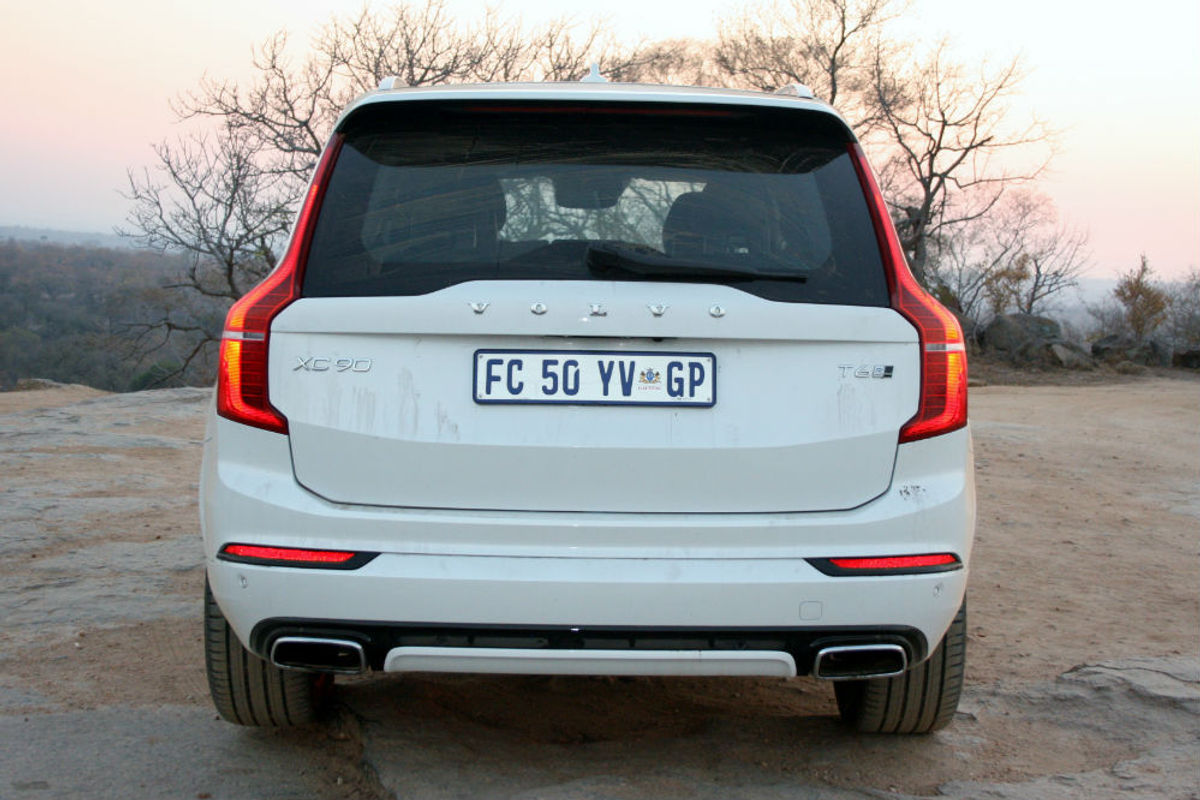
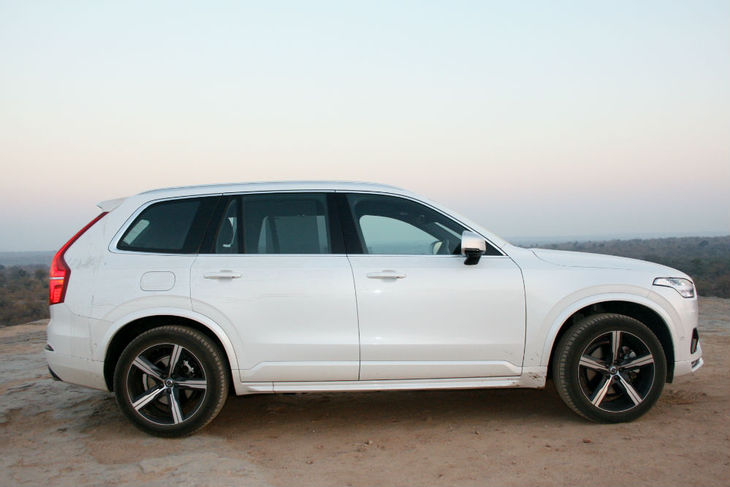
So, it’s good. But the city-slick look of this XC90 T6 with optional R-Design package and 20-inch alloys got us wondering if it is good enough for one last test: A distinctly South African trip to Kruger National Park?
After spending a week in our largest national park, here are the Big 5 reasons why we’d suggest using the XC90 for your next visit to see some animals:
1. The cabin
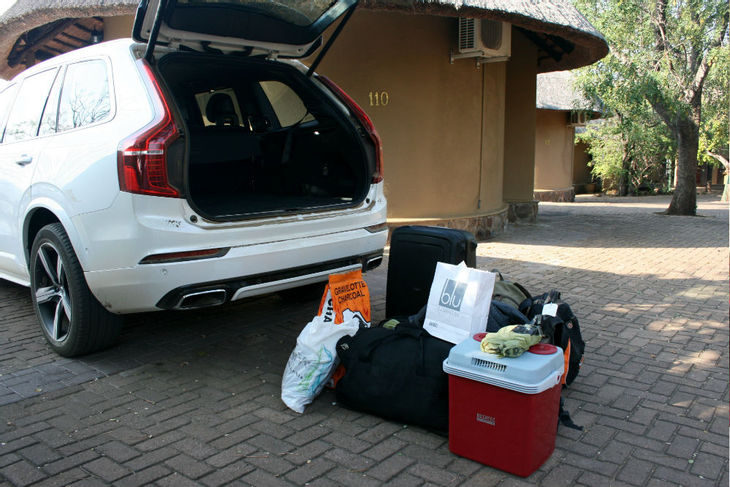
The XC90's cabin is spacious, and with the two rear seats folded away, the luggage space very capable of swallowing a Kruger trip's luggage.
Any comfortable long-distance trip requires a good interior. Previous Volvos always left me cold in execution and the tactile quality of finishes. It just never "felt" like other premium offerings. The XC90 changes that: In short, Volvo has ticked all the boxes in this department.
Our unit came fitted with the optional R-Design package (R54 000) which includes heated front seats, a head-up display, visual park assist, Bowers & Wilkins audio, blind-spot detection and keyless entry and go. But, even without these bells and whistles, the cabin is tastefully designed and very well finished with stark lines, sharp edges and neat stitching. The dark finishes best suited a trip such as ours and the soft-touch leather fitted to the dash, doors and arm rests ensured easy cleaning of dust.
The front seats are adjustable in all directions and angles and offer excellent comfort and, most importantly, support. And there are 7 seats in total (granted, those fold-away ones in the rear are best-suited for small children). But, my point is that the XC90, while appearing sleek and "compact" from the outside, is genuinely spacious on the inside. The luggage capacity is also impressive and managed to swallow all our luggage (with the parcel shelf in place).
2. The sound
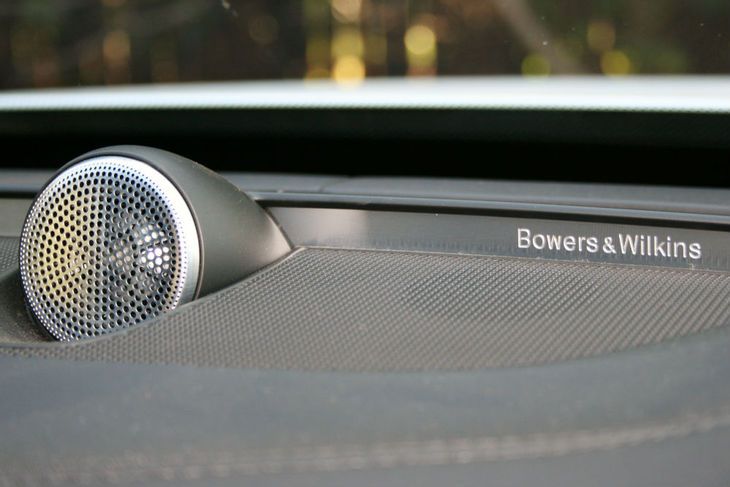
The optional 19-speaker Bowers & Wilkins audio system was a treat.
I’m a music guy and, while the radio is strictly silent in Kruger, the optional 19-speaker Bowers & Wilkins premium audio system was simply superb during our trip to Kruger Gate. The system makes use of seven 25 mm Nautilus tweeters, three 100 mm cones, four 80 mm cones, four 170 mm long-throw woofers, a single 250 mm sub-woofer and a 1 400W, 12-channel, Class D amp. The result is a balanced and crisp sound throughout the cabin.
The system also allows for numerous sound-play options, including Studio, Stadium and (my favourite) Concert Hall. In order to replicate the sound experience of Gothenburg’s renowned Concert Hall in Sweden, the company took more than 800 individual measurements in the hall and, with some tech-magic, recreated the acoustics of the concert hall.
3. Driving it
Our test unit's 20-inch wheels were not ideally suited to the gravel of the Kruger.
Another gripe I’ve had with older Volvos was a distinct wooden feel to the suspension damping, which meant that the cars' underpinnings provided too little feedback during enthusiastic driving jaunts. This also detracted from the Swedish marque's premium aspirations. The new XC90 makes use of the company’s modular Scaleable Product Architecture (SPA),which greatly contributes to balanced road holding despite the XC90’s large dimensions. Interestingly, the XC90 makes use of a transversely mounted composite leaf spring at the rear.
So, it has a lot going on mechanically and, for the most part, the XC90 impressed during the entire trip. Some mountain passes outside Kruger was easily matched with little body roll, secure handling and enough feedback to inspire confidence through tight bends.
At low speeds on gravel roads within the National Park, the Volvo's ride was comfortable. The 20-inch wheels and rims are far from ideal for such conditions, however, as the steering wheel danced a merry jig in my hands which the XC90 traversed rougher sections of road.
There are 4 driver modes to choose from, including a green option that includes start-stop – very handy when you prefer silence while game viewing.
4. The tech
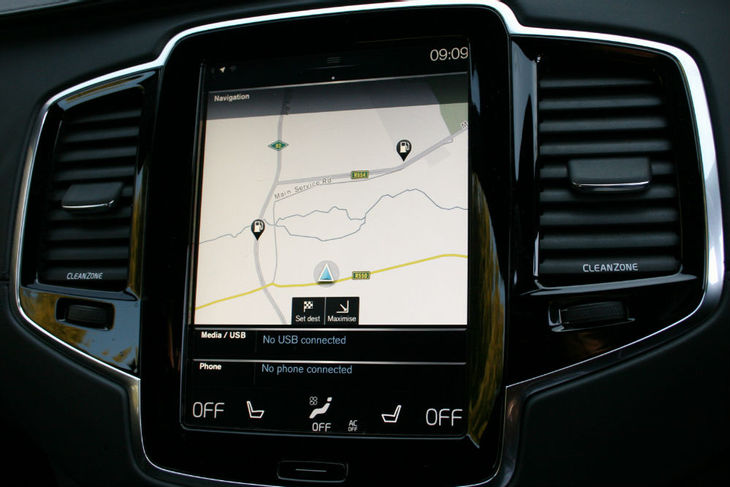
Sensus info-tainment system works like a tablet, and is a smart feature of the classy cabin.
A key element to ensure the uncluttered design of the dash is the inclusion of a 9-inch Sensus Connect touch-screen infotainment system. In terms of size and operation, the screen is very much like a tablet PC and allows for the easiest way to access the entertainment system, climate control and other vehicle settings that I’ve come across. The menus are intuitive and large enough for easy operation.
5. Safety tech
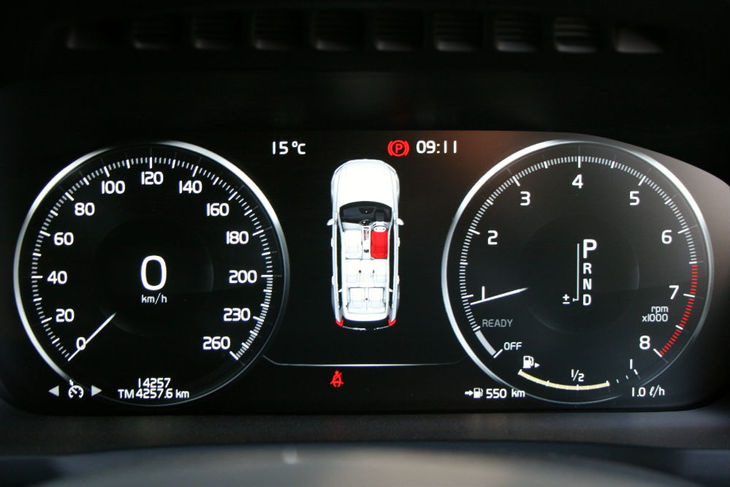
Numerous on-board safety systems are available, including pedestrian and cyclist detection. Note digital instrumentation display.
When embarking on a load journey, safety is of uppermost priority. And the XC90 delivers a long list of features, including: ABS with EBD, HAS, HDC, stability and traction control, 7 airbags, the IntelliSafe system (incorporating pedestrian and cyclist detection (not yet buffalo), run-off-road mitigation, autobrake at intersections, front collision warning with full autobrake, road-sign information and lane departure warning with driver alert control).
So, it is all good at the moment. However, if we’d change one thing …
… The engine
The XC90 range offers a wide selection of engine options, including a plug-in hybrid. Our unit was the T6, with its four-cylinder, 2,0-litre petrol engine that features turbo- and supercharging. The powerplant produces peak outputs of 235 kW and 400 N.m of torque, which means that it offers more than enough in-gear acceleration. In fact, overtaking at high speeds was never an issue. However, for long journeys I would have preferred a more frugal (Volvo claims 8.0 L/100 km and we managed an average consumption of 10.5 L/100 km) turbodiesel derivative.
Summary
XC90 is not just a slick city runner, but a classy, luxurious cross-country tourer for the family.
The credentials of the XC90 are beyond reproach. It has managed to palm in more than enough awards to attest to that. After spending a week with the XC90 in a typical holiday environment for South Africa, it is also clear that the beauty of the XC90 is more than skin deep. Has it passed the Kruger test? For sure, but perhaps a turbodiesel derivative (shod with smaller rims and tyres) would have been better suited to the trip. But I quibble.